EP0804599B2 - Mannose or xylose based positive selection - Google Patents
Mannose or xylose based positive selection Download PDFInfo
- Publication number
- EP0804599B2 EP0804599B2 EP94909084A EP94909084A EP0804599B2 EP 0804599 B2 EP0804599 B2 EP 0804599B2 EP 94909084 A EP94909084 A EP 94909084A EP 94909084 A EP94909084 A EP 94909084A EP 0804599 B2 EP0804599 B2 EP 0804599B2
- Authority
- EP
- European Patent Office
- Prior art keywords
- mannose
- cells
- compound
- transformed
- nucleotide sequence
- Prior art date
- Legal status (The legal status is an assumption and is not a legal conclusion. Google has not performed a legal analysis and makes no representation as to the accuracy of the status listed.)
- Expired - Lifetime
Links
- 0 CC(CN=C)*1CC1 Chemical compound CC(CN=C)*1CC1 0.000 description 1
Images



Classifications
-
- C—CHEMISTRY; METALLURGY
- C07—ORGANIC CHEMISTRY
- C07H—SUGARS; DERIVATIVES THEREOF; NUCLEOSIDES; NUCLEOTIDES; NUCLEIC ACIDS
- C07H15/00—Compounds containing hydrocarbon or substituted hydrocarbon radicals directly attached to hetero atoms of saccharide radicals
- C07H15/20—Carbocyclic rings
- C07H15/203—Monocyclic carbocyclic rings other than cyclohexane rings; Bicyclic carbocyclic ring systems
-
- C—CHEMISTRY; METALLURGY
- C07—ORGANIC CHEMISTRY
- C07H—SUGARS; DERIVATIVES THEREOF; NUCLEOSIDES; NUCLEOTIDES; NUCLEIC ACIDS
- C07H15/00—Compounds containing hydrocarbon or substituted hydrocarbon radicals directly attached to hetero atoms of saccharide radicals
- C07H15/26—Acyclic or carbocyclic radicals, substituted by hetero rings
-
- C—CHEMISTRY; METALLURGY
- C07—ORGANIC CHEMISTRY
- C07H—SUGARS; DERIVATIVES THEREOF; NUCLEOSIDES; NUCLEOTIDES; NUCLEIC ACIDS
- C07H17/00—Compounds containing heterocyclic radicals directly attached to hetero atoms of saccharide radicals
- C07H17/02—Heterocyclic radicals containing only nitrogen as ring hetero atoms
-
- C—CHEMISTRY; METALLURGY
- C07—ORGANIC CHEMISTRY
- C07H—SUGARS; DERIVATIVES THEREOF; NUCLEOSIDES; NUCLEOTIDES; NUCLEIC ACIDS
- C07H19/00—Compounds containing a hetero ring sharing one ring hetero atom with a saccharide radical; Nucleosides; Mononucleotides; Anhydro-derivatives thereof
- C07H19/02—Compounds containing a hetero ring sharing one ring hetero atom with a saccharide radical; Nucleosides; Mononucleotides; Anhydro-derivatives thereof sharing nitrogen
- C07H19/04—Heterocyclic radicals containing only nitrogen atoms as ring hetero atom
- C07H19/16—Purine radicals
- C07H19/20—Purine radicals with the saccharide radical esterified by phosphoric or polyphosphoric acids
-
- C—CHEMISTRY; METALLURGY
- C12—BIOCHEMISTRY; BEER; SPIRITS; WINE; VINEGAR; MICROBIOLOGY; ENZYMOLOGY; MUTATION OR GENETIC ENGINEERING
- C12N—MICROORGANISMS OR ENZYMES; COMPOSITIONS THEREOF; PROPAGATING, PRESERVING, OR MAINTAINING MICROORGANISMS; MUTATION OR GENETIC ENGINEERING; CULTURE MEDIA
- C12N15/00—Mutation or genetic engineering; DNA or RNA concerning genetic engineering, vectors, e.g. plasmids, or their isolation, preparation or purification; Use of hosts therefor
- C12N15/09—Recombinant DNA-technology
- C12N15/63—Introduction of foreign genetic material using vectors; Vectors; Use of hosts therefor; Regulation of expression
- C12N15/65—Introduction of foreign genetic material using vectors; Vectors; Use of hosts therefor; Regulation of expression using markers
-
- C—CHEMISTRY; METALLURGY
- C12—BIOCHEMISTRY; BEER; SPIRITS; WINE; VINEGAR; MICROBIOLOGY; ENZYMOLOGY; MUTATION OR GENETIC ENGINEERING
- C12N—MICROORGANISMS OR ENZYMES; COMPOSITIONS THEREOF; PROPAGATING, PRESERVING, OR MAINTAINING MICROORGANISMS; MUTATION OR GENETIC ENGINEERING; CULTURE MEDIA
- C12N15/00—Mutation or genetic engineering; DNA or RNA concerning genetic engineering, vectors, e.g. plasmids, or their isolation, preparation or purification; Use of hosts therefor
- C12N15/09—Recombinant DNA-technology
- C12N15/63—Introduction of foreign genetic material using vectors; Vectors; Use of hosts therefor; Regulation of expression
- C12N15/79—Vectors or expression systems specially adapted for eukaryotic hosts
- C12N15/82—Vectors or expression systems specially adapted for eukaryotic hosts for plant cells, e.g. plant artificial chromosomes (PACs)
- C12N15/8201—Methods for introducing genetic material into plant cells, e.g. DNA, RNA, stable or transient incorporation, tissue culture methods adapted for transformation
- C12N15/8209—Selection, visualisation of transformants, reporter constructs, e.g. antibiotic resistance markers
-
- C—CHEMISTRY; METALLURGY
- C12—BIOCHEMISTRY; BEER; SPIRITS; WINE; VINEGAR; MICROBIOLOGY; ENZYMOLOGY; MUTATION OR GENETIC ENGINEERING
- C12N—MICROORGANISMS OR ENZYMES; COMPOSITIONS THEREOF; PROPAGATING, PRESERVING, OR MAINTAINING MICROORGANISMS; MUTATION OR GENETIC ENGINEERING; CULTURE MEDIA
- C12N15/00—Mutation or genetic engineering; DNA or RNA concerning genetic engineering, vectors, e.g. plasmids, or their isolation, preparation or purification; Use of hosts therefor
- C12N15/09—Recombinant DNA-technology
- C12N15/63—Introduction of foreign genetic material using vectors; Vectors; Use of hosts therefor; Regulation of expression
- C12N15/79—Vectors or expression systems specially adapted for eukaryotic hosts
- C12N15/82—Vectors or expression systems specially adapted for eukaryotic hosts for plant cells, e.g. plant artificial chromosomes (PACs)
- C12N15/8241—Phenotypically and genetically modified plants via recombinant DNA technology
- C12N15/8242—Phenotypically and genetically modified plants via recombinant DNA technology with non-agronomic quality (output) traits, e.g. for industrial processing; Value added, non-agronomic traits
- C12N15/8243—Phenotypically and genetically modified plants via recombinant DNA technology with non-agronomic quality (output) traits, e.g. for industrial processing; Value added, non-agronomic traits involving biosynthetic or metabolic pathways, i.e. metabolic engineering, e.g. nicotine, caffeine
- C12N15/8245—Phenotypically and genetically modified plants via recombinant DNA technology with non-agronomic quality (output) traits, e.g. for industrial processing; Value added, non-agronomic traits involving biosynthetic or metabolic pathways, i.e. metabolic engineering, e.g. nicotine, caffeine involving modified carbohydrate or sugar alcohol metabolism, e.g. starch biosynthesis
-
- C—CHEMISTRY; METALLURGY
- C12—BIOCHEMISTRY; BEER; SPIRITS; WINE; VINEGAR; MICROBIOLOGY; ENZYMOLOGY; MUTATION OR GENETIC ENGINEERING
- C12N—MICROORGANISMS OR ENZYMES; COMPOSITIONS THEREOF; PROPAGATING, PRESERVING, OR MAINTAINING MICROORGANISMS; MUTATION OR GENETIC ENGINEERING; CULTURE MEDIA
- C12N5/00—Undifferentiated human, animal or plant cells, e.g. cell lines; Tissues; Cultivation or maintenance thereof; Culture media therefor
- C12N5/0018—Culture media for cell or tissue culture
- C12N5/0025—Culture media for plant cell or plant tissue culture
-
- C—CHEMISTRY; METALLURGY
- C12—BIOCHEMISTRY; BEER; SPIRITS; WINE; VINEGAR; MICROBIOLOGY; ENZYMOLOGY; MUTATION OR GENETIC ENGINEERING
- C12N—MICROORGANISMS OR ENZYMES; COMPOSITIONS THEREOF; PROPAGATING, PRESERVING, OR MAINTAINING MICROORGANISMS; MUTATION OR GENETIC ENGINEERING; CULTURE MEDIA
- C12N9/00—Enzymes; Proenzymes; Compositions thereof; Processes for preparing, activating, inhibiting, separating or purifying enzymes
- C12N9/90—Isomerases (5.)
- C12N9/92—Glucose isomerase (5.3.1.5; 5.3.1.9; 5.3.1.18)
-
- C—CHEMISTRY; METALLURGY
- C12—BIOCHEMISTRY; BEER; SPIRITS; WINE; VINEGAR; MICROBIOLOGY; ENZYMOLOGY; MUTATION OR GENETIC ENGINEERING
- C12Y—ENZYMES
- C12Y503/00—Intramolecular oxidoreductases (5.3)
- C12Y503/01—Intramolecular oxidoreductases (5.3) interconverting aldoses and ketoses (5.3.1)
- C12Y503/01008—Mannose-6-phosphate isomerase (5.3.1.8)
Definitions
- the present invention relates to a method for selecting genetically transformed plant cells into which a desired nucleotide sequence has been incorporated by providing the transformed cells with a selective advantage.
- the selective advantage possessed by the transformed plant cells may be due to their enhanced capacity, relative to non-transformed cells, to utilize an added compound as a nutrient, growth factor or energy source.
- selection of the transformed cells typically relies on the presence in the transformed cells of a "selection gene" which provides for antibiotic or herbicide resistance.
- selection gene which in itself may have no useful function in the transformed plant (and may in fact be undesirable in the plant) is coupled to or co-introduced with the desired gene to be incorporated into the plant, so that both genes are incorporated into the population of cells, or rather into certain of the cells in the population, since it is difficult, if not impossible, in practice to transform all of the cells.
- the cells are then cultivated on or in a medium containing the antibiotic or herbicide to which the genetically transformed cells are resistant by virtue of the selection gene, thereby allowing the transformed cells to be identified, since the non-transformed cells - which do not contain the antibiotic or herbicide resistance gene - are subjected to growth inhibition or are killed.
- the non-transformed cells may die because of the presence of antibiotics or herbicides in the growth medium.
- the population of cells is a coherent tissue there is a risk that not only the non-transformed cells but also the transformed cells may die, due to the fact that the death of the non-transformed cells may cut off the supply of nutrients to the transformed cells or because the damaged or dying non-transformed cells may excrete toxic compounds.
- Another disadvantage of negative selection is that the presence of an unnecessary gene, for example providing for antibiotic resistance, may be undesirable.
- a further disadvantage of negative selection is that plant tissues or cells treated with toxic substances become more susceptible to bacterial infection. This is a problem when Agrobacterium is used as a transformation vector, because the treated tissues or cells sometimes become overgrown with the bacteria even though antibiotics are used to prevent bacterial growth.
- transgenic cells or tissues using negative selection requires precise timing of expression of the introduced genes in relation to the selection process. If the transgenic cells are treated with a toxic compound before the detoxifying gene is expressed or before enough gene products are produced to ameliorate the action of the toxic compound, both the transgenic and the non-transgenic cells will be killed. If selection is performed too late, the selection of transgenic cells or tissues may be hindered by, for example, shoot or callus formation from non-transgenic cells or tissues which forms a barrier to the penetration of the compound used to select the transformed cells.
- US-P 4,857,467 discloses yeast strains of the genus Pichia which are transformed with DNA fragments encoding gene functions which the wild-type strain lacks or in which the wild-type strain is deficient.
- the transformed yeast cells are capable of growth on a carbon source which requires expression of the gene function provided by the DNA fragment. Thus, transformation with such DNA fragments allows for selection of transformed strains.
- WO 93/05163 was filed prior to the present application but published after the date of filing. It discloses a method for selecting genetically transformed plant cells from a population of cells which comprises supplying said population with a compound which can be metabolized by the expression product of a nucleotide sequence that has been introduced into said transformed plant cells.
- the use of mannose in combination with mannose-6-phosphate isomerase is specifically mentioned.
- the above-mentioned disadvantages of the know negative selection schemes are overcome at least to a substantial extent, by the method according to the present invention (termed “positive selection” or combined “positive/negative” selection) which makes it possible to identify and isolate genetically transformer plant cells without damaging or killing the non-transformed cells in the population and without co-introduction of antibiotic or herbicide resistance genes.
- the positive selection method according to the present invention is often far more efficient than traditional negative selection, and a combination of positive and negative selection gives a selection frequency of transgenic shoots as good as if not higher than that obtained using negative selection alone.
- the use of positive selection provides the advantage that a single gene may be used as both a reporter gene and a selection gene, resulting in simplification of vector constructions, more stable constructions and a 100% correlation between the expression of reporter and selection genes.
- Positive selection may also eliminate the above-mentioned problems with regard to timing, since selective compounds may be produced as a consequence of the action of gene products, resulting from expression of the introduced gene, on particular substrates. Thus, the selective compound may accumulate as a consequence of expression of the selection gene, the selection effect appearing when a sufficient amount of the selective compound has been produced.
- a method for identifying or selecting from a population of plant cells selected from the group consisting of fruits, small grain cereals vegetables canola, sunflower, tobacco, sugar beet, corn and cotton cultivated on or in a medium containing at least one compound, cells which have a metabolic advantage as a result of having being transformed wherein:
- the invention also includes a method for identifying or selecting from a population of plant cells selected from the group consisting of fruits, small grain cereals, vegetables canola, sunflower, tobacco, sugar beet, corn and cotton cultivated on or in a medium containing at least one compound, cells which have a metabolic advantage as a result of having being transformed, wherein:
- the compound is mannose and the nucleotide or co-introduced nucleotide sequence encodes mannose-6-phosphate isomerase.
- Cells which have a "metabolic advantage” inter alia are able to grow more quickly than disadvantaged cells, and/or are advantageously able to utilize substrates (such as nutrient precursors etc.) which disadvantaged cells are not able to utilize, and/or are able to detoxify substrates which are toxic or otherwise growth inhibitory to disadvantaged cells.
- substrates such as nutrient precursors etc.
- a protein which is "involved in the metabolism of a compound” is typically, but not exclusively, an enzyme which may be responsible directly or indirectly for the production or utilization of the compound or its derivatives or precursors.
- the protein may also be involved in the metabolism of a compound if it binds to it, transfers it from one site to another within the cell or tissue or organism or otherwise sequesters it thereby altering its local availability.
- a region of nucleotide sequence which "regulates the activity of a gene encoding a protein” may alter the level of expression of an endogenous gene by being a promoter, or having a promoter activity therefor, and by being introduced in or near its vicinity.
- Near is meant up to 10,000kb.
- indirect regulation may arise by altering the binding of RNA polymerase to the promoter of a structural gene encoding a protein, or complementary binding of the nucleotide sequence to at least a part of the structural gene, thus typically reducing the quantity of the protein in the cell.
- derivatives of mannose or xylose any compound capable of being utilized by, binding to, being a substrate for, or a product of any protein involved, either directly or indirectly, in the metabolism of mannose or xylose.
- mannose it will be appreciated that such derivatives include carbohydrates, such as glucose or galactose which may be subject to the actions of epimerases thereby yielding mannose or derivatives or precursors thereof.
- “Derivative” also includes mannose or xylose residues having one or more hydroxyl groups to which residues are covalently or ionically attached.
- Such attached residues include esters, ethers, amino groups, amido groups, phosphate groups, sulphate groups, carboxyl groups, carboxy-alkyl groups, and combinations thereof.
- Mannose or xylose derivatives may also include mannose or xylose precursors, if the derivatizations are capable of being removed in such a way as to yield mannose or xylose.
- cell within the context of the invention includes protoplasts, and the term “population of cells” includes a tissue, an organ or a portion thereof, a population of individual cells in or on a substrate, or a whole organism, for example, a plant.
- the present invention relates to transformed cells which have been selected using the method of the invention, and such transformed cells which are plant cells, as well as plants, progeny or seeds derived from such cells.
- Plants which may be selected according to the invention include: fruits, including tomatoes, mangoes, peaches, apples, pears, strawberries, bananas, and melons; field crops such as canola, sunflower, tobacco, sugar beet, small grain cereals such as wheat, barley and rice, corn and cotton, and vegetables such as potato, carrot, lettuce, cabbage and onion.
- the particularly preferred plants are sugar beet and corn.
- the present positive selection method in vivo is of particular relevance, for example, in connection with transformation performed on whole plants or on plant parts, in which the plants or parts comprise both transformed and non-transformed cells, since selection of the transformed cells is achieved without directly damaging the neighboring non-transformed cells.
- the transformed cells thus have a selective "advantage" compared to the non-transformed cells (e.g. the ability to form shoots), but the non-transformed cells do not suffer any severe disadvantage in the sense of being damaged or killed, as in the case with negative selection using antibiotics or herbicides.
- the selective advantage" possessed by the transformed plant cells may typically be n difference or advantage allowing the transformed cells to be identified by simple visual means, i.e. without the use of a separate assay to determine the presence of a marker gene.
- a population of plant cells may be cultivated on or in a medium containing at least one compound which may be inactive and which is directly or indirectly activated in the transformed cells, the compound being inactive in non-transformed cells or less active in non-transformed cells than in transformed cells, such that the transformed cells are provided with a selective advantage allowing them to be selected from the cell population.
- the population of plant cells may also be cultivated on or in a medium containing a compound which is made available for the transformed cells by expression or transcription of the nucleotide sequence, the compound not being available for the non-transformed cells or being less available for non-transformed cells, such that the transformed cells are provided with a selective advantage.
- the non-transformed cells may endogenously contain or produce a certain amount of the said polypeptide which may typically be an enzyme.
- the "inactive compound” need not necessarily be completely inactive in the non-transformed cells, since it may be sufficient that the compound or nutrient is merely substantially less active in non-transformed cells than in transformed cells. In other words, a qualitative difference between the transformed cells and the non-transformed cells with regard to activation of the initially inactive compound may be sufficient for selection purposes.
- inhibitors or substrates which compete with the native enzymes may be added to the cells. Especially suitable are inhibitors activated by the native enzyme, resulting in self-catalyzed production of the active inhibitor to a level at which the native enzyme is substantially totally inhibited
- nucleotide sequences are co-introduced into cells they may optionally be coupled to each other or otherwise introduced together in such a manner that the presence of one nucleotide sequence in the cell indicates the presence, or increased likelihood of the presence, of the other sequence in the cell
- the two nucleotide sequences are thus typically, although not necessarily, part of the same genetic construct and may be introduced via the same vector.
- a genetic construct containing the two nucleotide sequences will typically contain regulatory sequences enabling expression of the nucleotide sequences, e.g. known promoters and transcription terminators.
- the co-inrroduced nucleotide sequence will typically be associated with a promoter, which may be constitutive or regularable.
- the methods described herein may also be used when the two nucleotide sequences are introduced independently. This may be performed, for example, by using the same bacteria for incorporation of both genes and incorporating a relatively large number of copies of the desired nucleotide sequence into the cells, whereby the probability is relatively high that cells which are shown to express the co-introduced nucleotide sequence also will contain and express the desired nucleotide sequence. Independent introduction of two or more genes resulting in co-expression of the genes in the same cell is generally expected to have a low probability, and the improved selection frequencies obtained by the positive selection method are therefore expected be especially advantageous in such systems.
- a compound used for selection purposes may in addition have both a positive and a negative effect.
- mannose in sufficiently high concentrations is toxic to most plants, but in cells containing mannose metabolizing enzymes, the negative effect is eliminated and the cells further obtain the benefit of being able to use mannose as a carbohydrate source.
- a single compound and a single gene together provide a combined positive and negative selection system, although such a system may also be established using two or more genes which together are responsible for inhibition of the negative effects of a compound and manifestation of the positive effects of the compound in the transformed cells.
- expression or transcription of the nucleotide sequence results in blockage of the metabolism of a compound supplied to the population of plant cells or blockage of the synthesis of a compound in the transformed cells, whereby the transformed cells can be identified or selected from the non-transformed cells.
- the transformed plant cells may be selected using a combination of positive selection and negative selection, the nucleotide sequence in the transformed cells being co-introduced with a further nucleotide sequence coding for resistance to at least one member selected from the group consisting of toxins, antibiotics and herbicides, and the medium in or on which the cells are cultured comprising at least one member selected from the group consisting of toxins, antibiotics and herbicides to which the transformed cells are rendered resistant. It is preferred that the nucleotide sequence is co-introduced with at least two different selection genes.
- the compound is mannose or xylose.
- the compound may however, be a mannose derivative, for example mannose 6 phosphate, or a xylose derivative such as a xylose phosphate, or a mannose or xylose precursor.
- the cells may be transformed with any nucleotide sequence which it is desired to incorporate thereinto.
- a nucleotide sequence may encode genes providing for viral, fungal, bacterial or nematode resistance.
- the plant cells may be transformed by a bacterium, such as an Agrobacterium species, which is sensitive to the compound so that selection of the transformed cells by the compound has the advantage of reducing the risk of post-transformation infection of the transformed cells by the bacteria.
- a bacterium such as an Agrobacterium species
- the cells may be transformed by any suitable known means including electroporation, micro-injection, use of the micro-projectile gun, and transformation with Ri and Ti plasmids.
- the transformed cells may, in suitable cases, be regenerated into whole plants in which the recombinant DNA is stably incorporated into the genome.
- the protein is preferably an enzyme involved in mannose or xylose metabolism.
- enzymes include xyloisomerases and phosphomanno-isomerases such as mannose 6 phosphate isomerase and mannose 1 phosphate isomerase; phosphomanno mutase: mannose epimerases such as those which convert carbohydrates to mannose or mannose to carbohydrates such as glucose or galactose; phospharases such as mannose 6 phospharase and mannose 1 phospharase.
- the agent which reduces the toxicity of the compound to the cells is typically a glucose derivative such as methyl-3-O-glucose or phloridzin.
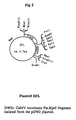
- the E. coli phosphomannose isomerase (EC 5.3.2.8) gene originates from plasmid pGS63 (Miles, H. et al. Gene 32, pp41-48 (1984)) ( Figure 1 ), a construction derived from pBR322, in which the region between the unique PstI and HindIII sites has been replaced by a section of the E. coli chromosome bearing the structural gene (man A) for phosphomannose isomerase and a fragment of the adjacent gene for fumarase (fum A).
- pGS63 has therefore lost a portion of the ⁇ -lactamase gene and has to be selected on tetracycline.
- the PstI/BamHI fragment (2466 bp) containing the entire PstI/HindIII chromosomal fragment and a 357 bp section of pBR322 was ligated into the multiple cloning site of pUC18 to form pDO18 (see Figure 1 ).
- pDO18 is digested with HindIII and the resultant recessed 3' termini are filled using Klenow polymerase.
- the open DO18 plasmid with the filled HindIII site (HindIII*) (See Figure 1 ) is digested with BcII and the 1218 bp BcII-HindIII* fragment containing the coding region of phosphomannose isomerase is cloned into the plasmid pEnhanced-Peter-Linker (pEPL). which was first digested with SmaI and then with BamHI. The resultant plasmid is called p(EPL-mannose).
- pEPL is constructed from pCaMVCN (Fromm et al. Proc. Natl. Acad. Sci. USA 82, p5824 (1985); Fromm et al. Nature 319, p791 (1986)) in which the CAT gene is removed by a PstI digestion.
- a small linker (linker: PstI-BamHI-BalI-PstI) is inserted into this plasmid PstI site, giving the plasmid called pLise(pL).
- pEL pEnhanced-Lise
- pEL differs essentially from pCaMVCN in that it contains a variant 35S promoter with a tandem duplication of the 250 bP of the upstream sequence of the promoter.
- the variant 35S promoter has a transcriptional activity approximately ten times higher than the natural 35S promoter (Kay et al. Science 236. pp. 1299-1302 (1987)).
- pEL is digested with PstI and BgIII, thereby removing the NOS terminator, and a CaMV terminator (DW2t) is inserted instead Finally, a linker (PstI-BamHI-SmaI-SacI-SacII-SphI) is inserted into the PstI site situated between the enhanced promoter and the CaMV terminator.
- This plasmid is called pEPL (see Figure 2 ).
- pfEPL-mannose is digested with HindIII in order to isolate the fragment containing the entire enhanced 355 promoter, the coding region of E. coli phosphomannose isomerase and the CaMV terminator.
- the isolated fragment is cloned into the HindIII site of the binary vector pBKL4 ( Figure 4 ).
- the resulting plasmid is termed p(BKL-mannose).
- the HindIII site in pBKL4 is situated between a kanamycin resistance gene and the ⁇ -glucuronidase (GUS) gene (see Figure 3 ).
- GUS ⁇ -glucuronidase
- the mannose chimeric gene, the kanamycin resistant gene (NPT II) and the GUS gene each have a promoter and terminator.
- Figure 4 shows the p(BKL-mannose) construction containing the chimeric phosphomarmose isomerase gene inserted between the GUS and the NPTII gene of plasmid
- the construct p(BKL-mannose) is isolated from E . coli and transformed into the Agrobaclerium rumefaciens strain LBA4404 which contains the disarmed helper plasmid pAL4404 (Hoekema, et al. Nature, 303 , pp. 179-180 (1983); Ooms et al . Plasmid 7 , pp. 15-29 (1982)) by the freeze thaw methods (Holsters et al. , Mol. Gen. Genet 163 , 181-187 (1978)).
- Co-cultivation - plates contain LS substrate (sucrose 30 g/l), agar (8 g/l). 2,4-dichlorophenoxyacetic acid (2.0 mg/l) and trans-zearin (0.5 mg/l).
- LS-substrate containing Agrobacterium tumefaciens transformed so that it contains a binary vector comprising genes which it is intended should be incorporated into the potato cells.
- genes include, for example, those encoding ⁇ -glucuronidase (GUS), the NPT II gene providing resistance to the antibiotic kanamycin and/or genes encoding proteins involved in mannose metabolism for example mannose 6 phosphate isomerase, mannose epimerases, phosphomannomutases etc. (see below).
- the Agrobacterium are cultured over-night in YMB-substrate (dipotassiumhydrogenphosphate (trihydrate) (0.66 g/l); magnesium sulphate (heptahydrate) (0.20 g/l); sodium chloride (0.10 g/l); mannitol (10.0 g/l); and yeast extract 0.40 g/l) containing appropriate antibiotics (corresponding to the resistance gene of the Agrobacterium strain) to an optical density at 660 nm (OD-660) of approx, 0.8.
- YMB-substrate dipotassiumhydrogenphosphate (trihydrate) (0.66 g/l); magnesium sulphate (heptahydrate) (0.20 g/l); sodium chloride (0.10 g/l); mannitol (10.0 g/l); and yeast extract 0.40 g/l) containing appropriate antibiotics (corresponding to the resistance gene of the Agrobacterium strain) to an optical density at 660 nm (OD-660) of approx
- internodal segments are then incubated in the suspension of the resuspended Agrobacterium for about 30 minutes, and then the excess of bacteria is removed from the segments by blotting them onto sterile fiber paper.
- the shoot segments are co-cultured with bacteria for 72 hours on filter paper on LS-substrate (as defined above) in petri-dishes covered with white paper tissues.
- This substrate is referred to hereafter as "co-cultivation substrate”.
- the substrate and segments are covered with sterile filter papers, and the petri dishes are placed at 25°C and subjected to cycles of 16h light/ 8h dark.
- the shoot segments are transferred to LS-medium supplemented with 800 mg/l carbenicillin.
- the thus transferred segments are then gently shaken to dislodge or destroy adherent Agrobacterium.
- the thus washed segments are then transferred to LS-substrate (as above) except that the trans-zeatin concentration was 1 mg/l, and the substrate is supplemented with gibberellic acid (0.1 mg/l) and carbenicillin (800 mg/l), and optionally kanamycin sulphate (50 mg/l) and/or mannose (0 - 20g/l) and/or sucrose (0 - 20 g/l).
- This substrate is referred to herafter as "selection/regeneration substrate".
- the segments are sub-cultured onto fresh substrate at fortnightly intervals or as described below. Within 2 to 4 weeks, shoots developed from the segments and the formation of new shoots continues for about 3-4 months.
- the regenerated shoots are transferred to rooting substrate composed of LS-substrate supplemented with carbenicillin (500 mg/l).
- the newly rooted regenerated shoots (plants) (height approx. 2-3 cm) are transplanted from rooting substrate to soil and placed in a growth chamber at 21°C having a 16 hour light/8 hour dark cycle and 200-400 E/sqm/sec- When the plants are sufficiently well established they are transferred to a greenhouse, where they are grown until tubers develop and the upper part of the plants exhibit senescence.
- the transgenic genotypes of the regenerated shoot are verified:
- Regenerated plants are produced as described above, except that the shoot segments are not co-cultured with bacteria and the washing procedure consequential thereon is omitted.
- the number of regenerated shoots is determined up to the 40th day from the start of experiment.
- Table 1 shows the inhibition by mannose of the regeneration of shoots from potato stem segments which had not been transformed with Agrobacrerium. It can be seen from Table 1 that mannose effectively inhibits regeneration of such shoots, and that sucrose promotes such regeneration.
- mannose cannot be used as a carbohydrate source in most plant species. When mannose is added to plants it is metabolized and mannose 6-phosphate accumulates.
- Mannose 6-phosphate can be converted to fructose 6 phosphate by mannose 6 phosphate isomerase, the amount converted being dependent on the activity of the isomerase.
- Such fructose 6 phosphate may be utilized by plants, but in principal high levels of mannose (whether or not an alternative carbohydrate source is available) are toxic to plants.
- shoot formation is totally inhibited when the mannose concentration is 5-10g/l, irrespective of the availability of sucrose, even when that is present in high concentrations.
- Table 1 Inhibition by mannose of the regeneration of shoots from non-transformed potato stem segments.
- Concn (g/l) sucrose Concn (g/l) mannose Regenerated shoots/explant (%) 0 0 0 0 5 0 0 10 0 0 20 0 10 0 50 10 5 3 10 10 0 10 20 0 20 0 53 20 5 0 20 10 0 20 20 0
- Regenerated plants are produced as described above.
- the Agrobacterium with which the shoot segments are co-incubated are transformed with construct p(BKL-mannose) which is obtained as described above, so that the bacteria harbour a vector comprising the genes encoding GUS and mannose 6 phosphate isomerase.
- Transgenic (GUS+) shoots are selected on the basis of their ability to metabolize mannose in the presence of an agent (methyl-3-O-glucose) which reduces the toxicity to the shoots of the mannose.
- GUS+ Transgenic
- Shoots which are GUS+ are selected on the basis of their ability to grow in the presence of mannose at a concentration of about 5g/l.
- a further experiment is performed in which the Agrobacterium which are used to transform the shoot segments harbour a vector similar to p(BKL-mannose) except that it lacks the gene encoding mannose 6 phosphate isomerase.
- a vector comprises the gene encoding NPT II which is capable of rendering cells transformed therewith resistant to kanamycin.
- GUS+ transformants are selected on the basis of their resistance to kanamycin present at a concentration of 50 mg/l. In this latter selection, a lower proportion than in Example 2 of the selected cells are GUS+.
- Example 3 is repeated, except that the Agrobacterium are transformed with p(BKL-mannose) and the GUS+ transformants are selected on the basis of their ability to grow on Kanamycin (50 mg/ml). In this case a lower proportion than in Example 3 of the selected shoots are GUS+.
- Table 2 shows that D-xylose does not inhibit shoot regeneration when sucrose is present and in addition that D-xylose is not utilized as a carbohydrate source. D-xylulose is a good carbohydrate source during shoot regeneration. Table 2. Test of the ability of D-xylose and D-xylulose to function as carbohydrate sources during shoot regeneration from tobacco leaf discs. Xylose g/l Sucrose g/l Xylulose g/l Number of regenerated shoots each leaf disc 0 0 0 0 10 0 0 10 10 0 4.3 0 10 0 2.3 0 0 10 4.1 0 10 10 11.7
- Xylose can be converted to xylulose by xylose isomerase. Accordingly, a functional xylose isomerase gene and a further structural gene under control of appropriate promoters and terminators, are introduced into plants, or parts or cells thereof, and the transformed plants, parts or cells thereof are selected on the basis of their ability to metabolism xylose as a carbohydrate source.
- Explants are produced and treated as described above under "selection of transformed tissue", except that the selection/regeneration substrate was not supplemented with kanamycin or carbenicillin, and that plant tissue is not transformed.
- selection/regeneration substrate was not supplemented with kanamycin or carbenicillin, and that plant tissue is not transformed.
- the only subcultivation step is when the explants are transferred from the co-cultivation substrate to the selection/regeneration substrate which is supplemented with xylose at the concentrations indicated below.
- the number of regenerated shoots is recorded after 12 weeks. Table 3.
- Table 3 shows that D-xylose (compared to D-mannose) is a weak inhibitor of shoot regeneration when sucrose is present and in addition D-xylose does not function as a carbohydrate source in plants which are non-transgenic in respect of a xylose metabolizing enzyme or protein. Moreover, D-xylulose (5 g/l) added to substrates in the absence of sucrose enabled the regeneration of 2.2 shoots per explant after 9 weeks.
- Example 5 is repeated except that the selection/regeneration substrate is supplemented with methyl-3-O-glucose (MOG) at the concentrations indicated in Table 4. The percentage of live explants is registered after 8 weeks.
- MOG methyl-3-O-glucose
- Table 4 shows that co-treatment with MOG inhibits the toxic effects of mannose on sensitive plant tissues. Because mannose is toxic in concentrations which are optimal for compounds which function as carbohydrate sources, the addition of MOG makes it possible to supplement the substrate with optimal carbohydrate concentrations in the form of mannose. This makes it possible to utilize mannose as a positive selection agent, in the absence of other carbohydrate sources. Table 4. Inhibition of the toxicity of mannose by co-treatment with methyl-3-O-glucose (MOG).
- Example 7 is repeated, except that the regeneration /selection substrate contains mannose (15g/l), methyl-3-O-glucose in the concentrations indicated in Table 5, and does not contain sucrose.
- the transformed plant material is transgenic for the mannose 6 phosphate isomerase gene. After 21 days the selected shoots are harvested. All harvested shoots are assayed for the expression the co-introduced ⁇ -glucuronidase gene and the total number (from 2 harvests) of transgenic ⁇ -glucuronidase expressing (GUS+) shoots per explants is calculated as is the fraction of the ⁇ -glucuronidase expressing (GUS+) shoots among the total number of shoots selected (Table 5.).
- Table 5 shows that when mannose is added together with methyl-3-O-glucose, selection of transgenic shoots is possible even at high concentrations of mannose, in the absence of other carbohydrate sources. Table 5. The effect of methyl-3-O-glucose on the selection of transgenic shoots on mannose containing substrates without sucrose. Mannose (g/l) 15 15 15 15 15 15 MOG (g/l) 0 2.5 5.0 10 15 GUS+ shoots/explant 0 0.2 1.0 0.5 0.6 GUS+ shoots/ sel. shoots (%) 0 57 81 89 53
- Example 8 is repeated except that MOG is substituted by phloridzin.
- Table 6 shows that when mannose is added together with phloridzin selection of 100% transgenic shoots is possible at high concentrations of mannose in the absence of other carbohydrate sources. This is an example of how cross feeding and the production of escapers can be minimized by the addition of a carbohydrate transport inhibitor.
- Table 6 0.5 g/l Phloridzin g/l Mannose GUS+ Shoots/Sel. Shoots GUS+ Shoots/Expl.
- Table 7 indicates that compounds other than mannose may be used as selection agents in transgenic plant tissue which comprises, inter alia, the mannose 6- phosphate isomerasse gene from E. coli. Table 7. No. of regenerated shoots per explant selected by compounds in addition to mannose. Number of regenerated shoots per explant Compound Genotype Wild type M-6-P-isomerase D-mannose 0 1.1 D-mannosamine 0 0.8 D-mannose-6-phosphate 0 0.7
- Sugar beet is transformed by the so-called cot-pet method as described in PCT Patent Application No. PCT/DK92/00108 wherein cotyledons including the petiole are used as explants. Seedlings are derived from seeds germinated and grown for 4-7 weeks at 12°C in a 16h day/8h night regime. Cotyledons are excised 2-3mm below the node, tawn apart and cultured either in the dark or in light and in the presence or absence of xylose.
- Table 8 shows that xylose is utilized as a carbohydrate source by sugar beet in the presence of light but not in the dark indicating that xylose based positive selection of sugar beet which are transgenic inter alia for the xylose isomerase gene should be carried out in the dark.
- Explants transgenic, inter alia, for the mannose 6 phosphate isomerase gene are produced, and the selection/regeneration substrate is supplemented with mannose and sucrose as indicated in Table 9.
- the number of regenerated shoots is registered after 11 weeks.
- Table 9 shows the number of regenerated shoots on substrates containing methyl-3-0-glucose as a percentage of the number of shoots regenerated on substrates without mannose and methyl-3-O-glucose.
- tissue specific expression of a gene encoding an enzyme involved in mannose or xylose metabolism, or the metabolism of a mannose or xylose derivative or a mannose or xylose pre-cursor may be used to control developmental regulation of such tissues upon exposure thereof to the substrate of modulator of the said enzyme.
- mannose or xylose including derivatives or precursors thereof
Landscapes
- Health & Medical Sciences (AREA)
- Life Sciences & Earth Sciences (AREA)
- Chemical & Material Sciences (AREA)
- Genetics & Genomics (AREA)
- Engineering & Computer Science (AREA)
- Organic Chemistry (AREA)
- Biotechnology (AREA)
- Zoology (AREA)
- Bioinformatics & Cheminformatics (AREA)
- Wood Science & Technology (AREA)
- Molecular Biology (AREA)
- General Health & Medical Sciences (AREA)
- Biomedical Technology (AREA)
- Biochemistry (AREA)
- General Engineering & Computer Science (AREA)
- Microbiology (AREA)
- Plant Pathology (AREA)
- Physics & Mathematics (AREA)
- Cell Biology (AREA)
- Biophysics (AREA)
- Nutrition Science (AREA)
- Medicinal Chemistry (AREA)
- Botany (AREA)
- Micro-Organisms Or Cultivation Processes Thereof (AREA)
- Breeding Of Plants And Reproduction By Means Of Culturing (AREA)
- Enzymes And Modification Thereof (AREA)
- Polysaccharides And Polysaccharide Derivatives (AREA)
- Saccharide Compounds (AREA)
- Measuring Or Testing Involving Enzymes Or Micro-Organisms (AREA)
- Nitrogen Condensed Heterocyclic Rings (AREA)
- Led Devices (AREA)
- Semiconductor Lasers (AREA)
- Preparation Of Compounds By Using Micro-Organisms (AREA)
- Feedback Control In General (AREA)
- Pharmaceuticals Containing Other Organic And Inorganic Compounds (AREA)
Priority Applications (1)
| Application Number | Priority Date | Filing Date | Title |
|---|---|---|---|
| DE69434744T DE69434744T3 (de) | 1993-03-02 | 1994-02-28 | Positive selektion auf mannose oder xylose basierend |
Applications Claiming Priority (3)
| Application Number | Priority Date | Filing Date | Title |
|---|---|---|---|
| GB939304200A GB9304200D0 (en) | 1993-03-02 | 1993-03-02 | Improvements in or relating to organic compounds |
| GB9304200 | 1993-03-02 | ||
| PCT/EP1994/000575 WO1994020627A1 (en) | 1993-03-02 | 1994-02-28 | Mannose or xylose based positive selection |
Publications (3)
| Publication Number | Publication Date |
|---|---|
| EP0804599A1 EP0804599A1 (en) | 1997-11-05 |
| EP0804599B1 EP0804599B1 (en) | 2006-05-24 |
| EP0804599B2 true EP0804599B2 (en) | 2012-10-10 |
Family
ID=10731298
Family Applications (1)
| Application Number | Title | Priority Date | Filing Date |
|---|---|---|---|
| EP94909084A Expired - Lifetime EP0804599B2 (en) | 1993-03-02 | 1994-02-28 | Mannose or xylose based positive selection |
Country Status (15)
| Country | Link |
|---|---|
| US (1) | US5767378A (enExample) |
| EP (1) | EP0804599B2 (enExample) |
| JP (3) | JP3698722B2 (enExample) |
| AT (1) | ATE327336T1 (enExample) |
| AU (1) | AU682495B2 (enExample) |
| CA (1) | CA2157470C (enExample) |
| DE (1) | DE69434744T3 (enExample) |
| DK (1) | DK0804599T3 (enExample) |
| ES (1) | ES2265144T3 (enExample) |
| GB (1) | GB9304200D0 (enExample) |
| HU (1) | HU225771B1 (enExample) |
| SK (1) | SK285107B6 (enExample) |
| UA (1) | UA57696C2 (enExample) |
| WO (1) | WO1994020627A1 (enExample) |
| ZA (1) | ZA941467B (enExample) |
Families Citing this family (175)
| Publication number | Priority date | Publication date | Assignee | Title |
|---|---|---|---|---|
| ES2256856T3 (es) * | 1995-04-06 | 2006-07-16 | Seminis Vegetable Seeds, Inc. | Proceso de seccion de celulas transgenicas. |
| GB9702592D0 (en) * | 1997-02-07 | 1997-03-26 | Danisco | Selection method |
| EP0870836A1 (de) * | 1997-04-09 | 1998-10-14 | IPK Gatersleben | 2-Desoxyglucose-6-Phosphat (2-DOG-6-P) Phosphatase DNA-Sequenzen als Selektionsmarker in Pflanzen |
| US6075134A (en) * | 1997-05-15 | 2000-06-13 | The Regents Of The University Of California | Glycoconjugates and methods |
| US6586661B1 (en) | 1997-06-12 | 2003-07-01 | North Carolina State University | Regulation of quinolate phosphoribosyl transferase expression by transformation with a tobacco quinolate phosphoribosyl transferase nucleic acid |
| US7087420B1 (en) | 1997-07-17 | 2006-08-08 | Cambia | Microbial β-glucuronidase genes, gene products and uses thereof |
| US6391547B1 (en) * | 1997-09-09 | 2002-05-21 | Center For The Application Of Molecular Biology To International Agriculture | Microbial β-glucuronidase genes, gene products and uses thereof |
| CA2303759A1 (en) | 1997-09-16 | 1999-03-25 | Cropdesign N.V. | Cyclin-dependent kinase inhibitors and uses thereof |
| AR020078A1 (es) | 1998-05-26 | 2002-04-10 | Syngenta Participations Ag | Metodo para alterar la expresion de un gen objetivo en una celula de planta |
| GB9817465D0 (en) | 1998-08-11 | 1998-10-07 | Danisco | Selection method |
| ES2377826T3 (es) | 1998-11-12 | 2012-04-02 | MAX-PLANCK-Gesellschaft zur Förderung der Wissenschaften e.V. | Promotores quiméricos capaces de mediar en la expresión génica en plantas tras una infección por patógenos y usos de los mismos |
| DE19926216A1 (de) * | 1999-06-09 | 2001-02-22 | Metallgesellschaft Ag | Verfahren zur Herstellung von Bariumsulfat, Bariumsulfat und Verwendung des Bariumsulfats |
| ATE454456T1 (de) | 2000-02-11 | 2010-01-15 | Metabolix Inc | Intein enthaltende multigen-expressionskonstrukte |
| AU2001240117A1 (en) * | 2000-03-08 | 2001-09-17 | Univ. Of Georgia Research Foundation, Inc. | Arabitol or ribitol as positive selectable markers |
| US7005561B2 (en) | 2000-03-08 | 2006-02-28 | University Of Georgia Research Foundation, Inc. | Arabitol or ribitol as positive selectable markers |
| EP1780283A1 (en) * | 2000-04-21 | 2007-05-02 | Martek Biosciences Corporation | Trophic conversion of obligate photographic algae through metabolic engineering |
| CA2404900A1 (en) | 2000-04-21 | 2001-11-01 | Martek Biosciences Corporation | Trophic conversion of obligate phototrophic algae through metabolic engineering |
| WO2001096383A2 (en) | 2000-06-16 | 2001-12-20 | Martek Biosciences Corporation | High fluorescent intensity cross-linked allophycocyanin |
| JP2004506427A (ja) * | 2000-08-11 | 2004-03-04 | シンジェンタ パーティシペーションズ アクチェンゲゼルシャフト | 植物の安定した形質転換の方法 |
| ATE333506T1 (de) * | 2000-08-30 | 2006-08-15 | Univ North Carolina State | Transgene pflanzen, die molekulare decoys enthalten, die den proteininhalt ändern |
| US7189570B2 (en) | 2000-11-07 | 2007-03-13 | North Carolina State University | Putrescine-n-methyltransferase promoter |
| US7786355B2 (en) * | 2000-11-17 | 2010-08-31 | Metabolix, Inc. | Production of medium chain length polyhydroxyalkanoates from fatty acid biosynthetic pathways |
| EA200400013A1 (ru) * | 2001-06-08 | 2004-06-24 | Вектор Тобакко Лтд. | Модификация содержания никотина и нитрозамина в табаке |
| US20060157072A1 (en) * | 2001-06-08 | 2006-07-20 | Anthony Albino | Method of reducing the harmful effects of orally or transdermally delivered nicotine |
| EP1925672A1 (en) | 2001-06-22 | 2008-05-28 | Syngeta Participations AG | Abiotic stress responsive polynucleotides and polypeptides |
| NL1019308C2 (nl) | 2001-11-06 | 2003-05-07 | Stichting Tech Wetenschapp | Werkwijze voor het selecteren van genetisch getransformeerde cellen. |
| EP2301948B1 (en) | 2001-11-07 | 2012-05-09 | Syngenta Participations AG | Promoters for regulation of gene expression in plant roots |
| CN102978236B (zh) * | 2002-02-20 | 2015-09-09 | J·R·西姆普罗特公司 | 精确育种 |
| US7534934B2 (en) * | 2002-02-20 | 2009-05-19 | J.R. Simplot Company | Precise breeding |
| CA2777599A1 (en) | 2002-02-26 | 2003-09-04 | Syngenta Participations Ag | A method of selectively producing male or female sterile plants |
| CN100337542C (zh) * | 2002-04-09 | 2007-09-19 | 韦克多烟草有限公司 | 低尼古丁和亚硝胺的烟草 |
| EP1521770B1 (en) | 2002-06-14 | 2008-11-26 | Monier Tadros | Method for the production of protamine |
| WO2004005516A1 (en) | 2002-07-09 | 2004-01-15 | Basf Plant Science Gmbh | Use of ahas mutant genes as selection marker in potato transformation |
| US20060253917A1 (en) | 2002-12-26 | 2006-11-09 | Bret Cooper | Cell proliferation-related polypeptides and uses therefor |
| JP4948174B2 (ja) | 2003-10-16 | 2012-06-06 | マイクロメット アクツィエン ゲゼルシャフト | 多重特異的脱免疫cd3−結合物質 |
| CA2542574C (en) | 2003-11-12 | 2014-03-18 | E. I. Du Pont De Nemours And Company | Delta-15 desaturases suitable for altering levels of polyunsaturated fatty acids in oleaginous plants and yeast |
| EP1694833B1 (en) | 2003-12-02 | 2009-08-26 | Basf Se | 2-methyl-6-solanylbenzoquinone methyltransferase as target for herbicides |
| PL2141239T3 (pl) | 2003-12-16 | 2014-02-28 | Pioneer Hi Bred Int | Transgeny tłumienia genu dominującego i sposoby ich zastosowania |
| US20070169227A1 (en) | 2003-12-16 | 2007-07-19 | Pioneer Hi-Bred International Inc. | Dominant Gene Suppression Transgenes and Methods of Using Same |
| WO2005086813A2 (en) | 2004-03-08 | 2005-09-22 | Syngenta Participations Ag | Glutamine-rich maize seed protein and promoter |
| KR101303110B1 (ko) | 2004-03-25 | 2013-09-06 | 신젠타 파티서페이션즈 아게 | 옥수수 이벤트 mir604 |
| US8093182B2 (en) * | 2004-12-23 | 2012-01-10 | Nonomura Arthur M | Compositions and methods for anti-transpiration in plants |
| WO2006101983A2 (en) | 2005-03-16 | 2006-09-28 | Metabolix, Inc. | Chemically inducible expression of biosynthetic pathways |
| BRPI0706368A2 (pt) | 2006-01-06 | 2011-03-22 | Univ Georgia | composição, vetor, método para fornecer resistência ao cisto nematódeo a uma planta, proteìna de fusão, método para inibir atividade biológica, ácido nucléico isolado |
| AP2008004539A0 (en) * | 2006-01-12 | 2008-08-31 | Avestha Gengraine Tech Pvt Ltd | Novel efficient transformation method for sunflower and oil seeds based on positive selection |
| WO2007091117A1 (en) * | 2006-02-09 | 2007-08-16 | Avestha Gengraine Technologies Pvt. Ltd. | Method of selection and regeneration of transgenic brassica jxmcea on xylose |
| EP2069389B1 (en) | 2006-08-04 | 2014-10-08 | BP Corporation North America Inc. | Glucanases, nucleic acids encoding them and methods for making and using them |
| EP2397486B1 (en) | 2006-09-21 | 2014-12-24 | Verenium Corporation | Phytases, nucleic acids encoding them and methods for making and using them |
| DK2479267T3 (en) | 2006-12-21 | 2017-03-27 | Basf Enzymes Llc | Amylases and Glucoamylases, Nucleic Acids Encoding Them, and Methods for Preparing and Using Them |
| HRP20130883T4 (hr) | 2007-04-03 | 2022-11-25 | Amgen Research (Munich) Gmbh | Međuvrsno specifična cd3-epsilon-vežuća domena |
| RS58217B1 (sr) | 2007-04-03 | 2019-03-29 | Amgen Res Munich Gmbh | Interspecijski specifičan vezujući domen |
| CA2584934A1 (en) | 2007-04-17 | 2008-10-17 | University Of Guelph | Nitrogen-regulated sugar sensing gene and protein and modulation thereof |
| AU2008260555B2 (en) | 2007-06-01 | 2012-07-26 | Sapphire Energy, Inc. | High throughput screening of genetically modified photosynthetic organisms |
| CN101896607A (zh) | 2007-09-11 | 2010-11-24 | 蓝宝石能源公司 | 通过光合生物产生分子 |
| US8314222B2 (en) | 2007-10-05 | 2012-11-20 | Sapphire Energy, Inc. | System for capturing and modifying large pieces of genomic DNA and constructing organisms with chloroplasts |
| US8409641B2 (en) | 2007-12-03 | 2013-04-02 | Syngenta Participations Ag | Engineering enzymatically susceptible phytases |
| US8487159B2 (en) * | 2008-04-28 | 2013-07-16 | Metabolix, Inc. | Production of polyhydroxybutyrate in switchgrass |
| PT2294179E (pt) | 2008-06-27 | 2014-07-08 | Sapphire Energy Inc | Indução de floculação em organismos fotossintéticos |
| EP2352765B1 (en) | 2008-10-01 | 2018-01-03 | Amgen Research (Munich) GmbH | Cross-species-specific single domain bispecific single chain antibody |
| CN102171248B (zh) | 2008-10-01 | 2015-07-15 | 安进研发(慕尼黑)股份有限公司 | 种间特异性PSMAxCD3双特异性单链抗体 |
| CN106191101B (zh) | 2008-12-16 | 2020-01-10 | 先正达参股股份有限公司 | 玉米转殖项5307 |
| US7868688B2 (en) * | 2008-12-30 | 2011-01-11 | Cosmic Circuits Private Limited | Leakage independent very low bandwith current filter |
| CN101768213B (zh) | 2008-12-30 | 2012-05-30 | 中国科学院遗传与发育生物学研究所 | 一种与植物分蘖数目相关的蛋白及其编码基因与应用 |
| ES2619279T3 (es) | 2009-01-22 | 2017-06-26 | Syngenta Participations Ag. | Polipéptidos de Hidroxifenilpiruvato Dioxigenasa mutantes y métodos de uso |
| MX2011007889A (es) | 2009-02-06 | 2011-08-15 | Syngenta Participations Ag | Modificacion de enzima multidominio para la expresion en plantas. |
| CN101817879A (zh) | 2009-02-26 | 2010-09-01 | 中国科学院遗传与发育生物学研究所 | 金属硫蛋白及其编码基因与应用 |
| WO2010102293A1 (en) | 2009-03-06 | 2010-09-10 | Metabolix, Inc. | Method of positive plant selection using sorbitol dehydrogenase |
| BRPI1011160A8 (pt) | 2009-05-21 | 2018-01-02 | Verenium Corp | Fitases, preparação de proteína que as compreende, e seus usos |
| ES2555386T5 (es) | 2009-07-10 | 2018-12-28 | Syngenta Participations Ag | Nuevos polipéptidos de hidroxifenilpiruvato dioxigenasa, y métodos de uso |
| EP2478105A1 (en) | 2009-09-15 | 2012-07-25 | Metabolix, Inc. | Generation of high polyhydroxybutrate producing oilseeds |
| UA110925C2 (uk) | 2009-10-02 | 2016-03-10 | Сінгента Партісіпейшнс Аг | Сконструйований білок cry1ba, активний щодо лускокрилих комах |
| TWI653333B (zh) | 2010-04-01 | 2019-03-11 | 安進研究(慕尼黑)有限責任公司 | 跨物種專一性之PSMAxCD3雙專一性單鏈抗體 |
| UA111592C2 (uk) | 2010-07-07 | 2016-05-25 | Сінгента Партісіпейшнс Аг | Спосіб контролю над твердокрилими комахами-шкідниками |
| WO2012008748A2 (ko) * | 2010-07-14 | 2012-01-19 | 건국대학교 산학협력단 | 지오바실러스 써모디니트리피칸스 유래 만노스-6-인산 이성화효소의 변이체 및 이를 이용한 엘-리보스 생산방법 |
| WO2012037324A2 (en) | 2010-09-15 | 2012-03-22 | Metabolix, Inc. | Increasing carbon flow for polyhydroxybutyrate production in biomass crops |
| EP2431471A1 (en) | 2010-09-17 | 2012-03-21 | Université Catholique De Louvain | Methods for increasing the size of plants or plant organs |
| CA2820706C (en) | 2010-12-03 | 2018-05-22 | Ms Technologies, Llc | Optimized expression of glyphosate resistance encoding nucleic acid molecules in plant cells |
| AR083029A1 (es) | 2010-12-09 | 2013-01-23 | Syngenta Participations Ag | Metodos y composiciones que utilizan arn interferente pequeño (arnip) para el control de nematodos en plantas |
| ES2461896B1 (es) | 2010-12-21 | 2015-03-18 | Centro De Investigación Y De Estudios Avanzados Del Instituto Politécnico Nacional | Métodos para obtener plantas resistentes a sequía |
| WO2012142106A1 (en) | 2011-04-11 | 2012-10-18 | Targeted Growth, Inc. | Identification and the use of krp mutants in plants |
| BR112013027031B1 (pt) | 2011-04-26 | 2021-02-02 | Syngenta Participations Ag | método para aumentar a frequência de transformação de um tecido de plantas monocotiledôneas, vetor recombinante e ácido nucleico |
| WO2012159891A1 (en) | 2011-05-20 | 2012-11-29 | Syngenta Participations Ag | Endosperm-specific plant promoters and uses therefor |
| US9556449B2 (en) | 2011-07-15 | 2017-01-31 | Syngenta Participations Ag | Methods of increasing yield and stress tolerance in a plant by decreasing the activity of a trehalose-6-phosphate phosphatase |
| BR122020017359B1 (pt) | 2011-07-28 | 2021-10-13 | Syngenta Participations Ag | Método para controle de uma praga de nemátodos |
| WO2013067259A2 (en) | 2011-11-03 | 2013-05-10 | Syngenta Participations Ag | Regulatory nucleic acids and methods of use |
| US20140182011A1 (en) | 2011-11-03 | 2014-06-26 | The University Of Hong Kong | Methods Using Acyl-Coenzyme A-Binding Proteins to Enchance Drought Tolerance in Genetically Modified Plants |
| MX355598B (es) | 2011-11-21 | 2018-04-24 | Innovation Hammer Llc | Metodos y sistemas para desarrollar plantas usando sustratos basados en silicato, cultivo de productividad fotosintetica mejorada y fotoproteccion mediante la utilizacion de glicopiranosidos exogenos para derivados de glicopiranosil-protein a endogenos, y formulaciones, procesos y sistemas para los mismos. |
| AR090416A1 (es) | 2012-02-01 | 2014-11-12 | Dow Agrosciences Llc | Peptidos sinteticos de transito al cloroplastos derivados de brassica |
| BR112014019116B1 (pt) | 2012-02-03 | 2024-01-23 | F.Hoffmann-La Roche Ag | Kit, moléculas de anticorpo e uso de uma molécula de anticorpo |
| MX356581B (es) | 2012-02-16 | 2018-06-05 | Syngenta Participations Ag | Proteinas pesticidas modificadas. |
| WO2013134651A1 (en) | 2012-03-09 | 2013-09-12 | Board Of Trustees Of Michigan State University | Method of enhancing plant drought tolerance by expression of ndr1 |
| ES2733328T3 (es) | 2012-05-21 | 2019-11-28 | Innovation Hammer Llc | Procedimientos para generar complejos de coordinación micelares seguros para el tratamiento de plantas y formulaciones para el mismo |
| WO2013184768A1 (en) | 2012-06-05 | 2013-12-12 | University Of Georgia Research Foundation, Inc. | Compositions and methods of gene silencing in plants |
| CA2890235A1 (en) | 2012-06-22 | 2013-12-27 | Syngenta Participations Ag | Biological control of coleopteran pests |
| WO2014028426A1 (en) | 2012-08-13 | 2014-02-20 | University Of Georgia Research Foundation, Inc. | Compositions and methods for increasing pest resistance in plants |
| RU2015118926A (ru) | 2012-10-23 | 2016-12-20 | Монтана Стейт Юниверсити | Получение высококачественной твердой пшеницы, имеющей повышенное содержание амилозы |
| CA2904230A1 (en) | 2013-03-05 | 2014-09-12 | Baylor College Of Medicine | Engager cells for immunotherapy |
| CA2903096A1 (en) | 2013-03-05 | 2014-09-12 | Baylor College Of Medicine | Oncolytic virus |
| CN105339498A (zh) | 2013-03-07 | 2016-02-17 | 贝勒医学院 | 癌症中靶向cd138 |
| EP2964764A1 (en) | 2013-03-09 | 2016-01-13 | Baylor College Of Medicine | Vascular-targeted t-cell therapy |
| CA2909701C (en) | 2013-04-17 | 2022-12-06 | Baylor College Of Medicine | Immunosuppressive tgf-.beta. signal converter |
| CA2911185C (en) | 2013-06-11 | 2023-09-05 | Syngenta Participations Ag | Methods for generating transgenic plants |
| US20140380524A1 (en) | 2013-06-19 | 2014-12-25 | The University Of Hong Kong | Methods of using 3-hydroxy-3-methylglutaryl-coa synthase to enhance growth and/or seed yield of genetically modified plants |
| EP3020727B2 (en) | 2013-09-16 | 2021-02-24 | CeMM - Forschungszentrum für Molekulare Medizin GmbH | Mutant calreticulin for the diagnosis of myeloid malignancies |
| CA3090957A1 (en) | 2013-10-29 | 2015-05-07 | Biotech Institute, Llc | Breeding, production, processing and use of specialty cannabis |
| WO2015173398A1 (en) | 2014-05-15 | 2015-11-19 | Cemm - Forschungszentrum Für Molekulare Medizin Gmbh | Antagonists of slc38a9 and their use in therapy |
| MA41538A (fr) | 2014-10-17 | 2017-12-26 | Baylor College Medicine | Cellules immunitaires bipartites et tripartites de signalisation |
| PH12017501010B1 (en) | 2014-12-12 | 2023-07-05 | Syngenta Participations Ag | Compositions and methods for controling plant pests |
| US20170327834A1 (en) | 2014-12-15 | 2017-11-16 | Syngenta Participations Ag | Pesticidal microrna carriers and use thereof |
| BR112017013528A2 (pt) | 2014-12-23 | 2018-03-06 | Syngenta Participations Ag | controle biológico de pragas de coleópteros |
| SG11201704272YA (en) | 2014-12-31 | 2017-06-29 | Synthetic Genomics Inc | Compositions and methods for high efficiency in vivo genome editing |
| MA41433A (fr) | 2015-01-26 | 2017-12-05 | Baylor College Medicine | Cellules immunitaires universelles pour l'immunothérapie anticancéreuse |
| KR20170138410A (ko) | 2015-02-23 | 2017-12-15 | 시걸 테라퓨틱스 에스에이에스 | 비-천연 세마포린 3 및 이의 의학적 용도 |
| US11174467B2 (en) | 2015-04-08 | 2021-11-16 | Yield10 Bioscience, Inc. | Plants with enhanced yield and methods of construction |
| BR112017021639A2 (en) | 2015-04-10 | 2018-07-24 | Syngenta Participations Ag | animal feed compositions and methods of use |
| CN107847585B (zh) | 2015-04-23 | 2022-09-23 | 贝勒医学院 | 用于得到体内存留性和治疗活性的nkt细胞亚群以及其繁殖 |
| AR105155A1 (es) | 2015-07-07 | 2017-09-13 | Syngenta Participations Ag | Composiciones y métodos para controlar plagas de plantas |
| CN108700582B (zh) | 2015-07-31 | 2021-10-22 | 米圣生物 | 免疫突触的质量预测了嵌合抗原受体(car)t细胞的效能 |
| US20190338302A1 (en) | 2016-02-04 | 2019-11-07 | Yield10 Bioscience, Inc. | Transgenic land plants comprising a putative transporter protein of an edible eukaryotic algae |
| EP3216458A1 (en) | 2016-03-07 | 2017-09-13 | Max-Planck-Gesellschaft zur Förderung der Wissenschaften e.V. | Modified vascular endothelial growth factor a (vegf-a) and its medical use |
| US11013234B2 (en) | 2016-04-29 | 2021-05-25 | Innovation Hammer Llc | Formulations and methods for treating photosynthetic organisms and enhancing qualities and quantities of yields with glycan composite formulations |
| JP7175769B2 (ja) | 2016-06-30 | 2022-11-21 | エフ・ホフマン-ラ・ロシュ・アクチェンゲゼルシャフト | 改善された養子t細胞療法 |
| AR109205A1 (es) | 2016-08-05 | 2018-11-07 | Syngenta Participations Ag | Control de plagas de coleópteros utilizando moléculas de arn |
| AR109206A1 (es) | 2016-08-05 | 2018-11-07 | Syngenta Participations Ag | Control de plagas de coleópteros utilizando moléculas de arn |
| TW201825511A (zh) | 2016-09-09 | 2018-07-16 | 美商艾斯合顧問有限公司 | 表現免疫檢查點調節子的溶瘤病毒 |
| UA126906C2 (uk) | 2016-09-09 | 2023-02-22 | Сінгента Партісіпейшнс Аг | Інсектицидний білок |
| WO2018076335A1 (en) | 2016-10-31 | 2018-05-03 | Institute Of Genetics And Developmental Biology, Chinese Academy Of Sciences | Compositions and methods for enhancing abiotic stress tolerance |
| WO2018083238A1 (en) | 2016-11-03 | 2018-05-11 | Roche Diagnostics Gmbh | Novel anti-py792-ddr1 antibodies |
| WO2018083240A1 (en) | 2016-11-03 | 2018-05-11 | Roche Diagnostics Gmbh | Novel anti-py796-ddr1 antibodies |
| WO2018083237A1 (en) | 2016-11-03 | 2018-05-11 | Roche Diagnostics Operations Inc. | Novel anti-py520-ddr1 antibodies |
| WO2018083235A1 (en) | 2016-11-03 | 2018-05-11 | Roche Diagnostics Gmbh | Novel anti-py513-ddr1 antibodies |
| WO2018156686A1 (en) | 2017-02-22 | 2018-08-30 | Yield10 Bioscience, Inc. | Transgenic land plants comprising enhanced levels of mitochondrial transporter protein |
| JP7140401B2 (ja) * | 2017-03-13 | 2022-09-21 | ボヌモーズ、インコーポレイテッド | ヘキソースの酵素的生成 |
| CR20190431A (es) | 2017-03-27 | 2019-11-01 | Hoffmann La Roche | Formatos mejorados de receptor de unión a antígeno |
| JP2020515256A (ja) | 2017-03-27 | 2020-05-28 | エフ.ホフマン−ラ ロシュ アーゲーF. Hoffmann−La Roche Aktiengesellschaft | 改良された抗原結合受容体 |
| KR20190138865A (ko) | 2017-05-01 | 2019-12-16 | 신젠타 파티서페이션즈 아게 | 동물 사료 조성물 및 사용 방법 |
| BR112020000386A2 (pt) | 2017-07-13 | 2020-07-21 | F. Hoffmann-La Roche Ag | agente de ligação específico, anticorpo monoclonal, métodos de detecção de pivka-ii, método diagnóstico do carcinoma hepatocelular, uso de um agente de ligação específico e kit |
| WO2019027789A1 (en) | 2017-08-04 | 2019-02-07 | Syngenta Participations Ag | METHODS AND COMPOSITIONS FOR TARGETED GENOMIC INSERTION |
| CA3076020A1 (en) | 2017-10-02 | 2019-04-11 | Syngenta Participations Ag | Engineered pesticidal proteins and methods of controlling plant pests |
| AR113761A1 (es) | 2017-10-18 | 2020-06-10 | Syngenta Participations Ag | Control de plagas de hemípteros utilizando moléculas de arn |
| US11459577B2 (en) | 2017-12-18 | 2022-10-04 | Syngenta Participations Ag | Targeted insertion sites in the maize genome |
| CA3091431A1 (en) | 2018-02-26 | 2019-08-29 | Devgen Nv | Control of insect pests using rna molecules |
| WO2019175131A1 (en) | 2018-03-14 | 2019-09-19 | F. Hoffmann-La Roche Ag | Method for affinity maturation of antibodies |
| WO2019175127A1 (en) | 2018-03-14 | 2019-09-19 | F. Hoffmann-La Roche Ag | Novel anti-troponint antibodies |
| EP3561053A1 (en) | 2018-04-26 | 2019-10-30 | Baylor College of Medicine | Immune effector cells and molecular adaptors with an antigen cytokine complex for effective cancer immunotherapy |
| CA3096987A1 (en) | 2018-04-27 | 2019-10-31 | Devgen Nv | Control of insect pests using rna molecules |
| WO2020051108A1 (en) | 2018-09-04 | 2020-03-12 | Yield10 Bioscience, Inc. | Genetically engineered land plants that express an increased seed yield protein and/or an increased seed yield rna |
| CN112805370A (zh) | 2018-10-19 | 2021-05-14 | 豪夫迈·罗氏有限公司 | 诱导高阻力跨内皮屏障的协同转录因子 |
| ES3068383T3 (en) * | 2019-02-12 | 2026-05-29 | Bonumose Inc | Enzymatic production of mannose |
| AU2020226376B2 (en) | 2019-02-20 | 2026-02-26 | Syngenta Crop Protection Ag | Engineered pesticidal proteins and methods of controlling plant pests |
| WO2020187798A1 (en) | 2019-03-21 | 2020-09-24 | Devgen Nv | Control of insect pests using rna molecules |
| CA3138204A1 (en) | 2019-05-14 | 2020-11-19 | Yield10 Bioscience, Inc. | Modified plants comprising a polynucleotide comprising a non-cognate promoter operably linked to a coding sequence that encodes a transcription factor |
| CN114206920B (zh) | 2019-08-09 | 2024-06-07 | 豪夫迈·罗氏有限公司 | 新型抗肌钙蛋白t抗体 |
| BR112021024656A2 (pt) | 2019-09-17 | 2022-04-12 | Beijing Dabeinong Biotechnology Co Ltd | Polipeptídeo de hidroxife-nilpiruvato-dioxigenase mutante, gene codificador e uso do mesmo |
| CR20230045A (es) | 2020-08-03 | 2023-02-21 | Hoffmann La Roche | Receptores de union al antígeno mejorada |
| CN116507640A (zh) | 2020-10-28 | 2023-07-28 | 豪夫迈·罗氏有限公司 | 改善的抗原结合受体 |
| WO2022093977A1 (en) | 2020-10-30 | 2022-05-05 | Fortiphyte, Inc. | Pathogen resistance in plants |
| CN115336534A (zh) | 2021-05-12 | 2022-11-15 | 北京大北农生物技术有限公司 | 原卟啉原氧化酶的用途 |
| AR125862A1 (es) | 2021-05-21 | 2023-08-23 | Syngenta Crop Protection Ag | Composiciones y métodos para controlar insectos |
| US20240254505A1 (en) | 2021-06-08 | 2024-08-01 | Syngenta Crop Protection Ag | Compositions and methods for controlling insects |
| WO2023001884A1 (en) | 2021-07-22 | 2023-01-26 | F. Hoffmann-La Roche Ag | Heterodimeric fc domain antibodies |
| CR20240220A (es) | 2021-11-25 | 2024-07-19 | Hoffmann La Roche | Receptores de unión al antígeno mejorados |
| WO2023108495A1 (zh) | 2021-12-15 | 2023-06-22 | 北京大北农生物技术有限公司 | 突变的羟基苯丙酮酸双加氧酶多肽、其编码基因及用途 |
| CN118382636A (zh) | 2021-12-17 | 2024-07-23 | 豪夫迈·罗氏有限公司 | 一种用于检测淀粉样蛋白β42(Aβ42)的新抗体 |
| CN118843637A (zh) | 2022-02-11 | 2024-10-25 | 东北农业大学 | 用于增加植物中蛋白质和/或油含量和改变油特性的方法和组合物 |
| WO2023180511A1 (en) | 2022-03-25 | 2023-09-28 | F. Hoffmann-La Roche Ag | Improved chimeric receptors |
| CN118434874A (zh) | 2022-04-27 | 2024-08-02 | 北京大北农生物技术有限公司 | 原卟啉原氧化酶的用途 |
| WO2024023578A1 (en) | 2022-07-28 | 2024-02-01 | Institut Pasteur | Hsc70-4 in host-induced and spray-induced gene silencing |
| WO2024052856A1 (en) | 2022-09-09 | 2024-03-14 | Friedrich Alexander Universität Erlangen-Nürnberg | Plant regulatory elements and uses thereof |
| WO2024158934A1 (en) | 2023-01-24 | 2024-08-02 | Yale University | Compositions and methods for controlling t-dna copy number in transformed plants |
| WO2024166076A1 (en) | 2023-02-10 | 2024-08-15 | King Abdullah University Of Science And Technology | Recombinant production of antimicrobial peptides in planta |
| US12239091B2 (en) | 2023-03-27 | 2025-03-04 | Redsea Science And Technology Inc. | Tomato plant designated ‘MX20-06’ |
| WO2024223802A2 (en) | 2023-04-26 | 2024-10-31 | Syngenta Crop Protection Ag | Control of plant pests using rna molecules |
| US20250075226A1 (en) | 2023-08-29 | 2025-03-06 | University Of Freiburg | Proteins for regulation of symbiotic infection and associated regulatory elements |
| WO2026163156A1 (en) | 2025-01-31 | 2026-08-06 | Harmoniz Ltd. | Cucumber plants with small fruit and increased number of fruit |
Citations (2)
| Publication number | Priority date | Publication date | Assignee | Title |
|---|---|---|---|---|
| US4931373A (en) † | 1984-05-25 | 1990-06-05 | Zymogenetics, Inc. | Stable DNA constructs for expression of α-1 antitrypsin |
| WO1993005163A1 (en) † | 1991-08-28 | 1993-03-18 | Sandoz Ltd. | Method for the selection of genetically transformed cells and compounds for use in the method |
Family Cites Families (6)
| Publication number | Priority date | Publication date | Assignee | Title |
|---|---|---|---|---|
| US4857467A (en) * | 1986-07-23 | 1989-08-15 | Phillips Petroleum Company | Carbon and energy source markers for transformation of strains of the genes Pichia |
| DE3719053A1 (de) * | 1987-06-06 | 1988-12-15 | Hoechst Ag | Verbesserte nutzung von pflanzenverwertbarem stickstoff durch kulturpflanzen mit ueberexpression der glutaminsynthetase |
| JPH02138966A (ja) * | 1987-10-20 | 1990-05-28 | Oji Paper Co Ltd | 植物の形質転換体を作出する方法 |
| BR9205297A (pt) * | 1991-05-24 | 1993-07-27 | Univ Madrid Politecnica | Novos peptideos antipatogenicos e composicoes que os contem |
| WO2009113991A1 (en) * | 2008-03-10 | 2009-09-17 | Mobank Solutions, Llc | Systems and methods for mobile device and code based money deposit, withdrawal and transfer |
| US8098881B2 (en) * | 2008-03-11 | 2012-01-17 | Sony Ericsson Mobile Communications Ab | Advertisement insertion systems and methods for digital cameras based on object recognition |
-
1993
- 1993-03-02 GB GB939304200A patent/GB9304200D0/en not_active Ceased
-
1994
- 1994-02-28 AT AT94909084T patent/ATE327336T1/de active
- 1994-02-28 US US08/505,302 patent/US5767378A/en not_active Expired - Lifetime
- 1994-02-28 DK DK94909084T patent/DK0804599T3/da active
- 1994-02-28 CA CA2157470A patent/CA2157470C/en not_active Expired - Lifetime
- 1994-02-28 SK SK1070-95A patent/SK285107B6/sk not_active IP Right Cessation
- 1994-02-28 HU HU9502566A patent/HU225771B1/hu unknown
- 1994-02-28 UA UA95094009A patent/UA57696C2/uk unknown
- 1994-02-28 JP JP51953794A patent/JP3698722B2/ja not_active Expired - Lifetime
- 1994-02-28 WO PCT/EP1994/000575 patent/WO1994020627A1/en not_active Ceased
- 1994-02-28 ES ES94909084T patent/ES2265144T3/es not_active Expired - Lifetime
- 1994-02-28 EP EP94909084A patent/EP0804599B2/en not_active Expired - Lifetime
- 1994-02-28 AU AU62077/94A patent/AU682495B2/en not_active Expired
- 1994-02-28 DE DE69434744T patent/DE69434744T3/de not_active Expired - Lifetime
- 1994-03-02 ZA ZA941467A patent/ZA941467B/xx unknown
-
2004
- 2004-05-19 JP JP2004149417A patent/JP4426376B2/ja not_active Expired - Lifetime
-
2008
- 2008-07-02 JP JP2008173331A patent/JP4805309B2/ja not_active Expired - Lifetime
Patent Citations (2)
| Publication number | Priority date | Publication date | Assignee | Title |
|---|---|---|---|---|
| US4931373A (en) † | 1984-05-25 | 1990-06-05 | Zymogenetics, Inc. | Stable DNA constructs for expression of α-1 antitrypsin |
| WO1993005163A1 (en) † | 1991-08-28 | 1993-03-18 | Sandoz Ltd. | Method for the selection of genetically transformed cells and compounds for use in the method |
Non-Patent Citations (8)
Also Published As
| Publication number | Publication date |
|---|---|
| DE69434744D1 (de) | 2006-06-29 |
| JP2008301827A (ja) | 2008-12-18 |
| EP0804599B1 (en) | 2006-05-24 |
| DE69434744T3 (de) | 2013-03-21 |
| EP0804599A1 (en) | 1997-11-05 |
| JP4426376B2 (ja) | 2010-03-03 |
| HUT73387A (en) | 1996-07-29 |
| ATE327336T1 (de) | 2006-06-15 |
| JP4805309B2 (ja) | 2011-11-02 |
| HU9502566D0 (en) | 1995-10-30 |
| SK107095A3 (en) | 1995-12-06 |
| WO1994020627A1 (en) | 1994-09-15 |
| US5767378A (en) | 1998-06-16 |
| AU682495B2 (en) | 1997-10-09 |
| CA2157470C (en) | 2012-04-17 |
| DE69434744T2 (de) | 2007-05-03 |
| DK0804599T3 (da) | 2006-09-25 |
| ES2265144T3 (es) | 2007-02-01 |
| GB9304200D0 (en) | 1993-04-21 |
| AU6207794A (en) | 1994-09-26 |
| JP2004254705A (ja) | 2004-09-16 |
| HU225771B1 (en) | 2007-08-28 |
| UA57696C2 (uk) | 2003-07-15 |
| JPH08509861A (ja) | 1996-10-22 |
| ZA941467B (en) | 1995-09-04 |
| JP3698722B2 (ja) | 2005-09-21 |
| SK285107B6 (sk) | 2006-06-01 |
| CA2157470A1 (en) | 1994-09-15 |
Similar Documents
| Publication | Publication Date | Title |
|---|---|---|
| EP0804599B1 (en) | Mannose or xylose based positive selection | |
| US9968043B2 (en) | Potato cultivar Y9 | |
| EP0901527B1 (en) | Regulating metabolism by modifying the level of trehalose-6-phosphate | |
| AU720006B2 (en) | Process for selection of transgenic plant cells | |
| Joersbo | Advances in the selection of transgenic plants using non‐antibiotic marker genes | |
| US20030177531A1 (en) | Regulating metabolism by modifying the level of trehalose-6-phosphate by inhibiting endogenous trehalase levels | |
| JP5608552B2 (ja) | 改変プロモーターを使用する植物老化の操作 | |
| JP2010524474A5 (enExample) | ||
| CN101048507B (zh) | 一种增大种子大小的方法 | |
| CA2184741A1 (en) | Processes for inhibiting and for inducing flower formation in plants | |
| RU2127759C1 (ru) | Способ идентификации или селекции эукариотических клеток | |
| US20130283484A1 (en) | Salt tolerance sygt gene derived from synechocystis, and uses thereof | |
| KR101857606B1 (ko) | 5-메틸트립토판 저항성 안트라닐레이트 합성효소 변이체 유전자의 형질전환식물체 선별마커로서의 용도 | |
| JP4413615B2 (ja) | 遺伝的に形質転換された細胞の選択方法 | |
| CN120158477A (zh) | 西瓜几丁质酶基因ClChitin在抗枯萎病中的应用 | |
| Raemakers et al. | Cassava | |
| HUP9903888A2 (hu) | Szabályozó mechanizmus trehalóz-6-foszfatáz szintjének a módosításával | |
| MX2010014428A (es) | Metodo para la seleccion positiva de celulas vegetales geneticamente transformadas de maiz y otras especies. |
Legal Events
| Date | Code | Title | Description |
|---|---|---|---|
| PUAI | Public reference made under article 153(3) epc to a published international application that has entered the european phase |
Free format text: ORIGINAL CODE: 0009012 |
|
| 17P | Request for examination filed |
Effective date: 19950714 |
|
| AK | Designated contracting states |
Kind code of ref document: A1 Designated state(s): AT BE CH DE DK ES FR GB GR IE IT LI LU MC NL PT SE |
|
| RAP1 | Party data changed (applicant data changed or rights of an application transferred) |
Owner name: SANDOZ-ERFINDUNGEN VERWALTUNGSGESELLSCHAFT M.B.H. Owner name: SANDOZ LTD. |
|
| RAP1 | Party data changed (applicant data changed or rights of an application transferred) |
Owner name: NOVARTIS-ERFINDUNGEN VERWALTUNGSGESELLSCHAFT M.B. Owner name: NOVARTIS AG |
|
| RAP1 | Party data changed (applicant data changed or rights of an application transferred) |
Owner name: SYNGENTA PARTICIPATIONS AG |
|
| 17Q | First examination report despatched |
Effective date: 20010502 |
|
| GRAP | Despatch of communication of intention to grant a patent |
Free format text: ORIGINAL CODE: EPIDOSNIGR1 |
|
| GRAS | Grant fee paid |
Free format text: ORIGINAL CODE: EPIDOSNIGR3 |
|
| GRAA | (expected) grant |
Free format text: ORIGINAL CODE: 0009210 |
|
| AK | Designated contracting states |
Kind code of ref document: B1 Designated state(s): AT BE CH DE DK ES FR GB GR IE IT LI LU MC NL PT SE |
|
| PG25 | Lapsed in a contracting state [announced via postgrant information from national office to epo] |
Ref country code: IT Free format text: LAPSE BECAUSE OF FAILURE TO SUBMIT A TRANSLATION OF THE DESCRIPTION OR TO PAY THE FEE WITHIN THE PRE;WARNING: LAPSES OF ITALIAN PATENTS WITH EFFECTIVE DATE BEFORE 2007 MAY HAVE OCCURRED AT ANY TIME BEFORE 2007. THE CORRECT EFFECTIVE DATE MAY BE DIFFERENT FROM THE ONE RECORDED.SCRIBED TIME-LIMIT Effective date: 20060524 |
|
| REG | Reference to a national code |
Ref country code: GB Ref legal event code: FG4D |
|
| REG | Reference to a national code |
Ref country code: CH Ref legal event code: EP |
|
| REG | Reference to a national code |
Ref country code: IE Ref legal event code: FG4D |
|
| REF | Corresponds to: |
Ref document number: 69434744 Country of ref document: DE Date of ref document: 20060629 Kind code of ref document: P |
|
| REG | Reference to a national code |
Ref country code: SE Ref legal event code: TRGR |
|
| REG | Reference to a national code |
Ref country code: DK Ref legal event code: T3 |
|
| REG | Reference to a national code |
Ref country code: GR Ref legal event code: EP Ref document number: 20060402962 Country of ref document: GR |
|
| PG25 | Lapsed in a contracting state [announced via postgrant information from national office to epo] |
Ref country code: PT Free format text: LAPSE BECAUSE OF FAILURE TO SUBMIT A TRANSLATION OF THE DESCRIPTION OR TO PAY THE FEE WITHIN THE PRESCRIBED TIME-LIMIT Effective date: 20061024 |
|
| ET | Fr: translation filed | ||
| REG | Reference to a national code |
Ref country code: ES Ref legal event code: FG2A Ref document number: 2265144 Country of ref document: ES Kind code of ref document: T3 |
|
| PLBI | Opposition filed |
Free format text: ORIGINAL CODE: 0009260 |
|
| PLAX | Notice of opposition and request to file observation + time limit sent |
Free format text: ORIGINAL CODE: EPIDOSNOBS2 |
|
| 26 | Opposition filed |
Opponent name: SEMINIS VEGETABLE SEEDS, INC. Effective date: 20070223 |
|
| NLR1 | Nl: opposition has been filed with the epo |
Opponent name: SEMINIS VEGETABLE SEEDS, INC. |
|
| PLBB | Reply of patent proprietor to notice(s) of opposition received |
Free format text: ORIGINAL CODE: EPIDOSNOBS3 |
|
| APBM | Appeal reference recorded |
Free format text: ORIGINAL CODE: EPIDOSNREFNO |
|
| APBP | Date of receipt of notice of appeal recorded |
Free format text: ORIGINAL CODE: EPIDOSNNOA2O |
|
| APAH | Appeal reference modified |
Free format text: ORIGINAL CODE: EPIDOSCREFNO |
|
| APAW | Appeal reference deleted |
Free format text: ORIGINAL CODE: EPIDOSDREFNO |
|
| PGFP | Annual fee paid to national office [announced via postgrant information from national office to epo] |
Ref country code: LU Payment date: 20090303 Year of fee payment: 16 Ref country code: IE Payment date: 20090216 Year of fee payment: 16 |
|
| APBQ | Date of receipt of statement of grounds of appeal recorded |
Free format text: ORIGINAL CODE: EPIDOSNNOA3O |
|
| PLBP | Opposition withdrawn |
Free format text: ORIGINAL CODE: 0009264 |
|
| PGFP | Annual fee paid to national office [announced via postgrant information from national office to epo] |
Ref country code: MC Payment date: 20090128 Year of fee payment: 16 |
|
| PG25 | Lapsed in a contracting state [announced via postgrant information from national office to epo] |
Ref country code: MC Free format text: LAPSE BECAUSE OF NON-PAYMENT OF DUE FEES Effective date: 20100301 |
|
| PG25 | Lapsed in a contracting state [announced via postgrant information from national office to epo] |
Ref country code: IE Free format text: LAPSE BECAUSE OF NON-PAYMENT OF DUE FEES Effective date: 20100228 |
|
| PGFP | Annual fee paid to national office [announced via postgrant information from national office to epo] |
Ref country code: CH Payment date: 20120214 Year of fee payment: 19 |
|
| APBU | Appeal procedure closed |
Free format text: ORIGINAL CODE: EPIDOSNNOA9O |
|
| PGFP | Annual fee paid to national office [announced via postgrant information from national office to epo] |
Ref country code: BE Payment date: 20120214 Year of fee payment: 19 Ref country code: GR Payment date: 20120113 Year of fee payment: 19 Ref country code: DK Payment date: 20120210 Year of fee payment: 19 Ref country code: SE Payment date: 20120215 Year of fee payment: 19 Ref country code: IT Payment date: 20120220 Year of fee payment: 19 |
|
| PGFP | Annual fee paid to national office [announced via postgrant information from national office to epo] |
Ref country code: NL Payment date: 20120217 Year of fee payment: 19 |
|
| PUAH | Patent maintained in amended form |
Free format text: ORIGINAL CODE: 0009272 |
|
| STAA | Information on the status of an ep patent application or granted ep patent |
Free format text: STATUS: PATENT MAINTAINED AS AMENDED |
|
| PG25 | Lapsed in a contracting state [announced via postgrant information from national office to epo] |
Ref country code: LU Free format text: LAPSE BECAUSE OF NON-PAYMENT OF DUE FEES Effective date: 20100228 |
|
| 27A | Patent maintained in amended form |
Effective date: 20121010 |
|
| AK | Designated contracting states |
Kind code of ref document: B2 Designated state(s): AT BE CH DE DK ES FR GB GR IE IT LI LU MC NL PT SE |
|
| REG | Reference to a national code |
Ref country code: DE Ref legal event code: R102 Ref document number: 69434744 Country of ref document: DE |
|
| REG | Reference to a national code |
Ref country code: CH Ref legal event code: AEN Free format text: AUFRECHTERHALTUNG DES PATENTES IN GEAENDERTER FORM |
|
| REG | Reference to a national code |
Ref country code: DE Ref legal event code: R102 Ref document number: 69434744 Country of ref document: DE Effective date: 20121010 |
|
| REG | Reference to a national code |
Ref country code: DE Ref legal event code: R082 Ref document number: 69434744 Country of ref document: DE Ref country code: DE Ref legal event code: R082 Ref document number: 69434744 Country of ref document: DE Representative=s name: , |
|
| REG | Reference to a national code |
Ref country code: SE Ref legal event code: NAV |
|
| REG | Reference to a national code |
Ref country code: NL Ref legal event code: VDEP Effective date: 20121010 |
|
| REG | Reference to a national code |
Ref country code: AT Ref legal event code: MK05 Ref document number: 327336 Country of ref document: AT Kind code of ref document: T Effective date: 20060524 |
|
| PGFP | Annual fee paid to national office [announced via postgrant information from national office to epo] |
Ref country code: AT Payment date: 20120126 Year of fee payment: 19 |
|
| PG25 | Lapsed in a contracting state [announced via postgrant information from national office to epo] |
Ref country code: ES Free format text: LAPSE BECAUSE OF FAILURE TO SUBMIT A TRANSLATION OF THE DESCRIPTION OR TO PAY THE FEE WITHIN THE PRESCRIBED TIME-LIMIT Effective date: 20060904 Ref country code: NL Free format text: LAPSE BECAUSE OF FAILURE TO SUBMIT A TRANSLATION OF THE DESCRIPTION OR TO PAY THE FEE WITHIN THE PRESCRIBED TIME-LIMIT Effective date: 20121010 |
|
| PGFP | Annual fee paid to national office [announced via postgrant information from national office to epo] |
Ref country code: DE Payment date: 20130228 Year of fee payment: 20 Ref country code: GB Payment date: 20130125 Year of fee payment: 20 Ref country code: FR Payment date: 20130218 Year of fee payment: 20 |
|
| PG25 | Lapsed in a contracting state [announced via postgrant information from national office to epo] |
Ref country code: GR Free format text: LAPSE BECAUSE OF FAILURE TO SUBMIT A TRANSLATION OF THE DESCRIPTION OR TO PAY THE FEE WITHIN THE PRESCRIBED TIME-LIMIT Effective date: 20130111 |
|
| PGFP | Annual fee paid to national office [announced via postgrant information from national office to epo] |
Ref country code: ES Payment date: 20120307 Year of fee payment: 19 |
|
| PG25 | Lapsed in a contracting state [announced via postgrant information from national office to epo] |
Ref country code: DK Free format text: LAPSE BECAUSE OF FAILURE TO SUBMIT A TRANSLATION OF THE DESCRIPTION OR TO PAY THE FEE WITHIN THE PRESCRIBED TIME-LIMIT Effective date: 20130110 Ref country code: ES Free format text: LAPSE BECAUSE OF FAILURE TO SUBMIT A TRANSLATION OF THE DESCRIPTION OR TO PAY THE FEE WITHIN THE PRESCRIBED TIME-LIMIT Effective date: 20130121 |
|
| REG | Reference to a national code |
Ref country code: CH Ref legal event code: PL |
|
| PG25 | Lapsed in a contracting state [announced via postgrant information from national office to epo] |
Ref country code: CH Free format text: LAPSE BECAUSE OF NON-PAYMENT OF DUE FEES Effective date: 20130228 Ref country code: LI Free format text: LAPSE BECAUSE OF NON-PAYMENT OF DUE FEES Effective date: 20130228 |
|
| PG25 | Lapsed in a contracting state [announced via postgrant information from national office to epo] |
Ref country code: IT Free format text: LAPSE BECAUSE OF NON-PAYMENT OF DUE FEES Effective date: 20130228 |
|
| REG | Reference to a national code |
Ref country code: DE Ref legal event code: R071 Ref document number: 69434744 Country of ref document: DE |
|
| REG | Reference to a national code |
Ref country code: DE Ref legal event code: R071 Ref document number: 69434744 Country of ref document: DE |
|
| REG | Reference to a national code |
Ref country code: GB Ref legal event code: PE20 Expiry date: 20140227 |
|
| PG25 | Lapsed in a contracting state [announced via postgrant information from national office to epo] |
Ref country code: DE Free format text: LAPSE BECAUSE OF EXPIRATION OF PROTECTION Effective date: 20140301 Ref country code: GB Free format text: LAPSE BECAUSE OF EXPIRATION OF PROTECTION Effective date: 20140227 |
|
| PG25 | Lapsed in a contracting state [announced via postgrant information from national office to epo] |
Ref country code: BE Free format text: LAPSE BECAUSE OF NON-PAYMENT OF DUE FEES Effective date: 20130228 |
|
| PG25 | Lapsed in a contracting state [announced via postgrant information from national office to epo] |
Ref country code: SE Free format text: LAPSE BECAUSE OF NON-PAYMENT OF DUE FEES Effective date: 20130301 |