EP0332488B1 - Procédé pour l'intégration d'un gène choisi sur le chromosome d'une bactérie et bactérie obtenue par ledit procédé - Google Patents
Procédé pour l'intégration d'un gène choisi sur le chromosome d'une bactérie et bactérie obtenue par ledit procédé Download PDFInfo
- Publication number
- EP0332488B1 EP0332488B1 EP89400468A EP89400468A EP0332488B1 EP 0332488 B1 EP0332488 B1 EP 0332488B1 EP 89400468 A EP89400468 A EP 89400468A EP 89400468 A EP89400468 A EP 89400468A EP 0332488 B1 EP0332488 B1 EP 0332488B1
- Authority
- EP
- European Patent Office
- Prior art keywords
- transposon
- process according
- gene
- bacterium
- chosen
- Prior art date
- Legal status (The legal status is an assumption and is not a legal conclusion. Google has not performed a legal analysis and makes no representation as to the accuracy of the status listed.)
- Expired - Lifetime
Links
Images




Classifications
-
- C—CHEMISTRY; METALLURGY
- C12—BIOCHEMISTRY; BEER; SPIRITS; WINE; VINEGAR; MICROBIOLOGY; ENZYMOLOGY; MUTATION OR GENETIC ENGINEERING
- C12N—MICROORGANISMS OR ENZYMES; COMPOSITIONS THEREOF; PROPAGATING, PRESERVING, OR MAINTAINING MICROORGANISMS; MUTATION OR GENETIC ENGINEERING; CULTURE MEDIA
- C12N15/00—Mutation or genetic engineering; DNA or RNA concerning genetic engineering, vectors, e.g. plasmids, or their isolation, preparation or purification; Use of hosts therefor
-
- C—CHEMISTRY; METALLURGY
- C12—BIOCHEMISTRY; BEER; SPIRITS; WINE; VINEGAR; MICROBIOLOGY; ENZYMOLOGY; MUTATION OR GENETIC ENGINEERING
- C12N—MICROORGANISMS OR ENZYMES; COMPOSITIONS THEREOF; PROPAGATING, PRESERVING, OR MAINTAINING MICROORGANISMS; MUTATION OR GENETIC ENGINEERING; CULTURE MEDIA
- C12N15/00—Mutation or genetic engineering; DNA or RNA concerning genetic engineering, vectors, e.g. plasmids, or their isolation, preparation or purification; Use of hosts therefor
- C12N15/09—Recombinant DNA-technology
- C12N15/87—Introduction of foreign genetic material using processes not otherwise provided for, e.g. co-transformation
- C12N15/90—Stable introduction of foreign DNA into chromosome
-
- C—CHEMISTRY; METALLURGY
- C12—BIOCHEMISTRY; BEER; SPIRITS; WINE; VINEGAR; MICROBIOLOGY; ENZYMOLOGY; MUTATION OR GENETIC ENGINEERING
- C12N—MICROORGANISMS OR ENZYMES; COMPOSITIONS THEREOF; PROPAGATING, PRESERVING, OR MAINTAINING MICROORGANISMS; MUTATION OR GENETIC ENGINEERING; CULTURE MEDIA
- C12N15/00—Mutation or genetic engineering; DNA or RNA concerning genetic engineering, vectors, e.g. plasmids, or their isolation, preparation or purification; Use of hosts therefor
- C12N15/09—Recombinant DNA-technology
- C12N15/11—DNA or RNA fragments; Modified forms thereof; Non-coding nucleic acids having a biological activity
- C12N15/52—Genes encoding for enzymes or proenzymes
-
- C—CHEMISTRY; METALLURGY
- C12—BIOCHEMISTRY; BEER; SPIRITS; WINE; VINEGAR; MICROBIOLOGY; ENZYMOLOGY; MUTATION OR GENETIC ENGINEERING
- C12N—MICROORGANISMS OR ENZYMES; COMPOSITIONS THEREOF; PROPAGATING, PRESERVING, OR MAINTAINING MICROORGANISMS; MUTATION OR GENETIC ENGINEERING; CULTURE MEDIA
- C12N15/00—Mutation or genetic engineering; DNA or RNA concerning genetic engineering, vectors, e.g. plasmids, or their isolation, preparation or purification; Use of hosts therefor
- C12N15/09—Recombinant DNA-technology
- C12N15/63—Introduction of foreign genetic material using vectors; Vectors; Use of hosts therefor; Regulation of expression
- C12N15/67—General methods for enhancing the expression
-
- C—CHEMISTRY; METALLURGY
- C12—BIOCHEMISTRY; BEER; SPIRITS; WINE; VINEGAR; MICROBIOLOGY; ENZYMOLOGY; MUTATION OR GENETIC ENGINEERING
- C12N—MICROORGANISMS OR ENZYMES; COMPOSITIONS THEREOF; PROPAGATING, PRESERVING, OR MAINTAINING MICROORGANISMS; MUTATION OR GENETIC ENGINEERING; CULTURE MEDIA
- C12N15/00—Mutation or genetic engineering; DNA or RNA concerning genetic engineering, vectors, e.g. plasmids, or their isolation, preparation or purification; Use of hosts therefor
- C12N15/09—Recombinant DNA-technology
- C12N15/63—Introduction of foreign genetic material using vectors; Vectors; Use of hosts therefor; Regulation of expression
- C12N15/70—Vectors or expression systems specially adapted for E. coli
-
- C—CHEMISTRY; METALLURGY
- C12—BIOCHEMISTRY; BEER; SPIRITS; WINE; VINEGAR; MICROBIOLOGY; ENZYMOLOGY; MUTATION OR GENETIC ENGINEERING
- C12N—MICROORGANISMS OR ENZYMES; COMPOSITIONS THEREOF; PROPAGATING, PRESERVING, OR MAINTAINING MICROORGANISMS; MUTATION OR GENETIC ENGINEERING; CULTURE MEDIA
- C12N15/00—Mutation or genetic engineering; DNA or RNA concerning genetic engineering, vectors, e.g. plasmids, or their isolation, preparation or purification; Use of hosts therefor
- C12N15/09—Recombinant DNA-technology
- C12N15/63—Introduction of foreign genetic material using vectors; Vectors; Use of hosts therefor; Regulation of expression
- C12N15/74—Vectors or expression systems specially adapted for prokaryotic hosts other than E. coli, e.g. Lactobacillus, Micromonospora
-
- Y—GENERAL TAGGING OF NEW TECHNOLOGICAL DEVELOPMENTS; GENERAL TAGGING OF CROSS-SECTIONAL TECHNOLOGIES SPANNING OVER SEVERAL SECTIONS OF THE IPC; TECHNICAL SUBJECTS COVERED BY FORMER USPC CROSS-REFERENCE ART COLLECTIONS [XRACs] AND DIGESTS
- Y10—TECHNICAL SUBJECTS COVERED BY FORMER USPC
- Y10S—TECHNICAL SUBJECTS COVERED BY FORMER USPC CROSS-REFERENCE ART COLLECTIONS [XRACs] AND DIGESTS
- Y10S435/00—Chemistry: molecular biology and microbiology
- Y10S435/8215—Microorganisms
- Y10S435/822—Microorganisms using bacteria or actinomycetales
- Y10S435/847—Erwinia
-
- Y—GENERAL TAGGING OF NEW TECHNOLOGICAL DEVELOPMENTS; GENERAL TAGGING OF CROSS-SECTIONAL TECHNOLOGIES SPANNING OVER SEVERAL SECTIONS OF THE IPC; TECHNICAL SUBJECTS COVERED BY FORMER USPC CROSS-REFERENCE ART COLLECTIONS [XRACs] AND DIGESTS
- Y10—TECHNICAL SUBJECTS COVERED BY FORMER USPC
- Y10S—TECHNICAL SUBJECTS COVERED BY FORMER USPC CROSS-REFERENCE ART COLLECTIONS [XRACs] AND DIGESTS
- Y10S435/00—Chemistry: molecular biology and microbiology
- Y10S435/8215—Microorganisms
- Y10S435/822—Microorganisms using bacteria or actinomycetales
- Y10S435/848—Escherichia
- Y10S435/849—Escherichia coli
Definitions
- the present invention relates to a new method for amplifying and stabilizing the number of copies of selected genes in a microorganism.
- the invention is illustrated by means of examples cited below in which the sequence coding for an enzyme, beta-galactosidase, and the genes coding for three enzymes involved in the biosynthesis of L-threonine are transferred inside the chromosome of a microorganism.
- Fermentation production involves complex biochemical processes controlled by multiple genes and gene products. Fermentation products are produced in relatively small quantities. To improve this production by fermentation, it would be useful to increase the number of copies of the intervening genes, in such a way that the number of these copies can be controlled and stabilized in the chromosome or episomes of the microorganism.
- An object of the invention is to describe a method for amplifying and stably fixing the copies of selected genes in a microorganism with more flexibility and more security than was possible hitherto.
- This object as well as other objectives of the invention as envisaged below have been achieved by providing, for example, to the bacterium Escherichia coli a transposable element with a broad spectrum of hosts derived from phage Mu and in which the genes of transposase cannot be expressed or are deleted.
- a transposon is a disarmed transposon.
- this transposon and the genes which can be introduced into it by genetic engineering technologies, can be designed to multiply within the chromosome of the microorganism.
- the particular genetic conditions are removed, the different copies of the transposon remain stably fixed inside the chromosome.
- any transposon which transposes inside any site in bacterial DNA can be used.
- transposons both "true transposons” and phages having the capacity to transpose.
- Preferred transposons are Tn3, Tn5, Tn7, Tn10, Tn903, TnHoHo, IS 1, IS 10, IS 50 and the phages MudI and MudII. Particularly preferred are the phages MudI and MudII.
- transposons which are transposons incapable of transposing by themselves make it possible to obtain stable integration.
- the transposons used do not have genes for transposase or these genes are not active in said bacteria.
- Particularly preferred is a transposon lacking the genes coding for the transposases, but it is also possible to use a transposon in which the transposases, acting in trans are repressed or inactive under normal conditions.
- any bacteria can be used in which the transposons described above can transpose.
- Preferred bacteria are members of the Enterobacteriaceae family, for example Escherichia coli .
- Citrobacter freundii Erwinia herbicola or E. chrysanthemi , Salmonella thyphimurium , Shigella sonneii , Enterobacter cloacae , Serratia marcescens or members of the Rhizobiaceae family such as Agrobacterium tumefaciens or members of the Pseudomonas family such as Pseudomonas putida .
- gene chosen we define a gene which is not normally present in said transposon or which is not present in the host bacterium.
- the chosen gene one can use a cloned gene or a hybrid gene, a gene segment or a synthesized gene.
- the gene can be expressed in the host bacteria and be of animal, plant or microbial origin. Several genes can be inserted into the transposon.
- the chosen gene can be under the control of a promoter which is also inside the transposon and which ensures the expression of said gene in said bacterium.
- the cloned genes are inserted by known techniques of genetic engineering or according to the method described below.
- transposon is disarmed by deletion or mutation.
- the plasmid containing the transposon is isolated from the bacterium and cleaved with appropriate restriction enzymes.
- the selected genes are also extracted from their host and then purified after cleavage using restriction enzymes.
- Cloning a marker gene such as an antibiotic resistance gene ( npt for example) or another "reporter" ( lacZ for example) at the same time as the inserted genes is preferable for the selection of transposition events.
- the number of transpositions is evaluated by determining the expression of the marker gene. Said expression of the marker gene can be determined by antibiotic resistance when the marker gene is an antibiotic resistance gene; the expression of the marker gene can also be determined by the coloring of a substituent when the marker gene codes for an enzymatic activity which can be evaluated by a colorimetric test.
- the different fragments are recombined by in vitro ligation and transformed into the appropriate recipient bacteria.
- the transformants are selected and then analyzed to determine that the construction is suitable.
- the resulting composite disarmed transposon can be placed in other strains by transformation or transduction. Conventional methods of genetic engineering are described in "Molecular cloning, a laboratory manual” (Maniatis et al., Cold Spring Harbor Laboratory, New York, 1986).
- the integration of a determined number of copies of said chosen gene then, during the method described above using a disarmed transposon and after the integration, said transposon incapable of transposing is complemented so as to be able to transpose several times and the complementation is then stopped after a determined number of transpositions.
- transposon is really disarmed, that is to say if it does not have a transposase
- the latter can be introduced into the host cell by means of a plasmid or a phage coding for said transposase.
- the expression of the transposases is repressed, it is possible to inactivate the repressor, in the case of a heat-sensitive repressor the rise in temperature will result in the expression of the transposases.
- the transposon produced can be amplified by transposition on the genome by means of inactivation of the repressor leading to the expression of the transposase genes.
- transposon in which the transposase genes are missing can be amplified by the introduction of a plasmid or phage containing transposase genes acting in trans.
- this complementation can be carried out simultaneously with the integration step.
- the amplified transposons remain stably in the bacterial DNA under the usual culture conditions. It is preferred to use a disarmed transposon to stabilize the chosen genes. Any DNA in a bacterial cell can be the target of transposition. Particularly preferred are DNAs which remain stably in the bacterial cell such as the chromosome or a stable plasmid.
- the disarmed transposon used is MudII1734 (Castilho et al., J. Bact., 158 , 488, 1984) which is present as defective prophage in a strain of E. coli (POII1734) already lysogenic for a mutant phage Mu c ts.
- This strain grown at low temperature is briefly heated and the resulting lysate is used for transduction with a suitable receptor strain.
- Bacteria resistant to the appropriate antibiotic and which do not produce phage Mu c ts contain only the transposon in their chromosome.
- the MudII1734 is inserted on a plasmid, then the interior of the Mud can be modified (according to the part of the description above page 3 line 27 to page 4 line 9).
- the plasmid containing the modified Mud is transformed into a lysogenic strain for Mu c ts.
- the phage lysate is obtained after raising the temperature. This phage lysate is used to transduce the modified Mud on the chromosome of a specific bacterium.
- the strain which carries the defective transposon on its chromosome is transformed with a plasmid which contains the two transposase genes, namely the A and B genes, or is infected by the phage Mu.
- the plasmid containing the genes A and B is maintained in the bacterium by the use of a selection (resistance to an antibiotic).
- the bacteria which grow in the presence of this antibiotic and at the same time synthesize in large quantities the product of a gene located in the transposon are selected.
- Bacteria that express these two phenotypes may contain several additional copies of the transposon on their chromosome.
- Bacteria which have lost the plasmid or which are not lysogenic for phage can be obtained naturally.
- the determination of the number of transposon copies can be carried out by selection of the bacteria described above according to the level of expression of a marker gene in the transposon.
- the number of copies of the transposon containing an antibiotic resistance gene can be estimated according to the bacteria's resistance to the antibiotic.
- the number of copies of the transposon including the lac operon can be estimated according to the intensity of the coloration of bacterial colonies after degradation of a substrate such as X-gal (5-bromo-4-chloro-3-indolyl-beta -D-galactoside).
- the number of copies of the transposon can be determined using "Southern blotting" and DNA-DNA hybridization techniques with appropriate probes.
- the selected genes amplified using the transposon remain stable as long as the transposase genes are not present or are inactive in the bacterial strain.
- strains obtained are very stable.
- the disarmed transposon can neither transpose more nor be deleted by any effective mechanism. After cultivation for many generations without selective pressure, the disarmed transposons still occupy the same position in the chromosome.
- the present invention also relates to said bacterium which can be obtained by the method according to the invention and also relates to a method for the preparation of the heterologous gene product comprising the culture of the bacteria according to the invention in a suitable culture medium and the recovery of said product.
- one of the implementations of the method relates to the preparation of metabolites through the use of the bacterium obtained according to the method described above using a disarmed transposon containing one, more or all of the genes for metabolic biosynthesis.
- genes of industrial interest mention should be made of the genes coding for the biosynthesis of amino acids, in particular threonine, or for the biosynthesis of vitamins such as biotin. But the amplification of the expression of certain enzymes can also allow an overall overexpression of certain metabolites, so the examples show the overexpression of the asd gene and of the asp A gene.
- the method according to the invention is very versatile and can be used to amplify any type of DNA sequence.
- the bacterium having the capacity to produce one or more enzymes, or one or more amino acids or desired products, thus obtained can be cultivated in an almost usual manner.
- Ordinary culture media containing carbon sources, nitrogen, inorganic ions and, if necessary, organic micronutrients such as amino acids and vitamins are used.
- carbon sources are glucose, sucrose, lactose, starch hydrolyzate containing these sugars, whey and molasses.
- nitrogen ammonia, ammonia and ammonium salts are preferred.
- the culture is carried out under aerobic conditions, under controlled pH and temperature until the cells practically stop producing the desired product.
- the strain which already produces the desired product is preferable as host strain for the envisaged production.
- E. coli POII1734 F - , araD139 , ara: (Mu c ts 3, ⁇ (lac) X74 , galU , galK , rpsL (Sm R ), (MudII1734) containing MudII1734 (Fig. 1) (Castilho et al., J. Bacteriol., 158 , 488, 1984) was cultured in 2 ml of LB medium for 2 hours at 30 ° C, then underwent thermal shock at 45 ° C for 15 minutes and then was cultured at 37 ° C for 2 hours, leading to a phage lysate. To obtain the phage solution, this lysate was mixed with several drops of chloroform and then centrifuged. The supernatant was used as phage solution to infect the strain of bacterium.
- the E. coli strain MC4100 F- araD139 , ⁇ (argF-lac) , U169, psL150 , relAl , flb5301 , ptsF25 , deoCI (Casabadan, 1975) as described by Castilho et al. (1984) was grown overnight on LB medium. CaCl 2 and MgSO 4 are then added to a final concentration of I mM and 2.5 mM respectively. 200 ⁇ l of this culture and of the phage solution described above are mixed and left at room temperature for 15 minutes.
- this suspension of cells is spread on a box of LB medium containing 20 ⁇ g / ml of kanamycin (Km) and 10 mM of X-gal and then placed in incubation for 24 hours at 30 ° C to select the transductants.
- Km kanamycin
- the colonies which do not produce Mucts are identified after verification by spreading the replicas on a strain of E. coli sensitive to Mu and a strain MC4100 (MudII1734) is kept.
- This strain does not produce Beta-galactosidase as shown by the white color of the colonies on dishes of LB medium supplemented with X-gal, a substance which changes from colorless to blue when it is hydrolyzed by Beta-galactosidase.
- the DNA is extracted, split with the restriction enzyme Eco RI and the fragments obtained separated on a gel and absorbed on nitrocellulose. After hybridization with the DNA of the labeled transposon, two bands are visible on the autoradioagram obtained, indicating the presence of a copy of the transposon in the strain.
- the DNA extracted from the plasmid pAB8155 containing the disarmed phage MudII1681 is cleaved with the restriction enzymes Eco RI and Eco RV.
- the 8.3 kb fragment which contains the A and B genes of the transposase is purified by gel electrophoresis and cloned into the circular vector pUC19 linearized with Sma I and Eco RI.
- the reconstituted plasmid is transformed into a suitable recipient bacteria. Antibiotic resistant colonies are selected and shown to contain the plasmid pPR30 (Fig. 2).
- MC4100 (MudII1734) is transformed with pPR30 after treatment of the cells with calcium chloride (Mandel and Higa, J. Mol. Biol., 53 , 159, 1970). After 2 hours at 30 ° C. on LB medium, the cells are spread on dishes containing 20 ⁇ g / ml of Km, 25 ⁇ g / ml of ampicillin (Ap) and 10 ⁇ g / ml of X-gal. The incubation is carried out for 48 hours at 30 ° C. and colonies of blue color of variable intensity appear. These colonies are purified on the same medium and selected.
- Total DNA is extracted from independent colonies, digested with Eco RI then subjected to electrophoresis and transferred to a nylon membrane. After hybridization with the DNA of the radiolabelled transposon, several bands are detected on the autoradiogram demonstrating the amplification of the transposon.
- the plasmid pPR30 is eliminated from these strains by several successive transfers on LB medium without Ap.
- the AMI strain has been particularly studied: after the DNA has been isolated, digested with Eco RI and has undergone electrophoresis, the DNA fragments are transferred onto a nylon membrane.
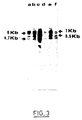
- the AMI strain: MC4100 (MudII1734) which has two copies of MudII1734 on its chromosome is cultivated for 170 generations on LB liquid medium without Km. Then the number of copies of MudII1734 on the chromosome is measured by DNA-DNA hybridization (fig. 3 , bands a to e). The number of copies in this strain remained stable, no change in the restriction patterns could be detected, which indicates a high stability of the insertions.
- the strain thus obtained is capable of producing beta-galactosidase.
- the MC4100 (MudII1734) and AM1 strains respectively produce 7.10 -1 and 10 nMole / min / mg of protein having beta-galactosidase activity.
- the POII1734 strain (Castilho et al., J. Bacteriol .. 158 , 488, 1984) is transformed with pCE100 (2.1 kb, Cm R , Fig. 4) after treatment of the cells with calcium chloride (Mandel A. & Higa M., J. Mol. Biol., 53 , (1970)).
- the transformants are selected on boxes of LB medium containing 25 ⁇ g / ml of chloramphenicol (Cm) after 24 hours of incubation at 30 ° C.
- the transformant PO111734 / pCE100 is cultured for 2 hours at 30 ° C in 3 ml of LB medium, then subjected to thermal shock for 15 minutes at 45 ° C and then cultured at 37 ° C for 2 hours, leading to a phage lysate .
- this lysate is mixed with several drops of chloroform and then centrifuged. The supernatant is called phage solution 1.
- E. coli M8820 (Mu) (Castilho et al., J. Bacteriol., 158, 488, 1984) is grown overnight on LB medium, to which calcium chloride and magnesium sulfate are added to a final concentration of I mM and 2.5 mM respectively. 200 ⁇ l of this culture and the phage I solution are mixed and left at room temperature for 15 minutes. After adding 2 ml of LB medium and incubation at 30 ° C. for 2 hours, this suspension of cells is spread on dishes of LB medium containing 20 ⁇ g / ml of Km and 25 ⁇ g / ml of Cm, then incubated at 30 ° C for 24 hours.
- PCE1134 was completely cleaved with Bam HI restriction enzyme and then SalI was isolated DNA fragment, wherein the lac operon is missing, by agarose gel electrophoresis and extracted from this gel.
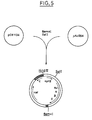
- the plasmid pAJ294 (Miwa et al., Agric. Biol. Chem., 47 , 2329, 1983) was completely cleaved by the restriction enzymes Bam HI then Sal I. After an electrophoresis on agarose gel, the fragment of DNA which contains the operon thr is extracted from the gel. The two DNA fragments are mixed and ligation is carried out at 10 ° C for 16 hours using T4-DNA ligase, ATP and dithiothreitol. After transformation of the mutant thr B strain with the ligation mixture, the transformants were selected on a minimum medium containing 25 ⁇ g / ml of Cm and no threonine. The plasmid is extracted from one of the transformants and is found to contain Mud with the npt gene and the thr operon (pAM9, Fig. 5).
- the E. coli strain JM109 (Yanisch-Perron et al., Gene, 33, 103-119 (1985)) (Mucts) is transformed with pAM9 after treatment with calcium chloride.
- the transformants are selected on boxes of LB medium containing 20 ⁇ g / ml of Km and 25 ⁇ g / ml of Cm, after incubation at 30 ° C for 24 hours.
- the plasmids are extracted from 20 independent colonies and appear to be pAM9.
- JM109 (Mu c ts) / pAM9 is cultivated at 30 ° C for 2 hours after having undergone a thermal shock at 45 ° C for 15 minutes.
- the culture is maintained at 37 ° C for 2 hours.
- the culture is mixed with a few drops of chloroform and left at room temperature for 15 minutes.
- the phage II solution is obtained after 10 minutes of centrifugation at 5,000 rpm.
- the clones obtained from pPR30 in the case of (i) and those obtained from Mu in the case of (ii) are selected for having integrated a stable number of copies of MudAM9.
- the EL1002 and EL1003 strains will be studied more particularly.
- the DNA is extracted from the AJ11332, EL1001, EL1002 and EL1003 strains. After digestion with the restriction enzyme Eco RI, the DNA is subjected to electrophoresis and it is transferred to a nylon membrane. The DNA is then hybridized with small fragments of radiolabelled pAM9 digested with Eco RI.
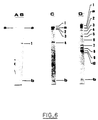
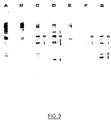
- the results are presented in FIG. 6.
- the bands A, B, C and D correspond respectively to the strains AJ11332, EL1001, EL1002 and EL1003.
- the letter a corresponds to the wild type of the thr operon
- the letter b corresponds to an unidentified band that we see on bands B, C and D.
- the numbers correspond to the specific bands of MudAM9. According to these results, the strains EL1001, EL1002 and EL1003 have 1, 4 and 10 copies (at least) of MudAM9.
- the strains having amplified MudAM9 are subcultured on boxes of LB medium at 30 ° C. for 24 hours and inoculated in 20 ml of the production medium described below.
- Glucose 30 g / l, (NH 4 ) 2 SO 4 : 10 g / l, KH 2 PO 4 : 1 g / l, MgSO 4 7H 2 O: 1 g / l, FeSO 4 7H 2 O: 10 mg / l, MnSO 4 4-6H 2 O: 10 mg / l, L-Met: 0.1 g / l, L-Ile: 0.1 g / l, L-Pro: 0.45 g / l, RNA: 2 g / l, Thiamine HCl: 1 mg / l and CaCO 3 : 40 g / l (pH: 7.0).
- Table IV shows the specific activities of the enzymes of the biosynthesis of L-Thr of the strains containing MudAM9: TABLE IV Large production of L-threonine biosynthesis enzymes by AJ11332 (mudAM9) Strain Specific activities (*) AKI HDHI AJ11332 2.5 4.8 EL1001 4.0 10.1 EL1002 12.5 25.0 EL1003 22.5 37.4 (*) The specific activities are given in ⁇ mole / min / mg of protein
- the POII1681 strain: M8820 (Mu c ts) (MudII1681) (Castilho et al., J., Bacteriol., 158 , 488 (1984)) is transformed after treatment of the bacteria with CaCl 2 (Mandel M. and Higa A., J. Mol. Biol., 53 , 159 (1970)), with the plasmid pEV11 (Fig. 7).
- the transformants after 24 hours of incubation at 30 ° C., are selected on boxes of LB medium containing 20 ⁇ g / ml of Ap and 20 ⁇ g / ml of Km.
- a transformant POII1681 / pEV11 is cultivated for 2 hours at 30 ° C. in 3 ml of LB. The culture is then subjected to a thermal shock for 15 minutes at 45 ° C. followed by 2 hours of culture at 37 ° C. A few drops of chloroform are added, after a centrifugation of 10 minutes at 5000 rpm the phage solution is obtained.
- a night culture of the E. Coli strain: M8820 (Mu) (Castilho et al., J., Bacteriol., 158 , 488, (1984) is carried out in LB medium; CaCl 2 and MgSO 4 are added thereto. at final concentrations of 1 mM and 2.5 mM respectively, at 200 ⁇ l of this culture 50 ⁇ l of the phage solution are added, this suspension is left at room temperature for 15 minutes.
- the suspension of bacteria is spread on dishes of LB medium containing 20 ⁇ g / ml of Ap and 20 ⁇ g / ml of Km; a 24 hour incubation at 30 ° C is carried out. Twenty colonies are obtained and their plasmid DNAs are extracted by the mini-preparation method (Birnboim and Doly, Nucleic Acid Res. 7 , 1513 (1979)). After analyzes of the restriction map, the clones appear to contain an insertion of MudII1681 into the plasmid pEV11. One of the plasmids is called pMC1 (Fig. 7).
- the plasmid pMC1 is digested with the restriction enzymes Bam HI and Bgl II and then ligated with pRC100 (see example 2) cut with Bam HI.
- the MC1060 strain is transformed by the ligation mixture.
- the transformants are selected on boxes of LB medium containing 25 ⁇ g / ml of Cm and 20 ⁇ g / ml of Ap.
- the plasmids of 30 transformants are extracted and analyzed; one of them is called pMC23 (Fig. 7).
- the strain EL1001 containing the defective Phage MudAM9 (see example 2) is transformed, after treatment with CaCl 2 (example 2) with the plasmid pMC23.
- the transformants are selected on boxes of LB medium containing 20 ⁇ g / ml of Ap and 25 ⁇ g / ml of Cm after an incubation of 24 hours at 30 ° C.
- An EL1001 / pMC23 transformant is cultured in LB medium containing 20 ⁇ g / ml of AP and 25 ⁇ g / ml of Cm, 2 hours at 30 ° C. 1 ml of this culture is subjected to a thermal shock for 15 minutes at 45 ° C., then 1 ml of LB is added; incubation takes place for 2 hours at 30 ° C.
- This bacterial suspension is spread on boxes of LB medium containing 400 ⁇ g / ml of Nm and Km; incubation is 48 hours at 30 ° C. 50 clones appeared, are tested for their sensitivity to Cm and their production of L-Thr (example 2). 50% of them are Cm sensitive and 60% produce more L-Threonine than the host strain.
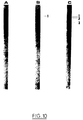
- MudAM9 is measured by the DNA-DNA hybridization technique (Southern, 1975, J. Mol. Biol., 98 503).
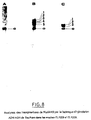
- the chromosomal DNAs are digested by the restriction enzyme Hin dIII. After electrophoresis, the DNAs are absorbed on a nylon membrane and then hybridized with the fragment (labeled by sulfonation) Sal I- Bam HI, containing the threonine operon, of the plasmid pAM9 as probe.
- channel A the band “o" corresponding to the threonine operon is revealed.
- channel B at least 6 bands are revealed: the "o" band and 5 bands which are numbered 1 to 5 and which correspond to 5 copies (at least) of MudAM9.
- channel C in addition to the band "o", 3 bands appear numbered 1 to 3 which correspond to at least 3 copies of the MudAM9.
- EL1001 To an overnight culture of the strain EL1001, CaCl 2 and MgSO 4 are added up to the final concentrations of 1 mM and 2.5 mM respectively. 50 ⁇ l of the phage VI solution are added to 200 ⁇ l of the culture of EL1001 then the suspension is placed for 15 min at room temperature. After adding 2 ml of LB, the suspension is stirred at 30 ° C for 2 hours. The bacteria are then spread on an LB medium containing 25 ⁇ g / ml of Cm and 20 ⁇ g / ml of Km. After an incubation of 24 hours at 30 ° C, 50 colonies are subcultured and then tested for their lysis at 45 ° C as well as for their sensitivity to phage Mu. 80% of the colonies tested are sensitive to Mu and do not lyse at 45 ° C. An EL1001 strain (MudIIPR13) is called EL1004.
- the EL1003 strain is treated in the same way.
- EL1003 strain (MudIIPR13) is called EL1005.
- the EL1004 strain is infected with a Mu c ts lysate prepared from the JM109 strain (Mu c ts) by the method described in Example 2.
- the bacterial suspension is spread on dishes of LB medium containing 20 ⁇ g / ml of Km and 400 ⁇ g / ml of Cm. After 48 hours incubation at 30 ° C, 50 colonies are isolated and then tested for their lysis at 45 ° C as well as their sensitivity to phage Mu. 84% of the clones are sensitive to Mu and do not lyse at 45 ° C.
- strain EL1005 is treated in the same way and the clone EL1007 is obtained.
- the chromosomal DNAs are extracted from the strains AJ11332, EL1001, EL1003, EL1004, EL1005, EL1006, and EL1007.
- a DNA-DNA hybridization is carried out by the Southern method (Example 3).
- the probe corresponds to the plasmid pRC100 digested with Hin dIII and labeled by sulfonation.
- channels A, B, C, D, E, F and G correspond respectively to strains AJ11332, EK1001, EL1004, EL1006, EL1003, EL1003, EL1005 and EL1007.
- the bands obtained in channels A, B and E correspond to the hybridization between the pRC100 probe and the chromosomal DNAs of the strains. These bands are present in all other channels and are therefore not specific to MudIIPR13.
- the numbers 1 to 4 mark the bands having specific hybridization with MudIIPR13 each band corresponds to an insertion of MudIIPR13.
- the "o" band corresponds to an internal band in the MudIIPR13.
- EXAMPLE 5 INTEGRATION AND AMPLIFICATION OF DEFECTIVE PHAGES IN A STRAIN OF ERWINIA CHRYSANTHEMI
- Two phage lysates containing MudII1734 and MudAM9 are prepared from the strains: POII1734 (Castilho et al., J. Bacteriol., 158 , 488 (1984)) and JM109 (Mu c ts) (MudAM9) (example 2) according to the method described in Example 2.
- the strain of E. chrysanthemi 384551 (M. Chippaux, CNRS, Marseille) is used as a receptor strain.
- the transduction (example 2) is carried out using the 2 lysates (example 2). Colonies capable of growing on a medium containing 20 ⁇ g / ml of Km are isolated and then tested for their lysis at 45 ° C. as well as for their sensitivity to phage Mu. 70% and 80% of the transductants obtained after infection with the lysates MudII1734 and MudAM9 are respectively sensitive to phage Mu and are not lysed at 45 ° C. A clone of each transduction is selected: EL3003: E. chrysanthemi (MudII1734) EL3004: E. chrysanthemi (MudAM9)
- the amplification of the phages Mud in the strains EL3003 and EL3004 is carried out using a lysate of the strain JM109 (Mucts) as described in Example 2.
- the selection of the strains containing the amplified Mud is carried out on a medium. LB containing 400 ⁇ g / ml of Km and Nm.
- the chromosomal DNA is extracted by the same technique as for E. coli (Example 1) except treatment with SDS in place of sarcosyl. A molecular analysis of these DNAs is carried out according to the Southern method (Example 3).
- the DNAs are digested with the restriction enzyme Eco RI.
- the probes used are specific for defective phages and are marked by sulfonation:
- For MudII1734 Eco RI- Hin dIII fragment of the plasmid pAM9 corresponding to the left border of the defective phage.
- For MudAM9 Sal I- Bam HI fragment of the plasmid pAM9 corresponding to the threonine operon of E. coli .
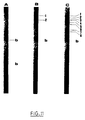
- channels A, B and C correspond respectively to the strains: E.chrysanthemi 384551, EL3003 and EL3007.
- channels A, B and C correspond respectively to the strains: E. chrysanthemi 384551, EL3004, and EL3008.
- the fragment "b" corresponds to a hybridization between the probe and the chromosomal DNA of the strain 384551. This fragment is found in all the other channels.
- channels B and C the numbers correspond to bands exhibiting specific hybridization with MudAM9. Two bands correspond to an insertion of MudAM9.
- strains EL3004 and EL3008 respectively have at least 1 and 4 insertions of MudAM9.
- TABLE VI Number of copies of Mud in E. strains. chrysanthemi strains number of copies EL3003 1 EL3004 1 EL3007 3 (at least) EL3008 4 (at least)
- MudAM11 including the threonine operon and the asd gene
- the plasmid pAM9 (see example 2), containing the defective phage MudAM9, is completely cleaved by the restriction enzyme Bam HI (single site); pAM9 is thus linearized.
- the plasmid pAD20 (Haziza et al., EMBO, J., 1982, 3, 379-384) is completely cleaved by the restriction enzyme Bam HI. After electrophoresis, the fragment which contains the asd gene is extracted from the gel.
- the two DNA fragments are mixed and ligation is carried out at 22 ° C for 1 hour, using T4-DNA ligase, ATP and dithiothreitol.
- T4-DNA ligase ATP
- dithiothreitol a mutant strain Asd - : JCP203 (C. PRINTZ, personal communication)
- the transformants are selected on a complete medium containing 25 ⁇ g / ml of Cm and 20 ⁇ g / ml of Km.
- a plasmid extract of the transformants appears to present the defective phage MudAM11 which contains the npt II gene, the threonine operon and the asd gene .
- This plasmid, called pAM11 is presented in FIG. 12.
- the strain JM109 (Mu c ts) / pAM11 is obtained by transformation of the strain of E. coli JM109 (Mu c ts) (see example 2, page 14, lines 9 to 14), by the plasmid pAM11.
- the JM109 (Mu c ts) / pAM11 strain is cultured at 30 ° C for 2 hours. After being subjected to a thermal shock at 45 ° C for 15 minutes, the cultures are maintained at 37 ° C for 2 hours. Then, a few drops of chloroform are added to this culture and the mixture is left at room temperature for 15 minutes. The phage II-AM11 solution is obtained after 10 minutes of centrifugation at 5000 rpm.
- JM109 (Mu c ts) left overnight at 30 ° C. in LB medium
- CaCl 2 and MgSO 4 are added until the final concentrations of 1 mM and 2.5 mM respectively.
- 50 ⁇ l of the phage II-AM11 solution are mixed with 200 ⁇ l of this culture and left at room temperature for 15 minutes. after addition of 2 ml of LB medium, the stirring is 2 hours at 30 ° C. and then the bacterial suspension is spread on dishes of LB medium containing 20 ⁇ g / ml of Km. after incubation at 30 ° C for 24 hours, harvest 100 colonies and check their sensitivity to Cm, 85% of them are, a clone is called JM109 (Mu c ts) (MudAM11).
- the supernatant obtained is the phage III-AM11 solution.
- the AJ11332 strain ( ⁇ + , Pro - ) was transduced by a phage P1 cultivated on a Pro + strain.
- a strain AJ11332 ( ⁇ + , Pro + ) was selected.
- the phage ⁇ contained in this strain was then eliminated (C. MOREL, personal communication).
- the strain thus obtained: AJ11332 ( ⁇ - , Pro + ) was called EL1016.
- E. coli strain EL1016 cultivated overnight at 37 ° C. in LB, Ca Cl 2 and MgSO 4 are added until the final concentrations of 1 mM and 2.5 mM respectively. 50 ⁇ l of the phage III-AM11 solution are mixed with 200 ⁇ l of this culture and left at room temperature for 15 minutes.
- the amplification is done by infection of the strain EL1012 with a phage lysate Mu c ts obtained as above.
- the bacteria are spread on boxes of LB medium containing variable amounts of Km and Nm ranging from 250 to 1200 ⁇ g / ml.
- the selected transductants contain a stable number of copies of MudAM11.
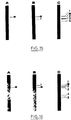
- MudAM11 on the chromosomal DNAs is evaluated by the DNA-DNA hybridization method of Southern described in Example 3.
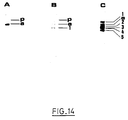
- the chromosomal DNAs are extracted from the strains EL1016, EL1012 and EL1013 respectively. After digestion with the restriction enzymes Sal I or Eco RI, these DNAs are subjected to electrophoresis then they are absorbed on a nylon membrane (see example 3). They are then hybridized with a DNA fragment labeled (by sulfonation) as probe ( Figures 13, 14, 15 and 16), channels A, B and C correspond respectively to the strains EL1016, EL1012 and EL1013.
- the letter “a” corresponds to the wild type of the threonine operon or the asd gene.
- the letter “p” corresponds to partial digests of DNA.
- the numbers correspond to the bands marking a specificity of hybridization with MudAM11.
- the chromosomal DNAs are digested with Sal I and hybridized with the Eco RI- Hin dIII fragment containing the npt II, thr A, thr B and thr C 'genes of pAM9 as probe.
- the chromosomal DNA is digested with EcoRI, and hybridized with the fragment EcoRI-HindIII containing the npt II gene, thr A, thr B and thr C 'pAM9 as a probe.
- a strip corresponds to an insertion of MudAM11.
- the band “p” corresponds to a partial digestion.
- channel B two bands are revealed: “a” and "1” corresponding to an insertion of MudAM11.
- the band "p" corresponds to a partial digestion.
- the chromosomal DNAs are digested with SalI and hybridized with the Bam HI fragment, containing the asd gene, of pAM11 as probe.
- a strip then corresponds to an insertion of MudAM11.
- channel A only the "a” band is revealed, corresponding to the asd gene.
- the chromosomal DNAs are digested with Eco RI and hybridized with the Bam HI fragment, containing the asd gene, of pAM11 as probe.
- a strip corresponds to an insertion of MudAM11.
- the strains EL1012 and EL1013 respectively have one and five copies (at least) of MudAM11.
- the strains having amplified MudAM11 are subcultured on boxes of LB medium at 30 ° C for 24 hours, and inoculated in 20 ml of the production medium (Example 2).
- the culture is done at 30 ° C for 72 hours.
- the amount of L-threonine in the medium is measured using an amino acid analyzer.
- Strains Estimated number of copies of MudAM11 L-Thr (g / l) EL1016 0 3.0 EL1012 1 5.3 EL1013 5 (at least) 10.2 Specific activities of the enzymes of the biosynthesis of L-threonine of strains containing MudAM11
- the assay of aspartokinase-I (AK-I) activity is carried out by the method of Truffa-Bachi, P., Cohen, GN., Methods Enzymology, 1970, 17 , 694-702.
- ASA activity is measured by the technique of Hegeman, GD., Cohen, GN., Margan, R., Methods Enzymology, 1970, 17 , 708-713. Strains Specific activities ⁇ mole / min / mg protein AK-I ASA EL1016 4.9 0.32 EL1012 4.0 0.54 EL1013 21.1 1.14
- MudAB9 comprising the asp A gene coding for E. coli L-Aspartate ammonia lyase
- the plasmid pGS94 (Guest et al., J. Gen. Microbiol. (1984), 130 , 1271-1278) containing the asp A gene is completely cleaved by the restriction enzymes Cla I and Sal I.
- the fragment of 3.4 Kb contains the asp A gene.
- the plasmid pPC3 (resulting from the inversion of the Pst I fragment of the plasmid pPR3; GENE, vol. 42, (1986) pages 185-192) containing the defective phage MudPC3 is completely cleaved by the restriction enzymes ClaI and Sal I.
- the 5.3 Kb fragment contains the defective phage into which the asp A gene is to be cloned.
- the two cleaved plasmids are mixed and ligation is carried out at 22 ° C. for 1 hour, using T4-DNA ligase, ATP and dithiothreitol.
- the transformants are selected on LB medium containing 20 ⁇ g / ml of Ap and 25 ⁇ g / ml of Cm.
- the plasmid DNA of this clone is extracted by the technique of Birboim and Doly and then cleaved by the restriction enzymes Eco RI and Hin dIII.
- the DNAs of the two parental plasmids are cleaved by the same restriction enzymes.
- Analysis of the restriction profiles shows that clone 9 corresponds to the cloning of the fragment containing the asp A gene in the defective phage MudPC3.
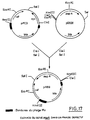
- the new defective phage is called MudAB9 and the plasmid which carries it pAB9 (Fig. 17).
- the JM109 (Mu c ts) / pAB9 strain is obtained by transformation of the E. coli JM109 (Mu c ts) strain (Example 2) with the plasmid pAB9.
- the JM109 (Mu c ts) / pAB9 strain is cultured at 30 ° C for 2 hours. After having undergone a thermal shock at 45 ° C for 15 minutes, the culture is maintained at 37 ° C for 2 hours. A few drops of chloroform are then added; after centrifugation for 10 minutes at 5000 rpm, the phage II-AB9 lysate is thus obtained.
- the strain JM109 (Mu c ts) is grown overnight at 30 ° C in LB medium. CaCl 2 and MgSO 4 are then added up to the concentrations of 1 mM and 2.5 mM respectively. To 200 ⁇ l of this culture 50 ⁇ l of phage II-AB9 lysate are added. After 15 minutes of adsorption at room temperature, 2 ml of LB are added and the tubes are shaken at 30 ° C for 2 hours. This suspension is then spread on boxes of LB medium containing 25 ⁇ g / ml of Cm.
- the boxes are placed in an oven at 30 ° C for 24 hours. 100 colonies are harvested and their sensitivity to ampicillin is checked. The strain JM109 (Mucts) (MudAB9) is thus obtained. The phage lysate III-AB9 is obtained from this strain as described above.
- the amplification is done by infection of the strain EL1010 with a Mucts lysate obtained as described above.
- the bacteria are spread on boxes of LB medium containing 500 ⁇ g / ml of Cm.
- the selected transductants contain a stable number of copies of MudAB9.
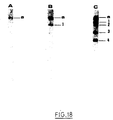
- DNA is extracted from strains MC4100, EL1010 and EL1011. After digestion with the restriction enzyme Sal I, the DNA is subjected to electrophoresis and then it is absorbed on a nylon membrane. The DNA is then hybridized with a sulfonated labeled plasmid containing the asp A gene.
- the channels A, B and C correspond respectively to the strains MC4100, EL1010 and EL1011.
- the letter "a” corresponds to the wild type of the asp A gene.
- a phage lysate is obtained from the strain JM109 (Mucts) (MudAM9) as described in Example 2.
- Example 2 An L-Threonine production test is carried out as described in Example 2.
- the number of copies of MudAM9 is measured by the DNA-DNA hybridization method of Southern (Example 3).
- the chromosomal DNAs are digested by the restriction enzyme Hin dIII. After electrophoresis, the DNAs are absorbed on a nylon membrane and then hybridized with the fragment (labeled by sulfonation) Sal I- Bam HI, containing the threonine operon, of the plasmid pAM9.
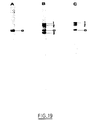
- the results concerning the production of L-Threonine and the number of copies of MudAM9 are reported in Table XI and Figure 19.
- channels A, B and C correspond respectively to the strains EL1016, EL1014 and EL1015.
- the letter "o" corresponds to the wild type of the threonine operon.
- Each of the other bands corresponds to an insertion of MudAM9.
- channel A only the band "o" corresponding to the threonine operon is observed.
- channel B 3 additional bands are observed numbered from 1 to 3 corresponding to at least 3 insertions of MudAM9.
- channel C 2 additional bands correspond to at least 2 insertions of MudAM9.
- EXAMPLE 9 STABILITY OF THE LOCATION AND OF THE NUMBER OF DEFECTIVE PHAGES DURING THE FERMENTATION
- the EL1003 strain ( ⁇ + , Pro - ) was transduced by a phage P1 cultivated on a Pro + strain. An EL1003 strain ( ⁇ + , Pro + ) was selected. The phage ⁇ contained in this strain was then eliminated (C. Morel, personal communication). The strain thus obtained: EL1003 ( ⁇ - , Pro + ) was called EL1017.
- the strain EL1017 containing 10 copies (at least) of MudAM9, was tested before and after fermentation in order to determine the stability of MudAM9 during this step.
- the fermenter containing 1.5 liters of fermentation medium (see example 2: components of the medium) is seeded with the strain EL1017; fermentation takes place for 48 hours at the appropriate temperature.
- Clones are isolated after fermentation, 4 clones are particularly studied: EL1017-a, EL1017-b, EL1017-c and EL1017-d.
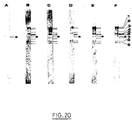
- the mother strain EL1017 as well as the clones EL1017-a, EL1017-b, EL1017-c and EL1017-d are analyzed by the DNA-DNA hybridization technique of Southern (example 3) making it possible to define the location and the number of phages defective in the clones tested.
- chromosomal DNAs of the strains EL1016 (example 6), EL1017, EL1017-a, EL1017-b, EL1017-c and EL1017-d were extracted and then digested with the restriction enzyme Hin dIII.
- Channels A, B, C, D, E and F correspond respectively to strains EL1016, EL1017, EL1017-a, EL1017-b, EL1017-c and EL1017-d.
- the letter "a” corresponds to the wild type of the threonine operon.
Landscapes
- Health & Medical Sciences (AREA)
- Genetics & Genomics (AREA)
- Life Sciences & Earth Sciences (AREA)
- Engineering & Computer Science (AREA)
- Biomedical Technology (AREA)
- Wood Science & Technology (AREA)
- Organic Chemistry (AREA)
- Biotechnology (AREA)
- General Engineering & Computer Science (AREA)
- Chemical & Material Sciences (AREA)
- Bioinformatics & Cheminformatics (AREA)
- Zoology (AREA)
- Molecular Biology (AREA)
- Physics & Mathematics (AREA)
- Microbiology (AREA)
- Plant Pathology (AREA)
- Biochemistry (AREA)
- General Health & Medical Sciences (AREA)
- Biophysics (AREA)
- Mycology (AREA)
- Micro-Organisms Or Cultivation Processes Thereof (AREA)
- Saccharide Compounds (AREA)
- Preparation Of Compounds By Using Micro-Organisms (AREA)
- Measuring Or Testing Involving Enzymes Or Micro-Organisms (AREA)
- Immobilizing And Processing Of Enzymes And Microorganisms (AREA)
Applications Claiming Priority (2)
| Application Number | Priority Date | Filing Date | Title |
|---|---|---|---|
| FR8802078 | 1988-02-22 | ||
| FR8802078A FR2627508B1 (fr) | 1988-02-22 | 1988-02-22 | Procede pour l'integration d'un gene choisi sur le chromosome d'une bacterie et bacterie obtenue par ledit procede |
Publications (2)
| Publication Number | Publication Date |
|---|---|
| EP0332488A1 EP0332488A1 (fr) | 1989-09-13 |
| EP0332488B1 true EP0332488B1 (fr) | 1996-11-27 |
Family
ID=9363469
Family Applications (1)
| Application Number | Title | Priority Date | Filing Date |
|---|---|---|---|
| EP89400468A Expired - Lifetime EP0332488B1 (fr) | 1988-02-22 | 1989-02-20 | Procédé pour l'intégration d'un gène choisi sur le chromosome d'une bactérie et bactérie obtenue par ledit procédé |
Country Status (11)
| Country | Link |
|---|---|
| US (1) | US5595889A (da) |
| EP (1) | EP0332488B1 (da) |
| JP (1) | JP2944094B2 (da) |
| KR (1) | KR930007579B1 (da) |
| AT (1) | ATE145668T1 (da) |
| AU (1) | AU624353B2 (da) |
| CA (1) | CA1341190C (da) |
| DE (1) | DE68927486T2 (da) |
| DK (1) | DK175477B1 (da) |
| ES (1) | ES2097115T3 (da) |
| FR (1) | FR2627508B1 (da) |
Cited By (1)
| Publication number | Priority date | Publication date | Assignee | Title |
|---|---|---|---|---|
| EP2949660A1 (en) | 2004-12-28 | 2015-12-02 | Ajinomoto Co., Inc. | L-glutamic acid-producing microorganism and a method for producing l-glutamic acid |
Families Citing this family (108)
| Publication number | Priority date | Publication date | Assignee | Title |
|---|---|---|---|---|
| EP0437537B1 (en) * | 1988-10-04 | 1997-02-26 | DNA Plant Technology Corporation | Bacterial detection by phage transduction of detectable phenotype |
| SK279915B6 (sk) | 1992-11-10 | 1999-05-07 | Ajinomoto Co. | Dna kódujúca aspartokinázu iii, transformovaný mik |
| CN1036850C (zh) * | 1993-01-13 | 1997-12-31 | 味之素株式会社 | 新的细胞表面蛋白质 |
| JPH07155184A (ja) | 1993-12-08 | 1995-06-20 | Ajinomoto Co Inc | 発酵法によるl−リジンの製造法 |
| CN1177380A (zh) * | 1995-01-23 | 1998-03-25 | 诺沃挪第克公司 | 通过转座的dna整合 |
| EP0756007A3 (en) * | 1995-06-30 | 1997-10-29 | Ajinomoto Kk | Gene-marking process with artificial transposon |
| EP0973928B1 (en) * | 1997-03-11 | 2010-05-05 | Regents Of The University Of Minnesota | Dna-based transposon system for the introduction of nucleic acid into dna of a cell |
| EP1975236B1 (en) * | 1998-08-04 | 2015-05-06 | Metabolix, Inc. | Polyhydroxyalkanoate production from polyols |
| WO2000011188A1 (en) * | 1998-08-18 | 2000-03-02 | Metabolix, Inc. | Transgenic microbial polyhydroxyalkanoate producers |
| US7160682B2 (en) * | 1998-11-13 | 2007-01-09 | Regents Of The University Of Minnesota | Nucleic acid transfer vector for the introduction of nucleic acid into the DNA of a cell |
| FR2791361B1 (fr) * | 1999-03-22 | 2002-12-06 | Aventis Cropscience Sa | Fragment d'acide nucleique comprenant un gene fonctionnel dans magnaporthe et un transposon impala |
| JP4698109B2 (ja) | 1999-12-28 | 2011-06-08 | エスバテック、アン アルコン バイオメディカル リサーチ ユニット、エルエルシー | 還元環境下において安定な、規定されたフレームワークを有するイントラボディーおよびそれらの用途 |
| US20020094575A1 (en) * | 2000-09-14 | 2002-07-18 | Pioneer Hi-Bred International, Inc. | Compositions and methods for stable transformation using Mu bacteriophage cleaved donor complex |
| DE60232120D1 (de) | 2001-06-12 | 2009-06-10 | Ajinomoto Kk | Verfahren zur Herstellung von L-Lysin oder L-Arginin unter Verwendung methanolassimilierender Bakterien |
| AU2003231048A1 (en) * | 2002-04-22 | 2003-11-03 | Regents Of The University Of Minnesota | Transposon system and methods of use |
| DE102004001674B4 (de) | 2003-01-29 | 2019-01-24 | Ajinomoto Co., Inc. | Verfahren zur Herstellung von L-Lysin unter Einsatz von Methanol verwertenden Bakterien |
| FI20030561A0 (fi) * | 2003-04-14 | 2003-04-14 | Finnzymes Oy | Menetelmä nukleiinihappojen siirtämiseksi eukaryoottigenomeihin |
| US20060026699A1 (en) * | 2004-06-04 | 2006-02-02 | Largaespada David A | Methods and compositions for identification of genomic sequences |
| ATE463564T1 (de) | 2004-08-10 | 2010-04-15 | Ajinomoto Kk | Verwendung von phosphoketolase zur herstellung geeigneter metabolite |
| WO2006101983A2 (en) | 2005-03-16 | 2006-09-28 | Metabolix, Inc. | Chemically inducible expression of biosynthetic pathways |
| CN101297043B (zh) | 2005-10-18 | 2013-01-16 | 味之素株式会社 | 用于产生琥珀酸的方法 |
| JP2009089603A (ja) | 2006-02-02 | 2009-04-30 | Ajinomoto Co Inc | メタノール資化性細菌を用いたl−リジンの製造法 |
| JP2009153382A (ja) | 2006-03-30 | 2009-07-16 | Ajinomoto Co Inc | メタノール資化性細菌を用いたカルボン酸の製造法 |
| JP2009165355A (ja) | 2006-04-28 | 2009-07-30 | Ajinomoto Co Inc | L−アミノ酸を生産する微生物及びl−アミノ酸の製造法 |
| EP2021458A1 (en) | 2006-05-23 | 2009-02-11 | Ajinomoto Co., Inc. | A method for producing an l-amino acid using a bacterium of the enterobacteriaceae family |
| JP2010017082A (ja) | 2006-10-10 | 2010-01-28 | Ajinomoto Co Inc | L−アミノ酸の製造法 |
| BRPI0806790B1 (pt) | 2007-01-22 | 2017-02-14 | Ajinomoto Kk | microorganismo, e, método para produzir um l-aminoácido |
| JP2010088301A (ja) | 2007-02-01 | 2010-04-22 | Ajinomoto Co Inc | L−アミノ酸の製造法 |
| JP2010110217A (ja) | 2007-02-22 | 2010-05-20 | Ajinomoto Co Inc | L−アミノ酸生産菌及びl−アミノ酸の製造法 |
| JP2010130899A (ja) | 2007-03-14 | 2010-06-17 | Ajinomoto Co Inc | L−グルタミン酸系アミノ酸生産微生物及びアミノ酸の製造法 |
| JP5493854B2 (ja) | 2007-04-10 | 2014-05-14 | 味の素株式会社 | 有機酸の製造方法 |
| EP2149608A4 (en) | 2007-04-16 | 2013-02-20 | Ajinomoto Kk | PROCESS FOR PREPARING AN ORGANIC ACID |
| WO2008133161A1 (ja) | 2007-04-17 | 2008-11-06 | Ajinomoto Co., Inc. | カルボキシル基を有する酸性物質の製造法 |
| WO2009031565A1 (ja) | 2007-09-04 | 2009-03-12 | Ajinomoto Co., Inc. | アミノ酸生産微生物及びアミノ酸の製造法 |
| KR20090058077A (ko) * | 2007-12-04 | 2009-06-09 | 충북대학교 산학협력단 | 생물체 정보의 염색체 내 표지 방법 및 그 정보가 표지된생물체 |
| JP5644108B2 (ja) | 2007-12-06 | 2014-12-24 | 味の素株式会社 | 有機酸の製造方法 |
| JP2011067095A (ja) | 2008-01-10 | 2011-04-07 | Ajinomoto Co Inc | 発酵法による目的物質の製造法 |
| JP5526785B2 (ja) | 2008-01-23 | 2014-06-18 | 味の素株式会社 | L−アミノ酸の製造法 |
| EP2246420B1 (en) | 2008-02-21 | 2014-12-31 | Ajinomoto Co., Inc. | L-cysteine-producing bacterium, and method for production of l-cysteine |
| JP5440489B2 (ja) | 2008-02-25 | 2014-03-12 | 味の素株式会社 | 5’−グアニル酸の製造法 |
| JP5332237B2 (ja) | 2008-03-06 | 2013-11-06 | 味の素株式会社 | L−システイン生産菌及びl−システインの製造法 |
| WO2010027022A1 (ja) | 2008-09-05 | 2010-03-11 | 味の素株式会社 | L-アミノ酸生産菌及びl-アミノ酸の製造法 |
| JP2012029565A (ja) | 2008-11-27 | 2012-02-16 | Ajinomoto Co Inc | L−アミノ酸の製造法 |
| US9090898B2 (en) | 2008-12-12 | 2015-07-28 | Metabolix, Inc. | Green process and compositions for producing poly(5HV) and 5 carbon chemicals |
| JP2010142200A (ja) | 2008-12-22 | 2010-07-01 | Ajinomoto Co Inc | L−リジンの製造法 |
| WO2010084995A2 (en) | 2009-01-23 | 2010-07-29 | Ajinomoto Co.,Inc. | A method for producing an l-amino acid |
| JP5359409B2 (ja) | 2009-03-12 | 2013-12-04 | 味の素株式会社 | L−システイン生産菌及びl−システインの製造法 |
| EP2460883A4 (en) | 2009-07-29 | 2013-01-16 | Ajinomoto Kk | PROCESS FOR THE PREPARATION OF L-AMINO ACID |
| JP2012196144A (ja) | 2009-08-03 | 2012-10-18 | Ajinomoto Co Inc | ビブリオ属細菌を用いたl−リジンの製造法 |
| JP5636648B2 (ja) | 2009-08-10 | 2014-12-10 | 味の素株式会社 | 5’−グアニル酸の製造法 |
| JP2012223091A (ja) | 2009-08-25 | 2012-11-15 | Ajinomoto Co Inc | L−アミノ酸の製造法 |
| RU2009136544A (ru) | 2009-10-05 | 2011-04-10 | Закрытое акционерное общество "Научно-исследовательский институт "Аджиномото-Генетика" (ЗАО АГРИ) (RU) | Способ получения l-цистеина с использованием бактерии семейства enterobacteriaceae |
| BR112012012915B1 (pt) | 2009-11-30 | 2020-12-01 | Ajinomoto Co., Inc. | método para produção de l-cisteína, l-cistina, um derivado das mesmas, ou uma mistura das mesmas |
| RU2460793C2 (ru) | 2010-01-15 | 2012-09-10 | Закрытое акционерное общество "Научно-исследовательский институт "Аджиномото-Генетика" (ЗАО АГРИ) | Способ получения l-аминокислот с использованием бактерий семейства enterobacteriaceae |
| KR101842518B1 (ko) | 2010-09-08 | 2018-03-27 | 그린 페놀 가이하쓰 가부시키가이샤 | 코리네형 세균 형질 전환체 및 그것을 사용하는 페놀의 제조 방법 |
| JP5803927B2 (ja) | 2010-09-14 | 2015-11-04 | 味の素株式会社 | 含硫アミノ酸生産菌及び含硫アミノ酸の製造法 |
| US9404115B2 (en) | 2010-11-10 | 2016-08-02 | Green Phenol Development Co., Ltd. | Coryneform bacterium transformant and process for producing phenol using the same |
| JP2014036576A (ja) | 2010-12-10 | 2014-02-27 | Ajinomoto Co Inc | L−アミノ酸の製造法 |
| JP2014087259A (ja) | 2011-02-22 | 2014-05-15 | Ajinomoto Co Inc | L−システイン生産菌及びl−システインの製造法 |
| US9234069B2 (en) | 2011-03-09 | 2016-01-12 | Mitsui Chemicals, Inc. | Pentamethylenediisocyanate, method for producing pentamethylenediisocyanate, polyisocyanate composition, polyurethane resin, and polyurea resin |
| EP2695940B1 (en) | 2011-04-01 | 2016-11-30 | Ajinomoto Co., Inc. | Method for producing l-cysteine |
| DE102011006716A1 (de) | 2011-04-04 | 2012-10-04 | Evonik Degussa Gmbh | Mikroorganismus und Verfahren zur fermentativen Herstellung einer organisch-chemischen Verbindung |
| JP2014131487A (ja) | 2011-04-18 | 2014-07-17 | Ajinomoto Co Inc | L−システインの製造法 |
| CN103946372B (zh) | 2011-11-02 | 2016-06-08 | 味之素株式会社 | 用于分泌产生蛋白质的方法 |
| KR20140091742A (ko) | 2011-11-11 | 2014-07-22 | 아지노모토 가부시키가이샤 | 발효법에 의한 목적 물질의 제조법 |
| BR112015007916B1 (pt) | 2013-05-13 | 2023-04-04 | Ajinomoto Co., Inc | Método para produzir l-aminoácido |
| JP2016165225A (ja) | 2013-07-09 | 2016-09-15 | 味の素株式会社 | 有用物質の製造方法 |
| JP2016192903A (ja) | 2013-09-17 | 2016-11-17 | 味の素株式会社 | 海藻由来バイオマスからのl−アミノ酸の製造方法 |
| EP3054005B1 (en) | 2013-10-02 | 2019-11-20 | Ajinomoto Co., Inc. | Heparosan-producing bacterium and heparosan manufacturing method |
| RU2013146377A (ru) | 2013-10-17 | 2015-04-27 | Закрытое акционерное общество "Научно-исследовательский институт Аджиномото-Генетика" (ЗАО "АГРИ") | СПОСОБ ПОЛУЧЕНИЯ ИЗОПРЕНА С ИСПОЛЬЗОВАНИЕМ БАКТЕРИИ РОДА Bacillus |
| ES2694011T3 (es) | 2013-10-21 | 2018-12-17 | Ajinomoto Co., Inc. | Método para producir L-aminoácido |
| BR112016008830B1 (pt) | 2013-10-23 | 2023-02-23 | Ajinomoto Co., Inc | Método para produzir uma substância alvo |
| JP6582997B2 (ja) | 2014-01-31 | 2019-10-02 | 味の素株式会社 | 変異型グルタミン酸−システインリガーゼ、及び、γ−グルタミルバリルグリシンの製造法 |
| JP2017216881A (ja) | 2014-12-26 | 2017-12-14 | 味の素株式会社 | ジカルボン酸の製造方法 |
| WO2017073701A2 (en) | 2015-10-27 | 2017-05-04 | Ajinomoto Co., Inc. | Method for producing aldehyde |
| JP6623690B2 (ja) | 2015-10-30 | 2019-12-25 | 味の素株式会社 | グルタミン酸系l−アミノ酸の製造法 |
| CN108463555A (zh) | 2016-01-12 | 2018-08-28 | 味之素株式会社 | 生产苯甲醛的方法 |
| CN110312807B (zh) | 2016-10-21 | 2023-11-17 | 味之素株式会社 | 蛋白质的分泌产生方法 |
| JP7159867B2 (ja) | 2016-10-21 | 2022-10-25 | 味の素株式会社 | タンパク質の分泌生産法 |
| EP3532627A1 (en) | 2016-10-26 | 2019-09-04 | Ajinomoto Co., Inc. | Method for producing objective substance |
| WO2018079686A1 (en) | 2016-10-26 | 2018-05-03 | Ajinomoto Co., Inc. | Method for producing l-methionine or metabolites requiring s-adenosylmethionine for synthesis |
| JP7074133B2 (ja) | 2016-10-26 | 2022-05-24 | 味の素株式会社 | 目的物質の製造方法 |
| JP2019536449A (ja) | 2016-10-26 | 2019-12-19 | 味の素株式会社 | 目的物質の製造方法 |
| WO2018079683A1 (en) | 2016-10-26 | 2018-05-03 | Ajinomoto Co., Inc. | Method for producing objective substance |
| JP2019536450A (ja) | 2016-10-27 | 2019-12-19 | 味の素株式会社 | アルデヒドの製造方法 |
| JP7066977B2 (ja) | 2017-04-03 | 2022-05-16 | 味の素株式会社 | L-アミノ酸の製造法 |
| US10858676B2 (en) | 2017-05-22 | 2020-12-08 | Ajinomoto Co., Inc. | Method for producing objective substance |
| CN112292450A (zh) | 2017-09-25 | 2021-01-29 | 味之素株式会社 | 蛋白质的制造方法和二糖的制造方法 |
| US11680279B2 (en) | 2017-11-29 | 2023-06-20 | Ajinomoto Co., Inc. | Method for producing objective substance |
| JP7124338B2 (ja) | 2018-02-27 | 2022-08-24 | 味の素株式会社 | 変異型グルタチオン合成酵素、及び、γ-グルタミルバリルグリシンの製造法 |
| EP3775158A1 (en) | 2018-04-06 | 2021-02-17 | Ajinomoto Co., Inc. | Agricultural or horticultural composition containing culture broth of bacillus bacterium |
| EP3783106A4 (en) | 2018-04-20 | 2022-01-05 | Ajinomoto Co., Inc. | PROCESS FOR THE SECRETION OF A PROTEIN |
| WO2020027251A1 (en) | 2018-08-03 | 2020-02-06 | Ajinomoto Co., Inc. | Method for producing objective substance |
| WO2020071538A1 (en) | 2018-10-05 | 2020-04-09 | Ajinomoto Co., Inc. | Method for producing target substance by bacterial fermentation |
| WO2020085511A1 (ja) | 2018-10-25 | 2020-04-30 | 味の素株式会社 | タンパク質の分泌生産法 |
| BR112021019284A2 (pt) | 2019-03-29 | 2022-02-01 | Ajinomoto Kk | Métodos para produzir alolactose e para produzir um indutor de expressão gênica |
| WO2020226087A1 (ja) | 2019-05-08 | 2020-11-12 | 味の素株式会社 | バニリンの製造方法 |
| EP4053287A4 (en) | 2019-10-28 | 2023-11-01 | Ajinomoto Co., Inc. | Benzaldehyde production method |
| WO2021177392A1 (ja) | 2020-03-04 | 2021-09-10 | 味の素株式会社 | 変異型トランスグルタミナーゼ |
| WO2022071061A1 (ja) | 2020-09-29 | 2022-04-07 | 味の素株式会社 | 変異型トランスグルタミナーゼ |
| WO2022092018A1 (ja) | 2020-10-28 | 2022-05-05 | 味の素株式会社 | L-アミノ酸の製造法 |
| KR20240008322A (ko) | 2021-04-16 | 2024-01-18 | 인바이오스 엔.브이. | 발효 생산 |
| AU2022306337A1 (en) | 2021-07-07 | 2024-02-01 | Ajinomoto Co., Inc. | Method for secretory production of unnatural-amino-acid-containing protein |
| WO2023200008A1 (ja) | 2022-04-15 | 2023-10-19 | 味の素株式会社 | 培養肉の製造方法 |
| US20240117393A1 (en) | 2022-09-30 | 2024-04-11 | Ajinomoto Co., Inc. | Method for producing l-amino acid |
| JPWO2024172163A1 (da) | 2023-02-16 | 2024-08-22 | ||
| EP4692312A1 (en) | 2023-12-28 | 2026-02-11 | Ajinomoto Co., Inc. | L-glutamic acid-producing bacterium and method for producing l-glutamic acid |
| WO2025141838A1 (ja) | 2023-12-28 | 2025-07-03 | 味の素株式会社 | L-グルタミン酸生産菌およびl-グルタミン酸の製造方法 |
Family Cites Families (10)
| Publication number | Priority date | Publication date | Assignee | Title |
|---|---|---|---|---|
| JPS55156591A (en) * | 1979-05-23 | 1980-12-05 | Ajinomoto Co Inc | Method for stabilizing property of bacteria containing plasmid |
| EP0091723B1 (en) * | 1982-02-17 | 1989-07-26 | Imperial Chemical Industries Plc | Vector system |
| US4670388A (en) * | 1982-12-30 | 1987-06-02 | Carnegie Institution Of Washington | Method of incorporating DNA into genome of drosophila |
| JPS59205983A (ja) * | 1983-04-28 | 1984-11-21 | ジエネツクス・コ−ポレイシヨン | 異種遺伝子を原核微生物で発現させる方法 |
| FR2563533B1 (fr) * | 1984-04-27 | 1986-08-22 | Centre Nat Rech Scient | Procede d'amplification de l'expression d'un gene determine chez bacillus subtilis et souches obtenues |
| EP0166659B1 (fr) * | 1984-06-26 | 1989-08-30 | Institut National De La Recherche Agronomique (Inra) | Vecteurs de transformation de la levure yarrowia lipolytica, procédé de transformation et levure transformée |
| US4713337A (en) * | 1985-01-03 | 1987-12-15 | Massachusetts Institute Of Technology | Method for deletion of a gene from a bacteria |
| FR2580233B1 (fr) * | 1985-04-12 | 1988-11-25 | Rhone Alpes Projets Plast | Procede pour rendre une matiere plastique sensible au rayon laser et permettre son marquage au laser et article obtenu notamment pour le marquage des animaux |
| ATE84072T1 (de) * | 1985-04-30 | 1993-01-15 | Monsanto Co | Pflanzenkolonisierende mikroorganismen, die das bacillus thuringiensis-toxingen als chromosomeinsetzung enthalten. |
| WO1988001646A1 (en) * | 1986-08-26 | 1988-03-10 | Allelix Inc. | Universal system for transposon mutagenesis |
-
1988
- 1988-02-22 FR FR8802078A patent/FR2627508B1/fr not_active Expired - Lifetime
-
1989
- 1989-02-20 EP EP89400468A patent/EP0332488B1/fr not_active Expired - Lifetime
- 1989-02-20 ES ES89400468T patent/ES2097115T3/es not_active Expired - Lifetime
- 1989-02-20 DE DE68927486T patent/DE68927486T2/de not_active Expired - Lifetime
- 1989-02-20 AT AT89400468T patent/ATE145668T1/de not_active IP Right Cessation
- 1989-02-21 DK DK198900789A patent/DK175477B1/da not_active IP Right Cessation
- 1989-02-21 AU AU30154/89A patent/AU624353B2/en not_active Expired
- 1989-02-21 CA CA000591622A patent/CA1341190C/fr not_active Expired - Fee Related
- 1989-02-22 KR KR1019890002105A patent/KR930007579B1/ko not_active Expired - Lifetime
- 1989-02-22 JP JP1042913A patent/JP2944094B2/ja not_active Expired - Lifetime
-
1994
- 1994-11-17 US US08/341,460 patent/US5595889A/en not_active Expired - Lifetime
Non-Patent Citations (2)
| Title |
|---|
| Grinter; Gene, vol.21 (1983) pp.133-143. * |
| Lichtenstein and Brenner; Nature, vol.297 (1982) pp.601-603. * |
Cited By (1)
| Publication number | Priority date | Publication date | Assignee | Title |
|---|---|---|---|---|
| EP2949660A1 (en) | 2004-12-28 | 2015-12-02 | Ajinomoto Co., Inc. | L-glutamic acid-producing microorganism and a method for producing l-glutamic acid |
Also Published As
| Publication number | Publication date |
|---|---|
| DE68927486D1 (de) | 1997-01-09 |
| DK78989D0 (da) | 1989-02-21 |
| EP0332488A1 (fr) | 1989-09-13 |
| DK175477B1 (da) | 2004-11-08 |
| AU624353B2 (en) | 1992-06-11 |
| ATE145668T1 (de) | 1996-12-15 |
| CA1341190C (fr) | 2001-02-27 |
| KR930007579B1 (ko) | 1993-08-13 |
| FR2627508A1 (fr) | 1989-08-25 |
| US5595889A (en) | 1997-01-21 |
| JPH02109985A (ja) | 1990-04-23 |
| DK78989A (da) | 1989-08-22 |
| AU3015489A (en) | 1989-08-24 |
| JP2944094B2 (ja) | 1999-08-30 |
| ES2097115T3 (es) | 1997-04-01 |
| KR890013183A (ko) | 1989-09-21 |
| FR2627508B1 (fr) | 1990-10-05 |
| DE68927486T2 (de) | 1997-07-03 |
Similar Documents
| Publication | Publication Date | Title |
|---|---|---|
| EP0332488B1 (fr) | Procédé pour l'intégration d'un gène choisi sur le chromosome d'une bactérie et bactérie obtenue par ledit procédé | |
| JPH0112477B2 (da) | ||
| Self et al. | Transcriptional regulation of molybdoenzyme synthesis in Escherichia coli in response to molybdenum: ModE-molybdate, a repressor of the modABCD (molybdate transport) operon is a secondary transcriptional activator for the hyc and nar operons | |
| JPH028714B2 (da) | ||
| JPH0226955B2 (da) | ||
| Straus et al. | Selection for a large genetic duplication in Salmonella typhimurium | |
| Elliott et al. | Heme-deficient mutants of Salmonella typhimurium: two genes required for ALA synthesis | |
| KR20000060322A (ko) | 슈도모나스 플루오레슨스 유래의 외래단백질 분비촉진유전자 | |
| FR2559781A1 (fr) | Nouveau vecteur plasmidique hybride de e. coli conferant le pouvoir de faire fermenter le saccharose et son procede de preparation | |
| RU2133773C1 (ru) | Гены бутиробетаин/кротонобетаин-l-карнитин-метаболизма и их применение для микробиологического получения l-карнитина | |
| US4374200A (en) | Broad host range small plasmid rings as cloning vehicles | |
| Morgan et al. | Genetic organization and regulation of proteins associated with production of syringotoxin by Pseudomonas syringae pv. syringae | |
| JP3399993B2 (ja) | プラスミドを安定化するための微生物 | |
| JPS62155081A (ja) | 新規微生物およびそれを用いる醗酵法によるビオチンの製造法 | |
| US4594323A (en) | Hybrid DNA conferring osmotic tolerance | |
| US4376164A (en) | Process for preparing broad host range small plasmid rings as cloning vehicles | |
| Dijkhuizen et al. | Genetic manipulation of the restricted facultative methylotroph Hyphomicrobium X by the R-plasmid-mediated introduction of the Escherichia coli pdh genes | |
| CN109929853B (zh) | 嗜热菌来源的热激蛋白基因的应用 | |
| US6197590B1 (en) | Process for integration of a chosen gene on the chromosome of a bacterium obtained by the said process | |
| US20040241809A1 (en) | Method for producing vitamin b12 | |
| FR2588015A1 (fr) | Souche d'un microorganisme hote, plasmide recombinant le transformant et procede de production d'une enzyme de transaminase thermiquement stable | |
| JPH062052B2 (ja) | 遺伝子組換え大腸菌及びそれを用いるl‐フエニルアラニンの製造方法 | |
| Pavlasová et al. | Selection of constitutive tryptophanase hyperproducing mutants of Escherichia coli | |
| JPS63269986A (ja) | 遺伝子調節単位および、クローニング・発現系 | |
| Zucconi | Regulation of the steady-state levels of B800-850 complexes in Rhodobacter capsulatus by light and oxygen |
Legal Events
| Date | Code | Title | Description |
|---|---|---|---|
| PUAI | Public reference made under article 153(3) epc to a published international application that has entered the european phase |
Free format text: ORIGINAL CODE: 0009012 |
|
| AK | Designated contracting states |
Kind code of ref document: A1 Designated state(s): AT BE CH DE ES FR GB GR IT LI LU NL SE |
|
| 17P | Request for examination filed |
Effective date: 19900129 |
|
| 17Q | First examination report despatched |
Effective date: 19930316 |
|
| GRAH | Despatch of communication of intention to grant a patent |
Free format text: ORIGINAL CODE: EPIDOS IGRA |
|
| GRAH | Despatch of communication of intention to grant a patent |
Free format text: ORIGINAL CODE: EPIDOS IGRA |
|
| GRAA | (expected) grant |
Free format text: ORIGINAL CODE: 0009210 |
|
| AK | Designated contracting states |
Kind code of ref document: B1 Designated state(s): AT BE CH DE ES FR GB GR IT LI LU NL SE |
|
| PG25 | Lapsed in a contracting state [announced via postgrant information from national office to epo] |
Ref country code: GR Free format text: LAPSE BECAUSE OF FAILURE TO SUBMIT A TRANSLATION OF THE DESCRIPTION OR TO PAY THE FEE WITHIN THE PRESCRIBED TIME-LIMIT Effective date: 19961127 Ref country code: AT Effective date: 19961127 |
|
| REF | Corresponds to: |
Ref document number: 145668 Country of ref document: AT Date of ref document: 19961215 Kind code of ref document: T |
|
| REF | Corresponds to: |
Ref document number: 68927486 Country of ref document: DE Date of ref document: 19970109 |
|
| ITF | It: translation for a ep patent filed | ||
| PG25 | Lapsed in a contracting state [announced via postgrant information from national office to epo] |
Ref country code: SE Effective date: 19970227 |
|
| PG25 | Lapsed in a contracting state [announced via postgrant information from national office to epo] |
Ref country code: CH Effective date: 19970228 Ref country code: LI Effective date: 19970228 Ref country code: LU Free format text: LAPSE BECAUSE OF NON-PAYMENT OF DUE FEES Effective date: 19970228 |
|
| PGFP | Annual fee paid to national office [announced via postgrant information from national office to epo] |
Ref country code: BE Payment date: 19970304 Year of fee payment: 9 |
|
| GBT | Gb: translation of ep patent filed (gb section 77(6)(a)/1977) |
Effective date: 19970228 |
|
| REG | Reference to a national code |
Ref country code: ES Ref legal event code: FG2A Ref document number: 2097115 Country of ref document: ES Kind code of ref document: T3 |
|
| PLBE | No opposition filed within time limit |
Free format text: ORIGINAL CODE: 0009261 |
|
| STAA | Information on the status of an ep patent application or granted ep patent |
Free format text: STATUS: NO OPPOSITION FILED WITHIN TIME LIMIT |
|
| REG | Reference to a national code |
Ref country code: CH Ref legal event code: PL |
|
| 26N | No opposition filed | ||
| PG25 | Lapsed in a contracting state [announced via postgrant information from national office to epo] |
Ref country code: BE Free format text: LAPSE BECAUSE OF NON-PAYMENT OF DUE FEES Effective date: 19980228 |
|
| K2C3 | Correction of patent specification (complete document) published |
Effective date: 19961127 |
|
| BERE | Be: lapsed |
Owner name: EUROLYSINE Effective date: 19980228 |
|
| REG | Reference to a national code |
Ref country code: GB Ref legal event code: IF02 |
|
| PGFP | Annual fee paid to national office [announced via postgrant information from national office to epo] |
Ref country code: ES Payment date: 20080220 Year of fee payment: 20 |
|
| PGFP | Annual fee paid to national office [announced via postgrant information from national office to epo] |
Ref country code: NL Payment date: 20080118 Year of fee payment: 20 Ref country code: IT Payment date: 20080219 Year of fee payment: 20 Ref country code: GB Payment date: 20080206 Year of fee payment: 20 Ref country code: DE Payment date: 20080213 Year of fee payment: 20 |
|
| PGFP | Annual fee paid to national office [announced via postgrant information from national office to epo] |
Ref country code: FR Payment date: 20080212 Year of fee payment: 20 |
|
| REG | Reference to a national code |
Ref country code: GB Ref legal event code: PE20 Expiry date: 20090219 |
|
| REG | Reference to a national code |
Ref country code: ES Ref legal event code: FD2A Effective date: 20090221 |
|
| NLV7 | Nl: ceased due to reaching the maximum lifetime of a patent |
Effective date: 20090220 |
|
| PG25 | Lapsed in a contracting state [announced via postgrant information from national office to epo] |
Ref country code: NL Free format text: LAPSE BECAUSE OF EXPIRATION OF PROTECTION Effective date: 20090220 |
|
| PG25 | Lapsed in a contracting state [announced via postgrant information from national office to epo] |
Ref country code: GB Free format text: LAPSE BECAUSE OF EXPIRATION OF PROTECTION Effective date: 20090219 |
|
| PG25 | Lapsed in a contracting state [announced via postgrant information from national office to epo] |
Ref country code: ES Free format text: LAPSE BECAUSE OF EXPIRATION OF PROTECTION Effective date: 20090221 |