WO2015046332A1 - 感放射線性組成物及びパターン製造方法 - Google Patents
感放射線性組成物及びパターン製造方法 Download PDFInfo
- Publication number
- WO2015046332A1 WO2015046332A1 PCT/JP2014/075431 JP2014075431W WO2015046332A1 WO 2015046332 A1 WO2015046332 A1 WO 2015046332A1 JP 2014075431 W JP2014075431 W JP 2014075431W WO 2015046332 A1 WO2015046332 A1 WO 2015046332A1
- Authority
- WO
- WIPO (PCT)
- Prior art keywords
- group
- carbon atoms
- substituent
- sensitive composition
- bis
- Prior art date
- Legal status (The legal status is an assumption and is not a legal conclusion. Google has not performed a legal analysis and makes no representation as to the accuracy of the status listed.)
- Ceased
Links
Classifications
-
- G—PHYSICS
- G03—PHOTOGRAPHY; CINEMATOGRAPHY; ANALOGOUS TECHNIQUES USING WAVES OTHER THAN OPTICAL WAVES; ELECTROGRAPHY; HOLOGRAPHY
- G03F—PHOTOMECHANICAL PRODUCTION OF TEXTURED OR PATTERNED SURFACES, e.g. FOR PRINTING, FOR PROCESSING OF SEMICONDUCTOR DEVICES; MATERIALS THEREFOR; ORIGINALS THEREFOR; APPARATUS SPECIALLY ADAPTED THEREFOR
- G03F7/00—Photomechanical, e.g. photolithographic, production of textured or patterned surfaces, e.g. printing surfaces; Materials therefor, e.g. comprising photoresists; Apparatus specially adapted therefor
- G03F7/004—Photosensitive materials
-
- G—PHYSICS
- G03—PHOTOGRAPHY; CINEMATOGRAPHY; ANALOGOUS TECHNIQUES USING WAVES OTHER THAN OPTICAL WAVES; ELECTROGRAPHY; HOLOGRAPHY
- G03F—PHOTOMECHANICAL PRODUCTION OF TEXTURED OR PATTERNED SURFACES, e.g. FOR PRINTING, FOR PROCESSING OF SEMICONDUCTOR DEVICES; MATERIALS THEREFOR; ORIGINALS THEREFOR; APPARATUS SPECIALLY ADAPTED THEREFOR
- G03F7/00—Photomechanical, e.g. photolithographic, production of textured or patterned surfaces, e.g. printing surfaces; Materials therefor, e.g. comprising photoresists; Apparatus specially adapted therefor
- G03F7/004—Photosensitive materials
- G03F7/027—Non-macromolecular photopolymerisable compounds having carbon-to-carbon double bonds, e.g. ethylenic compounds
- G03F7/032—Non-macromolecular photopolymerisable compounds having carbon-to-carbon double bonds, e.g. ethylenic compounds with binders
- G03F7/033—Non-macromolecular photopolymerisable compounds having carbon-to-carbon double bonds, e.g. ethylenic compounds with binders the binders being polymers obtained by reactions only involving carbon-to-carbon unsaturated bonds, e.g. vinyl polymers
-
- G—PHYSICS
- G03—PHOTOGRAPHY; CINEMATOGRAPHY; ANALOGOUS TECHNIQUES USING WAVES OTHER THAN OPTICAL WAVES; ELECTROGRAPHY; HOLOGRAPHY
- G03F—PHOTOMECHANICAL PRODUCTION OF TEXTURED OR PATTERNED SURFACES, e.g. FOR PRINTING, FOR PROCESSING OF SEMICONDUCTOR DEVICES; MATERIALS THEREFOR; ORIGINALS THEREFOR; APPARATUS SPECIALLY ADAPTED THEREFOR
- G03F7/00—Photomechanical, e.g. photolithographic, production of textured or patterned surfaces, e.g. printing surfaces; Materials therefor, e.g. comprising photoresists; Apparatus specially adapted therefor
- G03F7/004—Photosensitive materials
- G03F7/0048—Photosensitive materials characterised by the solvents or agents facilitating spreading, e.g. tensio-active agents
-
- G—PHYSICS
- G03—PHOTOGRAPHY; CINEMATOGRAPHY; ANALOGOUS TECHNIQUES USING WAVES OTHER THAN OPTICAL WAVES; ELECTROGRAPHY; HOLOGRAPHY
- G03F—PHOTOMECHANICAL PRODUCTION OF TEXTURED OR PATTERNED SURFACES, e.g. FOR PRINTING, FOR PROCESSING OF SEMICONDUCTOR DEVICES; MATERIALS THEREFOR; ORIGINALS THEREFOR; APPARATUS SPECIALLY ADAPTED THEREFOR
- G03F7/00—Photomechanical, e.g. photolithographic, production of textured or patterned surfaces, e.g. printing surfaces; Materials therefor, e.g. comprising photoresists; Apparatus specially adapted therefor
- G03F7/004—Photosensitive materials
- G03F7/022—Quinonediazides
- G03F7/0226—Quinonediazides characterised by the non-macromolecular additives
-
- G—PHYSICS
- G03—PHOTOGRAPHY; CINEMATOGRAPHY; ANALOGOUS TECHNIQUES USING WAVES OTHER THAN OPTICAL WAVES; ELECTROGRAPHY; HOLOGRAPHY
- G03F—PHOTOMECHANICAL PRODUCTION OF TEXTURED OR PATTERNED SURFACES, e.g. FOR PRINTING, FOR PROCESSING OF SEMICONDUCTOR DEVICES; MATERIALS THEREFOR; ORIGINALS THEREFOR; APPARATUS SPECIALLY ADAPTED THEREFOR
- G03F7/00—Photomechanical, e.g. photolithographic, production of textured or patterned surfaces, e.g. printing surfaces; Materials therefor, e.g. comprising photoresists; Apparatus specially adapted therefor
- G03F7/004—Photosensitive materials
- G03F7/022—Quinonediazides
- G03F7/023—Macromolecular quinonediazides; Macromolecular additives, e.g. binders
- G03F7/0233—Macromolecular quinonediazides; Macromolecular additives, e.g. binders characterised by the polymeric binders or the macromolecular additives other than the macromolecular quinonediazides
-
- G—PHYSICS
- G03—PHOTOGRAPHY; CINEMATOGRAPHY; ANALOGOUS TECHNIQUES USING WAVES OTHER THAN OPTICAL WAVES; ELECTROGRAPHY; HOLOGRAPHY
- G03F—PHOTOMECHANICAL PRODUCTION OF TEXTURED OR PATTERNED SURFACES, e.g. FOR PRINTING, FOR PROCESSING OF SEMICONDUCTOR DEVICES; MATERIALS THEREFOR; ORIGINALS THEREFOR; APPARATUS SPECIALLY ADAPTED THEREFOR
- G03F7/00—Photomechanical, e.g. photolithographic, production of textured or patterned surfaces, e.g. printing surfaces; Materials therefor, e.g. comprising photoresists; Apparatus specially adapted therefor
- G03F7/004—Photosensitive materials
- G03F7/027—Non-macromolecular photopolymerisable compounds having carbon-to-carbon double bonds, e.g. ethylenic compounds
-
- G—PHYSICS
- G03—PHOTOGRAPHY; CINEMATOGRAPHY; ANALOGOUS TECHNIQUES USING WAVES OTHER THAN OPTICAL WAVES; ELECTROGRAPHY; HOLOGRAPHY
- G03F—PHOTOMECHANICAL PRODUCTION OF TEXTURED OR PATTERNED SURFACES, e.g. FOR PRINTING, FOR PROCESSING OF SEMICONDUCTOR DEVICES; MATERIALS THEREFOR; ORIGINALS THEREFOR; APPARATUS SPECIALLY ADAPTED THEREFOR
- G03F7/00—Photomechanical, e.g. photolithographic, production of textured or patterned surfaces, e.g. printing surfaces; Materials therefor, e.g. comprising photoresists; Apparatus specially adapted therefor
- G03F7/004—Photosensitive materials
- G03F7/027—Non-macromolecular photopolymerisable compounds having carbon-to-carbon double bonds, e.g. ethylenic compounds
- G03F7/032—Non-macromolecular photopolymerisable compounds having carbon-to-carbon double bonds, e.g. ethylenic compounds with binders
Definitions
- the present invention relates to a radiation-sensitive composition and a pattern manufacturing method using the same.
- radiation-sensitive compositions In the manufacture of integrated circuits, color filters, liquid crystal elements and the like, fine processing is required, and in order to satisfy this requirement, radiation-sensitive compositions have been conventionally used. Generally, there are positive and negative radiation-sensitive compositions. Usually, any of them is dissolved in a solvent and used in a solution state.
- the radiation-sensitive composition is applied to a silicon substrate, glass substrate, or other substrate by a known coating method such as spin coating, roller coating, slit coating, or inkjet, and then pre-baked to form a radiation-sensitive composition film. Then, depending on the photosensitive wavelength range of the radiation-sensitive composition, it is exposed with particle beams such as ultraviolet rays, far ultraviolet rays, X-rays, and electron beams, developed, and then subjected to dry etching as necessary. A desired pattern is formed.
- a known coating method such as spin coating, roller coating, slit coating, or inkjet
- Various solvents have been conventionally used as a radiation-sensitive composition, and are selected and used in consideration of solubility, coatability, sensitivity, developability, pattern characteristics to be formed, and the like.
- ethylene glycol monoethyl ether acetate is known as a solvent excellent in various properties such as solubility, coatability, and radiation-sensitive composition film-forming properties.
- safety problems for the human body have been pointed out.
- a solvent that has high safety is excellent in resin solubility and initiator solubility, and has improved performance such as radiation-sensitive composition film-forming properties.
- the present invention has been made in view of the above situation, and is excellent in sensitivity, storage stability, applicability, developability, and safety, and has a pattern in which the generation of foreign matters is suppressed by exposure and development. It aims at providing the radiation sensitive composition which can be formed, and the pattern manufacturing method using the same.
- the present inventors have found that the above problems can be solved by using a specific organic solvent, and have completed the present invention. Specifically, the present invention provides the following.
- the first aspect of the present invention is a radiation-sensitive composition containing a compound represented by the following general formula (1).
- R 1 represents a hydrogen atom or a hydroxyl group
- R 2 and R 3 independently represent a hydrogen atom or a C 1 -C 3 alkyl group
- R 4 and R 5 independently represent C 1 represents an alkyl group ⁇ C 3.
- a radiation-sensitive composition film forming step of forming a radiation-sensitive composition film comprising the radiation-sensitive composition on a substrate, and the radiation-sensitive composition film are position-selective. It is a pattern manufacturing method including the exposure process exposed to 1 and the image development process which develops the exposed said radiation sensitive composition film
- a radiation-sensitive composition excellent in sensitivity, storage stability, coatability, developability, and safety, and capable of forming a pattern in which the generation of foreign matter is suppressed by exposure and development, and the same A pattern manufacturing method using can be provided.
- the radiation-sensitive composition according to the present invention contains at least the compound represented by the general formula (1).
- the compound represented by the general formula (1) is used as a solvent in the radiation-sensitive composition according to the present invention.
- the radiation-sensitive composition according to the present invention may contain only the compound represented by the general formula (1) as a solvent, or an organic solvent other than the compound represented by the general formula (1) ( Hereinafter, it may also contain “other organic solvent”. That is, the radiation-sensitive composition according to the present invention contains the compound represented by the general formula (1) as at least one kind of solvent.
- the compound represented by the general formula (1) is a component other than the solvent (hereinafter referred to as “base component”) alone or in the form of a mixed solvent with another organic solvent. Is used as a solvent for dissolving and / or dispersing. Since the radiation-sensitive composition according to the present invention contains the compound represented by the general formula (1), it is excellent in sensitivity, storage stability, coatability, developability, and safety. A pattern in which the generation of foreign matter is suppressed can be formed.
- the radiation-sensitive composition according to the present invention can be suitably used for producing, for example, a black matrix, a color filter, a black photo spacer, an integrated circuit, a liquid crystal element, and the like.
- the compound represented by the general formula (1) is a solvent that can dissolve and / or disperse the base material component contained in the radiation-sensitive composition satisfactorily and is widely used in radiation-sensitive compositions in general. Can do. Among these, when the radiation-sensitive composition contains an oxime photopolymerization initiator, the compound represented by the general formula (1) has good solubility of the oxime photopolymerization initiator.
- the compounds represented by the general formula (1) can be used alone or in combination of two or more.
- the alkyl group of C 1 ⁇ C 3 represented an alkyl group of C 1 ⁇ C 3 represented by R 2 or R 3, and the R 4 or R 5, a methyl group
- examples include an ethyl group, a propyl group, and an isopropyl group.
- R 2 , R 3 , R 4 , and R 5 are preferably independently a methyl group or an ethyl group.
- preferred specific examples include the compounds 1 to 4 used in the examples.
- the compound 1, that is, the compound represented by the following formula (E1) is particularly preferred. preferable.
- the compound represented by the following formula (E1) is not designated as a substance of very high concern (SVHC) and is a compound having low toxicity, and thus has a particularly high safety.
- the content of the solvent is preferably such that the solid content concentration of the radiation-sensitive composition is 1 to 50% by mass, and more preferably 5 to 30% by mass. .
- the mass ratio of the compound represented by the general formula (1) to the other organic solvent is 5:95 to 100: 0.
- it is 20:80 to 100: 0.
- the radiation sensitive composition according to the present invention may be either a negative type or a positive type.
- a negative radiation sensitive composition a negative radiation sensitive composition containing a compound represented by the above general formula (1) and an alkali-soluble resin; a compound represented by the above general formula (1); , A radiation sensitive polyimide precursor composition containing a polyamic acid and a photosensitive component such as a photobase generator or a photoacid generator; a compound represented by the above general formula (1); and a polybenzoxazole precursor And a radiation-sensitive polybenzoxazole precursor composition containing a photosensitive component such as a photobase generator and a photoacid generator; a radiation-sensitive SOG containing a compound represented by the above general formula (1) ( Spin on glass) composition and the like.
- a positive radiation sensitive composition containing a compound represented by the above general formula (1), an alkali-soluble resin, and a quinonediazide group-containing compound; the above general formula (1)
- a radiation-sensitive polyimide composition comprising a compound represented by the formula: a polyimide resin; and a photosensitive component such as a photobase generator or a photoacid generator; a compound represented by the above general formula (1);
- a chemically amplified positive radiation-sensitive composition containing a resin whose solubility in alkali is increased by the action of the above and a photoacid generator.
- a negative radiation-sensitive composition (hereinafter referred to as “negative-type radiation-sensitive composition” containing the compound represented by the general formula (1) and an alkali-soluble resin. 1 ”), a radiation sensitive polyimide precursor composition containing a compound represented by the above general formula (1), a polyamic acid, and a photosensitive component such as a photobase generator and a photoacid generator ( Hereinafter, it is referred to as “negative radiation sensitive composition 2”), a compound represented by the above general formula (1), a polybenzoxazole precursor, a photobase generator, a photoacid generator, and other photosensitive components.
- negative radiation sensitive composition 2 a compound represented by the above general formula (1), a polybenzoxazole precursor, a photobase generator, a photoacid generator, and other photosensitive components.
- a radiation-sensitive polybenzoxazole precursor composition (hereinafter referred to as “negative radiation-sensitive composition 3”), a compound represented by the above general formula (1), an alkali-soluble resin, Containing a quinonediazide group-containing compound
- the positive type radiation-sensitive composition (hereinafter, referred to as "positive-type radiation-sensitive composition 1".) Will be described in detail.
- the negative radiation sensitive composition 1 contains the compound represented by the above general formula (1) and an alkali-soluble resin, and more specifically, represented by the above general formula (1). It contains a compound, an alkali-soluble resin, a photopolymerizable monomer, and a photopolymerization initiator.
- the alkali-soluble resin is a resin film having a resin concentration of 20% by mass (solvent: propylene glycol monomethyl ether acetate), and a 1 ⁇ m-thick resin film is formed on the substrate and placed in a 0.05% by mass KOH aqueous solution for 1 minute. When immersed, it means a film that dissolves 0.01 ⁇ m or more in thickness.
- the alkali-soluble resin is not particularly limited as long as it is a resin exhibiting alkali solubility as described above, and a conventionally known alkali-soluble resin can be used.
- the alkali-soluble resins can be used alone or in combination of two or more.
- An example of a suitable alkali-soluble resin is (A1) a resin having a cardo structure.
- the resin having a cardo structure is not particularly limited, and conventionally known resins can be used. Among these, a resin represented by the following formula (a-1) is preferable.
- X a represents a group represented by the following formula (a-2).
- R a1 each independently represents a hydrogen atom, a hydrocarbon group having 1 to 6 carbon atoms, or a halogen atom
- R a2 each independently represents a hydrogen atom or a methyl group
- W a represents a single bond or a group represented by the following formula (a-3).
- Y a represents a residue obtained by removing the acid anhydride group (—CO—O—CO—) from the dicarboxylic acid anhydride.
- dicarboxylic acid anhydrides include maleic anhydride, succinic anhydride, itaconic anhydride, phthalic anhydride, tetrahydrophthalic anhydride, hexahydrophthalic anhydride, methylendomethylenetetrahydrophthalic anhydride, chlorendic anhydride, methyltetrahydro Examples thereof include phthalic anhydride and glutaric anhydride.
- Z a represents a residue obtained by removing two acid anhydride groups from a tetracarboxylic acid dianhydride.
- tetracarboxylic dianhydrides include pyromellitic dianhydride, benzophenone tetracarboxylic dianhydride, biphenyl tetracarboxylic dianhydride, biphenyl ether tetracarboxylic dianhydride, and the like.
- m represents an integer of 0 to 20.
- the mass average molecular weight of the resin having a cardo structure is preferably 1000 to 40000, more preferably 2000 to 30000. By setting it as the above range, sufficient heat resistance and film strength can be obtained while obtaining good developability.
- a mass average molecular weight means the value by polystyrene conversion measured by gel permeation chromatography (GPC).
- a suitable alkali-soluble resin is (A2) an epoxy resin.
- the epoxy resin is not particularly limited, and a conventionally known epoxy resin can be used, and it has an ethylenically unsaturated group even if it does not have an ethylenically unsaturated group. It may be.
- epoxy resin having no ethylenically unsaturated group for example, a resin (A2-1) obtained by at least copolymerizing an unsaturated carboxylic acid and an epoxy group-containing unsaturated compound can be used.
- unsaturated carboxylic acids include monocarboxylic acids such as (meth) acrylic acid and crotonic acid; dicarboxylic acids such as maleic acid, fumaric acid, citraconic acid, mesaconic acid, and itaconic acid; and anhydrides of these dicarboxylic acids; It is done.
- (meth) acrylic acid and maleic anhydride are preferable in terms of copolymerization reactivity, alkali solubility of the resulting resin, availability, and the like.
- unsaturated carboxylic acids can be used alone or in combination of two or more.
- “(meth) acrylic acid” means both acrylic acid and methacrylic acid.
- the proportion of the structural unit derived from the unsaturated carboxylic acid (the structural unit having a carboxyl group) in the resin (A2-1) is preferably 5 to 29% by mass, and more preferably 10 to 25% by mass. preferable. By setting it as the said range, the developability of the negative radiation sensitive composition 1 can be made moderate.
- the epoxy group-containing unsaturated compound may have no alicyclic epoxy group or may have an alicyclic epoxy group, but more preferably has an alicyclic epoxy group.
- Examples of the epoxy group-containing unsaturated compound having no alicyclic epoxy group include glycidyl (meth) acrylate, 2-methylglycidyl (meth) acrylate, 3,4-epoxybutyl (meth) acrylate, and 6,7-epoxyheptyl.
- glycidyl (meth) acrylate 2-methylglycidyl (meth) acrylate, 6,7-epoxyheptyl (meth) acrylate, o-vinylbenzyl from the viewpoint of copolymerization reactivity, strength of cured resin, and the like.
- Glycidyl ether, m-vinylbenzyl glycidyl ether, and p-vinylbenzyl glycidyl ether are preferred.
- the alicyclic group of the epoxy group-containing unsaturated compound having an alicyclic epoxy group may be monocyclic or polycyclic.
- Examples of the monocyclic alicyclic group include a cyclopentyl group and a cyclohexyl group.
- Examples of the polycyclic alicyclic group include a norbornyl group, an isobornyl group, a tricyclononyl group, a tricyclodecyl group, and a tetracyclododecyl group.
- examples of the epoxy group-containing unsaturated compound having an alicyclic epoxy group include compounds represented by the following formulas (a4-1) to (a4-16).
- the compounds represented by the following formulas (a4-1) to (a4-6) are preferable in order to make the negative radiation-sensitive composition 1 have an appropriate developability, and the following formula (a4 The compounds represented by -1) to (a4-4) are more preferred.
- R a3 represents a hydrogen atom or a methyl group
- R a4 represents a divalent aliphatic saturated hydrocarbon group having 1 to 6 carbon atoms
- R a5 represents a divalent hydrocarbon having 1 to 10 carbon atoms.
- n represents an integer of 0 to 10.
- R a4 is preferably a linear or branched alkylene group such as a methylene group, an ethylene group, a propylene group, a tetramethylene group, an ethylethylene group, a pentamethylene group, or a hexamethylene group.
- R a5 for example, methylene group, ethylene group, propylene group, tetramethylene group, ethylethylene group, pentamethylene group, hexamethylene group, phenylene group, cyclohexylene group, —CH 2 —Ph—CH 2 — (Ph is A phenylene group) is preferred.
- epoxy group-containing unsaturated compounds can be used alone or in combination of two or more.
- the proportion of the structural unit derived from the epoxy group-containing unsaturated compound (the structural unit having an epoxy group) in the resin (A2-1) is preferably 5 to 90% by mass, and preferably 15 to 75% by mass. Is more preferable. By setting it as the said range, it becomes easy to form a pattern of a favorable shape.
- the resin (A2-1) is preferably obtained by further copolymerizing an alicyclic group-containing unsaturated compound.
- the alicyclic group of the alicyclic group-containing unsaturated compound may be monocyclic or polycyclic.
- Examples of the monocyclic alicyclic group include a cyclopentyl group and a cyclohexyl group.
- Examples of the polycyclic alicyclic group include an adamantyl group, a norbornyl group, an isobornyl group, a tricyclononyl group, a tricyclodecyl group, and a tetracyclododecyl group.
- examples of the alicyclic group-containing unsaturated compound include compounds represented by the following formulas (a5-1) to (a5-8). Of these, compounds represented by the following formulas (a5-3) to (a5-8) are preferable in order to make the negative radiation-sensitive composition 1 have an appropriate developability, and the following formula (a5 -3) and compounds represented by (a5-4) are more preferred.
- R a6 represents a hydrogen atom or a methyl group
- R a7 represents a single bond or a divalent saturated aliphatic hydrocarbon group having 1 to 6 carbon atoms
- R a8 represents a hydrogen atom or 1 to 5 carbon atoms.
- R a7 is preferably a single bond or a linear or branched alkylene group such as a methylene group, an ethylene group, a propylene group, a tetramethylene group, an ethylethylene group, a pentamethylene group, or a hexamethylene group.
- R a8 for example, a methyl group and an ethyl group are preferable.
- the proportion of the structural unit derived from the alicyclic group-containing unsaturated compound in the resin (A2-1) is preferably 1 to 40% by mass, and more preferably 5 to 30% by mass.
- the resin (A2-1) may be obtained by further copolymerizing other compounds than the above.
- examples of such other compounds include (meth) acrylic acid esters, (meth) acrylamides, allyl compounds, vinyl ethers, vinyl esters, styrenes, and the like. These compounds can be used alone or in combination of two or more.
- (Meth) acrylic acid esters include linear or branched chain such as methyl (meth) acrylate, ethyl (meth) acrylate, propyl (meth) acrylate, amyl (meth) acrylate, t-octyl (meth) acrylate, etc.
- Alkyl (meth) acrylates; chloroethyl (meth) acrylate, 2,2-dimethylhydroxypropyl (meth) acrylate, 2-hydroxyethyl (meth) acrylate, trimethylolpropane mono (meth) acrylate, benzyl (meth) acrylate, furfuryl (Meth) acrylate; etc. are mentioned.
- (Meth) acrylamides include (meth) acrylamide, N-alkyl (meth) acrylamide, N-aryl (meth) acrylamide, N, N-dialkyl (meth) acrylamide, N, N-aryl (meth) acrylamide, N -Methyl-N-phenyl (meth) acrylamide, N-hydroxyethyl-N-methyl (meth) acrylamide and the like.
- allyl compound examples include allyl acetate, allyl caproate, allyl caprylate, allyl laurate, allyl palmitate, allyl stearate, allyl benzoate, allyl acetoacetate, allyl lactate, etc .; allyloxyethanol; Can be mentioned.
- the vinyl ethers include hexyl vinyl ether, octyl vinyl ether, decyl vinyl ether, ethyl hexyl vinyl ether, methoxyethyl vinyl ether, ethoxyethyl vinyl ether, chloroethyl vinyl ether, 1-methyl-2,2-dimethylpropyl vinyl ether, 2-ethylbutyl vinyl ether, hydroxyethyl vinyl ether.
- Alkyl vinyl ethers such as diethylene glycol vinyl ether, dimethylaminoethyl vinyl ether, diethylaminoethyl vinyl ether, butylaminoethyl vinyl ether, benzyl vinyl ether, tetrahydrofurfuryl vinyl ether; vinyl phenyl ether, vinyl tolyl ether, vinyl chlorophenyl ether, vinyl-2,4-dichlorofe And the like; ethers, vinyl naphthyl ether, vinyl aryl ethers such as vinyl anthranyl ether.
- Vinyl esters include vinyl butyrate, vinyl isobutyrate, vinyl trimethyl acetate, vinyl diethyl acetate, vinyl valate, vinyl caproate, vinyl chloroacetate, vinyl dichloroacetate, vinyl methoxyacetate, vinyl butoxyacetate, vinyl vinyl.
- vinyl esters include enil acetate, vinyl acetoacetate, vinyl lactate, vinyl- ⁇ -phenylbutyrate, vinyl benzoate, vinyl salicylate, vinyl chlorobenzoate, vinyl tetrachlorobenzoate, vinyl naphthoate and the like.
- Styrenes include: styrene; methyl styrene, dimethyl styrene, trimethyl styrene, ethyl styrene, diethyl styrene, isopropyl styrene, butyl styrene, hexyl styrene, cyclohexyl styrene, decyl styrene, benzyl styrene, chloromethyl styrene, trifluoromethyl styrene, ethoxy Alkyl styrene such as methyl styrene and acetoxymethyl styrene; alkoxy styrene such as methoxy styrene, 4-methoxy-3-methyl styrene and dimethoxy styrene; chlorostyrene, dichlorostyrene, trichlor
- the mass average molecular weight of the resin (A2-1) is preferably 2000 to 50000, and more preferably 5000 to 30000. By setting it as the above range, there is a tendency that the film-forming ability and developability of the negative radiation-sensitive composition 1 are easily balanced.
- an epoxy resin having an ethylenically unsaturated group for example, a carboxyl group of a resin obtained by polymerizing at least an unsaturated carboxylic acid and an epoxy group-containing unsaturated compound, and an epoxy group of an epoxy group-containing unsaturated compound
- Resin (A2-3) obtained by the reaction can be used.
- the unsaturated carboxylic acid and the epoxy group-containing unsaturated compound include the compounds exemplified for the resin (A2-1). Therefore, the resin (A2-1) is exemplified as a resin obtained by polymerizing at least an unsaturated carboxylic acid and an epoxy group-containing unsaturated compound.
- the proportion of the structural unit derived from the unsaturated carboxylic acid (the structural unit having a carboxyl group) in the resins (A2-2) and (A2-3) is preferably 5 to 60% by mass, and 10 to 40% by mass. % Is more preferable. By setting it as the said range, the developability of the negative radiation sensitive composition 1 can be made moderate.
- the proportion of the structural unit derived from the epoxy group-containing unsaturated compound (structural unit having an epoxy group) in the resin (A2-2) or (A2-3) is preferably 5 to 90% by mass, More preferably, it is 15 to 75% by mass. By setting it as the said range, it becomes easy to form a pattern of a favorable shape.
- the mass average molecular weights of the resins (A2-2) and (A2-3) are preferably 2000 to 50000, and more preferably 5000 to 30000. By setting it as the above range, there is a tendency that the film-forming ability and developability of the negative radiation-sensitive composition 1 are easily balanced.
- (A2) epoxy resin includes bisphenol A type epoxy resin, bisphenol F type epoxy resin, bisphenol S type epoxy resin, phenol or cresol novolac type epoxy resin, resol type epoxy resin, triphenolmethane type epoxy resin, An epoxy (meth) acrylate resin obtained by reacting an epoxy group of an epoxy resin such as a polycarboxylic acid polyglycidyl ester, a polyol polyglycidyl ester, an amine epoxy resin, or a dihydroxybenzene type epoxy resin with (meth) acrylic acid, etc. It can also be used.
- the content of the alkali-soluble resin is preferably 5 to 90% by mass, more preferably 10 to 85% by mass with respect to the solid content of the negative radiation-sensitive composition 1. By setting it as said range, there exists a tendency which is easy to balance the film formation ability of the negative radiation sensitive composition 1, and developability.
- Photopolymerizable monomer It does not specifically limit as a photopolymerizable monomer, A conventionally well-known monofunctional monomer and a polyfunctional monomer can be used. A photopolymerizable monomer can be used individually or in combination of 2 or more types.
- Monofunctional monomers include (meth) acrylamide, methylol (meth) acrylamide, methoxymethyl (meth) acrylamide, ethoxymethyl (meth) acrylamide, propoxymethyl (meth) acrylamide, butoxymethoxymethyl (meth) acrylamide, N-methylol ( (Meth) acrylamide, N-hydroxymethyl (meth) acrylamide, (meth) acrylic acid, fumaric acid, maleic acid, maleic anhydride, itaconic acid, itaconic anhydride, citraconic acid, citraconic anhydride, crotonic acid, 2-acrylamide- 2-methylpropanesulfonic acid, tert-butylacrylamidesulfonic acid, methyl (meth) acrylate, ethyl (meth) acrylate, butyl (meth) acrylate, 2-ethylhexyl (meth) acrylic , Cyclohexyl (meth) acrylate, 2-hydroxyethyl
- the content of the photopolymerizable monomer is preferably 1 to 45% by mass, more preferably 5 to 40% by mass with respect to the solid content of the negative radiation-sensitive composition 1.
- Photopolymerization initiator It does not specifically limit as a photoinitiator, A conventionally well-known photoinitiator can be used. A photoinitiator can be used individually or in combination of 2 or more types.
- Specific photopolymerization initiators include 1-hydroxycyclohexyl phenyl ketone, 2-hydroxy-2-methyl-1-phenylpropan-1-one, 1- [4- (2-hydroxyethoxy) phenyl] -2- Hydroxy-2-methyl-1-propan-1-one, 1- (4-isopropylphenyl) -2-hydroxy-2-methylpropan-1-one, 1- (4-dodecylphenyl) -2-hydroxy-2 -Methylpropan-1-one, bis (4-dimethylaminophenyl) ketone, 2,4,6-trimethylbenzoyldiphenylphosphine oxide, 4-benzoyl-4'-methyldimethylsulfide, 4-dimethylaminobenzoic acid, 4- Methyl dimethylaminobenzoate, ethyl 4-dimethylaminobenzoate, 4-dimethylaminobenzoic acid Til, 4-dimethylamino-2-ethylhexy
- oxime photopolymerization initiator examples include a photopolymerization initiator represented by the following formula (c-1).
- R c1 represents a heterocyclic group, a condensed cyclic aromatic group, or an aromatic group, which may have a substituent.
- R c2 to R c4 each independently represent a monovalent organic group.
- heterocyclic group for R c1 examples include 5-membered or more, preferably 5- or 6-membered heterocyclic groups containing at least one of a nitrogen atom, a sulfur atom, and an oxygen atom.
- heterocyclic groups include nitrogen-containing 5-membered ring groups such as pyrrolyl, imidazolyl and pyrazolyl groups; nitrogen-containing 6-membered ring groups such as pyridyl, pyrazinyl, pyrimidyl and pyridazinyl groups; thiazolyl and isothiazolyl groups Nitrogen-containing sulfur groups such as oxazolyl groups and isoxazolyl groups; sulfur-containing groups such as thienyl groups and thiopyranyl groups; oxygen-containing groups such as furyl groups and pyranyl groups; Among these, those containing one nitrogen atom or one sulfur atom are preferable.
- This heterocyclic ring may contain a condensed ring. Examples of the heterocyclic group
- Examples of the condensed cyclic aromatic group for R c1 include a naphthyl group, an anthryl group, and a phenanthryl group. Moreover, a phenyl group is mentioned as an aromatic group in Rc1 .
- the heterocyclic group, the condensed cyclic aromatic group, or the aromatic group may have a substituent.
- R c1 when R c1 is an aromatic group, it preferably has a substituent.
- substituents include —NO 2 , —CN, —SO 2 R c5 , —COR c5 , —NR c6 R c7 , —R c8 , —OR c8 , —O—R c9 —O—R c10, etc. Is mentioned.
- R c5 independently represents an alkyl group, which may be substituted with a halogen atom, and may be interrupted by an ether bond, a thioether bond, or an ester bond.
- the alkyl group in R c5 preferably has 1 to 5 carbon atoms, and examples thereof include a methyl group, an ethyl group, a propyl group, an isopropyl group, a butyl group, and an isobutyl group.
- R c6 and R c7 each independently represent a hydrogen atom, an alkyl group, or an alkoxy group, which may be substituted with a halogen atom, and among these, the alkylene group of the alkyl group and the alkoxy group is an ether bond, It may be interrupted by a thioether bond or an ester bond. R c6 and R c7 may be bonded to form a ring structure.
- the alkyl group or alkoxy group in R c6 and R c7 preferably has 1 to 5 carbon atoms. For example, methyl group, ethyl group, propyl group, isopropyl group, butyl group, isobutyl group, methoxy group, ethoxy group, A propoxy group etc. are mentioned.
- a ring structure that can be formed by combining R c6 and R c7 includes a heterocyclic ring.
- the heterocyclic ring include 5-membered or more, preferably 5- to 7-membered heterocyclic rings containing at least a nitrogen atom. This heterocyclic ring may contain a condensed ring.
- the heterocyclic ring include piperidine ring, morpholine ring, thiomorpholine ring and the like. Among these, a morpholine ring is preferable.
- R c8 represents an alkyl group in which part or all of the hydrogen atoms may be substituted with a halogen atom.
- the alkyl group for R c8 preferably has 1 to 6 carbon atoms, and examples thereof include a methyl group, an ethyl group, a propyl group, an isopropyl group, a butyl group, and an isobutyl group.
- R c9 and R c10 each independently represent an alkyl group, which may be substituted with a halogen atom, and may be interrupted by an ether bond, a thioether bond, or an ester bond.
- the preferred number of carbon atoms and specific examples thereof are the same as those described above for R c1 .
- R c1 include a pyrrolyl group, a pyridyl group, a thienyl group, a thiopyralyl group, a benzothienyl group, a naphthyl group, and a phenyl group having a substituent.
- R c2 represents a monovalent organic group.
- the organic group is preferably a group represented by —R c11 , —OR c11 , —COR c11 , —SR c11 , —NR c11 R c12 .
- R c11 and R c12 each independently represent an alkyl group, an alkenyl group, an aryl group, an aralkyl group, or a heterocyclic group, which may be substituted with a halogen atom, an alkyl group, or a heterocyclic group, Among them, the alkylene part of the alkyl group and the aralkyl group may be interrupted by an unsaturated bond, an ether bond, a thioether bond, or an ester bond. R c11 and R c12 may be bonded to form a ring structure with the nitrogen atom.
- the alkyl group for R c11 and R c12 preferably has 1 to 20 carbon atoms, and more preferably has 1 to 5 carbon atoms.
- alkyl groups include methyl, ethyl, n-propyl, isopropyl, n-butyl, isobutyl, sec-butyl, tert-butyl, n-pentyl, isopentyl, sec-pentyl.
- this alkyl group may have a substituent.
- substituents include a methoxyethoxyethyl group, an ethoxyethoxyethyl group, a propyloxyethoxyethyl group, and a methoxypropyl group.
- alkenyl group for R c11 and R c12 an alkenyl group having 1 to 20 carbon atoms is preferable, and an alkenyl group having 1 to 5 carbon atoms is more preferable.
- alkenyl groups include linear or branched groups such as vinyl, allyl, butenyl, ethenyl, and propynyl groups.
- this alkenyl group may have a substituent. Examples of those having a substituent include 2- (benzoxazol-2-yl) ethenyl group and the like.
- the aryl group for R c11 and R c12 preferably has 6 to 20 carbon atoms, and more preferably has 6 to 10 carbon atoms.
- Examples of the aryl group include phenyl group, tolyl group, xylyl group, ethylphenyl group, naphthyl group, anthryl group, phenanthryl group and the like.
- the aralkyl group in R c11 and R c12 is preferably one having 7 to 20 carbon atoms, and more preferably one having 7 to 12 carbon atoms.
- Examples of the aralkyl group include benzyl group, ⁇ -methylbenzyl group, ⁇ , ⁇ -dimethylbenzyl group, phenylethyl group, phenylethenyl group and the like.
- heterocyclic group for R c11 and R c12 examples include 5-membered or more, preferably 5- to 7-membered heterocyclic groups containing at least one of a nitrogen atom, a sulfur atom, and an oxygen atom. This heterocyclic group may contain a condensed ring. Examples of the heterocyclic group include pyrrolyl, pyridyl, pyrimidyl, furyl, and thienyl groups.
- the alkylene part of the alkyl group and the aralkyl group may be interrupted by an unsaturated bond, an ether bond, a thioether bond, or an ester bond.
- a ring structure that can be formed by combining R c11 and R c12 includes a heterocyclic ring.
- the heterocyclic ring include 5-membered or more, preferably 5- to 7-membered heterocyclic rings containing at least a nitrogen atom. This heterocyclic ring may contain a condensed ring.
- the heterocyclic ring include piperidine ring, morpholine ring, thiomorpholine ring and the like.
- R c2 is most preferably a methyl group, an ethyl group, a propyl group, or a phenyl group.
- R c3 represents a monovalent organic group.
- the organic group include an alkyl group having 1 to 6 carbon atoms, an aryl group having 6 to 12 carbon atoms which may have a substituent, a group represented by the following formula (c-2), or a substituent.
- the heterocyclic group which may have is preferable.
- the substituent include the same groups as in R c1 above.
- the aryl group having 6 to 12 carbon atoms include a phenyl group, a naphthyl group, an anthryl group, and a phenanthryl group.
- R c13 represents an alkylene group having 1 to 5 carbon atoms which may be interrupted by an oxygen atom.
- alkylene group examples include a methylene group, an ethylene group, an n-propylene group, an isopropylene group, an n-butylene group, an isobutylene group, a sec-butylene group, an n-pentylene group, an isopentylene group, and a sec-pentylene group.
- a linear or branched group is mentioned.
- R c13 is most preferably an isopropylene group.
- R c14 represents a monovalent organic group represented by —NR c15 R c16 (R c15 and R c16 each independently represents a monovalent organic group).
- R c14 is represented by the following formula (c-3) because the solubility of the photopolymerization initiator can be improved.
- R c17 and R c18 each independently represents an alkyl group having 1 to 5 carbon atoms.
- alkyl groups include methyl, ethyl, n-propyl, isopropyl, n-butyl, isobutyl, sec-butyl, tert-butyl, n-pentyl, isopentyl, sec- Examples thereof include a pentyl group and a tert-pentyl group.
- R c17 and R c18 are most preferably a methyl group.
- heterocyclic group for R c3 examples include 5-membered or more, preferably 5-membered or 6-membered heterocyclic groups containing at least one of a nitrogen atom, a sulfur atom, and an oxygen atom.
- heterocyclic groups include nitrogen-containing 5-membered ring groups such as pyrrolyl, imidazolyl and pyrazolyl groups; nitrogen-containing 6-membered ring groups such as pyridyl, pyrazinyl, pyrimidyl and pyridazinyl groups; thiazolyl and isothiazolyl groups Nitrogen-containing sulfur groups such as oxazolyl groups and isoxazolyl groups; sulfur-containing groups such as thienyl groups and thiopyranyl groups; oxygen-containing groups such as furyl groups and pyranyl groups; Among these, those containing one nitrogen atom or one sulfur atom are preferable.
- This heterocyclic ring may contain a condensed ring. Examples of the hetero
- heterocyclic group may have a substituent.
- substituents include the same groups as in R c1 above.
- R c4 represents a monovalent organic group.
- an alkyl group having 1 to 5 carbon atoms is preferable.
- alkyl groups include methyl, ethyl, n-propyl, isopropyl, n-butyl, isobutyl, sec-butyl, tert-butyl, n-pentyl, isopentyl, sec- Examples thereof include a pentyl group and a tert-pentyl group.
- R c4 is most preferably a methyl group.
- oxime photopolymerization initiator includes a photopolymerization initiator represented by the following formula (c-4) proposed in Japanese Patent Application Laid-Open No. 2010-15025.
- R c21 and R c22 each independently represent R c31 , OR c31 , COR c31 , SR c31 , CONR c32 R c33 , or CN.
- R c31 , R c32 , and R c33 each independently represent a hydrogen atom, an alkyl group having 1 to 20 carbon atoms, an aryl group having 6 to 30 carbon atoms, an arylalkyl group having 7 to 30 carbon atoms, or 2 to 20 heterocyclic groups are shown.
- R c41, R c 42, and R c43 are each independently a hydrogen atom, an alkyl group having 1 to 20 carbon atoms, an aryl group having 6 to 30 carbon atoms, an arylalkyl group having 7 to 30 carbon atoms, or a carbon number of 2 to 20 heterocyclic groups are shown.
- Methylene groups in the alkylene moiety of the substituents on the R c31, R c32, R c33 , R c41, R c42, and R c43 are unsaturated bond, an ether bond, a thioether bond, an ester bond, a thioester bond, an amide bond, or
- the substituent may be interrupted 1 to 5 times, the alkyl part of the substituent may be branched or cyclic alkyl, and the alkyl terminal of the substituent is an unsaturated bond.
- R c32 and R c33, and R c 42 and R c43 may form a ring structure, respectively.
- R c23 and R c24 each independently represent R c31 , OR c31 , COR c31 , SR c31 , CONR c32 R c33 , NR c31 COR c32 , OCOR c31 , COOR c31 , SCOR c31 , OCSR c31 , COSR c31 , CSOR c31 , CN, a halogen atom, or a hydroxyl group.
- a and b each independently represent an integer of 0 to 4.
- R c23 may be bonded to one of the adjacent carbon atoms of the benzene ring via —X c2 — to form a ring structure, and R c23 and R c24 are bonded to form a ring structure. May be.
- X c1 represents a single bond or CO.
- X c2 represents an oxygen atom, a sulfur atom, a selenium atom, CR c51 R c52 , CO, NR c53 , or PR c54 .
- R c51 , R c52 , R c53 , and R c54 each independently represent R c31 , OR c31 , COR c31 , SR c31 , CONR c32 R c33 , or CN.
- R c51 , R c53 , and R c54 may each independently form a ring structure together with any adjacent benzene ring.
- the aryl group in R c31, R c32, R c33 , R c41, R c42, and R c43 a phenyl group, a tolyl group, xylyl group, ethylphenyl group, a chlorophenyl group, a naphthyl Group, anthryl group, phenanthrenyl group and the like.
- the ring and R c32 and R c33 may be formed by combining the ring and the R c 42 and R c43 may be formed by bonding, and together with the benzene ring to which R c23 is adjacent
- the ring that can be formed include 5- to 7-membered rings such as cyclopentane ring, cyclohexane ring, cyclopentene ring, benzene ring, piperidine ring, morpholine ring, lactone ring, and lactam ring.
- the photopolymerization initiator has a carbazole skeleton. Become.
- the methylene group in the alkylene part of the substituent may be interrupted 1 to 5 times by an unsaturated bond, an ether bond, a thioether bond, an ester bond, a thioester bond, an amide bond, or a urethane bond.
- the linking group to be interrupted may be one type or two or more groups, and in the case of a group that can be interrupted continuously, two or more groups may be interrupted continuously.
- the alkyl part of the substituent may have a branched chain or may be a cyclic alkyl, and the alkyl terminal of the substituent may be an unsaturated bond.
- Still another preferred example of the oxime photopolymerization initiator is an oxime ester compound represented by the following formula (2).
- R d1 is a group selected from the group consisting of a monovalent organic group, amino group, halogen atom, nitro group, and cyano group, i is an integer of 0 to 4, and j is 0
- R d2 is a phenyl group which may have a substituent, or a carbazolyl group which may have a substituent
- R d3 is a hydrogen atom or an alkyl group having 1 to 6 carbon atoms. is there.
- R d1 when R d1 is a monovalent organic group, R d1 is not particularly limited as long as the object of the present invention is not impaired, and is appropriately selected from various organic groups.
- Preferred examples when R d1 is an organic group include an alkyl group, an alkoxy group, a cycloalkyl group, a cycloalkoxy group, a saturated aliphatic acyl group, an alkoxycarbonyl group, a saturated aliphatic acyloxy group, and a substituent.
- R d1 may be the same or different.
- R d1 is an alkyl group
- the carbon number thereof is preferably 1-20, and more preferably 1-6.
- R d1 is an alkyl group, it may be linear or branched. Specific examples in the case where R d1 is an alkyl group include methyl group, ethyl group, n-propyl group, isopropyl group, n-butyl group, isobutyl group, sec-butyl group, tert-butyl group, and n-pentyl group.
- R d1 is an alkyl group
- the alkyl group may contain an ether bond (—O—) in the carbon chain.
- alkyl group having an ether bond in the carbon chain examples include a methoxyethyl group, an ethoxyethyl group, a methoxyethoxyethyl group, an ethoxyethoxyethyl group, a propyloxyethoxyethyl group, and a methoxypropyl group.
- R d1 is an alkoxy group
- the carbon number thereof is preferably 1-20, and more preferably 1-6.
- R d1 is an alkoxy group, it may be linear or branched.
- Specific examples when R d1 is an alkoxy group include methoxy group, ethoxy group, n-propyloxy group, isopropyloxy group, n-butyloxy group, isobutyloxy group, sec-butyloxy group, tert-butyloxy group, n -Pentyloxy group, isopentyloxy group, sec-pentyloxy group, tert-pentyloxy group, n-hexyloxy group, n-heptyloxy group, n-octyloxy group, isooctyloxy group, sec-octoxyl group, Examples thereof include a tert-octyloxy group, an n-nonyloxy group, an isononyloxy
- R d1 is an alkoxy group
- the alkoxy group may contain an ether bond (—O—) in the carbon chain.
- the alkoxy group having an ether bond in the carbon chain include a methoxyethoxy group, an ethoxyethoxy group, a methoxyethoxyethoxy group, an ethoxyethoxyethoxy group, a propyloxyethoxyethoxy group, and a methoxypropyloxy group.
- R d1 is a cycloalkyl group or a cycloalkoxy group
- the number of carbon atoms is preferably 3 to 10, and more preferably 3 to 6.
- Specific examples in the case where R d1 is a cycloalkyl group include a cyclopropyl group, a cyclobutyl group, a cyclopentyl group, a cyclohexyl group, a cycloheptyl group, and a cyclooctyl group.
- R d1 is a cycloalkoxy group
- R d1 is a cycloalkoxy group
- R d1 is a cycloalkoxy group
- R d1 is a saturated aliphatic acyl group or a saturated aliphatic acyloxy group
- the carbon number thereof is preferably 2-20, and more preferably 2-7.
- Specific examples of the case where R d1 is a saturated aliphatic acyl group include acetyl group, propanoyl group, n-butanoyl group, 2-methylpropanoyl group, n-pentanoyl group, 2,2-dimethylpropanoyl group, n -Hexanoyl group, n-heptanoyl group, n-octanoyl group, n-nonanoyl group, n-decanoyl group, n-undecanoyl group, n-dodecanoyl group, n-tridecanoyl group, n-tetradecanoyl group, n-pentadecane group
- Examples include a noyl group and an
- R d1 is a saturated aliphatic acyloxy group
- R d1 is a saturated aliphatic acyloxy group
- R d1 is a saturated aliphatic acyloxy group
- R d1 is a saturated aliphatic acyloxy group
- R d1 is a saturated aliphatic acyloxy group
- R d1 is an alkoxycarbonyl group
- the carbon number thereof is preferably 2 to 20, and more preferably 2 to 7.
- Specific examples of the case where R d1 is an alkoxycarbonyl group include methoxycarbonyl group, ethoxycarbonyl group, n-propyloxycarbonyl group, isopropyloxycarbonyl group, n-butyloxycarbonyl group, isobutyloxycarbonyl group, sec-butyl Oxycarbonyl group, tert-butyloxycarbonyl group, n-pentyloxycarbonyl group, isopentyloxycarbonyl group, sec-pentyloxycarbonyl group, tert-pentyloxycarbonyl group, n-hexyloxycarbonyl group, n-heptyloxycarbonyl Group, n-octyloxycarbonyl group, isooctyloxycarbonyl group, sec-octyloxycarbon
- R d1 is a phenylalkyl group
- the carbon number thereof is preferably 7-20, and more preferably 7-10.
- R d1 is a naphthylalkyl group
- the carbon number thereof is preferably 11-20, and more preferably 11-14.
- R d1 is a phenylalkyl group include a benzyl group, a 2-phenylethyl group, a 3-phenylpropyl group, and a 4-phenylbutyl group.
- R d1 is a naphthylalkyl group
- R d1 is a naphthylalkyl group
- R d1 may further have a substituent on the phenyl group or naphthyl group.
- R d1 is a heterocyclyl group
- the heterocyclyl group is a 5-membered or 6-membered monocycle in which the total number of N, S, and O is 1 or more, such monocycles, or such monocycles Is a heterocyclyl group in which a benzene ring is condensed.
- the heterocyclyl group is a condensed ring, the ring number is up to 3.
- heterocyclic ring constituting the heterocyclyl group examples include furan, thiophene, pyrrole, oxazole, isoxazole, thiazole, thiadiazole, isothiazole, imidazole, pyrazole, triazole, pyridine, pyrazine, pyrimidine, pyridazine, benzofuran, benzothiophene, indole, Examples include isoindole, indolizine, benzimidazole, benzotriazole, benzoxazole, benzothiazole, carbazole, purine, quinoline, isoquinoline, quinazoline, phthalazine, cinnoline, and quinoxaline.
- R d1 is a heterocyclyl group
- the heterocyclyl group may further have a substituent.
- R d1 is an amino group substituted with an organic group having 1 or 2
- suitable examples of the organic group include alkyl groups having 1 to 20 carbon atoms, cycloalkyl groups having 3 to 10 carbon atoms, and 2 to 20 saturated aliphatic acyl groups, optionally substituted phenyl groups, optionally substituted benzoyl groups, optionally substituted C 7-20 phenylalkyl groups, substituents A naphthyl group which may have a substituent, a naphthoyl group which may have a substituent, a naphthylalkyl group having 11 to 20 carbon atoms which may have a substituent, and a heterocyclyl group.
- Specific examples of these suitable organic groups are the same as those for R d1 .
- Specific examples of the amino group substituted with one or two organic groups include methylamino group, ethylamino group, diethylamino group, n-propylamino group, di-n-propylamino group, isopropylamino group, and n-butyl.
- examples of the substituent include an alkyl group having 1 to 6 carbon atoms, an alkoxy group having 1 to 6 carbon atoms, and 2 to A saturated aliphatic acyl group having 7 carbon atoms, an alkoxycarbonyl group having 2 to 7 carbon atoms, a saturated aliphatic acyloxy group having 2 to 7 carbon atoms, a monoalkylamino group having an alkyl group having 1 to 6 carbon atoms, and 1 to 6 carbon atoms And a dialkylamino group having an alkyl group, a morpholin-1-yl group, a piperazin-1-yl group, a halogen atom, a nitro group, and a cyano group.
- the number of the substituent is not limited as long as the object of the present invention is not impaired, but 1 to 4 is preferable.
- the phenyl group, naphthyl group, and heterocyclyl group included in R d1 have a plurality of substituents, the plurality of substituents may be the same or different.
- R d1 since it is chemically stable, has few steric hindrances, is easy to synthesize an oxime ester compound, and has high solubility in a solvent, it has a nitro group and a carbon number of 1 Is preferably a group selected from the group consisting of an alkyl group having ⁇ 6, an alkoxy group having 1 to 6 carbon atoms, and a saturated aliphatic acyl group having 2 to 7 carbon atoms, more preferably a nitro group or an alkyl having 1 to 6 carbon atoms.
- a nitro group or a methyl group is particularly preferable.
- Position R d1 is bonded to the phenyl group, the phenyl group R d1 are attached the position of the bond to the main chain of the phenyl group and the oxime ester compound as a 1-position, if the 2-position of the position of the methyl group 4th or 5th is preferable, and 5th is more preferable.
- i is preferably an integer of 0 to 3, more preferably an integer of 0 to 2, and particularly preferably 0 or 1.
- R d2 is a phenyl group which may have a substituent, or a carbazolyl group which may have a substituent.
- R d2 is an optionally substituted carbazolyl group
- the nitrogen atom on the carbazolyl group may be substituted with an alkyl group having 1 to 6 carbon atoms.
- the substituent that the phenyl group or carbazolyl group has is not particularly limited as long as the object of the present invention is not impaired.
- suitable substituents that the phenyl group or carbazolyl group may have on the carbon atom include alkyl groups having 1 to 20 carbon atoms, alkoxy groups having 1 to 20 carbon atoms, and cyclohexane having 3 to 10 carbon atoms.
- R d2 is a carbazolyl group
- suitable substituents that the carbazolyl group may have on the nitrogen atom include alkyl groups having 1 to 20 carbon atoms, cycloalkyl groups having 3 to 10 carbon atoms, carbon atoms A saturated aliphatic acyl group having 2 to 20 carbon atoms, an alkoxycarbonyl group having 2 to 20 carbon atoms, a phenyl group which may have a substituent, a benzoyl group which may have a substituent, and a substituent.
- an alkyl group having 1 to 20 carbon atoms is preferable, an alkyl group having 1 to 6 carbon atoms is more preferable, and an ethyl group is particularly preferable.
- the substituent that the phenyl group or carbazolyl group may have include an alkyl group, an alkoxy group, a cycloalkyl group, a cycloalkoxy group, a saturated aliphatic acyl group, an alkoxycarbonyl group, a saturated aliphatic acyloxy group, and a substituent.
- R It is the same as d1 .
- Examples of the substituent in the case where the phenyl group, the naphthyl group, and the heterocyclyl group included in the substituent that the phenyl group or carbazolyl group has in R d2 further have a substituent include an alkyl group having 1 to 6 carbon atoms; Alkoxy group having 1 to 6 carbon atoms; saturated aliphatic acyl group having 2 to 7 carbon atoms; alkoxycarbonyl group having 2 to 7 carbon atoms; saturated aliphatic acyloxy group having 2 to 7 carbon atoms; phenyl group; naphthyl group; benzoyl group A benzoyl group substituted by a group selected from the group consisting of an alkyl group having 1 to 6 carbon atoms, a morpholin-1-yl group, a piperazin-1-yl group, and a phenyl group; 1 to 6 carbon atoms; A monoalkylamino group having 1 to 6 carbon atoms; a dialkyla
- the number of the substituent is not limited as long as the object of the present invention is not impaired. ⁇ 4 are preferred.
- the phenyl group, naphthyl group, and heterocyclyl group have a plurality of substituents, the plurality of substituents may be the same or different.
- R d2 the group represented by the following formula (3) or (4) is preferable, and the group represented by the following formula (3) is more preferable because the negative radiation-sensitive composition 1 is excellent in sensitivity.
- R d4 is a group selected from the group consisting of a monovalent organic group, amino group, halogen atom, nitro group, and cyano group, A is S or O, and k is an integer of 0-4. .
- R d5 and R d6 are monovalent organic groups, which may be the same or different.
- R d4 in the formula (3) is an organic group, it can be selected from various organic groups as long as the object of the present invention is not impaired.
- R d4 when R d4 is an organic group, preferred examples include an alkyl group having 1 to 6 carbon atoms; an alkoxy group having 1 to 6 carbon atoms; a saturated aliphatic acyl group having 2 to 7 carbon atoms; An alkoxycarbonyl group having 2 to 7 carbon atoms; a saturated aliphatic acyloxy group having 2 to 7 carbon atoms; a phenyl group; a naphthyl group; a benzoyl group; a naphthoyl group; an alkyl group having 1 to 6 carbon atoms, a morpholin-1-yl group, A benzoyl group substituted by a group selected from the group consisting of a piperazin-1-yl group and a phenyl group; a monoalkylamino group having an alkyl group having 1
- R d4 substituted by a group selected from the group consisting of a benzoyl group; a naphthoyl group; an alkyl group having 1 to 6 carbon atoms, a morpholin-1-yl group, a piperazin-1-yl group, and a phenyl group
- Benzoyl group nitro group is preferred, benzoyl group; naphthoyl group; 2-methylphenylcarbonyl group; 4- (piperazin-1-yl) phenylcarbonyl group; 4- (phenyl) phenylcarbonyl group is more preferred.
- k is preferably an integer of 0 to 3, more preferably an integer of 0 to 2, and particularly preferably 0 or 1.
- bond position of R d4, relative bond which the phenyl group R d4 are attached to atoms and bonds A, is preferably in the para position.
- R d5 in formula (4) can be selected from various organic groups as long as the object of the present invention is not impaired.
- R d5 include an alkyl group having 1 to 20 carbon atoms, a cycloalkyl group having 3 to 10 carbon atoms, a saturated aliphatic acyl group having 2 to 20 carbon atoms, an alkoxycarbonyl group having 2 to 20 carbon atoms, Phenyl group which may have a substituent, benzoyl group which may have a substituent, phenoxycarbonyl group which may have a substituent, phenylalkyl having 7 to 20 carbon atoms which may have a substituent Group, optionally substituted naphthyl group, optionally substituted naphthoyl group, optionally substituted naphthoxycarbonyl group, optionally substituted carbon number 11 to 20 Naphthylalkyl group, a heterocyclyl group which may have a substituent, a heterocyclylcarbonyl group which may be
- an alkyl group having 1 to 20 carbon atoms is preferable, an alkyl group having 1 to 6 carbon atoms is more preferable, and an ethyl group is particularly preferable.
- R d6 in formula (4) is not particularly limited as long as the object of the present invention is not impaired, and can be selected from various organic groups.
- Specific examples of the group suitable as R d6 include an alkyl group having 1 to 20 carbon atoms, a phenyl group which may have a substituent, a naphthyl group which may have a substituent, and a substituent. Or a heterocyclyl group that may be used.
- R d6 is more preferably a phenyl group which may have a substituent, and particularly preferably a 2-methylphenyl group.
- the substituent is an alkyl group having 1 to 6 carbon atoms, or a C 1 to 6 carbon group.
- a dialkylamino group having an alkyl group having 1 to 6 carbon atoms, a morpholin-1-yl group, a piperazin-1-yl group, a halogen atom, a nitro group, and a cyano group are examples of the alkyl group having 1 to 6 carbon atoms.
- the number of the substituent is not limited as long as the object of the present invention is not impaired, 1 to 4 are preferred.
- the phenyl group, naphthyl group, and heterocyclyl group contained in R d4 , R d5 , or R d6 have a plurality of substituents, the plurality of substituents may be the same or different.
- R d3 in the formula (2) is a hydrogen atom or an alkyl group having 1 to 6 carbon atoms.
- R d3 is preferably a methyl group or an ethyl group, and more preferably a methyl group.
- the photopolymerization initiator composed of the compound represented by formula (2) is particularly excellent in sensitivity.
- the oxime ester compound represented by the formula (2) can be synthesized according to the following scheme 1, for example. Specifically, an aromatic compound represented by the following formula (d1-1) is acylated by a Friedel-Crafts reaction using a halocarbonyl compound represented by the following formula (d1-2), and the following formula A ketone compound represented by (d1-3) is obtained, and the resulting ketone compound (d1-3) is oximed with hydroxylamine to obtain an oxime compound represented by the following formula (d1-4), The oxime compound (d1-4) and an acid anhydride ((R d3 CO) 2 O) represented by the following formula (d1-5) or an acid halide (R) represented by the following formula (d1-6) An oxime ester compound represented by the following formula (d1-7) can be obtained by reacting with d3 COHal and Hal are halogen atoms.
- an aromatic compound represented by the following formula (d1-1) is acylated by a Friedel-C
- Hal is a halogen atom
- the following formulas (d1-1), (d1-2), (d1-3), (d1-4), and (d1-7) , R d1 , R d2 , R d3 , and i are the same as those in the formula (2).
- the oxime ester compound represented by the formula (2) can be synthesized, for example, according to the following scheme 2. Specifically, the ketone compound represented by the following formula (d2-1) is added to a nitrite ester (RONO, R represented by the following formula (d2-2) in the presence of hydrochloric acid in the presence of hydrochloric acid.
- a compound represented by the following formula (d2-7) can also be synthesized by oximation and acylation in the same manner as in Scheme 1.
- R d2 is the same as in formula (2).
- oxime ester compounds represented by formula (2) particularly preferred compounds include compounds represented by the following formula.
- Still another preferred example of the oxime photopolymerization initiator is “IRGACURE OXE01” (trade name, manufactured by BASF).
- the content of the photopolymerization initiator is preferably 0.3 to 20% by mass, and more preferably 0.5 to 15% by mass with respect to the solid content of the negative radiation-sensitive composition 1.
- the negative radiation sensitive composition 1 may contain a colorant.
- the negative radiation-sensitive composition 1 is preferably used, for example, for forming a color filter of a liquid crystal display by containing a colorant.
- the negative radiation sensitive composition 1 contains a light-shielding agent as a colorant, and thus is preferably used, for example, for forming a black matrix in a color filter or for forming a black photo spacer.
- the colorants can be used alone or in combination of two or more.
- C. I. Pigment Yellow 1 (hereinafter, “CI Pigment Yellow” is the same, and only the number is described) 3, 11, 12, 13, 14, 15, 16, 17, 20, 24, 31, 53 55, 60, 61, 65, 71, 73, 74, 81, 83, 86, 93, 95, 97, 98, 99, 100, 101, 104, 106, 108, 109, 110, 113, 114, 116 117, 119, 120, 125, 126, 127, 128, 129, 137, 138, 139, 147, 148, 150, 151, 152, 153, 154, 155, 156, 166, 167, 168, 175, 180 185; C. I.
- Pigment Orange 1 (hereinafter, “CI Pigment Orange” is the same, and only the number is described) 5, 13, 14, 16, 17, 24, 34, 36, 38, 40, 43, 46 49, 51, 55, 59, 61, 63, 64, 71, 73; C.
- Pigment Violet 1 (hereinafter, “CI Pigment Violet” is the same, and only the number is described), 19, 23, 29, 30, 32, 36, 37, 38, 39, 40, 50; C. I.
- Pigment Red 1 (hereinafter, “CI Pigment Red” is the same, and only the number is described) 2, 3, 4, 5, 6, 7, 8, 9, 10, 11, 12, 14 15, 16, 17, 18, 19, 21, 22, 23, 30, 31, 32, 37, 38, 40, 41, 42, 48: 1, 48: 2, 48: 3, 48: 4, 49 : 1, 49: 2, 50: 1, 52: 1, 53: 1, 57, 57: 1, 57: 2, 58: 2, 58: 4, 60: 1, 63: 1, 63: 2, 64 : 1, 81: 1, 83, 88, 90: 1, 97, 101, 102, 104, 105, 106, 108, 112, 113, 114, 122, 123, 144, 146, 149, 150, 151, 155 166, 168, 170, 171, 172, 174, 175, 176, 177, 78, 179, 180, 185, 187, 188, 190, 192, 193, 194, 202, 206, 207, 208, 209, 215,
- I. Pigment Blue 1 (hereinafter, “CI Pigment Blue” is the same, and only the number is described) 2, 15, 15: 3, 15: 4, 15: 6, 16, 22, 60, 64 66; C. I. Pigment green 7, C.I. I. Pigment green 36, C.I. I. Pigment green 37; C. I. Pigment brown 23, C.I. I. Pigment brown 25, C.I. I. Pigment brown 26, C.I. I. Pigment brown 28; C. I. Pigment black 1, C.I. I. Pigment Black 7.
- Black pigments include carbon black, titanium black, copper, iron, manganese, cobalt, chromium, nickel, zinc, calcium, silver and other metal oxides, composite oxides, metal sulfides, metal sulfates, metal carbonates, etc.
- Various pigments can be mentioned regardless of organic matter and inorganic matter. Among these, it is preferable to use carbon black having high light shielding properties.
- carbon black known carbon blacks such as channel black, furnace black, thermal black, and lamp black can be used, but it is preferable to use channel black having excellent light shielding properties. Resin-coated carbon black may also be used.
- Resin-coated carbon black has lower electrical conductivity than carbon black without resin coating, so when used as a black matrix for liquid crystal display, it produces less current leakage and produces a highly reliable display with low power consumption. it can.
- the above organic pigment may be added as an auxiliary pigment.
- a pigment and a dye may be used in combination.
- dyes that can be used in combination with pigments include xanthene dyes, cyanine dyes, azo dyes, anthraquinone dyes, dioxazine dyes, and triphenylmethane dyes.
- a dispersant may be further used.
- a dispersant it is preferable to use a polyethyleneimine-based, urethane resin-based, or acrylic resin-based polymer dispersant.
- carbon black it is preferable to use an acrylic resin-based dispersant as the dispersant.
- the inorganic pigment and the organic pigment may be used alone or in combination.
- the organic pigment is added in an amount of 10 to 10 parts per 100 parts by mass of the total amount of the inorganic pigment and the organic pigment. It is preferably used in the range of 80 parts by mass, more preferably in the range of 20 to 40 parts by mass.
- the content of the colorant is preferably 5 to 90% by mass, more preferably 10 to 80% by mass, based on the solid content of the negative radiation-sensitive composition 1.
- the negative radiation sensitive composition 1 may contain other organic solvents.
- Other organic solvents can be used alone or in combination of two or more. Examples of other organic solvents include ethylene glycol monomethyl ether, ethylene glycol monoethyl ether, ethylene glycol-n-propyl ether, ethylene glycol mono-n-butyl ether, diethylene glycol monomethyl ether, diethylene glycol monoethyl ether, diethylene glycol mono-n- Propyl ether, diethylene glycol mono-n-butyl ether, triethylene glycol monomethyl ether, triethylene glycol monoethyl ether, propylene glycol monomethyl ether, propylene glycol monoethyl ether, propylene glycol mono-n-propyl ether, propylene glycol mono-n-butyl ether , Dipropylene glycol monomethyl ether (Poly) alkylene glycol monoalkyl ether
- Alkyl 2-lactic acid esters ethyl 2-hydroxy-2-methylpropionate, methyl 3-methoxypropionate, ethyl 3-methoxypropionate, methyl 3-ethoxypropionate, ethyl 3-ethoxypropionate, ethyl ethoxyacetate, hydroxy Ethyl acetate, 2-hydroxy-3-methyl methyl carbonate, 3-methyl-3-methoxybutyl acetate, 3-methyl-3-methoxybutylpropionate, ethyl acetate, N-propyl acetate, isopropyl acetate, n-butyl acetate, isobutyl acetate, n-pentyl formate, isopentyl acetate, n-butyl propionate, ethyl butyrate, n-propyl butyrate, isopropyl butyrate, n-butyl butyrate, methyl pyruvate, Other esters such as
- the content of the solvent is preferably such that the solid content concentration of the negative radiation sensitive composition 1 is 1 to 50% by mass, and more preferably 5 to 30% by mass. preferable.
- the mass ratio of the compound represented by the general formula (1) to the other organic solvent is preferably 5:95 to 100: 0. 20:80 to 100: 0 is more preferable.
- the negative radiation sensitive composition 1 may contain various additives as required.
- the additive include a sensitizer, a curing accelerator, a filler, an adhesion promoter, an antioxidant, an aggregation inhibitor, a thermal polymerization inhibitor, an antifoaming agent, and a surfactant.
- the negative radiation sensitive composition 2 is a radiation sensitive polyimide precursor composition containing the compound represented by the general formula (1), a polyamic acid, and a photosensitive component.
- the polyamic acid is not particularly limited as long as it is obtained by reacting tetracarboxylic dianhydride and diamine, and is appropriately selected from polyamic acids conventionally known as polyimide resin precursors.
- the A polyamic acid can be used individually or in mixture of 2 or more types.
- the polyamic acid represented by following formula (11) is mentioned, for example.
- R 1A is a tetravalent organic group
- R 2A is a divalent organic group
- n is the number of repeating structural units shown in parentheses.
- R 1A is a tetravalent organic group
- R 2A is a divalent organic group
- these organic groups preferably have 2 to 50 carbon atoms, more preferably 2 to 30 carbon atoms.
- R 1A and R 2A may each be an aliphatic group, an aromatic group, or a group in which these structures are combined.
- R 1A and R 2A may contain a halogen atom, an oxygen atom, and a sulfur atom in addition to the carbon atom and the hydrogen atom.
- R 1A and R 2A contain an oxygen atom, a nitrogen atom, or a sulfur atom
- the oxygen atom, nitrogen atom, or sulfur atom represents a nitrogen-containing heterocyclic group, —CONH—, —NH—, —N ⁇ N—
- R 1A and R 2A as a group selected from —CH ⁇ N—, —COO—, —O—, —CO—, —SO—, —SO 2 —, —S—, and —S—S—
- a group selected from —O—, —CO—, —SO—, —SO 2 —, —S—, and —S—S— may be included in R 1A and R 2A. More preferred.
- a polyimide resin represented by the following formula (12) is obtained by ring-closing the polyamic acid represented by the above formula (11) by heating or a catalyst. (Wherein R 1A and R 2A have the same meanings as in formula (11), and n is the number of repeating structural units shown in parentheses.)
- the polyamic acid represented by the above formula (11) is obtained by reacting a tetracarboxylic dianhydride and a diamine in a solvent.
- the tetracarboxylic dianhydride and diamine that are the raw materials for synthesizing the polyamic acid are not particularly limited as long as they can form a polyamic acid by the reaction of an acid anhydride group and an amino group.
- the amount of tetracarboxylic dianhydride and diamine used in synthesizing the polyamic acid is not particularly limited, but 0.50 to 1.50 mol of diamine is used per 1 mol of tetracarboxylic dianhydride. Preferably, 0.60 to 1.30 mol is used, more preferably 0.70 to 1.20 mol.
- the tetracarboxylic dianhydride can be appropriately selected from tetracarboxylic dianhydrides conventionally used as a raw material for polyamic acid synthesis.
- the tetracarboxylic dianhydride may be an aromatic tetracarboxylic dianhydride or an aliphatic tetracarboxylic dianhydride. From the viewpoint of the heat resistance of the resulting polyimide resin, the aromatic tetracarboxylic dianhydride may be used. Carboxylic dianhydrides are preferred. Tetracarboxylic dianhydride may be used in combination of two or more.
- aromatic tetracarboxylic dianhydride examples include pyromellitic dianhydride, 3,3 ′, 4,4′-biphenyltetracarboxylic dianhydride, 2,3,3 ′, 4 ′.
- -Biphenyltetracarboxylic dianhydride, 3,3 ', 4,4'-benzophenone tetracarboxylic dianhydride, 4,4'-oxydiphthalic dianhydride, and 3,3', 4,4'-diphenyl Examples include sulfonetetracarboxylic dianhydride.
- 3,3 ′, 4,4′-biphenyltetracarboxylic dianhydride and pyromellitic dianhydride are preferable from the viewpoint of price and availability.
- tetracarboxylic dianhydride and dicarboxylic anhydride may be used in combination.
- carboxylic acid anhydrides are used in combination, the properties of the resulting polyimide resin may be further improved.
- dicarboxylic acid anhydride examples include maleic anhydride, succinic anhydride, itaconic anhydride, phthalic anhydride, tetrahydrophthalic anhydride, hexahydrophthalic anhydride, methylendomethylenetetrahydrophthalic anhydride, chlorendic anhydride, methyltetrahydro
- examples thereof include phthalic anhydride, glutaric anhydride, cis-4-cyclohexene-1,2-dicarboxylic anhydride and the like.
- the diamine can be appropriately selected from diamines conventionally used as a raw material for synthesizing polyamic acid.
- the diamine may be an aromatic diamine or an aliphatic diamine, but an aromatic diamine is preferred from the viewpoint of the heat resistance of the resulting polyimide resin. Two or more diamines may be used in combination.
- aromatic diamine examples include p-phenylenediamine, m-phenylenediamine, 2,4-diaminotoluene, 4,4′-diaminobiphenyl, 4,4′-diamino-2,2′-bis ( Trifluoromethyl) biphenyl, 3,3′-diaminodiphenyl sulfone, 4,4′-diaminodiphenyl sulfone, 4,4′-diaminodiphenyl sulfide, 4,4′-diaminodiphenylmethane, 4,4′-diaminodiphenyl ether, 3 , 4'-diaminodiphenyl ether, 3,3'-diaminodiphenyl ether, 1,4-bis (4-aminophenoxy) benzene, 1,3-bis (4-aminophenoxy) benzene, 1,3-bis (3-amino Phenoxy)
- the reaction between tetracarboxylic dianhydride and diamine is usually carried out in an organic solvent.
- the organic solvent used for the reaction of tetracarboxylic dianhydride and diamine is not particularly limited as long as it can dissolve tetracarboxylic acid and diamine and does not react with tetracarboxylic dianhydride and diamine.
- An organic solvent can be used individually or in mixture of 2 or more types.
- organic solvents used in the reaction of tetracarboxylic dianhydride with diamine include N-methyl-2-pyrrolidone, N, N-dimethylacetamide, N, N-diethylacetamide, N, N-dimethylformamide, N Nitrogen-containing polar solvents such as N, N-diethylformamide, N-methylcaprolactam, and N, N, N ′, N′-tetramethylurea; ⁇ -propiolactone, ⁇ -butyrolactone, ⁇ -valerolactone, ⁇ -valero Lactone polar solvents such as lactone, ⁇ -caprolactone, and ⁇ -caprolactone; dimethyl sulfoxide; acetonitrile; fatty acid esters such as ethyl lactate and butyl lactate; diethylene glycol dimethyl ether, diethylene glycol diethyl ether, dioxane, tetrahydrofuran, methyl cellosolve
- N-methyl-2-pyrrolidone, N, N-dimethylacetamide, N, N-diethylacetamide, N, N-dimethylformamide, N due to the solubility of the resulting polyamic acid and polyimide resin
- Nitrogen-containing polar solvents such as N, N-diethylformamide, N-methylcaprolactam, and N, N, N ′, N′-tetramethylurea are preferred.
- the photosensitive component is not particularly limited, and examples thereof include a compound (A) that decomposes by the action of light to generate at least one of a base and an acid, such as a photobase generator and a photoacid generator.
- a photosensitive component can be used individually or in mixture of 2 or more types.
- the compound (A) in the negative radiation sensitive composition 2 is decomposed to generate at least one of a base and an acid.
- the base or acid thus generated acts as an imidization catalyst and promotes the ring closure of the polyamic acid in the negative radiation sensitive composition 2.
- the compound (A) When the negative radiation sensitive composition 2 containing the compound (A) is exposed, the compound (A) is decomposed in the exposed area to generate at least one of a base and an acid.
- the base or acid thus generated promotes the ring closure of the polyamic acid in the negative radiation sensitive composition 2, and the exposed portion becomes insoluble in the developer.
- the unexposed portion since the unexposed portion is soluble in the developer, it can be removed by dissolving in the developer. Therefore, a desired pattern can be formed by selectively exposing the negative radiation sensitive composition 2.
- Examples of the compound (A) include a compound (A-1) that decomposes by the action of light to generate an imidazole compound, and an oxime compound (A-2).
- A-1 that decomposes by the action of light to generate an imidazole compound
- A-2 an oxime compound
- the compounds (A-1) and (A-2) will be described.
- the imidazole compound generated from the compound (A-1) promotes ring closure of the polyamic acid in the negative radiation-sensitive composition 2 as a basic imidization catalyst.
- the imidazole compound generated from the compound (A-1) may be an imidazole or a compound in which part or all of the hydrogen atoms bonded to the carbon atoms in the imidazole are substituted with a substituent. It is preferable that it is an imidazole compound represented by (3).
- R 1 , R 2 , and R 3 are each independently a hydrogen atom, halogen atom, hydroxyl group, mercapto group, sulfide group, silyl group, silanol group, nitro group, nitroso group, sulfonate group, phosphino group, (A phosphinyl group, a phosphonate group, or an organic group is shown.)
- Examples of the organic group represented by R 1 , R 2 , or R 3 include an alkyl group, an alkenyl group, a cycloalkyl group, a cycloalkenyl group, an aryl group, and an aralkyl group. This organic group may contain a hetero atom.
- the organic group may be linear, branched or cyclic. This organic group is usually monovalent, but may be divalent or higher when forming a cyclic structure.
- R 1 and R 2 may be bonded to each other to form a cyclic structure, and may include a hetero atom bond.
- Examples of the cyclic structure include a heterocycloalkyl group and a heteroaryl group, and may be a condensed ring.
- examples of the hetero atom include an oxygen atom, a nitrogen atom, and a silicon atom.
- an ether bond, a thioether bond, a carbonyl bond, a thiocarbonyl bond, an ester bond, an amide bond, a urethane bond, an imino bond, a carbonate bond, a sulfonyl bond, and a sulfinyl bond are preferable.
- a hydrogen atom contained in a group other than an organic group represented by R 1 , R 2 , or R 3 may be substituted with a hydrocarbon group.
- the hydrocarbon group may be linear, branched or cyclic.
- R 1 , R 2 , and R 3 are each independently preferably a hydrogen atom, an alkyl group having 1 to 12 carbon atoms, an aryl group having 1 to 12 carbon atoms, an alkoxy group having 1 to 12 carbon atoms, and a halogen atom.
- a hydrogen atom is more preferable. Since imidazole in which R 1 , R 2 , and R 3 are all hydrogen atoms has a simple structure with little steric hindrance, it can easily act on a polyamic acid as an imidization catalyst.
- the compound (A-1) is not particularly limited as long as it can be decomposed by the action of light to generate an imidazole compound, preferably an imidazole compound represented by the above formula (3).
- the skeleton derived from amines generated during exposure is an imidazole compound, preferably an imidazole compound represented by the above formula (3)
- the compound used as compound (A-1) is obtained by substituting the skeleton derived from
- Suitable compound (A-1) includes a compound represented by the following formula (4).
- R 1 , R 2 , and R 3 are each independently a hydrogen atom, halogen atom, hydroxyl group, mercapto group, sulfide group, silyl group, silanol group, nitro group, nitroso group, phosphino group, sulfonate group
- R 4 and R 5 each independently represents a hydrogen atom, a halogen atom, a hydroxyl group, a mercapto group, a sulfide group, a silyl group, a silanol group, a nitro group, a nitroso group, or a sulfino group.
- R 6 , R 7 , R 8 , R 9 , and R 10 are each independently a hydrogen atom or a halogen atom.
- R 6 , R 7 , R 8 , R 9 , and R 10 are two or more of them May be bonded to form a cyclic structure and may contain a bond of a hetero atom.
- R 1 , R 2 , and R 3 are the same as those described for the formula (3).
- examples of the organic group represented by R 4 or R 5 include those exemplified for R 1 , R 2 , and R 3 .
- This organic group may contain a hetero atom as in the case of R 1 , R 2 and R 3 .
- the organic group may be linear, branched or cyclic.
- R 4 and R 5 are each independently a hydrogen atom, an alkyl group having 1 to 10 carbon atoms, a cycloalkyl group having 4 to 13 carbon atoms, a cycloalkenyl group having 4 to 13 carbon atoms, or an aryl having 7 to 16 carbon atoms.
- Amino group is preferably a methylthio group. More preferably, both R 4 and R 5 are hydrogen atoms, or R 4
- examples of the organic group represented by R 6 , R 7 , R 8 , R 9 , or R 10 include those exemplified for R 1 , R 2 , and R 3 .
- This organic group may contain a hetero atom as in the case of R 1 and R 2 .
- the organic group may be linear, branched or cyclic.
- R 6 , R 7 , R 8 , R 9 , and R 10 may be bonded to form a cyclic structure, and may include a hetero atom bond.
- the cyclic structure include a heterocycloalkyl group and a heteroaryl group, and may be a condensed ring.
- R 6 , R 7 , R 8 , R 9 , and R 10 are two or more of them bonded to each other, and R 6 , R 7 , R 8 , R 9 , and R 10 are bonded to each other.
- a ring atom may be shared to form a condensed ring such as naphthalene, anthracene, phenanthrene, and indene.
- R 6 , R 7 , R 8 , R 9 and R 10 are each independently a hydrogen atom, an alkyl group having 1 to 10 carbon atoms, a cycloalkyl group having 4 to 13 carbon atoms, or a cyclohexane having 4 to 13 carbon atoms.
- R 6 , R 7 , R 8 , R 9 , and R 10 two or more of them are bonded, and R 6 , R 7 , R 8 , R 9 , and R 10 are bonded.
- a case where a condensed ring such as naphthalene, anthracene, phenanthrene, or indene is formed by sharing the atoms of the benzene ring is also preferable from the viewpoint of increasing the absorption wavelength.
- a compound represented by the following formula (5) is preferable.
- R 1 , R 2 , and R 3 have the same meanings as in formulas (3) and (4).
- R 4 to R 9 have the same meanings as in formula (4).
- R 11 is a hydrogen atom or Represents an organic group, and R 6 and R 7 do not become a hydroxyl group, and R 6 , R 7 , R 8 , and R 9 may combine with each other to form a cyclic structure. And may contain a heteroatom bond.
- the compound represented by the formula (5) has a substituent —O—R 11 , it has excellent solubility in an organic solvent.
- R 11 when R 11 is an organic group, examples of the organic group include those exemplified for R 1 , R 2 , and R 3 . This organic group may contain a hetero atom.
- the organic group may be linear, branched or cyclic.
- R 11 is preferably a hydrogen atom or an alkyl group having 1 to 12 carbon atoms, and more preferably a methyl group.
- Suitable compounds (A-1) also include compounds represented by the following formula (6).
- R 1 , R 2 , and R 3 are each independently a hydrogen atom, halogen atom, hydroxyl group, mercapto group, sulfide group, silyl group, silanol group, nitro group, nitroso group, phosphino group, sulfonate group, (A phosphinyl group, a phosphonato group, or an organic group.
- R 12 represents an optionally substituted hydrocarbon group.
- R 1 , R 2 , and R 3 are the same as those described for Formula (3).
- R 12 is an alkyl group having 1 to 20 carbon atoms, an alkenyl group having 2 to 20 carbon atoms, an alkynyl group having 2 to 20 carbon atoms, or an optionally substituted 6 to 20 carbon atoms.
- Examples thereof include an aryl group and an optionally substituted aralkyl group having 7 to 20 carbon atoms, and an optionally substituted aralkyl group having 7 to 20 carbon atoms is preferable.
- the substituent include a halogen atom, a nitro group, an alkyl group having 1 to 4 carbon atoms, and an alkoxy group having 1 to 4 carbon atoms.
- the compound represented by the formula (6) is a reaction between an imidazole compound represented by the formula (3) and a chloroformate represented by the following formula (7), an imidazole compound represented by the formula (3) and the following: It can synthesize
- R 1 , R 2 , and R 3 have the same meaning as in formula (3).
- R 12 has the same meaning as in formula (6).
- the oxime compound (A-2) is decomposed by the action of light to generate at least one of a base and an acid. Ring closure of the polyamic acid in the negative radiation-sensitive composition 2 is promoted by the base or acid generated by the decomposition of the compound (A-2).
- Suitable compound (A-2) includes a compound represented by the following formula (D1).
- R d1 is an optionally substituted aliphatic hydrocarbon group having 1 to 10 carbon atoms, an optionally substituted aryl group, or an optionally substituted carbazolyl group.
- R d2 is an aliphatic hydrocarbon group having 1 to 10 carbon atoms, or an aryl group which may have a substituent
- R d3 is a hydrogen atom or a group represented by —CO—R d5
- R d5 is a hydrogen atom, an alkyl group having 1 to 6 carbon atoms, or an aryl group which may have a substituent
- p is 0 or 1.
- R d1 in the above formula (D1) is an aryl group which may have a substituent
- examples of the aryl group which may have a substituent include a phenyl group which may have a substituent.
- a phenyl group which may have a substituent or a naphthyl group which may have a substituent is preferable, and a phenyl group which may have a substituent is more preferable.
- the number of substituents bonded to the aryl group is not particularly limited.
- the aryl group has a plurality of substituents, the plurality of substituents may be the same or different.
- the type of substituent that the aryl group may have is not particularly limited as long as the object of the present invention is not impaired.
- the substituent include an organic group, an amino group, a halogen atom, a nitro group, and a cyano group.
- the type of the organic group is not particularly limited as long as the object of the present invention is not impaired, and is appropriately selected from various organic groups.
- the organic group an alkyl group, an alkoxy group, a cycloalkyl group, a cycloalkoxy group, a saturated aliphatic acyl group, an alkoxycarbonyl group, a saturated aliphatic acyloxy group, a phenyl group which may have a substituent, It may have a phenoxy group that may have a substituent, a benzoyl group that may have a substituent, a phenoxycarbonyl group that may have a substituent, a benzoyloxy group that may have a substituent, and a substituent.
- An optionally substituted phenylalkyl group, an optionally substituted naphthyl group, an optionally substituted naphthoxy group, an optionally substituted naphthoyl group, and an optionally substituted naphtho An oxycarbonyl group, an optionally substituted naphthoyloxy group, an optionally substituted naphthylalkyl group, an optionally substituted heterocyclyl group, 1 or 2 organic groups; Conversion amino groups, morpholin-1-yl group, and piperazine-1-yl group.
- the carbon number of the substituent does not include the carbon number of the substituent that the substituent further has.
- the carbon number is preferably 1-20, and more preferably 1-6. Further, when the organic group is an alkyl group, it may be linear or branched. Specific examples when the organic group is an alkyl group include a methyl group, an ethyl group, an n-propyl group, an isopropyl group, an n-butyl group, an isobutyl group, a sec-butyl group, a tert-butyl group, and an n-pentyl group.
- the organic group is an alkyl group
- the alkyl group may contain an ether bond (—O—) in the carbon chain.
- alkyl group having an ether bond in the carbon chain examples include a methoxyethyl group, an ethoxyethyl group, a methoxyethoxyethyl group, an ethoxyethoxyethyl group, a propyloxyethoxyethyl group, and a methoxypropyl group.
- the carbon number is preferably 1-20, and more preferably 1-6. Further, when the organic group is an alkoxy group, it may be linear or branched. Specific examples when the organic group is an alkoxy group include methoxy group, ethoxy group, n-propyloxy group, isopropyloxy group, n-butyloxy group, isobutyloxy group, sec-butyloxy group, tert-butyloxy group, n -Pentyloxy group, isopentyloxy group, sec-pentyloxy group, tert-pentyloxy group, n-hexyloxy group, n-heptyloxy group, n-octyloxy group, isooctyloxy group, sec-octyloxy group Tert-octyloxy group, n-nonyloxy group, isononyloxy group, n-decyloxy group, iso
- the alkoxy group may include an ether bond (—O—) in the carbon chain.
- the alkoxy group having an ether bond in the carbon chain include a methoxyethoxy group, an ethoxyethoxy group, a methoxyethoxyethoxy group, an ethoxyethoxyethoxy group, a propyloxyethoxyethoxy group, and a methoxypropyloxy group.
- the organic group is a cycloalkyl group or a cycloalkoxy group
- the carbon number thereof is preferably 3 to 10, more preferably 3 to 6.
- Specific examples of the organic cycloalkyl group include a cyclopropyl group, a cyclobutyl group, a cyclopentyl group, a cyclohexyl group, a cycloheptyl group, and a cyclooctyl group.
- organic group is a cycloalkoxy group
- organic group is a cycloalkoxy group
- examples when the organic group is a cycloalkoxy group include a cyclopropyloxy group, a cyclobutyloxy group, a cyclopentyloxy group, a cyclohexyloxy group, a cycloheptyloxy group, and a cyclooctyloxy group.
- the carbon number thereof is preferably 2 to 20, and more preferably 2 to 7.
- Specific examples when the organic group is a saturated aliphatic acyl group include acetyl group, propanoyl group, n-butanoyl group, 2-methylpropanoyl group, n-pentanoyl group, 2,2-dimethylpropanoyl group, n -Hexanoyl group, n-heptanoyl group, n-octanoyl group, n-nonanoyl group, n-decanoyl group, n-undecanoyl group, n-dodecanoyl group, n-tridecanoyl group, n-tetradecanoyl group, n-pentadecane group
- Examples include a noyl group and an n-hexadecanoyl
- organic group is a saturated aliphatic acyloxy group
- organic group is a saturated aliphatic acyloxy group
- examples when the organic group is a saturated aliphatic acyloxy group include acetyloxy group, propanoyloxy group, n-butanoyloxy group, 2-methylpropanoyloxy group, n-pentanoyloxy group, 2, 2-dimethylpropanoyloxy group, n-hexanoyloxy group, n-heptanoyloxy group, n-octanoyloxy group, n-nonanoyloxy group, n-decanoyloxy group, n-undecanoyloxy group, n -Dodecanoyloxy group, n-tridecanoyloxy group, n-tetradecanoyloxy group, n-pentadecanoyloxy group, n-hexadecanoyloxy group and the
- the carbon number is preferably 2 to 20, and more preferably 2 to 7.
- Specific examples when the organic group is an alkoxycarbonyl group include methoxycarbonyl group, ethoxycarbonyl group, n-propyloxycarbonyl group, isopropyloxycarbonyl group, n-butyloxycarbonyl group, isobutyloxycarbonyl group, sec-butyl.
- the carbon number thereof is preferably 7-20, and more preferably 7-10.
- the organic group is a naphthylalkyl group
- the carbon number thereof is preferably 11-20, and more preferably 11-14.
- Specific examples in the case where the organic group is a phenylalkyl group include a benzyl group, a 2-phenylethyl group, a 3-phenylpropyl group, and a 4-phenylbutyl group.
- the organic group is a naphthylalkyl group
- the organic group may further have a substituent on the phenyl group or naphthyl group.
- the heterocyclyl group is a 5-membered or 6-membered monocycle containing one or more N, S, and O, or such monocycles or such monocycles and a benzene ring are condensed. Heterocyclyl group.
- the heterocyclyl group is a condensed ring, the ring number is up to 3.
- heterocyclic ring constituting the heterocyclyl group examples include furan, thiophene, pyrrole, oxazole, isoxazole, thiazole, thiadiazole, isothiazole, imidazole, pyrazole, triazole, pyridine, pyrazine, pyrimidine, pyridazine, benzofuran, benzothiophene, indole, Examples include isoindole, indolizine, benzimidazole, benzotriazole, benzoxazole, benzothiazole, carbazole, purine, quinoline, isoquinoline, quinazoline, phthalazine, cinnoline, and quinoxaline.
- the organic group is a heterocyclyl group
- the heterocyclyl group may further have a substituent.
- organic group is an amino group substituted with one or two organic groups
- suitable examples of the organic group bonded to the nitrogen atom include alkyl groups having 1 to 20 carbon atoms and cycloalkyl groups having 3 to 10 carbon atoms.
- a saturated aliphatic acyl group having 2 to 20 carbon atoms a phenyl group which may have a substituent, a benzoyl group which may have a substituent, and a carbon group having 7 to 20 carbon atoms which may have a substituent.
- a phenylalkyl group a naphthyl group which may have a substituent, a naphthoyl group which may have a substituent, a naphthylalkyl group having 11 to 20 carbon atoms which may have a substituent, and a heterocyclyl group. It is done.
- Specific examples of these suitable organic groups are the same as the specific examples of the organic group that the aryl group may have as a substituent when R d1 is an aryl group that may have a substituent. .
- amino group substituted with one or two organic groups include a methylamino group, a dimethylamino group, an ethylamino group, a diethylamino group, an n-propylamino group, a di-n-propylamino group, and an isopropylamino group.
- R d1 is an aryl group which may have a substituent
- substitution in the case where the phenyl group, the naphthyl group, and the heterocyclyl group contained in the organic group bonded to the aryl group as a substituent further has a substituent
- the group include an alkyl group having 1 to 6 carbon atoms, an alkoxy group having 1 to 6 carbon atoms, a saturated aliphatic acyl group having 2 to 7 carbon atoms, an alkoxycarbonyl group having 2 to 7 carbon atoms, and an alkyl group having 2 to 7 carbon atoms.
- Saturated aliphatic acyloxy group monoalkylamino group having an alkyl group having 1 to 6 carbon atoms, dialkylamino group having an alkyl group having 1 to 6 carbon atoms, morpholin-1-yl group, piperazin-1-yl group, halogen An atom, a nitro group, a cyano group, etc. are mentioned.
- R d1 is an aryl group which may have a substituent
- the phenyl group, naphthyl group and heterocyclyl group contained in the organic group bonded as a substituent to the aryl group further has a substituent
- the number of substituents is not limited as long as the object of the present invention is not impaired, but 1 to 4 is preferable.
- R d1 is an aryl group which may have a substituent
- the phenyl group, the naphthyl group, and the heterocyclyl group included in the organic group bonded as a substituent to the aryl group have a plurality of substituents.
- the plurality of substituents may be the same or different.
- R d1 is an aryl group which may have a substituent
- the substituent that the aryl group has is that the substituent is chemically stable, has little steric hindrance, and has the formula (D1 )
- a compound represented by the formula (D1) has high solubility in a solvent, etc., so that a nitro group, an alkyl group having 1 to 6 carbon atoms, a carbon number of 1 Is preferably a group selected from the group consisting of an alkoxy group having 6 to 6 carbon atoms and a saturated aliphatic acyl group having 2 to 7 carbon atoms, more preferably a nitro group or an alkyl group having 1 to 6 carbon atoms, a nitro group or a methyl group Is particularly preferred.
- R d1 is an aryl group which may have a substituent
- R d1 is preferably represented by the following formula (D1-1).
- R d4 is a group selected from the group consisting of an organic group, an amino group, a halogen atom, a nitro group, and a cyano group, and q is an integer of 0 to 4.
- R d4 is an organic group
- a preferred example of the organic group is an organic group that the aryl group may have as a substituent when R d1 is an aryl group that may have a substituent. This is the same as the example.
- R d1 is an aliphatic hydrocarbon group which may have a substituent
- the carbon number thereof is 1 to 10. This carbon number does not include the carbon number of the substituent.
- the aliphatic hydrocarbon group preferably has 1 to 9 carbon atoms, and more preferably 1 to 8 carbon atoms.
- the aliphatic hydrocarbon group may be a saturated aliphatic hydrocarbon group or a hydrocarbon group having an unsaturated bond.
- the structure of the aliphatic hydrocarbon group may be linear, branched, cyclic, or a combination of these structures, and is linear. Is preferred.
- the substituent that the aliphatic hydrocarbon group has has an aryl group that may have a substituent, an aryloxy group that may have a substituent, an arylthio group that may have a substituent, and a substituent.
- the aryl group contained in these groups includes a phenyl group, a naphthyl group, An anthryl group and a phenanthryl group are mentioned, a phenyl group and a naphthyl group are preferable, and a phenyl group is more preferable.
- R d1 is an aliphatic hydrocarbon group
- substituents that the aliphatic hydrocarbon group may have are as follows.
- d1 is an aryl group, it is the same as the substituent that the aryl group may have.
- R d1 is an optionally substituted carbazolyl group
- the type of substituent is not particularly limited as long as the object of the present invention is not impaired.
- suitable substituents that the carbazolyl group may have on the carbon atom include alkyl groups having 1 to 20 carbon atoms, alkoxy groups having 1 to 20 carbon atoms, cycloalkyl groups having 3 to 10 carbon atoms, carbon A cycloalkoxy group having 3 to 10 carbon atoms, a saturated aliphatic acyl group having 2 to 20 carbon atoms, an alkoxycarbonyl group having 2 to 20 carbon atoms, a saturated aliphatic acyloxy group having 2 to 20 carbon atoms, and a substituent.
- phenyl group optionally substituted phenoxy group, optionally substituted phenylthio group, optionally substituted phenylcarbonyl group, optionally substituted benzoyl group, substituted A phenoxycarbonyl group which may have a group, a benzoyloxy group which may have a substituent, a phenylalkyl group having 7 to 20 carbon atoms which may have a substituent, and a naphthyl which may have a substituent Group, substitution A naphthoxy group which may have a substituent, a naphthylcarbonyl group which may have a substituent, a naphthoyl group which may have a substituent, a naphthoxycarbonyl group which may have a substituent, and a substituent An optionally substituted naphthoyloxy group, an optionally substituted naphthylalkyl group having 11 to 20 carbon atoms, an optionally substituted heterocyclyl group, an optionally substituted hetero
- R d1 is a carbazolyl group which may have a substituent
- suitable substituents that the carbazolyl group may have on the nitrogen atom include an alkyl group having 1 to 20 carbon atoms, a carbon number of 3 A cycloalkyl group having 10 to 10 carbon atoms, a saturated aliphatic acyl group having 2 to 20 carbon atoms, an alkoxycarbonyl group having 2 to 20 carbon atoms, an optionally substituted phenyl group, and an optionally substituted benzoyl group A phenoxycarbonyl group which may have a substituent, a phenylalkyl group having 7 to 20 carbon atoms which may have a substituent, a naphthyl group which may have a substituent, and a substituent.
- It has a naphthoyl group, an optionally substituted naphthoxycarbonyl group, an optionally substituted naphthylalkyl group having 11 to 20 carbon atoms, an optionally substituted heterocyclyl group, and a substituent. Heterocycle And a rucarbonyl group. Among these substituents, an alkyl group having 1 to 20 carbon atoms is preferable, an alkyl group having 1 to 6 carbon atoms is more preferable, and an ethyl group is particularly preferable.
- R d1 is substituted for an optionally substituted phenylalkyl group, an optionally substituted naphthylalkyl group, an optionally substituted heterocyclyl group, and an amino group substituted with 1 or 2 organic groups.
- an aryl group that may have a group the examples are the same as the examples of the substituent that the aryl group has.
- Examples of the substituent in the case where the phenyl group, the naphthyl group, and the heterocyclyl group included in the substituent of R d1 further have a substituent include an alkyl group having 1 to 6 carbon atoms; An alkoxy group having 2 to 7 carbon atoms; an alkoxycarbonyl group having 2 to 7 carbon atoms; a saturated aliphatic acyloxy group having 2 to 7 carbon atoms; a phenyl group; a naphthyl group; a benzoyl group; A benzoyl group substituted by a group selected from the group consisting of an alkyl group having 1 to 6 carbon atoms, a morpholin-1-yl group, a piperazin-1-yl group, and a phenyl group; an alkyl group having 1 to 6 carbon atoms; A monoalkylamino group having 1 to 6 carbon atoms; a morpholin-1-yl group; a piperazin-1-yl
- R d2 is an aliphatic hydrocarbon group having 1 to 10 carbon atoms or an aryl group which may have a substituent.
- the aliphatic hydrocarbon group preferably has 1 to 6 carbon atoms, more preferably 1.
- the aliphatic hydrocarbon group may be a saturated aliphatic hydrocarbon group or a hydrocarbon group having an unsaturated bond.
- the structure of the aliphatic hydrocarbon group may be linear, branched, cyclic, or a combination of these structures, and is linear. Is preferred.
- R d2 is a linear aliphatic hydrocarbon group
- R d2 is a linear aliphatic hydrocarbon group
- methyl group, ethyl group, n-propyl group, n-butyl group, n-pentyl group, n-hexyl group, n- Examples include a heptyl group, an n-octyl group, an n-nonyl group, and an n-decyl group. Of these, a methyl group is particularly preferred.
- R d2 is an aryl group which may have a substituent
- a substituent examples include a phenyl group which may have a substituent, a naphthyl group which may have a substituent, and a substituent.
- examples thereof include a good anthryl group and a phenanthrenyl group which may have a substituent.
- a phenyl group which may have a substituent or a naphthyl group which may have a substituent is preferable, and a phenyl group which may have a substituent is more preferable.
- R d1 is substituted for an optionally substituted phenylalkyl group, an optionally substituted naphthylalkyl group, an optionally substituted heterocyclyl group, and an amino group substituted with 1 or 2 organic groups.
- an aryl group that may have a group it is the same as the examples of the substituent that the aryl group may have.
- Examples of the substituent when the phenyl group, naphthyl group, and heterocyclyl group included in the substituent of the aryl group in R d2 further have a substituent include an alkyl group having 1 to 6 carbon atoms; An alkoxy group having 2 to 7 carbon atoms; an alkoxycarbonyl group having 2 to 7 carbon atoms; a saturated aliphatic acyloxy group having 2 to 7 carbon atoms; a phenyl group; a naphthyl group; a benzoyl group; A benzoyl group substituted by a group selected from the group consisting of an alkyl group having 1 to 6 carbon atoms, a morpholin-1-yl group, a piperazin-1-yl group, and a phenyl group; an alkyl group having 1 to 6 carbon atoms; A monoalkylamino group having an alkyl group having 1 to 6 carbon atoms; a morpholin-1-yl group; a
- the number of the substituent is not limited as long as the object of the present invention is not hindered. preferable.
- the phenyl group, naphthyl group, and heterocyclyl group have a plurality of substituents, the plurality of substituents may be the same or different.
- R d5 is preferably a hydrogen atom, an acetyl group, a propionyl group, or a benzoyl group, and more preferably a hydrogen atom, an acetyl group, or a benzoyl group.
- the compound represented by the formula (D1) is a fatty acid having 1 to 10 carbon atoms in which R d1 may have a substituent in the formula (D1) from the viewpoint of base generation efficiency or acid generation efficiency of this compound.
- a compound having an aliphatic hydrocarbon group of 1 to 10 or an aryl group which may have a substituent, and R d2 being a group represented by the following formula (D1-2) is more preferable.
- R d6 in the formula (D1-2) is an organic group
- it can be selected from various organic groups as long as the object of the present invention is not impaired.
- preferred examples include an alkyl group having 1 to 6 carbon atoms; an alkoxy group having 1 to 6 carbon atoms; and a saturated aliphatic acyl having 2 to 7 carbon atoms.
- alkoxy group having 2 to 7 carbon atoms saturated aliphatic acyloxy group having 2 to 7 carbon atoms
- R d6 substituted by a group selected from the group consisting of a benzoyl group; a naphthoyl group; an alkyl group having 1 to 6 carbon atoms, a morpholin-1-yl group, a piperazin-1-yl group, and a phenyl group
- Benzoyl group nitro group is preferred, benzoyl group; naphthoyl group; 2-methylphenylcarbonyl group; 4- (piperazin-1-yl) phenylcarbonyl group; 4- (phenyl) phenylcarbonyl group is more preferred.
- the number of the substituent is not limited as long as the object of the present invention is not impaired, but is preferably 1 to 4.
- the phenyl group, naphthyl group, and heterocyclyl group included in R d6 have a plurality of substituents, the plurality of substituents may be the same or different.
- R d8 in the formula (12) is not particularly limited as long as the object of the present invention is not impaired, and can be selected from various organic groups.
- Specific examples of the group suitable as R d8 include an alkyl group having 1 to 20 carbon atoms, a phenyl group which may have a substituent, a naphthyl group which may have a substituent, and a substituent. Or a heterocyclyl group that may be used.
- R d8 among these groups, a phenyl group which may have a substituent and a naphthyl group which may have a substituent are more preferable, and a 2-methylphenyl group and a naphthyl group are particularly preferable.
- the compound represented by the formula (D1) is synthesized according to the following scheme 1, for example, when p is 0, R d2 is an aryl group which may have a substituent, and R d3 is a hydrogen atom. be able to.
- an aromatic compound represented by the following formula (1-1) is acylated by a Friedel-Crafts reaction using a halocarbonyl compound represented by the following formula (1-2), and the following formula:
- a ketone compound represented by (1-3) is obtained, and the obtained ketone compound (1-3) is oximed with hydroxylamine to obtain an oxime compound represented by the following formula (1-4).
- Hal is a halogen atom.
- R d1 and R d2 is the same as in formula (D1).
- R d2 is an aryl group which may have a substituent
- R d3 is a group represented by —CO—R d5
- an oxime compound of the formula (1-4) obtained by the method described in Scheme 1 above
- an oxime ester compound represented by the following formula (1-7) can be obtained by reacting with an acid halide represented by the following formula (1-6) (R d5 COHal, Hal is a halogen atom).
- R d1 , R d2 , and R d5 are the same as those in formula (1).
- R d2 is an aliphatic hydrocarbon group having 1 to 10 carbon atoms
- R d3 is a hydrogen atom
- R d2 —CO—R d1 the ketone compound represented by can be oximed with hydroxylamine to obtain a compound represented by R d2 —C ( ⁇ N—OH) —R d1 .
- R d2 is an aliphatic hydrocarbon group having 1 to 10 carbon atoms
- R d3 is a group represented by —CO—R d5.
- the oxime compound represented by R d2 —C ( ⁇ N—OH) —R d1 is acylated according to the method described in Scheme 2 to yield R d2 —C ( ⁇ N—O—CO— It can be obtained as a compound represented by R d5 ) —R d1 .
- the compound represented by the formula (D1) can be synthesized according to the following scheme 3, for example. Specifically, a ketone compound represented by the following formula (2-1) is added to a nitrite ester (RONO, R represents a carbon number of 1 to 6) represented by the following formula (2-2) in the presence of hydrochloric acid. The alkyl group.) Is reacted to obtain a ketoxime compound represented by the following formula (2-3), and then a ketoxime compound represented by the following formula (2-3) is obtained.
- R d1 and R d2 are the same as those in the formula (D1).
- the compound represented by the formula (D1) can be synthesized according to the following scheme 4 when p is 1 and R d3 is a group represented by —CO—R d5 .
- an oxime compound of the formula (2-3) obtained by the method described in Scheme 3 above, an acid anhydride ((R d5 CO) 2 O) represented by the following formula (2-4),
- an oxime ester compound represented by the following formula (2-6) can be obtained by reacting with an acid halide represented by the following formula (2-5) (R d5 COHal, Hal is a halogen atom).
- R d1 , R d2 , and R d5 are the same as those in the formula (D1).
- oxime compounds represented by the formula (D1) particularly preferred compounds include compounds represented by the following formula.
- oxime compound (A-2) other oxime compounds other than the oxime compound represented by the above formula (D1) can also be used.
- oxime compounds the oxime photopolymerization initiator described in the negative radiation-sensitive composition 1 can be used.
- the content of the photosensitive component in the negative radiation sensitive composition 2 is not particularly limited as long as the object of the present invention is not impaired.
- the content of the photosensitive component in the negative radiation sensitive composition 2 is preferably 1 to 50 parts by mass, more preferably 1 to 30 parts by mass with respect to 100 parts by mass of the polyamic acid.
- the negative radiation sensitive composition 2 may contain other organic solvents.
- Other organic solvents can be used alone or in combination of two or more.
- other organic solvents those exemplified in the negative radiation-sensitive composition 1 can be used.
- the content of the solvent is preferably such that the solid concentration of the negative radiation sensitive composition 2 is 1 to 50% by mass, more preferably 5 to 40% by mass. preferable.
- the mass ratio of the compound represented by the general formula (1) to the other organic solvent is preferably 5:95 to 100: 0. 20:80 to 100: 0 is more preferable.
- the negative radiation sensitive composition 2 may contain various additives as necessary.
- the additive include a sensitizer, a curing accelerator, a filler, an adhesion promoter, an antioxidant, an aggregation inhibitor, a thermal polymerization inhibitor, an antifoaming agent, and a surfactant.
- aromatic diamine diol In the present invention, a compound represented by the following formula (21) is used as the aromatic diamine diol.
- One kind of aromatic diamine diol may be used alone, or two or more kinds may be used in combination.
- R a1 is a tetravalent organic group containing one or more aromatic rings, and regarding the combination of two amino groups and a hydroxyl group contained in the aromatic diamine diol represented by the formula (21), respectively. In this combination, the amino group and the hydroxyl group are bonded to two adjacent carbon atoms on the aromatic ring contained in R a1 .
- R a1 is a tetravalent organic group containing one or more aromatic rings, and preferably has 6 to 50 carbon atoms, more preferably 6 to 30 carbon atoms.
- R a1 may be an aromatic group, and two or more aromatic groups may be an aliphatic hydrocarbon group or a halogenated aliphatic hydrocarbon group, or a hetero atom such as an oxygen atom, a sulfur atom, or a nitrogen atom. It may be a group bonded through a bond including.
- the aromatic ring contained in R a1 may be an aromatic heterocyclic ring.
- the aromatic ring bonded to the amino group and hydroxyl group in R a1 is preferably a benzene ring.
- the ring bonded to the amino group and hydroxyl group in R a1 is a condensed ring containing two or more rings, the ring bonded to the amino group and hydroxyl group in the condensed ring is preferably a benzene ring.
- R a1 include groups represented by any of the following formulas (1-1) to (1-9).
- X 1 represents an alkylene group having 1 to 10 carbon atoms, a fluorinated alkylene group having 1 to 10 carbon atoms, —O—, —S—, —SO—, —SO 2 —, One selected from the group consisting of —CO—, —COO—, —CONH—, and a single bond, wherein Y 1 s in the formulas (1-2) to (1-5) are the same or different; And may be one selected from the group consisting of —CH 2 —, —O—, —S—, —SO—, —SO 2 —, —CO—, and a single bond.
- the group represented by any one of the above formulas (1-1) to (1-9) may have one or more substituents on the aromatic ring.
- substituents include a fluorine atom, an alkyl group having 1 to 6 carbon atoms, an alkoxy group having 1 to 6 carbon atoms, a fluorinated alkyl group having 1 to 6 carbon atoms, and a fluorinated alkoxy having 1 to 6 carbon atoms. Groups are preferred.
- the substituent is a fluorinated alkyl group or a fluorinated alkoxy group, it is preferably a perfluoroalkyl group or a perfluoroalkoxy group.
- the compound represented by the above formula (21) include 2,4-diamino-1,5-benzenediol, 2,5-diamino-1,4-benzenediol, 2,5-diamino-3- Fluoro-1,4-benzenediol, 2,5-diamino-3,6-difluoro-1,4-benzenediol, 2,6-diamino-1,5-dihydroxynaphthalene, 1,5-diamino-2,6 -Dihydroxynaphthalene, 2,6-diamino-3,7-dihydroxynaphthalene, 1,6-diamino-2,5-dihydroxynaphthalene, 4,4'-diamino-3,3'-dihydroxybiphenyl, 3,3'- Diamino-4,4′-dihydroxybiphenyl, 2,3′-diamino-3,2′-dihydroxybiphenyl, 3,4′-d
- 2,2-bis (3-amino-4-hydroxyphenyl) hexafluoropropane is preferable because a polybenzoxazole resin having excellent transparency can be formed.
- R a2 in formula (22) may be an aromatic group, an aliphatic group, or a group in which an aromatic group and an aliphatic group are combined.
- R a2 is preferably a group containing an aromatic group and / or an alicyclic group from the viewpoint that the resulting polybenzoxazole resin has good heat resistance, mechanical properties, chemical resistance, and the like.
- the aromatic group contained in R a2 may be an aromatic hydrocarbon group or an aromatic heterocyclic group.
- one of the two A may be a hydrogen atom and the other may be a halogen atom, but both A are hydrogen atoms or both A are halogen atoms. preferable.
- A is a halogen atom, as A, a chlorine atom, a bromine atom, and an iodine atom are preferable, and a chlorine atom is more preferable.
- the dialdehyde compound used as a raw material of the polybenzoxazole precursor is a compound represented by the following formula (2-1).
- a dialdehyde compound may be used individually by 1 type, and may be used in combination of 2 or more type. (In the formula, R a2 is the same as in formula (22).)
- Examples of the aromatic group or aromatic ring-containing group suitable as R a2 in formula (2-1) include the following groups.
- X 2 represents an alkylene group having 1 to 10 carbon atoms, a fluorinated alkylene group having 1 to 10 carbon atoms, —O—, —S—, —SO—, —SO 2 —, —CO—, -COO -, - CONH-, and if .X 2 is one selected from the group consisting of a single bond is more, a plurality of X 2 are optionally be the same or different .Y 2, respectively, They may be the same or different, and are one selected from the group consisting of —CH 2 —, —O—, —S—, —SO—, —SO 2 —, —CO—, and a single bond.
- q are each an integer of 0 to 3.
- the aromatic ring or alicyclic ring contained in a group suitable as R a2 may have one or more substituents on the ring.
- substituents include a fluorine atom, an alkyl group having 1 to 6 carbon atoms, an alkoxy group having 1 to 6 carbon atoms, a fluorinated alkyl group having 1 to 6 carbon atoms, and a fluorinated alkoxy having 1 to 6 carbon atoms. Groups are preferred.
- the substituent is a fluorinated alkyl group or a fluorinated alkoxy group, it is preferably a perfluoroalkyl group or a perfluoroalkoxy group.
- naphthalenedialdehydes include naphthalene-1,5-dialdehyde, naphthalene-1,6-dialdehyde, naphthalene-2,6-dialdehyde, naphthalene-3,7-dialdehyde, 2,3, 4,6,7,8-hexafluoronaphthalene-1,5-dialdehyde, 2,3,4,5,6,8-hexafluoronaphthalene-1,6-dialdehyde, 1,3,4,5 7,8-hexafluoronaphthalene-2,6-dialdehyde, 1-trifluoromethylnaphthalene-2,6-dialdehyde, 1,5-bis (trifluoromethyl) naphthalene-2,6-dialdehyde, 1- Trifluoromethylnaphthalene-3,7-dialdehyde, 1,5-bis (trifluoromethyl) naphthalene-3,7-dialdehyde, 1-
- diphenyl ether dialdehydes include diphenyl ether-2,4′-dialdehyde, diphenyl ether-3,3′-dialdehyde, diphenyl ether-3,4′-dialdehyde, and diphenyl ether-4,4′-dialdehyde.
- [1,4-phenylenebis (1-methylethylidene)] bisbenzaldehydes include 3,3 ′-[1,4-phenylenebis (1-methylethylidene)] bisbenzaldehyde, 3,4′- [1,4-phenylenebis (1-methylethylidene)] bisbenzaldehyde, 4,4 ′-[1,4-phenylenebis (1-methylethylidene)] bisbenzaldehyde, and the like.
- 2,2-bis [4- (formylphenoxy) phenyl] propanes include 2,2-bis [4- (2-formylphenoxy) phenyl] propane, 2,2-bis [4- (3 -Formylphenoxy) phenyl] propane, 2,2-bis [4- (4-formylphenoxy) phenyl] propane, 2,2-bis [4- (3-formylphenoxy) phenyl] hexafluoropropane, and 2,2 -Bis [4- (4-formylphenoxy) phenyl] hexafluoropropane and the like.
- bis [4- (formylphenoxy) phenyl] sulfides include bis [4- (3-formylphenoxy) phenyl] sulfide and bis [4- (4-formylphenoxy) phenyl] sulfide. .
- bis [4- (formylphenoxy) phenyl] sulfone include bis [4- (3-formylphenoxy) phenyl] sulfone and bis [4- (4-formylphenoxy) phenyl] sulfone. .
- diphenylalkanedialdehyde or diphenylfluoroalkanedialdehyde represented by the following formula can also be suitably used as the aromatic dialdehyde compound.
- a compound having an imide bond represented by the following formula can also be suitably used as the aromatic dialdehyde compound.
- dicarbonyl compound represented by the formula (2-1) is an alicyclic dialdehyde containing an alicyclic group
- preferred examples thereof include cyclohexane-1,4-dialdehyde, cyclohexane-1,3.
- isophthalaldehyde is preferred because it is easy to synthesize and obtain, and it is easy to obtain a polybenzoxazole resin having excellent heat resistance and mechanical properties.
- Dicarboxylic acid dihalide used as a raw material for the polybenzoxazole precursor is a compound represented by the following formula (2-2).
- Dicarboxylic acid dihalide may be used individually by 1 type, and may be used in combination of 2 or more type. (In the formula, R a2 is the same as in formula (22), and Hal is a halogen atom.)
- a chlorine atom, a bromine atom and an iodine atom are preferable, and a chlorine atom is more preferable.
- a compound suitable as the compound represented by the formula (2-2) a compound obtained by substituting two aldehyde groups of the aforementioned compound as a suitable example of a dialdehyde compound with a halocarbonyl group, preferably a chlorocarbonyl group. Is mentioned.
- the polybenzoxazole precursor is produced by reacting the above-mentioned aromatic diamine diol with a dicarbonyl compound in a solvent according to a known method.
- a production method in the case where the dicarbonyl compound is a dialdehyde compound and a production method in the case where the dicarbonyl compound is a dicarboxylic acid halide will be described.
- the reaction of aromatic diamine diol and dialdehyde compound is carried out in a solvent.
- the reaction between the aromatic diamine diol and the dialdehyde compound is a Schiff base formation reaction and can be performed according to a known method.
- the reaction temperature is not particularly limited, but is usually preferably 20 to 200 ° C, more preferably 20 to 160 ° C, and particularly preferably 100 to 160 ° C.
- the reaction between the aromatic diamine diol and the dialdehyde compound may be performed while adding an entrainer to the solvent and performing reflux dehydration.
- the entrainer is not particularly limited, and is appropriately selected from organic solvents that form an azeotrope with water and form a two-phase system with water at room temperature. Suitable examples of entrainers include esters such as isobutyl acetate, allyl acetate, propionate-n-propyl, isopropyl propionate, n-butyl propionate, and isobutyl propionate; dichloromethyl ether, ethyl isoamyl ether, etc. Ethers; ketones such as ethyl propyl ketone; and aromatic hydrocarbons such as toluene.
- reaction time between the aromatic diamine diol and the dialdehyde compound is not particularly limited, but it is typically preferably about 2 to 72 hours.
- the amount of the dialdehyde compound used in the production of the polybenzoxazole precursor is preferably 0.5 to 1.5 mol, preferably 0.7 to 1.3 mol per mol of aromatic diamine diol. More preferably, it is a mole.
- the amount of the solvent used is not particularly limited as long as the reaction between the aromatic diamine diol and the dialdehyde compound proceeds favorably.
- a solvent having a mass of 1 to 40 times, preferably 1.5 to 20 times the mass of the total mass of the aromatic diamine diol and the dialdehyde compound is used.
- the reaction between the aromatic diamine diol and the dialdehyde compound is preferably carried out until the polybenzoxazole precursor to be produced has a number average molecular weight of 1000 to 20000, preferably 1200 to 5000.
- the reaction of aromatic diamine diol and dicarboxylic acid dihalide is carried out in a solvent.
- the reaction temperature is not particularly limited, but is usually preferably ⁇ 20 to 150 ° C., more preferably ⁇ 10 to 150 ° C., and particularly preferably ⁇ 5 to 70 ° C.
- hydrogen halide is by-produced.
- the amount of dicarboxylic acid dihalide used in the production of the polybenzoxazole precursor is preferably 0.5 to 1.5 mol, preferably 0.7 to 1.3 mol per mol of aromatic diamine diol. More preferably, it is a mole.
- the amount of the solvent used is not particularly limited as long as the reaction between the aromatic diamine diol and the dicarboxylic acid dihalide proceeds favorably.
- the solvent is used in an amount of 1 to 40 times, preferably 1.5 to 20 times the weight of the sum of the weight of the aromatic diamine diol and the weight of the dicarboxylic acid dihalide.
- the reaction between the aromatic diamine diol and the dicarboxylic acid dihalide is preferably carried out until the number average molecular weight of the polybenzoxazole precursor to be produced is 1000 to 20000, preferably 1200 to 5000.
- a polybenzoxazole precursor solution can be obtained.
- the polybenzoxazole precursor solution can be used as it is.
- Precursor pastes or solids can also be used.
- an appropriate amount of a solvent or the like is added to the polybenzoxazole precursor solution obtained by the above reaction, and the solid concentration of the polybenzoxazole precursor solution is adjusted to that of the negative radiation-sensitive composition 3. It can also be used for preparation.
- Examples of the organic solvent used in the reaction of the aromatic diamine diol with the dicarbonyl compound include N-methyl-2-pyrrolidone, N, N-dimethylacetamide, N, N-diethylacetamide, N, N-dimethylformamide, N Nitrogen-containing polar solvents such as N, N-diethylformamide, N, N, 2-trimethylpropionamide, N-methylcaprolactam, and N, N, N ′, N′-tetramethylurea; ⁇ -propiolactone, ⁇ - Lactone polar solvents such as butyrolactone, ⁇ -valerolactone, ⁇ -valerolactone, ⁇ -caprolactone, and ⁇ -caprolactone; dimethyl sulfoxide; acetonitrile; fatty acid esters such as ethyl lactate and butyl lactate; diethylene glycol dimethyl ether, diethylene glycol diethyl ether The Hexane, tetrahydr
- N-methyl-2-pyrrolidone, N, N-dimethylacetamide, N, N-diethylacetamide, N, N are used because of the solubility of the polybenzoxazole precursor and polybenzoxazole resin to be produced.
- Nitrogen-containing polar solvents such as dimethylformamide, N, N-diethylformamide, N, N, 2-trimethylpropionamide, N-methylcaprolactam, and N, N, N ′, N′-tetramethylurea are preferred.
- the photosensitive component is not particularly limited, and as in the case of the negative radiation-sensitive composition 2, for example, a photobase generator, a photoacid generator, or the like, which decomposes by the action of light to form a base and an acid.
- the compound (A) which generates at least one is mentioned.
- a photosensitive component can be used individually or in mixture of 2 or more types.
- the compound (A) in the negative radiation sensitive composition 3 is decomposed to generate at least one of a base and an acid.
- the base or acid thus generated acts on the polybenzoxazole precursor in the negative radiation-sensitive composition 3 and promotes conversion to a polybenzoxazole resin.
- the compound (A) When the negative radiation sensitive composition 3 containing the compound (A) is exposed, the compound (A) is decomposed in the exposed area to generate at least one of a base and an acid. Conversion from the polybenzoxazole precursor to the polybenzoxazole resin in the negative radiation-sensitive composition 3 is promoted by the base or acid thus generated, and the exposed portion becomes insoluble in the developer. On the other hand, since the unexposed portion is soluble in the developer, it can be removed by dissolving in the developer. Therefore, a desired pattern can be formed by selectively exposing the negative radiation sensitive composition 3.
- the content of the photosensitive component in the negative radiation sensitive composition 3 is not particularly limited as long as the object of the present invention is not impaired.
- the content of the photosensitive component in the negative radiation-sensitive composition 3 is preferably 1 to 50 parts by mass and more preferably 1 to 30 parts by mass with respect to 100 parts by mass of the polybenzoxazole precursor.
- the negative radiation sensitive composition 3 may contain other organic solvents.
- Other organic solvents can be used alone or in combination of two or more.
- other organic solvents those exemplified in the negative radiation-sensitive composition 1 can be used.
- the content of the solvent is preferably such that the solid content concentration of the negative radiation sensitive composition 3 is 1 to 50% by mass, and more preferably 5 to 40% by mass. preferable.
- the mass ratio of the compound represented by the general formula (1) to the other organic solvent is preferably 5:95 to 100: 0. 20:80 to 100: 0 is more preferable.
- the positive radiation sensitive composition 1 contains a compound represented by the general formula (1), an alkali-soluble resin, and a quinonediazide group-containing compound.
- alkali-soluble resin As alkali-soluble resin, what was illustrated in the negative radiation sensitive composition 1 can be used.
- the content of the alkali-soluble resin is preferably 5 to 90% by mass and more preferably 10 to 85% by mass with respect to the solid content of the positive radiation sensitive composition 1.
- Examples of the compound having one or more phenolic hydroxyl groups include polyhydroxybenzophenones such as 2,3,4-trihydroxybenzophenone and 2,3,4,4′-tetrahydroxybenzophenone; Tris (4-hydroxyphenyl) methane, bis (4-hydroxy-3-methylphenyl) -2-hydroxyphenylmethane, bis (4-hydroxy-2,3,5-trimethylphenyl) -2-hydroxyphenylmethane, Bis (4-hydroxy-3,5-dimethylphenyl) -4-hydroxyphenylmethane, bis (4-hydroxy-3,5-dimethylphenyl) -3-hydroxyphenylmethane, bis (4-hydroxy-3,5- Dimethylphenyl) -2-hydroxyphenylmethane, bis (4-hydroxy-2,5-dimethylphenyl) -4-hydroxyphenylmethane, bis (4-hydroxy-2,5-dimethylphenyl) -3-hydroxyphenylmethane, Bis (4-hydroxy-2,5-dimethylpheny
- the content of the quinonediazide group-containing compound is preferably 10 to 95% by mass and more preferably 15 to 90% by mass with respect to the solid content of the positive radiation-sensitive composition 1. By setting it as said range, the sensitivity of the positive radiation sensitive composition 1 can be made favorable.
- the positive radiation sensitive composition 1 may contain other organic solvents.
- Other organic solvents can be used alone or in combination of two or more.
- other organic solvents those exemplified in the negative radiation-sensitive composition 1 can be used.
- the positive radiation sensitive composition 1 may contain other polymers.
- Other polymers can be used alone or in combination of two or more.
- examples of other polymers include the polyamic acid described in the negative radiation-sensitive composition 2, the polybenzoxazole precursor described in the negative radiation-sensitive composition 3, and the structure represented by the following general formula (31). The polymer which has as a main component is mentioned.
- R 1 and R 2 may be the same or different and each represents a divalent to octavalent organic group having 2 or more carbon atoms.
- R 3 and R 4 may be the same or different and each represents hydrogen or a monovalent organic group having 1 to 20 carbon atoms.
- l and m are integers of 0 to 2
- p and q are integers of 0 to 4. However, p + q> 0.
- R 1 represents a divalent to octavalent organic group having 2 or more carbon atoms, and represents an acid structural component.
- acids in which R 1 is divalent include aromatic dicarboxylic acids such as terephthalic acid, isophthalic acid, diphenyl ether dicarboxylic acid, naphthalenedicarboxylic acid, and bis (carboxyphenyl) propane, and aliphatic dicarboxylic acids such as cyclohexanedicarboxylic acid and adipic acid.
- Etc examples of the acid in which R 1 is trivalent include tricarboxylic acids such as trimellitic acid and trimesic acid.
- acids in which R 1 is tetravalent include pyromellitic acid, benzophenonetetracarboxylic acid, biphenyltetracarboxylic acid, diphenylethertetracarboxylic acid, diphenylsulfonetetracarboxylic acid, and other aromatic tetracarboxylic acids, butanetetracarboxylic acid, and cyclopentane.
- acids in which R 1 is tetravalent include pyromellitic acid, benzophenonetetracarboxylic acid, biphenyltetracarboxylic acid, diphenylethertetracarboxylic acid, diphenylsulfonetetracarboxylic acid, and other aromatic tetracarboxylic acids, butanetetracarboxylic acid, and cyclopentane.
- acids in which R 1 is tetravalent include pyromellitic acid, benzophenonetetracarboxylic acid
- the acid which has hydroxyl groups such as a hydroxyphthalic acid and a hydroxy trimellitic acid, can also be mentioned. Two or more of these acid components may be used, but preferably contains 1 to 40 mol% of a tetracarboxylic acid residue. Moreover, it is preferable that the residue of the acid which has a hydroxyl group is contained 50 mol% or more from the point of the solubility with respect to an alkali developing solution, or a photosensitive point.
- R 1 preferably has an aromatic ring from the viewpoint of heat resistance, and more preferably a trivalent or tetravalent organic group having 6 to 30 carbon atoms.
- R 3 and R 4 in the general formula (31) each independently represent hydrogen or a monovalent organic group having 1 to 20 carbon atoms. From the viewpoint of solubility in an alkali developer and solution stability of the positive radiation sensitive composition 1, it is preferable that 10 mol% to 90 mol% of R 3 and R 4 are each hydrogen. Further, it is more preferable that R 3 and R 4 each contain at least one monovalent hydrocarbon group having 1 to 16 carbon atoms, and the others are hydrogen atoms.
- l and m represent the number of carboxyl groups or ester groups, and each independently represents an integer of 0 to 2. Preferably it is 1 or 2.
- p and q each independently represent an integer of 0 to 4, and p + q> 0.
- the number of structural units represented by the general formula (31) is preferably in the range of 10 to 100,000, Is more preferably in the range of 000, and still more preferably in the range of 20 to 100.
- the number of structural units represented by the general formula (31) can be easily calculated by measuring the mass average molecular weight by gel permeation chromatography (GPC), light scattering method, X-ray small angle scattering method or the like.
- GPC gel permeation chromatography
- the number of structural units represented by the general formula (31) Mm / M.
- the number of structural units represented by the general formula (31) refers to a value calculated using the simplest GPC measurement in terms of polystyrene.
- an aliphatic group having a siloxane structure may be copolymerized within a range in which the heat resistance is not lowered in order to improve adhesion to the substrate.
- the diamine component include those obtained by copolymerizing 1 to 10 mol% of bis (3-aminopropyl) tetramethyldisiloxane, bis (p-amino-phenyl) octamethylpentasiloxane, and the like.
- the content of the other polymer in the positive radiation sensitive composition 1 is not particularly limited as long as the object of the present invention is not impaired.
- the content of the other polymer in the positive radiation sensitive composition 1 is preferably 1 to 300 parts by mass, more preferably 1 to 200 parts by mass with respect to 100 parts by mass of the alkali-soluble resin.
- the positive radiation sensitive composition 1 may contain various additives as necessary.
- the additive include a sensitizer, a curing accelerator, a filler, an adhesion promoter, an antioxidant, an aggregation inhibitor, a thermal polymerization inhibitor, an antifoaming agent, and a surfactant.
- the radiation-sensitive composition according to the present invention is prepared by mixing the above components with a stirrer. In addition, you may filter using a membrane filter etc. so that the prepared radiation sensitive composition may become uniform.
- a contact transfer type coating device such as a roll coater, a reverse coater or a bar coater
- a non-contact type such as a spinner (rotary coating device) or a curtain flow coater
- the radiation-sensitive composition according to the present invention is applied using a coating apparatus, and if necessary, the solvent is removed by drying to form a radiation-sensitive composition film.
- a radiation-sensitive composition film made of the radiation-sensitive composition provided on the support film is attached to the substrate, thereby sensing the substrate on the substrate.
- a radiation composition film can also be formed.
- the dry film can be formed by applying the radiation-sensitive composition on a support film and drying it by a conventional method.
- the radiation-sensitive composition film after exposure is developed with a developer to form a predetermined pattern.
- the development method is not particularly limited, and an immersion method, a spray method, or the like can be used.
- Specific examples of the developer include organic ones such as monoethanolamine, diethanolamine, and triethanolamine, and aqueous solutions such as sodium hydroxide, potassium hydroxide, sodium carbonate, ammonia, and quaternary ammonium salts.
- Alkali-soluble resin Cardo resin 1 solid content 55% by mass (solvent: 3-methoxybutyl acetate, mass average molecular weight: 4,000)
- Photopolymerizable monomer Photopolymerizable monomer 1: Dipentaerythritol hexaacrylate (DPHA)
- Photopolymerization initiator 1 “NCI-831” (trade name, manufactured by ADEKA)
- Photopolymerization initiator 3 “IRGACURE OXE01” (trade name, manufactured by BASF)
- Colorant 1 Carbon dispersion “CF Black” (trade name, manufactured by Mikun
- Colorant 4 From G36 (CI Pigment Green 36) / Y150 (CI Pigment Yellow 150) (mixing mass ratio: 70/30), in the same manner as Colorant 3, the average particle diameter of the pigment is Pigment dispersion prepared to be 90 to 190 nm (solid content: 18% by mass, solvent: propylene glycol monomethyl ether acetate) From the coloring agent 5: B156 (CI Pigment Blue 156) / V23 (CI Pigment Violet 23) (mixing mass ratio: 90/10), the average particle diameter of the pigment was determined in the same manner as the coloring agent 3.
- the cardo resin 1 is synthesized according to the following formulation. First, in a 500 ml four-necked flask, 235 g of bisphenolfluorene type epoxy resin (epoxy equivalent 235), 110 mg of tetramethylammonium chloride, 100 mg of 2,6-di-tert-butyl-4-methylphenol, and 72.0 g of acrylic acid The solution was heated and dissolved at 90 to 100 ° C. while blowing air at a rate of 25 ml / min. Next, the temperature was gradually raised while the solution was clouded, and the solution was heated to 120 ° C. to be completely dissolved. At this time, the solution gradually became transparent and viscous, but stirring was continued as it was.
- the negative radiation-sensitive composition was aged at 40 ° C. for 2 weeks, spin-coated on a 10 cm square glass substrate, the number of aggregated foreign matters was counted, and evaluation was performed according to the following criteria. The results are shown in Tables 4-8. ⁇ : 0 to 2, ⁇ : 3 to 10, x: 11 or more
- BM represents Examples 2-1 to 2-11 and Comparative Examples 2-1 to 2-4
- R represents Examples 3-1 to 3-7 and Comparative Example 3.
- G represents Examples 4-1 to 4-7 and Comparative Examples 4-1 to 4-4
- B represents Examples 5-1 to 5-7 and Comparative Example 5 -1 to 5-4
- BPS represents Examples 6-1 to 6-7 and Comparative Examples 6-1 to 6-4.
- the negative-type radiation-sensitive compositions of Examples containing the compound represented by the above general formula (1) are excellent in sensitivity, storage stability, and coatability, and are exposed to light. In addition, a pattern in which the generation of foreign matter was suppressed could be formed by development.
- the negative radiation sensitive composition of the comparative example which does not contain the compound represented by the general formula (1) is inferior in storage stability and more foreign matters in the pattern formed by exposure and development. Depending on the solvent used, the coating property was further inferior.
- the negative type radiation sensitive composition of the comparative example containing a light-shielding agent as a colorant was inferior in sensitivity.
- composition shown in Table 1 is 2 g of an esterification reaction product of 1 mol of 2,4,4,4′-tetrahydroxybenzophenone and 3 mol of naphthoquinone-1,2-diazide-5-sulfonyl chloride and 8 g of cresol novolac resin.
- a positive radiation sensitive composition was prepared by dissolving in 40 g of the above solvent. The following evaluation tests were performed on the positive radiation sensitive composition thus obtained.
- the prepared positive radiation sensitive composition is slit coated on a glass substrate and dried on a hot plate at 90 ° C. for 90 seconds to form a resist film having a film thickness of 1.3 ⁇ m. After being exposed through the mask, it was heated on a hot plate at 110 ° C. for 90 seconds, then developed with 2.38 mass% tetramethylammonium hydroxide aqueous solution (TMAH), washed with water and dried for 30 seconds. The cross-sectional shape of the resist pattern was observed and evaluated according to the following criteria. The results are shown in Table 9.
- ⁇ Preparation of polyamic acid-containing negative radiation sensitive resin composition In a 5 L separable flask equipped with a stirrer, a stirring blade, a reflux condenser, and a nitrogen gas inlet tube, 654.4 g of tetramellitic dianhydride, pyromellitic dianhydride (PMDA), and diamine 672.8 g of 4,4′-diaminodiphenyl ether (ODA) and a solvent having the composition shown in Table 10 were added. Nitrogen was introduced into the flask through a nitrogen gas introduction tube, and the atmosphere in the flask was changed to a nitrogen atmosphere.
- PMDA pyromellitic dianhydride
- ODA 4,4′-diaminodiphenyl ether
- the negative radiation-sensitive resin compositions of Examples containing the compound represented by the above general formula (1) are excellent in storage stability and applicability, and are exposed and developed. A pattern in which the generation of foreign matter was suppressed could be formed.
- the negative radiation sensitive resin composition of the comparative example which does not contain the compound represented by the general formula (1) is inferior in storage stability and applicability, and is a pattern formed by exposure and development. More foreign material was generated.
- ⁇ Preparation of a polybenzoxazole precursor-containing negative radiation sensitive resin composition After adding 2 mmol of 2,2′-bis (3-amino-4-hydroxyphenyl) hexafluoropropane, which is an aromatic diamine diol, and 1 mL of a solvent having the composition shown in Table 11 to an Erlenmeyer flask containing a rotor. The contents of the flask were stirred for 5 minutes using a magnetic stirrer. Thereafter, 2 mmol of isophthalaldehyde as a dicarbonyl compound was put in the flask, and the reaction was carried out by refluxing the contents of the flask for 3 hours under a nitrogen atmosphere.
- the reaction solution was dehydrated by distillation under reduced pressure to obtain a polybenzoxazole precursor solution.
- a polybenzoxazole precursor solution 0.5 mmol of “IRGACURE OXE02” (trade name, manufactured by BASF, oxime ester compound) as a photosensitive component is added and stirred, and a negative type having a solid content concentration of 30% by mass.
- a radiation sensitive resin composition was prepared.
- the obtained negative radiation-sensitive resin composition was evaluated for foreign matter, viscosity change, and coating unevenness in the same manner as in “Preparation of transparent resist”. The results are shown in Table 11.
- the negative radiation-sensitive resin compositions of the examples containing the compound represented by the general formula (1) are excellent in storage stability and applicability, and are exposed and developed. A pattern in which the generation of foreign matter was suppressed could be formed.
- the negative radiation sensitive resin composition of the comparative example which does not contain the compound represented by the general formula (1) is inferior in storage stability and applicability, and is a pattern formed by exposure and development. More foreign material was generated.
- the temperature of the oil bath was raised over 3 hours, and then the inside of the flask was decompressed to remove volatile components, and the dissolved resin was cooled to room temperature to obtain a polymer solid of Novolak Resin A.
- the novolak resin A had a mass average molecular weight of 4,000.
- D is H or 1,2-naphthoquinonediazide-5-sulfonyl group
- the average esterification rate of D by 1,2-naphthoquinonediazide-5-sulfonyl group is 59.9%. Since the number of substitutions and substitution positions of D vary depending on the molecule, the average ratio (average esterification rate (%)) in which D is a 1,2-naphthoquinonediazide-5-sulfonyl group is shown as described above. same as below. ]
- the positive-type radiation-sensitive resin compositions of Examples containing the compound represented by the general formula (1) are excellent in storage stability and applicability, and are exposed and developed. A pattern in which the generation of foreign matter was suppressed could be formed.
- the positive type radiation sensitive resin composition of the comparative example which does not contain the compound represented by the general formula (1) is inferior in storage stability and coatability, and is a pattern formed by exposure and development. More foreign material was generated.
- ⁇ Preparation 2 of a polyamic acid-containing positive radiation-sensitive resin composition > 6 g of polymer A solid, 4 g of novolak resin A, 2 g of quinonediazide compound B represented by the following formula, 6.0 g of HMOM-TPHAP (trade name, manufactured by Honshu Chemical Industry Co., Ltd.), BIR-PC (trade name, Asahi Organic Materials Co., Ltd.) 1 g and 0.3 g of vinyltrimethoxysilane were measured and dissolved in a solvent having the composition shown in Table 13 to obtain a positive radiation sensitive resin composition having a solid content concentration of 30% by mass. .
- the polymer A and the novolak resin A are those obtained in “Preparation 1 of a polyamic acid-containing positive radiation-sensitive resin composition”.
- the resulting positive radiation sensitive resin composition was evaluated for foreign matter, viscosity change, and coating unevenness in the same manner as in “Preparation of transparent resist”. The results are shown in Table 13.
- D is H or 1,2-naphthoquinonediazide-5-sulfonyl group, and the average esterification rate of D by 1,2-naphthoquinonediazide-5-sulfonyl group is 54.7%.
- the positive-type radiation-sensitive resin compositions of Examples containing the compound represented by the general formula (1) are excellent in storage stability and applicability, and are exposed and developed. A pattern in which the generation of foreign matter was suppressed could be formed.
- the positive type radiation sensitive resin composition of the comparative example which does not contain the compound represented by the general formula (1) is inferior in storage stability and coatability, and is a pattern formed by exposure and development. More foreign material was generated.
Landscapes
- Physics & Mathematics (AREA)
- General Physics & Mathematics (AREA)
- Spectroscopy & Molecular Physics (AREA)
- Chemical & Material Sciences (AREA)
- Chemical Kinetics & Catalysis (AREA)
- Materials For Photolithography (AREA)
- Optical Filters (AREA)
Abstract
Description
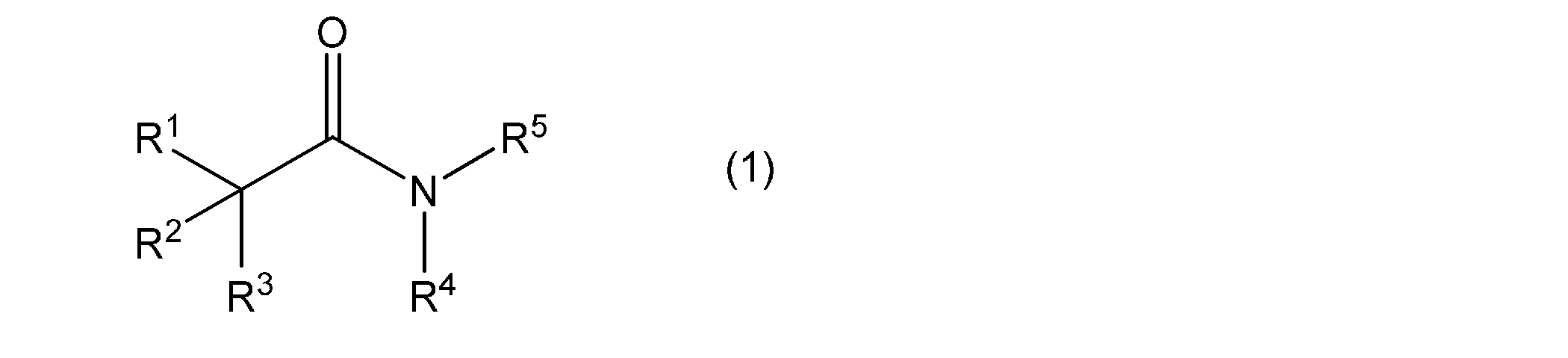
本発明に係る感放射線性組成物は、上記一般式(1)で表される化合物を少なくとも含有する。上記一般式(1)で表される化合物は、本発明に係る感放射線性組成物において、溶剤として用いられる。本発明に係る感放射線性組成物は、溶剤として、上記一般式(1)で表される化合物のみを含有してもよいし、上記一般式(1)で表される化合物以外の有機溶剤(以下、「その他の有機溶剤」ともいう。)を更に含有してもよい。即ち、本発明に係る感放射線性組成物は、上記一般式(1)で表される化合物を溶剤の少なくとも1種として含有する。上記一般式(1)で表される化合物は、本発明に係る感放射線性組成物において、単独で又はその他の有機溶剤との混合溶剤の形態で、溶剤以外の成分(以下、「基材成分」という。)を溶解及び/又は分散する溶剤として用いられる。本発明に係る感放射線性組成物は、上記一般式(1)で表される化合物を含有するため、感度、保存安定性、塗布性、現像性、及び安全性に優れ、露光及び現像により、異物の発生が抑制されたパターンを形成することができる。本発明に係る感放射線性組成物は、例えば、ブラックマトリクス、カラーフィルタ、ブラックフォトスペーサ、集積回路、液晶素子等の製造に好適に用いることができる。
上記一般式(1)で表される化合物は、感放射線性組成物に含まれる基材成分を良好に溶解及び/又は分散することができる溶剤であり、広く感放射線性組成物一般において用いることができる。中でも、感放射線性組成物がオキシム系光重合開始剤を含む場合、上記一般式(1)で表される化合物は、オキシム系光重合開始剤の溶解性が良好である。上記一般式(1)で表される化合物は、単独で又は2種以上組み合わせて用いることができる。
R2、R3、R4、及びR5は、独立にメチル基又はエチル基であることが好ましい。
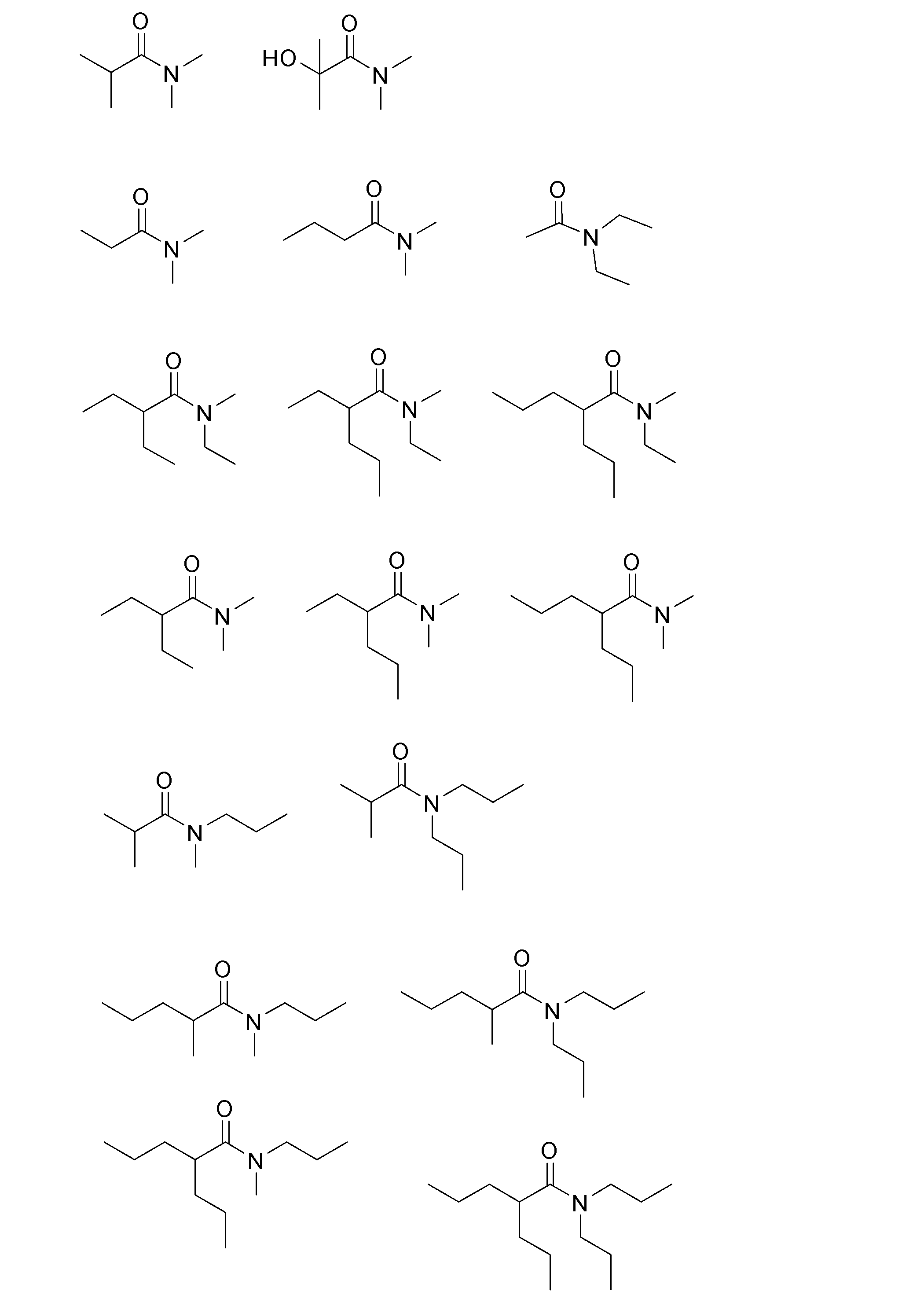
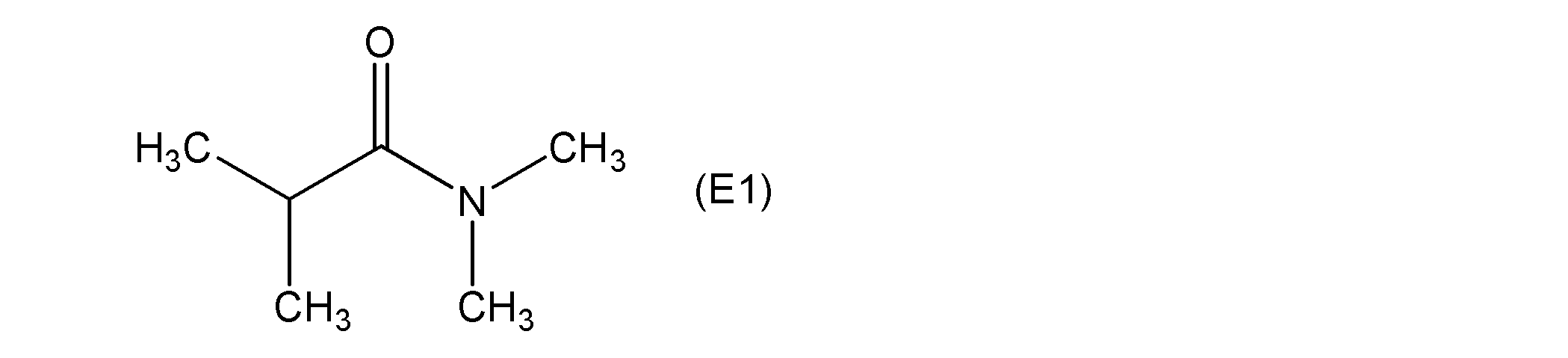
本発明に係る感放射線性組成物は、ネガ型及びポジ型のいずれであってもよい。ネガ型感放射線性組成物としては、上記一般式(1)で表される化合物と、アルカリ可溶性樹脂とを含有するネガ型感放射線性組成物;上記一般式(1)で表される化合物と、ポリアミック酸と、光塩基発生剤、光酸発生剤等の感光性成分とを含有する感放射線性ポリイミド前駆体組成物;上記一般式(1)で表される化合物と、ポリベンゾオキサゾール前駆体と、光塩基発生剤、光酸発生剤等の感光性成分とを含有する感放射線性ポリベンゾオキサゾール前駆体組成物;上記一般式(1)で表される化合物を含有する感放射線性SOG(スピンオングラス)組成物等が挙げられる。ポジ型感放射線性組成物としては、上記一般式(1)で表される化合物と、アルカリ可溶性樹脂と、キノンジアジド基含有化合物とを含有するポジ型感放射線性組成物;上記一般式(1)で表される化合物と、ポリイミド樹脂と、光塩基発生剤、光酸発生剤等の感光性成分とを含有する感放射線性ポリイミド組成物;上記一般式(1)で表される化合物と、酸の作用によりアルカリに対する溶解性が増大する樹脂と、光酸発生剤とを含有する化学増幅型ポジ型感放射線性組成物等が挙げられる。以下、これらの感放射線性組成物のうち、上記一般式(1)で表される化合物と、アルカリ可溶性樹脂とを含有するネガ型感放射線性組成物(以下、「ネガ型感放射線性組成物1」という。)、上記一般式(1)で表される化合物と、ポリアミック酸と、光塩基発生剤、光酸発生剤等の感光性成分とを含有する感放射線性ポリイミド前駆体組成物(以下、「ネガ型感放射線性組成物2」という。)、上記一般式(1)で表される化合物と、ポリベンゾオキサゾール前駆体と、光塩基発生剤、光酸発生剤等の感光性成分とを含有する感放射線性ポリベンゾオキサゾール前駆体組成物(以下、「ネガ型感放射線性組成物3」という。)、及び上記一般式(1)で表される化合物と、アルカリ可溶性樹脂と、キノンジアジド基含有化合物とを含有するポジ型感放射線性組成物(以下、「ポジ型感放射線性組成物1」という。)について詳細に説明する。
ネガ型感放射線性組成物1は、上記一般式(1)で表される化合物と、アルカリ可溶性樹脂とを含有するものであり、より具体的には、上記一般式(1)で表される化合物と、アルカリ可溶性樹脂と、光重合性モノマーと、光重合開始剤とを含有するものである。
一般式(1)で表される化合物としては、感放射線性組成物の一般的な説明において例示したものを用いることができる。上記一般式(1)で表される化合物は、単独で又は2種以上組み合わせて用いることができる。
アルカリ可溶性樹脂とは、樹脂濃度20質量%の樹脂溶液(溶媒:プロピレングリコールモノメチルエーテルアセテート)により、膜厚1μmの樹脂膜を基板上に形成し、濃度0.05質量%のKOH水溶液に1分間浸漬した際に、膜厚0.01μm以上溶解するものをいう。
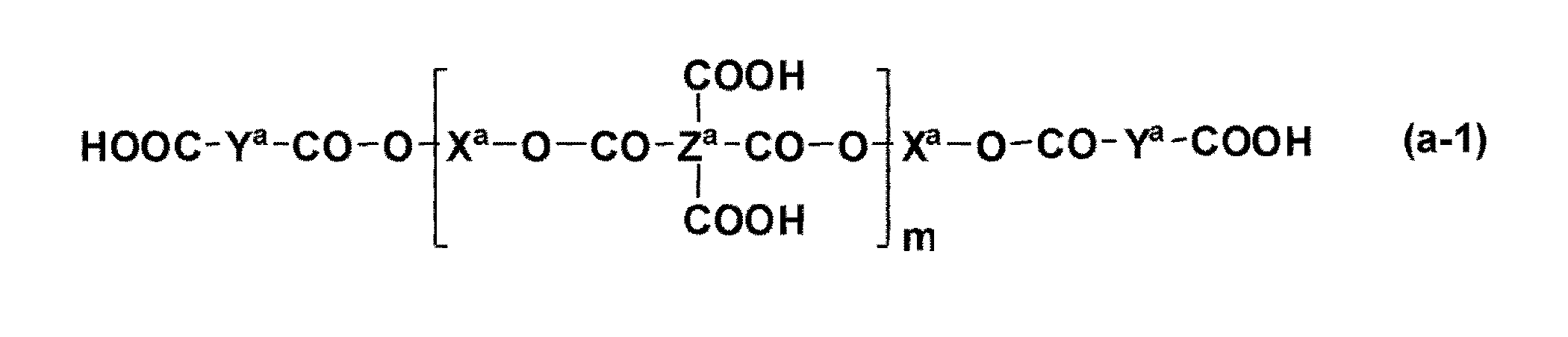
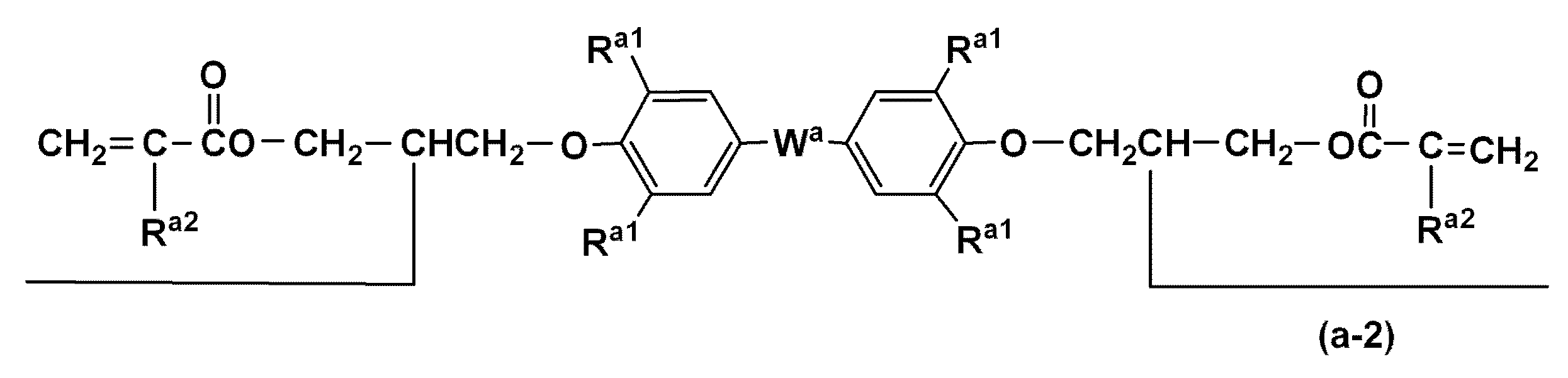

また、上記式(a-1)中、mは、0~20の整数を示す。
なお、本明細書において、「(メタ)アクリル酸」は、アクリル酸とメタクリル酸との両方を意味する。


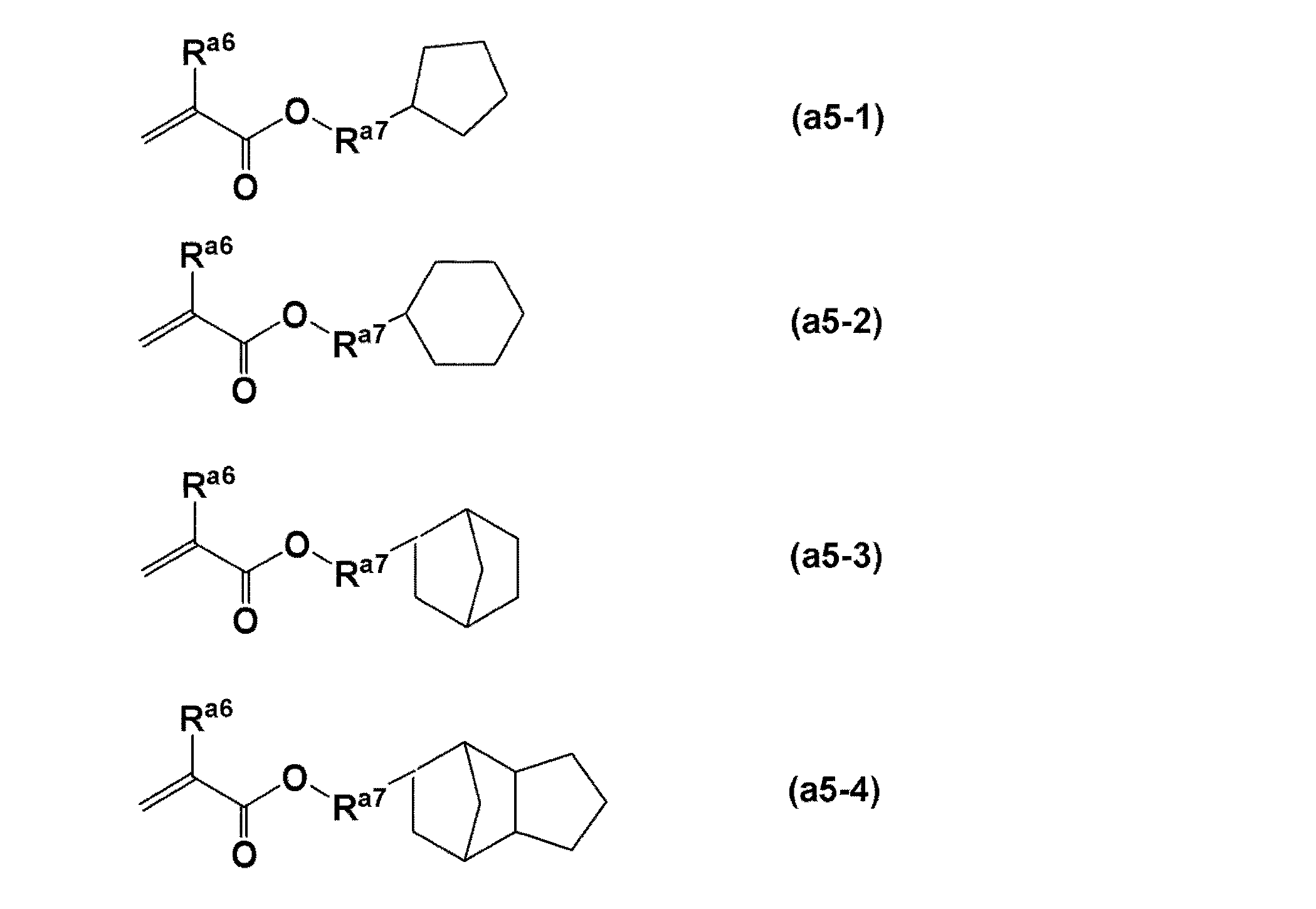
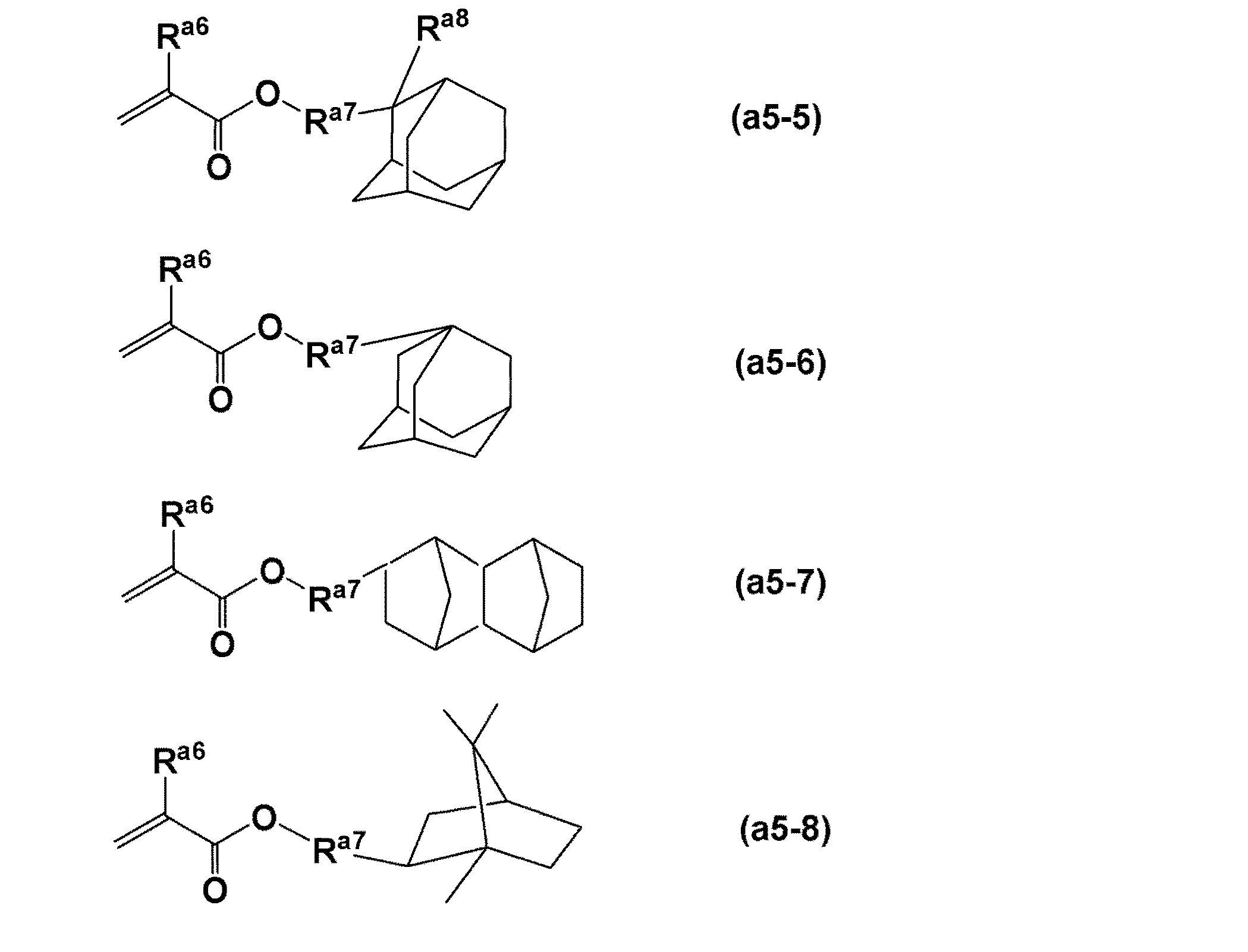
光重合性モノマーとしては、特に限定されず、従来公知の単官能モノマー、多官能モノマーを用いることができる。光重合性モノマーは、単独で又は2種以上組み合わせて用いることができる。
光重合開始剤としては、特に限定されず、従来公知の光重合開始剤を用いることができる。光重合開始剤は、単独で又は2種以上組み合わせて用いることができる。
オキシム系光重合開始剤の好ましい例としては、下記式(c-1)で表される光重合開始剤が挙げられる。


Rc23は、-Xc2-を介して隣接するベンゼン環の炭素原子の1つと結合して環構造を形成していてもよく、Rc23とRc24とが結合して環構造を形成していてもよい。
なお、Xc2がNRc53であり、Rc23が隣接するベンゼン環の炭素原子の1つと結合して、Xc2とともに5員環構造を形成する場合、光重合開始剤はカルバゾール骨格を有することになる。
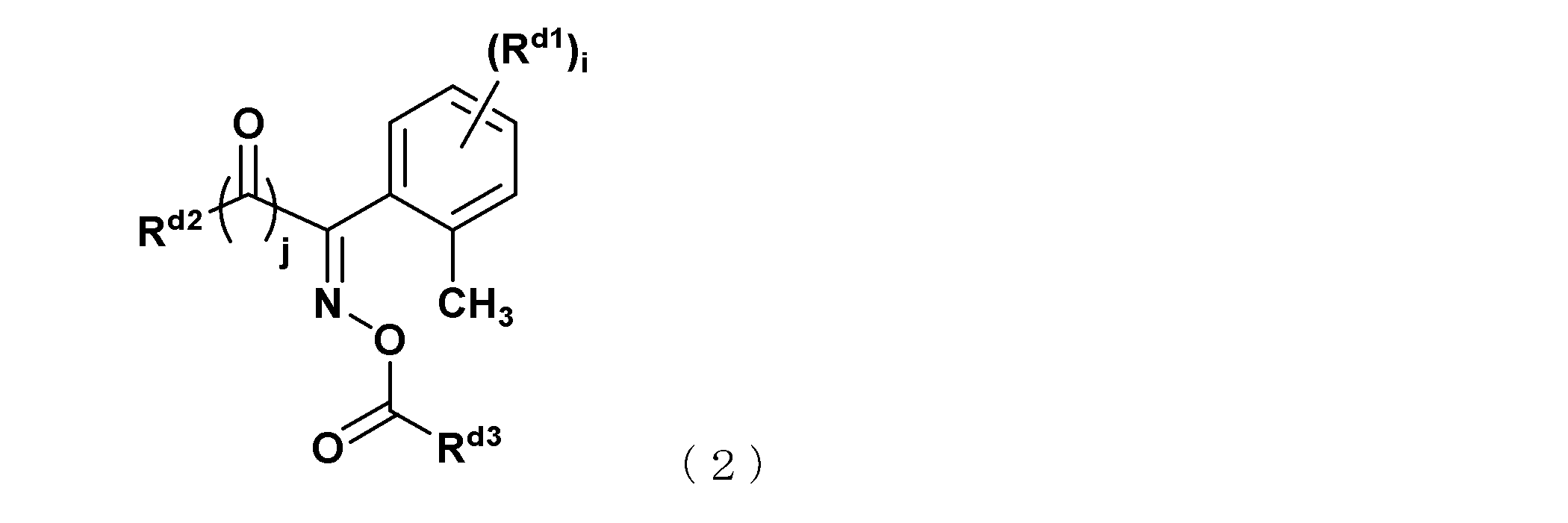


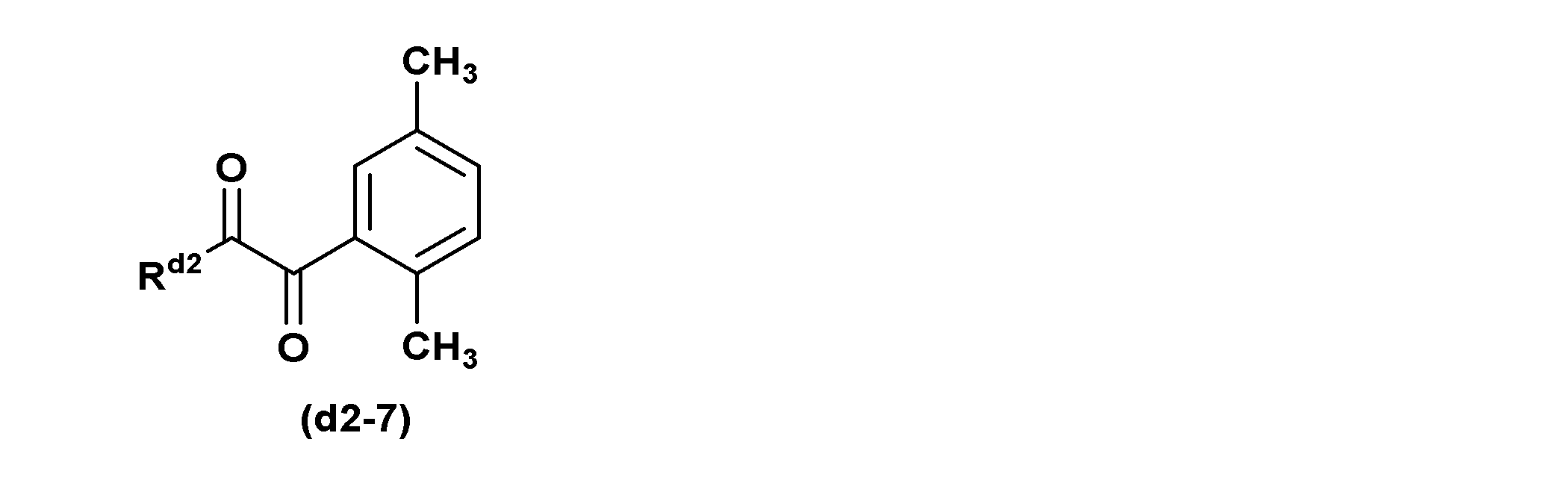
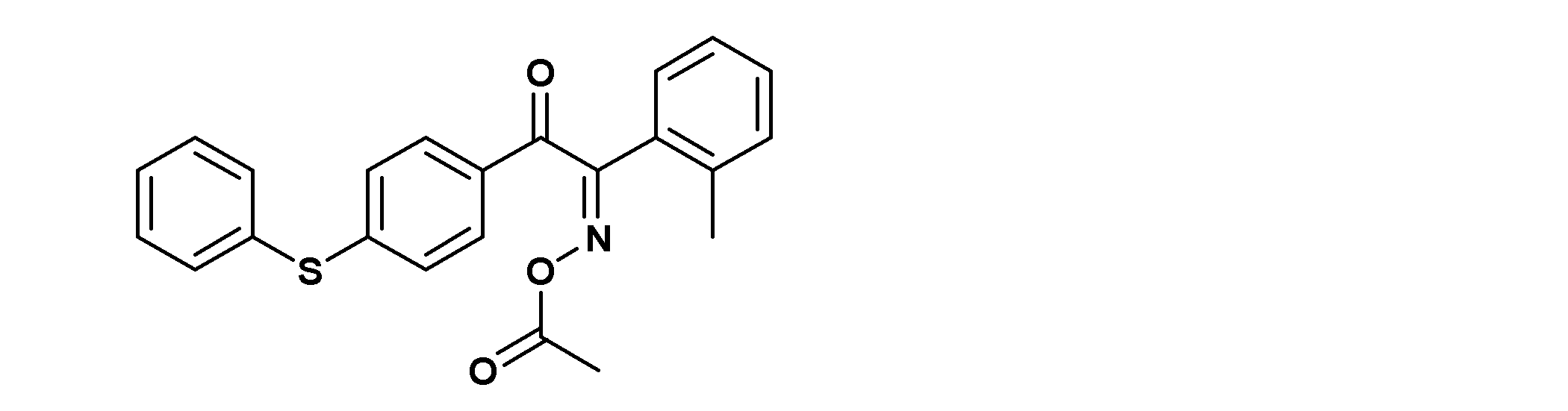
ネガ型感放射線性組成物1は、着色剤を含有してもよい。ネガ型感放射線性組成物1は、着色剤を含有することにより、例えば、液晶表示ディスプレイのカラーフィルタ形成用に好ましく使用される。また、ネガ型感放射線性組成物1は、着色剤として遮光剤を含むことにより、例えば、カラーフィルタにおけるブラックマトリクス形成用や、ブラックフォトスペーサ形成用に好ましく使用される。着色剤は、単独で又は2種以上組み合わせて用いることができる。
C.I.ピグメントオレンジ1(以下、「C.I.ピグメントオレンジ」は同様であり、番号のみを記載する。)、5、13、14、16、17、24、34、36、38、40、43、46、49、51、55、59、61、63、64、71、73;
C.I.ピグメントバイオレット1(以下、「C.I.ピグメントバイオレット」は同様であり、番号のみを記載する。)、19、23、29、30、32、36、37、38、39、40、50;
C.I.ピグメントレッド1(以下、「C.I.ピグメントレッド」は同様であり、番号のみを記載する。)、2、3、4、5、6、7、8、9、10、11、12、14、15、16、17、18、19、21、22、23、30、31、32、37、38、40、41、42、48:1、48:2、48:3、48:4、49:1、49:2、50:1、52:1、53:1、57、57:1、57:2、58:2、58:4、60:1、63:1、63:2、64:1、81:1、83、88、90:1、97、101、102、104、105、106、108、112、113、114、122、123、144、146、149、150、151、155、166、168、170、171、172、174、175、176、177、178、179、180、185、187、188、190、192、193、194、202、206、207、208、209、215、216、217、220、223、224、226、227、228、240、242、243、245、254、255、264、265;
C.I.ピグメントブルー1(以下、「C.I.ピグメントブルー」は同様であり、番号のみを記載する。)、2、15、15:3、15:4、15:6、16、22、60、64、66;
C.I.ピグメントグリーン7、C.I.ピグメントグリーン36、C.I.ピグメントグリーン37;
C.I.ピグメントブラウン23、C.I.ピグメントブラウン25、C.I.ピグメントブラウン26、C.I.ピグメントブラウン28;
C.I.ピグメントブラック1、C.I.ピグメントブラック7。
ネガ型感放射線性組成物1は、その他の有機溶剤を含有してもよい。その他の有機溶剤は、単独で又は2種以上組み合わせて用いることができる。その他の有機溶剤としては、例えば、エチレングリコールモノメチルエーテル、エチレングリコールモノエチルエーテル、エチレングリコール-n-プロピルエーテル、エチレングリコールモノ-n-ブチルエーテル、ジエチレングリコールモノメチルエーテル、ジエチレングリコールモノエチルエーテル、ジエチレングリコールモノ-n-プロピルエーテル、ジエチレングリコールモノ-n-ブチルエーテル、トリエチレングリコールモノメチルエーテル、トリエチレングリコールモノエチルエーテル、プロピレングリコールモノメチルエーテル、プロピレングリコールモノエチルエーテル、プロピレングリコールモノ-n-プロピルエーテル、プロピレングリコールモノ-n-ブチルエーテル、ジプロピレングリコールモノメチルエーテル、ジプロピレングリコールモノエチルエーテル、ジプロピレングリコールモノ-n-プロピルエーテル、ジプロピレングリコールモノ-n-ブチルエーテル、トリプロピレングリコールモノメチルエーテル、トリプロピレングリコールモノエチルエーテル等の(ポリ)アルキレングリコールモノアルキルエーテル類;エチレングリコールモノメチルエーテルアセテート、エチレングリコールモノエチルエーテルアセテート、ジエチレングリコールモノメチルエーテルアセテート、ジエチレングリコールモノエチルエーテルアセテート、プロピレングリコールモノメチルエーテルアセテート、プロピレングリコールモノエチルエーテルアセテート等の(ポリ)アルキレングリコールモノアルキルエーテルアセテート類;ジエチレングリコールジメチルエーテル、ジエチレングリコールメチルエチルエーテル、ジエチレングリコールジエチルエーテル、テトラヒドロフラン等の他のエーテル類;メチルエチルケトン、シクロヘキサノン、2-ヘプタノン、3-ヘプタノン等のケトン類;2-ヒドロキシプロピオン酸メチル、2-ヒドロキシプロピオン酸エチル等の乳酸アルキルエステル類;2-ヒドロキシ-2-メチルプロピオン酸エチル、3-メトキシプロピオン酸メチル、3-メトキシプロピオン酸エチル、3-エトキシプロピオン酸メチル、3-エトキシプロピオン酸エチル、エトキシ酢酸エチル、ヒドロキシ酢酸エチル、2-ヒドロキシ-3-メチル部炭酸メチル、3-メチル-3-メトキシブチルアセテート、3-メチル-3-メトキシブチルプロピオネート、酢酸エチル、酢酸n-プロピル、酢酸イソプロピル、酢酸n-ブチル、酢酸イソブチル、蟻酸n-ペンチル、酢酸イソペンチル、プロピオン酸n-ブチル、酪酸エチル、酪酸n-プロピル、酪酸イソプロピル、酪酸n-ブチル、ピルビン酸メチル、ピルビン酸エチル、ピルビン酸n-プロピル、アセト酢酸メチル、アセト酢酸エチル、2-オキソブタン酸エチル等の他のエステル類;トルエン、キシレン等の芳香族炭化水素類等が挙げられる。
ネガ型感放射線性組成物1は、必要に応じて、各種の添加剤を含有していてもよい。添加剤としては、増感剤、硬化促進剤、充填剤、密着促進剤、酸化防止剤、凝集防止剤、熱重合禁止剤、消泡剤、界面活性剤等が挙げられる。
ネガ型感放射線性組成物2は、上記一般式(1)で表される化合物と、ポリアミック酸と、感光性成分とを含有する感放射線性ポリイミド前駆体組成物である。
一般式(1)で表される化合物としては、感放射線性組成物の一般的な説明において例示したものを用いることができる。上記一般式(1)で表される化合物は、単独で又は2種以上組み合わせて用いることができる。
本発明において、ポリアミック酸は、テトラカルボン酸二無水物及びジアミンを反応させて得られるものであれば、特に限定されず、従来からポリイミド樹脂の前駆体として知られているポリアミック酸から適宜選択される。ポリアミック酸は単独で又は2種以上を混合して用いることができる。
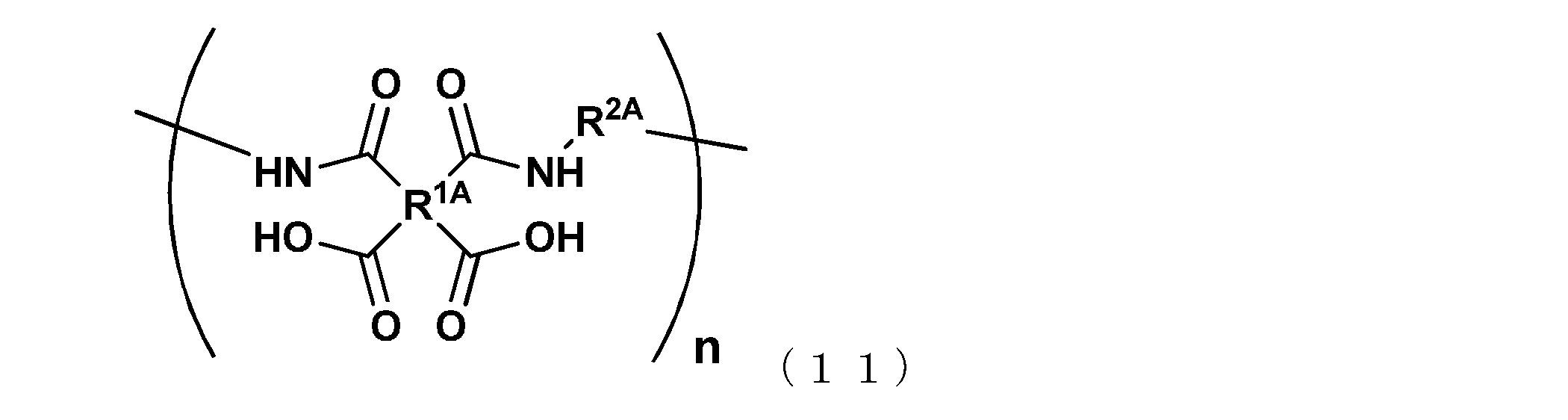

感光性成分としては、特に限定されず、例えば、光塩基発生剤、光酸発生剤等の、光の作用により分解して塩基及び酸の少なくとも一方を発生する化合物(A)が挙げられる。感光性成分は単独で又は2種以上を混合して用いることができる。
化合物(A-1)が発生するイミダゾール化合物は、塩基性のイミド化触媒として、ネガ型感放射線性組成物2中のポリアミック酸の閉環を促進する。化合物(A-1)が発生するイミダゾール化合物は、イミダゾールであっても、イミダゾール中の炭素原子に結合した水素原子の一部又は全部が置換基で置換された化合物であってもよく、下記式(3)で表されるイミダゾール化合物であることが好ましい。
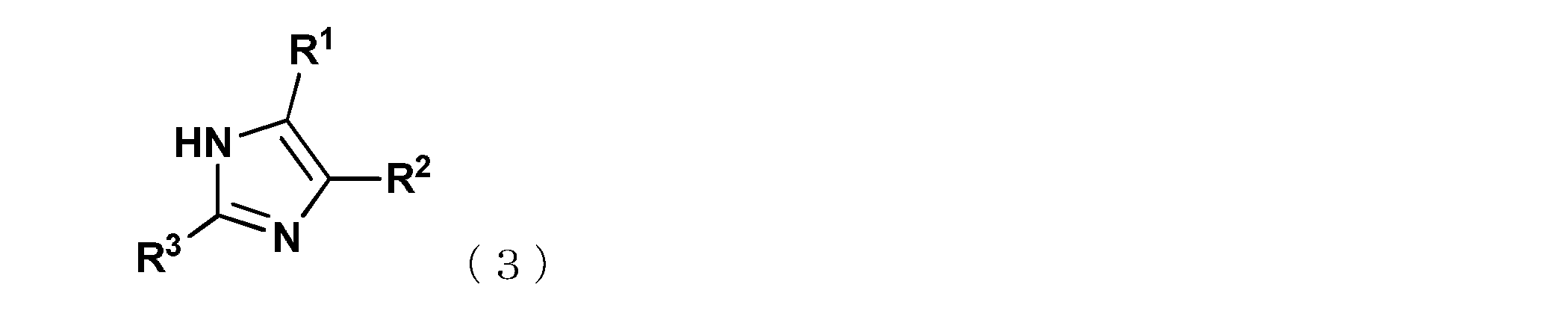
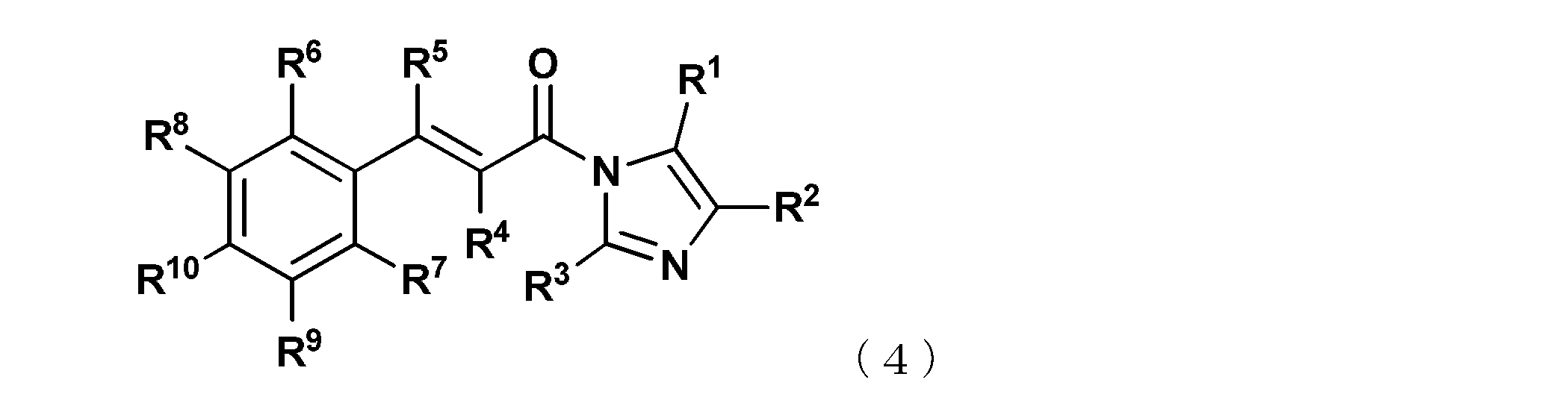


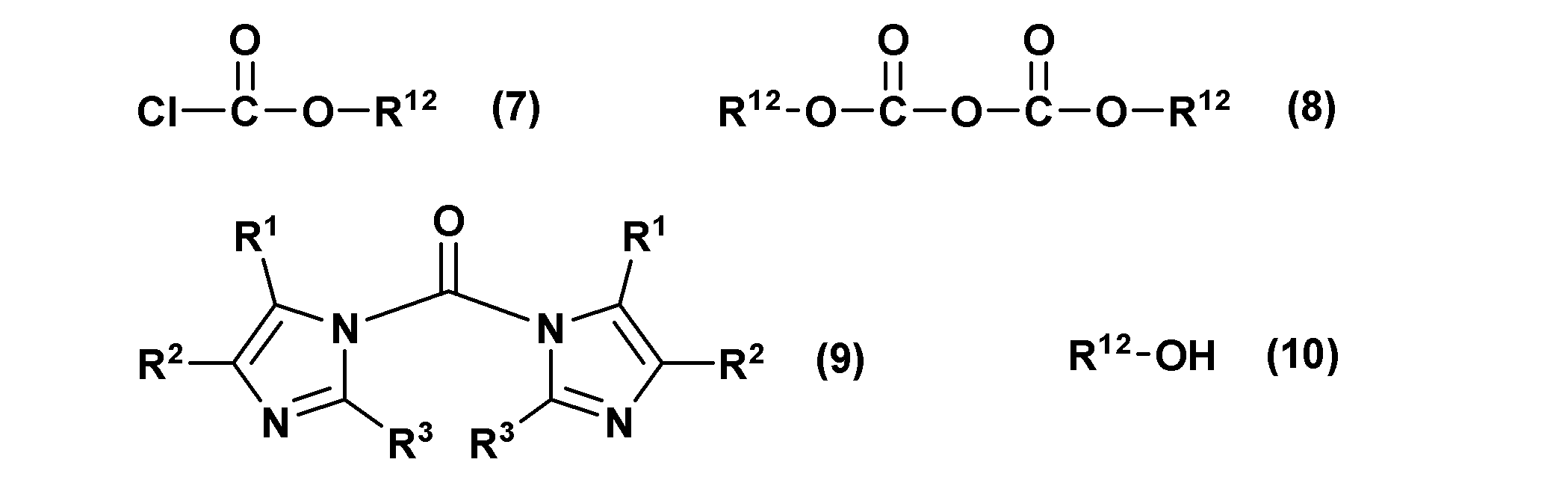
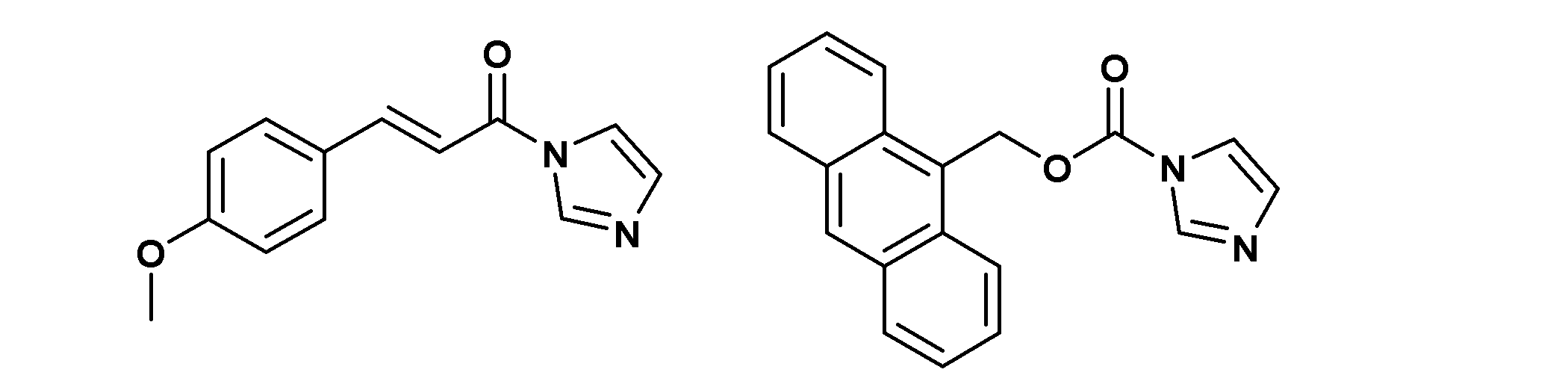
オキシム化合物(A-2)は、光の作用により分解して塩基及び酸の少なくとも一方を発生する。化合物(A-2)が分解して発生した塩基又は酸により、ネガ型感放射線性組成物2中のポリアミック酸の閉環が促進される。

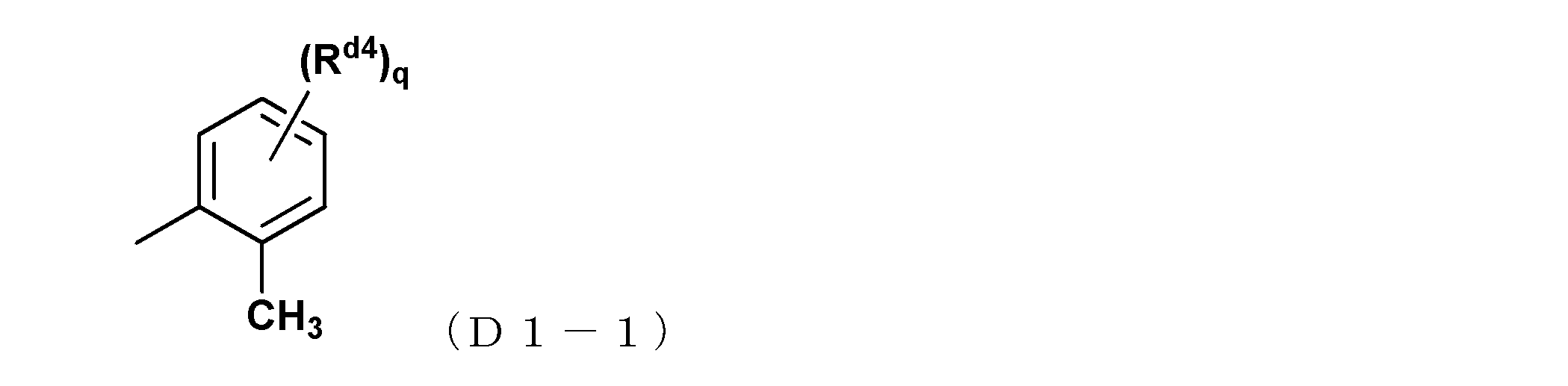
Rd1が環状の脂肪族炭化水素基である場合の好適な例としてはシクロペンチル基、シクロへキシル基が挙げられる。
Rd1が直鎖状の脂肪族炭化水素基と環状の脂肪族炭化水素基とを組み合わせた構造である場合の好適な例としては、シクロヘキシルメチル基、シクロペンチルメチル基、2-シクロヘキシルエチル基、2-シクロペンチルエチル基、3-シクロヘキシル-n-プロピル基、及び3-シクロペンチル-n-プロピル基が挙げられ、これらの基の中では2-シクロヘキシルエチル基、及び2-シクロペンチルエチル基が好ましい。
Rd2が脂肪族炭化水素基である場合、当該脂肪族炭化水素基の炭素数は、1~6が好ましく、1がより好ましい。当該脂肪族炭化水素基は、飽和脂肪族炭化水素基であってもよく、不飽和結合を有する炭化水素基であってもよい。当該脂肪族炭化水素基の構造は、直鎖状であっても、分岐鎖状であっても、環状であっても、これらの構造を組み合わせた構造であってもよく、直鎖状であるのが好ましい。
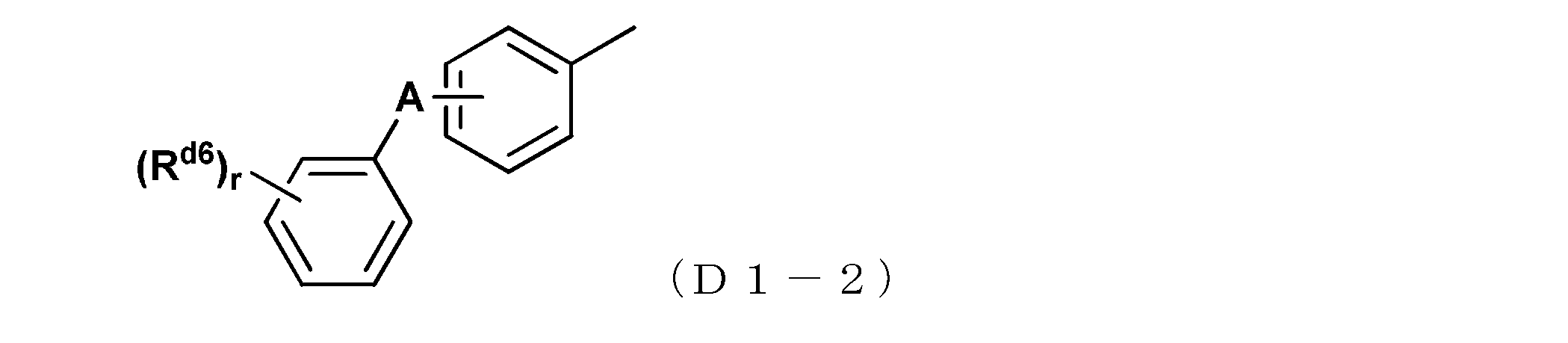
式(D1-2)において、AはSであるのが好ましい。
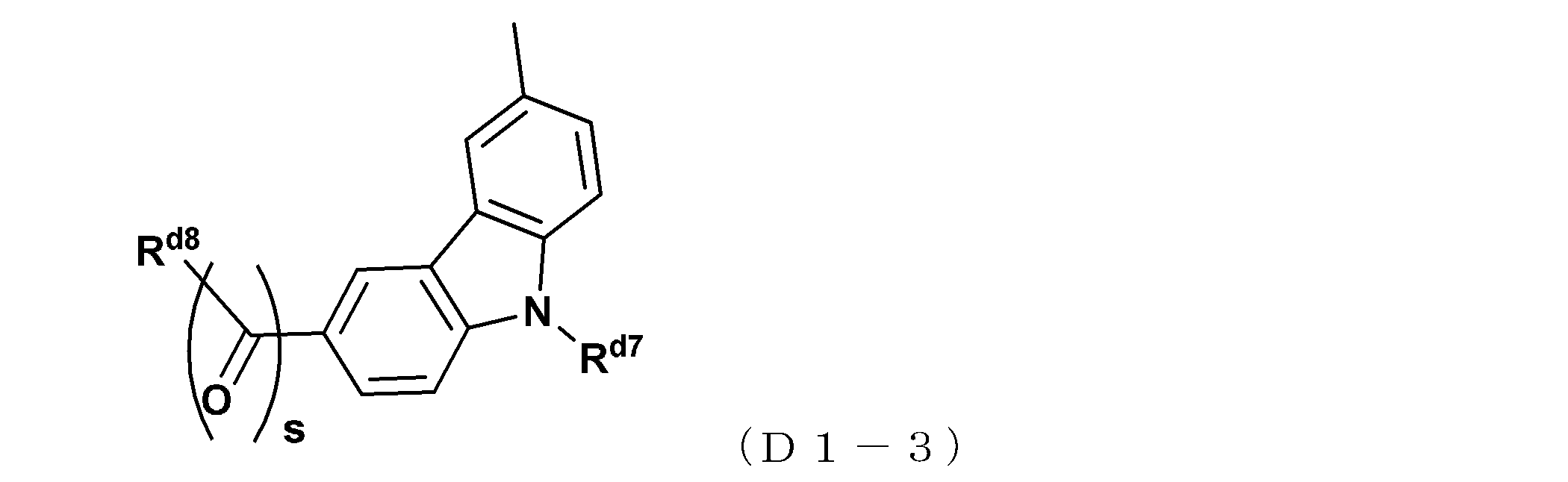

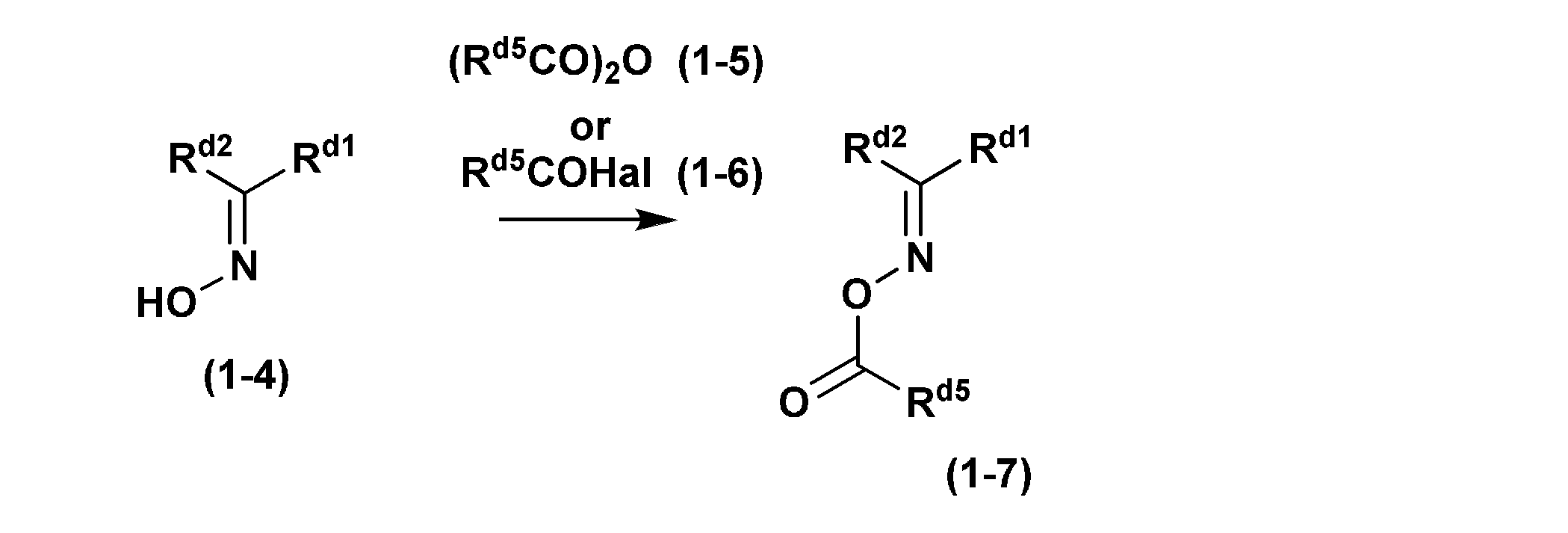
また、式(D1)で表される化合物は、pが0であり、Rd2が炭素数1~10の脂肪族炭化水素基であり、Rd3が-CO-Rd5で表される基である場合、Rd2-C(=N-OH)-Rd1で表されるオキシム化合物を、スキーム2に記載される方法に従ってアシル化することで、Rd2-C(=N-O-CO-Rd5)-Rd1で表される化合物として得ることができる。
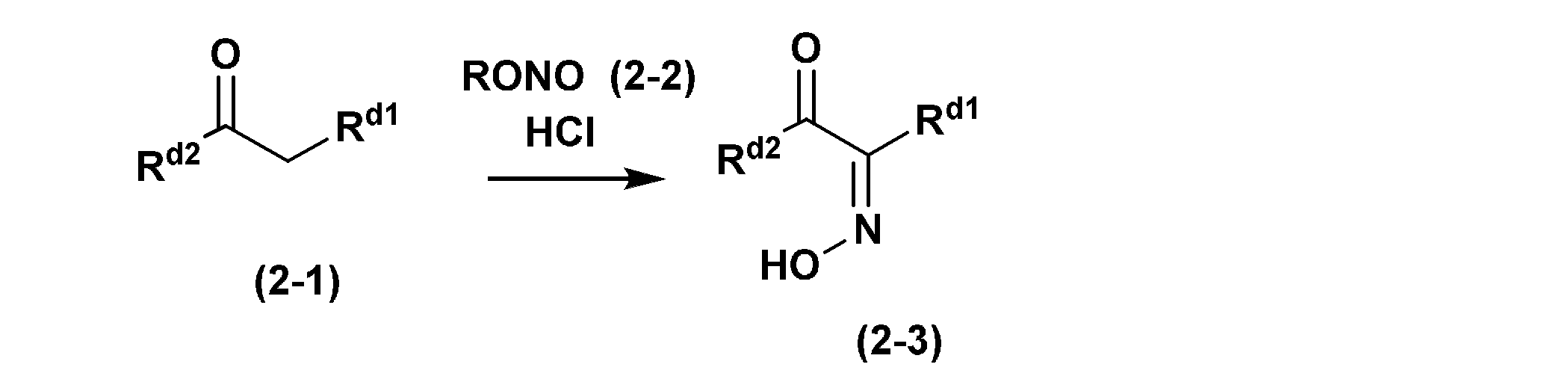

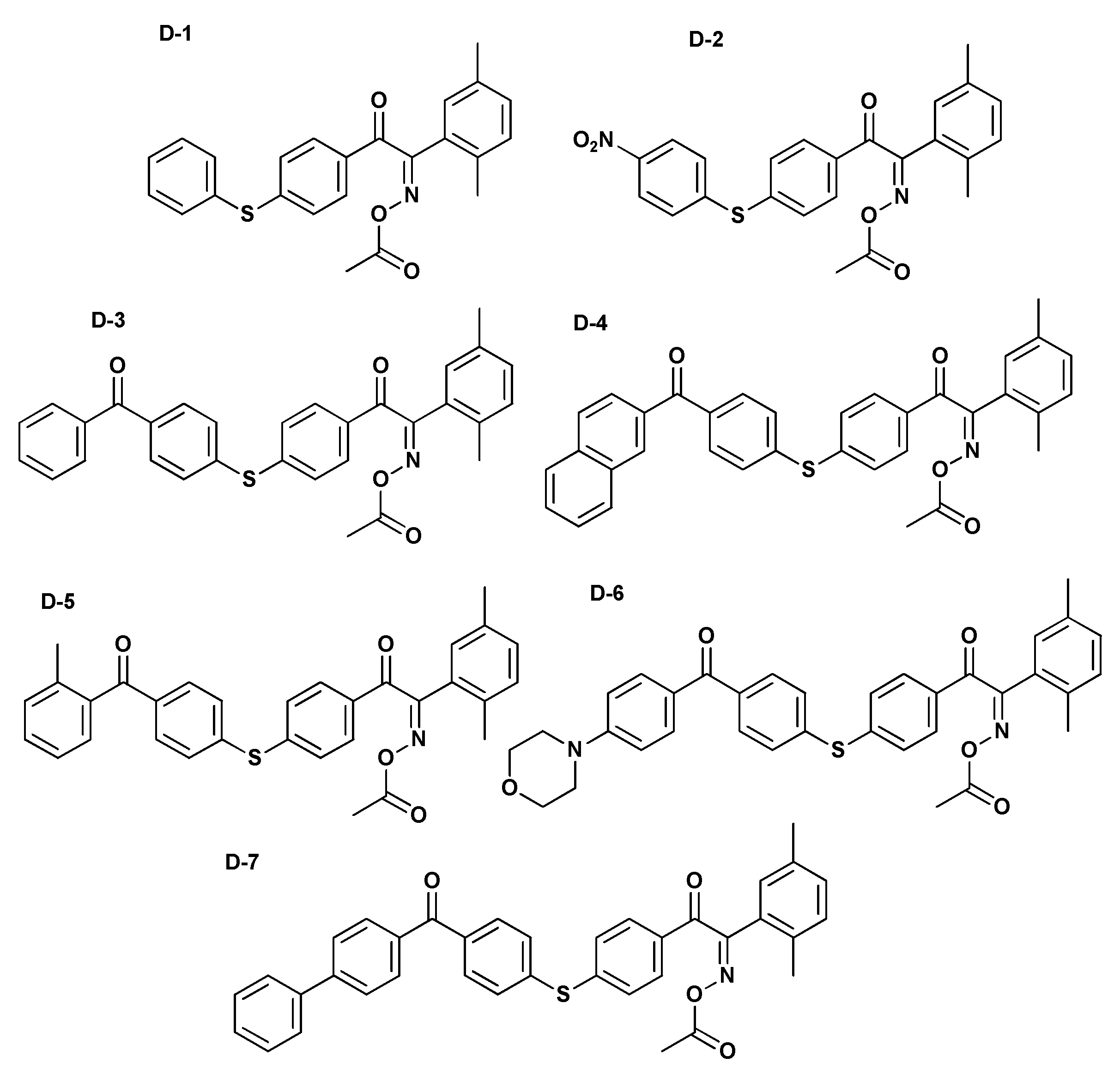
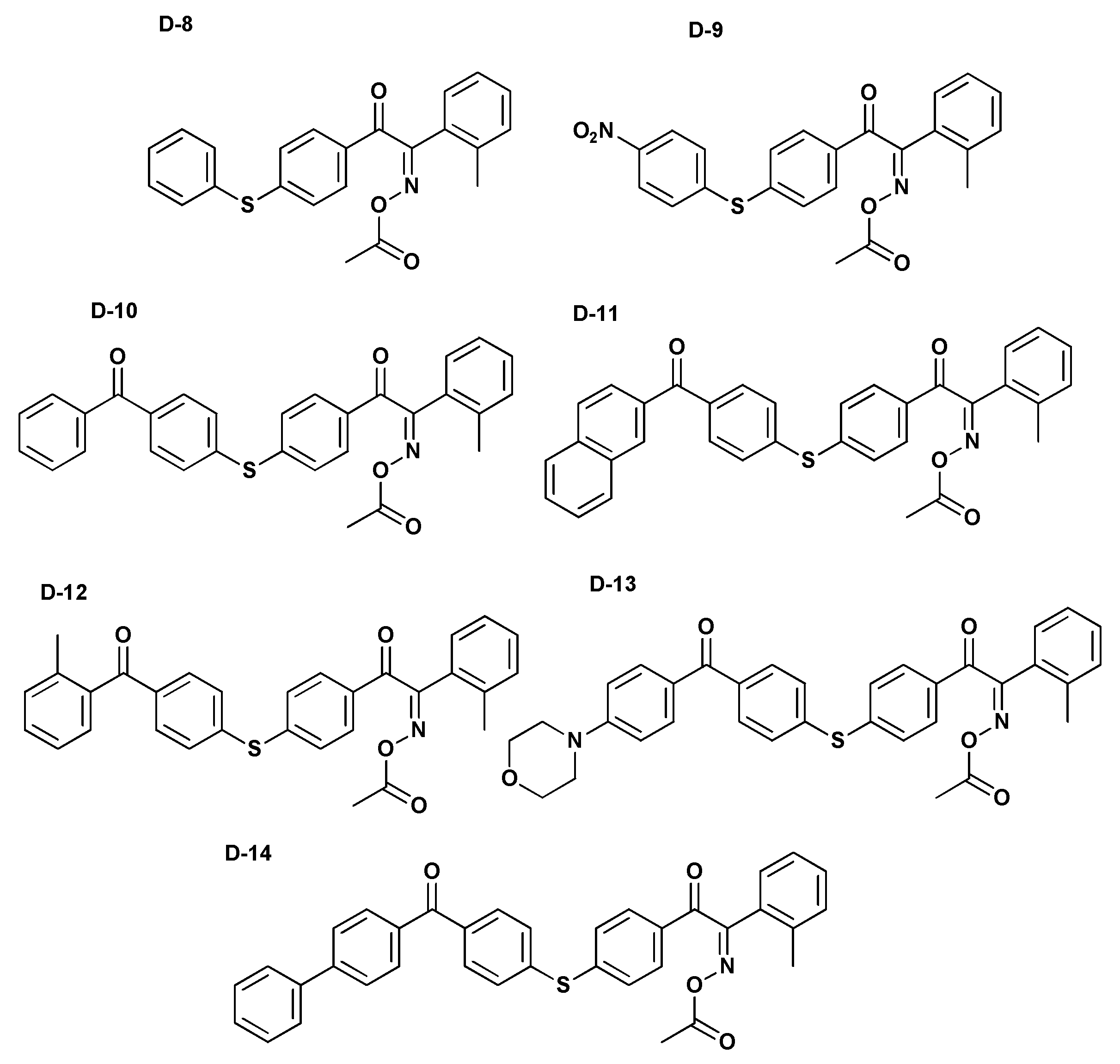
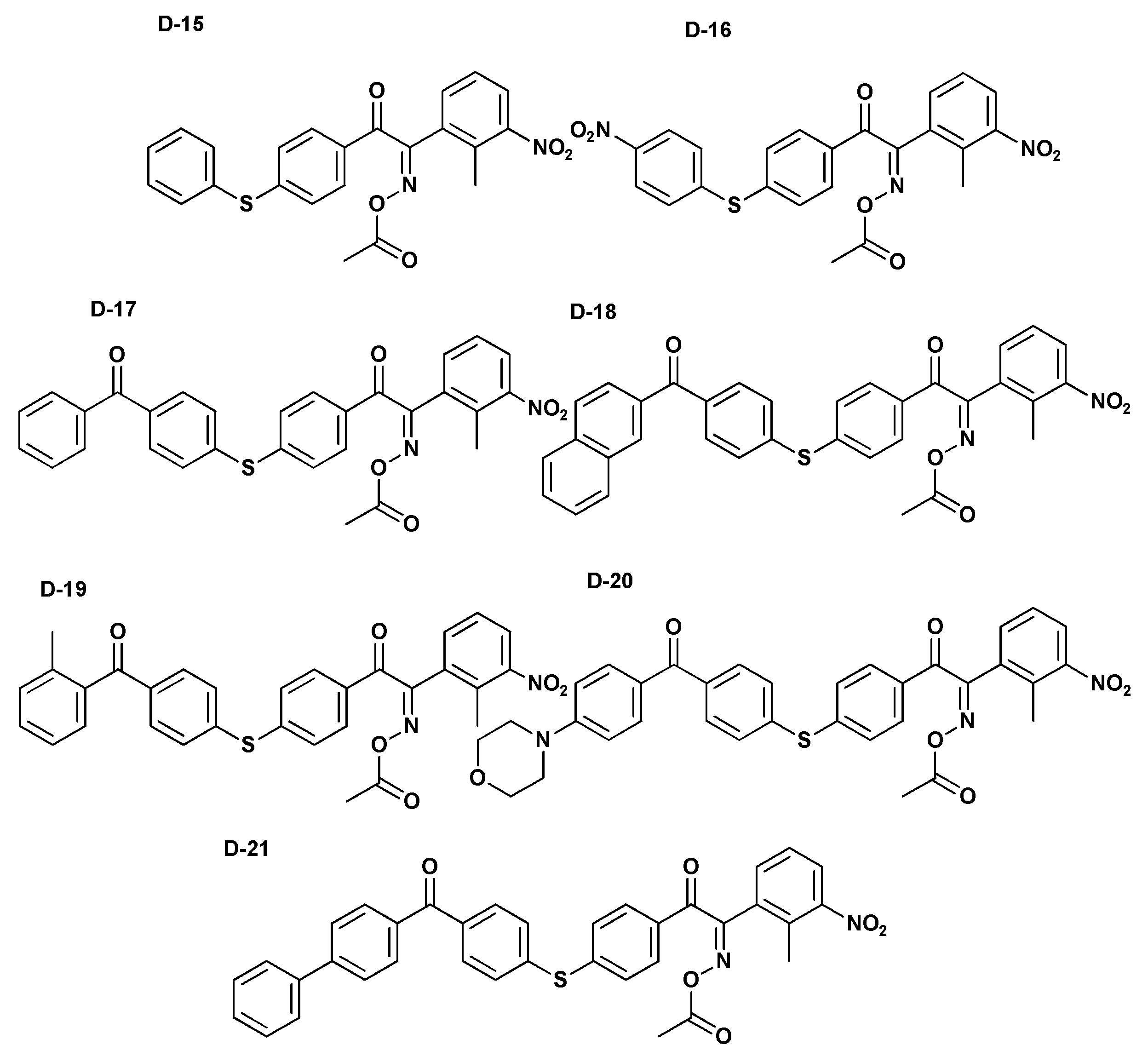


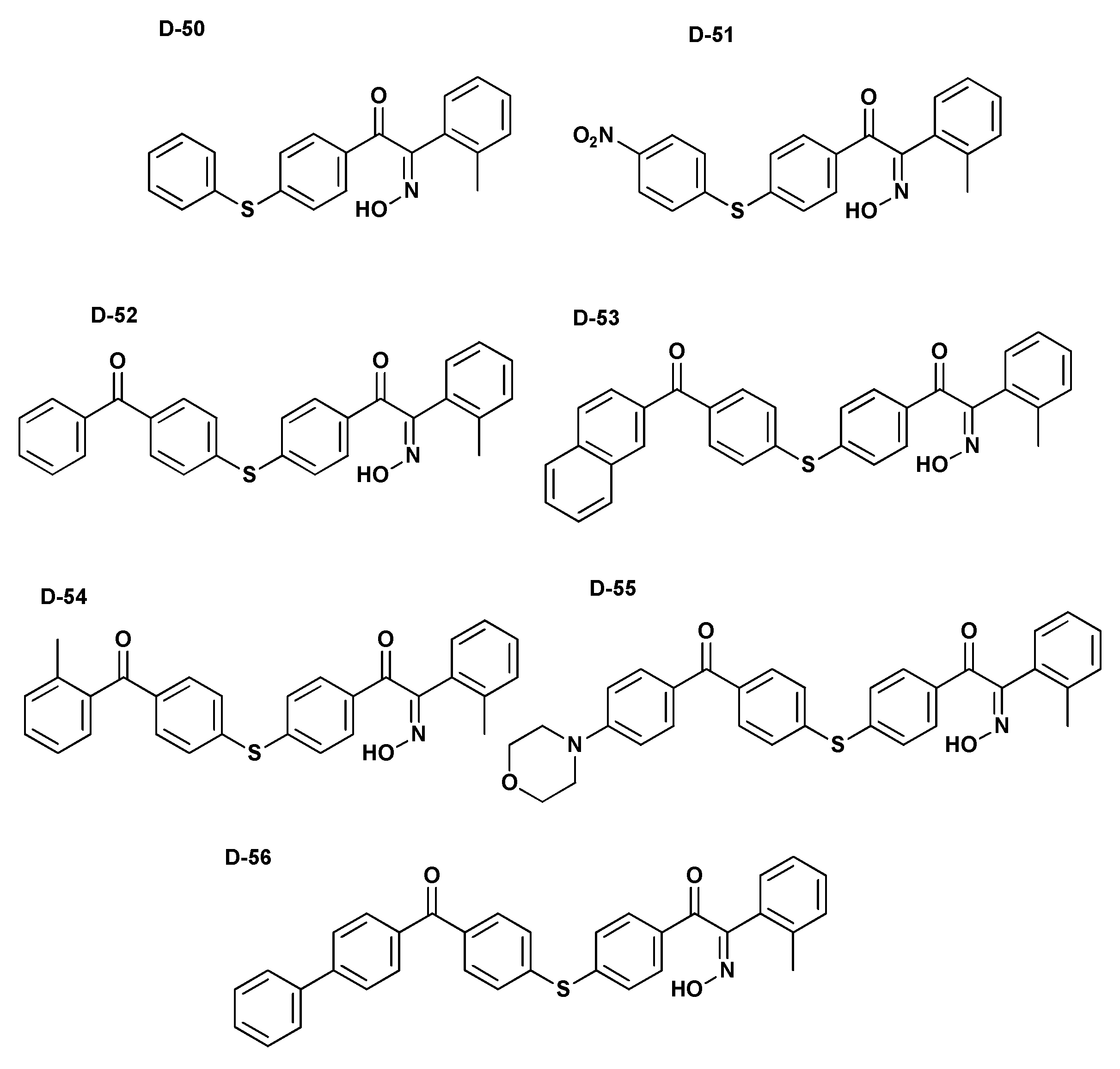
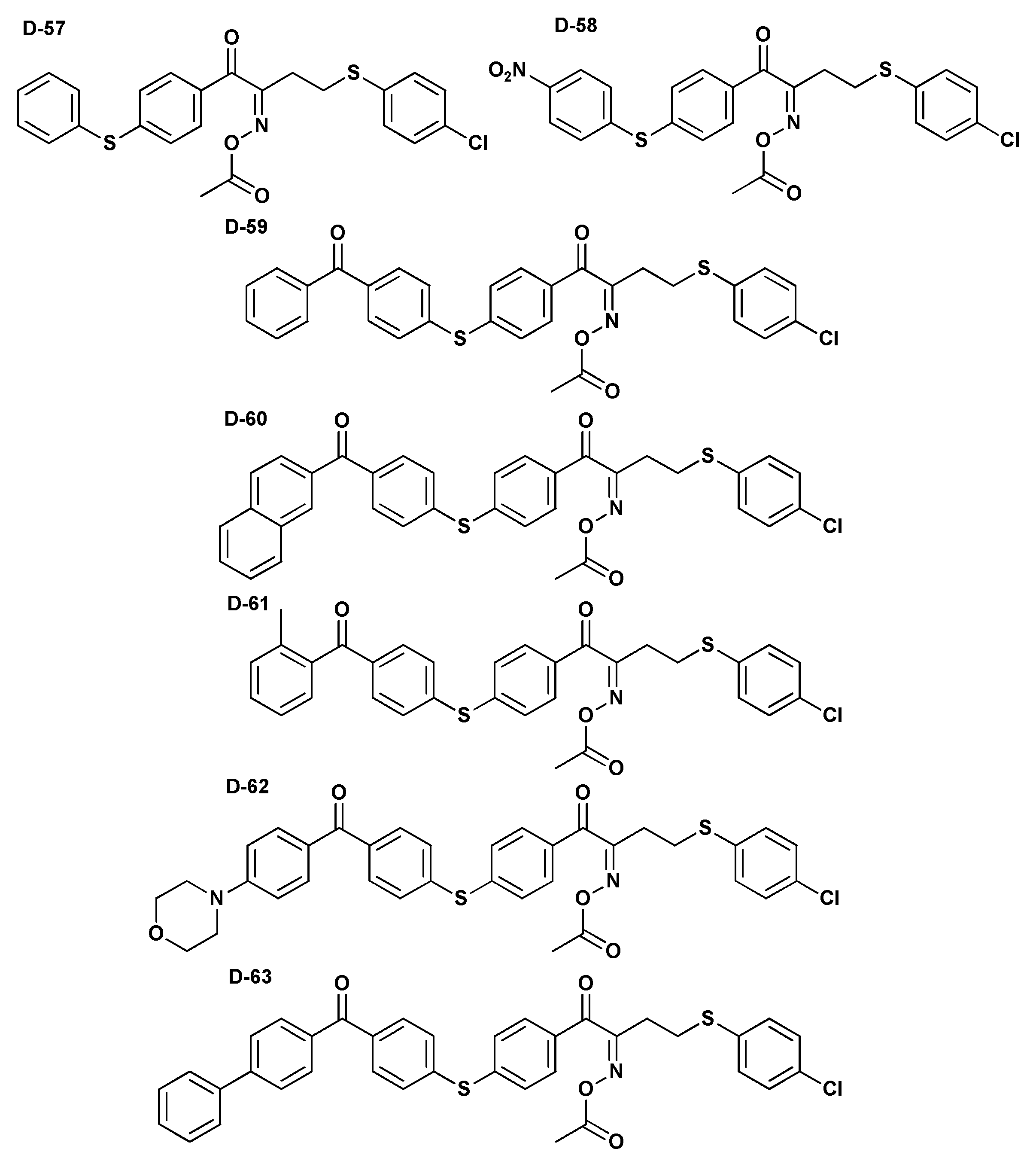

ネガ型感放射線性組成物2は、その他の有機溶剤を含有してもよい。その他の有機溶剤は、単独で又は2種以上組み合わせて用いることができる。その他の有機溶剤としては、ネガ型感放射線性組成物1において例示したものを用いることができる。
ネガ型感放射線性組成物2は、必要に応じて、各種の添加剤を含有していてもよい。添加剤としては、増感剤、硬化促進剤、充填剤、密着促進剤、酸化防止剤、凝集防止剤、熱重合禁止剤、消泡剤、界面活性剤等が挙げられる。
ネガ型感放射線性組成物3は、上記一般式(1)で表される化合物と、ポリベンゾオキサゾール前駆体と、感光性成分とを含有する感放射線性ポリベンゾオキサゾール前駆体組成物である。
一般式(1)で表される化合物としては、感放射線性組成物の一般的な説明において例示したものを用いることができる。上記一般式(1)で表される化合物は、単独で又は2種以上組み合わせて用いることができる。
ポリベンゾオキサゾール前駆体は、単独で又は2種以上を混合して用いることができる。ポリベンゾオキサゾール前駆体の合成原料としては、芳香族ジアミンジオールと、特定の構造のジカルボニル化合物とを用いる。以下、芳香族ジアミンジオールと、ジカルボニル化合物とについて説明する。
本発明では、芳香族ジアミンジオールとして下記式(21)で表される化合物を用いる。芳香族ジアミンジオールは、1種を単独で用いてもよく、2種以上を組み合わせて用いてもよい。

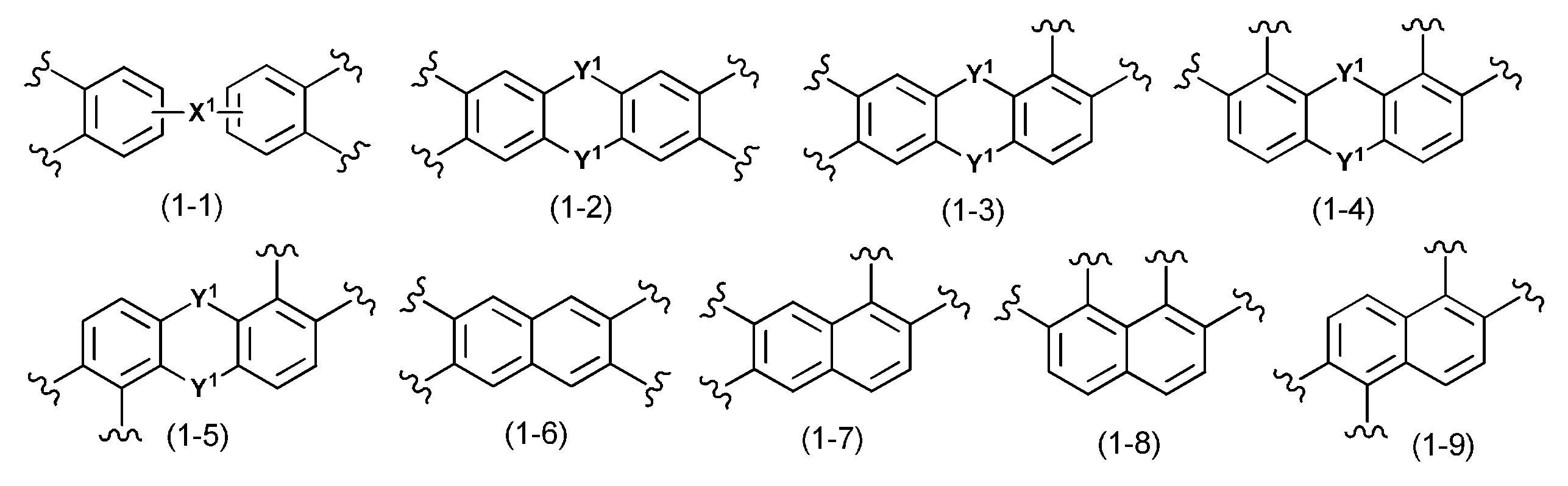
ポリベンゾオキサゾール前駆体の合成原料としては、以上説明した芳香族ジアミンジオールとともに、下記式(22)で表されるジカルボニル化合物を用いる。前述の芳香族ジアミンジオールと、下記式(22)で表されるジカルボニル化合物とを縮合させることにより、ポリベンゾオキサゾール前駆体が得られる。


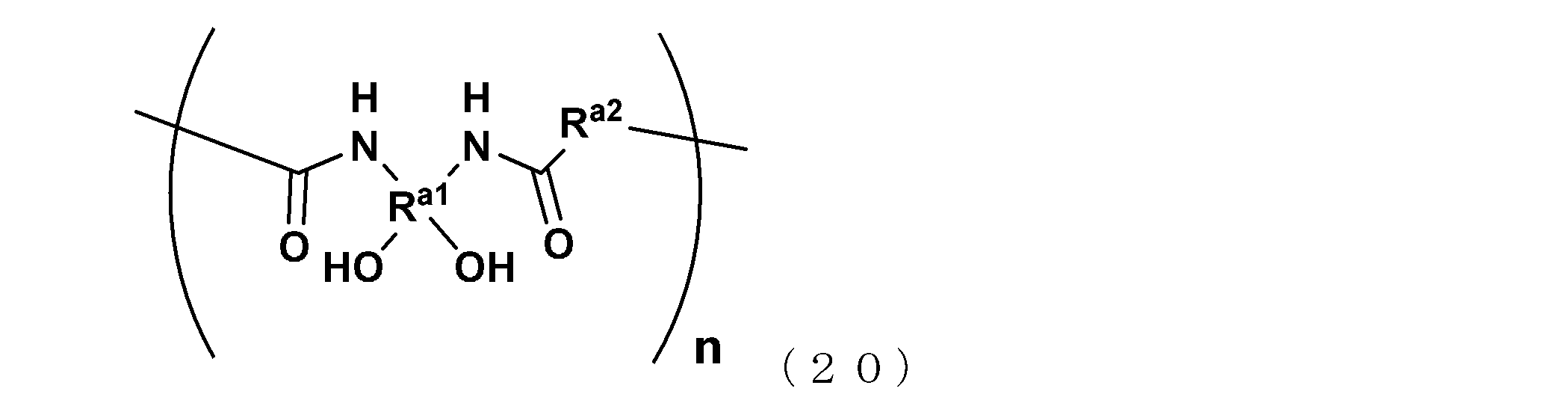
ポリベンゾオキサゾール前駆体の原料として用いるジアルデヒド化合物は、下記式(2-1)で表される化合物である。ジアルデヒド化合物は、1種を単独で用いてもよく、2種以上を組み合わせて用いてもよい。


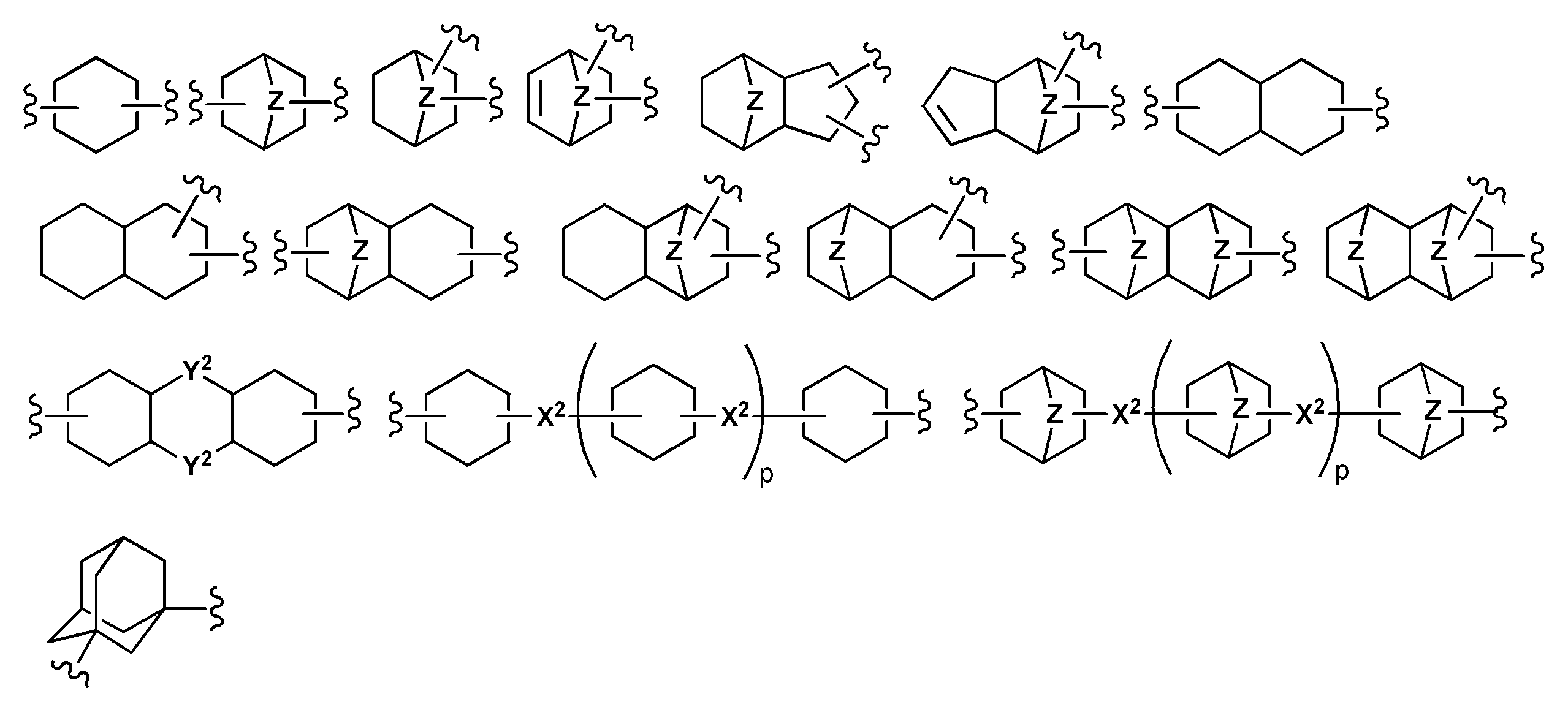
ピラジンジアルデヒド類の具体例としては、ピラジン-2,3-ジアルデヒド、ピラジン-2,5-ジアルデヒド、及びピラジン-2,6-ジアルデヒド等が挙げられる。
ピリミジンジアルデヒド類の具体例としては、ピリミジン-2,4-ジアルデヒド、ピリミジン-4,5-ジアルデヒド、及びピリミジン-4,6-ジアルデヒド等が挙げられる。
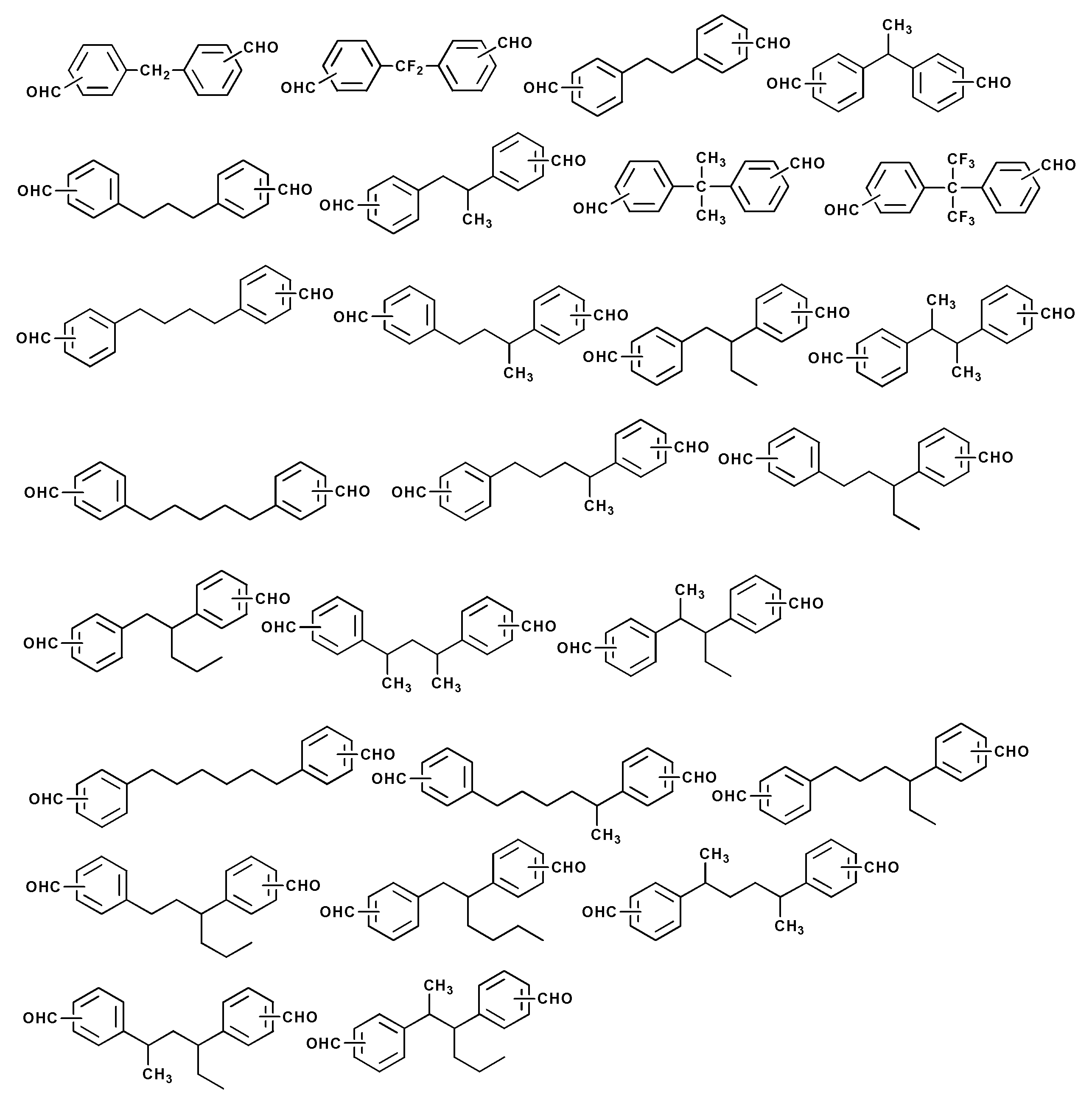
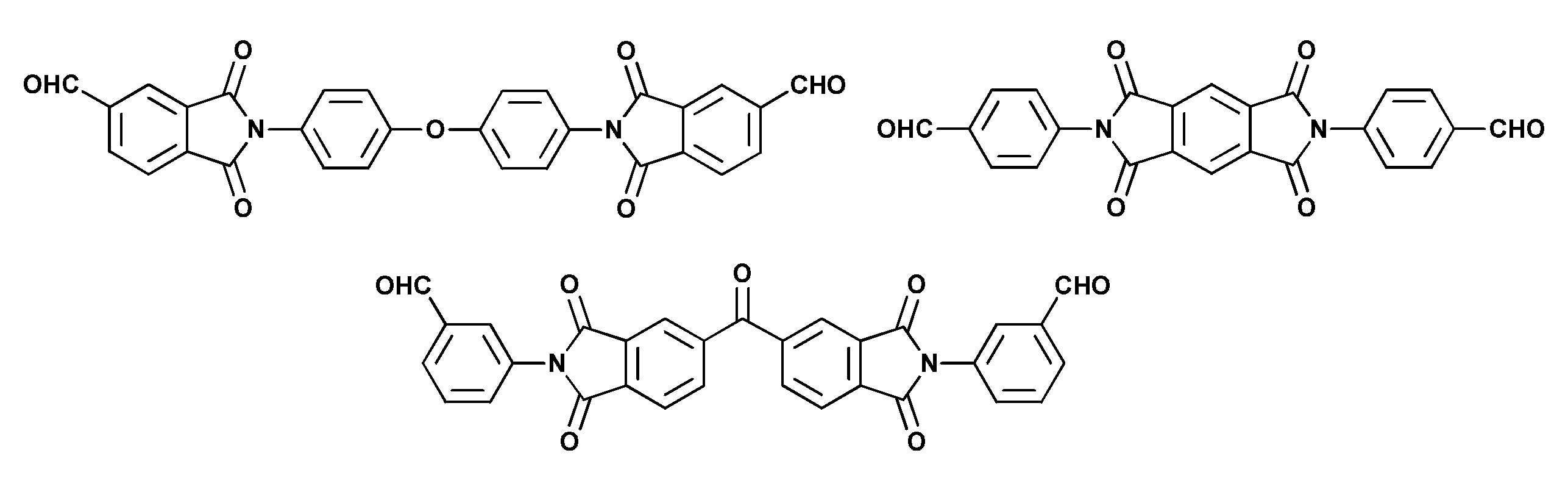
ポリベンゾオキサゾール前駆体の原料として用いるジカルボン酸ジハライドは、下記式(2-2)で表される化合物である。ジカルボン酸ジハライドは、1種を単独で用いてもよく、2種以上を組み合わせて用いてもよい。

本発明において、ポリベンゾオキサゾール前駆体は、前述の芳香族ジアミンジオールと、ジカルボニル化合物とを、溶剤中で、周知の方法に従って反応させることによって製造される。以下、ポリベンゾオキサゾール前駆体の製造方法の代表的な例として、ジカルボニル化合物がジアルデヒド化合物である場合の製造方法と、ジカルボニル化合物がジカルボン酸ハライドである場合の製造方法とについて説明する。
芳香族ジアミンジオールとジアルデヒド化合物との反応は、溶剤中で行われる。芳香族ジアミンジオールとジアルデヒド化合物との反応はシッフ塩基の形成反応であり、周知の方法に従って行うことができる。反応温度は特に限定されないが、通常、20~200℃が好ましく、20~160℃がより好ましく、100~160℃が特に好ましい。
芳香族ジアミンジオールとジカルボン酸ジハライドとの反応は、溶剤中で行われる。反応温度は特に限定されないが、通常、-20~150℃が好ましく、-10~150℃がより好ましく、-5~70℃が特に好ましい。芳香族ジアミンジオールとジカルボン酸ジハライドとの反応ではハロゲン化水素が副生する。かかるハロゲン化水素を中和するために、トリエチルアミン、ピリジン、及びN,N-ジメチル-4-アミノピリジン等の有機塩基や、水酸化ナトリウム及び水酸化カリウム等のアルカリ金属水酸化物を、反応液中に少量加えてもよい。
感光性成分としては、特に限定されず、ネガ型感放射線性組成物2の場合と同様に、例えば、光塩基発生剤、光酸発生剤等の、光の作用により分解して塩基及び酸の少なくとも一方を発生する化合物(A)が挙げられる。感光性成分は単独で又は2種以上を混合して用いることができる。
ネガ型感放射線性組成物3は、その他の有機溶剤を含有してもよい。その他の有機溶剤は、単独で又は2種以上組み合わせて用いることができる。その他の有機溶剤としては、ネガ型感放射線性組成物1において例示したものを用いることができる。
ネガ型感放射線性組成物3は、必要に応じて、各種の添加剤を含有していてもよい。添加剤としては、増感剤、硬化促進剤、充填剤、密着促進剤、酸化防止剤、凝集防止剤、熱重合禁止剤、消泡剤、界面活性剤等が挙げられる。
ポジ型感放射線性組成物1は、上記一般式(1)で表される化合物と、アルカリ可溶性樹脂と、キノンジアジド基含有化合物とを含有するものである。
一般式(1)で表される化合物としては、感放射線性組成物の一般的な説明において例示したものを用いることができる。上記一般式(1)で表される化合物は、単独で又は2種以上組み合わせて用いることができる。
アルカリ可溶性樹脂としては、ネガ型感放射線性組成物1において例示したものを用いることができる。
キノンジアジド基含有化合物としては、特に限定されないが、フェノール性水酸基を1つ以上有する化合物と、キノンジアジド基含有スルホン酸との完全エステル化物や部分エステル化物が好ましい。このようなキノンジアジド基含有化合物は、フェノール性水酸基を1つ以上有する化合物とキノンジアジド基含有スルホン酸とを、ジオキサン等の適当な溶剤中において、トリエタノールアミン、炭酸アルカリ、炭酸水素アルカリ等のアルカリの存在下で縮合させ、完全エステル化又は部分エステル化することにより得ることができる。キノンジアジド基含有化合物は、単独で又は2種以上組み合わせて用いることができる。
トリス(4-ヒドロシキフェニル)メタン、ビス(4-ヒドロキシ-3-メチルフェニル)-2-ヒドロキシフェニルメタン、ビス(4-ヒドロキシ-2,3,5-トリメチルフェニル)-2-ヒドロキシフェニルメタン、ビス(4-ヒドロキシ-3,5-ジメチルフェニル)-4-ヒドロキシフェニルメタン、ビス(4-ヒドロキシ-3,5-ジメチルフェニル)-3-ヒドロキシフェニルメタン、ビス(4-ヒドロキシ-3,5-ジメチルフェニル)-2-ヒドロキシフェニルメタン、ビス(4-ヒドロキシ-2,5-ジメチルフェニル)-4-ヒドロキシフェニルメタン、ビス(4-ヒドロキシ-2,5-ジメチルフェニル)-3-ヒドロキシフェニルメタン、ビス(4-ヒドロキシ-2,5-ジメチルフェニル)-2-ヒドロキシフェニルメタン、ビス(4-ヒドロキシ-3,5-ジメチルフェニル)-3,4-ジヒドロキシフェニルメタン、ビス(4-ヒドロキシ-2,5-ジメチルフェニル)-3,4-ジヒドロキシフェニルメタン、ビス(4-ヒドロキシ-2,5-ジメチルフェニル)-2,4-ジヒドロキシフェニルメタン、ビス(4-ヒドロキシフェニル)-3-メトキシ-4-ヒドロキシフェニルメタン、ビス(5-シクロヘキシル-4-ヒドロキシ-2-メチルフェニル)-4-ヒドロキシフェニルメタン、ビス(5-シクロヘキシル-4-ヒドロキシ-2-メチルフェニル)-3-ヒドロキシフェニルメタン、ビス(5-シクロヘキシル-4-ヒドロキシ-2-メチルフェニル)-2-ヒドロキシフェニルメタン、ビス(5-シクロヘキシル-4-ヒドロキシ-2-メチルフェニル)-3,4-ジヒドロキシフェニルメタン等のトリスフェノール型化合物;
2,4-ビス(3,5-ジメチル-4-ヒドロキシベンジル)-5-ヒドロキシフェノール、2,6-ビス(2,5-ジメチル-4-ヒドロキシベンジル)-4-メチルフェノール等のリニア型3核体フェノール化合物;
1,1-ビス〔3-(2-ヒドロキシ-5-メチルベンジル)-4-ヒドロキシ-5-シクロヘキシルフェニル〕イソプロパン、ビス[2,5-ジメチル-3-(4-ヒドロキシ-5-メチルベンジル)-4-ヒドロキシフェニル]メタン、ビス[2,5-ジメチル-3-(4-ヒドロキシベンジル)-4-ヒドロキシフェニル]メタン、ビス[3-(3,5-ジメチル-4-ヒドロキシベンジル)-4-ヒドロキシ-5-メチルフェニル]メタン、ビス[3-(3,5-ジメチル-4-ヒドロキシベンジル)-4-ヒドロキシ-5-エチルフェニル]メタン、ビス[3-(3,5-ジエチル-4-ヒドロキシベンジル)-4-ヒドロキシ-5-メチルフェニル]メタン、ビス[3-(3,5-ジエチル-4-ヒドロキシベンジル)-4-ヒドロキシ-5-エチルフェニル]メタン、ビス[2-ヒドロキシ-3-(3,5-ジメチル-4-ヒドロキシベンジル)-5-メチルフェニル]メタン、ビス[2-ヒドロキシ-3-(2-ヒドロキシ-5-メチルベンジル)-5-メチルフェニル]メタン、ビス[4-ヒドロキシ-3-(2-ヒドロキシ-5-メチルベンジル)-5-メチルフェニル]メタン、ビス[2,5-ジメチル-3-(2-ヒドロキシ-5-メチルベンジル)-4-ヒドロキシフェニル]メタン等のリニア型4核体フェノール化合物;
2,4-ビス[2-ヒドロキシ-3-(4-ヒドロキシベンジル)-5-メチルベンジル]-6-シクロヘキシルフェノール、2,4-ビス[4-ヒドロキシ-3-(4-ヒドロキシベンジル)-5-メチルベンジル]-6-シクロヘキシルフェノール、2,6-ビス[2,5-ジメチル-3-(2-ヒドロキシ-5-メチルベンジル)-4-ヒドロキシベンジル]-4-メチルフェノール等のリニア型5核体フェノール化合物;
ビス(2,3,4-トリヒドロキシフェニル)メタン、ビス(2,4-ジヒドロキシフェニル)メタン、2,3,4-トリヒドロキシフェニル-4’-ヒドロキシフェニルメタン、2-(2,3,4-トリヒドロキシフェニル)-2-(2’,3’,4’-トリヒドロキシフェニル)プロパン、2-(2,4-ジヒドロキシフェニル)-2-(2’,4’-ジヒドロキシフェニル)プロパン、2-(4-ヒドロキシフェニル)-2-(4’-ヒドロキシフェニル)プロパン、2-(3-フルオロ-4-ヒドロキシフェニル)-2-(3’-フルオロ-4’-ヒドロキシフェニル)プロパン、2-(2,4-ジヒドロキシフェニル)-2-(4’-ヒドロキシフェニル)プロパン、2-(2,3,4-トリヒドロキシフェニル)-2-(4’-ヒドロキシフェニル)プロパン、2-(2,3,4-トリヒドロキシフェニル)-2-(4’-ヒドロキシ-3’,5’-ジメチルフェニル)プロパン、4,4’-[1-[4-[1-(4-ヒドロキシフェニル)-1-メチルエチル]フェニル]エチリデン]ビスフェノール等のビスフェノール型化合物;
1-[1-(4-ヒドロキシフェニル)イソプロピル]-4-[1,1-ビス(4-ヒドロキシフェニル)エチル]ベンゼン、1-[1-(3-メチル-4-ヒドロキシフェニル)イソプロピル]-4-[1,1-ビス(3-メチル-4-ヒドロキシフェニル)エチル]ベンゼン等の多核枝分かれ型化合物;
1,1-ビス(4-ヒドロキシフェニル)シクロヘキサン等の縮合型フェノール化合物;等が挙げられる。
ポジ型感放射線性組成物1は、その他の有機溶剤を含有してもよい。その他の有機溶剤は、単独で又は2種以上組み合わせて用いることができる。その他の有機溶剤としては、ネガ型感放射線性組成物1において例示したものを用いることができる。
ポジ型感放射線性組成物1は、その他のポリマーを含有してもよい。その他のポリマーは、単独で又は2種以上組み合わせて用いることができる。その他のポリマーとしては、ネガ型感放射線性組成物2において説明したポリアミック酸や、ネガ型感放射線性組成物3において説明したポリベンゾオキサゾール前駆体や、下記一般式(31)で表される構造を主成分とするポリマーが挙げられる。

ポジ型感放射線性組成物1は、必要に応じて、各種の添加剤を含有していてもよい。添加剤としては、増感剤、硬化促進剤、充填剤、密着促進剤、酸化防止剤、凝集防止剤、熱重合禁止剤、消泡剤、界面活性剤等が挙げられる。
本発明に係る感放射線性組成物は、上記の各成分を撹拌機で混合することにより調製される。なお、調製された感放射線性組成物が均一なものとなるよう、メンブランフィルタ等を用いて濾過してもよい。
本発明に係るレジストパターンの製造方法は、本発明に係る感放射線性組成物からなる感放射線性組成物膜を基板上に形成する感放射線性組成物膜形成工程と、上記感放射線性組成物膜を位置選択的に露光する露光工程と、露光された上記感放射線性組成物膜を現像する現像工程とを含むものである。
実施例及び比較例で用いた各成分の詳細は下記の通りである。
・アルカリ可溶性樹脂
カルド樹脂1:固形分55質量%(溶剤:3-メトキシブチルアセテート、質量平均分子量:4,000)
アクリル樹脂1:メタクリル酸(MAA)とメタクリル酸トリシクロデカニル(TCDMA)とメタクリル酸2,3-エポキシシクロヘキシルメチル(ECHM)とメタクリル酸グリシジル(GMA)とをMAA/TCDMA/ECHM/GMA=15/20/40/25(質量比)で混合し、常法により付加重合して得た、下記式で表される構成単位を有するアクリル樹脂(質量平均分子量10,000)

・光重合性モノマー
光重合性モノマー1:ジペンタエリスリトールヘキサアクリレート(DPHA)
・光重合開始剤
光重合開始剤1:「NCI-831」(商品名、ADEKA製)
光重合開始剤2:2-(o-クロロフェニル)-4,5-ジフェニルイミダゾ-ル二量体
光重合開始剤3:「IRGACURE OXE01」(商品名、BASF製)
光重合開始剤4:「IRGACURE OXE02」(商品名、BASF製)
着色剤1:カーボン分散液「CFブラック」(商品名、御国色素社製、固形分25%、溶剤:3-メトキシブチルアセテート)
着色剤2:黒色顔料Experimental Black 582(商品名、BASF製)を、分散剤を用い、定法によってビーズミルで分散させて、顔料の平均粒子径が90~190nmとなるように製造した顔料分散液(固形分15質量%、溶剤:プロピレングリコールモノメチルエーテルアセテート)
着色剤3:R254(C.I.ピグメントレッド254)/Y139(C.I.ピグメントイエロー)(混合質量比:85/15)を、分散剤とアクリル樹脂2(対顔料固形分比率:10質量%)とを併用し、定法によってビーズミルで分散させて、顔料の平均粒子径が90~190nmとなるように製造した顔料分散液(固形分18質量%、溶剤:プロピレングリコールモノメチルエーテルアセテート)
着色剤4:G36(C.I.ピグメントグリーン36)/Y150(C.I.ピグメントイエロー150)(混合質量比:70/30)から、着色剤3と同様にして、顔料の平均粒子径が90~190nmとなるように製造した顔料分散液(固形分18質量%、溶剤:プロピレングリコールモノメチルエーテルアセテート)
着色剤5:B156(C.I.ピグメントブルー156)/V23(C.I.ピグメントバイオレット23)(混合質量比:90/10)から、着色剤3と同様にして、顔料の平均粒子径が90~190nmとなるように製造した顔料分散液(固形分15質量%、溶剤:プロピレングリコールモノメチルエーテルアセテート)
・界面活性剤
界面活性剤1:「グラノール440」(商品名、共栄社化学株式会社)
・化合物1~4:それぞれ下記式(E1)~(E4)で表される化合物
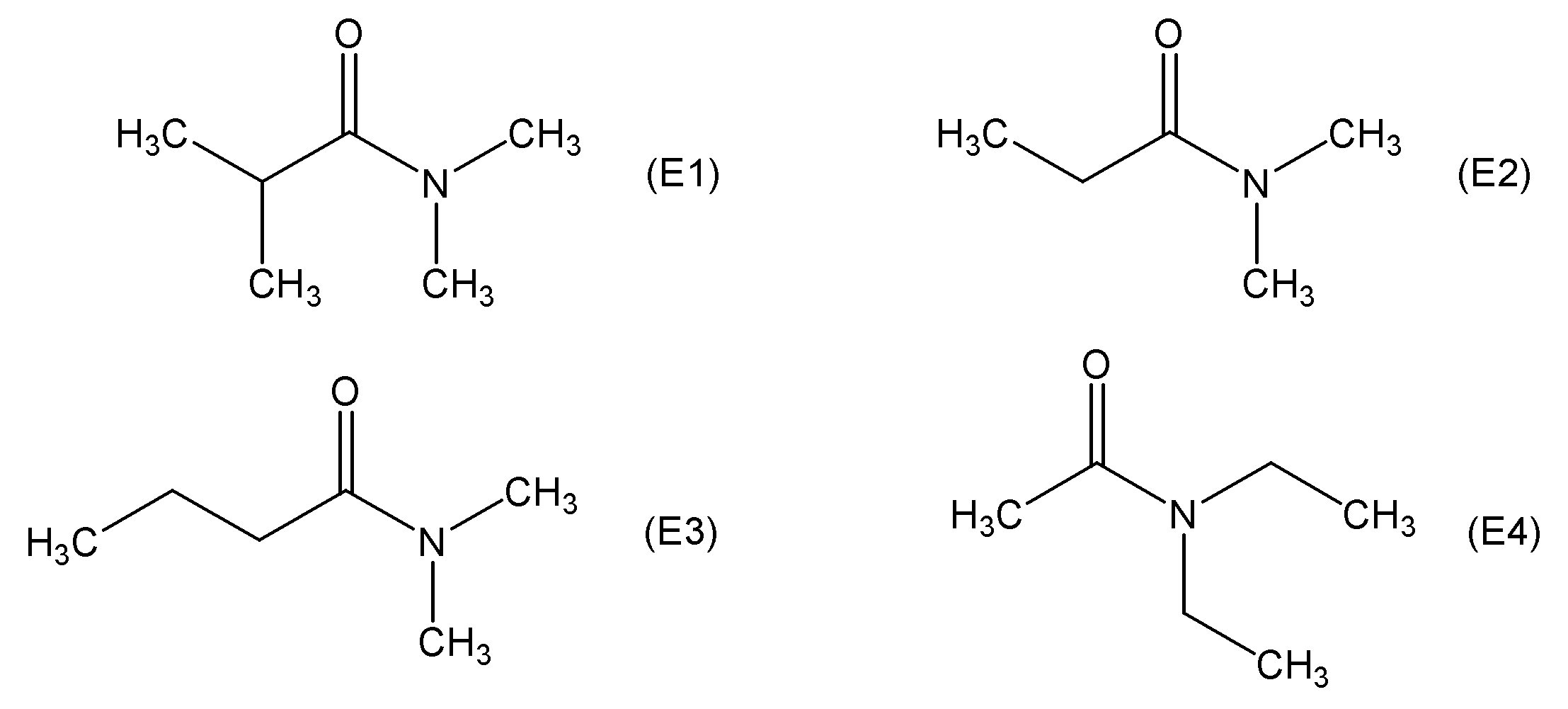
MBA:3-メトキシブチルアセテート
PGMEA:プロピレングリコールモノメチルエーテルアセテート
EEP:3-エトキシプロピオン酸エチル
EL:乳酸エチル
NMP:N-メチル-2-ピロリドン
GBL:γ-ブチロラクトン
まず、500ml四つ口フラスコ中に、ビスフェノールフルオレン型エポキシ樹脂(エポキシ当量235)235g、テトラメチルアンモニウムクロライド110mg、2,6-ジ-tert-ブチル-4-メチルフェノール100mg、及びアクリル酸72.0gを仕込み、これに25ml/分の速度で空気を吹き込みながら90~100℃で加熱溶解した。次に、溶液が白濁した状態のまま徐々に昇温し、120℃に加熱して完全溶解させた。この際、溶液は次第に透明粘稠になったが、そのまま撹拌を継続した。この間、酸価を測定し、1.0mgKOH/g未満になるまで加熱撹拌を続けた。酸価が目標値に達するまで12時間を要した。そして室温まで冷却し、無色透明で固体状の下記構造式(a-4)で表されるビスフェノールフルオレン型エポキシアクリレートを得た。
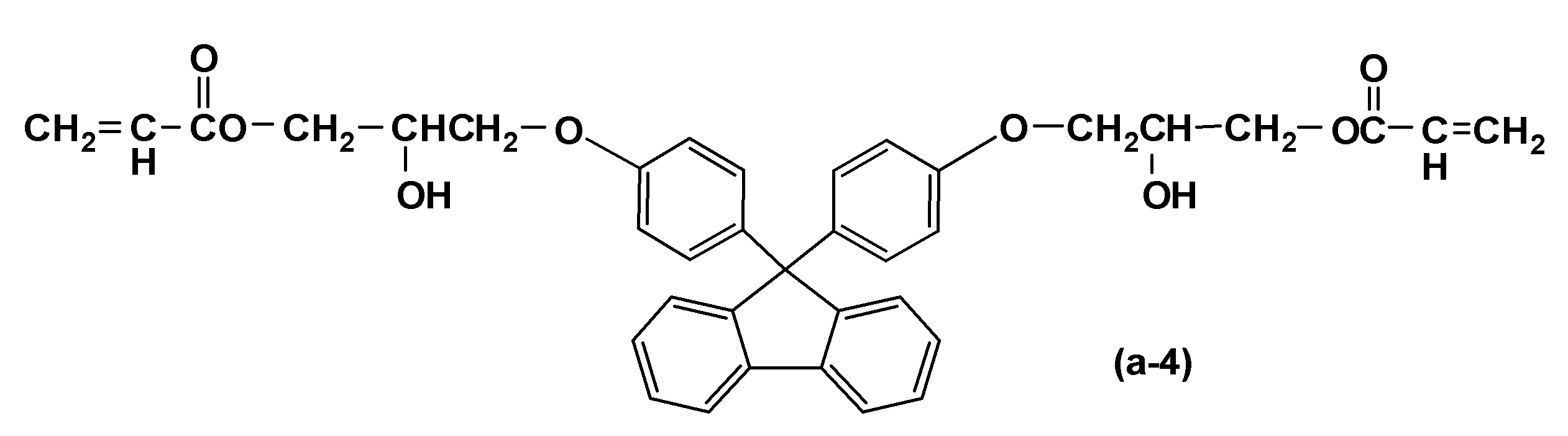
表1に記載の組成及び配合量(単位:質量部)に従って、アルカリ可溶性樹脂、光重合性モノマー、光重合開始剤、及び界面活性剤を、表2に示す組成の溶剤と混合して、固形分濃度20質量%のネガ型感放射線性組成物を調製した。
680mm×880mm×0.7mm厚のガラス基材にネガ型感放射線性組成物をスピン塗布し、塗膜を100℃で120秒間乾燥させて、厚さ1.2μmの感光性樹脂層を形成した。次いで、露光量100mJ/cm2で、感光性樹脂層を露光した。次いで、KOH0.04質量%と界面活性剤エマルゲンA60(花王製)0.1質量%とを含む水溶液を現像液として用い、23℃にて60秒間シャワー現像を行い、得られたパターン中の異物を自動光学検査装置(タカノ製)でカウントした。結果を表2に示す。
680mm×880mm×0.7mm厚のガラス基材にネガ型感放射線性組成物をスピン塗布し、塗膜を100℃で120秒間乾燥させて、厚さ1.2μmの感光性樹脂層を形成した。次いで、ラインアンドスペースパターンのマスクを用いて、種々の露光量で、感光性樹脂層を露光した。次いで、KOH0.04質量%と界面活性剤エマルゲンA60(花王製)0.1質量%とを現像液として用い、23℃にて60秒間シャワー現像を行った。得られたラインパターンのCD(Critical Dimension)がマスクのCD+1μmとなる露光量を求め、以下の基準で評価した。結果を表2に示す。
○:100mJ/cm2未満、△:100~140mJ/cm2、×:140mJ/cm2超
-5℃で2週間、ネガ型感放射線性組成物をエージング処理した後、10cm角のガラス基材にスピン塗布し、析出した異物の個数をカウントして、以下の基準で評価した。結果を表2に示す。
○:0~2個、△:3~10個、×:11個以上
40℃で2週間、エージング処理したネガ型感放射線性組成物の粘度を測定し、初期粘度5mPa・sからの変化量を求めて、以下の基準で評価した。結果を表2に示す。
○:変化量が0.5mPa・s未満、△:変化量が0.5~2mPa・s、×:変化量が2mPa・s超
680mm×880mm×0.7mm厚のガラス基材にネガ型感放射線性組成物をスピン塗布し、塗膜を100℃で120秒間乾燥させた際に、ピンむらや放射むら等の塗布むらが発生したか否かを目視で確認し、以下の基準で評価した。結果を表2に示す。
○:塗布むらは発生しなかった、△:局所的に塗布むらが発生した、×:全面で塗布むらが発生した
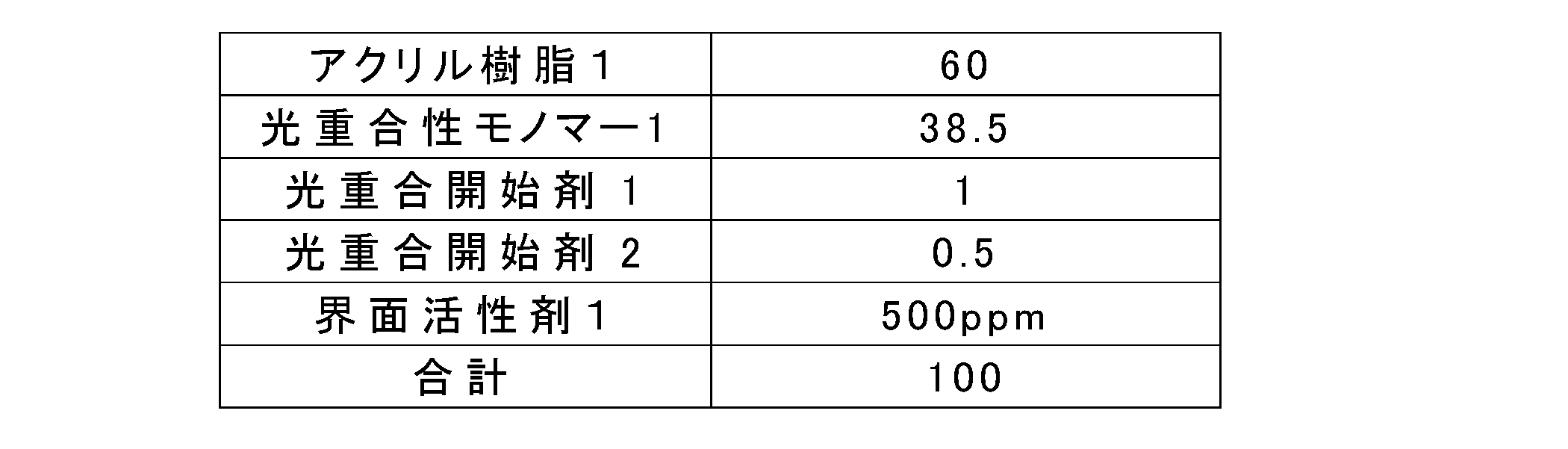
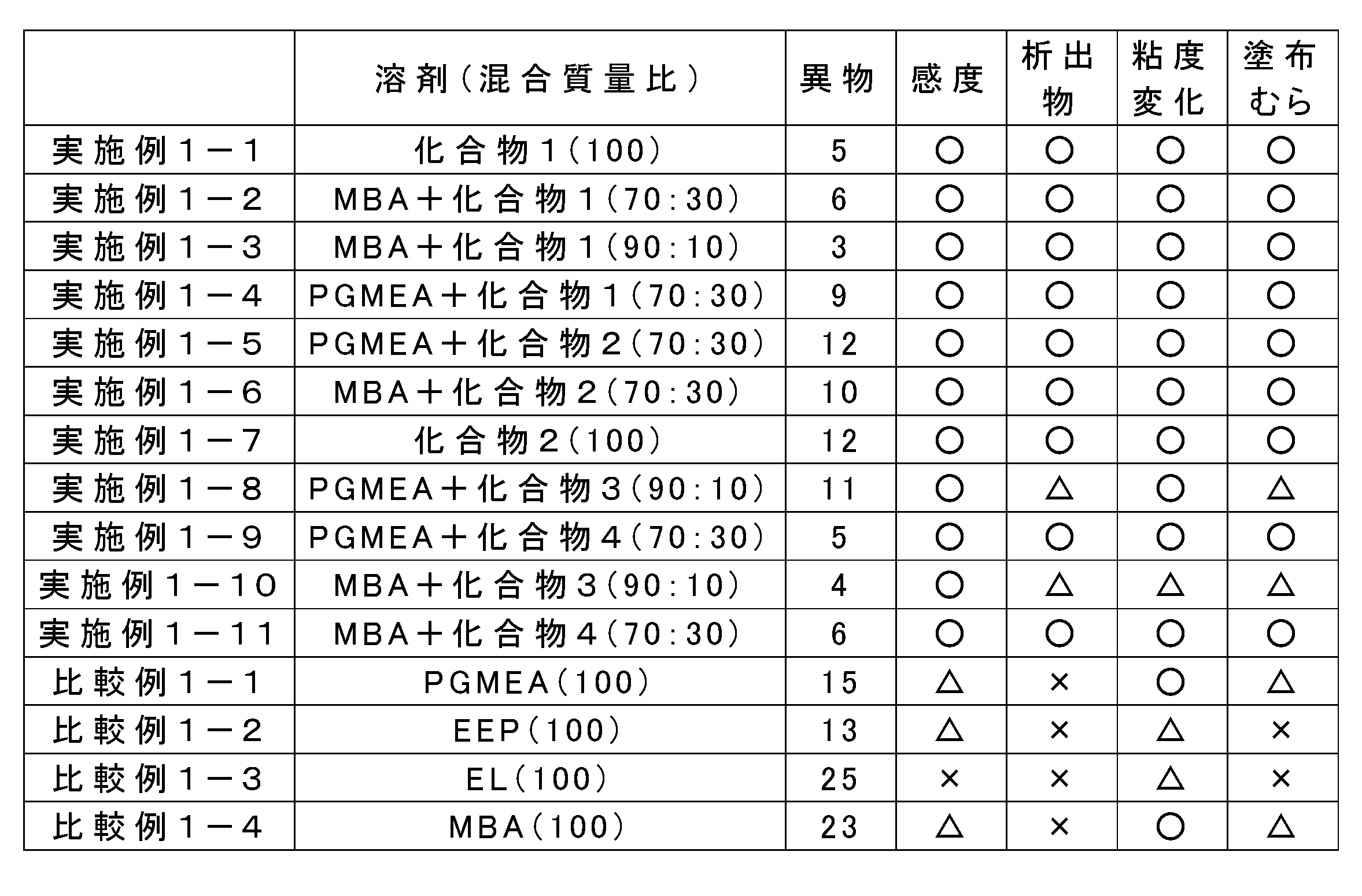
これに対し、上記一般式(1)で表される化合物を含有しない比較例のネガ型感放射線性組成物は、感度及び保存安定性に劣り、用いる溶剤によっては、更に、塗布性に劣り、及び/又は、露光及び現像により形成されたパターン中でより多くの異物が発生した。
表3に記載の組成及び配合量(単位:質量部)に従って、アルカリ可溶性樹脂、光重合性モノマー、光重合開始剤、着色剤、及び界面活性剤を、表4~8に示す組成の溶剤と混合して(着色剤の配合量は固形分換算)、固形分濃度18質量%のネガ型感放射線性組成物を調製した。
得られたネガ型感放射線性組成物について、上記「透明レジストの作製」と同様にして、異物、感度、粘度変化、及び塗布むらの評価を行った。結果を表4~8に示す。
40℃で2週間、ネガ型感放射線性組成物をエージング処理した後、10cm角のガラス基材にスピン塗布し、凝集した異物の個数をカウントして、以下の基準で評価した。結果を表4~8に示す。
○:0~2個、△:3~10個、×:11個以上

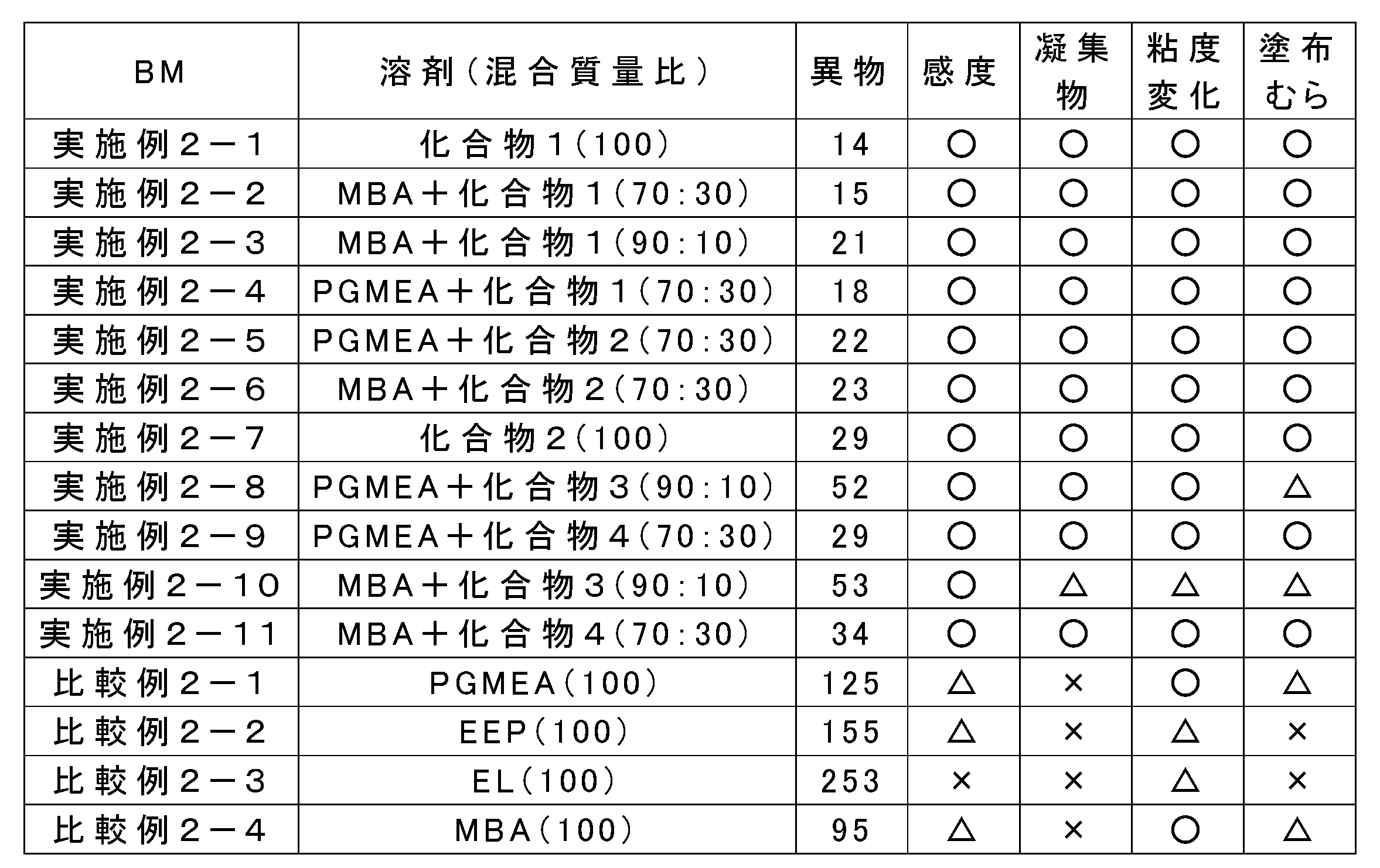


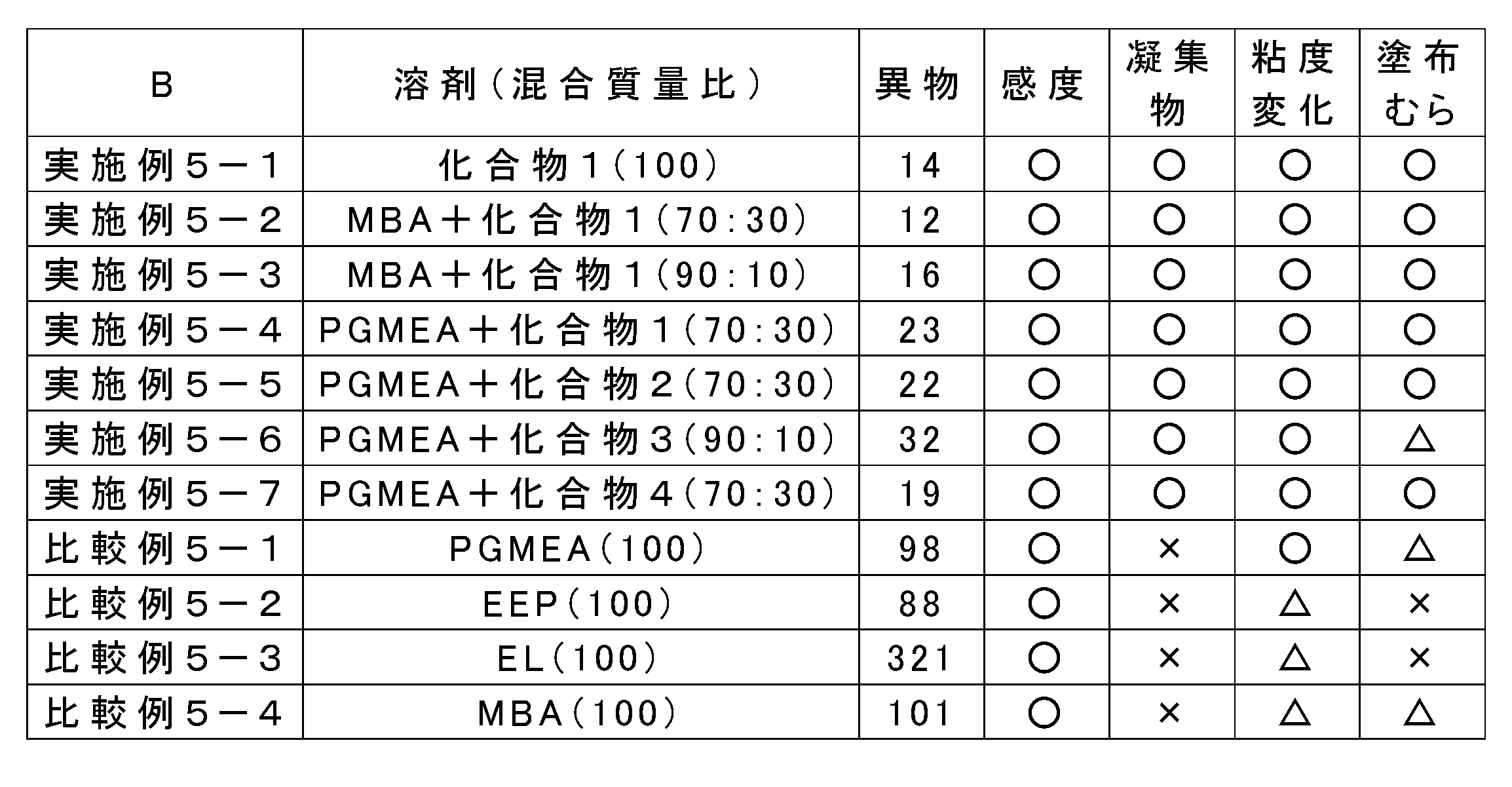

これに対し、上記一般式(1)で表される化合物を含有しない比較例のネガ型感放射線性組成物は、保存安定性に劣り、露光及び現像により形成されたパターン中でより多くの異物が発生し、用いる溶剤によっては、更に、塗布性に劣っていた。また、着色剤として遮光剤を含有する比較例のネガ型感放射線性組成物は、感度に劣っていた。
2,4,4,4’-テトラヒドロキシベンゾフェノン1モルとナフトキノン-1,2-ジアジド-5-スルホニルクロリド3モルとのエステル化反応生成物2gとクレゾールノボラック樹脂8gとを、表1に示す組成の溶剤40gに溶解して、ポジ型感放射線性組成物を調製した。このようにして得たポジ型感放射線性組成物について、以下の評価試験を行った。
調製したポジ型感放射線性組成物を0.2μmメンブレンフィルターで濾過したものを40℃で静置し、2ヶ月経過時点でのポジ型感放射線性組成物中の析出物の有無について調べた。結果を表9に示す。
3ヶ月後のポジ型感放射線性組成物の感度変化の有無について調べた。即ち、調製直後のポジ型感放射線性組成物を基材に塗布して乾燥させた場合と、調製して3ヶ月経過したポジ型感放射線性組成物を基材に塗布して乾燥させた場合の最小露光量(感度)を比較し、全く変化のなかった場合を「○」、感度が低下した場合を「×」とした。結果を表9に示す。
調製したポジ型感放射線性組成物をガラス基板上にスリットコートし、ホットプレートで90℃、90秒間乾燥して膜厚1.3μmのレジスト膜を形成し、この膜にステッパーを用いて、所定のマスクを介して露光した後、ホットプレート上で110℃、90秒間加熱し、ついで2.38質量%の水酸化テトラメチルアンモニウム水溶液(TMAH)で現像し、30秒間水洗・乾燥して得られたレジストパターンの断面形状を観察し、以下の基準で評価した。結果を表9に示す。なお、アンダーカットとは、レジストパターンの断面において、ガラス基板と接触するレジストパターン最下部の幅がレジストパターン最上部の幅よりも狭くなっていることをいう。
○:ガラス基板とレジストパターンとの接触部分にアンダーカットが生じていない。
×:ガラス基板とレジストパターンとの接触部分にアンダーカットが生じている。
調製したポジ型感放射線性組成物をガラス基板上にスリットコートし、ホットプレートで90℃、90秒間乾燥したものの膜厚を測定し、面内で均一に塗布されている場合を「良好」、面内で均一に塗布されていないものを「不良」とした。結果を表9に示す。

これに対し、上記一般式(1)で表される化合物を含有しない比較例のポジ型感放射線性組成物は、保存安定性、現像性、及び塗布性に劣っていた。
撹拌機、撹拌羽根、還流冷却機、窒素ガス導入管を備えた容量5Lのセパラブルフラスコに、テトラカルボン酸二無水物であるピロメリット酸二無水物(PMDA)654.4gと、ジアミンである4,4’-ジアミノジフェニルエーテル(ODA)672.8gと、表10に示す組成の溶剤とを投入した。窒素ガス導入管よりフラスコ内に窒素を導入し、フラスコ内を窒素雰囲気とした。次いで、フラスコの内容物を撹拌しながら、50℃で20時間、上記テトラカルボン酸二無水物と上記ジアミンとを反応させて、ポリアミック酸溶液を得た。得られたポリアミック酸溶液に、感光性成分である「IRGACURE OXE02」(商品名、BASF製、オキシムエステル化合物)278gを添加し撹拌して、固形分濃度30質量%のネガ型感放射線性樹脂組成物を調製した。
得られたネガ型感放射線性樹脂組成物について、「透明レジストの作製」と同様にして、異物、粘度変化、及び塗布むらの評価を行った。結果を表10に示す。
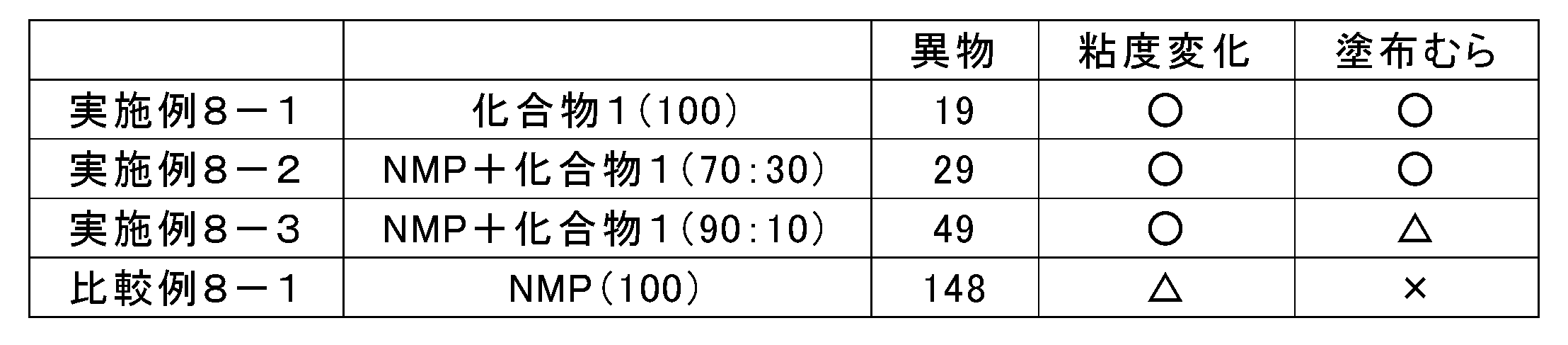
これに対し、上記一般式(1)で表される化合物を含有しない比較例のネガ型感放射線性樹脂組成物は、保存安定性及び塗布性が劣っており、露光及び現像により形成されたパターン中でより多くの異物が発生した。
回転子を入れた三角フラスコに、芳香族ジアミンジオールである2,2'-ビス(3-アミノ-4-ヒドロキシフェニル)ヘキサフルオロプロパン2mmolと、表11に示す組成の溶剤1mLとを加えた後、マグネッチックスターラーを用いてフラスコの内容物5分間撹拌した。その後、ジカルボニル化合物であるイソフタルアルデヒド2mmolをフラスコ内に入れ、窒素雰囲気下でフラスコの内容物を3時間還流させて反応を行った。次いで、減圧蒸留にて、反応液を脱水し、ポリベンゾオキサゾール前駆体溶液を得た。
得られたポリベンゾオキサゾール前駆体溶液に、感光性成分である「IRGACURE OXE02」(商品名、BASF製、オキシムエステル化合物)0.5mmolを添加し撹拌して、固形分濃度30質量%のネガ型感放射線性樹脂組成物を調製した。
得られたネガ型感放射線性樹脂組成物について、「透明レジストの作製」と同様にして、異物、粘度変化、及び塗布むらの評価を行った。結果を表11に示す。
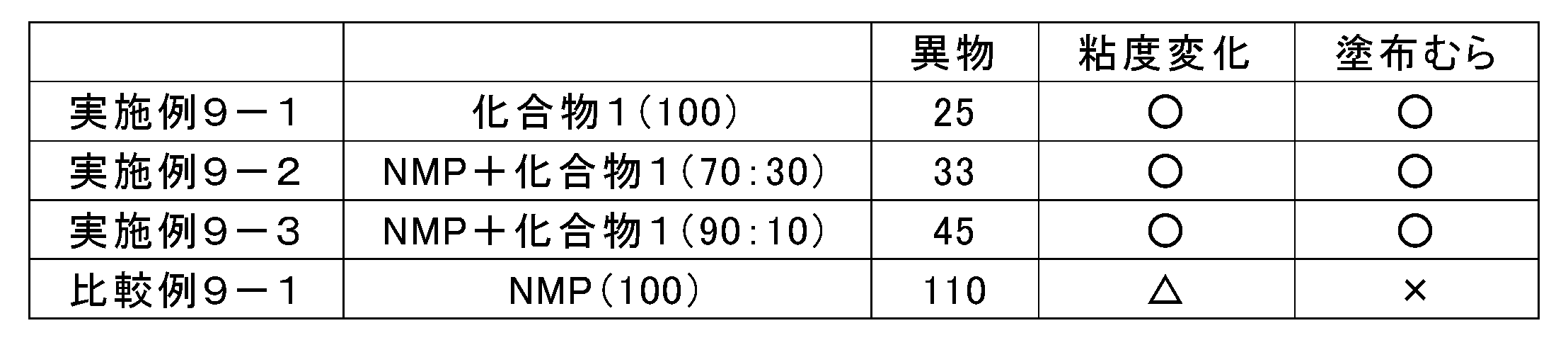
これに対し、上記一般式(1)で表される化合物を含有しない比較例のネガ型感放射線性樹脂組成物は、保存安定性及び塗布性が劣っており、露光及び現像により形成されたパターン中でより多くの異物が発生した。
[ヒドロキシル基含有酸無水物(a)の合成]
窒素気流下、2,2-ビス(3-アミノ-4-ヒドロキシフェニル)ヘキサフルオロプロパン(BAHF)18.3g(0.05mol)とアリルグリシジルエーテル34.2g(0.3mol)をGBL100gに溶解させ、-10℃に冷却した。ここにGBL50gに溶解させた無水トリメリット酸クロリド22.1g(0.11mol)を滴下した。このとき反応液の温度が0℃を越えないように滴下速度を調整した。滴下終了後、0℃で5時間撹拌した。この溶液をロータリーエバポレーターで濃縮し、トルエン1Lに投入して、下記式で表されるヒドロキシル基含有酸無水物(a)を得た。
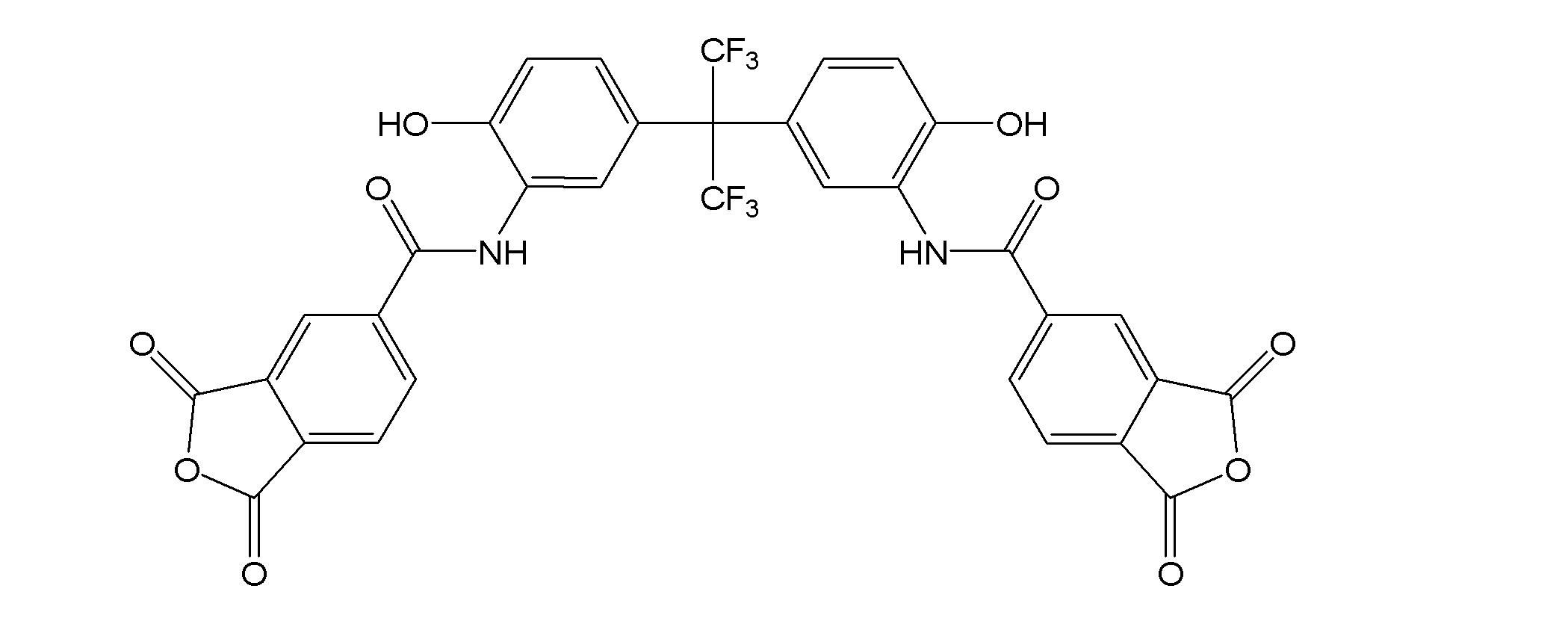
窒素気流下、4,4’-ジアミノフェニルエーテル4.40g(0.022mol)、1,3-ビス(3-アミノプロピル)テトラメチルジシロキサン1.24g(0.005mol)をNMP50gに溶解させた。ここに合成例1で得られたヒドロキシル基含有酸無水物(a)21.4g(0.030モル)を加えて、20℃で1時間反応させ、次いで40℃で2時間反応させた。その後、4-アミノフェノール0.65g(0.006mol)を加え、更に40℃で45分間反応させた。その後、N、N-ジメチルホルムアミドジメチルアセタール7.14g(0.06mol)をNMP5gで希釈した溶液を10分かけて滴下した。滴下後、40℃で3時間撹拌した。反応終了後、溶液を水2Lに投入して、ポリマー固体の沈殿をろ過で集めた。ポリマー固体を45℃の真空乾燥機で80時間乾燥し、ポリイミド前駆体であるポリマーAを得た。GPCにより、ポリマーAの質量平均分子量を測定し、上記一般式(31)で表される構成単位の数が10~500の範囲内であることを確認した。
窒素気流下、m-クレゾール70.2g(0.65mol)、p-クレゾール37.8g(0.35mol)、37重量%ホルムアルデヒド水溶液75.5g(ホルムアルデヒド0.93mol)、シュウ酸二水和物0.63g(0.005mol)、メチルイソブチルケトン264gを仕込んだ後、油浴中に浸し、反応液を還流させながら、4時間重縮合反応を行った。その後、油浴の温度を3時間かけて昇温し、その後、フラスコ内を減圧し、揮発分を除去し、溶解している樹脂を室温まで冷却して、ノボラック樹脂Aのポリマー固体を得た。GPCによると、ノボラック樹脂Aの質量平均分子量は4,000であった。
ポリマーAの固体6g、ノボラック樹脂A4g、下記式で表されるキノンジアジド化合物A2g、HMOM-TPHAP(商品名、本州化学工業(株)製)6.0g、BIR-PC(商品名、旭有機材工業(株)製)1g、ビニルトリメトキシシラン0.3gを測りとり、それらを表12に示す組成の溶剤に溶解させて、固形分濃度30質量%のポジ型感放射線性樹脂組成物を得た。
得られたポジ型感放射線性樹脂組成物について、「透明レジストの作製」と同様にして、異物、粘度変化、及び塗布むらの評価を行った。結果を表12に示す。

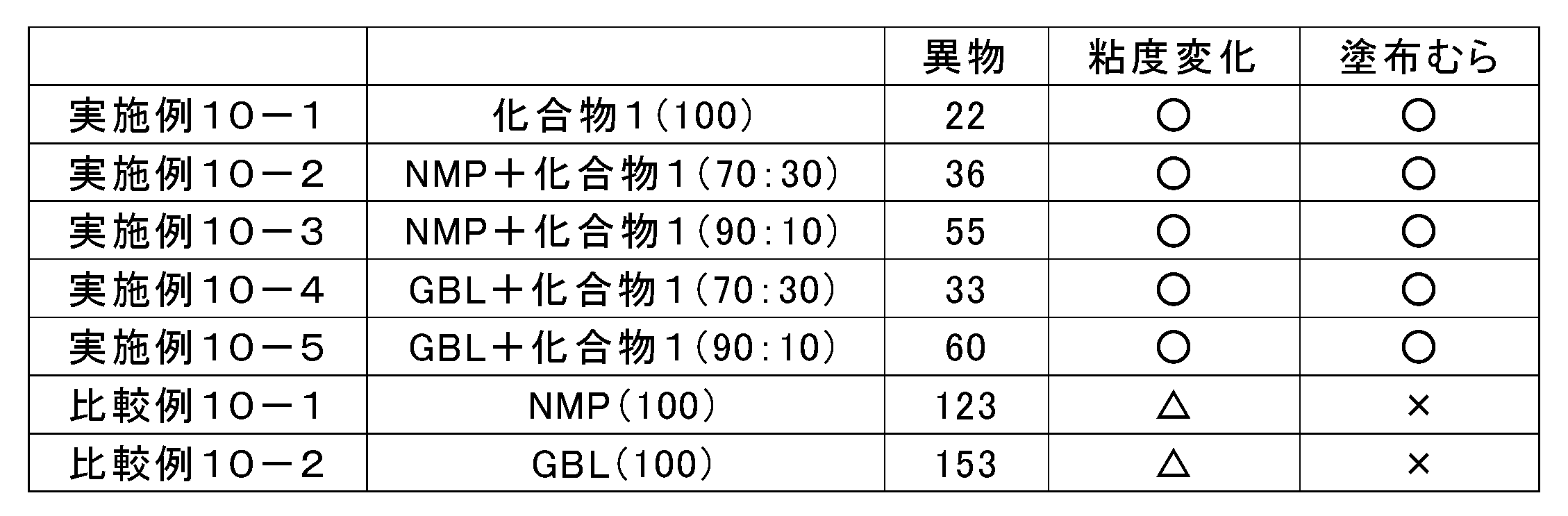
これに対し、上記一般式(1)で表される化合物を含有しない比較例のポジ型感放射線性樹脂組成物は、保存安定性及び塗布性が劣っており、露光及び現像により形成されたパターン中でより多くの異物が発生した。
ポリマーAの固体6g、ノボラック樹脂A4g、下記式で表されるキノンジアジド化合物B2g、HMOM-TPHAP(商品名、本州化学工業(株)製)6.0g、BIR-PC(商品名、旭有機材工業(株)製)1g、ビニルトリメトキシシラン0.3gを測りとり、それらを表13に示す組成の溶剤に溶解させて、固形分濃度30質量%のポジ型感放射線性樹脂組成物を得た。なお、ポリマーA及びノボラック樹脂Aは、「ポリアミック酸含有ポジ型感放射線性樹脂組成物の調製1」で得たものである。
得られたポジ型感放射線性樹脂組成物について、「透明レジストの作製」と同様にして、異物、粘度変化、及び塗布むらの評価を行った。結果を表13に示す。
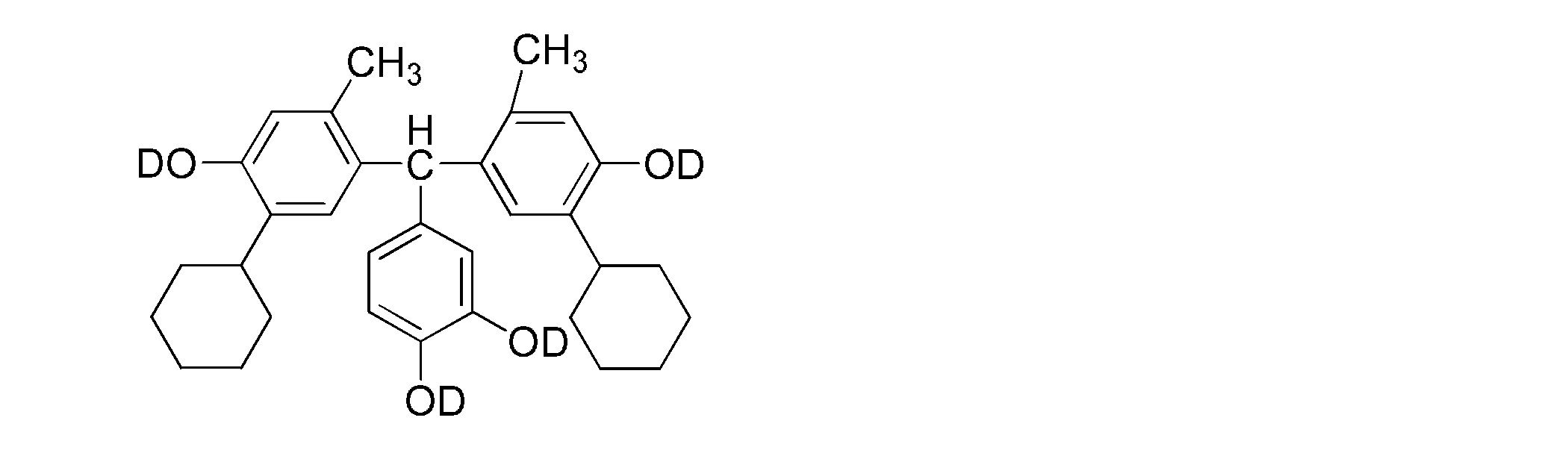

これに対し、上記一般式(1)で表される化合物を含有しない比較例のポジ型感放射線性樹脂組成物は、保存安定性及び塗布性が劣っており、露光及び現像により形成されたパターン中でより多くの異物が発生した。
Claims (4)
- 下記一般式(1)で表される化合物を含有する感放射線性組成物。

- 前記一般式(1)で表される化合物が、下記式(E1)~(E4)の各式で表される化合物の少なくとも1種である請求項1に記載の感放射線性組成物。
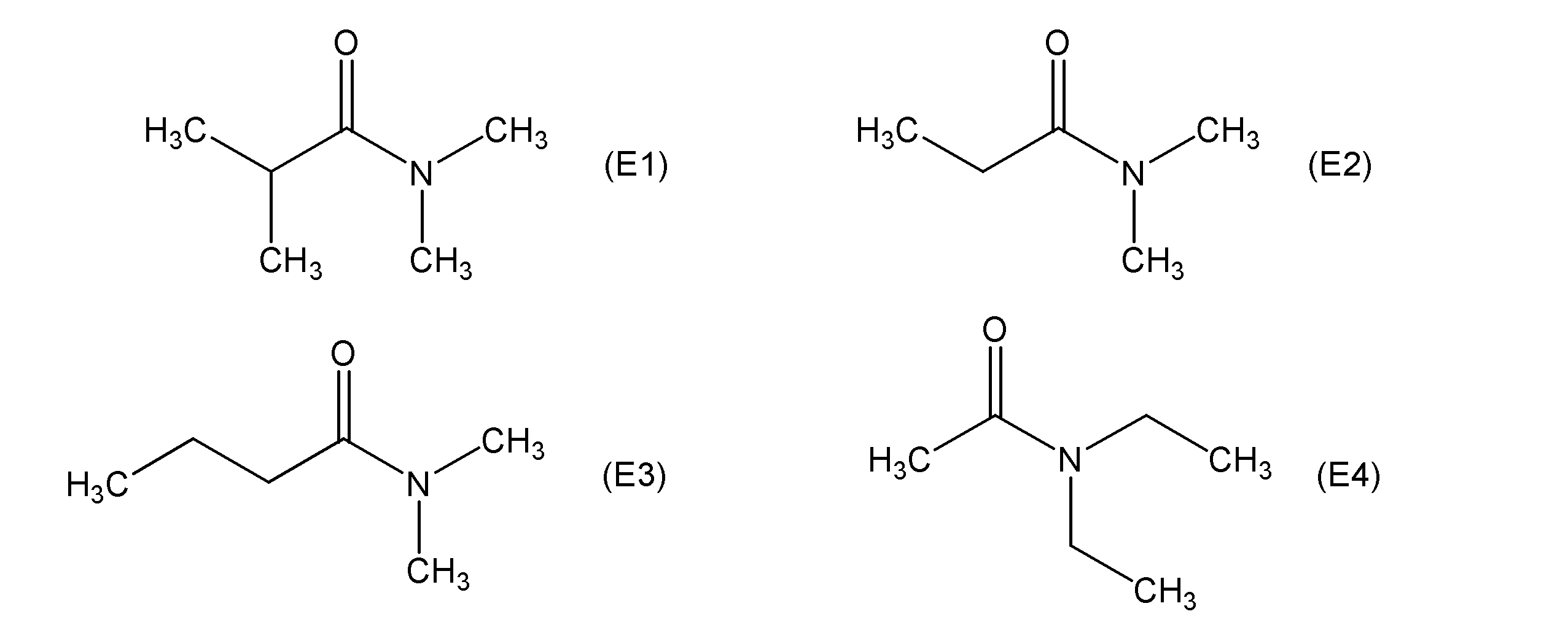
- 前記一般式(1)で表される化合物を溶剤の少なくとも1種として含有する請求項1又は2に記載の感放射線性組成物。
- 請求項1から3のいずれか1項に記載の感放射線性組成物からなる感放射線性組成物膜を基板上に形成する感放射線性組成物膜形成工程と、
前記感放射線性組成物膜を位置選択的に露光する露光工程と、
露光された前記感放射線性組成物膜を現像する現像工程とを含むパターン製造方法。
Priority Applications (4)
| Application Number | Priority Date | Filing Date | Title |
|---|---|---|---|
| JP2015539332A JP6195623B2 (ja) | 2013-09-25 | 2014-09-25 | 感放射線性組成物及びパターン製造方法 |
| CN201480052348.3A CN105579907B (zh) | 2013-09-25 | 2014-09-25 | 感放射线性组合物及图案制造方法 |
| KR1020177034642A KR102128155B1 (ko) | 2013-09-25 | 2014-09-25 | 감방사선성 조성물 및 패턴 제조 방법 |
| KR1020167007028A KR20160045094A (ko) | 2013-09-25 | 2014-09-25 | 감방사선성 조성물 및 패턴 제조 방법 |
Applications Claiming Priority (2)
| Application Number | Priority Date | Filing Date | Title |
|---|---|---|---|
| JP2013198912 | 2013-09-25 | ||
| JP2013-198912 | 2013-09-25 |
Publications (1)
| Publication Number | Publication Date |
|---|---|
| WO2015046332A1 true WO2015046332A1 (ja) | 2015-04-02 |
Family
ID=52743466
Family Applications (1)
| Application Number | Title | Priority Date | Filing Date |
|---|---|---|---|
| PCT/JP2014/075431 Ceased WO2015046332A1 (ja) | 2013-09-25 | 2014-09-25 | 感放射線性組成物及びパターン製造方法 |
Country Status (5)
| Country | Link |
|---|---|
| JP (1) | JP6195623B2 (ja) |
| KR (2) | KR102128155B1 (ja) |
| CN (1) | CN105579907B (ja) |
| TW (1) | TWI637936B (ja) |
| WO (1) | WO2015046332A1 (ja) |
Cited By (20)
| Publication number | Priority date | Publication date | Assignee | Title |
|---|---|---|---|---|
| JP2015068855A (ja) * | 2013-09-26 | 2015-04-13 | 東京応化工業株式会社 | レジスト組成物、レジストパターン形成方法 |
| EP2947112A1 (en) * | 2014-05-21 | 2015-11-25 | Tokyo Ohka Kogyo Co., Ltd. | Method for producing polybenzoxazole resin |
| WO2016158863A1 (ja) * | 2015-04-01 | 2016-10-06 | 東レ株式会社 | 感光性着色樹脂組成物 |
| JP2017107020A (ja) * | 2015-12-08 | 2017-06-15 | 東京応化工業株式会社 | 黒色感光性組成物 |
| JP2018072398A (ja) * | 2016-10-24 | 2018-05-10 | 東京応化工業株式会社 | 感光性組成物、及び硬化膜の形成方法 |
| JPWO2017057281A1 (ja) * | 2015-09-30 | 2018-05-10 | 東レ株式会社 | ネガ型感光性樹脂組成物、硬化膜、硬化膜を具備する素子及び表示装置、並びにその製造方法 |
| WO2018159458A1 (ja) * | 2017-02-28 | 2018-09-07 | 株式会社Dnpファインケミカル | カラーフィルタ用色材分散液、分散剤、カラーフィルタ用感光性着色樹脂組成物、カラーフィルタ、表示装置 |
| WO2018181311A1 (ja) * | 2017-03-29 | 2018-10-04 | 東レ株式会社 | ネガ型感光性樹脂組成物、硬化膜、硬化膜を具備する素子及び有機elディスプレイ、並びにその製造方法 |
| JP2019506478A (ja) * | 2015-12-24 | 2019-03-07 | ドゥーサン コーポレイション | 接着力が向上したポリアミック酸組成物及びこれを含むポリイミドフィルム |
| KR20190065998A (ko) | 2016-10-05 | 2019-06-12 | 도레이 카부시키가이샤 | 수지 조성물, 경화막, 반도체 장치 및 그들의 제조 방법 |
| JP2020086317A (ja) * | 2018-11-29 | 2020-06-04 | 東京応化工業株式会社 | 感光性樹脂組成物、パターン化された硬化膜の製造方法、及びパターン化された硬化膜 |
| WO2020129807A1 (ja) * | 2018-12-18 | 2020-06-25 | 三菱ケミカル株式会社 | 感光性着色組成物、硬化物、着色スペーサー、及び画像表示装置 |
| JP2020148990A (ja) * | 2019-03-15 | 2020-09-17 | 三菱ケミカル株式会社 | 感光性着色樹脂組成物、硬化物、及び画像表示装置 |
| JP2020154247A (ja) * | 2019-03-22 | 2020-09-24 | 太陽ホールディングス株式会社 | 感光性樹脂組成物、ドライフィルム、硬化物、及び、電子部品 |
| JP2021018289A (ja) * | 2019-07-18 | 2021-02-15 | 東洋インキScホールディングス株式会社 | 感光性着色組成物、カラーフィルタおよび液晶表示装置 |
| TWI720135B (zh) * | 2016-02-23 | 2021-03-01 | 盧森堡商Az電子材料盧森堡有限公司 | 正型感光性矽氧烷組成物及其製造方法 |
| JP7060166B1 (ja) * | 2020-09-28 | 2022-04-26 | 東レ株式会社 | 感光性樹脂組成物、導電パターン付き基板、アンテナ素子、画像表示装置の製造方法およびタッチパネルの製造方法 |
| US11798810B2 (en) * | 2017-01-13 | 2023-10-24 | Nissan Chemical Corporation | Resist underlayer film-forming composition containing amide solvent |
| JP2023167743A (ja) * | 2022-05-13 | 2023-11-24 | 東京応化工業株式会社 | クラッドレス型光導波路 |
| US12024594B2 (en) | 2020-04-27 | 2024-07-02 | Brewer Science, Inc. | Multifunctional materials for temporary bonding |
Families Citing this family (1)
| Publication number | Priority date | Publication date | Assignee | Title |
|---|---|---|---|---|
| CN112198760B (zh) * | 2020-09-23 | 2021-07-02 | 上海玟昕科技有限公司 | 一种正性低温固化型感光性树脂组合物 |
Citations (6)
| Publication number | Priority date | Publication date | Assignee | Title |
|---|---|---|---|---|
| JPH1053621A (ja) * | 1996-02-09 | 1998-02-24 | Wako Pure Chem Ind Ltd | 新規ポリマー |
| JP2008122501A (ja) * | 2006-11-09 | 2008-05-29 | Sumitomo Chemical Co Ltd | ポジ型感放射線性樹脂組成物 |
| JP2009014938A (ja) * | 2007-07-03 | 2009-01-22 | Toagosei Co Ltd | レジスト剥離剤組成物 |
| JP2009237150A (ja) * | 2008-03-26 | 2009-10-15 | Toppan Printing Co Ltd | カラーレジスト組成物及び該組成物を用いたカラーフィルタ |
| JP2011209535A (ja) * | 2010-03-30 | 2011-10-20 | Asahi Kasei E-Materials Corp | 感光性樹脂組成物 |
| JP2013076845A (ja) * | 2011-09-30 | 2013-04-25 | Nippon Zeon Co Ltd | 感光性樹脂組成物 |
Family Cites Families (1)
| Publication number | Priority date | Publication date | Assignee | Title |
|---|---|---|---|---|
| JP5819693B2 (ja) * | 2011-09-26 | 2015-11-24 | 東京応化工業株式会社 | 着色感光性樹脂組成物、カラーフィルタ及び表示装置 |
-
2014
- 2014-09-25 KR KR1020177034642A patent/KR102128155B1/ko active Active
- 2014-09-25 KR KR1020167007028A patent/KR20160045094A/ko not_active Ceased
- 2014-09-25 CN CN201480052348.3A patent/CN105579907B/zh active Active
- 2014-09-25 TW TW103133250A patent/TWI637936B/zh active
- 2014-09-25 WO PCT/JP2014/075431 patent/WO2015046332A1/ja not_active Ceased
- 2014-09-25 JP JP2015539332A patent/JP6195623B2/ja active Active
Patent Citations (6)
| Publication number | Priority date | Publication date | Assignee | Title |
|---|---|---|---|---|
| JPH1053621A (ja) * | 1996-02-09 | 1998-02-24 | Wako Pure Chem Ind Ltd | 新規ポリマー |
| JP2008122501A (ja) * | 2006-11-09 | 2008-05-29 | Sumitomo Chemical Co Ltd | ポジ型感放射線性樹脂組成物 |
| JP2009014938A (ja) * | 2007-07-03 | 2009-01-22 | Toagosei Co Ltd | レジスト剥離剤組成物 |
| JP2009237150A (ja) * | 2008-03-26 | 2009-10-15 | Toppan Printing Co Ltd | カラーレジスト組成物及び該組成物を用いたカラーフィルタ |
| JP2011209535A (ja) * | 2010-03-30 | 2011-10-20 | Asahi Kasei E-Materials Corp | 感光性樹脂組成物 |
| JP2013076845A (ja) * | 2011-09-30 | 2013-04-25 | Nippon Zeon Co Ltd | 感光性樹脂組成物 |
Cited By (49)
| Publication number | Priority date | Publication date | Assignee | Title |
|---|---|---|---|---|
| JP2015068855A (ja) * | 2013-09-26 | 2015-04-13 | 東京応化工業株式会社 | レジスト組成物、レジストパターン形成方法 |
| US9890250B2 (en) | 2014-05-21 | 2018-02-13 | Tokyo Ohka Kogyo Co., Ltd. | Method for producing polybenzoxazole resin |
| EP2947112A1 (en) * | 2014-05-21 | 2015-11-25 | Tokyo Ohka Kogyo Co., Ltd. | Method for producing polybenzoxazole resin |
| JP2015218333A (ja) * | 2014-05-21 | 2015-12-07 | 東京応化工業株式会社 | ポリベンゾオキサゾール樹脂の製造方法 |
| US10613439B2 (en) | 2015-04-01 | 2020-04-07 | Toray Industries, Inc. | Photosensitive colored resin composition |
| WO2016158863A1 (ja) * | 2015-04-01 | 2016-10-06 | 東レ株式会社 | 感光性着色樹脂組成物 |
| JPWO2016158863A1 (ja) * | 2015-04-01 | 2017-07-13 | 東レ株式会社 | 感光性着色樹脂組成物 |
| CN107430335A (zh) * | 2015-04-01 | 2017-12-01 | 东丽株式会社 | 感光性着色树脂组合物 |
| KR20180063060A (ko) * | 2015-09-30 | 2018-06-11 | 도레이 카부시키가이샤 | 네가티브형 감광성 수지 조성물, 경화막, 경화막을 구비하는 소자 및 표시 장치, 및 그의 제조 방법 |
| JPWO2017057281A1 (ja) * | 2015-09-30 | 2018-05-10 | 東レ株式会社 | ネガ型感光性樹脂組成物、硬化膜、硬化膜を具備する素子及び表示装置、並びにその製造方法 |
| US10802401B2 (en) | 2015-09-30 | 2020-10-13 | Toray Industries, Inc. | Negative-type photosensitive resin composition, cured film, element and display apparatus that include cured film, production method for the same |
| KR102121343B1 (ko) * | 2015-09-30 | 2020-06-10 | 도레이 카부시키가이샤 | 네가티브형 감광성 수지 조성물, 경화막, 경화막을 구비하는 소자 및 표시 장치, 및 그의 제조 방법 |
| KR20170067672A (ko) * | 2015-12-08 | 2017-06-16 | 도오꾜오까고오교 가부시끼가이샤 | 흑색 감광성 조성물 |
| JP2017107020A (ja) * | 2015-12-08 | 2017-06-15 | 東京応化工業株式会社 | 黒色感光性組成物 |
| KR102624794B1 (ko) * | 2015-12-08 | 2024-01-12 | 도오꾜오까고오교 가부시끼가이샤 | 흑색 감광성 조성물 |
| JP2019506478A (ja) * | 2015-12-24 | 2019-03-07 | ドゥーサン コーポレイション | 接着力が向上したポリアミック酸組成物及びこれを含むポリイミドフィルム |
| TWI720135B (zh) * | 2016-02-23 | 2021-03-01 | 盧森堡商Az電子材料盧森堡有限公司 | 正型感光性矽氧烷組成物及其製造方法 |
| KR20190065998A (ko) | 2016-10-05 | 2019-06-12 | 도레이 카부시키가이샤 | 수지 조성물, 경화막, 반도체 장치 및 그들의 제조 방법 |
| JP2018072398A (ja) * | 2016-10-24 | 2018-05-10 | 東京応化工業株式会社 | 感光性組成物、及び硬化膜の形成方法 |
| US20240006183A1 (en) * | 2017-01-13 | 2024-01-04 | Nissan Chemical Corporation | Resist underlayer film-forming composition containing amide solvent |
| US11798810B2 (en) * | 2017-01-13 | 2023-10-24 | Nissan Chemical Corporation | Resist underlayer film-forming composition containing amide solvent |
| JPWO2018159458A1 (ja) * | 2017-02-28 | 2020-01-09 | 株式会社Dnpファインケミカル | カラーフィルタ用色材分散液、分散剤、カラーフィルタ用感光性着色樹脂組成物、カラーフィルタ、表示装置 |
| WO2018159458A1 (ja) * | 2017-02-28 | 2018-09-07 | 株式会社Dnpファインケミカル | カラーフィルタ用色材分散液、分散剤、カラーフィルタ用感光性着色樹脂組成物、カラーフィルタ、表示装置 |
| JP7011644B2 (ja) | 2017-02-28 | 2022-01-26 | 株式会社Dnpファインケミカル | カラーフィルタ用色材分散液、分散剤、カラーフィルタ用感光性着色樹脂組成物、カラーフィルタ、表示装置 |
| WO2018181311A1 (ja) * | 2017-03-29 | 2018-10-04 | 東レ株式会社 | ネガ型感光性樹脂組成物、硬化膜、硬化膜を具備する素子及び有機elディスプレイ、並びにその製造方法 |
| US11561470B2 (en) | 2017-03-29 | 2023-01-24 | Toray Industries, Inc. | Negative photosensitive resin composition, cured film, element provided with cured film, organic EL display provided with cured film, and method for producing same |
| KR20190130123A (ko) * | 2017-03-29 | 2019-11-21 | 도레이 카부시키가이샤 | 네가티브형 감광성 수지 조성물, 경화막, 경화막을 구비하는 소자 및 유기 el 디스플레이, 그리고 그의 제조 방법 |
| KR102557109B1 (ko) | 2017-03-29 | 2023-07-20 | 도레이 카부시키가이샤 | 네가티브형 감광성 수지 조성물, 경화막, 경화막을 구비하는 소자 및 유기 el 디스플레이, 그리고 그의 제조 방법 |
| JPWO2018181311A1 (ja) * | 2017-03-29 | 2020-02-06 | 東レ株式会社 | ネガ型感光性樹脂組成物、硬化膜、硬化膜を具備する素子及び有機elディスプレイ、並びにその製造方法 |
| JP7234631B2 (ja) | 2017-03-29 | 2023-03-08 | 東レ株式会社 | ネガ型感光性樹脂組成物、硬化膜、硬化膜を具備する素子及び有機elディスプレイ、並びにその製造方法 |
| JP2020086317A (ja) * | 2018-11-29 | 2020-06-04 | 東京応化工業株式会社 | 感光性樹脂組成物、パターン化された硬化膜の製造方法、及びパターン化された硬化膜 |
| JP7313136B2 (ja) | 2018-11-29 | 2023-07-24 | 東京応化工業株式会社 | 感光性樹脂組成物、パターン化された硬化膜の製造方法、及びパターン化された硬化膜 |
| JPWO2020129807A1 (ja) * | 2018-12-18 | 2021-10-28 | 三菱ケミカル株式会社 | 感光性着色組成物、硬化物、着色スペーサー、及び画像表示装置 |
| WO2020129807A1 (ja) * | 2018-12-18 | 2020-06-25 | 三菱ケミカル株式会社 | 感光性着色組成物、硬化物、着色スペーサー、及び画像表示装置 |
| JP7375773B2 (ja) | 2018-12-18 | 2023-11-08 | 三菱ケミカル株式会社 | 感光性着色組成物、硬化物、着色スペーサー、及び画像表示装置 |
| KR20210105876A (ko) * | 2018-12-18 | 2021-08-27 | 미쯔비시 케미컬 주식회사 | 감광성 착색 조성물, 경화물, 착색 스페이서, 및 화상 표시 장치 |
| CN113168094A (zh) * | 2018-12-18 | 2021-07-23 | 三菱化学株式会社 | 感光性着色树脂组合物、固化物、着色间隔物及图像显示装置 |
| CN113168094B (zh) * | 2018-12-18 | 2024-06-11 | 三菱化学株式会社 | 感光性着色树脂组合物、固化物、着色间隔物及图像显示装置 |
| KR102729933B1 (ko) | 2018-12-18 | 2024-11-13 | 미쯔비시 케미컬 주식회사 | 감광성 착색 조성물, 경화물, 착색 스페이서, 및 화상 표시 장치 |
| JP7247676B2 (ja) | 2019-03-15 | 2023-03-29 | 三菱ケミカル株式会社 | 感光性着色樹脂組成物、硬化物、及び画像表示装置 |
| JP2020148990A (ja) * | 2019-03-15 | 2020-09-17 | 三菱ケミカル株式会社 | 感光性着色樹脂組成物、硬化物、及び画像表示装置 |
| JP7329344B2 (ja) | 2019-03-22 | 2023-08-18 | 太陽ホールディングス株式会社 | 感光性樹脂組成物、ドライフィルム、硬化物、及び、電子部品 |
| WO2020195804A1 (ja) * | 2019-03-22 | 2020-10-01 | 太陽ホールディングス株式会社 | 感光性樹脂組成物、ドライフィルム、硬化物、及び、電子部品 |
| JP2020154247A (ja) * | 2019-03-22 | 2020-09-24 | 太陽ホールディングス株式会社 | 感光性樹脂組成物、ドライフィルム、硬化物、及び、電子部品 |
| JP7404686B2 (ja) | 2019-07-18 | 2023-12-26 | 東洋インキScホールディングス株式会社 | 感光性着色組成物、カラーフィルタおよび液晶表示装置 |
| JP2021018289A (ja) * | 2019-07-18 | 2021-02-15 | 東洋インキScホールディングス株式会社 | 感光性着色組成物、カラーフィルタおよび液晶表示装置 |
| US12024594B2 (en) | 2020-04-27 | 2024-07-02 | Brewer Science, Inc. | Multifunctional materials for temporary bonding |
| JP7060166B1 (ja) * | 2020-09-28 | 2022-04-26 | 東レ株式会社 | 感光性樹脂組成物、導電パターン付き基板、アンテナ素子、画像表示装置の製造方法およびタッチパネルの製造方法 |
| JP2023167743A (ja) * | 2022-05-13 | 2023-11-24 | 東京応化工業株式会社 | クラッドレス型光導波路 |
Also Published As
| Publication number | Publication date |
|---|---|
| CN105579907A (zh) | 2016-05-11 |
| JP6195623B2 (ja) | 2017-09-13 |
| CN105579907B (zh) | 2019-12-17 |
| KR20170136653A (ko) | 2017-12-11 |
| KR20160045094A (ko) | 2016-04-26 |
| KR102128155B1 (ko) | 2020-06-29 |
| JPWO2015046332A1 (ja) | 2017-03-09 |
| TW201524943A (zh) | 2015-07-01 |
| TWI637936B (zh) | 2018-10-11 |
Similar Documents
| Publication | Publication Date | Title |
|---|---|---|
| JP6195623B2 (ja) | 感放射線性組成物及びパターン製造方法 | |
| TWI679231B (zh) | 感光性樹脂組成物、圖型形成方法、硬化膜、絕緣膜、彩色濾光片、及顯示裝置 | |
| JP6309761B2 (ja) | ブラックカラムスペーサ用感光性樹脂組成物 | |
| CN106019841B (zh) | 感光性树脂组合物、图案形成方法、固化膜、绝缘膜、滤色器及显示装置 | |
| JP6373571B2 (ja) | ブラックカラムスペーサ形成用感光性樹脂組成物 | |
| TWI738910B (zh) | 樹脂組成物、黑色基質、顯示裝置、及黑色基質之製造方法 | |
| JP2018185512A (ja) | ブラックカラムスペーサ形成用の感光性樹脂組成物、ブラックカラムスペーサ、表示装置、及びブラックカラムスペーサの形成方法 | |
| JP2019045659A (ja) | 感光性組成物、硬化物形成方法、硬化物、画像表示装置用パネル、及び画像表示装置 | |
| JP2018013716A (ja) | 感光性樹脂組成物、硬化膜、カラーフィルタ、及び硬化膜の製造方法 | |
| JP2018061034A (ja) | 水素バリア剤、水素バリア膜形成用組成物、水素バリア膜、水素バリア膜の製造方法、及び電子素子 | |
| JP2018072398A (ja) | 感光性組成物、及び硬化膜の形成方法 | |
| KR102537532B1 (ko) | 수지 조성물, 경화막, 컬러 필터, 및 경화막의 제조 방법 | |
| JP6705661B2 (ja) | カルボン酸エステル含有組成物 | |
| JP2019120768A (ja) | 感光性組成物、硬化物、硬化物形成方法、カラーフィルター、及び画像表示装置 | |
| JP6825870B2 (ja) | 感光性樹脂組成物、硬化膜、カラーフィルタ、及び硬化膜の製造方法 | |
| JP6717644B2 (ja) | 感光性樹脂組成物 | |
| JP2013228662A (ja) | 絶縁膜形成用感光性樹脂組成物、絶縁膜、及び絶縁膜の形成方法 | |
| JP7263153B2 (ja) | 感光性組成物、硬化物、ブラックマトリクス、ブラックバンク、カラーフィルター、画像表示装置、及びパターン化された硬化膜の製造方法 | |
| CN109283792B (zh) | 感光性组合物、图案形成方法、固化物及显示装置 | |
| JP2017151331A (ja) | ブラックカラムスペーサ用感光性樹脂組成物、ブラックカラムスペーサ、表示装置、及びブラックカラムスペーサの形成方法 | |
| JP5890375B2 (ja) | ラインパターンの形成方法 | |
| KR102579983B1 (ko) | 감광성 조성물, 경화막, 표시 장치, 및 패턴화된 경화막의 형성 방법 |
Legal Events
| Date | Code | Title | Description |
|---|---|---|---|
| WWE | Wipo information: entry into national phase |
Ref document number: 201480052348.3 Country of ref document: CN |
|
| 121 | Ep: the epo has been informed by wipo that ep was designated in this application |
Ref document number: 14846789 Country of ref document: EP Kind code of ref document: A1 |
|
| ENP | Entry into the national phase |
Ref document number: 2015539332 Country of ref document: JP Kind code of ref document: A |
|
| ENP | Entry into the national phase |
Ref document number: 20167007028 Country of ref document: KR Kind code of ref document: A |
|
| NENP | Non-entry into the national phase |
Ref country code: DE |
|
| 122 | Ep: pct application non-entry in european phase |
Ref document number: 14846789 Country of ref document: EP Kind code of ref document: A1 |