WO2012102399A1 - カラーフィルタ用ジケトピロロピロール系顔料組成物、カラーフィルタ用着色組成物、およびカラーフィルタ - Google Patents
カラーフィルタ用ジケトピロロピロール系顔料組成物、カラーフィルタ用着色組成物、およびカラーフィルタ Download PDFInfo
- Publication number
- WO2012102399A1 WO2012102399A1 PCT/JP2012/051888 JP2012051888W WO2012102399A1 WO 2012102399 A1 WO2012102399 A1 WO 2012102399A1 JP 2012051888 W JP2012051888 W JP 2012051888W WO 2012102399 A1 WO2012102399 A1 WO 2012102399A1
- Authority
- WO
- WIPO (PCT)
- Prior art keywords
- pigment
- formula
- composition
- diketopyrrolopyrrole
- parts
- Prior art date
- Legal status (The legal status is an assumption and is not a legal conclusion. Google has not performed a legal analysis and makes no representation as to the accuracy of the status listed.)
- Ceased
Links
- 0 *Sc(cc1)ccc1C(NC(C1=C(c(cc2)ccc2Br)N2)=O)=C1C2=O Chemical compound *Sc(cc1)ccc1C(NC(C1=C(c(cc2)ccc2Br)N2)=O)=C1C2=O 0.000 description 5
- PVHSGTGDWWPCFN-UHFFFAOYSA-N CC(C)(C)c(cc1)ccc1C(NC(C1=C(c(cc2)ccc2Br)N2)=O)=C1C2=O Chemical compound CC(C)(C)c(cc1)ccc1C(NC(C1=C(c(cc2)ccc2Br)N2)=O)=C1C2=O PVHSGTGDWWPCFN-UHFFFAOYSA-N 0.000 description 1
- JFDZBHWFFUWGJE-UHFFFAOYSA-N N#Cc1ccccc1 Chemical compound N#Cc1ccccc1 JFDZBHWFFUWGJE-UHFFFAOYSA-N 0.000 description 1
- DUNHFZNLINCIIH-UHFFFAOYSA-N NC(c(cc1)ccc1C(NC(C1=C(c(cc2)ccc2Br)N2)=O)=C1C2=O)=O Chemical compound NC(c(cc1)ccc1C(NC(C1=C(c(cc2)ccc2Br)N2)=O)=C1C2=O)=O DUNHFZNLINCIIH-UHFFFAOYSA-N 0.000 description 1
- RBNKBNOYSANVRA-UHFFFAOYSA-N O=C(C1=C(c(cc2)ccc2-c2ccccc2)N2)NC(c(cc3)ccc3Br)=C1C2=O Chemical compound O=C(C1=C(c(cc2)ccc2-c2ccccc2)N2)NC(c(cc3)ccc3Br)=C1C2=O RBNKBNOYSANVRA-UHFFFAOYSA-N 0.000 description 1
- AKQSZUKWPCAIMY-UHFFFAOYSA-N O=C(C1=C(c2ccc(C(F)(F)F)cc2)N2)NC(c(cc3)ccc3Br)=C1C2=O Chemical compound O=C(C1=C(c2ccc(C(F)(F)F)cc2)N2)NC(c(cc3)ccc3Br)=C1C2=O AKQSZUKWPCAIMY-UHFFFAOYSA-N 0.000 description 1
- DUNHFZNLINCIIH-UHFFFAOYSA-O [NH3+]C(c(cc1)ccc1C(NC(C1=C(c(cc2)ccc2Br)N2)=O)=C1C2=O)=O Chemical compound [NH3+]C(c(cc1)ccc1C(NC(C1=C(c(cc2)ccc2Br)N2)=O)=C1C2=O)=O DUNHFZNLINCIIH-UHFFFAOYSA-O 0.000 description 1
Classifications
-
- G—PHYSICS
- G02—OPTICS
- G02B—OPTICAL ELEMENTS, SYSTEMS OR APPARATUS
- G02B5/00—Optical elements other than lenses
- G02B5/20—Filters
- G02B5/22—Absorbing filters
- G02B5/223—Absorbing filters containing organic substances, e.g. dyes, inks or pigments
-
- G—PHYSICS
- G03—PHOTOGRAPHY; CINEMATOGRAPHY; ANALOGOUS TECHNIQUES USING WAVES OTHER THAN OPTICAL WAVES; ELECTROGRAPHY; HOLOGRAPHY
- G03F—PHOTOMECHANICAL PRODUCTION OF TEXTURED OR PATTERNED SURFACES, e.g. FOR PRINTING, FOR PROCESSING OF SEMICONDUCTOR DEVICES; MATERIALS THEREFOR; ORIGINALS THEREFOR; APPARATUS SPECIALLY ADAPTED THEREFOR
- G03F7/00—Photomechanical, e.g. photolithographic, production of textured or patterned surfaces, e.g. printing surfaces; Materials therefor, e.g. comprising photoresists; Apparatus specially adapted therefor
- G03F7/004—Photosensitive materials
- G03F7/09—Photosensitive materials characterised by structural details, e.g. supports, auxiliary layers
- G03F7/105—Photosensitive materials characterised by structural details, e.g. supports, auxiliary layers having substances, e.g. indicators, for forming visible images
-
- C—CHEMISTRY; METALLURGY
- C09—DYES; PAINTS; POLISHES; NATURAL RESINS; ADHESIVES; COMPOSITIONS NOT OTHERWISE PROVIDED FOR; APPLICATIONS OF MATERIALS NOT OTHERWISE PROVIDED FOR
- C09B—ORGANIC DYES OR CLOSELY-RELATED COMPOUNDS FOR PRODUCING DYES, e.g. PIGMENTS; MORDANTS; LAKES
- C09B57/00—Other synthetic dyes of known constitution
-
- C—CHEMISTRY; METALLURGY
- C09—DYES; PAINTS; POLISHES; NATURAL RESINS; ADHESIVES; COMPOSITIONS NOT OTHERWISE PROVIDED FOR; APPLICATIONS OF MATERIALS NOT OTHERWISE PROVIDED FOR
- C09B—ORGANIC DYES OR CLOSELY-RELATED COMPOUNDS FOR PRODUCING DYES, e.g. PIGMENTS; MORDANTS; LAKES
- C09B57/00—Other synthetic dyes of known constitution
- C09B57/004—Diketopyrrolopyrrole dyes
-
- C—CHEMISTRY; METALLURGY
- C09—DYES; PAINTS; POLISHES; NATURAL RESINS; ADHESIVES; COMPOSITIONS NOT OTHERWISE PROVIDED FOR; APPLICATIONS OF MATERIALS NOT OTHERWISE PROVIDED FOR
- C09B—ORGANIC DYES OR CLOSELY-RELATED COMPOUNDS FOR PRODUCING DYES, e.g. PIGMENTS; MORDANTS; LAKES
- C09B67/00—Influencing the physical, e.g. the dyeing or printing properties of dyestuffs without chemical reactions, e.g. by treating with solvents grinding or grinding assistants, coating of pigments or dyes; Process features in the making of dyestuff preparations; Dyestuff preparations of a special physical nature, e.g. tablets, films
- C09B67/0001—Post-treatment of organic pigments or dyes
- C09B67/0002—Grinding; Milling with solid grinding or milling assistants
-
- C—CHEMISTRY; METALLURGY
- C09—DYES; PAINTS; POLISHES; NATURAL RESINS; ADHESIVES; COMPOSITIONS NOT OTHERWISE PROVIDED FOR; APPLICATIONS OF MATERIALS NOT OTHERWISE PROVIDED FOR
- C09B—ORGANIC DYES OR CLOSELY-RELATED COMPOUNDS FOR PRODUCING DYES, e.g. PIGMENTS; MORDANTS; LAKES
- C09B67/00—Influencing the physical, e.g. the dyeing or printing properties of dyestuffs without chemical reactions, e.g. by treating with solvents grinding or grinding assistants, coating of pigments or dyes; Process features in the making of dyestuff preparations; Dyestuff preparations of a special physical nature, e.g. tablets, films
- C09B67/0001—Post-treatment of organic pigments or dyes
- C09B67/0022—Wet grinding of pigments
-
- C—CHEMISTRY; METALLURGY
- C09—DYES; PAINTS; POLISHES; NATURAL RESINS; ADHESIVES; COMPOSITIONS NOT OTHERWISE PROVIDED FOR; APPLICATIONS OF MATERIALS NOT OTHERWISE PROVIDED FOR
- C09B—ORGANIC DYES OR CLOSELY-RELATED COMPOUNDS FOR PRODUCING DYES, e.g. PIGMENTS; MORDANTS; LAKES
- C09B67/00—Influencing the physical, e.g. the dyeing or printing properties of dyestuffs without chemical reactions, e.g. by treating with solvents grinding or grinding assistants, coating of pigments or dyes; Process features in the making of dyestuff preparations; Dyestuff preparations of a special physical nature, e.g. tablets, films
- C09B67/0033—Blends of pigments; Mixtured crystals; Solid solutions
- C09B67/0034—Mixtures of two or more pigments or dyes of the same type
- C09B67/0039—Mixtures of diketopyrrolopyrroles
-
- C—CHEMISTRY; METALLURGY
- C09—DYES; PAINTS; POLISHES; NATURAL RESINS; ADHESIVES; COMPOSITIONS NOT OTHERWISE PROVIDED FOR; APPLICATIONS OF MATERIALS NOT OTHERWISE PROVIDED FOR
- C09B—ORGANIC DYES OR CLOSELY-RELATED COMPOUNDS FOR PRODUCING DYES, e.g. PIGMENTS; MORDANTS; LAKES
- C09B67/00—Influencing the physical, e.g. the dyeing or printing properties of dyestuffs without chemical reactions, e.g. by treating with solvents grinding or grinding assistants, coating of pigments or dyes; Process features in the making of dyestuff preparations; Dyestuff preparations of a special physical nature, e.g. tablets, films
- C09B67/0033—Blends of pigments; Mixtured crystals; Solid solutions
- C09B67/0041—Blends of pigments; Mixtured crystals; Solid solutions mixtures containing one azo dye
-
- G—PHYSICS
- G02—OPTICS
- G02B—OPTICAL ELEMENTS, SYSTEMS OR APPARATUS
- G02B5/00—Optical elements other than lenses
- G02B5/20—Filters
-
- G—PHYSICS
- G03—PHOTOGRAPHY; CINEMATOGRAPHY; ANALOGOUS TECHNIQUES USING WAVES OTHER THAN OPTICAL WAVES; ELECTROGRAPHY; HOLOGRAPHY
- G03F—PHOTOMECHANICAL PRODUCTION OF TEXTURED OR PATTERNED SURFACES, e.g. FOR PRINTING, FOR PROCESSING OF SEMICONDUCTOR DEVICES; MATERIALS THEREFOR; ORIGINALS THEREFOR; APPARATUS SPECIALLY ADAPTED THEREFOR
- G03F7/00—Photomechanical, e.g. photolithographic, production of textured or patterned surfaces, e.g. printing surfaces; Materials therefor, e.g. comprising photoresists; Apparatus specially adapted therefor
- G03F7/0005—Production of optical devices or components in so far as characterised by the lithographic processes or materials used therefor
- G03F7/0007—Filters, e.g. additive colour filters; Components for display devices
-
- G—PHYSICS
- G03—PHOTOGRAPHY; CINEMATOGRAPHY; ANALOGOUS TECHNIQUES USING WAVES OTHER THAN OPTICAL WAVES; ELECTROGRAPHY; HOLOGRAPHY
- G03F—PHOTOMECHANICAL PRODUCTION OF TEXTURED OR PATTERNED SURFACES, e.g. FOR PRINTING, FOR PROCESSING OF SEMICONDUCTOR DEVICES; MATERIALS THEREFOR; ORIGINALS THEREFOR; APPARATUS SPECIALLY ADAPTED THEREFOR
- G03F7/00—Photomechanical, e.g. photolithographic, production of textured or patterned surfaces, e.g. printing surfaces; Materials therefor, e.g. comprising photoresists; Apparatus specially adapted therefor
- G03F7/004—Photosensitive materials
- G03F7/027—Non-macromolecular photopolymerisable compounds having carbon-to-carbon double bonds, e.g. ethylenic compounds
- G03F7/028—Non-macromolecular photopolymerisable compounds having carbon-to-carbon double bonds, e.g. ethylenic compounds with photosensitivity-increasing substances, e.g. photoinitiators
- G03F7/031—Organic compounds not covered by group G03F7/029
-
- G—PHYSICS
- G03—PHOTOGRAPHY; CINEMATOGRAPHY; ANALOGOUS TECHNIQUES USING WAVES OTHER THAN OPTICAL WAVES; ELECTROGRAPHY; HOLOGRAPHY
- G03F—PHOTOMECHANICAL PRODUCTION OF TEXTURED OR PATTERNED SURFACES, e.g. FOR PRINTING, FOR PROCESSING OF SEMICONDUCTOR DEVICES; MATERIALS THEREFOR; ORIGINALS THEREFOR; APPARATUS SPECIALLY ADAPTED THEREFOR
- G03F7/00—Photomechanical, e.g. photolithographic, production of textured or patterned surfaces, e.g. printing surfaces; Materials therefor, e.g. comprising photoresists; Apparatus specially adapted therefor
- G03F7/004—Photosensitive materials
- G03F7/027—Non-macromolecular photopolymerisable compounds having carbon-to-carbon double bonds, e.g. ethylenic compounds
- G03F7/032—Non-macromolecular photopolymerisable compounds having carbon-to-carbon double bonds, e.g. ethylenic compounds with binders
- G03F7/033—Non-macromolecular photopolymerisable compounds having carbon-to-carbon double bonds, e.g. ethylenic compounds with binders the binders being polymers obtained by reactions only involving carbon-to-carbon unsaturated bonds, e.g. vinyl polymers
Definitions
- the present invention relates to a diketopyrrolopyrrole pigment composition for a color filter, a coloring composition for a color filter, and a color filter formed using the same.
- a liquid crystal layer sandwiched between two polarizing plates controls the amount of light passing through the first polarizing plate by controlling the degree of polarization of light passing through the first polarizing plate.
- the type using twisted nematic (TN) type liquid crystal is the mainstream.
- a color filter is a surface of a transparent substrate such as glass, in which two or more kinds of fine band (striped) filter segments of different hues are arranged in parallel or crossing each other, or fine filter segments are arranged vertically and horizontally. It is made up of those arranged in In general, it is often formed from filter segments of three colors of red, green, and blue. Each of these segments is as fine as, for example, several microns to several hundreds of microns, and is arranged neatly in a predetermined arrangement for each hue. Has been.
- a transparent electrode for driving a liquid crystal is formed on a color filter by vapor deposition or sputtering, and an alignment film for aligning the liquid crystal in a certain direction is further formed thereon.
- high-temperature treatment is generally performed at 200 ° C. or higher, preferably 230 ° C. or higher in the manufacturing process for forming the color filter.
- the color filter manufacturing method is mainly a method called a pigment dispersion method using a pigment having excellent light resistance and heat resistance as a colorant.
- a pigment having excellent light resistance and heat resistance such as a diketopyrrolopyrrole pigment, an anthraquinone pigment, a perylene pigment or a disazo pigment, may be used alone or in combination for the red filter segment. It is common.
- C.I. I. Pigment Red 254 is a pigment that is particularly excellent in brightness, but further improvement in brightness is desired.
- C.I. I. Pigment Red 254 is a pigment that is particularly excellent in brightness, but further improvement in brightness is desired.
- the diketopyrrolopyrrole pigments that have been refined have the property of being easy to grow crystals due to their intermolecular hydrogen bonds, crystallization occurs in the heating process when forming the color filter, and foreign matter is generated. Is a problem.
- the diketopyrrolopyrrole pigment can be obtained by the production method disclosed in Patent Document 1 and Patent Document 2 (hereinafter referred to as “succinic acid ester synthesis method”).
- Patent Document 3 discloses a method of obtaining a mixture of at least two structurally different diketopyrrolopyrrole pigments using a plurality of nitrile compounds as raw materials in a succinate synthesis method.
- Patent Document 4 a mixture of at least two structurally different diketopyrrolopyrrole pigments obtained by a succinate synthesis method using a nitrile compound having a plurality of specific structural formulas as a raw material is used for a color filter. It is described to do.
- Patent Document 5 a diketopyrrolopyrrole pigment (mainly CI Pigment Red 254), a diaryl diketopyrrolopyrrole compound having at least one specific structural formula, and a pigment derivative are combined.
- Patent Document 7 discloses a coloring composition for a color filter using a brominated diketopyrrolopyrrole pigment.
- Patent Document 8 describes that a brominated diketopyrrolopyrrole pigment composition is used for a color filter.
- JP 58-210084 A Japanese Patent Application Laid-Open No. 07-90189 JP-A-61-120861 Special table 2007-514798 gazette WO2009 / 081930 pamphlet JP 2009-149707 A JP 1999-231516 A WO2009 / 144115 pamphlet
- a diketopyrrolopyrrole pigment composition for a color filter which has good brightness and contrast, and is less likely to cause crystal precipitation of a diketopyrrolopyrrole pigment even in a heating process, for a color filter It is in providing a coloring composition and a color filter using the same.
- a first embodiment of the present invention is a diketopyrrolopyrrole pigment represented by formula (1) and a diketopyrrolopyrrole pigment for color filters containing the diketopyrrolopyrrole pigment represented by formula (A-2)
- the content of the diketopyrrolopyrrole pigment represented by the formula (A-2) is 1% by mass to 15% by mass based on the total mass of the diketopyrrolopyrrole pigment.
- the present invention relates to a characteristic diketopyrrolopyrrole pigment composition for color filters.
- a and B are each independently a hydrogen atom, a fluorine atom, an iodine atom, a cyano group, an alkyl group having 1 to 12 carbon atoms, an optionally substituted phenyl group, —CF 3 , —OR 1 , —SR 2 , —N (R 3 ) R 4 , —COOR 5 , —CONH 2 , —CONHR 6 , —CON (R 7 ) R 8 , —SO 2 NH 2 , —SO 2 NHR 9 , or —SO 2 N (R 10 ) R 11 , R 1 to R 11 are each independently an alkyl group having 1 to 12 carbon atoms, a phenyl group which may have a substituent, or an aralkyl group which may have a substituent.
- a and B are not hydrogen atoms at the same time.
- the diketopyrrolopyrrole pigment represented by the formula (A-2) is represented by the formula (A-2-1), the formula (A-2-2), the formula (A-2). -3) or the formula (A-2-4), the diketopyrrolopyrrole pigment composition for color filters.
- R 6 to R 8 are each independently an alkyl group having 1 to 12 carbon atoms or an optionally substituted phenyl group.
- the first embodiment further includes C.I. as a diketopyrrolopyrrole pigment.
- C.I. as a diketopyrrolopyrrole pigment.
- the present invention relates to the above-mentioned diketopyrrolopyrrole pigment composition for color filters, which contains CI Pigment Red 254.
- the first embodiment is based on the total mass of the diketopyrrolopyrrole pigment, and the diketopyrrolopyrrole pigment represented by the formula (1) and C.I. I.
- the first embodiment includes a diketopyrrolopyrrole pigment represented by the formula (1) and C.I. I.
- the present invention relates to the above diketopyrrolopyrrole pigment composition for color filters, wherein the mass ratio of Pigment Red 254 is 20:80 to 99: 1.
- the first embodiment further relates to the above-mentioned diketopyrrolopyrrole pigment composition for color filters, which further contains a dye derivative.
- the second embodiment of the present invention is a diketopyrrolopyrrole pigment represented by formula (1) and a diketopyrrolopyrrole pigment for color filters containing the diketopyrrolopyrrole pigment represented by formula (B-2).
- the present invention relates to a diketopyrrolopyrrole pigment composition for color filters, wherein the mass ratio of the formula (1) to the formula (B-2) is 97: 3 to 85:15.
- a and B are each independently a hydrogen atom, a fluorine atom, a chlorine atom, an iodine atom, a cyano group, an alkyl group having 1 to 12 carbon atoms, an optionally substituted phenyl group, —CF 3 , — OR 1 , —SR 2 , —N (R 3 ) R 4 , —COOR 5 , —CONH 2 , —CONHR 6 , —CON (R 7 ) R 8 , —SO 2 NH 2 , —SO 2 NHR 9 , or , —SO 2 N (R 10 ) R 11 , R 1 to R 11 are each independently an alkyl group having 1 to 12 carbon atoms, a phenyl group which may have a substituent, or an aralkyl group which may have a substituent.
- a and B are not hydrogen atoms at the same time.
- the above formula (B-2) is represented by formula (B-2-1), formula (B-2-2), formula (B-2-3), formula (B-2). -4), the formula (B-2-5), the formula (B-2-6), or the formula (B-2-7), wherein the diketopyrrolopyrrole system for color filters
- the present invention relates to a pigment composition.
- R 12 to R 15 are each independently an alkyl group having 1 to 12 carbon atoms or an optionally substituted phenyl group.
- the second embodiment further relates to the above-mentioned diketopyrrolopyrrole pigment composition for color filters, which further contains a dye derivative.
- a third embodiment of the present invention is a coloring composition containing a colorant, a binder resin, and an organic solvent, wherein the colorant contains the diketopyrrolopyrrole pigment composition of the first embodiment.
- the present invention relates to a colored composition for a color filter.
- the third embodiment further relates to the above color filter coloring composition, further comprising a photopolymerizable monomer and / or a photopolymerization initiator.
- a fourth embodiment of the present invention is a coloring composition containing a colorant, a binder resin, and an organic solvent, wherein the colorant contains the diketopyrrolopyrrole pigment composition of the second embodiment.
- the present invention relates to a colored composition for a color filter.
- the fourth embodiment further relates to the above color filter coloring composition, further comprising a photopolymerizable monomer and / or a photopolymerization initiator.
- a fifth embodiment of the present invention is a color filter coloring composition
- a color filter coloring composition comprising a pigment (A), a binder resin (CB), and a solvent, wherein the pigment (A) is represented by the formula (1):
- the present invention relates to a coloring composition for a color filter, which comprises the pigment (A1) shown, and the binder resin (CB) contains an alkali-soluble photosensitive resin (C-B1).
- the pigment (A) is a diketopyrrolopyrrole pigment other than the pigment (A1), an azo pigment, an anthraquinone pigment, a perylene pigment, a quinacridone pigment, or a benzimidazolone pigment. And at least one selected from the group consisting of quinoline pigments.
- the fifth embodiment further includes at least one photopolymerization initiator (CD) selected from the group consisting of acetophenone compounds, phosphine compounds, imidazole compounds, and oxime ester compounds. And a coloring composition for a color filter.
- CD photopolymerization initiator
- a sixth embodiment of the present invention is a color filter coloring composition
- a color filter coloring composition comprising a pigment (A), a binder resin (DB), and a solvent, wherein the pigment (A) is represented by the formula (1):
- a coloring composition for a color filter characterized in that the binder resin (DB) contains a resin (D-B1) having structural units (D-b1) to (D-b3).
- R represents a hydrogen atom or an alkyl group having 1 to 20 carbon atoms which may have a benzene ring.
- the broken line in formula (D-3) represents a cyclic structure containing one or more saturated or unsaturated heterocycles which may have a substituent, adjacent to the benzene ring.
- the pigment (A) is a diketopyrrolopyrrole pigment other than the pigment (A1), an azo pigment, an anthraquinone pigment, a perylene pigment, a quinacridone pigment, or a benzimidazolone pigment. And at least one selected from the group consisting of quinoline pigments.
- the sixth embodiment further includes at least one photopolymerization initiator (DD) selected from the group consisting of acetophenone compounds, phosphine compounds, imidazole compounds, and oxime ester compounds. And a coloring composition for a color filter.
- DD photopolymerization initiator
- a seventh embodiment of the present invention relates to a color filter comprising a filter segment formed from the color filter coloring composition.
- CI means a color index (CI).
- CI color index
- (meth) acrylate when expressed as “(meth) acrylate”, “(meth) acrylic acid”, or “(meth) acrylamide”, “acrylate and / or methacrylate”, “acrylic acid”, respectively, unless otherwise specified.
- a first embodiment includes a diketopyrrolopyrrole pigment represented by the following formula (1) and a diketo for color filter containing a specific heterodiketopyrrolopyrrole pigment represented by the following formula (A-2):
- a pyrrolopyrrole pigment composition wherein the content of the specific heterodiketopyrrolopyrrole pigment represented by the following formula (A-2) is 1% by mass to 15% based on the total mass of the diketopyrrolopyrrole pigment. It is a diketopyrrolopyrrole pigment composition for color filters that is mass%.
- C.I. I It has been found that the brightness is improved by applying a brominated diketopyrrolopyrrole pigment (formula (1)) to a color filter as compared with CI Pigment Red 254 (chlorinated diketopyrrolopyrrole pigment). Further, a diketopyrrolopyrrole pigment containing a diketopyrrolopyrrole pigment (formula (A-2) (hereinafter referred to as “specific heterodiketopyrrolopyrrole pigment A”) having a specific structure and an asymmetric substituent introduced.
- the composition a color filter having not only high brightness but also high contrast and crystal precipitation caused by a heating process can be obtained.
- the specific hetero diketopyrrolopyrrole pigment A selected here is Since the interaction with the resin component is small, the active surface of the brominated diketopyrrolopyrrole pigment can be efficiently covered, and the thermal aggregation of the pigment due to the heating process is suppressed, so the contrast is increased with a small amount of content, In addition, the specific heterodiketopyrrolopyrrole pigment A has better color characteristics than the known crystal precipitation inhibitors.
- the addition amount can be reduced, the excellent brightness improvement effect of the brominated diketopyrrolopyrrole pigment is not impaired, and the diketopyrrolopyrrole pigment composition contains the specific hetero diketopyrrolopyrrole pigment A. Therefore, it is excellent in viscosity stability.
- the diketopyrrolopyrrole color filter for color filters has good brightness and contrast, does not cause crystal precipitation of the diketopyrrolopyrrole pigment even in the heating step, and has excellent viscosity stability.
- a pigment composition can be provided.
- a and B are each independently a hydrogen atom, a fluorine atom, an iodine atom, a cyano group, an alkyl group having 1 to 12 carbon atoms, an optionally substituted phenyl group, —CF 3 , —OR 1 , —SR 2 , —N (R 3 ) R 4 , —COOR 5 , —CONH 2 , —CONHR 6 , —CON (R 7 ) R 8 , —SO 2 NH 2 , —SO 2 NHR 9 , or —SO 2 N (R 10 ) R 11 , R 1 to R 11 are each independently an alkyl group having 1 to 12 carbon atoms, a phenyl group which may have a substituent, or an aralkyl group which may have a substituent.
- a and B are not hydrogen atoms at the same time.
- the alkyl group having 1 to 12 carbon atoms may be linear or branched, and specifically includes methyl, ethyl, propyl, isopropyl, butyl, sec-butyl, tert-butyl, pentyl.
- Examples of the phenyl group which may have a substituent include an alkyl group having 1 to 4 carbon atoms, a trifluoromethyl group, a halogen atom, a nitro group, a cyano group, a carbamoyl group, a sulfamoyl group, and an alkoxyl group having 1 to 4 carbon atoms. And a phenyl group having a substituent such as a group. The phenyl group may have one or more of these substituents.
- phenyl group More specifically, phenyl group, p-methylphenyl group, 4-tert-butylphenyl group, p-nitrophenyl group, p-methoxyphenyl group, p-chlorophenyl group, 2,4-dichlorophenyl group, 3-carbamoyl Examples thereof include, but are not limited to, a phenyl group.
- Examples of the aralkyl group which may have a substituent include an alkyl group having 1 to 4 carbon atoms, a trifluoromethyl group, a halogen atom, a nitro group, a cyano group, a carbamoyl group, a sulfamoyl group, and an alkoxyl group having 1 to 4 carbon atoms. And an aralkyl group having a substituent such as a group. The aralkyl group may have one or more of these substituents.
- benzyl group 4-methylbenzyl group, 4-tert-butylbenzyl group, 4-methoxybenzyl group, 4-nitrobenzyl group, 2,4-dichlorobenzyl group and the like can be mentioned. It is not limited.
- the formulas (A-2-1) and (A-2-2) ), Formula (A-2-3), and Formula (A-2-4) are preferable from the viewpoints of brightness, contrast, and crystal precipitation suppression effect.
- R 6 to R 8 in the formulas (A-2-3) and (A-2-4) are an alkyl group having 4 or more carbon atoms, or a phenyl group which may have a substituent. It is preferable from the point of the crystal precipitation inhibitory effect.
- the reason for these being effective in increasing contrast and suppressing crystal precipitation is because of steric hindrance due to bulky substituents such as carboamide groups (carbamoyl groups), phenyl groups, and t-butyl groups having an alkyl group having 4 or more carbon atoms. It is considered that the aggregation of the pigment is suppressed by the effect.
- the specific hetero diketopyrrolopyrrole pigment A having a carboamide group (carbamoyl group), a phenyl group, and a t-butyl group has excellent color characteristics, so that the excellent lightness of the brominated diketopyrrolopyrrole pigment is impaired. There is nothing.
- R 6 to R 8 are each independently an alkyl group having 1 to 12 carbon atoms or an optionally substituted phenyl group.
- the content of the specific heterodiketopyrrolopyrrole pigment A represented by the formula (A-2) is in the range of 1% by mass to 15% by mass based on the total weight of the diketopyrrolopyrrole pigment. It is characterized by being. Preferably, it is in the range of 3% by mass to 10% by mass.
- the ratio of the specific heterodiketopyrrolopyrrole pigment A of the formula (A-2) exceeds 15% by mass, an effect of suppressing crystal precipitation can be obtained, but the brominated diketopyrrolopyrrole pigment of the formula (1) is excellent. Lightness will be impaired.
- the ratio of the specific heterodiketopyrrolopyrrole pigment A of the formula (A-2) is less than 1% by mass, the effects of increasing the contrast and suppressing the crystal precipitation are not sufficient.
- the crystal precipitation suppressing effect is not sufficient, light scattering occurs due to the crystalline foreign matter deposited on the surface of the coating film in the heating step, causing a decrease in brightness and contrast ratio. Therefore, by using the diketopyrrolopyrrole pigment composition containing the specific heterodiketopyrrolopyrrole pigment A in the above-mentioned ratio, high brightness and high contrast are achieved, and the diketopyrrolopyrrole pigment is also heated by the heating process. Crystal precipitation can be suppressed. Furthermore, excellent viscosity stability can be obtained.
- the pigment composition contains a diketopyrrolopyrrole pigment of the formula (1) and a diketopyrrolopyrrole pigment other than the specific heterodiketopyrrolopyrrole pigment A of the formula (A-2) as long as the effect is not impaired. You may use together.
- examples thereof include, but are not limited to, diketopyrrolopyrrole pigments such as CI Pigment Orange 71, 73, or 81.
- Examples of diketopyrrolopyrrole pigments that can be used in combination include C.I. I. Pigment Red 254 is preferred.
- Pigment Red 254 is preferred because it is usually contained when the specific heterodiketopyrrolopyrrole pigment A of the formula (A-2) is produced by the succinic acid diester synthesis method, and the diketo of the formula (1) This is because the excellent lightness of the pyrrolopyrrole pigment is hardly affected.
- the pigment composition is C.I. I.
- the total content of CI Pigment Red 254 is preferably 85% by mass to 99% by mass.
- the total content with Pigment Red 254 is less than 85% by mass, the effect of improving brightness may be reduced.
- the total content is more than 99% by mass, the content of the specific heterodiketopyrrolopyrrole pigment A is small. The contrast ratio and the effect of suppressing crystal precipitation may not be sufficiently obtained.
- diketopyrrolopyrrole pigment represented by the formula (1) and C.I. I The mass ratio of Pigment Red 254 is preferably 20:80 to 99: 1. More preferably, it is 50:50 to 99: 1.
- a diketopyrrolopyrrole pigment represented by formula (1) and C.I. I. When the content of the diketopyrrolopyrrole pigment represented by the formula (1) in the total of the pigment red 254 is 20% by mass or more, it is preferable because the effect of improving the brightness is increased.
- the mass ratio of the diketopyrrolopyrrole pigment of formula (1) and the specific heterodiketopyrrolopyrrole pigment B of formula (B-2) is preferably 97: 3 to 85:15.
- the diketopyrrolopyrrole pigment represented by the formula (1) can be obtained by using a known method described in International Publication No. 2009/144115 pamphlet or the like.
- the diketopyrrolopyrrole pigment represented by the formula (1) can be produced by a succinic acid diester synthesis method. That is, 2 mol of 4-bromobenzonitrile per 1 mol of succinic acid diester in an inert organic solvent such as tert-amyl alcohol in the presence of an alkali metal or an alkali metal alkoxide at a high temperature of 80 to 110 ° C. A condensation reaction is performed to produce an alkali metal salt of a diketopyrrolopyrrole compound.
- a brominated diketopyrrolopyrrole pigment can be obtained by protonating the alkali metal salt of the diketopyrrolopyrrole compound with water, alcohol, acid or the like.
- the size of the primary particle diameter obtained can be controlled by the temperature in protonation, the type, ratio and amount of water, alcohol or acid.
- the manufacturing method of the diketopyrrolopyrrole pigment represented by Formula (1) is not limited to this method.
- Specific heterodiketopyrrolopyrrole pigment A of the formula (A-2) is described in, for example, the document Synth. Commun. 1988, 18, 1213 and Tetrahedron, 58 (2002) 5547-5565.
- the method for producing the specific heterodiketopyrrolopyrrole pigment A is not limited to this method.
- the specific heterodiketopyrrolopyrrole pigment A of the formula (A-2) is C.I. I. It can also be synthesized as a mixture with Pigment Red 254. This can be achieved by using a method using at least two structurally different benzonitrile compounds in the succinic acid diester synthesis method (hereinafter referred to as “succinic acid diester co-synthesis method”). Specifically, in the method described in the pamphlet of WO2009 / 081930, a plurality of benzonitrile compounds to be used are selected from 4-chlorobenzonitrile and a benzonitrile compound represented by the following formula (A-3).
- the specific heterodiketopyrrolopyrrole pigment A of the formula (A-2) I. It can be manufactured as a mixture with Pigment Red 254.
- a and B are each independently a hydrogen atom, a fluorine atom, an iodine atom, a cyano group, an alkyl group having 1 to 12 carbon atoms, an optionally substituted phenyl group, —CF 3 , —OR 1 , —SR 2 , —N (R 3 ) R 4 , —COOR 5 , —CONH 2 , —CONHR 6 , —CON (R 7 ) R 8 , —SO 2 NH 2 , —SO 2 NHR 9 , or —SO 2 N (R 10 ) R 11 , R 1 to R 11 are each independently an alkyl group having 1 to 12 carbon atoms, a phenyl group which may have a substituent, or an aralkyl group which may have a substituent.
- a and B are not hydrogen atoms at the same time.
- the alkyl group having 1 to 12 carbon atoms, the phenyl group which may have a substituent, or the aralkyl group which may have a substituent are the same as those in the above formula (A-2).
- the pigment composition can be used by mixing the diketopyrrolopyrrole pigment represented by the formula (1) and the specific hetero diketopyrrolopyrrole pigment A separately. Further, specific hetero diketopyrrolopyrrole pigments A and C. synthesized by a succinic acid diester cosynthesis method. I. A mixture of CI Pigment Red 254 may be further mixed with a diketopyrrolopyrrole pigment represented by the formula (1). In these cases, the pigment may be simply mixed before being dispersed in the pigment carrier, or may be pulverized and mixed by a salt milling process.
- a diketopyrrolopyrrole pigment represented by the formula (1) a specific heterodiketopyrrolopyrrole pigment A of the formula (A-2), and C.I. I.
- the mass ratio of Pigment Red 254 can be analyzed using TOF-MASS, FD-MASS, LC-MASS, or NMR.
- a diketopyrrolopyrrole pigment composition is obtained by stirring at room temperature with di-tert-butyl dicarbonate and 4-dimethylaminopyridine in tetrahydrofuran.
- analysis using NMR, MASS, LC-MASS or the like may be performed.
- the above analysis may be performed after the hydrogen of the NH group of the pyrrolopyrrole ring is substituted with an alkyl group using an alkyl halide or the like and converted to a soluble diketopyrrolopyrrole.
- a pigment derivative can be used in the pigment composition for the purpose of suppressing pigment crystal growth and improving pigment dispersibility.
- the dye derivative used in the pigment composition include a diketopyrrolopyrrole derivative, a benzoisoindole derivative, an anthraquinone derivative, a dianthraquinone derivative, a thiazine indigo derivative, an azo dye derivative, a quinophthalone derivative, and a quinacridone derivative.
- Examples of the structure of the dye derivative include, but are not limited to, the dye derivative represented by the following formula (4).
- P is a diketopyrrolopyrrole residue, a benzoisoindole residue, an anthraquinone residue, a dianthraquinone residue, a thiazine indigo residue, an azo dye residue, a quinophthalone residue, or a quinacridone residue;
- m is an integer of 1 to 4
- L is independently —OH; —SO 3 H, —COOH, monovalent to trivalent metal salts or alkylammonium salts of these acidic groups; phthalimidomethyl group which may have a substituent; A group represented by (a), (b), (c), (d), (e), or (f);
- X is, -SO 2 -, - CO - , - CH 2 -, - CH 2 NHCOCH 2 -, - CH 2 NHSO 2 CH 2 -, or a direct bond
- Y is —NH—, —O—,
- R 16 and R 17 may be combined to form a heterocyclic ring which may have a substituent, and further contains a nitrogen, oxygen or sulfur atom, if necessary, R 18 , R 19 , R 20 , R 21 and R 22 are each independently a hydrogen atom, an optionally substituted alkyl group having 1 to 20 carbon atoms, or an optionally substituted carbon.
- R 23 is a substituent represented by formula (a) or formula (b)
- R 24 is a chlorine atom, —OH, an alkoxyl group, a substituent represented by the formula (a) or the formula (b)
- Z is —CONH—, —NHCO—, —SO 2 NH—, or —NHSO 2 —
- R 25 is a hydrogen atom, —NH 2 , —NHCOCH 3 , —NHR 26 , or a substituent represented by the formula (c), wherein R 26 has 1 to carbon atoms that may have a substituent.
- Examples of monovalent to trivalent metals include sodium, potassium, magnesium, calcium, iron, and aluminum.
- Examples of the alkylammonium salt include ammonium salts of long-chain monoalkylamines such as octylamine, laurylamine, and stearylamine, or palmityltrimethylammonium salt, dilauryldimethylammonium salt, and distearyldimethylammonium salt. A quaternary alkyl ammonium salt is mentioned.
- the alkyl group which may have a substituent As the phthalimidomethyl group which may have a substituent, the alkyl group which may have a substituent, the alkenyl group which may have a substituent, or the heterocyclic substituent which may have a substituent, A halogen atom, a nitro group, a cyano group, a carbamoyl group, an N-substituted carbamoyl group, a sulfamoyl group, an N-substituted sulfamoyl group, an alkoxyl group having 1 to 20 carbon atoms, an alkylthio group having 1 to 20 carbon atoms, and the like. However, it is not limited to these.
- the dye derivative is a sulfonation reaction by heating in sulfuric acid or fuming sulfuric acid, a phthalimide methylation reaction in which dehydration condensation is performed with N-hydroxymethylphthalimide in sulfuric acid, and chlorosulfonated using chlorosulfonic acid and thionyl chloride. It is synthesized by a known production method such as sulfonamidation reaction in which an amine component such as dimethylaminopropylamine is reacted.
- Examples of the amine component used for forming the substituent represented by the above formula (a), formula (b), and formula (c) include dimethylamine, diethylamine, methylethylamine, N, N-ethyl. Isopropylamine, N, N-ethylpropylamine, N, N-methylbutylamine, N, N-methylisobutylamine, N, N-butylethylamine, N, N-tert-butylethylamine, diisopropylamine, dipropylamine, N , N-sec-butylpropylamine, dibutylamine, di-sec-butylamine, diisobutylamine, N, N-isobutyl-sec-butylamine, diamylamine, diisoamylamine, dihexylamine, dicyclohexylamine, di (2-ethylhexyl) ) Amine, dioctylamine, N,
- the azo dye derivative can be produced by introducing the substituent into a diazo component or a coupling component in advance and then performing a coupling reaction.
- the method of using the pigment derivative is not limited to the method of mixing in water or an organic solvent during the production of the pigment or the salt.
- the method of adding at the time of a milling process is mentioned.
- the method of mixing the pigment derivative in water or an organic solvent at the time of pigment production or the method of adding it at the time of salt milling exhibits the effect of suppressing the crystal growth of the diketopyrrolopyrrole pigment, but the effect of suppressing the crystal growth In order to exhibit the above, it is desired that the dye derivative is efficiently adsorbed on the surface of the diketopyrrolopyrrole pigment and is not easily desorbed.
- the structure of the pigment derivative is often considered to have a partial chemical structure similar to the pigment used.
- a dye derivative having a diketopyrrolopyrrole structure, a thiazineindigo structure, a benzoisoindole structure, or a quinacridone structure is generally effective. It is.
- a dye derivative when using a dye derivative, it is desired that the color tone of the diketopyrrolopyrrole pigment composition is not impaired as much as possible. From the viewpoint of hue, it is preferable to use diketopyrrolopyrrole derivatives, benzoisoindole derivatives, thiazineindigo derivatives, azo dye derivatives, or quinophthalone derivatives that exhibit yellow and orange colors.
- the amount of the pigment derivative is preferably in the range of 0.5 to 40 parts by mass with respect to 100 parts by mass of the diketopyrrolopyrrole pigment composition. More preferably, it is in the range of 3 to 35 parts by mass with respect to 100 parts by mass of the diketopyrrolopyrrole pigment composition. When the amount is less than 0.5 part by mass, the crystal growth suppressing effect may not be sufficient, and when the amount is more than 40 parts by mass, the good color tone of the diketopyrrolopyrrole pigment may be impaired.
- diketopyrrolopyrrole derivatives specifically, a compound represented by the following formula (5) or formula (6) can be used, but is not limited thereto.
- benzoisoindole derivatives As the benzoisoindole derivative, specifically, a compound represented by the following formula (7) can be used, but is not limited thereto.
- anthraquinone derivative Specifically as an anthraquinone derivative, the compound represented by following formula (8) can be used, However, It is not limited to these.
- dianthraquinone derivatives specifically, a compound represented by the following formula (9) can be used, but is not limited thereto.
- thiazine indigo derivatives specifically, a compound represented by the following formula (10) can be used, but is not limited thereto.
- azo dye derivatives specifically, a compound represented by the following formula (11), formula (12), or formula (13) can be used, but is not limited thereto.
- quinophthalone derivatives specifically, compounds represented by the following formulas (14-1) to (14-13) can be used, but are not limited thereto.
- quinacridone derivatives As the quinacridone derivative, specifically, a compound represented by the following formula (15) can be used, but is not limited thereto.
- the pigment composition of the first embodiment preferably has a very fine primary particle diameter, a narrow distribution width, and a sharp particle size distribution.
- the average primary particle diameter (volume average particle diameter) determined by TEM (transmission electron microscope) of the pigment composition of the first embodiment is preferably in the range of 5 to 70 nm. If it is smaller than 5 nm, dispersion in an organic solvent may become difficult. On the other hand, if it exceeds 70 nm, a sufficient contrast ratio may not be obtained. For these reasons, a more preferable range is 10 to 40 nm.
- the average primary particle size is in the above range at the stage of preparing a pigment composition by synthesizing and mixing the pigment, it may be used as it is, but if not, the pigment is refined by salt milling or the like It is desirable to perform sizing.
- the pigment containing the diketopyrrolopyrrole pigment composition of the first embodiment is preferably used after being refined, and a salt milling process is preferred as the refinement method.
- Salt milling is a process of heating a mixture of pigment, water-soluble inorganic salt and water-soluble organic solvent using a kneader such as a kneader, trimix, two-roll mill, three-roll mill, ball mill, attritor or sand mill. Then, after mechanically kneading, the water-soluble inorganic salt and the water-soluble organic solvent are removed by washing with water.
- the water-soluble inorganic salt works as a crushing aid, and it is thought that the pigment is crushed using the high hardness of the inorganic salt during salt milling, thereby generating an active surface and causing crystal growth. Yes. Therefore, the crushing of the pigment and the crystal growth occur simultaneously during the kneading, and the primary particle diameter of the pigment obtained varies depending on the kneading conditions.
- the heating temperature is preferably 35 to 150 ° C.
- the kneading time for the salt milling treatment is preferably 2 to 24 hours from the viewpoint of the balance between the particle size distribution of the primary particles of the obtained pigment and the cost required for the salt milling treatment.
- water-soluble inorganic salt used for the salt milling treatment sodium chloride, barium chloride, potassium chloride, sodium sulfate and the like can be used, but sodium chloride (salt) is preferably used from the viewpoint of price.
- the water-soluble inorganic salt is preferably used in an amount of 50 to 2000 parts by mass, and most preferably 300 to 1200 parts by mass with respect to 100 parts by mass of the pigment from both the processing efficiency and production efficiency.
- the water-soluble organic solvent is not particularly limited as long as it functions to wet the pigment and the water-soluble inorganic salt and dissolves (mixes) in water and does not substantially dissolve the inorganic salt to be used.
- a high boiling point solvent having a boiling point of 120 ° C. or higher is preferable from the viewpoint of safety because the temperature rises during salt milling and the solvent is easily evaporated.
- the water-soluble organic solvent is preferably used in an amount of 5 to 1000 parts by weight, and most preferably 50 to 500 parts by weight, based on 100 parts by weight of the pigment.
- a pigment derivative When performing the salt milling treatment, a pigment derivative may be used in combination to improve kneading efficiency, which is very effective for making the pigment finer and sized.
- a pigment derivative In making the diketopyrrolopyrrole pigment composition fine, it is preferable to use the above-mentioned dye derivative, but the invention is not limited thereto.
- the amount of the dye derivative used is preferably such that it does not affect the color tone, that is, in the range of 0.5 to 40 parts by mass with respect to 100 parts by mass of the pigment.
- a resin when performing the salt milling treatment, a resin may be added as necessary.
- the type of resin used is not particularly limited, and natural resins, modified natural resins, synthetic resins, synthetic resins modified with natural resins, and the like can be used.
- the resin used is solid at room temperature, preferably insoluble in water, and more preferably partially soluble in the organic solvent.
- the amount of the resin used is preferably in the range of 5 to 200 parts by mass with respect to 100 parts by mass of the pigment.
- a second embodiment is a diketopyrrolopyrrole pigment composition for a color filter, comprising a brominated diketopyrrolopyrrole pigment of the following formula (1) and a specific hetero diketopyrrolopyrrole pigment of the following formula (B-2):
- C.I. I It has been found that the brightness is improved by applying a brominated diketopyrrolopyrrole pigment (formula (1)) to the color filter instead of Pigment Red 254 (chlorinated diketopyrrolopyrrole pigment). Further, this brominated diketopyrrolopyrrole pigment and a diketopyrrolopyrrole pigment having a substituent introduced asymmetrically (formula (B-2) (hereinafter referred to as “specific hetero diketopyrrolopyrrole pigment B”) are specified. It has been found that by using a pigment composition contained in a ratio, a color filter with high brightness, high contrast, and suppressed crystal precipitation due to a heating process can be obtained.
- a pigment composition contained in a ratio a color filter with high brightness, high contrast, and suppressed crystal precipitation due to a heating process can be obtained.
- the second embodiment it is possible to provide a pigment composition for a color filter that has high brightness and high contrast and does not cause crystal precipitation of a diketopyrrolopyrrole pigment even in the heating step.
- a and B are each independently a hydrogen atom, a fluorine atom, a chlorine atom, an iodine atom, a cyano group, an alkyl group having 1 to 12 carbon atoms, an optionally substituted phenyl group, —CF 3 , — OR 1 , —SR 2 , —N (R 3 ) R 4 , —COOR 5 , —CONH 2 , —CONHR 6 , —CON (R 7 ) R 8 , —SO 2 NH 2 , —SO 2 NHR 9 , or , —SO 2 N (R 10 ) R 11 , R 1 to R 11 are each independently an alkyl group having 1 to 12 carbon atoms, a phenyl group which may have a substituent, or an aralkyl group which may have a substituent.
- a and B are not hydrogen atoms at the same time.
- the alkyl group having 1 to 12 carbon atoms may be linear or branched, and specifically includes methyl, ethyl, propyl, isopropyl, butyl, sec-butyl, tert-butyl, pentyl.
- Examples of the phenyl group which may have a substituent include an alkyl group having 1 to 4 carbon atoms, a trifluoromethyl group, a halogen atom, a nitro group, a cyano group, a carbamoyl group, a sulfamoyl group, and an alkoxyl group having 1 to 4 carbon atoms. And a phenyl group having a substituent such as a group. The phenyl group may have one or more of these substituents.
- phenyl group More specifically, phenyl group, p-methylphenyl group, 4-tert-butylphenyl group, p-nitrophenyl group, p-methoxyphenyl group, p-chlorophenyl group, 2,4-dichlorophenyl group, 3-carbamoyl Examples thereof include, but are not limited to, a phenyl group.
- Examples of the aralkyl group which may have a substituent include an alkyl group having 1 to 4 carbon atoms, a trifluoromethyl group, a halogen atom, a nitro group, a cyano group, a carbamoyl group, a sulfamoyl group, and an alkoxyl group having 1 to 4 carbon atoms. And an aralkyl group having a substituent such as a group. The aralkyl group may have one or more of these substituents.
- benzyl group 4-methylbenzyl group, 4-tert-butylbenzyl group, 4-methoxybenzyl group, 4-nitrobenzyl group, 2,4-dichlorobenzyl group and the like can be mentioned. It is not limited.
- the formula (B-2) used for the pigment composition the formula (B-2-1), the formula (B-2-2), the formula (B-2-4a), the formula (B-2-6b), Formula (B-2-7) and the like are preferable from the viewpoints of hue, contrast, and crystal precipitation suppression effect.
- the ratio of the formula (1) and the formula (B-2) in the pigment composition is in the range of 97: 3 to 85:15 by mass ratio.
- the ratio of the formula (B-2) exceeds 15% by mass, the crystal precipitation suppressing effect can be obtained, but the excellent color tone of the formula (1) is impaired. This is due to the fact that the brominated diketopyrrolopyrrole pigment of the formula (1) is superior in color tone to the specific hetero diketopyrrolopyrrole pigment B of the formula (B-2).
- the ratio of the formula (B-2) is less than 3% by mass, the effects of increasing the contrast and suppressing crystal precipitation are not sufficient.
- the crystal precipitation suppressing effect is not sufficient, light scattering occurs due to the crystalline foreign matter deposited on the surface of the coating film in the heating step, causing a decrease in brightness and contrast ratio. Therefore, by using the diketopyrrolopyrrole pigment composition in the above mass ratio range, high brightness and high contrast can be achieved, and crystal precipitation of the diketopyrrolopyrrole pigment can be suppressed even by the heating step.
- the pigment composition contains a diketopyrrolopyrrole pigment of the formula (1) and a diketopyrrolopyrrole pigment other than the specific heterodiketopyrrolopyrrole pigment B of the formula (B-2) as long as the effect is not impaired. You may use together.
- the above-mentioned formula (A-2) is specified. It is also possible to use heterodiketopyrrolopyrrole pigments. At this time, the content of the specific heterodiketopyrrolopyrrole pigment represented by the formula (A-2) is preferably 1% by mass to 15% by mass based on the total mass of the diketopyrrolopyrrole pigment.
- the brominated diketopyrrolopyrrole pigment of the formula (1) can be produced by a method similar to the method in the first embodiment.
- Specific heterodiketopyrrolopyrrole pigment B of the formula (B-2) is described in, for example, the document Synth. Commun. 1988, 18, 1213 and Tetrahedron, 58 (2002) 5547-5565.
- the method for producing the specific heterodiketopyrrolopyrrole pigment B is not limited to this method.
- the brominated diketopyrrolopyrrole pigment of the formula (1) and the specific hetero diketopyrrolopyrrole pigment B of the formula (B-2) can be simultaneously produced as a fine pigment composition.
- This can be achieved by using a method using at least two structurally different benzonitrile compounds in the succinic acid diester synthesis method (hereinafter referred to as “succinic acid diester co-synthesis method”).
- succinic acid diester co-synthesis method a method using at least two structurally different benzonitrile compounds in the succinic acid diester synthesis method.
- succinic acid diester co-synthesis method a method using at least two structurally different benzonitrile compounds in the succinic acid diester synthesis method.
- a plurality of benzonitrile compounds to be used are selected from 4-bromobenzonitrile and a benzonitrile compound represented by the following formula (B-3).
- a and B are each independently a hydrogen atom, a fluorine atom, a chlorine atom, an iodine atom, a cyano group, an alkyl group having 1 to 12 carbon atoms, an optionally substituted phenyl group, —CF 3 , — OR 1 , —SR 2 , —N (R 3 ) R 4 , —COOR 5 , —CONH 2 , —CONHR 6 , —CON (R 7 ) R 8 , —SO 2 NH 2 , —SO 2 NHR 9 , or , —SO 2 N (R 10 ) R 11 , R 1 to R 11 are each independently an alkyl group having 1 to 12 carbon atoms, a phenyl group which may have a substituent, or an aralkyl group which may have a substituent.
- a and B are not hydrogen atoms at the same time.
- the alkyl group having 1 to 12 carbon atoms, the phenyl group which may have a substituent, or the aralkyl group which may have a substituent are the same as those in the above formula (B-2).
- the pigment composition may be prepared by separately mixing a brominated diketopyrrolopyrrole pigment and a specific hetero diketopyrrolopyrrole pigment B.
- the pigment composition is simultaneously prepared by a succinic acid diester cosynthesis method. It is desirable to produce a composition. When using what was manufactured separately, you may mix simply before disperse
- the mixing ratio (molar ratio) of B-3) is about 80:20 to 98: 2 It becomes the range.
- a diketopyrrolopyrrole pigment obtained by reacting 2 moles of the benzonitrile compound of the formula (B-3) with 1 mole of the succinic acid diester (that is, diketopyrrolopyrrole containing no bromine atom). Pigment) may be produced, but there is almost no effect because the amount is very small.
- the reaction ratio of succinic acid diester and benzonitrile compound is basically 2 mol of benzonitrile compound to 1 mol of succinic acid diester, but the amount of succinic acid diester is the amount of benzonitrile compound. If used in excess of about 25 mol%, the yield is effective.
- the mass ratio of the brominated diketopyrrolopyrrole pigment and the specific hetero diketopyrrolopyrrole pigment B is the same as the mass ratio analysis method in the first embodiment. Can be analyzed.
- a pigment derivative in the pigment composition of the second embodiment, can be used for the purpose of suppressing pigment crystal growth and improving pigment dispersibility.
- the dye derivative include the same dye derivatives as the dye derivative of the first embodiment.
- the preferred amount of the dye derivative used is also the same as in the first embodiment.
- the diketopyrrolopyrrole pigment composition of the second embodiment preferably has a very fine primary particle diameter, a narrow distribution width, and a sharp particle size distribution.
- the average primary particle size (number average particle size) determined by TEM (transmission electron microscope) of the diketopyrrolopyrrole pigment composition of the second embodiment is preferably in the range of 5 to 70 nm. If it is smaller than 5 nm, dispersion in an organic solvent may become difficult. On the other hand, if it exceeds 70 nm, a sufficient contrast ratio may not be obtained. For these reasons, a more preferable range is 10 to 40 nm.
- the average primary particle diameter is in the above range at the stage when the diketopyrrolopyrrole pigment composition is produced by the above synthesis method, it may be used as it is. It is desirable to perform sizing and sizing.
- the pigment containing the diketopyrrolopyrrole pigment composition of the second embodiment is preferably used after being refined, and a salt milling treatment is preferred as the refinement method.
- the salt milling process can be performed in the same manner as in the first embodiment.
- Coloring composition for color filter Next, the coloring composition for color filters which is an embodiment of the present invention will be described.
- the coloring composition for a color filter according to the third embodiment contains the diketopyrrolopyrrole pigment composition according to the first embodiment.
- the diketopyrrolopyrrole pigment composition of the first embodiment can be used as a colored composition by being used in combination with a binder resin and an organic solvent. Further, a colorant other than the diketopyrrolopyrrole pigment composition of the first embodiment may be used in combination. For example, the diketopyrrolopyrrole pigment composition of the second embodiment can be used.
- a pigment or dye other than the diketopyrrolopyrrole pigment composition of the first embodiment is used alone or in a range that does not impair the effect, for example, for adjusting chromaticity. Two or more types may be used in combination.
- the diketopyrrolopyrrole pigment composition of the first embodiment is 30% by mass to 100% by mass in the total amount of the colorant (100% by mass). A range is preferable. More preferably, it is in the range of 50% by mass to 100% by mass. When the diketopyrrolopyrrole pigment composition of the first embodiment is less than 30% by mass, the effect of excellent brightness may not be sufficiently exhibited.
- binder resin examples of the binder resin contained in the coloring composition include conventionally known thermoplastic resins and thermosetting resins.
- the binder resin (CB) containing the alkali-soluble photosensitive resin (C-B1) in the fifth embodiment may be used as the binder resin.
- the structural unit (Db1) in the sixth embodiment may be used. It is also possible to use a binder resin (DB) containing a resin (DB1) having (Db3).
- thermoplastic resin examples include acrylic resin, butyral resin, styrene-maleic acid copolymer, chlorinated polyethylene, chlorinated polypropylene, polyvinyl chloride, vinyl chloride-vinyl acetate copolymer, polyvinyl acetate, polyurethane resin Polyester resins, vinyl resins, alkyd resins, polystyrene resins, polyamide resins, rubber resins, cyclized rubber resins, celluloses, polyethylene (HDPE, LDPE), polybutadiene, polyimide resins, and the like.
- a resin having a spectral transmittance of preferably 80% or more, more preferably 95% or more in the entire wavelength region of 400 to 700 nm in the visible light region is preferable.
- the alkali-soluble vinyl resin which copolymerized the acidic group containing ethylenically unsaturated monomer it is preferable to use the alkali-soluble vinyl resin which copolymerized the acidic group containing ethylenically unsaturated monomer.
- an energy ray curable resin having an ethylenically unsaturated active double bond can also be used.
- alkali-soluble vinyl resin obtained by copolymerizing an acidic group-containing ethylenically unsaturated monomer examples include resins having an acidic group such as a carboxyl group or a sulfone group.
- Specific examples of the alkali-soluble resin include an acrylic resin having an acidic group, an ⁇ -olefin / (anhydrous) maleic acid copolymer, a styrene / styrene sulfonic acid copolymer, an ethylene / (meth) acrylic acid copolymer, or Examples include isobutylene / (anhydrous) maleic acid copolymer.
- At least one resin selected from an acrylic resin having an acidic group and a styrene / styrene sulfonic acid copolymer, particularly an acrylic resin having an acidic group, is preferably used because of its high heat resistance and transparency.
- Energy ray curable resins having ethylenically unsaturated active double bonds include reactive substitution of isocyanate groups, aldehyde groups, epoxy groups, etc. on polymers having reactive substituents such as hydroxyl groups, carboxyl groups, amino groups, etc.
- a resin in which a photo-crosslinkable group such as a (meth) acryloyl group or a styryl group is introduced into the polymer by reacting a (meth) acrylic compound having a group or cinnamic acid is used.
- polymers containing acid anhydrides such as styrene-maleic anhydride copolymer and ⁇ -olefin-maleic anhydride copolymer are half-esterified with a (meth) acrylic compound having a hydroxyl group such as hydroxyalkyl (meth) acrylate.
- a modified version is also used.
- thermoplastic resin having both alkali-soluble performance and energy ray curing performance is also preferable as the photosensitive coloring composition for color filters.
- Examples of the monomer constituting the thermoplastic resin include the following. For example, methyl (meth) acrylate, ethyl (meth) acrylate, n-propyl (meth) acrylate, isopropyl (meth) acrylate, n-butyl (meth) acrylate, isobutyl (meth) acrylate, t-butyl (meth) acrylate, 2-ethylhexyl (meth) acrylate, cyclohexyl (meth) acrylate, stearyl (meth) acrylate, lauryl (meth) acrylate, tetrahydrofurfuryl (meth) acrylate, isobornyl (meth) acrylate, phenyl (meth) acrylate, benzyl (meth) Acrylate, phenoxyethyl (meth) acrylate, phenoxydiethylene glycol (meth) acrylate, methoxypol
- thermosetting resin examples include epoxy resin, benzoguanamine resin, rosin-modified maleic acid resin, rosin-modified fumaric acid resin, melamine resin, urea resin, and phenol resin.
- an epoxy resin and a melamine resin are used more suitably from a viewpoint of heat resistance improvement.
- the mass average molecular weight (Mw) of the binder resin is preferably in the range of 5,000 to 80,000, more preferably in the range of 7,000 to 50,000 in order to disperse the colorant preferably.
- the number average molecular weight (Mn) is preferably in the range of 2,500 to 40,000, and the value of Mw / Mn is preferably 10 or less.
- the mass average molecular weight (Mw) and the number average molecular weight (Mn) were determined by connecting four separation columns in series in the gel permeation chromatography “HLC-8120GPC” manufactured by Tosoh Corporation.
- the molecular weight in terms of polystyrene measured using “TSK-GEL SUPER H5000”, “H4000”, “H3000”, and “H2000” manufactured by the company and using tetrahydrofuran as the mobile phase.
- the binder resin When the binder resin is used as a coloring composition for a color filter, an aliphatic group and an aromatic group which act as an affinity group for a pigment adsorbing group and an alkali-soluble group during development, a pigment carrier and a solvent. It is desirable to consider the balance. From the viewpoint of pigment dispersibility, developability, and durability, it is preferable to use a resin having an acid value of 20 to 300 mgKOH / g. When the acid value is less than 20 mgKOH / g, the solubility in a developing solution is low, and it may be difficult to form a fine pattern. If it exceeds 300 mgKOH / g, a fine pattern may not remain by development.
- the binder resin can be used in an amount of 20 to 500 parts by mass with respect to 100 parts by mass of the colorant. If the amount is less than 20 parts by mass, the film formability and various resistances may be insufficient. If the amount is more than 500 parts by mass, the pigment concentration may be low and color characteristics may not be exhibited.
- the coloring agent is sufficiently dispersed and permeated in the coloring agent carrier, and is applied onto a substrate such as a glass substrate so as to have a dry film thickness of 0.2 to 5 ⁇ m to form a filter segment.
- an organic solvent is included. The organic solvent is selected in consideration of good applicability of the coloring composition, solubility of each component of the coloring composition, and safety.
- the organic solvent is preferably used in an amount of 500 to 4000 parts by weight with respect to 100 parts by weight of the colorant, because the colored composition can be adjusted to an appropriate viscosity and a filter segment having a desired uniform film thickness can be formed. .
- the coloring composition comprises the above-mentioned diketopyrrolopyrrole pigment composition in a kneader carrier comprising the binder resin and an organic solvent, a kneader, a two-roll mill, a three-roll mill, a ball mill, a horizontal sand mill, and a vertical sand mill. It can be produced by finely dispersing using various dispersing means such as an annular type bead mill or an attritor. Moreover, the coloring composition may disperse the diketopyrrolopyrrole pigment composition and other coloring agents simultaneously in the coloring agent carrier, or may mix them separately in the coloring material carrier.
- a dispersion aid such as a pigment derivative, a resin-type dispersant, or a surfactant may be appropriately contained. Since the dispersion aid has a great effect of preventing re-aggregation of the colorant after dispersion, the color composition obtained by dispersing the colorant in the colorant carrier using the dispersion aid has contrast and viscosity stability. Become good.
- the amount is preferably 0.1 to 55 parts by mass, more preferably 0.1 to 45 parts by mass with respect to 100 parts by mass of the colorant.
- the blending amount of the resin-type dispersant and the surfactant is less than 0.1 part by mass, it is difficult to obtain the added effect. May have an effect.
- the coloring composition may further contain, for example, the following components in addition to the dispersion aid as an optional component. Specific examples of the optional component are as described below.
- the coloring composition can be used as a photosensitive coloring composition by further adding a photopolymerizable monomer and / or a photopolymerization initiator.
- the photopolymerizable monomer used in the photosensitive coloring composition includes a monomer or an oligomer that is cured by ultraviolet rays or heat to generate a transparent resin. These may be used alone or in combination of two or more. Can be used.
- the blending amount of the monomer is preferably 5 to 400 parts by mass with respect to 100 parts by mass of the colorant, and more preferably 10 to 300 parts by mass from the viewpoint of photocurability and developability.
- a photopolymerization initiator is added in the form of a solvent development type or alkali development type colored resist material.
- the photopolymerization initiator is preferably 2 to 200 parts by mass with respect to 100 parts by mass of the colorant in the photosensitive coloring composition, and 3 to 150 parts by mass from the viewpoint of photocurability and developability. More preferred.
- the photosensitive coloring composition can contain a sensitizer.
- the blending amount when using the sensitizer is preferably 3 to 60 parts by mass with respect to 100 parts by mass of the photopolymerization initiator contained in the photosensitive coloring composition. From the viewpoint of photocurability and developability. From 5 to 50 parts by mass is more preferable.
- the photosensitive coloring composition can contain a polyfunctional thiol that functions as a chain transfer agent.
- the polyfunctional thiol is preferably a compound having two or more thiol groups.
- the content of the polyfunctional thiol is preferably 0.1 to 30% by mass, more preferably 1 to 20% by mass, based on the mass (100% by mass) of the total solid content of the photosensitive coloring composition. If the content of the polyfunctional thiol is less than 0.1% by mass, the effect of adding the polyfunctional thiol may not be sufficiently obtained. If the content exceeds 30% by mass, the sensitivity may be too high and the resolution may decrease. .
- the coloring composition can contain an antioxidant.
- the antioxidant increases the transmittance of the coating film in order to prevent the photopolymerization initiator and thermosetting compound contained in the colored composition from being oxidized and yellowing due to a thermal process during thermal curing or ITO annealing. be able to. Therefore, by including an antioxidant, yellowing due to oxidation during the heating step can be prevented, and high coating film transmittance can be obtained.
- the content of the antioxidant is more preferably 0.5 to 5.0% by mass on the basis of the solid content mass of the coloring composition (100% by mass) because the brightness and sensitivity are good.
- the coloring composition can contain an amine compound that functions to reduce dissolved oxygen.
- Leveling agent In order to improve the leveling property of the composition on the transparent substrate, it is preferable to add a leveling agent to the coloring composition.
- the leveling agent content is preferably 0.003 to 0.5% by mass based on the total mass of the coloring composition (100% by mass).
- the coloring composition may contain a curing agent, a curing accelerator, and the like as necessary.
- the content of the curing accelerator is preferably 0.01 to 15 parts by mass with respect to 100 parts by mass of the thermosetting resin.
- the coloring composition can contain a storage stabilizer in order to stabilize the viscosity with time. Moreover, in order to improve adhesiveness with a transparent substrate, adhesion improving agents, such as a silane coupling agent, can also be contained.
- the storage stabilizer can be used in an amount of 0.1 to 10% by mass based on the total amount of the colorant (100% by mass).
- the adhesion improver can be used in an amount of 0.01 to 10% by mass, preferably 0.05 to 5% by mass, based on the total amount of the colorant in the coloring composition (100% by mass).
- the coloring composition is obtained by means of centrifugation, filtration with a sintered filter or a membrane filter, etc., coarse particles of 5 ⁇ m or more, preferably coarse particles of 1 ⁇ m or more, more preferably coarse particles of 0.5 ⁇ m or more and mixed dust Is preferably removed.
- a coloring composition does not contain a particle
- the coloring composition for a color filter of the fourth embodiment contains the diketopyrrolopyrrole pigment composition of the second embodiment.
- the diketopyrrolopyrrole pigment composition of the second embodiment can be used as a colored composition when used in combination with a binder resin and an organic solvent. Further, a colorant other than the diketopyrrolopyrrole pigment composition of the second embodiment may be used in combination. For example, the diketopyrrolopyrrole pigment composition of the first embodiment can be used.
- the coloring composition is a pigment or dye other than the diketopyrrolopyrrole pigment composition of the second embodiment as long as the effect is not impaired. Also good.
- the diketopyrrolopyrrole pigment composition of the second embodiment is 40% by mass to 100% by mass in the total amount of the colorant (100% by mass). A range is preferable. More preferably, it is in the range of 60% by mass to 100% by mass. When the diketopyrrolopyrrole pigment composition of the second embodiment is 40% by mass or less, the effect of excellent brightness and contrast ratio may not be exhibited sufficiently.
- binder resin examples of the binder resin contained in the coloring composition include conventionally known thermoplastic resins and thermosetting resins. Examples of the binder resin include the same binder resin as the binder resin in the third embodiment. The preferred amount of binder resin used is also the same as in the third embodiment.
- the coloring agent is sufficiently dispersed and permeated in the coloring agent carrier, and is applied onto a substrate such as a glass substrate so as to have a dry film thickness of 0.2 to 5 ⁇ m to form a filter segment.
- an organic solvent is included.
- the organic solvent can be selected in the same manner as the selection method in the third embodiment.
- the preferred amount of organic solvent used is also the same as in the third embodiment.
- the colored composition of the fourth embodiment can be produced by the same production method as the colored composition of the third embodiment.
- the coloring composition of the fourth embodiment includes a dispersion aid, a photopolymerizable monomer and / or a photopolymerization initiator, a sensitizer, a polyfunctional thiol, an antioxidant, an amine compound, a leveling agent, and a curing agent.
- Optional components such as an agent, a curing accelerator, and other additives can be contained. Specific examples of these optional components are the same as in the third embodiment. Further, preferred examples, preferred use amounts, and the like are the same as in the third embodiment.
- the colored composition of the fourth embodiment preferably removes coarse particles in the same manner as the colored composition of the third embodiment.
- the coloring composition for a color filter according to the fifth embodiment includes a pigment (A), a binder resin (CB), and a solvent, and the pigment (A) is a pigment (A1) represented by the formula (1). And the binder resin (CB) contains an alkali-soluble photosensitive resin (C-B1).
- the color filter coloring composition of the fifth embodiment can be used as a photosensitive coloring composition.
- C.I. I By using a coloring composition containing a brominated diketopyrrolopyrrole pigment (formula (1)) and an alkali-soluble photosensitive resin instead of Pigment Red 254 (chlorinated diketopyrrolopyrrole pigment), high brightness, high It has been found that a color filter having a high-definition filter segment with a contrast ratio and suppressed crystal precipitation due to the heating process can be obtained.
- the filter has a high brightness and a high contrast ratio and does not cause crystal precipitation of the diketopyrrolopyrrole pigment by the heating process, but also has good filter segments such as sensitivity and linearity.
- the coloring composition for color filters which is excellent in the balance of performance required when forming can be provided.
- the pigment (A) includes the pigment (A1) represented by the formula (1). ⁇ Pigment (A1) >>
- the brominated diketopyrrolopyrrole pigment which is the pigment (A1) represented by the formula (1), can be produced by a method similar to the method in the first embodiment.
- the pigment (A1) represented by the formula (1) it is possible to obtain a red coloring composition having higher brightness and higher contrast ratio than before.
- the pigment (A) it is possible to use the diketopyrrolopyrrole pigment composition in the first embodiment or the diketopyrrolopyrrole pigment composition in the second embodiment.
- the coloring composition may be used in combination with a pigment other than the pigment (A1), and as such a pigment, an organic or inorganic pigment may be used alone or in combination of two or more.
- a pigment other than the pigment (A1) an organic or inorganic pigment may be used alone or in combination of two or more.
- organic pigments pigments having high color developability and high heat resistance are preferable, and organic pigments are usually used.
- organic pigments examples include diketopyrrolopyrrole pigments other than pigment (A1); azo pigments such as azo, disazo, polyazo; phthalocyanine types such as copper phthalocyanine, halogenated copper phthalocyanine, and metal-free phthalocyanine
- Anthraquinone pigments such as aminoanthraquinone, diaminodianthraquinone, anthrapyrimidine, flavantron, anthanthrone, indanthrone, pyrantrone, violanthrone; quinacridone pigments; dioxazine pigments; perinone pigments; perylene pigments; thiaindigo pigments; Examples thereof include isoindoline pigments; isoindolinone pigments; quinophthalone pigments; selenium pigments; metal complex pigments.
- pigments from the group consisting of diketopyrrolopyrrole pigments other than pigment (A1), azo pigments, anthraquinone pigments, perylene pigments, quinacridone pigments, benzimidazolone pigments, and quinoline pigments. It is preferable to include at least one or more selected. Like the pigment (A1), these are red pigments, which facilitate color adjustment by adjusting the blending ratio, and are preferable because they are excellent in light resistance and heat resistance.
- Inorganic pigments include barium sulfate, zinc white, lead sulfate, yellow lead, zinc yellow, red bean (red iron (III) oxide), cadmium red, ultramarine, bitumen, chromium oxide green, cobalt green, amber, titanium black.
- examples thereof include metal oxide powders such as synthetic iron black, titanium oxide, and iron tetroxide, metal sulfide powders, and metal powders.
- Inorganic pigments are used in combination with organic pigments in order to ensure good coatability, sensitivity, developability and the like while maintaining a balance between saturation and lightness.
- the content of the pigment (A1) represented by the formula (1) is 40 to 100% by weight, preferably 50 to 100% by weight, out of the total 100% by weight of the pigment (A). More preferably, it is 60 to 100% by weight. This content range is preferable in that the color characteristics of the pigment (A1) represented by the formula (1) can be sufficiently expressed.
- the content of the pigment (A) component is preferably 10% by weight or more, more preferably 15% by weight or more from the viewpoint of obtaining sufficient color reproducibility in 100% by weight of the total nonvolatile components of the coloring composition, Preferably it is 20 weight% or more. Further, since the stability of the coloring composition is improved, the content of the preferred pigment (A) component is 90% by weight or less, more preferably 80% by weight or less, and most preferably 70% by weight or less. is there.
- the photosensitive coloring composition may further contain a dye for the purpose of color matching within a range that does not decrease the heat resistance.
- the pigment (A1) and other pigments are preferably used after being refined.
- the primary particle size of the refined pigment is preferably 20 nm or more because of good dispersion in the colorant carrier. Moreover, since it can form a filter segment with high contrast ratio, it is preferable that it is 100 nm or less. A particularly preferred range is from 25 to 85 nm.
- the primary particle diameter of the pigment can be measured by directly measuring the size of the primary particle from an electron micrograph of the pigment using a TEM (transmission electron microscope). Specifically, the minor axis diameter and major axis diameter of the primary particles of each pigment are measured, and the average is taken as the particle diameter of the pigment particles. Next, for 100 or more pigment particles, the volume of each particle is approximated to a cube having the obtained particle diameter to obtain an average volume, and the length of one side of the cube having this average volume is determined as the average primary The particle size.
- TEM transmission electron microscope
- the specific surface area of these finely divided pigments by the BET method is preferably 60 m 2 / g to 130 m 2 / g.
- the specific surface area of the pigment (A) is smaller than the lower limit value, the luminance and contrast ratio of the color filter may be lowered.
- the specific surface area is larger than the upper limit, it may be difficult to disperse the pigment, and it may be difficult to maintain the stability as the coloring composition and ensure the fluidity. As a result, the luminance and contrast ratio characteristics of the color filter tend to deteriorate.
- a method of controlling the specific surface area of the pigment As a means for controlling the specific surface area of the pigment, a method of controlling the specific surface area by mechanically pulverizing the pigment (referred to as a grinding method), a solution dissolved in a good solvent is introduced into a poor solvent, and a desired specific surface area of the pigment is controlled.
- a method of precipitating a pigment referred to as a precipitation method
- a method of producing a pigment having a desired specific surface area at the time of synthesis referred to as a synthetic precipitation method
- an appropriate method can be selected for each pigment. Any of the above methods may be used as a method for controlling the specific surface area of the pigment contained in the coloring composition.
- the pigment used in the fifth embodiment is preferably refined by a salt milling process among the grinding methods, and a filter segment having a higher contrast ratio can be formed by using such a pigment.
- the salt milling treatment can be performed in the same manner as in the diketopyrrolopyrrole pigment composition.
- Binder resin (CB) The binder resin (CB) disperses the pigment (A) and contains an alkali-soluble photosensitive resin (C-B1).
- Alkali-soluble photosensitive resin (C-B1) Examples of the alkali-soluble photosensitive resin (C-B1) include resins having an ethylenically unsaturated double bond introduced by the following methods (Ci) and (C-ii).
- Examples of the method (Ci) include a side chain epoxy of a copolymer obtained by copolymerizing an ethylenically unsaturated monomer having an epoxy group and one or more other monomers. Then, the carboxyl group of the unsaturated monobasic acid having an ethylenically unsaturated double bond is added to the group, and the resulting hydroxyl group is reacted with a polybasic acid anhydride to introduce an ethylenically unsaturated double bond. There is a method of introducing a carboxyl group having the function of a photosensitive resin and having an alkali-soluble function.
- Examples of the ethylenically unsaturated monomer having an epoxy group include glycidyl (meth) acrylate, methyl glycidyl (meth) acrylate, 2-glycidoxyethyl (meth) acrylate, and 3,4-epoxybutyl (meth) acrylate. And 3,4-epoxycyclohexyl (meth) acrylate, and these may be used alone or in combination of two or more. From the viewpoint of reactivity with the unsaturated monobasic acid in the next step, glycidyl (meth) acrylate is preferred.
- unsaturated monobasic acids include (meth) acrylic acid, crotonic acid, o-, m-, p-vinylbenzoic acid, ⁇ -haloalkyl of (meth) acrylic acid, alkoxyl, halogen, nitro, cyano-substituted products, etc.
- Monocarboxylic acid etc. are mentioned, These may be used independently or may use 2 or more types together.
- polybasic acid anhydrides examples include tetrahydrophthalic anhydride, phthalic anhydride, hexahydrophthalic anhydride, succinic anhydride, maleic anhydride, and the like. These may be used alone or in combination of two or more. It doesn't matter. If necessary, use a tricarboxylic anhydride such as trimellitic anhydride or a tetracarboxylic dianhydride such as pyromellitic dianhydride to increase the number of carboxyl groups. The group can be hydrolyzed.
- the ethylenically unsaturated double bond can be further increased.
- a copolymer obtained by copolymerizing an ethylenically unsaturated monomer having a carboxyl group and one or more other monomers is used.
- an ethylenically unsaturated monomer having an epoxy group is added to a part of the side chain carboxyl group to introduce an ethylenically unsaturated double bond and a carboxyl group.
- Method (C-ii)> As the method (C-ii), an ethylenically unsaturated monomer having a hydroxyl group is used, and an unsaturated monobasic acid monomer having another carboxyl group or another monomer is copolymerized. There is a method in which the isocyanate group of an ethylenically unsaturated monomer having an isocyanate group is reacted with the side chain hydroxyl group of the copolymer obtained.
- Examples of the ethylenically unsaturated monomer having a hydroxyl group include 2-hydroxyethyl (meth) acrylate, 2- or 3-hydroxypropyl (meth) acrylate, 2- or 3- or 4-hydroxybutyl (meth) acrylate, glycerol
- Examples thereof include hydroxyalkyl (meth) acrylates such as (meth) acrylate or cyclohexanedimethanol mono (meth) acrylate, and these may be used alone or in combination of two or more.
- polyether mono (meth) acrylate obtained by addition polymerization of ethylene oxide, propylene oxide, and / or butylene oxide to the above hydroxyalkyl (meth) acrylate, (poly) ⁇ -valerolactone, (poly) ⁇ -caprolactone And / or (poly) ester mono (meth) acrylate added with (poly) 12-hydroxystearic acid or the like can also be used.
- 2-hydroxyethyl (meth) acrylate or glycerol (meth) acrylate is preferred.
- Examples of the ethylenically unsaturated monomer having an isocyanate group include 2- (meth) acryloyloxyethyl isocyanate, 1,1-bis [(meth) acryloyloxy] ethyl isocyanate, and the like. In addition, two or more types can be used in combination.
- alkali-soluble photosensitive resin (C-B1) examples include unsaturated monocarboxylic acids such as (meth) acrylic acid, crotonic acid, or ⁇ -chloroacrylic acid, or unsaturated dicarboxylic acids such as maleic acid or fumaric acid. And a resin obtained by using a monomer having a carboxyl group and having an ethylenically unsaturated double bond.
- ethylenically unsaturated monomers that are precursors of the alkali-soluble photosensitive resin (C-B1) include methyl (meth) methacrylate, ethyl (meth) acrylate, n-propyl (meth) acrylate, isopropyl ( (Meth) acrylate, butyl (meth) acrylate, isobutyl (meth) acrylate, s-butyl (meth) acrylate, t-butyl (meth) acrylate, pentyl (meth) acrylate, isopentyl acrylate, neopentyl (meth) acrylate, t- Pentyl (meth) acrylate, 1-methylbutyl (meth) acrylate, hexyl (meth) acrylate, hepta (meth) acrylate, octyl (meth) acrylate, 2-ethylhexyl (meth) acryl
- the weight average molecular weight (Mw) of the alkali-soluble photosensitive resin (C-B1) is preferably in the range of 5,000 to 100,000, more preferably in the range of 5,000 to 80,000, still more preferably It is in the range of 5,000 to 30,000.
- the number average molecular weight (Mn) is preferably in the range of 5,000 to 50,000, and the value of Mw / Mn is preferably 10 or less.
- the weight average molecular weight (Mw) of the alkali-soluble photosensitive resin (C-B1) exceeds 100,000, the interaction between the resins becomes strong and the viscosity of the coloring composition for the color filter becomes high, which makes handling difficult. May be. Further, when the weight average molecular weight (Mw) is less than 5,000, developability and adhesion to a substrate such as glass may be deteriorated.
- the acid value of the alkali-soluble photosensitive resin (C-B1) is preferably an acid value of 20 to 300 KOH-mg / g from the viewpoints of dispersibility, penetrability, developability and resistance of the pigment.
- the acid value is less than 20 KOH-mg / g, the solubility in a developing solution is low, and it may be difficult to form a fine pattern. If it exceeds 300 KOH-mg / g, a fine pattern may not remain.
- the content of the alkali-soluble photosensitive resin (CB1) is preferably 10 to 100% by weight, more preferably 20 to 100% by weight, more preferably 40%, out of the total 100% by weight of the binder resin (CB). ⁇ 100% by weight. If the content of the alkali-soluble photosensitive resin (C-B1) in the binder resin (CB) is 10% by weight or more, the effects of high brightness and high contrast ratio of the colored composition can be easily obtained. It is preferable.
- the binder resin (CB) can also contain other resins other than the alkali-soluble photosensitive resin (C-B1).
- the other resin is preferably a resin having a transmittance of preferably 80% or more, more preferably 95% or more in the entire wavelength region of 400 to 700 nm in the visible light region.
- a thermoplastic resin and a thermosetting resin there are a thermoplastic resin and a thermosetting resin, and these can be used alone or in combination of two or more.
- thermoplastic resin examples include butyral resin, styrene-maleic acid copolymer, chlorinated polyethylene, chlorinated polypropylene, polyvinyl chloride, vinyl chloride-vinyl acetate copolymer, polyvinyl acetate, polyurethane resin, and polyester resin. , Acrylic resins, alkyd resins, polystyrene, polyamide resins, rubber resins, cyclized rubber resins, celluloses, polyethylene, polybutadiene, polyimide resins, and the like.
- thermosetting resin examples include epoxy resins, benzoguanamine resins, rosin-modified maleic acid resins, rosin-modified fumaric acid resins, melamine resins, urea resins, and phenol resins.
- thermosetting resin examples include benzoguanamine resin, rosin-modified maleic acid resin, rosin-modified fumaric acid resin, melamine resin, urea resin, and phenol resin.
- an alkali-soluble resin obtained by copolymerizing an acidic group-containing ethylenically unsaturated monomer can be used in combination.
- alkali-soluble resins include resins having acidic groups such as carboxyl groups and sulfone groups.
- Specific examples of the alkali-soluble resin include an acrylic resin having an acidic group, an ⁇ -olefin / (anhydrous) maleic acid copolymer, a styrene / styrene sulfonic acid copolymer, an ethylene / (meth) acrylic acid copolymer, or Examples include isobutylene / (anhydrous) maleic acid copolymer.
- At least one resin selected from an acrylic resin having an acidic group and a styrene / styrene sulfonic acid copolymer, particularly an acrylic resin having an acidic group, is preferably used because of its high heat resistance and transparency.
- the binder resin (CB) can be used in an amount of 20 to 400 parts by weight, preferably 50 to 250 parts by weight with respect to 100 parts by weight of the pigment (A) in the coloring composition.
- the solvent is a filter in which the pigment (A) is sufficiently dispersed in the binder resin (CB), and the colored composition is applied on a substrate such as a glass substrate so that the dry film thickness is 0.2 to 5 ⁇ m. Used to facilitate the formation of segments.
- the solvent an organic solvent is preferable.
- the solvent is used in an amount of 800 to 4000 parts by weight with respect to 100 parts by weight of the pigment (A). It is preferable because it can be formed.
- the photosensitive coloring composition comprises a three-roll mill, a two-roll mill, a sand mill, a kneader, an atom, and a pigment (A) in a dye carrier such as a binder resin (CB) and a solvent, preferably together with a pigment dispersant.
- a pigment dispersion is produced by finely dispersing using various dispersing means such as a lighter.
- the pigment dispersion contains a photopolymerization initiator (CD), a binder resin (CB), a photopolymerizable compound, Can be produced by mixing and stirring the sensitizer (CE), polyfunctional thiol, ultraviolet absorber, polymerization inhibitor, storage stabilizer, and other components.
- a coloring composition containing two or more pigments is prepared by mixing each pigment dispersion separately in a dye carrier and / or solvent, and further mixing a photopolymerization initiator (CD) or light.
- CD photopolymerization initiator
- a polymerizable compound or the like can be produced by mixing and stirring.
- Pigment dispersant (CC) When the pigment (A) is dispersed in the binder resin (CB) and / or solvent, it appropriately contains a pigment dispersant (CC) such as a resin-type pigment dispersant, a dye derivative, and a surfactant. Can be made.
- the pigment dispersant (CC) is excellent in pigment dispersion and has a great effect of preventing re-aggregation of the pigment after dispersion. Therefore, the pigment dispersant (CC) is used to bind the pigment to the binder resin (CB). ) And / or when a colored composition dispersed in a solvent is used, a color filter having excellent transparency can be obtained.
- the coloring composition contains an acidic resin type pigment dispersant, particularly from the viewpoint of the stability of the coloring composition. Furthermore, by using an acidic resin-type pigment dispersant and a basic dye derivative in combination, not only the fluidity and stability of the colored composition, but also a filter segment with excellent brightness and high contrast ratio can be obtained. It is preferable.
- the pigment dispersant (CC) can be used in an amount of 0.1 to 40 parts by weight, preferably 0.1 to 30 parts by weight with respect to 100 parts by weight of the pigment (A).
- the dye derivative examples include a compound obtained by introducing a basic substituent, an acidic substituent, or a phthalimidomethyl group which may have a substituent into an organic pigment, anthraquinone, acridone, or triazine.
- the structure is, for example, a compound represented by the following formula (50), and among them, a pigment derivative is preferable.
- P-Lm formula (50) [In the formula (50), P: organic pigment residue, anthraquinone residue, acridone residue or triazine residue L: basic substituent, acidic substituent, or optionally substituted phthalimidomethyl group m: an integer of 1 to 4 is there]
- Examples of the dye derivative are described in JP-A-63-305173, JP-B-57-15620, JP-B-59-40172, JP-B-63-17102, or JP-B-5-9469. What is currently used can be used, These can be used individually or in mixture of 2 or more types.
- examples of the organic pigment constituting the organic pigment residue of P include the following.
- examples of the organic pigment constituting the organic pigment residue of P include, for example, diketopyrrolopyrrole pigments; azo pigments such as azo, disazo and polyazo; copper phthalocyanine, halogenated copper phthalocyanine, zinc phthalocyanine, halogenated zinc phthalocyanine, Phthalocyanine pigments such as metal-free phthalocyanine; Anthraquinone pigments such as aminoanthraquinone, diaminodianthraquinone, anthrapyrimidine, flavantron, anthanthrone, indanthrone, pyranthrone, violanthrone; quinacridone pigment; dioxazine pigment; perinone pigment; Thioindigo pigments; isoindoline pigments; isoindolinone pigments; selenium pigments; quinophthalone pigments; dioxazine
- a dye derivative having a basic substituent in which L in the formula (50) is a basic substituent
- L in the formula (50) is a basic substituent
- a dye derivative having a basic substituent By including a dye derivative having a basic substituent, a pigment composition having excellent dispersibility, fluidity, and storage stability can be obtained even in the case of a pigment that is difficult to disperse without a dye derivative having a basic substituent. This is preferable.
- the pigment can be effectively dispersed by the synergistic effect of the acidic resin type dispersant and the dye derivative having a basic substituent, and a pigment composition having excellent fluidity and storage stability can be obtained.
- L is preferably a substituent selected from the group represented by formulas (51), (52), and (53).
- X is, -SO 2 -, - CO - , - CH 2 -, - CH 2 NHCOCH 2 -, - CH 2 NHSO 2 CH 2 -, or a direct bond
- Y is —NH—, —O—, or a direct bond
- k is an integer from 1 to 10
- Y 1 is —NH—, —NR 58 —Z—NR 59 —, or a direct bond
- R 58 and R 59 are each independently a hydrogen bond, an alkyl group having 1 to 36 carbon atoms which may have a substituent, an alkenyl group having 2 to 36 carbon atoms which may have a substituent, or A phenyl group which may have a substituent
- Z is an alkylene group which may have a substituent, or an arylene group which may have
- R 56 is a hydrogen atom, an optionally substituted alkyl group having 1 to 20 carbon atoms, an optionally substituted alkenyl group having 2 to 20 carbon atoms
- R 57 is a substituent represented by the above formula (51) or a substituent represented by the above formula (52)
- Q is a hydroxyl group, an alkoxyl group, a substituent represented by the above formula (51), or a substituent represented by the above formula (52).
- Examples of the amine component used for forming the substituents represented by the formulas (51) to (53) include the same amine component as the amine component in the first embodiment.
- a dye derivative having a basic substituent can be synthesized by various synthetic routes. For example, after introducing a substituent represented by formulas (54) to (57) into an organic pigment, the amine component reacts with the substituent to form a substituent represented by formulas (51) to (53), For example, N, N-dimethylaminopropylamine, N-methylpiperazine, diethylamine, or 4- [4-hydroxy-6- [3- (dibutylamino) propylamino] -1,3,5-triazin-2-ylamino It can be obtained by reacting aniline or the like.
- the substituents of formulas (54) to (56) are hydrolyzed and chlorine is substituted with a hydroxyl group. It may be.
- the formula (54) and the formula (55) are a sulfonic acid group and a carboxylic acid group, respectively, but any of them may be a free acid, or a monovalent to trivalent metal or the above monoamine. Or a salt thereof.
- the organic pigment is an azo pigment
- the substituent represented by the formulas (51) to (53) is introduced into the diazo component or the coupling component in advance, and then a coupling reaction is performed, thereby performing the azo pigment derivative.
- Triazine derivatives having a basic substituent can be synthesized by various synthetic routes.
- an amine component starting from cyanuric chloride and forming a substituent represented by formulas (51) to (53) on at least one chlorine of cyanuric chloride, such as N, N-dimethylaminopropylamine or N-methyl It is obtained by reacting piperazine or the like and then reacting the remaining chlorine of cyanuric chloride with various amines or alcohols.
- the colored composition of the fifth embodiment may further contain, for example, the following components in addition to the pigment dispersant as an optional component. Specific examples of the optional component are as described below.
- photopolymerization initiator (CD) In the photosensitive coloring composition, an alkali development type photosensitive coloring composition is added by adding a photopolymerization initiator (CD) in order to cure the composition by ultraviolet irradiation and form a filter segment by a photolithography method. It can be prepared in the form of
- the content of the photopolymerization initiator (CD) is preferably 5 to 200 parts by weight with respect to 100 parts by weight of the pigment (A), and 10 to 150 parts by weight from the viewpoint of photocurability and developability. More preferably.
- the photosensitive coloring composition can contain a sensitizer.
- the content of the sensitizer is preferably 3 to 60 parts by weight with respect to 100 parts by weight of the photopolymerization initiator (CD) contained in the photosensitive coloring composition, and is photocurable and developable. From the viewpoint, it is more preferably 5 to 50 parts by weight.
- the photosensitive coloring composition can contain a photopolymerizable compound.
- the photopolymerizable compound includes a monomer or an oligomer that is cured by ultraviolet rays or heat to generate a resin.
- the content of the photopolymerizable monomer (CC) is preferably 10 to 300 parts by weight with respect to 100 parts by weight of the pigment (A), and 10 to 200 parts by weight from the viewpoint of photocurability and developability. More preferably, it is a part.
- the photosensitive coloring composition can contain a polyfunctional thiol (C—F).
- a polyfunctional thiol is a compound having two or more thiol (SH) groups.
- CD photopolymerization initiator
- a thiyl radical that acts as a chain transfer agent and is less susceptible to polymerization inhibition by oxygen is generated in the radical polymerization process after light irradiation.
- the photosensitive coloring composition obtained has high sensitivity.
- a polyfunctional aliphatic thiol in which an SH group is bonded to an aliphatic group such as methylene or ethylene group is preferable.
- the content of the polyfunctional thiol is preferably 0.05 to 100 parts by weight, more preferably 1.0 to 50.0 parts by weight with respect to 100 parts by weight of the pigment (A).
- the content of the polyfunctional thiol is preferably 0.05 to 100 parts by weight, more preferably 1.0 to 50.0 parts by weight with respect to 100 parts by weight of the pigment (A).
- polyfunctional thiol By using 0.05 part by weight or more of polyfunctional thiol, better development resistance can be obtained.
- a monofunctional thiol having one thiol (SH) group is used, such an improvement in development resistance cannot be obtained.
- the photosensitive coloring composition can contain an ultraviolet absorber. By containing the ultraviolet absorber, the shape and resolution of the pattern can be controlled.
- the ultraviolet absorber can be used in an amount of 0.01 to 20 parts by weight, preferably 0.05 to 10 parts by weight with respect to 100 parts by weight of the pigment (A). By using 0.01 part by weight or more of the ultraviolet absorber, better resolution can be obtained.
- the photosensitive coloring composition can contain a polymerization inhibitor. By containing a polymerization inhibitor, the shape and resolution of the pattern can be controlled.
- the content of the polymerization inhibitor can be used in an amount of 0.01 to 20 parts by weight, preferably 0.05 to 10 parts by weight with respect to 100 parts by weight of the pigment (A). Better resolution can be obtained by using 0.01 parts by weight or more of the polymerization inhibitor.
- the photosensitive coloring composition can contain a storage stabilizer. By containing a storage stabilizer, the viscosity with time of the composition can be stabilized.
- the storage stabilizer can be used in an amount of 0.01 to 20 parts by weight, preferably 0.05 to 10 parts by weight with respect to 100 parts by weight of the pigment (A). By using 0.01 part by weight or more of the storage stabilizer, the temporal stability of the coloring composition is improved.
- the photosensitive coloring composition may contain an adhesion improver such as a silane coupling agent or an amine compound that functions to reduce dissolved oxygen in order to improve the adhesion to the transparent substrate.
- the adhesion improver can be used in an amount of 0.01 to 10 parts by weight, preferably 0.05 to 5 parts by weight with respect to 100 parts by weight of the pigment (A).
- the colored composition of the fifth embodiment preferably removes coarse particles in the same manner as the colored composition of the third embodiment.
- the coloring composition for a color filter of the sixth embodiment is a coloring composition for a color filter containing a pigment (A), a binder resin (DB), and a solvent, and the pigment (A) is represented by the formula
- the pigment (A1) shown in (1) is included, and the binder resin (DB) contains a resin (DB1) having the following structural units (Db1) to (Db3).
- the coloring composition for color filters of the sixth embodiment can be used as a photosensitive coloring composition.
- C.I. I By using a coloring composition containing a brominated diketopyrrolopyrrole pigment and a binder resin having a specific structure instead of Pigment Red 254 (chlorinated diketopyrrolopyrrole pigment), high brightness, high contrast, and heating process It has been found that a color filter having a high-definition filter segment in which crystal precipitation is suppressed can be obtained.
- the sixth embodiment when it is used as a photosensitive coloring composition, it has a high brightness and a high contrast ratio and does not cause crystal precipitation of the diketopyrrolopyrrole pigment by the heating process.
- the pigment (A) is the same pigment as the pigment (A) in the fifth embodiment, and can be obtained by the same method as the production method in the fifth embodiment.
- the coloring composition of the sixth embodiment may be used in combination with other pigments together with the pigment (A1), and the pigment (A1) and other pigments may It is preferable to use it after miniaturization.
- the binder resin (DB) contained in the color filter coloring composition contains a resin (DB1) having the following structural units (Db1) to (Db3).
- R represents a hydrogen atom or an alkyl group having 1 to 20 carbon atoms which may have a benzene ring.
- the broken line in formula (D-3) represents a cyclic structure containing one or more saturated or unsaturated heterocycles which may have a substituent, adjacent to the benzene ring. ]
- each structural unit is the weight% of the precursor that provides each structural unit to the resin (Db1).
- the structural unit (Db1) has a carboxyl group and functions as an alkali-soluble site during development. Based on the weight of all the structural units of the binder resin (D-B1), the structural unit (D-b1) is 2 to 60% by weight from the viewpoints of developability and dispersion stability. If it is less than 2% by weight, the removability of the unexposed part by the alkaline developer becomes insufficient, and the dispersion stability is deteriorated. On the other hand, if it exceeds 60% by weight, the dissolution rate in the alkali developer is increased, and the exposed portion is dissolved.
- Examples of the precursor of the structural unit (Db1) having a carboxyl group include unsaturated monocarboxylic acids such as (meth) acrylic acid, crotonic acid, or ⁇ -chloroacrylic acid, and unsaturated acids such as maleic acid or fumaric acid. Examples thereof include compounds having a carboxyl group such as saturated dicarboxylic acid and having an ethylenically unsaturated double bond. Moreover, what half-esterified the anhydride of unsaturated dicarboxylic acid, such as maleic anhydride, with the (meth) acrylic compound which has hydroxyl groups, such as hydroxyalkyl (meth) acrylate, can also be used. Among these, (meth) acrylic acid is more preferable, and methacrylic acid is most preferable from the viewpoint of polymerizability (ease of control of molecular weight and the like). These can be used alone or in combination of two or more.
- the structural unit (Db2) has a cyclic structure with an aromatic ring group represented by the formula (D-2) or (D-3), and has an affinity for a pigment or a pigment composition comprising a pigment and a dispersant, etc. Functions as a site.
- the structural unit (Db2) is 20 to 80% by weight from the viewpoints of developability and filter segment quality. If it is less than 20% by weight, there is a problem that a high-quality color filter cannot be obtained and the resistance of the filter segment is deteriorated due to insufficient affinity sites for the pigment or the pigment composition comprising the pigment and the dispersant. On the other hand, if it exceeds 80% by weight, the dissolution rate in an alkaline developer becomes slow, and the development time is long and the productivity of the color filter is deteriorated.
- the bromine atom contained in the structure of the pigment (A1) represented by the formula (1) has a higher polarizability than the chlorine atom. Therefore, the structural unit (Db2) containing an aromatic ring group has a stronger interaction such as affinity than that of its ⁇ -electron system to a chlorinated diketopyrrolopyrrole pigment (CI Pigment Red 254). I can expect that.
- R represents a hydrogen atom or an alkyl group having 1 to 20 carbon atoms which may have a benzene ring.
- the broken line in formula (D-3) represents a cyclic structure containing one or more saturated or unsaturated heterocycles which may have a substituent, adjacent to the benzene ring.
- Examples of the precursor of the structural unit (Db2) include styrene, ⁇ -methylstyrene, divinylbenzene, indene, acetyl naphthene, benzyl acrylate, benzyl methacrylate, bisphenol A diglycidyl ether di (meth) acrylate, and methylolated melamine ( Examples thereof include monomers and oligomers such as (meth) acrylic acid esters, and ethylenically unsaturated monomers represented by the formula (D-6).
- R 1 is a hydrogen atom or a methyl group
- R 2 is an alkylene group having 2 or 3 carbon atoms
- R 3 may have a benzene ring.
- n is an integer of 1 to 15.
- the alkyl group of R 3 has 1 to 20 carbon atoms, more preferably 1 to 10 carbon atoms.
- the alkyl group includes not only a linear alkyl group but also a branched alkyl group and an alkyl group having a benzene ring as a substituent.
- the alkyl group of R 3 becomes an obstacle and suppresses the approach between the resins and promotes the adsorption / orientation of the resin to the pigment, but when the carbon number exceeds 10, The steric hindrance effect of the group becomes high, and it tends to prevent even the adsorption / orientation of the benzene ring to the pigment. This tendency becomes more prominent as the carbon chain length of the alkyl group of R 3 becomes longer. When the carbon number exceeds 20, the adsorption / orientation of the benzene ring is extremely reduced.
- Examples of the alkyl group having a benzene ring represented by R 3 include a benzyl group and a 2-phenyl (iso) propyl group.
- n is preferably an integer of 1 to 15.
- n is particularly preferably 1 to 4.
- the precursor of the structural unit (D-b2) styrene, ⁇ -methylstyrene, benzyl acrylate, benzyl methacrylate, or a compound represented by the formula (D) from the viewpoints of copolymerization with other precursors and pigment dispersibility.
- the ethylenically unsaturated monomer represented by -6) is preferred.
- the side chain benzene ring is oriented to the pigment, thereby promoting the resin adsorption to the pigment and further suppressing the aggregation of the pigment.
- benzyl acrylate and / or benzyl methacrylate are most preferred from the viewpoints of developability and dispersion stability.
- the structural unit (Db3) has a cyclic structure with an aliphatic ring group represented by the following formulas (D-4) and (D-5), and is a pigment or a pigment composition comprising a pigment and a dispersant. It functions as an affinity site and as a hydrophobic site for an alkaline developer. Based on the weight of all the structural units of the resin (D-B1), the structural unit (Db3) is 2 to 60% by weight from the viewpoints of developability, filter segment quality and dispersion stability.
- the affinity part for the pigment or the pigment composition composed of the pigment and the dispersant is insufficient, and a high-quality color filter cannot be obtained, and the storage stability of the color filter coloring composition is low.
- the problem of worsening occurs, and the hydrophobicity at the time of development is insufficient, resulting in the problem of pattern peeling or chipping in the pixel portion.
- it exceeds 60% by weight the dissolution rate in an alkaline developer will be slow, the development time will be long, and the productivity of the color filter will deteriorate.
- the dicyclopentane moiety in the structure of the structural unit (Db3) is expected to give a steric hindrance to the mutual aggregation state of the molecules in the filter segment without the ring having a planar structure. it can.
- Examples of the precursor of the structural unit (Db3) include an ethylenically unsaturated monomer represented by the following formula (D-7) or an ethylenically unsaturated monomer represented by the following formula (D-8). It is done.
- R 1 is a hydrogen atom or a methyl group
- R 2 is an alkylene group having 2 or 3 carbon atoms
- m is 0 to It is an integer of 2.
- ethylenically unsaturated monomer represented by the formula (D-8) for example, FANCLIL manufactured by Hitachi Chemical Co., Ltd.
- the other structural units are structural units other than the structural unit (Db1), the structural unit (Db2), and the structural unit (Db3).
- Examples of other structural unit precursors include: Methyl (meth) methacrylate, ethyl (meth) acrylate, n-propyl (meth) acrylate, isopropyl (meth) acrylate, butyl (meth) acrylate, isobutyl (meth) acrylate, s-butyl (meth) acrylate, t-butyl (Meth) acrylate, pentyl (meth) acrylate, isopentyl acrylate, neopentyl (meth) acrylate, t-pentyl (meth) acrylate, 1-methylbutyl (meth) acrylate, hexyl (meth) acrylate, hepta (meth) acrylate, octyl (Meth) acrylate, 2-ethylhexyl (meth) acrylate, lauryl (meth) acrylate, cetyl (meth) acryl
- Examples of other ethylenically unsaturated monomers include: (Meth) acrylates having a heterocyclic substituent such as tetrahydrofurfuryl (meth) acrylate or 3-methyloxetanyl (meth) acrylate; Alkoxypolyalkylene glycol (meth) acrylates such as methoxypolypropylene glycol (meth) acrylate or ethoxypolyethylene glycol (meth) acrylate; or (Meth) acrylamide, N, N-dimethyl (meth) acrylamide, N, N-diethyl (meth) acrylamide, N-isopropyl (meth) acrylamide, diacetone (meth) acrylamide, acryloylmorpholine, N-hydroxymethyl (meth) Examples include (meth) acrylamides such as acrylamide and N-vinylformamide, and acrylonitrile.
- Vinyl ethers such as ethyl vinyl ether, n-propyl vinyl ether, isopropyl vinyl ether, n-butyl vinyl ether, isobutyl vinyl ether, hydroxyethyl vinyl ether, ethylene glycol divinyl ether, pentaerythritol trivinyl ether; or Examples include vinyl acetate, and fatty acid vinyls such as vinyl propionate.
- the structural unit other than the acrylic structural unit may be used in combination with the acrylic structural unit.
- an ethylenically unsaturated monomer having an epoxy group or an ethylenic group having a hydroxyl group can also be used. These may become structural units other than other structural units depending on the modification, so that the final structural unit (Db1), structural unit (Db2), and structural unit (Db3) It is desirable to consider the weight ratio.
- Examples of the method (Di) include a copolymer obtained by copolymerizing an ethylenically unsaturated monomer having an epoxy group and one or more other ethylenically unsaturated monomers.
- the side chain epoxy group is allowed to undergo an addition reaction with an unsaturated monobasic acid carboxyl group having an ethylenically unsaturated double bond.
- the carboxyl group of the unsaturated monobasic acid used in this step forms an ester bond after the addition reaction to the epoxy group, it does not fall under the structural unit (D-b1) of the resin (D-B1). Since the polybasic acid anhydride forms a carboxyl group after reaction with a hydroxyl group, it corresponds to the structural unit (Db1) of the resin (D-B1).
- Examples of ethylenically unsaturated monomers having an epoxy group, unsaturated monobasic acids, and polybasic acid anhydrides include ethylenically unsaturated monomers, unsaturated monobasic acids in the fifth embodiment, and Examples thereof include ethylenically unsaturated monomers, unsaturated monobasic acids, and polybasic acid anhydrides similar to those of polybasic acid anhydrides.
- Examples of the ethylenically unsaturated monomer having a hydroxyl group and the ethylenically unsaturated monomer having an isocyanate group include an ethylenically unsaturated monomer having a hydroxyl group and an ethylenic group having an isocyanate group in the fifth embodiment. Examples thereof include an ethylenically unsaturated monomer having a hydroxyl group similar to the unsaturated monomer and an ethylenically unsaturated monomer having an isocyanate group.
- the weight average molecular weight (Mw) of the resin (D-B1) is preferably in the range of 5,000 to 100,000, more preferably 5,000 to 80,000, and still more preferably 5,000 to 30. , 000.
- the number average molecular weight (Mn) is preferably in the range of 5,000 to 50,000, and the value of Mw / Mn is preferably 10 or less.
- the resin (D-B1) content is preferably 30 parts by weight or more with respect to 100 parts by weight of the pigment (A1) represented by the formula (1) because the film-forming property and various resistances are good. Since the colorant concentration is high and good color characteristics can be expressed, it is preferably used in an amount of 500 parts by weight or less. More preferably, it is used in an amount of 50 to 250 parts by weight.
- the coloring composition may further contain other resins other than the resin (D-B1).
- the other resin is preferably a resin having a transmittance of preferably 80% or more, more preferably 95% or more in the entire wavelength region of 400 to 700 nm in the visible light region.
- Other resins include thermoplastic resins, thermosetting resins, and photosensitive resins, and these can be used alone or in admixture of two or more. Examples of the resin include the same resins as those in the fifth embodiment.
- the photosensitive resin examples include (meth) acrylic compounds having a reactive substituent such as an isocyanate group, an aldehyde group, and an epoxy group on a linear polymer having a reactive substituent such as a hydroxyl group, a carboxyl group, or an amino group, A resin obtained by reacting an acid and introducing a photocrosslinkable group such as a (meth) acryloyl group or a styryl group into the linear polymer is used.
- a reactive substituent such as an isocyanate group, an aldehyde group, and an epoxy group on a linear polymer having a reactive substituent such as a hydroxyl group, a carboxyl group, or an amino group
- a resin obtained by reacting an acid and introducing a photocrosslinkable group such as a (meth) acryloyl group or a styryl group into the linear polymer is used.
- a linear polymer containing an acid anhydride such as a styrene-maleic anhydride copolymer or an ⁇ -olefin-maleic anhydride copolymer is converted into a (meth) acrylic compound having a hydroxyl group such as hydroxyalkyl (meth) acrylate.
- Half-esterified products are also used.
- the solvent is a filter in which the pigment (A) is sufficiently dispersed in the binder resin (DB), and the colored composition is applied on a substrate such as a glass substrate so that the dry film thickness is 0.2 to 5 ⁇ m. Used to facilitate the formation of segments.
- the solvent an organic solvent is preferable. The preferred amount of solvent used is the same as in the fifth embodiment.
- the colored composition of the sixth embodiment can be produced by the same production method as the colored composition of the fifth embodiment.
- the coloring composition of the sixth embodiment includes a pigment dispersant (DC), a photopolymerization initiator (DD), a sensitizer, a photopolymerizable compound, a polyfunctional thiol, an ultraviolet absorber, and a polymerization prohibition.
- Optional components such as an agent, a storage stabilizer, and other additives can be contained. Specific examples of these optional components are the same as in the fifth embodiment. Moreover, a preferable example, preferable usage-amount, etc. are the same as that of the 5th embodiment.
- the colored composition according to the sixth embodiment preferably removes coarse particles in the same manner as the colored composition according to the third embodiment.
- colorants other pigments
- other colorants other pigments
- red dyes examples include xanthene, monoazo (pyridone, barbituric acid, metal complex, etc.), disazo, and anthraquinone.
- xanthene examples include xanthene, monoazo (pyridone, barbituric acid, metal complex, etc.), disazo, and anthraquinone.
- C.I. I. And salt forming compounds of xanthene acid dyes such as Acid Red 52, 87, 92, 289 and 338. These can be used alone or in admixture of two or more.
- preferred colorants to be used in combination include anthraquinone pigments, monoazo pigments, disazo pigments, xanthene dyes, and the like.
- organic solvent examples include ethyl lactate, benzyl alcohol, 1,2,3-trichloropropane, 1,3-butanediol, 1,3-butylene glycol, and 1,3-butylene glycol.
- the dispersibility of the coloring agent, the penetrability, and the coating property of the coloring composition are good, so that alkyl lactates such as ethyl lactate, propylene glycol monomethyl ether acetate, propylene glycol monoethyl ether acetate, ethylene glycol monomethyl ether acetate It is preferable to use glycol acetates such as ethylene glycol monoethyl ether acetate, alcohols such as benzyl alcohol and diacetone alcohol, and ketones such as cyclohexanone.
- alkyl lactates such as ethyl lactate, propylene glycol monomethyl ether acetate, propylene glycol monoethyl ether acetate, ethylene glycol monomethyl ether acetate
- glycol acetates such as ethylene glycol monoethyl ether acetate
- alcohols such as benzyl alcohol and diacetone alcohol
- ketones such as cyclohexanone.
- the resin-type dispersant has a pigment-affinity part having the property of adsorbing to the colorant and a part compatible with the colorant carrier, and adsorbs to the colorant to disperse the colorant to the colorant carrier. It works to stabilize.
- resin-type dispersants include polycarboxylic acid esters such as polyurethane and polyacrylate, unsaturated polyamides, polycarboxylic acids, polycarboxylic acid (partial) amine salts, polycarboxylic acid ammonium salts, and polycarboxylic acid alkylamine salts.
- Oil-soluble dispersants such as (meth) acrylic acid-styrene copolymer, (meth) acrylic acid- (meth) acrylic ester copolymer, styrene-maleic acid copolymer, polyvinyl alcohol, polyvinylpyrrolidone, etc.
- Resin water-soluble polymer, polyester, modified poly Acrylate-based, ethylene oxide / propylene oxide addition compound, phosphate ester-based or the like is used. These can be used alone or in admixture of two or more, but are not necessarily limited thereto.
- resin-type dispersants include Disperbyk-101, 103, 107, 108, 110, 111, 112, 116, 130, 140, 142, 154, 161, 162, 163, 164, 165 manufactured by Big Chemie Japan.
- SOLSPERSE-3000 9000, 13000, 13240, 13650, 13940, 16000, 17000, 18000, 20000, 21000, 24000, 26000, 27000, 28000, 31845, 32000, 32500, 32550, 33500, 32600, 34750, 35100, 36600, 38500, 41000, 41090, 53095, 55000, 56000, 76500, etc., EFKA-46, 47, 48, 452, 4008, 4009, 4010, 4015, 4020, 4047, 4050 manufactured by Ciba Japan 4055, 4060, 4080, 4400, 4401, 4402, 4403, 4406, 4408, 4300, 4310, 4320, 433 , 4340, 450, 451, 453, 4540, 4550, 4560, 4800, 5010, 5065, 5066, 5070, 7500, 7554, 1101, 120, 150, 1501, 1502, 1503, etc.
- DISPARLON 3600N DISPARLON 1850 manufactured by Enomoto Kasei Co., Ltd.
- These can be used alone or in admixture of two or more.
- a resin-type pigment dispersant having an acidic functional group Disperbyk-108, 110, 111, 112, 116, 142, 180, 2000, 2001 or Nippon Lubrizol, manufactured by Big Chemie Japan SOLSPERSE-3000, 21000, 26000, 36600, 41000 manufactured by Ciba Japan Co., Ltd., DEFKA-4401, 4550 manufactured by Ciba Japan, DISPARLON 3600N, DISPARLON 1850 manufactured by Enomoto Kasei Co., Ltd.
- Surfactants include sodium lauryl sulfate, polyoxyethylene alkyl ether sulfate, sodium dodecylbenzene sulfonate, alkali salt of styrene-acrylic acid copolymer, sodium stearate, sodium alkyl naphthalene sulfonate, sodium alkyl diphenyl ether disulfonate
- Anionic surfactants such as lauryl sulfate monoethanolamine, lauryl sulfate triethanolamine, ammonium lauryl sulfate, monoethanolamine stearate, monoethanolamine of styrene-acrylic acid copolymer, polyoxyethylene alkyl ether phosphate ester; Polyoxyethylene oleyl ether, polyoxyethylene lauryl ether, polyoxyethylene nonylphenyl ether, polyoxyethylene Nonionic surfactants such as alkyl ether phosphates, polyoxyethylene sorbitan monostea
- Photopolymerizable monomer photopolymerizable compound
- Monomers and oligomers that are cured by ultraviolet rays or heat to produce transparent resins include, for example, methyl (meth) acrylate, ethyl (meth) acrylate, 2-hydroxyethyl (meth) acrylate, 2-hydroxypropyl (meth) acrylate , Cyclohexyl (meth) acrylate, ⁇ -carboxyethyl (meth) acrylate, polyethylene glycol di (meth) acrylate, 1,6-hexanediol di (meth) acrylate, triethylene glycol di (meth) acrylate, tripropylene glycol di ( (Meth) acrylate, trimethylolpropane tri (meth) acrylate, pentaerythritol tri (meth) acrylate, pentaerythritol tetra (meth) acrylate, 1,6-hexaned
- photopolymerization initiator examples include 4-phenoxydichloroacetophenone, 4-t-butyl-dichloroacetophenone, diethoxyacetophenone, 1- (4-isopropylphenyl) -2-hydroxy-2-methylpropan-1-one, 1- Hydroxycyclohexyl phenyl ketone, 2-methyl-1- [4- (methylthio) phenyl] -2-morpholinopropan-1-one, 2- (dimethylamino) -2-[(4-methylphenyl) methyl] -1
- Acetophenone compounds such as [4- (4-morpholinyl) phenyl] -1-butanone or 2-benzyl-2-dimethylamino-1- (4-morpholinophenyl) -butan-1-one; benzoin, benzoin Methyl ether, benzoin ethyl ether, benzoin isopropyl ether, Or a benzoin
- the photopolymerization initiator preferably includes at least one photopolymerization initiator selected from the group consisting of acetophenone compounds, phosphine compounds, imidazole compounds, and oxime ester compounds.
- the photopolymerization initiator By including these photopolymerization initiators, the pattern shape and linearity of the filter segment become better.
- Sensitizers include chalcone derivatives, unsaturated ketones such as dibenzalacetone, 1,2-diketone derivatives such as benzyl and camphorquinone, benzoin derivatives, fluorene derivatives, naphthoquinone derivatives, anthraquinone derivatives , Xanthene derivatives, thioxanthene derivatives, xanthone derivatives, thioxanthone derivatives, coumarin derivatives, ketocoumarin derivatives, cyanine derivatives, merocyanine derivatives, oxonol derivatives and other polymethine dyes, acridine derivatives, azine derivatives, thiazine derivatives, oxazine derivatives, indoline derivatives, Azulene derivatives, azurenium derivatives, squarylium derivatives, porphyrin derivatives, tetraphenylporphyrin derivatives, triarylmethane
- Multifunctional thiol examples include hexanedithiol, decanedithiol, 1,4-butanediol bisthiopropionate, 1,4-butanediol bisthioglycolate, ethylene glycol bisthioglycolate, ethylene glycol bisthiopropionate , Trimethylolpropane tristhioglycolate, trimethylolpropane tristhiopropionate, trimethylolethane tris (3-mercaptobutyrate), trimethylolpropane tris (3-mercaptobutyrate), trimethylolpropane tris (3-mercapto) Propionate), pentaerythritol tetrakisthioglycolate, pentaerythritol tetrakisthiopropionate, pentaerythritol tetrakis (3-mercaptopropionate) Dipentaerythrito
- UV absorber examples include 2- [4-[(2-hydroxy-3- (dodecyl and tridecyl) oxypropyl) oxy] -2-hydroxyphenyl] -4,6-bis (2,4-dimethylphenyl). -1,3,5-triazine, 2- (2-hydroxy-4- [1-octyloxycarbonylethoxy] phenyl) -4,6-bis (4-phenylphenyl) -1,3,5-triazine, etc.
- polymerization inhibitor examples include hydroquinone such as methyl hydroquinone, t-butyl hydroquinone, 2,5-di-t-butyl hydroquinone, 4-benzoquinone, 4-methoxyphenol, 4-methoxy-1-naphthol and t-butylcatechol.
- hydroquinone such as methyl hydroquinone, t-butyl hydroquinone, 2,5-di-t-butyl hydroquinone, 4-benzoquinone, 4-methoxyphenol, 4-methoxy-1-naphthol and t-butylcatechol.
- phenolic compounds such as phenothiazine, bis- (1-dimethylbenzyl) phenothiazine, 3,7-dioctylphenothiazine, copper dibutyldithiocarbamate, copper diethyldithiocarbamate, manganese diethyldithiocarbamate, manganese diphenyldithiocarbamate, etc.
- manganese salt compounds 4-nitrosophenol, N-nitrosodiphenylamine, N-nitrosocyclohexylhydroxylamine, N-nitrosophenylhydroxylamine Nitroso compounds and their ammonium salts or aluminum salts and the like. These polymerization inhibitors can be used singly or in combination of two or more at any ratio as required.
- the “antioxidant” may be a compound having an ultraviolet absorbing function, a radical scavenging function, or a peroxide decomposing function.
- an antioxidant hindered phenols, hindered amines, phosphorus-based compounds are used.
- Sulfur-based, benzotriazole-based, benzophenone-based, hydroxylamine-based, salicylate-based, and triazine-based compounds, and known ultraviolet absorbers, antioxidants, and the like can be used. These antioxidants can be used singly or as a mixture of two or more at any ratio as required.
- a hindered phenol antioxidant a hindered amine antioxidant, a phosphorus antioxidant, or a sulfur antioxidant is preferable from the viewpoint of achieving both transmittance and sensitivity of the coating film.
- Agents More preferably, they are hindered phenolic antioxidants, hindered amine antioxidants, or phosphorus antioxidants.
- amine compounds examples include triethanolamine, methyldiethanolamine, triisopropanolamine, methyl 4-dimethylaminobenzoate, ethyl 4-dimethylaminobenzoate, isoamyl 4-dimethylaminobenzoate, 2-dimethylaminoethyl benzoate, 4 And 2-ethylhexyl dimethylaminobenzoate and N, N-dimethylparatoluidine. These amine compounds can be used singly or in combination of two or more at any ratio as required.
- dimethylsiloxane having a polyether structure or a polyester structure in the main chain is preferable.
- dimethylsiloxane having a polyether structure in the main chain include FZ-2122 manufactured by Toray Dow Corning, BYK-333 manufactured by BYK Chemie.
- dimethylsiloxane having a polyester structure in the main chain include BYK-310 and BYK-370 manufactured by BYK Chemie.
- Dimethylsiloxane having a polyether structure in the main chain and dimethylsiloxane having a polyester structure in the main chain can be used in combination.
- a leveling agent is a kind of so-called surfactant having a hydrophobic group and a hydrophilic group in the molecule, having a hydrophilic group but low solubility in water, and when added to a coloring composition, It has the characteristics of low surface tension reduction ability, and it is useful to have good wettability to the glass plate despite its low surface tension reduction ability. Those that can sufficiently suppress the chargeability can be preferably used.
- dimethylpolysiloxane having a polyalkylene oxide unit can be preferably used.
- the polyalkylene oxide unit include a polyethylene oxide unit and a polypropylene oxide unit, and dimethylpolysiloxane may have both a polyethylene oxide unit and a polypropylene oxide unit.
- the bonding form of the polyalkylene oxide unit with dimethylpolysiloxane includes a pendant type in which the polyalkylene oxide unit is bonded in the repeating unit of dimethylpolysiloxane, a terminal-modified type in which the end of dimethylpolysiloxane is bonded, and dimethylpolysiloxane. Any of linear block copolymer types in which they are alternately and repeatedly bonded may be used.
- Dimethylpolysiloxanes having polyalkylene oxide units are commercially available from Toray Dow Corning Co., Ltd., for example, FZ-2110, FZ-2122, FZ-2130, FZ-2166, FZ-2191, FZ-2203, FZ -2207, but is not limited thereto.
- a leveling agent can be used individually by 1 type or in mixture of 2 or more types by arbitrary ratios as needed.
- ⁇ Anionic, cationic, nonionic or amphoteric surfactants can be supplementarily added to the leveling agent. Two or more kinds of surfactants may be mixed and used.
- Anionic surfactants added to the leveling agent as auxiliary agents include polyoxyethylene alkyl ether sulfate, sodium dodecylbenzene sulfonate, alkali salt of styrene-acrylic acid copolymer, sodium alkyl naphthalene sulfonate, alkyl diphenyl ether disulfonic acid Sodium, lauryl sulfate monoethanolamine, lauryl sulfate triethanolamine, ammonium lauryl sulfate, monoethanolamine stearate, sodium stearate, sodium lauryl sulfate, monoethanolamine of styrene-acrylic acid copolymer, polyoxyethylene alkyl ether phosphate Examples include esters.
- Nonionic surfactants added to the leveling agent as auxiliary agents include polyoxyethylene oleyl ether, polyoxyethylene lauryl ether, polyoxyethylene nonylphenyl ether, polyoxyethylene alkyl ether phosphate ester, polyoxyethylene sorbitan monostearate And amphoteric surfactants such as alkyl dimethylamino acetic acid betaine and alkylimidazolines, and fluorine-based and silicone-based surfactants.
- the curing agent phenolic resins, amine compounds, acid anhydrides, active esters, carboxylic acid compounds, sulfonic acid compounds and the like are effective, but are not particularly limited to these, and thermosetting resins. Any curing agent may be used as long as it can react with the. Of these, compounds having two or more phenolic hydroxyl groups in one molecule and amine curing agents are preferred.
- the curing accelerator include amine compounds (for example, dicyandiamide, benzyldimethylamine, 4- (dimethylamino) -N, N-dimethylbenzylamine, 4-methoxy-N, N-dimethylbenzylamine, 4-methyl).
- Storage stabilizer examples include 2,6-bis (1,1-dimethylethyl) -4-methylphenol, pentaerystyryl-tetrakis [3- (3,5-di-t-butyl-4-hydroxyphenyl).
- Propionate hindered phenols such as 2,4-bis- (n-octylthio) -6- (4-hydroxy-3,5-di-t-butylanilino) 1,3,5-triazine, t-butylpyrocatechol
- Organic phosphines such as tetraethylphosphine, triphenylphosphine and tetraphenylphosphine, phosphites such as zinc dimethyldithiophosphate, zinc dipropyldithiophosphate and molybdenum dibutyldithiophosphate, sulfur such as dodecyl sulfide and benzothiophene System, benzyltrimethyl chloride, diethylhydroxyamine, etc. Quaternary ammonium chloride, lactate, and the like organic acids and methyl ethers such as oxalic acid.
- These storage stabilizers can be used singly or as a mixture of two or more at any
- adhesion improver examples include vinyl silanes such as vinyltris ( ⁇ -methoxyethoxy) silane, vinylethoxysilane, vinyltrimethoxysilane, (meth) acrylsilanes such as ⁇ -methacryloxypropyltrimethoxysilane, ⁇ - (3 , 4-epoxycyclohexyl) ethyltrimethoxysilane, ⁇ - (3,4-epoxycyclohexyl) methyltrimethoxysilane, ⁇ - (3,4-epoxycyclohexyl) ethyltriethoxysilane, ⁇ - (3,4-epoxycyclohexyl) ) Epoxysilanes such as methyltriethoxysilane, ⁇ -glycidoxypropyltrimethoxysilane, ⁇ -glycidoxypropyltriethoxysilane, N- ⁇ (aminoethoxyethoxy)
- the color filter of the seventh embodiment is formed using the above color filter coloring composition. According to the seventh embodiment, it is possible to provide a high-definition color filter excellent in brightness and contrast ratio.
- the color filter of the seventh embodiment can be used for a color liquid crystal display device, a color image pickup tube element, and the like.
- the color filter includes a red filter segment, a green filter segment, and a blue filter segment, and the red filter segment therein is formed from the above colored composition.
- the color filter may further include a magenta filter segment, a cyan filter segment, and a yellow filter segment.
- a color filter generally includes the above filter segment on a transparent substrate.
- a transparent substrate glass plates such as soda lime glass, low alkali borosilicate glass and non-alkali alumino borosilicate glass, and resin plates such as polycarbonate, polymethyl methacrylate, and polyethylene terephthalate are used.
- a transparent electrode made of indium oxide, tin oxide, or the like may be formed on the surface of the glass plate or the resin plate in order to drive the liquid crystal after forming the panel.
- the dry film thickness of the filter segment is preferably 0.2 to 10 ⁇ m, more preferably 0.2 to 5 ⁇ m.
- a vacuum dryer, a convection oven, an IR oven, a hot plate, or the like may be used.
- the green filter segment can be formed using a normal green coloring composition containing a green pigment and a colorant carrier.
- a green pigment examples include C.I. I. Pigment Green 7, 10, 36, 37, 58, etc. are used.
- a yellow pigment or a yellow dye can be used in combination with the green coloring composition.
- yellow pigments that can be used in combination include C.I. I. Pigment Yellow 1, 2, 3, 4, 5, 6, 10, 12, 13, 14, 15, 16, 17, 18, 24, 31, 32, 34, 35, 35: 1, 36, 36: 1, 37, 37: 1, 40, 42, 43, 53, 55, 60, 61, 62, 63, 65, 73, 74, 77, 81, 83, 93, 94, 95, 97, 98, 100, 101, 104, 106, 108, 109, 110, 113, 114, 115, 116, 117, 118, 119, 120, 123, 126, 127, 128, 129, 138, 139, 147, 150, 151, 152, 153, 154, 155, 156, 161, 162, 164, 166, 167, 168, 169, 170, 171, 172, 173, 174, 175, 176, 177,
- the blue filter segment can be formed using a normal blue coloring composition containing a blue pigment and a colorant carrier.
- blue pigments include C.I. I. Pigment Blue Agate 15, 15: 1, 15: 2, 15: 3, 15: 4, 15: 6, 16, 22, 60, 64, etc. are used.
- a purple pigment can be used in combination with the blue coloring composition.
- purple pigments that can be used in combination include C.I. I. And violet pigments such as CI Pigment Violet V1,19,23,27,29,30,32,37,40,42,50.
- a basic dye or a salt-forming compound of an acid dye exhibiting blue or purple can be used.
- a xanthene dye is preferable in terms of heat resistance and lightness.
- the color filter can be manufactured by a printing method or a photolithography method.
- the formation of the filter segment by the printing method allows patterning by simply repeating the printing and drying of the coloring composition prepared as a printing ink, and therefore, as a method for producing a color filter, it is low in cost and excellent in mass productivity. Furthermore, it is possible to print a fine pattern having high dimensional accuracy and smoothness by the development of printing technology. In order to perform printing, it is preferable that the ink does not dry and solidify on the printing plate or on the blanket. It is also desirable to control the fluidity of the ink on the printing press, and the ink viscosity can be adjusted with a dispersant or extender pigment.
- the colored composition prepared as a solvent developing type or alkali developing type colored resist material is applied on a transparent substrate by spray coating, spin coating, slit coating, roll coating or the like. Depending on the method, coating is performed so that the dry film thickness is 0.2 to 10 ⁇ m, preferably 0.2 to 5 ⁇ m. If necessary, the dried film is exposed to ultraviolet light through a mask having a predetermined pattern provided in contact with or non-contact with the film. Then, after immersing in a solvent or alkali developer or spraying the developer by spraying or the like to remove the uncured portion to form a desired pattern, the same operation is repeated for other colors to produce a color filter. be able to. Furthermore, in order to accelerate the polymerization of the colored resist material, heating can be performed as necessary. According to the photolithography method, a color filter with higher accuracy than the above printing method can be manufactured.
- the filter segment can be formed by immersing in a solvent or an alkaline developer, or spraying the developer with a spray or the like to remove an uncured portion to form a desired pattern. Furthermore, in order to accelerate the polymerization of the filter segment formed by development, heating can be performed as necessary. According to the photolithography method, a filter segment with higher accuracy than the printing method can be formed.
- an aqueous solution such as sodium carbonate or sodium hydroxide is used as an alkali developer, and an organic alkali such as dimethylbenzylamine or triethanolamine can also be used.
- an antifoamer and surfactant can also be added to a developing solution.
- a development processing method a shower development method, a spray development method, a dip (immersion) development method, a paddle (liquid accumulation) development method, or the like can be applied.
- a water-soluble or alkaline water-soluble resin such as polyvinyl alcohol or a water-soluble acrylic resin is applied and dried to form a film that prevents polymerization inhibition by oxygen. Thereafter, ultraviolet exposure can also be performed.
- the color filter can be produced by an electrodeposition method, a transfer method, or the like in addition to the above method, but the above-described colored composition or photosensitive colored composition can be used in any method.
- the electrodeposition method is a method for producing a color filter by using a transparent conductive film formed on a substrate and forming each color filter segment on the transparent conductive film by electrophoresis of colloidal particles.
- the transfer method is a method in which a filter segment is formed in advance on the surface of a peelable transfer base sheet, and this filter segment is transferred to a desired substrate.
- coloring composition can be used in any method, but the coloring compositions of the fifth and sixth embodiments are particularly suitable for the photolithography method.
- a black matrix can be formed in advance before forming each color filter segment on a transparent substrate or a reflective substrate.
- a chromium, chromium / chromium oxide multilayer film, an inorganic film such as titanium nitride, or a resin film in which a light-shielding agent is dispersed is used, but is not limited thereto.
- a thin film transistor (TFT) may be formed in advance on the transparent substrate or the reflective substrate, and then each color filter segment may be formed.
- An overcoat film, a transparent conductive film, a columnar spacer, a liquid crystal alignment film, and the like are formed on the color filter as necessary.
- the color filter is bonded to the counter substrate using a sealant, and after injecting liquid crystal from the injection port provided in the seal part, the injection port is sealed, and if necessary, a polarizing film or a retardation film is placed outside the substrate.
- a liquid crystal display panel is manufactured by bonding.
- Such liquid crystal display panels include twisted nematic (TN), super twisted nematic (STN), in-plane switching (IPS), vertical alignment (VA), and optically convented bend (OCB). It can be used in a liquid crystal display mode in which colorization is performed using a color filter such as the above.
- the average primary particle diameter of the produced pigment composition was measured (calculated) by the following method.
- the average primary particle diameter of the pigment was measured by a method of directly measuring the size of primary particles from an electron micrograph using a transmission (TEM) electron microscope. Specifically, the minor axis diameter and major axis diameter of the primary particles of each pigment were measured, and the average was taken as the particle diameter of the primary pigment particles.
- the volume (weight) of each particle was obtained by approximating the obtained particle size cube, and the volume average particle size was defined as the average primary particle size.
- the mass average molecular weight of the acrylic resin was measured by the following method.
- the mass average molecular weight (Mw) of the acrylic resin was measured using a TSKgel column (manufactured by Tosoh Corporation) and GPC equipped with an RI detector (manufactured by Tosoh Corporation, HLC-8120GPC) using THF as a developing solvent.
- the solution was added in small portions. At this time, the rate of addition of the alkali metal salt of the diketopyrrolopyrrole compound at 75 ° C. while cooling so that the temperature of the mixture of methanol, acetic acid and water is always kept at ⁇ 5 ° C. or lower. was added in small portions over approximately 120 minutes. After addition of the alkali metal salt, red crystals were precipitated to form a red suspension. Subsequently, the obtained red suspension was washed with an ultrafiltration device at 5 ° C. and then filtered to obtain a red paste. This paste was re-dispersed in 3500 parts of methanol cooled to 0 ° C.
- ⁇ Method for producing diketopyrrolopyrrole pigment composition> (Specific hetero diketopyrrolopyrrole pigment mixture 1 (RC-1))
- RC-1 Specific hetero diketopyrrolopyrrole pigment mixture 1
- a stainless steel reaction vessel equipped with a reflux tube 200 parts of tert-amyl alcohol dehydrated with molecular sieves and 140 parts of sodium tert-amyl alkoxide are added in a nitrogen atmosphere, and heated to 100 ° C. with stirring to obtain an alcoholate solution.
- 88 parts of diisopropyl succinate, 104.5 parts of 4-chlorobenzonitrile and 15.1 parts of 4-cyanobiphenyl are added to a glass flask and heated to 90 ° C. with stirring to dissolve them. A solution of was prepared.
- the solution was added in small portions. At this time, the rate of addition of the alkali metal salt of the diketopyrrolopyrrole compound at 75 ° C. while cooling so that the temperature of the mixture of methanol, acetic acid and water is always kept at ⁇ 5 ° C. or lower. was added in small portions over approximately 120 minutes. After addition of the alkali metal salt, red crystals were precipitated to form a red suspension. Subsequently, the obtained red suspension was washed with an ultrafiltration device at 5 ° C. and then filtered to obtain a red paste. This paste was re-dispersed in 3500 parts of methanol cooled to 0 ° C.
- Green photosensitive coloring composition 1 (GR-1)) The following mixture was stirred and mixed so as to be uniform, then dispersed with an Eiger mill (“Mini Model M-250 MKII” manufactured by Eiger Japan) using zirconia beads having a diameter of 0.5 mm, and then 5.0 ⁇ m.
- the green colored composition 1 (GP-1) was produced by filtration using a filter.
- Green pigment (CI Pigment Green 36) 6.8 parts Yellow pigment (CI Pigment Yellow 150) 5.2 parts
- Resin-type dispersant (“EFKA4300” manufactured by Ciba Japan) 1.0 parts Acrylic resin Solution 1 35.0 parts Propylene glycol monomethyl ether acetate 52.0 parts
- Green coloring composition 1 (GP-1) 42.0 parts Acrylic resin solution 2 13.2 parts Photopolymerizable monomer (“Aronix M400” manufactured by Toagosei Co., Ltd.) 2.8 parts Photopolymerization initiator (Ciba Japan) "Irgacure 907" manufactured by the company) 2.0 parts Sensitizer ("EAB-F” manufactured by Hodogaya Chemical Co., Ltd.) 0.4 parts 39.6 parts ethylene glycol monomethyl ether acetate
- blue photosensitive coloring composition 1 (BR-1).
- Blue coloring composition 1 (BP-1) 34.0 parts Acrylic resin solution 2 15.2 parts Photopolymerizable monomer (“Aronix M400” manufactured by Toagosei Co., Ltd.) 3.3 parts Photopolymerization initiator (Ciba Japan) "Irgacure 907” manufactured by the company) 2.0 parts Sensitizer ("EAB-F” manufactured by Hodogaya Chemical Co., Ltd.) 0.4 parts 45.1 parts ethylene glycol monomethyl ether acetate
- Example 1 (Production of Pigment Composition 1 (R-1)) 99.0 parts of a brominated diketopyrrolopyrrole pigment of formula (1), 1.0 part of a specific hetero diketopyrrolopyrrole pigment A of formula (A-2-1), 1000 parts of sodium chloride, and 120 parts of diethylene glycol are mixed with stainless steel. It was charged in a 1 gallon kneader (manufactured by Inoue Seisakusho) and kneaded at 60 ° C. for 10 hours. Next, the kneaded mixture is put into warm water, stirred for 1 hour while heating to about 80 ° C.
- a 1 gallon kneader manufactured by Inoue Seisakusho
- Example 2 (Production of Pigment Composition 2 (R-2)) 99.0 parts of brominated diketopyrrolopyrrole pigment of formula (1) and 1.0 part of specific hetero diketopyrrolopyrrole pigment A of formula (A-2-1) are mixed with brominated diketopyrrolopyrrole of formula (1).
- the diketo was prepared in the same manner as in the production of pigment composition 1 (R-1) except that 97.0 parts of pigment and 3.0 parts of the specific heterodiketopyrrolopyrrole pigment A of formula (A-2-1) were changed. 96.5 parts of pyrrolopyrrole pigment composition 2 (R-2) were obtained.
- the average primary particle size was 36.8 nm.
- Example 3 (Production of Pigment Composition 3 (R-3)) 99.0 parts of brominated diketopyrrolopyrrole pigment of formula (1) and 1.0 part of specific hetero diketopyrrolopyrrole pigment A of formula (A-2-1) are mixed with brominated diketopyrrolopyrrole pigment of formula (1)
- the diketo was prepared in the same manner as in the production of pigment composition 1 (R-1) except that 95.0 parts of pigment and 5.0 parts of the specific heterodiketopyrrolopyrrole pigment A of formula (A-2-1) were changed. 97.2 parts of pyrrolopyrrole pigment composition 3 (R-3) were obtained.
- the average primary particle size was 30.5 nm.
- Example 4 (Production of Pigment Composition 4 (R-4)) 99.0 parts of brominated diketopyrrolopyrrole pigment of formula (1) and 1.0 part of specific hetero diketopyrrolopyrrole pigment A of formula (A-2-1) are mixed with brominated diketopyrrolopyrrole of formula (1).
- the diketo was prepared in the same manner as in the production of pigment composition 1 (R-1) except that 90.0 parts of pigment and 10.0 parts of the specific heterodiketopyrrolopyrrole pigment A of formula (A-2-1) were changed. 96.9 parts of pyrrolopyrrole pigment composition 4 (R-4) were obtained.
- the average primary particle size was 28.5 nm.
- Example 5 (Production of Pigment Composition 5 (R-5)) 99.0 parts of brominated diketopyrrolopyrrole pigment of formula (1) and 1.0 part of specific hetero diketopyrrolopyrrole pigment A of formula (A-2-1) are mixed with brominated diketopyrrolopyrrole pigment of formula (1)
- the diketo was prepared in the same manner as in the production of pigment composition 1 (R-1) except that 85.0 parts of pigment and 15.0 parts of the specific heterodiketopyrrolopyrrole pigment A of formula (A-2-1) were changed. 97.3 parts of pyrrolopyrrole pigment composition 5 (R-5) were obtained.
- the average primary particle size was 29.5 nm.
- Example 6 (Production of Pigment Composition 6 (R-6)) Pigment composition 3 (R-3) except that the specific heterodiketopyrrolopyrrole pigment A of the formula (A-2-1) was changed to the specific heterodiketopyrrolopyrrole pigment A of the formula (A-2-2) ) To obtain 98.1 parts of diketopyrrolopyrrole pigment composition 6 (R-6).
- the average primary particle size was 29.9 nm.
- Example 7 (Production of Pigment Composition 7 (R-7)) Pigment composition 3 (R-3) except that the specific heterodiketopyrrolopyrrole pigment A of the formula (A-2-1) was changed to the specific heterodiketopyrrolopyrrole pigment A of the formula (A-2-3a) ) To give 98.0 parts of diketopyrrolopyrrole pigment composition 7 (R-7). The average primary particle size was 30.7 nm.
- Example 8 (Production of Pigment Composition 8 (R-8)) Pigment composition 3 (R-3) except that the specific heterodiketopyrrolopyrrole pigment A of the formula (A-2-1) was changed to the specific heterodiketopyrrolopyrrole pigment A of the formula (A-2-3b) ) To obtain 98.4 parts of diketopyrrolopyrrole pigment composition 8 (R-8).
- the average primary particle size was 31.2 nm.
- Example 9 (Production of Pigment Composition 9 (R-9)) Pigment composition 3 (R-3) except that the specific heterodiketopyrrolopyrrole pigment A of the formula (A-2-1) was changed to the specific heterodiketopyrrolopyrrole pigment A of the formula (A-2-4a) ) To obtain 97.5 parts of diketopyrrolopyrrole pigment composition 9 (R-9). The average primary particle size was 35.4 nm.
- Example 10 (Production of Pigment Composition 10 (R-10)) Pigment composition 3 (R-3) except that the specific heterodiketopyrrolopyrrole pigment A of the formula (A-2-1) was changed to the specific heterodiketopyrrolopyrrole pigment A of the formula (A-2-4b) ) To obtain 96.6 parts of diketopyrrolopyrrole pigment composition 10 (R-10).
- the average primary particle size was 35.8 nm.
- Example 11 (Production of Pigment Composition 11 (R-11)) Pigment composition 3 (R-3) except that the specific heterodiketopyrrolopyrrole pigment A of the formula (A-2-1) was changed to the specific heterodiketopyrrolopyrrole pigment A of the formula (A-2-9a) ) To obtain 93.9 parts of a diketopyrrolopyrrole pigment composition 11 (R-11).
- the average primary particle size was 32.4 nm.
- Example 12 (Production of Pigment Composition 12 (R-12)) Pigment composition 3 (R-3) except that the specific heterodiketopyrrolopyrrole pigment A of the formula (A-2-1) was changed to the specific heterodiketopyrrolopyrrole pigment A of the formula (A-2-8) ) To obtain 95.7 parts of diketopyrrolopyrrole pigment composition 12 (R-12).
- the average primary particle size was 29.8 nm.
- Example 13 (Production of Pigment Composition 13 (R-13)) 98.0 parts of brominated diketopyrrolopyrrole pigment of formula (1), commercially available C.I. I. 1.0 part of Pigment Red 254 (“Irgafoa Red B-CF” manufactured by Ciba Specialty Chemicals), 1.0 part of the specific heterodiketopyrrolopyrrole pigment A of formula (A-2-1), 1000 parts of sodium chloride, and 120 parts of diethylene glycol was charged into a stainless gallon kneader (manufactured by Inoue Seisakusho) and kneaded at 60 ° C. for 10 hours.
- the kneaded mixture is put into warm water, stirred for 1 hour while heating to about 80 ° C. to form a slurry, filtered and washed with water to remove salt and diethylene glycol, and then dried at 80 ° C. for one day and pulverized.
- 96.7 parts of diketopyrrolopyrrole pigment composition 13 (R-13) was obtained.
- the average primary particle size was 33.2 nm.
- Example 14 (Production of Pigment Composition 14 (R-14)) 98.0 parts of brominated diketopyrrolopyrrole pigment of formula (1), commercially available C.I. I. 1.0 part of Pigment Red 254 (“Irgafore Red B-CF” manufactured by Ciba Specialty Chemicals), 1.0 part of the specific heterodiketopyrrolopyrrole pigment A of the formula (A-2-1) Brominated diketopyrrolopyrrole pigment 80.0 parts, commercially available C.I. I.
- Pigment Red 254 (“Irgafoa Red B-CF” manufactured by Ciba Specialty Chemicals) 18.0 parts, pigment composition other than changed to 2.0 parts of specific heterodiketopyrrolopyrrole pigment A of formula (A-2-1)
- 98.3 parts of diketopyrrolopyrrole pigment composition 14 (R-14) was obtained.
- the average primary particle size was 30.2 nm.
- Example 15 (Production of Pigment Composition 15 (R-15)) 98.0 parts of brominated diketopyrrolopyrrole pigment of formula (1), commercially available C.I. I. 1.0 part of Pigment Red 254 (“Irgafoa Red B-CF” manufactured by Ciba Specialty Chemicals), 1.0 part of the specific heterodiketopyrrolopyrrole pigment A of the formula (A-2-1) 50.0 parts of brominated diketopyrrolopyrrole pigment, commercially available C.I. I.
- Pigment Red 254 (“Irgafore Red B-CF” manufactured by Ciba Specialty Chemicals) 45.0 parts, pigment composition except for specific heterodiketopyrrolopyrrole pigment A5.0 parts of formula (A-2-1)
- 97.0 parts of diketopyrrolopyrrole pigment composition 15 (R-15) was obtained.
- the average primary particle size was 26.7 nm.
- Example 16 (Production of Pigment Composition 16 (R-16)) 98.0 parts of brominated diketopyrrolopyrrole pigment of formula (1), commercially available C.I. I. 1.0 part of Pigment Red 254 (“Irgafore Red B-CF” manufactured by Ciba Specialty Chemicals), 1.0 part of the specific heterodiketopyrrolopyrrole pigment A of the formula (A-2-1) 20.0 parts of brominated diketopyrrolopyrrole pigment, commercially available C.I. I.
- Pigment Red 254 (“Irgafore Red B-CF” manufactured by Ciba Specialty Chemicals) 72.0 parts, pigment composition other than the specific heterodiketopyrrolopyrrole pigment A 8.0 parts of the formula (A-2-1)
- 94.8 parts of diketopyrrolopyrrole pigment composition 16 (R-16) were obtained.
- the average primary particle size was 28.0 nm.
- Example 17 (Production of Pigment Composition 17 (R-17)) 98.0 parts of brominated diketopyrrolopyrrole pigment of formula (1), commercially available C.I. I. 1.0 part of Pigment Red 254 (“Irgafore Red B-CF” manufactured by Ciba Specialty Chemicals), 1.0 part of the specific heterodiketopyrrolopyrrole pigment A of the formula (A-2-1) 20.0 parts of brominated diketopyrrolopyrrole pigment, commercially available C.I. I.
- Pigment Red 254 (“Irgafore Red B-CF” manufactured by Ciba Specialty Chemicals) 65.0 parts, pigment composition except for specific heterodiketopyrrolopyrrole pigment A 15.0 parts of formula (A-2-1)
- 96.2 parts of diketopyrrolopyrrole pigment composition 17 (R-17) was obtained.
- the average primary particle size was 29.3 nm.
- Example 18 (Production of Pigment Composition 18 (R-18)) 80.0 parts of brominated diketopyrrolopyrrole pigment of formula (1), 20.0 parts of specific hetero diketopyrrolopyrrole pigment mixture 1 (RC-1), 1000 parts of sodium chloride, and 120 parts of diethylene glycol are made of stainless steel. It was charged in a 1 gallon kneader (manufactured by Inoue Seisakusho) and kneaded at 60 ° C. for 10 hours. Next, the kneaded mixture is put into warm water, stirred for 1 hour while heating to about 80 ° C.
- a 1 gallon kneader manufactured by Inoue Seisakusho
- Example 19 (Production of Pigment Composition 19 (R-19))
- the specific hetero diketopyrrolopyrrole pigment mixture 1 (RC-1) was changed to the specific hetero diketopyrrolopyrrole pigment mixture 2 (RC-2) in the same manner as in the production of the pigment composition 18 (R-18).
- 96.1 parts of diketopyrrolopyrrole pigment composition 19 (R-19) was obtained.
- the average primary particle size was 30.5 nm.
- Example 20 (Production of Pigment Composition 20 (R-20))
- the specific hetero diketopyrrolopyrrole pigment mixture 1 (RC-1) was changed to the specific hetero diketopyrrolopyrrole pigment mixture 3 (RC-3) in the same manner as in the production of the pigment composition 18 (R-18).
- 95.4 parts of diketopyrrolopyrrole pigment composition 20 (R-20) was obtained.
- the average primary particle size was 31.1 nm.
- Example 21 (Production of Pigment Composition 21 (R-21)) 95.0 parts of a brominated diketopyrrolopyrrole pigment of formula (1), 5.0 parts of a specific hetero diketopyrrolopyrrole pigment A of formula (A-2-1), 5.0 of a dye derivative of formula (7-1) Parts, 1000 parts of sodium chloride, and 120 parts of diethylene glycol were charged into a 1 gallon kneader (manufactured by Inoue Seisakusho) and kneaded at 60 ° C. for 10 hours. Next, the kneaded mixture is put into warm water, stirred for 1 hour while heating to about 80 ° C.
- a 1 gallon kneader manufactured by Inoue Seisakusho
- Example 22 (Production of Pigment Composition 22 (R-22)) 80.0 parts of brominated diketopyrrolopyrrole pigment of formula (1), commercially available C.I. I. Pigment Red 254 (“Irgafore Red B-CF” manufactured by Ciba Specialty Chemicals) 18.0 parts, specific heterodiketopyrrolopyrrole pigment A 2.0 parts of formula (A-2-1), formula (7-1) A pigment derivative of 5.0 parts, 1000 parts of sodium chloride, and 120 parts of diethylene glycol were charged into a stainless steel 1 gallon kneader (manufactured by Inoue Seisakusho) and kneaded at 60 ° C. for 10 hours.
- C.I. I. Pigment Red 254 (“Irgafore Red B-CF” manufactured by Ciba Specialty Chemicals) 18.0 parts
- specific heterodiketopyrrolopyrrole pigment A 2.0 parts of formula (A-2-1), formula (7-1) A pigment derivative of 5.0 parts, 1000 parts of sodium
- the kneaded mixture is put into warm water, stirred for 1 hour while heating to about 80 ° C. to form a slurry, filtered and washed with water to remove salt and diethylene glycol, and then dried at 80 ° C. for one day and pulverized.
- 91.3 parts of diketopyrrolopyrrole pigment composition 22 (R-22) was obtained.
- the average primary particle size was 29.1 nm.
- Pigment Red 254 (“Irgafoa Red B-CF” manufactured by Ciba Specialty Chemicals) 65.0 parts, pigment composition other than the specific heterodiketopyrrolopyrrole pigment A 20.0 parts of the formula (A-2-1) 95.1 parts of diketopyrrolopyrrole pigment composition 26 (R-26) was obtained in the same manner as in Preparation of Compound 13 (R-13). The average primary particle size was 29.5 nm.
- Example 23 (Preparation of colored composition 1 (RP-1)) The following mixture was stirred and mixed so as to be uniform, then dispersed with an Eiger mill (“Mini Model M-250 MKII” manufactured by Eiger Japan) using zirconia beads having a diameter of 0.5 mm, and then 5.0 ⁇ m. Then, colored composition 1 (RP-1) was produced.
- Diketopyrrolopyrrole pigment composition 1 (R-1) 11.0 parts
- Dye derivative Formula (14-1) 1.0 part Acrylic resin solution 1 40.0 parts Propylene glycol monomethyl ether acetate 48.0 parts
- Example 45 (Preparation of colored composition 23 (RP-23)) The following mixture was stirred and mixed so as to be uniform, then dispersed with an Eiger mill (“Mini Model M-250 MKII” manufactured by Eiger Japan) using zirconia beads having a diameter of 0.5 mm, and then 5.0 ⁇ m. Then, a colored composition 23 (RP-23) was produced.
- Diketopyrrolopyrrole pigment composition 2 (R-2) 11.0 parts
- Dye derivative Formula (6-3) 1.0 part Resin-type dispersant 6.0 parts (“BYK161" (30% solution) manufactured by Big Chemie) ) Acrylic resin solution 1 31.0 parts Propylene glycol monomethyl ether acetate 51.0 parts
- Example 46 (Preparation of colored composition 24 (RP-24)) The following mixture was stirred and mixed so as to be uniform, then dispersed with an Eiger mill (“Mini Model M-250 MKII” manufactured by Eiger Japan) using zirconia beads having a diameter of 0.5 mm, and then 5.0 ⁇ m. A colored composition 24 (RP-24) was produced by filtration using a filter. Diketopyrrolopyrrole pigment composition 2 (R-2) 12.0 parts Resin-type dispersant 3.6 parts (Ajinomoto Fine Techno Co., Ltd. “Ajisper PB821”) Acrylic resin solution 1 23.0 parts Propylene glycol monomethyl ether acetate 61.4 parts
- the light emitted from the backlight unit for liquid crystal display is polarized through the polarizing plate, passes through the dried coating film of the colored composition applied on the glass substrate, and reaches the polarizing plate. If the polarizing planes of the polarizing plate and the polarizing plate are parallel, light is transmitted through the polarizing plate, but if the polarizing plane is perpendicular, the light is blocked by the polarizing plate.
- a color luminance meter (“BM-5A” manufactured by Topcon Corporation) was used as the luminance meter, and a polarizing plate (“NPF-G1220DUN” manufactured by Nitto Denko Corporation) was used as the polarizing plate.
- NPF-G1220DUN manufactured by Nitto Denko Corporation
- a black mask with a 1 cm square hole was applied to the measurement portion in order to block unnecessary light.
- ⁇ Viscosity stability evaluation> Measurement of initial viscosity and viscosity increase with time
- the viscosity stability was evaluated based on the viscosity increase rate with time. If the thickening ratio with time is 80% or more and less than 120%, it can be practically endured. When the viscosity is reduced or increased beyond this range, when the colored composition is applied to the glass substrate, it cannot be applied under the same application conditions, resulting in a problem in productivity. More preferably, it is 90% or more and less than 110%.
- ⁇ Thickening rate over time 90% or more and less than 110%
- ⁇ Thickening rate over time 80% or more and less than 90%, or 110% or more and less than 120%
- ⁇ Thickening rate over time or less than 80% or 120% or more
- Example 48 to 72 (Preparation of photosensitive coloring compositions 2 to 24 (RR-2 to 24)) Coloring composition 1 (RP-1) was changed to coloring compositions 2 to 24 (RP-2 to 24), and coloring compositions 2 to 24 (RP-2) were used so as to have the same chromaticity as Example 47. To 24) and the colored composition 32 (RP-32), except that the ratio of the colored composition 32 (RP-32) was adjusted to prepare photosensitive colored compositions 2 to 24 (RP-2 to 24).
- the photosensitive coloring composition was applied to the substrate, dried, and then irradiated with 300 mJ / cm 2 of ultraviolet rays using an ultrahigh pressure mercury lamp. Subsequently, heat treatment was performed at 230 ° C. for 60 minutes, and then heat treatment at 240 ° C. for 60 minutes was repeated twice.
- the coating film surface of the substrate after the heat treatment was observed with an optical microscope, and the presence or absence of crystal precipitation was determined according to the following criteria.
- the specific heterodiketopyrrolopyrrole pigment A examples using diketopyrrolopyrrole pigment compositions having a content of 1 to 15% by mass based on the total mass of the diketopyrrolopyrrole pigment are particularly excellent in lightness and high It had a contrast, and it was possible to suppress crystal precipitation of the diketopyrrolopyrrole pigment due to the heating process.
- a colored coating was formed.
- the film was irradiated with ultraviolet rays of 300 mJ / cm 2 using a super high pressure mercury lamp through a photomask.
- spray development was performed with an alkaline developer composed of a 0.2% by weight aqueous sodium carbonate solution to remove unexposed portions, followed by washing with ion-exchanged water. Formed.
- the average primary particle diameter of the produced pigment composition was measured (calculated) by the following method. Propylene glycol monomethyl ether acetate was added to the powder of the pigment composition, and a small amount of Disperbyk-161 was added as a resin-type dispersant, followed by treatment with ultrasonic waves for 1 minute to prepare a measurement sample. This sample was taken with a transmission (TEM) electron microscope and three photographs (for 3 fields of view) showing the primary particles of 100 or more pigments were taken, and the size of 100 primary particles was measured in order from the upper left. did.
- TEM transmission
- the short axis diameter and the long axis diameter of the primary particles of each pigment are measured in nm units, the average is the primary particle diameter of the pigment particles, and a total of 300 distributions are created in increments of 5 nm.
- a median value in increments of 5 nm was approximated as the particle diameter of those particles, and the number average particle diameter was calculated by calculating based on each particle diameter and the number thereof.
- Example 1 (Production of Pigment Composition 1 (R-1)) To a stainless steel reaction vessel equipped with a reflux tube, 200 parts of tert-amyl alcohol dehydrated with molecular sieves and 140 parts of sodium tert-amyl alkoxide are added in a nitrogen atmosphere, and heated to 100 ° C. with stirring to obtain an alcoholate solution. Prepared. On the other hand, 88 parts of diisopropyl succinate and 153.6 parts of 4-bromobenzonitrile were added to a glass flask and dissolved by heating to 90 ° C. with stirring to prepare a solution of these mixtures.
- the solution was added in small portions. At this time, the rate of addition of the alkali metal salt of the diketopyrrolopyrrole compound at 75 ° C. while cooling so that the temperature of the mixture of methanol, acetic acid and water is always kept at ⁇ 5 ° C. or lower. was added in small portions over approximately 120 minutes. After addition of the alkali metal salt, red crystals were precipitated to form a red suspension. Subsequently, the obtained red suspension was washed with an ultrafiltration device at 5 ° C. and then filtered to obtain a red paste. This paste was re-dispersed in 3500 parts of methanol cooled to 0 ° C.
- the diketopyrrolopyrrole compound aqueous paste obtained by filtering with an ultrafiltration machine was dried at 80 ° C. for 24 hours and pulverized to thereby bromine the diketopyrrolopyrrole of formula (1). 150.8 parts of pigment were obtained.
- Example 2 (Production of Pigment Composition 2 (R-2)) 95.0 parts of a brominated diketopyrrolopyrrole pigment of formula (1), 5.0 parts of a specific hetero diketopyrrolopyrrole pigment B of formula (B-2-1) obtained during the production of pigment composition 1, sodium chloride 1000 parts and 120 parts of diethylene glycol were charged into a stainless steel 1 gallon kneader (manufactured by Inoue Seisakusho) and kneaded at 60 ° C. for 10 hours. Next, the kneaded mixture is put into warm water, stirred for 1 hour while heating to about 80 ° C.
- pigment composition 2 which is a diketopyrrolopyrrole pigment composition.
- the average primary particle size was 30.5 nm.
- Example 3 (Production of Pigment Composition 3 (R-3)) 95.0 parts of a brominated diketopyrrolopyrrole pigment of the formula (1) and 5.0 parts of a specific hetero diketopyrrolopyrrole pigment B of the formula (B-2-1) are converted into a brominated diketopyrrolopyrrole of the formula (1)
- the diketo was prepared in the same manner as in the preparation of pigment composition 2 (R-2) except that 90.0 parts of pigment and 10.0 parts of the specific heterodiketopyrrolopyrrole pigment B of formula (B-2-1) were changed.
- 96.9 parts of pigment composition 3 (R-3) which is a pyrrolopyrrole pigment composition was obtained.
- the average primary particle size was 26.5 nm.
- Example 4 (Production of Pigment Composition 4 (R-4)) 95.0 parts of a brominated diketopyrrolopyrrole pigment of the formula (1) and 5.0 parts of a specific hetero diketopyrrolopyrrole pigment B of the formula (B-2-1) are converted into a brominated diketopyrrolopyrrole of the formula (1)
- the diketo was prepared in the same manner as in the preparation of pigment composition 2 (R-2) except that 85.0 parts of pigment and 15.0 parts of the specific heterodiketopyrrolopyrrole pigment B of formula (B-2-1) were changed.
- 97.1 parts of pigment composition 4 (R-4), which is a pyrrolopyrrole pigment composition was obtained.
- the average primary particle size was 28.5 nm.
- Example 5 (Production of Pigment Composition 5 (R-5)) In pigment composition 1 (R-1), except that 60.2 parts of the benzonitrile compound of the formula (B-3-1) were changed to 54.2 parts of the benzonitrile compound of the formula (B-3-2). In the same manner as in the production of the specific hetero diketopyrrolopyrrole pigment B carried out in Step 8, 85.2 parts of the specific hetero diketopyrrolopyrrole pigment B represented by the formula (B-2-2) was obtained.
- Example 6 (Production of Pigment Composition 6 (R-6)) First, except that 60.2 parts of the benzonitrile compound of the formula (B-3-1) were changed to 58.2 parts of the benzonitrile compound of the formula (B-3-3), the pigment composition 1 (R-1) In the same manner as in the production of the specific hetero diketopyrrolopyrrole pigment B carried out in the above, 82.2 parts of the specific hetero diketopyrrolopyrrole pigment B represented by the formula (B-2-3) was obtained.
- Example 7 (Production of Pigment Composition 7 (R-7))
- the pigment composition 1 (R-1) except that 60.2 parts of the benzonitrile compound of the formula (B-3-1) was changed to 84.1 parts of the benzonitrile compound of the formula (B-3-4a).
- 94.1 parts of the specific hetero diketopyrrolopyrrole pigment B represented by the formula (B-2-4a) was obtained.
- Example 8 (Production of Pigment Composition 8 (R-8)) 95.0 parts of the brominated diketopyrrolopyrrole pigment of the formula (1) and 5.0 parts of the specific hetero diketopyrrolopyrrole pigment B of the formula (B-2-4a) are mixed with the brominated diketopyrrolopyrrole of the formula (1) Diketopyrrolo was prepared in the same manner as in the production of Pigment Composition 7 (R-7) except that 85.0 parts of pigment and 15.0 parts of the specific hetero diketopyrrolopyrrole pigment B of formula (B-2-4a) were changed. 96.1 parts of pigment composition 8 (R-8), which is a pyrrole pigment composition, was obtained. The average primary particle size was 25.5 nm.
- Example 9 (Production of Pigment Composition 9 (R-9)) In pigment composition 1 (R-1), except that 60.2 parts of the benzonitrile compound of the formula (B-3-1) were changed to 71.8 parts of the benzonitrile compound of the formula (B-3-4b) In the same manner as in the production of the specific hetero diketopyrrolopyrrole pigment B carried out in Step 1, 79.1 parts of the specific hetero diketopyrrolopyrrole pigment B represented by the formula (B-2-4b) was obtained.
- Example 10 (Production of Pigment Composition 10 (R-10)) In pigment composition 1 (R-1), except that 60.2 parts of the benzonitrile compound of the formula (B-3-1) was changed to 49.7 of the benzonitrile compound of the formula (B-3-5) It carried out similarly to manufacture of the specific hetero diketo pyrrolo pyrrole pigment B implemented, and obtained 66.9 parts of specific hetero diketo pyrrolo pyrrole pigment B represented by a formula (B-2-5).
- Example 11 (Production of Pigment Composition 11 (R-11))
- pigment composition 1 (R-1) except that 60.2 parts of the benzonitrile compound of the formula (B-3-1) were changed to 106.9 parts of the benzonitrile compound of the formula (B-3-6b) 90.7 parts of the specific hetero diketopyrrolopyrrole pigment B represented by the formula (B-2-6b) was obtained in the same manner as in the production of the specific hetero diketopyrrolopyrrole pigment B performed in the above.
- Example 12 (Production of Pigment Composition 12 (R-12))
- the pigment composition 1 (R-1) except that 60.2 parts of the benzonitrile compound of the formula (B-3-1) was changed to 75.6 parts of the benzonitrile compound of the formula (B-3-6c).
- 100.8 parts of the specific hetero diketopyrrolopyrrole pigment B represented by the formula (B-2-6c) was obtained in the same manner as in the production of the specific hetero diketopyrrolopyrrole pigment B performed in the above.
- Example 13 (Production of Pigment Composition 13 (R-13))
- the pigment composition 1 (R-1) except that 60.2 parts of the benzonitrile compound of the formula (B-3-1) was changed to 87.8 parts of the benzonitrile compound of the formula (B-3-7).
- 85.2 parts of the specific hetero diketopyrrolopyrrole pigment B represented by the formula (B-2-7) was obtained.
- Example 14 (Production of Pigment Composition 14 (R-14)) 95.0 parts of the brominated diketopyrrolopyrrole pigment of the formula (1) and 5.0 parts of the specific hetero diketopyrrolopyrrole pigment B of the formula (B-2-7) are converted into the brominated diketopyrrolopyrrole of the formula (1) Diketopyrrolo was prepared in the same manner as in the production of pigment composition 13 (R-13) except that 85.0 parts of pigment and 15.0 parts of the specific hetero diketopyrrolopyrrole pigment B of formula (B-2-7) were changed. 95.1 parts of pigment composition 14 (R-14), which is a pyrrole pigment composition, was obtained. The average primary particle size was 26.5 nm.
- Example 15 (Production of Pigment Composition 15 (R-15))
- pigment composition 1 (R-1) except that 60.2 parts of the benzonitrile compound of the formula (B-3-1) were changed to 50.0 parts of the benzonitrile compound of the formula (B-3-8).
- 64.5 parts of the specific hetero diketopyrrolopyrrole pigment B represented by the formula (B-2-8) was obtained.
- Example 16 (Production of Pigment Composition 16 (R-16)) To a stainless steel reaction vessel equipped with a reflux tube, 200 parts of tert-amyl alcohol dehydrated with molecular sieves and 140 parts of sodium tert-amyl alkoxide are added in a nitrogen atmosphere, and heated to 100 ° C. with stirring to obtain an alcoholate solution. Prepared. Meanwhile, 88 parts of diisopropyl succinate, 146.0 parts of 4-bromobenzonitrile and 7.6 parts of a benzonitrile compound of the formula (B-3-1) are added to a glass flask and heated to 90 ° C. with stirring. And dissolved to prepare solutions of these mixtures.
- the solution was added in small portions. At this time, the rate of addition of the alkali metal salt of the diketopyrrolopyrrole compound at 75 ° C. while cooling so that the temperature of the mixture of methanol, acetic acid and water is always kept at ⁇ 5 ° C. or lower. was added in small portions over approximately 120 minutes. After addition of the alkali metal salt, red crystals were precipitated to form a red suspension. Subsequently, the obtained red suspension was washed with an ultrafiltration device at 5 ° C. and then filtered to obtain a red paste. This paste was re-dispersed in 3500 parts of methanol cooled to 0 ° C.
- the diketopyrrolopyrrole compound aqueous paste obtained by filtering off with an ultrafiltration machine was dried at 80 ° C. for 24 hours and pulverized to obtain a diketopyrrolopyrrole pigment composition 145.8. Got a part.
- the calibration curve necessary for quantification is the brominated diketopyrrolopyrrole pigment of the formula (1) synthesized in the production of the pigment composition 1 (R-1) and the specific heterodiyl of the formula (B-2-1). It was prepared using ketopyrrolopyrrole pigment B.
- Apparatus JASCO Gulliver series detector; JASCO UV-970 detector column; Waters Symmetry C18 (5 ⁇ m, 2.1 mm ⁇ ⁇ 150 mm) Mobile phase A solution; dimethylformamide / water (1: 1) Mobile phase solution B: dimethylformamide / water (97.5: 2.5) Gladiendo (Liquid B): 47% ⁇ (15min) ⁇ 47% ⁇ (5min) ⁇ 100% ⁇ (25min) ⁇ 100% Wavelength: 510nm Column temperature: 35 ° C Flow rate: 0.3 mL / min Sample injection volume: 5 ⁇ L (dissolved in N-methylpyrrolidone / 28% CH 3 ONa methanol solution) Formula (1) holding time; 11.9 to 12.9 min Formula (B-2-1) retention time; 13.2 to 14.1 min
- Example 17 (Production of Pigment Composition 17 (R-17)) To a stainless steel reaction vessel equipped with a reflux tube, 200 parts of tert-amyl alcohol dehydrated with molecular sieves and 140 parts of sodium tert-amyl alkoxide are added in a nitrogen atmosphere, and heated to 100 ° C. with stirring to obtain an alcoholate solution. Prepared. Meanwhile, 88 parts of diisopropyl succinate, 146.0 parts of 4-bromobenzonitrile and 7.6 parts of a benzonitrile compound of the formula (B-3-1) are added to a glass flask and heated to 90 ° C. with stirring. And dissolved to prepare solutions of these mixtures.
- the solution was added in small portions. At this time, the rate of addition of the alkali metal salt of the diketopyrrolopyrrole compound at 75 ° C. while cooling so that the temperature of the mixture of methanol, acetic acid and water is always kept at ⁇ 5 ° C. or lower. was added in small portions over approximately 120 minutes. After addition of the alkali metal salt, red crystals were precipitated to form a red suspension. Subsequently, the obtained red suspension was washed with an ultrafiltration device at 5 ° C. and then filtered to obtain a red paste. This paste was re-dispersed in 3500 parts of methanol cooled to 0 ° C.
- red paste of a diketopyrrolopyrrole compound was redispersed in 3000 ml of water, and then a pigment derivative slurry in which 5.5 parts of a pigment derivative of a benzoisoindole derivative represented by the formula (7-1) was added to 100 parts of water with stirring. The mixture was added and stirred at 10 ° C. or lower for 1 hour, and then washed by filtration to obtain an aqueous paste of diketopyrrolopyrrole compound. This water paste was dried at 80 ° C. for 24 hours and pulverized to obtain 154.8 parts of a diketopyrrolopyrrole pigment composition.
- the content of the specific hetero diketopyrrolopyrrole pigment B represented by the formula (1) was quantitatively analyzed using HPLC.
- the mass ratio of the specific heterodiketopyrrolopyrrole pigment B represented by the formula (9) was 94.8: 5.2.
- Example 18 (Production of Pigment Composition 18 (R-18)) To a stainless steel reaction vessel equipped with a reflux tube, 200 parts of tert-amyl alcohol dehydrated with molecular sieves and 140 parts of sodium tert-amyl alkoxide are added in a nitrogen atmosphere, and heated to 100 ° C. with stirring to obtain an alcoholate solution. Prepared. Meanwhile, 88 parts of diisopropyl succinate, 146.0 parts of 4-bromobenzonitrile and 7.6 parts of a benzonitrile compound of the formula (B-3-1) are added to a glass flask and heated to 90 ° C. with stirring. And dissolved to prepare solutions of these mixtures.
- the solution was added in small portions. At this time, the rate of addition of the alkali metal salt of the diketopyrrolopyrrole compound at 75 ° C. while cooling so that the temperature of the mixture of methanol, acetic acid and water is always kept at ⁇ 5 ° C. or lower. was added in small portions over approximately 120 minutes. After addition of the alkali metal salt, red crystals were precipitated to form a red suspension. Subsequently, the obtained red suspension was washed with an ultrafiltration device at 5 ° C. and then filtered to obtain a red paste. This paste was re-dispersed in 3500 parts of methanol cooled to 0 ° C.
- the diketopyrrolopyrrole compound aqueous paste obtained by filtering off with an ultrafiltration machine was dried at 80 ° C. for 24 hours and pulverized to obtain a diketopyrrolopyrrole pigment composition 145.8. Got a part.
- the content of the specific hetero diketopyrrolopyrrole pigment B represented by the formula (1) was quantitatively analyzed using HPLC.
- the mass ratio of the specific hetero diketopyrrolopyrrole pigment B represented by the formula was 94.5: 5.5.
- Example 19 (Production of Pigment Composition 19 (R-19)) To a stainless steel reaction vessel equipped with a reflux tube, 200 parts of tert-amyl alcohol dehydrated with molecular sieves and 140 parts of sodium tert-amyl alkoxide are added in a nitrogen atmosphere, and heated to 100 ° C. with stirring to obtain an alcoholate solution. Prepared. Meanwhile, 88 parts of diisopropyl succinate, 138.3 parts of 4-bromobenzonitrile and 15.1 parts of a benzonitrile compound of the formula (B-3-1) are added to a glass flask and heated to 90 ° C. with stirring. And dissolved to prepare solutions of these mixtures.
- the solution was added in small portions. At this time, the rate of addition of the alkali metal salt of the diketopyrrolopyrrole compound at 75 ° C. while cooling so that the temperature of the mixture of methanol, acetic acid and water is always kept at ⁇ 5 ° C. or lower. was added in small portions over approximately 120 minutes. After addition of the alkali metal salt, red crystals were precipitated to form a red suspension. Subsequently, the obtained red suspension was washed with an ultrafiltration device at 5 ° C. and then filtered to obtain a red paste. This paste was re-dispersed in 3500 parts of methanol cooled to 0 ° C.
- the diketopyrrolopyrrole compound aqueous paste obtained by filtering off with an ultrafiltration machine was dried at 80 ° C. for 24 hours and pulverized to obtain a diketopyrrolopyrrole pigment composition 145.8. Got a part.
- the content of the specific hetero diketopyrrolopyrrole pigment B represented by the formula (1) was quantitatively analyzed using HPLC.
- the mass ratio of the specific hetero diketopyrrolopyrrole pigment B represented by the formula (8) was 88.9: 11.1.
- Pigment Composition 20 (R-20) 100.0 parts of brominated diketopyrrolopyrrole pigment of formula (1), 1000 parts of sodium chloride, and 120 parts of diethylene glycol were charged into a stainless steel 1 gallon kneader (manufactured by Inoue Seisakusho) and kneaded at 60 ° C. for 10 hours. Next, the kneaded mixture is put into warm water, stirred for 1 hour while heating to about 80 ° C. to form a slurry, filtered and washed with water to remove salt and diethylene glycol, and then dried at 80 ° C. for one day and pulverized. As a result, 96.6 parts of pigment composition 20 (R-20), which is a diketopyrrolopyrrole pigment composition, was obtained. The average primary particle size was 38.9 nm.
- pigment composition 21 which is a diketopyrrolopyrrole pigment composition.
- the average primary particle size was 28.4 nm.
- pigment composition 22 which is a diketopyrrolopyrrole pigment composition.
- the average primary particle size was 35.4 nm.
- Pigment Composition 23 (R-23)) 80.0 parts of the specific heterodiketopyrrolopyrrole pigment B of the formula (B-2-1), 1000 parts of sodium chloride, and 110 parts of diethylene glycol are charged into a 1 gallon kneader (manufactured by Inoue Seisakusho) at 10 ° C. Kneaded for hours. Next, the kneaded mixture is put into warm water, stirred for 1 hour while heating to about 80 ° C. to form a slurry, filtered and washed with water to remove salt and diethylene glycol, and then dried at 80 ° C. for one day and pulverized. As a result, 76.8 parts of pigment composition 23 (R-23) which is a diketopyrrolopyrrole pigment composition was obtained. The average primary particle size was 39.4 nm.
- pigment composition 24 which is a diketopyrrolopyrrole pigment composition.
- the average primary particle size was 27.3 nm.
- pigment composition 26 which is a diketopyrrolopyrrole pigment composition.
- the average primary particle size was 31.4 nm.
- dianthraquinone pigment 1 (Production of dianthraquinone pigment 1 (PR177-1)) 90 parts of a dianthraquinone pigment (CI Pigment Red177), 900 parts of sodium chloride, and 110 parts of diethylene glycol were charged into a stainless gallon kneader (manufactured by Inoue Seisakusho) and kneaded at 60 ° C. for 10 hours. Next, the kneaded mixture is put into warm water, stirred for 1 hour while heating to about 80 ° C. to form a slurry, filtered and washed with water to remove salt and diethylene glycol, and then dried at 80 ° C. for one day and pulverized. As a result, 85.0 parts of dianthraquinone pigment 1 (PR177-1) were obtained. The average primary particle size was 38.2 nm.
- azo pigment 1 (Production of azo pigment 1 (PY150-1)) 90 parts of an azo pigment (CI Pigment Yellow 150), 900 parts of sodium chloride and 110 parts of diethylene glycol were charged into a stainless steel 1 gallon kneader (manufactured by Inoue Seisakusho) and kneaded at 60 ° C. for 10 hours. Next, the kneaded mixture is put into warm water, stirred for 1 hour while heating to about 80 ° C. to form a slurry, filtered and washed with water to remove salt and diethylene glycol, and then dried at 80 ° C. for one day and pulverized. As a result, 85.0 parts of azo pigment 1 (PY150-1) were obtained. The average primary particle size was 26.2 nm.
- an acrylic resin solution 2 was prepared.
- the weight average molecular weight (Mw) was 18000.
- the weight average molecular weight of the acrylic resin is a polystyrene equivalent weight average molecular weight measured by GPC (gel permeation chromatography).
- Example 20 (Preparation of colored composition 1 (RP-1)) A mixture having the following composition is uniformly stirred and mixed, dispersed with Picomill (manufactured by Asada Tekko Co., Ltd.) for 8 hours using zirconia beads having a diameter of 0.1 mm, filtered through a 5 ⁇ m filter, and colored composition 1 (RP-1) was produced.
- Diketopyrrolopyrrole pigment composition 1 (R-1) 11.0 parts
- Dye derivative (14-1) 1.0 part
- Acrylic resin solution 1 40.0 parts
- Example 39 (Preparation of colored composition 20 (RP-20)) The mixture having the composition shown below was stirred and mixed uniformly, dispersed with picomil for 8 hours using zirconia beads having a diameter of 0.1 mm, filtered through a 5 ⁇ m filter, and colored composition 20 (RP-20) was obtained.
- Diketopyrrolopyrrole pigment composition 19 (R-19) 11.0 parts
- Dye derivative (6-3) 1.0 part
- Resin type dispersant (“BYK161" (30% solution) manufactured by BYK Chemie) 6.0 parts
- Example 40 (Preparation of colored composition 21 (RP-21)) The mixture having the composition shown below was uniformly stirred and mixed, dispersed with picomil for 8 hours using zirconia beads having a diameter of 0.1 mm, filtered through a 5 ⁇ m filter, and colored composition 21 (RP-21) was obtained.
- Diketopyrrolopyrrole pigment composition 19 (R-19) 12.0 parts Resin-type dispersant (“Ajisper PB821” manufactured by Ajinomoto Fine Techno Co., Ltd.) 3.6 parts Acrylic resin solution 1 23.0 parts Propylene glycol monomethyl ether acetate 61.4 parts
- Coloring composition 1 38.2 parts Coloring composition 29 (RP-29) 3.8 parts Acrylic resin solution 2 13.2 parts Photopolymerizable monomer (“Aronix M400” manufactured by Toagosei Co., Ltd.) 2.8 parts Photopolymerization initiator ("Irgacure 907” manufactured by Ciba Japan Co., Ltd.) 2.0 parts Sensitizer (“EAB-F” manufactured by Hodogaya Chemical Co., Ltd.) 0.4 parts Ethylene glycol monomethyl ether acetate 39.6 Part
- Example 42 to 61 (Preparation of photosensitive coloring compositions 2 to 21 (RR-2 to 21)) Coloring composition 1 (RP-1) was changed to coloring compositions 2 to 21 (RP-2 to 21), and coloring compositions 2 to 21 (RP-2 to 21) and coloring composition 29 (RP-29) ) was changed in the same manner as in Example 41 except that the ratio was changed within 42 parts of the total amount of the colored composition.
- Photosensitive colored compositions 2 to 21 (RP-2 to 21) were prepared.
- the ratio of composition 29 (RP-29) was changed.
- Coloring composition 1 was changed to coloring compositions 22-25, 27, 28 (RP-22-25, 27, 28), and further colored compositions 22-25, 27, 28 (RP-22) 25, 27, 28) and the colored composition 29 (RP-29), except that the ratio of the colored composition 29 is changed within 42 parts of the colored composition.
- 25 27, 28 (RR-22 to 25, 27, 28) were prepared.
- 25, 27, 28) and the ratio of the colored composition 29 (RP-29) were changed.
- the light emitted from the backlight unit for liquid crystal display is polarized through the polarizing plate, passes through the dried coating film of the colored composition applied on the glass substrate, and reaches the polarizing plate. If the polarizing planes of the polarizing plate and the polarizing plate are parallel, light is transmitted through the polarizing plate, but if the polarizing plane is perpendicular, the light is blocked by the polarizing plate.
- a color luminance meter (“BM-5A” manufactured by Topcon Corporation) was used as the luminance meter, and a polarizing plate (“NPF-G1220DUN” manufactured by Nitto Denko Corporation) was used as the polarizing plate.
- NPF-G1220DUN manufactured by Nitto Denko Corporation
- a black mask with a 1 cm square hole was applied to the measurement portion in order to block unnecessary light.
- contrast ratio measurement a red coating film obtained by the same method as that used for color characteristic evaluation was used.
- Example 43 In the comparison between Example 43 and Reference Example 21, a photosensitive coloring composition using a diketopyrrolopyrrole pigment composition containing a brominated diketopyrrolopyrrole pigment and a specific hetero diketopyrrolopyrrole pigment B is conventionally known.
- the result was higher brightness and higher contrast than the photosensitive coloring composition containing Pigment Red 254, and no problem with crystal precipitation.
- the brominated diketopyrrolopyrrole pigment which does not contain the specific hetero diketopyrrolopyrrole pigment B of Reference Example 15 is excellent in lightness, it was found that the contrast was low and crystal precipitation could not be suppressed.
- Example 42 Examples 45 to 47, and Examples 49 to 53, it was also confirmed that the effect of using the specific hetero diketopyrrolopyrrole pigment B depends on the type. .
- Example 42 and Example 56 the pigment composition produced by the succinic acid diester co-synthesis method, the brominated diketopyrrolopyrrole pigment and the specific hetero diketopyrrolopyrrole pigment B were synthesized separately and mixed during the salt milling treatment. It was found that the same effect can be obtained with the pigment composition produced in this way. The same effect could be confirmed in the comparison between Example 43 and Example 59.
- Green coloring composition 1 (GP-1)
- the mixture having the composition shown below was uniformly stirred and mixed, dispersed with picomil for 8 hours using zirconia beads having a diameter of 0.1 mm, filtered through a 5 ⁇ m filter, and green colored composition 1 (GP-1) was made.
- Green pigment (CI Pigment Green 36) 6.8 parts
- Yellow pigment (CI Pigment Yellow 150) 5.2 parts
- Resin-type dispersant ("EFKA4300" manufactured by Ciba Japan) 1.0 parts
- Acrylic resin Solution 1 35.0 parts Propylene glycol monomethyl ether acetate 52.0 parts
- Green coloring composition 1 (GP-1)) A mixture having the following composition was stirred and mixed to be uniform, and then filtered through a 1 ⁇ m filter to prepare green photosensitive coloring composition 1 (GR-1).
- Green coloring composition 1 (GP-1) 42.0 parts Acrylic resin solution 2 13.2 parts Photopolymerizable monomer (“Aronix M400” manufactured by Toagosei Co., Ltd.) 2.8 parts Photopolymerization initiator (Ciba Japan) "Irgacure 907" manufactured by the company) 2.0 parts Sensitizer ("EAB-F” manufactured by Hodogaya Chemical Co., Ltd.) 0.4 parts 39.6 parts ethylene glycol monomethyl ether acetate
- Blue coloring composition 1 (BP-1) 34.0 parts Acrylic resin solution 2 15.2 parts Photopolymerizable monomer (“Aronix M400” manufactured by Toagosei Co., Ltd.) 3.3 parts Photopolymerization initiator (Ciba Japan) "Irgacure 907” manufactured by the company) 2.0 parts Sensitizer ("EAB-F” manufactured by Hodogaya Chemical Co., Ltd.) 0.4 parts 45.1 parts ethylene glycol monomethyl ether acetate
- a colored coating was formed.
- the film was irradiated with ultraviolet rays of 300 mJ / cm 2 using a super high pressure mercury lamp through a photomask.
- spray development was performed with an alkaline developer composed of a 0.2% by weight aqueous sodium carbonate solution to remove unexposed portions, followed by washing with ion-exchanged water.
- the substrate was heated at 230 ° C. for 20 minutes to obtain a red filter segment. Formed.
- Example C In Example C, “parts” and “%” represent “parts by weight” and “% by weight”, respectively.
- the specific surface area of the pigment, the primary particle diameter of the pigment, the weight average molecular weight (Mw) of the resin, the acid value of the resin, and the contrast ratio (CR) of the coating film are as follows.
- the specific surface area of the pigment particles was determined by the BET method using nitrogen adsorption.
- an automatic vapor adsorption amount measuring device (“BELSORP18” manufactured by Nippon Bell Co., Ltd.) was used.
- the average primary particle diameter of the pigment was measured by a method of directly measuring the primary particle size from an electron micrograph. Specifically, the minor axis diameter and major axis diameter of the primary particles of each pigment were measured, and the average was taken as the particle diameter of the pigment particles. Next, for 100 or more pigment particles, the volume (weight) of each particle was obtained by approximating the obtained particle size cube, and the volume average particle size was defined as the average primary particle size.
- the electron microscope used was a transmission type (TEM).
- Weight average molecular weight of resin It is a weight average molecular weight (Mw) in terms of polystyrene measured using a TSKgel column (manufactured by Tosoh Corporation) and using GPC (manufactured by Tosoh Corporation, HLC-8120GPC) equipped with an RI detector using THF as a developing solvent.
- the light emitted from the backlight unit for liquid crystal display is polarized through the polarizing plate, passes through the dried coating film of the colored composition applied on the glass substrate, and reaches the polarizing plate. If the polarizing planes of the polarizing plate and the polarizing plate are parallel, light is transmitted through the polarizing plate, but if the polarizing plane is perpendicular, the light is blocked by the polarizing plate. However, when the light polarized by the polarizing plate passes through the dried coating film of the colored composition, scattering by the pigment particles occurs, and when a part of the polarization plane is displaced, the polarized light is polarized when the polarizing plate is parallel.
- the binder resin (B) solutions used in the examples and reference examples the pigment (A1) represented by the formula (1), the refined pigment, and the method for producing the pigment dispersion will be described.
- ⁇ Method for producing pigment (A1) represented by formula (1)> First, in a stainless steel reaction vessel equipped with a reflux tube, 200 parts of tert-amyl alcohol dehydrated with molecular sieves and 140 parts of sodium tert-amyl alkoxide were added in a nitrogen atmosphere and heated to 100 ° C. with stirring to produce alcoholate. A solution was prepared. On the other hand, 88 parts of diisopropyl succinate and 153.6 parts of 4-bromobenzonitrile were added to a glass flask and dissolved by heating to 90 ° C. with stirring to prepare a solution of these mixtures. A heated solution of this mixture was slowly dropped into the alcoholate solution heated to 100 ° C. at a constant rate over 2 hours with vigorous stirring.
- the rate of addition of the alkali metal salt of the diketopyrrolopyrrole compound at 75 ° C. while cooling so that the temperature of the mixture of methanol, acetic acid and water is always kept at ⁇ 5 ° C. or lower. was added in small portions over approximately 120 minutes.
- red crystals were precipitated to form a red suspension.
- the obtained red suspension was washed with an ultrafiltration device at 5 ° C. and then filtered to obtain a red paste. This paste was re-dispersed in 3500 parts of methanol cooled to 0 ° C. to make a suspension with a methanol concentration of about 90%, and stirred at 5 ° C.
- the water paste of the diketopyrrolopyrrole compound obtained by filtration with an ultrafiltration machine was dried at 80 ° C. for 24 hours, and pulverized with the pigment (A1) represented by the formula (1). 150.8 parts of a brominated diketopyrrolopyrrole pigment 1 were obtained.
- Brominated diketopyrrolopyrrole pigment (A1-1) Brominated diketopyrrolopyrrole pigment 1 was charged in 100.0 parts, 1000 parts of sodium chloride, and 120 parts of diethylene glycol, and a 1 gallon kneader (manufactured by Inoue Seisakusho) and kneaded at 60 ° C. for 2 hours. Next, the kneaded mixture is put into warm water, stirred for 1 hour while heating to about 80 ° C. to form a slurry, filtered and washed with water to remove salt and diethylene glycol, and then dried at 80 ° C. for one day and pulverized.
- a 1 gallon kneader manufactured by Inoue Seisakusho
- Brominated diketopyrrolopyrrole pigment (A1-2) Brominated diketopyrrolopyrrole pigment 1 (100.0 parts), sodium chloride (1000 parts) and diethylene glycol (120 parts) were charged into a stainless steel 1 gallon kneader (manufactured by Inoue Seisakusho) and kneaded at 60 ° C. for 4 hours. Next, the kneaded mixture is put into warm water, stirred for 1 hour while heating to about 80 ° C. to form a slurry, filtered and washed with water to remove salt and diethylene glycol, and then dried at 80 ° C. for one day and pulverized. As a result, 96.6 parts of brominated diketopyrrolopyrrole pigment (A1-2) was obtained. The average primary particle diameter was 55 nm, and the specific surface area was 45 m 2 / g.
- brominated diketopyrrolopyrrole pigment (A1-3) 100.0 parts of brominated diketopyrrolopyrrole pigment 1, 1000 parts of sodium chloride, and 120 parts of diethylene glycol were charged into a stainless steel 1 gallon kneader (manufactured by Inoue Seisakusho) and kneaded at 60 ° C. for 8 hours. Next, the kneaded mixture is put into warm water, stirred for 1 hour while heating to about 80 ° C. to form a slurry, filtered and washed with water to remove salt and diethylene glycol, and then dried at 80 ° C. for one day and pulverized. As a result, 96.5 parts of brominated diketopyrrolopyrrole pigment (A1-3) was obtained. The average primary particle diameter was 38 nm, and the specific surface area was 80 m 2 / g.
- brominated diketopyrrolopyrrole pigment (A1-4) 100.0 parts of brominated diketopyrrolopyrrole pigment 1, 1000 parts of sodium chloride, and 120 parts of diethylene glycol were charged into a stainless steel 1 gallon kneader (manufactured by Inoue Seisakusho) and kneaded at 60 ° C. for 12 hours. Next, the kneaded mixture is put into warm water, stirred for 1 hour while heating to about 80 ° C. to form a slurry, filtered and washed with water to remove salt and diethylene glycol, and then dried at 80 ° C. for one day and pulverized. As a result, 96.2 parts of a brominated diketopyrrolopyrrole pigment (A1-4) was obtained. The average primary particle diameter was 30 nm, and the specific surface area was 120 m 2 / g.
- Brominated diketopyrrolopyrrole pigment (A1-5) Brominated diketopyrrolopyrrole pigment 1 (100.0 parts), sodium chloride (1000 parts) and diethylene glycol (120 parts) were charged into a stainless steel 1 gallon kneader (manufactured by Inoue Seisakusho) and kneaded at 60 ° C. for 24 hours. Next, the kneaded mixture is put into warm water, stirred for 1 hour while heating to about 80 ° C. to form a slurry, filtered and washed with water to remove salt and diethylene glycol, and then dried at 80 ° C. for one day and pulverized. As a result, 96.2 parts of brominated diketopyrrolopyrrole pigment (A1-5) was obtained. The average primary particle diameter was 19 nm, and the specific surface area was 180 m 2 / g.
- Brominated diketopyrrolopyrrole pigment (A1-6) Brominated diketopyrrolopyrrole pigment 1 (100.0 parts), sodium chloride (1000 parts) and diethylene glycol (120 parts) were charged into a stainless steel 1 gallon kneader (manufactured by Inoue Seisakusho) and kneaded at 60 ° C. for 48 hours. Next, the kneaded mixture is put into warm water, stirred for 1 hour while heating to about 80 ° C. to form a slurry, filtered and washed with water to remove salt and diethylene glycol, and then dried at 80 ° C. for one day and pulverized. As a result, 96.2 parts of brominated diketopyrrolopyrrole pigment (A1-6) was obtained. The average primary particle diameter was 9 nm, and the specific surface area was 270 m 2 / g.
- Pigment dispersion (P-5) A pigment dispersion (P-5) was prepared in the same manner as the red pigment dispersion (P-1) except that the brominated diketopyrrolopyrrole pigment (A1-1) was changed to a brominated diketopyrrolopyrrole pigment (A1-5). )
- a red pigment dispersion (P-6) was prepared in the same manner as the red pigment dispersion (P-1) except that the brominated diketopyrrolopyrrole pigment (A1-1) was changed to a brominated diketopyrrolopyrrole pigment (A1-6). 6) was obtained.
- Pigment dispersion (P-7) Red pigment except that brominated diketopyrrolopyrrole pigment (A1-1) is changed to chlorinated diketopyrrolopyrrole pigment (CI Pigment Red 254; “Irga Four Red B-CF” manufactured by Ciba Japan) A red pigment dispersion (P-7) was obtained in the same manner as dispersion (P-1).
- Pigment dispersion (P-8) After the mixture having the following composition is uniformly stirred and mixed, it is dispersed with an Eiger mill (“Mini Model M-250 MKII” manufactured by Eiger Japan) for 5 hours using zirconia beads having a diameter of 1 mm, and then filtered through a 5 ⁇ m filter. A pigment dispersion (P-8) was obtained.
- Eiger mill Mini Model M-250 MKII manufactured by Eiger Japan
- Brominated diketopyrrolopyrrole pigment (A1-3) 6.82 parts Anthraquinone pigment (CI Pigment Red 177) 1.08 parts (Chromotal Red A2B manufactured by Ciba Japan) Nickel azo complex pigment (CI Pigment Yellow 150) 0.88 parts ("E4GN” manufactured by LANXESS) Acid resin type pigment dispersant 1.74 parts (“Solsperse 21000” manufactured by Nippon Lubrizol) Pigment derivative 1 2.05 parts Acrylic resin solution 1 5.83 parts Cyclohexanone 81.60 parts
- Pigment dispersion (P-9 to 20) The pigment dispersions (P-9 to P-9) were the same as the pigment dispersions (P-8) except that the types and blending amounts of the pigments, pigment derivatives, and resin-type pigment dispersants shown in Table C-2 were changed. 20) was obtained.
- Example 1 (Red coloring composition (DR-1)) A mixture having the following composition was stirred and mixed uniformly, and then filtered through a 5 ⁇ m filter to obtain a red colored composition (DR-1). Red pigment dispersion (P-1) 40.5 parts Alkali-soluble photosensitive resin (B1-1) 8.6 parts Cyclohexanone 50.9 parts
- OSP-SP200 microspectrophotometer
- the substrate obtained by color characteristic and contrast ratio (CR) evaluation was further subjected to heat treatment at 240 ° C. for 60 minutes twice.
- the coating film surface of the coated substrate after the heat treatment was observed with an optical microscope, and the presence or absence of crystal precipitation was determined according to the following criteria.
- ⁇ and ⁇ are good without crystal precipitation
- ⁇ is a level where there is crystal precipitation but no problem in use
- ⁇ corresponds to a state where it cannot be used due to crystal precipitation.
- the coloring composition for a color filter containing the pigment (A1) represented by the formula (1) and the alkali-soluble photosensitive resin (B1) has a high brightness and a high contrast ratio, and the diketopyrrolopyrrole can be obtained by the heating process. Good results were obtained that no crystal precipitation of the pigments occurred.
- Photopolymerization initiator D1 2-methyl-1- [4- (methylthio) phenyl] -2-morpholinopropan-1-one (“Irgacure 907” manufactured by Ciba Japan)
- Photopolymerization initiator D2 2- (dimethylamino) -2-[(4-methylphenyl) methyl] -1- [4- (4-morpholinyl) phenyl] -1-butanone (“Irgacure 379” manufactured by Ciba Japan) ”)
- Photopolymerization initiator D3 ethane-1-one, 1- [9-ethyl-6- (2-methylbenzoyl) -9H-carbazol-3-yl], 1- (O-acetyloxime) (“Irgacure OXE02" manufactured by Ciba Japan)
- Photopolymerization initiator D4 2,2′-bis (o-
- Sensitizer E1 2,4-diethylthioxanthone (“Kayacure DETX-S” manufactured by Nippon Kayaku Co., Ltd.)
- Sensitizer E2 4,4′-bis (diethylamino) benzophenone (“EAB-F” manufactured by Hodogaya Chemical Co., Ltd.)
- Photopolymerizable compound Dipentaerythritol hexaacrylate (“Aronix M-402” manufactured by Toagosei Co., Ltd.)
- Multifunctional thiol F1 Trimethylolethane tris (3-mercaptobutyrate) ("TEMB” manufactured by Showa Denko KK)
- Multifunctional thiol F2 trimethylolpropane tri (3-mercaptobutyrate) ("TPMB” manufactured by Showa Denko KK)
- Multifunctional thiol F3 pentaerythritol tetrakis (3-mercaptopropionate) (“PEMP” manufactured by Sakai Chemical Industry Co., Ltd.)
- UV absorber G1 2- [4-[(2-hydroxy-3- (dodecyl and tridecyl) oxypropyl) oxy] -2-hydroxyphenyl] -4,6-bis (2,4-dimethylphenyl) -1 , 3,5-triazine ("TINUVIN400" manufactured by Ciba Japan)
- UV absorber G2 2- (2H-benzotriazol-2-yl) -4,6-bis (1-methyl-1-phenylethyl) phenol (“TINUVIN900” manufactured by Ciba Japan)
- Polymerization inhibitor H1 N-nitrosophenylhydroxylamine aluminum salt (“Q-1301” manufactured by Wako Pure Chemical Industries, Ltd.)
- Polymerization inhibitor H2 Methylhydroquinone (“MH” manufactured by Seiko Chemical Co., Ltd.)
- Storage stabilizer J1 2,6-bis (1,1-dimethylethyl) -4-methylphenol (“BHT” manufactured by Honshu Chemical Industry Co., Ltd.)
- Storage stabilizer J2 Triphenylphosphine (“TPP” manufactured by Hokuko Chemical Co., Ltd.)
- OSP-SP200 microspectrophotometer
- the substrate obtained by color characteristics and contrast ratio (CR) evaluation was further heated at 260 ° C. for 1 hour and allowed to cool.
- the coating film surface of the coated substrate after the heat treatment was observed with an optical microscope, and the presence or absence of crystal precipitation was determined according to the following criteria.
- ⁇ is very good without crystal precipitation
- ⁇ is a good level with some crystal precipitation
- ⁇ is a level with no crystal precipitation
- ⁇ is used by crystal precipitation. It corresponds to a state where it cannot.
- A The number of crystals is 1 or more and less than 10.
- ⁇ The number of crystals is 10 or more and less than 100.
- X The number of crystals is 100 or more.
- the solvent was removed by heating at 70 ° C. for 20 minutes in a clean oven to form a coating film of about 2 ⁇ m. Obtained.
- the substrate was cooled to room temperature, and then exposed to ultraviolet rays through a photomask having a stripe pattern of 100 ⁇ m width (pitch 200 ⁇ m) and 25 ⁇ m width (pitch 50 ⁇ m) using an ultrahigh pressure mercury lamp.
- this substrate was spray-developed using a sodium carbonate aqueous solution at 23 ° C., washed with ion-exchanged water, air-dried, and heated at 230 ° C. for 330 minutes in a clean oven.
- the spray development was performed in the shortest time during which a pattern can be formed without any development remaining on the coating film of each photosensitive coloring composition, and this was set as an appropriate development time.
- the film thickness of the coating film was determined using Dektak 3030 (manufactured by Nippon Vacuum Technology Co., Ltd.).
- Linearity evaluation The pattern in the 100 ⁇ m photomask portion of the filter segment formed by the above method was evaluated by observing with an optical microscope. The rank of evaluation is as follows. ⁇ : Good linearity ⁇ : Partially poor linearity ⁇ : Poor linearity
- the color filter coloring composition containing the pigment (A1) and the photosensitive resin (B1) represented by the formula (1) obtained high-level evaluation results in all evaluations.
- the photosensitive coloring composition (RR-1) was coated on a 100 mm ⁇ 100 mm glass substrate with a die coater to a thickness of about 2 ⁇ m, and the solvent was removed and dried in an oven at 70 ° C. for 20 minutes. Subsequently, stripe pattern exposure was performed with ultraviolet rays using an exposure apparatus. The exposure amount was 100 mJ / cm 2 . Furthermore, after spray development with a developer composed of an aqueous sodium carbonate solution to remove unexposed portions, the substrate is washed with ion-exchanged water, and this substrate is heated at 230 ° C. for 30 minutes to form a red filter segment having a line width of about 50 ⁇ m. did. Next, in the same manner, a green filter segment is formed using the green photosensitive coloring composition next to the red filter segment, and then a blue filter segment is formed using the blue photosensitive coloring composition. A color filter comprising a color filter segment was obtained.
- Example D In Example D, “parts” and “%” represent “parts by weight” and “% by weight”, respectively.
- the specific surface area of the pigment, the primary particle diameter of the pigment, the weight average molecular weight (Mw) of the resin, the acid value of the resin, and the contrast ratio (CR) of the coating film are as follows.
- the specific surface area of the pigment particles was determined by the BET method using nitrogen adsorption.
- an automatic vapor adsorption amount measuring device (“BELSORP18” manufactured by Nippon Bell Co., Ltd.) was used.
- the average primary particle diameter of the pigment was measured by a method of directly measuring the primary particle size from an electron micrograph. Specifically, the minor axis diameter and major axis diameter of the primary particles of each pigment were measured, and the average was taken as the particle diameter of the pigment particles. Next, for 100 or more pigment particles, the volume (weight) of each particle was obtained by approximating the obtained particle size cube, and the volume average particle size was defined as the average primary particle size.
- the electron microscope used was a transmission type (TEM).
- Weight average molecular weight of resin It is a weight average molecular weight (Mw) in terms of polystyrene measured by using TSKgel column (manufactured by Tosoh Corporation) and using GPC (manufactured by Tosoh Corporation, HLC-8120GPC) equipped with an RI detector using THF as a developing solvent.
- the light emitted from the backlight unit for liquid crystal display is polarized through the polarizing plate, passes through the dried coating film of the colored composition applied on the glass substrate, and reaches the polarizing plate. If the polarizing planes of the polarizing plate and the polarizing plate are parallel, light is transmitted through the polarizing plate, but if the polarizing plane is perpendicular, the light is blocked by the polarizing plate. However, when the light polarized by the polarizing plate passes through the dried coating film of the colored composition, scattering by the pigment particles occurs, and when a part of the polarization plane is displaced, the polarized light is polarized when the polarizing plate is parallel.
- the binder resin (B) solutions used in the examples and reference examples the pigment (A1) represented by the formula (1), the refined pigment, and the method for producing the pigment dispersion will be described.
- Step 1 Polymerization of resin main chain
- PGMAC propylene glycol monomethyl ether acetate
- Step 2 Polymerization to epoxy group
- the inside of the flask was purged with air, and 17.0 parts of acrylic acid and 0.3 part of trisdimethylaminomethylphenol and 0.3 part of hydroquinone as the catalyst required for the polymerization of the precursor at this stage were charged at 120 ° C. Reaction was performed for 5 hours, and the resin solution whose weight average molecular weight is about 12000 (measurement by GPC) was obtained.
- the added acrylic acid is ester-bonded to the end of the epoxy group of the glycidyl methacrylate structural unit, so that no carboxyl group is generated in the resin structure.
- Step 3 Polymerization to hydroxyl group
- 30.4 parts of tetrahydrophthalic anhydride and 0.5 parts of triethylamine as a catalyst required for polymerization of the precursor at this stage were added and reacted at 120 ° C. for 4 hours.
- the added tetrahydrophthalic anhydride one of two carboxyl groups generated by cleavage of the carboxylic anhydride moiety is ester-bonded to a hydroxyl group in the resin structure, and the other produces a carboxyl group terminal.
- Step 4 Adjustment of nonvolatile content
- Propylene glycol monomethyl ether acetate was added so that the nonvolatile content was 40% to obtain a resin solution (B1-1).
- the weight ratio of the structural unit in the resin solution (B1-1) is as follows: tetrahydrophthalic anhydride as the structural unit (Db1); 21.7% by weight; styrene as the structural unit (Db2); 11.6% by weight;
- the structural unit (Db3) is dicyclopentanyl methacrylate; 29.3% by weight, and the other structural unit is glycidyl methacrylate and the total of acrylic acid ester-bonded to the glycidyl terminal; 37.4% by weight.
- the reaction was further carried out at 100 ° C. for 3 hours, and then 1.0 part of azobisisobutyronitrile dissolved in 50 parts of cyclohexanone was added, and the reaction was further continued at 100 ° C. for 1 hour.
- the inside of the container was replaced with air, 0.5 parts of trisdimethylaminophenol and 0.1 part of hydroquinone were added to 9.3 parts of acrylic acid (equivalent of epoxy group), and 6 parts at 120 ° C.
- the reaction was continued for a period of time, and the reaction was terminated when the acid value of the solid content reached 0.5 to obtain an acrylic resin solution.
- 19.5 parts of tetrahydrophthalic anhydride (equivalent of generated hydroxyl group) and 0.5 parts of triethylamine were added and reacted at 120 ° C. for 3.5 hours to obtain an acrylic resin solution.
- the precursors corresponding to the structural units (Db1) to (Db3) and other structural units were replaced according to Table D-1.
- all the precursors are mixed and only the production steps 1 and 4 are carried out.
- GMA-AA or GMA-MAA is present in the table and THPA is present, first, GMA and GMA-AA or GMA in the structural units (Db2), (Db3) and other structural units -Precursor excluding MAA is mixed to carry out production stage 1, then GMA epoxy equivalent of AA or MAA is added as precursor to carry out production stage 2 and further THPA is added as precursor.
- Steps 3 and 4 of the manufacturing are performed.
- GMA-AA or GMA-MAA is present in the table and THPA is not present
- GMA, GMA-AA or GMA- in the structural units (Db1) to (Db3) and other structural units are used.
- Precursor excluding MAA is mixed to carry out stage 1 of production, then epoxy equivalent AA or MAA of GMA is added as a precursor to carry out stage 2 of production, and stage 4 is carried out.
- the number of catalyst parts required for each stage is mixed in proportion to the total number of precursors mixed in each stage.
- composition and weight ratio of the obtained resin solutions (B1-1 to 15) and resin solutions (B2-1 to 4) are shown in Table D-1.
- the value in parentheses represents the weight ratio (% by weight) of the constituent unit in the resin solid content.
- the solution was added in small portions. At this time, the rate of addition of the alkali metal salt of the diketopyrrolopyrrole compound at 75 ° C. while cooling so that the temperature of the mixture of methanol, acetic acid and water is always kept at ⁇ 5 ° C. or lower. was added in small portions over approximately 120 minutes. After addition of the alkali metal salt, red crystals were precipitated to form a red suspension. Subsequently, the obtained red suspension was washed with an ultrafiltration device at 5 ° C. and then filtered to obtain a red paste. This paste was re-dispersed in 3500 parts of methanol cooled to 0 ° C.
- the obtained brominated diketopyrrolopyrrole pigment (100.0 parts), sodium chloride (1000 parts), and diethylene glycol (120 parts) were charged into a stainless gallon kneader (manufactured by Inoue Seisakusho) and kneaded at 60 ° C. for 8 hours.
- the kneaded mixture is put into warm water, stirred for 1 hour while heating to about 80 ° C. to form a slurry, filtered and washed with water to remove salt and diethylene glycol, and then dried at 80 ° C. for one day and pulverized.
- A1-1 represented by the formula (1)
- Pigment dispersion (P-1) After the mixture having the following composition is uniformly stirred and mixed, it is dispersed with an Eiger mill (“Mini Model M-250 MKII” manufactured by Eiger Japan) for 5 hours using zirconia beads having a diameter of 1 mm, and then filtered through a 5 ⁇ m filter. A pigment dispersion (P-1) was obtained.
- Eiger mill Mini Model M-250 MKII manufactured by Eiger Japan
- a pigment dispersion (P-1) was obtained.
- Brominated diketopyrrolopyrrole pigment (A1-1) 8.78 parts Acidic resin type pigment dispersant 1.74 parts (BYK-111 manufactured by Big Chemie Japan) Pigment derivative 1 2.05 parts Resin solution (B2-5) 5.83 parts Cyclohexanone 81.60 parts
- Pigment dispersion (P-2) Pigment dispersion except that brominated diketopyrrolopyrrole pigment (A1-1) was changed to chlorinated diketopyrrolopyrrole pigment (CI Pigment Red 254; “Irga Four Red B-CF” manufactured by Ciba Japan) A pigment dispersion (P-2) was obtained in the same manner as for the body (P-1).
- Pigment dispersion (P-3) After the mixture having the following composition is uniformly stirred and mixed, it is dispersed with an Eiger mill (“Mini Model M-250 MKII” manufactured by Eiger Japan) for 5 hours using zirconia beads having a diameter of 1 mm, and then filtered through a 5 ⁇ m filter. A pigment dispersion (P-3) was obtained.
- Brominated diketopyrrolopyrrole pigment (A1-1) 6.82 parts Anthraquinone pigment (CI Pigment Red177) 1.08 parts (“Chromotal Red A2B” manufactured by Ciba Japan) Nickel azo complex pigment (CI Pigment Yellow 150) 0.88 parts ("E4GN” manufactured by LANXESS) Acidic resin type pigment dispersant 1.74 parts (Solsperse 21000 by Nippon Lubrizol) Pigment derivative 1 2.05 parts Resin solution (B2-5) 5.83 parts Cyclohexanone 81.60 parts
- Pigment dispersion (P-4 to 10) The pigment dispersions (P-4 to P-4) were the same as the pigment dispersions (P-3) except that the types and blending amounts of the pigments, pigment derivatives, and resin-type pigment dispersants shown in Table D-2 were changed. 11) was obtained.
- Example 1 (Red coloring composition (DR-1)) A mixture having the following composition was stirred and mixed uniformly, and then filtered through a 5 ⁇ m filter to obtain a red colored composition (DR-1). Red pigment dispersion (P-R1) 40.5 parts Resin solution (B1-1) 8.6 parts Cyclohexanone 50.9 parts
- Red coloring composition (DR-2 to 7) Red colored compositions (DR-2 to 7) are obtained in the same manner as the red colored composition (DR-1) except that the resin solution (B1-1) is changed to the resin solution shown in Table D-2. It was.
- Red coloring composition (DR-8) A red colored composition (DR-8) was obtained in the same manner as the red colored composition (DR-1) except that the red pigment dispersion (P-R1) was changed to a red pigment dispersion (P-R2). It was.
- OSP-SP200 microspectrophotometer
- the substrate obtained by color characteristic and contrast ratio (CR) evaluation was further subjected to heat treatment at 240 ° C. for 60 minutes twice.
- the coating film surface of the coated substrate after the heat treatment was observed with an optical microscope, and the presence or absence of crystal precipitation was determined according to the following criteria.
- ⁇ and ⁇ are good without crystal precipitation
- ⁇ is a level where there is crystal precipitation but no problem in use
- ⁇ corresponds to a state where it cannot be used due to crystal precipitation.
- the color composition for color filter comprising the pigment (A1) represented by the formula (1) and the resin (DB1) having the structural units (Db1) to (Db3) has high brightness and high contrast.
- the results show that the diketopyrrolopyrrole pigment does not crystallize even in the heating step.
- Photopolymerization initiator D1 2-methyl-1- [4- (methylthio) phenyl] -2-morpholinopropan-1-one (“Irgacure 907” manufactured by Ciba Japan)
- Photopolymerization initiator D2 2- (dimethylamino) -2-[(4-methylphenyl) methyl] -1- [4- (4-morpholinyl) phenyl] -1-butanone (“Irgacure 379” manufactured by Ciba Japan) ”)
- Photopolymerization initiator D4 2,2′-bis (o-chlorophenyl) -4,5,4 ′, 5′-tetraphenyl-1,2′-biimid
- Sensitizer E1 2,4-diethylthioxanthone (“Kayacure DETX-S” manufactured by Nippon Kayaku Co., Ltd.)
- Sensitizer E2 4,4′-bis (diethylamino) benzophenone (“EAB-F” manufactured by Hodogaya Chemical Co., Ltd.)
- Photopolymerizable compound C1 Dipentaerythritol hexaacrylate (“Aronix M-402” manufactured by Toagosei Co., Ltd.)
- Multifunctional thiol F1 Trimethylolethane tris (3-mercaptobutyrate) ("TEMB” manufactured by Showa Denko KK)
- Multifunctional thiol F2 trimethylolpropane tri (3-mercaptobutyrate) ("TPMB” manufactured by Showa Denko KK)
- Multifunctional thiol F3 pentaerythritol tetrakis (3-mercaptopropionate) (“PEMP” manufactured by Sakai Chemical Industry Co., Ltd.)
- UV absorber G1 2- [4-[(2-hydroxy-3- (dodecyl and tridecyl) oxypropyl) oxy] -2-hydroxyphenyl] -4,6-bis (2,4-dimethylphenyl) -1 , 3,5-triazine ("TINUVIN400" manufactured by Ciba Japan)
- UV absorber G2 2- (2H-benzotriazol-2-yl) -4,6-bis (1-methyl-1-phenylethyl) phenol (“TINUVIN900” manufactured by Ciba Japan)
- Storage stabilizer J1 2,6-bis (1,1-dimethylethyl) -4-methylphenol (“BHT” manufactured by Honshu Chemical Industry Co., Ltd.)
- Storage stabilizer J2 Triphenylphosphine (“TPP” manufactured by Hokuko Chemical Co., Ltd.)
- OSP-SP200 microspectrophotometer
- the substrate obtained by color characteristics and contrast ratio (CR) evaluation was further heated at 260 ° C. for 1 hour and allowed to cool.
- the coating film surface of the coated substrate after the heat treatment was observed with an optical microscope, and the presence or absence of crystal precipitation was determined according to the following criteria.
- ⁇ is very good without crystal precipitation
- ⁇ is a good level with some crystal precipitation
- ⁇ is a level with no crystal precipitation
- ⁇ is used by crystal precipitation. It corresponds to a state where it cannot.
- A The number of crystals is 1 or more and less than 10.
- ⁇ The number of crystals is 10 or more and less than 100.
- X The number of crystals is 100 or more.
- the solvent was removed by heating at 70 ° C. for 20 minutes in a clean oven to form a coating film of about 2 ⁇ m. Obtained.
- the substrate was cooled to room temperature, and then exposed to ultraviolet rays through a photomask having a stripe pattern of 100 ⁇ m width (pitch 200 ⁇ m) and 25 ⁇ m width (pitch 50 ⁇ m) using an ultrahigh pressure mercury lamp.
- this substrate was spray-developed using a sodium carbonate aqueous solution at 23 ° C., washed with ion-exchanged water, air-dried, and heated at 230 ° C. for 330 minutes in a clean oven.
- the spray development was performed in the shortest time during which a pattern can be formed without any development remaining on the coating film of each photosensitive coloring composition, and this was set as an appropriate development time.
- the film thickness of the coating film was determined using Dektak 3030 (manufactured by Nippon Vacuum Technology Co., Ltd.).
- Linearity evaluation The pattern in the 100 ⁇ m photomask portion of the filter segment formed by the above method was evaluated by observing with an optical microscope. The rank of evaluation is as follows. ⁇ : Good linearity ⁇ : Partially poor linearity ⁇ : Poor linearity
- the pattern in the 25 ⁇ m photomask portion of the filter segment formed by the above method was evaluated by observing with an optical microscope.
- the rank of evaluation is as follows.
- the poor resolution means that adjacent stripe patterns are connected or chipped.
- the rank of evaluation is as follows. ⁇ : Good resolution and linearity ⁇ : Slightly inferior in linearity but good resolution ⁇ : Partially poor resolution ⁇ : Poor resolution
- a coloring composition for a color filter comprising the pigment (A1) represented by the formula (1) and a resin (DB1) having structural units (Db1) to (Db3) Obtained high-level evaluation results in all evaluations.
- the composition containing a large amount of the structural unit (Db1) of the resin (DB1) improves the contrast and stabilizes the stability over time.
- the brightness and the chemical resistance are improved.
- the composition containing a large amount of the structural unit (Db3) the effect of suppressing the crystal precipitation of the pigment and the effect of suppressing the resolution in the heating process tend to be recognized.
- the structural unit satisfies a specific content ratio, a photosensitive colored composition having high performance can be obtained. By setting an appropriate constitutional unit ratio, it is possible to obtain a color filter segment with high performance and good balance.
- the photopolymerization initiator (D) is a combination of any one of an acetophenone compound, a phosphine compound, an imidazole compound, and an oxime ester compound, the sensitivity, linearity, and resolution are better.
- the photopolymerization initiator (D) is ethane-1-one, 1- [9-ethyl-6- (2-methylbenzoyl) -9H-carbazol-3-yl], 1- (O-acetyloxime).
- the photosensitive coloring composition was further excellent in development resistance. Furthermore, the photosensitive coloring composition containing polyfunctional thiol was more excellent in development resistance. Further, the photosensitive coloring composition further containing an ultraviolet absorber was superior in resolution. Further, the photosensitive coloring composition further containing a storage stabilizer was superior in stability over time.
- the photosensitive coloring compositions of Reference Examples 3 to 9 have low brightness and contrast ratios, and all are satisfactory even in the evaluation of filter segments including pigment crystal precipitation and sensitivity in the heating process. There wasn't.
- the photosensitive coloring composition (RR-1) was coated on a 100 mm ⁇ 100 mm glass substrate with a die coater to a thickness of about 2 ⁇ m, and the solvent was removed and dried in an oven at 70 ° C. for 20 minutes. Subsequently, stripe pattern exposure was performed with ultraviolet rays using an exposure apparatus. The exposure amount was 100 mJ / cm 2 . Furthermore, after spray development with a developer composed of an aqueous sodium carbonate solution to remove unexposed portions, the substrate is washed with ion-exchanged water, and this substrate is heated at 230 ° C. for 30 minutes to form a red filter segment having a line width of about 50 ⁇ m. did. Next, in the same manner, a green filter segment is formed using the green photosensitive coloring composition next to the red filter segment, and then a blue filter segment is formed using the blue photosensitive coloring composition. A color filter comprising a color filter segment was obtained.
- a pigment composition for a color filter a coloring composition, and a pigment composition for a color filter, which have good brightness and contrast and are less likely to cause crystal precipitation of a diketopyrrolopyrrole pigment even in a heating process, are used.
- a color filter can be provided.
Landscapes
- Chemical & Material Sciences (AREA)
- Physics & Mathematics (AREA)
- General Physics & Mathematics (AREA)
- Organic Chemistry (AREA)
- Chemical Kinetics & Catalysis (AREA)
- Engineering & Computer Science (AREA)
- Architecture (AREA)
- Structural Engineering (AREA)
- Optics & Photonics (AREA)
- Spectroscopy & Molecular Physics (AREA)
- Optical Filters (AREA)
- Materials For Photolithography (AREA)
Abstract
式(1)で表されるジケトピロロピロール顔料、および式(A-2)で表されるジケトピロロピロール顔料を含有するカラーフィルタ用ジケトピロロピロール系顔料組成物であって、式(A-2)で表されるジケトピロロピロール顔料の含有量がジケトピロロピロール系顔料の合計質量を基準として1質量%~15質量%であることを特徴とするカラーフィルタ用ジケトピロロピロール系顔料組成物。
Description
本発明は、カラーフィルタ用ジケトピロロピロール系顔料組成物、カラーフィルタ用着色組成物、およびそれを用いて形成されるカラーフィルタに関するものである。
液晶表示装置は、2枚の偏光板に挟まれた液晶層が、1枚目の偏光板を通過した光の偏光度合いを制御して、2枚目の偏光板を通過する光量をコントロールすることにより表示を行う表示装置であり、ツイストネマチック(TN)型液晶を用いるタイプが主流となっている。この2枚の偏光板の間にカラーフィルタを設けることによりカラー表示が可能となり、近年、テレビやパソコンモニタ等に用いられるようになったことから、カラーフィルタに対して高明度化、高コントラスト化、高色再現性の要求が高まっている。
カラーフィルタは、ガラス等の透明な基板の表面に2種以上の異なる色相の微細な帯(ストライプ)状のフィルタセグメントを平行又は交差して配置したもの、あるいは微細なフィルタセグメントを縦横一定の配列で配置したものからなっている。一般的に赤、緑、および青の3色のフィルタセグメントから形成されることが多く、これら各セグメントは、例えば数ミクロン~数100ミクロンと微細であり、しかも色相毎に所定の配列で整然と配置されている。
一般的に、カラー液晶表示装置では、カラーフィルタの上に液晶を駆動させるための透明電極が蒸着あるいはスパッタリングにより形成され、さらにその上に液晶を一定方向に配向させるための配向膜が形成されている。これらの透明電極および配向膜の性能を充分に得るには、カラーフィルタを形成する製造工程において、一般に200℃以上、好ましくは230℃以上の高温処理が行われる。このため、現在、カラーフィルタの製造方法は、耐光性、耐熱性に優れる顔料を着色剤とする顔料分散法と呼ばれる方法が主流となっている。
顔料分散法において、赤色フィルタセグメントには、着色剤としてジケトピロロピロール系顔料、アントラキノン系顔料、ペリレン系顔料またはジスアゾ系顔料等の耐光性および耐熱性に優れる顔料を単独または組み合わせて用いることが一般的である。
ジケトピロロピロール系顔料の中でも、C.I.ピグメントレッド254は特に明度に優れる顔料であるが、更なる明度向上が望まれている。また、近年、カラーフィルタに対する高コントラスト化の要望も強く、そのためにはジケトピロロピロール系顔料の一次粒子径をできるかぎり微細化することが望ましいとされている。しかし、微細化されたジケトピロロピロール系顔料は、その分子間水素結合によって、結晶成長し易いという性質を有するため、カラーフィルタを形成する際の加熱工程において結晶化が起こり、異物が発生してしまうことが問題となっている。
ところで、ジケトピロロピロール系顔料は、特許文献1および特許文献2に開示される製法(以下、「コハク酸エステル合成法」と呼ぶ)によって得ることができる。
特許文献3には、コハク酸エステル合成法において、原料として複数のニトリル化合物を用いて少なくとも2種の構造的に異なるジケトピロロピロール系顔料の混合物を得る方法が開示されている。
特許文献4には、原料として複数の特定構造式のニトリル化合物を用いたコハク酸エステル合成法によって得られた、少なくとも2種の構造的に異なるジケトピロロピロール系顔料の混合物をカラーフィルタに使用することが記載されている。
特許文献5および特許文献6には、ジケトピロロピロール系顔料(主にC.I.ピグメントレッド254)と、少なくとも一つの特定構造式のジアリールジケトピロロピロール化合物と、顔料誘導体とを合わせて使用することにより、高コントラストかつ加熱工程による結晶析出が抑制されたカラーフィルタ用着色組成物が開示されている。
特許文献7には、臭素化ジケトピロロピロール顔料を使用したカラーフィルタ用着色組成物が開示されている。また、特許文献8には、臭素化ジケトピロロピロール系顔料組成物をカラーフィルタに使用することが記載されている。
本発明が解決しようとする課題は、明度およびコントラストが良好であって、加熱工程によってもジケトピロロピロール系顔料の結晶析出が起こりにくいカラーフィルタ用ジケトピロロピロール系顔料組成物、カラーフィルタ用着色組成物、およびそれを用いたカラーフィルタを提供することにある。
本発明の第1の実施態様は、式(1)で表されるジケトピロロピロール顔料、および式(A-2)で表されるジケトピロロピロール顔料を含有するカラーフィルタ用ジケトピロロピロール系顔料組成物であって、式(A-2)で表されるジケトピロロピロール顔料の含有量がジケトピロロピロール系顔料の合計質量を基準として1質量%~15質量%であることを特徴とするカラーフィルタ用ジケトピロロピロール系顔料組成物に関する。

AおよびBは、それぞれ独立して、水素原子、フッ素原子、ヨウ素原子、シアノ基、炭素数1~12のアルキル基、置換基を有してもよいフェニル基、-CF3、-OR1、-SR2、-N(R3)R4、-COOR5、-CONH2、-CONHR6、-CON(R7)R8、-SO2NH2、-SO2NHR9、または、-SO2N(R10)R11であり、
R1~R11は、それぞれ独立して、炭素数1~12のアルキル基、置換基を有してもよいフェニル基、または、置換基を有してもよいアラルキル基である。
ただし、AおよびBが同時に水素原子になることはない。]
また、第1の実施態様は、上記式(A-2)で表されるジケトピロロピロール顔料が、式(A-2-1)、式(A-2-2)、式(A-2-3)、または式(A-2-4)のいずれかであることを特徴とする上記カラーフィルタ用ジケトピロロピロール系顔料組成物に関する。

[式(A-2-3)および式(A-2-4)中、
R6~R8は、それぞれ独立して、炭素数1~12のアルキル基、または置換基を有してもよいフェニル基である。]
R6~R8は、それぞれ独立して、炭素数1~12のアルキル基、または置換基を有してもよいフェニル基である。]
また、第1の実施態様は、さらに、ジケトピロロピロール系顔料として、C.I.ピグメントレッド254を含有することを特徴とする上記カラーフィルタ用ジケトピロロピロール系顔料組成物に関する。
また、第1の実施態様は、ジケトピロロピロール系顔料の合計質量を基準として、式(1)で表されるジケトピロロピロール顔料とC.I.ピグメントレッド254の合計含有量が85質量%~99質量%であることを特徴とする上記カラーフィルタ用ジケトピロロピロール系顔料組成物に関する。
また、第1の実施態様は、式(1)で表されるジケトピロロピロール顔料とC.I.ピグメントレッド254の質量比が20:80~99:1であることを特徴とする上記カラーフィルタ用ジケトピロロピロール系顔料組成物に関する。
また、第1の実施態様は、さらに、色素誘導体を含有することを特徴とする上記カラーフィルタ用ジケトピロロピロール系顔料組成物に関する。
本発明の第2の実施態様は、式(1)で表されるジケトピロロピロール顔料および、式(B-2)で表されるジケトピロロピロール顔料を含有するカラーフィルタ用ジケトピロロピロール系顔料組成物であって、式(1)と式(B-2)の質量比が97:3~85:15であることを特徴とするカラーフィルタ用ジケトピロロピロール系顔料組成物に関する。

[式(B-2)中、
AおよびBは、それぞれ独立して、水素原子、フッ素原子、塩素原子、ヨウ素原子、シアノ基、炭素数1~12のアルキル基、置換基を有してもよいフェニル基、-CF3、-OR1、-SR2、-N(R3)R4、-COOR5、-CONH2、-CONHR6、-CON(R7)R8、-SO2NH2、-SO2NHR9、または、-SO2N(R10)R11であり、
R1~R11は、それぞれ独立して、炭素数1~12のアルキル基、置換基を有してもよいフェニル基、または、置換基を有してもよいアラルキル基である。
ただし、AおよびBが同時に水素原子になることはない。]
AおよびBは、それぞれ独立して、水素原子、フッ素原子、塩素原子、ヨウ素原子、シアノ基、炭素数1~12のアルキル基、置換基を有してもよいフェニル基、-CF3、-OR1、-SR2、-N(R3)R4、-COOR5、-CONH2、-CONHR6、-CON(R7)R8、-SO2NH2、-SO2NHR9、または、-SO2N(R10)R11であり、
R1~R11は、それぞれ独立して、炭素数1~12のアルキル基、置換基を有してもよいフェニル基、または、置換基を有してもよいアラルキル基である。
ただし、AおよびBが同時に水素原子になることはない。]
また、第2の実施態様は、上記式(B-2)が、式(B-2-1)、式(B-2-2)、式(B-2-3)、式(B-2-4)、式(B-2-5)、式(B-2-6)、または式(B-2-7)のいずれかであることを特徴とする上記カラーフィルタ用ジケトピロロピロール系顔料組成物に関する。

[式(B-2-4)、式(B-2-6)、および式(B-2-7)中、
R12~R15は、それぞれ独立して、炭素数1~12のアルキル基、または置換基を有してもよいフェニル基である。]
R12~R15は、それぞれ独立して、炭素数1~12のアルキル基、または置換基を有してもよいフェニル基である。]
また、第2の実施態様は、さらに、色素誘導体を含有することを特徴とする上記カラーフィルタ用ジケトピロロピロール系顔料組成物に関する。
本発明の第3の実施態様は、着色剤、バインダー樹脂、および有機溶剤を含有する着色組成物であって、着色剤が第1の実施態様のジケトピロロピロール系顔料組成物を含有することを特徴とするカラーフィルタ用着色組成物に関する。
また、第3の実施態様は、さらに光重合性単量体および/または光重合開始剤を含有することを特徴とする上記カラーフィルタ用着色組成物に関する。
本発明の第4の実施態様は、着色剤、バインダー樹脂、および有機溶剤を含有する着色組成物であって、着色剤が第2の実施態様のジケトピロロピロール系顔料組成物を含有することを特徴とするカラーフィルタ用着色組成物に関する。
また、第4の実施態様は、さらに光重合性単量体および/または光重合開始剤を含有することを特徴とする上記カラーフィルタ用着色組成物に関する。
本発明の第5の実施態様は、顔料(A)と、バインダー樹脂(C-B)と、溶剤とを含むカラーフィルタ用着色組成物であって、顔料(A)が、式(1)に示す顔料(A1)を含み、バインダー樹脂(C-B)が、アルカリ可溶性感光性樹脂(C-B1)を含むことを特徴とするカラーフィルタ用着色組成物に関する。

また、第5の実施態様は、顔料(A)が、さらに顔料(A1)以外のジケトピロロピロール系顔料、アゾ系顔料、アントラキノン系顔料、ペリレン系顔料、キナクリドン系顔料、ベンズイミダゾロン系顔料、およびキノリン系顔料からなる群より選ばれる少なくとも1種類以上を含むことを特徴とする上記カラーフィルタ用着色組成物に関する。
また、第5の実施態様は、さらにアセトフェノン系化合物、ホスフィン系化合物、イミダゾール系化合物、およびオキシムエステル系化合物からなる群より選ばれる少なくとも1種類以上の光重合開始剤(C-D)を含むことを特徴とする上記カラーフィルタ用着色組成物に関する。
本発明の第6の実施態様は、顔料(A)と、バインダー樹脂(D-B)と、溶剤とを含むカラーフィルタ用着色組成物であって、顔料(A)が、式(1)に示す顔料(A1)を含み、バインダー樹脂(D-B)が、構成単位(D-b1)~(D-b3)を有する樹脂(D-B1)を含むことを特徴とするカラーフィルタ用着色組成物に関する。

(D-b1)カルボキシル基を有する構成単位:2~60重量%
(D-b2)式(D-2)または(D-3)に示す芳香族環基を有する構成単位:2~80重量%
(D-b3)式(D-4)または(D-5)に示す脂肪族環基を有する構成単位:2~60重量%

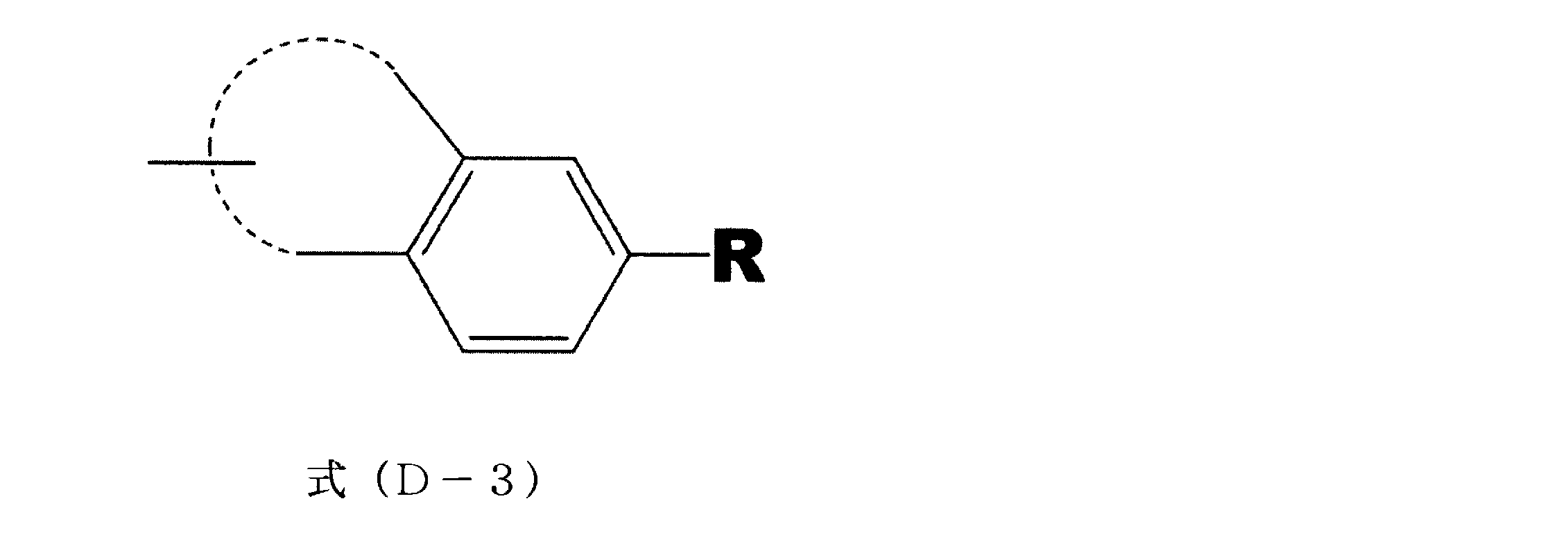
[式(D-2)及び(D-3)中、Rは、水素原子、またはベンゼン環を有していてもよい炭素数1~20のアルキル基である。式(D-3)中の破線部は、ベンゼン環に隣あう、置換基を有しても良い一個以上の飽和または不飽和の複素環を含む環状構造を示す。]
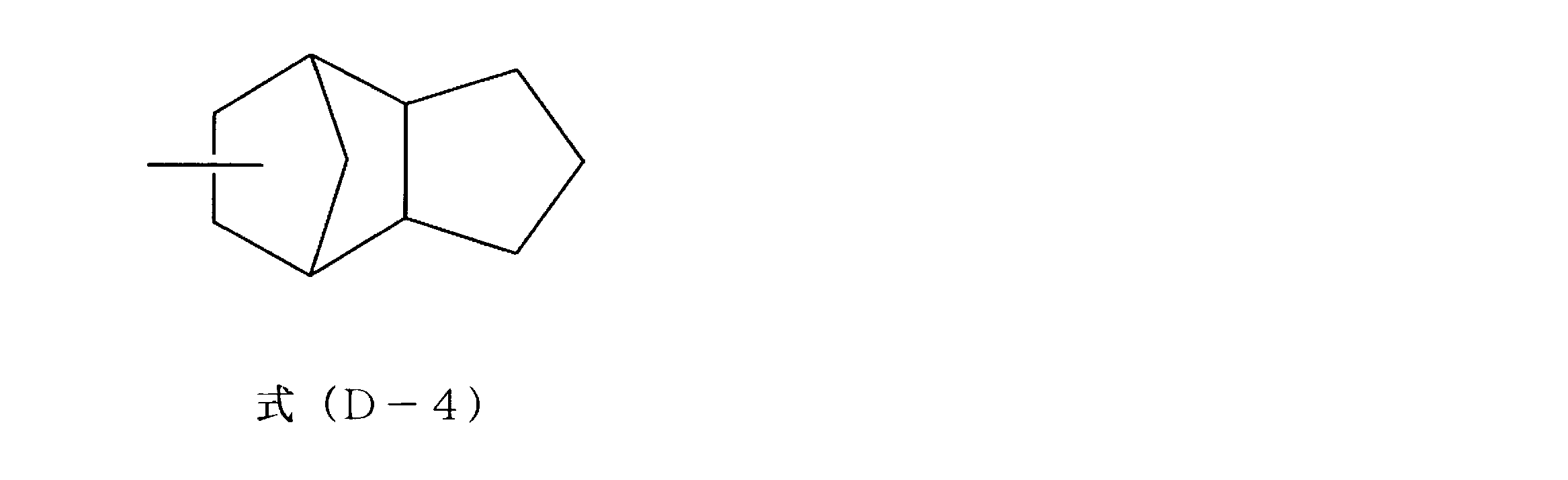

(D-b2)式(D-2)または(D-3)に示す芳香族環基を有する構成単位:2~80重量%
(D-b3)式(D-4)または(D-5)に示す脂肪族環基を有する構成単位:2~60重量%
また、第6の実施態様は、顔料(A)が、さらに顔料(A1)以外のジケトピロロピロール系顔料、アゾ系顔料、アントラキノン系顔料、ペリレン系顔料、キナクリドン系顔料、ベンズイミダゾロン系顔料、およびキノリン系顔料からなる群より選ばれる少なくとも1種類以上を含むことを特徴とする上記カラーフィルタ用着色組成物に関する。
また、第6の実施態様は、さらにアセトフェノン系化合物、ホスフィン系化合物、イミダゾール系化合物、およびオキシムエステル系化合物からなる群より選ばれる少なくとも1種類以上の光重合開始剤(D-D)を含むことを特徴とする上記カラーフィルタ用着色組成物に関する。
本発明の第7の実施態様は、上記カラーフィルタ用着色組成物から形成されるフィルタセグメントを具備することを特徴とするカラーフィルタに関する。
本願の開示は、2011年1月28日に出願された特願2011-15874号、2011年3月31日に出願された特願2011-76928号、2011年3月31日に出願された特願2011-76929号、および2011年12月13日に出願された特願2011-271836号に記載の主題と関連しており、それらの開示内容は引用によりここに援用される。
以下、本発明の実施態様を詳細に説明する。
なお、以下に挙げる「C.I.」とは、カラーインデックス(C.I.)を意味する。また、「(メタ)アクリレート」、「(メタ)アクリル酸」、又は「(メタ)アクリルアミド」と表記した場合には、特に説明がない限り、それぞれ、「アクリレート及び/又はメタクリレート」、「アクリル酸及び/又はメタクリル酸」、又は「アクリルアミド及び/又はメタクリルアミド」を表すものとする。
なお、以下に挙げる「C.I.」とは、カラーインデックス(C.I.)を意味する。また、「(メタ)アクリレート」、「(メタ)アクリル酸」、又は「(メタ)アクリルアミド」と表記した場合には、特に説明がない限り、それぞれ、「アクリレート及び/又はメタクリレート」、「アクリル酸及び/又はメタクリル酸」、又は「アクリルアミド及び/又はメタクリルアミド」を表すものとする。
[ジケトピロロピロール系顔料組成物]
まず、本発明の実施態様であるジケトピロロピロール系顔料組成物について説明する。
まず、本発明の実施態様であるジケトピロロピロール系顔料組成物について説明する。
[第1の実施態様]
(ジケトピロロピロール系顔料組成物)
第1の実施態様は、下記式(1)で表されるジケトピロロピロール顔料、および下記式(A-2)で表される特定へテロジケトピロロピロール顔料を含有するカラーフィルタ用ジケトピロロピロール系顔料組成物であって、下記式(A-2)で表される特定へテロジケトピロロピロール顔料の含有量がジケトピロロピロール系顔料の合計質量を基準として1質量%~15質量%であるカラーフィルタ用ジケトピロロピロール系顔料組成物である。
(ジケトピロロピロール系顔料組成物)
第1の実施態様は、下記式(1)で表されるジケトピロロピロール顔料、および下記式(A-2)で表される特定へテロジケトピロロピロール顔料を含有するカラーフィルタ用ジケトピロロピロール系顔料組成物であって、下記式(A-2)で表される特定へテロジケトピロロピロール顔料の含有量がジケトピロロピロール系顔料の合計質量を基準として1質量%~15質量%であるカラーフィルタ用ジケトピロロピロール系顔料組成物である。
本発明者らは、鋭意研究を重ねた結果、従来使用されていたC.I.ピグメントレッド254(塩素化ジケトピロロピロール顔料)と比較して、臭素化ジケトピロロピロール顔料(式(1))をカラーフィルタに適用することにより、明度が向上することを見出した。さらに、特定構造の非対称に置換基が導入されたジケトピロロピロール顔料(式(A-2)(以下、「特定ヘテロジケトピロロピロール顔料A」と称す)を含有したジケトピロロピロール系顔料組成物を用いることにより、高明度のみならず、高コントラストかつ加熱工程による結晶析出が抑制されたカラーフィルタが得られることを見出した。ここで選定された特定ヘテロジケトピロロピロール顔料Aは、樹脂成分へ相互作用が小さいため、効率的に臭素化ジケトピロロピロール顔料の活性面を覆うことができ、加熱工程による顔料の熱凝集が抑制されるため、少量の含有量で高コントラスト化、および結晶析出抑制効果を発揮する。また、特定ヘテロジケトピロロピロール顔料Aは、今まで知られていた結晶析出抑制剤より色特性が良好であり、添加量も少なくできるため、臭素化ジケトピロロピロール顔料の優れた明度向上効果を損なうことがない。さらに、ジケトピロロピロール系顔料組成物は特定ヘテロジケトピロロピロール顔料Aを含有するために、粘度安定性に優れている。
第1の実施態様によれば、明度およびコントラストが良好であって、加熱工程によってもジケトピロロピロール系顔料の結晶析出が起こらず、さらに粘度安定性に優れたカラーフィルタ用ジケトピロロピロール系顔料組成物を提供することができる。

AおよびBは、それぞれ独立して、水素原子、フッ素原子、ヨウ素原子、シアノ基、炭素数1~12のアルキル基、置換基を有してもよいフェニル基、-CF3、-OR1、-SR2、-N(R3)R4、-COOR5、-CONH2、-CONHR6、-CON(R7)R8、-SO2NH2、-SO2NHR9、または、-SO2N(R10)R11であり、
R1~R11は、それぞれ独立して、炭素数1~12のアルキル基、置換基を有してもよいフェニル基、または、置換基を有してもよいアラルキル基である。
ただし、AおよびBが同時に水素原子になることはない。]
上記炭素数1~12のアルキル基としては、直鎖状でも分岐状でもよく、具体的にメチル基、エチル基、プロピル基、イソプロピル基、ブチル基、sec-ブチル基、tert-ブチル基、ペンチル基、ヘキシル基、ヘプチル基、オクチル基、デシル基、ドデシル基、1,5-ジメチルヘキシル基、1,6-ジメチルヘプチル基、2-エチルヘキシル基等が挙げられるが、これらに限定されるものではない。
上記置換基を有してもよいフェニル基としては、炭素数1~4のアルキル基、トリフルオロメチル基、ハロゲン原子、ニトロ基、シアノ基、カルバモイル基、スルファモイル基、炭素数1~4のアルコキシル基などの置換基を有するフェニル基が挙げられる。フェニル基は、これらの置換基を1つ又は2つ以上有していてもよい。より具体的には、フェニル基、p-メチルフェニル基、4-tert-ブチルフェニル基、p-ニトロフェニル基、p-メトキシフェニル基、p-クロロフェニル基、2,4-ジクロロフェニル基、3-カルバモイルフェニル基等が挙げられるが、これらに限定されるものではない。
上記置換基を有してもよいアラルキル基としては、炭素数1~4のアルキル基、トリフルオロメチル基、ハロゲン原子、ニトロ基、シアノ基、カルバモイル基、スルファモイル基、炭素数1~4のアルコキシル基などの置換基を有するアラルキル基が挙げられる。アラルキル基は、これらの置換基を1つ又は2つ以上有していてもよい。より具体的には、ベンジル基、4-メチルベンジル基、4-tert-ブチルベンジル基、4-メトキシベンジル基、4-ニトロベンジル基、2,4-ジクロロベンジル基などが挙げられるが、これらに限定されるものではない。
第1の実施態様の顔料組成物に用いられる式(A-2)で表される特定へテロジケトピロロピロール顔料Aの中でも、式(A-2-1)、式(A-2-2)、式(A-2-3)、式(A-2-4)が明度、コントラスト、および結晶析出抑制効果の点から好ましい。また、式(A-2-3)、式(A-2-4)のR6~R8は、炭素数4以上のアルキル基、または置換基を有しても良いフェニル基が、コントラストおよび結晶析出抑制効果の点から好ましい。これらが高コントラスト化、および結晶析出抑制に効果を発揮する理由は、炭素数4以上のアルキル基を有するカルボアミド基(カルバモイル基)、フェニル基、t-ブチル基等のかさ高い置換基による立体障害効果によって、顔料の凝集が抑制されるためと考えられる。また、カルボアミド基(カルバモイル基)、フェニル基、t-ブチル基を有する特定へテロジケトピロロピロール顔料Aは、色特性も優れているため、臭素化ジケトピロロピロール顔料の優れた明度を損なうことがない。

R6~R8は、それぞれ独立して、炭素数1~12のアルキル基、または置換基を有してもよいフェニル基である。]
式(A-2)の特定ヘテロジケトピロロピロール顔料Aの具体例を以下に挙げるが、これらに限定されるものではない。
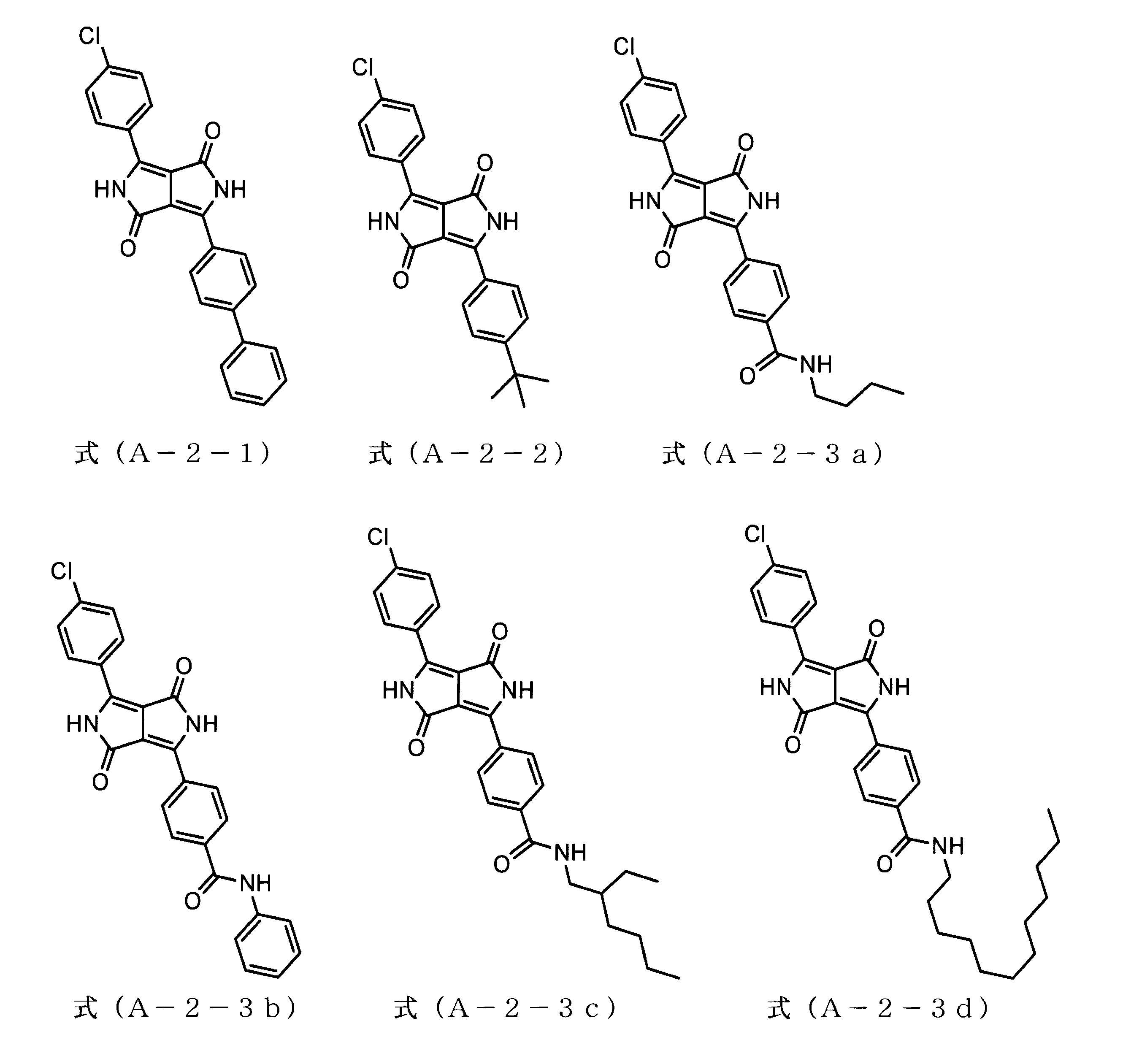
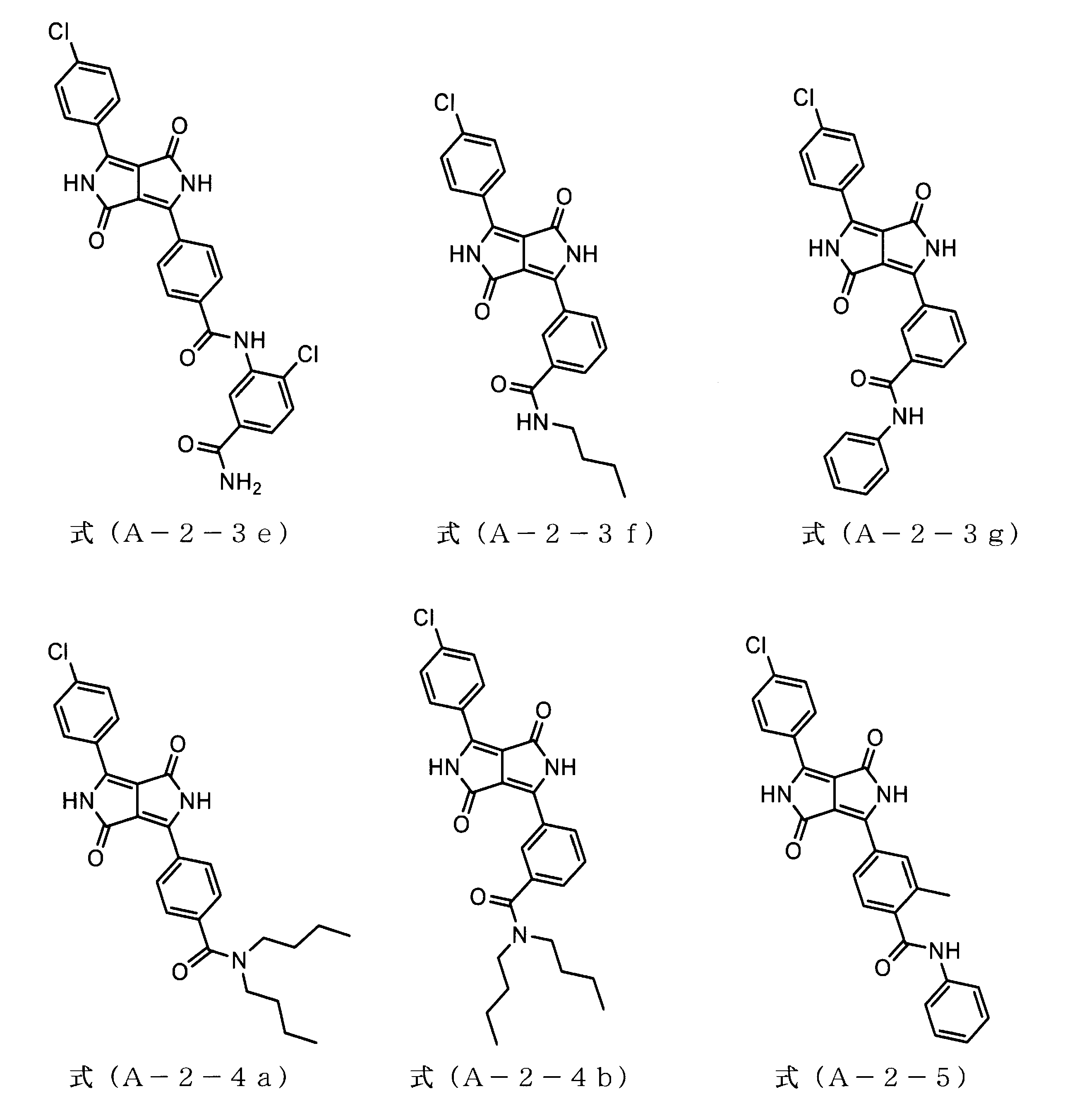
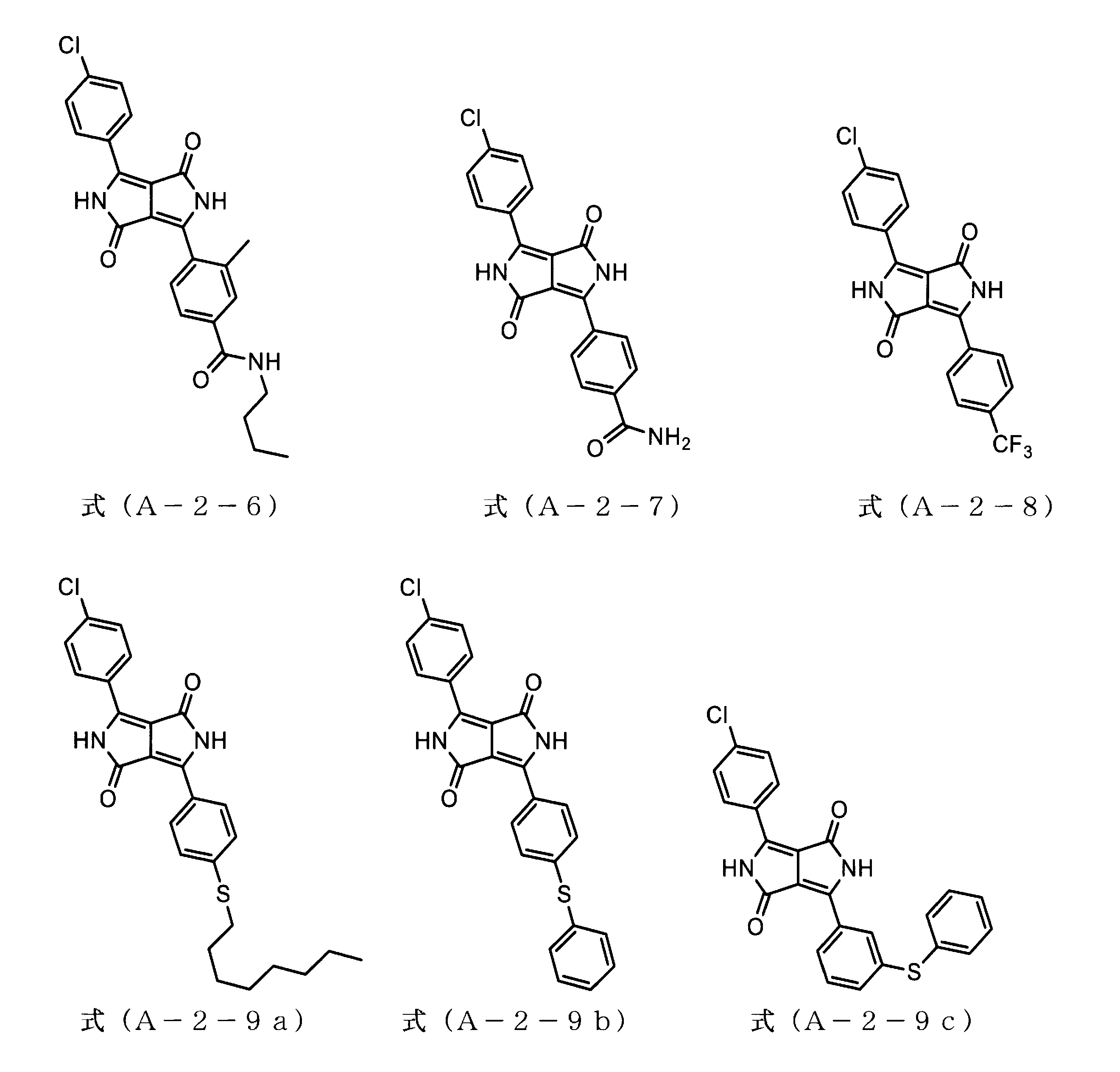

顔料組成物は、式(A-2)で表される特定へテロジケトピロロピロール顔料Aの含有量がジケトピロロピロール系顔料の合計重量を基準として1質量%~15質量%の範囲であることを特徴とする。好ましくは、3質量%~10質量%の範囲である。式(A-2)の特定へテロジケトピロロピロール顔料Aの比率が15質量%を超えると、結晶析出抑制効果は得られるが、式(1)の臭素化ジケトピロロピロール顔料の優れた明度を損なってしまう。一方、式(A-2)の特定ヘテロジケトピロロピロール顔料Aの比率が1質量%未満では、高コントラスト化および結晶析出抑制効果が十分ではない。結晶析出抑制効果が十分でない場合、加熱工程で塗膜表面に析出した結晶状異物によって光散乱が起こり、明度およびコントラスト比の低下を引き起こす。したがって、特定へテロジケトピロロピロール顔料Aを上記比率で含むジケトピロロピロール系顔料組成物を使用することにより、高明度かつ高コントラストを達成し、加熱工程によってもジケトピロロピロール系顔料の結晶析出を抑制することができる。さらに、優れた粘度安定性を得ることができる。
顔料組成物は、その効果を損なわない範囲で、式(1)のジケトピロロピロール顔料、および式(A-2)の特定へテロジケトピロロピロール顔料A以外のジケトピロロピロール系顔料を併用しても良い。具体的には、C.I.ピグメントレッド254、255、264、272、C.I.ピグメントオレンジ71、73、または81等のジケトピロロピロール系顔料を挙げることができるが、これらに限定されるものではない。併用できるジケトピロロピロール系顔料としては、C.I.ピグメントレッド254が好ましい。C.I.ピグメントレッド254が好ましい理由は、式(A-2)の特定へテロジケトピロロピロール顔料Aをコハク酸ジエステル合成法で製造した場合に通常含有されるものであり、式(1)のジケトピロロピロール顔料の優れた明度に影響を与えにくいためである。
顔料組成物が、C.I.ピグメントレッド254を含有する場合、ジケトピロロピロール系顔料の合計重量を基準(100重量%)として、式(1)で表されるジケトピロロピロール顔料とC.I.ピグメントレッド254との合計含有量が85質量%~99質量%であることが好ましい。式(1)で表されるジケトピロロピロール顔料とC.I.ピグメントレッド254との合計含有量が85質量%未満の場合は、明度向上効果が少なくなる場合があり、99質量%より多い場合は、特定ヘテロジケトピロロピロール顔料Aの含有量が少ないため、コントラスト比、結晶析出抑制効果が十分に得られない場合がある。また、式(1)で表されるジケトピロロピロール顔料とC.I.ピグメントレッド254の質量比は、20:80~99:1であることが好ましい。より好ましくは、50:50~99:1である。式(1)で表されるジケトピロロピロール顔料とC.I.ピグメントレッド254の合計における、式(1)で表されるジケトピロロピロール顔料の含有量が20質量%以上であると、明度向上効果が大きくなるために好ましい。
また、式(1)のジケトピロロピロール顔料、および式(A-2)の特定へテロジケトピロロピロール顔料A以外のジケトピロロピロール系顔料として、後述の式(B-2)の特定へテロジケトピロロピロール顔料を用いることも可能である。この際、式(1)のジケトピロロピロール顔料と式(B-2)の特定へテロジケトピロロピロール顔料Bの質量比が97:3~85:15であることが好ましい。
(ジケトピロロピロール系顔料の製造法)
式(1)で表されるジケトピロロピロール顔料は、国際公開2009/144115号パンフレット等に記載の公知の方法を用いて得ることができる。
式(1)で表されるジケトピロロピロール顔料は、国際公開2009/144115号パンフレット等に記載の公知の方法を用いて得ることができる。
また、式(1)で表されるジケトピロロピロール顔料は、コハク酸ジエステル合成法で製造することができる。すなわち、コハク酸ジエステル1モルに対して4-ブロモベンゾニトリル2モルを、tert-アミルアルコール等の不活性有機溶剤中で、アルカリ金属又はアルカリ金属アルコキシドの存在下において、80~110℃の高温で縮合反応を行い、ジケトピロロピロール化合物のアルカリ金属塩を生成させる。続いて、このジケトピロロピロール化合物のアルカリ金属塩に対して、水、アルコール、酸等を用いてプロトン化することにより、臭素化ジケトピロロピロール顔料を得ることができる。このとき、プロトン化における温度、水、アルコールまたは酸の種類、比率や量により、得られる一次粒子径の大きさを制御することができる。式(1)で表されるジケトピロロピロール顔料の製造方法はこの方法に限定されるものではない。
式(A-2)の特定ヘテロジケトピロロピロール顔料Aは、例えば文献Synth.Commun.,1988,18,1213およびTetrahedron,58(2002)5547-5565に記載された方法を用いて合成を行うことができる。特定ヘテロジケトピロロピロール顔料Aの製造方法はこの方法に限定されるものではない。
また、式(A-2)の特定ヘテロジケトピロロピロール顔料Aは、C.I.ピグメントレッド254との混合物として合成することもできる。これは、コハク酸ジエステル合成法において、少なくとも2種の構造的に異なるベンゾニトリル化合物を用いる方法(以下、「コハク酸ジエステル共合成法」と称す)を利用することで可能となる。具体的には、WO2009/081930号パンフレットに記載されている方法において、使用する複数のベンゾニトリル化合物を、4-クロロベンゾニトリルと下記式(A-3)で表されるベンゾニトリル化合物から選定することにより、式(A-2)の特定ヘテロジケトピロロピロール顔料AをC.I.ピグメントレッド254との混合物として製造することができる。

AおよびBは、それぞれ独立して、水素原子、フッ素原子、ヨウ素原子、シアノ基、炭素数1~12のアルキル基、置換基を有してもよいフェニル基、-CF3、-OR1、-SR2、-N(R3)R4、-COOR5、-CONH2、-CONHR6、-CON(R7)R8、-SO2NH2、-SO2NHR9、または、-SO2N(R10)R11であり、
R1~R11は、それぞれ独立して、炭素数1~12のアルキル基、置換基を有してもよいフェニル基、または、置換基を有してもよいアラルキル基である。
ただし、AおよびBが同時に水素原子になることはない。]
炭素数1~12のアルキル基、置換基を有してもよいフェニル基、または、置換基を有してもよいアラルキル基は、上記の式(A-2)における基と同様である。
顔料組成物は、式(1)で表されるジケトピロロピロール顔料と特定ヘテロジケトピロロピロール顔料Aとを別々に製造したものを混合して用いることができる。また、コハク酸ジエステル共合成法によって合成された特定ヘテロジケトピロロピロール顔料AとC.I.ピグメントレッド254の混合物を、さらに式(1)で表されるジケトピロロピロール顔料と混合して用いることもできる。これらの場合は、顔料担体中に顔料を分散する前に単純に混合してもよいし、ソルトミリング処理により粉砕混合してもよい。
顔料組成物において、式(1)で表されるジケトピロロピロール顔料、式(A-2)の特定へテロジケトピロロピロール顔料A、およびC.I.ピグメントレッド254の質量比は、TOF-MASS、FD-MASS、LC-MASSまたはNMRを用いて、分析することができる。あるいは、特開平08-199085号公報に開示されているように、ジケトピロロピロール系顔料組成物を、テトラヒドロフラン中で、ジ-tert-ブチルジカーボネート及び4-ジメチルアミノピリジンと室温撹拌して得られる可溶性のジケトピロロピロール化合物に変換した後に、NMR、MASSまたはLC-MASS等を用いた分析を行ってもよい。あるいは、ピロロピロール環のNH基の水素を、ハロゲン化アルキル等を用いてアルキル基に置換し、可溶性のジケトピロロピロールに変換した後に、上記分析を行ってもよい。
(色素誘導体)
顔料組成物には、顔料結晶成長の抑制、ならびに顔料分散性向上を目的に色素誘導体を使用することができる。顔料組成物に用いられる色素誘導体は、ジケトピロロピロール誘導体、ベンゾイソインドール誘導体、アントラキノン誘導体、ジアントラキノン誘導体、チアジンインジゴ誘導体、アゾ色素誘導体、キノフタロン誘導体、およびキナクリドン誘導体等が挙げられる。色素誘導体の構造として、下記式(4)で表される色素誘導体が挙げられるが、これらに限定されるものではない。
顔料組成物には、顔料結晶成長の抑制、ならびに顔料分散性向上を目的に色素誘導体を使用することができる。顔料組成物に用いられる色素誘導体は、ジケトピロロピロール誘導体、ベンゾイソインドール誘導体、アントラキノン誘導体、ジアントラキノン誘導体、チアジンインジゴ誘導体、アゾ色素誘導体、キノフタロン誘導体、およびキナクリドン誘導体等が挙げられる。色素誘導体の構造として、下記式(4)で表される色素誘導体が挙げられるが、これらに限定されるものではない。
P-Lm 式(4)
[式(4)中、
Pは、ジケトピロロピロール残基、ベンゾイソインドール残基、アントラキノン残基、ジアントラキノン残基、チアジンインジゴ残基、アゾ色素残基、キノフタロン残基、またはキナクリドン残基であり、
mは、1~4の整数であり、
Lは、それぞれ独立して、-OH;-SO3H、-COOH、これら酸性基の1価~3価の金属塩、アルキルアンモニウム塩;置換基を有しても良いフタルイミドメチル基;下記式(a)、(b)、(c)、(d)、(e)、または(f)で表される基であり、
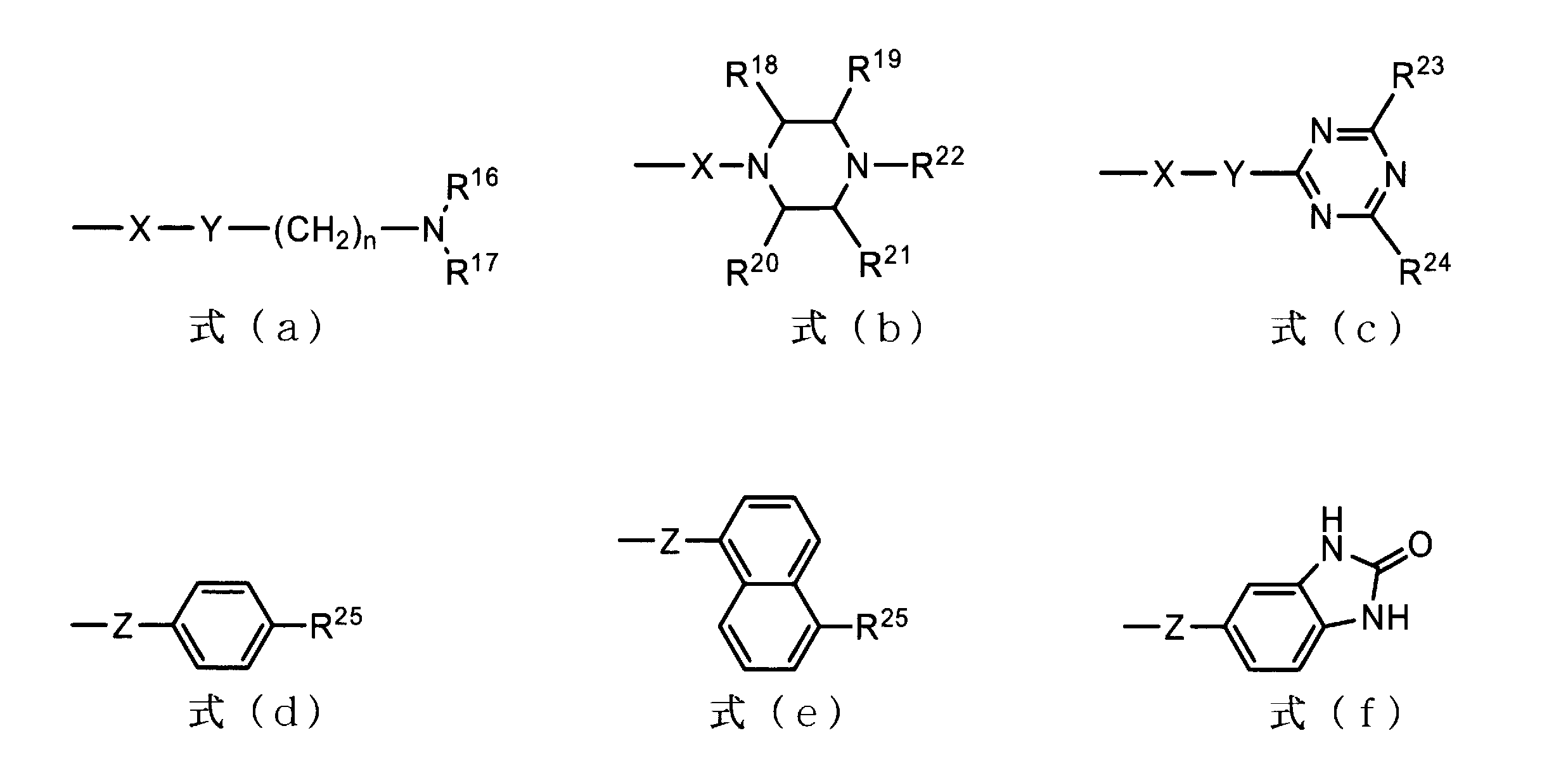
Yは、-NH-、-O-、-S-、または直接結合であり、
nは、1~10の整数であり、
R16、R17は、それぞれ独立して、水素原子、置換基を有しても良い炭素数1~30のアルキル基、または置換基を有しても良い炭素数2~30のアルケニル基であり、R16とR17とが一体となって、必要に応じ更なる窒素、酸素、もしくは硫黄原子を含む、置換基を有しても良い複素環を形成してもよく、
R18、R19、R20、R21およびR22は、それぞれ独立して、水素原子、置換基を有しても良い炭素数1~20のアルキル基、置換基を有しても良い炭素数2~20のアルケニル基であり、
R23は、式(a)、または式(b)で表される置換基であり、
R24は、塩素原子、-OH、アルコキシル基、式(a)、または式(b)で表される置換基であり、
Zは、-CONH-、-NHCO-、-SO2NH-、または-NHSO2-であり、
R25は、水素原子、-NH2、-NHCOCH3、-NHR26、または式(c)で表される置換基であり、ここでR26は、置換基を有して良い炭素数1~20のアルキル基、置換基を有しても良い炭素数2~20のアルケニル基である。]
1価~3価の金属としては、ナトリウム、カリウム、マグネシウム、カルシウム、鉄、またはアルミニウム等が挙げられる。また、アルキルアンモニウム塩としては、オクチルアミン、ラウリルアミン、もしくはステアリルアミン等の長鎖モノアルキルアミンのアンモニウム塩、または、パルミチルトリメチルアンモニウム塩、ジラウリルジメチルアンモニウム塩、もしくはジステアリルジメチルアンモニウム塩等の4級アルキルアンモニウム塩が挙げられる。
置換基を有しても良いフタルイミドメチル基、置換基を有しても良いアルキル基、置換基を有しても良いアルケニル基、または置換基を有しても良い複素環の置換基としては、ハロゲン原子、ニトロ基、シアノ基、カルバモイル基、N-置換カルバモイル基、スルファモイル基、N-置換スルファモイル基、炭素数1~20のアルコキシル基、炭素数1~20のアルキルチオ基等が挙げられるが、これらに限定されるものではない。
色素誘導体は、硫酸もしくは発煙硫酸中で加熱することによるスルホン化反応、硫酸中、N-ヒドロキシメチルフタルイミドと脱水縮合させるフタルイミドメチル化反応、クロルスルホン酸と塩化チオニルを用いてクロルスルホン化した後、ジメチルアミノプロピルアミン等のアミン成分を反応させるスルホンアミド化反応等の公知の製法により合成される。
上記式(a)、式(b)、および式(c)で表される置換基を形成するために使用されるアミン成分としては、例えば、ジメチルアミン、ジエチルアミン、メチルエチルアミン、N,N-エチルイソプロピルアミン、N,N-エチルプロピルアミン、N,N-メチルブチルアミン、N,N-メチルイソブチルアミン、N,N-ブチルエチルアミン、N,N-tert-ブチルエチルアミン、ジイソプロピルアミン、ジプロピルアミン、N,N-sec-ブチルプロピルアミン、ジブチルアミン、ジ-sec-ブチルアミン、ジイソブチルアミン、N,N-イソブチル-sec-ブチルアミン、ジアミルアミン、ジイソアミルアミン、ジヘキシルアミン、ジシクロヘキシルアミン、ジ(2-エチルへキシル)アミン、ジオクチルアミン、N,N-メチルオクタデシルアミン、ジデシルアミン、ジアリルアミン、N,N-エチル-1,2-ジメチルプロピルアミン、N,N-メチルヘキシルアミン、ジオレイルアミン、ジステアリルアミン、N,N-ジメチルアミノメチルアミン、N,N-ジメチルアミノエチルアミン、N,N-ジメチルアミノアミルアミン、N,N-ジメチルアミノブチルアミン、N,N-ジエチルアミノエチルアミン、N,N-ジエチルアミノプロピルアミン、N,N-ジエチルアミノヘキシルアミン、N,N-ジエチルアミノブチルアミン、N,N-ジエチルアミノペンチルアミン、N,N-ジプロピルアミノブチルアミン、N,N-ジブチルアミノプロピルアミン、N,N-ジブチルアミノエチルアミン、N,N-ジブチルアミノブチルアミン、N,N-ジイソブチルアミノペンチルアミン、N,N-メチルーラウリルアミノプロピルアミン、N,N-エチルーヘキシルアミノエチルアミン、N,N-ジステアリルアミノエチルアミン、N,N-ジオレイルアミノエチルアミン、N,N-ジステアリルアミノブチルアミン、ピペリジン、2-ピペコリン、3-ピペコリン、4-ピペコリン、2,4-ルペチジン、2,6-ルペチジン、3,5-ルペチジン、3-ピペリジンメタノール、ピペコリン酸、イソニペコチン酸、イソニペコチン酸メチル、イソニペコチン酸エチル、2-ピペリジンエタノール、ピロリジン、3-ヒドロキシピロリジン、N-アミノエチルピペリジン、N-アミノエチル-4-ピペコリン、N-アミノエチルモルホリン、N-アミノプロピルピペリジン、N-アミノプロピル-2-ピペコリン、N-アミノプロピル-4-ピペコリン、N-アミノプロピルモルホリン、N-メチルピペラジン、N-ブチルピペラジン、N-メチルホモピペラジン、1-シクロペンチルピペラジン、1-アミノ-4-メチルピペラジン、1-シクロペンチルピペラジン等が挙げられるが、これらに限定されるものではない。
また、アゾ色素に置換基を導入する場合は、置換基をあらかじめジアゾ成分またはカップリング成分に導入し、その後カップリング反応を行うことによってアゾ色素誘導体を製造することもできる。
色素誘導体の使用法は、ジケトピロロピロール系顔料組成物を顔料担体中に分散するときに顔料組成物と混合する方法のほかに、顔料製造時に水または有機溶剤中で混合処理する方法やソルトミリング処理時に添加する方法が挙げられる。色素誘導体を顔料製造時に水または有機溶剤中で混合処理する方法やソルトミリング処理時に添加する方法は、ジケトピロロピロール系顔料の結晶成長を抑制する効果を発現するが、結晶成長を抑制する効果を発揮するためには、色素誘導体がジケトピロロピロール系顔料の表面に効率よく吸着し、簡単に脱着しないことが望まれる。このため、色素誘導体の構造は、用いる顔料と類似の化学構造を部分的に有するものとされる場合が多い。このような理由から、ジケトピロロピロール系顔料を製造する場合には、一般的には、ジケトピロロピロール構造、チアジンインジゴ構造、ベンゾイソインドール構造、またはキナクリドン構造を有する色素誘導体が効果的である。
また、色素誘導体を使用する場合、ジケトピロロピロール系顔料組成物の色調を極力損なわないことが望まれる。色相の観点から、黄色、橙色を呈するジケトピロロピロール誘導体、ベンゾイソインドール誘導体、チアジンインジゴ誘導体、アゾ色素誘導体、またはキノフタロン誘導体の使用が好ましい。
色素誘導体の配合量は、ジケトピロロピロール系顔料組成物100質量部に対して0.5~40質量部の範囲であることが好ましい。より好ましくは、ジケトピロロピロール系顔料組成物100質量部に対して3~35質量部の範囲である。0.5質量部より少ない場合は、結晶成長抑制効果が十分ではない場合があり、40質量部より多い場合はジケトピロロピロール系顔料の良好な色調を損なってしまう場合があるためである。
以下ジケトピロロピロール系顔料組成物に用いられる色素誘導体の具体例を記載するが、これらに限定されるものではない。
(ジケトピロロピロール誘導体の具体例)
ジケトピロロピロール誘導体としては、具体的には、下記式(5)または式(6)で表される化合物を用いることができるが、これらに限定されるものではない。
ジケトピロロピロール誘導体としては、具体的には、下記式(5)または式(6)で表される化合物を用いることができるが、これらに限定されるものではない。
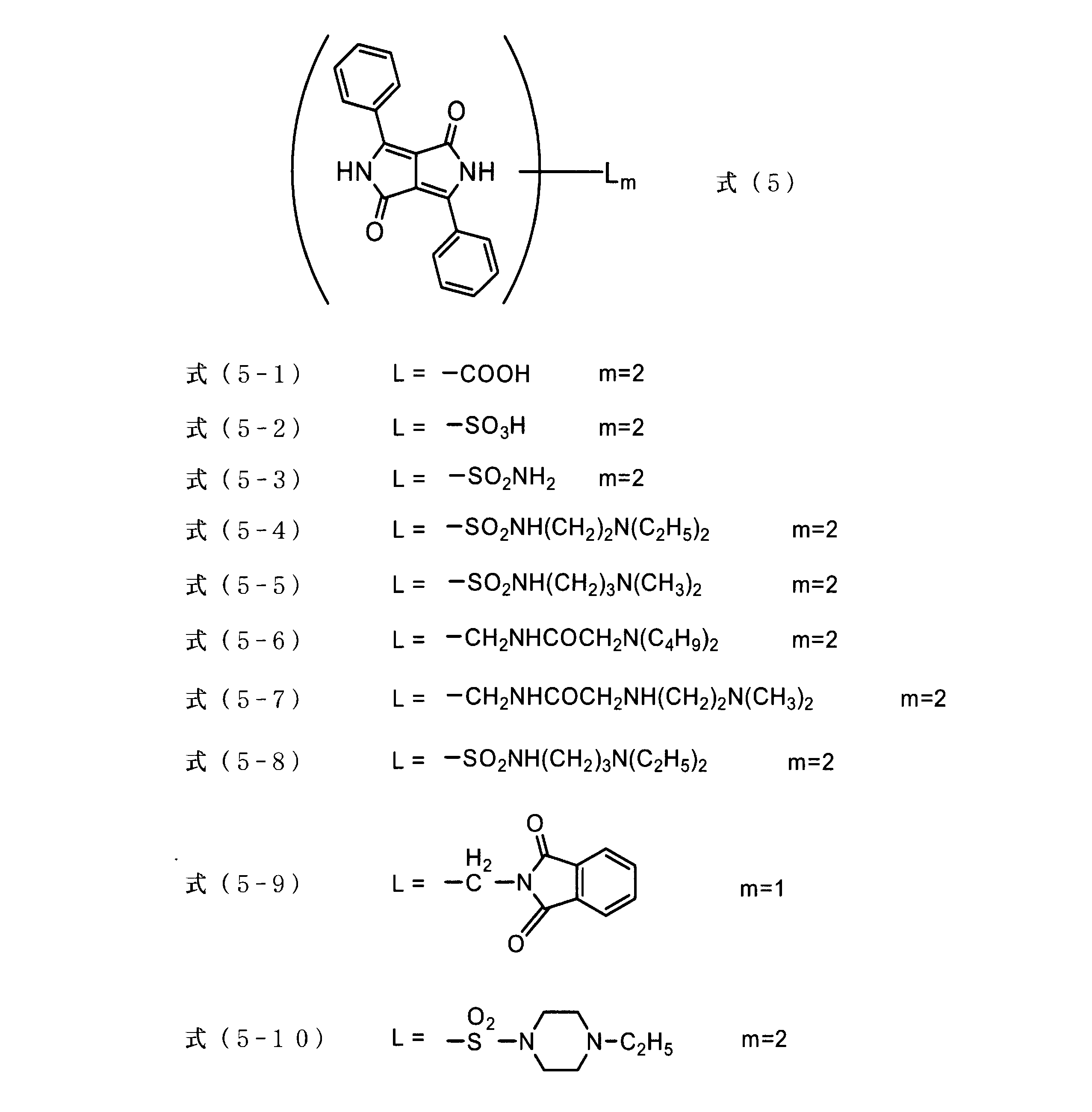

(ベンゾイソインドール誘導体の具体例)
ベンゾイソインドール誘導体としては、具体的には、下記式(7)で表される化合物を用いることができるが、これらに限定されるものではない。
ベンゾイソインドール誘導体としては、具体的には、下記式(7)で表される化合物を用いることができるが、これらに限定されるものではない。
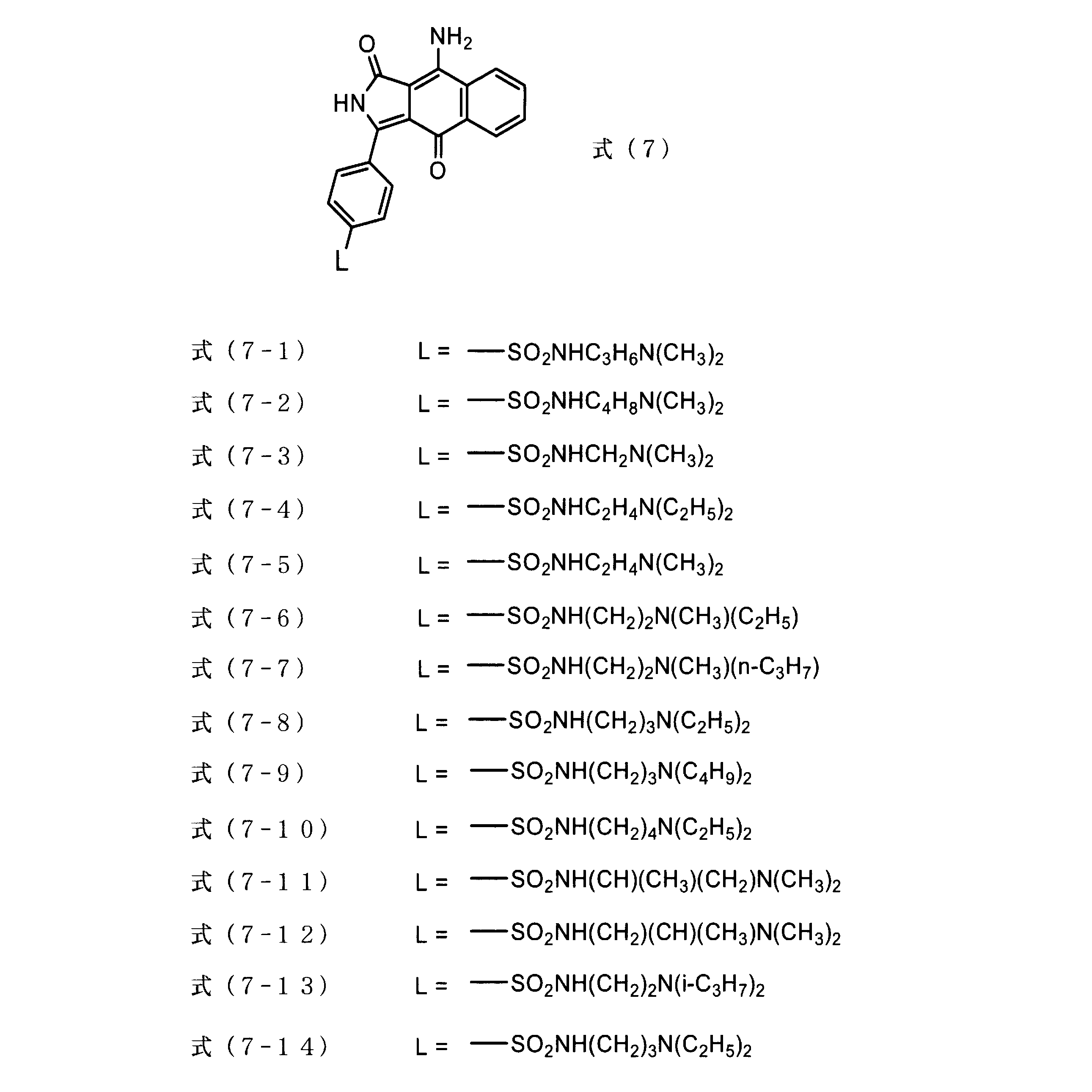
(アントラキノン誘導体の具体例)
アントラキノン誘導体としては、具体的には、下記式(8)で表される化合物を用いることができるが、これらに限定されるものではない。
アントラキノン誘導体としては、具体的には、下記式(8)で表される化合物を用いることができるが、これらに限定されるものではない。

(ジアントラキノン誘導体の具体例)
ジアントラキノン誘導体としては、具体的には、下記式(9)で表される化合物を用いることができるが、これらに限定されるものではない。
ジアントラキノン誘導体としては、具体的には、下記式(9)で表される化合物を用いることができるが、これらに限定されるものではない。

(チアジンインジゴ誘導体の具体例)
チアジンインジゴ誘導体としては、具体的には、下記式(10)で表される化合物を用いることができるが、これらに限定されるものではない。
チアジンインジゴ誘導体としては、具体的には、下記式(10)で表される化合物を用いることができるが、これらに限定されるものではない。
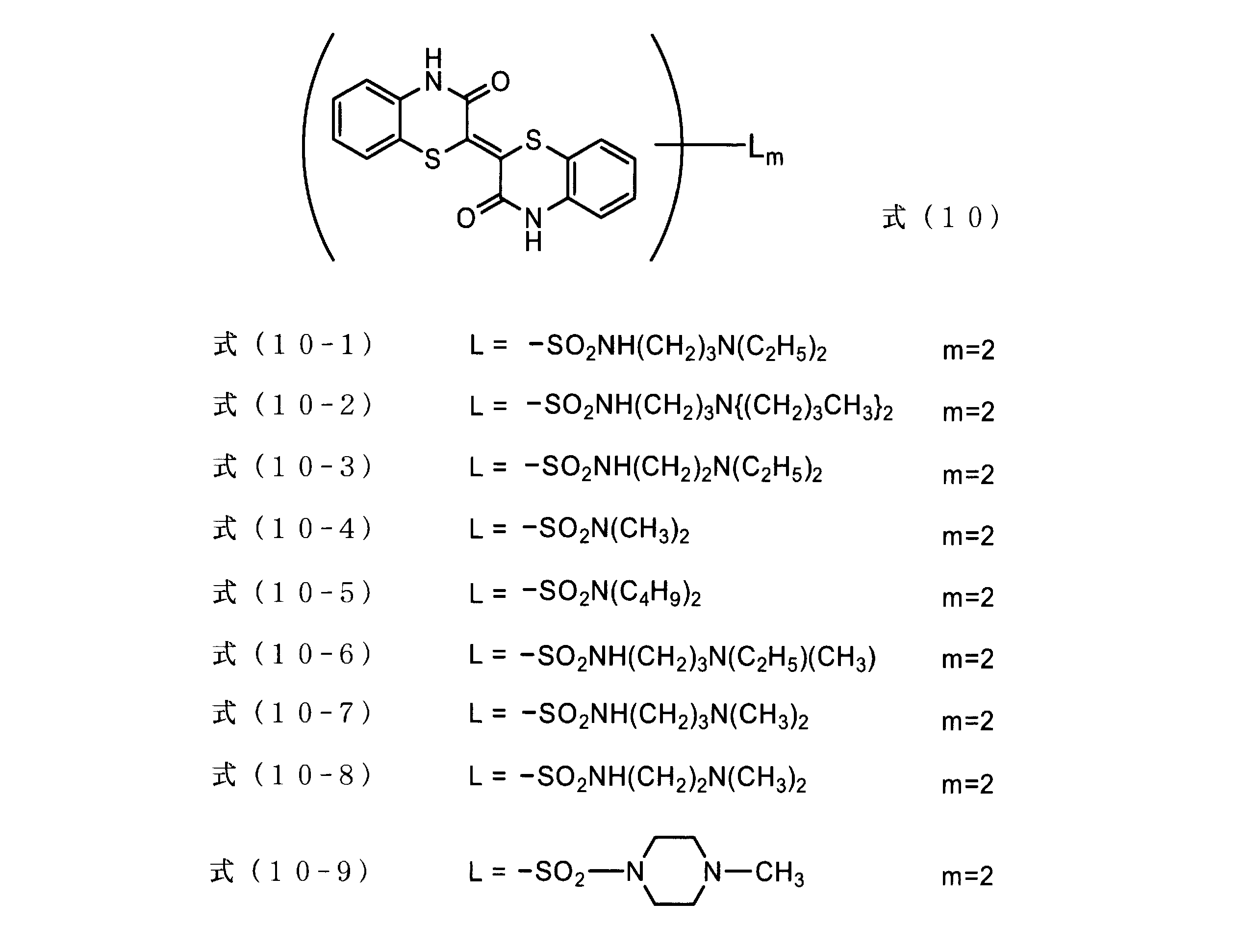
(アゾ色素誘導体の具体例)
アゾ色素誘導体としては、具体的には、下記式(11)、式(12)、または式(13)で表される化合物を用いることができるが、これらに限定されるものではない。
アゾ色素誘導体としては、具体的には、下記式(11)、式(12)、または式(13)で表される化合物を用いることができるが、これらに限定されるものではない。

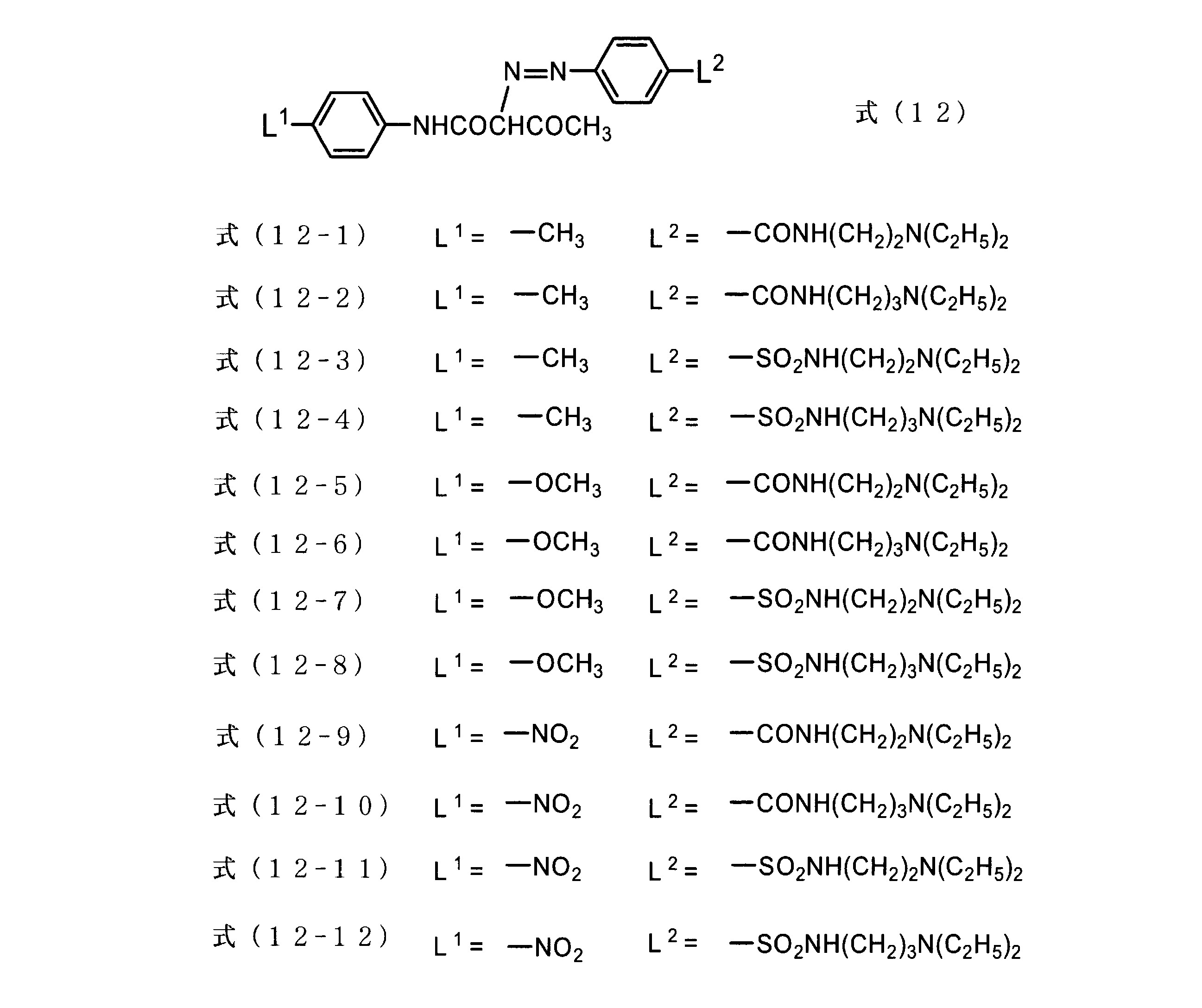
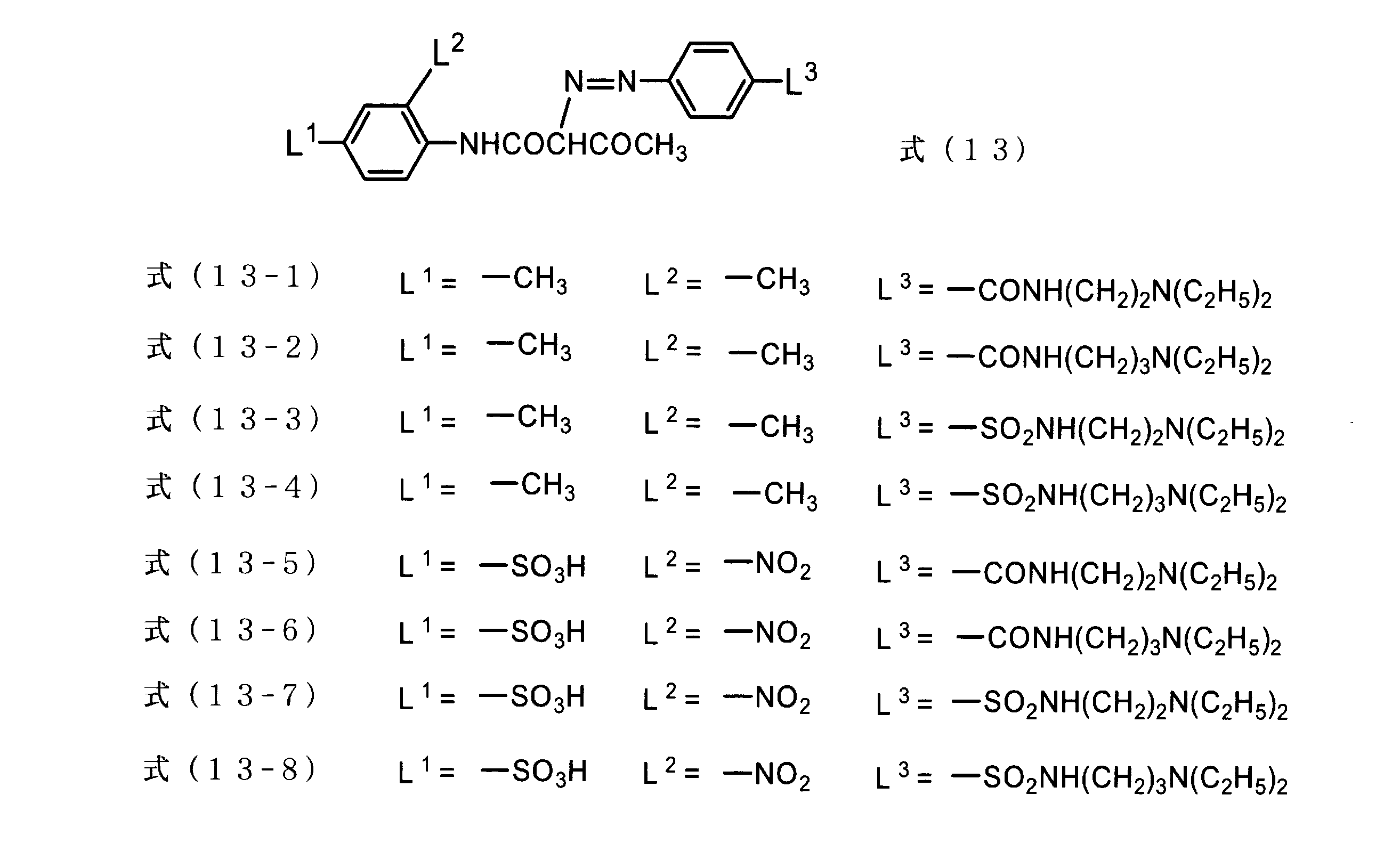
(キノフタロン誘導体の具体例)
キノフタロン誘導体としては、具体的には、下記式(14-1)~式(14-13)で表される化合物を用いることができるが、これらに限定されるものではない。
キノフタロン誘導体としては、具体的には、下記式(14-1)~式(14-13)で表される化合物を用いることができるが、これらに限定されるものではない。


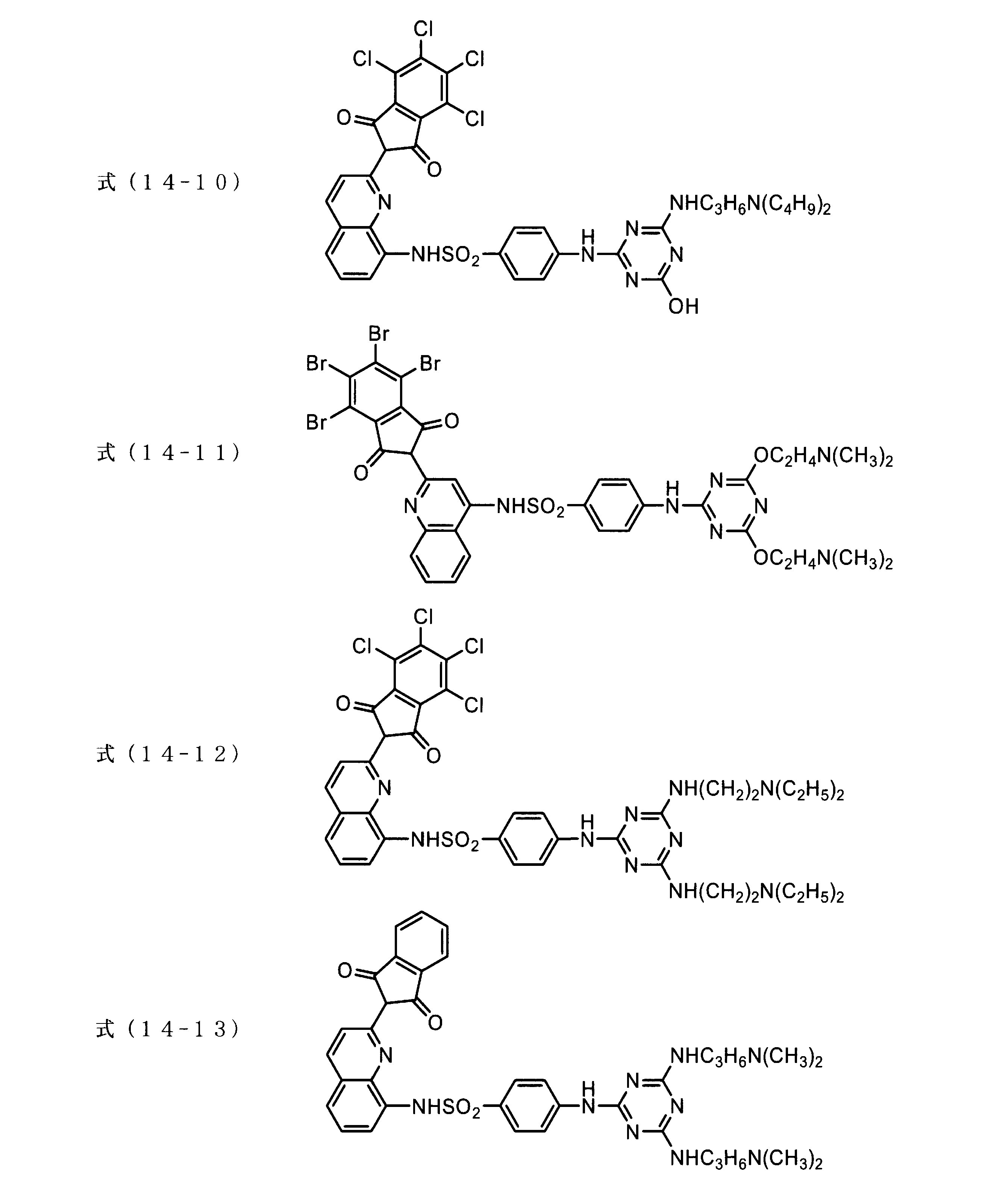
(キナクリドン誘導体の具体例)
キナクリドン誘導体としては、具体的には、下記式(15)で表される化合物を用いることができるが、これらに限定されるものではない。
キナクリドン誘導体としては、具体的には、下記式(15)で表される化合物を用いることができるが、これらに限定されるものではない。

(顔料の平均一次粒子径)
第1の実施態様の顔料組成物は、一次粒子径が非常に微細であり、また分布の幅が狭く、シャープな粒度分布をもつことが好ましい。第1の実施態様の顔料組成物のTEM(透過型電子顕微鏡)により求められる平均一次粒子径(体積平均粒径)は5~70nmの範囲であることが好ましい。5nmよりも小さくなると有機溶剤中への分散が困難になってしまうことがある。また70nmよりも大きくなってしまうと、十分なコントラスト比を得ることができなくなってしまうことがある。このような理由から、より好ましい範囲は10~40nmの範囲である。顔料を合成し、混合することによって顔料組成物とした段階で、平均一次粒子径が上記範囲である場合はそのまま使用してもよいが、そうでない場合は、ソルトミリング処理等により顔料の微細化および整粒化を行うことが望ましい。
第1の実施態様の顔料組成物は、一次粒子径が非常に微細であり、また分布の幅が狭く、シャープな粒度分布をもつことが好ましい。第1の実施態様の顔料組成物のTEM(透過型電子顕微鏡)により求められる平均一次粒子径(体積平均粒径)は5~70nmの範囲であることが好ましい。5nmよりも小さくなると有機溶剤中への分散が困難になってしまうことがある。また70nmよりも大きくなってしまうと、十分なコントラスト比を得ることができなくなってしまうことがある。このような理由から、より好ましい範囲は10~40nmの範囲である。顔料を合成し、混合することによって顔料組成物とした段階で、平均一次粒子径が上記範囲である場合はそのまま使用してもよいが、そうでない場合は、ソルトミリング処理等により顔料の微細化および整粒化を行うことが望ましい。
(顔料の微細化)
第1の実施態様のジケトピロロピロール系顔料組成物を含む顔料は、微細化して用いることが好ましく、微細化方法としては、ソルトミリング処理が好ましい。
第1の実施態様のジケトピロロピロール系顔料組成物を含む顔料は、微細化して用いることが好ましく、微細化方法としては、ソルトミリング処理が好ましい。
ソルトミリング処理とは、顔料と水溶性無機塩と水溶性有機溶剤との混合物を、ニーダー、トリミックス、2本ロールミル、3本ロールミル、ボールミル、アトライター、サンドミル等の混練機を用いて、加熱しながら機械的に混練した後、水洗により水溶性無機塩と水溶性有機溶剤を除去する処理である。水溶性無機塩は、破砕助剤として働くものであり、ソルトミリング時に無機塩の硬度の高さを利用して顔料が破砕され、それにより活性面が生じて、結晶成長がおこると考えられている。従って、混練時は顔料の破砕と結晶成長が同時に起こり、混練条件により得られる顔料の一次粒子径が異なる。
加熱により結晶成長を促進するには、加熱温度が35~150℃であることが好ましい。加熱温度が35℃未満の場合は、結晶成長が十分に起こらず、顔料粒子の形状が無定形に近くなることがある。一方、加熱温度が150℃を越える場合は、結晶成長が進みすぎ、顔料の一次粒子径が大きくなることがある。また、ソルトミリング処理の混練時間は、得られる顔料の一次粒子の粒度分布とソルトミリング処理に要する費用のバランスの点から2~24時間であることが好ましい。
顔料をソルトミリング処理する際の条件を最適化することにより、一次粒子径が非常に微細であり、また分布の幅がせまく、シャープな粒度分布をもつ顔料を得ることができる。
また、ソルトミリング処理に用いる水溶性無機塩としては、塩化ナトリウム、塩化バリウム、塩化カリウム、硫酸ナトリウム等を用いることができるが、価格の点から塩化ナトリウム(食塩)を用いるのが好ましい。水溶性無機塩は、処理効率と生産効率の両面から、顔料100質量部に対し、50~2000質量部用いることが好ましく、300~1200質量部用いることが最も好ましい。
また水溶性有機溶剤は、顔料および水溶性無機塩を湿潤する働きをするものであり、水に溶解(混和)し、かつ用いる無機塩を実質的に溶解しないものであれば特に限定されない。ただし、ソルトミリング時に温度が上昇し、溶剤が蒸発し易い状態になるため、安全性の点から、沸点120℃以上の高沸点溶剤が好ましい。
例えば、2-メトキシエタノール、2-ブトキシエタノール、2-(イソペンチルオキシ)エタノール、2-(ヘキシルオキシ)エタノール、ジエチレングリコール、ジエチレングリコールモノエチルエーテル、ジエチレングリコールモノブチルエーテル、トリエチレングリコール、トリエチレングリコールモノメチルエーテル、液状のポリエチレングリコール、1-メトキシ-2-プロパノール、1-エトキシ-2-プロパノール、ジプロピレングリコール、ジプロピレングリコールモノメチルエーテル、ジプロピレングリコールモノエチルエーテル、液状のポリプロピレングリコール等が用いられる。水溶性有機溶剤は、顔料100質量部に対して、5~1000質量部用いることが好ましく、50~500質量部用いることが最も好ましい。
ソルトミリング処理する際には、混練効率を向上させるために色素誘導体を併用してもよく、顔料の微細化および整粒化に非常に有効である。ジケトピロロピロール系顔料組成物の微細化においては、上記色素誘導体を使用することが好ましいが、これらに限定されるものではない。色素誘導体の使用量は、色調に影響を与えない程度、すなわち顔料100質量部に対して0.5~40質量部の範囲であることが好ましい。
また、ソルトミリング処理する際には、必要に応じて樹脂を添加してもよい。用いられる樹脂の種類は特に限定されず、天然樹脂、変性天然樹脂、合成樹脂、天然樹脂で変性された合成樹脂等を用いることができる。用いられる樹脂は、室温で固体であり、水不溶性であることが好ましく、かつ上記有機溶剤に一部可溶であることがさらに好ましい。樹脂の使用量は、顔料100質量部に対して5~200質量部の範囲であることが好ましい。
[第2の実施態様]
(ジケトピロロピロール系顔料組成物)
第2の実施態様は、下記式(1)の臭素化ジケトピロロピロール顔料と下記式(B-2)の特定ヘテロジケトピロロピロール顔料を含有するカラーフィルタ用ジケトピロロピロール系顔料組成物であって、下記式(1)と下記式(B-2)の質量比が97:3~85:15の範囲であるカラーフィルタ用ジケトピロロピロール系顔料組成物である。
(ジケトピロロピロール系顔料組成物)
第2の実施態様は、下記式(1)の臭素化ジケトピロロピロール顔料と下記式(B-2)の特定ヘテロジケトピロロピロール顔料を含有するカラーフィルタ用ジケトピロロピロール系顔料組成物であって、下記式(1)と下記式(B-2)の質量比が97:3~85:15の範囲であるカラーフィルタ用ジケトピロロピロール系顔料組成物である。
本発明者らは、鋭意研究を重ねた結果、従来使用されていたC.I.ピグメントレッド254(塩素化ジケトピロロピロール顔料)に替えて、臭素化ジケトピロロピロール顔料(式(1))をカラーフィルタに適用することにより、明度が向上することを見出した。さらに、この臭素化ジケトピロロピロール顔料と非対称に置換基が導入されたジケトピロロピロール顔料(式(B-2)(以下、「特定ヘテロジケトピロロピロール顔料B」と称す)を特定の比率で含有する顔料組成物を用いることにより、高明度、高コントラストかつ加熱工程による結晶析出が抑制されたカラーフィルタが得られることを見出した。
第2の実施態様によれば、高明度かつ高コントラストであって、加熱工程によってもジケトピロロピロール系顔料の結晶析出が起こらないカラーフィルタ用顔料組成物を提供することができる。
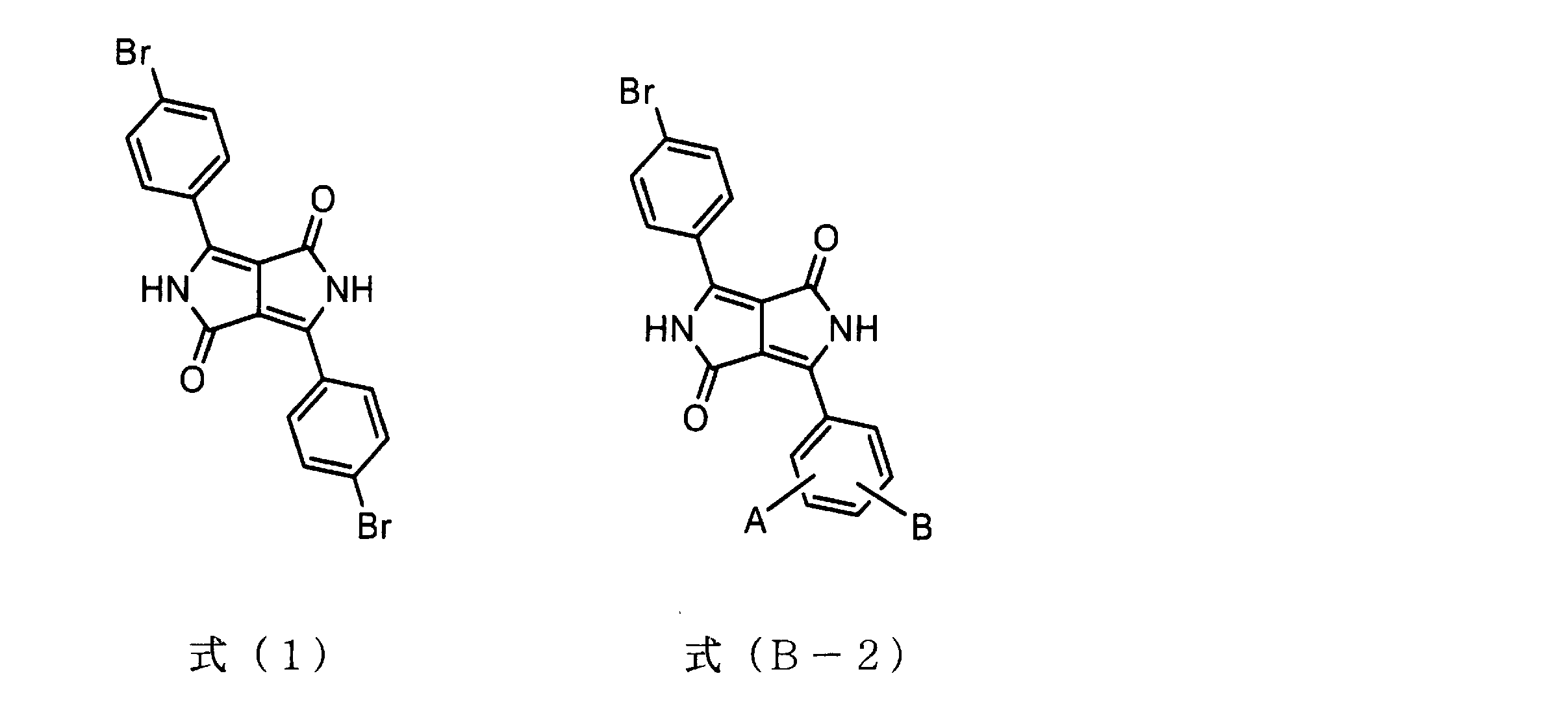
AおよびBは、それぞれ独立して、水素原子、フッ素原子、塩素原子、ヨウ素原子、シアノ基、炭素数1~12のアルキル基、置換基を有してもよいフェニル基、-CF3、-OR1、-SR2、-N(R3)R4、-COOR5、-CONH2、-CONHR6、-CON(R7)R8、-SO2NH2、-SO2NHR9、または、-SO2N(R10)R11であり、
R1~R11は、それぞれ独立して、炭素数1~12のアルキル基、置換基を有してもよいフェニル基、または、置換基を有してもよいアラルキル基である。
ただし、AおよびBが同時に水素原子になることはない。]
上記炭素数1~12のアルキル基としては、直鎖状でも分岐状でもよく、具体的にメチル基、エチル基、プロピル基、イソプロピル基、ブチル基、sec-ブチル基、tert-ブチル基、ペンチル基、ヘキシル基、ヘプチル基、オクチル基、デシル基、ドデシル基、1,5-ジメチルヘキシル基、1,6-ジメチルヘプチル基、2-エチルヘキシル基等が挙げられるが、これらに限定されるものではない。
上記置換基を有してもよいフェニル基としては、炭素数1~4のアルキル基、トリフルオロメチル基、ハロゲン原子、ニトロ基、シアノ基、カルバモイル基、スルファモイル基、炭素数1~4のアルコキシル基などの置換基を有するフェニル基が挙げられる。フェニル基は、これらの置換基を1つ又は2つ以上有していてもよい。より具体的には、フェニル基、p-メチルフェニル基、4-tert-ブチルフェニル基、p-ニトロフェニル基、p-メトキシフェニル基、p-クロロフェニル基、2,4-ジクロロフェニル基、3-カルバモイルフェニル基等が挙げられるが、これらに限定されるものではない。
上記置換基を有してもよいアラルキル基としては、炭素数1~4のアルキル基、トリフルオロメチル基、ハロゲン原子、ニトロ基、シアノ基、カルバモイル基、スルファモイル基、炭素数1~4のアルコキシル基などの置換基を有するアラルキル基が挙げられる。アラルキル基は、これらの置換基を1つ又は2つ以上有していてもよい。より具体的には、ベンジル基、4-メチルベンジル基、4-tert-ブチルベンジル基、4-メトキシベンジル基、4-ニトロベンジル基、2,4-ジクロロベンジル基などが挙げられるが、これらに限定されるものではない。
式(B-2)の特定ヘテロジケトピロロピロール顔料Bの具体例を以下に挙げるが、これらに限定されるものではない。
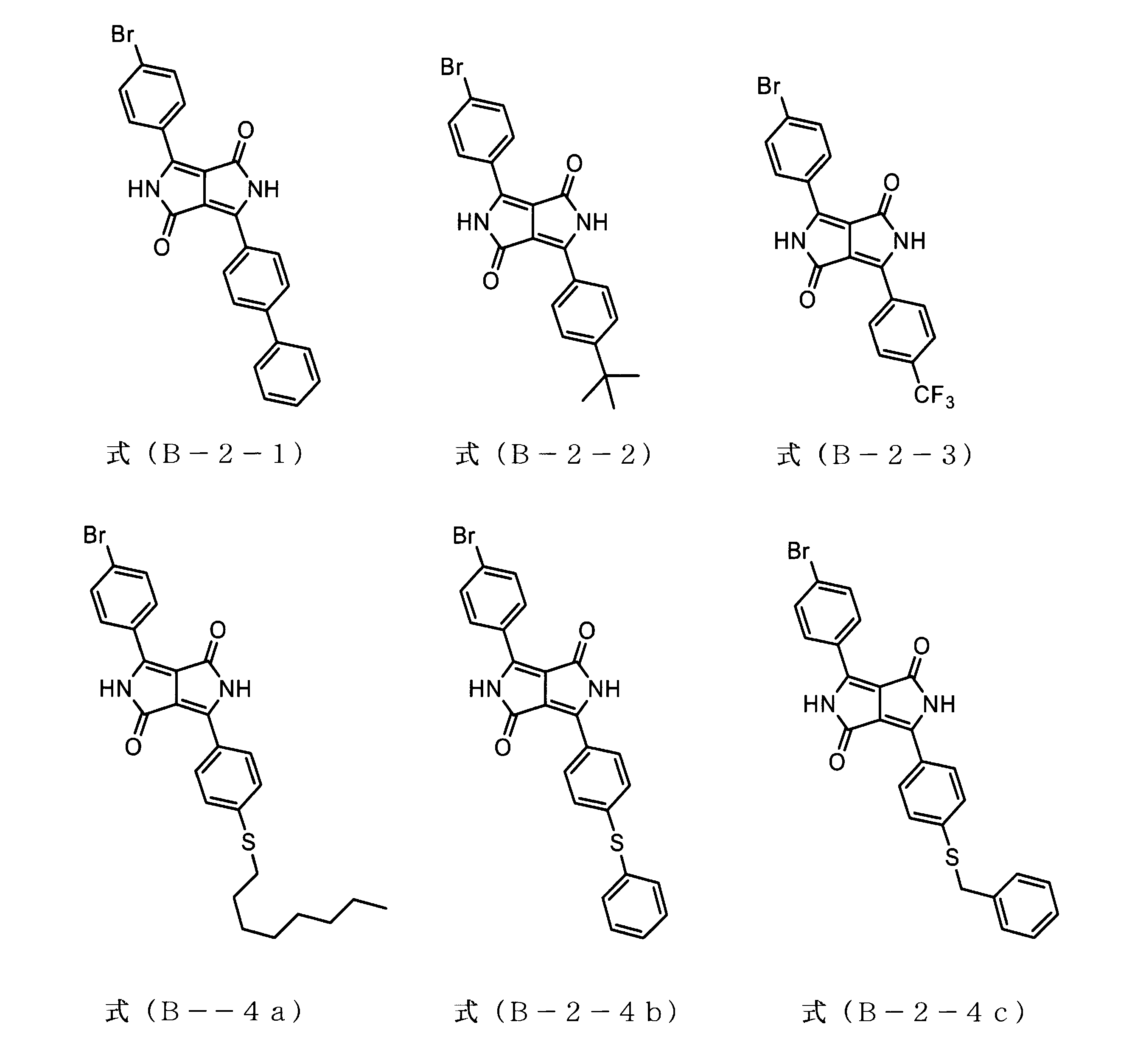
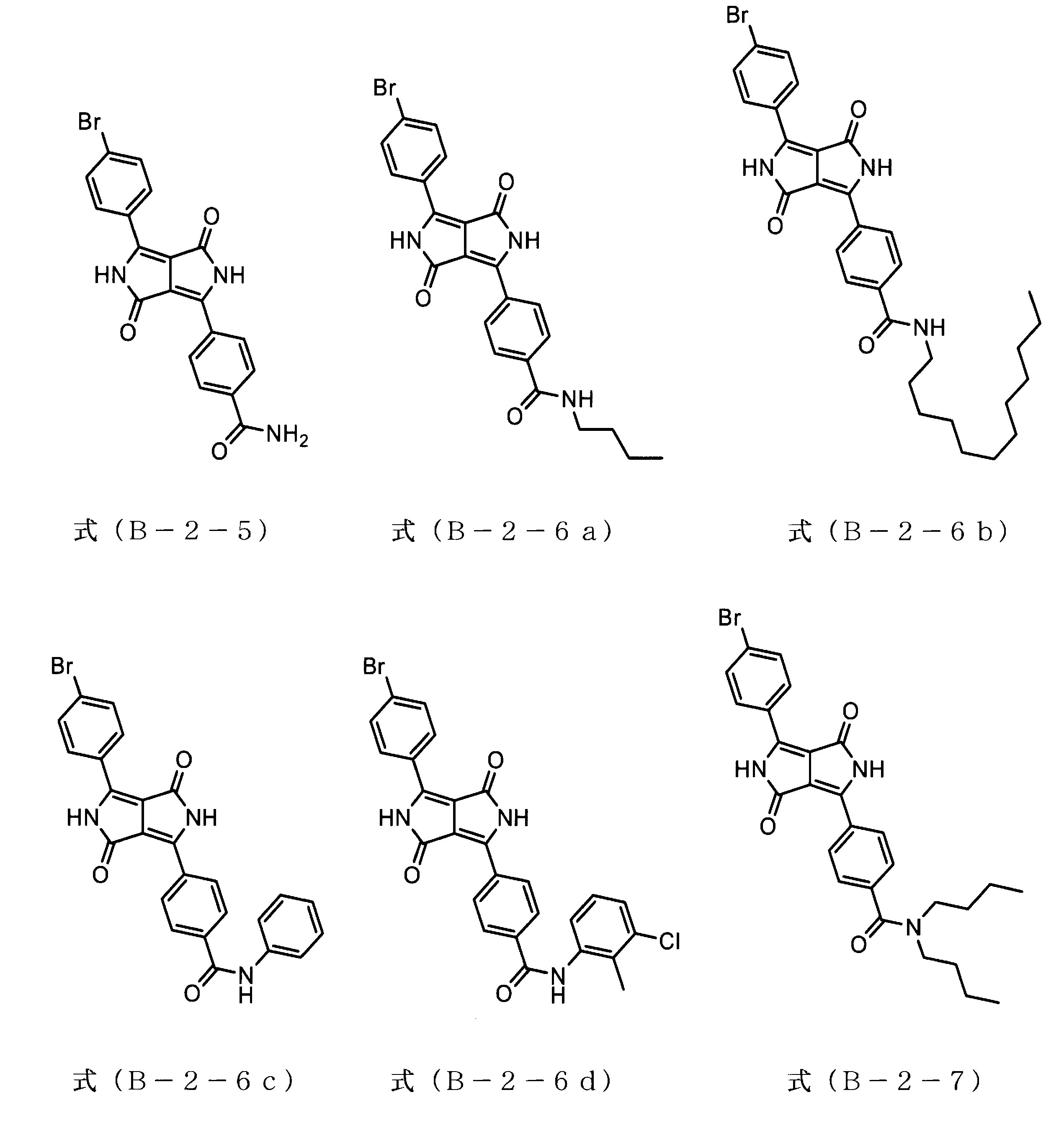
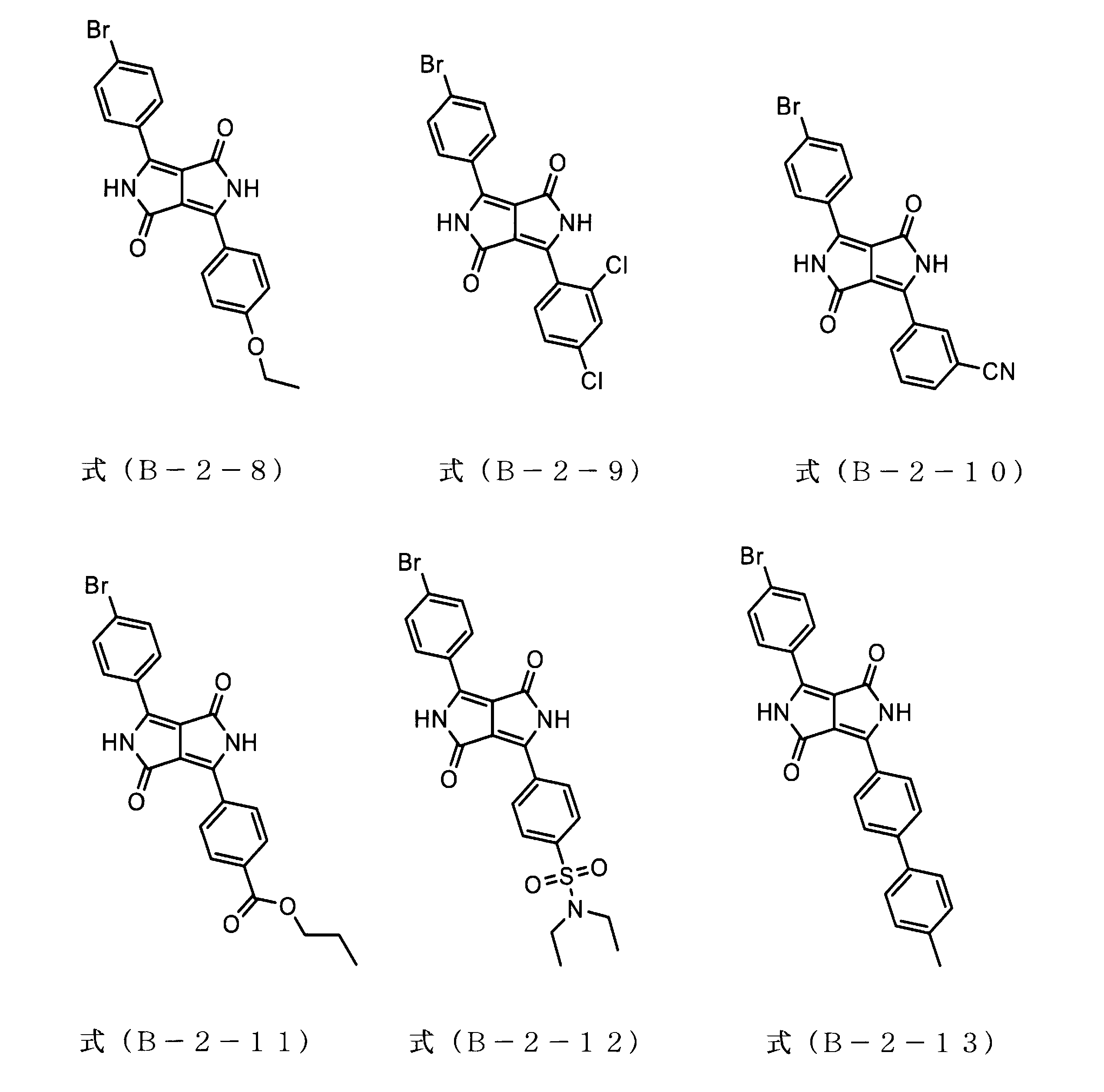

顔料組成物に用いられる式(B-2)において、式(B-2-1)、式(B-2-2)、式(B-2-4a)、式(B-2-6b)、式(B-2-7)等が色相、コントラストおよび結晶析出抑制効果の点から好ましい。
顔料組成物中の式(1)と式(B-2)の比率は、質量比で97:3~85:15の範囲である。式(B-2)の比率が15質量%を超えると、結晶析出抑制効果は得られるが、式(1)の優れた色調を損なってしまう。これは、式(1)の臭素化ジケトピロロピロール顔料が、式(B-2)の特定ヘテロジケトピロロピロール顔料Bより色調が優れていることに起因する。一方、式(B-2)の比率が3質量%未満では、高コントラスト化および結晶析出抑制効果が十分ではない。結晶析出抑制効果が十分でない場合、加熱工程で塗膜表面に析出した結晶状異物によって光散乱が起こり、明度およびコントラスト比の低下を引き起こす。したがって、上記質量比範囲のジケトピロロピロール顔料組成物を使用することにより、高明度かつ高コントラストを達成し、加熱工程によってもジケトピロロピロール系顔料の結晶析出を抑制することができる。
顔料組成物は、その効果を損なわない範囲で、式(1)のジケトピロロピロール顔料、および式(B-2)の特定へテロジケトピロロピロール顔料B以外のジケトピロロピロール系顔料を併用しても良い。
また、式(1)のジケトピロロピロール顔料、および式(B-2)の特定へテロジケトピロロピロール顔料B以外のジケトピロロピロール系顔料として、前述の式(A-2)の特定へテロジケトピロロピロール顔料を用いることも可能である。この際、式(A-2)で表される特定へテロジケトピロロピロール顔料の含有量がジケトピロロピロール系顔料の合計質量を基準として1質量%~15質量%であることが好ましい。
(ジケトピロロピロール系顔料の製造法)
式(1)の臭素化ジケトピロロピロール顔料は、第1の実施態様における方法と同様の方法により製造することができる。
式(1)の臭素化ジケトピロロピロール顔料は、第1の実施態様における方法と同様の方法により製造することができる。
式(B-2)の特定ヘテロジケトピロロピロール顔料Bは、例えば文献Synth.Commun.,1988,18,1213およびTetrahedron,58(2002)5547-5565に記載された方法を用いて合成を行うことができる。特定ヘテロジケトピロロピロール顔料Bの製造方法はこの方法に限定されるものではない。
また、式(1)の臭素化ジケトピロロピロール顔料と式(B-2)の特定ヘテロジケトピロロピロール顔料Bとを同時に微細な顔料組成物として製造することもできる。これは、コハク酸ジエステル合成法において、少なくとも2種の構造的に異なるベンゾニトリル化合物を用いる方法(以下、「コハク酸ジエステル共合成法」と称す)を利用することで可能となる。具体的には、上記WO2009/081930号パンフレットに記載されている方法において、使用する複数のベンゾニトリル化合物を、4-ブロモベンゾニトリルと下記式(B-3)で表されるベンゾニトリル化合物から選定することにより第2の実施態様のジケトピロロピロール系顔料組成物を製造することができる。

AおよびBは、それぞれ独立して、水素原子、フッ素原子、塩素原子、ヨウ素原子、シアノ基、炭素数1~12のアルキル基、置換基を有してもよいフェニル基、-CF3、-OR1、-SR2、-N(R3)R4、-COOR5、-CONH2、-CONHR6、-CON(R7)R8、-SO2NH2、-SO2NHR9、または、-SO2N(R10)R11であり、
R1~R11は、それぞれ独立して、炭素数1~12のアルキル基、置換基を有してもよいフェニル基、または、置換基を有してもよいアラルキル基である。
ただし、AおよびBが同時に水素原子になることはない。]
炭素数1~12のアルキル基、置換基を有してもよいフェニル基、または、置換基を有してもよいアラルキル基は、上記の式(B-2)における基と同様である。
第2の実施態様に用いることができる上記式(B-3)のベンゾニトリル化合物の具体例を以下に挙げるが、これらに限定されるものではない。
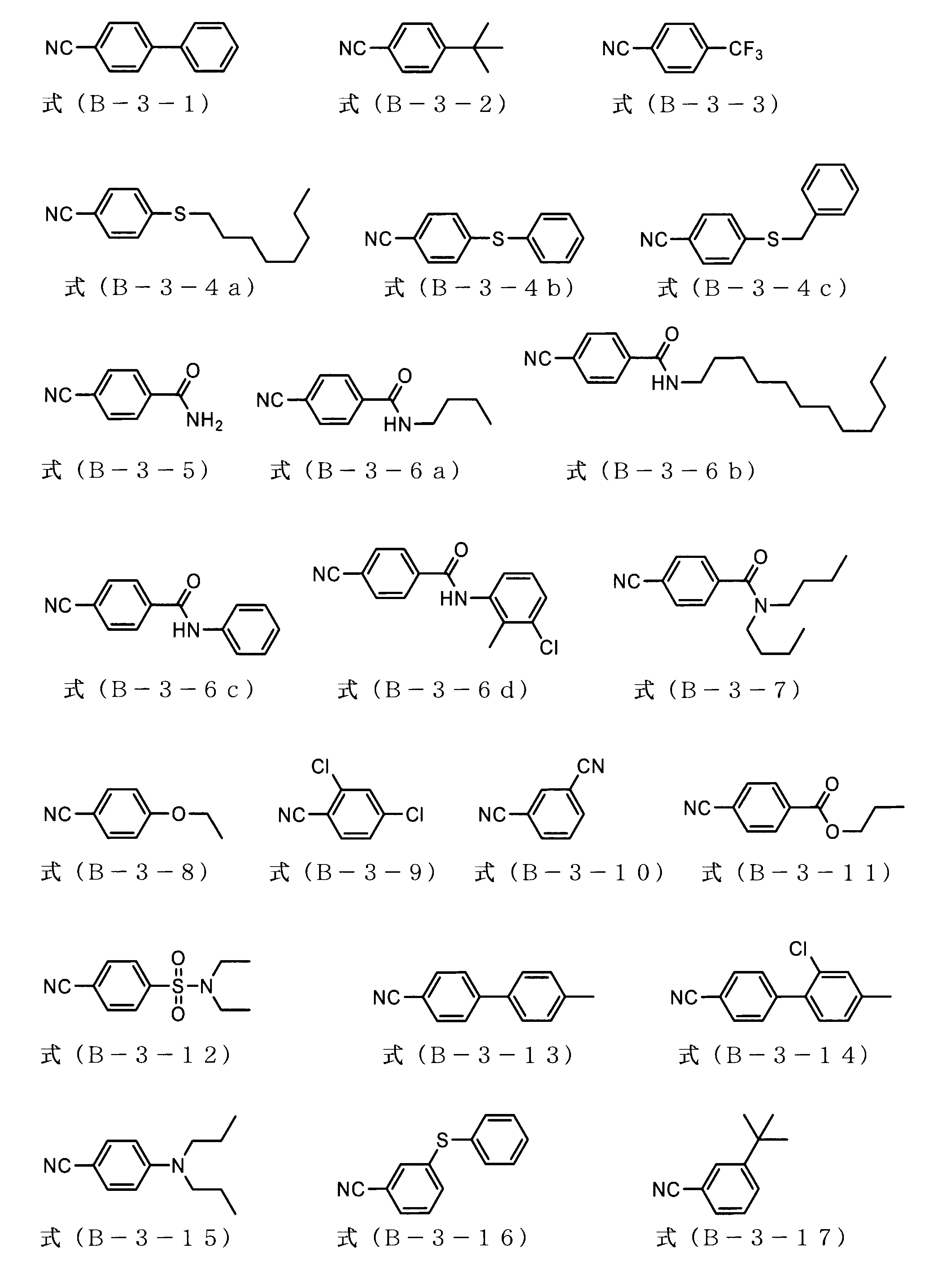
顔料組成物は、臭素化ジケトピロロピロール顔料と特定ヘテロジケトピロロピロール顔料Bとを別々に製造したものを混合しても良いが、製造の容易さからコハク酸ジエステル共合成法によって同時に顔料組成物を製造することが望ましい。別々に製造したものを使用する場合は、2種の顔料を分散する前に単純に混合してもよいし、ソルトミリング処理により粉砕混合してもよい。
コハク酸ジエステル共合成法により式(1)の臭素化ジケトピロロピロール顔料と式(B-2)の特定ヘテロジケトピロロピロール顔料Bとの顔料組成物を製造する場合、コハク酸ジエステル1モルに対して、4-ブロモベンゾニトリルと式(B-3)のベンゾニトリル化合物との混合物2モルを反応させる。このとき、生成するジケトピロロピロール系顔料組成物中の式(1)と式(B-2)の質量比が97:3~85:15になるように、4-ブロモベンゾニトリルと式(B-3)のベンゾニトリル化合物との混合比(モル比)を調整することが望ましい。式(B-3)のベンゾニトリル化合物の種類によって反応性が異なるため、4-ブロモベンゾニトリルと式(B-3)の混合比(モル比)は変わってくる。ジケトピロロピロール系顔料組成物の質量比を所望の範囲に収めるためには、4-ブロモベンゾニトリルと式(B-3)の混合比(モル比)は、だいたい80:20~98:2の範囲になる。また、コハク酸ジエステル共合成法では、式(B-3)のベンゾニトリル化合物がコハク酸ジエステル1モルに対し2モル反応したジケトピロロピロール顔料(すなわち、臭素原子が含まれないジケトピロロピロール顔料)が生成することもあるが、ごく微量であるため影響はほとんどない。
コハク酸ジエステル共合成法において、コハク酸ジエステルとベンゾニトリル化合物との反応比率は、コハク酸ジエステル1モルに対して、ベンゾニトリル化合物2モルが基本となるが、コハク酸ジエステルの量をベンゾニトリル化合物に対して25モル%程度過剰に用いることは、収率の向上に有効である。
コハク酸ジエステル共合成法により製造された顔料組成物において、臭素化ジケトピロロピロール顔料と特定ヘテロジケトピロロピロール顔料Bの質量比は、第1の実施態様における質量比の分析方法と同様に分析することができる。
(色素誘導体)
第2の実施態様の顔料組成物には、顔料結晶成長の抑制、ならびに顔料分散性向上を目的に色素誘導体を使用することができる。色素誘導体の例としては、第1の実施態様の色素誘導体と同様の色素誘導体が挙げられる。色素誘導体の好ましい使用量も、第1の実施態様と同様である。
第2の実施態様の顔料組成物には、顔料結晶成長の抑制、ならびに顔料分散性向上を目的に色素誘導体を使用することができる。色素誘導体の例としては、第1の実施態様の色素誘導体と同様の色素誘導体が挙げられる。色素誘導体の好ましい使用量も、第1の実施態様と同様である。
(顔料の平均一次粒子径)
第2の実施態様のジケトピロロピロール系顔料組成物は、一次粒子径が非常に微細であり、また分布の幅が狭く、シャープな粒度分布をもつことが好ましい。第2の実施態様のジケトピロロピロール系顔料組成物のTEM(透過型電子顕微鏡)により求められる平均一次粒子径(個数平均粒径)は5~70nmの範囲であることが好ましい。5nmよりも小さくなると有機溶剤中への分散が困難になってしまうことがある。また70nmよりも大きくなってしまうと、十分なコントラスト比を得ることができなくなってしまうことがある。このような理由から、より好ましい範囲は10~40nmの範囲である。ジケトピロロピロール系顔料組成物を上記合成法によって製造した段階で、平均一次粒子径が上記範囲である場合はそのまま使用してもよいが、そうでない場合は、ソルトミリング処理等により顔料の微細化および整粒化を行うことが望ましい。
第2の実施態様のジケトピロロピロール系顔料組成物は、一次粒子径が非常に微細であり、また分布の幅が狭く、シャープな粒度分布をもつことが好ましい。第2の実施態様のジケトピロロピロール系顔料組成物のTEM(透過型電子顕微鏡)により求められる平均一次粒子径(個数平均粒径)は5~70nmの範囲であることが好ましい。5nmよりも小さくなると有機溶剤中への分散が困難になってしまうことがある。また70nmよりも大きくなってしまうと、十分なコントラスト比を得ることができなくなってしまうことがある。このような理由から、より好ましい範囲は10~40nmの範囲である。ジケトピロロピロール系顔料組成物を上記合成法によって製造した段階で、平均一次粒子径が上記範囲である場合はそのまま使用してもよいが、そうでない場合は、ソルトミリング処理等により顔料の微細化および整粒化を行うことが望ましい。
(顔料の微細化)
第2の実施態様のジケトピロロピロール系顔料組成物を含む顔料は、微細化して用いることが好ましく、微細化方法としては、ソルトミリング処理が好ましい。ソルトミリング処理は、第1の実施態様と同様に行うことができる。
第2の実施態様のジケトピロロピロール系顔料組成物を含む顔料は、微細化して用いることが好ましく、微細化方法としては、ソルトミリング処理が好ましい。ソルトミリング処理は、第1の実施態様と同様に行うことができる。
[カラーフィルタ用着色組成物]
次に、本発明の実施態様であるカラーフィルタ用着色組成物について説明する。
次に、本発明の実施態様であるカラーフィルタ用着色組成物について説明する。
[第3の実施態様]
(カラーフィルタ用着色組成物)
第3の実施態様のカラーフィルタ用着色組成物は、第1の実施態様のジケトピロロピロール系顔料組成物を含有する。第1の実施態様のジケトピロロピロール系顔料組成物は、バインダー樹脂および有機溶剤と併用することにより、着色組成物として使用することができる。また、第1の実施態様のジケトピロロピロール系顔料組成物以外の着色剤を併用しても良い。例えば、第2の実施態様のジケトピロロピロール系顔料組成物を用いることも可能である。
(カラーフィルタ用着色組成物)
第3の実施態様のカラーフィルタ用着色組成物は、第1の実施態様のジケトピロロピロール系顔料組成物を含有する。第1の実施態様のジケトピロロピロール系顔料組成物は、バインダー樹脂および有機溶剤と併用することにより、着色組成物として使用することができる。また、第1の実施態様のジケトピロロピロール系顔料組成物以外の着色剤を併用しても良い。例えば、第2の実施態様のジケトピロロピロール系顔料組成物を用いることも可能である。
(その他着色剤)
第3の実施態様の着色組成物は、色度を調製するため等に、その効果を損なわない範囲で第1の実施態様のジケトピロロピロール系顔料組成物以外の顔料あるいは染料を、単独もしくは2種類以上併用してもよい。
第3の実施態様の着色組成物は、色度を調製するため等に、その効果を損なわない範囲で第1の実施態様のジケトピロロピロール系顔料組成物以外の顔料あるいは染料を、単独もしくは2種類以上併用してもよい。
ジケトピロロピロール系顔料組成物以外の着色剤を併用する場合、着色剤全量中(100質量%)、第1の実施態様のジケトピロロピロール系顔料組成物は30質量%~100質量%の範囲であることが好ましい。より好ましくは、50質量%~100質量%の範囲である。第1の実施態様のジケトピロロピロール系顔料組成物が30質量%より少ない場合は、明度の優れた効果を十分に発揮できない場合がある。
(バインダー樹脂)
着色組成物に含まれるバインダー樹脂としては、従来公知の熱可塑性樹脂、および熱硬化性樹脂が挙げられる。また、バインダー樹脂として、第5の実施態様におけるアルカリ可溶性感光性樹脂(C-B1)を含有するバインダー樹脂(C-B)を用いることも、第6の実施態様における構成単位(D-b1)~(D-b3)を有する樹脂(D-B1)を含有するバインダー樹脂(D-B)を用いることも可能である。
着色組成物に含まれるバインダー樹脂としては、従来公知の熱可塑性樹脂、および熱硬化性樹脂が挙げられる。また、バインダー樹脂として、第5の実施態様におけるアルカリ可溶性感光性樹脂(C-B1)を含有するバインダー樹脂(C-B)を用いることも、第6の実施態様における構成単位(D-b1)~(D-b3)を有する樹脂(D-B1)を含有するバインダー樹脂(D-B)を用いることも可能である。
熱可塑性樹脂としては、例えば、アクリル樹脂、ブチラール樹脂、スチレン-マレイン酸共重合体、塩素化ポリエチレン、塩素化ポリプロピレン、ポリ塩化ビニル、塩化ビニル-酢酸ビニル共重合体、ポリ酢酸ビニル、ポリウレタン系樹脂、ポリエステル樹脂、ビニル系樹脂、アルキッド樹脂、ポリスチレン樹脂、ポリアミド樹脂、ゴム系樹脂、環化ゴム系樹脂、セルロース類、ポリエチレン(HDPE、LDPE)、ポリブタジエン、およびポリイミド樹脂等が挙げられる。
カラーフィルタ用着色組成物として用いる場合には、可視光領域の400~700nmの全波長領域において分光透過率が好ましくは80%以上、より好ましくは95%以上の樹脂であることが好ましい。また、アルカリ現像型着色レジストの形態で用いる場合には、酸性基含有エチレン性不飽和単量体を共重合したアルカリ可溶性ビニル系樹脂を用いることが好ましい。また、さらに光感度を向上させるために、エチレン性不飽和活性二重結合を有するエネルギー線硬化性樹脂を用いることもできる。
酸性基含有エチレン性不飽和単量体を共重合したアルカリ可溶性ビニル系樹脂としては、例えば、カルボキシル基、スルホン基等の酸性基を有する樹脂が挙げられる。アルカリ可溶性樹脂として具体的には、酸性基を有するアクリル樹脂、α-オレフィン/(無水)マレイン酸共重合体、スチレン/スチレンスルホン酸共重合体、エチレン/(メタ)アクリル酸共重合体、またはイソブチレン/(無水)マレイン酸共重合体等が挙げられる。中でも、酸性基を有するアクリル樹脂、およびスチレン/スチレンスルホン酸共重合体から選ばれる少なくとも1種の樹脂、特に酸性基を有するアクリル樹脂は、耐熱性、透明性が高いため、好適に用いられる。
エチレン性不飽和活性二重結合を有するエネルギー線硬化性樹脂としては、水酸基、カルボキシル基、アミノ基等の反応性の置換基を有する高分子にイソシアネート基、アルデヒド基、エポキシ基等の反応性置換基を有する(メタ)アクリル化合物やケイヒ酸を反応させて、(メタ)アクリロイル基、スチリル基等の光架橋性基を該高分子に導入した樹脂が用いられる。また、スチレン-無水マレイン酸共重合物やα-オレフィン-無水マレイン酸共重合物等の酸無水物を含む高分子をヒドロキシアルキル(メタ)アクリレート等の水酸基を有する(メタ)アクリル化合物によりハーフエステル化したものも用いられる。
熱可塑性樹脂として、アルカリ可溶性能とエネルギー線硬化性能とを併せもつものも、カラーフィルタ用感光性着色組成物として好ましい。
上記熱可塑性樹脂を構成するモノマーとして以下のものが挙げられる。例えば、メチル(メタ)アクリレート、エチル(メタ)アクリレート、n-プロピル(メタ)アクリレート、イソプロピル(メタ)アクリレート、n-ブチル(メタ)アクリレート、イソブチル(メタ)アクリレート、t-ブチル(メタ)アクリレート、2-エチルヘキシル(メタ)アクリレート、シクロヘキシル(メタ)アクリレート、ステアリル(メタ)アクリレート、ラウリル(メタ)アクリレート、テトラヒドロフルフリル(メタ)アクリレート、イソボルニル(メタ)アクリレート、フェニル(メタ)アクリレート、ベンジル(メタ)アクリレート、フェノキシエチル(メタ)アクリレート、フェノキシジエチレングリコール(メタ)アクリレート、メトキシポリプロピレングリコール(メタ)アクリレート、またはエトキシポリエチレングリコール(メタ)アクリレート等の(メタ)アクリレート類、あるいは、(メタ)アクリルアミド、N,N-ジメチル(メタ)アクリルアミド、N,N-ジエチル(メタ)アクリルアミド、N-イソプロピル(メタ)アクリルアミド、ダイアセトン(メタ)アクリルアミド、またはアクリロイルモルホリン等の(メタ)アクリルアミド類、スチレン、またはα-メチルスチレン等のスチレン類、エチルビニルエーテル、n-プロピルビニルエーテル、イソプロピルビニルエーテル、n-ブチルビニルエーテル、又はイソブチルビニルエーテル等のビニルエーテル類、酢酸ビニル、またはプロピオン酸ビニル等の脂肪酸ビニル類が挙げられる。
あるいは、シクロヘキシルマレイミド、フェニルマレイミド、メチルマレイミド、エチルマレイミド、1,2-ビスマレイミドエタン、1,6-ビスマレイミドヘキサン、3-マレイミドプロピオン酸、6,7-メチレンジオキシ-4-メチル-3-マレイミドクマリン、4,4’-ビスマレイミドジフェニルメタン、ビス(3-エチル-5-メチル-4-マレイミドフェニル)メタン、N,N’-1,3-フェニレンジマレイミド、N,N’-1,4-フェニレンジマレイミド、N-(1-ピレニル)マレイミド、N-(2,4,6-トリクロロフェニル)マレイミド、N-(4-アミノフェニル)マレイミド、N-(4-ニトロフェニル)マレイミド、N-ベンジルマレイミド、N-ブロモメチル-2,3-ジクロロマレイミド、N-スクシンイミジル-3-マレイミドベンゾエート、N-スクシンイミジル-3-マレイミドプロピオナート、N-スクシンイミジル-4-マレイミドブチラート、N-スクシンイミジル-6-マレイミドヘキサノアート、N-[4-(2-ベンゾイミダゾリル)フェニル]マレイミド、9-マレイミドアクリジン等のN-置換マレイミド類が挙げられる。
熱硬化性樹脂としては、例えば、エポキシ樹脂、ベンゾグアナミン樹脂、ロジン変性マレイン酸樹脂、ロジン変性フマル酸樹脂、メラミン樹脂、尿素樹脂、およびフェノール樹脂等が挙げられる。中でも、耐熱性向上の観点から、エポキシ樹脂、メラミン樹脂がより好適に用いられる。
バインダー樹脂の質量平均分子量(Mw)は、着色剤を好ましく分散させるためには、5,000~80,000の範囲が好ましく、より好ましくは7,000~50,000の範囲である。また数平均分子量(Mn)は2,500~40,000の範囲が好ましく、Mw/Mnの値は10以下であることが好ましい。
ここで質量平均分子量(Mw)、数平均分子量(Mn)は、東ソー株式会社製ゲルパーミエイションクロマトグラフィー「HLC-8120GPC」において、分離カラムを4本直列に繋ぎ、充填剤には順に東ソー株式会社製「TSK-GEL SUPER H5000」、「H4000」、「H3000」、および「H2000」を用い、移動相にテトラヒドロフランを用いて測定したポリスチレン換算分子量である。
バインダー樹脂をカラーフィルタ用着色組成物として使用する場合には、顔料吸着基及び現像時のアルカリ可溶基として働くカルボキシル基、顔料担体および溶剤に対する親和性基として働く脂肪族基および芳香族基のバランスを考慮することが望ましい。顔料分散性、現像性、さらには耐久性の観点から、酸価20~300mgKOH/gの樹脂を用いることが好ましい。酸価が、20mgKOH/g未満では、現像液に対する溶解性が低く、微細パターン形成するのが困難となる場合がある。300mgKOH/gを超えると、現像で微細パターンが残らなくなる場合がある。
バインダー樹脂は、着色剤100質量部に対し、20~500質量部の量で用いることができる。20質量部より少ない場合、成膜性および諸耐性が不十分となる場合があり、500質量部より多いと顔料濃度が低く、色特性を発現できない場合がある。
(有機溶剤)
着色組成物には、着色剤を充分に着色剤担体中に分散、浸透させ、ガラス基板等の基板上に乾燥膜厚が0.2~5μmとなるように塗布してフィルタセグメントを形成することを容易にするために有機溶剤を含有させる。有機溶剤は、着色組成物の塗布性が良好であることに加え、着色組成物各成分の溶解性、さらには安全性を考慮して選定される。
着色組成物には、着色剤を充分に着色剤担体中に分散、浸透させ、ガラス基板等の基板上に乾燥膜厚が0.2~5μmとなるように塗布してフィルタセグメントを形成することを容易にするために有機溶剤を含有させる。有機溶剤は、着色組成物の塗布性が良好であることに加え、着色組成物各成分の溶解性、さらには安全性を考慮して選定される。
有機溶剤は、着色組成物を適正な粘度に調節し、目的とする均一な膜厚のフィルタセグメントを形成できることから、着色剤100質量部に対し、500~4000質量部の量で用いることが好ましい。
(着色組成物の製法)
着色組成物は、上記のジケトピロロピロール系顔料組成物を、上記バインダー樹脂と有機溶剤とからなる着色剤担体中に、ニーダー、2本ロールミル、3本ロールミル、ボールミル、横型サンドミル、縦型サンドミル、アニュラー型ビーズミル、またはアトライター等の各種分散手段を用いて微細に分散して製造することができる。また、着色組成物は、ジケトピロロピロール系顔料組成物とその他の着色剤等を同時に着色剤担体に分散しても良いし、別々に着色材担体に分散したものを混合しても良い。
着色組成物は、上記のジケトピロロピロール系顔料組成物を、上記バインダー樹脂と有機溶剤とからなる着色剤担体中に、ニーダー、2本ロールミル、3本ロールミル、ボールミル、横型サンドミル、縦型サンドミル、アニュラー型ビーズミル、またはアトライター等の各種分散手段を用いて微細に分散して製造することができる。また、着色組成物は、ジケトピロロピロール系顔料組成物とその他の着色剤等を同時に着色剤担体に分散しても良いし、別々に着色材担体に分散したものを混合しても良い。
(分散助剤)
着色剤を着色剤担体中に分散する際に、適宜、色素誘導体、樹脂型分散剤、界面活性剤等の分散助剤を含有してもよい。分散助剤は、分散後の着色剤の再凝集を防止する効果が大きいので、分散助剤を用いて着色剤を着色剤担体中に分散してなる着色組成物は、コントラストおよび粘度安定性が良好になる。
樹脂型分散剤、界面活性剤を添加する場合には、着色剤100質量部に対し、それぞれ、好ましくは0.1~55質量部、さらに好ましくは0.1~45質量部である。樹脂型分散剤、界面活性剤の配合量が、0.1質量部未満の場合には、添加した効果が得られ難く、配合量が55質量部より多いと、過剰な分散助剤により分散に影響を及ぼすことがある。
着色剤を着色剤担体中に分散する際に、適宜、色素誘導体、樹脂型分散剤、界面活性剤等の分散助剤を含有してもよい。分散助剤は、分散後の着色剤の再凝集を防止する効果が大きいので、分散助剤を用いて着色剤を着色剤担体中に分散してなる着色組成物は、コントラストおよび粘度安定性が良好になる。
樹脂型分散剤、界面活性剤を添加する場合には、着色剤100質量部に対し、それぞれ、好ましくは0.1~55質量部、さらに好ましくは0.1~45質量部である。樹脂型分散剤、界面活性剤の配合量が、0.1質量部未満の場合には、添加した効果が得られ難く、配合量が55質量部より多いと、過剰な分散助剤により分散に影響を及ぼすことがある。
(任意成分)
着色組成物は、任意成分として、分散助剤の他に、例えば以下の成分をさらに含有してもよい。任意成分の具体例は、後述のとおりである。
着色組成物は、任意成分として、分散助剤の他に、例えば以下の成分をさらに含有してもよい。任意成分の具体例は、後述のとおりである。
(光重合性単量体および/または光重合開始剤)
着色組成物は、さらに光重合性単量体および/または光重合開始剤を添加し、感光性着色組成物として使用することができる。
着色組成物は、さらに光重合性単量体および/または光重合開始剤を添加し、感光性着色組成物として使用することができる。
感光性着色組成物に使用される光重合性単量体には、紫外線や熱などにより硬化して透明樹脂を生成するモノマーもしくはオリゴマーが含まれ、これらを単独で、または2種以上混合して用いることができる。
モノマーの配合量は、着色剤100質量部に対し、5~400質量部であることが好ましく、光硬化性および現像性の観点から10~300質量部であることがより好ましい。
モノマーの配合量は、着色剤100質量部に対し、5~400質量部であることが好ましく、光硬化性および現像性の観点から10~300質量部であることがより好ましい。
感光性着色組成物には、該組成物を紫外線照射により硬化させ、フォトリソグラフ法によりフィルタセグメントを形成する場合は、光重合開始剤を加えて溶剤現像型あるいはアルカリ現像型着色レジスト材の形態で調製することができる。
光重合開始剤は、感光性着色組成物中の着色剤100質量部に対し、2~200質量部であることが好ましく、光硬化性及び現像性の観点から3~150質量部であることがより好ましい。
光重合開始剤は、感光性着色組成物中の着色剤100質量部に対し、2~200質量部であることが好ましく、光硬化性及び現像性の観点から3~150質量部であることがより好ましい。
(増感剤)
感光性着色組成物には、増感剤を含有させることができる。
増感剤を使用する際の配合量は、感光性着色組成物中に含まれる光重合開始剤100質量部に対し、3~60質量部であることが好ましく、光硬化性、現像性の観点から5~50質量部であることがより好ましい。
感光性着色組成物には、増感剤を含有させることができる。
増感剤を使用する際の配合量は、感光性着色組成物中に含まれる光重合開始剤100質量部に対し、3~60質量部であることが好ましく、光硬化性、現像性の観点から5~50質量部であることがより好ましい。
(多官能チオール)
感光性着色組成物は、連鎖移動剤としての働きをする多官能チオールを含有することができる。多官能チオールは、チオール基を2個以上有する化合物であることが好ましい。
多官能チオールの含有量は、感光性着色組成物の全固形分の質量を基準(100質量%)として好ましくは0.1~30質量%であり、より好ましくは1~20質量%である。多官能チオールの含有量が0.1質量%未満では多官能チオールの添加効果が十分に得られない場合があり、30質量%を越えると感度が高すぎて逆に解像度が低下する場合がある。
感光性着色組成物は、連鎖移動剤としての働きをする多官能チオールを含有することができる。多官能チオールは、チオール基を2個以上有する化合物であることが好ましい。
多官能チオールの含有量は、感光性着色組成物の全固形分の質量を基準(100質量%)として好ましくは0.1~30質量%であり、より好ましくは1~20質量%である。多官能チオールの含有量が0.1質量%未満では多官能チオールの添加効果が十分に得られない場合があり、30質量%を越えると感度が高すぎて逆に解像度が低下する場合がある。
(酸化防止剤)
着色組成物は、酸化防止剤を含有することができる。酸化防止剤は、着色組成物に含まれる光重合開始剤や熱硬化性化合物が、熱硬化やITOアニール時の熱工程によって酸化し黄変することを防ぐため、塗膜の透過率を高くすることができる。そのため、酸化防止剤を含むことで、加熱工程時の酸化による黄変を防止し、高い塗膜の透過率を得ることができる。
酸化防止剤の含有量は、着色組成物の固形分質量を基準(100質量%)として、0.5~5.0質量%の場合、明度、感度が良好であるためより好ましい。
着色組成物は、酸化防止剤を含有することができる。酸化防止剤は、着色組成物に含まれる光重合開始剤や熱硬化性化合物が、熱硬化やITOアニール時の熱工程によって酸化し黄変することを防ぐため、塗膜の透過率を高くすることができる。そのため、酸化防止剤を含むことで、加熱工程時の酸化による黄変を防止し、高い塗膜の透過率を得ることができる。
酸化防止剤の含有量は、着色組成物の固形分質量を基準(100質量%)として、0.5~5.0質量%の場合、明度、感度が良好であるためより好ましい。
(アミン系化合物)
着色組成物には、溶存している酸素を還元する働きのあるアミン系化合物を含有させることができる。
着色組成物には、溶存している酸素を還元する働きのあるアミン系化合物を含有させることができる。
(レベリング剤)
着色組成物には、透明基板上での組成物のレベリング性をよくするため、レベリング剤を添加することが好ましい。レベリング剤の含有量は通常、着色組成物の全質量を基準(100質量%)として、0.003~0.5質量%用いることが好ましい。
着色組成物には、透明基板上での組成物のレベリング性をよくするため、レベリング剤を添加することが好ましい。レベリング剤の含有量は通常、着色組成物の全質量を基準(100質量%)として、0.003~0.5質量%用いることが好ましい。
(硬化剤、硬化促進剤)
着色組成物には、熱硬化性樹脂の硬化を補助するため、必要に応じて、硬化剤、硬化促進剤などを含んでいてもよい。上記硬化促進剤の含有量としては、熱硬化性樹脂100質量部に対し、0.01~15質量部が好ましい。
着色組成物には、熱硬化性樹脂の硬化を補助するため、必要に応じて、硬化剤、硬化促進剤などを含んでいてもよい。上記硬化促進剤の含有量としては、熱硬化性樹脂100質量部に対し、0.01~15質量部が好ましい。
(その他の添加剤成分)
着色組成物には、経時粘度を安定化させるために貯蔵安定剤を含有させることができる。また、透明基板との密着性を高めるためにシランカップリング剤等の密着向上剤を含有させることもできる。
貯蔵安定剤は、着色剤の全量を基準(100質量%)として、0.1~10質量%の量で用いることができる。
密着向上剤は、着色組成物中の着色剤の全量を基準(100質量%)として、0.01~10質量%、好ましくは0.05~5質量%の量で用いることができる。
着色組成物には、経時粘度を安定化させるために貯蔵安定剤を含有させることができる。また、透明基板との密着性を高めるためにシランカップリング剤等の密着向上剤を含有させることもできる。
貯蔵安定剤は、着色剤の全量を基準(100質量%)として、0.1~10質量%の量で用いることができる。
密着向上剤は、着色組成物中の着色剤の全量を基準(100質量%)として、0.01~10質量%、好ましくは0.05~5質量%の量で用いることができる。
さらに、以上の任意成分以外であって、後述の任意成分のいずれかを含有させることも可能である。
(粗大粒子の除去)
着色組成物は、遠心分離、焼結フィルタやメンブレンフィルタによる濾過等の手段にて、5μm以上の粗大粒子、好ましくは1μm以上の粗大粒子、さらに好ましくは0.5μm以上の粗大粒子および混入した塵の除去を行うことが好ましい。このように着色組成物は、実質的に0.5μm以上の粒子を含まないことが好ましい。より好ましくは0.3μm以下であることが好ましい。
着色組成物は、遠心分離、焼結フィルタやメンブレンフィルタによる濾過等の手段にて、5μm以上の粗大粒子、好ましくは1μm以上の粗大粒子、さらに好ましくは0.5μm以上の粗大粒子および混入した塵の除去を行うことが好ましい。このように着色組成物は、実質的に0.5μm以上の粒子を含まないことが好ましい。より好ましくは0.3μm以下であることが好ましい。
[第4の実施態様]
(カラーフィルタ用着色組成物)
第4の実施態様のカラーフィルタ用着色組成物は、第2の実施態様のジケトピロロピロール系顔料組成物を含有する。第2の実施態様のジケトピロロピロール系顔料組成物は、バインダー樹脂および有機溶剤と併用することにより、着色組成物として使用することができる。また、第2の実施態様のジケトピロロピロール系顔料組成物以外の着色剤を併用しても良い。例えば、第1の実施態様のジケトピロロピロール系顔料組成物を用いることも可能である。
(カラーフィルタ用着色組成物)
第4の実施態様のカラーフィルタ用着色組成物は、第2の実施態様のジケトピロロピロール系顔料組成物を含有する。第2の実施態様のジケトピロロピロール系顔料組成物は、バインダー樹脂および有機溶剤と併用することにより、着色組成物として使用することができる。また、第2の実施態様のジケトピロロピロール系顔料組成物以外の着色剤を併用しても良い。例えば、第1の実施態様のジケトピロロピロール系顔料組成物を用いることも可能である。
(その他着色剤)
着色組成物は、色度を調製するため等に、その効果を損なわない範囲で第2の実施態様のジケトピロロピロール系顔料組成物以外の顔料あるいは染料を、単独もしくは2種類以上併用してもよい。
着色組成物は、色度を調製するため等に、その効果を損なわない範囲で第2の実施態様のジケトピロロピロール系顔料組成物以外の顔料あるいは染料を、単独もしくは2種類以上併用してもよい。
ジケトピロロピロール系顔料組成物以外の着色剤を併用する場合、着色剤全量中(100質量%)、第2の実施態様のジケトピロロピロール系顔料組成物は40質量%~100質量%の範囲であることが好ましい。より好ましくは、60質量%~100質量%の範囲である。第2の実施態様のジケトピロロピロール系顔料組成物が40質量%以下の場合は、明度とコントラスト比の優れた効果を十分に発揮できない場合がある。
(バインダー樹脂)
着色組成物に含まれるバインダー樹脂としては、従来公知の熱可塑性樹脂、および熱硬化性樹脂が挙げられる。バインダー樹脂の例としては、第3の実施態様におけるバインダー樹脂と同様のバインダー樹脂が挙げられる。バインダー樹脂の好ましい使用量も、第3の実施態様と同様である。
着色組成物に含まれるバインダー樹脂としては、従来公知の熱可塑性樹脂、および熱硬化性樹脂が挙げられる。バインダー樹脂の例としては、第3の実施態様におけるバインダー樹脂と同様のバインダー樹脂が挙げられる。バインダー樹脂の好ましい使用量も、第3の実施態様と同様である。
(有機溶剤)
着色組成物には、着色剤を充分に着色剤担体中に分散、浸透させ、ガラス基板等の基板上に乾燥膜厚が0.2~5μmとなるように塗布してフィルタセグメントを形成することを容易にするために有機溶剤を含有させる。有機溶剤は、第3の実施態様における選定方法と同様に選定することができる。有機溶剤の好ましい使用量も、第3の実施態様と同様である。
着色組成物には、着色剤を充分に着色剤担体中に分散、浸透させ、ガラス基板等の基板上に乾燥膜厚が0.2~5μmとなるように塗布してフィルタセグメントを形成することを容易にするために有機溶剤を含有させる。有機溶剤は、第3の実施態様における選定方法と同様に選定することができる。有機溶剤の好ましい使用量も、第3の実施態様と同様である。
(着色組成物の製法)
第4の実施態様の着色組成物は、第3の実施態様の着色組成物と同様の製造方法により製造することができる。
第4の実施態様の着色組成物は、第3の実施態様の着色組成物と同様の製造方法により製造することができる。
(任意成分)
第4の実施態様の着色組成物には、分散助剤、光重合性単量体および/または光重合開始剤、増感剤、多官能チオール、酸化防止剤、アミン系化合物、レベリング剤、硬化剤、硬化促進剤、その他の添加剤等の任意成分を含有させることができる。これらの任意成分の具体例としては、第3の実施態様と同様である。また、好ましい例、好ましい使用量等も第3の実施態様と同様である。
第4の実施態様の着色組成物には、分散助剤、光重合性単量体および/または光重合開始剤、増感剤、多官能チオール、酸化防止剤、アミン系化合物、レベリング剤、硬化剤、硬化促進剤、その他の添加剤等の任意成分を含有させることができる。これらの任意成分の具体例としては、第3の実施態様と同様である。また、好ましい例、好ましい使用量等も第3の実施態様と同様である。
(粗大粒子の除去)
第4の実施態様の着色組成物は、第3の実施態様の着色組成物と同様に、粗大粒子の除去を行うことが好ましい。
第4の実施態様の着色組成物は、第3の実施態様の着色組成物と同様に、粗大粒子の除去を行うことが好ましい。
[第5の実施態様]
(カラーフィルタ用着色組成物)
第5の実施態様のカラーフィルタ用着色組成物は、顔料(A)と、バインダー樹脂(C-B)と、溶剤とを含み、顔料(A)が、式(1)に示す顔料(A1)を含み、バインダー樹脂(C-B)が、アルカリ可溶性感光性樹脂(C-B1)を含む。第5の実施態様のカラーフィルタ用着色組成物は、感光性着色組成物として用いることができる。
(カラーフィルタ用着色組成物)
第5の実施態様のカラーフィルタ用着色組成物は、顔料(A)と、バインダー樹脂(C-B)と、溶剤とを含み、顔料(A)が、式(1)に示す顔料(A1)を含み、バインダー樹脂(C-B)が、アルカリ可溶性感光性樹脂(C-B1)を含む。第5の実施態様のカラーフィルタ用着色組成物は、感光性着色組成物として用いることができる。
本発明者らは、鋭意研究を重ねた結果、従来使用されていたC.I.ピグメントレッド254(塩素化ジケトピロロピロール顔料)に替えて、臭素化ジケトピロロピロール顔料(式(1))とアルカリ可溶性感光性樹脂とを含む着色組成物を用いることにより、高明度、高コントラスト比かつ加熱工程による結晶析出が抑制された高精細のフィルタセグメントを有するカラーフィルタが得られることを見出した。
第5の実施態様によれば、高明度かつ高コントラスト比であって、加熱工程によってもジケトピロロピロール系顔料の結晶析出が起こらないだけでなく、感度や直線性など、良好なフィルタセグメントを形成する上で必要な性能のバランスが優れるカラーフィルタ用着色組成物を提供することができる。
(顔料(A))
顔料(A)は、式(1)に示す顔料(A1)を含む。
《顔料(A1)》
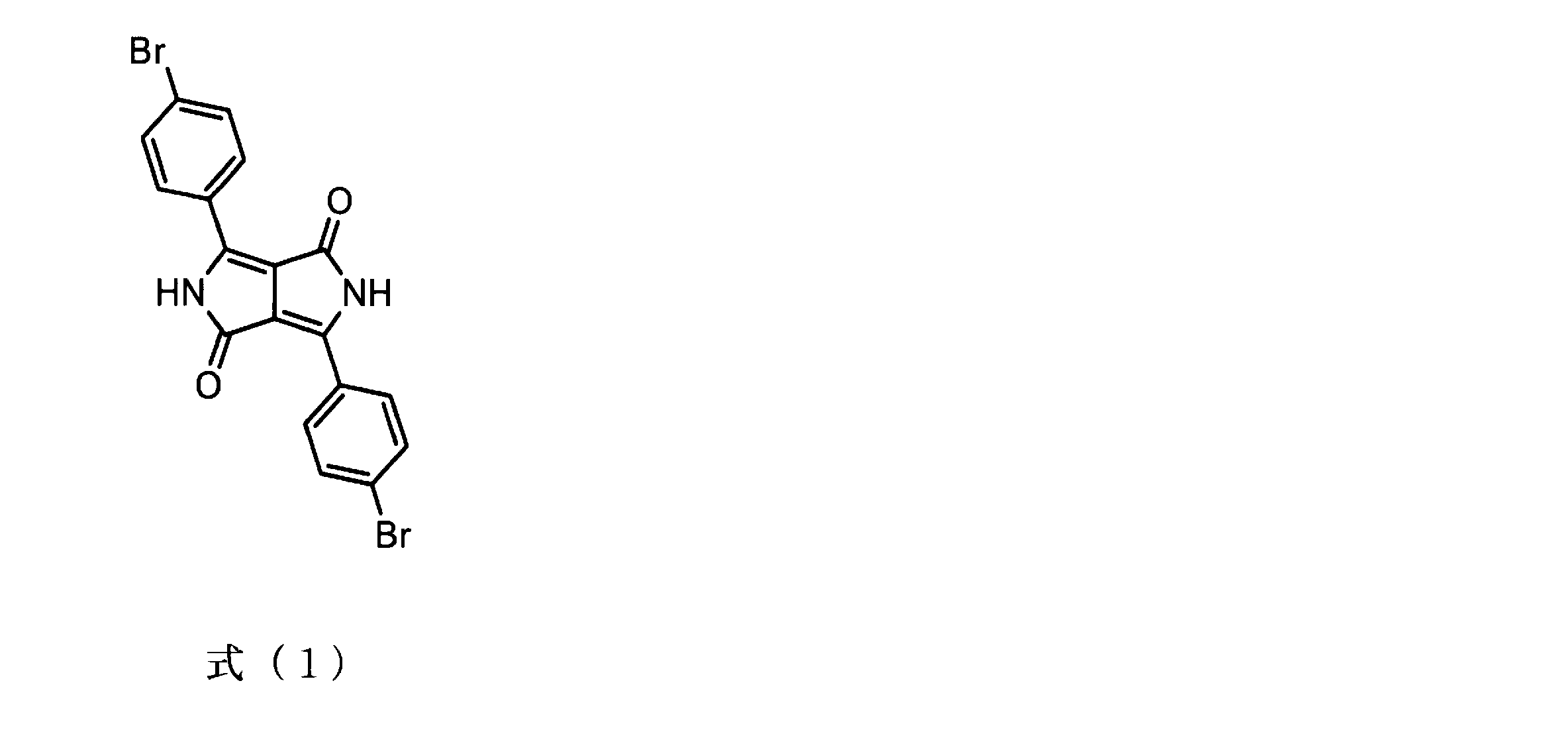
顔料(A)は、式(1)に示す顔料(A1)を含む。
《顔料(A1)》
式(1)に示す顔料(A1)である臭素化ジケトピロロピロール顔料は、第1の実施態様における方法と同様の方法により製造することができる。式(1)に示す顔料(A1)を用いることで、従来よりも、高明度および高コントラスト比の赤色着色組成物とすることができる。
また、顔料(A)として、第1の実施態様におけるジケトピロロピロール系顔料組成物を用いることも、第2の実施態様におけるジケトピロロピロール系顔料組成物を用いることも可能である。
《その他の顔料》
着色組成物は、顔料(A1)以外の顔料を併用しても良く、このような顔料としては、有機または無機の顔料を、単独で、または2種類以上併用できる。顔料のなかでは、発色性が高く、且つ耐熱性の高い顔料が好ましく、通常は有機顔料が用いられる。
着色組成物は、顔料(A1)以外の顔料を併用しても良く、このような顔料としては、有機または無機の顔料を、単独で、または2種類以上併用できる。顔料のなかでは、発色性が高く、且つ耐熱性の高い顔料が好ましく、通常は有機顔料が用いられる。
用いることのできる有機顔料としては、例えば、顔料(A1)以外のジケトピロロピロール系顔料;アゾ、ジスアゾ、ポリアゾ等のアゾ系顔料;銅フタロシアニン、ハロゲン化銅フタロシアニン、無金属フタロシアニン等のフタロシアニン系顔料;アミノアントラキノン、ジアミノジアントラキノン、アントラピリミジン、フラバントロン、アントアントロン、インダントロン、ピラントロン、ビオラントロン等のアントラキノン系顔料;キナクリドン系顔料;ジオキサジン系顔料;ペリノン系顔料;ペリレン系顔料;チアインジゴ系顔料;イソインドリン系顔料;イソインドリノン系顔料;キノフタロン系顔料;スレン系顔料;金属錯体系顔料等が挙げられる。
これらの顔料のなかでも、顔料(A1)以外のジケトピロロピロール系顔料、アゾ系顔料、アントラキノン系顔料、ペリレン系顔料、キナクリドン系顔料、ベンズイミダゾロン系顔料、およびキノリン系顔料からなる群より選ばれる少なくとも1種類以上を含むことが、好ましい。これらは顔料(A1)と同様、赤色系の顔料であり配合比の調整による色調整が容易になる、さらにこれらは耐光性や耐熱性が優れているために好ましい。
また、無機顔料としては、硫酸バリウム、亜鉛華、硫酸鉛、黄色鉛、亜鉛黄、べんがら(赤色酸化鉄(III))、カドミウム赤、群青、紺青、酸化クロム緑、コバルト緑、アンバー、チタンブラック、合成鉄黒、酸化チタン、四酸化鉄などの金属酸化物粉、金属硫化物粉、金属粉等が挙げられる。無機顔料は、彩度と明度のバランスを取りつつ良好な塗布性、感度、現像性等を確保するために、有機顔料と組み合わせて用いられる。
赤色顔料や黄色顔料と併用する場合、式(1)で示される顔料(A1)の含有量は、顔料(A)の合計100重量%中、40~100重量%、好ましくは50~100重量%、さらに好ましくは60~100重量%である。この含有量の範囲は、式(1)で示される顔料(A1)の色特性を十分に発現することができるという点で好ましい。
好ましい顔料(A)成分の含有量は、着色組成物の全不揮発成分100重量%中、充分な色再現性を得る観点から10重量%以上であり、より好ましくは15重量%以上であり、最も好ましくは20重量%以上である。また、着色組成物の安定性が良くなることから、好ましい顔料(A)成分の含有量は、90重量%以下であり、より好ましくは80重量%以下であり、最も好ましくは70重量%以下である。
感光性着色組成物には、さらに調色のため、耐熱性を低下させない範囲内で染料を含有させることもできる。
《顔料の微細化》
顔料(A1)およびその他の顔料は、微細化して用いることが好ましい。
微細化した顔料の一次粒子径は、着色剤担体中への分散が良好なことから、20nm以上であることが好ましい。また、コントラスト比が高いフィルタセグメントを形成できることから、100nm以下であることが好ましい。特に好ましい範囲は、25~85nmの範囲である。
顔料(A1)およびその他の顔料は、微細化して用いることが好ましい。
微細化した顔料の一次粒子径は、着色剤担体中への分散が良好なことから、20nm以上であることが好ましい。また、コントラスト比が高いフィルタセグメントを形成できることから、100nm以下であることが好ましい。特に好ましい範囲は、25~85nmの範囲である。
なお、顔料の一次粒子径は、顔料のTEM(透過型電子顕微鏡)による電子顕微鏡写真から一次粒子の大きさを直接計測する方法で行うことができる。具体的には、個々の顔料の一次粒子の短軸径と長軸径を計測し、平均をその顔料粒子の粒径とする。次に、100個以上の顔料粒子について、それぞれの粒子の体積を、求めた粒径の立方体と近似して平均体積を求め、この平均体積を有している立方体の一辺の長さを平均一次粒子径とする。
また、これら微細化顔料のBET法による比表面積は、60m2/g~130m2/gであることが好ましい。顔料(A)の比表面積が下限値より小さい場合には、カラーフィルタの輝度やコントラスト比が低くなることがある。比表面積が上限値より大きい場合には、顔料分散が難しくなり、着色組成物としての安定性を保ち、流動性を確保することが困難になることがあるがある。その結果、カラーフィルタの輝度やコントラスト比の特性が低下する傾向がある。
顔料の比表面積を制御する手段としては、顔料を機械的に粉砕して比表面積を制御する方法(磨砕法と呼ぶ)、良溶媒に溶解したものを貧溶媒に投入して所望の比表面積の顔料を析出させる方法(析出法と呼ぶ)、および合成時に所望の比表面積の顔料を製造する方法(合成析出法と呼ぶ)等がある。使用する顔料の合成法や化学的性質等により、個々の顔料について適当な方法を選択して行うことができる。着色組成物に含まれる顔料の比表面積の制御方法は、上記方法のいずれを用いてもよい。
第5の実施態様に用いる顔料は、磨砕法のなかでもソルトミリング処理により微細化することが好ましく、このような顔料を用いることで、コントラスト比がより高いフィルタセグメントを形成できる。ソルトミリング処理は、上記ジケトピロロピロール系顔料組成物における方法と同様に行うことができる。
(バインダー樹脂(C-B))
バインダー樹脂(C-B)は、顔料(A)を分散するものであって、アルカリ可溶性感光性樹脂(C-B1)を含有する。
バインダー樹脂(C-B)は、顔料(A)を分散するものであって、アルカリ可溶性感光性樹脂(C-B1)を含有する。
《アルカリ可溶性感光性樹脂(C-B1)》
アルカリ可溶性感光性樹脂(C-B1)としては、たとえば以下に示す(C-i)や(C-ii)の方法によりエチレン性不飽和二重結合を導入した樹脂が挙げられる。
アルカリ可溶性感光性樹脂(C-B1)としては、たとえば以下に示す(C-i)や(C-ii)の方法によりエチレン性不飽和二重結合を導入した樹脂が挙げられる。
<方法(C-i)>
方法(C-i)としては、例えば、エポキシ基を有するエチレン性不飽和単量体と、他の1種類以上の単量体とを共重合することによって得られた共重合体の側鎖エポキシ基に、エチレン性不飽和二重結合を有する不飽和一塩基酸のカルボキシル基を付加反応させ、更に、生成した水酸基に、多塩基酸無水物を反応させ、エチレン性不飽和二重結合を導入し感光性樹脂の機能を持たせ、かつ、アルカリ可溶性機能を持つカルボキシル基を導入する方法がある。
方法(C-i)としては、例えば、エポキシ基を有するエチレン性不飽和単量体と、他の1種類以上の単量体とを共重合することによって得られた共重合体の側鎖エポキシ基に、エチレン性不飽和二重結合を有する不飽和一塩基酸のカルボキシル基を付加反応させ、更に、生成した水酸基に、多塩基酸無水物を反応させ、エチレン性不飽和二重結合を導入し感光性樹脂の機能を持たせ、かつ、アルカリ可溶性機能を持つカルボキシル基を導入する方法がある。
エポキシ基を有するエチレン性不飽和単量体としては、例えば、グリシジル(メタ)アクリレート、メチルグリシジル(メタ)アクリレート、2-グリシドキシエチル(メタ)アクリレート、3,4-エポキシブチル(メタ)アクリレート、及び3,4-エポキシシクロヘキシル(メタ)アクリレートが挙げられ、これらは、単独で用いても、2種類以上を併用してもかまわない。次工程の不飽和一塩基酸との反応性の観点で、グリシジル(メタ)アクリレートが好ましい。
不飽和一塩基酸としては、(メタ)アクリル酸、クロトン酸、o-、m-、p-ビニル安息香酸、(メタ)アクリル酸のα位ハロアルキル、アルコキシル、ハロゲン、ニトロ、シアノ置換体等のモノカルボン酸等が挙げられ、これらは、単独で用いても、2種類以上を併用してもかまわない。
多塩基酸無水物としては、テトラヒドロ無水フタル酸、無水フタル酸、ヘキサヒドロ無水フタル酸、無水コハク酸、無水マレイン酸等が挙げられ、これらは単独で用いても、2種類以上を併用してもかまわない。カルボキシル基の数を増やす等、必要に応じて、トリメリット酸無水物等のトリカルボン酸無水物を用いたり、ピロメリット酸二無水物等のテトラカルボン酸二無水物を用いて、残った無水物基を加水分解したりすること等もできる。また、多塩基酸無水物として、エチレン性不飽和二重結合を有する、テトラヒドロ無水フタル酸、又は無水マレイン酸を用いると、更にエチレン性不飽和二重結合を増やすことができる。
方法(C-i)の類似の方法として、例えば、カルボキシル基を有するエチレン性不飽和単量体と、他の1種類以上の単量体とを共重合することによって得られた共重合体の側鎖カルボキシル基の一部に、エポキシ基を有するエチレン性不飽和単量体を付加反応させ、エチレン性不飽和二重結合およびカルボキシル基を導入する方法がある。
<方法(C-ii)>
方法(C-ii)としては、水酸基を有するエチレン性不飽和単量体を使用し、他のカルボキシル基を有する不飽和一塩基酸の単量体や、他の単量体とを共重合することによって得られた共重合体の側鎖水酸基に、イソシアネート基を有するエチレン性不飽和単量体のイソシアネート基を反応させる方法がある。
方法(C-ii)としては、水酸基を有するエチレン性不飽和単量体を使用し、他のカルボキシル基を有する不飽和一塩基酸の単量体や、他の単量体とを共重合することによって得られた共重合体の側鎖水酸基に、イソシアネート基を有するエチレン性不飽和単量体のイソシアネート基を反応させる方法がある。
水酸基を有するエチレン性不飽和単量体としては、2-ヒドロキシエチル(メタ)アクリレート、2-若しくは3-ヒドロキシプロピル(メタ)アクリレート、2-若しくは3-若しくは4-ヒドロキシブチル(メタ)アクリレート、グリセロール(メタ)アクリレート、又はシクロヘキサンジメタノールモノ(メタ)アクリレート等のヒドロキシアルキル(メタ)アクリレート類が挙げられ、これらは、単独で用いても、2種類以上を併用して用いてもかまわない。また、上記ヒドロキシアルキル(メタ)アクリレートに、エチレンオキシド、プロピレンオキシド、及び/又はブチレンオキシド等を付加重合させたポリエーテルモノ(メタ)アクリレートや、(ポリ)γ-バレロラクトン、(ポリ)ε-カプロラクトン、及び/又は(ポリ)12-ヒドロキシステアリン酸等を付加した(ポリ)エステルモノ(メタ)アクリレートも使用できる。塗膜異物抑制の観点から、2-ヒドロキシエチル(メタ)アクリレート、又はグリセロール(メタ)アクリレートが好ましい。
イソシアネート基を有するエチレン性不飽和単量体としては、2-(メタ)アクリロイルオキシエチルイソシアネート、又は1,1-ビス〔(メタ)アクリロイルオキシ〕エチルイソシアネート等が挙げられるが、これらに限定することなく、2種類以上併用することもできる。
アルカリ可溶性感光性樹脂(C-B1)としては、(メタ)アクリル酸、クロトン酸、若しくはα-クロルアクリル酸等の不飽和モノカルボン酸、又はマレイン酸、若しくはフマル酸等の不飽和ジカルボン酸等のカルボキシル基を含有し、かつエチレン性不飽和二重結合を有する単量体を用いて得られる樹脂が挙げられる。アルカリ可溶性感光性樹脂(C-B1)の前駆体であるその他のエチレン性不飽和単量体としては、メチル(メタ)メタアクリレート、エチル(メタ)アクリレート、n-プロピル(メタ)アクリレート、イソプロピル(メタ)アクリレート、ブチル(メタ)アクリレート、イソブチル(メタ)アクリレート、s-ブチル(メタ)アクリレート、t-ブチル(メタ)アクリレート、ペンチル(メタ)アクリレート、イソペンチルアクリレート、ネオペンチル(メタ)アクリレート、t-ペンチル(メタ)アクリレート、1-メチルブチル(メタ)アクリレート、ヘキシル(メタ)アクリレート、ヘプタ(メタ)アクリレート、オクチル(メタ)アクリレート、2-エチルヘキシル(メタ)アクリレート、ラウリル(メタ)アクリレート、セチル(メタ)アクリレート、ステアリル(メタ)アクリレート、イソステアリル(メタ)アクリレート、シクロヘキシル(メタ)アクリレート、アリル(メタ)アクリレート、又はオレイル(メタ)アクリレート等のアルキル又はアルケニル(メタ)アクリレートが挙げられるが、目的に応じて、これらに限定することなく他のエチレン性不飽和単量体を選ぶこともでき、2種類以上併用することもできる。中でも顔料分散性の観点から、メチル(メタ)アクリルメタクリレート、又はエチル(メタ)アクリレートが好ましい。
アルカリ可溶性感光性樹脂(C-B1)の重量平均分子量(Mw)は、5,000~100,000の範囲が好ましく、より好ましくは5,000~80,000の範囲であり、さらに好ましくは、5,000~30,000の範囲である。また数平均分子量(Mn)は5,000~50,000の範囲が好ましく、Mw/Mnの値は10以下であることが好ましい。アルカリ可溶性感光性樹脂(C-B1)の重量平均分子量(Mw)が100,000を越えると樹脂間の相互作用が強くなり、カラーフィルタ用着色組成物の粘度が高くなるため、取り扱いが困難となることがある。また、重量平均分子量(Mw)が5,000未満であると現像性やガラス等の基板への密着性が低下することがある。
アルカリ可溶性感光性樹脂(C-B1)の酸価は、顔料の分散性、浸透性、現像性、及び耐性の観点から、酸価20~300KOH-mg/gであることが好ましい。酸価が、20KOH-mg/g未満では、現像液に対する溶解性が低く、微細パターン形成するのが困難となることがある。300KOH-mg/gを超えると、微細パターンが残らなくなることがある。
アルカリ可溶性感光性樹脂(C-B1)の含有量は、バインダー樹脂(C-B)の合計100重量%中、10~100重量%が好ましく、20~100重量%がより好ましく、さらに好ましくは40~100重量%である。バインダー樹脂(C-B)中のアルカリ可溶性感光性樹脂(C-B1)の含有量が、10重量%以上であれば、着色組成物の高明度、高コントラスト比の効果が得られやすいために好ましいものである。
《その他の樹脂》
バインダー樹脂(C-B)は、アルカリ可溶性感光性樹脂(C-B1)以外のその他の樹脂を含むこともできる。その他の樹脂としては、可視光領域の400~700nmの全波長領域において透過率が好ましくは80%以上、より好ましくは95%以上の樹脂が好ましい。たとえば熱可塑性樹脂、熱硬化性樹脂などがありこれらを単独で、または2種以上混合して用いることができる。
バインダー樹脂(C-B)は、アルカリ可溶性感光性樹脂(C-B1)以外のその他の樹脂を含むこともできる。その他の樹脂としては、可視光領域の400~700nmの全波長領域において透過率が好ましくは80%以上、より好ましくは95%以上の樹脂が好ましい。たとえば熱可塑性樹脂、熱硬化性樹脂などがありこれらを単独で、または2種以上混合して用いることができる。
熱可塑性樹脂としては、例えば、ブチラール樹脂、スチレンーマレイン酸共重合体、塩素化ポリエチレン、塩素化ポリプロピレン、ポリ塩化ビニル、塩化ビニル-酢酸ビニル共重合体、ポリ酢酸ビニル、ポリウレタン系樹脂、ポリエステル樹脂、アクリル系樹脂、アルキッド樹脂、ポリスチレン、ポリアミド樹脂、ゴム系樹脂、環化ゴム系樹脂、セルロース類、ポリエチレン、ポリブタジエン、ポリイミド樹脂等が挙げられる。また、熱硬化性樹脂としては、例えば、エポキシ樹脂、ベンゾグアナミン樹脂、ロジン変性マレイン酸樹脂、ロジン変性フマル酸樹脂、メラミン樹脂、尿素樹脂、フェノール樹脂等が挙げられる。
熱硬化性樹脂は、例えば、ベンゾグアナミン樹脂、ロジン変性マレイン酸樹脂、ロジン変性フマル酸樹脂、メラミン樹脂、尿素樹脂、及びフェノール樹脂等が挙げられる。
さらに、酸性基含有エチレン性不飽和単量体を共重合したアルカリ可溶性樹脂を併用することも可能である。このようなアルカリ可溶性樹脂としては、例えば、カルボキシル基、スルホン基等の酸性基を有する樹脂が挙げられる。アルカリ可溶性樹脂として具体的には、酸性基を有するアクリル樹脂、α-オレフィン/(無水)マレイン酸共重合体、スチレン/スチレンスルホン酸共重合体、エチレン/(メタ)アクリル酸共重合体、又はイソブチレン/(無水)マレイン酸共重合体等が挙げられる。中でも、酸性基を有するアクリル樹脂、およびスチレン/スチレンスルホン酸共重合体から選ばれる少なくとも1種の樹脂、特に酸性基を有するアクリル樹脂は、耐熱性、透明性が高いため、好適に用いられる。
バインダー樹脂(C-B)は、着色組成物中の顔料(A)100重量部に対して、20~400重量部、好ましくは50~250重量部の量で用いることができる。
(溶剤)
溶剤は、顔料(A)を十分にバインダー樹脂(C-B)中に分散させ、ガラス基板等の基板上に着色組成物を乾燥膜厚が0.2~5μmとなるように塗布してフィルタセグメントを形成することを容易にするために用いられる。溶剤としては、有機溶剤が好ましい。
溶剤は、顔料(A)を十分にバインダー樹脂(C-B)中に分散させ、ガラス基板等の基板上に着色組成物を乾燥膜厚が0.2~5μmとなるように塗布してフィルタセグメントを形成することを容易にするために用いられる。溶剤としては、有機溶剤が好ましい。
溶剤の含有量は、顔料(A)100重量部に対し、800~4000重量部の量で用いることが、着色組成物を適正な粘度に調節し、目的とする均一な膜厚のフィルタセグメントを形成できることから好ましい。
(感光性着色組成物の製法)
感光性着色組成物は、顔料(A)をバインダー樹脂(C-B)などの色素担体および溶剤中に、好ましくは顔料分散剤と一緒に、三本ロールミル、二本ロールミル、サンドミル、ニーダー、アトライター等の各種分散手段を用いて微細に分散して顔料分散体を製造し、該顔料分散体に光重合開始剤(C-D)、バインダー樹脂(C-B)、光重合性化合物、場合によって増感剤(C-E)、多官能チオール、紫外線吸収剤、重合禁止剤、貯蔵安定剤、その他成分を混合撹拌して製造することができる。また、2種以上の顔料を含む着色組成物は、各顔料分散体を別々に色素担体および/または溶剤中に微細に分散したものを混合し、さらに光重合開始剤(C-D)や光重合性化合物等を混合撹拌して製造することができる。
感光性着色組成物は、顔料(A)をバインダー樹脂(C-B)などの色素担体および溶剤中に、好ましくは顔料分散剤と一緒に、三本ロールミル、二本ロールミル、サンドミル、ニーダー、アトライター等の各種分散手段を用いて微細に分散して顔料分散体を製造し、該顔料分散体に光重合開始剤(C-D)、バインダー樹脂(C-B)、光重合性化合物、場合によって増感剤(C-E)、多官能チオール、紫外線吸収剤、重合禁止剤、貯蔵安定剤、その他成分を混合撹拌して製造することができる。また、2種以上の顔料を含む着色組成物は、各顔料分散体を別々に色素担体および/または溶剤中に微細に分散したものを混合し、さらに光重合開始剤(C-D)や光重合性化合物等を混合撹拌して製造することができる。
(顔料分散剤(C-C))
顔料(A)をバインダー樹脂(C-B)および/または溶剤中に分散する際には、適宜、樹脂型顔料分散剤、色素誘導体、界面活性剤等の顔料分散剤(C-C)を含有させることができる。顔料分散剤(C-C)は、顔料の分散に優れ、分散後の顔料の再凝集を防止する効果が大きいので、顔料分散剤(C-C)を用いて顔料をバインダー樹脂(C-B)および/または溶剤中に分散してなる着色組成物を用いた場合には、透明性に優れたカラーフィルタが得られる。
顔料(A)をバインダー樹脂(C-B)および/または溶剤中に分散する際には、適宜、樹脂型顔料分散剤、色素誘導体、界面活性剤等の顔料分散剤(C-C)を含有させることができる。顔料分散剤(C-C)は、顔料の分散に優れ、分散後の顔料の再凝集を防止する効果が大きいので、顔料分散剤(C-C)を用いて顔料をバインダー樹脂(C-B)および/または溶剤中に分散してなる着色組成物を用いた場合には、透明性に優れたカラーフィルタが得られる。
着色組成物は、特に、着色組成物の安定性の点で、酸性の樹脂型顔料分散剤を含むことが好ましい。さらに酸性の樹脂型顔料分散剤と、塩基性の色素誘導体を併用することで、着色組成物の流動性、安定性だけでなく、高明度、高コントラスト比の優れたフィルタセグメントが得られるために好ましいものである。
顔料分散剤(C-C)は、顔料(A)100重量部に対して、0.1~40重量部、好ましくは0.1~30重量部の量で用いることができる。
《樹脂型顔料分散剤、界面活性剤》
樹脂型顔料分散剤、界面活性剤の例は後述のとおりである。
樹脂型顔料分散剤、界面活性剤の例は後述のとおりである。
《色素誘導体》
色素誘導体としては、有機顔料、アントラキノン、アクリドンまたはトリアジンに、塩基性置換基、酸性置換基、または置換基を有していても良いフタルイミドメチル基を導入した化合物が挙げられる。その構造は、例えば下記式(50)で示される化合物であり、中でも顔料誘導体が好ましい。
色素誘導体としては、有機顔料、アントラキノン、アクリドンまたはトリアジンに、塩基性置換基、酸性置換基、または置換基を有していても良いフタルイミドメチル基を導入した化合物が挙げられる。その構造は、例えば下記式(50)で示される化合物であり、中でも顔料誘導体が好ましい。
P-Lm 式(50)
[式(50)中、
P:有機顔料残基、アントラキノン残基、アクリドン残基またはトリアジン残基
L:塩基性置換基、酸性置換基、または置換基を有していても良いフタルイミドメチル基
m:1~4の整数である]
色素誘導体は、例えば、特開昭63-305173号公報、特公昭57-15620号公報、特公昭59-40172号公報、特公昭63-17102号公報、又は特公平5-9469号公報等に記載されているものを使用でき、これらは単独で又は2種類以上を混合して用いることができる。
式(50)中、Pの有機顔料残基を構成する有機顔料としては、下記のようなものが挙げられる。
Pの有機顔料残基を構成する有機顔料としては、例えば、ジケトピロロピロール系顔料;アゾ、ジスアゾ、ポリアゾ等のアゾ系顔料;銅フタロシアニン、ハロゲン化銅フタロシアニン、亜鉛フタロシアニン、ハロゲン化亜鉛フタロシアニン、無金属フタロシアニン等のフタロシアニン系顔料;アミノアントラキノン、ジアミノジアントラキノン、アントラピリミジン、フラバントロン、アントアントロン、インダントロン、ピラントロン、ビオラントロン等のアントラキノン系顔料;キナクリドン系顔料;ジオキサジン系顔料;ペリノン系顔料;ペリレン系顔料;チオインジゴ系顔料;イソインドリン系顔料;イソインドリノン系顔料;スレン系顔料;キノフタロン系顔料;ジオキサジン系顔料;金属錯体系顔料等が挙げられる。
Pの有機顔料残基を構成する有機顔料としては、例えば、ジケトピロロピロール系顔料;アゾ、ジスアゾ、ポリアゾ等のアゾ系顔料;銅フタロシアニン、ハロゲン化銅フタロシアニン、亜鉛フタロシアニン、ハロゲン化亜鉛フタロシアニン、無金属フタロシアニン等のフタロシアニン系顔料;アミノアントラキノン、ジアミノジアントラキノン、アントラピリミジン、フラバントロン、アントアントロン、インダントロン、ピラントロン、ビオラントロン等のアントラキノン系顔料;キナクリドン系顔料;ジオキサジン系顔料;ペリノン系顔料;ペリレン系顔料;チオインジゴ系顔料;イソインドリン系顔料;イソインドリノン系顔料;スレン系顔料;キノフタロン系顔料;ジオキサジン系顔料;金属錯体系顔料等が挙げられる。
なかでも、式(50)におけるLが塩基性置換基である、塩基性置換基を有する色素誘導体が好ましく使用できる。塩基性置換基を有する色素誘導体を含むことにより、塩基性置換基を有する色素誘導体なしでは分散の難しい顔料の場合も、分散性、流動性、保存安定性に優れた顔料組成物とすることができ好ましい。酸性樹脂型分散剤と塩基性置換基を有する色素誘導体との相乗効果で顔料を効果的に分散し、流動性、保存安定性に優れた顔料組成物とせしめることができる。
塩基性置換基のなかでも、好ましくは、Lが、式(51)、(52)、及び(53)で示される群から選ばれる置換基である。
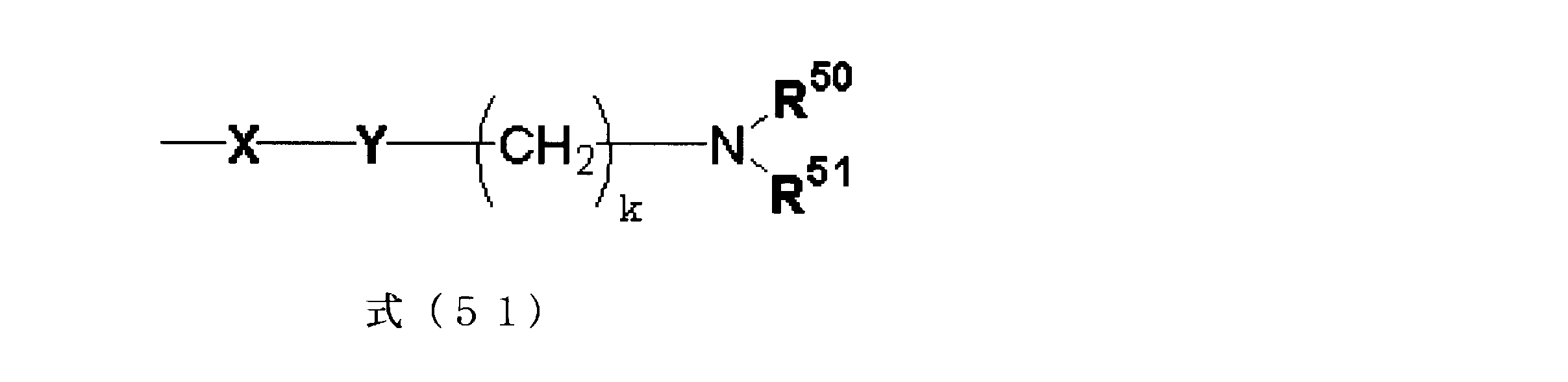

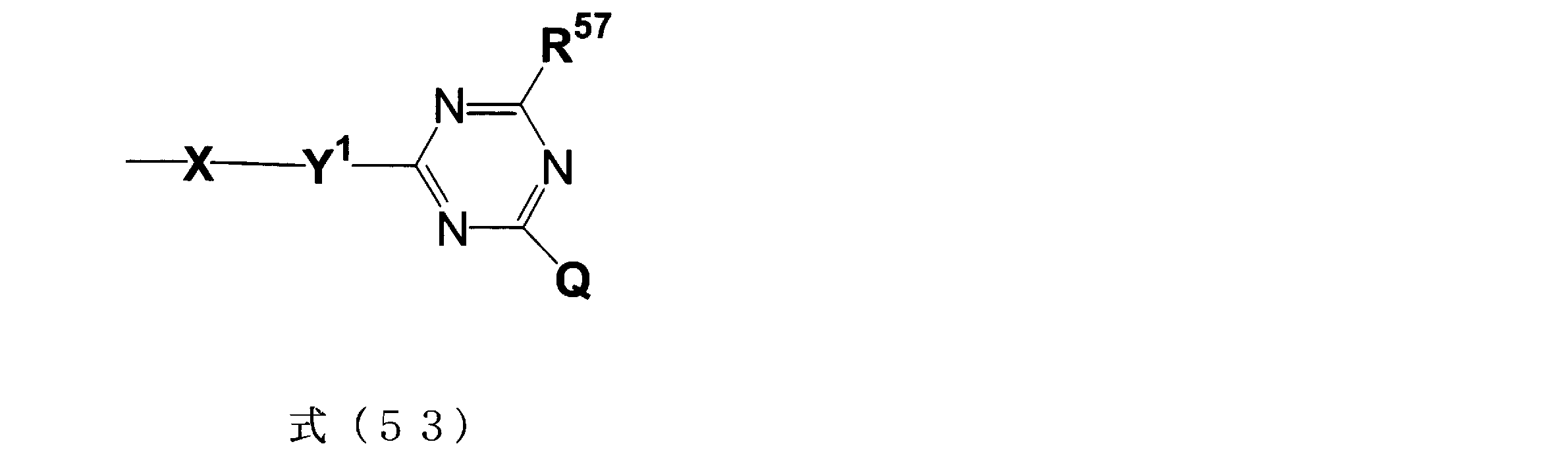
[式(51)~(53)中、
Xは、-SO2-、-CO-、-CH2-、-CH2NHCOCH2-、-CH2NHSO2CH2-、又は直接結合であり、
Yは、-NH-、-O-、又は直接結合であり、
kは、1~10の整数であり、
Y1は、-NH-、-NR58-Z-NR59-、又は直接結合であり、
R58、及びR59は、それぞれ独立に、水素結合、置換基を有しても良い炭素数1~36のアルキル基、置換基を有しても良い炭素数2~36のアルケニル基、又は置換基を有しても良いフェニル基であり、
Zは、置換基を有しても良いアルキレン基、又は置換基を有しても良いアリーレン基であり、
R50、R51は、それぞれ独立に、水素原子、置換基を有しても良い炭素数1~30のアルキル基、置換基を有しても良い炭素数2~30のアルケニル基、又はR50とR51とが一体となって更なる窒素、酸素、若しくは硫黄原子を含む、置換基を有しても良い複素環であり、
R52、R53、R54、及びR55は、それぞれ独立に、水素原子、置換基を有しても良い炭素数1~20のアルキル基、置換基を有しても良い炭素数2~20のアルケニル基、置換基を有しても良い炭素数6~20のアリーレン基であり、
R56は、水素原子、置換基を有しても良い炭素数1~20のアルキル基、置換基を有しても良い炭素数2~20のアルケニル基であり、
R57は、上記式(51)で示される置換基、又は上記式(52)で示される置換基であり、
Qは、水酸基、アルコキシル基、上記式(51)で示される置換基、又は上記式(52)で示される置換基である。]
Xは、-SO2-、-CO-、-CH2-、-CH2NHCOCH2-、-CH2NHSO2CH2-、又は直接結合であり、
Yは、-NH-、-O-、又は直接結合であり、
kは、1~10の整数であり、
Y1は、-NH-、-NR58-Z-NR59-、又は直接結合であり、
R58、及びR59は、それぞれ独立に、水素結合、置換基を有しても良い炭素数1~36のアルキル基、置換基を有しても良い炭素数2~36のアルケニル基、又は置換基を有しても良いフェニル基であり、
Zは、置換基を有しても良いアルキレン基、又は置換基を有しても良いアリーレン基であり、
R50、R51は、それぞれ独立に、水素原子、置換基を有しても良い炭素数1~30のアルキル基、置換基を有しても良い炭素数2~30のアルケニル基、又はR50とR51とが一体となって更なる窒素、酸素、若しくは硫黄原子を含む、置換基を有しても良い複素環であり、
R52、R53、R54、及びR55は、それぞれ独立に、水素原子、置換基を有しても良い炭素数1~20のアルキル基、置換基を有しても良い炭素数2~20のアルケニル基、置換基を有しても良い炭素数6~20のアリーレン基であり、
R56は、水素原子、置換基を有しても良い炭素数1~20のアルキル基、置換基を有しても良い炭素数2~20のアルケニル基であり、
R57は、上記式(51)で示される置換基、又は上記式(52)で示される置換基であり、
Qは、水酸基、アルコキシル基、上記式(51)で示される置換基、又は上記式(52)で示される置換基である。]
式(51)~(53)で示される置換基を形成するために使用されるアミン成分としては、第1の実施態様におけるアミン成分と同様のアミン成分が挙げられる。
塩基性置換基を有する色素誘導体は、種々の合成経路で合成することができる。例えば、有機顔料に式(54)~(57)で示される置換基を導入した後、上記置換基と反応して式(51)~(53)で示される置換基を形成する上記アミン成分、例えば、N,N-ジメチルアミノプロピルアミン、N-メチルピペラジン、ジエチルアミン、又は4-[4-ヒドロキシ-6-[3-(ジブチルアミノ)プロピルアミノ]-1,3,5-トリアジン-2-イルアミノ]アニリン等を反応させることによって得られる。
式(54): -SO2Cl
式(55): -COCl
式(56): -CH2NHCOCH2Cl
式(57): -CH2Cl
式(54): -SO2Cl
式(55): -COCl
式(56): -CH2NHCOCH2Cl
式(57): -CH2Cl
式(54)~(56)の置換基と上記アミン成分との反応時、式(54)~(57)の置換基の一部が加水分解して、塩素が水酸基に置換したものが混在していてもよい。その場合、式(54)、及び式(55)は、それぞれ、スルホン酸基、及びカルボン酸基となるが、何れも遊離酸のままでもよく、また、1~3価の金属又は上記のモノアミンとの塩であってもよい。
また、有機顔料がアゾ系顔料である場合は、式(51)~(53)で示される置換基をあらかじめジアゾ成分またはカップリング成分に導入し、その後カップリング反応を行うことによってアゾ系顔料誘導体を製造することもできる。
塩基性置換基を有するトリアジン誘導体は、種々の合成経路で合成することができる。例えば、塩化シアヌルを出発原料とし、塩化シアヌルの少なくとも1つの塩素に式(51)~(53)で示される置換基を形成するアミン成分、例えば、N,N-ジメチルアミノプロピルアミンまたはN-メチルピペラジン等を反応させ、次いで塩化シアヌルの残りの塩素と種々のアミンまたはアルコール等を反応させることによって得られる。
(任意成分)
第5の実施態様の着色組成物は、任意成分として、顔料分散剤の他に、例えば以下の成分をさらに含有してもよい。任意成分の具体例は、後述のとおりである。
第5の実施態様の着色組成物は、任意成分として、顔料分散剤の他に、例えば以下の成分をさらに含有してもよい。任意成分の具体例は、後述のとおりである。
(光重合開始剤(C-D))
感光性着色組成物には、該組成物を紫外線照射により硬化させ、フォトリソグラフィー法によりフィルタセグメントを形成するために、光重合開始剤(C-D)を加えてアルカリ現像型感光性着色組成物の形態で調製することができる。
光重合開始剤(C-D)の含有量は、顔料(A)100重量部に対し、5~200重量部であることが好ましく、光硬化性及び現像性の観点から10~150重量部であることがより好ましい。
感光性着色組成物には、該組成物を紫外線照射により硬化させ、フォトリソグラフィー法によりフィルタセグメントを形成するために、光重合開始剤(C-D)を加えてアルカリ現像型感光性着色組成物の形態で調製することができる。
光重合開始剤(C-D)の含有量は、顔料(A)100重量部に対し、5~200重量部であることが好ましく、光硬化性及び現像性の観点から10~150重量部であることがより好ましい。
(増感剤)
感光性着色組成物には、増感剤を含有させることができる。
増感剤の含有量は、感光性着色組成物中に含まれる光重合開始剤(C-D)100重量部に対し、3~60重量部であることが好ましく、光硬化性、現像性の観点から5~50重量部であることがより好ましい。
感光性着色組成物には、増感剤を含有させることができる。
増感剤の含有量は、感光性着色組成物中に含まれる光重合開始剤(C-D)100重量部に対し、3~60重量部であることが好ましく、光硬化性、現像性の観点から5~50重量部であることがより好ましい。
(光重合性化合物)
感光性着色組成物は、光重合性化合物を含有することができる。光重合性化合物には、紫外線や熱などにより硬化して樹脂を生成するモノマーもしくはオリゴマーが含まれる。
光重合性単量体(C-C)の含有量は、顔料(A)100重量部に対し、10~300重量部であることが好ましく、光硬化性および現像性の観点から10~200重量部であることがより好ましい。
感光性着色組成物は、光重合性化合物を含有することができる。光重合性化合物には、紫外線や熱などにより硬化して樹脂を生成するモノマーもしくはオリゴマーが含まれる。
光重合性単量体(C-C)の含有量は、顔料(A)100重量部に対し、10~300重量部であることが好ましく、光硬化性および現像性の観点から10~200重量部であることがより好ましい。
(多官能チオール)
感光性着色組成物は、多官能チオール(C-F)を含有することができる。多官能チオールは、チオール(SH)基を2個以上有する化合物である。多官能チオールは上述の光重合開始剤(C-D)とともに使用することにより、光照射後のラジカル重合過程において、連鎖移動剤として働き、酸素による重合阻害を受けにくいチイルラジカルが発生するので、得られる感光性着色組成物は高感度となる。特にSH基がメチレン、エチレン基等の脂肪族基に結合した多官能脂肪族チオールが好ましい。
多官能チオールの含有量は、顔料(A)100重量部に対して0.05~100重量部が好ましく、より好ましくは1.0~50.0重量部である。多官能チオールを0.05重量部以上用いることで、より良い現像耐性を得ることができる。チオール(SH)基が1個の単官能チオールを用いた場合には、このような現像耐性の向上は得られない。
感光性着色組成物は、多官能チオール(C-F)を含有することができる。多官能チオールは、チオール(SH)基を2個以上有する化合物である。多官能チオールは上述の光重合開始剤(C-D)とともに使用することにより、光照射後のラジカル重合過程において、連鎖移動剤として働き、酸素による重合阻害を受けにくいチイルラジカルが発生するので、得られる感光性着色組成物は高感度となる。特にSH基がメチレン、エチレン基等の脂肪族基に結合した多官能脂肪族チオールが好ましい。
多官能チオールの含有量は、顔料(A)100重量部に対して0.05~100重量部が好ましく、より好ましくは1.0~50.0重量部である。多官能チオールを0.05重量部以上用いることで、より良い現像耐性を得ることができる。チオール(SH)基が1個の単官能チオールを用いた場合には、このような現像耐性の向上は得られない。
(紫外線吸収剤)
感光性着色組成物は、紫外線吸収剤を含有することができる。紫外線吸収剤を含有することで、パターンの形状と解像性を制御することができる。
紫外線吸収剤の含有量は、顔料(A)100重量部に対して、0.01~20重量部、好ましくは0.05~10重量部の量で用いることができる。紫外線吸収剤を0.01重量部以上用いることで、より良い解像度を得ることができる。
感光性着色組成物は、紫外線吸収剤を含有することができる。紫外線吸収剤を含有することで、パターンの形状と解像性を制御することができる。
紫外線吸収剤の含有量は、顔料(A)100重量部に対して、0.01~20重量部、好ましくは0.05~10重量部の量で用いることができる。紫外線吸収剤を0.01重量部以上用いることで、より良い解像度を得ることができる。
(重合禁止剤)
感光性着色組成物は、重合禁止剤を含有することができる。重合禁止剤を含有することで、パターンの形状と解像性を制御することができる。
重合禁止剤の含有量は、顔料(A)100重量部に対して、0.01~20重量部、好ましくは0.05~10重量部の量で用いることができる。重合禁止剤を0.01重量部以上用いることで、より良い解像度を得ることができる。
感光性着色組成物は、重合禁止剤を含有することができる。重合禁止剤を含有することで、パターンの形状と解像性を制御することができる。
重合禁止剤の含有量は、顔料(A)100重量部に対して、0.01~20重量部、好ましくは0.05~10重量部の量で用いることができる。重合禁止剤を0.01重量部以上用いることで、より良い解像度を得ることができる。
(貯蔵安定剤)
感光性着色組成物は、貯蔵安定剤を含有することができる。貯蔵安定剤を含有することで、組成物の経時粘度を安定化させることができる。
貯蔵安定剤の含有量は、顔料(A)100重量部に対して、0.01~20重量部、好ましくは0.05~10重量部の量で用いることができる。貯蔵安定剤を0.01重量部以上用いることで、着色組成物の経時安定性が向上する。
感光性着色組成物は、貯蔵安定剤を含有することができる。貯蔵安定剤を含有することで、組成物の経時粘度を安定化させることができる。
貯蔵安定剤の含有量は、顔料(A)100重量部に対して、0.01~20重量部、好ましくは0.05~10重量部の量で用いることができる。貯蔵安定剤を0.01重量部以上用いることで、着色組成物の経時安定性が向上する。
(その他の添加剤)
感光性着色組成物には、透明基板との密着性を高めるためにシランカップリング剤等の密着向上剤、または溶存している酸素を還元する働きのあるアミン系化合物を含有させることができる。
密着向上剤は、顔料(A)100重量部に対して、0.01~10重量部、好ましくは0.05~5重量部の量で用いることができる。
感光性着色組成物には、透明基板との密着性を高めるためにシランカップリング剤等の密着向上剤、または溶存している酸素を還元する働きのあるアミン系化合物を含有させることができる。
密着向上剤は、顔料(A)100重量部に対して、0.01~10重量部、好ましくは0.05~5重量部の量で用いることができる。
さらに、以上の任意成分以外であって、後述の任意成分のいずれかを含有させることも可能である。
(粗大粒子の除去)
第5の実施態様の着色組成物は、第3の実施態様の着色組成物と同様に、粗大粒子の除去を行うことが好ましい。
第5の実施態様の着色組成物は、第3の実施態様の着色組成物と同様に、粗大粒子の除去を行うことが好ましい。
[第6の実施態様]
第6の実施態様のカラーフィルタ用着色組成物は、顔料(A)と、バインダー樹脂(D-B)と、溶剤とを含むカラーフィルタ用着色組成物であって、顔料(A)が、式(1)に示す顔料(A1)を含み、バインダー樹脂(D-B)が、下記構成単位(D-b1)~(D-b3)を有する樹脂(D-B1)を含む。第6の実施態様のカラーフィルタ用着色組成物は、感光性着色組成物として用いることができる。
第6の実施態様のカラーフィルタ用着色組成物は、顔料(A)と、バインダー樹脂(D-B)と、溶剤とを含むカラーフィルタ用着色組成物であって、顔料(A)が、式(1)に示す顔料(A1)を含み、バインダー樹脂(D-B)が、下記構成単位(D-b1)~(D-b3)を有する樹脂(D-B1)を含む。第6の実施態様のカラーフィルタ用着色組成物は、感光性着色組成物として用いることができる。
本発明者らは、鋭意研究を重ねた結果、従来使用されていたC.I.ピグメントレッド254(塩素化ジケトピロロピロール顔料)に替えて、臭素化ジケトピロロピロール顔料と特定構造を有するバインダー樹脂とを含む着色組成物を用いることにより、高明度、高コントラストかつ加熱工程による結晶析出が抑制された高精細のフィルタセグメントを有するカラーフィルタが得られることを見出した。
第6の実施態様によれば、高明度かつ高コントラスト比であって、加熱工程によってもジケトピロロピロール系顔料の結晶析出が起こらないだけでなく、さらに感光性着色組成物として用いた場合には、感度や直線性など、良好なフィルタセグメントを形成する上で必要な性能のバランスが優れるカラーフィルタ用着色組成物を提供することができる。
(顔料(A))
顔料(A)は、第5の実施態様における顔料(A)と同様の顔料であり、第5の実施態様における製造方法と同様の方法により得ることができる。
顔料(A)は、第5の実施態様における顔料(A)と同様の顔料であり、第5の実施態様における製造方法と同様の方法により得ることができる。
式(1)に示す顔料(A1)と樹脂(D-B1)とを組み合わせて用いることで、従来よりも、高明度および高コントラスト比の赤色着色組成物とすることができる。
第6の実施態様の着色組成物は、第5の実施態様の着色組成物と同様に、顔料(A1)と共にその他の顔料を併用してもよく、また、顔料(A1)およびその他の顔料は、微細化して用いることが好ましい。
(バインダー樹脂(D-B))
《樹脂(D-B1)》
カラーフィルタ用着色組成物に含まれるバインダー樹脂(D-B)は、下記構成単位(D-b1)~(D-b3)を有する樹脂(D-B1)を含むことを特徴とする。
(D-b1)カルボキシル基を有する構成単位:2~60重量%
(D-b2)式(D-2)または(D-3)に示す芳香族環基を有する構成単位:2~80重量%
(D-b3)式(D-4)または(D-5)に示す脂肪族環基を有する構成単位:2~60重量%
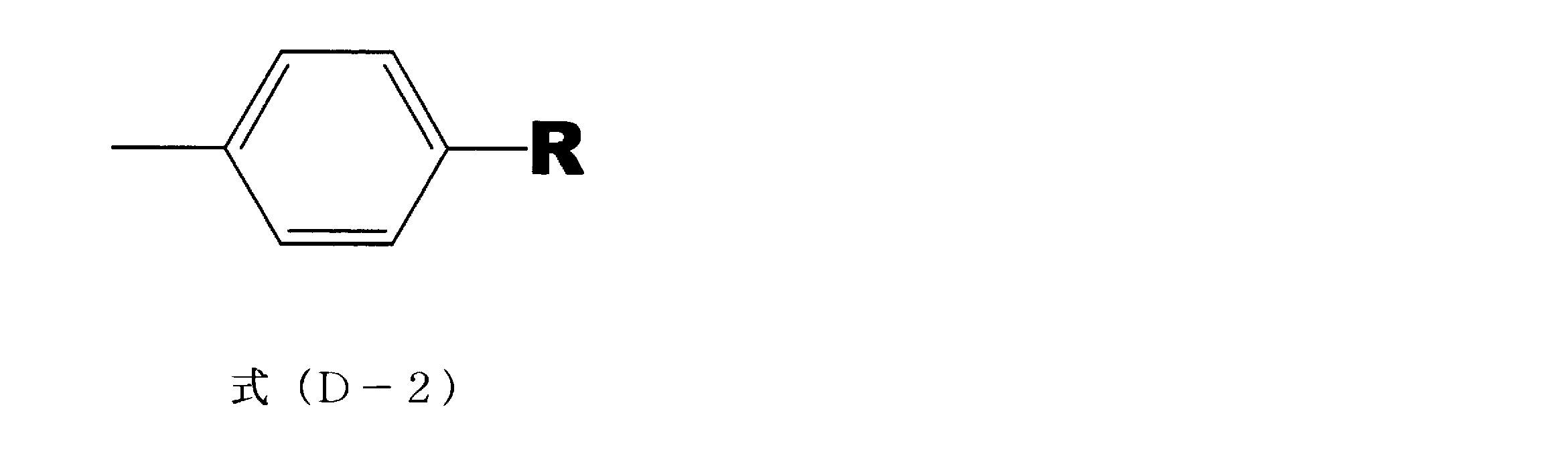
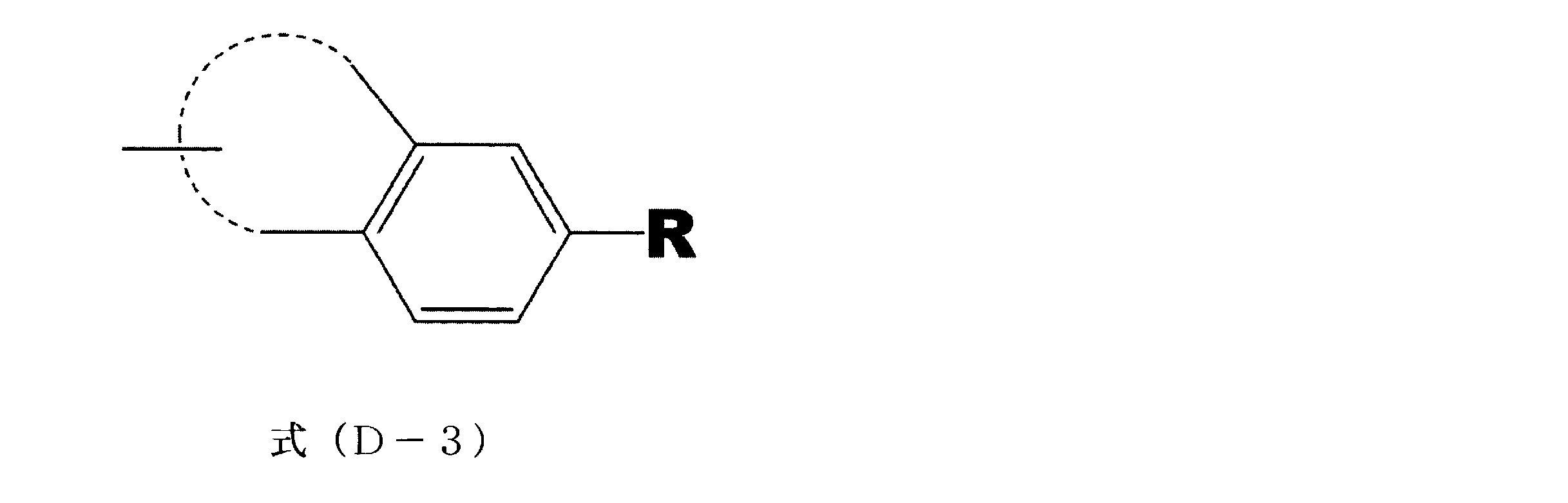
[式(D-2)及び(D-3)中、Rは、水素原子、またはベンゼン環を有していてもよい炭素数1~20のアルキル基である。式(D-3)中の破線部は、ベンゼン環に隣あう、置換基を有しても良い一個以上の飽和または不飽和の複素環を含む環状構造を示す。]


《樹脂(D-B1)》
カラーフィルタ用着色組成物に含まれるバインダー樹脂(D-B)は、下記構成単位(D-b1)~(D-b3)を有する樹脂(D-B1)を含むことを特徴とする。
(D-b1)カルボキシル基を有する構成単位:2~60重量%
(D-b2)式(D-2)または(D-3)に示す芳香族環基を有する構成単位:2~80重量%
(D-b3)式(D-4)または(D-5)に示す脂肪族環基を有する構成単位:2~60重量%
以下に、構成単位(D-b1)、構成単位(D-b2)、及び構成単位(D-b3)について、順に説明する。本実施態様においては、各構成単位の含有重量%は各構成単位を樹脂(D-b1)にもたらす前駆体の重量%である。
<構成単位(D-b1)>
構成単位(D-b1)は、カルボキシル基を有し、現像時、アルカリ可溶性部位として機能する。バインダー樹脂(D-B1)の全構成単位の重量を基準として、構成単位(D-b1)は、現像性と分散安定性の観点から、2~60重量%である。2重量%未満では、アルカリ性現像液による未露光部分の除去性が不十分となり、分散安定性が悪くなる。また、60重量%を越えると、アルカリ現像液への溶解速度が速くなり、露光部分まで溶解してしまう。
構成単位(D-b1)は、カルボキシル基を有し、現像時、アルカリ可溶性部位として機能する。バインダー樹脂(D-B1)の全構成単位の重量を基準として、構成単位(D-b1)は、現像性と分散安定性の観点から、2~60重量%である。2重量%未満では、アルカリ性現像液による未露光部分の除去性が不十分となり、分散安定性が悪くなる。また、60重量%を越えると、アルカリ現像液への溶解速度が速くなり、露光部分まで溶解してしまう。
カルボキシル基を有する構成単位(D-b1)の前駆体としては、(メタ)アクリル酸、クロトン酸、若しくはα-クロルアクリル酸等の不飽和モノカルボン酸、またはマレイン酸、若しくはフマル酸等の不飽和ジカルボン酸等のカルボキシル基を含有しかつエチレン性不飽和二重結合を有する化合物等が挙げられる。また、無水マレイン酸等の不飽和ジカルボン酸の無水物をヒドロキシアルキル(メタ)アクリレート等の水酸基を有する(メタ)アクリル化合物によりハーフエステル化したものも使用できる。この中でも、重合性(分子量等のコントロールしやすさ)の観点から、(メタ)アクリル酸がより好ましく、特にメタクリル酸が最も好ましい。これらは、単独でも、2種類以上の併用でも使用できる。
原料の段階でカルボキシル基を含有する前駆体であっても、バインダー樹脂(D-B)を形成する工程でカルボキシル基がエステル結合などに変化した場合は、構成単位(D-b1)には該当しない。
<構成単位(D-b2)>
構成単位(D-b2)は、式(D-2)または(D-3)に示す芳香族環基による環状構造を有し、顔料または顔料と分散剤等とからなる顔料組成物に対する親和性部位として機能する。バインダー樹脂(D-B)の全構成単位の重量を基準として、構成単位(D-b2)は、現像性とフィルタセグメントの品質の観点から、20~80重量%である。20重量%未満では、顔料または顔料と分散剤等とからなる顔料組成物に対する親和性部位が不足し、高品質なカラーフィルタが得られないことや、フィルタセグメントの耐性が悪くなるといった問題が生じ、80重量%を越えると、アルカリ現像液への溶解速度が遅くなり、現像時間が長くカラーフィルタの生産性が悪くなる。
構成単位(D-b2)は、式(D-2)または(D-3)に示す芳香族環基による環状構造を有し、顔料または顔料と分散剤等とからなる顔料組成物に対する親和性部位として機能する。バインダー樹脂(D-B)の全構成単位の重量を基準として、構成単位(D-b2)は、現像性とフィルタセグメントの品質の観点から、20~80重量%である。20重量%未満では、顔料または顔料と分散剤等とからなる顔料組成物に対する親和性部位が不足し、高品質なカラーフィルタが得られないことや、フィルタセグメントの耐性が悪くなるといった問題が生じ、80重量%を越えると、アルカリ現像液への溶解速度が遅くなり、現像時間が長くカラーフィルタの生産性が悪くなる。
式(1)に示す顔料(A1)が構造中に含む臭素原子は、塩素原子より分極率が高い。そのため、芳香族環基を含む構成単位(D-b2)は、そのπ電子系が塩素化ジケトピロロピロール顔料(C.I.ピグメントレッド254)に対するよりも親和性などの強い相互作用を示すことが期待できる。


構成単位(D-b2)の前駆体としては、スチレン、α-メチルスチレン、ジビニルベンゼン、インデン、アセチルナフテン、ベンジルアクリレート、ベンジルメタクリレート、ビスフェノールAジグリシジルエーテルジ(メタ)アクリレート、メチロール化メラミンの(メタ)アクリル酸エステル等のモノマー・オリゴマー、または式(D-6)に示すエチレン性不飽和単量体等が挙げられる。

式(D-6)に示されるエチレン性不飽和単量体としては、例えば、
第一工業製薬社製ニューフロンティア CEA〔EO変性クレゾールアクリレート、R1:水素原子、R2:エチレン基、R3:メチル基、n=1または2、〕、NP-2〔n-ノニルフェノキシポリエチレングリコールアクリレート、R1:水素原子、R2:エチレン基、R3:n-ノニル基、n=2〕、N-177E〔n-ノニルフェノキシポリエチレングリコールアクリレート、R1:水素原子、R2:エチレン基、R3:n-ノニル基、n=16~17〕、若しくはPHE〔フェノキシエチルアクリレート、R1:水素原子、R2:エチレン基、R3:水素原子、n=1〕、
ダイセル社製、IRR169〔エトキシ化フェニルアクリレート(EO 1mol)、R1:水素原子、R2:エチレン基、R3:水素原子、n=1〕、またはEbecryl110〔エトキシ化フェニルアクリレート(EO 2mol)、R1:水素原子、R2:エチレン基、R3:水素原子、n=2〕、
東亞合成社製アロニックス M-101A〔フェノールEO変性(n≒2)アクリレート、R1:水素原子、R2:エチレン基、R3:水素原子、n≒2〕、M-102〔フェノールEO変性(n≒4)アクリレート、R1:水素原子、R2:エチレン基、R3:水素原子、n≒4〕、M-110〔パラクミルフェノールEO変性(n≒1)アクリレート、R1:水素原子、R2:エチレン基、R3:パラクミル、n≒1〕、M-111〔n-ノニルフェノールEO変性(n≒1)アクリレート、R1:水素原子、R2:エチレン基、R3:n-ノニル基、n≒1〕、M-113〔n-ノニルフェノールEO変性(n≒4)アクリレート、R1:水素原子、R2:エチレン基、R3:n-ノニル基、n≒4〕、若しくはM-117〔n-ノニルフェノールPO変性(n≒2.5)アクリレート、R1:水素原子、R2:プロピレン基、R3:n-ノニル基、n≒2.5〕、
共栄社製ライトアクリレート PO-A〔フェノキシエチルアクリレート、R1:水素原子、R2:エチレン基、R3:水素原子、n=1〕、P-200A〔フェノキシポリエチレングリコールアクリレート、R1:水素原子、R2:エチレン基、R3:水素原子、n≒2〕、NP-4EA〔ノニルフェノールEO付加物アクリレート、R1:水素原子、R2:エチレン基、R3:n-ノニル基、n≒4〕、若しくはNP-8EA〔〔ノニルフェノールEO付加物アクリレート、R1:水素原子、R2:エチレン基、R3:n-ノニル基、n≒8〕、またはライトエステル PO〔フェノキシエチルメタクリレート、R1:メチル基、R2:プロピレン基、R3:水素原子、n=1〕、
日油社製ブレンマー ANE-300〔ノニルフェノキシポリエチレングリコールアクリレート、R1:水素原子、R2:エチレン基、R3:n-ノニル基、n≒5〕、ANP-300〔ノニルフェノキシポリプロピレングリコールアクリレート、R1:水素原子、R2:プロピレン基、R3:n-ノニル基、n≒5〕、43ANEP-500〔ノニルフェノキシ-ポリエチレングリコール-ポリプロピレングリコール-アクリレート、R1:水素原子、R2:エチレン基及びプロピレン基、R3:n-ノニル基、n≒5+5〕、70ANEP-550〔ノニルフェノキシ-ポリエチレングリコール-ポリプロピレングリコール-アクリレート、R1:水素原子、R2:エチレン基及びプロピレン基、R3:n-ノニル基、n≒9+3〕、75ANEP-600〔ノニルフェノキシ-ポリエチレングリコール-ポリプロピレングリコール-アクリレート、R1:水素原子、R2:エチレン基及びプロピレン基、R3:n-ノニル基、n≒5+2〕、AAE-50〔フェノキシポリエチレングリコールアクリレート、R1:水素原子、R2:エチレン基、R3:水素原子、n=1〕、AAE-300〔フェノキシポリエチレングリコールアクリレート、R1:水素原子、R2:エチレン基、R3:水素原子、n≒5.5〕、PAE-50〔フェノキシポリエチレングリコールメタクリレート、R1:メチル基、R2:エチレン基、R3:水素原子、n=1〕、PAE-100〔フェノキシポリエチレングリコールメタクリレート、R1:メチル基、R2:エチレン基、R3:水素原子、n=2〕、若しくは43PAPE-600B〔フェノキシ-ポリエチレングリコール-ポリプロピレングリコール-メタクリレート、R1:メチル基、R2:エチレン基及びプロピレン基、R3:水素原子、n≒6+6〕、
新中村化学社製NK ESTER AMP-10G〔フェノキシエチレングリコールアクリレート(EO1mol)、R1:水素原子、R2:エチレン基、R3:水素原子、n=1〕、AMP-20G〔フェノキシエチレングリコールアクリレート(EO2mol)、R1:水素原子、R2:エチレン基、R3:水素原子、n≒2〕、AMP-60G〔フェノキシエチレングリコールアクリレート(EO6mol)、R1:水素原子、R2:エチレン基、R3:水素原子、n≒6〕、PHE-1G〔フェノキシエチレングリコールメタクリレート(EO1mol)、R1:メチル基、R2:エチレン基、R3:水素原子、n=1〕、
大阪有機化学社製ビスコート #192〔フェノキシエチルアクリレート、R1:水素原子、R2:エチレン基、R3:水素原子、n=1〕、あるいは、
日本化薬製SR-339A〔2-フェノキシエチレングリコールアクリレート、R1:水素原子、R2:エチレン基、R3:水素原子、n=1〕,若しくはSR-504(エトキシ化ノニルフェノールアクリレート、R1:水素原子、R2:エチレン基、R3:n-ノニル基〕等が挙げられるが、これらに限定することなく、また、2種類以上併用することもできる。
第一工業製薬社製ニューフロンティア CEA〔EO変性クレゾールアクリレート、R1:水素原子、R2:エチレン基、R3:メチル基、n=1または2、〕、NP-2〔n-ノニルフェノキシポリエチレングリコールアクリレート、R1:水素原子、R2:エチレン基、R3:n-ノニル基、n=2〕、N-177E〔n-ノニルフェノキシポリエチレングリコールアクリレート、R1:水素原子、R2:エチレン基、R3:n-ノニル基、n=16~17〕、若しくはPHE〔フェノキシエチルアクリレート、R1:水素原子、R2:エチレン基、R3:水素原子、n=1〕、
ダイセル社製、IRR169〔エトキシ化フェニルアクリレート(EO 1mol)、R1:水素原子、R2:エチレン基、R3:水素原子、n=1〕、またはEbecryl110〔エトキシ化フェニルアクリレート(EO 2mol)、R1:水素原子、R2:エチレン基、R3:水素原子、n=2〕、
東亞合成社製アロニックス M-101A〔フェノールEO変性(n≒2)アクリレート、R1:水素原子、R2:エチレン基、R3:水素原子、n≒2〕、M-102〔フェノールEO変性(n≒4)アクリレート、R1:水素原子、R2:エチレン基、R3:水素原子、n≒4〕、M-110〔パラクミルフェノールEO変性(n≒1)アクリレート、R1:水素原子、R2:エチレン基、R3:パラクミル、n≒1〕、M-111〔n-ノニルフェノールEO変性(n≒1)アクリレート、R1:水素原子、R2:エチレン基、R3:n-ノニル基、n≒1〕、M-113〔n-ノニルフェノールEO変性(n≒4)アクリレート、R1:水素原子、R2:エチレン基、R3:n-ノニル基、n≒4〕、若しくはM-117〔n-ノニルフェノールPO変性(n≒2.5)アクリレート、R1:水素原子、R2:プロピレン基、R3:n-ノニル基、n≒2.5〕、
共栄社製ライトアクリレート PO-A〔フェノキシエチルアクリレート、R1:水素原子、R2:エチレン基、R3:水素原子、n=1〕、P-200A〔フェノキシポリエチレングリコールアクリレート、R1:水素原子、R2:エチレン基、R3:水素原子、n≒2〕、NP-4EA〔ノニルフェノールEO付加物アクリレート、R1:水素原子、R2:エチレン基、R3:n-ノニル基、n≒4〕、若しくはNP-8EA〔〔ノニルフェノールEO付加物アクリレート、R1:水素原子、R2:エチレン基、R3:n-ノニル基、n≒8〕、またはライトエステル PO〔フェノキシエチルメタクリレート、R1:メチル基、R2:プロピレン基、R3:水素原子、n=1〕、
日油社製ブレンマー ANE-300〔ノニルフェノキシポリエチレングリコールアクリレート、R1:水素原子、R2:エチレン基、R3:n-ノニル基、n≒5〕、ANP-300〔ノニルフェノキシポリプロピレングリコールアクリレート、R1:水素原子、R2:プロピレン基、R3:n-ノニル基、n≒5〕、43ANEP-500〔ノニルフェノキシ-ポリエチレングリコール-ポリプロピレングリコール-アクリレート、R1:水素原子、R2:エチレン基及びプロピレン基、R3:n-ノニル基、n≒5+5〕、70ANEP-550〔ノニルフェノキシ-ポリエチレングリコール-ポリプロピレングリコール-アクリレート、R1:水素原子、R2:エチレン基及びプロピレン基、R3:n-ノニル基、n≒9+3〕、75ANEP-600〔ノニルフェノキシ-ポリエチレングリコール-ポリプロピレングリコール-アクリレート、R1:水素原子、R2:エチレン基及びプロピレン基、R3:n-ノニル基、n≒5+2〕、AAE-50〔フェノキシポリエチレングリコールアクリレート、R1:水素原子、R2:エチレン基、R3:水素原子、n=1〕、AAE-300〔フェノキシポリエチレングリコールアクリレート、R1:水素原子、R2:エチレン基、R3:水素原子、n≒5.5〕、PAE-50〔フェノキシポリエチレングリコールメタクリレート、R1:メチル基、R2:エチレン基、R3:水素原子、n=1〕、PAE-100〔フェノキシポリエチレングリコールメタクリレート、R1:メチル基、R2:エチレン基、R3:水素原子、n=2〕、若しくは43PAPE-600B〔フェノキシ-ポリエチレングリコール-ポリプロピレングリコール-メタクリレート、R1:メチル基、R2:エチレン基及びプロピレン基、R3:水素原子、n≒6+6〕、
新中村化学社製NK ESTER AMP-10G〔フェノキシエチレングリコールアクリレート(EO1mol)、R1:水素原子、R2:エチレン基、R3:水素原子、n=1〕、AMP-20G〔フェノキシエチレングリコールアクリレート(EO2mol)、R1:水素原子、R2:エチレン基、R3:水素原子、n≒2〕、AMP-60G〔フェノキシエチレングリコールアクリレート(EO6mol)、R1:水素原子、R2:エチレン基、R3:水素原子、n≒6〕、PHE-1G〔フェノキシエチレングリコールメタクリレート(EO1mol)、R1:メチル基、R2:エチレン基、R3:水素原子、n=1〕、
大阪有機化学社製ビスコート #192〔フェノキシエチルアクリレート、R1:水素原子、R2:エチレン基、R3:水素原子、n=1〕、あるいは、
日本化薬製SR-339A〔2-フェノキシエチレングリコールアクリレート、R1:水素原子、R2:エチレン基、R3:水素原子、n=1〕,若しくはSR-504(エトキシ化ノニルフェノールアクリレート、R1:水素原子、R2:エチレン基、R3:n-ノニル基〕等が挙げられるが、これらに限定することなく、また、2種類以上併用することもできる。
式(D-6)で示されるエチレン性不飽和単量体において、R3のアルキル基の炭素数は1~20であるが、より好ましくは1~10である。アルキル基は、直鎖状アルキル基だけでなく、分岐状アルキル基及び置換基としてベンゼン環を有するアルキル基も含まれる。R3のアルキル基の炭素数が1~10のときはアルキル基が障害となり樹脂同士の接近を抑制し、樹脂の顔料への吸着/配向を促進するが、炭素数が10を超えると、アルキル基の立体障害効果が高くなり、ベンゼン環の顔料への吸着/配向までをも妨げる傾向を示す。この傾向は、R3のアルキル基の炭素鎖長が長くなるに従い顕著となり、炭素数が20を超えると、ベンゼン環の吸着/配向が極端に低下する。R3で表されるベンゼン環を有するアルキル基としては、ベンジル基、2-フェニル(イソ)プロピル基等を挙げることができる。側鎖ベンゼン環が一つ増えることによって、溶媒親和性及び顔料配向性がより改善され、分散性だけでなく、現像性も向上する。
式(D-6)で示されるエチレン性不飽和単量体において、nは、1~15の整数が好ましい。nが15を越えると、親水性が増して溶媒和の効果が小さくなると共に、ビニル系樹脂の粘度が高くなり、これを用いた着色組成物の粘度も高くなり、流動性に影響を与える場合がある。溶媒和の観点から、nは、1~4が特に好ましい。
構成単位(D-b2)の前駆体としては、他の前駆体との共重合性の観点、及び顔料分散性の観点から、スチレン、α-メチルスチレン、ベンジルアクリレート、ベンジルメタクリレート、または式(D-6)で示されるエチレン性不飽和単量体が好ましい。樹脂(D-B1)の側鎖にベンゼン環を導入することよって、側鎖ベンゼン環が、顔料に配向するため、顔料への樹脂吸着を促し、更に顔料の凝集を抑える働きもする。更に、ベンジルアクリレート及び/またはベンジルメタクリレートは、現像性と分散安定性の観点から、最も好ましい。
<構成単位(D-b3)>
構成単位(D-b3)は、下記式(D-4)及び式(D-5)に示す脂肪族環基による環状構造を有し、顔料または顔料と分散剤等とからなる顔料組成物に対する親和性部位として、及び、アルカリ現像液に対する疎水性部位として機能する。樹脂(D-B1)の全構成単位の重量を基準として、構成単位(D-b3)は、現像性とフィルタセグメントの品質や分散安定性の観点から、2~60重量%である。2重量%未満では、顔料または顔料と分散剤等とからなる顔料組成物に対する親和性部位が不足し、高品質なカラーフィルタが得られないことや、カラーフィルタ用着色組成物の保存安定性が悪くなるといった問題が生じ、現像時の疎水性が不足するために画素部のパターン剥れや欠けの問題も生じる。60重量%を越えると、アルカリ現像液への溶解速度が遅くなり、現像時間が長くカラーフィルタの生産性が悪くなる。
構成単位(D-b3)は、下記式(D-4)及び式(D-5)に示す脂肪族環基による環状構造を有し、顔料または顔料と分散剤等とからなる顔料組成物に対する親和性部位として、及び、アルカリ現像液に対する疎水性部位として機能する。樹脂(D-B1)の全構成単位の重量を基準として、構成単位(D-b3)は、現像性とフィルタセグメントの品質や分散安定性の観点から、2~60重量%である。2重量%未満では、顔料または顔料と分散剤等とからなる顔料組成物に対する親和性部位が不足し、高品質なカラーフィルタが得られないことや、カラーフィルタ用着色組成物の保存安定性が悪くなるといった問題が生じ、現像時の疎水性が不足するために画素部のパターン剥れや欠けの問題も生じる。60重量%を越えると、アルカリ現像液への溶解速度が遅くなり、現像時間が長くカラーフィルタの生産性が悪くなる。
構成単位(D-b3)が構造中に有しているジシクロペンタン部位は、環が平面構造を取ることがなく、フィルタセグメント中の分子相互の凝集状態に対して立体障害を与えることが期待できる。
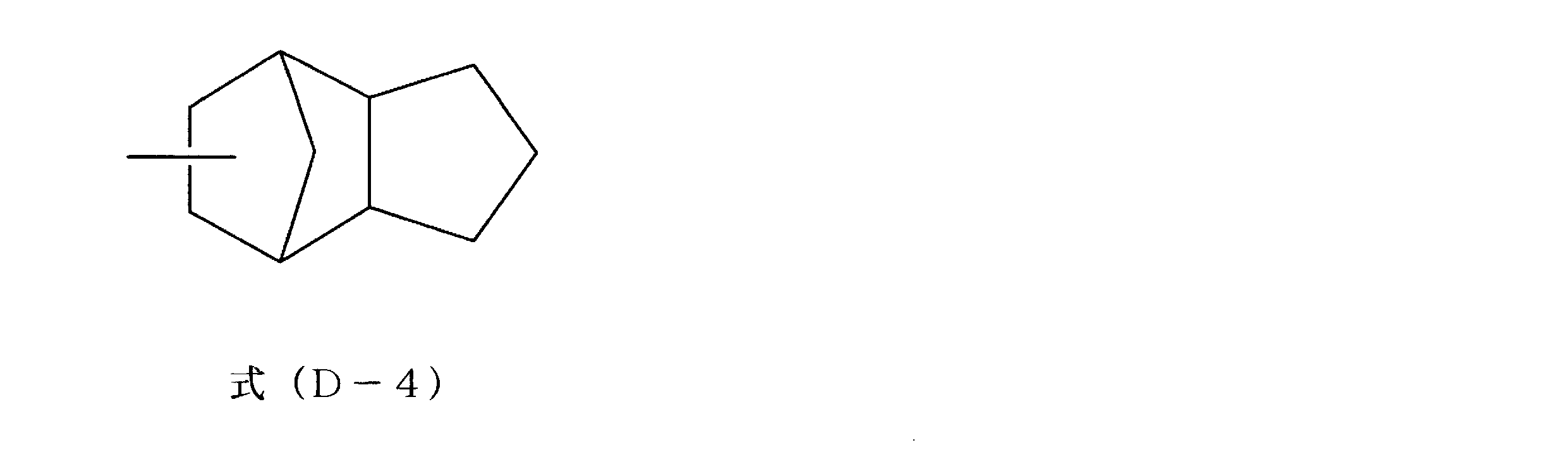
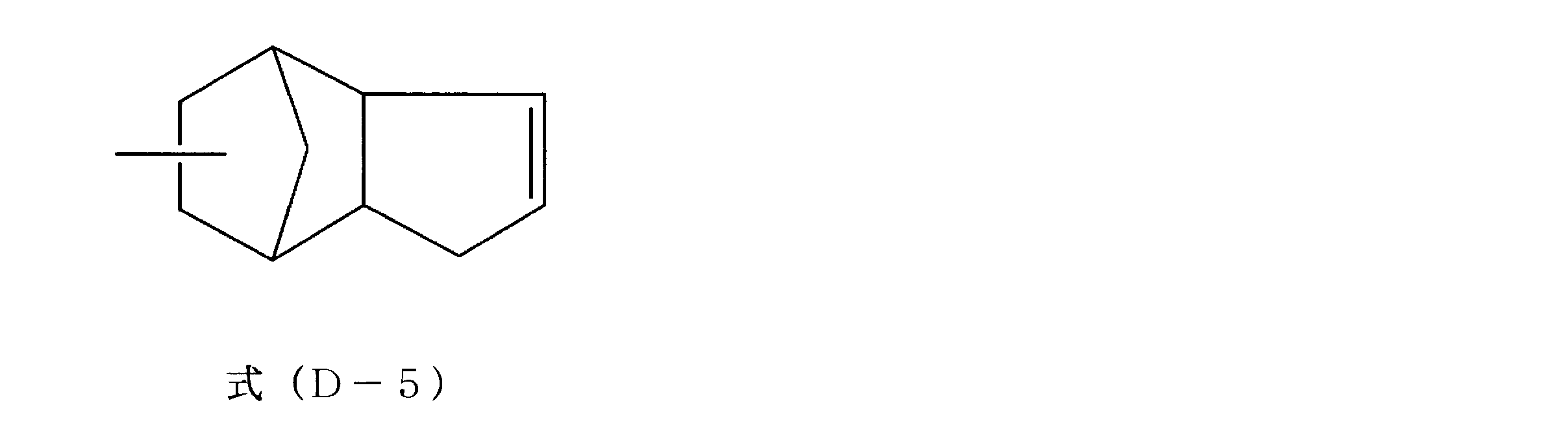
構成単位(D-b3)の前駆体としては、下記式(D-7)に示すエチレン性不飽和単量体、または下記式(D-8)に示すエチレン性不飽和単量体等が挙げられる。

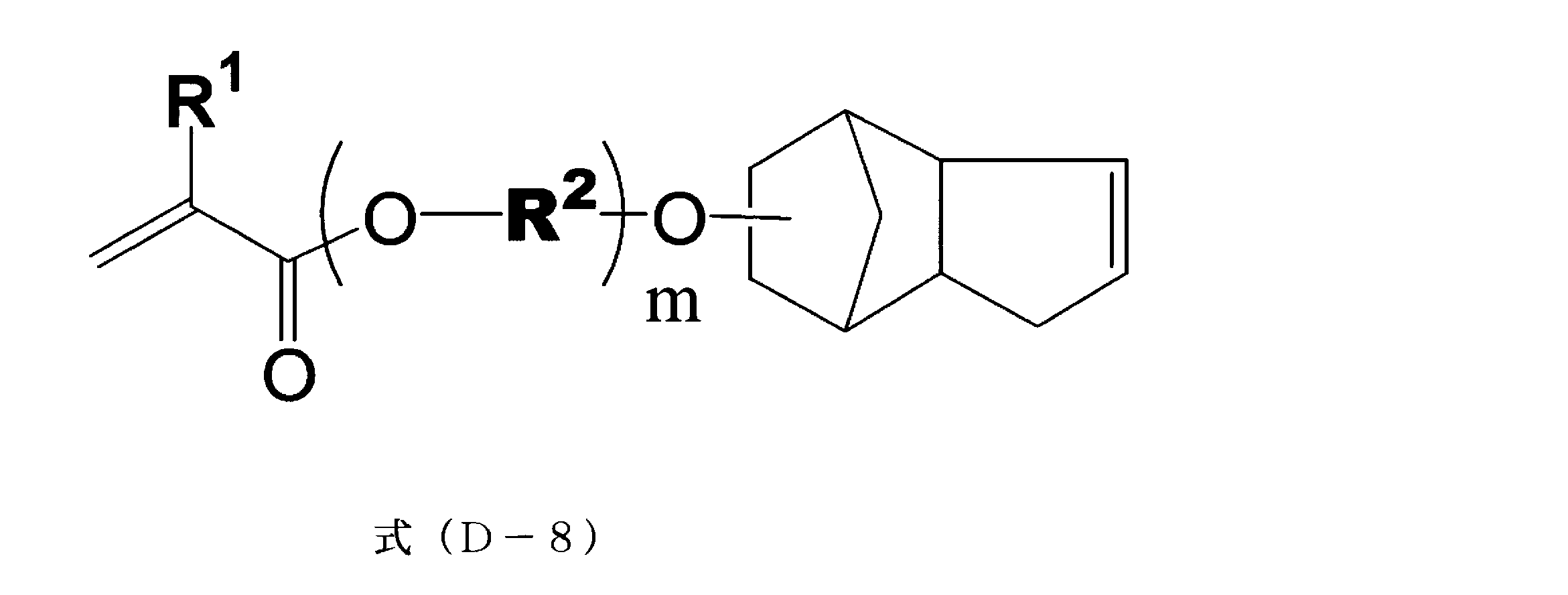
[式(D-7)、および式(D-8)中、R1は、水素原子、またはメチル基であり、R2は、炭素数2若しくは3のアルキレン基であり、mは、0~2の整数である。]
式(D-7)に示されるエチレン性不飽和単量体としては、例えば、
日立化成社製ファンクリル FA-513A〔ジシクロペンタニルアクリレート、R1:水素原子、R2:なし、m=0〕、またはFA-513M〔ジシクロペンタニルメタクリレート、R1:水素原子、R2:なし、m=0〕等が挙げられるが、これらに限定することなく、また、2種類以上併用することもできる。
日立化成社製ファンクリル FA-513A〔ジシクロペンタニルアクリレート、R1:水素原子、R2:なし、m=0〕、またはFA-513M〔ジシクロペンタニルメタクリレート、R1:水素原子、R2:なし、m=0〕等が挙げられるが、これらに限定することなく、また、2種類以上併用することもできる。
式(D-8)に示されるエチレン性不飽和単量体としては、例えば、
日立化成社製ファンクリル FA-511A〔ジシクロペンテニルアクリレート、R1:水素原子、R2:なし、m=0〕、FA-512A〔ジシクロペンテニルオキシエチルアクリレート、R1:水素原子、R2:エチレン基、m=1〕、FA-512M〔ジシクロペンテニルオキシエチルメタクリレート、R1:メチル基、R2:エチレン基、m=1〕、またはFA-512MT〔ジシクロペンテニルオキシエチルメタクリレート、R1:メチル基、R2:エチレン基、m=1〕等が挙げられるが、これらに限定することなく、また、2種類以上併用することもできる。
日立化成社製ファンクリル FA-511A〔ジシクロペンテニルアクリレート、R1:水素原子、R2:なし、m=0〕、FA-512A〔ジシクロペンテニルオキシエチルアクリレート、R1:水素原子、R2:エチレン基、m=1〕、FA-512M〔ジシクロペンテニルオキシエチルメタクリレート、R1:メチル基、R2:エチレン基、m=1〕、またはFA-512MT〔ジシクロペンテニルオキシエチルメタクリレート、R1:メチル基、R2:エチレン基、m=1〕等が挙げられるが、これらに限定することなく、また、2種類以上併用することもできる。
<その他の構成単位>
その他の構成単位は、構成単位(D-b1)、構成単位(D-b2)、構成単位(D-b3)以外の構成単位である。
その他の構成単位は、構成単位(D-b1)、構成単位(D-b2)、構成単位(D-b3)以外の構成単位である。
その他の構成単位の前駆体としては、例えば、
メチル(メタ)メタアクリレート、エチル(メタ)アクリレート、n-プロピル(メタ)アクリレート、イソプロピル(メタ)アクリレート、ブチル(メタ)アクリレート、イソブチル(メタ)アクリレート、s-ブチル(メタ)アクリレート、t-ブチル(メタ)アクリレート、ペンチル(メタ)アクリレート、イソペンチルアクリレート、ネオペンチル(メタ)アクリレート、t-ペンチル(メタ)アクリレート、1-メチルブチル(メタ)アクリレート、ヘキシル(メタ)アクリレート、ヘプタ(メタ)アクリレート、オクチル(メタ)アクリレート、2-エチルヘキシル(メタ)アクリレート、ラウリル(メタ)アクリレート、セチル(メタ)アクリレート、ステアリル(メタ)アクリレート、イソステアリル(メタ)アクリレート、シクロヘキシル(メタ)アクリレート、アリル(メタ)アクリレート、またはオレイル(メタ)アクリレート等のアルキルまたはアルケニル(メタ)アクリレート、2-ヒドロキシエチル(メタ)アクリレート、2-ヒドロキシプロピル(メタ)アクリレート、β-カルボキシエチル(メタ)アクリレート、ポリエチレングリコールジ(メタ)アクリレート、1,6-ヘキサンジオールジ(メタ)アクリレート、トリエチレングリコールジ(メタ)アクリレート、トリプロピレングリコールジ(メタ)アクリレート、トリメチロールプロパントリ(メタ)アクリレート、ペンタエリスリトールトリ(メタ)アクリレート、1,6-ヘキサンジオールジグリシジルエーテルジ(メタ)アクリレート、ネオペンチルグリコールジグリシジルエーテルジ(メタ)アクリレート、ジペンタエリスリトールヘキサ(メタ)アクリレート、イソボルニル(メタ)アクリレート、エステルアクリレート、エポキシ(メタ)アクリレート、ウレタンアクリレート等の各種アクリル酸エステル及びメタクリル酸エステルが挙げられるが、目的に応じて、これらに限定することなく他のエチレン性不飽和単量体を選ぶこともでき、2種類以上併用することもできる。
メチル(メタ)メタアクリレート、エチル(メタ)アクリレート、n-プロピル(メタ)アクリレート、イソプロピル(メタ)アクリレート、ブチル(メタ)アクリレート、イソブチル(メタ)アクリレート、s-ブチル(メタ)アクリレート、t-ブチル(メタ)アクリレート、ペンチル(メタ)アクリレート、イソペンチルアクリレート、ネオペンチル(メタ)アクリレート、t-ペンチル(メタ)アクリレート、1-メチルブチル(メタ)アクリレート、ヘキシル(メタ)アクリレート、ヘプタ(メタ)アクリレート、オクチル(メタ)アクリレート、2-エチルヘキシル(メタ)アクリレート、ラウリル(メタ)アクリレート、セチル(メタ)アクリレート、ステアリル(メタ)アクリレート、イソステアリル(メタ)アクリレート、シクロヘキシル(メタ)アクリレート、アリル(メタ)アクリレート、またはオレイル(メタ)アクリレート等のアルキルまたはアルケニル(メタ)アクリレート、2-ヒドロキシエチル(メタ)アクリレート、2-ヒドロキシプロピル(メタ)アクリレート、β-カルボキシエチル(メタ)アクリレート、ポリエチレングリコールジ(メタ)アクリレート、1,6-ヘキサンジオールジ(メタ)アクリレート、トリエチレングリコールジ(メタ)アクリレート、トリプロピレングリコールジ(メタ)アクリレート、トリメチロールプロパントリ(メタ)アクリレート、ペンタエリスリトールトリ(メタ)アクリレート、1,6-ヘキサンジオールジグリシジルエーテルジ(メタ)アクリレート、ネオペンチルグリコールジグリシジルエーテルジ(メタ)アクリレート、ジペンタエリスリトールヘキサ(メタ)アクリレート、イソボルニル(メタ)アクリレート、エステルアクリレート、エポキシ(メタ)アクリレート、ウレタンアクリレート等の各種アクリル酸エステル及びメタクリル酸エステルが挙げられるが、目的に応じて、これらに限定することなく他のエチレン性不飽和単量体を選ぶこともでき、2種類以上併用することもできる。
その他のエチレン性不飽和単量体としては、例えば、
テトラヒドロフルフリル(メタ)アクリレート、または3-メチルオキセタニル(メタ)アクリレート等の複素環式置換基を有する(メタ)アクリレート類;
メトキシポリプロピレングリコール(メタ)アクリレート、またはエトキシポリエチレングリコール(メタ)アクリレート等のアルコキシポリアルキレングリコール(メタ)アクリレート類;あるいは、
(メタ)アクリルアミド、N,N-ジメチル(メタ)アクリルアミド、N,N-ジエチル(メタ)アクリルアミド、N-イソプロピル(メタ)アクリルアミド、ダイアセトン(メタ)アクリルアミド、アクリロイルモルホリン、N-ヒドロキシメチル(メタ)アクリルアミド、N-ビニルホルムアミド等の(メタ)アクリルアミド類やアクリロニトリル等が挙げられる。
テトラヒドロフルフリル(メタ)アクリレート、または3-メチルオキセタニル(メタ)アクリレート等の複素環式置換基を有する(メタ)アクリレート類;
メトキシポリプロピレングリコール(メタ)アクリレート、またはエトキシポリエチレングリコール(メタ)アクリレート等のアルコキシポリアルキレングリコール(メタ)アクリレート類;あるいは、
(メタ)アクリルアミド、N,N-ジメチル(メタ)アクリルアミド、N,N-ジエチル(メタ)アクリルアミド、N-イソプロピル(メタ)アクリルアミド、ダイアセトン(メタ)アクリルアミド、アクリロイルモルホリン、N-ヒドロキシメチル(メタ)アクリルアミド、N-ビニルホルムアミド等の(メタ)アクリルアミド類やアクリロニトリル等が挙げられる。
また、前記以外の構成単位の前駆体としては、例えば、
エチルビニルエーテル、n-プロピルビニルエーテル、イソプロピルビニルエーテル、n-ブチルビニルエーテル、イソブチルビニルエーテル、ヒドロキシエチルビニルエーテル、エチレングリコールジビニルエーテル、ペンタエリスリトールトリビニルエーテル等のビニルエーテル類;あるいは、
酢酸ビニル、またはプロピオン酸ビニル等の脂肪酸ビニル類等が挙げられる。
さらに、ジメチル-2,2’-[オキシビス(メチレン)]ビス-2-プロペノエート、ジエチル-2,2’-[オキシビス(メチレン)]ビス-2-プロペノエート、ジシクロヘキシル-2,2’-[オキシビス(メチレン)]ビス-2-プロペノエート、ジベンジル-2,2’-[オキシビス(メチレン)]ビス-2-プロペノエート等のモノマー・オリゴマーを用いることも可能である。アクリル構成単位以外の前記構成単位を、前記アクリル構成単位と併用することもできる。
エチルビニルエーテル、n-プロピルビニルエーテル、イソプロピルビニルエーテル、n-ブチルビニルエーテル、イソブチルビニルエーテル、ヒドロキシエチルビニルエーテル、エチレングリコールジビニルエーテル、ペンタエリスリトールトリビニルエーテル等のビニルエーテル類;あるいは、
酢酸ビニル、またはプロピオン酸ビニル等の脂肪酸ビニル類等が挙げられる。
さらに、ジメチル-2,2’-[オキシビス(メチレン)]ビス-2-プロペノエート、ジエチル-2,2’-[オキシビス(メチレン)]ビス-2-プロペノエート、ジシクロヘキシル-2,2’-[オキシビス(メチレン)]ビス-2-プロペノエート、ジベンジル-2,2’-[オキシビス(メチレン)]ビス-2-プロペノエート等のモノマー・オリゴマーを用いることも可能である。アクリル構成単位以外の前記構成単位を、前記アクリル構成単位と併用することもできる。
<エチレン性不飽和二重結合の導入>
また、以下に示す方法(D-i)や方法(D-ii)によりエチレン性不飽和二重結合を導入するために、エポキシ基を有するエチレン性不飽和単量体、または水酸基を有するエチレン性不飽和単量体も使用することができる。これらは、変性によっては、その他の構成単位以外の構成単位になる可能性もあるため、最終的な、構成単位(D-b1)、構成単位(D-b2)、構成単位(D-b3)の重量比に配慮することが望ましい。
また、以下に示す方法(D-i)や方法(D-ii)によりエチレン性不飽和二重結合を導入するために、エポキシ基を有するエチレン性不飽和単量体、または水酸基を有するエチレン性不飽和単量体も使用することができる。これらは、変性によっては、その他の構成単位以外の構成単位になる可能性もあるため、最終的な、構成単位(D-b1)、構成単位(D-b2)、構成単位(D-b3)の重量比に配慮することが望ましい。
<方法(D-i)>
方法(D-i)としては、例えば、エポキシ基を有するエチレン性不飽和単量体と、他の1種類以上のエチレン性不飽和単量体とを共重合することによって得られた共重合体の側鎖エポキシ基に、エチレン性不飽和二重結合を有する不飽和一塩基酸のカルボキシル基を付加反応させ、更に、生成した水酸基に、多塩基酸無水物を反応させ、エチレン性不飽和二重結合を導入し感光性樹脂の機能を持たせ、かつ、アルカリ可溶性機能を持つカルボキシル基を導入する方法がある。
方法(D-i)としては、例えば、エポキシ基を有するエチレン性不飽和単量体と、他の1種類以上のエチレン性不飽和単量体とを共重合することによって得られた共重合体の側鎖エポキシ基に、エチレン性不飽和二重結合を有する不飽和一塩基酸のカルボキシル基を付加反応させ、更に、生成した水酸基に、多塩基酸無水物を反応させ、エチレン性不飽和二重結合を導入し感光性樹脂の機能を持たせ、かつ、アルカリ可溶性機能を持つカルボキシル基を導入する方法がある。
この工程に用いた不飽和一塩基酸のカルボキシル基は、エポキシ基への付加反応後にエステル結合を形成するので、樹脂(D-B1)の構成単位(D-b1)には該当せず、その他の構成単位に該当し、多塩基酸無水物は、水酸基との反応後にカルボキシル基を形成するので、樹脂(D-B1)の構成単位(D-b1)に該当する。
エポキシ基を有するエチレン性不飽和単量体、不飽和一塩基酸、および多塩基酸無水物の例としては、第5の実施態様におけるエチレン性不飽和単量体、不飽和一塩基酸、および多塩基酸無水物と同様のエチレン性不飽和単量体、不飽和一塩基酸、および多塩基酸無水物が挙げられる。
方法(D-i)の類似の方法として、例えば、カルボキシル基を有するエチレン性不飽和単量体と、他の1種類以上のエチレン性不飽和単量体とを共重合することによって得られた共重合体の側鎖カルボキシル基の一部に、エポキシ基を有するエチレン性不飽和単量体を付加反応させ、エチレン性不飽和二重結合およびカルボキシル基を導入する方法がある。この場合、エポキシ基との付加反応に用いられないカルボキシル基に相当する構成単位のみが、樹脂(D-B1)の構成単位(D-b1)に該当する。
<方法(D-ii)>
方法(D-ii)としては、水酸基を有するエチレン性不飽和単量体を使用し、他のカルボキシル基を有する不飽和一塩基酸や、他のエチレン性不飽和単量体とを共重合することによって得られた共重合体の側鎖水酸基に、イソシアネート基を有するエチレン性不飽和単量体のイソシアネート基を反応させる方法がある。
方法(D-ii)としては、水酸基を有するエチレン性不飽和単量体を使用し、他のカルボキシル基を有する不飽和一塩基酸や、他のエチレン性不飽和単量体とを共重合することによって得られた共重合体の側鎖水酸基に、イソシアネート基を有するエチレン性不飽和単量体のイソシアネート基を反応させる方法がある。
水酸基を有するエチレン性不飽和単量体およびイソシアネート基を有するエチレン性不飽和単量体の例としては、第5の実施態様における水酸基を有するエチレン性不飽和単量体およびイソシアネート基を有するエチレン性不飽和単量体と同様の水酸基を有するエチレン性不飽和単量体およびイソシアネート基を有するエチレン性不飽和単量体が挙げられる。
樹脂(D-B1)の重量平均分子量(Mw)は5,000~100,000の範囲が好ましく、より好ましくは5,000~80,000の範囲であり、さらに好ましくは、5,000~30,000の範囲である。また数平均分子量(Mn)は5,000~50,000の範囲が好ましく、Mw/Mnの値は10以下であることが好ましい。樹脂(D-B1)の重量平均分子量(Mw)が100,000を越えると樹脂間の相互作用が強くなり、カラーフィルタ用着色組成物の粘度が高くなるため、取り扱いが困難となりやすい。また、重量平均分子量(Mw)が5,000未満であると現像性やガラス等の基板への密着性にが低下することがある。
樹脂(D-B1)の含有量は、成膜性および諸耐性が良好なことから、式(1)に示す顔料(A1)100重量部に対し、30重量部以上の量で用いることが好ましく、着色剤濃度が高く、良好な色特性を発現できることから、500重量部以下の量で用いることが好ましい。さらに好ましくは50~250重量部の量で用いる。
《その他の樹脂》
着色組成物は、さらに樹脂(D-B1)以外のその他の樹脂を含んでも良い。その他の樹脂としては、可視光領域の400~700nmの全波長領域において透過率が好ましくは80%以上、より好ましくは95%以上の樹脂が好ましい。その他の樹脂には、熱可塑性樹脂、熱硬化性樹脂、および感光性樹脂が含まれ、これらを単独で、または2種以上混合して用いることができる。樹脂の例としては、第5の実施態様における樹脂と同様の樹脂が挙げられる。
着色組成物は、さらに樹脂(D-B1)以外のその他の樹脂を含んでも良い。その他の樹脂としては、可視光領域の400~700nmの全波長領域において透過率が好ましくは80%以上、より好ましくは95%以上の樹脂が好ましい。その他の樹脂には、熱可塑性樹脂、熱硬化性樹脂、および感光性樹脂が含まれ、これらを単独で、または2種以上混合して用いることができる。樹脂の例としては、第5の実施態様における樹脂と同様の樹脂が挙げられる。
感光性樹脂としては、水酸基、カルボキシル基、アミノ基等の反応性の置換基を有する線状高分子にイソシアネート基、アルデヒド基、エポキシ基等の反応性置換基を有する(メタ)アクリル化合物やケイヒ酸を反応させて、(メタ)アクリロイル基、スチリル基等の光架橋性基を該線状高分子に導入した樹脂が用いられる。また、スチレン-無水マレイン酸共重合物やα-オレフィン-無水マレイン酸共重合物等の酸無水物を含む線状高分子をヒドロキシアルキル(メタ)アクリレート等の水酸基を有する(メタ)アクリル化合物によりハーフエステル化したものも用いられる。
(溶剤)
溶剤は、顔料(A)を十分にバインダー樹脂(D-B)中に分散させ、ガラス基板等の基板上に着色組成物を乾燥膜厚が0.2~5μmとなるように塗布してフィルタセグメントを形成することを容易にするために用いられる。溶剤としては、有機溶剤が好ましい。溶剤の好ましい使用量は、第5の実施態様と同様である。
溶剤は、顔料(A)を十分にバインダー樹脂(D-B)中に分散させ、ガラス基板等の基板上に着色組成物を乾燥膜厚が0.2~5μmとなるように塗布してフィルタセグメントを形成することを容易にするために用いられる。溶剤としては、有機溶剤が好ましい。溶剤の好ましい使用量は、第5の実施態様と同様である。
(感光性着色組成物の製法)
第6の実施態様の着色組成物は、第5の実施態様の着色組成物と同様の製造方法により製造することができる。
第6の実施態様の着色組成物は、第5の実施態様の着色組成物と同様の製造方法により製造することができる。
(任意成分)
第6の実施態様の着色組成物には、顔料分散剤(D-C)、光重合開始剤(D-D)、増感剤、光重合性化合物、多官能チオール、紫外線吸収剤、重合禁止剤、貯蔵安定剤、その他の添加剤等の任意成分を含有させることができる。これらの任意成分の具体例としては、第5の実施態様と同様である。また、好ましい例、好ましい使用量等も第5の実施態様と同様である。
第6の実施態様の着色組成物には、顔料分散剤(D-C)、光重合開始剤(D-D)、増感剤、光重合性化合物、多官能チオール、紫外線吸収剤、重合禁止剤、貯蔵安定剤、その他の添加剤等の任意成分を含有させることができる。これらの任意成分の具体例としては、第5の実施態様と同様である。また、好ましい例、好ましい使用量等も第5の実施態様と同様である。
(粗大粒子の除去)
第6の実施態様の着色組成物は、第3の実施態様の着色組成物と同様に、粗大粒子の除去を行うことが好ましい。
第6の実施態様の着色組成物は、第3の実施態様の着色組成物と同様に、粗大粒子の除去を行うことが好ましい。
[溶剤、任意成分]
以下、上記のカラーフィルタ用着色組成物に用いられる溶剤及び任意成分の具体例を示す。
以下、上記のカラーフィルタ用着色組成物に用いられる溶剤及び任意成分の具体例を示す。
(その他着色剤(その他の顔料))
着色組成物に用いることができるその他着色剤(その他の顔料)として、例えばC.I.ピグメントレッド1、2、3、4、5、6、7、8、9、12、14、15、16、17、21、22、23、31、32、37、38、41、47、48、48:1、48:2、48:3、48:4、49、49:1、49:2、50:1、52:1、52:2、53、53:1、53:2、53:3、57、57:1、57:2、58:4、60、63、63:1、63:2、64、64:1、68、69、81、81:1、81:2、81:3、81:4、83、88、90:1、101、101:1、104、108、108:1、109、112、113、114、122、123、144、146、147、149、151、166、168、169、170、172、173、174、175、176、177、178、179、181、184、185、187、188、190、192、193、194、200、202、206、207、208、209、210、214、215、216、217、220、221、223、224、226、227、228、240、230、231、232、233、235、236、237、238、239、242、243、245、246、247、249、250、251、253、254、255、264、255、256、257、258、259、260、262、263、264、265、266、267、268、269、270、271、272、273、274,275、276、277、278、279、280、281、282、283、284、285、286、または287等の赤色顔料を挙げることができる。赤色染料としては、キサンテン系、モノアゾ系(ピリドン系、バルビツール酸系、金属錯体系など)、ジスアゾ系、アントラキノン系などが挙げられる。具体的には、C.I.アシッドレッド52、87、92、289、338などのキサンテン系酸性染料の造塩化合物等が挙げられる。これらは単独でまたは2種以上を混合して用いることができる。
着色組成物に用いることができるその他着色剤(その他の顔料)として、例えばC.I.ピグメントレッド1、2、3、4、5、6、7、8、9、12、14、15、16、17、21、22、23、31、32、37、38、41、47、48、48:1、48:2、48:3、48:4、49、49:1、49:2、50:1、52:1、52:2、53、53:1、53:2、53:3、57、57:1、57:2、58:4、60、63、63:1、63:2、64、64:1、68、69、81、81:1、81:2、81:3、81:4、83、88、90:1、101、101:1、104、108、108:1、109、112、113、114、122、123、144、146、147、149、151、166、168、169、170、172、173、174、175、176、177、178、179、181、184、185、187、188、190、192、193、194、200、202、206、207、208、209、210、214、215、216、217、220、221、223、224、226、227、228、240、230、231、232、233、235、236、237、238、239、242、243、245、246、247、249、250、251、253、254、255、264、255、256、257、258、259、260、262、263、264、265、266、267、268、269、270、271、272、273、274,275、276、277、278、279、280、281、282、283、284、285、286、または287等の赤色顔料を挙げることができる。赤色染料としては、キサンテン系、モノアゾ系(ピリドン系、バルビツール酸系、金属錯体系など)、ジスアゾ系、アントラキノン系などが挙げられる。具体的には、C.I.アシッドレッド52、87、92、289、338などのキサンテン系酸性染料の造塩化合物等が挙げられる。これらは単独でまたは2種以上を混合して用いることができる。
例えばC.I.ピグメントオレンジ1、2、5、13、16、17、19、20、21、22、23、24、34、36、38、39、43、46、48、49、51、55、59、61、62、64、65、67、68、69、70、71、72、73、74、75、77、78、または79等の橙色顔料および/またはC.I.ピグメントイエロー1、1:1、2、3、4、5、6、9、10、12、13、14、15、16、17、18、24、31、32、34、35、35:1、36、36:1、37、37:1、40、41、42、43、48、53、55、60、61、62、62:1、63、65、73、74、75、77、81、83、87、93、94、95、97、98、100、101、104、105、106、108、109、110、111、113、114、115、116、117、118、119、120、123、126、127、127:1、128、129、133、134、136、138、139、142、147、148、150、151、152、153、154、155、156、157、158、159、160、161、162、163、164、165、166、167、168、169、170、171、172、173、174、175、176、177、179、180、181、182、183、184、185、187、188、189、190、191、191:1、192、193、194、195、196、197、198、199、200、202、203、204、205、206、207、208、213、214、218、219、220、または221等の黄色顔料を併用することができる。また、橙色染料および/または黄色染料としては、キノリン系、モノアゾ系(ピリドン系、バルビツール酸系、金属錯体系など)、ジスアゾ系、メチン系などが挙げられる。これらは単独でまたは2種以上を混合して用いることができる。
これらの中でも、併用する着色剤で好ましいものは、アントラキノン系顔料、モノアゾ系顔料、ジスアゾ系顔料、またはキサンテン系染料等が挙げられる。具体的には、明度とコントラストの観点から、C.I.ピグメントレッド48:1、122、168、176、177、185、202、206、207、209、224、242、254、C.I.ピグメントオレンジ38、71、C.I.ピグメントイエロー83、117、129、138、139、150、154、155、180、185、およびC.I.アシッドレッド52の造塩化合物が好ましい。更に好ましくはC.I.ピグメントレッド177、209、224、242、または254、C.I.ピグメントイエロー83、138、139、150、または180である。
(有機溶剤)
着色組成物に用いることができる有機溶剤としては、例えば、乳酸エチル、ベンジルアルコール、1,2,3-トリクロロプロパン、1,3-ブタンジオール、1,3-ブチレングリコール、1,3-ブチレングリコールジアセテート、1,4-ジオキサン、2-ヘプタノン、2-メチル-1,3-プロパンジオール、3,5,5-トリメチル-2-シクロヘキセン-1-オン、3,3,5-トリメチルシクロヘキサノン、3-エトキシプロピオン酸エチル、3-メチル-1,3-ブタンジオール、3-メトキシ-3-メチル-1-ブタノール、3-メトキシ-3-メチルブチルアセテート、3-メトキシブタノール、3-メトキシブチルアセテート、4-ヘプタノン、m-キシレン、m-ジエチルベンゼン、m-ジクロロベンゼン、N,N-ジメチルアセトアミド、N,N-ジメチルホルムアミド、n-ブチルアルコール、n-ブチルベンゼン、n-プロピルアセテート、N-メチルピロリドン、o-キシレン、o-クロロトルエン、o-ジエチルベンゼン、o-ジクロロベンゼン、p-クロロトルエン、p-ジエチルベンゼン、sec-ブチルベンゼン、tert-ブチルベンゼン、γ-ブチロラクトン、イソブチルアルコール、イソホロン、エチレングリコールジエチルエーテル、エチレングリコールジブチルエーテル、エチレングリコールモノイソプロピルエーテル、エチレングリコールモノエチルエーテル、エチレングリコールモノエチルエーテルアセテート、エチレングリコールモノターシャリーブチルエーテル、エチレングリコールモノブチルエーテル、エチレングリコールモノブチルエーテルアセテート、エチレングリコールモノプロピルエーテル、エチレングリコールモノヘキシルエーテル、エチレングリコールモノメチルエーテル、エチレングリコールモノメチルエーテルアセテート、ジイソブチルケトン、ジエチレングリコールジエチルエーテル、ジエチレングリコールジメチルエーテル、ジエチレングリコールモノイソプロピルエーテル、ジエチレングリコールモノエチルエーテルアセテート、ジエチレングリコールモノブチルエーテル、ジエチレングリコールモノブチルエーテルアセテート、ジエチレングリコールモノメチルエーテル、シクロヘキサノール、シクロヘキサノールアセテート、シクロヘキサノン、ジプロピレングリコールジメチルエーテル、ジプロピレングリコールメチルエーテルアセテート、ジプロピレングリコールモノエチルエーテル、ジプロピレングリコールモノブチルエーテル、ジプロピレングリコールモノプロピルエーテル、ジプロピレングリコールモノメチルエーテル、ダイアセトンアルコール、トリアセチン、トリプロピレングリコールモノブチルエーテル、トリプロピレングリコールモノメチルエーテル、プロピレングリコールジアセテート、プロピレングリコールフェニルエーテル、プロピレングリコールモノエチルエーテル、プロピレングリコールモノエチルエーテルアセテート、プロピレングリコールモノブチルエーテル、プロピレングリコールモノプロピルエーテル、プロピレングリコールモノメチルエーテル、プロピレングリコールモノメチルエーテルアセテート、プロピレングリコールモノメチルエーテルプロピオネート、ベンジルアルコール、メチルイソブチルケトン、メチルシクロヘキサノール、酢酸n-アミル、酢酸n-ブチル、酢酸イソアミル、酢酸イソブチル、酢酸プロピル、二塩基酸エステル等が挙げられる。これらの溶剤は、単独で、または必要に応じて任意の比率で2種以上混合して用いることができる。
着色組成物に用いることができる有機溶剤としては、例えば、乳酸エチル、ベンジルアルコール、1,2,3-トリクロロプロパン、1,3-ブタンジオール、1,3-ブチレングリコール、1,3-ブチレングリコールジアセテート、1,4-ジオキサン、2-ヘプタノン、2-メチル-1,3-プロパンジオール、3,5,5-トリメチル-2-シクロヘキセン-1-オン、3,3,5-トリメチルシクロヘキサノン、3-エトキシプロピオン酸エチル、3-メチル-1,3-ブタンジオール、3-メトキシ-3-メチル-1-ブタノール、3-メトキシ-3-メチルブチルアセテート、3-メトキシブタノール、3-メトキシブチルアセテート、4-ヘプタノン、m-キシレン、m-ジエチルベンゼン、m-ジクロロベンゼン、N,N-ジメチルアセトアミド、N,N-ジメチルホルムアミド、n-ブチルアルコール、n-ブチルベンゼン、n-プロピルアセテート、N-メチルピロリドン、o-キシレン、o-クロロトルエン、o-ジエチルベンゼン、o-ジクロロベンゼン、p-クロロトルエン、p-ジエチルベンゼン、sec-ブチルベンゼン、tert-ブチルベンゼン、γ-ブチロラクトン、イソブチルアルコール、イソホロン、エチレングリコールジエチルエーテル、エチレングリコールジブチルエーテル、エチレングリコールモノイソプロピルエーテル、エチレングリコールモノエチルエーテル、エチレングリコールモノエチルエーテルアセテート、エチレングリコールモノターシャリーブチルエーテル、エチレングリコールモノブチルエーテル、エチレングリコールモノブチルエーテルアセテート、エチレングリコールモノプロピルエーテル、エチレングリコールモノヘキシルエーテル、エチレングリコールモノメチルエーテル、エチレングリコールモノメチルエーテルアセテート、ジイソブチルケトン、ジエチレングリコールジエチルエーテル、ジエチレングリコールジメチルエーテル、ジエチレングリコールモノイソプロピルエーテル、ジエチレングリコールモノエチルエーテルアセテート、ジエチレングリコールモノブチルエーテル、ジエチレングリコールモノブチルエーテルアセテート、ジエチレングリコールモノメチルエーテル、シクロヘキサノール、シクロヘキサノールアセテート、シクロヘキサノン、ジプロピレングリコールジメチルエーテル、ジプロピレングリコールメチルエーテルアセテート、ジプロピレングリコールモノエチルエーテル、ジプロピレングリコールモノブチルエーテル、ジプロピレングリコールモノプロピルエーテル、ジプロピレングリコールモノメチルエーテル、ダイアセトンアルコール、トリアセチン、トリプロピレングリコールモノブチルエーテル、トリプロピレングリコールモノメチルエーテル、プロピレングリコールジアセテート、プロピレングリコールフェニルエーテル、プロピレングリコールモノエチルエーテル、プロピレングリコールモノエチルエーテルアセテート、プロピレングリコールモノブチルエーテル、プロピレングリコールモノプロピルエーテル、プロピレングリコールモノメチルエーテル、プロピレングリコールモノメチルエーテルアセテート、プロピレングリコールモノメチルエーテルプロピオネート、ベンジルアルコール、メチルイソブチルケトン、メチルシクロヘキサノール、酢酸n-アミル、酢酸n-ブチル、酢酸イソアミル、酢酸イソブチル、酢酸プロピル、二塩基酸エステル等が挙げられる。これらの溶剤は、単独で、または必要に応じて任意の比率で2種以上混合して用いることができる。
中でも、着色剤の分散性、浸透性、および着色組成物の塗布性が良好なことから、乳酸エチル等のアルキルラクテート類、プロピレングリコールモノメチルエーテルアセテート、プロピレングリコールモノエチルエーテルアセテート、エチレングリコールモノメチルエーテルアセテート、エチレングリコールモノエチルエーテルアセテート等のグリコールアセテート類、ベンジルアルコール、ダイアセトンアルコール等のアルコール類やシクロヘキサノン等のケトン類を用いることが好ましい。
(樹脂型分散剤)
樹脂型分散剤は、着色剤に吸着する性質を有する顔料親和性部位と、着色剤担体と相溶性のある部位とを有し、着色剤に吸着して着色剤の着色剤担体への分散を安定化する働きをするものである。樹脂型分散剤として具体的には、ポリウレタン、ポリアクリレート等のポリカルボン酸エステル、不飽和ポリアミド、ポリカルボン酸、ポリカルボン酸(部分)アミン塩、ポリカルボン酸アンモニウム塩、ポリカルボン酸アルキルアミン塩、ポリシロキサン、長鎖ポリアミノアマイドリン酸塩、水酸基含有ポリカルボン酸エステルや、これらの変性物、ポリ(低級アルキレンイミン)と遊離のカルボキシル基を有するポリエステルとの反応により形成されたアミドやその塩等の油性分散剤、(メタ)アクリル酸-スチレン共重合体、(メタ)アクリル酸-(メタ)アクリル酸エステル共重合体、スチレン-マレイン酸共重合体、ポリビニルアルコール、ポリビニルピロリドン等の水溶性樹脂や水溶性高分子化合物、ポリエステル系、変性ポリアクリレート系、エチレンオキサイド/プロピレンオキサイド付加化合物、燐酸エステル系等が用いられる。これらは単独でまたは2種以上を混合して用いることができるが、必ずしもこれらに限定されるものではない。
樹脂型分散剤は、着色剤に吸着する性質を有する顔料親和性部位と、着色剤担体と相溶性のある部位とを有し、着色剤に吸着して着色剤の着色剤担体への分散を安定化する働きをするものである。樹脂型分散剤として具体的には、ポリウレタン、ポリアクリレート等のポリカルボン酸エステル、不飽和ポリアミド、ポリカルボン酸、ポリカルボン酸(部分)アミン塩、ポリカルボン酸アンモニウム塩、ポリカルボン酸アルキルアミン塩、ポリシロキサン、長鎖ポリアミノアマイドリン酸塩、水酸基含有ポリカルボン酸エステルや、これらの変性物、ポリ(低級アルキレンイミン)と遊離のカルボキシル基を有するポリエステルとの反応により形成されたアミドやその塩等の油性分散剤、(メタ)アクリル酸-スチレン共重合体、(メタ)アクリル酸-(メタ)アクリル酸エステル共重合体、スチレン-マレイン酸共重合体、ポリビニルアルコール、ポリビニルピロリドン等の水溶性樹脂や水溶性高分子化合物、ポリエステル系、変性ポリアクリレート系、エチレンオキサイド/プロピレンオキサイド付加化合物、燐酸エステル系等が用いられる。これらは単独でまたは2種以上を混合して用いることができるが、必ずしもこれらに限定されるものではない。
市販の樹脂型分散剤としては、ビックケミー・ジャパン社製のDisperbyk-101、103、107、108、110、111、112、116、130、140、142、154、161、162、163、164、165、166、167、168、170、171、174、180、181、182、183、184、185、190、2000、2001、2009、2010、2020、2025、2050、2070、2095、2150、2155、2163、2164またはAnti-Terra-U、203、204、またはBYK-P104、P104S、220S、6919、21116、21324、21407、21715またはLactimon、Lactimon-WSまたはBykumen等、日本ルーブリゾール社製のSOLSPERSE-3000、9000、13000、13240、13650、13940、16000、17000、18000、20000、21000、24000、26000、27000、28000、31845、32000、32500、32550、33500、32600、34750、35100、36600、38500、41000、41090、53095、55000、56000、76500等、チバ・ジャパン社製のEFKA-46、47、48、452、4008、4009、4010、4015、4020、4047、4050、4055、4060、4080、4400、4401、4402、4403、4406、4408、4300、4310、4320、4330、4340、450、451、453、4540、4550、4560、4800、5010、5065、5066、5070、7500、7554、1101、120、150、1501、1502、1503等、楠本化成社製のDISPARLON3600N、DISPARLON1850、味の素ファインテクノ社製のアジスパーPA111、PB711、PB821、PB822、PB824等が挙げられる。これらは単独で、または2種以上を混合して用いることができる。
好ましくは、これらの中でも、酸性官能基を有する樹脂型顔料分散剤である、ビックケミー・ジャパン社製のDisperbyk-108、110、111、112、116、142、180、2000、2001または日本ルーブリゾール社製のSOLSPERSE-3000、21000、26000、36600、41000、またはチバ・ジャパン社製のEFKA-4401、4550または楠本化成社製のDISPARLON3600N、DISPARLON1850、または味の素ファインテクノ社製のアジスパーPA111等が挙げられるが、これらに限定されるものではない。
(界面活性剤)
界面活性剤としては、ラウリル硫酸ナトリウム、ポリオキシエチレンアルキルエーテル硫酸塩、ドデシルベンゼンスルホン酸ナトリウム、スチレン-アクリル酸共重合体のアルカリ塩、ステアリン酸ナトリウム、アルキルナフタリンスルホン酸ナトリウム、アルキルジフェニルエーテルジスルホン酸ナトリウム、ラウリル硫酸モノエタノールアミン、ラウリル硫酸トリエタノールアミン、ラウリル硫酸アンモニウム、ステアリン酸モノエタノールアミン、スチレン-アクリル酸共重合体のモノエタノールアミン、ポリオキシエチレンアルキルエーテルリン酸エステル等のアニオン性界面活性剤;ポリオキシエチレンオレイルエーテル、ポリオキシエチレンラウリルエーテル、ポリオキシエチレンノニルフェニルエーテル、ポリオキシエチレンアルキルエーテルリン酸エステル、ポリオキシエチレンソルビタンモノステアレート、ポリエチレングリコールモノラウレート等のノニオン性界面活性剤;アルキル4級アンモニウム塩やそれらのエチレンオキサイド付加物等のカオチン性界面活性剤;アルキルジメチルアミノ酢酸ベタイン等のアルキルベタイン、アルキルイミダゾリン等の両性界面活性剤が挙げられる。これらは単独でまたは2種以上を混合して用いることができるが、必ずしもこれらに限定されるものではない。
界面活性剤としては、ラウリル硫酸ナトリウム、ポリオキシエチレンアルキルエーテル硫酸塩、ドデシルベンゼンスルホン酸ナトリウム、スチレン-アクリル酸共重合体のアルカリ塩、ステアリン酸ナトリウム、アルキルナフタリンスルホン酸ナトリウム、アルキルジフェニルエーテルジスルホン酸ナトリウム、ラウリル硫酸モノエタノールアミン、ラウリル硫酸トリエタノールアミン、ラウリル硫酸アンモニウム、ステアリン酸モノエタノールアミン、スチレン-アクリル酸共重合体のモノエタノールアミン、ポリオキシエチレンアルキルエーテルリン酸エステル等のアニオン性界面活性剤;ポリオキシエチレンオレイルエーテル、ポリオキシエチレンラウリルエーテル、ポリオキシエチレンノニルフェニルエーテル、ポリオキシエチレンアルキルエーテルリン酸エステル、ポリオキシエチレンソルビタンモノステアレート、ポリエチレングリコールモノラウレート等のノニオン性界面活性剤;アルキル4級アンモニウム塩やそれらのエチレンオキサイド付加物等のカオチン性界面活性剤;アルキルジメチルアミノ酢酸ベタイン等のアルキルベタイン、アルキルイミダゾリン等の両性界面活性剤が挙げられる。これらは単独でまたは2種以上を混合して用いることができるが、必ずしもこれらに限定されるものではない。
(光重合性単量体(光重合性化合物))
紫外線や熱などにより硬化して透明樹脂を生成するモノマー、オリゴマーとしては、例えば、メチル(メタ)アクリレート、エチル(メタ)アクリレート、2-ヒドロキシエチル(メタ)アクリレート、2-ヒドロキシプロピル(メタ)アクリレート、シクロヘキシル(メタ)アクリレート、β-カルボキシエチル(メタ)アクリレート、ポリエチレングリコールジ(メタ)アクリレート、1,6-ヘキサンジオールジ(メタ)アクリレート、トリエチレングリコールジ(メタ)アクリレート、トリプロピレングリコールジ(メタ)アクリレート、トリメチロールプロパントリ(メタ)アクリレート、ペンタエリスリトールトリ(メタ)アクリレート、ペンタエリスリトールテトラ(メタ)アクリレート、1,6-ヘキサンジオールジグリシジルエーテルジ(メタ)アクリレート、ビスフェノールAジグリシジルエーテルジ(メタ)アクリレート、ネオペンチルグリコールジグリシジルエーテルジ(メタ)アクリレート、ジペンタエリスリトールヘキサ(メタ)アクリレート、ジペンタエリスリトールペンタ(メタ)アクリレート、トリシクロデカニル(メタ)アクリレート、エステルアクリレート、メチロール化メラミンの(メタ)アクリル酸エステル、エポキシ(メタ)アクリレート、ウレタンアクリレート等の各種アクリル酸エステルおよびメタクリル酸エステル、(メタ)アクリル酸、スチレン、酢酸ビニル、ヒドロキシエチルビニルエーテル、エチレングリコールジビニルエーテル、ペンタエリスリトールトリビニルエーテル、(メタ)アクリルアミド、N-ヒドロキシメチル(メタ)アクリルアミド、N-ビニルホルムアミド、アクリロニトリル等が挙げられるが、必ずしもこれらに限定されるものではない。これらの光重合性化合物は、1種を単独で、または必要に応じて任意の比率で2種以上混合して用いることができる。
紫外線や熱などにより硬化して透明樹脂を生成するモノマー、オリゴマーとしては、例えば、メチル(メタ)アクリレート、エチル(メタ)アクリレート、2-ヒドロキシエチル(メタ)アクリレート、2-ヒドロキシプロピル(メタ)アクリレート、シクロヘキシル(メタ)アクリレート、β-カルボキシエチル(メタ)アクリレート、ポリエチレングリコールジ(メタ)アクリレート、1,6-ヘキサンジオールジ(メタ)アクリレート、トリエチレングリコールジ(メタ)アクリレート、トリプロピレングリコールジ(メタ)アクリレート、トリメチロールプロパントリ(メタ)アクリレート、ペンタエリスリトールトリ(メタ)アクリレート、ペンタエリスリトールテトラ(メタ)アクリレート、1,6-ヘキサンジオールジグリシジルエーテルジ(メタ)アクリレート、ビスフェノールAジグリシジルエーテルジ(メタ)アクリレート、ネオペンチルグリコールジグリシジルエーテルジ(メタ)アクリレート、ジペンタエリスリトールヘキサ(メタ)アクリレート、ジペンタエリスリトールペンタ(メタ)アクリレート、トリシクロデカニル(メタ)アクリレート、エステルアクリレート、メチロール化メラミンの(メタ)アクリル酸エステル、エポキシ(メタ)アクリレート、ウレタンアクリレート等の各種アクリル酸エステルおよびメタクリル酸エステル、(メタ)アクリル酸、スチレン、酢酸ビニル、ヒドロキシエチルビニルエーテル、エチレングリコールジビニルエーテル、ペンタエリスリトールトリビニルエーテル、(メタ)アクリルアミド、N-ヒドロキシメチル(メタ)アクリルアミド、N-ビニルホルムアミド、アクリロニトリル等が挙げられるが、必ずしもこれらに限定されるものではない。これらの光重合性化合物は、1種を単独で、または必要に応じて任意の比率で2種以上混合して用いることができる。
(光重合開始剤)
光重合開始剤としては、4-フェノキシジクロロアセトフェノン、4-t-ブチル-ジクロロアセトフェノン、ジエトキシアセトフェノン、1-(4-イソプロピルフェニル)-2-ヒドロキシ-2-メチルプロパン-1-オン、1-ヒドロキシシクロヘキシルフェニルケトン、2-メチル-1-[4-(メチルチオ)フェニル]-2-モルフォリノプロパン-1-オン、2-(ジメチルアミノ)-2-[(4-メチルフェニル)メチル]-1-[4-(4-モルホリニル)フェニル]-1-ブタノン、または2-ベンジル-2-ジメチルアミノ-1-(4-モルフォリノフェニル)-ブタン-1-オン等のアセトフェノン系化合物;ベンゾイン、ベンゾインメチルエーテル、ベンゾインエチルエーテル、ベンゾインイソプロピルエーテル、またはベンジルジメチルケタール等のベンゾイン系化合物;ベンゾフェノン、ベンゾイル安息香酸、ベンゾイル安息香酸メチル、4-フェニルベンゾフェノン、ヒドロキシベンゾフェノン、アクリル化ベンゾフェノン、4-ベンゾイル-4’-メチルジフェニルサルファイド、または3,3’,4,4’-テトラ(t-ブチルパーオキシカルボニル)ベンゾフェノン等のベンゾフェノン系化合物;チオキサントン、2-クロルチオキサントン、2-メチルチオキサントン、イソプロピルチオキサントン、2,4-ジイソプロピルチオキサントン、または2,4-ジエチルチオキサントン等のチオキサントン系化合物;2,4,6-トリクロロ-s-トリアジン、2-フェニル-4,6-ビス(トリクロロメチル)-s-トリアジン、2-(p-メトキシフェニル)-4,6-ビス(トリクロロメチル)-s-トリアジン、2-(p-トリル)-4,6-ビス(トリクロロメチル)-s-トリアジン、2-ピペロニル-4,6-ビス(トリクロロメチル)-s-トリアジン、2,4-ビス(トリクロロメチル)-6-スチリル-s-トリアジン、2-(ナフト-1-イル)-4,6-ビス(トリクロロメチル)-s-トリアジン、2-(4-メトキシ-ナフト-1-イル)-4,6-ビス(トリクロロメチル)-s-トリアジン、2,4-トリクロロメチル-(ピペロニル)-6-トリアジン、または2,4-トリクロロメチル-(4’-メトキシスチリル)-6-トリアジン等のトリアジン系化合物;エタノン,1-[9-エチル-6-(2-メチルベンゾイル)-9H-カルバゾール-3-イル]-,1-(O-アセチルオキシム)、1,2-オクタンジオン,1-〔4-(フェニルチオ)-,2-(O-ベンゾイルオキシム)〕、またはO-(アセチル)-N-(1-フェニル-2-オキソ-2-(4’-メトキシ-ナフチル)エチリデン)ヒドロキシルアミン等のオキシムエステル系化合物;ビス(2,4,6-トリメチルベンゾイル)フェニルホスフィンオキサイド、または2,4,6-トリメチルベンゾイルジフェニルホスフィンオキサイド等のホスフィン系化合物;9,10-フェナンスレンキノン、カンファーキノン、エチルアントラキノン等のキノン系化合物;ボレート系化合物;カルバゾール系化合物;イミダゾール系化合物;あるいは、チタノセン系化合物等が用いられる。これらの光重合開始剤は1種または必要に応じて任意の比率で2種以上混合して用いることができる。
光重合開始剤としては、4-フェノキシジクロロアセトフェノン、4-t-ブチル-ジクロロアセトフェノン、ジエトキシアセトフェノン、1-(4-イソプロピルフェニル)-2-ヒドロキシ-2-メチルプロパン-1-オン、1-ヒドロキシシクロヘキシルフェニルケトン、2-メチル-1-[4-(メチルチオ)フェニル]-2-モルフォリノプロパン-1-オン、2-(ジメチルアミノ)-2-[(4-メチルフェニル)メチル]-1-[4-(4-モルホリニル)フェニル]-1-ブタノン、または2-ベンジル-2-ジメチルアミノ-1-(4-モルフォリノフェニル)-ブタン-1-オン等のアセトフェノン系化合物;ベンゾイン、ベンゾインメチルエーテル、ベンゾインエチルエーテル、ベンゾインイソプロピルエーテル、またはベンジルジメチルケタール等のベンゾイン系化合物;ベンゾフェノン、ベンゾイル安息香酸、ベンゾイル安息香酸メチル、4-フェニルベンゾフェノン、ヒドロキシベンゾフェノン、アクリル化ベンゾフェノン、4-ベンゾイル-4’-メチルジフェニルサルファイド、または3,3’,4,4’-テトラ(t-ブチルパーオキシカルボニル)ベンゾフェノン等のベンゾフェノン系化合物;チオキサントン、2-クロルチオキサントン、2-メチルチオキサントン、イソプロピルチオキサントン、2,4-ジイソプロピルチオキサントン、または2,4-ジエチルチオキサントン等のチオキサントン系化合物;2,4,6-トリクロロ-s-トリアジン、2-フェニル-4,6-ビス(トリクロロメチル)-s-トリアジン、2-(p-メトキシフェニル)-4,6-ビス(トリクロロメチル)-s-トリアジン、2-(p-トリル)-4,6-ビス(トリクロロメチル)-s-トリアジン、2-ピペロニル-4,6-ビス(トリクロロメチル)-s-トリアジン、2,4-ビス(トリクロロメチル)-6-スチリル-s-トリアジン、2-(ナフト-1-イル)-4,6-ビス(トリクロロメチル)-s-トリアジン、2-(4-メトキシ-ナフト-1-イル)-4,6-ビス(トリクロロメチル)-s-トリアジン、2,4-トリクロロメチル-(ピペロニル)-6-トリアジン、または2,4-トリクロロメチル-(4’-メトキシスチリル)-6-トリアジン等のトリアジン系化合物;エタノン,1-[9-エチル-6-(2-メチルベンゾイル)-9H-カルバゾール-3-イル]-,1-(O-アセチルオキシム)、1,2-オクタンジオン,1-〔4-(フェニルチオ)-,2-(O-ベンゾイルオキシム)〕、またはO-(アセチル)-N-(1-フェニル-2-オキソ-2-(4’-メトキシ-ナフチル)エチリデン)ヒドロキシルアミン等のオキシムエステル系化合物;ビス(2,4,6-トリメチルベンゾイル)フェニルホスフィンオキサイド、または2,4,6-トリメチルベンゾイルジフェニルホスフィンオキサイド等のホスフィン系化合物;9,10-フェナンスレンキノン、カンファーキノン、エチルアントラキノン等のキノン系化合物;ボレート系化合物;カルバゾール系化合物;イミダゾール系化合物;あるいは、チタノセン系化合物等が用いられる。これらの光重合開始剤は1種または必要に応じて任意の比率で2種以上混合して用いることができる。
これらのなかでも、光重合開始剤として、アセトフェノン系化合物、ホスフィン系化合物、イミダゾール系化合物、およびオキシムエステル系化合物からなる群より選ばれる少なくとも1種類以上の光重合開始剤を含むことが好ましい。これらの光重合開始剤を含むことで、フィルタセグメントのパターン形状、および直線性がより良好なものとなる。
(増感剤)
増感剤としては、カルコン誘導体、ジベンザルアセトン等に代表される不飽和ケトン類、ベンジルやカンファーキノン等に代表される1,2-ジケトン誘導体、ベンゾイン誘導体、フルオレン誘導体、ナフトキノン誘導体、アントラキノン誘導体、キサンテン誘導体、チオキサンテン誘導体、キサントン誘導体、チオキサントン誘導体、クマリン誘導体、ケトクマリン誘導体、シアニン誘導体、メロシアニン誘導体、オキソノ-ル誘導体等のポリメチン色素、アクリジン誘導体、アジン誘導体、チアジン誘導体、オキサジン誘導体、インドリン誘導体、アズレン誘導体、アズレニウム誘導体、スクアリリウム誘導体、ポルフィリン誘導体、テトラフェニルポルフィリン誘導体、トリアリールメタン誘導体、テトラベンゾポルフィリン誘導体、テトラピラジノポルフィラジン誘導体、フタロシアニン誘導体、テトラアザポルフィラジン誘導体、テトラキノキサリロポルフィラジン誘導体、ナフタロシアニン誘導体、サブフタロシアニン誘導体、ピリリウム誘導体、チオピリリウム誘導体、テトラフィリン誘導体、アヌレン誘導体、スピロピラン誘導体、スピロオキサジン誘導体、チオスピロピラン誘導体、金属アレーン錯体、有機ルテニウム錯体、又はミヒラーケトン誘導体、ビイミダゾール誘導体、α-アシロキシエステル、アシルフォスフィンオキサイド、メチルフェニルグリオキシレート、ベンジル、9,10-フェナンスレンキノン、カンファーキノン、エチルアンスラキノン、4,4’-ジエチルイソフタロフェノン、3,3’,又は4,4’-テトラ(t-ブチルパーオキシカルボニル)ベンゾフェノン、4,4’-ジエチルアミノベンゾフェノン等が挙げられる。増感剤は、必要に応じて任意の比率で2種以上用いてもかまわない。
増感剤としては、カルコン誘導体、ジベンザルアセトン等に代表される不飽和ケトン類、ベンジルやカンファーキノン等に代表される1,2-ジケトン誘導体、ベンゾイン誘導体、フルオレン誘導体、ナフトキノン誘導体、アントラキノン誘導体、キサンテン誘導体、チオキサンテン誘導体、キサントン誘導体、チオキサントン誘導体、クマリン誘導体、ケトクマリン誘導体、シアニン誘導体、メロシアニン誘導体、オキソノ-ル誘導体等のポリメチン色素、アクリジン誘導体、アジン誘導体、チアジン誘導体、オキサジン誘導体、インドリン誘導体、アズレン誘導体、アズレニウム誘導体、スクアリリウム誘導体、ポルフィリン誘導体、テトラフェニルポルフィリン誘導体、トリアリールメタン誘導体、テトラベンゾポルフィリン誘導体、テトラピラジノポルフィラジン誘導体、フタロシアニン誘導体、テトラアザポルフィラジン誘導体、テトラキノキサリロポルフィラジン誘導体、ナフタロシアニン誘導体、サブフタロシアニン誘導体、ピリリウム誘導体、チオピリリウム誘導体、テトラフィリン誘導体、アヌレン誘導体、スピロピラン誘導体、スピロオキサジン誘導体、チオスピロピラン誘導体、金属アレーン錯体、有機ルテニウム錯体、又はミヒラーケトン誘導体、ビイミダゾール誘導体、α-アシロキシエステル、アシルフォスフィンオキサイド、メチルフェニルグリオキシレート、ベンジル、9,10-フェナンスレンキノン、カンファーキノン、エチルアンスラキノン、4,4’-ジエチルイソフタロフェノン、3,3’,又は4,4’-テトラ(t-ブチルパーオキシカルボニル)ベンゾフェノン、4,4’-ジエチルアミノベンゾフェノン等が挙げられる。増感剤は、必要に応じて任意の比率で2種以上用いてもかまわない。
さらに具体的には、大河原信ら編、「色素ハンドブック」(1986年、講談社)、大河原信ら編、「機能性色素の化学」(1981年、シーエムシー)、池森忠三朗ら編、及び「特殊機能材料」(1986年、シーエムシー)に記載の増感剤が挙げられるがこれらに限定されるものではない。また、その他、紫外から近赤外域にかけての光に対して吸収を示す増感剤を含有させることもできる。
(多官能チオール)
多官能チオールは、例えば、ヘキサンジチオール、デカンジチオール、1,4-ブタンジオールビスチオプロピオネート、1,4-ブタンジオールビスチオグリコレート、エチレングリコールビスチオグリコレート、エチレングリコールビスチオプロピオネート、トリメチロールプロパントリスチオグリコレート、トリメチロールプロパントリスチオプロピオネート、トリメチロールエタントリス(3-メルカプトブチレート)、トリメチロールプロパントリス(3-メルカプトブチレート)、トリメチロールプロパントリス(3-メルカプトプロピオネート)、ペンタエリスリトールテトラキスチオグリコレート、ペンタエリスリトールテトラキスチオプロピオネート、ペンタエリスリトールテトラキス(3-メルカプトプロピオネート)、ジペンタエリスリトールヘキサキス(3-メルカプトプロピオネート)、トリメルカプトプロピオン酸トリス(2-ヒドロキシエチル)イソシアヌレート、1,4-ジメチルメルカプトベンゼン、2、4、6-トリメルカプト-s-トリアジン、2-(N,N-ジブチルアミノ)-4,6-ジメルカプト-s-トリアジン等が挙げられる。これらの多官能チオールは、1種を単独で、または必要に応じて任意の比率で2種以上混合して用いることができる。
多官能チオールは、例えば、ヘキサンジチオール、デカンジチオール、1,4-ブタンジオールビスチオプロピオネート、1,4-ブタンジオールビスチオグリコレート、エチレングリコールビスチオグリコレート、エチレングリコールビスチオプロピオネート、トリメチロールプロパントリスチオグリコレート、トリメチロールプロパントリスチオプロピオネート、トリメチロールエタントリス(3-メルカプトブチレート)、トリメチロールプロパントリス(3-メルカプトブチレート)、トリメチロールプロパントリス(3-メルカプトプロピオネート)、ペンタエリスリトールテトラキスチオグリコレート、ペンタエリスリトールテトラキスチオプロピオネート、ペンタエリスリトールテトラキス(3-メルカプトプロピオネート)、ジペンタエリスリトールヘキサキス(3-メルカプトプロピオネート)、トリメルカプトプロピオン酸トリス(2-ヒドロキシエチル)イソシアヌレート、1,4-ジメチルメルカプトベンゼン、2、4、6-トリメルカプト-s-トリアジン、2-(N,N-ジブチルアミノ)-4,6-ジメルカプト-s-トリアジン等が挙げられる。これらの多官能チオールは、1種を単独で、または必要に応じて任意の比率で2種以上混合して用いることができる。
(紫外線吸収剤)
紫外線吸収剤としては、例えば2-[4-[(2-ヒドロキシ-3-(ドデシルおよびトリデシル)オキシプロピル)オキシ]-2-ヒドロキシフェニル]-4,6-ビス(2,4-ジメチルフェニル)-1,3,5-トリアジン、2-(2-ヒドロキシ-4-[1-オクチルオキシカルボニルエトキシ]フェニル)-4,6-ビス(4-フェニルフェニル)-1,3,5-トリアジン等のヒドロキシフェニルトリアジン系、2-(5-メチル-2-ヒドロキシフェニル)ベンゾトリアゾール、2-(2H-ベンゾトリアゾール-2-イル)-4,6-ビス(1-メチル-1-フェニルエチル)フェノール、2-(3-tブチル-5-メチル-2-ヒドロキシフェニル)-5-クロロベンゾトリアゾール等のベンゾトリアゾール系、2,4-ジヒドロキシベンゾフェノン、2-ヒドロキシ-4-オクトキシベンゾフェノン、2,2’,4,4’-テトラヒドロキシベンゾフェノン等のベンゾフェノン系、フェニルサリチレート、p-tert-ブチルフェニルサリチレート等のサリチレート系、エチル-2-シアノ-3,3’-ジフェニルアクリレート等のシアノアクリレート系、2,2,6,6,-テトラメチルピペリジン-1-オキシル(トリアセトン-アミン-N-オキシル)、ビス(2,2,6,6-テトラメチル-4-ピペリジル)-セバケート、ポリ[[6-[(1,1,3,3-テトラブチル)アミノ]-1,3,5-トリアジン-2,4-ジイル][(2,2,6,6-テトラメチル-4-ピペリジニル)イミノ]等のヒンダードアミン系等が挙げられる。これらの紫外線吸収剤は、1種を単独で、または必要に応じて任意の比率で2種以上混合して用いることができる。
紫外線吸収剤としては、例えば2-[4-[(2-ヒドロキシ-3-(ドデシルおよびトリデシル)オキシプロピル)オキシ]-2-ヒドロキシフェニル]-4,6-ビス(2,4-ジメチルフェニル)-1,3,5-トリアジン、2-(2-ヒドロキシ-4-[1-オクチルオキシカルボニルエトキシ]フェニル)-4,6-ビス(4-フェニルフェニル)-1,3,5-トリアジン等のヒドロキシフェニルトリアジン系、2-(5-メチル-2-ヒドロキシフェニル)ベンゾトリアゾール、2-(2H-ベンゾトリアゾール-2-イル)-4,6-ビス(1-メチル-1-フェニルエチル)フェノール、2-(3-tブチル-5-メチル-2-ヒドロキシフェニル)-5-クロロベンゾトリアゾール等のベンゾトリアゾール系、2,4-ジヒドロキシベンゾフェノン、2-ヒドロキシ-4-オクトキシベンゾフェノン、2,2’,4,4’-テトラヒドロキシベンゾフェノン等のベンゾフェノン系、フェニルサリチレート、p-tert-ブチルフェニルサリチレート等のサリチレート系、エチル-2-シアノ-3,3’-ジフェニルアクリレート等のシアノアクリレート系、2,2,6,6,-テトラメチルピペリジン-1-オキシル(トリアセトン-アミン-N-オキシル)、ビス(2,2,6,6-テトラメチル-4-ピペリジル)-セバケート、ポリ[[6-[(1,1,3,3-テトラブチル)アミノ]-1,3,5-トリアジン-2,4-ジイル][(2,2,6,6-テトラメチル-4-ピペリジニル)イミノ]等のヒンダードアミン系等が挙げられる。これらの紫外線吸収剤は、1種を単独で、または必要に応じて任意の比率で2種以上混合して用いることができる。
(重合禁止剤)
重合禁止剤としては、例えばメチルハイドロキノン、t-ブチルハイドロキノン、2,5-ジ-t-ブチルハイドロキノン、4-ベンゾキノン、4-メトキシフェノール、4-メトキシ-1-ナフトール、t-ブチルカテコールなどのハイドロキノン誘導体およびフェノール化合物、フェノチアジン、ビス-(1-ジメチルベンジル)フェノチアジン、3,7-ジオクチルフェノチアジン等のアミン化合物、ジブチルジチオカルバミン酸銅、ジエチルジチオカルバミン酸銅、ジエチルジチオカルバミン酸マンガン、ジフェニルジチオカルバミン酸マンガン等の銅およびマンガン塩化合物、4-ニトロソフェノール、N-ニトロソジフェニルアミン、N-ニトロソシクロヘキシルヒドロキシルアミン、N-ニトロソフェニルヒドロキシルアミン等のニトロソ化合物およびそのアンモニウム塩またはアルミニウム塩等が挙げられる。これらの重合禁止剤は、1種を単独で、または必要に応じて任意の比率で2種以上混合して用いることができる。
重合禁止剤としては、例えばメチルハイドロキノン、t-ブチルハイドロキノン、2,5-ジ-t-ブチルハイドロキノン、4-ベンゾキノン、4-メトキシフェノール、4-メトキシ-1-ナフトール、t-ブチルカテコールなどのハイドロキノン誘導体およびフェノール化合物、フェノチアジン、ビス-(1-ジメチルベンジル)フェノチアジン、3,7-ジオクチルフェノチアジン等のアミン化合物、ジブチルジチオカルバミン酸銅、ジエチルジチオカルバミン酸銅、ジエチルジチオカルバミン酸マンガン、ジフェニルジチオカルバミン酸マンガン等の銅およびマンガン塩化合物、4-ニトロソフェノール、N-ニトロソジフェニルアミン、N-ニトロソシクロヘキシルヒドロキシルアミン、N-ニトロソフェニルヒドロキシルアミン等のニトロソ化合物およびそのアンモニウム塩またはアルミニウム塩等が挙げられる。これらの重合禁止剤は、1種を単独で、または必要に応じて任意の比率で2種以上混合して用いることができる。
(酸化防止剤)
「酸化防止剤」とは、紫外線吸収機能、ラジカル補足機能、または、過酸化物分解機能を有する化合物であればよく、具体的には、酸化防止剤としてヒンダードフェノール系、ヒンダードアミン系、リン系、イオウ系、ベンゾトリアゾール系、ベンゾフェノン系、ヒドロキシルアミン系、サルチル酸エステル系、およびトリアジン系の化合物が挙げられ、公知の紫外線吸収剤、酸化防止剤等が使用できる。これらの酸化防止剤は、1種を単独で、または必要に応じて任意の比率で2種以上混合して用いることができる。
「酸化防止剤」とは、紫外線吸収機能、ラジカル補足機能、または、過酸化物分解機能を有する化合物であればよく、具体的には、酸化防止剤としてヒンダードフェノール系、ヒンダードアミン系、リン系、イオウ系、ベンゾトリアゾール系、ベンゾフェノン系、ヒドロキシルアミン系、サルチル酸エステル系、およびトリアジン系の化合物が挙げられ、公知の紫外線吸収剤、酸化防止剤等が使用できる。これらの酸化防止剤は、1種を単独で、または必要に応じて任意の比率で2種以上混合して用いることができる。
これらの酸化防止剤の中でも、塗膜の透過率と感度の両立の観点から、好ましいものとしては、ヒンダードフェノール系酸化防止剤、ヒンダードアミン系酸化防止剤、リン系酸化防止剤またはイオウ系酸化防止剤が挙げられる。また、より好ましくは、ヒンダードフェノール系酸化防止剤、ヒンダードアミン系酸化防止剤、またはリン系酸化防止剤である。
(アミン系化合物)
アミン系化合物としては、トリエタノールアミン、メチルジエタノールアミン、トリイソプロパノールアミン、4-ジメチルアミノ安息香酸メチル、4-ジメチルアミノ安息香酸エチル、4-ジメチルアミノ安息香酸イソアミル、安息香酸2-ジメチルアミノエチル、4-ジメチルアミノ安息香酸2-エチルヘキシル、およびN,N-ジメチルパラトルイジン等が挙げられる。これらのアミン系化合物は、1種を単独で、または必要に応じて任意の比率で2種以上混合して用いることができる。
アミン系化合物としては、トリエタノールアミン、メチルジエタノールアミン、トリイソプロパノールアミン、4-ジメチルアミノ安息香酸メチル、4-ジメチルアミノ安息香酸エチル、4-ジメチルアミノ安息香酸イソアミル、安息香酸2-ジメチルアミノエチル、4-ジメチルアミノ安息香酸2-エチルヘキシル、およびN,N-ジメチルパラトルイジン等が挙げられる。これらのアミン系化合物は、1種を単独で、または必要に応じて任意の比率で2種以上混合して用いることができる。
(レベリング剤)
レベリング剤としては、主鎖にポリエーテル構造またはポリエステル構造を有するジメチルシロキサンが好ましい。主鎖にポリエーテル構造を有するジメチルシロキサンの具体例としては、東レ・ダウコーニング社製FZ-2122、ビックケミー社製BYK-333などが挙げられる。主鎖にポリエステル構造を有するジメチルシロキサンの具体例としては、ビックケミー社製BYK-310、BYK-370などが挙げられる。主鎖にポリエーテル構造を有するジメチルシロキサンと、主鎖にポリエステル構造を有するジメチルシロキサンとは、併用することもできる。
レベリング剤としては、主鎖にポリエーテル構造またはポリエステル構造を有するジメチルシロキサンが好ましい。主鎖にポリエーテル構造を有するジメチルシロキサンの具体例としては、東レ・ダウコーニング社製FZ-2122、ビックケミー社製BYK-333などが挙げられる。主鎖にポリエステル構造を有するジメチルシロキサンの具体例としては、ビックケミー社製BYK-310、BYK-370などが挙げられる。主鎖にポリエーテル構造を有するジメチルシロキサンと、主鎖にポリエステル構造を有するジメチルシロキサンとは、併用することもできる。
レベリング剤として特に好ましいものとしては、分子内に疎水基と親水基を有するいわゆる界面活性剤の一種で、親水基を有しながらも水に対する溶解性が小さく、着色組成物に添加した場合、その表面張力低下能が低いという特徴を有し、さらに表面張力低下能が低いにも拘らずガラス板への濡れ性が良好なものが有用であり、泡立ちによる塗膜の欠陥が出現しない添加量において十分に帯電性を抑止できるものが好ましく使用できる。このような好ましい特性を有するレベリング剤として、ポリアルキレンオキサイド単位を有するジメチルポリシロキサンが好ましく使用できる。ポリアルキレンオキサイド単位としては、ポリエチレンオキサイド単位、ポリプロピレンオキサイド単位があり、ジメチルポリシロキサンは、ポリエチレンオキサイド単位とポリプロピレンオキサイド単位とを共に有していてもよい。
また、ポリアルキレンオキサイド単位のジメチルポリシロキサンとの結合形態は、ポリアルキレンオキサイド単位がジメチルポリシロキサンの繰り返し単位中に結合したペンダント型、ジメチルポリシロキサンの末端に結合した末端変性型、ジメチルポリシロキサンと交互に繰り返し結合した直鎖状のブロックコポリマー型のいずれであってもよい。ポリアルキレンオキサイド単位を有するジメチルポリシロキサンは、東レ・ダウコーニング株式会社から市販されており、例えば、FZ-2110、FZ-2122、FZ-2130、FZ-2166、FZ-2191、FZ-2203、FZ-2207が挙げられるが、これらに限定されるものではない。レベリング剤は、1種を単独で、または必要に応じて任意の比率で2種以上混合して用いることができる。
レベリング剤には、アニオン性、カチオン性、ノニオン性、または両性の界面活性剤を補助的に加えることも可能である。界面活性剤は、2種以上混合して使用しても構わない。レベリング剤に補助的に加えるアニオン性界面活性剤としては、ポリオキシエチレンアルキルエーテル硫酸塩、ドデシルベンゼンスルホン酸ナトリウム、スチレン-アクリル酸共重合体のアルカリ塩、アルキルナフタリンスルホン酸ナトリウム、アルキルジフェニルエーテルジスルホン酸ナトリウム、ラウリル硫酸モノエタノールアミン、ラウリル硫酸トリエタノールアミン、ラウリル硫酸アンモニウム、ステアリン酸モノエタノールアミン、ステアリン酸ナトリウム、ラウリル硫酸ナトリウム、スチレン-アクリル酸共重合体のモノエタノールアミン、ポリオキシエチレンアルキルエーテルリン酸エステルなどが挙げられる。
レベリング剤に補助的に加えるカオチン性界面活性剤としては、アルキル4級アンモニウム塩やそれらのエチレンオキサイド付加物が挙げられる。レベリング剤に補助的に加えるノニオン性界面活性剤としては、ポリオキシエチレンオレイルエーテル、ポリオキシエチレンラウリルエーテル、ポリオキシエチレンノニルフェニルエーテル、ポリオキシエチレンアルキルエーテルリン酸エステル、ポリオキシエチレンソルビタンモノステアレート、ポリエチレングリコールモノラウレートなどの;アルキルジメチルアミノ酢酸ベタインなどのアルキルベタイン、アルキルイミダゾリンなどの両性界面活性剤、また、フッ素系やシリコーン系の界面活性剤が挙げられる。
(硬化剤、硬化促進剤)
硬化剤としては、フェノール系樹脂、アミン系化合物、酸無水物、活性エステル、カルボン酸系化合物、スルホン酸系化合物などが有効であるが、特にこれらに限定されるものではなく、熱硬化性樹脂と反応し得るものであれば、いずれの硬化剤を使用してもよい。また、これらの中でも、1分子内に2個以上のフェノール性水酸基を有する化合物、アミン系硬化剤が好ましく挙げられる。上記硬化促進剤としては、例えば、アミン化合物(例えば、ジシアンジアミド、ベンジルジメチルアミン、4-(ジメチルアミノ)-N,N-ジメチルベンジルアミン、4-メトキシ-N,N-ジメチルベンジルアミン、4-メチル-N,N-ジメチルベンジルアミン等)、4級アンモニウム塩化合物(例えば、トリエチルベンジルアンモニウムクロリド等)、ブロックイソシアネート化合物(例えば、ジメチルアミン等)、イミダゾール誘導体二環式アミジン化合物およびその塩(例えば、イミダゾール、2-メチルイミダゾール、2-エチルイミダゾール、2-エチル-4-メチルイミダゾール、2-フェニルイミダゾール、4-フェニルイミダゾール、1-シアノエチル-2-フェニルイミダゾール、1-(2-シアノエチル)-2-エチル-4-メチルイミダゾール等)、リン化合物(例えば、トリフェニルホスフィン等)、グアナミン化合物(例えば、メラミン、グアナミン、アセトグアナミン、ベンゾグアナミン等)、S-トリアジン誘導体(例えば、2,4-ジアミノ-6-メタクリロイルオキシエチル-S-トリアジン、2-ビニル-2,4-ジアミノ-S-トリアジン、2-ビニル-4,6-ジアミノ-S-トリアジン・イソシアヌル酸付加物、2,4-ジアミノ-6-メタクリロイルオキシエチル-S-トリアジン・イソシアヌル酸付加物等)などを用いることができる。これらは1種単独で使用してもよく、2種以上を併用してもよい。
硬化剤としては、フェノール系樹脂、アミン系化合物、酸無水物、活性エステル、カルボン酸系化合物、スルホン酸系化合物などが有効であるが、特にこれらに限定されるものではなく、熱硬化性樹脂と反応し得るものであれば、いずれの硬化剤を使用してもよい。また、これらの中でも、1分子内に2個以上のフェノール性水酸基を有する化合物、アミン系硬化剤が好ましく挙げられる。上記硬化促進剤としては、例えば、アミン化合物(例えば、ジシアンジアミド、ベンジルジメチルアミン、4-(ジメチルアミノ)-N,N-ジメチルベンジルアミン、4-メトキシ-N,N-ジメチルベンジルアミン、4-メチル-N,N-ジメチルベンジルアミン等)、4級アンモニウム塩化合物(例えば、トリエチルベンジルアンモニウムクロリド等)、ブロックイソシアネート化合物(例えば、ジメチルアミン等)、イミダゾール誘導体二環式アミジン化合物およびその塩(例えば、イミダゾール、2-メチルイミダゾール、2-エチルイミダゾール、2-エチル-4-メチルイミダゾール、2-フェニルイミダゾール、4-フェニルイミダゾール、1-シアノエチル-2-フェニルイミダゾール、1-(2-シアノエチル)-2-エチル-4-メチルイミダゾール等)、リン化合物(例えば、トリフェニルホスフィン等)、グアナミン化合物(例えば、メラミン、グアナミン、アセトグアナミン、ベンゾグアナミン等)、S-トリアジン誘導体(例えば、2,4-ジアミノ-6-メタクリロイルオキシエチル-S-トリアジン、2-ビニル-2,4-ジアミノ-S-トリアジン、2-ビニル-4,6-ジアミノ-S-トリアジン・イソシアヌル酸付加物、2,4-ジアミノ-6-メタクリロイルオキシエチル-S-トリアジン・イソシアヌル酸付加物等)などを用いることができる。これらは1種単独で使用してもよく、2種以上を併用してもよい。
(貯蔵安定剤)
貯蔵安定剤としては、例えば2,6-ビス(1,1-ジメチルエチル)-4-メチルフェノール、ペンタエリスチリル-テトラキス[3-(3,5-ジ-t-ブチル-4-ヒドロキシフェニル)プロピオネート]、2,4-ビス-(n-オクチルチオ)-6-(4-ヒドロキシ-3,5-ジ-t-ブチルアニリノ)1,3,5-トリアジン、t-ブチルピロカテコール等のヒンダードフェノール系、テトラエチルホスフィン、トリフェニルホスフィン、テトラフェニルフォスフィン等の有機ホスフィン系、ジメチルジチオリン酸亜鉛、ジプロピルジチオリン酸亜鉛、ジブチルジチオリン酸モリブデン等の亜リン酸塩系、ドデシルスルフィド、ベンゾチオフェンなどのイオウ系、ベンジルトリメチルクロライド、ジエチルヒドロキシアミンなどの4級アンモニウムクロライド、乳酸、シュウ酸などの有機酸およびそのメチルエーテル等が挙げられる。これらの貯蔵安定剤は、1種を単独で、または必要に応じて任意の比率で2種以上混合して用いることができる。
貯蔵安定剤としては、例えば2,6-ビス(1,1-ジメチルエチル)-4-メチルフェノール、ペンタエリスチリル-テトラキス[3-(3,5-ジ-t-ブチル-4-ヒドロキシフェニル)プロピオネート]、2,4-ビス-(n-オクチルチオ)-6-(4-ヒドロキシ-3,5-ジ-t-ブチルアニリノ)1,3,5-トリアジン、t-ブチルピロカテコール等のヒンダードフェノール系、テトラエチルホスフィン、トリフェニルホスフィン、テトラフェニルフォスフィン等の有機ホスフィン系、ジメチルジチオリン酸亜鉛、ジプロピルジチオリン酸亜鉛、ジブチルジチオリン酸モリブデン等の亜リン酸塩系、ドデシルスルフィド、ベンゾチオフェンなどのイオウ系、ベンジルトリメチルクロライド、ジエチルヒドロキシアミンなどの4級アンモニウムクロライド、乳酸、シュウ酸などの有機酸およびそのメチルエーテル等が挙げられる。これらの貯蔵安定剤は、1種を単独で、または必要に応じて任意の比率で2種以上混合して用いることができる。
(密着向上剤)
密着向上剤としては、例えばビニルトリス(β-メトキシエトキシ)シラン、ビニルエトキシシラン、ビニルトリメトキシシラン等のビニルシラン類、γ-メタクリロキシプロピルトリメトキシシラン等の(メタ)アクリルシラン類、β-(3,4-エポキシシクロヘキシル)エチルトリメトキシシラン、β-(3,4-エポキシシクロヘキシル)メチルトリメトキシシラン、β-(3,4-エポキシシクロヘキシル)エチルトリエトキシシラン、β-(3,4-エポキシシクロヘキシル)メチルトリエトキシシラン、γ-グリシドキシプロピルトリメトキシシラン、γ-グリシドキシプロピルトリエトキシシラン等のエポキシシラン類、N-β(アミノエチル)γ-アミノプロピルトリメトキシシラン、N-β(アミノエチル)γ-アミノプロピルトリエトキシシラン、N-β(アミノエチル)γ-アミノプロピルメチルジエトキシシシラン、γ-アミノプロピルトリエトキシシラン、γ-アミノプロピルトリメトキシシラン、N-フェニル-γ-アミノプロピルトリメトキシシラン、N-フェニル-γ-アミノプロピルトリエトキシシラン等のアミノシラン類、γ-メルカプトプロピルトリメトキシシラン、γ-メルカプトプロピルトリエトキシシラン等のチオシラン類等のシランカップリング剤が挙げられる。これらの密着向上剤は、1種を単独で、または必要に応じて任意の比率で2種以上混合して用いることができる。
密着向上剤としては、例えばビニルトリス(β-メトキシエトキシ)シラン、ビニルエトキシシラン、ビニルトリメトキシシラン等のビニルシラン類、γ-メタクリロキシプロピルトリメトキシシラン等の(メタ)アクリルシラン類、β-(3,4-エポキシシクロヘキシル)エチルトリメトキシシラン、β-(3,4-エポキシシクロヘキシル)メチルトリメトキシシラン、β-(3,4-エポキシシクロヘキシル)エチルトリエトキシシラン、β-(3,4-エポキシシクロヘキシル)メチルトリエトキシシラン、γ-グリシドキシプロピルトリメトキシシラン、γ-グリシドキシプロピルトリエトキシシラン等のエポキシシラン類、N-β(アミノエチル)γ-アミノプロピルトリメトキシシラン、N-β(アミノエチル)γ-アミノプロピルトリエトキシシラン、N-β(アミノエチル)γ-アミノプロピルメチルジエトキシシシラン、γ-アミノプロピルトリエトキシシラン、γ-アミノプロピルトリメトキシシラン、N-フェニル-γ-アミノプロピルトリメトキシシラン、N-フェニル-γ-アミノプロピルトリエトキシシラン等のアミノシラン類、γ-メルカプトプロピルトリメトキシシラン、γ-メルカプトプロピルトリエトキシシラン等のチオシラン類等のシランカップリング剤が挙げられる。これらの密着向上剤は、1種を単独で、または必要に応じて任意の比率で2種以上混合して用いることができる。
[カラーフィルタ]
第7の実施態様のカラーフィルタについて説明する。
[第7の実施態様]
(カラーフィルタ)
第7の実施態様のカラーフィルタは、上記のカラーフィルタ用着色組成物を用いて形成される。第7の実施態様によれば、明度、コントラスト比に優れた、高精細なカラーフィルタを提供することができる。第7の実施態様のカラーフィルタは、カラー液晶表示装置、およびカラー撮像管素子等に用いることが可能である。
第7の実施態様のカラーフィルタについて説明する。
[第7の実施態様]
(カラーフィルタ)
第7の実施態様のカラーフィルタは、上記のカラーフィルタ用着色組成物を用いて形成される。第7の実施態様によれば、明度、コントラスト比に優れた、高精細なカラーフィルタを提供することができる。第7の実施態様のカラーフィルタは、カラー液晶表示装置、およびカラー撮像管素子等に用いることが可能である。
カラーフィルタは、赤色フィルタセグメント、緑色フィルタセグメント、および青色フィルタセグメントを具備するものであり、その中の赤色フィルタセグメントが、上記の着色組成物から形成される。また、カラーフィルタは、さらにマゼンタ色フィルタセグメント、シアン色フィルタセグメント、および黄色フィルタセグメントを具備するものであってもよい。
カラーフィルタは、一般的には、透明基板上に上記フィルタセグメントを備える。透明基板としては、ソーダ石灰ガラス、低アルカリ硼珪酸ガラス、無アルカリアルミノ硼珪酸ガラスなどのガラス板や、ポリカーボネート、ポリメタクリル酸メチル、ポリエチレンテレフタレートなどの樹脂板が用いられる。また、ガラス板や樹脂板の表面には、パネル化後の液晶駆動のために、酸化インジウム、酸化錫などからなる透明電極が形成されていてもよい。
フィルタセグメントの乾燥膜厚は、0.2~10μmであることが好ましく、より好ましくは0.2~5μmである。塗布膜を乾燥させる際には、減圧乾燥機、コンベクションオーブン、IRオーブン、ホットプレート等を使用してもよい。
緑色フィルタセグメントは、緑色顔料と着色剤担体を含む通常の緑色着色組成物を用いて形成することができる。緑色顔料としては、例えばC.I.ピグメントグリーン7、10、36、37、および58等が用いられる。
また緑色着色組成物には、黄色顔料または黄色染料を併用することができる。併用可能な黄色顔料としては、C.I.ピグメントイエロー1、2、3、4、5、6、10、12、13、14、15、16、17、18、24、31、32、34、35、35:1、36、36:1、37、37:1、40、42、43、53、55、60、61、62、63、65、73、74、77、81、83、93、94、95、97、98、100、101、104、106、108、109、110、113、114、115、116、117、118、119、120、123、126、127、128、129、138、139、147、150、151、152、153、154、155、156、161、162、164、166、167、168、169、170、171、172、173、174、175、176、177、179、180、181、182、185、187、188、193、194、198、199、213、214、218、219、220、または221等の黄色顔料を挙げることができる。または併用可能な黄色染料としては、キノリン系、モノアゾ系(ピリドン系、バルビツール酸系、金属錯体系など)、ジスアゾ系、メチン系等が挙げられる。
青色フィルタセグメントは、青色顔料と着色剤担体を含む通常の青色着色組成物を用いて形成することができる。青色顔料としては、例えばC.I.ピグメントブルー 15、15:1、15:2、15:3、15:4、15:6、16、22、60、64等が用いられる。また青色着色組成物には、紫色顔料を併用することができる。併用可能な紫色顔料としては、C.I.ピグメントバイオレット 1、19、23、27、29、30、32、37、40、42、50等の紫色顔料を挙げることができる。また、青色や紫色を呈する塩基性染料、酸性染料の造塩化合物を使用することもできる。染料を使用する場合、キサンテン系染料が耐熱性と明度の点で好ましい。
(カラーフィルタの製造方法)
カラーフィルタは、印刷法またはフォトリソグラフィー法により、製造することができる。
カラーフィルタは、印刷法またはフォトリソグラフィー法により、製造することができる。
印刷法によるフィルタセグメントの形成は、印刷インキとして調製した着色組成物の印刷と乾燥を繰り返すだけでパターン化ができるため、カラーフィルタの製造法としては、低コストで量産性に優れている。さらに、印刷技術の発展により高い寸法精度および平滑度を有する微細パターンの印刷を行うことができる。印刷を行うためには、印刷の版上にて、あるいはブランケット上にてインキが乾燥、固化しないような組成とすることが好ましい。また、印刷機上でのインキの流動性の制御を行うことも望ましく、分散剤や体質顔料によるインキ粘度の調整を行うこともできる。
フォトリソグラフィー法によりフィルタセグメントを形成する場合は、上記溶剤現像型あるいはアルカリ現像型着色レジスト材として調製した着色組成物を、透明基板上に、スプレーコートやスピンコート、スリットコート、ロールコート等の塗布方法により、乾燥膜厚が0.2~10μm、好ましくは0.2~5μmとなるように塗布する。必要により乾燥された膜には、この膜と接触あるいは非接触状態で設けられた所定のパターンを有するマスクを通して紫外線露光を行う。その後、溶剤またはアルカリ現像液に浸漬するかもしくはスプレーなどにより現像液を噴霧して未硬化部を除去して所望のパターンを形成したのち、同様の操作を他色について繰り返してカラーフィルタを製造することができる。さらに、着色レジスト材の重合を促進するため、必要に応じて加熱を施すこともできる。フォトリソグラフィー法によれば、上記印刷法より精度の高いカラーフィルタが製造できる。
その後、溶剤またはアルカリ現像液に浸漬するか、もしくはスプレーなどにより現像液を噴霧して未硬化部を除去し所望のパターンを形成してフィルタセグメントを形成することができる。さらに、現像により形成されたフィルタセグメントの重合を促進するため、必要に応じて加熱を施すこともできる。フォトリソグラフィー法によれば、印刷法より精度の高いフィルタセグメントが形成できる。
現像に際しては、アルカリ現像液として炭酸ナトリウム、水酸化ナトリウム等の水溶液が使用され、ジメチルベンジルアミン、トリエタノールアミン等の有機アルカリを用いることもできる。また、現像液には、消泡剤や界面活性剤を添加することもできる。現像処理方法としては、シャワー現像法、スプレー現像法、ディップ(浸漬)現像法、パドル(液盛り)現像法等を適用することができる。
なお、紫外線露光感度を上げるために、上記着色レジストを塗布乾燥後、水溶性あるいはアルカリ水溶性樹脂、例えばポリビニルアルコールや水溶性アクリル樹脂等を塗布乾燥し酸素による重合阻害を防止する膜を形成した後、紫外線露光を行うこともできる。
カラーフィルタは、上記方法の他に電着法、転写法などにより製造することができるが、上述の着色組成物または感光性着色組成物はいずれの方法にも用いることができる。なお、電着法は、基板上に形成した透明導電膜を利用して、コロイド粒子の電気泳動により各色フィルタセグメントを透明導電膜の上に電着形成することでカラーフィルタを製造する方法である。また、転写法は剥離性の転写ベースシートの表面に、あらかじめフィルタセグメントを形成しておき、このフィルタセグメントを所望の基板に転写させる方法である。
上記の着色組成物はいずれの方法にも用いることができるが、特に第5及び6の実施態様の着色組成物は、フォトリソグラフィー法に最も適している。
透明基板あるいは反射基板上に各色フィルタセグメントを形成する前に、あらかじめブラックマトリクスを形成することができる。ブラックマトリクスとしては、クロムやクロム/酸化クロムの多層膜、窒化チタニウムなどの無機膜や、遮光剤を分散した樹脂膜が用いられるが、これらに限定されない。また、上記の透明基板あるいは反射基板上に薄膜トランジスター(TFT)をあらかじめ形成しておき、その後に各色フィルタセグメントを形成することもできる。またカラーフィルタ上には、必要に応じてオーバーコート膜、透明導電膜、柱状スペーサー、液晶配向膜などが形成される。
カラーフィルタは、シール剤を用いて対向基板と張り合わせ、シール部に設けられた注入口から液晶を注入したのち注入口を封止し、必要に応じて偏光膜や位相差膜を基板の外側に張り合わせることにより、液晶表示パネルが製造される。
かかる液晶表示パネルは、ツイステッド・ネマティック(TN)、スーパー・ツイステッド・ネマティック(STN)、イン・プレーン・スイッチング(IPS)、ヴァーティカリー・アライメント(VA)、オプティカリー・コンベンセンド・ベンド(OCB)等のカラーフィルタを使用してカラー化を行う液晶表示モードに使用することができる。
以下に、本発明の実施態様を実施例に基づいて説明するが、本発明はこれによって限定されるものではない。
[実施例A]
特にことわりがない限り、「部」および「%」は、「質量部」および「質量%」をそれぞれ表す。顔料組成物、着色組成物の製造時に、色素誘導体として式(6-3)のジケトピロロピロール誘導体、式(7-1)のベンゾイソインドール誘導体、式(8-5)のアントラキノン誘導体、および式(14-1)のキノフタロン誘導体を使用した。
特にことわりがない限り、「部」および「%」は、「質量部」および「質量%」をそれぞれ表す。顔料組成物、着色組成物の製造時に、色素誘導体として式(6-3)のジケトピロロピロール誘導体、式(7-1)のベンゾイソインドール誘導体、式(8-5)のアントラキノン誘導体、および式(14-1)のキノフタロン誘導体を使用した。
(顔料の平均一次粒子径)
次のような方法により、製造した顔料組成物の平均一次粒子径を測定(算出)した。
顔料の平均一次粒子径は、透過型(TEM)電子顕微鏡を使用して、電子顕微鏡写真から一次粒子の大きさを直接計測する方法で測定した。具体的には、個々の顔料の一次粒子の短軸径と長軸径を計測し、平均をその顔料一次粒子の粒径とした。次に、100個以上の顔料粒子について、それぞれの粒子の体積(重量)を、求めた粒径の立方体と近似して求め、体積平均粒径を平均一次粒子径とした。
次のような方法により、製造した顔料組成物の平均一次粒子径を測定(算出)した。
顔料の平均一次粒子径は、透過型(TEM)電子顕微鏡を使用して、電子顕微鏡写真から一次粒子の大きさを直接計測する方法で測定した。具体的には、個々の顔料の一次粒子の短軸径と長軸径を計測し、平均をその顔料一次粒子の粒径とした。次に、100個以上の顔料粒子について、それぞれの粒子の体積(重量)を、求めた粒径の立方体と近似して求め、体積平均粒径を平均一次粒子径とした。
(バインダー樹脂の質量平均分子量)
次のような方法により、アクリル樹脂の質量平均分子量を測定した。
また、アクリル樹脂の質量平均分子量(Mw)は、TSKgelカラム(東ソー社製)を用い、RI検出器を装備したGPC(東ソー社製、HLC-8120GPC)で、展開溶媒にTHFを用いて測定したポリスチレン換算の質量平均分子量(Mw)である。
次のような方法により、アクリル樹脂の質量平均分子量を測定した。
また、アクリル樹脂の質量平均分子量(Mw)は、TSKgelカラム(東ソー社製)を用い、RI検出器を装備したGPC(東ソー社製、HLC-8120GPC)で、展開溶媒にTHFを用いて測定したポリスチレン換算の質量平均分子量(Mw)である。
まず、実施例および参考例に用いたジケトピロロピロール顔料と、ジケトピロロピロール系顔料組成物と、その他の顔料と、バインダー樹脂溶液と、緑色および青色感光性着色組成物の製造方法とから説明する。
<ジケトピロロピロール顔料の製造方法>
(臭素化ジケトピロロピロール顔料 式(1))
還流管を付けたステンレス製反応容器に、窒素雰囲気下、モレキュラシーブで脱水したtert-アミルアルコール200部、およびナトリウム-tert-アミルアルコキシド140部を加え、撹拌しながら100℃に加熱し、アルコラート溶液を調製した。一方で、ガラス製フラスコに、コハク酸ジイソプロピル88部、4-ブロモベンゾニトリル153.6部を加え、撹拌しながら90℃に加熱して溶解させ、これらの混合物の溶液を調製した。この混合物の加熱溶液を、100℃に加熱した上記アルコラート溶液中に、激しく撹拌しながら、2時間かけて一定の速度でゆっくり滴下した。滴下終了後、90℃にて2時間、加熱撹拌を継続し、ジケトピロロピロール系化合物のアルカリ金属塩を得た。さらに、ガラス製ジャケット付き反応容器に、メタノール600部、水600部、及び酢酸304部を加え、-10℃に冷却した。この冷却した混合物を、高速撹拌ディスパーサーを用いて、直径8cmのシェアディスクを4000rpmで回転させながら、この中に、75℃まで冷却した先に得られたジケトピロロピロール系化合物のアルカリ金属塩溶液を、少量ずつ添加した。この際、メタノール、酢酸、および水からなる混合物の温度が常に-5℃以下の温度を保つように、冷却しながら、かつ、75℃のジケトピロロピロール系化合物のアルカリ金属塩の添加する速度を調整しながら、およそ120分にわたって少量ずつ添加した。アルカリ金属塩添加後、赤色の結晶が析出し、赤色の懸濁液が生成した。続いて、得られた赤色の懸濁液を5℃にて限外濾過装置で洗浄後、濾別し赤色ペーストを得た。このペーストを0℃に冷却したメタノール3500部にて再分散し、メタノール濃度約90%の懸濁液とし、5℃にて3時間撹拌し、結晶転移を伴う粒子整粒および洗浄を行った。続いて、限外濾過機で濾別し、得られたジケトピロロピロール系化合物の水ペーストを、80℃にて24時間乾燥させ、粉砕することにより式(1)で表される臭素化ジケトピロロピロール顔料150.8部を得た。
(臭素化ジケトピロロピロール顔料 式(1))
還流管を付けたステンレス製反応容器に、窒素雰囲気下、モレキュラシーブで脱水したtert-アミルアルコール200部、およびナトリウム-tert-アミルアルコキシド140部を加え、撹拌しながら100℃に加熱し、アルコラート溶液を調製した。一方で、ガラス製フラスコに、コハク酸ジイソプロピル88部、4-ブロモベンゾニトリル153.6部を加え、撹拌しながら90℃に加熱して溶解させ、これらの混合物の溶液を調製した。この混合物の加熱溶液を、100℃に加熱した上記アルコラート溶液中に、激しく撹拌しながら、2時間かけて一定の速度でゆっくり滴下した。滴下終了後、90℃にて2時間、加熱撹拌を継続し、ジケトピロロピロール系化合物のアルカリ金属塩を得た。さらに、ガラス製ジャケット付き反応容器に、メタノール600部、水600部、及び酢酸304部を加え、-10℃に冷却した。この冷却した混合物を、高速撹拌ディスパーサーを用いて、直径8cmのシェアディスクを4000rpmで回転させながら、この中に、75℃まで冷却した先に得られたジケトピロロピロール系化合物のアルカリ金属塩溶液を、少量ずつ添加した。この際、メタノール、酢酸、および水からなる混合物の温度が常に-5℃以下の温度を保つように、冷却しながら、かつ、75℃のジケトピロロピロール系化合物のアルカリ金属塩の添加する速度を調整しながら、およそ120分にわたって少量ずつ添加した。アルカリ金属塩添加後、赤色の結晶が析出し、赤色の懸濁液が生成した。続いて、得られた赤色の懸濁液を5℃にて限外濾過装置で洗浄後、濾別し赤色ペーストを得た。このペーストを0℃に冷却したメタノール3500部にて再分散し、メタノール濃度約90%の懸濁液とし、5℃にて3時間撹拌し、結晶転移を伴う粒子整粒および洗浄を行った。続いて、限外濾過機で濾別し、得られたジケトピロロピロール系化合物の水ペーストを、80℃にて24時間乾燥させ、粉砕することにより式(1)で表される臭素化ジケトピロロピロール顔料150.8部を得た。
(特定ヘテロジケトピロロピロール顔料A 式(A-2-1))
反応容器1にtert-アミルアルコール220部を入れて水浴冷却させながら、60%NaH32部を加えて、90℃にて加熱撹拌させた。次いで、反応容器2にtert-アミルアルコール100部、Tetrahedron,58(2002)5547-5565の方法により合成した下記式(A-16)の化合物85.0部、および4-シアノビフェニル60.9部を加熱溶解させ、これを反応容器1に2時間かけて滴下した。120℃で10時間反応させた後、60℃まで冷却させ、メタノール400部、および酢酸50部を加えてから、濾別およびメタノール洗浄を行い、式(A-2-1)で表される特定ヘテロジケトピロロピロール顔料A88.1部を得た。
反応容器1にtert-アミルアルコール220部を入れて水浴冷却させながら、60%NaH32部を加えて、90℃にて加熱撹拌させた。次いで、反応容器2にtert-アミルアルコール100部、Tetrahedron,58(2002)5547-5565の方法により合成した下記式(A-16)の化合物85.0部、および4-シアノビフェニル60.9部を加熱溶解させ、これを反応容器1に2時間かけて滴下した。120℃で10時間反応させた後、60℃まで冷却させ、メタノール400部、および酢酸50部を加えてから、濾別およびメタノール洗浄を行い、式(A-2-1)で表される特定ヘテロジケトピロロピロール顔料A88.1部を得た。

(特定ヘテロジケトピロロピロール顔料A 式(A-2-2))
4-シアノビフェニル60.9部を4-tert-ブチルベンゾニトリル54.1部に変更した以外は、特定ヘテロジケトピロロピロール顔料A 式(A-2-1)の製造と同様に行い、式(A-2-2)で表される特定ヘテロジケトピロロピロール顔料A83.9部を得た。
4-シアノビフェニル60.9部を4-tert-ブチルベンゾニトリル54.1部に変更した以外は、特定ヘテロジケトピロロピロール顔料A 式(A-2-1)の製造と同様に行い、式(A-2-2)で表される特定ヘテロジケトピロロピロール顔料A83.9部を得た。
(特定ヘテロジケトピロロピロール顔料A 式(A-2-3a))
4-シアノビフェニル60.9部をN-ブチル-4-シアノベンズアミド68.7部に変更した以外は、特定ヘテロジケトピロロピロール顔料A 式(A-2-1)の製造と同様に行い、式(A-2-3a)で表される特定ヘテロジケトピロロピロール顔料A87.0部を得た。
4-シアノビフェニル60.9部をN-ブチル-4-シアノベンズアミド68.7部に変更した以外は、特定ヘテロジケトピロロピロール顔料A 式(A-2-1)の製造と同様に行い、式(A-2-3a)で表される特定ヘテロジケトピロロピロール顔料A87.0部を得た。
(特定ヘテロジケトピロロピロール顔料A 式(A-2-3b))
4-シアノビフェニル60.9部をN-フェニル-4-シアノベンズアミド75.5部に変更した以外は、特定ヘテロジケトピロロピロール顔料A 式(A-2-1)の製造と同様に行い、式(A-2-3b)で表される特定ヘテロジケトピロロピロール顔料A86.9部を得た。
4-シアノビフェニル60.9部をN-フェニル-4-シアノベンズアミド75.5部に変更した以外は、特定ヘテロジケトピロロピロール顔料A 式(A-2-1)の製造と同様に行い、式(A-2-3b)で表される特定ヘテロジケトピロロピロール顔料A86.9部を得た。
(特定ヘテロジケトピロロピロール顔料A 式(A-2-4a))
4-シアノビフェニル60.9部をN,N-ジブチル-4-シアノベンズアミド87.8部に変更した以外は、特定ヘテロジケトピロロピロール顔料A 式(A-2-1)の製造と同様に行い、式(A-2-4a)で表される特定ヘテロジケトピロロピロール顔料A87.1部を得た。
4-シアノビフェニル60.9部をN,N-ジブチル-4-シアノベンズアミド87.8部に変更した以外は、特定ヘテロジケトピロロピロール顔料A 式(A-2-1)の製造と同様に行い、式(A-2-4a)で表される特定ヘテロジケトピロロピロール顔料A87.1部を得た。
(特定ヘテロジケトピロロピロール顔料A 式(A-2-4b))
4-シアノビフェニル60.9部をN,N-ジブチル-3-シアノベンズアミド87.8部に変更した以外は、特定ヘテロジケトピロロピロール顔料A 式(A-2-1)の製造と同様に行い、式(A-2-4b)で表される特定ヘテロジケトピロロピロール顔料A83.8部を得た。
4-シアノビフェニル60.9部をN,N-ジブチル-3-シアノベンズアミド87.8部に変更した以外は、特定ヘテロジケトピロロピロール顔料A 式(A-2-1)の製造と同様に行い、式(A-2-4b)で表される特定ヘテロジケトピロロピロール顔料A83.8部を得た。
(特定ヘテロジケトピロロピロール顔料A 式(A-2-9a))
4-シアノビフェニル60.9部を4-(オクチルチオ)ベンゾニトリル84.1部に変更した以外は、特定ヘテロジケトピロロピロール顔料A 式(A-2-1)の製造と同様に行い、式(A-2-9a)で表される特定ヘテロジケトピロロピロール顔料A85.5部を得た。
4-シアノビフェニル60.9部を4-(オクチルチオ)ベンゾニトリル84.1部に変更した以外は、特定ヘテロジケトピロロピロール顔料A 式(A-2-1)の製造と同様に行い、式(A-2-9a)で表される特定ヘテロジケトピロロピロール顔料A85.5部を得た。
(特定ヘテロジケトピロロピロール顔料A 式(A-2-8))
4-シアノビフェニル60.9部を4-(トリフルオロメチル)ベンゾニトリル58.1部に変更した以外は、特定ヘテロジケトピロロピロール顔料A 式(A-2-1)の製造と同様に行い、式(A-2-8)で表される特定ヘテロジケトピロロピロール顔料A85.8部を得た。
4-シアノビフェニル60.9部を4-(トリフルオロメチル)ベンゾニトリル58.1部に変更した以外は、特定ヘテロジケトピロロピロール顔料A 式(A-2-1)の製造と同様に行い、式(A-2-8)で表される特定ヘテロジケトピロロピロール顔料A85.8部を得た。
<ジケトピロロピロール系顔料組成物の製造方法>
(特定ヘテロジケトピロロピロール顔料混合物1(RC-1))
還流管を付けたステンレス製反応容器に、窒素雰囲気下、モレキュラシーブで脱水したtert-アミルアルコール200部、およびナトリウム-tert-アミルアルコキシド140部を加え、撹拌しながら100℃に加熱し、アルコラート溶液を調製した。一方で、ガラス製フラスコに、コハク酸ジイソプロピル88部、4-クロロベンゾニトリル104.5部および4-シアノビフェニル15.1部を加え、撹拌しながら90℃に加熱して溶解させ、これらの混合物の溶液を調製した。この混合物の加熱溶液を、100℃に加熱した上記アルコラート溶液中に、激しく撹拌しながら、2時間かけて一定の速度でゆっくり滴下した。滴下終了後、90℃にて2時間、加熱撹拌を継続し、ジケトピロロピロール系化合物のアルカリ金属塩を得た。さらに、ガラス製ジャケット付き反応容器に、メタノール600部、水600部、および酢酸304部を加え、-10℃に冷却した。この冷却した混合物を、高速撹拌ディスパーサーを用いて、直径8cmのシェアディスクを4000rpmで回転させながら、この中に、75℃まで冷却した先に得られたジケトピロロピロール系化合物のアルカリ金属塩溶液を、少量ずつ添加した。この際、メタノール、酢酸、および水からなる混合物の温度が常に-5℃以下の温度を保つように、冷却しながら、かつ、75℃のジケトピロロピロール系化合物のアルカリ金属塩の添加する速度を調整しながら、およそ120分にわたって少量ずつ添加した。アルカリ金属塩添加後、赤色の結晶が析出し、赤色の懸濁液が生成した。続いて、得られた赤色の懸濁液を5℃にて限外濾過装置で洗浄後、濾別し赤色ペーストを得た。このペーストを0℃に冷却したメタノール3500部にて再分散し、メタノール濃度約90%の懸濁液とし、5℃にて3時間撹拌し、結晶転移を伴う粒子整粒および洗浄を行った。続いて、限外濾過機で濾別し、得られたジケトピロロピロール系化合物の水ペーストを、80℃にて24時間乾燥させ、粉砕することにより、特定ヘテロジケトピロロピロール顔料混合物1(RC-1)143.6部を得た。得られたC.I.ピグメントレッド254および式(A-2-1)で表される特定ヘテロジケトピロロピロール顔料Aの含有量について、HPLCを用いて定量分析したところ、C.I.ピグメントレッド254と式(A-2-1)で表される特定ヘテロジケトピロロピロール顔料Aの含有量は、それぞれ、90.9質量%および9.1質量%であった。
(特定ヘテロジケトピロロピロール顔料混合物1(RC-1))
還流管を付けたステンレス製反応容器に、窒素雰囲気下、モレキュラシーブで脱水したtert-アミルアルコール200部、およびナトリウム-tert-アミルアルコキシド140部を加え、撹拌しながら100℃に加熱し、アルコラート溶液を調製した。一方で、ガラス製フラスコに、コハク酸ジイソプロピル88部、4-クロロベンゾニトリル104.5部および4-シアノビフェニル15.1部を加え、撹拌しながら90℃に加熱して溶解させ、これらの混合物の溶液を調製した。この混合物の加熱溶液を、100℃に加熱した上記アルコラート溶液中に、激しく撹拌しながら、2時間かけて一定の速度でゆっくり滴下した。滴下終了後、90℃にて2時間、加熱撹拌を継続し、ジケトピロロピロール系化合物のアルカリ金属塩を得た。さらに、ガラス製ジャケット付き反応容器に、メタノール600部、水600部、および酢酸304部を加え、-10℃に冷却した。この冷却した混合物を、高速撹拌ディスパーサーを用いて、直径8cmのシェアディスクを4000rpmで回転させながら、この中に、75℃まで冷却した先に得られたジケトピロロピロール系化合物のアルカリ金属塩溶液を、少量ずつ添加した。この際、メタノール、酢酸、および水からなる混合物の温度が常に-5℃以下の温度を保つように、冷却しながら、かつ、75℃のジケトピロロピロール系化合物のアルカリ金属塩の添加する速度を調整しながら、およそ120分にわたって少量ずつ添加した。アルカリ金属塩添加後、赤色の結晶が析出し、赤色の懸濁液が生成した。続いて、得られた赤色の懸濁液を5℃にて限外濾過装置で洗浄後、濾別し赤色ペーストを得た。このペーストを0℃に冷却したメタノール3500部にて再分散し、メタノール濃度約90%の懸濁液とし、5℃にて3時間撹拌し、結晶転移を伴う粒子整粒および洗浄を行った。続いて、限外濾過機で濾別し、得られたジケトピロロピロール系化合物の水ペーストを、80℃にて24時間乾燥させ、粉砕することにより、特定ヘテロジケトピロロピロール顔料混合物1(RC-1)143.6部を得た。得られたC.I.ピグメントレッド254および式(A-2-1)で表される特定ヘテロジケトピロロピロール顔料Aの含有量について、HPLCを用いて定量分析したところ、C.I.ピグメントレッド254と式(A-2-1)で表される特定ヘテロジケトピロロピロール顔料Aの含有量は、それぞれ、90.9質量%および9.1質量%であった。
(特定ヘテロジケトピロロピロール顔料混合物2(RC-2))
4-シアノビフェニル15.1部を、4-tert-ブチルベンゾニトリル13.4部に変更した以外は特定ヘテロジケトピロロピロール顔料混合物1(RC-1)の製造と同様に行い、特定ヘテロジケトピロロピロール顔料混合物2(RC-2)142.2部を得た。得られたC.I.ピグメントレッド254および式(A-2-2)で表される特定ヘテロジケトピロロピロール顔料Aの含有量について、HPLCを用いて定量分析したところ、C.I.ピグメントレッド254と式(A-2-2)で表される特定ヘテロジケトピロロピロール顔料Aの含有量は、それぞれ、90.7質量%および9.3質量%であった。
4-シアノビフェニル15.1部を、4-tert-ブチルベンゾニトリル13.4部に変更した以外は特定ヘテロジケトピロロピロール顔料混合物1(RC-1)の製造と同様に行い、特定ヘテロジケトピロロピロール顔料混合物2(RC-2)142.2部を得た。得られたC.I.ピグメントレッド254および式(A-2-2)で表される特定ヘテロジケトピロロピロール顔料Aの含有量について、HPLCを用いて定量分析したところ、C.I.ピグメントレッド254と式(A-2-2)で表される特定ヘテロジケトピロロピロール顔料Aの含有量は、それぞれ、90.7質量%および9.3質量%であった。
(特定ヘテロジケトピロロピロール顔料混合物3(RC-3))
4-シアノビフェニル15.1部を、N,N-ジブチル-4-シアノベンズアミド19.3部に変更した以外は特定ヘテロジケトピロロピロール顔料混合物1(RC-1)の製造と同様に行い、特定ヘテロジケトピロロピロール顔料混合物3(RC-3)142.9部を得た。得られたC.I.ピグメントレッド254および式(A-2-4a)で表される特定ヘテロジケトピロロピロール顔料Aの含有量について、HPLCを用いて定量分析したところ、C.I.ピグメントレッド254と式(A-2-4a)で表される特定ヘテロジケトピロロピロール顔料Aの含有量は、それぞれ、90.8質量%および9.2質量%であった。
4-シアノビフェニル15.1部を、N,N-ジブチル-4-シアノベンズアミド19.3部に変更した以外は特定ヘテロジケトピロロピロール顔料混合物1(RC-1)の製造と同様に行い、特定ヘテロジケトピロロピロール顔料混合物3(RC-3)142.9部を得た。得られたC.I.ピグメントレッド254および式(A-2-4a)で表される特定ヘテロジケトピロロピロール顔料Aの含有量について、HPLCを用いて定量分析したところ、C.I.ピグメントレッド254と式(A-2-4a)で表される特定ヘテロジケトピロロピロール顔料Aの含有量は、それぞれ、90.8質量%および9.2質量%であった。
<バインダー樹脂溶液の製造方法>
(アクリル樹脂溶液1の調製)
セパラブル4口フラスコに温度計、冷却管、窒素ガス導入管、滴下管および撹拌装置を取り付けた反応容器にシクロヘキサノン196部を仕込み、80℃に昇温し、反応容器内を窒素置換した後、滴下管より、n-ブチルメタクリレート37.2部、2-ヒドロキシエチルメタクリレート12.9部、メタクリル酸12.0部、パラクミルフェノールエチレンオキサイド変性アクリレート(東亞合成株式会社製「アロニックスM110」)20.7部、2,2’-アゾビスイソブチロニトリル1.1部の混合物を2時間かけて滴下した。滴下終了後、更に3時間反応を継続し、アクリル樹脂の溶液を得た。室温まで冷却した後、樹脂溶液約2部をサンプリングして180℃、20分加熱乾燥して不揮発分を測定し、先に合成した樹脂溶液に不揮発分が20質量%になるようにメトキシプロピルアセテートを添加してアクリル樹脂溶液1を調製した。質量平均分子量(Mw)は26000であった。
(アクリル樹脂溶液1の調製)
セパラブル4口フラスコに温度計、冷却管、窒素ガス導入管、滴下管および撹拌装置を取り付けた反応容器にシクロヘキサノン196部を仕込み、80℃に昇温し、反応容器内を窒素置換した後、滴下管より、n-ブチルメタクリレート37.2部、2-ヒドロキシエチルメタクリレート12.9部、メタクリル酸12.0部、パラクミルフェノールエチレンオキサイド変性アクリレート(東亞合成株式会社製「アロニックスM110」)20.7部、2,2’-アゾビスイソブチロニトリル1.1部の混合物を2時間かけて滴下した。滴下終了後、更に3時間反応を継続し、アクリル樹脂の溶液を得た。室温まで冷却した後、樹脂溶液約2部をサンプリングして180℃、20分加熱乾燥して不揮発分を測定し、先に合成した樹脂溶液に不揮発分が20質量%になるようにメトキシプロピルアセテートを添加してアクリル樹脂溶液1を調製した。質量平均分子量(Mw)は26000であった。
(アクリル樹脂溶液2の調製)
温度計、冷却管、窒素ガス導入管、滴下管及び撹拌装置を備えたセパラブル4口フラスコにシクロヘキサノン207部を仕込み、80℃に昇温し、フラスコ内を窒素置換した後、滴下管より、メタクリル酸20部、パラクミルフェノールエチレンオキサイド変性アクリレート(東亜合成社製アロニックスM110)20部、メタクリル酸メチル45部、2-ヒドロキシエチルメタクリレート8.5部、及び2,2’-アゾビスイソブチロニトリル1.33部の混合物を2時間かけて滴下した。滴下終了後、更に3時間反応を継続し、共重合体樹脂溶液を得た。次に、得られた共重合体溶液全量に対して、窒素ガスを停止し乾燥空気を1時間注入しながら撹拌したのちに、室温まで冷却した後、2-メタクリロイルオキシエチルイソシアネート(昭和電工社製カレンズMOI)6.5部、ラウリン酸ジブチル錫0.08部、シクロヘキサノン26部の混合物を70℃で3時間かけて滴下した。樹脂溶液約2gをサンプリングして180℃、20分加熱乾燥して不揮発分を測定し、先に合成した樹脂溶液に不揮発分が20質量%になるようにシクロヘキサノンを添加してアクリル樹脂溶液2を調製した。質量平均分子量(Mw)は18000であった。
温度計、冷却管、窒素ガス導入管、滴下管及び撹拌装置を備えたセパラブル4口フラスコにシクロヘキサノン207部を仕込み、80℃に昇温し、フラスコ内を窒素置換した後、滴下管より、メタクリル酸20部、パラクミルフェノールエチレンオキサイド変性アクリレート(東亜合成社製アロニックスM110)20部、メタクリル酸メチル45部、2-ヒドロキシエチルメタクリレート8.5部、及び2,2’-アゾビスイソブチロニトリル1.33部の混合物を2時間かけて滴下した。滴下終了後、更に3時間反応を継続し、共重合体樹脂溶液を得た。次に、得られた共重合体溶液全量に対して、窒素ガスを停止し乾燥空気を1時間注入しながら撹拌したのちに、室温まで冷却した後、2-メタクリロイルオキシエチルイソシアネート(昭和電工社製カレンズMOI)6.5部、ラウリン酸ジブチル錫0.08部、シクロヘキサノン26部の混合物を70℃で3時間かけて滴下した。樹脂溶液約2gをサンプリングして180℃、20分加熱乾燥して不揮発分を測定し、先に合成した樹脂溶液に不揮発分が20質量%になるようにシクロヘキサノンを添加してアクリル樹脂溶液2を調製した。質量平均分子量(Mw)は18000であった。
<緑色および青色感光性着色組成物の製造方法>
(緑色感光性着色組成物1(GR-1)の調製)
下記の混合物を均一になるように撹拌混合した後、直径0.5mmのジルコニアビーズを用いて、アイガーミル(アイガージャパン社製「ミニモデルM-250 MKII」)で5時間分散した後、5.0μmのフィルタで濾過し、緑色着色組成物1(GP-1)を作製した。
緑色顔料(C.I.ピグメントグリーン36) 6.8部
黄色顔料(C.I.ピグメントイエロー150) 5.2部
樹脂型分散剤(チバ・ジャパン社製「EFKA4300」) 1.0部
アクリル樹脂溶液1 35.0部
プロピレングリコールモノメチルエーテルアセテート 52.0部
(緑色感光性着色組成物1(GR-1)の調製)
下記の混合物を均一になるように撹拌混合した後、直径0.5mmのジルコニアビーズを用いて、アイガーミル(アイガージャパン社製「ミニモデルM-250 MKII」)で5時間分散した後、5.0μmのフィルタで濾過し、緑色着色組成物1(GP-1)を作製した。
緑色顔料(C.I.ピグメントグリーン36) 6.8部
黄色顔料(C.I.ピグメントイエロー150) 5.2部
樹脂型分散剤(チバ・ジャパン社製「EFKA4300」) 1.0部
アクリル樹脂溶液1 35.0部
プロピレングリコールモノメチルエーテルアセテート 52.0部
次いで、下記組成の混合物を均一になるように撹拌混合した後、1μmのフィルタで濾過し、緑色感光性着色組成物1(GR-1)を作製した。
緑色着色組成物1(GP-1) 42.0部
アクリル樹脂溶液2 13.2部
光重合性単量体(東亞合成社製「アロニックスM400」) 2.8部
光重合開始剤(チバ・ジャパン社製「イルガキュアー907」) 2.0部
増感剤(保土ヶ谷化学社製「EAB-F」) 0.4部
エチレングリコールモノメチルエーテルアセテート 39.6部
緑色着色組成物1(GP-1) 42.0部
アクリル樹脂溶液2 13.2部
光重合性単量体(東亞合成社製「アロニックスM400」) 2.8部
光重合開始剤(チバ・ジャパン社製「イルガキュアー907」) 2.0部
増感剤(保土ヶ谷化学社製「EAB-F」) 0.4部
エチレングリコールモノメチルエーテルアセテート 39.6部
(青色感光性着色組成物1(BR-1)の調製)
下記の混合物を均一になるように撹拌混合した後、直径0.5mmのジルコニアビーズを用いて、アイガーミル(アイガージャパン社製「ミニモデルM-250 MKII」)で5時間分散した後、5.0μmのフィルタで濾過し、青色着色組成物1(BP-1)を作製した。
青色顔料(C.I.ピグメントブルー15:6) 7.2部
紫色顔料(C.I.ピグメントバイオレット23) 4.8部
樹脂型分散剤(チバ・ジャパン社製「EFKA4300」) 1.0部
アクリル樹脂溶液1 35.0部
プロピレングリコールモノメチルエーテルアセテート 52.0部
下記の混合物を均一になるように撹拌混合した後、直径0.5mmのジルコニアビーズを用いて、アイガーミル(アイガージャパン社製「ミニモデルM-250 MKII」)で5時間分散した後、5.0μmのフィルタで濾過し、青色着色組成物1(BP-1)を作製した。
青色顔料(C.I.ピグメントブルー15:6) 7.2部
紫色顔料(C.I.ピグメントバイオレット23) 4.8部
樹脂型分散剤(チバ・ジャパン社製「EFKA4300」) 1.0部
アクリル樹脂溶液1 35.0部
プロピレングリコールモノメチルエーテルアセテート 52.0部
次いで、下記組成の混合物を均一になるように撹拌混合した後、1μmのフィルタで濾過し、青色感光性着色組成物1(BR-1)を作製した。
青色着色組成物1(BP-1) 34.0部
アクリル樹脂溶液2 15.2部
光重合性単量体(東亞合成社製「アロニックスM400」) 3.3部
光重合開始剤(チバ・ジャパン社製「イルガキュアー907」) 2.0部
増感剤(保土ヶ谷化学社製「EAB-F」) 0.4部
エチレングリコールモノメチルエーテルアセテート 45.1部
青色着色組成物1(BP-1) 34.0部
アクリル樹脂溶液2 15.2部
光重合性単量体(東亞合成社製「アロニックスM400」) 3.3部
光重合開始剤(チバ・ジャパン社製「イルガキュアー907」) 2.0部
増感剤(保土ヶ谷化学社製「EAB-F」) 0.4部
エチレングリコールモノメチルエーテルアセテート 45.1部
[実施例1]
(顔料組成物1(R-1)の製造)
式(1)の臭素化ジケトピロロピロール顔料99.0部、式(A-2-1)の特定ヘテロジケトピロロピロール顔料A1.0部、塩化ナトリウム1000部、およびジエチレングリコール120部を、ステンレス製1ガロンニーダー(井上製作所製)中に仕込み、60℃で10時間混練した。次に、混練した混合物を温水に投入し、約80℃に加熱しながら1時間撹拌してスラリー状として、濾過および水洗をして食塩およびジエチレングリコールを除いた後、80℃で一昼夜乾燥させ、粉砕することによりジケトピロロピロール系顔料組成物1(R-1)96.9部を得た。平均一次粒子径は37.0nmであった。
(顔料組成物1(R-1)の製造)
式(1)の臭素化ジケトピロロピロール顔料99.0部、式(A-2-1)の特定ヘテロジケトピロロピロール顔料A1.0部、塩化ナトリウム1000部、およびジエチレングリコール120部を、ステンレス製1ガロンニーダー(井上製作所製)中に仕込み、60℃で10時間混練した。次に、混練した混合物を温水に投入し、約80℃に加熱しながら1時間撹拌してスラリー状として、濾過および水洗をして食塩およびジエチレングリコールを除いた後、80℃で一昼夜乾燥させ、粉砕することによりジケトピロロピロール系顔料組成物1(R-1)96.9部を得た。平均一次粒子径は37.0nmであった。
[実施例2]
(顔料組成物2(R-2)の製造)
式(1)の臭素化ジケトピロロピロール顔料99.0部、式(A-2-1)の特定ヘテロジケトピロロピロール顔料A1.0部を、式(1)の臭素化ジケトピロロピロール顔料97.0部、式(A-2-1)の特定ヘテロジケトピロロピロール顔料A3.0部に変更した以外は、顔料組成物1(R-1)の製造と同様に行い、ジケトピロロピロール系顔料組成物2(R-2)96.5部を得た。平均一次粒子径は36.8nmであった。
(顔料組成物2(R-2)の製造)
式(1)の臭素化ジケトピロロピロール顔料99.0部、式(A-2-1)の特定ヘテロジケトピロロピロール顔料A1.0部を、式(1)の臭素化ジケトピロロピロール顔料97.0部、式(A-2-1)の特定ヘテロジケトピロロピロール顔料A3.0部に変更した以外は、顔料組成物1(R-1)の製造と同様に行い、ジケトピロロピロール系顔料組成物2(R-2)96.5部を得た。平均一次粒子径は36.8nmであった。
[実施例3]
(顔料組成物3(R-3)の製造)
式(1)の臭素化ジケトピロロピロール顔料99.0部、式(A-2-1)の特定ヘテロジケトピロロピロール顔料A1.0部を、式(1)の臭素化ジケトピロロピロール顔料95.0部、式(A-2-1)の特定ヘテロジケトピロロピロール顔料A5.0部に変更した以外は、顔料組成物1(R-1)の製造と同様に行い、ジケトピロロピロール系顔料組成物3(R-3)97.2部を得た。平均一次粒子径は30.5nmであった。
(顔料組成物3(R-3)の製造)
式(1)の臭素化ジケトピロロピロール顔料99.0部、式(A-2-1)の特定ヘテロジケトピロロピロール顔料A1.0部を、式(1)の臭素化ジケトピロロピロール顔料95.0部、式(A-2-1)の特定ヘテロジケトピロロピロール顔料A5.0部に変更した以外は、顔料組成物1(R-1)の製造と同様に行い、ジケトピロロピロール系顔料組成物3(R-3)97.2部を得た。平均一次粒子径は30.5nmであった。
[実施例4]
(顔料組成物4(R-4)の製造)
式(1)の臭素化ジケトピロロピロール顔料99.0部、式(A-2-1)の特定ヘテロジケトピロロピロール顔料A1.0部を、式(1)の臭素化ジケトピロロピロール顔料90.0部、式(A-2-1)の特定ヘテロジケトピロロピロール顔料A10.0部に変更した以外は、顔料組成物1(R-1)の製造と同様に行い、ジケトピロロピロール系顔料組成物4(R-4)96.9部を得た。平均一次粒子径は28.5nmであった。
(顔料組成物4(R-4)の製造)
式(1)の臭素化ジケトピロロピロール顔料99.0部、式(A-2-1)の特定ヘテロジケトピロロピロール顔料A1.0部を、式(1)の臭素化ジケトピロロピロール顔料90.0部、式(A-2-1)の特定ヘテロジケトピロロピロール顔料A10.0部に変更した以外は、顔料組成物1(R-1)の製造と同様に行い、ジケトピロロピロール系顔料組成物4(R-4)96.9部を得た。平均一次粒子径は28.5nmであった。
[実施例5]
(顔料組成物5(R-5)の製造)
式(1)の臭素化ジケトピロロピロール顔料99.0部、式(A-2-1)の特定ヘテロジケトピロロピロール顔料A1.0部を、式(1)の臭素化ジケトピロロピロール顔料85.0部、式(A-2-1)の特定ヘテロジケトピロロピロール顔料A15.0部に変更した以外は、顔料組成物1(R-1)の製造と同様に行い、ジケトピロロピロール系顔料組成物5(R-5)97.3部を得た。平均一次粒子径は29.5nmであった。
(顔料組成物5(R-5)の製造)
式(1)の臭素化ジケトピロロピロール顔料99.0部、式(A-2-1)の特定ヘテロジケトピロロピロール顔料A1.0部を、式(1)の臭素化ジケトピロロピロール顔料85.0部、式(A-2-1)の特定ヘテロジケトピロロピロール顔料A15.0部に変更した以外は、顔料組成物1(R-1)の製造と同様に行い、ジケトピロロピロール系顔料組成物5(R-5)97.3部を得た。平均一次粒子径は29.5nmであった。
[実施例6]
(顔料組成物6(R-6)の製造)
式(A-2-1)の特定ヘテロジケトピロロピロール顔料Aを、式(A-2-2)の特定ヘテロジケトピロロピロール顔料Aに変更した以外は、顔料組成物3(R-3)の製造と同様に行い、ジケトピロロピロール系顔料組成物6(R-6)98.1部を得た。平均一次粒子径は29.9nmであった。
(顔料組成物6(R-6)の製造)
式(A-2-1)の特定ヘテロジケトピロロピロール顔料Aを、式(A-2-2)の特定ヘテロジケトピロロピロール顔料Aに変更した以外は、顔料組成物3(R-3)の製造と同様に行い、ジケトピロロピロール系顔料組成物6(R-6)98.1部を得た。平均一次粒子径は29.9nmであった。
[実施例7]
(顔料組成物7(R-7)の製造)
式(A-2-1)の特定ヘテロジケトピロロピロール顔料Aを、式(A-2-3a)の特定ヘテロジケトピロロピロール顔料Aに変更した以外は、顔料組成物3(R-3)の製造と同様に行い、ジケトピロロピロール系顔料組成物7(R-7)98.0部を得た。平均一次粒子径は30.7nmであった。
(顔料組成物7(R-7)の製造)
式(A-2-1)の特定ヘテロジケトピロロピロール顔料Aを、式(A-2-3a)の特定ヘテロジケトピロロピロール顔料Aに変更した以外は、顔料組成物3(R-3)の製造と同様に行い、ジケトピロロピロール系顔料組成物7(R-7)98.0部を得た。平均一次粒子径は30.7nmであった。
[実施例8]
(顔料組成物8(R-8)の製造)
式(A-2-1)の特定ヘテロジケトピロロピロール顔料Aを、式(A-2-3b)の特定ヘテロジケトピロロピロール顔料Aに変更した以外は、顔料組成物3(R-3)の製造と同様に行い、ジケトピロロピロール系顔料組成物8(R-8)98.4部を得た。平均一次粒子径は31.2nmであった。
(顔料組成物8(R-8)の製造)
式(A-2-1)の特定ヘテロジケトピロロピロール顔料Aを、式(A-2-3b)の特定ヘテロジケトピロロピロール顔料Aに変更した以外は、顔料組成物3(R-3)の製造と同様に行い、ジケトピロロピロール系顔料組成物8(R-8)98.4部を得た。平均一次粒子径は31.2nmであった。
[実施例9]
(顔料組成物9(R-9)の製造)
式(A-2-1)の特定ヘテロジケトピロロピロール顔料Aを、式(A-2-4a)の特定ヘテロジケトピロロピロール顔料Aに変更した以外は、顔料組成物3(R-3)の製造と同様に行い、ジケトピロロピロール系顔料組成物9(R-9)97.5部を得た。平均一次粒子径は35.4nmであった。
(顔料組成物9(R-9)の製造)
式(A-2-1)の特定ヘテロジケトピロロピロール顔料Aを、式(A-2-4a)の特定ヘテロジケトピロロピロール顔料Aに変更した以外は、顔料組成物3(R-3)の製造と同様に行い、ジケトピロロピロール系顔料組成物9(R-9)97.5部を得た。平均一次粒子径は35.4nmであった。
[実施例10]
(顔料組成物10(R-10)の製造)
式(A-2-1)の特定ヘテロジケトピロロピロール顔料Aを、式(A-2-4b)の特定ヘテロジケトピロロピロール顔料Aに変更した以外は、顔料組成物3(R-3)の製造と同様に行い、ジケトピロロピロール系顔料組成物10(R-10)96.6部を得た。平均一次粒子径は35.8nmであった。
(顔料組成物10(R-10)の製造)
式(A-2-1)の特定ヘテロジケトピロロピロール顔料Aを、式(A-2-4b)の特定ヘテロジケトピロロピロール顔料Aに変更した以外は、顔料組成物3(R-3)の製造と同様に行い、ジケトピロロピロール系顔料組成物10(R-10)96.6部を得た。平均一次粒子径は35.8nmであった。
[実施例11]
(顔料組成物11(R-11)の製造)
式(A-2-1)の特定ヘテロジケトピロロピロール顔料Aを、式(A-2-9a)の特定ヘテロジケトピロロピロール顔料Aに変更した以外は、顔料組成物3(R-3)の製造と同様に行い、ジケトピロロピロール系顔料組成物11(R-11)93.9部を得た。平均一次粒子径は32.4nmであった。
(顔料組成物11(R-11)の製造)
式(A-2-1)の特定ヘテロジケトピロロピロール顔料Aを、式(A-2-9a)の特定ヘテロジケトピロロピロール顔料Aに変更した以外は、顔料組成物3(R-3)の製造と同様に行い、ジケトピロロピロール系顔料組成物11(R-11)93.9部を得た。平均一次粒子径は32.4nmであった。
[実施例12]
(顔料組成物12(R-12)の製造)
式(A-2-1)の特定ヘテロジケトピロロピロール顔料Aを、式(A-2-8)の特定ヘテロジケトピロロピロール顔料Aに変更した以外は、顔料組成物3(R-3)の製造と同様に行い、ジケトピロロピロール系顔料組成物12(R-12)95.7部を得た。平均一次粒子径は29.8nmであった。
(顔料組成物12(R-12)の製造)
式(A-2-1)の特定ヘテロジケトピロロピロール顔料Aを、式(A-2-8)の特定ヘテロジケトピロロピロール顔料Aに変更した以外は、顔料組成物3(R-3)の製造と同様に行い、ジケトピロロピロール系顔料組成物12(R-12)95.7部を得た。平均一次粒子径は29.8nmであった。
[実施例13]
(顔料組成物13(R-13)の製造)
式(1)の臭素化ジケトピロロピロール顔料98.0部、市販のC.I.ピグメントレッド254(チバスペシャリティケミカルズ社製「イルガフォアレッドB-CF」)1.0部、式(A-2-1)の特定ヘテロジケトピロロピロール顔料A1.0部、塩化ナトリウム1000部、およびジエチレングリコール120部を、ステンレス製1ガロンニーダー(井上製作所製)中に仕込み、60℃で10時間混練した。次に、混練した混合物を温水に投入し、約80℃に加熱しながら1時間撹拌してスラリー状として、濾過および水洗をして食塩およびジエチレングリコールを除いた後、80℃で一昼夜乾燥させ、粉砕することによりジケトピロロピロール系顔料組成物13(R-13)96.7部を得た。平均一次粒子径は33.2nmであった。
(顔料組成物13(R-13)の製造)
式(1)の臭素化ジケトピロロピロール顔料98.0部、市販のC.I.ピグメントレッド254(チバスペシャリティケミカルズ社製「イルガフォアレッドB-CF」)1.0部、式(A-2-1)の特定ヘテロジケトピロロピロール顔料A1.0部、塩化ナトリウム1000部、およびジエチレングリコール120部を、ステンレス製1ガロンニーダー(井上製作所製)中に仕込み、60℃で10時間混練した。次に、混練した混合物を温水に投入し、約80℃に加熱しながら1時間撹拌してスラリー状として、濾過および水洗をして食塩およびジエチレングリコールを除いた後、80℃で一昼夜乾燥させ、粉砕することによりジケトピロロピロール系顔料組成物13(R-13)96.7部を得た。平均一次粒子径は33.2nmであった。
[実施例14]
(顔料組成物14(R-14)の製造)
式(1)の臭素化ジケトピロロピロール顔料98.0部、市販のC.I.ピグメントレッド254(チバスペシャリティケミカルズ社製「イルガフォアレッドB-CF」)1.0部、式(A-2-1)の特定ヘテロジケトピロロピロール顔料A1.0部を、式(1)の臭素化ジケトピロロピロール顔料80.0部、市販のC.I.ピグメントレッド254(チバスペシャリティケミカルズ社製「イルガフォアレッドB-CF」)18.0部、式(A-2-1)の特定ヘテロジケトピロロピロール顔料A2.0部に変更した以外は顔料組成物13(R-13)の製造と同様に行い、ジケトピロロピロール系顔料組成物14(R-14)98.3部を得た。平均一次粒子径は30.2nmであった。
(顔料組成物14(R-14)の製造)
式(1)の臭素化ジケトピロロピロール顔料98.0部、市販のC.I.ピグメントレッド254(チバスペシャリティケミカルズ社製「イルガフォアレッドB-CF」)1.0部、式(A-2-1)の特定ヘテロジケトピロロピロール顔料A1.0部を、式(1)の臭素化ジケトピロロピロール顔料80.0部、市販のC.I.ピグメントレッド254(チバスペシャリティケミカルズ社製「イルガフォアレッドB-CF」)18.0部、式(A-2-1)の特定ヘテロジケトピロロピロール顔料A2.0部に変更した以外は顔料組成物13(R-13)の製造と同様に行い、ジケトピロロピロール系顔料組成物14(R-14)98.3部を得た。平均一次粒子径は30.2nmであった。
[実施例15]
(顔料組成物15(R-15)の製造)
式(1)の臭素化ジケトピロロピロール顔料98.0部、市販のC.I.ピグメントレッド254(チバスペシャリティケミカルズ社製「イルガフォアレッドB-CF」)1.0部、式(A-2-1)の特定ヘテロジケトピロロピロール顔料A1.0部を、式(1)の臭素化ジケトピロロピロール顔料50.0部、市販のC.I.ピグメントレッド254(チバスペシャリティケミカルズ社製「イルガフォアレッドB-CF」)45.0部、式(A-2-1)の特定ヘテロジケトピロロピロール顔料A5.0部に変更した以外は顔料組成物13(R-13)の製造と同様に行い、ジケトピロロピロール系顔料組成物15(R-15)97.0部を得た。平均一次粒子径は26.7nmであった。
(顔料組成物15(R-15)の製造)
式(1)の臭素化ジケトピロロピロール顔料98.0部、市販のC.I.ピグメントレッド254(チバスペシャリティケミカルズ社製「イルガフォアレッドB-CF」)1.0部、式(A-2-1)の特定ヘテロジケトピロロピロール顔料A1.0部を、式(1)の臭素化ジケトピロロピロール顔料50.0部、市販のC.I.ピグメントレッド254(チバスペシャリティケミカルズ社製「イルガフォアレッドB-CF」)45.0部、式(A-2-1)の特定ヘテロジケトピロロピロール顔料A5.0部に変更した以外は顔料組成物13(R-13)の製造と同様に行い、ジケトピロロピロール系顔料組成物15(R-15)97.0部を得た。平均一次粒子径は26.7nmであった。
[実施例16]
(顔料組成物16(R-16)の製造)
式(1)の臭素化ジケトピロロピロール顔料98.0部、市販のC.I.ピグメントレッド254(チバスペシャリティケミカルズ社製「イルガフォアレッドB-CF」)1.0部、式(A-2-1)の特定ヘテロジケトピロロピロール顔料A1.0部を、式(1)の臭素化ジケトピロロピロール顔料20.0部、市販のC.I.ピグメントレッド254(チバスペシャリティケミカルズ社製「イルガフォアレッドB-CF」)72.0部、式(A-2-1)の特定ヘテロジケトピロロピロール顔料A8.0部に変更した以外は顔料組成物13(R-13)の製造と同様に行い、ジケトピロロピロール系顔料組成物16(R-16)94.8部を得た。平均一次粒子径は28.0nmであった。
(顔料組成物16(R-16)の製造)
式(1)の臭素化ジケトピロロピロール顔料98.0部、市販のC.I.ピグメントレッド254(チバスペシャリティケミカルズ社製「イルガフォアレッドB-CF」)1.0部、式(A-2-1)の特定ヘテロジケトピロロピロール顔料A1.0部を、式(1)の臭素化ジケトピロロピロール顔料20.0部、市販のC.I.ピグメントレッド254(チバスペシャリティケミカルズ社製「イルガフォアレッドB-CF」)72.0部、式(A-2-1)の特定ヘテロジケトピロロピロール顔料A8.0部に変更した以外は顔料組成物13(R-13)の製造と同様に行い、ジケトピロロピロール系顔料組成物16(R-16)94.8部を得た。平均一次粒子径は28.0nmであった。
[実施例17]
(顔料組成物17(R-17)の製造)
式(1)の臭素化ジケトピロロピロール顔料98.0部、市販のC.I.ピグメントレッド254(チバスペシャリティケミカルズ社製「イルガフォアレッドB-CF」)1.0部、式(A-2-1)の特定ヘテロジケトピロロピロール顔料A1.0部を、式(1)の臭素化ジケトピロロピロール顔料20.0部、市販のC.I.ピグメントレッド254(チバスペシャリティケミカルズ社製「イルガフォアレッドB-CF」)65.0部、式(A-2-1)の特定ヘテロジケトピロロピロール顔料A15.0部に変更した以外は顔料組成物13(R-13)の製造と同様に行い、ジケトピロロピロール系顔料組成物17(R-17)96.2部を得た。平均一次粒子径は29.3nmであった。
(顔料組成物17(R-17)の製造)
式(1)の臭素化ジケトピロロピロール顔料98.0部、市販のC.I.ピグメントレッド254(チバスペシャリティケミカルズ社製「イルガフォアレッドB-CF」)1.0部、式(A-2-1)の特定ヘテロジケトピロロピロール顔料A1.0部を、式(1)の臭素化ジケトピロロピロール顔料20.0部、市販のC.I.ピグメントレッド254(チバスペシャリティケミカルズ社製「イルガフォアレッドB-CF」)65.0部、式(A-2-1)の特定ヘテロジケトピロロピロール顔料A15.0部に変更した以外は顔料組成物13(R-13)の製造と同様に行い、ジケトピロロピロール系顔料組成物17(R-17)96.2部を得た。平均一次粒子径は29.3nmであった。
[実施例18]
(顔料組成物18(R-18)の製造)
式(1)の臭素化ジケトピロロピロール顔料80.0部と、特定ヘテロジケトピロロピロール顔料混合物1(RC-1)20.0部、塩化ナトリウム1000部、およびジエチレングリコール120部を、ステンレス製1ガロンニーダー(井上製作所製)中に仕込み、60℃で10時間混練した。次に、混練した混合物を温水に投入し、約80℃に加熱しながら1時間撹拌してスラリー状として、濾過および水洗をして食塩およびジエチレングリコールを除いた後、80℃で一昼夜乾燥させ、粉砕することによりジケトピロロピロール系顔料組成物18(R-18)96.9部を得た。平均一次粒子径は29.2nmであった。
(顔料組成物18(R-18)の製造)
式(1)の臭素化ジケトピロロピロール顔料80.0部と、特定ヘテロジケトピロロピロール顔料混合物1(RC-1)20.0部、塩化ナトリウム1000部、およびジエチレングリコール120部を、ステンレス製1ガロンニーダー(井上製作所製)中に仕込み、60℃で10時間混練した。次に、混練した混合物を温水に投入し、約80℃に加熱しながら1時間撹拌してスラリー状として、濾過および水洗をして食塩およびジエチレングリコールを除いた後、80℃で一昼夜乾燥させ、粉砕することによりジケトピロロピロール系顔料組成物18(R-18)96.9部を得た。平均一次粒子径は29.2nmであった。
[実施例19]
(顔料組成物19(R-19)の製造)
特定ヘテロジケトピロロピロール顔料混合物1(RC-1)を、特定ヘテロジケトピロロピロール顔料混合物2(RC-2)に変更した以外は、顔料組成物18(R-18)の製造と同様に行い、ジケトピロロピロール系顔料組成物19(R-19)96.1部を得た。平均一次粒子径は30.5nmであった。
(顔料組成物19(R-19)の製造)
特定ヘテロジケトピロロピロール顔料混合物1(RC-1)を、特定ヘテロジケトピロロピロール顔料混合物2(RC-2)に変更した以外は、顔料組成物18(R-18)の製造と同様に行い、ジケトピロロピロール系顔料組成物19(R-19)96.1部を得た。平均一次粒子径は30.5nmであった。
[実施例20]
(顔料組成物20(R-20)の製造)
特定ヘテロジケトピロロピロール顔料混合物1(RC-1)を、特定ヘテロジケトピロロピロール顔料混合物3(RC-3)に変更した以外は、顔料組成物18(R-18)の製造と同様に行い、ジケトピロロピロール系顔料組成物20(R-20)95.4部を得た。平均一次粒子径は31.1nmであった。
(顔料組成物20(R-20)の製造)
特定ヘテロジケトピロロピロール顔料混合物1(RC-1)を、特定ヘテロジケトピロロピロール顔料混合物3(RC-3)に変更した以外は、顔料組成物18(R-18)の製造と同様に行い、ジケトピロロピロール系顔料組成物20(R-20)95.4部を得た。平均一次粒子径は31.1nmであった。
[実施例21]
(顔料組成物21(R-21)の製造)
式(1)の臭素化ジケトピロロピロール顔料95.0部、式(A-2-1)の特定ヘテロジケトピロロピロール顔料A5.0部、式(7-1)の色素誘導体5.0部、塩化ナトリウム1000部、およびジエチレングリコール120部を、ステンレス製1ガロンニーダー(井上製作所製)中に仕込み、60℃で10時間混練した。次に、混練した混合物を温水に投入し、約80℃に加熱しながら1時間撹拌してスラリー状として、濾過および水洗をして食塩およびジエチレングリコールを除いた後、80℃で一昼夜乾燥させ、粉砕することによりジケトピロロピロール系顔料組成物21(R-21)91.8部を得た。平均一次粒子径は27.4nmであった。
(顔料組成物21(R-21)の製造)
式(1)の臭素化ジケトピロロピロール顔料95.0部、式(A-2-1)の特定ヘテロジケトピロロピロール顔料A5.0部、式(7-1)の色素誘導体5.0部、塩化ナトリウム1000部、およびジエチレングリコール120部を、ステンレス製1ガロンニーダー(井上製作所製)中に仕込み、60℃で10時間混練した。次に、混練した混合物を温水に投入し、約80℃に加熱しながら1時間撹拌してスラリー状として、濾過および水洗をして食塩およびジエチレングリコールを除いた後、80℃で一昼夜乾燥させ、粉砕することによりジケトピロロピロール系顔料組成物21(R-21)91.8部を得た。平均一次粒子径は27.4nmであった。
[実施例22]
(顔料組成物22(R-22)の製造)
式(1)の臭素化ジケトピロロピロール顔料80.0部、市販のC.I.ピグメントレッド254(チバスペシャリティケミカルズ社製「イルガフォアレッドB-CF」)18.0部、式(A-2-1)の特定ヘテロジケトピロロピロール顔料A2.0部、式(7-1)の色素誘導体5.0部、塩化ナトリウム1000部、およびジエチレングリコール120部を、ステンレス製1ガロンニーダー(井上製作所製)中に仕込み、60℃で10時間混練した。次に、混練した混合物を温水に投入し、約80℃に加熱しながら1時間撹拌してスラリー状として、濾過および水洗をして食塩およびジエチレングリコールを除いた後、80℃で一昼夜乾燥させ、粉砕することによりジケトピロロピロール系顔料組成物22(R-22)91.3部を得た。平均一次粒子径は29.1nmであった。
(顔料組成物22(R-22)の製造)
式(1)の臭素化ジケトピロロピロール顔料80.0部、市販のC.I.ピグメントレッド254(チバスペシャリティケミカルズ社製「イルガフォアレッドB-CF」)18.0部、式(A-2-1)の特定ヘテロジケトピロロピロール顔料A2.0部、式(7-1)の色素誘導体5.0部、塩化ナトリウム1000部、およびジエチレングリコール120部を、ステンレス製1ガロンニーダー(井上製作所製)中に仕込み、60℃で10時間混練した。次に、混練した混合物を温水に投入し、約80℃に加熱しながら1時間撹拌してスラリー状として、濾過および水洗をして食塩およびジエチレングリコールを除いた後、80℃で一昼夜乾燥させ、粉砕することによりジケトピロロピロール系顔料組成物22(R-22)91.3部を得た。平均一次粒子径は29.1nmであった。
[参考例1]
(顔料組成物23(R-23)の製造)
式(1)の臭素化ジケトピロロピロール顔料を、市販のC.I.ピグメントレッド254(チバスペシャリティケミカルズ社製「イルガフォアレッドB-CF」)に変更した以外は、顔料組成物4(R-4)の製造と同様に行い、ジケトピロロピロール系顔料組成物23(R-23)96.0部を得た。平均一次粒子径は30.9nmであった。
(顔料組成物23(R-23)の製造)
式(1)の臭素化ジケトピロロピロール顔料を、市販のC.I.ピグメントレッド254(チバスペシャリティケミカルズ社製「イルガフォアレッドB-CF」)に変更した以外は、顔料組成物4(R-4)の製造と同様に行い、ジケトピロロピロール系顔料組成物23(R-23)96.0部を得た。平均一次粒子径は30.9nmであった。
[参考例2]
(顔料組成物24(R-24)の製造)
式(1)の臭素化ジケトピロロピロール顔料100.0部、塩化ナトリウム1000部、およびジエチレングリコール120部を、ステンレス製1ガロンニーダー(井上製作所製)中に仕込み、60℃で10時間混練した。次に、混練した混合物を温水に投入し、約80℃に加熱しながら1時間撹拌してスラリー状として、濾過および水洗をして食塩およびジエチレングリコールを除いた後、80℃で一昼夜乾燥させ、粉砕することによりジケトピロロピロール系顔料組成物24(R-24)96.9部を得た。平均一次粒子径は33.1nmであった。
(顔料組成物24(R-24)の製造)
式(1)の臭素化ジケトピロロピロール顔料100.0部、塩化ナトリウム1000部、およびジエチレングリコール120部を、ステンレス製1ガロンニーダー(井上製作所製)中に仕込み、60℃で10時間混練した。次に、混練した混合物を温水に投入し、約80℃に加熱しながら1時間撹拌してスラリー状として、濾過および水洗をして食塩およびジエチレングリコールを除いた後、80℃で一昼夜乾燥させ、粉砕することによりジケトピロロピロール系顔料組成物24(R-24)96.9部を得た。平均一次粒子径は33.1nmであった。
[参考例3]
(顔料組成物25(R-25)の製造)
式(1)の臭素化ジケトピロロピロール顔料95.0部および式(A-2-1)の特定ヘテロジケトピロロピロール顔料A5.0部を、式(1)の臭素化ジケトピロロピロール顔料70.0部および式(A-2-1)の特定ヘテロジケトピロロピロール顔料A30.0部に変更した以外は、顔料組成物1(R-1)の製造と同様に行い、ジケトピロロピロール系顔料組成物25(R-25)98.0部を得た。平均一次粒子径は28.6nmであった。
(顔料組成物25(R-25)の製造)
式(1)の臭素化ジケトピロロピロール顔料95.0部および式(A-2-1)の特定ヘテロジケトピロロピロール顔料A5.0部を、式(1)の臭素化ジケトピロロピロール顔料70.0部および式(A-2-1)の特定ヘテロジケトピロロピロール顔料A30.0部に変更した以外は、顔料組成物1(R-1)の製造と同様に行い、ジケトピロロピロール系顔料組成物25(R-25)98.0部を得た。平均一次粒子径は28.6nmであった。
[参考例4]
(顔料組成物26(R-26)の製造)
式(1)の臭素化ジケトピロロピロール顔料98.0部、市販のC.I.ピグメントレッド254(チバスペシャリティケミカルズ社製「イルガフォアレッドB-CF」)1.0部、式(A-2-1)の特定ヘテロジケトピロロピロール顔料A1.0部を、式(1)の臭素化ジケトピロロピロール顔料15.0部、市販のC.I.ピグメントレッド254(チバスペシャリティケミカルズ社製「イルガフォアレッドB-CF」)65.0部、式(A-2-1)の特定ヘテロジケトピロロピロール顔料A20.0部に変更した以外は顔料組成物13(R-13)の製造と同様に行い、ジケトピロロピロール系顔料組成物26(R-26)95.1部を得た。平均一次粒子径は29.5nmであった。
(顔料組成物26(R-26)の製造)
式(1)の臭素化ジケトピロロピロール顔料98.0部、市販のC.I.ピグメントレッド254(チバスペシャリティケミカルズ社製「イルガフォアレッドB-CF」)1.0部、式(A-2-1)の特定ヘテロジケトピロロピロール顔料A1.0部を、式(1)の臭素化ジケトピロロピロール顔料15.0部、市販のC.I.ピグメントレッド254(チバスペシャリティケミカルズ社製「イルガフォアレッドB-CF」)65.0部、式(A-2-1)の特定ヘテロジケトピロロピロール顔料A20.0部に変更した以外は顔料組成物13(R-13)の製造と同様に行い、ジケトピロロピロール系顔料組成物26(R-26)95.1部を得た。平均一次粒子径は29.5nmであった。
[参考例5]
(顔料組成物27(R-27)の製造)
式(1)の臭素化ジケトピロロピロール顔料を、市販のC.I.ピグメントレッド254(チバスペシャリティケミカルズ社製「イルガフォアレッドB-CF」)に変更した以外は、顔料組成物24(R-24)の製造と同様に行い、ジケトピロロピロール系顔料組成物27(R-27)98.1部を得た。平均一次粒子径は34.9nmであった。
(顔料組成物27(R-27)の製造)
式(1)の臭素化ジケトピロロピロール顔料を、市販のC.I.ピグメントレッド254(チバスペシャリティケミカルズ社製「イルガフォアレッドB-CF」)に変更した以外は、顔料組成物24(R-24)の製造と同様に行い、ジケトピロロピロール系顔料組成物27(R-27)98.1部を得た。平均一次粒子径は34.9nmであった。
[参考例6]
(顔料組成物28(R-28)の製造)
特表2011-523433の実施例1016と同様の方法で合成し、式(1)のジケトピロロピロール顔料と下記式(A-17)とから成る顔料組成物28(R-28)を得た。
(顔料組成物28(R-28)の製造)
特表2011-523433の実施例1016と同様の方法で合成し、式(1)のジケトピロロピロール顔料と下記式(A-17)とから成る顔料組成物28(R-28)を得た。
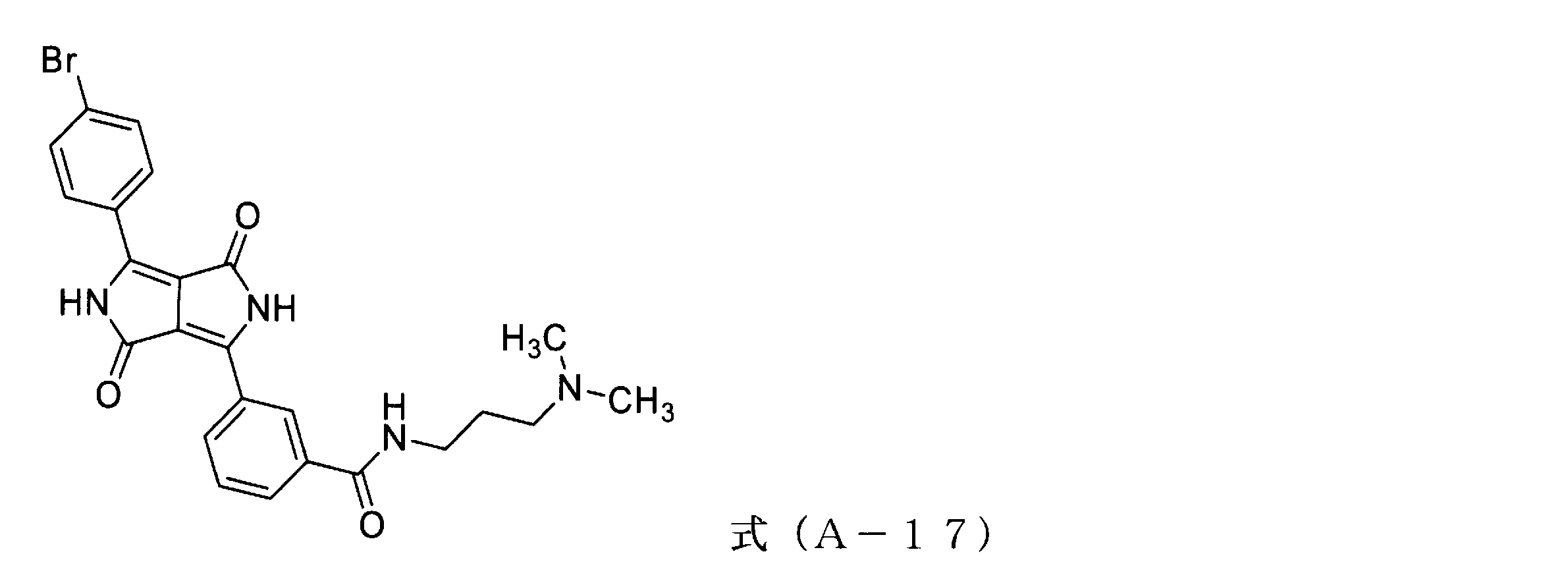
[参考例7]
(顔料組成物29(R-29)の製造)
特表2011-523433の実施例1039と同様の方法で合成し、式(1)のジケトピロロピロール顔料と下記式(A-18)とから成る顔料組成物29(R-29)を得た。
(顔料組成物29(R-29)の製造)
特表2011-523433の実施例1039と同様の方法で合成し、式(1)のジケトピロロピロール顔料と下記式(A-18)とから成る顔料組成物29(R-29)を得た。
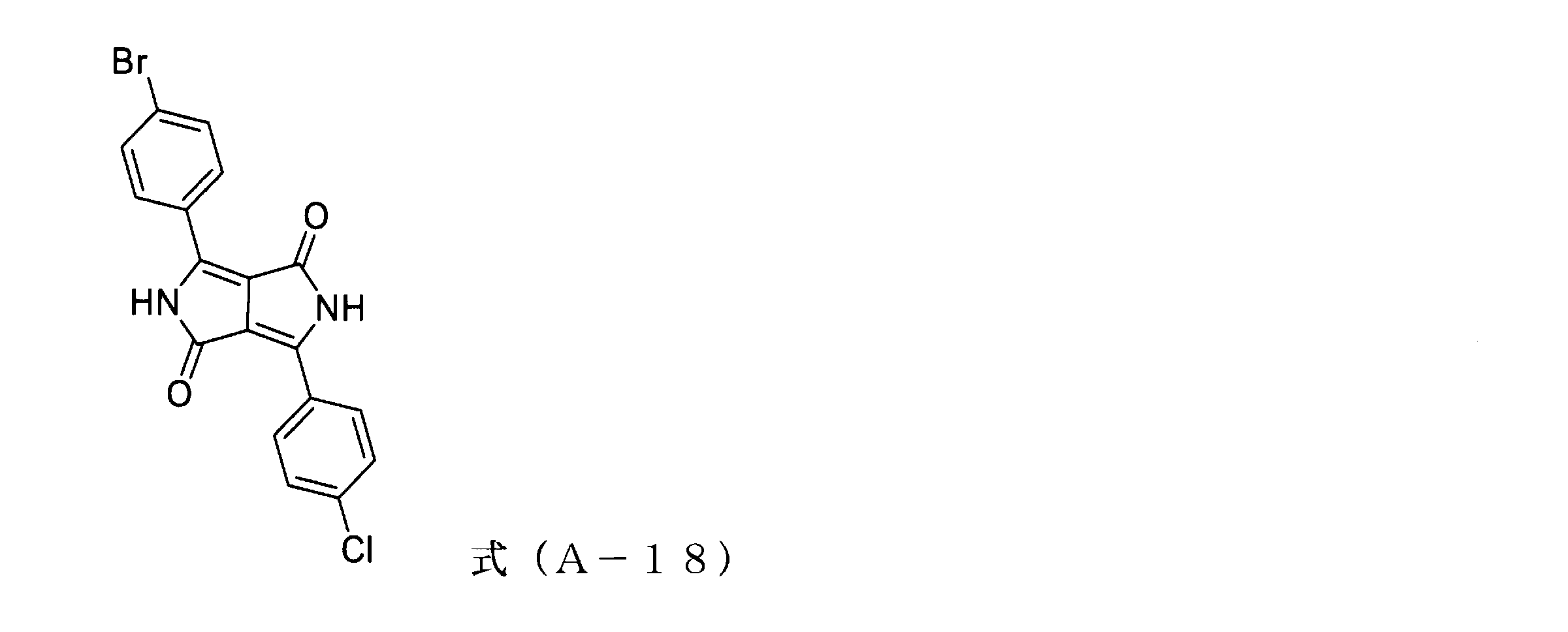
製造した顔料組成物1~29(R-1~29)の内容を表A-1に示す。表A-1に記載されている「PR254」は、C.I.ピグメントレッド254を意味する。
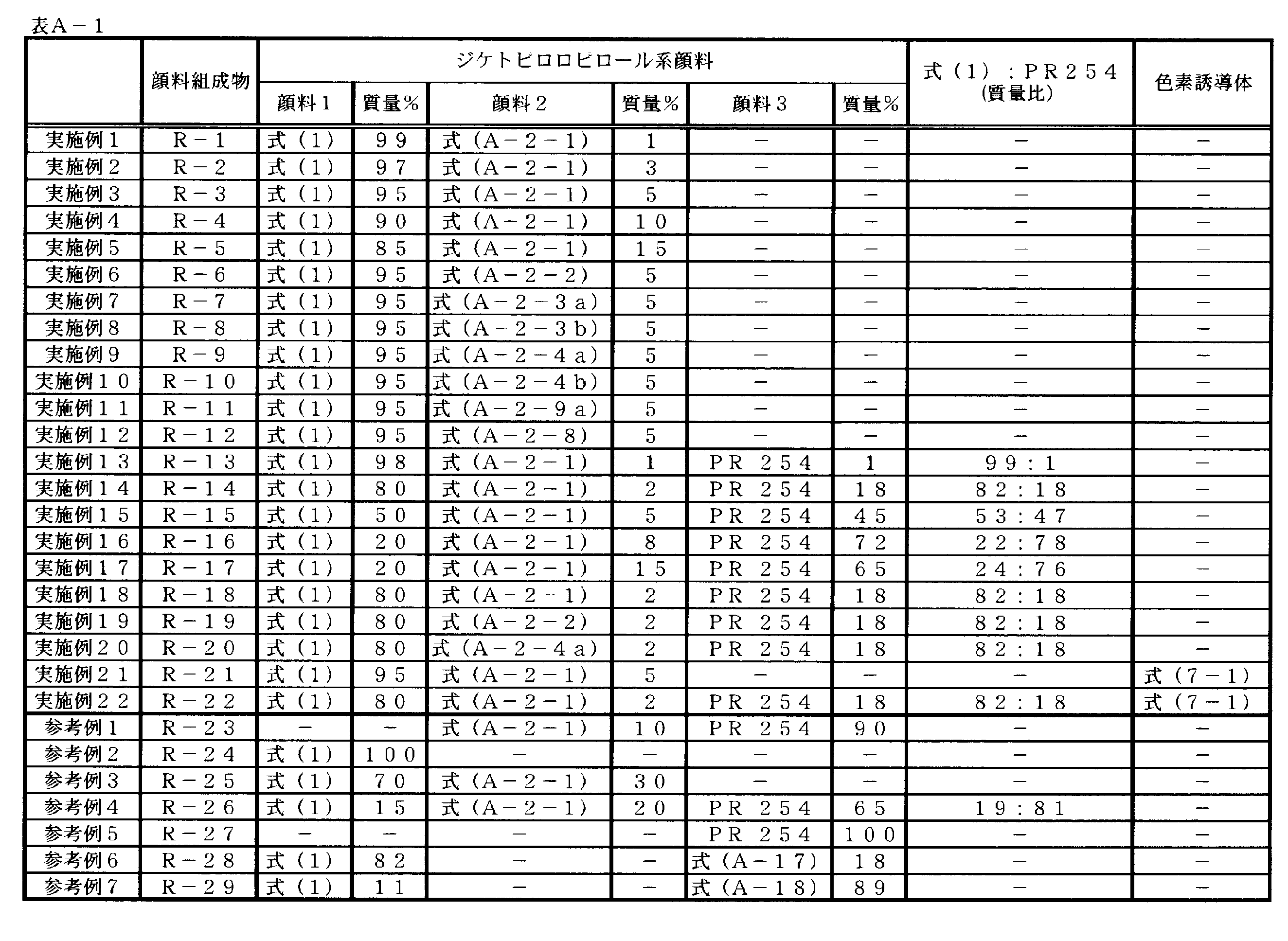
[実施例23]
(着色組成物1(RP-1)の作製)
下記の混合物を均一になるように撹拌混合した後、直径0.5mmのジルコニアビーズを用いて、アイガーミル(アイガージャパン社製「ミニモデルM-250 MKII」)で5時間分散した後、5.0μmのフィルタで濾過し、着色組成物1(RP-1)を作製した。
ジケトピロロピロール系顔料組成物1(R-1) 11.0部
色素誘導体 式(14-1) 1.0部
アクリル樹脂溶液1 40.0部
プロピレングリコールモノメチルエーテルアセテート 48.0部
(着色組成物1(RP-1)の作製)
下記の混合物を均一になるように撹拌混合した後、直径0.5mmのジルコニアビーズを用いて、アイガーミル(アイガージャパン社製「ミニモデルM-250 MKII」)で5時間分散した後、5.0μmのフィルタで濾過し、着色組成物1(RP-1)を作製した。
ジケトピロロピロール系顔料組成物1(R-1) 11.0部
色素誘導体 式(14-1) 1.0部
アクリル樹脂溶液1 40.0部
プロピレングリコールモノメチルエーテルアセテート 48.0部
[実施例24~44]
(着色組成物2~22(RP-2~22)の作製)
顔料組成物1(R-1)を表A-2に記載の顔料組成物に変更した以外は着色組成物1(RP-1)と同様にして着色組成物2~22(RP-2~22)を作製した。
(着色組成物2~22(RP-2~22)の作製)
顔料組成物1(R-1)を表A-2に記載の顔料組成物に変更した以外は着色組成物1(RP-1)と同様にして着色組成物2~22(RP-2~22)を作製した。
[実施例45]
(着色組成物23(RP-23)の作製)
下記の混合物を均一になるように撹拌混合した後、直径0.5mmのジルコニアビーズを用いて、アイガーミル(アイガージャパン社製「ミニモデルM-250 MKII」)で5時間分散した後、5.0μmのフィルタで濾過し、着色組成物23(RP-23)を作製した。
ジケトピロロピロール系顔料組成物2(R-2) 11.0部
色素誘導体 式(6-3) 1.0部
樹脂型分散剤 6.0部
(ビックケミー社製「BYK161」(30%溶液))
アクリル樹脂溶液1 31.0部
プロピレングリコールモノメチルエーテルアセテート 51.0部
(着色組成物23(RP-23)の作製)
下記の混合物を均一になるように撹拌混合した後、直径0.5mmのジルコニアビーズを用いて、アイガーミル(アイガージャパン社製「ミニモデルM-250 MKII」)で5時間分散した後、5.0μmのフィルタで濾過し、着色組成物23(RP-23)を作製した。
ジケトピロロピロール系顔料組成物2(R-2) 11.0部
色素誘導体 式(6-3) 1.0部
樹脂型分散剤 6.0部
(ビックケミー社製「BYK161」(30%溶液))
アクリル樹脂溶液1 31.0部
プロピレングリコールモノメチルエーテルアセテート 51.0部
[実施例46]
(着色組成物24(RP-24)の作製)
下記の混合物を均一になるように撹拌混合した後、直径0.5mmのジルコニアビーズを用いて、アイガーミル(アイガージャパン社製「ミニモデルM-250 MKII」)で5時間分散した後、5.0μmのフィルタで濾過し、着色組成物24(RP-24)を作製した。
ジケトピロロピロール系顔料組成物2(R-2) 12.0部
樹脂型分散剤 3.6部
(味の素ファインテクノ社製「アジスパーPB821」)
アクリル樹脂溶液1 23.0部
プロピレングリコールモノメチルエーテルアセテート 61.4部
(着色組成物24(RP-24)の作製)
下記の混合物を均一になるように撹拌混合した後、直径0.5mmのジルコニアビーズを用いて、アイガーミル(アイガージャパン社製「ミニモデルM-250 MKII」)で5時間分散した後、5.0μmのフィルタで濾過し、着色組成物24(RP-24)を作製した。
ジケトピロロピロール系顔料組成物2(R-2) 12.0部
樹脂型分散剤 3.6部
(味の素ファインテクノ社製「アジスパーPB821」)
アクリル樹脂溶液1 23.0部
プロピレングリコールモノメチルエーテルアセテート 61.4部
[参考例8~14]
(着色組成物25~31(RP-25~31)の作製)
顔料組成物1(R-1)を表A-2に記載の顔料組成物に変更した以外は着色組成物1(RP-1)と同様にして着色組成物25~31(RP-25~31)を作製した。
(着色組成物25~31(RP-25~31)の作製)
顔料組成物1(R-1)を表A-2に記載の顔料組成物に変更した以外は着色組成物1(RP-1)と同様にして着色組成物25~31(RP-25~31)を作製した。
<着色組成物の評価>
(コントラスト測定基板の作製)
実施例23~46、参考例8~14で得られた着色組成物を、100mm×100mm、0.7mm厚のガラス基板上に、C光源においてx=0.640になるような膜厚に塗布し、乾燥した。さらに、230℃で60分加熱することで赤色塗膜を得た。
(コントラスト測定基板の作製)
実施例23~46、参考例8~14で得られた着色組成物を、100mm×100mm、0.7mm厚のガラス基板上に、C光源においてx=0.640になるような膜厚に塗布し、乾燥した。さらに、230℃で60分加熱することで赤色塗膜を得た。
(塗膜のコントラスト比評価)
塗膜のコントラスト比の測定法について説明する。液晶ディスプレー用バックライトユニットから出た光は、偏光板を通過して偏光され、ガラス基板上に塗布された着色組成物の乾燥塗膜を通過し、偏光板に到達する。偏光板と偏光板の偏光面が平行であれば、光は偏光板を透過するが、偏光面が直行している場合には光は偏光板により遮断される。しかし、偏光板によって偏光された光が着色組成物の乾燥塗膜を通過するときに、顔料粒子による散乱等が起こり、偏光面の一部にずれを生じると、偏光板が平行のときは偏光板を透過する光量が減り、偏光板が直行のときは偏光板を一部光が透過する。この透過光を偏光板上の輝度として測定し、偏光板が平行のときの輝度と、直行のときの輝度との比(コントラスト比)を算出した。
(コントラスト比)=(平行のときの輝度)/(直行のときの輝度)
塗膜のコントラスト比の測定法について説明する。液晶ディスプレー用バックライトユニットから出た光は、偏光板を通過して偏光され、ガラス基板上に塗布された着色組成物の乾燥塗膜を通過し、偏光板に到達する。偏光板と偏光板の偏光面が平行であれば、光は偏光板を透過するが、偏光面が直行している場合には光は偏光板により遮断される。しかし、偏光板によって偏光された光が着色組成物の乾燥塗膜を通過するときに、顔料粒子による散乱等が起こり、偏光面の一部にずれを生じると、偏光板が平行のときは偏光板を透過する光量が減り、偏光板が直行のときは偏光板を一部光が透過する。この透過光を偏光板上の輝度として測定し、偏光板が平行のときの輝度と、直行のときの輝度との比(コントラスト比)を算出した。
(コントラスト比)=(平行のときの輝度)/(直行のときの輝度)
従って、塗膜中の顔料により散乱が起こると、平行のときの輝度が低下し、かつ直行のときの輝度が増加するため、コントラスト比が低くなる。
なお、輝度計としては色彩輝度計(トプコン社製「BM-5A」)、偏光板としては偏光板(日東電工社製「NPF-G1220DUN」)を用いた。なお、測定に際しては、不要光を遮断するために、測定部分に1cm角の孔を開けた黒色のマスクを当てた。
<粘度安定性評価>
(初期粘度、経時増粘率の測定)
着色組成物の粘度は、着色組成物を調製した当日に、E型粘度計(東機産業社製「ELD型粘度計」)を用いて、25℃における初期粘度を測定した。そして、着色組成物を調製した当日から数えて7日間40℃で静置したものについて、25℃にサンプル温度を戻した後に、上記粘度測定法に従い、経時粘度を測定し、下式から経時増粘率を求めた。
経時増粘率=(経時粘度)/(初期粘度)×100(%)
(初期粘度、経時増粘率の測定)
着色組成物の粘度は、着色組成物を調製した当日に、E型粘度計(東機産業社製「ELD型粘度計」)を用いて、25℃における初期粘度を測定した。そして、着色組成物を調製した当日から数えて7日間40℃で静置したものについて、25℃にサンプル温度を戻した後に、上記粘度測定法に従い、経時粘度を測定し、下式から経時増粘率を求めた。
経時増粘率=(経時粘度)/(初期粘度)×100(%)
(初期粘度、経時増粘率の評価)
粘度安定性に関しては、経時増粘率により評価を行った。経時増粘率は80%以上120%未満であれば実用上耐えうる。この範囲を超え減粘又は増粘してしまうと、着色組成物をガラス基板に塗工するときに、同一の塗工条件で塗布することができず、生産性に問題が出てきてしまう。より好ましくは、90%以上110%未満の範囲である。
○:経時増粘率90%以上110%未満
△:経時増粘率80%以上90%未満、または110%以上120%未満
×:経時増粘率80%未満、または120%以上
粘度安定性に関しては、経時増粘率により評価を行った。経時増粘率は80%以上120%未満であれば実用上耐えうる。この範囲を超え減粘又は増粘してしまうと、着色組成物をガラス基板に塗工するときに、同一の塗工条件で塗布することができず、生産性に問題が出てきてしまう。より好ましくは、90%以上110%未満の範囲である。
○:経時増粘率90%以上110%未満
△:経時増粘率80%以上90%未満、または110%以上120%未満
×:経時増粘率80%未満、または120%以上
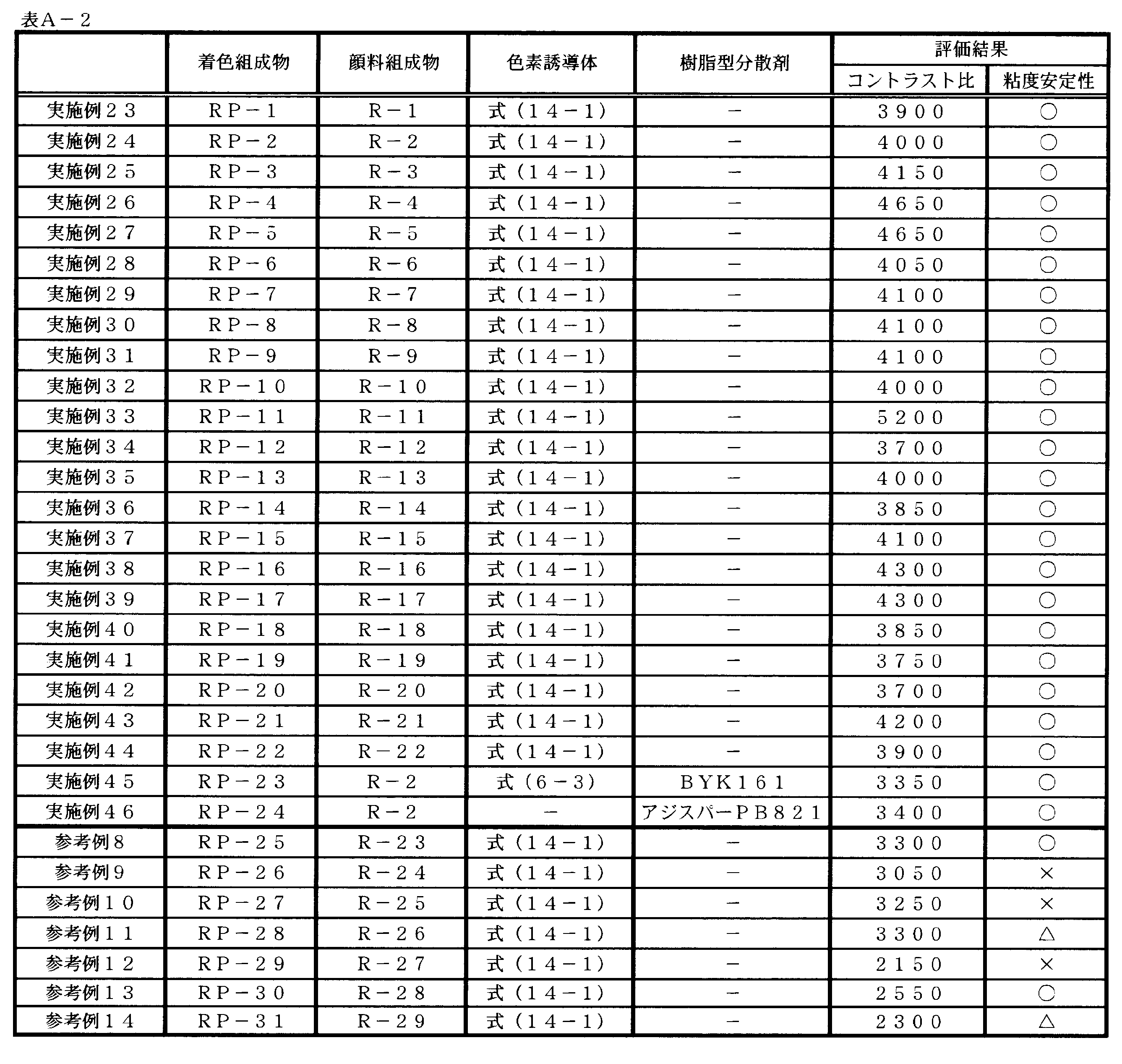
<その他着色組成物の作製方法>
(着色組成物32(RP-32)の作製)
下記の混合物を均一になるように撹拌混合した後、直径0.5mmのジルコニアビーズを用いて、アイガーミル(アイガージャパン社製「ミニモデルM-250 MKII」)で5時間分散した後、5.0μmのフィルタで濾過し、着色組成物32(RP-32)を作製した。
ジアントラキノン系顔料(PR177-1) 10.8部
色素誘導体 式(8-5) 1.2部
アクリル樹脂溶液1 40.0部
プロピレングリコールモノメチルエーテルアセテート 48.0部
(着色組成物32(RP-32)の作製)
下記の混合物を均一になるように撹拌混合した後、直径0.5mmのジルコニアビーズを用いて、アイガーミル(アイガージャパン社製「ミニモデルM-250 MKII」)で5時間分散した後、5.0μmのフィルタで濾過し、着色組成物32(RP-32)を作製した。
ジアントラキノン系顔料(PR177-1) 10.8部
色素誘導体 式(8-5) 1.2部
アクリル樹脂溶液1 40.0部
プロピレングリコールモノメチルエーテルアセテート 48.0部
[実施例47]
(感光性着色組成物1(RR-1)の作製)
下記組成の混合物を均一になるように撹拌混合した後、1μmのフィルタで濾過し、感光性着色組成物1(RR-1)を作製した。
着色組成物1(RP-1) 38.4部
着色組成物32(RP-32) 3.6部
アクリル樹脂溶液2 13.2部
光重合性単量体(東亞合成社製「アロニックスM400」) 2.8部
光重合開始剤(チバ・ジャパン社製「イルガキュアー907」) 2.0部
増感剤(保土ヶ谷化学社製「EAB-F」) 0.4部
エチレングリコールモノメチルエーテルアセテート 39.6部
(感光性着色組成物1(RR-1)の作製)
下記組成の混合物を均一になるように撹拌混合した後、1μmのフィルタで濾過し、感光性着色組成物1(RR-1)を作製した。
着色組成物1(RP-1) 38.4部
着色組成物32(RP-32) 3.6部
アクリル樹脂溶液2 13.2部
光重合性単量体(東亞合成社製「アロニックスM400」) 2.8部
光重合開始剤(チバ・ジャパン社製「イルガキュアー907」) 2.0部
増感剤(保土ヶ谷化学社製「EAB-F」) 0.4部
エチレングリコールモノメチルエーテルアセテート 39.6部
[実施例48~72]
(感光性着色組成物2~24(RR-2~24)の作製)
着色組成物1(RP-1)を着色組成物2~24(RP-2~24)に変更し、さらに、実施例47と同じ色度になるように着色組成物2~24(RP-2~24)と着色組成物32(RP-32)の比率を調整した以外は、実施例47と同様にして感光性着色組成物2~24(RP-2~24)を作製した。
(感光性着色組成物2~24(RR-2~24)の作製)
着色組成物1(RP-1)を着色組成物2~24(RP-2~24)に変更し、さらに、実施例47と同じ色度になるように着色組成物2~24(RP-2~24)と着色組成物32(RP-32)の比率を調整した以外は、実施例47と同様にして感光性着色組成物2~24(RP-2~24)を作製した。
[参考例15~21]
(感光性着色組成物25~31(RR-25~31)の作製)
着色組成物1(RP-1)を着色組成物25~31(RP-25~31)に変更し、さらに、実施例47と同じ色度になるように着色組成物25~31(RP-25~31)と着色組成物32(RP-32)の比率を調整した以外は、実施例47と同様にして感光性着色組成物25~31(RR-25~31)を作製した。
(感光性着色組成物25~31(RR-25~31)の作製)
着色組成物1(RP-1)を着色組成物25~31(RP-25~31)に変更し、さらに、実施例47と同じ色度になるように着色組成物25~31(RP-25~31)と着色組成物32(RP-32)の比率を調整した以外は、実施例47と同様にして感光性着色組成物25~31(RR-25~31)を作製した。
<感光性着色組成物の評価>
(色特性、コントラスト比(CR)評価)
実施例47~72、参考例15~21で得られた感光性着色組成物を、100mm×100mm、0.7mm厚のガラス基板上に、C光源においてx=0.640、y=0.328になるような膜厚に塗布し、乾燥後、超高圧水銀ランプを用いて300mJ/cm2の紫外線を照射した。さらに、230℃で60分加熱することで赤色塗膜を得た。その後、得られた塗膜の明度(Y)および、コントラスト比(CR)を測定した。
なお、色度及び明度(Y)は、顕微分光光度計(オリンパス光学社製「OSP-SP200」)で測定した。
(色特性、コントラスト比(CR)評価)
実施例47~72、参考例15~21で得られた感光性着色組成物を、100mm×100mm、0.7mm厚のガラス基板上に、C光源においてx=0.640、y=0.328になるような膜厚に塗布し、乾燥後、超高圧水銀ランプを用いて300mJ/cm2の紫外線を照射した。さらに、230℃で60分加熱することで赤色塗膜を得た。その後、得られた塗膜の明度(Y)および、コントラスト比(CR)を測定した。
なお、色度及び明度(Y)は、顕微分光光度計(オリンパス光学社製「OSP-SP200」)で測定した。
(塗膜表面の結晶析出評価)
実施例47~72、参考例15~21で得られた感光性着色組成物を、100mm×100mm、0.7mm厚のガラス基板上に、C光源においてx=0.640になるような膜厚に感光性着色組成物を塗布し、乾燥後、超高圧水銀ランプを用いて300mJ/cm2の紫外線を照射した。続けて230℃で60分間の加熱処理行った後、さらに240℃で60分間の加熱処理を2回繰り返した。加熱処理後の基板の塗膜表面を光学顕微鏡にて観察し、結晶析出有無を下記基準に従って判定した。
◎:230℃60分間加熱処理後、さらなる240℃60分間加熱処理後、およびさらなる240℃60分間加熱処理でも結晶析出なし
○:230℃60分間加熱処理後、およびさらなる240℃60分間加熱処理でも結晶析出なし(2回目の240℃60分間加熱処理で結晶析出あり)
△:230℃60分間加熱処理後では結晶析出ないが、さらなる240℃60分間加熱処理で結晶析出あり
×:230℃60分間加熱処理後で結晶析出あり
実施例47~72、参考例15~21で得られた感光性着色組成物を、100mm×100mm、0.7mm厚のガラス基板上に、C光源においてx=0.640になるような膜厚に感光性着色組成物を塗布し、乾燥後、超高圧水銀ランプを用いて300mJ/cm2の紫外線を照射した。続けて230℃で60分間の加熱処理行った後、さらに240℃で60分間の加熱処理を2回繰り返した。加熱処理後の基板の塗膜表面を光学顕微鏡にて観察し、結晶析出有無を下記基準に従って判定した。
◎:230℃60分間加熱処理後、さらなる240℃60分間加熱処理後、およびさらなる240℃60分間加熱処理でも結晶析出なし
○:230℃60分間加熱処理後、およびさらなる240℃60分間加熱処理でも結晶析出なし(2回目の240℃60分間加熱処理で結晶析出あり)
△:230℃60分間加熱処理後では結晶析出ないが、さらなる240℃60分間加熱処理で結晶析出あり
×:230℃60分間加熱処理後で結晶析出あり
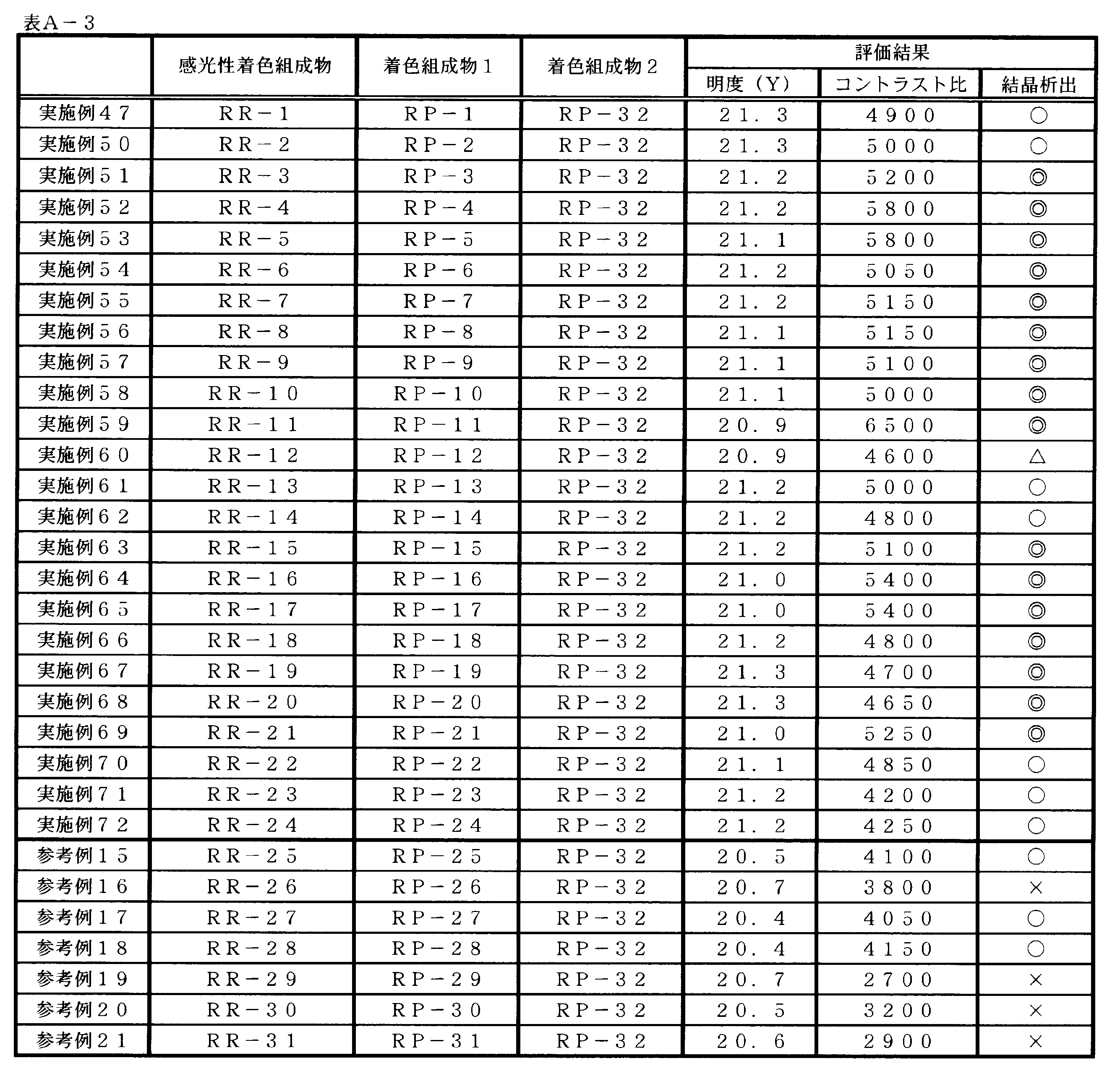
表A-3の結果より、カラーフィルタ形成において、臭素化ジケトピロロピロール顔料と特定ヘテロジケトピロロピロール顔料Aを含有するジケトピロロピロール系顔料組成物において、特定ヘテロジケトピロロピロール顔料Aの含有量がジケトピロロピロール系顔料の合計質量を基準として1質量%~15質量%であるジケトピロロピロール系顔料組成物を使用した実施例は、特に明度に優れており、さらには高コントラストを有し、加熱工程によるジケトピロロピロール系顔料の結晶析出を抑制することが可能であった。
<カラーフィルタの作製>
カラーフィルタの作製に使用する緑色感光性着色組成物と青色感光性樹脂組成物の作製を行った。なお、赤色については本実施例Aの感光性着色組成物2(RR-2)を使用した。
カラーフィルタの作製に使用する緑色感光性着色組成物と青色感光性樹脂組成物の作製を行った。なお、赤色については本実施例Aの感光性着色組成物2(RR-2)を使用した。
ガラス基板上にブラックマトリクスをパターン加工し、該基板上にスピンコーターで感光性着色組成物2(RR-2)をx=0.640、y=0.328になるような膜厚に塗布し着色被膜を形成した。該被膜にフォトマスクを介して、超高圧水銀ランプを用いて300mJ/cm2の紫外線を照射した。次いで0.2質量%の炭酸ナトリウム水溶液からなるアルカリ現像液によりスプレー現像して未露光部分を取り除いた後、イオン交換水で洗浄し、この基板を230℃で20分加熱して、赤色フィルタセグメントを形成した。同様の方法により、緑色感光性着色組成物1(GR-1)をx=0.300、y=0.600になるような膜厚に、青色感光性着色組成物1(BR―1)を用いてx=0.150、y=0.060になるような膜厚にそれぞれ塗布し、緑色フィルタセグメント、青色フィルタセグメントを形成して、カラーフィルタを得た。
感光性着色組成物2(RR-2)を用いることにより、高明度かつ高コントラストであり、加熱工程で結晶析出がないカラーフィルタを作製することが可能であった。
[実施例B]
特にことわりがない限り、「部」および「%」は、「質量部」および「質量%」をそれぞれ表す。顔料組成物、着色組成物の製造時に、色素誘導体として式(6-3)のジケトピロロピロール誘導体、式(7-1)のベンゾイソインドール誘導体、式(8-5)のアントラキノン誘導体、および式(14-1)のキノフタロン誘導体を使用した。
特にことわりがない限り、「部」および「%」は、「質量部」および「質量%」をそれぞれ表す。顔料組成物、着色組成物の製造時に、色素誘導体として式(6-3)のジケトピロロピロール誘導体、式(7-1)のベンゾイソインドール誘導体、式(8-5)のアントラキノン誘導体、および式(14-1)のキノフタロン誘導体を使用した。
(顔料の平均一次粒子径)
次のような方法により、製造した顔料組成物の平均一次粒子径を測定(算出)した。
顔料組成物の粉末にプロピレングリコールモノメチルエーテルアセテートを加え、樹脂型分散剤としてDisperbyk-161を少量添加し、超音波で1分間処理し測定用試料を調製した。この試料を透過型(TEM)電子顕微鏡により、100個以上の顔料の一次粒子が確認できる写真を3枚(3視野分)撮影し、それぞれ左上から順番に100個の一次粒子の大きさを測定した。具体的には、個々の顔料の一次粒子の短軸径と長軸径をnm単位で計測し、その平均をその顔料粒子の一次粒子径とし、合計300個の分布を5nm刻みで作成し、5nm刻みの中央値(例えば6nm以上10nm以下の場合は8nm)をそれらの粒子の粒子径として近似し、それぞれの粒子径とその数を基に計算することで個数平均粒子径を算出した。
次のような方法により、製造した顔料組成物の平均一次粒子径を測定(算出)した。
顔料組成物の粉末にプロピレングリコールモノメチルエーテルアセテートを加え、樹脂型分散剤としてDisperbyk-161を少量添加し、超音波で1分間処理し測定用試料を調製した。この試料を透過型(TEM)電子顕微鏡により、100個以上の顔料の一次粒子が確認できる写真を3枚(3視野分)撮影し、それぞれ左上から順番に100個の一次粒子の大きさを測定した。具体的には、個々の顔料の一次粒子の短軸径と長軸径をnm単位で計測し、その平均をその顔料粒子の一次粒子径とし、合計300個の分布を5nm刻みで作成し、5nm刻みの中央値(例えば6nm以上10nm以下の場合は8nm)をそれらの粒子の粒子径として近似し、それぞれの粒子径とその数を基に計算することで個数平均粒子径を算出した。
<ジケトピロロピロール系顔料組成物の製造方法>
[実施例1]
(顔料組成物1(R-1)の製造)
還流管を付けたステンレス製反応容器に、窒素雰囲気下、モレキュラシーブで脱水したtert-アミルアルコール200部、およびナトリウム-tert-アミルアルコキシド140部を加え、撹拌しながら100℃に加熱し、アルコラート溶液を調製した。一方で、ガラス製フラスコに、コハク酸ジイソプロピル88部、4-ブロモベンゾニトリル153.6部を加え、撹拌しながら90℃に加熱して溶解させ、これらの混合物の溶液を調製した。この混合物の加熱溶液を、100℃に加熱した上記アルコラート溶液中に、激しく撹拌しながら、2時間かけて一定の速度でゆっくり滴下した。滴下終了後、90℃にて2時間、加熱撹拌を継続し、ジケトピロロピロール系化合物のアルカリ金属塩を得た。さらに、ガラス製ジャケット付き反応容器に、メタノール600部、水600部、及び酢酸304部を加え、-10℃に冷却した。この冷却した混合物を、高速撹拌ディスパーサーを用いて、直径8cmのシェアディスクを4000rpmで回転させながら、この中に、75℃まで冷却した先に得られたジケトピロロピロール系化合物のアルカリ金属塩溶液を、少量ずつ添加した。この際、メタノール、酢酸、および水からなる混合物の温度が常に-5℃以下の温度を保つように、冷却しながら、かつ、75℃のジケトピロロピロール系化合物のアルカリ金属塩の添加する速度を調整しながら、およそ120分にわたって少量ずつ添加した。アルカリ金属塩添加後、赤色の結晶が析出し、赤色の懸濁液が生成した。続いて、得られた赤色の懸濁液を5℃にて限外濾過装置で洗浄後、濾別し赤色ペーストを得た。このペーストを0℃に冷却したメタノール3500部にて再分散し、メタノール濃度約90%の懸濁液とし、5℃にて3時間撹拌し、結晶転移を伴う粒子整粒および洗浄を行った。続いて、限外濾過機で濾別し、得られたジケトピロロピロール系化合物の水ペーストを、80℃にて24時間乾燥させ、粉砕することにより式(1)の臭素化ジケトピロロピロール顔料150.8部を得た。
[実施例1]
(顔料組成物1(R-1)の製造)
還流管を付けたステンレス製反応容器に、窒素雰囲気下、モレキュラシーブで脱水したtert-アミルアルコール200部、およびナトリウム-tert-アミルアルコキシド140部を加え、撹拌しながら100℃に加熱し、アルコラート溶液を調製した。一方で、ガラス製フラスコに、コハク酸ジイソプロピル88部、4-ブロモベンゾニトリル153.6部を加え、撹拌しながら90℃に加熱して溶解させ、これらの混合物の溶液を調製した。この混合物の加熱溶液を、100℃に加熱した上記アルコラート溶液中に、激しく撹拌しながら、2時間かけて一定の速度でゆっくり滴下した。滴下終了後、90℃にて2時間、加熱撹拌を継続し、ジケトピロロピロール系化合物のアルカリ金属塩を得た。さらに、ガラス製ジャケット付き反応容器に、メタノール600部、水600部、及び酢酸304部を加え、-10℃に冷却した。この冷却した混合物を、高速撹拌ディスパーサーを用いて、直径8cmのシェアディスクを4000rpmで回転させながら、この中に、75℃まで冷却した先に得られたジケトピロロピロール系化合物のアルカリ金属塩溶液を、少量ずつ添加した。この際、メタノール、酢酸、および水からなる混合物の温度が常に-5℃以下の温度を保つように、冷却しながら、かつ、75℃のジケトピロロピロール系化合物のアルカリ金属塩の添加する速度を調整しながら、およそ120分にわたって少量ずつ添加した。アルカリ金属塩添加後、赤色の結晶が析出し、赤色の懸濁液が生成した。続いて、得られた赤色の懸濁液を5℃にて限外濾過装置で洗浄後、濾別し赤色ペーストを得た。このペーストを0℃に冷却したメタノール3500部にて再分散し、メタノール濃度約90%の懸濁液とし、5℃にて3時間撹拌し、結晶転移を伴う粒子整粒および洗浄を行った。続いて、限外濾過機で濾別し、得られたジケトピロロピロール系化合物の水ペーストを、80℃にて24時間乾燥させ、粉砕することにより式(1)の臭素化ジケトピロロピロール顔料150.8部を得た。
続いて、反応容器1にtert-アミルアルコール220部を入れて水浴冷却させながら、60%NaH32部を加えて、90℃にて加熱撹拌させた。次いで、反応容器2にtert-アミルアルコール100部、Tetrahedron,58(2002)5547-5565の方法により合成した下記式(B-16)の化合物99.2部、および式(B-3-1)のベンゾニトリル化合物60.9部を加熱溶解させ、これを反応容器1に2時間かけて滴下した。120℃で10時間反応させた後、60℃まで冷却させ、メタノール400部、および酢酸50部を加えてから、濾別およびメタノール洗浄を行い、式(B-2-1)で表される特定ヘテロジケトピロロピロール顔料B87.8部を得た。

さらに、得られた式(1)の臭素化ジケトピロロピロール顔料97.0部、式(B-2-1)の特定ヘテロジケトピロロピロール顔料B3.0部、塩化ナトリウム1000部、およびジエチレングリコール120部を、ステンレス製1ガロンニーダー(井上製作所製)中に仕込み、60℃で10時間混練した。次に、混練した混合物を温水に投入し、約80℃に加熱しながら1時間撹拌してスラリー状として、濾過および水洗をして食塩およびジエチレングリコールを除いた後、80℃で一昼夜乾燥させ、粉砕することによりジケトピロロピロール系顔料組成物である顔料組成物1(R-1)96.5部を得た。平均一次粒子径は36.8nmであった。
[実施例2]
(顔料組成物2(R-2)の製造)
顔料組成物1の製造時に得られた式(1)の臭素化ジケトピロロピロール顔料95.0部、式(B-2-1)の特定ヘテロジケトピロロピロール顔料B5.0部、塩化ナトリウム1000部、およびジエチレングリコール120部を、ステンレス製1ガロンニーダー(井上製作所製)中に仕込み、60℃で10時間混練した。次に、混練した混合物を温水に投入し、約80℃に加熱しながら1時間撹拌してスラリー状として、濾過および水洗をして食塩およびジエチレングリコールを除いた後、80℃で一昼夜乾燥させ、粉砕することによりジケトピロロピロール系顔料組成物である顔料組成物2(R-2)97.2部を得た。平均一次粒子径は30.5nmであった。
(顔料組成物2(R-2)の製造)
顔料組成物1の製造時に得られた式(1)の臭素化ジケトピロロピロール顔料95.0部、式(B-2-1)の特定ヘテロジケトピロロピロール顔料B5.0部、塩化ナトリウム1000部、およびジエチレングリコール120部を、ステンレス製1ガロンニーダー(井上製作所製)中に仕込み、60℃で10時間混練した。次に、混練した混合物を温水に投入し、約80℃に加熱しながら1時間撹拌してスラリー状として、濾過および水洗をして食塩およびジエチレングリコールを除いた後、80℃で一昼夜乾燥させ、粉砕することによりジケトピロロピロール系顔料組成物である顔料組成物2(R-2)97.2部を得た。平均一次粒子径は30.5nmであった。
[実施例3]
(顔料組成物3(R-3)の製造)
式(1)の臭素化ジケトピロロピロール顔料95.0部および式(B-2-1)の特定ヘテロジケトピロロピロール顔料B5.0部を、式(1)の臭素化ジケトピロロピロール顔料90.0部および式(B-2-1)の特定ヘテロジケトピロロピロール顔料B10.0部に変更した以外は、顔料組成物2(R-2)の製造と同様に行い、ジケトピロロピロール系顔料組成物である顔料組成物3(R-3)96.9部を得た。平均一次粒子径は26.5nmであった。
(顔料組成物3(R-3)の製造)
式(1)の臭素化ジケトピロロピロール顔料95.0部および式(B-2-1)の特定ヘテロジケトピロロピロール顔料B5.0部を、式(1)の臭素化ジケトピロロピロール顔料90.0部および式(B-2-1)の特定ヘテロジケトピロロピロール顔料B10.0部に変更した以外は、顔料組成物2(R-2)の製造と同様に行い、ジケトピロロピロール系顔料組成物である顔料組成物3(R-3)96.9部を得た。平均一次粒子径は26.5nmであった。
[実施例4]
(顔料組成物4(R-4)の製造)
式(1)の臭素化ジケトピロロピロール顔料95.0部および式(B-2-1)の特定ヘテロジケトピロロピロール顔料B5.0部を、式(1)の臭素化ジケトピロロピロール顔料85.0部および式(B-2-1)の特定ヘテロジケトピロロピロール顔料B15.0部に変更した以外は、顔料組成物2(R-2)の製造と同様に行い、ジケトピロロピロール系顔料組成物である顔料組成物4(R-4)97.1部を得た。平均一次粒子径は28.5nmであった。
(顔料組成物4(R-4)の製造)
式(1)の臭素化ジケトピロロピロール顔料95.0部および式(B-2-1)の特定ヘテロジケトピロロピロール顔料B5.0部を、式(1)の臭素化ジケトピロロピロール顔料85.0部および式(B-2-1)の特定ヘテロジケトピロロピロール顔料B15.0部に変更した以外は、顔料組成物2(R-2)の製造と同様に行い、ジケトピロロピロール系顔料組成物である顔料組成物4(R-4)97.1部を得た。平均一次粒子径は28.5nmであった。
[実施例5]
(顔料組成物5(R-5)の製造)
式(B-3-1)のベンゾニトリル化合物60.2部を式(B-3-2)のベンゾニトリル化合物54.2部に変更した以外は、顔料組成物1(R-1)の中で実施した特定ヘテロジケトピロロピロール顔料Bの製造と同様に行い、式(B-2-2)で表される特定ヘテロジケトピロロピロール顔料B85.2部を得た。
(顔料組成物5(R-5)の製造)
式(B-3-1)のベンゾニトリル化合物60.2部を式(B-3-2)のベンゾニトリル化合物54.2部に変更した以外は、顔料組成物1(R-1)の中で実施した特定ヘテロジケトピロロピロール顔料Bの製造と同様に行い、式(B-2-2)で表される特定ヘテロジケトピロロピロール顔料B85.2部を得た。
続いて、式(1)の臭素化ジケトピロロピロール顔料95.0部、式(B-2-2)の特定ヘテロジケトピロロピロール顔料B5.0部、塩化ナトリウム1000部、およびジエチレングリコール120部を、ステンレス製1ガロンニーダー(井上製作所製)中に仕込み、60℃で10時間混練した。次に、混練した混合物を温水に投入し、約80℃に加熱しながら1時間撹拌してスラリー状として、濾過および水洗をして食塩およびエチレングリコールを除いた後、80℃で一昼夜乾燥させ、粉砕することによりジケトピロロピロール系顔料組成物である顔料組成物5(R-5)96.2部を得た。平均一次粒子径は31.6nmであった。
[実施例6]
(顔料組成物6(R-6)の製造)
まず、式(B-3-1)のベンゾニトリル化合物60.2部を式(B-3-3)のベンゾニトリル化合物58.2部に変更した以外は、顔料組成物1(R-1)の中で実施した特定ヘテロジケトピロロピロール顔料Bの製造と同様に行い、式(B-2-3)で表される特定ヘテロジケトピロロピロール顔料B82.2部を得た。
(顔料組成物6(R-6)の製造)
まず、式(B-3-1)のベンゾニトリル化合物60.2部を式(B-3-3)のベンゾニトリル化合物58.2部に変更した以外は、顔料組成物1(R-1)の中で実施した特定ヘテロジケトピロロピロール顔料Bの製造と同様に行い、式(B-2-3)で表される特定ヘテロジケトピロロピロール顔料B82.2部を得た。
続いて、式(1)の臭素化ジケトピロロピロール顔料95.0部、式(B-2-3)の特定ヘテロジケトピロロピロール顔料B5.0部、塩化ナトリウム1000部、およびジエチレングリコール120部を、ステンレス製1ガロンニーダー(井上製作所製)中に仕込み、60℃で10時間混練した。次に、混練した混合物を温水に投入し、約80℃に加熱しながら1時間撹拌してスラリー状として、濾過および水洗をして食塩およびジエチレングリコールを除いた後、80℃で一昼夜乾燥させ、粉砕することによりジケトピロロピロール系顔料組成物である顔料組成物6(R-6)95.9部を得た。平均一次粒子径は34.6nmであった。
[実施例7]
(顔料組成物7(R-7)の製造)
式(B-3-1)のベンゾニトリル化合物60.2部を式(B-3-4a)のベンゾニトリル化合物84.1部に変更した以外は、顔料組成物1(R-1)の中で実施した特定ヘテロジケトピロロピロール顔料Bの製造と同様に行い、式(B-2-4a)で表される特定ヘテロジケトピロロピロール顔料B94.1部を得た。
(顔料組成物7(R-7)の製造)
式(B-3-1)のベンゾニトリル化合物60.2部を式(B-3-4a)のベンゾニトリル化合物84.1部に変更した以外は、顔料組成物1(R-1)の中で実施した特定ヘテロジケトピロロピロール顔料Bの製造と同様に行い、式(B-2-4a)で表される特定ヘテロジケトピロロピロール顔料B94.1部を得た。
続いて、式(1)の臭素化ジケトピロロピロール顔料95.0部、式(B-2-4a)の特定ヘテロジケトピロロピロール顔料B5.0部、塩化ナトリウム1000部、およびジエチレングリコール120部を、ステンレス製1ガロンニーダー(井上製作所製)中に仕込み、60℃で10時間混練した。次に、混練した混合物を温水に投入し、約80℃に加熱しながら1時間撹拌してスラリー状として、濾過および水洗をして食塩およびジエチレングリコールを除いた後、80℃で一昼夜乾燥させ、粉砕することによりジケトピロロピロール系顔料組成物である顔料組成物7(R-7)97.9部を得た。平均一次粒子径は28.6nmであった。
[実施例8]
(顔料組成物8(R-8)の製造)
式(1)の臭素化ジケトピロロピロール顔料95.0部および式(B-2-4a)の特定ヘテロジケトピロロピロール顔料B5.0部を、式(1)の臭素化ジケトピロロピロール顔料85.0部および式(B-2-4a)の特定ヘテロジケトピロロピロール顔料B15.0部に変更した以外は顔料組成物7(R-7)の製造と同様に行い、ジケトピロロピロール系顔料組成物である顔料組成物8(R-8)96.1部を得た。平均一次粒子径は25.5nmであった。
(顔料組成物8(R-8)の製造)
式(1)の臭素化ジケトピロロピロール顔料95.0部および式(B-2-4a)の特定ヘテロジケトピロロピロール顔料B5.0部を、式(1)の臭素化ジケトピロロピロール顔料85.0部および式(B-2-4a)の特定ヘテロジケトピロロピロール顔料B15.0部に変更した以外は顔料組成物7(R-7)の製造と同様に行い、ジケトピロロピロール系顔料組成物である顔料組成物8(R-8)96.1部を得た。平均一次粒子径は25.5nmであった。
[実施例9]
(顔料組成物9(R-9)の製造)
式(B-3-1)のベンゾニトリル化合物60.2部を式(B-3-4b)のベンゾニトリル化合物71.8部に変更した以外は、顔料組成物1(R-1)の中で実施した特定ヘテロジケトピロロピロール顔料Bの製造と同様に行い、式(B-2-4b)で表される特定ヘテロジケトピロロピロール顔料B79.1部を得た。
(顔料組成物9(R-9)の製造)
式(B-3-1)のベンゾニトリル化合物60.2部を式(B-3-4b)のベンゾニトリル化合物71.8部に変更した以外は、顔料組成物1(R-1)の中で実施した特定ヘテロジケトピロロピロール顔料Bの製造と同様に行い、式(B-2-4b)で表される特定ヘテロジケトピロロピロール顔料B79.1部を得た。
続いて、式(1)の臭素化ジケトピロロピロール顔料95.0部、式(B-2-4b)の特定ヘテロジケトピロロピロール顔料B5.0部、塩化ナトリウム1000部、およびジエチレングリコール120部を、ステンレス製1ガロンニーダー(井上製作所製)中に仕込み、60℃で10時間混練した。次に、混練した混合物を温水に投入し、約80℃に加熱しながら1時間撹拌してスラリー状として、濾過および水洗をして食塩およびジエチレングリコールを除いた後、80℃で一昼夜乾燥させ、粉砕することによりジケトピロロピロール系顔料組成物である顔料組成物9(R-9)96.5部を得た。平均一次粒子径は31.1nmであった。
[実施例10]
(顔料組成物10(R-10)の製造)
式(B-3-1)のベンゾニトリル化合物60.2部を式(B-3-5)のベンゾニトリル化合物49.7に変更した以外は、顔料組成物1(R-1)の中で実施した特定ヘテロジケトピロロピロール顔料Bの製造と同様に行い、式(B-2-5)で表される特定ヘテロジケトピロロピロール顔料B66.9部を得た。
(顔料組成物10(R-10)の製造)
式(B-3-1)のベンゾニトリル化合物60.2部を式(B-3-5)のベンゾニトリル化合物49.7に変更した以外は、顔料組成物1(R-1)の中で実施した特定ヘテロジケトピロロピロール顔料Bの製造と同様に行い、式(B-2-5)で表される特定ヘテロジケトピロロピロール顔料B66.9部を得た。
続いて、式(1)の臭素化ジケトピロロピロール顔料95.0部、式(B-2-5)の特定ヘテロジケトピロロピロール顔料B5.0部、塩化ナトリウム1000部、およびジエチレングリコール120部を、ステンレス製1ガロンニーダー(井上製作所製)中に仕込み、60℃で10時間混練した。次に、混練した混合物を温水に投入し、約80℃に加熱しながら1時間撹拌してスラリー状として、濾過および水洗をして食塩およびジエチレングリコールを除いた後、80℃で一昼夜乾燥させ、粉砕することによりジケトピロロピロール系顔料組成物である顔料組成物10(R-10)97.5部を得た。平均一次粒子径は33.1nmであった。
[実施例11]
(顔料組成物11(R-11)の製造)
式(B-3-1)のベンゾニトリル化合物60.2部を式(B-3-6b)のベンゾニトリル化合物106.9部に変更した以外は、顔料組成物1(R-1)の中で実施した特定ヘテロジケトピロロピロール顔料Bの製造と同様に行い、式(B-2-6b)で表される特定ヘテロジケトピロロピロール顔料B90.7部を得た。
(顔料組成物11(R-11)の製造)
式(B-3-1)のベンゾニトリル化合物60.2部を式(B-3-6b)のベンゾニトリル化合物106.9部に変更した以外は、顔料組成物1(R-1)の中で実施した特定ヘテロジケトピロロピロール顔料Bの製造と同様に行い、式(B-2-6b)で表される特定ヘテロジケトピロロピロール顔料B90.7部を得た。
続いて、式(1)の臭素化ジケトピロロピロール顔料95.0部、式(B-2-6b)の特定ヘテロジケトピロロピロール顔料B5.0部、塩化ナトリウム1000部、およびジエチレングリコール120部を、ステンレス製1ガロンニーダー(井上製作所製)中に仕込み、60℃で10時間混練した。次に、混練した混合物を温水に投入し、約80℃に加熱しながら1時間撹拌してスラリー状として、濾過および水洗をして食塩およびジエチレングリコールを除いた後、80℃で一昼夜乾燥させ、粉砕することによりジケトピロロピロール系顔料組成物である顔料組成物11(R-11)98.1部を得た。平均一次粒子径は28.9nmであった。
[実施例12]
(顔料組成物12(R-12)の製造)
式(B-3-1)のベンゾニトリル化合物60.2部を式(B-3-6c)のベンゾニトリル化合物75.6部に変更した以外は、顔料組成物1(R-1)の中で実施した特定ヘテロジケトピロロピロール顔料Bの製造と同様に行い、式(B-2-6c)で表される特定ヘテロジケトピロロピロール顔料B100.8部を得た。
(顔料組成物12(R-12)の製造)
式(B-3-1)のベンゾニトリル化合物60.2部を式(B-3-6c)のベンゾニトリル化合物75.6部に変更した以外は、顔料組成物1(R-1)の中で実施した特定ヘテロジケトピロロピロール顔料Bの製造と同様に行い、式(B-2-6c)で表される特定ヘテロジケトピロロピロール顔料B100.8部を得た。
続いて、式(1)の臭素化ジケトピロロピロール顔料95.0部、式(B-2-6c)の特定ヘテロジケトピロロピロール顔料B5.0部、塩化ナトリウム1000部、およびジエチレングリコール120部を、ステンレス製1ガロンニーダー(井上製作所製)中に仕込み、60℃で10時間混練した。次に、混練した混合物を温水に投入し、約80℃に加熱しながら1時間撹拌してスラリー状として、濾過および水洗をして食塩およびジエチレングリコールを除いた後、80℃で一昼夜乾燥させ、粉砕することによりジケトピロロピロール系顔料組成物である顔料組成物12(R-12)97.4部を得た。平均一次粒子径は29.8nmであった。
[実施例13]
(顔料組成物13(R-13)の製造)
式(B-3-1)のベンゾニトリル化合物60.2部を式(B-3-7)のベンゾニトリル化合物87.8部に変更した以外は、顔料組成物1(R-1)の中で実施した特定ヘテロジケトピロロピロール顔料Bの製造と同様に行い、式(B-2-7)で表される特定ヘテロジケトピロロピロール顔料B85.2部を得た。
(顔料組成物13(R-13)の製造)
式(B-3-1)のベンゾニトリル化合物60.2部を式(B-3-7)のベンゾニトリル化合物87.8部に変更した以外は、顔料組成物1(R-1)の中で実施した特定ヘテロジケトピロロピロール顔料Bの製造と同様に行い、式(B-2-7)で表される特定ヘテロジケトピロロピロール顔料B85.2部を得た。
続いて、式(1)の臭素化ジケトピロロピロール顔料95.0部、式(B-2-7)の特定ヘテロジケトピロロピロール顔料B5.0部、塩化ナトリウム1000部、およびジエチレングリコール120部を、ステンレス製1ガロンニーダー(井上製作所製)中に仕込み、60℃で10時間混練した。次に、混練した混合物を温水に投入し、約80℃に加熱しながら1時間撹拌してスラリー状として、濾過および水洗をして食塩およびジエチレングリコールを除いた後、80℃で一昼夜乾燥させ、粉砕することによりジケトピロロピロール系顔料組成物である顔料組成物13(R-13)96.3部を得た。平均一次粒子径は28.2nmであった。
[実施例14]
(顔料組成物14(R-14)の製造)
式(1)の臭素化ジケトピロロピロール顔料95.0部および式(B-2-7)の特定ヘテロジケトピロロピロール顔料B5.0部を、式(1)の臭素化ジケトピロロピロール顔料85.0部および式(B-2-7)の特定ヘテロジケトピロロピロール顔料B15.0部に変更した以外は顔料組成物13(R-13)の製造と同様に行い、ジケトピロロピロール系顔料組成物である顔料組成物14(R-14)95.1部を得た。平均一次粒子径は26.5nmであった。
(顔料組成物14(R-14)の製造)
式(1)の臭素化ジケトピロロピロール顔料95.0部および式(B-2-7)の特定ヘテロジケトピロロピロール顔料B5.0部を、式(1)の臭素化ジケトピロロピロール顔料85.0部および式(B-2-7)の特定ヘテロジケトピロロピロール顔料B15.0部に変更した以外は顔料組成物13(R-13)の製造と同様に行い、ジケトピロロピロール系顔料組成物である顔料組成物14(R-14)95.1部を得た。平均一次粒子径は26.5nmであった。
[実施例15]
(顔料組成物15(R-15)の製造)
式(B-3-1)のベンゾニトリル化合物60.2部を式(B-3-8)のベンゾニトリル化合物50.0部に変更した以外は、顔料組成物1(R-1)の中で実施した特定ヘテロジケトピロロピロール顔料Bの製造と同様に行い、式(B-2-8)で表される特定ヘテロジケトピロロピロール顔料B64.5部を得た。
(顔料組成物15(R-15)の製造)
式(B-3-1)のベンゾニトリル化合物60.2部を式(B-3-8)のベンゾニトリル化合物50.0部に変更した以外は、顔料組成物1(R-1)の中で実施した特定ヘテロジケトピロロピロール顔料Bの製造と同様に行い、式(B-2-8)で表される特定ヘテロジケトピロロピロール顔料B64.5部を得た。
続いて、式(1)の臭素化ジケトピロロピロール顔料95.0部、式(B-2-8)の特定ヘテロジケトピロロピロールB5.0部、塩化ナトリウム1000部、およびジエチレングリコール120部を、ステンレス製1ガロンニーダー(井上製作所製)中に仕込み、60℃で10時間混練した。次に、混練した混合物を温水に投入し、約80℃に加熱しながら1時間撹拌してスラリー状として、濾過および水洗をして食塩およびジエチレングリコールを除いた後、80℃で一昼夜乾燥させ、粉砕することによりジケトピロロピロール系顔料組成物である顔料組成物15(R-15)97.3部を得た。平均一次粒子径は34.2nmであった。
[実施例16]
(顔料組成物16(R-16)の製造)
還流管を付けたステンレス製反応容器に、窒素雰囲気下、モレキュラシーブで脱水したtert-アミルアルコール200部、およびナトリウム-tert-アミルアルコキシド140部を加え、撹拌しながら100℃に加熱し、アルコラート溶液を調製した。一方で、ガラス製フラスコに、コハク酸ジイソプロピル88部、4-ブロモベンゾニトリル146.0部および式(B-3-1)のベンゾニトリル化合物7.6部を加え、撹拌しながら90℃に加熱して溶解させ、これらの混合物の溶液を調製した。この混合物の加熱溶液を、100℃に加熱した上記アルコラート溶液中に、激しく撹拌しながら、2時間かけて一定の速度でゆっくり滴下した。滴下終了後、90℃にて2時間、加熱撹拌を継続し、ジケトピロロピロール系化合物のアルカリ金属塩を得た。さらに、ガラス製ジャケット付き反応容器に、メタノール600部、水600部、および酢酸304部を加え、-10℃に冷却した。この冷却した混合物を、高速撹拌ディスパーサーを用いて、直径8cmのシェアディスクを4000rpmで回転させながら、この中に、75℃まで冷却した先に得られたジケトピロロピロール系化合物のアルカリ金属塩溶液を、少量ずつ添加した。この際、メタノール、酢酸、および水からなる混合物の温度が常に-5℃以下の温度を保つように、冷却しながら、かつ、75℃のジケトピロロピロール系化合物のアルカリ金属塩の添加する速度を調整しながら、およそ120分にわたって少量ずつ添加した。アルカリ金属塩添加後、赤色の結晶が析出し、赤色の懸濁液が生成した。続いて、得られた赤色の懸濁液を5℃にて限外濾過装置で洗浄後、濾別し赤色ペーストを得た。このペーストを0℃に冷却したメタノール3500部にて再分散し、メタノール濃度約90%の懸濁液とし、5℃にて3時間撹拌し、結晶転移を伴う粒子整粒および洗浄を行った。続いて、限外濾過機で濾別し、得られたジケトピロロピロール系化合物の水ペーストを、80℃にて24時間乾燥させ、粉砕することによりジケトピロロピロール系顔料組成物145.8部を得た。
(顔料組成物16(R-16)の製造)
還流管を付けたステンレス製反応容器に、窒素雰囲気下、モレキュラシーブで脱水したtert-アミルアルコール200部、およびナトリウム-tert-アミルアルコキシド140部を加え、撹拌しながら100℃に加熱し、アルコラート溶液を調製した。一方で、ガラス製フラスコに、コハク酸ジイソプロピル88部、4-ブロモベンゾニトリル146.0部および式(B-3-1)のベンゾニトリル化合物7.6部を加え、撹拌しながら90℃に加熱して溶解させ、これらの混合物の溶液を調製した。この混合物の加熱溶液を、100℃に加熱した上記アルコラート溶液中に、激しく撹拌しながら、2時間かけて一定の速度でゆっくり滴下した。滴下終了後、90℃にて2時間、加熱撹拌を継続し、ジケトピロロピロール系化合物のアルカリ金属塩を得た。さらに、ガラス製ジャケット付き反応容器に、メタノール600部、水600部、および酢酸304部を加え、-10℃に冷却した。この冷却した混合物を、高速撹拌ディスパーサーを用いて、直径8cmのシェアディスクを4000rpmで回転させながら、この中に、75℃まで冷却した先に得られたジケトピロロピロール系化合物のアルカリ金属塩溶液を、少量ずつ添加した。この際、メタノール、酢酸、および水からなる混合物の温度が常に-5℃以下の温度を保つように、冷却しながら、かつ、75℃のジケトピロロピロール系化合物のアルカリ金属塩の添加する速度を調整しながら、およそ120分にわたって少量ずつ添加した。アルカリ金属塩添加後、赤色の結晶が析出し、赤色の懸濁液が生成した。続いて、得られた赤色の懸濁液を5℃にて限外濾過装置で洗浄後、濾別し赤色ペーストを得た。このペーストを0℃に冷却したメタノール3500部にて再分散し、メタノール濃度約90%の懸濁液とし、5℃にて3時間撹拌し、結晶転移を伴う粒子整粒および洗浄を行った。続いて、限外濾過機で濾別し、得られたジケトピロロピロール系化合物の水ペーストを、80℃にて24時間乾燥させ、粉砕することによりジケトピロロピロール系顔料組成物145.8部を得た。
得られたジケトピロロピロール顔料組成物中の式(1)で表される臭素化ジケトピロロピロール顔料および式(B-2-1)で表される特定ヘテロジケトピロロピロール顔料Bの含有量について、HPLCを用いて定量分析したところ、式(1)で表される臭素化ジケトピロロピロール顔料と式(B-2-1)で表される特定ヘテロジケトピロロピロール顔料Bの質量比は94.3:5.7であった。HPLC測定条件および保持時間は以下の通りである。また、定量のために必要な検量線は顔料組成物1(R-1)の製造で合成した式(1)の臭素化ジケトピロロピロール顔料および式(B-2-1)の特定ヘテロジケトピロロピロール顔料Bを用いて作成した。
装置;日本分光社製Gulliverシリーズ
検出器;日本分光社製UV-970検出器
カラム;Waters社製Symmetry C18(5μm、2.1mmφ×150mm)
移動相A液;ジメチルホルムアミド/水(1:1)
移動相B液;ジメチルホルムアミド/水(97.5:2.5)
グラジエンド(B液);47%→(15min)→47%→(5min)→100%→(25min)→100%
波長;510nm
カラム温度;35℃
流量;0.3mL/min
試料注入量;5μL(N-メチルピロリドン/28%CH3ONaメタノール溶液に溶解)
上記式(1)保持時間;11.9~12.9min
上記式(B-2-1)保持時間;13.2~14.1min
検出器;日本分光社製UV-970検出器
カラム;Waters社製Symmetry C18(5μm、2.1mmφ×150mm)
移動相A液;ジメチルホルムアミド/水(1:1)
移動相B液;ジメチルホルムアミド/水(97.5:2.5)
グラジエンド(B液);47%→(15min)→47%→(5min)→100%→(25min)→100%
波長;510nm
カラム温度;35℃
流量;0.3mL/min
試料注入量;5μL(N-メチルピロリドン/28%CH3ONaメタノール溶液に溶解)
上記式(1)保持時間;11.9~12.9min
上記式(B-2-1)保持時間;13.2~14.1min
続いて、得られたジケトピロロピロール系顔料組成物100.0部、塩化ナトリウム1000部、およびジエチレングリコール120部を、ステンレス製1ガロンニーダー(井上製作所製)中に仕込み、60℃で10時間混練した。次に、混練した混合物を温水に投入し、約80℃に加熱しながら1時間撹拌してスラリー状として、濾過および水洗をして食塩およびジエチレングリコールを除いた後、80℃で一昼夜乾燥させ、粉砕することによりジケトピロロピロール系顔料組成物である顔料組成物16(R-16)97.6部を得た。平均一次粒子径は32.2nmであった。
[実施例17]
(顔料組成物17(R-17)の製造)
還流管を付けたステンレス製反応容器に、窒素雰囲気下、モレキュラシーブで脱水したtert-アミルアルコール200部、およびナトリウム-tert-アミルアルコキシド140部を加え、撹拌しながら100℃に加熱し、アルコラート溶液を調製した。一方で、ガラス製フラスコに、コハク酸ジイソプロピル88部、4-ブロモベンゾニトリル146.0部および式(B-3-1)のベンゾニトリル化合物7.6部を加え、撹拌しながら90℃に加熱して溶解させ、これらの混合物の溶液を調製した。この混合物の加熱溶液を、100℃に加熱した上記アルコラート溶液中に、激しく撹拌しながら、2時間かけて一定の速度でゆっくり滴下した。滴下終了後、90℃にて2時間、加熱撹拌を継続し、ジケトピロロピロール系化合物のアルカリ金属塩を得た。さらに、ガラス製ジャケット付き反応容器に、メタノール600部、水600部、および酢酸304部を加え、-10℃に冷却した。この冷却した混合物を、高速撹拌ディスパーサーを用いて、直径8cmのシェアディスクを4000rpmで回転させながら、この中に、75℃まで冷却した先に得られたジケトピロロピロール系化合物のアルカリ金属塩溶液を、少量ずつ添加した。この際、メタノール、酢酸、および水からなる混合物の温度が常に-5℃以下の温度を保つように、冷却しながら、かつ、75℃のジケトピロロピロール系化合物のアルカリ金属塩の添加する速度を調整しながら、およそ120分にわたって少量ずつ添加した。アルカリ金属塩添加後、赤色の結晶が析出し、赤色の懸濁液が生成した。続いて、得られた赤色の懸濁液を5℃にて限外濾過装置で洗浄後、濾別し赤色ペーストを得た。このペーストを0℃に冷却したメタノール3500部にて再分散し、メタノール濃度約90%の懸濁液とし、5℃にて3時間撹拌し、結晶転移を伴う粒子整粒および洗浄を行った。続いて、限外濾過機で濾別し、ジケトピロロピロール系化合物の赤色ペーストを得た。更に得られた赤色ペーストを水3000mlに再分散した後、撹拌下に式(7-1)で表されるベンゾイソインドール誘導体の色素誘導体5.5部を水100部に添加した色素誘導体スラリーを添加し、10℃以下で1時間撹拌した後、濾別洗浄し、ジケトピロロピロール系化合物の水ペーストを得た。この水ペーストを80℃にて24時間乾燥させ、粉砕することによりジケトピロロピロール系顔料組成物154.8部を得た。
(顔料組成物17(R-17)の製造)
還流管を付けたステンレス製反応容器に、窒素雰囲気下、モレキュラシーブで脱水したtert-アミルアルコール200部、およびナトリウム-tert-アミルアルコキシド140部を加え、撹拌しながら100℃に加熱し、アルコラート溶液を調製した。一方で、ガラス製フラスコに、コハク酸ジイソプロピル88部、4-ブロモベンゾニトリル146.0部および式(B-3-1)のベンゾニトリル化合物7.6部を加え、撹拌しながら90℃に加熱して溶解させ、これらの混合物の溶液を調製した。この混合物の加熱溶液を、100℃に加熱した上記アルコラート溶液中に、激しく撹拌しながら、2時間かけて一定の速度でゆっくり滴下した。滴下終了後、90℃にて2時間、加熱撹拌を継続し、ジケトピロロピロール系化合物のアルカリ金属塩を得た。さらに、ガラス製ジャケット付き反応容器に、メタノール600部、水600部、および酢酸304部を加え、-10℃に冷却した。この冷却した混合物を、高速撹拌ディスパーサーを用いて、直径8cmのシェアディスクを4000rpmで回転させながら、この中に、75℃まで冷却した先に得られたジケトピロロピロール系化合物のアルカリ金属塩溶液を、少量ずつ添加した。この際、メタノール、酢酸、および水からなる混合物の温度が常に-5℃以下の温度を保つように、冷却しながら、かつ、75℃のジケトピロロピロール系化合物のアルカリ金属塩の添加する速度を調整しながら、およそ120分にわたって少量ずつ添加した。アルカリ金属塩添加後、赤色の結晶が析出し、赤色の懸濁液が生成した。続いて、得られた赤色の懸濁液を5℃にて限外濾過装置で洗浄後、濾別し赤色ペーストを得た。このペーストを0℃に冷却したメタノール3500部にて再分散し、メタノール濃度約90%の懸濁液とし、5℃にて3時間撹拌し、結晶転移を伴う粒子整粒および洗浄を行った。続いて、限外濾過機で濾別し、ジケトピロロピロール系化合物の赤色ペーストを得た。更に得られた赤色ペーストを水3000mlに再分散した後、撹拌下に式(7-1)で表されるベンゾイソインドール誘導体の色素誘導体5.5部を水100部に添加した色素誘導体スラリーを添加し、10℃以下で1時間撹拌した後、濾別洗浄し、ジケトピロロピロール系化合物の水ペーストを得た。この水ペーストを80℃にて24時間乾燥させ、粉砕することによりジケトピロロピロール系顔料組成物154.8部を得た。
顔料組成物16(R-16)の製造時と同様にして、ジケトピロロピロール顔料組成物中の式(1)で表される臭素化ジケトピロロピロール顔料および式(B-2-1)で表される特定ヘテロジケトピロロピロール顔料Bの含有量について、HPLCを用いて定量分析したところ、式(1)で表される臭素化ジケトピロロピロール顔料と式(B-2-1)で表される特定ヘテロジケトピロロピロール顔料Bの質量比は94.8:5.2であった。
続いて、得られたジケトピロロピロール系顔料組成物100.0部、塩化ナトリウム1000部、およびジエチレングリコール120部を、ステンレス製1ガロンニーダー(井上製作所製)中に仕込み、60℃で10時間混練した。次に、混練した混合物を温水に投入し、約80℃に加熱しながら1時間撹拌してスラリー状として、濾過および水洗をして食塩およびジエチレングリコールを除いた後、80℃で一昼夜乾燥させ、粉砕することによりジケトピロロピロール系顔料組成物である顔料組成物17(R-17)96.6部を得た。平均一次粒子径は27.2nmであった。
[実施例18]
(顔料組成物18(R-18)の製造)
還流管を付けたステンレス製反応容器に、窒素雰囲気下、モレキュラシーブで脱水したtert-アミルアルコール200部、およびナトリウム-tert-アミルアルコキシド140部を加え、撹拌しながら100℃に加熱し、アルコラート溶液を調製した。一方で、ガラス製フラスコに、コハク酸ジイソプロピル88部、4-ブロモベンゾニトリル146.0部および式(B-3-1)のベンゾニトリル化合物7.6部を加え、撹拌しながら90℃に加熱して溶解させ、これらの混合物の溶液を調製した。この混合物の加熱溶液を、100℃に加熱した上記アルコラート溶液中に、激しく撹拌しながら、2時間かけて一定の速度でゆっくり滴下した。滴下終了後、90℃にて2時間、加熱撹拌を継続し、ジケトピロロピロール系化合物のアルカリ金属塩を得た。さらに、ガラス製ジャケット付き反応容器に、メタノール600部、水600部、および酢酸304部を加え、-10℃に冷却した。この冷却した混合物を、高速撹拌ディスパーサーを用いて、直径8cmのシェアディスクを4000rpmで回転させながら、この中に、75℃まで冷却した先に得られたジケトピロロピロール系化合物のアルカリ金属塩溶液を、少量ずつ添加した。この際、メタノール、酢酸、及び水からなる混合物の温度が常に-5℃以下の温度を保つように、冷却しながら、かつ、75℃のジケトピロロピロール系化合物のアルカリ金属塩の添加する速度を調整しながら、およそ120分にわたって少量ずつ添加した。アルカリ金属塩添加後、赤色の結晶が析出し、赤色の懸濁液が生成した。続いて、得られた赤色の懸濁液を5℃にて限外濾過装置で洗浄後、濾別し赤色ペーストを得た。このペーストを0℃に冷却したメタノール3500部にて再分散し、メタノール濃度約90%の懸濁液とし、5℃にて3時間撹拌し、結晶転移を伴う粒子整粒および洗浄を行った。続いて、限外濾過機で濾別し、得られたジケトピロロピロール系化合物の水ペーストを、80℃にて24時間乾燥させ、粉砕することによりジケトピロロピロール系顔料組成物145.8部を得た。
(顔料組成物18(R-18)の製造)
還流管を付けたステンレス製反応容器に、窒素雰囲気下、モレキュラシーブで脱水したtert-アミルアルコール200部、およびナトリウム-tert-アミルアルコキシド140部を加え、撹拌しながら100℃に加熱し、アルコラート溶液を調製した。一方で、ガラス製フラスコに、コハク酸ジイソプロピル88部、4-ブロモベンゾニトリル146.0部および式(B-3-1)のベンゾニトリル化合物7.6部を加え、撹拌しながら90℃に加熱して溶解させ、これらの混合物の溶液を調製した。この混合物の加熱溶液を、100℃に加熱した上記アルコラート溶液中に、激しく撹拌しながら、2時間かけて一定の速度でゆっくり滴下した。滴下終了後、90℃にて2時間、加熱撹拌を継続し、ジケトピロロピロール系化合物のアルカリ金属塩を得た。さらに、ガラス製ジャケット付き反応容器に、メタノール600部、水600部、および酢酸304部を加え、-10℃に冷却した。この冷却した混合物を、高速撹拌ディスパーサーを用いて、直径8cmのシェアディスクを4000rpmで回転させながら、この中に、75℃まで冷却した先に得られたジケトピロロピロール系化合物のアルカリ金属塩溶液を、少量ずつ添加した。この際、メタノール、酢酸、及び水からなる混合物の温度が常に-5℃以下の温度を保つように、冷却しながら、かつ、75℃のジケトピロロピロール系化合物のアルカリ金属塩の添加する速度を調整しながら、およそ120分にわたって少量ずつ添加した。アルカリ金属塩添加後、赤色の結晶が析出し、赤色の懸濁液が生成した。続いて、得られた赤色の懸濁液を5℃にて限外濾過装置で洗浄後、濾別し赤色ペーストを得た。このペーストを0℃に冷却したメタノール3500部にて再分散し、メタノール濃度約90%の懸濁液とし、5℃にて3時間撹拌し、結晶転移を伴う粒子整粒および洗浄を行った。続いて、限外濾過機で濾別し、得られたジケトピロロピロール系化合物の水ペーストを、80℃にて24時間乾燥させ、粉砕することによりジケトピロロピロール系顔料組成物145.8部を得た。
顔料組成物16(R-16)の製造時と同様にして、ジケトピロロピロール顔料組成物中の式(1)で表される臭素化ジケトピロロピロール顔料および式(B-2-1)で表される特定ヘテロジケトピロロピロール顔料Bの含有量について、HPLCを用いて定量分析したところ、式(1)で表される臭素化ジケトピロロピロール顔料と式(B-2-1)で表される特定ヘテロジケトピロロピロール顔料Bの質量比は94.5:5.5であった。
続いて、得られたジケトピロロピロール系顔料組成物85.5部、式(7-1)のベンゾイソインドール誘導体の色素誘導体4.5部、塩化ナトリウム1000部、およびジエチレングリコール120部を、ステンレス製1ガロンニーダー(井上製作所製)中に仕込み、60℃で10時間混練した。次に、混練した混合物を温水に投入し、約80℃に加熱しながら1時間撹拌してスラリー状として、濾過および水洗をして食塩およびジエチレングリコールを除いた後、80℃で一昼夜乾燥させ、粉砕することによりジケトピロロピロール系顔料組成物である顔料組成物18(R-18)95.6部を得た。平均一次粒子径は26.2nmであった。
[実施例19]
(顔料組成物19(R-19)の製造)
還流管を付けたステンレス製反応容器に、窒素雰囲気下、モレキュラシーブで脱水したtert-アミルアルコール200部、およびナトリウム-tert-アミルアルコキシド140部を加え、撹拌しながら100℃に加熱し、アルコラート溶液を調製した。一方で、ガラス製フラスコに、コハク酸ジイソプロピル88部、4-ブロモベンゾニトリル138.3部および式(B-3-1)のベンゾニトリル化合物15.1部を加え、撹拌しながら90℃に加熱して溶解させ、これらの混合物の溶液を調製した。この混合物の加熱溶液を、100℃に加熱した上記アルコラート溶液中に、激しく撹拌しながら、2時間かけて一定の速度でゆっくり滴下した。滴下終了後、90℃にて2時間、加熱撹拌を継続し、ジケトピロロピロール系化合物のアルカリ金属塩を得た。さらに、ガラス製ジャケット付き反応容器に、メタノール600部、水600部、および酢酸304部を加え、-10℃に冷却した。この冷却した混合物を、高速撹拌ディスパーサーを用いて、直径8cmのシェアディスクを4000rpmで回転させながら、この中に、75℃まで冷却した先に得られたジケトピロロピロール系化合物のアルカリ金属塩溶液を、少量ずつ添加した。この際、メタノール、酢酸、および水からなる混合物の温度が常に-5℃以下の温度を保つように、冷却しながら、かつ、75℃のジケトピロロピロール系化合物のアルカリ金属塩の添加する速度を調整しながら、およそ120分にわたって少量ずつ添加した。アルカリ金属塩添加後、赤色の結晶が析出し、赤色の懸濁液が生成した。続いて、得られた赤色の懸濁液を5℃にて限外濾過装置で洗浄後、濾別し赤色ペーストを得た。このペーストを0℃に冷却したメタノール3500部にて再分散し、メタノール濃度約90%の懸濁液とし、5℃にて3時間撹拌し、結晶転移を伴う粒子整粒および洗浄を行った。続いて、限外濾過機で濾別し、得られたジケトピロロピロール系化合物の水ペーストを、80℃にて24時間乾燥させ、粉砕することによりジケトピロロピロール系顔料組成物145.8部を得た。
(顔料組成物19(R-19)の製造)
還流管を付けたステンレス製反応容器に、窒素雰囲気下、モレキュラシーブで脱水したtert-アミルアルコール200部、およびナトリウム-tert-アミルアルコキシド140部を加え、撹拌しながら100℃に加熱し、アルコラート溶液を調製した。一方で、ガラス製フラスコに、コハク酸ジイソプロピル88部、4-ブロモベンゾニトリル138.3部および式(B-3-1)のベンゾニトリル化合物15.1部を加え、撹拌しながら90℃に加熱して溶解させ、これらの混合物の溶液を調製した。この混合物の加熱溶液を、100℃に加熱した上記アルコラート溶液中に、激しく撹拌しながら、2時間かけて一定の速度でゆっくり滴下した。滴下終了後、90℃にて2時間、加熱撹拌を継続し、ジケトピロロピロール系化合物のアルカリ金属塩を得た。さらに、ガラス製ジャケット付き反応容器に、メタノール600部、水600部、および酢酸304部を加え、-10℃に冷却した。この冷却した混合物を、高速撹拌ディスパーサーを用いて、直径8cmのシェアディスクを4000rpmで回転させながら、この中に、75℃まで冷却した先に得られたジケトピロロピロール系化合物のアルカリ金属塩溶液を、少量ずつ添加した。この際、メタノール、酢酸、および水からなる混合物の温度が常に-5℃以下の温度を保つように、冷却しながら、かつ、75℃のジケトピロロピロール系化合物のアルカリ金属塩の添加する速度を調整しながら、およそ120分にわたって少量ずつ添加した。アルカリ金属塩添加後、赤色の結晶が析出し、赤色の懸濁液が生成した。続いて、得られた赤色の懸濁液を5℃にて限外濾過装置で洗浄後、濾別し赤色ペーストを得た。このペーストを0℃に冷却したメタノール3500部にて再分散し、メタノール濃度約90%の懸濁液とし、5℃にて3時間撹拌し、結晶転移を伴う粒子整粒および洗浄を行った。続いて、限外濾過機で濾別し、得られたジケトピロロピロール系化合物の水ペーストを、80℃にて24時間乾燥させ、粉砕することによりジケトピロロピロール系顔料組成物145.8部を得た。
顔料組成物16(R-16)の製造時と同様にして、ジケトピロロピロール顔料組成物中の式(1)で表される臭素化ジケトピロロピロール顔料および式(B-2-1)で表される特定ヘテロジケトピロロピロール顔料Bの含有量について、HPLCを用いて定量分析したところ、式(1)で表される臭素化ジケトピロロピロール顔料と式(B-2-1)で表される特定ヘテロジケトピロロピロール顔料Bの質量比は88.9:11.1であった。
続いて、得られたジケトピロロピロール系顔料組成物100.0部、塩化ナトリウム1000部、およびジエチレングリコール120部を、ステンレス製1ガロンニーダー(井上製作所製)中に仕込み、60℃で10時間混練した。次に、混練した混合物を温水に投入し、約80℃に加熱しながら1時間撹拌してスラリー状として、濾過および水洗をして食塩およびジエチレングリコールを除いた後、80℃で一昼夜乾燥させ、粉砕することによりジケトピロロピロール系顔料組成物である顔料組成物19(R-19)98.1部を得た。平均一次粒子径は28.8nmであった。
[参考例1]
(顔料組成物20(R-20)の製造)
式(1)の臭素化ジケトピロロピロール顔料100.0部、塩化ナトリウム1000部、およびジエチレングリコール120部を、ステンレス製1ガロンニーダー(井上製作所製)中に仕込み、60℃で10時間混練した。次に、混練した混合物を温水に投入し、約80℃に加熱しながら1時間撹拌してスラリー状として、濾過および水洗をして食塩およびジエチレングリコールを除いた後、80℃で一昼夜乾燥させ、粉砕することによりジケトピロロピロール系顔料組成物である顔料組成物20(R-20)96.6部を得た。平均一次粒子径は38.9nmであった。
(顔料組成物20(R-20)の製造)
式(1)の臭素化ジケトピロロピロール顔料100.0部、塩化ナトリウム1000部、およびジエチレングリコール120部を、ステンレス製1ガロンニーダー(井上製作所製)中に仕込み、60℃で10時間混練した。次に、混練した混合物を温水に投入し、約80℃に加熱しながら1時間撹拌してスラリー状として、濾過および水洗をして食塩およびジエチレングリコールを除いた後、80℃で一昼夜乾燥させ、粉砕することによりジケトピロロピロール系顔料組成物である顔料組成物20(R-20)96.6部を得た。平均一次粒子径は38.9nmであった。
[参考例2]
(顔料組成物21(R-21)の製造)
式(1)の臭素化ジケトピロロピロール顔料70.0部、式(B-2-1)の特定ヘテロジケトピロロピロール顔料B30.0部、塩化ナトリウム1000部、およびジエチレングリコール120部を、ステンレス製1ガロンニーダー(井上製作所製)中に仕込み、60℃で10時間混練した。次に、混練した混合物を温水に投入し、約80℃に加熱しながら1時間撹拌してスラリー状として、濾過および水洗をして食塩およびジエチレングリコールを除いた後、80℃で一昼夜乾燥させ、粉砕することによりジケトピロロピロール系顔料組成物である顔料組成物21(R-21)95.8部を得た。平均一次粒子径は28.4nmであった。
(顔料組成物21(R-21)の製造)
式(1)の臭素化ジケトピロロピロール顔料70.0部、式(B-2-1)の特定ヘテロジケトピロロピロール顔料B30.0部、塩化ナトリウム1000部、およびジエチレングリコール120部を、ステンレス製1ガロンニーダー(井上製作所製)中に仕込み、60℃で10時間混練した。次に、混練した混合物を温水に投入し、約80℃に加熱しながら1時間撹拌してスラリー状として、濾過および水洗をして食塩およびジエチレングリコールを除いた後、80℃で一昼夜乾燥させ、粉砕することによりジケトピロロピロール系顔料組成物である顔料組成物21(R-21)95.8部を得た。平均一次粒子径は28.4nmであった。
[参考例3]
(顔料組成物22(R-22)の製造)
式(1)の臭素化ジケトピロロピロール顔料50.0部、式(B-2-1)の特定ヘテロジケトピロロピロール顔料B50.0部、塩化ナトリウム1000部、およびジエチレングリコール120部を、ステンレス製1ガロンニーダー(井上製作所製)中に仕込み、60℃で10時間混練した。次に、混練した混合物を温水に投入し、約80℃に加熱しながら1時間撹拌してスラリー状として、濾過および水洗をして食塩およびジエチレングリコールを除いた後、80℃で一昼夜乾燥させ、粉砕することによりジケトピロロピロール系顔料組成物である顔料組成物22(R-22)94.8部を得た。平均一次粒子径は35.4nmであった。
(顔料組成物22(R-22)の製造)
式(1)の臭素化ジケトピロロピロール顔料50.0部、式(B-2-1)の特定ヘテロジケトピロロピロール顔料B50.0部、塩化ナトリウム1000部、およびジエチレングリコール120部を、ステンレス製1ガロンニーダー(井上製作所製)中に仕込み、60℃で10時間混練した。次に、混練した混合物を温水に投入し、約80℃に加熱しながら1時間撹拌してスラリー状として、濾過および水洗をして食塩およびジエチレングリコールを除いた後、80℃で一昼夜乾燥させ、粉砕することによりジケトピロロピロール系顔料組成物である顔料組成物22(R-22)94.8部を得た。平均一次粒子径は35.4nmであった。
[参考例4]
(顔料組成物23(R-23)の製造)
式(B-2-1)の特定ヘテロジケトピロロピロール顔料B80.0部、塩化ナトリウム1000部、およびジエチレングリコール110部を、ステンレス製1ガロンニーダー(井上製作所製)中に仕込み、60℃で10時間混練した。次に、混練した混合物を温水に投入し、約80℃に加熱しながら1時間撹拌してスラリー状として、濾過および水洗をして食塩およびジエチレングリコールを除いた後、80℃で一昼夜乾燥させ、粉砕することによりジケトピロロピロール系顔料組成物である顔料組成物23(R-23)76.8部を得た。平均一次粒子径は39.4nmであった。
(顔料組成物23(R-23)の製造)
式(B-2-1)の特定ヘテロジケトピロロピロール顔料B80.0部、塩化ナトリウム1000部、およびジエチレングリコール110部を、ステンレス製1ガロンニーダー(井上製作所製)中に仕込み、60℃で10時間混練した。次に、混練した混合物を温水に投入し、約80℃に加熱しながら1時間撹拌してスラリー状として、濾過および水洗をして食塩およびジエチレングリコールを除いた後、80℃で一昼夜乾燥させ、粉砕することによりジケトピロロピロール系顔料組成物である顔料組成物23(R-23)76.8部を得た。平均一次粒子径は39.4nmであった。
[参考例5]
(顔料組成物24(R-24)の製造)
式(1)の臭素化ジケトピロロピロール顔料70.0部、式(B-2-4a)の特定ヘテロジケトピロロピロール顔料B30.0部、塩化ナトリウム1000部、およびジエチレングリコール120部を、ステンレス製1ガロンニーダー(井上製作所製)中に仕込み、60℃で10時間混練した。次に、混練した混合物を温水に投入し、約80℃に加熱しながら1時間撹拌してスラリー状として、濾過および水洗をして食塩およびジエチレングリコールを除いた後、80℃で一昼夜乾燥させ、粉砕することによりジケトピロロピロール系顔料組成物である顔料組成物24(R-24)95.8部を得た。平均一次粒子径は27.3nmであった。
(顔料組成物24(R-24)の製造)
式(1)の臭素化ジケトピロロピロール顔料70.0部、式(B-2-4a)の特定ヘテロジケトピロロピロール顔料B30.0部、塩化ナトリウム1000部、およびジエチレングリコール120部を、ステンレス製1ガロンニーダー(井上製作所製)中に仕込み、60℃で10時間混練した。次に、混練した混合物を温水に投入し、約80℃に加熱しながら1時間撹拌してスラリー状として、濾過および水洗をして食塩およびジエチレングリコールを除いた後、80℃で一昼夜乾燥させ、粉砕することによりジケトピロロピロール系顔料組成物である顔料組成物24(R-24)95.8部を得た。平均一次粒子径は27.3nmであった。
[参考例6]
(顔料組成物25(R-25)の製造)
市販のC.I.ピグメントレッド254(チバスペシャリティケミカルズ社製「イルガフォアレッドB-CF」)100.0部、塩化ナトリウム1000部、およびジエチレングリコール120部を、ステンレス製1ガロンニーダー(井上製作所製)中に仕込み、60℃で10時間混練した。次に、混練した混合物を温水に投入し、約80℃に加熱しながら1時間撹拌してスラリー状として、濾過および水洗をして食塩およびジエチレングリコールを除いた後、80℃で一昼夜乾燥させ、粉砕することによりジケトピロロピロール系顔料組成物である顔料組成物25(R-25)97.8部を得た。平均一次粒子径は36.3nmであった。
(顔料組成物25(R-25)の製造)
市販のC.I.ピグメントレッド254(チバスペシャリティケミカルズ社製「イルガフォアレッドB-CF」)100.0部、塩化ナトリウム1000部、およびジエチレングリコール120部を、ステンレス製1ガロンニーダー(井上製作所製)中に仕込み、60℃で10時間混練した。次に、混練した混合物を温水に投入し、約80℃に加熱しながら1時間撹拌してスラリー状として、濾過および水洗をして食塩およびジエチレングリコールを除いた後、80℃で一昼夜乾燥させ、粉砕することによりジケトピロロピロール系顔料組成物である顔料組成物25(R-25)97.8部を得た。平均一次粒子径は36.3nmであった。
[参考例7]
(顔料組成物26(R-26)の製造)
市販のC.I.ピグメントレッド254(チバスペシャリティケミカルズ社製「イルガフォアレッドB-CF」)90.0部、式(B-2-1)の特定ヘテロジケトピロロピロール顔料B10.0部、塩化ナトリウム1000部、およびジエチレングリコール120部を、ステンレス製1ガロンニーダー(井上製作所製)中に仕込み、60℃で10時間混練した。次に、混練した混合物を温水に投入し、約80℃に加熱しながら1時間撹拌してスラリー状として、濾過および水洗をして食塩およびジエチレングリコールを除いた後、80℃で一昼夜乾燥させ、粉砕することによりジケトピロロピロール系顔料組成物である顔料組成物26(R-26)95.8部を得た。平均一次粒子径は31.4nmであった。
(顔料組成物26(R-26)の製造)
市販のC.I.ピグメントレッド254(チバスペシャリティケミカルズ社製「イルガフォアレッドB-CF」)90.0部、式(B-2-1)の特定ヘテロジケトピロロピロール顔料B10.0部、塩化ナトリウム1000部、およびジエチレングリコール120部を、ステンレス製1ガロンニーダー(井上製作所製)中に仕込み、60℃で10時間混練した。次に、混練した混合物を温水に投入し、約80℃に加熱しながら1時間撹拌してスラリー状として、濾過および水洗をして食塩およびジエチレングリコールを除いた後、80℃で一昼夜乾燥させ、粉砕することによりジケトピロロピロール系顔料組成物である顔料組成物26(R-26)95.8部を得た。平均一次粒子径は31.4nmであった。
製造した顔料組成物1~26(R-1~26)の内容を表B-1に示す。表B-1に記載されている「PR254」は、C.I.ピグメントレッド254を意味する。
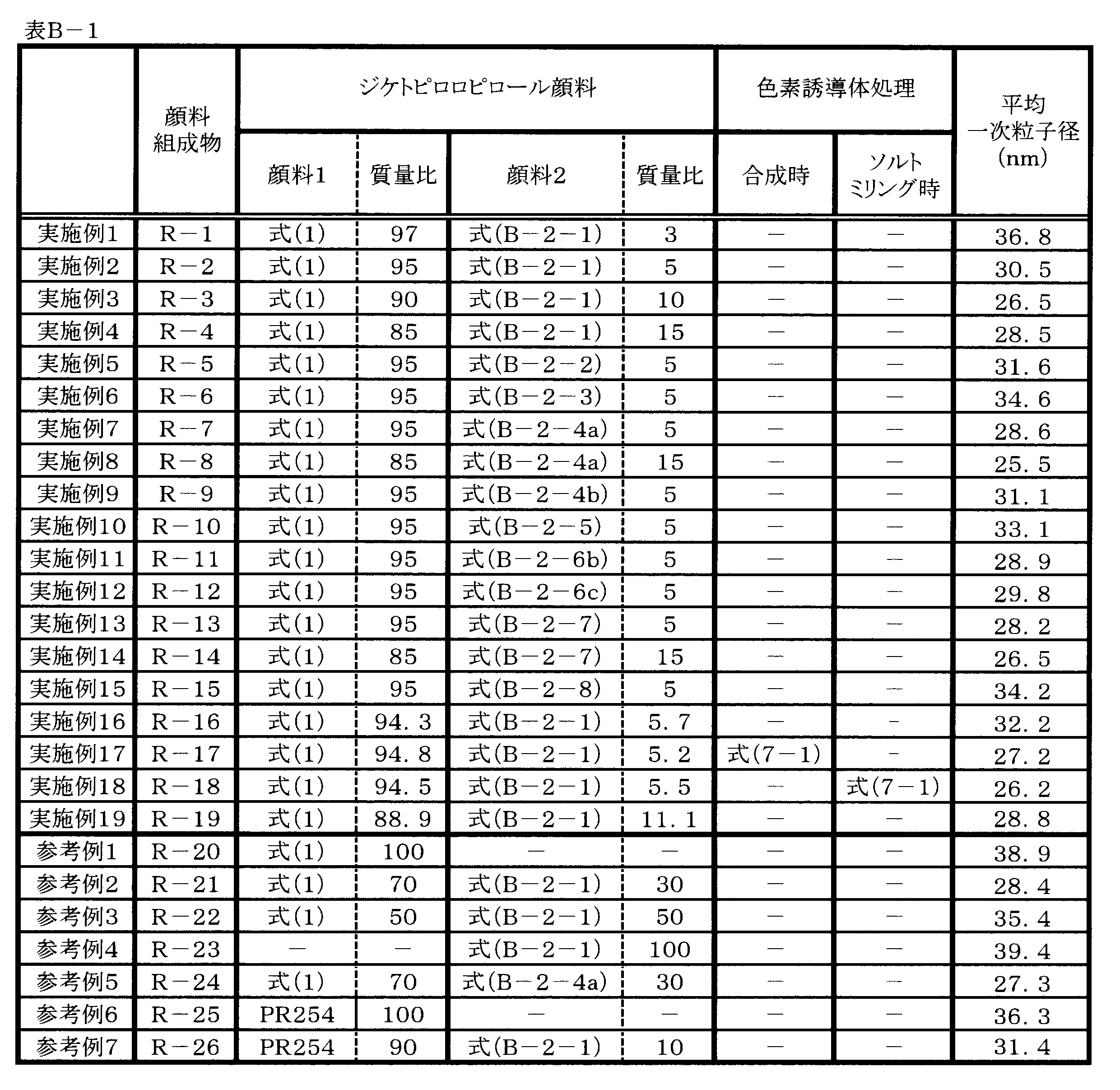
<その他の顔料の製造方法>
(ジアントラキノン系顔料1(PR177-1)の製造)
ジアントラキノン系顔料(C.I.Pigment Red177)90部、塩化ナトリウム900部、およびジエチレングリコール110部を、ステンレス製1ガロンニーダー(井上製作所製)中に仕込み、60℃で10時間混練した。次に、混練した混合物を温水に投入し、約80℃に加熱しながら1時間撹拌してスラリー状として、濾過および水洗をして食塩およびジエチレングリコールを除いた後、80℃で一昼夜乾燥させ、粉砕することによりジアントラキノン系顔料1(PR177-1)85.0部を得た。平均一次粒子径は38.2nmであった。
(ジアントラキノン系顔料1(PR177-1)の製造)
ジアントラキノン系顔料(C.I.Pigment Red177)90部、塩化ナトリウム900部、およびジエチレングリコール110部を、ステンレス製1ガロンニーダー(井上製作所製)中に仕込み、60℃で10時間混練した。次に、混練した混合物を温水に投入し、約80℃に加熱しながら1時間撹拌してスラリー状として、濾過および水洗をして食塩およびジエチレングリコールを除いた後、80℃で一昼夜乾燥させ、粉砕することによりジアントラキノン系顔料1(PR177-1)85.0部を得た。平均一次粒子径は38.2nmであった。
(アゾ系顔料1(PY150-1)の製造)
アゾ系顔料(C.I.Pigment Yellow150)90部、塩化ナトリウム900部、およびジエチレングリコール110部を、ステンレス製1ガロンニーダー(井上製作所製)中に仕込み、60℃で10時間混練した。次に、混練した混合物を温水に投入し、約80℃に加熱しながら1時間撹拌してスラリー状として、濾過および水洗をして食塩およびジエチレングリコールを除いた後、80℃で一昼夜乾燥させ、粉砕することによりアゾ系顔料1(PY150-1)85.0部を得た。平均一次粒子径は26.2nmであった。
アゾ系顔料(C.I.Pigment Yellow150)90部、塩化ナトリウム900部、およびジエチレングリコール110部を、ステンレス製1ガロンニーダー(井上製作所製)中に仕込み、60℃で10時間混練した。次に、混練した混合物を温水に投入し、約80℃に加熱しながら1時間撹拌してスラリー状として、濾過および水洗をして食塩およびジエチレングリコールを除いた後、80℃で一昼夜乾燥させ、粉砕することによりアゾ系顔料1(PY150-1)85.0部を得た。平均一次粒子径は26.2nmであった。
<バインダー樹脂溶液の製造方法>
(アクリル樹脂溶液1の調製)
セパラブル4口フラスコに温度計、冷却管、窒素ガス導入管、滴下管および撹拌装置を取り付けた反応容器にシクロヘキサノン196部を仕込み、80℃に昇温し、反応容器内を窒素置換した後、滴下管より、n-ブチルメタクリレート37.2部、2-ヒドロキシエチルメタクリレート12.9部、メタクリル酸12.0部、パラクミルフェノールエチレンオキサイド変性アクリレート(東亞合成株式会社製「アロニックスM110」)20.7部、2,2’-アゾビスイソブチロニトリル1.1部の混合物を2時間かけて滴下した。滴下終了後、更に3時間反応を継続し、アクリル樹脂の溶液を得た。室温まで冷却した後、樹脂溶液約2部をサンプリングして180℃、20分加熱乾燥して不揮発分を測定し、先に合成した樹脂溶液に不揮発分が20質量%になるようにメトキシプロピルアセテートを添加してアクリル樹脂溶液1を調製した。重量平均分子量(Mw)は26000であった。
(アクリル樹脂溶液1の調製)
セパラブル4口フラスコに温度計、冷却管、窒素ガス導入管、滴下管および撹拌装置を取り付けた反応容器にシクロヘキサノン196部を仕込み、80℃に昇温し、反応容器内を窒素置換した後、滴下管より、n-ブチルメタクリレート37.2部、2-ヒドロキシエチルメタクリレート12.9部、メタクリル酸12.0部、パラクミルフェノールエチレンオキサイド変性アクリレート(東亞合成株式会社製「アロニックスM110」)20.7部、2,2’-アゾビスイソブチロニトリル1.1部の混合物を2時間かけて滴下した。滴下終了後、更に3時間反応を継続し、アクリル樹脂の溶液を得た。室温まで冷却した後、樹脂溶液約2部をサンプリングして180℃、20分加熱乾燥して不揮発分を測定し、先に合成した樹脂溶液に不揮発分が20質量%になるようにメトキシプロピルアセテートを添加してアクリル樹脂溶液1を調製した。重量平均分子量(Mw)は26000であった。
(アクリル樹脂溶液2の調製)
セパラブル4口フラスコに温度計、冷却管、窒素ガス導入管、滴下管および撹拌装置を取り付けた反応容器にシクロヘキサノン207部を仕込み、80℃に昇温し、反応容器内を窒素置換した後、滴下管より、メタクリル酸20部、パラクミルフェノールエチレンオキサイド変性アクリレート(東亜合成社製アロニックスM110)20部、メタクリル酸メチル45部、2-ヒドロキシエチルメタクリレート8.5部、及び2,2’-アゾビスイソブチロニトリル1.33部の混合物を2時間かけて滴下した。滴下終了後、更に3時間反応を継続し、共重合体樹脂溶液を得た。次に得られた共重合体溶液全量に対して、窒素ガスを停止し乾燥空気を1時間注入しながら撹拌したのちに、室温まで冷却した後、2-メタクリロイルオキシエチルイソシアネート(昭和電工社製カレンズMOI)6.5部、ラウリン酸ジブチル錫0.08部、シクロヘキサノン26部の混合物を70℃で3時間かけて滴下した。滴下終了後、更に1時間反応を継続し、アクリル樹脂の溶液を得た。室温まで冷却した後、樹脂溶液約2部をサンプリングして180℃、20分加熱乾燥して不揮発分を測定し、先に合成した樹脂溶液に不揮発分が20質量%になるようにシクロヘキサノンを添加してアクリル樹脂溶液2を調製した。重量平均分子量(Mw)は18000であった。
セパラブル4口フラスコに温度計、冷却管、窒素ガス導入管、滴下管および撹拌装置を取り付けた反応容器にシクロヘキサノン207部を仕込み、80℃に昇温し、反応容器内を窒素置換した後、滴下管より、メタクリル酸20部、パラクミルフェノールエチレンオキサイド変性アクリレート(東亜合成社製アロニックスM110)20部、メタクリル酸メチル45部、2-ヒドロキシエチルメタクリレート8.5部、及び2,2’-アゾビスイソブチロニトリル1.33部の混合物を2時間かけて滴下した。滴下終了後、更に3時間反応を継続し、共重合体樹脂溶液を得た。次に得られた共重合体溶液全量に対して、窒素ガスを停止し乾燥空気を1時間注入しながら撹拌したのちに、室温まで冷却した後、2-メタクリロイルオキシエチルイソシアネート(昭和電工社製カレンズMOI)6.5部、ラウリン酸ジブチル錫0.08部、シクロヘキサノン26部の混合物を70℃で3時間かけて滴下した。滴下終了後、更に1時間反応を継続し、アクリル樹脂の溶液を得た。室温まで冷却した後、樹脂溶液約2部をサンプリングして180℃、20分加熱乾燥して不揮発分を測定し、先に合成した樹脂溶液に不揮発分が20質量%になるようにシクロヘキサノンを添加してアクリル樹脂溶液2を調製した。重量平均分子量(Mw)は18000であった。
(バインダー樹脂の重量平均分子量)
アクリル樹脂の重量平均分子量は、GPC(ゲルパーミエーションクロマトグラフィ)により測定したポリスチレン換算の重量平均分子量である。
アクリル樹脂の重量平均分子量は、GPC(ゲルパーミエーションクロマトグラフィ)により測定したポリスチレン換算の重量平均分子量である。
<ジケトピロロピロール系顔料組成物を使用した着色組成物の作製方法>
[実施例20]
(着色組成物1(RP-1)の作製)
下記に示す配合組成の混合物を均一に撹拌混合し、直径0.1mmのジルコニアビーズを用いて、ピコミル(浅田鉄工社製)で8時間分散した後、5μmのフィルタで濾過し、着色組成物1(RP-1)を作製した。
ジケトピロロピロール系顔料組成物1(R-1) 11.0部
色素誘導体(14-1) 1.0部
アクリル樹脂溶液1 40.0部
プロピレングリコールモノメチルエーテルアセテート 48.0部
[実施例20]
(着色組成物1(RP-1)の作製)
下記に示す配合組成の混合物を均一に撹拌混合し、直径0.1mmのジルコニアビーズを用いて、ピコミル(浅田鉄工社製)で8時間分散した後、5μmのフィルタで濾過し、着色組成物1(RP-1)を作製した。
ジケトピロロピロール系顔料組成物1(R-1) 11.0部
色素誘導体(14-1) 1.0部
アクリル樹脂溶液1 40.0部
プロピレングリコールモノメチルエーテルアセテート 48.0部
[実施例21~38]
(着色組成物2~19(RP-2~19)の作製)
顔料組成物1(R-1)を表B-2に記載の顔料組成物に変更した以外は着色組成物1(RP-1)と同様にして着色組成物2~19(RP-2~19)を作製した。
(着色組成物2~19(RP-2~19)の作製)
顔料組成物1(R-1)を表B-2に記載の顔料組成物に変更した以外は着色組成物1(RP-1)と同様にして着色組成物2~19(RP-2~19)を作製した。
[実施例39]
(着色組成物20(RP-20)の作製)
下記に示す配合組成の混合物を均一に撹拌混合し、直径0.1mmのジルコニアビーズを用いて、ピコミルで8時間分散した後、5μmのフィルタで濾過し、着色組成物20(RP-20)を作製した。
ジケトピロロピロール系顔料組成物19(R-19) 11.0部
色素誘導体(6-3) 1.0部
樹脂型分散剤(ビックケミー社製「BYK161」(30%溶液)) 6.0部
アクリル樹脂溶液1 31.0部
プロピレングリコールモノメチルエーテルアセテート 51.0部
(着色組成物20(RP-20)の作製)
下記に示す配合組成の混合物を均一に撹拌混合し、直径0.1mmのジルコニアビーズを用いて、ピコミルで8時間分散した後、5μmのフィルタで濾過し、着色組成物20(RP-20)を作製した。
ジケトピロロピロール系顔料組成物19(R-19) 11.0部
色素誘導体(6-3) 1.0部
樹脂型分散剤(ビックケミー社製「BYK161」(30%溶液)) 6.0部
アクリル樹脂溶液1 31.0部
プロピレングリコールモノメチルエーテルアセテート 51.0部
[実施例40]
(着色組成物21(RP-21)の作製)
下記に示す配合組成の混合物を均一に撹拌混合し、直径0.1mmのジルコニアビーズを用いて、ピコミルで8時間分散した後、5μmのフィルタで濾過し、着色組成物21(RP-21)を作製した。
ジケトピロロピロール系顔料組成物19(R-19) 12.0部
樹脂型分散剤(味の素ファインテクノ社製「アジスパーPB821」) 3.6部
アクリル樹脂溶液1 23.0部
プロピレングリコールモノメチルエーテルアセテート 61.4部
(着色組成物21(RP-21)の作製)
下記に示す配合組成の混合物を均一に撹拌混合し、直径0.1mmのジルコニアビーズを用いて、ピコミルで8時間分散した後、5μmのフィルタで濾過し、着色組成物21(RP-21)を作製した。
ジケトピロロピロール系顔料組成物19(R-19) 12.0部
樹脂型分散剤(味の素ファインテクノ社製「アジスパーPB821」) 3.6部
アクリル樹脂溶液1 23.0部
プロピレングリコールモノメチルエーテルアセテート 61.4部
[参考例8~14]
(着色組成物22~28(RP-22~28)の作製)
顔料組成物1(R-1)を表B-2に記載の顔料組成物に変更した以外は着色組成物1(RP-1)と同様にして着色組成物22~28(RP-22~28)を作製した。
(着色組成物22~28(RP-22~28)の作製)
顔料組成物1(R-1)を表B-2に記載の顔料組成物に変更した以外は着色組成物1(RP-1)と同様にして着色組成物22~28(RP-22~28)を作製した。

<その他着色組成物の作製方法>
(着色組成物29(RP-29)の作製)
下記に示す配合組成の混合物を均一に撹拌混合し、直径0.1mmのジルコニアビーズを用いて、ピコミルで8時間分散した後、5μmのフィルタで濾過し、着色組成物29(RP-29)を作製した。
ジアントラキノン系顔料(PR177-1) 10.8部
色素誘導体(8-5) 1.2部
アクリル樹脂溶液1 40.0部
プロピレングリコールモノメチルエーテルアセテート 48.0部
(着色組成物29(RP-29)の作製)
下記に示す配合組成の混合物を均一に撹拌混合し、直径0.1mmのジルコニアビーズを用いて、ピコミルで8時間分散した後、5μmのフィルタで濾過し、着色組成物29(RP-29)を作製した。
ジアントラキノン系顔料(PR177-1) 10.8部
色素誘導体(8-5) 1.2部
アクリル樹脂溶液1 40.0部
プロピレングリコールモノメチルエーテルアセテート 48.0部
(着色組成物30(YP-30)の作製)
下記に示す配合組成の混合物を均一に撹拌混合し、直径0.1mmのジルコニアビーズを用いて、ピコミルで8時間分散した後、5μmのフィルタで濾過し、着色組成物30(YP-30)を作製した。
アゾ系顔料(PY150-1) 12.0部
樹脂型分散剤(ビックケミー社製「BYK6919」(50%溶液)) 6.0部
アクリル樹脂溶液1 25.0部
プロピレングリコールモノメチルエーテルアセテート 57.0部
下記に示す配合組成の混合物を均一に撹拌混合し、直径0.1mmのジルコニアビーズを用いて、ピコミルで8時間分散した後、5μmのフィルタで濾過し、着色組成物30(YP-30)を作製した。
アゾ系顔料(PY150-1) 12.0部
樹脂型分散剤(ビックケミー社製「BYK6919」(50%溶液)) 6.0部
アクリル樹脂溶液1 25.0部
プロピレングリコールモノメチルエーテルアセテート 57.0部
<感光性着色組成物の作製方法>
[実施例41]
(感光性着色組成物1(RR-1)の作製)
下記組成の混合物を均一になるように撹拌混合した後、1μmのフィルタで濾過し、感光性着色組成物1(RR-1)を作製した。
着色組成物1(RP-1) 38.2部
着色組成物29(RP-29) 3.8部
アクリル樹脂溶液2 13.2部
光重合性単量体(東亞合成社製「アロニックスM400」) 2.8部
光重合開始剤(チバ・ジャパン社製「イルガキュアー907」) 2.0部
増感剤(保土ヶ谷化学社製「EAB-F」) 0.4部
エチレングリコールモノメチルエーテルアセテート 39.6部
[実施例41]
(感光性着色組成物1(RR-1)の作製)
下記組成の混合物を均一になるように撹拌混合した後、1μmのフィルタで濾過し、感光性着色組成物1(RR-1)を作製した。
着色組成物1(RP-1) 38.2部
着色組成物29(RP-29) 3.8部
アクリル樹脂溶液2 13.2部
光重合性単量体(東亞合成社製「アロニックスM400」) 2.8部
光重合開始剤(チバ・ジャパン社製「イルガキュアー907」) 2.0部
増感剤(保土ヶ谷化学社製「EAB-F」) 0.4部
エチレングリコールモノメチルエーテルアセテート 39.6部
[実施例42~61]
(感光性着色組成物2~21(RR-2~21)の作製)
着色組成物1(RP-1)を着色組成物2~21(RP-2~21)に変更し、さらに着色組成物2~21(RP-2~21)と着色組成物29(RP-29)の比率を変更(着色組成物の全量42部内で比率変更)する以外は、実施例41と同様にして感光性着色組成物2~21(RP-2~21)を作製した。なお、比率変更については、塗膜評価の際にC光源でx=0.640、y=0.328の色度に合うように、着色組成物2~21(RP-2~21)と着色組成物29(RP-29)の比率を変更した。
(感光性着色組成物2~21(RR-2~21)の作製)
着色組成物1(RP-1)を着色組成物2~21(RP-2~21)に変更し、さらに着色組成物2~21(RP-2~21)と着色組成物29(RP-29)の比率を変更(着色組成物の全量42部内で比率変更)する以外は、実施例41と同様にして感光性着色組成物2~21(RP-2~21)を作製した。なお、比率変更については、塗膜評価の際にC光源でx=0.640、y=0.328の色度に合うように、着色組成物2~21(RP-2~21)と着色組成物29(RP-29)の比率を変更した。
[参考例15~18、20、21]
(感光性着色組成物22~25、27、28(RR-22~25、27、28)の作製)
着色組成物1(RP-1)を着色組成物22~25、27、28(RP-22~25、27、28)に変更し、さらに着色組成物22~25、27、28(RP-22~25、27、28)と着色組成物29(RP-29)の比率を変更(着色組成物の全量42部内で比率変更)する以外は、実施例41と同様にして感光性着色組成物22~25、27、28(RR-22~25、27、28)を作製した。なお、比率変更については、塗膜評価の際にC光源でx=0.640、y=0.328の色度に合うように、着色組成物22~25、27、28(RP-22~25、27、28)と着色組成物29(RP-29)の比率を変更した。
(感光性着色組成物22~25、27、28(RR-22~25、27、28)の作製)
着色組成物1(RP-1)を着色組成物22~25、27、28(RP-22~25、27、28)に変更し、さらに着色組成物22~25、27、28(RP-22~25、27、28)と着色組成物29(RP-29)の比率を変更(着色組成物の全量42部内で比率変更)する以外は、実施例41と同様にして感光性着色組成物22~25、27、28(RR-22~25、27、28)を作製した。なお、比率変更については、塗膜評価の際にC光源でx=0.640、y=0.328の色度に合うように、着色組成物22~25、27、28(RP-22~25、27、28)と着色組成物29(RP-29)の比率を変更した。
[参考例19]
(感光性着色組成物26(RR-26)の調製)
着色組成物1(RP-1)を着色組成物26(RP-26)に、着色組成物29(RP-29)を着色組成物30(YP-30)に変更し、さらに着色組成物26(RP-26)と着色組成物30(YP-30)の比率を変更(着色組成物の全量42部内で比率変更)する以外は、実施例41と同様にして感光性着色組成物26(RR-26)を作製した。なお、比率変更については、塗膜評価の際にC光源でx=0.640、y=0.328の色度に合うように、着色組成物26(RP-26)と着色組成物30(YP-30)の比率を変更した。
(感光性着色組成物26(RR-26)の調製)
着色組成物1(RP-1)を着色組成物26(RP-26)に、着色組成物29(RP-29)を着色組成物30(YP-30)に変更し、さらに着色組成物26(RP-26)と着色組成物30(YP-30)の比率を変更(着色組成物の全量42部内で比率変更)する以外は、実施例41と同様にして感光性着色組成物26(RR-26)を作製した。なお、比率変更については、塗膜評価の際にC光源でx=0.640、y=0.328の色度に合うように、着色組成物26(RP-26)と着色組成物30(YP-30)の比率を変更した。
<感光性着色組成物を用いた塗膜作製と評価>
得られた感光性着色組成物(RR-1~28)を用いて作製した赤色塗膜の色特性、コントラスト比、熱による結晶析出の評価を下記方法で行った。表B-3に感光性着色組成物中の着色組成物の種類および評価結果を示す。
得られた感光性着色組成物(RR-1~28)を用いて作製した赤色塗膜の色特性、コントラスト比、熱による結晶析出の評価を下記方法で行った。表B-3に感光性着色組成物中の着色組成物の種類および評価結果を示す。
(塗膜の色特性評価)
100mm×100mm、0.7mm厚のガラス基板上に、C光源においてx=0.640、y=0.328になるような膜厚に感光性着色組成物を塗布し、乾燥後、超高圧水銀ランプを用いて300mJ/cm2の紫外線を照射した。さらに、230℃で60分加熱することで赤色塗膜を得た。その後、得られた塗膜の明度(Y)を顕微分光光度計(オリンパス光学社製「OSP-SP200」)で測定した。なお、色度も同様に顕微分光光度計(オリンパス光学社製「OSP-SP200」)で測定した。
100mm×100mm、0.7mm厚のガラス基板上に、C光源においてx=0.640、y=0.328になるような膜厚に感光性着色組成物を塗布し、乾燥後、超高圧水銀ランプを用いて300mJ/cm2の紫外線を照射した。さらに、230℃で60分加熱することで赤色塗膜を得た。その後、得られた塗膜の明度(Y)を顕微分光光度計(オリンパス光学社製「OSP-SP200」)で測定した。なお、色度も同様に顕微分光光度計(オリンパス光学社製「OSP-SP200」)で測定した。
(塗膜のコントラスト比評価)
塗膜のコントラスト比の測定法について説明する。液晶ディスプレー用バックライトユニットから出た光は、偏光板を通過して偏光され、ガラス基板上に塗布された着色組成物の乾燥塗膜を通過し、偏光板に到達する。偏光板と偏光板の偏光面が平行であれば、光は偏光板を透過するが、偏光面が直行している場合には光は偏光板により遮断される。しかし、偏光板によって偏光された光が着色組成物の乾燥塗膜を通過するときに、顔料粒子による散乱等が起こり、偏光面の一部にずれを生じると、偏光板が平行のときは偏光板を透過する光量が減り、偏光板が直行のときは偏光板を一部光が透過する。この透過光を偏光板上の輝度として測定し、偏光板が平行のときの輝度と、直行のときの輝度との比(コントラスト比)を算出した。
(コントラスト比)=(平行のときの輝度)/(直行のときの輝度)
塗膜のコントラスト比の測定法について説明する。液晶ディスプレー用バックライトユニットから出た光は、偏光板を通過して偏光され、ガラス基板上に塗布された着色組成物の乾燥塗膜を通過し、偏光板に到達する。偏光板と偏光板の偏光面が平行であれば、光は偏光板を透過するが、偏光面が直行している場合には光は偏光板により遮断される。しかし、偏光板によって偏光された光が着色組成物の乾燥塗膜を通過するときに、顔料粒子による散乱等が起こり、偏光面の一部にずれを生じると、偏光板が平行のときは偏光板を透過する光量が減り、偏光板が直行のときは偏光板を一部光が透過する。この透過光を偏光板上の輝度として測定し、偏光板が平行のときの輝度と、直行のときの輝度との比(コントラスト比)を算出した。
(コントラスト比)=(平行のときの輝度)/(直行のときの輝度)
従って、塗膜中の顔料により散乱が起こると、平行のときの輝度が低下し、かつ直行のときの輝度が増加するため、コントラスト比が低くなる。
なお、輝度計としては色彩輝度計(トプコン社製「BM-5A」)、偏光板としては偏光板(日東電工社製「NPF-G1220DUN」)を用いた。なお、測定に際しては、不要光を遮断するために、測定部分に1cm角の孔を開けた黒色のマスクを当てた。また、コントラスト比測定には色特性評価時と同様の方法で得られた赤色塗膜を使用した。
(塗膜表面の結晶析出評価)
100mm×100mm、0.7mm厚のガラス基板上に、C光源においてx=0.640になるような膜厚に感光性着色組成物を塗布し、乾燥後、超高圧水銀ランプを用いて300mJ/cm2の紫外線を照射した。続けて230℃で60分間の加熱処理行った後、さらに240℃で60分間の加熱処理を2回繰り返した。加熱処理後の基板の塗膜表面を光学顕微鏡にて観察し、結晶析出有無を下記基準に従って判定した。
◎:230℃60分間加熱処理後、さらなる240℃60分間加熱処理後、およびさらなる240℃60分間加熱処理でも結晶析出なし
○:230℃60分間加熱処理後、およびさらなる240℃60分間加熱処理でも結晶析出なし(2回目の240℃60分間加熱処理で結晶析出あり)
△:230℃60分間加熱処理後では結晶析出ないが、さらなる240℃60分間加熱処理で結晶析出あり
×:230℃60分間加熱処理後で結晶析出あり
100mm×100mm、0.7mm厚のガラス基板上に、C光源においてx=0.640になるような膜厚に感光性着色組成物を塗布し、乾燥後、超高圧水銀ランプを用いて300mJ/cm2の紫外線を照射した。続けて230℃で60分間の加熱処理行った後、さらに240℃で60分間の加熱処理を2回繰り返した。加熱処理後の基板の塗膜表面を光学顕微鏡にて観察し、結晶析出有無を下記基準に従って判定した。
◎:230℃60分間加熱処理後、さらなる240℃60分間加熱処理後、およびさらなる240℃60分間加熱処理でも結晶析出なし
○:230℃60分間加熱処理後、およびさらなる240℃60分間加熱処理でも結晶析出なし(2回目の240℃60分間加熱処理で結晶析出あり)
△:230℃60分間加熱処理後では結晶析出ないが、さらなる240℃60分間加熱処理で結晶析出あり
×:230℃60分間加熱処理後で結晶析出あり
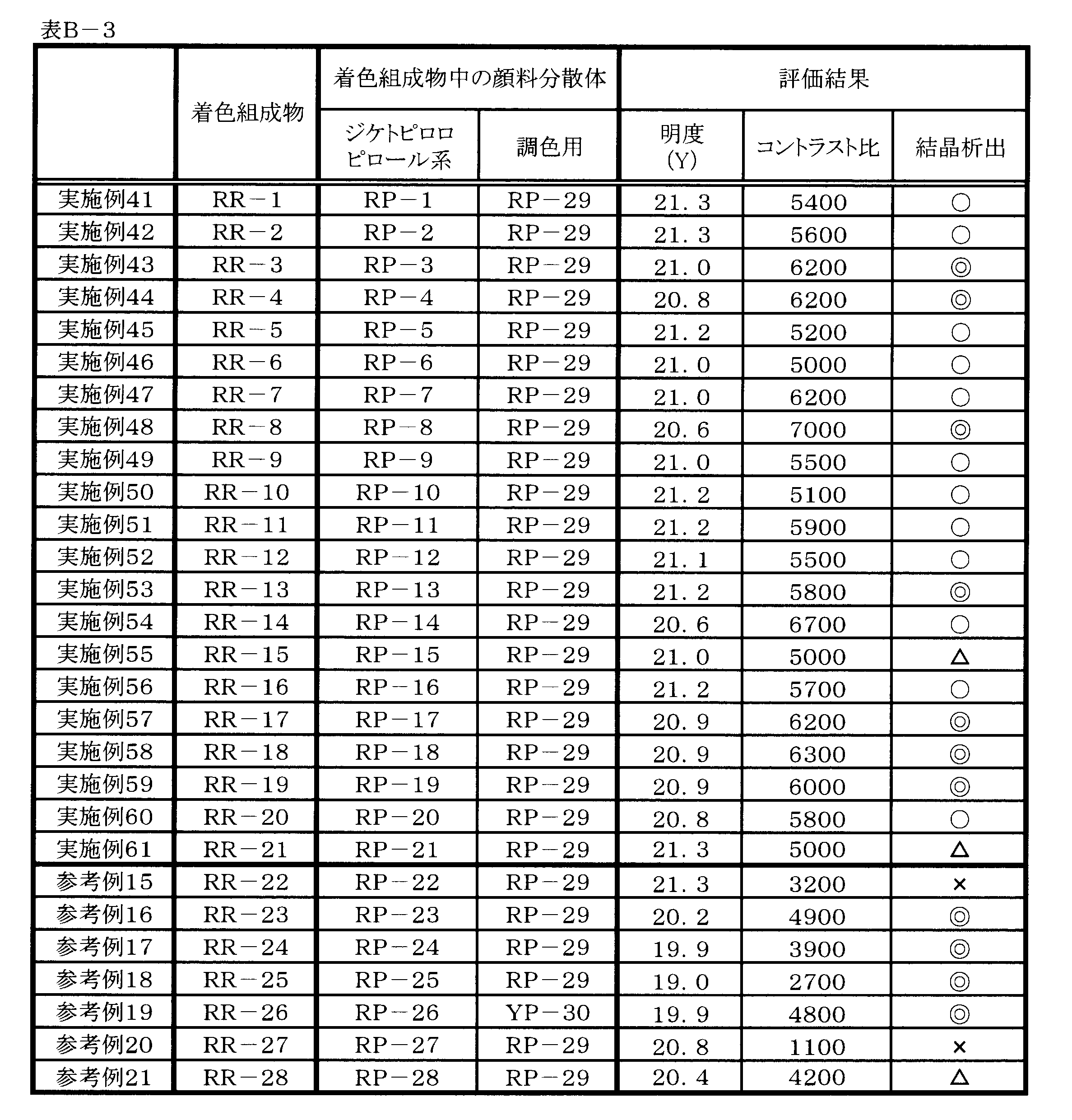
表B-3の結果より、カラーフィルタ形成において、臭素化ジケトピロロピロール顔料と特定ヘテロジケトピロロピロール顔料Bを特定の比率(質量比97:3~85:15)で含有するジケトピロロピロール系顔料組成物を使用した実施例は、特に明度に優れており、さらには高コントラストを有し、加熱工程によるジケトピロロピロール系顔料の結晶析出を抑制することができることがわかった。
実施例43と参考例21の比較において、臭素化ジケトピロロピロール顔料と特定ヘテロジケトピロロピロール顔料Bとを含有するジケトピロロピロール系顔料組成物を使用した感光性着色組成物は、従来利用されているC.I.ピグメントレッド254を含有した感光性着色組成物より高明度かつ高コントラストであり、結晶析出にも問題がない結果であった。また、参考例15の特定ヘテロジケトピロロピロール顔料Bを含有しない臭素化ジケトピロロピロール顔料は、明度に優れているが、低コントラストであり、結晶析出が抑制できないことがわかった。さらに、実施例42と実施例45~47、および実施例49~53の結果から、特定ヘテロジケトピロロピロール顔料Bを用いることによる効果は、その種類に依存することも確認することができた。
実施例41~44、参考例15~18において、式(B-2-1)の特定ヘテロジケトピロール顔料の含有比率が多くなるほど明度が低くなるが、結晶析出抑制効果は大きくなる傾向にあることがわかった。また、コントラストについては最適点があり、特定ヘテロジケトピロール顔料の含有比率をコントロールすれば、明度とコントラストのバランスを取ることができることがわかった。
実施例42と実施例56において、コハク酸ジエステル共合成法で製造した顔料組成物と、臭素化ジケトピロロピロール顔料と特定ヘテロジケトピロロピロール顔料Bとを別々に合成しソルトミリング処理時に混合して製造した顔料組成物とで同様の効果が得られることがわかった。また、実施例43と実施例59の比較においても同様の効果を確認することができた。
実施例56~58において、色素誘導体処理は高コントラスト化および結晶析出抑制に効果があることがわかった。
<カラーフィルタの作製>
カラーフィルタの作製に使用する緑色感光性着色組成物と青色感光性着色組成物の作製を行った。なお、赤色については本実施例Bの感光性着色組成物16(RR-16)を使用した。
カラーフィルタの作製に使用する緑色感光性着色組成物と青色感光性着色組成物の作製を行った。なお、赤色については本実施例Bの感光性着色組成物16(RR-16)を使用した。
(緑色着色組成物1(GP-1)の作製)
下記に示す配合組成の混合物を均一に撹拌混合し、直径0.1mmのジルコニアビーズを用いて、ピコミルで8時間分散した後、5μmのフィルタで濾過し、緑色着色組成物1(GP-1)を作製した。
緑色顔料(C.I.ピグメントグリーン36) 6.8部
黄色顔料(C.I.ピグメントイエロー150) 5.2部
樹脂型分散剤(チバ・ジャパン社製「EFKA4300」) 1.0部
アクリル樹脂溶液1 35.0部
プロピレングリコールモノメチルエーテルアセテート 52.0部
下記に示す配合組成の混合物を均一に撹拌混合し、直径0.1mmのジルコニアビーズを用いて、ピコミルで8時間分散した後、5μmのフィルタで濾過し、緑色着色組成物1(GP-1)を作製した。
緑色顔料(C.I.ピグメントグリーン36) 6.8部
黄色顔料(C.I.ピグメントイエロー150) 5.2部
樹脂型分散剤(チバ・ジャパン社製「EFKA4300」) 1.0部
アクリル樹脂溶液1 35.0部
プロピレングリコールモノメチルエーテルアセテート 52.0部
(緑色感光性着色組成物1(GR-1)の調製)
下記組成の混合物を均一になるように撹拌混合した後、1μmのフィルタで濾過し、緑色感光性着色組成物1(GR-1)を作製した。
緑色着色組成物1(GP-1) 42.0部
アクリル樹脂溶液2 13.2部
光重合性単量体(東亞合成社製「アロニックスM400」) 2.8部
光重合開始剤(チバ・ジャパン社製「イルガキュアー907」) 2.0部
増感剤(保土ヶ谷化学社製「EAB-F」) 0.4部
エチレングリコールモノメチルエーテルアセテート 39.6部
下記組成の混合物を均一になるように撹拌混合した後、1μmのフィルタで濾過し、緑色感光性着色組成物1(GR-1)を作製した。
緑色着色組成物1(GP-1) 42.0部
アクリル樹脂溶液2 13.2部
光重合性単量体(東亞合成社製「アロニックスM400」) 2.8部
光重合開始剤(チバ・ジャパン社製「イルガキュアー907」) 2.0部
増感剤(保土ヶ谷化学社製「EAB-F」) 0.4部
エチレングリコールモノメチルエーテルアセテート 39.6部
(青色着色組成物1(BP-1)の調製)
下記に示す配合組成の混合物を均一に撹拌混合し、直径0.1mmのジルコニアビーズを用いて、ピコミルで8時間分散した後、5μmのフィルタで濾過し、青色着色組成物1(BP-1)を作製した。
青色顔料(C.I.ピグメントブルー15:6) 7.2部
紫色顔料(C.I.ピグメントバイオレット23) 4.8部
樹脂型分散剤(チバ・ジャパン社製「EFKA4300」) 1.0部
アクリル樹脂溶液1 35.0部
プロピレングリコールモノメチルエーテルアセテート 52.0部
下記に示す配合組成の混合物を均一に撹拌混合し、直径0.1mmのジルコニアビーズを用いて、ピコミルで8時間分散した後、5μmのフィルタで濾過し、青色着色組成物1(BP-1)を作製した。
青色顔料(C.I.ピグメントブルー15:6) 7.2部
紫色顔料(C.I.ピグメントバイオレット23) 4.8部
樹脂型分散剤(チバ・ジャパン社製「EFKA4300」) 1.0部
アクリル樹脂溶液1 35.0部
プロピレングリコールモノメチルエーテルアセテート 52.0部
(青色感光性着色組成物1(BR-1)の調製)
下記組成の混合物を均一になるように撹拌混合した後、1μmのフィルタで濾過し、青色感光性着色組成物1(BR-1)を作製した。
青色着色組成物1(BP-1) 34.0部
アクリル樹脂溶液2 15.2部
光重合性単量体(東亞合成社製「アロニックスM400」) 3.3部
光重合開始剤(チバ・ジャパン社製「イルガキュアー907」) 2.0部
増感剤(保土ヶ谷化学社製「EAB-F」) 0.4部
エチレングリコールモノメチルエーテルアセテート 45.1部
下記組成の混合物を均一になるように撹拌混合した後、1μmのフィルタで濾過し、青色感光性着色組成物1(BR-1)を作製した。
青色着色組成物1(BP-1) 34.0部
アクリル樹脂溶液2 15.2部
光重合性単量体(東亞合成社製「アロニックスM400」) 3.3部
光重合開始剤(チバ・ジャパン社製「イルガキュアー907」) 2.0部
増感剤(保土ヶ谷化学社製「EAB-F」) 0.4部
エチレングリコールモノメチルエーテルアセテート 45.1部
ガラス基板上にブラックマトリクスをパターン加工し、該基板上にスピンコーターで感光性着色組成物16(RR-16)をx=0.640、y=0.328になるような膜厚に塗布し着色被膜を形成した。該被膜にフォトマスクを介して、超高圧水銀ランプを用いて300mJ/cm2の紫外線を照射した。次いで0.2重量%の炭酸ナトリウム水溶液からなるアルカリ現像液によりスプレー現像して未露光部分を取り除いた後、イオン交換水で洗浄し、この基板を230℃で20分加熱して、赤色フィルタセグメントを形成した。同様の方法により、緑色感光性着色組成物1(GR-1)をx=0.300、y=0.600になるような膜厚に、青色感光性着色組成物1(BR―1)を用いてx=0.150、y=0.060になるような膜厚にそれぞれ塗布し、緑色フィルタセグメント、青色フィルタセグメントを形成して、カラーフィルタを得た。
感光性着色組成物16(RR-16)を用いることにより、高明度かつ高コントラストであり、加熱工程で結晶析出がないカラーフィルタを作製することが可能であった。
[実施例C]
実施例C中、「部」および「%」は、「重量部」および「重量%」をそれぞれ表す。顔料の比表面積、顔料の一次粒子径、樹脂の重量平均分子量(Mw)、樹脂の酸価、塗膜のコントラスト比(CR)の測定方法は以下の通りである。
実施例C中、「部」および「%」は、「重量部」および「重量%」をそれぞれ表す。顔料の比表面積、顔料の一次粒子径、樹脂の重量平均分子量(Mw)、樹脂の酸価、塗膜のコントラスト比(CR)の測定方法は以下の通りである。
(顔料の比表面積)
顔料粒子の比表面積は、窒素吸着によるBET法で求めた。なお、測定には自動蒸気吸着量測定装置(日本ベル社製「BELSORP18」)を用いた。
顔料粒子の比表面積は、窒素吸着によるBET法で求めた。なお、測定には自動蒸気吸着量測定装置(日本ベル社製「BELSORP18」)を用いた。
(顔料の平均一次粒子径)
顔料の平均一次粒子径は、電子顕微鏡写真から一次粒子の大きさを直接計測する方法で測定した。具体的には、個々の顔料の一次粒子の短軸径と長軸径を計測し、平均をその顔料粒子の粒径とした。次に、100個以上の顔料粒子について、それぞれの粒子の体積(重量)を、求めた粒径の立方体と近似して求め、体積平均粒径を平均一次粒子径とした。なお、電子顕微鏡は透過型(TEM)を用いた。
顔料の平均一次粒子径は、電子顕微鏡写真から一次粒子の大きさを直接計測する方法で測定した。具体的には、個々の顔料の一次粒子の短軸径と長軸径を計測し、平均をその顔料粒子の粒径とした。次に、100個以上の顔料粒子について、それぞれの粒子の体積(重量)を、求めた粒径の立方体と近似して求め、体積平均粒径を平均一次粒子径とした。なお、電子顕微鏡は透過型(TEM)を用いた。
(樹脂の重量平均分子量(Mw))
TSKgelカラム(東ソー社製)を用い、RI検出器を装備したGPC(東ソー社製、HLC-8120GPC)で、展開溶媒にTHFを用いて測定したポリスチレン換算の重量平均分子量(Mw)である。
TSKgelカラム(東ソー社製)を用い、RI検出器を装備したGPC(東ソー社製、HLC-8120GPC)で、展開溶媒にTHFを用いて測定したポリスチレン換算の重量平均分子量(Mw)である。
(樹脂の酸価)
樹脂溶液0.5~1gに、アセトン80mlおよび水10mlを加えて撹拌して均一に溶解させ、0.1mol/LのKOH水溶液を滴定液として、自動滴定装置(「COM-555」平沼産業製)を用いて滴定し、樹脂溶液の酸価を測定した。そして、樹脂溶液の酸価と樹脂溶液の固形分濃度から、樹脂の固形分あたりの酸価を算出した。
樹脂溶液0.5~1gに、アセトン80mlおよび水10mlを加えて撹拌して均一に溶解させ、0.1mol/LのKOH水溶液を滴定液として、自動滴定装置(「COM-555」平沼産業製)を用いて滴定し、樹脂溶液の酸価を測定した。そして、樹脂溶液の酸価と樹脂溶液の固形分濃度から、樹脂の固形分あたりの酸価を算出した。
(塗膜のコントラスト比)
液晶ディスプレー用バックライトユニットから出た光は、偏光板を通過して偏光され、ガラス基板上に塗布された着色組成物の乾燥塗膜を通過し、偏光板に到達する。偏光板と偏光板の偏光面が平行であれば、光は偏光板を透過するが、偏光面が直行している場合には光は偏光板により遮断される。しかし、偏光板によって偏光された光が着色組成物の乾燥塗膜を通過するときに、顔料粒子による散乱等が起こり、偏光面の一部にずれを生じると、偏光板が平行のときは偏光板を透過する光量が減り、偏光板が直行のときは偏光板を一部光が透過する。この透過光を偏光板上の輝度として測定し、偏光板が平行のときの輝度と、直行のときの輝度との比(コントラスト比)を算出した。
(コントラスト比)=(平行のときの輝度)/(直行のときの輝度)
なお、輝度計としては色彩輝度計(トプコン社製「BM-5A」)、偏光板としては偏光板(日東電工社製「NPF-G1220DUN」)を用いた。なお、測定に際しては、不要光を遮断するために、測定部分に1cm角の孔を開けた黒色のマスクを当てた。
液晶ディスプレー用バックライトユニットから出た光は、偏光板を通過して偏光され、ガラス基板上に塗布された着色組成物の乾燥塗膜を通過し、偏光板に到達する。偏光板と偏光板の偏光面が平行であれば、光は偏光板を透過するが、偏光面が直行している場合には光は偏光板により遮断される。しかし、偏光板によって偏光された光が着色組成物の乾燥塗膜を通過するときに、顔料粒子による散乱等が起こり、偏光面の一部にずれを生じると、偏光板が平行のときは偏光板を透過する光量が減り、偏光板が直行のときは偏光板を一部光が透過する。この透過光を偏光板上の輝度として測定し、偏光板が平行のときの輝度と、直行のときの輝度との比(コントラスト比)を算出した。
(コントラスト比)=(平行のときの輝度)/(直行のときの輝度)
なお、輝度計としては色彩輝度計(トプコン社製「BM-5A」)、偏光板としては偏光板(日東電工社製「NPF-G1220DUN」)を用いた。なお、測定に際しては、不要光を遮断するために、測定部分に1cm角の孔を開けた黒色のマスクを当てた。
実施例に先立ち、実施例および参考例で用いたバインダー樹脂(B)溶液、式(1)に示す顔料(A1)、微細化顔料、顔料分散体の製造方法について説明する。
<バインダー樹脂(B)溶液の製造方法>
[アルカリ可溶性感光性樹脂(B1-1)]
温度計、冷却管、窒素ガス導入管、滴下管及び撹拌装置を備えたセパラブル4口フラスコにシクロヘキサノン370部を仕込み、80℃に昇温し、フラスコ内を窒素置換した後、滴下管より、パラクミルフェノールエチレンオキサイド変性アクリレート(東亜合成社製アロニックスM110)18部、ベンジルメタクリレート10部、グリシジルメタクリレート18.2部、メタクリル酸メチル25部、及び2,2’-アゾビスイソブチロニトリル2.0部の混合物を2時間かけて滴下した。滴下後、更に100℃で3時間反応させた後、アゾビスイソブチロニトリル1.0部をシクロヘキサノン50部で溶解させたものを添加し、更に100℃で1時間反応を続けた。次に、容器内を空気置換に替え、アクリル酸9.3部(グリシジル基の当量)にトリスジメチルアミノフェノール0.5部及びハイドロキノン0.1部を上記容器内に投入し、120℃で6時間反応を続け固形分酸価0.5となったところで反応を終了し、アクリル樹脂の溶液を得た。更に、引き続きテトラヒドロ無水フタル酸19.5部(生成した水酸基の当量)、トリエチルアミン0.5部を加え120℃で3.5時間反応させアクリル樹脂の溶液を得た。
室温まで冷却した後、樹脂溶液約2gをサンプリングして180℃、20分加熱乾燥して不揮発分を測定し、先に合成した樹脂溶液に不揮発分が20重量%になるようにPGMEAを添加してアルカリ可溶性感光性樹脂(B1-1)溶液を得た。重量平均分子量(Mw)は19000であった。
[アルカリ可溶性感光性樹脂(B1-1)]
温度計、冷却管、窒素ガス導入管、滴下管及び撹拌装置を備えたセパラブル4口フラスコにシクロヘキサノン370部を仕込み、80℃に昇温し、フラスコ内を窒素置換した後、滴下管より、パラクミルフェノールエチレンオキサイド変性アクリレート(東亜合成社製アロニックスM110)18部、ベンジルメタクリレート10部、グリシジルメタクリレート18.2部、メタクリル酸メチル25部、及び2,2’-アゾビスイソブチロニトリル2.0部の混合物を2時間かけて滴下した。滴下後、更に100℃で3時間反応させた後、アゾビスイソブチロニトリル1.0部をシクロヘキサノン50部で溶解させたものを添加し、更に100℃で1時間反応を続けた。次に、容器内を空気置換に替え、アクリル酸9.3部(グリシジル基の当量)にトリスジメチルアミノフェノール0.5部及びハイドロキノン0.1部を上記容器内に投入し、120℃で6時間反応を続け固形分酸価0.5となったところで反応を終了し、アクリル樹脂の溶液を得た。更に、引き続きテトラヒドロ無水フタル酸19.5部(生成した水酸基の当量)、トリエチルアミン0.5部を加え120℃で3.5時間反応させアクリル樹脂の溶液を得た。
室温まで冷却した後、樹脂溶液約2gをサンプリングして180℃、20分加熱乾燥して不揮発分を測定し、先に合成した樹脂溶液に不揮発分が20重量%になるようにPGMEAを添加してアルカリ可溶性感光性樹脂(B1-1)溶液を得た。重量平均分子量(Mw)は19000であった。
[アクリル樹脂溶液1]
反応容器にシクロヘキサノン370部を入れ、容器に窒素ガスを注入しながら80℃に加熱して、同温度でメタクリル酸20.0部、メチルメタクリレート10.0部、n-ブチルメタクリレート55.0部、2-ヒドロキシエチルメタクリレート15.0部、2,2’-アゾビスイソブチロニトリル4.0部の混合物を1時間かけて滴下して重合反応を行った。滴下終了後、さらに80℃で3時間反応させた後、アゾビスイソブチロニトリル1.0部をシクロヘキサノン50部に溶解させたものを添加し、さらに80℃で1時間反応を続けて、アクリル樹脂溶液を得た。
室温まで冷却した後、アクリル樹脂溶液約2gをサンプリングして180℃、20分加熱乾燥して不揮発分を測定し、先に合成したアクリル樹脂溶液に不揮発分が20重量%になるようにシクロヘキサノンを添加しアクリル樹脂溶液1を得た。重量平均分子量(Mw)は40000であった。
反応容器にシクロヘキサノン370部を入れ、容器に窒素ガスを注入しながら80℃に加熱して、同温度でメタクリル酸20.0部、メチルメタクリレート10.0部、n-ブチルメタクリレート55.0部、2-ヒドロキシエチルメタクリレート15.0部、2,2’-アゾビスイソブチロニトリル4.0部の混合物を1時間かけて滴下して重合反応を行った。滴下終了後、さらに80℃で3時間反応させた後、アゾビスイソブチロニトリル1.0部をシクロヘキサノン50部に溶解させたものを添加し、さらに80℃で1時間反応を続けて、アクリル樹脂溶液を得た。
室温まで冷却した後、アクリル樹脂溶液約2gをサンプリングして180℃、20分加熱乾燥して不揮発分を測定し、先に合成したアクリル樹脂溶液に不揮発分が20重量%になるようにシクロヘキサノンを添加しアクリル樹脂溶液1を得た。重量平均分子量(Mw)は40000であった。
<式(1)に示す顔料(A1)の製造方法>
まず、還流管を付けたステンレス製反応容器に、窒素雰囲気下、モレキュラシーブで脱水したtert-アミルアルコール200部、およびナトリウム-tert-アミルアルコキシド140部を加え、撹拌しながら100℃に加熱し、アルコラート溶液を調製した。一方で、ガラス製フラスコに、コハク酸ジイソプロピル88部、4-ブロモベンゾニトリル153.6部を加え、撹拌しながら90℃に加熱して溶解させ、これらの混合物の溶液を調製した。この混合物の加熱溶液を、100℃に加熱した上記アルコラート溶液中に、激しく撹拌しながら、2時間かけて一定の速度でゆっくり滴下した。滴下終了後、90℃にて2時間、加熱撹拌を継続し、ジケトピロロピロール系化合物のアルカリ金属塩を得た。さらに、ガラス製ジャケット付き反応容器に、メタノール600部、水600部、及び酢酸304部を加え、-10℃に冷却した。この冷却した混合物を、高速撹拌ディスパーサーを用いて、直径8cmのシェアディスクを4000rpmで回転させながら、この中に、75℃まで冷却した先に得られたジケトピロロピロール系化合物のアルカリ金属塩溶液を、少量ずつ添加した。この際、メタノール、酢酸、および水からなる混合物の温度が常に-5℃以下の温度を保つように、冷却しながら、かつ、75℃のジケトピロロピロール系化合物のアルカリ金属塩の添加する速度を調整しながら、およそ120分にわたって少量ずつ添加した。アルカリ金属塩添加後、赤色の結晶が析出し、赤色の懸濁液が生成した。続いて、得られた赤色の懸濁液を5℃にて限外濾過装置で洗浄後、濾別し赤色ペーストを得た。このペーストを0℃に冷却したメタノール3500部にて再分散し、メタノール濃度約90%の懸濁液とし、5℃にて3時間撹拌し、結晶転移を伴う粒子整粒および洗浄を行った。続いて、限外濾過機で濾別し、得られたジケトピロロピロール系化合物の水ペーストを、80℃にて24時間乾燥させ、粉砕することにより式(1)に示す顔料(A1)である臭素化ジケトピロロピロール顔料1を150.8部得た。
まず、還流管を付けたステンレス製反応容器に、窒素雰囲気下、モレキュラシーブで脱水したtert-アミルアルコール200部、およびナトリウム-tert-アミルアルコキシド140部を加え、撹拌しながら100℃に加熱し、アルコラート溶液を調製した。一方で、ガラス製フラスコに、コハク酸ジイソプロピル88部、4-ブロモベンゾニトリル153.6部を加え、撹拌しながら90℃に加熱して溶解させ、これらの混合物の溶液を調製した。この混合物の加熱溶液を、100℃に加熱した上記アルコラート溶液中に、激しく撹拌しながら、2時間かけて一定の速度でゆっくり滴下した。滴下終了後、90℃にて2時間、加熱撹拌を継続し、ジケトピロロピロール系化合物のアルカリ金属塩を得た。さらに、ガラス製ジャケット付き反応容器に、メタノール600部、水600部、及び酢酸304部を加え、-10℃に冷却した。この冷却した混合物を、高速撹拌ディスパーサーを用いて、直径8cmのシェアディスクを4000rpmで回転させながら、この中に、75℃まで冷却した先に得られたジケトピロロピロール系化合物のアルカリ金属塩溶液を、少量ずつ添加した。この際、メタノール、酢酸、および水からなる混合物の温度が常に-5℃以下の温度を保つように、冷却しながら、かつ、75℃のジケトピロロピロール系化合物のアルカリ金属塩の添加する速度を調整しながら、およそ120分にわたって少量ずつ添加した。アルカリ金属塩添加後、赤色の結晶が析出し、赤色の懸濁液が生成した。続いて、得られた赤色の懸濁液を5℃にて限外濾過装置で洗浄後、濾別し赤色ペーストを得た。このペーストを0℃に冷却したメタノール3500部にて再分散し、メタノール濃度約90%の懸濁液とし、5℃にて3時間撹拌し、結晶転移を伴う粒子整粒および洗浄を行った。続いて、限外濾過機で濾別し、得られたジケトピロロピロール系化合物の水ペーストを、80℃にて24時間乾燥させ、粉砕することにより式(1)に示す顔料(A1)である臭素化ジケトピロロピロール顔料1を150.8部得た。
[臭素化ジケトピロロピロール顔料(A1-1)]
臭素化ジケトピロロピロール顔料1を100.0部、塩化ナトリウム1000部、およびジエチレングリコール120部、ステンレス製1ガロンニーダー(井上製作所製)中に仕込み、60℃で2時間混練した。次に、混練した混合物を温水に投入し、約80℃に加熱しながら1時間撹拌してスラリー状として、濾過および水洗をして食塩およびジエチレングリコールを除いた後、80℃で一昼夜乾燥させ、粉砕することにより式(1)に示す臭素化ジケトピロロピロール顔料(A1-1)96.5部を得た。平均一次粒子径は65nm、比表面積は30m2/gであった。
臭素化ジケトピロロピロール顔料1を100.0部、塩化ナトリウム1000部、およびジエチレングリコール120部、ステンレス製1ガロンニーダー(井上製作所製)中に仕込み、60℃で2時間混練した。次に、混練した混合物を温水に投入し、約80℃に加熱しながら1時間撹拌してスラリー状として、濾過および水洗をして食塩およびジエチレングリコールを除いた後、80℃で一昼夜乾燥させ、粉砕することにより式(1)に示す臭素化ジケトピロロピロール顔料(A1-1)96.5部を得た。平均一次粒子径は65nm、比表面積は30m2/gであった。
[臭素化ジケトピロロピロール顔料(A1-2)]
臭素化ジケトピロロピロール顔料1を100.0部、塩化ナトリウム1000部、およびジエチレングリコール120部を、ステンレス製1ガロンニーダー(井上製作所製)中に仕込み、60℃で4時間混練した。次に、混練した混合物を温水に投入し、約80℃に加熱しながら1時間撹拌してスラリー状として、濾過および水洗をして食塩およびジエチレングリコールを除いた後、80℃で一昼夜乾燥させ、粉砕することにより臭素化ジケトピロロピロール顔料(A1-2)96.6部を得た。平均一次粒子径は55nm、比表面積は45m2/gであった。
臭素化ジケトピロロピロール顔料1を100.0部、塩化ナトリウム1000部、およびジエチレングリコール120部を、ステンレス製1ガロンニーダー(井上製作所製)中に仕込み、60℃で4時間混練した。次に、混練した混合物を温水に投入し、約80℃に加熱しながら1時間撹拌してスラリー状として、濾過および水洗をして食塩およびジエチレングリコールを除いた後、80℃で一昼夜乾燥させ、粉砕することにより臭素化ジケトピロロピロール顔料(A1-2)96.6部を得た。平均一次粒子径は55nm、比表面積は45m2/gであった。
[臭素化ジケトピロロピロール顔料(A1-3)]
臭素化ジケトピロロピロール顔料1を100.0部、塩化ナトリウム1000部、およびジエチレングリコール120部を、ステンレス製1ガロンニーダー(井上製作所製)中に仕込み、60℃で8時間混練した。次に、混練した混合物を温水に投入し、約80℃に加熱しながら1時間撹拌してスラリー状として、濾過および水洗をして食塩およびジエチレングリコールを除いた後、80℃で一昼夜乾燥させ、粉砕することにより臭素化ジケトピロロピロール顔料(A1-3)96.5部を得た。平均一次粒子径は38nm、比表面積は80m2/gであった。
臭素化ジケトピロロピロール顔料1を100.0部、塩化ナトリウム1000部、およびジエチレングリコール120部を、ステンレス製1ガロンニーダー(井上製作所製)中に仕込み、60℃で8時間混練した。次に、混練した混合物を温水に投入し、約80℃に加熱しながら1時間撹拌してスラリー状として、濾過および水洗をして食塩およびジエチレングリコールを除いた後、80℃で一昼夜乾燥させ、粉砕することにより臭素化ジケトピロロピロール顔料(A1-3)96.5部を得た。平均一次粒子径は38nm、比表面積は80m2/gであった。
[臭素化ジケトピロロピロール顔料(A1-4)]
臭素化ジケトピロロピロール顔料1を100.0部、塩化ナトリウム1000部、およびジエチレングリコール120部を、ステンレス製1ガロンニーダー(井上製作所製)中に仕込み、60℃で12時間混練した。次に、混練した混合物を温水に投入し、約80℃に加熱しながら1時間撹拌してスラリー状として、濾過および水洗をして食塩およびジエチレングリコールを除いた後、80℃で一昼夜乾燥させ、粉砕することにより臭素化ジケトピロロピロール顔料(A1-4)96.2部を得た。平均一次粒子径は30nm、比表面積は120m2/gであった。
臭素化ジケトピロロピロール顔料1を100.0部、塩化ナトリウム1000部、およびジエチレングリコール120部を、ステンレス製1ガロンニーダー(井上製作所製)中に仕込み、60℃で12時間混練した。次に、混練した混合物を温水に投入し、約80℃に加熱しながら1時間撹拌してスラリー状として、濾過および水洗をして食塩およびジエチレングリコールを除いた後、80℃で一昼夜乾燥させ、粉砕することにより臭素化ジケトピロロピロール顔料(A1-4)96.2部を得た。平均一次粒子径は30nm、比表面積は120m2/gであった。
[臭素化ジケトピロロピロール顔料(A1-5)]
臭素化ジケトピロロピロール顔料1を100.0部、塩化ナトリウム1000部、およびジエチレングリコール120部を、ステンレス製1ガロンニーダー(井上製作所製)中に仕込み、60℃で24時間混練した。次に、混練した混合物を温水に投入し、約80℃に加熱しながら1時間撹拌してスラリー状として、濾過および水洗をして食塩およびジエチレングリコールを除いた後、80℃で一昼夜乾燥させ、粉砕することにより臭素化ジケトピロロピロール顔料(A1-5)96.2部を得た。平均一次粒子径は19nm、比表面積は180m2/gであった。
臭素化ジケトピロロピロール顔料1を100.0部、塩化ナトリウム1000部、およびジエチレングリコール120部を、ステンレス製1ガロンニーダー(井上製作所製)中に仕込み、60℃で24時間混練した。次に、混練した混合物を温水に投入し、約80℃に加熱しながら1時間撹拌してスラリー状として、濾過および水洗をして食塩およびジエチレングリコールを除いた後、80℃で一昼夜乾燥させ、粉砕することにより臭素化ジケトピロロピロール顔料(A1-5)96.2部を得た。平均一次粒子径は19nm、比表面積は180m2/gであった。
[臭素化ジケトピロロピロール顔料(A1-6)]
臭素化ジケトピロロピロール顔料1を100.0部、塩化ナトリウム1000部、およびジエチレングリコール120部を、ステンレス製1ガロンニーダー(井上製作所製)中に仕込み、60℃で48時間混練した。次に、混練した混合物を温水に投入し、約80℃に加熱しながら1時間撹拌してスラリー状として、濾過および水洗をして食塩およびジエチレングリコールを除いた後、80℃で一昼夜乾燥させ、粉砕することにより臭素化ジケトピロロピロール顔料(A1-6)96.2部を得た。平均一次粒子径は9nm、比表面積は270m2/gであった。
臭素化ジケトピロロピロール顔料1を100.0部、塩化ナトリウム1000部、およびジエチレングリコール120部を、ステンレス製1ガロンニーダー(井上製作所製)中に仕込み、60℃で48時間混練した。次に、混練した混合物を温水に投入し、約80℃に加熱しながら1時間撹拌してスラリー状として、濾過および水洗をして食塩およびジエチレングリコールを除いた後、80℃で一昼夜乾燥させ、粉砕することにより臭素化ジケトピロロピロール顔料(A1-6)96.2部を得た。平均一次粒子径は9nm、比表面積は270m2/gであった。
製造した臭素化ジケトピロロピロール顔料(A1-1~6)の内容を表C-1に示す。

<顔料分散体の製造方法>
[顔料分散体(P-1)]
下記の組成の混合物を均一に撹拌混合した後、直径1mmのジルコニアビーズを用いて、アイガーミル(アイガージャパン社製「ミニモデルM-250 MKII」)で5時間分散した後、5μmのフィルタで濾過し赤色顔料分散体(P-1)を得た。
臭素化ジケトピロロピロール顔料(A1-1) 8.78部
酸性樹脂型顔料分散剤 1.74部
(ビックケミー・ジャパン社製 BYK-111)
ジケトピロロピロール系顔料誘導体 2.05部

アクリル樹脂溶液1 5.83部
シクロヘキサノン 81.60部
[顔料分散体(P-1)]
下記の組成の混合物を均一に撹拌混合した後、直径1mmのジルコニアビーズを用いて、アイガーミル(アイガージャパン社製「ミニモデルM-250 MKII」)で5時間分散した後、5μmのフィルタで濾過し赤色顔料分散体(P-1)を得た。
臭素化ジケトピロロピロール顔料(A1-1) 8.78部
酸性樹脂型顔料分散剤 1.74部
(ビックケミー・ジャパン社製 BYK-111)
ジケトピロロピロール系顔料誘導体 2.05部
シクロヘキサノン 81.60部
[顔料分散体(P-2)]
臭素化ジケトピロロピロール顔料(A1-1)を臭素化ジケトピロロピロール顔料(A1-2)に変更した以外は赤色顔料分散体(P-1)と同様にして赤色顔料分散体(P-2)を得た。
臭素化ジケトピロロピロール顔料(A1-1)を臭素化ジケトピロロピロール顔料(A1-2)に変更した以外は赤色顔料分散体(P-1)と同様にして赤色顔料分散体(P-2)を得た。
[顔料分散体(P-3)]
臭素化ジケトピロロピロール顔料(A1-1)を臭素化ジケトピロロピロール顔料(A1-3)に変更した以外は赤色顔料分散体(P-1)と同様にして赤色顔料分散体(P-3)を得た。
臭素化ジケトピロロピロール顔料(A1-1)を臭素化ジケトピロロピロール顔料(A1-3)に変更した以外は赤色顔料分散体(P-1)と同様にして赤色顔料分散体(P-3)を得た。
[顔料分散体(P-4)]
臭素化ジケトピロロピロール顔料(A1-1)を臭素化ジケトピロロピロール顔料(A1-4)に変更した以外は赤色顔料分散体(P-1)と同様にして赤色顔料分散体(P-R4)を得た。
臭素化ジケトピロロピロール顔料(A1-1)を臭素化ジケトピロロピロール顔料(A1-4)に変更した以外は赤色顔料分散体(P-1)と同様にして赤色顔料分散体(P-R4)を得た。
[顔料分散体(P-5)]
臭素化ジケトピロロピロール顔料(A1-1)を臭素化ジケトピロロピロール顔料(A1-5)に変更した以外は赤色顔料分散体(P-1)と同様にして顔料分散体(P-5)を得た。
臭素化ジケトピロロピロール顔料(A1-1)を臭素化ジケトピロロピロール顔料(A1-5)に変更した以外は赤色顔料分散体(P-1)と同様にして顔料分散体(P-5)を得た。
[顔料分散体(P-6)]
臭素化ジケトピロロピロール顔料(A1-1)を臭素化ジケトピロロピロール顔料(A1-6)に変更した以外は赤色顔料分散体(P-1)と同様にして赤色顔料分散体(P-6)を得た。
臭素化ジケトピロロピロール顔料(A1-1)を臭素化ジケトピロロピロール顔料(A1-6)に変更した以外は赤色顔料分散体(P-1)と同様にして赤色顔料分散体(P-6)を得た。
[顔料分散体(P-7)]
臭素化ジケトピロロピロール顔料(A1-1)を塩素化ジケトピロロピロール顔料(C.I.ピグメントレッド254;チバ・ジャパン社製「イルガフォーレッドB-CF」)に変更した以外は赤色顔料分散体(P-1)と同様にして赤色顔料分散体(P-7)を得た。
臭素化ジケトピロロピロール顔料(A1-1)を塩素化ジケトピロロピロール顔料(C.I.ピグメントレッド254;チバ・ジャパン社製「イルガフォーレッドB-CF」)に変更した以外は赤色顔料分散体(P-1)と同様にして赤色顔料分散体(P-7)を得た。
[顔料分散体(P-8)]
下記の組成の混合物を均一に撹拌混合した後、直径1mmのジルコニアビーズを用いて、アイガーミル(アイガージャパン社製「ミニモデルM-250 MKII」)で5時間分散した後、5μmのフィルタで濾過し顔料分散体(P-8)を得た。
臭素化ジケトピロロピロール顔料(A1-3) 6.82部
アントラキノン系顔料(C.I.Pigment Red177) 1.08部
(チバ・ジャパン社製「クロモフタールレッドA2B」)
ニッケルアゾ錯体系顔料(C.I.Pigment Yellow150) 0.88部
(ランクセス社製「E4GN」)
酸性樹脂型顔料分散剤 1.74部
(日本ルーブリゾール社製「ソルスパース21000」)
顔料誘導体1 2.05部
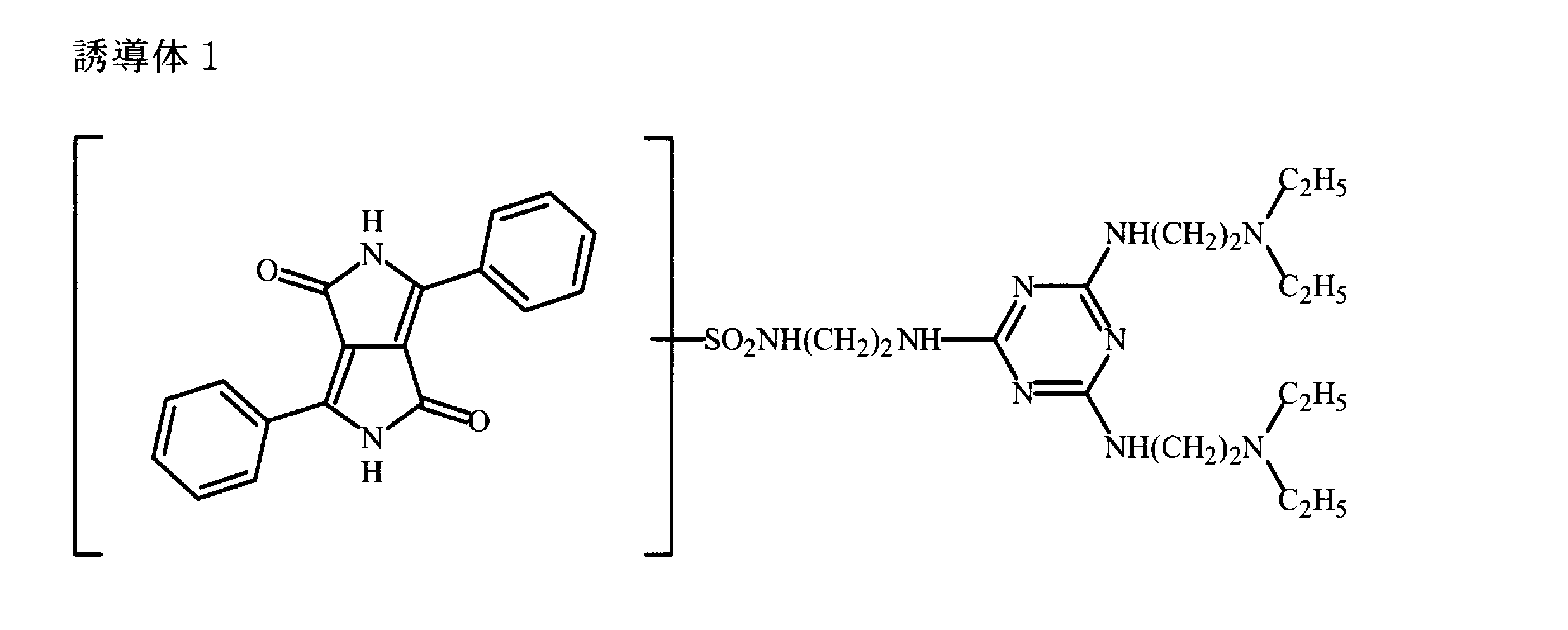
アクリル樹脂溶液1 5.83部
シクロヘキサノン 81.60部
下記の組成の混合物を均一に撹拌混合した後、直径1mmのジルコニアビーズを用いて、アイガーミル(アイガージャパン社製「ミニモデルM-250 MKII」)で5時間分散した後、5μmのフィルタで濾過し顔料分散体(P-8)を得た。
臭素化ジケトピロロピロール顔料(A1-3) 6.82部
アントラキノン系顔料(C.I.Pigment Red177) 1.08部
(チバ・ジャパン社製「クロモフタールレッドA2B」)
ニッケルアゾ錯体系顔料(C.I.Pigment Yellow150) 0.88部
(ランクセス社製「E4GN」)
酸性樹脂型顔料分散剤 1.74部
(日本ルーブリゾール社製「ソルスパース21000」)
顔料誘導体1 2.05部
シクロヘキサノン 81.60部
[顔料分散体(P-9~20)]
表C-2に示す、顔料、顔料誘導体、および樹脂型顔料分散剤の種類、および配合量に変更した以外は、顔料分散体(P-8)と同様にして顔料分散体(P-9~20)を得た。
表C-2に示す、顔料、顔料誘導体、および樹脂型顔料分散剤の種類、および配合量に変更した以外は、顔料分散体(P-8)と同様にして顔料分散体(P-9~20)を得た。
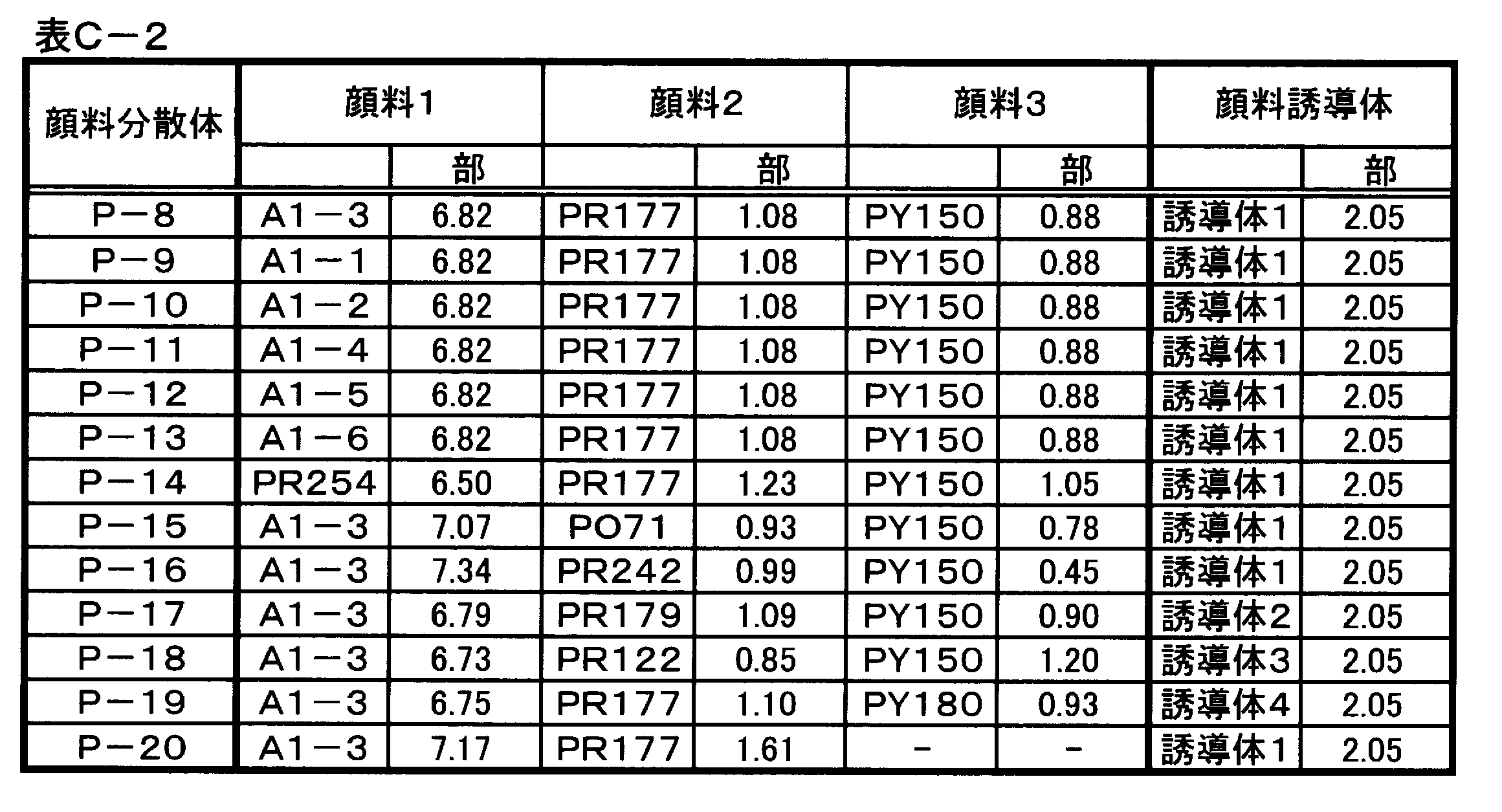
表C-2中の略語を下記に記す。
<顔料>
PR254;ジケトピロロピロール系顔料C.I.ピグメントレッド254
チバ・ジャパン社製「イルガフォーレッドB-CF」
PO71;ジケトピロロピロール系顔料C.I.ピグメントオレンジ71
チバ・ジャパン社製「イルガジンDPPオレンジ398」
PR242;アゾ系顔料C.I.ピグメントレッド242
クラリアント社製「ノボパーム」
PR179;ペリレン系顔料C.I.ピグメントレッド179
大日本インキ化学工業(株)製「ファーストゲンスパーマルーンPSK」
PR122;キナクリドン系顔料C.I.ピグメントレッド122
クラリアント社製「ホスタパーム」
PY180;ベンズイミダゾロン系顔料C.I.ピグメントイエロー180
クラリアント社製「PVファーストイエローHG
PY138;キノリン系顔料C.I.ピグメントイエロー180
BASF社製「パリオトールイエロー K0960-HD」
<顔料>
PR254;ジケトピロロピロール系顔料C.I.ピグメントレッド254
チバ・ジャパン社製「イルガフォーレッドB-CF」
PO71;ジケトピロロピロール系顔料C.I.ピグメントオレンジ71
チバ・ジャパン社製「イルガジンDPPオレンジ398」
PR242;アゾ系顔料C.I.ピグメントレッド242
クラリアント社製「ノボパーム」
PR179;ペリレン系顔料C.I.ピグメントレッド179
大日本インキ化学工業(株)製「ファーストゲンスパーマルーンPSK」
PR122;キナクリドン系顔料C.I.ピグメントレッド122
クラリアント社製「ホスタパーム」
PY180;ベンズイミダゾロン系顔料C.I.ピグメントイエロー180
クラリアント社製「PVファーストイエローHG
PY138;キノリン系顔料C.I.ピグメントイエロー180
BASF社製「パリオトールイエロー K0960-HD」
<顔料誘導体>

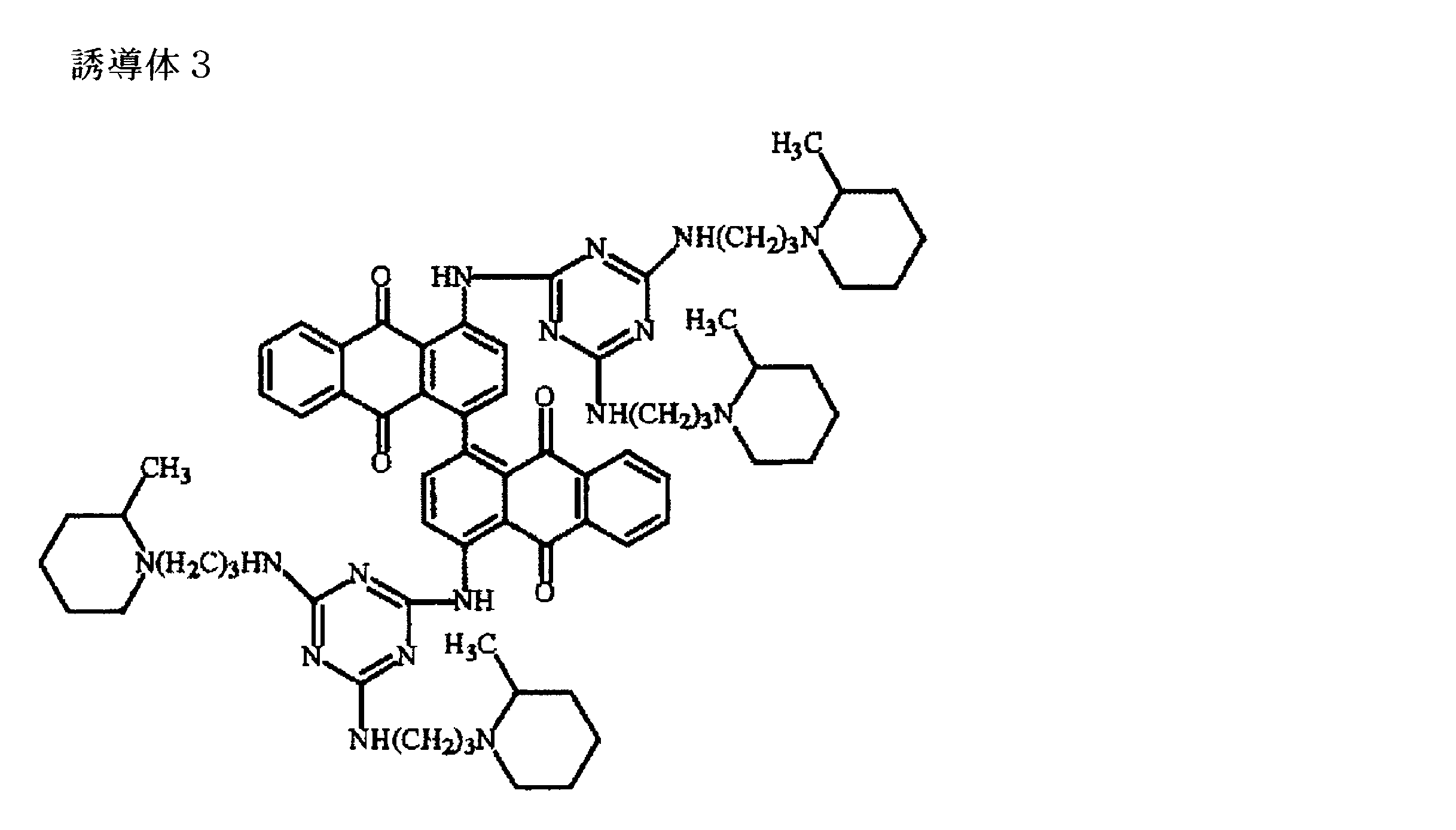

[実施例1]
(赤色着色組成物(DR-1))
下記の組成の混合物を均一に撹拌混合した後、5μmのフィルタで濾過し赤色着色組成物(DR-1)を得た。
赤色顔料分散体(P-1) 40.5部
アルカリ可溶性感光性樹脂(B1-1) 8.6部
シクロヘキサノン 50.9部
(赤色着色組成物(DR-1))
下記の組成の混合物を均一に撹拌混合した後、5μmのフィルタで濾過し赤色着色組成物(DR-1)を得た。
赤色顔料分散体(P-1) 40.5部
アルカリ可溶性感光性樹脂(B1-1) 8.6部
シクロヘキサノン 50.9部
[実施例2~6および参考例1]
(赤色着色組成物(DR-2~7))
赤色顔料分散体(P-1)を、表C-3に示す赤色顔料分散体に変更した以外は、赤色着色組成物(DR-1)と同様にして、赤色着色組成物(DR-2~7)を得た。
(赤色着色組成物(DR-2~7))
赤色顔料分散体(P-1)を、表C-3に示す赤色顔料分散体に変更した以外は、赤色着色組成物(DR-1)と同様にして、赤色着色組成物(DR-2~7)を得た。
[参考例2]
(赤色着色組成物(DR-8))
アルカリ可溶性感光性樹脂(B1-1)をアクリル樹脂溶液1に変更した以外は、赤色着色組成物(DR-1)と同様にして、赤色着色組成物(DR-8)を得た。
(赤色着色組成物(DR-8))
アルカリ可溶性感光性樹脂(B1-1)をアクリル樹脂溶液1に変更した以外は、赤色着色組成物(DR-1)と同様にして、赤色着色組成物(DR-8)を得た。
[赤色着色組成物の評価]
得られた赤色着色組成物の色特性、コントラスト比(CR)、および塗膜表面の結晶析出について、下記の方法で評価した。結果を表C-3に示す。
得られた赤色着色組成物の色特性、コントラスト比(CR)、および塗膜表面の結晶析出について、下記の方法で評価した。結果を表C-3に示す。
(色特性、コントラスト比(CR)評価)
得られた赤色着色組成物を100mm×100mm、0.7mm厚のガラス基板上に、C光源においてx=0.644、y=0.340(プラスマイナス0.001以内)になるような膜厚に塗布し、70℃で20分熱風オーブンで乾燥したのち、さらに、230℃で60分加熱することで赤色塗膜を得た。その後、得られた塗布基板の明度(Y)および、コントラスト比(CR)を測定した。
なお、色度及び明度(Y)は、顕微分光光度計(オリンパス光学社製「OSP-SP200」)で測定した。
得られた赤色着色組成物を100mm×100mm、0.7mm厚のガラス基板上に、C光源においてx=0.644、y=0.340(プラスマイナス0.001以内)になるような膜厚に塗布し、70℃で20分熱風オーブンで乾燥したのち、さらに、230℃で60分加熱することで赤色塗膜を得た。その後、得られた塗布基板の明度(Y)および、コントラスト比(CR)を測定した。
なお、色度及び明度(Y)は、顕微分光光度計(オリンパス光学社製「OSP-SP200」)で測定した。
(塗膜表面の結晶析出評価)
色特性、コントラスト比(CR)評価で得られた基板を、さらに240℃で60分間の加熱処理を2回繰り返した。加熱処理後の塗布基板の塗膜表面を光学顕微鏡にて観察し、結晶析出有無を下記基準に従って判定した。評価結果において、◎と○は結晶析出がなく良好であり、△は結晶析出があるものの使用上問題ないレベル、×は結晶析出により使用することができない状態に相当する。
◎:230℃60分間加熱処理後、さらなる240℃60分間加熱処理後、およびさらなる240℃60分間加熱処理でも結晶析出なし
○:230℃60分間加熱処理後、およびさらなる240℃60分間加熱処理でも結晶析出なし(2回目の240℃60分間加熱処理で結晶析出あり)
△:230℃60分間加熱処理後では結晶析出ないが、さらなる240℃60分間加熱処理で結晶析出あり
×:230℃60分間加熱処理後で結晶析出あり
色特性、コントラスト比(CR)評価で得られた基板を、さらに240℃で60分間の加熱処理を2回繰り返した。加熱処理後の塗布基板の塗膜表面を光学顕微鏡にて観察し、結晶析出有無を下記基準に従って判定した。評価結果において、◎と○は結晶析出がなく良好であり、△は結晶析出があるものの使用上問題ないレベル、×は結晶析出により使用することができない状態に相当する。
◎:230℃60分間加熱処理後、さらなる240℃60分間加熱処理後、およびさらなる240℃60分間加熱処理でも結晶析出なし
○:230℃60分間加熱処理後、およびさらなる240℃60分間加熱処理でも結晶析出なし(2回目の240℃60分間加熱処理で結晶析出あり)
△:230℃60分間加熱処理後では結晶析出ないが、さらなる240℃60分間加熱処理で結晶析出あり
×:230℃60分間加熱処理後で結晶析出あり
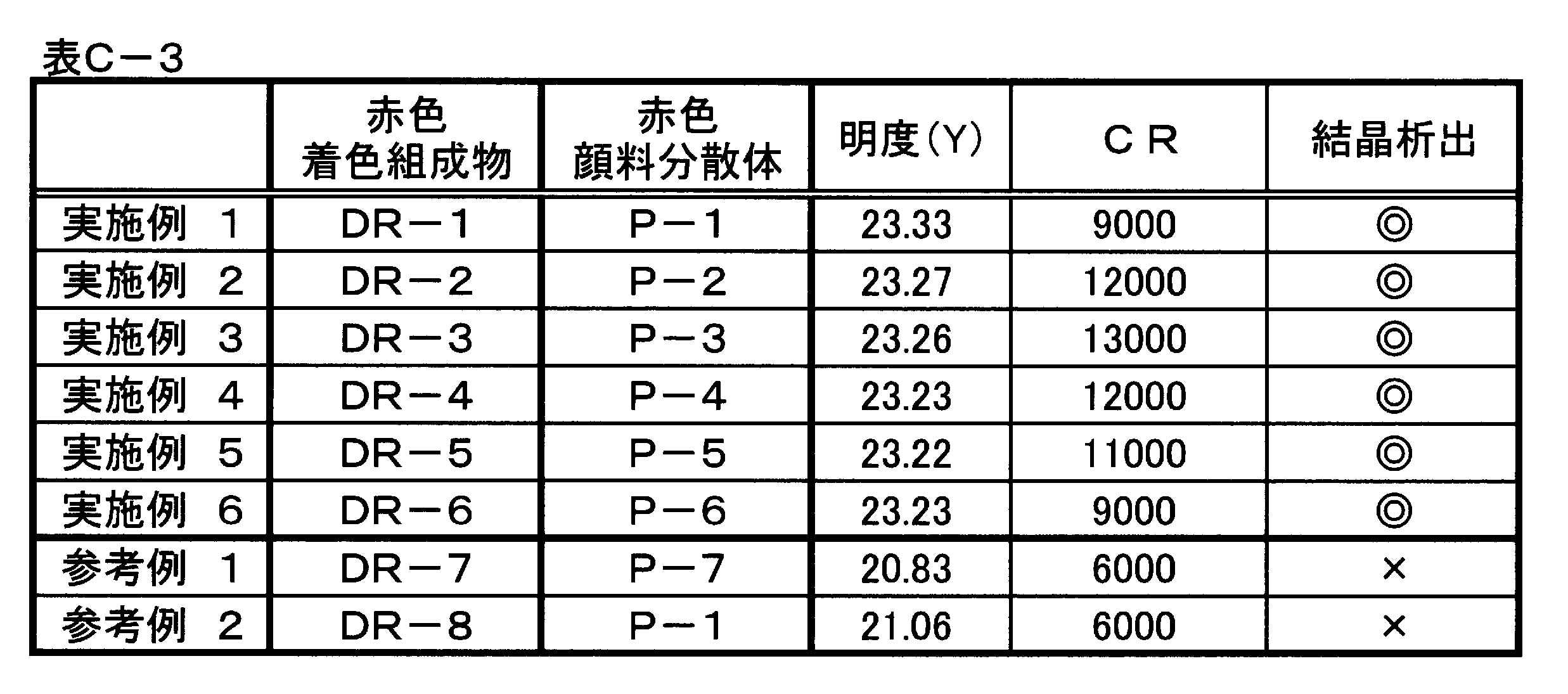
式(1)に示す顔料(A1)とアルカリ可溶性感光性樹脂(B1)とを含むカラーフィルタ用着色組成物は、いずれも高明度かつ高コントラスト比であって、加熱工程によってもジケトピロロピロール系顔料の結晶析出が起こらないという良好な結果を得た。
[実施例7~41、参考例3~5]
(感光性着色組成物)
表C-4~9に示す組成、配合量で各材料を混合・撹拌し、1μmのフィルタで濾過して、感光性着色組成物を得た。
(感光性着色組成物)
表C-4~9に示す組成、配合量で各材料を混合・撹拌し、1μmのフィルタで濾過して、感光性着色組成物を得た。

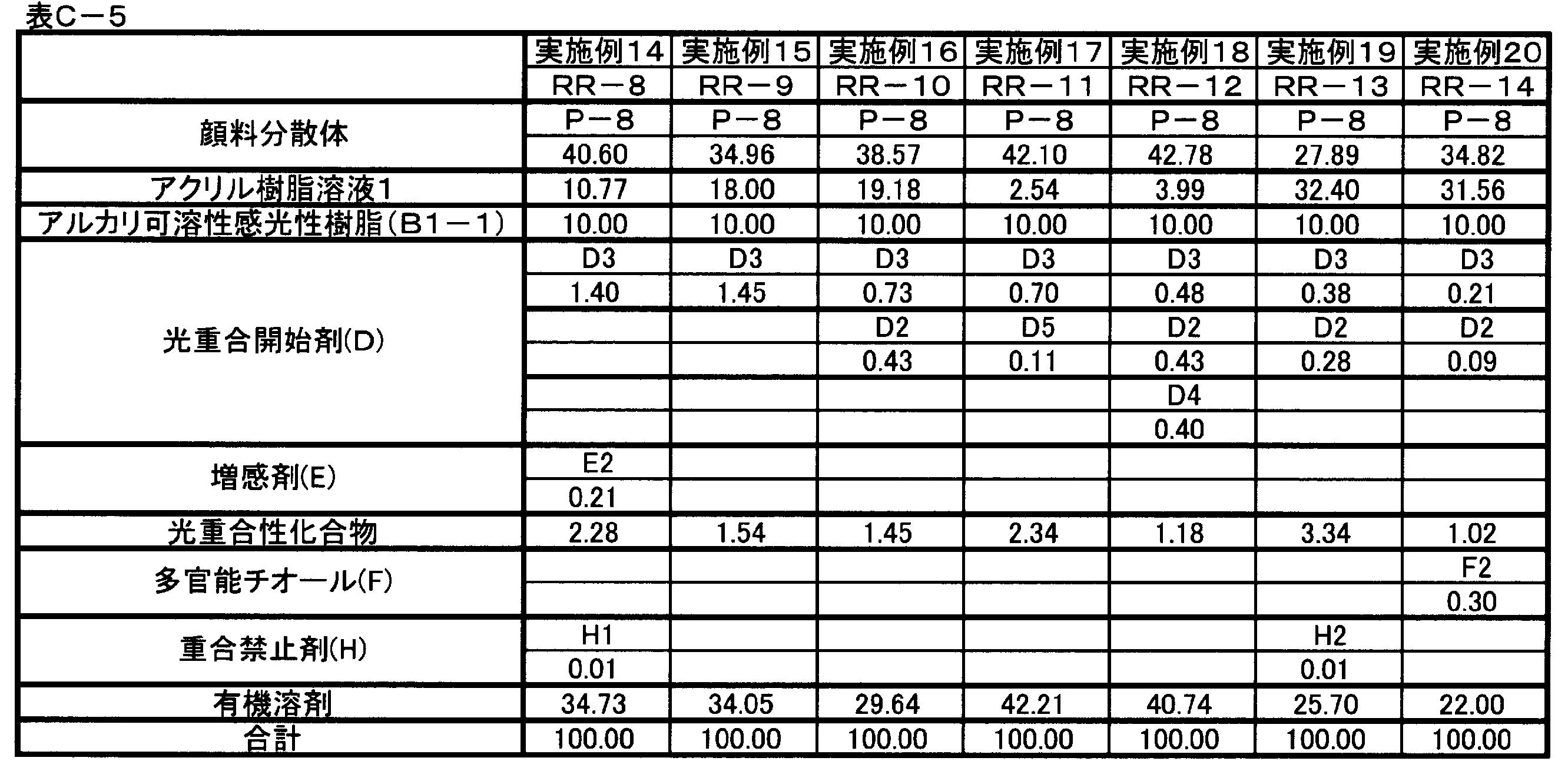
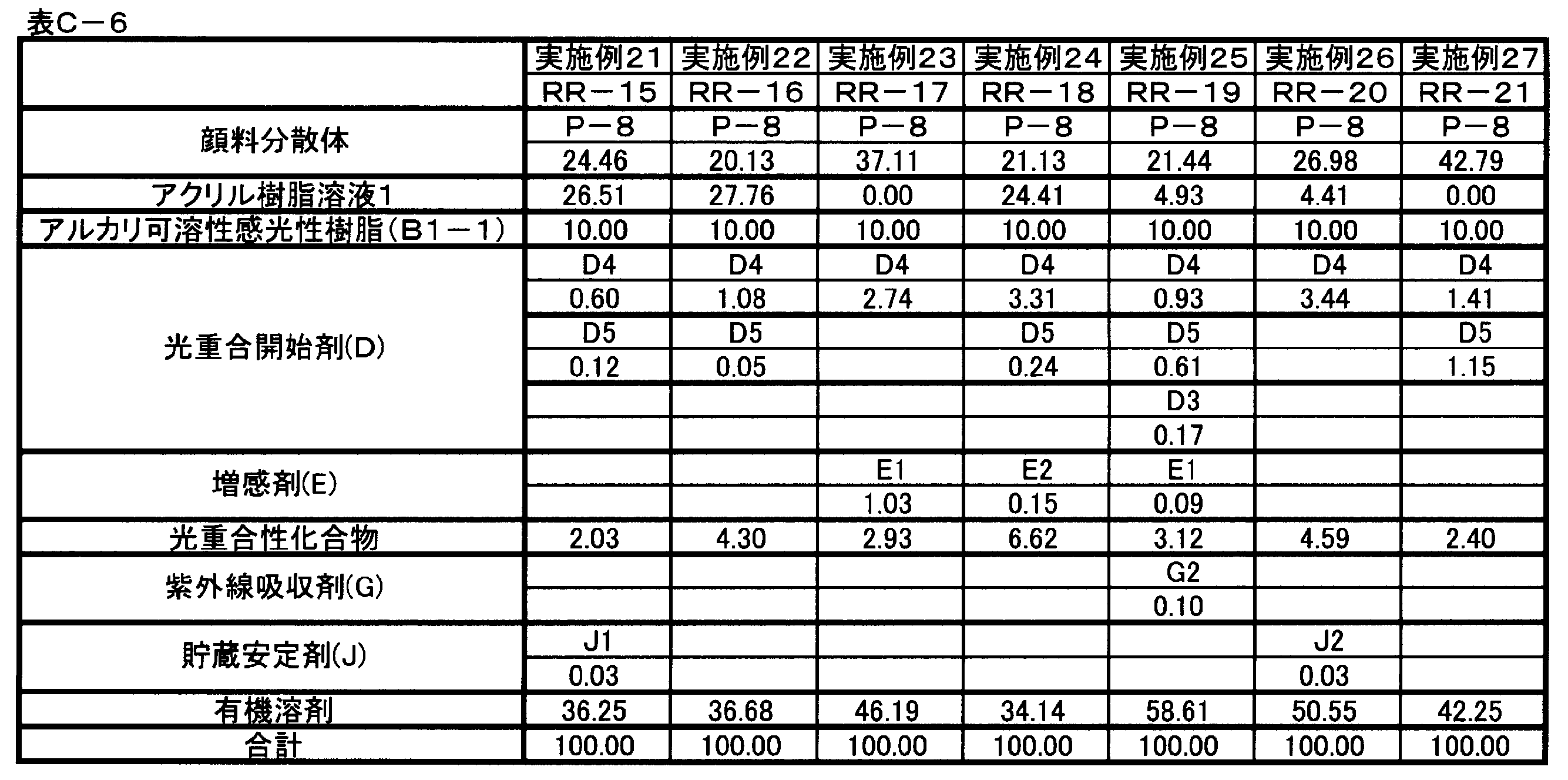
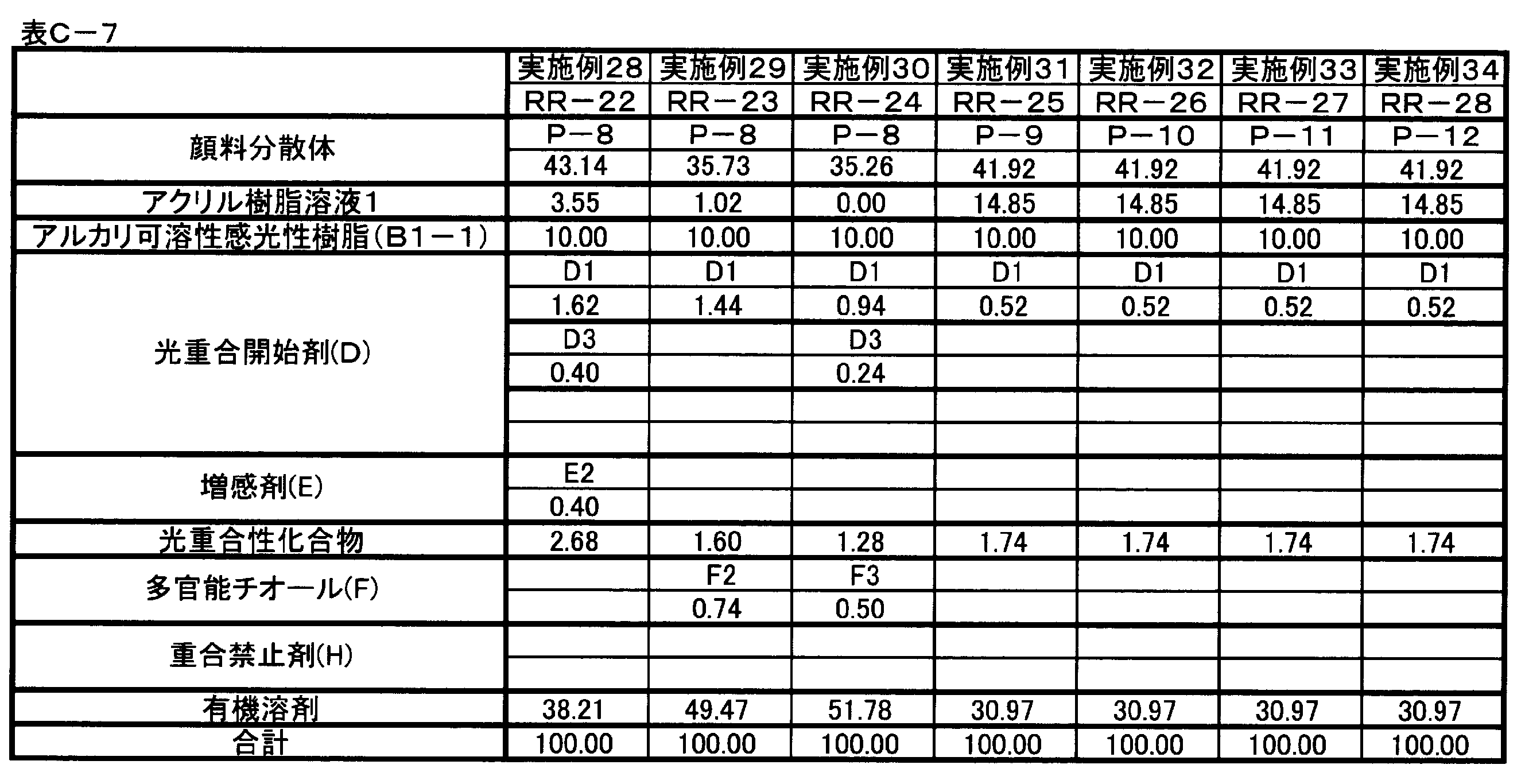


表C-4~9中の略語について以下に示す。
<光重合開始剤(D)>
光重合開始剤D1:2-メチル-1-[4-(メチルチオ)フェニル]-2-モルフォリノプロパン-1-オン
(チバ・ジャパン社製「イルガキュア907」)
光重合開始剤D2:2-(ジメチルアミノ)-2-[(4-メチルフェニル)メチル]-1-[4-(4-モルホリニル)フェニル]-1-ブタノン
(チバ・ジャパン社製「イルガキュア379」)
光重合開始剤D3:エタン-1-オン,1-[9-エチル-6-(2-メチルベンゾイル)-9H-カルバゾール-3-イル],1-(O-アセチルオキシム)
(チバ・ジャパン社製「イルガキュアOXE02」)
光重合開始剤D4:2,2’-ビス(o-クロロフェニル)-4,5,4’,5’-テトラフェニル-1,2’-ビイミダゾール
(黒金化成社製「ビイミダゾール」)
光重合開始剤D5: 2,4,6-トリメチルベンゾイル-ジフェニル-ホスフィンオキサイド
(BASF社製「ルシリンTPO」)
<光重合開始剤(D)>
光重合開始剤D1:2-メチル-1-[4-(メチルチオ)フェニル]-2-モルフォリノプロパン-1-オン
(チバ・ジャパン社製「イルガキュア907」)
光重合開始剤D2:2-(ジメチルアミノ)-2-[(4-メチルフェニル)メチル]-1-[4-(4-モルホリニル)フェニル]-1-ブタノン
(チバ・ジャパン社製「イルガキュア379」)
光重合開始剤D3:エタン-1-オン,1-[9-エチル-6-(2-メチルベンゾイル)-9H-カルバゾール-3-イル],1-(O-アセチルオキシム)
(チバ・ジャパン社製「イルガキュアOXE02」)
光重合開始剤D4:2,2’-ビス(o-クロロフェニル)-4,5,4’,5’-テトラフェニル-1,2’-ビイミダゾール
(黒金化成社製「ビイミダゾール」)
光重合開始剤D5: 2,4,6-トリメチルベンゾイル-ジフェニル-ホスフィンオキサイド
(BASF社製「ルシリンTPO」)
<増感剤>
増感剤E1:2,4-ジエチルチオキサントン
(日本化薬社製「カヤキュアDETX-S」)
増感剤E2:4,4’-ビス(ジエチルアミノ)ベンゾフェノン
(保土谷化学工業社製「EAB-F」)
増感剤E1:2,4-ジエチルチオキサントン
(日本化薬社製「カヤキュアDETX-S」)
増感剤E2:4,4’-ビス(ジエチルアミノ)ベンゾフェノン
(保土谷化学工業社製「EAB-F」)
<光重合性化合物>
光重合性化合物:ジペンタエリスリトールヘキサアクリレート
(東亞合成社製「アロニックス M-402」)
光重合性化合物:ジペンタエリスリトールヘキサアクリレート
(東亞合成社製「アロニックス M-402」)
<多官能チオール>
多官能チオールF1:トリメチロールエタントリス(3-メルカプトブチレート)
(昭和電工社製「TEMB」)
多官能チオールF2:トリメチロールプロパントリ(3-メルカプトブチレート)
(昭和電工社製「TPMB」)
多官能チオールF3:ペンタエリスリトールテトラキス(3-メルカプトプロピオネート)
(堺化学工業社製「PEMP」)
多官能チオールF1:トリメチロールエタントリス(3-メルカプトブチレート)
(昭和電工社製「TEMB」)
多官能チオールF2:トリメチロールプロパントリ(3-メルカプトブチレート)
(昭和電工社製「TPMB」)
多官能チオールF3:ペンタエリスリトールテトラキス(3-メルカプトプロピオネート)
(堺化学工業社製「PEMP」)
<紫外線吸収剤>
紫外線吸収剤G1:2-[4-[(2-ヒドロキシ-3-(ドデシルおよびトリデシル)オキシプロピル)オキシ]-2-ヒドロキシフェニル]-4,6-ビス(2,4-ジメチルフェニル)-1,3,5-トリアジン
(チバ・ジャパン社製「TINUVIN400」)
紫外線吸収剤G2:2-(2H-ベンゾトリアゾール-2-イル)-4,6-ビス(1-メチル-1-フェニルエチル)フェノール
(チバ・ジャパン社製「TINUVIN900」)
紫外線吸収剤G1:2-[4-[(2-ヒドロキシ-3-(ドデシルおよびトリデシル)オキシプロピル)オキシ]-2-ヒドロキシフェニル]-4,6-ビス(2,4-ジメチルフェニル)-1,3,5-トリアジン
(チバ・ジャパン社製「TINUVIN400」)
紫外線吸収剤G2:2-(2H-ベンゾトリアゾール-2-イル)-4,6-ビス(1-メチル-1-フェニルエチル)フェノール
(チバ・ジャパン社製「TINUVIN900」)
<重合禁止剤>
重合禁止剤H1:N-ニトロソフェニルヒドロキシルアミン アルミニウム塩
(和光純薬工業社製「Q-1301」)
重合禁止剤H2:メチルハイドロキノン
(精工化学社製「MH」)
重合禁止剤H1:N-ニトロソフェニルヒドロキシルアミン アルミニウム塩
(和光純薬工業社製「Q-1301」)
重合禁止剤H2:メチルハイドロキノン
(精工化学社製「MH」)
<貯蔵安定剤>
貯蔵安定剤J1:2,6-ビス(1,1-ジメチルエチル)-4-メチルフェノール
(本州化学工業社製「BHT」)
貯蔵安定剤J2:トリフェニルホスフィン
(北興化学工業社製「TPP」)
貯蔵安定剤J1:2,6-ビス(1,1-ジメチルエチル)-4-メチルフェノール
(本州化学工業社製「BHT」)
貯蔵安定剤J2:トリフェニルホスフィン
(北興化学工業社製「TPP」)
<溶剤>
有機溶剤:シクロヘキサノン
有機溶剤:シクロヘキサノン
[感光性着色組成物の評価]
得られた感光性着色組成物について、色特性、コントラスト比(CR)、塗膜表面の結晶析出、感度、直線性、パターン形状、解像度、現像耐性、薬品耐性、経時安定性を下記の方法で評価した。結果を表C-10に示す。それぞれの評価結果においての判定は、◎は非常に良好なレベル、○は良好レベル、△は使用には差し支えないレベル、×は使用には好ましくないレベルとした。
得られた感光性着色組成物について、色特性、コントラスト比(CR)、塗膜表面の結晶析出、感度、直線性、パターン形状、解像度、現像耐性、薬品耐性、経時安定性を下記の方法で評価した。結果を表C-10に示す。それぞれの評価結果においての判定は、◎は非常に良好なレベル、○は良好レベル、△は使用には差し支えないレベル、×は使用には好ましくないレベルとした。
(色特性、コントラスト比(CR)評価)
得られた感光性着色組成物を100mm×100mm、0.7mm厚のガラス基板上に、後処理後にC光源においてx=0.640、およびy=0.328になるような膜厚に塗布し、70℃で20分熱風オーブンで乾燥したのち、超高圧水銀ランプを用いて、積算光量150mJで紫外線露光を行った後に230℃で1時間加熱して放冷し、赤色塗膜を得た。その後、得られた塗布基板の明度(Y)および、コントラスト比(CR)を測定した。
なお、色度及び明度(Y)は、顕微分光光度計(オリンパス光学社製「OSP-SP200」)で測定した。
得られた感光性着色組成物を100mm×100mm、0.7mm厚のガラス基板上に、後処理後にC光源においてx=0.640、およびy=0.328になるような膜厚に塗布し、70℃で20分熱風オーブンで乾燥したのち、超高圧水銀ランプを用いて、積算光量150mJで紫外線露光を行った後に230℃で1時間加熱して放冷し、赤色塗膜を得た。その後、得られた塗布基板の明度(Y)および、コントラスト比(CR)を測定した。
なお、色度及び明度(Y)は、顕微分光光度計(オリンパス光学社製「OSP-SP200」)で測定した。
(塗膜表面の結晶析出評価)
色特性、コントラスト比(CR)評価で得られた基板を、さらに260℃で1時間加熱して放冷した。加熱処理後の塗布基板の塗膜表面を光学顕微鏡にて観察し、結晶析出有無を下記基準に従って判定した。評価結果において、◎は結晶析出がなく非常に良好であり、○は少し結晶析出があるものの良好なレベル、△は結晶析出があるものの使用上問題ないレベル、×は結晶析出により使用することができない状態に相当する。
◎:結晶数が0個
○:結晶数が1個以上10個未満
△:結晶数が10個以上100個未満
×:結晶数が100個以上
色特性、コントラスト比(CR)評価で得られた基板を、さらに260℃で1時間加熱して放冷した。加熱処理後の塗布基板の塗膜表面を光学顕微鏡にて観察し、結晶析出有無を下記基準に従って判定した。評価結果において、◎は結晶析出がなく非常に良好であり、○は少し結晶析出があるものの良好なレベル、△は結晶析出があるものの使用上問題ないレベル、×は結晶析出により使用することができない状態に相当する。
◎:結晶数が0個
○:結晶数が1個以上10個未満
△:結晶数が10個以上100個未満
×:結晶数が100個以上
(感度、直線性、パターン形状、解像度、現像耐性、薬品耐性評価)
得られた感光性着色組成物を100mm×100mm、0.7mm厚のガラス基板上に塗工した後、クリーンオーブン中70℃で20分間加温して溶剤を除去し、約2μmの塗膜を得た。次いで、この基板を室温に冷却後、超高圧水銀ランプを用い、100μm幅(ピッチ200μm)および25μm幅(ピッチ50μm)ストライプパターンのフォトマスクを介して紫外線を露光した。その後、この基板を23℃の炭酸ナトリウム水溶液を用いてスプレー現像した後、イオン交換水で洗浄、風乾し、クリーンオーブン中230℃で330分間加熱した。スプレー現像は、それぞれの感光性着色組成物での塗膜について、現像残りなくパターン形成可能な最短時間で行い、これを適正現像時間とした。
塗膜の膜厚は、Dektak 3030(日本真空技術社製)を用いて行った。
得られた感光性着色組成物を100mm×100mm、0.7mm厚のガラス基板上に塗工した後、クリーンオーブン中70℃で20分間加温して溶剤を除去し、約2μmの塗膜を得た。次いで、この基板を室温に冷却後、超高圧水銀ランプを用い、100μm幅(ピッチ200μm)および25μm幅(ピッチ50μm)ストライプパターンのフォトマスクを介して紫外線を露光した。その後、この基板を23℃の炭酸ナトリウム水溶液を用いてスプレー現像した後、イオン交換水で洗浄、風乾し、クリーンオーブン中230℃で330分間加熱した。スプレー現像は、それぞれの感光性着色組成物での塗膜について、現像残りなくパターン形成可能な最短時間で行い、これを適正現像時間とした。
塗膜の膜厚は、Dektak 3030(日本真空技術社製)を用いて行った。
(感度評価)
上記方法で形成されたフィルタセグメントの100μmフォトマスク部分でのパタ-ン膜厚を測定し、塗工後膜厚に対して90%以上となる最小露光量を評価した。最小露光量が小さい程、高感度で良好な感光性着色組成物となる。評価のランクは次の通りである。
○:50mJ/cm2未満
△:50mJ/cm2以上100mJ/cm2未満
×:100mJ/cm2以上
上記方法で形成されたフィルタセグメントの100μmフォトマスク部分でのパタ-ン膜厚を測定し、塗工後膜厚に対して90%以上となる最小露光量を評価した。最小露光量が小さい程、高感度で良好な感光性着色組成物となる。評価のランクは次の通りである。
○:50mJ/cm2未満
△:50mJ/cm2以上100mJ/cm2未満
×:100mJ/cm2以上
(直線性評価)
上記方法で形成されたフィルタセグメントの100μmフォトマスク部分でのパタ-ンについて、光学顕微鏡を用いて観察して評価を行った。評価のランクは次の通りである。
○:直線性良好
△:部分的に直線性不良
×:直線性不良
上記方法で形成されたフィルタセグメントの100μmフォトマスク部分でのパタ-ンについて、光学顕微鏡を用いて観察して評価を行った。評価のランクは次の通りである。
○:直線性良好
△:部分的に直線性不良
×:直線性不良
(パターン形状評価)
上記方法で形成されたフィルタセグメントの100μmフォトマスク部分でのパタ-ンの断面について、電子顕微鏡を用いて観察して評価を行った。パターン断面は順テーパーが良好である。評価のランクは次の通りである。
○:断面が順テーパー形状
×:断面が逆テーパー形状
上記方法で形成されたフィルタセグメントの100μmフォトマスク部分でのパタ-ンの断面について、電子顕微鏡を用いて観察して評価を行った。パターン断面は順テーパーが良好である。評価のランクは次の通りである。
○:断面が順テーパー形状
×:断面が逆テーパー形状
(解像性評価)
上記方法で形成されたフィルタセグメントの25μmフォトマスク部分でのパターンについて、光学顕微鏡を用いて観察して評価を行った。評価のランクは次の通りである。解像性不良とは、隣接するストライプパターンが繋がったり、欠けが発生したりすることである。
◎:解像性および直線性良好
○:直線性の点でやや劣るが解像性良好
△:部分的に解像性不良
×:解像性不良
上記方法で形成されたフィルタセグメントの25μmフォトマスク部分でのパターンについて、光学顕微鏡を用いて観察して評価を行った。評価のランクは次の通りである。解像性不良とは、隣接するストライプパターンが繋がったり、欠けが発生したりすることである。
◎:解像性および直線性良好
○:直線性の点でやや劣るが解像性良好
△:部分的に解像性不良
×:解像性不良
(現像耐性評価)
スプレー現像時に、適正時間の2倍で現像して形成されたフィルタセグメントの100μmフォトマスク部分でのパタ-ン膜厚を測定し、適正現像時間で現像して形成されたパターン膜厚と比較した。評価のランクは次の通りである。
◎:膜厚差20%以内
○:膜厚差20%より大きく、40%以内
△:膜厚差が40%より大きい
×:2倍現像で欠けやハガレが発生
スプレー現像時に、適正時間の2倍で現像して形成されたフィルタセグメントの100μmフォトマスク部分でのパタ-ン膜厚を測定し、適正現像時間で現像して形成されたパターン膜厚と比較した。評価のランクは次の通りである。
◎:膜厚差20%以内
○:膜厚差20%より大きく、40%以内
△:膜厚差が40%より大きい
×:2倍現像で欠けやハガレが発生
(薬品耐性評価)
上記方法で形成されたフィルタセグメントをN-メチルピロリドン溶液に30分浸漬後、イオン交換水で洗浄、風乾し、100μmフォトマスク部分でのパターンについて光学顕微鏡を用いて観察して評価を行った。評価のランクは次の通りである。
◎:外観、色に変化なく良好
○:一部にシワ等が発生するが、色には変化なく良好
△:若干の色落ちが発生
×:ハガレや色落ちが発生
上記方法で形成されたフィルタセグメントをN-メチルピロリドン溶液に30分浸漬後、イオン交換水で洗浄、風乾し、100μmフォトマスク部分でのパターンについて光学顕微鏡を用いて観察して評価を行った。評価のランクは次の通りである。
◎:外観、色に変化なく良好
○:一部にシワ等が発生するが、色には変化なく良好
△:若干の色落ちが発生
×:ハガレや色落ちが発生
(着色組成物の経時安定性評価)
得られた感光性着色組成物について、初期および室温1ヵ月後の粘度を測定し、初期粘度に対する粘度増加度合いを算出して評価を行った。評価のランクは次の通りである。
(経時粘度変化率)=|[(初期粘度)-(経時粘度)]/(初期粘度)|×100(%)
◎:粘度増加の割合が5%以下で良好
○:粘度増加の割合が5%より大きく10%以下
×:粘度増加の割合が10%より大きい
得られた感光性着色組成物について、初期および室温1ヵ月後の粘度を測定し、初期粘度に対する粘度増加度合いを算出して評価を行った。評価のランクは次の通りである。
(経時粘度変化率)=|[(初期粘度)-(経時粘度)]/(初期粘度)|×100(%)
◎:粘度増加の割合が5%以下で良好
○:粘度増加の割合が5%より大きく10%以下
×:粘度増加の割合が10%より大きい
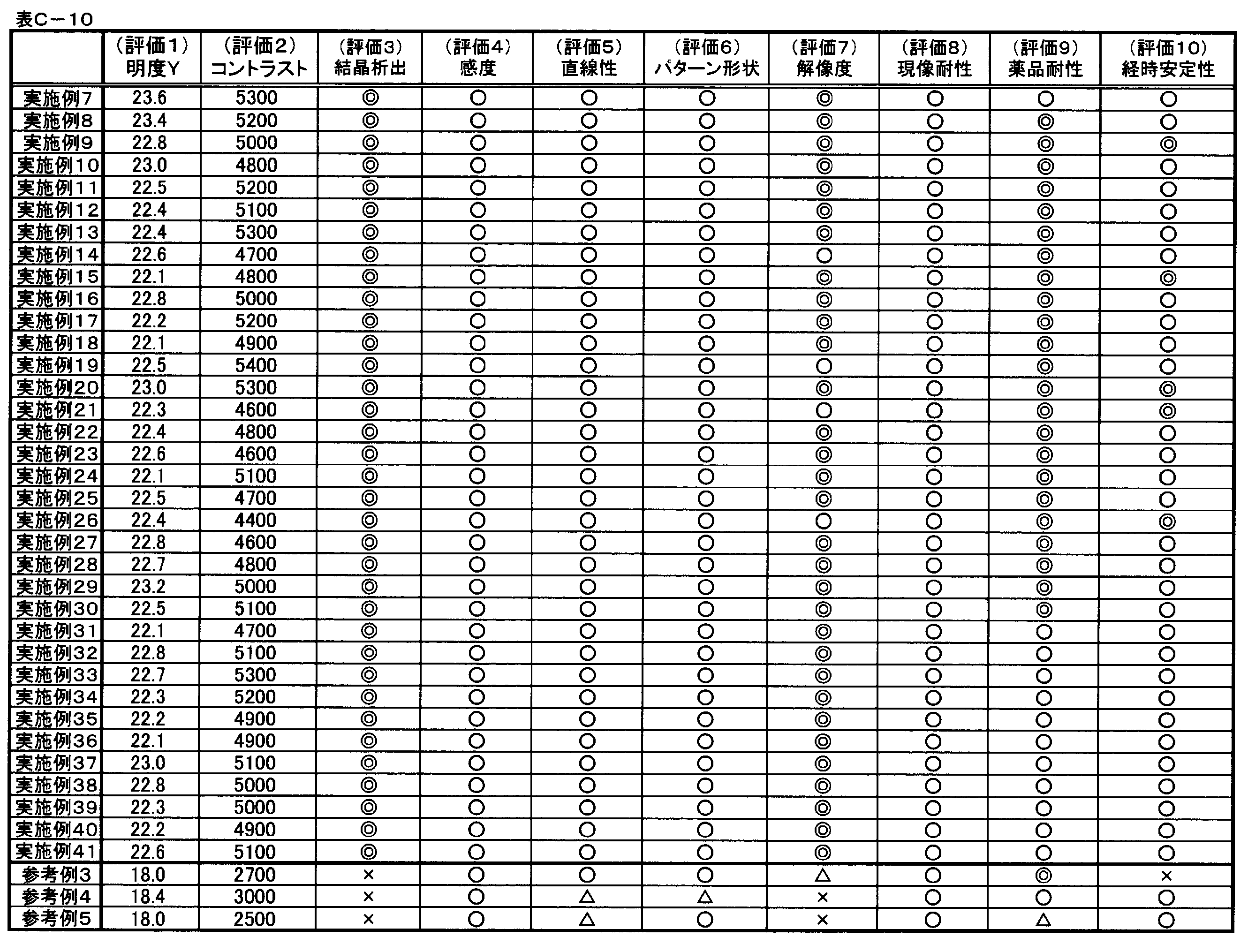
表C-10に示すように、式(1)に示す顔料(A1)と感光性樹脂(B1)とを含むカラーフィルタ用着色組成物は、全ての評価で高水準の評価結果を得た。
(カラーフィルタの製造)
感光性着色組成物(RR-1)における顔料および顔料誘導体の合計4.54部を、緑色感光性着色組成物ではC.I.Pigment Green58/C.I.Pigment Yellow150=2.72部/1.82部に、青色感光性着色組成物ではC.I.Pigment Blue15:6/C.I.Pigment Violet23=3.63部/0.91部に置き換えた以外は顔料分散体(P-3)と同様に顔料分散体を調製し、さらに感光性着色組成物(RR-1)の顔料分散体を各色顔料分散体に置き換えて、カラーフィルタ用緑色感光性着色組成物、カラーフィルタ用青色感光性着色組成物を得た。
感光性着色組成物(RR-1)における顔料および顔料誘導体の合計4.54部を、緑色感光性着色組成物ではC.I.Pigment Green58/C.I.Pigment Yellow150=2.72部/1.82部に、青色感光性着色組成物ではC.I.Pigment Blue15:6/C.I.Pigment Violet23=3.63部/0.91部に置き換えた以外は顔料分散体(P-3)と同様に顔料分散体を調製し、さらに感光性着色組成物(RR-1)の顔料分散体を各色顔料分散体に置き換えて、カラーフィルタ用緑色感光性着色組成物、カラーフィルタ用青色感光性着色組成物を得た。
100mm×100mmのガラス基板上にダイコータで感光性着色組成物(RR-1)を約2μmの厚さに塗工し、70℃のオーブン内に20分間溶剤を除去乾燥させた。次いで、露光装置を用いて紫外線によりストライプパターン露光を行った。露光量は100mJ/cm2とした。更に、炭酸ナトリウム水溶液からなる現像液によりスプレー現像して未露光部分を取り除いた後、イオン交換水で洗浄し、この基板を230℃で30分加熱して線幅約50μmの赤色フィルタセグメントを形成した。次いで、同様の所作により、赤色フィルタセグメントの隣に緑色感光性着色組成物を用いて緑色フィルタセグメントを、次いで青色感光性着色組成物を用いて青色フィルタセグメントを形成し、同一ガラス基板上に3色のフィルタセグメントを具備するカラーフィルタを得た。
以上のカラーフィルタ用着色組成物を用いると、広い色度範囲において色特性に優れ、耐熱性の良好な赤色フィルタセグメントを有する高精細のカラーフィルタを作製することができた。
[実施例D]
実施例D中、「部」および「%」は、「重量部」および「重量%」をそれぞれ表す。顔料の比表面積、顔料の一次粒子径、樹脂の重量平均分子量(Mw)、樹脂の酸価、塗膜のコントラスト比(CR)の測定方法は以下の通りである。
実施例D中、「部」および「%」は、「重量部」および「重量%」をそれぞれ表す。顔料の比表面積、顔料の一次粒子径、樹脂の重量平均分子量(Mw)、樹脂の酸価、塗膜のコントラスト比(CR)の測定方法は以下の通りである。
(顔料の比表面積)
顔料粒子の比表面積は、窒素吸着によるBET法で求めた。なお、測定には自動蒸気吸着量測定装置(日本ベル社製「BELSORP18」)を用いた。
顔料粒子の比表面積は、窒素吸着によるBET法で求めた。なお、測定には自動蒸気吸着量測定装置(日本ベル社製「BELSORP18」)を用いた。
(顔料の平均一次粒子径)
顔料の平均一次粒子径は、電子顕微鏡写真から一次粒子の大きさを直接計測する方法で測定した。具体的には、個々の顔料の一次粒子の短軸径と長軸径を計測し、平均をその顔料粒子の粒径とした。次に、100個以上の顔料粒子について、それぞれの粒子の体積(重量)を、求めた粒径の立方体と近似して求め、体積平均粒径を平均一次粒子径とした。なお、電子顕微鏡は透過型(TEM)を用いた。
顔料の平均一次粒子径は、電子顕微鏡写真から一次粒子の大きさを直接計測する方法で測定した。具体的には、個々の顔料の一次粒子の短軸径と長軸径を計測し、平均をその顔料粒子の粒径とした。次に、100個以上の顔料粒子について、それぞれの粒子の体積(重量)を、求めた粒径の立方体と近似して求め、体積平均粒径を平均一次粒子径とした。なお、電子顕微鏡は透過型(TEM)を用いた。
(樹脂の重量平均分子量(Mw))
TSKgelカラム(東ソー社製)を用い、RI検出器を装備したGPC(東ソー社製、HLC-8120GPC)で、展開溶媒にTHFを用いて測定したポリスチレン換算の重量平均分子量(Mw)である。
TSKgelカラム(東ソー社製)を用い、RI検出器を装備したGPC(東ソー社製、HLC-8120GPC)で、展開溶媒にTHFを用いて測定したポリスチレン換算の重量平均分子量(Mw)である。
(樹脂の酸価)
樹脂溶液0.5~1gに、アセトン80mlおよび水10mlを加えて撹拌して均一に溶解させ、0.1mol/LのKOH水溶液を滴定液として、自動滴定装置(「COM-555」平沼産業製)を用いて滴定し、樹脂溶液の酸価を測定した。そして、樹脂溶液の酸価と樹脂溶液の固形分濃度から、樹脂の固形分あたりの酸価を算出した。
樹脂溶液0.5~1gに、アセトン80mlおよび水10mlを加えて撹拌して均一に溶解させ、0.1mol/LのKOH水溶液を滴定液として、自動滴定装置(「COM-555」平沼産業製)を用いて滴定し、樹脂溶液の酸価を測定した。そして、樹脂溶液の酸価と樹脂溶液の固形分濃度から、樹脂の固形分あたりの酸価を算出した。
(塗膜のコントラスト比)
液晶ディスプレー用バックライトユニットから出た光は、偏光板を通過して偏光され、ガラス基板上に塗布された着色組成物の乾燥塗膜を通過し、偏光板に到達する。偏光板と偏光板の偏光面が平行であれば、光は偏光板を透過するが、偏光面が直行している場合には光は偏光板により遮断される。しかし、偏光板によって偏光された光が着色組成物の乾燥塗膜を通過するときに、顔料粒子による散乱等が起こり、偏光面の一部にずれを生じると、偏光板が平行のときは偏光板を透過する光量が減り、偏光板が直行のときは偏光板を一部光が透過する。この透過光を偏光板上の輝度として測定し、偏光板が平行のときの輝度と、直行のときの輝度との比(コントラスト比)を算出した。
(コントラスト比)=(平行のときの輝度)/(直行のときの輝度)
なお、輝度計としては色彩輝度計(トプコン社製「BM-5A」)、偏光板としては偏光板(日東電工社製「NPF-G1220DUN」)を用いた。なお、測定に際しては、不要光を遮断するために、測定部分に1cm角の孔を開けた黒色のマスクを当てた。
液晶ディスプレー用バックライトユニットから出た光は、偏光板を通過して偏光され、ガラス基板上に塗布された着色組成物の乾燥塗膜を通過し、偏光板に到達する。偏光板と偏光板の偏光面が平行であれば、光は偏光板を透過するが、偏光面が直行している場合には光は偏光板により遮断される。しかし、偏光板によって偏光された光が着色組成物の乾燥塗膜を通過するときに、顔料粒子による散乱等が起こり、偏光面の一部にずれを生じると、偏光板が平行のときは偏光板を透過する光量が減り、偏光板が直行のときは偏光板を一部光が透過する。この透過光を偏光板上の輝度として測定し、偏光板が平行のときの輝度と、直行のときの輝度との比(コントラスト比)を算出した。
(コントラスト比)=(平行のときの輝度)/(直行のときの輝度)
なお、輝度計としては色彩輝度計(トプコン社製「BM-5A」)、偏光板としては偏光板(日東電工社製「NPF-G1220DUN」)を用いた。なお、測定に際しては、不要光を遮断するために、測定部分に1cm角の孔を開けた黒色のマスクを当てた。
実施例に先立ち、実施例および参考例で用いたバインダー樹脂(B)溶液、式(1)に示す顔料(A1)、微細化顔料、顔料分散体の製造方法について説明する。
<バインダー樹脂(B)溶液の製造方法>
[樹脂溶液(B1-1)]
(段階1:樹脂主鎖の重合)
セパラブル4口フラスコに温度計、冷却管、窒素ガス導入管、撹拌装置を取り付けた反応容器にプロピレングリコールモノメチルエーテルアセテート(PGMAC)100部を入れ、容器に窒素ガスを注入しながら120℃に加熱して、同温度で滴下管よりスチレン16.2部、グリシジルメタクリレート35.5部、ジシクロペンタニルメタクリレート41.0部、およびこの段階における前駆体の化合に要する触媒としてアゾビスイソブチロニトリル1.0部の混合物を2.5時間かけて滴下し重合反応を行った。
[樹脂溶液(B1-1)]
(段階1:樹脂主鎖の重合)
セパラブル4口フラスコに温度計、冷却管、窒素ガス導入管、撹拌装置を取り付けた反応容器にプロピレングリコールモノメチルエーテルアセテート(PGMAC)100部を入れ、容器に窒素ガスを注入しながら120℃に加熱して、同温度で滴下管よりスチレン16.2部、グリシジルメタクリレート35.5部、ジシクロペンタニルメタクリレート41.0部、およびこの段階における前駆体の化合に要する触媒としてアゾビスイソブチロニトリル1.0部の混合物を2.5時間かけて滴下し重合反応を行った。
(段階2:エポキシ基への重合)
次にフラスコ内を空気置換し、アクリル酸17.0部およびこの段階における前駆体の重合に要する触媒としてトリスジメチルアミノメチルフェノール0.3部、及びハイドロキノン0.3部を投入し、120℃で5時間反応を行い、重量平均分子量が約12000(GPCによる測定)の樹脂溶液を得た。投入したアクリル酸はグリシジルメタクリレート構成単位のエポキシ基末端にエステル結合するので樹脂構造中にカルボキシル基を生じさせない。
次にフラスコ内を空気置換し、アクリル酸17.0部およびこの段階における前駆体の重合に要する触媒としてトリスジメチルアミノメチルフェノール0.3部、及びハイドロキノン0.3部を投入し、120℃で5時間反応を行い、重量平均分子量が約12000(GPCによる測定)の樹脂溶液を得た。投入したアクリル酸はグリシジルメタクリレート構成単位のエポキシ基末端にエステル結合するので樹脂構造中にカルボキシル基を生じさせない。
(段階3:水酸基への重合)
さらにテトラヒドロ無水フタル酸30.4部およびこの段階における前駆体の重合に要する触媒として、トリエチルアミン0.5部を加え120℃で4時間反応させた。加えたテトラヒドロ無水フタル酸は無水カルボン酸部位が開裂して生じた2個のカルボキシル基の一方が樹脂構造中の水酸基にエステル結合し、他方がカルボキシル基末端を生じさせる。
さらにテトラヒドロ無水フタル酸30.4部およびこの段階における前駆体の重合に要する触媒として、トリエチルアミン0.5部を加え120℃で4時間反応させた。加えたテトラヒドロ無水フタル酸は無水カルボン酸部位が開裂して生じた2個のカルボキシル基の一方が樹脂構造中の水酸基にエステル結合し、他方がカルボキシル基末端を生じさせる。
(段階4:不揮発分の調整)
不揮発分が40%になるようにプロピレングリコールモノメチルエーテルアセテートを添加して樹脂溶液(B1-1)を得た。
不揮発分が40%になるようにプロピレングリコールモノメチルエーテルアセテートを添加して樹脂溶液(B1-1)を得た。
樹脂溶液(B1-1)における構成単位の重量比は、構成単位(D-b1)としてテトラヒドロ無水フタル酸;21.7重量%、構成単位(D-b2)としてスチレン;11.6重量%、構成単位(D-b3)としてジシクロペンタニルメタクリレート;29.3重量%、その他の構成単位としてグリシジルメタクリレートおよびそのグリシジル末端にエステル結合したアクリル酸の合計;37.4重量%である。
[樹脂溶液(B1-2)]
樹脂溶液(B1-1)のジシクロペンタニルメタクリレートをジシクロペンテニルメタクリレートにした以外は樹脂溶液(B1-1)と同様の方法にて合成反応を行い、樹脂溶液(B1-2)を得た。
樹脂溶液(B1-1)のジシクロペンタニルメタクリレートをジシクロペンテニルメタクリレートにした以外は樹脂溶液(B1-1)と同様の方法にて合成反応を行い、樹脂溶液(B1-2)を得た。
[樹脂溶液(B1-3)]
樹脂溶液(B1-1)のジシクロペンタニルメタクリレートをジシクロペンテニルオキシエチルメタクリレートにした以外は樹脂溶液(B1-1)と同様の方法にて合成反応を行い、樹脂溶液(B1-3)を調製した。
樹脂溶液(B1-1)のジシクロペンタニルメタクリレートをジシクロペンテニルオキシエチルメタクリレートにした以外は樹脂溶液(B1-1)と同様の方法にて合成反応を行い、樹脂溶液(B1-3)を調製した。
[樹脂溶液(B1-4)]
温度計、冷却管、窒素ガス導入管、滴下管及び撹拌装置を備えたセパラブル4口フラスコにPGMEA370部を仕込み、80℃に昇温し、フラスコ内を窒素置換した後、滴下管より、パラクミルフェノールエチレンオキサイド変性アクリレート(東亜合成社製アロニックスM110)18部、ベンジルメタクリレート10部、グリシジルメタクリレート18.2部、メタクリル酸メチル25部、及び2,2’-アゾビスイソブチロニトリル2.0部の混合物を2時間かけて滴下した。滴下後、更に100℃で3時間反応させた後、アゾビスイソブチロニトリル1.0部をシクロヘキサノン50部で溶解させたものを添加し、更に100℃で1時間反応を続けた。次に、容器内を空気置換に替え、アクリル酸9.3部(エポキシ基の当量)にトリスジメチルアミノフェノール0.5部及びハイドロキノン0.1部を上記容器内に投入し、120℃で6時間反応を続け固形分酸価0.5となったところで反応を終了し、アクリル樹脂の溶液を得た。更に、引き続きテトラヒドロ無水フタル酸19.5部(生成した水酸基の当量)、トリエチルアミン0.5部を加え120℃で3.5時間反応させアクリル樹脂の溶液を得た。
温度計、冷却管、窒素ガス導入管、滴下管及び撹拌装置を備えたセパラブル4口フラスコにPGMEA370部を仕込み、80℃に昇温し、フラスコ内を窒素置換した後、滴下管より、パラクミルフェノールエチレンオキサイド変性アクリレート(東亜合成社製アロニックスM110)18部、ベンジルメタクリレート10部、グリシジルメタクリレート18.2部、メタクリル酸メチル25部、及び2,2’-アゾビスイソブチロニトリル2.0部の混合物を2時間かけて滴下した。滴下後、更に100℃で3時間反応させた後、アゾビスイソブチロニトリル1.0部をシクロヘキサノン50部で溶解させたものを添加し、更に100℃で1時間反応を続けた。次に、容器内を空気置換に替え、アクリル酸9.3部(エポキシ基の当量)にトリスジメチルアミノフェノール0.5部及びハイドロキノン0.1部を上記容器内に投入し、120℃で6時間反応を続け固形分酸価0.5となったところで反応を終了し、アクリル樹脂の溶液を得た。更に、引き続きテトラヒドロ無水フタル酸19.5部(生成した水酸基の当量)、トリエチルアミン0.5部を加え120℃で3.5時間反応させアクリル樹脂の溶液を得た。
室温まで冷却した後、樹脂溶液約2gをサンプリングして180℃、20分加熱乾燥して不揮発分を測定し、先に合成した樹脂溶液に不揮発分が20重量%になるようにPGMEAを添加してアクリル樹脂溶液(B1-4)を調製した。重量平均分子量(Mw)は19000であった。
[樹脂溶液(B1-5~15)および(B2-1~4)]
樹脂溶液(B1-1)と同様の方法で樹脂溶液(B1-5)~(B1-15)および(B2-1)~(B2-5)の調製を行った。
樹脂溶液(B1-1)と同様の方法で樹脂溶液(B1-5)~(B1-15)および(B2-1)~(B2-5)の調製を行った。
すなわち樹脂溶液(B1-1)の製造法中、構成単位(D-b1)~(D-b3)およびその他の構成単位に該当する前駆体を表D-1に則して置き換えた。表中にGMA-AAまたはGMA-MAAが存在しない樹脂溶液の場合は全ての前駆体を混合して製造の段階1と段階4のみを実施する。表中にGMA-AAまたはGMA-MAAが存在し、さらにTHPAが存在する場合は、まずGMAと構成単位(D-b2)、(D-b3)およびその他の構成単位中のGMA-AAまたはGMA-MAAを除く前駆体を混合して製造の段階1を実施し、次にGMAのエポキシ当量のAA又はMAAを前駆体として加えて製造の段階2を実施し、さらにTHPAを前駆体として加えて製造の段階3、段階4を実施する。表中にGMA-AAまたはGMA-MAAが存在し、THPAが存在しない場合は、まずGMAと構成単位(D-b1)~(D-b3)およびその他の構成単位中のGMA-AAまたはGMA-MAAを除く前駆体を混合して製造の段階1を実施し、次にGMAのエポキシ当量のAA又はMAAを前駆体として加えて製造の段階2を実施し、さらに段階4を実施する。各段階に要する触媒の部数は、各段階で混合した前駆体の合計の部数に比例させて混合する。
得られた樹脂溶液(B1-1~15)および樹脂溶液(B2-1~4)の組成および重量比を表D-1に示す。カッコ内は樹脂固形分中の構成単位重量比(重量%)を表す。

表D-1における構成単位の前駆体および構成単位の略称の説明
MAA:メタクリル酸
THPA:テトラヒドロフタル酸無水物(4-シクロヘキセン-1,2-ジカルボン酸無水物
BzMA:ベンジルメタクリレート
St:スチレン
M110:パラクミルフェノールエチレンオキサイド変性アクリレート
DCPMA:ジシクロペンタニルメタクリレート
GMA:グリシジルメタクリレート
GMA-AA:構成単位GMAにアクリル酸が付加反応し結合したもの
GMA-MAA:構成単位GMAにメタクリル酸が付加反応し結合したもの
BMA:n-ブチルメタクリレート
MAA:メタクリル酸
THPA:テトラヒドロフタル酸無水物(4-シクロヘキセン-1,2-ジカルボン酸無水物
BzMA:ベンジルメタクリレート
St:スチレン
M110:パラクミルフェノールエチレンオキサイド変性アクリレート
DCPMA:ジシクロペンタニルメタクリレート
GMA:グリシジルメタクリレート
GMA-AA:構成単位GMAにアクリル酸が付加反応し結合したもの
GMA-MAA:構成単位GMAにメタクリル酸が付加反応し結合したもの
BMA:n-ブチルメタクリレート
[樹脂溶液(B2-5)の調製]
反応容器にシクロヘキサノン370部を入れ、容器に窒素ガスを注入しながら80℃に加熱して、同温度でメタクリル酸20.0部、メチルメタクリレート10.0部、n-ブチルメタクリレート55.0部、2-ヒドロキシエチルメタクリレート15.0部、2,2’-アゾビスイソブチロニトリル4.0部の混合物を1時間かけて滴下して重合反応を行った。滴下終了後、さらに80℃で3時間反応させた後、アゾビスイソブチロニトリル1.0部をシクロヘキサノン50部に溶解させたものを添加し、さらに80℃で1時間反応を続けて、アクリル樹脂溶液を得た。
室温まで冷却した後、アクリル樹脂溶液約2gをサンプリングして180℃、20分加熱乾燥して不揮発分を測定し、先に合成したアクリル樹脂溶液に不揮発分が20重量%になるようにシクロヘキサノンを添加して樹脂溶液(B2-5)を調製した。重量平均分子量(Mw)は40000であった。
反応容器にシクロヘキサノン370部を入れ、容器に窒素ガスを注入しながら80℃に加熱して、同温度でメタクリル酸20.0部、メチルメタクリレート10.0部、n-ブチルメタクリレート55.0部、2-ヒドロキシエチルメタクリレート15.0部、2,2’-アゾビスイソブチロニトリル4.0部の混合物を1時間かけて滴下して重合反応を行った。滴下終了後、さらに80℃で3時間反応させた後、アゾビスイソブチロニトリル1.0部をシクロヘキサノン50部に溶解させたものを添加し、さらに80℃で1時間反応を続けて、アクリル樹脂溶液を得た。
室温まで冷却した後、アクリル樹脂溶液約2gをサンプリングして180℃、20分加熱乾燥して不揮発分を測定し、先に合成したアクリル樹脂溶液に不揮発分が20重量%になるようにシクロヘキサノンを添加して樹脂溶液(B2-5)を調製した。重量平均分子量(Mw)は40000であった。
<式(1)に示す顔料(A1)の製造方法>
[臭素化ジケトピロロピロール顔料(A1-1)]
還流管を付けたステンレス製反応容器に、窒素雰囲気下、モレキュラシーブで脱水したtert-アミルアルコール200部、およびナトリウム-tert-アミルアルコキシド140部を加え、撹拌しながら100℃に加熱し、アルコラート溶液を調製した。一方で、ガラス製フラスコに、コハク酸ジイソプロピル88部、4-ブロモベンゾニトリル153.6部を加え、撹拌しながら90℃に加熱して溶解させ、これらの混合物の溶液を調製した。この混合物の加熱溶液を、100℃に加熱した上記アルコラート溶液中に、激しく撹拌しながら、2時間かけて一定の速度でゆっくり滴下した。滴下終了後、90℃にて2時間、加熱撹拌を継続し、ジケトピロロピロール系化合物のアルカリ金属塩を得た。さらに、ガラス製ジャケット付き反応容器に、メタノール600部、水600部、及び酢酸304部を加え、-10℃に冷却した。この冷却した混合物を、高速撹拌ディスパーサーを用いて、直径8cmのシェアディスクを4000rpmで回転させながら、この中に、75℃まで冷却した先に得られたジケトピロロピロール系化合物のアルカリ金属塩溶液を、少量ずつ添加した。この際、メタノール、酢酸、および水からなる混合物の温度が常に-5℃以下の温度を保つように、冷却しながら、かつ、75℃のジケトピロロピロール系化合物のアルカリ金属塩の添加する速度を調整しながら、およそ120分にわたって少量ずつ添加した。アルカリ金属塩添加後、赤色の結晶が析出し、赤色の懸濁液が生成した。続いて、得られた赤色の懸濁液を5℃にて限外濾過装置で洗浄後、濾別し赤色ペーストを得た。このペーストを0℃に冷却したメタノール3500部にて再分散し、メタノール濃度約90%の懸濁液とし、5℃にて3時間撹拌し、結晶転移を伴う粒子整粒および洗浄を行った。続いて、限外濾過機で濾別し、得られたジケトピロロピロール系化合物の水ペーストを、80℃にて24時間乾燥させ、粉砕することにより式(1)に示す顔料(A1)である臭素化ジケトピロロピロール顔料を150.8部得た。
[臭素化ジケトピロロピロール顔料(A1-1)]
還流管を付けたステンレス製反応容器に、窒素雰囲気下、モレキュラシーブで脱水したtert-アミルアルコール200部、およびナトリウム-tert-アミルアルコキシド140部を加え、撹拌しながら100℃に加熱し、アルコラート溶液を調製した。一方で、ガラス製フラスコに、コハク酸ジイソプロピル88部、4-ブロモベンゾニトリル153.6部を加え、撹拌しながら90℃に加熱して溶解させ、これらの混合物の溶液を調製した。この混合物の加熱溶液を、100℃に加熱した上記アルコラート溶液中に、激しく撹拌しながら、2時間かけて一定の速度でゆっくり滴下した。滴下終了後、90℃にて2時間、加熱撹拌を継続し、ジケトピロロピロール系化合物のアルカリ金属塩を得た。さらに、ガラス製ジャケット付き反応容器に、メタノール600部、水600部、及び酢酸304部を加え、-10℃に冷却した。この冷却した混合物を、高速撹拌ディスパーサーを用いて、直径8cmのシェアディスクを4000rpmで回転させながら、この中に、75℃まで冷却した先に得られたジケトピロロピロール系化合物のアルカリ金属塩溶液を、少量ずつ添加した。この際、メタノール、酢酸、および水からなる混合物の温度が常に-5℃以下の温度を保つように、冷却しながら、かつ、75℃のジケトピロロピロール系化合物のアルカリ金属塩の添加する速度を調整しながら、およそ120分にわたって少量ずつ添加した。アルカリ金属塩添加後、赤色の結晶が析出し、赤色の懸濁液が生成した。続いて、得られた赤色の懸濁液を5℃にて限外濾過装置で洗浄後、濾別し赤色ペーストを得た。このペーストを0℃に冷却したメタノール3500部にて再分散し、メタノール濃度約90%の懸濁液とし、5℃にて3時間撹拌し、結晶転移を伴う粒子整粒および洗浄を行った。続いて、限外濾過機で濾別し、得られたジケトピロロピロール系化合物の水ペーストを、80℃にて24時間乾燥させ、粉砕することにより式(1)に示す顔料(A1)である臭素化ジケトピロロピロール顔料を150.8部得た。
得られた臭素化ジケトピロロピロール顔料100.0部、塩化ナトリウム1000部、およびジエチレングリコール120部を、ステンレス製1ガロンニーダー(井上製作所製)中に仕込み、60℃で8時間混練した。次に、混練した混合物を温水に投入し、約80℃に加熱しながら1時間撹拌してスラリー状として、濾過および水洗をして食塩およびジエチレングリコールを除いた後、80℃で一昼夜乾燥させ、粉砕することにより式(1)に示す臭素化ジケトピロロピロール顔料(A1-1)96.5部を得た。平均一次粒子径は38nm、比表面積は80m2/gであった。
<顔料分散体の製造方法>
[顔料分散体(P-1)]
下記の組成の混合物を均一に撹拌混合した後、直径1mmのジルコニアビーズを用いて、アイガーミル(アイガージャパン社製「ミニモデルM-250 MKII」)で5時間分散した後、5μmのフィルタで濾過し顔料分散体(P-1)を得た。
臭素化ジケトピロロピロール顔料(A1-1) 8.78部
酸性樹脂型顔料分散剤 1.74部
(ビックケミー・ジャパン社製 BYK-111)
顔料誘導体1 2.05部

樹脂溶液(B2-5) 5.83部
シクロヘキサノン 81.60部
[顔料分散体(P-1)]
下記の組成の混合物を均一に撹拌混合した後、直径1mmのジルコニアビーズを用いて、アイガーミル(アイガージャパン社製「ミニモデルM-250 MKII」)で5時間分散した後、5μmのフィルタで濾過し顔料分散体(P-1)を得た。
臭素化ジケトピロロピロール顔料(A1-1) 8.78部
酸性樹脂型顔料分散剤 1.74部
(ビックケミー・ジャパン社製 BYK-111)
顔料誘導体1 2.05部
シクロヘキサノン 81.60部
[顔料分散体(P-2)]
臭素化ジケトピロロピロール顔料(A1-1)を塩素化ジケトピロロピロール顔料(C.I.ピグメントレッド254;チバ・ジャパン社製「イルガフォーレッドB-CF」)に変更した以外は顔料分散体(P-1)と同様にして顔料分散体(P-2)を得た。
臭素化ジケトピロロピロール顔料(A1-1)を塩素化ジケトピロロピロール顔料(C.I.ピグメントレッド254;チバ・ジャパン社製「イルガフォーレッドB-CF」)に変更した以外は顔料分散体(P-1)と同様にして顔料分散体(P-2)を得た。
[顔料分散体(P-3)]
下記の組成の混合物を均一に撹拌混合した後、直径1mmのジルコニアビーズを用いて、アイガーミル(アイガージャパン社製「ミニモデルM-250 MKII」)で5時間分散した後、5μmのフィルタで濾過し顔料分散体(P-3)を得た。
臭素化ジケトピロロピロール顔料(A1-1) 6.82部
アントラキノン系顔料(C.I.Pigment Red177) 1.08部
(チバ・ジャパン社製「クロモフタールレッドA2B」)
ニッケルアゾ錯体系顔料(C.I.Pigment Yellow150) 0.88部
(ランクセス社製「E4GN」)
酸性樹脂型顔料分散剤 1.74部
(日本ルーブリゾール社製ソルスパース21000」)
顔料誘導体1 2.05部
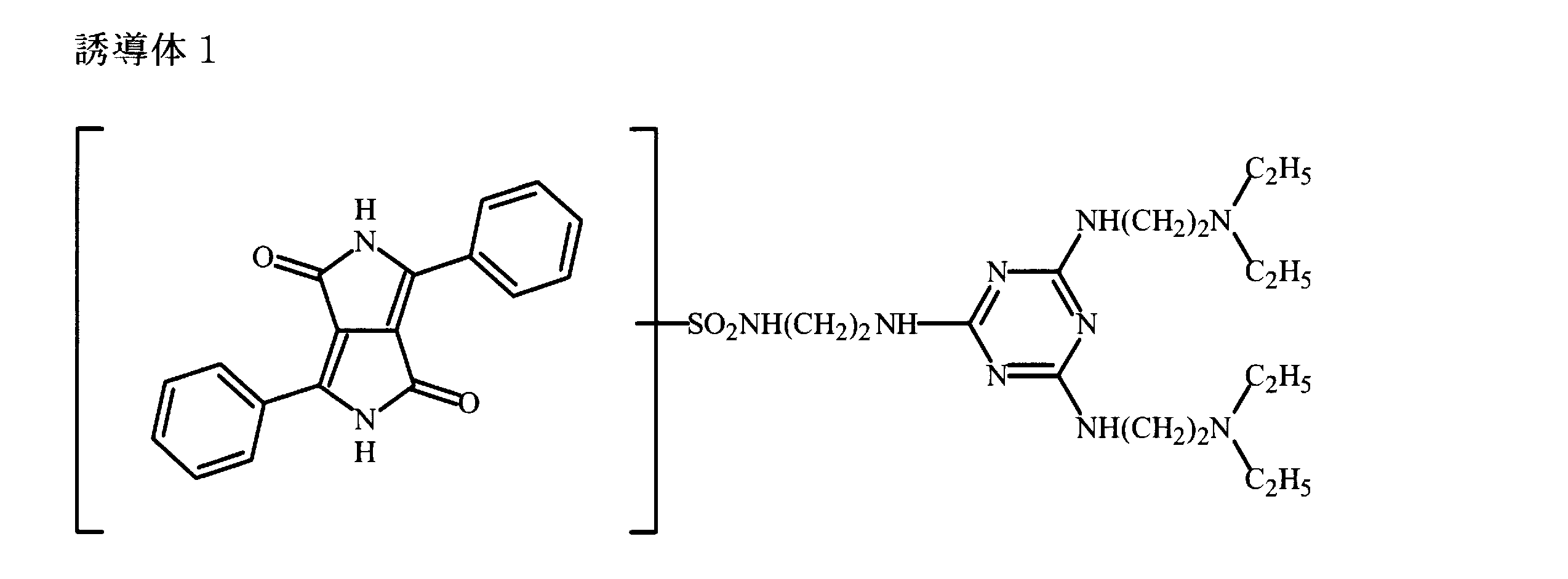
樹脂溶液(B2-5) 5.83部
シクロヘキサノン 81.60部
下記の組成の混合物を均一に撹拌混合した後、直径1mmのジルコニアビーズを用いて、アイガーミル(アイガージャパン社製「ミニモデルM-250 MKII」)で5時間分散した後、5μmのフィルタで濾過し顔料分散体(P-3)を得た。
臭素化ジケトピロロピロール顔料(A1-1) 6.82部
アントラキノン系顔料(C.I.Pigment Red177) 1.08部
(チバ・ジャパン社製「クロモフタールレッドA2B」)
ニッケルアゾ錯体系顔料(C.I.Pigment Yellow150) 0.88部
(ランクセス社製「E4GN」)
酸性樹脂型顔料分散剤 1.74部
(日本ルーブリゾール社製ソルスパース21000」)
顔料誘導体1 2.05部
シクロヘキサノン 81.60部
[顔料分散体(P-4~10)]
表D-2に示す、顔料、顔料誘導体、および樹脂型顔料分散剤の種類、および配合量に変更した以外は、顔料分散体(P-3)と同様にして顔料分散体(P-4~11)を得た。
表D-2に示す、顔料、顔料誘導体、および樹脂型顔料分散剤の種類、および配合量に変更した以外は、顔料分散体(P-3)と同様にして顔料分散体(P-4~11)を得た。
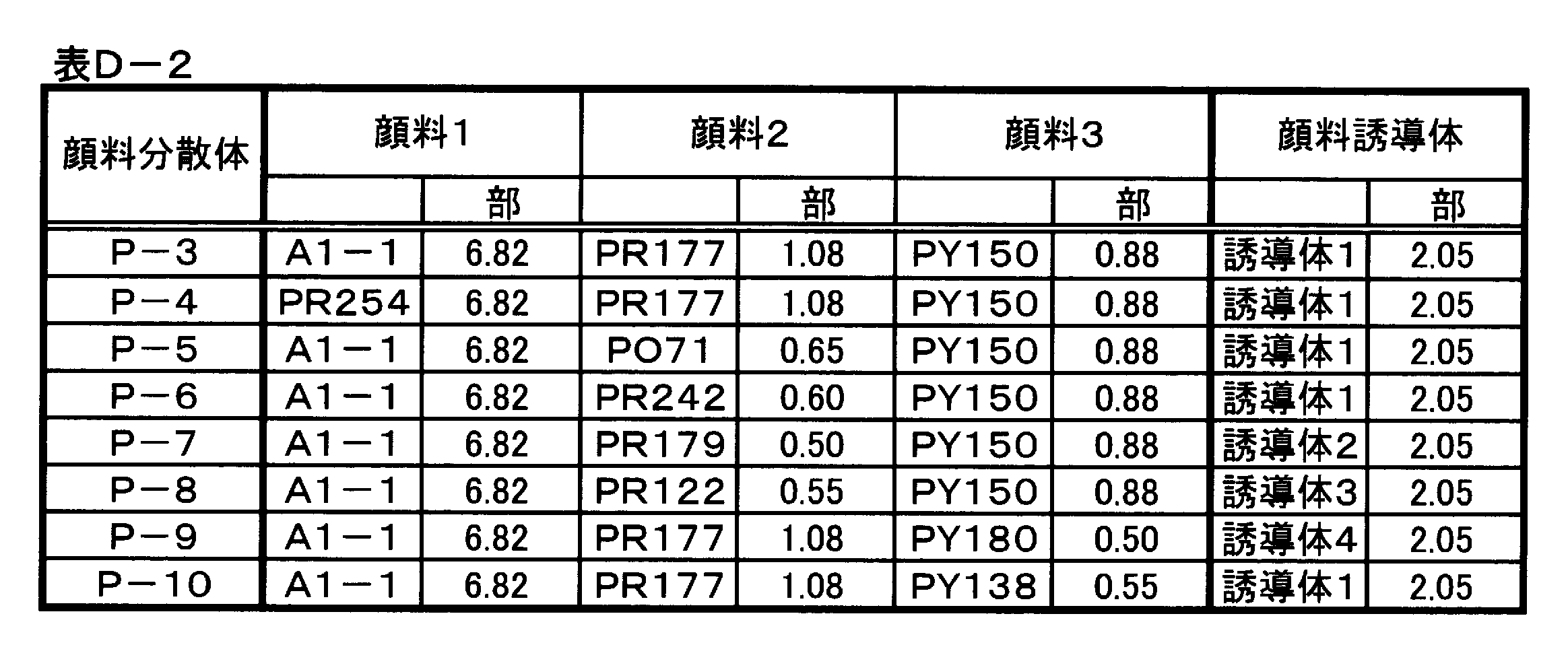
表D-2中の略語を下記に記す。
<顔料>
PR254;ジケトピロロピロール系顔料C.I.ピグメントレッド254
チバ・ジャパン社製「イルガフォーレッドB-CF」
PO71;ジケトピロロピロール系顔料C.I.ピグメントオレンジ71
チバ・ジャパン社製「イルガジンDPPオレンジ398」
PR242;アゾ系顔料C.I.ピグメントレッド242
クラリアント社製「ノボパーム」
PR179;ペリレン系顔料C.I.ピグメントレッド179
大日本インキ化学工業(株)製「ファーストゲンスパーマルーンPSK」
PR122;キナクリドン系顔料C.I.ピグメントレッド122
クラリアント社製「ホスタパーム」
PY180;ベンズイミダゾロン系顔料C.I.ピグメントイエロー180
クラリアント社製「PVファーストイエローHG
PY138;キノリン系顔料C.I.ピグメントイエロー180
BASF社製「パリオトールイエロー K0960-HD」
<顔料>
PR254;ジケトピロロピロール系顔料C.I.ピグメントレッド254
チバ・ジャパン社製「イルガフォーレッドB-CF」
PO71;ジケトピロロピロール系顔料C.I.ピグメントオレンジ71
チバ・ジャパン社製「イルガジンDPPオレンジ398」
PR242;アゾ系顔料C.I.ピグメントレッド242
クラリアント社製「ノボパーム」
PR179;ペリレン系顔料C.I.ピグメントレッド179
大日本インキ化学工業(株)製「ファーストゲンスパーマルーンPSK」
PR122;キナクリドン系顔料C.I.ピグメントレッド122
クラリアント社製「ホスタパーム」
PY180;ベンズイミダゾロン系顔料C.I.ピグメントイエロー180
クラリアント社製「PVファーストイエローHG
PY138;キノリン系顔料C.I.ピグメントイエロー180
BASF社製「パリオトールイエロー K0960-HD」
<顔料誘導体>

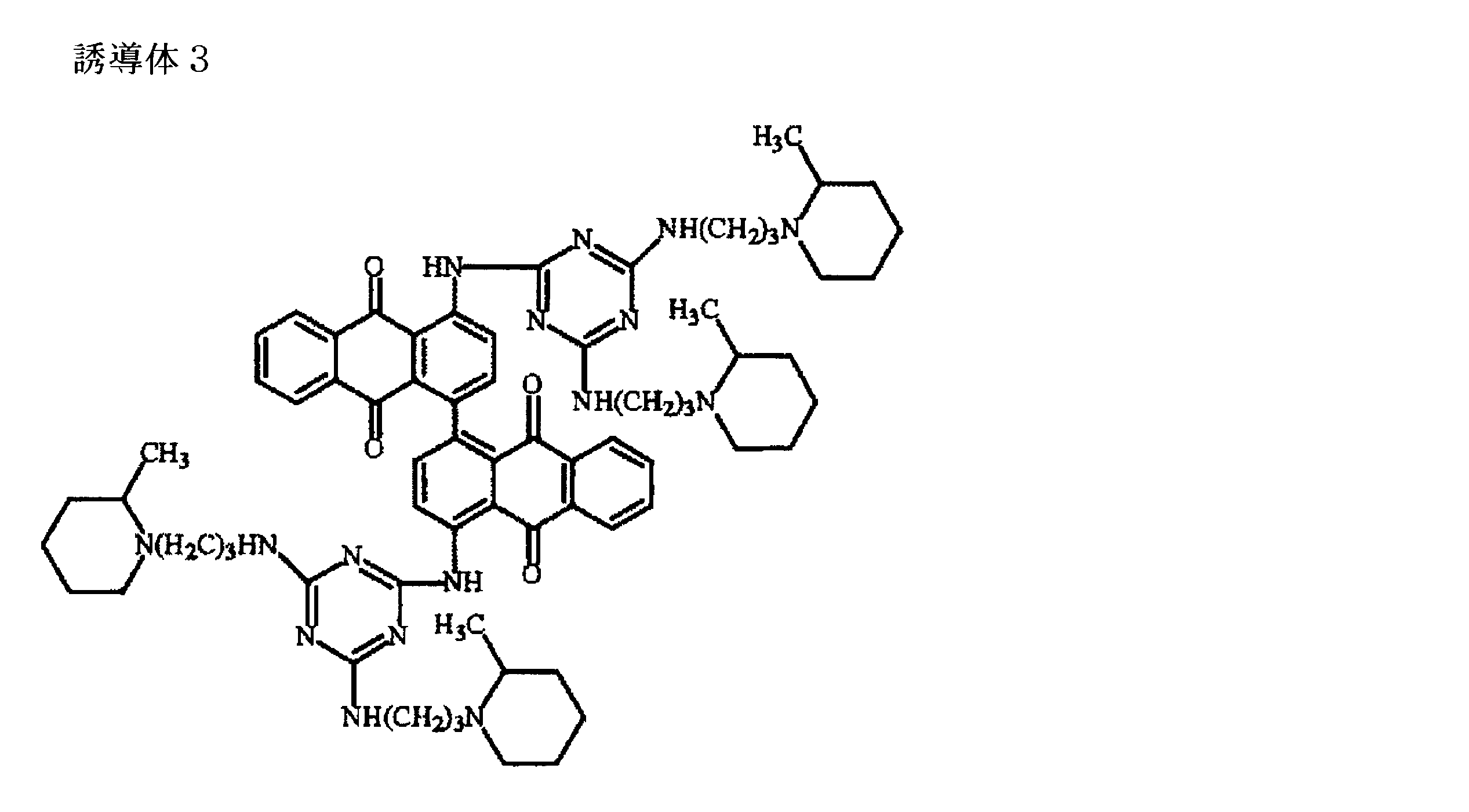

[実施例1]
(赤色着色組成物(DR-1))
下記の組成の混合物を均一に撹拌混合した後、5μmのフィルタで濾過し赤色着色組成物(DR-1)を得た。
赤色顔料分散体(P-R1) 40.5部
樹脂溶液(B1-1) 8.6部
シクロヘキサノン 50.9部
(赤色着色組成物(DR-1))
下記の組成の混合物を均一に撹拌混合した後、5μmのフィルタで濾過し赤色着色組成物(DR-1)を得た。
赤色顔料分散体(P-R1) 40.5部
樹脂溶液(B1-1) 8.6部
シクロヘキサノン 50.9部
[実施例2~6および参考例1]
(赤色着色組成物(DR-2~7))
樹脂溶液(B1-1)を、表D-2に示す樹脂溶液に変更した以外は、赤色着色組成物(DR-1)と同様にして、赤色着色組成物(DR-2~7)を得た。
(赤色着色組成物(DR-2~7))
樹脂溶液(B1-1)を、表D-2に示す樹脂溶液に変更した以外は、赤色着色組成物(DR-1)と同様にして、赤色着色組成物(DR-2~7)を得た。
[参考例2]
(赤色着色組成物(DR-8))
赤色顔料分散体(P-R1)を赤色顔料分散体(P-R2)に変更した以外は、赤色着色組成物(DR-1)と同様にして、赤色着色組成物(DR-8)を得た。
(赤色着色組成物(DR-8))
赤色顔料分散体(P-R1)を赤色顔料分散体(P-R2)に変更した以外は、赤色着色組成物(DR-1)と同様にして、赤色着色組成物(DR-8)を得た。
[赤色着色組成物の評価]
得られた赤色着色組成物の色特性、コントラスト比(CR)、および塗膜表面の結晶析出について、下記の方法で評価した。結果を表D-3に示す。
得られた赤色着色組成物の色特性、コントラスト比(CR)、および塗膜表面の結晶析出について、下記の方法で評価した。結果を表D-3に示す。
(色特性、コントラスト比(CR)評価)
得られた赤色着色組成物を100mm×100mm、0.7mm厚のガラス基板上に、C光源においてx=0.644、y=0.340(プラスマイナス0.001以内)になるような膜厚に塗布し、70℃で20分熱風オーブンで乾燥したのち、さらに、230℃で60分加熱することで赤色塗膜を得た。その後、得られた塗布基板の明度(Y)および、コントラスト比(CR)を測定した。
なお、色度及び明度(Y)は、顕微分光光度計(オリンパス光学社製「OSP-SP200」)で測定した。
得られた赤色着色組成物を100mm×100mm、0.7mm厚のガラス基板上に、C光源においてx=0.644、y=0.340(プラスマイナス0.001以内)になるような膜厚に塗布し、70℃で20分熱風オーブンで乾燥したのち、さらに、230℃で60分加熱することで赤色塗膜を得た。その後、得られた塗布基板の明度(Y)および、コントラスト比(CR)を測定した。
なお、色度及び明度(Y)は、顕微分光光度計(オリンパス光学社製「OSP-SP200」)で測定した。
(塗膜表面の結晶析出評価)
色特性、コントラスト比(CR)評価で得られた基板を、さらに240℃で60分間の加熱処理を2回繰り返した。加熱処理後の塗布基板の塗膜表面を光学顕微鏡にて観察し、結晶析出有無を下記基準に従って判定した。評価結果において、◎と○は結晶析出がなく良好であり、△は結晶析出があるものの使用上問題ないレベル、×は結晶析出により使用することができない状態に相当する。
◎:230℃60分間加熱処理後、さらなる240℃60分間加熱処理後、およびさらなる240℃60分間加熱処理でも結晶析出なし
○:230℃60分間加熱処理後、およびさらなる240℃60分間加熱処理でも結晶析出なし(2回目の240℃60分間加熱処理で結晶析出あり)
△:230℃60分間加熱処理後では結晶析出ないが、さらなる240℃60分間加熱処理で結晶析出あり
×:230℃60分間加熱処理後で結晶析出あり
色特性、コントラスト比(CR)評価で得られた基板を、さらに240℃で60分間の加熱処理を2回繰り返した。加熱処理後の塗布基板の塗膜表面を光学顕微鏡にて観察し、結晶析出有無を下記基準に従って判定した。評価結果において、◎と○は結晶析出がなく良好であり、△は結晶析出があるものの使用上問題ないレベル、×は結晶析出により使用することができない状態に相当する。
◎:230℃60分間加熱処理後、さらなる240℃60分間加熱処理後、およびさらなる240℃60分間加熱処理でも結晶析出なし
○:230℃60分間加熱処理後、およびさらなる240℃60分間加熱処理でも結晶析出なし(2回目の240℃60分間加熱処理で結晶析出あり)
△:230℃60分間加熱処理後では結晶析出ないが、さらなる240℃60分間加熱処理で結晶析出あり
×:230℃60分間加熱処理後で結晶析出あり

式(1)に示す顔料(A1)と構成単位(D-b1)~(D-b3)を有する樹脂(D-B1)とを含むカラーフィルタ用着色組成物は、いずれも高明度かつ高コントラスト比であって、加熱工程によってもジケトピロロピロール系顔料の結晶析出が起こらないという良好な結果を得た。
[実施例7~31、参考例3~9]
(感光性着色組成物(RR-1~32))
表D-4~10に示す組成、配合量で各材料を混合・撹拌し、1μmのフィルタで濾過して、感光性着色組成物(RR-1~32)を得た。
(感光性着色組成物(RR-1~32))
表D-4~10に示す組成、配合量で各材料を混合・撹拌し、1μmのフィルタで濾過して、感光性着色組成物(RR-1~32)を得た。
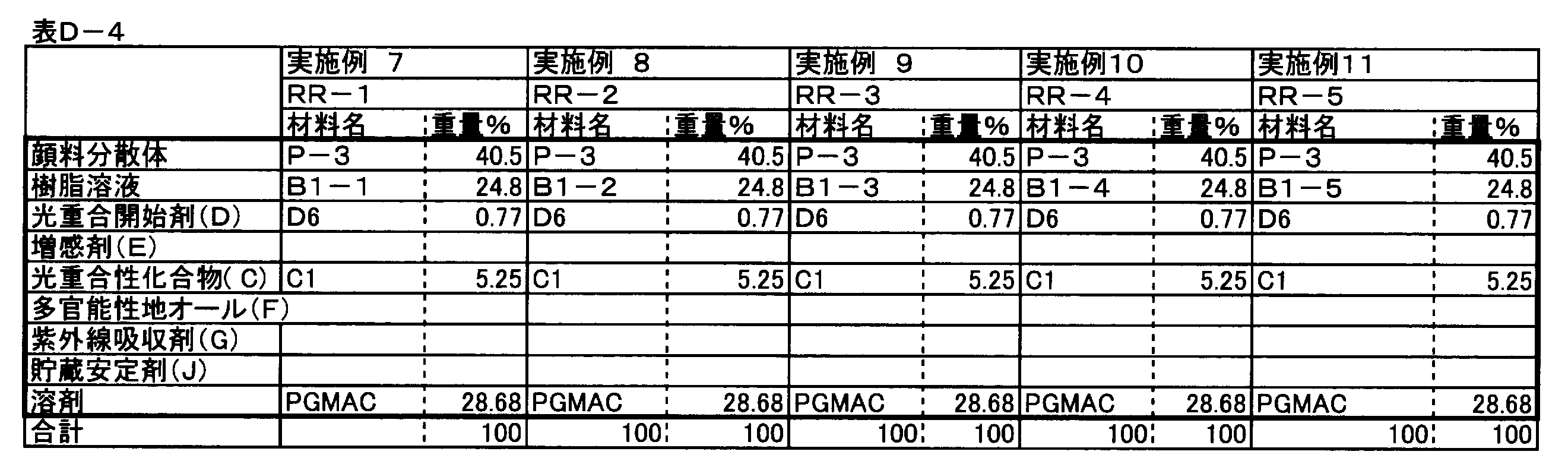
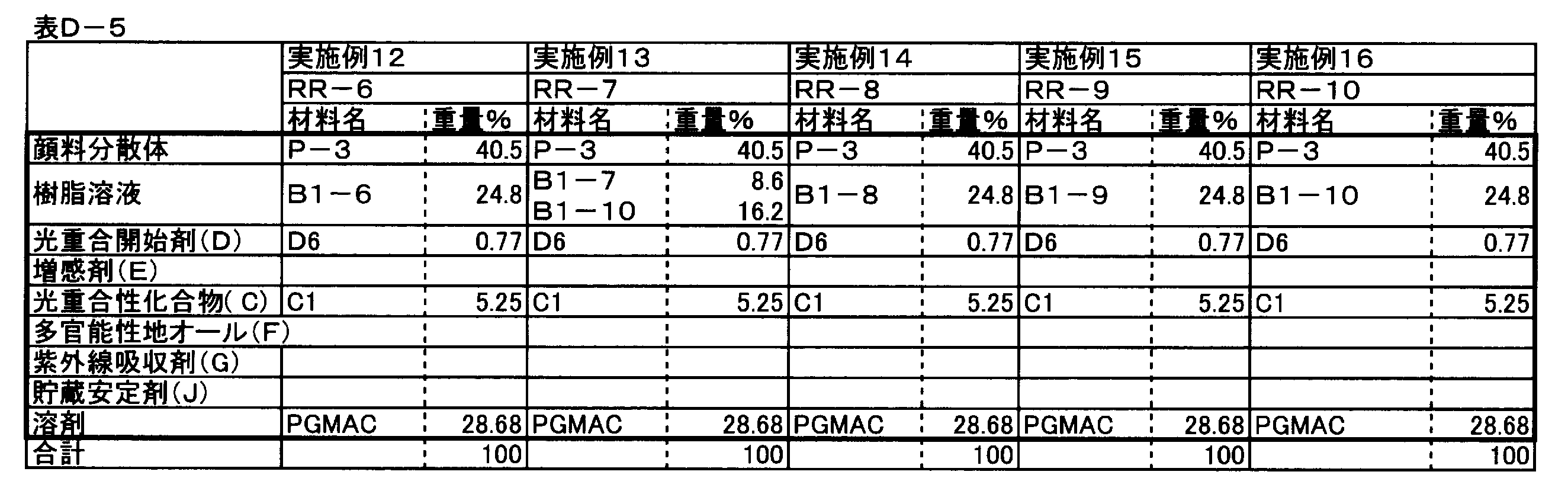


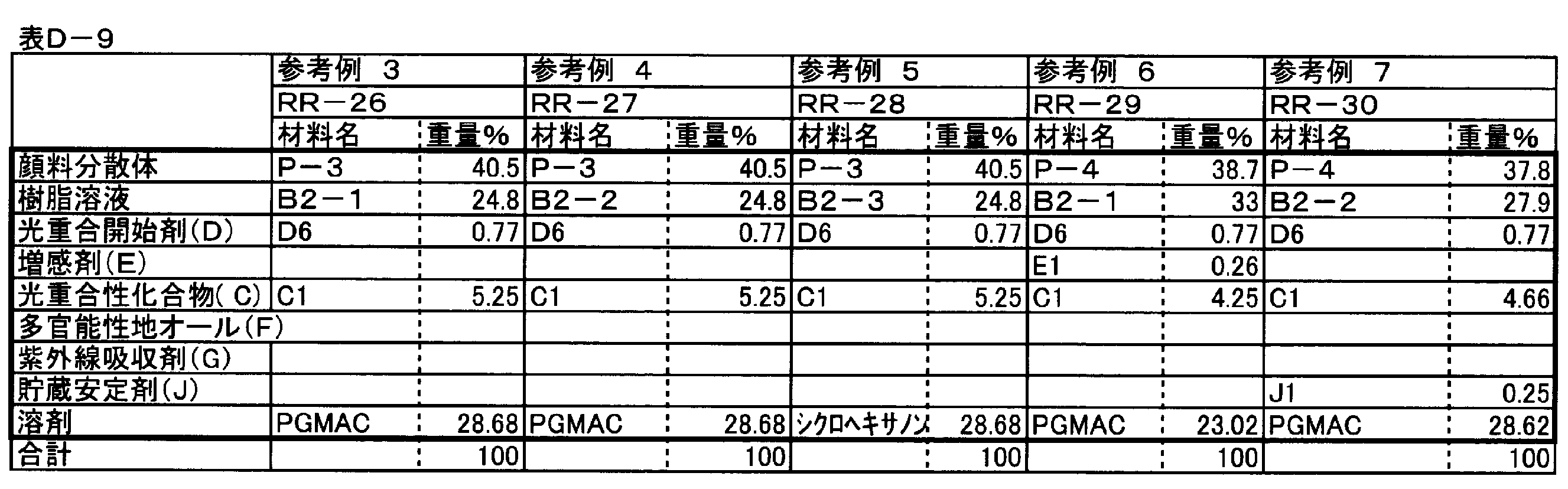
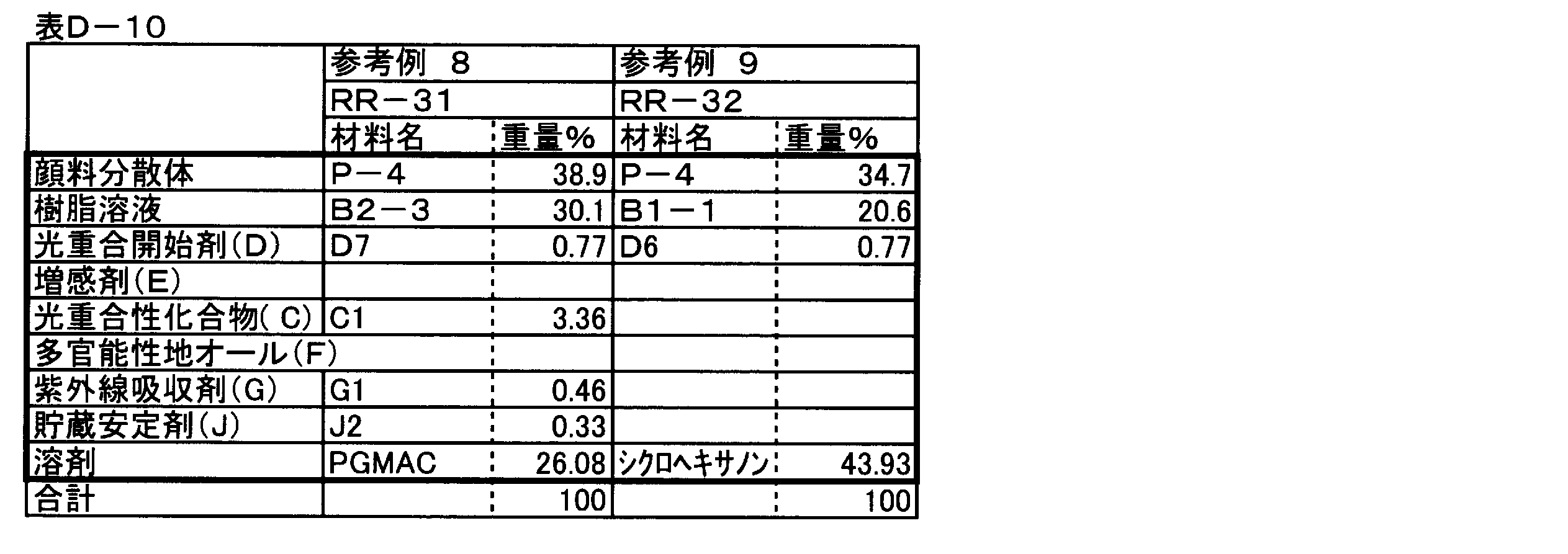
表D-4~10中の略語について以下に示す。
<光重合開始剤(D)>
光重合開始剤D1:2-メチル-1-[4-(メチルチオ)フェニル]-2-モルフォリノプロパン-1-オン
(チバ・ジャパン社製「イルガキュア907」)
光重合開始剤D2:2-(ジメチルアミノ)-2-[(4-メチルフェニル)メチル]-1-[4-(4-モルホリニル)フェニル]-1-ブタノン
(チバ・ジャパン社製「イルガキュア379」)
光重合開始剤D3:2,4,6-トリメチルベンゾイル-ジフェニル-ホスフィンオキサイド
(BASF社製「ルシリンTPO」)
光重合開始剤D4:2,2’-ビス(o-クロロフェニル)-4,5,4’,5’-テトラフェニル-1,2’-ビイミダゾール
(黒金化成社製「ビイミダゾール」)
光重合開始剤D5:p-ジメチルアミノアセトフェノン
(ダイキファイン社製「DMA」)
光重合開始剤D6:エタン-1-オン,1-[9-エチル-6-(2-メチルベンゾイル)-9H-カルバゾール-3-イル],1-(O-アセチルオキシム)
(チバ・ジャパン社製「イルガキュアOXE02」)
<光重合開始剤(D)>
光重合開始剤D1:2-メチル-1-[4-(メチルチオ)フェニル]-2-モルフォリノプロパン-1-オン
(チバ・ジャパン社製「イルガキュア907」)
光重合開始剤D2:2-(ジメチルアミノ)-2-[(4-メチルフェニル)メチル]-1-[4-(4-モルホリニル)フェニル]-1-ブタノン
(チバ・ジャパン社製「イルガキュア379」)
光重合開始剤D3:2,4,6-トリメチルベンゾイル-ジフェニル-ホスフィンオキサイド
(BASF社製「ルシリンTPO」)
光重合開始剤D4:2,2’-ビス(o-クロロフェニル)-4,5,4’,5’-テトラフェニル-1,2’-ビイミダゾール
(黒金化成社製「ビイミダゾール」)
光重合開始剤D5:p-ジメチルアミノアセトフェノン
(ダイキファイン社製「DMA」)
光重合開始剤D6:エタン-1-オン,1-[9-エチル-6-(2-メチルベンゾイル)-9H-カルバゾール-3-イル],1-(O-アセチルオキシム)
(チバ・ジャパン社製「イルガキュアOXE02」)
<増感剤>
増感剤E1:2,4-ジエチルチオキサントン
(日本化薬社製「カヤキュアDETX-S」)
増感剤E2:4,4’-ビス(ジエチルアミノ)ベンゾフェノン
(保土谷化学工業社製「EAB-F」)
増感剤E1:2,4-ジエチルチオキサントン
(日本化薬社製「カヤキュアDETX-S」)
増感剤E2:4,4’-ビス(ジエチルアミノ)ベンゾフェノン
(保土谷化学工業社製「EAB-F」)
<光重合性化合物>
光重合性化合物C1:ジペンタエリスリトールヘキサアクリレート
(東亞合成社製「アロニックス M-402」)
光重合性化合物C1:ジペンタエリスリトールヘキサアクリレート
(東亞合成社製「アロニックス M-402」)
<多官能チオール>
多官能チオールF1:トリメチロールエタントリス(3-メルカプトブチレート)
(昭和電工社製「TEMB」)
多官能チオールF2:トリメチロールプロパントリ(3-メルカプトブチレート)
(昭和電工社製「TPMB」)
多官能チオールF3:ペンタエリスリトールテトラキス(3-メルカプトプロピオネート)
(堺化学工業社製「PEMP」)
多官能チオールF1:トリメチロールエタントリス(3-メルカプトブチレート)
(昭和電工社製「TEMB」)
多官能チオールF2:トリメチロールプロパントリ(3-メルカプトブチレート)
(昭和電工社製「TPMB」)
多官能チオールF3:ペンタエリスリトールテトラキス(3-メルカプトプロピオネート)
(堺化学工業社製「PEMP」)
<紫外線吸収剤>
紫外線吸収剤G1:2-[4-[(2-ヒドロキシ-3-(ドデシルおよびトリデシル)オキシプロピル)オキシ]-2-ヒドロキシフェニル]-4,6-ビス(2,4-ジメチルフェニル)-1,3,5-トリアジン
(チバ・ジャパン社製「TINUVIN400」)
紫外線吸収剤G2:2-(2H-ベンゾトリアゾール-2-イル)-4,6-ビス(1-メチル-1-フェニルエチル)フェノール
(チバ・ジャパン社製「TINUVIN900」)
紫外線吸収剤G1:2-[4-[(2-ヒドロキシ-3-(ドデシルおよびトリデシル)オキシプロピル)オキシ]-2-ヒドロキシフェニル]-4,6-ビス(2,4-ジメチルフェニル)-1,3,5-トリアジン
(チバ・ジャパン社製「TINUVIN400」)
紫外線吸収剤G2:2-(2H-ベンゾトリアゾール-2-イル)-4,6-ビス(1-メチル-1-フェニルエチル)フェノール
(チバ・ジャパン社製「TINUVIN900」)
<貯蔵安定剤>
貯蔵安定剤J1:2,6-ビス(1,1-ジメチルエチル)-4-メチルフェノール
(本州化学工業社製「BHT」)
貯蔵安定剤J2:トリフェニルホスフィン
(北興化学工業社製「TPP」)
貯蔵安定剤J1:2,6-ビス(1,1-ジメチルエチル)-4-メチルフェノール
(本州化学工業社製「BHT」)
貯蔵安定剤J2:トリフェニルホスフィン
(北興化学工業社製「TPP」)
<溶剤>
PGMAC:プロピレングリコールモノメチルエーテルアセテート
PGMAC:プロピレングリコールモノメチルエーテルアセテート
[感光性着色組成物の評価]
得られた感光性着色組成物(RR-1~32)について、色特性、コントラスト比(CR)、塗膜表面の結晶析出、感度、直線性、パターン形状、解像度、現像耐性、薬品耐性、経時安定性を下記の方法で評価した。結果を表D-11に示す。それぞれの評価結果においての判定は、◎は非常に良好なレベル、○は良好レベル、△は使用には差し支えないレベル、×は使用には好ましくないレベルとした。
得られた感光性着色組成物(RR-1~32)について、色特性、コントラスト比(CR)、塗膜表面の結晶析出、感度、直線性、パターン形状、解像度、現像耐性、薬品耐性、経時安定性を下記の方法で評価した。結果を表D-11に示す。それぞれの評価結果においての判定は、◎は非常に良好なレベル、○は良好レベル、△は使用には差し支えないレベル、×は使用には好ましくないレベルとした。
(色特性、コントラスト比(CR)評価)
得られた感光性着色組成物を100mm×100mm、0.7mm厚のガラス基板上に、C光源において後処理後にx=0.640、およびy=0.328になるような膜厚に塗布し、70℃で20分熱風オーブンで乾燥したのち、超高圧水銀ランプを用いて、積算光量150mJで紫外線露光を行った後に230℃で1時間加熱して放冷し、赤色塗膜を得た。その後、得られた塗布基板の明度(Y)および、コントラスト比(CR)を測定した。
なお、色度及び明度(Y)は、顕微分光光度計(オリンパス光学社製「OSP-SP200」)で測定した。
得られた感光性着色組成物を100mm×100mm、0.7mm厚のガラス基板上に、C光源において後処理後にx=0.640、およびy=0.328になるような膜厚に塗布し、70℃で20分熱風オーブンで乾燥したのち、超高圧水銀ランプを用いて、積算光量150mJで紫外線露光を行った後に230℃で1時間加熱して放冷し、赤色塗膜を得た。その後、得られた塗布基板の明度(Y)および、コントラスト比(CR)を測定した。
なお、色度及び明度(Y)は、顕微分光光度計(オリンパス光学社製「OSP-SP200」)で測定した。
(塗膜表面の結晶析出評価)
色特性、コントラスト比(CR)評価で得られた基板を、さらに260℃で1時間加熱して放冷した。加熱処理後の塗布基板の塗膜表面を光学顕微鏡にて観察し、結晶析出有無を下記基準に従って判定した。評価結果において、◎は結晶析出がなく非常に良好であり、○は少し結晶析出があるものの良好なレベル、△は結晶析出があるものの使用上問題ないレベル、×は結晶析出により使用することができない状態に相当する。
◎:結晶数が0個
○:結晶数が1個以上10個未満
△:結晶数が10個以上100個未満
×:結晶数が100個以上
色特性、コントラスト比(CR)評価で得られた基板を、さらに260℃で1時間加熱して放冷した。加熱処理後の塗布基板の塗膜表面を光学顕微鏡にて観察し、結晶析出有無を下記基準に従って判定した。評価結果において、◎は結晶析出がなく非常に良好であり、○は少し結晶析出があるものの良好なレベル、△は結晶析出があるものの使用上問題ないレベル、×は結晶析出により使用することができない状態に相当する。
◎:結晶数が0個
○:結晶数が1個以上10個未満
△:結晶数が10個以上100個未満
×:結晶数が100個以上
(感度、直線性、パターン形状、解像度、現像耐性、薬品耐性評価)
得られた感光性着色組成物を100mm×100mm、0.7mm厚のガラス基板上に塗工した後、クリーンオーブン中70℃で20分間加温して溶剤を除去し、約2μmの塗膜を得た。次いで、この基板を室温に冷却後、超高圧水銀ランプを用い、100μm幅(ピッチ200μm)および25μm幅(ピッチ50μm)ストライプパターンのフォトマスクを介して紫外線を露光した。その後、この基板を23℃の炭酸ナトリウム水溶液を用いてスプレー現像した後、イオン交換水で洗浄、風乾し、クリーンオーブン中230℃で330分間加熱した。スプレー現像は、それぞれの感光性着色組成物での塗膜について、現像残りなくパターン形成可能な最短時間で行い、これを適正現像時間とした。
塗膜の膜厚は、Dektak 3030(日本真空技術社製)を用いて行った。
得られた感光性着色組成物を100mm×100mm、0.7mm厚のガラス基板上に塗工した後、クリーンオーブン中70℃で20分間加温して溶剤を除去し、約2μmの塗膜を得た。次いで、この基板を室温に冷却後、超高圧水銀ランプを用い、100μm幅(ピッチ200μm)および25μm幅(ピッチ50μm)ストライプパターンのフォトマスクを介して紫外線を露光した。その後、この基板を23℃の炭酸ナトリウム水溶液を用いてスプレー現像した後、イオン交換水で洗浄、風乾し、クリーンオーブン中230℃で330分間加熱した。スプレー現像は、それぞれの感光性着色組成物での塗膜について、現像残りなくパターン形成可能な最短時間で行い、これを適正現像時間とした。
塗膜の膜厚は、Dektak 3030(日本真空技術社製)を用いて行った。
(感度評価)
上記方法で形成されたフィルタセグメントの100μmフォトマスク部分でのパタ-ン膜厚を測定し、塗工後膜厚に対して90%以上となる最小露光量を評価した。最小露光量が小さい程、高感度で良好な感光性着色組成物となる。評価のランクは次の通りである。
○:50mJ/cm2未満
△:50mJ/cm2以上100mJ/cm2未満
×:100mJ/cm2以上
上記方法で形成されたフィルタセグメントの100μmフォトマスク部分でのパタ-ン膜厚を測定し、塗工後膜厚に対して90%以上となる最小露光量を評価した。最小露光量が小さい程、高感度で良好な感光性着色組成物となる。評価のランクは次の通りである。
○:50mJ/cm2未満
△:50mJ/cm2以上100mJ/cm2未満
×:100mJ/cm2以上
(直線性評価)
上記方法で形成されたフィルタセグメントの100μmフォトマスク部分でのパタ-ンについて、光学顕微鏡を用いて観察して評価を行った。評価のランクは次の通りである。
○:直線性良好
△:部分的に直線性不良
×:直線性不良
上記方法で形成されたフィルタセグメントの100μmフォトマスク部分でのパタ-ンについて、光学顕微鏡を用いて観察して評価を行った。評価のランクは次の通りである。
○:直線性良好
△:部分的に直線性不良
×:直線性不良
(パターン形状評価)
上記方法で形成されたフィルタセグメントの100μmフォトマスク部分でのパタ-ンの断面について、電子顕微鏡を用いて観察して評価を行った。パターン断面は順テーパーが良好である。評価のランクは次の通りである。
○:断面が順テーパー形状
×:断面が逆テーパー形状
上記方法で形成されたフィルタセグメントの100μmフォトマスク部分でのパタ-ンの断面について、電子顕微鏡を用いて観察して評価を行った。パターン断面は順テーパーが良好である。評価のランクは次の通りである。
○:断面が順テーパー形状
×:断面が逆テーパー形状
(解像性評価)
上記方法で形成されたフィルタセグメントの25μmフォトマスク部分でのパターンについて、光学顕微鏡を用いて観察して評価を行った。評価のランクは次の通りである。解像性不良とは、隣接するストライプパターンが繋がったり、欠けが発生したりすることである。評価のランクは次の通りである。
◎:解像性および直線性良好
○:直線性の点でやや劣るが解像性良好
△:部分的に解像性不良
×:解像性不良
上記方法で形成されたフィルタセグメントの25μmフォトマスク部分でのパターンについて、光学顕微鏡を用いて観察して評価を行った。評価のランクは次の通りである。解像性不良とは、隣接するストライプパターンが繋がったり、欠けが発生したりすることである。評価のランクは次の通りである。
◎:解像性および直線性良好
○:直線性の点でやや劣るが解像性良好
△:部分的に解像性不良
×:解像性不良
(現像耐性評価)
スプレー現像時に、適正時間の2倍で現像して形成されたフィルタセグメントの100μmフォトマスク部分でのパタ-ン膜厚を測定し、適正現像時間で現像して形成されたパターン膜厚と比較した。評価のランクは次の通りである。
◎:膜厚差20%以内
○:膜厚差20%より大きく、40%以内
△:膜厚差が40%より大きい
×:2倍現像で欠けやハガレが発生
スプレー現像時に、適正時間の2倍で現像して形成されたフィルタセグメントの100μmフォトマスク部分でのパタ-ン膜厚を測定し、適正現像時間で現像して形成されたパターン膜厚と比較した。評価のランクは次の通りである。
◎:膜厚差20%以内
○:膜厚差20%より大きく、40%以内
△:膜厚差が40%より大きい
×:2倍現像で欠けやハガレが発生
(薬品耐性評価)
上記方法で形成されたフィルタセグメントをN-メチルピロリドン溶液に30分浸漬後、イオン交換水で洗浄、風乾し、100μmフォトマスク部分でのパターンについて光学顕微鏡を用いて観察して評価を行った。評価のランクは次の通りである。
◎:外観、色に変化なく良好
○:一部にシワ等が発生するが、色には変化なく良好
△:若干の色落ちが発生
×:ハガレや色落ちが発生
上記方法で形成されたフィルタセグメントをN-メチルピロリドン溶液に30分浸漬後、イオン交換水で洗浄、風乾し、100μmフォトマスク部分でのパターンについて光学顕微鏡を用いて観察して評価を行った。評価のランクは次の通りである。
◎:外観、色に変化なく良好
○:一部にシワ等が発生するが、色には変化なく良好
△:若干の色落ちが発生
×:ハガレや色落ちが発生
(着色組成物の経時安定性評価)
得られた感光性着色組成物について、初期および室温1ヵ月後の粘度を測定し、初期粘度に対する粘度増加度合いを算出して評価を行った。評価のランクは次の通りである。
(経時粘度変化率)=|[(初期粘度)-(経時粘度)]/(初期粘度)|×100(%)
◎:粘度増加の割合が5%以下で良好
○:粘度増加の割合が5%より大きく10%以下
×:粘度増加の割合が10%より大きい
得られた感光性着色組成物について、初期および室温1ヵ月後の粘度を測定し、初期粘度に対する粘度増加度合いを算出して評価を行った。評価のランクは次の通りである。
(経時粘度変化率)=|[(初期粘度)-(経時粘度)]/(初期粘度)|×100(%)
◎:粘度増加の割合が5%以下で良好
○:粘度増加の割合が5%より大きく10%以下
×:粘度増加の割合が10%より大きい
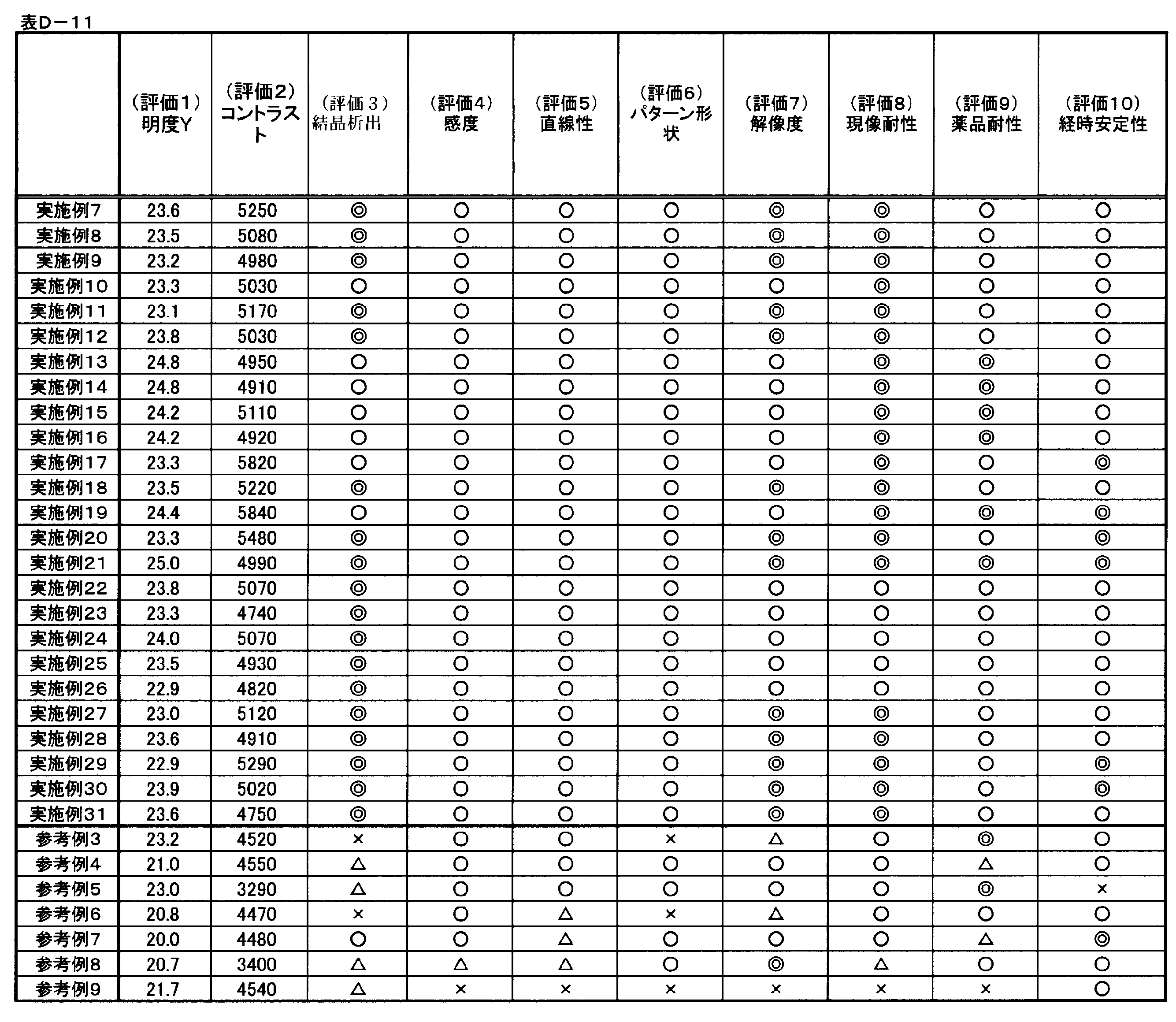
表D-11に示すように、式(1)に示す顔料(A1)と構成単位(D-b1)~(D-b3)を有する樹脂(D-B1)とを含むカラーフィルタ用着色組成物は、全ての評価で高水準の評価結果を得た。
すなわち顔料(A1)との組み合わせにおいて、樹脂(D-B1)の構成単位(D-b1)を多く含有する構成ではコントラストの向上と経時安定性の安定化が、構成単位(D-b2)を多く含有する構成では明度の向上と耐薬品性の向上が、構成単位(D-b3)を多く含有する構成では加熱工程における顔料の結晶析出を抑える効果と解像度を抑える効果が認められる傾向にあるが、いずれも構成単位が特定の含有比を満たしていれば、高い性能を有した感光性着色組成物を得ることができる。適切な構成単位比にすることにより、高性能でバランスの良いカラーフィルターセグメントを得ることが可能となる。
さらに光重合開始剤(D)がアセトフェノン系化合物、ホスフィン系化合物、イミダゾール系化合物、オキシムエステル系化合物のいずれかとの組み合わせであれば感度、直線性、解像度がより良好である。
なかでも、光重合開始剤(D)がエタン-1-オン,1-[9-エチル-6-(2-メチルベンゾイル)-9H-カルバゾール-3-イル],1-(O-アセチルオキシム) 感光性着色組成物では、さらに現像耐性により優れていた。
さらに多官能チオールを含む感光性着色組成物では、現像耐性により優れていた。
また、さらに紫外線吸収剤を含む感光性着色組成物では、解像性により優れていた。
また、さらに貯蔵安定剤を含む感光性着色組成物では、経時安定性により優れていた。
さらに多官能チオールを含む感光性着色組成物では、現像耐性により優れていた。
また、さらに紫外線吸収剤を含む感光性着色組成物では、解像性により優れていた。
また、さらに貯蔵安定剤を含む感光性着色組成物では、経時安定性により優れていた。
一方、参考例3~9の感光性着色組成物では、明度やコントラスト比も低く、加熱工程における顔料の結晶析出や感度をはじめとするフィルタセグメントの評価などでも全てが良好となるものは得られなかった。
(カラーフィルタの製造)
感光性着色組成物(RR-1)における顔料および顔料誘導体の合計4.39部を、緑色感光性着色組成物ではC.I.Pigment Green58/C.I.Pigment Yellow150=2.63部/1.76部に、青色感光性着色組成物ではC.I.Pigment Blue15:6/C.I.Pigment Violet23=3.51部/0.88部になるように置き換えた以外は顔料分散体(P-3)と同様に顔料分散体を調製し、さらに感光性着色組成物(RR-1)の顔料分散体を各色顔料分散体に置き換えて、カラーフィルタ用緑色感光性着色組成物、カラーフィルタ用青色感光性着色組成物を得た。
感光性着色組成物(RR-1)における顔料および顔料誘導体の合計4.39部を、緑色感光性着色組成物ではC.I.Pigment Green58/C.I.Pigment Yellow150=2.63部/1.76部に、青色感光性着色組成物ではC.I.Pigment Blue15:6/C.I.Pigment Violet23=3.51部/0.88部になるように置き換えた以外は顔料分散体(P-3)と同様に顔料分散体を調製し、さらに感光性着色組成物(RR-1)の顔料分散体を各色顔料分散体に置き換えて、カラーフィルタ用緑色感光性着色組成物、カラーフィルタ用青色感光性着色組成物を得た。
100mm×100mmのガラス基板上にダイコータで感光性着色組成物(RR-1)を約2μmの厚さに塗工し、70℃のオーブン内に20分間溶剤を除去乾燥させた。次いで、露光装置を用いて紫外線によりストライプパターン露光を行った。露光量は100mJ/cm2とした。更に、炭酸ナトリウム水溶液からなる現像液によりスプレー現像して未露光部分を取り除いた後、イオン交換水で洗浄し、この基板を230℃で30分加熱して線幅約50μmの赤色フィルタセグメントを形成した。次いで、同様の所作により、赤色フィルタセグメントの隣に緑色感光性着色組成物を用いて緑色フィルタセグメントを、次いで青色感光性着色組成物を用いて青色フィルタセグメントを形成し、同一ガラス基板上に3色のフィルタセグメントを具備するカラーフィルタを得た。
以上のカラーフィルタ用着色組成物を用いると、広い色度範囲において色特性に優れ、耐熱性の良好な赤色フィルタセグメントを有する高精細のカラーフィルタを作製することができた。
本発明の実施態様によれば、明度およびコントラストが良好であって、加熱工程によってもジケトピロロピロール系顔料の結晶析出が起こりにくいカラーフィルタ用顔料組成物、着色組成物、およびそれを用いたカラーフィルタを提供することができる。
Claims (15)
- 式(1)で表されるジケトピロロピロール顔料、および式(A-2)で表されるジケトピロロピロール顔料を含有するカラーフィルタ用ジケトピロロピロール系顔料組成物であって、式(A-2)で表されるジケトピロロピロール顔料の含有量がジケトピロロピロール系顔料の合計質量を基準として1質量%~15質量%であることを特徴とするカラーフィルタ用ジケトピロロピロール系顔料組成物。

AおよびBは、それぞれ独立して、水素原子、フッ素原子、ヨウ素原子、シアノ基、炭素数1~12のアルキル基、置換基を有してもよいフェニル基、-CF3、-OR1、-SR2、-N(R3)R4、-COOR5、-CONH2、-CONHR6、-CON(R7)R8、-SO2NH2、-SO2NHR9、または、-SO2N(R10)R11であり、
R1~R11は、それぞれ独立して、炭素数1~12のアルキル基、置換基を有してもよいフェニル基、または、置換基を有してもよいアラルキル基である。
ただし、AおよびBが同時に水素原子になることはない。] - 上記式(A-2)で表されるジケトピロロピロール顔料が、式(A-2-1)、式(A-2-2)、式(A-2-3)、および式(A-2-4)からなる群から選択されるいずれかであることを特徴とする請求項1記載のカラーフィルタ用ジケトピロロピロール系顔料組成物。
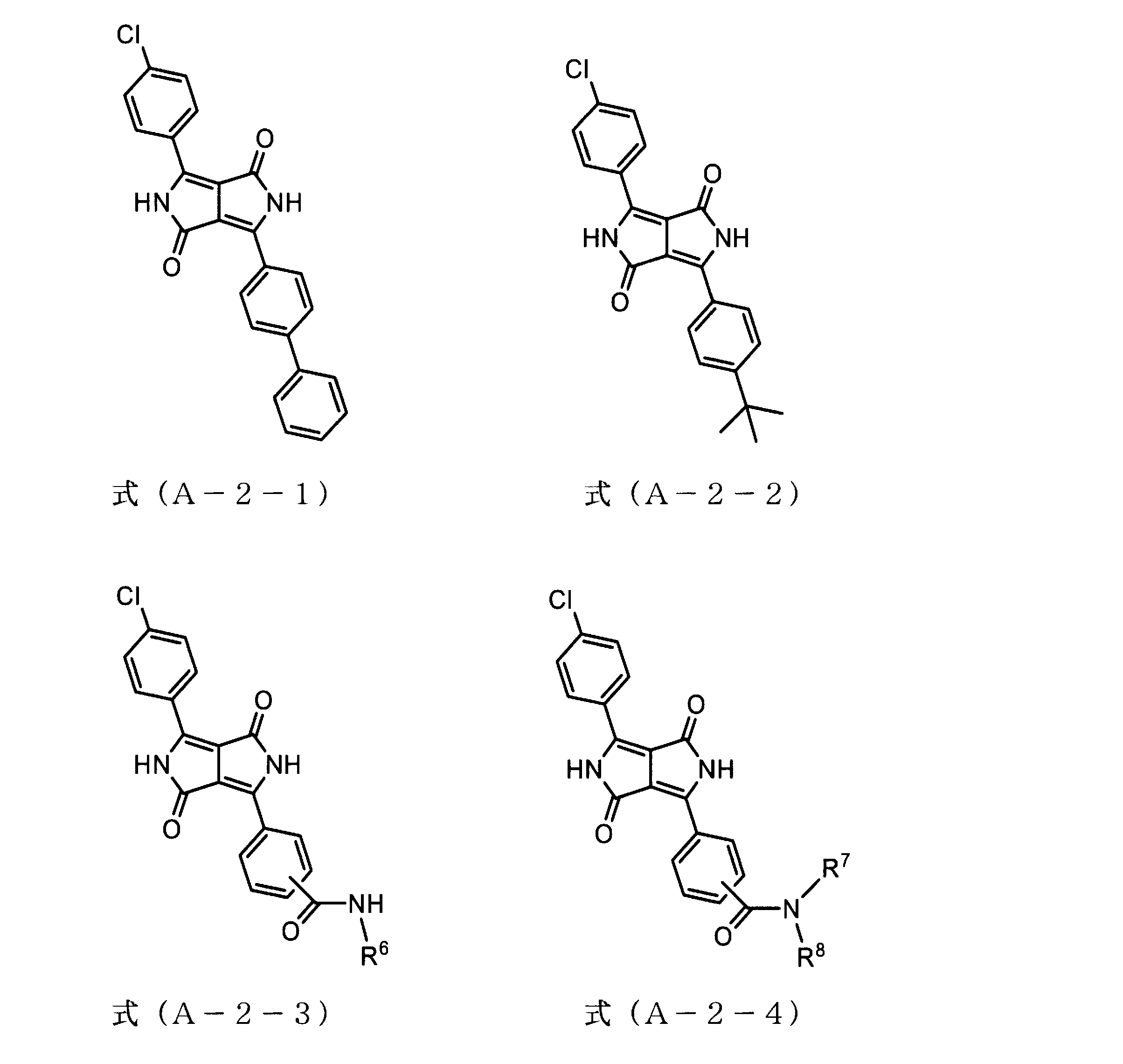
R6~R8は、それぞれ独立して、炭素数1~12のアルキル基、または置換基を有してもよいフェニル基である。] - さらに、ジケトピロロピロール系顔料として、C.I.ピグメントレッド254を含有することを特徴とする請求項1または2記載のカラーフィルタ用ジケトピロロピロール系顔料組成物。
- ジケトピロロピロール系顔料の合計質量を基準として、式(1)で表されるジケトピロロピロール顔料とC.I.ピグメントレッド254との合計含有量が85質量%~99質量%であることを特徴とする請求項3記載のカラーフィルタ用ジケトピロロピロール系顔料組成物。
- 式(1)で表されるジケトピロロピロール顔料とC.I.ピグメントレッド254の質量比が20:80~99:1であることを特徴とする請求項3または4記載のカラーフィルタ用ジケトピロロピロール系顔料組成物。
- 式(1)で表されるジケトピロロピロール顔料、および式(B-2)で表されるジケトピロロピロール顔料を含有するカラーフィルタ用ジケトピロロピロール系顔料組成物であって、式(1)と式(B-2)の質量比が97:3~85:15であることを特徴とするカラーフィルタ用ジケトピロロピロール系顔料組成物。

AおよびBは、それぞれ独立して、水素原子、フッ素原子、塩素原子、ヨウ素原子、シアノ基、炭素数1~12のアルキル基、置換基を有してもよいフェニル基、-CF3、-OR1、-SR2、-N(R3)R4、-COOR5、-CONH2、-CONHR6、-CON(R7)R8、-SO2NH2、-SO2NHR9、または、-SO2N(R10)R11であり、
R1~R11は、それぞれ独立して、炭素数1~12のアルキル基、置換基を有してもよいフェニル基、または、置換基を有してもよいアラルキル基である。
ただし、AおよびBが同時に水素原子になることはない。] - 上記式(B-2)が、式(B-2-1)、式(B-2-2)、式(B-2-3)、式(B-2-4)、式(B-2-5)、式(B-2-6)、および式(B-2-7)からなる群から選択されるいずれかであることを特徴とする請求項6記載のカラーフィルタ用ジケトピロロピロール系顔料組成物。

R12~R15は、それぞれ独立して、炭素数1~12のアルキル基、または置換基を有してもよいフェニル基である。] - さらに、色素誘導体を含有することを特徴とする請求項1~7いずれか1項記載のカラーフィルタ用ジケトピロロピロール系顔料組成物。
- 着色剤、バインダー樹脂、および有機溶剤を含有する着色組成物であって、着色剤が請求項1~8いずれか1項記載のジケトピロロピロール系顔料組成物を含有することを特徴とするカラーフィルタ用着色組成物。
- さらに光重合性単量体および/または光重合開始剤を含有することを特徴とする請求項9記載のカラーフィルタ用着色組成物。
- 顔料(A)と、バインダー樹脂(C-B)と、溶剤とを含むカラーフィルタ用着色組成物であって、顔料(A)が、式(1)に示す顔料(A1)を含み、バインダー樹脂(C-B)が、アルカリ可溶性感光性樹脂(C-B1)を含むことを特徴とするカラーフィルタ用着色組成物。
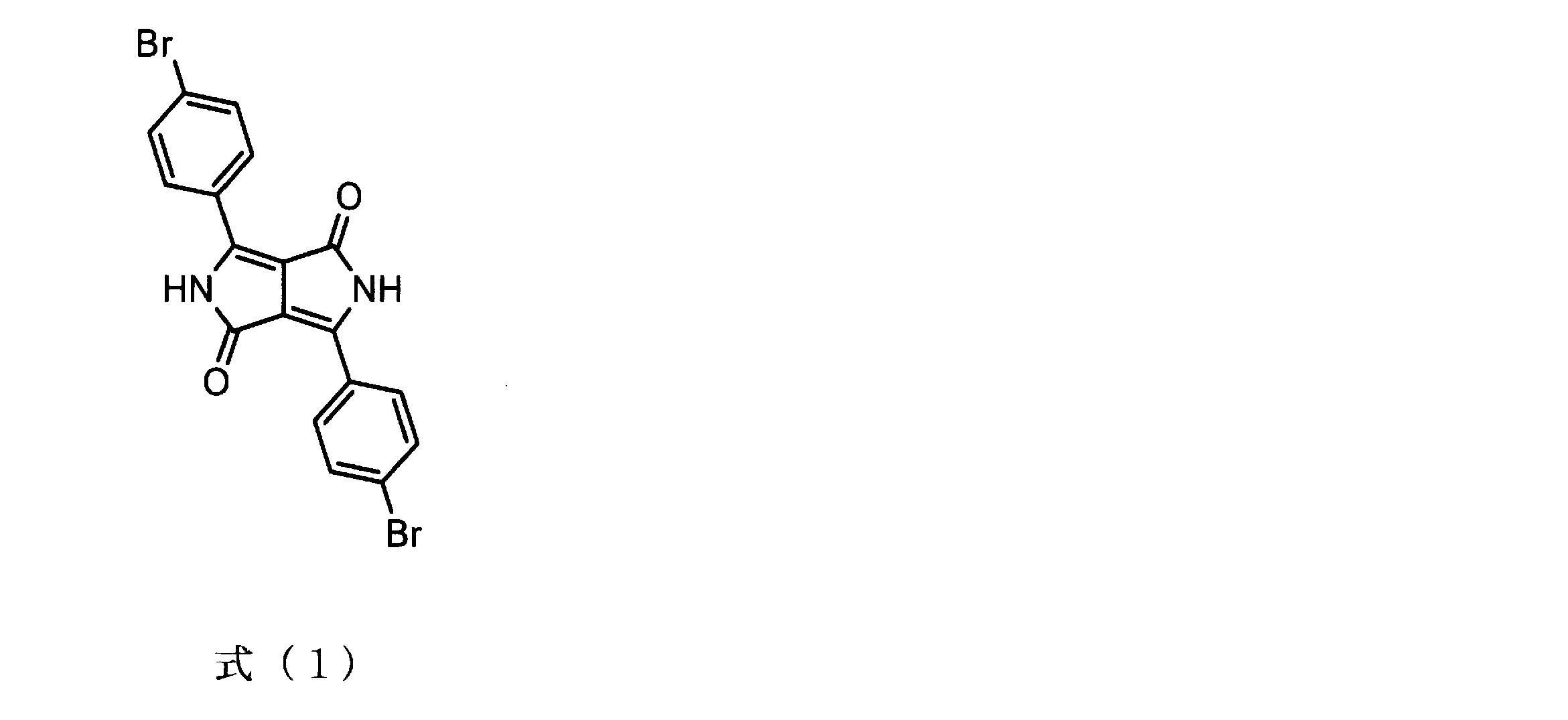
- 顔料(A)と、バインダー樹脂(D-B)と、溶剤とを含むカラーフィルタ用着色組成物であって、顔料(A)が、式(1)に示す顔料(A1)を含み、バインダー樹脂(D-B)が、構成単位(D-b1)~(D-b3)を有する樹脂(D-B1)を含むことを特徴とするカラーフィルタ用着色組成物。
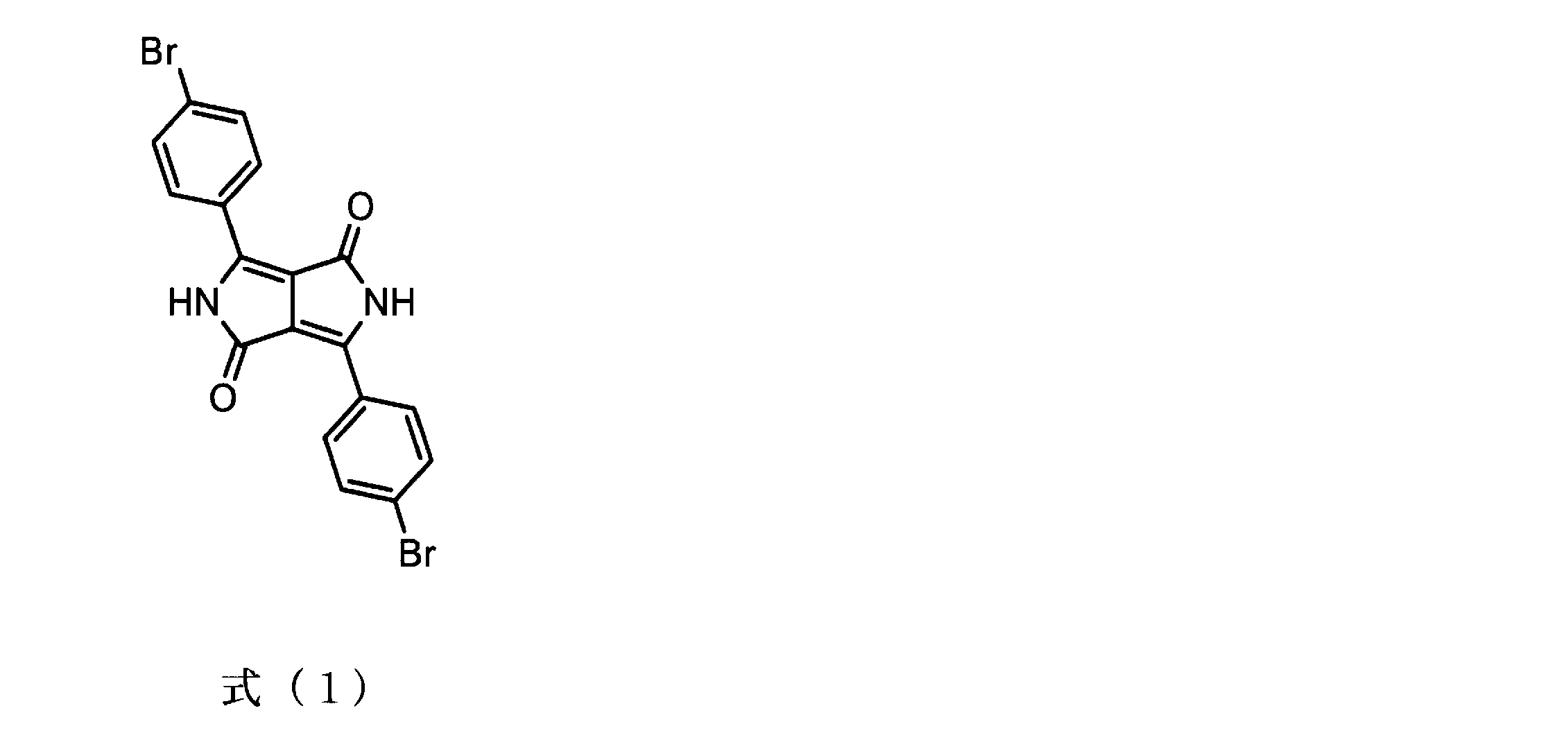
(D-b2)式(D-2)または(D-3)に示す芳香族環基を有する構成単位:2~80重量%
(D-b3)式(D-4)または(D-5)に示す脂肪族環基を有する構成単位:2~60重量%
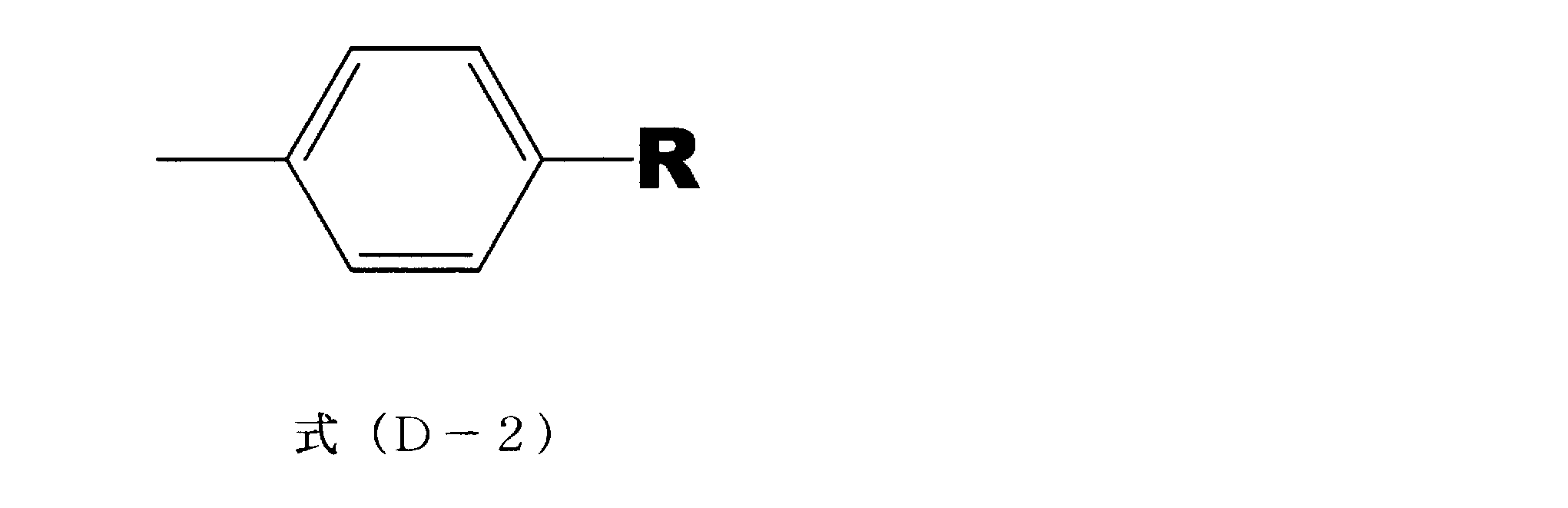
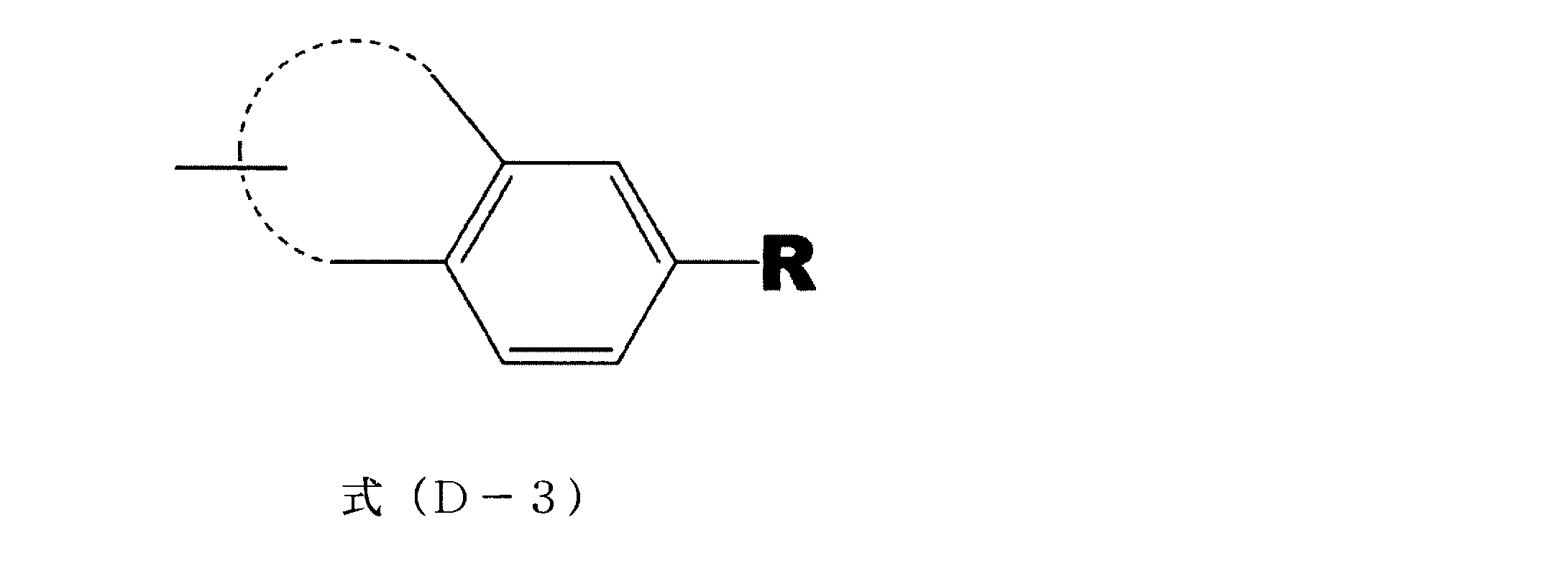

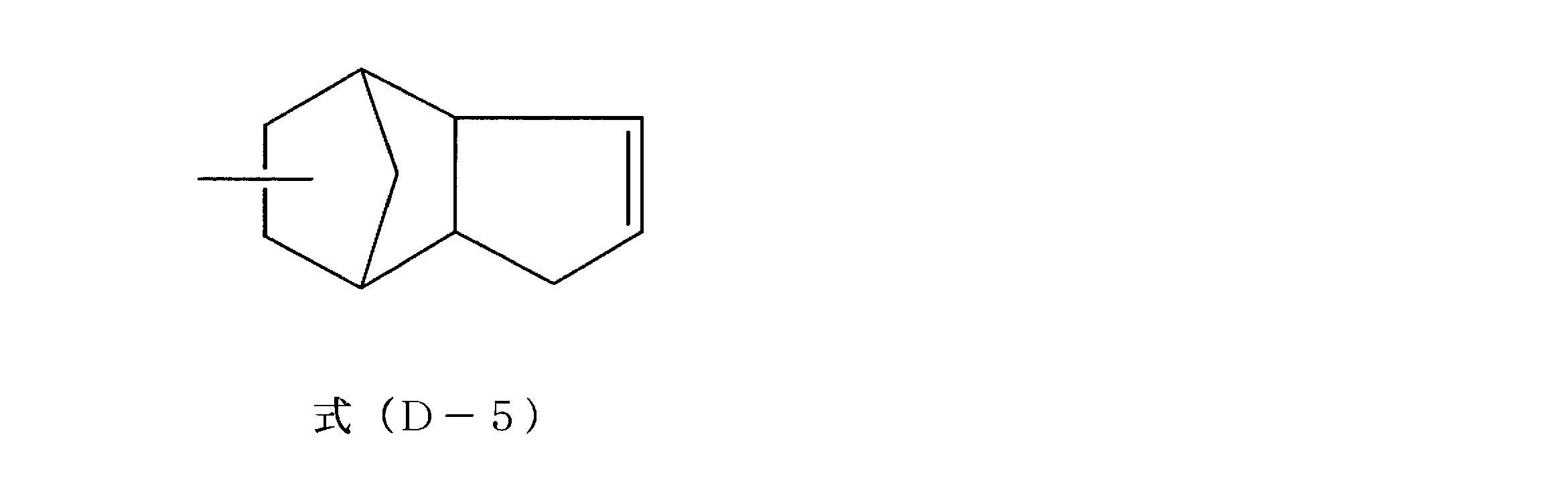
- 顔料(A)が、さらに顔料(A1)以外のジケトピロロピロール系顔料、アゾ系顔料、アントラキノン系顔料、ペリレン系顔料、キナクリドン系顔料、ベンズイミダゾロン系顔料、およびキノリン系顔料からなる群より選ばれる少なくとも1種類以上を含むことを特徴とする請求項11または12に記載のカラーフィルタ用着色組成物。
- さらにアセトフェノン系化合物、ホスフィン系化合物、イミダゾール系化合物、およびオキシムエステル系化合物からなる群より選ばれる少なくとも1種類以上の光重合開始剤を含むことを特徴とする請求項11~13いずれかに記載のカラーフィルタ用着色組成物。
- 請求項9~14いずれかに記載のカラーフィルタ用着色組成物から形成されるフィルタセグメントを具備することを特徴とするカラーフィルタ。
Priority Applications (4)
| Application Number | Priority Date | Filing Date | Title |
|---|---|---|---|
| CN201280006727.XA CN103339536B (zh) | 2011-01-28 | 2012-01-27 | 彩色滤光片用吡咯并吡咯二酮系颜料组合物、彩色滤光片用着色组合物及彩色滤光片 |
| KR1020137020929A KR101920285B1 (ko) | 2011-01-28 | 2012-01-27 | 컬러필터용 디케토피롤로피롤계 안료 조성물, 컬러필터용 착색 조성물 및 컬러필터 |
| KR1020187020266A KR101942407B1 (ko) | 2011-01-28 | 2012-01-27 | 컬러필터용 디케토피롤로피롤계 안료 조성물, 컬러필터용 착색 조성물 및 컬러필터 |
| KR1020187035854A KR101971251B1 (ko) | 2011-01-28 | 2012-01-27 | 컬러필터용 디케토피롤로피롤계 안료 조성물, 컬러필터용 착색 조성물 및 컬러필터 |
Applications Claiming Priority (6)
| Application Number | Priority Date | Filing Date | Title |
|---|---|---|---|
| JP2011-015874 | 2011-01-28 | ||
| JP2011015874A JP5659823B2 (ja) | 2011-01-28 | 2011-01-28 | カラーフィルタ用顔料組成物、着色組成物、およびカラーフィルタ |
| JP2011076928A JP5724537B2 (ja) | 2011-03-31 | 2011-03-31 | カラーフィルタ用着色組成物、およびカラーフィルタ |
| JP2011076929A JP5760596B2 (ja) | 2011-03-31 | 2011-03-31 | カラーフィルタ用着色組成物、およびカラーフィルタ |
| JP2011-076928 | 2011-03-31 | ||
| JP2011-076929 | 2011-03-31 |
Publications (1)
| Publication Number | Publication Date |
|---|---|
| WO2012102399A1 true WO2012102399A1 (ja) | 2012-08-02 |
Family
ID=46580962
Family Applications (1)
| Application Number | Title | Priority Date | Filing Date |
|---|---|---|---|
| PCT/JP2012/051888 Ceased WO2012102399A1 (ja) | 2011-01-28 | 2012-01-27 | カラーフィルタ用ジケトピロロピロール系顔料組成物、カラーフィルタ用着色組成物、およびカラーフィルタ |
Country Status (4)
| Country | Link |
|---|---|
| KR (3) | KR101971251B1 (ja) |
| CN (1) | CN103339536B (ja) |
| TW (1) | TWI510561B (ja) |
| WO (1) | WO2012102399A1 (ja) |
Cited By (17)
| Publication number | Priority date | Publication date | Assignee | Title |
|---|---|---|---|---|
| WO2015008734A1 (ja) * | 2013-07-15 | 2015-01-22 | 花王株式会社 | カラーフィルター用着色組成物 |
| JP2015110726A (ja) * | 2013-07-22 | 2015-06-18 | Jsr株式会社 | 着色組成物、着色硬化膜、並びに表示素子及び固体撮像素子 |
| KR20170036748A (ko) | 2014-09-04 | 2017-04-03 | 후지필름 가부시키가이샤 | 조성물, 조성물의 제조 방법, 경화성 조성물, 경화막, 근적외선 차단 필터, 고체 촬상 소자, 적외선 센서 및 카메라 모듈 |
| WO2019054281A1 (ja) | 2017-09-15 | 2019-03-21 | 富士フイルム株式会社 | 組成物、膜、積層体、赤外線透過フィルタ、固体撮像素子および赤外線センサ |
| JP2020020851A (ja) * | 2018-07-30 | 2020-02-06 | 東洋インキScホールディングス株式会社 | 固体撮像素子用カラーフィルタの感光性着色組成物、カラーフィルタ、およびそれを用いた固体撮像素子 |
| WO2020059509A1 (ja) | 2018-09-20 | 2020-03-26 | 富士フイルム株式会社 | 硬化性組成物、硬化膜、赤外線透過フィルタ、積層体、固体撮像素子、センサ、及び、パターン形成方法 |
| WO2020241535A1 (ja) | 2019-05-31 | 2020-12-03 | 富士フイルム株式会社 | 光センサおよびセンシング装置 |
| WO2021039253A1 (ja) | 2019-08-30 | 2021-03-04 | 富士フイルム株式会社 | 組成物、膜、光学フィルタ及びその製造方法、固体撮像素子、赤外線センサ、並びに、センサモジュール |
| WO2021039205A1 (ja) | 2019-08-29 | 2021-03-04 | 富士フイルム株式会社 | 組成物、膜、近赤外線カットフィルタ、パターン形成方法、積層体、固体撮像素子、赤外線センサ、画像表示装置、カメラモジュール、及び、化合物 |
| WO2022014635A1 (ja) | 2020-07-15 | 2022-01-20 | 東洋インキScホールディングス株式会社 | 顔料組成物、着色組成物、塗料、インキ、インキセット、印刷物、及び包装材料 |
| WO2022131191A1 (ja) | 2020-12-16 | 2022-06-23 | 富士フイルム株式会社 | 組成物、膜、光学フィルタ、固体撮像素子、画像表示装置および赤外線センサ |
| WO2022130773A1 (ja) | 2020-12-17 | 2022-06-23 | 富士フイルム株式会社 | 組成物、膜、光学フィルタ、固体撮像素子、画像表示装置および赤外線センサ |
| WO2023013332A1 (ja) | 2021-08-03 | 2023-02-09 | 東洋インキScホールディングス株式会社 | 顔料組成物、着色組成物、塗料、インキ、インキセット、印刷物、及び包装材料 |
| WO2023234094A1 (ja) | 2022-06-01 | 2023-12-07 | 富士フイルム株式会社 | 光検出素子、イメージセンサおよび光検出素子の製造方法 |
| WO2023234095A1 (ja) | 2022-06-01 | 2023-12-07 | 富士フイルム株式会社 | 光検出素子、イメージセンサおよび光検出素子の製造方法 |
| WO2023234096A1 (ja) | 2022-06-01 | 2023-12-07 | 富士フイルム株式会社 | 光検出素子、イメージセンサおよび光検出素子の製造方法 |
| WO2024048522A1 (ja) | 2022-08-29 | 2024-03-07 | artience株式会社 | 印刷インキセット、印刷物、及び包装材料 |
Families Citing this family (17)
| Publication number | Priority date | Publication date | Assignee | Title |
|---|---|---|---|---|
| TWI485524B (zh) * | 2013-08-30 | 2015-05-21 | Everlight Chem Ind Corp | 感光性樹脂組成物及其用途 |
| TWI472880B (zh) * | 2013-12-02 | 2015-02-11 | Chi Mei Corp | 彩色濾光片用紅色感光性樹脂組成物及其應用 |
| TWI506368B (zh) * | 2013-12-05 | 2015-11-01 | Chi Mei Corp | 感光性樹脂組成物、彩色濾光片及其製造方法、液晶顯示裝置 |
| TWI506369B (zh) * | 2013-12-05 | 2015-11-01 | Chi Mei Corp | 感光性樹脂組成物、彩色濾光片及其製造方法、液晶顯示裝置 |
| CN104503130B (zh) * | 2014-12-29 | 2017-11-14 | 厦门天马微电子有限公司 | 一种彩膜基板、显示面板及显示装置 |
| KR102493611B1 (ko) * | 2016-06-14 | 2023-01-31 | 동우 화인켐 주식회사 | 적색 감광성 수지 조성물, 이를 포함하는 컬러필터 및 표시장치 |
| KR102033415B1 (ko) * | 2017-03-17 | 2019-10-17 | 동우 화인켐 주식회사 | 적색 화소용 착색 감광성 수지 조성물, 컬러필터 및 화상표시장치 |
| CN107602649B (zh) * | 2017-08-15 | 2019-10-18 | 龙口联合化学有限公司 | 糖分子偶联二酮吡咯并吡咯化合物及其制备方法 |
| CN107686686B (zh) * | 2017-08-15 | 2019-07-12 | 龙口联合化学有限公司 | 糖分子偶联二酮吡咯并吡咯化合物在制备喷墨记录用水性分散体的应用 |
| CN107652705B (zh) * | 2017-10-14 | 2019-04-30 | 龙口联合化学有限公司 | 糖分子偶联二酮吡咯并吡咯化合物在塑料用红颜料制备中的应用、塑料用红颜料及制备方法 |
| CN107603272B (zh) * | 2017-10-14 | 2019-04-26 | 龙口联合化学有限公司 | 糖分子偶联二酮吡咯并吡咯化合物在黄颜料制备中的应用、黄颜料及黄颜料的制备方法 |
| KR102383520B1 (ko) * | 2018-02-01 | 2022-04-06 | 동우 화인켐 주식회사 | 적색 감광성 수지 조성물, 이를 포함하는 컬러필터 및 화상표시장치 |
| CN111303417B (zh) * | 2019-11-14 | 2023-03-21 | 上海极紫科技有限公司 | 一种可光交联的聚酰亚胺树脂 |
| JP7474071B2 (ja) * | 2019-12-04 | 2024-04-24 | サカタインクス株式会社 | カラーフィルター用赤色着色組成物の製造方法、カラーフィルター用赤色着色組成物、カラーフィルター用赤色着色レジスト組成物、カラーフィルター、及び、表示装置 |
| JP6928755B1 (ja) * | 2020-03-13 | 2021-09-01 | 東洋インキScホールディングス株式会社 | 顔料分散剤、カラーフィルタ用顔料組成物、着色組成物、およびカラーフィルタ |
| CN112083086B (zh) * | 2020-07-30 | 2021-04-09 | 山东则正医药技术有限公司 | 一种医药用避光材料中颜料红254迁移溶出的微量测定方法 |
| CN115247000A (zh) * | 2022-07-27 | 2022-10-28 | 上海百艳实业有限公司 | 一种新型颜料及其制备方法 |
Citations (5)
| Publication number | Priority date | Publication date | Assignee | Title |
|---|---|---|---|---|
| JPH11231516A (ja) * | 1998-02-19 | 1999-08-27 | Fuji Photo Film Co Ltd | カラーフィルター用感光性着色組成物 |
| JP2006077087A (ja) * | 2004-09-08 | 2006-03-23 | Hitachi Chem Co Ltd | 着色組成物、感光性着色樹脂組成物、着色画像形成用感光液、着色画像の製造法、カラーフィルタの製造法及びカラーフィルタ |
| JP2006519167A (ja) * | 2003-02-27 | 2006-08-24 | エムシーエー テクノロジーズ ゲーエムベーハー | ジケトピロロピロール誘導体の無溶媒製造方法。 |
| JP2008239745A (ja) * | 2007-03-27 | 2008-10-09 | Mitsubishi Chemicals Corp | 着色組成物およびこれを用いた着色パターン欠陥修正方法 |
| WO2009144115A1 (en) * | 2008-05-28 | 2009-12-03 | Basf Se | Improved, red colour filter composition |
Family Cites Families (8)
| Publication number | Priority date | Publication date | Assignee | Title |
|---|---|---|---|---|
| CS236794B2 (cs) | 1982-05-17 | 1985-05-15 | Ciba Geigy Ag | Způsob přípravy l,4-diketopyrrolo[3,4-c]pyrrolu |
| EP0181290B1 (de) | 1984-11-07 | 1991-09-18 | Ciba-Geigy Ag | Pigmentmischungen |
| TW372244B (en) | 1993-07-29 | 1999-10-21 | Ciba Sc Holding Ag | Process for producing novel finely divided highly transparent diketopyrrolopyrrole pigments |
| US7417154B2 (en) | 2003-10-23 | 2008-08-26 | Ciba Specialty Chemicals Corporation | Heat-stable diketopyrrolopyrrole pigment mixtures |
| TWI344976B (en) * | 2003-10-27 | 2011-07-11 | Sumitomo Chemical Co | Stained sensitization resin |
| JP5258280B2 (ja) | 2007-12-18 | 2013-08-07 | 富士フイルム株式会社 | 顔料分散組成物、感光性樹脂組成物、カラーフィルタおよびその製造方法 |
| TWI531623B (zh) | 2007-12-26 | 2016-05-01 | 東洋油墨Sc控股股份有限公司 | 紅色彩色濾光片用顏料組成物、其製造方法、及使用它之著色組成物、及彩色濾光片 |
| JP5617177B2 (ja) * | 2009-03-27 | 2014-11-05 | 東洋インキScホールディングス株式会社 | カラーフィルタ用着色組成物及びカラーフィルタ |
-
2012
- 2012-01-27 KR KR1020187035854A patent/KR101971251B1/ko active Active
- 2012-01-27 KR KR1020137020929A patent/KR101920285B1/ko active Active
- 2012-01-27 KR KR1020187020266A patent/KR101942407B1/ko active Active
- 2012-01-27 CN CN201280006727.XA patent/CN103339536B/zh active Active
- 2012-01-27 WO PCT/JP2012/051888 patent/WO2012102399A1/ja not_active Ceased
- 2012-01-30 TW TW101102822A patent/TWI510561B/zh active
Patent Citations (5)
| Publication number | Priority date | Publication date | Assignee | Title |
|---|---|---|---|---|
| JPH11231516A (ja) * | 1998-02-19 | 1999-08-27 | Fuji Photo Film Co Ltd | カラーフィルター用感光性着色組成物 |
| JP2006519167A (ja) * | 2003-02-27 | 2006-08-24 | エムシーエー テクノロジーズ ゲーエムベーハー | ジケトピロロピロール誘導体の無溶媒製造方法。 |
| JP2006077087A (ja) * | 2004-09-08 | 2006-03-23 | Hitachi Chem Co Ltd | 着色組成物、感光性着色樹脂組成物、着色画像形成用感光液、着色画像の製造法、カラーフィルタの製造法及びカラーフィルタ |
| JP2008239745A (ja) * | 2007-03-27 | 2008-10-09 | Mitsubishi Chemicals Corp | 着色組成物およびこれを用いた着色パターン欠陥修正方法 |
| WO2009144115A1 (en) * | 2008-05-28 | 2009-12-03 | Basf Se | Improved, red colour filter composition |
Cited By (19)
| Publication number | Priority date | Publication date | Assignee | Title |
|---|---|---|---|---|
| JPWO2015008734A1 (ja) * | 2013-07-15 | 2017-03-02 | 花王株式会社 | カラーフィルター用着色組成物 |
| WO2015008734A1 (ja) * | 2013-07-15 | 2015-01-22 | 花王株式会社 | カラーフィルター用着色組成物 |
| JP2015110726A (ja) * | 2013-07-22 | 2015-06-18 | Jsr株式会社 | 着色組成物、着色硬化膜、並びに表示素子及び固体撮像素子 |
| KR20170036748A (ko) | 2014-09-04 | 2017-04-03 | 후지필름 가부시키가이샤 | 조성물, 조성물의 제조 방법, 경화성 조성물, 경화막, 근적외선 차단 필터, 고체 촬상 소자, 적외선 센서 및 카메라 모듈 |
| WO2019054281A1 (ja) | 2017-09-15 | 2019-03-21 | 富士フイルム株式会社 | 組成物、膜、積層体、赤外線透過フィルタ、固体撮像素子および赤外線センサ |
| JP7087788B2 (ja) | 2018-07-30 | 2022-06-21 | 東洋インキScホールディングス株式会社 | 固体撮像素子用カラーフィルタの感光性着色組成物、カラーフィルタ、およびそれを用いた固体撮像素子 |
| JP2020020851A (ja) * | 2018-07-30 | 2020-02-06 | 東洋インキScホールディングス株式会社 | 固体撮像素子用カラーフィルタの感光性着色組成物、カラーフィルタ、およびそれを用いた固体撮像素子 |
| WO2020059509A1 (ja) | 2018-09-20 | 2020-03-26 | 富士フイルム株式会社 | 硬化性組成物、硬化膜、赤外線透過フィルタ、積層体、固体撮像素子、センサ、及び、パターン形成方法 |
| WO2020241535A1 (ja) | 2019-05-31 | 2020-12-03 | 富士フイルム株式会社 | 光センサおよびセンシング装置 |
| WO2021039205A1 (ja) | 2019-08-29 | 2021-03-04 | 富士フイルム株式会社 | 組成物、膜、近赤外線カットフィルタ、パターン形成方法、積層体、固体撮像素子、赤外線センサ、画像表示装置、カメラモジュール、及び、化合物 |
| WO2021039253A1 (ja) | 2019-08-30 | 2021-03-04 | 富士フイルム株式会社 | 組成物、膜、光学フィルタ及びその製造方法、固体撮像素子、赤外線センサ、並びに、センサモジュール |
| WO2022014635A1 (ja) | 2020-07-15 | 2022-01-20 | 東洋インキScホールディングス株式会社 | 顔料組成物、着色組成物、塗料、インキ、インキセット、印刷物、及び包装材料 |
| WO2022131191A1 (ja) | 2020-12-16 | 2022-06-23 | 富士フイルム株式会社 | 組成物、膜、光学フィルタ、固体撮像素子、画像表示装置および赤外線センサ |
| WO2022130773A1 (ja) | 2020-12-17 | 2022-06-23 | 富士フイルム株式会社 | 組成物、膜、光学フィルタ、固体撮像素子、画像表示装置および赤外線センサ |
| WO2023013332A1 (ja) | 2021-08-03 | 2023-02-09 | 東洋インキScホールディングス株式会社 | 顔料組成物、着色組成物、塗料、インキ、インキセット、印刷物、及び包装材料 |
| WO2023234094A1 (ja) | 2022-06-01 | 2023-12-07 | 富士フイルム株式会社 | 光検出素子、イメージセンサおよび光検出素子の製造方法 |
| WO2023234095A1 (ja) | 2022-06-01 | 2023-12-07 | 富士フイルム株式会社 | 光検出素子、イメージセンサおよび光検出素子の製造方法 |
| WO2023234096A1 (ja) | 2022-06-01 | 2023-12-07 | 富士フイルム株式会社 | 光検出素子、イメージセンサおよび光検出素子の製造方法 |
| WO2024048522A1 (ja) | 2022-08-29 | 2024-03-07 | artience株式会社 | 印刷インキセット、印刷物、及び包装材料 |
Also Published As
| Publication number | Publication date |
|---|---|
| KR101971251B1 (ko) | 2019-04-22 |
| KR20180135982A (ko) | 2018-12-21 |
| TW201233734A (en) | 2012-08-16 |
| KR20140037818A (ko) | 2014-03-27 |
| CN103339536B (zh) | 2015-07-22 |
| KR101942407B1 (ko) | 2019-01-28 |
| CN103339536A (zh) | 2013-10-02 |
| TWI510561B (zh) | 2015-12-01 |
| KR20180083965A (ko) | 2018-07-23 |
| KR101920285B1 (ko) | 2018-11-21 |
Similar Documents
| Publication | Publication Date | Title |
|---|---|---|
| CN103339536B (zh) | 彩色滤光片用吡咯并吡咯二酮系颜料组合物、彩色滤光片用着色组合物及彩色滤光片 | |
| JP5760596B2 (ja) | カラーフィルタ用着色組成物、およびカラーフィルタ | |
| JP2013125037A (ja) | カラーフィルタ用顔料組成物、着色組成物、およびカラーフィルタ | |
| WO2012117965A1 (ja) | カラーフィルタ用顔料組成物、着色組成物、およびカラーフィルタ | |
| JP5938772B2 (ja) | 感光性着色組成物、およびカラーフィルタ | |
| JP2014206700A (ja) | カラーフィルタ用着色組成物およびカラーフィルタ | |
| JP5521451B2 (ja) | 着色組成物、カラーフィルタ用感光性着色組成物およびカラーフィルタ | |
| JP6928755B1 (ja) | 顔料分散剤、カラーフィルタ用顔料組成物、着色組成物、およびカラーフィルタ | |
| JP5659823B2 (ja) | カラーフィルタ用顔料組成物、着色組成物、およびカラーフィルタ | |
| JP5880196B2 (ja) | カラーフィルタ用赤色着色組成物及びカラーフィルタ | |
| JP6089877B2 (ja) | キノフタロン化合物およびそれを含有する着色組成物 | |
| JP2013182230A (ja) | カラーフィルタ用顔料組成物、着色組成物、およびカラーフィルタ | |
| JP5724537B2 (ja) | カラーフィルタ用着色組成物、およびカラーフィルタ | |
| JP5861171B2 (ja) | カラーフィルタ用赤色着色組成物及びカラーフィルタ | |
| JP2014215515A (ja) | カラーフィルタ用着色組成物、およびカラーフィルタ | |
| JP5381533B2 (ja) | 着色組成物、カラーフィルタ用感光性着色組成物およびカラーフィルタ | |
| JP6413872B2 (ja) | 臭素化ジケトピロロピロール顔料 | |
| JP2013120309A (ja) | カラーフィルタ用顔料組成物、着色組成物およびカラーフィルタ | |
| JP2018091916A (ja) | カラーフィルタ用着色組成物及びカラーフィルタ | |
| JP2013199516A (ja) | 顔料組成物とその製造方法、および着色組成物、カラーフィルタ | |
| JP2012208329A (ja) | カラーフィルタ用着色組成物 | |
| JP6822273B2 (ja) | カラーフィルタ用着色組成物及びカラーフィルタ | |
| JP5834326B2 (ja) | カラーフィルタ用赤色着色組成物及びカラーフィルタ | |
| JP6720668B2 (ja) | カラーフィルタ用顔料組成物、着色組成物及びカラーフィルタ | |
| JP2016090612A (ja) | カラーフィルタ用感光性着色組成物およびカラーフィルタ |
Legal Events
| Date | Code | Title | Description |
|---|---|---|---|
| 121 | Ep: the epo has been informed by wipo that ep was designated in this application |
Ref document number: 12739452 Country of ref document: EP Kind code of ref document: A1 |
|
| NENP | Non-entry into the national phase |
Ref country code: DE |
|
| ENP | Entry into the national phase |
Ref document number: 20137020929 Country of ref document: KR Kind code of ref document: A |
|
| 122 | Ep: pct application non-entry in european phase |
Ref document number: 12739452 Country of ref document: EP Kind code of ref document: A1 |