EP4071177A1 - Fabs-in-tandem immunoglobulin and uses thereof - Google Patents
Fabs-in-tandem immunoglobulin and uses thereof Download PDFInfo
- Publication number
- EP4071177A1 EP4071177A1 EP22165685.3A EP22165685A EP4071177A1 EP 4071177 A1 EP4071177 A1 EP 4071177A1 EP 22165685 A EP22165685 A EP 22165685A EP 4071177 A1 EP4071177 A1 EP 4071177A1
- Authority
- EP
- European Patent Office
- Prior art keywords
- binding protein
- binding
- disease
- seq
- fit
- Prior art date
- Legal status (The legal status is an assumption and is not a legal conclusion. Google has not performed a legal analysis and makes no representation as to the accuracy of the status listed.)
- Pending
Links
Images



Classifications
-
- A—HUMAN NECESSITIES
- A61—MEDICAL OR VETERINARY SCIENCE; HYGIENE
- A61K—PREPARATIONS FOR MEDICAL, DENTAL OR TOILETRY PURPOSES
- A61K39/00—Medicinal preparations containing antigens or antibodies
- A61K39/395—Antibodies; Immunoglobulins; Immune serum, e.g. antilymphocytic serum
-
- A—HUMAN NECESSITIES
- A61—MEDICAL OR VETERINARY SCIENCE; HYGIENE
- A61K—PREPARATIONS FOR MEDICAL, DENTAL OR TOILETRY PURPOSES
- A61K39/00—Medicinal preparations containing antigens or antibodies
- A61K39/395—Antibodies; Immunoglobulins; Immune serum, e.g. antilymphocytic serum
- A61K39/39533—Antibodies; Immunoglobulins; Immune serum, e.g. antilymphocytic serum against materials from animals
- A61K39/3955—Antibodies; Immunoglobulins; Immune serum, e.g. antilymphocytic serum against materials from animals against proteinaceous materials, e.g. enzymes, hormones, lymphokines
-
- A—HUMAN NECESSITIES
- A61—MEDICAL OR VETERINARY SCIENCE; HYGIENE
- A61K—PREPARATIONS FOR MEDICAL, DENTAL OR TOILETRY PURPOSES
- A61K39/00—Medicinal preparations containing antigens or antibodies
- A61K39/395—Antibodies; Immunoglobulins; Immune serum, e.g. antilymphocytic serum
- A61K39/39533—Antibodies; Immunoglobulins; Immune serum, e.g. antilymphocytic serum against materials from animals
- A61K39/39558—Antibodies; Immunoglobulins; Immune serum, e.g. antilymphocytic serum against materials from animals against tumor tissues, cells, antigens
-
- A—HUMAN NECESSITIES
- A61—MEDICAL OR VETERINARY SCIENCE; HYGIENE
- A61K—PREPARATIONS FOR MEDICAL, DENTAL OR TOILETRY PURPOSES
- A61K45/00—Medicinal preparations containing active ingredients not provided for in groups A61K31/00 - A61K41/00
- A61K45/06—Mixtures of active ingredients without chemical characterisation, e.g. antiphlogistics and cardiaca
-
- A—HUMAN NECESSITIES
- A61—MEDICAL OR VETERINARY SCIENCE; HYGIENE
- A61P—SPECIFIC THERAPEUTIC ACTIVITY OF CHEMICAL COMPOUNDS OR MEDICINAL PREPARATIONS
- A61P1/00—Drugs for disorders of the alimentary tract or the digestive system
-
- A—HUMAN NECESSITIES
- A61—MEDICAL OR VETERINARY SCIENCE; HYGIENE
- A61P—SPECIFIC THERAPEUTIC ACTIVITY OF CHEMICAL COMPOUNDS OR MEDICINAL PREPARATIONS
- A61P1/00—Drugs for disorders of the alimentary tract or the digestive system
- A61P1/02—Stomatological preparations, e.g. drugs for caries, aphtae, periodontitis
-
- A—HUMAN NECESSITIES
- A61—MEDICAL OR VETERINARY SCIENCE; HYGIENE
- A61P—SPECIFIC THERAPEUTIC ACTIVITY OF CHEMICAL COMPOUNDS OR MEDICINAL PREPARATIONS
- A61P1/00—Drugs for disorders of the alimentary tract or the digestive system
- A61P1/04—Drugs for disorders of the alimentary tract or the digestive system for ulcers, gastritis or reflux esophagitis, e.g. antacids, inhibitors of acid secretion, mucosal protectants
-
- A—HUMAN NECESSITIES
- A61—MEDICAL OR VETERINARY SCIENCE; HYGIENE
- A61P—SPECIFIC THERAPEUTIC ACTIVITY OF CHEMICAL COMPOUNDS OR MEDICINAL PREPARATIONS
- A61P1/00—Drugs for disorders of the alimentary tract or the digestive system
- A61P1/16—Drugs for disorders of the alimentary tract or the digestive system for liver or gallbladder disorders, e.g. hepatoprotective agents, cholagogues, litholytics
-
- A—HUMAN NECESSITIES
- A61—MEDICAL OR VETERINARY SCIENCE; HYGIENE
- A61P—SPECIFIC THERAPEUTIC ACTIVITY OF CHEMICAL COMPOUNDS OR MEDICINAL PREPARATIONS
- A61P11/00—Drugs for disorders of the respiratory system
-
- A—HUMAN NECESSITIES
- A61—MEDICAL OR VETERINARY SCIENCE; HYGIENE
- A61P—SPECIFIC THERAPEUTIC ACTIVITY OF CHEMICAL COMPOUNDS OR MEDICINAL PREPARATIONS
- A61P11/00—Drugs for disorders of the respiratory system
- A61P11/02—Nasal agents, e.g. decongestants
-
- A—HUMAN NECESSITIES
- A61—MEDICAL OR VETERINARY SCIENCE; HYGIENE
- A61P—SPECIFIC THERAPEUTIC ACTIVITY OF CHEMICAL COMPOUNDS OR MEDICINAL PREPARATIONS
- A61P11/00—Drugs for disorders of the respiratory system
- A61P11/06—Antiasthmatics
-
- A—HUMAN NECESSITIES
- A61—MEDICAL OR VETERINARY SCIENCE; HYGIENE
- A61P—SPECIFIC THERAPEUTIC ACTIVITY OF CHEMICAL COMPOUNDS OR MEDICINAL PREPARATIONS
- A61P13/00—Drugs for disorders of the urinary system
- A61P13/08—Drugs for disorders of the urinary system of the prostate
-
- A—HUMAN NECESSITIES
- A61—MEDICAL OR VETERINARY SCIENCE; HYGIENE
- A61P—SPECIFIC THERAPEUTIC ACTIVITY OF CHEMICAL COMPOUNDS OR MEDICINAL PREPARATIONS
- A61P13/00—Drugs for disorders of the urinary system
- A61P13/12—Drugs for disorders of the urinary system of the kidneys
-
- A—HUMAN NECESSITIES
- A61—MEDICAL OR VETERINARY SCIENCE; HYGIENE
- A61P—SPECIFIC THERAPEUTIC ACTIVITY OF CHEMICAL COMPOUNDS OR MEDICINAL PREPARATIONS
- A61P15/00—Drugs for genital or sexual disorders; Contraceptives
-
- A—HUMAN NECESSITIES
- A61—MEDICAL OR VETERINARY SCIENCE; HYGIENE
- A61P—SPECIFIC THERAPEUTIC ACTIVITY OF CHEMICAL COMPOUNDS OR MEDICINAL PREPARATIONS
- A61P17/00—Drugs for dermatological disorders
-
- A—HUMAN NECESSITIES
- A61—MEDICAL OR VETERINARY SCIENCE; HYGIENE
- A61P—SPECIFIC THERAPEUTIC ACTIVITY OF CHEMICAL COMPOUNDS OR MEDICINAL PREPARATIONS
- A61P17/00—Drugs for dermatological disorders
- A61P17/06—Antipsoriatics
-
- A—HUMAN NECESSITIES
- A61—MEDICAL OR VETERINARY SCIENCE; HYGIENE
- A61P—SPECIFIC THERAPEUTIC ACTIVITY OF CHEMICAL COMPOUNDS OR MEDICINAL PREPARATIONS
- A61P19/00—Drugs for skeletal disorders
- A61P19/02—Drugs for skeletal disorders for joint disorders, e.g. arthritis, arthrosis
-
- A—HUMAN NECESSITIES
- A61—MEDICAL OR VETERINARY SCIENCE; HYGIENE
- A61P—SPECIFIC THERAPEUTIC ACTIVITY OF CHEMICAL COMPOUNDS OR MEDICINAL PREPARATIONS
- A61P19/00—Drugs for skeletal disorders
- A61P19/08—Drugs for skeletal disorders for bone diseases, e.g. rachitism, Paget's disease
- A61P19/10—Drugs for skeletal disorders for bone diseases, e.g. rachitism, Paget's disease for osteoporosis
-
- A—HUMAN NECESSITIES
- A61—MEDICAL OR VETERINARY SCIENCE; HYGIENE
- A61P—SPECIFIC THERAPEUTIC ACTIVITY OF CHEMICAL COMPOUNDS OR MEDICINAL PREPARATIONS
- A61P25/00—Drugs for disorders of the nervous system
-
- A—HUMAN NECESSITIES
- A61—MEDICAL OR VETERINARY SCIENCE; HYGIENE
- A61P—SPECIFIC THERAPEUTIC ACTIVITY OF CHEMICAL COMPOUNDS OR MEDICINAL PREPARATIONS
- A61P25/00—Drugs for disorders of the nervous system
- A61P25/14—Drugs for disorders of the nervous system for treating abnormal movements, e.g. chorea, dyskinesia
- A61P25/16—Anti-Parkinson drugs
-
- A—HUMAN NECESSITIES
- A61—MEDICAL OR VETERINARY SCIENCE; HYGIENE
- A61P—SPECIFIC THERAPEUTIC ACTIVITY OF CHEMICAL COMPOUNDS OR MEDICINAL PREPARATIONS
- A61P25/00—Drugs for disorders of the nervous system
- A61P25/28—Drugs for disorders of the nervous system for treating neurodegenerative disorders of the central nervous system, e.g. nootropic agents, cognition enhancers, drugs for treating Alzheimer's disease or other forms of dementia
-
- A—HUMAN NECESSITIES
- A61—MEDICAL OR VETERINARY SCIENCE; HYGIENE
- A61P—SPECIFIC THERAPEUTIC ACTIVITY OF CHEMICAL COMPOUNDS OR MEDICINAL PREPARATIONS
- A61P29/00—Non-central analgesic, antipyretic or antiinflammatory agents, e.g. antirheumatic agents; Non-steroidal antiinflammatory drugs [NSAID]
-
- A—HUMAN NECESSITIES
- A61—MEDICAL OR VETERINARY SCIENCE; HYGIENE
- A61P—SPECIFIC THERAPEUTIC ACTIVITY OF CHEMICAL COMPOUNDS OR MEDICINAL PREPARATIONS
- A61P3/00—Drugs for disorders of the metabolism
-
- A—HUMAN NECESSITIES
- A61—MEDICAL OR VETERINARY SCIENCE; HYGIENE
- A61P—SPECIFIC THERAPEUTIC ACTIVITY OF CHEMICAL COMPOUNDS OR MEDICINAL PREPARATIONS
- A61P31/00—Antiinfectives, i.e. antibiotics, antiseptics, chemotherapeutics
- A61P31/04—Antibacterial agents
-
- A—HUMAN NECESSITIES
- A61—MEDICAL OR VETERINARY SCIENCE; HYGIENE
- A61P—SPECIFIC THERAPEUTIC ACTIVITY OF CHEMICAL COMPOUNDS OR MEDICINAL PREPARATIONS
- A61P31/00—Antiinfectives, i.e. antibiotics, antiseptics, chemotherapeutics
- A61P31/12—Antivirals
-
- A—HUMAN NECESSITIES
- A61—MEDICAL OR VETERINARY SCIENCE; HYGIENE
- A61P—SPECIFIC THERAPEUTIC ACTIVITY OF CHEMICAL COMPOUNDS OR MEDICINAL PREPARATIONS
- A61P33/00—Antiparasitic agents
-
- A—HUMAN NECESSITIES
- A61—MEDICAL OR VETERINARY SCIENCE; HYGIENE
- A61P—SPECIFIC THERAPEUTIC ACTIVITY OF CHEMICAL COMPOUNDS OR MEDICINAL PREPARATIONS
- A61P35/00—Antineoplastic agents
-
- A—HUMAN NECESSITIES
- A61—MEDICAL OR VETERINARY SCIENCE; HYGIENE
- A61P—SPECIFIC THERAPEUTIC ACTIVITY OF CHEMICAL COMPOUNDS OR MEDICINAL PREPARATIONS
- A61P35/00—Antineoplastic agents
- A61P35/02—Antineoplastic agents specific for leukemia
-
- A—HUMAN NECESSITIES
- A61—MEDICAL OR VETERINARY SCIENCE; HYGIENE
- A61P—SPECIFIC THERAPEUTIC ACTIVITY OF CHEMICAL COMPOUNDS OR MEDICINAL PREPARATIONS
- A61P37/00—Drugs for immunological or allergic disorders
-
- A—HUMAN NECESSITIES
- A61—MEDICAL OR VETERINARY SCIENCE; HYGIENE
- A61P—SPECIFIC THERAPEUTIC ACTIVITY OF CHEMICAL COMPOUNDS OR MEDICINAL PREPARATIONS
- A61P37/00—Drugs for immunological or allergic disorders
- A61P37/02—Immunomodulators
-
- A—HUMAN NECESSITIES
- A61—MEDICAL OR VETERINARY SCIENCE; HYGIENE
- A61P—SPECIFIC THERAPEUTIC ACTIVITY OF CHEMICAL COMPOUNDS OR MEDICINAL PREPARATIONS
- A61P37/00—Drugs for immunological or allergic disorders
- A61P37/02—Immunomodulators
- A61P37/06—Immunosuppressants, e.g. drugs for graft rejection
-
- A—HUMAN NECESSITIES
- A61—MEDICAL OR VETERINARY SCIENCE; HYGIENE
- A61P—SPECIFIC THERAPEUTIC ACTIVITY OF CHEMICAL COMPOUNDS OR MEDICINAL PREPARATIONS
- A61P37/00—Drugs for immunological or allergic disorders
- A61P37/08—Antiallergic agents
-
- A—HUMAN NECESSITIES
- A61—MEDICAL OR VETERINARY SCIENCE; HYGIENE
- A61P—SPECIFIC THERAPEUTIC ACTIVITY OF CHEMICAL COMPOUNDS OR MEDICINAL PREPARATIONS
- A61P5/00—Drugs for disorders of the endocrine system
-
- A—HUMAN NECESSITIES
- A61—MEDICAL OR VETERINARY SCIENCE; HYGIENE
- A61P—SPECIFIC THERAPEUTIC ACTIVITY OF CHEMICAL COMPOUNDS OR MEDICINAL PREPARATIONS
- A61P9/00—Drugs for disorders of the cardiovascular system
-
- C—CHEMISTRY; METALLURGY
- C07—ORGANIC CHEMISTRY
- C07K—PEPTIDES
- C07K16/00—Immunoglobulins [IGs], e.g. monoclonal or polyclonal antibodies
- C07K16/18—Immunoglobulins [IGs], e.g. monoclonal or polyclonal antibodies against material from animals or humans
- C07K16/24—Immunoglobulins [IGs], e.g. monoclonal or polyclonal antibodies against material from animals or humans against cytokines, lymphokines or interferons
- C07K16/241—Tumor Necrosis Factors
-
- C—CHEMISTRY; METALLURGY
- C07—ORGANIC CHEMISTRY
- C07K—PEPTIDES
- C07K16/00—Immunoglobulins [IGs], e.g. monoclonal or polyclonal antibodies
- C07K16/18—Immunoglobulins [IGs], e.g. monoclonal or polyclonal antibodies against material from animals or humans
- C07K16/24—Immunoglobulins [IGs], e.g. monoclonal or polyclonal antibodies against material from animals or humans against cytokines, lymphokines or interferons
- C07K16/244—Interleukins [IL]
-
- C—CHEMISTRY; METALLURGY
- C07—ORGANIC CHEMISTRY
- C07K—PEPTIDES
- C07K16/00—Immunoglobulins [IGs], e.g. monoclonal or polyclonal antibodies
- C07K16/18—Immunoglobulins [IGs], e.g. monoclonal or polyclonal antibodies against material from animals or humans
- C07K16/28—Immunoglobulins [IGs], e.g. monoclonal or polyclonal antibodies against material from animals or humans against receptors, cell surface antigens or cell surface determinants
- C07K16/2803—Immunoglobulins [IGs], e.g. monoclonal or polyclonal antibodies against material from animals or humans against receptors, cell surface antigens or cell surface determinants against the immunoglobulin superfamily
-
- C—CHEMISTRY; METALLURGY
- C07—ORGANIC CHEMISTRY
- C07K—PEPTIDES
- C07K16/00—Immunoglobulins [IGs], e.g. monoclonal or polyclonal antibodies
- C07K16/18—Immunoglobulins [IGs], e.g. monoclonal or polyclonal antibodies against material from animals or humans
- C07K16/28—Immunoglobulins [IGs], e.g. monoclonal or polyclonal antibodies against material from animals or humans against receptors, cell surface antigens or cell surface determinants
- C07K16/2803—Immunoglobulins [IGs], e.g. monoclonal or polyclonal antibodies against material from animals or humans against receptors, cell surface antigens or cell surface determinants against the immunoglobulin superfamily
- C07K16/2809—Immunoglobulins [IGs], e.g. monoclonal or polyclonal antibodies against material from animals or humans against receptors, cell surface antigens or cell surface determinants against the immunoglobulin superfamily against the T-cell receptor (TcR)-CD3 complex
-
- C—CHEMISTRY; METALLURGY
- C07—ORGANIC CHEMISTRY
- C07K—PEPTIDES
- C07K16/00—Immunoglobulins [IGs], e.g. monoclonal or polyclonal antibodies
- C07K16/18—Immunoglobulins [IGs], e.g. monoclonal or polyclonal antibodies against material from animals or humans
- C07K16/28—Immunoglobulins [IGs], e.g. monoclonal or polyclonal antibodies against material from animals or humans against receptors, cell surface antigens or cell surface determinants
- C07K16/2803—Immunoglobulins [IGs], e.g. monoclonal or polyclonal antibodies against material from animals or humans against receptors, cell surface antigens or cell surface determinants against the immunoglobulin superfamily
- C07K16/2818—Immunoglobulins [IGs], e.g. monoclonal or polyclonal antibodies against material from animals or humans against receptors, cell surface antigens or cell surface determinants against the immunoglobulin superfamily against CD28 or CD152
-
- C—CHEMISTRY; METALLURGY
- C07—ORGANIC CHEMISTRY
- C07K—PEPTIDES
- C07K16/00—Immunoglobulins [IGs], e.g. monoclonal or polyclonal antibodies
- C07K16/18—Immunoglobulins [IGs], e.g. monoclonal or polyclonal antibodies against material from animals or humans
- C07K16/28—Immunoglobulins [IGs], e.g. monoclonal or polyclonal antibodies against material from animals or humans against receptors, cell surface antigens or cell surface determinants
- C07K16/2887—Immunoglobulins [IGs], e.g. monoclonal or polyclonal antibodies against material from animals or humans against receptors, cell surface antigens or cell surface determinants against CD20
-
- C—CHEMISTRY; METALLURGY
- C07—ORGANIC CHEMISTRY
- C07K—PEPTIDES
- C07K16/00—Immunoglobulins [IGs], e.g. monoclonal or polyclonal antibodies
- C07K16/46—Hybrid immunoglobulins
- C07K16/468—Immunoglobulins having two or more different antigen binding sites, e.g. multifunctional antibodies
-
- A—HUMAN NECESSITIES
- A61—MEDICAL OR VETERINARY SCIENCE; HYGIENE
- A61K—PREPARATIONS FOR MEDICAL, DENTAL OR TOILETRY PURPOSES
- A61K39/00—Medicinal preparations containing antigens or antibodies
- A61K2039/505—Medicinal preparations containing antigens or antibodies comprising antibodies
-
- C—CHEMISTRY; METALLURGY
- C07—ORGANIC CHEMISTRY
- C07K—PEPTIDES
- C07K2317/00—Immunoglobulins specific features
- C07K2317/20—Immunoglobulins specific features characterized by taxonomic origin
- C07K2317/21—Immunoglobulins specific features characterized by taxonomic origin from primates, e.g. man
-
- C—CHEMISTRY; METALLURGY
- C07—ORGANIC CHEMISTRY
- C07K—PEPTIDES
- C07K2317/00—Immunoglobulins specific features
- C07K2317/30—Immunoglobulins specific features characterized by aspects of specificity or valency
- C07K2317/31—Immunoglobulins specific features characterized by aspects of specificity or valency multispecific
-
- C—CHEMISTRY; METALLURGY
- C07—ORGANIC CHEMISTRY
- C07K—PEPTIDES
- C07K2317/00—Immunoglobulins specific features
- C07K2317/30—Immunoglobulins specific features characterized by aspects of specificity or valency
- C07K2317/35—Valency
-
- C—CHEMISTRY; METALLURGY
- C07—ORGANIC CHEMISTRY
- C07K—PEPTIDES
- C07K2317/00—Immunoglobulins specific features
- C07K2317/50—Immunoglobulins specific features characterized by immunoglobulin fragments
- C07K2317/52—Constant or Fc region; Isotype
-
- C—CHEMISTRY; METALLURGY
- C07—ORGANIC CHEMISTRY
- C07K—PEPTIDES
- C07K2317/00—Immunoglobulins specific features
- C07K2317/50—Immunoglobulins specific features characterized by immunoglobulin fragments
- C07K2317/52—Constant or Fc region; Isotype
- C07K2317/522—CH1 domain
-
- C—CHEMISTRY; METALLURGY
- C07—ORGANIC CHEMISTRY
- C07K—PEPTIDES
- C07K2317/00—Immunoglobulins specific features
- C07K2317/50—Immunoglobulins specific features characterized by immunoglobulin fragments
- C07K2317/55—Fab or Fab'
-
- C—CHEMISTRY; METALLURGY
- C07—ORGANIC CHEMISTRY
- C07K—PEPTIDES
- C07K2317/00—Immunoglobulins specific features
- C07K2317/50—Immunoglobulins specific features characterized by immunoglobulin fragments
- C07K2317/56—Immunoglobulins specific features characterized by immunoglobulin fragments variable (Fv) region, i.e. VH and/or VL
-
- C—CHEMISTRY; METALLURGY
- C07—ORGANIC CHEMISTRY
- C07K—PEPTIDES
- C07K2317/00—Immunoglobulins specific features
- C07K2317/60—Immunoglobulins specific features characterized by non-natural combinations of immunoglobulin fragments
- C07K2317/64—Immunoglobulins specific features characterized by non-natural combinations of immunoglobulin fragments comprising a combination of variable region and constant region components
-
- C—CHEMISTRY; METALLURGY
- C07—ORGANIC CHEMISTRY
- C07K—PEPTIDES
- C07K2317/00—Immunoglobulins specific features
- C07K2317/60—Immunoglobulins specific features characterized by non-natural combinations of immunoglobulin fragments
- C07K2317/66—Immunoglobulins specific features characterized by non-natural combinations of immunoglobulin fragments comprising a swap of domains, e.g. CH3-CH2, VH-CL or VL-CH1
-
- C—CHEMISTRY; METALLURGY
- C07—ORGANIC CHEMISTRY
- C07K—PEPTIDES
- C07K2317/00—Immunoglobulins specific features
- C07K2317/70—Immunoglobulins specific features characterized by effect upon binding to a cell or to an antigen
- C07K2317/76—Antagonist effect on antigen, e.g. neutralization or inhibition of binding
-
- C—CHEMISTRY; METALLURGY
- C07—ORGANIC CHEMISTRY
- C07K—PEPTIDES
- C07K2317/00—Immunoglobulins specific features
- C07K2317/90—Immunoglobulins specific features characterized by (pharmaco)kinetic aspects or by stability of the immunoglobulin
-
- C—CHEMISTRY; METALLURGY
- C07—ORGANIC CHEMISTRY
- C07K—PEPTIDES
- C07K2317/00—Immunoglobulins specific features
- C07K2317/90—Immunoglobulins specific features characterized by (pharmaco)kinetic aspects or by stability of the immunoglobulin
- C07K2317/92—Affinity (KD), association rate (Ka), dissociation rate (Kd) or EC50 value
-
- C—CHEMISTRY; METALLURGY
- C07—ORGANIC CHEMISTRY
- C07K—PEPTIDES
- C07K2317/00—Immunoglobulins specific features
- C07K2317/90—Immunoglobulins specific features characterized by (pharmaco)kinetic aspects or by stability of the immunoglobulin
- C07K2317/94—Stability, e.g. half-life, pH, temperature or enzyme-resistance
-
- C—CHEMISTRY; METALLURGY
- C07—ORGANIC CHEMISTRY
- C07K—PEPTIDES
- C07K2319/00—Fusion polypeptide
Definitions
- the present invention relates to multivalent and multispecific binding proteins, and to methods of making and using multivalent and multispecific binding proteins.
- Bispecific or multispecific antibodies have been generated in attempts to prepare molecules useful for the treatment of various inflammatory diseases, cancers, and other disorders.
- Bispecific antibodies have been produced using the quadroma technology (see Milstein, C. and A.C. Cuello, Nature, 1983. 305(5934): p. 537-40 ) based on the somatic fusion of two different hybridoma cell lines expressing murine monoclonal antibodies with the desired specificities of the bispecific antibody.
- Bispecific antibodies can also be produced by chemical conjugation of two different mAbs (see Staerz, U.D., et al., Nature, 1985. 314(6012): p. 628-31 ).
- Other approaches have used chemical conjugation of two different monoclonal antibodies or smaller antibody fragments (see Brennan, M., et al., Science, 1985. 229(4708): p. 81-3 ).
- Another method is the coupling of two parental antibodies with a hetero-bifunctional crosslinker.
- two different Fab fragments have been chemically crosslinked at their hinge cysteine residues in a site-directed manner (see Glennie, M.J., et al., J Immunol, 1987. 139(7): p. 2367-75 ).
- the two scFv fragments present in these tandem scFv molecules form separate folding entities.
- Various linkers can be used to connect the two scFv fragments and linkers with a length of up to 63 residues (see Nakanishi, K., et al.. Annu Rev Immunol, 2001. 19: p. 423-74 ).
- Bispecific diabodies utilize the diabody format for expression. Diabodies are produced from scFv fragments by reducing the length of the linker connecting the VH and VL domain to approximately 5 residues (see Peipp, M. and T. Valerius, Biochem Soc Trans, 2002. 30(4): p. 507-11 ). This reduction of linker size facilitates dimcrization of two polypeptide chains by crossover pairing of the VH and VL domains. Bispecific diabodies are produced by expressing two polypeptide chains with either the structure VHA-VLB and VHB-VLA (VH-VL configuration) or VLA-VHB and VLB-VHA (VL-VH configuration) within the same cell.
- variable domains can influence expression and formation of active binding sites (see Mack, M., G. Riethmuller, and P. Kufer, Proc Natl Acad Sci U S A, 1995. 92(15): p. 7021-5 ).
- knob-into-hole diabodies One approach to force the generation of bispecific diabodies is the production of knob-into-hole diabodies (see Holliger, P., T. Prospero, and G. Winter, Proc Natl Acad Sci U S A, 1993. 90(14): p. 6444-8.18 ). This was demonstrated for a bispecific diabody directed against HER2 and CD3. A large knob was introduced in the VH domain by exchanging Val37 with Phe and Leu45 with Trp and a complementary hole was produced in the VL domain by mutating Phe98 to Met and Tyr87 to Ala, either in the anti- HER2 or the anti-CD3 variable domains. By using this approach the production of bispecific diabodies could be increased from 72% by the parental diabody to over 90% by the knob-into-hole diabody.
- Single-chain diabodies represent an alternative strategy to improve the formation of bispecific diabody-likc molecules (sec Holliger, P. and G. Winter, Cancer Immunol Immunother, 1997. 45(3-4): p. 128-30 ; Wu, A.M., et al., Immunotechnology, 1996. 2(1): p. 21-36 ).
- Bispecific single-chain diabodies are produced by connecting the two diabody-forming polypeptide chains with an additional middle linker with a length of approximately 15 amino acid residues. Consequently, all molecules with a molecular weight corresponding to monomeric single-chain diabodies (50-60 kDa) are bispecific.
- Diabody have been fused to Fc to generate more Ig-like molecules, named di-diabody (sec Lu, D., et al., J Biol Chem, 2004. 279(4): p. 2856-65 ).
- di-diabody sec Lu, D., et al., J Biol Chem, 2004. 279(4): p. 2856-65 .
- multivalent antibody construct comprising two Fab repeats in the heavy chain of an IgG and capable of binding four antigen molecules has been described (see US patent 8,722,859 B2 , and Miller, K., et al., J Immunol, 2003. 170(9): p. 4854-61 ).
- the present invention provides multivalent and multispecific binding proteins, and methods of making and using such binding proteins.
- the multivalent and multispecific binding proteins provided herein are Fabs-in-tandem immunoglobulins (FIT-Ig), and arc capable of binding two or more antigens, or two or more epitopes of the same antigen, or two or more copies of the same epitope.
- the multivalent and multispecific binding proteins provided herein are useful for treatment and/or prevention of acute and chronic inflammatory diseases and disorders, autoimmune diseases, cancers, spinal cord injuries, sepsis, and other diseases, disorders, and conditions.
- Pharmaceutical compositions comprising the multivalent and multispecific binding proteins are provided herein.
- nucleic acids in addition, nucleic acids, recombinant expression vectors, and host cells for making such FIT-Igs are provided herein. Methods of using the FIT-Igs of the invention to detect specific antigens, in vivo or in vitro, are also encompassed by the invention.
- the present invention provides a family of binding proteins that are capable of binding two or more antigens, e.g., with high affinity.
- the present invention provides an approach to construct a bispecific binding protein using two parental monoclonal antibodies: mAb A, which binds to antigen A, and mAb B, which binds to antigen B.
- the binding proteins disclosed herein are capable of binding antigens, cytokines, chemokines, cytokine receptors, chemokine receptors, cytokine- or chemokine-related molecules, or cell surface proteins.
- binding proteins capable of binding two or more antigens.
- the present invention provides a binding protein comprising at least two polypeptide chains, wherein the polypeptide chains pair to form IgG-like molecules capable of binding two or more antigens.
- the binding protein comprises two, three, four, five, or more polypeptide chains.
- the binding protein comprises at least one VL A , at least one VL R , at least one VH A , at least one VH R , at least one CL, and at least one CHI, wherein VL is a light chain variable domain, VH is a heavy chain variable domain, CL is a light chain constant domain, CH1 is the first constant domain of the heavy chain, A is a first antigen, and B is a second antigen.
- the first polypeptide chain comprises a VL A , a CL, a VH B , and a CH1.
- the binding protein further comprises an Fc.
- the Fc region is a variant Fc region.
- the variant Fc region exhibits modified effector function, such as ADCC or CDC.
- the variant Fc region exhibits modified affinity or avidity for one or more Fc ⁇ R.
- the binding protein comprises three polypeptide chains, wherein the first polypeptide chain comprises a VL A , a CL, a VH B , and a CH1, the second polypeptide chain comprises VH A and CHI, and the third polypeptide chain comprises VL B and CL.
- the first polypeptide chain of the binding protein further comprises an Fc.
- the binding protein comprises two polypeptide chains, wherein the first polypeptide chain comprises a VL A , a CL, a VH B , and a CH1, the second polypeptide chain comprises VH A , CH1, VL B , and CL.
- the first polypeptide chain further comprises an Fc.
- the binding protein comprises three polypeptide chains, and their corresponding cDNA during co-transfection are present at a molar ratio of first:second:third of 1:1:1, 1:1.5:1, 1:3:1, 1:1:1.5, 1:1:3, 1:1.5:1.5, 1:3:1.5, 1:1.5:3, or 1:3:3.
- the binding protein comprises two polypeptide chains, and their corresponding cDNA during co-transfection are present at a molar ratio of first:second of 1:1, 1:1.5, or 1:3, or any other ratios, through optimization, in an effort to maximize the monomeric FIT-Ig fraction in any given transfection.
- the binding protein of the present invention does not comprise a peptide linker.
- the binding protein of the present invention comprises at least one amino acid or polypeptide linker.
- the linker is selected from the group consisting of G,GS, SG,GGS, GSG, SGG, GGG, GGGS, SGGG, GGGGS, GGGGSGS, GGGGSGS, GGGGSGGS, GGGGSGGGGS, GGGGSGGGGSGGGGS, AKTTPKLEEGEFSEAR, AKTTPKLEEGEFSEARV, AKTTPKLGG, SAKTTPKLGG, AKTTPKLEEGEFSEARV, SAKTTP, SAKTTPKLGG, RADAAP, RADAAPTVS, RADAAAAGGPGS, RADAAAA(G 4 S) 4 , SAKTTP, SAKTTPKLGG, SAKTTPKLEEGEFSEARV, ADAAP, ADAAP, RADAAPTVS, RADAAAAGGPGS, RADAAAA(G 4 S)
- the linkers can also be in vivo cleavable peptide linkers, protease (such as MMPs) sensitive linkers, disulfide bond-based linkers that can be cleaved by reduction, etc., as previously described (Fusion Protein Technologies for Biopharmaceuticals: Applications and Challenges, edited by Stefan R. Schmidt), or any cleavable linkers known in the art.
- Such cleavable linkers can be used to release the top Fab in vivo for various purposes, in order to improve tissue/cell penetration and distribution, to enhance binding to targets, to reduce potential side effect, as well as to modulate in vivo functional and physical half-life of the 2 different Fab regions.
- the binding protein comprises a first polypeptide comprising, from amino to carboxyl terminus, VL A -CL-VH B -CH1-Fc, a second polypeptide chain comprising, from amino to carboxyl terminus, VH A -CH1, and a third polypeptide chain comprising, from amino to carboxyl terminus, VL B -CL; wherein VL is a light chain variable domain, CL is a light chain constant domain, VH is a heavy chain variable domain, CH1 is the first constant domain of the heavy chain, A is a first epitope or antigen, and B is a second epitope or antigen.
- the Fc region is human IgG1.
- the Fc region is a variant Fc region.
- the amino acid sequence of the Fc region is at least 65%, at least 70%, at least 75%, at least 80%, at least 85%, at least 90%, at least 95%, at least 99%, or 100% identical to SEQ ID NO: 20.
- the CL of the first polypeptide chain is fused directly to VH B .
- the CL of the first polypeptide chain is linked to VH B via an amino acid or an oligopeptide linker.
- the linker is GSG (SEQ ID NO: 26) or GGGGSGS (SEQ ID NO: 28).
- the binding protein comprises a first polypeptide comprising, from amino to carboxyl terminus, VH B -CH1-VL A -CL-Fc, a second polypeptide chain comprising, from amino to carboxyl terminus, VH A -CH1, and a third polypeptide chain comprising, from amino to carboxyl terminus, VL B -CL; wherein VL is a light chain variable domain, CL is a light chain constant domain, VH is a heavy chain variable domain, CH1 is the first constant domain of the heavy chain, A is a first epitope or antigen, and B is a second epitope or antigen.
- the Fc region is human IgG1.
- the Fc region is a variant Fc region.
- the amino acid sequence of the Fc region is at least 65%, at least 70%, at least 75%, at least 80%, at least 85%, at least 90%, at least 95%, at least 99%, or 100% identical to SEQ ID NO: 20.
- the CH1 of the first polypeptide chain is fused directly to VL A .
- the CH1 of the first polypeptide chain is linked to VL A via an amino acid or an oligopeptide linker.
- the linker is GSG (SEQ ID NO: 26) or GGGGSGS (SEQ ID NO: 28).
- the binding protein comprises a first polypeptide comprising, from amino to carboxyl terminus, VL A -CL-VH B -CH1-Fc, and a second polypeptide chain comprising, from amino to carboxyl terminus, VH A -CH1-VL B -CL; wherein VL is a light chain variable domain, CL is a light chain constant domain, VH is a heavy chain variable domain, CH1 is the first constant domain of the heavy chain, A is a first epitope or antigen, and B is a second epitope or antigen.
- the Fc region is human IgG1. In another embodiment, the Fc region is a variant Fc region.
- the amino acid sequence of the Fc region is at least 65%, at least 70%, at least 75%, at least 80%, at least 85%, at least 90%, at least 95%, at least 99%, or 100% identical to SEQ ID NO: 20.
- the CL of the first polypeptide chain is fused directly to VH B .
- the CL of the first polypeptide chain is linked to VH B via an amino acid or an oligopeptide linker.
- the linker is GSG (SEQ ID NO: 26) or GGGGSGS (SEQ ID NO: 28).
- binding protein comprises a first polypeptide comprising, from amino to carboxyl terminus, VH B -CH1-VL A -CL-Fc, and a second polypeptide chain comprising, from amino to carboxyl terminus, VL B -CL-VH A -CH1; wherein VL is a light chain variable domain, CL is a light chain constant domain, VH is a heavy chain variable domain, CH1 is the first constant domain of the heavy chain, A is a first epitope or antigen, and B is a second epitope or antigen.
- the Fc region is human IgG1. In another embodiment, the Fc region is a variant Fc region.
- the amino acid sequence of the Fc region is at least 65%, at least 70%, at least 75%, at least 80%, at least 85%, at least 90%, at least 95%, at least 99%, or 100% identical to SEQ ID NO: 20.
- the CH1 of the first polypeptide chain is fused directly to VL A .
- the CH1 of the first polypeptide chain is linked to VL A via an amino acid or an oligopeptide linker.
- the linker is GSG (SEQ ID NO: 26) or GGGGSGS (SEQ ID NO: 28).
- the binding proteins of the present invention are capable of binding pairs of cytokines.
- the binding proteins of the present invention are capable of binding pairs of cytokines selected from the group consisting of IL-1 ⁇ and IL-1 ⁇ ; IL-12 and IL-18, TNF ⁇ and IL-23, TNF ⁇ and IL-13; TNF and IL-18; TNF and IL-12; TNF and TL-lbeta; TNF and MIF; TNF and IL-6, TNF and IL-6 Receptor, TNF and IL-17; IL-17 and IL-20; IL-17 and IL-23; TNF and IL-15; TNF and VEGF; VEGFR and EGFR; PDGFR and VEGF, IL-13 and IL-9; IL-13 and IL-4; IL-13 and IL-5; IL-13 and IL-25; IL-13 and TARC; IL-13 and MDC; IL-13 and MIF; IL-13 and TGF- ⁇ ; IL-13 and LHR agonist; IL
- the binding proteins of the present invention are capable of binding IL-17 and IL-20.
- the binding proteins of the present invention in one embodiment, are capable of binding IL-17 and IL-20 and comprise variable heavy and light chains derived from the anti-IL-17 antibody LY and the anti-IL-20 antibody 15D2.
- the binding proteins of the present invention are capable of binding IL-17 and TNF.
- the binding proteins of the present invention in one embodiment, are capable of binding IL-17 and TNF and comprise variable heavy and light chains derived from the anti-IL-17 antibody LY and the TNF antibody golimumab.
- the binding proteins of the present invention bind IL-17 and IL-20 and comprise a first polypeptide comprising, consisting essentially of, or consisting of an amino acid sequence selected from the group consisting of SEQ ID NOs: 15, 25, and 27; a second polypeptide chain comprising, consisting essentially of, or consisting of an amino acid sequence according to SEQ ID NO: 21; and a third polypeptide chain comprising, consisting essentially of, or consisting of a sequence according to SEQ ID NO: 23.
- the binding proteins of the present invention bind IL-27 and IL-20 and comprise a first polypeptide chain comprising, consisting essentially of, or consisting of an amino acid sequence selected from the group consisting of SEQ ID NOs: 15, 25, and 27, and a second polypeptide chain comprising, consisting essentially of, or consisting of an amino acid sequence selected from the group consisting of SEQ ID NOs: 29, 30, and 31.
- the binding proteins of the present invention bind TNF and IL-17 and comprise a first polypeptide comprising, consisting essentially of, or consisting of an amino acid sequence according to SEQ ID NOs: 87; a second polypeptide chain comprising, consisting essentially of, or consisting of an amino acid sequence according to SEQ ID NO: 89; and a third polypeptide chain comprising, consisting essentially of, or consisting of a sequence according to SEQ ID NO: 91.
- the binding protein is capable of binding pairs of targets selected from the group consisting of CD137 and CD20, CD137 and EGFR, CD137 and Her-2, CD137 and PD-1, CD137 and PDL-1, VEGF and PD-L1, Lag-3 and TIM-3, OX40 and PD-1, TIM-3 and PD-1, TIM-3 and PDL-1, EGFR and DLL-4, CD138 and CD20; CD138 and CD40; CD19 and CD20; CD20 and CD3; CD3 and CD33; CD3 and CD133; CD47 and CD20, CD38 and CD138; CD38 and CD20; CD20 and CD22; CD38 and CD40; CD40 and CD20; CD-8 and IL-6; CSPGs and RGM A; CTLA-4 and BTNO2; IGF1 and IGF2; IGF1/2 and Erb2B; IGF-1R and EGFR; EGFR and CD13; IGF-1R and ErbB3; EGFR-2 and IGFR; VEGFR
- the binding proteins of the present invention are capable of binding CD3 and CD20.
- the binding proteins of the present invention are capable of binding CD3 and CD20 and comprise variable heavy and light chains derived from the anti-CD3 antibody OKT3 and the anti-CD20 antibody ofatumumab.
- the binding proteins of the present invention are capable of binding CTLA-4 and PD-1.
- the binding proteins of the present invention are capable of binding CTLA-4 and PD-1 and comprise variable heavy and light chains derived from the CTLA-4 antibody ipilimumab and the PD-1 antibody nivolumab.
- the binding proteins of the present invention bind CD3 and CD20 and comprise a first polypeptide chain comprising, consisting essentially of, or consisting of an amino acid sequence selected from the group consisting of SEQ ID NOs: 41 and 48; a second polypeptide chain comprising, consisting essentially of, or consisting of an amino acid sequence according to SEQ ID NO: 44; and a third polypeptide chain comprising, consisting essentially of, or consisting of an amino acid sequence according to SEQ ID NO: 46.
- the binding proteins of the present invention bind CTLA-4 and PD-1 and comprise a first polypeptide chain comprising, consisting essentially of, or consisting of an amino acid sequence according to SEQ ID NO: 92; a second polypeptide chain comprising, consisting essentially of, or consisting of an amino acid sequence according to SEQ ID NO: 95; and a third polypeptide chain comprising, consisting essentially of, or consisting of an amino acid sequence according to SEQ ID NO: 97.
- the binding protein provided herein is capable of binding one or more epitopes on CTLA-4. In one embodiment, the binding protein provided herein is capable of binding one or more peiotpes on PD-1.
- the binding protein is capable of binding one or more epitopes on one or more immune checkpoint protein on T cells such as, for example, TIM-3, Lag3, ICOS, BTLA, CD160, 2B4, KIR, CD137, CD27, OX40, CD40L, and A2aR.
- the binding protein is capable of binding one or more epitopes on one or more tumor cell surface protein that is involved with immune checkpoint pathways, such as, for example, PD-L1, PD-L2, Galectin9, HVEM, CD48, B7-1, B7-2, ICOSL, B7-H3, B7-H4, CD137L, OX40L, CD70, and CD40.
- the present invention provides pharmaceutical compositions comprising the binding proteins described herein.
- pharmaceutical compositions comprising the binding protein of any one of the preceding claims and one or more pharmaceutically acceptable carrier.
- the present invention provides methods of treating or preventing an inflammatory disease, autoimmune disease, neurodegenerative disease, cancer, sepsis, or spinal cord injury in a subject in need thereof.
- the method comprises administering to a subject an effective amount of one or more of the binding proteins provided herein, or one or more pharmaceutical compositions comprising the binding proteins provided herein and a pharmaceutically acceptable carrier.
- Uses of the binding proteins described herein in the manufacture of a medicament for treatment or prevention of an inflammatory disease, autoimmune disease, neurodegenerative disease, cancer, or spinal cord injury are also provided herein.
- the inflammatory disease, autoimmune disease, or neurodegenerative disease is selected from the group consisting of asthma, rheumatoid arthritis, systemic lupus erythematosus, multiple sclerosis, Alzheimer's disease, or Parkinson's disease.
- the present disclosure provides methods for treating or preventing rheumatoid arthritis, psoriasis, osteoporosis, stroke, liver disease, or oral cancer to a subject in need thereof, the method comprising adminitering to the subject a FIT-Ig binding protein described herein, wherein the binding protein is capable of binding IL-17 and IL-20.
- the FIT-Ig binding protein comprises an amino acid sequence selected from SEQ ID NOs: 15, 25, and 27; and amino acid sequence according to SEQ ID NO: 21; and an amino acid sequence according to SEQ ID NO: 23.
- the FIT-Ig binding protein comprises an amino acid sequence selected from SEQ ID NOs: 15, 25, and 27; and an amino acid sequence selected from SEQ ID NOs: 29, 30 and 31.
- the present disclosure provides methods for treating or preventing a B cell cancer in a subject in need thereof, the method comprising administering to the subject a FIT-Ig binding protein, wherein the FIT-Ig binding protein is capable of binding one or more B cell antigen.
- the FIT-Ig binding protein is capable of binding CD20.
- the FIT-Ig binding protein is capable of binding CD20 and another antigen.
- the binding protein is capable of binding CD3 and CD20.
- the cancer is a B cell cancer.
- the B cell cancer is selected from the group consisting of Hodgkin's lymphoma, non-Hodgkin's lymphoma [NHL], precursor B cell lymphoblastic leukemia/lymphoma, mature B cell neoplasms, B cell chronic lymphocytic leukemia/small lymphocytic lymphoma, B cell prolymphocytic leukemia, lymphoplasmacytic lymphoma, mantle cell lymphoma, follicular lymphoma, cutaneous follicle center lymphoma, marginal zone B cell lymphoma, hairy cell leukemia, diffuse large B cell lymphoma, Burkitt's lymphoma, plasmacytoma, plasma cell myeloma, post-transplant lymphoproliferative disorder, Waldenstrom's macroglobulinemia, and anaplastic large-cell lymphoma.
- NHL non-Hodgkin's lymphoma
- the present disclosure provides methods for treating or preventing a B cell cancer in a subject in need thereof, the method comprising administering to the subject a FIT-Ig binding protein, wherein the FIT-Ig binding protein comprises an amino acid sequence according to SEQ ID NOs: 41 or 48; and amino acid sequence according to SEQ ID NO: 44, and an amino acid sequence according to SEQ ID NO: 46.
- the present disclosure provides methods for treating or preventing an autoimmune disease, inflammatory disease, or infection in a subject in need thereof, the method comprising administering to the subject a FIT-Ig binding protein described herein, wherein the binding protein is capable of binding TNF and IL-17.
- the FIT-Ig binding protein comprises sequences according to SEQ ID NOs: 87, 89, and 91.
- the present disclosure provides methods for treating or preventing an autoimmune or inflammatory disease, the method comprising administering to the subject a FIT-Ig binding protein, wherein the binding protein is capable of binding TNF and IL-17, and wherein the autoimmune or inflammatory disease is selected from the group consisting of Crohn's disease, psoriasis (including plaque psoriasis), arthritis (including rheumatoid arthritis, psoratic arthritis, osteoarthritis, or juvenile idiopathic arthritis), multiple sclerosis, ankylosing spondylitis, spondylosing arthropathy, systemic lupus erythematosus, uveitis, sepsis, neurodegenerative diseases, neuronal regeneration, spinal cord injury, primary and metastatic cancers, a respiratory disorder; asthma; allergic and nonallergic asthma; asthma due to infection; asthma due to infection with respiratory syncytial virus (RSV); chronic obstructive pulmonary disease (COPD); a
- the present disclosure provides methods for treating or preventing canccr in a subject in need thereof, the method comprising adminitering to the subject a FIT-Ig binding protein described herein, wherein the binding protein is capable of binding.TNF and IL-17.
- the cancer is hepatocellular carcinoma; glioblastoma; lymphoma; or Hodgkin's lymphoma.
- the present disclosure provides methods for treating or preventing and infection in a subject in need thereof, the method comprising administering to the subject a FIT-Ig binding protein described herein, wherein the infection is a viral infection, a bacterial infection, a parasitic infection, HTLV-1 infection.
- the present disclosure provides methods for suppression of expression of protective type 1 immune responses, and suppression of expression of a protective type 1 immune response during vaccination.
- the present disclosure provides methods for treating rheumatoid arthritis in a subject in need thereof, the method comprising administering to the subject a FIT-Ig binding protein, wherein the binding protein comprises sequences according to SEQ ID NOs: 87, 89, and 91.
- the present disclosure provides methods for treating or preventing cancer in a subject in need thereof, the method comprising adminitering to the subject a FIT-Ig binding protein described herein, wherein the binding protein is capable of binding.CTLA-4 and PD-1.
- the FTT-Tg binding protein comprises an amino acid sequence comprising SEQ ID NOs: 92, 95, and 97.
- the present disclosure provides methods for treating or preventing cancer in a subject in need thereof, wherein the bindng protein is capable of binding CTLA-4 and PD-1, and wherein the cancer is a cancer typically responsive to immunotherapy.
- the cancer is a cancer that has not been associated with immunotherapy.
- the cancer is a cancer that is a refractory or recurring malignancy.
- the binding protein inhibits the growth or survival of tumor cells.
- the cancer is selected from the group consisting of melanoma (e.g., metastatic malignant melanoma), renal cancer (e.g. clear cell carcinoma), prostate cancer (e.g. hormone refractory prostate adenocarcinoma), pancreatic adenocarcinoma, breast cancer, colon cancer, lung cancer (e.g.
- non-small cell lung cancer non-small cell lung cancer
- esophageal cancer squamous cell carcinoma of the head and neck
- liver cancer ovarian cancer
- cervical cancer thyroid cancer
- glioblastoma glioma
- leukemia lymphoma
- other neoplastic malignancies esophageal cancer, squamous cell carcinoma of the head and neck
- liver cancer ovarian cancer
- cervical cancer ovarian cancer
- thyroid cancer glioblastoma
- glioma glioma
- leukemia lymphoma
- other neoplastic malignancies other neoplastic malignancies.
- the present disclosure provides methods for treating or preventing melanoma in a subject in need thereof, the method comprising administering to the subject a FIT-Ig binding protein described herein, wherein the binding protein is capable of binding.CTLA-4 and PD-1.
- the present disclosure provides methods for treating or preventing melanoma in a subject in need thereof, wherein the method comprises administering to the subject a FIT-Ig binding protein comprising amino acid sequences according to SEQ ID NOs: 92, 95, and 97.
- the present disclosure provides methods for treating or preventing infections or infectious disease in a subject in need thereof, the method comprising administering to the subject a FIT-Ig binding protein described herein, wherein the binding protein is capable of binding CTLA-4 and PD-1.
- the FIT-Ig binding protein is administered alone, or in combination with vaccines, to stimulate the immune response to pathogens, toxins, and self-antigens.
- the binding proteins provided herein can be used to stimulate immune response to viruses infectious to humans, such as, but not limited to, human immunodeficiency viruses, hepatitis viruses class A, B and C, Epstein Barr virus, human cytomegalovirus, human papilloma viruses, herpes viruses, bacteria, fungal parasites, or other pathogens.
- viruses infectious to humans such as, but not limited to, human immunodeficiency viruses, hepatitis viruses class A, B and C, Epstein Barr virus, human cytomegalovirus, human papilloma viruses, herpes viruses, bacteria, fungal parasites, or other pathogens.
- the present invention relates to multivalent and multispecific binding proteins, methods of making the binding proteins, and to their uses in the prevention and/or treatment of acute and chronic inflammatory diseases and disorders, cancers, and other diseases.
- This invention pertains to multivalent and/or multispecific binding proteins capable of binding two or more antigens.
- the invention relates to Fabs-in-tandem immunoglobulins (FIT-Ig), and pharmaceutical compositions thereof, as well as nucleic acids, recombinant expression vectors and host cells for making such FIT-Igs.
- Methods of using the FIT-Igs of the invention to detect specific antigens, either in vitro or in vivo are also encompassed by the invention.
- the novel family of binding proteins provided herein are capable of binding two or more antigens, e.g., with high affinity.
- the present invention provides an approach to construct a bispecific binding protein using 2 parental monoclonal antibodies: mAb A, which binds to antigen a; and mAb B, which binds to antigen b.
- the present invention provides a binding protein comprising a variable light chain specific for a first antigen or epitope, a first light chain constant domain, a variable heavy chain specific for a second antigen or epitope, a first heavy chain CHI, a variable heavy chain specific for the first antigen or epitope, a second heavy chain CHI, a variable heavy chain specific for the second antigen or epitope, and a second light chain constant domain.
- the binding protein further comprises an Fc region.
- the binding protein may further comprise one or more amino acid or polypeptide linker linking two or more of the components of the binding protein.
- the binding protein may comprise a polypeptide linker linking the light chain variable region to the light chain constant region.
- the present disclosure provides a binding protein comprising a polypeptide chain comprising VL A -CL-(X1)n-VH B -CH1-(X2)n, wherein VLA is the light chain variable domain of mAb A, CL is a light chain constant domain, X1 represents an amino acid or an oligopeptide linker, VH B is the heavy chain variable domain of mAb B, CH1 is the first constant domain of the heavy chain, X2 represents an Fc region or a different dimerization domain, and n is 0 or 1.
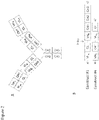
- the invention provides a binding protein comprising three different polypeptide chains ( Figure 1 ), wherein the first polypeptide chain (construct #1) comprises VL A -CL-(X1)n-VH B -CH1-(X2)n, wherein VLA is the light chain variable domain of mAb A, CL is a light chain constant domain, X1 represents an amino acid or an oligopeptide linker, VH B is the heavy chain variable domain of mAb B, CH1 is the first constant domain of the heavy chain, X2 represents an Fc region or a different dimerization domain, and n is 0 or 1.
- VLA is the light chain variable domain of mAb A
- CL is a light chain constant domain
- X1 represents an amino acid or an oligopeptide linker
- VH B is the heavy chain variable domain of mAb B
- CH1 is the first constant domain of the heavy chain
- X2 represents an Fc region or a different dimerization domain
- n is 0 or 1.
- the second polypeptide chain (construct #2) comprises VH A -CH1, wherein VH A is the heavy chain variable domain of mAb A, and CH1 is the first constant domain of the heavy chain.
- the third polypeptide chain (construct #3) comprises VL B -CL, wherein VL B is the light chain variable domain of mAb B, and CL is the constant domain of the light chain.
- the invention provides a binding protein comprising three different polypeptide chains with the overall molecular design similar to the previous embodiment except the order of the variable domains are reversed.
- the first polypeptide chain comprises VH B -CH1-(X1)n-VL A -CL-(X2)n, wherein VL A is a light chain variable domain of mAb A, CL is a light chain constant domain, X1 represents an amino acid or an oligopeptide linker, VH R is the heavy chain variable domain of mAb B, CH1 is the first constant domain of the heavy chain, X2 represents an Fc region or a different dimerization domain, and n is 0 or 1.
- the second polypeptide chain comprises VH A -CH1, wherein VH A is the heavy chain variable domain of mAb A and CH1 is the first constant domain of the heavy chain.
- the third polypeptide chain comprises VL B -CL, wherein VL B is the light chain variable domain of mAb B and CL is the constant domain of the light chain.
- the invention provides a binding protein comprising two different polypeptide chains ( Figure 2 ), wherein the first polypeptide chain (construct #1) comprises VL A -CL-(X1)n-VH B -CH1-(X2)n, wherein VL A is a light chain variable domain of mAb A, CL is a light chain constant domain, X1 represents an amino acid or an oligopeptide linker, VH B is the heavy chain variable domain of mAb B, CH1 is the first constant domain of the heavy chain, X2 represents an Fc region or a different dimerization domain, and n is 0 or 1.
- the second polypeptide chain (construct #4) comprises VH A -CH1-(X3)n-VL B -CL, wherein VH A is the heavy chain variable domain of mAb A, CH1 is the first constant domain of the heavy chain, X3 represents an amino acid or polypeptide that is not a constant domain, n is 0 or 1, VL B is the light chain variable domain of mAb B, and CL is the constant domain of the light chain.
- the invention provides a binding protein comprising two polypeptide chains with the overall molecular design similar to the previous embodiment except the order of the variable domains are reversed.
- the first polypeptide chain comprises VH B -CH1-(X1)n-VL A -CL-(X2)n, wherein VL A is a light chain variable domain of mAb A, CL is a light chain constant domain, X1 represents an amino acid or an oligopeptide linker, VH B is the heavy chain variable domain of mAb B, CH1 is the first constant domain of the heavy chain, X2 represents an Fc region or a different dimerization domain, and n is 0 or 1.
- the second polypeptide chain comprises VL B -CL-(X3)n-VH A -CH1, wherein VH A is the heavy chain variable domain of mAb A, CH1 is the first constant domain of the heavy chain, X3 represents an amino acid or an oligopeptide linker, n is 0 or 1, VL B is the light chain variable domain of mAb B, and CL is the constant domain of the light chain.
- the VH and VL domains in the binding protein are selected from the group consisting of murine heavy/light chain variable domains, fully human heavy/light chain variable domains, CDR grafted heavy/light chain variable domains, humanized heavy/light chain variable domains, and mixtures thereof.
- VH A /VL A and VH B /VL B are capable of binding the same antigen.
- VH A /VL A and VH B /VL B are capable of binding different antigens.
- the first polypeptide chain comprises VL A -CL-VH B -CH1-Fc, and the CL and VH B of the first polypeptide chain are directly fused together.
- the CL and VH B are linked by an amino acid or an oligopeptide linker.
- the first polypeptide chain comprises VH B -CH1-VL A -CL-Fc, and the CH1 and VL A are directly fused together.
- the CH1 and VL A are linked by an amino acid or an oligopeptide linker.
- the oligo- or poly-peptide linker comprises 1 or more amino acids of any reasonable sequence that provides flexibility.
- the linker is selected from the group consisting of G,GS, SG, GGS, GSG, SGG, GGG, GGGS, SGGG, GGGGS, GGGGSGS, GGGGSGS, GGGGSGGS, GGGGSGGGGS, GGGGSGGGGSGGGGS, AKTTPKLEEGEFSEARV, AKTTPKLGG, SAKTTPKLGG, AKTTPKLEEGEFSEARV, SAKTTP, SAKTTPKLGG, RADAAP, RADAAPTVS, RADAAAAGGPGS, RADAAAA(G 4 S) 4 , SAKTTP, SAKTTPKLGG, SAKTTPKLEEGEFSEARV, ADAAP, ADAAPTVSIFPP, TVAAP, TVAAPSVFIFPP, QPKAAP, QPKAAPSVTLFPP, AKTTPP, AKTTPPSVTPLAP, AKTTAP, AKTTAPSVYPLAP, ASTKGP, ASTKGPS
- the amino acid sequence of the linker may be selected from the group consisting of SEQ ID NOs. 26, 28, and 49-86.
- the linker is GSG (SEQ ID NO: 26) or GGGGSGS (SEQ ID NO: 28).
- the linkers can also be in vivo cleavable peptide linkers, protease (such as MMPs) sensitive linkers, disulfide bond-based linkers that can be cleaved by reduction, etc., as previously described (Fusion Protein Technologies for Biopharmaceuticals: Applications and Challenges, edited by Stefan R. Schmidt), or any cleavable linkers known in the art.
- the binding protein comprises an Fc region.
- Fc region refers to the C-terminal region of an IgG heavy chain.
- An example of the amino acid sequence containing the human IgGl Fc region is SEQ ID NO: 20.
- the Fc region of an IgG comprises two constant domains, CH2 and CH3.
- the Fc region is a variant Fc region.
- the variant Fc region has one or more amino acid modifications, such as substitutions, deletions, or insertions, relative to the parent Fc region.
- amino acid modifications of the Fc region alter the effector function activity relative to the parent Fc region activity.
- the variant Fc region may have altered (i.e., increased or decreased) antibody-dependent cytotoxicity (ADCC), complement-mediated cytotoxicity (CDC), phagocytosis, opsonization, or cell binding.
- ADCC antibody-dependent cytotoxicity
- CDC complement-mediated cytotoxicity
- phagocytosis opsonization
- amino acid modifications of the Fc region may alter (i.e., increase or decrease) the affinity of the variant Fc region for an FcyR relative to the parent Fc region.
- the variant Fc region may alter the affinity for FcyRI, Fc ⁇ RII, Fc ⁇ RIII.
- the binding proteins provided herein are capable of binding one or more targets.
- the target is selected from the group consisting of cytokines, cell surface proteins, enzymes and receptors.
- the binding protein is capable of modulating a biological function of one or more targets. More preferably the binding protein is capable of neutralizing one or more targets.
- the binding protein of the invention is capable of binding cytokines selected from the group consisting of lymphokines, monokines, and polypeptide hormones.
- the binding protein is capable of binding pairs of cytokines selected from the group consisting of IL-1 ⁇ and IL-1 ⁇ ; IL-12 and IL-18, TNF ⁇ and IL-23, TNF ⁇ and IL-13; TNF and IL-18; TNF and IL-12; TNF and IL-1beta; TNF and MIF; TNF and IL-6, TNF and IL-6 Receptor, TNF and IL-17; IL-17 and IL-20; IL-17 and IL-23; TNF and IL-15; TNF and VEGF; VEGFR and EGFR; IL-13 and IL-9; IL-13 and IL-4; IL-13 and IL-5; IL-13 and IL-25; IL-13 and TARC; IL-13 and MDC; IL-13 and MIF; IL-13 and TGF- ⁇
- the binding protein of the invention is capable of binding pairs of targets selected from the group consisting of CD137 and CD20, CD137 and EGFR, CD137 and Her-2, CD137 and PD-1, CD137 and PDL-1, VEGF and PD-L1, Lag-3 and TIM-3, OX40 and PD-1, TIM-3 and PD-1, TIM-3 and PDL-1, EGFR and DLL-4, VEGF and EGFR, HGF and VEGF, VEGF and VEGF (same or a different epitope), VEGF and Ang2, EGFR and cMet, PDGF and VEGF, VEGF and DLL-4, OX40 and PD-L1, ICOS and PD-1, ICOS and PD-L1, Lag-3 and PD-1, Lag-3 and PD-L1, Lag-3 and CTLA-4, ICOS and CTLA-4, CD138 and CD20; CD138 and CD40; CD19 and CD20; CD20 and CD3; CD
- the binding protein is capable of binding human IL-17 and human IL-20.
- the binding protein is capable of binding human IL-17 and human IL-20 and comprises a FIT-Ig polypeptide chain #1 sequence that is about 65%, about 70%, about 75%, about 80%, about 85%, about 90%, about 95%, about 99%, or 100% identical to a sequence selected from the group consisting of SEQ ID NO. 15, 25, and 27; a polypeptide chain #2 sequence that is about 65%, about 70%, about 75%, about 80%, about 85%, about 90%, about 95%, about 99%, or 100% identical to SEQ ID NO.
- the binding protein is capable of binding human IL-17 and human IL-20 and comprises FIT-Ig polypeptide chain #1 sequence that is about 65%, about 70%, about 75%, about 80%, about 85%, about 90%, about 95%, about 99%, or 100% identical to a sequence selected from the group consisting of SEQ ID NO.
- polypeptide chain #4 that is about 65%, about 70%, about 75%, about 80%, about 85%, about 90%, about 95%, about 99%, or 100% identical to a sequence selected from the group consisting of SEQ ID NO. 29, 30, and 31.
- the binding protein is capable of binding human CD3 and human CD20.
- the binding protein comprises a FIT-Ig polypeptide chain #1 sequence that is about 65%, about 70%, about 75%, about 80%, about 85%, about 90%, about 95%, about 99%, or 100% identical to a sequence selected from the group consisting of SEQ ID NO.
- polypeptide chain #2 sequence that is about 65%, about 70%, about 75%, about 80%, about 85%, about 90%, about 95%, about 99%, or 100% identical to SEQ ID NO.44; and a polypeptide chain #3 sequence that is about 65%, about 70%, about 75%, about 80%, about 85%, about 90%, about 95%, about 99%, or 100% identical to SEQ ID NO. 46.
- the binding protein is capable of binding human IL-17 and human TNF.
- the binding protein is capable of binding human IL-17 and human TNF and comprises a FIT-Ig polypeptide chain #1 sequence that is about 65%, about 70%, about 75%, about 80%, about 85%, about 90%, about 95%, about 99%, or 100% identical to SEQ ID NO. 87; a polypeptide chain #2 sequence that is about 65%, about 70%, about 75%, about 80%, about 85%, about 90%, about 95%, about 99%, or 100% identical to SEQ ID NO. 89; and a polypeptide chain #3 sequence that is about 65%, about 70%, about 75%, about 80%, about 85%, about 90%, about 95%, about 99%, or 100% identical to SEQ ID NO. 91.
- the binding protein is capable of binding human CTLA-4 and human PD-1.
- the binding protein is capable of binding human CTLA-4 and human PD-1 and comprises a FIT-Ig polypeptide chain #1 sequence that is about 65%, about 70%, about 75%, about 80%, about 85%, about 90%, about 95%, about 99%, or 100% identical to SEQ ID NO. 92 a polypeptide chain #2 sequence that is about 65%, about 70%, about 75%, about 80%, about 85%, about 90%, about 95%, about 99%, or 100% identical to SEQ ID NO. 95; and a polypeptide chain #3 sequence that is about 65%, about 70%, about 75%, about 80%, about 85%, about 90%, about 95%, about 99%, or 100% identical to SEQ ID NO. 97.
- the binding protein of the invention is capable of binding one or two cytokines, cytokine-related proteins, and cytokine receptors selected from the group consisting of BMP1, BMP2, BMP3B (GDF10), BMP4, BMP6, BMP8, CSF1 (M-CSF), CSF2 (GM-CSF), CSF3 (G-CSF), EPO, FGF1 (aFGF), FGF2 (bFGF), FGF3 (int-2), FGF4 (HST), FGF5, FGF6 (HST-2), FGF7 (KGF), FGF9, FGF10, FGF11, FGF12, FGF12B, FGF14, FGF16, FGF17, FGF19, FGF20, FGF21, FGF23, IGF1, IGF2, IFNA1, IFNA2, IFNA4, IFNA5, IFNA6, IFNA7, IFNB1, IFNG, IFNW1, FIL1, FIL1 (EPSILON), FIL1 (Z
- the binding protein of the invention is capable of binding one or more chemokines, chemokine receptors, and chemokine-related proteins selected from the group consisting of CCL1 (1-309), CCL2 (MCP -1 / MCAF), CCL3 (MIP-1a), CCL4 (MIP-1b), CCL5 (RANTES), CCL7 (MCP-3), CCL8 (mcp-2), CCL11 (eotaxin), CCL13 (MCP-4), CCL15 (MIP-1d), CCL16 (HCC-4), CCL17 (TARC), CCL18 (PARC), CCL19 (MIP-3b), CCL20 (MTP-3a), CCL21 (SLC / exodus-2), CCL22 (MDC / STC-1), CCL23 (MPIF-1), CCL24 (MPIF-2 / eotaxin-2), CCL25 (TECK), CCL26 (eotaxin-3), CCL27 (CTACK / ILC), CCL28, CXCL1
- the binding protein of the invention is capable of binding cell surface protein such as, for example, integrins.
- the binding protein of the invention is capable of binding enzymes selected from the group consisting of kinases and proteases.
- the binding protein of the invention is capable of binding receptors selected from the group consisting of lymphokine receptors, monokine receptors, and polypeptide hormone receptors.
- the binding protein is multivalent. In another embodiment, the binding protein is multispecific.
- the multivalent and or multispecific binding proteins described above have desirable properties particularly from a therapeutic standpoint.
- the multivalent and or multispecific binding protein may (1) be internalized (and/or catabolized) faster than a bivalent antibody by a cell expressing an antigen to which the antibodies bind; (2) be an agonist antibody; and/or (3) induce cell death and/or apoptosis of a cell expressing an antigen which the multivalent antibody is capable of binding to.
- the "parent antibody" which provides at least one antigen binding specificity of the multivalent and or multispecific binding proteins may be one which is internalized (and/or catabolized) by a cell expressing an antigen to which the antibody binds; and/or may be an agonist, cell death-inducing, and/or apoptosis-inducing antibody, and the multivalent and or multispecific binding protein as described herein may display improvement(s) in one or more of these properties.
- the parent antibody may lack any one or more of these properties, but may be endowed with them when constructed as a multivalent binding protein as herein described.
- the binding protein of the invention has an on rate constant (Kon) to one or more targets selected from the group consisting of: at least about 10 2 M -1 s -1 ; at least about 10 3 M -1 s -1 ; at least about 10 4 M -1 s -1 ; at least about 10 5 M -1 s -1 ; and at least about 10 6 M -1 s -1 , as measured by surface plasmon resonance.
- Kon on rate constant
- the binding protein of the invention has an on rate constant (Kon) to one or more targets between 10 2 M -1 s -1 to 10 3 M -1 s -1 ; between 10 3 M -1 s -1 to 10 4 M -1 s -1 ; between 10 4 M -1 s -1 to 10 5 M -1 s -1 ; or between 10 5 M -1 s -1 to 10 6 M -1 s -1 , as measured by surface plasmon resonance.
- Kon on rate constant
- the binding protein has an off rate constant (Koff) for one or more targets selected from the group consisting of: at most about 10 -3 s -1 ; at most about 10 -4 s -1 ; at most about 10 -5 s -1 ; and at most about 10 -6 s -1 , as measured by surface plasmon resonance.
- the binding protein of the invention has an off rate constant (Koff) to one or more targets of 10 -3 s -1 to 10 -4 s -1 ; of 10 -4 s -1 to 10 -5 s -1 ; or of 10 -5 s -1 to 10 -6 s -1 , as measured by surface plasmon resonance.
- the binding protein has a dissociation constant (K D ) to one or more targets selected from the group consisting of: at most about 10 -7 M; at most about 10 -8 M; at most about 10 -9 M; at most about 10 -10 M; at most about 10 -11 M; at most about 10 -12 M; and at most 10 -13 M.
- the binding protein of the invention has a dissociation constant (K D ) to IL-12 or IL-23 of 10 -7 M to 10 -8 M; of 10 -8 M to 10 -9 M; of 10 -9 M to 10 -10 M; of 10 -10 to 10 -11 M; of 10 -11 M to 10 -12 M; or of 10 -12 M to 10 -13 M.
- the binding protein described above is a conjugate further comprising an agent selected from the group consisting of an immunoadhesion molecule, an imaging agent, a therapeutic agent, and a cytotoxic agent.
- the imaging agent is selected from the group consisting of a radiolabel, an enzyme, a fluorescent label, a luminescent label, a bioluminescent label, a magnetic label, and biotin.
- the imaging agent is a radiolabel selected from the group consisting of: 3 H, 14 C, 35 S, 90 Y, 99 Tc, 111 In, 125 I, 131 I, 177 Lu, 166 Ho, and 153 Sm.
- the therapeutic or cytotoxic agent is selected from the group consisting of an immunosuppressive agent, an immuno-stimulatory agent, an anti-metabolite, an alkylating agent, an antibiotic, a growth factor, a cytokine, an anti-angiogenic agent, an anti-mitotic agent, an anthracycline, a toxin, and an apoptotic agent.
- the binding protein is conjugated directly to the agent.
- the binding protein is conjugated to the agent via a linker. Suitable linkers include, but are not limited to, amino acid and polypeptide linkers disclosed herein. Linkers may be cleavable or non-cleavable.
- the binding protein described above is a crystallized binding protein and exists as a crystal.
- the crystal is a carrier-free pharmaceutical controlled release crystal.
- the crystallized binding protein has a greater half life in vivo than the soluble counterpart of said binding protein.
- the crystallized binding protein retains biological activity.
- the binding protein described above is glycosylated.
- the glycosylation is a human glycosylation pattern.
- One aspect of the invention pertains to an isolated nucleic acid encoding any one of the binding protein disclosed above.
- a further embodiment provides a vector comprising the isolated nucleic acid disclosed above wherein said vector is selected from the group consisting of pcDNA; pTT ( Durocher et al., Nucleic Acids Research 2002, Vol 30, No.2 ); pTT3 (pTT with additional multiple cloning site; pEFBOS ( Mizushima, S. and Nagata, S., (1990) Nucleic acids Research Vol 18, No. 17 ); pBV; pJV; pcDNA3.1 TOPO, pEF6 TOPO and pBJ.
- the binding protein can be generated using various techniques. Expression vectors, host cells and methods of generating the binding proteins are provided in this disclosure.
- the antigen-binding variable domains of the binding proteins of this disclosure can be obtained from parent binding proteins, including polyclonal Abs, monoclonal Abs, and or receptors capable of binding antigens of interest. These parent binding proteins may be naturally occurring or may be generated by recombinant technology.
- the person of ordinary skill in the art is well familiar with many methods for producing antibodies and/or isolated receptors, including, but not limited to using hybridoma techniques, selected lymphocyte antibody method (SLAM), use of a phage, yeast, or RNA-protein fusion display or other library, immunizing a non-human animal comprising at least some of the human immunoglobulin locus, and preparation of chimeric, CDR-grafted, and humanized antibodies.
- SLAM selected lymphocyte antibody method
- Variable domains may also be prepared using affinity maturation techniques.
- the binding variable domains of the binding proteins can also be obtained from isolated receptor molecules obtained by extraction procedures known in the art (e.g., using solvents, detergents, and/or affinity purifications), or determined by biophysical methods known in the art (e.g., X-ray crystallography, NMR, interferometry, and/or computer modeling).
- An embodiment comprising selecting parent binding proteins with at least one or more properties desired in the binding protein molecule.
- the desired property is one or more of those used to characterize antibody parameters, such as, for example, antigen specificity, affinity to antigen, potency, biological function, epitope recognition, stability, solubility, production efficiency, immunogenicity, pharmacokinetics, bioavailability, tissue cross reactivity, or orthologous antigen binding. See, e.g., US Patent Publication No. 20090311253 .
- the multi-specific antibodies may also be designed such that one or more of the antigen binding domain are rendered non-functional.
- the variable domains may be obtained using recombinant DNA techniques from parent binding proteins generated by any one of the methods described herein.
- a variable domain is a murine heavy or light chain variable domain.
- a variable domain is a CDR grafted or a humanized variable heavy or light chain domain.
- a variable domain is a human heavy or light chain variable domain.
- one or more constant domains are linked to the variable domains using recombinant DNA techniques.
- a sequence comprising one or more heavy chain variable domains is linked to a heavy chain constant domain and a sequence comprising one or more light chain variable domains is linked to a light chain constant domain.
- the constant domains are human heavy chain constant domains and human light chain constant domains, respectively.
- the heavy chain is further linked to an Fc region.
- the Fc region may be a native sequence Fc region or a variant Fc region.
- the Fc region is a human Fc region.
- the Fc region includes Fc region from IgGl, IgG2, IgG3, IgG4, IgA, IgM, IgE, or IgD.
- the binding proteins provided herein can be employed for tissue-specific delivery (target a tissue marker and a disease mediator for enhanced local PK thus higher efficacy and/or lower toxicity), including intracellular delivery (targeting an internalizing receptor and an intracellular molecule), delivering to inside brain (targeting transferrin receptor and a CNS disease mediator for crossing the blood-brain barrier).
- the binding proteins can also serve as a carrier protein to deliver an antigen to a specific location via binding to a non-neutralizing epitope of that antigen and also to increase the half-life of the antigen.
- the binding proteins can be designed to either be physically linked to medical devices implanted into patients or target these medical devices (see Burke et al. (2006) Advanced Drug Deliv. Rev.
- a host cell is transformed with the vector disclosed above.
- the host cell is a prokaryotic cell.
- the host cell is Escherecia coli.
- the host cell is an eukaryotic cell.
- the eukaryotic cell is selected from the group consisting of protist cell, animal cell, plant cell and fungal cell.
- the host cell is a mammalian cell including, but not limited to, 293, COS, NS0, and CHO and; or a fungal cell such as Saccharomyces cerevisiae; or an insect cell such as Sf9.
- Another aspect of the invention provides a method of producing a binding protein disclosed above comprising culturing any one of the host cells also disclosed above in a culture medium under conditions sufficient to produce the binding protein.
- Preferably 50%-75% of the binding protein produced by this method is a dual specific tetravalent binding protein. More preferably 75%-90% of the binding protein produced by this method is a dual specific tetravalent binding protein. Most preferably 90%-95% of the binding protein produced is a dual specific tetravalent binding protein.
- Another embodiment provides a binding protein produced according to the method disclosed above.
- compositions for the release of a binding protein wherein the composition comprises a formulation which in turn comprises a crystallized binding protein, as disclosed above and an ingredient; and at least one polymeric carrier.
- the polymeric carrier is a polymer selected from one or more of the group consisting of: poly (acrylic acid), poly (cyanoacrylates), poly (amino acids), poly (anhydrides), poly (depsipeptide), poly (esters), poly (lactic acid), poly (lactic-co-glycolic acid) or PLGA, poly (b-hydroxybutryate), poly (caprolactone), poly (dioxanone); poly (ethylene glycol), poly ((hydroxypropyl) methacrylamide, poly [(organo)phosphazene], poly (ortho esters), poly (vinyl alcohol), poly (vinylpyrrolidone), maleic anhydride- alkyl vinyl ether copolymers, pluronic polyols, albumin, alginate, cellulose and cellulose derivative
- the ingredient is selected from the group consisting of albumin, sucrose, trehalose, lactitol, gelatin, hydroxypropyl- ⁇ - cyclodextrin, methoxypolyethylene glycol and polyethylene glycol.
- Another embodiment provides a method for treating a mammal comprising the step of administering to the mammal an effective amount of the composition disclosed above.
- the invention also provides a pharmaceutical composition
- a pharmaceutical composition comprising a binding protein, as disclosed above and a pharmaceutically acceptable carrier.
- Pharmaceutically acceptable carriers include, but are not limited to, phosphate buffer or saline.
- Other common parenteral vehicles include sodium phosphate solutions, Ringer's dextrose, dextrose and sodium chloride, lactated Ringer's, or fixed oils.
- Intravenous vehicles include fluid and nutrient replenishers, electrolyte replenishers, such as those based on Ringer's dextrose, and the like. Preservatives and other additives may also be present such as for example, antimicrobials, antioxidants, chelating agents, and inert gases and the like.
- compositions suitable for injectable use include sterile aqueous solutions (where water soluble) or dispersions and sterile powders for the extemporaneous preparation of sterile injectable solutions or dispersions.
- the carrier can be a solvent or dispersion medium containing, for example, water, ethanol, polyol (e.g., glycerol, propylene glycol, and liquid polyethylene glycol, and the like), and suitable mixtures thereof.
- isotonic agents for example, sugars, polyalcohols, such as mannitol, sorbitol, or sodium chloride in the composition.
- Prolonged absorption of the injectable compositions can be brought about by including in the composition an agent which delays absorption, for example, aluminum monostearate and gelatin.
- the pharmaceutical composition comprises at least one additional therapeutic agent for treating a disorder.
- the additional agent is selected from the group consisting of: therapeutic agents, imaging agents, cytotoxic agent, angiogenesis inhibitors (including but not limited to anti-VEGF antibodies or VEGF-trap); kinase inhibitors (including but not limited to KDR and TIE-2 inhibitors); co-stimulation molecule blockers (including but not limited to anti-B7.1, anti-B7.2, CTLA4-Ig, anti-PD-1, anti-CD20); adhesion molecule blockers (including but not limited to anti-LFA-1 Abs, anti-E/L selectin Abs, small molecule inhibitors); anti-cytokine antibody or functional fragment thereof (including but not limited to anti-IL-18, anti-TNF, anti-IL-6/cytokine receptor antibodies); methotrexate; cyclosporin; rapamycin; FK506; detectable label or reporter; a TNF antagonist; an antirheumatic; a muscle relaxant,
- the invention provides a method for treating a human subject suffering from a disorder in which the target, or targets, capable of being bound by the binding protein disclosed above is detrimental, comprising administering to the human subject a binding protein disclosed above such that the activity of the target or targets in the human subject is inhibited and treatment or preventions of the disorder is achieved.
- the disease or disorder is an inflammatory condition, autoimmune disease, or cancer.
- the disease or disorder is selected from the group comprising arthritis, osteoarthritis, juvenile chronic arthritis, septic arthritis, Lyme arthritis, psoriatic arthritis, reactive arthritis, spondyloarthropathy, systemic lupus erythematosus, Crohn's disease, ulcerative colitis, inflammatory bowel disease, insulin dependent diabetes mellitus, thyroiditis, asthma, allergic diseases, psoriasis, dermatitis scleroderma, graft versus host disease, organ transplant rejection, acute or chronic immune disease associated with organ transplantation, sarcoidosis, atherosclerosis, disseminated intravascular coagulation, Kawasaki's disease, Grave's disease, nephrotic syndrome, chronic fatigue syndrome, Wegener's granulomatosis, Henoch-Schoenlein purpurea, microscopic vasculitis of the kidneys, chronic active hepatitis, uveitis, septic shock, toxic shock syndrome, sepsis
- the invention provides a method of treating a patient suffering from a disorder comprising the step of administering any one of the binding proteins disclosed above before, concurrent, or after the administration of a second agent, as discussed above.
- the second agent is selected from the group consisting of budenoside, epidermal growth factor, corticosteroids, cyclosporin, sulfasalazine, aminosalicylates, 6-mercaptopurine, azathioprine, metronidazole, lipoxygenase inhibitors, mesalamine, olsalazine, balsalazide, antioxidants, thromboxane inhibitors, IL-1 receptor antagonists, anti-TL-1 ⁇ monoclonal antibodies, anti-TL-6 monoclonal antibodies, growth factors, elastase inhibitors, pyridinyl-imidazole compounds, antibodies or agonists of TNF, LT, IL-1, IL-2, IL-6, IL-7, IL
- the pharmaceutical compositions disclosed above are administered to the subject by at least one mode selected from parenteral, subcutaneous, intramuscular, intravenous, intrarticular, intrabronchial, intraabdominal, intracapsular, intracartilaginous, intracavitary, intracelial, intracerebellar, intracerebroventricular, intracolic, intracervical, intragastric, intrahepatic, intramyocardial, intraosteal, intrapelvic, intrapericardiac, intraperitoneal, intrapleural, intraprostatic, intrapulmonary, intrarectal, intrarenal, intraretinal, intraspinal, intrasynovial, intrathoracic, intrauterine, intravesical, bolus, vaginal, rectal, buccal, sublingual, intranasal, and transdermal.
- parenteral subcutaneous, intramuscular, intravenous, intrarticular, intrabronchial, intraabdominal, intracapsular, intracartilaginous, intracavitary, intracelial
- the anti-idiotype antibody includes any protein or peptide containing molecule that comprises at least a portion of an immunoglobulin molecule such as, but not limited to, at least one complementarily determining region (CDR) of a heavy or light chain or a ligand binding portion thereof, a heavy chain or light chain variable region, a heavy chain or light chain constant region, a framework region, or; any portion thereof, that can be incorporated into a binding protein of the present invention.
- CDR complementarily determining region
- binding proteins of the invention are capable of binding one or more targets selected from the group consisting of ABCF1; ACVR1; ACVR1B; ACVR2; ACVR2B; ACVRL1; ADORA2A; Aggrecan; AGR2; AICDA; AIF1; AIG1; AKAP1; AKAP2; AMH; AMHR2; ANGPT1; ANGPT2; ANGPTL3; ANGPTL4; ANPEP; APC; APOC1; AR; AZGP1 (zinc-a-glycoprotein); B7.1; B7.2; BAD; BAFF; BAG1; BAI1; BCL2; BCL6; BDNF; BLNK; BLR1 (MDR15); BlyS; BMP1; BMP2; BMP3B (GDF10); BMP4; BMP6; BMP8; BMPR1A; BMPR1B; BMPR2; BPAG1 (plectin); BRCA1; C19or
- the binding proteins of the present invention can be used to detect the antigens (e.g., in a biological sample, such as scrum or plasma), using a conventional immunoassay, such as an enzyme linked immunosorbent assays (ELISA), an radioimmunoassay (RIA) or tissue immunohistochemistry.
- a conventional immunoassay such as an enzyme linked immunosorbent assays (ELISA), an radioimmunoassay (RIA) or tissue immunohistochemistry.
- ELISA enzyme linked immunosorbent assays
- RIA radioimmunoassay
- tissue immunohistochemistry tissue immunohistochemistry.
- the FIT-Ig is directly or indirectly labeled with a detectable substance to facilitate detection of the bound or unbound antibody. Suitable detectable substances include various enzymes, prosthetic groups, fluorescent materials, luminescent materials and radioactive materials.
- suitable enzymes include horseradish peroxidase, alkaline phosphatase, ⁇ -galactosidase, or acetylcholinesterase;
- suitable prosthetic group complexes include streptavidin/biotin and avidin/biotin;
- suitable fluorescent materials include umbelliferone, fluorescein, fluorescein isothiocyanate, rhodamine, dichlorotriazinylamine fluorescein, dansyl chloride or phycoerythrin;
- an example of a luminescent material includes luminol; and examples of suitable radioactive material include 3H, 14C, 35S, 90Y, 99Tc, 111In, 1251, 131I, 177Lu, 166Ho, or 153Sm.
- the binding proteins of the invention are capable of neutralizing the activity of the antigens both in vitro and in vivo. Accordingly, such FIT-Igs can be used to inhibit antigen activity, e.g., in a cell culture containing the antigens, in human subjects or in other mammalian subjects having the antigens with which a binding protein of the invention cross-reacts.
- the invention provides a method for reducing antigen activity in a subject suffering from a disease or disorder in which the antigen activity is detrimental.
- a binding protein of the invention can be administered to a human subject for therapeutic purposes.
- a disorder in which antigen activity is detrimental is intended to include diseases and other disorders in which the presence of the antigen in a subject suffering from the disorder has been shown to be or is suspected of being either responsible for the pathophysiology of the disorder or a factor that contributes to a worsening of the disorder. Accordingly, a disorder in which antigen activity is detrimental is a disorder in which reduction of antigen activity is expected to alleviate the symptoms and/or progression of the disorder. Such disorders may be evidenced, for example, by an increase in the concentration of the antigen in a biological fluid of a subject suffering from the disorder (e.g., an increase in the concentration of antigen in scrum, plasma, synovial fluid, etc. of the subject).
- disorders that can be treated with the binding proteins of the invention include those disorders discussed below and in the section pertaining to pharmaceutical compositions of the antibodies of the invention.
- the FIT-Igs of the invention may bind one antigen or multiple antigens.
- antigens include, but are not limited to, the targets listed in the following databases, which databases are incorporated herein by reference. These target databases include, but are not limited to, the following listings:
- FIT-Igs are useful as therapeutic agents to simultaneously block two different targets to enhance efficacy/safety and/or increase patient coverage.
- targets may include soluble targets (IL-13 and TNF) and cell surface receptor targets (VEGFR and EGFR). It can also be used to induce redirected cytotoxicity between tumor cells and T cells (Her2 and CD3) for cancer therapy, or between autoreactive cell and effector cells for autoimmune/transplantation, or between any target cell and effector cell to eliminate disease-causing cells in any given disease.
- FIT-Ig can be used to trigger receptor clustering and activation when it is designed to target two different epitopes on the same receptor. This may have benefit in making agonistic and antagonistic anti-GPCR therapeutics.
- FIT-Ig can be used to target two different epitopes on one cell for clustering/signaling (two cell surface molecules) or signaling (on one molecule).
- a FIT-Ig molecule can be designed to trigger CTLA-4 ligation, and a negative signal by targeting two different epitopes (or 2 copies of the same epitope) of CTLA-4 extracellular domain, leading to down regulation of the immune response.
- CTLA-4 is a clinically validated target for therapeutic treatment of a number of immunological disorders.
- CTLA-4/B7 interactions negatively regulate T cell activation by attenuating cell cycle progression, IL-2 production, and proliferation of T cells following activation, and CTLA-4 (CD152) engagement can down-regulate T cell activation and promote the induction of immune tolerance.
- CTLA-4 (CD152) engagement can down-regulate T cell activation and promote the induction of immune tolerance.
- CTLA-4 (CD152) engagement can down-regulate T cell activation and promote the induction of immune tolerance.
- CTLA-4 (CD152) engagement can down-regulate T cell activation and promote the induction of immune tolerance.
- CTLA-4 (CD152) engagement can down-regulate T cell activation and promote the induction of immune tolerance.
- CTLA-4 (CD152) engagement can down-regulate T cell activation and promote the induction of immune tolerance.
- CTLA-4 (CD152) engagement can down-regulate T cell activation and promote the induction of immune tolerance.
- CTLA-4 (CD152) engagement can down-regulate
- a cell member-bound single chain antibody was generated, and significantly inhibited allogeneic rejection in mice ( Hwang 2002 JI 169:633 ).
- artificial APC surface-linked single-chain antibody to CTLA-4 was generated and demonstrated to attenuate T cell responses ( Griffin 2000 JI 164:4433 ).
- CTLA-4 ligation was achieved by closely localized member-bound antibodies in artificial systems. While these experiments provide proof-of-concept for immune down-regulation by triggering CTLA-4 negative signaling, the reagents used in these reports are not suitable for therapeutic use.
- CTLA-4 ligation may be achieved by using a FIT-Ig molecule, which target two different epitopes (or 2 copies of the same epitope) of CTLA-4 extracellular domain.
- the rationale is that the distance spanning two binding sites of an IgG, approximately 150-170 ⁇ , is too large for active ligation of CTLA-4 (30-50 ⁇ between 2 CTLA-4 homodimer). However the distance between the two binding sites on FIT-Ig (one arm) is much shorter, also in the range of 30-50 ⁇ , allowing proper ligation of CTLA-4.
- FIT-Ig can target two different members of a cell surface receptor complex (e.g. IL-12R alpha and beta). Furthermore, FIT-Ig can target CR1 and a soluble protein/pathogen to drive rapid clearance of the target soluble protein/pathogen.
- a cell surface receptor complex e.g. IL-12R alpha and beta.
- FIT-Ig can target CR1 and a soluble protein/pathogen to drive rapid clearance of the target soluble protein/pathogen.
- FIT-Igs of the invention can be employed for tissue-specific delivery (target a tissue marker and a disease mediator for enhanced local PK thus higher efficacy and/or lower toxicity), including intracellular delivery (targeting an internalizing receptor and a intracellular molecule), delivering to inside brain (targeting transferrin receptor and a CNS disease mediator for crossing the blood-brain barrier).
- FIT-Ig can also serve as a carrier protein to deliver an antigen to a specific location via biding to a non-neutralizing epitope of that antigen and also to increase the half-life of the antigen.
- FIT-Ig can be designed to either be physically linked to medical devices implanted into patients or target these medical devices ( Burke, Sandra E.; Kuntz, Richard E.; Schwartz, Lewis B. Zotarolimus (ABT-578) eluting stents. Advanced Drug Delivery Reviews (2006), 58(3), 437-446 . ; Surface coatings for biological activation and functionalization of medical devices. Hildebrand, H. F.; Blanchemain, N.; Mayer, G.; Chai, F.; Lefebvre, M.; Boschin, F. Surface and Coatings Technology (2006), 200(22-23), 6318-6324 . ; Drug/ device combinations for local drug therapies and infection prophylaxis.
- mediators including but not limited to cytokines
- Stents have been used for years in interventional cardiology to clear blocked arteries and to improve the flow of blood to the heart muscle.
- EPC endothelial progenitor cells
- FIT-Ig are designed in such a way that it binds to a cell surface marker (such as CD34) as well as a protein (or an epitope of any kind, including but not limited to lipids and polysaccharides) that has been coated on the implanted device to facilitate the cell recruitment.
- a cell surface marker such as CD34
- a protein or an epitope of any kind, including but not limited to lipids and polysaccharides
- FIT-Igs can be coated on medical devices and upon implantation and releasing all FITs from the device (or any other need which may require additional fresh FIT-Ig, including aging and denaturation of the already loaded FIT-Ig) the device could be reloaded by systemic administration of fresh FIT-Ig to the patient, where the FIT-Ig is designed to binds to a target of interest (a cytokine, a cell surface marker (such as CD34) etc.) with one set of binding sites and to a target coated on the device (including a protein, an epitope of any kind, including but not limited to lipids, polysaccharides and polymers ) with the other.
- a target of interest a cytokine, a cell surface marker (such as CD34) etc.
- a target coated on the device including a protein, an epitope of any kind, including but not limited to lipids, polysaccharides and polymers
- This technology has the advantage of extending the usefulness of coated
- FIT-Ig molecules of the invention are also useful as therapeutic molecules to treat various diseases.
- Such FIT-Ig molecules may bind one or more targets involved in a specific disease. Examples of such targets in various diseases are described below.
- C5 CCL1 (1-309), CCL11 (eotaxin), CCL13 (mcp-4), CCL15 (MIP-1d), CCL16 (HCC-4), CCL17 (TARC), CCL18 (PARC), CCL19, CCL2 (mcp-1), CCL20 (MIP-3a), CCL21 (MIP-2), CCL23 (MPIF-1), CCL24 (MPIF-2 / cotaxin-2), CCL25 (TECK), CCL26, CCL3 (MIP-1a), CCL4 (MIP-1b), CCL5 (RANTES), CCL7 (mcp-3), CCL8 (mcp-2), CXCL1, CXCL10 (IP-10), CXCL11 (1-TAC / IP-9), CXCL12 (SDF1), CXCL13, CXCL14, CXCL2, CXCL3, CXCL5 (ENA-78 / LIX), CXCL6 (GCP-2),
- Allergic asthma is characterized by the presence of eosinophilia, goblet cell metaplasia, epithelial cell alterations, airway hyperreactivity (AHR), and Th2 and Th1 cytokine expression, as well as elevated serum IgE levels. It is now widely accepted that airway inflammation is the key factor underlying the pathogenesis of asthma, involving a complex interplay of inflammatory cells such as T cells, B cells, cosinophils, mast cells and macrophages, and of their secreted mediators including cytokines and chemokines. Corticosteroids are the most important anti-inflammatory treatment for asthma today, however their mechanism of action is non-specific and safety concerns exist, especially in the juvenile patient population.
- IL-13 in mice mimics many of the features of asthma, including AHR, mucus hypersecretion and airway fibrosis, independently of eosinophilic inflammation ( Finotto et al., International Immunology (2005), 17(8), 993-1007 ; Padilla et al., Journal of Immunology (2005), 174(12), 8097-8105 ).
- IL-13 has been implicated as having a pivotal role in causing pathological responses associated with asthma.
- the development of anti-IL-13 monoclonal antibody therapy to reduce the effects of IL-13 in the lung is an exciting new approach that offers considerable promise as a novel treatment for asthma.
- mediators of differential immunological pathways are also involved in asthma pathogenesis, and blocking these mediators, in addition to IL-13, may offer additional therapeutic benefit.
- target pairs include, but are not limited to, IL-13 and a pro-inflammatory cytokine, such as tumor necrosis factor- ⁇ (TNF- ⁇ ).
- TNF- ⁇ tumor necrosis factor- ⁇
- TNF- ⁇ may amplify the inflammatory response in asthma and may be linked to disease severity ( McDonnell, et al., Progress in Respiratory Research (2001), 31(New Drugs for Asthma, Allergy and COPD), 247-250 .). This suggests that blocking both IL-13 and TNF- ⁇ may have beneficial effects, particularly in severe airway disease.
- the FIT-Ig of the invention binds the targets IL-13 and TNF ⁇ and is used for treating asthma.
- Animal models such as OVA-induced asthma mouse model, where both inflammation and AHR can be assessed, are known in the art and may be used to determine the ability of various FIT-Ig molecules to treat asthma.
- Animal models for studying asthma are disclosed in Coffman, et al., Journal of Experimental Medicine (2005), 201(12), 1875-1879 ; Lloyd, et al., Advances in Immunology (2001), 77, 263-295 ; Boyce et al., Journal of Experimental Medicine (2005), 201(12), 1869-1873 ; and Snibson, et al., Journal of the British Society for Allergy and Clinical Immunology (2005), 35(2), 146-52 .
- targets include, but are not limited to, IL-13 and IL-1beta, since IL-1beta is also implicated in inflammatory response in asthma; IL-13 and cytokines and chemokines that are involved in inflammation, such as IL-13 and IL-9; IL-13 and IL-4; IL-13 and IL-5; TL-13 and IL-25; IL-13 and TARC; TL-13 and MDC; TL-13 and MIF; IL-13 and TGF- ⁇ ; IL-13 and LHR agonist; IL-13 and CL25; IL-13 and SPRR2a; IL-13 and SPRR2b; and IL-13 and ADAM8.
- IL-13 and IL-1beta since IL-1beta is also implicated in inflammatory response in asthma
- IL-13 and cytokines and chemokines that are involved in inflammation such as IL-13 and IL-9; IL-13 and IL-4; IL-13 and IL-5; TL-13 and IL-25; IL-13 and TARC;
- the present invention also contemplates FIT-Igs capable of binding one or more targets involved in asthma selected from the group consisting of CSF1 (MCSF), CSF2 (GM-CSF), CSF3 (GCSF), FGF2, IFNA1, IFNB1, IFNG, histamine and histamine receptors, 1L1A, IL1B, IL2, IL3, IL4, IL5, IL6, IL7, IL8, IL9, IL10, IL11, IL12A, IL12B, IL13, IL14, IL15, IL16, IL17, IL18, IL19, KITLG, PDGFB, IL2RA, IL4R, IL5RA, ILRRA, IL8RB, IL12RB1, IL12RB2, IL13RA1, IL13RA2, IL18R1, TSLP, CCL1, CCL2, CCL3, CCL4, CCL5, CCL7, CCL8, CCL13, CCL17, CCL18
- RA Rheumatoid arthritis
- RA a systemic disease
- cytokines including TNF, chemokines, and growth factors are expressed in diseased joints.
- Systemic administration of anti-TNF antibody or sTNFR fusion protein to mouse models of RA was shown to be anti-inflammatory and joint protective.
- Clinical investigations in which the activity of TNF in RA patients was blocked with intravenously administered infliximab Harriman G, Harper LK, Schaible TF. 1999 Summary of clinical trials in rheumatoid arthritis using infliximab, an anti-TNFalpha treatment.
- mAB chimeric anti-TNF monoclonal antibody
- cytokines have been identified and have been shown to be of benefit in animal models, including interleukin-15, interleukin-17, and interleukin-18, and clinical trials of these agents are currently under way.
- Dual-specific antibody therapy combining anti-TNF and another mediator, has great potential in enhancing clinical efficacy and/or patient coverage. For example, blocking both TNF and VEGF can potentially eradicate inflammation and angiogenesis, both of which are involved in pathophysiology of RA.
- Blocking other pairs of targets involved in RA including, but not limited to, TNF and IL-18; TNF and IL-12; TNF and IL-23; TNF and IL-1beta; TNF and MIF; TNF and IL-17; and TNF and IL-15 with specific FIT-Ig Igs is also contemplated.
- SLE systemic lupus erythematosus
- the immunopathogenic hallmark of systemic lupus erythematosus is the polyclonal B cell activation, which leads to hyperglobulinemia, autoantibody production and immune complex formation.
- the fundamental abnormality appears to be the failure of T cells to suppress the forbidden B cell clones due to generalized T cell dysregulation.
- B and T-cell interaction is facilitated by several cytokines such as IL-10 as well as co-stimulatory molecules such as CD40 and CD40L, B7 and CD28 and CTLA-4, which initiate the second signal.
- B cell targeted therapies CD-20, CD-22, CD-19, CD28, CD4, CD80, HLA-DRA, IL10, IL2, IL4, TNFRSF5, TNFRSF6, TNFSF5, TNFSF6, BLR1, HDAC4, HDAC5, HDAC7A, HDAC9, ICOSL, IGBP1, MS4A1, RGS1, SLA2, CD81, IFNB1, IL10, TNFRSF5, TNFRSF7, TNFSF5, AICDA, BLNK, GALNAC4S-6ST, HDAC4, HDAC5, HDAC7A, HDAC9, IL10, IL11, IL4, INHA, INHBA, KLF6, TNFRSF7, CD28, CD38, CD69, CD80, CD83, CD86, DPP4, FCER2, IL2RA, TNFRSF8, TNFSF7, CD24, CD37, CD40, CD72, CD74
- SLE is considered to be a Th-2 driven disease with documented elevations in serum IL-4, IL-6, IL-10.
- FIT-Ig Igs capable of binding one or more targets selected from the group consisting of IL-4, IL-6, IL-10, IFN-a, and TNF-a are also contemplated. Combination of targets discussed above will enhance therapeutic efficacy for SLE which can be tested in a number of lupus preclinical models (see Peng SL (2004) Methods Mol Med.; 102:227-72 ).
- MS Multiple sclerosis
- MBP myelin basic protein
- MS is a disease of complex pathologies, which involves infiltration by CD4+ and CD8+ T cells and of response within the central nervous system.
- Expression in the CNS of cytokines, reactive nitrogen species and costimulator molecules have all been described in MS.
- immunological mechanisms that contribute to the development of autoimmunity.
- IL-12 is a proinflammatory cytokine that is produced by APC and promotes differentiation of Th1 effector cells. IL-12 is produced in the developing lesions of patients with MS as well as in EAE-affected animals. Previously it was shown that interference in IL-12 pathways effectively prevents EAE in rodents, and that in vivo neutralization of IL-12p40 using a anti-IL-12 mAb has beneficial effects in the myelin-induced EAE model in common marmosets.
- TWEAK is a member of the TNF family, constitutively expressed in the central nervous system (CNS), with pro-inflammatory, proliferative or apoptotic effects depending upon cell types. Its receptor, Fn14, is expressed in CNS by endothelial cells, reactive astrocytes and neurons. TWEAK and Fn14 mRNA expression increased in spinal cord during experimental autoimmune encephalomyelitis (EAE). Anti-TWEAK antibody treatment in myelin oligodendrocyte glycoprotein (MOG) induced EAE in C57BL/6 mice resulted in a reduction of disease severity and leukocyte infiltration when mice were treated after the priming phase.
- MOG myelin oligodendrocyte glycoprotein
- One aspect of the invention pertains to FIT-Ig Ig molecules capable of binding one or more, preferably two, targets selected from the group consisting of IL-12, TWEAK, IL-23, CXCL13, CD40, CD40L, IL-18, VEGF, VLA-4, TNF, CD45RB, CD200, IFNgamma, GM-CSF, FGF, C5, CD52, and CCR2.
- a preferred embodiment includes a dual-specific anti-IL-12/TWEAK FIT-Ig Ig as a therapeutic agent beneficial for the treatment of MS.
- Several animal models for assessing the usefulness of the FIT-Ig molecules to treat MS are known in the art (see Steinman L, et al., (2005) Trends Immunol.
- the pathophysiology of sepsis is initiated by the outer membrane components of both gram-negative organisms (lipopolysaccharide [LPS], lipid A, endotoxin) and grampositive organisms (lipoteichoic acid, peptidoglycan). These outer membrane components are able to bind to the CD14 receptor on the surface of monocytes. By virtue of the recently described toll-like receptors, a signal is then transmitted to the cell, leading to the eventual production of the proinflammatory cytokines tumor necrosis factor-alpha (TNF-alpha) and interleukin-1 (IL-I).
- TNF-alpha tumor necrosis factor-alpha
- IL-1 interleukin-1
- cytokines especially tumor necrosis factor (TNF) and interleukin (IL)-1, have been shown to be critical mediators of septic shock. These cytokines have a direct toxic effect on tissues; they also activate phospholipase A2. These and other effects lead to increased concentrations of platelet-activating factor, promotion of nitric oxide synthase activity, promotion of tissue infiltration by neutrophils, and promotion of neutrophil activity.
- TNF tumor necrosis factor
- IL-1 interleukin
- lymphocyte apoptosis can be triggered by the absence of IL-2 or by the release of glucocorticoids, granzymes, or the so-called 'death' cytokines: tumor necrosis factor alpha or Fas ligand.
- Apoptosis proceeds via auto-activation of cytosolic and/or mitochondrial caspases, which can be influenced by the pro- and anti-apoptotic members of the Bcl-2 family.
- cytosolic and/or mitochondrial caspases which can be influenced by the pro- and anti-apoptotic members of the Bcl-2 family.
- not only can treatment with inhibitors of apoptosis prevent lymphoid cell apoptosis; it may also improve outcome.
- lymphocyte apoptosis represents an attractive therapeutic target for the septic patient.
- a dual-specific agent targeting both inflammatory mediator and a apoptotic mediator may have added benefit.
- One aspect of the invention pertains to FIT-Ig Igs capable of binding one or more targets involved in sepsis, preferably two targets, selected from the group consisting TNF, IL-1, MIF, IL-6, IL-8, IL-18, IL-12, IL-23, FasL, LPS, Toll-like receptors, TLR-4, tissue factor, MIP-2, ADORA2A, CASP1, CASP4, IL10, IL1B, NFKB1, PROC, TNFRSF1A, CSF3, IL10, IL1B, IL6, ADORA2A, CCR3, IL10, IL1B, IL1RN, MIF, NFKB1, PTAFR, TLR2, TLR4, GPR44, HMOX1, midkine, IRAK1, NFKB2, SERPINA1, SERPINE1, and TREM1.
- targets involved in sepsis preferably two targets, selected from the group consisting TNF, IL-1, MIF, IL-6,
- Chronic neurodegenerative diseases are usually age-dependent diseases characterized by progressive loss of neuronal functions (neuronal cell death, demyelination), loss of mobility and loss of memory. Emerging knowledge of the mechanisms underlying chronic neurodegenerative diseases (e.g. Alzheimer's disease) show a complex etiology and a variety of factors have been recognized to contribute to their development and progression e.g. age, glycemic status, amyloid production and multimerization, accumulation of advanced glycation-end products (AGE) which bind to their receptor RAGE (receptor for AGE), increased brain oxidative stress, decreased cerebral blood flow, neuroinflammation including release of inflammatory cytokines and chemokines, neuronal dysfunction and microglial activation.
- AGE advanced glycation-end products
- A- ⁇ and a pro-inflammatory cytokine such as TNF may provide even better therapeutic efficacy for chronic neurodegenerative diseases than observed with targeting a single disease mechanism (e.g. soluble A- ⁇ alone) (see C.E. Shepherd, et al, Neurobiol Aging. 2005 Oct 24 ; Nelson RB., Curr Pharm Des. 2005;11:3335 ; William L. Klein.; Neurochem Int. 2002 ;41:345 ; Michelle C Janelsins, et al., J Neuroinflammation. 2005 ;2:23 ; Soloman B., Curr Alzheimer Res. 2004;1:149 ; Igor Klyubin, et al., Nat Med.
- the FIT-Ig molecules of the invention can bind one or more targets involved in Chronic neurodegenerative diseases such as Alzheimer's.
- targets include, but are not limited to, any mediator, soluble or cell surface, implicated in AD pathogenesis e.g. AGE (S100 A, amphoterin), pro-inflammatory cytokines (e.g. IL-1), chemokines (e.g. MCP 1), molecules that inhibit nerve regeneration (e.g. Nogo, RGM A), molecules that enhance neurite growth (neurotrophins).
- AGE S100 A, amphoterin
- pro-inflammatory cytokines e.g. IL-1
- chemokines e.g. MCP 1
- molecules that inhibit nerve regeneration e.g. Nogo, RGM A
- molecules that enhance neurite growth neurotrophins.
- the efficacy of FIT-Ig molecules can be validated in preclinical animal models such as the transgenic mice that over-express amyloid precursor protein or RAGE and develop Alzheimer's disease
- FIT-Ig molecules can be constructed and tested for efficacy in the animal models and the best therapeutic FIT-Ig can be selected for testing in human patients.
- FIT-Ig molecules can also be employed for treatment of other neurodegenerative diseases such as Parkinson's disease.
- Alpha-Synuclein is involved in Parkinson's pathology.
- a FIT-Ig capable of targeting alpha-synuclein and inflammatory mediators such as TNF, IL-1, MCP-1 can prove effective therapy for Parkinson's disease and are contemplated in the invention.
- SCI spinal cord injury
- Most spinal cord injuries are contusion or compression injuries and the primary injury is usually followed by secondary injury mechanisms (inflammatory mediators e.g. cytokines and chemokines) that worsen the initial injury and result in significant enlargement of the lesion area, sometimes more than 10-fold.
- secondary injury mechanisms inflammatory mediators e.g. cytokines and chemokines
- These primary and secondary mechanisms in SCI are very similar to those in brain injury caused by other means e.g. stroke.
- MP methylprednisolone
- Such factors are the myelin-associated proteins NogoA, OMgp and MAG, RGM A, the scarassociated CSPG (Chondroitin Sulfate Proteoglycans) and inhibitory factors on reactive astrocytes (some semaphorins and ephrins).
- the scarassociated CSPG Chodroitin Sulfate Proteoglycans
- inhibitory factors on reactive astrocytes some semaphorins and ephrins.
- neurite growth stimulating factors like neurotrophins, laminin, L1 and others.
- This ensemble of neurite growth inhibitory and growth promoting molecules may explain that blocking single factors, like NogoA or RGM A, resulted in significant functional recovery in rodent SCI models, because a reduction of the inhibitory influences could shift the balance from growth inhibition to growth promotion.
- FIT-Igs contemplated are those capable of binding target pairs such as NgR and RGM A; NogoA and RGM A; MAG and RGM A; OMGp and RGM A; RGM A and RGM B; CSPGs and RGM A; aggrecan, midkine, neurocan, versican, phosphacan, Te38 and TNF-a; A ⁇ globulomer-specific antibodies combined with antibodies promoting dendrite & axon sprouting.
- Dendrite pathology is a very early sign of AD and it is known that NOGO A restricts dendrite growth.
- FIT-Ig targets may include any combination of NgR-p75, NgR-Troy, NgR-Nogo66 (Nogo), NgR-Lingo, Lingo-Troy, Lingo-p75, MAG or Omgp. Additionally, targets may also include any mediator, soluble or cell surface, implicated in inhibition of neurite e.g Nogo, Ompg, MAG, RGM A, semaphorins, ephrins, soluble A-b, pro-inflammatory cytokines (e.g. IL-1), chemokines (e.g. MIP la), molecules that inhibit nerve regeneration.
- cytokines e.g. IL-1
- chemokines e.g. MIP la
- FIT-Ig molecules can be validated in pre-clinical animal models of spinal cord injury.
- these FIT-Ig molecules can be constructed and tested for efficacy in the animal models and the best therapeutic FIT-Ig can be selected for testing in human patients.
- FIT-Ig molecules can be constructed that target two distinct ligand binding sites on a single receptor e.g. Nogo receptor which binds three ligand Nogo, Ompg, and MAG and RAGE that binds A-b and S100 A.
- neurite outgrowth inhibitors e.g. nogo and nogo receptor, also play a role in preventing nerve regeneration in immunological diseases like multiple sclerosis.
- FIT-Ig molecules that can block the function of one immune mediator eg a cytokine like IL-12 and a neurite outgrowth inhibitor molecule eg nogo or RGM may offer faster and greater efficacy than blocking either an immune or an neurite outgrowth inhibitor molecule alone.
- Antibodies may exert antitumor effects by inducing apoptosis, redirected cytotoxicity, interfering with ligand-receptor interactions, or preventing the expression of proteins that are critical to the neoplastic phenotype.
- antibodies can target components of the tumor microenvironment, perturbing vital structures such as the formation of tumor-associated vasculature.
- Antibodies can also target receptors whose ligands are growth factors, such as the epidermal growth factor receptor.
- the antibody thus inhibits natural ligands that stimulate cell growth from binding to targeted tumor cells.
- antibodies may induce an anti-idiotype network, complement-mediated cytotoxicity, or antibody-dependent cellular cytotoxicity (ADCC).
- ADCC antibody-dependent cellular cytotoxicity
- FIT-Ig Igs capable of binding the following pairs of targets to treat oncological disease are also contemplated: IGF1 and IGF2; IGF1/2 and Erb2B; VEGFR and EGFR; CD20 and CD3, CD138 and CD20, CD38 and CD20, CD38 & CD138, CD40 and CD20, CD138 and CD40, CD38 and CD40.
- Target combinations include one or more members of the EGF/erb-2/erb-3 family.
- Other targets (one or more) involved in oncological diseases that FIT-Ig Igs may bind include, but are not limited to those selected from the group consisting of: CD52, CD20, CD19, CD3, CD4, CD8, BMP6, IL12A, 1L1A, IL1B, IL2, IL24, INHA, TNF, TNFSF10, BMP6, EGF, FGF1, FGF10, FGF11, FGF12, FGF13, FGF14, FGF16, FGF17, FGF18, FGF19, FGF2, FGF20, FGF21, FGF22, FGF23, FGF3, FGF4, FGF5, FGF6, FGF7, FGF8, FGF9, GRP, IGF1, IGF2, IL12A, IL1A, IL1B, IL2, INHA, TGFA, TGFB1, TGFB2, TGFB3, VEGF, CDK
- diseases that can be treated or diagnosed with the compositions and methods provided herein include, but are not limited to, primary and metastatic cancers, including carcinomas of breast, colon, rectum, lung, oropharynx, hypopharynx, esophagus, stomach, pancreas, liver, gallbladder and bile ducts, small intestine, urinary tract (including kidney, bladder and urothelium), female genital tract (including cervix, uterus, and ovaries as well as choriocarcinoma and gestational trophoblastic disease), male genital tract (including prostate, seminal vesicles, testes and germ cell tumors), endocrine glands (including the thyroid, adrenal, and pituitary glands), and skin, as well as hemangiomas, melanomas, sarcomas (including those arising from bone and soft tissues as well as Kaposi's sarcoma), tumors of the brain, nerves, eyes
- the antibodies provided herein or antigen-binding portions thereof are used to treat cancer or in the prevention of metastases from the tumors described herein either when used alone or in combination with radiotherapy and/or other chemotherapeutic agents.
- the human immune effector cell is a member of the human lymphoid cell lineage.
- the effector cell may advantageously be a human T cell, a human B cell or a human natural killer (NK) cell.
- NK human natural killer
- such cells will have either a cytotoxic or an apoptotic effect on the target cell.
- the human lymphoid cell is a cytotoxic T cell which, when activated, exerts a cytotoxic effect on the target cell.
- the recruited activity of the human effector cell is this cell's cytotoxic activity.
- activation of the cytotoxic T cell may occur via binding of the CD3 antigen as effector antigen on the surface of the cytotoxic T cell by a bispecific antibody of this embodiment of the invention.
- the human CD3 antigen is present on both helper T cells and cytotoxic T cells.
- Human CD3 denotes an antigen which is expressed on T cells as part of the multimolecular T cell complex and which comprises three different chains: CD3-cpsilon, CD3-delta and CD3-gamma.
- TCR T cell receptor
- MHC major histocompatibility complex
- variable TCR binds foreign antigen as outlined above, signaling to the T cell that this binding has taken place depends on the presence of other, invariant, signaling proteins associated with the TCR. These signaling proteins in associated form are collectively referred to as the CD3 complex, here collectively referred to as the CD3 antigen.
- T cell cytotoxicity normally depends first on the binding of the TCR with an MHC protein, itself bound to foreign antigen, located on a separate cell. Only when this initial TCR-MHC binding has taken place can the CD3-dependent signaling cascade responsible for T cell clonal expansion and, ultimately, T cell cytotoxicity ensue.
- T cells may be cytotoxically activated in a clonally independent fashion, i.e., in a manner which is independent of the specific TCR clone carried by the T cell. This allows an activation of the entire T cell compartment rather than only specific T cells of a certain clonal identity.
- an especially preferred embodiment of the invention provides a bispecific antibody in which the effector antigen is the human CD3 antigen.
- the bispecific antibody according to this embodiment of the invention may have a total of either two or three antibody variable domains.
- lymphoid cellassociated effector antigens bound by a bispecific antibody of the invention may be the human CD16 antigen, the human NKG2D antigen, the human NKp46 antigen, the human CD2 antigen, the human CD28 antigen or the human CD25 antigen.
- the human effector cell is a member of the human myeloid lineage.
- the effector cell may be a human monocyte, a human neutrophilic granulocyte or a human dendritic cell.
- such cells will have either a cytotoxic or an apoptotic effect on the target cell.
- Advantageous antigens within this embodiment which may be bound by a bispecific antibody of the invention may be the human CD64 antigen or the human CD89 antigen.
- the target antigen is an antigen which is uniquely expressed on a target cell or effector cell in a disease condition, but which remains either non-expressed, expressed at a low level or non-accessible in a healthy condition.
- target antigens which might be specifically bound by a bispecific antibody of the invention may advantageously be selected from EpCAM, CCR5, CD19, HER-2 neu, HER-3, HER-4, EGFR, PSMA, CEA, MUC-1 (mucin), MUC2, MUC3, MUC4, MUC5AC, MUC5B, MUC7, ⁇ hCG.
- the target antigen specifically bound by a bispecific antibody may be a cancer-related antigen, that is an antigen related to a malignant condition.
- an antigen is either expressed or accessible on a malignant cell, whereas the antigen is either not present, not significantly present, or is not accessible on a non-malignant cell.
- a bispecific antibody according to this embodiment of the invention is a bispecific antibody which recruits the activity of a human immune effector cell against the malignant target cell bearing the target antigen, or rendering the target antigen accessible.
- nucleic acid sequences encoding a binding protein provided herein or another prophylactic or therapeutic agent provided herein are administered to treat, prevent, manage, or ameliorate a disorder or one or more symptoms thereof by way of gene therapy.
- Gene therapy refers to therapy performed by the administration to a subject of an expressed or expressible nucleic acid.
- the nucleic acids produce their encoded antibody or prophylactic or therapeutic agent provided herein that mediates a prophylactic or therapeutic effect.
- Diagnostics The disclosure herein also provides diagnostic applications including, but not limited to, diagnostic assay methods, diagnostic kits containing one or more binding proteins, and adaptation of the methods and kits for use in automated and/or semi-automated systems.
- the methods, kits, and adaptations provided may be employed in the detection, monitoring, and/or treatment of a disease or disorder in an individual. This is further elucidated below.
- A. Method of Assay The present disclosure also provides a method for determining the presence, amount or concentration of an analyte, or fragment thereof, in a test sample using at least one binding protein as described herein. Any suitable assay as is known in the art can be used in the method. Examples include, but are not limited to, immunoassays and/or methods employing mass spectrometry.
- Immunoassays provided by the present disclosure may include sandwich immunoassays, radioimmunoassay (RIA), enzyme immunoassay (EIA), enzyme-linked immunosorbent assay (ELISA), competitive-inhibition immunoassays, fluorescence polarization immunoassay (FPIA), enzyme multiplied immunoassay technique (EMIT), bioluminescence resonance energy transfer (BRET), and homogenous chemiluminescent assays, among others.
- a chemiluminescent microparticle immunoassay in particular one employing the ARCHITECT ® automated analyzer (Abbott Laboratories, Abbott Park, I11.), is an example of an immunoassay.
- Methods employing mass spectrometry include, but are not limited to MALDI (matrix-assisted laser desorption/ionization) or by SELDI (surface-enhanced laser desorption/ionization) .
- MALDI matrix-assisted laser desorption/ionization
- SELDI surface-enhanced laser desorption/ionization
- kits for assaying a test sample for the presence, amount or concentration of an analyte, or fragment thereof, in a test sample comprises at least one component for assaying the test sample for the analyte, or fragment thereof, and instructions for assaying the test sample for the analyte, or fragment thereof.
- the at least one component for assaying the test sample for the analyte, or fragment thereof can include a composition comprising a binding protein, as disclosed herein, and/or an anti-analyte binding protein (or a fragment, a variant, or a fragment of a variant thereof), which is optionally immobilized on a solid phase.
- the kit may comprise a calibrator or control, which may comprise isolated or purified analyte.
- the kit can comprise at least one component for assaying the test sample for an analyte by immunoassay and/or mass spectrometry.
- the kit components including the analyte, binding protein, and/or anti-analyte binding protein, or fragments thereof, may be optionally labeled using any art-known detectable label.
- the materials and methods for the creation provided for in the practice of the present disclosure would be known to one skilled in the art ( US 2009-0311253 A1 ).
- kits C. Adaptation of Kit and Method:
- the kit (or components thereof), as well as the method of determining the presence, amount or concentration of an analyte in a test sample by an assay, such as an immunoassay as described herein, can be adapted for use in a variety of automated and semi-automated systems (including those wherein the solid phase comprises a microparticle), as described, for example, in U.S. Pat. Nos. 5,089,424 and 5,006,309 , and as commercially marketed, for example, by Abbott Laboratories (Abbott Park, I11.) as ARCHITECT ® .
- kits and kit components can be employed in other formats, for example, on electrochemical or other hand-held or point-of-care assay systems.
- the present disclosure is, for example, applicable to the commercial Abbott Point of Care (i-STAT ® , Abbott Laboratories) electrochemical immunoassay system that performs sandwich immunoassays. Immunosensors and their methods of manufacture and operation in single-use test devices are described, for example in, U.S.
- Example 1 Construction, expression, purification, and analysis of anti-IL17/IL-20 Fabs-in-tandem immunoglobulin (FIT-Ig)
- FIT1-Ig FIT1-Ig
- FIT2-Ig FIT3-Ig
- antigen A is IL-17
- antigen B is IL-20.
- the DNA construct used to generate FIT-Ig capable of binding IL-17 and IL-20 is illustrated in Figure1B .
- parental mAbs included two high affinity antibodies, anti-IL-17 (clone LY) ( U.S. Patent No. 7,838,638 ) and anti-hIL-20 (clone 15D2) (U.S. Patent Application Publication No. US2014/0194599 ).
- FIT-Ig construct #1 the VL-CL of LY was directly (FIT1-Ig), or through a linker of 3 amino acids (FIT2-Ig) or 7 amino acids (FIT3-Ig) fused to the N-terminus of the 15D2 heavy chain (as shown in Table 1).
- the construct #2 is VH-CH1 of LY, and the 3 rd construct is VL-CL of 15D2.
- the 3 constructs for each FIT-Ig were co-transfected in 293 cells, resulting in the expression and secretion of FIT-Ig protein.
- FIT-Ig molecules FIT4-Ig, FIT5-Ig, and FIT6-Ig, each of which contains 2 different polypeptides, as shown in Figure 2 .
- the DNA constructs used to generate FIT-Ig capable of binding IL-17 and IL-20 are illustrated in Figure2B , where antigen A is IL-17 and antigen B is IL-20.
- parental mAbs included two high affinity antibodies, anti-IL-17 (clone LY) and anti-hIL-20 (clone 15D2).
- FIT-Ig construct #1 the VL-CL of LY was directly (FIT4-Ig), or through a linker of 3 amino acids (FIT5-Ig) or 7 amino acids (FIT6-Ig) fused to the N-terminus of the 15D2 heavy chain (as shown in Table 1).
- FIT-Ig construct #4 the VH-CH1 of LY was directly (FIT4-Ig), or through a linker of 3 amino acids (FIT5-Ig) or 7 amino acids (FIT6-Ig) fused to the N-terminus of the 15D2 light chain.
- the 2 DNA constructs (construct #1 and #4) for each FIT-Ig were co-transfected in 293 cells, resulting in the expression and secretion of FIT-Ig protein. The detailed procedures of the PCR cloning are described below.
- Example 1.1 Molecular cloning of anti-IL-17/IL-20 FIT-Ig molecules:
- LY light chain was amplified by PCR using forward primers annealing on light chain signal sequence and reverse primers annealing on C-terminus of the light chain.
- 15D2 heavy chain was amplified by PCR using forward primers annealing on N-terminus of 15D2 VH and reverse primers annealing on C-terminus of CH.
- These 2 PCR fragments were gel purified and combined by overlapping PCR using signal peptide and CH primer pair.
- the combined PCR product was cloned into a 293 expression vector, which already contained the human Fc sequence.
- Table 1 Anti-IL-17/IL-20 FIT-Ig molecules and DNA constructs.
- LY VH-CH1 was amplified by PCR using forward primers annealing on heavy chain signal peptide and reverse primer annealing on C-terminal of CH1.
- the PCR product was gel purified before cloning into 293 expression vector.
- 15D2 light chain was amplified by PCR using forward primer annealing on N-terminal of light chain signal peptide and reverse primer annealing on the end of CL.
- the PCR product was gel purified before cloning into 293 expression vector.
- LY VH-CH1 was amplified by PCR using forward primer annealing on N-terminus of heavy chain signal peptide and reverse primer annealing on the end of CH1.
- 15D2 VL was amplified using primers annealing on the end of 15D2 VL. Both PCR products were gel purified and combined by overlap PCR. The combined PCR product was gel purified and cloned in 293 expression vector.
- Table 2 shows sequences of PCR primers used for above molecular cloning. Table 2.
- PCR primers used for molecular construction of anti-IL-17/anti-CD20 FIT-Igs P1: 5' CAGGTGCAGCTGGTGCAGAGCGGCGCCGAAG 3' SEQ ID NO. 1 SEQ ID NO. 2 SEQ ID NO. 3 P4: 5' GTCTGCGGCCGCTCATTTACCCGGAGACAGGGAGAG 3' SEQ ID NO. 4 P5: 5' T AAGCGT ACGGTGGCTGCACCA TCTGTCTTC 3' SEQ ID NO. 5 SEQ ID NO. 6 SEQ ID NO. 7 SEQ ID NO. 8 SEQ ID NO. 9 SEQ ID NO. 10 P11: 5' CAATAAGCTTTACATGACACCTTAACAGAGGCCCCAG3' SEQ ID NO. 11 P12: 5' TCGAGCGGCCGCTCAACAAGATTTGGGCTCAACTTTCTTG3' SEQ ID NO. 12 SEQ ID NO. 13 SEQ ID NO. 14
- Example 1.2 Expression, purification, and analysis of anti-IL-17/IL-20 FIT-Ig proteins:
- each FIT-Ig was subcloned into pBOS based vectors, and sequenced to ensure accuracy.
- Construct #1, #2, and #3 of each FIT-Ig (1, 2, and 3), or construct #1 and #4 of each FIT-Ig (4, 5, and 6) were transiently co-expressed using Polyethyleneimine (PEI) in 293E cells. Briefly, DNA in FreeStyle TM 293 Expression Medium was mixed with the PEI with the final concentration of DNA to PEI ratio of 1:2, incubated for 15min (no more than 20min) at room temperature, and then added to the 293E cells (1.0-1.2 ⁇ 10 6 /ml, cell viability > 95%) at 60 ⁇ g DNA/120ml culture.
- PEI Polyethyleneimine
- FIT-Ig proteins were purified by protein A chromatography. The purification yield (7-16 mg/L) was consistent with hIgG quantification of the expression medium for each protein. The composition and purity of the purified FIT-Igs were analyzed by SDS-PAGE in both reduced and non-reduced conditions. In non-reduced conditions, FIT-Ig migrated as a single band of approximately 250 KDa.
- each of the FIT-Ig proteins yielded two bands, one higher MW band is construct #1 of approximately 75 KDa, and one lower MW band corresponds to both construct#2 and #3 overlapped at approximately 25 KDa.
- the SDS-PAGE showed that each FIT-Ig is expressed as a single species, and the 3 polypeptide chains are efficiently paired to form an IgG-like molecule.
- the sizes of the chains as well as the full-length protein of FIT-Ig molecules are consistent with their calculated molecular mass based on amino acid sequences. Table 4.
- SEC size exclusion chromatography
- Table 4 also shows that the expression levels of all the FIT-Ig proteins are comparable to that of the regular mAbs, indicating that the FIT-Ig can be expressed efficiently in mammalian cells.
- the 3-polypepide FIT-Ig constructs (FITI-1g, FIT2-1g, and FIT3-Ig) showed better expression profile than that of the 2-polypeptide FIT-Ig constructs (FTT4-Ig, FIT5-Ig, and FIT6-Ig), therefore FIT1-Ig, FIT2-Ig, and FIT3-Ig were further analyzed for functional properties
- FIT-Ig binding to rhIL-17 and rhIL-20 was determined by surface plasmon resonance (Table 5) with a Biacore X100 instrument (Biacore AB, Uppsala, Sweden) using HBS-EP (10 mM HEPES, pH 7.4, 150 mM NaCl, 3 mM EDTA, and 0.005% surfactant P20) at 25°C.
- HBS-EP 10 mM HEPES, pH 7.4, 150 mM NaCl, 3 mM EDTA, and 0.005% surfactant P20
- goat anti-human IgG Fc ⁇ fragment specific polyclonal antibody (Pierce Biotechnology Inc, Rockford, IL) was directly immobilized across a CM5 research grade biosensor chip using a standard amine coupling kit according to manufacturer's instructions.
- FIT-Ig samples were diluted in HEPES-buffered saline for capture across goat anti-human IgG Fc specific reaction surfaces and injected over reaction matrices at a flow rate of 5 ⁇ l/min.
- the association and dissociation rate constants, kon (M-1s-1) and koff (s-1) were determined under a continuous flow rate of 30 ⁇ l/min.
- Rate constants were derived by making kinetic binding measurements at ten different antigen concentrations ranging from 1.25 to 1000 nM.
- FIT1-Ig tetravalent dual-specific antigen binding of FIT-Ig was also analyzed by Biacore.
- FIT1-Ig was first captured via a goat anti-human Fc antibody on the Biacore sensor chip, and the first antigen was injected and a binding signal observed.
- the second antigen was then injected and the second signal observed. This was done either by first injecting IL-17 then IL-20 or by first injecting IL-20 followed by IL-17 for FIT2-Ig ( Figure 3 ). In either sequence, a dual-binding activity was detected, and both antigen binding was saturated at 25-30 RU. Similar results were obtained for FIT2-Ig and FIT3-Ig. Thus each FIT-Ig was able to bind both antigens simultaneously as a dual-specific tetravalent molecule.
- FIT-Ig The expression profile and dual-binding properties of FIT-Ig clearly demonstrated that, within the FIT-Ig molecule, both VL-CL paired correctly with their corresponding VH-CH1 to form 2 functional binding domains, and expressed as a single monomeric, tetravalent, and bispecific full length FIT-Ig protein. This is in contrast to the multivalent antibody type of molecules (Miller and Presta, US Patent 8722859 ), which displayed tetravalent but mono-specific binding activities to one target antigen.
- FIT-Ig to neutralize IL-17 function was measured using GRO ⁇ bioassay. Briefly, Hs27 cells were seeded at 10000 cells/50 ⁇ L/well into 96 well plates. FIT-Ig or anti-IL-17 control antibody (25 ⁇ L) were added in duplicate wells, with starting concentration at 2.5 nM followed by 1:2 serial dilutions until 5 pM. IL-17A (25 ⁇ L) was then added to each well. The final concentration of IL-17A was 0.3 nM. Cells were incubated at 37°C for 17h before cell culture supernatant were collected. Concentrations of GRO- ⁇ in cell culture supernatants were measured by human CACL1/GRO alpha Quantikine kit according to the manufacturer's protocol (R&D systems).
- FIT-Ig The biological activity of FIT-Ig to neutralize IL-20 function was measured using IL-20R + BAF3 cell proliferation assay. Briefly, 25 ⁇ L of recombinant human IL-20 at 0.8 nM was added to each well of 96-well plates (the final concentration of IL-20 is 0.2 nM). Anti-IL20 antibody or FIT-Ig or other control antibody were diluted to 400 nM (working concentration was 100 nM) followed by 5-fold serial dilutions and were added to 96-well assay plates (25 ⁇ L per well).
- BaF3 cells stably transfected with IL-20 receptor were then added to each well at concentration of 10000 cell/well in volume of 50 ⁇ L RPMI 1640 plus 10% FBS, Hygromycin B at the concentration of 800 ⁇ g/ml, G418 at the concentration of 800 ⁇ g/ml. After 48-hr incubation, 100 ⁇ L CellTiter-Glo Luminescent buffer were added to each well. Contents were mixed for 2 minutes on an orbital shaker to induce cell lysis and plates were incubated at room temperature for 10 minutes to stabilize luminescent signal. Luminescence was recorded by SpectraMax M5.
- FIT1-Ig protein samples in citrate buffer were individually incubated at constant 4 °C, 25 °C and 40 °C for 1 day, 3 days or 7 days; Similarly, FIT1-Ig protein samples were freeze-thawed once, twice or three times. The fractions of intact full monomeric protein of all samples was detected by SEC-HPLC, with 10 ⁇ g of each protein sample injected into Utimate 3000 HPLC equipping Supordex200 5/150 GL at flow rate 0.3 mL/min for 15 min, and data was recorded and analyzed using Chromeleon software supplied by the manufacturer.
- Table 6 shows that FIT1-Ig and FIT3-Ig remained full intact monomeric molecule under these thermo-challenged conditions.
- Table 6 Stability analysis of FIT-Ig by measuring % full monomeric fractions by SEC Temp. (°C) Time (day) FIT1-Ig FIT3-Ig 4 0 (Starting) 98.74 98.60 1 98.09 97.78 3 97.81 97.45 7 97.63 97.65 25 1 99.00 98.26 3 99.00 98.01 7 98.86 98.53 40 1 98.95 98.50 3 98.94 98.35 7 98.82 98.37 IX freeze-thaw 98.89 98.21 2X freeze-thaw 95.37 98.21 3X freeze-thaw 95.24 98.35
- the solubility of FIT1-Ig was analyzed by measuring sign of precipitation in the presence of increasing concentration of PEG6000 (PEG6000 was purchased from Shanghai lingfeng chemical reagent co. Ltd). Briefly, solubility of protein in the presence of PEG6000 was obtained as a function of PEG6000 concentration (0, 5%, 10%, 15%, 20%, 25% and 30%). The solubility studies were conducted at a temperature of 25 °C at a solution pH of 6.0. Briefly, protein was precipitated by mixing appropriate quantities of buffered stock solutions of the protein, PEG and the buffer to get the desired concentration of the components. The final volume was made up to 200 ⁇ l and the concentration of protein was set at 1.0 mg/mL.
- FIT1-Ig Pharmacokinetic properties of FIT1-Ig were assessed in male Sprague-Dawley (SD) rats.
- FIT-Ig proteins were administered to male SD rats at a single intravenous dose of 5 mg/kg via a jugular cannula or subcutaneously under the dorsal skin.
- Serum samples were collected at different time points over a period of 28 days with sampling at 0, 5, 15, and 30min; 1, 2, 4, 8, and 24hr; and 2, 4, 7, 10, 14, 21, and 28 day serial bleeding via tail vein, and analyzed by human TL-17 capture and/or human TL-20 capture ELTSAs.
- ELISA plates were coated with goat anti-biotin antibody (5 ⁇ g/ml, 4° C., overnight), blocked with Superblock (Pierce), and incubated with biotinylated human IL-17 (IL-17 capture ELISA) or IL-20 (IL-20 capture ELISA) at 50 ng/ml in 10% Superblock TTBS at room temperature for 2 h. Serum samples were serially diluted (0.5% serum, 10% Superblock in TTBS) and incubated on the plate for 30 min at room temperature. Detection was carried out with HRP-labeled goat anti human antibody and concentrations were determined with the help of standard curves using the four parameter logistic fit.
- FIT1-Ig serum concentrations were very similar when determined by the two different ELISA methods, indicating that the molecule was intact, and capable of binding both antigens in vivo.
- FIT1-Ig Upon IV dosing, FIT1-Ig exhibited a bi-phasic pharmacokinetic profile, consisting of a distribution phase followed by an elimination phase, similar to the PK profile of conventional IgG molecules.
- the pharmacokinetic parameters calculated based on the two different analytical methods were very similar and arc shown in Table 7. Clearance of FIT-Ig was low ( ⁇ 12 mL/day/kg), with low volumes of distribution (Vss ⁇ 130 mL/kg) resulting in a long half-life (T1/2>10 days).
- FIT-Ig absorbed slowly, with maximum serum concentrations of approximately 26.9 ⁇ g/ml reached at 4 days post-dose. The terminal half-life was about 11 days and the subcutaneous bioavailability was close to 100%. As demonstrated by these results, the properties of FIT1-Ig are very similar to a conventional IgG molecule in vivo, indicating a potential for therapeutic applications using comparable dosing regimens.
- FIT-Ig The pharmacokinetics study of FIT-Ig has demonstrated a surprising breakthrough in the field of multi-specific Ig-like biologics development.
- the rat pharmacokinetic system is commonly used in the pharmaceutical industry for preclinical evaluation of therapeutic mAbs, and it well predicts the pharmacokinetic profile of mAbs in humans.
- the long half-life and low clearance of FIT-Ig will enable its therapeutic utility for chronic indications with less frequent dosing, similar to a therapeutic mAb.
- FIT-Ig being 100-kDa larger than an IgG, seemed to penetrate efficiently into the tissues based on its IgG-like volume of distribution parameter from the PK study. Table 7.
- FIT-Ig was efficiently expressed in transientlytransfected 293E cells.
- stable transfections were carried out in both CHO-DG44 and CHO-S cell lines, and subsequent clone selections as well as productivity analysis were performed. Briefly, CHO cells were transfected by electroporation with 8 ⁇ 10 6 cells in 400 ⁇ l transfection solution plus 20ug DNA (for CHO DG44 cells) or 25 ⁇ g DNA (for CHO-S cells) subcloned in Freedom pCHO vector (Life Technologies). The stable cell line selection was done using routine procedures.
- CHO-DG44 selection upon transfection, stable pool was selected (-HT/2P/400G, where P is ⁇ g/mL Puromycin, G is ⁇ g/mL G418), and protein production was analyzed by IgG ELISA. Top pools were selected and proceed to amplification for several rounds with increasing concentration of MTX (50, 100, 200 and 500 nM), followed by analysis of protein production by IgG ELISA. The top pools were then selected for subcloning. For CHO-S cell selection, the first phase selection was performed in medium containing 10P/400G/100M (M is nM MTX), followed by analysis of protein production.
- top pools were selected and proceed to 2 nd phase selection in either 30P/400G/500M or 50P/400G/1000M, followed by protein production measurement by ELISA.
- the top pools were then selected for subcloning.
- fully recovered cell pools (viability >90%) were seeded at 5 ⁇ 10 5 viable cells/mL (CHO DG44) or 3 ⁇ 10 5 viable cells/mL (CHO-S) using 30 mL fresh medium (CD FortiCHO TM medium supplemented with 6 mM L-glutamine) in 125-mL shake flasks. The cells were incubated on a shaking platform at 37°C, 80% relative humidity, 8% CO2, and 130 rpm. Sample cultures daily or at regular intervals (e.g., on day 0, 3, 5, 7, 10, 12, and 14) to determine the cell density, viability, and productivity until culture viability drops below 50% or day 14 of culture is reached. After sampling, feed the cultures with glucose as needed.
- FIT1-Ig CHO stable cell line development showed features similar to that of a monoclonal antibody development in CHO cells.
- the VCD continued to increase until day 10-12 up to about 1.3E7, whereas cell viability remained above 80% up to day 13-14, and the productivity reached almost 40 mg/mL on day 14 ( Figure 5A ).
- productivity reached above 50 mg/mL on day 14 ( Figure 5B ).
- the titer reached above 200 mg/mL during the phase 1 selection ( Figure 5C ), and above 370 mg/mL at the phase 2 selection ( Figure 5D ).
- FIT-Ig can bind to cell surface antigens
- an anti-CD3/CD20 FIT-Ig molecule FIT7-Ig and FIT8-Ig, which is the 3-polypeptide construct, as shown in Figure 1 .
- the construct used to generate FIT-Ig capable of binding cell surface CD3 and CD20 is illustrated in Figure1B .
- parental mAbs include two high affinity antibodies, anti-CD3 (OKT3) and anti-CD20 (Ofatumumab).
- FIT7-Ig construct #1 the VL-CL of OKT3 was fused directly (FIT7-Ig) or through a linker of 7 amino acids linker (FIT8-Ig) to the N-terminus of the Ofatumumab heavy chain (as shown in Table 8).
- the construct #2 is VH-CH1 of OKT3 and the 3 rd construct is VL-CL of Ofatumumab.
- the 3 constructs for FIT-Ig were co-transfected in 293 cells, resulting in the expression and secretion of FIT-Ig proteins. The detailed procedures of the PCR cloning are described below:
- the molecular cloning method is similar as that for anti-hIL-17/hIL-20 FIT-Ig.
- Anti-CD3/CD20 FIT-Ig molecules and constructs FIT-Ig molecule Construct #1 Linker Construct #2 Construct #3 FIT7-Ig VL CD3 -CL-VH CD2O -CH1-FC No linker VH CD3 -CH1 VL CD20 -CL FIT8-Ig VL CD3 -CL-linkcr-VH CD20 -CH1-Fc GGGGSGS VH CD3 -CH1 VL CD20 -CL
- Table 9 shows sequences of PCR primers used for molecular construction above.
- Table 9. PCR primers used for molecular construction of anti-IL-17/IL-20 FIT-Igs SEQ ID NO. P4: GTCTGCGGCCGCTCATTTACCCGGAGACAGGGAGAG 32
- P12 TCGAGCGGCCGCTCAACAAGATTTGGGCTCAACTTTCTTG 33
- P20 CAGGTCCAGCTGCAGCAGTCTG 34 35 36 37 38 39 40
- each FIT-Ig was subcloned into pBOS based vectors, and sequenced to ensure accuracy.
- Construct #1, #2, and #3 of each FIT-Ig were transiently co-expressed using Polyethyleneimine (PEI) in 293E cells. Briefly, DNA in FreeStyle TM 293 Expression Medium was mixed with the PEI with the final concentration of DNA to PEI ratio of 1:2, incubated for 15min (no more than 20min) at room temperature, and then added to the 293E cells (1.0-1.2 ⁇ 10 6 /ml, cell viability > 95%) at 60ug DNA/120ml culture.
- PEI Polyethyleneimine
- Binding of anti-CD3/CD20 FIT-Igs to both targets were analyzed by FACS, using Jurkat cells that express CD3 on the cell surface, as well as Raji cells that express CD20 on the cell surface. Briefly, 5 ⁇ 10 5 cells were washed in ice-cold PBS and blocked with 2% FBS on ice for 1 hr. Cells were incubated with antibody, FIT-Ig (100 nM), or isotype control on ice for 1hr and washed 3 times with PBS. Secondary antibody (goat anti-human IgG labeled with Alexa Fluor 488, Invitrogen) were added and incubated with cells on ice for 1 hr in dark followed by three times wash with PBS.
- Example 3 Construction, expression, and purification of anti-TNF/IL-17 Fabs-in-tandem immunoglobulin (FIT-Ig)
- FIT9-Ig Another FIT-Ig that can bind to human IL-17 and human TNF ⁇ (FIT9-Ig) was also generated using anti-IL-17 mAb clone LY, and anti-TNF mAb Golimumab, in the 3-polypeptide construct, as shown in Figure 1 .
- FIT9-Ig construct #1 the VL-CL of Golimumab was fused directly to the N-terminus of LY heavy chain (as shown in Table 13 ).
- the construct #2 is VH-CH1 of Golimumab and the 3 rd construct is VL-CL of LY.
- the 3 constructs for FIT9-Ig were co-transfected in 293 cells, resulting in the expression and secretion of FIT9-Ig proteins.
- the final sequences of anti-TNF/IL-17 FIT-Ig are described in Table 14.
- the molecular cloning method is similar as that for anti-hIL-17/hIL-20 FIT-Ig. Table 13 .
- FIT9-Ig All DNA constructs of each FIT-Ig were subcloned into pBOS based vectors, and sequenced to ensure accuracy. Construct #1, #2, and #3 of FIT9-Ig were transiently co-expressed using Polyethyleneimine (PEI) in 293E cells as described previously and FIT9-Ig proteins were purified by protein A chromatography. The expression level was 10-23 mg/L. The purified protein was subjected to functional analysis using cell-based assays for IL-17 (production of GRO ⁇ by Hs27 cells) and TNF (production of IL-8 by L929 cells).
- PEI Polyethyleneimine
- the neutralization potency of FIT9-Ig against human TNF was 11.6 pM (compared to 15.9 pM by Golimumab in the same experiment), as against human IL-17 was 122 pM (compared to 51.5 pM by LY in the same experiment).
- Overall FIT9-Ig maintained the biological activities of the parental mAbs.
- FIT10-Ig Another FIT-I g that can bind to human CTLA-4 and human PD-1 (FIT10-Ig) was generated using anti-CTLA-4 mAb Ipilimumab, and anti-PD-1 mAb Nivolumab, in the 3-polypeptide construct, as shown in Figure 1 .
- FIT10-Ig construct #1 the VL-CL of Ipilimumab was fused directly to the N-terminus of Nivolumab heavy chain (as shown in Table 15 ).
- the construct #2 is VH-CH1 of Ipilimumab and the 3 rd construct is VL-CL of Nivolumab.
- the 3 constructs for FIT10-Ig were co-transfected in 293 cells, resulting in the expression and secretion of FTT10-Ig proteins.
- the molecular cloning method is similar as that for anti-h1L-17/h1L-20 FIT-Ig.
- the final sequences of anti- CTLA-4/PD-1 FIT-Ig are described in Table 16 .
- Table 15 Anti-CTLA-4/PD-1 FIT-Ig molecule and constructs.
- FIT-Ig molecule Construct #1 Linker Construct #2
- Construct #3 FIT10-Ig VL CTLA-4 -CL-VH PD-1 -CH1-Fc No linker VH CTLA-4 -CH1 VL PD-1 -CL Table 16.
- FIT10-Ig were transiently co-expressed using Polyethyleneimine (PEI) in 293E cells as described previously and FIT9-Ig proteins were purified by protein A chromatography to 98% monomeric full protein. The expression levels were up to 43 mg/L.
- the purified protein was subjected to binding analysis using ELISA against recombinant CTLA-4Ig and PD-1. Briefly, for binding to CTLA-4, human CTLA-4Ig (R&D Systems) was immobilized on 96-well plates, followed by routine wash and blocking procedures.
- FIT-10-Ig or Ipilimumab at various concentrations were added to the plate, followed by incubation and multiple wash steps, and detected with anti-human Fab -HRP.
- human PD-1 with a his tag (R&D Systems) was immobilized on 96-wellplates, followed by routine wash and blocking procedures.
- FIT-10-Ig or Nivolumab at various concentrations were added to the plate, followed by incubation and multiple wash steps, and detected with anti-human Fc -HRP ( Figure 6 ). It appears that FIT10-Ig was able to bind both CTLA-4 (A) and PD-1 (B) with similar activities as the parental mAbs Ipilimumab and Nivolumab, respectively.
- FIT10-Ig was immobilize on AR2G sensor at concentration of 10 ⁇ g/ml, followed by binding of CTLA-41g and then PD-1 (or PD-1 first, then CTLA-4Ig) in assay buffer (PBS pH 7.4, 0.1% BSA, 0.02% Tween), with concentration at 80 nM.
- assay buffer PBS pH 7.4, 0.1% BSA, 0.02% Tween
- the surface was regenerated with 10 mM glycine at pH1.5 five times ( Figure 7 ). This experiment shows that FIT10-Ig was able to bind PD-1 when it had already bound to CTLA-4, and vice versa, indicating that FITI0-Ig was able to bind both CTLA-4Ig and PD-1 simultaneously.
Landscapes
- Health & Medical Sciences (AREA)
- Chemical & Material Sciences (AREA)
- Organic Chemistry (AREA)
- Life Sciences & Earth Sciences (AREA)
- Medicinal Chemistry (AREA)
- General Health & Medical Sciences (AREA)
- Immunology (AREA)
- Veterinary Medicine (AREA)
- Public Health (AREA)
- Animal Behavior & Ethology (AREA)
- Pharmacology & Pharmacy (AREA)
- Engineering & Computer Science (AREA)
- General Chemical & Material Sciences (AREA)
- Chemical Kinetics & Catalysis (AREA)
- Nuclear Medicine, Radiotherapy & Molecular Imaging (AREA)
- Bioinformatics & Cheminformatics (AREA)
- Proteomics, Peptides & Aminoacids (AREA)
- Molecular Biology (AREA)
- Genetics & Genomics (AREA)
- Biophysics (AREA)
- Biochemistry (AREA)
- Biomedical Technology (AREA)
- Pulmonology (AREA)
- Neurology (AREA)
- Neurosurgery (AREA)
- Epidemiology (AREA)
- Oncology (AREA)
- Rheumatology (AREA)
- Physical Education & Sports Medicine (AREA)
- Endocrinology (AREA)
- Orthopedic Medicine & Surgery (AREA)
- Microbiology (AREA)
- Mycology (AREA)
- Hematology (AREA)
- Communicable Diseases (AREA)
- Diabetes (AREA)
- Urology & Nephrology (AREA)
- Dermatology (AREA)
- Gastroenterology & Hepatology (AREA)
- Psychiatry (AREA)
Applications Claiming Priority (3)
| Application Number | Priority Date | Filing Date | Title |
|---|---|---|---|
| CN2013090923 | 2013-12-30 | ||
| PCT/US2014/072336 WO2015103072A1 (en) | 2013-12-30 | 2014-12-24 | Fabs-in-tandem immunoglobulin and uses thereof |
| EP14877308.8A EP3089994B1 (en) | 2013-12-30 | 2014-12-24 | Fabs-in-tandem immunoglobulin and uses thereof |
Related Parent Applications (2)
| Application Number | Title | Priority Date | Filing Date |
|---|---|---|---|
| EP14877308.8A Division-Into EP3089994B1 (en) | 2013-12-30 | 2014-12-24 | Fabs-in-tandem immunoglobulin and uses thereof |
| EP14877308.8A Division EP3089994B1 (en) | 2013-12-30 | 2014-12-24 | Fabs-in-tandem immunoglobulin and uses thereof |
Publications (1)
| Publication Number | Publication Date |
|---|---|
| EP4071177A1 true EP4071177A1 (en) | 2022-10-12 |
Family
ID=53493933
Family Applications (2)
| Application Number | Title | Priority Date | Filing Date |
|---|---|---|---|
| EP22165685.3A Pending EP4071177A1 (en) | 2013-12-30 | 2014-12-24 | Fabs-in-tandem immunoglobulin and uses thereof |
| EP14877308.8A Active EP3089994B1 (en) | 2013-12-30 | 2014-12-24 | Fabs-in-tandem immunoglobulin and uses thereof |
Family Applications After (1)
| Application Number | Title | Priority Date | Filing Date |
|---|---|---|---|
| EP14877308.8A Active EP3089994B1 (en) | 2013-12-30 | 2014-12-24 | Fabs-in-tandem immunoglobulin and uses thereof |
Country Status (18)
| Country | Link |
|---|---|
| US (4) | US10519251B2 (enExample) |
| EP (2) | EP4071177A1 (enExample) |
| JP (2) | JP6706578B2 (enExample) |
| KR (1) | KR102056963B1 (enExample) |
| CN (1) | CN106459182B (enExample) |
| AR (1) | AR098979A1 (enExample) |
| AU (1) | AU2014374055B2 (enExample) |
| BR (1) | BR112016015140A2 (enExample) |
| CA (1) | CA2931641C (enExample) |
| CU (1) | CU20160101A7 (enExample) |
| DK (1) | DK3089994T3 (enExample) |
| ES (1) | ES2923641T3 (enExample) |
| IL (1) | IL246287B (enExample) |
| MX (1) | MX2016008667A (enExample) |
| NZ (1) | NZ720353A (enExample) |
| RU (2) | RU2769133C2 (enExample) |
| TW (1) | TWI672316B (enExample) |
| WO (1) | WO2015103072A1 (enExample) |
Families Citing this family (256)
| Publication number | Priority date | Publication date | Assignee | Title |
|---|---|---|---|---|
| US12466897B2 (en) | 2011-10-10 | 2025-11-11 | Xencor, Inc. | Heterodimeric human IgG1 polypeptides with isoelectric point modifications |
| US10851178B2 (en) | 2011-10-10 | 2020-12-01 | Xencor, Inc. | Heterodimeric human IgG1 polypeptides with isoelectric point modifications |
| US10968276B2 (en) | 2013-03-12 | 2021-04-06 | Xencor, Inc. | Optimized anti-CD3 variable regions |
| US10487155B2 (en) | 2013-01-14 | 2019-11-26 | Xencor, Inc. | Heterodimeric proteins |
| US9701759B2 (en) | 2013-01-14 | 2017-07-11 | Xencor, Inc. | Heterodimeric proteins |
| US10131710B2 (en) | 2013-01-14 | 2018-11-20 | Xencor, Inc. | Optimized antibody variable regions |
| US11053316B2 (en) | 2013-01-14 | 2021-07-06 | Xencor, Inc. | Optimized antibody variable regions |
| HRP20191865T1 (hr) | 2013-01-14 | 2020-01-10 | Xencor, Inc. | Novi heterodimerni proteini |
| US9605084B2 (en) | 2013-03-15 | 2017-03-28 | Xencor, Inc. | Heterodimeric proteins |
| US10519242B2 (en) | 2013-03-15 | 2019-12-31 | Xencor, Inc. | Targeting regulatory T cells with heterodimeric proteins |
| CA3093606A1 (en) | 2013-03-15 | 2014-09-18 | Xencor, Inc. | Heterodimeric proteins for induction of t cells |
| US10106624B2 (en) | 2013-03-15 | 2018-10-23 | Xencor, Inc. | Heterodimeric proteins |
| US10858417B2 (en) | 2013-03-15 | 2020-12-08 | Xencor, Inc. | Heterodimeric proteins |
| PE20160953A1 (es) | 2013-12-12 | 2016-09-26 | Shanghai hengrui pharmaceutical co ltd | Anticuerpo pd-1, fragmento de union al antigeno de este y uso medico de este |
| ES2923641T3 (es) * | 2013-12-30 | 2022-09-29 | Epimab Biotherapeutics Inc | Inmunoglobulina con Fabs en tándem y usos de la misma |
| US9394365B1 (en) | 2014-03-12 | 2016-07-19 | Yeda Research And Development Co., Ltd | Reducing systemic regulatory T cell levels or activity for treatment of alzheimer's disease |
| US10519237B2 (en) | 2014-03-12 | 2019-12-31 | Yeda Research And Development Co. Ltd | Reducing systemic regulatory T cell levels or activity for treatment of disease and injury of the CNS |
| US10618963B2 (en) | 2014-03-12 | 2020-04-14 | Yeda Research And Development Co. Ltd | Reducing systemic regulatory T cell levels or activity for treatment of disease and injury of the CNS |
| ES3040431T3 (en) | 2014-03-12 | 2025-10-31 | Yeda Res & Dev | Reducing systemic regulatory t cell levels or activity for treatment of disease and injury of the cns |
| EP3954713A3 (en) | 2014-03-28 | 2022-03-30 | Xencor, Inc. | Bispecific antibodies that bind to cd38 and cd3 |
| CA2944647C (en) | 2014-04-03 | 2025-07-08 | Igm Biosciences Inc | MODIFIED J STRING |
| MX380176B (es) | 2014-04-07 | 2025-03-12 | Chugai Pharmaceutical Co Ltd | Molecula ligada a antigeno inmunoactivada. |
| TWI693232B (zh) | 2014-06-26 | 2020-05-11 | 美商宏觀基因股份有限公司 | 與pd-1和lag-3具有免疫反應性的共價結合的雙抗體和其使用方法 |
| CN106999585A (zh) * | 2014-09-28 | 2017-08-01 | 加利福尼亚大学董事会 | 对刺激性和非刺激性骨髓细胞的调节 |
| SG11201703403TA (en) | 2014-10-27 | 2017-05-30 | Agency Science Tech & Res | Anti-tim-3 antibodies |
| GB201419094D0 (en) | 2014-10-27 | 2014-12-10 | Agency Science Tech & Res | Anti-TIM-3-antibodies |
| DK3221363T3 (da) | 2014-11-21 | 2020-08-10 | Bristol Myers Squibb Co | Antistoffer mod cd73 og anvendelser deraf |
| EP3223907A2 (en) | 2014-11-26 | 2017-10-04 | Xencor, Inc. | Heterodimeric antibodies that bind cd3 and cd38 |
| CN116333153A (zh) | 2014-11-26 | 2023-06-27 | 森科股份有限公司 | 结合cd3和肿瘤抗原的异二聚体抗体 |
| US10259887B2 (en) | 2014-11-26 | 2019-04-16 | Xencor, Inc. | Heterodimeric antibodies that bind CD3 and tumor antigens |
| WO2016105450A2 (en) | 2014-12-22 | 2016-06-30 | Xencor, Inc. | Trispecific antibodies |
| US10689449B2 (en) | 2015-01-20 | 2020-06-23 | Igm Biosciences, Inc. | Multimeric death domain-containing receptor-5 (DR5) antibodies and uses thereof |
| IL297997A (en) | 2015-03-04 | 2023-01-01 | Igm Biosciences Inc | Cd20 binding molecules and uses thereof |
| US10227411B2 (en) | 2015-03-05 | 2019-03-12 | Xencor, Inc. | Modulation of T cells with bispecific antibodies and FC fusions |
| MX2017011644A (es) | 2015-03-13 | 2017-12-04 | Cytomx Therapeutics Inc | Anticuerpos anti-pdl1, anticuerpos anti-pdl1 activables y metodos de uso de los mismos. |
| KR20180029201A (ko) | 2015-05-18 | 2018-03-20 | 티씨알2 테라퓨틱스 인크. | 융합 단백질을 이용하는 tcr 리프로그래밍을 위한 조성물 및 방법 |
| CN111234027A (zh) | 2015-05-21 | 2020-06-05 | 哈普恩治疗公司 | 三特异性结合蛋白质及使用方法 |
| TWI773646B (zh) | 2015-06-08 | 2022-08-11 | 美商宏觀基因股份有限公司 | 結合lag-3的分子和其使用方法 |
| EP3322732A2 (en) | 2015-07-13 | 2018-05-23 | Cytomx Therapeutics Inc. | Anti-pd-1 antibodies, activatable anti-pd-1 antibodies, and methods of use thereof |
| WO2017009419A1 (en) * | 2015-07-16 | 2017-01-19 | Ares Life Sciences S.A. | Bispecific antibody-like molecules having bivalency vis-à-vis each antigen |
| CN116333138A (zh) | 2015-07-30 | 2023-06-27 | 宏观基因有限公司 | Pd-1结合分子和其使用方法 |
| US20180230431A1 (en) * | 2015-08-07 | 2018-08-16 | Glaxosmithkline Intellectual Property Development Limited | Combination Therapy |
| AU2016332725A1 (en) | 2015-09-29 | 2018-03-22 | Celgene Corporation | PD-1 binding proteins and methods of use thereof |
| HUE069387T2 (hu) | 2015-09-30 | 2025-03-28 | Igm Biosciences Inc | Módosított J-lánccal rendelkezõ kötõmolekulák |
| US11639389B2 (en) | 2015-09-30 | 2023-05-02 | Igm Biosciences, Inc. | Binding molecules with modified J-chain |
| AR106188A1 (es) | 2015-10-01 | 2017-12-20 | Hoffmann La Roche | Anticuerpos anti-cd19 humano humanizados y métodos de utilización |
| CN107949574A (zh) * | 2015-10-02 | 2018-04-20 | 豪夫迈·罗氏有限公司 | 双特异性t细胞活化性抗原结合分子 |
| KR20180053674A (ko) | 2015-10-02 | 2018-05-23 | 에프. 호프만-라 로슈 아게 | 공자극 tnf 수용체에 특이적인 이중특이성 항체 |
| KR20180085800A (ko) | 2015-12-07 | 2018-07-27 | 젠코어 인코포레이티드 | Cd3 및 psma에 결합하는 이종이합체성 항체 |
| TW202208440A (zh) | 2015-12-14 | 2022-03-01 | 美商宏觀基因股份有限公司 | 對於pd-1和ctla-4具有免疫反應性的雙特異性分子及其使用方法 |
| US20190241658A1 (en) * | 2016-01-10 | 2019-08-08 | Modernatx, Inc. | Therapeutic mRNAs encoding anti CTLA-4 antibodies |
| EP3408293A4 (en) * | 2016-01-28 | 2019-09-11 | Janssen Biotech, Inc. | BIS-SPECIFIC ANTI-TNF-ALPHA / IL-17A ANTIBODIES AND ANTI-TNF-ALPHA ANTIBODIES AND METHODS FOR THEIR USE |
| ES2924775T3 (es) * | 2016-01-28 | 2022-10-10 | Inst Nat Sante Rech Med | Métodos y composición farmacéutica para el tratamiento del cáncer |
| AU2017214692B2 (en) | 2016-02-06 | 2021-11-04 | Epimab Biotherapeutics, Inc. | Fabs-in-tandem immunoglobulin and uses thereof |
| US11542332B2 (en) | 2016-03-26 | 2023-01-03 | Bioatla, Inc. | Anti-CTLA4 antibodies, antibody fragments, their immunoconjugates and uses thereof |
| WO2017189569A1 (en) * | 2016-04-25 | 2017-11-02 | Trustees Of Tufts College | Multimediator dpp4 and fap inhibitors, and uses related thereto |
| WO2017189805A1 (en) | 2016-04-27 | 2017-11-02 | Abbvie Inc. | Methods of treatment of diseases in which il-13 activity is detrimental using anti-il-13 antibodies |
| GB2550114A (en) | 2016-05-03 | 2017-11-15 | Kymab Ltd | Methods, regimens, combinations & antagonists |
| US11623958B2 (en) | 2016-05-20 | 2023-04-11 | Harpoon Therapeutics, Inc. | Single chain variable fragment CD3 binding proteins |
| BR112018073739A2 (pt) | 2016-05-20 | 2019-02-26 | Harpoon Therapeutics, Inc. | proteína de ligação de albumina sérica de domínio único |
| CN109641046B (zh) | 2016-05-20 | 2023-11-07 | 哈普恩治疗公司 | 单链可变片段cd3结合蛋白质 |
| KR101985299B1 (ko) * | 2016-06-03 | 2019-09-03 | 삼성전자주식회사 | 항-c-Met/항-Nrp1 이중 특이 항체 |
| IL263542B2 (en) * | 2016-06-14 | 2024-10-01 | Xencor Inc | Bispecific antibodies inhibit immunological checkpoint |
| BR112018076260A2 (pt) | 2016-06-20 | 2019-03-26 | Kymab Limited | anticorpo ou fragmento do mesmo que se liga especificamente a hpd-l1, anticorpo biespecífico ou proteína de fusão, uso de um anticorpo ou fragmento, método, composição farmacêutica, método de modulação, método de inibição, método de tratamento, ácido nucleico, vetor, hospedeiro e imunocitocina |
| KR20190020341A (ko) | 2016-06-28 | 2019-02-28 | 젠코어 인코포레이티드 | 소마토스타틴 수용체 2에 결합하는 이종이량체 항체 |
| WO2018026953A1 (en) | 2016-08-02 | 2018-02-08 | TCR2 Therapeutics Inc. | Compositions and methods for tcr reprogramming using fusion proteins |
| CN116640214A (zh) | 2016-08-09 | 2023-08-25 | 科马布有限公司 | 分离抗体及其应用 |
| NZ750001A (en) * | 2016-08-16 | 2025-09-26 | Epimab Biotherapeutics Inc | Monovalent asymmetric tandem fab bispecific antibodies |
| JP7080219B2 (ja) * | 2016-08-30 | 2022-06-03 | ゼンコア インコーポレイテッド | 共刺激受容体およびチェックポイント受容体に連結する二重特異性免疫調節抗体 |
| US10793632B2 (en) | 2016-08-30 | 2020-10-06 | Xencor, Inc. | Bispecific immunomodulatory antibodies that bind costimulatory and checkpoint receptors |
| JP2019534859A (ja) | 2016-09-19 | 2019-12-05 | セルジーン コーポレイション | Pd−1結合タンパク質を使用して白斑を治療する方法 |
| US10751414B2 (en) | 2016-09-19 | 2020-08-25 | Celgene Corporation | Methods of treating psoriasis using PD-1 binding antibodies |
| EP3515494A4 (en) * | 2016-09-26 | 2020-10-07 | The Brigham and Women's Hospital, Inc. | REGULATORS OF B-LYMPHOCYTES MEDIA IMMUNOSUPPRESSION |
| IL302917A (en) | 2016-10-07 | 2023-07-01 | Tcr2 Therapeutics Inc | Compositions and methods for t-cell receptors reprogramming using fusion proteins |
| CN110214148A (zh) | 2016-10-14 | 2019-09-06 | Xencor股份有限公司 | 含有IL-15/IL-15Rα Fc融合蛋白和PD-1抗体片段的双特异性异源二聚体融合蛋白 |
| JOP20190100A1 (ar) | 2016-11-19 | 2019-05-01 | Potenza Therapeutics Inc | بروتينات ربط مولد ضد مضاد لـ gitr وطرق استخدامها |
| JP7291396B2 (ja) | 2016-11-22 | 2023-06-15 | ティーシーアール2 セラピューティクス インク. | 融合タンパク質を用いたtcrの再プログラミングのための組成物及び方法 |
| JP7215997B2 (ja) | 2016-11-23 | 2023-01-31 | ハープーン セラピューティクス,インク. | 前立腺特異的膜抗原(psma)を標的とする三重特異性タンパク質と使用方法 |
| JP6812551B2 (ja) | 2016-11-23 | 2021-01-13 | ハープーン セラピューティクス,インク. | 前立腺特異的膜抗原結合タンパク質 |
| EP3551047A1 (en) | 2016-12-07 | 2019-10-16 | Progenity, Inc. | Gastrointestinal tract detection methods, devices and systems |
| WO2018112237A1 (en) | 2016-12-14 | 2018-06-21 | Progenity Inc. | Treatment of a disease of the gastrointestinal tract with an il-6r inhibitor |
| WO2018112256A1 (en) | 2016-12-14 | 2018-06-21 | Progenity Inc. | Treatment of a disease of the gastrointestinal tract with an il-1 inhibitor |
| TW201834711A (zh) | 2016-12-14 | 2018-10-01 | 美商寶珍那提公司 | 以tnf抑制劑治療胃腸道疾病 |
| EP4190318A1 (en) | 2016-12-14 | 2023-06-07 | Biora Therapeutics, Inc. | Treatment of a disease of the gastrointestinal tract with a jak inhibitor and devices |
| CA3045310A1 (en) | 2016-12-14 | 2018-06-21 | Progenity, Inc. | Treatment of a disease of the gastrointestinal tract with a chemokine/chemokine receptor inhibitor |
| CA3046019A1 (en) | 2016-12-14 | 2018-06-21 | Progenity Inc. | Treatment of a disease of the gastrointestinal tract with a tlr modulator |
| JP7150723B2 (ja) | 2016-12-14 | 2022-10-11 | ビオラ・セラピューティクス・インコーポレイテッド | 消化管疾病のインテグリン阻害薬による治療 |
| CA3046023A1 (en) | 2016-12-14 | 2018-06-21 | Progenity, Inc. | Treatment of a disease of the gastrointestinal tract with an immunosuppressant |
| WO2018112232A1 (en) | 2016-12-14 | 2018-06-21 | Progenity Inc. | Treatment of a disease of the gastrointestinal tract with an il-12/il-23 inhibitor released using an ingestible device |
| WO2018112235A1 (en) | 2016-12-14 | 2018-06-21 | Progenity Inc. | Treatment of a disease of the gastrointestinal tract with a smad7 inhibitor |
| US11680101B2 (en) | 2017-01-27 | 2023-06-20 | Kymab Limited | Anti-OPG antibodies |
| CN110944651A (zh) | 2017-02-08 | 2020-03-31 | 蜻蜓疗法股份有限公司 | 用于自然杀伤细胞激活的多特异性结合蛋白及其治疗癌症的治疗性用途 |
| ES2955074T3 (es) | 2017-02-20 | 2023-11-28 | Dragonfly Therapeutics Inc | Proteínas que se unen a HER2, NKG2D Y CD16 |
| US11535668B2 (en) | 2017-02-28 | 2022-12-27 | Harpoon Therapeutics, Inc. | Inducible monovalent antigen binding protein |
| AU2018244922A1 (en) | 2017-03-30 | 2019-09-12 | Biora Therapeutics, Inc. | Treatment of a disease of the gastrointestinal tract with live biotherapeutics |
| US20210138213A1 (en) | 2017-03-30 | 2021-05-13 | Progenity, Inc. | Treatment of a disease of the gastrointestinal tract with an immune modulatory agent released using an ingestible device |
| WO2018183934A1 (en) | 2017-03-30 | 2018-10-04 | Progenity Inc. | Treatment of a disease of the gastrointestinal tract with a chst15 inhibitor |
| WO2018183932A1 (en) | 2017-03-30 | 2018-10-04 | Progenity Inc. | Treatment of a disease of the gastrointestinal tract with a il-13 inhibitor |
| US11596670B2 (en) | 2017-03-30 | 2023-03-07 | Biora Therapeutics, Inc. | Treatment of a disease of the gastrointestinal tract with IL-10 or an IL-10 agonist |
| CA3063362A1 (en) | 2017-05-12 | 2018-11-15 | Harpoon Therapeutics, Inc. | Msln targeting trispecific proteins and methods of use |
| CA3063359A1 (en) | 2017-05-12 | 2018-11-15 | Harpoon Therapeutics, Inc. | Mesothelin binding proteins |
| EP3630838A1 (en) | 2017-06-01 | 2020-04-08 | CytomX Therapeutics, Inc. | Activatable anti-pdl1 antibodies, and methods of use thereof |
| CN111032085A (zh) * | 2017-06-05 | 2020-04-17 | 昆士兰医学研究所理事会 | 用于癌症治疗或预防的免疫检查点分子拮抗剂和rank-l(nf-kb配体)拮抗剂的组合或其双特异性结合分子及其用途 |
| EP3415527B1 (de) | 2017-06-14 | 2025-12-10 | Kymab Ltd. | Verwendung der extrazellulären domäne des transferrinrezeptor 2 zur diagnostik und behandlung von primär und sekundär sklerosierenden erkrankungen |
| WO2018236904A1 (en) | 2017-06-19 | 2018-12-27 | Surface Oncology, Inc. | Combination of anti-cd47 antibodies and cell death-inducing agents, and uses thereof |
| GB201709970D0 (en) | 2017-06-22 | 2017-08-09 | Kymab Ltd | Bispecific antigen-binding molecules |
| AU2018291497A1 (en) | 2017-06-30 | 2020-01-16 | Xencor, Inc. | Targeted heterodimeric Fc fusion proteins containing IL-15/IL-15Ra and antigen binding domains |
| EP3652209A2 (en) | 2017-07-11 | 2020-05-20 | Compass Therapeutics LLC | Agonist antibodies that bind human cd137 and uses thereof |
| IL271818B2 (en) * | 2017-07-21 | 2024-10-01 | Trianni Inc | Single chain vh and heavy chain antibodies |
| ES2963157T3 (es) | 2017-07-26 | 2024-03-25 | Forty Seven Inc | Anticuerpos anti-SIRP-alfa y métodos relacionados |
| JP2020529605A (ja) | 2017-08-01 | 2020-10-08 | コンパス セラピューティクス リミテッド ライアビリティ カンパニー | 濾過およびクロマトグラフィ用ポッドならびにその使用方法 |
| US20200306516A1 (en) | 2017-08-14 | 2020-10-01 | Progenity, Inc. | Treatment of a disease of the gastrointestinal tract with glatiramer or a pharmaceutically acceptable salt thereof |
| EP3668893A4 (en) * | 2017-08-16 | 2021-08-04 | Dragonfly Therapeutics, Inc. | PROTEINS BINDING TO NKG2D, CD16 AND EGFR, HLA-E, CCR4, OR PD-L1 |
| WO2019042555A1 (en) * | 2017-08-31 | 2019-03-07 | Humabs Biomed Sa | MULTISPECIFIC ANTIBODIES SPECIFICALLY BINDING TO ZIKA VIRUS EPITOPES AND USES THEREOF |
| UA129446C2 (uk) | 2017-10-13 | 2025-04-30 | Гарпун Терап'Ютікс, Інк. | Триспецифічні білки і способи їх застосування |
| IL315737A (en) | 2017-10-13 | 2024-11-01 | Harpoon Therapeutics Inc | B-cell maturation antigen-binding proteins |
| WO2019089753A2 (en) | 2017-10-31 | 2019-05-09 | Compass Therapeutics Llc | Cd137 antibodies and pd-1 antagonists and uses thereof |
| US20190160102A1 (en) | 2017-11-03 | 2019-05-30 | Rubius Therapeutics, Inc. | Compositions and methods related to therapeutic cell systems for tumor growth inhibition |
| AU2018366199A1 (en) | 2017-11-08 | 2020-05-28 | Xencor, Inc. | Bispecific and monospecific antibodies using novel anti-PD-1 sequences |
| US10981992B2 (en) | 2017-11-08 | 2021-04-20 | Xencor, Inc. | Bispecific immunomodulatory antibodies that bind costimulatory and checkpoint receptors |
| US11851497B2 (en) | 2017-11-20 | 2023-12-26 | Compass Therapeutics Llc | CD137 antibodies and tumor antigen-targeting antibodies and uses thereof |
| CN111712258B (zh) | 2017-12-12 | 2024-03-15 | 开拓免疫医疗公司 | 抗trem2抗体和相关方法 |
| MX2020006322A (es) | 2017-12-19 | 2020-09-18 | Xencor Inc | Proteinas de fusion il-2 fc modificadas. |
| EP3728314A1 (en) | 2017-12-19 | 2020-10-28 | Kymab Limited | Bispecific antibody for icos and pd-l1 |
| GB201721338D0 (en) | 2017-12-19 | 2018-01-31 | Kymab Ltd | Anti-icos Antibodies |
| JP7653013B2 (ja) | 2018-01-04 | 2025-03-28 | アイコニック セラピューティクス リミテッド ライアビリティ カンパニー | 抗組織因子抗体、抗体薬物コンジュゲート、及び関連する方法 |
| US20190330591A1 (en) | 2018-01-10 | 2019-10-31 | Rubius Therapeutics, Inc. | Amplifiable rnas for therapeutic cell systems |
| JP2021512956A (ja) * | 2018-02-06 | 2021-05-20 | ザ ジェネラル ホスピタル コーポレイション | 腫瘍免疫応答のバイオマーカーとしてのリピートrna |
| SG11202007482WA (en) | 2018-02-08 | 2020-09-29 | Dragonfly Therapeutics Inc | Antibody variable domains targeting the nkg2d receptor |
| CA3090236A1 (en) | 2018-02-08 | 2019-08-15 | Dragonfly Therapeutics, Inc. | Combination therapy of cancer involving multi-specific binding proteins that activate natural killer cells |
| KR102832460B1 (ko) | 2018-02-20 | 2025-07-11 | 드래곤플라이 쎄라퓨틱스, 인크. | Cd33, nkg2d, 및 cd16에 결합하는 다중-특이적 결합 단백질, 및 이의 사용 방법 |
| MX394121B (es) | 2018-03-14 | 2025-03-24 | Surface Oncology Inc | Anticuerpos que se unen a cd39 y sus usos |
| US11780926B2 (en) * | 2018-03-22 | 2023-10-10 | Universität Stuttgart | Multivalent binding molecules |
| BR112020018918A2 (pt) | 2018-03-22 | 2021-01-05 | Surface Oncology, Inc. | Anticorpos anti-il-27 e usos dos mesmos |
| MX2020010267A (es) * | 2018-03-30 | 2020-11-06 | Merus Nv | Anticuerpo multivalente. |
| CN112469477A (zh) | 2018-04-04 | 2021-03-09 | Xencor股份有限公司 | 与成纤维细胞活化蛋白结合的异源二聚体抗体 |
| WO2019200357A1 (en) | 2018-04-12 | 2019-10-17 | Surface Oncology, Inc. | Biomarker for cd47 targeting therapeutics and uses therefor |
| AU2019256539A1 (en) | 2018-04-18 | 2020-11-26 | Xencor, Inc. | PD-1 targeted heterodimeric fusion proteins containing IL-15/IL-15Ra Fc-fusion proteins and PD-1 antigen binding domains and uses thereof |
| EP3781598A1 (en) | 2018-04-18 | 2021-02-24 | Xencor, Inc. | Tim-3 targeted heterodimeric fusion proteins containing il-15/il-15ra fc-fusion proteins and tim-3 antigen binding domains |
| JP7368453B2 (ja) * | 2018-05-03 | 2023-10-24 | シャンハイ エピムアブ バイオセラピューティクス カンパニー リミテッド | Pd-1およびlag-3に対する高親和性抗体ならびにそれらから作製された二重特異性結合タンパク質 |
| WO2019222283A1 (en) | 2018-05-14 | 2019-11-21 | Harpoon Therapeutics, Inc. | Binding moiety for conditional activation of immunoglobulin molecules |
| EP3806885A2 (en) | 2018-06-13 | 2021-04-21 | Kymab Limited | Antagonists and agonists of the transferrin receptor-2 for use in the treatment of diseases of the bone |
| WO2019246317A1 (en) | 2018-06-20 | 2019-12-26 | Progenity, Inc. | Treatment of a disease or condition in a tissue originating from the endoderm |
| US20230041197A1 (en) | 2018-06-20 | 2023-02-09 | Progenity, Inc. | Treatment of a disease of the gastrointestinal tract with an immunomodulator |
| WO2020010077A1 (en) * | 2018-07-03 | 2020-01-09 | Ngm Biopharmaceuticals, Inc. | Bispecific antibodies |
| TW202035447A (zh) * | 2018-07-04 | 2020-10-01 | 瑞士商赫孚孟拉羅股份公司 | 新穎雙特異性促效性4-1bb抗原結合分子 |
| MX2021001527A (es) | 2018-08-08 | 2021-06-15 | Dragonfly Therapeutics Inc | Proteínas de unión a nkg2d, cd16 y a un antígeno asociado a tumor. |
| EA202091888A1 (ru) | 2018-08-08 | 2020-10-23 | Драгонфлай Терапьютикс, Инк. | Вариабельные домены антител, нацеленные на рецептор nkg2d |
| MA53293A (fr) | 2018-08-08 | 2021-11-17 | Dragonfly Therapeutics Inc | Protéines de liaison multi-spécifiques se liant à bcma, nkg2d et cd16, et méthodes d'utilisation |
| WO2020033925A2 (en) | 2018-08-09 | 2020-02-13 | Compass Therapeutics Llc | Antibodies that bind cd277 and uses thereof |
| EP3833443A1 (en) | 2018-08-09 | 2021-06-16 | Compass Therapeutics LLC | Antigen binding agents that bind cd277 and uses thereof |
| EP3833442A2 (en) | 2018-08-09 | 2021-06-16 | Compass Therapeutics LLC | Antibodies that bind cd277 and uses thereof |
| US12195544B2 (en) | 2018-09-21 | 2025-01-14 | Harpoon Therapeutics, Inc. | EGFR binding proteins and methods of use |
| GB201815629D0 (en) | 2018-09-25 | 2018-11-07 | Kymab Ltd | Antagonists |
| EP3856771A4 (en) | 2018-09-25 | 2022-06-29 | Harpoon Therapeutics, Inc. | Dll3 binding proteins and methods of use |
| SG11202103192RA (en) | 2018-10-03 | 2021-04-29 | Xencor Inc | Il-12 heterodimeric fc-fusion proteins |
| US12331320B2 (en) | 2018-10-10 | 2025-06-17 | The Research Foundation For The State University Of New York | Genome edited cancer cell vaccines |
| KR20210096612A (ko) * | 2018-10-29 | 2021-08-05 | 티가티엑스, 인크. | IgA 항체 구축물을 포함하는 조성물 및 방법 |
| AU2019372673A1 (en) | 2018-11-01 | 2021-05-27 | Gracell Biotechnologies (Shanghai) Co., Ltd. | Compositions and methods for T cell engineering |
| CN109836502B (zh) * | 2018-11-12 | 2021-09-07 | 浙江大学 | 一种双特异性抗体及其应用 |
| MX2021005594A (es) | 2018-11-13 | 2021-10-22 | Compass Therapeutics Llc | Constructos multiespecificos de union contra moleculas de puntos de control y usos de los mismos. |
| CN113166258B (zh) * | 2018-12-03 | 2023-06-20 | 宜明昂科生物医药技术(上海)股份有限公司 | 靶向pd-l1和vegf的重组蛋白 |
| MA54469A (fr) | 2018-12-13 | 2021-10-20 | Surface Oncology Inc | Anticorps anti-il-27 et leurs utilisations |
| GB201820687D0 (en) | 2018-12-19 | 2019-01-30 | Kymab Ltd | Antagonists |
| CA3123177A1 (en) | 2018-12-21 | 2020-06-25 | Kymab Limited | Fixaxfx bispecific antibody with common light chain |
| MX2021007672A (es) | 2018-12-24 | 2021-09-30 | Sanofi Sa | Proteinas de union multiespecificas con dominios fab mutantes. |
| US20220111047A1 (en) | 2019-01-16 | 2022-04-14 | Compass Therapeutics Llc | Formulations of antibodies that bind human cd137 and uses thereof |
| AU2020232605A1 (en) | 2019-03-01 | 2021-10-21 | Xencor, Inc. | Heterodimeric antibodies that bind ENPP3 and CD3 |
| GB201905552D0 (en) | 2019-04-18 | 2019-06-05 | Kymab Ltd | Antagonists |
| EP3725370A1 (en) | 2019-04-19 | 2020-10-21 | ImmunoBrain Checkpoint, Inc. | Modified anti-pd-l1 antibodies and methods and uses for treating a neurodegenerative disease |
| SG11202112382WA (en) | 2019-05-07 | 2021-12-30 | Gracell Biotechnologies Shanghai Co Ltd | Engineered immune cell targeting bcma and use thereof |
| KR102503349B1 (ko) | 2019-05-14 | 2023-02-23 | 프로벤션 바이오, 인코포레이티드 | 제1형 당뇨병을 예방하기 위한 방법 및 조성물 |
| GB2590642B (en) | 2019-12-20 | 2024-02-14 | Kymab Ltd | Improved lambda antibodies |
| JP2022532388A (ja) | 2019-05-15 | 2022-07-14 | カイマブ・リミテッド | 改善されたラムダ抗体 |
| CN110272495A (zh) * | 2019-06-11 | 2019-09-24 | 南京华岩生物技术有限公司 | 一种能结合两种抗原的双特异性结合的免疫球蛋白及其用途 |
| MY206255A (en) * | 2019-07-19 | 2024-12-05 | Sinocelltech Ltd | Humanized anti-vegf monoclonal antibody |
| BR112022000876A2 (pt) | 2019-07-19 | 2022-04-26 | Oncoresponse Inc | Anticorpos imunomoduladores e métodos de uso destes |
| JP2022548484A (ja) | 2019-09-16 | 2022-11-21 | サーフィス オンコロジー インコーポレイテッド | 抗cd39抗体の組成物及び方法 |
| TW202521984A (zh) | 2019-09-25 | 2025-06-01 | 美商表面腫瘤學有限責任公司 | 抗il-27抗體及其用途 |
| CN113416258B (zh) | 2019-10-24 | 2023-08-29 | 北京免疫方舟医药科技有限公司 | 一种多特异性抗体及其制备方法和用途 |
| WO2021101346A1 (en) * | 2019-11-21 | 2021-05-27 | Dong-A St Co., Ltd. | Anti-ror1/anti-4-1bb bispecific antibodies and uses thereof |
| TWI774137B (zh) * | 2019-11-26 | 2022-08-11 | 大陸商上海岸邁生物科技有限公司 | 針對cd3和bcma的抗體和自其製備的雙特異性結合蛋白 |
| TWI772984B (zh) * | 2019-11-27 | 2022-08-01 | 大陸商上海岸邁生物科技有限公司 | TGFβ/PD-L1雙特異性結合蛋白 |
| TWI845803B (zh) | 2020-01-06 | 2024-06-21 | 美商法西尼克斯股份有限公司 | 抗ccr8抗體及其用途 |
| EP4100434A1 (en) | 2020-02-03 | 2022-12-14 | VIR Biotechnology, Inc. | Antibodies against sars-cov-2 and methods of using the same |
| US11179473B2 (en) | 2020-02-21 | 2021-11-23 | Silverback Therapeutics, Inc. | Nectin-4 antibody conjugates and uses thereof |
| IL295448A (en) | 2020-02-21 | 2022-10-01 | Harpoon Therapeutics Inc | flt3 binding proteins and methods of use |
| TWI859420B (zh) | 2020-02-26 | 2024-10-21 | 美商維爾生物科技股份有限公司 | 抗sars-cov-2抗體及使用其之方法 |
| EP4110818A1 (en) | 2020-02-26 | 2023-01-04 | Biograph 55, Inc. | C19 c38 bispecific antibodies |
| JP2023517889A (ja) | 2020-03-10 | 2023-04-27 | マサチューセッツ インスティテュート オブ テクノロジー | NPM1c陽性がんの免疫療法のための組成物および方法 |
| WO2021203053A1 (en) | 2020-04-03 | 2021-10-07 | Vir Biotechnology, Inc. | Immunotherapy targeting a conserved region in sars coronaviruses |
| JP2024518539A (ja) | 2020-04-04 | 2024-05-01 | ジャナックス セラピューティクス,インク. | 抗体を標的とする腫瘍によって活性化されるegfrおよびエフェクター細胞抗原に関する組成物および方法 |
| EP4135846A1 (en) | 2020-04-14 | 2023-02-22 | VIR Biotechnology, Inc. | Antibodies against sars-cov-2 and methods of using the same |
| US11661450B2 (en) * | 2020-04-22 | 2023-05-30 | LBL Biotechnology Inc. | Combination therapy using an IL-20 antagonist and an immune checkpoint inhibitor |
| CN113563473A (zh) | 2020-04-29 | 2021-10-29 | 三生国健药业(上海)股份有限公司 | 四价双特异性抗体、其制备方法和用途 |
| MX2022013944A (es) | 2020-05-06 | 2022-11-30 | Dragonfly Therapeutics Inc | Proteinas que se unen al receptor activador de celulas asesinas naturales grupo 2 miembro d (nkg2d), cumulo de diferenciacion (cd16) y miembro a de la familia de dominios de lectina tipo c 12 (clec12a). |
| JP2023525039A (ja) | 2020-05-08 | 2023-06-14 | ヴィア・バイオテクノロジー・インコーポレイテッド | Sars-cov-2に対する抗体 |
| WO2021231976A1 (en) | 2020-05-14 | 2021-11-18 | Xencor, Inc. | Heterodimeric antibodies that bind prostate specific membrane antigen (psma) and cd3 |
| CN115803343A (zh) * | 2020-05-26 | 2023-03-14 | 百奥泰生物制药股份有限公司 | 多特异性抗体及其应用 |
| WO2021247925A1 (en) | 2020-06-03 | 2021-12-09 | Vir Biotechnology, Inc. | Structure-guided immunotherapy against sars-cov-2 |
| US12006366B2 (en) | 2020-06-11 | 2024-06-11 | Provention Bio, Inc. | Methods and compositions for preventing type 1 diabetes |
| CA3180477A1 (en) | 2020-06-12 | 2021-12-16 | Elizabeth Alexander | Antibody therapies for sars-cov-2 infection |
| US20230242658A1 (en) | 2020-06-30 | 2023-08-03 | Nona Biosciences (Suzhou) Co., Ltd. | 4-1bb-binding protein and use thereof |
| WO2022002038A1 (zh) | 2020-06-30 | 2022-01-06 | 和铂医药(上海)有限责任公司 | 免疫细胞衔接器多特异性结合蛋白及其制备和应用 |
| JP7620780B2 (ja) | 2020-06-30 | 2025-01-24 | ノナ・バイオサイエンシーズ・(シャンハイ)・カンパニー・リミテッド | H2L2とHCAb構造を有する結合タンパク質 |
| CN116209678A (zh) | 2020-07-01 | 2023-06-02 | 安尔士制药公司 | 抗asgr1抗体缀合物及其用途 |
| KR102607909B1 (ko) | 2020-08-19 | 2023-12-01 | 젠코어 인코포레이티드 | 항-cd28 조성물 |
| CN114085288A (zh) * | 2020-08-24 | 2022-02-25 | 岸迈生物科技(苏州)有限公司 | 抗ror1抗体 |
| EP4217385A2 (en) | 2020-09-28 | 2023-08-02 | VIR Biotechnology, Inc. | Antibodies against sars-cov-2 |
| JP2023545520A (ja) | 2020-10-14 | 2023-10-30 | ビリジアン セラピューティクス, インコーポレイテッド | 甲状腺眼疾患を治療するための組成物及び方法 |
| GB202017058D0 (en) | 2020-10-27 | 2020-12-09 | Kymab Ltd | Antibodies and uses thereof |
| JP2023551667A (ja) | 2020-11-23 | 2023-12-12 | ヴィア・バイオテクノロジー・インコーポレイテッド | 抗-インフルエンザ抗体及びその組合せ |
| KR20230135569A (ko) | 2020-11-23 | 2023-09-25 | 비르 바이오테크놀로지, 인코포레이티드 | 인플루엔자 a 바이러스에 대한 항체 |
| WO2022109309A1 (en) | 2020-11-23 | 2022-05-27 | Vir Biotechnology, Inc. | Broadly neutralizing antibodies against influenza neuraminidase |
| WO2022115486A1 (en) | 2020-11-25 | 2022-06-02 | Vir Biotechnology, Inc. | Antibodies that bind to multiple betacoronaviruses |
| GB202101125D0 (en) | 2021-01-27 | 2021-03-10 | Kymab Ltd | Antibodies and uses thereof |
| WO2022187539A1 (en) | 2021-03-03 | 2022-09-09 | Dragonfly Therapeutics, Inc. | Methods of treating cancer using multi-specific binding proteins that bind nkg2d, cd16 and a tumor-associated antigen |
| JP2024511319A (ja) | 2021-03-09 | 2024-03-13 | ゼンコア インコーポレイテッド | Cd3及びcldn6に結合するヘテロ二量体抗体 |
| JP2024509274A (ja) | 2021-03-10 | 2024-02-29 | ゼンコア インコーポレイテッド | Cd3及びgpc3に結合するヘテロ二量体抗体 |
| WO2022204202A1 (en) | 2021-03-23 | 2022-09-29 | Vir Biotechnology, Inc. | Antibodies that bind to multiple sarbecoviruses |
| WO2022236134A1 (en) | 2021-05-07 | 2022-11-10 | Surface Oncology, Inc. | Anti-il-27 antibodies and uses thereof |
| CN117616137A (zh) * | 2021-05-11 | 2024-02-27 | 佳努克斯治疗公司 | 靶向egfr和cd3的抗体及其用途 |
| GB202107372D0 (en) | 2021-05-24 | 2021-07-07 | Petmedix Ltd | Animal models and therapeutics molecules |
| AU2022280767A1 (en) | 2021-05-24 | 2024-01-18 | Humabs Biomed Sa | Engineered polypeptides |
| WO2023019171A1 (en) | 2021-08-10 | 2023-02-16 | Viridian Therapeutics, Inc. | Compositions, doses, and methods for treatment of thyroid eye disease |
| WO2023034871A1 (en) | 2021-09-01 | 2023-03-09 | Vir Biotechnology, Inc. | High concentration antibody therapies for sars-cov-2 infection |
| WO2023034866A1 (en) | 2021-09-01 | 2023-03-09 | Vir Biotechnology, Inc. | Antibody therapies for sars-cov-2 infection in pediatric subjects |
| CN113876809B (zh) * | 2021-10-28 | 2025-04-29 | 安徽医科大学 | 一种表达TgMIF蛋白的巨噬细胞在制备治疗肝纤维化药物中的应用 |
| CA3236138A1 (en) * | 2021-11-02 | 2023-05-11 | Shiyong GONG | Anti-cd122 antibodies, anti-cd132 antibodies, and related bispecific binding proteins |
| EP4444758A2 (en) | 2021-12-10 | 2024-10-16 | Omeros Corporation | Therapeutic antibodies that bind to the serine protease domain of masp-2 and uses thereof |
| US20250084169A1 (en) | 2022-01-12 | 2025-03-13 | Biomolecular Holdings Llc | Nk/monocyte engagers |
| WO2023137387A2 (en) * | 2022-01-12 | 2023-07-20 | Biomolecular Holdings Llc | Tetrahedral antibodies |
| CN114397439B (zh) * | 2022-01-14 | 2023-09-05 | 南京医科大学 | 音猬因子在制备主动脉夹层辅助诊断试剂中的应用 |
| US20230416406A1 (en) | 2022-03-10 | 2023-12-28 | Omeros Corporation | Masp-2 and masp-3 inhibitors, and related compositions and methods, for treatment of sickle cell disease |
| WO2023201256A1 (en) | 2022-04-12 | 2023-10-19 | Vir Biotechnology, Inc. | High dose antibody therapies for sars-cov-2 infection |
| JP2025522295A (ja) | 2022-05-23 | 2025-07-15 | ヒューマブス・バイオメッド・ソシエテ・アノニム | インフルエンザノイラミニダーゼに対する広域中和抗体 |
| WO2023230448A1 (en) | 2022-05-23 | 2023-11-30 | Vir Biotechnology, Inc. | Combination immunotherapy for influenza |
| WO2023245078A1 (en) | 2022-06-15 | 2023-12-21 | Humabs Biomed Sa | Anti-parvovirus antibodies and uses thereof |
| GB202209247D0 (en) | 2022-06-23 | 2022-08-10 | Petmedix Ltd | Animal models and therapeutic molecules |
| WO2024006472A1 (en) | 2022-06-30 | 2024-01-04 | Vir Biotechnology, Inc. | Antibodies that bind to multiple sarbecoviruses |
| EP4562034A1 (en) | 2022-07-27 | 2025-06-04 | Humabs Biomed SA | Broadly neutralizing antibodies against rsv and mpv paramyxoviruses |
| WO2024112818A1 (en) | 2022-11-22 | 2024-05-30 | Humabs Biomed Sa | Engineered anti-sars-cov-2 antibodies and uses thereof |
| GB202217978D0 (en) | 2022-11-30 | 2023-01-11 | Petmedix Ltd | Rodents expressing a common light chain |
| WO2024118998A2 (en) | 2022-12-01 | 2024-06-06 | Vir Biotechnology, Inc. | Engineered anti-sars-cov-2 antibodies and methods of using the same |
| EP4634214A1 (en) | 2022-12-15 | 2025-10-22 | Aarhus Universitet | Synthetic activation of multimeric transmembrane receptors |
| CR20250284A (es) | 2022-12-19 | 2025-08-29 | Astrazeneca Ab | Tratamiento de la enfermedad autoinmunitaria |
| WO2024131731A1 (zh) * | 2022-12-19 | 2024-06-27 | 和铂医药(上海)有限责任公司 | "κ/λ"Fab-Fab串联多特异性结合蛋白及其制备和应用 |
| EP4658310A1 (en) | 2023-01-30 | 2025-12-10 | Kymab Limited | Antibodies |
| WO2024197157A1 (en) | 2023-03-21 | 2024-09-26 | Biograph 55, Inc. | Cd19/cd38 multispecific antibodies |
| WO2024215762A1 (en) | 2023-04-10 | 2024-10-17 | Vir Biotechnology, Inc. | Antibodies that bind to multiple sarbecoviruses |
| WO2025010424A1 (en) | 2023-07-06 | 2025-01-09 | Vir Biotechnology, Inc. | Antibodies against staphylococcus antigens and methods of using the same |
| WO2025015321A1 (en) | 2023-07-13 | 2025-01-16 | Vir Biotechnology, Inc. | Broadly neutralizing antibodies against rsv and mpv paramyxoviruses |
| WO2025158009A1 (en) | 2024-01-26 | 2025-07-31 | Almirall S.A. | Bispecific molecules and methods of treatment using the same |
| WO2025212726A2 (en) | 2024-04-04 | 2025-10-09 | Compass Therapeutics, Inc. | Combination of antibodies targeting dll4/vegf and cd137 agonists or anti-pd1/anti-pd-l1 antibodies for the treatment of cancer |
| WO2025226603A1 (en) | 2024-04-22 | 2025-10-30 | Surface Oncology, LLC | Methods for treating cancer using anti-ccr8 antibodies |
| WO2025240781A2 (en) | 2024-05-15 | 2025-11-20 | Werewolf Therapeutics, Inc. | Modified antibodies and immunoglobulin formats |
Citations (20)
| Publication number | Priority date | Publication date | Assignee | Title |
|---|---|---|---|---|
| US5006309A (en) | 1988-04-22 | 1991-04-09 | Abbott Laboratories | Immunoassay device with liquid transfer between wells by washing |
| US5063081A (en) | 1988-11-14 | 1991-11-05 | I-Stat Corporation | Method of manufacturing a plurality of uniform microfabricated sensing devices having an immobilized ligand receptor |
| US5089424A (en) | 1988-06-14 | 1992-02-18 | Abbott Laboratories | Method and apparatus for heterogeneous chemiluminescence assay |
| US5294404A (en) | 1991-06-03 | 1994-03-15 | Abbott Laboratories | Reagent pack for immunoassays |
| US20040018577A1 (en) | 2002-07-29 | 2004-01-29 | Emerson Campbell John Lewis | Multiple hybrid immunoassay |
| US20050042664A1 (en) | 2003-08-22 | 2005-02-24 | Medimmune, Inc. | Humanization of antibodies |
| US20060160164A1 (en) | 2003-09-10 | 2006-07-20 | Miller Cary J | Immunoassay device with immuno-reference electrode |
| US7419821B2 (en) | 2002-03-05 | 2008-09-02 | I-Stat Corporation | Apparatus and methods for analyte measurement and immunoassay |
| US20090311253A1 (en) | 2008-06-03 | 2009-12-17 | Abbott Laboratories | Dual Variable Domain Immunoglobulins and Uses Thereof |
| US7682833B2 (en) | 2003-09-10 | 2010-03-23 | Abbott Point Of Care Inc. | Immunoassay device with improved sample closure |
| WO2010115589A1 (en) * | 2009-04-07 | 2010-10-14 | Roche Glycart Ag | Trivalent, bispecific antibodies |
| US20100260668A1 (en) * | 2008-04-29 | 2010-10-14 | Abbott Laboratories | Dual Variable Domain Immunoglobulins and Uses Thereof |
| US7838638B2 (en) | 2005-12-13 | 2010-11-23 | Eli Lilly And Company | Anti-IL-17 antibodies |
| WO2010145792A1 (en) * | 2009-06-16 | 2010-12-23 | F. Hoffmann-La Roche Ag | Bispecific antigen binding proteins |
| WO2012025525A1 (en) * | 2010-08-24 | 2012-03-01 | Roche Glycart Ag | Activatable bispecific antibodies |
| WO2013026831A1 (en) * | 2011-08-23 | 2013-02-28 | Roche Glycart Ag | Bispecific antigen binding molecules |
| US8722859B2 (en) | 2000-04-11 | 2014-05-13 | Genentech, Inc. | Multivalent antibodies and uses therefor |
| US20140194599A1 (en) | 2008-06-30 | 2014-07-10 | Novo Nordisk A/S | Anti-Human Interleukin-20 Antibodies |
| WO2014144357A1 (en) * | 2013-03-15 | 2014-09-18 | Merck Patent Gmbh | Tetravalent bispecific antibodies |
| WO2014161845A1 (en) * | 2013-04-03 | 2014-10-09 | Roche Glycart Ag | Bispecific antibodies specific for fap and dr5, antibodies specific for dr5 and methods of use |
Family Cites Families (26)
| Publication number | Priority date | Publication date | Assignee | Title |
|---|---|---|---|---|
| US5196193A (en) * | 1989-10-31 | 1993-03-23 | Ophidian Pharmaceuticals, Inc. | Antivenoms and methods for making antivenoms |
| US6399857B1 (en) * | 1999-09-22 | 2002-06-04 | Paradigm Genetics, Inc. | Modified nucleotide sequence encoding a LexA DNA binding domain optimized for arabidopsis species |
| US20060235208A1 (en) | 2002-09-27 | 2006-10-19 | Xencor, Inc. | Fc variants with optimized properties |
| EA013614B1 (ru) * | 2003-07-15 | 2010-06-30 | Амджен Инк. | Изолированное антитело к фактору роста нервов (ngf) и способы его применения |
| US20050250185A1 (en) * | 2003-12-12 | 2005-11-10 | Murphy Andrew J | OGH fusion polypeptides and therapeutic uses thereof |
| WO2005095457A2 (en) | 2004-03-30 | 2005-10-13 | Glaxo Group Limited | Immunoglobulins |
| CA2599265A1 (en) | 2005-02-28 | 2006-09-08 | Centocor, Inc. | Heterodimeric protein binding compositions |
| US7612181B2 (en) | 2005-08-19 | 2009-11-03 | Abbott Laboratories | Dual variable domain immunoglobulin and uses thereof |
| MY161894A (en) * | 2006-09-08 | 2017-05-15 | Abbvie Bahamas Ltd | Interleukin-13 binding proteins |
| EP2626371A1 (en) * | 2007-07-31 | 2013-08-14 | MedImmune, LLC | Multispecific epitope binding proteins and uses thereof |
| US8242247B2 (en) | 2007-12-21 | 2012-08-14 | Hoffmann-La Roche Inc. | Bivalent, bispecific antibodies |
| BRPI1014089A2 (pt) | 2009-04-02 | 2016-04-19 | Roche Glycart Ag | anticorpos multiespecíficos que compreendem anticorpos de comprimento completo e fragmentos fab de cadeia simples |
| GB0920127D0 (en) | 2009-11-17 | 2009-12-30 | Ucb Pharma Sa | Antibodies |
| TW201138821A (en) | 2010-03-26 | 2011-11-16 | Roche Glycart Ag | Bispecific antibodies |
| US8962804B2 (en) * | 2010-10-08 | 2015-02-24 | City Of Hope | Meditopes and meditope-binding antibodies and uses thereof |
| TR201802772T4 (tr) * | 2010-11-17 | 2018-03-21 | Chugai Pharmaceutical Co Ltd | Kan pıhtılaşma faktörü VIII in işlevi için alternatif işleve sahip multi-spesifik antijen bağlayıcı molekül. |
| US8790651B2 (en) * | 2011-07-21 | 2014-07-29 | Zoetis Llc | Interleukin-31 monoclonal antibody |
| PT2748201T (pt) * | 2011-08-23 | 2018-02-08 | Roche Glycart Ag | Moléculas de ligação ao antigénio biespecíficas que ativam as células t |
| PE20142422A1 (es) * | 2012-04-05 | 2015-01-21 | Hoffmann La Roche | Anticuerpos biespecificos contra tweak humana e il 17 humana y usos de los mismos |
| EP2789630A1 (en) | 2013-04-09 | 2014-10-15 | EngMab AG | Bispecific antibodies against CD3e and ROR1 |
| ES2923641T3 (es) * | 2013-12-30 | 2022-09-29 | Epimab Biotherapeutics Inc | Inmunoglobulina con Fabs en tándem y usos de la misma |
| AU2017214692B2 (en) * | 2016-02-06 | 2021-11-04 | Epimab Biotherapeutics, Inc. | Fabs-in-tandem immunoglobulin and uses thereof |
| JP7368453B2 (ja) * | 2018-05-03 | 2023-10-24 | シャンハイ エピムアブ バイオセラピューティクス カンパニー リミテッド | Pd-1およびlag-3に対する高親和性抗体ならびにそれらから作製された二重特異性結合タンパク質 |
| WO2020014098A1 (en) * | 2018-07-09 | 2020-01-16 | Shanghai Epimab Biotherapeutics Co., Ltd. | Efficiently expressed egfr and pd-l1 bispecific binding proteins |
| TWI774137B (zh) * | 2019-11-26 | 2022-08-11 | 大陸商上海岸邁生物科技有限公司 | 針對cd3和bcma的抗體和自其製備的雙特異性結合蛋白 |
| CN114085288A (zh) * | 2020-08-24 | 2022-02-25 | 岸迈生物科技(苏州)有限公司 | 抗ror1抗体 |
-
2014
- 2014-12-24 ES ES14877308T patent/ES2923641T3/es active Active
- 2014-12-24 CA CA2931641A patent/CA2931641C/en active Active
- 2014-12-24 MX MX2016008667A patent/MX2016008667A/es unknown
- 2014-12-24 KR KR1020167020580A patent/KR102056963B1/ko active Active
- 2014-12-24 AU AU2014374055A patent/AU2014374055B2/en active Active
- 2014-12-24 RU RU2020142965A patent/RU2769133C2/ru active
- 2014-12-24 WO PCT/US2014/072336 patent/WO2015103072A1/en not_active Ceased
- 2014-12-24 EP EP22165685.3A patent/EP4071177A1/en active Pending
- 2014-12-24 JP JP2016544523A patent/JP6706578B2/ja active Active
- 2014-12-24 US US14/732,088 patent/US10519251B2/en active Active
- 2014-12-24 BR BR112016015140-2A patent/BR112016015140A2/pt not_active Application Discontinuation
- 2014-12-24 NZ NZ720353A patent/NZ720353A/en unknown
- 2014-12-24 CN CN201480076500.1A patent/CN106459182B/zh active Active
- 2014-12-24 RU RU2016129959A patent/RU2016129959A/ru unknown
- 2014-12-24 EP EP14877308.8A patent/EP3089994B1/en active Active
- 2014-12-24 DK DK14877308.8T patent/DK3089994T3/da active
- 2014-12-29 TW TW103145971A patent/TWI672316B/zh active
- 2014-12-29 AR ARP140104935A patent/AR098979A1/es unknown
-
2016
- 2016-05-04 US US15/146,540 patent/US10266608B2/en active Active
- 2016-06-16 IL IL246287A patent/IL246287B/en active IP Right Grant
- 2016-06-30 CU CUP2016000101A patent/CU20160101A7/es unknown
-
2019
- 2019-04-22 US US16/390,912 patent/US20230132403A9/en active Pending
- 2019-12-19 US US16/720,422 patent/US20200157249A1/en not_active Abandoned
-
2020
- 2020-01-17 JP JP2020005540A patent/JP2020075932A/ja active Pending
Patent Citations (20)
| Publication number | Priority date | Publication date | Assignee | Title |
|---|---|---|---|---|
| US5006309A (en) | 1988-04-22 | 1991-04-09 | Abbott Laboratories | Immunoassay device with liquid transfer between wells by washing |
| US5089424A (en) | 1988-06-14 | 1992-02-18 | Abbott Laboratories | Method and apparatus for heterogeneous chemiluminescence assay |
| US5063081A (en) | 1988-11-14 | 1991-11-05 | I-Stat Corporation | Method of manufacturing a plurality of uniform microfabricated sensing devices having an immobilized ligand receptor |
| US5294404A (en) | 1991-06-03 | 1994-03-15 | Abbott Laboratories | Reagent pack for immunoassays |
| US8722859B2 (en) | 2000-04-11 | 2014-05-13 | Genentech, Inc. | Multivalent antibodies and uses therefor |
| US7419821B2 (en) | 2002-03-05 | 2008-09-02 | I-Stat Corporation | Apparatus and methods for analyte measurement and immunoassay |
| US20040018577A1 (en) | 2002-07-29 | 2004-01-29 | Emerson Campbell John Lewis | Multiple hybrid immunoassay |
| US20050042664A1 (en) | 2003-08-22 | 2005-02-24 | Medimmune, Inc. | Humanization of antibodies |
| US20060160164A1 (en) | 2003-09-10 | 2006-07-20 | Miller Cary J | Immunoassay device with immuno-reference electrode |
| US7682833B2 (en) | 2003-09-10 | 2010-03-23 | Abbott Point Of Care Inc. | Immunoassay device with improved sample closure |
| US7838638B2 (en) | 2005-12-13 | 2010-11-23 | Eli Lilly And Company | Anti-IL-17 antibodies |
| US20100260668A1 (en) * | 2008-04-29 | 2010-10-14 | Abbott Laboratories | Dual Variable Domain Immunoglobulins and Uses Thereof |
| US20090311253A1 (en) | 2008-06-03 | 2009-12-17 | Abbott Laboratories | Dual Variable Domain Immunoglobulins and Uses Thereof |
| US20140194599A1 (en) | 2008-06-30 | 2014-07-10 | Novo Nordisk A/S | Anti-Human Interleukin-20 Antibodies |
| WO2010115589A1 (en) * | 2009-04-07 | 2010-10-14 | Roche Glycart Ag | Trivalent, bispecific antibodies |
| WO2010145792A1 (en) * | 2009-06-16 | 2010-12-23 | F. Hoffmann-La Roche Ag | Bispecific antigen binding proteins |
| WO2012025525A1 (en) * | 2010-08-24 | 2012-03-01 | Roche Glycart Ag | Activatable bispecific antibodies |
| WO2013026831A1 (en) * | 2011-08-23 | 2013-02-28 | Roche Glycart Ag | Bispecific antigen binding molecules |
| WO2014144357A1 (en) * | 2013-03-15 | 2014-09-18 | Merck Patent Gmbh | Tetravalent bispecific antibodies |
| WO2014161845A1 (en) * | 2013-04-03 | 2014-10-09 | Roche Glycart Ag | Bispecific antibodies specific for fap and dr5, antibodies specific for dr5 and methods of use |
Non-Patent Citations (95)
| Title |
|---|
| "Current Protocols in Molecular Biology", 1993, JOHN WILEY &SONS |
| AOJI, J AM COLL CARDIOL., vol. 45, no. 10, 2005, pages 1574 - 9 |
| ARANCIO O ET AL., EMBO JOURNAL, 2004, pages 1 - 10 |
| ARNDT, M.J. KRAUSS, METHODS MOL BIOL, vol. 207, 2003, pages 305 - 21 |
| BARGOU R ET AL., SCIENCE, vol. 321, 2008, pages 974 - 977 |
| BARRY J. DICKSON, SCIENCE, vol. 298, 2002, pages 1959 |
| BORNEMANN KD ET AL., AM J PATHOL., vol. 158, 2001, pages 63 |
| BOSTROMJ ET AL., SCIENCE, vol. 323, 2009, pages 1610 - 1614 |
| BRAND DD., COMP MED, vol. 55, no. 2, 2005, pages 114 - 22 |
| BRENNAN, M. ET AL., SCIENCE, vol. 229, no. 4708, 1985, pages 81 - 3 |
| BURAS JA, NAT RCV DRUG DISCOV, vol. 4, no. 10, 2005, pages 854 - 65 |
| BURKE, ADVANCED DRUG DELIV. REV., vol. 58, no. 3, 2006, pages 437 - 446 |
| BURKE, SANDRA E.KUNTZ, RICHARD E.SCHWARTZ, LEWIS B: "Zotarolimus (ABT-578) eluting stents", ADVANCED DRUG DELIVERY REVIEWS, vol. 58, no. 3, 2006, pages 437 - 446, XP002627592, DOI: 10.1016/J.ADDR.2006.01.021 |
| C.E. SHEPHERD ET AL., NEUROBIOL AGING., 24 October 2005 (2005-10-24) |
| CALANDRA T, NAT MED., vol. 6, no. 2, 2000, pages 164 - 70 |
| COFFMAN ET AL., JOURNAL OF EXPERIMENTAL MEDICINE, vol. 201, no. 12, 2005, pages 1869 - 1873 |
| COLOMA MJMORRISON SL, NAT BIOTECHNOL, vol. 15, 1997, pages 159 - 163 |
| DEANE R ET AL., NAT MED., vol. 9, 2003, pages 907 - 13 |
| DESCOTES ET AL., DEVELOPMENTS IN BIOLOGICAL STANDARDIZATION, vol. 77, 1992, pages 99 - 102 |
| DONG J ET AL., MABS, vol. 3, 2011, pages 273 - 288 |
| DOPPALAPUDI VR ET AL., PROC NATL ACAD SCI USA, vol. 107, 2010, pages 22611 - 22616 |
| DUROCHER ET AL., NUCLEIC ACIDS RESEARCH, vol. 30, no. 2, 2002 |
| ECONOMIDES, A.N. ET AL., NAT MED, vol. 9, no. 1, 2003, pages 47 - 52 |
| ELIEZER MASLIAH ET AL., NEURON, vol. 46, 2005, pages 857 |
| FELICIA YU HSUAN TENG ET AL., J NEUROSCI RES, vol. 79, 2005, pages 273 |
| FINOTTO ET AL., INTERNATIONAL IMMUNOLOGY, vol. 17, no. 8, 2005, pages 993 - 1007 |
| GANG XU ET AL., J. NEUROCHEM, vol. 91, 2004, pages 1018 |
| GCNOVCSC MC: "Abatacept for rheumatoid arthritis refractory to tumor necrosis factor alpha inhibition", N ENGL J MED., vol. 353, 2005, pages 1114 - 23, XP055087310, DOI: 10.1056/NEJMoa050524 |
| GENAIN CP ET AL., J MOL MED., vol. 75, no. 3, 1997, pages 187 - 97 |
| GLENNIE, M.J. ET AL., J IMMUNOL, vol. 139, no. 7, 1987, pages 2367 - 75 |
| GOLDSPIEL ET AL., CLIN. PHARMACY, vol. 12, 1993, pages 488 - 505 |
| GRACIE, J.A. ET AL., J CLIN INVEST, vol. 104, no. 10, 1999, pages 1393 - 401 |
| GRIFFIN, JI, vol. 164, 2000, pages 4433 |
| HARRIMAN GHARPER LKSCHAIBLC TF: "Summary of clinical trials in rheumatoid arthritis using infliximab, an anti-TNFalpha treatment", ANN RHEUM DIS, vol. 58, 1999, pages 161 - 4, XP055101148 |
| HART BA ET AL., J IMMUNOL, vol. 175, no. 7, 2005, pages 4761 - 8 |
| HART ET AL., JOURNAL OF ALLERGY AND CLINICAL IMMUNOLOGY, vol. 108, no. 2, 2001, pages 250 - 257 |
| HILDEBRAND ET AL., SURFACE AND COATINGS TECHNOL, vol. 200, no. 22-23, 2006, pages 6318 - 6324 |
| HILDEBRAND, H. F.BLANCHEMAIN, N.MAYER, G.CHAI, F.LEFEBVRE, M.BOSCHIN, F, SURFACE AND COATINGS TECHNOLOGY, vol. 200, no. 22-23, 2006, pages 6318 - 6324 |
| HOLLIGER, P.G. WINTER, CANCER IMMUNOL IMMUNOTHER, vol. 45, no. 3-4, 1997, pages 128 - 30 |
| HOLLIGER, P.T. PROSPEROG. WINTER, PROC NATL ACAD SCI U S A, vol. 90, no. 14, 1993, pages 6444 - 8 |
| HWANG, JI, vol. 169, 2002, pages 633 |
| IGOR KLYUBIN ET AL., NAT MED., vol. 11, 2005, pages 556 - 61 |
| JONES R, ROVELIZUMAB, vol. 3, no. 4, 2000, pages 442 - 6 |
| KAMI, A. ET AL., J NEUROIMMUNOL, vol. 125, no. 1-2, 2002, pages 134 - 40 |
| KRIANGKUM, J. ET AL., BIOMOL ENG, vol. 18, no. 2, 2001, pages 31 - 40 |
| KRIEGLER: "Gene Transfer and Expression, A Laboratory Manual", 1990, STOCKTON PRESS |
| LEUNG, B.P. ET AL., J LMMUNOL, vol. 164, no. 12, 2000, pages 6495 - 502 |
| LINDHOFER H ET AL., J IMMUNOL, vol. 155, 1995, pages 219 - 225 |
| LLOYD, ADVANCES IN IMMUNOLOGY, vol. 77, 2001, pages 263 - 295 |
| LU D ET AL., J IMMUNOL METHODS, vol. 267, 2002, pages 213 - 226 |
| LU, D., J BIOL CHCM, vol. 279, no. 4, 2004, pages 2856 - 65 |
| LUBLIN FD. ET AL., SPRINGER SEMIN IMMUNOPATHOL, vol. 8, no. 3, 1985, pages 197 - 208 |
| LUSTER ET AL., TOXICOLOGY, vol. 92, no. 1-3, 1994, pages 229 - 43 |
| MACK, M.G. RIETHMULLERP. KUFER, PROC NATL ACAD SCI USA, vol. 92, no. 15, 1995, pages 7021 - 5 |
| MARCO DOMCNICONI, J NCUROL SCI., vol. 233, 2005, pages 43 |
| MARQUES, A. P.HUNT, J. A.REIS, RUI L, BIODEGRADABLE SYSTEMS IN TISSUE ENGINEERING AND REGENERATIVE MCDICINC, vol. 377-397, 2005, pages 377 - 397 |
| MARQUES: "Biodegradable Systems in Tissue Engineer", REGEN. MED., 2005, pages 377 - 397 |
| MAY, TIBTECH, vol. 11, no. 5, 1993, pages 155 - 215 |
| MCDONNELL ET AL.: "Progress in Respiratory Research", NEW DRUGS FOR ASTHMA, ALLERGY AND COPD, vol. 31, 2001, pages 247 - 250 |
| MCGEE AW ET AL., TRENDS NCUROSCI., vol. 26, 2003, pages 193 |
| MEHREN M ET AL.: "Monoclonal antibody therapy for cancer", ANNU RCV MCD., vol. 54, 2003, pages 343 - 69, XP008030292, DOI: 10.1146/annurev.med.54.101601.152442 |
| MICHELLE C JANELSINS ET AL., J NEUROINFLAMMATION, vol. 2, 2005, pages 23 |
| MILAN MAKWANAL ET AL., FEBS J, vol. 272, 2005, pages 2628 |
| MILLER, K. ET AL., J IMMUNOL, vol. 170, no. 9, 2003, pages 4854 - 61 |
| MILSTEIN, C.A.C. CUELLO, NATURE, vol. 305, no. 5934, 1983, pages 537 - 40 |
| MIZUSHIMA, S.NAGATA, S., NUCLEIC ACIDS RESEARCH, vol. 18, no. 17, 1990 |
| MORGANANDERSON, ANN REV. BIOCHEM., vol. 62, 1993, pages 191 - 217 |
| MULLIGAN, SCIENCE, vol. 260, 1993, pages 926 - 932 |
| NAKANISHI, K. ET AL., ANNU REV LMMUNOL, vol. 19, 2001, pages 423 - 74 |
| NELSON RB., CURR PHARM DES, vol. 1 1, 2005, pages 3335 |
| OKAMOTO HKAMATANI N: "Rituximab for rheumatoid arthritis", N ENGL J MED, vol. 351, 2004, pages 1909, XP008076291, DOI: 10.1056/NEJM200410283511820 |
| OWCNS T, NEUROL CLIN, vol. 1 3, no. 1, 1995, pages 51 - 73 |
| PADILLA ET AL., JOURNAL OF IMMUNOLOGY, vol. 174, no. 12, 2005, pages 8097 - 8105 |
| PEIPP, M.T. VALERIUS, BIOCHEM SOC TRANS, vol. 30, no. 4, 2002, pages 507 - 11 |
| PENG SL, METHODS MOL MED., vol. 102, 2004, pages 227 - 72 |
| PLUCKTHUN, A.P. PACK, IMMUNOTECHNOLOGY, vol. 3, no. 2, 1997, pages 83 - 105 |
| RIDGWAY, J.B. ET AL., PROTEIN ENG, vol. 9, no. 7, 1996, pages 617 - 21 |
| SCHAEFER WET, PROC NATL ACAD SCI, vol. 108, 2011, pages 11187 - 92 |
| SFIKAKIS PP ET AL., CURR OPIN RHEUMATOL, vol. 17, 2005, pages 550 - 7 |
| SNIBSON ET AL., JOURNAL OF THE BRITISH SOCIETY FOR ALLERGY AND CLINICAL IMMUNOLOGY, vol. 35, no. 2, 2005, pages 146 - 52 |
| SOLOMAN B., CURR ALZHEIMER RES., vol. 1, 2004, pages 149 |
| STAERZ, U.D. ET AL., NATURE, vol. 314, no. 6012, 1985, pages 628 - 31 |
| STAMPER, NATURE, vol. 410, 2001, pages 608 |
| STEINMAN L ET AL., TRENDS LMMUNOL., vol. 26, no. 11, 2005, pages 565 - 71 |
| STUBENRAUCH K ET AL., DRUG METAB DISPOS, vol. 38, 2010, pages 84 - 91 |
| TARA KARNEZIS ET AL., NATURE NEUROSCIENCE, vol. 7, 2004, pages 736 |
| TOLSTOSHEV, ANN REV. PHARMACOL. TOXICOL., vol. 32, 1993, pages 573 - 596 |
| TUOHY VK, J EXP MCD., vol. 189, no. 7, 1999, pages 1033 - 42 |
| VAN DER NEUT KOLFSCHOTEN M ET AL., SCIENCE, vol. 317, 2007, pages 1554 - 1557 |
| WILLIAM L. KLEIN., NEUROCHEM INT., vol. 41, 2002, pages 345 |
| WU, A.M. ET AL., IMMUNOTECHNOLOGY, vol. 2, no. 1, 1996, pages 21 - 36 |
| WU, BIOMATCRIALS, vol. 27, no. 11, 2006, pages 2450 - 2467 |
| WU, PENGGRAINGER, DAVID W, BIOMATERIALS, vol. 27, no. 11, 2006, pages 2450 - 2467 |
| WUWU, BIOTHERAPY, vol. 3, 1991, pages 87 - 95 |
| ZOLA H: "CD molecules 2005: human cell differentiation molecules", BLOOD, vol. 106, 2005, pages 3123 - 6 |
Also Published As
Similar Documents
| Publication | Publication Date | Title |
|---|---|---|
| US20230220080A1 (en) | Fabs-in-tandem immunoglobulin and uses thereof | |
| US10266608B2 (en) | Fabs-in-tandem immunoglobulin and uses thereof | |
| US20170218091A1 (en) | Monovalent binding proteins | |
| US9856319B2 (en) | Monovalent binding proteins | |
| HK1227906B (en) | Fabs-in-tandem immunoglobulin and uses thereof | |
| BR112018015485B1 (pt) | Proteína de ligação biespecífica, respectivo uso, proteína que possui uma ou mais substituições conservativas de aminoácidos e composição farmacêutica | |
| HK1234423B (zh) | 串联fab免疫球蛋白及其用途 |
Legal Events
| Date | Code | Title | Description |
|---|---|---|---|
| PUAI | Public reference made under article 153(3) epc to a published international application that has entered the european phase |
Free format text: ORIGINAL CODE: 0009012 |
|
| STAA | Information on the status of an ep patent application or granted ep patent |
Free format text: STATUS: THE APPLICATION HAS BEEN PUBLISHED |
|
| AC | Divisional application: reference to earlier application |
Ref document number: 3089994 Country of ref document: EP Kind code of ref document: P |
|
| AK | Designated contracting states |
Kind code of ref document: A1 Designated state(s): AL AT BE BG CH CY CZ DE DK EE ES FI FR GB GR HR HU IE IS IT LI LT LU LV MC MK MT NL NO PL PT RO RS SE SI SK SM TR |
|
| STAA | Information on the status of an ep patent application or granted ep patent |
Free format text: STATUS: REQUEST FOR EXAMINATION WAS MADE |
|
| 17P | Request for examination filed |
Effective date: 20230405 |
|
| RBV | Designated contracting states (corrected) |
Designated state(s): AL AT BE BG CH CY CZ DE DK EE ES FI FR GB GR HR HU IE IS IT LI LT LU LV MC MK MT NL NO PL PT RO RS SE SI SK SM TR |
|
| RAP3 | Party data changed (applicant data changed or rights of an application transferred) |
Owner name: EPIMAB BIOTHERAPEUTICS INC. |