EP4036247B1 - Verfahren zur detektion von seltenen mutationen und kopienzahlvariationen - Google Patents
Verfahren zur detektion von seltenen mutationen und kopienzahlvariationen Download PDFInfo
- Publication number
- EP4036247B1 EP4036247B1 EP22162429.9A EP22162429A EP4036247B1 EP 4036247 B1 EP4036247 B1 EP 4036247B1 EP 22162429 A EP22162429 A EP 22162429A EP 4036247 B1 EP4036247 B1 EP 4036247B1
- Authority
- EP
- European Patent Office
- Prior art keywords
- polynucleotides
- sequence
- sequencing
- reads
- copy number
- Prior art date
- Legal status (The legal status is an assumption and is not a legal conclusion. Google has not performed a legal analysis and makes no representation as to the accuracy of the status listed.)
- Active
Links
Images






Classifications
-
- C—CHEMISTRY; METALLURGY
- C12—BIOCHEMISTRY; BEER; SPIRITS; WINE; VINEGAR; MICROBIOLOGY; ENZYMOLOGY; MUTATION OR GENETIC ENGINEERING
- C12Q—MEASURING OR TESTING PROCESSES INVOLVING ENZYMES, NUCLEIC ACIDS OR MICROORGANISMS; COMPOSITIONS OR TEST PAPERS THEREFOR; PROCESSES OF PREPARING SUCH COMPOSITIONS; CONDITION-RESPONSIVE CONTROL IN MICROBIOLOGICAL OR ENZYMOLOGICAL PROCESSES
- C12Q1/00—Measuring or testing processes involving enzymes, nucleic acids or microorganisms; Compositions therefor; Processes of preparing such compositions
- C12Q1/68—Measuring or testing processes involving enzymes, nucleic acids or microorganisms; Compositions therefor; Processes of preparing such compositions involving nucleic acids
- C12Q1/6813—Hybridisation assays
- C12Q1/6827—Hybridisation assays for detection of mutation or polymorphism
-
- C—CHEMISTRY; METALLURGY
- C12—BIOCHEMISTRY; BEER; SPIRITS; WINE; VINEGAR; MICROBIOLOGY; ENZYMOLOGY; MUTATION OR GENETIC ENGINEERING
- C12Q—MEASURING OR TESTING PROCESSES INVOLVING ENZYMES, NUCLEIC ACIDS OR MICROORGANISMS; COMPOSITIONS OR TEST PAPERS THEREFOR; PROCESSES OF PREPARING SUCH COMPOSITIONS; CONDITION-RESPONSIVE CONTROL IN MICROBIOLOGICAL OR ENZYMOLOGICAL PROCESSES
- C12Q1/00—Measuring or testing processes involving enzymes, nucleic acids or microorganisms; Compositions therefor; Processes of preparing such compositions
- C12Q1/68—Measuring or testing processes involving enzymes, nucleic acids or microorganisms; Compositions therefor; Processes of preparing such compositions involving nucleic acids
- C12Q1/6869—Methods for sequencing
-
- C—CHEMISTRY; METALLURGY
- C12—BIOCHEMISTRY; BEER; SPIRITS; WINE; VINEGAR; MICROBIOLOGY; ENZYMOLOGY; MUTATION OR GENETIC ENGINEERING
- C12Q—MEASURING OR TESTING PROCESSES INVOLVING ENZYMES, NUCLEIC ACIDS OR MICROORGANISMS; COMPOSITIONS OR TEST PAPERS THEREFOR; PROCESSES OF PREPARING SUCH COMPOSITIONS; CONDITION-RESPONSIVE CONTROL IN MICROBIOLOGICAL OR ENZYMOLOGICAL PROCESSES
- C12Q1/00—Measuring or testing processes involving enzymes, nucleic acids or microorganisms; Compositions therefor; Processes of preparing such compositions
- C12Q1/68—Measuring or testing processes involving enzymes, nucleic acids or microorganisms; Compositions therefor; Processes of preparing such compositions involving nucleic acids
- C12Q1/6876—Nucleic acid products used in the analysis of nucleic acids, e.g. primers or probes
- C12Q1/6883—Nucleic acid products used in the analysis of nucleic acids, e.g. primers or probes for diseases caused by alterations of genetic material
- C12Q1/6886—Nucleic acid products used in the analysis of nucleic acids, e.g. primers or probes for diseases caused by alterations of genetic material for cancer
-
- C—CHEMISTRY; METALLURGY
- C12—BIOCHEMISTRY; BEER; SPIRITS; WINE; VINEGAR; MICROBIOLOGY; ENZYMOLOGY; MUTATION OR GENETIC ENGINEERING
- C12N—MICROORGANISMS OR ENZYMES; COMPOSITIONS THEREOF; PROPAGATING, PRESERVING, OR MAINTAINING MICROORGANISMS; MUTATION OR GENETIC ENGINEERING; CULTURE MEDIA
- C12N15/00—Mutation or genetic engineering; DNA or RNA concerning genetic engineering, vectors, e.g. plasmids, or their isolation, preparation or purification; Use of hosts therefor
- C12N15/09—Recombinant DNA-technology
- C12N15/10—Processes for the isolation, preparation or purification of DNA or RNA
- C12N15/1034—Isolating an individual clone by screening libraries
- C12N15/1065—Preparation or screening of tagged libraries, e.g. tagged microorganisms by STM-mutagenesis, tagged polynucleotides, gene tags
-
- C—CHEMISTRY; METALLURGY
- C12—BIOCHEMISTRY; BEER; SPIRITS; WINE; VINEGAR; MICROBIOLOGY; ENZYMOLOGY; MUTATION OR GENETIC ENGINEERING
- C12Q—MEASURING OR TESTING PROCESSES INVOLVING ENZYMES, NUCLEIC ACIDS OR MICROORGANISMS; COMPOSITIONS OR TEST PAPERS THEREFOR; PROCESSES OF PREPARING SUCH COMPOSITIONS; CONDITION-RESPONSIVE CONTROL IN MICROBIOLOGICAL OR ENZYMOLOGICAL PROCESSES
- C12Q1/00—Measuring or testing processes involving enzymes, nucleic acids or microorganisms; Compositions therefor; Processes of preparing such compositions
- C12Q1/68—Measuring or testing processes involving enzymes, nucleic acids or microorganisms; Compositions therefor; Processes of preparing such compositions involving nucleic acids
- C12Q1/6806—Preparing nucleic acids for analysis, e.g. for polymerase chain reaction [PCR] assay
-
- C—CHEMISTRY; METALLURGY
- C12—BIOCHEMISTRY; BEER; SPIRITS; WINE; VINEGAR; MICROBIOLOGY; ENZYMOLOGY; MUTATION OR GENETIC ENGINEERING
- C12Q—MEASURING OR TESTING PROCESSES INVOLVING ENZYMES, NUCLEIC ACIDS OR MICROORGANISMS; COMPOSITIONS OR TEST PAPERS THEREFOR; PROCESSES OF PREPARING SUCH COMPOSITIONS; CONDITION-RESPONSIVE CONTROL IN MICROBIOLOGICAL OR ENZYMOLOGICAL PROCESSES
- C12Q1/00—Measuring or testing processes involving enzymes, nucleic acids or microorganisms; Compositions therefor; Processes of preparing such compositions
- C12Q1/68—Measuring or testing processes involving enzymes, nucleic acids or microorganisms; Compositions therefor; Processes of preparing such compositions involving nucleic acids
- C12Q1/6869—Methods for sequencing
- C12Q1/6874—Methods for sequencing involving nucleic acid arrays, e.g. sequencing by hybridisation
-
- C—CHEMISTRY; METALLURGY
- C12—BIOCHEMISTRY; BEER; SPIRITS; WINE; VINEGAR; MICROBIOLOGY; ENZYMOLOGY; MUTATION OR GENETIC ENGINEERING
- C12Q—MEASURING OR TESTING PROCESSES INVOLVING ENZYMES, NUCLEIC ACIDS OR MICROORGANISMS; COMPOSITIONS OR TEST PAPERS THEREFOR; PROCESSES OF PREPARING SUCH COMPOSITIONS; CONDITION-RESPONSIVE CONTROL IN MICROBIOLOGICAL OR ENZYMOLOGICAL PROCESSES
- C12Q1/00—Measuring or testing processes involving enzymes, nucleic acids or microorganisms; Compositions therefor; Processes of preparing such compositions
- C12Q1/68—Measuring or testing processes involving enzymes, nucleic acids or microorganisms; Compositions therefor; Processes of preparing such compositions involving nucleic acids
- C12Q1/6876—Nucleic acid products used in the analysis of nucleic acids, e.g. primers or probes
- C12Q1/6883—Nucleic acid products used in the analysis of nucleic acids, e.g. primers or probes for diseases caused by alterations of genetic material
-
- G—PHYSICS
- G16—INFORMATION AND COMMUNICATION TECHNOLOGY [ICT] SPECIALLY ADAPTED FOR SPECIFIC APPLICATION FIELDS
- G16B—BIOINFORMATICS, i.e. INFORMATION AND COMMUNICATION TECHNOLOGY [ICT] SPECIALLY ADAPTED FOR GENETIC OR PROTEIN-RELATED DATA PROCESSING IN COMPUTATIONAL MOLECULAR BIOLOGY
- G16B20/00—ICT specially adapted for functional genomics or proteomics, e.g. genotype-phenotype associations
-
- G—PHYSICS
- G16—INFORMATION AND COMMUNICATION TECHNOLOGY [ICT] SPECIALLY ADAPTED FOR SPECIFIC APPLICATION FIELDS
- G16B—BIOINFORMATICS, i.e. INFORMATION AND COMMUNICATION TECHNOLOGY [ICT] SPECIALLY ADAPTED FOR GENETIC OR PROTEIN-RELATED DATA PROCESSING IN COMPUTATIONAL MOLECULAR BIOLOGY
- G16B30/00—ICT specially adapted for sequence analysis involving nucleotides or amino acids
-
- G—PHYSICS
- G16—INFORMATION AND COMMUNICATION TECHNOLOGY [ICT] SPECIALLY ADAPTED FOR SPECIFIC APPLICATION FIELDS
- G16B—BIOINFORMATICS, i.e. INFORMATION AND COMMUNICATION TECHNOLOGY [ICT] SPECIALLY ADAPTED FOR GENETIC OR PROTEIN-RELATED DATA PROCESSING IN COMPUTATIONAL MOLECULAR BIOLOGY
- G16B30/00—ICT specially adapted for sequence analysis involving nucleotides or amino acids
- G16B30/10—Sequence alignment; Homology search
-
- C—CHEMISTRY; METALLURGY
- C12—BIOCHEMISTRY; BEER; SPIRITS; WINE; VINEGAR; MICROBIOLOGY; ENZYMOLOGY; MUTATION OR GENETIC ENGINEERING
- C12Q—MEASURING OR TESTING PROCESSES INVOLVING ENZYMES, NUCLEIC ACIDS OR MICROORGANISMS; COMPOSITIONS OR TEST PAPERS THEREFOR; PROCESSES OF PREPARING SUCH COMPOSITIONS; CONDITION-RESPONSIVE CONTROL IN MICROBIOLOGICAL OR ENZYMOLOGICAL PROCESSES
- C12Q2537/00—Reactions characterised by the reaction format or use of a specific feature
- C12Q2537/10—Reactions characterised by the reaction format or use of a specific feature the purpose or use of
- C12Q2537/165—Mathematical modelling, e.g. logarithm, ratio
-
- C—CHEMISTRY; METALLURGY
- C12—BIOCHEMISTRY; BEER; SPIRITS; WINE; VINEGAR; MICROBIOLOGY; ENZYMOLOGY; MUTATION OR GENETIC ENGINEERING
- C12Q—MEASURING OR TESTING PROCESSES INVOLVING ENZYMES, NUCLEIC ACIDS OR MICROORGANISMS; COMPOSITIONS OR TEST PAPERS THEREFOR; PROCESSES OF PREPARING SUCH COMPOSITIONS; CONDITION-RESPONSIVE CONTROL IN MICROBIOLOGICAL OR ENZYMOLOGICAL PROCESSES
- C12Q2545/00—Reactions characterised by their quantitative nature
- C12Q2545/10—Reactions characterised by their quantitative nature the purpose being quantitative analysis
- C12Q2545/114—Reactions characterised by their quantitative nature the purpose being quantitative analysis involving a quantitation step
-
- C—CHEMISTRY; METALLURGY
- C12—BIOCHEMISTRY; BEER; SPIRITS; WINE; VINEGAR; MICROBIOLOGY; ENZYMOLOGY; MUTATION OR GENETIC ENGINEERING
- C12Q—MEASURING OR TESTING PROCESSES INVOLVING ENZYMES, NUCLEIC ACIDS OR MICROORGANISMS; COMPOSITIONS OR TEST PAPERS THEREFOR; PROCESSES OF PREPARING SUCH COMPOSITIONS; CONDITION-RESPONSIVE CONTROL IN MICROBIOLOGICAL OR ENZYMOLOGICAL PROCESSES
- C12Q2600/00—Oligonucleotides characterized by their use
- C12Q2600/118—Prognosis of disease development
-
- C—CHEMISTRY; METALLURGY
- C12—BIOCHEMISTRY; BEER; SPIRITS; WINE; VINEGAR; MICROBIOLOGY; ENZYMOLOGY; MUTATION OR GENETIC ENGINEERING
- C12Q—MEASURING OR TESTING PROCESSES INVOLVING ENZYMES, NUCLEIC ACIDS OR MICROORGANISMS; COMPOSITIONS OR TEST PAPERS THEREFOR; PROCESSES OF PREPARING SUCH COMPOSITIONS; CONDITION-RESPONSIVE CONTROL IN MICROBIOLOGICAL OR ENZYMOLOGICAL PROCESSES
- C12Q2600/00—Oligonucleotides characterized by their use
- C12Q2600/156—Polymorphic or mutational markers
-
- C—CHEMISTRY; METALLURGY
- C12—BIOCHEMISTRY; BEER; SPIRITS; WINE; VINEGAR; MICROBIOLOGY; ENZYMOLOGY; MUTATION OR GENETIC ENGINEERING
- C12Q—MEASURING OR TESTING PROCESSES INVOLVING ENZYMES, NUCLEIC ACIDS OR MICROORGANISMS; COMPOSITIONS OR TEST PAPERS THEREFOR; PROCESSES OF PREPARING SUCH COMPOSITIONS; CONDITION-RESPONSIVE CONTROL IN MICROBIOLOGICAL OR ENZYMOLOGICAL PROCESSES
- C12Q2600/00—Oligonucleotides characterized by their use
- C12Q2600/158—Expression markers
-
- C—CHEMISTRY; METALLURGY
- C12—BIOCHEMISTRY; BEER; SPIRITS; WINE; VINEGAR; MICROBIOLOGY; ENZYMOLOGY; MUTATION OR GENETIC ENGINEERING
- C12Q—MEASURING OR TESTING PROCESSES INVOLVING ENZYMES, NUCLEIC ACIDS OR MICROORGANISMS; COMPOSITIONS OR TEST PAPERS THEREFOR; PROCESSES OF PREPARING SUCH COMPOSITIONS; CONDITION-RESPONSIVE CONTROL IN MICROBIOLOGICAL OR ENZYMOLOGICAL PROCESSES
- C12Q2600/00—Oligonucleotides characterized by their use
- C12Q2600/16—Primer sets for multiplex assays
Definitions
- the detection and quantification of polynucleotides is important for molecular biology and medical applications such as diagnostics. Genetic testing is particularly useful for a number of diagnostic methods. For example, disorders that are caused by rare genetic alterations (e.g., sequence variants) or changes in epigenetic markers, such as cancer and partial or complete aneuploidy, may be detected or more accurately characterized with DNA sequence information.
- genetic testing is particularly useful for a number of diagnostic methods. For example, disorders that are caused by rare genetic alterations (e.g., sequence variants) or changes in epigenetic markers, such as cancer and partial or complete aneuploidy, may be detected or more accurately characterized with DNA sequence information.
- cfDNA Cell free DNA
- Schmitt et al., PNAS (2012), 109(36):14508-13 discusses "Detection of ultra-rare mutations by next-generation sequencing" (tit le).
- kinde et al., PNAS (2011), 108(23):9530-9535 discusses "Detection and quantification of rare mutations with massively parallel sequencing” (tit le).
- cell free polynucleotides are isolated from a bodily sample that may be selected from a group consisting of blood, plasma, serum, urine, saliva, mucosal excretions, sputum, stool and tears.
- the methods of the disclosure also comprise a step of determining the percent of sequences having copy number variation or other rare genetic alteration (e.g., sequence variants) in said bodily sample.
- the percent of sequences having copy number variation in said bodily sample is determined by calculating the percentage of predefined regions with an amount of polynucleotides above or below a predetermined threshold.
- a barcode used according to the invention is a polynucleotide, which further comprises a set of oligonucleotides that in combination with the diversity of molecules sequenced from a select region enables identification of unique molecules and may be at least a 3, 5, 10, 15, 20 25, 30, 35, 40, 45, or 50mer base pairs in length.
- amplification comprises global amplification or whole genome amplification.
- sequence molecules of unique identity are detected based on sequence information at the beginning (start) and end (stop) regions of the sequence read, the length of the sequence read and attachment of a barcode.
- amplification comprises selective amplification, non-selective amplification, suppression amplification or subtractive enrichment.
- the methods of the disclosure comprise removing a subset of the reads from further analysis prior to quantifying or enumerating reads.
- the method may comprise filtering out reads with an accuracy or quality score of less than a threshold, e.g., 90%, 99%, 99.9%, or 99.99% and/or mapping score less than a threshold, e.g., 90%, 99%, 99.9% or 99.99%.
- methods of the disclosure comprise filtering reads with a quality score lower than a set threshold.
- predefined regions are uniform or substantially uniform in size, about 10kb, 20kb, 30kb 40kb, 50kb, 60kb, 70kb, 80kb, 90kb, or 100kb in size. In some embodiments, at least 50, 100, 200, 500, 1000, 2000, 5000, 10,000, 20,000, or 50,000 regions are analyzed.
- a genetic variant, rare mutation or copy number variation occurs in a region of the genome selected from the group consisting of gene fusions, gene duplications, gene deletions, gene translocations, microsatellite regions, gene fragments or combination thereof. In other embodiments a genetic variant, rare mutation, or copy number variation occurs in a region of the genome selected from the group consisting of genes, oncogenes, tumor suppressor genes, promoters, regulatory sequence elements, or combination thereof. In some embodiments the variant is a nucleotide variant, single base substitution, or small indel, transversion, translocation, inversion, deletion, truncation or gene truncation about 1, 2, 3, 4, 5, 6, 7, 8, 9, 10, 15 or 20 nucleotides in length.
- the method comprises correcting/normalizing/adjusting the quantity of mapped reads using the barcodes or unique properties of individual reads.
- samples at succeeding time intervals from the same subject are analyzed and compared to previous sample results.
- the method of the disclosure may further comprise determining partial copy number variation frequency, loss of heterozygosity, gene expression analysis, epigenetic analysis and hypermethylation analysis after amplifying the barcode-attached cell free polynucleotides.
- copy number variation and rare mutation analysis is determined in a cell-free or substantially cell free sample obtained from a subject using multiplex sequencing, comprising performing over 10,000 sequencing reactions; simultaneously sequencing at least 10,000 different reads; or performing data analysis on at least 10,000 different reads across the genome.
- the method may comprise multiplex sequencing comprising performing data analysis on at least 10,000 different reads across the genome.
- the method may further comprise enumerating sequenced reads that are uniquely identifiable.
- the methods of the disclosure comprise normalizing and detection is performed using one or more of hidden markov, dynamic programming, support vector machine, Bayesian network, trellis decoding, Viterbi decoding, expectation maximization, Kalman filtering, or neural network methodologies.
- the methods of the disclosure comprise monitoring disease progression, monitoring residual disease, monitoring therapy, diagnosing a condition, prognosing a condition, or selecting a therapy based on discovered variants.
- a therapy is modified based on the most recent sample analysis.
- the methods of the disclosure may comprise inferring the genetic profile of a tumor, infection or other tissue abnormality.
- growth, remission or evolution of a tumor, infection or other tissue abnormality is monitored.
- the subject's immune system are analyzed and monitored at single instances or over time.
- the methods of the disclosure comprise identification of a variant that is followed up through an imaging test (e.g., CT, PET-CT, MRI, X-ray, ultrasound) for localization of the tissue abnormality suspected of causing the identified variant.
- an imaging test e.g., CT, PET-CT, MRI, X-ray, ultrasound
- the methods of the disclosure comprise performing populationbased no-calling and identification of low-confidence regions.
- obtaining the measurement data for the sequence coverage comprises measuring sequence coverage depth at every position of the genome.
- correcting the measurement data for the sequence coverage bias comprises calculating window-averaged coverage.
- correcting the measurement data for the sequence coverage bias comprises performing adjustments to account for GC bias in the library construction and sequencing process.
- correcting the measurement data for the sequence coverage bias comprises performing adjustments based on additional weighting factor associated with individual mappings to compensate for bias.
- the methods of the disclosure comprise cell free polynucleotide derived from a diseased cell origin.
- the cell free polynucleotide is derived from a healthy cell origin.
- the amount of genetic variation such as polymorphisms or causal variants is analyzed. In some embodiments, the presence or absence of genetic alterations is detected.
- the method comprises providing a plurality of sets of tagged parent polynucleotides, wherein each set is mappable to a different reference sequence.
- the method comprises bottlenecking the initial starting genetic material prior to converting.
- the method comprises converting the initial starting genetic material into tagged parent polynucleotides with a conversion efficiency of at least 10%, at least 20%, at least 30%, at least 40%, at least 50%, at least 60%, at least 80% or at least 90%.
- a plurality of the reference sequences are from the same genome.
- the method comprises sequencing a subset of the set of amplified progeny polynucleotides sufficient to produce sequence reads for at least one progeny from of each of at least 20%, at least 30%, at least 40%, at least 50%, at least 60%, at least 70%, at least 80%, at least 90% at least 95%, at least 98%, at least 99%, at least 99.9% or at least 99.99% of unique polynucleotides in the set of tagged parent polynucleotides.
- the at least one progeny is a plurality of progeny, e.g., at least 2, at least 5 or at least 10 progeny.
- the number of sequence reads in the set of sequence reads is greater than the number of unique tagged parent polynucleotides in the set of tagged parent polynucleotides.
- analyzing comprises normalizing a measure (e.g., number) taken from a set of consensus sequences against a measure taken from a set of consensus sequences from a control sample.
- a measure e.g., number
- the polynucleotides comprise DNA, RNA, a combination of the two or DNA plus RNA-derived cDNA.
- a certain subset of polynucleotides is selected for or is enriched based on polynucleotide length in base-pairs from the initial set of polynucleotides or from the amplified polynucleotides.
- collapsing comprising detecting and/or correcting errors, nicks or lesions present in the sense or anti-sense strand of the tagged parent polynucleotides or amplified progeny polynucleotides.
- the subject is suspected of having an abnormal condition.
- the abnormal condition is selected from the group consisting of mutations, rare mutations, indels, copy number variations, transversions, translocations, inversion, deletions, aneuploidy, partial aneuploidy, polyploidy, chromosomal instability, chromosomal structure alterations, gene fusions, chromosome fusions, gene truncations, gene amplification, gene duplications, chromosomal lesions, DNA lesions, abnormal changes in nucleic acid chemical modifications, abnormal changes in epigenetic patterns, abnormal changes in nucleic acid methylation, infection and cancer.
- the subject is a pregnant female.
- the copy number variation or rare mutation or genetic variant is indicative of a fetal abnormality.
- the fetal abnormality is selected from the group consisting of mutations, rare mutations, indels, copy number variations, transversions, translocations, inversion, deletions, aneuploidy, partial aneuploidy, polyploidy, chromosomal instability, chromosomal structure alterations, gene fusions, chromosome fusions, gene truncations, gene amplification, gene duplications, chromosomal lesions, DNA lesions, abnormal changes in nucleic acid chemical modifications, abnormal changes in epigenetic patterns, abnormal changes in nucleic acid methylation, infection and cancer.
- the methods further comprise selectively enriching regions from the subject's genome or transcriptome prior to sequencing. In some embodiments, the methods further comprise non-selectively enriching regions from the subject's genome or transcriptome prior to sequencing.
- the entirety of the genome or at least 85% of the genome is analyzed.
- the copy number variants identified are fractional (i.e., noninteger levels) due to heterogeneity in the sample.
- enrichment of selected regions is performed.
- copy number variation information is simultaneously extracted based on the methods described herein.
- the methods comprise an initial step of polynucleotide bottlenecking to limit the number of starting initial copies or diversity of polynucleotides in the sample.
- the initial starting genetic material is provided in an amount less than 100 ng of nucleic acid
- the genetic variation is copy number/heterozygosity variation
- detecting is performed with sub-chromosomal resolution; e.g., at least 100 megabase resolution, at least 10 megabase resolution, at least 1 megabase resolution, at least 100 kilobase resolution, at least 10 kilobase resolution or at least 1 kilobase resolution.
- the tumor marker is present in the set of consensus sequences at a frequency less than the error rate introduced at the amplifying step.
- collapsing comprises: (i) grouping sequences reads sequenced from amplified progeny polynucleotides into families, each family amplified from the same tagged parent polynucleotide; and (ii) determining a consensus sequence based on sequence reads in a family.
- the genetic alteration is copy number variation or one or more rare mutations.
- the genetic variation comprises one or more causal variants and one or more polymorphisms.
- the genetic alteration and/or amount of genetic variation in the individual may be compared to a genetic alteration and/or amount of genetic variation in one or more individuals with a known disease.
- the genetic alteration and/or amount of genetic variation in the individual may be compared to a genetic alteration and/or amount of genetic variation in one or more individuals, without a disease.
- the cell-free nucleic acid is DNA.
- the cell-free nucleic acid is RNA.
- the cell-free nucleic acid is DNA and RNA.
- the disease is cancer or pre-cancer. The claimed methods can be used in the diagnosis or treatment of a disease.
- collapsing further comprises determining a quantitative measure of sequence reads in each family.
- the method further comprises: a) determining a quantitative measure of unique families; and b) based on (1) the quantitative measure of unique families and (2) the quantitative measure of sequence reads in each group, inferring a measure of unique tagged parent polynucleotides in the set.
- inferring is performed using statistical or probabilistic models.
- the at least one set is a plurality of sets.
- the method further comprises correcting for amplification or representational bias between the two sets.
- the method further comprises using a control or set of control samples to correct for amplification or representational biases between the two sets.
- the method further comprises determining copy number variation between the sets.
- the method further comprises: d) determining a quantitative measure of polymorphic forms among the families; and e) based on the determined quantitative measure of polymorphic forms, inferring a quantitative measure of polymorphic forms in the number of inferred unique tagged parent polynucleotides.
- polymorphic forms include but are not limited to: substitutions, insertions, deletions, inversions, microsatellite changes, transversions, translocations, fusions, methylation, hypermethylation, hyrdroxymethylation, acetylation, epigenetic variants, regulatory-associated variants or protein binding sites.
- the sets derive from a common sample, and the method further comprises: d) inferring copy number variation for the plurality of sets based on a comparison of the inferred number of tagged parent polynucleotides in each set mapping to each of a plurality of mappable positions in a reference sequence. In some embodiments, the original number of polynucleotides in each set is further inferred.
- the method further comprises the detection and/or association of affected molecular pathways. In some embodiments of any of the methods herein, the method further comprises serial monitoring of the health or disease state of an individual. In some embodiments the phylogeny of a genome associated with a disease within an individual is inferred.
- the methods described herein can be useful in the diagnosis, monitoring or treatment of a disease. For example, the treatment regimen may be selected or modified based on detected polymorphic forms or CNVs or associated pathways.
- the methods of the invention comprise sample preparation, or the extraction and isolation of cell free polynucleotide sequences from a bodily fluid; subsequent sequencing of cell free polynucleotides by techniques known in the art; and may further comprise application of bioinformatics tools to detect rare mutations and copy number variations as compared to a reference.
- the methods also may contain a database or collection of different rare mutations or copy number variation profiles of different diseases, to be used as additional references in aiding detection of rare mutations (e.g., single nucleotide variation profiling), copy number variation profiling or general genetic profiling of a disease.
- cell free DNA are extracted and isolated from a readily accessible bodily fluid such as blood.
- cell free DNA can be extracted using a variety of methods known in the art, including but not limited to isopropanol precipitation and/or silica based purification.
- Cell free DNA may be extracted from any number of subjects, such as subjects without cancer, subjects at risk for cancer, or subjects known to have cancer (e.g. through other means).
- sequence data may be: 1) aligned with a reference genome; 2) filtered and mapped; 3) partitioned into windows or bins of sequence; 4) coverage reads counted for each window; 5) coverage reads can then be normalized using a stochastic or statistical modeling algorithm; 6) and an output file can be generated reflecting discrete copy number states at various positions in the genome.
- sequence data may be 1) aligned with a reference genome; 2) filtered and mapped; 3) frequency of variant bases calculated based on coverage reads for that specific base; 4) variant base frequency normalized using a stochastic, statistical or probabilistic modeling algorithm; 5) and an output file can be generated reflecting mutation states at various positions in the genome.
- nucleic acid sequencing nucleic acid quantification
- sequencing optimization detecting gene expression
- quantifying gene expression genomic profiling
- cancer profiling cancer profiling
- analysis of expressed markers e.g., cancer profiling
- the methods have numerous medical applications. For example, it may be used for the identification, detection, diagnosis, treatment, staging of, or risk prediction of various genetic and non-genetic diseases and disorders including cancer. It may be used to assess subject response to different treatments of said genetic and non-genetic diseases, or provide information regarding disease progression and prognosis.
- Polynucleotide sequencing can be compared with a problem in communication theory.
- An initial individual polynucleotide or ensemble of polynucleotides is thought of as an original message. Tagging and/or amplifying can be thought of as encoding the original message into a signal. Sequencing can be thought of as communication channel.
- the output of a sequencer e.g., sequence reads, can be thought of as a received signal.
- Bioinformatic processing can be thought of as a receiver that decodes the received signal to produce a transmitted message, e.g., a nucleotide sequence or sequences.
- the received signal can include artifacts, such as noise and distortion. Noise can be thought of as an unwanted random addition to a signal. Distortion can be thought of as an alteration in the amplitude of a signal or portion of a signal.
- Noise can be introduced through errors in copying and/or reading a polynucleotide.
- a single polynucleotide can first be subject to amplification.
- Amplification can introduce errors, so that a subset of the amplified polynucleotides may contain, at a particular locus, a base that is not the same as the original base at that locus.
- a base at any particular locus may be read incorrectly.
- the collection of sequence reads can include a certain percentage of base calls at a locus that are not the same as the original base.
- this error rate can be in the single digits, e.g., 2%-3%.
- noise can be a significant problem. This can be the case, for example, when cell free DNA includes not only germline DNA, but DNA from another source, such as fetal DNA or DNA from a cancer cell. In this case, if the frequency of molecules with sequence variants is in the same range as the frequency of errors introduced by the sequencing process, then true sequence variants may not be distinguishable from noise. This could interfere, for example, with detecting sequence variants in a sample.
- Distortion can be manifested in the sequencing process as a difference in signal strength, e.g., total number of sequence reads, produced by molecules in a parent population at the same frequency. Distortion can be introduced, for example, through amplification bias, GC bias, or sequencing bias. This could interfere with detecting copy number variation in a sample. GC bias results in the uneven representation of areas rich or poor in GC content in the sequence reading.
- sequencing artifacts such as noise and/or distortion
- Grouping sequence reads into families derived from original individual molecules can reduce noise and/or distortion from a single individual molecule or from an ensemble of molecules. With respect to a single molecule, grouping reads into a family reduces distortion by, for example, indicating that many sequence reads actually represent a single molecule rather than many different molecules. Collapsing sequence reads into a consensus sequence is one way to reduce noise in the received message from one molecule. Using probabilistic functions that convert received frequencies is another way.
- grouping reads into families and determining a quantitative measure of the families reduces distortion, for example, in the quantity of molecules at each of a plurality of different loci.
- collapsing sequence reads of different families into consensus sequences eliminate errors introduced by amplification and/or sequencing error.
- determining frequencies of base calls based on probabilities derived from family information also reduces noise in the received message from an ensemble of molecules.
- Methods of reducing noise and/or distortion from a sequencing process are known. These include, for example, filtering sequences, e.g., requiring them to meet a quality threshold, or reducing GC bias. Such methods typically are performed on the collection of sequence reads that are the output of a sequencer, and can be performed sequence read-by-sequence read, without regard for family structure (sub-collections of sequences derived from a single original parent molecule).
- the methods reduce noise and distortion by reducing noise and/or distortion within families of sequence reads, that is, operating on sequence reads grouped into families derived from a single parent polynucleotide molecule. Signal artifact reduction at the family level can produce significantly less noise and distortion in the ultimate message that is provided than artifact reduction performed at a sequence read-by-sequence read level or on sequencer output as a whole.
- Methods of the invention can also be useful in detecting with high sensitivity genetic variation in a sample of initial genetic material. These methods involve using one or both of the following tools: First, the efficient conversion of individual polynucleotides in a sample of initial genetic material into sequence-ready tagged parent polynucleotides, so as to increase the probability that individual polynucleotides in a sample of initial genetic material will be represented in a sequence-ready sample. This can produce sequence information about more polynucleotides in the initial sample.
- Second, high yield generation of consensus sequences for tagged parent polynucleotides by high rate sampling of progeny polynucleotides amplified from the tagged parent polynucleotides, and collapsing of generated sequence reads into consensus sequences representing sequences of parent tagged polynucleotides. This can reduce noise introduced by amplification bias and/or sequencing errors, and can increase sensitivity of detection. Collapsing is performed on a plurality of sequence reads, generated either from reads of amplified molecules, or multiple reads of a single molecule.
- Sequencing methods typically involve sample preparation, sequencing of polynucleotides in the prepared sample to produce sequence reads and bioinformatic manipulation of the sequence reads to produce quantitative and/or qualitative genetic information about the sample.
- Sample preparation typically involves converting polynucleotides in a sample into a form compatible with the sequencing platform used. According to the claimed invention, this conversion involves tagging parent polynucleotides. Conversion methodologies used in sequencing may not be 100% efficient. For example, it is not uncommon to convert polynucleotides in a sample with a conversion efficiency of about 1-5%, that is, about 1-5% of the polynucleotides in a sample are converted into tagged polynucleotides.
- Polynucleotides that are not converted into tagged molecules are not represented in a tagged library for sequencing. Accordingly, polynucleotides having genetic variants represented at low frequency in the initial genetic material may not be represented in the tagged library and, therefore may not be sequenced or detected. By increasing conversion efficiency, the probability that a rare polynucleotide in the initial genetic material will be represented in the tagged library and, consequently, detected by sequencing is increased. Furthermore, rather than directly address the low conversion efficiency issue of library preparation, most protocols to date call for greater than 1 microgram of DNA as input material. However, when input sample material is limited or detection of polynucleotides with low representation is desired, high conversion efficiency can efficiently sequence the sample and/or to adequately detect such polynucleotides.
- Methods of the invention can involve converting initial polynucleotides into tagged polynucleotides with a conversion efficiency of at least 10%, at least 20%, at least 30%, at least 40%, at least 50%, at least 60%, at least 80% or at least 90%.
- the methods of the invention involve using any of blunt-end ligation, sticky end ligation, and single strand ligation.
- the methods can also involve limiting the amount of initial genetic material. For example, the amount of initial genetic material can be less than 1 ⁇ g, less than 100 ng or less than 10 ng. These methods are described in more detail herein.
- Obtaining accurate quantitative and qualitative information about polynucleotides in a tagged library can result in a more sensitive characterization of the initial genetic material.
- Polynucleotides in a tagged library are amplified and the resulting amplified molecules are sequenced. Depending on the throughput of the sequencing platform used, only a subset of the molecules in the amplified library produce sequence reads. So, for example, the number of amplified molecules sampled for sequencing may be about only 50% of the unique polynucleotides in the tagged library.
- amplification may be biased in favor of or against certain sequences or certain members of the tagged library. This may distort quantitative measurement of sequences in the tagged library.
- sequencing platforms can introduce errors in sequencing.
- sequences can have a per-base error rate of 0.5-1%.
- Amplification bias and sequencing errors introduce noise into the final sequencing product. This noise can diminish sensitivity of detection. For example, sequence variants whose frequency in the tagged population is less than the sequencing error rate can be mistaken for noise.
- amplification bias can distort measurements of copy number variation.
- a plurality of sequence reads from a single polynucleotide can be produced without amplification. This can be done, for example, with nanopore methods.
- Methods of the invention can involve accurately detecting and reading unique polynucleotides in a tagged pool. These methods provide sequence-tagged polynucleotides that, when amplified and sequenced, or when sequenced a plurality of times to produce a plurality of sequence reads, provide information that allowed the tracing back, or collapsing, of progeny polynucleotides to the unique tag parent polynucleotide molecule. Collapsing families of amplified progeny polynucleotides reduces amplification bias by providing information about original unique parent molecules. Collapsing also reduces sequencing errors by eliminating from sequencing data mutant sequences of progeny molecules.
- Detecting and reading unique polynucleotides in the tagged library can involve two strategies.
- a sufficiently large subset of the amplified progeny polynucleotide pool is a sequenced such that, for a large percentage of unique tagged parent polynucleotides in the set of tagged parent polynucleotides, there is a sequence read that is produced for at least one amplified progeny polynucleotide in a family produced from a unique tagged parent polynucleotide.
- the amplified progeny polynucleotide set is sampled for sequencing at a level to produce sequence reads from multiple progeny members of a family derived from a unique parent polynucleotide.
- Generation of sequence reads from multiple progeny members of a family allows collapsing of sequences into consensus parent sequences.
- sampling a number of amplified progeny polynucleotides from the set of amplified progeny polynucleotides that is equal to the number of unique tagged parent polynucleotides in the set of tagged parent polynucleotides (particularly when the number is at least 10,000) will produce, statistically, a sequence read for at least one of progeny of about 68% of the tagged parent polynucleotides in the set, and about 40% of the unique tagged parent polynucleotides in the original set will be represented by at least two progeny sequence reads.
- the amplified progeny polynucleotide set is sampled sufficiently so as to produce an average of five to ten sequence reads for each family. Sampling from the amplified progeny set of 10-times as many molecules as the number of unique tagged parent polynucleotides will produce, statistically, sequence information about 99.995% of the families, of which 99.95% of the total families will be covered by a plurality of sequence reads. A consensus sequence can be built from the progeny polynucleotides in each family so as to dramatically reduce the error rate from the nominal per-base sequencing error rate to a rate possibly many orders of magnitude lower.
- the sampling size of the amplified progeny to be sequenced can be chosen so as to ensure a sequence having a frequency in the sample that is no greater than the nominal per-base sequencing error rate to a rate of the sequencing platform used, has at least 99% chance being represented by at least one read.
- the set of amplified progeny polynucleotides is sampled to a level to produce a high probability e.g., at least 90%, that a sequence represented in the set of tagged parent polynucleotides at a frequency that is about the same as the per base sequencing error rate of the sequencing platform used is covered by at least one sequence read and preferably a plurality of sequence reads.
- the sequencing platform has a per base error rate of 0.2% in a sequence or set of sequences is represented in the set of tagged parent polynucleotides at a frequency of about 0.2%
- the number of polynucleotides in the amplified progeny pool that are sequenced can be about X times the number of unique molecules in the set of tagged parent polynucleotides.
- a measure e.g., a count
- This measure can be compared with a measure of tagged parent molecules mapping to a different genomic region. That is, the amount of tagged parent molecules mapping to a first location or mappable position in a reference sequence, such as the human genome, can be compared with a measure of tagged parent molecules mapping to a second location or mappable position in a reference sequence. This comparison can reveal, for example, the relative amounts of parent molecules mapping to each region. This, in turn, provides an indication of copy number variation for molecules mapping to a particular region.
- the measure of polynucleotides mapping to a first reference sequence is greater than the measure of polynucleotides mapping to a second reference sequence, this may indicate that the parent population, and by extension the original sample, included polynucleotides from cells exhibiting aneuploidy.
- the measures can be normalized against a control sample to eliminate various biases.
- Quantitative measures can include, for example, number, count, frequency (whether relative, inferred or absolute).
- a reference genome can include the genome of any species of interest.
- Human genome sequences useful as references can include the hg19 assembly or any previous or available hg assembly. Such sequences can be interrogated using the genome brower available at genome.ucsc.edu/index.html.
- Other species genomes include, for example PanTro2 (chimp) and mm9 (mouse).
- sequences from a set of tagged polynucleotides mapping to a reference sequence can be analyzed for variant sequences and their frequency in the population of tagged parent polynucleotides can be measured.
- polynucleotides include but are not limited to: DNA, RNA, amplicons, cDNA, dsDNA, ssDNA, plasmid DNA, cosmid DNA, high Molecular Weight (MW) DNA, chromosomal DNA, genomic DNA, viral DNA, bacterial DNA, mtDNA (mitochondrial DNA), mRNA, rRNA, tRNA, nRNA, siRNA, snRNA, snoRNA, scaRNA, microRNA, dsRNA, ribozyme, riboswitch and viral RNA (e.g., retroviral RNA).
- DNA DNA
- RNA amplicons
- cDNA cDNA
- dsDNA dsDNA
- ssDNA plasmid DNA
- cosmid DNA cosmid DNA
- MW Molecular Weight
- Cell free polynucleotides may be derived from a variety of sources including human, mammal, non-human mammal, ape, monkey, chimpanzee, reptilian, amphibian, or avian, sources. Further, samples may be extracted from variety of animal fluids containing cell free sequences, including but not limited to blood, serum, plasma, vitreous, sputum, urine, tears, perspiration, saliva, semen, mucosal excretions, mucus, spinal fluid, amniotic fluid, lymph fluid and the like. Cell free polynucleotides may be fetal in origin (via fluid taken from a pregnant subject), or may be derived from tissue of the subject itself.
- Isolation and extraction of cell free polynucleotides may be performed through collection of bodily fluids using a variety of techniques.
- collection may comprise aspiration of a bodily fluid from a subject using a syringe.
- collection may comprise pipetting or direct collection of fluid into a collecting vessel.
- cell free polynucleotides may be isolated and extracted using a variety of techniques known in the art.
- cell free DNA may be isolated, extracted and prepared using commercially available kits such as the Qiagen Qiamp ® Circulating Nucleic Acid Kit protocol.
- Qiagen Qubit TM dsDNA HS Assay kit protocol Agilent TM DNA 1000 kit, or TruSeq TM Sequencing Library Preparation; Low-Throughput (LT) protocol may be used.
- cell free polynucleotides are extracted and isolated by from bodily fluids through a partitioning step in which cell free DNAs, as found in solution, are separated from cells and other non soluble components of the bodily fluid. Partitioning may include, but is not limited to, techniques such as centrifugation or filtration. In other cases, cells are not partitioned from cell free DNA first, but rather lysed. In this example, the genomic DNA of intact cells is partitioned through selective precipitation. Cell free polynucleotides, including DNA, may remain soluble and may be separated from insoluble genomic DNA and extracted. Generally, after addition of buffers and other wash steps specific to different kits, DNA may be precipitated using isopropanol precipitation. Further clean up steps may be used such as silica based columns to remove contaminants or salts. General steps may be optimized for specific applications. Non specific bulk carrier polynucleotides, for example, may be added throughout the reaction to optimize certain aspects of the procedure such as yield.
- Isolation and purification of cell free DNA may be accomplished using any means, including, but not limited to, the use of commercial kits and protocols provided by companies such as Sigma Aldrich, Life Technologies, Promega, Affymetrix, IBI or the like. Kits and protocols may also be non-commercially available.
- the cell free polynucleotides are pre-mixed with one or more additional materials, such as one or more reagents (e.g., ligase, protease, polymerase) prior to sequencing.
- additional materials such as one or more reagents (e.g., ligase, protease, polymerase) prior to sequencing.
- One method of increasing conversion efficiency involves using a ligase engineered for optimal reactivity on single-stranded DNA, such as a ThermoPhage ssDNA ligase derivative.
- a ligase engineered for optimal reactivity on single-stranded DNA such as a ThermoPhage ssDNA ligase derivative.
- Such ligases bypass traditional steps in library preparation of end-repair and A-tailing that can have poor efficiencies and/or accumulated losses due to intermediate cleanup steps, and allows for twice the probability that either the sense or anti-sense starting polynucleotide will be converted into an appropriately tagged polynucleotide. It also converts double-stranded polynucleotides that may possess overhangs that may not be sufficiently blunt-ended by the typical end-repair reaction.
- Optimal reactions conditions for this ssDNA reaction are: 1 x reaction buffer (50 mM MOPS (pH 7.5), 1 mM DTT, 5 mM MgCl2, 10 mM KCl). With 50 mM ATP, 25 mg/ml BSA, 2.5 mM MnCl2 , 200 pmol 85 nt ssDNA oligomer and 5 U ssDNA ligase incubated at 65°C for 1 hour. Subsequent amplification using PCR can further convert the tagged single-stranded library to a double-stranded library and yield an overall conversion efficiency of well above 20%.
- Other methods of increasing conversion rate include, for example, any of the following, alone or in combination: Annealing-optimized molecular-inversion probes, blunt-end ligation with a well-controlled polynucleotide size range, sticky-end ligation or an upfront multiplex amplification step with or without the use of fusion primers.
- the methods of this disclosure also enable the cell free polynucleotides to be tagged or tracked in order to permit subsequent identification and origin of the particular polynucleotide. This feature is in contrast with other methods that use pooled or multiplex reactions and that only provide measurements or analyses as an average of multiple samples.
- the assignment of an identifier to individual or subgroups of polynucleotides allows for a unique identity to be assigned to individual sequences or fragments of sequences. This may allow acquisition of data from individual samples and is not limited to averages of samples.
- nucleic acids or other molecules derived from a single strand may share a common tag or identifier and therefore may be later identified as being derived from that strand.
- all of the fragments from a single strand of nucleic acid may be tagged with the same identifier or tag, thereby permitting subsequent identification of fragments from the parent strand.
- gene expression products e.g., mRNA
- the systems and methods can be used as a PCR amplification control. In such cases, multiple amplification products from a PCR reaction can be tagged with the same tag or identifier. If the products are later sequenced and demonstrate sequence differences, differences among products with the same identifier can then be attributed to PCR error.
- Sequencing methods may include, but are not limited to: high-throughput sequencing, pyrosequencing, sequencing-by-synthesis, single-molecule sequencing, nanopore sequencing, semiconductor sequencing, sequencing-by-ligation, sequencing-by-hybridization, RNA-Seq (Illumina), Digital Gene Expression (Helicos), Next generation sequencing, Single Molecule Sequencing by Synthesis (SMSS)(Helicos), massively-parallel sequencing, Clonal Single Molecule Array (Solexa), shotgun sequencing, Maxim-Gilbert sequencing, primer walking, and any other sequencing methods known in the art.
- SMSS Single Molecule Sequencing by Synthesis
- Solexa Single Molecule Array
- the methods disclosed herein are used in applications that involve the assignment of non-unique identifiers, or molecular barcodes, to cell free polynucleotides.
- the identifier is a bar-code oligonucleotide that is used to tag the polynucleotide.
- the attachment to the polynucleotide sequences comprises a ligation reaction between the oligonucleotide and the sequences.
- assignment of non-unique identifiers, or molecular barcodes in reactions of this disclosure may follow methods and systems described by, for example, US patent applications 20010053519 , 20030152490 , 20110160078 and US patent US 6,582,908 .
- the method comprises attaching oligonucleotide barcodes to nucleic acid analytes through an enzymatic ligation reaction.
- the ligase enzyme may covalently attach a DNA barcode to fragmented DNA (e.g., high molecular-weight DNA).
- fragmented DNA e.g., high molecular-weight DNA
- PCR may be used for global amplification of cell free polynucleotide sequences. This may comprise using adapter sequences that may be first ligated to different molecules followed by PCR amplification using universal primers. PCR for sequencing may be performed using any means, including but not limited to use of commercial kits provided by Nugen (WGA kit), Life Technologies, Affymetrix, Promega, Qiagen and the like. In other cases, only certain target molecules within a population of cell free polynucleotide molecules may be amplified. Specific primers, may in conjunction with adapter ligation, may be used to selectively amplify certain targets for downstream sequencing.
- a plurality of barcodes are used such that barcodes are not necessarily unique to one another in the plurality.
- the barcodes are ligated to individual molecules such that the combination of the bar code and the sequence it may be ligated to creates a unique sequence that may be individually tracked.
- detection of non unique barcodes in combination with sequence data of beginning (start) and end (stop) portions of sequence reads may allow assignment of a unique identity to a particular molecule.
- the length, or number of base pairs, of an individual sequence read may also be used to assign a unique identity to such a molecule.
- fragments from a single strand of nucleic acid having been assigned a unique identity may thereby permit subsequent identification of fragments from the parent strand. In this way the polynucleotides in the sample can be uniquely or substantially uniquely tagged.
- the method and system of this disclosure may utilize the methods of US patent US 7,537,897 in using molecular barcodes to count molecules or analytes.
- cfDNA cell-free DNA
- cfDNA from a genome of about 3 billion bases may be comprised of almost 20 million (2 ⁇ 10 7 ) polynucleotide fragments.
- a sample of about 30 ng DNA can contain about 10,000 haploid human genome equivalents.
- a sample of about 100 ng of DNA can contain about 30,000 haploid human genome equivalents.
- a sample containing about 10,000 (10 4 ) haploid genome equivalents of such DNA can have about 200 billion (2 ⁇ 10 11 ) individual polynucleotide molecules. It has been empirically determined that in a sample of about 10,000 haploid genome equivalents of human DNA, there are about 3 duplicate polynucleotides beginning at any given position. Thus, such a collection can contain a diversity of about 6 ⁇ 10 10 -8 ⁇ 10 10 (about 60 billion-80 billion e.g., about 70 billion (7 ⁇ 10 10 )) differently sequenced polynucleotide molecules.
- Tag Count Tag % Correctly uniquely identified 1000 human haploid genome equivalents 1 96.9643 4 99.2290 9 99.6539 16 99.8064 25 99.8741 100 99.9685 3000 human haploid genome equivalents 1 91.7233 4 97.8178 9 99.0198 16 99.4424 25 99.6412 100 99.9107
- This method can be cumbersome and expensive.
- This invention provides methods in which a population of polynucleotides in a sample of cell free DNA may be tagged with n different unique identifiers, wherein n is at least 2 and no more than 100,000*z, wherein z is a measure of central tendency (e.g., mean, median, mode) of an expected number of duplicate molecules having the same start and stop positions.
- n is at least any of 2*z, 3*z, 4*z, 5*z, 6*z, 7*z, 8*z, 9*z, 10*z, 11*z, 12*z, 13*z, 14*z, 15*z, 16*z, 17*z, 18*z, 19*z, or 20*z (e.g., lower limit). In other embodiments, n is no greater than100,000*z, 10,000*z, 1000*z or 100*z (e.g., upper limit). Thus, n can range between any combination of these lower and upper limits. In certain embodiments, n is between 5*z and 15*z, between 8*z and 12*z, or about 10*z.
- a haploid human genome equivalent has about 3 picograms of DNA.
- a sample of about 1 microgram of DNA contains about 300,000 haploid human genome equivalents.
- the number n can be between 15 and 45, between 24 and 36 or about 30. Improvements in sequencing can be achieved as long as at least some of the duplicate or cognate polynucleotides bear unique identifiers, that is, bear different tags. However, in certain embodiments, the number of tags used is selected so that there is at least a 95% chance that all duplicate molecules starting at any one position bear unique identifiers.
- a sample comprising about 10,000 haploid human genome equivalents of cfDNA can be tagged with about 36 unique identifiers.
- the unique identifiers can comprise six unique DNA barcodes.
- Samples tagged in such a way can be those with a range of about 10 ng to any of about 100 ng, about 1 ⁇ g, about 10 ⁇ g of fragmented polynucleotides, e.g., genomic DNA, e.g. cfDNA.
- Sequencing methods may include, but are not limited to: high-throughput sequencing, pyrosequencing, sequencing-by-synthesis, single-molecule sequencing, nanopore sequencing, semiconductor sequencing, sequencing-by-ligation, sequencing-by-hybridization, RNA-Seq (Illumina), Digital Gene Expression (Helicos), Next generation sequencing, Single Molecule Sequencing by Synthesis (SMSS)(Helicos), massively-parallel sequencing, Clonal Single Molecule Array (Solexa), shotgun sequencing, Maxim-Gilbert sequencing, primer walking, sequencing using PacBio, SOLiD, Ion Torrent, or Nanopore platforms and any other sequencing methods known in the art.
- sequencing reactions various types, as described herein, may comprise a variety of sample processing units.
- Sample processing units may include but are not limited to multiple lanes, multiple channels, multiple wells, or other mean of processing multiple sample sets substantially simultaneously. Additionally, the sample processing unit may include multiple sample chambers to enable processing of multiple runs simultaneously.
- simultaneous sequencing reactions may be performed using multiplex sequencing.
- cell free polynucleotides may be sequenced with at least 1000, 2000, 3000, 4000, 5000, 6000, 7000, 8000, 9000, 10000, 50000, 100,000 sequencing reactions.
- cell free poly nucleotides may be sequenced with less than 1000, 2000, 3000, 4000, 5000, 6000, 7000, 8000, 9000, 10000, 50000, 100,000 sequencing reactions. Sequencing reactions may be performed sequentially or simultaneously. Subsequent data analysis may be performed on all or part of the sequencing reactions.
- data analysis may be performed on at least 1000, 2000, 3000, 4000, 5000, 6000, 7000, 8000, 9000, 10000, 50000, 100,000 sequencing reactions. In other cases data analysis may be performed on less than 1000, 2000, 3000, 4000, 5000, 6000, 7000, 8000, 9000, 10000, 50000, 100,000 sequencing reactions.
- sequence coverage of the genome may be at least 5%, 10%, 15%, 20%, 25%, 30%, 40%, 50%, 60%, 70%, 80%, 90%, 95%, 99%, 99.9% or 100%. In other cases, sequence coverage of the genome may be less than 5%, 10%, 15%, 20%, 25%, 30%, 40%, 50%, 60%, 70%, 80%, 90%, 95%, 99%, 99.9% or 100%.
- sequencing can be performed on cell free polynucleotides that may comprise a variety of different types of nucleic acids.
- Nucleic acids may be polynucleotides or oligonucleotides. Nucleic acids included, but are not limited to DNA or RNA, single stranded or double stranded or a RNA/cDNA pair.
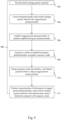
- Fig 8 is a diagram, 800, showing a strategy for analyzing polynucleotides in a sample of initial genetic material.
- a sample containing initial genetic material is provided.
- the sample can include target nucleic acid in low abundance.
- nucleic acid from a normal or wild-type genome e.g., a germline genome
- a sample also includes no more than 20%, no more than 10%, no more than 5%, no more than 1%, no more than 0.5% or no more than 0.1% nucleic acid from at least one other genome containing genetic variation, e.g., a cancer genome or a fetal genome, or a genome from another species.
- the sample comprises cell free nucleic acid.
- the initial genetic material can constitute no more than 100 ng nucleic acid. This can contribute to proper oversampling of the original polynucleotides by the sequencing or genetic analysis process.
- the sample can be artificially capped or bottlenecked to reduce the amount of nucleic acid to no more than 100 ng or selectively enriched to analyze only sequences of interest.
- the sample can be modified to selectively produce sequence reads of molecules mapping to each of one or more selected locations in a reference sequence.
- a sample of 100 ng of nucleic acid can contain about 30,000 human haploid genome equivalents, that is, molecules that, together, provide 30,000-fold coverage of a human genome.
- step 804 the initial genetic material is converted into a set of tagged parent polynucleotides. Conversion can be performed at high efficiency, for example at least 50%.
- step 806 the set of tagged parent polynucleotides is amplified to produce a set of amplified progeny polynucleotides.
- Amplification may be, for example, 1,000-fold.
- step 808 the set of amplified progeny polynucleotides are sampled for sequencing.
- the sampling rate is chosen so that the sequence reads produced both (1) cover a target number of unique molecules in the set of tagged parent polynucleotides and (2) cover unique molecules in the set of tagged parent polynucleotides at a target coverage fold (e.g., 5- to 10-fold coverage of parent polynucleotides.
- step 810 the set of sequence reads is collapsed to produce a set of consensus sequences corresponding to unique tagged parent polynucleotides.
- Sequence reads can be qualified for inclusion in the analysis. For example, sequence reads that fail to meet a quality control scores can be removed from the pool.
- Sequence reads can be sorted into families representing reads of progeny molecules derived from a particular unique parent molecule. For example, a family of amplified progeny polynucleotides can constitute those amplified molecules derived from a single parent polynucleotide. By comparing sequences of progeny in a family, a consensus sequence of the original parent polynucleotide can be deduced. This produces a set of consensus sequences representing unique parent polynucleotides in the tagged pool.
- the set of consensus sequences is analyzed using any of the analytical methods described herein. For example, consensus sequences mapping to a particular reference sequence location can be analyzed to detect instances of genetic variation. Consensus sequences mapping to particular reference sequences can be measured and normalized against control samples. Measures of molecules mapping to reference sequences can be compared across a genome to identify areas in the genome in which copy number varies, or heterozygosity is lost.
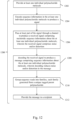
- Fig. 9 is a diagram presenting a more generic method of extracting information from a signal represented by a collection of sequence reads.
- the sequence reads are grouped into families of molecules amplified from a molecule of unique identity (910). This grouping can be a jumping off point for methods of interpreting the information in the sequence to determine the contents of the tagged parent polynucleotides with higher fidelity, e.g., less noise and/or distortion.
- One such inference is the number of unique parent polynucleotides in the original pool. Such an inference can be made based on the number of unique families into which the sequence reads can be grouped and the number of sequence reads in each family. In this case, a family refers to a collection of sequence reads traceable back to an original parent polynucleotide. The inference can be made using well-known statistical methods. For example, if grouping produces many families, each represented by one or a few progeny, then one can infer that the original population included more unique parent polynucleotides that were not sequenced. On the other hand, if grouping produces only a few families, each family represented by many progeny, then one can infer that most of the unique polynucleotides in the parent population are represented by at least one sequence read group into that family.
- Another such inference is the frequency of a base or sequence of bases at a particular locus in an original pool of polynucleotides. Such an inference can be made based on the number of unique families into which the sequence reads can be grouped and the number of sequence reads in each family. Analyzing the base calls at a locus in a family of sequence reads, a confidence score is assigned to each particular base call or sequence. Then, taking into consideration the confidence score for each base call in a plurality of the families, the frequency of each base or sequence at the locus is determined.
- Fig 1 is a diagram, 100, showing a strategy for detection of copy number variation in a single subject.
- copy number variation detection methods can be implemented as follows. After extraction and isolation of cell free polynucleotides in step 102, a single unique sample can be sequenced by a nucleic acid sequencing platform known in the art in step 104. This step generates a plurality of genomic fragment sequence reads. These sequences reads contain barcode information. After sequencing, reads are assigned a quality score. A quality score may be a representation of reads that indicates whether those reads may be useful in subsequent analysis based on a threshold. In some cases, some reads are not of sufficient quality or length to perform the subsequent mapping step.
- Sequencing reads with a quality score at least 90%, 95%, 99%, 99.9%, 99.99% or 99.999% may be filtered out of the data. In other cases, sequencing reads assigned a quality scored less than 90%, 95%, 99%, 99.9%, 99.99% or 99.999% may be filtered out of the data set.
- the genomic fragment reads that meet a specified quality score threshold are mapped to a reference genome, or a template sequence that is known not to contain copy number variations. After mapping alignment, sequence reads are assigned a mapping score.
- a mapping score may be a representation or reads mapped back to the reference sequence indicating whether each position is or is not uniquely mappable. In instances, reads may be sequences unrelated to copy number variation analysis.
- sequence reads may originate from contaminant polynucleotides. Sequencing reads with a mapping score at least 90%, 95%, 99%, 99.9%, 99.99% or 99.999% may be filtered out of the data set. In other cases, sequencing reads assigned a mapping scored less than 90%, 95%, 99%, 99.9%, 99.99% or 99.999% may be filtered out of the data set.
- the plurality of sequence reads After data filtering and mapping, the plurality of sequence reads generates a chromosomal region of coverage.
- these chromosomal regions may be divided into variable length windows or bins.
- a window or bin may be at least 5 kb, 10, kb, 25 kb, 30 kb, 35, kb, 40 kb, 50 kb, 60 kb, 75 kb, 100 kb, 150 kb, 200 kb, 500 kb, or 1000 kb.
- a window or bin may also have bases up to 5 kb, 10, kb, 25 kb, 30 kb, 35, kb, 40 kb, 50 kb, 60 kb, 75 kb, 100 kb, 150 kb, 200 kb, 500 kb, or 1000 kb.
- a window or bin may also be about 5 kb, 10, kb, 25 kb, 30 kb, 35, kb, 40 kb, 50 kb, 60 kb, 75 kb, 100 kb, 150 kb, 200 kb, 500 kb, or 1000 kb.
- each window or bin is selected to contain about the same number of mappable bases.
- each window or bin in a chromosomal region may contain the exact number of mappable bases.
- each window or bin may contain a different number of mappable bases.
- each window or bin may be non-overlapping with an adjacent window or bin. In other cases, a window or bin may overlap with another adjacent window or bin.
- a window or bin may overlap by at least 1 bp, 2, bp, 3 bp, 4 bp, 5, bp, 10 bp, 20 bp, 25 bp, 50 bp, 100 bp, 200 bp, 250 bp, 500 bp, or 1000 bp.
- a window or bin may overlap by up to 1 bp, 2, bp, 3 bp, 4 bp, 5, bp, 10 bp, 20 bp, 25 bp, 50 bp, 100 bp, 200 bp, 250 bp, 500 bp, or 1000 bp.
- a window or bin may overlap by about 1 bp, 2, bp, 3 bp, 4 bp, 5, bp, 10 bp, 20 bp, 25 bp, 50 bp, 100 bp, 200 bp, 250 bp, 500 bp, or 1000 bp.
- each of the window regions may be sized so they contain about the same number of uniquely mappable bases.
- the mappability of each base that comprise a window region is determined and used to generate a mappability file which contains a representation of reads from the references that are mapped back to the reference for each file.
- the mappability file contains one row per every position, indicating whether each position is or is not uniquely mappable.
- predefined windows known throughout the genome to be hard to sequence, or contain a substantially high GC bias, may be filtered from the data set. For example, regions known to fall near the centromere of chromosomes (i.e., centromeric DNA) are known to contain highly repetitive sequences that may produce false positive results. These regions may be filtered out. Other regions of the genome, such as regions that contain an unusually high concentration of other highly repetitive sequences such as microsatellite DNA, may be filtered from the data set.
- the number of windows analyzed may also vary. In some cases, at least 10, 20, 30, 40, 50, 100, 200, 500, 1000, 2000, 5,000, 10,000, 20,000, 50,000 or 100,000 windows are analyzed. In other cases, the number of widows analyzed is up to 10, 20, 30, 40, 50, 100, 200, 500, 1000, 2000, 5,000, 10,000, 20,000, 50,000 or 100,000 windows are analyzed.
- the next step comprises determining read coverage for each window region. Sequence reads that have sufficient mapping and quality scores and fall within chromosome windows that are not filtered, may be counted. The number of coverage reads may be assigned a score per each mappable position. All sequences with the same barcode and physical properties are collapsed into one read, as they are all derived from the sample parent molecule. This step reduces biases which may have been introduced during any of the preceding steps, such as steps involving amplification. For example, if one molecule is amplified 10 times but another is amplified 1000 times, each molecule is only represented once after collapse thereby negating the effect of uneven amplification.
- Consensus sequences can be generated from families of sequence reads by any method known in the art. Such methods include, for example, linear or non-linear methods of building consensus sequences (such as voting, averaging, statistical, maximum a posteriori or maximum likelihood detection, dynamic programming, Bayesian, hidden Markov or support vector machine methods, etc.) derived from digital communication theory, information theory, or bioinformatics.
- linear or non-linear methods of building consensus sequences such as voting, averaging, statistical, maximum a posteriori or maximum likelihood detection, dynamic programming, Bayesian, hidden Markov or support vector machine methods, etc.
- a stochastic modeling algorithm is applied to convert the normalized nucleic acid sequence read coverage for each window region to the discrete copy number states.
- this algorithm may comprise one or more of the following: Hidden Markov Model, dynamic programming, support vector machine, Bayesian network, trellis decoding, Viterbi decoding, expectation maximization, Kalman filtering methodologies and neural networks.
- the discrete copy number states of each window region can be utilized to identify copy number variation in the chromosomal regions.
- all adjacent window regions with the same copy number can be merged into a segment to report the presence or absence of copy number variation state.
- various windows can be filtered before they are merged with other segments.
- the copy number variation may be reported as graph, indicating various positions in the genome and a corresponding increase or decrease or maintenance of copy number variation at each respective position. Additionally, copy number variation may be used to report a percentage score indicating how much disease material (or nucleic acids having a copy number variation) exists in the cell free polynucleotide sample.
- Fig. 10 One method of determining copy number variation is shown in Fig. 10 .
- the families are quantified, for example, by determining the number of families mapping to each of a plurality of different reference sequence locations.
- CNVs can be determined directly by comparing a quantitative measure of families at each of a plurality of different loci (1016b).
- one can infer a quantitative measure of families in the population of tagged parent polynucleotides using both a quantitative measure of families and a quantitative measure of family members in each family, e.g., as discussed above.
- CNV can be determined by comparing the inferred measure of quantity at the plurality of loci.
- a hybrid approach can be taken whereby a similar inference of original quantity can be made following normalization for representational bias during the sequencing process, such as GC bias, etc
- Paired sample copy number variation detection shares many of the steps and parameters as the single sample approach described herein. However, as depicted in 200 of Fig. 2 of copy number variation detection using paired samples requires comparison of sequence coverage to a control sample rather than comparing it the predicted mappability of the genome. This approach may aid in normalization across windows.
- Fig 2 is a diagram, 200 showing a strategy for detection of copy number variation in paired subject.
- copy number variation detection methods can be implemented as follows.
- step 204 a single unique sample can be sequenced by a nucleic acid sequencing platform known in the art after extraction and isolation of the sample in step 202. This step generates a plurality of genomic fragment sequence reads.
- a sample or control sample is taken from another subject.
- the control subject may be a subject not known to have disease, whereas the other subject may have or be at risk for a particular disease.
- reads are assigned a quality score. In some cases, some reads are not of sufficient quality or length to perform the subsequent mapping step.
- Sequencing reads with a quality score at least 90%, 95%, 99%, 99.9%, 99.99% or 99.999% may be filtered out of the data set. In other cases, sequencing reads assigned a quality scored less than 90%, 95%, 99%, 99.9%, 99.99% or 99.999% may be filtered out of the data set.
- the genomic fragment reads that meet a specified quality score threshold are mapped to a reference genome, or a template sequence that is known not to contain copy number variations. After mapping alignment, sequence reads are assigned a mapping score. In instances, reads may be sequences unrelated to copy number variation analysis. For example, some sequence reads may originate from contaminant polynucleotides.
- Sequencing reads with a mapping score at least 90%, 95%, 99%, 99.9%, 99.99% or 99.999% may be filtered out of the data set. In other cases, sequencing reads assigned a mapping scored less than 90%, 95%, 99%, 99.9%, 99.99% or 99.999% may be filtered out of the data set.
- the plurality of sequence reads After data filtering and mapping, the plurality of sequence reads generates a chromosomal region of coverage for each of the test and control subjects.
- these chromosomal regions may be divided into variable length windows or bins.
- a window or bin may be at least 5 kb, 10, kb, 25 kb, 30 kb, 35, kb, 40 kb, 50 kb, 60 kb, 75 kb, 100 kb, 150 kb, 200 kb, 500 kb, or 1000 kb.
- a window or bin may also be less than 5 kb, 10, kb, 25 kb, 30 kb, 35, kb, 40 kb, 50 kb, 60 kb, 75 kb, 100 kb, 150 kb, 200 kb, 500 kb, or 1000 kb.
- each window or bin is selected to contain about the same number of mappable bases for each of the test and control subjects.
- each window or bin in a chromosomal region may contain the exact number of mappable bases.
- each window or bin may contain a different number of mappable bases.
- each window or bin may be non-overlapping with an adj acent window or bin. In other cases, a window or bin may overlap with another adjacent window or bin.
- a window or bin may overlap by at least 1 bp, 2, bp, 3 bp, 4 bp, 5, bp, 10 bp, 20 bp, 25 bp, 50 bp, 100 bp, 200 bp, 250 bp, 500 bp, or 1000 bp. In other cases, a window or bin may overlap by less than 1 bp, 2, bp, 3 bp, 4 bp, 5, bp, 10 bp, 20 bp, 25 bp, 50 bp, 100 bp, 200 bp, 250 bp, 500 bp, or 1000 bp.
- each of the window regions is sized so they contain about the same number of uniquely mappable bases for each of the test and control subjects.
- the mappability of each base that comprise a window region is determined and used to generate a mappability file which contains a representation of reads from the references that are mapped back to the reference for each file.
- the mappability file contains one row per every position, indicating whether each position is or is not uniquely mappable.
- predefined windows known throughout the genome to be hard to sequence, or contain a substantially high GC bias, are filtered from the data set. For example, regions known to fall near the centromere of chromosomes (i.e., centromeric DNA) are known to contain highly repetitive sequences that may produce false positive results. These regions may be filtered. Other regions of the genome, such as regions that contain an unusually high concentration of other highly repetitive sequences such as microsatellite DNA, may be filtered from the data set.
- the number of windows analyzed may also vary. In some cases, at least 10, 20, 30, 40, 50, 100, 200, 500, 1000, 2000, 5,000, 10,000, 20,000, 50,000 or 100,000 windows are analyzed. In other cases, less than 10, 20, 30, 40, 50, 100, 200, 500, 1000, 2000, 5,000, 10,000, 20,000, 50,000 or 100,000 windows are analyzed.
- the next step comprises determining read coverage for each window region for each of the test and control subjects. Sequence reads that have sufficient mapping and quality scores and fall within chromosome windows that are not filtered, may be counted. The number of coverage reads may be assigned a score per each mappable position.
- the coverage of each window can be normalized by the mean coverage of that sample. Using such an approach, it may be desirable to sequence both the test subject and the control under similar conditions. The read coverage for each window may be then expressed as a ratio across similar windows
- Nucleic acid read coverage ratios for each window of the test subject can be determined by dividing the read coverage of each window region of the test sample with read coverage of a corresponding window region of the control ample.
- a stochastic modeling algorithm is applied to convert the normalized ratios for each window region into discrete copy number states.
- this algorithm may comprise a Hidden Markov Model.
- the stochastic model may comprise dynamic programming, support vector machine, Bayesian modeling, probabilistic modeling, trellis decoding, Viterbi decoding, expectation maximization, Kalman filtering methodologies, or neural networks.
- the discrete copy number states of each window region can be utilized to identify copy number variation in the chromosomal regions.
- all adjacent window regions with the same copy number can be merged into a segment to report the presence or absence of copy number variation state.
- various windows can be filtered before they are merged with other segments.
- the copy number variation may be reported as graph, indicating various positions in the genome and a corresponding increase or decrease or maintenance of copy number variation at each respective position. Additionally, copy number variation may be used to report a percentage score indicating how much disease material exists in the cell free poly nucleotide sample.
- rare mutation detection shares similar features as both copy number variation approaches. However, as depicted in Fig. 3 , 300, rare mutation detection uses comparison of sequence coverage to a control sample or reference sequence rather than comparing it the relative mappability of the genome. This approach may aid in normalization across windows.
- rare mutation detection may be performed on selectively enriched regions of the genome or transcriptome purified and isolated in step 302.
- specific regions which may include but are not limited to genes, oncogenes, tumor suppressor genes, promoters, regulatory sequence elements, non-coding regions, miRNAs, snRNAs and the like may be selectively amplified from a total population of cell free polynucleotides. This may be performed as herein described. In one example, multiplex sequencing may be used, with barcode labels for individual polynucleotide sequences. In other examples, sequencing may be performed using any nucleic acid sequencing platforms known in the art. This step generates a plurality of genomic fragment sequence reads as in step 304.
- a reference sequence is obtained from a control sample, taken from another subject.
- the control subject may be a subject known to not have known genetic aberrations or disease.
- reads are assigned a quality score.
- a quality score may be a representation of reads that indicates whether those reads may be useful in subsequent analysis based on a threshold. In some cases, some reads are not of sufficient quality or length to perform the subsequent mapping step. Sequencing reads with a quality score at least 90%, 95%, 99%, 99.9%, 99.99% or 99.999% may be filtered out of the data set. In other cases, sequencing reads assigned a quality scored at least 90%, 95%, 99%, 99.9%, 99.99% or 99.999% may be filtered out of the data set.
- the genomic fragment reads that meet a specified quality score threshold are mapped to a reference genome, or a reference sequence that is known not to contain rare mutations.
- sequence reads are assigned a mapping score.
- a mapping score may be a representation or reads mapped back to the reference sequence indicating whether each position is or is not uniquely mappable.
- reads may be sequences unrelated to rare mutation analysis. For example, some sequence reads may originate from contaminant polynucleotides. Sequencing reads with a mapping score at least 90%, 95%, 99%, 99.9%, 99.99% or 99.999% may be filtered out of the data set. In other cases, sequencing reads assigned a mapping scored less than 90%, 95%, 99%, 99.9%, 99.99% or 99.999% may be filtered out of the data set.
- bases that do not meet the minimum threshold for mappability, or low quality bases may be replaced by the corresponding bases as found in the reference sequence.
- the next step comprises determining read coverage for each mappable base position. Sequence reads that have sufficient mapping and quality scores may be counted. The number of coverage reads may be assigned a score per each mappable position. The sequence for each base is aligned as the most dominant nucleotide read for that specific location. Further, the number of unique molecules can be counted at each position to derive simultaneous quantification at each position. This step reduces biases which may have been introduced during any of the preceding steps, such as steps involving amplification.
- the frequency of variant bases may be calculated as the number of reads containing the variant divided by the total number of reads. This may be expressed as a ratio for each mappable position in the genome.
- the frequencies of all four nucleotides, cytosine, guanine, thymine, adenine are analyzed in comparison to the reference sequence.
- a stochastic or statistical modeling algorithm is applied to convert the normalized ratios for each mappable position to reflect frequency states for each base variant.
- this algorithm may comprise one or more of the following: Hidden Markov Model, dynamic programming, support vector machine, Bayesian or probabilistic modeling, trellis decoding, Viterbi decoding, expectation maximization, Kalman filtering methodologies, and neural networks.
- the discrete rare mutation states of each base position can be utilized to identify a base variant with high frequency of variance as compared to the baseline of the reference sequence.
- the baseline might represent a frequency of at least 0.0001%, 0.001%, 0.01%, 0.1%, 1.0%, 2.0%, 3.0%, 4.0% 5.0%, 10%, or 25%.
- the baseline might represent a frequency of at least 0.0001%, 0.001%, 0.01%, 0.1%, 1.0%, 2.0%, 3.0%, 4.0% 5.0%. 10%, or 25%.
- all adjacent base positions with the base variant or mutation can be merged into a segment to report the presence or absence of a rare mutation.
- various positions can be filtered before they are merged with other segments.
- the variant with largest deviation for a specific position in the sequence derived from the subject as compared to the reference sequence is identified as a rare mutation.
- a rare mutation may be a cancer mutation.
- a rare mutation might be correlated with a disease state.
- a rare mutation or variant may comprise a genetic aberration that includes, but is not limited to a single base substitution, or small indels, transversions, translocations, inversion, deletions, truncations or gene truncations.
- a rare mutation may be at most 1, 2, 3, 4, 5, 6, 7, 8, 9, 10, 15 or 20 nucleotides in length.
- a rare mutation may be at least 1, 2, 3, 4, 5, 6, 7, 8, 9, 10, 15 or 20 nucleotides in length.
- the presence or absence of a mutation may be reflected in graphical form, indicating various positions in the genome and a corresponding increase or decrease or maintenance of a frequency of mutation at each respective position. Additionally, rare mutations may be used to report a percentage score indicating how much disease material exists in the cell free polynucleotide sample. A confidence score may accompany each detected mutation, given known statistics of typical variances at reported positions in non-disease reference sequences. Mutations may also be ranked in order of abundance in the subject or ranked by clinically actionable importance.
- Fig. 11 shows a method of inferring the frequency of a base or sequence of bases at a particular locus in a population polynucleotides.
- Sequence reads are grouped into families generated from an original tagged polynucleotide (1110).
- one or more bases at the locus is each assigned a confidence score.
- the confidence score can be assigned by any of a number of known statistical methods is assigned and can be based, at least in part, on the frequency at which a base appears among the sequence reads belonging to the family (1112).
- the confidence score can be the frequency at which the base appears among the sequence reads.
- a hidden Markov model can be built, such that a maximum likelihood or maximum a posteriori decision can be made based on the frequency of occurrence of a particular base in a single family.
- the probability of error and resultant confidence score for a particular decision can be output as well.
- a frequency of the base in the original population can then be assigned based on the confidence scores among the families (1114).
- Cancers cells as most cells, can be characterized by a rate of turnover, in which old cells die and replaced by newer cells. Generally dead cells, in contact with vasculature in a given subject, may release DNA or fragments of DNA into the blood stream. This is also true of cancer cells during various stages of the disease. Cancer cells may also be characterized, dependent on the stage of the disease, by various genetic aberrations such as copy number variation as well as rare mutations. This phenomenon may be used to detect the presence or absence of cancers individuals using the methods described herein.
- blood from subjects at risk for cancer may be drawn and prepared as described herein to generate a population of cell free polynucleotides.
- this might be cell free DNA.
- the methods of the disclosure may be employed to detect rare mutations or copy number variations that may exist in certain cancers present. The method may help detect the presence of cancerous cells in the body, despite the absence of symptoms or other hallmarks of disease.
- the types and number of cancers that may be detected may include but are not limited to blood cancers, brain cancers, lung cancers, skin cancers, nose cancers, throat cancers, liver cancers, bone cancers, lymphomas, pancreatic cancers, skin cancers, bowel cancers, rectal cancers, thyroid cancers, bladder cancers, kidney cancers, mouth cancers, stomach cancers, solid state tumors, heterogeneous tumors, homogenous tumors and the like.
- any of the methods herein described including rare mutation detection or copy number variation detection may be utilized to detect cancers. These methods may be used to detect any number of genetic aberrations that may cause or result from cancers. These may include but are not limited to mutations, rare mutations, indels, copy number variations, transversions, translocations, inversion, deletions, aneuploidy, partial aneuploidy, polyploidy, chromosomal instability, chromosomal structure alterations, gene fusions, chromosome fusions, gene truncations, gene amplification, gene duplications, chromosomal lesions, DNA lesions, abnormal changes in nucleic acid chemical modifications, abnormal changes in epigenetic patterns, abnormal changes in nucleic acid methylation, infection and cancer.
- the methods described herein may also be used to help characterize certain cancers.
- Genetic data produced from the methods of this disclosure may allow practitioners to help better characterize a specific form of cancer. Often times, cancers are heterogeneous in both composition and staging. Genetic profile data may allow characterization of specific sub-types of cancer that may be important in the diagnosis or treatment of that specific sub-type. This information may also provide a subject or practitioner clues regarding the prognosis of a specific type of cancer.
- the methods provided herein may be used to monitor already known cancers, or other diseases in a particular subject. This may allow either a subject or practitioner to adapt treatment options in accord with the progress of the disease.
- the methods described herein may be used to construct genetic profiles of a particular subject of the course of the disease.
- cancers can progress, becoming more aggressive and genetically unstable.
- cancers may remain benign, inactive, dormant or in remission.
- the methods of this disclosure may be useful in determining disease progression, remission or recurrence.
- the methods described herein may be useful in determining the efficacy of a particular treatment option.
- successful treatment options may actually increase the amount of copy number variation or rare mutations detected in subject's blood if the treatment is successful as more cancers may die and shed DNA. In other examples, this may not occur.
- certain treatment options may be correlated with genetic profiles of cancers over time. This correlation may be useful in selecting a therapy.
- the methods described herein may be useful in monitoring residual disease or recurrence of disease.
- mutations occurring within a range of frequency beginning at threshold level can be determined from DNA in a sample from a subject, e.g., a patient.
- the mutations can be, e.g., cancer related mutations.
- the frequency can range from, for example, at least 0.1%, at least 1%, or at least 5% to 100%.
- the sample can be, e.g., cell free DNA.
- a course of treatment can be prescribed based on any or all of mutations occurring within the frequency range including, e.g., their frequencies.
- a sample can be taken from the subject at any subsequent time. Mutations occurring within the original range of frequency or a different range of frequency can be determined. The course of treatment can be adjusted based on the subsequent measurements.
- the methods described herein may not be limited to detection of rare mutations and copy number variations associated with only cancers.
- Various other diseases and infections may result in other types of conditions that may be suitable for early detection and monitoring.
- genetic disorders or infectious diseases may cause a certain genetic mosaicism within a subject. This genetic mosaicism may cause copy number variation and rare mutations that could be observed.
- the methods of the disclosure may also be used to monitor the genomes of immune cells within the body. Immune cells, such as B cells, may undergo rapid clonal expansion upon the presence certain diseases. Clonal expansions may be monitored using copy number variation detection and certain immune states may be monitored. In this example, copy number variation analysis may be performed over time to produce a profile of how a particular disease may be progressing.
- the methods of this disclosure may also be used to monitor systemic infections themselves, as may be caused by a pathogen such as a bacteria or virus.
- Copy number variation or even rare mutation detection may be used to determine how a population of pathogens are changing during the course of infection. This may be particularly important during chronic infections, such as HIV/AIDs or Hepatitis infections, whereby viruses may change life cycle state and/or mutate into more virulent forms during the course of infection.
- transplanted tissue undergoes a certain degree of rejection by the body upon transplantation.
- the methods of this disclosure may be used to determine or profile rejection activities of the host body, as immune cells attempt to destroy transplanted tissue. This may be useful in monitoring the status of transplanted tissue as well as altering the course of treatment or prevention of rejection.
- a disease may be heterogeneous. Disease cells may not be identical.
- some tumors are known to comprise different types of tumor cells, some cells in different stages of the cancer.
- heterogeneity may comprise multiple foci of disease. Again, in the example of cancer, there may be multiple tumor foci, perhaps where one or more foci are the result of metastases that have spread from a primary site.
- the methods of this disclosure may be used to generate or profile, fingerprint or set of data that is a summation of genetic information derived from different cells in a heterogeneous disease.
- This set of data may comprise copy number variation and rare mutation analyses alone or in combination.
- the methods of the disclosure may be used to diagnose, prognose, monitor or observe cancers or other diseases of fetal origin. That is, these methodologies may be employed in a pregnant subject to diagnose, prognose, monitor or observe cancers or other diseases in a unborn subject whose DNA and other polynucleotides may co-circulate with maternal molecules.
- Ranges can be expressed herein as from “about” one particular value, and/or to "about” another particular value. When such a range is expressed, another embodiment includes from the one particular value and/or to the other particular value. Similarly, when values are expressed as approximations, by use of the antecedent "about,” it will be understood that the particular value forms another embodiment. It will be further understood that the endpoints of each of the ranges are significant both in relation to the other endpoint, and independently of the other endpoint. The term "about” as used herein refers to a range that is 15% plus or minus from a stated numerical value within the context of the particular usage. For example, about 10 would include a range from 8.5 to 11.5.
- FIG. 15 shows a computer system 1501 that is programmed or otherwise configured to implement the methods of the present disclosure.
- the computer system 1501 can regulate various aspects sample preparation, sequencing and/or analysis.
- the computer system 1501 is configured to perform sample preparation and sample analysis, including nucleic acid sequencing.
- the computer system 1501 includes a central processing unit (CPU, also "processor” and “computer processor” herein) 1505, which can be a single core or multi core processor, or a plurality of processors for parallel processing.
- the computer system 1501 also includes memory or memory location 1510 (e.g., random-access memory, read-only memory, flash memory), electronic storage unit 1515 (e.g., hard disk), communication interface 1520 (e.g., network adapter) for communicating with one or more other systems, and peripheral devices 1525, such as cache, other memory, data storage and/or electronic display adapters.
- the memory 1510, storage unit 1515, interface 1520 and peripheral devices 1525 are in communication with the CPU 1505 through a communication bus (solid lines), such as a motherboard.
- the storage unit 1515 can be a data storage unit (or data repository) for storing data.
- the computer system 1501 can be operatively coupled to a computer network ("network") 1530 with the aid of the communication interface 1520.
- the network 1530 can be the Internet, an internet and/or extranet, or an intranet and/or extranet that is in communication with the Internet.
- the network 1530 in some cases is a telecommunication and/or data network.
- the network 1530 can include one or more computer servers, which can enable distributed computing, such as cloud computing.
- the network 1530, in some cases with the aid of the computer system 1501, can implement a peer-to-peer network, which may enable devices coupled to the computer system 1501 to behave as a client or a server.
- the CPU 1505 can execute a sequence of machine-readable instructions, which can be embodied in a program or software.
- the instructions may be stored in a memory location, such as the memory 1510. Examples of operations performed by the CPU 1505 can include fetch, decode, execute, and writeback.
- the storage unit 1515 can store files, such as drivers, libraries and saved programs.
- the storage unit 1515 can store programs generated by users and recorded sessions, as well as output(s) associated with the programs.
- the storage unit 1515 can store user data, e.g., user preferences and user programs.
- the computer system 1501 in some cases can include one or more additional data storage units that are external to the computer system 1501, such as located on a remote server that is in communication with the computer system 1501 through an intranet or the Internet.
- the computer system 1501 can communicate with one or more remote computer systems through the network 1530.
- the computer system 1501 can communicate with a remote computer system of a user (e.g., operator).
- remote computer systems include personal computers (e.g., portable PC), slate or tablet PC's (e.g., Apple ® iPad, Samsung ® Galaxy Tab), telephones, Smart phones (e.g., Apple ® iPhone, Android-enabled device, Blackberry ® ), or personal digital assistants.
- the user can access the computer system 1501 via the network 1530.
- Methods as described herein can be implemented by way of machine (e.g., computer processor) executable code stored on an electronic storage location of the computer system 1501, such as, for example, on the memory 1510 or electronic storage unit 1515.
- the machine executable or machine readable code can be provided in the form of software.
- the code can be executed by the processor 1505.
- the code can be retrieved from the storage unit 1515 and stored on the memory 1510 for ready access by the processor 1505.
- the electronic storage unit 1515 can be precluded, and machine-executable instructions are stored on memory 1510.
- the code can be pre-compiled and configured for use with a machine have a processer adapted to execute the code, or can be compiled during runtime.
- the code can be supplied in a programming language that can be selected to enable the code to execute in a pre-compiled or as-compiled fashion.
- aspects of the systems and methods provided herein can be embodied in programming.
- Various aspects of the technology may be thought of as “products” or “articles of manufacture” typically in the form of machine (or processor) executable code and/or associated data that is carried on or embodied in a type of machine readable medium.
- Machine-executable code can be stored on an electronic storage unit, such memory (e.g., read-only memory, random-access memory, flash memory) or a hard disk.
- “Storage” type media can include any or all of the tangible memory of the computers, processors or the like, or associated modules thereof, such as various semiconductor memories, tape drives, disk drives and the like, which may provide non-transitory storage at any time for the software programming.
- All or portions of the software may at times be communicated through the Internet or various other telecommunication networks. Such communications, for example, may enable loading of the software from one computer or processor into another, for example, from a management server or host computer into the computer platform of an application server.
- another type of media that may bear the software elements includes optical, electrical and electromagnetic waves, such as used across physical interfaces between local devices, through wired and optical landline networks and over various air-links.
- the physical elements that carry such waves, such as wired or wireless links, optical links or the like, also may be considered as media bearing the software.
- terms such as computer or machine "readable medium” refer to any medium that participates in providing instructions to a processor for execution.
- a machine readable medium such as computer-executable code
- a tangible storage medium such as computer-executable code
- Non-volatile storage media include, for example, optical or magnetic disks, such as any of the storage devices in any computer(s) or the like, such as may be used to implement the databases, etc. shown in the drawings.
- Volatile storage media include dynamic memory, such as main memory of such a computer platform.
- Tangible transmission media include coaxial cables; copper wire and fiber optics, including the wires that comprise a bus within a computer system.
- Carrier-wave transmission media may take the form of electric or electromagnetic signals, or acoustic or light waves such as those generated during radio frequency (RF) and infrared (IR) data communications.
- RF radio frequency
- IR infrared
- Common forms of computer-readable media therefore include for example: a floppy disk, a flexible disk, hard disk, magnetic tape, any other magnetic medium, a CD-ROM, DVD or DVD-ROM, any other optical medium, punch cards paper tape, any other physical storage medium with patterns of holes, a RAM, a ROM, a PROM and EPROM, a FLASH-EPROM, any other memory chip or cartridge, a carrier wave transporting data or instructions, cables or links transporting such a carrier wave, or any other medium from which a computer may read programming code and/or data.
- Many of these forms of computer readable media may be involved in carrying one or more sequences of one or more instructions to a processor for execution.
- the computer system 1501 can include or be in communication with an electronic display that comprises a user interface (UI) for providing, for example, one or more results of sample analysis.
- UI user interface
- Examples of UI's include, without limitation, a graphical user interface (GUI) and web-based user interface.
- a blood sample is taken from a prostate cancer subject. Previously, an oncologist determines that the subject has stage II prostate cancer and recommends a treatment. Cell free DNA is extracted, isolated, sequenced and analyzed every 6 months after the initial diagnosis.
- Cell free DNA is extracted and isolated from blood using the Qiagen Qubit kit protocol. A carrier DNA is added to increase yields. DNA is amplified using PCR and universal primers. 10 ng of DNA is sequenced using a massively parallel sequencing approach with an Illumina MiSeq personal sequencer. 90% of the subject's genome is covered through sequencing of cell free DNA.
- Sequence data is assembled and analyzed for copy number variation. Sequence reads are mapped and compared to a healthy individual (control). Based on the number of sequence reads, chromosomal regions are divided into 50 kb non overlapping regions. Sequence reads are compared to one another and a ratio is determined for each mappable position.
- a Hidden Markov Model is applied to convert copy numbers into discrete states for each window.
- Fig. 4A for a healthy individual
- Fig. 4B for the subject with cancer.
- these reports are submitted and accessed electronically via the internet. Analysis of sequence data occurs at a site other than the location of the subject. The report is generated and transmitted to the subject's location. Via an internet enabled computer, the subject accesses the reports reflecting his tumor burden ( Fig. 4C ).
- a blood sample is taken from a prostate cancer survivor.
- the subject had previously undergone numerous rounds of chemotherapy and radiation.
- the subject at the time of testing did not present symptoms or health issues related to the cancer. Standard scans and assays reveal the subject to be cancer free.
- Cell free DNA is extracted and isolated from blood using the Qiagen TruSeq kit protocol. A carrier DNA is added to increase yields. DNA is amplified using PCR and universal primers. 10 ng of DNA is sequenced using a massively parallel sequencing approach with an Illumina MiSeq personal sequencer. 12mer barcodes are added to individual molecules using a ligation method.
- Sequence data is assembled and analyzed for copy number variation. Sequence reads are mapped and compared to a healthy individual (control). Based on the number of sequence reads, chromosomal regions are divided into 40 kb non overlapping regions. Sequence reads are compared to one another and a ratio is determined for each mappable position.
- Non unique barcoded sequences are collapsed into a single read to help normalize bias from amplification.
- a Hidden Markov Model is applied to convert copy numbers into discrete states for each window.
- Reports are generated, mapping genome positions and copy number variation shown in Fig. 5A , for a subject with cancer in remission and Fig. 5B for a subject with cancer in recurrence.
- a subject is known to have Stage IV thyroid cancer and undergoes standard treatment, including radiation therapy with 1-131.
- CT scans are inconclusive as to whether the radiation therapy is destroying cancerous masses.
- Blood is drawn before and after the latest radiation session.
- Cell free DNA is extracted and isolated from blood using the Qiagen Qubit kit protocol. A sample of non specific bulk DNA is added to the sample preparation reactions increase yields.
- BRAF gene may be mutated at amino acid position 600 in this thyroid cancer. From population of cell free DNA, BRAF DNA is selectively amplified using primers specific to the gene. 20mer barcodes are added to the parent molecule as a control for counting reads.
- 10 ng of DNA is sequenced using massively parallel sequencing approach with an Illumina MiSeq personal sequencer.
- Sequence data is assembled and analyzed for copy number variation detection. Sequence reads are mapped and compared to a healthy individual (control). Based on the number of sequence reads, as determined by counting the barcode sequences, chromosomal regions are divided into 50 kb non overlapping regions. Sequence reads are compared to one another and a ratio is determined for each mappable position.
- a Hidden Markov Model is applied to convert copy numbers into discrete states for each window.
- a report is generated, mapping genome positions and copy number variation.
- the reports generated before and after treatment are compared.
- the tumor cell burden percentage jumps from 30% to 60% after the radiation session.
- the jump in tumor burden is determined to be an increase in necrosis of cancer tissue versus normal tissue as a result of treatment.
- Oncologists recommend the subject continue the prescribed treatment.
- Sequence data is assembled and analyzed for rare mutation detection. Sequence reads are mapped and compared to a reference sequence (control). Based on the number of sequence reads, the frequency of variance for each mappable position is determined.
- a Hidden Markov Model is applied to convert frequency of variance for each mappable position into discrete states for base position.
- a report is generated, mapping genome base positions and percentage detection of the rare mutation over baseline as determined by the reference sequence ( Fig. 6A ).
- a subject is thought to have early stage prostate cancer. Other clinical tests provide inconclusive results. Blood is drawn from the subject and cell free DNA is extracted, isolated, prepared and sequenced.
- a panel of various oncogenes and tumor suppressor genes are selected for selective amplification using a TaqMan ⁇ PCR kit (Invitrogen) using gene specific primers.
- DNA regions amplified include DNA containing PIK3CA and TP53 genes.
- 10 ng of DNA is sequenced using a massively parallel sequencing approach with an Illumina MiSeq personal sequencer.
- Sequence data is assembled and analyzed for rare mutation detection. Sequence reads are mapped and compared to a reference sequence (control). Based on the number of sequence reads, the frequency of variance for each mappable position was determined.
- a Hidden Markov Model is applied to convert frequency of variance for each mappable position into discrete states for each base position.
- a report is generated, mapping genomic base positions and percentage detection of the rare mutation over baseline as determined by the reference sequence ( Fig. 7A ). Rare mutations are found at an incidence of 5% in two genes, PIK3CA and TP53, respectively, indicating that the subject has an early stage cancer. Treatment is initiated.
- these reports are submitted and accessed electronically via the internet. Analysis of sequence data occurs at a site other than the location of the subject. The report is generated and transmitted to the subject's location. Via an internet enabled computer, the subject accesses the reports reflecting his tumor burden ( Fig. 7B ).
- a subject is thought to have mid-stage colorectal cancer. Other clinical tests provide inconclusive results. Blood is drawn from the subject and cell free DNA is extracted.
- 10 ng of the cell-free genetic material that is extracted from a single tube of plasma is used.
- the initial genetic material is converted into a set of tagged parent polynucleotides.
- the tagging included attaching tags required for sequencing as well as non-unique identifiers for tracking progeny molecules to the parent nucleic acids.
- the conversion is performed through an optimized ligation reaction as described above and conversion yield is confirmed by looking at the size profile of molecules post-ligation. Conversion yield is measured as the percentage of starting initial molecules that have both ends ligated with tags. Conversion using this approach is performed at high efficiency, for example, at least 50%.
- the tagged library is PCR-amplified and enriched for genes most associated with colorectal cancer, (e.g., KRAS, APC, TP53, etc) and the resulting DNA is sequenced using a massively parallel sequencing approach with an Illumina MiSeq personal sequencer.
- genes most associated with colorectal cancer e.g., KRAS, APC, TP53, etc.
- Sequence data is assembled and analyzed for rare mutation detection. Sequence reads are collapsed into familial groups belonging to a parent molecule (as well as error-corrected upon collapse) and mapped using a reference sequence (control). Based on the number of sequence reads, the frequency of rare variations (substitutions, insertions, deletions, etc) and variations in copy number and heterozygosity (when appropriate) for each mappable position is determined.
- a report is generated, mapping genomic base positions and percentage detection of the rare mutation over baseline as determined by the reference sequence. Rare mutations are found at an incidence of 0.3-0.4% in two genes, KRAS and FBXW7, respectively, indicating that the subject has residual cancer. Treatment is initiated.
- these reports are submitted and accessed electronically via the internet. Analysis of sequence data occurs at a site other than the location of the subject. The report is generated and transmitted to the subject's location. Via an internet enabled computer, the subject accesses the reports reflecting his tumor burden.
- DST Digital Sequencing Technology
- DST architecture is inspired by state-of-the-art digital communication systems that combat the high noise and distortion caused by modern communication channels and are able to transmit digital information flawlessly at exceedingly high data rates.
- current nextgen workflows are plagued by extremely high noise and distortion (due to sample-prep, PCRbased amplification and sequencing).
- Digital sequencing is able to eliminate the error and distortion created by these processes and produce near-perfect representation of all rare variants (including CNVs).
- the workflow engineered around the DST platform is flexible and highly tunable as targeted regions can be as small as single exons or as broad as whole exomes (or even whole genomes).
- a standard panel consists of all exonic bases of 15 actionable cancer-related genes and coverage of the "hot" exons of an additional 36 onco-/tumor-suppressor genes (e.g., exons containing at least one or more reported somatic mutations in COSMIC).
- mice The concordance of circulating DNA with tumor gDNA in human xenograft models in mice was investigated. In seven CTC-negative mice, each with one of two different human breast cancer tumors, all somatic mutations detected in tumor gDNA were also detected in mouse blood cfDNA using DST further validating the utility of cfDNA for non-invasive tumor genetic profiling.
Landscapes
- Life Sciences & Earth Sciences (AREA)
- Chemical & Material Sciences (AREA)
- Health & Medical Sciences (AREA)
- Proteomics, Peptides & Aminoacids (AREA)
- Organic Chemistry (AREA)
- Engineering & Computer Science (AREA)
- Zoology (AREA)
- Wood Science & Technology (AREA)
- Physics & Mathematics (AREA)
- Genetics & Genomics (AREA)
- Analytical Chemistry (AREA)
- Bioinformatics & Cheminformatics (AREA)
- Biotechnology (AREA)
- Biophysics (AREA)
- General Health & Medical Sciences (AREA)
- General Engineering & Computer Science (AREA)
- Immunology (AREA)
- Molecular Biology (AREA)
- Microbiology (AREA)
- Biochemistry (AREA)
- Bioinformatics & Computational Biology (AREA)
- Pathology (AREA)
- Medical Informatics (AREA)
- Spectroscopy & Molecular Physics (AREA)
- Theoretical Computer Science (AREA)
- Evolutionary Biology (AREA)
- Biomedical Technology (AREA)
- Hospice & Palliative Care (AREA)
- Oncology (AREA)
- Chemical Kinetics & Catalysis (AREA)
- Crystallography & Structural Chemistry (AREA)
- Plant Pathology (AREA)
- Measuring Or Testing Involving Enzymes Or Micro-Organisms (AREA)
- Apparatus Associated With Microorganisms And Enzymes (AREA)
- Preparation Of Compounds By Using Micro-Organisms (AREA)
- Pharmaceuticals Containing Other Organic And Inorganic Compounds (AREA)
- Medicines That Contain Protein Lipid Enzymes And Other Medicines (AREA)
- Silver Salt Photography Or Processing Solution Therefor (AREA)
- Investigating Or Analysing Materials By The Use Of Chemical Reactions (AREA)
- Indexing, Searching, Synchronizing, And The Amount Of Synchronization Travel Of Record Carriers (AREA)
Claims (13)
- Verfahren, umfassend:(a) Bereitstellen wenigstens eines Satzes mit einem Tag versehener Eltern-Polynukleotide durch Umwandeln eines zu Beginn vorliegenden genetischen Ausgangsmaterials in die mit einem Tag versehenen Eltern-Polynukleotide, wobei es sich bei dem zu Beginn vorliegenden genetischen Ausgangsmaterial um zellfreie Nukleinsäure handelt und wobei Umwandeln eine von Stumpfe-Enden-Ligation, Klebrige-Enden-Ligation und Einzelstrangligation umfasst;und für jeden Satz mit einem Tag versehener Eltern-Polynukleotide:(b) Amplifizieren der mit einem Tag versehenen Eltern-Polynukleotide im Satz, so dass ein entsprechender Satz amplifizierter Nachkommen-Polynukleotide produziert wird;(c) Sequenzieren einer Teilmenge des Satzes amplifizierter Nachkommen-Polynukleotide, so dass ein Satz von Sequenzierablesungen produziert wird; und(d) Kollabieren des Satzes von Sequenzierablesungen, so dass ein Satz von Konsensussequenzen erzeugt wird, wobei jede Konsensussequenz einem einmaligen Polynukleotid unter dem Satz mit einem Tag versehener Eltern-Polynukleotide entspricht;wobei jeder Satz Eltern-Polynukleotide auf eine Position in einer Referenzsequenz kartierbar ist und die Polynukleotide in jedem Satz nicht mit einmaligen Tags versehen sind.
- Verfahren nach Anspruch 1, umfassend Anreichern des Satzes amplifizierter Nachkommen-Polynukleotide auf Polynukleotide, die auf eine oder mehrere ausgewählte kartierbare Positionen in der Referenzsequenz kartieren, durch: (i) selektive Amplifikation von Sequenzen aus zu Beginn vorliegendem genetischem Ausgangsmaterial, das in mit einem Tag versehene Eltern-Polynukleotide umgewandelt wurde; (ii) selektive Amplifikation mit einem Tag versehener Eltern-Polynukleotide; (iii) selektiven Sequenzeinfang amplifizierter Nachkommen-Polynukleotide; oder (iv) selektiven Sequenzeinfang von zu Beginn vorliegendem genetischem Ausgangsmaterial.
- Verfahren nach Anspruch 1 pder Anspruch 2, umfassend Bereitstellen mehrerer Sätze mit einem Tag versehener Eltern-Polynukleotide, wobei jeder Satz auf eine unterschiedliche kartierbare Position in der Referenzsequenz kartierbar ist.
- Verfahren nach einem vorhergehenden Anspruch, ferner umfassend: (e) getrenntes oder kombiniertes Analysieren des Satzes von Konsensussequenzen für jeden Satz mit einem Tag versehener Eltern-Polynukleotide.
- Verfahren nach einem vorhergehenden Anspruch, wobei das zu Beginn vorliegende genetische Ausgangsmaterial nicht mehr als 100 ng Polynukleotide umfasst.
- Verfahren nach einem vorhergehenden Anspruch, umfassend Umwandeln des zu Beginn vorliegenden genetischen Ausgangsmaterials in mit einem Tag versehene Eltern-Polynukleotide mit einer Umwandlungseffizienz von wenigstens 10 %, wenigstens 20 %, wenigstens 30 %, wenigstens 40 %, wenigstens 50 %, wenigstens 60 %, wenigstens 80 % oder wenigstens 90 %.
- Verfahren nach einem vorhergehenden Anspruch, wobei mehrere der Sätze auf unterschiedliche kartierbare Positionen in einer Referenzsequenz aus dem gleichen Genom kartieren.
- Verfahren nach Anspruch 2, umfassend Bereitstellen mehrerer Sätze mit einem Tag versehener Eltern-Polynukleotide, wobei jeder Satz auf eine unterschiedliche kartierbare Position in der Referenzsequenz kartierbar ist und wobei(i) es sich bei der kartierbaren Position in der Referenzsequenz um den Locus eines Tumormarkers handelt und Analysieren Nachweisen des Tumormarkers im Satz von Konsensussequenzen umfasst;(ii) die kartierbare Position der Referenzsequenz mehrere kartierbare Positionen in der Referenzsequenz umfasst, wobei es sich bei der kartierbaren Position jeweils um den Locus eines Tumormarkers handelt; oder(iii) Analysieren (i) Nachweisen einer Kopienzahlvariation von Konsensussequenzen zwischen wenigstens zwei Sätzen von Eltern-Polynukleotiden; (ii) Nachweisen des Vorliegens von Sequenzvariationen verglichen mit den Referenzsequenzen; oder (iii) Nachweisen des Vorliegens von Sequenzvariationen verglichen mit den Referenzsequenzen und Nachweisen einer Kopienzahlvariation von Konsensussequenzen zwischen wenigstens zwei Sätzen von Eltern-Polynukleotiden umfasst.
- Verfahren nach einem vorhergehenden Anspruch, wobei die sequenzierte Teilmenge des Satzes amplifizierter Nachkommen-Polynukleotide hinreichend groß ist, so dass jegliche Nukleotidsequenz, die im Satz mit einem Tag versehener Eltern-Polynukleotide in einem Prozentanteil repräsentiert ist, der gleich der prozentualen Sequenzierfehlerrate pro Base der verwendeten Sequenzierplattform ist, eine Chance von wenigstens 50 %, wenigstens 60 %, wenigstens 70 %, wenigstens 80 %, wenigstens 90 %, wenigstens 95 %, wenigstens 98 %, wenigstens 99 %, wenigstens 99,9 % oder wenigstens 99,99 % hat, unter dem Satz von Konsensussequenzen repräsentiert zu sein.
- Verfahren nach Anspruch 4, wobei Analysieren Nachweisen von Mutationen, seltenen Mutationen, Indels, Kopienzahlvariationen, Transversionen, Translokationen, Inversion, Deletionen, Aneuploidie, partieller Aneuploidie, Polyploidie, chromosomaler Instabilität, chromosomalen Strukturveränderungen, Genfusionen, Chromosomfusionen, Genverkürzungen, Genamplifikation, Genduplikationen, chromosomalen Läsionen, DNA-Läsionen, anomalen Änderungen bei chemischen Nukleinsäuremodifikationen, anomalen Änderungen bei epigenetischen Mustern, anomalen Änderungen bei Nukleinsäuremethylierung, Infektion und Krebs umfasst.
- Verfahren nach Anspruch 4, wobei die Analyse ferner Nachweis und Überwachen einer Anomalität oder Krankheit in einem Individuum, wie z. B. Infektion und/oder Krebs, umfasst; gegebenenfalls wobei das Verfahren in Kombination mit Immunrepertoire-Profiling durchgeführt wird.
- Verfahren nach einem vorhergehenden Anspruch, wobei die Polynukleotide aus einer Probe extrahiert werden, die aus der Gruppe bestehend aus Blut, Plasma, Serum, Urin, Speichel, Schleimhautexkreten, Sputum, Stuhl und Tränen ausgewählt ist.
- Verfahren nach einem vorhergehenden Anspruch, umfassend Ausfiltern von Ablesungen mit einer Genauigkeit oder Qualitätswertung unterhalb eines Schwellenwerts.
Priority Applications (1)
| Application Number | Priority Date | Filing Date | Title |
|---|---|---|---|
| EP24168994.2A EP4424826A3 (de) | 2012-09-04 | 2013-09-04 | Systeme und verfahren zum nachweis seltener mutationen und kopienzahlvariationen |
Applications Claiming Priority (9)
| Application Number | Priority Date | Filing Date | Title |
|---|---|---|---|
| US201261696734P | 2012-09-04 | 2012-09-04 | |
| US201261704400P | 2012-09-21 | 2012-09-21 | |
| US201361793997P | 2013-03-15 | 2013-03-15 | |
| US201361845987P | 2013-07-13 | 2013-07-13 | |
| EP19192885.2A EP3591073B1 (de) | 2012-09-04 | 2013-09-04 | Verfahren zur detektion von seltenen mutationen und kopienzahlvariationen |
| EP13834427.0A EP2893040B1 (de) | 2012-09-04 | 2013-09-04 | Verfahren für den nachweis von seltenen mutationen und von kopienzahlvarianten |
| EP18207391.6A EP3470533B2 (de) | 2012-09-04 | 2013-09-04 | Systeme und verfahren zur detektion von kopienzahlvariationen |
| PCT/US2013/058061 WO2014039556A1 (en) | 2012-09-04 | 2013-09-04 | Systems and methods to detect rare mutations and copy number variation |
| EP21155582.6A EP3842551B1 (de) | 2012-09-04 | 2013-09-04 | Verfahren zur untersuchung zellfreier polynukleotide |
Related Parent Applications (6)
| Application Number | Title | Priority Date | Filing Date |
|---|---|---|---|
| EP19192885.2A Division EP3591073B1 (de) | 2012-09-04 | 2013-09-04 | Verfahren zur detektion von seltenen mutationen und kopienzahlvariationen |
| EP21155582.6A Division-Into EP3842551B1 (de) | 2012-09-04 | 2013-09-04 | Verfahren zur untersuchung zellfreier polynukleotide |
| EP21155582.6A Division EP3842551B1 (de) | 2012-09-04 | 2013-09-04 | Verfahren zur untersuchung zellfreier polynukleotide |
| EP13834427.0A Division EP2893040B1 (de) | 2012-09-04 | 2013-09-04 | Verfahren für den nachweis von seltenen mutationen und von kopienzahlvarianten |
| EP18207391.6A Division-Into EP3470533B2 (de) | 2012-09-04 | 2013-09-04 | Systeme und verfahren zur detektion von kopienzahlvariationen |
| EP18207391.6A Division EP3470533B2 (de) | 2012-09-04 | 2013-09-04 | Systeme und verfahren zur detektion von kopienzahlvariationen |
Related Child Applications (1)
| Application Number | Title | Priority Date | Filing Date |
|---|---|---|---|
| EP24168994.2A Division EP4424826A3 (de) | 2012-09-04 | 2013-09-04 | Systeme und verfahren zum nachweis seltener mutationen und kopienzahlvariationen |
Publications (2)
| Publication Number | Publication Date |
|---|---|
| EP4036247A1 EP4036247A1 (de) | 2022-08-03 |
| EP4036247B1 true EP4036247B1 (de) | 2024-04-10 |
Family
ID=50237580
Family Applications (6)
| Application Number | Title | Priority Date | Filing Date |
|---|---|---|---|
| EP19192885.2A Active EP3591073B1 (de) | 2012-09-04 | 2013-09-04 | Verfahren zur detektion von seltenen mutationen und kopienzahlvariationen |
| EP13834427.0A Revoked EP2893040B1 (de) | 2012-09-04 | 2013-09-04 | Verfahren für den nachweis von seltenen mutationen und von kopienzahlvarianten |
| EP21155582.6A Active EP3842551B1 (de) | 2012-09-04 | 2013-09-04 | Verfahren zur untersuchung zellfreier polynukleotide |
| EP18207391.6A Active EP3470533B2 (de) | 2012-09-04 | 2013-09-04 | Systeme und verfahren zur detektion von kopienzahlvariationen |
| EP22162429.9A Active EP4036247B1 (de) | 2012-09-04 | 2013-09-04 | Verfahren zur detektion von seltenen mutationen und kopienzahlvariationen |
| EP24168994.2A Pending EP4424826A3 (de) | 2012-09-04 | 2013-09-04 | Systeme und verfahren zum nachweis seltener mutationen und kopienzahlvariationen |
Family Applications Before (4)
| Application Number | Title | Priority Date | Filing Date |
|---|---|---|---|
| EP19192885.2A Active EP3591073B1 (de) | 2012-09-04 | 2013-09-04 | Verfahren zur detektion von seltenen mutationen und kopienzahlvariationen |
| EP13834427.0A Revoked EP2893040B1 (de) | 2012-09-04 | 2013-09-04 | Verfahren für den nachweis von seltenen mutationen und von kopienzahlvarianten |
| EP21155582.6A Active EP3842551B1 (de) | 2012-09-04 | 2013-09-04 | Verfahren zur untersuchung zellfreier polynukleotide |
| EP18207391.6A Active EP3470533B2 (de) | 2012-09-04 | 2013-09-04 | Systeme und verfahren zur detektion von kopienzahlvariationen |
Family Applications After (1)
| Application Number | Title | Priority Date | Filing Date |
|---|---|---|---|
| EP24168994.2A Pending EP4424826A3 (de) | 2012-09-04 | 2013-09-04 | Systeme und verfahren zum nachweis seltener mutationen und kopienzahlvariationen |
Country Status (16)
| Country | Link |
|---|---|
| US (31) | US10041127B2 (de) |
| EP (6) | EP3591073B1 (de) |
| JP (6) | JP6275145B2 (de) |
| KR (6) | KR102210852B1 (de) |
| CN (2) | CN104781421B (de) |
| CA (2) | CA3190199A1 (de) |
| DE (1) | DE202013012824U1 (de) |
| DK (1) | DK2893040T5 (de) |
| ES (5) | ES2906714T3 (de) |
| GB (1) | GB2533006B (de) |
| IL (3) | IL269097B2 (de) |
| MX (1) | MX367963B (de) |
| PL (2) | PL2893040T3 (de) |
| PT (1) | PT2893040T (de) |
| SG (2) | SG10202000486VA (de) |
| WO (1) | WO2014039556A1 (de) |
Families Citing this family (365)
| Publication number | Priority date | Publication date | Assignee | Title |
|---|---|---|---|---|
| US11111544B2 (en) | 2005-07-29 | 2021-09-07 | Natera, Inc. | System and method for cleaning noisy genetic data and determining chromosome copy number |
| US9424392B2 (en) | 2005-11-26 | 2016-08-23 | Natera, Inc. | System and method for cleaning noisy genetic data from target individuals using genetic data from genetically related individuals |
| US10081839B2 (en) | 2005-07-29 | 2018-09-25 | Natera, Inc | System and method for cleaning noisy genetic data and determining chromosome copy number |
| US10083273B2 (en) | 2005-07-29 | 2018-09-25 | Natera, Inc. | System and method for cleaning noisy genetic data and determining chromosome copy number |
| US11111543B2 (en) | 2005-07-29 | 2021-09-07 | Natera, Inc. | System and method for cleaning noisy genetic data and determining chromosome copy number |
| ES2640776T3 (es) | 2009-09-30 | 2017-11-06 | Natera, Inc. | Métodos para denominar de forma no invasiva ploidía prenatal |
| US11322224B2 (en) | 2010-05-18 | 2022-05-03 | Natera, Inc. | Methods for non-invasive prenatal ploidy calling |
| US12221653B2 (en) | 2010-05-18 | 2025-02-11 | Natera, Inc. | Methods for simultaneous amplification of target loci |
| US11408031B2 (en) | 2010-05-18 | 2022-08-09 | Natera, Inc. | Methods for non-invasive prenatal paternity testing |
| US10316362B2 (en) | 2010-05-18 | 2019-06-11 | Natera, Inc. | Methods for simultaneous amplification of target loci |
| US9677118B2 (en) | 2014-04-21 | 2017-06-13 | Natera, Inc. | Methods for simultaneous amplification of target loci |
| AU2011255641A1 (en) | 2010-05-18 | 2012-12-06 | Natera, Inc. | Methods for non-invasive prenatal ploidy calling |
| US11939634B2 (en) | 2010-05-18 | 2024-03-26 | Natera, Inc. | Methods for simultaneous amplification of target loci |
| US11339429B2 (en) | 2010-05-18 | 2022-05-24 | Natera, Inc. | Methods for non-invasive prenatal ploidy calling |
| US20190010543A1 (en) | 2010-05-18 | 2019-01-10 | Natera, Inc. | Methods for simultaneous amplification of target loci |
| US11332785B2 (en) | 2010-05-18 | 2022-05-17 | Natera, Inc. | Methods for non-invasive prenatal ploidy calling |
| US10179937B2 (en) | 2014-04-21 | 2019-01-15 | Natera, Inc. | Detecting mutations and ploidy in chromosomal segments |
| US12152275B2 (en) | 2010-05-18 | 2024-11-26 | Natera, Inc. | Methods for non-invasive prenatal ploidy calling |
| US11332793B2 (en) | 2010-05-18 | 2022-05-17 | Natera, Inc. | Methods for simultaneous amplification of target loci |
| US11326208B2 (en) | 2010-05-18 | 2022-05-10 | Natera, Inc. | Methods for nested PCR amplification of cell-free DNA |
| US8916344B2 (en) | 2010-11-15 | 2014-12-23 | Exact Sciences Corporation | Methylation assay |
| US8361720B2 (en) | 2010-11-15 | 2013-01-29 | Exact Sciences Corporation | Real time cleavage assay |
| CA2821906C (en) | 2010-12-22 | 2020-08-25 | Natera, Inc. | Methods for non-invasive prenatal paternity testing |
| EP3564395B1 (de) | 2010-12-30 | 2025-06-25 | Foundation Medicine, Inc. | Optimierung von multigenanalysen von tumorproben |
| CA2824387C (en) | 2011-02-09 | 2019-09-24 | Natera, Inc. | Methods for non-invasive prenatal ploidy calling |
| US9260753B2 (en) | 2011-03-24 | 2016-02-16 | President And Fellows Of Harvard College | Single cell nucleic acid detection and analysis |
| PL3246416T3 (pl) | 2011-04-15 | 2024-09-30 | The Johns Hopkins University | Bezpieczny system sekwencjonowania |
| US20140235474A1 (en) | 2011-06-24 | 2014-08-21 | Sequenom, Inc. | Methods and processes for non invasive assessment of a genetic variation |
| US20130079241A1 (en) | 2011-09-15 | 2013-03-28 | Jianhua Luo | Methods for Diagnosing Prostate Cancer and Predicting Prostate Cancer Relapse |
| US10196681B2 (en) | 2011-10-06 | 2019-02-05 | Sequenom, Inc. | Methods and processes for non-invasive assessment of genetic variations |
| US9367663B2 (en) | 2011-10-06 | 2016-06-14 | Sequenom, Inc. | Methods and processes for non-invasive assessment of genetic variations |
| US9984198B2 (en) | 2011-10-06 | 2018-05-29 | Sequenom, Inc. | Reducing sequence read count error in assessment of complex genetic variations |
| US10424394B2 (en) | 2011-10-06 | 2019-09-24 | Sequenom, Inc. | Methods and processes for non-invasive assessment of genetic variations |
| EP2764458B1 (de) | 2011-10-06 | 2021-04-07 | Sequenom, Inc. | Verfahren und prozesse zur nicht-invasiven beurteilung genetischer variationen |
| LT2805280T (lt) | 2012-01-20 | 2022-12-27 | Sequenom, Inc. | Diagnostikos būdai, kurie atsižvelgia į eksperimentines sąlygas |
| EP3363901B1 (de) | 2012-02-17 | 2020-12-30 | Fred Hutchinson Cancer Research Center | Zusammensetzungen und verfahren zur genauen identifizierung von mutationen |
| US9892230B2 (en) | 2012-03-08 | 2018-02-13 | The Chinese University Of Hong Kong | Size-based analysis of fetal or tumor DNA fraction in plasma |
| DK2828218T3 (da) | 2012-03-20 | 2020-11-02 | Univ Washington Through Its Center For Commercialization | Methods of lowering the error rate of massively parallel dna sequencing using duplex consensus sequencing |
| EP2844771A4 (de) * | 2012-05-04 | 2015-12-02 | Complete Genomics Inc | Verfahren zur bestimmung der absoluten genomweiten kopienzahlveränderungen komplexer tumoren |
| US9920361B2 (en) | 2012-05-21 | 2018-03-20 | Sequenom, Inc. | Methods and compositions for analyzing nucleic acid |
| US10504613B2 (en) | 2012-12-20 | 2019-12-10 | Sequenom, Inc. | Methods and processes for non-invasive assessment of genetic variations |
| US11261494B2 (en) | 2012-06-21 | 2022-03-01 | The Chinese University Of Hong Kong | Method of measuring a fractional concentration of tumor DNA |
| US10497461B2 (en) | 2012-06-22 | 2019-12-03 | Sequenom, Inc. | Methods and processes for non-invasive assessment of genetic variations |
| US20150011396A1 (en) | 2012-07-09 | 2015-01-08 | Benjamin G. Schroeder | Methods for creating directional bisulfite-converted nucleic acid libraries for next generation sequencing |
| US20140100126A1 (en) | 2012-08-17 | 2014-04-10 | Natera, Inc. | Method for Non-Invasive Prenatal Testing Using Parental Mosaicism Data |
| US10876152B2 (en) | 2012-09-04 | 2020-12-29 | Guardant Health, Inc. | Systems and methods to detect rare mutations and copy number variation |
| IL269097B2 (en) | 2012-09-04 | 2024-01-01 | Guardant Health Inc | Systems and methods to detect rare mutations and copy number variation |
| US20160040229A1 (en) | 2013-08-16 | 2016-02-11 | Guardant Health, Inc. | Systems and methods to detect rare mutations and copy number variation |
| US11913065B2 (en) | 2012-09-04 | 2024-02-27 | Guardent Health, Inc. | Systems and methods to detect rare mutations and copy number variation |
| US10482994B2 (en) | 2012-10-04 | 2019-11-19 | Sequenom, Inc. | Methods and processes for non-invasive assessment of genetic variations |
| CN109457030B (zh) | 2012-10-29 | 2022-02-18 | 约翰·霍普金斯大学 | 卵巢和子宫内膜癌的帕帕尼科拉乌测试 |
| US9218450B2 (en) * | 2012-11-29 | 2015-12-22 | Roche Molecular Systems, Inc. | Accurate and fast mapping of reads to genome |
| HK1213944A1 (zh) | 2012-12-10 | 2016-07-15 | Resolution Bioscience, Inc. | 用於靶向基因组分析 |
| US20130309666A1 (en) | 2013-01-25 | 2013-11-21 | Sequenom, Inc. | Methods and processes for non-invasive assessment of genetic variations |
| US20140274738A1 (en) | 2013-03-15 | 2014-09-18 | Nugen Technologies, Inc. | Sequential sequencing |
| EP4439566A3 (de) | 2013-03-15 | 2024-12-04 | Guardant Health, Inc. | Systeme und verfahren zum nachweis seltener mutationen und kopienzahlvariationen |
| EP4187543A1 (de) | 2013-04-03 | 2023-05-31 | Sequenom, Inc. | Verfahren und prozesse zur nichtinvasiven beurteilung genetischer variationen |
| EP3578670B1 (de) | 2013-05-24 | 2025-07-02 | Sequenom, Inc. | Verfahren und prozesse zur nichtinvasiven beurteilung genetischer variationen |
| AU2014284180B2 (en) | 2013-06-21 | 2020-03-19 | Sequenom, Inc. | Methods and processes for non-invasive assessment of genetic variations |
| US10577655B2 (en) | 2013-09-27 | 2020-03-03 | Natera, Inc. | Cell free DNA diagnostic testing standards |
| US10262755B2 (en) | 2014-04-21 | 2019-04-16 | Natera, Inc. | Detecting cancer mutations and aneuploidy in chromosomal segments |
| CN110176273B (zh) | 2013-10-04 | 2024-01-12 | 塞昆纳姆股份有限公司 | 遗传变异的非侵入性评估的方法和过程 |
| EP3851539B1 (de) | 2013-10-07 | 2026-01-07 | Sequenom, Inc. | Systeme zur nichtinvasiven beurteilung chromosomaler veränderungen |
| JP6534191B2 (ja) | 2013-10-21 | 2019-06-26 | ベリナタ ヘルス インコーポレイテッド | コピー数変動を決定することにおける検出の感度を向上させるための方法 |
| CN105829589B (zh) | 2013-11-07 | 2021-02-02 | 小利兰·斯坦福大学理事会 | 用于分析人体微生物组及其组分的无细胞核酸 |
| WO2015073711A1 (en) | 2013-11-13 | 2015-05-21 | Nugen Technologies, Inc. | Compositions and methods for identification of a duplicate sequencing read |
| EP3378952B1 (de) | 2013-12-28 | 2020-02-05 | Guardant Health, Inc. | Verfahren und systeme für den nachweis genetischer varianten |
| WO2015103057A1 (en) | 2013-12-30 | 2015-07-09 | University Of Pittsburgh - Of The Commonwealth System Of Higher Education | Fusion genes associated with progressive prostate cancer |
| US12492429B2 (en) | 2014-04-21 | 2025-12-09 | Natera, Inc. | Detecting mutations and ploidy in chromosomal segments |
| WO2015175705A1 (en) | 2014-05-13 | 2015-11-19 | Board Of Regents, The University Of Texas System | Gene mutations and copy number alterations of egfr, kras and met |
| WO2015181718A1 (en) * | 2014-05-26 | 2015-12-03 | Ebios Futura S.R.L. | Method of prenatal diagnosis |
| JP7182353B2 (ja) * | 2014-05-30 | 2022-12-02 | セクエノム, インコーポレイテッド | 染色体提示の決定 |
| WO2015184404A1 (en) * | 2014-05-30 | 2015-12-03 | Verinata Health, Inc. | Detecting fetal sub-chromosomal aneuploidies and copy number variations |
| US20180173846A1 (en) | 2014-06-05 | 2018-06-21 | Natera, Inc. | Systems and Methods for Detection of Aneuploidy |
| EP3193944B1 (de) | 2014-07-17 | 2021-04-07 | University of Pittsburgh - Of the Commonwealth System of Higher Education | Verfahren zur behandlung von zellen mit fusionsgenen |
| GB201412834D0 (en) * | 2014-07-18 | 2014-09-03 | Cancer Rec Tech Ltd | A method for detecting a genetic variant |
| US11062789B2 (en) | 2014-07-18 | 2021-07-13 | The Chinese University Of Hong Kong | Methylation pattern analysis of tissues in a DNA mixture |
| US20170211143A1 (en) | 2014-07-25 | 2017-07-27 | University Of Washington | Methods of determining tissues and/or cell types giving rise to cell-free dna, and methods of identifying a disease or disorder using same |
| US20160034640A1 (en) | 2014-07-30 | 2016-02-04 | Sequenom, Inc. | Methods and processes for non-invasive assessment of genetic variations |
| JP6803327B2 (ja) * | 2014-08-06 | 2020-12-23 | ニューゲン テクノロジーズ, インコーポレイテッド | 標的化されたシークエンシングからのデジタル測定値 |
| US20160053301A1 (en) | 2014-08-22 | 2016-02-25 | Clearfork Bioscience, Inc. | Methods for quantitative genetic analysis of cell free dna |
| US10184154B2 (en) | 2014-09-26 | 2019-01-22 | Mayo Foundation For Medical Education And Research | Detecting cholangiocarcinoma |
| WO2016090273A1 (en) | 2014-12-05 | 2016-06-09 | Foundation Medicine, Inc. | Multigene analysis of tumor samples |
| CN107075564A (zh) * | 2014-12-10 | 2017-08-18 | 深圳华大基因研究院 | 确定肿瘤核酸浓度的方法和装置 |
| EP3567120B1 (de) | 2014-12-12 | 2020-08-19 | Verinata Health, Inc. | Verwendung von fragmentgrössen von zellfreier dna zur bestimmung von kopienzahlvariationen |
| WO2016095093A1 (zh) * | 2014-12-15 | 2016-06-23 | 天津华大基因科技有限公司 | 肿瘤筛查方法、目标区域变异检测方法和装置 |
| WO2016100049A1 (en) | 2014-12-18 | 2016-06-23 | Edico Genome Corporation | Chemically-sensitive field effect transistor |
| US9857328B2 (en) | 2014-12-18 | 2018-01-02 | Agilome, Inc. | Chemically-sensitive field effect transistors, systems and methods for manufacturing and using the same |
| US10006910B2 (en) | 2014-12-18 | 2018-06-26 | Agilome, Inc. | Chemically-sensitive field effect transistors, systems, and methods for manufacturing and using the same |
| US9859394B2 (en) | 2014-12-18 | 2018-01-02 | Agilome, Inc. | Graphene FET devices, systems, and methods of using the same for sequencing nucleic acids |
| US10020300B2 (en) | 2014-12-18 | 2018-07-10 | Agilome, Inc. | Graphene FET devices, systems, and methods of using the same for sequencing nucleic acids |
| US9618474B2 (en) | 2014-12-18 | 2017-04-11 | Edico Genome, Inc. | Graphene FET devices, systems, and methods of using the same for sequencing nucleic acids |
| EP3289502A4 (de) * | 2014-12-29 | 2018-09-12 | Counsyl, Inc. | Verfahren zur bestimmung von genotypen in bereichen mit hoher homologie |
| EP3240911B1 (de) * | 2014-12-31 | 2020-08-26 | Guardant Health, Inc. | Nachweis und behandlung von krankheiten mit krankheitszellheterogenität und systeme und verfahren zur kommunikation von testergebnissen |
| US10364467B2 (en) * | 2015-01-13 | 2019-07-30 | The Chinese University Of Hong Kong | Using size and number aberrations in plasma DNA for detecting cancer |
| JP6829211B2 (ja) | 2015-02-10 | 2021-02-10 | ザ チャイニーズ ユニバーシティ オブ ホンコン | 癌スクリーニング及び胎児分析のための変異検出 |
| EP3274440B1 (de) | 2015-03-27 | 2026-03-04 | Exact Sciences Corporation | Nachweis von erkrankungen der speiseröhre |
| ES2969767T3 (es) | 2015-05-01 | 2024-05-22 | Guardant Health Inc | Métodos de diagnóstico |
| DK3294906T3 (en) | 2015-05-11 | 2024-08-05 | Natera Inc | Methods for determining ploidy |
| AU2016264102A1 (en) | 2015-05-18 | 2017-12-21 | Karius, Inc. | Compositions and methods for enriching populations of nucleic acids |
| US10395759B2 (en) * | 2015-05-18 | 2019-08-27 | Regeneron Pharmaceuticals, Inc. | Methods and systems for copy number variant detection |
| CN107849600A (zh) | 2015-06-09 | 2018-03-27 | 生命技术公司 | 用于分子标记的方法、系统、组合物、试剂盒、装置和计算机可读媒体 |
| KR101828052B1 (ko) * | 2015-06-24 | 2018-02-09 | 사회복지법인 삼성생명공익재단 | 유전자의 복제수 변이(cnv)를 분석하는 방법 및 장치 |
| CN107922973B (zh) * | 2015-07-07 | 2019-06-14 | 远见基因组系统公司 | 用于基于测序的变型检测的方法和系统 |
| AU2016293025A1 (en) * | 2015-07-13 | 2017-11-02 | Agilent Technologies Belgium Nv | System and methodology for the analysis of genomic data obtained from a subject |
| JP7074661B2 (ja) * | 2015-07-21 | 2022-05-25 | ガーダント ヘルス, インコーポレイテッド | 融合遺伝子を捕捉するためのロックド核酸 |
| PT3325664T (pt) | 2015-07-23 | 2022-03-03 | Univ Hong Kong Chinese | Análise de padrões de fragmentação de adn sem células |
| WO2017020024A2 (en) * | 2015-07-29 | 2017-02-02 | Progenity, Inc. | Systems and methods for genetic analysis |
| US10465245B2 (en) | 2015-07-29 | 2019-11-05 | Progenity, Inc. | Nucleic acids and methods for detecting chromosomal abnormalities |
| CA2994848C (en) | 2015-08-07 | 2021-08-10 | University Of Pittsburgh-Of The Commonwealth System Of Higher Education | Methods for predicting prostate cancer relapse |
| US11286531B2 (en) | 2015-08-11 | 2022-03-29 | The Johns Hopkins University | Assaying ovarian cyst fluid |
| US11302416B2 (en) * | 2015-09-02 | 2022-04-12 | Guardant Health | Machine learning for somatic single nucleotide variant detection in cell-free tumor nucleic acid sequencing applications |
| EP3347466B9 (de) * | 2015-09-08 | 2024-06-26 | Cold Spring Harbor Laboratory | Bestimmung der anzahl genetischer kopien mit hochdurchsatz-multiplex-sequenzierung von zertrümmerten nukleotiden |
| EP4462438A3 (de) | 2015-10-09 | 2025-02-26 | Guardant Health, Inc. | Populationsbasierter behandlungsempfehler mit zellfreier dna |
| KR101848438B1 (ko) | 2015-10-29 | 2018-04-13 | 바이오코아 주식회사 | 디지털 pcr을 이용한 산전진단 방법 |
| KR102811214B1 (ko) | 2015-10-30 | 2025-05-27 | 이그잭트 사이언시즈 코포레이션 | 복합 증폭 검출 분석 및 혈장으로부터 dna의 분리 및 검출 방법 |
| JP6913089B2 (ja) | 2015-11-11 | 2021-08-04 | レゾリューション バイオサイエンス, インコーポレイテッド | Dnaライブラリーの高効率構築 |
| US20180330050A1 (en) * | 2015-11-16 | 2018-11-15 | Mayo Foundation For Medical Education And Research | Detecting copy number variations |
| PT3387152T (pt) | 2015-12-08 | 2022-04-19 | Twinstrand Biosciences Inc | Adaptadores, métodos e composições melhorados para sequenciamento duplex |
| WO2017106768A1 (en) | 2015-12-17 | 2017-06-22 | Guardant Health, Inc. | Methods to determine tumor gene copy number by analysis of cell-free dna |
| CN108603229A (zh) * | 2016-01-22 | 2018-09-28 | 格瑞尔公司 | 用于高保真测序的方法和系统 |
| WO2017136603A1 (en) | 2016-02-02 | 2017-08-10 | Guardant Health, Inc. | Cancer evolution detection and diagnostic |
| US10095831B2 (en) | 2016-02-03 | 2018-10-09 | Verinata Health, Inc. | Using cell-free DNA fragment size to determine copy number variations |
| EP3430170B1 (de) * | 2016-03-16 | 2023-08-16 | Dana-Farber Cancer Institute, Inc. | Verfahren zur genomcharakterisierung |
| EP3433382B1 (de) | 2016-03-25 | 2021-09-01 | Karius, Inc. | Synthetische nukleinsäure-spike-ins |
| ES3002715T3 (en) | 2016-04-14 | 2025-03-07 | Guardant Health Inc | Methods for early detection of cancer |
| US11384382B2 (en) | 2016-04-14 | 2022-07-12 | Guardant Health, Inc. | Methods of attaching adapters to sample nucleic acids |
| ITUA20162640A1 (it) * | 2016-04-15 | 2017-10-15 | Menarini Silicon Biosystems Spa | Metodo e kit per la generazione di librerie di dna per sequenziamento massivo parallelo |
| WO2017181202A2 (en) | 2016-04-15 | 2017-10-19 | Natera, Inc. | Methods for lung cancer detection |
| US20170298422A1 (en) | 2016-04-18 | 2017-10-19 | The Board Of Trustees Of The Leland Stanford Junior University | Simultaneous single-molecule epigenetic imaging of dna methylation and hydroxymethylation |
| WO2017201081A1 (en) | 2016-05-16 | 2017-11-23 | Agilome, Inc. | Graphene fet devices, systems, and methods of using the same for sequencing nucleic acids |
| EP3458586B1 (de) | 2016-05-16 | 2022-12-28 | Accuragen Holdings Limited | Verfahren zur verbesserten sequenzierung durch strangidentifizierung |
| WO2017212428A1 (en) * | 2016-06-07 | 2017-12-14 | The Regents Of The University Of California | Cell-free dna methylation patterns for disease and condition analysis |
| WO2018005811A1 (en) | 2016-06-30 | 2018-01-04 | Grail, Inc. | Differential tagging of rna for preparation of a cell-free dna/rna sequencing library |
| CN107577917A (zh) * | 2016-07-05 | 2018-01-12 | 魏霖静 | 一种生物信息学高性能信息化管理系统及数据处理方法 |
| KR102610098B1 (ko) | 2016-07-06 | 2023-12-04 | 가던트 헬쓰, 인크. | 무세포 핵산의 프래그멘톰 프로파일링을 위한 방법 |
| CN109563543B (zh) | 2016-07-15 | 2022-08-30 | 加利福尼亚大学董事会 | 产生核酸库的方法 |
| US11200963B2 (en) | 2016-07-27 | 2021-12-14 | Sequenom, Inc. | Genetic copy number alteration classifications |
| KR102850460B1 (ko) | 2016-08-25 | 2025-08-27 | 레졸루션 바이오사이언스, 인크. | Dna 샘플 중 게놈 카피 변화의 검출을 위한 방법 |
| KR102416441B1 (ko) * | 2016-09-22 | 2022-07-04 | 일루미나, 인코포레이티드 | 체세포 복제수 변이 검출 |
| KR20240155386A (ko) | 2016-09-30 | 2024-10-28 | 가던트 헬쓰, 인크. | 무세포 핵산의 다중-해상도 분석 방법 |
| US9850523B1 (en) | 2016-09-30 | 2017-12-26 | Guardant Health, Inc. | Methods for multi-resolution analysis of cell-free nucleic acids |
| WO2018067517A1 (en) | 2016-10-04 | 2018-04-12 | Natera, Inc. | Methods for characterizing copy number variation using proximity-litigation sequencing |
| WO2018071595A1 (en) | 2016-10-12 | 2018-04-19 | Bellwether Bio, Inc. | Determining cell type origin of circulating cell-free dna with molecular counting |
| SG11201903509QA (en) | 2016-10-24 | 2019-05-30 | Univ Hong Kong Chinese | Methods and systems for tumor detection |
| WO2018081465A1 (en) * | 2016-10-26 | 2018-05-03 | Pathway Genomics Corporation | Systems and methods for characterizing nucleic acid in a biological sample |
| CN106566877A (zh) * | 2016-10-31 | 2017-04-19 | 天津诺禾致源生物信息科技有限公司 | 检测基因突变的方法和装置 |
| GB201618485D0 (en) | 2016-11-02 | 2016-12-14 | Ucl Business Plc | Method of detecting tumour recurrence |
| CN110023509A (zh) | 2016-11-15 | 2019-07-16 | 私人基因诊断公司 | 基因型分型测定中的非独特条形码 |
| KR102921023B1 (ko) | 2016-11-30 | 2026-01-30 | 더 차이니즈 유니버시티 오브 홍콩 | 소변 및 기타 샘플에서의 무세포 dna의 분석 |
| US10011870B2 (en) | 2016-12-07 | 2018-07-03 | Natera, Inc. | Compositions and methods for identifying nucleic acid molecules |
| EP3552128B1 (de) * | 2016-12-08 | 2025-07-23 | Life Technologies Corporation | Verfahren zur detektion einer mutationslast aus einer tumorprobe |
| US20180166170A1 (en) * | 2016-12-12 | 2018-06-14 | Konstantinos Theofilatos | Generalized computational framework and system for integrative prediction of biomarkers |
| WO2018119452A2 (en) | 2016-12-22 | 2018-06-28 | Guardant Health, Inc. | Methods and systems for analyzing nucleic acid molecules |
| CN106701956A (zh) * | 2017-01-11 | 2017-05-24 | 上海思路迪生物医学科技有限公司 | ctDNA的数字化深度测序技术 |
| CA3198931A1 (en) | 2017-01-20 | 2018-07-26 | Sequenom, Inc. | Methods for non-invasive assessment of genetic alterations |
| WO2018140521A1 (en) | 2017-01-24 | 2018-08-02 | Sequenom, Inc. | Methods and processes for assessment of genetic variations |
| CA3051509A1 (en) | 2017-01-25 | 2018-08-02 | The Chinese University Of Hong Kong | Diagnostic applications using nucleic acid fragments |
| JP7289264B2 (ja) | 2017-01-27 | 2023-06-09 | エグザクト サイエンシーズ コーポレーション | メチル化dnaの分析による結腸腫瘍の検出 |
| EP3585889A1 (de) | 2017-02-21 | 2020-01-01 | Natera, Inc. | Zusammensetzungen, verfahren und kits zur isolierung von nukleinsäuren |
| CN106755547A (zh) * | 2017-03-15 | 2017-05-31 | 上海亿康医学检验所有限公司 | 一种膀胱癌的无创检测及其复发监测方法 |
| IL269202B2 (en) | 2017-03-17 | 2025-08-01 | Sequenom Inc | Methods and processes for assessment of genetic mosaicism |
| WO2018183942A1 (en) | 2017-03-31 | 2018-10-04 | Grail, Inc. | Improved library preparation and use thereof for sequencing-based error correction and/or variant identification |
| US12492430B2 (en) | 2017-04-11 | 2025-12-09 | Tecan Genomics, Inc. | Library quantitation and qualification |
| WO2018191563A1 (en) | 2017-04-12 | 2018-10-18 | Karius, Inc. | Sample preparation methods, systems and compositions |
| US11342047B2 (en) * | 2017-04-21 | 2022-05-24 | Illumina, Inc. | Using cell-free DNA fragment size to detect tumor-associated variant |
| US11535896B2 (en) * | 2017-05-15 | 2022-12-27 | Katholieke Universiteit Leuven | Method for analysing cell-free nucleic acids |
| US10892037B2 (en) | 2017-05-16 | 2021-01-12 | Life Technologies Corporation | Methods for compression of molecular tagged nucleic acid sequence data |
| ES2991960T3 (es) * | 2017-05-16 | 2024-12-05 | Guardant Health Inc | Identificación del origen somático o germinal del ADN libre de células |
| KR102145417B1 (ko) * | 2017-05-24 | 2020-08-19 | 지니너스 주식회사 | 무세포 핵산으로부터 수득된 서열 분석 데이터에 대한 배경 대립인자의 빈도 분포를 생성하는 방법 및 이를 이용하여 무세포 핵산으로부터 변이를 검출하는 방법 |
| WO2018227202A1 (en) * | 2017-06-09 | 2018-12-13 | Bellwether Bio, Inc. | Determination of cancer type in a subject by probabilistic modeling of circulating nucleic acid fragment endpoints |
| WO2018236911A1 (en) * | 2017-06-20 | 2018-12-27 | Illumina, Inc. | Methods and systems for decomposition and quantification of dna mixtures from multiple contributors of known or unknown genotypes |
| US20250006375A1 (en) * | 2017-07-12 | 2025-01-02 | University Health Network | Cancer detection and classification using methylome analysis |
| WO2019014656A1 (en) | 2017-07-14 | 2019-01-17 | Han Si Ping | METALLIC OLIGONUCLEOTIDE JONCTIONS FOR THE ADMINISTRATION OF THERAPEUTIC AGENTS |
| EP3431611A1 (de) * | 2017-07-21 | 2019-01-23 | Menarini Silicon Biosystems S.p.A. | Verbessertes verfahren und kit zur erzeugung von dna-bibliotheken für massive parallele sequenzierung |
| EP4234723A3 (de) | 2017-07-26 | 2023-09-20 | The Chinese University Of Hong Kong | Verbesserung der krebs-screenings durch zellfreie virale nukleinsäuren |
| US11519024B2 (en) | 2017-08-04 | 2022-12-06 | Billiontoone, Inc. | Homologous genomic regions for characterization associated with biological targets |
| WO2019028462A1 (en) | 2017-08-04 | 2019-02-07 | Billiontoone, Inc. | TARGET-ASSOCIATED MOLECULES FOR CHARACTERIZATION ASSOCIATED WITH BIOLOGICAL TARGETS |
| KR102372572B1 (ko) | 2017-08-04 | 2022-03-08 | 빌리언투원, 인크. | 생물학적 표적과 연관된 정량화에서 표적 연관 분자를 이용한 서열분석 출력값 측정 및 분석 |
| EP3665308A1 (de) | 2017-08-07 | 2020-06-17 | The Johns Hopkins University | Verfahren und materialien zur beurteilung und behandlung von krebs |
| CN111630166B (zh) | 2017-08-10 | 2024-04-19 | 希望之城 | 条件性-siRNA及其在治疗心肌肥大中的用途 |
| SG11202002381TA (en) | 2017-09-20 | 2020-04-29 | Guardant Health Inc | Methods and systems for differentiating somatic and germline variants |
| CN107688726B (zh) * | 2017-09-21 | 2021-09-07 | 深圳市易基因科技有限公司 | 基于液相捕获技术判定单基因病相关拷贝数缺失的方法 |
| US11099202B2 (en) | 2017-10-20 | 2021-08-24 | Tecan Genomics, Inc. | Reagent delivery system |
| EP3704268B1 (de) | 2017-11-03 | 2025-01-22 | Guardant Health, Inc. | Normalisierung einer tumormutationslast |
| CA3079252A1 (en) | 2017-11-03 | 2019-05-09 | Guardant Health, Inc. | Correcting for deamination-induced sequence errors |
| EP3707273B1 (de) | 2017-11-08 | 2024-04-10 | Twinstrand Biosciences, Inc. | Reagenzien und adapter zur nukleinsäuresequenzierung und verfahren zur herstellung solcher reagenzien und adapter |
| JP7054133B2 (ja) * | 2017-11-09 | 2022-04-13 | 国立研究開発法人国立がん研究センター | 配列解析方法、配列解析装置、参照配列の生成方法、参照配列生成装置、プログラム、および記録媒体 |
| NZ787685A (en) | 2017-11-16 | 2024-11-29 | Illumina Inc | Systems and methods for determining microsatellite instability |
| EP3717662A1 (de) * | 2017-11-28 | 2020-10-07 | Grail, Inc. | Modelle zur gezielten sequenzierung |
| AU2018375008B2 (en) | 2017-12-01 | 2024-06-27 | Illumina, Inc. | Methods and systems for determining somatic mutation clonality |
| US10648025B2 (en) | 2017-12-13 | 2020-05-12 | Exact Sciences Development Company, Llc | Multiplex amplification detection assay II |
| CA3085933A1 (en) | 2017-12-14 | 2019-06-20 | Tai Diagnostics, Inc. | Assessing graft suitability for transplantation |
| CN108197428B (zh) * | 2017-12-25 | 2020-06-19 | 西安交通大学 | 一种并行动态规划的下一代测序技术拷贝数变异检测方法 |
| CN112365927B (zh) * | 2017-12-28 | 2023-08-25 | 安诺优达基因科技(北京)有限公司 | Cnv检测装置 |
| DK3735470T3 (da) | 2018-01-05 | 2024-02-26 | Billiontoone Inc | Kvalitetskontroltemplates til sikring af validiteten af sekventeringsbaserede analyser |
| JP7296969B2 (ja) | 2018-01-12 | 2023-06-23 | クラレット バイオサイエンス, エルエルシー | 核酸を解析するための方法および組成物 |
| WO2019140402A1 (en) * | 2018-01-15 | 2019-07-18 | Illumina, Inc. | Deep learning-based variant classifier |
| CN108268752B (zh) * | 2018-01-18 | 2019-02-01 | 东莞博奥木华基因科技有限公司 | 一种染色体异常检测装置 |
| KR102036609B1 (ko) * | 2018-02-12 | 2019-10-28 | 바이오코아 주식회사 | 디지털 pcr을 이용한 산전진단 방법 |
| WO2019161244A1 (en) | 2018-02-15 | 2019-08-22 | Natera, Inc. | Methods for isolating nucleic acids with size selection |
| GB201804642D0 (en) * | 2018-03-22 | 2018-05-09 | Inivata Ltd | Methods of labelling nucleic acids |
| US11203782B2 (en) | 2018-03-29 | 2021-12-21 | Accuragen Holdings Limited | Compositions and methods comprising asymmetric barcoding |
| GB2587939B (en) | 2018-04-02 | 2023-06-14 | Grail Llc | Methylation markers and targeted methylation probe panels |
| EP3785268A4 (de) | 2018-04-13 | 2022-01-05 | Guardant Health, Inc. | Verfahren zur erkennung und unterdrückung von durch fusionsereignisse verursachten ausrichtungsfehlern |
| EP3781714B1 (de) | 2018-04-14 | 2026-01-07 | Natera, Inc. | Verfahren zur krebserkennung und -überwachung durch personalisierte detektion zirkulierender tumor-dna |
| EP3781713B1 (de) * | 2018-04-16 | 2026-03-18 | Memorial Sloan-Kettering Cancer Center | Systeme und verfahren zur krebserkennung mittels cfdna-screening |
| CA3097745A1 (en) * | 2018-04-20 | 2019-10-24 | Biofire Diagnostics, Llc | Methods for normalization and quantification of sequencing data |
| US20210115520A1 (en) * | 2018-04-24 | 2021-04-22 | Grail, Inc. | Systems and methods for using pathogen nucleic acid load to determine whether a subject has a cancer condition |
| WO2019232435A1 (en) | 2018-06-01 | 2019-12-05 | Grail, Inc. | Convolutional neural network systems and methods for data classification |
| WO2019236478A1 (en) | 2018-06-04 | 2019-12-12 | Guardant Health, Inc. | Methods and systems for determining the cellular origin of cell-free nucleic acids |
| EP3802864A1 (de) | 2018-06-06 | 2021-04-14 | The Regents Of The University Of California | Verfahren zur herstellung von nukleinsäurebibliotheken und zusammensetzungen und kits zur durchführung davon |
| SG11202011696TA (en) | 2018-06-11 | 2020-12-30 | Foundation Medicine Inc | Compositions and methods for evaluating genomic alterations |
| CN109192246B (zh) * | 2018-06-22 | 2020-10-16 | 深圳市达仁基因科技有限公司 | 检测染色体拷贝数异常的方法、装置和存储介质 |
| US12234509B2 (en) | 2018-07-03 | 2025-02-25 | Natera, Inc. | Methods for detection of donor-derived cell-free DNA |
| US12073922B2 (en) | 2018-07-11 | 2024-08-27 | Illumina, Inc. | Deep learning-based framework for identifying sequence patterns that cause sequence-specific errors (SSEs) |
| CN118673964A (zh) * | 2018-07-11 | 2024-09-20 | 因美纳有限公司 | 用于识别引起序列特异性错误(sse)的序列图案的基于深度学习的框架 |
| KR20210059694A (ko) | 2018-07-12 | 2021-05-25 | 트윈스트랜드 바이오사이언시스, 인코포레이티드 | 게놈 편집, 클론 팽창 및 연관된 분야를 규명하기 위한 방법 및 시약 |
| CN120193081A (zh) | 2018-07-23 | 2025-06-24 | 夸登特健康公司 | 用于通过肿瘤分数和覆盖率调整肿瘤突变负荷的方法和系统 |
| US20210292851A1 (en) * | 2018-07-27 | 2021-09-23 | Roche Sequencing Solutions, Inc. | Method of monitoring effectiveness of immunotherapy of cancer patients |
| EP3833776A4 (de) | 2018-08-06 | 2022-04-27 | Billiontoone, Inc. | Verdünnungsmarkierung zur quantifizierung von biologischen zielen |
| CN113166750B (zh) | 2018-08-10 | 2025-02-18 | 希望之城 | 可编程的条件性sirna及其用途 |
| CN113574602A (zh) * | 2018-08-22 | 2021-10-29 | 加利福尼亚大学董事会 | 从循环无细胞核酸中灵敏地检测拷贝数变异(cnv) |
| WO2020047513A1 (en) | 2018-08-30 | 2020-03-05 | Guardant Health, Inc. | Methods and systems for detecting contamination between samples |
| US20200075123A1 (en) | 2018-08-31 | 2020-03-05 | Guardant Health, Inc. | Genetic variant detection based on merged and unmerged reads |
| CN121354685A (zh) | 2018-08-31 | 2026-01-16 | 夸登特健康公司 | 无细胞dna中的微卫星不稳定性检测 |
| WO2020096691A2 (en) | 2018-09-04 | 2020-05-14 | Guardant Health, Inc. | Methods and systems for detecting allelic imbalance in cell-free nucleic acid samples |
| CN112955959A (zh) * | 2018-09-14 | 2021-06-11 | 杰克逊实验室 | 用于检测基因组中拷贝数变异的方法和装置 |
| CA3111887A1 (en) | 2018-09-27 | 2020-04-02 | Grail, Inc. | Methylation markers and targeted methylation probe panel |
| EP3815005A4 (de) * | 2018-10-08 | 2022-03-30 | Freenome Holdings, Inc. | Profilierung von transkriptionsfaktoren |
| CN109523520B (zh) * | 2018-10-25 | 2020-12-18 | 北京大学第三医院 | 一种基于深度学习的染色体自动计数方法 |
| JP7657149B2 (ja) | 2018-10-31 | 2025-04-04 | ガーダント ヘルス, インコーポレイテッド | エピジェネティック区画アッセイを較正するための方法、組成物およびシステム |
| DK4428234T3 (da) | 2018-11-21 | 2026-01-26 | Karius Inc | Direkte-til-bibliotek-fremgangsmåder, systemer og sammensætninger |
| CN109584961A (zh) * | 2018-12-03 | 2019-04-05 | 元码基因科技(北京)股份有限公司 | 基于二代测序技术检测血液微卫星不稳定的方法 |
| US11581062B2 (en) | 2018-12-10 | 2023-02-14 | Grail, Llc | Systems and methods for classifying patients with respect to multiple cancer classes |
| US20200202975A1 (en) * | 2018-12-19 | 2020-06-25 | AiOnco, Inc. | Genetic information processing system with mutation analysis mechanism and method of operation thereof |
| CN109712671B (zh) * | 2018-12-20 | 2020-06-26 | 北京优迅医学检验实验室有限公司 | 基于ctDNA的基因检测装置、存储介质及计算机系统 |
| WO2020132628A1 (en) | 2018-12-20 | 2020-06-25 | Guardant Health, Inc. | Methods, compositions, and systems for improving recovery of nucleic acid molecules |
| CN111383714B (zh) * | 2018-12-29 | 2023-07-28 | 安诺优达基因科技(北京)有限公司 | 模拟目标疾病仿真测序文库的方法及其应用 |
| EP3918089B1 (de) | 2019-01-31 | 2025-01-15 | Guardant Health, Inc. | Verfahren zur isolierung und sequenzierung zellfreier dna |
| CN109841265B (zh) * | 2019-02-22 | 2021-09-21 | 清华大学 | 使用片段化模式确定血浆游离核酸分子组织来源的方法和系统及应用 |
| WO2020176659A1 (en) | 2019-02-27 | 2020-09-03 | Guardant Health, Inc. | Methods and systems for determining the cellular origin of cell-free dna |
| EP3931831A1 (de) | 2019-02-27 | 2022-01-05 | Guardant Health, Inc. | Rechnerische modellierung des funktionsverlustes basierend auf allelischer frequenz |
| CN111755075B (zh) * | 2019-03-28 | 2023-09-29 | 深圳华大生命科学研究院 | 对免疫组库高通量测序样本间序列污染进行过滤的方法 |
| EP3947718A4 (de) | 2019-04-02 | 2022-12-21 | Enumera Molecular, Inc. | Verfahren, systeme und zusammensetzungen zum zählen von nukleinsäuremolekülen |
| EP3723096A1 (de) * | 2019-04-12 | 2020-10-14 | European Molecular Biology Laboratory | Umfassende detektion von einzelligen genetischen strukturellen variationen |
| US12497662B2 (en) | 2019-04-16 | 2025-12-16 | Grail, Inc. | Systems and methods for tumor fraction estimation from small variants |
| CN110299185B (zh) * | 2019-05-08 | 2023-07-04 | 西安电子科技大学 | 一种基于新一代测序数据的插入变异检测方法及系统 |
| US11939636B2 (en) | 2019-05-31 | 2024-03-26 | Guardant Health, Inc. | Methods and systems for improving patient monitoring after surgery |
| US12305235B2 (en) | 2019-06-06 | 2025-05-20 | Natera, Inc. | Methods for detecting immune cell DNA and monitoring immune system |
| WO2020252387A2 (en) * | 2019-06-12 | 2020-12-17 | Ultima Genomics, Inc. | Methods for accurate base calling using molecular barcodes |
| US12437840B2 (en) | 2019-07-02 | 2025-10-07 | International Business Machines Corporation | Determining cell, tissue, or lesion representations in cell-free DNA |
| WO2021067484A1 (en) | 2019-09-30 | 2021-04-08 | Guardant Health, Inc. | Compositions and methods for analyzing cell-free dna in methylation partitioning assays |
| EP4040946A1 (de) * | 2019-10-10 | 2022-08-17 | Carlsberg A/S | Verfahren zur herstellung mutanter pflanzen |
| CN110578002A (zh) * | 2019-10-10 | 2019-12-17 | 广州燃石医学检验所有限公司 | 用于检测循环肿瘤dna突变的质控品及其制备方法 |
| WO2021077411A1 (zh) * | 2019-10-25 | 2021-04-29 | 苏州宏元生物科技有限公司 | 染色体不稳定性检测方法、系统及试剂盒 |
| WO2021080043A1 (ko) * | 2019-10-25 | 2021-04-29 | 서울대학교산학협력단 | 시퀀싱 플랫폼 특이적인 오류를 줄인 체성 돌연변이 검출 장치 및 방법 |
| ES2971348T3 (es) | 2019-10-25 | 2024-06-04 | Guardant Health Inc | Métodos de reparación de salientes 3' |
| GB2613427B (en) | 2019-11-06 | 2024-01-17 | Univ Leland Stanford Junior | Methods and Systems for Analyzing Nucleic Acid Molecules |
| EP4065725B1 (de) | 2019-11-26 | 2025-05-21 | Guardant Health, Inc. | Verfahren, zusammensetzungen und systeme zum verbessern der bindung von methylierten polynukleotiden |
| KR102184277B1 (ko) * | 2020-01-16 | 2020-11-30 | 성균관대학교산학협력단 | 초음파 진단 및 dna 검사 일체형 ai 자가 건강 관리 장치 및 이를 이용한 원격 의료 진단 방법 |
| WO2021155241A1 (en) | 2020-01-31 | 2021-08-05 | Guardant Health, Inc. | Significance modeling of clonal-level absence of target variants |
| US12059674B2 (en) | 2020-02-03 | 2024-08-13 | Tecan Genomics, Inc. | Reagent storage system |
| BR112022015909A2 (pt) | 2020-02-14 | 2022-10-04 | Univ Johns Hopkins | Métodos e materiais para avaliação de ácidos nucleicos |
| US11211144B2 (en) | 2020-02-18 | 2021-12-28 | Tempus Labs, Inc. | Methods and systems for refining copy number variation in a liquid biopsy assay |
| US11475981B2 (en) | 2020-02-18 | 2022-10-18 | Tempus Labs, Inc. | Methods and systems for dynamic variant thresholding in a liquid biopsy assay |
| US11211147B2 (en) | 2020-02-18 | 2021-12-28 | Tempus Labs, Inc. | Estimation of circulating tumor fraction using off-target reads of targeted-panel sequencing |
| EP4447055A3 (de) | 2020-03-11 | 2025-01-15 | Guardant Health, Inc. | Verfahren zur klassifizierung von in zellfreien nukleinsäuren erkannten genetischen mutationen als tumor- oder nichttumorursprung |
| CN111445950B (zh) * | 2020-03-19 | 2022-10-25 | 西安交通大学 | 一种基于滤波策略的高容错基因组复杂结构变异检测方法 |
| CN113436679B (zh) * | 2020-03-23 | 2024-05-10 | 北京合生基因科技有限公司 | 确定待测核酸样本变异率的方法和系统 |
| CA3177127A1 (en) | 2020-04-30 | 2021-11-04 | Guardant Health, Inc. | Methods for sequence determination using partitioned nucleic acids |
| US20230183811A1 (en) * | 2020-05-14 | 2023-06-15 | Georgia Tech Research Corporation | Methods of detecting the efficacy of anticancer agents |
| EP4150113A1 (de) | 2020-05-14 | 2023-03-22 | Guardant Health, Inc. | Nachweis von mangel an reparatur der homologen rekombination |
| WO2021228418A1 (en) | 2020-05-15 | 2021-11-18 | Universal Diagnostics, S.L. | Methods and systems for identifying methylation biomarkers |
| EP4407042A3 (de) | 2020-07-10 | 2024-09-18 | Guardant Health, Inc. | Verfahren zum nachweis von genomischen neuanordnungen unter verwendung zellfreier nukleinsäuren |
| WO2023282916A1 (en) | 2021-07-09 | 2023-01-12 | Guardant Health, Inc. | Methods of detecting genomic rearrangements using cell free nucleic acids |
| EP4585697A3 (de) | 2020-07-30 | 2025-08-06 | Guardant Health, Inc. | Verfahren zur isolierung von zellfreier dna |
| DE112021004478T5 (de) | 2020-08-25 | 2023-09-14 | Seer, Inc. | Zusammensetzungen und verfahren zur bestimmung von proteinen und nukleinsäuren |
| WO2022046947A1 (en) | 2020-08-25 | 2022-03-03 | Guardant Health, Inc. | Methods and systems for predicting an origin of a variant |
| EP4205122A2 (de) | 2020-08-27 | 2023-07-05 | Guardant Health, Inc. | Rechnerische detektion von kopienzahlvariationen an einem locus in abwesenheit von direkter messung des locus |
| JP2023544721A (ja) | 2020-09-30 | 2023-10-25 | ガーダント ヘルス, インコーポレイテッド | 分配およびメチル化依存性ヌクレアーゼを使用してdnaを解析するための組成物および方法 |
| WO2022087309A1 (en) | 2020-10-23 | 2022-04-28 | Guardant Health, Inc. | Compositions and methods for analyzing dna using partitioning and base conversion |
| EP4251765A1 (de) | 2020-11-30 | 2023-10-04 | Guardant Health, Inc. | Zusammensetzungen und verfahren zur anreicherung methylierter polynukleotide |
| EP4267757A1 (de) | 2020-12-23 | 2023-11-01 | Guardant Health, Inc. | Verfahren und systeme zur analyse methylierter polynukleotide |
| CN112735516A (zh) * | 2020-12-29 | 2021-04-30 | 上海派森诺生物科技股份有限公司 | 一种无参考基因组的群体变异检测分析方法 |
| CN112908411B (zh) * | 2021-01-12 | 2024-05-14 | 广州市金域转化医学研究院有限公司 | 一种线粒体变异位点数据库及其建立方法和应用 |
| WO2022174109A1 (en) | 2021-02-12 | 2022-08-18 | Guardant Health, Inc. | Methods and compositions for detecting nucleic acid variants |
| CA3210101A1 (en) | 2021-03-05 | 2022-09-09 | Katie Julia QUINN | Methods and related aspects for analyzing molecular response |
| JP2024512372A (ja) | 2021-03-09 | 2024-03-19 | ガーダント ヘルス, インコーポレイテッド | オフターゲットポリヌクレオチド配列決定データに基づく腫瘍の存在の検出 |
| EP4314329A1 (de) | 2021-03-25 | 2024-02-07 | Guardant Health, Inc. | Verfahren und zusammensetzungen zur quantifizierung von immunzellen-dna |
| CN113130005B (zh) * | 2021-04-12 | 2022-11-22 | 中国科学院东北地理与农业生态研究所 | 一种基于m2群体的候选因果突变位点基因定位的方法 |
| US11783912B2 (en) | 2021-05-05 | 2023-10-10 | The Board Of Trustees Of The Leland Stanford Junior University | Methods and systems for analyzing nucleic acid molecules |
| EP4348249A1 (de) | 2021-05-28 | 2024-04-10 | Guardant Health, Inc. | Zusammensetzungen und verfahren zur untersuchung von zirkulierenden molekülen |
| CN113284555B (zh) * | 2021-06-11 | 2023-08-22 | 中山大学 | 一种基因突变网络的构建方法、装置、设备及存储介质 |
| WO2022271730A1 (en) | 2021-06-21 | 2022-12-29 | Guardant Health, Inc. | Methods and compositions for copy-number informed tissue-of-origin analysis |
| CN118202417A (zh) * | 2021-07-06 | 2024-06-14 | 斯威齐治疗公司 | 设计条件可激活小干扰rna传感器的方法 |
| EP4385021A4 (de) * | 2021-08-10 | 2025-08-06 | Univ Cornell | Ultraempfindliche flüssigbiopsie durch durch tiefenlernen verstärkte gesamtgenomsequenzierung von plasma |
| EP4409024A1 (de) | 2021-09-30 | 2024-08-07 | Guardant Health, Inc. | Zusammensetzungen und verfahren zur synthese und verwendung von auf nukleinsäureneuanordnungen abzielenden sonden |
| AU2022359420A1 (en) * | 2021-10-04 | 2024-05-02 | Grail, Llc | Sequencing of viral dna for predicting disease relapse |
| EP4426858A2 (de) | 2021-11-02 | 2024-09-11 | Guardant Health, Inc. | Qualitätskontrollverfahren |
| WO2023097325A2 (en) * | 2021-11-29 | 2023-06-01 | Mammoth Biosciences, Inc. | Systems and methods for identifying genetic phenotypes using programmable nucleases |
| CN114703263B (zh) * | 2021-12-20 | 2023-09-22 | 北京科迅生物技术有限公司 | 一种群组染色体拷贝数变异检测方法及装置 |
| WO2023122623A1 (en) | 2021-12-21 | 2023-06-29 | Guardant Health, Inc. | Methods and systems for combinatorial chromatin-ip sequencing |
| EP4453240A1 (de) | 2021-12-23 | 2024-10-30 | Guardant Health, Inc. | Zusammensetzungen und verfahren zum nachweis von metastasen |
| CA3255101A1 (en) | 2022-03-21 | 2023-09-28 | Billion Toone, Inc. | Counting of circulating methylated cell-free DNA molecules for treatment monitoring |
| CA3246524A1 (en) | 2022-04-07 | 2023-10-12 | Guardant Health, Inc. | TUMOR PRESENCE DETECTION BASED ON THE METHYLATION STATE OF ACELLULAR NUCLEIC ACID MOLECULES |
| CN114724628B (zh) * | 2022-04-24 | 2022-11-08 | 华中农业大学 | 一种对多物种进行多核苷酸变异鉴定和注释的方法 |
| US20230360725A1 (en) | 2022-05-09 | 2023-11-09 | Guardant Health, Inc. | Detecting degradation based on strand bias |
| EP4547857A1 (de) | 2022-06-30 | 2025-05-07 | Guardant Health, Inc. | Anreicherung von anomal methylierter dna |
| CN119923475A (zh) | 2022-07-21 | 2025-05-02 | 夸登特健康公司 | 用于检测和减少样品制备诱导的甲基化人为假象的方法 |
| JP2025532567A (ja) | 2022-09-16 | 2025-10-01 | ガーダント ヘルス, インコーポレイテッド | 可溶性タンパク質を解析するための組成物および方法 |
| EP4594522A2 (de) | 2022-09-27 | 2025-08-06 | Guardant Health, Inc. | Verfahren zur quantifizierung von immunzellen-dna |
| WO2024107599A1 (en) | 2022-11-15 | 2024-05-23 | Guardant Health, Inc. | Method of predicting non-small cell lung cancer (nsclc) patient drug response or time until death or cancer progression from circulating tumor dna (ctdna) utilizing signals from both baseline ctdna level and longitudinal change of ctdna level over time |
| AU2023379633A1 (en) | 2022-11-17 | 2025-05-15 | Guardant Health, Inc. | Validation of a bioinformatic model for classifying non-tumor variants in a cell-free dna liquid biopsy assay |
| WO2024137682A1 (en) | 2022-12-21 | 2024-06-27 | Guardant Health, Inc. | Detecting homologous recombination deficiences based on methylation status of cell-free nucleic acid molecules |
| EP4638782A2 (de) | 2022-12-22 | 2025-10-29 | Guardant Health, Inc. | Integrierte gezielte und ganzgenomische sequenzierungsarbeitsabläufe für somatische und dna-methylierung |
| JP2025542260A (ja) | 2022-12-22 | 2025-12-25 | ガーダント ヘルス, インコーポレイテッド | エラー補正を伴うメチル化保存増幅を含む方法 |
| WO2024151825A1 (en) | 2023-01-11 | 2024-07-18 | Guardant Health, Inc. | Joint modeling of longitudinal and time-to-event data to predict patient survival |
| EP4655416A1 (de) | 2023-01-25 | 2025-12-03 | Guardant Health, Inc. | Verfahren zur erstellung von nukleinsäuremethylierungprofilen |
| CN115798580B (zh) * | 2023-02-10 | 2023-11-07 | 北京中仪康卫医疗器械有限公司 | 基于基因型填补和低深度测序的一体化基因组分析方法 |
| WO2024211717A1 (en) | 2023-04-07 | 2024-10-10 | Guardant Health, Inc. | Detecting the presence of a tumor based on methylation status of cell-free nucleic acid molecules |
| CN121079437A (zh) | 2023-04-12 | 2025-12-05 | 夸登特健康公司 | 启动子甲基化检测 |
| EP4705514A1 (de) | 2023-05-01 | 2026-03-11 | Guardant Health, Inc. | Verfahren zur qualitätskontrolle bei enzymatischen umwandlungsverfahren |
| WO2024229433A1 (en) | 2023-05-03 | 2024-11-07 | Guardant Health, Inc. | Methods for analysis of dna methylation |
| EP4705522A1 (de) | 2023-05-05 | 2026-03-11 | Guardant Health, Inc. | Zellfreier dna-blutbasierter test für krebsscreening |
| US20240420800A1 (en) | 2023-06-15 | 2024-12-19 | Guardant Health, Inc. | METHOD FOR HRD DETECTION IN TARGETED cfDNA SAMPLES USING DE NOVO MUTATIONAL SIGNATURES |
| WO2024264065A1 (en) | 2023-06-23 | 2024-12-26 | Guardant Health, Inc. | Methods and compositions for quantifying immune cell nucleic acids |
| WO2025007034A1 (en) | 2023-06-29 | 2025-01-02 | Guardant Health, Inc. | Methods for determining surveillance and therapy for diseases |
| WO2025029475A1 (en) | 2023-07-28 | 2025-02-06 | Guardant Health, Inc. | Methods to enrich nucleotide variants by negative selection |
| WO2025038399A1 (en) | 2023-08-11 | 2025-02-20 | Guardant Health, Inc. | Methylated enrichment methods for single-molecule genetic and epigenetic sequencing |
| WO2025059338A1 (en) | 2023-09-12 | 2025-03-20 | Guardant Health, Inc. | Methods for analyzing nucleic acids using sequence read family size distribution |
| WO2025064706A1 (en) | 2023-09-19 | 2025-03-27 | Guardant Health, Inc. | Detecting the presence of a tumor based on methylation status of cell-free nucleic acid molecules |
| WO2025072467A1 (en) | 2023-09-29 | 2025-04-03 | Guardant Health, Inc. | Genotyping cyp2d6 |
| US20250250638A1 (en) | 2023-10-06 | 2025-08-07 | Guardant Health, Inc. | Genomic and methylation biomarkers for prediction of copy number loss / gene deletion |
| WO2025076452A1 (en) | 2023-10-06 | 2025-04-10 | Guardant Health, Inc. | Detecting tumor-related information based on methylation status of cell-free nucleic acid molecules |
| WO2025079958A1 (ko) * | 2023-10-11 | 2025-04-17 | 고려대학교 산학협력단 | 높은 처리량의 돌연변이 특이적 아답터 리게이션 방법 |
| WO2025085784A1 (en) | 2023-10-18 | 2025-04-24 | Guardant Health, Inc. | Genomic and methylation biomarkers for determining patient risk of heart disease and novel genomic and epigenomic drug targets to decrease risk of heart disease and/or improve patient outcome after myocardial infarction or cardiac injury |
| WO2025090956A1 (en) | 2023-10-26 | 2025-05-01 | Guardant Health, Inc. | Methods for detecting nucleic acid variants using capture probes |
| WO2025090954A1 (en) | 2023-10-26 | 2025-05-01 | Guardant Health, Inc. | Methods for detecting nucleic acid variants |
| WO2025090646A1 (en) | 2023-10-27 | 2025-05-01 | Guardant Health, Inc. | Monitoring molecular response by allelic imbalance |
| WO2025106263A1 (en) | 2023-11-15 | 2025-05-22 | Guardant Health, Inc. | Joint modeling of longitudinal and time-to-event data to predict patient survival |
| US20250243550A1 (en) | 2023-11-15 | 2025-07-31 | Guardant Health, Inc. | Minimum residual disease (mrd) detection in early stage cancer using urine |
| WO2025137620A1 (en) | 2023-12-21 | 2025-06-26 | Guardant Health, Inc. | Methods for high quality and high accuracy methylation sequencing |
| WO2025137389A2 (en) | 2023-12-22 | 2025-06-26 | Guardant Health, Inc. | Methods for targeted single-molecule genetic and epigenetic sequencing |
| WO2025160433A1 (en) * | 2024-01-24 | 2025-07-31 | Guardant Health, Inc. | Methods for analyzing sequencing reads |
| WO2025207817A1 (en) | 2024-03-26 | 2025-10-02 | Guardant Health, Inc. | Method of determining the likelihood of a disease by combining biomarkers and imaging |
| US20250308636A1 (en) | 2024-03-27 | 2025-10-02 | Guardant Health, Inc. | Inferring cnvs from the distribution of molecules in hyper partition |
| WO2025208044A1 (en) | 2024-03-28 | 2025-10-02 | Guardant Health, Inc. | Methods for cancer detection using molecular patterns |
| WO2025207925A1 (en) | 2024-03-28 | 2025-10-02 | Guardant Health, Inc. | Methods for methylation enrichment using preferential ligation of adapters |
| WO2025212664A1 (en) | 2024-04-01 | 2025-10-09 | Guardant Health, Inc. | Small variant calling with error-rate based model |
| WO2025235602A1 (en) | 2024-05-07 | 2025-11-13 | Guardant Health, Inc. | Predictive, prognostic signatures for immuno-oncology using liquid biopsy |
| WO2025235889A1 (en) | 2024-05-10 | 2025-11-13 | Guardant Health, Inc. | Methods involving multiplexed pooled pcr |
| US20250364139A1 (en) * | 2024-05-21 | 2025-11-27 | SAGA Dx, Inc. | Tumor marker selection and detection |
| WO2025250544A1 (en) | 2024-05-31 | 2025-12-04 | Guardant Health, Inc. | Methods for analyzing chromatin architecture in tissue to boost detection of cancer associated signals in cell-free dna |
| WO2026006432A2 (en) | 2024-06-25 | 2026-01-02 | Guardant Health, Inc. | Sequencing methods with partitioning |
| US12467087B1 (en) | 2024-06-25 | 2025-11-11 | Guardant Health, Inc. | Sequencing methods with partitioning |
| WO2026015607A1 (en) | 2024-07-09 | 2026-01-15 | Guardant Health, Inc. | Methods for partitioning hyper-, hypo-, and non-methylated dna |
| WO2026015794A1 (en) | 2024-07-12 | 2026-01-15 | Guardant Health, Inc. | Methods for modifying dna using cpg-specific deamination and uracil base excision |
| WO2026024817A1 (en) | 2024-07-24 | 2026-01-29 | Guardant Health, Inc. | Methods and compositions for anchored multiplex ngs workflows |
| WO2026024956A1 (en) | 2024-07-24 | 2026-01-29 | Guardant Health, Inc. | Selecting low technical noise biomarkers for sensitive molecular diagnostics |
| WO2026024692A1 (en) | 2024-07-24 | 2026-01-29 | Guardant Health, Inc. | Direct methylation single-base resolution sequencing of enriched unmethylated dna |
| WO2026043702A1 (en) | 2024-08-21 | 2026-02-26 | Guardant Health, Inc. | Methods and approaches for personalized identification and monitoring of extrachromosomal circular dna |
| WO2026043718A1 (en) | 2024-08-21 | 2026-02-26 | Guardant Health, Inc. | Methods to monitor patients treated with a cancer vaccine |
| WO2026050179A1 (en) | 2024-08-26 | 2026-03-05 | Guardant Health, Inc. | Tumor fraction (tf) is associated with real-world progression-free survival (rwpfs) in non-small-cell lung cancer (nsclc) patients treated with platinum-based chemotherapy (chemo) |
| WO2026050287A1 (en) | 2024-08-27 | 2026-03-05 | Guardant Health, Inc. | Methylation biomarkers for osimertinib treatment management |
Citations (4)
| Publication number | Priority date | Publication date | Assignee | Title |
|---|---|---|---|---|
| WO2010127186A1 (en) | 2009-04-30 | 2010-11-04 | Prognosys Biosciences, Inc. | Nucleic acid constructs and methods of use |
| US20120165202A1 (en) | 2009-04-30 | 2012-06-28 | Good Start Genetics, Inc. | Methods and compositions for evaluating genetic markers |
| WO2012142213A2 (en) | 2011-04-15 | 2012-10-18 | The Johns Hopkins University | Safe sequencing system |
| WO2013142389A1 (en) | 2012-03-20 | 2013-09-26 | University Of Washington Through Its Center For Commercialization | Methods of lowering the error rate of massively parallel dna sequencing using duplex consensus sequencing |
Family Cites Families (275)
| Publication number | Priority date | Publication date | Assignee | Title |
|---|---|---|---|---|
| US604804A (en) * | 1898-05-31 | Shuttle for looms | ||
| US4725536A (en) | 1985-09-19 | 1988-02-16 | Genetics Institute, Inc. | Reagent polynucleotide complex with multiple target binding regions, and kit and methods |
| US6150517A (en) | 1986-11-24 | 2000-11-21 | Gen-Probe | Methods for making oligonucleotide probes for the detection and/or quantitation of non-viral organisms |
| US5149625A (en) | 1987-08-11 | 1992-09-22 | President And Fellows Of Harvard College | Multiplex analysis of DNA |
| US4942124A (en) | 1987-08-11 | 1990-07-17 | President And Fellows Of Harvard College | Multiplex sequencing |
| US5656731A (en) | 1987-10-15 | 1997-08-12 | Chiron Corporation | Nucleic acid-amplified immunoassay probes |
| US5124246A (en) | 1987-10-15 | 1992-06-23 | Chiron Corporation | Nucleic acid multimers and amplified nucleic acid hybridization assays using same |
| US6551784B2 (en) | 1989-06-07 | 2003-04-22 | Affymetrix Inc | Method of comparing nucleic acid sequences |
| US6309822B1 (en) | 1989-06-07 | 2001-10-30 | Affymetrix, Inc. | Method for comparing copy number of nucleic acid sequences |
| US5925525A (en) | 1989-06-07 | 1999-07-20 | Affymetrix, Inc. | Method of identifying nucleotide differences |
| US5424186A (en) | 1989-06-07 | 1995-06-13 | Affymax Technologies N.V. | Very large scale immobilized polymer synthesis |
| US5871928A (en) | 1989-06-07 | 1999-02-16 | Fodor; Stephen P. A. | Methods for nucleic acid analysis |
| US6040138A (en) | 1995-09-15 | 2000-03-21 | Affymetrix, Inc. | Expression monitoring by hybridization to high density oligonucleotide arrays |
| US5143854A (en) | 1989-06-07 | 1992-09-01 | Affymax Technologies N.V. | Large scale photolithographic solid phase synthesis of polypeptides and receptor binding screening thereof |
| US5744101A (en) | 1989-06-07 | 1998-04-28 | Affymax Technologies N.V. | Photolabile nucleoside protecting groups |
| US5800992A (en) | 1989-06-07 | 1998-09-01 | Fodor; Stephen P.A. | Method of detecting nucleic acids |
| US5200314A (en) | 1990-03-23 | 1993-04-06 | Chiron Corporation | Polynucleotide capture assay employing in vitro amplification |
| EP0834576B1 (de) | 1990-12-06 | 2002-01-16 | Affymetrix, Inc. (a Delaware Corporation) | Detektion von Nukleinsäuresequenzen |
| US6582908B2 (en) | 1990-12-06 | 2003-06-24 | Affymetrix, Inc. | Oligonucleotides |
| US5981179A (en) | 1991-11-14 | 1999-11-09 | Digene Diagnostics, Inc. | Continuous amplification reaction |
| US5424413A (en) | 1992-01-22 | 1995-06-13 | Gen-Probe Incorporated | Branched nucleic acid probes |
| US5573905A (en) | 1992-03-30 | 1996-11-12 | The Scripps Research Institute | Encoded combinatorial chemical libraries |
| US6020124A (en) | 1992-04-27 | 2000-02-01 | Trustees Of Dartmouth College | Detection of soluble gene sequences in biological fluids |
| US5981176A (en) | 1992-06-17 | 1999-11-09 | City Of Hope | Method of detecting and discriminating between nucleic acid sequences |
| DE69431719T2 (de) | 1993-06-25 | 2003-09-18 | Affymetrix, Inc. (N.D.Ges.D.Staates Delaware) | Hybridisierung und sequenzierung von nukleinsäuren |
| US5500356A (en) | 1993-08-10 | 1996-03-19 | Life Technologies, Inc. | Method of nucleic acid sequence selection |
| US6309823B1 (en) | 1993-10-26 | 2001-10-30 | Affymetrix, Inc. | Arrays of nucleic acid probes for analyzing biotransformation genes and methods of using the same |
| US5681697A (en) | 1993-12-08 | 1997-10-28 | Chiron Corporation | Solution phase nucleic acid sandwich assays having reduced background noise and kits therefor |
| CH686982A5 (fr) | 1993-12-16 | 1996-08-15 | Maurice Stroun | Méthode pour le diagnostic de cancers. |
| US20030017081A1 (en) | 1994-02-10 | 2003-01-23 | Affymetrix, Inc. | Method and apparatus for imaging a sample on a device |
| US5714330A (en) | 1994-04-04 | 1998-02-03 | Lynx Therapeutics, Inc. | DNA sequencing by stepwise ligation and cleavage |
| US6013445A (en) | 1996-06-06 | 2000-01-11 | Lynx Therapeutics, Inc. | Massively parallel signature sequencing by ligation of encoded adaptors |
| US5846719A (en) | 1994-10-13 | 1998-12-08 | Lynx Therapeutics, Inc. | Oligonucleotide tags for sorting and identification |
| WO1998053300A2 (en) | 1997-05-23 | 1998-11-26 | Lynx Therapeutics, Inc. | System and apparaus for sequential processing of analytes |
| US5604097A (en) | 1994-10-13 | 1997-02-18 | Spectragen, Inc. | Methods for sorting polynucleotides using oligonucleotide tags |
| US5695934A (en) | 1994-10-13 | 1997-12-09 | Lynx Therapeutics, Inc. | Massively parallel sequencing of sorted polynucleotides |
| US6600996B2 (en) | 1994-10-21 | 2003-07-29 | Affymetrix, Inc. | Computer-aided techniques for analyzing biological sequences |
| ATE340866T1 (de) | 1994-10-28 | 2006-10-15 | Gen Probe Inc | Zusammensetzungen und verfahren für die gleichzeitige detektion und quantifizierung von einer mehrheit spezifischer nuklein säure sequenzen |
| US5648245A (en) | 1995-05-09 | 1997-07-15 | Carnegie Institution Of Washington | Method for constructing an oligonucleotide concatamer library by rolling circle replication |
| US5968740A (en) | 1995-07-24 | 1999-10-19 | Affymetrix, Inc. | Method of Identifying a Base in a Nucleic Acid |
| GB9516636D0 (en) | 1995-08-14 | 1995-10-18 | Univ London | In-situ nucleic acid amplification and detection |
| US5763175A (en) | 1995-11-17 | 1998-06-09 | Lynx Therapeutics, Inc. | Simultaneous sequencing of tagged polynucleotides |
| US5854033A (en) | 1995-11-21 | 1998-12-29 | Yale University | Rolling circle replication reporter systems |
| EP0929694A4 (de) | 1996-03-15 | 2002-05-02 | Penn State Res Found | Nachweis von extrazellulärer tumor-assoziierter nukleinsäuren im blutplasma oder -serum mittels eines nukleinsäure-amplifizierungsverfahren |
| PT938320E (pt) | 1996-03-26 | 2010-09-22 | Michael S Kopreski | Método que permite a utilização de arn extracelular extraído de plasma ou de soro para detectar, monitorizar ou avaliar o cancro |
| US6458530B1 (en) | 1996-04-04 | 2002-10-01 | Affymetrix Inc. | Selecting tag nucleic acids |
| US6300077B1 (en) | 1996-08-14 | 2001-10-09 | Exact Sciences Corporation | Methods for the detection of nucleic acids |
| WO1998015644A2 (en) | 1996-09-27 | 1998-04-16 | The Chinese University Of Hong Kong | Parallel polynucleotide sequencing method |
| US6124092A (en) | 1996-10-04 | 2000-09-26 | The Perkin-Elmer Corporation | Multiplex polynucleotide capture methods and compositions |
| US6117631A (en) | 1996-10-29 | 2000-09-12 | Polyprobe, Inc. | Detection of antigens via oligonucleotide antibody conjugates |
| US6046005A (en) | 1997-01-15 | 2000-04-04 | Incyte Pharmaceuticals, Inc. | Nucleic acid sequencing with solid phase capturable terminators comprising a cleavable linking group |
| WO1999028505A1 (en) | 1997-12-03 | 1999-06-10 | Curagen Corporation | Methods and devices for measuring differential gene expression |
| EP1114148A4 (de) | 1998-08-28 | 2004-12-22 | Invitrogen Corp | System zur schnellen manipulation von nukleinsäuresequenzen. |
| WO2000014282A1 (en) | 1998-09-04 | 2000-03-16 | Lynx Therapeutics, Inc. | Method of screening for genetic polymorphism |
| US6503718B2 (en) | 1999-01-10 | 2003-01-07 | Exact Sciences Corporation | Methods for detecting mutations using primer extension for detecting disease |
| EP1147219A1 (de) | 1999-02-05 | 2001-10-24 | Amersham Pharmacia Biotech UK Limited | Genomisches analyseverfahren |
| US6629040B1 (en) | 1999-03-19 | 2003-09-30 | University Of Washington | Isotope distribution encoded tags for protein identification |
| CA2366459A1 (en) | 1999-03-26 | 2000-10-05 | Affymetrix, Inc. | Universal arrays |
| JP4794052B2 (ja) | 1999-04-09 | 2011-10-12 | ジェンザイム・コーポレーション | 癌の指標である核酸を検出するための方法 |
| CA2644688C (en) | 1999-04-20 | 2012-11-13 | Kankyo Engineering Co., Ltd. | Method for determining a concentration of target nucleic acid molecules, nucleic acid probes for the method, and method for analysing data obtained by the method |
| US6355431B1 (en) | 1999-04-20 | 2002-03-12 | Illumina, Inc. | Detection of nucleic acid amplification reactions using bead arrays |
| US6242186B1 (en) | 1999-06-01 | 2001-06-05 | Oy Jurilab Ltd. | Method for detecting a risk of cancer and coronary heart disease and kit therefor |
| US6326148B1 (en) | 1999-07-12 | 2001-12-04 | The Regents Of The University Of California | Detection of copy number changes in colon cancer |
| US6440706B1 (en) | 1999-08-02 | 2002-08-27 | Johns Hopkins University | Digital amplification |
| US6849403B1 (en) | 1999-09-08 | 2005-02-01 | Exact Sciences Corporation | Apparatus and method for drug screening |
| US6586177B1 (en) | 1999-09-08 | 2003-07-01 | Exact Sciences Corporation | Methods for disease detection |
| US7368233B2 (en) | 1999-12-07 | 2008-05-06 | Exact Sciences Corporation | Methods of screening for lung neoplasm based on stool samples containing a nucleic acid marker indicative of a neoplasm |
| US6489114B2 (en) | 1999-12-17 | 2002-12-03 | Bio Merieux | Process for labeling a ribonucleic acid, and labeled RNA fragments which are obtained thereby |
| ATE411397T1 (de) | 2000-02-07 | 2008-10-15 | Illumina Inc | Nukleinsäure-nachweisverfahren mit universellem priming |
| GB2364054B (en) | 2000-03-24 | 2002-05-29 | Smithkline Beecham Corp | Method of amplifying quinolone-resistance-determining-regions and identifying polymorphic variants thereof |
| US20030207300A1 (en) | 2000-04-28 | 2003-11-06 | Matray Tracy J. | Multiplex analytical platform using molecular tags |
| EP1158055A1 (de) | 2000-05-26 | 2001-11-28 | Xu Qi University of Teaxs Laboratoire de Leucémie Chen | Verfahren zur Diagnose von Krebs |
| ATE380883T1 (de) | 2000-10-24 | 2007-12-15 | Univ Leland Stanford Junior | Direkte multiplex charakterisierung von genomischer dna |
| US20020142345A1 (en) | 2000-12-22 | 2002-10-03 | Nelsen Anita J. | Methods for encoding and decoding complex mixtures in arrayed assays |
| US20030049616A1 (en) | 2001-01-08 | 2003-03-13 | Sydney Brenner | Enzymatic synthesis of oligonucleotide tags |
| US6428964B1 (en) | 2001-03-15 | 2002-08-06 | Exact Sciences Corporation | Method for alteration detection |
| US6849404B2 (en) | 2001-05-07 | 2005-02-01 | Bioneer Corporation | Polymerase chain reaction of DNA of which base sequence is completely unidentified |
| US7406385B2 (en) | 2001-10-25 | 2008-07-29 | Applera Corporation | System and method for consensus-calling with per-base quality values for sample assemblies |
| DK1342794T3 (da) | 2002-03-05 | 2006-04-24 | Epigenomics Ag | Fremgangsmåde og anordning til at bestemme vævsspecificitet af fritflydende DNA i legemsvæsker |
| US20030186251A1 (en) | 2002-04-01 | 2003-10-02 | Brookhaven Science Associates, Llc | Genome sequence tags |
| US7727720B2 (en) | 2002-05-08 | 2010-06-01 | Ravgen, Inc. | Methods for detection of genetic disorders |
| EP1578994A2 (de) | 2002-11-11 | 2005-09-28 | Affymetrix, Inc. | Verfahren zur erkennung von änderungen der dna-kopienanzahl |
| US10229244B2 (en) | 2002-11-11 | 2019-03-12 | Affymetrix, Inc. | Methods for identifying DNA copy number changes using hidden markov model based estimations |
| US7822555B2 (en) | 2002-11-11 | 2010-10-26 | Affymetrix, Inc. | Methods for identifying DNA copy number changes |
| US7704687B2 (en) | 2002-11-15 | 2010-04-27 | The Johns Hopkins University | Digital karyotyping |
| EP1606417A2 (de) | 2003-03-07 | 2005-12-21 | Rubicon Genomics Inc. | In-vitro-dna-immortalisierung und gesamtgenomamplifikation unter verwendung von aus willkürlich fragmentierter dna erzeugten bibliotheken |
| US20040259118A1 (en) | 2003-06-23 | 2004-12-23 | Macevicz Stephen C. | Methods and compositions for nucleic acid sequence analysis |
| JP5183063B2 (ja) | 2003-07-05 | 2013-04-17 | ザ ジョンズ ホプキンス ユニバーシティ | 遺伝的変異の検出および列挙のための方法ならびに組成物 |
| EP1524321B2 (de) | 2003-10-16 | 2014-07-23 | Sequenom, Inc. | Nicht invasiver Nachweis fötaler genetischer Merkmale |
| DE10348407A1 (de) | 2003-10-17 | 2005-05-19 | Widschwendter, Martin, Prof. | Prognostische und diagnostische Marker für Zell-proliferative Erkrankungen von Brustgeweben |
| US20070111233A1 (en) | 2003-10-30 | 2007-05-17 | Bianchi Diana W | Prenatal diagnosis using cell-free fetal DNA in amniotic fluid |
| US20080261204A1 (en) | 2004-01-23 | 2008-10-23 | Lingvitae As | Polynucleotide Ligation Reactions |
| DE602005018166D1 (de) | 2004-02-12 | 2010-01-21 | Population Genetics Technologi | Genetische analyse mittels sequenzspezifischem sortieren |
| US20100216153A1 (en) | 2004-02-27 | 2010-08-26 | Helicos Biosciences Corporation | Methods for detecting fetal nucleic acids and diagnosing fetal abnormalities |
| US20060046258A1 (en) | 2004-02-27 | 2006-03-02 | Lapidus Stanley N | Applications of single molecule sequencing |
| US20050250147A1 (en) | 2004-05-10 | 2005-11-10 | Macevicz Stephen C | Digital profiling of polynucleotide populations |
| US7276720B2 (en) | 2004-07-19 | 2007-10-02 | Helicos Biosciences Corporation | Apparatus and methods for analyzing samples |
| US20060035258A1 (en) | 2004-08-06 | 2006-02-16 | Affymetrix, Inc. | Methods for identifying DNA copy number changes |
| US7937225B2 (en) | 2004-09-03 | 2011-05-03 | New York University | Systems, methods and software arrangements for detection of genome copy number variation |
| US20060073506A1 (en) | 2004-09-17 | 2006-04-06 | Affymetrix, Inc. | Methods for identifying biological samples |
| WO2006047787A2 (en) | 2004-10-27 | 2006-05-04 | Exact Sciences Corporation | Method for monitoring disease progression or recurrence |
| US7424371B2 (en) | 2004-12-21 | 2008-09-09 | Helicos Biosciences Corporation | Nucleic acid analysis |
| US7393665B2 (en) | 2005-02-10 | 2008-07-01 | Population Genetics Technologies Ltd | Methods and compositions for tagging and identifying polynucleotides |
| ITRM20050068A1 (it) | 2005-02-17 | 2006-08-18 | Istituto Naz Per Le Malattie I | Metodo per la rivelazione di acidi nucleici di agenti patogeni batterici o di parassiti nelle urine. |
| US20060211030A1 (en) | 2005-03-16 | 2006-09-21 | Sydney Brenner | Methods and compositions for assay readouts on multiple analytical platforms |
| EP2371453A1 (de) | 2005-03-18 | 2011-10-05 | Fluidigm Corporation | Mikrofluide Vorrichtung |
| ATE406463T1 (de) | 2005-04-06 | 2008-09-15 | Maurice Stroun | Methode zur krebsdiagnose mittels nachweis von dna und rna im kreislauf |
| US20070020640A1 (en) | 2005-07-21 | 2007-01-25 | Mccloskey Megan L | Molecular encoding of nucleic acid templates for PCR and other forms of sequence analysis |
| US7666593B2 (en) | 2005-08-26 | 2010-02-23 | Helicos Biosciences Corporation | Single molecule sequencing of captured nucleic acids |
| US20090170713A1 (en) | 2005-09-29 | 2009-07-02 | Keygene N.V. | High throughput screening of mutagenized populations |
| WO2007087312A2 (en) | 2006-01-23 | 2007-08-02 | Population Genetics Technologies Ltd. | Molecular counting |
| US20070172839A1 (en) | 2006-01-24 | 2007-07-26 | Smith Douglas R | Asymmetrical adapters and methods of use thereof |
| US8383338B2 (en) | 2006-04-24 | 2013-02-26 | Roche Nimblegen, Inc. | Methods and systems for uniform enrichment of genomic regions |
| US7702468B2 (en) | 2006-05-03 | 2010-04-20 | Population Diagnostics, Inc. | Evaluating genetic disorders |
| CN103424541B (zh) | 2006-05-18 | 2018-01-30 | 分子压型学会股份有限公司 | 确定针对病状的个性化医疗介入的系统和方法 |
| WO2007147018A1 (en) | 2006-06-14 | 2007-12-21 | Cellpoint Diagnostics, Inc. | Analysis of rare cell-enriched samples |
| FR2904833A1 (fr) | 2006-08-11 | 2008-02-15 | Bioquanta Sarl | Procede de dosage d'acide nuclieque par fluorescence |
| EP2082063B1 (de) | 2006-11-15 | 2014-05-07 | Biospherex LLC | Multi-tag-sequenzieren und ökogenomik-analyse |
| WO2008070144A2 (en) | 2006-12-06 | 2008-06-12 | Duke University | Imprinted genes and disease |
| CA2676244C (en) | 2007-01-25 | 2017-01-17 | Kwok-Kin Wong | Use of anti-egfr antibodies in treatment of egfr mutant mediated disease |
| MX2009009787A (es) | 2007-03-13 | 2009-09-22 | Amgen Inc | Mutaciones de k-ras y terapia con anticuerpos anti-egfr. |
| US20100196898A1 (en) | 2007-05-24 | 2010-08-05 | The Brigham & Women's Hospital, Inc. | Disease-associated genetic variations and methods for obtaining and using same |
| JP2010528608A (ja) | 2007-06-01 | 2010-08-26 | 454 ライフ サイエンシーズ コーポレイション | 複合的な混合物から個々の試料を特定するためのシステムおよび方法 |
| CA2689626C (en) * | 2007-06-06 | 2016-10-25 | Pacific Biosciences Of California, Inc. | Methods and processes for calling bases in sequence by incorporation methods |
| US12180549B2 (en) | 2007-07-23 | 2024-12-31 | The Chinese University Of Hong Kong | Diagnosing fetal chromosomal aneuploidy using genomic sequencing |
| KR20250002752A (ko) | 2007-07-23 | 2025-01-07 | 더 차이니즈 유니버시티 오브 홍콩 | 대규모 병렬 게놈 서열분석을 이용한 태아 염색체 이수성의 진단 방법 |
| US20090053719A1 (en) | 2007-08-03 | 2009-02-26 | The Chinese University Of Hong Kong | Analysis of nucleic acids by digital pcr |
| BRPI0816393A2 (pt) | 2007-09-07 | 2015-03-03 | Fluidigm Corp | Método para determinar o número de cópias relativo de uma sequência de polinucleotídeo alvo em um genoma de um indivíduo |
| US20100173294A1 (en) | 2007-09-11 | 2010-07-08 | Roche Molecular Systems, Inc. | Diagnostic test for susceptibility to b-raf kinase inhibitors |
| DK3144672T3 (en) | 2007-11-21 | 2018-12-03 | Cosmosid Inc | GENOME IDENTIFICATION SYSTEM |
| EP2242857A4 (de) | 2008-02-12 | 2011-08-17 | Novartis Ag | Verfahren zur isolierung zellfreier apoptotischer oder fötaler nukleinsäuren |
| US20110003701A1 (en) | 2008-02-27 | 2011-01-06 | 454 Life Sciences Corporation | System and method for improved processing of nucleic acids for production of sequencable libraries |
| US8216789B2 (en) | 2008-02-27 | 2012-07-10 | University Of Washington | Diagnostic panel of cancer antibodies and methods for use |
| AU2009228312B2 (en) | 2008-03-26 | 2015-05-21 | Sequenom, Inc. | Restriction endonuclease enhanced polymorphic sequence detection |
| EP3045542B1 (de) | 2008-03-28 | 2016-11-16 | Pacific Biosciences of California, Inc. | Verfahren zur nukleinsäuresequenzierung |
| WO2009143379A2 (en) | 2008-05-21 | 2009-11-26 | Fred Hutchinson Cancer Research Center | Use of extracellular rna to measure disease |
| US20090298709A1 (en) | 2008-05-28 | 2009-12-03 | Affymetrix, Inc. | Assays for determining telomere length and repeated sequence copy number |
| DE102008025656B4 (de) | 2008-05-28 | 2016-07-28 | Genxpro Gmbh | Verfahren zur quantitativen Analyse von Nukleinsäuren, Marker dafür und deren Verwendung |
| WO2010003316A1 (en) | 2008-07-10 | 2010-01-14 | Si Lok | Methods for nucleic acid mapping and identification of fine-structural-variations in nucleic acids |
| US20100041048A1 (en) | 2008-07-31 | 2010-02-18 | The Johns Hopkins University | Circulating Mutant DNA to Assess Tumor Dynamics |
| US20100062494A1 (en) | 2008-08-08 | 2010-03-11 | President And Fellows Of Harvard College | Enzymatic oligonucleotide pre-adenylation |
| US20100069250A1 (en) | 2008-08-16 | 2010-03-18 | The Board Of Trustees Of The Leland Stanford Junior University | Digital PCR Calibration for High Throughput Sequencing |
| US8583380B2 (en) | 2008-09-05 | 2013-11-12 | Aueon, Inc. | Methods for stratifying and annotating cancer drug treatment options |
| US8383345B2 (en) | 2008-09-12 | 2013-02-26 | University Of Washington | Sequence tag directed subassembly of short sequencing reads into long sequencing reads |
| SMT201700149T1 (it) | 2008-09-20 | 2017-05-08 | Univ Leland Stanford Junior | Diagnosi non invasiva di aneuploidia fetale mediante sequenziamento |
| EP2379748A4 (de) | 2008-12-23 | 2012-08-29 | Illumina Inc | Multibase-freisetzung für lange auslesevorgänge bei squenzierungen mittels syntheseprotokollen |
| EP2379751B1 (de) | 2009-01-13 | 2013-03-20 | Keygene N.V. | Neue genomsequenzierungsstrategien |
| US20100323348A1 (en) | 2009-01-31 | 2010-12-23 | The Regents Of The University Of Colorado, A Body Corporate | Methods and Compositions for Using Error-Detecting and/or Error-Correcting Barcodes in Nucleic Acid Amplification Process |
| US20130143747A1 (en) | 2011-12-05 | 2013-06-06 | Myriad Genetics, Incorporated | Methods of detecting cancer |
| US9524369B2 (en) | 2009-06-15 | 2016-12-20 | Complete Genomics, Inc. | Processing and analysis of complex nucleic acid sequence data |
| RU2539032C2 (ru) | 2009-06-25 | 2015-01-10 | Фред Хатчинсон Кансэр Рисёч Сентер | Способ измерения искусственного иммунитета |
| EP2456885A2 (de) | 2009-07-20 | 2012-05-30 | Bar Harbor Biotechnology, Inc. | Verfahren zur beurteilung des krankheitsrisikos |
| WO2011051283A1 (en) | 2009-10-26 | 2011-05-05 | Lifecodexx Ag | Means and methods for non-invasive diagnosis of chromosomal aneuploidy |
| WO2011060240A1 (en) | 2009-11-12 | 2011-05-19 | Genzyme Corporation | Copy number analysis of genetic locus |
| US20110237444A1 (en) | 2009-11-20 | 2011-09-29 | Life Technologies Corporation | Methods of mapping genomic methylation patterns |
| US9023769B2 (en) | 2009-11-30 | 2015-05-05 | Complete Genomics, Inc. | cDNA library for nucleic acid sequencing |
| US9752187B2 (en) | 2009-12-11 | 2017-09-05 | Nucleix | Categorization of DNA samples |
| US9315857B2 (en) | 2009-12-15 | 2016-04-19 | Cellular Research, Inc. | Digital counting of individual molecules by stochastic attachment of diverse label-tags |
| US8835358B2 (en) | 2009-12-15 | 2014-09-16 | Cellular Research, Inc. | Digital counting of individual molecules by stochastic attachment of diverse labels |
| US9926593B2 (en) | 2009-12-22 | 2018-03-27 | Sequenom, Inc. | Processes and kits for identifying aneuploidy |
| US8965076B2 (en) | 2010-01-13 | 2015-02-24 | Illumina, Inc. | Data processing system and methods |
| US20120010085A1 (en) * | 2010-01-19 | 2012-01-12 | Rava Richard P | Methods for determining fraction of fetal nucleic acids in maternal samples |
| US10388403B2 (en) | 2010-01-19 | 2019-08-20 | Verinata Health, Inc. | Analyzing copy number variation in the detection of cancer |
| US9260745B2 (en) | 2010-01-19 | 2016-02-16 | Verinata Health, Inc. | Detecting and classifying copy number variation |
| US20120100548A1 (en) | 2010-10-26 | 2012-04-26 | Verinata Health, Inc. | Method for determining copy number variations |
| CA2786564A1 (en) | 2010-01-19 | 2011-07-28 | Verinata Health, Inc. | Identification of polymorphic sequences in mixtures of genomic dna by whole genome sequencing |
| AU2010343278B2 (en) | 2010-01-19 | 2015-05-21 | Verinata Health, Inc. | Simultaneous determination of aneuploidy and fetal fraction |
| US20110177512A1 (en) | 2010-01-19 | 2011-07-21 | Predictive Biosciences, Inc. | Method for assuring amplification of an abnormal nucleic acid in a sample |
| WO2011103236A2 (en) | 2010-02-18 | 2011-08-25 | The Johns Hopkins University | Personalized tumor biomarkers |
| WO2011115937A1 (en) | 2010-03-14 | 2011-09-22 | The Translational Genomics Research Institute | Methods of determining susceptibility of tumors to tyrosine kinase inhibitors |
| CN101967517B (zh) | 2010-03-19 | 2012-11-07 | 黄乐群 | 一种无需借助pcr的基因检测方法 |
| US10047397B2 (en) | 2010-04-16 | 2018-08-14 | Chronix Biomedical | Breast cancer associated circulating nucleic acid biomarkers |
| WO2011140510A2 (en) | 2010-05-06 | 2011-11-10 | Bioo Scientific Corporation | Oligonucleotide ligation, barcoding and methods and compositions for improving data quality and throughput using massively parallel sequencing |
| US20140186827A1 (en) * | 2010-05-14 | 2014-07-03 | Fluidigm, Inc. | Assays for the detection of genotype, mutations, and/or aneuploidy |
| US10316362B2 (en) | 2010-05-18 | 2019-06-11 | Natera, Inc. | Methods for simultaneous amplification of target loci |
| US20190010543A1 (en) | 2010-05-18 | 2019-01-10 | Natera, Inc. | Methods for simultaneous amplification of target loci |
| US10179937B2 (en) | 2014-04-21 | 2019-01-15 | Natera, Inc. | Detecting mutations and ploidy in chromosomal segments |
| WO2011153254A2 (en) | 2010-06-04 | 2011-12-08 | Chronix Biomedical | Prostate cancer associated circulating nucleic acid biomarkers |
| EP4242327A3 (de) | 2010-06-09 | 2023-11-29 | Keygene N.V. | Strichkodes mit kombinatorischer sequenz für hochdurchsatz screening |
| EP2400035A1 (de) | 2010-06-28 | 2011-12-28 | Technische Universität München | Verfahren und Zusammensetzungen zur Diagnose von gastrointestinalen Stromatumoren |
| WO2012006291A2 (en) * | 2010-07-06 | 2012-01-12 | Life Technologies Corporation | Systems and methods to detect copy number variation |
| MX382244B (es) | 2010-07-23 | 2025-03-13 | Harvard College | Metodos para detectar firmas de enfermedad o condiciones en fluidos corporales |
| EP2599545B1 (de) | 2010-07-29 | 2019-09-04 | Toto Ltd. | Photokatalysatorbeschichteter körper und photokatalysatorbeschichtungsflüssigkeit |
| WO2012018387A2 (en) | 2010-08-02 | 2012-02-09 | Population Diagnotics, Inc. | Compositions and methods for discovery of causative mutations in genetic disorders |
| US20120034603A1 (en) | 2010-08-06 | 2012-02-09 | Tandem Diagnostics, Inc. | Ligation-based detection of genetic variants |
| US11031095B2 (en) * | 2010-08-06 | 2021-06-08 | Ariosa Diagnostics, Inc. | Assay systems for determination of fetal copy number variation |
| EP2426217A1 (de) | 2010-09-03 | 2012-03-07 | Centre National de la Recherche Scientifique (CNRS) | Analytische Verfahren für zellfreie Nucleinsäuren und Anwendungen |
| EP3211421A1 (de) | 2010-09-09 | 2017-08-30 | Traxxsson, LLC | Kombinationsverfahren zur krebsdiagnose |
| ES2523140T3 (es) | 2010-09-21 | 2014-11-21 | Population Genetics Technologies Ltd. | Aumento de la confianza en las identificaciones de alelos con el recuento molecular |
| CN103228798B (zh) | 2010-09-24 | 2015-12-09 | 斯坦福大学托管董事会 | 使用固定的引物直接捕获、扩增及测序靶标dna |
| WO2012042374A2 (en) | 2010-10-01 | 2012-04-05 | Anssi Jussi Nikolai Taipale | Method of determining number or concentration of molecules |
| WO2012048341A1 (en) | 2010-10-08 | 2012-04-12 | President And Fellows Of Harvard College | High-throughput single cell barcoding |
| US8725422B2 (en) | 2010-10-13 | 2014-05-13 | Complete Genomics, Inc. | Methods for estimating genome-wide copy number variations |
| DK2630263T4 (da) | 2010-10-22 | 2022-02-14 | Cold Spring Harbor Laboratory | Varital tælling af nucleinsyrer for at opnå information om antal genomiske kopier |
| WO2012066451A1 (en) | 2010-11-15 | 2012-05-24 | Pfizer Inc. | Prognostic and predictive gene signature for colon cancer |
| CN114678128B (zh) | 2010-11-30 | 2026-01-09 | 香港中文大学 | 与癌症相关的遗传或分子畸变的检测 |
| CA2821906C (en) | 2010-12-22 | 2020-08-25 | Natera, Inc. | Methods for non-invasive prenatal paternity testing |
| WO2012088348A2 (en) | 2010-12-23 | 2012-06-28 | Sequenom, Inc. | Fetal genetic variation detection |
| US9163281B2 (en) | 2010-12-23 | 2015-10-20 | Good Start Genetics, Inc. | Methods for maintaining the integrity and identification of a nucleic acid template in a multiplex sequencing reaction |
| EP3564395B1 (de) | 2010-12-30 | 2025-06-25 | Foundation Medicine, Inc. | Optimierung von multigenanalysen von tumorproben |
| WO2012097053A1 (en) | 2011-01-11 | 2012-07-19 | Via Genomes, Inc. | Methods, systems, databases, kits and arrays for screening for and predicting the risk of and identifying the presence of tumors and cancers |
| US20120190021A1 (en) | 2011-01-25 | 2012-07-26 | Aria Diagnostics, Inc. | Detection of genetic abnormalities |
| WO2012106559A1 (en) * | 2011-02-02 | 2012-08-09 | Translational Genomics Research Institute | Biomarkers and methods of use thereof |
| CA2824387C (en) | 2011-02-09 | 2019-09-24 | Natera, Inc. | Methods for non-invasive prenatal ploidy calling |
| US20120238464A1 (en) | 2011-03-18 | 2012-09-20 | Baylor Research Institute | Biomarkers for Predicting the Recurrence of Colorectal Cancer Metastasis |
| US9260753B2 (en) | 2011-03-24 | 2016-02-16 | President And Fellows Of Harvard College | Single cell nucleic acid detection and analysis |
| EP2691544B1 (de) | 2011-03-30 | 2017-09-13 | Verinata Health, Inc | Verfahren zur prüfung von bioassayproben |
| US9411937B2 (en) | 2011-04-15 | 2016-08-09 | Verinata Health, Inc. | Detecting and classifying copy number variation |
| EP2702175B1 (de) | 2011-04-25 | 2018-08-08 | Bio-Rad Laboratories, Inc. | Verfahren und zusammensetzungen zur nukleinsäureanalyse |
| US8697408B2 (en) | 2011-05-06 | 2014-04-15 | New England Biolabs, Inc. | Ligation enhancement |
| US9074204B2 (en) | 2011-05-20 | 2015-07-07 | Fluidigm Corporation | Nucleic acid encoding reactions |
| US9752176B2 (en) | 2011-06-15 | 2017-09-05 | Ginkgo Bioworks, Inc. | Methods for preparative in vitro cloning |
| US9340826B2 (en) | 2011-08-01 | 2016-05-17 | Celemics, Inc. | Method of preparing nucleic acid molecules |
| US10704164B2 (en) | 2011-08-31 | 2020-07-07 | Life Technologies Corporation | Methods, systems, computer readable media, and kits for sample identification |
| WO2013033721A1 (en) | 2011-09-02 | 2013-03-07 | Atreca, Inc. | Dna barcodes for multiplexed sequencing |
| US8712697B2 (en) | 2011-09-07 | 2014-04-29 | Ariosa Diagnostics, Inc. | Determination of copy number variations using binomial probability calculations |
| US20130079241A1 (en) | 2011-09-15 | 2013-03-28 | Jianhua Luo | Methods for Diagnosing Prostate Cancer and Predicting Prostate Cancer Relapse |
| US10424394B2 (en) | 2011-10-06 | 2019-09-24 | Sequenom, Inc. | Methods and processes for non-invasive assessment of genetic variations |
| US10196681B2 (en) | 2011-10-06 | 2019-02-05 | Sequenom, Inc. | Methods and processes for non-invasive assessment of genetic variations |
| US9367663B2 (en) | 2011-10-06 | 2016-06-14 | Sequenom, Inc. | Methods and processes for non-invasive assessment of genetic variations |
| EP2764458B1 (de) | 2011-10-06 | 2021-04-07 | Sequenom, Inc. | Verfahren und prozesse zur nicht-invasiven beurteilung genetischer variationen |
| US20130102485A1 (en) | 2011-10-19 | 2013-04-25 | Inhan Lee | Method of Determining a Diseased State in a Subject |
| NO3051026T3 (de) | 2011-10-21 | 2018-07-28 | ||
| CA2852098C (en) | 2011-10-21 | 2023-05-02 | Chronix Biomedical | Colorectal cancer associated circulating nucleic acid biomarkers |
| US20130122499A1 (en) | 2011-11-14 | 2013-05-16 | Viomics, Inc. | System and method of detecting local copy number variation in dna samples |
| US10214775B2 (en) | 2011-12-07 | 2019-02-26 | Chronix Biomedical | Prostate cancer associated circulating nucleic acid biomarkers |
| CA2858688A1 (en) | 2011-12-08 | 2013-06-13 | Five3 Genomics, Llc | Mdm2-containing double minute chromosomes and methods therefore |
| EP2802666B1 (de) | 2012-01-13 | 2018-09-19 | Data2Bio | Genotypisierung durch eine sequenzierung der nächsten generation |
| EP3363901B1 (de) | 2012-02-17 | 2020-12-30 | Fred Hutchinson Cancer Research Center | Zusammensetzungen und verfahren zur genauen identifizierung von mutationen |
| US11177020B2 (en) | 2012-02-27 | 2021-11-16 | The University Of North Carolina At Chapel Hill | Methods and uses for molecular tags |
| CA2865575C (en) | 2012-02-27 | 2024-01-16 | Cellular Research, Inc. | Compositions and kits for molecular counting |
| US9670529B2 (en) | 2012-02-28 | 2017-06-06 | Population Genetics Technologies Ltd. | Method for attaching a counter sequence to a nucleic acid sample |
| US9890429B2 (en) | 2012-02-29 | 2018-02-13 | Dana-Farber Cancer Institute, Inc. | Compositions, kits, and methods for the identification, assessment, prevention, and therapy of cancer |
| US9892230B2 (en) | 2012-03-08 | 2018-02-13 | The Chinese University Of Hong Kong | Size-based analysis of fetal or tumor DNA fraction in plasma |
| CA2867293C (en) | 2012-03-13 | 2020-09-01 | Abhijit Ajit PATEL | Measurement of nucleic acid variants using highly-multiplexed error-suppressed deep sequencing |
| WO2013142213A1 (en) | 2012-03-20 | 2013-09-26 | Wake Forest University Health Sciences | Methods, systems, and computer readable media for tracking and verifying receipt of contents of a delivery within an organization |
| FI2831279T3 (fi) | 2012-03-26 | 2023-05-23 | Univ Johns Hopkins | Nopea aneuploidian havaitseminen |
| US8209130B1 (en) * | 2012-04-04 | 2012-06-26 | Good Start Genetics, Inc. | Sequence assembly |
| AU2013249012B2 (en) | 2012-04-19 | 2019-03-28 | The Medical College Of Wisconsin, Inc. | Highly sensitive surveillance using detection of cell free DNA |
| EP2850211B1 (de) | 2012-05-14 | 2021-09-08 | iRepertoire, Inc. | Verfahren zur verbesserung der genauigkeit beim quantitativen nachweis von polynukleotiden |
| AU2013267609C1 (en) | 2012-05-31 | 2019-01-03 | Board Of Regents, The University Of Texas System | Method for accurate sequencing of DNA |
| CN104520443A (zh) | 2012-06-11 | 2015-04-15 | 赛昆塔公司 | 使用序列标签的序列确定方法 |
| US11261494B2 (en) | 2012-06-21 | 2022-03-01 | The Chinese University Of Hong Kong | Method of measuring a fractional concentration of tumor DNA |
| WO2014004726A1 (en) | 2012-06-26 | 2014-01-03 | Caifu Chen | Methods, compositions and kits for the diagnosis, prognosis and monitoring of cancer |
| AU2013204615A1 (en) | 2012-07-20 | 2014-02-06 | Verinata Health, Inc. | Detecting and classifying copy number variation in a fetal genome |
| IL269097B2 (en) | 2012-09-04 | 2024-01-01 | Guardant Health Inc | Systems and methods to detect rare mutations and copy number variation |
| US20140066317A1 (en) | 2012-09-04 | 2014-03-06 | Guardant Health, Inc. | Systems and methods to detect rare mutations and copy number variation |
| US10876152B2 (en) | 2012-09-04 | 2020-12-29 | Guardant Health, Inc. | Systems and methods to detect rare mutations and copy number variation |
| US20160040229A1 (en) | 2013-08-16 | 2016-02-11 | Guardant Health, Inc. | Systems and methods to detect rare mutations and copy number variation |
| HK1213944A1 (zh) | 2012-12-10 | 2016-07-15 | Resolution Bioscience, Inc. | 用於靶向基因组分析 |
| EP3822809A1 (de) | 2013-01-05 | 2021-05-19 | Foundation Medicine, Inc. | System und verfahren zur ergebnisverfolgung und -analyse |
| US10980804B2 (en) | 2013-01-18 | 2021-04-20 | Foundation Medicine, Inc. | Methods of treating cholangiocarcinoma |
| WO2014152990A1 (en) | 2013-03-14 | 2014-09-25 | University Of Rochester | System and method for detecting population variation from nucleic acid sequencing data |
| EP2971097B1 (de) | 2013-03-15 | 2018-08-01 | Verinata Health, Inc | Erstellen von zellfreien genbibliotheken direkt aus blut |
| WO2014144495A1 (en) * | 2013-03-15 | 2014-09-18 | Abvitro, Inc. | Single cell bar-coding for antibody discovery |
| EP3795696B1 (de) | 2013-03-15 | 2023-04-26 | The Board of Trustees of the Leland Stanford Junior University | Identifikation und verwendung von zirkulierenden nukleinsäure-tumormarkern |
| EP4439566A3 (de) * | 2013-03-15 | 2024-12-04 | Guardant Health, Inc. | Systeme und verfahren zum nachweis seltener mutationen und kopienzahlvariationen |
| CA2905410A1 (en) | 2013-03-15 | 2014-09-25 | Abbott Molecular Inc. | Systems and methods for detection of genomic copy number changes |
| WO2014148557A1 (ja) | 2013-03-19 | 2014-09-25 | 凸版印刷株式会社 | Egfr阻害剤感受性予測方法 |
| EP4617376A3 (de) | 2013-05-23 | 2025-12-10 | The Board of Trustees of the Leland Stanford Junior University | Transposition in natives chromatin für persönliche epigenomik |
| WO2015073711A1 (en) | 2013-11-13 | 2015-05-21 | Nugen Technologies, Inc. | Compositions and methods for identification of a duplicate sequencing read |
| JP2015096049A (ja) | 2013-11-15 | 2015-05-21 | 凸版印刷株式会社 | Vegf阻害剤長期奏功性予測方法 |
| EP3378952B1 (de) | 2013-12-28 | 2020-02-05 | Guardant Health, Inc. | Verfahren und systeme für den nachweis genetischer varianten |
| SI4026917T1 (sl) | 2014-04-14 | 2024-05-31 | Yissum Research And Development Company Of The Hebrew University Of Jerusalem Ltd. | Metoda in komplet za določanje smrti celic ali tkiva oz. izvora DNK tkiva ali celice z analizo metilacije DNK |
| WO2015175705A1 (en) | 2014-05-13 | 2015-11-19 | Board Of Regents, The University Of Texas System | Gene mutations and copy number alterations of egfr, kras and met |
| US20170211143A1 (en) | 2014-07-25 | 2017-07-27 | University Of Washington | Methods of determining tissues and/or cell types giving rise to cell-free dna, and methods of identifying a disease or disorder using same |
| SI3178941T1 (sl) | 2014-07-25 | 2022-04-29 | Bgi Genomics Co., Limited | Postopek za določanje deleža brezceličnih fetalnih nukleinskih kislin v vzorcu periferne krvi nosečnice in njegova uporaba |
| US20160053301A1 (en) | 2014-08-22 | 2016-02-25 | Clearfork Bioscience, Inc. | Methods for quantitative genetic analysis of cell free dna |
| CN106716425A (zh) | 2014-09-10 | 2017-05-24 | 百思威基因公司 | 健康和保健管理方法及用于其实践的系统 |
| ES2925014T3 (es) | 2014-09-12 | 2022-10-13 | Univ Leland Stanford Junior | Identificación y uso de ácidos nucleicos circulantes |
| JP6829211B2 (ja) | 2015-02-10 | 2021-02-10 | ザ チャイニーズ ユニバーシティ オブ ホンコン | 癌スクリーニング及び胎児分析のための変異検出 |
| US10844428B2 (en) | 2015-04-28 | 2020-11-24 | Illumina, Inc. | Error suppression in sequenced DNA fragments using redundant reads with unique molecular indices (UMIS) |
| PT3387152T (pt) | 2015-12-08 | 2022-04-19 | Twinstrand Biosciences Inc | Adaptadores, métodos e composições melhorados para sequenciamento duplex |
| CA3016077A1 (en) | 2016-03-22 | 2017-09-28 | Counsyl, Inc. | Combinatorial dna screening |
| ES3002715T3 (en) | 2016-04-14 | 2025-03-07 | Guardant Health Inc | Methods for early detection of cancer |
-
2013
- 2013-09-04 IL IL269097A patent/IL269097B2/en unknown
- 2013-09-04 EP EP19192885.2A patent/EP3591073B1/de active Active
- 2013-09-04 EP EP13834427.0A patent/EP2893040B1/de not_active Revoked
- 2013-09-04 KR KR1020197028255A patent/KR102210852B1/ko active Active
- 2013-09-04 ES ES19192885T patent/ES2906714T3/es active Active
- 2013-09-04 CA CA3190199A patent/CA3190199A1/en active Pending
- 2013-09-04 PL PL13834427T patent/PL2893040T3/pl unknown
- 2013-09-04 EP EP21155582.6A patent/EP3842551B1/de active Active
- 2013-09-04 KR KR1020267003578A patent/KR20260025883A/ko active Pending
- 2013-09-04 PL PL19192885T patent/PL3591073T3/pl unknown
- 2013-09-04 ES ES21155582T patent/ES2968333T3/es active Active
- 2013-09-04 WO PCT/US2013/058061 patent/WO2014039556A1/en not_active Ceased
- 2013-09-04 DE DE202013012824.0U patent/DE202013012824U1/de not_active Expired - Lifetime
- 2013-09-04 CA CA2883901A patent/CA2883901C/en active Active
- 2013-09-04 MX MX2015002769A patent/MX367963B/es active IP Right Grant
- 2013-09-04 SG SG10202000486VA patent/SG10202000486VA/en unknown
- 2013-09-04 EP EP18207391.6A patent/EP3470533B2/de active Active
- 2013-09-04 KR KR1020217002539A patent/KR102393608B1/ko active Active
- 2013-09-04 KR KR1020227014245A patent/KR20220061271A/ko not_active Ceased
- 2013-09-04 KR KR1020247000052A patent/KR20240007774A/ko not_active Ceased
- 2013-09-04 JP JP2015530152A patent/JP6275145B2/ja active Active
- 2013-09-04 ES ES13834427T patent/ES2711635T3/es active Active
- 2013-09-04 EP EP22162429.9A patent/EP4036247B1/de active Active
- 2013-09-04 US US14/425,189 patent/US10041127B2/en active Active
- 2013-09-04 ES ES18207391T patent/ES2769241T5/es active Active
- 2013-09-04 ES ES22162429T patent/ES2984550T3/es active Active
- 2013-09-04 EP EP24168994.2A patent/EP4424826A3/de active Pending
- 2013-09-04 CN CN201380057641.4A patent/CN104781421B/zh active Active
- 2013-09-04 GB GB1509071.5A patent/GB2533006B/en active Active
- 2013-09-04 IL IL305303A patent/IL305303A/en unknown
- 2013-09-04 DK DK13834427.0T patent/DK2893040T5/en active
- 2013-09-04 SG SG11201501662TA patent/SG11201501662TA/en unknown
- 2013-09-04 KR KR1020157008319A patent/KR102028375B1/ko active Active
- 2013-09-04 PT PT13834427T patent/PT2893040T/pt unknown
- 2013-09-04 CN CN201910977280.4A patent/CN110872617A/zh active Pending
-
2015
- 2015-03-01 IL IL23748015A patent/IL237480B/en active IP Right Grant
- 2015-05-14 US US14/712,754 patent/US9598731B2/en active Active
-
2017
- 2017-03-23 US US15/467,570 patent/US9840743B2/en active Active
- 2017-04-20 US US15/492,659 patent/US9834822B2/en active Active
- 2017-10-26 JP JP2017207043A patent/JP2018027096A/ja not_active Ceased
- 2017-11-30 US US15/828,099 patent/US10837063B2/en active Active
-
2018
- 2018-01-16 US US15/872,831 patent/US10457995B2/en active Active
- 2018-05-14 US US15/978,848 patent/US10501808B2/en active Active
-
2019
- 2019-02-15 US US16/277,724 patent/US10738364B2/en active Active
- 2019-02-15 US US16/277,712 patent/US10683556B2/en active Active
- 2019-02-22 US US16/283,635 patent/US10494678B2/en active Active
- 2019-02-22 US US16/283,629 patent/US10501810B2/en active Active
- 2019-07-30 JP JP2019139538A patent/JP6664025B2/ja active Active
- 2019-09-18 US US16/575,128 patent/US10793916B2/en active Active
- 2019-10-04 US US16/593,633 patent/US10822663B2/en active Active
- 2019-12-10 US US16/709,437 patent/US10961592B2/en active Active
-
2020
- 2020-02-17 JP JP2020024495A patent/JP7119014B2/ja active Active
- 2020-05-27 US US16/885,079 patent/US10876171B2/en active Active
- 2020-06-09 US US16/897,038 patent/US10876172B2/en active Active
- 2020-10-12 US US17/068,710 patent/US10947600B2/en active Active
-
2021
- 2021-01-11 US US17/146,359 patent/US10995376B1/en active Active
- 2021-01-19 US US17/152,529 patent/US11001899B1/en active Active
- 2021-03-23 US US17/210,191 patent/US12054783B2/en active Active
- 2021-07-08 US US17/370,941 patent/US11319597B2/en active Active
- 2021-07-27 US US17/386,338 patent/US11319598B2/en active Active
-
2022
- 2022-03-16 US US17/696,524 patent/US11879158B2/en active Active
- 2022-08-03 JP JP2022123876A patent/JP2022169566A/ja active Pending
-
2023
- 2023-01-20 US US18/157,249 patent/US11773453B2/en active Active
- 2023-06-12 US US18/333,436 patent/US12049673B2/en active Active
-
2024
- 2024-01-30 US US18/426,665 patent/US12252749B2/en active Active
- 2024-03-04 US US18/594,336 patent/US12110560B2/en active Active
- 2024-10-28 JP JP2024188985A patent/JP2025016591A/ja active Pending
- 2024-10-29 US US18/930,072 patent/US12319972B2/en active Active
-
2025
- 2025-03-24 US US19/088,591 patent/US20250223656A1/en active Pending
- 2025-08-27 US US19/311,988 patent/US20250376734A1/en active Pending
- 2025-10-17 US US19/362,169 patent/US20260043090A1/en active Pending
Patent Citations (4)
| Publication number | Priority date | Publication date | Assignee | Title |
|---|---|---|---|---|
| WO2010127186A1 (en) | 2009-04-30 | 2010-11-04 | Prognosys Biosciences, Inc. | Nucleic acid constructs and methods of use |
| US20120165202A1 (en) | 2009-04-30 | 2012-06-28 | Good Start Genetics, Inc. | Methods and compositions for evaluating genetic markers |
| WO2012142213A2 (en) | 2011-04-15 | 2012-10-18 | The Johns Hopkins University | Safe sequencing system |
| WO2013142389A1 (en) | 2012-03-20 | 2013-09-26 | University Of Washington Through Its Center For Commercialization | Methods of lowering the error rate of massively parallel dna sequencing using duplex consensus sequencing |
Non-Patent Citations (18)
| Title |
|---|
| "Advances in Clinical Chemistry", vol. 80, 1 January 2017, ELSEVIER, ISBN: 978-0-12-812178-8, article SAMANTHA PERAKIS, MARTINA AUER, JELENA BELIC, ELLEN HEITZER: "Chapter Three - Advances in Circulating Tumor DNA Analysis", pages: 73 - 153, XP009559006, DOI: 10.1016/bs.acc.2016.11.005 |
| D10 - Proprietor’s reply dated 28 November 2024 for EP3591073 |
| D11 - Proprietor’s response dated 13 December 2024 for EP3842551 |
| D21 - SHENDURE DECLARATION |
| D7 - European search opinion dated 4 July 2022 EP4036247 |
| D8 - Proprietor’s response dated 2 May 2023 for EP4036247 |
| FAN H.C., ET AL: "Noninvasive diagnosis of fetal aneuploidy by shotgun sequencing DNA from maternal blood.", PROCEEDINGS OF THE NATIONAL ACADEMY OF SCIENCES (PNAS), NATIONAL ACADEMY OF SCIENCES, vol. 105, no. 42, 21 October 2008 (2008-10-21), pages 16266 - 16271, XP002613056, ISSN: 0027-8424, DOI: 10.1073/pnas.0808319105 |
| FORSHEW T, ET AL: "Noninvasive identification and monitoring of cancer mutations by targeted deep sequencing of plasma DNA.", SCIENCE TRANSLATIONAL MEDICINE, AMERICAN ASSOCIATION FOR THE ADVANCEMENT OF SCIENCE, vol. 4, no. 136, 30 May 2012 (2012-05-30), pages 1 - 12, XP003030868, ISSN: 1946-6234, DOI: 10.1126/SCITRANSLMED.3003726 |
| FOUNDATION MEDICINE V GUARDANT HEALTH |
| HADDOCK NAOMI L., BARKAL LAYLA J., RAM-MOHAN NIKHIL, KABER GERNOT, CHIU CHARLES Y., BHATT AMI S., YANG SAMUEL, BOLLYKY PAUL L.: "Phage diversity in cell-free DNA identifies bacterial pathogens in human sepsis cases", NATURE MICROBIOLOGY, NATURE PUBLISHING GROUP, UK, vol. 8, no. 8, UK , pages 1495 - 1507, XP093254604, ISSN: 2058-5276, DOI: 10.1038/s41564-023-01406-x |
| I. KINDE, J. WU, N. PAPADOPOULOS, K. W. KINZLER, B. VOGELSTEIN: "Detection and quantification of rare mutations with massively parallel sequencing", PROCEEDINGS OF THE NATIONAL ACADEMY OF SCIENCES, NATIONAL ACADEMY OF SCIENCES, vol. 108, no. 23, 7 June 2011 (2011-06-07), pages 9530 - 9535, XP055164202, ISSN: 00278424, DOI: 10.1073/pnas.1105422108 |
| ISAAC KINDE, PAPADOPOULOS NICKOLAS, KINZLER KENNETH, VOGELSTEIN BERT, VEITIA REINER: "FAST-SeqS: A Simple and Efficient Method for the Detection of Aneuploidy by Massively Parallel Sequencing", PLOS ONE, PUBLIC LIBRARY OF SCIENCE, vol. 7, no. 7, 18 July 2012 (2012-07-18), pages e41162, XP055085154, ISSN: 19326203, DOI: 10.1371/journal.pone.0041162 |
| JIA QI, XIANG YE: "Cryo-EM structure of a bacteriophage M13 mini variant", NATURE COMMUNICATIONS, NATURE PUBLISHING GROUP, UK, vol. 14, no. 1, UK, pages 1087 - 1094, XP093254613, ISSN: 2041-1723, DOI: 10.1038/s41467-023-41151-7 |
| M. W. SCHMITT, S. R. KENNEDY, J. J. SALK, E. J. FOX, J. B. HIATT, L. A. LOEB: "Detection of ultra-rare mutations by next-generation sequencing", PROCEEDINGS OF THE NATIONAL ACADEMY OF SCIENCES, NATIONAL ACADEMY OF SCIENCES, vol. 109, no. 36, 4 September 2012 (2012-09-04), pages 14508 - 14513, XP055161683, ISSN: 00278424, DOI: 10.1073/pnas.1208715109 |
| MATHIAS EHRICH; COSMIN DECIU; TRICIA ZWIEFELHOFER; JOHN A. TYNAN; LESLEY CAGASAN; ROGER TIM; VIVIAN LU; RON MCCULLOUGH; ERIN MCCAR: "Noninvasive detection of fetal trisomy 21 by sequencing of DNA in maternal blood: a study in a clinical setting", AMERICAN JOURNAL OF OBSTETRICS & GYNECOLOGY, MOSBY, ST LOUIS, MO, US, vol. 204, no. 3, 28 December 2010 (2010-12-28), US , pages 205.e1 - 205.e11, XP028184664, ISSN: 0002-9378, DOI: 10.1016/j.ajog.2010.12.060 |
| SARAH-JANE DAWSON, DANA W.Y. TSUI, MUHAMMED MURTAZA, HEATHER BIGGS, OSCAR M. RUEDA, SUET-FEUNG CHIN, MARK J. DUNNING, DAVINA GALE,: "Analysis of Circulating Tumor DNA to Monitor Metastatic Breast Cancer", THE NEW ENGLAND JOURNAL OF MEDICINE, MASSACHUSETTS MEDICAL SOCIETY, US, vol. 368, no. 13, 28 March 2013 (2013-03-28), US , pages 1199 - 1209, XP055494258, ISSN: 0028-4793, DOI: 10.1056/NEJMoa1213261 |
| SCOTT R KENNEDY, MICHAEL W SCHMITT, EDWARD J FOX, BRENDAN F KOHRN, JESSE J SALK, EUN HYUN AHN, MARC J PRINDLE, KAWAI J KUONG, JIAN: "Detecting ultralow-frequency mutations by Duplex Sequencing", NATURE PROTOCOLS, NATURE PUBLISHING GROUP, GB, vol. 9, no. 11, GB , pages 2586 - 2606, XP055390095, ISSN: 1754-2189, DOI: 10.1038/nprot.2014.170 |
| VERMULST MARC, BIELAS JASON H, KUJOTH GREGORY C, LADIGES WARREN C, RABINOVITCH PETER S, PROLLA TOMAS A, LOEB LAWRENCE A: "Mitochondrial point mutations do not limit the natural lifespan of mice", NATURE GENETICS, NATURE PUBLISHING GROUP US, NEW YORK, vol. 39, no. 4, 1 April 2007 (2007-04-01), New York, pages 540 - 543, XP093254609, ISSN: 1061-4036, DOI: 10.1038/ng1988 |
Also Published As
Similar Documents
| Publication | Publication Date | Title |
|---|---|---|
| US12252749B2 (en) | Systems and methods to detect rare mutations and copy number variation | |
| EP3882362B1 (de) | Verfahren zur sequenzierung von zellfreien polynukleotiden | |
| HK40007018B (en) | Systems and methods to detect copy number variation | |
| HK40007018A (en) | Systems and methods to detect copy number variation |
Legal Events
| Date | Code | Title | Description |
|---|---|---|---|
| PUAI | Public reference made under article 153(3) epc to a published international application that has entered the european phase |
Free format text: ORIGINAL CODE: 0009012 |
|
| STAA | Information on the status of an ep patent application or granted ep patent |
Free format text: STATUS: THE APPLICATION HAS BEEN PUBLISHED |
|
| AC | Divisional application: reference to earlier application |
Ref document number: 2893040 Country of ref document: EP Kind code of ref document: P Ref document number: 3470533 Country of ref document: EP Kind code of ref document: P Ref document number: 3591073 Country of ref document: EP Kind code of ref document: P Ref document number: 3842551 Country of ref document: EP Kind code of ref document: P |
|
| AK | Designated contracting states |
Kind code of ref document: A1 Designated state(s): AL AT BE BG CH CY CZ DE DK EE ES FI FR GB GR HR HU IE IS IT LI LT LU LV MC MK MT NL NO PL PT RO RS SE SI SK SM TR |
|
| STAA | Information on the status of an ep patent application or granted ep patent |
Free format text: STATUS: REQUEST FOR EXAMINATION WAS MADE |
|
| 17P | Request for examination filed |
Effective date: 20230202 |
|
| RBV | Designated contracting states (corrected) |
Designated state(s): AL AT BE BG CH CY CZ DE DK EE ES FI FR GB GR HR HU IE IS IT LI LT LU LV MC MK MT NL NO PL PT RO RS SE SI SK SM TR |
|
| STAA | Information on the status of an ep patent application or granted ep patent |
Free format text: STATUS: EXAMINATION IS IN PROGRESS |
|
| 17Q | First examination report despatched |
Effective date: 20230606 |
|
| GRAP | Despatch of communication of intention to grant a patent |
Free format text: ORIGINAL CODE: EPIDOSNIGR1 |
|
| STAA | Information on the status of an ep patent application or granted ep patent |
Free format text: STATUS: GRANT OF PATENT IS INTENDED |
|
| INTG | Intention to grant announced |
Effective date: 20231026 |
|
| GRAS | Grant fee paid |
Free format text: ORIGINAL CODE: EPIDOSNIGR3 |
|
| GRAA | (expected) grant |
Free format text: ORIGINAL CODE: 0009210 |
|
| STAA | Information on the status of an ep patent application or granted ep patent |
Free format text: STATUS: THE PATENT HAS BEEN GRANTED |
|
| RAP3 | Party data changed (applicant data changed or rights of an application transferred) |
Owner name: GUARDANT HEALTH, INC. |
|
| P01 | Opt-out of the competence of the unified patent court (upc) registered |
Effective date: 20240219 |
|
| AC | Divisional application: reference to earlier application |
Ref document number: 2893040 Country of ref document: EP Kind code of ref document: P Ref document number: 3470533 Country of ref document: EP Kind code of ref document: P Ref document number: 3591073 Country of ref document: EP Kind code of ref document: P Ref document number: 3842551 Country of ref document: EP Kind code of ref document: P |
|
| AK | Designated contracting states |
Kind code of ref document: B1 Designated state(s): AL AT BE BG CH CY CZ DE DK EE ES FI FR GB GR HR HU IE IS IT LI LT LU LV MC MK MT NL NO PL PT RO RS SE SI SK SM TR |
|
| REG | Reference to a national code |
Ref country code: GB Ref legal event code: FG4D |
|
| REG | Reference to a national code |
Ref country code: CH Ref legal event code: EP |
|
| REG | Reference to a national code |
Ref country code: DE Ref legal event code: R096 Ref document number: 602013085580 Country of ref document: DE |
|
| REG | Reference to a national code |
Ref country code: IE Ref legal event code: FG4D |
|
| REG | Reference to a national code |
Ref country code: LT Ref legal event code: MG9D |
|
| REG | Reference to a national code |
Ref country code: NL Ref legal event code: MP Effective date: 20240410 |
|
| REG | Reference to a national code |
Ref country code: AT Ref legal event code: MK05 Ref document number: 1674960 Country of ref document: AT Kind code of ref document: T Effective date: 20240410 |
|
| PG25 | Lapsed in a contracting state [announced via postgrant information from national office to epo] |
Ref country code: NL Free format text: LAPSE BECAUSE OF FAILURE TO SUBMIT A TRANSLATION OF THE DESCRIPTION OR TO PAY THE FEE WITHIN THE PRESCRIBED TIME-LIMIT Effective date: 20240410 |
|
| PG25 | Lapsed in a contracting state [announced via postgrant information from national office to epo] |
Ref country code: NL Free format text: LAPSE BECAUSE OF FAILURE TO SUBMIT A TRANSLATION OF THE DESCRIPTION OR TO PAY THE FEE WITHIN THE PRESCRIBED TIME-LIMIT Effective date: 20240410 |
|
| PG25 | Lapsed in a contracting state [announced via postgrant information from national office to epo] |
Ref country code: IS Free format text: LAPSE BECAUSE OF FAILURE TO SUBMIT A TRANSLATION OF THE DESCRIPTION OR TO PAY THE FEE WITHIN THE PRESCRIBED TIME-LIMIT Effective date: 20240810 |
|
| PG25 | Lapsed in a contracting state [announced via postgrant information from national office to epo] |
Ref country code: BG Free format text: LAPSE BECAUSE OF FAILURE TO SUBMIT A TRANSLATION OF THE DESCRIPTION OR TO PAY THE FEE WITHIN THE PRESCRIBED TIME-LIMIT Effective date: 20240410 |
|
| PG25 | Lapsed in a contracting state [announced via postgrant information from national office to epo] |
Ref country code: FI Free format text: LAPSE BECAUSE OF FAILURE TO SUBMIT A TRANSLATION OF THE DESCRIPTION OR TO PAY THE FEE WITHIN THE PRESCRIBED TIME-LIMIT Effective date: 20240410 Ref country code: HR Free format text: LAPSE BECAUSE OF FAILURE TO SUBMIT A TRANSLATION OF THE DESCRIPTION OR TO PAY THE FEE WITHIN THE PRESCRIBED TIME-LIMIT Effective date: 20240410 |
|
| PG25 | Lapsed in a contracting state [announced via postgrant information from national office to epo] |
Ref country code: GR Free format text: LAPSE BECAUSE OF FAILURE TO SUBMIT A TRANSLATION OF THE DESCRIPTION OR TO PAY THE FEE WITHIN THE PRESCRIBED TIME-LIMIT Effective date: 20240711 |
|
| PG25 | Lapsed in a contracting state [announced via postgrant information from national office to epo] |
Ref country code: PT Free format text: LAPSE BECAUSE OF FAILURE TO SUBMIT A TRANSLATION OF THE DESCRIPTION OR TO PAY THE FEE WITHIN THE PRESCRIBED TIME-LIMIT Effective date: 20240812 |
|
| PG25 | Lapsed in a contracting state [announced via postgrant information from national office to epo] |
Ref country code: AT Free format text: LAPSE BECAUSE OF FAILURE TO SUBMIT A TRANSLATION OF THE DESCRIPTION OR TO PAY THE FEE WITHIN THE PRESCRIBED TIME-LIMIT Effective date: 20240410 |
|
| PG25 | Lapsed in a contracting state [announced via postgrant information from national office to epo] |
Ref country code: PL Free format text: LAPSE BECAUSE OF FAILURE TO SUBMIT A TRANSLATION OF THE DESCRIPTION OR TO PAY THE FEE WITHIN THE PRESCRIBED TIME-LIMIT Effective date: 20240410 |
|
| REG | Reference to a national code |
Ref country code: ES Ref legal event code: FG2A Ref document number: 2984550 Country of ref document: ES Kind code of ref document: T3 Effective date: 20241029 |
|
| PG25 | Lapsed in a contracting state [announced via postgrant information from national office to epo] |
Ref country code: LV Free format text: LAPSE BECAUSE OF FAILURE TO SUBMIT A TRANSLATION OF THE DESCRIPTION OR TO PAY THE FEE WITHIN THE PRESCRIBED TIME-LIMIT Effective date: 20240410 |
|
| PG25 | Lapsed in a contracting state [announced via postgrant information from national office to epo] |
Ref country code: PT Free format text: LAPSE BECAUSE OF FAILURE TO SUBMIT A TRANSLATION OF THE DESCRIPTION OR TO PAY THE FEE WITHIN THE PRESCRIBED TIME-LIMIT Effective date: 20240812 Ref country code: PL Free format text: LAPSE BECAUSE OF FAILURE TO SUBMIT A TRANSLATION OF THE DESCRIPTION OR TO PAY THE FEE WITHIN THE PRESCRIBED TIME-LIMIT Effective date: 20240410 Ref country code: NO Free format text: LAPSE BECAUSE OF FAILURE TO SUBMIT A TRANSLATION OF THE DESCRIPTION OR TO PAY THE FEE WITHIN THE PRESCRIBED TIME-LIMIT Effective date: 20240710 Ref country code: LV Free format text: LAPSE BECAUSE OF FAILURE TO SUBMIT A TRANSLATION OF THE DESCRIPTION OR TO PAY THE FEE WITHIN THE PRESCRIBED TIME-LIMIT Effective date: 20240410 Ref country code: IS Free format text: LAPSE BECAUSE OF FAILURE TO SUBMIT A TRANSLATION OF THE DESCRIPTION OR TO PAY THE FEE WITHIN THE PRESCRIBED TIME-LIMIT Effective date: 20240810 Ref country code: HR Free format text: LAPSE BECAUSE OF FAILURE TO SUBMIT A TRANSLATION OF THE DESCRIPTION OR TO PAY THE FEE WITHIN THE PRESCRIBED TIME-LIMIT Effective date: 20240410 Ref country code: GR Free format text: LAPSE BECAUSE OF FAILURE TO SUBMIT A TRANSLATION OF THE DESCRIPTION OR TO PAY THE FEE WITHIN THE PRESCRIBED TIME-LIMIT Effective date: 20240711 Ref country code: FI Free format text: LAPSE BECAUSE OF FAILURE TO SUBMIT A TRANSLATION OF THE DESCRIPTION OR TO PAY THE FEE WITHIN THE PRESCRIBED TIME-LIMIT Effective date: 20240410 Ref country code: BG Free format text: LAPSE BECAUSE OF FAILURE TO SUBMIT A TRANSLATION OF THE DESCRIPTION OR TO PAY THE FEE WITHIN THE PRESCRIBED TIME-LIMIT Effective date: 20240410 Ref country code: AT Free format text: LAPSE BECAUSE OF FAILURE TO SUBMIT A TRANSLATION OF THE DESCRIPTION OR TO PAY THE FEE WITHIN THE PRESCRIBED TIME-LIMIT Effective date: 20240410 Ref country code: RS Free format text: LAPSE BECAUSE OF FAILURE TO SUBMIT A TRANSLATION OF THE DESCRIPTION OR TO PAY THE FEE WITHIN THE PRESCRIBED TIME-LIMIT Effective date: 20240710 |
|
| REG | Reference to a national code |
Ref country code: DE Ref legal event code: R026 Ref document number: 602013085580 Country of ref document: DE |
|
| PG25 | Lapsed in a contracting state [announced via postgrant information from national office to epo] |
Ref country code: DK Free format text: LAPSE BECAUSE OF FAILURE TO SUBMIT A TRANSLATION OF THE DESCRIPTION OR TO PAY THE FEE WITHIN THE PRESCRIBED TIME-LIMIT Effective date: 20240410 |
|
| PLBI | Opposition filed |
Free format text: ORIGINAL CODE: 0009260 |
|
| PG25 | Lapsed in a contracting state [announced via postgrant information from national office to epo] |
Ref country code: EE Free format text: LAPSE BECAUSE OF FAILURE TO SUBMIT A TRANSLATION OF THE DESCRIPTION OR TO PAY THE FEE WITHIN THE PRESCRIBED TIME-LIMIT Effective date: 20240410 |
|
| PLAX | Notice of opposition and request to file observation + time limit sent |
Free format text: ORIGINAL CODE: EPIDOSNOBS2 |
|
| PG25 | Lapsed in a contracting state [announced via postgrant information from national office to epo] |
Ref country code: CZ Free format text: LAPSE BECAUSE OF FAILURE TO SUBMIT A TRANSLATION OF THE DESCRIPTION OR TO PAY THE FEE WITHIN THE PRESCRIBED TIME-LIMIT Effective date: 20240410 |
|
| PG25 | Lapsed in a contracting state [announced via postgrant information from national office to epo] |
Ref country code: SK Free format text: LAPSE BECAUSE OF FAILURE TO SUBMIT A TRANSLATION OF THE DESCRIPTION OR TO PAY THE FEE WITHIN THE PRESCRIBED TIME-LIMIT Effective date: 20240410 Ref country code: RO Free format text: LAPSE BECAUSE OF FAILURE TO SUBMIT A TRANSLATION OF THE DESCRIPTION OR TO PAY THE FEE WITHIN THE PRESCRIBED TIME-LIMIT Effective date: 20240410 |
|
| PG25 | Lapsed in a contracting state [announced via postgrant information from national office to epo] |
Ref country code: SM Free format text: LAPSE BECAUSE OF FAILURE TO SUBMIT A TRANSLATION OF THE DESCRIPTION OR TO PAY THE FEE WITHIN THE PRESCRIBED TIME-LIMIT Effective date: 20240410 |
|
| PG25 | Lapsed in a contracting state [announced via postgrant information from national office to epo] |
Ref country code: SM Free format text: LAPSE BECAUSE OF FAILURE TO SUBMIT A TRANSLATION OF THE DESCRIPTION OR TO PAY THE FEE WITHIN THE PRESCRIBED TIME-LIMIT Effective date: 20240410 Ref country code: SK Free format text: LAPSE BECAUSE OF FAILURE TO SUBMIT A TRANSLATION OF THE DESCRIPTION OR TO PAY THE FEE WITHIN THE PRESCRIBED TIME-LIMIT Effective date: 20240410 Ref country code: RO Free format text: LAPSE BECAUSE OF FAILURE TO SUBMIT A TRANSLATION OF THE DESCRIPTION OR TO PAY THE FEE WITHIN THE PRESCRIBED TIME-LIMIT Effective date: 20240410 Ref country code: EE Free format text: LAPSE BECAUSE OF FAILURE TO SUBMIT A TRANSLATION OF THE DESCRIPTION OR TO PAY THE FEE WITHIN THE PRESCRIBED TIME-LIMIT Effective date: 20240410 Ref country code: DK Free format text: LAPSE BECAUSE OF FAILURE TO SUBMIT A TRANSLATION OF THE DESCRIPTION OR TO PAY THE FEE WITHIN THE PRESCRIBED TIME-LIMIT Effective date: 20240410 Ref country code: CZ Free format text: LAPSE BECAUSE OF FAILURE TO SUBMIT A TRANSLATION OF THE DESCRIPTION OR TO PAY THE FEE WITHIN THE PRESCRIBED TIME-LIMIT Effective date: 20240410 |
|
| 26 | Opposition filed |
Opponent name: STRAWMAN LIMITED Effective date: 20250110 |
|
| PG25 | Lapsed in a contracting state [announced via postgrant information from national office to epo] |
Ref country code: MC Free format text: LAPSE BECAUSE OF FAILURE TO SUBMIT A TRANSLATION OF THE DESCRIPTION OR TO PAY THE FEE WITHIN THE PRESCRIBED TIME-LIMIT Effective date: 20240410 Ref country code: SI Free format text: LAPSE BECAUSE OF FAILURE TO SUBMIT A TRANSLATION OF THE DESCRIPTION OR TO PAY THE FEE WITHIN THE PRESCRIBED TIME-LIMIT Effective date: 20240410 |
|
| REG | Reference to a national code |
Ref country code: CH Ref legal event code: PL |
|
| PG25 | Lapsed in a contracting state [announced via postgrant information from national office to epo] |
Ref country code: LU Free format text: LAPSE BECAUSE OF NON-PAYMENT OF DUE FEES Effective date: 20240904 |
|
| PLBB | Reply of patent proprietor to notice(s) of opposition received |
Free format text: ORIGINAL CODE: EPIDOSNOBS3 |
|
| REG | Reference to a national code |
Ref country code: BE Ref legal event code: MM Effective date: 20240930 |
|
| PG25 | Lapsed in a contracting state [announced via postgrant information from national office to epo] |
Ref country code: BE Free format text: LAPSE BECAUSE OF NON-PAYMENT OF DUE FEES Effective date: 20240930 |
|
| PG25 | Lapsed in a contracting state [announced via postgrant information from national office to epo] |
Ref country code: CH Free format text: LAPSE BECAUSE OF NON-PAYMENT OF DUE FEES Effective date: 20240930 |
|
| PG25 | Lapsed in a contracting state [announced via postgrant information from national office to epo] |
Ref country code: IE Free format text: LAPSE BECAUSE OF NON-PAYMENT OF DUE FEES Effective date: 20240904 |
|
| PG25 | Lapsed in a contracting state [announced via postgrant information from national office to epo] |
Ref country code: SE Free format text: LAPSE BECAUSE OF FAILURE TO SUBMIT A TRANSLATION OF THE DESCRIPTION OR TO PAY THE FEE WITHIN THE PRESCRIBED TIME-LIMIT Effective date: 20240410 |
|
| PGFP | Annual fee paid to national office [announced via postgrant information from national office to epo] |
Ref country code: DE Payment date: 20250929 Year of fee payment: 13 |
|
| PGFP | Annual fee paid to national office [announced via postgrant information from national office to epo] |
Ref country code: IT Payment date: 20250919 Year of fee payment: 13 |
|
| PGFP | Annual fee paid to national office [announced via postgrant information from national office to epo] |
Ref country code: GB Payment date: 20250929 Year of fee payment: 13 |
|
| PGFP | Annual fee paid to national office [announced via postgrant information from national office to epo] |
Ref country code: FR Payment date: 20250925 Year of fee payment: 13 |
|
| PG25 | Lapsed in a contracting state [announced via postgrant information from national office to epo] |
Ref country code: CY Free format text: LAPSE BECAUSE OF FAILURE TO SUBMIT A TRANSLATION OF THE DESCRIPTION OR TO PAY THE FEE WITHIN THE PRESCRIBED TIME-LIMIT; INVALID AB INITIO Effective date: 20130904 |
|
| PGFP | Annual fee paid to national office [announced via postgrant information from national office to epo] |
Ref country code: ES Payment date: 20251001 Year of fee payment: 13 |
|
| PG25 | Lapsed in a contracting state [announced via postgrant information from national office to epo] |
Ref country code: HU Free format text: LAPSE BECAUSE OF FAILURE TO SUBMIT A TRANSLATION OF THE DESCRIPTION OR TO PAY THE FEE WITHIN THE PRESCRIBED TIME-LIMIT; INVALID AB INITIO Effective date: 20130904 |