EP3704268B1 - Normalisierung einer tumormutationslast - Google Patents
Normalisierung einer tumormutationslast Download PDFInfo
- Publication number
- EP3704268B1 EP3704268B1 EP18872946.1A EP18872946A EP3704268B1 EP 3704268 B1 EP3704268 B1 EP 3704268B1 EP 18872946 A EP18872946 A EP 18872946A EP 3704268 B1 EP3704268 B1 EP 3704268B1
- Authority
- EP
- European Patent Office
- Prior art keywords
- sequencing
- mutations
- computer
- test sample
- sample
- Prior art date
- Legal status (The legal status is an assumption and is not a legal conclusion. Google has not performed a legal analysis and makes no representation as to the accuracy of the status listed.)
- Active
Links
Images
Classifications
-
- C—CHEMISTRY; METALLURGY
- C12—BIOCHEMISTRY; BEER; SPIRITS; WINE; VINEGAR; MICROBIOLOGY; ENZYMOLOGY; MUTATION OR GENETIC ENGINEERING
- C12Q—MEASURING OR TESTING PROCESSES INVOLVING ENZYMES, NUCLEIC ACIDS OR MICROORGANISMS; COMPOSITIONS OR TEST PAPERS THEREFOR; PROCESSES OF PREPARING SUCH COMPOSITIONS; CONDITION-RESPONSIVE CONTROL IN MICROBIOLOGICAL OR ENZYMOLOGICAL PROCESSES
- C12Q1/00—Measuring or testing processes involving enzymes, nucleic acids or microorganisms; Compositions therefor; Processes of preparing such compositions
- C12Q1/68—Measuring or testing processes involving enzymes, nucleic acids or microorganisms; Compositions therefor; Processes of preparing such compositions involving nucleic acids
- C12Q1/6876—Nucleic acid products used in the analysis of nucleic acids, e.g. primers or probes
- C12Q1/6883—Nucleic acid products used in the analysis of nucleic acids, e.g. primers or probes for diseases caused by alterations of genetic material
- C12Q1/6886—Nucleic acid products used in the analysis of nucleic acids, e.g. primers or probes for diseases caused by alterations of genetic material for cancer
-
- G—PHYSICS
- G16—INFORMATION AND COMMUNICATION TECHNOLOGY [ICT] SPECIALLY ADAPTED FOR SPECIFIC APPLICATION FIELDS
- G16B—BIOINFORMATICS, i.e. INFORMATION AND COMMUNICATION TECHNOLOGY [ICT] SPECIALLY ADAPTED FOR GENETIC OR PROTEIN-RELATED DATA PROCESSING IN COMPUTATIONAL MOLECULAR BIOLOGY
- G16B20/00—ICT specially adapted for functional genomics or proteomics, e.g. genotype-phenotype associations
-
- G—PHYSICS
- G16—INFORMATION AND COMMUNICATION TECHNOLOGY [ICT] SPECIALLY ADAPTED FOR SPECIFIC APPLICATION FIELDS
- G16B—BIOINFORMATICS, i.e. INFORMATION AND COMMUNICATION TECHNOLOGY [ICT] SPECIALLY ADAPTED FOR GENETIC OR PROTEIN-RELATED DATA PROCESSING IN COMPUTATIONAL MOLECULAR BIOLOGY
- G16B20/00—ICT specially adapted for functional genomics or proteomics, e.g. genotype-phenotype associations
- G16B20/20—Allele or variant detection, e.g. single nucleotide polymorphism [SNP] detection
-
- G—PHYSICS
- G16—INFORMATION AND COMMUNICATION TECHNOLOGY [ICT] SPECIALLY ADAPTED FOR SPECIFIC APPLICATION FIELDS
- G16H—HEALTHCARE INFORMATICS, i.e. INFORMATION AND COMMUNICATION TECHNOLOGY [ICT] SPECIALLY ADAPTED FOR THE HANDLING OR PROCESSING OF MEDICAL OR HEALTHCARE DATA
- G16H50/00—ICT specially adapted for medical diagnosis, medical simulation or medical data mining; ICT specially adapted for detecting, monitoring or modelling epidemics or pandemics
- G16H50/30—ICT specially adapted for medical diagnosis, medical simulation or medical data mining; ICT specially adapted for detecting, monitoring or modelling epidemics or pandemics for calculating health indices; for individual health risk assessment
-
- C—CHEMISTRY; METALLURGY
- C12—BIOCHEMISTRY; BEER; SPIRITS; WINE; VINEGAR; MICROBIOLOGY; ENZYMOLOGY; MUTATION OR GENETIC ENGINEERING
- C12Q—MEASURING OR TESTING PROCESSES INVOLVING ENZYMES, NUCLEIC ACIDS OR MICROORGANISMS; COMPOSITIONS OR TEST PAPERS THEREFOR; PROCESSES OF PREPARING SUCH COMPOSITIONS; CONDITION-RESPONSIVE CONTROL IN MICROBIOLOGICAL OR ENZYMOLOGICAL PROCESSES
- C12Q2600/00—Oligonucleotides characterized by their use
- C12Q2600/112—Disease subtyping, staging or classification
-
- C—CHEMISTRY; METALLURGY
- C12—BIOCHEMISTRY; BEER; SPIRITS; WINE; VINEGAR; MICROBIOLOGY; ENZYMOLOGY; MUTATION OR GENETIC ENGINEERING
- C12Q—MEASURING OR TESTING PROCESSES INVOLVING ENZYMES, NUCLEIC ACIDS OR MICROORGANISMS; COMPOSITIONS OR TEST PAPERS THEREFOR; PROCESSES OF PREPARING SUCH COMPOSITIONS; CONDITION-RESPONSIVE CONTROL IN MICROBIOLOGICAL OR ENZYMOLOGICAL PROCESSES
- C12Q2600/00—Oligonucleotides characterized by their use
- C12Q2600/156—Polymorphic or mutational markers
Definitions
- a tumor is an abnormal growth of cells. Fragmented DNA is often released into bodily fluid when cells, such as tumor cells, die. Thus, some of the cell-free DNA in body fluids is tumor DNA.
- a tumor can be benign or malignant.
- a malignant tumor is often referred to as a cancer.
- Cancer is a major cause of disease worldwide. Each year, tens of millions of people are diagnosed with cancer around the world, and more than half eventually die from it. In many countries, cancer ranks as the second most common cause of death following cardiovascular diseases. Early detection is associated with improved outcomes for many cancers.
- Cancer is usually caused by the accumulation of mutations within an individual's normal cells, at least some of which result in improperly regulated cell division.
- Such mutations commonly include single nucleotide variations (SNVs), gene fusions, insertions and deletions (indels), transversions, translocations, and inversions.
- SNVs single nucleotide variations
- Indels insertions and deletions
- transversions translocations
- inversions inversions.
- cancers are often detected by biopsies of tumors followed by analysis of cell pathologies, biomarkers or DNA extracted from cells. But more recently it has been proposed that cancers can also be detected from cell-free nucleic acids (e.g., circulating nucleic acid, circulating tumor nucleic acid, exosomes, nucleic acids from apoptotic cells and/or necrotic cells) in body fluids, such as blood or urine (see, e.g., Siravegna et al., Nature Reviews 2017 ). Such tests have the advantage that they are non-invasive, can be performed without identifying suspected cancer cells through biopsy and sample nucleic acids from all parts of a cancer.
- cell-free nucleic acids e.g., circulating nucleic acid, circulating tumor nucleic acid, exosomes, nucleic acids from apoptotic cells and/or necrotic cells
- body fluids such as blood or urine
- TMB tumor mutation burden
- TMB is a measurement of the mutations carried by tumor cells in a tumor genome.
- TMB is a type biomarker that can be used to evaluate whether a subject diagnosed or suspected of having signs of a cancer will benefit from a cancer therapy, such as Immuno-Oncology (I-O) therapy.
- I-O Immuno-Oncology
- One aspect the disclosure relates to a method of providing a measure of tumor mutation burden in a cell-free nucleic acid test sample from a subject having a cancer type or signs of a cancer type, comprising: (a) determining a number of mutations present in cell-free nucleic acids of the test sample, and a minor allele fraction based on one or more mutations most highly represented in the cell-free nucleic acids of the test sample; and (b) normalizing the number of mutations present in the sample to a number of mutations present in control samples from other subjects with the same cancer type and a minor allele fraction within a bin of minor allele fractions including the minor allele fraction of the test sample to determine a measure of cancer mutation burden in the test sample.
- the number of mutations present in control samples is an average.
- the bin has width of no more than 20%, no more than 10% or no more than 5%.
- the method further comprises determining whether the number of mutations present in the sample is above a threshold, wherein the threshold is set to indicate a subject who is likely to respond positively to an immunotherapy.
- the normalizing comprises dividing the number of mutations in the test sample by an average number of mutations in the control samples.
- the normalizing comprises subtracting from the determined number of mutations in the cell-free nucleic acid test sample an average of number of mutations in the control samples within the bin.
- the method further comprises dividing the number of mutations in the cell-free nucleic acid test sample less the average number of mutations present in the control samples by a standard deviation of the number of mutations present in the control samples to calculate a Z-score.
- the average can be a mean.
- the normalizing comprises determining average and spread of number of mutations in at least 10, 50, 100 or 500 control samples, determining a standard score of deviation from the average in the test sample and determining whether the standard score is above a threshold number.
- the average can be a mean, median or mode.
- the spread can be represented as variance, standard deviation, or interquartile range.
- the standard score of deviation can be a Z-score.
- the normalizing further comprises dividing the determined number of mutations in the cell-free nucleic acid test sample by the average number of mutations present in the control samples in the same bin.
- the normalizing is implemented in a computer programmed to store values for the number of mutations present at a plurality of bins of minor allele fractions.
- the stored values can be a mean and standard deviation of the number of mutations present at each of the plurality of bins.
- (a) comprises determining sequences of cell-free nucleic acid molecules in the test sample and comparing the resulting sequences to corresponding reference sequences to identify the number of mutations present in the sample and the minor allele fraction.
- the reference sequences are from hG19 or hG38.
- control samples include at least 25, 50, 100, 200 or 500 control samples.
- At least 50,000, 100,000 or 150,000 nucleotides are sequenced in the segments of nucleic acid.
- (a) comprises determining presence or absence of a panel of predetermined mutations known to occur in cancer of the type present or suspected of being present in the sample, optionally wherein the mutations are somatic mutations affecting the sequence of an encoded protein.
- step (a) comprises linking adapters to the cell free-nucleic acids, amplifying the cell-free nucleic acids from primers binding to the adaptors and sequencing the amplified nucleic acids.
- the sequencing is bridge amplification sequencing, pyrosequencing, ion semiconductor sequencing, pair-end sequencing, sequencing by ligation or single molecule real time sequencing.
- the disclosure relates to a method of treating a subject comprising: (a) determining a number of mutations present in cell-free nucleic acids of the test sample, and a minor allele fraction based on one or more mutations most highly represented in the cell-free nucleic acids of the test sample; (b) normalizing the number of mutations present in the sample to the number of mutations present in control samples from other subjects with the same cancer type and a minor allele fraction within a bin of minor allele fractions including the minor allele fraction of the test sample to determine a measure of cancer mutation burden in the test sample; and (c) administering immunotherapy to the subject if the measure of tumor mutational burden exceeds a threshold.
- the method is performed on a plurality of subjects to determine a measure of tumor mutation burden in each subject, wherein a greater proportion of subjects with the measure of cancer mutation burden exceeding a threshold receive immunotherapy for the cancer than subjects with the measure of tumor mutation below the threshold.
- all subjects in which the measure is above a first threshold receive immunotherapy and all subjects in which the measure is below a second threshold do not receive immunotherapy.
- the measure is a Z-score.
- the immunotherapy comprises administration of a checkpoint inhibitor antibody.
- the immunotherapy comprises administration of an antibody against PD-1, PD-2, PD-L1, PD-L2, CTLA-40, OX40, B7.1, B7He, LAG3, CD137, KIR, CCR5, CD27, or CD40.
- the immunotherapy comprises administration of a pro-inflammatory cytokine.
- the immunotherapy comprises administration of T cells against the cancer type.
- the cancer type is a solid cancer.
- the cancer type is renal, mesothelioma, soft tissue, primary CNS, thyroid, liver, prostate, pancreatic, CUP, neuroendocrine, NSCLC, gastroesophageal, head and neck, SCLC, breast, melanoma, cholangiocarcinoma, gynecological, colorectal or urothelial cancer.
- the cancer type is a hematopoietic malignancy.
- the cancer type is a leukemia or lymphoma.
- the disclosure relates to a method of treating a subject having a cancer, comprising administering an immunotherapy agent to the subject, wherein the subject has been identified for immunotherapy from a measure of cancer mutation burden of the subject determined by: (a) determining a number of mutations present in cell-free nucleic acids of sample from the subject, and a minor allele fraction for the mutation most highly represented in the cell-free nucleic acids of the test sample; and (b) normalizing the number of mutations present in the sample to the number of mutations present in control samples from other subjects with the same cancer type and a minor allele fraction within a bin of minor allele fractions including the minor allele fraction of the test sample to determine the measure of tumor mutation burden in the sample of the subject; wherein the subject is determined to have a tumor mutational burden above a threshold.
- the disclosure further provides a system, comprising:
- the nucleic acid sequencer sequences a sequencing library generated from cell-free DNA molecules derived from a subject, wherein the sequencing library comprises the cell-free DNA molecules and adapters comprising barcodes. In some embodiments, the nucleic acid sequencer performs sequencing-by-synthesis on the sequencing library to generate the sequencing reads. In some embodiments, the nucleic acid sequencer performs pyrosequencing, single-molecule sequencing, nanopore sequencing, semiconductor sequencing, sequencing-by-ligation or sequencing-by-hybridization on the sequencing library to generate the sequencing reads. In some embodiments, the nucleic acid sequencer uses a clonal single molecule array derived from the sequencing library to generate the sequencing reads.
- the nucleic acid sequencer comprises a chip having an array of microwells for sequencing the sequencing library to generate the sequencing reads.
- the computer readable medium comprises a memory, a hard drive or a computer server.
- the communication network comprises a telecommunication network, an internet, an extranet, or an intranet.
- the communication network includes one or more computer servers capable of distributed computing.
- the distributed computing is cloud computing.
- the computer is located on a computer server that is remotely located from the nucleic acid sequencer.
- the sequencing library further comprises sample barcodes that differentiate a sample from one or more samples.
- the system further comprises an electronic display in communication with the computer over a network, wherein the electronic display comprises a user interface for displaying results upon implementing (a)-(c).
- the user interface is a graphical user interface (GUI) or web-based user interface.
- GUI graphical user interface
- the electronic display is in a personal computer.
- the electronic display is in an internet enabled computer. In some embodiments, the internet enabled computer is located at a location remote from the computer.
- the results of the systems and methods disclosed herein are used as an input to generate a report in a paper format.
- this report may provide an indication of the called variants and/or the variants which are deemed to be deamination errors.
- a subject refers to an animal, such as a mammalian species (preferably human) or avian (e.g., bird) species, or other organism, such as a plant. More specifically, a subject can be a vertebrate, e.g., a mammal such as a mouse, a primate, a simian or a human. Animals include farm animals, sport animals, and pets. A subject can be a healthy individual, an individual that has or is suspected of having a disease or a predisposition to the disease, or an individual that is in need of therapy or suspected of needing therapy.
- a subject is an individual who has been diagnosed of having a cancer, is going to receive a cancer therapy, and/or has received at least one cancer therapy.
- the subject can be in remission of a cancer.
- the subject is an individual who is diagnosed of having an autoimmune disease.
- the subject can be an individual who is pregnant or is planning on getting pregnant, who may have been diagnosed of or suspected of having a disease, e.g., a cancer, an auto-immune disease.
- a cancer marker is a genetic variant associated with presence or risk of developing a cancer.
- a cancer marker can provide an indication that a subject has cancer or a higher risk of developing cancer than an age and gender matched subject of the same species that does not have the cancer marker.
- a cancer marker may or may not be causative of cancer.
- Barcodes can be attached to one end or both ends of the nucleic acids. Barcodes can be decoded to reveal information such as the sample of origin, form or processing of a nucleic acid. Barcodes can be used to allow pooling and parallel processing of multiple samples comprising nucleic acids bearing different barcodes with the nucleic acids subsequently being deconvoluted by reading barcodes. Barcodes an also be referred to as molecular identifiers, sample identifier, tags or index tag. Barcodes can be used to distinguish samples (sample identifiers). Additionally or alternatively, barcodes can be used to distinguish different molecules in the same sample. This includes both uniquely barcoding each different molecule in the sample, or using non-uniquely barcoding each molecule.
- a limited number of barcodes may be used to barcode each molecule such that different molecules can be distinguished based on their start/stop position where they map on a reference genome in combination with at least one tag.
- a sufficient number of different barcodes are used such that there is a low probability (e.g. ⁇ 10%, ⁇ 5%, ⁇ 1%, or ⁇ 0.1%) that any two molecules having the same start/stop also have the same barcode.
- Some barcodes include multiple molecular identifiers to label samples, forms of molecule within a sample, and molecules within a form having the same start and stop points. Such barcodes can exist in the form A1i, wherein the letter indicates a sample type, the Arabic number indicates a form of molecule within a sample, and the Roman numeral indicates a molecule within a form.
- Adapters are short nucleic acids (e.g., less than 500, 100 or 50 nucleotides long) usually at least partly double-stranded for linkage to either or both ends of a sample nucleic acid molecule.
- Adapters can include primer binding sites to permit amplification of a nucleic acid molecule flanked by adapters at both ends, and/or a sequencing primer binding site, including primer binding sites for next generation sequencing (NGS).
- Adapters can also include binding sites for capture probes, such as an oligonucleotide attached to a flow cell support.
- Adapters can also include a barcode as described above.
- Barcodes are preferably positioned relative to primer and sequencing primer binding sites, such that a barcode is included in amplicons and sequencing reads of a nucleic acid molecule.
- the same or different adapters can be linked to the respective ends of a nucleic acid molecule. Sometimes the same adapter is linked to the respective ends except that the barcode is different.
- a preferred adapter is a Y-shaped adapter in which one end is blunt ended or tailed as described herein, for joining to a nucleic acid molecule, which is also blunt ended or tailed with one or more complementary nucleotides.
- Another preferred adapter is a bell-shaped adapter, likewise with a blunt or tailed end for joining to a nucleic acid to be analyzed.
- sequencing refers to any of a number of technologies used to determine the sequence of a biomolecule, e.g., a nucleic acid such as DNA or RNA.
- Exemplary sequencing methods include, but are not limited to, targeted sequencing, single molecule real-time sequencing, exon sequencing, electron microscopy-based sequencing, panel sequencing, transistor-mediated sequencing, direct sequencing, random shotgun sequencing, Sanger dideoxy termination sequencing, whole-genome sequencing, sequencing by hybridization, pyrosequencing, capillary electrophoresis, gel electrophoresis, duplex sequencing, cycle sequencing, single-base extension sequencing, solid-phase sequencing, high-throughput sequencing, massively parallel signature sequencing, emulsion PCR, co-amplification at lower denaturation temperature-PCR (COLD-PCR), multiplex PCR, sequencing by reversible dye terminator, paired-end sequencing, near-term sequencing, exonuclease sequencing, sequencing by ligation, short-read sequencing, single-molecule sequencing, sequencing-by
- next generation sequencing refers to sequencing technologies having increased throughput as compared to traditional Sanger- and capillary electrophoresis-based approaches, for example, with the ability to generate hundreds of thousands of relatively small sequence reads at a time.
- next generation sequencing techniques include, but are not limited to, sequencing by synthesis, sequencing by ligation, and sequencing by hybridization.
- sequencing run refers to any step or portion of a sequencing experiment performed to determine some information relating to at least one biomolecule (e.g., a nucleic acid molecule such as DNA or RNA).
- biomolecule e.g., a nucleic acid molecule such as DNA or RNA
- DNA deoxyribonucleic acid
- RNA ribonucleic acid
- A adenine
- T thymine
- C cytosine
- G guanine
- RNA ribonucleic acid
- A uracil
- G guanine
- complementary base pairing adenine (A) pairs with thymine (T) and cytosine (C) pairs with guanine (G).
- RNA adenine (A) pairs with uracil (U) and cytosine (C) pairs with guanine (G).
- U uracil
- C cytosine
- G guanine
- nucleic acid sequencing data denotes any information or data that is indicative of the order of the nucleotide bases (e.g., adenine, guanine, cytosine, and thymine or uracil) in a molecule (e.g., a whole genome, whole transcriptome, exome, oligonucleotide, polynucleotide, or fragment) of a nucleic acid such as DNA or RNA.
- nucleotide bases e.g., adenine, guanine, cytosine, and thymine or uracil
- sequence information obtained using all available varieties of techniques, platforms or technologies, including, but not limited to: capillary electrophoresis, microarrays, ligation-based systems, polymerase-based systems, hybridization-based systems, direct or indirect nucleotide identification systems, pyrosequencing, ion- or pH-based detection systems, and electronic signature-based systems.
- a “polynucleotide”, “nucleic acid”, “nucleic acid molecule”, or “oligonucleotide” refers to a linear polymer of nucleosides (including deoxyribonucleosides, ribonucleosides, or analogs thereof) joined by internucleosidic linkages. Typically, a polynucleotide comprises at least three nucleosides. Oligonucleotides often range in size from a few monomeric units, e.g. 3-4, to hundreds of monomeric units.
- a polynucleotide is represented by a sequence of letters, such as "ATGCCTG,” it will be understood that the nucleotides are in 5' ⁇ 3' order from left to right and that "A” denotes deoxyadenosine, “C” denotes deoxycytidine, “G” denotes deoxyguanosine, and “T” denotes thymidine, unless otherwise noted.
- the letters A, C, G, and T may be used to refer to the bases themselves, to nucleosides, or to nucleotides comprising the bases, as is standard in the art.
- a reference sequence is a known sequence used for purposes of comparison with experimentally determined sequences.
- a known sequence can be an entire genome, a chromosome, or any segment thereof.
- a reference typically includes at least 20, 50, 100, 200, 250, 300, 350, 400, 450, 500, 1000, or more nucleotides.
- a reference sequence can align with a single contiguous sequence of a genome or chromosome or can include non-contiguous segments aligning with different regions of a genome or chromosome.
- Reference human genomes include, e.g., hG19 and hG38.
- a first single stranded nucleic acid sequence overlaps with a second single stranded sequence if the first nucleic acid sequence or its complement and the second nucleic acid sequence or its complement align with overlapping but non-identical segments of a contiguous reference sequence, such as the sequence of a human chromosome.
- a fully or partially double stranded nucleic acid overlaps with another fully or partially double stranded nucleic acid if either of its strands overlaps those of the other nucleic acid.
- Average refers to any statistical measure of central tendency including, without limitation, mean, median, mode.
- Spread refers to any statistical measure of dispersion, including, without limitation, variance, standard deviation and interquartile range.
- Standard score refers to any statistical measure of distance from an average, including, without limitation, a normalized score or a Z-score (number of standard deviation from average).
- Normalized tumor mutation burden refers to a standard score of tumor burden compared with control subjects. It includes measure of the tumor mutation burden in a test nucleic acid molecule sample adjusted to account for random variations between samples in factors affecting detection of such mutations, such as release of nucleic acids from cancer cells to a body fluid, and recovery of nucleic acids from the body fluid in analyzable form.
- a mutation refers to a variation from a known reference sequence and includes mutations such as for example, SNVs, copy number variations/aberrations, indels and gene fusions.
- a mutation can be a germline or somatic mutation.
- a preferred reference sequence for purposes of comparison is a wildtype genomic sequence of the species of the subject providing a test sample, typically the human genome.
- a variant can be referred to as an allele.
- a variant is usually presented at a frequency of 50% (0.5) or 100% (1), depending on whether the allele is heterozygous or homozygous.
- germline variants are inherited and usually have a frequency of 0.5 or 1.
- Somatic variants; however, are acquired variants and usually have a frequency of ⁇ 0.5.
- Major and minor alleles of a genetic locus refer to nucleic acids harboring the locus in which the locus is occupied by a nucleotide of a reference sequence, and a variant nucleotide different than the reference sequence respectively.
- Measurements at a locus can take the form of allelic fractions (AFs), which measure the frequency with which an allele is observed in a sample.
- AFs allelic fractions
- minor allele frequency may refer to the frequency at which minor alleles (e.g., not the most common allele) occurs in a given population of nucleic acids, such as a sample. Genetic variants at a low minor allele frequency may have a relatively low frequency of presence in a sample.
- a “minor allele fraction (MAF)” refers to the fraction of DNA molecules harboring an allelic alteration (e.g., a mutation) at a given genomic position in a given sample.
- a MAF of a somatic variant can be less than 0.5, 0.1, 0.05, or 0.01 of all somatic variants or alleles present at a given locus.
- a MAF of a somatic variant is ⁇ 0.05.
- Minor allele fraction may also be used interchangeably with "mutant allele fraction.”
- neoplasm and “tumor” are used interchangeably. They referred to abnormal growth of cells in a subject.
- a neoplasm or tumor can be benign, potentially malignant, or malignant.
- a malignant tumor is a referred to as a cancer or a cancerous tumor.
- TMB tumor mutation burden
- TMB tumor mutational burden
- cancer mutation burden refers to the total number of mutations, e.g., somatic mutations, present in a sequenced portion of a tumor genome.
- TMB can refer to the number of coding, base substitution, and indel mutations per megabase of a tumor genome being examined. They can be indicative for detecting, evaluating, calculating, or predicting the sensitivity and/or resistance to a cancer therapeutic agent or drug, e.g., immune checkpoint inhibitors, antibodies.
- Tumors that have higher levels of TMB may express more neoantigens, a type of cancer-specific antigen, may allow for a more robust immune response and therefore a more durable response to immunotherapy.
- the immune system relies on a sufficient number of neoantigens in order to appropriately respond, the number of somatic mutations may be acting as a proxy for determining the number of neoantigens in a tumor.
- TMB may be used to deduce robustness of an immune response to a drug treatment and efficacy of a drug treatment in a subject.
- Germline and somatic variants can be bioinformatically distinguished to identify antigenic somatic variants, such as described in PCT/US2018/52087 .
- a threshold is a predetermined value used to characterize experimentally determined values of the same parameter for different samples depending on their relation to the threshold.
- processing can refer to determining a difference, e.g., a difference in number or sequence.
- a difference in number or sequence e.g., gene expression, copy number variation (CNV), indel, and/or single nucleotide variant (SNV) values or sequences can be processed.
- CNV copy number variation
- SNV single nucleotide variant
- Cancer type refers to type or subtype defined, e.g., by histopathology. Cancer type can be defined by any conventional criterion, such as cancer of the same tissue (e.g., blood cancers, CNS, brain cancers, lung cancers (small cell and non-small cell), skin cancers, nose cancers, throat cancers, liver cancers, bone cancers, lymphomas, pancreatic cancers, bowel cancers, rectal cancers, thyroid cancers, bladder cancers, kidney cancers, mouth cancers, stomach cancers, breast cancers, prostate cancers, ovarian cancers, lung cancers, intestine cancers, soft tissue cancers, thyroid cancers, neuroendocrine cancers, gastroesophageal cancers, head and neck cancers, gynecological cancers, colorectal cancers, urothelial cancers, solid state cancers, heterogeneous cancers, homogenous cancers), unknown primary origin and the like, and/or of the same cell lineage (e.g., tumor
- the disclosure is premised in part on the result that values for tumor mutation burden from different samples can be made more comparable to each other or control standards by a normalization regime that takes into account the minor allele fraction of highly rated mutations in a sample.
- Such analysis can provide an indication where the tumor mutation burden of a test sample lies on a distribution of tumor mutation burdens in a control population, and thus, whether the individual providing the test sample is likely to be amenable to immunotherapy to treat a cancer.
- Nucleic acids present in a sample can be processed and sequenced as further described below. Sequencing reveals a total number of mutations present and detected in a sample, i.e., a total number of loci at which a minor allele is detected preferably at sufficient frequency in different nucleic acid molecules in the sample as to be statistically unlikely to represent a sequencing artifact (e.g., p ⁇ 0.05).
- the total number of mutations determined can represent mutations present anywhere in the genome of the individual providing the sample, or any fraction thereof, such as a particular chromosome, or a set of non-contiguous genomic segments, such as a set of such segments known to harbor loci at which mutations associated with cancer occur.
- the mutations determined can be exclusively mutations causing changes in the sequence of an encoded protein, e.g., SNV, indel, fusion, or can include any types of mutations that do not cause changes in the sequence of an encoded protein, e.g., copy number variations, copy number aberrations. If any types of mutations are determined, mutations that change amino acid sequences of encoded proteins can be selected out before subsequent processing.
- the mutations can include germline mutations, somatic mutations, or both.
- the minor allele fraction means the proportion of all sequenced nucleic acids in a sample including a locus of mutation harboring a minor allele (as distinct from a wildtype allele).
- the minor allele fraction can be represented by a number between 0 and 1. If more than one minor allele can occur at a locus, the minor allele fraction can be defined as the fraction of any of the minor alleles or the aggregate fraction of all or any subset of the minor alleles.
- the minor allele fraction of the highest represented mutant or an average minor allele fraction of a set of highly represented mutants is used in the subsequent normalization. If a set of highly represented mutants is used the set can represent for example, the top 2, 3, 5 or 10 most highly represented mutants.
- the analysis described for a test sample can also be carried out on a population of control samples to provide a dataset for comparison.
- the control population can include samples from e.g., at least 10, 20, 25, 50, 100, 200, 250 500, 1,000, 5,000, 10,000, 50,000 or more individuals.
- the control samples can be samples from subjects with the same cancer type as a test sample.
- Each control sample is likewise analyzed for total tumor mutation burden and minor allele fraction of the highest represented mutation or set of mutations.
- minor allele fraction is determined in the same way between test samples and control samples (i.e., based on the highest represented mutation or same set of highly represented mutations). Such is also the case for the counting of mutations.
- mutations occurring anywhere in the genome are counted in the test sample, the same is preferably the case in the control samples.
- the same is the case for control samples.
- the control samples can then be sorted into bins by the determined minor allele fractions.
- the bins can be of equal size (e.g., 0.05-0.1, 0.1-0.15, 0.15-0.2, 0.2-0.25) or the bins can vary in sizes, for example, to make uniform the number of control samples fitting in each bin.
- the bins can also be defined as a percentage of the total variation in minor allele fraction. For example, if the minor allele fraction of the most highly represented mutation or mutations in the control population varies between 0.1 and 0.5, the bins can be defined by a percentage of that range (e.g., 5%, 10% or 20% per bin).
- An average tumor mutation burden is then determined for the control samples in each bin.
- the average cancer mutation burden for that bin is 4.
- a standard deviation can also be calculated for the cancer mutation values within a bin.
- Such a collection of bins can populate a data for comparison with test samples of the same cancer type.
- the bin may have width of no more than 20%, no more than 10%, or no more than 5%.
- control population only needs to be analyzed once and the resulting data can serve for comparison with any number of test samples. However, the control population can also be supplemented with data from additional individuals with the same cancer type.
- the same type of analysis can also be performed on additional control populations with other types of cancer for comparison with test samples with these other forms of cancer.
- the number of tumor mutations measured in a test sample can then be compared with the average number of mutations of a bin of control samples defined by a range of minor allele frequencies that includes that of the test sample. For example, if the test sample has a minor allele frequency of the most highly represented minor allele of 0.125, then a bin including minor allele frequencies from 0.1 to 0.15 can be chosen for comparison.
- a Z-score is calculated by subtracting from the test sample tumor mutation burden the average tumor mutation burden of the matched bin and dividing the result by the standard deviation of the variation in tumor mutation within the bin.
- the Z-score can be positive (higher than average mutation burden), negative (lower than average cancer mutation burden) or zero (average mutation burden).
- the magnitude of the Z-score (positive or negative) is an indication of the extent to which a test sample is above or below average in tumor mutation burden.
- a normalized tumor mutation burden of a test sample from a subject provides an indication of the amenability of the subject to immunotherapy.
- the higher the normalized tumor mutation burden (as can be represented by a higher positive Z-score), the more amenable the subject is to immunotherapy.
- the more mutations indicates presence of more neoepitopes forming non-self targets for immunotherapy.
- a lower normalized mutation represented by e.g., a negative Z-score the less amenable a subject is to immunotherapy.
- One or more thresholds of normalized tumor mutation burden can be set to determine or at least provide an indication (which can be used in combination with other factors) to determine whether a subject receives or continues to receive, or discontinue receiving an immunotherapy.
- a threshold can be set so that subjects at or above the threshold receive or continue to receive immunotherapy, and subjects below the threshold do not receive or discontinue receiving immunotherapy.
- two thresholds can be set with subjects at or above the higher threshold receiving or continuing to receive immunotherapy and subjects at or below the lower threshold not receiving or discontinuing receipt of immunotherapy. Subjects between the thresholds can be evaluated by additional factors as to whether they should receive or continue to receive immunotherapy.
- Thresholds can be determined empirically by observing responses to immunotherapy in subjects characterized for normalized tumor mutation burden to determine thresholds best correlated with a beneficial response or lack thereof to immunotherapy. Thresholds can alternatively set at predefined points on a scale, such as for example, subjects with a positive Z-score receiving or continuing to receive therapy, and/or subjects with a negative Z-score not receiving or discontinuing receipt of immunotherapy. As another example, subjects with a Z-score above 1, 2, or 3 can receive or continue to receive therapy. As another example, subjects with a Z-score above less than 1 can discontinue to receive therapy.
- subjects with a positive Z score placing the subject with a Z-score representing e.g., at least the highest 75%, 50%,25%, 15%, 10%, or 5% of Z-scores of subjects with that type of cancer can receive or continuing to receive immunotherapy with other subjects not receiving immunotherapy.
- normalized tumor mutation burden can be used with or without other factors in determining whether immunotherapy is administered or continued to be administered.
- Such other facts can include condition of the subject, response of the subject to other therapies previously tried, and availability of other therapies not yet tried on the subject, among other factors.
- every subject over a threshold receives or continues to receive immunotherapy or under a threshold does not, but in general a higher proportion of subjects with a normalized tumor mutation burden over a threshold receive or continue to receive immunotherapy than is the case for subjects with a normalized tumor mutation burden below a threshold.
- Immunotherapy refers to treatment with one or more agents that act to stimulate the immune system so as to kill or at least to inhibit growth of cells of a cancer, and preferably to reduce further growth of the cancer, reduce the size of the cancer and/or eliminate the cancer.
- Some such agents bind to a target present on cells of the cancer; some bind to a target present on immune cells and not on the cancer; some bind to a target present on both cells of the cancer and immune cells.
- agents include, but are not limited to, checkpoint inhibitors and/or antibodies.
- Checkpoint inhibitors are inhibitors of pathways of the immune system that maintain self-tolerance and modulate the duration and amplitude of physiological immune responses in peripheral tissues to minimize collateral tissue damage (see, e.g., Pardoll, Nature Reviews Cancer 12, 252-264 (2012 )).
- Exemplary agents include antibodies against any of PD-1, PD-2, PD-L1, PD-L2, CTLA-40, OX40, B7.1, B7He, LAG3, CD137, KIR, CCR5, CD27, or CD40.
- Other exemplary agents include proinflammatory cytokines, such as IL-1 ⁇ , IL-6, and TNF- ⁇ .
- T-cells activated against a tumor, such as by expressing of a chimeric antigen targeting a tumor antigen from the T-cell.
- immunotherapy stimulates the immune system to attack tumor antigens distinguished from wildtype counterparts by the presence of mutation(s).
- Normalized tumor mutation burdens determined by the present methods can be used to diagnose presence of conditions, particularly cancer, in a subject, to characterize conditions (e.g., staging cancer or determining heterogeneity of a cancer), monitor response to treatment of a condition, effect prognosis risk of developing a condition or subsequent course of a condition.
- Normalized tumor mutation burdens can also be used for characterizing a specific form of cancer. Cancers are often heterogeneous in both composition and staging. Genetic profile data may allow characterization of specific sub-types of cancer that may be important in the diagnosis or treatment of that specific sub-type. This information may also provide a subject or practitioner clues regarding the prognosis of a specific type of cancer and allow either a subject or practitioner to adapt treatment options in accord with the progress of the disease. Some cancers progress, becoming more aggressive and genetically unstable. Other cancers may remain benign, inactive or dormant. Normalized tumor mutation burden can be useful in determining disease progression.
- Normalized tumor mutation burdens can also be used in selecting treatments beyond immunotherapy and in determining the efficacy of a particular treatment option.
- Successful treatment options may initially increase normalized tumor mutation burden if the treatment is successful as more cancers may die and shed nucleic acids followed by a decrease as the cancer shrinks or dies.
- Successful treatment may also decrease tumor mutation burden and/or minor allele fraction without an initial increase.
- normalized tumor mutation burden can be used to monitor residual disease or recurrence of disease as indicated by a normalized mutation count in a body fluid.
- the present methods can be computer-implemented, such that any or all of the steps described in the specification or appended claims other than wet chemistry steps can be performed in a suitable programmed computer.
- the computer can be a mainframe, personal computer, tablet, smart phone, cloud, online data storage, remote data storage, or the like.
- the computer can be operated in one or more locations.
- a computer program for analyzing a nucleic acid population can include codes for performing any of the steps other than wet chemistry steps described in the specification or in the appended claims; for example, code for receiving raw sequencing data, code for determining sequences of nucleic acids from such data, codes for determining a number of mutations present in the determined sequences, code for categorizing mutations as affecting the sequence of an encoded protein or otherwise, code for determine the minor allele fraction of any of the mutations, and code for comparing the number of mutations present in a sample to the number mutations present in control samples from other subjects with the same cancer type and a minor allele fraction within a bin of minor allele fractions including the minor allele fraction of the test sample to determine a measure of cancer mutation burden in the test sample, and code for outputting a normalized mutation burden optionally with an associated immunotherapy treatment.
- the present methods can be implemented in a system (e.g., a data processing system) for analyzing a nucleic acid population.
- the system can also include a processor, a system bus, a main memory and optionally an auxiliary memory coupled to one another to perform one or more of the steps described in the specification or appended claims, such as the following: receiving raw sequencing data, determining sequences of nucleic acids from such data, identifying mutations within the determined sequences, categorizing the mutations as affecting an encoded protein sequence or otherwise, determining minor allele fraction for any determined mutation and comparing the number of mutations present in the sample to the number of mutations present in control samples from other subjects with the same cancer type and a minor allele fraction within a bin of minor allele fractions including the minor allele fraction of the test sample to determine a measure of cancer mutation burden in the test sample, and outputting a normalized mutation burden optionally with an immunotherapy treatment.
- the system memory can also store control data from various populations with different cancer types.
- the data can include numbers of mutations present in subjects, minor allele frequencies of some or all of such mutations, bins of minor allele frequencies characterized by average mutation frequencies standard deviations for numbers of mutations of samples falling within a bin.
- the system can also include a display or printer for outputting results, such as cancer mutation burden of a sample expressed e.g., as a Z-score, and and/or a recommended future treatment, such as administering immunotherapy or continuing immunotherapy.
- the system can also include a keyboard and/or pointer for providing user input, such as defining cancer types, set of mutations on which the analysis is to be performed or setting thresholds, among other accessories.
- the system can also include a sequencing apparatus coupled to the memory to provide raw sequencing data.
- Various steps of the present methods can utilize information and/or programs and generate results that are stored on computer-readable media (e.g., hard drive, auxiliary memory, external memory, server; database, portable memory device (e.g., CD-R, DVD, ZIP disk, flash memory cards), and the like.
- computer-readable media e.g., hard drive, auxiliary memory, external memory, server; database, portable memory device (e.g., CD-R, DVD, ZIP disk, flash memory cards), and the like.
- information used for and results generated by the methods that can be stored on computer-readable media include control data from various populations with different types of cancer as described above, references sequences, raw sequencing data, sequenced nucleic acids, mutations, minor allele fractions, measures of normalized mutation burden, such as Z-scores, thresholds, and immunotherapy treatment regimes associated with normalized mutation burdens over a threshold in various cancer types.
- the present disclosure also includes a kit comprising instructions for providing a measure of tumor mutation burden in a sample.
- the kit may include a machine-readable medium containing one or more programs which when executed implement the steps of the present methods.
- the kit may not include a physical machine-readable medium, but rather access to the cloud or an online data storage that provides a platform through which a user may perform analysis of tumor mutation burden in the sample.
- the disclosure can be implemented in hardware and/or software. For example, different aspects of the disclosure can be implemented in either client-side logic or server-side logic.
- the disclosure or components thereof can be embodied in a fixed media program component containing logic instructions and/or data that when loaded into an appropriately configured computing device cause that device to perform according to the disclosure.
- a fixed media containing logic instructions can be delivered to a viewer on a fixed media for physically loading into a viewer's computer or a fixed media containing logic instructions may reside on a remote server that a viewer accesses through a communication medium to download a program component.
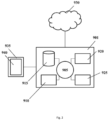
- FIG. 2 shows a computer system 901 that is programmed or otherwise configured to implement methods of the present disclosure.
- the computer system 901 includes a central processing unit (CPU, also "processor” and “computer processor” herein) 905, which can be a single core or multi core processor, or a plurality of processors for parallel processing.
- the computer system 901 also includes memory or memory location 910 (e.g., random-access memory, read-only memory, flash memory), electronic storage unit 915 (e.g., hard disk), communication interface 920 (e.g., network adapter) for communicating with one or more other systems, and peripheral devices 925, such as cache, other memory, data storage and/or electronic display adapters.
- the memory 910, storage unit 915, interface 920 and peripheral devices 925 are in communication with the CPU 905
- the storage unit 915 can be a data storage unit (or data repository) for storing data.
- the computer system 901 can be operatively coupled to a computer network ("network") 930 with the aid of the communication interface 920.
- the network 930 can be the Internet, an internet and/or extranet, or an intranet and/or extranet that is in communication with the Internet.
- the network 930 in some cases is a telecommunication and/or data network.
- the network 930 can include a local area network.
- the network 930 can include one or more computer servers, which can enable distributed computing, such as cloud computing.
- the network 930 in some cases with the aid of the computer system 901, can implement a peer-to-peer network, which may enable devices coupled to the computer system 901 to behave as a client or a server.
- the CPU 905 can execute a sequence of machine-readable instructions, which can be embodied in a program or software.
- the instructions may be stored in a memory location, such as the memory 910.
- the instructions can be directed to the CPU 905, which can subsequently program or otherwise configure the CPU 905 to implement methods of the present disclosure. Examples of operations performed by the CPU 905 can include fetch, decode, execute, and writeback.
- the CPU 905 can be part of a circuit, such as an integrated circuit.
- a circuit such as an integrated circuit.
- One or more other components of the system 901 can be included in the circuit.
- the circuit is an application specific integrated circuit (ASIC).
- the storage unit 915 can store files, such as drivers, libraries and saved programs.
- the storage unit 915 can store user data, e.g., user preferences and user programs.
- the computer system 901 in some cases can include one or more additional data storage units that are external to the computer system 901, such as located on a remote server that is in communication with the computer system 901 through an intranet or the Internet.
- the computer system 901 can communicate with one or more remote computer systems through the network 930.
- the computer system 901 can communicate with a remote computer system of a user.
- remote computer systems include personal computers (e.g., portable PC), slate or tablet PC's (e.g., Apple ® iPad, Samsung ® Galaxy Tab), telephones, Smart phones (e.g., Apple ® iPhone, Android-enabled device, Blackberry ® ), or personal digital assistants.
- the user can access the computer system 901 via the network 930.
- Methods as described herein can be implemented by way of machine (e.g., computer processor) executable code stored on an electronic storage location of the computer system 901, such as, for example, on the memory 910 or electronic storage unit 915.
- the machine executable or machine readable code can be provided in the form of software.
- the code can be executed by the processor 905.
- the code can be retrieved from the storage unit 915 and stored on the memory 910 for ready access by the processor 905.
- the electronic storage unit 915 can be precluded, and machine-executable instructions are stored on memory 910.
- the code can be pre-compiled and configured for use with a machine having a processor adapted to execute the code, or can be compiled during runtime.
- the code can be supplied in a programming language that can be selected to enable the code to execute in a precompiled or as-compiled fashion.
- aspects of the systems and methods provided herein can be embodied in programming.
- Various aspects of the technology may be thought of as “products” or “articles of manufacture” typically in the form of machine (or processor) executable code and/or associated data that is carried on or embodied in a type of machine readable medium.
- Machine-executable code can be stored on an electronic storage unit, such as memory (e.g., read-only memory, random-access memory, flash memory) or a hard disk.
- Storage type media can include any or all of the tangible memory of the computers, processors or the like, or associated modules thereof, such as various semiconductor memories, tape drives, disk drives and the like, which may provide non-transitory storage at any time for the software programming. All or portions of the software may at times be communicated through the Internet or various other telecommunication networks. Such communications, for example, may enable loading of the software from one computer or processor into another, for example, from a management server or host computer into the computer platform of an application server.
- another type of media that may bear the software elements includes optical, electrical and electromagnetic waves, such as used across physical interfaces between local devices, through wired and optical landline networks and over various air-links. The physical elements that carry such waves, such as wired or wireless links, optical links or the like, also may be considered as media bearing the software. As used herein, unless restricted to non-transitory, tangible
- Storage media terms such as computer or machine “readable medium” refer to any medium that participates in providing instructions to a processor for execution.
- a machine readable medium such as computer-executable code
- a tangible storage medium such as computer-executable code
- Non-volatile storage media include, for example, optical or magnetic disks, such as any of the storage devices in any computer(s) or the like, such as may be used to implement the databases, etc. shown in the drawings.
- Volatile storage media include dynamic memory, such as main memory of such a computer platform.
- Tangible transmission media include coaxial cables; copper wire and fiber optics, including the wires that comprise a bus within a computer system.
- the computer system 901 can include or be in communication with an electronic display 935 that comprises a user interface (UI) 940 for providing, for example, a report.
- UI user interface
- Ul's include, without limitation, a graphical user interface (GUI) and web-based user interface.
- the nucleic acids can include DNA and RNA and can be in double and/or single-stranded forms.
- a sample can be in the form originally isolated from a subject or can have been subjected to further processing to remove or add components, such as cells, enrich for one component relative to another, or convert one form of nucleic acid to another, such as RNA to DNA or single-stranded nucleic acids to double-stranded.
- a body fluid for analysis is plasma or serum containing cell-free nucleic acids, e.g., cell-free DNA (cfDNA).
- the volume of body fluid can depend on the desired read depth for sequenced regions. Exemplary volumes are 0.4-40 ml, 5-20 ml, 10-20 ml. For example, the volume can be 0.5 ml, 1 ml, 5 ml 10 ml, 20 ml, 30 ml, or 40 ml. A volume of sampled plasma may be 5 to 20 ml.
- the sample can comprise various amount of nucleic acid that contains genome equivalents.
- a sample of about 30 ng DNA can contain about 10,000 (10 4 ) haploid human genome equivalents and, in the case of cfDNA, about 200 billion (2 ⁇ 10 4 ) individual polynucleotide molecules.
- a sample of about 100 ng of DNA can contain about 30,000 haploid human genome equivalents and, in the case of cfDNA, about 600 billion individual molecules.
- a sample can comprise nucleic acids from different sources, e.g., from cells and cell free.
- a sample can comprise nucleic acids carrying mutations.
- a sample can comprise DNA carrying germline mutations and/or somatic mutations.
- a sample can comprise DNA carrying cancer-associated mutations (e.g., cancer-associated somatic mutations).
- the amount can be at least 1 fg, at least 10 fg, at least 100 fg, at least 1 pg, at least 10 pg, at least 100 pg, at least 1 ng, at least 10 ng, at least 100 ng, at least 150 ng, or at least 200 ng of cell-free nucleic acid molecules.
- the amount can be up to 1 femtogram (fg), 10 fg, 100 fg, 1 picogram (pg), 10 pg, 100 pg, 1 ng, 10 ng, 100 ng, 150 ng, or 200 ng of cell-free nucleic acid molecules.
- the method can comprise obtaining 1 femtogram (fg) to 200 ng.
- a cell-free nucleic acid sample refers to a sample containing cell-free nucleic acids.
- Cell-free nucleic acids are nucleic acids not contained within or otherwise bound to a cell or in other words nucleic acids remaining in a sample of removing intact cells.
- Cell-free nucleic acids can be referred to all non-encapsulated nucleic acid sourced from a bodily fluid (e.g., blood, urine, CSF, etc.) from a subject.
- Cell-free nucleic acids include DNA (cfDNA), RNA (cfRNA), and hybrids thereof, including genomic DNA, mitochondrial DNA, circulating DNA, siRNA, miRNA, circulating RNA (cRNA), tRNA, rRNA, small nucleolar RNA (snoRNA), Piwi-interacting RNA (piRNA), long non-coding RNA (long ncRNA), or fragments of any of these.
- Cell-free nucleic acids can be double-stranded, single-stranded, or a hybrid thereof.
- a cell-free nucleic acid can be released into bodily fluid through secretion or cell death processes, e.g., cellular necrosis and apoptosis.
- ctDNA circulating tumor DNA
- cffDNA Cell-free fetal DNA
- a cell-free nucleic acid or proteins associated with it can have one or more epigenetic modifications, for example, a cell-free nucleic acid can be acetylated, 5-methylated, ubiquitylated, phosphorylated, sumoylated, ribosylated, and/or citrullinated.
- Cell-free nucleic acids have an exemplary size distribution of about 100-500 nucleotides, with molecules of 110 to about 230 nucleotides representing about 90% of molecules, with a mode of about 168 nucleotides in humans and a second minor peak in a range between 240 to 440 nucleotides.
- Cell-free nucleic acids can be about 160 to about 180 nucleotides, or about 320 to about 360 nucleotides, or about 440 to about 480 nucleotides.
- Cell-free nucleic acids can be isolated from bodily fluids through a partitioning step in which cell-free nucleic acids, as found in solution, are separated from intact cells and other non-soluble components of the bodily fluid. Partitioning may include techniques such as centrifugation or filtration. Alternatively, cells in bodily fluids can be lysed and cell-free and cellular nucleic acids processed together. Generally, after addition of buffers and wash steps, cell-free nucleic acids can be precipitated with an alcohol. Further clean up steps may be used such as silica based columns to remove contaminants or salts. Non-specific bulk carrier nucleic acids, for example, may be added throughout the reaction to optimize certain aspects of the procedure such as yield.
- samples can include various forms of nucleic acids including double-stranded DNA, single-stranded DNA and/or single-stranded RNA.
- single stranded DNA and/or single stranded RNA can be converted to double stranded forms so they are included in subsequent processing and analysis steps.
- Sample nucleic acids flanked by adapters can be amplified by PCR and other amplification methods typically primed from primers binding to primer binding sites in adapters flanking a DNA molecule to be amplified.
- Amplification methods can involve cycles of extension, denaturation and annealing resulting from thermocycling or can be isothermal as in transcription mediated amplification.
- Other amplification methods include the ligase chain reaction, strand displacement amplification, nucleic acid sequence based amplification, and self-sustained sequence based replication.
- sequence capturing involves introducing a single-stranded nucleic acid molecule complementary to a targeted sequence, e.g., a coding sequence of a genomic region and mutation of such region is associated with a cancer type.
- the amplifications generate a plurality of non-uniquely or uniquely barcoded nucleic acid amplicons with barcodes labelling individual nucleic acids and/or samples at a size ranging from 200 nt to 700 nt, 250 nt to 350 nt, or 320 nt to 550 nt.
- the amplicons have a size of about 300 nt.
- the amplicons have a size of about 500 nt.
- Barcodes can be incorporated into or otherwise joined to adapters by chemical synthesis, ligation, overlap extension PCR among other methods. Generally, assignment of unique or non-unique barcodes in reactions follows methods and systems described by US patent applications 20010053519 , 20110160078 , and U.S. Pat. No. 6,582,908 and U.S. Pat. No. 7,537,898 and US 9,598,731 .
- Barcodes can be linked to sample nucleic acids randomly or non-randomly. In some cases, they are introduced at an expected ratio of barcodes (e.g., a combination of unique or non-unique barcodes) to microwells. For example, the barcodes may be loaded so that more than about 1, 2, 3, 4, 5, 6, 7, 8, 9, 10, 20, 50, 100, 500, 1000, 5000, 10000, 50,000, 100,000, 500,000, 1,000,000, 10,000,000, 50,000,000 or 1,000,000,000 barcodes are loaded per genome sample.
- the barcodes may be loaded so that less than about 2, 3, 4, 5, 6, 7, 8, 9, 10, 20, 50, 100, 500, 1000, 5000, 10000, 50,000, 100,000, 500,000, 1,000,000, 10,000,000, 50,000,000 or 1,000,000,000 barcodes are loaded per genome sample.
- the average number of barcodes loaded per sample genome is less than, or greater than, about 1, 2, 3, 4, 5, 6, 7, 8, 9, 10, 20, 50, 100, 500, 1000, 5000, 10000, 50,000, 100,000, 500,000, 1,000,000, 10,000,000, 50,000,000 or 1,000,000,000 barcodes per genome sample.
- the barcodes can be unique or non-unique.
- a preferred format uses 20-50 different barcodes, ligated to both ends of a target molecule creating 20-50 ⁇ 20-50 tags, e.g., 400-2500 barcodes. Such numbers of barcodes are sufficient that different molecules having the same start and stop points have a high probability (e.g., at least 94%, 99.5%, 99.99%, 99.999%) of receiving different combinations of tags.
- barcodes may be predetermined or random or semi-random sequence oligonucleotides.
- a plurality of barcodes may be used such that barcodes are not necessarily unique to one another in the plurality.
- barcodes may be attached (e.g., by ligation or PCR amplification) to individual molecules such that the combination of the barcode and the sequence it may be attached to creates a unique sequence that may be individually tracked.
- detection of non-unique barcodes in combination with sequence data of beginning (start) and end (stop) portions of sequence reads may allow assignment of a unique identity to a particular molecule.
- the length, or number of base pairs, of an individual sequence read may also be used to assign a unique identity to such a molecule.
- fragments from a single strand of nucleic acid having been assigned a unique identity may thereby permit subsequent identification of fragments from the parent strand, and/or a complementary strand.
- Sequencing methods include, for example, Sanger sequencing, high-throughput sequencing, pyrosequencing, sequencing-by-synthesis, single-molecule sequencing, nanopore sequencing, semiconductor sequencing, sequencing-by-ligation, sequencing-by-hybridization, RNA-Seq (Illumina), Digital Gene Expression (Helicos), Next generation sequencing (NGS), Single Molecule Sequencing by Synthesis (SMSS) (Helicos), massively-parallel sequencing, Clonal Single Molecule Array (Solexa), shotgun sequencing, Ion Torrent, Oxford Nanopore, Roche Genia, Maxim-Gilbert sequencing, primer walking, sequencing using PacBio, SOLiD, Ion Torrent, or Nanopore platforms. Sequencing reactions can be performed in a variety of sample processing units, which may be multiple lanes, multiple channels, multiple wells, or other means of processing multiple sample sets substantially simultaneously. Sample processing unit can also
- the sequencing reactions can be performed on one or more fragments types known to contain markers of cancer of other disease.
- the sequencing reactions can also be performed on any nucleic acid fragments present in the sample.
- the sequence reactions may provide for sequence coverage of the genome of at least 5%, 10%, 15%, 20%, 25%, 30%, 40%, 50%, 60%, 70%, 80%, 90%, 95%, 99%, 99.9% or 100%. In other cases, sequence coverage of the genome may be less than 5%, 10%, 15%, 20%, 25%, 30%, 40%, 50%, 60%, 70%, 80%, 90%, 95%, 99%, 99.9% or 100%.
- Simultaneous sequencing reactions may be performed using multiplex sequencing.
- cell free polynucleotides may be sequenced with at least 1000, 2000, 3000, 4000, 5000, 6000, 7000, 8000, 9000, 10000, 50000, 100,000 sequencing reactions.
- cell-free poly nucleotides may be sequenced with less than 1000, 2000, 3000, 4000, 5000, 6000, 7000, 8000, 9000, 10000, 50000, 100,000 sequencing reactions. Sequencing reactions may be performed sequentially or simultaneously. Subsequent data analysis may be performed on all or part of the sequencing reactions.
- data analysis may be performed on at least 1000, 2000, 3000, 4000, 5000, 6000, 7000, 8000, 9000, 10000, 50000, 100,000 sequencing reactions. In other cases data analysis may be performed on less than 1000, 2000, 3000, 4000, 5000, 6000, 7000, 8000, 9000, 10000, 50000, 100,000 sequencing reactions.
- An exemplary read depth is 1000-50000 reads per locus (base).
- a nucleic acid population is prepared for sequencing by enzymatic blunt-ending of double-stranded nucleic acids with single-stranded overhangs at one or both ends.
- the population can be treated with a protein with a 5'-3' polymerase activity and a 3'-5' exonuclease activity in the presence of the nucleotides (e.g., A, C, G and T or U).
- Exemplary proteins are Klenow large fragment and T4 polymerase.
- the protein extends the recessed 3' end on the opposing strand until it is flush with the 5' end producing a blunt end.
- the protein digests from the 3' end up to and sometimes beyond the 5' end of the opposing strand. If digestion proceed beyond the 5' end of the opposing strand, the gap can be filled in by polymerase activity as for a 5' overhang. Blunt-ending of double stranded nucleic acids facilitates attachment of adapters and subsequent amplification.
- Nucleic acid populations can be subject to additional processing such as conversion of single-stranded nucleic acids to double-stranded and/or conversion of RNA to DNA. These forms of nucleic acid can also be linked to adapters and amplified.
- nucleic acids subject to blunt-ending as described above, and optionally other nucleic acids in a sample can be sequenced to produce sequenced nucleic acids.
- a sequenced nucleic acid can refer either to the sequence of a nucleic acid or a nucleic acid whose sequence has been determined. Sequencing can be performed so as to provide sequence data of individual nucleic acid molecules in a sample either directly or indirectly from a consensus sequence of amplification products of an individual nucleic acid molecule in the sample.
- double-stranded nucleic acids with single-stranded overhangs in a sample after blunt-ending are linked at both ends to adapters including barcodes, and the sequencing determines nucleic acid sequences as well as in-line barcodes introduced by the adapters.
- the blunt-ended DNA molecules can be blunt-end ligated with a blunt end of an at least partially double-stranded adapter (e.g., a Y shaped or bell-shaped adapter).
- blunt ends of sample nucleic acids and adapters can be tailed with complementary nucleotides to facilitate ligation.
- the sample can be contacted with a sufficient number of adapters that there is a low probability (e.g., ⁇ 1 or 0.1 %) that any two instances of the same nucleic acid receive the same combination of adapter bar codes from the adapters linked at both ends.
- a sufficient number of adapters that there is a low probability (e.g., ⁇ 1 or 0.1 %) that any two instances of the same nucleic acid receive the same combination of adapter bar codes from the adapters linked at both ends.
- the use of adapters in this manner permits identification of families of nucleic acid sequences with the same start and stop points on a reference nucleic acid and linked to the same combination of barcodes.
- Such a family represents sequences of amplification products of a nucleic acid in the sample before amplification.
- the sequences of family members can be compiled to derive consensus nucleotide(s) or a complete consensus sequence for a nucleic acid molecule in the original sample, as modified by blunt ending and adapter attachment.
- the nucleotide occupying a specified position of a nucleic acid in the sample is determined to be the consensus of nucleotides occupying that corresponding position in family member sequences.
- Families can include sequences of one or both strands of a double-stranded nucleic acid. If members of a family include sequences of both strands from a double-stranded nucleic acid, sequences of one strand are converted to their complement for purposes of compiling all sequences to derive consensus nucleotide(s) or sequences. Some families include only a single member sequence. In this case, this sequence can be taken as the sequence of a nucleic acid in the sample before amplification. Alternatively families with only a single member sequence can be eliminated from subsequent analysis.
- Nucleotide variations in sequenced nucleic acids can be determined by comparing sequenced nucleic acids with a reference sequence.
- the reference sequence is often a known sequence, e.g., a known whole or partial genome sequence from an object, whole genome sequence of a human object.
- the reference sequence can be hG19.
- the sequenced nucleic acids can represent sequences determined directly for a nucleic acid in a sample, or a consensus of sequences of amplification products of such a nucleic acid, as described above.
- a comparison can be performed at one or more designated positions on a reference sequence.
- a subset of sequenced nucleic acids can be identified including a position corresponding with a designated position of the reference sequence when the respective sequences are maximally aligned.
- sequenced nucleic acids include a nucleotide variation at the designated position, and optionally which if any, include a reference nucleotide (i.e., same as in the reference sequence). If the number of sequenced nucleic acids in the subset including a nucleotide variant exceeds a threshold, then a variant nucleotide can be called at the designated position.
- the threshold can be a simple number, such as at least 1, 2, 3, 4, 5, 6, 7, 8, 9, or 10 sequenced nucleic acids within the subset including the nucleotide variant or it can be a ratio, such as a least 0.5, 1, 2, 3, 4, 5, 10, 15, or 20 of sequenced nucleic acids within the subset include the nucleotide variant, among other possibilities.
- the comparison can be repeated for any designated position of interest in the reference sequence. Sometimes a comparison can be performed for designated positions occupying at least 20, 100, 200, or 300 contiguous positions on a reference sequence, e.g., 20-500, or 50-300 contiguous positions.
- This example determines distribution of Z-scores in individuals with various cancer types.
- cfDNA extraction, processing, and sequencing was performed in a CLIA-certified, CAP-accredited laboratory. Briefly, for clinical samples, plasma was isolated from 10 ml of whole blood collected in cell-free blood collection tubes by double centrifugation, from which cfDNA was extracted, labeled with non-random barcodes, and 5-30 ng used to prepare sequencing libraries, which were then enriched by hybrid capture, pooled, and sequenced by paired-end synthesis (NextSeq 500 and/or HiSeq 2500, Illumina, Inc.).
- Contrived analytical samples were generated using similarly prepared cfDNA from healthy donors and cfDNA isolated as above from the culture supernatant of model cell lines and serially size-selected using Agencourt Ampure XP beads (Beckman Coulter, Inc.) until no detectable gDNA remained.
- a generative background noise model was constructed to account for PCR artifacts arising frequently in homopolymeric or repetitive contexts, allowing for strand-specific and late PCR errors. Detection was then determined by the likelihood ratio score for observed feature-weighted variant molecule support versus background noise distribution. Reporting thresholds were event-specific as determined by performance in training samples but were most commonly ⁇ 2 unique molecule for clinically actionable indels, which in an average sample corresponds to a detection limit of -0.02% allelic fraction.
- Fusion events were detected by merging overlapping paired-end reads to form a representation of the sequenced cfDNA molecule, which was then, aligned, mapped to initial unique cfDNA molecules based on barcoding and alignment information, including soft clipping.
- Soft-clipped reads were analyzed using directionality and breakpoint proximity to identify clusters of molecules representing candidate fusion events, which were then used to construct fused references against which reads soft-clipped by the aligner on the first pass were realigned.
- Specific reporting thresholds were determined by retrospective and training set analyses but were generally ⁇ 1 unique post-realignment molecules meeting quality requirements, which in an average sample corresponds to a detection limit of -0.04% allelic fraction.
- probe-level unique molecule coverage was normalized for overall unique molecule throughput, probe efficiency, GC content, and signal saturation and robustly summarized at the gene level.
- CNA determinations were based on training set-established decision thresholds for both absolute copy number deviation from per-sample diploid baseline and deviation from the baseline variation of probe-level normalized signal in the context of background variation within each sample's own diploid baseline.
- Per-sample normalized tumor burden was determined by normalization to the mutational burden expected for tumor type and ctDNA fraction and reported as a z- score.
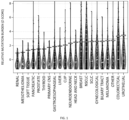
- Figure 1 plots Z-scores for cancer mutation burden in samples from different individuals having one of the cancer types shown on the X-axes.
- the distribution of Z-scores varies for the different cancer types but is generally asymmetric with the mode generally below zero but with a few individuals showing highly positive Z scores.
Landscapes
- Health & Medical Sciences (AREA)
- Life Sciences & Earth Sciences (AREA)
- Chemical & Material Sciences (AREA)
- Engineering & Computer Science (AREA)
- Proteomics, Peptides & Aminoacids (AREA)
- Bioinformatics & Cheminformatics (AREA)
- Physics & Mathematics (AREA)
- Analytical Chemistry (AREA)
- Genetics & Genomics (AREA)
- General Health & Medical Sciences (AREA)
- Organic Chemistry (AREA)
- Medical Informatics (AREA)
- Biotechnology (AREA)
- Molecular Biology (AREA)
- Pathology (AREA)
- Biophysics (AREA)
- Immunology (AREA)
- Zoology (AREA)
- Wood Science & Technology (AREA)
- Evolutionary Biology (AREA)
- Bioinformatics & Computational Biology (AREA)
- Spectroscopy & Molecular Physics (AREA)
- Theoretical Computer Science (AREA)
- Public Health (AREA)
- Oncology (AREA)
- Hospice & Palliative Care (AREA)
- General Engineering & Computer Science (AREA)
- Biochemistry (AREA)
- Microbiology (AREA)
- Biomedical Technology (AREA)
- Data Mining & Analysis (AREA)
- Databases & Information Systems (AREA)
- Epidemiology (AREA)
- Primary Health Care (AREA)
- Measuring Or Testing Involving Enzymes Or Micro-Organisms (AREA)
- Medicines That Contain Protein Lipid Enzymes And Other Medicines (AREA)
- Medicines Containing Antibodies Or Antigens For Use As Internal Diagnostic Agents (AREA)
- Peptides Or Proteins (AREA)
Claims (14)
- Verfahren zum Bereitstellen eines Messwerts der Tumormutationslast in einer Testprobe zellfreier Nukleinsäuren aus einem Subjekt mit einem Krebstyp oder Anzeichen eines Krebstyps, das Folgendes umfasst:(a) Bestimmung, mittels eines Computers, einer Anzahl an Mutationen, vorhanden in der Testprobe zellfreier Nukleinsäuren, und einer Nebenallelfraktion, basierend auf einer oder mehreren Mutationen, die in der Testprobe zellfreier Nukleinsäuren am stärksten vertreten sind; und(b) Normalisierung, mittels eines Computers, der Anzahl an in der Probe vorhandenen Mutationen bezüglich einer Anzahl an Mutationen, die vorhanden sind in Kontrollproben aus anderen Subjekten mit demselben Krebstyp, und einer Nebenallelfraktion innerhalb einer Binning-Klasse von Nebenallelfraktionen, einschließlich der Nebenallelfraktion der Testprobe, um einen Messwert der Krebsmutationslast in der Testprobe zu bestimmen.
- Verfahren nach Anspruch 1:(a) wobei die Anzahl an Mutationen, die in Kontrollproben vorhanden sind, ein Durchschnittswert ist;(b) wobei die Binning-Klasse eine Breite von nicht mehr als 20 %, nicht mehr als 10 % oder nicht mehr als 5 % aufweist; und/oder(c) ferner umfassend die Bestimmung, ob die Anzahl an in der Probe vorhandenen Mutationen über einem Schwellenwert liegt, wobei der Schwellenwert festgelegt ist, um ein Subjekt zu kennzeichnen, das wahrscheinlich positiv auf eine Immuntherapie anspricht.
- Verfahren nach Anspruch 1 oder Anspruch 2, wobei(a) die Normalisierung das Dividieren der Anzahl an Mutationen in der Testprobe durch eine Durchschnittswert-Anzahl an Mutationen in den Kontrollproben umfasst;(b) die Normalisierung das Subtrahieren eines Durchschnittswerts der Anzahl an Mutationen in den Kontrollproben innerhalb der Binning-Klasse von der bestimmten Anzahl an Mutationen in der Testprobe zellfreier Nukleinsäuren umfasst, optional ferner umfassend das Dividieren der Anzahl an Mutationen in der Testprobe zellfreier Nukleinsäuren, minus der Durchschnittswert-Anzahl an in den Kontrollproben vorhandenen Mutationen, durch eine Standardabweichung der Anzahl an in den Kontrollproben vorhandenen Mutationen, um einen Z-Score zu berechnen, optional wobei:(i) der Durchschnittswert ein Mittelwert ist; oder(ii) die Kontrollproben mindestens 25, 50, 100, 200 oder 500 Kontrollproben umfassen;(c) die Normalisierung die Bestimmung von Durchschnittswert und Streuung der Anzahl an Mutationen in mindestens 10, 50, 100 oder 500 Kontrollproben, die Bestimmung eines Standard-Score der Abweichung vom Durchschnittswert in der Testprobe, und die Bestimmung, ob der Standard-Score über einer Schwellenwertanzahl liegt, umfasst, wobei optional:(i) der Durchschnittswert ein Mittelwert, Medianwert oder Modalwert ist;(ii) die Streuung als Varianz, Standardabweichung oder Interquartilsabstand repräsentiert wird; und/oder(iii) der Standard-Score der Abweichung ein Z-Score ist; oder(d) die Normalisierung ferner das Dividieren der bestimmten Anzahl an Mutationen in der Testprobe zellfreier Nukleinsäuren durch die Durchschnittswert-Anzahl an Mutationen, vorhanden in den Kontrollproben in der gleichen Binning-Klasse, umfasst.
- Verfahren nach einem der vorhergehenden Ansprüche, wobei die Normalisierung in einem Computer implementiert wird, der zum Speichern von Werten für die Anzahl an Mutationen, die bei einer Vielzahl von Binning-Klassen von Nebenallelfraktionen vorhanden sind, programmiert ist, optional wobei die gespeicherten Werte ein Mittelwert samt Standardabweichung der Anzahl an Mutationen sind, die bei jeder aus der Vielzahl von Binning-Klassen vorhanden sind, optional wobei mindestens 50.000, 100.000 oder 150.000 Nukleotide in Segmenten der zellfreien Nukleinsäuren sequenziert werden.
- Verfahren nach einem der vorhergehenden Ansprüche, umfassend das Bestimmen eines Standard-Score der Tumormutationslast in dem Subjekt und das Bestimmen, ob der Standard-Score über einem Schwellenwert für Kontrollsubjekte liegt, der konsistent mit dem Ansprechvermögen auf Immuntherapie ist.
- Verfahren nach Anspruch 1, wobei (a) Folgendes umfasst(i) Bestimmen von Sequenzen zellfreier Nukleinsäuremoleküle in der Testprobe und Vergleichen der resultierenden Sequenzen mit entsprechenden Referenzsequenzen zum Identifizieren der Anzahl an Mutationen, die vorhanden sind in der Probe, und der Nebenallelfraktion, optional wobei die Referenzsequenzen aus hG19 oder hG38 stammen;(ii) Bestimmen der Anwesenheit oder Abwesenheit einer Palette vorgegebener Mutationen, die bekanntermaßen bei Krebs des Typs, der in der Probe vorhanden oder mutmaßlich vorhanden ist, vorkommen, optional wobei: die Mutationen somatische Mutationen sind, welche die Sequenz eines codierten Proteins betreffen; oder(iii) Anknüpfen von Adaptoren an die zellfreien Nukleinsäuren, Amplifizieren der zellfreien Nukleinsäuren von Primern aus, die an die Adaptoren binden, und Sequenzieren der amplifizierten Nukleinsäuren, wobei es sich bei dem Sequenzieren zum Beispiel um Brückenamplifikations-Sequenzierung, Pyrosequenzierung, Ionen-Halbleitersequenzierung, Paired-End-Sequenzierung, Sequenzierung mittels Ligation oder Einzelmolekül-Echtzeitsequenzierung handelt.
- Verfahren nach einem der vorhergehenden Ansprüche, wobei es sich bei dem Krebstyp handelt um:(a) einen festen Krebs;(b) Nieren-, Mesotheliom-, Weichgewebe-, primären ZNS-, Schilddrüsen-, Leber-, Prostata-, Pankreas-, CUP-, neuroendokrinen, NSCLC-, gastroösophagealen, Kopf/Hals-, SCLC-, Brustkrebs, Melanom, Cholangiokarzinom, gynäkologischen, kolorektalen oder urothelialen Krebs;(c) eine Leukämie oder ein Lymphom; oder(d) eine hämatopoetische Malignität.
- System, umfassend:eine Kommunikationsschnittstelle, die, über ein Kommunikationsnetzwerk, Sequenzierungsablesungen empfängt, die durch Sequenzierung zellfreier Nukleinsäuren in einer Testprobe erstellt wurden; undeinen Computer in Kommunikation mit der Kommunikationsschnittstelle, wobei der Computer einen oder mehrere Computerprozessoren und ein computerlesbares Medium umfasst, das maschinenausführbaren Code umfasst, der, wenn er von dem einen oder den mehreren Computerprozessoren ausgeführt wird, ein Verfahren implementiert, umfassend:(a) Empfangen, über das Kommunikationsnetzwerk, der Sequenzierungsablesungen, die von dem Nukleinsäuresequenzierer erstellt wurden;(b) Bestimmen einer Anzahl an Mutationen, vorhanden in den Sequenzierungsablesungen aus der Testprobe, und einer Nebenallelfraktion, basierend auf einer oder mehreren Mutationen, die in Sequenzierungsablesungen aus der Testprobe am stärksten vertreten sind; und,(c) Normalisierung der Anzahl an in der Testprobe vorhandenen Mutationen bezüglich einer Anzahl an Mutationen, die vorhanden sind in Kontrollproben aus anderen Subjekten mit demselben Krebstyp, und einer Nebenallelfraktion innerhalb einer Binning-Klasse von Nebenallelfraktionen, einschließlich der Nebenallelfraktion der Testprobe, um einen Messwert der Krebsmutationslast in der Testprobe zu bestimmen.
- System nach Anspruch 8, wobei der Nukleinsäuresequenzierer eine Sequenzierungsbibliothek sequenziert, die aus von einem Subjekt abgeleiteten zellfreien DNA-Molekülen erzeugt wurde, wobei die Sequenzierungsbibliothek die zellfreien DNA-Moleküle und Barcodes enthaltende Adaptoren umfasst, wobei die Sequenzierungsbibliothek optional ferner Proben-Barcodes umfasst, die eine Probe gegenüber einer oder mehreren Proben unterscheiden.
- System nach Anspruch 8 oder Anspruch 9, wobei:(a) das computerlesbare Medium einen Speicher, eine Festplatte oder einen Computerserver umfasst;(b) das Kommunikationsnetzwerk ein Telekommunikationsnetzwerk, ein Internet, ein Extranet oder ein Intranet umfasst;(b) das Kommunikationsnetzwerk einen oder mehrere Computerserver umfasst, die zur verteilten Datenverarbeitung in der Lage sind, wobei es sich bei der verteilten Datenverarbeitung optional um Cloud-Computing handelt; und/oder(c) der Computer sich auf einem Computerserver befindet, der räumlich entfernt vom Nukleinsäuresequenzierer angeordnet ist.
- System nach einem der Ansprüche 8-10, wobei der Nukleinsäuresequenzierer:(a) Sequenzierung-durch-Synthese auf der Sequenzierungsbibliothek durchführt, um die Sequenzierungsablesungen zu erstellen;(b) Pyrosequenzierung, Einzelmolekül-Sequenzierung, Nanoporen-Sequenzierung, Halbleitersequenzierung, Sequenzierung mittels Ligation oder Sequenzierung mittels Hybridisierung auf der Sequenzierungsbibliothek durchführt, um die Sequenzierungsablesungen zu erstellen;(c) ein klonales Einzelmolekül-Array, das aus der Sequenzierungsbibliothek abgeleitet wurde, verwendet, um die Sequenzierungsablesungen zu erstellen; und/oder(d) einen Chip mit einem Array von Mikrovertiefungen zum Sequenzieren der Sequenzierungsbibliothek umfasst, um die Sequenzierungsablesungen zu erstellen.
- System nach einem der Ansprüche 8-11, ferner umfassend eine elektronische Anzeige, die über ein Netzwerk in Kommunikation mit dem Computer steht, wobei die elektronische Anzeige eine Benutzerschnittstelle zum Anzeigen von Ergebnissen nach der Implementierung von (a)-(c) umfasst.
- System nach Anspruch 12, wobei die Benutzerschnittstelle ein graphisches User-Interface (GUI) oder eine Web-basierte Benutzerschnittstelle ist.
- System nach Anspruch 12 oder Anspruch 13, wobei die elektronische Anzeige bei einem Personal-Computer und/oder einem internetfähigen Computer vorliegt, wobei sich der internetfähige Computer optional an einem Ort befindet, der von dem Computer räumlich entfernt ist.
Priority Applications (1)
| Application Number | Priority Date | Filing Date | Title |
|---|---|---|---|
| EP24222291.7A EP4549588A3 (de) | 2017-11-03 | 2018-11-02 | Normalisierung einer tumormutationslast |
Applications Claiming Priority (2)
| Application Number | Priority Date | Filing Date | Title |
|---|---|---|---|
| US201762581563P | 2017-11-03 | 2017-11-03 | |
| PCT/US2018/059068 WO2019090156A1 (en) | 2017-11-03 | 2018-11-02 | Normalizing tumor mutation burden |
Related Child Applications (1)
| Application Number | Title | Priority Date | Filing Date |
|---|---|---|---|
| EP24222291.7A Division EP4549588A3 (de) | 2017-11-03 | 2018-11-02 | Normalisierung einer tumormutationslast |
Publications (4)
| Publication Number | Publication Date |
|---|---|
| EP3704268A1 EP3704268A1 (de) | 2020-09-09 |
| EP3704268A4 EP3704268A4 (de) | 2021-08-11 |
| EP3704268C0 EP3704268C0 (de) | 2025-01-22 |
| EP3704268B1 true EP3704268B1 (de) | 2025-01-22 |
Family
ID=66332353
Family Applications (2)
| Application Number | Title | Priority Date | Filing Date |
|---|---|---|---|
| EP24222291.7A Pending EP4549588A3 (de) | 2017-11-03 | 2018-11-02 | Normalisierung einer tumormutationslast |
| EP18872946.1A Active EP3704268B1 (de) | 2017-11-03 | 2018-11-02 | Normalisierung einer tumormutationslast |
Family Applications Before (1)
| Application Number | Title | Priority Date | Filing Date |
|---|---|---|---|
| EP24222291.7A Pending EP4549588A3 (de) | 2017-11-03 | 2018-11-02 | Normalisierung einer tumormutationslast |
Country Status (7)
| Country | Link |
|---|---|
| US (3) | US11193175B2 (de) |
| EP (2) | EP4549588A3 (de) |
| JP (2) | JP7421474B2 (de) |
| CN (1) | CN111566225A (de) |
| CA (1) | CA3079253A1 (de) |
| ES (1) | ES3013487T3 (de) |
| WO (1) | WO2019090156A1 (de) |
Families Citing this family (15)
| Publication number | Priority date | Publication date | Assignee | Title |
|---|---|---|---|---|
| SG11201910101SA (en) | 2017-05-08 | 2019-11-28 | Gritstone Oncology Inc | Alphavirus neoantigen vectors |
| MX2020001575A (es) | 2017-08-07 | 2020-11-18 | Univ Johns Hopkins | Materiales y métodos para evaluar y tratar el cáncer. |
| JP7421474B2 (ja) | 2017-11-03 | 2024-01-24 | ガーダント ヘルス, インコーポレイテッド | 腫瘍遺伝子変異量の正規化 |
| US20210040564A1 (en) * | 2018-04-23 | 2021-02-11 | Inivata Ltd. | Method for predicting and monitoring response to an immune checkpoint inhibitor |
| US10329627B1 (en) * | 2018-04-23 | 2019-06-25 | Inivata Ltd. | Method for predicting and monitoring response to an immune checkpoint inhibitor |
| CN112752854B (zh) | 2018-07-23 | 2025-03-18 | 夸登特健康公司 | 用于通过肿瘤分数和覆盖率调整肿瘤突变负荷的方法和系统 |
| EP3833783B1 (de) | 2018-08-08 | 2024-10-02 | Inivata Ltd. | Verfahren zur sequenzierung unter verwendung von multiplex-pcr mit variabler replikation |
| CN110229894B (zh) * | 2019-05-21 | 2020-09-08 | 武汉大学 | 一种基因组合及其在制备预测接受免疫检查点抑制剂治疗患者预后的试剂中的应用 |
| CN114072516B (zh) | 2019-05-30 | 2025-01-14 | 磨石生物公司 | 经修饰的腺病毒 |
| KR102428408B1 (ko) * | 2019-10-31 | 2022-08-03 | 지니너스 주식회사 | 수정된 tmb를 포함하는 면역항암치료의 예후 예측 방법 |
| EP4087940A4 (de) * | 2020-01-10 | 2024-04-10 | Gritstone bio, Inc. | Zellfreie dna-überwachung |
| EP3851540A1 (de) * | 2020-01-17 | 2021-07-21 | SensID GmbH | Neues verfahren zur bestimmung der allelfrequenz / mutationsrate und diagnostik |
| JP2023541108A (ja) | 2020-08-06 | 2023-09-28 | グリットストーン バイオ インコーポレイテッド | マルチエピトープワクチンカセット |
| CN111951893B (zh) * | 2020-08-24 | 2022-11-15 | 中山大学附属第三医院 | 构建肿瘤突变负荷tmb面板的方法 |
| CN117936104B (zh) * | 2024-03-25 | 2024-06-04 | 青岛山大齐鲁医院(山东大学齐鲁医院(青岛)) | 一种基于局部阈值分割算法的胃癌免疫评分方法及装置 |
Citations (12)
| Publication number | Priority date | Publication date | Assignee | Title |
|---|---|---|---|---|
| US20020110538A1 (en) | 1999-12-28 | 2002-08-15 | Health Research, Inc. | Methods and products for tumor immunotherapy using cytokines |
| WO2013190441A2 (en) | 2012-06-21 | 2013-12-27 | The Chinese University Of Hong Kong | Mutational analysis of plasma dna for cancer detection |
| US20140214579A1 (en) | 2013-01-25 | 2014-07-31 | Illumina, Inc. | Methods and systems for using a cloud computing environment to share biological related data |
| US20150051088A1 (en) | 2013-08-19 | 2015-02-19 | Abbott Molecular Inc. | Next-generation sequencing libraries |
| WO2016001760A2 (en) | 2014-07-02 | 2016-01-07 | Boreal Genomics, Inc. | Determining mutation burden in circulating cell-free nucleic acid and associated risk of disease |
| US20160032396A1 (en) | 2013-03-15 | 2016-02-04 | The Board Of Trustees Of The Leland Stanford Junior University | Identification and Use of Circulating Nucleic Acid Tumor Markers |
| US20160138112A1 (en) | 2013-06-11 | 2016-05-19 | Dana-Farber Cancer Institute, Inc. | Non-invasive blood based monitoring of genomic alterations in cancer |
| WO2016145578A1 (en) | 2015-03-13 | 2016-09-22 | Syz Cell Therapy Co. | Methods of cancer treatment using activated t cells |
| US20170073774A1 (en) | 2015-02-10 | 2017-03-16 | The Chinese University Of Hong Kong | Detecting mutations for cancer screening and fetal analysis |
| WO2017151517A1 (en) | 2016-02-29 | 2017-09-08 | Foundation Medicine, Inc. | Methods of treating cancer |
| WO2017151524A1 (en) | 2016-02-29 | 2017-09-08 | Foundation Medicine, Inc. | Methods and systems for evaluating tumor mutational burden |
| WO2019018757A1 (en) | 2017-07-21 | 2019-01-24 | Genentech, Inc. | THERAPEUTIC AND DIAGNOSTIC METHODS FOR CANCER |
Family Cites Families (19)
| Publication number | Priority date | Publication date | Assignee | Title |
|---|---|---|---|---|
| US6582908B2 (en) | 1990-12-06 | 2003-06-24 | Affymetrix, Inc. | Oligonucleotides |
| AU2002359522A1 (en) | 2001-11-28 | 2003-06-10 | Applera Corporation | Compositions and methods of selective nucleic acid isolation |
| US8835358B2 (en) | 2009-12-15 | 2014-09-16 | Cellular Research, Inc. | Digital counting of individual molecules by stochastic attachment of diverse labels |
| EP4424826A3 (de) | 2012-09-04 | 2024-11-27 | Guardant Health, Inc. | Systeme und verfahren zum nachweis seltener mutationen und kopienzahlvariationen |
| US10876152B2 (en) | 2012-09-04 | 2020-12-29 | Guardant Health, Inc. | Systems and methods to detect rare mutations and copy number variation |
| ES2939547T3 (es) * | 2013-04-03 | 2023-04-24 | Sequenom Inc | Métodos y procedimientos para la evaluación no invasiva de variaciones genéticas |
| US9792403B2 (en) | 2013-05-10 | 2017-10-17 | Foundation Medicine, Inc. | Analysis of genetic variants |
| AU2014374020A1 (en) | 2014-01-02 | 2016-08-18 | Memorial Sloan Kettering Cancer Center | Determinants of cancer response to immunotherapy |
| KR20170080697A (ko) | 2014-11-13 | 2017-07-10 | 더 존스 홉킨스 유니버시티 | 관문 차단 및 미소부수체 불안정성 |
| MA40737A (fr) | 2014-11-21 | 2017-07-04 | Memorial Sloan Kettering Cancer Center | Déterminants de la réponse d'un cancer à une immunothérapie par blocage de pd-1 |
| EP4574996B1 (de) | 2014-12-31 | 2025-11-05 | Guardant Health, Inc. | Nachweis und behandlung von krankheiten mit krankheitszellheterogenität sowie systeme und verfahren zur übertragung von testergebnissen |
| KR102500659B1 (ko) | 2016-02-29 | 2023-02-16 | 제넨테크, 인크. | 암에 대한 치료 및 진단 방법 |
| MX2019003934A (es) | 2016-10-06 | 2019-07-10 | Genentech Inc | Métodos terapéuticos y de diagnóstico para el cáncer. |
| JP2020512340A (ja) | 2017-03-31 | 2020-04-23 | メディミューン,エルエルシー | 無細胞dnaによって測定される全身腫瘍組織量 |
| KR102722821B1 (ko) | 2017-09-20 | 2024-10-29 | 가던트 헬쓰, 인크. | 체세포 및 생식세포계열 변이체를 구별하기 위한 방법 및 시스템 |
| JP7421474B2 (ja) | 2017-11-03 | 2024-01-24 | ガーダント ヘルス, インコーポレイテッド | 腫瘍遺伝子変異量の正規化 |
| CA3083787A1 (en) | 2017-12-01 | 2019-06-06 | Personal Genome Diagnositics Inc. | Process for microsatellite instability detection |
| CA3099057C (en) | 2018-05-03 | 2023-09-19 | Aarthi Balasubramanyam | Surrogate marker and method for tumor mutation burden measurement |
| US20200258601A1 (en) | 2018-10-17 | 2020-08-13 | Tempus Labs | Targeted-panel tumor mutational burden calculation systems and methods |
-
2018
- 2018-11-02 JP JP2020524553A patent/JP7421474B2/ja active Active
- 2018-11-02 ES ES18872946T patent/ES3013487T3/es active Active
- 2018-11-02 WO PCT/US2018/059068 patent/WO2019090156A1/en not_active Ceased
- 2018-11-02 EP EP24222291.7A patent/EP4549588A3/de active Pending
- 2018-11-02 CN CN201880085432.3A patent/CN111566225A/zh active Pending
- 2018-11-02 CA CA3079253A patent/CA3079253A1/en active Pending
- 2018-11-02 EP EP18872946.1A patent/EP3704268B1/de active Active
-
2020
- 2020-05-04 US US16/866,229 patent/US11193175B2/en active Active
-
2021
- 2021-11-18 US US17/529,694 patent/US12385097B2/en active Active
-
2023
- 2023-10-20 JP JP2023181005A patent/JP7696975B2/ja active Active
-
2025
- 2025-06-26 US US19/250,611 patent/US20250333797A1/en active Pending
Patent Citations (12)
| Publication number | Priority date | Publication date | Assignee | Title |
|---|---|---|---|---|
| US20020110538A1 (en) | 1999-12-28 | 2002-08-15 | Health Research, Inc. | Methods and products for tumor immunotherapy using cytokines |
| WO2013190441A2 (en) | 2012-06-21 | 2013-12-27 | The Chinese University Of Hong Kong | Mutational analysis of plasma dna for cancer detection |
| US20140214579A1 (en) | 2013-01-25 | 2014-07-31 | Illumina, Inc. | Methods and systems for using a cloud computing environment to share biological related data |
| US20160032396A1 (en) | 2013-03-15 | 2016-02-04 | The Board Of Trustees Of The Leland Stanford Junior University | Identification and Use of Circulating Nucleic Acid Tumor Markers |
| US20160138112A1 (en) | 2013-06-11 | 2016-05-19 | Dana-Farber Cancer Institute, Inc. | Non-invasive blood based monitoring of genomic alterations in cancer |
| US20150051088A1 (en) | 2013-08-19 | 2015-02-19 | Abbott Molecular Inc. | Next-generation sequencing libraries |
| WO2016001760A2 (en) | 2014-07-02 | 2016-01-07 | Boreal Genomics, Inc. | Determining mutation burden in circulating cell-free nucleic acid and associated risk of disease |
| US20170073774A1 (en) | 2015-02-10 | 2017-03-16 | The Chinese University Of Hong Kong | Detecting mutations for cancer screening and fetal analysis |
| WO2016145578A1 (en) | 2015-03-13 | 2016-09-22 | Syz Cell Therapy Co. | Methods of cancer treatment using activated t cells |
| WO2017151517A1 (en) | 2016-02-29 | 2017-09-08 | Foundation Medicine, Inc. | Methods of treating cancer |
| WO2017151524A1 (en) | 2016-02-29 | 2017-09-08 | Foundation Medicine, Inc. | Methods and systems for evaluating tumor mutational burden |
| WO2019018757A1 (en) | 2017-07-21 | 2019-01-24 | Genentech, Inc. | THERAPEUTIC AND DIAGNOSTIC METHODS FOR CANCER |
Non-Patent Citations (1)
| Title |
|---|
| ZEHIR AHMET ET AL: "Mutational landscape of metastatic cancer revealed from prospective clinical sequencing of 10,000 patients", NATURE MEDICINE, vol. 23, no. 6, 8 May 2017 (2017-05-08), New York, pages 703 - 713, XP093135419, ISSN: 1078-8956, Retrieved from the Internet <URL:http://www.nature.com/articles/nm.4333> DOI: 10.1038/nm.4333 * |
Also Published As
| Publication number | Publication date |
|---|---|
| EP4549588A2 (de) | 2025-05-07 |
| US11193175B2 (en) | 2021-12-07 |
| US12385097B2 (en) | 2025-08-12 |
| US20200263260A1 (en) | 2020-08-20 |
| EP3704268A1 (de) | 2020-09-09 |
| JP2023174944A (ja) | 2023-12-08 |
| CA3079253A1 (en) | 2019-05-09 |
| JP7696975B2 (ja) | 2025-06-23 |
| US20220154289A1 (en) | 2022-05-19 |
| WO2019090156A1 (en) | 2019-05-09 |
| EP3704268A4 (de) | 2021-08-11 |
| CN111566225A (zh) | 2020-08-21 |
| EP3704268C0 (de) | 2025-01-22 |
| ES3013487T3 (en) | 2025-04-14 |
| JP2021502074A (ja) | 2021-01-28 |
| US20250333797A1 (en) | 2025-10-30 |
| JP7421474B2 (ja) | 2024-01-24 |
| EP4549588A3 (de) | 2025-07-23 |
Similar Documents
| Publication | Publication Date | Title |
|---|---|---|
| US12385097B2 (en) | Normalizing tumor mutation burden | |
| US12106825B2 (en) | Computational modeling of loss of function based on allelic frequency | |
| JP2020536509A (ja) | 体細胞および生殖細胞系統バリアントを鑑別するための方法およびシステム | |
| CN110622250A (zh) | 用于检测插入和缺失的方法和系统 | |
| US20210398610A1 (en) | Significance modeling of clonal-level absence of target variants | |
| JP2025028203A (ja) | 脱アミノ化に誘導される配列エラーの補正 | |
| JP2022512848A (ja) | エピジェネティック区画アッセイを較正するための方法、組成物およびシステム |
Legal Events
| Date | Code | Title | Description |
|---|---|---|---|
| STAA | Information on the status of an ep patent application or granted ep patent |
Free format text: STATUS: THE INTERNATIONAL PUBLICATION HAS BEEN MADE |
|
| PUAI | Public reference made under article 153(3) epc to a published international application that has entered the european phase |
Free format text: ORIGINAL CODE: 0009012 |
|
| STAA | Information on the status of an ep patent application or granted ep patent |
Free format text: STATUS: REQUEST FOR EXAMINATION WAS MADE |
|
| 17P | Request for examination filed |
Effective date: 20200601 |
|
| AK | Designated contracting states |
Kind code of ref document: A1 Designated state(s): AL AT BE BG CH CY CZ DE DK EE ES FI FR GB GR HR HU IE IS IT LI LT LU LV MC MK MT NL NO PL PT RO RS SE SI SK SM TR |
|
| AX | Request for extension of the european patent |
Extension state: BA ME |
|
| DAV | Request for validation of the european patent (deleted) | ||
| DAX | Request for extension of the european patent (deleted) | ||
| A4 | Supplementary search report drawn up and despatched |
Effective date: 20210714 |
|
| RIC1 | Information provided on ipc code assigned before grant |
Ipc: C12Q 1/6827 20180101AFI20210708BHEP Ipc: C12Q 1/6886 20180101ALI20210708BHEP Ipc: G16B 20/00 20190101ALI20210708BHEP |
|
| REG | Reference to a national code |
Ref country code: DE Ref legal event code: R079 Free format text: PREVIOUS MAIN CLASS: C12Q0001682700 Ipc: G16B0020000000 Ref document number: 602018078746 Country of ref document: DE |
|
| GRAP | Despatch of communication of intention to grant a patent |
Free format text: ORIGINAL CODE: EPIDOSNIGR1 |
|
| STAA | Information on the status of an ep patent application or granted ep patent |
Free format text: STATUS: GRANT OF PATENT IS INTENDED |
|
| RAP3 | Party data changed (applicant data changed or rights of an application transferred) |
Owner name: GUARDANT HEALTH, INC. |
|
| RIC1 | Information provided on ipc code assigned before grant |
Ipc: C12Q 1/6886 20180101ALI20240228BHEP Ipc: C12Q 1/6827 20180101ALI20240228BHEP Ipc: G16B 20/00 20190101AFI20240228BHEP |
|
| INTG | Intention to grant announced |
Effective date: 20240327 |
|
| GRAJ | Information related to disapproval of communication of intention to grant by the applicant or resumption of examination proceedings by the epo deleted |
Free format text: ORIGINAL CODE: EPIDOSDIGR1 |
|
| STAA | Information on the status of an ep patent application or granted ep patent |
Free format text: STATUS: REQUEST FOR EXAMINATION WAS MADE |
|
| GRAP | Despatch of communication of intention to grant a patent |
Free format text: ORIGINAL CODE: EPIDOSNIGR1 |
|
| STAA | Information on the status of an ep patent application or granted ep patent |
Free format text: STATUS: GRANT OF PATENT IS INTENDED |
|
| INTC | Intention to grant announced (deleted) | ||
| INTG | Intention to grant announced |
Effective date: 20240814 |
|
| GRAS | Grant fee paid |
Free format text: ORIGINAL CODE: EPIDOSNIGR3 |
|
| GRAA | (expected) grant |
Free format text: ORIGINAL CODE: 0009210 |
|
| STAA | Information on the status of an ep patent application or granted ep patent |
Free format text: STATUS: THE PATENT HAS BEEN GRANTED |
|
| AK | Designated contracting states |
Kind code of ref document: B1 Designated state(s): AL AT BE BG CH CY CZ DE DK EE ES FI FR GB GR HR HU IE IS IT LI LT LU LV MC MK MT NL NO PL PT RO RS SE SI SK SM TR |
|
| REG | Reference to a national code |
Ref country code: GB Ref legal event code: FG4D |
|
| RIN2 | Information on inventor provided after grant (corrected) |
Inventor name: CHUDOVA, DARYA |
|
| REG | Reference to a national code |
Ref country code: CH Ref legal event code: EP |
|
| REG | Reference to a national code |
Ref country code: IE Ref legal event code: FG4D |
|
| REG | Reference to a national code |
Ref country code: DE Ref legal event code: R096 Ref document number: 602018078746 Country of ref document: DE |
|
| U01 | Request for unitary effect filed |
Effective date: 20250214 |
|
| U07 | Unitary effect registered |
Designated state(s): AT BE BG DE DK EE FI FR IT LT LU LV MT NL PT RO SE SI Effective date: 20250220 |
|
| REG | Reference to a national code |
Ref country code: ES Ref legal event code: FG2A Ref document number: 3013487 Country of ref document: ES Kind code of ref document: T3 Effective date: 20250414 |
|
| PG25 | Lapsed in a contracting state [announced via postgrant information from national office to epo] |
Ref country code: RS Free format text: LAPSE BECAUSE OF FAILURE TO SUBMIT A TRANSLATION OF THE DESCRIPTION OR TO PAY THE FEE WITHIN THE PRESCRIBED TIME-LIMIT Effective date: 20250422 |
|
| PG25 | Lapsed in a contracting state [announced via postgrant information from national office to epo] |
Ref country code: PL Free format text: LAPSE BECAUSE OF FAILURE TO SUBMIT A TRANSLATION OF THE DESCRIPTION OR TO PAY THE FEE WITHIN THE PRESCRIBED TIME-LIMIT Effective date: 20250122 |
|
| PG25 | Lapsed in a contracting state [announced via postgrant information from national office to epo] |
Ref country code: IS Free format text: LAPSE BECAUSE OF FAILURE TO SUBMIT A TRANSLATION OF THE DESCRIPTION OR TO PAY THE FEE WITHIN THE PRESCRIBED TIME-LIMIT Effective date: 20250522 Ref country code: NO Free format text: LAPSE BECAUSE OF FAILURE TO SUBMIT A TRANSLATION OF THE DESCRIPTION OR TO PAY THE FEE WITHIN THE PRESCRIBED TIME-LIMIT Effective date: 20250422 |
|
| PG25 | Lapsed in a contracting state [announced via postgrant information from national office to epo] |
Ref country code: HR Free format text: LAPSE BECAUSE OF FAILURE TO SUBMIT A TRANSLATION OF THE DESCRIPTION OR TO PAY THE FEE WITHIN THE PRESCRIBED TIME-LIMIT Effective date: 20250122 |
|
| PG25 | Lapsed in a contracting state [announced via postgrant information from national office to epo] |
Ref country code: GR Free format text: LAPSE BECAUSE OF FAILURE TO SUBMIT A TRANSLATION OF THE DESCRIPTION OR TO PAY THE FEE WITHIN THE PRESCRIBED TIME-LIMIT Effective date: 20250423 |
|
| PG25 | Lapsed in a contracting state [announced via postgrant information from national office to epo] |
Ref country code: SM Free format text: LAPSE BECAUSE OF FAILURE TO SUBMIT A TRANSLATION OF THE DESCRIPTION OR TO PAY THE FEE WITHIN THE PRESCRIBED TIME-LIMIT Effective date: 20250122 |
|
| PG25 | Lapsed in a contracting state [announced via postgrant information from national office to epo] |
Ref country code: CZ Free format text: LAPSE BECAUSE OF FAILURE TO SUBMIT A TRANSLATION OF THE DESCRIPTION OR TO PAY THE FEE WITHIN THE PRESCRIBED TIME-LIMIT Effective date: 20250122 |
|
| PLBI | Opposition filed |
Free format text: ORIGINAL CODE: 0009260 |
|
| PG25 | Lapsed in a contracting state [announced via postgrant information from national office to epo] |
Ref country code: SK Free format text: LAPSE BECAUSE OF FAILURE TO SUBMIT A TRANSLATION OF THE DESCRIPTION OR TO PAY THE FEE WITHIN THE PRESCRIBED TIME-LIMIT Effective date: 20250122 |
|
| REG | Reference to a national code |
Ref country code: CH Ref legal event code: L10 Free format text: ST27 STATUS EVENT CODE: U-0-0-L10-L00 (AS PROVIDED BY THE NATIONAL OFFICE) Effective date: 20251029 |
|
| PLAX | Notice of opposition and request to file observation + time limit sent |
Free format text: ORIGINAL CODE: EPIDOSNOBS2 |
|
| 26 | Opposition filed |
Opponent name: SOPHIA GENETICS S.A. Effective date: 20251022 |
|
| REG | Reference to a national code |
Ref country code: CH Ref legal event code: U11 Free format text: ST27 STATUS EVENT CODE: U-0-0-U10-U11 (AS PROVIDED BY THE NATIONAL OFFICE) Effective date: 20251201 |