EP3579340B1 - Elektrodraht mit klemme und verfahren zur herstellung eines elektrodrahts mit klemme - Google Patents
Elektrodraht mit klemme und verfahren zur herstellung eines elektrodrahts mit klemme Download PDFInfo
- Publication number
- EP3579340B1 EP3579340B1 EP19172676.9A EP19172676A EP3579340B1 EP 3579340 B1 EP3579340 B1 EP 3579340B1 EP 19172676 A EP19172676 A EP 19172676A EP 3579340 B1 EP3579340 B1 EP 3579340B1
- Authority
- EP
- European Patent Office
- Prior art keywords
- core wire
- terminal
- electric wire
- crimping
- wire
- Prior art date
- Legal status (The legal status is an assumption and is not a legal conclusion. Google has not performed a legal analysis and makes no representation as to the accuracy of the status listed.)
- Active
Links
Images
















Classifications
-
- H—ELECTRICITY
- H01—ELECTRIC ELEMENTS
- H01R—ELECTRICALLY-CONDUCTIVE CONNECTIONS; STRUCTURAL ASSOCIATIONS OF A PLURALITY OF MUTUALLY-INSULATED ELECTRICAL CONNECTING ELEMENTS; COUPLING DEVICES; CURRENT COLLECTORS
- H01R4/00—Electrically-conductive connections between two or more conductive members in direct contact, i.e. touching one another; Means for effecting or maintaining such contact; Electrically-conductive connections having two or more spaced connecting locations for conductors and using contact members penetrating insulation
- H01R4/10—Electrically-conductive connections between two or more conductive members in direct contact, i.e. touching one another; Means for effecting or maintaining such contact; Electrically-conductive connections having two or more spaced connecting locations for conductors and using contact members penetrating insulation effected solely by twisting, wrapping, bending, crimping, or other permanent deformation
- H01R4/18—Electrically-conductive connections between two or more conductive members in direct contact, i.e. touching one another; Means for effecting or maintaining such contact; Electrically-conductive connections having two or more spaced connecting locations for conductors and using contact members penetrating insulation effected solely by twisting, wrapping, bending, crimping, or other permanent deformation by crimping
- H01R4/183—Electrically-conductive connections between two or more conductive members in direct contact, i.e. touching one another; Means for effecting or maintaining such contact; Electrically-conductive connections having two or more spaced connecting locations for conductors and using contact members penetrating insulation effected solely by twisting, wrapping, bending, crimping, or other permanent deformation by crimping for cylindrical elongated bodies, e.g. cables having circular cross-section
-
- H—ELECTRICITY
- H01—ELECTRIC ELEMENTS
- H01R—ELECTRICALLY-CONDUCTIVE CONNECTIONS; STRUCTURAL ASSOCIATIONS OF A PLURALITY OF MUTUALLY-INSULATED ELECTRICAL CONNECTING ELEMENTS; COUPLING DEVICES; CURRENT COLLECTORS
- H01R11/00—Individual connecting elements providing two or more spaced connecting locations for conductive members which are, or may be, thereby interconnected, e.g. end pieces for wires or cables supported by the wire or cable and having means for facilitating electrical connection to some other wire, terminal, or conductive member, blocks of binding posts
- H01R11/11—End pieces or tapping pieces for wires, supported by the wire and for facilitating electrical connection to some other wire, terminal or conductive member
-
- H—ELECTRICITY
- H01—ELECTRIC ELEMENTS
- H01R—ELECTRICALLY-CONDUCTIVE CONNECTIONS; STRUCTURAL ASSOCIATIONS OF A PLURALITY OF MUTUALLY-INSULATED ELECTRICAL CONNECTING ELEMENTS; COUPLING DEVICES; CURRENT COLLECTORS
- H01R4/00—Electrically-conductive connections between two or more conductive members in direct contact, i.e. touching one another; Means for effecting or maintaining such contact; Electrically-conductive connections having two or more spaced connecting locations for conductors and using contact members penetrating insulation
- H01R4/10—Electrically-conductive connections between two or more conductive members in direct contact, i.e. touching one another; Means for effecting or maintaining such contact; Electrically-conductive connections having two or more spaced connecting locations for conductors and using contact members penetrating insulation effected solely by twisting, wrapping, bending, crimping, or other permanent deformation
- H01R4/18—Electrically-conductive connections between two or more conductive members in direct contact, i.e. touching one another; Means for effecting or maintaining such contact; Electrically-conductive connections having two or more spaced connecting locations for conductors and using contact members penetrating insulation effected solely by twisting, wrapping, bending, crimping, or other permanent deformation by crimping
- H01R4/183—Electrically-conductive connections between two or more conductive members in direct contact, i.e. touching one another; Means for effecting or maintaining such contact; Electrically-conductive connections having two or more spaced connecting locations for conductors and using contact members penetrating insulation effected solely by twisting, wrapping, bending, crimping, or other permanent deformation by crimping for cylindrical elongated bodies, e.g. cables having circular cross-section
- H01R4/184—Electrically-conductive connections between two or more conductive members in direct contact, i.e. touching one another; Means for effecting or maintaining such contact; Electrically-conductive connections having two or more spaced connecting locations for conductors and using contact members penetrating insulation effected solely by twisting, wrapping, bending, crimping, or other permanent deformation by crimping for cylindrical elongated bodies, e.g. cables having circular cross-section comprising a U-shaped wire-receiving portion
- H01R4/185—Electrically-conductive connections between two or more conductive members in direct contact, i.e. touching one another; Means for effecting or maintaining such contact; Electrically-conductive connections having two or more spaced connecting locations for conductors and using contact members penetrating insulation effected solely by twisting, wrapping, bending, crimping, or other permanent deformation by crimping for cylindrical elongated bodies, e.g. cables having circular cross-section comprising a U-shaped wire-receiving portion combined with a U-shaped insulation-receiving portion
-
- H—ELECTRICITY
- H01—ELECTRIC ELEMENTS
- H01R—ELECTRICALLY-CONDUCTIVE CONNECTIONS; STRUCTURAL ASSOCIATIONS OF A PLURALITY OF MUTUALLY-INSULATED ELECTRICAL CONNECTING ELEMENTS; COUPLING DEVICES; CURRENT COLLECTORS
- H01R43/00—Apparatus or processes specially adapted for manufacturing, assembling, maintaining, or repairing of line connectors or current collectors or for joining electric conductors
- H01R43/04—Apparatus or processes specially adapted for manufacturing, assembling, maintaining, or repairing of line connectors or current collectors or for joining electric conductors for forming connections by deformation, e.g. crimping tool
- H01R43/048—Crimping apparatus or processes
-
- H—ELECTRICITY
- H01—ELECTRIC ELEMENTS
- H01R—ELECTRICALLY-CONDUCTIVE CONNECTIONS; STRUCTURAL ASSOCIATIONS OF A PLURALITY OF MUTUALLY-INSULATED ELECTRICAL CONNECTING ELEMENTS; COUPLING DEVICES; CURRENT COLLECTORS
- H01R43/00—Apparatus or processes specially adapted for manufacturing, assembling, maintaining, or repairing of line connectors or current collectors or for joining electric conductors
- H01R43/28—Apparatus or processes specially adapted for manufacturing, assembling, maintaining, or repairing of line connectors or current collectors or for joining electric conductors for wire processing before connecting to contact members, not provided for in groups H01R43/02 - H01R43/26
Definitions
- the present invention relates to an electric wire with terminal and a method of manufacturing an electric wire with terminal.
- Japanese Patent Application Laid-open No. JP 2010-225529 A discloses a technology of an electric wire with a terminal clamp, in which a terminal clamp is attached to a terminal portion of an electric wire having a core wire formed by stranding a plurality of metal element wires, and a cutting end surface of the core wire is soldered.
- the terminal portion of the core wire is soldered by a flow method in which the terminal portion is dipped in a solder tank storing molten solder therein.
- an electric wire with terminal that electric performance be improved with a simple configuration.
- the configuration can be simplified if an electric resistance can be reduced without adding an additional material such as solder or an additional member.
- JP2010225529 A discloses a wire which has a core wire covered with an insulating cover, wherein the edge surface of the end of the wire is formed by cutting the end surface of the core wire 11. The cut end surface could be formed by two inclined surfaces, by only one inclined surface or by a conical shaped surface. After the core wire has been exposed and cut, a solder is attached to the end portion of said core wire. Next, the wire is attached to the terminal fitting so that the wire barrel is crimped and connected to a portion of the electric wire where the solder is not attached.
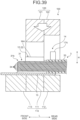
- an electric wire with terminal and a method of manufacturing an electric wire with terminal according to embodiments of the present invention are described in detail below.
- the present invention is not limited by the embodiments.
- Components in the following embodiments include the ones that can be easily conceived by a person skilled in the art and the ones that are substantially the same.
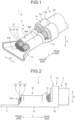
- FIG. 1 is a perspective view of an electric wire with terminal according to the first embodiment.
- FIG. 2 is a side view of the electric wire with terminal according to the first embodiment.
- FIG. 3 is an enlarged view of a main part of the electric wire with terminal according to the first embodiment.
- FIG. 4 is a cross-sectional view illustrating a bonding portion of the electric wire with terminal according to the first embodiment.
- FIG. 5 is a plan view of an electric wire according to the first embodiment.
- FIG. 6 is a plan view of the electric wire according to the first embodiment.
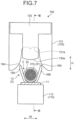
- FIG. 7 is a front view of a terminal crimping apparatus according to the first embodiment.
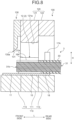
- FIG. 8 is a cross-sectional view of the terminal crimping apparatus according to the first embodiment.
- FIG. 9 is a front view illustrating a crimping step and a bonding step in the first embodiment.
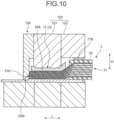
- FIG. 10 is a cross-sectional view illustrating the crimping step and the bonding step in the first embodiment.
- FIG. 11 is a side view illustrating the bonding step in the first embodiment.
- FIG. 12 is a cross-sectional view for describing the bonding step in the first embodiment.
- FIG. 8 illustrates a cross section taken along the line VIII-VIII in FIG. 7 .
- FIG. 10 illustrates a cross section taken along the line X-X in FIG. 9 .
- an electric wire with terminal 1 in the first embodiment includes a crimp terminal 2 and an electric wire 3.
- the crimp terminal 2 is a terminal to be crimped to the electric wire 3.
- the crimp terminal 2 is electrically connected to a counterpart terminal (not shown) while being integrated with the electric wire 3.
- a covering 33 is removed at an end portion thereof, and a predetermined length of a core wire 31 is exposed.
- the core wire 31 in the first embodiment is a collection of a plurality of element wires 32.
- the element wires 32 are formed by conductive metal, such as copper and aluminum.
- the crimp terminal 2 is crimped to an end portion of the electric wire 3 and is thus electrically connected to the exposed core wire 31.
- the crimp terminal 2 is formed from a conductive metal plate (for example, a copper plate or copper alloy plate) as base metal.
- the crimp terminal 2 is formed into a predetermined shape that can be connected to a counterpart terminal or the electric wire 3 by punching or bending of the base metal.
- the crimp terminal 2 has a coupling portion 11, a core wire crimping portion 12, a coupling portion 13, and a covering crimping portion 14.
- first direction L the longitudinal direction of the crimp terminal 2
- first direction L is an insertion direction of the crimp terminal 2 and a counterpart terminal and is an axial direction of the electric wire 3.
- the width direction of the crimp terminal 2 is referred to as "second direction W”.
- the second direction W is a direction orthogonal to the first direction L.
- a direction orthogonal to both the first direction L and the second direction W is referred to as "third direction H”.
- third direction H is a height direction of the crimp terminal 2.
- the third direction H is a direction in which the core wire crimping portion 12 is pressed by a first die 110 and a second die 120 at a crimping step described later.
- the distal end side of the core wire 31 is referred to as "front side”
- rear side the side opposite to the front side
- the coupling portion 11, the core wire crimping portion 12, the coupling portion 13, and the covering crimping portion 14 are arranged along the first direction L in this order.
- the coupling portion 11 is disposed in the front part of the crimp terminal 2.
- the core wire crimping portion 12 is crimped to the core wire 31 of the electric wire 3.
- the covering crimping portion 14 is crimped to the covering 33 of the electric wire 3.
- the core wire crimping portion 12 and the covering crimping portion 14 are continuous through the coupling portion 13.
- the coupling portion 11 extends from the core wire crimping portion 12 to the front side.
- the core wire crimping portion 12 has a bottom portion 15 and a pair of swaging pieces 16A and 16B.
- the pair of swaging pieces 16A and 16B are pieces extending from ends of the bottom portion 15.
- the covering crimping portion 14 has a pair of swaging pieces 17A and 17B.
- the core wire crimping portion 12 in the first embodiment is crimped to the core wire 31 in a state in which a distal end 31b of the core wire 31 protrudes to the outside. A part of the core wire 31 including the distal end 31b protrudes from the core wire crimping portion 12 to the front side.
- the distal end 31b of the core wire 31 has a bonding portion 34.
- the bonding portion 34 is a part at which a plurality of element wires 32 are bonded together.
- the bonding portion 34 is a part at which an element wire 321 and an element wire 322 adjacent thereto are metal-bonded as illustrated in FIG. 4 .
- the bonding portion 34 in the first embodiment is formed by shearing and deforming a distal end of the element wire 32 as described later.
- the element wires 32 are electrically connected to each other through the bonding portion 34.
- an electric performance is improved due to reduction in electric resistance.
- the method of manufacturing an electric wire with terminal according to the first embodiment includes a removal step, installation step, a bonding step, and a crimping step.
- the removal step is a step for removing a part of the covering 33 from the electric wire 3 to expose the core wire 31.
- FIG. 5 illustrates the electric wire 3 before a part of the covering 33 is removed.
- the entire core wire 31 excluding an end surface of the core wire 31 is covered by the covering 33.
- a terminal portion 33a of the covering 33 is removed from the electric wire 3.
- an end portion 31a of the core wire 31 is exposed from the covering 33.
- the cross-sectional shape of the core wire 31 and the cross-sectional shape of each element wire 32 are circular.
- the cross-sectional shape of the core wire 31 and the cross-sectional shape of the element wire 32 are not limited to be circular.
- the installation step is a step for installing the electric wire 3 on the crimp terminal 2.
- the crimp terminal 2 and the electric wire 3 are installed on a first die 110 of the terminal crimping apparatus 100.
- the terminal crimping apparatus 100 includes a first die 110, a second die 120, and a machining tool 130.
- the first die 110 is a fixed die, and supports the crimp terminal 2.
- the second die 120 is a movable die, and moves in the vertical direction relative to the first die 110.
- the first die 110 includes a first anvil 111, a second anvil 112, and a third anvil 113.
- the first anvil 111 supports the core wire crimping portion 12.
- the second anvil 112 supports the covering crimping portion 14.
- the third anvil 113 supports the coupling portion 11 and a terminal connecting portion (not shown).
- the terminal connecting portion is a part of the crimp terminal 2 to be connected to a counterpart terminal.
- the terminal connecting portion is continuous to the core wire crimping portion 12 through the coupling portion 11.
- the second die 120 includes a first crimper 121 and a second crimper 122.
- the first crimper 121 is opposed to the first anvil 111.
- the first crimper 121 swages the core wire crimping portion 12 to crimp the core wire crimping portion 12 to the core wire 31.
- the second crimper 122 is opposed to the second anvil 112.
- the second crimper 122 swages the covering crimping portion 14 to crimp the covering crimping portion 14 to the covering 33.
- the machining tool 130 is a member configured to form the bonding portion 34 at the distal end 31b of the core wire 31.
- the machining tool 130 in the first embodiment is a compression blade formed of metal.
- the machining tool 130 is fixed to the front surface side of the first crimper 121. In other words, the machining tool 130 is disposed on an end surface of the second die 120 on the side opposite to the second crimper 122.
- a blade edge 130a of the machining tool 130 is a single-edged blade. Specifically, a surface of the blade edge 130a on one side is an inclined surface 131 that is inclined to one side with respect to the vertical direction.
- the inclined surface 131 is inclined so as to be away from the first crimper 121 as approaching the distal end of the machining tool 130.
- the other surface of the blade edge 130a is parallel to the vertical direction. As illustrated in FIG. 7 , the distal end of the blade edge 130a is slightly curved downward.
- the position of the blade edge 130a of the machining tool 130 is set such that the bonding step is performed in parallel to the crimping step.
- the core wire crimping portion 12 of the crimp terminal 2 has a bottom portion 15, a first swaging piece 16A, and a second swaging piece 16B.
- the core wire crimping portion 12 is formed into a U shape.
- the bottom portion 15 is a site serving as a bottom wall of the core wire crimping portion 12 formed into a U shape.
- the first swaging piece 16A and the second swaging piece 16B are sites serving as side walls of the core wire crimping portion 12 formed into a U shape.
- the first swaging piece 16A extends from one end of the bottom portion 15 in the second direction W.
- the second swaging piece 16B extends from the other end of the bottom portion 15 in the second direction W.
- the covering crimping portion 14 has a pair of swaging pieces 17A and 17B (see FIG. 1 ) similarly to the core wire crimping portion 12.
- the swaging pieces 17A and 17B of the covering crimping portion 14 are formed so as to be apart from the swaging pieces 16A and 16B of the core wire crimping portion 12.
- the crimp terminal 2 is placed on the first die 110 such that the core wire crimping portion 12 is opposed to the first anvil 111 and the covering crimping portion 14 is opposed to the second anvil 112. More specifically, the crimp terminal 2 is placed such that the bottom portion 15 is supported by the first anvil 111 and the distal ends of the pair of swaging pieces 16A and 16B are opposed to the first crimper 121.
- the electric wire 3 is installed on the crimp terminal 2 supported by the first die 110.
- the electric wire 3 is installed on the crimp terminal 2 such that the end portion 31a of the core wire 31 is opposed to the bottom portion 15 of the core wire crimping portion 12 and the covering 33 is opposed to the bottom portion 18 of the covering crimping portion 14.
- the electric wire 3 is installed such that at least the distal end 31b protrudes from the core wire crimping portion 12 to the front side.
- the electric wire 3 is installed such that the distal end 31b is opposed to the inclined surface 131 of the machining tool 130 in the third direction H.
- the crimping step is a step for crimping the core wire crimping portion 12 to the core wire 31.
- the core wire crimping portion 12 is crimped to the core wire 31, and the covering crimping portion 14 is crimped to the covering 33.
- the crimp terminal 2 and the electric wire 3 are sandwiched between the first die 110 and the second die 120.
- the first die 110 and the second die 120 crimp the swaging pieces 16A and 16B to the core wire 31, and crimp the swaging pieces 17A and 17B to the covering 33.
- the second die 120 moves downward toward the first die 110.
- the first crimper 121 has curved surfaces 121a for deforming the swaging pieces 16A and 16B.
- the curved surfaces 121a deform the swaging pieces 16A and 16B into a curved shape such that distal ends 16d of the swaging pieces 16A and 16B face the first die 110.
- the first crimper 121 deforms the swaging pieces 16A and 16B such that the core wire 31 is wrapped by the pair of swaging pieces 16A and 16B and the bottom portion 15.
- FIG. 9 and FIG. 10 illustrate a state in which the second die 120 is located at the bottom dead center at the crimping step.
- the first crimper 121 in the first embodiment performs swaging called "B crimp".
- the swaging pieces 16A and 16B are curved such that the cross-sectional shape of the core wire crimping portion 12 has a B shape.
- the distal ends 16d of the swaging pieces 16A and 16B face downward and are pressed against the core wire 31.
- the swaging pieces 16A and 16B press the core wire 31 toward the bottom portion 15.
- the swaging pieces 16A and 16B wrap the core wire 31 and compress the core wire 31.
- the swaging pieces 17A and 17B of the covering crimping portion 14 are crimped to the covering 33 by being deformed similarly to the swaging pieces 16A and 16B.
- the bonding step is a step for forming the bonding portions 34 on the element wires 32 constituting the core wire 31 of the electric wire 3.
- the bonding portions 34 are formed on the core wire 31 by the machining tool 130.
- the machining tool 130 is lowered together with the second die 120. As illustrated in FIG. 11 and FIG. 12 , the machining tool 130 shears and deforms the element wires 32 to form the bonding portions 34.
- the inclined surface 131 and a side surface 132 of the machining tool 130 contact with the distal end 31b of the core wire 31.
- the inclined surface 131 and the side surface 132 are lowered while slidingly moving on a distal end surface 31c of the distal end 31b.
- the distal end of each element wire 32 is dragged downward by the machining tool 130 and sheared and deformed. Due to the shearing deformation, an outer peripheral surface 32a of the element wire 32 is extended as indicated by the arrow Y1, and an oxide film of the outer peripheral surface 32a is broken such that a new surface is exposed.
- the oxide film is also broken by the sliding of adjacent element wires 32, and a new surface is exposed.
- the oxide film is also broken by compression of the element wire 32, and a new surface is exposed.
- the new surfaces of adjacent element wires 32 come in contact with each other and adheres to form a bonding portion 34.
- a distal end surface 32b of the element wire 32 is also extended as indicated by the arrows Y2.
- an oxide film on the distal end surface 32b of the element wire 32 is broken, and a new surface is exposed.
- new surfaces of the distal end surfaces 32b or a new surface of the distal end surface 32b and a new surface of the outer peripheral surface 32a are metal-bonded to form a bonding portion 34.
- the machining tool 130 in the first embodiment may cut away the distal end of each element wire 32 to expose a new surface. Specifically, the machining tool 130 may cause shear failure of each element wire 32 such that a new distal end surface 32b is formed on the element wire 32 to generate a new surface.
- the distal ends of the element wires 32 are sheared and deformed in the common direction.
- the direction of the shearing deformation of the element wires 32 is the movement direction of the machining tool 130 and is a direction toward the bottom portion 15 along the third direction H.
- the machining tool 130 in the first embodiment is configured such that bonding portions 34 can be formed on element wires 32 from the upper end to the lower end of the core wire 31.
- the machining tool 130 is configured to contact with substantially all element wires 32 from an element wire 32 at the upper end to an element wire 32 at the lower end to shear and deform the wires.
- bonding portions 34 are formed on substantially all element wires 32 from the element wire 32 at the upper end to the element wire 32 at the lower end.
- substantially all the element wires 32 are metal-bonded together.
- the core wire crimping portion 12 is also metal-bonded to the inner element wires 32 through element wires 32 located at the outer peripheral part of the core wire 31.
- the electric resistance between the core wire crimping portion 12 and the core wire 31 is also reduced.
- the shape of the machining tool 130 is not limited to the shape exemplified above.
- the shape of the machining tool 130 may conform to the cross-sectional shape of the core wire crimping portion 12.
- FIG. 13 illustrates an example of the shape of the machining tool 130.
- the shape of a blade edge 130a of the machining tool 130 corresponds to the cross-sectional shape of the bottom portion 15. More specifically, the cross-sectional shape of an inner surface 15a of the bottom portion 15 is a shape curved downward.
- the shape of the blade edge 130a of the machining tool 130 is a curved shape conforming to the curved shape of the inner surface 15a.
- the blade edge 130a has a curved shape in which a center portion thereof in the second direction W protrudes downward with respect to both end portions. In this manner, the interference between the machining tool 130 and the bottom portion 15 at the bonding step is suppressed.
- a width Wd1 of the machining tool 130 is smaller than a width Wd2 of the bottom portion 15.
- the width Wd2 of the bottom portion 15 is a distance from the inner surface of the first swaging piece 16A to the inner surface of the second swaging piece 16B. Because the width Wd1 of the machining tool 130 is smaller than the width Wd2 of the bottom portion 15, the interference between the machining tool 130 and the crimp terminal 2 at the bonding step is suppressed.
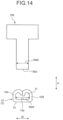
- FIG. 14 illustrates another example of the shape of the machining tool 130.
- the cross-sectional shape of an inner surface 15a of the bottom portion 15 is linear.
- the shape of the blade edge 130a of the machining tool 130 is linear so as to correspond to the cross-sectional shape of the inner surface 15a of the bottom portion 15.
- a width Wd3 of the machining tool 130 is smaller than a width Wd4 of the bottom portion 15.
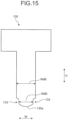
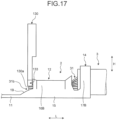
- FIG. 15 to FIG. 17 illustrate still another example of the shape of the machining tool 130.
- relief portions 133 are formed in the machining tool 130.
- the relief portions 133 are notch portions formed in the machining tool 130.
- a width Wd5 of a part at which the relief portions 133 are formed is smaller than a width Wd6 of a part on the base end side.
- the relief portions 133 are formed at a distal end portion of the machining tool 130 and are provided on both sides in the width direction. In other words, in the machining tool 130, the width Wd5 of the distal end portion is smaller than the width Wd6 of a part on the base end side.
- a crimp terminal 2 illustrated in FIG. 16 and FIG. 17 has a pair of side wall portions 19.
- the side wall portions 19 are continuous to the first swaging piece 16A and the second swaging piece 16B.
- the side wall portions 19 are formed at the coupling portion 11.
- Relief portions 133 of the machining tool 130 are formed such that the interference between the side wall portions 19 and the machining tool 130 can be suppressed.
- a width Wd5 of the distal end portion of the machining tool 130 is equal to a width Wd7 of a space portion sandwiched by the side wall portions 19 or smaller than the width Wd7 of the space portion.
- a relief portion may be formed on the crimp terminal 2.
- the height of a part of the side wall portion 19 that is opposed to the machining tool 130 may be lower than the height of a part of the side wall portion 19 adjacent thereto.
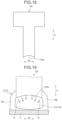
- FIG. 18 illustrates still another example of the shape of the machining tool 130.
- a blade edge 130a has a curved shape in which both end portions in the second direction W protrude downward with respect to a center portion in the second direction W.
- the blade edge 130a of the machining tool 130 compresses the distal end 31b of the core wire 31 toward the center in the width direction.
- both end portions of the blade edge 130a press the core wire 31 toward the center in the second direction W.
- the distal end 31b of the core wire 31 is prevented from being scattered radially at the bonding step.
- FIG. 20 illustrates an example of the cross-sectional shape of the machining tool 130.
- a blade edge 130a is provided with a pressing surface 134 having a given width.
- the pressing surface 134 is a surface parallel to the first direction L.
- FIG. 21 illustrates another example of the cross-sectional shape of the machining tool 130.
- the cross-sectional shape of the blade edge 130a is a curved surface in which a center portion thereof in the first direction L protrudes more than both end portions.
- the shape of the center portion of the blade edge 130a is an arc shape.
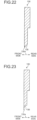
- FIG. 22 illustrates still another example of the cross-sectional shape of the machining tool 130.
- a convex curved surface 135 is provided instead of the inclined surface 131 illustrated in FIG. 8 .
- the convex curved surface 135 is formed at the blade edge 130a on the rear side in the first direction L.
- the convex curved surface 135 is a curved surface having a substantially arc shape.
- FIG. 23 illustrates still another example of the cross-sectional shape of the machining tool 130.
- a concave curved surface 136 is provided in a machining tool 130 in FIG. 23 .
- the concave curved surface 136 is formed at the blade edge 130a on the rear side in the first direction L.
- the concave curved surface 136 is a curved surface having a substantially arc shape.
- the electric wire with terminal 1 includes the electric wire 3 and the crimp terminal 2.
- the electric wire 3 includes the core wire 31 having the plurality of element wires 32 and the covering 33 that covers the core wire 31 in the state in which the end portion of the core wire 31 is exposed.
- the crimp terminal 2 has the core wire crimping portion 12 crimped to the core wire 31 in the state in which the distal end 31b of the core wire 31 is exposed to the outside.
- the distal end 31b of the core wire 31 has the bonding portion 34 at which the element wires 32 are bonded together.
- the bonding portion 34 is formed by shearing and deforming the distal ends of the element wires 32.
- the electric wire with terminal 1 in the first embodiment can reduce the electric resistance in the electric wire with terminal 1 without adding additional material or member such as soldering. In other words, the electric wire with terminal 1 in the first embodiment exhibits an effect that the electric performance can be improved with a simple configuration.
- the distal ends of the element wires 32 are sheared and deformed in the common direction at the distal end surface 31c of the core wire 31.
- shearing deformation is deformation caused when the machining tool 130 slidingly moves on the distal end 31b of the core wire 31. Because the bonding portion 34 is formed by deformation processing on the core wire 31, the electric performance of the electric wire with terminal 1 can be improved with a simple configuration.
- the method of manufacturing an electric wire with terminal in the first embodiment includes the bonding step and the crimping step.
- the bonding step is a step for shearing and deforming distal ends of element wires 32 constituting the core wire 31 of the electric wire 3 to form a bonding portion 34 at which the element wires 32 are bonded together.
- the crimping step is a step for crimping the core wire crimping portion 12 of the crimp terminal 2 to the core wire 31. Because the bonding portion 34 is formed by shearing and deforming the distal ends of the element wires 32, the electric performance of the electric wire with terminal 1 can be improved with a simple configuration.
- the bonding step and the crimping step are performed in parallel.
- the method of manufacturing an electric wire with terminal in the first embodiment can shorten time required for manufacturing the electric wire with terminal 1.
- the terminal crimping apparatus 100 having the first crimper 121 and the machining tool 130 configured to move in cooperation with the first crimper 121 performs the bonding step and the crimping step.
- the terminal crimping apparatus 100 shears and deforms the distal end of the element wire 32 by the machining tool 130 to form the bonding portion 34.
- the terminal crimping apparatus 100 crimps the core wire crimping portion 12 to the core wire 31 by the first crimper 121.
- the terminal crimping apparatus 100 executes the bonding step and the crimping step, and hence the manufacturing process can be simplified.
- relief portions 133 for suppressing the interference between the machining tool 130 and the crimp terminal 2 at the bonding step are formed in the machining tool 130.
- a relief portion may be provided to the crimp terminal 2.
- the machining tool 130 having the blade edge 130a is used to move the blade edge 130a slidingly with respect to the distal end surface 31c of the core wire 31 to shear and deform the distal end of the element wire 32.
- the shape of the blade edge 130a is a convex shape in which a center portion in the width direction of the crimp terminal 2 protrudes more than both end portions in the width direction.
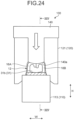
- FIG. 24 is a front view for describing a bonding step according to the first modification of the first embodiment.
- FIG. 25 is a cross-sectional view for describing the bonding step according to the first modification of the first embodiment.
- FIG. 25 illustrates a cross section taken along the line XXV-XXV in FIG. 24 .
- the first modification of the first embodiment is different from the above-mentioned first embodiment in that, for example, the terminal crimping apparatus 100 forms a bonding portion 34 while holding the second die 120 at the bottom dead center.
- a machining tool 140 illustrated in FIG. 24 and FIG. 25 can move relative to the second die 120.
- the terminal crimping apparatus 100 operates the second die 120 and the machining tool 140 in cooperation with each other.
- a mechanism configured to operate the second die 120 and a mechanism configured to operate the machining tool 140 may be common or independent from each other.
- the terminal crimping apparatus 100 forms a bonding portion 34 by lowering the machining tool 140 in a state in which the second die 120 is stopped at the bottom dead center.
- FIG. 24 and FIG. 25 illustrate the state in which the second die 120 is stopped at the bottom dead center.
- the machining tool 140 lowers toward the distal end 31b of the core wire 31.
- the terminal crimping apparatus 100 further lowers the machining tool 140, and shears and deforms the distal end 31b by the machining tool 140 to form bonding portions 34.
- the shape of a blade edge 140a of the machining tool 140 is the same as the shape of the blade edge 130a in the above-mentioned first embodiment.
- the bonding step is started in the state in which the core wire crimping portion 12 has already been crimped to the core wire 31.
- the bonding portion 34 is formed after the pressing force applied by the second die 120 to the core wire crimping portion 12 and the core wire 31 becomes maximum.
- FIG. 26 is a front view for describing a bonding step according to the second modification of the first embodiment.
- FIG. 27 is a cross-sectional view for describing the bonding step according to the second modification of the first embodiment.
- FIG. 27 illustrates a cross section taken along the line XXVII-XXVII in FIG. 26 .
- the second modification of the first embodiment is different from the above-mentioned first embodiment in that, for example, the terminal crimping apparatus 100 forms a bonding portion 34 while raising the second die 120.
- a machining tool 140 according to the second modification of the first embodiment can move relative to the second die 120 similarly to the machining tool 140 according to the above-mentioned first modification.
- the terminal crimping apparatus 100 forms a bonding portion 34 by the machining tool 140 after the second die 120 has reached the bottom dead center.
- the terminal crimping apparatus 100 raises the second die 120 without stopping the second die 120 at the bottom dead center.
- the second die 120 rises and the machining tool 140 lowers as illustrated in FIG. 26 and FIG. 27 .
- the bonding step is started in a state in which the core wire crimping portion 12 is crimped to the core wire 31.
- the formed bonding portion 34 is easily stabilized.
- the bonding portion 34 may be formed by a device different from the terminal crimping apparatus 100.
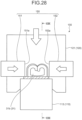
- FIG. 28 is a front view for describing a bonding step according to the third modification of the first embodiment.
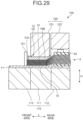
- FIG. 29 is a cross-sectional view for describing the bonding step according to the third modification of the first embodiment.
- FIG. 29 illustrates a cross section taken along the line XXIX-XXIX in FIG. 28 .
- the third modification of the first embodiment is different from the above-mentioned first embodiment in that, for example, a machining tool 150 moves in the second direction W.
- the machining tool 150 includes a first sliding portion 151 and a second sliding portion 152.
- the first sliding portion 151 and the second sliding portion 152 move in the second direction W.
- the terminal crimping apparatus 100 operates the second die 120 and the machining tool 150 in cooperation with each other.
- a mechanism configured to operate the second die 120 and a mechanism configured to operate the machining tool 150 may be common or independent from each other.
- the two sliding portions 151 and 152 move in opposite directions along the second direction W.
- a blade edge 151a of the first sliding portion 151 and a blade edge 152a of the second sliding portion 152 are opposed to each other in the second direction W.
- the machining tool 150 sandwiches a distal end 31b of a core wire 31 between the blade edge 151a of the first sliding portion 151 and the blade edge 152a of the second sliding portion 152 to form a bonding portion 34.
- the two blade edges 151a and 152a have a symmetric shape.
- the operations of the two blade edges 151a and 152a are symmetric.
- the machining tool 150 forms the bonding portion 34 in parallel to the crimping step.
- the machining tool 150 may form the bonding portion 34 before the crimping step or after the crimping step.
- the terminal crimping apparatus 100 may form the bonding portion 34 by the machining tool 150 in a state in which the second die 120 is stopped at the bottom dead center.
- FIG. 30 illustrates a cross section of the core wire 31 after subjected to bonding processing by the machining tool 150.
- the cross section in FIG. 30 is orthogonal to the third direction H.
- a distal end surface 31c of the core wire 31 has a first face 31d and a second face 31e.
- the first face 31d and the second face 31e are faces oriented to the front side and adjacent to each other.
- the first face 31d and the second face 31e are adjacent in the second direction W.
- the first face 31d and the second face 31e are surfaces inclined with respect to the first direction L.
- the boundary of the first face 31d and the second face 31e is at the center in the second direction W.
- the first face 31d is inclined toward the front side as approaching the second face 31e along the second direction W.
- the second face 31e is inclined toward the front side as approaching the first face 31d along the second direction W.
- the distal ends of the element wires 32 are sheared and deformed in a direction from the first face 31d toward the second face 31e.
- the element wires 32 at the first face 31d are deformed by the shearing force acting from the first sliding portion 151 and directed to the second face 31e.
- the distal ends of the element wires 32 are sheared and deformed in a direction from the second face 31e toward the first face 31d.
- the element wires 32 at the second face 31e are deformed by the shearing force acting from the second sliding portion 152 and directed to the first face 31d.
- the distal end surface 31c of the core wire 31 is an inclined surface inclined with respect to the axial direction of the electric wire 3.
- the machining tool 150 shears and deforms the core wire 31 so as to form the inclined surface, and hence the formation of the bonding portion 34 is easily promoted.
- the distal end surface 31c of the core wire 31 includes the first face 31d and the second face 31e adjacent to each other.
- the distal ends of the element wires 32 are sheared and deformed in a direction from the first face 31d toward the second face 31e.
- the distal ends of the element wires 32 are sheared and deformed in a direction from the second face 31e toward the first face 31d.
- the two faces 31d and 31e are formed when the core wire 31 is sheared and deformed by being sandwiched by the two blade edges 151a and 152a. By sandwiching the core wire 31 by the two blade edges 151a and 152a, the bonding portions 34 can be easily formed on the entire distal end surface 31c.
- FIG. 31 is a front view for describing a bonding step according to the fourth modification of the first embodiment.
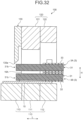
- FIG. 32 is a cross-sectional view for describing the bonding step according to the fourth modification of the first embodiment.
- FIG. 32 illustrates a cross section taken along the line XXXII-XXXII in FIG. 31 .
- the fourth modification of the first embodiment is different from the above-mentioned first embodiment in that, for example, bonding portions 34 are formed on a plurality of core wires 31 at a time.
- a crimp terminal 2 is clamped to an electric wire 3 having a first electric wire 3A and a second electric wire 3B.
- the two electric wires 3A and 3B are placed on the crimp terminal 2 while being overlapped in the third direction H.
- a machining tool 130 plastically deforms distal ends 31b of the two electric wires 3A and 3B to form a bonding portion 34.
- the machining tool 130 may form the bonding portion 34 by bonding a core wire 31 of the first electric wire 3A and a core wire 31 of the second electric wire 3B. In this manner, the core wires 31 of the two electric wires 3A and 3B are metal-bonded, and the electric performance of the electric wire with terminal 1 improves.
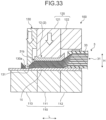
- FIG. 33 is a cross-sectional view for describing a bonding step according to the fifth modification of the first embodiment.
- the fifth modification of the first embodiment is different from the above-mentioned first embodiment in that, for example, the cutting step is performed at the same time as the bonding step.
- the cutting step is a step for cutting an electric wire 3.
- a machining tool 130 cuts a part of the core wire 31 on the distal end side.
- the machining tool 130 forms bonding portions 34 at a part of the core wire 31 on the covering 33 side while cutting the core wire 31.
- a blade edge 130a of the machining tool 130 has a shape capable of cutting the core wire 31.
- An inclined surface 131 of the machining tool 130 shears and deforms the newly formed distal end 31b to form a bonding portion 34 at the distal end 31b.
- the machining tool 130 may cut the core wire 31 when the elongation of the core wire 31 at the crimping step is equal to or more than a predetermined amount.
- the core wire crimping portion 12 presses the core wire 31 to compress the core wire 31.
- the core wire 31 elongates along the first direction L.
- the distal end 31b of the core wire 31 may be located on the front side of the machining tool 130 due to variation in elongation of the core wires 31 at the crimping step.
- the machining tool 130 cuts the core wire 31 by the blade edge 130a. As a result, the protruding length of the core wire 31 from the core wire crimping portion 12 is prevented from being easily excessive.
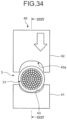
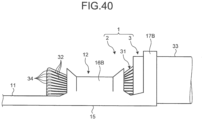
- FIG. 34 is a front view for describing a cutting step and a bonding step according to the second embodiment.
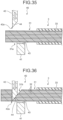
- FIG. 35 is a cross-sectional view for describing the cutting step and the bonding step according to the second embodiment.
- FIG. 36 is another cross-sectional view for describing the cutting step and the bonding step according to the second embodiment.
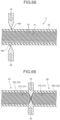
- FIG. 37 is a cross-sectional view for describing the formation of bonding portions.
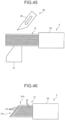
- FIG. 38 is a side view illustrating an electric wire after cutting.
- FIG. 35 illustrates a cross section taken along the line XXXV-XXXV in FIG. 34 .
- the cutting step is performed before the crimping step, and at the cutting step, bonding portions 34 are formed in the core wire 31.
- the cutting step and the bonding step are performed in parallel.
- the cutting step and the bonding step are executed by a cutting device 40 illustrated in FIG. 34 and FIG. 35 .
- the cutting device 40 includes a receiving portion 41 and a cutting blade 42.
- the receiving portion 41 is a member that supports the electric wire 3, and is formed of metal, for example.
- the receiving portion 41 has a groove portion 43 that supports the electric wire 3.
- the cross-sectional shape of the groove portion 43 is an arc shape having a radius corresponding to the outer diameter of the electric wire 3.
- the cutting blade 42 is a member configured to cut the electric wire 3, and cuts the electric wire 3 by a blade edge 42a.
- the shape of the blade edge 42a in front view is, as illustrated in FIG. 34 , a curved shape in which both end portions in the width direction protrude more than a center portion in the width direction.
- the shape of the curved part of the blade edge 42a in front view is an arc shape.
- the cross-sectional shape of the blade edge 42a is a shape in which one surface in the thickness direction is an inclined surface 44.
- the electric wire 3 is placed on the receiving portion 41 in the state in which the end portion 31a of the core wire 31 is exposed.
- the cutting blade 42 cuts the core wire 31 of the electric wire 3 while relatively moving toward the receiving portion 41.
- the inclined surface 44 of the cutting blade 42 is formed on the covering 33 side.
- the blade edge 42a of the cutting blade 42 shears and deforms the distal end 31b of the core wire 31 by the inclined surface 44 while cutting the core wire 31.
- the inclined surface 44 slidingly moves on the distal end surface 31c of the core wire 31, and the distal end of each element wire 32 shears and deforms along the movement direction of the blade edge 42a.
- a bonding portion 34 at which adjacent element wires 32 are bonded is formed at the distal ends of the element wires 32.
- FIG. 38 illustrates the electric wire 3 after cutting.
- the distal ends of the element wires 32 are sheared and deformed in the common direction to form the bonding portion 34.
- the electric wire 3 having the bonding portions 34 formed therein is installed on the crimp terminal 2.
- the electric wire 3 is installed on the crimp terminal 2 such that the distal end 31b of the core wire 31 is located on the front side of the core wire crimping portion 12. It is preferred that the electric wire 3 be installed such that at least the bonding portion 34 is located on the front side of the core wire crimping portion 12.
- the terminal crimping apparatus 100 crimps the core wire crimping portion 12 to the core wire 31, and crimps the covering crimping portion 14 to the covering 33.
- the first crimper 121 crimps the core wire crimping portion 12 to the core wire 31 in a state in which the bonding portions 34 protrude from the core wire crimping portion 12.
- the bonding portions 34 protrude from the core wire crimping portion 12 to the front side.
- the element wires 32 are electrically connected to each other through the bonding portions 34, and hence the electric performance in the electric wire with terminal 1 is improved.
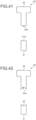
- FIG. 41 is a front view illustrating an example of the shape of the cutting device.
- a support surface 41a that supports the electric wire 3 is flat.
- the blade edge 42a of the cutting blade 42 has a linear shape in front view.
- FIG. 42 is a front view illustrating another example of the shape of the cutting device.
- the shape of a groove portion 45 is different from the shape of the groove portion 43 illustrated in FIG. 34 .
- the shape of a center portion in the width direction is a substantially arc shape, and both end portions have a linear shape.
- the shape of the blade edge 42a of the cutting blade 42 in front view the shape of a center portion in the width direction is a substantially arc shape, and both end portions have a linear shape.
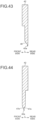
- FIG. 43 is a cross-sectional view illustrating an example of the cross-sectional shape of the cutting blade.
- an inclined surface 46 is provided on the front side in the first direction L.
- the inclined surface 46 of the blade edge 42a is inclined so as to approach the covering 33 as approaching the distal end.
- FIG. 44 is a cross-sectional view illustrating another example of the cross-sectional shape of the cutting blade.
- the blade edge 42a has inclined surfaces 47a and 47b on both sides.
- the cross-sectional shape of the blade edge 42a is a shape in which a center portion in the thickness direction protrudes more than both end portions.
- the cross-sectional shape of the cutting blade 42 may be the cross-sectional shape as illustrated in FIG. 21 .
- the cutting device 40 may cut the core wire 31 in an oblique direction.
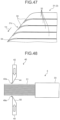
- FIG. 45 illustrates a cutting device 40 configured to cut the core wire 31 along an oblique direction.
- the cutting device 40 in FIG. 45 includes a receiving portion 41 and a cutting blade 48.
- the movement direction of the cutting blade 48 is inclined with respect to the axial direction of the electric wire 3.
- the cutting blade 48 shears and deforms the distal end of the core wire 31 while cutting the core wire 31.
- bonding portions 34 are formed as illustrated in FIG. 46 .
- a distal end surface 31c of the core wire 31 is inclined with respect to the axial direction of the electric wire 3.
- the distal ends of the element wires 32 are plastically deformed along a movement direction Y4 of the cutting blade 48.
- adjacent element wires 32 are bonded together to form a bonding portion 34.
- FIG. 48 illustrates a cutting device 40 configured to cut the core wire 31 by two cutting blades.
- a cutting device 40 illustrated in FIG. 48 includes a second cutting blade 49 instead of the receiving portion 41.
- the cutting blade 49 is disposed such that a blade edge 49a thereof is opposed to the blade edge 42a of the cutting blade 42.
- the cutting blade 42 and the cutting blade 49 have inclined surfaces 44 and 50 on the same side.
- the cutting device 40 moves the two cutting blades 42 and 49 in opposite directions.
- the cutting device 40 holds the electric wire 3 between the two cutting blades 42 and 49 by a holding portion (not shown).
- the cutting device 40 moves the two cutting blades 42 and 49 in directions such that the two cutting blades 42 and 49 approach each other, and cuts the core wire 31 while sandwiching the core wire 31 between the blade edge 42a and the blade edge 49a.
- a distal end surface 31c of the cut core wire 31 has a first face 31f and a second face 31g adjacent to each other.
- the first face 31f and the second face 31g are surfaces inclined with respect to the axial direction of the electric wire 3.
- the boundary of the first face 31f and the second face 31g is formed at substantially the center of the core wire 31.
- the first face 31f is inclined such that the boundary with the second face 31g protrudes most.
- the second face 31g is inclined such that the boundary with the first face 31f protrudes most.
- the distal ends of the element wires 32 are sheared and deformed in a direction from the first face 31f toward the second face 31g.
- the distal ends of the element wires 32 are sheared and deformed in a direction from the second face 31g toward the first face 31f.
- the bonding portions 34 bonded to the adjacent element wires 32 are formed on the element wires 32.
- FIG. 51 is a front view for describing a crimping step according to the first modification of the second embodiment.
- FIG. 52 is a cross-sectional view for describing the crimping step according to the first modification of the second embodiment.
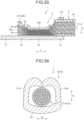
- FIG. 53 is a front view of an electric wire with terminal according to the first modification of the second embodiment.
- FIG. 54 is a side view of the electric wire with terminal according to the first modification of the second embodiment.
- FIG. 55 is a cross-sectional view of the electric wire with terminal according to the first modification of the second embodiment.
- FIG. 55 illustrates a cross section taken along the line LV-LV in FIG. 53 .
- the first modification of the second embodiment is different from the above-mentioned second embodiment in that, for example, the crimp terminal 2 has a covering portion 20.
- the crimp terminal 2 according to the first modification of the second embodiment has the covering portion 20.
- the covering portion 20 is configured to cover a distal end 31b of the core wire 31.
- the covering portion 20 has a first covering piece 21A, a second covering piece 21B, and a bottom portion 22.
- the covering portion 20 is disposed between the core wire crimping portion 12 and the coupling portion 11.
- One end of the bottom portion 22 in the first direction L is continuous to the bottom portion 15 of the core wire crimping portion 12, and the other end thereof is continuous to the coupling portion 11.
- the first covering piece 21A and the second covering piece 21B are disposed apart away from the swaging pieces 16A and 16B.
- the first covering piece 21A extends from one end of the bottom portion 22 in the second direction W
- the second covering piece 21B extends from the other end of the bottom portion 22 in the second direction W.
- the covering portion 20 is formed such that the first covering piece 21A, the second covering piece 21B, and the bottom portion 22 have a U shape.
- the first covering piece 21A is disposed on the same side as the first swaging piece 16A in the second direction W.
- the second covering piece 21B is disposed on the same side as the second swaging piece 16B in the second direction W.
- a terminal crimping apparatus 100 has a fourth anvil 114 that supports the covering portion 20 and a third crimper 123 configured to deform the covering portion 20.
- the fourth anvil 114 is disposed between the first anvil 111 and the third anvil 113.
- the third crimper 123 is disposed on the front side of the first crimper 121, and is opposed to the fourth anvil 114 in the third direction H.
- the electric wire 3 is installed on the crimp terminal 2 such that the distal end 31b of the core wire 31 is located at the covering portion 20. More specifically, the electric wire 3 is installed such that the distal end 31b is located between the first covering piece 21A and the second covering piece 21B.
- the third crimper 123 deforms the first covering piece 21A and the second covering piece 21B.
- the third crimper 123 deforms the two covering pieces 21A and 21B such that the bottom portion 22, the first covering piece 21A, and the second covering piece 21B form a ring shape.
- first covering piece 21A and a distal end of the second covering piece 21B are in contact with each other, and the two covering pieces 21A and 21B form an arc shape.
- the first covering piece 21A and the second covering piece 21B cover the distal end 31b of the core wire 31 from the outer peripheral side, and protect the distal end 31b.
- the two covering pieces 21A and 21B may cover the distal end 31b in the state in which compression force does not act on the distal end 31b.
- the two covering pieces 21A and 21B may cover the distal end 31b while pressing the distal end 31b against the bottom portion 22. It is desired that the pressing force in this case have a magnitude that does not lose the shape of the bonding portion 34 at the distal end 31b, in other words, a magnitude that does not separate the element wires 32 bonded by the bonding portion 34 from each other.
- FIG. 56 illustrates an example of the shape of the covering portion 20.
- the two covering pieces 21A and 21B may be deformed such that the distal ends face obliquely downward.
- distal end parts of the two covering pieces 21A and 21B are curved so as to approach the bottom portion 22 as approaching the distal end.
- the two covering pieces 21A and 21B may press the core wire 31 toward the bottom portion 22 by the distal ends thereof.
- FIG. 57 illustrates another example of the shape of the covering portion 20.
- the two covering pieces 21A and 21B may cover the distal end 31b while overlapping with each other.
- the first covering piece 21A overlaps on the outer side of the second covering piece 21B.
- the second covering piece 21B may press the core wire 31 against the bottom portion 22.
- the covering portion 20 included in the crimp terminal 2 covers the distal end 31b of the core wire 31 from the outer peripheral side.
- the covering portion 20 protects the distal end 31b of the core wire 31 from contact with another member, and restricts the action of external force on the bonding portion 34.
- the method of manufacturing an electric wire with terminal according to the first modification can protect the bonding portion 34 to improve electric performance of the electric wire with terminal 1.
- the electric wire with terminal 1 according to the first modification of the second embodiment has the covering portion 20 that covers the distal end 31b of the core wire 31 from the outer peripheral side.
- the electric wire with terminal 1 according to the first modification can improve electric performance.
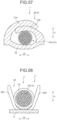
- FIG. 58 is a front view illustrating a crimp terminal according to the second modification of the second embodiment.
- FIG. 59 is a side view illustrating the crimp terminal according to the second modification of the second embodiment.
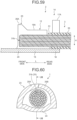
- FIG. 60 is a front view of an electric wire with terminal according to the second modification of the second embodiment.
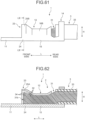
- FIG. 61 is a side view of the electric wire with terminal according to the second modification of the second embodiment.
- FIG. 62 is a cross-sectional view of the electric wire with terminal according to the second modification of the second embodiment.
- a covering portion 23 is formed integrally with the core wire crimping portion 12.
- the covering portion 23 has a first covering piece 25A, a second covering piece 25B, and a bottom portion 24.
- the bottom portion 24 is continuous to the front end of the bottom portion 15 of the core wire crimping portion 12.
- the first covering piece 25A extends from one end of the bottom portion 24 in the second direction W, and the second covering piece 25B extends from the other end of the bottom portion 24 in the second direction W.
- the first covering piece 25A is continuous to the front end of the first swaging piece 16A of the core wire crimping portion 12.
- the second covering piece 25B is continuous to the front end of the second swaging piece 16B of the core wire crimping portion 12.
- the covering portion 23 is formed such that the first covering piece 25A, the second covering piece 25B, and the bottom portion 24 have a U shape.
- the crimp terminal 2 is swaged to the electric wire 3 by the terminal crimping apparatus 100 (see FIG. 52 ) having the third crimper 123.
- the third crimper 123 deforms the two covering pieces 25A and 25B as illustrated in FIG. 60 .
- a distal end of the first covering piece 25A and a distal end of the second covering piece 25B are in contact with each other, and the two covering pieces 25A and 25B form an arc shape.
- the first covering piece 25A and the second covering piece 25B cover the distal end 31b of the core wire 31 from the outer peripheral side, and protect the distal end 31b.
- the core wire crimping portion 12 is crimped to the core wire 31 in a form called "B crimp".
- the covering portion 23 may cover the distal end 31b in the state in which the compression force does not act on the distal end 31b of the core wire 31, and may compress the distal end 31b by a force that does not separate the bonded element wires 32 from each other.
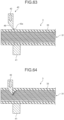
- FIG. 63 is a cross-sectional view for describing a cutting step according to the third modification of the second embodiment.
- FIG. 64 is another cross-sectional view for describing the cutting step according to the third modification of the second embodiment.
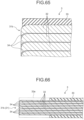
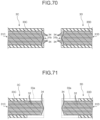
- FIG. 65 is a cross-sectional view of an electric wire in which bonding portions are formed.
- FIG. 66 is a cross-sectional view for describing a removal step according to the third modification of the second embodiment.
- the third modification of the second embodiment is different from the above-mentioned second embodiment in that, for example, the removal step is performed after the cutting step and the bonding step are performed.
- the core wire 31 is cut at a location covered with the covering 33.
- the electric wire 3 is set to the cutting device 40 such that a part of the core wire 31 covered with the covering 33 is opposed to the cutting blade 42.
- the cutting blade 42 cuts the covering 33 and the core wire 31 to remove a distal end portion of the electric wire 3.
- the cutting blade 42 shears and deforms the distal end of the core wire 31 to form bonding portions 34.
- a bonding portion 34 at which adjacent element wires 32 are bonded is formed at a distal end of the element wire 32.
- the cutting step and the bonding step are performed in parallel on the core wire 31 that has been covered by the covering 33.
- a terminal portion 33a of the covering 33 is removed.
- the crimping step is performed to crimp the crimp terminal 2 to the electric wire 3, and the electric wire with terminal 1 is completed.
- bonding portions 34 may be formed in two electric wires 3C and 3D formed by cutting.
- the cutting device 40 cuts and divides a single electric wire 3 into two electric wires 3C and 3D.
- the cutting device 40 cuts the electric wire 3 by two cutting blades 42 and 49.
- the cutting blades 42 and 49 cut a part of the core wire 31 covered by the covering 33.
- the blade edges 42a and 49a of the cutting blades 42 and 49 are inclined surfaces on both sides.
- the two cutting blades 42 and 49 shear and deform the distal ends of the core wires 31 while cutting the core wires 31. As a result, as illustrated in FIG.
- bonding portions 34 are formed at the distal ends of the element wires 32 in a core wire 31C of the electric wire 3C, and bonding portions 34 are formed at the distal ends of the element wires 32 in a core wire 31D of the electric wire 3D.
- a terminal portion 33a is removed from a covering 33C of the electric wire 3C, and a terminal portion 33a is removed from a covering 33D of the electric wire 3D.
- the bonding portions 34 can be simultaneously formed on the two electric wires 3C and 3D, and the manufacturing time are shortened.
- a single electric wire 3 may be divided in two electric wires 3E and 3F by a single cutting blade 42.
- a receiving portion 41 includes a first receiving portion 41A and a second receiving portion 41B.
- the first receiving portion 41A and the second receiving portion 41B are disposed away from each other such that the cutting blade 42 can enter therebetween.
- the cutting blade 42 is disposed to be opposed to a gap between the first receiving portion 41A and the second receiving portion 41B.
- the electric wire 3 is supported by the first receiving portion 41A and the second receiving portion 41B.
- the cutting blade 42 cuts the covering 33 and the core wire 31 to divide a single electric wire 3 into two electric wires 3E and 3F.
- the cutting blade 42 shears and deforms the distal end of the core wire 31 while cutting the core wire 31.
- bonding portions 34 are formed at distal ends of element wires 32 in a core wire 31E of the electric wire 3E, and bonding portions 34 are formed at distal ends of element wires 32 in a core wire 31F of the electric wire 3F.
- a terminal portion 33a is removed from a covering 33E of the electric wire 3E, and a terminal portion 33a is removed from a covering 33F of the electric wire 3F.
- the temperature of the machining tool 130, 140, or 150 or the cutting blade 42, 48, or 49 may be increased to soften the core wire 31.
- the terminal crimping apparatus 100 may include a heater configured to heat the machining tool 130, 140, or 150. By pressing the machining tool 130, 140, or 150 increased in temperature against the core wire 31, the deformation of the core wire 31 can be promoted to bond the element wires 32 together efficiently.
- the cutting device 40 may include a heater configured to heat the cutting blade 42, 48, or 49.
- the core wire 31 may be deformed while vibrating the machining tool 130, 140, or 150 or the cutting blade 42, 48, or 49 by ultrasonic waves.
- the ultrasonic vibration can cause the element wires 32 to slidingly move on each other more strongly.
- the swaging pieces 16A and 16B are swaged to the core wire 31 is not limited to the form called "B crimp".
- the swaging pieces 16A and 16B may be wound around the bonding portions 34 such that the second swaging piece 16B overlaps the first swaging piece 16A.
- the swaging pieces 16A and 16B may be configured to integrally cover both the core wire 31 and the covering 33.
- the covering crimping portion 14 is swaged to the covering 33 is not limited to the form called "B crimp".
- the swaging pieces 17A and 17B may be crimped by an overlap method.
- the crimp terminal 2 is not necessarily required to have the covering crimping portion 14.
- the electric wire with terminal according to the present embodiments and modifications include: the electric wire including: the core wire having the element wires; and the covering that covers the core wire in the state in which the end portion of the core wire is exposed; and the crimp terminal including the core wire crimping portion crimped to the core wire in the state in which the distal end of the core wire protrudes to the outside.
- the distal end of the core wire has the bonding portion at which the element wires are bonded together, and the bonding portion is formed by shearing and deforming the distal ends of the element wires.
- the electric wire with terminal according to the present embodiments and modifications exhibit an effect that electric performance can be improved with a simple configuration without adding additional material.
Landscapes
- Engineering & Computer Science (AREA)
- Manufacturing & Machinery (AREA)
- Manufacturing Of Electrical Connectors (AREA)
- Connections Effected By Soldering, Adhesion, Or Permanent Deformation (AREA)
Claims (6)
- Elektrischer Draht mit Klemme (1), umfassend:einen elektrischen Draht (3) mit einem Kerndraht (31), der eine Vielzahl von Elementdrähten (32) aufweist, und einer Umhüllung (33), die den Kerndraht (31) in einem Zustand bedeckt, in dem ein Endabschnitt des Kerndrahts (31) freiliegt; undeinen Crimpanschluss (2) mit einem Kerndraht-Crimpabschnitt (12), der mit dem Kerndraht (31) in einem Zustand gecrimpt ist, in dem ein distales Ende (31b) des Kerndrahtes (31) nach außen vorsteht,dadurch gekennzeichnet, dassdas distale Ende (31b) des Kerndrahtes (31) einen Verbindungsabschnitt (34) aufweist, an dem die Elementdrähte (32) miteinander verbunden sind, undder Verbindungsabschnitt (34) durch Scherung und Verformung der distalen Enden (31b) der Elementdrähte (32) an einer distalen Endfläche (31c) in mindestens einer gemeinsamen Richtung gebildet wird.
- Elektrischer Draht mit Klemme (1) nach Anspruch 1, wobei
die distale Endfläche (31c) des Kerndrahtes (31) eine geneigte Fläche (44) ist, die in Bezug auf die axiale Richtung des elektrischen Drahtes (3) geneigt ist. - Elektrischer Draht mit Klemme (1) nach Anspruch 1 oder 2, wobeidie distale Endfläche (31c) des Kerndrahtes (31) eine erste Fläche (31d) und eine zweite Fläche (31e) benachbart zueinander aufweist,an der ersten Fläche (31d) die distalen Enden der Elementdrähte (32) so konfiguriert sind, dass sie in einer Richtung von der ersten Fläche (31d) zu der zweiten Fläche (31e) hin geschnitten und verformt werden, undan der zweiten Fläche (31e) sind die distalen Enden der Elementdrähte (32) so konfiguriert, dass sie in einer Richtung von der zweiten Fläche (31e) zu der ersten Fläche (31d) hin geschnitten und verformt werden.
- Verfahren zur Herstellung eines elektrischen Drahtes mit Klemme (1) nach Anspruch 1, das die folgenden Schritte umfasst:Verbinden durch Abscheren und Verformen der distalen Enden (31b) einer Vielzahl von Elementdrähten (32) an einer distalen Endfläche (31c) in mindestens einer gemeinsamen Richtung, die einen Kerndraht (31) eines elektrischen Drahtes (3) bilden, um einen Verbindungsabschnitt (34) zu bilden, an dem die Elementdrähte (32) miteinander verbunden werden; undCrimpen eines Kerndraht-Crimpabschnitts (12) eines Crimpanschlusses (2) an den Kerndraht (31).
- Verfahren zur Herstellung eines elektrischen Drahts mit Klemme (1) nach Anspruch 4, wobei das Verbinden und das Crimpen durch eine Anschluss-Crimpvorrichtung (100) durchgeführt werden, die eine Crimpvorrichtung (121) und ein Bearbeitungswerkzeug (130) umfasst, das so konfiguriert ist, dass es sich in Zusammenarbeit mit der Crimpvorrichtung (121) bewegt,
das Verbinden das Schneiden und Verformen des distalen Endes (31b) des Elementdrahtes (32) durch das Bearbeitungswerkzeug (130) umfasst, um den Verbindungsabschnitt (34) zu bilden, und das Crimpen das Crimpen des Kerndraht-Crimpabschnitts (12) an den Kerndraht (31) durch die Crimpvorrichtung (121) umfasst. - Verfahren zur Herstellung eines elektrischen Drahtes mit Klemme (1) nach Anspruch 4, wobei das Crimpen ferner das Abdecken (33) des distalen Endes (31b) des Kerndrahtes (31) von einer äußeren Umfangsseite desselben durch einen Abdeckabschnitt (20) des Crimpanschlusses (2) umfasst.
Applications Claiming Priority (1)
| Application Number | Priority Date | Filing Date | Title |
|---|---|---|---|
| JP2018106717A JP6768742B2 (ja) | 2018-06-04 | 2018-06-04 | 端子付き電線および端子付き電線の製造方法 |
Publications (2)
| Publication Number | Publication Date |
|---|---|
| EP3579340A1 EP3579340A1 (de) | 2019-12-11 |
| EP3579340B1 true EP3579340B1 (de) | 2024-08-07 |
Family
ID=66429217
Family Applications (1)
| Application Number | Title | Priority Date | Filing Date |
|---|---|---|---|
| EP19172676.9A Active EP3579340B1 (de) | 2018-06-04 | 2019-05-06 | Elektrodraht mit klemme und verfahren zur herstellung eines elektrodrahts mit klemme |
Country Status (4)
| Country | Link |
|---|---|
| US (1) | US10847904B2 (de) |
| EP (1) | EP3579340B1 (de) |
| JP (1) | JP6768742B2 (de) |
| CN (1) | CN110556635B (de) |
Families Citing this family (2)
| Publication number | Priority date | Publication date | Assignee | Title |
|---|---|---|---|---|
| JP2022118805A (ja) * | 2021-02-03 | 2022-08-16 | 矢崎総業株式会社 | 圧着端子と電線の接続構造 |
| JP7670659B2 (ja) | 2022-11-29 | 2025-04-30 | 矢崎総業株式会社 | 圧着端子、及び、端子付き電線 |
Citations (1)
| Publication number | Priority date | Publication date | Assignee | Title |
|---|---|---|---|---|
| JP2014157716A (ja) * | 2013-02-15 | 2014-08-28 | Tabuchi Electric Co Ltd | 端子と電線の接合方法および電線接続用の端子 |
Family Cites Families (58)
| Publication number | Priority date | Publication date | Assignee | Title |
|---|---|---|---|---|
| US3566008A (en) | 1969-07-15 | 1971-02-23 | Gen Electric | Mechanical and electrical joint between copper and aluminum members and method of making such joint |
| JPS5312097A (en) * | 1976-07-20 | 1978-02-03 | Hitachi Ltd | Connector and electric wire pressure connection manufacturing method |
| JP2803981B2 (ja) * | 1993-09-17 | 1998-09-24 | 矢崎総業株式会社 | 電気接続用端子 |
| JP3094138B2 (ja) * | 1994-06-30 | 2000-10-03 | 矢崎総業株式会社 | バレル端子及び電線接続装置 |
| JP2003338349A (ja) * | 2002-05-20 | 2003-11-28 | Mitsubishi Cable Ind Ltd | 端子接続方法及び端子接続構造 |
| JP2007280850A (ja) * | 2006-04-10 | 2007-10-25 | Sumitomo Wiring Syst Ltd | 端子金具 |
| JP4898463B2 (ja) * | 2007-01-16 | 2012-03-14 | 矢崎総業株式会社 | 端子圧着装置及び端子圧着方法 |
| SG149733A1 (en) * | 2007-07-31 | 2009-02-27 | J S T U K Ltd | Receptacle terminal |
| JP4983467B2 (ja) * | 2007-08-02 | 2012-07-25 | 住友電装株式会社 | 端子圧着装置、端子圧着電線の製造方法及び端子圧着電線 |
| EP2151893A1 (de) * | 2008-08-07 | 2010-02-10 | Sumitomo Wiring Systems, Ltd. | Anschlussstück und Crimp-Verfahren |
| JP2010040404A (ja) | 2008-08-07 | 2010-02-18 | Sumitomo Wiring Syst Ltd | 端子金具及びワイヤーハーネス |
| WO2010024033A1 (ja) * | 2008-08-27 | 2010-03-04 | 住友電装株式会社 | 端子金具及び端子金具の製造方法 |
| JP2010225529A (ja) * | 2009-03-25 | 2010-10-07 | Autonetworks Technologies Ltd | 端子金具付き電線 |
| JP5374208B2 (ja) * | 2009-03-27 | 2013-12-25 | 矢崎総業株式会社 | 圧着端子金具 |
| JP5356544B2 (ja) * | 2010-02-05 | 2013-12-04 | 古河電気工業株式会社 | 圧着端子、接続構造体、並びに圧着端子の作製方法 |
| JP5482324B2 (ja) * | 2010-03-12 | 2014-05-07 | 住友電装株式会社 | 端子付電線の製造方法及び端子付電線 |
| JP5429100B2 (ja) * | 2010-08-06 | 2014-02-26 | 住友電装株式会社 | 端子金具 |
| JP5621471B2 (ja) * | 2010-09-28 | 2014-11-12 | 住友電装株式会社 | 端子付き電線、端子付き電線の製造方法及び防食部材 |
| JP5717395B2 (ja) * | 2010-10-14 | 2015-05-13 | 矢崎総業株式会社 | 防水型圧着端子の圧着方法 |
| EP2650972B1 (de) * | 2010-12-08 | 2016-03-16 | Furukawa Electric Co., Ltd. | Crimpklemme, verbindungsstruktur und herstellungsverfahren dafür |
| JP5795510B2 (ja) * | 2011-08-30 | 2015-10-14 | 矢崎総業株式会社 | 圧着端子の電線に対する接続方法 |
| JP2013054835A (ja) * | 2011-09-01 | 2013-03-21 | Auto Network Gijutsu Kenkyusho:Kk | 端子金具、端子金具付き電線、および端子金具と電線の接続方法 |
| DE102011054316B4 (de) * | 2011-10-07 | 2021-04-01 | Te Connectivity Germany Gmbh | Zweiteiliges Crimpkontaktelement |
| US8622774B2 (en) * | 2011-11-07 | 2014-01-07 | Delphi Technologies, Inc. | Electrical contact having channel with angled sidewalls and romboid knurl pattern |
| JP5737590B2 (ja) * | 2011-12-12 | 2015-06-17 | 株式会社オートネットワーク技術研究所 | 端子付き電線及び端子 |
| JP2013134850A (ja) * | 2011-12-26 | 2013-07-08 | Auto Network Gijutsu Kenkyusho:Kk | 端子付き電線およびその製造方法 |
| US9184541B2 (en) * | 2012-03-15 | 2015-11-10 | Autonetworks Technologies, Ltd. | Terminal and terminal-provided wire |
| JP5947576B2 (ja) * | 2012-03-16 | 2016-07-06 | 矢崎総業株式会社 | 圧着端子付き電線 |
| JP2013246886A (ja) * | 2012-05-23 | 2013-12-09 | Auto Network Gijutsu Kenkyusho:Kk | 端子付き電線およびその製造方法、ならびに治具 |
| JP2014017103A (ja) | 2012-07-09 | 2014-01-30 | Yazaki Corp | 圧着端子付き電線の製造方法 |
| JP5465817B1 (ja) * | 2012-07-20 | 2014-04-09 | 古河電気工業株式会社 | 圧着端子、接続構造体及びコネクタ |
| JP5914942B2 (ja) * | 2012-07-30 | 2016-05-11 | 矢崎総業株式会社 | 端子付きアルミ電線 |
| WO2014129640A1 (ja) * | 2013-02-22 | 2014-08-28 | 古河電気工業株式会社 | 圧着端子の製造方法、圧着端子及びワイヤハーネス |
| CN104995808B (zh) * | 2013-02-23 | 2017-09-12 | 古河电气工业株式会社 | 连接结构体的制造方法和连接结构体的制造装置 |
| WO2014129227A1 (ja) * | 2013-02-23 | 2014-08-28 | 古河電気工業株式会社 | 接続構造体の製造方法、接続構造体、ワイヤーハーネス、圧着部材、及び圧着装置 |
| KR101576784B1 (ko) * | 2013-02-23 | 2015-12-10 | 후루카와 덴키 고교 가부시키가이샤 | 압착 단자, 압착 단자의 제조방법, 전선 접속 구조체, 및 전선 접속 구조체의 제조방법 |
| JP2014164946A (ja) | 2013-02-24 | 2014-09-08 | Furukawa Electric Co Ltd:The | 端末絶縁剥離電線、及び、電線接続構造体 |
| JP6749039B2 (ja) * | 2013-11-13 | 2020-09-02 | 矢崎総業株式会社 | 端子付き電線 |
| JP6086244B2 (ja) * | 2013-11-19 | 2017-03-01 | 住友電装株式会社 | 多接点型端子 |
| JP2015106548A (ja) * | 2013-12-03 | 2015-06-08 | 矢崎総業株式会社 | 端子への電線の圧着方法 |
| JP6265804B2 (ja) * | 2014-03-19 | 2018-01-24 | 矢崎総業株式会社 | 圧着端子と電線の接続構造 |
| JP6426907B2 (ja) * | 2014-04-04 | 2018-11-21 | 矢崎総業株式会社 | 圧着端子と電線の接続構造 |
| JP6438670B2 (ja) * | 2014-04-04 | 2018-12-19 | 矢崎総業株式会社 | 圧着端子と電線の接続構造 |
| WO2015164754A1 (en) * | 2014-04-24 | 2015-10-29 | Molex Incorporated | Terminal fitting |
| AT516375B1 (de) | 2014-12-04 | 2016-05-15 | Gebauer & Griller | Kabel-Kontaktstück-System und Verfahren zur elektrischen Verbindung eines Kabels mit einem Kontaktstück |
| JP6453747B2 (ja) * | 2015-12-02 | 2019-01-16 | 矢崎総業株式会社 | 弾性シール部材及びコネクタ |
| JP6367785B2 (ja) * | 2015-12-16 | 2018-08-01 | 矢崎総業株式会社 | 端子付き電線及び端子圧着装置 |
| JP6307059B2 (ja) * | 2015-12-16 | 2018-04-04 | 矢崎総業株式会社 | 圧着端子 |
| JP6423783B2 (ja) * | 2015-12-16 | 2018-11-14 | 矢崎総業株式会社 | 圧着端子 |
| US10511131B2 (en) * | 2015-12-16 | 2019-12-17 | Yazaki Corporation | Terminal crimping device |
| JP6326035B2 (ja) * | 2015-12-16 | 2018-05-16 | 矢崎総業株式会社 | 圧着端子 |
| JP6254567B2 (ja) * | 2015-12-16 | 2017-12-27 | 矢崎総業株式会社 | 圧着端子及び端子圧着装置 |
| ES2699917T3 (es) | 2016-07-13 | 2019-02-13 | Nexans | Procedimiento para conectar un elemento de contacto en un conductor eléctrico |
| JP2018018703A (ja) * | 2016-07-28 | 2018-02-01 | 矢崎総業株式会社 | コネクタ |
| JP2018056106A (ja) * | 2016-09-21 | 2018-04-05 | 古河電気工業株式会社 | 端子付き電線およびその製造方法 |
| JP2018081757A (ja) * | 2016-11-14 | 2018-05-24 | 住友電装株式会社 | 素線接合部を有する導電部材の製造方法及び素線接合部を有する導電部材 |
| JP6556787B2 (ja) * | 2017-06-09 | 2019-08-07 | 矢崎総業株式会社 | 端子付き電線および端子圧着装置 |
| JP6585661B2 (ja) * | 2017-06-26 | 2019-10-02 | 矢崎総業株式会社 | 端子付き電線の製造方法 |
-
2018
- 2018-06-04 JP JP2018106717A patent/JP6768742B2/ja active Active
-
2019
- 2019-05-01 US US16/400,079 patent/US10847904B2/en active Active
- 2019-05-06 CN CN201910370864.5A patent/CN110556635B/zh active Active
- 2019-05-06 EP EP19172676.9A patent/EP3579340B1/de active Active
Patent Citations (1)
| Publication number | Priority date | Publication date | Assignee | Title |
|---|---|---|---|---|
| JP2014157716A (ja) * | 2013-02-15 | 2014-08-28 | Tabuchi Electric Co Ltd | 端子と電線の接合方法および電線接続用の端子 |
Also Published As
| Publication number | Publication date |
|---|---|
| CN110556635A (zh) | 2019-12-10 |
| JP2019212457A (ja) | 2019-12-12 |
| JP6768742B2 (ja) | 2020-10-14 |
| CN110556635B (zh) | 2021-06-04 |
| EP3579340A1 (de) | 2019-12-11 |
| US10847904B2 (en) | 2020-11-24 |
| US20190372244A1 (en) | 2019-12-05 |
Similar Documents
| Publication | Publication Date | Title |
|---|---|---|
| CN103004038B (zh) | 压模组件及压接方法 | |
| EP3573184B1 (de) | Verfahren zur herstellung eines elektrodrahts mit klemme | |
| EP2290747A1 (de) | Metallanschlussstück und elektrodraht mit anschluss dafür | |
| CN102084547A (zh) | 端子接头及具有端子的电线 | |
| JP6546626B2 (ja) | 端子付き電線、端子圧着装置及び端子付き電線の製造方法 | |
| JP2011044423A (ja) | 圧着端子金具及び端子金具付き電線 | |
| JP2015041509A (ja) | 導電路及び電線 | |
| EP3579340B1 (de) | Elektrodraht mit klemme und verfahren zur herstellung eines elektrodrahts mit klemme | |
| EP3579341A1 (de) | Elektrodraht mit klemme und verfahren zur herstellung eines elektrodrahts mit klemme | |
| CN108110439B (zh) | 压接端子、带端子的电线、以及带端子的电线的制造方法 | |
| JP6904147B2 (ja) | 端子付き電線 | |
| CN108369843B (zh) | 导电部件的制造方法、导电部件以及模具 | |
| CN107946782A (zh) | 带端子的电线、带端子的电线的制造方法和端子压接装置 | |
| WO2015019850A1 (ja) | アルミニウム電線の接続構造 | |
| WO2017195597A1 (ja) | 圧着端子、電線の接続構造、圧着端子の製造方法、および端子付き電線の製造方法 | |
| WO2012017807A1 (ja) | 圧着端子 | |
| WO2018092597A1 (ja) | 圧着端子および端子付き電線 | |
| JP6324267B2 (ja) | 圧着接続構造体の製造方法 | |
| JP6582089B2 (ja) | 圧着接続構造体、端子圧着装置、および端子圧着用歯型 | |
| CN112992547B (zh) | 芯片型电解电容器的引线端子、芯片型电解电容器的制造方法 | |
| JP2019057392A (ja) | 圧着端子、電線付端子、およびその製造方法 | |
| JP2012022931A (ja) | 金型及び圧着方法 | |
| JP2025177830A (ja) | 端子付き電線の製造方法 | |
| JP2009303319A (ja) | 車両用電気部品 |
Legal Events
| Date | Code | Title | Description |
|---|---|---|---|
| PUAI | Public reference made under article 153(3) epc to a published international application that has entered the european phase |
Free format text: ORIGINAL CODE: 0009012 |
|
| STAA | Information on the status of an ep patent application or granted ep patent |
Free format text: STATUS: REQUEST FOR EXAMINATION WAS MADE |
|
| 17P | Request for examination filed |
Effective date: 20190506 |
|
| AK | Designated contracting states |
Kind code of ref document: A1 Designated state(s): AL AT BE BG CH CY CZ DE DK EE ES FI FR GB GR HR HU IE IS IT LI LT LU LV MC MK MT NL NO PL PT RO RS SE SI SK SM TR |
|
| AX | Request for extension of the european patent |
Extension state: BA ME |
|
| RBV | Designated contracting states (corrected) |
Designated state(s): AL AT BE BG CH CY CZ DE DK EE ES FI FR GB GR HR HU IE IS IT LI LT LU LV MC MK MT NL NO PL PT RO RS SE SI SK SM TR |
|
| STAA | Information on the status of an ep patent application or granted ep patent |
Free format text: STATUS: EXAMINATION IS IN PROGRESS |
|
| 17Q | First examination report despatched |
Effective date: 20201021 |
|
| RAP3 | Party data changed (applicant data changed or rights of an application transferred) |
Owner name: YAZAKI CORPORATION |
|
| GRAP | Despatch of communication of intention to grant a patent |
Free format text: ORIGINAL CODE: EPIDOSNIGR1 |
|
| STAA | Information on the status of an ep patent application or granted ep patent |
Free format text: STATUS: GRANT OF PATENT IS INTENDED |
|
| GRAS | Grant fee paid |
Free format text: ORIGINAL CODE: EPIDOSNIGR3 |
|
| GRAA | (expected) grant |
Free format text: ORIGINAL CODE: 0009210 |
|
| STAA | Information on the status of an ep patent application or granted ep patent |
Free format text: STATUS: THE PATENT HAS BEEN GRANTED |
|
| INTG | Intention to grant announced |
Effective date: 20240611 |
|
| AK | Designated contracting states |
Kind code of ref document: B1 Designated state(s): AL AT BE BG CH CY CZ DE DK EE ES FI FR GB GR HR HU IE IS IT LI LT LU LV MC MK MT NL NO PL PT RO RS SE SI SK SM TR |
|
| REG | Reference to a national code |
Ref country code: GB Ref legal event code: FG4D |
|
| REG | Reference to a national code |
Ref country code: CH Ref legal event code: EP |
|
| REG | Reference to a national code |
Ref country code: IE Ref legal event code: FG4D |
|
| REG | Reference to a national code |
Ref country code: DE Ref legal event code: R096 Ref document number: 602019056438 Country of ref document: DE |
|
| REG | Reference to a national code |
Ref country code: LT Ref legal event code: MG9D |
|
| REG | Reference to a national code |
Ref country code: NL Ref legal event code: MP Effective date: 20240807 |
|
| PG25 | Lapsed in a contracting state [announced via postgrant information from national office to epo] |
Ref country code: NO Free format text: LAPSE BECAUSE OF FAILURE TO SUBMIT A TRANSLATION OF THE DESCRIPTION OR TO PAY THE FEE WITHIN THE PRESCRIBED TIME-LIMIT Effective date: 20241107 |
|
| REG | Reference to a national code |
Ref country code: AT Ref legal event code: MK05 Ref document number: 1711988 Country of ref document: AT Kind code of ref document: T Effective date: 20240807 |
|
| PG25 | Lapsed in a contracting state [announced via postgrant information from national office to epo] |
Ref country code: PT Free format text: LAPSE BECAUSE OF FAILURE TO SUBMIT A TRANSLATION OF THE DESCRIPTION OR TO PAY THE FEE WITHIN THE PRESCRIBED TIME-LIMIT Effective date: 20241209 Ref country code: NL Free format text: LAPSE BECAUSE OF FAILURE TO SUBMIT A TRANSLATION OF THE DESCRIPTION OR TO PAY THE FEE WITHIN THE PRESCRIBED TIME-LIMIT Effective date: 20240807 Ref country code: PL Free format text: LAPSE BECAUSE OF FAILURE TO SUBMIT A TRANSLATION OF THE DESCRIPTION OR TO PAY THE FEE WITHIN THE PRESCRIBED TIME-LIMIT Effective date: 20240807 Ref country code: FI Free format text: LAPSE BECAUSE OF FAILURE TO SUBMIT A TRANSLATION OF THE DESCRIPTION OR TO PAY THE FEE WITHIN THE PRESCRIBED TIME-LIMIT Effective date: 20240807 Ref country code: GR Free format text: LAPSE BECAUSE OF FAILURE TO SUBMIT A TRANSLATION OF THE DESCRIPTION OR TO PAY THE FEE WITHIN THE PRESCRIBED TIME-LIMIT Effective date: 20241108 |
|
| PG25 | Lapsed in a contracting state [announced via postgrant information from national office to epo] |
Ref country code: BG Free format text: LAPSE BECAUSE OF FAILURE TO SUBMIT A TRANSLATION OF THE DESCRIPTION OR TO PAY THE FEE WITHIN THE PRESCRIBED TIME-LIMIT Effective date: 20240807 |
|
| PG25 | Lapsed in a contracting state [announced via postgrant information from national office to epo] |
Ref country code: LV Free format text: LAPSE BECAUSE OF FAILURE TO SUBMIT A TRANSLATION OF THE DESCRIPTION OR TO PAY THE FEE WITHIN THE PRESCRIBED TIME-LIMIT Effective date: 20240807 |
|
| PG25 | Lapsed in a contracting state [announced via postgrant information from national office to epo] |
Ref country code: AT Free format text: LAPSE BECAUSE OF FAILURE TO SUBMIT A TRANSLATION OF THE DESCRIPTION OR TO PAY THE FEE WITHIN THE PRESCRIBED TIME-LIMIT Effective date: 20240807 Ref country code: IS Free format text: LAPSE BECAUSE OF FAILURE TO SUBMIT A TRANSLATION OF THE DESCRIPTION OR TO PAY THE FEE WITHIN THE PRESCRIBED TIME-LIMIT Effective date: 20241207 |
|
| PG25 | Lapsed in a contracting state [announced via postgrant information from national office to epo] |
Ref country code: HR Free format text: LAPSE BECAUSE OF FAILURE TO SUBMIT A TRANSLATION OF THE DESCRIPTION OR TO PAY THE FEE WITHIN THE PRESCRIBED TIME-LIMIT Effective date: 20240807 |
|
| PG25 | Lapsed in a contracting state [announced via postgrant information from national office to epo] |
Ref country code: ES Free format text: LAPSE BECAUSE OF FAILURE TO SUBMIT A TRANSLATION OF THE DESCRIPTION OR TO PAY THE FEE WITHIN THE PRESCRIBED TIME-LIMIT Effective date: 20240807 Ref country code: RS Free format text: LAPSE BECAUSE OF FAILURE TO SUBMIT A TRANSLATION OF THE DESCRIPTION OR TO PAY THE FEE WITHIN THE PRESCRIBED TIME-LIMIT Effective date: 20241107 |
|
| PG25 | Lapsed in a contracting state [announced via postgrant information from national office to epo] |
Ref country code: RS Free format text: LAPSE BECAUSE OF FAILURE TO SUBMIT A TRANSLATION OF THE DESCRIPTION OR TO PAY THE FEE WITHIN THE PRESCRIBED TIME-LIMIT Effective date: 20241107 Ref country code: PT Free format text: LAPSE BECAUSE OF FAILURE TO SUBMIT A TRANSLATION OF THE DESCRIPTION OR TO PAY THE FEE WITHIN THE PRESCRIBED TIME-LIMIT Effective date: 20241209 Ref country code: PL Free format text: LAPSE BECAUSE OF FAILURE TO SUBMIT A TRANSLATION OF THE DESCRIPTION OR TO PAY THE FEE WITHIN THE PRESCRIBED TIME-LIMIT Effective date: 20240807 Ref country code: NO Free format text: LAPSE BECAUSE OF FAILURE TO SUBMIT A TRANSLATION OF THE DESCRIPTION OR TO PAY THE FEE WITHIN THE PRESCRIBED TIME-LIMIT Effective date: 20241107 Ref country code: NL Free format text: LAPSE BECAUSE OF FAILURE TO SUBMIT A TRANSLATION OF THE DESCRIPTION OR TO PAY THE FEE WITHIN THE PRESCRIBED TIME-LIMIT Effective date: 20240807 Ref country code: LV Free format text: LAPSE BECAUSE OF FAILURE TO SUBMIT A TRANSLATION OF THE DESCRIPTION OR TO PAY THE FEE WITHIN THE PRESCRIBED TIME-LIMIT Effective date: 20240807 Ref country code: IS Free format text: LAPSE BECAUSE OF FAILURE TO SUBMIT A TRANSLATION OF THE DESCRIPTION OR TO PAY THE FEE WITHIN THE PRESCRIBED TIME-LIMIT Effective date: 20241207 Ref country code: HR Free format text: LAPSE BECAUSE OF FAILURE TO SUBMIT A TRANSLATION OF THE DESCRIPTION OR TO PAY THE FEE WITHIN THE PRESCRIBED TIME-LIMIT Effective date: 20240807 Ref country code: GR Free format text: LAPSE BECAUSE OF FAILURE TO SUBMIT A TRANSLATION OF THE DESCRIPTION OR TO PAY THE FEE WITHIN THE PRESCRIBED TIME-LIMIT Effective date: 20241108 Ref country code: FI Free format text: LAPSE BECAUSE OF FAILURE TO SUBMIT A TRANSLATION OF THE DESCRIPTION OR TO PAY THE FEE WITHIN THE PRESCRIBED TIME-LIMIT Effective date: 20240807 Ref country code: ES Free format text: LAPSE BECAUSE OF FAILURE TO SUBMIT A TRANSLATION OF THE DESCRIPTION OR TO PAY THE FEE WITHIN THE PRESCRIBED TIME-LIMIT Effective date: 20240807 Ref country code: BG Free format text: LAPSE BECAUSE OF FAILURE TO SUBMIT A TRANSLATION OF THE DESCRIPTION OR TO PAY THE FEE WITHIN THE PRESCRIBED TIME-LIMIT Effective date: 20240807 Ref country code: AT Free format text: LAPSE BECAUSE OF FAILURE TO SUBMIT A TRANSLATION OF THE DESCRIPTION OR TO PAY THE FEE WITHIN THE PRESCRIBED TIME-LIMIT Effective date: 20240807 |
|
| PG25 | Lapsed in a contracting state [announced via postgrant information from national office to epo] |
Ref country code: RO Free format text: LAPSE BECAUSE OF FAILURE TO SUBMIT A TRANSLATION OF THE DESCRIPTION OR TO PAY THE FEE WITHIN THE PRESCRIBED TIME-LIMIT Effective date: 20240807 Ref country code: SM Free format text: LAPSE BECAUSE OF FAILURE TO SUBMIT A TRANSLATION OF THE DESCRIPTION OR TO PAY THE FEE WITHIN THE PRESCRIBED TIME-LIMIT Effective date: 20240807 Ref country code: DK Free format text: LAPSE BECAUSE OF FAILURE TO SUBMIT A TRANSLATION OF THE DESCRIPTION OR TO PAY THE FEE WITHIN THE PRESCRIBED TIME-LIMIT Effective date: 20240807 |
|
| PG25 | Lapsed in a contracting state [announced via postgrant information from national office to epo] |
Ref country code: EE Free format text: LAPSE BECAUSE OF FAILURE TO SUBMIT A TRANSLATION OF THE DESCRIPTION OR TO PAY THE FEE WITHIN THE PRESCRIBED TIME-LIMIT Effective date: 20240807 |
|
| PG25 | Lapsed in a contracting state [announced via postgrant information from national office to epo] |
Ref country code: CZ Free format text: LAPSE BECAUSE OF FAILURE TO SUBMIT A TRANSLATION OF THE DESCRIPTION OR TO PAY THE FEE WITHIN THE PRESCRIBED TIME-LIMIT Effective date: 20240807 |
|
| PG25 | Lapsed in a contracting state [announced via postgrant information from national office to epo] |
Ref country code: SK Free format text: LAPSE BECAUSE OF FAILURE TO SUBMIT A TRANSLATION OF THE DESCRIPTION OR TO PAY THE FEE WITHIN THE PRESCRIBED TIME-LIMIT Effective date: 20240807 |
|
| REG | Reference to a national code |
Ref country code: DE Ref legal event code: R097 Ref document number: 602019056438 Country of ref document: DE |
|
| PLBE | No opposition filed within time limit |
Free format text: ORIGINAL CODE: 0009261 |
|
| STAA | Information on the status of an ep patent application or granted ep patent |
Free format text: STATUS: NO OPPOSITION FILED WITHIN TIME LIMIT |
|
| PGFP | Annual fee paid to national office [announced via postgrant information from national office to epo] |
Ref country code: DE Payment date: 20250402 Year of fee payment: 7 |
|
| 26N | No opposition filed |
Effective date: 20250508 |
|
| PG25 | Lapsed in a contracting state [announced via postgrant information from national office to epo] |
Ref country code: SE Free format text: LAPSE BECAUSE OF FAILURE TO SUBMIT A TRANSLATION OF THE DESCRIPTION OR TO PAY THE FEE WITHIN THE PRESCRIBED TIME-LIMIT Effective date: 20240807 |