EP3554645B1 - Polymère hybride soluble et/ou pouvant gonfler dans l'eau - Google Patents
Polymère hybride soluble et/ou pouvant gonfler dans l'eau Download PDFInfo
- Publication number
- EP3554645B1 EP3554645B1 EP17811549.9A EP17811549A EP3554645B1 EP 3554645 B1 EP3554645 B1 EP 3554645B1 EP 17811549 A EP17811549 A EP 17811549A EP 3554645 B1 EP3554645 B1 EP 3554645B1
- Authority
- EP
- European Patent Office
- Prior art keywords
- group
- acid
- water
- polymer
- linear
- Prior art date
- Legal status (The legal status is an assumption and is not a legal conclusion. Google has not performed a legal analysis and makes no representation as to the accuracy of the status listed.)
- Active
Links
Images




Classifications
-
- C—CHEMISTRY; METALLURGY
- C08—ORGANIC MACROMOLECULAR COMPOUNDS; THEIR PREPARATION OR CHEMICAL WORKING-UP; COMPOSITIONS BASED THEREON
- C08F—MACROMOLECULAR COMPOUNDS OBTAINED BY REACTIONS ONLY INVOLVING CARBON-TO-CARBON UNSATURATED BONDS
- C08F226/00—Copolymers of compounds having one or more unsaturated aliphatic radicals, each having only one carbon-to-carbon double bond, and at least one being terminated by a single or double bond to nitrogen or by a heterocyclic ring containing nitrogen
- C08F226/06—Copolymers of compounds having one or more unsaturated aliphatic radicals, each having only one carbon-to-carbon double bond, and at least one being terminated by a single or double bond to nitrogen or by a heterocyclic ring containing nitrogen by a heterocyclic ring containing nitrogen
- C08F226/10—N-Vinyl-pyrrolidone
-
- A—HUMAN NECESSITIES
- A61—MEDICAL OR VETERINARY SCIENCE; HYGIENE
- A61K—PREPARATIONS FOR MEDICAL, DENTAL OR TOILETRY PURPOSES
- A61K8/00—Cosmetics or similar toiletry preparations
- A61K8/18—Cosmetics or similar toiletry preparations characterised by the composition
- A61K8/72—Cosmetics or similar toiletry preparations characterised by the composition containing organic macromolecular compounds
- A61K8/73—Polysaccharides
-
- A—HUMAN NECESSITIES
- A61—MEDICAL OR VETERINARY SCIENCE; HYGIENE
- A61K—PREPARATIONS FOR MEDICAL, DENTAL OR TOILETRY PURPOSES
- A61K8/00—Cosmetics or similar toiletry preparations
- A61K8/18—Cosmetics or similar toiletry preparations characterised by the composition
- A61K8/72—Cosmetics or similar toiletry preparations characterised by the composition containing organic macromolecular compounds
- A61K8/73—Polysaccharides
- A61K8/737—Galactomannans, e.g. guar; Derivatives thereof
-
- A—HUMAN NECESSITIES
- A61—MEDICAL OR VETERINARY SCIENCE; HYGIENE
- A61K—PREPARATIONS FOR MEDICAL, DENTAL OR TOILETRY PURPOSES
- A61K8/00—Cosmetics or similar toiletry preparations
- A61K8/18—Cosmetics or similar toiletry preparations characterised by the composition
- A61K8/72—Cosmetics or similar toiletry preparations characterised by the composition containing organic macromolecular compounds
- A61K8/81—Cosmetics or similar toiletry preparations characterised by the composition containing organic macromolecular compounds obtained by reactions involving only carbon-to-carbon unsaturated bonds
- A61K8/8141—Compositions of homopolymers or copolymers of compounds having one or more unsaturated aliphatic radicals, each having only one carbon-to-carbon double bond, and at least one being terminated by only one carboxyl radical, or of salts, anhydrides, esters, amides, imides or nitriles thereof; Compositions of derivatives of such polymers
- A61K8/8158—Homopolymers or copolymers of amides or imides, e.g. (meth) acrylamide; Compositions of derivatives of such polymers
-
- A—HUMAN NECESSITIES
- A61—MEDICAL OR VETERINARY SCIENCE; HYGIENE
- A61Q—SPECIFIC USE OF COSMETICS OR SIMILAR TOILETRY PREPARATIONS
- A61Q19/00—Preparations for care of the skin
-
- C—CHEMISTRY; METALLURGY
- C08—ORGANIC MACROMOLECULAR COMPOUNDS; THEIR PREPARATION OR CHEMICAL WORKING-UP; COMPOSITIONS BASED THEREON
- C08B—POLYSACCHARIDES; DERIVATIVES THEREOF
- C08B37/00—Preparation of polysaccharides not provided for in groups C08B1/00 - C08B35/00; Derivatives thereof
- C08B37/0006—Homoglycans, i.e. polysaccharides having a main chain consisting of one single sugar, e.g. colominic acid
- C08B37/0024—Homoglycans, i.e. polysaccharides having a main chain consisting of one single sugar, e.g. colominic acid beta-D-Glucans; (beta-1,3)-D-Glucans, e.g. paramylon, coriolan, sclerotan, pachyman, callose, scleroglucan, schizophyllan, laminaran, lentinan or curdlan; (beta-1,6)-D-Glucans, e.g. pustulan; (beta-1,4)-D-Glucans; (beta-1,3)(beta-1,4)-D-Glucans, e.g. lichenan; Derivatives thereof
- C08B37/0027—2-Acetamido-2-deoxy-beta-glucans; Derivatives thereof
- C08B37/003—Chitin, i.e. 2-acetamido-2-deoxy-(beta-1,4)-D-glucan or N-acetyl-beta-1,4-D-glucosamine; Chitosan, i.e. deacetylated product of chitin or (beta-1,4)-D-glucosamine; Derivatives thereof
-
- C—CHEMISTRY; METALLURGY
- C08—ORGANIC MACROMOLECULAR COMPOUNDS; THEIR PREPARATION OR CHEMICAL WORKING-UP; COMPOSITIONS BASED THEREON
- C08B—POLYSACCHARIDES; DERIVATIVES THEREOF
- C08B37/00—Preparation of polysaccharides not provided for in groups C08B1/00 - C08B35/00; Derivatives thereof
- C08B37/0006—Homoglycans, i.e. polysaccharides having a main chain consisting of one single sugar, e.g. colominic acid
- C08B37/0024—Homoglycans, i.e. polysaccharides having a main chain consisting of one single sugar, e.g. colominic acid beta-D-Glucans; (beta-1,3)-D-Glucans, e.g. paramylon, coriolan, sclerotan, pachyman, callose, scleroglucan, schizophyllan, laminaran, lentinan or curdlan; (beta-1,6)-D-Glucans, e.g. pustulan; (beta-1,4)-D-Glucans; (beta-1,3)(beta-1,4)-D-Glucans, e.g. lichenan; Derivatives thereof
- C08B37/0033—Xanthan, i.e. D-glucose, D-mannose and D-glucuronic acid units, saubstituted with acetate and pyruvate, with a main chain of (beta-1,4)-D-glucose units; Derivatives thereof
-
- C—CHEMISTRY; METALLURGY
- C08—ORGANIC MACROMOLECULAR COMPOUNDS; THEIR PREPARATION OR CHEMICAL WORKING-UP; COMPOSITIONS BASED THEREON
- C08B—POLYSACCHARIDES; DERIVATIVES THEREOF
- C08B37/00—Preparation of polysaccharides not provided for in groups C08B1/00 - C08B35/00; Derivatives thereof
- C08B37/0006—Homoglycans, i.e. polysaccharides having a main chain consisting of one single sugar, e.g. colominic acid
- C08B37/0036—Galactans; Derivatives thereof
- C08B37/0042—Carragenan or carragen, i.e. D-galactose and 3,6-anhydro-D-galactose, both partially sulfated, e.g. from red algae Chondrus crispus or Gigantia stellata; kappa-Carragenan; iota-Carragenan; lambda-Carragenan; Derivatives thereof
-
- C—CHEMISTRY; METALLURGY
- C08—ORGANIC MACROMOLECULAR COMPOUNDS; THEIR PREPARATION OR CHEMICAL WORKING-UP; COMPOSITIONS BASED THEREON
- C08B—POLYSACCHARIDES; DERIVATIVES THEREOF
- C08B37/00—Preparation of polysaccharides not provided for in groups C08B1/00 - C08B35/00; Derivatives thereof
- C08B37/006—Heteroglycans, i.e. polysaccharides having more than one sugar residue in the main chain in either alternating or less regular sequence; Gellans; Succinoglycans; Arabinogalactans; Tragacanth or gum tragacanth or traganth from Astragalus; Gum Karaya from Sterculia urens; Gum Ghatti from Anogeissus latifolia; Derivatives thereof
- C08B37/0084—Guluromannuronans, e.g. alginic acid, i.e. D-mannuronic acid and D-guluronic acid units linked with alternating alpha- and beta-1,4-glycosidic bonds; Derivatives thereof, e.g. alginates
-
- C—CHEMISTRY; METALLURGY
- C08—ORGANIC MACROMOLECULAR COMPOUNDS; THEIR PREPARATION OR CHEMICAL WORKING-UP; COMPOSITIONS BASED THEREON
- C08B—POLYSACCHARIDES; DERIVATIVES THEREOF
- C08B37/00—Preparation of polysaccharides not provided for in groups C08B1/00 - C08B35/00; Derivatives thereof
- C08B37/006—Heteroglycans, i.e. polysaccharides having more than one sugar residue in the main chain in either alternating or less regular sequence; Gellans; Succinoglycans; Arabinogalactans; Tragacanth or gum tragacanth or traganth from Astragalus; Gum Karaya from Sterculia urens; Gum Ghatti from Anogeissus latifolia; Derivatives thereof
- C08B37/0087—Glucomannans or galactomannans; Tara or tara gum, i.e. D-mannose and D-galactose units, e.g. from Cesalpinia spinosa; Tamarind gum, i.e. D-galactose, D-glucose and D-xylose units, e.g. from Tamarindus indica; Gum Arabic, i.e. L-arabinose, L-rhamnose, D-galactose and D-glucuronic acid units, e.g. from Acacia Senegal or Acacia Seyal; Derivatives thereof
- C08B37/0096—Guar, guar gum, guar flour, guaran, i.e. (beta-1,4) linked D-mannose units in the main chain branched with D-galactose units in (alpha-1,6), e.g. from Cyamopsis Tetragonolobus; Derivatives thereof
-
- C—CHEMISTRY; METALLURGY
- C08—ORGANIC MACROMOLECULAR COMPOUNDS; THEIR PREPARATION OR CHEMICAL WORKING-UP; COMPOSITIONS BASED THEREON
- C08F—MACROMOLECULAR COMPOUNDS OBTAINED BY REACTIONS ONLY INVOLVING CARBON-TO-CARBON UNSATURATED BONDS
- C08F2/00—Processes of polymerisation
- C08F2/04—Polymerisation in solution
- C08F2/06—Organic solvent
-
- C—CHEMISTRY; METALLURGY
- C08—ORGANIC MACROMOLECULAR COMPOUNDS; THEIR PREPARATION OR CHEMICAL WORKING-UP; COMPOSITIONS BASED THEREON
- C08F—MACROMOLECULAR COMPOUNDS OBTAINED BY REACTIONS ONLY INVOLVING CARBON-TO-CARBON UNSATURATED BONDS
- C08F2/00—Processes of polymerisation
- C08F2/12—Polymerisation in non-solvents
- C08F2/14—Organic medium
-
- C—CHEMISTRY; METALLURGY
- C08—ORGANIC MACROMOLECULAR COMPOUNDS; THEIR PREPARATION OR CHEMICAL WORKING-UP; COMPOSITIONS BASED THEREON
- C08F—MACROMOLECULAR COMPOUNDS OBTAINED BY REACTIONS ONLY INVOLVING CARBON-TO-CARBON UNSATURATED BONDS
- C08F251/00—Macromolecular compounds obtained by polymerising monomers on to polysaccharides or derivatives thereof
-
- C—CHEMISTRY; METALLURGY
- C08—ORGANIC MACROMOLECULAR COMPOUNDS; THEIR PREPARATION OR CHEMICAL WORKING-UP; COMPOSITIONS BASED THEREON
- C08L—COMPOSITIONS OF MACROMOLECULAR COMPOUNDS
- C08L33/00—Compositions of homopolymers or copolymers of compounds having one or more unsaturated aliphatic radicals, each having only one carbon-to-carbon double bond, and only one being terminated by only one carboxyl radical, or of salts, anhydrides, esters, amides, imides or nitriles thereof; Compositions of derivatives of such polymers
- C08L33/24—Homopolymers or copolymers of amides or imides
- C08L33/26—Homopolymers or copolymers of acrylamide or methacrylamide
-
- C—CHEMISTRY; METALLURGY
- C08—ORGANIC MACROMOLECULAR COMPOUNDS; THEIR PREPARATION OR CHEMICAL WORKING-UP; COMPOSITIONS BASED THEREON
- C08L—COMPOSITIONS OF MACROMOLECULAR COMPOUNDS
- C08L5/00—Compositions of polysaccharides or of their derivatives not provided for in groups C08L1/00 or C08L3/00
- C08L5/12—Agar or agar-agar, i.e. mixture of agarose and agaropectin; Derivatives thereof
-
- A—HUMAN NECESSITIES
- A61—MEDICAL OR VETERINARY SCIENCE; HYGIENE
- A61K—PREPARATIONS FOR MEDICAL, DENTAL OR TOILETRY PURPOSES
- A61K2800/00—Properties of cosmetic compositions or active ingredients thereof or formulation aids used therein and process related aspects
- A61K2800/10—General cosmetic use
-
- A—HUMAN NECESSITIES
- A61—MEDICAL OR VETERINARY SCIENCE; HYGIENE
- A61K—PREPARATIONS FOR MEDICAL, DENTAL OR TOILETRY PURPOSES
- A61K2800/00—Properties of cosmetic compositions or active ingredients thereof or formulation aids used therein and process related aspects
- A61K2800/40—Chemical, physico-chemical or functional or structural properties of particular ingredients
- A61K2800/48—Thickener, Thickening system
-
- A—HUMAN NECESSITIES
- A61—MEDICAL OR VETERINARY SCIENCE; HYGIENE
- A61K—PREPARATIONS FOR MEDICAL, DENTAL OR TOILETRY PURPOSES
- A61K2800/00—Properties of cosmetic compositions or active ingredients thereof or formulation aids used therein and process related aspects
- A61K2800/40—Chemical, physico-chemical or functional or structural properties of particular ingredients
- A61K2800/54—Polymers characterized by specific structures/properties
- A61K2800/542—Polymers characterized by specific structures/properties characterized by the charge
- A61K2800/5424—Polymers characterized by specific structures/properties characterized by the charge anionic
-
- A—HUMAN NECESSITIES
- A61—MEDICAL OR VETERINARY SCIENCE; HYGIENE
- A61K—PREPARATIONS FOR MEDICAL, DENTAL OR TOILETRY PURPOSES
- A61K2800/00—Properties of cosmetic compositions or active ingredients thereof or formulation aids used therein and process related aspects
- A61K2800/40—Chemical, physico-chemical or functional or structural properties of particular ingredients
- A61K2800/54—Polymers characterized by specific structures/properties
- A61K2800/546—Swellable particulate polymers
-
- C—CHEMISTRY; METALLURGY
- C08—ORGANIC MACROMOLECULAR COMPOUNDS; THEIR PREPARATION OR CHEMICAL WORKING-UP; COMPOSITIONS BASED THEREON
- C08F—MACROMOLECULAR COMPOUNDS OBTAINED BY REACTIONS ONLY INVOLVING CARBON-TO-CARBON UNSATURATED BONDS
- C08F220/00—Copolymers of compounds having one or more unsaturated aliphatic radicals, each having only one carbon-to-carbon double bond, and only one being terminated by only one carboxyl radical or a salt, anhydride ester, amide, imide or nitrile thereof
- C08F220/02—Monocarboxylic acids having less than ten carbon atoms; Derivatives thereof
- C08F220/10—Esters
- C08F220/26—Esters containing oxygen in addition to the carboxy oxygen
- C08F220/28—Esters containing oxygen in addition to the carboxy oxygen containing no aromatic rings in the alcohol moiety
- C08F220/285—Esters containing oxygen in addition to the carboxy oxygen containing no aromatic rings in the alcohol moiety and containing a polyether chain in the alcohol moiety
-
- C—CHEMISTRY; METALLURGY
- C08—ORGANIC MACROMOLECULAR COMPOUNDS; THEIR PREPARATION OR CHEMICAL WORKING-UP; COMPOSITIONS BASED THEREON
- C08F—MACROMOLECULAR COMPOUNDS OBTAINED BY REACTIONS ONLY INVOLVING CARBON-TO-CARBON UNSATURATED BONDS
- C08F220/00—Copolymers of compounds having one or more unsaturated aliphatic radicals, each having only one carbon-to-carbon double bond, and only one being terminated by only one carboxyl radical or a salt, anhydride ester, amide, imide or nitrile thereof
- C08F220/02—Monocarboxylic acids having less than ten carbon atoms; Derivatives thereof
- C08F220/52—Amides or imides
- C08F220/54—Amides, e.g. N,N-dimethylacrylamide or N-isopropylacrylamide
- C08F220/58—Amides, e.g. N,N-dimethylacrylamide or N-isopropylacrylamide containing oxygen in addition to the carbonamido oxygen, e.g. N-methylolacrylamide, N-(meth)acryloylmorpholine
- C08F220/585—Amides, e.g. N,N-dimethylacrylamide or N-isopropylacrylamide containing oxygen in addition to the carbonamido oxygen, e.g. N-methylolacrylamide, N-(meth)acryloylmorpholine and containing other heteroatoms, e.g. 2-acrylamido-2-methylpropane sulfonic acid [AMPS]
-
- C—CHEMISTRY; METALLURGY
- C08—ORGANIC MACROMOLECULAR COMPOUNDS; THEIR PREPARATION OR CHEMICAL WORKING-UP; COMPOSITIONS BASED THEREON
- C08F—MACROMOLECULAR COMPOUNDS OBTAINED BY REACTIONS ONLY INVOLVING CARBON-TO-CARBON UNSATURATED BONDS
- C08F222/00—Copolymers of compounds having one or more unsaturated aliphatic radicals, each having only one carbon-to-carbon double bond, and at least one being terminated by a carboxyl radical and containing at least one other carboxyl radical in the molecule; Salts, anhydrides, esters, amides, imides, or nitriles thereof
- C08F222/10—Esters
- C08F222/1006—Esters of polyhydric alcohols or polyhydric phenols
- C08F222/102—Esters of polyhydric alcohols or polyhydric phenols of dialcohols, e.g. ethylene glycol di(meth)acrylate or 1,4-butanediol dimethacrylate
-
- C—CHEMISTRY; METALLURGY
- C08—ORGANIC MACROMOLECULAR COMPOUNDS; THEIR PREPARATION OR CHEMICAL WORKING-UP; COMPOSITIONS BASED THEREON
- C08F—MACROMOLECULAR COMPOUNDS OBTAINED BY REACTIONS ONLY INVOLVING CARBON-TO-CARBON UNSATURATED BONDS
- C08F222/00—Copolymers of compounds having one or more unsaturated aliphatic radicals, each having only one carbon-to-carbon double bond, and at least one being terminated by a carboxyl radical and containing at least one other carboxyl radical in the molecule; Salts, anhydrides, esters, amides, imides, or nitriles thereof
- C08F222/10—Esters
- C08F222/1006—Esters of polyhydric alcohols or polyhydric phenols
- C08F222/103—Esters of polyhydric alcohols or polyhydric phenols of trialcohols, e.g. trimethylolpropane tri(meth)acrylate
Definitions
- the present invention relates to a water-soluble and/or water-swellable hybrid polymer.
- Cleansing and caring for the skin, scalp, and hair is very important for general hygiene e.g. for removal of unwanted materials such as sebum, oils, dirt, makeup, or for moisturisation, colouring or protection.
- Many cosmetic products require a certain minimum viscosity in order to achieve ease of application to the substrate and/or retention on the substrate to be treated.
- Many cosmetic products comprise viscosity-increasing or rheology-influencing agents. These are often referred to as thickening agents, thickeners or gelling agents.
- Thickening agents used in cosmetics or personal hygiene products include viscous liquids such as polyethylene glycol, synthetic polymers such as polyacrylic acid and vegetable gums.
- Compounds derived from natural materials have various other benefits, including increased biodegradability and also more sustainable availability because they are not based on a limited resource.
- Compounds derived from plant-based resources are particularly useful since the source compound can simply be regrown. Consumers are also particularly comfortable with using compounds derived from well-known plants, especially those that are considered staple products.
- US20040228809A1 discloses an aerosol or pump foam product for treating hair, said product comprising a composition for foam production and said composition comprising inter alia at least one cationic cellulose derivative and at least one chitosan.
- Cellulose and chitosan are both natural polymers (or derivatives thereof) and they are also both polysaccharides. Indeed, chitosan is derived from chitin, which is what the shells of crustaceans are made from.
- the present invention relates to a water-soluble and/or water-swellable hybrid polymer comprising:
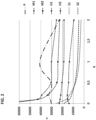
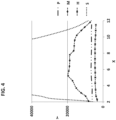
- Figs 4 and 5 pH stability measurements.
- P is polysaccharide polymer only; S is synthetic polymer only; M is a mixture of polysaccharide and synthetic; H is a hybrid polymer of polysaccharide and synthetic pursuant to the present invention.
- Figs 4 and 5 differ in the polysaccharide polymer used.
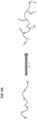
- Fig 6A Example synthesis of a hybrid polymer.
- the black line represents a polysaccharide polymer chain.
- An initiator covalently bonds with suitable sites on the polysaccharide polymer chain.
- Synthetic monomers are added (see under the arrow).
- the polysaccharide polymer is grated with synthetic polymers.
- Fig 6B Example hybrid polymer.
- a carrageenan polysaccharide polymer is grafted with synthetic polymers.
- compositions, formulations, methods, uses, kits, and processes of the present invention can comprise, consist of, and consist essentially of the elements and limitations of the invention described herein, as well as any of the additional or optional ingredients, components, steps, or limitations described herein.
- Embodiments and aspects described herein may comprise or be combinable with elements, features or components of other embodiments and/or aspects despite not being expressly exemplified in combination, unless an incompatibility is stated.
- "In at least one embodiment” means that one or more embodiments, optionally all embodiments or a large subset of embodiments, of the present invention has/have the subsequently described feature. Where amount ranges are given, these are to be understood as being the total amount of said ingredient in the composition, or where more than one species fall within the scope of the ingredient definition, the total amount of all ingredients fitting that definition, in the composition. For example, if the composition comprises from 1 % to 5 % fatty alcohol, then a composition comprising 2 % stearyl alcohol and 1 % cetyl alcohol and no other fatty alcohol, would fall within this scope.
- Molecular weight or "M.Wt.” or “MW' and grammatical equivalents mean the weight average molecular weight.
- Mn can be predicted by polymerisation mechanisms and is measured by methods that determine the number of molecules in a sample of a given weight; for example, colligative methods such as end-group assay. If Mn is quoted for a molecular weight distribution, there are equal numbers of molecules on either side of Mn in the distribution.
- MW takes into account the molecular weight of a chain in determining contributions to the molecular weight average. The more massive the chain, the more the chain contributes to MW. MW is determined by methos that are sensitive to the molecular size rather than just their number, such as light scattering techniques. If MW is quoted for the molecular weight distribution, there is an equal weight of molecules on either side of MW in the distribution.
- Viscosity is measured at 25 °C viscosity in centipoise (cP) using an RVDV Brookfield viscometer with 10 - 90 % torque at 20 RPM, unless otherwise stated.
- Water-soluble refers to any material that is sufficiently soluble in water to form a clear solution to the naked eye at a concentration of 0.1 % by weight of the material in water at 25 °C.
- water-insoluble refers to any material that is not “water-soluble”.
- Substantially free from or “substantially free of” means less than 1 %, or less than 0.8 %, or less than 0.5 %, or less than 0.3 %, or 0 %, by total weight of the composition or formulation.
- “Hair” means mammalian keratin fibres including scalp hair, facial hair and body hair. It includes such hair still being attached to a living subject and also hair that has been removed therefrom such as hair swatches and hair on a doll/mannequin.
- hair means human hair.
- “Hair shaft” or “hair fibre” means an individual hair strand and may be used interchangeably with the term “hair.”
- Cosmetically acceptable means that the compositions, formulations or components described are suitable for use in contact with human keratinous tissue without undue toxicity, incompatibility, instability, allergic response. All compositions and formulations described herein which have the purpose of being directly applied to keratinous tissue are limited to those being cosmetically acceptable.
- “Derivatives” includes but is not limited to, amide, ether, ester, amino, carboxyl, acetyl, acid, salt and/or alcohol derivatives of a given compound. In at least one embodiment, “derivatives thereof” means the amide, ether, ester, amino, carboxyl, acetyl, acid, salt and alcohol derivatives.
- “Monomer” means a discrete, non-polymerised chemical moiety capable of undergoing polymerisation in the presence of an initiator or any suitable reaction that creates a macromolecule e.g. such as radical polymerisation, polycondensation, polyaddition, anionic or cationic polymerization, ring opening polymerisation or coordination insertion polymerisation.
- "Unit” means a monomer that has already been polymerised i.e. is part of a polymer.
- polymer shall include all materials made by the polymerisation of monomers as well as natural polymers. Polymers made from only one type of monomer are called homopolymers. Polymers made from two or more different types of monomers are called copolymers. The distribution of the different monomers can be random, alternating or block-wise (i.e. block copolymer).
- polymer used herein includes any type of polymer including homopolymers and copolymers.
- Kit means a package comprising a plurality of components. "Kit” may be referred to as "kit-of-parts". An example of a kit is, for example, a first composition and a separately packaged second composition and optionally application instructions.
- hybrid polymers can be synthesised that combine the advantages of modern, synthetic polymers with those of natural or naturally-derived polymers. Furthermore, such hybrid polymers can be synthesised in a one-step process, rather than a process requiring multiple synthesis and/or purification steps. Indeed, the hybrid polymers herein described are polymerised by radical precipitation polymerisation in a polar solvent. This polymerization method results in the production of the hybrid polymer in a convenient form - powder form. Such solid form has the advantage that it is more economical to ship in view of the low weight and high concentration of active material (hybrid polymer), and lack of solvent.
- being in powder form reduces the risks associated with shipping and/or storing the product in liquid form - in terms of the product degrading in view of the molecules being able to move and react with other molecules such as the container walls and/or microbes being able to survive in the liquid and consume, grow in and/or contaminate the product.
- the herein described one-step process providing powder form is achieved in view of the fact that precipitation polymerisation is used i.e. the product of the reaction is produced as an insoluble precipitate - the product crashes out of the reaction mixture.
- the precipitant thus is no longer soluble in the reaction mixture and thus has no influence on the rheology and viscosity of the reaction mixture.
- Conventional radical graft polymerization as disclosed in the prior art results in a highly viscous gel. This has the disadvantage that once a certain viscosity level is reached, it is no longer possible to stir the reaction mixture in order to ensure even distribution of reactants and temperature.
- the viscosity depends on the natural polymer used.
- reaction product is soluble and thus in solution with solvent.
- formulators using the hybrid polymer in e.g. end-applications to supply them with a 50% solution of hybrid polymer.
- further processing steps are required in order to remove the solvent from the product and thus increase the concentration level of hybrid polymer versus solvent - indeed it is preferred to remove as much solvent as possible.
- a second disadvantage is that during the drying process of highly viscous gels is that insoluble surface/film-forming coatings and/or non-homogenous clumps result that have a high residual water content. It is not possible to completely exclude and/or remove water from such hybrid polymer produced in this way. Consequently, the present invention provides numerous advantages over the prior art efforts.
- US 2010/311904 A1 discloses biodegradable graft copolymers derived from a carbohydrate and at least one alpha, beta-unsaturated carboxylic acid derivative having superabsorbent properties in addition to the substantially adiabatic polymerization process by which the graft copolymers are made.
- CN 103819614 B discloses a preparation method for an alkali capacitive and high water-holding concrete internal curing material.
- Preparation raw materials comprise, by mass, 2%-20% of plant starch, 5%-30% of non-ionic monomers, 3%-25% of ionic monomers, 0.001%-0.1% of an initiator, 0.01%-1% of a cross-linking agent, 0.1%-1% of water glass, 2%-10% of alkali and 60%-90% of deionized water.
- US 2014/127147 A1 discloses water-soluble or water-swellable polymers the repeating structural units of which consist of a) one or more repeating structural units originating from special monomers with sulfonic acid groups or the salts thereof such as for example 2-acrylamido-2-methyl-propanesulfonic acid or the salts thereof and one or more repeating structural units originating from special cross-linking agents with at least three polymerizable double bonds.
- the first aspect relates to a water-soluble and/or water-swellable hybrid polymer.
- the water-soluble and/or water-swellable hybrid polymer may herein simply be referred to as 'hybrid polymer', for brevity.
- the hybrid polymer comprises (i) from 30 wt.-% to 95 wt.-% polysaccharide polymer and (ii) from 5 wt.-% to 70 wt.-% synthetic polymer.
- the hybrid polymer comprises (i) from 30 wt.-% to 90 wt.-%, or from 30 wt.-% to 85 wt.-%, or from 30 wt.-% to 80 wt.-%, or from 30 wt.-% to 75 wt.-%, 30 wt.-% to 70 wt.-%, or from 35 wt.-% to 65 wt.-%, or from 40 wt.-% to 60 wt.-%, or from 45 wt.-% to 55 wt.-% polysaccharide polymer and (ii) from 10 wt.-% to 70 wt.-%, or from 15 wt.-% to 70 wt.-%, or from 20 wt.-% to 70 wt.-%, or from 25 wt.-% to 70 wt.-%, 30 wt.-% to 70 wt.-%, or from
- the hybrid polymer has a weight ratio of polysaccharide polymer to synthetic polymer of from 70:30; or 60:40; or 50:50; or 40:60; or 30:70; or 20:80; or 10:90.
- the hybrid polymer comprises at least 30 wt.-% polysaccharide polymer, by total weight of the hybrid polymer.
- the hybrid polymer is substantially free of species that release ammonia when the hybrid polymer is used e.g. employed in alkaline cosmetic compositions.
- the structure of the hybrid polymer is such that the polysaccharide polymer is a backbone onto which the synthetic polymer is grafted.
- the hybrid polymer comprises synthetic polymer.
- Synthetic polymer herein means any polymer that is not a naturally-occurring polymer nor a derivative of a naturally-occurring polymer.
- the synthetic polymer comprises from 40 mol-% to 99 mol-% units (a), from 0.01 mol-% to 5 mol-% units (b), and from 0.99 mol-% to 59.99 mol-% units (c).
- the synthetic polymer comprises units (a), units (b) and units (c) such that the sum thereof is at least 99 mol-%, by total weight of the synthetic polymer.
- the synthetic polymer consists of units (a), units (b) and units (c).
- the synthetic polymer comprises repeating units according to Formula (1) wherein
- Q + is H + , NH 4 + , Na + , or K + . More preferably Q + is H + , NH 4 + , Na + , more preferably Q + is NH 4 + or Na + .
- the synthetic polymer comprises at least one repeating unit (a) according to Formula (1) wherein R 1 and R 2 are independently selected from H, methyl or ethyl; A is a linear or branched C 1 -C 12 -alkyl group; and Q + is H + , Li + , Na + , K + , 1 ⁇ 2 Ca ++ , 1 ⁇ 2 Mg ++ , 1 ⁇ 2 Zn ++ , 1/3 Al +++ , or combinations thereof, preferably wherein Q + is Na + .
- Q + is NH4 + .
- Q + is selected from the group monoalkylammonium, dialkylammonium, trialkylammonium and/or tetraalkylammonium salts, in which the alkyl substituents of the amines may independently of one another be (C 1 to C 22 )-alkyl radicals or (C 2 to C 10 )-hydroxyalkyl radicals.
- NH 4 + is preferred because it is more soluble the favored solvent used in the polymer synthesis.
- Na + is preferred because of reduced likelihood of unpreferred gases being produced during synthesis and also due to economic advantages.
- the synthetic polymer comprises at least one repeating unit according to Formula (1). In at least one embodiment, the synthetic polymer comprises two or more different repeating units according to Formula (1), such as repeating units according to Formula (1) having different Q + counterions.
- the repeating units according to Formula (1) result from the incorporation of a monomer selected from the group consisting of acryloyldimethyltaurates, acryloyl-1,1-dimethyl-2methyltaurates, acryloyltaurates, acryloyl-N-methyltaurates, and combinations thereof.
- a monomer selected from the group consisting of acryloyldimethyltaurates, acryloyl-1,1-dimethyl-2methyltaurates, acryloyltaurates, acryloyl-N-methyltaurates, and combinations thereof.
- the repeating units according to Formula (1) result from the incorporation of acryloyldimethyltaurate.
- the repeating units according to Formula (1) have a degree of neutralisation of between 0 mol-% and 100 mol-%. In at least one embodiment, the repeating units according to Formula (1) have a degree of neutralisation of from 50.0 to 100 mol-%, preferably from 80 mol-% to 100 mol-%, more preferably from 90.0 to 100 mol-%, even more preferably from 95.0 to 100 mol-%. Particular preference being given to a degree of neutralisation of more than 80 mol-%, more preferably more than 90 mol-%, even more preferably more than 95 mol-%.
- the synthetic polymer comprises from 55 mol-% to 98 mol-% of repeating units according to Formula (1).
- the synthetic polymer comprises crosslinking or branching units, wherein the crosslinking or branching units result from the incorporation of a monomer comprising at least two olefinically unsaturated double bonds.
- the crosslinking or branching units comprise least one oxygen, nitrogen, sulfur or phosphorus atom.
- the crosslinking or branching units result from monomers having a molecular weight of less than 500 g/mol.
- the units (b) are bifunctional or trifunctional crosslinking agents.
- the synthetic polymer comprises two or more different crosslinking or branching units.
- the synthetic polymer comprises from 0.01 mol-% to 5 mol-%, preferably from 0.01 mol-% to 3 mol-% crosslinking or branching units.
- crosslinking or branching units result from the incorporation of a monomer according to Formula (2) wherein
- a monomer according to Formula (2) has the advantage that grafted synthetic polymer can be predicted as more brush like synthetic polymer.
- brush like synthetic polymers show different properties, as linear once. For example depending on different comonomer units the solubility could in- or decreased.
- the crosslinking or branching units result from the incorporation of a monomer according to Formula (3) wherein
- a monomer according to Formula (3) has the advantage that grafted synthetic polymer can be predicted as highly branched synthetic polymer. These highly branched grafted synthetic polymer could protect effective the polysaccharide against inadvertently biodegradation.
- the crosslinking or branching units result from the incorporation of a crosslinker selected from the group consisting of methylenebisacrylamidee; methylenebismethacrylamidee; esters of unsaturated monocarboxylic and polycarboxylic acids with polyols, preferably di-acrylatees and tri-acrylatees and -methacrylatees (e.g.
- glycerol propoxylate triacrylatee [GPTA]), more preferably butanediol and ethylene glycol diacrylatee and -methacrylatee, trimethylolpropane triacrylatee (TMPTA) and trimethylolpropane trimethacrylatee (TMPTMA); allyl compounds, preferably allyl (meth)acrylatee, triallyl cyanurate, diallyl maleate, polyallyl esters, tetraallyloxyethane, triallylamine, tetraallylethylenediamine; allyl esters of phosphoric acid; and/or vinylphosphonic acid derivatives.
- the crosslinking or branching units result from the incorporation of trimethylolpropane triacrylatee (TMPTA).
- crosslinkers for the polymers of the invention are glycerol propoxylate triacrylatee (GPTA), trimethylolpropane triacrylatee (TMPTA), pentaerythritol diacrylatee mono stearate (PEAS), hexanediol diacrylatee (HDDA), and hexanediol dimethacrylatee (HDDMA).
- GPTA glycerol propoxylate triacrylatee
- TMPTA trimethylolpropane triacrylatee
- PEAS pentaerythritol diacrylatee mono stearate
- HDDA hexanediol diacrylatee
- HDDMA hexanediol dimethacrylatee
- GPTA glycerol propoxylate triacrylatee
- the synthetic polymer comprises at least one neutral repeating structural unit.
- the synthetic polymer comprises (c) from 0.99 mol-% to 59.99 mol-%, preferably from 1.99 mol-% to 44.99 mol-% of neutral repeating structural units.
- the synthetic polymer comprises at least one neutral repeating structural unit selected from the group consisting of N-vinylformamide, N-vinylacetamide, N-methyl-N-vinylformamide, N-methyl-N-vinylacetamide, N-vinyl-2-pyrrolidone, N-vinylcaprolactam, vinylacetate, N,N-dimethylacrylamide, N-isopropylacrylamide, acrylamide, methylacrylate, behenylpolyethoxy-(25)-methacrylate, laurylpoly-ethoxy-(7)-methacrylate, cetylpolyethoxy-(10)-methacrylate, stearylpoly-ethoxy-(8)-methacrylate, methoxypoly-ethoxy-(12)-meth
- the synthetic polymer comprises at least one anionic repeating structural unit (d).
- the synthetic polymer comprises from 1.98 mol-% to 20 mol-%, preferably from 2.5 mol-% to 18 mol-% of anionic repeating structural units, wherein the anionic repeating structural units result from the incorporation of a monomer comprising at least one carboxylate anion, and wherein the anionic repeating structural units are different from units (a).
- the anionic repeating structural unit results from the incorporation of monomers according to formula (A): wherein
- the synthetic polymer comprises at least one anionic repeating structural unit selected from the group consisting of acrylic acid, methacrylic acid, itaconic acid, carboxyethylacrylate, carboxyethylacrylate oligomers, 2-propylacrylic acid 2-ethylacrylic acid, and their respective alkali or alkaline earth metal salts.
- the synthetic polymer comprises at least one optional unit (e).
- the optional unit results from the incorporation of a monomer selected from the group consisting of unsaturated carboxylic acids and their anhydrides and salts, and also their esters with aliphatic, olefinic, cycloaliphatic, arylaliphatic or aromatic alcohols having a carbon number of from 1 to 22.
- the optional unit results from the incorporation of at least one monomer selected from the group consisting of functionalised (meth)acrylic acid esters, acrylic or methacrylic acid amidees, polyglycol acrylic or methacrylic acid esters, polyglycol acrylic or methacrylic acid amides, dipropyleneglycolacrylic or methacrylic acid esters, dipropylenglycolacrylic or methacrylic acid amides, ethoxylated fatty alcohol acrylates or -methacrylates, propoxyl ated fatty alcohol acrylates or linear or cyclic N-vinylamides or N-methylvinyl amides.
- functionalised (meth)acrylic acid esters acrylic or methacrylic acid amidees
- polyglycol acrylic or methacrylic acid esters polyglycol acrylic or methacrylic acid amides
- dipropyleneglycolacrylic or methacrylic acid esters dipropylenglycolacrylic or methacrylic acid
- the optional unit is an anionic repeating structural unit that results from the incorporation of monomers according to formula (A): wherein
- the optional unit is an anionic structural unit that results from the incorporation of a monomer according to formula (A) wherein X is a covalent bond or is CH 2 . In at least one embodiment, the optional unit is an anionic structural unit that results from the incorporation of a monomer according to formula (A) wherein Y is a covalent bond, CH 2 , C(O)O, or C(O)NR 3 . In at least one embodiment, the optional unit is an anionic structural unit that results from the incorporation of a monomer according to formula (A) wherein M is a covalent bond,
- the optional unit results from the incorporation of a monomer selected from the group consisting of N-vinylformamide, N-vinylacetamide, N methyl-N-vinylformamide, N-methyl-N-vinylacetamide, N-vinyl-2-pyrrolidone (NVP), N vinylcaprolactam, vinylacetate, methylvinylether, ethylvinylether, methylallylether, ethylmethallylether, styrol, acetoxystyrol, methylmethallylether, ethylallylether, tert-butylacrylamide, N,N-diethylacrylamide, N,N-dimethylacrylamide, N,N-dimethylmethacrylamide, N,N-dipropylacrylamide, N-isopropylacrylamide, N-propylacrylamide, acrylamide, methacrylamide, methylacrylate, methymethylacrylate, ter
- the optional unit results from the incorporation of a monomer selected from the group consisting of glycerine propoxylate triacrylate (GPTA) and trimethylolpropantriacrylate (TMPTA).
- the optional unit results from the incorporation of a monomer selected from the group consisting of N-vinylformamide, N-vinylacetamide, N-methyl-N-vinylacetamide, N-vinyl-2-pyrrolidone (NVP), N,N-diethylacrylamide, acrylamide, methacrylamide, methylacrylate, methylmethylacrylate, tert-Butylacrylate, acrylic acid, methacrylic acid, 2-carboxyethylacrylate, 2-carboxyethylacrylate oligomers, itaconic acid glycerine propoxylate triacrylate (GPTA), trimethylolpropane triacrylate (TMPTA), pentaerythritol diacrylate monostearate (PE), glycerine propoxylate
- the optional unit results from the incorporation of a monomer selected from the group consisting of acrylic acid, methacrylic acid, styrenesulfonic acid, maleic acid, fumaric acid, crotonic acid, itaconic acid, and senecic acid.
- the optional unit results from monomers selected from the group consisting of open-chain N-vinyl amides, preferably N-vinylformamide (VIFA), N-vinylmethylformamide, N-vinylmethylacetamide (VIMA) and N-vinylacetamides; cyclic N-vinyl amides (N-vinyl lactams) with a ring size of 3 to 9, preferably N-vinylpyrrolidones (NVP) and N-vinylcaprolactam; amides of acrylic and methacrylic acid, preferably acrylamide, methacrylamide, N,N-dimethylacrylamide, N,N-diethylacrylamide, and N,N-diisopropylacrylamide; alkoxylated acrylamides and methacrylamides, preferably hydroxyethyl methacrylate, hydroxymethylmethacrylamide; hydroxyethylmethacryl amide, hydroxypropylmethacrylamide,
- VIFA N
- the hybrid polymer comprises polysaccharide polymer.
- the polysaccharide polymer is water-soluble and/or water-swellable. In at least one embodiment, the polysaccharide polymer absorbs water and/or forms a gel or gum when immersed in water. In at least one embodiment, the polysaccharide polymer is a natural gum or mucilage. Natural gums are useful because they are generally soluble in water due to the presence of an excessive number of -OH moieties which form hydrogen bonds with water molecules. Suitable gums are disclosed in Rana, V. et al, Carbohydrate Polymers 83 (2011) 1031-1047 (see, in particular, Table 1). In at least one embodiment, the polysaccharide polymer is a natural gum derived from a plant.
- the polysaccharide polymer is selected from the group consisting of chitosan, xanthan gum, fenugreek gum, tara gum, locust bean gum, carrageenan, guar gum, alginate, agar, gum tragacanth, tamarind kernel gum, gum arabica, cherry gum, gum karaya, okra gum, gum cassia, Chicle gum, konjac gum glucomannan, gum ghatti, pectin, sclerotium gum, gellan gum, derivatives thereof, and combinations thereof. Chemically modified versions of such polymers may also be used.
- Modified polysaccharides means that the polysaccharide polymer treated by one or more suitable physical, enzymatic or chemical process into another modified form of the polysaccharide polymer.
- a modified form of the polysaccharide polymer treat by a suitable physical, enzymatic or chemical process mean e.g.:
- Chitosan is a linear polysaccharide composed of randomly distributed ⁇ -linked D-glucosamine and N-acetyl-D-glucosamine monomers.
- Xanthan gum is composed of pentasaccharide repeat units, comprising glucose, mannose, and glucuronic acid in the molar ratio of 2.0:2.0:1.0.
- Fenugreek gum is, as its name suggests, derived from fenugreek and is a galactomannan where the ratio of mannose: galactose is approximately 1:1.
- Tara gum is a galactomannan and comes from the small tree or thorny shrub having the latin name Caesalpinia spinosa.
- Locust bean gum is a galactomannan vegetable gum extracted from the seeds of the carob tree. Locust bean gum consists mainly of high-molecular-weight hydrocolloidal polysaccharides composed of galactose and mannose units combined through glycosidic linkages. Carrageenan is a linear sulfated polysaccharide that are extracted from red edible seaweeds.
- carrageenan There are three main varieties of carrageenan, which differ in their degree of sulfation: kappa-carrageenan has one sulfate group per disaccharide; iota-carrageenan has two sulfates per disaccharide; lambda carrageenan has three sulfates per disaccharide. All carrageenans are high-molecular weight polysaccharides made up of repeating galactose units and 3,6-anhydrogalactose, both sulfated and non-sulfated. The units are joined by alternating ⁇ -1,3 and ⁇ -1,4 glycosidic linkages.
- Guar gum is a polysaccharide composed of the sugars galactose and mannose: the backbone is a linear chain of ⁇ 1,4-linked mannose residues to which galactose residues are 1,6-linked at every second mannose, forming short side-branches. Guar gum is primarily the groand endosperm of guar beans.
- Alginate may also be referred to in the literature as algin or alginic acid. Alginate is an anionic polysaccharide derived from brown algae and is a linear copolymer with homopolymeric blocks of (1-4)-linked ⁇ -D-mannuronate residues and ⁇ -L-guluronate residues.
- Agar is derived from the polysaccharide agarose, which forms the supporting structure in the cell walls of certain species of algae. Agar is actually the resulting mixture of two components: the linear polysaccharide agarose, and a heterogeneous mixture of smaller molecules called agaropectin.
- Agarose is a linear polymer made up of the repeating unit of agarobiose, which is a disaccharide made up of D-galactose and 3,6-anhydro-L-galactopyranose.
- Gum tragacanth is a natural gum obtained from the dried sap of several species of Middle Eastern legumes of the genus Astragalus.
- Gum tragacanth is made up of two types of polysaccharide fractions: tragacanthin and bassorin.
- Tragacanthin is water-soluble and bassorin is water-swellable.
- the polysaccharide fractions of gum tragacanth comprise D-galacturonic acid, D-galactose, L-fructose, D-xylose and L-arabinose.
- Tamarind kernel gum is a polysaccharide of glucose, galactose and xylose in a molar ratio of 3:2:1.
- the backbone of the tamarind seed gum polysaccharide is based on a glucose units that are substituted with galactose and xylose.
- Gum Arabica comes from the Acacia tree. Both gum Arabica and gum ghatti comprise arabinogalactan polysaccharide, which consists of arabinose and galactose monosaccharides.
- Konjac glucomannan is a non-ionic polysaccharide foand in the tubers of Amorphophallus konjac and consists of (1,4)-linked ⁇ -D-mannose and ⁇ -D-glucose in a molar ratio of 1.6:1.
- the polysaccharide polymer comprises glucose and/or galactose units.
- the polysaccharide polymer is a galactomannan.
- Galactomannans are polysaccharides consisting of a mannose backbone with galactose side groups (more specifically, a (1-4)-linked beta-D-mannopyranose backbone with branchpoints from their 6-positions linked to alpha-D-galactose, i.e. 1-6-linked alpha-D-galactopyranose).
- the polysaccharide polymer is a guar gum or a guar gum derivative.
- the guar gum derivative is selected from the group consisting of hydroxypropyl guar gum, carboxymethyl guar gum, carboxymethyl hydroxypropyl guar gum, and quaternary ammonium guar gum.
- the polysaccharide polymer is an arabinogalactan.
- the polysaccharide polymer is substantially free of starch, amylose, amylopectin, glycogen, cellulose, and derivatives thereof.
- Cellulose derivatives include for example cellulose ethers, carboxymethylcellulose, hydroxyethylcellulose.
- Such polysaccharides are either neither water-soluble nor water-swellable, or result in hybrid polymers that are not desirable from a performance perspective.
- the polysaccharide polymer is selected from the group consisting of chitosan, xanthan gum, locust bean gum, carrageenan, guar gum, alginate, agar, fenugreek gum, konjac gum, derivatives thereof, and combinations thereof. In at least one embodiment, the polysaccharide polymer is selected from the group consisting of xanthan gum, carrageenan, guar gum, chitosan and alginate. In a preferred embodiment, the polysaccharide polymer is selected from the group consisting of xanthan gum, carrageenan, guar gum, and combinations thereof. In a preferred embodiment, the polysaccharide polymer is xanthan gum.
- the components (i) and (ii) are polymerised by radical precipitation polymerisation in a solvent.
- Radical precipitation polymerisation has the advantage over other synthesis methods in that it results in a more useful level of polymer branching.
- the polymerisation is grafting radical precipitation polymerisation.
- the radical precipitation polymerization is carried out in a polar solvent mixture comprising:
- the compound II) is polar and organic.
- the compound II) is one or more polar alcohols and one or more ketones.
- the compound II) is selected from the group consisting methanol, ethanol, 1-propanol, 2-propanol, 2-methyl-2-propanol, 1-butanol, 2-butanol, dimethyl ketone, diethyl ketone, pentan-2-one, butanone, tetrahydro pyrane, tetrahydro furane, 2-methyl-tetrahydro furane, 1,3-dioxane, 1,4-dioxane, preferably 2-propanol, 2-methyl-2-propanol, dimethyl ketone, tetrahydro furane, 2-methyl-tetrahydro furane, more preferably 2-methyl-2-propanol and dimethyl ketone.
- the solvent mixture contains from 0.5 up to 10 wt.-%, preferably from 1 up to 8 wt.-% and more preferably from 2 up to 5 wt.-% water.
- the solvent mixture contains from 1 up to 99.5 wt.-%, preferably from 5 up to 95 wt.-% and more preferably from 10 up to 90 wt.-% 2-methyl-2-propanol.
- the polar solvent mixture comprises from 0.5 up to 10 wt.-% water, from 1 up to 98.5 wt.-% 2-methyl-2-propanol and from 1 up to 98.5 wt.-% dimethyl ketone, preferably from 0.5 up to 7.5 wt.-% water, from 5 up to 94.5 wt.-% 2-methyl-2-propanol and from 5 up to 94.5 wt.-% dimethyl ketone.
- the monomers resulting in units (a), (b) and/or (c) are/is neutralised with a base prior to the polymerisation, and/or the hybrid polymer after polymerisation is neutralised with a base.
- the base is selected from bases comprising an ion selected the group consisting of Li + , Na + , K + , Ca ++ , Mg ++ , Zn ++ , Al +++ , and combinations thereof; preferably wherein the base is selected from hydroxides, carbonates and hydrogen carbonates comprising an ion selected the group consisting of Li + , Na + , K + , Ca ++ , Mg ++ , Zn ++ , Al +++ , and combinations thereof.
- the first aspect relates to a water-soluble and/or water-swellable hybrid polymer comprising:
- the first aspect relates to a water-soluble and/or water-swellable hybrid polymer comprising:
- the second aspect relates to a composition.
- the composition comprises:
- the composition is a cosmetic composition.
- the cosmetic composition is selected from the group consisting of shampoo, body wash, facial cleanser, cleansing masks, bubble bath, intimate wash, bath oil, cleansing milk, micellar water, make-up remover, cleansing wipes, perfume, liquid soaps, shaving soaps, shaving foams, cleansing foams, day creams, night creams, anti-ageing creams, body milks, body lotions, face serums, eye creams, sunscreen sprays, sun care milks, sun care creams, sun care gels, after-shave lotions, pre-shaving creams, depilatory creams, whitening creams, self-tanning creams, anti-acne gels, mascaras, foundations, primers, concealers, bb creams, eyeliners, highlighters, lip stains, hand sanitizers, nail varnish removers, conditioners, hair styling gels, hair styling creams, hair shine serums, scalp treatments, hair colourants, split end fluids,
- a carrier is useful for providing the compounds used in present invention in liquid form.
- the carrier is a cosmetically acceptable carrier.
- the composition comprises at least 10 wt.-% water. Water is useful for economic reasons but also because it is highly cosmetically acceptable.
- the composition comprises water-miscible or water-soluble solvents such as lower alkyl alcohols.
- the composition comprises C 1 -C 5 alkyl monohydric alcohols, preferably C 2 -C 3 alkyl alcohols.
- the alcohols which may be present are in particular lower monohydric or polyhydric alcohols having 1 to 4 carbon atoms customarily used for cosmetic purposes, such as preferably ethanol and isopropanol.
- the composition comprises a water-soluble polyhydric alcohol.
- the water-soluble polyhydric alcohols are polyhydric alcohols having two or more hydroxyl groups in the molecule.
- the water-soluble polyhydric alcohol is selected from the group consisting of: dihydric alcohols such as ethylene glycol, propylene glycol, trimethylene glycol, 1,2-butylene glycol, 1,3-butylene glycol, 1,4-butylene glycol, tetramethylene glycol, 2,3-butylene glycol, pentamethylene glycol, 2-butene-1,4-diol, hexylene glycol, octylene glycol; trihydric alcohols such as glycerine, trimethylol propane, 1,2,6-hexanetriol; tetrahydric alcohols such as penthaerythritol; pentahydric alcohols such as xylytol, etc.; hexahydric alcohol
- the composition comprises a cosmetically acceptable carrier selected from the group consisting of water, glycols, ethanol, and combinations thereof.
- the composition comprises an aqueous, alcoholic or aqueous-alcoholic carrier
- the aqueous, alcoholic or aqueous-alcoholic carrier comprises water, ethanol, propanol, isopropanol, 1,2-propylene glycol, 1,3-propylene glycol, isobutanol, butanol, butyl glycol, butyl diglycol, glycerol, or a mixture thereof
- the aqueous, alcoholic or aqueous-alcoholic solvent comprises water, ethanol, propanol, isopropanol, 1,2-propylene glycol, 1,3-propylene glycol, glycerol, or mixtures thereof
- the aqueous, alcoholic or aqueous-alcoholic carrier comprises water, isopropanol, 1,2-propylene glycol, 1,3-propylene glycol, or mixtures thereof; even more preferably wherein the aqueous, alcoholic or aqueous-alcoholic carrier
- Natural carriers can also be used.
- the composition comprises a carrier selected from the group consisting of plant oil, honey, plant-derived sugar compositions, and mixtures thereof.
- the composition has a viscosity of from 0 cPs to 20,000 cPs. In at least one embodiment, the composition has a viscosity of from 0.1 cPs to 10,000 cPs, or from 1 cPs to 5,000 cPs, or from 5 cPs to 3,500 cPs.
- the viscosity measurement conditions are defined in the definitions section above. Viscosity may be important for anti-drip reasons. Dripping can be inconvenient for the user. Furthermore, more viscous compositions can be useful for measured dispensing. In at least one embodiment, the composition has a viscosity of from 0 cPs to 1,000 cPs. This viscosity range is advantageous when the composition is in the form of a facial cleanser in view of the need for distribution on skin and ability to rinse off.
- the composition further comprises a viscosity-modifying substance.
- the viscosity-modifying substance is preferably a thickening polymer.
- the thickening polymer selected from the group consisting of: copolymers of at least one first monomer type, which is chosen from acrylic acid and methacrylic acid, and at least one second monomer type, which is chosen from esters of acrylic acid and ethoxylated fatty alcohol; crosslinked polyacrylic acid; crosslinked copolymers of at least one first monomer type, which is chosen from acrylic acid and methacrylic acid, and at least one second monomer type, which is chosen from esters of acrylic acid with C 10 - to C 30 -alcohols; copolymers of at least one first monomer type, which is chosen from acrylic acid and methacrylic acid, and at least one second monomer type, which is chosen from esters of itaconic acid and ethoxylated fatty alcohol; copolymers of at least one first monomer type, which is
- the composition has a pH value of from 2.0 to 12.0, preferably from 3.0 to 9.0, more preferably from 4.5 to 8.
- a composition can be made available that is suitable for different applications.
- the composition comprises an alkalizing agent or pH adjusting agent.
- ammonia or caustic soda is suitable, but water-soluble, physiologically tolerable salts of organic and inorganic bases can also be considered.
- the pH adjusting agent is selected from ammonium hydrogen carbonate, ammonia, monoethanolamine, ammonium carbonate.
- the alkalizing agents is selected from the group consisting of 2-amino-2-methyl-1-propanol, 2-amino-2-methyl-1,3-propanediol, 2-amino-2-ethyl-1,3-propanediol, tris(hydroxyl-methyl)-aminomethane, 2-amino-1-butanole, tris-(2-hydroxypropyl)-amine, 2,2-iminobisethanol, lysine, iminourea (guanidine carbonate), tetrahydro-1,4-oxazine, 2-amino-5-guanidin-valeric acid, 2-aminoethansulfonic acid, diethanolamine, triethanolamine, N-methyl ethanolamine, isopropanolamine, diisopropanolamine, triisopropanolamine, glucamine, sodium hydroxide, potassium hydroxide, lithium hydroxide and magnesium oxide, and mixtures thereof.
- the composition comprises an acid selected from the group consisting of hydrochloric acid, phosphoric acid, acetic acid, formic acid, sulfuric acid, hydrochloric acid, citric acid, and mixtures thereof.
- Citric acid is most preferred in that it has high consumer acceptance.
- the acidic pH is adjusted with a buffer such as a phosphate buffer, a TRIS buffer or a citric buffer. The buffers may be used alone or in combination with an acid.
- the composition is in liquid form.
- the composition is in solid form.
- the composition is in powdered or granulated form. This is advantageous in that it is not needed to ship liquid, which is typically heavy over long distances, and thus has economic and environmental benefits.
- a solid form can be achieved by spray drying the composition or the employment of a rotary evaporator. The composition can be converted into liquid form after it has been shipped e.g. by adding water.
- the composition comprises a surfactant or surfactant system.
- the surfactant or surfactant system comprises a surfactant selected from the group consisting of anionic surfactants, cationic surfactants, non-ionic surfactants, zwitterionic surfactants and/or amphoteric surfactants.
- the composition comprises a total amount of surfactant of from 0.01 wt.-% to 70 wt.-%, from 0.1 wt.-% to 40%, from 1 wt.-% to 30%, from 2 wt.-% to 20 wt.-%.
- the composition comprises an anionic surfactant.
- the anionic surfactant is selected from the group consisting of (C 10 -C 20 )-alkyl and alkylene carboxylates, alkyl ether carboxylates, fatty alcohol sulfates, fatty alcohol ether sulfates, alkylamide sulfates and sulfonates, fatty acid alkylamide polyglycol ether sulfates, alkanesulfonates and hydroxyalkanesulfonates, olefinsulfonates, acyl esters of isethionates, ⁇ -sulfo fatty acid esters, alkylbenzenesulfonates, alkylphenol glycol ether sulfonates, sulfosuccinates, sulfosuccinic monoesters and diesters, fatty alcohol ether phosphates, protein/fatty acid condensation products, alkyl monog
- the anionic surfactants can be used in the form of their water-soluble or water-dispersible salts, examples being the sodium, potassium, magnesium, ammonium, mono-, di-, and triethanolammonium, and analogous alkylammonium salts.
- the anionic surfactant is the salt of an anionic surfactant comprising 12 to 14 carbon atoms.
- the anionic surfactant is selected from the group consisting of sodium lauryl sulfate, sodium laureth sulfate, sodium tridecyl sulfate, sodium trideceth sulfate, sodium myristyl sulfate, sodium myreth sulfate, and mixtures thereof.
- the composition comprises an acylglycinate surfactant.
- the acylglycinate surfactant conforms to the formula (Y): wherein
- the composition comprises a glutamate surfactant corresponding to formula (Z) or a salt thereof: wherein
- the composition comprises from 0.01 wt.-% to 30 wt.-%, or 1 wt.-% to 25 wt.-%, preferably from 5 wt.-% to 20 wt.-%, more preferably from 12 wt.-% to 18 wt.-% anionic surfactant.
- the composition comprises a non-ionic surfactant.
- the non-ionic surfactant has an HLB (Hydrophilic Lipophilic Balance) of greater than 12.
- the non-ionic surfactant is selected from the group consisting of ethoxylated or ethoxylated/propoxylated fatty alcohols with a fatty chain comprising from 12 to 22 carbon atoms, ethoxylated sterols, such as stearyl- or lauryl alcohol (EO-7), PEG-16 soya sterol or PEG-10 soya sterol, polyoxyethylene polyoxypropylene block polymers (poloxamers), and mixtures thereof.
- HLB Hydrophilic Lipophilic Balance
- the non-ionic surfactant is selected from the group consisting of ethoxylated fatty alcohols, fatty acids, fatty acid glycerides or alkylphenols, in particular addition products of from 2 to 30 mol of ethylene oxide and/or 1 to 5 mol of propylene oxide onto C 8 - to C 22 -fatty alcohols, onto C 12 - to C 22 -fatty acids or onto alkyl phenols having 8 to 15 carbon atoms in the alkyl group, C 12 - to C 22 -fatty acid mono- and diesters of addition products of from 1 to 30 mol of ethylene oxide onto glycerol, addition products of from 5 to 60 mol of ethylene oxide onto castor oil or onto hydrogenated castor oil, fatty acid sugar esters, in particular esters of sucrose and one or two C 8 - to C 22 -fatty acids, INCI: Sucrose Cocoate, Sucrose Dilaurate, Sucrose Distearate, Sucrose Laurate, Su
- the non-ionic surfactant is selected from the group consisting of fatty alcohol ethoxylates (alkylpolyethylene glycols), alkylphenol polyethylene glycols, alkylmercaptan polyethylene glycols, fatty amine ethoxylates (alkylaminopolyethylene glycols), fatty acid ethoxylates (acyl polyethylene glycols), polypropylene glycol ethoxylates (Pluronics ® ), fatty acid alkylol amides, (fatty acid amide polyethylene glycols), N-alkyl-, N-alkoxypolyhydroxy-fatty acid amide, sucrose esters, sorbitol esters, polyglycol ethers, and mixtures thereof.
- fatty alcohol ethoxylates alkylpolyethylene glycols
- alkylphenol polyethylene glycols alkylmercaptan polyethylene glycols
- fatty amine ethoxylates alkylaminopoly
- the composition comprises a fatty N-methyl-N-glucamide surfactant.
- the fatty N-methyl-N-glucamide surfactant conforms to the formula (X): wherein
- R is a saturated aliphatic hydrocarbon group which can be linear or branched and can have from 3 to 20 carbon atoms in the hydrocarbon chain, preferably linear or branched. Branched means that a lower alkyl group such as methyl, ethyl or propyl is present as substituent on a linear alkyl chain.
- R is selected from the group consisting of 1-propyl, 2-propyl, 1-butyl, 2-butyl, 2-methyl-1-propyl (isobutyl), 2-methyl-2-propyl (tert-butyl), 1-pentyl, 2-pentyl, 3-pentyl, 2-methyl-1-butyl, 3-methyl-1-butyl, 2-methyl-2-butyl, 3-methyl-2-butyl, 2,2-dimethyl-1-propyl, 1-hexyl, 2-hexyl, 3-hexyl, 2-methyl-1-pentyl, 3-methyl-1-pentyl, 4-methyl-1-pentyl, 2-methyl-2-pentyl, 3-methyl-2-pentyl, 4-methyl-2-pentyl, 2-methyl-3-pentyl, 3-methyl-3-pentyl, 2,2-dimethyl-1-butyl, 2,3-dimethyl-1-butyl, 3,3-dimethyl-1-butyl, 2-ethyl
- Suitable fatty N-methyl-N-glucamide surfactants are described in WO2013/178700 and EP0550637 .
- the N-methyl-N-glucamide surfactant is selected from those conforming to formula (X), wherein R is C 12 alkyl or C 14 alkyl.
- the N-methyl-N-glucamide surfactant is selected from those conforming to formula (X), wherein R is C 18 alkyl or C 18 alkyl.
- N-methyl-N-glucamide surfactants are available from Clariant under their GlucoTain ® brand.
- the composition comprises from 1 wt.-% to 20 wt.-%, more preferably from 2 wt.-% to 10 wt.-%, even more preferably from 3 wt.-% to 7 wt.-% non-ionic surfactant.
- the amphoteric surfactants are selected from the group consisting of N-(C 12 -C 18 )-alkyl- ⁇ -aminopropionates and N-(C 12 -C 18 )-alkyl- ⁇ -iminodipropionates as alkali metal salts and mono-, di-, and trialkylammonium salts; N-acylaminoalkyl-N,N-dimethylacetobetaine, preferably N-(C 8 -C 18 )-acylaminopropyl-N,N-dimethylacetobetaine, (C 12 -C 18 )-alkyl-dimethyl-sulfopropylbetaine, amphosurfactants based on imidazoline (trade name: Miranol ® , Steinapon ® ), preferably the sodium salt of 1-( ⁇ -carboxymethyloxyethyl)-1-(carboxymethyl)-2-laurylimidazolinium; amine
- the composition comprises a betaine surfactant.
- the betaine surfactant is selected from C 8 - to C 18 -alkylbetaines.
- the betaine surfactant is selected from the group consisting of cocodimethylcarboxymethylbetaine, lauryldimethylcarboxymethylbetaine, lauryldimethylalphacarboxyethylbetaine, cetyldimethylcarboxymethylbetaine, oleyldimethylgammacarboxypropylbetaine and laurylbis(2-hydroxypropyl)alphacarboxyethylbetaine and combinations thereof.
- the betaine surfactant is selected from C 8 - to C 18 -sulfobetaines.
- the betaine surfactant is selected from the group consisting of cocodimethylsulfopropylbetaine, stearyldimethylsulfopropylbetaine, lauryldimethyl-sulfoethylbetaine, laurylbis(2-hydroxyethyl)sulfopropylbetaine, and combinations thereof.
- the betaine surfactant is selected from carboxyl derivatives of imidazole, the C 8 - to C 18 -alkyldimethylammonium acetates, the C 8 - to C 18 -alkyldimethylcarbonylmethylammonium salts, and the C 8 - to C 18 -fatty acid alkylamidobetaines, and mixtures thereof.
- the C 8 - to C 18 -fatty acid alkylamidobetaine is selected from coconut fatty acid amidopropylbetaine, N-coconut fatty acid amidoethyl-N-[2-(carboxymethoxy)ethyl]glycerol (CTFA name: Cocoamphocarboxyglycinate), and mixtures thereof.
- the composition comprises from 0.5 wt.-% to 20 wt.-%, preferably from 1 wt.-% to 10 wt.-% amphoteric surfactant.
- the composition comprises a surfactant system.
- the surfactant system comprises at least one surfactant selected from the group consisting of lauryl sulfate, laureth sulfate, cocoamido-propylbetaine, sodium cocoylglutamate, lauroamphoacetate, and mixtures thereof.
- the surfactant system comprises sodium laureth sulphate, sodium lauryl sulphate, and optionally cocamidopropyl betaine.
- the surfactant system comprises sodium laureth sulphate, Potassium Cocyl Glutamate, and cocamidopropyl betaine.
- the composition comprises a conditioning agent.
- the conditioning agent is a water insoluble, water dispersible, non-volatile, liquid that forms emulsified, liquid particles.
- the conditioning agent is a silicone (e.g., silicone oil, cationic silicone, silicone gum, high refractive silicone, and silicone resin), an organic conditioning oil (e.g., hydrocarbon oils, polyolefins, and fatty esters), or combinations thereof.
- the conditioning agent is a silicone
- the composition comprises from 0.01 wt.-% to 10 wt.-%, or from 0.1 wt.-% to 5 wt.-% silicone conditioning agent, by total weight of the composition.
- Suitable silicone conditioning agents, and optional suspending agents for the silicone are described in US 5,104,646 .
- the composition comprises a silicone gum selected from the group consisting of polydimethylsiloxane, (polydimethylsiloxane) (methylvinylsiloxane) copolymer, poly(dimethylsiloxane) (diphenylsiloxane) (methylvinylsiloxane) copolymer, and mixtures thereof.
- the composition comprises a terminal aminosilicone.
- Terminal aminosilicone as defined herein means silicone comprising one or more amino groups at one or both ends of the silicone backbone.
- the composition is substantially free of any silicone compound comprising pendant amino groups.
- the composition is substantially free of any silicone compound other than terminal aminosilicones.
- the amino group at least one terminus of the silicone backbone of the terminal aminosilicone is selected from the group consisting of primary amines, secondary amines and tertiary amines.
- the composition comprises a terminal aminosilicone conforming to Formula (S): (R F ) a G 3-a -Si-(-OSiG 2 ) n -O-SiG 3-a (R F ) a (S) wherein
- the terminal aminosilicone is selected from the group consisting of bis-aminomethyl dimethicone, bisaminoethyl dimethicone, bis-aminopropyl dimethicone, bis-aminobutyl dimethicone, and mixtures thereof.
- the viscosity of the terminal aminosilicone is from 1,000 to 30,000 cPs, or from 5,000 to 20,000 cPs measured at 25 °C.
- the composition comprises from 0.1 wt.-% to 20 wt.-%, or from 0.5 wt.-% to 10 wt.-%, or from 1 wt.-% to 6 wt.-% terminal aminosilicone, by total weight of the composition.
- the composition comprises a high melting point fatty compound.
- the high melting point fatty compound has a melting point of 25 °C or higher.
- the high melting point fatty compound is selected from the group consisting of a fatty alcohol, fatty acid, fatty alcohol derivative, fatty acid derivative, and mixtures thereof.
- Non-limiting examples of the high melting point compounds are found in International Cosmetic Ingredient Dictionary, Fifth Edition, 1993 , and CTFA Cosmetic Ingredient Handbook, Second Edition, 1992 .
- the composition may comprise from 0.1 wt.-% to 40 wt.-%, or from 1 wt.-% to 30 wt.-%, or from 1.5 wt.-% to 16 wt.-%, or from 1.5 wt.-% to 8 wt.-% of a high melting point fatty compound, by total weight of the composition.
- the fatty alcohol is selected from the group consisting of: cetyl alcohol, stearyl alcohol, behenyl alcohol, and mixtures thereof.
- the composition comprises a linear fatty alcohol, wherein the linear fatty alcohol is also comprised in a lamellar gel matrix.
- the lamellar gel matrix is suitable for providing various conditioning benefits such as slippery feel during the application to wet hair and softness and moisturized feel on dry hair.
- the linear fatty alcohol may comprise from 8 to 24 carbon atoms.
- the linear fatty alcohol is selected from the group consisting of: cetyl alcohol, stearyl alcohol, and mixtures thereof.
- the weight ratio of total linear fatty alcohol to terminal aminosilicone is from 0.5:1 to 10:1, or from 1:1 to 5:1, or from 2.4:1 to 2.7:1.
- the composition comprises a cationic surfactant.
- the composition comprises from 0.05 wt.-% to 3.0 wt.-%, or from 0.075 wt.-% to 2.0 wt.-%, or from 0.1 wt.-% to 1.0 wt.-%, of cationic surfactant by total weight of the composition.
- the cationic surfactant is comprised in a lamellar gel matrix.
- the composition comprises a lamellar gel matrix and the lamellar gel matrix comprises the cationic surfactant.
- cationic surfactant is according to Formula (C): wherein
- the cationic surfactant is selected from the group consisting of behenyl trimethyl ammonium chloride, methyl sulfate or ethyl sulfate, and stearyl trimethyl ammonium chloride, methyl sulfate or ethyl sulfate. It is believed that a longer alkyl group provides improved smoothness and soft feeling on wet and dry hair, compared to cationic surfactants with a shorter alkyl group. It is also believed that such cationic surfactants can provide reduced irritation, compared to those having a shorter alkyl group.
- the cationic surfactant is a di-long alkyl quatemized ammonium salt selected from the group consisting of: dialkyl (14 - 18) dimethyl ammonium chloride, ditallow alkyl dimethyl ammonium chloride, dihydrogenated tallow alkyl dimethyl ammonium chloride, distearyl dimethyl ammonium chloride, dicetyl dimethyl ammonium chloride, and mixtures thereof.
- the cationic surfactant is a tertiary amido amine having an alkyl group of from 12 to 22 carbons.
- the tertiary amido amine may be selected from the group consisting of stearamidopropyldimethyl-, stearamidopropyldiethyl-, stearamidoethyldiethyl-, stearamidoethyldimethyl-, palmitamidopropyldimethyl-, palmitamidopropyldiethyl-, palmitamidoethyldiethyl-, palmitamidoethyldimethyl-, behenamidopropyldimethy1-, behenamidopropyldiethyl-, behenamidoethyldiethyl-, behenamidoethyldimethyl-, arachidamidopropy Idimethy 1-, arachidamidopropyldiethyl-,
- a tertiary amido amine may be used in combination with an acid.
- the acid is typically used as a salt-forming anion.
- the acid is selected from the group consisting of lactic acid, malic acid, hydrochloric acid, 1-glumatic acid, acetic acid, citric acid, and mixtures thereof.
- the cationic surfactant is selected from the group consisting of cetyltrimonium chloride (CTAC), stearyltrimonium chloride (STAC), behentrimonium methosulfate, stearoylamidopropyldimethyl amine (SAPDMA), distearyldimethylammonium chloride, and mixtures thereof.
- CTAC cetyltrimonium chloride
- STAC stearyltrimonium chloride
- SAPDMA stearoylamidopropyldimethyl amine
- distearyldimethylammonium chloride distearyldimethylammonium chloride
- the composition further comprises a hairstyling polymer.
- the hairstyling polymer is selected from the group consisting of: amphoteric hairstyling polymers, zwitterionic hairstyling polymers, anionic hairstyling polymers, non-ionic hairstyling polymers, cationic hairstyling polymers, and mixtures thereof.
- the composition comprises from 0.01 wt.-% to 20 wt.-%, or from 0.01 wt.-% to 16 wt.-%, or from 0.01 wt.-% to 10 wt.-%, or from 1 wt.-% to 8 wt.-%, or from 2 wt.-% to 6 wt.-% of hairstyling polymer.
- the hairstyling polymer is a water-compatible hairstyling polymer, alternatively a water-soluble hairstyling polymer.
- the composition is substantially free of a water-incompatible hairstyling polymer.
- a water-incompatible hairstyling polymer includes an Acrylates/t-Butylacrylamide Copolymer which is a copolymer of tert-butyl acrylamide and one or more monomers of acrylic acid, methacrylic acid, or one of their simple esters (e.g. Ultrahold ® 8 from BASF).
- Balance ® CR from Akzo Nobel, which is an acrylates copolymer of two or more monomers of (meth)acrylic acid or one of their simple esters, is water-compatible.
- the octylacrylamide/acrylate/butylaminoethyl methacrylate copolymer Amphomer ® is also water-compatible.
- the hairstyling polymer is a latex hairstyling polymer.
- the composition may comprise a cationic hairstyling polymer.
- the cationic hairstyling polymers is selected from from group consisting of those with primary, secondary, tertiary or quaternary amino groups.
- the cationic hairstyling polymer has a cationic charge density, and wherein the cationic charge density is from 1 to 7 meq/g.
- the cationic hairstyling polymer comprises quaternary amino groups.
- the cationic hairstyling polymer is a homo- or copolymer where the quaternary nitrogen groups are contained either in the polymer chain or as substituents on one or more of the monomers.
- the hairstyling polymer is a cationic cellulose derivative being selected from the group consisting of: those that have at least one quaternary ammonium group, e.g. a copolymer made of hydroxyethyl cellulose and diallyldimethyl ammonium chloride (polyquaternium-4), or the reaction product made of hydroxyethyl cellulose and an epoxide substituted with a trialkyl ammonium group (polyquaternium-10), wherein the alkyl groups can have 1 to 20 carbon atoms, or wherein the alkyl group is methyl.
- quaternary ammonium group e.g. a copolymer made of hydroxyethyl cellulose and diallyldimethyl ammonium chloride (polyquaternium-4), or the reaction product made of hydroxyethyl cellulose and an epoxide substituted with a trialkyl ammonium group (polyquaternium-10), wherein the alkyl groups can have 1
- the hairstyling polymer is a cationic latex hairstyling polymer.
- the cationic hairstyling polymer is selected from the group consisting of: polyquaternium-4, polyquaternium-11, polyquaternium-16, polyquaternium-68, mixtures thereof, and mixtures of polyquaternium-68 with a non-ionic hairstyling polymer.
- the hairstyling polymer is selected from the group consisting of: polyquaternium-4, polyquaternium-11, polyquaternium-68, and mixtures thereof.
- the composition comprises a chitosan, a chitosan salt or a chitosan derivative.
- the composition comprises a hairstyling polymer selected from the group consisting of: polyquaternium-4, polyquaternium-11, polyquaternium-68, mixtures thereof; or from the group consisting of: polyquaternium-4, polyquaternium-68, and mixtures thereof.
- the composition comprises less than 0.5 wt.-% of a cationic hairstyling polymer by total weight of the composition.
- the composition comprises an amphoteric or zwitterionic hairstyling polymer.
- the amphoteric or zwitterionic hairstyling polymer is selected from the group consisting of: copolymers formed from alkylacrylamide, alkylaminoalkyl methacrylate, and two or more monomers from acrylic acid and methacrylic acid as well as, if necessary, their esters, especially copolymers from octylacrylamide, acrylic acid, butylaminoethyl methacrylate, methyl methacrylate and hydroxypropyl methacrylate (octylacrylamide/acrylate/butylaminoethyl methacrylate copolymer, for example Amphomer ® from Akzo Nobel); copolymers, that are formed from at least one of a first type of monomer that possesses quaternary amino groups and at least one of a second type of monomer that possesses acid groups; copolymers
- the composition comprises an amphoteric or zwitterionic latex hairstyling polymer.
- the hairstyling polymer is selected from the group consisting of: polyquaternium-47, octylacrylamide/acrylate/butylaminoethyl methacrylate copolymers, and mixtures thereof.
- the hairstyling composition may comprise an anionic hairstyling polymer.
- the anionic hairstyling polymer is selected from the group consisting of: acrylates copolymers of two or more monomers of (meth)acrylic acid or one of their simple esters (e.g. Balance ® CR from Akzo Nobel); acrylates/hydroxyesters acrylates copolymers including those being copolymers of butyl acrylate, methyl methacrylate, methacrylic acid, ethyl acrylate and hydroxyethyl methacrylate (e.g.
- polyester polymers include polyester-5 polymers, for example AQ ® 48 Ultra Polymer, (diglycol/CHDM/isophthalates/SIP copolymer [a copolymer of diethylene glycol, 1,4-cyclohexanedimethanol and the simple esters of isophthalic acid and sulfoisophthalic acid]), AQ ® 55 S, and AQ ® 38 S, all from Eastman Chemical Company. Also suitable is a polyvinylmethacrylic acid/maleic acid copolymer (Omnirez ® 2000 from ISP).
- anionic latex hairstyling polymers are also suitable.
- the anionic hairstyling polymer is selected from the group consisting of: polyurethane-1 (e.g. Luviset ® P.U.R. from BASF), polyurethane-14/AMP-acrylates copolymer blend (e.g. DynamX ® from Akzo Nobel), acrylates copolymers of two or more monomers of (meth)acrylic acid or one of their simple esters (e.g. Balance ® CR from Akzo Nobel), and mixtures thereof.
- the anionic hairstyling polymer is polyurethane-1.
- the composition may comprise a non-ionic hairstyling polymer.
- the composition comprises a non-ionic hairstyling polymer, wherein are non-ionic hairstyling polymer is a homo- or copolymer that is formed from at least one of the following monomers: vinylpyrrolidone, vinylcaprolactam, vinyl esters such as, for example, vinyl acetate, vinyl alcohol, acrylamide, methacrylamide, alkyl- and dialkylacrylamide, alkyl- and dialkylmethacrylamide, alkyl acrylate, alkyl methacrylate, propylene glycol or ethylene glycol, where the alkyl groups in these monomers may be C 1 - to C 7 -alkyl groups or C 1 - to C 3 -alkyl groups.
- the composition comprises a homopolymer selected from the group consisting of: vinylcaprolactam, vinylpyrrolidone, N-vinylformamide and mixtures thereof.
- the non-ionic hairstyling polymer is selected from the group consisting of: copolymers of vinylpyrrolidone and vinyl acetate, terpolymers of vinylpyrrolidone, vinyl acetate and vinyl propionate, polyacrylamides; polyvinyl alcohols as well as polyethylene glycol/polypropylene glycol copolymers; and mixtures thereof.
- the non-ionic hairstyling polymer is selected from the group consisting of: polyvinylpyrrolidone/dimethylaminopropylaminoacrylates copolymer (Aquaflex ® SF 40 from ISP); isobutylene ethylmaleinimide/hydroxy ethylmaleinimide copolymer (Aquaflex ® FX 64 from ISP); vinylcaprolactam/polyvinylpyrrolidone/dimethylaminoethyl methacrylate copolymer (Advantage ® from ISP); and mixtures thereof.
- Non-ionic latex hairstyling polymers are also suitable.
- the non-ionic hairstyling polymer is selected from the group consisting of: polyvinylpyrrolidone (K90, 85, 80, 60, 30), polyvinylpyrrolidone/vinyl acetate copolymers (PVP/VA 64), terpolymers of vinylpyrrolidone, methacrylamide and vinylimidazole (e.g. Luviset ® Clear from BASF), and mixtures thereof.
- the non-ionic hairstyling polymer is selected from the group consisting of: PVP K 60, 30, and PVP/VA 37/64.
- the non-ionic hairstyling polymer is selected from the group consisting of: PVP K60 and PVP/VA 37/64.
- Polyurethane-34 is described in EP2105127A1 .
- the hairstyling polymer is the latex hairstyling polymer polyurethane-34.
- the composition comprises additives common in cosmetology, pharmacy, and dermatology, which are hereinafter called auxiliaries.
- the auxiliary is selected from the group consisting of oily substances, emulsifiers, coemulsifiers, cationic polymers, film formers, superfatting agents, stabilizers, active biogenic substances, glycerol, preservatives, pearlizing agents, dyes and fragrances, solvents, opacifiers, functional acids, and also protein derivatives such as gelatin, collagen hydrolysates, natural or synthetic-based polypeptides, egg yolk, lecithin, lanolin and lanolin derivatives, fatty alcohols, silicones, deodorants, substances with a keratolytic and keratoplastic action, enzymes, and/or carriers/solvents.
- the composition may also comprise pigment materials such as inorganic, nitroso, monoazo, disazo, carotenoid, triphenyl methane, triaryl methane, xanthene, quinoline, oxazine, azine, anthraquinone, indigoid, thionindigoid, quinacridone, phthalocianine, botanical, natural colors, including: water soluble components such as those having C.I. Names.
- the composition may comprise from 0 wt.-% to 5 wt.-% pigment materials.
- the composition may comprise from 0 wt.-% to 5 wt.-% antimicrobial agents.
- the composition comprises an oily substance, which is any fatty substance which is liquid at room temperature (25 °C).
- the composition comprises oily substance selected from the group consisting of silicone oils, volatile or nonvolatile, linear, branched or cyclic, optionally with organic modification; phenylsilicones; silicone resins and silicone gums; mineral oils such as paraffin oil or vaseline oil; oils of animal origin such as perhydrosqualene, lanolin; oils of plant origin such as liquid triglycerides, e.g., sunflower oil, corn oil, soybean oil, rice oil, jojoba oil, babusscu oil, pumpkin oil, grapeseed oil, sesame oil, walnut oil, apricot oil, macadamia oil, avocado oil, sweet almond oil, lady's-smock oil, castor oil, triglycerides of caprylic/capric acids, olive oil, peanut oil, rapeseed oil, argan oil, abyssi
- suitable coemulsifiers include anionic emulsifiers, such as mono -, di- or tri-phosphoric esters, but also cationic emulsifiers such as mono-, di-, and tri-alkyl quats and their polymeric derivatives.
- the composition comprises a cationic polymer.
- Suitable cationic polymers include those known under the INCI designation "Polyquaternium", especially Polyquaternium-31, Polyquaternium-16, Polyquaternium-24, Polyquaternium-7, Polyquaternium-22, Polyquaternium-39, Polyquaternium-28, Polyquaternium-2, Polyquaternium-10, Polyquaternium-11, and also Polyquaternium 37 & mineral oil & PPG trideceth (Salcare SC95), PVP-dimethylaminoethyl methacrylate copolymer, guar-hydroxypropyltriammonium chlorides, and also calcium alginate and ammonium alginate.
- Polyquaternium especially Polyquaternium-31, Polyquaternium-16, Polyquaternium-24, Polyquaternium-7, Polyquaternium-22, Polyquaternium-39, Polyquaternium-28, Polyquaternium-2, Polyquaternium-10, Polyquaternium-11, and also Polyquaternium 37
- the composition comprises a superfatting agent.
- superfatting agents it is possible to use substances such as, for example, polyethoxylated lanolin derivatives, lecithin derivatives, polyol fatty acid esters, monoglycerides, and fatty acid alkanol amides, the latter serving simultaneously as foam stabilizers.
- Moisturizers available include for example isopropyl palmitate, glycerol and/or sorbitol.
- the composition comprises a stabiliser.
- stabiliser it is possible to use metal salts of fatty acids, such as magnesium, aluminum and/or zinc stearate, for example.
- the composition comprises a care additive.
- the compositions can be blended with conventional ceramides, pseudoceramides, fatty acid N-alkylpolyhydroxyalkyl amides, cholesterol, cholesterol fatty acid esters, fatty acids, triglycerides, cerebrosides, phospholipids, panthenol and similar substances as a care additive.
- the composition comprises a preservative or preservative system.
- suitable preservatives include benzyl alcohol, piroctone olamine, phenoxyethanol, parabens, pentanediol, benzoic acid/sodium benzoate, sorbic acid/potassium sorbate, and other organic acids used to provide antimicrobial protection.
- preservation boosting ingredients include anisic acid, lactic acid, sorbitan caprylate, ethylhexylglycerin, caprylyl glycol, octanediol, and similar substances.
- the composition comprises 0.01 to 5 wt.-%, particularly preferably from 0.05 wt.-% to 1 wt.-% of at least one preservative.
- Suitable preservatives are the substances listed in the International Cosmetic Ingredient Dictionary and Handbook, 9th Editi on with the function "preservatives”.
- the preservative is selected from the group consisting of phenoxyethanol, benzyl paraben, butyl paraben, ethyl paraben, isobutyl paraben, isopropyl paraben, methyl paraben, propyl paraben, iodopropynyl butylcarbamate, methyldibromoglutaronitrile, DMDM hydantoin and combinations thereof.
- the composition is substantially free of parabens.
- the composition comprises an anti-fungal substance.
- the anti-fungal substance is selected from the group consisting of ketoconazole, oxiconazole, bifonazole, butoconazole, cloconazole, clotrimazole, econazole, enilconazole, fenticonazole, isoconazole, miconazole, sulconazole, tioconazole, fluconazole, itraconazole, terconazole, naftifine and terbinafine, zinc pyrithione, octopirox, and combinations thereof.
- the composition comprises a total amount of anti-fungal substance in the composition of from 0.1 wt.-% to 1 wt.-%.
- the composition comprises a pyridinethione anti-dandruff particulates, for example 1-hydroxy-2-pyridinethione salts, are highly preferred particulate anti-dandruff agents.
- concentration of pyridinethione antidandruff particulate may ranges from 0.1 % to 4 %, by weight of the composition, preferably from 0.1 % to 3 %, more preferably from 0.3 % to 2 %.
- Preferred pyridinethione salts include those formed from heavy metals such as zinc, tin, cadmium, magnesium, aluminum and zirconium, preferably zinc, more preferably the zinc salt of 1-hydroxy-2-pyridinethione (known as "zinc pyridinethione" or "ZPT"), more preferably 1-hydroxy-2-pyridinethione salts in platelet particle form. Salts formed from other cations, such as sodium, may also be suitable.
- Pyridinethione anti-dandruff agents are described, for example, in US2809971 ; US3236733 ; US3753196 ; US3761418 ; US4345080 ; US4323683 ; US4379753 ; and US4470982 .
- the composition comprises an astringent.
- the astringent is selected from the group consisting of magnesium oxide, aluminium oxide, titanium dioxide, zirconium dioxide, zinc oxide, oxide hydrates, aluminium oxide hydrate (boehmite) and hydroxide, chlorohydrates of calcium, magnesium, aluminium, titanium, zirconium or zinc.
- the composition comprises from 0.001 wt.-% to 10 wt.-%, or from 0.01 wt.-% to 9 wt.-%, or from 0.05 wt.-% to 8 wt.-%, or from 0.1 wt.-% to 5 wt.-% astringent.
- the composition comprises a deodorising agent.
- the deodorising agent is selected from the group consisting of allantoin, bisabolol, and combinations thereof.
- the composition comprises from 0.001 wt.-% to 10 wt.-%, or from 0.01 wt.-% to 9 wt.-%, or from 0.05 wt.-% to 8 wt.-%, or from 0.1 wt.-% to 5 wt.-% deodorising agent.
- the composition comprises a sun protection agent and/or UV filter.
- Suitable sun protection agents and UV filters are disclosed in WO2013017262A1 (published on 7th Feb 2013 ), from page 32, line 11 to the end of page 33.
- the sun protection agent and/or UV filter is selected from the group consisting of 4-amino benzoic acid, 3-(4'-trimethylammonium)-benzylide-boran-2-one-methylsulfate, camphor benzalkonium methosulfate, 3,3,5-trimethyl-cyclohexylsalicylate, 2-hydroxy-4-methoxybenzophenone, 2-phenylbenzimidazole-5-sulfonic acid and potassium-, sodium- und triethanolamine salts thereof, 3,3'-(1,4-phenylene dimethine)-bis-(7,7-dimethyl-2-oxobicyclo[2.2.1]-heptane-1-methane sulfonic acid) and its salts
- the composition comprises from 0.001 wt.-% to 10 wt.-%, preferably from 0.05 wt.-% to 5 wt.-%, even more preferably from 0.1 wt.-% to 3 wt.-%, most preferably from 0.05 wt.-% to 1 wt.-% sun protection agent and/or UV filter.
- the composition comprises a photoprotective substance in an amount of from 0.01 to 10 wt.-%, or from 0.1 to 5 wt.-%, particularly preferably from 0.2 to 2 wt.-%.
- the photoprotective substances include, in particular, all of the photoprotective substances specified in EP 1 084 696 .
- the composition comprises an anti-oxidant.
- the anti-oxidant is selected from the group consisting of amino acids, peptides, sugars, imidazoles, carotinoids, carotenes, chlorogenic acid, lipoic acid, thiols, thiol glycosyl esters, thiol N-acetyl esters, thiol methyl esters, thiol ethyl esters, thiol propyl esters, thiol amyl esters, thiol butyl esters, thiol lauryl esters, thiol palmitoyl esters, thiol oleyl esters, thiol linoleyl esters, thiol cholesteryl esters, thiol glyceryl esters, dilaurylthiodipropionate, distearylthiodipropionate, thiodipropionic acid, metal
- the anti-oxidant is selected from the group consisting of glycine, histidine, tyrosine, tryptophan, urocaninic acid, D,L-carnosine, D-carnosine, L-carnosine, beta-carotene, alpha-carotene, lycopene, dihydrolipoic acid, aurothioglucose, propylthiouracil, thioredoxine, glutathione, cysteine, cystine, cystamine, buthioninsulfoximine, homocysteinsulfoximine, buthioninsulfone, penta-, hexa-, heptathioninsulfoximine, hydroxyfatty acids, palmitic acid, phytinic acid, lactoferrin, citric acid, lactic acid, malic acid, humic acid, bile acid, bilirubin, biliverdin, EDTA, EGTA, linoleic acid
- the antioxidant is selected from the group consisting of vitamin A, vitamin A derivatives, vitamin E, vitamin E derivatives, and combinations thereof.
- the composition comprises from 0.001 wt.-% to 10 wt.-%, preferably from 0.05 wt.-% to 5 wt.-%, even more preferably from 0.1 wt.-% to 3 wt.-%, most preferably from 0.05 wt.-% to 1 wt.-% antioxidant.
- the composition comprises a dye or pigment. In at least one embodiment, the composition comprises at least one pigment. Suitable dyes and pigments are disclosed in WO2013017262A1 in the table spanning pages 36 to 43. These may be colored pigments which impart color effects to the product mass or to hair, or they may be luster effect pigments which impart luster effects to the product mass or to the hair. The color or luster effects on the hair are preferably temporary, i.e. they last until the next hair wash and can be removed again by washing the hair with customary shampoos. In at least one embodiment, the composition comprises a total amount of from 0.01 wt.-% to 25 wt.-%, preferably from 5 wt.-% to 15 wt.-% pigment.
- the particle size of the pigment is from 1 micron to 200 micron, preferably from 3 micron to 150 micron, more preferably 10 micron to 100 micron.
- the pigments are colorants which are virtually insoluble in the application medium, and may be inorganic or organic. Inorganic-organic mixed pigments are also possible. Preference is given to inorganic pigments. The advantage of inorganic pigments is their excellent resistance to light, weather and temperature. The inorganic pigments may be of natural origin. In at least one embodiment, the inorganic pigment is selected from the group consisting of chalk, ochre, umber, green earth, burnt sienna, graphite, and combinations thereof.
- the pigment is selected from the group consisting of titanium dioxide (CI 77891), black iron oxide (CI 77499), yellow iron oxide (CI 77492), red and brown iron oxide (CI 77491), manganese violet (CI 77742), ultramarine (sodium aluminum sulfosilicates, CI 77007, Pigment Blue 29), chromium oxide hydrate (CI 77289), Prussian blue (ferric ferrocyanide, CI 77510), carmine (cochineal), and combinations thereof.
- the pigment is selected from the group consisting of organic pigments such as sepia, gamboge, bone charcoal, Cassel brown, indigo, chlorophyll and other plant pigments.
- the pigment is selected from the group consisting of synthetic organic pigments such as azo pigments, anthraquinoids, indigoids, dioxazine, quinacridone, phthalocyanine, isoindolinone, perylene and perinone, metal complex, alkali blue and diketopyrrolopyrrole pigments.
- the composition comprises from 0.01 wt.-% to 10 wt.-%, preferably from 0.05 wt.-% to 5 wt.-%, of at least one particulate substance.
- suitable substances are, for example, substances which are solid at room temperature (25 °C) and are in the form of particles.
- the particulate substance is selected from the group consisting of silica, silicates, aluminates, clay earths, mica, insoluble salts, in particular insoluble inorganic metal salts, metal oxides, e.g. titanium dioxide, minerals and insoluble polymer particles are suitable.
- Metal salts are, for example, alkali metal or alkaline earth metal halides, such as sodium chloride or potassium chloride; alkali metal or alkaline earth metal sulfates, such as sodium sulfate or magnesium sulfate.
- the total quantity of direct dyes in the composition amounts to 0.01 to 15 wt.-%, preferably 0.1 to 10 wt.-%, most preferred 0.5 to 8 wt.-%.
- the hybrid polymer is used in a cosmetic composition.
- a fourth aspect relates to a kit comprising the composition according to the second aspect and a formulation selected from the group consisting of hair conditioning formulations, hair styling formulations, intensive conditioning formulations, skin moisturizing formulations, and combinations thereof.
- a fifth aspect relates to a container comprising a package comprising a receptacle comprising the composition according to the second aspect and wherein the package comprises a closure for containing the composition in the receptacle.
- a sixth aspect relates to method for cleansing hair and/or skin comprising applying the composition according to the second aspect onto hair and/or skin.
- a seventh aspect relates to the use of the composition according to the second aspect as a cosmetic agent.
- An eighth aspect relates to a polymerisation process for synthesising a water-soluble and/or water-swellable hybrid polymer comprising:
- the monomer(s) resulting in units in the synthetic polymer are/is neutralised with a base prior to the polymerisation, and/or the hybrid polymer after polymerisation is neutralised with a base.
- the base is selected from bases comprising an cation selected the group consisting of NH 4 + , Li + , Na + , K + , Ca ++ , Mg ++ , Zn ++ , Al +++ , Zr ++++ and mixtures thereof; preferably wherein the base is selected from hydroxides, carbonates and hydrogen carbonates comprising an ion selected the group consisting of NH 4 + , Li + , Na + , K + , Ca ++ , Mg ++ , Zn ++ , Al +++ and mixtures thereof.
- the base is selected from the group consisting of gaseous ammonia, ammonium hydrogen carbonate, ammonium carbonate, ammonium hydroxide, sodium hydrogen carbonate, sodium carbonate, sodium hydroxide, potassium hydrogen carbonate, potassium carbonate, potassium hydroxide, lithium hydrogen carbonate, lithium carbonate, lithium hydroxide, calcium hydrogen carbonate, calcium carbonate, calcium hydroxide, preferably sodium hydrogen carbonate, sodium carbonate, sodium hydroxide, potassium hydrogen carbonate, potassium carbonate, potassium hydroxide, even more preferably sodium hydrogen carbonate, sodium carbonate, sodium hydroxide, most preferably sodium hydrogen carbonate and sodium carbonate.
- the solvent is an organic or inorganic solvent having a highly inert behaviour in free-radical polymerisation reactions and which advantageously allow the formation of medium or high molecular weights, or mixtures of such solvents.
- the choice of chemistry and level of solvent is important in view of ensuring the dispersion and dissolving of the units making up the hybrid polymer in the reaction mixture.
- the hybrid polymer as it is synthesised should not result in the build-up of clumps and/or adhesions in the reaction mixture or on the equipment. It is advantageous that no significant agglomerates and adhesions build up within the stirring equipment because of the risk of damage and extension cleaning requirements.
- the solvent has a boiling point of from 20 °C to 110 °C, or from 40 °C to 95 °C, or from 50 °C to 90 °C.
- the solvent is a polar solvent.
- the solvent is selected from the group consisting of water, lower alcohols, and mixtures of water and lower alcohols.
- the solvent is selected from the group consisting of methanol, ethanol, propanol, acetone, iso-, sec- and t-butanol, hydrocarbons having 1 to 30 carbon atoms, and mixtures and emulsions thereof.
- the solvent is a mixture of water and a solvent selected from the group consisting of methanol, ethanol, propanol, acetone, iso-, sec- and t-butanol, hydrocarbons having 1 to 30 carbon atoms.
- the solvent is selected from the group consisting of methanol, ethanol, 1-propanol, 2-propanol, 2-methyl-2-propanol, 1-butanol, 2-butanol, dimethyl ketone, diethyl ketone, tetrahydropyran, tetrahydrofuran, 2-methyltetrahydrofuran, 1,3-dioxane, 1,4-dioxane, preferably ethanol, 1-propanol, 2-propanol, 2-methylpropan-2-ol, 1-butanol, 2-butanol, dimethyl ketone, tetrahydrofuran, 2-methyltetrahydrofuran, 1,3-dioxane, even more preferably 2-propanol, 2-methylpropan-2-ol, dimethyl ketone, tetrahydrofuran, 2-methyltetrahydrofuran, 1,3-dioxane, most preferably 2-methylpropan-2-o
- the solvent is a mixture of water and a solvent is selected from the group consisting of methanol, ethanol, 1-propanol, 2-propanol, 2-methyl-2-propanol, 1-butanol, 2-butanol, dimethylketone, diethylketone, tetrahydropyran, tetrahydrofuran, 2-methyltetrahydrofuran, 1,3-dioxane, 1,4-dioxane, preferably ethanol, 1-propanol, 2-propanol, 2-methylpropan-2-ol, 1-butanol, 2-butanol, dimethylketone, tetrahydrofuran, 2-methyltetrahydrofuran, 1,3-dioxane, even more preferably 2-propanol, 2-methylpropan-2-ol, dimethylketone, tetrahydrofuran, 2-methyltetrahydrofuran, 1,3-dioxane, most preferably 2-propanol,
- the solvent mixture comprises from 0.1 wt.-% to 30 wt.-% water, or from 0.5 wt.-% to 25 wt.-% water, or from 1 wt.-% to 20 wt.-% water, preferably from 0,5 wt.-% to 15 wt.-% water. It is advantageous to ensure that the level of water in the solvent is 30 wt.-% or below in view of reduced likelihood of clumping during the polymerisation process. Such build-up of clumps can put the stirring mechanism under undesirable strain.
- the solvent mixture comprises from 1 wt.-% to 99.5 wt.-% preferably from 5 wt.-% to 95 wt.-%, more preferably from 10 wt.-% to 90 wt.-% 2-methylpropan-2-ol. In at least one embodiment, the solvent mixture is 2-methylpropan-2-ol and dimethyl ketone.
- the solvent mixture comprises from 0.5 to 10 wt.-% water, from 1 wt.-% to 98.5 wt.-% 2 methylpropan-2-ol and from 1 wt.-% to 98.5 wt.-% dimethyl ketone, preferably from 0.5 wt.-% to 7.5 wt.-% water, from 5 wt.-% to 94.5 wt.-% 2-methylpropan-2-ol and from 5 wt.-% to 94.5 wt.-% dimethyl ketone, most preferably from 1 wt.-% to 5 wt.-% water, from 7.5 wt.-% to 91.5 wt.-% 2-methylpropan-2-ol and from 7.5 wt.-% to 91.5 wt.-% dimethyl ketone.
- the polymerisation takes place in the temperature range of from 0 °C to 150 °C, or from 10 °C to 100 °C, or from 20 °C to 90 °C, or from 30 °C to 80 °C, or from 30 °C to 70 °C, or from 40 °C to 60 °C, or from 50 °C to 70 °C.
- the polymerisation takes place at either atmospheric pressure or under elevated or reduced pressure.
- the polymerisation may also be performed under an inert gas atmosphere, preferably under nitrogen gas.
- the polymerisation is carried out in the presence of an initiator.
- the initiator is used for initiating the polymerisation.
- the initiator is selected from high-energy electromagnetic rays, mechanical energy, a chemical initiator, or combinations thereof.
- the initiator is a radical-producing initiator.
- the initiator is selected from the group consisting of organic peroxides, persulfates, azo initiators, and mixtures thereof.
- the initiator is an organic peroxide selected from the group consisting of benzoyl peroxide, tert-butyl hydroperoxide, di-tert-butyl hydroperoxide, triphenylmethyl hydroperoxide, methyl ethyl ketone peroxide, cumene hydroperoxide, dilauroyl peroxide (DLP), and mixtures thereof.
- the initiator is an azo initiator selected from the group consisting of azo-bis-isobutyronitrile, 2,2'-azobis(4-methoxy-2.4-dimethyl valeronitrile), 2,2'-azobis(2,4-dimethyl valeronitrile), dimethyl 2,2'-azobis(2-methylpropionate), 2,2'-azobis(2-methylbutyronitrile), 1,1'-azobis(cyclohexane-1-carbonitrile), 2,2'-azobis[n-(2-propenyl)-2-methyl-propionamide], and mixtures thereof.
- the initiator is an azo initiator selected from the group consisting of azodiisobutyronitrile (AIBN) and azobisamideopropyl hydrochloride (ABAH).
- the initiator is a persulfate selected from the group consisting of potassium peroxidisulfate, potassium peroxidisulfate, ammonium peroxidisulfate, potassium peroxi mono sulfat, sodium peroximonosulfate, ammonium peroximonosulfate, and mixtures thereof.
- Organic persulfates are also useful.
- the initiator is selected from the group consisting of inorganic peroxy compounds, such as (NH 4 ) 2 S 2 O 3 , K 2 S 2 O 3 or H 2 O 2 , for example, where appropriate in combination with reducing agents (e.g., sodium hydrogensulfite, ascorbic acid, iron(II) sulfate) or redox systems comprising as reducing component an aliphatic or aromatic sulfonic acid (e.g., benzenesulfonic acid, toluenesulfonic acid, etc.).
- reducing agents e.g., sodium hydrogensulfite, ascorbic acid, iron(II) sulfate
- redox systems comprising as reducing component an aliphatic or aromatic sulfonic acid (e.g., benzenesulfonic acid, toluenesulfonic acid, etc.).
- the initiator is a mixture of a redox initiator and an azo initiator. This has the advantage that a redox initiator system generates significant amount of -O* radicals on polysaccharide backbone and azo initiator will deliver enough active synthetic polymer chains. The combination of a redox initiator and an azo initiator will increase the amount of grafted synthetic polymer chains on polysaccharide backbone.
- the initiator is a mixture of ammonium peroxidisulfate and sodium sulfite, potassium peroxidisulfate and sodium sulfite, ammonium peroxidisulfate and ascorbic acid, sodium peroxidisulfate and ascorbic acid, ammonium peroxidisulfate and N,N,N',N'-tetramethylene diamine, potassium peroxidisulfate and N,N,N',N'-tetramethylene diamine, ammonium peroximonosulfate and N,N,N',N'-tetramethylene diamine, ammonium peroximonosulfate and ascorbic acid, ammonium peroximonosulfate and thiourea, ammonium peroximonosulfate and malonic acid, ammonium peroximonosulfate and glycolic acid, ammoniumperoxi-monosulfate and malic acid, 2-hydroxy-2-sulfonatoacetic acid
- the polymerisation comprises the step of treating the water-soluble and/or water-swellable polysaccharide polymer with water prior to polymerisation.
- This water treatment step preferably results in a homogenous distribution of water molecules in the polysaccharide polymer.
- the polymerisation comprises the step of recovering the hybrid polymer after polymerisation.
- the filtrate following filtration of the polymerisation product comprises 5 wt.-% or less of solid material.
- the water-soluble and/or water-swellable hybrid polymer comprises (i) water-soluble and/or water-swellable polysaccharide polymer; and (ii) synthetic polymer.
- Components (i) and (ii) are polymerised by radical precipitation polymerisation in a solvent.
- the polymerisation is grafting radical precipitation polymerisation.
- a defined amount of water is added, which is then combined with the monomers used for the synthetic polymer (component [ii]) that have been dispersed or dissolved in solvent.
- the solvent is preferably a solvent mixture of 2-methylpropan-2-ol and water or a mixture of 2-methylpropan-2-ol, dimethylketone and water where the level of water in the solvent mixture is below 30 wt.-% by total weight of the solvent mixture.
- the polymerisation reaction is started for example by a radical-releasing initiator combined with a redox-initiator.
- the synthetic polymer is preferably thus polymerised at the same time as the hybrid polymer is synthesised.
- the polymerisation reaction is preferably carried out between 30 °C and 70 °C and over a timeframe of at least 30 minutes.
- the hybrid polymer is produced in the solvent mixture as a white, voluminous precipitate.
- the hybrid polymer is recovered from the solvent via evaporation or drying means (e.g. vacuum drying) and/or via pressurised filtration or distillation. Indeed, even a low level of solvent remaining in the final product is unacceptable.
- the monomer(s) resulting in the structural units for the synthetic polymer is/are neutralised prior to the start of synthesis.
- the acid groups of the monomers are replaced by a base.
- the neutralisation of the acid groups on the synthetic polymer can also occur after the radical precipitation polymerisation has occurred.
- reaction was initiated by a continuously dosing of a mixture containing 20 g 2-methylpropan-2-ol, 1.16 g tert.-butylhydroperoxide (70% in water) and 0.46 g dimethyl 2,2'-azobis(2-methylpropionate) (V601) over approximately 90 min. After the complete dosage was reached the reaction mixture was heated to a gentle reflux for two hours.
- the hybrid polymer is produced in the solvent mixture as a white, voluminous precipitate.
- the hybrid polymer is recovered from the solvent via evaporation or drying means (e.g. vacuum drying) and/or via pressurised filtration or distillation. Indeed, even a low level of solvent remaining in the final product is unacceptable.
- 400 9.6 Konjac gum 80.0 20 91.51 Laurylpoly-ethoxy-(7)-methacrylate 8.44 GPTA 0.05 t-BHP 4.04 TMEDA 3.9 DLP 2.06 28 11.7 B. 400 9.6 Fenugreek gum 64.2 35.8 91.10 Laurylpolyethoxy-(7)-methacrylate 8.40 PEG600 DMA 0.50 t-BHP 4.02 TMEDA 4.0 DLP 1.50 29 18.6 A. 400 9.6 Konjac gum 44.8 55.2 91.10 Laurylpolyethoxy-(7)-methacrylate 8.40 PEAS 0.50 t-BHP 2.05 TMEDA 2.0 DLP 1.03 30 14.3 A.
- Example Composition 1 After Sun Cream Gel
- Example Composition 3 Liquid Soap
- phase A Mix ingredients of phase A. II Mix phase B and add to I. III Add phase C in the given order. IV Stir until homogeneous. V Adjust pH to 5.5.
- a Genapol ® LRO liquid (Clariant) 30.00 % Sodium Laureth Sulfate Genagen ® CAB 818 (Clariant) 6.00 % Cocamidopropyl Betaine Hostapon ® KCG (Clariant) 5.00 % Sodium Cocoyl Glutamate B Water Ad 100 % C Hybrid H 1.40 % D Nipaguard ® DMDMH (Clariant) 0.50 % DMDM Hydantoin Cirebelle 104 Blue 1.00% Sythetic Wax
- Example Composition 5 Facial Cleanser
- Example Composition 6 Mascara
- Example Composition 7 BB Cream SPF 15
- phase A Mix ingredients of phase A until dissolved. Then heat to 80°C.
- II Mix ingredients of phase B and heat to 80°C.
- III Premix phase C then add to B and homogenize gently by using Ultra-Turrax.
- IV Pour III into I and homogenize gently by using Ultra-Turrax. Then stir until 35°C.
- V Add phase D in the given order and stir until homogeneous.
- VI Adjust the pH to 5.5 to 6.0 with phase E.
- Example Composition 8 O/W Foundation
- phase A Mix ingredients of phase A and homogenize gently by using Ultra-Turrax, then stir and heat to 70°C.
- II Mix ingredients of phase B and heat to 70°C.
- III Premix phase C then add to B and homogenize gently by using Ultra-Turrax.
- IV Pour III into I and homogenize gently by using Ultra-Turrax. Then stir until 35°C.
- V Add phase D and stir until homogeneous.
- VI Adjust the pH to 5.5 to 6.0 with phase E.
- Example Composition 9 Liquid Highlighter
- Example Composition 10 Lipstain
- Example Composition 11 Eyeliner Gel
- Example Composition 12 After Shave Balm
- Example Composition 13 Sprayable Body Milk
- a Hostaphat ® KL 340 D (Clariant) 1.00 % Trilaureth-4 Phosphate Mineral Oil 8.00 % Isopropyl Palmitate 3.00 % Cetearyl Alcohol 0.50 % Caprylic/ Capric Triglyceride 2.00 % Glyceryl Stearate 0.50 % SilCare ® Silicone 41M15 (Clariant) 1.00 % Caprylyl Methicone B Hybrid H 1.00 % C Water ad 100 % Glycerin 5.00 % D Ethanol 5.00 % Tocopheryl Acetate 1.00 % E Nipaguard ® POM (Clariant) 1.00 % Phenoxyethanol, Methylparaben, Piroctone Olamine
- Example Composition 14 Body Lotion for Men
- a Caprylic/Capric Triglyceride 3.50 % Plantasens ® Olive LD (Clariant) 3.00 % Hydrogenated Ethylhexyl Olivate (and) Hydrogenated Olive Oil Unsaponifiables Myristyl Myristate 2.50 % Cetearyl Alcohol 2.00 % Octyldodecanol 1.00 % Glyceryl Stearate Citrate 1.50 % B Hybrid H 1.20 % C Water ad 100 % Glycerin 5.00 % D Ethanol 3.00 % Tocopheryl Acetate 1.00 % Aloe Barbadensis Leaf Juice 1.00 % Nipaguard ® POM (Clariant) 1.00 % Phenoxyethanol, Methylparaben, Piroctone Olamine Fragrance 0.20 % E Sodium Hydroxide q.s.
- Example Composition 15 Anti-Ageing Cream Gel
- Example Composition 16 Light Day Cream
- Example Composition 17 Caring Night Cream
- Example Composition 18 Sprayable Hair Styling Gel
- Example 19 is applied to wet hair. Tap water is employed to create a lather and spread the composition throughout the hair and scalp. The composition is immediately rinsed from the hair. The hair may further be conditioned.
- Example Composition 20 Nail Varnish Remover Gel
- Genapol ® T 250 (Clariant) 2.00 % Ceteareth-25 Genapol ® DAT 100 (Clariant) 1.10 % PEG-150 Polyglyceryl-2 Tristearate B Water Ad 100 % C Ascorbic Acid 2- Glucoside 3.00 % D Sodium Hydroxide q.s.
- E Hybrid H 1.50 % Nipaguard TM DMDMH (Clariant) 2.00 % DMDM Hydantoin
- Example Composition 22 O/W Self Tanning Cream
- a Hostaphat ® CC 100 (Clariant) 1.00 % Cetyl Phosphate Glyceryl Stearate 0.50 % Cetearyl Alcohol 0.50 % Mineral Oil 8.00 % Isopropyl Palmitate 7.00 % Tocopheryl Acetate 1.00 % SilCare ® Silicone 41M15 (Clariant) 1.00 % Caprylyl Methicone B Hybrid H 2.00 % C Water ad 100 % Hostapon ® KCG (Clariant) 0.50 % Sodium Cocoyl Glutamate Glycerin 5.00 % D Fragrance 0.20 % Phenonip TM ME (Clariant) 1.00 % Phenoxyethanol, Methylparaben, Ethylparaben E Dihydroxyacetone 5.00 % Water 8.00 % Sodium Hydroxide q.s.
- Example Composition 24 Insect Repellent Lotion
- Fig. 1 depicts the results of an experiment showing the viscosity versus polymer concentration correlation. Different polymers are compared. In all cases, the polymer or polymer mixture is in an aqueous gel, which is made by adding deionised (DI) water to the respective polymer amount up to a total weight of 200 g. The mixture is stirred for 2 hours at 200 - 400 rpm, which results in a homogeneous mixture. After resting for 24 hours at ambient temperature the viscosity is measured with a viscometer. This procedure is repeated for each polymer concentration.
- DI deionised
- the viscosity is measured with a Brookfield RVDV-1 viscometer, at 20 °C, with 20 rpm.
- the viscosity (mPa ⁇ s) is plotted against the polymer concentration (%): shown in Fig. 1 as Y and X, respectively.
- P is carrageenan (polysaccharide);
- S1 is Aristoflex ® AVC (synthetic polymer);
- S2 is Aristoflex ® Velvet (synthetic polymer);
- M1 is a mixture of two separate polymers, namely carrageenan and Aristoflex ® AVC at a 7:3 weight ratio of polysaccharide to synthetic;
- M2 is a mixture of two separate polymers, namely carrageenan and Aristoflex ® Velvet at a 7:3 weight ratio of polysaccharide to synthetic;
- H1 is a hybrid polymer pursuant to the present invention and is a hybrid of carrageenan and Aristoflex ® AVC at a 7:3 weight ratio of polysaccharide to synthetic;
- H2 is a hybrid polymer pursuant to the present invention and is a hybrid of carrageenan and Aristoflex ® Velvet at a 7:3 weight ratio of polysaccharide to synthetic.
- Fig. 1 The conclusions from Fig. 1 are: the synthetic polymers S1 and S2 show very steep viscosity gradients especially at low use concentrations compared to M1, M2, H1 and H2, this observation was expected due to the cross-linked character of the synthetic polymers S1 and S2. While the mixtures M1 and M2 show at low use concentrations a similar viscosity gradient like the pure carrageenan P, a flatter viscosity gradient is observed for the hybrids H1 and H2 what offers the possibility to control the low viscosity region easily.
- Fig. 2 depicts the results of an experiment showing the stability of the viscosity with increasing electrolyte concentration.
- Different polymers are compared. In all cases, the polymer or polymer mixture is in an aqueous gel. For a total weight of 200 g, a mixture of the respective amount of NaCl and DI water is added to 2.0 % polymer. The mixture is stirred for 2 hours at 200 - 400 rpm to hydrate the polymer, which results in a homogeneous mixture. After 24 hours at ambient temperature the viscosity is measured with a viscometer.
- the viscosity is measured with a Brookfield RVDV-1 viscometer, at 20 °C, with 20 rpm and the respective spindle.
- the viscosity (mPa ⁇ s) is plotted against the electrolyte concentration (%): shown in Fig. 2 as Y and X, respectively.
- P is guar gum (polysaccharide);
- S1 is Aristoflex ® AVC (synthetic polymer);
- S2 is Aristoflex ® Velvet (synthetic polymer);
- M1 is a mixture of two separate polymers, namely guar gum and Aristoflex ® AVC at a 7:3 weight ratio of polysaccharide to synthetic;
- M2 is a mixture of two separate polymers, namely guar gum and Aristoflex ® Velvet at a 7:3 weight ratio of polysaccharide to synthetic;
- H1 is a hybrid polymer pursuant to the present invention and is a hybrid of guar gum and Aristoflex ® AVC at a 7:3 weight ratio of polysaccharide to synthetic;
- H2 is a hybrid polymer pursuant to the present invention and is a hybrid of guar gum and Aristoflex ® Velvet at a 7:3 weight ratio of polysaccharide to synthetic.
- a gel with Guar Gum shows irregular viscosities at different electrolyte levels due to a slightly synergistic effect of Guar Gum and sodium chloride at low salt concentrations followed by a decrease in viscosity as the salt concentration exceeds 1.0%.
- the gels with synthetic polymers S1 and S2 as well as with the mixtures M1 and M2 show a significant sensitivity against electrolytes. This becomes obvious by the strong viscosity decrease for S1, S2, M1 and M2 especially at low salt concentrations.
- the gels with hybrids (H1, H2) show hardly sensitivity against low salt concentrations and keep the viscosity almost constant up to 2.0% NaCl.
Landscapes
- Health & Medical Sciences (AREA)
- Chemical & Material Sciences (AREA)
- Life Sciences & Earth Sciences (AREA)
- Chemical Kinetics & Catalysis (AREA)
- Medicinal Chemistry (AREA)
- Polymers & Plastics (AREA)
- Organic Chemistry (AREA)
- General Health & Medical Sciences (AREA)
- Animal Behavior & Ethology (AREA)
- Public Health (AREA)
- Veterinary Medicine (AREA)
- Epidemiology (AREA)
- Birds (AREA)
- Molecular Biology (AREA)
- Engineering & Computer Science (AREA)
- Biochemistry (AREA)
- Materials Engineering (AREA)
- Emergency Medicine (AREA)
- Dermatology (AREA)
- Addition Polymer Or Copolymer, Post-Treatments, Or Chemical Modifications (AREA)
Claims (14)
- Polymère hybride soluble dans l'eau et/ou gonflable dans l'eau comprenant :(i) de 30 % en poids à 95 % en poids de polymère de polysaccharide soluble dans l'eau et/ou gonflable dans l'eau ;(ii) de 5 % en poids à 70 % en poids de polymère synthétique comprenant :caractérisé en ce que les composants (i) et (ii) sont polymérisés par polymérisation par précipitation radicalaire dans un solvant polaire.(a) de 40 % en moles à 99 % en moles de motifs répétitifs selon la formule (1)

R1 et R2 sont indépendamment choisis parmi H, méthyle ou éthyle ; A est un groupe alkyle en C1-C12 linéaire ou ramifié ; et Q+ est H+, NH4 +, des ions ammonium organiques [NHR5R6R7]+ dans laquelle R5, R6, et R7 indépendamment l'un de l'autre peuvent être hydrogène, un groupe alkyle linéaire ou ramifié ayant 1 à 22 atomes de carbone, un groupe alcényle linéaire ou ramifié, mono ou multiple insaturé ayant 2 à 22 atomes de carbone, un groupe alkylamidopropyle en C6-C22, un groupe mono-hydroxyalkyle linéaire ayant de 2 à atomes de carbone ou un groupe dihydroxyalkyle linéaire ou ramifié ayant de 3 à atomes de carbone, et où au moins l'un des radicaux R5, R6 et R7 n'est pas hydrogène, ou Q+ est Li+, Na+, K+, ½ Ca++, ½ Mg++, ½ Zn++, 1/3 Al+++ 'ou des combinaisons de ceux-ci ;(b) de 0,01 % en moles à 5 % en moles de motifs de réticulation ou de ramification, les motifs de réticulation ou de ramification résultant de l'incorporation d'un monomère comprenant au moins deux doubles liaisons oléfiniquement insaturées ;(c) de 0,99 % en moles à 59,99 % en moles de motifs structuraux neutres répétitifs ; - Polymère hybride selon la revendication 1, dans lequel les monomères résultant en motifs (a), (b) et/ou (c) sont neutralisés avec une base avant la polymérisation, et/ou le polymère hybride après polymérisation est neutralisé avec une base.
- Polymère hybride selon la revendication 2, dans lequel la base est choisie parmi les bases comprenant un ion choisi dans le groupe constitué par Li+, Na+, K+, Ca++, Mg++, Zn++, Al+++ 'et leurs combinaisons.
- Polymère hybride selon l'une quelconque des revendications précédentes, dans lequel les motifs répétitifs selon la formule (1) résultent de l'incorporation d'un monomère choisi dans le groupe constitué par les acryloyldiméthyltaurates, les acryloyl-1,1-diméthyl-2-méthyltaurates, les acryloyltaurates, les acryloyl-N-méthyltaurates, et leurs combinaisons.
- Polymère hybride selon l'une quelconque des revendications précédentes, dans lequel les motifs de réticulation ou de ramification résultent de l'incorporation d'un monomère selon la formule (2)

R1 est indépendamment choisi parmi H, méthyle ou éthyle ; et R2 est un groupe alkyle linéaire ou ramifié ayant 1 à 6 atomes de carbone, ou est un groupe alkylène linéaire ou ramifié, monoinsaturé ou polyinsaturé ayant 2 à 6 atomes de carbone. - Polymère hybride selon l'une quelconque des revendications 1 à 4, dans lequel les motifs de réticulation ou de ramification résultent de l'incorporation d'un monomère selon la formule (3)

R1 est indépendamment choisi parmi H, méthyle ou éthyle ; et R2 est un groupe alkyle linéaire ou ramifié ayant 1 à 6 atomes de carbone, ou est un groupe alkylène linéaire ou ramifié, monoinsaturé ou polyinsaturé ayant 2 à 6 atomes de carbone ; D, E et F sont indépendamment méthylèneoxy (-CH2O), éthylèneoxy (-CH2-CH2-O-), propylèneoxy (-CH(CH3)-CH2-O-), un groupe alkylène linéaire ou ramifié ayant 1 à 6 atomes de carbone, un groupe alcénylène linéaire ou ramifié, monoinsaturé ou polyinsaturé ayant 2 à 6 atomes de carbone, un groupe mono-hydroxyalkylène linéaire ayant 2 à 6 atomes de carbone ou un groupe dihydroxyalkylène linéaire ou ramifié ayant 3 à 6 atomes de carbone ; et o, p et q sont chacun indépendamment un entier de 1 à 50. - Polymère hybride selon l'une quelconque des revendications précédentes, dans lequel les motifs de réticulation ou de ramification résultent de l'incorporation d'un agent de réticulation choisi dans le groupe constitué par le méthylènebisacrylamide ; le méthylènebisméthacrylamide ; les esters d'acides monocarboxyliques et polycarboxyliques insaturés avec des polyols ; les composés allyliques ; et/ou les dérivés d'acide vinylphosphonique.
- Polymère hybride selon l'une quelconque des revendications précédentes, dans lequel le polymère de polysaccharide est choisi dans le groupe constitué par la gomme xanthane, le carraghénane, la gomme guar, le chitosane et l'alginate.
- Polymère hybride selon l'une quelconque des revendications précédentes, dans lequel le polymère de polysaccharide comprend des motifs glucose et/ou galactose.
- Polymère hybride selon l'une quelconque des revendications précédentes, dans lequel la structure du polymère hybride est telle que le polymère de polysaccharide est un squelette sur lequel le polymère synthétique est greffé.
- Polymère hybride selon l'une quelconque des revendications précédentes, dans lequel la polymérisation par précipitation radicalaire est effectuée dans un mélange de solvants polaires comprenant : I) de l'eau et II) un autre composé.
- Ccomposition comprenant :(i) un polymère hybride selon l'une quelconque des revendications précédentes ;(ii) un support.
- Composition selon la revendication 12, dans laquelle la composition est choisie dans le groupe constitué par un shampooing, un nettoyant corporel, un nettoyant pour le visage, un masque pour le visage, un bain moussant, un nettoyant intime, une huile de bain, un lait nettoyant, une eau micellaire, un démaquillant, des lingettes nettoyantes, un masque capillaire, un parfum, un savon liquide, un savon à raser, une mousse à raser, une mousse nettoyante, une crème de jour, une crème anti-âge, un lait pour le corps, une lotion pour le corps, une mousse pour le corps, un sérum pour le visage, une crème pour les yeux, une lotion solaire, une crème solaire, une crème pour le visage, une lotion après-rasage, une crème avant-rasage, une crème dépilatoire, un gel blanchissant pour la peau, une crème autobronzante, un gel anti-acné, un mascara, un fond de teint, une base, un anti-cernes, un fard à joues, une poudre bronzante, une crème baume anti-imperfections (bb), un eye-liner, une crème de nuit, un gel pour les sourcils, un enlumineur, un encre à lèvres, un désinfectant pour les mains, une huile capillaire, un dissolvant pour vernis à ongles, un après-shampooing, un gel coiffant, une crème coiffante, un sérum anti-frisottis, un traitement du cuir chevelu, une coloration capillaire, un fluide pour pointes fourchues, un déodorant, un antisudorifique, une crème pour bébé, un insectifuge, une crème pour les mains, un gel solaire, une crème pour les pieds, un exfoliant, un gommage corporel, un traitement contre la cellulite, un savon en barre, une crème pour cuticules, un baume à lèvres, un traitement capillaire, un fard à paupières, un additif pour le bain, une brume corporelle, une eau de toilette, un bain de bouche, un dentifrice, un gel lubrifiant, une crème hydratante, un sérum, un tonique, un sorbet aqua, un gel crème, une mousse coiffante, un shampoing sec, un rouge à lèvres, un brillant à lèvres, un gel hydro-alcoolique, une huile pour le corps, un lait de douche, un illuminateur, un crayon à lèvres, une laque pour cheveux, une crème de coiffage et un écran solaire.
- Utilisation du polymère hybride selon l'une quelconque des revendications 1 à 11 comme agent épaississant, agent structurant et/ou modificateur de rhéologie.
Applications Claiming Priority (2)
| Application Number | Priority Date | Filing Date | Title |
|---|---|---|---|
| EP16204381 | 2016-12-15 | ||
| PCT/EP2017/081665 WO2018108663A1 (fr) | 2016-12-15 | 2017-12-06 | Polymère hybride hydrosoluble et/ou gonflable dans l'eau |
Publications (2)
| Publication Number | Publication Date |
|---|---|
| EP3554645A1 EP3554645A1 (fr) | 2019-10-23 |
| EP3554645B1 true EP3554645B1 (fr) | 2025-03-19 |
Family
ID=57629297
Family Applications (1)
| Application Number | Title | Priority Date | Filing Date |
|---|---|---|---|
| EP17811549.9A Active EP3554645B1 (fr) | 2016-12-15 | 2017-12-06 | Polymère hybride soluble et/ou pouvant gonfler dans l'eau |
Country Status (4)
| Country | Link |
|---|---|
| US (1) | US11401362B2 (fr) |
| EP (1) | EP3554645B1 (fr) |
| ES (1) | ES3017507T3 (fr) |
| WO (1) | WO2018108663A1 (fr) |
Families Citing this family (14)
| Publication number | Priority date | Publication date | Assignee | Title |
|---|---|---|---|---|
| CN107771191B (zh) | 2015-06-17 | 2020-08-28 | 科莱恩国际有限公司 | 作为水泥浆中的降失水剂的水溶性或水溶胀性聚合物 |
| BR112018076264A2 (pt) | 2016-06-20 | 2019-03-26 | Clariant Int Ltd | composto que compreende um certo nível de carbono de base biológica |
| CN110300573B (zh) | 2016-12-12 | 2023-07-25 | 科莱恩国际有限公司 | 生物基聚合物在化妆、皮肤病学或药物学组合物中的用途 |
| WO2018108609A1 (fr) | 2016-12-12 | 2018-06-21 | Clariant International Ltd | Polymère comprenant une certaine quantité de carbone biosourcé |
| US11339241B2 (en) | 2016-12-15 | 2022-05-24 | Clariant International Ltd. | Water-soluble and/or water-swellable hybrid polymer |
| EP3554644B1 (fr) | 2016-12-15 | 2025-03-19 | Clariant International Ltd | Polymère hybride soluble dans l'eau et/ou capable de gonfler dans l'eau |
| EP3554643B1 (fr) | 2016-12-15 | 2025-03-19 | Clariant International Ltd | Polymère hybride soluble dans l'eau et/ou pouvant gonfler dans l'eau |
| ES3017507T3 (en) | 2016-12-15 | 2025-05-13 | Clariant Int Ltd | Water-soluble and/or water-swellable hybrid polymer |
| EP4441111A1 (fr) * | 2021-12-05 | 2024-10-09 | Clariant International Ltd | Polymère hybride hydrosoluble et/ou hydrogonflable |
| CN114573753B (zh) * | 2022-03-04 | 2022-12-09 | 东营勤和工贸有限公司 | 一种油、水井调剖堵水用高分子树脂胶 |
| FR3144136B1 (fr) * | 2022-12-22 | 2026-07-31 | Snf Sa | Polymere hybride et ses utilisations |
| JP2026513454A (ja) | 2023-04-13 | 2026-04-27 | クラリアント・プロドゥクテ・(ドイチュラント)・ゲゼルシャフト・ミト・ベシュレンクテル・ハフツング | 多糖類ポリマーおよびペプチド鎖を含むハイブリッドポリマー |
| CN117224408B (zh) * | 2023-11-14 | 2024-01-19 | 汕头市奇伟实业有限公司 | 针对干性皮肤提高持妆效果的水润贴肤型粉底液及其制备方法 |
| WO2026082686A1 (fr) | 2024-10-14 | 2026-04-23 | Clariant Produkte (Deutschland) Gmbh | Polymère hybride comprenant un polymère polysaccharidique et des chaînes peptidiques |
Family Cites Families (275)
| Publication number | Priority date | Publication date | Assignee | Title |
|---|---|---|---|---|
| US2614989A (en) | 1949-10-18 | 1952-10-21 | Dow Corning | High viscosity low freezing organosiloxane fluids |
| US2905565A (en) | 1952-11-21 | 1959-09-22 | Hoechst Ag | Aqueous slurry of comminuted argillaceous limestone material and process of producing same |
| US2865876A (en) | 1953-11-30 | 1958-12-23 | Pan American Petroleum Corp | Low-water-loss cement composition and method of forming a slurry of the same |
| US2809971A (en) | 1955-11-22 | 1957-10-15 | Olin Mathieson | Heavy-metal derivatives of 1-hydroxy-2-pyridinethiones and method of preparing same |
| MX64564A (fr) | 1959-02-24 | |||
| US3052628A (en) | 1959-09-11 | 1962-09-04 | Continental Oil Co | Low fluid loss composition |
| US3236733A (en) | 1963-09-05 | 1966-02-22 | Vanderbilt Co R T | Method of combatting dandruff with pyridinethiones metal salts detergent compositions |
| US3509113A (en) | 1967-08-14 | 1970-04-28 | Hercules Inc | Preparation of acrylamide-type water-soluble polymers |
| US3761418A (en) | 1967-09-27 | 1973-09-25 | Procter & Gamble | Detergent compositions containing particle deposition enhancing agents |
| US3544597A (en) | 1969-06-12 | 1970-12-01 | Rohm & Haas | Process for manufacturing sulfonated amides |
| US3753196A (en) | 1971-10-05 | 1973-08-14 | Kulite Semiconductor Products | Transducers employing integral protective coatings and supports |
| US3937721A (en) | 1973-05-07 | 1976-02-10 | The Lubrizol Corporation | Method for the preparation of sulfonic acid esters from free sulfonic acids |
| US3960918A (en) | 1973-06-26 | 1976-06-01 | The Lubrizol Corporation | Preparation of esters of amidoalkanesulfonic acids |
| US4015991A (en) | 1975-08-08 | 1977-04-05 | Calgon Corporation | Low fluid loss cementing compositions containing hydrolyzed acrylamide/2-acrylamido-2-methylpropane sulfonic acid derivative copolymers and their use |
| CA1076144A (fr) | 1975-12-09 | 1980-04-22 | Alvin B. Stiles | Procede pour l'oxydation du 1-propanol |
| US4342653A (en) | 1979-02-15 | 1982-08-03 | American Cyanamid Company | Process for the flocculation of suspended solids |
| US4379753A (en) | 1980-02-07 | 1983-04-12 | The Procter & Gamble Company | Hair care compositions |
| US4345080A (en) | 1980-02-07 | 1982-08-17 | The Procter & Gamble Company | Pyridinethione salts and hair care compositions |
| US4323683A (en) | 1980-02-07 | 1982-04-06 | The Procter & Gamble Company | Process for making pyridinethione salts |
| US4470982A (en) | 1980-12-22 | 1984-09-11 | The Procter & Gamble Company | Shampoo compositions |
| DE3302168A1 (de) | 1983-01-24 | 1984-07-26 | Hoechst Ag, 6230 Frankfurt | Zementschlaemme fuer tiefbohrungen mit einem gehalt an copolymerisaten zur verminderung des wasserverlustes |
| US4487864A (en) | 1983-04-28 | 1984-12-11 | The Dow Chemical Company | Modified carbohydrate polymers |
| US4515635A (en) | 1984-03-23 | 1985-05-07 | Halliburton Company | Hydrolytically stable polymers for use in oil field cementing methods and compositions |
| US4555269A (en) | 1984-03-23 | 1985-11-26 | Halliburton Company | Hydrolytically stable polymers for use in oil field cementing methods and compositions |
| DE3427220A1 (de) | 1984-07-24 | 1986-01-30 | Cassella Ag, 6000 Frankfurt | Verfahren zur herstellung von copolymeren |
| US4655943A (en) | 1984-12-14 | 1987-04-07 | Henkel Corporation | Thickeners having two ionic components and use thereof in aqueous compositions |
| US4640942A (en) | 1985-09-25 | 1987-02-03 | Halliburton Company | Method of reducing fluid loss in cement compositions containing substantial salt concentrations |
| GB8610762D0 (en) | 1986-05-02 | 1986-06-11 | Allied Colloids Ltd | Soil sealing compositions |
| US4703801A (en) | 1986-05-13 | 1987-11-03 | Halliburton Company | Method of reducing fluid loss in cement compositions which may contain substantial salt concentrations |
| US4800071A (en) | 1988-05-03 | 1989-01-24 | Nalco Chemical Company | Filtration aids for removal of calcium solids from aqueous phosphoric acid |
| US4931489A (en) | 1988-05-19 | 1990-06-05 | Basf Corporation | Fluid loss control additives for oil well cementing compositions |
| US5104646A (en) | 1989-08-07 | 1992-04-14 | The Procter & Gamble Company | Vehicle systems for use in cosmetic compositions |
| US5025040A (en) | 1990-06-11 | 1991-06-18 | Basf | Fluid loss control additives for oil well cementing compositions |
| US5194639A (en) | 1990-09-28 | 1993-03-16 | The Procter & Gamble Company | Preparation of polyhydroxy fatty acid amides in the presence of solvents |
| SK21093A3 (en) | 1990-09-28 | 1993-10-06 | Procter & Gamble | Polyhydroxy fatty acid amide surfactants to enhace enzyme performance |
| US5214117A (en) * | 1990-12-20 | 1993-05-25 | Phillips Petroleum Company | Grafted copolymers highly absorbent to aqueous electrolyte solutions |
| US5510049A (en) | 1993-09-09 | 1996-04-23 | The Procter & Gamble Company | Bar composition with N-alkoxy or N-aryloxy polyhydroxy fatty acid amide surfactant |
| US5472051A (en) | 1994-11-18 | 1995-12-05 | Halliburton Company | Low temperature set retarded well cement compositions and methods |
| EP0750899A3 (fr) | 1995-06-30 | 1998-05-20 | Shiseido Company Limited | Agent émulsionnant ou agent solubilisant qui est composé du polyélectrolyte amphiphile soluble dans l'eau et composition émulsifié le contenant ou composition solubilisé le contenant et cosmétique émulsifié le contenant ou cosmétique solubilisé le contenant |
| FR2750325B1 (fr) | 1996-06-28 | 1998-07-31 | Oreal | Utilisation en cosmetique d'un poly(acide 2-acrylamido 2- methylpropane sulfonique) reticule et neutralise a au moins 90 % et compositions topiques les contenant |
| DE19625810A1 (de) | 1996-06-28 | 1998-01-02 | Hoechst Ag | Wasserlösliche oder wasserquellbare Polymerisate |
| US5792828A (en) | 1996-11-08 | 1998-08-11 | The Lubrizol Corporation | Dry blending of acrylamidoalkanesulfonic acid monomer with basic compounds |
| US6440927B1 (en) | 1997-11-10 | 2002-08-27 | The Procter & Gamble Company | Multi-layer detergent tablet having both compressed and non-compressed portions |
| DE19752093C2 (de) | 1997-11-25 | 2000-10-26 | Clariant Gmbh | Wasserlösliche Copolymere auf Acrylamid-Basis und ihre Verwendung als Zementationshilfsmittel |
| DE19826293A1 (de) | 1998-06-12 | 2000-03-23 | Buck Chemie Gmbh | Sanitärmittel |
| US6297337B1 (en) | 1999-05-19 | 2001-10-02 | Pmd Holdings Corp. | Bioadhesive polymer compositions |
| FR2798587B1 (fr) | 1999-09-16 | 2001-11-30 | Oreal | Composition cosmetique comprenant au moins un copolymere silicone/acrylate et au moins un agent photoprotecteur |
| DE10000648A1 (de) | 2000-01-11 | 2001-07-12 | Clariant Gmbh | Wasserlösliche oder wasserquellbare vernetzte Copolymere |
| DE10048887A1 (de) | 2000-09-29 | 2002-04-18 | Buck Chemie Gmbh | Haftendes Sanitärreinigungs- und Beduftungsmittel |
| FR2819262B1 (fr) | 2001-01-11 | 2005-05-13 | Oreal | Composition contenant au moins une silicone et au moins un polymere amphiphile |
| WO2002084070A1 (fr) | 2001-04-16 | 2002-10-24 | Halliburton Energy Services, Inc. | Procedes de traitement de zones souterraines dans lesquelles des puits de forage sont menages |
| DE10221449A1 (de) | 2002-05-15 | 2003-11-27 | Wella Ag | Aerosolschaum- oder Pumpschaumprodukt zur Haarbehandlung |
| DE10322269A1 (de) | 2003-05-16 | 2004-12-02 | Clariant Gmbh | Flüssige Wasch- und Reinigungsmittel mit Konsistenzgebenden Polymeren |
| DE102004035515A1 (de) | 2004-07-22 | 2006-02-16 | Clariant Gmbh | Thermostabiles, wasserlösliches, bei hohen Temperaturen vernetzbares Polymer |
| US7666963B2 (en) | 2005-07-21 | 2010-02-23 | Akzo Nobel N.V. | Hybrid copolymers |
| DE102005051906A1 (de) | 2005-10-29 | 2007-05-03 | Basf Construction Polymers Gmbh | Mischpolymer auf Basis olefinischer Sulfonsäuren |
| JP4953991B2 (ja) | 2006-08-31 | 2012-06-13 | 株式会社リコー | 電解質膜及びその製造方法、燃料電池並びに電子機器 |
| FR2910284B1 (fr) | 2006-12-20 | 2009-04-17 | Oreal | Produit cosmetique comprenant des composes silicones et un polymere amphiphile |
| FR2912742B1 (fr) | 2007-02-16 | 2010-03-05 | Arkema France | Procede de synthese d'acrylonitrile a partir de glycerol |
| CN101066940B (zh) | 2007-06-06 | 2010-09-22 | 厦门长天企业有限公司 | 2-丙烯酰胺基-2-甲基丙磺酸的制备方法 |
| ES2319949B1 (es) | 2007-11-13 | 2010-03-17 | Consejo Superior De Investigaciones Cientificas | Proceso catalitico de produccion de nitrilos a partir de alcoholes. |
| WO2009072480A1 (fr) | 2007-12-06 | 2009-06-11 | Toagosei Co., Ltd. | Acide 2-acrylamide-2-méthylpropanesulfonique et son procédé de fabrication |
| JP5163094B2 (ja) | 2007-12-19 | 2013-03-13 | 東亞合成株式会社 | 2−アクリルアミド−2−メチルプロパンスルホン酸の連続製造方法 |
| DE102007061969A1 (de) | 2007-12-21 | 2008-07-17 | Clariant International Limited | Wasserlösliche oder wasserquellbare Polymere auf Basis von Salzen der Acryloyldimethyltaurinsäure oder ihrer Derivate, deren Herstellung und deren Verwendung als Verdicker, Stabilisator und Konsistenzgeber |
| EP2105127A1 (fr) | 2008-03-26 | 2009-09-30 | Bayer MaterialScience AG | Composition de fixation des cheveux |
| FR2931822B1 (fr) | 2008-05-30 | 2012-11-02 | Arkema France | Methacrylate de methyle derive de la biomasse, procede de fabrication, utilisations et polymeres correspondants. |
| CN102057006B (zh) | 2008-06-09 | 2013-06-19 | 3M创新有限公司 | 具有氮丙啶交联剂的丙烯酸类压敏粘合剂 |
| DE102008034102A1 (de) | 2008-07-21 | 2010-01-28 | Henkel Ag & Co. Kgaa | Geschmeidiges Stylingmittel mit hohem Haltegrad |
| EP2166060B8 (fr) | 2008-09-22 | 2016-09-21 | TouGas Oilfield Solutions GmbH | Compositions de polymère aqueux stabilisé |
| JP5570127B2 (ja) | 2009-02-13 | 2014-08-13 | 日本パーカライジング株式会社 | 親水化処理剤、アルミニウム含有金属材及びアルミニウム合金製熱交換器 |
| DE102009014877A1 (de) | 2009-03-25 | 2009-09-24 | Clariant International Ltd. | Polymere auf Basis von Acryl-, Methacryl- oder Ethacrylamidoalkylsulfonsäure oder -salzen und Carboxyalkylacrylat, -methacrylat oder -ethacrylat oder Oligomeren dieser Carboxy-Verbindungen |
| EP2440590B1 (fr) | 2009-06-09 | 2018-09-12 | William Chambers | Matériau absorbant biodégradable et procédé de fabrication |
| WO2011008550A1 (fr) | 2009-06-29 | 2011-01-20 | Cameron Health, Inc. | Confirmation adaptative d'une arythmie traitable dans des dispositifs de stimulation cardiaque implantables |
| EP3437629A1 (fr) | 2010-01-22 | 2019-02-06 | Dai-Ichi Kogyo Seiyaku Co., Ltd. | Composition visqueuse |
| JP5806209B2 (ja) | 2010-04-26 | 2015-11-10 | 株式会社日本触媒 | ポリアクリル酸(塩)系吸水性樹脂及びその製造方法 |
| EP2579946A2 (fr) | 2010-06-08 | 2013-04-17 | L'Oréal | Compositions cosmétiques aqueuses colorées |
| JP5606996B2 (ja) | 2010-08-10 | 2014-10-15 | ローム アンド ハース カンパニー | 向上した透明性および耐湿性を有するヘアスタイリング組成物 |
| US9126877B2 (en) | 2010-10-01 | 2015-09-08 | LANXESS International S.A. | Polymers of isobutene from renewable sources |
| JP5701570B2 (ja) | 2010-10-22 | 2015-04-15 | 第一工業製薬株式会社 | 粘性水系組成物およびその製法 |
| US8668010B2 (en) | 2010-12-06 | 2014-03-11 | Halliburton Energy Services, Inc. | Wellbore servicing compositions comprising a fluid loss agent and methods of making and using same |
| WO2012084977A1 (fr) | 2010-12-20 | 2012-06-28 | Dsm Ip Assets B.V. | Billes vinyliques bio-renouvelables |
| DE102011004771A1 (de) | 2011-02-25 | 2012-08-30 | Henkel Ag & Co. Kgaa | WC-Gel |
| DE102011013341A1 (de) | 2011-03-08 | 2011-12-08 | Clariant International Ltd. | Polymere auf Basis von Sulfonsäuren, Amiden und speziellen Vernetzern |
| DE102011013342A1 (de) * | 2011-03-08 | 2011-09-15 | Clariant International Ltd. | Vernetzte Polymere |
| US20140369943A1 (en) | 2011-08-04 | 2014-12-18 | Clariant International Ltd. | Compositions comprising isosorbide monoesters and halogenated antimicrobial active compounds |
| CN102351744A (zh) | 2011-08-25 | 2012-02-15 | 潍坊泉鑫化工有限公司 | 2-丙烯酰胺基-2-甲基丙磺酸连续法合成工艺 |
| CN102952044B (zh) | 2011-08-30 | 2014-04-02 | 中国石油化工股份有限公司 | 一种2-丙烯酰胺基-2-甲基丙磺酸的合成方法 |
| MX2014005094A (es) | 2011-11-04 | 2014-08-08 | Akzo Nobel Chemicals Int Bv | Copolimeros de dendrita hibridos, composiciones de los mismos y metodos para producirlos. |
| AU2013214126A1 (en) | 2012-02-03 | 2014-08-07 | Dsm Ip Assets B.V. | Use of a polymer composition |
| CN104136571A (zh) | 2012-02-13 | 2014-11-05 | 巴斯夫欧洲公司 | 三元共聚物作为固井中的降失水剂的用途 |
| US20150133560A1 (en) | 2012-05-30 | 2015-05-14 | Clariant Finance (Bvi) Limited | N-Methyl-N-Acylglucamine-Containing Composition |
| CN104540550A (zh) | 2012-05-30 | 2015-04-22 | 科莱恩金融(Bvi)有限公司 | 包含n-甲基-n-油烯基葡糖胺和n-甲基-n-c12-c14-酰基葡糖胺的表面活性剂溶液 |
| WO2014004616A2 (fr) | 2012-06-26 | 2014-01-03 | Gevo, Inc. | Levure génétiquement modifiée ayant une croissance améliorée dans des conditions de faible aération |
| JP6000771B2 (ja) | 2012-09-12 | 2016-10-05 | 住友精化株式会社 | 金属ペースト組成物 |
| US9975818B2 (en) | 2012-10-31 | 2018-05-22 | Archer Daniels Midland Company | Process for making biobased isoprene |
| WO2014070196A1 (fr) | 2012-11-02 | 2014-05-08 | Empire Technology Development Llc | Bouillies de ciment comportant des polymères de pyranose |
| CN104955440A (zh) | 2012-12-04 | 2015-09-30 | 日产化学工业株式会社 | 化妆料用添加剂及配合有该化妆料用添加剂的化妆料 |
| WO2014086780A2 (fr) | 2012-12-07 | 2014-06-12 | Global Bioenergies | Procédé de fermentation perfectionné |
| WO2014208338A1 (fr) | 2013-06-25 | 2014-12-31 | ユニマテック株式会社 | Dispersion aqueuse de copolymère fluoré |
| EP3027233A4 (fr) | 2013-08-01 | 2017-04-05 | Intellisiv Ltd | Fibres à base d'hydrogel et leur préparation |
| TWI616458B (zh) | 2013-08-07 | 2018-03-01 | Kuraray Co., Ltd. | Dispersion stabilizer for suspension polymerization and method for producing vinyl resin |
| JP6529130B2 (ja) | 2013-08-26 | 2019-06-12 | 国立研究開発法人科学技術振興機構 | 接着剤 |
| US10035749B2 (en) | 2013-09-03 | 2018-07-31 | Myriant Corporation | Process for manufacturing acrylic acid, acrylonitrile and 1,4-butanediol from 1,3-propanediol |
| JP5759088B1 (ja) | 2013-09-24 | 2015-08-05 | 株式会社日本触媒 | (メタ)アクリル酸系共重合体とその製造方法 |
| FR3011555A1 (fr) | 2013-10-04 | 2015-04-10 | Rhodia Operations | Polymeres sequences pour le controle du filtrat |
| US10355279B2 (en) | 2013-10-10 | 2019-07-16 | Hitachi, Ltd. | Negative electrode material for lithium ion secondary batteries, negative electrode for lithium ion secondary batteries using same, lithium ion secondary battery and battery system |
| JP6254816B2 (ja) | 2013-10-18 | 2017-12-27 | 日本酢ビ・ポバール株式会社 | ポリビニルアルコール系樹脂の製造方法およびそれにより得られたポリビニルアルコール系樹脂 |
| BR112016008030B1 (pt) | 2013-10-22 | 2021-06-22 | Dow Global Technologies Llc | Composição de revestimento aquosa e processo de preparo da mesma |
| KR102345704B1 (ko) | 2013-11-26 | 2021-12-30 | 에이지씨 가부시키가이샤 | 발수 발유제 조성물, 물품, 및 물품의 제조 방법 |
| US10570237B2 (en) | 2013-11-29 | 2020-02-25 | Mitsubishi Chemical Corporation | (Meth)acrylic copolymer, adhesive composition containing same, and adhesive sheet |
| CN105940024B (zh) | 2013-12-05 | 2019-03-15 | 生捷科技控股公司 | 修饰的表面 |
| KR20150066974A (ko) | 2013-12-09 | 2015-06-17 | 삼성전자주식회사 | 내오염성 화합물, 내오염성 막, 및 내오염성 막의 제조 방법 |
| US9951101B2 (en) | 2013-12-12 | 2018-04-24 | Emd Millipore Corporation | Protein separations using an acrylamide containing filter |
| CN106029715B (zh) | 2013-12-25 | 2019-01-08 | 株式会社可乐丽 | 改性聚乙烯醇和含有其的水溶性膜 |
| WO2015104972A1 (fr) | 2014-01-08 | 2015-07-16 | Dic株式会社 | Composition durcissable par un faisceau d'énergie d'activation pour un matériau de plancher |
| CN105916895B (zh) | 2014-01-17 | 2019-04-19 | 欧尼克斯荷兰有限公司 | 改善了开放时间的水性涂料组合物 |
| EP2896637A1 (fr) | 2014-01-21 | 2015-07-22 | Rhodia Operations | Copolymère comprenant des unités de dérivation de type A à partir de monomères d'acide carboxylique et unités de dérivation de type B de monomères d'acide sulfonique |
| KR102092943B1 (ko) | 2014-01-29 | 2020-04-14 | 삼성전자주식회사 | 전기 흡착 탈이온 장치용 전극 조성물, 및 이를 포함하는 전기 흡착 탈이온 장치용 전극 |
| US10077376B2 (en) | 2014-01-31 | 2018-09-18 | Siemens Healthcare Diagnostics Inc. | Paramagnetic supports for use as assay reagents |
| WO2015119873A1 (fr) | 2014-02-06 | 2015-08-13 | Lubrizol Advanced Materials, Inc. | Polymères à base aqueuse pour adhésif thermoscellable |
| WO2015122334A1 (fr) | 2014-02-13 | 2015-08-20 | 大日本印刷株式会社 | Composition thermodurcissable à propriétés de photo-alignement, couche d'alignement, substrat à couche d'alignement ultérieur, plaque à différence de phases et dispositif |
| WO2015122335A1 (fr) | 2014-02-13 | 2015-08-20 | 大日本印刷株式会社 | Composition thermodurcissable présentant des propriétés de photoalignement, couche d'alignement, substrat comportant une couche d'alignement, plaque à différence de phase, et dispositif |
| CN103819614B (zh) * | 2014-02-20 | 2016-08-17 | 桂林理工大学 | 碱容性高保水混凝土内养护材料的制备方法 |
| JP6022619B2 (ja) | 2014-02-21 | 2016-11-09 | 富士フイルム株式会社 | 硬化性組成物および高分子硬化物 |
| WO2015128204A1 (fr) | 2014-02-26 | 2015-09-03 | Basf Se | Polymère adapté à une utilisation en coiffure |
| CN105960721B (zh) | 2014-02-27 | 2018-09-25 | 日本瑞翁株式会社 | 二次电池多孔膜用粘合剂组合物、二次电池多孔膜用浆料、二次电池用多孔膜及二次电池 |
| CN106030355B (zh) | 2014-02-28 | 2019-06-18 | 日产化学工业株式会社 | 相位差材形成用树脂组合物、取向材及相位差材 |
| WO2015134000A1 (fr) | 2014-03-04 | 2015-09-11 | Empire Technology Development Llc | Composés conducteurs à base d'acrylamide, et leurs procédés de préparation et leurs utilisations |
| EP3118891A4 (fr) | 2014-03-13 | 2017-10-11 | Sumitomo Chemical Company Limited | Composition et transistor organique à couches minces utilisant celle-ci |
| ES2823562T3 (es) | 2014-03-14 | 2021-05-07 | Lubrizol Advanced Mat Inc | Polímeros y copolímeros de ácido itacónico |
| JP6081401B2 (ja) | 2014-03-25 | 2017-02-15 | アイ−スクウェアード・ゲゼルシャフト・ミット・ベシュレンクテル・ハフツング | サポート部形成用の光硬化性樹脂組成物 |
| EP3122791B1 (fr) | 2014-03-27 | 2018-05-02 | Wacker Chemical Corporation | Liant pour compositions de couchage du papier |
| US10647793B2 (en) | 2014-03-28 | 2020-05-12 | Synthomer (Uk) Limited | Use of a sulphur or phosphorous-containing polymer as a processing aid in a polyvinyl chloride polymer composition |
| WO2015152176A1 (fr) | 2014-03-31 | 2015-10-08 | 独立行政法人物質・材料研究機構 | Nanomatériau de revêtement, procédé de fabrication de ce dernier, agent de revêtement, matériau fonctionnel et procédé de fabrication de ce dernier |
| CN106459299B (zh) | 2014-04-17 | 2018-11-30 | 陶氏环球技术有限责任公司 | 水性分散液和包含其的涂料组合物 |
| EP2933280B1 (fr) | 2014-04-18 | 2016-10-12 | Rhodia Opérations | Polymère modificateur de rhéologie |
| KR102295439B1 (ko) | 2014-04-18 | 2021-08-27 | 벤즈리써치앤드디벨롭먼트코오포레이숀 | 콘택트 렌즈 및 안내 렌즈용 (메트)아크릴아미드 중합체 |
| GB201407397D0 (en) | 2014-04-28 | 2014-06-11 | Fujifilm Mfg Europe Bv | Curable compositions and membranes |
| JP6203429B2 (ja) | 2014-04-28 | 2017-09-27 | スリーエム イノベイティブ プロパティズ カンパニー | 物理的に架橋可能な接着性コポリマー |
| EP3145964B1 (fr) | 2014-05-20 | 2018-07-18 | BASF Coatings GmbH | Agent adhésif pour compositions de revêtement aqueuses |
| WO2015178236A1 (fr) | 2014-05-22 | 2015-11-26 | 日産化学工業株式会社 | Composition de formation de film de sous-couche de réserve pour lithographie contenant un polymère qui contient une structure acrylamide et une structure ester d'acide acrylique |
| AU2015271615A1 (en) | 2014-06-04 | 2016-12-08 | Klox Technologies Inc. | Biophotonic hydrogels |
| EP2955165A1 (fr) | 2014-06-12 | 2015-12-16 | Basf Se | Composition de liant inorganique comprenant un copolymère |
| JP6326492B2 (ja) | 2014-06-19 | 2018-05-16 | 富士フイルム株式会社 | 感放射線性又は感活性光線性樹脂組成物、並びに、それを用いたレジスト膜、マスクブランクス、レジストパターン形成方法、及び電子デバイスの製造方法 |
| US10064804B2 (en) | 2014-06-30 | 2018-09-04 | Dow Global Technologies Llc | Polymeric nitrones and their use in personal care |
| EP3173446B1 (fr) | 2014-07-16 | 2020-09-02 | LIXIL Corporation | Composition de revêtement et de traitement hydrophile et procédé de traitement d'hydrophilisation |
| WO2016011729A1 (fr) | 2014-07-24 | 2016-01-28 | 深圳大学 | Polymère à mémoire de forme à base de bétaïne et son procédé de préparation |
| KR101910753B1 (ko) | 2014-07-31 | 2018-10-22 | 미쯔이가가꾸가부시끼가이샤 | 술폰산계 공중합체와 아미노 수지로 이루어지는 친수성 재료 |
| EP3183310B1 (fr) | 2014-08-08 | 2021-11-24 | NDSU Research Foundation | Monomères acryliques d'origine biologique et polymères de ceux-ci |
| JP6560343B2 (ja) | 2014-09-11 | 2019-08-14 | ズーゾズ アクチェンゲゼルシャフト | 機能性ポリマー |
| WO2016040921A1 (fr) | 2014-09-12 | 2016-03-17 | Massachusetts Institute Of Technology | Compositions de nanoparticules polymères stables et procédés associés |
| US20170260548A1 (en) | 2014-09-17 | 2017-09-14 | Scientist of Fortune, S.A. | Method for producing isobutene from 3-methylcrotonyl-coa |
| JP6157653B2 (ja) | 2014-09-25 | 2017-07-05 | 株式会社日本触媒 | スルホン酸基含有重合体及びその製造方法 |
| JP6646228B2 (ja) | 2014-09-29 | 2020-02-14 | 株式会社スリーボンド | 硬化性樹脂組成物 |
| SG11201706552PA (en) | 2014-09-30 | 2017-09-28 | Nitto Denko Corp | One-side-protected polarizing film, pressure-sensitive-adhesive-layer-attached polarizing film, image display device, and method for continuously producing same |
| WO2016056574A1 (fr) | 2014-10-09 | 2016-04-14 | 株式会社クラレ | Alcool polyvinylique modifié, composition de résine et film |
| EP3208301B1 (fr) | 2014-10-15 | 2019-04-03 | Tosoh Corporation | Composition de résine et film de compensation optique l'utilisant |
| US10035933B2 (en) | 2014-10-24 | 2018-07-31 | Synthomer Usa Llc | Pressure sensitive adhesive compositions |
| EP3214676B1 (fr) | 2014-10-31 | 2019-03-27 | Zeon Corporation | Composition de pâte pour électrode négative de batterie rechargeable au lithium-ion, particules composites pour électrode négative de batterie rechargeable au lithium-ion, composition de suspension pour électrode négative de batterie rechargeable au lithium-ion, électrode négative de batterie rechargeable au lithium-ion, et batterie rechargeable au lithium-ion |
| EP3216810A4 (fr) | 2014-11-04 | 2018-08-22 | Three Bond Co., Ltd. | Composition de résine photodurcissable, produit durci à base de celle-ci et procédé de production dudit produit durci |
| JP6478577B2 (ja) | 2014-11-18 | 2019-03-06 | スリーエム イノベイティブ プロパティズ カンパニー | 水性エマルション、接着剤組成物、及び水性エマルションの製造方法 |
| US10870751B2 (en) | 2014-12-01 | 2020-12-22 | Asian Paints Ltd. | Surfactant stabilized VAM-VeoVa10 terpolymer based emulsion with good freeze thaw stability and a process thereof |
| JP6754963B2 (ja) | 2014-12-12 | 2020-09-16 | 公立大学法人名古屋市立大学 | コロイド共晶、コロイド共晶固化体、及びそれらの製造方法 |
| WO2016098823A1 (fr) | 2014-12-17 | 2016-06-23 | 旭硝子株式会社 | Composition hydrofuge et oléofuge, procédé de fabrication associé et produit résultant |
| US10160875B2 (en) | 2014-12-19 | 2018-12-25 | Dow Global Technologies Llc | Aqueous coating composition and process of making the same |
| WO2016098456A1 (fr) | 2014-12-19 | 2016-06-23 | 株式会社 資生堂 | Copolymère et agent gélifiant huileux |
| MX2017007627A (es) | 2014-12-19 | 2017-09-18 | Dow Global Technologies Llc | Dispersion polimerica acuosa y metodos de preparacion de la misma. |
| WO2016105974A1 (fr) | 2014-12-22 | 2016-06-30 | 3M Innovative Properties Company | Amine stériquement encombrée et agents de stabilisation à la lumière d'oxyalkylamine |
| CN107108797B (zh) | 2014-12-24 | 2020-01-10 | 玛耐科股份有限公司 | 新型的含溴聚合物和其制造方法 |
| KR102303831B1 (ko) | 2014-12-26 | 2021-09-17 | 삼성전자주식회사 | 고분자, 이를 포함하는 전해질 및 리튬이차전지 |
| JP6577709B2 (ja) | 2014-12-26 | 2019-09-18 | 三星電子株式会社Samsung Electronics Co.,Ltd. | ゲルの製造方法、並びに音響カプラーゲル |
| CN107429068A (zh) | 2014-12-31 | 2017-12-01 | 巴斯夫欧洲公司 | 作为用于胶乳的聚结剂的含酸聚合物 |
| EP3660061B1 (fr) | 2015-01-12 | 2023-06-21 | Biosphere Medical, Inc. | Monomères, polymères, microsphères radio-opaques et procédés associés |
| CZ308807B6 (cs) | 2015-01-14 | 2021-06-02 | Ústav Organické Chemie A Biochemie Av Čr, V.V.I. | Makromolekulární konjugáty pro vizualizaci a separaci proteinů a buněk |
| GB201500692D0 (en) | 2015-01-16 | 2015-03-04 | Fujifilm Mfg Europe Bv | Curable compositions and membranes |
| CN107107461B (zh) | 2015-01-26 | 2022-03-29 | 科巨希化学股份公司 | 三维造型支撑件用活性能量射线固化性树脂组合物 |
| CN104610485B (zh) | 2015-02-06 | 2016-02-03 | 中国石油大学(北京) | 两亲性储层保护剂及其制备方法和应用和钻井液及其应用 |
| JP6932081B2 (ja) | 2015-02-13 | 2021-09-08 | スリーエム イノベイティブ プロパティズ カンパニー | イソシアネートから誘導された(メタ)アクリレート含有ポリマー化合物を含む、フッ素非含有組成物を使用して繊維基材を処理するための方法 |
| EP3056476B1 (fr) | 2015-02-16 | 2017-05-10 | Sabanci Üniversitesi | Additif pour suspensions |
| WO2016131940A1 (fr) | 2015-02-20 | 2016-08-25 | Basf Se | Procédé de production de compositions de polyacrylamide stabilisées |
| WO2016148069A1 (fr) | 2015-03-19 | 2016-09-22 | 株式会社リコー | Copolymère, encre contenant celui-ci, et récipient d'encre |
| US20160288045A1 (en) | 2015-03-30 | 2016-10-06 | Bwa Water Additives Uk Limited | Scrubbers |
| US9611419B1 (en) | 2015-04-10 | 2017-04-04 | Fritz Industries, Inc. A Corporation Of Texas | Well cementing |
| EP3078720A1 (fr) | 2015-04-10 | 2016-10-12 | Snf Sas | Procede de deviation d'une formation souterraine |
| JP6529052B2 (ja) | 2015-04-10 | 2019-06-12 | 国立大学法人大阪大学 | 自己修復材料及びその製造方法 |
| WO2016171083A1 (fr) | 2015-04-21 | 2016-10-27 | 東レ株式会社 | Procédé de fabrication d'un élément de formation de motif conducteur |
| EP3088432A1 (fr) | 2015-04-27 | 2016-11-02 | ALLNEX AUSTRIA GmbH | Dispersions aqueuses |
| EP3288533B1 (fr) | 2015-04-28 | 2020-08-19 | Basf Se | Polymères pour les liens de peroxyde d'stabilisation |
| WO2016174906A1 (fr) | 2015-04-28 | 2016-11-03 | 富士フイルム株式会社 | Film polymère fonctionnel, son procédé de production, composition permettant de former un film polymère fonctionnel, module de membrane de séparation et dispositif d'échange d'ions |
| KR101907337B1 (ko) | 2015-04-29 | 2018-10-11 | 쓰리엠 이노베이티브 프로퍼티즈 캄파니 | 팽윤성 필름 형성 조성물 및 그것을 사용한 나노임프린트 리소그래피의 방법 |
| CZ306039B6 (cs) | 2015-05-07 | 2016-07-07 | Ústav makromolekulární chemie AV ČR, v. v. i. | Polymerní kartáče odolné proti depozici složek biologických médií, způsob jejich přípravy a jejich použití |
| JP2018520994A (ja) | 2015-05-08 | 2018-08-02 | ザ ルブリゾル コーポレイションThe Lubrizol Corporation | 水溶性連鎖移動剤 |
| US9963614B2 (en) | 2015-05-18 | 2018-05-08 | Eastman Kodak Company | Copper-containing articles and methods for providing same |
| JP5985100B1 (ja) | 2015-05-21 | 2016-09-06 | デクセリアルズ株式会社 | 透明積層体 |
| US10611927B2 (en) | 2015-05-26 | 2020-04-07 | Japan Science And Technology Agency | Catechol-containing adhesive hydrogel, composition for preparing adhesive hydrogel, and compositions each including said adhesive hydrogel |
| US11396571B2 (en) | 2015-05-28 | 2022-07-26 | Regents Of The University Of Minnesota | Polymers including galactose based blocks and uses thereof |
| US20160346188A1 (en) | 2015-05-28 | 2016-12-01 | Clariant International, Ltd. | Personal Care Cleansing Composition Comprising At Least One Copolymer |
| FR3037074B1 (fr) | 2015-06-03 | 2017-07-14 | Rhodia Operations | Agents de suspension obtenus par polymerisation micellaire |
| CN107771191B (zh) | 2015-06-17 | 2020-08-28 | 科莱恩国际有限公司 | 作为水泥浆中的降失水剂的水溶性或水溶胀性聚合物 |
| US20180155478A1 (en) | 2015-06-17 | 2018-06-07 | Clariant International Ltd. | Method For Producing Polymers On The Basis Of Acryloyldimethyltaurate And Neutral Monomers |
| BR112017014831B1 (pt) | 2015-06-17 | 2022-02-15 | Clariant International Ltd | Processo de produção de polímeros à base de dimetiltaurato de acriloíla, monômeros neutros e monômeros com grupos carboxilato, polímero hidrossolúvel ou intumescível em água, fluido de perfuração e pastas de cimento para a cimentação de perfurações profundas |
| JP6729579B2 (ja) | 2015-06-25 | 2020-07-22 | Agc株式会社 | 撥水剤組成物、撥水剤組成物の製造方法および物品 |
| US10844212B2 (en) | 2015-06-30 | 2020-11-24 | Kuraray Co., Ltd. | Aqueous emulsion composition |
| WO2017004556A1 (fr) | 2015-07-02 | 2017-01-05 | Life Technologies Corporation | Substrats polymères formés à partir d'un acrylamide à fonctionnalité carboxyle |
| CA2992498C (fr) | 2015-07-20 | 2022-11-22 | Dow Global Technologies Llc | Additif de revetement |
| US20190200607A9 (en) | 2015-07-22 | 2019-07-04 | Basf Se | Agroformulation comprising copolymers containing hydroxybutyl vinyl ether as associative thickener |
| US9434793B1 (en) | 2015-07-24 | 2016-09-06 | Technology Investment & Development, LLC | Continuous adiabatic inverse emulsion polymerization process |
| CN107249652B (zh) | 2015-07-27 | 2021-01-12 | Jsr株式会社 | 医疗器材的制造方法和医疗器材 |
| JP6520524B2 (ja) | 2015-07-28 | 2019-05-29 | 信越化学工業株式会社 | レジスト材料及びパターン形成方法 |
| AR105521A1 (es) | 2015-07-29 | 2017-10-11 | Ecolab Usa Inc | Composiciones poliméricas inhibidoras de incrustaciones, mezclas y métodos para su utilización |
| US10494762B2 (en) | 2015-07-29 | 2019-12-03 | Aron Universal Ltd. | Polymer composition and process for making the same |
| US20180244911A1 (en) | 2015-09-07 | 2018-08-30 | Jsr Corporation | Composition, contact lens coating agent, method for producing contact lens, and contact lens |
| EP3141567B1 (fr) | 2015-09-09 | 2019-08-28 | DENTSPLY DETREY GmbH | Polymères polyacides polymérisables |
| CN108025486B (zh) | 2015-09-15 | 2021-05-04 | 麦克赛尔控股株式会社 | 模型材用树脂组合物、光造型用油墨组及光造型品的制造方法 |
| EP3351571B1 (fr) | 2015-09-15 | 2022-01-05 | Ricoh Company, Ltd. | Polymère, composition de résine, matériau de régulation de lumière, matériau de guide d'onde optique, élément optique athermique, un élément d'affichage couleur et matériau optique |
| FR3041344B1 (fr) | 2015-09-18 | 2019-12-13 | S.P.C.M. Sa | Procede d'obtention du monomere acide 2-acrylamido-2-methylpropanesulphonique et polymere comprenant ledit monomere |
| CN108291101A (zh) | 2015-10-02 | 2018-07-17 | 科慕埃弗西有限公司 | 非氟化的表面效应涂层中的疏水性增量剂 |
| EP3369792A4 (fr) | 2015-10-29 | 2018-09-05 | Fujifilm Corporation | Film antisalissure, composition filmogène antisalissure, stratifié de film antisalissure et procédé de production d'un stratifié de film antisalissure |
| WO2017075348A1 (fr) | 2015-10-30 | 2017-05-04 | M-I L.L.C. | Pilule contre la perte de fluide à base de polymères synthétiques |
| JP6059853B1 (ja) | 2015-10-30 | 2017-01-11 | ハリマ化成株式会社 | ポリアクリルアミド樹脂、製紙添加剤および紙 |
| JP6365506B2 (ja) | 2015-10-31 | 2018-08-01 | 三菱ケミカル株式会社 | 積層ポリエステルフィルム |
| TW201716449A (zh) | 2015-11-03 | 2017-05-16 | 鴻海精密工業股份有限公司 | 眼用鏡片材料、眼用鏡片及其製備方法 |
| TW201716515A (zh) | 2015-11-04 | 2017-05-16 | 鴻海精密工業股份有限公司 | 著色材料、著色膜及其製備方法、眼用鏡片 |
| US10125276B2 (en) | 2015-11-06 | 2018-11-13 | Ppg Industries Ohio, Inc. | Container coating compositions with resistance to sulfur staining |
| JP6912726B2 (ja) | 2015-11-09 | 2021-08-04 | 株式会社スリーボンド | 爪または人工爪用光硬化性組成物およびこれを用いた被覆方法 |
| UA122351C2 (uk) | 2015-11-16 | 2020-10-26 | Басф Се | Співполімер, що містить багатовалентний катіон, спосіб його одержання та його застосування в обробці водних дисперсій |
| US20180344615A1 (en) | 2015-11-20 | 2018-12-06 | Isp Investments Llc | Shampoo compositions having reduced squeakiness effect, process for preparing the same and method of use |
| JP2019501988A (ja) | 2015-11-20 | 2019-01-24 | ハーキュリーズ エルエルシー | アクリロイル部およびラクタム部を有するモノマーおよびスルホン酸/スルホネートコモノマー由来の架橋化ポリマー、その組成物およびその応用 |
| JP5920519B1 (ja) | 2015-11-25 | 2016-05-18 | 東洋インキScホールディングス株式会社 | 粘着剤および粘着テープ |
| WO2017091150A1 (fr) | 2015-11-26 | 2017-06-01 | Agency For Science, Technology And Research | Composition polymère |
| WO2017096055A1 (fr) | 2015-12-02 | 2017-06-08 | Saudi Arabian Oil Company | Fluides de fracturation réticulés à haute température |
| WO2017096263A1 (fr) | 2015-12-04 | 2017-06-08 | University Of Florida Research Foundation, Incorporated | Polymères réticulables ou fonctionnalisables pour l'impression 3d de matériaux mous |
| CA2947260C (fr) | 2015-12-09 | 2023-12-12 | Jonathan P. Derocher | Dispersion de pigment aqueux |
| MX388406B (es) | 2015-12-18 | 2025-03-19 | Rohm & Haas | Composiciones polimericas en emulsion de multi-etapas acuosas para usarse en aplicaciones de ebanisteria. |
| US10214677B2 (en) | 2016-01-07 | 2019-02-26 | M-I L.L.C. | Breaker fluids and methods of use thereof |
| CN105646929B (zh) | 2016-01-26 | 2018-07-31 | 浙江大学 | 一种冰冻-光照致孔制备多孔水凝胶的方法 |
| JP6848180B2 (ja) | 2016-02-10 | 2021-03-24 | 株式会社リコー | 立体造形用材料、立体造形用材料セット、立体造形物の製造方法、及び立体造形物の製造装置 |
| KR102129745B1 (ko) | 2016-02-12 | 2020-07-03 | 후지필름 가부시키가이샤 | 패턴 형성 방법 및 전자 디바이스의 제조 방법 |
| US10035946B2 (en) | 2016-02-23 | 2018-07-31 | Ecolab Usa Inc. | Hydrazide crosslinked polymer emulsions for use in crude oil recovery |
| EP3420005B1 (fr) | 2016-02-26 | 2020-04-15 | Buckman Laboratories International, Inc | Terpolymère de polyacrylamide glyoxalé, copolymère de base de celui-ci, compositions les contenant, utilisations dans la fabrication de papier et de produits de ceux-ci |
| EP3425708A4 (fr) | 2016-03-04 | 2019-11-20 | Showa Denko K.K. | Copolymères pour liants pour électrodes d'accumulateur à électrolyte non aqueux, suspension épaisse pour électrodes d'accumulateur à électrolyte non aqueux, électrode d'accumulateur à électrolyte non aqueux, et accumulateur à électrolyte non aqueux |
| WO2017165302A1 (fr) | 2016-03-24 | 2017-09-28 | Celanese International Corporation | Dispersions polymeres réticulables aqueuses |
| CN105694403A (zh) | 2016-04-16 | 2016-06-22 | 宁波高新区优合塑料制品有限公司 | 一种全生物基树脂组合物 |
| SG11201809801RA (en) | 2016-05-06 | 2018-12-28 | Saudi Arabian Oil Co | Methods for synthesizing acryloyl-based copolymers, terpolymers |
| CN109196007B (zh) | 2016-05-06 | 2021-07-20 | 沙特阿拉伯石油公司 | 基于丙烯酰胺的共聚物、三元共聚物以及作为水合物抑制剂的用途 |
| US10442732B2 (en) | 2016-05-20 | 2019-10-15 | United States Gypsum Company | Gypsum slurries with linear polycarboxylate dispersants |
| BR112018076264A2 (pt) | 2016-06-20 | 2019-03-26 | Clariant Int Ltd | composto que compreende um certo nível de carbono de base biológica |
| JP6902832B2 (ja) | 2016-06-28 | 2021-07-14 | 東京応化工業株式会社 | レジスト組成物及びレジストパターン形成方法、並びに、化合物及び酸発生剤 |
| JP6782569B2 (ja) | 2016-06-28 | 2020-11-11 | 東京応化工業株式会社 | レジスト組成物及びレジストパターン形成方法 |
| AU2017204813B2 (en) | 2016-08-08 | 2021-09-09 | Rohm And Haas Company | Paint composition |
| US20180179412A1 (en) | 2016-08-26 | 2018-06-28 | Landec Corporation | Coated Substrates and Compositions for Coating Substrates |
| EP3290451B1 (fr) | 2016-09-01 | 2021-08-18 | The Swatch Group Research and Development Ltd. | Substrat comprenant une surface recouverte d'un agent épilame et procédé d'épilamage d'un tel substrat |
| JP7038111B2 (ja) | 2016-09-20 | 2022-03-17 | アルコン インク. | ヒドロゲルコンタクトレンズ上に潤滑性コーティングを有するヒドロゲルコンタクトレンズ |
| CN109803940B (zh) | 2016-10-13 | 2022-01-28 | Sika技术股份公司 | 地质聚合物的塑化剂 |
| US10042259B2 (en) | 2016-10-31 | 2018-08-07 | Rohm And Haas Electronic Materials Llc | Topcoat compositions and pattern-forming methods |
| MX2019006158A (es) | 2016-11-29 | 2019-09-09 | Rhodia Operations | Sistemas polimerícos para dispersión de partículas. |
| WO2018108609A1 (fr) | 2016-12-12 | 2018-06-21 | Clariant International Ltd | Polymère comprenant une certaine quantité de carbone biosourcé |
| US20190338060A1 (en) | 2016-12-12 | 2019-11-07 | Clariant International Ltd. | Polymer Comprising Certain Level Of Bio-Based Carbon |
| JP7089516B2 (ja) | 2016-12-12 | 2022-06-22 | クラリアント・インターナシヨナル・リミテツド | ある特定のレベルのバイオベース炭素を含むポリマー |
| CN110300573B (zh) | 2016-12-12 | 2023-07-25 | 科莱恩国际有限公司 | 生物基聚合物在化妆、皮肤病学或药物学组合物中的用途 |
| US20180163078A1 (en) | 2016-12-13 | 2018-06-14 | The Texas A&M University System | Synthetic polymeric antioxidants for corrosion protection |
| ES3017507T3 (en) | 2016-12-15 | 2025-05-13 | Clariant Int Ltd | Water-soluble and/or water-swellable hybrid polymer |
| EP3554643B1 (fr) | 2016-12-15 | 2025-03-19 | Clariant International Ltd | Polymère hybride soluble dans l'eau et/ou pouvant gonfler dans l'eau |
| EP3554644B1 (fr) | 2016-12-15 | 2025-03-19 | Clariant International Ltd | Polymère hybride soluble dans l'eau et/ou capable de gonfler dans l'eau |
| US11339241B2 (en) | 2016-12-15 | 2022-05-24 | Clariant International Ltd. | Water-soluble and/or water-swellable hybrid polymer |
| US10894111B2 (en) | 2016-12-16 | 2021-01-19 | Benz Research And Development Corp. | High refractive index hydrophilic materials |
| US10662273B2 (en) | 2016-12-19 | 2020-05-26 | Celanese International Corporation | Waterborne acrylic dispersions with high biorenewable content |
| KR102531022B1 (ko) | 2017-01-11 | 2023-05-11 | 동우 화인켐 주식회사 | 접착제 조성물 및 이를 이용한 광학 적층체 |
| JP6836520B2 (ja) | 2017-02-14 | 2021-03-03 | 信越化学工業株式会社 | 生体電極組成物、生体電極、及び生体電極の製造方法 |
| JP6892376B2 (ja) | 2017-02-14 | 2021-06-23 | 信越化学工業株式会社 | 生体電極組成物、生体電極、生体電極の製造方法、及び高分子化合物 |
| JP6661212B2 (ja) | 2017-02-22 | 2020-03-11 | 信越化学工業株式会社 | 導電性ポリマー複合体及び基板 |
| JP6765988B2 (ja) | 2017-02-22 | 2020-10-07 | 信越化学工業株式会社 | 導電性ポリマー用高分子化合物及びその製造方法 |
| US20180273761A1 (en) | 2017-03-24 | 2018-09-27 | Fuji Xerox Co., Ltd. | Pigment dispersant, aqueous pigment dispersion composition, and aqueous ink |
| US10239255B2 (en) | 2017-04-11 | 2019-03-26 | Molecule Corp | Fabrication of solid materials or films from a polymerizable liquid |
| TW201903017A (zh) | 2017-05-31 | 2019-01-16 | 鴻海精密工業股份有限公司 | 眼用鏡片及其製備方法 |
-
2017
- 2017-12-06 ES ES17811549T patent/ES3017507T3/es active Active
- 2017-12-06 US US16/470,091 patent/US11401362B2/en active Active
- 2017-12-06 EP EP17811549.9A patent/EP3554645B1/fr active Active
- 2017-12-06 WO PCT/EP2017/081665 patent/WO2018108663A1/fr not_active Ceased
Also Published As
| Publication number | Publication date |
|---|---|
| EP3554645A1 (fr) | 2019-10-23 |
| ES3017507T3 (en) | 2025-05-13 |
| US11401362B2 (en) | 2022-08-02 |
| WO2018108663A1 (fr) | 2018-06-21 |
| US20200017618A1 (en) | 2020-01-16 |
Similar Documents
| Publication | Publication Date | Title |
|---|---|---|
| EP3554644B1 (fr) | Polymère hybride soluble dans l'eau et/ou capable de gonfler dans l'eau | |
| US11401362B2 (en) | Water-soluble and/or water-swellable hybrid polymer | |
| EP3554646B1 (fr) | Polymère hybride soluble et/ou pouvant gonfler dans l'eau | |
| EP3554643B1 (fr) | Polymère hybride soluble dans l'eau et/ou pouvant gonfler dans l'eau | |
| US10874599B2 (en) | Composition for inhibiting micro-organisms | |
| AU2017101716A4 (en) | Use of a bio-based polymer in a cosmetic, dermatological or pharmaceutical composition | |
| US20240368326A1 (en) | Water-soluble and/or water-swellable hybrid polymer | |
| US20070248561A1 (en) | Water-soluble polymers and their use in cosmetic and pharmaceutical preparations | |
| JP2010533137A (ja) | ビニルイミダゾールポリマーをベースとする化粧用剤 | |
| RU2328268C2 (ru) | Косметическая композиция, содержащая амфолитный сополимер | |
| WO2019115478A1 (fr) | Composition d'inhibition de micro-organismes | |
| WO2005053624A1 (fr) | Utilisation de polymerisats a base de n-vinylcaprolactame en cosmetique capillaire | |
| WO2025068356A1 (fr) | Utilisation d'un polymère contenant du soufre pour améliorer la protection solaire | |
| EP4245293B1 (fr) | Utilisation d'amines de sucre en tant qu'agents complexants | |
| WO2025108737A1 (fr) | Compositions cosmétiques comprenant un polymère et un tensioactif |
Legal Events
| Date | Code | Title | Description |
|---|---|---|---|
| STAA | Information on the status of an ep patent application or granted ep patent |
Free format text: STATUS: UNKNOWN |
|
| STAA | Information on the status of an ep patent application or granted ep patent |
Free format text: STATUS: THE INTERNATIONAL PUBLICATION HAS BEEN MADE |
|
| PUAI | Public reference made under article 153(3) epc to a published international application that has entered the european phase |
Free format text: ORIGINAL CODE: 0009012 |
|
| STAA | Information on the status of an ep patent application or granted ep patent |
Free format text: STATUS: REQUEST FOR EXAMINATION WAS MADE |
|
| 17P | Request for examination filed |
Effective date: 20190715 |
|
| AK | Designated contracting states |
Kind code of ref document: A1 Designated state(s): AL AT BE BG CH CY CZ DE DK EE ES FI FR GB GR HR HU IE IS IT LI LT LU LV MC MK MT NL NO PL PT RO RS SE SI SK SM TR |
|
| AX | Request for extension of the european patent |
Extension state: BA ME |
|
| DAV | Request for validation of the european patent (deleted) | ||
| DAX | Request for extension of the european patent (deleted) | ||
| RIN1 | Information on inventor provided before grant (corrected) |
Inventor name: FISCHER, DIRK Inventor name: BERZ, KATHARINA Inventor name: STARKULLA, GUNDULA |
|
| STAA | Information on the status of an ep patent application or granted ep patent |
Free format text: STATUS: EXAMINATION IS IN PROGRESS |
|
| 17Q | First examination report despatched |
Effective date: 20200520 |
|
| REG | Reference to a national code |
Ref country code: DE Ref legal event code: R079 Free format text: PREVIOUS MAIN CLASS: A61Q0019000000 Ipc: C08F0002060000 Ref document number: 602017088429 Country of ref document: DE |
|
| GRAP | Despatch of communication of intention to grant a patent |
Free format text: ORIGINAL CODE: EPIDOSNIGR1 |
|
| STAA | Information on the status of an ep patent application or granted ep patent |
Free format text: STATUS: GRANT OF PATENT IS INTENDED |
|
| RIC1 | Information provided on ipc code assigned before grant |
Ipc: C08B 37/08 20060101ALI20241122BHEP Ipc: C08F 226/10 20060101ALI20241122BHEP Ipc: A61K 8/73 20060101ALI20241122BHEP Ipc: A61K 8/81 20060101ALI20241122BHEP Ipc: C08B 37/00 20060101ALI20241122BHEP Ipc: C08F 251/00 20060101ALI20241122BHEP Ipc: A61Q 19/00 20060101ALI20241122BHEP Ipc: C08F 2/14 20060101ALI20241122BHEP Ipc: C08F 220/58 20060101ALI20241122BHEP Ipc: C08F 2/06 20060101AFI20241122BHEP |
|
| INTG | Intention to grant announced |
Effective date: 20241209 |
|
| GRAS | Grant fee paid |
Free format text: ORIGINAL CODE: EPIDOSNIGR3 |
|
| GRAA | (expected) grant |
Free format text: ORIGINAL CODE: 0009210 |
|
| STAA | Information on the status of an ep patent application or granted ep patent |
Free format text: STATUS: THE PATENT HAS BEEN GRANTED |
|
| P01 | Opt-out of the competence of the unified patent court (upc) registered |
Free format text: CASE NUMBER: APP_4690/2025 Effective date: 20250128 |
|
| AK | Designated contracting states |
Kind code of ref document: B1 Designated state(s): AL AT BE BG CH CY CZ DE DK EE ES FI FR GB GR HR HU IE IS IT LI LT LU LV MC MK MT NL NO PL PT RO RS SE SI SK SM TR |
|
| REG | Reference to a national code |
Ref country code: GB Ref legal event code: FG4D |
|
| REG | Reference to a national code |
Ref country code: CH Ref legal event code: EP |
|
| REG | Reference to a national code |
Ref country code: IE Ref legal event code: FG4D |
|
| REG | Reference to a national code |
Ref country code: DE Ref legal event code: R096 Ref document number: 602017088429 Country of ref document: DE |
|
| REG | Reference to a national code |
Ref country code: ES Ref legal event code: FG2A Ref document number: 3017507 Country of ref document: ES Kind code of ref document: T3 Effective date: 20250513 |
|
| PG25 | Lapsed in a contracting state [announced via postgrant information from national office to epo] |
Ref country code: RS Free format text: LAPSE BECAUSE OF FAILURE TO SUBMIT A TRANSLATION OF THE DESCRIPTION OR TO PAY THE FEE WITHIN THE PRESCRIBED TIME-LIMIT Effective date: 20250619 |
|
| PG25 | Lapsed in a contracting state [announced via postgrant information from national office to epo] |
Ref country code: FI Free format text: LAPSE BECAUSE OF FAILURE TO SUBMIT A TRANSLATION OF THE DESCRIPTION OR TO PAY THE FEE WITHIN THE PRESCRIBED TIME-LIMIT Effective date: 20250319 |
|
| REG | Reference to a national code |
Ref country code: LT Ref legal event code: MG9D |
|
| PG25 | Lapsed in a contracting state [announced via postgrant information from national office to epo] |
Ref country code: NO Free format text: LAPSE BECAUSE OF FAILURE TO SUBMIT A TRANSLATION OF THE DESCRIPTION OR TO PAY THE FEE WITHIN THE PRESCRIBED TIME-LIMIT Effective date: 20250619 |
|
| PG25 | Lapsed in a contracting state [announced via postgrant information from national office to epo] |
Ref country code: HR Free format text: LAPSE BECAUSE OF FAILURE TO SUBMIT A TRANSLATION OF THE DESCRIPTION OR TO PAY THE FEE WITHIN THE PRESCRIBED TIME-LIMIT Effective date: 20250319 |
|
| PG25 | Lapsed in a contracting state [announced via postgrant information from national office to epo] |
Ref country code: LV Free format text: LAPSE BECAUSE OF FAILURE TO SUBMIT A TRANSLATION OF THE DESCRIPTION OR TO PAY THE FEE WITHIN THE PRESCRIBED TIME-LIMIT Effective date: 20250319 |
|
| PG25 | Lapsed in a contracting state [announced via postgrant information from national office to epo] |
Ref country code: GR Free format text: LAPSE BECAUSE OF FAILURE TO SUBMIT A TRANSLATION OF THE DESCRIPTION OR TO PAY THE FEE WITHIN THE PRESCRIBED TIME-LIMIT Effective date: 20250620 Ref country code: BG Free format text: LAPSE BECAUSE OF FAILURE TO SUBMIT A TRANSLATION OF THE DESCRIPTION OR TO PAY THE FEE WITHIN THE PRESCRIBED TIME-LIMIT Effective date: 20250319 |
|
| REG | Reference to a national code |
Ref country code: NL Ref legal event code: MP Effective date: 20250319 |
|
| REG | Reference to a national code |
Ref country code: AT Ref legal event code: MK05 Ref document number: 1776910 Country of ref document: AT Kind code of ref document: T Effective date: 20250319 |
|
| PG25 | Lapsed in a contracting state [announced via postgrant information from national office to epo] |
Ref country code: NL Free format text: LAPSE BECAUSE OF FAILURE TO SUBMIT A TRANSLATION OF THE DESCRIPTION OR TO PAY THE FEE WITHIN THE PRESCRIBED TIME-LIMIT Effective date: 20250319 |
|
| PG25 | Lapsed in a contracting state [announced via postgrant information from national office to epo] |
Ref country code: SE Free format text: LAPSE BECAUSE OF FAILURE TO SUBMIT A TRANSLATION OF THE DESCRIPTION OR TO PAY THE FEE WITHIN THE PRESCRIBED TIME-LIMIT Effective date: 20250319 |
|
| PG25 | Lapsed in a contracting state [announced via postgrant information from national office to epo] |
Ref country code: SM Free format text: LAPSE BECAUSE OF FAILURE TO SUBMIT A TRANSLATION OF THE DESCRIPTION OR TO PAY THE FEE WITHIN THE PRESCRIBED TIME-LIMIT Effective date: 20250319 |
|
| PG25 | Lapsed in a contracting state [announced via postgrant information from national office to epo] |
Ref country code: PT Free format text: LAPSE BECAUSE OF FAILURE TO SUBMIT A TRANSLATION OF THE DESCRIPTION OR TO PAY THE FEE WITHIN THE PRESCRIBED TIME-LIMIT Effective date: 20250721 |
|
| PG25 | Lapsed in a contracting state [announced via postgrant information from national office to epo] |
Ref country code: PL Free format text: LAPSE BECAUSE OF FAILURE TO SUBMIT A TRANSLATION OF THE DESCRIPTION OR TO PAY THE FEE WITHIN THE PRESCRIBED TIME-LIMIT Effective date: 20250319 |
|
| PG25 | Lapsed in a contracting state [announced via postgrant information from national office to epo] |
Ref country code: AT Free format text: LAPSE BECAUSE OF FAILURE TO SUBMIT A TRANSLATION OF THE DESCRIPTION OR TO PAY THE FEE WITHIN THE PRESCRIBED TIME-LIMIT Effective date: 20250319 |
|
| PG25 | Lapsed in a contracting state [announced via postgrant information from national office to epo] |
Ref country code: EE Free format text: LAPSE BECAUSE OF FAILURE TO SUBMIT A TRANSLATION OF THE DESCRIPTION OR TO PAY THE FEE WITHIN THE PRESCRIBED TIME-LIMIT Effective date: 20250319 Ref country code: CZ Free format text: LAPSE BECAUSE OF FAILURE TO SUBMIT A TRANSLATION OF THE DESCRIPTION OR TO PAY THE FEE WITHIN THE PRESCRIBED TIME-LIMIT Effective date: 20250319 |
|
| REG | Reference to a national code |
Ref country code: DE Ref legal event code: R082 Ref document number: 602017088429 Country of ref document: DE Representative=s name: PACZKOWSKI, MARCUS, DIPL.-CHEM. DR. RER. NAT., DE |
|
| PG25 | Lapsed in a contracting state [announced via postgrant information from national office to epo] |
Ref country code: RO Free format text: LAPSE BECAUSE OF FAILURE TO SUBMIT A TRANSLATION OF THE DESCRIPTION OR TO PAY THE FEE WITHIN THE PRESCRIBED TIME-LIMIT Effective date: 20250319 |
|
| PG25 | Lapsed in a contracting state [announced via postgrant information from national office to epo] |
Ref country code: SK Free format text: LAPSE BECAUSE OF FAILURE TO SUBMIT A TRANSLATION OF THE DESCRIPTION OR TO PAY THE FEE WITHIN THE PRESCRIBED TIME-LIMIT Effective date: 20250319 |
|
| PG25 | Lapsed in a contracting state [announced via postgrant information from national office to epo] |
Ref country code: IS Free format text: LAPSE BECAUSE OF FAILURE TO SUBMIT A TRANSLATION OF THE DESCRIPTION OR TO PAY THE FEE WITHIN THE PRESCRIBED TIME-LIMIT Effective date: 20250719 |
|
| REG | Reference to a national code |
Ref country code: DE Ref legal event code: R097 Ref document number: 602017088429 Country of ref document: DE |
|
| PGFP | Annual fee paid to national office [announced via postgrant information from national office to epo] |
Ref country code: GB Payment date: 20251223 Year of fee payment: 9 |
|
| PG25 | Lapsed in a contracting state [announced via postgrant information from national office to epo] |
Ref country code: DK Free format text: LAPSE BECAUSE OF FAILURE TO SUBMIT A TRANSLATION OF THE DESCRIPTION OR TO PAY THE FEE WITHIN THE PRESCRIBED TIME-LIMIT Effective date: 20250319 |
|
| PGFP | Annual fee paid to national office [announced via postgrant information from national office to epo] |
Ref country code: IT Payment date: 20251218 Year of fee payment: 9 |
|
| PGFP | Annual fee paid to national office [announced via postgrant information from national office to epo] |
Ref country code: FR Payment date: 20251223 Year of fee payment: 9 |
|
| PLBE | No opposition filed within time limit |
Free format text: ORIGINAL CODE: 0009261 |
|
| STAA | Information on the status of an ep patent application or granted ep patent |
Free format text: STATUS: NO OPPOSITION FILED WITHIN TIME LIMIT |
|
| REG | Reference to a national code |
Ref country code: CH Ref legal event code: L10 Free format text: ST27 STATUS EVENT CODE: U-0-0-L10-L00 (AS PROVIDED BY THE NATIONAL OFFICE) Effective date: 20260128 |
|
| 26N | No opposition filed |
Effective date: 20251222 |
|
| PGFP | Annual fee paid to national office [announced via postgrant information from national office to epo] |
Ref country code: ES Payment date: 20260122 Year of fee payment: 9 |
|
| PGFP | Annual fee paid to national office [announced via postgrant information from national office to epo] |
Ref country code: DE Payment date: 20251229 Year of fee payment: 9 |
|
| PG25 | Lapsed in a contracting state [announced via postgrant information from national office to epo] |
Ref country code: LT Free format text: LAPSE BECAUSE OF FAILURE TO SUBMIT A TRANSLATION OF THE DESCRIPTION OR TO PAY THE FEE WITHIN THE PRESCRIBED TIME-LIMIT Effective date: 20250319 |
|
| PG25 | Lapsed in a contracting state [announced via postgrant information from national office to epo] |
Ref country code: MC Free format text: LAPSE BECAUSE OF FAILURE TO SUBMIT A TRANSLATION OF THE DESCRIPTION OR TO PAY THE FEE WITHIN THE PRESCRIBED TIME-LIMIT Effective date: 20250319 |
|
| REG | Reference to a national code |
Ref country code: CH Ref legal event code: H13 Free format text: ST27 STATUS EVENT CODE: U-0-0-H10-H13 (AS PROVIDED BY THE NATIONAL OFFICE) Effective date: 20260723 |