EP3402695B1 - Partie structurale comportant un élément décoratif plan et un boîtier - Google Patents
Partie structurale comportant un élément décoratif plan et un boîtier Download PDFInfo
- Publication number
- EP3402695B1 EP3402695B1 EP16798174.5A EP16798174A EP3402695B1 EP 3402695 B1 EP3402695 B1 EP 3402695B1 EP 16798174 A EP16798174 A EP 16798174A EP 3402695 B1 EP3402695 B1 EP 3402695B1
- Authority
- EP
- European Patent Office
- Prior art keywords
- layer
- housing
- component
- diffuser
- hardness
- Prior art date
- Legal status (The legal status is an assumption and is not a legal conclusion. Google has not performed a legal analysis and makes no representation as to the accuracy of the status listed.)
- Active
Links
Images




Classifications
-
- B—PERFORMING OPERATIONS; TRANSPORTING
- B60—VEHICLES IN GENERAL
- B60Q—ARRANGEMENT OF SIGNALLING OR LIGHTING DEVICES, THE MOUNTING OR SUPPORTING THEREOF OR CIRCUITS THEREFOR, FOR VEHICLES IN GENERAL
- B60Q1/00—Arrangement of optical signalling or lighting devices, the mounting or supporting thereof or circuits therefor
- B60Q1/26—Arrangement of optical signalling or lighting devices, the mounting or supporting thereof or circuits therefor the devices being primarily intended to indicate the vehicle, or parts thereof, or to give signals, to other traffic
- B60Q1/32—Arrangement of optical signalling or lighting devices, the mounting or supporting thereof or circuits therefor the devices being primarily intended to indicate the vehicle, or parts thereof, or to give signals, to other traffic for indicating vehicle sides, e.g. clearance lights
-
- B—PERFORMING OPERATIONS; TRANSPORTING
- B60—VEHICLES IN GENERAL
- B60Q—ARRANGEMENT OF SIGNALLING OR LIGHTING DEVICES, THE MOUNTING OR SUPPORTING THEREOF OR CIRCUITS THEREFOR, FOR VEHICLES IN GENERAL
- B60Q1/00—Arrangement of optical signalling or lighting devices, the mounting or supporting thereof or circuits therefor
- B60Q1/26—Arrangement of optical signalling or lighting devices, the mounting or supporting thereof or circuits therefor the devices being primarily intended to indicate the vehicle, or parts thereof, or to give signals, to other traffic
- B60Q1/32—Arrangement of optical signalling or lighting devices, the mounting or supporting thereof or circuits therefor the devices being primarily intended to indicate the vehicle, or parts thereof, or to give signals, to other traffic for indicating vehicle sides, e.g. clearance lights
- B60Q1/325—Arrangement of optical signalling or lighting devices, the mounting or supporting thereof or circuits therefor the devices being primarily intended to indicate the vehicle, or parts thereof, or to give signals, to other traffic for indicating vehicle sides, e.g. clearance lights on or for running boards or steps
-
- B—PERFORMING OPERATIONS; TRANSPORTING
- B60—VEHICLES IN GENERAL
- B60Q—ARRANGEMENT OF SIGNALLING OR LIGHTING DEVICES, THE MOUNTING OR SUPPORTING THEREOF OR CIRCUITS THEREFOR, FOR VEHICLES IN GENERAL
- B60Q3/00—Arrangement of lighting devices for vehicle interiors; Lighting devices specially adapted for vehicle interiors
- B60Q3/60—Arrangement of lighting devices for vehicle interiors; Lighting devices specially adapted for vehicle interiors characterised by optical aspects
- B60Q3/62—Arrangement of lighting devices for vehicle interiors; Lighting devices specially adapted for vehicle interiors characterised by optical aspects using light guides
- B60Q3/64—Arrangement of lighting devices for vehicle interiors; Lighting devices specially adapted for vehicle interiors characterised by optical aspects using light guides for a single lighting device
-
- B—PERFORMING OPERATIONS; TRANSPORTING
- B60—VEHICLES IN GENERAL
- B60Q—ARRANGEMENT OF SIGNALLING OR LIGHTING DEVICES, THE MOUNTING OR SUPPORTING THEREOF OR CIRCUITS THEREFOR, FOR VEHICLES IN GENERAL
- B60Q3/00—Arrangement of lighting devices for vehicle interiors; Lighting devices specially adapted for vehicle interiors
- B60Q3/70—Arrangement of lighting devices for vehicle interiors; Lighting devices specially adapted for vehicle interiors characterised by the purpose
- B60Q3/78—Arrangement of lighting devices for vehicle interiors; Lighting devices specially adapted for vehicle interiors characterised by the purpose for generating luminous strips, e.g. for marking trim component edges
-
- B—PERFORMING OPERATIONS; TRANSPORTING
- B60—VEHICLES IN GENERAL
- B60R—VEHICLES, VEHICLE FITTINGS, OR VEHICLE PARTS, NOT OTHERWISE PROVIDED FOR
- B60R13/00—Elements for body-finishing, identifying, or decorating; Arrangements or adaptations for advertising purposes
- B60R13/02—Internal Trim mouldings ; Internal Ledges; Wall liners for passenger compartments; Roof liners
-
- F—MECHANICAL ENGINEERING; LIGHTING; HEATING; WEAPONS; BLASTING
- F21—LIGHTING
- F21S—NON-PORTABLE LIGHTING DEVICES; SYSTEMS THEREOF; VEHICLE LIGHTING DEVICES SPECIALLY ADAPTED FOR VEHICLE EXTERIORS
- F21S45/00—Arrangements within vehicle lighting devices specially adapted for vehicle exteriors, for purposes other than emission or distribution of light
- F21S45/50—Waterproofing
-
- G—PHYSICS
- G02—OPTICS
- G02B—OPTICAL ELEMENTS, SYSTEMS OR APPARATUS
- G02B6/00—Light guides; Structural details of arrangements comprising light guides and other optical elements, e.g. couplings
- G02B6/0001—Light guides; Structural details of arrangements comprising light guides and other optical elements, e.g. couplings specially adapted for lighting devices or systems
- G02B6/0011—Light guides; Structural details of arrangements comprising light guides and other optical elements, e.g. couplings specially adapted for lighting devices or systems the light guides being planar or of plate-like form
- G02B6/0033—Means for improving the coupling-out of light from the light guide
- G02B6/005—Means for improving the coupling-out of light from the light guide provided by one optical element, or plurality thereof, placed on the light output side of the light guide
- G02B6/0051—Diffusing sheet or layer
-
- G—PHYSICS
- G02—OPTICS
- G02B—OPTICAL ELEMENTS, SYSTEMS OR APPARATUS
- G02B6/00—Light guides; Structural details of arrangements comprising light guides and other optical elements, e.g. couplings
- G02B6/0001—Light guides; Structural details of arrangements comprising light guides and other optical elements, e.g. couplings specially adapted for lighting devices or systems
- G02B6/0011—Light guides; Structural details of arrangements comprising light guides and other optical elements, e.g. couplings specially adapted for lighting devices or systems the light guides being planar or of plate-like form
- G02B6/0065—Manufacturing aspects; Material aspects
-
- G—PHYSICS
- G02—OPTICS
- G02B—OPTICAL ELEMENTS, SYSTEMS OR APPARATUS
- G02B6/00—Light guides; Structural details of arrangements comprising light guides and other optical elements, e.g. couplings
- G02B6/0001—Light guides; Structural details of arrangements comprising light guides and other optical elements, e.g. couplings specially adapted for lighting devices or systems
- G02B6/0011—Light guides; Structural details of arrangements comprising light guides and other optical elements, e.g. couplings specially adapted for lighting devices or systems the light guides being planar or of plate-like form
- G02B6/0075—Arrangements of multiple light guides
- G02B6/0076—Stacked arrangements of multiple light guides of the same or different cross-sectional area
-
- G—PHYSICS
- G02—OPTICS
- G02B—OPTICAL ELEMENTS, SYSTEMS OR APPARATUS
- G02B6/00—Light guides; Structural details of arrangements comprising light guides and other optical elements, e.g. couplings
- G02B6/0001—Light guides; Structural details of arrangements comprising light guides and other optical elements, e.g. couplings specially adapted for lighting devices or systems
- G02B6/0011—Light guides; Structural details of arrangements comprising light guides and other optical elements, e.g. couplings specially adapted for lighting devices or systems the light guides being planar or of plate-like form
- G02B6/0081—Mechanical or electrical aspects of the light guide and light source in the lighting device peculiar to the adaptation to planar light guides, e.g. concerning packaging
- G02B6/0086—Positioning aspects
- G02B6/0088—Positioning aspects of the light guide or other optical sheets in the package
-
- G—PHYSICS
- G02—OPTICS
- G02B—OPTICAL ELEMENTS, SYSTEMS OR APPARATUS
- G02B6/00—Light guides; Structural details of arrangements comprising light guides and other optical elements, e.g. couplings
- G02B6/0001—Light guides; Structural details of arrangements comprising light guides and other optical elements, e.g. couplings specially adapted for lighting devices or systems
- G02B6/0011—Light guides; Structural details of arrangements comprising light guides and other optical elements, e.g. couplings specially adapted for lighting devices or systems the light guides being planar or of plate-like form
- G02B6/0081—Mechanical or electrical aspects of the light guide and light source in the lighting device peculiar to the adaptation to planar light guides, e.g. concerning packaging
- G02B6/0093—Means for protecting the light guide
-
- G—PHYSICS
- G09—EDUCATION; CRYPTOGRAPHY; DISPLAY; ADVERTISING; SEALS
- G09F—DISPLAYING; ADVERTISING; SIGNS; LABELS OR NAME-PLATES; SEALS
- G09F13/00—Illuminated signs; Luminous advertising
- G09F13/04—Signs, boards or panels, illuminated from behind the insignia
-
- G—PHYSICS
- G09—EDUCATION; CRYPTOGRAPHY; DISPLAY; ADVERTISING; SEALS
- G09F—DISPLAYING; ADVERTISING; SIGNS; LABELS OR NAME-PLATES; SEALS
- G09F13/00—Illuminated signs; Luminous advertising
- G09F13/04—Signs, boards or panels, illuminated from behind the insignia
- G09F13/0418—Constructional details
- G09F13/044—Signs, boards or panels mounted on vehicles
-
- G—PHYSICS
- G09—EDUCATION; CRYPTOGRAPHY; DISPLAY; ADVERTISING; SEALS
- G09F—DISPLAYING; ADVERTISING; SIGNS; LABELS OR NAME-PLATES; SEALS
- G09F13/00—Illuminated signs; Luminous advertising
- G09F13/04—Signs, boards or panels, illuminated from behind the insignia
- G09F13/08—Signs, boards or panels, illuminated from behind the insignia using both translucent and non-translucent layers
-
- G—PHYSICS
- G09—EDUCATION; CRYPTOGRAPHY; DISPLAY; ADVERTISING; SEALS
- G09F—DISPLAYING; ADVERTISING; SIGNS; LABELS OR NAME-PLATES; SEALS
- G09F13/00—Illuminated signs; Luminous advertising
- G09F13/18—Edge-illuminated signs
-
- G—PHYSICS
- G09—EDUCATION; CRYPTOGRAPHY; DISPLAY; ADVERTISING; SEALS
- G09F—DISPLAYING; ADVERTISING; SIGNS; LABELS OR NAME-PLATES; SEALS
- G09F21/00—Mobile visual advertising
- G09F21/04—Mobile visual advertising by land vehicles
-
- B—PERFORMING OPERATIONS; TRANSPORTING
- B29—WORKING OF PLASTICS; WORKING OF SUBSTANCES IN A PLASTIC STATE IN GENERAL
- B29C—SHAPING OR JOINING OF PLASTICS; SHAPING OF MATERIAL IN A PLASTIC STATE, NOT OTHERWISE PROVIDED FOR; AFTER-TREATMENT OF THE SHAPED PRODUCTS, e.g. REPAIRING
- B29C45/00—Injection moulding, i.e. forcing the required volume of moulding material through a nozzle into a closed mould; Apparatus therefor
- B29C45/14—Injection moulding, i.e. forcing the required volume of moulding material through a nozzle into a closed mould; Apparatus therefor incorporating preformed parts or layers, e.g. injection moulding around inserts or for coating articles
- B29C45/14778—Injection moulding, i.e. forcing the required volume of moulding material through a nozzle into a closed mould; Apparatus therefor incorporating preformed parts or layers, e.g. injection moulding around inserts or for coating articles the article consisting of a material with particular properties, e.g. porous, brittle
- B29C45/14811—Multilayered articles
-
- B—PERFORMING OPERATIONS; TRANSPORTING
- B60—VEHICLES IN GENERAL
- B60R—VEHICLES, VEHICLE FITTINGS, OR VEHICLE PARTS, NOT OTHERWISE PROVIDED FOR
- B60R13/00—Elements for body-finishing, identifying, or decorating; Arrangements or adaptations for advertising purposes
- B60R13/02—Internal Trim mouldings ; Internal Ledges; Wall liners for passenger compartments; Roof liners
- B60R2013/0287—Internal Trim mouldings ; Internal Ledges; Wall liners for passenger compartments; Roof liners integrating other functions or accessories
-
- F—MECHANICAL ENGINEERING; LIGHTING; HEATING; WEAPONS; BLASTING
- F21—LIGHTING
- F21Y—INDEXING SCHEME ASSOCIATED WITH SUBCLASSES F21K, F21L, F21S and F21V, RELATING TO THE FORM OR THE KIND OF THE LIGHT SOURCES OR OF THE COLOUR OF THE LIGHT EMITTED
- F21Y2101/00—Point-like light sources
-
- G—PHYSICS
- G02—OPTICS
- G02B—OPTICAL ELEMENTS, SYSTEMS OR APPARATUS
- G02B6/00—Light guides; Structural details of arrangements comprising light guides and other optical elements, e.g. couplings
- G02B6/0001—Light guides; Structural details of arrangements comprising light guides and other optical elements, e.g. couplings specially adapted for lighting devices or systems
- G02B6/0011—Light guides; Structural details of arrangements comprising light guides and other optical elements, e.g. couplings specially adapted for lighting devices or systems the light guides being planar or of plate-like form
- G02B6/0033—Means for improving the coupling-out of light from the light guide
- G02B6/0058—Means for improving the coupling-out of light from the light guide varying in density, size, shape or depth along the light guide
- G02B6/006—Means for improving the coupling-out of light from the light guide varying in density, size, shape or depth along the light guide to produce indicia, symbols, texts or the like
Definitions
- the present invention relates to a component, in particular a component for a vehicle.
- the document DE 10 2010 036 795 A1 discloses a cladding device for a motor vehicle with an integrated lighting system and a method for its production.
- a lighting unit with an applied adhesive layer is inserted into a prefabricated recess of a carrier.
- the adhesive layer is used to fix the lighting unit in the recess.
- a spray adhesive is applied to the bottom of the recess and then the lighting unit is inserted into the recess.
- the fixation of the lighting unit by means of an adhesive layer or a spray adhesive is complex and expensive.
- the lighting unit is not glued, but simply inserted into the recess.
- the disadvantage here is that a relative movement of the lighting unit with respect to the recess can result in noise emissions.
- the lighting unit In order to avoid a relative movement of the lighting unit with respect to the depression as far as possible, the lighting unit must fit the depression as precisely as possible.
- the production of such a lighting unit and a corresponding recess is very complex and expensive.
- the movement of the lighting unit also leads to the fact that the lighting of the cladding device becomes uneven. This is particularly the case when the lighting unit is formed from a light guide and a light source, such as an LED is, and thus the light guide can move relative to the illuminant, which couples light into the light guide.
- DE 10 2010 036 795 A1 further describes that a connection cable is attached to the lighting unit in order to supply said lighting unit with electrical power, the connection cable being led out of the housing or from the cladding device via an opening in the housing.
- soiling such as liquids or solids
- soiling can get into the housing via the opening, in particular into a gap between the lighting unit and the housing.
- the lighting unit is formed from a light guide and a light source, such as an LED, soiling can get into a gap between light guide and housing, into a gap between light guide and light source or into a gap between light source and housing, for example that the illumination of the cladding is impaired.
- the component also comprises at least one illuminant for coupling light into at least one of the at least one layer and at least one power transmission element, which is designed, for example, as at least one connection cable, for supplying the illuminant with electrical current.
- the illuminant is preferably designed as a point-shaped illuminant. This point-shaped illuminant is, for example, a light-emitting diode.
- the lighting means can, however, also be designed as an electroluminescent film, OLED or light bulb, for example.
- At least one lighting means, which is preferably designed as a light-emitting diode is preferably fastened on a carrier, for example on a circuit board.
- the illuminant preferably forms a lighting module with the carrier, the power transmission element for supplying the illuminant with electrical power, and optionally with electronics.
- the housing also has at least one opening, the inside of the housing forming an inlet opening of the opening and the outside of the housing forming an outlet opening of the opening.
- the current transmission element extends at least through the opening from the inside to the outside of the housing.
- the material of the housing is preferably in direct sealing contact with a section of the current transmission element which is arranged in the opening. This has the advantage that no contamination, such as liquids or solids, can get into the component through the breakthrough.
- the housing has at least one element directed in the direction of the rear side of the layer in the form of a sealing element which engages in at least one recess arranged in the layer and which at least partially, preferably completely, forms the inlet opening of the opening.
- the sealing element is preferably arranged below the lighting means or the lighting module. This offers the advantage that the risk of the sealing element of the housing, which engages in the recess arranged in the layer, interfering with any light propagating within the layer, is reduced. If, for example, the component has a carrier, such as a circuit board, with a front side and a rear side, the front side of the carrier facing the rear side of the flat decorative element and the lighting means being arranged on the front side of the carrier, the sealing element is preferably in the area the back of the carrier and preferably arranged below the back of the carrier. The risk that any light coupled into the layer by the lighting means or the lighting module is reduced by the sealing element which engages in the layer and its propagation in the layer is disturbed.
- the risk is reduced that the corresponding at least one layer can move relative to the housing or that the housing can move relative to the corresponding layer.
- This connection of the housing and the at least one layer makes the component easier to manufacture and preferably at the same time low in noise.
- the layer and the housing can be easily attached to one another in this way. Due to the engagement of the at least one layer in the housing or of the housing in the at least one layer, the risk is also reduced that contaminants, such as liquids or solids, can get between the layer and the housing. If the housing and the layer are joined, the housing and the layer in the area or areas of mutual engagement, due to the different hardnesses, cling to one another particularly well.
- the component according to the invention is thus more pollution-proof and thus more reliable than components of the prior art.
- the housing preferably engages in each of the one or more layers, that is to say at least one recess is provided in each of the layers. It however, only a single layer or a certain number of the one or more layers can be in engagement with the housing.
- any one of the one or more layers is preferably meant. More preferably, however, is meant a layer of the one or more layers which is in engagement with the housing. Even more preferably, all layers of the one or more layers are meant which are in engagement with the housing. Most preferably, however, even all of the one or more layers are meant.
- the expressions “a layer” and “the layer” can thus in the following each relate to a single layer as well as to a plurality of layers.
- the feature that the decorative element has a flat design means that the decorative element is dimensioned substantially larger, in particular many times larger, along two dimensions than along a third dimension, which generally extends perpendicular to the surface area of the visible side of the decorative element.
- the flat decorative element is, for example, in the form of a band, in particular as a band.
- Location and direction information such as up, down, vertical, horizontal, up and down are to be understood in the following in relation to the visible side of the component.
- the visible side of the component is usually arranged at the top and a rear side of the component is arranged at the bottom.
- the position and position in which the component is actually mounted in relation to the direction of gravity, such as in a vehicle, is irrelevant here.
- the housing has at least one element, which is designed as a sealing element, via which the housing engages in at least one recess arranged in the layer.
- the element is preferred as Elevation trained.
- the element is, for example, square, triangular or any other shape in cross section.
- the element preferably has an undercut. This offers the advantage that the layer and the housing are fastened to one another particularly well.
- the material of the layer preferably hugs at least a partial area of a surface of the element so that a good at least partial sealing of any space or gap arranged between the rear side of the layer and the inside of the housing is possible.
- the shape of at least one section of the element corresponds to the shape of the recess in which the section of the element engages. This enables particularly good, at least partial, sealing of any space or gap arranged between the rear side of the layer and the inside of the housing.
- the housing preferably has a base body and the at least one element, the base body preferably being connected in one piece to the element.
- the base body and the element of the housing can, for example, also be designed in two parts, the element being, for example, materially connected to the base body.
- the second material from which the housing is made has a hardness which is greater than the hardness of the first material or materials.
- the first material or materials thus preferably have hardnesses which are each less than the hardness of the second material.
- the first material of the layer is thus displaced and / or compressed and / or deformed, preferably elastically deformed, by the second material of the housing, and the recess is thereby generated in the layer.
- the layer due to its lower hardness compared to the hardness of the housing, clings particularly well to the housing engaging in the recess of the layer and thus a particularly good at least partial seal of any space or area Gap possible, which is arranged between the inside of the housing and the rear side of the layer.
- the housing and the layer are particularly well attached to one another as a result. Particularly good sealing and fastening can be achieved if the material of the layer is deformed, in particular elastically, by the material of the housing.
- the layer already has at least one prefabricated depression.
- the housing engages in at least one prefabricated recess already arranged in the layer. There is thus no recess when the layer and the housing are joined.
- the first material of the layer can additionally be displaced and / or compressed and / or deformed, preferably elastically deformed, by the second material of the housing, or in the first, preferred variant, the layer can additionally have at least one prefabricated recess.
- the housing and the layer can be connected to one another via at least one prefabricated recess and via at least one recess generated during the joining.
- the at least one depression is a prefabricated depression.
- the first material from which the layer is made can be displaced by the second material from which the housing is made.
- the first material from which the layer is made can be compressed by the second material from which the housing is made.
- the first material from which the layer is made can be deformed, in particular elastically deformable, by the second material from which the housing is made.
- the first material from which the layer is made is displaceable and / or compressible and / or deformable, in particular elastically deformable, by the second material from which the housing is made, then the selection of the hardness of the first material , from which the layer is made, relative to the hardness of the second material from which the housing is made, when joining the layer and the housing in which the housing engages the layer, a defined gap, which preferably contains air, between the Rear side of the layer and the inside of the housing can be adjusted.
- This defined setting is particularly advantageous if the layer is provided in particular for guiding light and is thus made of a translucent material, in particular a transparent material.
- the first material from which the layer is made has a hardness which is greater than the hardness of the second material from which the housing is made.
- the second material from which the housing is made can be displaced by the first material from which the layer is made.
- the second material from which the housing is made can be compressed by the first material from which the layer is made.
- the second material from which the housing is made can be deformed, in particular elastically deformable, by the first material from which the layer is made.
- the second material from which the housing is made can be displaced and / or compressible and / or deformable, in particular elastically deformable, by the first material from which the layer is made, then the selection of the hardness of the first material , from which the layer is made, relative to the hardness of the second material from which the housing is made, when joining the layer and the housing in which the layer engages in the housing, a defined gap, which preferably contains air, between the Rear side of the layer and the inside of the housing can be adjusted.
- This defined setting is particularly advantageous if the layer is provided in particular for guiding light and is thus made of a translucent material, in particular a transparent material.
- the housing is made of plastic, metal, glass or ceramic, preferably made of plastic.
- the plastic preferably comprises at least one thermoplastic and / or at least one thermoset, more preferably at least one thermoplastic.
- the thermoplastic is, for example, acrylonitrile butadiene styrene (ABS), polyamide (PA), polymethyl methacrylate (PMMA), polycarbonate (PC), polyethylene terephthalate (PET), polyethylene (PE), polypropylene (PP), polystyrene (PS), polyether ether ketone ( PEEK) or polyvinyl chloride (PVC).
- the hardness of the plastic of the housing is preferably measured in accordance with the DIN EN ISO 2039-1 standard of June 2003.
- the plastic of the housing preferably has a ball indentation hardness, measured in accordance with the standard DIN EN ISO 2039-1 of June 2003, in the range of 10-200 N / mm 2 (Newtons / square millimeter).
- a housing made of plastic with such a hardness is safe against deformation and therefore safe to assemble.
- the housing which is made of a material that has a hardness in the range mentioned, can reliably engage in a component of the component, such as the layer or a diffuser, which is made of a material, in particular a plastic, which has a comparatively lower hardness.
- the plastic of the housing is preferably opaque. This offers the advantage that light emitted by a lighting means of the component cannot escape from the component via the housing.
- the layer is made of plastic or glass, preferably made of plastic.
- the plastic preferably comprises at least one thermoplastic and / or at least one thermoset and / or at least one elastomer, more preferably at least one thermoplastic and / or at least one elastomer, even more preferably at least one elastomer.
- the thermoplastic is, for example, acrylonitrile butadiene styrene (ABS), polyamide (PA), polymethyl methacrylate (PMMA), in particular a PMMA block copolymer, polycarbonate (PC), polyethylene terephthalate (PET), polyethylene (PE), polypropylene (PP) , Polystyrene (PS), polyetheretherketone (PEEK) or polyvinylchloride (PVC).
- the elastomer is, for example, silicone, in particular silicone rubber.
- the layer is made of plastic and the plastic comprises at least one thermoplastic and / or at least one thermosetting plastic, preferably at least one thermoplastic
- the hardness of the plastic of the layer is preferably measured in accordance with the DIN EN ISO 2039-1 standard of June 2003.
- the plastic, comprising at least one thermoplastic and / or at least one thermoset, preferably at least one thermoplastic, of the layer preferably has a ball indentation hardness measured in accordance with the standard DIN EN ISO 2039-1 of June 2003 in the range of 10-200 N / mm 2 .
- the layer is made of plastic and the plastic comprises at least one elastomer, preferably silicone, more preferably silicone rubber
- the hardness of the plastic of the layer is preferably measured in accordance with the DIN ISO 7619-1 standard of February 2012.
- the plastic, comprising at least one elastomer, of the layer preferably has a Shore A hardness, measured in accordance with the DIN ISO 7619-1 standard of February 2012, in the range of 5-90.
- the layer has a ball indentation hardness in the range of 10-200 N / mm 2 or a Shore A hardness in the range of 5-90, in particular a Shore A hardness in the range of 5-90
- the ball indentation hardness according to FIG DIN EN ISO 2039-1 from June 2003 is measured and the Shore A hardness is measured according to DIN EN ISO 7619-1 from February 2012
- the layer clings particularly well to a component of the component, such as the housing, a further layer or a diffuser which is made of a comparatively harder material, in particular a comparatively harder plastic, than the layer and thus the layer seals particularly well against the component of the component, such as the housing, the further layer or the diffuser.
- the first material preferably a plastic from which the layer is made, is preferably designed to be translucent, in particular transparent, so that the layer is translucent and, in particular, can conduct light.
- the layer preferably has a reflective layer on a rear side and / or on a front side, for example, or light deflecting structures are arranged on a rear side and / or on a front side of the layer, which are optionally connected to the layer in one piece, or in a rear side and / or in Light deflecting structures are incorporated into a front side of the layer.
- the reflective layer or the light deflecting structures bring about a defined coupling-out of light from the layer, which light is propagated within the layer, in particular by total reflection.
- the layer is made from a translucent material, in particular transparent material
- the layer is preferably made from silicone or PMMA block copolymer, more preferably from silicone, even more preferably from silicone rubber.
- silicone, in particular silicone rubber as a material for producing the layer has the advantage that the hardness of silicone, in particular silicone rubber, can be easily adjusted and silicone, in particular silicone rubber, has a low viscosity, so that fine light-deflecting structures can be produced by means of silicone, in particular silicone rubber.
- the second material from which the housing is made has a ball indentation hardness in the range of 10-200 N / mm 2 and the first material from which the layer is made has a ball indentation hardness in the range of 10-200 N / mm 2 or a Shore A hardness in the range of 5-90, preferably a Shore A hardness in the range of 5-90, the ball indentation hardness being measured in accordance with the standard DIN EN ISO 2039-1 of June 2003 and the Shore A hardness is measured in accordance with the DIN ISO 7619-1 standard from February 2012.
- the housing has a higher hardness than the layer
- this offers the advantage that the housing can optimally intervene in the layer and the layer can optimally cling to the engaging area of the housing.
- This embodiment is also particularly easy to assemble.
- this offers the advantage that the layer can optimally engage in the housing and the housing can optimally cling to the engaging area of the layer.
- This embodiment is also particularly easy to assemble.
- a gap in particular a gap filled with air, is arranged between the rear side of the layer and the inside of the housing.
- This gap is particularly advantageous if the layer is provided for guiding light, which is preferably provided for backlighting the rear side of the flat decorative element.
- a gap is preferably likewise arranged between two layers immediately adjacent to one another or between a layer and a diffuser which are immediately adjacent to one another. This enables improved light conduction within the layer.
- the housing preferably the at least one element of the housing, which is designed as a sealing element, engages in the at least one recess without interruption or with interruptions, preferably without interruption .
- the layer and / or the housing preferably has a circumferential edge area, the housing, preferably the at least one element of the housing, which is designed as a sealing element, without interruption or with interruptions, preferably without interruption, along the extension of the circumferential edge area of the layer into the Layer intervenes.
- the embodiments in which the at least one element of the housing is designed without interruption are particularly advantageous.
- a closed space is formed between at least the layer and the housing, in which no contamination, such as liquids or Solids, can enter.
- the closed space can, for example, also be formed by the housing, the layer and additionally by the flat decorative element or another component of the component.
- the embodiments in which the at least one element of the housing is designed without interruption and the housing engages in the edge region of the layer are even more advantageous. These embodiments have particularly large enclosed spaces.
- the closed space is preferably at least a partial area of the gap arranged between the rear side of the layer and the inside of the housing.
- the at least one layer has at least a first layer and a second layer, which are preferably arranged one above the other.
- the first and second layers are used to describe how two layers immediately adjacent to one another of an arrangement of at least two Layers, which are preferably arranged one above the other, are preferably connected to one another.
- the first layer engages, for example via at least one element, preferably via at least one sealing element, in at least one recess arranged in the second layer and / or the second layer engages, for example via at least one element, preferably via at least one sealing element, into at least one recess arranged in the first layer.
- the at least one layer has a third layer in addition to the first layer and the second layer, in a first case, for example, the third layer, for example via at least one element, preferably via at least one sealing element, engages in at least one in the A recess arranged in the first layer and / or the first layer engages, for example via at least one element, preferably via at least one sealing element, in at least one recess arranged in the third layer.
- the third layer for example via at least one element, preferably via at least one sealing element, engages in at least one in the A recess arranged in the first layer and / or the first layer engages, for example via at least one element, preferably via at least one sealing element, in at least one recess arranged in the third layer.
- the at least one layer in addition to the first layer and the second layer, for example also has a third layer, for example, the third layer, for example via at least one element, preferably via at least one sealing element, engages in one a recess arranged in the second layer and / or the third layer engages, for example via at least one element, preferably via at least one sealing element, in at least one recess arranged in the second layer.
- the third layer for example via at least one element, preferably via at least one sealing element, engages in one a recess arranged in the second layer and / or the third layer engages, for example via at least one element, preferably via at least one sealing element, in at least one recess arranged in the second layer.
- Said element, preferably sealing element, of the layer is, for example, square, triangular or any other shape in cross section.
- the element preferably has an undercut. This offers the advantage that the layers are attached to one another particularly well.
- the layer which engages in a further layer is preferably made from a first material which has a greater hardness than the first material from which the further layer is made.
- the material of the first layer has a higher hardness than the material of the second layer or the material of the second layer has a higher hardness than the material of the first layer.
- the layer in the further layer Due to the greater hardness of the layer compared to the hardness of the further layer, when the layer and the further layer are joined, the layer in the further layer generates at least one recess into which the layer then engages simultaneously during the joining process. If the layer and the further layer are joined, the further layer, due to its lower hardness compared to the hardness of the layer, clings particularly well to the area of the layer which engages in the further layer and thus becomes a particularly good at least partial seal possible space or gap, which is arranged between the front side of the layer and the rear side of the further layer or between the rear side of the layer and the front side of the further layer. In addition, the layer and the further layer are particularly well attached to one another as a result.
- At least one depression arranged in the layer and / or in the further layer can also be a prefabricated depression.
- a gap in particular a gap filled with air, is preferably arranged between the first layer and the second layer. This gap is particularly advantageous if the first layer and / or the second layer is provided for guiding light, which is preferably provided for backlighting the rear side of the flat decorative element.
- the first layer preferably the at least one element of the first layer, which is preferably designed as a sealing element, preferably engages the second layer without interruption or with interruptions, preferably without interruption, and / or the second layer, preferably the at least one element of the second layer , which is preferably designed as a sealing element, engages the first layer without interruption or with interruptions, preferably without interruption.
- the first layer and / or the second layer preferably has a circumferential edge region, the first layer, preferably the at least one element of the housing, which is preferably designed as a sealing element is, uninterrupted or with interruptions, preferably uninterrupted, along the extent of the circumferential edge region of the second layer engages in the second layer and / or that the second layer, preferably the at least one element of the second layer, which is preferably designed as a sealing element, is uninterrupted or with interruptions, preferably without interruptions, engages in the first layer along the extent of the circumferential edge region of the first layer.
- the embodiments in which the at least one element of the first layer and / or the second layer is designed without interruptions are particularly advantageous.
- the first layer and the second layer form a closed space arranged between the first layer and the second layer, in which no contamination, such as liquids or solids, can enter.
- This is particularly advantageous if the first layer and / or the second layer is provided for the light guide, since any contamination, which is arranged in particular between the first layer and the second layer, can lead to the light guide inside the first layer and / or the second layer is disturbed.
- the embodiments in which the at least one element of the first layer and / or the second layer is designed without interruptions and the first layer engages in the edge region of the second layer and / or the second layer engages in the edge region of the first layer are even more advantageous. These embodiments have particularly large enclosed spaces.
- the closed space is preferably at least a partial area of the gap arranged between the first layer and the second layer.
- the component has at least one diffuser.
- At least one layer of the at least one layer is preferably designed as a diffuser.
- the diffuser causes light to be scattered and, in particular, to make light even more uniform.
- the at least one diffuser is preferably arranged between the rear side of the flat decorative element and the front side of at least one of the at least one layer.
- the diffuser is preferably injection molded at least in some areas onto the rear side of the flat decorative element.
- the diffuser is preferably attached to the housing.
- the housing is preferably made of a second material which is harder than the first material from which the diffuser is made.
- the diffuser is made of a material which is harder than the material from which the housing is made.
- the housing preferably engages, for example via at least one element, which is preferably designed as a sealing element, in at least one recess arranged in at least one diffuser of the at least one diffuser and / or the diffuser engages, for example via at least one element, which is preferably designed as a sealing element is, into at least one recess arranged in at least one housing of the at least one housing.
- the element of the diffuser is, for example, square, triangular or any other shape in cross section.
- the element of the diffuser and / or of the housing preferably has an undercut. This offers the advantage that the diffuser and the housing are fastened to one another particularly well.
- At least one layer of the at least one layer preferably engages, for example via at least one element, which is preferably designed as a sealing element, in at least one recess arranged in at least one diffuser of the at least one diffuser and / or at least one diffuser of the at least one diffuser engages, for example via at least one element, which is preferably designed as a sealing element, into at least one recess arranged in at least one layer of the at least one layer.
- the element of the diffuser and / or the layer is, for example, square, triangular or any other shape in cross section.
- the element of the diffuser and / or the layer preferably has an undercut. This offers the advantage that the layer and the diffuser are attached to one another particularly well.
- a gap in particular a gap filled with air, is preferably arranged between the layer and the diffuser.
- This gap is particularly advantageous if the layer and / or the diffuser is provided for guiding light, which is preferably provided for backlighting the back of the flat decorative element.
- the layer preferably the at least one element of the layer, which is preferably designed as a sealing element, preferably engages in the diffuser without interruption or with interruptions, preferably without interruption, and / or the diffuser, preferably the at least one element of the diffuser, which is preferably used as a sealing element is formed, engages in the layer without interruption or with interruptions, preferably without interruption.
- the layer and / or the diffuser preferably has a circumferential edge area, the layer, preferably the at least one element of the layer, which is preferably designed as a sealing element, without interruption or with interruptions, preferably without interruption, along the extent of the circumferential edge area of the diffuser in the diffuser engages and / or that the diffuser, preferably the at least one element of the diffuser, which is preferably designed as a sealing element, engages in the layer without interruption or with interruptions, preferably without interruption, along the extent of the circumferential edge region of the layer.
- the embodiments in which the at least one element of the layer and / or of the diffuser is designed without interruptions are particularly advantageous.
- the layer and the diffuser form a closed space which is arranged between the layer and the diffuser and in which no contamination, such as liquids or solids, can enter.
- This is particularly advantageous if the layer and / or the diffuser is provided for the light conduction, since the light conduction within the layer and / or the diffuser is disturbed by any contamination which is arranged in particular between the layer and the diffuser.
- the embodiments in which the at least one element of the layer and / or of the diffuser is designed without interruption and the layer engages in the edge region of the diffuser and / or the diffuser engages in the edge region of the layer are even more advantageous. These embodiments have particularly large enclosed spaces.
- the closed space is preferably at least a partial area of the gap arranged between the layer and the diffuser.
- the layer can, for example, have a higher hardness than the diffuser or the diffuser can, for example, have a higher hardness than the layer.
- At least one diffuser of the at least one diffuser is preferably made of glass or plastic, more preferably of plastic.
- the plastic preferably comprises at least one thermoplastic and / or at least one thermoset and / or at least one elastomer, more preferably at least one thermoplastic and / or at least one elastomer, even more preferably at least one elastomer.
- the thermoplastic is, for example, polymethyl methacrylate (PMMA), PMMA block copolymer or polycarbonate (PC).
- the elastomer is, for example, a silicone such as silicone rubber.
- the material in particular the plastic from which the diffuser is made, optionally contains light-scattering particles.
- the diffuser can, for example, also be made from a cloudy material, in particular from a cloudy plastic, such as, for example, a silicone.
- the cloudy material, such as, for example, the silicone, of the diffuser then causes the light to be scattered and, if necessary, the incorporation of light-scattering particles into the diffuser can be dispensed with.
- the material from which the diffuser is made comprises at least one thermoplastic and / or at least one thermosetting plastic, preferably at least one thermoplastic
- the hardness of the material of the diffuser is preferably measured in accordance with the standard DIN EN ISO 2039-1 of June 2003 .
- the material from which the diffuser is made comprises at least one thermoplastic and / or at least one thermosetting plastic, preferably at least one thermoplastic
- the spherical indentation hardness of the material from which the diffuser is made is preferably in a range of 10-200N / mm 2 measured in accordance with the DIN EN ISO 2039-1 standard from June 2003.
- the material from which the diffuser is made comprises at least one elastomer, such as silicone, in particular silicone rubber, then the hardness of the The material from which the diffuser is made is preferably measured in accordance with the DIN ISO 7619-1 standard of February 2012.
- the material from which the diffuser is made comprises at least one elastomer such as silicone, in particular silicone rubber, then the Shore A hardness of the material from which the diffuser is made is preferably in a range of 5-90 measured in accordance with the DIN ISO 7619-1 standard from February 2012.
- the second material from which the housing is made has a ball indentation hardness in the range of 10-200 N / mm 2 and the material from which the diffuser is made has a ball indentation hardness in the range of 10-200 N / mm 2 or a Shore A hardness in the range of 5-90, preferably a Shore A hardness in the range of 5-90, the ball indentation hardness measured in accordance with the standard DIN EN ISO 2039-1 of June 2003 and the Shore A hardness is measured in accordance with the DIN ISO 7619-1 standard from February 2012.
- the second material from which the housing is made has a greater hardness than the material from which the diffuser is made, this offers the advantage that the housing optimally engages the diffuser and the diffuser optimally adapts to the Diffuser engaging area of the housing can nestle.
- This embodiment is also particularly easy to assemble.
- the first material from which the layer is made has a ball indentation hardness in the range of 10-200 N / mm 2 or a Shore A hardness in the range of 5-90, preferably a Shore A hardness Range of 5-90
- the material from which the diffuser is made has a ball indentation hardness in the range of 10-200 N / mm 2 or a Shore A hardness in the range of 5-90, preferably a Shore A hardness in the range of 5-90, with the ball indentation hardness measured in accordance with the DIN EN ISO 2039-1 standard from June 2003 and the Shore A hardness measured in accordance with the DIN ISO 7619-1 standard from February 2012.
- the first material from which the layer is made has a greater hardness than the material from which the diffuser is made, this offers the advantage that the layer optimally engages the diffuser and the diffuser optimally adapts to the in engaging the diffuser Can cling to the area of the layer.
- This embodiment is also particularly easy to assemble.
- At least one of the at least one recess arranged in the housing and / or at least one of the at least one recess arranged in the diffuser is a prefabricated recess.
- the material from which the diffuser is made can preferably be displaced by the second material from which the housing is made.
- the material from which the diffuser is made is preferably compressible by the second material from which the housing is made.
- the material from which the diffuser is made is preferably deformable, in particular elastically deformable, by the second material from which the housing is made.
- At least one of the at least one depression arranged in the layer and / or at least one of the at least one depression arranged in the diffuser is a prefabricated depression.
- the diffuser engages in the layer and / or the layer engages in the diffuser, the layer preferably being made from a translucent material, in particular from a transparent material.
- the material from which the diffuser is made can preferably be displaced by the first material from which the layer is made.
- the material from which the diffuser is made is preferably compressible by the first material from which the layer is made.
- the material from which the diffuser is made is preferably deformable, in particular elastically deformable, by the first material from which the layer is made.
- the hardness of the second material from which the housing is made is preferably greater than the hardness of the first material from which the layer is made
- the hardness of the The first material from which the layer is made is greater than the hardness of the material from which the diffuser is made.
- the diffuser is preferably arranged between the rear side of the flat decorative element and the front side of the layer and the inside of the housing faces the rear side of the layer. The layer is thus arranged between the diffuser and the housing.
- the hardness of the second material from which the housing is made is preferably greater than the hardness of the first material from which the first layer is made.
- the hardness of the first material from which the first layer is made is greater than the hardness of the first material from which the second layer is made and the hardness of the first material from which the second layer is made is greater than the hardness the material from which the diffuser is made.
- the diffuser is preferably arranged between the rear side of the flat decorative element and the front side of the second layer and the first layer is preferably arranged between the rear side of the second layer and the inside of the housing.
- this component can have a third layer, the hardness of the first material from which the second layer is made, preferably greater than the hardness of the first material from which the third layer is made.
- At least one lighting means or at least one lighting module is at least partially, preferably completely, embedded in the layer, which is preferably made from a translucent plastic, in particular from a transparent plastic.
- the lighting means or the lighting module is at least partially, preferably completely, embedded in the layer in that the lighting means or the lighting module is cast, in particular injection molded, with plastic. If the illuminant or the lighting module is completely embedded in the layer, only the current transmission element for supplying the illuminant with electrical current, which is designed as a connection cable, for example, protrudes from the layer.
- the layer thus has at least one passage through which the current transmission element extends, the material of the layer lying directly against the current transmission element in a sealing manner.
- the lighting means or the lighting module is preferably arranged between the rear side of the flat decorative element and the inside of the housing.
- the lighting means or the lighting module is arranged between the rear side of the flat decorative element and the front side of the layer.
- the front side of the layer forms at least one trough in which trough at least one lamp or at least one lighting module is arranged.
- the front side of the layer is preferred which forms the trough, facing the back of the flat decorative element.
- the inside of the housing forms at least one trough in which trough at least one lamp or at least one lighting module is inserted.
- the layer as well as the housing can have at least one depression which is each suitable for receiving at least one lighting means or at least one lighting module.
- the at least one sealing element of the housing which engages in the layer, viewed from above on the inside of the housing, preferably has an outer, in particular outermost, edge and an inner, in particular innermost, edge, the outer, more preferably the outermost, edge being preferred Edge facing the back of the flat decorative element, and wherein at least one lighting means has a light-emitting surface which is arranged towards the inner, preferably innermost, edge in such a way that the light emitted by the light-emitting surface is radiated into a region of the layer which extends away from the inner, preferably innermost, edge in a direction facing away from the outer, preferably outermost, edge.
- the housing is attached to the flat decorative element, in particular to the rear of the flat decorative element.
- the housing is attached to the diffuser.
- the housing forms a rear wall of the component on a side of the component opposite the visible side of the flat decorative element, the rear wall preferably forming a rear side of the component and the housing preferably one between the visible side of the flat decorative element and the rear side of the component arranged, preferably circumferential, side wall of the component forms.
- the flat decorative element is designed to be translucent or opaque, preferably translucent.
- the decorative element is designed to be translucent, for example the flat decorative element is made of a translucent plastic or the flat decorative element is made of an opaque material which has at least one opening through which light can pass through the flat decorative element.
- the opaque material is, for example, metal or plastic.
- At least one film is applied to the back of the flat decorative element.
- the film is preferably designed to be translucent.
- the film can for example be designed as a diffuser.
- the film can also be made opaque. If the flat decorative element has at least one opening, the film preferably engages in at least one opening.
- the visible side of the flat decorative element forms, at least partially, preferably completely, a visible side of the component, in particular when the component is in the assembled state.
- the component is preferably designed as a decorative strip or an operating element, such as a button, particularly preferably as a foot or door sill strip of a vehicle.
- the vehicle is preferably a motor vehicle and particularly preferably a road vehicle.
- the component can be provided in the interior and / or exterior of the vehicle.
- the component can, for example, also be designed as a decorative strip or a control element of a household appliance, such as a refrigerator, a steam cooker, a washing machine, an oven, a cooker, a dishwasher or a piece of furniture.
- a flat decorative element with a visible side and a rear side is arranged in such a way that the rear side of the flat decorative element faces the front side of at least one of the at least one layer.
- At least one diffuser is arranged between the back of the flat decorative element and the front of at least one of the at least one layer so that the diffuser preferably engages in the front of at least one of the at least one layer and / or preferably at least one of the at least one layer engages in the diffuser.
- the first material from which the layer is made can be displaced and / or compressible and / or deformable, in particular elastically deformable, by the material from which the diffuser is made.
- the material from which the diffuser is made can be displaced and / or compressible and / or deformable, in particular elastically deformable, by the first material from which the layer is made.
- the diffuser is preferably produced in that the rear side of the flat decorative element is, in particular, molded with plastic, in particular preferably by injection molding.
- the first material from which the layer is made can be displaced and / or compressible and / or deformable, in particular elastically deformable, by the second material from which the housing is made.
- the second material from which the housing is made can be displaced and / or compressible and / or deformable, in particular elastically deformable, by the first material from which the layer is made.
- at least one of the at least one recess arranged in the layer is created during the joining of the layer and the housing, the housing preferably simultaneously engaging the recess formed in the layer, preferably via at least one sealing element of the housing, during the joining.
- At least one lighting means and / or at least one lighting module is arranged in relation to at least one of the at least one layer so that light from the lighting means and / or the lighting module can be coupled into at least one of the at least one layer.
- the lighting means and / or lighting module is preferably at least partially, preferably completely, embedded in at least one of the at least one layer, in that the lighting means and / or lighting module is preferably encapsulated, in particular with plastic.
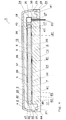
- the Figure 1 shows schematically a longitudinal section through a component 1 according to the invention along the line II of FIG Figure 3 .
- the component 1 is designed as a decorative strip.
- the component 1 according to the invention comprises a flat decorative element 2 with a visible side 3 and a rear side 4.
- the flat decorative element 2 is made, for example, from an opaque metal or from an opaque plastic or from a translucent, in particular transparent, plastic. That the decorative element 2 is "flat" means, as in FIG Figures 1 and 3 It can be seen that the decorative element 2 is substantially larger, in particular by a multiple larger, dimensioned along two dimensions than along a third dimension, which extends perpendicular to the surface area of the visible side 3 of the decorative element 2.
- the flat decorative element 2 is, as in the Figures 1 and 3 can be seen, formed as a band.
- the flat decorative element 2 has a first opening 11 and a second opening 12 ( Figure 1 ).
- the opening 11, seen in the top view of the visible side 3 of the flat decorative element 2 forms a letter E
- the opening 12, when seen in the top view of the visible side 3 of the flat decorative element 2 forms a letter C.
- the specified number of Breakthroughs and the two letters given are only examples.
- the flat decorative element 2 can have at least one opening which forms at least one symbol, such as a letter.
- a single layer 5 with a front side 6 and a rear side 7 is arranged on the rear side 4 of the flat decorative element 2.
- the layer 5 is preferably made from a translucent, in particular transparent, first material, the front side 6 of the layer 5 facing the rear side 4 of the flat decorative element 2.
- a translucent, in particular transparent, film 13 which is attached to the rear side 4 of the flat decorative element 2 and which engages in the openings 11 and 12.
- the slide 13 closes, as in Figure 1 can be seen, flush with the visible side 3 of the flat decorative element 2 and thus prevents soiling, such as solids or liquids, from passing through the openings 11 and 12 of the flat decorative element 2 can get into component 1.
- the film 13 can, if desired, be designed as a diffuser.
- Layer 5 is as in Figure 1 can be seen, attached to the rear side 4 of the flat decorative element 2 and the film 13 and engages in the film 13 below the openings 11 and 12.
- the layer 5, as an alternative to the film 13, or in addition to the film 13, can be designed as a diffuser.
- a lighting module 18 is, as in FIG Figure 1 recognizable, completely embedded in the layer 5.
- the layer 5 is preferably produced by means of a casting process, more preferably by means of an injection molding process.
- the lighting module 18 comprises a carrier 19 designed as a circuit board with a front side 21 and a rear side 60, lighting means 20 designed as a light-emitting diode, which are arranged on the front side 21 of the carrier 19, and a power transmission element 22, which comprises two connection cables, for supplying the lighting means 20 with electricity. If necessary, the lighting module 20 also includes electronics.
- Each of the two connection cables mentioned extends through a passage 23 arranged in the layer 5, the material of the layer 5 lying directly against the connection cables in a sealing manner.
- the illuminants 20 emit light, the light propagates within the layer 5 and leaves the component 1 via the film 13 and the openings 11 and 12 or is emitted from a visible side 15 of the component 1 or from the visible side 3 of the flat decorative element 2 .
- the component 1 has a housing 8 with an inner side 9 and an outer side 10, the inner side 9 of the housing 8 facing the rear side 7 of the layer 5.
- the housing 8 forms, as in Figure 1 recognizable, a rear wall 62, a rear side 63 and a circumferential side wall 64 of the component 1.
- the film 13 thus forms the visible side 15 of the component 1 together with the visible side 3 of the flat decorative element 2 and a partial area 14 of the outer side 10 of the housing 8 Figure 1
- the housing 8 forms a rear side 57 of the component 1, which is opposite the visible side 15 of the component 1.
- the housing 8 is preferably made of an opaque second material.
- a gap 24, in particular an air-filled gap 24, is arranged between the rear side 7 of the layer 5 and the inside 9 of the housing 8, which enables light emitted by the lighting means 20 to be propagated within the layer 5, in particular by total reflection.
- the housing 8 is tightly attached to a circumferential end face 25 of the flat decorative element 2, so that no contamination, such as solids or liquids, can enter the component 1 between the flat decorative element 2 and the housing 8.
- the housing 8 is fastened to the layer 5 in that the housing 8 engages in a recess 26 arranged in the layer 5 via a sealing element 17, which is directed towards the rear side 7 of the layer 5 and designed as an elevation and has a parabolic cross-section.
- a sealing element 17 which is directed towards the rear side 7 of the layer 5 and designed as an elevation and has a parabolic cross-section.
- the inner side 9 of the housing 8, the rear side 7 of the layer 5 and the rear side 4 of the flat decorative element 2 together form a closed space 59.
- the space 59 thus forms a part of the gap 24.
- the sealing element 17 is circular when viewed from above.
- the housing 8 has a base body 31 and the sealing element 17, the base body 31 and the sealing element 17 of the housing 8 being connected to one another in one piece.
- the base body 31 and the sealing element 17 are thus made from the same material.
- the housing 8 can, for example, also be designed in two pieces.
- the base body 31 is made of a material which is different from the material from which the sealing element 17 is made.
- the base body 31 and the sealing element 17 can also be made of the same material.
- the base body 31 is, for example, materially connected to the sealing element 17.
- the component 1 has at least two fastening elements 32 which are integrally connected to the base body 31 of the housing 8.
- the fastening elements 32 serve to fasten the component 1 to a surface (not shown), for example a vehicle.
- a component of the component 1, comprising the housing 8, having the base body 31 and the sealing element 17, as well as the fastening elements 32, can be produced in a particularly simple and cost-effective manner.
- the current transmission element 22 extending through the layer 5 also extends, as in FIG Figure 1 recognizable, through an opening 27 of the housing 8 therethrough.
- the inside 9 of the housing 8, or the sealing element 17, forms a Inlet opening 28 of the opening 27.
- the outlet opening 29 of the opening 27, via which the current transmission element 22 leaves the component 1, is formed by the outside 10 of the housing 8.
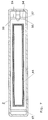
- the Figure 2 shows a cross section of the two connection cables which together form the current transmission element 22 and which protrude into the opening 27.
- the housing 8 is made, for example, of plastic, metal, glass or ceramic.
- the housing 8 is preferably made of plastic.
- the plastic preferably comprises at least one thermoplastic and / or at least one thermoset, more preferably at least one thermoplastic.
- the thermoplastic is, for example, acrylonitrile butadiene styrene (ABS), polyamide (PA), polymethyl methacrylate (PMMA), polycarbonate (PC), polyethylene terephthalate (PET), polyethylene (PE), polypropylene (PP), polystyrene (PS), polyether ether ketone ( PEEK) or polyvinyl chloride (PVC).
- the housing 8 is made of a plastic which comprises at least one thermoplastic, the hardness of the housing 8, or the hardness of the material from which the housing 8 is made, is preferred according to the standard DIN EN ISO 2039-1 from June Measured in 2003. If the housing 8 is made of a plastic which comprises at least one thermoplastic, the housing 8 preferably has a ball indentation hardness in the range of 10-200 N / mm 2 measured in accordance with the standard DIN EN ISO 2039-1 from June 2003 Material from which the housing 8 is made, such as plastic, for example, can, if necessary, also contain additives, such as reinforcing materials, as required.
- the layer 5 is made, for example, of plastic or glass, preferably of plastic.
- the plastic preferably comprises at least one thermoplastic and / or at least one thermoset and / or at least one elastomer, more preferably at least one thermoplastic and / or at least one elastomer, even more preferably at least one elastomer.
- the thermoplastic is, for example, acrylonitrile butadiene styrene (ABS), polyamide (PA), polymethyl methacrylate (PMMA), in particular a PMMA block copolymer, polycarbonate (PC), polyethylene terephthalate (PET), polyethylene (PE), polypropylene (PP) , Polystyrene (PS), polyetheretherketone (PEEK) or polyvinylchloride (PVC).
- the elastomer is, for example, silicone, in particular silicone rubber. Layer 5, if this is made of plastic or glass, for example, it may contain additives, if desired.
- the layer 5 is made of plastic and the plastic comprises at least one thermoplastic and / or at least one thermosetting plastic, preferably at least one thermoplastic
- the hardness of the plastic of the layer 5 is preferably measured in accordance with the DIN EN ISO 2039-1 standard of June 2003.
- the plastic of layer 5, comprising at least one thermoplastic and / or at least one thermoset, preferably comprising at least one thermoplastic preferably has a ball indentation hardness measured in accordance with the standard DIN EN ISO 2039-1 of June 2003 in the range of 10-200 N / mm 2 on.
- the layer 5 is made of plastic and the plastic comprises at least one elastomer, preferably silicone, more preferably silicone rubber
- the hardness of the plastic of the layer 5 is preferably measured in accordance with the DIN ISO 7619-1 standard of February 2012.
- the plastic, comprising at least one elastomer, of the layer 5 preferably has a Shore A hardness, measured in accordance with the DIN ISO 7619-1 standard of February 2012, in the range of 5-90.
- the material from which the housing 8 is made has a hardness which is preferably greater than the hardness of the material from which the layer 5 is made.
- the sealing element 17 of the housing 8 in the layer 5 a circular recess 26 is generated, in which the circular sealing element 17 engages at the same time or during the joining process.
- the material of the layer 5 is preferably displaced and / or compressed and / or deformed, in particular elastically deformed, by the material of the housing 8. In this way, the housing 8 and the layer 5 are securely fastened to one another.
- the housing 8 and the layer 5 are fastened to one another particularly well if the material of the layer 5 is deformed, in particular elastically deformed, by the material of the housing 8.
- the material of the layer 5 clings particularly well to the material of the housing 8, or to a surface 30 of a section 33 of the sealing element 17, which is in the Recess 26 engages, and thus the shape of the engaging section 33 of the sealing element 17 corresponds to the shape of the recess 26.
- the engagement of the circular sealing element 17 in the layer 5, the nestling of the layer 5 on the housing 8 and the fact that the sealing element 17 forms the inlet opening 28 of the opening 27 has the advantage that any contamination, such as solids or liquids, over the opening 27 of the housing 8 cannot get into the space 59 and thus cannot impair the functionality of the component 1, in particular the light conduction within the layer 5.
- the component 1 is more stable and a relative movement of the layer 5 with respect to the housing 8, or a relative movement of the housing 8 with respect to the layer 5, is therefore prevented. This arrangement thus reduces the risk of the component 1 generating rattling noises and thus the component 1 has lower noise emissions.
- the functional reliability of the component 1 is further increased due to the fact that the lighting module 18 is completely embedded in the layer 5.
- the component 1 is simple and inexpensive to manufacture due to its structure.
- the susceptibility of the component 1 to soiling, such as solids or liquids, for example, can be further reduced in that the material of the housing 8 is in direct sealing contact with a section of the current transmission element 22 which extends through the housing 8.
- the gap 24, or the height S of the gap 24, and thus also the height of the space 59 can be set in a defined manner.
- This defined setting of the gap 24, or this defined setting of the space 59 is particularly advantageous if the layer 5 is provided for guiding light and is thus made of a translucent, in particular transparent, material.
- the height S is, for example, in the range from 0.01 to 0.1 millimeters.
- the height S of the gap 24 means the extent of the gap 24 along the direction perpendicular to the inside 9 of the housing 8.
- the layer 5 has, for example, a thickness D in the range from 0.5 millimeters to 3 millimeters, preferably in the range from 0.5 millimeters to 2.6 millimeters.
- the sealing element 17 has, for example, a height H in the range from 0.2 millimeters to 0.4 millimeters.
- the thickness D of the layer 5 means the extension of the thickness D along the direction perpendicular to the rear side 7 of the layer 5.
- the height H of the sealing element 17 means the extent of the height H along the direction perpendicular to the inside 9 of the housing 8.
- the dimensions “thickness D”, “height H”, “height S” and the ratios of the dimensions “thickness D”, “height H”, “height S” to one another are selected.
- the component 1 can be produced, for example, as follows: In a first step, the flat decorative element 2 is provided and provided with the openings 11 and 12, for example by means of punching or laser. The flat decorative element 2 provided with the openings 11 and 12 is then preformed, for example by means of a deep-drawing process. The film 13 is then attached to the rear side 4 of the preformed, flat decorative element 2 provided with the openings 11 and 12, for example by means of an adhesive. Then the flat decorative element 2 provided with the film 13 is inserted into a casting tool (not shown), in particular an injection molding tool, and the lighting module 18 is arranged and fixed behind the film 13 or below the film 13, so that in the subsequent casting process of the layer 5 the Lighting module 18 is not shifted by the casting pressure.
- a casting tool not shown
- the lighting module 18 is arranged and fixed behind the film 13 or below the film 13, so that in the subsequent casting process of the layer 5 the Lighting module 18 is not shifted by the casting pressure.
- the rear side 4 of the flat decorative element 2 and the film 13 are now, for example, back-cast with a translucent, preferably transparent, plastic, in particular back-molded, so that on the one hand a partial area of the film 13 is pressed into the openings 11 and 12 and, on the other hand, the lighting module 18 is completely in which the plastic forming the layer 5 is embedded, so that only the current transmission element 22, comprising two connection cables, protrudes from the layer 5.
- the flat decorative element 2 can, if desired, be further deformed by the casting pressure. Of course, it is also possible for the flat decorative element 2 to be back-cast while still undeformed and for it to be deformed only when the layer 5 is formed or during back-casting.
- the prefabricated housing 8 is then attached to the end face 25 of the flat decorative element 3.
- the housing 8 is also attached to the flat decorative element 2 by the sealing element 17 of the housing 8 engaging the layer 5.
- the current transmission element 22 is led out of the component 1 that has now been manufactured via the opening 27 in the housing 8.
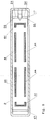
- the Figure 4 shows schematically a longitudinal section through a first embodiment of a component according to the invention.
- the component 1 according to Figure 4 has a flat decorative element 2 with a visible side 3 and a rear side 4, which is made, for example, of a translucent, in particular transparent, plastic. It is also possible, for example, for the flat decorative element 2 to be made from a translucent metal foil.
- a diffuser 34 with a front side 39 and a rear side 35 is arranged on the rear side 4 of the flat decorative element 2.
- the diffuser 34 is preferably produced by casting, preferably back molding, the rear side 4 of the flat decorative element 2.
- Below the diffuser 34 is a layer 5 with a front side 6 and a rear side 7, which is, for example, plate-shaped.
- the front side 6 of the layer 5 faces the rear side 35 of the diffuser 34.
- a gap 36 which contains air, for example, is present between the front side 6 of the layer 5 and the rear side 35 of the diffuser 34.
- the diffuser 34 has a single circumferential sealing element 40 which is oriented in the direction of the front side 6 of the layer 5 and engages in a single depression in the layer 5. Since the sealing element 40 has a circumferential design, a closed space 37 is present between the front side 6 of the layer 5 and the rear side 35 of the diffuser 34. The closed space 37 thus forms a partial area of the gap 36.
- a preferably opaque housing 8 with an inner side 9 and an outer side 10 is arranged below the layer 5. Between the A gap 24 is arranged on the inside 9 of the housing 8 and the rear side 7 of the layer 5.
- a single, circumferential sealing element 17 of the housing 8 engages in a recess 26 arranged in the layer 5 on the rear side 7 of the layer 5.
- the sealing element 17 thus engages in the layer 5 without interruption along the extent of a circumferential edge region 58 of the layer 5. Since the sealing element 17 has a circumferential design, a closed space 46 is arranged between a rear side 7 of the layer 5 and the inside 9 of the housing 8. The closed space 46 thus forms a partial area of the gap 24.
- the housing 8 in turn engages in a recess 48 of the diffuser 34 via a further circumferential sealing element 41, the housing 8 being fastened to the diffuser 34 by this engagement.
- the housing 8 can, if desired, be attached to a circumferential end face 25 of the flat decorative element 2.
- the layer 5 and the diffuser 34 are made, for example, of silicone, in particular silicone rubber, or PMMA block copolymer. If the layer 5 and the diffuser 34 are made of silicone, in particular silicone rubber, the Shore A hardness of the layer 5 and of the diffuser 34 is preferably measured in accordance with the DIN ISO 7619-1 standard of February 2012. If the layer 5 and the diffuser 34 are made of PMMA block copolymer, the hardness of the material of the layer 5 and of the diffuser 34 is preferably measured in accordance with the standard DIN EN ISO 2039-1 of June 2003.
- the housing 8 is preferably made of a plastic comprising at least one thermoplastic and / or at least one thermosetting plastic, preferably at least one thermoplastic.
- thermosetting plastics for the production of the housing 8 are, for example, epoxies, polyurethanes, phenol-formaldehyde resins or polyesters.
- Translucent thermosetting plastics, such as epoxies or polyesters, for example, can also be used to produce the layer 5 and the diffuser 34.
- the hardness of the material from which the housing 8 is made is preferably measured in accordance with the standard DIN EN ISO 2039-1 of June 2003.
- the material from which the diffuser 34 is made preferably has a Shore A hardness in the range of 5-90.
- the material from which the layer 5 is made preferably has a Shore A hardness in the range of 5-90.
- the material from which the housing 8 is made preferably has a hardness in the range of 10-200 N / mm 2 .
- the material from which the housing 8 is made has a hardness which is greater than the hardness of the material from which the layer 5 and the diffuser 34 are made.
- the material from which the diffuser 34 is made is in turn harder than the material from which the layer 5 is made.
- the silicone material from which the layer 5 is made differs in composition from the silicone material from which the diffuser 34 is made.
- the silicone material from which the diffuser 34 is made is identical to the silicone material from which the layer 5 is made
- the silicone material from which the diffuser 34 is made compared to the silicone material from which the layer 5 is made is, additionally has light-scattering particles, for example.
- the silicone material from which the diffuser 34 is made is cloudy and therefore light-scattering, whereas the silicone material from which the layer 5 is made does not have any light-scattering effect and is therefore clear, in particular crystal clear, for example. is trained.
- the light-scattering effect of the diffuser 34 is thus not produced by, for example, light-scattering particles incorporated in the diffuser 34, but is ensured exclusively by the silicone material from which the diffuser 34 is made.
- the sealing element 40 of the diffuser 34 engages in the material of the layer 5 due to the higher hardness of the material of the diffuser 34 compared to the hardness of the material of the layer 5 a.
- the sealing element 41 of the housing 8 engages in the diffuser 34 and the sealing element 17 of the housing 8 engages in the layer 5.
- This engagement of the housing 8 in the diffuser 34 and the layer 5 takes place because the hardness of the material of the housing 8 compared to the hardness of the material of the layer 5 and of the diffuser 34 is larger.
- the housing 8 is therefore fastened twice by the sealing elements 17, 41.
- the sealing element 40 of the diffuser 34 engages in the material of the layer 5, for example, in that the sealing element 40 displaces the material of the layer 5, for example.
- the engagement of the sealing element 40 in the layer 5 can, however, also take place in that, for example, the sealing element 40 compresses or deforms the material of the layer 5, in particular deforms it elastically.
- the sealing element 17 of the housing 8 engages in the material of the layer 5, for example, in that the sealing element 17 displaces, compresses or deforms the material of the layer 5, for example, in particular deforms it elastically.
- the sealing element 41 of the housing 8 engages, for example, in the material of the diffuser 34 by the sealing element 41 for example displacing, compressing or deforming the material of the diffuser 34, in particular elastically deforming it.
- the luminous means 20, which is designed as a light-emitting diode and is suitable for coupling light into the layer 5, is arranged adjacent to a side surface 38 of the layer 5.
- the light propagates within the layer 5, in particular by total reflection, and leaves the layer 5 due to light deflecting structures 61 arranged on the rear side 7 of the layer 5, defined via a front side 6 of the layer 5, and then becomes via the diffuser 34 and the flat decorative element 2 are radiated from a visible side 15 of the component 1.
- light deflecting structures 61 can also be provided on the front side 6 of the layer 5 (not shown).
- the diffuser 34 has the effect that the light radiated into the diffuser 34 from the layer 5 is radiated out of the diffuser 34 in a uniform manner via a front side 39 of the diffuser 34. No contamination, such as solids or liquids, can enter the closed spaces 37 and 46, and thus optimal light conduction within layer 5 and optimal coupling of light out of layer 5 are guaranteed.
- the engagement of the circumferential sealing element 17 and the circumferential sealing element 41 of the housing 8 in the layer 5, as well as the engagement of the circumferential sealing element 40 of the diffuser 34 in the layer 5, have the advantage that any contamination such as solids or liquids, for example about the breakthrough 27 of the housing 8, into which the closed spaces 24 and 36 of the component 1 can get, and thus, for example, can interfere with the propagation of the light in the layer 5.
- the component 1 is made more stable. Furthermore, the engagement prevents a relative movement of the layer 5 with respect to the housing 8 or a relative movement of the housing 8 with respect to the layer 5, as well as a relative movement of the layer 5 with respect to the diffuser 34 or a relative movement of the diffuser 34 with respect to the layer 5. As a result of the engagement of the sealing elements 17, 40 and 41, the risk of the component 1 generating rattling noises is thus reduced, and the component 1 is therefore lower in noise. In addition, the component 1 can be produced simply and inexpensively, since the layer 5 only has to be plugged onto the diffuser 34 and the housing 8 only needs to be plugged onto the layer 5 and the diffuser 34.
- the gap 24 when the layer 5 and the housing 8 are joined can be set in a defined manner.
- a gap 36 can be created between a rear side 35 of the diffuser 34 when the layer 5 and the diffuser 34 are joined and the front side 6 of the layer 5 can be set in a defined manner. This defined setting of the gap 24 and the gap 36 is particularly advantageous if the layer 5 is provided for guiding light and is thus made from a translucent material, in particular from a transparent material.
- the Figure 5 shows schematically a longitudinal section through a second embodiment of a component according to the invention.
- the component 1 according to Figure 5 has a flat decorative element 2 with a visible side 3 and a rear side 4, which is made, for example, of a translucent, in particular transparent, plastic. It is also possible, for example, for the flat decorative element 2 to be made of a translucent metal foil is made.
- a diffuser 34 with a front side 39 and a rear side 35 is arranged on the rear side 4 of the flat decorative element 2.
- the front side 39 of the diffuser 34 faces the rear side 4 of the flat decorative element 2 and the rear side 35 of the diffuser 34 faces a front side 6 of a first layer 50 which is arranged below the diffuser 34.
- the first layer 50 is made of a translucent, in particular transparent, material and is used to guide light. As in Figure 5 As can be seen, a gap 42 is arranged between the rear side 4 of the flat decorative element 2 and the front side 39 of the diffuser 34 and a gap 36 is present between the rear side 35 of the diffuser 34 and the front side 6 of the first layer 50.
- the first layer 50 has a single, circumferential sealing element 43 which comprises an undercut and, as in FIG Figure 5 can be seen, for example, can be formed mushroom-shaped in cross section. The undercut offers the advantage that the first layer 50 and the diffuser 34 are fastened to one another particularly well.
- the sealing element 43 engages in a recess 49 of the diffuser 34.
- a second layer 45 with a front side 6 and a rear side 7 is arranged below the first layer 50, a gap 65 being present between the front side 6 of the second layer 5 and the rear side 7 of the first layer 50.
- the second layer 45 is in turn made from a translucent, in particular transparent, material and is used to guide light.
- the material of the first layer 50 and the material of the second layer 45 together form a group of first materials.
- Two sealing elements 44 of the second layer 45 which, as in FIG Figure 5 recognizable, for example can be triangular in cross-section, engage in the material of the first layer 50 or in a respective recess 51 of the first layer 50.
- the Figure 6 shows schematically a plan view of a cross section along the line III-III through the component according to FIG Figure 5 . Based on Figure 6 it can be seen that the two sealing elements 44 lie parallel to one another and each extend over part of the width of the first layer 50.
- the second layer 45 can have a single, circumferential sealing element 44 instead of the two sealing elements 44, which in FIG Figure 7 is shown.
- the Figure 7 shows schematically a plan view of a cross section along the line III-III by a first variant of the component 1 according to Figure 5 .
- the first layer 50 can have a plurality of sealing elements 44 spaced apart from one another, which together form a circumferential sealing element with interruptions.
- Said sealing elements 44 are in Figure 8 can be seen which Figure 8 schematically a plan view of a cross section along the line III-III through a second variant of the component 1 according to FIG Figure 5 shows.
- the sealing elements 44 according to the Figures 7 and 8th are each triangular in cross-section.
- the component 1 according to Figure 5 has a housing 8 with an inside 9 and an outside 10.
- the housing 8 is made of a second material, the hardness of which is different from the hardness of the respective first materials.
- the housing 8 comprises the housing 8 of the component 1 according to Figure 5 two sealing elements 17 opposite one another in parallel, which extend over almost the entire width of the housing 8 and closely adjoin the inside 9 of the flat decorative element 2.
- each of the two sealing elements 17 engages in a respective recess 26 in the second layer 45. Seen in cross section, the sealing elements 17 are rectangular.
- the rear side 4 of the flat decorative element 2, the rear side 7 of the second layer 45 and the inside 9 of the housing 8 jointly delimit a closed space 46.
- the housing 8 is attached via the inside 9 to a circumferential end face 25 of the flat decorative element 2.
- the material from which the first layer 50 is made has a greater hardness than the material from which the diffuser 34 is made.
- the material from which the second layer 45 is made in turn, has a greater hardness than the material from which the first layer 50 is made, and the material from which the housing 8 is made, in turn, has a greater hardness than the material from which the second layer 45 is made.
- the diffuser 34, the first layer 50 and the second layer 45 are preferably made from silicone, in particular from silicone rubber.
- the material, such as the silicone from which the diffuser 34, the first layer 50 and the second layer 45 are made preferably has a Shore A hardness in the range of 5-90, which is preferably in accordance with the DIN ISO 7619 standard -1 from February 2012 is measured.
- the composition of the material is such as, for example, the silicone from which the diffuser 34, the first layer 50 and the second layer 45 are made.
- the material from which the housing 8 is made preferably comprises at least one thermoplastic and preferably has a hardness in the range of 10-200 N / mm 2 , which is preferably measured in accordance with the standard DIN EN ISO 2039-1 of June 2003.
- the first layer 50 can engage in the diffuser 34 when the first layer 50 and the diffuser 34 are joined.
- the material of the diffuser 34 is, for example, displaced, compressed or deformed, in particular elastically deformed, by the material of the first layer 50.
- the component 1 has a first luminous means 52, which is designed as a light-emitting diode, the luminous means 52 being arranged adjacent to a side surface 38 of the first layer 50 for coupling light into the first layer 50 a second luminous means 53, which is arranged below the first luminous means 52 and is designed as a light-emitting diode, the luminous means 53 being partially arranged in a recess 16 of the second layer 45. Electric power is supplied to the first illuminant 52 and the second illuminant 53 via a current transmission element 22 of the component 1, which is designed as two connecting cables.
- the sealing element 17 arranged adjacent to the lighting means 52, 53 is arranged below the lighting means 53. This reduces the risk of light coupled into the second layer 45 by the lighting means 53 being disturbed by the sealing element 17 arranged below the lighting means 53 while it is propagating within the second layer 45.
- the sealing element 17 arranged below the second illuminant 53 has an outermost edge 54 and an innermost edge 55, the outermost edge 54 facing the rear side 4 of the flat decorative element 2.
- the second illuminant 53 has a light-emitting surface 56, this surface 56 being used in this way innermost edge 55 is arranged so that the light emitted by the surface 56 is irradiated into a region of the second layer 45 which extends away from the innermost edge 55 in a direction facing away from the outermost edge 54.
- This offers the advantage that the light propagating in the second layer 45 is not disturbed by the sealing element 17 arranged below the illuminant 53.
- the component 1 according to FIG Figure 1 instead of a layer 5 cast onto the rear side 4 of the flat decorative element 2 and the film 13, have a layer 5 'in which a lighting means 20 or a lighting module 18 is completely embedded and which is arranged directly below the film 13, so that A gap, which preferably contains air, is arranged between the layer 5 'and the rear side 4 of the flat decorative element 2 and the film 13. This gap is particularly advantageous if the layer 5 'is provided for guiding light.
- light deflecting structures 61 can be provided on the front side 6 and / or the rear side 7 of the layer 5 ′.
- light deflection structures 61 may also be provided.
- light deflecting structures 61 arranged on the layers 5, 5 ′, 45, 50 mentioned light deflecting structures can also be incorporated into the layers 5, 5 ′, 45, 50, for example. The incorporated light deflecting structures are less prone to damage. A large number of other modifications are possible.
Landscapes
- Physics & Mathematics (AREA)
- Engineering & Computer Science (AREA)
- General Physics & Mathematics (AREA)
- Mechanical Engineering (AREA)
- Optics & Photonics (AREA)
- Theoretical Computer Science (AREA)
- Business, Economics & Management (AREA)
- Accounting & Taxation (AREA)
- Marketing (AREA)
- General Engineering & Computer Science (AREA)
- Manufacturing & Machinery (AREA)
- Casings For Electric Apparatus (AREA)
- Laminated Bodies (AREA)
Claims (11)
- Composant (1) comprenant- un élément décoratif plat (2) avec une face visible (3) et une face arrière (4),- une couche (5, 5') réalisée à partir d'un premier matériau ou plusieurs couches (5, 5') réalisées à partir de premiers matériaux, dans lequel l'une ou les couches (5, 5') sont disposées chacune à la face arrière (4) de l'élément décoratif plat (2) et présentent chacune une face avant (6) et une face arrière (7), dans lequel, respectivement, la face avant (6) fait face à la face arrière (4) de l'élément décoratif (2) plat, et- un boîtier (8) réalisé à partir d'un deuxième matériau avec une face intérieure (9) et une face extérieure (10), dans lequel la face intérieure (9) fait face aux faces arrière respectives (7) de l'une ou des plusieurs couches (5),- au moins un moyen d'éclairage (20) pour coupler la lumière dans au moins une de l'une ou des plusieurs couches (5, 5') ainsi que- au moins un élément de transmission de courant (22) pour l'alimentation du moyen d'éclairage (20) en courant électrique,dans lequel le ou les premiers matériaux présentent des duretés qui sont chacune différentes de la dureté du deuxième matériau,
dans lequel le boîtier (8) vient s'engager dans au moins un renfoncement (26), qui est agencé dans une de l'une ou des plusieurs couches (5, 5'),
et dans lequel le boîtier (8) présente au moins une percée (27), dans lequel la face intérieure (9) du boîtier (8) forme une ouverture d'entrée (28) de la percée (27) et la face extérieure (10) du boîtier (8) forme une ouverture de sortie (29) de la percée (27), dans lequel l'élément de transmission de courant (22) s'étend au moins à travers la percée (27) depuis la face intérieure (9) jusqu'à la face extérieure (10) du boîtier (8), caractérisé en ce que
le boîtier (8) présente sur la face intérieure (9) un élément d'étanchéité (17) orienté en direction des faces arrière (7) de la ou des plusieurs couches (5, 5'), dans lequel l'élément d'étanchéité (17) vient s'engager dans le renfoncement (26) respectivement un des renfoncements (26), dans lequel l'élément d'étanchéité (17) au moins partiellement, de préférence complètement, forme l'ouverture d'entrée (28) de la percée (27). - Composant (1) selon la revendication 1, caractérisé en ce que le deuxième matériau a une dureté supérieure aux duretés du ou des premiers matériaux.
- Composant (1) selon la revendication 1 ou 2, caractérisé en ce que la ou les couches (5, 5') sont chacune produites à partir d'un matériau translucide, en particulier à partir d'un matériau transparent.
- Composant (1) selon l'une des revendications précédentes, caractérisé en ce que la ou les plusieurs couches (5, 5') sont chacune en silicone, en particulier en caoutchouc silicone, ou en copolymère à blocs PMMA, de préférence en silicone, en particulier en caoutchouc silicone.
- Composant (1) selon l'une des revendications précédentes, caractérisé en ce que le moyen d'éclairage (20) est au moins partiellement, de préférence complètement, encastré dans une de l'une ou des plusieurs couches (5, 5').
- Composant (1) selon l'une des revendications précédentes, caractérisé en ce que le moyen d'éclairage (20) est disposé entre la face arrière (4) de l'élément décoratif plat (2) et de la face intérieure (9) du boîtier (8).
- Composant (1) selon l'une des revendications précédentes, caractérisé en ce que le deuxième matériau, à partir duquel le boîtier (8) est réalisé, présente une dureté à la bille dans la plage de 10 à 200 N / mm2, dans lequel la dureté à la bille est mesurée conformément à la norme DIN EN ISO 2039-1 de juin 2003, et dans lequel le ou les premier matériaux à partir desquels l'une ou les plusieurs couches (5, 5') sont réalisées présentent chacune une dureté Shore-A dans la plage de 5-90, dans lequel la dureté Shore-A est mesurée conformément à la norme DIN ISO 7619-1 de février 2012.
- Composant (1) selon l'une des revendications précédentes, caractérisé en ce que le ou les premiers matériaux, à partir desquels l'une ou les plusieurs couches (5, 5') sont réalisées, sont chacun déplaçables et / ou compressibles et / ou déformables, en particulier élastiquement déformables, par le deuxième matériau, à partir duquel le boîtier (8) est réalisé.
- Composant (1) selon l'une des revendications précédentes, caractérisé en ce que le boîtier (8) forme une paroi arrière (62) du composant (1) sur une face du composant (1) opposée à la face visible (3) de l'élément décoratif plat (2), dans lequel la paroi arrière (62) forme de préférence une face arrière (63) du composant (1), et dans lequel le boîtier (8) forme de préférence au moins une paroi latérale (64) du composant (1) disposée entre la face visible (3) de l'élément décoratif plat (2) et la face arrière (63) du composant (1).
- Composant (1) selon l'une des revendications précédentes, caractérisé en ce que le boîtier (8) est réalisé à partir d'un matériau non translucide à la lumière.
- Composant (1) selon l'une des revendications précédentes, caractérisé en ce qu'au moins une de l'une ou des plusieurs couches est réalisée en tant que diffuseur (34).
Applications Claiming Priority (2)
| Application Number | Priority Date | Filing Date | Title |
|---|---|---|---|
| EP16151297 | 2016-01-14 | ||
| PCT/EP2016/078144 WO2017121516A1 (fr) | 2016-01-14 | 2016-11-18 | Partie structurale comportant un élément décoratif plan et un boîtier |
Publications (2)
| Publication Number | Publication Date |
|---|---|
| EP3402695A1 EP3402695A1 (fr) | 2018-11-21 |
| EP3402695B1 true EP3402695B1 (fr) | 2021-06-30 |
Family
ID=55129765
Family Applications (1)
| Application Number | Title | Priority Date | Filing Date |
|---|---|---|---|
| EP16798174.5A Active EP3402695B1 (fr) | 2016-01-14 | 2016-11-18 | Partie structurale comportant un élément décoratif plan et un boîtier |
Country Status (4)
| Country | Link |
|---|---|
| US (1) | US10759332B2 (fr) |
| EP (1) | EP3402695B1 (fr) |
| CN (1) | CN108473086B (fr) |
| WO (1) | WO2017121516A1 (fr) |
Families Citing this family (20)
| Publication number | Priority date | Publication date | Assignee | Title |
|---|---|---|---|---|
| DE102017120532A1 (de) | 2017-09-06 | 2019-03-07 | Byton Limited | Leuchtvorrichtung für ein Fahrzeug, insbesondere Elektrofahrzeug |
| DE102017122429A1 (de) * | 2017-09-27 | 2019-03-28 | Novem Car Interior Design Gmbh | Formteil, insbesondere als Formteil ausgebildetes Dekorteil und/oder Verkleidungsteil für einen Fahrzeuginnenraum und ein Verfahren zum Herstellen eines solchen Formteils |
| US20190113674A1 (en) * | 2017-10-17 | 2019-04-18 | Dura Operating, Llc | Led light guide assembly for injection molding plastic encapsulation |
| DE102017220241A1 (de) * | 2017-11-14 | 2019-05-16 | Bayerische Motoren Werke Aktiengesellschaft | Oberflächenelement für ein Innenraumbauteil eines Fahrzeugs sowie Innenraumbauteil für ein Fahrzeug |
| DE102018111392A1 (de) * | 2018-05-14 | 2019-11-14 | Werkzeugbau Siegfried Hofmann Gmbh | Verfahren zur Herstellung eines Kunststoffbauteils |
| US10539285B1 (en) * | 2018-07-31 | 2020-01-21 | Ford Global Technologies, Llc | Vehicle lighting assembly |
| US10962701B2 (en) | 2019-04-04 | 2021-03-30 | S.V.V. Technology Innovations, Inc. | Wide-area solid-state illumination devices and systems |
| CZ2019254A3 (cs) * | 2019-04-24 | 2020-09-30 | Ĺ KODA AUTO a.s. | Dekorační lišta |
| EP3575153A1 (fr) | 2019-05-29 | 2019-12-04 | WEIDPLAS GmbH | Composant pouvant être rétro-éclairé |
| DE102020112342A1 (de) * | 2020-05-07 | 2021-11-11 | Bayerische Motoren Werke Aktiengesellschaft | Zierelement, Fahrzeug mit einem derartigen Zierelement sowie Verfahren zur Herstellung eines Zierelements |
| TWM614753U (zh) * | 2020-05-22 | 2021-07-21 | 大陸商光寶光電(常州)有限公司 | 發光模組及一體式的多通道發光模組 |
| DE102020121563A1 (de) | 2020-07-10 | 2022-01-13 | Preh Gmbh | Einen Schichtaufbau aufweisendes Sichtteil für ein Bedienteil oder eine Zierblende mit verbessertem Schutz durch eine Schutzlackbeschichtung |
| DE102021103599C5 (de) | 2021-02-16 | 2025-11-20 | Novem Car Interior Design Gmbh | Verfahren zur Herstellung eines Dekorteils für einen Fahrzeuginnenraum |
| US11498693B1 (en) * | 2021-07-22 | 2022-11-15 | The Boeing Company | Decorative display panels for interiors |
| DE102021006465A1 (de) * | 2021-12-29 | 2023-06-29 | Demmel Aktiengesellschaft | Hinterleuchtetes Fahrzeug-Zierteil, insbesondere Fahrzeug-Emblem |
| US12586487B2 (en) * | 2022-06-10 | 2026-03-24 | Magna Exteriors Inc. | Lit badge with roll stamp selective chroming |
| DE102022003970A1 (de) * | 2022-10-25 | 2024-04-25 | Mercedes-Benz Group AG | Beleuchtetes Exterieur Zierelement mit Chromoptik |
| DE202023100359U1 (de) * | 2023-01-26 | 2023-02-20 | "Les Graveurs" Münz- und Medaillengestaltung und Gravuren GmbH | Kennzeichnungsbauteil und Kennzeichnungsanordnung |
| US20250048134A1 (en) * | 2023-07-31 | 2025-02-06 | Hyperform, Inc. | Backlighted surface covering |
| US12576779B2 (en) * | 2023-12-21 | 2026-03-17 | Elumigen, Llc | Segmented display with photon recycling cavity |
Family Cites Families (126)
| Publication number | Priority date | Publication date | Assignee | Title |
|---|---|---|---|---|
| US2116471A (en) | 1937-07-22 | 1938-05-03 | Felsenthal & Sons G | Display device and method of producing same |
| US2298365A (en) | 1938-03-12 | 1942-10-13 | Gits Molding Corp | Method of molding name plates |
| US2623315A (en) | 1948-12-20 | 1952-12-30 | Electrical Products Corp | Sign character element |
| US2886911A (en) | 1953-07-23 | 1959-05-19 | George K C Hardesty | Duo-panel edge illumination system |
| US3531881A (en) | 1968-02-15 | 1970-10-06 | Los Angeles Miniature Products | Insignia-bearing panel assembly |
| US3839129A (en) | 1970-09-25 | 1974-10-01 | Pictorial Prod Inc | Reflective foil and process |
| US4140405A (en) | 1977-04-07 | 1979-02-20 | Anchor Plastics Company Inc. | Sign letter structure |
| FR2387708A1 (fr) | 1977-04-20 | 1978-11-17 | Levy Alain | Procede de fabrication de plaque a inscriptions en relief et plaques obtenues par l'application de ce procede |
| US4260655A (en) | 1978-10-30 | 1981-04-07 | The Standard Products Company | Protective and decorative molding construction |
| JPS5572413A (en) | 1978-11-28 | 1980-05-31 | Inoue Mtp Co Ltd | Synthetic resin trim for automobile |
| DE3006457A1 (de) | 1980-02-21 | 1981-08-27 | Patra Patent Treuhand | Beleuchtungsvorrichtung fuer anzeigeanordnungen |
| JPS6056089B2 (ja) | 1982-06-28 | 1985-12-09 | 吉田工業株式会社 | 合成樹脂成形品の表面に光輝面の浮出し模様を立体成形する方法及び当該方法によつて成形された成形品 |
| FR2579129B1 (fr) | 1985-03-22 | 1987-08-28 | Cartier Ind | Moule d'injection a coulisseaux pour la production de pieces composites |
| EP0199039A3 (fr) | 1985-03-26 | 1988-07-27 | Eckhart Müller-Tolk | Dispositif d'affichage pour la reproduction de signes et symboles |
| JPS62108019A (ja) | 1985-11-07 | 1987-05-19 | Yoshida Kogyo Kk <Ykk> | 合成樹脂多色成形品の成形方法並びに成形装置及びその成形品 |
| FR2611578B1 (fr) | 1987-02-26 | 1989-09-08 | Macrez Guy | Organe conducteur de lumiere, procede et moule pour sa fabrication |
| JPH0749239B2 (ja) | 1987-04-03 | 1995-05-31 | サカエ理研工業株式会社 | 裏面に凹凸状の連続するカット面を有する透光装飾体およびその製法 |
| JPH01222944A (ja) | 1988-03-03 | 1989-09-06 | Yoshida Kogyo Kk <Ykk> | 加飾フィルム張樹脂成形品とその製造方法 |
| DE4006649C1 (de) | 1990-03-03 | 1991-08-22 | Schuster Emil Gmbh & Co Kg | Verfahren zur Herstellung einer Schalterblende |
| JP2503782B2 (ja) | 1990-12-21 | 1996-06-05 | 住友化学工業株式会社 | 多層成形品の成形方法 |
| DE4131340C1 (fr) | 1991-09-20 | 1992-11-05 | Preh-Werke Gmbh & Co Kg, 8740 Bad Neustadt, De | |
| AT400124B (de) | 1992-03-18 | 1995-10-25 | Engel Gmbh Maschbau | Verfahren und spritzgussvorrichtung zur hinterspritzung einer folie mit zwei kunststoffen |
| JPH06134805A (ja) | 1992-10-29 | 1994-05-17 | Nissha Printing Co Ltd | 二色成形品とその製造方法 |
| DE9321214U1 (de) | 1992-12-17 | 1996-09-12 | Minnesota Mining And Mfg. Co., Saint Paul, Minn. | Verzierungselement |
| KR960003475U (ko) | 1994-06-08 | 1996-01-22 | 라이팅 리모트콘트롤 | |
| DE4421942C2 (de) | 1994-06-23 | 1996-07-11 | Porsche Ag | Beleuchtbares Feld |
| JPH08281701A (ja) | 1995-04-12 | 1996-10-29 | Mitsubishi Electric Corp | 表示体の製造方法および製造装置 |
| US5975711A (en) | 1995-06-27 | 1999-11-02 | Lumitex, Inc. | Integrated display panel assemblies |
| US6712481B2 (en) | 1995-06-27 | 2004-03-30 | Solid State Opto Limited | Light emitting panel assemblies |
| JPH0952255A (ja) | 1995-08-17 | 1997-02-25 | Takuhide Inoue | 透光表示体の製造方法 |
| GB9608079D0 (en) | 1996-04-18 | 1996-06-19 | Sanderson J & W Ltd | Two-material moulding |
| DE69712685T2 (de) | 1996-08-21 | 2002-09-26 | Sumitomo Chemical Co., Ltd. | Formanordnung zur Herstellung eines mehrschichtigen geformten Gegenstandes und deren Verwendung bei einem Verfahren zur Herstellung eines mehrschichtigen geformten Gegenstandes |
| EP0845344A1 (fr) | 1996-11-28 | 1998-06-03 | Minnesota Mining And Manufacturing Company | Procédé de fabrication d'éléments décoratifs |
| DE69720660T2 (de) | 1996-12-11 | 2004-04-08 | Wenger S.A., Delémont | Gegenstand bestehend aus einem Formteil und einem eingelegten dekorativen Element und Verfahren zu seiner Herstellung |
| JPH10264202A (ja) | 1997-03-25 | 1998-10-06 | Uchihama Kasei Kk | 複合合成樹脂成形品の製造方法 |
| AU6772998A (en) | 1997-03-25 | 1998-10-20 | University Of Virginia Patent Foundation | Method of fabricating a millimeter or submillimeter wavelength component |
| JPH10282911A (ja) * | 1997-04-02 | 1998-10-23 | Koito Mfg Co Ltd | 面発光ユニット |
| JP3051901B2 (ja) | 1997-04-03 | 2000-06-12 | 矢崎化工株式会社 | 複合成形の射出成形用金型 |
| DE19717636A1 (de) | 1997-04-25 | 1998-11-12 | Trw Fahrzeugelektrik | Verfahren zur Herstellung eines Blendenteils, Betätigungsteils oder dergleichen Teile mit Funktionssymbolen für die Beleuchtung mit Durchlicht |
| DE19729780C1 (de) | 1997-07-11 | 1999-01-21 | Brocke Kg I B S | Verfahren zur Herstellung von hinterspritzten Kunststoffformteilen |
| DE19732425C2 (de) | 1997-07-28 | 2001-01-04 | Adler Kunststofftechnik Inh Wi | Verbundwerkstoff aus faserverstärktem Polyurethan und einem Thermoplasten sowie Verfahren zu dessen Herstellung |
| DE69809219D1 (de) | 1998-02-27 | 2002-12-12 | Antolin Grupo Ing Sa | Verfahren zur herstellung von verkleidungsteilen und verkleidungsteil für ein fahrzeugdach mit integrierten funktionen |
| US6620371B1 (en) | 1998-05-22 | 2003-09-16 | Patent Holding Company | Method of manufacturing an in-mold laminate component |
| DE19833039A1 (de) | 1998-07-22 | 2000-01-27 | Elcos Gmbh Electronic Componen | Elektronisches Bauteil und Verfahren zu seiner Herstellung |
| US6242163B1 (en) | 1998-08-31 | 2001-06-05 | Board Of Trustees Of The Leland Stanford Junior University | Shape deposition manufacturing of microscopic ceramic and metallic parts using silicon molds |
| DE29915399U1 (de) | 1999-09-02 | 1999-12-09 | Dinnebier Licht GmbH, 42327 Wuppertal | Leuchtelement mit Trag- und Montagekörper, Abdeckung und Lichtquelle |
| DE19948664B4 (de) | 1999-10-08 | 2011-10-13 | Bayerische Motoren Werke Aktiengesellschaft | Verfahren zum Umspritzen einer Fasermatte mit Kunststoff |
| JP2001163117A (ja) | 1999-12-10 | 2001-06-19 | Toyoda Gosei Co Ltd | 自動車用照明プレート |
| DE10016714C2 (de) | 2000-04-04 | 2003-03-27 | Vishay Semiconductor Gmbh | Strahlungsemittierende Vorrichtung |
| TW523920B (en) | 2000-11-18 | 2003-03-11 | Lenghways Technology Co Ltd | Integrated multi-channel communication passive device manufactured by using micro-electromechanical technique |
| EP1219401A3 (fr) | 2000-12-29 | 2004-02-04 | Nokia Corporation | Article moulé par injection avec un noyau décoratif ou renforcant |
| DE10102774A1 (de) | 2001-01-23 | 2002-08-14 | Bosch Gmbh Robert | Anzeigevorrichtung, insbesondere für ein Fahrzeug |
| US6652128B2 (en) | 2001-01-31 | 2003-11-25 | Textron Automotive Company, Inc. | Backlighting method for an automotive trim panel |
| DE20103133U1 (de) | 2001-02-22 | 2001-06-13 | Glass, Hagen, 80798 München | Hinweisvorrichtung |
| CA2366480A1 (fr) | 2002-01-02 | 2003-07-02 | Arai Katsuo | Plaque d'immatriculation adaptee pour eclairage interne |
| DE50313526D1 (de) | 2002-01-22 | 2011-04-21 | Weidmann Plastics Tech Ag | Verfahren zur herstellung eines verklebbaren formteils sowie ein nach diesem verfahren hergestelltes formteil |
| DE10207065A1 (de) | 2002-02-20 | 2003-08-21 | Demag Ergotech Gmbh | Vorrichtung zum Herstellen von mehrkomponentigen Kunststoffformteilen |
| DE10207064A1 (de) | 2002-02-20 | 2003-08-21 | Demag Ergotech Gmbh | Mehrkomponentiges Spritzgußteil sowie Verfahren und Vorrichtung zu dessen Herstellung |
| DE10211171A1 (de) | 2002-03-14 | 2004-01-08 | Angell-Demmel Gmbh | Dekor-Zierteil |
| CZ295032B6 (cs) | 2002-05-23 | 2005-05-18 | Škoda Auto a. s. | Ochranná lišta prahu dveří automobilu se svíticím efektem |
| DE50304774D1 (de) | 2002-06-21 | 2006-10-05 | Weidmann Plastics Tech Ag | Verfahren zur herstellung eines erzeugnisses sowie nach diesem verfahren hergestelltes erzeugnis |
| EP1422193B1 (fr) | 2002-11-25 | 2007-04-18 | Weidmann Plastics Technology AG | Procéde de fabrication d'un moule pour le coulage par injection d'une pièce avec microstructures à deux niveaux |
| DE50209985D1 (de) | 2002-11-25 | 2007-05-31 | Weidmann Plastics Tech Ag | Verfahren zur Herstellung eines Werkzeugeinsatzes zum Spritzgiessen eines teils mit zweistufigen Mikrostrukturen |
| DE20219391U1 (de) | 2002-12-13 | 2004-04-22 | Cd-Design Gmbh | Dekorationsleiste |
| DE10260831B3 (de) | 2002-12-23 | 2004-04-15 | Lisa Dräxlmaier GmbH | Beleuchtungssystem für Anzeigen in Fahrzeugen |
| US7045090B2 (en) | 2003-06-06 | 2006-05-16 | Bayer Materialscience Llc | Method of preparing an article |
| DE10332975B4 (de) | 2003-07-21 | 2009-11-26 | Angell-Demmel Europe Gmbh | Dekor-Zierteil |
| DE202004008681U1 (de) | 2004-06-02 | 2004-08-26 | Yang, Chang-An, Sijhih | Lichtführender Aufbau für Bodenwannenkanten in Automobilen |
| US7237933B2 (en) | 2004-09-20 | 2007-07-03 | Lear Corporation | Door trim bolster with electroluminescent lamp and injection molding method of making same |
| JP4580224B2 (ja) | 2004-12-09 | 2010-11-10 | サカエ理研工業株式会社 | 車両用発光表示装置 |
| DE502006000775D1 (de) * | 2005-02-11 | 2008-07-03 | Kompled Gmbh & Co Kg | Fahrzeugaussenleuchte und Verfahren zur Herstellung einer solchen Fahrzeugaussenleuchte |
| DE102005044447B4 (de) | 2005-09-09 | 2014-07-17 | SMR Patents S.à.r.l. | Leuchte für Außenrückspiegel von Fahrzeugen, vorzugsweise von Kraftfahrzeugen |
| JP2007118376A (ja) | 2005-10-27 | 2007-05-17 | Taisei Plas Co Ltd | 表皮材一体化合成樹脂成形品 |
| US20070132132A1 (en) | 2005-12-12 | 2007-06-14 | Visteon Global Technologies, Inc. | Component for a vehicle interior and a method of assembly |
| CA2579392A1 (fr) | 2006-03-16 | 2007-09-16 | Guy Lapointe | Enseigne lumineuse |
| US20080037284A1 (en) | 2006-04-21 | 2008-02-14 | Rudisill Charles A | Lightguide tile modules and modular lighting system |
| JP2007329089A (ja) * | 2006-06-09 | 2007-12-20 | Yuka Denshi Co Ltd | 発光ユニット |
| US7556412B2 (en) | 2006-07-20 | 2009-07-07 | Int America, Llc | Fiber optic auxiliary lighting system |
| FR2906513B1 (fr) | 2006-10-03 | 2008-12-26 | Fabricauto Soc Par Actions Sim | Plaque de marquage et procede de fabrication d'une telle plaque. |
| US7287892B1 (en) | 2006-10-30 | 2007-10-30 | Avago Technologies Ecbu Ip (Singapore) Pte Ltd | Light source for back-lit displays |
| DE202006018515U1 (de) | 2006-12-07 | 2007-02-08 | Albea Kunststofftechnik Gmbh | Dekor- und/oder Bedienelement mit einem Gehäuse |
| FR2913135B1 (fr) | 2007-02-23 | 2010-06-11 | Visteon Global Tech Inc | Element d'habillage pourvu d'un dispositif d'affichage et procede de fabrication d'un tel element |
| US8408773B2 (en) * | 2007-03-19 | 2013-04-02 | Innotec Corporation | Light for vehicles |
| US7712933B2 (en) | 2007-03-19 | 2010-05-11 | Interlum, Llc | Light for vehicles |
| DE102007020418A1 (de) | 2007-04-27 | 2008-10-30 | Hella Kgaa Hueck & Co. | Verfahren und Vorrichtung zum Herstellen eines Lichtleitkörpers sowie ein Lichtleitkörper |
| DE102007024529A1 (de) | 2007-05-24 | 2008-11-27 | Novem Car Interior Design Gmbh | Spritzpressverfahren zur Herstellung von Formteilen, insbesondere Dekorteilen und/oder Verkleidungsteilen für den Fahrzeuginnenraum |
| EP2028046A1 (fr) | 2007-08-22 | 2009-02-25 | CCL Design GmbH | Corps de décoration |
| DE102008046840A1 (de) | 2007-10-19 | 2009-04-23 | Weidmann Plastics Technology Ag | Verfahren zum Herstellen von mehrkomponentigen Kunststoffformenteilen, Spritzgusswerkzeug sowie nach diesem Verfahren hergestelltes Kunststoffformenteil |
| CN101918245B (zh) | 2007-12-12 | 2013-05-01 | 宜诺泰克公司 | 用于车辆的灯 |
| WO2009101579A1 (fr) * | 2008-02-13 | 2009-08-20 | Philips Intellectual Property & Standards Gmbh | Dispositif d'éclairage à caractéristiques de faisceau variables |
| JP2009217870A (ja) | 2008-03-07 | 2009-09-24 | Shin Etsu Chem Co Ltd | 磁気記録用シリコン基板およびその製造方法 |
| JP4575475B2 (ja) | 2008-06-12 | 2010-11-04 | 株式会社江東彫刻 | 二色成形金型 |
| GB0813186D0 (en) | 2008-07-18 | 2008-08-27 | 3M Innovative Properties Co | Lighting device comprising a light guide and a support |
| FR2937603B1 (fr) | 2008-10-24 | 2011-07-01 | Faurecia Interieur Ind | Element d'habillage interieur pour vehicule automobile, ensemble d'habillage comportant un eclairage sous peau, et procede de production associe |
| FR2937710B1 (fr) * | 2008-10-27 | 2013-05-17 | Saint Gobain | Module a diodes electroluminescentes pour vehicule, support a diodes, fabrications |
| FR2937604B1 (fr) | 2008-10-28 | 2011-03-18 | Faurecia Interieur Ind | Panneau de garnissage de vehicule automobile comprenant une zone formant pictogramme et presentant un toucher identique sur toute sa surface |
| FR2937929B1 (fr) | 2008-11-04 | 2011-01-07 | Faurecia Interieur Ind | Panneau de garnissage de vehicule automobile comprenant une zone formant pictogramme illuminee par une couche emettrice de lumiere |
| EP2295293B2 (fr) | 2009-09-11 | 2019-02-20 | Weidplas GmbH | Procédé de fabrication d'un composant doté d'un élément décoratif plat et composant doté d'un élément décoratif plat |
| EP2322962A1 (fr) | 2009-11-17 | 2011-05-18 | Weidmann Plastics Technology AG | Elément de décor doté d'un conducteur lumineux |
| JP4961006B2 (ja) | 2009-12-07 | 2012-06-27 | 株式会社ホンダアクセス | 車両用照明装置 |
| WO2011093121A1 (fr) | 2010-01-29 | 2011-08-04 | シャープ株式会社 | Dispositif d'éclairage, dispositif d'affichage et poste récepteur de télévision |
| CH702730A1 (de) * | 2010-02-25 | 2011-08-31 | Weidmann Plastics Tech Ag | Beleuchtbares Bauteil. |
| DE102010011544A1 (de) * | 2010-03-15 | 2011-09-15 | Sun-Tec Gmbh | Kennzeichenschild für ein Kraftfahrzeug |
| DE102010030911A1 (de) | 2010-07-02 | 2012-01-05 | Kunststoff-Technik Scherer & Trier Gmbh & Co Kg | Verfahren zur Herstellung eines Formteils und Formteil |
| DE102010036795A1 (de) | 2010-08-02 | 2012-02-02 | International Automotive Components Group Gmbh | Verkleidungseinrichtung für ein Kraftfahrzeug mit integriertem Beleuchtungssystem |
| DE102011016394A1 (de) | 2011-04-08 | 2012-10-11 | GM Global Technology Operations LLC (n. d. Gesetzen des Staates Delaware) | Säulenverkleidungssteil, Verfahren zur Bereitstellung des Säulenverkleidungsteils im Fahrzeug sowie Fahrzeug mit dem Säulenverkleidungsteil |
| EP2572936B1 (fr) | 2011-09-21 | 2019-02-27 | Grupo Antolin-Ingenieria, S.A. | Pièce de garniture d'automobile avec dispositif d'éclairage intégré et son procédé de fabrication |
| FR2978396B1 (fr) | 2011-07-26 | 2014-05-09 | Faurecia Interieur Ind | Structure interieure de vehicule retro eclairee |
| EP2604406B1 (fr) | 2011-12-12 | 2014-05-21 | Weidmann Plastics Technology AG | Procédé de fabrication d'un produit |
| DE102011122615A1 (de) | 2011-12-23 | 2013-06-27 | Volkswagen Aktiengesellschaft | Bauteil sowie Verfahren zu seiner Herstellung |
| DE102012101315B4 (de) | 2012-02-17 | 2018-07-05 | Novem Car Interior Design Gmbh | Formteil und Verfahren zur Herstellung eines Formteils |
| DE102012211951A1 (de) | 2012-07-09 | 2014-01-09 | Wiegand Gmbh | Zierteil für Kraftfahrzeuge und Verfahren zu seiner Herstellung |
| CN102878484A (zh) * | 2012-09-04 | 2013-01-16 | 深圳市华星光电技术有限公司 | 一种背光模组及液晶显示器 |
| DE102012215771A1 (de) | 2012-09-05 | 2014-03-06 | Hella Kgaa Hueck & Co. | Beleuchtungselement |
| DE102013100941A1 (de) | 2013-01-30 | 2014-07-31 | International Automotive Components Group Gmbh | Innenverkleidungsteil für ein Kraftfahrzeug |
| EP2765570A1 (fr) | 2013-02-06 | 2014-08-13 | Weidmann Plastics Technology AG | Élément d'affichage pouvant être éclairé ainsi que le procédé de fabrication d'un tel élément d'affichage |
| DE202013002024U1 (de) | 2013-03-01 | 2013-03-19 | GM Global Technology Operations LLC (n. d. Ges. d. Staates Delaware) | Kennzeichenträger für ein Kraftfahrzeug |
| JP5945238B2 (ja) * | 2013-03-11 | 2016-07-05 | 株式会社豊田自動織機 | 車両用灯具および車両のリアパネル |
| FR3008774B1 (fr) | 2013-07-22 | 2018-01-12 | Renault S.A.S | Systeme d'eclairage, notamment pour un organe d'eclairage de vehicule automobile, a carte a circuit imprime dans le plan de la direction d'eclairage |
| DE102014216780A1 (de) | 2013-08-27 | 2015-03-05 | Weidmann Plastics Technology Ag | Lichtleiter |
| DE102013016230B4 (de) | 2013-10-01 | 2021-05-20 | Werkzeugbau Siegfried Hofmann Gmbh | Spritzteil und Verfahren zur Herstellung eines Spritzteils |
| DE102013223244A1 (de) | 2013-11-14 | 2015-05-21 | Zf Friedrichshafen Ag | Vorrichtung zur Anzeige zumindest eines Symbols und Verfahren zum Herstellen einer Vorrichtung zur Anzeige zumindest eines Symbols |
| JP2017506180A (ja) * | 2014-01-16 | 2017-03-02 | マグナ インターナショナル インコーポレイテッド | 車両の表示部品用積層型透明照明システム |
| DE102014003527A1 (de) * | 2014-03-12 | 2015-09-17 | Diehl Aerospace Gmbh | Flugzeugbeleuchtungsvorrichtung für die Kabine eines Flugzeugs und Flugzeug mit der Flugzeugbeleuchtungsvorrichtung |
| DE102014116758B4 (de) * | 2014-11-17 | 2021-02-04 | Lisa Dräxlmaier GmbH | Beleuchtungsvorrichtung für die Beleuchtung eines Fahrzeuginnenraums |
| EP3100915B2 (fr) | 2015-06-03 | 2022-09-28 | WEIDPLAS GmbH | Composant |
-
2016
- 2016-11-18 CN CN201680078927.4A patent/CN108473086B/zh active Active
- 2016-11-18 WO PCT/EP2016/078144 patent/WO2017121516A1/fr not_active Ceased
- 2016-11-18 EP EP16798174.5A patent/EP3402695B1/fr active Active
- 2016-11-18 US US16/070,299 patent/US10759332B2/en active Active
Non-Patent Citations (1)
| Title |
|---|
| None * |
Also Published As
| Publication number | Publication date |
|---|---|
| WO2017121516A1 (fr) | 2017-07-20 |
| EP3402695A1 (fr) | 2018-11-21 |
| US10759332B2 (en) | 2020-09-01 |
| CN108473086A (zh) | 2018-08-31 |
| CN108473086B (zh) | 2021-06-04 |
| US20190031090A1 (en) | 2019-01-31 |
Similar Documents
| Publication | Publication Date | Title |
|---|---|---|
| WO2017121516A1 (fr) | Partie structurale comportant un élément décoratif plan et un boîtier | |
| EP2596991B1 (fr) | Pièce comportant un éclairage | |
| EP3976423B1 (fr) | Composant pouvant être rétro-éclairé | |
| EP4000058B1 (fr) | Composant comportant une pièce de base, une pièce supplémentaire et une couche de revêtement en laque et procédé de fabrication d'un tel composant | |
| EP3802218B1 (fr) | Élément ornemental pouvant être éclairé par derrière pour un véhicule | |
| DE102018003587B4 (de) | Haushalts-Kühlgerät mit einer Wandleuchte | |
| EP2322962A1 (fr) | Elément de décor doté d'un conducteur lumineux | |
| DE102017011959B4 (de) | Flächenleuchtmodul sowie Verfahren zu dessen Montage | |
| DE102012000479B4 (de) | Beleuchtungsanordnung im Innenraum eines Fahrzeugs mit einem beleuchtbaren Bauteil | |
| EP2823999A2 (fr) | Enjoliveur éclairé par transparence | |
| EP2178719B1 (fr) | Élément arrière pour un véhicule automobile comportant une unité d'éclairage | |
| DE10259623A1 (de) | Fahrzeugleuchte | |
| DE102009039556A1 (de) | Beleuchtungssystem sowie Verfahren zu dessen Herstellung | |
| DE102018003584B4 (de) | Haushalts-Kühlgerät mit einer Wandleuchte | |
| EP3637062B1 (fr) | Unité de capteur | |
| EP3631290B1 (fr) | Dispositif d'éclairage pour éclairer l'habitacle d'un véhicule à moteur | |
| WO2021013619A1 (fr) | Élément à partie porteuse et à couche de recouvrement et procédé de fabrication d'un tel élément | |
| EP3792111A1 (fr) | Luminaire | |
| EP2188567B1 (fr) | Lampe pour local humide | |
| WO2017076623A1 (fr) | Rétroviseur extérieur de véhicule avec unité de feu de signalisation intégrée et procédé de fabrication d'une unité de feu de signalisation | |
| EP0829677A1 (fr) | Armature lumineuse pour locaux humides | |
| DE102017000836B4 (de) | Anzeigevorrichtung und Verfahren zum Herstellen einer Anzeigevorrichtung | |
| EP3703042B1 (fr) | Moyen d'affichage doté d'une film de dispersion | |
| DE102020201649A1 (de) | Beleuchtungsvorrichtung für ein Kraftfahrzeug | |
| DE202016107003U1 (de) | Leuchtvorrichtung |
Legal Events
| Date | Code | Title | Description |
|---|---|---|---|
| STAA | Information on the status of an ep patent application or granted ep patent |
Free format text: STATUS: UNKNOWN |
|
| STAA | Information on the status of an ep patent application or granted ep patent |
Free format text: STATUS: THE INTERNATIONAL PUBLICATION HAS BEEN MADE |
|
| PUAI | Public reference made under article 153(3) epc to a published international application that has entered the european phase |
Free format text: ORIGINAL CODE: 0009012 |
|
| STAA | Information on the status of an ep patent application or granted ep patent |
Free format text: STATUS: REQUEST FOR EXAMINATION WAS MADE |
|
| 17P | Request for examination filed |
Effective date: 20180608 |
|
| AK | Designated contracting states |
Kind code of ref document: A1 Designated state(s): AL AT BE BG CH CY CZ DE DK EE ES FI FR GB GR HR HU IE IS IT LI LT LU LV MC MK MT NL NO PL PT RO RS SE SI SK SM TR |
|
| AX | Request for extension of the european patent |
Extension state: BA ME |
|
| RIC1 | Information provided on ipc code assigned before grant |
Ipc: H05K 5/06 20060101ALI20170809BHEP Ipc: F21Y 101/00 20160101ALI20170809BHEP Ipc: B60Q 3/00 20170101AFI20170809BHEP Ipc: F21S 8/10 20060101ALI20170809BHEP Ipc: G09F 13/04 20060101ALI20170809BHEP Ipc: B29C 45/14 20060101ALI20170809BHEP Ipc: B60Q 1/32 20060101ALI20170809BHEP Ipc: B60R 13/02 20060101ALI20170809BHEP Ipc: G09F 21/04 20060101ALI20170809BHEP Ipc: G09F 13/08 20060101ALI20170809BHEP Ipc: F21V 8/00 20060101ALI20170809BHEP |
|
| DAV | Request for validation of the european patent (deleted) | ||
| DAX | Request for extension of the european patent (deleted) | ||
| STAA | Information on the status of an ep patent application or granted ep patent |
Free format text: STATUS: EXAMINATION IS IN PROGRESS |
|
| 17Q | First examination report despatched |
Effective date: 20200622 |
|
| REG | Reference to a national code |
Ref country code: DE Ref legal event code: R079 Ref document number: 502016013325 Country of ref document: DE Free format text: PREVIOUS MAIN CLASS: B60Q0003000000 Ipc: B60Q0003640000 |
|
| RIC1 | Information provided on ipc code assigned before grant |
Ipc: G09F 13/08 20060101ALI20201125BHEP Ipc: G09F 13/04 20060101ALI20201125BHEP Ipc: B60Q 3/78 20170101ALI20201125BHEP Ipc: F21S 45/50 20180101ALI20201125BHEP Ipc: B60R 13/02 20060101ALI20201125BHEP Ipc: B29C 45/14 20060101ALI20201125BHEP Ipc: B60Q 3/64 20170101AFI20201125BHEP Ipc: F21Y 101/00 20160101ALI20201125BHEP Ipc: G09F 21/04 20060101ALI20201125BHEP Ipc: F21V 8/00 20060101ALI20201125BHEP Ipc: G09F 13/18 20060101ALI20201125BHEP Ipc: B60Q 1/32 20060101ALI20201125BHEP |
|
| GRAP | Despatch of communication of intention to grant a patent |
Free format text: ORIGINAL CODE: EPIDOSNIGR1 |
|
| STAA | Information on the status of an ep patent application or granted ep patent |
Free format text: STATUS: GRANT OF PATENT IS INTENDED |
|
| INTG | Intention to grant announced |
Effective date: 20210121 |
|
| GRAS | Grant fee paid |
Free format text: ORIGINAL CODE: EPIDOSNIGR3 |
|
| GRAA | (expected) grant |
Free format text: ORIGINAL CODE: 0009210 |
|
| STAA | Information on the status of an ep patent application or granted ep patent |
Free format text: STATUS: THE PATENT HAS BEEN GRANTED |
|
| RAP3 | Party data changed (applicant data changed or rights of an application transferred) |
Owner name: WEIDPLAS GMBH |
|
| AK | Designated contracting states |
Kind code of ref document: B1 Designated state(s): AL AT BE BG CH CY CZ DE DK EE ES FI FR GB GR HR HU IE IS IT LI LT LU LV MC MK MT NL NO PL PT RO RS SE SI SK SM TR |
|
| REG | Reference to a national code |
Ref country code: CH Ref legal event code: EP |
|
| REG | Reference to a national code |
Ref country code: AT Ref legal event code: REF Ref document number: 1406080 Country of ref document: AT Kind code of ref document: T Effective date: 20210715 |
|
| REG | Reference to a national code |
Ref country code: DE Ref legal event code: R096 Ref document number: 502016013325 Country of ref document: DE |
|
| REG | Reference to a national code |
Ref country code: IE Ref legal event code: FG4D Free format text: LANGUAGE OF EP DOCUMENT: GERMAN |
|
| REG | Reference to a national code |
Ref country code: LT Ref legal event code: MG9D |
|
| PG25 | Lapsed in a contracting state [announced via postgrant information from national office to epo] |
Ref country code: FI Free format text: LAPSE BECAUSE OF FAILURE TO SUBMIT A TRANSLATION OF THE DESCRIPTION OR TO PAY THE FEE WITHIN THE PRESCRIBED TIME-LIMIT Effective date: 20210630 Ref country code: BG Free format text: LAPSE BECAUSE OF FAILURE TO SUBMIT A TRANSLATION OF THE DESCRIPTION OR TO PAY THE FEE WITHIN THE PRESCRIBED TIME-LIMIT Effective date: 20210930 Ref country code: HR Free format text: LAPSE BECAUSE OF FAILURE TO SUBMIT A TRANSLATION OF THE DESCRIPTION OR TO PAY THE FEE WITHIN THE PRESCRIBED TIME-LIMIT Effective date: 20210630 |
|
| REG | Reference to a national code |
Ref country code: NL Ref legal event code: MP Effective date: 20210630 |
|
| PG25 | Lapsed in a contracting state [announced via postgrant information from national office to epo] |
Ref country code: RS Free format text: LAPSE BECAUSE OF FAILURE TO SUBMIT A TRANSLATION OF THE DESCRIPTION OR TO PAY THE FEE WITHIN THE PRESCRIBED TIME-LIMIT Effective date: 20210630 Ref country code: SE Free format text: LAPSE BECAUSE OF FAILURE TO SUBMIT A TRANSLATION OF THE DESCRIPTION OR TO PAY THE FEE WITHIN THE PRESCRIBED TIME-LIMIT Effective date: 20210630 Ref country code: NO Free format text: LAPSE BECAUSE OF FAILURE TO SUBMIT A TRANSLATION OF THE DESCRIPTION OR TO PAY THE FEE WITHIN THE PRESCRIBED TIME-LIMIT Effective date: 20210930 Ref country code: LV Free format text: LAPSE BECAUSE OF FAILURE TO SUBMIT A TRANSLATION OF THE DESCRIPTION OR TO PAY THE FEE WITHIN THE PRESCRIBED TIME-LIMIT Effective date: 20210630 Ref country code: GR Free format text: LAPSE BECAUSE OF FAILURE TO SUBMIT A TRANSLATION OF THE DESCRIPTION OR TO PAY THE FEE WITHIN THE PRESCRIBED TIME-LIMIT Effective date: 20211001 |
|
| PG25 | Lapsed in a contracting state [announced via postgrant information from national office to epo] |
Ref country code: RO Free format text: LAPSE BECAUSE OF FAILURE TO SUBMIT A TRANSLATION OF THE DESCRIPTION OR TO PAY THE FEE WITHIN THE PRESCRIBED TIME-LIMIT Effective date: 20210630 Ref country code: NL Free format text: LAPSE BECAUSE OF FAILURE TO SUBMIT A TRANSLATION OF THE DESCRIPTION OR TO PAY THE FEE WITHIN THE PRESCRIBED TIME-LIMIT Effective date: 20210630 Ref country code: PT Free format text: LAPSE BECAUSE OF FAILURE TO SUBMIT A TRANSLATION OF THE DESCRIPTION OR TO PAY THE FEE WITHIN THE PRESCRIBED TIME-LIMIT Effective date: 20211102 Ref country code: ES Free format text: LAPSE BECAUSE OF FAILURE TO SUBMIT A TRANSLATION OF THE DESCRIPTION OR TO PAY THE FEE WITHIN THE PRESCRIBED TIME-LIMIT Effective date: 20210630 Ref country code: CZ Free format text: LAPSE BECAUSE OF FAILURE TO SUBMIT A TRANSLATION OF THE DESCRIPTION OR TO PAY THE FEE WITHIN THE PRESCRIBED TIME-LIMIT Effective date: 20210630 Ref country code: EE Free format text: LAPSE BECAUSE OF FAILURE TO SUBMIT A TRANSLATION OF THE DESCRIPTION OR TO PAY THE FEE WITHIN THE PRESCRIBED TIME-LIMIT Effective date: 20210630 Ref country code: SM Free format text: LAPSE BECAUSE OF FAILURE TO SUBMIT A TRANSLATION OF THE DESCRIPTION OR TO PAY THE FEE WITHIN THE PRESCRIBED TIME-LIMIT Effective date: 20210630 Ref country code: SK Free format text: LAPSE BECAUSE OF FAILURE TO SUBMIT A TRANSLATION OF THE DESCRIPTION OR TO PAY THE FEE WITHIN THE PRESCRIBED TIME-LIMIT Effective date: 20210630 |
|
| PG25 | Lapsed in a contracting state [announced via postgrant information from national office to epo] |
Ref country code: PL Free format text: LAPSE BECAUSE OF FAILURE TO SUBMIT A TRANSLATION OF THE DESCRIPTION OR TO PAY THE FEE WITHIN THE PRESCRIBED TIME-LIMIT Effective date: 20210630 |
|
| REG | Reference to a national code |
Ref country code: DE Ref legal event code: R097 Ref document number: 502016013325 Country of ref document: DE |
|
| PG25 | Lapsed in a contracting state [announced via postgrant information from national office to epo] |
Ref country code: DK Free format text: LAPSE BECAUSE OF FAILURE TO SUBMIT A TRANSLATION OF THE DESCRIPTION OR TO PAY THE FEE WITHIN THE PRESCRIBED TIME-LIMIT Effective date: 20210630 |
|
| PLBE | No opposition filed within time limit |
Free format text: ORIGINAL CODE: 0009261 |
|
| STAA | Information on the status of an ep patent application or granted ep patent |
Free format text: STATUS: NO OPPOSITION FILED WITHIN TIME LIMIT |
|
| PG25 | Lapsed in a contracting state [announced via postgrant information from national office to epo] |
Ref country code: AL Free format text: LAPSE BECAUSE OF FAILURE TO SUBMIT A TRANSLATION OF THE DESCRIPTION OR TO PAY THE FEE WITHIN THE PRESCRIBED TIME-LIMIT Effective date: 20210630 |
|
| 26N | No opposition filed |
Effective date: 20220331 |
|
| PG25 | Lapsed in a contracting state [announced via postgrant information from national office to epo] |
Ref country code: MC Free format text: LAPSE BECAUSE OF FAILURE TO SUBMIT A TRANSLATION OF THE DESCRIPTION OR TO PAY THE FEE WITHIN THE PRESCRIBED TIME-LIMIT Effective date: 20210630 |
|
| REG | Reference to a national code |
Ref country code: CH Ref legal event code: PL |
|
| GBPC | Gb: european patent ceased through non-payment of renewal fee |
Effective date: 20211118 |
|
| PG25 | Lapsed in a contracting state [announced via postgrant information from national office to epo] |
Ref country code: LU Free format text: LAPSE BECAUSE OF NON-PAYMENT OF DUE FEES Effective date: 20211118 Ref country code: IT Free format text: LAPSE BECAUSE OF FAILURE TO SUBMIT A TRANSLATION OF THE DESCRIPTION OR TO PAY THE FEE WITHIN THE PRESCRIBED TIME-LIMIT Effective date: 20210630 Ref country code: BE Free format text: LAPSE BECAUSE OF NON-PAYMENT OF DUE FEES Effective date: 20211130 |
|
| REG | Reference to a national code |
Ref country code: BE Ref legal event code: MM Effective date: 20211130 |
|
| PG25 | Lapsed in a contracting state [announced via postgrant information from national office to epo] |
Ref country code: LI Free format text: LAPSE BECAUSE OF NON-PAYMENT OF DUE FEES Effective date: 20211130 Ref country code: CH Free format text: LAPSE BECAUSE OF NON-PAYMENT OF DUE FEES Effective date: 20211130 |
|
| PG25 | Lapsed in a contracting state [announced via postgrant information from national office to epo] |
Ref country code: IE Free format text: LAPSE BECAUSE OF NON-PAYMENT OF DUE FEES Effective date: 20211118 Ref country code: GB Free format text: LAPSE BECAUSE OF NON-PAYMENT OF DUE FEES Effective date: 20211118 |
|
| PG25 | Lapsed in a contracting state [announced via postgrant information from national office to epo] |
Ref country code: FR Free format text: LAPSE BECAUSE OF NON-PAYMENT OF DUE FEES Effective date: 20211130 |
|
| REG | Reference to a national code |
Ref country code: AT Ref legal event code: MM01 Ref document number: 1406080 Country of ref document: AT Kind code of ref document: T Effective date: 20211118 |
|
| PG25 | Lapsed in a contracting state [announced via postgrant information from national office to epo] |
Ref country code: AT Free format text: LAPSE BECAUSE OF NON-PAYMENT OF DUE FEES Effective date: 20211118 |
|
| PG25 | Lapsed in a contracting state [announced via postgrant information from national office to epo] |
Ref country code: LT Free format text: LAPSE BECAUSE OF FAILURE TO SUBMIT A TRANSLATION OF THE DESCRIPTION OR TO PAY THE FEE WITHIN THE PRESCRIBED TIME-LIMIT Effective date: 20210630 |
|
| PG25 | Lapsed in a contracting state [announced via postgrant information from national office to epo] |
Ref country code: CY Free format text: LAPSE BECAUSE OF FAILURE TO SUBMIT A TRANSLATION OF THE DESCRIPTION OR TO PAY THE FEE WITHIN THE PRESCRIBED TIME-LIMIT Effective date: 20210630 |
|
| PG25 | Lapsed in a contracting state [announced via postgrant information from national office to epo] |
Ref country code: HU Free format text: LAPSE BECAUSE OF FAILURE TO SUBMIT A TRANSLATION OF THE DESCRIPTION OR TO PAY THE FEE WITHIN THE PRESCRIBED TIME-LIMIT; INVALID AB INITIO Effective date: 20161118 |
|
| PG25 | Lapsed in a contracting state [announced via postgrant information from national office to epo] |
Ref country code: MK Free format text: LAPSE BECAUSE OF FAILURE TO SUBMIT A TRANSLATION OF THE DESCRIPTION OR TO PAY THE FEE WITHIN THE PRESCRIBED TIME-LIMIT Effective date: 20210630 |
|
| PG25 | Lapsed in a contracting state [announced via postgrant information from national office to epo] |
Ref country code: TR Free format text: LAPSE BECAUSE OF FAILURE TO SUBMIT A TRANSLATION OF THE DESCRIPTION OR TO PAY THE FEE WITHIN THE PRESCRIBED TIME-LIMIT Effective date: 20210630 |
|
| PG25 | Lapsed in a contracting state [announced via postgrant information from national office to epo] |
Ref country code: MT Free format text: LAPSE BECAUSE OF FAILURE TO SUBMIT A TRANSLATION OF THE DESCRIPTION OR TO PAY THE FEE WITHIN THE PRESCRIBED TIME-LIMIT Effective date: 20210630 |
|
| REG | Reference to a national code |
Ref country code: DE Ref legal event code: R082 Ref document number: 502016013325 Country of ref document: DE Representative=s name: TERGAU & WALKENHORST INTELLECTUAL PROPERTY GMB, DE |
|
| PGFP | Annual fee paid to national office [announced via postgrant information from national office to epo] |
Ref country code: DE Payment date: 20251119 Year of fee payment: 10 |