EP3325485B1 - Methods of preparing cytotoxic benzodiazepine derivatives - Google Patents
Methods of preparing cytotoxic benzodiazepine derivatives Download PDFInfo
- Publication number
- EP3325485B1 EP3325485B1 EP16748205.8A EP16748205A EP3325485B1 EP 3325485 B1 EP3325485 B1 EP 3325485B1 EP 16748205 A EP16748205 A EP 16748205A EP 3325485 B1 EP3325485 B1 EP 3325485B1
- Authority
- EP
- European Patent Office
- Prior art keywords
- formula
- compound
- mmol
- protecting group
- reacting
- Prior art date
- Legal status (The legal status is an assumption and is not a legal conclusion. Google has not performed a legal analysis and makes no representation as to the accuracy of the status listed.)
- Active
Links
- 0 CC(C)(*)CN(CCOCCOCCOC)c1cc(C*)cc(COc(c(OC)c2)cc(N=C[C@](C3)N4c5c3cccc5)c2C4=O)c1 Chemical compound CC(C)(*)CN(CCOCCOCCOC)c1cc(C*)cc(COc(c(OC)c2)cc(N=C[C@](C3)N4c5c3cccc5)c2C4=O)c1 0.000 description 16
- ROVBYDCETXMZLN-NSHDSACASA-N COc(cc(c(N=C[C@H](C1)N2c3c1cccc3)c1)C2=O)c1O Chemical compound COc(cc(c(N=C[C@H](C1)N2c3c1cccc3)c1)C2=O)c1O ROVBYDCETXMZLN-NSHDSACASA-N 0.000 description 6
- OBYVSQNTHFQXAY-NSHDSACASA-N COc(c(O)c1)cc2c1NC[C@H](Cc1c3cccc1)N3C2=O Chemical compound COc(c(O)c1)cc2c1NC[C@H](Cc1c3cccc1)N3C2=O OBYVSQNTHFQXAY-NSHDSACASA-N 0.000 description 1
- AAHKJCGFIXQGBM-KYJUHHDHSA-N COc(c(OCc1cc(I)cc(COc(cc(c2c3)N=C[C@H](Cc4ccccc44)N4C2=O)c3OC)c1)c1)cc2c1NC[C@H](Cc1ccccc11)N1C2=O Chemical compound COc(c(OCc1cc(I)cc(COc(cc(c2c3)N=C[C@H](Cc4ccccc44)N4C2=O)c3OC)c1)c1)cc2c1NC[C@H](Cc1ccccc11)N1C2=O AAHKJCGFIXQGBM-KYJUHHDHSA-N 0.000 description 1
- LBWSVSGHNHCTAS-IBGZPJMESA-N COc(cc(c(N=C[C@H]1N2c3ccccc3C1)c1)C2=O)c1OCc1cc(I)cc(CCl)c1 Chemical compound COc(cc(c(N=C[C@H]1N2c3ccccc3C1)c1)C2=O)c1OCc1cc(I)cc(CCl)c1 LBWSVSGHNHCTAS-IBGZPJMESA-N 0.000 description 1
- ATJBQTVECUCMPQ-UHFFFAOYSA-N OCc1cc(CO)cc(I)c1 Chemical compound OCc1cc(CO)cc(I)c1 ATJBQTVECUCMPQ-UHFFFAOYSA-N 0.000 description 1
Images




Classifications
-
- C—CHEMISTRY; METALLURGY
- C07—ORGANIC CHEMISTRY
- C07K—PEPTIDES
- C07K5/00—Peptides containing up to four amino acids in a fully defined sequence; Derivatives thereof
- C07K5/04—Peptides containing up to four amino acids in a fully defined sequence; Derivatives thereof containing only normal peptide links
- C07K5/06—Dipeptides
- C07K5/06008—Dipeptides with the first amino acid being neutral
- C07K5/06017—Dipeptides with the first amino acid being neutral and aliphatic
-
- C—CHEMISTRY; METALLURGY
- C07—ORGANIC CHEMISTRY
- C07D—HETEROCYCLIC COMPOUNDS
- C07D519/00—Heterocyclic compounds containing more than one system of two or more relevant hetero rings condensed among themselves or condensed with a common carbocyclic ring system not provided for in groups C07D453/00 or C07D455/00
-
- A—HUMAN NECESSITIES
- A61—MEDICAL OR VETERINARY SCIENCE; HYGIENE
- A61K—PREPARATIONS FOR MEDICAL, DENTAL OR TOILETRY PURPOSES
- A61K31/00—Medicinal preparations containing organic active ingredients
- A61K31/33—Heterocyclic compounds
- A61K31/395—Heterocyclic compounds having nitrogen as a ring hetero atom, e.g. guanethidine or rifamycins
- A61K31/55—Heterocyclic compounds having nitrogen as a ring hetero atom, e.g. guanethidine or rifamycins having seven-membered rings, e.g. azelastine, pentylenetetrazole
- A61K31/551—Heterocyclic compounds having nitrogen as a ring hetero atom, e.g. guanethidine or rifamycins having seven-membered rings, e.g. azelastine, pentylenetetrazole having two nitrogen atoms, e.g. dilazep
- A61K31/5513—1,4-Benzodiazepines, e.g. diazepam or clozapine
- A61K31/5517—1,4-Benzodiazepines, e.g. diazepam or clozapine condensed with five-membered rings having nitrogen as a ring hetero atom, e.g. imidazobenzodiazepines, triazolam
-
- A—HUMAN NECESSITIES
- A61—MEDICAL OR VETERINARY SCIENCE; HYGIENE
- A61P—SPECIFIC THERAPEUTIC ACTIVITY OF CHEMICAL COMPOUNDS OR MEDICINAL PREPARATIONS
- A61P35/00—Antineoplastic agents
-
- C—CHEMISTRY; METALLURGY
- C07—ORGANIC CHEMISTRY
- C07C—ACYCLIC OR CARBOCYCLIC COMPOUNDS
- C07C303/00—Preparation of esters or amides of sulfuric acids; Preparation of sulfonic acids or of their esters, halides, anhydrides or amides
- C07C303/26—Preparation of esters or amides of sulfuric acids; Preparation of sulfonic acids or of their esters, halides, anhydrides or amides of esters of sulfonic acids
- C07C303/28—Preparation of esters or amides of sulfuric acids; Preparation of sulfonic acids or of their esters, halides, anhydrides or amides of esters of sulfonic acids by reaction of hydroxy compounds with sulfonic acids or derivatives thereof
-
- C—CHEMISTRY; METALLURGY
- C07—ORGANIC CHEMISTRY
- C07C—ACYCLIC OR CARBOCYCLIC COMPOUNDS
- C07C309/00—Sulfonic acids; Halides, esters, or anhydrides thereof
- C07C309/63—Esters of sulfonic acids
- C07C309/64—Esters of sulfonic acids having sulfur atoms of esterified sulfo groups bound to acyclic carbon atoms
- C07C309/65—Esters of sulfonic acids having sulfur atoms of esterified sulfo groups bound to acyclic carbon atoms of a saturated carbon skeleton
-
- C—CHEMISTRY; METALLURGY
- C07—ORGANIC CHEMISTRY
- C07D—HETEROCYCLIC COMPOUNDS
- C07D487/00—Heterocyclic compounds containing nitrogen atoms as the only ring hetero atoms in the condensed system, not provided for by groups C07D451/00 - C07D477/00
- C07D487/02—Heterocyclic compounds containing nitrogen atoms as the only ring hetero atoms in the condensed system, not provided for by groups C07D451/00 - C07D477/00 in which the condensed system contains two hetero rings
- C07D487/04—Ortho-condensed systems
-
- C—CHEMISTRY; METALLURGY
- C07—ORGANIC CHEMISTRY
- C07F—ACYCLIC, CARBOCYCLIC OR HETEROCYCLIC COMPOUNDS CONTAINING ELEMENTS OTHER THAN CARBON, HYDROGEN, HALOGEN, OXYGEN, NITROGEN, SULFUR, SELENIUM OR TELLURIUM
- C07F7/00—Compounds containing elements of Groups 4 or 14 of the Periodic Table
- C07F7/02—Silicon compounds
- C07F7/08—Compounds having one or more C—Si linkages
- C07F7/18—Compounds having one or more C—Si linkages as well as one or more C—O—Si linkages
- C07F7/1804—Compounds having Si-O-C linkages
- C07F7/1872—Preparation; Treatments not provided for in C07F7/20
- C07F7/188—Preparation; Treatments not provided for in C07F7/20 by reactions involving the formation of Si-O linkages
-
- C—CHEMISTRY; METALLURGY
- C07—ORGANIC CHEMISTRY
- C07K—PEPTIDES
- C07K5/00—Peptides containing up to four amino acids in a fully defined sequence; Derivatives thereof
- C07K5/04—Peptides containing up to four amino acids in a fully defined sequence; Derivatives thereof containing only normal peptide links
- C07K5/08—Tripeptides
- C07K5/0802—Tripeptides with the first amino acid being neutral
- C07K5/0804—Tripeptides with the first amino acid being neutral and aliphatic
-
- Y—GENERAL TAGGING OF NEW TECHNOLOGICAL DEVELOPMENTS; GENERAL TAGGING OF CROSS-SECTIONAL TECHNOLOGIES SPANNING OVER SEVERAL SECTIONS OF THE IPC; TECHNICAL SUBJECTS COVERED BY FORMER USPC CROSS-REFERENCE ART COLLECTIONS [XRACs] AND DIGESTS
- Y02—TECHNOLOGIES OR APPLICATIONS FOR MITIGATION OR ADAPTATION AGAINST CLIMATE CHANGE
- Y02P—CLIMATE CHANGE MITIGATION TECHNOLOGIES IN THE PRODUCTION OR PROCESSING OF GOODS
- Y02P20/00—Technologies relating to chemical industry
- Y02P20/50—Improvements relating to the production of bulk chemicals
- Y02P20/55—Design of synthesis routes, e.g. reducing the use of auxiliary or protecting groups
Definitions
- the present invention relates to novel methods for preparing cytotoxic indolinobenzodiazepine derivatives.
- cell-binding agent conjugates of indolinobenzodiazepine dimers that have one imine functionality and one amine functionality display a much higher therapeutic index (ratio of maximum tolerated dose to minimum effective dose) in vivo compared to previously disclosed benzodiazepine derivatives having two imine functionalities. See, for example, WO 2012/128868 .
- the previously disclosed method for making the indolinobenzodiazepine dimers with one imine functionality and one amine functionality involves partial reduction of indolinobenzodiazepine dimers having two imine functionalities. The partial reduction step generally leads to the formation of fully reduced by-product and unreacted starting material, which requires cumbersome purification step and results in low yield.
- WO 2016/036794 A1 (ImmunoGen, Inc.) describes conjugates comprising cell-binding agents and cytotoxic agents, wherein the cell-binding agent is covalently linked to the cytotoxic agent through an aldehyde group obtained from oxidation of a 2-hydroxyethylamine moiety on the cell-binding agent; methods of preparing and compositions comprising such conjugates; and methods for inhibiting abnormal cell growth or treating a proliferative disorder in a mammal using such conjugates.
- the present invention provides various methods for preparing indolinobenzodiazepine dimer compounds and their synthetic precursors. Compared to the previously disclosed method, the methods of the present invention can produce the desired dimer compounds with higher yield without the need of cumbersome purification steps. These methods are more suitable for large scale manufacturing process.
- a method of preparing a compound of formula (2a), or a salt thereof comprising introducing an alcohol protecting group onto one of the primary alcohols of a compound of formula (1a) by reacting the compound of formula (1a) with an alcohol protecting reagent, wherein P 1 is the alcohol protecting group; and R 101 is (C 1 -C 3 )alkyl, pyridyl, or nitropyridyl.
- a method of preparing a compound of formula (13a), or a salt thereof comprising reacting a chlorinating reagent with a compound of formula (2a), wherein P 1 is an alcohol protecting group; X 3 is -Cl; and R 101 is (C 1 -C 3 )alkyl, pyridyl, or nitropyridyl.
- a method of preparing a compound of formula (14a), or a salt thereof comprising reacting a compound of formula (13a) with an alcohol deprotecting reagent, wherein P 1 is an alcohol protecting group; X 3 is -Cl; and R 101 is (C 1 -C 3 )alkyl, pyridyl, or nitropyridyl.
- a method of preparing a compound of formula (16a), or a salt thereof comprising reacting a compound of formula (14a) with a monomer compound of formula (a 1 ), wherein X 3 is -Cl; and R 101 is (C 1 -C 3 )alkyl, pyridyl, or nitropyridyl.
- a method of preparing a compound of formula (18a): a pharmaceutically acceptable salt thereof comprising reacting a compound of formula of (16a): with a reduced monomer of formula (d 1 ): wherein X 3 is -Cl; P 3 is H or an amine protecting group; and R 101 is (C 1 -C 3 )alkyl, pyridyl, or nitropyridyl.
- the present invention provides a method of preparing a compound of formula (17a), or a salt thereof, said method comprising reacting a compound of formula (14a) with a monomer compound of formula (d 1 ), wherein X 3 is -Cl; P 3 is H or an amine protecting group; and R 101 is (C 1 -C 3 )alkyl, pyridyl, or nitropyridyl.
- a method of preparing a compound of formula (17a'): or a salt thereof comprising reacting a compound of formula (16a) with an imine reducing agent, wherein X 3 is -Cl; and R 101 is (C 1 -C 3 )alkyl, pyridyl, or nitropyridyl.
- the present invention provides a method of preparing a compound of formula (18a), or a pharmaceutically acceptable salt thereof, said method comprising reacting a compound of formula of (17a): with a monomer of formula (a 1 ): wherein X 3 is -Cl; P 3 is H or an amine protecting group; and R 101 is (C 1 -C 3 )alkyl, pyridyl, or nitropyridyl.
- the present invention provides a method of preparing a compound of formula (18a), or a pharmaceutically acceptable salt thereof, said method comprising the steps of:
- the present invention provides method of preparing a compound of formula (18a), or a pharmaceutically acceptable salt thereof, said method comprising the steps of:
- the present invention provides a method of preparing a compound of formula (Ia'), or a pharmaceutically acceptable salt thereof, said method comprising the steps of:
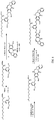
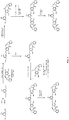
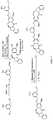
- FIGs. 1-7 show exemplary schemes for the methods of the present invention.
- Alkyl refers to a saturated linear or branched-chain monovalent hydrocarbon radical of one to twenty carbon atoms.
- alkyl include, but are not limited to, methyl, ethyl, 1-propyl, 2-propyl, 1-butyl, 2-methyl-1-propyl, - CH 2 CH(CH 3 ) 2 ), 2-butyl, 2-methyl-2-propyl, 1-pentyl, 2-pentyl 3-pentyl, 2-methyl-2-butyl, 3-methyl-2-butyl, 3-methyl-1-butyl, 2-methyl-1-butyl, 1-hexyl), 2-hexyl, 3-hexyl, 2-methyl-2-pentyl, 3-methyl-2-pentyl, 4-methyl-2-pentyl, 3-methyl-3-pentyl, 2-methyl-3-pentyl, 2,3-dimethyl-2-butyl, 3,3-dimethyl-2-butyl, 1-heptyl, 1-octy
- Aryl means a monovalent aromatic hydrocarbon radical of 6-18 carbon atoms derived by the removal of one hydrogen atom from a single carbon atom of a parent aromatic ring system. Some aryl groups are represented in the exemplary structures as "Ar.” Aryl includes bicyclic radicals comprising an aromatic ring fused to a saturated, partially unsaturated ring, or aromatic carbocyclic or heterocyclic ring.
- Typical aryl groups include, but are not limited to, radicals derived from benzene (phenyl), substituted benzenes, naphthalene, anthracene, indenyl, indanyl, 1,2-dihydronapthalene, 1,2,3,4-tetrahydronapthyl, and the like.
- aryl is phenyl group.
- halo or halogen refers to F, Cl, Br or I. In one embodiment, the halogen is Br or I.
- cytotoxic compound or "cytotoxic compound,” “cytotoxic dimer” and “cytotoxic dimer compound” are used interchangeably. They are intended to include compounds for which a structure or formula or any derivative thereof has been disclosed in the present invention.
- the term also includes, stereoisomers, geometric isomers, tautomers, solvates, salts ( e.g., pharmaceutically acceptable salts) and of a compound of all the formulae disclosed in the present invention.
- the term also includes any solvates, hydrates, and polymorphs of any of the foregoing.
- precursor of a given group refers to any group which may lead to that group by any deprotection, a chemical modification, or a coupling reaction.
- chiral refers to molecules which have the property of non-superimposability of the mirror image partner, while the term “achiral” refers to molecules which are superimposable on their mirror image partner.
- stereoisomer refers to compounds which have identical chemical constitution and connectivity, but different orientations of their atoms in space that cannot be interconverted by rotation about single bonds.
- Diastereomer refers to a stereoisomer with two or more centers of chirality and whose molecules are not mirror images of one another. Diastereomers have different physical properties, e.g. melting points, boiling points, spectral properties, and reactivities. Mixtures of diastereomers may separate under high resolution analytical procedures such as crystallization, electrophoresis and chromatography.
- Enantiomers refer to two stereoisomers of a compound which are non-superimposable mirror images of one another.
- the compounds of the invention may contain asymmetric or chiral centers, and therefore exist in different stereoisomeric forms. It is intended that all stereoisomeric forms of the compounds of the invention, including but not limited to, diastereomers, enantiomers and atropisomers, as well as mixtures thereof such as racemic mixtures, form part of the present invention.
- optically active compounds i.e ., they have the ability to rotate the plane of plane-polarized light.
- the prefixes D and L, or R and S are used to denote the absolute configuration of the molecule about its chiral center(s).
- the prefixes d and 1 or (+) and (-) are employed to designate the sign of rotation of plane-polarized light by the compound, with (-) or 1 meaning that the compound is levorotatory.
- a compound prefixed with (+) or d is dextrorotatory.
- these stereoisomers are identical except that they are mirror images of one another.
- a specific stereoisomer may also be referred to as an enantiomer, and a mixture of such isomers is often called an enantiomeric mixture.
- a 50:50 mixture of enantiomers is referred to as a racemic mixture or a racemate, which may occur where there has been no stereoselection or stereospecificity in a chemical reaction or process.
- the terms “racemic mixture” and “racemate” refer to an equimolar mixture of two enantiomeric species, devoid of optical activity.
- tautomer or “tautomeric form” refers to structural isomers of different energies which are interconvertible via a low energy barrier.
- proton tautomers also known as prototropic tautomers
- Valence tautomers include interconversions by reorganization of some of the bonding electrons.
- the term "imine reducing reagent” refers to a reagent that is capable of reducing an imine functional group to an amine functional group.
- the imine reducing reagent is a hydride reducing reagent.
- imine reducing reagents include, but are not limited to, borohydrides (e.g., sodium borohydride, sodium triacetoxy borohydride, sodium cyanoborohydride, lithium borohydride (LiBH 4 ), potassium borohydride (KBH 4 )), hydrogen gas, and lithium aluminum hydride, ammonium formate, borane, 9-borabicyclo[3.3.1]nonane (9-BBN), diisobutylaluminium hydride (DIBAL), and sodium bis(2-methoxyethoxy)aluminumhydride (Red-Al).
- the imine reducing reagent is sodium triacetoxy borohydride.
- protecting group refers to a substituent that is commonly employed to block or protect a particular functionality while reacting other functional groups on the compound, a derivative thereof, or a conjugate thereof.
- an "amine protecting group” or an “amino-protecting moiety” is a substituent attached to an amino group that blocks or protects the amino functionality in the compound.
- Such groups are well known in the art (see for example P. Wuts and T. Greene, 2007, Protective Groups in Organic Synthesis, Chapter 7, J.
- carbamates such as methyl and ethyl carbamate, FMOC, substituted ethyl carbamates, carbamates cleaved by 1,6- ⁇ -elimination (also termed "self immolative” ), ureas, amides, peptides, alkyl and aryl derivatives.
- Suitable amino-protecting groups include, but are not limited to, acetyl, trifluoroacetyl, t-butoxycarbonyl (BOC), benzyloxycarbonyl (CBZ) and 9-fluorenylmethylenoxycarbonyl (Fmoc), 2-trimethylsilylethyl,(2-phenyl-2-trimethylsilyl)ethyl, triisopropylsiloxy, 2-(trimethylsilyl)ethoxymethyl, allyloxycarbonyl, 9-fluorenylmethoxycarbonyl, 2-(trimethylsilyl)ethoxycarbonyl, or 2, 2,2,2-trichloroethoxycarbonyl.
- protecting groups and their use see P. G.M. Wuts & T. W. Greene, Protective Groups in Organic Synthesis, John Wiley & Sons, New York, 2007 .
- an "alcohol protecting group” or an “alcohol-protecting moiety” is a substituent attached to an alcohol group that blocks or protects the alcohol functionality in the compound.
- Such groups are well known in the art (see for example, P. Wuts and T. Greene, 2007, Protective Groups in Organic Synthesis, Chapter 2, J. Wiley & Sons, NJ ).
- Suitable alcohol protecting group include, but are not limited to, pivaloyl, methoxymethyl, 2-methoxyethoxymethyl, p -methoxybenzyl, 3,4-dimethyoxybenzyl, 2,6-dimethyoxybenzyl, diphenylmethyl, benzyloxymethyl, 2,2,2-trichloroethoxycarbonyl, tetrahydrofuranyl, tetrahydropyranyl, benzyl, benzoyl, para- phenylbenzoyl, 2,4,6-trimethylbenzoyl, para -bromobenzoyl, para -nitrobenzoyl, picolinoyl, nicotinoyl, 5-dibenzosuberyl, trityl/triphenylmethyl, or tris (4- tert- butylphenyl)methyl and various silyl protecting groups (for example, dimethylisopropylsilyl, diethylisopropylsilyl
- the alcohol protecting group is sterically hindered.
- the alcohol protecting group is preferably methoxymethyl, tetrahydropyranyl, 2-methoxyethoxymethyl, p-methoxybenzyl, benzyloxymethyl, or 2,2,2-trichloroethoxycarbonyl. More preferably, the alcohol protecting group is 2,2,2-trichloroethoxycarbonyl.
- the alcohol protecting group is a silyl protecting group, preferably, triethylsilyl, triisopropylsilyl, or tert-butyldimethylsilyl. More preferably, the alcohol protecting group is tert-butyldimethylsilyl.
- alcohol protecting reagent refers to a reagent that introduces an alcohol protecting group onto an alcohol group.
- an “acid labile alcohol protecting group” is an alcohol protecting group that is not stable under acidic condition and releases the alcohol protecting group to form free alcohol.
- Examples of an acid labile alcohol protecting group include, but are not limited to, acetate, allyl, methoxymethyl, tetrahydrofuranyl, tetrahydropyranyl, 5-dibenzosuberyl, 1-ethoxyethyl, 1-methyl-lmethoxylethyl, 2-(phenylselenyl)ethyl, trityl/triphenylmethyl, tris(4- tert -butylphenyl)methyl, and various silyl protecting group (for example, dimethylisopropylsilyl, diethylisopropylsilyl, dimethylhexylsilyl, trimethylsilyl, triethylsilyl, triisopropylsilyl, tribenzylsilyl, triphenylsilyl, 2-nor
- the alcohol protecting group is a silyl protecting group, preferably, triethylsilyl, triisopropylsilyl, or tert-butyldimethylsilyl. More preferably, the alcohol protecting group is tert-butyldimethylsilyl.
- alcohol deprotecting reagent refers to a reagent that is capable of cleaving an alcohol protecting group to form free alcohol.
- Such reagents are well known in the art (see for example P. Wuts and T. Greene, 2007, Protective Groups in Organic Synthesis, Chapter 2, J. Wiley & Sons, NJ ).
- alcohol deprotecting reagents include, but are not limited to, tetra-n-butylammonium fluoride, tris(dimethylamino)sulfonium difluorotrimethylsilicate, hydrogen fluoride or a solvate thereof, hydrogen fluoride pyridine, silicon tetrafluoride, hexafluorosilicic acid, cesium fluoride, hydrochloric acid, acetic acid, trifluoroacetic acid, pyridinium p-toluensulfonate, p-toluenesulfonic acid (p-TsOH), formic acid, periodic acid.
- tetra-n-butylammonium fluoride tris(dimethylamino)sulfonium difluorotrimethylsilicate
- hydrogen fluoride or a solvate thereof hydrogen fluoride pyridine, silicon tetrafluoride, hexafluorosilicic acid, cesium flu
- the alcohol deprotecting reagent is hydrochloric acid or tetra-n-butylammonium fluoride (TBAF). In certain embodiments, the alcohol deprotecting agent is hydrogen fluoride-pyridine (HF-pyridine).
- amine deprotecting group refers a reagent that is capable of cleaving an amine protecting group to form free amine.
- reagents are well known in the art (see for example P. Wuts and T. Greene, 2007, Protective Groups in Organic Synthesis, Chapter 7, J. Wiley & Sons, NJ ).
- Examples of such amine deprotecting reagents include, but are not limited to, tetra-n-butylammonium fluoride, acetic acid, hydrogen fluoride pyridine, cesium fluoride, piperidine, morpholine, or trifluoroacetic acid.
- alcohol activating agent refers a reagent that increases the reactivity of a hydroxyl group thereby making the hydroxyl group a better leaving group.
- examples of such alcohol activating agents include p-toluenesulfonyl chloride, thionyl chloride, triflic anhydride, mesyl chloride, mesyl anhydride, triphenylphosphine, acyl chloride, 4-dimethylaminopyridine, and others.
- the alcohol activating agent is thionyl chloride.
- the alcohol activating agent is a trialkyl phosphine, triarylphosphine, or triheteroarylphosphine.
- the alcohol activating agent is trimethylphosphine, tributylphosphine, tri(o-tolyl)phosphine, tri(m-tolyl)phosphine, tri(p-tolyl)phosphine, tri(2-pyridyl)phosphine, tri(3-pyridyl)phosphine, or tri(4-pyridyl)phosphine.
- the alcohol activating agent is triphenylphosphine.
- phrases "pharmaceutically acceptable salt” as used herein, refers to pharmaceutically acceptable organic or inorganic salts of a compound of the invention.
- Exemplary salts include, but are not limited, to sulfate, citrate, acetate, oxalate, chloride, bromide, iodide, nitrate, bisulfate, phosphate, acid phosphate, isonicotinate, lactate, salicylate, acid citrate, tartrate, oleate, tannate, pantothenate, bitartrate, ascorbate, succinate, maleate, gentisinate, fumarate, gluconate, glucuronate, saccharate, formate, benzoate, glutamate, methanesulfonate "mesylate,” ethanesulfonate, benzenesulfonate, p-toluenesulfonate, pamoate ( i.e., 1,l'-methylene-bis-
- a pharmaceutically acceptable salt may involve the inclusion of another molecule such as an acetate ion, a succinate ion or other counter ion.
- the counter ion may be any organic or inorganic moiety that stabilizes the charge on the parent compound.
- a pharmaceutically acceptable salt may have more than one charged atom in its structure. Instances where multiple charged atoms are part of the pharmaceutically acceptable salt can have multiple counter ions. Hence, a pharmaceutically acceptable salt can have one or more charged atoms and/or one or more counter ion.
- the desired pharmaceutically acceptable salt may be prepared by any suitable method available in the art, for example, treatment of the free base with an inorganic acid, such as hydrochloric acid, hydrobromic acid, sulfuric acid, nitric acid, methanesulfonic acid, phosphoric acid and the like, or with an organic acid, such as acetic acid, maleic acid, succinic acid, mandelic acid, fumaric acid, malonic acid, pyruvic acid, oxalic acid, glycolic acid, salicylic acid, a pyranosidyl acid, such as glucuronic acid or galacturonic acid, an alpha hydroxy acid, such as citric acid or tartaric acid, an amino acid, such as aspartic acid or glutamic acid, an aromatic acid, such as benzoic acid or cinnamic acid, a sulfonic acid, such as p-toluenesulfonic acid or ethanesulfonic acid
- an inorganic acid such as hydro
- the desired pharmaceutically acceptable salt may be prepared by any suitable method, for example, treatment of the free acid with an inorganic or organic base, such as an amine (primary, secondary or tertiary), an alkali metal hydroxide or alkaline earth metal hydroxide, or the like.
- suitable salts include, but are not limited to, organic salts derived from amino acids, such as glycine and arginine, ammonia, primary, secondary, and tertiary amines, and cyclic amines, such as piperidine, morpholine and piperazine, and inorganic salts derived from sodium, calcium, potassium, magnesium, manganese, iron, copper, zinc, aluminum and lithium.
- phrases "pharmaceutically acceptable” indicates that the substance or composition must be compatible chemically and/or toxicologically, with the other ingredients comprising a formulation, and/or the mammal being treated therewith.
- leaving group refers to a group of charged or uncharged moiety that departs during a nucleophilic substitution or displacement.
- leaving groups include, but not limited to, halogens, esters, alkoxy, hydroxyl, tosylates, triflates, mesylates, nitriles, azide, carbamate, disulfides, thioesters, thioethers and diazonium compounds.
- halogenating reagent refers to a reagent that converts an alcohol group to a halide group.
- a "brominating reagent” is a reagent that converts an alcohol group to a bromide group.
- a "iodinating reagent” is a reagent that converts an alcohol group to a iodide group.
- a “chlorinating reagent” is a reagent that converts an alcohol group to a chloride group.
- Exemplary brominating reagents include, but are not limited to, bromine, hydrobromic acid, carbon tetrabromide, phosphorus tribromide, and potassium bromide.
- Exemplary iodinating reagent include, but are not limited to, hydroiodic acid, iodine, carbon tetraiodide, phosphorus triiodide, sodium iodide, or potassium iodide.
- Exemplary chlorinating reagent include, but are not limited to, carbon tetrachloride, methanesulfonyl chloride, sulfuryl chloride, thionyl chloride, cyanuric chloride, N -chlorosuccinimide, phosphorus(V) oxychloride, phosphorus pentachloride, and phosphorus trichloride.
- the chlorinating reagent is methanesulfonyl chloride.
- a "sulfonating reagent” refers to a reagent that converts an alcohol group to a sulfonate ester group.
- the sulfonating reagent is a sulfonic anhydride, such as methanesulfonic anhydride, or a sulfonic chloride, such as methanesulfonyl chloride (MsCl).
- an "activated ester” refers to an ester group that is readily displaced by a hydroxyl or an amine group.
- exemplary activated esters include, but are not limited to nitrophenyl (e.g., 2 or 4-nitrophenyl) ester, dinitrophenyl ( e.g., 2,4-dinitrophenyl) ester, sulfo-tetraflurophenyl ( e.g., 4-sulfo-2,3,5,6-tetrafluorophenyl) ester, pentafluorophenyl ester, nitropyridyl ( e.g., 4-nitropyridyl) ester, trifluoroacetate, and acetate.
- nitrophenyl e.g., 2 or 4-nitrophenyl
- dinitrophenyl e.g., 2,4-dinitrophenyl
- sulfo-tetraflurophenyl e.g., 4-
- an "esterification reagent” refers to a reagent that converts an alcohol group to an ester group.
- exemplary esterification reagent include, but are not limited to, nitrobenzoid acid (e.g., 2 or 4-nitrobenzoic acid), dinitrobenzoid acid (e.g., 2,4-dinitrobenzoic acid), sulfo-tetraflurobenzoid acid (e.g., 4-sulfo-2,3,5,6-tetrafluorobenzoic acid), pentafluorobenzoic acid, nitropyridine carboxylic acid ( e.g ., 4-nitro-2-pyridine carboxylic acid, trifluoroacetic acid, and acetic acid, or acyl chloride, acid anhydride or other activated carboxylic acid derivatives thereof.
- nitrobenzoid acid e.g., 2 or 4-nitrobenzoic acid
- dinitrobenzoid acid e.g., 2,4-dinitrobenzoic
- the present invention provides novel methods for preparing indolinobenzodiazepine dimer compounds that have one imine functionality and one amine functionality. As compared to the methods known in the art, the present methods can produce the desired dimer compounds with higher yield and without the use of HPLC purification.
- a method of preparing a compound of formula (2a), or a salt thereof comprising introducing an alcohol protecting group onto one of the primary alcohols of a compound of formula (1a) by reacting the compound of formula (1a) with an alcohol protecting reagent, wherein P 1 is the alcohol protecting group; and R 101 is (C 1 -C 3 )alkyl, pyridyl, or nitropyridyl.
- the alcohol protecting group is sterically hindered.
- the alcohol protecting group is pivaloyl, methoxymethyl, 2-methoxyethoxymethyl, p -methoxybenzyl, 3,4-dimethyoxybenzyl, 2,6-dimethyoxybenzyl, diphenylmethyl, benzyloxymethyl, 2,2,2-trichloroethoxycarbonyl, tetrahydrofuranyl, tetrahydropyranyl, benzyl, benzoyl, para- phenylbenzoyl, 2,4,6-trimethylbenzoyl, para -bromobenzoyl, para -nitrobenzoyl, picolinoyl, nicotinoyl, 5-dibenzosuberyl, trityl/triphenylmethyl, or tris(4- tert- butylphenyl)methyl.
- the alcohol protecting group is methoxymethyl, tetrahydropyranyl, 2-methoxyethoxymethyl, p-methoxybenzyl, benzyloxymethyl, or 2,2,2-trichloroethoxycarbonyl. Even more preferably, the alcohol protecting group is 2,2,2-trichloroethoxycarbonyl.
- the alcohol protecting group is a silyl protecting group.
- the silyl protecting group is dimethylisopropylsilyl, diethylisopropylsilyl, dimethylhexylsilyl, trimethylsilyl, triisopropylsilyl, tribenzylsilyl, triphenylsilyl, 2-norbornyldimethylsilyl, tert -butyldimethylsilyl, tert -butyldiphenylsilyl, 2-trimethyethylsilyl (TEOC), or [2-(trimethylsilyl)ethoxy]methyl.
- TEOC 2-trimethyethylsilyl
- the silyl protecting group is triethylsilyl, triisopropylsilyl, or tert-butyldimethylsilyl. More preferably, the silyl protecting group is tert-butyldimethylsilyl.
- the silyl protecting group can be introduced by reacting the compound of formula (1a) with R 3 -Cl, R 3 -Br, R 3 -I or R 3 -OSO 2 CF 3 (collectively the alcohol protecting reagent) in the presence of a base, wherein R 3 is dimethylisopropylsilyl, diethylisopropylsilyl, dimethylhexylsilyl, trimethylsilyl, triisopropylsilyl, tribenzylsilyl, triphenylsilyl, 2-norbornyldimethylsilyl, tert -butyldimethylsilyl, tert -butyldiphenylsilyl or [2-(trimethylsilyl)ethoxy]methyl.
- the molar ratio of the alcohol protecting reagent to the compound of formula (1a) maybe between 0.8-1.2, between 1 to 5, between 1 to 2, between 1 to 1.5, between 1 to 1.4, between 1 to 1.3, between 1 to 1.2, or between 1 to 1.1. Less than 2 molar equivalents of the alcohol protecting reagent may be used relative to the compound of formula (1a). Preferably, 1.5, 1.4, 1.3, 1.2, 1.1 or 1.0 molar equivalent of the alcohol protecting reagent relative to the compound of formula (1a) is used.
- the base can be a non-nucleophilic base.
- non-nucleophilic base include, but are not limited to, imidazole, triethylamine, diisopropylethylamine, pyridine, 2,6-lutidine, 1,8-diazabicycloundec-7-ene, or tetramethylpiperidine.
- the non-nucleophilic base is imidazole. Molar excess amount of the base can be used. More than 2 molar equivalents of the base (e.g., non-nucleophilic base) may be used relative to the compound of formula (1a).
- the reaction between the compound of formula (1a) and R 3 -Cl, R 3 -Br, R 3 -I or R 3 -OSO 2 CF 3 may be carried out in the presence of a catalyst that facilitates the introduction of the silyl protecting group.
- a catalyst that facilitates the introduction of the silyl protecting group.
- Any suitable catalysts known in the art see, for example, P. Wuts and T. Greene, 2007, Protective Groups in Organic Synthesis, Chapter 2, J. Wiley & Sons, NJ ) can be used in the reaction.
- Exemplary catalysts include, but are not limited to, 4-dimethylaminopyridine (DMAP), 1,1,3,3-tetramethylguanidine and 1,8-diazabicyclo[5.4.0]undec-7-ene (DBU).
- Any suitable organic solvents can be used for the methods of the first disclosure.
- exemplary solvents include, but are not limited to, DMF, CH 2 Cl 2 , dichloroethane, THF, dimethylacetamide, etc.
- DMF is used as the solvent.
- the method of preparing the compound of formula (2a) may comprise reacting the compound of (1a) with TBSCl in the presence of a non-nucleophilic base.
- the base may be imidazole or DIPEA. In a specific method the base is imidazole. In another specific method, the base is DIPEA.
- a method of preparing a compound of formula (13a), or a salt thereof comprising reacting a chlorinating reagent with a compound of formula (2a), wherein P 1 is an alcohol protecting group; X 3 is -Cl; and R 101 is (C 1 -C 3 )alkyl, pyridyl, or nitropyridyl.
- the alcohol protecting group is pivoloyl, methoxymethyl, 2-methoxyethoxymethyl, p -methoxybenzyl, 3,4-dimethyoxybenzyl, 2,6-dimethyoxybenzyl, diphenylmethyl, benzyloxymethyl, 2,2,2-trichloroethoxycarbonyl, tetrahydrofuranyl, tetrahydropyranyl, benzyl, benzoyl, para- phenylbenzoyl, 2,4,6-trimethylbenzoyl, para -bromobenzoyl, para -nitrobenzoyl, picolinoyl, nicotinoyl, 5-dibenzosuberyl, trityl/triphenylmethyl, or tris(4- tert- butylphenyl)methyl.
- the alcohol protecting group is methoxymethyl, tetrahydropyranyl, 2-methoxyethoxymethyl, p-methoxybenzyl, benzyloxymethyl, or 2,2,2-trichloroethoxycarbonyl. Even more preferably, the alcohol protecting group is 2,2,2-trichloroethoxycarbonyl.
- the alcohol protecting group is a silyl protecting group.
- the silyl protecting group is dimethylisopropylsilyl, diethylisopropylsilyl, dimethylhexylsilyl, trimethylsilyl, triisopropylsilyl, tribenzylsilyl, triphenylsilyl, 2-norbornyldimethylsilyl, tert -butyldimethylsilyl, tert -butyldiphenylsilyl, 2-trimethyethylsilyl (TEOC), or [2-(trimethylsilyl)ethoxy]methyl.
- TEOC 2-trimethyethylsilyl
- the silyl protecting group is triethylsilyl, triisopropylsilyl, or tert-butyldimethylsilyl. More preferably, the silyl protecting group is tert-butyldimethylsilyl.
- the base is used.
- the base can be a non-nucleophilic base.
- non-nucleophilic base include, but are not limited to, triethylamine, imidazole, diisopropylethylamine (DIPEA), pyridine, 2,6-lutidine, dimethylformamide, 1,8-diazabicyclo[5.4.0]undec-7-ene (DBU), or tetramethylpiperidine .
- the non-nucleophilic base is pyridine.
- Any suitable organic solvents can be used for the methods of the second disclosure.
- exemplary solvents include, but are not limited to, DMF, CH 2 Cl 2 , dichloroethane, THF, dimethylacetamide, etc.
- DMF is used as the solvent.
- a method of preparing a compound of formula (14a), or a salt thereof comprising reacting a compound of formula (13a) with an alcohol deprotecting reagent, wherein P 1 is an alcohol protecting group; X 3 is -Cl; and R 101 is (C 1 -C 3 )alkyl, pyridyl, or nitropyridyl.
- the alcohol deprotecting reagent is tetra-n-butylammonium fluoride, tris(dimethylamino)sulfonium difluorotrimethylsilicate, hydrogen fluoride or a solvate thereof, hydrogen fluoride pyridine, silicon tetrafluoride, hexafluorosilicic acid, cesium fluoride, hydrochloric acid, acetic acid, trifluoroacetic acid, pyridinium p-toluensulfonate, p-toluenesulfonic acid (p-TsOH), formic acid, or periodic acid.
- the alcohol deprotecting reagent is hydrogen fluoride pyridine.
- a method of preparing a compound of formula (16a), or a salt thereof comprising reacting a compound of formula (14a) with a monomer compound of formula (a 1 ), wherein X 3 is -Cl; and R 101 is (C 1 -C 3 )alkyl, pyridyl, or nitropyridyl.
- the compound of formula (14a) is reacted with a monomer of formula (a 1 ) in the presence of an alcohol activating agent.
- the alcohol activating agent is a trialkyl phosphine, triarylphosphine, or triheteroarylphosphine.
- the alcohol activating agent is trimethylphosphine, tributylphosphine, tri(o-tolyl)phosphine, tri(m-tolyl)phosphine, tri(p-tolyl)phosphine, tri(2-pyridyl)phosphine, tri(3-pyridyl)phosphine, tri(4-pyridyl)phosphine, or [4-(3,3,4,4,5,5,6,6,7,7,8,8,9,9,10,10,10-Heptadecafluorodecyl)phenyl] diphenylphosphine.
- the alcohol activating agent can be a phosphine-like reagents, such as (tributylphosphoranylidene)acetonitrile, (cyanomethylene)tributylphosphorane (CMBP), or (cyanomethylene)trimethylphosphorane (CMMP).
- CMBP cyanomethylenetributylphosphorane
- CMMP cyanomethylenetrimethylphosphorane
- the alcohol activating agent is triphenylphosphine.
- the alcohol activating agent can be polymer-bound or polymer-supported, such as polymer-bound or polymer-supported trialkyl phosphine, triarylphosphine (e.g., triphenylphosphine), or triheteroarylphosphine.
- the compound of formula (14a) is reacted with a monomer of formula (a 1 ) in the presence of an azodicarboxylate.
- the azodicarboxylate is selected from the group consisting of: diethyl azodicarboxylate (DEAD), diisopropyl azodicarboxylate (DIAD), 1,1'-(azodicarbonyl)dipiperidine (ADDP), ditertbutyl azodicarboxylate (DTAD), 1,6-dimethyl-1,5,7-hexahydro-1,4,6,7-tetrazocin-2,5-dione (DHTD), di-(4-chlorobenzyl)azodicarboxylate (DCAD), azodicarboxylic dimorpholide, N,N,N',N'-tetramethylazodicarboxamide (TMAD), N,N,N',N'- tetraisopropylazodicar
- the azodicarboxylate is DIAD.
- the azodicarboxylate is polymer-bound or polymer supported, such as polymer-supported alkylazodicarboxylate (e.g. polymer-bound DEAD, DIAD, DTAD or ADDP).
- the compound of formula (14a) is reacted with a monomer of formula (a 1 ) in the presence of triphenylphosphine and an azodicarboxylate.
- the azodicarboxylate is selected from the group consisting of: diethyl azodicarboxylate (DEAD), diisopropyl azodicarboxylate (DIAD), 1,1'-(azodicarbonyl)dipiperidine (ADDP), and ditertbutyl azodicarboxylate (DTAD). More specifically, the azodicarboxylate is DIAD.
- a method of preparing a compound of formula (18a): a pharmaceutically acceptable salt thereof comprising reacting a compound of formula of (16a): with a reduced monomer of formula (d 1 ): wherein X 3 is -Cl; P 3 is H or an amine protecting group; and R 101 is (C 1 -C 3 )alkyl, pyridyl, or nitropyridyl.
- the reaction between the compound of formula (16a) and the reduced monomer of formula (d 1 ) is carried out in the presence of a base.
- the base is sodium carbonate, potassium carbonate, cesium carbonate, sodium hydride, or potassium hydride.
- the base is potassium carbonate.
- the solvent is a polar aprotic solvent.
- exemplary solvents include, but are not limited to, dimethylformamide (DMF), CH 2 Cl 2 , dichloroethane, THF, dimethylacetamide, etc. In certain methods, dimethylformamide or dimethylacetamide is used as the solvent.
- the compound of formula (16a) is reacted with reduced monomer of formula (d 1 ), wherein P 3 is H, to form a compound of formula (Ia').
- P 3 is an amine protecting group. Any suitable amine protecting group can be used in the method described above.
- the amine protecting group is 2-trimethylsilylethyl,(2-phenyl-2-trimethylsilyl)ethyl, triisopropylsiloxy, 2-(trimethylsilyl)ethoxymethyl, allyloxycarbonyl, 9-fluorenylmethoxycarbonyl, 2-(trimethylsilyl)ethoxycarbonyl, or 2, 2,2,2-trichloroethoxycarbonyl.
- the amine deprotecting reagent may be selected from the group consisting of tetra-n-butylammonium fluoride, acetic acid, hydrogen fluoride pyridine, cesium fluoride, piperidine, morpholine, or trifluroacetic acid.
- the present invention provides a method of preparing a compound of formula (17a), or a salt thereof, said method comprising reacting a compound of formula (14a) with a monomer compound of formula (d 1 ), wherein X 3 is -Cl; P 3 is H or an amine protecting group; and R 101 is (C 1 -C 3 )alkyl, pyridyl, or nitropyridyl.
- the compound of formula (14a) is reacted with a monomer of formula (d 1 ) in the presence of an alcohol activating agent.
- the alcohol activating agent is a trialkyl phosphine, triarylphosphine, or triheteroarylphosphine.
- the alcohol activating agent is trimethylphosphine, tributylphosphine, tri(o-tolyl)phosphine, tri(m-tolyl)phosphine, tri(p-tolyl)phosphine, tri(2-pyridyl)phosphine, tri(3-pyridyl)phosphine, tri(4-pyridyl)phosphine, or [4-(3,3,4,4,5,5,6,6,7,7,8,8,9,9,10,10,10-heptadecafluorodecyl)phenyl]diphenylphosphine.
- the alcohol activating agent can be a phosphine-like reagent, such as (tributylphosphoranylidene)acetonitrile, (cyanomethylene)tributylphosphorane (CMBP), or (cyanomethylene)trimethylphosphorane (CMMP).
- CMBP cyanomethylenetributylphosphorane
- CMMP cyanomethylenetrimethylphosphorane
- the alcohol activating agent is triphenylphosphine.
- the alcohol activating agent can be polymer-bound or polymer-supported, such as polymer-bound or polymer-supported trialkyl phosphine, triarylphosphine (e.g., triphenylphosphine), or triheteroarylphosphine.
- the compound of formula (14a) is reacted with a monomer of formula (d 1 ) in the presence of an azodicarboxylate.
- the azodicarboxylate is selected from the group consisting of: diethyl azodicarboxylate (DEAD), diisopropyl azodicarboxylate (DIAD), 1,1'-(azodicarbonyl)dipiperidine (ADDP), ditertbutyl azodicarboxylate (DTAD), 1,6-dimethyl-1,5,7-hexahydro-1,4,6,7-tetrazocin-2,5-dione (DHTD), di-(4-chlorobenzyl)azodicarboxylate (DCAD), azodicarboxylic dimorpholide, N,N,N',N'-tetramethylazodicarboxamide (TMAD), N,N,N',N'- tetraisopropyl
- TMAD N,N,N',N
- the azodicarboxylate is DIAD.
- the azodicarboxylate is polymer-bound or polymer supported, such as polymer-supported alkylazodicarboxylate (e.g. polymer-bound DEAD, DIAD, DTAD or ADDP).
- the compound of formula (14a) is reacted with a monomer of formula (d 1 ) in the presence of triphenylphosphine and an azodicarboxylate.
- the azodicarboxylate is selected from the group consisting of: diethyl azodicarboxylate (DEAD), diisopropyl azodicarboxylate (DIAD), 1,1'-(azodicarbonyl)dipiperidine (ADDP), and ditertbutyl azodicarboxylate (DTAD). More specifically, the azodicarboxylate is DIAD.
- P 3 is H and the compound of formula (14a) is reacted with the monomer compound of formula (d 1 ) to form a compound of formula (17a'):
- P 3 is an amine protecting group and the method further comprises the step of reacting the compound of formula (17a) with an amine deprotecting reagent to form a compound of formula (17a').
- Suitable amine deprotecting reagent include, but are not limited to, the amine deprotecting reagent is selected from the group consisting of tetra-n-butylammonium fluoride, acetic acid, hydrogen fluoride pyridine, cesium fluoride, piperidine, morpholine, or trifluroacetic acid.
- a method of preparing a compound of formula (17a'): or a salt thereof comprising reacting a compound of formula (16a) with an imine reducing agent, wherein X 3 is -Cl; and R 101 is (C 1 -C 3 )alkyl, pyridyl, or nitropyridyl.
- the imine reducing agent is a hydride reducing agent.
- suitable hydride reducing agents include, but are not limited to, sodium borohydride, sodium triacetoxy borohydride, sodium cyanoborohydride, lithium aluminum hydride, hydrogen gas, ammonium formate, borane, 9-borabicyclo[3.3.1]nonane (9-BBN), diisobutylaluminium hydride (DIBAL), lithium borohydride (LiBH 4 ), potassium borohydride (KBH 4 ), or sodium bis(2-methoxyethoxy)aluminumhydride (Red-Al).
- the hydride reducing agent is sodium triacetoxy borohydride (NaBH(OAc) 3 ).
- the present invention provides a method of preparing a compound of formula (18a), or a pharmaceutically acceptable salt thereof, said method comprising reacting a compound of formula of (17a): with a monomer of formula (a 1 ): wherein X 3 is -Cl; P 3 is H or an amine protecting group; and R 101 is (C 1 -C 3 )alkyl, pyridyl, or nitropyridyl.
- the reaction between the compound of formula (17a) and the monomer of formula (a 1 ) is carried out in the presence of a base.
- the base is sodium carbonate, potassium carbonate, cesium carbonate, sodium hydride, or potassium hydride.
- the base is potassium carbonate.
- the solvent is a polar aprotic solvent.
- exemplary solvents include, but are not limited to, dimethylformamide (DMF), CH 2 Cl 2 , dichloroethane, THF, dimethylacetamide, etc.
- dimethylformamide or dimethylacetamide is used as the solvent.
- the compound of formula (17a) is reacted with the monomer of formula (a 1 ), wherein P 3 is H, to form a compound of formula (Ia').
- P 3 is an amine protecting group. Any suitable amine protecting group can be used in the method described above.
- the amine protecting group is 2-trimethylsilylethyl,(2-phenyl-2-trimethylsilyl)ethyl, triisopropylsiloxy, 2-(trimethylsilyl)ethoxymethyl, allyloxycarbonyl, 9-fluorenylmethoxycarbonyl, 2-(trimethylsilyl)ethoxycarbonyl, or 2, 2,2,2-trichloroethoxycarbonyl.
- the amine deprotecting reagent may be selected from the group consisting of tetra-n-butylammonium fluoride, acetic acid, hydrogen fluoride pyridine, cesium fluoride, piperidine, morpholine, or trifluroacetic acid.
- the present invention provides a method of preparing a compound of formula (18a), or a pharmaceutically acceptable salt thereof, said method comprising the steps of:
- P 3 is H
- the compound of formula (16a) is reacted with reduced monomer of formula (d 1 ) to form a compound of formula (Ia').
- P 3 is an amine protecting group and the methods further comprise reacting the compound of formula (18a) with an amine deprotecting reagent to form a compound of formula (Ia').
- the present invention provides a method of preparing a compound of formula (18a), or a pharmaceutically acceptable salt thereof, said method comprising the steps of:
- P 3 is H
- the compound of formula (17a) is reacted with the monomer of formula (a 1 ) to form a compound of formula (Ia').
- P 3 is an amine protecting group and the methods further comprise reacting the compound of formula (18a) with an amine deprotecting reagent to form a compound of formula (Ia').
- the present invention provides a method of preparing a compound of formula (Ia'), or a pharmaceutically acceptable salt thereof, said method comprising the steps of:
- the compound (14a) or a salt thereof is prepared by a method comprising the following steps:
- the compound of formula (2a) is prepared by reacting a compound of formula (1a) with an alcohol protecting reagent.
- R 101 is methyl
- the method of the present invention can also be any combination of the methods described above (e.g ., methods in the first, second, third, fourth, fifth, and sixth aspects.
- the variable definitions described in any of the specific embodiments below also apply to any combination of methods described above.
- the reactions described herein in the methods of the present invention can be carried out in any suitable solvent(s).
- the solvent is an organic solvent.
- organic solvents include, but are not limited to, dichloromethane, dichloroethane, DMF, DMA, acetone, acetonitrile, THF, DMSO, ethyl acetate etc., or a combination thereof.
- the reactions described herein in the methods of the present invention can be carried out at any suitable temperature.
- the reaction can be carried out at room temperature.
- the reaction can carried out at a low temperature, such as 0°C.
- the reaction can be carried out at an elevated temperature, such as about 40°C, about 50 °C etc.
- the indolinobenzodiazepine dimer compound of formula (Ia') can be prepared according to Schemes 1 -12 shown below, wherein L' is
- R 101 is -Me.
- P 1 is a silyl protecting group; and the remaining variables are as described in the first to fifth aspects or first to sixth disclosures or the 1 st specific disclosure above.
- the silyl protecting group is dimethylisopropylsilyl, diethylisopropylsilyl, dimethylhexylsilyl, trimethylsilyl, triisopropylsilyl, tribenzylsilyl, triphenylsilyl, 2-norbornyldimethylsilyl, tert-butyldimethylsilyl, tert-butyldiphenylsilyl, 2-trimethyethylsilyl (TEOC), or [2-(trimethylsilyl)ethoxy]methyl.
- the silyl protecting group is triethylsilyl, triisopropylsilyl, or tert-butyldimethylsilyl. In another even more specific embodiment, the silyl protecting group is tert-butyldimethylsilyl.
- X 3 is chlorine; and the remaining variables are as described above in the first to sixth disclosures or first to fifth aspects or in the 1 st or 2 nd specific disclosures.
- P 3 is H or an amine protecting group selected from 2-trimethylsilylethyl,(2-phenyl-2-trimethylsilyl)ethyl, triisopropylsiloxy, 2-(trimethylsilyl)ethoxymethyl, and allyloxycarbonyl, 9-fluorenylmethoxycarbonyl, 2-(trimethylsilyl)ethoxycarbonyl, or 2, 2,2,2-trichloroethoxycarbonyl; and the remaining variables are as described above in the first to fifth aspects or first to sixth disclosures or in the 1 st or 3 rd specific disclosure.
- Mass spectra were acquired on a Bruker Daltonics Esquire 3000 instrument and LCMS were acquired on an Agilent 1260 Infinity LC with an Agilent 6120 single quadrupole MS using electrospray ionization and UPLC were acquired on a Waters, Acquity system with a single quadrupole MS ZsprayTM (column: Acquity BEH C18, 2.1 x 50 mm, 1.7 ⁇ m, method: 2.5 min, flow rate 0.8 mL/min, solvent A: water, solvent B: MeCN, 5 to 95% of MeCN over 2.0 min and 95% MeCN for 0.5 min).
Landscapes
- Chemical & Material Sciences (AREA)
- Organic Chemistry (AREA)
- Health & Medical Sciences (AREA)
- Medicinal Chemistry (AREA)
- Life Sciences & Earth Sciences (AREA)
- General Health & Medical Sciences (AREA)
- Chemical Kinetics & Catalysis (AREA)
- Veterinary Medicine (AREA)
- Pharmacology & Pharmacy (AREA)
- Animal Behavior & Ethology (AREA)
- Public Health (AREA)
- Genetics & Genomics (AREA)
- Biochemistry (AREA)
- Biophysics (AREA)
- Molecular Biology (AREA)
- Proteomics, Peptides & Aminoacids (AREA)
- General Chemical & Material Sciences (AREA)
- Nuclear Medicine, Radiotherapy & Molecular Imaging (AREA)
- Epidemiology (AREA)
- Pharmaceuticals Containing Other Organic And Inorganic Compounds (AREA)
- Organic Low-Molecular-Weight Compounds And Preparation Thereof (AREA)
- Nitrogen Condensed Heterocyclic Rings (AREA)
- Plural Heterocyclic Compounds (AREA)
- Nitrogen And Oxygen Or Sulfur-Condensed Heterocyclic Ring Systems (AREA)
- Low-Molecular Organic Synthesis Reactions Using Catalysts (AREA)
- Medicines Containing Antibodies Or Antigens For Use As Internal Diagnostic Agents (AREA)
- Medicines That Contain Protein Lipid Enzymes And Other Medicines (AREA)
- Medicinal Preparation (AREA)
- Pyridine Compounds (AREA)
Applications Claiming Priority (3)
| Application Number | Priority Date | Filing Date | Title |
|---|---|---|---|
| US201562195023P | 2015-07-21 | 2015-07-21 | |
| US201662327973P | 2016-04-26 | 2016-04-26 | |
| PCT/US2016/043402 WO2017015495A1 (en) | 2015-07-21 | 2016-07-21 | Methods of preparing cytotoxic benzodiazepine derivatives |
Publications (2)
| Publication Number | Publication Date |
|---|---|
| EP3325485A1 EP3325485A1 (en) | 2018-05-30 |
| EP3325485B1 true EP3325485B1 (en) | 2020-04-08 |
Family
ID=56557925
Family Applications (7)
| Application Number | Title | Priority Date | Filing Date |
|---|---|---|---|
| EP16748205.8A Active EP3325485B1 (en) | 2015-07-21 | 2016-07-21 | Methods of preparing cytotoxic benzodiazepine derivatives |
| EP23183947.3A Withdrawn EP4286387A3 (en) | 2015-07-21 | 2016-07-21 | Methods of preparing cytotoxic benzodiazepine derivatives |
| EP16745598.9A Active EP3325482B1 (en) | 2015-07-21 | 2016-07-21 | Methods of preparing cytotoxic benzodiazepine derivatives |
| EP16745961.9A Active EP3325483B1 (en) | 2015-07-21 | 2016-07-21 | Methods of preparing cytotoxic benzodiazepine derivatives |
| EP22195446.4A Withdrawn EP4163284A1 (en) | 2015-07-21 | 2016-07-21 | Methods of preparing cytotoxic benzodiazepine derivatives |
| EP20181645.1A Active EP3778602B1 (en) | 2015-07-21 | 2016-07-21 | Methods of preparing cytotoxic benzodiazepine derivatives |
| EP19200626.0A Active EP3653628B1 (en) | 2015-07-21 | 2016-07-21 | Methods of preparing cytotoxic benzodiazepine derivatives |
Family Applications After (6)
| Application Number | Title | Priority Date | Filing Date |
|---|---|---|---|
| EP23183947.3A Withdrawn EP4286387A3 (en) | 2015-07-21 | 2016-07-21 | Methods of preparing cytotoxic benzodiazepine derivatives |
| EP16745598.9A Active EP3325482B1 (en) | 2015-07-21 | 2016-07-21 | Methods of preparing cytotoxic benzodiazepine derivatives |
| EP16745961.9A Active EP3325483B1 (en) | 2015-07-21 | 2016-07-21 | Methods of preparing cytotoxic benzodiazepine derivatives |
| EP22195446.4A Withdrawn EP4163284A1 (en) | 2015-07-21 | 2016-07-21 | Methods of preparing cytotoxic benzodiazepine derivatives |
| EP20181645.1A Active EP3778602B1 (en) | 2015-07-21 | 2016-07-21 | Methods of preparing cytotoxic benzodiazepine derivatives |
| EP19200626.0A Active EP3653628B1 (en) | 2015-07-21 | 2016-07-21 | Methods of preparing cytotoxic benzodiazepine derivatives |
Country Status (23)
| Country | Link |
|---|---|
| US (11) | US9890179B2 (enExample) |
| EP (7) | EP3325485B1 (enExample) |
| JP (8) | JP6858745B2 (enExample) |
| KR (5) | KR20240055903A (enExample) |
| CN (5) | CN113087763A (enExample) |
| AU (7) | AU2016297087B2 (enExample) |
| CA (4) | CA3227588A1 (enExample) |
| CY (2) | CY1122553T1 (enExample) |
| DK (2) | DK3325482T3 (enExample) |
| ES (4) | ES2933376T3 (enExample) |
| HK (1) | HK1252322A1 (enExample) |
| HR (1) | HRP20201479T1 (enExample) |
| HU (1) | HUE051541T2 (enExample) |
| IL (10) | IL286788B2 (enExample) |
| LT (2) | LT3325483T (enExample) |
| PL (2) | PL3325483T3 (enExample) |
| PT (2) | PT3325483T (enExample) |
| RS (2) | RS60840B1 (enExample) |
| RU (3) | RU2746322C2 (enExample) |
| SG (2) | SG10202106529XA (enExample) |
| SI (2) | SI3325482T1 (enExample) |
| SM (2) | SMT202000004T1 (enExample) |
| WO (3) | WO2017015495A1 (enExample) |
Families Citing this family (10)
| Publication number | Priority date | Publication date | Assignee | Title |
|---|---|---|---|---|
| SI3325482T1 (sl) | 2015-07-21 | 2020-11-30 | Immunogen, Inc. | Postopki za pripravo citotoksičnih benzodiazepinskih derivatov |
| US12131907B2 (en) | 2016-03-22 | 2024-10-29 | Ev Group E. Thallner Gmbh | Device and method for bonding of substrates |
| CA3041254A1 (en) | 2016-10-19 | 2018-04-26 | Invenra Inc. | Antibody constructs |
| KR102312222B1 (ko) | 2016-12-22 | 2021-10-12 | 우니베르시따 델리 스투디 만냐 그레챠 카탄차로 | Cd43의 독특한 시알로글리코실화된 암-연관 에피토프를 표적으로 하는 모노클로날 항체 |
| SG11201906666QA (en) | 2017-01-25 | 2019-08-27 | Immunogen Inc | Methods of preparing cytotoxic benzodiazepine derivatives |
| IL322895A (en) | 2018-06-05 | 2025-10-01 | King S College London | Btnl3/8-targeted constructs for delivery of cargo to the digestive system |
| SG11202104423XA (en) * | 2018-11-12 | 2021-05-28 | Immunogen Inc | Methods of preparing cytotoxic benzodiazepine derivatives |
| KR20210098470A (ko) * | 2018-11-12 | 2021-08-10 | 이뮤노젠 아이엔씨 | 세포독성 벤조디아제핀 유도체의 제조 방법 |
| US20230094471A1 (en) * | 2019-03-29 | 2023-03-30 | Immunogen, Inc. | Cytotoxic bis-benzodiazepine derivatives and conjugates thereof with cell-binding agents for inhibiting abnormal cell growth or for treating proliferative diseases |
| WO2024005123A1 (ja) | 2022-06-30 | 2024-01-04 | 東レ株式会社 | 癌の治療及び/又は予防用医薬組成物 |
Family Cites Families (63)
| Publication number | Priority date | Publication date | Assignee | Title |
|---|---|---|---|---|
| US3763183A (en) | 1972-07-10 | 1973-10-02 | Sterling Drug Inc | 1,2,3,10,11,11a-hexahydro-5h-pyrrolo (2,1-c)(1,4)benzodiazepines |
| US3860600A (en) | 1972-07-10 | 1975-01-14 | Sterling Drug Inc | Octahydropyrrido{8 2,1-c{9 {8 1,4{9 benzodiazepines |
| US4678784A (en) | 1984-04-11 | 1987-07-07 | Mcneilab, Inc. | Method for the treatment of LHRH diseases and conditions |
| US5208020A (en) | 1989-10-25 | 1993-05-04 | Immunogen Inc. | Cytotoxic agents comprising maytansinoids and their therapeutic use |
| GB9205051D0 (en) | 1992-03-09 | 1992-04-22 | Cancer Res Campaign Tech | Pyrrolobenzodiazepine derivatives,their preparation,and compositions containing them |
| DE69231123T2 (de) | 1992-03-25 | 2001-02-15 | Immunogen Inc | Konjugaten von Zell-bindender Mittel und Derivaten von CC-1065 |
| GB9818731D0 (en) | 1998-08-27 | 1998-10-21 | Univ Portsmouth | Compounds |
| ES2244210T3 (es) | 1998-08-27 | 2005-12-01 | Spirogen Limited | Pirrolobenzodiazepinas. |
| PT1242401E (pt) | 1999-11-24 | 2007-03-30 | Immunogen Inc | Agentes citotóxicos compreendendo taxanos e o seu uso terapêutico |
| US6548042B2 (en) * | 2000-08-07 | 2003-04-15 | Arstad Erik | Bis-phosphonate compounds |
| UA75093C2 (en) * | 2000-10-06 | 2006-03-15 | Dimensional Pharm Inc | Aminopyridinyl-,aminoguanidinyl-, and alkoxyguanidinesubstituted phenylsubstituted phenylacetamides as protease inhibitors |
| US6441163B1 (en) | 2001-05-31 | 2002-08-27 | Immunogen, Inc. | Methods for preparation of cytotoxic conjugates of maytansinoids and cell binding agents |
| US6716821B2 (en) | 2001-12-21 | 2004-04-06 | Immunogen Inc. | Cytotoxic agents bearing a reactive polyethylene glycol moiety, cytotoxic conjugates comprising polyethylene glycol linking groups, and methods of making and using the same |
| US6756397B2 (en) | 2002-04-05 | 2004-06-29 | Immunogen, Inc. | Prodrugs of CC-1065 analogs |
| CA2494074A1 (en) | 2002-08-02 | 2004-02-12 | Immunogen, Inc. | Cytotoxic agents containing novel potent taxanes and their therapeutic use |
| CA2495795C (en) | 2002-08-16 | 2011-12-13 | Immunogen, Inc. | Cross-linkers with high reactivity and solubility and their use in the preparation of conjugates for targeted delivery of small molecule drugs |
| DE60326060D1 (de) | 2003-03-31 | 2009-03-19 | Council Scient Ind Res | Nichtvernetzende pyrroloä2,1-cüä1,4übenzodiazepine als potentielle antitumor-agentien und ihre herstellung |
| ATE413407T1 (de) | 2003-03-31 | 2008-11-15 | Council Scient Ind Res | Pyrrolo(2,1-c)(1,4)benzodiazepin-dimere als antitumormittel und verfahren dafür |
| RU2314309C2 (ru) | 2003-03-31 | 2008-01-10 | Каунсил Оф Сайентифик Энд Индастриал Рисерч | Пирроло [2.1-c][1.4] бензодиазепины, способ их получения и фармацевтическая композиция на их основе |
| RU2338747C2 (ru) | 2003-03-31 | 2008-11-20 | Каунсил Оф Сайентифик Энд Индастриал Рисерч | ДИМЕРЫ ПИРРОЛО [2, 1-c][1, 4] БЕНЗОДИАЗЕПИНА В КАЧЕСТВЕ ПРОТИВООПУХОЛЕВЫХ СРЕДСТВ И СПОСОБ ИХ ПОЛУЧЕНИЯ |
| US8088387B2 (en) | 2003-10-10 | 2012-01-03 | Immunogen Inc. | Method of targeting specific cell populations using cell-binding agent maytansinoid conjugates linked via a non-cleavable linker, said conjugates, and methods of making said conjugates |
| US7276497B2 (en) | 2003-05-20 | 2007-10-02 | Immunogen Inc. | Cytotoxic agents comprising new maytansinoids |
| AU2004284075A1 (en) | 2003-10-22 | 2005-05-06 | Government Of The United States Of America, Represented By The Secretary, Department Of Health And Human Services | Pyrrolobenzodiazepine derivatives, compositions comprising the same and methods related thereto |
| JP4520411B2 (ja) | 2003-12-31 | 2010-08-04 | カウンシル オブ サイエンティフィク アンド インダストリアル リサーチ | ピロロ[2,1−c][1,4]ベンゾジアゼピン・ハイブリッドの調製方法 |
| ES2381858T3 (es) * | 2004-03-01 | 2012-06-01 | Spirogen Limited | Derivados de 11-hidroxi-5H-pirrolo[2,1-C][1,4]benzodiazepin-5-ona como intermedios clave para la preparación de pirrolobenzodiazepinas sustituidas en C2 |
| GB0404578D0 (en) | 2004-03-01 | 2004-04-07 | Spirogen Ltd | Pyrrolobenzodiazepines |
| GB0410725D0 (en) | 2004-05-13 | 2004-06-16 | Spirogen Ltd | Pyrrolobenzodiazepine therapeutic agents |
| GB0412492D0 (en) * | 2004-06-04 | 2004-07-07 | Sterix Ltd | Compound |
| GB0508084D0 (en) * | 2005-04-21 | 2005-06-01 | Spirogen Ltd | Pyrrolobenzodiazepines |
| WO2006111759A1 (en) | 2005-04-21 | 2006-10-26 | Spirogen Limited | Pyrrolobenzodiazepines |
| DE602006006199D1 (de) | 2005-10-05 | 2009-05-20 | Spirogen Ltd | 4-ä4-(5-oxo-2,3,5,11a-tetrahydro-5h-pyrrolo ä2, 1-cüä1,4übenzodiazepin-8-yloxy)-butyrylaminoü-1h-pyrrol-2-carbonsäurealkylesterderivate und verwandte verbindung zur behandlung einer proliferativen erkrankung |
| ATE475660T1 (de) * | 2005-12-21 | 2010-08-15 | Abbott Lab | Antivirale verbindungen |
| PL1813614T3 (pl) | 2006-01-25 | 2012-03-30 | Sanofi Sa | Środki cytotoksyczne zawierające nowe pochodne tomaymycyny |
| US7465724B2 (en) | 2006-02-13 | 2008-12-16 | Council Of Scientific And Industrial Research | Bis-pyrrolo[2,1-c][1,4]benzodiazepine-anthraquinone conjugates and a process for the preparation thereof |
| RS54163B1 (sr) | 2006-05-30 | 2015-12-31 | Genentech Inc. | Anti-cd22 antitela, njihovi imunokonjugati i njihova upotreba |
| PT2019104E (pt) | 2007-07-19 | 2013-12-03 | Sanofi Sa | Agentes citotóxicos compreendendo novos derivados de tomaimicina e sua utilização terapêutica |
| JP5404624B2 (ja) | 2007-08-01 | 2014-02-05 | カウンスィル オブ サイエンティフィック アンド インダストリアル リサーチ | 選択的な抗腫瘍薬として有用なピロロ[2,1−c][1,4]ベンゾジアゼピン−グリコシドプロドラッグ |
| KR101764927B1 (ko) | 2008-04-30 | 2017-08-03 | 이뮤노젠 아이엔씨 | 가교제 및 그 용도 |
| BRPI0911442A2 (pt) | 2008-04-30 | 2019-03-12 | Immunogen, Inc. | conjugados potentes e ligantes hidrofílicos |
| GB0819095D0 (en) | 2008-10-17 | 2008-11-26 | Spirogen Ltd | Pyrrolobenzodiazepines |
| GB0822260D0 (en) * | 2008-12-05 | 2009-01-14 | Merten Christoph | Assay |
| EP2383263B1 (en) * | 2008-12-30 | 2014-04-16 | Industry-academic Cooperation Foundation, Chosun University | Novel thiazolidinedione derivative and use thereof |
| CN108727407B (zh) | 2009-02-05 | 2022-01-28 | 伊缪诺金公司 | 新型苯并二氮杂䓬衍生物 |
| CN102596922A (zh) | 2009-10-06 | 2012-07-18 | 免疫基因公司 | 有效的缀合物和亲水性连接体 |
| US8314250B2 (en) * | 2009-11-24 | 2012-11-20 | Hoffmann-La Roche Inc. | Sultam derivatives |
| EP2511260B1 (en) * | 2009-12-08 | 2015-07-29 | Gifu University | Aromatic compound, modification carrier that uses same and is used for synthesizing an oligonucleotide derivative, oligonucleotide derivative, and oligonucleotide construct |
| US8962279B2 (en) * | 2009-12-30 | 2015-02-24 | Intel Corporation | Solid-phase chelators and electronic biosensors |
| SG10201501062SA (en) * | 2010-02-11 | 2015-04-29 | Celgene Corp | Arylmethoxy isoindoline derivatives and compositions comprising and methods of using the same |
| TWI796132B (zh) | 2010-02-24 | 2023-03-11 | 美商免疫遺傳股份有限公司 | 葉酸受體1抗體類和免疫共軛物類及彼等之用途 |
| TWI540136B (zh) | 2010-04-15 | 2016-07-01 | 梅迪繆思有限公司 | 吡咯并苯并二氮呯及其共軛物 |
| KR101671360B1 (ko) * | 2010-04-15 | 2016-11-01 | 시애틀 지네틱스, 인크. | 표적화된 피롤로벤조디아제핀 접합체 |
| JP5875083B2 (ja) | 2010-04-15 | 2016-03-02 | メディミューン リミテッド | 増殖性疾患治療用ピロロベンゾジアゼピン |
| WO2012112708A1 (en) * | 2011-02-15 | 2012-08-23 | Immunogen, Inc. | Cytotoxic benzodiazepine derivatives and methods of preparation |
| CN102234253B (zh) * | 2011-06-02 | 2013-07-03 | 重庆莱美药业股份有限公司 | 一种制备非布索坦中间体的方法 |
| EP2887965A1 (en) | 2012-08-22 | 2015-07-01 | ImmunoGen, Inc. | Cytotoxic benzodiazepine derivatives |
| EP3722277A3 (en) * | 2013-10-04 | 2021-01-20 | Novartis AG | 3'end caps for rna-interferring agents for use in rna |
| CN104628772A (zh) * | 2013-11-07 | 2015-05-20 | 四川恒康发展有限责任公司 | 一种抗肿瘤前药及其激活剂、组合物和应用 |
| CN103664896B (zh) * | 2013-11-25 | 2016-03-02 | 济南精合医药科技有限公司 | 一种抗肿瘤分子靶向药物克里唑替尼的合成工艺方法 |
| US9381256B2 (en) | 2014-09-03 | 2016-07-05 | Immunogen, Inc. | Cytotoxic benzodiazepine derivatives |
| ES2815353T3 (es) | 2014-09-03 | 2021-03-29 | Immunogen Inc | Derivados de benzodiazepina citotóxicos |
| KR102638901B1 (ko) | 2014-09-03 | 2024-02-22 | 이뮤노젠 아이엔씨 | 세포-결합제 및 세포독성 약물을 포함하는 콘주게이트 |
| SI3325482T1 (sl) | 2015-07-21 | 2020-11-30 | Immunogen, Inc. | Postopki za pripravo citotoksičnih benzodiazepinskih derivatov |
| JP2019501139A (ja) * | 2015-11-25 | 2019-01-17 | イミュノジェン・インコーポレーテッド | 医薬製剤及びその使用 |
-
2016
- 2016-07-21 SI SI201630923T patent/SI3325482T1/sl unknown
- 2016-07-21 CA CA3227588A patent/CA3227588A1/en active Pending
- 2016-07-21 KR KR1020247012991A patent/KR20240055903A/ko not_active Withdrawn
- 2016-07-21 AU AU2016297087A patent/AU2016297087B2/en not_active Ceased
- 2016-07-21 CN CN202110366892.7A patent/CN113087763A/zh active Pending
- 2016-07-21 CA CA2991305A patent/CA2991305C/en active Active
- 2016-07-21 US US15/216,517 patent/US9890179B2/en not_active Expired - Fee Related
- 2016-07-21 KR KR1020187005041A patent/KR102660070B1/ko active Active
- 2016-07-21 IL IL286788A patent/IL286788B2/en unknown
- 2016-07-21 EP EP16748205.8A patent/EP3325485B1/en active Active
- 2016-07-21 SG SG10202106529XA patent/SG10202106529XA/en unknown
- 2016-07-21 ES ES19200626T patent/ES2933376T3/es active Active
- 2016-07-21 AU AU2016297608A patent/AU2016297608B2/en not_active Ceased
- 2016-07-21 CN CN202110219412.4A patent/CN113004288A/zh active Pending
- 2016-07-21 CN CN201680053120.5A patent/CN108055844A/zh active Pending
- 2016-07-21 EP EP23183947.3A patent/EP4286387A3/en not_active Withdrawn
- 2016-07-21 CA CA2991326A patent/CA2991326A1/en not_active Abandoned
- 2016-07-21 IL IL283355A patent/IL283355B/en unknown
- 2016-07-21 US US15/216,548 patent/US10081640B2/en active Active
- 2016-07-21 CA CA2992082A patent/CA2992082A1/en active Pending
- 2016-07-21 KR KR1020187003181A patent/KR102659706B1/ko active Active
- 2016-07-21 EP EP16745598.9A patent/EP3325482B1/en active Active
- 2016-07-21 EP EP16745961.9A patent/EP3325483B1/en active Active
- 2016-07-21 US US15/216,512 patent/US9873708B2/en active Active
- 2016-07-21 IL IL305989A patent/IL305989A/en unknown
- 2016-07-21 WO PCT/US2016/043402 patent/WO2017015495A1/en not_active Ceased
- 2016-07-21 PT PT167459619T patent/PT3325483T/pt unknown
- 2016-07-21 SG SG10202009354SA patent/SG10202009354SA/en unknown
- 2016-07-21 RU RU2018105609A patent/RU2746322C2/ru active
- 2016-07-21 HK HK18111602.7A patent/HK1252322A1/zh unknown
- 2016-07-21 PL PL16745961T patent/PL3325483T3/pl unknown
- 2016-07-21 DK DK16745598.9T patent/DK3325482T3/da active
- 2016-07-21 RU RU2018105752A patent/RU2018105752A/ru not_active Application Discontinuation
- 2016-07-21 PL PL16745598T patent/PL3325482T3/pl unknown
- 2016-07-21 IL IL305279A patent/IL305279A/en unknown
- 2016-07-21 JP JP2018502785A patent/JP6858745B2/ja not_active Expired - Fee Related
- 2016-07-21 EP EP22195446.4A patent/EP4163284A1/en not_active Withdrawn
- 2016-07-21 KR KR1020187005040A patent/KR20180038460A/ko not_active Withdrawn
- 2016-07-21 JP JP2018502800A patent/JP2018522018A/ja not_active Withdrawn
- 2016-07-21 RU RU2018105756A patent/RU2727151C2/ru active
- 2016-07-21 HR HRP20201479TT patent/HRP20201479T1/hr unknown
- 2016-07-21 DK DK16745961.9T patent/DK3325483T3/da active
- 2016-07-21 EP EP20181645.1A patent/EP3778602B1/en active Active
- 2016-07-21 EP EP19200626.0A patent/EP3653628B1/en active Active
- 2016-07-21 JP JP2018502791A patent/JP6787995B2/ja not_active Expired - Fee Related
- 2016-07-21 KR KR1020247012816A patent/KR20240055894A/ko not_active Withdrawn
- 2016-07-21 LT LTEP16745961.9T patent/LT3325483T/lt unknown
- 2016-07-21 WO PCT/US2016/043414 patent/WO2017015502A1/en not_active Ceased
- 2016-07-21 RS RS20201132A patent/RS60840B1/sr unknown
- 2016-07-21 SI SI201630578T patent/SI3325483T1/sl unknown
- 2016-07-21 SM SM20200004T patent/SMT202000004T1/it unknown
- 2016-07-21 HU HUE16745598A patent/HUE051541T2/hu unknown
- 2016-07-21 ES ES16745961T patent/ES2764548T3/es active Active
- 2016-07-21 PT PT167455989T patent/PT3325482T/pt unknown
- 2016-07-21 AU AU2016297607A patent/AU2016297607A1/en not_active Abandoned
- 2016-07-21 ES ES20181645T patent/ES2959741T3/es active Active
- 2016-07-21 WO PCT/US2016/043406 patent/WO2017015496A1/en not_active Ceased
- 2016-07-21 CN CN201680051138.1A patent/CN108290895B/zh not_active Expired - Fee Related
- 2016-07-21 RS RS20191647A patent/RS59806B1/sr unknown
- 2016-07-21 IL IL294651A patent/IL294651B2/en unknown
- 2016-07-21 CN CN201680053093.1A patent/CN108026103B/zh not_active Expired - Fee Related
- 2016-07-21 ES ES16745598T patent/ES2820358T3/es active Active
- 2016-07-21 SM SM20200506T patent/SMT202000506T1/it unknown
- 2016-07-21 LT LTEP16745598.9T patent/LT3325482T/lt unknown
-
2017
- 2017-12-11 US US15/837,832 patent/US10370389B2/en active Active
-
2018
- 2018-01-03 US US15/860,864 patent/US10392407B2/en not_active Expired - Fee Related
- 2018-01-11 IL IL256860A patent/IL256860B/en active IP Right Grant
- 2018-01-11 IL IL256854A patent/IL256854A/en unknown
- 2018-01-11 IL IL256861A patent/IL256861B/en active IP Right Grant
- 2018-09-12 US US16/129,008 patent/US10899775B2/en active Active
-
2019
- 2019-06-06 US US16/433,117 patent/US10787463B2/en active Active
- 2019-06-21 US US16/448,261 patent/US20200017526A1/en not_active Abandoned
- 2019-12-30 CY CY20191101364T patent/CY1122553T1/el unknown
-
2020
- 2020-08-10 IL IL276631A patent/IL276631B/en unknown
- 2020-08-10 IL IL276630A patent/IL276630B/en active IP Right Grant
- 2020-08-12 US US16/991,700 patent/US11420982B2/en active Active
- 2020-09-23 CY CY20201100899T patent/CY1123390T1/el unknown
- 2020-10-28 JP JP2020180147A patent/JP6995178B2/ja not_active Expired - Fee Related
- 2020-11-23 US US17/101,942 patent/US20210171547A1/en not_active Abandoned
-
2021
- 2021-03-24 JP JP2021049502A patent/JP7337114B2/ja active Active
- 2021-04-20 AU AU2021202403A patent/AU2021202403B2/en not_active Ceased
- 2021-05-17 AU AU2021203148A patent/AU2021203148B2/en not_active Ceased
- 2021-12-14 JP JP2021202215A patent/JP7334228B2/ja active Active
-
2022
- 2022-12-14 US US18/080,973 patent/US20230257400A1/en not_active Abandoned
-
2023
- 2023-03-03 AU AU2023201339A patent/AU2023201339A1/en not_active Abandoned
- 2023-04-11 AU AU2023202221A patent/AU2023202221A1/en not_active Abandoned
- 2023-08-16 JP JP2023132536A patent/JP2023162264A/ja not_active Withdrawn
- 2023-08-22 JP JP2023134420A patent/JP2023166434A/ja not_active Withdrawn
Non-Patent Citations (1)
| Title |
|---|
| None * |
Also Published As
Similar Documents
| Publication | Publication Date | Title |
|---|---|---|
| EP3325485B1 (en) | Methods of preparing cytotoxic benzodiazepine derivatives | |
| HK40029973B (en) | Methods of preparing cytotoxic benzodiazepine derivatives | |
| HK40088821A (en) | Methods of preparing cytotoxic benzodiazepine derivatives | |
| HK1252323B (en) | Methods of preparing cytotoxic benzodiazepine derivatives | |
| HK40029973A (en) | Methods of preparing cytotoxic benzodiazepine derivatives |
Legal Events
| Date | Code | Title | Description |
|---|---|---|---|
| STAA | Information on the status of an ep patent application or granted ep patent |
Free format text: STATUS: THE INTERNATIONAL PUBLICATION HAS BEEN MADE |
|
| PUAI | Public reference made under article 153(3) epc to a published international application that has entered the european phase |
Free format text: ORIGINAL CODE: 0009012 |
|
| STAA | Information on the status of an ep patent application or granted ep patent |
Free format text: STATUS: REQUEST FOR EXAMINATION WAS MADE |
|
| 17P | Request for examination filed |
Effective date: 20180111 |
|
| AK | Designated contracting states |
Kind code of ref document: A1 Designated state(s): AL AT BE BG CH CY CZ DE DK EE ES FI FR GB GR HR HU IE IS IT LI LT LU LV MC MK MT NL NO PL PT RO RS SE SI SK SM TR |
|
| AX | Request for extension of the european patent |
Extension state: BA ME |
|
| DAV | Request for validation of the european patent (deleted) | ||
| STAA | Information on the status of an ep patent application or granted ep patent |
Free format text: STATUS: EXAMINATION IS IN PROGRESS |
|
| 17Q | First examination report despatched |
Effective date: 20181122 |
|
| GRAP | Despatch of communication of intention to grant a patent |
Free format text: ORIGINAL CODE: EPIDOSNIGR1 |
|
| STAA | Information on the status of an ep patent application or granted ep patent |
Free format text: STATUS: GRANT OF PATENT IS INTENDED |
|
| REG | Reference to a national code |
Ref country code: HK Ref legal event code: DE Ref document number: 1252322 Country of ref document: HK |
|
| INTG | Intention to grant announced |
Effective date: 20190510 |
|
| GRAJ | Information related to disapproval of communication of intention to grant by the applicant or resumption of examination proceedings by the epo deleted |
Free format text: ORIGINAL CODE: EPIDOSDIGR1 |
|
| STAA | Information on the status of an ep patent application or granted ep patent |
Free format text: STATUS: EXAMINATION IS IN PROGRESS |
|
| GRAP | Despatch of communication of intention to grant a patent |
Free format text: ORIGINAL CODE: EPIDOSNIGR1 |
|
| STAA | Information on the status of an ep patent application or granted ep patent |
Free format text: STATUS: GRANT OF PATENT IS INTENDED |
|
| INTC | Intention to grant announced (deleted) | ||
| INTG | Intention to grant announced |
Effective date: 20191017 |
|
| GRAS | Grant fee paid |
Free format text: ORIGINAL CODE: EPIDOSNIGR3 |
|
| GRAA | (expected) grant |
Free format text: ORIGINAL CODE: 0009210 |
|
| STAA | Information on the status of an ep patent application or granted ep patent |
Free format text: STATUS: THE PATENT HAS BEEN GRANTED |
|
| AK | Designated contracting states |
Kind code of ref document: B1 Designated state(s): AL AT BE BG CH CY CZ DE DK EE ES FI FR GB GR HR HU IE IS IT LI LT LU LV MC MK MT NL NO PL PT RO RS SE SI SK SM TR |
|
| AX | Request for extension of the european patent |
Extension state: BA ME |
|
| REG | Reference to a national code |
Ref country code: CH Ref legal event code: EP Ref country code: AT Ref legal event code: REF Ref document number: 1254235 Country of ref document: AT Kind code of ref document: T Effective date: 20200415 |
|
| REG | Reference to a national code |
Ref country code: DE Ref legal event code: R096 Ref document number: 602016033600 Country of ref document: DE |
|
| REG | Reference to a national code |
Ref country code: IE Ref legal event code: FG4D |
|
| REG | Reference to a national code |
Ref country code: NL Ref legal event code: MP Effective date: 20200408 |
|
| REG | Reference to a national code |
Ref country code: LT Ref legal event code: MG4D |
|
| PG25 | Lapsed in a contracting state [announced via postgrant information from national office to epo] |
Ref country code: GR Free format text: LAPSE BECAUSE OF FAILURE TO SUBMIT A TRANSLATION OF THE DESCRIPTION OR TO PAY THE FEE WITHIN THE PRESCRIBED TIME-LIMIT Effective date: 20200709 Ref country code: NO Free format text: LAPSE BECAUSE OF FAILURE TO SUBMIT A TRANSLATION OF THE DESCRIPTION OR TO PAY THE FEE WITHIN THE PRESCRIBED TIME-LIMIT Effective date: 20200708 Ref country code: NL Free format text: LAPSE BECAUSE OF FAILURE TO SUBMIT A TRANSLATION OF THE DESCRIPTION OR TO PAY THE FEE WITHIN THE PRESCRIBED TIME-LIMIT Effective date: 20200408 Ref country code: LT Free format text: LAPSE BECAUSE OF FAILURE TO SUBMIT A TRANSLATION OF THE DESCRIPTION OR TO PAY THE FEE WITHIN THE PRESCRIBED TIME-LIMIT Effective date: 20200408 Ref country code: PT Free format text: LAPSE BECAUSE OF FAILURE TO SUBMIT A TRANSLATION OF THE DESCRIPTION OR TO PAY THE FEE WITHIN THE PRESCRIBED TIME-LIMIT Effective date: 20200817 Ref country code: IS Free format text: LAPSE BECAUSE OF FAILURE TO SUBMIT A TRANSLATION OF THE DESCRIPTION OR TO PAY THE FEE WITHIN THE PRESCRIBED TIME-LIMIT Effective date: 20200808 Ref country code: SE Free format text: LAPSE BECAUSE OF FAILURE TO SUBMIT A TRANSLATION OF THE DESCRIPTION OR TO PAY THE FEE WITHIN THE PRESCRIBED TIME-LIMIT Effective date: 20200408 Ref country code: FI Free format text: LAPSE BECAUSE OF FAILURE TO SUBMIT A TRANSLATION OF THE DESCRIPTION OR TO PAY THE FEE WITHIN THE PRESCRIBED TIME-LIMIT Effective date: 20200408 |
|
| REG | Reference to a national code |
Ref country code: AT Ref legal event code: MK05 Ref document number: 1254235 Country of ref document: AT Kind code of ref document: T Effective date: 20200408 |
|
| PG25 | Lapsed in a contracting state [announced via postgrant information from national office to epo] |
Ref country code: HR Free format text: LAPSE BECAUSE OF FAILURE TO SUBMIT A TRANSLATION OF THE DESCRIPTION OR TO PAY THE FEE WITHIN THE PRESCRIBED TIME-LIMIT Effective date: 20200408 Ref country code: LV Free format text: LAPSE BECAUSE OF FAILURE TO SUBMIT A TRANSLATION OF THE DESCRIPTION OR TO PAY THE FEE WITHIN THE PRESCRIBED TIME-LIMIT Effective date: 20200408 Ref country code: RS Free format text: LAPSE BECAUSE OF FAILURE TO SUBMIT A TRANSLATION OF THE DESCRIPTION OR TO PAY THE FEE WITHIN THE PRESCRIBED TIME-LIMIT Effective date: 20200408 Ref country code: BG Free format text: LAPSE BECAUSE OF FAILURE TO SUBMIT A TRANSLATION OF THE DESCRIPTION OR TO PAY THE FEE WITHIN THE PRESCRIBED TIME-LIMIT Effective date: 20200708 |
|
| PG25 | Lapsed in a contracting state [announced via postgrant information from national office to epo] |
Ref country code: AL Free format text: LAPSE BECAUSE OF FAILURE TO SUBMIT A TRANSLATION OF THE DESCRIPTION OR TO PAY THE FEE WITHIN THE PRESCRIBED TIME-LIMIT Effective date: 20200408 |
|
| REG | Reference to a national code |
Ref country code: DE Ref legal event code: R097 Ref document number: 602016033600 Country of ref document: DE |
|
| PG25 | Lapsed in a contracting state [announced via postgrant information from national office to epo] |
Ref country code: ES Free format text: LAPSE BECAUSE OF FAILURE TO SUBMIT A TRANSLATION OF THE DESCRIPTION OR TO PAY THE FEE WITHIN THE PRESCRIBED TIME-LIMIT Effective date: 20200408 Ref country code: CZ Free format text: LAPSE BECAUSE OF FAILURE TO SUBMIT A TRANSLATION OF THE DESCRIPTION OR TO PAY THE FEE WITHIN THE PRESCRIBED TIME-LIMIT Effective date: 20200408 Ref country code: SM Free format text: LAPSE BECAUSE OF FAILURE TO SUBMIT A TRANSLATION OF THE DESCRIPTION OR TO PAY THE FEE WITHIN THE PRESCRIBED TIME-LIMIT Effective date: 20200408 Ref country code: RO Free format text: LAPSE BECAUSE OF FAILURE TO SUBMIT A TRANSLATION OF THE DESCRIPTION OR TO PAY THE FEE WITHIN THE PRESCRIBED TIME-LIMIT Effective date: 20200408 Ref country code: AT Free format text: LAPSE BECAUSE OF FAILURE TO SUBMIT A TRANSLATION OF THE DESCRIPTION OR TO PAY THE FEE WITHIN THE PRESCRIBED TIME-LIMIT Effective date: 20200408 Ref country code: DK Free format text: LAPSE BECAUSE OF FAILURE TO SUBMIT A TRANSLATION OF THE DESCRIPTION OR TO PAY THE FEE WITHIN THE PRESCRIBED TIME-LIMIT Effective date: 20200408 Ref country code: EE Free format text: LAPSE BECAUSE OF FAILURE TO SUBMIT A TRANSLATION OF THE DESCRIPTION OR TO PAY THE FEE WITHIN THE PRESCRIBED TIME-LIMIT Effective date: 20200408 Ref country code: IT Free format text: LAPSE BECAUSE OF FAILURE TO SUBMIT A TRANSLATION OF THE DESCRIPTION OR TO PAY THE FEE WITHIN THE PRESCRIBED TIME-LIMIT Effective date: 20200408 |
|
| REG | Reference to a national code |
Ref country code: DE Ref legal event code: R119 Ref document number: 602016033600 Country of ref document: DE |
|
| PLBE | No opposition filed within time limit |
Free format text: ORIGINAL CODE: 0009261 |
|
| STAA | Information on the status of an ep patent application or granted ep patent |
Free format text: STATUS: NO OPPOSITION FILED WITHIN TIME LIMIT |
|
| PG25 | Lapsed in a contracting state [announced via postgrant information from national office to epo] |
Ref country code: PL Free format text: LAPSE BECAUSE OF FAILURE TO SUBMIT A TRANSLATION OF THE DESCRIPTION OR TO PAY THE FEE WITHIN THE PRESCRIBED TIME-LIMIT Effective date: 20200408 Ref country code: SK Free format text: LAPSE BECAUSE OF FAILURE TO SUBMIT A TRANSLATION OF THE DESCRIPTION OR TO PAY THE FEE WITHIN THE PRESCRIBED TIME-LIMIT Effective date: 20200408 Ref country code: MC Free format text: LAPSE BECAUSE OF FAILURE TO SUBMIT A TRANSLATION OF THE DESCRIPTION OR TO PAY THE FEE WITHIN THE PRESCRIBED TIME-LIMIT Effective date: 20200408 |
|
| REG | Reference to a national code |
Ref country code: CH Ref legal event code: PL |
|
| 26N | No opposition filed |
Effective date: 20210112 |
|
| GBPC | Gb: european patent ceased through non-payment of renewal fee |
Effective date: 20200721 |
|
| REG | Reference to a national code |
Ref country code: BE Ref legal event code: MM Effective date: 20200731 |
|
| PG25 | Lapsed in a contracting state [announced via postgrant information from national office to epo] |
Ref country code: LI Free format text: LAPSE BECAUSE OF NON-PAYMENT OF DUE FEES Effective date: 20200731 Ref country code: LU Free format text: LAPSE BECAUSE OF NON-PAYMENT OF DUE FEES Effective date: 20200721 Ref country code: CH Free format text: LAPSE BECAUSE OF NON-PAYMENT OF DUE FEES Effective date: 20200731 Ref country code: FR Free format text: LAPSE BECAUSE OF NON-PAYMENT OF DUE FEES Effective date: 20200731 Ref country code: GB Free format text: LAPSE BECAUSE OF NON-PAYMENT OF DUE FEES Effective date: 20200721 |
|
| PG25 | Lapsed in a contracting state [announced via postgrant information from national office to epo] |
Ref country code: SI Free format text: LAPSE BECAUSE OF FAILURE TO SUBMIT A TRANSLATION OF THE DESCRIPTION OR TO PAY THE FEE WITHIN THE PRESCRIBED TIME-LIMIT Effective date: 20200408 Ref country code: BE Free format text: LAPSE BECAUSE OF NON-PAYMENT OF DUE FEES Effective date: 20200731 Ref country code: DE Free format text: LAPSE BECAUSE OF NON-PAYMENT OF DUE FEES Effective date: 20210202 |
|
| PG25 | Lapsed in a contracting state [announced via postgrant information from national office to epo] |
Ref country code: IE Free format text: LAPSE BECAUSE OF NON-PAYMENT OF DUE FEES Effective date: 20200721 |
|
| PG25 | Lapsed in a contracting state [announced via postgrant information from national office to epo] |
Ref country code: TR Free format text: LAPSE BECAUSE OF FAILURE TO SUBMIT A TRANSLATION OF THE DESCRIPTION OR TO PAY THE FEE WITHIN THE PRESCRIBED TIME-LIMIT Effective date: 20200408 Ref country code: MT Free format text: LAPSE BECAUSE OF FAILURE TO SUBMIT A TRANSLATION OF THE DESCRIPTION OR TO PAY THE FEE WITHIN THE PRESCRIBED TIME-LIMIT Effective date: 20200408 Ref country code: CY Free format text: LAPSE BECAUSE OF FAILURE TO SUBMIT A TRANSLATION OF THE DESCRIPTION OR TO PAY THE FEE WITHIN THE PRESCRIBED TIME-LIMIT Effective date: 20200408 |
|
| PG25 | Lapsed in a contracting state [announced via postgrant information from national office to epo] |
Ref country code: MK Free format text: LAPSE BECAUSE OF FAILURE TO SUBMIT A TRANSLATION OF THE DESCRIPTION OR TO PAY THE FEE WITHIN THE PRESCRIBED TIME-LIMIT Effective date: 20200408 |
|
| REG | Reference to a national code |
Ref country code: HK Ref legal event code: WD Ref document number: 1252322 Country of ref document: HK |