EP2931738B1 - Compositions comprising cyclic purine dinucleotides having defined stereochemistries and methods for their preparation and use - Google Patents
Compositions comprising cyclic purine dinucleotides having defined stereochemistries and methods for their preparation and use Download PDFInfo
- Publication number
- EP2931738B1 EP2931738B1 EP13863379.7A EP13863379A EP2931738B1 EP 2931738 B1 EP2931738 B1 EP 2931738B1 EP 13863379 A EP13863379 A EP 13863379A EP 2931738 B1 EP2931738 B1 EP 2931738B1
- Authority
- EP
- European Patent Office
- Prior art keywords
- cell
- composition
- gmp
- antigens
- cancer
- Prior art date
- Legal status (The legal status is an assumption and is not a legal conclusion. Google has not performed a legal analysis and makes no representation as to the accuracy of the status listed.)
- Active
Links
- PKFDLKSEZWEFGL-KRAOFROESA-L NC(NC1=O)=Nc2c1nc[n]2[C@@H](C1O)O[C@H](COP([O-])(OC([C@@H](CO2)O[C@H]3[n]4c(N=C(N)NC5=O)c5nc4)C3O)=O)C1OP2([O-])=O Chemical compound NC(NC1=O)=Nc2c1nc[n]2[C@@H](C1O)O[C@H](COP([O-])(OC([C@@H](CO2)O[C@H]3[n]4c(N=C(N)NC5=O)c5nc4)C3O)=O)C1OP2([O-])=O PKFDLKSEZWEFGL-KRAOFROESA-L 0.000 description 1
- ZIHCZVMQQLUOOO-VELFMOKVSA-M NC(NC1=O)=Nc2c1nc[n]2[C@@H](C1O)O[C@H](CO[P@@](OC([C@@H](CO2)O[C@H]3[N]45c(N=C(N)NC6=O)c6nc4)C35O)([S-])=O)C1O[P@@]2(S)=O Chemical compound NC(NC1=O)=Nc2c1nc[n]2[C@@H](C1O)O[C@H](CO[P@@](OC([C@@H](CO2)O[C@H]3[N]45c(N=C(N)NC6=O)c6nc4)C35O)([S-])=O)C1O[P@@]2(S)=O ZIHCZVMQQLUOOO-VELFMOKVSA-M 0.000 description 1
- DCEPYENZPCVWKG-VVYCLHCASA-L Nc1ncnc2c1nc[n]2[C@@H](C1O)O[C@H](COP([O-])(OC([C@@H](CO2)O[C@H]3[N]45c6ncnc(N)c6nc4)C35O)=O)C1OP2([O-])=O Chemical compound Nc1ncnc2c1nc[n]2[C@@H](C1O)O[C@H](COP([O-])(OC([C@@H](CO2)O[C@H]3[N]45c6ncnc(N)c6nc4)C35O)=O)C1OP2([O-])=O DCEPYENZPCVWKG-VVYCLHCASA-L 0.000 description 1
- OXPVHPUUSIKUSY-VGHPAKNVSA-M Nc1ncnc2c1nc[n]2[C@@H](C1O)O[C@H](CO[P@](OC([C@@H](CO2)O[C@H]3[n]4c(ncnc5N)c5nc4)C3O)(S)=O)C1O[P@]2([S-])=O Chemical compound Nc1ncnc2c1nc[n]2[C@@H](C1O)O[C@H](CO[P@](OC([C@@H](CO2)O[C@H]3[n]4c(ncnc5N)c5nc4)C3O)(S)=O)C1O[P@]2([S-])=O OXPVHPUUSIKUSY-VGHPAKNVSA-M 0.000 description 1
Images




Classifications
-
- C—CHEMISTRY; METALLURGY
- C07—ORGANIC CHEMISTRY
- C07H—SUGARS; DERIVATIVES THEREOF; NUCLEOSIDES; NUCLEOTIDES; NUCLEIC ACIDS
- C07H21/00—Compounds containing two or more mononucleotide units having separate phosphate or polyphosphate groups linked by saccharide radicals of nucleoside groups, e.g. nucleic acids
- C07H21/02—Compounds containing two or more mononucleotide units having separate phosphate or polyphosphate groups linked by saccharide radicals of nucleoside groups, e.g. nucleic acids with ribosyl as saccharide radical
-
- A—HUMAN NECESSITIES
- A61—MEDICAL OR VETERINARY SCIENCE; HYGIENE
- A61K—PREPARATIONS FOR MEDICAL, DENTAL OR TOILETRY PURPOSES
- A61K31/00—Medicinal preparations containing organic active ingredients
- A61K31/70—Carbohydrates; Sugars; Derivatives thereof
- A61K31/7084—Compounds having two nucleosides or nucleotides, e.g. nicotinamide-adenine dinucleotide, flavine-adenine dinucleotide
-
- A—HUMAN NECESSITIES
- A61—MEDICAL OR VETERINARY SCIENCE; HYGIENE
- A61K—PREPARATIONS FOR MEDICAL, DENTAL OR TOILETRY PURPOSES
- A61K39/00—Medicinal preparations containing antigens or antibodies
- A61K39/0005—Vertebrate antigens
-
- A—HUMAN NECESSITIES
- A61—MEDICAL OR VETERINARY SCIENCE; HYGIENE
- A61K—PREPARATIONS FOR MEDICAL, DENTAL OR TOILETRY PURPOSES
- A61K39/00—Medicinal preparations containing antigens or antibodies
- A61K39/02—Bacterial antigens
-
- A—HUMAN NECESSITIES
- A61—MEDICAL OR VETERINARY SCIENCE; HYGIENE
- A61K—PREPARATIONS FOR MEDICAL, DENTAL OR TOILETRY PURPOSES
- A61K39/00—Medicinal preparations containing antigens or antibodies
- A61K39/12—Viral antigens
-
- A—HUMAN NECESSITIES
- A61—MEDICAL OR VETERINARY SCIENCE; HYGIENE
- A61K—PREPARATIONS FOR MEDICAL, DENTAL OR TOILETRY PURPOSES
- A61K39/00—Medicinal preparations containing antigens or antibodies
- A61K39/385—Haptens or antigens, bound to carriers
-
- A—HUMAN NECESSITIES
- A61—MEDICAL OR VETERINARY SCIENCE; HYGIENE
- A61K—PREPARATIONS FOR MEDICAL, DENTAL OR TOILETRY PURPOSES
- A61K39/00—Medicinal preparations containing antigens or antibodies
- A61K39/39—Medicinal preparations containing antigens or antibodies characterised by the immunostimulating additives, e.g. chemical adjuvants
-
- A—HUMAN NECESSITIES
- A61—MEDICAL OR VETERINARY SCIENCE; HYGIENE
- A61P—SPECIFIC THERAPEUTIC ACTIVITY OF CHEMICAL COMPOUNDS OR MEDICINAL PREPARATIONS
- A61P31/00—Antiinfectives, i.e. antibiotics, antiseptics, chemotherapeutics
-
- A—HUMAN NECESSITIES
- A61—MEDICAL OR VETERINARY SCIENCE; HYGIENE
- A61P—SPECIFIC THERAPEUTIC ACTIVITY OF CHEMICAL COMPOUNDS OR MEDICINAL PREPARATIONS
- A61P35/00—Antineoplastic agents
-
- A—HUMAN NECESSITIES
- A61—MEDICAL OR VETERINARY SCIENCE; HYGIENE
- A61P—SPECIFIC THERAPEUTIC ACTIVITY OF CHEMICAL COMPOUNDS OR MEDICINAL PREPARATIONS
- A61P35/00—Antineoplastic agents
- A61P35/02—Antineoplastic agents specific for leukemia
-
- A—HUMAN NECESSITIES
- A61—MEDICAL OR VETERINARY SCIENCE; HYGIENE
- A61P—SPECIFIC THERAPEUTIC ACTIVITY OF CHEMICAL COMPOUNDS OR MEDICINAL PREPARATIONS
- A61P37/00—Drugs for immunological or allergic disorders
-
- A—HUMAN NECESSITIES
- A61—MEDICAL OR VETERINARY SCIENCE; HYGIENE
- A61P—SPECIFIC THERAPEUTIC ACTIVITY OF CHEMICAL COMPOUNDS OR MEDICINAL PREPARATIONS
- A61P37/00—Drugs for immunological or allergic disorders
- A61P37/02—Immunomodulators
-
- A—HUMAN NECESSITIES
- A61—MEDICAL OR VETERINARY SCIENCE; HYGIENE
- A61P—SPECIFIC THERAPEUTIC ACTIVITY OF CHEMICAL COMPOUNDS OR MEDICINAL PREPARATIONS
- A61P37/00—Drugs for immunological or allergic disorders
- A61P37/02—Immunomodulators
- A61P37/04—Immunostimulants
-
- A—HUMAN NECESSITIES
- A61—MEDICAL OR VETERINARY SCIENCE; HYGIENE
- A61P—SPECIFIC THERAPEUTIC ACTIVITY OF CHEMICAL COMPOUNDS OR MEDICINAL PREPARATIONS
- A61P43/00—Drugs for specific purposes, not provided for in groups A61P1/00-A61P41/00
-
- C—CHEMISTRY; METALLURGY
- C07—ORGANIC CHEMISTRY
- C07H—SUGARS; DERIVATIVES THEREOF; NUCLEOSIDES; NUCLEOTIDES; NUCLEIC ACIDS
- C07H19/00—Compounds containing a hetero ring sharing one ring hetero atom with a saccharide radical; Nucleosides; Mononucleotides; Anhydro-derivatives thereof
- C07H19/02—Compounds containing a hetero ring sharing one ring hetero atom with a saccharide radical; Nucleosides; Mononucleotides; Anhydro-derivatives thereof sharing nitrogen
- C07H19/04—Heterocyclic radicals containing only nitrogen atoms as ring hetero atom
- C07H19/16—Purine radicals
- C07H19/20—Purine radicals with the saccharide radical esterified by phosphoric or polyphosphoric acids
- C07H19/213—Purine radicals with the saccharide radical esterified by phosphoric or polyphosphoric acids containing cyclic phosphate
-
- C—CHEMISTRY; METALLURGY
- C07—ORGANIC CHEMISTRY
- C07H—SUGARS; DERIVATIVES THEREOF; NUCLEOSIDES; NUCLEOTIDES; NUCLEIC ACIDS
- C07H21/00—Compounds containing two or more mononucleotide units having separate phosphate or polyphosphate groups linked by saccharide radicals of nucleoside groups, e.g. nucleic acids
-
- C—CHEMISTRY; METALLURGY
- C07—ORGANIC CHEMISTRY
- C07H—SUGARS; DERIVATIVES THEREOF; NUCLEOSIDES; NUCLEOTIDES; NUCLEIC ACIDS
- C07H21/00—Compounds containing two or more mononucleotide units having separate phosphate or polyphosphate groups linked by saccharide radicals of nucleoside groups, e.g. nucleic acids
- C07H21/04—Compounds containing two or more mononucleotide units having separate phosphate or polyphosphate groups linked by saccharide radicals of nucleoside groups, e.g. nucleic acids with deoxyribosyl as saccharide radical
Definitions
- the human immune system may generally be divided into two arms, referred to as "innate immunity” and “adaptive immunity.”
- the innate arm of the immune system is predominantly responsible for an initial inflammatory response via a number of soluble factors, including the complement system and the chemokine/cytokine system; and a number of specialized cell types including mast cells, macrophages, dendritic cells (DCs), and natural killer cells.
- the adaptive immune arm involves a delayed and a longer lasting antibody response together with CD8+ and CD4+ T cell responses that play a critical role in immunological memory against an antigen.
- a third arm of the immune system may be identified as involving ⁇ T cells and T cells with limited T cell receptor repertoires such as NKT cells and MAIT cells.
- antigen presenting cells For an effective immune response to an antigen, antigen presenting cells (APCs) must process and display the antigen in a proper MHC context to a T cell, which then will result in either T cell stimulation of cytotoxic and helper T cells. Following antigen presentation successful interaction of co-stimulatory molecules on both APCs and T cells must occur or activation will be aborted.
- GM-CSF and IL-12 serve as effective pro-inflammatory molecules in many tumor models.
- GM-CSF induces myeloid precursor cells to proliferate and differentiate into dendritic cells (DCs) although additional signals are necessary to activate their maturation to effective antigen-presenting cells necessary for activation of T cells.
- Barriers to effective immune therapies include tolerance to the targeted antigen that can limit induction of cytotoxic CD8 T cells of appropriate magnitude and function, poor trafficking of the generated T cells to sites of malignant cells, and poor persistence of the induced T cell response.
- DCs that phagocytose tumor-cell debris process the material for major histocompatibility complex (MHC) presentation, upregulate expression of costimulatory molecules, and migrate to regional lymph nodes to stimulate tumor-specific lymphocytes.
- MHC major histocompatibility complex
- This pathway results in the proliferation and activation of CD4+ and CD8+ T cells that react to tumor-associated antigens. Indeed, such cells can be detected frequently in the blood, lymphoid tissues, and malignant lesions of patients.
- STING is an adaptor protein in the cytoplasm of host mammalian cells which activates the TANK binding kinase (TBK1) IRF3 signaling axis, resulting in the induction of IFN- ⁇ and other IRF-3 dependent gene products that strongly activate innate immunity. It is now recognized that STING is a component of the host cytosolic surveillance pathway, that senses infection with intracellular pathogens and in response induces the production of IFN- ⁇ , leading to the development of an adaptive protective pathogen-specific immune response consisting of both antigen-specific CD4 and CD8 T cells as well as pathogen-specific antibodies. Examples of cyclic purine dinucleotides are described in some detail in, e.g., U.S. Patent Nos. 7,709458 and 7,592,326 ; WO2007/054279 ; and Yan et al., Bioorg. Med. Chem Lett. 18: 5631 (2008 ).
- WO 2011/003025 describes methods for the synthesis of cyclic dinucleotides and thiophosphate analogs thereof.
- US 2007/0281897 describes that cyclic di-GMP acts as an adjuvant and stimulates or enhances the immune response in a patient
- CDN highly active cyclic-di-nucleotide
- STING Stimulator of Interferon Genes
- the CDNs are provided in the form of a composition comprising one or more cyclic purine dinucleotides that induce STING-dependent TBK1 activation, wherein the cyclic purine dinuclotides present in the composition are substantially pure Rp,Rp or Rp,Sp stereoisomers, and particularly substantially pure Rp,Rp, or RpSp CDN thiophosphate diastereomers.
- the composition comprises one or more cyclic purine dinucleotide, wherein the cyclic purine dinuclotides present in the composition are substantially pure Rp,Rp or Rp,Sp diastereomers, or prodrugs or pharmaceutically acceptable salts thereof.
- These compositions, which induce STING-dependent TBK1 activation may comprise one or more pharmaceutically acceptable excipients and may find use as adjuvants as described herein.
- Particularly preferred are thiophosphate derivatives of cyclic purine dinucleotides as described hereinafter
- the present compositions may be used as adjuvants in a therapeutic or prophylactic strategy employing vaccine(s).
- substantially pure Rp,Rp or Rp,Sp diastereomers, or prodrugs or pharmaceutically acceptable salts thereof may be used together with one or more vaccines selected to stimulate an immune response to one or more predetermined antigens.
- the substantially pure Rp,Rp or Rp,Sp diastereomers, or prodrugs or pharmaceutically acceptable salts thereof may be provided together with, or in addition to, such vaccines.
- Such vaccine(s) can comprise inactivated or attenuated bacteria or viruses comprising the antigens of interest, purified antigens, live viral or bacterial delivery vectors recombinantly engineered to express and/or secrete the antigens, antigen presenting cell (APC) vectors comprising cells that are loaded with the antigens or transfected with a composition comprising a nucleic acid encoding the antigens, liposomal antigen delivery vehicles, or naked nucleic acid vectors encoding the antigens.
- APC antigen presenting cell
- Such vaccine(s) may also comprise an inactivated tumor cell that expresses and secretes one or more of GM-CSF, CCL20, CCL3, IL-12p70, FLT-3 ligand.
- compositions of the present disclosure may be administered to individuals in need thereof by a variety of parenteral and nonparenteral routes in formulations containing pharmaceutically acceptable carriers, adjuvants and vehicles.
- Preferred routes are parenteral, and include but, are not limited to, one or more of subcutaneous, intravenous, intramuscular, intraarterial, intradermal, intrathecal and epidural administrations. Particularly preferred is administration by subcutaneous administration.
- Preferred pharmaceutical composition are formulated as aqueous or oil-in-water emulsions.
- compositions of the present disclosure may comprise, or be administered together with, one or more additional pharmaceutically active components such as adjuvants, lipids such as digitonin, liposomes, CTLA-4 and PD-1 pathway Antagonists, PD-1 pathway blocking agents, inactivated bacteria which induce innate immunity (e.g., inactivated or attenuated Listeria monocytogenes ), compositions which mediate innate immune activation via Toll-like Receptors (TLRs), (NOD)-like receptors (NLRs), Retinoic acid inducible gene-based (RIG)-I-like receptors (RLRs), C-type lectin receptors (CLRs), pathogen-associated molecular patterns (“PAMPs”), chemotherapeutic agents, etc.
- additional pharmaceutically active components such as adjuvants, lipids such as digitonin, liposomes, CTLA-4 and PD-1 pathway Antagonists, PD-1 pathway blocking agents, inactivated bacteria which induce innate immunity
- cyclic purine dinuclotides formulated with one or more lipids can exhibit improved properties, including improved dendritic cell activation activity.
- the present disclosure also relates to a composition comprising one or more CDNs and one or more lipids.
- one or more CDNs are formulated with digitonin, a liposomal formulation, and/or an oil-in-water emulsion.
- a composition may comprise one or more of a CTLA-4 antagonist and a TLR-4 agonist.
- the one or more thiophposphate cyclic purine dinucleotides comprise a substantially pure Rp,Rp or Rp,Sp thiophposphate diastereomer selected from the group consisting of c-di-AMP thiophposphate, c-di-GMP thiophposphate, c-di-IMP thiophposphate, c-AMP-GMP thiophposphate, c-AMP-IMP thiophposphate, and c-GMP-IMP thiophposphate, or combinations thereof, including prodrugs and pharmaceutically acceptable salts thereof.
- the present invention provides a composition for use in a method of inducing an immune response to a cancer or a pathogen in an individual, the composition comprising one or more thiophposphate cyclic purine dinuclotides which are substantially pure Rp,Rp or Rp,Sp diastereomers, or pharmaceutically acceptable salts thereof, wherein the cyclic purine dinucleotides comprise a substitution of the 2'-OH moiety of the ribose by acyl or halogen.
- Routes of administration are parenteral.
- the method is a method of cancer treatment.
- the substantially pure Rp,Rp or Rp,Sp diastereomers, or prodrugs or pharmaceutically acceptable salts thereof may be provided together with, or in addition to, one or more cancer vaccine compositions that are known in the art.
- the patient receiving such treatment may be suffering from a cancer selected from the group consisting of a colorectal cancer cell, an aero-digestive squamous cancer, a lung cancer, a brain cancer, a liver cancer, a stomach cancer, a sarcoma, a leukemia, a lymphoma, a multiple myeloma, an ovarian cancer, a uterine cancer, a breast cancer, a melanoma, a prostate cancer, a pancreatic carcinoma, and a renal carcinoma.
- the method is a method of inducing an immune response a pathogen.
- thiophosphate cyclic dinucleotides induce STING-dependent TBK1 activation in an individual, comprising administering one or more cyclic purine dinucleotides which bind to STING.
- Routes of administration are parenteral.
- the methods described herein can comprise administering to the mammal an effective amount of the substantially pure CDNs, or prodrugs or pharmaceutically acceptable salts thereof, prior to or following a primary therapy administered to the mammal to remove or kill cancer cells expressing the cancer antigen.
- the compositions may be provided as a neoadjuvant therapy; however in preferred cases, the compositions are administered following the primary therapy.
- the primary therapy comprises surgery to remove the cancer cells from the mammal, radiation therapy to kill the cancer cells in the mammal, or both surgery and radiation therapy.
- the methods described herein can comprise administering to the mammal an effective amount of the substantially pure CDNs for the treatment of disorders in which shifting of Th1 to Th2 immunity confers clinical benefit.
- CMI Cell-mediated immunity
- IFN interferon
- TNF tumor necrosis factor
- humoral immunity is associated with TH2 CD4+ T lymphocytes producing IL-4, IL-6 and IL-10.
- Immune deviation towards TH1 responses typically produces activation of cytotoxic T-cell lymphocytes (CTL), natural killer (NK) cells, macrophages and monocytes.
- CTL cytotoxic T-cell lymphocytes
- NK natural killer cells
- monocytes macrophages and monocytes.
- Th1 responses are more effective against intracellular pathogens
- Th2 responses are more effective against extracellular bacteria, parasites including helminths and toxins.
- the activation of innate immunity is expected to normalize the T-helper type 1 and 2 (Th1/Th2) immune system balance and to suppress the excessive reaction of Th2 type responses that cause immunoglobulin (Ig) E-dependent allergies and allergic asthma.
- the present invention relates to the use of novel and highly active cyclic-di-nucleotide (CDN) immune stimulators that activate DCs via a recently discovered cytoplasmic receptor known as STING (Stimulator of Interferon Genes).
- CDNs are provided in the form of a composition comprising one or more cyclic purine dinucleotides induce STING-dependent TBK1 activation, wherein the cyclic purine dinuclotides present in the composition are substantially pure Rp,Rp or Rp,Sp stereoisomers, and particularly substantially pure Rp,Rp, or RpSp CDN thiophosphate diastereomers.
- PAMPs Pathogen-Associated Molecular Patterns
- PRRs host cell Pattern Recognition Receptors
- cytokines and chemokines a downstream signaling cascade resulting in the induction of cytokines and chemokines
- An objective of adjuvant design is to select defined PAMPs or synthetic molecules specific for designated PRRs to initiate a desired response.
- Adjuvants such as monophosphoryl lipid A (MPL) and CpG are PAMPs recognized by Toll-like receptors (TLRs), a class of transmembrane PRRs that signal through MyD88 and Trif adaptor molecules and mediate induction of NF-kB dependent proinflammatory cytokines.
- MPL TLR-4 agonist
- CpG TLR-9 agonist
- TLRs present on the cell surface e.g., TLR-4
- endosomes e.g., CpG
- TLRs present on the cell surface e.g., TLR-4
- CpG endosomes
- the productive growth cycle of multiple pathogens including viruses and intracellular bacteria occurs in the cytosol.
- the compartmentalization of extracellular, vacuolar, and cytosolic PRRs has led to the hypothesis that the innate immune system distinguishes between pathogenic and non-pathogenic microbes by monitoring the cytosol.
- agonists specific for PRRs comprising the cytosolic surveillance pathway that initiate development of protective immunity against intracellular pathogens, and is relevant to vaccine design.
- These same targeting ligands will also be essential in the development of effective vaccines targeting malignancies, know to require tumor-specific CD4+ and CD8+ T cells.
- CSP Cytosolic Surveillance Pathway
- LLO listeriolysin O
- IFN- ⁇ in infected host cells is regulated by Lm multidrug efflux pumps (MDRs), which that secrete structurally unrelated small molecules, including antibiotics.
- MDRs Lm multidrug efflux pumps
- IFN- ⁇ is not induced in host cells infected with Lm LLO mutants that are confined to the phagolysosome.
- Normal levels of IFN- ⁇ are induced in infected MyD88 - / - Trif - / - macrophages deficient in all TLR-mediated signaling.
- CDNs cyclic-di-nucleotides
- CDNs activate the cytosolic surveillance pathway through direct binding of two cytosolic PRRs, DDX41 and STING.
- CDNs cyclic dinucleotide
- CDNs bind with high affinity to DDX41, and complex with the STING adaptor protein, resulting in the activation of the TBK1/IRF3 signaling pathway, and induction of IFN- ⁇ and other IRF-3 dependent gene products that strongly activate innate immunity.
- Native CDN molecules are sensitive to degradation by phosphodiesterases that are present in host cells, for example in antigen presenting cells, that take up vaccine formulations that contain said native CDN molecules.
- the potency of a defined adjuvant may be diminished by such degradation, as the adjuvant would be unable to bind and activate its defined PRR target.
- Lower adjuvant potency could be measured, for example by a lower amount of induced expression of a signature molecule of innate immunity (e.g., IFN- ⁇ ), correlated with weaker vaccine potency, as defined by the magnitude of a measured antigen-specific immune response.
- dithio-diphosphate derivatives of c-di-AMP and c-di-GMP are provided.
- the synthesis process for said dithio-diphosphate derivatives of c-di-AMP and c-di-GMP molecules results in a mixture of diastereomers, including Rp,Rp, Sp,Sp and Rp,Sp dithio-diphosphate derivatives of c-di-AMP and c-di-GMP molecules.
- administering refers without limitation to contact of an exogenous ligand, reagent, placebo, small molecule, pharmaceutical agent, therapeutic agent, diagnostic agent, or composition to the subject, cell, tissue, organ, or biological fluid, and the like.
- administering can refer, e.g., to therapeutic, pharmacokinetic, diagnostic, research, placebo, and experimental methods. Treatment of a cell encompasses contact of a reagent to the cell, as well as contact of a reagent to a fluid, where the fluid is in contact with the cell.
- administering also encompasses in vitro and ex vivo treatments, e.g., of a cell, by a reagent, diagnostic, binding composition, or by another cell.
- administered together it is not meant to be implied that two or more agents be administered as a single composition.
- administration as a single composition is contemplated by the present invention, such agents may be delivered to a single subject as separate administrations, which may be at the same or different time, and which may be by the same route or different routes of administration.
- an "agonist,” as it relates to a ligand and receptor, comprises a molecule, combination of molecules, a complex, or a combination of reagents, that stimulates the receptor.
- an agonist of granulocyte-macrophage colony stimulating factor (GM-CSF) can encompass GM-CSF, a mutein or derivative of GM-CSF, a peptide mimetic of GM-CSF, a small molecule that mimics the biological function of GM-CSF, or an antibody that stimulates GM-CSF receptor.
- an "antagonist,” as it relates to a ligand and receptor, comprises a molecule, combination of molecules, or a complex, that inhibits, counteracts, downregulates, and/or desensitizes the receptor.
- Antagonist encompasses any reagent that inhibits a constitutive activity of the receptor. A constitutive activity is one that is manifest in the absence of a ligand/receptor interaction.
- Antagonist also encompasses any reagent that inhibits or prevents a stimulated (or regulated) activity of a receptor.
- an antagonist of GM-CSF receptor includes, without implying any limitation, an antibody that binds to the ligand (GM-CSF) and prevents it from binding to the receptor, or an antibody that binds to the receptor and prevents the ligand from binding to the receptor, or where the antibody locks the receptor in an inactive conformation.
- an "analog” or “derivative” with reference to a peptide, polypeptide or protein refers to another peptide, polypeptide or protein that possesses a similar or identical function as the original peptide, polypeptide or protein, but does not necessarily comprise a similar or identical amino acid sequence or structure of the original peptide, polypeptide or protein.
- An analog preferably satisfies at least one of the following: (a) a proteinaceous agent having an amino acid sequence that is at least 30%, at least 35%, at least 40%, at least 45%, at least 50%, at least 55%, at least 60%, at least 65%, at least 70%, at least 75%, at least 80%, at least 85%, at least 90%, at least 95% or at least 99% identical to the original amino acid sequence (b) a proteinaceous agent encoded by a nucleotide sequence that hybridizes under stringent conditions to a nucleotide sequence encoding the original amino acid sequence; and (c) a proteinaceous agent encoded by a nucleotide sequence that is at least 30%, at least 35%, at least 40%, at least 45%, at least 50%, at least 55%, at least 60%, at least 65%, at least 70%, at least 75%, at least 80%, at least 85%, at least 90%, at least 95% or at least 99% identical to the nucleotide sequence
- APCs Antigen presenting cells
- APCs are cells of the immune system used for presenting antigen to T cells.
- APCs include dendritic cells, monocytes, macrophages, marginal zone Kupffer cells, microglia, Langerhans cells, T cells, and B cells. Dendritic cells occur in at least two lineages. The first lineage encompasses pre-DC1, myeloid DC1, and mature DC1.
- the second lineage encompasses CD34 + CD45RA - early progenitor multipotent cells, CD34 + CD45RA + cells, CD34 + CD45RA + CD4 + IL-3R ⁇ + pro-DC2 cells, CD4 + CD11c - plasmacytoid pre-DC2 cells, lymphoid human DC2 plasmacytoid-derived DC2s, and mature DC2s.
- Attenuation and “attenuated” encompasses a bacterium, virus, parasite, infectious organism, prion, tumor cell, gene in the infectious organism, and the like, that is modified to reduce toxicity to a host.
- the host can be a human or animal host, or an organ, tissue, or cell.
- the bacterium to give a non-limiting example, can be attenuated to reduce binding to a host cell, to reduce spread from one host cell to another host cell, to reduce extracellular growth, or to reduce intracellular growth in a host cell.
- Attenuation can be assessed by measuring, e.g., an indicum or indicia of toxicity, the LD 50 , the rate of clearance from an organ, or the competitive index (see, e.g., Auerbuch, et al. (2001) Infect. Immunity 69:5953-5957 ).
- an attenuation results an increase in the LD 50 and/or an increase in the rate of clearance by at least 25%; more generally by at least 50%; most generally by at least 100% (2-fold); normally by at least 5-fold; more normally by at least 10-fold; most normally by at least 50-fold; often by at least 100-fold; more often by at least 500-fold; and most often by at least 1000-fold; usually by at least 5000-fold; more usually by at least 10,000-fold; and most usually by at least 50,000-fold; and most often by at least 100,000-fold.
- purified and isolated is meant that a specified species accounts for at least 50%, more often accounts for at least 60%, typically accounts for at least 70%, more typically accounts for at least 75%, most typically accounts for at least 80%, usually accounts for at least 85%, more usually accounts for at least 90%, most usually accounts for at least 95%, and conventionally accounts for at least 98% by weight, or greater, of the species present in a composition.
- the weights of water, buffers, salts, detergents, reductants, protease inhibitors, stabilizers (including an added protein such as albumin), and excipients are generally not used in the determination of purity.
- nucleic acid/complementary nucleic acid e.g., a cytokine to a cytokine receptor
- a target biomolecule e.g., a cytokine to a cytokine receptor
- Specific binding can mean, e.g., that the binding compound, nucleic acid ligand, antibody, or binding composition derived from the antigen-binding site of an antibody, of the contemplated method binds to its target with an affinity that is often at least 25% greater, more often at least 50% greater, most often at least 100% (2-fold) greater, normally at least ten times greater, more normally at least 20-times greater, and most normally at least 100-times greater than the affinity with a non-target molecule.
- Affinity can be determined at equilibrium by measuring the fraction bound (r) of labeled ligand at various concentrations (c).
- r/c is plotted on the Y-axis versus r on the X-axis, thus producing a Scatchard plot.
- Affinity measurement by Scatchard analysis is well known in the art. See, e.g., van Erp et al., J.
- affinity can be measured by isothermal titration calorimetry (ITC).
- ITC isothermal titration calorimetry
- a solution of ligand is titrated into a solution of its cognate target.
- the heat released upon their interaction ( ⁇ H) is monitored over time.
- ⁇ H heat released upon their interaction
- the quantity of heat absorbed or released is in direct proportion to the amount of binding.
- the heat signal diminishes until only heats of dilution are observed.
- a binding curve is then obtained from a plot of the heats from each injection against the ratio of ligand and binding partner in the cell.
- subject refers to a human or non-human organism.
- the methods and compositions described herein are applicable to both human and veterinary disease.
- subjects are "patients," i.e., living humans that are receiving medical care for a disease or condition. This includes persons with no defined illness who are being investigated for signs of pathology.
- subjects who have an existing diagnosis of a particular cancer which is being targeted by the compositions and methods of the present invention.
- Preferred cancers for treatment with the compositions described herein include, but are not limited to prostate cancer, renal carcinoma, melanoma, pancreatic cancer, cervical cancer, ovarian cancer, colon cancer, head & neck cancer, lung cancer and breast cancer.
- “Therapeutically effective amount” is defined as an amount of a reagent or pharmaceutical composition that is sufficient to show a patient benefit, i.e., to cause a decrease, prevention, or amelioration of the symptoms of the condition being treated.
- a “diagnostically effective amount” is defined as an amount that is sufficient to produce a signal, image, or other diagnostic parameter. Effective amounts of the pharmaceutical formulation will vary according to factors such as the degree of susceptibility of the individual, the age, gender, and weight of the individual, and idiosyncratic responses of the individual.
- Effective amount encompasses, without limitation, an amount that can ameliorate, reverse, mitigate, prevent, or diagnose a symptom or sign of a medical condition or disorder or a causative process thereof. Unless dictated otherwise, explicitly or by context, an "effective amount” is not limited to a minimal amount sufficient to ameliorate a condition.
- Treatment or “treating” (with respect to a condition or a disease) is an approach for obtaining beneficial or desired results including and preferably clinical results.
- beneficial or desired results with respect to a disease include, but are not limited to, one or more of the following: preventing a disease, improving a condition associated with a disease, curing a disease, lessening severity of a disease, delaying progression of a disease, alleviating one or more symptoms associated with a disease, increasing the quality of life of one suffering from a disease, and/or prolonging survival.
- beneficial or desired results with respect to a condition include, but are not limited to, one or more of the following: preventing a condition, improving a condition, curing a condition, lessening severity of a condition, delaying progression of a condition, alleviating one or more symptoms associated with a condition, increasing the quality of life of one suffering from a condition, and/or prolonging survival.
- the beneficial or desired results include, but are not limited to, one or more of the following: reducing the proliferation of (or destroying) neoplastic or cancerous cells, reducing metastasis of neoplastic cells found in cancers, shrinking the size of a tumor, decreasing symptoms resulting from the cancer, increasing the quality of life of those suffering from the cancer, decreasing the dose of other medications required to treat the disease, delaying the progression of the cancer, and/or prolonging survival of patients having cancer.
- "treatment" of a subject can imply that the subject is in need of treatment, e.g., in the situation where the subject comprises a disorder expected to be ameliorated by administration of a reagent.
- purified and isolated is meant, when referring to a polypeptide, that the polypeptide is present in the substantial absence of the other biological macromolecules with which it is associated in nature.
- purified means that an identified polypeptide often accounts for at least 50%, more often accounts for at least 60%, typically accounts for at least 70%, more typically accounts for at least 75%, most typically accounts for at least 80%, usually accounts for at least 85%, more usually accounts for at least 90%, most usually accounts for at least 95%, and conventionally accounts for at least 98% by weight, or greater, of the polypeptides present.
- the weights of water, buffers, salts, detergents, reductants, protease inhibitors, stabilizers (including an added protein such as albumin), and excipients, and molecules having a molecular weight of less than 1000, are generally not used in the determination of polypeptide purity. See, e.g., discussion of purity in U.S. Pat. No. 6,090,611 issued to Covacci, et al.
- Peptide refers to a short sequence of amino acids, where the amino acids are connected to each other by peptide bonds.
- a peptide may occur free or bound to another moiety, such as a macromolecule, lipid, oligo- or polysaccharide, and/or a polypeptide. Where a peptide is incorporated into a polypeptide chain, the term “peptide” may still be used to refer specifically to the short sequence of amino acids.
- a “peptide” may be connected to another moiety by way of a peptide bond or some other type of linkage.
- a peptide is at least two amino acids in length and generally less than about 25 amino acids in length, where the maximal length is a function of custom or context.
- the terms “peptide” and “oligopeptide” may be used interchangeably.
- Protein generally refers to the sequence of amino acids comprising a polypeptide chain. Protein may also refer to a three dimensional structure of the polypeptide.
- Decorated protein refers to a partially denatured polypeptide, having some residual three dimensional structure or, alternatively, to an essentially random three dimensional structure, i.e., totally denatured.
- the invention encompasses reagents of, and methods using, polypeptide variants, e.g., involving glycosylation, phosphorylation, sulfation, disulfide bond formation, deamidation, isomerization, cleavage points in signal or leader sequence processing, covalent and non-covalently bound cofactors, oxidized variants, and the like.
- Recombinant when used with reference, e.g., to a nucleic acid, cell, animal, virus, plasmid, vector, or the like, indicates modification by the introduction of an exogenous, non-native nucleic acid, alteration of a native nucleic acid, or by derivation in whole or in part from a recombinant nucleic acid, cell, virus, plasmid, or vector.
- Recombinant protein refers to a protein derived, e.g., from a recombinant nucleic acid, virus, plasmid, vector, or the like.
- Recombinant bacterium encompasses a bacterium where the genome is engineered by recombinant methods, e.g., by way of a mutation, deletion, insertion, and/or a rearrangement.
- Recombinant bacterium also encompasses a bacterium modified to include a recombinant extra-genomic nucleic acid, e.g., a plasmid or a second chromosome, or a bacterium where an existing extra-genomic nucleic acid is altered.
- sample refers to a sample from a human, animal, placebo, or research sample, e.g., a cell, tissue, organ, fluid, gas, aerosol, slurry, colloid, or coagulated material.
- the “sample” may be tested in vivo, e.g., without removal from the human or animal, or it may be tested in vitro. The sample may be tested after processing, e.g., by histological methods.
- Sample also refers, e.g., to a cell comprising a fluid or tissue sample or a cell separated from a fluid or tissue sample.
- sample may also refer to a cell, tissue, organ, or fluid that is freshly taken from a human or animal, or to a cell, tissue, organ, or fluid that is processed or stored.
- Vaccine encompasses preventative vaccines. Vaccine also encompasses therapeutic vaccines, e.g., a vaccine administered to a mammal that comprises a condition or disorder associated with the antigen or epitope provided by the vaccine.
- antibody refers to a peptide or polypeptide derived from, modeled after or substantially encoded by an immunoglobulin gene or immunoglobulin genes, or fragments thereof, capable of specifically binding an antigen or epitope. See, e.g. Fundamental Immunology, 3rd Edition, W.E. Paul, ed., Raven Press, N.Y. (1993 ); Wilson (1994; J. Immunol. Methods 175:267-273 ; Yarmush (1992) J. Biochem. Biophys. Methods 25:85-97 .
- antibody includes antigen-binding portions, i.e., "antigen binding sites,” (e.g., fragments, subsequences, complementarity determining regions (CDRs)) that retain capacity to bind antigen, including (i) a Fab fragment, a monovalent fragment consisting of the VL, VH, CL and CH1 domains; (ii) a F(ab')2 fragment, a bivalent fragment comprising two Fab fragments linked by a disulfide bridge at the hinge region; (iii) a Fd fragment consisting of the VH and CH1 domains; (iv) a Fv fragment consisting of the VL and VH domains of a single arm of an antibody, (v) a dAb fragment ( Ward et al., (1989) Nature 341:544-546 ), which consists of a VH domain; and (vi) an isolated complementarity determining region (CDR).
- Antigen binding sites e.g., fragments, subs
- the present invention relates to the use of stereochemically purified cyclic purine dinucleotides which induce STING-dependent TBK1 activation.
- Prokaryotic as well as eukaryotic cells use various small molecules for cell signaling and intra- and intercellular communication. Cyclic nucleotides like cGMP, cAMP, etc. are known to have regulatory and initiating activity in pro- and eukaryotic cells. Unlike eukaryotic cells, prokaryotic cells also use cyclic purine dinucleotides as regulatory molecules. In prokaryotes, the condensation of two GTP molecules is catalyst by the enzyme diguanylate cyclase (DGC) to give c-diGMP, which represents an important regulator in bacteria.
- DGC diguanylate cyclase
- CDNs suvch as cyclic diGMP or analogs thereof can also stimulate or enhance immune or inflammatory response in a patient or can enhance the immune response to a vaccine by serving as an adjuvant in mammals.
- Cytosolic detection of pathogen-derived DNA requires signaling through TANK binding kinase 1 (TBK1) and its downstream transcription factor, IFN-regulatory factor 3 (IRF3).
- TK1 TANK binding kinase 1
- IRF3 IFN-regulatory factor 3
- a transmembrane protein called STING stimulateator of IFN genes; also known as MITA, ERIS, MPYS and TMEM173 functions as the signaling receptor for these cyclic purine dinucleotides, causing stimulation of the TBK1-IRF3 signalling axis and a STING-dependent type I interferon response.
- the goal of vaccine formulation is typically to provide a combination of antigens and adjuvants capable of generating a sufficient population of memory T cells and/or B cells to react quickly to a pathogen, tumor cell, etc., bearing an antigen of interest.
- the disclosure herein relates to methods for providing adjuvant compositions comprising one or more cyclic purine dinucleotides, wherein the cyclic purine dinuclotides present in the composition are substantially pure Rp,Rp or Rp,Sp diastereomers, methods for the manufacture thereof, and methods for the use thereof to stimulate an immune response in an animal.
- Preferred cyclic purine dinuclotides include, but are not limited to, c-di-AMP, c-di-GMP, c-di-IMP, c-AMP-GMP, c-AMP-IMP, and c-GMP-IMP, and analogs thereof including, but not limited to, phosphorothioate analogues, referred to herein as "thiophosphates".
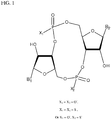
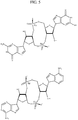
- thiophosphates A general structure of CDN thiophsphate is provided in Fig. 1 .
- B1 and B2 represent the base moiety.
- Phosphorothioates are a variant of normal nucleotides in which one of the nonbridging oxygens is replaced by a sulfur.
- the sulfurization of the internucleotide bond dramatically reduces the action of endo-and exonucleases, including 5' to 3' and 3' to 5' DNA POL 1 exonuclease, nucleases S1 and PI, RNases, serum nucleases and snake venom phosphodiesterase.
- endo-and exonucleases including 5' to 3' and 3' to 5' DNA POL 1 exonuclease, nucleases S1 and PI, RNases, serum nucleases and snake venom phosphodiesterase.
- endo-and exonucleases including 5' to 3' and 3' to 5' DNA POL 1 exonuclease, nucleases S1 and PI, RNases, serum nucleases and snake venom phosphodiesterase.
- the potential for crossing the lipid bilayer increases.
- a phosphorothioate linkage in inherently chiral may each exist in R or S forms.
- Rp,Rp, Sp,Sp, and Rp,Sp forms are possible.
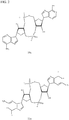
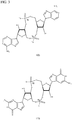
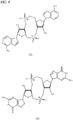
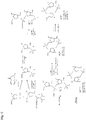
- preferred are substantially pure Rp,Rp and Rp,Sp diastereomers of these molecules. Examples of such CDN thiophosphate molecules are depicted in Figs.
- Rp,Rp-c-di-adenosine monophosphate shows thiophosphate forms of Rp,Rp-c-di-adenosine monophosphate; Rp,Sp-c-di-adenosine monophosphate; Rp,Rp-c-di-guanosine monophosphate and Rp,Sp-c-di-guanosine monophosphate.
- the stereochemistry of the phosphate center is shown as R or S, as appropriate.
- Preferred cyclic purine dinuclotides also include 2'-O-substituent forms of CDNs, and in particular CDN thiophosphates. Additional stability and bioavailability can be provided by the substitution of the 2'-OH of the ribose moiety. An example of such 2'-O-substituent analogs are shown in Fig. 11 .
- each R aa , R bb and R cC is, independently, H, an optionally linked chemical functional group or a further substituent group with a preferred list including without limitation, H, alkyl, alkenyl, alkynyl, aliphatic, alkoxy, acyl, aryl, aralkyl, heteroaryl, alicyclic, heterocyclic and heteroarylalkyl. Selected substituents within the compounds described herein are present to a recursive degree.
- Still other preferred cyclic purine dinuclotides also include S-substituent forms of CDNs, and in particular CDN thiophosphates, which can advantageously provide prodrugs with improved bioavailability.
- prodrug refers to a modification of contemplated compounds, wherein the modified compound is converted within the body (e.g., in a target cell or target organ) back into the unmodified form through enzymatic or non-enzymatic reactions.
- the hydroxyl on one ribose comprises a prodrug leaving group.
- Prodrugs can modify the physicochemical, biopharmaceutic, and pharmacokinetic properties of drugs.
- prodrugs are classified as drugs that are activated by undergoing transformation in vivo to form the active drug.
- Reasons for prodrug development are typically poor aqueous solubility, chemical instability, low oral bioavailability, lack of blood brain barrier penetration, and high first pass metabolism associated with the parent drug.
- Suitable prodrug moieties are described in, for example, " Prodrugs and Targeted Delivery,” J. Rautico, Ed., John Wiley & Sons, 2011 .
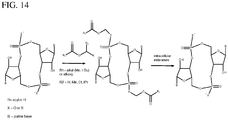
- prodrug analogs are shown in Fig. 12 .
- This produrg form with improved lipophilicity may be cleaved into active forms through the action of esterases present in target organisms.
- each R aa , R bb and R cC is, independently, H, an optionally linked chemical functional group or a further substituent group with a preferred list including without limitation, H, alkyl, alkenyl, alkynyl, aliphatic, alkoxy, acyl, aryl, aralkyl, heteroaryl, alicyclic, heterocyclic and heteroarylalkyl.
- Selected substituents within the compounds described herein are present to a recursive degree.
- Preferred substituents include methyl, isopropyl and t-butyl.
- Prodrug forms of nucleotides are known in the art.
- alkyl refers to a saturated straight or branched hydrocarbon radical containing up to twenty four carbon atoms.
- alkyl groups include without limitation, methyl, ethyl, propyl, butyl, isopropyl, n-hexyl, octyl, decyl, dodecyl and the like.
- Alkyl groups typically include from 1 to about 24 carbon atoms, more typically from 1 to about 12 carbon atoms with from 1 to about 6 carbon atoms being more preferred.
- the term "lower alkyl” as used herein includes from 1 to about 6 carbon atoms.
- Alkyl groups as used herein may optionally include one or more further substituent groups.
- alkenyl refers to a straight or branched hydrocarbon chain radical containing up to twenty four carbon atoms and having at least one carbon-carbon double bond.
- alkenyl groups include without limitation, ethenyl, propenyl, butenyl, 1-methyl-2-buten-1-yl, dienes such as 1,3 -butadiene and the like.
- Alkenyl groups typically include from 2 to about 24 carbon atoms, more typically from 2 to about 12 carbon atoms with from 2 to about 6 carbon atoms being more preferred.
- Alkenyl groups as used herein may optionally include one or more further substituent groups.
- alkynyl refers to a straight or branched hydrocarbon radical containing up to twenty four carbon atoms and having at least one carbon-carbon triple bond.
- alkynyl groups include, without limitation, ethynyl, 1-propynyl, 1-butynyl, and the like.
- Alkynyl groups typically include from 2 to about 24 carbon atoms, more typically from 2 to about 12 carbon atoms with from 2 to about 6 carbon atoms being more preferred.
- Alkynyl groups as used herein may optionally include one or more further substituent groups.
- acyl refers to a radical formed by removal of a hydroxyl group from an organic acid and has the general Formula -C(O)-X where X is typically aliphatic, alicyclic or aromatic. Examples include aliphatic carbonyls, aromatic carbonyls, aliphatic sulfonyls, aromatic sulfinyls, aliphatic sulfinyls, aromatic phosphates, aliphatic phosphates and the like. Acyl groups as used herein may optionally include further substituent groups.
- alicyclic refers to a cyclic ring system wherein the ring is aliphatic.
- the ring system can comprise one or more rings wherein at least one ring is aliphatic.
- Preferred alicyclics include rings having from about 5 to about 9 carbon atoms in the ring.
- Alicyclic as used herein may optionally include further substituent groups.
- aliphatic refers to a straight or branched hydrocarbon radical containing up to twenty four carbon atoms wherein the saturation between any two carbon atoms is a single, double or triple bond.
- An aliphatic group preferably contains from 1 to about 24 carbon atoms, more typically from 1 to about 12 carbon atoms with from 1 to about 6 carbon atoms being more preferred.
- the straight or branched chain of an aliphatic group may be interrupted with one or more heteroatoms that include nitrogen, oxygen, sulfur and phosphorus.
- Such aliphatic groups interrupted by heteroatoms include without limitation, polyalkoxys, such as polyalkylene glycols, polyamines, and polyimines. Aliphatic groups as used herein may optionally include further substituent groups.
- alkoxy refers to a radical formed between an alkyl group and an oxygen atom wherein the oxygen atom is used to attach the alkoxy group to a parent molecule.
- alkoxy groups include without limitation, methoxy, ethoxy, propoxy, isopropoxy, n-butoxy, sec-butoxy, tert-butoxy, n-pentoxy, neopentoxy, n-hexoxy and the like.
- Alkoxy groups as used herein may optionally include further substituent groups.
- aminoalkyl refers to an amino substituted C ⁇ -Cn alkyl radical.
- the alkyl portion of the radical forms a covalent bond with a parent molecule.
- the amino group can be located at any position and the aminoalkyl group can be substituted with a further substituent group at the alkyl and/or amino portions.
- aralkyl and arylalkyl refer to an aromatic group that is covalently linked to a C ⁇ -Cn alkyl radical.
- the alkyl radical portion of the resulting aralkyl (or arylalkyl) group forms a covalent bond with a parent molecule. Examples include without limitation, benzyl, phenethyl and the like.
- Aralkyl groups as used herein may optionally include further substituent groups attached to the alkyl, the aryl or both groups that form the radical group.
- aryl and aromatic refer to a mono- or polycyclic carbocyclic ring system radicals having one or more aromatic rings.
- aryl groups include without limitation, phenyl, naphthyl, tetrahydronaphthyl, indanyl, idenyl and the like.
- Preferred aryl ring systems have from about 5 to about 20 carbon atoms in one or more rings.
- Aryl groups as used herein may optionally include further substituent groups.
- halo and halogen, as used herein, refer to an atom selected from fluorine, chlorine, bromine and iodine.
- heteroaryl refers to a radical comprising a mono- or poly-cyclic aromatic ring, ring system or fused ring system wherein at least one of the rings is aromatic and includes one or more heteroatoms. Heteroaryl is also meant to include fused ring systems including systems where one or more of the fused rings contain no heteroatoms. Heteroaryl groups typically include one ring atom selected from sulfur, nitrogen or oxygen.
- heteroaryl groups include without limitation, pyridinyl, pyrazinyl, pyrimidinyl, pyrrolyl, pyrazolyl, imidazolyl, thiazolyl, oxazolyl, isooxazolyl, thiadiazolyl, oxadiazolyl, thiophenyl, furanyl, quinolinyl, isoquinolinyl, benzimidazolyl, benzooxazolyl, quinoxalinyl and the like.
- Heteroaryl radicals can be attached to a parent molecule directly or through a linking moiety such as an aliphatic group or hetero atom.
- Heteroaryl groups as used herein may optionally include further substituent groups.
- heteroarylalkyl refers to a heteroaryl group as previously defined that further includes a covalently attached C 1 -C 12 alkyl radical.
- the alkyl radical portion of the resulting heteroarylalkyl group is capable of forming a covalent bond with a parent molecule. Examples include without limitation, pyridinylmethyl, pyrimidinylethyl, napthyridinylpropyl and the like.
- Heteroarylalkyl groups as used herein may optionally include further substituent groups on one or both of the heteroaryl or alkyl portions.
- preferred cyclic purine dinuclotides also include prodrug forms of CDNs, and in particular CDN thiophosphates.
- Produrgs can modify the physicochemical, biopharmaceutic, and pharmacokinetic properties of drugs.
- Traditional prodrugs are classified as drugs that are activated by undergoing transformation in vivo to form the active drug.
- Reasons for prodrug development are typically poor aqueous solubility, chemical instability, low oral bioavailability, lack of blood brain barrier penetration, and high first pass metabolism associated with the parent drug. Suitable prodrug moieties are described in, for example, " Prodrugs and Targeted Delivery," J. Rautico, Ed., John Wiley & Sons, 2011 .
- substantially pure refers to an Rp,Rp or Rp,Sp form which is at least 75% pure relative to other possible stereochemistries at the chiral centers indicated in the figure above.
- a substantially pure Rp,Rp c-di-GMP thiophosphate would be at least 75% pure with regard to the Rp,Sp and Sp,Sp forms of c-di-GMP thiophosphate.
- a substantially pure cyclic purine dinuclotide is at least 85% pure, at least 90% pure, at least 95% pure, at least 97% pure, and at least 99% pure.
- a substantially pure cyclic purine dinuclotide preparation is "stereochemically pure," this is not meant to indicate that all CDNs within the preparation having a particular stereochemistry at these chiral centers are otherwise identical.
- a substantially pure cyclic purine dinuclotide preparation may contain a combination of Rp,Rp c-di-GMP thiophosphate and Rp,Rp c-di-AMP thiophosphate and still be a substantially pure cyclic purine dinuclotide preparation.
- Such a preparation may also include other components as described hereinafter that are advantageous for patient treatment, provided that all CDNs within the preparation having a particular stereochemistry at these chiral centers.
- the CDN compositions described herein can be administered to a host, either alone or in combination with a pharmaceutically acceptable excipient, in an amount sufficient to induce, modify, or stimulate an appropriate immune response.
- the immune response can comprise, without limitation, specific immune response, non-specific immune response, both specific and non-specific response, innate response, primary immune response, adaptive immunity, secondary immune response, memory immune response, immune cell activation, immune cell proliferation, immune cell differentiation, and cytokine expression.
- the CDN compositions are administered in conjunction with one or more additional compositions including vaccines intended to stimulate an immune response to one or more predetermined antigens; adjuvants; CTLA-4 and PD-1 pathway antagonists, lipids, liposomes, chemotherapeutic agents, immunomodulatory cell lines, etc..
- the CDN compositions may be administered before, after, and/or together with an additional therapeutic or prophylactic composition.
- additional therapeutic or prophylactic composition include, without limitation, B7 costimulatory molecule, interleukin-2, interferon-y, GM-CSF, CTLA-4 antagonists, OX-40/OX-40 ligand, CD40/CD40 ligand, sargramostim, levamisol, vaccinia virus, Bacille Calmette-Guerin (BCG), liposomes, alum, Freund's complete or incomplete adjuvant, detoxified endotoxins, mineral oils, surface active substances such as lipolecithin, pluronic polyols, polyanions, peptides, and oil or hydrocarbon emulsions.
- BCG Bacille Calmette-Guerin
- Carriers for inducing a T cell immune response which preferentially stimulate a cytolytic T cell response versus an antibody response are preferred, although those that stimulate both types of response can be used as well.
- the agent is a polypeptide
- the polypeptide itself or a polynucleotide encoding the polypeptide can be administered.
- the carrier can be a cell, such as an antigen presenting cell (APC) or a dendritic cell.
- APC antigen presenting cell
- Antigen presenting cells include such cell types as macrophages, dendritic cells and B cells.
- Other professional antigen-presenting cells include monocytes, marginal zone Kupffer cells, microglia, Langerhans' cells, interdigitating dendritic cells, follicular dendritic cells, and T cells.
- Facultative antigen-presenting cells can also be used.
- facultative antigen-presenting cells include astrocytes, follicular cells, endothelium and fibroblasts.
- the carrier can be a bacterial cell that is transformed to express the polypeptide or to deliver a polynucleoteide which is subsequently expressed in cells of the vaccinated individual.
- Adjuvants such as aluminum hydroxide or aluminum phosphate, can be added to increase the ability of the vaccine to trigger, enhance, or prolong an immune response.
- Additional materials such as cytokines, chemokines, and bacterial nucleic acid sequences, like CpG, a toll-like receptor (TLR) 9 agonist as well as additional agonists for TLR 2, TLR 4, TLR 5, TLR 7, TLR 8, TLR9, including lipoprotein, LPS, monophosphoryl lipid A, lipoteichoic acid, imiquimod, resiquimod, used separately or in combination with the described compositions are also potential adjuvants.
- TLR toll-like receptor
- adjuvants include the synthetic adjuvant QS-21 comprising a homogeneous saponin purified from the bark of Quillaja saponaria and Corynebacterium parvum ( McCune et al., Cancer, 1979; 43:1619 ). It will be understood that the adjuvant is subject to optimization. In other words, the skilled artisan can engage in routine experimentation to determine the best adjuvant to use.
- compositions may further comprise one or more additional substances which, because of their adjuvant nature, can act to stimulate the immune system to respond to the cancer antigens present on the inactivated tumor cell(s).
- Such adjuvants include, but are not limited to, lipids, liposomes, inactivated bacteria which induce innate immunity (e.g., inactivated or attenuated Listeria monocytogenes ), compositions which mediate innate immune activation via Toll-like Receptors (TLRs), (NOD)-like receptors (NLRs), Retinoic acid inducible gene-based (RIG)-I-like receptors (RLRs), and/or C-type lectin receptors (CLRs).
- TLRs Toll-like Receptors
- NLRs NOD-like receptors
- RLRs Retinoic acid inducible gene-based
- CLRs C-type lectin receptors
- PAMPs examples include lipoproteins, lipopolypeptides, peptidoglycans, zymosan, lipopolysaccharide, neisserial porins, flagellin, profillin, galactoceramide, muramyl dipeptide.
- Peptidoglycans, lipoproteins, and lipoteichoic acids are cell wall components of Gram-positive. Lipopolysaccharides are expressed by most bacteria, with MPL being one example.
- Flagellin refers to the structural component of bacterial flagella that is secreted by pathogenic and commensal bacterial.
- ⁇ -Galactosylceramide ( ⁇ -GalCer) is an activator of natural killer T (NKT) cells.
- Muramyl dipeptide is a bioactive peptidoglycan motif common to all bacteria. This list is not meant to be limiting.
- Preferred adjuvant compositions are described below.
- CTLA-4 is thought to be an important negative regulator of the adaptive immune response. Activated T cells upregulate CTLA-4, which binds CD80 and CD86 on antigen-presenting cells with higher affinity than CD28, thus inhibiting T-cell stimulation, IL-2 gene expression and T-cell proliferation. Anti-tumor effects of CTLA4 blockade have been observed in murine models of colon carcinoma, metastatic prostate cancer, and metastatic melanoma.
- Ipilimumab (YervoyTM) and tremelimumab are humanized monoclonal antibodies that bind to human CTLA4 and prevent its interaction with CD80 and CD86. Phase I and II studies using ipilimumab and tremelimumab have demonstrated clinical activity in cancer patients.
- Other negative immune regulators which may be targeted by a similar strategy include programmed cell death 1, B and T lymphocyte attenuator, transforming growth factor beta ⁇ , interleukin-10, and vascular endothelial growth factor.
- PD-1 is another negative regulator of adaptive immune response that is expressed on activated T-cells. PD-1 binds to B7-H1 and B7-DC, and the engagement of PD-1 suppresses T-cell activation. Anti-tumor effects have been demonstrated with PD-1 pathway blockade. BMS-936558, MK3475, CT-011, AMP-224 and MDX-1106 have been reported iin the literature to be examples of PD-1 pathway blockers which may find use in the present invention.
- TLR Toll like receptor
- TLRs are a family of pattern recognition receptors that were initially identified as sensors of the innate immune system that recognize microbial pathogens.
- TLRs comprise a family of conserved membrane spanning molecules containing an ectodomain of leucine-rich repeats, a transmembrane domain and an intracellular TIR (Toll/IL-1R) domain.
- PAMPs pathogen associated molecular patterns.
- Ligand binding to TLRs invokes a cascade of intra-cellular signaling pathways that induce the production of factors involved in inflammation and immunity.
- TLRs that are expressed on the surface of cells include TLR-1,-2,-4,-5, and -6, while TLR-3, -7/8, and -9 are expressed with the ER compartment.
- Human dendritic cell subsets can be identified on the basis of distinct TLR expression patterns.
- the myeloid or "conventional" subset of DC expresses TLRs 1-8 when stimulated, and a cascade of activation markers (e.g. CD80, CD86, MHC class I and II, CCR7), pro-inflammatory cytokines, and chemokines are produced.
- a cascade of activation markers e.g. CD80, CD86, MHC class I and II, CCR7
- DCs acquire an enhanced capacity to take up antigens and present them in an appropriate form to T cells.
- plasmacytoid subset of DC expresses only TLR7 and TLR9 upon activation, with a resulting activation of NK cells as well as T-cells.
- activating DC with TLR agonists may be beneficial for priming anti-tumor immunity in an immunotherapy approach to the treatment of cancer. It has also been suggested that successful treatment of breast cancer using radiation and chemotherapy requires TLR4 activation.
- TLR agonists known in the art and finding use in the present invention include, but are not limited to, the following:
- TLR agonists are preferably used in combinations with other vaccines, adjuvants and/or immune modulators, and may be combined in various combinations.
- the cyclic purine dinucleotides that bind to STING and induces STING-dependent TBK1 activation and an inactivated tumor cell which expresses and secretes one or more cytokines which stimulate dendritic cell induction, recruitment and/or maturation, as described herein can be administered together with one or more TLR agonists for therapeutic purposes.
- Liposomes are vesicles formed from one ("unilamellar") or more (“multilamellar”) layers of phospholipid. Because of the amphipathic character of the phospholipid building blocks, liposomes typically comprise a hydrophilic layer presenting a hydrophilic external face and enclosing a hydrophilic core.
- WO2010/104833 describes liposomal preparations which comprise:
- Such liposomal formulations can contain one or more additional components such as peptidoglycan, lipopeptide, lipopolysaccharide, monophosphoryl lipid A, lipoteichoic acid, resiquimod, imiquimod, flagellin, oligonucleotides containing unmethylated CpG motifs, beta-galactosylceramide, muramyl dipeptide, all-trans retinoic acid, double-stranded viral RNA, heat shock proteins, dioctadecyldimethylammonium bromide, cationic surfactants, toll-like receptor agonists, dimyristoyltrimethylammoniumpropane, and nod-like receptor agonists.
- these liposomal formulations can be used to deliver one or more liposomal formulations.
- liposomal formulations discussed above employ a" steroid derivative" as an anchor for attaching an immunogenic polypeptide or carbohydrate to a liposome
- the steroid may simply be provided as an unconjugated steroid such as cholesterol.
- Suitable methods for preparing liposomes from lipid mixtures are well known in the art. See, e.g., Basu & Basu, Liposome Methods and Protocols (Methods in Molecular Biology), Humana Press, 2002 ; Gregoriadis, Liposome Technology, 3rd Edition, Informa HealthCare, 2006 . Preferred methods include extrusion, homogenization, and sonication methods described therein.
- An exemplary method for preparing liposomes for use in the present invention, which comprises drying a lipid mixture, followed by hydration in an aqueous vehicle and sonication to form liposomes, is described in WO2010/104833 .
- the liposomes are provided within a particular average size range.
- Liposome size can be selected, for example, by extrusion of an aqueous vehicle comprising liposomes through membranes having a preselected pore size and collecting the material flowing through the membrane.
- the liposomes are selected to be substantially between 50 and 500 nm in diameter, more preferably substantially between 50 and 200 nm in diameter, and most preferably substantially between 50 and 150 nm in diameter.
- substantially as used herein in this context means that at least 75%, more preferably 80%, and most preferably at least 90% of the liposomes are within the designated range.
- lipid and lipid-like adjuvants which may find use in the present invention include oil-in-water (o/w) emulsions (see, e.g., Muderhwa et al., J. Pharmaceut. Sci. 88: 1332-9, 1999 )), VesiVax® TLR (Molecular Express, Inc.), digitonin (see, e.g., U.S. Patent 5,698,432 ), and glucopyranosyl lipids (see, e.g., United States Patent Application 20100310602 ).
- o/w oil-in-water
- VesiVax® TLR Molecular Express, Inc.
- digitonin see, e.g., U.S. Patent 5,698,432
- glucopyranosyl lipids see, e.g., United States Patent Application 20100310602 .
- the methods further involve administering to the subject an effective amount of one or more chemotherapeutics as an additional treatment.
- the one or more chemotherapeutics is selected from abiraterone acetate, altretamine, anhydrovinblastine, auristatin, bexarotene, bicalutamide, BMS 184476, 2,3,4,5,6-pentafluoro-N-(3-fluoro-4-methoxyphenyl)benzene sulfonamide, bleomycin, N,N-dimethyl-L-valyl-L-valyl-N-methyl-L-valyl-L-proly- 1-Lproline-t-butylamide, cachectin, cemadotin, chlorambucil, cyclophosphamide, 3',4'-didehydro-4'-deoxy-8'-norvin-caleukoblastine, docetaxol, doxetaxel
- inactivated tumor cell is meant a tumor cell (either “autologous” or “allogeneic” to the patient) which has which been treated to prevent division of the cells.
- tumor cells preserve their immunogenicity and their metabolic activity.
- Such tumor cells are genetically modified to express a transgene which is expressed within a patient as part of cancer therapy.
- a composition or vaccine of the disclosure comprises neoplastic (e.g., tumor) cells that are autologous or allogeneic to the patient undergoing treatment and is most preferably the same general type of tumor cell as is afflicting the patient.
- a patient suffering from melanoma will typically be administered a genetically modified cell derived from a melanoma.
- the inactivated tumor cells are administered to the patient together with one or more costimulatory molecules or agents.
- a preferred costimulatory agent comprises one or more cytokines which stimulate dendritic cell induction, recruitment, and/or maturation. Methods for assessing such costimulatory agents are well known in the literature. Induction and maturation of DCs is typically assessed by increased expression of certain membrane molecules such as CD80 and CD86, and/or secretion of pro-inflammatory cytokines, such as IL-12 and type I interferons following stimulation.
- the inactivated tumor cells themselves are modified to express and secrete one or more cytokines which stimulate dendritic cell induction, recruitment, and/or maturation.
- cytokines which stimulate dendritic cell induction, recruitment, and/or maturation.
- the tumor cell may express a transgene encoding GM-CSF as described in U.S. Pat. Nos. 5,637,483 , 5,904,920 , 6,277,368 and 6,350,445 , as well as in US Patent Publication No. 20100150946 .
- a form of GM-CSF-expressing genetically modified cancer cells or a "cytokine-expressing cellular vaccine" for the treatment of pancreatic cancer is described in U.S. Pat. Nos. 6,033,674 and 5,985,290 .
- cytokines which may be expressed by such inactivated tumor cells and/or bystander cells instead of, or together with, GM-CSF include, but are not limited to, one or more of CD40 ligand, IL-12, CCL3, CCL20, and CCL21. This list is not meant to be limiting.
- the tumor cell line may be accompanied by an inactivated bystander cell line which expresses and secretes one or more cytokines which stimulate dendritic cell induction, recruitment, and/or maturation.
- the bystander cell line may provide all of the cytokines which stimulate dendritic cell induction, recruitment, and/or maturation, or may supplement cytokines which stimulate dendritic cell induction, recruitment, and/or maturation expressed and secreted by the inactivated tumor cells.
- immunomodulatory cytokine-expressing bystander cell lines are disclosed in U.S. Pat. Nos.
- GM-CSF Granulocyte-macrophage colony stimulating factor
- the CDN compositions are administered in conjunction with one or more vaccines intended to stimulate an immune response to one or more predetermined antigens.
- target antigens examples include target antigens that may find use in the invention are listed in the following table.
- the target antigen may also be a fragment or fusion polypeptide comprising an immunologically active portion of the antigens listed in the table. This list is not meant to be limiting.
- Table 1 Antigens. Antigen Reference Tumor antigens Mesothelin GenBank Acc. No. NM_005823; U40434; NM_013404; BC003512 (see also, e.g., Hassan, et al. (2004) Clin. Cancer Res. 10:3937-3942 ; Muminova, et al.
- WT-1 Wilms' tumor-1 associated protein
- WT-1 including isoform A; isoform B; isoform C; isoform D.
- WT-1 isoform A GenBank Acc. Nos. NM_000378 : NP_000369).
- WT-1 isoform B GenBank Acc. Nos. NM_024424 : NP_077742).
- WT-1 isoform C GenBank Acc. Nos. NM_024425 : NP_077743).
- WT-1 isoform D GenBank Acc. Nos.
- NM_024426 NP_077744
- SCCE Stratum corneum chymotryptic enzyme
- MHC class I chain-related protein A MICA
- MHC class I chain-related protein A MHC class I chain-related protein A
- MICB MHC class I chain-related protein A
- Glypican-3 an antigen of, e.g., hepatocellular carcinoma and melanoma.
- GenBank Acc. No. NM_004484 Nakatsura, et al. (2003) Biochem. Biophys. Res. Commun. 306:16-25 ; Capurro, et al. (2003) Gasteroenterol. 125:89-97 ; Nakatsura, et al. (2004) Clin. Cancer Res. 10:6612-6621 ). Coactosin-like protein. Nakatsura, et al. (2002) Eur. J. Immunol.
- Prostate stem cell antigen GenBank Acc. No. AF043498; AR026974; AR302232 (see also, e.g., Argani, et al. (2001) Cancer Res. 61:4320-4324 ; Christiansen, et al. (2003) Prostate 55:9-19 ; Fuessel, et al. (2003) 23:221-228).
- Prostate acid phosphatase PAP
- PSA prostate-specific antigen
- PSM PSMA. Small, et al. (2000) J. Clin. Oncol.
- Prostate carcinoma tumor antigen-1 PCTA-1
- PCTA-1 Prostate carcinoma tumor antigen-1
- PCTA-1 Prostate carcinoma tumor antigen-1
- PTI Prostate tumor-inducing gene-1
- PTI-1 Prostate tumor-inducing gene-1
- Prostate-specific gene with homology to G protein-coupled receptor See, e.g., Machlenkin, et al. (2005) Cancer Res. 65:6435-6442 ).
- Prostase an antrogen regulated serine protease. See, e.g., Machlenkin, et al. (2005) Cancer Res. 65:6435-6442 ; GenBank Acc. No. BC096178; BC096176; BC096175. Proteinase 3. GenBank Acc. No. X55668. Cancer-testis antigens, e.g., NY-ESO-1; SCP-1; SSX-1; SSX-2; SSX-4; GAGE, CT7; CT8; CT10; MAGE-1; MAGE-2; MAGE-3; MAGE-4; MAGE-6; LAGE-1. GenBank Acc. No.
- NM_001327 (NY-ESO-1) (see also, e.g., Li, et al. (2005) Clin. Cancer Res. 11:1809-1814 ; Chen, et al. (2004) Proc. Natl. Acad. Sci. USA. 101(25):9363-9368 ; Kubuschok, et al. (2004) Int. J. Cancer. 109:568-575 ; Scanlan, et al. (2004) Cancer Immun. 4:1 ; Scanlan, et al. (2002) Cancer Res. 62:4041-4047 ; Scanlan, et al. (2000) Cancer Lett. 150:155-164 ; Dalerba, et al. (2001) Int. J.
- DAM family of genes e.g., DAM-1; DAM-6. Fleishhauer, et al. (1998) Cancer Res. 58:2969-2972 . RCAS1. Enjoji, et al. (2004) Dig. Dis. Sci. 49:1654-1656 . RU2. Van Den Eynde, et al. (1999) J. Exp. Med. 190:1793-1800 . CAMEL. Slager, et al. (2004) J. Immunol. 172:5095-5102 ; Slager, et al. (2004) Cancer Gene Ther. 11:227-236 .
- Colon cancer associated antigens e.g., NY-CO-8; NY-CO-9; NY-CO-13; NY-CO-16; NY-CO-20; NY-CO-38; NY-CO-45; NY-CO-9/HDAC5; NY-CO-41/MBD2; NY-CO-42/TRIP4; NY-CO-95/KIAA1416; KNSL6; seb4D.
- Scanlan et al. (2002) Cancer Res. 62:4041-4047 .
- N-Acetylglucosaminyl-tranferase V GnT-V).
- Elongation factor 2 mutated (ELF2M) Elongation factor 2 mutated
- MUM-1 (melanoma ubiquitous mutated); MUM-2; MUM-2 Arg-Gly mutation; MUM-3. Gueguen, et al. (1998) J. Immunol. 160:6188-6194 ; Hirose, et al. (2005) Int. J. Hematol. 81:48-57 ; Baurain, et al. (2000) J. Immunol. 164:6057-6066 ; Chiari, et al. (1999) Cancer Res. 59:5785-5792 .
- LDLR/FUT fusion protein antigen of melanoma Wang, et al. (1999) J. Exp. Med. 189:1659-1667 .
- NY-REN series of renal cancer antigens Scanlan, et al. (2002) Cancer Res. 62:4041-4047 ; Scanlan, et al. (1999) Cancer Res. 83:456-464 .
- NY-BR series of breast cancer antigens e.g., NY-BR-62; NY-BR-75; NY-BR-85; NY-BR-62; NY-BR-85.
- Survivin GenBank Acc. No. AB028869; U75285 see also, e.g., Tsuruma, et al. (2004) J. Translational Med. 2:19 (11 pages ); Pisarev, et al. (2003) Clin. Cancer Res. 9:6523-6533 ; Siegel, et al.
- HDAC Histone deacetylases
- GAGE/PAGE family e.g., PAGE-1; PAGE-2; PAGE-3; PAGE-4; XAGE-1; XAGE-2; XAGE-3.
- MAGE-A, B, C, and D families MAGE-B5; MAGE-B6; MAGE-C2; MAGE-C3; MAGE-3; MAGE-6. Lucas, et al. (2000) Int. J. Cancer 87:55-60 ; Scanlan, et al. (2001) Cancer Immun. 1:4 .
- Tyrosinase-related proteins 1 and 2 (TRP-1 and TRP-2).
- GenBank Acc. No. NM_001922. (see also, e.g., Bronte, et al. (2000) Cancer Res. 60:253-258 ). Gp100/pmel-17.
- GenBank Acc. Nos. AH003567 ; U31798 ; U31799 ; U31807 ; U31799 see also, e.g., Bronte, et al. (2000) Cancer Res. 60:253-258 ).
- TARP See, e.g., Clifton, et al. (2004) Proc. Natl. Acad. Sci.
- HMGB1 a DNA binding protein and cytokine. Brezniceanu, et al. (2003) FASEB J. 17:1295-1297 . ETV6/AML1. Codrington, et al. (2000) Br. J. Haematol. 111:1071-1079 .
- NM_010139 (Mouse); Genbank Accession No. AB038986 (Chicken, partial sequence); GenBank Accession Nos. NP_ 004422, AAH37166, and AAA53375 (human); GenBank Accession Nos. NP_034269 (mouse), AAH06954 (mouse), XP_345597 (rat), and BAB63910 (chicken).
- EGFRvIII See, e.g., WO/2012/068360 Francisella tularensis antigens Francisella tularensis A and B. Complete genome of subspecies Schu S4 (GenBank Acc. No. AJ749949); of subspecies Schu 4 (GenBank Acc. No. NC_006570).
- Antigenic components of F. tularensis include, e.g., 80 antigens, including 10 kDa and 60 kDa chaperonins ( Havlasova, et al.
- CSP Circumsporozoite protein
- SSP2 SSP2
- HEP17 HEP17
- Exp-1 orthologs found in P. falciparum and LSA-1.
- CSP Circumsporozoite protein
- SSP2 SSP2
- HEP17 HEP17
- Exp-1 orthologs found in P. falciparum and LSA-1.
- CSP Circumsporozoite protein
- SSP2 SSP2
- HEP17 HEP17
- Exp-1 orthologs found in P. falciparum and LSA-1.
- CSP Circumsporozoite protein
- SSP2 see, e.g., GenBank Acc. No. AF249739.
- LSA-1 (see, e.g., GenBank Acc. No. Z30319). Ring-infected erythrocyte survace protein (RESA); merozoite surface protein 2 (MSP2); Spf66; merozoite surface protein 1(MSP1); 195A; BVp42.
- RSA Ring-infected erythrocyte survace protein
- MSP2 merozoite surface protein 2
- Spf66 merozoite surface protein 1(MSP1)
- 195A BVp42.
- MSP2 see, e.g., GenBank Acc. No. X96399; X96397).
- MSP1 see, e.g., GenBank Acc. No. X03371).
- RESA see, e.g., GenBank Acc. No. X05181; X05182).
- Apical membrane antigen 1 AMA1. See, e.g. , Gupta, et al. (2005) Protein Expr. Purif. 41:186-198 .
- AMA1 see, e.g., GenBank Acc. No. A'13; AJ494905; AJ490565).
- Viruses and viral antigens Hepatitis A GenBank Acc.
- Hepatitis B Complete genome (see, e.g., GenBank Acc. Nos. AB214516; NC_003977; AB205192; AB205191; AB205190; AJ748098; AB198079; AB198078; AB198076; AB074756).
- Hepatitis C Complete genome (see, e.g., GenBank Acc. Nos. NC_004102; AJ238800; AJ238799; AJ132997; AJ132996; AJ000009; D84263).
- HTLV Human T-cell lymphotropic virus
- HTLV types I and II including the HTLV type I subtypes Cosmopolitan, Central African, and Austro-Melanesian, and the HTLV type II subtypes Iia, Iib, Iic, and Iid. See, e.g., Capdepont, et al. (2005) AIDS Res. Hum. Retrovirus 21:28-42 ; Bhigjee, et al. (1999) AIDS Res. Hum.
- HTLV type I see, e.g., GenBank Acc. Nos. AY563954; AY563953.
- HTLV type II see, e.g., GenBank Acc. Nos. L03561; Y13051; AF139382).
- Coronaviridae including Coronaviruses, such as SARS-coronavirus (SARS-CoV), and Toroviruses.
- Coxsackie virus A including the serotypes 1, 11, 13, 15, 17, 18, 19, 20, 21, 22, and 24 (also known as Human enterovirus C; HEV-C). See, e.g., Brown, et al. (2003) J. Virol. 77:8973-8984 .
- Coxsackie virus B including subtypes 1-6.
- Human enteroviruses including, e.g., human enterovirus A (HEV-A, CAV2 to CAV8, CAV10, CAV12, CAV14, CAV16, and EV71) and also including HEV-B (CAV9, CBV1 to CBV6, E1 to E7, E9, E11 to E21, E24 to E27, E29 to E33, and EV69 and E73), as well as HEV. See, e.g., Oberste, et al. (2004) J. Virol. 78:855-867 . Human enterovirus A (GenBank Acc. Nos.
- NC_001612 human enterovirus B
- NC_001428 human enterovirus C
- NC_001430 human enterovirus D
- Simian enterovirus A GenBank Acc. No. NC_003988. Polioviruses including PV1, PV2, and PV3. See, e.g., He, et al. (2003) J. Virol. 77:4827-4835 ; Hahsido, et al. (1999) Microbiol. Immunol. 43:73-77 .
- GenBank Acc. No. AJ132961 type 1
- AY278550 type 2
- X04468 type 3
- Viral encephalitides viruses including equine encephalitis, Venezuelan equine encephalitis (VEE) (including subtypes IA, IB, IC, ID, IIIC, IIID), Eastern equine encephalitis (EEE), Western equine encephalitis (WEE), St. Louis encephalitis, Murray Valley (Australian) encephalitis, Japanese encephalitis, and tick-born encephalitis.
- VEE Venezuelan equine encephalitis
- EEE Eastern equine encephalitis
- WEE Western equine encephalitis
- St. Louis encephalitis Murray Valley (Australian) encephalitis
- Japanese encephalitis and tick-born encephalitis.
- Human herpesviruses including cytomegalovirus (CMV), Epstein-Barr virus (EBV), human herpesvirus-1 (HHV-1), HHV-2, HHV-3, HHV-4, HHV-5, HHV-6, HHV-7, HHV-8, herpes B virus, herpes simplex virus types 1 and 2 (HSV-1, HSV-2), and varicella zoster virus (VZV).
- CMV cytomegalovirus
- EBV Epstein-Barr virus
- HHV-1 human herpesvirus-1
- HHV-2 human herpesvirus-1
- HHV-3 HHV-4
- HHV-5 HHV-6
- HHV-7 HHV-8
- herpes B virus herpes simplex virus types 1 and 2
- HSV-1, HSV-2 herpes simplex virus types 1 and 2
- VZV varicella zoster virus
- HHV-8 Human herpesvirus 8
- group M including subtypes A to J
- group O including any distinguishable subtypes
- HIV-2 including subtypes A-E. See, e.g., Smith, et al. (1998) J. Med. Virol. 56:264-268 . See also, e.g., GenBank Acc. Nos.
- Epstein-Barr virus including subtypes A and B. See, e.g., Peh, et al. (2002) Pathology 34:446-450 . Epstein-Barr virus strain B95-8 (GenBank Acc. No. V01555).
- Cytomegalovirus (CMV) subtypes include CMV subtypes I-VII. See, e.g., Chern, et al. (1998) J. Infect.
- Rhinovirus including all serotypes.
- Human rhinovirus 2 GenBank Acc. No. X02316
- Human rhinovirus B GenBank Acc. No. NC_001490
- Human rhinovirus 89 GenBank Acc. No. NC_001617
- Human rhinovirus 39 GenBank Acc. No. AY751783
- Adenovirus including all serotypes.
- NC_004001 AC_000019; AC_000018; AC_000017; AC_000015; AC_000008; AC_000007; AC_000006; AC_000005; AY737798; AY737797;NC_003266; NC_002067; AY594256; AY594254; AY875648; AJ854486; AY163756; AY594255; AY594253; NC_001460; NC_001405; AY598970; AY458656; AY487947; NC_001454; AF534906; AY45969; AY128640; L19443; AY339865; AF532578.
- Ebola-Sudan EBO-S
- Ebola-Zaire EBO-Z
- Ebola-Reston EBO-R
- Marburg virus see, e.g., GenBank Acc. No. NC_001608
- Ebola virus see, e.g., GenBank Acc. Nos. NC_006432; AY769362; NC_002549; AF272001; AF086833).
- Arenaviruses including lymphocytic choriomeningitis (LCM) virus, Lassa virus, Junin virus, and Machupo virus.
- Junin virus segment S (GenBank Acc. No. NC_005081); Junin virus, segment L (GenBank Acc. No. NC_005080).
- Rabies virus See, e.g., GenBank Acc. Nos. NC_001542; AY956319; AY705373; AF499686; AB128149; AB085828; AB009663.
- Arboviruses including West Nile virus, Dengue viruses 1 to 4, Colorado tick fever virus, Sindbis virus, Togaviraidae, Flaviviridae, Bunyaviridae, Reoviridae, Rhabdoviridae, Orthomyxoviridae, and the like.
- Dengue virus type 1 see, e.g., GenBank Acc. Nos. AB 195673; AY762084.
- Dengue virus type 2 see, e.g., GenBank Acc. Nos. NC_001474; AY702040; AY702039; AY702037).
- Dengue virus type 3 see, e.g., GenBank Acc. Nos. AY923865; AT858043).
- Dengue virus type 4 (see, e.g., GenBank Acc. Nos. AY947539; AY947539; AF326573).
- Sindbis virus (see, e.g., GenBank Acc. Nos. NC_001547; AF429428; J02363; AF103728).
- West Nile virus (see, e.g., GenBank Acc. Nos. NC_001563; AY603654).
- Poxvirus including orthopoxvirus (variola virus, monkeypox virus, vaccinia virus, cowpox virus), yatapoxvirus (tanapox virus, Yaba monkey tumor virus), parapoxvirus, and molluscipoxvirus.
- Viriola virus see, e.g., GenBank Acc. Nos. NC_001611; Y16780; X72086; X69198). Yellow fever. See, e.g., GenBank Acc. No. NC_002031; AY640589; X03700.
- Hantaviruses including serotypes Hantaan (HTN), Seoul (SEO), Dobrava (DOB), Sin Nombre (SN), Puumala (PUU), and Dobrava-like Saaremaa (SAAV). See, e.g., Elgh, et al. (1997) J. Clin. Microbiol. 35:1122-1130 ; Sjolander, et al. (2002) Epidemiol.
- GenBank Acc. No. NC_005222 and NC_005219 (Hantavirus). See also, e.g., GenBank Acc. Nos. NC_005218; NC_005222; NC_005219. Flaviviruses, including Dengue virus, Japanese encephalitis virus, West Nile virus, and yellow fever virus. See, e.g., Mukhopadhyay, et al. (2005) Nature Rev. Microbiol. 3:13-22 . GenBank Acc. Nos NC_001474 and AY702040 (Dengue). GenBank Acc. Nos.
- HPV Human parainfluenzaviruses
- Influenza virus including influenza virus types A, B, and C. Influenza nucleocapsid (see, e.g., GenBank Acc. No. AY626145).
- Influenza hemagglutinin see, e.g., GenBank Acc. Nos. AY627885; AY555153.
- Influenza neuraminidase see, e.g., GenBank Acc. Nos. AY555151; AY577316.
- Influenza matrix protein 2 see, e.g., GenBank Acc. Nos. AY626144(.
- Influenza basic protein 1 see, e.g., GenBank Acc. No. AY627897
- Influenza polymerase acid protein see, e.g., GenBank Acc. No. AY627896.
- Influenza nucleoprotein see, e.g., GenBank Acc. Nno. AY627895).
- Influenza A virus subtypes e.g., swine viruses (SIV): H1N1 influenzaA and swine influenza virus.
- Hemagglutinin of H1N1 (GenBank Acc. No. S67220).
- Influenza A virus matrix protein (GenBank Acc. No. AY700216).
- Influenza virus A H5H1 nucleoprotein (GenBank Acc. No. AY646426).
- H1N1 haemagglutinin GenBank Acc. No. D00837). See also, GenBank Acc. Nos. BD006058; BD006055; BD006052. See also, e.g., Wentworth, et al. (1994) J. Virol.
- Respiratory syncytial virus including subgroup A and subgroup B.
- Respiratory syncytial virus (RSV) (see, e.g., GenBank Acc. Nos. AY353550; NC_001803; NC001781).
- Rotaviruses including human rotaviruses A to E, bovine rotavirus, rhesus monkey rotavirus, and human-RVV reassortments.
- Human rotavirus C segment 8 GenBank Acc. No.
- Human rotavirus G9 strain outer capsid protein see, e.g., GenBank Acc. No. DQ056300
- Human rotavirus B strain non-structural protein 4 see, e.g., GenBank Acc. No. AY548957
- human rotavirus A strain major inner capsid protein see, e.g., GenBank Acc. No. AY601554.
- Polyomavirus including simian virus 40 (SV40), JC virus (JCV) and BK virus (BKV). See, e.g., Engels, et al. (2004) J. Infect. Dis. 190:2065-2069 ; Vilchez and Butel (2004) Clin. Microbiol. Rev.
- Segments of Eyach virus (see, e.g., GenBank Acc. Nos. AF282475 ; AF282472 ; AF282473 ; AF282478 ; AF282476 ; NC 003707 ; NC 003702 ; NC 003703 ; NC 003704 ; NC 003705 ; NC 003696 ; NC 003697 ; NC 003698 ; NC 003699 ; NC 003701 ; NC 003706 ; NC 003700 ; AF282471 ; AF282477).
- Calciviruses including the genogroups Norwalk, Snow Mountain group (SMA), and Saaporo.
- Snow Mountain virus see, e.g., GenBank Acc. No. AY134748,.
- Parvoviridae including dependovirus, parvovirus (including parvovirus B19), and erythrovirus. See, e.g., Brown (2004) Dev. Biol. (Basel) 118:71-77 ; Alvarez- Lafuente, et al. (2005) Ann. Rheum. Dis. 64:780-782 ; Ziyaeyan, et al. (2005) Jpn. J. Infect. Dis. 58:95-97 ; Kaufman, et al. (2005) Virology 332: 189-198 .
- Other organisms for which suitable antigens are known in the art include, but are not limited to, Chlamydia trachomatis, Streptococcus pyogenes (Group A Strep), Streptococcus agalactia (Group B Strep), Streptococcus pneumonia, Staphylococcus aureus, Escherichia coli, Haemophilus influenzae, Neisseria meningitidis, Neisseria gonorrheae, Vibrio cholerae, Salmonella species (including typhi, typhimurium ), enterica (including Helicobactor pylori Shigella flexneri and other Group D shigella species), Burkholderia mallei, Burkholderia pseudomallei, Klebsiella pneumonia, Clostridium species (including C. difficile ), Vibrio parahaemolyticus and V. vulnificus. This list is not meant to be limiting.
- pharmaceutical refers to a chemical substance intended for use in the cure, treatment, or prevention of disease and which is subject to an approval process by the U.S. Food and Drug Administration (or a non-U.S. equivalent thereof) as a prescription or over-the-counter drug product. Details on techniques for formulation and administration of such compositions may be found in Remington, The Science and Practice of Pharmacy 21st Edition (Mack Publishing Co., Easton, PA ) and Nielloud and Marti-Mestres, Pharmaceutical Emulsions and Suspensions: 2nd Edition (Marcel Dekker, Inc, New York ).
- the pharmaceutical compositions may be administered by a variety of means including orally, parenterally, by inhalation spray, topically, or rectally in formulations containing pharmaceutically acceptable carriers, adjuvants and vehicles.
- parenteral as used here includes but is not limited to subcutaneous, intravenous, intramuscular, intraarterial, intradermal, intrathecal and epidural injections with a variety of infusion techniques.
- Intraarterial and intravenous injection as used herein includes administration through catheters. Administration via intracoronary stents and intracoronary reservoirs is also contemplated.
- oral as used herein includes, but is not limited to oral ingestion, or delivery by a sublingual or buccal route. Oral administration includes fluid drinks, energy bars, as well as pill formulations.
- compositions may be in any form suitable for the intended method of administration.
- tablets, troches, lozenges, aqueous or oil suspensions, dispersible powders or granules, emulsions, hard or soft capsules, syrups or elixirs may be prepared.
- Compositions intended for oral use may be prepared according to any method known to the art for the manufacture of pharmaceutical compositions and such compositions may contain one or more agents including sweetening agents, flavoring agents, coloring agents and preserving agents, in order to provide a palatable preparation.
- Tablets containing a drug compound in admixture with non-toxic pharmaceutically acceptable excipient which are suitable for manufacture of tablets are acceptable.
- excipients may be, for example, inert diluents, such as calcium or sodium carbonate, lactose, calcium or sodium phosphate; granulating and disintegrating agents, such as maize starch, or alginic acid; binding agents, such as starch, gelatin or acacia; and lubricating agents; such as magnesium stearate, stearic acid or talc.
- Tablets may be uncoated, or may be coated by known techniques including enteric coating, colonic coating, or microencapsulation to delay disintegration and adsorption in the gastrointestinal tract and/or provide a sustained action over a longer period.
- a time delay material such as glyceryl monostearate or glyceryl distearate alone or with a wax may be employed.
- Formulations for oral use may be also presented as hard gelatin capsules where the drug compound is mixed with an inert solid diluent, for example calcium phosphate or kaolin, or as soft gelatin capsules wherein the active ingredient is mixed with water or an oil medium, such as peanut oil, liquid paraffin or olive oil.
- an inert solid diluent for example calcium phosphate or kaolin
- an oil medium such as peanut oil, liquid paraffin or olive oil.
- compositions may be formulated as aqueous suspensions in admixture with excipients suitable for the manufacture of aqueous-suspensions.
- excipients include a suspending agent, such as sodium carboxymethylcellulose, methylcellulose, hydroxypropyl methylcellulose, sodium alginate, polyvinylpyrrolidone, gum tragacanth and gum acacia, and dispersing or wetting agents such as a naturally occurring phosphatide (e.g., lecithin), a condensation product of an alkylene oxide with a fatty acid (e.g., polyoxyethylene stearate), a condensation product of ethylene oxide with a long chain aliphatic alcohol (e.g., heptadecaethyleneoxycetanol), a condensation product of ethylene oxide with a partial ester derived from a fatty acid and a hexitol anhydride (e.g., polyoxyethylene sorbitan monooleate).
- a suspending agent
- the aqueous suspension may also contain one or more preservatives such as ethyl or n-propyl p-hydroxy-benzoate, one or more coloring agents, one or more flavoring agents and one or more sweetening agents, such as sucrose or saccharin.
- Oil suspensions may be formulated by suspending the active ingredient in a vegetable oil, such as arachis oil, olive oil, sesame oil or coconut oil, or a mineral oil such as liquid paraffin.
- the oral suspensions may contain a thickening agent, such as beeswax, hard paraffin or cetyl alcohol.
- Sweetening agents, such as those set forth above, and flavoring agents may be added to provide a palatable oral preparation.
- These compositions may be preserved by the addition of an antioxidant such as ascorbic acid.
- Dispersible powders and granules of the disclosure suitable for preparation of an aqueous suspension by the addition of water provide the active ingredient in admixture with a dispersing or wetting agent, a suspending agent, and one or more preservatives.
- a dispersing or wetting agent and suspending agents are exemplified by those disclosed above. Additional excipients, for example sweetening, flavoring and coloring agents, may also be present.
- the pharmaceutical compositions of the disclosure may also be in the form of oil-in-water emulsions.
- the oily phase may be a vegetable oil, such as olive oil or arachis oil, a mineral oil, such as liquid paraffin, or a mixture of these.
- Suitable emulsifying agents include naturally-occurring gums, such as gum acacia and gum tragacanth, naturally occurring phosphatides, such as soybean lecithin, esters or partial esters derived from fatty acids and hexitol anhydrides, such as sorbitan monooleate, and condensation products of these partial esters with ethylene oxide, such as polyoxyethylene sorbitan monooleate.
- the emulsion may also contain sweetening and flavoring agents.
- Syrups and elixirs may be formulated with sweetening agents, such as glycerol, sorbitol or sucrose. Such formulations may also contain a demulcent, a preservative, a flavoring or a coloring agent.
- sweetening agents such as glycerol, sorbitol or sucrose.
- Such formulations may also contain a demulcent, a preservative, a flavoring or a coloring agent.
- compositions of the disclosure may be in the form of a sterile injectable preparation, such as a sterile injectable aqueous or oleaginous suspension.
- a sterile injectable preparation such as a sterile injectable aqueous or oleaginous suspension.
- This suspension may be formulated according to the known art using those suitable dispersing or wetting agents and suspending agents which have been mentioned above.
- the sterile injectable preparation may also be a sterile injectable solution or suspension in a non-toxic parenterally acceptable diluent or solvent such as a solution in 1,3-butane-diol or prepared as a lyophilized powder.
- the acceptable vehicles and solvents that may be employed are water, Ringer's solution and isotonic sodium chloride solution.
- sterile fixed oils may conventionally be employed as a solvent or suspending medium.
- any bland fixed oil may be employed including synthetic mono- or diglycerides.
- fatty acids such as oleic acid
- a time-release formulation intended for oral administration to humans may contain approximately 20 to 500 mg of active material compounded with an appropriate and convenient amount of carrier material which may vary from about 5 to about 95% of the total compositions. It is preferred that the pharmaceutical composition be prepared which provides easily measurable amounts for administration.
- an effective amount to be administered systemically is about 0.1 mg/kg to about 100 mg/kg and depends upon a number of factors including, for example, the age and weight of the subject (e.g., a mammal such as a human), the precise condition requiring treatment and its severity, the route of administration, and will ultimately be at the discretion of the attendant physician or veterinarian. It will be understood, however, that the specific dose level for any particular patient will depend on a variety of factors including the activity of the specific compound employed, the age, body weight, general health, sex and diet of the individual being treated; the time and route of administration; the rate of excretion; other drugs which have previously been administered; and the severity of the particular condition undergoing therapy, as is well understood by those skilled in the art.
- formulations of the disclosure suitable for oral administration may be presented as discrete units such as capsules, cachets or tablets each containing a predetermined amount of the active ingredient, as a powder or granules; as a solution or a suspension in an aqueous or non-aqueous liquid, or as an oil-in-water liquid emulsion or a water-in-oil liquid emulsion.
- the pharmaceutical compositions may also be administered as a bolus, electuary or paste.
- a tablet may be made by compression or molding, optionally with one or more accessory ingredients.
- Compressed tablets may be prepared by compressing in a suitable machine the active ingredient in a free flowing form such as a powder or granules, optionally mixed with a binder (e.g., povidone, gelatin, hydroxypropyl ethyl cellulose), lubricant, inert diluent, preservative, disintegrant (e.g., sodium starch glycolate, cross-linked povidone, cross-linked sodium carboxymethyl cellulose) surface active or dispersing agent.
- Molded tablets may be made in a suitable machine using a mixture of the powdered compound moistened with an inert liquid diluent.
- the tablets may optionally be coated or scored and may be formulated so as to provide slow or controlled release of the active ingredient therein using, for example, hydroxypropyl methylcellulose in varying proportions to provide the desired release profile. Tablets may optionally be provided with an enteric or colonic coating to provide release in parts of the gut other than the stomach. This is particularly advantageous with the compounds of formula 1 when such compounds are susceptible to acid hydrolysis.
- Formulations suitable for topical administration in the mouth include lozenges comprising the active ingredient in a flavored base, usually sucrose and acacia or tragacanth; pastilles comprising the active ingredient in an inert base such as gelatin and glycerin, or sucrose and acacia; and mouthwashes comprising the active ingredient in a suitable liquid carrier.
- Formulations for rectal administration may be presented as a suppository with a suitable base comprising for example cocoa butter or a salicylate.
- Formulations suitable for vaginal administration may be presented as pessaries, tampons, creams, gels, pastes, foams or spray formulations containing in addition to the active ingredient such carriers as are known in the art to be appropriate.
- Formulations suitable for parenteral administration include aqueous and non-aqueous isotonic sterile injection solutions which may contain antioxidants, buffers, bacteriostats and solutes which render the formulation isotonic with the blood of the intended recipient; and aqueous and non-aqueous sterile suspensions which may include suspending agents and thickening agents.
- the formulations may be presented in unit-dose or multi-dose sealed containers, for example, ampoules and vials, and may be stored in a freeze-dried (lyophilized) condition requiring only the addition of the sterile liquid carrier, for example water for injections, immediately prior to use.
- Injection solutions and suspensions may be prepared from sterile powders, granules and tablets of the kind previously described.
- pharmaceutically acceptable salts include, but are not limited to: acetate, pyridine, ammonium, piperazine, diethylamine, nicotinamide, formic, urea, sodium, potassium, calcium, magnesium, zinc, lithium, cinnamic, methylamino, methanesulfonic, picric, tartaric, triethylamino, dimethylamino, and tris(hydoxymethyl)aminomethane. Additional pharmaceutically acceptable salts are known to those skilled in the art.
- An effective amount for a particular patient may vary depending on factors such as the condition being treated, the overall health of the patient, the route and dose of administration and the severity of side effects.
- Guidance for methods of treatment and diagnosis is available (see, e.g., Maynard, et al. (1996) A Handbook of SOPs for Good Clinical Practice, Interpharm Press, Boca Raton, FL ; Dent (2001) Good Laboratory and Good Clinical Practice, Urch Publ., London, UK ).
- an effective amount may be given in one dose, but is not restricted to one dose.
- the administration can be two, three, four, five, six, seven, eight, nine, ten, eleven, twelve, thirteen, fourteen, fifteen, sixteen, seventeen, eighteen, nineteen, twenty, or more, administrations of pharmaceutical composition.
- the administrations can be spaced by time intervals of one minute, two minutes, three, four, five, six, seven, eight, nine, ten, or more minutes, by intervals of about one hour, two hours, three, four, five, six, seven, eight, nine, ten, 11, 12, 13, 14, 15, 16, 17, 18, 19, 20, 21, 22, 23, 24 hours, and so on.
- the term "about” means plus or minus any time interval within 30 minutes.
- the administrations can also be spaced by time intervals of one day, two days, three days, four days, five days, six days, seven days, eight days, nine days, ten days, 11 days, 12 days, 13 days, 14 days, 15 days, 16 days, 17 days, 18 days, 19 days, 20 days, 21 days, and combinations thereof.
- the invention is not limited to dosing intervals that are spaced equally in time, but encompass doses at non-equal intervals.
- a dosing schedule of, for example, once/week, twice/week, three times/week, four times/week, five times/week, six times/week, seven times/week, once every two weeks, once every three weeks, once every four weeks, once every five weeks, and the like, is available for the invention.
- the dosing schedules encompass dosing for a total period of time of, for example, one week, two weeks, three weeks, four weeks, five weeks, six weeks, two months, three months, four months, five months, six months, seven months, eight months, nine months, ten months, eleven months, and twelve months.
- the cycle can be repeated about, e.g., every seven days; every 14 days; every 21 days; every 28 days; every 35 days; 42 days; every 49 days; every 56 days; every 63 days; every 70 days; and the like.
- An interval of non dosing can occur between a cycle, where the interval can be about, e.g., seven days; 14 days; 21 days; 28 days; 35 days; 42 days; 49 days; 56 days; 63 days; 70 days; and the like.
- the term "about” means plus or minus one day, plus or minus two days, plus or minus three days, plus or minus four days, plus or minus five days, plus or minus six days, or plus or minus seven days.
- compositions of the present invention are preferably formulated as pharmaceutical compositions for parenteral or enteral delivery.
- a typical pharmaceutical composition for administration to an animal comprises a pharmaceutically acceptable vehicle such as aqueous solutions, non-toxic excipients, including salts, preservatives, buffers and the like. See, e.g., Remington's Pharmaceutical Sciences, 15th Ed., Easton ed. , Mack Publishing Co., pp 1405-1412 and 1461- 1487 (1975 ); The National Formulary XIV, 14th Ed., American Pharmaceutical Association, Washington, DC (1975 ) .
- non-aqueous solvents are propylene glycol, polyethylene glycol, vegetable oil and injectable organic esters such as ethyloleate.
- Aqueous carriers include water, alcoholic/aqueous solutions, saline solutions, parenteral vehicles such as sodium chloride, Ringer's dextrose, etc.
- Intravenous vehicles include fluid and nutrient replenishers.
- Preservatives include antimicrobial agents, anti-oxidants, chelating agents and inert gases. The pH and exact concentration of the various components the pharmaceutical composition are adjusted according to routine skills in the art.
- heterologous boosting Repeated administrations of a particular vaccine (homologous boosting) have proven effective for boosting humoral responses. Such an approach may not be effective at boosting cellular immunity because prior immunity to the vector tends to impair robust antigen presentation and the generation of appropriate inflammatory signals.
- One approach to circumvent this problem has been the sequential administration of vaccines that use different antigen-delivery systems (heterologous boosting).
- at least one prime or boost delivery comprises delivery of the inactivated tumor cell/cyclic purine dinucleotide compositions described herein.
- the heterologous arm of the regimen may comprise delivery of antigen using one or more of the following strategies:
- a prime vaccine and a boost vaccine can be administered by any one or combination of the following routes.
- the prime vaccine and boost vaccine are administered by the same route.
- the prime vaccine and boost vaccine are administered by different routes.
- the term "different routes" encompasses, but is not limited to, different sites on the body, for example, a site that is oral, non-oral, enteral, parenteral, rectal, intranode (lymph node), intravenous, arterial, subcutaneous, intramuscular, intratumor, peritumor, intratumor, infusion, mucosal, nasal, in the cerebrospinal space or cerebrospinal fluid, and so on, as well as by different modes, for example, oral, intravenous, and intramuscular.
- an effective amount of a prime or boost vaccine may be given in one dose, but is not restricted to one dose.
- the administration can be two, three, four, five, six, seven, eight, nine, ten, eleven, twelve, thirteen, fourteen, fifteen, sixteen, seventeen, eighteen, nineteen, twenty, or more, administrations of the vaccine.
- the administrations can be spaced by time intervals of one minute, two minutes, three, four, five, six, seven, eight, nine, ten, or more minutes, by intervals of about one hour, two hours, three, four, five, six, seven, eight, nine, ten, 11, 12, 13, 14, 15, 16, 17, 18, 19, 20, 21, 22, 23, 24 hours, and so on.
- the term "about” means plus or minus any time interval within 30 minutes.
- the administrations can also be spaced by time intervals of one day, two days, three days, four days, five days, six days, seven days, eight days, nine days, ten days, 11 days, 12 days, 13 days, 14 days, 15 days, 16 days, 17 days, 18 days, 19 days, 20 days, 21 days, and combinations thereof.
- the invention is not limited to dosing intervals that are spaced equally in time, but encompass doses at non-equal intervals, such as a priming schedule consisting of administration at 1 day, 4 days, 7 days, and 25 days, just to provide a nonlimiting example.
- Anhydrous solvents and reagents suitable for solution phase oligonucleotide synthesis were purchased and handled under dry argon or nitrogen using anhydrous technique.
- Amidite coupling reactions and cyclizations were carried out in anhydrous acetonitrile or pyridine under dry argon or nitrogen.
- the starting materials for all reactions in dry pyridine were dried by concentration (three times) from pyridine.
- Preparative silica gel flash chromatography was carried out using Fluka 60 ⁇ high-purity grade or Merck Grade 9385 silica using gradients of methanol in dichloromethane.
- Analytical HPLC was carried out on a Varian ProStar 210 HPLC system with a ProStar 330 photodiode array detector monitoring at 254nm on a Varian Microsorb 100-10 C 18 250x4.6mm column using gradients of lOmM TEAA and acetonitrile at 1.0ml/min flow.
- Preparative HPLC was carried out on a Shimadzu preparative LC20-AP HPLC system, equipped with a SPD-20A UV/Vis detector monitoring at 254nm on a Varian Microsorb 60-8 C-18 41.6 x 250 mm column using gradients of lOmM TEAA and acetonitrile at a flow rate 50 ml/min.
- Table 1 Retention times on Reverse Phase HPLC(min) and 31 P Chemical Shifts (ppm) at 25°C of triethyl ammonium salts ( 10a , 10b , 10c , 11a , 11b , 11c , 12 , 13 ) compound retention time 31 P ⁇ c-ci-AMP 10a 8.2* -1.74 dithio [Rp,Sp] c-di-AMP 10c 12.1* 54.54, 54.84, 55.92 (integration ratio 1.0 : 0.9 : 0.1) dithio [Rp,Sp] c-di-AMP 10b 14.4* 54.41 c-ci-GMP 11a 6.9* -1.24 dithio [Rp,Sp] c-di-GMP 11c 11.0* 54.77, 56.00 (integration ratio 1:1) di
- cyclic-di-AMP The following synthesis of cyclic-di-AMP is described schematically in Fig 6 and is a modification of a synthesis of cyclic-di-GMP reported by Gaffney et al. (One-flask synthesis of c-di-GMP and the [Rp,Rp] and [Rp,Sp] thiophosphate analogues. Organic Letters 12, 3269-3271 (2010 )).
- 11a, 11b and 11c were synthesized as described in Gaffney et al. with the addition of prep HPLC purification of the final product (exemplied below) instead of a recrystallization, in order to achieve purities of ⁇ 97% for biological testing.
- the prep HPLC purification can be carried out after the cyclization and deprotection steps as described for the adenosine series in Fig. 6 , Examples 2 and 3.
- a 100 mg portion of the enriched 11b in 3ml 6% CH3CN in lOmM triethylammonium acetate was applied to the prep HPLC column and eluted using a gradient of acetonitrile and 10 mM triethylammonium acetate in water (6% to 18% CH3CN gradient over 22 minutes at 50ml/min flow).
- HPLC fractions containing the pure 11b were pooled and the CH3CN was removed via rotoevaporation and the remaining aqueous sample lyophilized to dryness to give 40mg (40% yields) of pure 11b as the bis-triethylammonium salt.
- Rp dithio c-di-GMP derivative molecules relative to the unmodified c-di-GMP molecules as a signature of adjuvant potency
- 1x10 5 DC2.4 cells a mouse-derived H-2b-restricted mouse dendritic cell line
- c-di-GMP, Rp, Rp and Rp, or Sp dithio-diphosphate c-di-GMP were incubated with 5, 20, and 100 ⁇ M of c-di-GMP, Rp, Rp and Rp, or Sp dithio-diphosphate c-di-GMP, as well as c-di-AMP, Rp, Rp or Rp, Sp dithio-diphosphate c-di-AMP molecules or HBSS for 30 minutes at 37°C with 5% CO2.
- the Rp, Rp dithio c-di-GMP and the Rp, Rp dithio c-di-AMP diastereomers induced significantly higher levels of IFN- ⁇ than either the c-di-GMP or c-di-AMP unmodified cyclic dinucleotide molecules.
- the level of IFN- ⁇ induced by the Rp, Sp dithio c-di-GMP and the Rp, Sp dithio c-di-AMP diastereomers was lower than the level induced by both the Rp, Rp dithio c-di-GMP and the Rp, Rp dithio c-di-AMP diastereomers as well as the native c-di-GMP and c-di-AMP molecules.
- adjuvants are Rp, Rp dithio-diphosphate c-di-GMP or Rp, Rp dithio-diphosphate c-di-AMP cyclic dinucleotides, due to their properties of increased activation of the innate immune response, as shown by magnitude of induced IFN- ⁇ expression, as compared to either Rp, Sp dithio-diphosphate c-di-GMP or Rp, Sp dithio-diphosphate c-di-AMP or c-di-GMP or c-di-AMP molecules.
- Rp, Rp dithio-diphosphate c-di-GMP and c-di-AMP derivatives as compared to unmodified native c-di-GMP and c-di-AMP may be the resistance of the dithio-modified derivatives to degradation by host cell phosphodiesterases.
- Rp, Rp dithio c-di-GMP, unmodified c-di-GMP and also Rp, Rp dithio c-di-AMP and c-di-AMP molecules were incubated with and without 1 mg of snake venom phosphodiesterase (SVPD) overnight at 37°C.
- SVPD snake venom phosphodiesterase
- SVPD enzyme in the reactions was inactivated and removed by incubation at 100°C for 10 minutes and the samples were then centrifuged at 14,000 rpm for 5 minutes.
- 1x10 5 DC2.4 cells were incubated with 100 ⁇ M of Rp, Rp dithio-diphosphate c-di-GMP and c-di-AMP derivatives and unmodified native c-di-GMP and c-di-AMP processed from samples incubated with these cyclic dinucleotide preparations for 30 minutes at 37°C with 5% CO2.
- the relative level of IFN- ⁇ expression was determined by measuring relative light units (RLU) after 4 hours incubation in the reporter cell line.
- the level of IFN- ⁇ expression in cells containing Rp, Rp dithio-diphosphate c-di-GMP ("RR-CDG”) or Rp, Rp dithio-diphosphate c-di-AMP (“RR-CDA”) was equivalent, regardless of whether the cyclic dinucleotides were incubated with SVPD.
- the level of IFN- ⁇ expression was significantly lower in cultures containing c-di-GMP (“CDG”) or c-di-AMP (“CDA”) that had been previously incubated with SVPD, as compared to cultures containing c-di-GMP or c-di-AMP that had not been incubated with this enzyme.
- OVA-specific CD4+ and CD8+ T cell responses were measured in PBMCs at 10 days post vaccination in conjunction with CDN treatment.
- Vaccines were prepared by combining 10 ⁇ g of OVA protein (EndoFit OVA, InVivogen) and Addavax (2% squalene final) with either 25 ⁇ g or 5 ⁇ g of cyclic dinucleotide, in a total volume of 100 ⁇ L.
- mice Groups of five female C57BL/6 mice (H-2b) were immunized once subcutaneously (s.c) in the base of the tail with the vaccine preparations, and the OVA-specific CD4+ and CD8+ T cell responses in the peripheral blood mononuclear cell (PBMC) compartment were determined by ELISpot analysis 10 days later.
- PBMC peripheral blood mononuclear cell
- 1 x 10 5 PBMCs and 1 x 10 5 splenocyte feeder cells isolated from aged-matched naive C57BL/6 mice were un-stimulated or stimulated with 1 ⁇ M of MHC class II peptide (OVA265-280 TEWTSSNVMEERKIKV) or MHC class I (OVA257-264 SIINFEKL) peptide overnight and IFN- ⁇ spot forming cells were measured, as described previously.
- MHC class II peptide OAA265-280 TEWTSSNVMEERKIKV
- MHC class I OAA257-264 SIINFEKL
- the CD4+ and CD8+ OVA-specific T cell responses were of greater magnitude in mice immunized with vaccines containing Rp, Rp dithio c-di-GMP as compared to unmodified c-di-GMP, in formulations containing the same amount of cyclic dinucleotide adjuvant.
- the magnitude of antigen-specific CD8+ T cell responses were greater in mice immunized with vaccine formulations containing 5 ⁇ g of Rp, Rp dithio c-di-GMP, as compared to mice immunized with vaccine formulations containing either 5 ⁇ g or 25 ⁇ g of unmodified c-di-GMP.
- Rp dithio c-di-GMP relative to unmodified c-di-GMP molecules
- SIV gag-specific CD8+ and CD4+ T cell responses were measured.
- Five C57BL/6 mice per group were immunized subcutaneously twice with either 1 ug Rp, Rp dithio c-di-GMP or saline control formulated in 2% squalene-in-water with 10 ug SIV gag protein. Vaccinations were separated by 20 days, and spleens were harvested six days after the second vaccination.
- Immune responses were measured to SIV gag-specific CD8 (AL11, SIV gag 312-322 , A) and CD4 (DD13, SIV gag 300-312 , B) T cell epitopes by IFN ⁇ ELISpot assay. Plates were scanned and spot forming cells (SFC) per well were enumerated using an ImmunoSpot analyzer (CTL).
- SFC spot forming cells
- vaccine formulations containing Rp, Rp dithiophosphate c-di-GMP or Rp, Rp dithiophosphate c-di-AMP are preferred, since such cylic dinucleotides have increased potency as shown by higher magnitude of vaccine-induced immune responses, and also higher magnitude of vaccine-induced immune responses with comparatively lower dose levels of adjuvant.
- Vaccines were prepared by combining 10 ⁇ g of OVA protein (EndoFit OVA, InVivogen) and Addavax (2% squalene final) with 25 ⁇ g of cyclic dinucleotide, in a total volume of 100 ⁇ L. Groups of five female C57BL/6 mice (H-2 b ) were immunized twice subcutaneously (s.c) in the base of the tail with the vaccine preparations.
- the interval between the prime and boost immunizations was 36 days.
- the magnitude of both the memory and expansion phases of the OVA 257 -specific CD8 T cell responses in PBMC were quantified by intracellular cytokine staining (ICS) analysis at both 27 days post-boost vaccination and at 3 days post challenge with a 2X lethal dose (LD) 50 dose (1 x 10 5 colony forming units; CFU) of OVA-expressing wild-type Listeria monocytogenes (WT Lm-OVA).
- mice immunized with vaccines adjuvanted with Rp, Rp dithio-diphosphate c-di-GMP generated a higher magnitude of OVA-specific CD8 T cell memory, as compared to mice immunized with vaccines adjuvanted with unmodified c-di-GMP.
- the OVA-specific memory CD8 T cells induced by immunization with Rp, Rp dithio-diphosphate c-di-GMP adjuvanted vaccines expanded to a higher magnitude following challenge with pathogen expressing the cognate OVA antigen, as compared to the level of expansion of OVA-specific memory CD8 T cells in mice immunized with vaccines adjuvanted with unmodified c-di-GMP.
- the FACS plot shown in Fig. 11B demonstrates that the magnitude of OVA-specific CD8 T cell memory approached 30% of the total CD8 T cell population in PBMC from mice immunized with Rp, Rp dithio-diphosphate c-di-GMP adjuvanted vaccines.
- mice were challenged with an intravenous injection of a 2X LD 50 dose (1 x 10 5 CFU) of OVA-expressing wild-type Listeria monocytogenes (WT Lm-OVA) at 27 days post boost immunization.
- a 2X LD 50 dose (1 x 10 5 CFU) of OVA-expressing wild-type Listeria monocytogenes (WT Lm-OVA) at 27 days post boost immunization.
- Fig. 11C shows that immunization of mice with Rp, Rp dithio-diphosphate c-di-GMP adjuvanted vaccines afforded complete protection (below the limit of detection, LOD) against virulent pathogen challenge.
- adjuvants are are Rp, Rp dithio-diphosphate c-di-GMP or Rp, Rp dithio-diphosphate c-di-AMP cyclic dinucleotides, due to their properties of conferring profound vaccine potency, as shown by induction of high magnitude CD8 T cell memory pool which expands upon challenge with the cognate antigen and provides complete protection against virulent pathogen challenge.
- the relative in vivo anti-tumor efficacy of the Rp, Rp dithio c-di-AMP and unmodified c-di-AMP derivatives were evaluated in a subcutaneous mouse model of prostate cancer.
- the derivative molecules were formulated with 1 x 10 6 irradiated whole TRAMP-C2 murine prostate tumor cells expressing GM-CSF (GVAX).
- GVAX GM-CSF
- Groups of 5 male C57BL/6 mice were implanted with 1 x 10 5 TRAMP-C2 tumor cells subcutaneous in the footpad.
- mice were administered vaccinations subcutaneous in the flank of either GVAX alone, or GVAX formulated with RR-CDA or CDA, and compared to HBSS control. Tumor growth was monitored by calipers, and tumor volume was calculated.
- mice vaccinated with GVAX + RR-CDA demonstrated significant tumor growth inhibition as compared to HBSS control, with increased anti-tumor efficacy as compared to GVAX alone or GVAX formulated with the unmodified c-di-AMP derivative.
- These date demonstrate the increased anti-tumor potency of the Rp, Rp dithio c-di-AMP derivative molecule as compared to the unmodified c-di-AMP molecule in a murine prostate cancer model.
- Example 11 Prodrug forms of CDNs.
- Prodrug strategies provide an attractive method for facilitating partitioning into the bilayer of cells or delivery liposomes.
- Acylation of the ribose 2'-OH of c-di-GMP, c-di-AMP and dithio-analogs with C-12 to C-18 carboxylic acids could serve as a valuable prodrug.
- Two examples are shown in Fig. 13 and described in the example.
- acyloxyalkyl derivatization of sulfur or oxygen on CDN thiophosphates and phosphates, respectively may also be used.
- the acyloxyalkyl structures in Fig. 14 are similar to Adefovir, an effective nucleoside analog pro-drug that is used to treat HIV and HBV infection. Once inside the cell intracellular esterases will cleave the acyl or acyloxyalky groups present on 2'-OH or phosphate (thiophosphate) and regenerate the underivatized cyclic dinucleotide.
- c-di-GMP To determine the relative potency of the prodrug form of c-di-GMP to activate the innate immune response, relative levels of IFN- ⁇ induced in a human monocyte cell line were assessed.
- 4x10⁵ THP1-Blue human monocytes were transfected with an IRF-inducible secreted embryonic alkaline phosphatase reporter gene (Invivogen), and incubated with 100 ⁇ M of c-di-GMP, mono-2'-O-myristoyl c-di-GMP or HBSS for 30 minutes at 37°C with 5% CO2. After 30 minutes, cells were washed and plated in 96-well dish in RPMI media containing 10% FBS, and incubated at 37°C with 5% CO2.
- Cell culture supernatants from each sample were collected after 4 hours. 10 ⁇ L of the cell culture supernatants was added to QUANTI-Blue reagent (Invivogen) and incubated for 15-30 minutes. Absorbance at 655 nm was measured using a Model 680 spectrophotometer (BioRad).
- the mono-2'-O-myristoyl c-di-GMP (mono-2'-O-myristoyl CDG) derivative induced significantly higher levels of IFN- ⁇ over the c-di-GMP unmodified cyclic dinucleotide molecule, and over background (HBSS) levels in a human monocyte cell line. Additionally, these data demonstrate in a human monocyte cell line, the superior induction of the Rp, Rp dithio c-di-GMP derivative molecules over the Rp, Sp dithio c-di-GMP and c-di-GMP unmodified molecules. These results demonstrate that purified preparations of mono-2'-O-myristoyl c-di-GMP derivatives can activate the innate immune response in a human cell line.
- vaccines were prepared by combining 10 ⁇ g of OVA protein (EndoFit OVA, Invivogen) and Addavax (2% squalene final) with either 0 (Control) or 5 ⁇ g of mono-2'-O-myristoyl c-di-GMP derivative ("mono-2'-O-myristoyl CDG"), in a total volume of 100 ⁇ L.
- mice Groups of five female C57BL/6 mice (H-2b) were immunized twice subcutaneously (s.c) in the base of the tail with the vaccine preparations, and the OVA-specific CD8+ T cell responses in the spleens were determined by intracellular cytokine staining 7 days later.
- 1 x 10⁶ splenocytes were unstimulated or stimulated with 1 ⁇ M of MHC class I (OVA257-264 SIINFEKL; SL8) peptide overnight and IFN- ⁇ production was measured by flow cytometer on a BD FACSVerse.
- vaccines that contained the mono-2'-O-myristoyl c-di-GMP derivative induced greater immune responses compared to Control vaccines. These results demonstrate that a vaccine containing the mono-2'-O-myristoyl c-di-GMP derivative can stimulate highly potent adaptive immune responses in an animal model.
Landscapes
- Health & Medical Sciences (AREA)
- Chemical & Material Sciences (AREA)
- Life Sciences & Earth Sciences (AREA)
- General Health & Medical Sciences (AREA)
- Organic Chemistry (AREA)
- Molecular Biology (AREA)
- Medicinal Chemistry (AREA)
- Veterinary Medicine (AREA)
- Public Health (AREA)
- Pharmacology & Pharmacy (AREA)
- Animal Behavior & Ethology (AREA)
- Biochemistry (AREA)
- Immunology (AREA)
- Engineering & Computer Science (AREA)
- General Chemical & Material Sciences (AREA)
- Chemical Kinetics & Catalysis (AREA)
- Epidemiology (AREA)
- Genetics & Genomics (AREA)
- Biotechnology (AREA)
- Nuclear Medicine, Radiotherapy & Molecular Imaging (AREA)
- Microbiology (AREA)
- Mycology (AREA)
- Bioinformatics & Cheminformatics (AREA)
- Oncology (AREA)
- Virology (AREA)
- Communicable Diseases (AREA)
- Hematology (AREA)
- Pharmaceuticals Containing Other Organic And Inorganic Compounds (AREA)
- Medicines That Contain Protein Lipid Enzymes And Other Medicines (AREA)
- Medicines Containing Antibodies Or Antigens For Use As Internal Diagnostic Agents (AREA)
- Medicinal Preparation (AREA)
- Medicines Containing Material From Animals Or Micro-Organisms (AREA)
- Micro-Organisms Or Cultivation Processes Thereof (AREA)
- Peptides Or Proteins (AREA)
Priority Applications (3)
| Application Number | Priority Date | Filing Date | Title |
|---|---|---|---|
| SI201331392T SI2931738T1 (sl) | 2012-12-13 | 2013-12-13 | Sestave, ki vsebujejo ciklične purin dinukleotide z definirano stereokemijo, ter metode za njihovo pripravo in uporabo |
| EP19151113.8A EP3527579A1 (en) | 2012-12-13 | 2013-12-13 | Compositions comprising cyclic purine dinucleotides having defined stereochemistries and methods for their preparation and use |
| PL13863379T PL2931738T3 (pl) | 2012-12-13 | 2013-12-13 | Kompozycje zawierające cykliczne dinukleotydy purynowe o zdefiniowanej stereochemii i sposoby ich otrzymywania i zastosowania |
Applications Claiming Priority (3)
| Application Number | Priority Date | Filing Date | Title |
|---|---|---|---|
| US201261737006P | 2012-12-13 | 2012-12-13 | |
| US201361790514P | 2013-03-15 | 2013-03-15 | |
| PCT/US2013/075189 WO2014093936A1 (en) | 2012-12-13 | 2013-12-13 | Compositions comprising cyclic purine dinucleotides having defined stereochemistries and methods for their preparation and use |
Related Child Applications (1)
| Application Number | Title | Priority Date | Filing Date |
|---|---|---|---|
| EP19151113.8A Division EP3527579A1 (en) | 2012-12-13 | 2013-12-13 | Compositions comprising cyclic purine dinucleotides having defined stereochemistries and methods for their preparation and use |
Publications (3)
| Publication Number | Publication Date |
|---|---|
| EP2931738A1 EP2931738A1 (en) | 2015-10-21 |
| EP2931738A4 EP2931738A4 (en) | 2016-04-27 |
| EP2931738B1 true EP2931738B1 (en) | 2019-02-06 |
Family
ID=50935019
Family Applications (2)
| Application Number | Title | Priority Date | Filing Date |
|---|---|---|---|
| EP13863379.7A Active EP2931738B1 (en) | 2012-12-13 | 2013-12-13 | Compositions comprising cyclic purine dinucleotides having defined stereochemistries and methods for their preparation and use |
| EP19151113.8A Withdrawn EP3527579A1 (en) | 2012-12-13 | 2013-12-13 | Compositions comprising cyclic purine dinucleotides having defined stereochemistries and methods for their preparation and use |
Family Applications After (1)
| Application Number | Title | Priority Date | Filing Date |
|---|---|---|---|
| EP19151113.8A Withdrawn EP3527579A1 (en) | 2012-12-13 | 2013-12-13 | Compositions comprising cyclic purine dinucleotides having defined stereochemistries and methods for their preparation and use |
Country Status (18)
| Country | Link |
|---|---|
| US (2) | US9695212B2 (enExample) |
| EP (2) | EP2931738B1 (enExample) |
| JP (2) | JP6333843B2 (enExample) |
| KR (1) | KR20150095668A (enExample) |
| CN (2) | CN105008381B (enExample) |
| AU (2) | AU2013358892B2 (enExample) |
| BR (1) | BR112015013440B1 (enExample) |
| CA (1) | CA2886456A1 (enExample) |
| DK (1) | DK2931738T3 (enExample) |
| EA (1) | EA201590396A1 (enExample) |
| ES (1) | ES2718910T3 (enExample) |
| HU (1) | HUE043262T2 (enExample) |
| MX (1) | MX361680B (enExample) |
| PL (1) | PL2931738T3 (enExample) |
| PT (1) | PT2931738T (enExample) |
| SG (2) | SG11201502796RA (enExample) |
| SI (1) | SI2931738T1 (enExample) |
| WO (1) | WO2014093936A1 (enExample) |
Families Citing this family (183)
| Publication number | Priority date | Publication date | Assignee | Title |
|---|---|---|---|---|
| CN107648668B (zh) | 2010-10-06 | 2021-06-18 | 哈佛学院董事会 | 用于基于材料的细胞疗法的可注射的成孔水凝胶 |
| EP2858722B8 (en) * | 2012-06-08 | 2018-02-21 | Aduro BioTech, Inc. | Compostions and methods for cancer immunotherapy |
| US9695212B2 (en) | 2012-12-13 | 2017-07-04 | Aduro Biotech, Inc. | Compositions comprising cyclic purine dinucleotides having defined stereochemistries and methods for their preparation and use |
| EP2934598B1 (en) | 2012-12-19 | 2018-04-18 | Board Of Regents, The University Of Texas System | Pharmaceutical targeting of a mammalian cyclic di-nucleotide signaling pathway |
| US9840533B2 (en) | 2013-04-29 | 2017-12-12 | Memorial Sloan Kettering Cancer Center | Compositions and methods for altering second messenger signaling |
| WO2014179760A1 (en) * | 2013-05-03 | 2014-11-06 | The Regents Of The University Of California | Cyclic di-nucleotide induction of type i interferon |
| PE20160080A1 (es) | 2013-05-18 | 2016-02-21 | Aduro Biotech Inc | Composiciones y metodos para activar la senalizacion que depende del estimulador del gen de interferon |
| WO2014189806A1 (en) * | 2013-05-18 | 2014-11-27 | Aduro Biotech, Inc. | Compositions and methods for inhibiting "stimulator of interferon gene" dependent signalling |
| US9549944B2 (en) | 2013-05-18 | 2017-01-24 | Aduro Biotech, Inc. | Compositions and methods for inhibiting “stimulator of interferon gene”—dependent signalling |
| US10176292B2 (en) | 2013-07-31 | 2019-01-08 | Memorial Sloan-Kettering Cancer Center | STING crystals and modulators |
| JP2016538344A (ja) * | 2013-11-19 | 2016-12-08 | ザ・ユニバーシティ・オブ・シカゴThe University Of Chicago | 癌処置としてのstingアゴニストの使用 |
| CN103908468B (zh) * | 2014-04-21 | 2017-02-08 | 上海捌加壹医药科技有限公司 | 环二核苷酸cGAMP在制备抗肿瘤药物中的应用 |
| EP3137105A4 (en) | 2014-04-30 | 2017-12-27 | President and Fellows of Harvard College | Combination vaccine devices and methods of killing cancer cells |
| CR20160564A (es) | 2014-06-04 | 2017-01-20 | Glaxosmithkline Ip Dev Ltd | Dinucleótidos cíclicos como moduladores de sting |
| JP6762030B2 (ja) * | 2014-11-20 | 2020-09-30 | 国立研究開発法人医薬基盤・健康・栄養研究所 | 異なる核酸アジュバントの組み合わせによる、新規Th1誘導性アジュバントおよびその用途 |
| EP3546473B1 (en) | 2014-12-16 | 2025-12-10 | Kayla Therapeutics | Fluorinated cyclic [(2',5')p(3',5')p]-dinucleotides for cytokine induction |
| GB201501462D0 (en) | 2015-01-29 | 2015-03-18 | Glaxosmithkline Ip Dev Ltd | Novel compounds |
| WO2016130616A1 (en) | 2015-02-11 | 2016-08-18 | The Johns Hopkins University | Bacteria over-expressing c-di-amp and therapeutic methods |
| EA035817B1 (ru) * | 2015-03-10 | 2020-08-14 | Адуро Байотек, Инк. | Композиции и способы для активации сигналинга, зависимого от "гена стимулятора интерферона" |
| US11571462B2 (en) | 2015-06-03 | 2023-02-07 | The Medical College Of Wisconsin, Inc. | Engineered CCL20 locked dimer polypeptide |
| ES2776243T3 (es) | 2015-06-03 | 2020-07-29 | Medical College Wisconsin Inc | Un polipéptido de dímero CCL20 bloqueado modificado por ingeniería |
| US11453697B1 (en) | 2015-08-13 | 2022-09-27 | Merck Sharp & Dohme Llc | Cyclic di-nucleotide compounds as sting agonists |
| KR102222186B1 (ko) | 2015-08-13 | 2021-03-03 | 머크 샤프 앤드 돔 코포레이션 | Sting 효능제로서 시클릭 디-뉴클레오티드 화합물 |
| AU2016317915B2 (en) | 2015-09-01 | 2021-02-18 | Agenus Inc. | Anti-PD-1 antibodies and methods of use thereof |
| CN105367617A (zh) * | 2015-09-25 | 2016-03-02 | 武汉品生科技有限公司 | 一种基于环二腺核苷酸的衍生物、tat多肽及其在一型干扰素小分子中抑制剂的应用 |
| JP2018534295A (ja) | 2015-10-28 | 2018-11-22 | アドゥロ バイオテック,インク. | 「インターフェロン遺伝子刺激因子」依存性シグナル伝達を活性化するための組成物および方法 |
| CN106539813B (zh) * | 2015-11-30 | 2019-12-03 | 杭州星鳌生物科技有限公司 | 干扰素刺激基因(sting)激活剂在抗炎症中的应用 |
| CN107849084B (zh) | 2015-12-03 | 2021-09-14 | 葛兰素史密斯克莱知识产权发展有限公司 | 作为sting调节剂的环状嘌呤二核苷酸 |
| CN106539814A (zh) * | 2015-12-09 | 2017-03-29 | 聊城市奥润生物医药科技有限公司 | 干扰素基因刺激蛋白(sting)激动剂在抗类风湿性关节炎等疾病中的应用 |
| CN106540260A (zh) * | 2015-12-09 | 2017-03-29 | 聊城市奥润生物医药科技有限公司 | 干扰素基因刺激蛋白(sting)激动剂在抗阿尔兹海默症中的应用 |
| CN106554416B (zh) * | 2015-12-09 | 2019-03-15 | 聊城市奥润生物医药科技有限公司 | 一种抗pd-l1人源化单克隆抗体联合干扰素基因刺激蛋白(sting)激动剂在抗肿瘤中的应用 |
| ES2970865T3 (es) | 2015-12-16 | 2024-05-31 | Gritstone Bio Inc | Identificación, fabricación y uso de neoantígenos |
| US20180369268A1 (en) * | 2015-12-16 | 2018-12-27 | Aduro Biotech, Inc. | Methods for identifying inhibitors of "stimulator of interferon gene"- dependent interferon production |
| KR102789862B1 (ko) | 2016-01-11 | 2025-04-03 | 인네이트 튜머 이뮤니티, 인코포레이티드 | Sting 활성과 연관된 상태 예컨대 암의 치료를 위한 시클릭 디뉴클레오티드 |
| CA3016457A1 (en) | 2016-03-02 | 2017-09-08 | The Board Of Regents Of The University Of Texas System | Sting activating nanovaccine for immunotherapy |
| NZ746112A (en) | 2016-03-18 | 2023-01-27 | Immune Sensor Llc | Cyclic di-nucleotide compounds and methods of use |
| CN106539757A (zh) * | 2016-03-20 | 2017-03-29 | 聊城市奥润生物医药科技有限公司 | 环二核苷酸cGAMP-脂质体在抗肿瘤中的应用 |
| PT3440076T (pt) | 2016-04-07 | 2022-07-29 | Glaxosmithkline Ip Dev Ltd | Amidas heterocíclicas úteis como modeladores de proteína |
| JP2019510802A (ja) | 2016-04-07 | 2019-04-18 | グラクソスミスクライン、インテレクチュアル、プロパティー、ディベロップメント、リミテッドGlaxosmithkline Intellectual Property Development Limited | タンパク質調節物質として有用な複素環アミド |
| EP3448393A1 (en) | 2016-04-25 | 2019-03-06 | Invivogen | Novel complexes of immunostimulatory compounds, and uses thereof |
| US10696985B1 (en) | 2016-06-06 | 2020-06-30 | Vanderbilt University | Reversibly crosslinked endosomolytic polymer vesicles for cytosolic drug delivery |
| EP3507367A4 (en) | 2016-07-05 | 2020-03-25 | Aduro BioTech, Inc. | CYCLIC DINUCLEOTID COMPOUNDS WITH INCLUDED NUCLEIC ACIDS AND USES THEREOF |
| IL264049B2 (en) * | 2016-07-06 | 2023-11-01 | Sperovie Biosciences Inc | Compounds, preparations and methods for treating the disease |
| US10300145B2 (en) | 2016-07-15 | 2019-05-28 | Massachusetts Institute Of Technology | Synthetic nanoparticles for delivery of immunomodulatory compounds |
| DE102016113714A1 (de) | 2016-07-26 | 2018-02-01 | Rosa Karl | Transfektionsverfahren mit nicht-viralen Genliefersystemen |
| NL2017267B1 (en) | 2016-07-29 | 2018-02-01 | Aduro Biotech Holdings Europe B V | Anti-pd-1 antibodies |
| NL2017270B1 (en) | 2016-08-02 | 2018-02-09 | Aduro Biotech Holdings Europe B V | New anti-hCTLA-4 antibodies |
| IL264557B2 (en) | 2016-08-02 | 2024-01-01 | Harvard College | Biological agents for regulating immune responses |
| AU2017321609C1 (en) | 2016-08-30 | 2023-11-09 | Dana-Farber Cancer Institute, Inc. | Drug delivery compositions and uses thereof |
| WO2018053508A1 (en) * | 2016-09-19 | 2018-03-22 | The University Of North Carolina At Chapel Hill | Methods and compositions for inducing an immune response |
| US10537590B2 (en) | 2016-09-30 | 2020-01-21 | Boehringer Ingelheim International Gmbh | Cyclic dinucleotide compounds |
| PT3523287T (pt) | 2016-10-04 | 2021-10-06 | Merck Sharp & Dohme | Compostos de benzo[b]tiofeno como agonistas de sting |
| US10266558B2 (en) * | 2016-10-07 | 2019-04-23 | Alexandre Vasilievich Ivachtchenko | Macroheterocyclic nucleoside derivatives and their analogues, production and use thereof |
| US11001605B2 (en) | 2016-10-07 | 2021-05-11 | Biolog Life Science Institute Gmbh & Co. Kg | Cyclic dinucleotides containing benzimidazole, method for the production of same, and use of same to activate stimulator of interferon genes (sting)-dependent signaling pathways |
| PE20210255A1 (es) | 2016-12-01 | 2021-02-10 | Takeda Pharmaceuticals Co | Dinucleotido ciclico como agonistas de sting (estimulador de genes de interferon) |
| CN110300599B (zh) | 2016-12-07 | 2024-07-02 | 艾吉纳斯公司 | 抗体和其使用方法 |
| WO2018119117A1 (en) * | 2016-12-22 | 2018-06-28 | The Regents Of The University Of California | Methods of producing cyclic dinucleotides |
| JP2018131427A (ja) * | 2017-02-17 | 2018-08-23 | 国立研究開発法人理化学研究所 | 免疫細胞の制御技術 |
| US20200055883A1 (en) | 2017-02-17 | 2020-02-20 | Eisai R&D Management Co., Ltd. | Cyclic di-nucleotides derivative for the treatment of cancer |
| WO2018156625A1 (en) | 2017-02-21 | 2018-08-30 | Board Of Regents,The University Of Texas System | Cyclic dinucleotides as agonists of stimulator of interferon gene dependent signalling |
| CN106928298B (zh) * | 2017-03-13 | 2021-10-22 | 杭州星鳌生物科技有限公司 | 环二核苷酸cGAMP衍生物的结构组成、制备方法及其在抗肿瘤中的应用 |
| JOP20190218A1 (ar) | 2017-03-22 | 2019-09-22 | Boehringer Ingelheim Int | مركبات ثنائية النيوكليوتيدات حلقية معدلة |
| KR102702926B1 (ko) | 2017-04-13 | 2024-09-06 | 사이로파 비.브이. | 항-sirp 알파 항체 |
| MX2019012295A (es) | 2017-04-14 | 2020-02-07 | Tollnine Inc | Polinucleotidos inmunomoduladores, conjugados de anticuerpos de los mismos y metodos para su uso. |
| UY37695A (es) | 2017-04-28 | 2018-11-30 | Novartis Ag | Compuesto dinucleótido cíclico bis 2’-5’-rr-(3’f-a)(3’f-a) y usos del mismo |
| AR113224A1 (es) | 2017-04-28 | 2020-02-19 | Novartis Ag | Conjugados de anticuerpo que comprenden un agonista de sting |
| US11466047B2 (en) | 2017-05-12 | 2022-10-11 | Merck Sharp & Dohme Llc | Cyclic di-nucleotide compounds as sting agonists |
| US11969499B2 (en) | 2017-06-16 | 2024-04-30 | William Marsh Rice University | Hydrogel delivery of sting immunotherapy for treatment cancer |
| JP2020530838A (ja) | 2017-08-04 | 2020-10-29 | メルク・シャープ・アンド・ドーム・コーポレーションMerck Sharp & Dohme Corp. | がん治療のためのベンゾ[b]チオフェンSTINGアゴニスト |
| RU2020109328A (ru) | 2017-08-04 | 2021-09-06 | Мерк Шарп И Доум Корп. | Комбинации антагонистов pd-1 и бензо[b]тиофеновых агонистов sting для лечения рака |
| MX2020002303A (es) | 2017-08-30 | 2020-09-10 | Beijing Xuanyi Pharmasciences Co Ltd | Dinucleotidos ciclicos como moduladores del estimulador de genes de interferon. |
| WO2019046511A1 (en) | 2017-08-31 | 2019-03-07 | Sperovie Biosciences, Inc. | COMPOUNDS, COMPOSITIONS AND METHODS FOR THE TREATMENT OF DISEASE |
| US11584774B2 (en) | 2017-09-11 | 2023-02-21 | F-star Therapeutics, Inc. | Compounds, compositions, and methods for the treatment of disease |
| US11707531B2 (en) | 2017-09-11 | 2023-07-25 | F-star Therapeutics, Inc. | Compounds, compositions, and methods for the treatment of disease |
| KR20260026092A (ko) | 2017-09-19 | 2026-02-25 | 메사추세츠 인스티튜트 오브 테크놀로지 | 키메라 항원 수용체 t 세포 요법을 위한 조성물 및 그의 용도 |
| AU2018344902B2 (en) | 2017-10-05 | 2021-06-03 | Glaxosmithkline Intellectual Property Development Limited | Modulators of stimulator of interferon genes (STING) useful in treating HIV |
| CA3077337A1 (en) | 2017-10-05 | 2019-04-11 | Glaxosmithkline Intellectual Property Development Limited | Modulators of stimulator of interferon genes (sting) |
| EP4576103A3 (en) | 2017-10-10 | 2025-08-27 | Gritstone bio, Inc. | Neoantigen identification using hotspots |
| KR20200098511A (ko) | 2017-11-10 | 2020-08-20 | 다케다 야쿠힌 고교 가부시키가이샤 | Sting 조절제 화합물, 및 제조 및 사용 방법 |
| EP3710007A4 (en) * | 2017-11-14 | 2021-12-15 | Children's Medical Center Corporation | USE OF IMIDAZOPYRIMIDINE TO MODULATE HUMAN IMMUNE RESPONSE |
| KR102740831B1 (ko) | 2017-11-14 | 2024-12-11 | 칠드런'즈 메디컬 센터 코포레이션 | 신규 이미다조피리미딘 화합물 및 그의 용도 |
| CN111630602A (zh) | 2017-11-22 | 2020-09-04 | 磨石肿瘤生物技术公司 | 减少新抗原的接合表位呈递 |
| WO2019123339A1 (en) | 2017-12-20 | 2019-06-27 | Institute Of Organic Chemistry And Biochemistry Ascr, V.V.I. | 2'3' cyclic dinucleotides with phosphonate bond activating the sting adaptor protein |
| EP3728283B1 (en) | 2017-12-20 | 2023-11-22 | Institute of Organic Chemistry and Biochemistry ASCR, V.V.I. | 3'3' cyclic dinucleotides with phosphonate bond activating the sting adaptor protein |
| EP3727401A4 (en) | 2017-12-20 | 2022-04-06 | Merck Sharp & Dohme Corp. | CYCLIC DI-NUCLEOTIDE COMPOUNDS AS STING AGONISTS |
| US12065649B2 (en) | 2018-01-09 | 2024-08-20 | Vanderbilt University | Pattern recognition receptor agonist prodrugs and methods of use thereof |
| US12220462B1 (en) | 2018-02-13 | 2025-02-11 | Abionyx Pharma Sa | Complexes for delivery of cyclic dinucleotides |
| WO2019161171A1 (en) * | 2018-02-16 | 2019-08-22 | Sperovie Biosciences, Inc. | Nanoparticle formulations of sting agonists |
| CA3093849A1 (en) | 2018-03-23 | 2019-09-26 | Codiak Biosciences, Inc. | Extracellular vesicles comprising sting-agonist |
| WO2019185477A1 (en) | 2018-03-27 | 2019-10-03 | Boehringer Ingelheim International Gmbh | Cyclic dinucleotide compounds containing 2-aza-hypoxanthine or 6h-pytazolo[1,5-d][1,2,4]triazin-7-one as sting agonists |
| JP2021519279A (ja) | 2018-03-27 | 2021-08-10 | ベーリンガー インゲルハイム インターナショナル ゲゼルシャフト ミット ベシュレンクテル ハフツング | 修飾環式ジヌクレオチド化合物 |
| EP3774765A4 (en) | 2018-04-03 | 2021-12-29 | Merck Sharp & Dohme Corp. | Aza-benzothiophene compounds as sting agonists |
| JP7326319B2 (ja) | 2018-04-03 | 2023-08-15 | メルク・シャープ・アンド・ドーム・エルエルシー | Stingアゴニストとしてのベンゾチオフェン類及び関連する化合物 |
| WO2019195658A1 (en) | 2018-04-05 | 2019-10-10 | Dana-Farber Cancer Institute, Inc. | Sting levels as a biomarker for cancer immunotherapy |
| TWI818007B (zh) * | 2018-04-06 | 2023-10-11 | 捷克科學院有機化學與生物化學研究所 | 2'3'-環二核苷酸 |
| TW202005654A (zh) | 2018-04-06 | 2020-02-01 | 捷克科學院有機化學與生物化學研究所 | 2,2,─環二核苷酸 |
| TWI833744B (zh) | 2018-04-06 | 2024-03-01 | 捷克科學院有機化學與生物化學研究所 | 3'3'-環二核苷酸 |
| US20190359645A1 (en) | 2018-05-03 | 2019-11-28 | Institute Of Organic Chemistry And Biochemistry Ascr, V.V.I. | 2'3'-cyclic dinucleotides comprising carbocyclic nucleotide |
| GB201807924D0 (en) | 2018-05-16 | 2018-06-27 | Ctxt Pty Ltd | Compounds |
| JP7570235B2 (ja) | 2018-05-25 | 2024-10-21 | インサイト・コーポレイション | Sting活性化剤としての三環式複素環式化合物 |
| BR112020024605A2 (pt) | 2018-06-01 | 2021-04-06 | Eisai R&D Management Co., Ltd. | Métodos para o tratamento de câncer de bexiga |
| WO2020014127A1 (en) | 2018-07-10 | 2020-01-16 | Sperovie Biosciences, Inc. | Compounds, compositions, and methods for the treatment of disease |
| US11008344B2 (en) | 2018-07-31 | 2021-05-18 | Incyte Corporation | Tricyclic heteroaryl compounds as STING activators |
| WO2020028566A1 (en) | 2018-07-31 | 2020-02-06 | Incyte Corporation | Heteroaryl amide compounds as sting activators |
| CN112566656A (zh) * | 2018-08-03 | 2021-03-26 | 国立大学法人东京大学 | 诱导细胞性免疫的经鼻疫苗 |
| US11691990B2 (en) | 2018-08-16 | 2023-07-04 | Eisai R&D Management Co., Ltd | Salts of compounds and crystals thereof |
| EP3841112A1 (en) | 2018-08-24 | 2021-06-30 | Codiak BioSciences, Inc. | Extracellular vesicles targeting dendritic cells and uses thereof |
| EP3848054B1 (en) | 2018-09-06 | 2025-01-29 | Daiichi Sankyo Company, Limited | Antibody-drug conjugates of cyclic dinucleotide derivatives |
| CN112770771A (zh) * | 2018-09-17 | 2021-05-07 | 丘拉提斯股份有限公司 | 包含干扰素基因刺激蛋白激动剂的免疫佐剂及疫苗组合物 |
| CN110938104B (zh) | 2018-09-21 | 2024-07-12 | 上海迪诺医药科技有限公司 | 环状二核苷酸类似物、其药物组合物及应用 |
| US11110106B2 (en) | 2018-10-29 | 2021-09-07 | Venenum Biodesign, LLC | Sting agonists for treating bladder cancer and solid tumors |
| WO2020092127A1 (en) | 2018-10-29 | 2020-05-07 | Venenum Biodesign, LLC | Novel sting agonists |
| US12508233B2 (en) | 2018-10-30 | 2025-12-30 | Vanderbilt University | Graft copolymers, methods of forming graft copolymers, and methods of use thereof |
| WO2020092617A1 (en) | 2018-10-31 | 2020-05-07 | Novartis Ag | Dc-sign antibody conjugates comprising sting agonists |
| US11596692B1 (en) | 2018-11-21 | 2023-03-07 | Incyte Corporation | PD-L1/STING conjugates and methods of use |
| WO2020146237A1 (en) | 2019-01-07 | 2020-07-16 | Incyte Corporation | Heteroaryl amide compounds as sting activators |
| EP3901161B1 (en) * | 2019-01-10 | 2025-01-22 | Shenzhen YING Biopharmaceutical Co., Ltd. | Cyclic dinucleotide prodrug molecule, preparation method therefor and application thereof |
| WO2020178770A1 (en) | 2019-03-07 | 2020-09-10 | Institute Of Organic Chemistry And Biochemistry Ascr, V.V.I. | 3'3'-cyclic dinucleotides and prodrugs thereof |
| WO2020178768A1 (en) | 2019-03-07 | 2020-09-10 | Institute Of Organic Chemistry And Biochemistry Ascr, V.V.I. | 3'3'-cyclic dinucleotide analogue comprising a cyclopentanyl modified nucleotide as sting modulator |
| EP3934757B1 (en) | 2019-03-07 | 2023-02-22 | Institute of Organic Chemistry and Biochemistry ASCR, V.V.I. | 2'3'-cyclic dinucleotides and prodrugs thereof |
| BR112021018694A2 (pt) | 2019-03-21 | 2021-11-30 | Codiak Biosciences Inc | Vesículas extracelulares para distribuição de vacina |
| EP3941607A1 (en) | 2019-03-21 | 2022-01-26 | Codiak BioSciences, Inc. | Process for preparing extracellular vesicles |
| US20240108747A1 (en) | 2019-03-21 | 2024-04-04 | Lonza Sales Ag | Extracellular vesicle conjugates and uses thereof |
| WO2020205688A1 (en) | 2019-04-04 | 2020-10-08 | Merck Sharp & Dohme Corp. | Inhibitors of histone deacetylase-3 useful for the treatment of cancer, inflammation, neurodegeneration diseases and diabetes |
| TW202104214A (zh) | 2019-04-05 | 2021-02-01 | 英商葛蘭素史密斯克藍智慧財產發展有限公司 | 化合物 |
| WO2020227159A2 (en) | 2019-05-03 | 2020-11-12 | Flagship Pioneering Innovations V, Inc. | Methods of modulating immune activity |
| WO2020227421A1 (en) | 2019-05-09 | 2020-11-12 | Aligos Therapeutics, Inc. | Modified cyclic dinucleoside compounds as sting modulators |
| IL287938B2 (en) | 2019-05-10 | 2025-07-01 | Takeda Pharmaceuticals Co | Antibody-drug conjugates |
| EP3994158A1 (en) | 2019-07-03 | 2022-05-11 | Codiak BioSciences, Inc. | Extracellular vesicles targeting t cells and uses thereof |
| GB201910304D0 (en) | 2019-07-18 | 2019-09-04 | Ctxt Pty Ltd | Compounds |
| GB201910305D0 (en) | 2019-07-18 | 2019-09-04 | Ctxt Pty Ltd | Compounds |
| JP7843695B2 (ja) | 2019-08-02 | 2026-04-10 | メルサナ セラピューティクス インコーポレイテッド | がんの処置用のSTING(インターフェロン遺伝子刺激因子)アゴニストとしてのビス-[N-((5-カルバモイル)-1H-ベンゾ[d]イミダゾール-2-イル)-ピラゾール-5-カルボキサミド]誘導体および関連化合物 |
| CA3149494A1 (en) | 2019-08-12 | 2021-02-18 | Purinomia Biotech, Inc. | Methods and compositions for promoting and potentiating t-cell mediated immune responses through adcc targeting of cd39 expressing cells |
| US20220305048A1 (en) | 2019-08-26 | 2022-09-29 | Dana-Farber Cancer Institute, Inc. | Use of heparin to promote type 1 interferon signaling |
| EP3785719A1 (en) * | 2019-08-28 | 2021-03-03 | Helmholtz-Zentrum für Infektionsforschung GmbH | New use of cyclic dinucleotides |
| MX2022003570A (es) | 2019-09-25 | 2022-07-11 | Codiak Biosciences Inc | Composiciones de vesícula extracelular. |
| WO2021062290A1 (en) | 2019-09-25 | 2021-04-01 | Codiak Biosciences, Inc. | Methods of producing extracellular vesicles |
| KR20220094221A (ko) | 2019-09-25 | 2022-07-05 | 코디악 바이오사이언시즈, 인크. | 종양의 치료를 위한 il-12 디스플레잉 엑소좀과 조합된 sting 효능제 포함 엑소좀 |
| WO2021062058A1 (en) | 2019-09-25 | 2021-04-01 | Codiak Biosciences, Inc. | Sting agonist comprising exosomes for treating neuroimmunological disorders |
| WO2021074695A1 (en) | 2019-10-16 | 2021-04-22 | Avacta Life Sciences Limited | PD-L1 INHIBITOR - TGFβ INHIBITOR BISPECIFIC DRUG MOIETIES. |
| EP4069683A1 (en) | 2019-12-06 | 2022-10-12 | Mersana Therapeutics, Inc. | Dimeric compounds as sting agonists |
| EP4077318B1 (en) | 2019-12-18 | 2025-10-15 | Ctxt Pty Ltd | Benzimidazole dimers as modulators of sting |
| US12251449B2 (en) | 2019-12-19 | 2025-03-18 | William Marsh Rice University | Synthetic multidomain peptide biomaterials that inhibit inducible nitric oxide synthase |
| JP7829485B2 (ja) | 2019-12-20 | 2026-03-13 | ナミ セラピューティクス, インコーポレイテッド | がんの処置において有用なToll様受容体(「TLR」)アゴニストプロドラッグを含有する製剤化および/または共製剤化リポソーム組成物ならびにその方法 |
| JP7735291B2 (ja) | 2020-02-21 | 2025-09-08 | エーアールエス ファーマシューティカルズ、インコーポレイテッド | ネクチン-4抗体コンジュゲートおよびその使用 |
| CA3169523A1 (en) | 2020-02-28 | 2021-09-02 | Jaume Pons | Transglutaminase-mediated conjugation |
| IL296124A (en) | 2020-03-06 | 2022-11-01 | Daiichi Sankyo Co Ltd | Antibody-drug conjugate including novel cyclic dinucleotide derivative |
| US20230114434A1 (en) | 2020-03-13 | 2023-04-13 | Codiak Biosciences, Inc. | Extracellular vesicles for treating neurological disorders |
| JP2023518414A (ja) | 2020-03-20 | 2023-05-01 | コディアック バイオサイエンシーズ, インコーポレイテッド | 治療のための細胞外小胞 |
| IL296901A (en) | 2020-04-02 | 2022-12-01 | Mersana Therapeutics Inc | Antibody-drug conjugates comprising sting agonists |
| TW202200136A (zh) | 2020-04-10 | 2022-01-01 | 日商小野藥品工業股份有限公司 | 癌治療方法 |
| US20230149560A1 (en) | 2020-04-20 | 2023-05-18 | Massachusetts Institute Of Technology | Lipid compositions for delivery of sting agonist compounds and uses thereof |
| US20210340524A1 (en) | 2020-05-01 | 2021-11-04 | Massachusetts Institute Of Technology | Methods for identifying chimeric antigen receptor-targeting ligands and uses thereof |
| US12433954B2 (en) | 2020-05-01 | 2025-10-07 | Massachusetts Institute Of Technology | Methods of activating anti-CD19 chimeric antigen receptor (CAR) T cells using amphiphilic ligand conjugates comprising CAR-targeting protein sequence motifs |
| MX2022014191A (es) | 2020-05-13 | 2022-12-07 | Massachusetts Inst Technology | Composiciones de microdispositivos polimericos y su uso en la inmunoterapia de cancer. |
| WO2021237100A1 (en) | 2020-05-21 | 2021-11-25 | Codiak Biosciences, Inc. | Methods of targeting extracellular vesicles to lung |
| JP2023532304A (ja) | 2020-07-01 | 2023-07-27 | エーアールエス ファーマシューティカルズ オペレーションズ,インク. | 抗asgr1抗体コンジュゲートおよびその使用 |
| CN116056765A (zh) | 2020-08-07 | 2023-05-02 | 坦伯公司 | 反式环辛烯生物正交剂及在癌症和免疫疗法中的用途 |
| WO2022050300A1 (ja) | 2020-09-02 | 2022-03-10 | 第一三共株式会社 | 新規エンド-β-N-アセチルグルコサミニダーゼ |
| WO2022066928A2 (en) | 2020-09-23 | 2022-03-31 | Codiak Biosciences, Inc. | Process for preparing extracellular vesicles |
| WO2022066883A1 (en) | 2020-09-23 | 2022-03-31 | Codiak Biosciences, Inc. | Extracellular vesicles comprising kras antigens and uses thereof |
| CA3193107A1 (en) | 2020-09-23 | 2022-03-31 | Codiak Biosciences, Inc. | Process for preparing extracellular vesicles |
| US20240082389A1 (en) | 2020-09-23 | 2024-03-14 | Lonza Sales Ag | Methods of producing extracellular vesicles |
| JP2023545178A (ja) | 2020-10-14 | 2023-10-26 | ベーリンガー インゲルハイム インターナショナル ゲゼルシャフト ミット ベシュレンクテル ハフツング | Stingアゴニストと、細胞透過性ペプチド、カーゴ、及びtlrペプチドアゴニストを含む複合体との組合せ |
| TWI901793B (zh) * | 2020-10-20 | 2025-10-21 | 大陸商泰勵生物科技(上海)有限公司 | 多功能環二核苷酸及其用途 |
| IL302390A (en) | 2020-11-09 | 2023-06-01 | Takeda Pharmaceuticals Co | Drug antibody conjugates |
| US20220211883A1 (en) | 2020-12-17 | 2022-07-07 | Trustees Of Tufts College | Fap-activated radiotheranostics and uses related thereto |
| EP4032545A1 (en) * | 2021-01-26 | 2022-07-27 | Medizinische Hochschule Hannover | Immunogenic composition and vaccine containing chlamydia ssp. surface antigens and its use |
| JP2024514707A (ja) | 2021-04-20 | 2024-04-02 | アンスティテュ・クリー | 免疫療法における使用のための組成物及び方法 |
| JP2024517131A (ja) | 2021-04-20 | 2024-04-19 | アンスティテュ・クリー | 免疫療法における使用のための組成物及び方法 |
| WO2022234003A1 (en) | 2021-05-07 | 2022-11-10 | Avacta Life Sciences Limited | Cd33 binding polypeptides with stefin a protein |
| WO2023056468A1 (en) | 2021-09-30 | 2023-04-06 | Codiak Biosciences, Inc. | Extracellular vesicle comprising cholesterol tagged sting-agonist |
| EP4413038A1 (en) | 2021-10-07 | 2024-08-14 | Avacta Life Sciences Limited | Pd-l1 binding affimers |
| CN118804983A (zh) | 2022-03-02 | 2024-10-18 | 第一三共株式会社 | 含Fc分子的制造方法 |
| EP4486376A1 (en) | 2022-03-04 | 2025-01-08 | Massachusetts Institute of Technology | Transmucosal amphiphile-protein conjugate vaccine |
| WO2023218243A1 (en) | 2022-05-12 | 2023-11-16 | Avacta Life Sciences Limited | Lag-3/pd-l1 binding fusion proteins |
| US20260034159A1 (en) * | 2022-08-10 | 2026-02-05 | Aldevron, Llc | Methods for producing cyclic dinucleotides |
| CN115381936A (zh) * | 2022-08-29 | 2022-11-25 | 福建师范大学 | 一种猴痘病毒疫苗 |
| KR20250054799A (ko) | 2022-08-29 | 2025-04-23 | 다이이찌 산쿄 가부시키가이샤 | 변이 Fc 영역을 포함하는 항체 약물 콘쥬게이트 |
| WO2024199359A1 (zh) * | 2023-03-28 | 2024-10-03 | 江苏瑞科生物技术股份有限公司 | 包含环二核苷酸分子的脂质体佐剂系统及其制备方法 |
| EP4687796A1 (en) | 2023-04-05 | 2026-02-11 | Massachusetts Institute of Technology | Hybrid polymeric systems and methods of use thereof |
| CN116392585A (zh) * | 2023-04-06 | 2023-07-07 | 中山大学孙逸仙纪念医院 | 一种肿瘤疫苗佐剂及其应用 |
| WO2026027944A1 (en) | 2024-07-30 | 2026-02-05 | Sairopa B.V. | Anti-sirp alpha antibody formulations and uses thereof |
Family Cites Families (70)
| Publication number | Priority date | Publication date | Assignee | Title |
|---|---|---|---|---|
| GB9110808D0 (en) | 1991-05-17 | 1991-07-10 | Retroscreen Ltd | Aids vaccine and method for its production |
| GB2257704B (en) * | 1991-07-18 | 1995-03-01 | Erba Carlo Spa | Cyclic oligonucleotides phosphorothioates |
| US5637483A (en) | 1991-10-04 | 1997-06-10 | Whitehead Institute For Biomedical Research | Irradiated tumor cell vaccine engineered to express GM-CSF |
| US5904920A (en) | 1991-10-04 | 1999-05-18 | Whitehead Institute For Biomedical Research | Regulation of systemic immune responses utilizing cytokines and antigens |
| IT1262895B (it) | 1992-03-02 | 1996-07-22 | Proteina estratta da ceppi citotossici di helicobacter pylori, gene che la esprime, uso della proteina come vaccino o diagnostico. | |
| US5635160A (en) | 1995-06-07 | 1997-06-03 | The University Of North Carolina At Chapel Hill | Dinucleotides useful for the treatment of cystic fibrosis and for hydrating mucus secretions |
| US6033674A (en) | 1995-12-28 | 2000-03-07 | Johns Hopkins University School Of Medicine | Method of treating cancer with a tumor cell line having modified cytokine expression |
| US6277368B1 (en) | 1996-07-25 | 2001-08-21 | The Regents Of The University Of California | Cancer immunotherapy using autologous tumor cells combined with cells expressing a membrane cytokine |
| ES2218994T3 (es) | 1998-02-02 | 2004-11-16 | The Johns Hopkins University School Of Medicine | Linea celular inmunomoduladora universal que expresa citocinas y composiciones relacionadas y procedimientos de fabricacion y uso. |
| DE60021354T2 (de) | 1999-02-15 | 2006-04-27 | Nippon Shinyaku Co., Ltd. | Polynukleotide mit gekürzter kette und verfahren zu ihrer herstellung |
| US6558670B1 (en) * | 1999-04-19 | 2003-05-06 | Smithkline Beechman Biologicals S.A. | Vaccine adjuvants |
| CA2460014A1 (en) | 2000-09-21 | 2002-03-28 | The Regents Of The University Of California | Spas-1 cancer antigen |
| AU2002244337B2 (en) | 2000-10-18 | 2005-08-11 | Glaxosmithkline Biologicals S.A. | Vaccines |
| US7279883B2 (en) | 2001-01-23 | 2007-10-09 | Lydia L. Sohn | Particle analyzer and methods for use thereof |
| TW200303759A (en) | 2001-11-27 | 2003-09-16 | Schering Corp | Methods for treating cancer |
| AR040996A1 (es) | 2002-08-19 | 2005-04-27 | Coley Pharm Group Inc | Acidos nucleicos inmunoestimuladores |
| AU2004275696B2 (en) | 2003-07-28 | 2010-02-18 | Karagen Pharmaceuticals, Inc. | Method for attenuating virulence of microbial pathogens and for inhibiting microbial biofilm formation |
| EP1682173A4 (en) | 2003-10-15 | 2007-10-31 | Medimmune Inc | EPHA2 VACCINE ON LISTERIA BASE |
| US20050175683A1 (en) * | 2003-10-24 | 2005-08-11 | Yuanpeng Zhang | Preparation of lipid particles |
| US7592326B2 (en) * | 2004-03-15 | 2009-09-22 | Karaolis David K R | Method for stimulating the immune, inflammatory or neuroprotective response |
| WO2005089777A1 (en) | 2004-03-15 | 2005-09-29 | Karaolis David K R | A method for inhibiting cancer cell proliferation or increasing cancer cell apoptosis |
| CA2607579A1 (en) | 2005-05-06 | 2006-11-23 | The Regents Of The University Of California | Microfluidic system for identifying or sizing individual particles passing through a channel |
| US20070059683A1 (en) | 2005-09-15 | 2007-03-15 | Tom Barber | Veterinary diagnostic system |
| EP1782826A1 (en) | 2005-11-08 | 2007-05-09 | GBF Gesellschaft für Biotechnologische Forschung mbH | PQS and c-diGMP and its conjugates as adjuvants and their uses in pharmaceutical compositions |
| ES2548240T3 (es) | 2005-12-01 | 2015-10-15 | Pronai Therapeutics, Inc. | Terapias para el cáncer y composiciones farmacéuticas usadas en las mismas |
| US8304529B2 (en) | 2006-07-28 | 2012-11-06 | Life Technologies Corporation | Dinucleotide MRNA cap analogs |
| WO2008030887A2 (en) | 2006-09-05 | 2008-03-13 | Bipar Sciences, Inc. | Methods for designing parp inhibitors and uses thereof |
| TWI444384B (zh) * | 2008-02-20 | 2014-07-11 | Gilead Sciences Inc | 核苷酸類似物及其在治療惡性腫瘤上的用途 |
| JP2011529708A (ja) | 2008-08-04 | 2011-12-15 | ユニバーシティ オブ マイアミ | 自然免疫応答の調節因子sting(インターフェロン遺伝子の刺激因子) |
| US8840881B2 (en) | 2008-08-28 | 2014-09-23 | Aduro Gvax Inc. | Methods and compositions for treating prostate cancer or inducing a humoral immune response against prostate cancer |
| SI2759306T1 (sl) * | 2008-12-09 | 2016-05-31 | Coley Pharmaceutical Group, Inc. | Imunostimulacijski oligonukleotidi |
| US8765171B2 (en) | 2009-03-09 | 2014-07-01 | The Regents Of The University Of California | Methods and compositions for liposomal formulation of antigens and uses thereof |
| US8414630B2 (en) | 2009-03-10 | 2013-04-09 | Marc Evan Richelsoph | Active bone screw |
| CA2764374C (en) | 2009-06-05 | 2019-11-19 | Infectious Disease Research Institute | Synthetic glucopyranosyl lipid adjuvants |
| US20120178710A1 (en) | 2009-07-01 | 2012-07-12 | Rutgers, The State University Of New Jersey | Synthesis of cyclic diguanosine monophosphate and thiophosphate analogs thereof |
| US8771933B2 (en) | 2009-10-06 | 2014-07-08 | Massachusetts Institute Of Technology | Continuous-flow deformability-based cell separation |
| EP3000885B1 (en) * | 2009-12-18 | 2018-07-25 | Arrowhead Pharmaceuticals, Inc. | Organic compositions to treat hsf1-related diseases |
| EP2361911A1 (en) * | 2010-02-18 | 2011-08-31 | GenKyoTex SA | Pyrazolo piperidine derivatives as NADPH oxidase inhibitors |
| US20110293558A1 (en) | 2010-03-22 | 2011-12-01 | Massachusetts Institute Of Technology | Material properties of t cells and related methods and compositions |
| CN102199183B (zh) | 2010-03-26 | 2013-12-18 | 北京大学 | 环二鸟苷酸及其类似物和制备方法 |
| BR112012027745A2 (pt) | 2010-04-27 | 2017-01-10 | Univ Johns Hopkins | método e composição imunogênica para tratamento de neoplásia |
| US8450293B2 (en) | 2010-08-10 | 2013-05-28 | Rutgers, The State University Of New Jersey | Synthesis and characterization of C8 analogs of c-di-GMP |
| SMT201800444T1 (it) | 2010-11-17 | 2018-09-13 | Aduro Biotech Inc | Metodi e composizioni per indurre una risposta immunitaria contro egfrviii |
| US9061048B2 (en) | 2010-12-15 | 2015-06-23 | The Regents Of The University Of California | Cyclic di-AMP induction of type I interferon |
| CA2819041A1 (en) * | 2010-12-22 | 2012-06-28 | Alios Biopharma, Inc. | Cyclic nucleotide analogs |
| JP5990256B2 (ja) | 2011-04-15 | 2016-09-07 | ザ ユニバーシティ オブ ブリティッシュ コロンビアThe University Of British Columbia | 粒子分離の方法および装置 |
| WO2013086331A1 (en) | 2011-12-07 | 2013-06-13 | President And Fellows Of Harvard College | High efficiency di-nucleotide cyclase |
| KR20150004416A (ko) | 2012-04-30 | 2015-01-12 | 글렌 엔. 바버 | 면역 반응의 조절 |
| EP2858722B8 (en) | 2012-06-08 | 2018-02-21 | Aduro BioTech, Inc. | Compostions and methods for cancer immunotherapy |
| CN112587671A (zh) * | 2012-07-18 | 2021-04-02 | 博笛生物科技有限公司 | 癌症的靶向免疫治疗 |
| US9090646B2 (en) | 2012-12-05 | 2015-07-28 | Rutgers, The State University Of New Jersey | Biotinylated compounds |
| US9695212B2 (en) | 2012-12-13 | 2017-07-04 | Aduro Biotech, Inc. | Compositions comprising cyclic purine dinucleotides having defined stereochemistries and methods for their preparation and use |
| EP2934598B1 (en) | 2012-12-19 | 2018-04-18 | Board Of Regents, The University Of Texas System | Pharmaceutical targeting of a mammalian cyclic di-nucleotide signaling pathway |
| US9840533B2 (en) | 2013-04-29 | 2017-12-12 | Memorial Sloan Kettering Cancer Center | Compositions and methods for altering second messenger signaling |
| WO2014179760A1 (en) | 2013-05-03 | 2014-11-06 | The Regents Of The University Of California | Cyclic di-nucleotide induction of type i interferon |
| WO2014189806A1 (en) | 2013-05-18 | 2014-11-27 | Aduro Biotech, Inc. | Compositions and methods for inhibiting "stimulator of interferon gene" dependent signalling |
| PE20160080A1 (es) | 2013-05-18 | 2016-02-21 | Aduro Biotech Inc | Composiciones y metodos para activar la senalizacion que depende del estimulador del gen de interferon |
| US9549944B2 (en) | 2013-05-18 | 2017-01-24 | Aduro Biotech, Inc. | Compositions and methods for inhibiting “stimulator of interferon gene”—dependent signalling |
| US10176292B2 (en) | 2013-07-31 | 2019-01-08 | Memorial Sloan-Kettering Cancer Center | STING crystals and modulators |
| CA2927009C (en) | 2013-10-21 | 2019-04-23 | Drexel University | Use of sting agonists to treat chronic hepatitis b virus infection |
| JP2016538344A (ja) | 2013-11-19 | 2016-12-08 | ザ・ユニバーシティ・オブ・シカゴThe University Of Chicago | 癌処置としてのstingアゴニストの使用 |
| WO2015074145A1 (en) | 2013-11-22 | 2015-05-28 | Brock University | Use of fluorinated cyclic dinucleotides as oral vaccine adjuvants |
| WO2015085565A1 (en) | 2013-12-13 | 2015-06-18 | Qualcomm Incorporated | Methods and apparatus for cell selection in a wireless communication system |
| US10421971B2 (en) | 2014-01-15 | 2019-09-24 | The University Of Chicago | Anti-tumor therapy |
| CR20160564A (es) | 2014-06-04 | 2017-01-20 | Glaxosmithkline Ip Dev Ltd | Dinucleótidos cíclicos como moduladores de sting |
| EP3546473B1 (en) | 2014-12-16 | 2025-12-10 | Kayla Therapeutics | Fluorinated cyclic [(2',5')p(3',5')p]-dinucleotides for cytokine induction |
| GB201501462D0 (en) | 2015-01-29 | 2015-03-18 | Glaxosmithkline Ip Dev Ltd | Novel compounds |
| EA035817B1 (ru) * | 2015-03-10 | 2020-08-14 | Адуро Байотек, Инк. | Композиции и способы для активации сигналинга, зависимого от "гена стимулятора интерферона" |
| KR102222186B1 (ko) | 2015-08-13 | 2021-03-03 | 머크 샤프 앤드 돔 코포레이션 | Sting 효능제로서 시클릭 디-뉴클레오티드 화합물 |
| CN107849084B (zh) | 2015-12-03 | 2021-09-14 | 葛兰素史密斯克莱知识产权发展有限公司 | 作为sting调节剂的环状嘌呤二核苷酸 |
-
2013
- 2013-12-13 US US14/106,687 patent/US9695212B2/en active Active
- 2013-12-13 CN CN201380065216.XA patent/CN105008381B/zh active Active
- 2013-12-13 AU AU2013358892A patent/AU2013358892B2/en not_active Ceased
- 2013-12-13 DK DK13863379.7T patent/DK2931738T3/en active
- 2013-12-13 JP JP2015548023A patent/JP6333843B2/ja not_active Expired - Fee Related
- 2013-12-13 ES ES13863379T patent/ES2718910T3/es active Active
- 2013-12-13 SI SI201331392T patent/SI2931738T1/sl unknown
- 2013-12-13 CA CA2886456A patent/CA2886456A1/en not_active Abandoned
- 2013-12-13 EP EP13863379.7A patent/EP2931738B1/en active Active
- 2013-12-13 BR BR112015013440-8A patent/BR112015013440B1/pt not_active IP Right Cessation
- 2013-12-13 SG SG11201502796RA patent/SG11201502796RA/en unknown
- 2013-12-13 EP EP19151113.8A patent/EP3527579A1/en not_active Withdrawn
- 2013-12-13 HU HUE13863379A patent/HUE043262T2/hu unknown
- 2013-12-13 KR KR1020157015489A patent/KR20150095668A/ko not_active Abandoned
- 2013-12-13 PT PT13863379T patent/PT2931738T/pt unknown
- 2013-12-13 EA EA201590396A patent/EA201590396A1/ru unknown
- 2013-12-13 PL PL13863379T patent/PL2931738T3/pl unknown
- 2013-12-13 WO PCT/US2013/075189 patent/WO2014093936A1/en not_active Ceased
- 2013-12-13 CN CN201810801443.9A patent/CN108542913A/zh active Pending
- 2013-12-13 SG SG10201704611WA patent/SG10201704611WA/en unknown
- 2013-12-13 MX MX2015007447A patent/MX361680B/es active IP Right Grant
-
2017
- 2017-06-22 US US15/630,741 patent/US10414789B2/en active Active
-
2018
- 2018-04-25 JP JP2018084405A patent/JP6704012B2/ja active Active
- 2018-05-25 AU AU2018203682A patent/AU2018203682B2/en not_active Ceased
Non-Patent Citations (1)
| Title |
|---|
| None * |
Also Published As
Similar Documents
| Publication | Publication Date | Title |
|---|---|---|
| US10414789B2 (en) | Compositions comprising cyclic purine dinucleotides having defined stereochemistries and methods for their preparation and use | |
| US10653774B2 (en) | Compositions and methods for activating “stimulator of interferon gene”-dependent signalling | |
| US11040053B2 (en) | Compositions and methods for activating “stimulator of interferon gene”13 dependent signalling | |
| US9770467B2 (en) | Compositions and methods for cancer immunotherapy | |
| HK40013049A (en) | Compositions comprising cyclic purine dinucleotides having defined stereochemistries and methods for their preparation and use | |
| NZ707561B2 (en) | Compositions comprising cyclic purine dinucleotides having defined stereochemistries and methods for their preparation and use | |
| HK1222512B (en) | Compositions and methods for activating "stimulator of interferon gene"-dependent signalling | |
| HK1259906A1 (en) | Compositions comprising cyclic purine dinucleotides having defined stereochemistries and methods for their preparation and use | |
| HK1212707B (zh) | 包含具有确定立体化学的环嘌呤二核苷酸的组合物及其制备和使用方法 |
Legal Events
| Date | Code | Title | Description |
|---|---|---|---|
| PUAI | Public reference made under article 153(3) epc to a published international application that has entered the european phase |
Free format text: ORIGINAL CODE: 0009012 |
|
| 17P | Request for examination filed |
Effective date: 20150526 |
|
| AK | Designated contracting states |
Kind code of ref document: A1 Designated state(s): AL AT BE BG CH CY CZ DE DK EE ES FI FR GB GR HR HU IE IS IT LI LT LU LV MC MK MT NL NO PL PT RO RS SE SI SK SM TR |
|
| AX | Request for extension of the european patent |
Extension state: BA ME |
|
| RIN1 | Information on inventor provided before grant (corrected) |
Inventor name: LEONG, MEREDITH, LAI LING Inventor name: DUBENSKY, JR.,THOMAS, W. Inventor name: LEMMENS, EDWARD, EMILE Inventor name: KANNE, DAVID, B. Inventor name: GLICKMAN, LAURA, HIX |
|
| RIN1 | Information on inventor provided before grant (corrected) |
Inventor name: LEMMENS, EDWARD, EMILE Inventor name: GLICKMAN, LAURA, HIX Inventor name: DUBENSKY, JR.,THOMAS, W. Inventor name: LEONG, MEREDITH, LAI LING Inventor name: KANNE, DAVID, B. |
|
| DAX | Request for extension of the european patent (deleted) | ||
| A4 | Supplementary search report drawn up and despatched |
Effective date: 20160324 |
|
| RIC1 | Information provided on ipc code assigned before grant |
Ipc: A61P 37/04 20060101ALI20160318BHEP Ipc: C07H 21/00 20060101AFI20160318BHEP Ipc: A61P 37/02 20060101ALI20160318BHEP |
|
| STAA | Information on the status of an ep patent application or granted ep patent |
Free format text: STATUS: REQUEST FOR EXAMINATION WAS MADE |
|
| STAA | Information on the status of an ep patent application or granted ep patent |
Free format text: STATUS: EXAMINATION IS IN PROGRESS |
|
| 17Q | First examination report despatched |
Effective date: 20170320 |
|
| RAP1 | Party data changed (applicant data changed or rights of an application transferred) |
Owner name: ADURO BIOTECH, INC. |
|
| GRAP | Despatch of communication of intention to grant a patent |
Free format text: ORIGINAL CODE: EPIDOSNIGR1 |
|
| STAA | Information on the status of an ep patent application or granted ep patent |
Free format text: STATUS: GRANT OF PATENT IS INTENDED |
|
| INTG | Intention to grant announced |
Effective date: 20180711 |
|
| GRAS | Grant fee paid |
Free format text: ORIGINAL CODE: EPIDOSNIGR3 |
|
| GRAJ | Information related to disapproval of communication of intention to grant by the applicant or resumption of examination proceedings by the epo deleted |
Free format text: ORIGINAL CODE: EPIDOSDIGR1 |
|
| GRAL | Information related to payment of fee for publishing/printing deleted |
Free format text: ORIGINAL CODE: EPIDOSDIGR3 |
|
| STAA | Information on the status of an ep patent application or granted ep patent |
Free format text: STATUS: EXAMINATION IS IN PROGRESS |
|
| GRAR | Information related to intention to grant a patent recorded |
Free format text: ORIGINAL CODE: EPIDOSNIGR71 |
|
| STAA | Information on the status of an ep patent application or granted ep patent |
Free format text: STATUS: GRANT OF PATENT IS INTENDED |
|
| GRAA | (expected) grant |
Free format text: ORIGINAL CODE: 0009210 |
|
| STAA | Information on the status of an ep patent application or granted ep patent |
Free format text: STATUS: THE PATENT HAS BEEN GRANTED |
|
| INTC | Intention to grant announced (deleted) | ||
| INTG | Intention to grant announced |
Effective date: 20181221 |
|
| AK | Designated contracting states |
Kind code of ref document: B1 Designated state(s): AL AT BE BG CH CY CZ DE DK EE ES FI FR GB GR HR HU IE IS IT LI LT LU LV MC MK MT NL NO PL PT RO RS SE SI SK SM TR |
|
| REG | Reference to a national code |
Ref country code: GB Ref legal event code: FG4D |
|
| REG | Reference to a national code |
Ref country code: CH Ref legal event code: EP Ref country code: AT Ref legal event code: REF Ref document number: 1094844 Country of ref document: AT Kind code of ref document: T Effective date: 20190215 |
|
| REG | Reference to a national code |
Ref country code: IE Ref legal event code: FG4D |
|
| REG | Reference to a national code |
Ref country code: DE Ref legal event code: R096 Ref document number: 602013050621 Country of ref document: DE |
|
| REG | Reference to a national code |
Ref country code: RO Ref legal event code: EPE |
|
| REG | Reference to a national code |
Ref country code: PT Ref legal event code: SC4A Ref document number: 2931738 Country of ref document: PT Date of ref document: 20190410 Kind code of ref document: T Free format text: AVAILABILITY OF NATIONAL TRANSLATION Effective date: 20190402 |
|
| REG | Reference to a national code |
Ref country code: DK Ref legal event code: T3 Effective date: 20190408 |
|
| REG | Reference to a national code |
Ref country code: SE Ref legal event code: TRGR |
|
| REG | Reference to a national code |
Ref country code: NL Ref legal event code: FP |
|
| REG | Reference to a national code |
Ref country code: NO Ref legal event code: T2 Effective date: 20190206 |
|
| REG | Reference to a national code |
Ref country code: LT Ref legal event code: MG4D |
|
| REG | Reference to a national code |
Ref country code: ES Ref legal event code: FG2A Ref document number: 2718910 Country of ref document: ES Kind code of ref document: T3 Effective date: 20190705 |
|
| PG25 | Lapsed in a contracting state [announced via postgrant information from national office to epo] |
Ref country code: LT Free format text: LAPSE BECAUSE OF FAILURE TO SUBMIT A TRANSLATION OF THE DESCRIPTION OR TO PAY THE FEE WITHIN THE PRESCRIBED TIME-LIMIT Effective date: 20190206 |
|
| REG | Reference to a national code |
Ref country code: SK Ref legal event code: T3 Ref document number: E 30757 Country of ref document: SK |
|
| REG | Reference to a national code |
Ref country code: GR Ref legal event code: EP Ref document number: 20190401169 Country of ref document: GR Effective date: 20190620 |
|
| REG | Reference to a national code |
Ref country code: HU Ref legal event code: AG4A Ref document number: E043262 Country of ref document: HU |
|
| PG25 | Lapsed in a contracting state [announced via postgrant information from national office to epo] |
Ref country code: IS Free format text: LAPSE BECAUSE OF FAILURE TO SUBMIT A TRANSLATION OF THE DESCRIPTION OR TO PAY THE FEE WITHIN THE PRESCRIBED TIME-LIMIT Effective date: 20190606 Ref country code: RS Free format text: LAPSE BECAUSE OF FAILURE TO SUBMIT A TRANSLATION OF THE DESCRIPTION OR TO PAY THE FEE WITHIN THE PRESCRIBED TIME-LIMIT Effective date: 20190206 Ref country code: HR Free format text: LAPSE BECAUSE OF FAILURE TO SUBMIT A TRANSLATION OF THE DESCRIPTION OR TO PAY THE FEE WITHIN THE PRESCRIBED TIME-LIMIT Effective date: 20190206 Ref country code: LV Free format text: LAPSE BECAUSE OF FAILURE TO SUBMIT A TRANSLATION OF THE DESCRIPTION OR TO PAY THE FEE WITHIN THE PRESCRIBED TIME-LIMIT Effective date: 20190206 |
|
| PG25 | Lapsed in a contracting state [announced via postgrant information from national office to epo] |
Ref country code: AL Free format text: LAPSE BECAUSE OF FAILURE TO SUBMIT A TRANSLATION OF THE DESCRIPTION OR TO PAY THE FEE WITHIN THE PRESCRIBED TIME-LIMIT Effective date: 20190206 Ref country code: EE Free format text: LAPSE BECAUSE OF FAILURE TO SUBMIT A TRANSLATION OF THE DESCRIPTION OR TO PAY THE FEE WITHIN THE PRESCRIBED TIME-LIMIT Effective date: 20190206 |
|
| REG | Reference to a national code |
Ref country code: DE Ref legal event code: R097 Ref document number: 602013050621 Country of ref document: DE |
|
| PG25 | Lapsed in a contracting state [announced via postgrant information from national office to epo] |
Ref country code: SM Free format text: LAPSE BECAUSE OF FAILURE TO SUBMIT A TRANSLATION OF THE DESCRIPTION OR TO PAY THE FEE WITHIN THE PRESCRIBED TIME-LIMIT Effective date: 20190206 |
|
| PLBE | No opposition filed within time limit |
Free format text: ORIGINAL CODE: 0009261 |
|
| STAA | Information on the status of an ep patent application or granted ep patent |
Free format text: STATUS: NO OPPOSITION FILED WITHIN TIME LIMIT |
|
| 26N | No opposition filed |
Effective date: 20191107 |
|
| REG | Reference to a national code |
Ref country code: AT Ref legal event code: UEP Ref document number: 1094844 Country of ref document: AT Kind code of ref document: T Effective date: 20190206 |
|
| PG25 | Lapsed in a contracting state [announced via postgrant information from national office to epo] |
Ref country code: MC Free format text: LAPSE BECAUSE OF FAILURE TO SUBMIT A TRANSLATION OF THE DESCRIPTION OR TO PAY THE FEE WITHIN THE PRESCRIBED TIME-LIMIT Effective date: 20190206 |
|
| PG25 | Lapsed in a contracting state [announced via postgrant information from national office to epo] |
Ref country code: LU Free format text: LAPSE BECAUSE OF NON-PAYMENT OF DUE FEES Effective date: 20191213 |
|
| PGFP | Annual fee paid to national office [announced via postgrant information from national office to epo] |
Ref country code: DK Payment date: 20201210 Year of fee payment: 8 Ref country code: GR Payment date: 20201210 Year of fee payment: 8 Ref country code: CZ Payment date: 20201204 Year of fee payment: 8 Ref country code: HU Payment date: 20201212 Year of fee payment: 8 Ref country code: RO Payment date: 20201209 Year of fee payment: 8 Ref country code: IE Payment date: 20201209 Year of fee payment: 8 Ref country code: NO Payment date: 20201209 Year of fee payment: 8 Ref country code: AT Payment date: 20201209 Year of fee payment: 8 Ref country code: BG Payment date: 20201211 Year of fee payment: 8 Ref country code: CH Payment date: 20201215 Year of fee payment: 8 Ref country code: PT Payment date: 20201212 Year of fee payment: 8 Ref country code: FI Payment date: 20201209 Year of fee payment: 8 Ref country code: SE Payment date: 20201211 Year of fee payment: 8 |
|
| PGFP | Annual fee paid to national office [announced via postgrant information from national office to epo] |
Ref country code: PL Payment date: 20201214 Year of fee payment: 8 Ref country code: SK Payment date: 20201204 Year of fee payment: 8 Ref country code: SI Payment date: 20201204 Year of fee payment: 8 Ref country code: BE Payment date: 20201216 Year of fee payment: 8 |
|
| PGFP | Annual fee paid to national office [announced via postgrant information from national office to epo] |
Ref country code: NL Payment date: 20201214 Year of fee payment: 8 |
|
| PG25 | Lapsed in a contracting state [announced via postgrant information from national office to epo] |
Ref country code: CY Free format text: LAPSE BECAUSE OF FAILURE TO SUBMIT A TRANSLATION OF THE DESCRIPTION OR TO PAY THE FEE WITHIN THE PRESCRIBED TIME-LIMIT Effective date: 20190206 |
|
| PGFP | Annual fee paid to national office [announced via postgrant information from national office to epo] |
Ref country code: TR Payment date: 20201204 Year of fee payment: 8 |
|
| PG25 | Lapsed in a contracting state [announced via postgrant information from national office to epo] |
Ref country code: MT Free format text: LAPSE BECAUSE OF FAILURE TO SUBMIT A TRANSLATION OF THE DESCRIPTION OR TO PAY THE FEE WITHIN THE PRESCRIBED TIME-LIMIT Effective date: 20190206 |
|
| REG | Reference to a national code |
Ref country code: DE Ref legal event code: R081 Ref document number: 602013050621 Country of ref document: DE Owner name: CHINOOK THERAPEUTICS, INC. (N.D.GES.D.STAATES , US Free format text: FORMER OWNER: ADURO BIOTECH, INC., BERKELEY, CALIF., US Ref country code: DE Ref legal event code: R082 Ref document number: 602013050621 Country of ref document: DE Representative=s name: MEWBURN ELLIS LLP, DE |
|
| REG | Reference to a national code |
Ref country code: ES Ref legal event code: PC2A Owner name: CHINOOK THERAPEUTICS, INC. Effective date: 20220621 |
|
| PG25 | Lapsed in a contracting state [announced via postgrant information from national office to epo] |
Ref country code: MK Free format text: LAPSE BECAUSE OF FAILURE TO SUBMIT A TRANSLATION OF THE DESCRIPTION OR TO PAY THE FEE WITHIN THE PRESCRIBED TIME-LIMIT Effective date: 20190206 |
|
| REG | Reference to a national code |
Ref country code: FI Ref legal event code: MAE |
|
| REG | Reference to a national code |
Ref country code: NO Ref legal event code: MMEP Ref country code: DK Ref legal event code: EBP Effective date: 20211231 |
|
| REG | Reference to a national code |
Ref country code: SK Ref legal event code: MM4A Ref document number: E 30757 Country of ref document: SK Effective date: 20211213 |
|
| PG25 | Lapsed in a contracting state [announced via postgrant information from national office to epo] |
Ref country code: RO Free format text: LAPSE BECAUSE OF NON-PAYMENT OF DUE FEES Effective date: 20211213 Ref country code: PT Free format text: LAPSE BECAUSE OF NON-PAYMENT OF DUE FEES Effective date: 20220613 Ref country code: CZ Free format text: LAPSE BECAUSE OF NON-PAYMENT OF DUE FEES Effective date: 20211213 |
|
| REG | Reference to a national code |
Ref country code: CH Ref legal event code: PL |
|
| REG | Reference to a national code |
Ref country code: SE Ref legal event code: EUG |
|
| REG | Reference to a national code |
Ref country code: NL Ref legal event code: MM Effective date: 20220101 |
|
| REG | Reference to a national code |
Ref country code: AT Ref legal event code: MM01 Ref document number: 1094844 Country of ref document: AT Kind code of ref document: T Effective date: 20211213 |
|
| PG25 | Lapsed in a contracting state [announced via postgrant information from national office to epo] |
Ref country code: FI Free format text: LAPSE BECAUSE OF NON-PAYMENT OF DUE FEES Effective date: 20211213 |
|
| REG | Reference to a national code |
Ref country code: BE Ref legal event code: MM Effective date: 20211231 |
|
| PG25 | Lapsed in a contracting state [announced via postgrant information from national office to epo] |
Ref country code: NL Free format text: LAPSE BECAUSE OF NON-PAYMENT OF DUE FEES Effective date: 20220101 |
|
| REG | Reference to a national code |
Ref country code: SI Ref legal event code: KO00 Effective date: 20220817 |
|
| PG25 | Lapsed in a contracting state [announced via postgrant information from national office to epo] |
Ref country code: SK Free format text: LAPSE BECAUSE OF NON-PAYMENT OF DUE FEES Effective date: 20211213 Ref country code: SE Free format text: LAPSE BECAUSE OF NON-PAYMENT OF DUE FEES Effective date: 20211214 Ref country code: NO Free format text: LAPSE BECAUSE OF NON-PAYMENT OF DUE FEES Effective date: 20211231 Ref country code: IE Free format text: LAPSE BECAUSE OF NON-PAYMENT OF DUE FEES Effective date: 20211213 Ref country code: GR Free format text: LAPSE BECAUSE OF NON-PAYMENT OF DUE FEES Effective date: 20220706 Ref country code: BG Free format text: LAPSE BECAUSE OF NON-PAYMENT OF DUE FEES Effective date: 20220630 Ref country code: AT Free format text: LAPSE BECAUSE OF NON-PAYMENT OF DUE FEES Effective date: 20211213 |
|
| PG25 | Lapsed in a contracting state [announced via postgrant information from national office to epo] |
Ref country code: SI Free format text: LAPSE BECAUSE OF NON-PAYMENT OF DUE FEES Effective date: 20211214 Ref country code: HU Free format text: LAPSE BECAUSE OF NON-PAYMENT OF DUE FEES Effective date: 20211214 Ref country code: BE Free format text: LAPSE BECAUSE OF NON-PAYMENT OF DUE FEES Effective date: 20211231 |
|
| PG25 | Lapsed in a contracting state [announced via postgrant information from national office to epo] |
Ref country code: LI Free format text: LAPSE BECAUSE OF NON-PAYMENT OF DUE FEES Effective date: 20211231 Ref country code: CH Free format text: LAPSE BECAUSE OF NON-PAYMENT OF DUE FEES Effective date: 20211231 |
|
| PG25 | Lapsed in a contracting state [announced via postgrant information from national office to epo] |
Ref country code: DK Free format text: LAPSE BECAUSE OF NON-PAYMENT OF DUE FEES Effective date: 20211231 |
|
| PG25 | Lapsed in a contracting state [announced via postgrant information from national office to epo] |
Ref country code: PL Free format text: LAPSE BECAUSE OF NON-PAYMENT OF DUE FEES Effective date: 20211213 |
|
| PG25 | Lapsed in a contracting state [announced via postgrant information from national office to epo] |
Ref country code: TR Free format text: LAPSE BECAUSE OF NON-PAYMENT OF DUE FEES Effective date: 20211213 |
|
| PGFP | Annual fee paid to national office [announced via postgrant information from national office to epo] |
Ref country code: DE Payment date: 20251126 Year of fee payment: 13 |
|
| PGFP | Annual fee paid to national office [announced via postgrant information from national office to epo] |
Ref country code: GB Payment date: 20251120 Year of fee payment: 13 |
|
| PGFP | Annual fee paid to national office [announced via postgrant information from national office to epo] |
Ref country code: IT Payment date: 20251126 Year of fee payment: 13 |
|
| PGFP | Annual fee paid to national office [announced via postgrant information from national office to epo] |
Ref country code: FR Payment date: 20251120 Year of fee payment: 13 |
|
| PGFP | Annual fee paid to national office [announced via postgrant information from national office to epo] |
Ref country code: ES Payment date: 20260102 Year of fee payment: 13 |