EP2700063B1 - Vehicle request device - Google Patents
Vehicle request device Download PDFInfo
- Publication number
- EP2700063B1 EP2700063B1 EP12718930.6A EP12718930A EP2700063B1 EP 2700063 B1 EP2700063 B1 EP 2700063B1 EP 12718930 A EP12718930 A EP 12718930A EP 2700063 B1 EP2700063 B1 EP 2700063B1
- Authority
- EP
- European Patent Office
- Prior art keywords
- vehicle
- location
- request
- server
- vehicle request
- Prior art date
- Legal status (The legal status is an assumption and is not a legal conclusion. Google has not performed a legal analysis and makes no representation as to the accuracy of the status listed.)
- Active
Links
Images




Classifications
-
- G—PHYSICS
- G01—MEASURING; TESTING
- G01C—MEASURING DISTANCES, LEVELS OR BEARINGS; SURVEYING; NAVIGATION; GYROSCOPIC INSTRUMENTS; PHOTOGRAMMETRY OR VIDEOGRAMMETRY
- G01C21/00—Navigation; Navigational instruments not provided for in groups G01C1/00 - G01C19/00
- G01C21/26—Navigation; Navigational instruments not provided for in groups G01C1/00 - G01C19/00 specially adapted for navigation in a road network
- G01C21/34—Route searching; Route guidance
- G01C21/36—Input/output arrangements for on-board computers
- G01C21/3605—Destination input or retrieval
- G01C21/362—Destination input or retrieval received from an external device or application, e.g. PDA, mobile phone or calendar application
-
- H—ELECTRICITY
- H04—ELECTRIC COMMUNICATION TECHNIQUE
- H04W—WIRELESS COMMUNICATION NETWORKS
- H04W4/00—Services specially adapted for wireless communication networks; Facilities therefor
- H04W4/02—Services making use of location information
-
- G—PHYSICS
- G01—MEASURING; TESTING
- G01C—MEASURING DISTANCES, LEVELS OR BEARINGS; SURVEYING; NAVIGATION; GYROSCOPIC INSTRUMENTS; PHOTOGRAMMETRY OR VIDEOGRAMMETRY
- G01C21/00—Navigation; Navigational instruments not provided for in groups G01C1/00 - G01C19/00
- G01C21/26—Navigation; Navigational instruments not provided for in groups G01C1/00 - G01C19/00 specially adapted for navigation in a road network
- G01C21/34—Route searching; Route guidance
- G01C21/36—Input/output arrangements for on-board computers
- G01C21/3667—Display of a road map
- G01C21/3676—Overview of the route on the road map
-
- G—PHYSICS
- G08—SIGNALLING
- G08G—TRAFFIC CONTROL SYSTEMS
- G08G1/00—Traffic control systems for road vehicles
- G08G1/20—Monitoring the location of vehicles belonging to a group, e.g. fleet of vehicles, countable or determined number of vehicles
- G08G1/202—Dispatching vehicles on the basis of a location, e.g. taxi dispatching
-
- H—ELECTRICITY
- H04—ELECTRIC COMMUNICATION TECHNIQUE
- H04W—WIRELESS COMMUNICATION NETWORKS
- H04W4/00—Services specially adapted for wireless communication networks; Facilities therefor
- H04W4/02—Services making use of location information
- H04W4/024—Guidance services
-
- H—ELECTRICITY
- H04—ELECTRIC COMMUNICATION TECHNIQUE
- H04W—WIRELESS COMMUNICATION NETWORKS
- H04W4/00—Services specially adapted for wireless communication networks; Facilities therefor
- H04W4/02—Services making use of location information
- H04W4/029—Location-based management or tracking services
-
- H—ELECTRICITY
- H04—ELECTRIC COMMUNICATION TECHNIQUE
- H04W—WIRELESS COMMUNICATION NETWORKS
- H04W64/00—Locating users or terminals or network equipment for network management purposes, e.g. mobility management
- H04W64/006—Locating users or terminals or network equipment for network management purposes, e.g. mobility management with additional information processing, e.g. for direction or speed determination
-
- H—ELECTRICITY
- H04—ELECTRIC COMMUNICATION TECHNIQUE
- H04W—WIRELESS COMMUNICATION NETWORKS
- H04W76/00—Connection management
- H04W76/10—Connection setup
Definitions
- the present invention relates to a device for requesting a vehicle, such as a taxi, to a location associated with the device.
- the device is arranged to be fixedly secured to a surface, such as in a bar, restaurant or hotel, and to provide feedback to users as to the status of any vehicle requests.
- the device may form a component part of a vehicle request management system arranged to manage requests by a user for a taxi or other similar form of transport.
- a user can easily request a taxi to their current location, even if they themselves are not aware of their surroundings.
- GNSS Global Navigation Satellite Systems
- a user is shown a map on their mobile device, centred on their current location, indicating the real-time location of the closest available taxis to their location and an estimate of the time that it will take each taxi to reach the location.
- This information is downloaded from a server system that receives periodic updates from location-aware devices in each of the taxis.
- the user can select a taxi by touching an icon representative of the taxi on a touchscreen of their device, and an order request is then sent to the selected taxi via the server. If the driver accepts the order request, a confirmation message is sent to the user.
- the user is also provided with a profile picture of the driver, a user rating associated with the driver, details of the selected taxi and a real-time countdown of when the taxi should arrive at the pick-up location; this is an estimate as it doesn't take account of traffic, roadworks and other such events that may cause a delay to the taxi.
- the user can also see the current position of the selected taxi on a map as it approaches the pick-up location.
- a notification is sent to the user, again via the server, that the taxi has arrived at the pick-up location.
- the user can pay for the trip using a credit card or similar form of non-cash payment; assuming that the details of the card have been previously associated with their account on the server.
- the user receives a message from the server confirming the details of the journey and a receipt for the amount paid.
- the user can also take the opportunity to rate their driver following completion of the journey.
- navigation devices typically include GNSS signal reception and processing functionality, such as a GNSS antenna, by means of which satellite-broadcast signals, including location data, can be received and subsequently processed to determine a current location of the device.
- the navigation devices also typically have route planning functionality that allows a route to be calculated between an origin and a destination using digital map data, together with suitable means, such as a display and speaker, to provide navigation instructions to the driver based on the calculated route.
- US-A-5 168 451 shows a public terminal for requesting taxis.
- a device for requesting a vehicle to a location associated with the device comprising:
- a method of requesting a vehicle to a location comprising:
- the present invention in this further aspect may include any or all of the features described in relation to the first aspect of the invention, and vice versa, to the extent that they are not mutually inconsistent.
- the device of the present invention may comprise means for carrying out any of the steps of the method described.
- the means for carrying out any of the steps of the computer implemented method may comprise a set of one or more processors configured, e.g. programmed, for doing so.
- a given step may be carried out using the same or a different set of processors to any other step.
- Any given step may be carried out using a combination of sets of processors.
- the present invention relates to a device by which a plurality of users can call vehicles to a specific location.
- the device may be positioned in a hotel, bar or the like, and the device can be used to request one or more taxis to a location associated with the hotel or bar, such as the front entrance or street corner.
- the device has input means through which a plurality of users can place a request for a vehicle. Due to the nature of the device, it is arranged to allow multiple requests to be made in close succession, i.e. before a previous request has been fulfilled.
- the requests are transmitted by the device indirectly, via a remote device, such as a server. It is also envisaged, however, that some or all of the information may be directly received from or transmitted to a device associated with a vehicle, instead of indirectly via a server.
- the device is further arranged to generate and display a message associated with each vehicle request, so as to inform the user who initiated the request with the status of the request. These messages may be displayed on a display of the device itself, or the device may cause the messages to be displayed on a remote display device.
- the content of these messages can, and preferably does, vary as the vehicle approaches the location associated with the device.
- the messages are no longer caused to be displayed by the device once confirmation has been received from the server that the request has been completed, i.e. that the vehicle has arrived at and then departed from the location associated with the device. This ensures that the information being provided to the users is always up to date, and that old requests are quickly removed automatically.
- the device of the present invention is associated with a particular location.
- the device can be mounted to a reception desk or bar of a hotel or restaurant.
- the location associated with the device can be the actual location of the device, or it may be any other location as desired.
- the location associated with the device may be an entrance/exit of the building, or a location on the street that is more accessible to vehicles, such as a nearby taxi rank.
- the location associated with the device may be stored in a memory of the device.
- the location may be stored on the server, together with an indicator representative of the device.
- the device may have a reference number, and the server associates a location with the reference number.
- the location associated with the device can easily be changed. This can be, for example, because the same device is to be moved to a different position, and its associated location thus needs to be changed.
- the usual location associated with the device may be blocked, e.g. due to road works or the like, and thus the location can be temporary changed.
- a device may have a single associated location, or in some embodiments it may have a plurality of associated locations. For example, a device may have a first associated location during a first time period, and a second associated location during a second time period. For example, a first location may be desired during the day, and a second location may be desired at night (e.g. due to traffic or parking restrictions). In other words, the location associated with a device may be time-dependent.
- the device may comprise location determining means.
- the location determining means could be of any type.
- the device could comprise means for accessing and recessing information from WiFi access points or cellular communication networks, and using this information to determine its location.
- the device comprises a global navigation satellite systems (GNSS) receiver, such as a GPS receiver, for receiving satellite signals indicating the position of the receiver at a particular point in time, and which preferably receives updated position information at regular intervals.
- GNSS global navigation satellite systems
- the location associated with the device is taken to be the location output by the location determining means.
- the device of the present invention comprises an input means that is arranged to generate a vehicle request upon receipt of a user input; the vehicle request being an indication that a vehicle, such as a taxi or any other form of transport, is desired at the location associated with the device.
- the device and/or the input means is arranged to allow at least a second vehicle request to be generated before the vehicle associated with a first vehicle request has departed from the location associated with the device.
- the device of the present invention and/or the input means is arranged to allow multiple vehicle requests to be made and subsist simultaneously.
- the input means can be any suitable user interface as desired.
- the input means may be a button, a switch or the like.
- the button may be a hard button, or it may be soft key that can be programmed to provide different functionality at different times. It is also envisaged that the input means may be a virtual icon on a touchscreen of the device.
- the input means is preferably arranged to only accept a second, further vehicle request after a predetermined period of time following a first vehicle request. The predetermined period of time may be between 1-10 seconds.
- the device of the present invention may further comprise an input means that is further arranged to cancel a previously made vehicle request.
- This input means may be the same input means as that used to generate a vehicle request, or it may be a separate input means.
- the input means may be a button, switch or the like. The button may again be a hard button, a soft key, or a virtual icon on a touchscreen of the device.
- the device comprises communication means for communicating with a remote device, such as a server.
- the communication means can be of any suitable form.
- the device may comprise one or more physical interfaces by means of which data signals can be transmitted to and received from the device.
- the communication means comprises one or more wireless transmitters/receivers to allow communication over cellular telecommunications and other signal and data networks, for example WiFi, Wi-Max, GSM, GPRS and the like.
- the communication means is preferably configured to transmit each generated vehicle request to a server.
- Each of the transmitted requests comprises data indicative of the location associated with the device.
- the data can be of any suitable and desired form, and thus may comprise an actual location, e.g. a longitude-latitude pair, or it may comprise an identifier indicative of the device, and which can be used by the server to determine the associated location.
- the server acts as a dispatch centre to select a suitable vehicle or vehicles that are available to meet the request.
- the server is therefore part of a vehicle request management system, and comprises communication means arranged to communicate with the one or more devices in accordance with the present invention and one or more mobile devices, each mobile device being associated with a vehicle.
- the server may also be arranged to communicate with one or more other mobile devices, such as mobile telephones, PDAs, tablet computers or the like, that can also be used to make vehicle requests.
- the one or more mobile devices that are each associated with a vehicle may be portable devices, e.g. capable of being handheld, and which, for example, may be removable mounted within a vehicle.
- the one or more mobile devices may be in-vehicle systems, i.e. devices that are permanently mounted within vehicles.
- Each of the one or more devices are arranged to transmit positional data relating to the current position of the device to the server. Accordingly, each of the one or more mobile devices are capable of determining the current position of the device, and thus comprise location determination means.
- the location determining means can be of any type.
- a mobile device could comprise means for accessing and receiving information from WiFi access points of cellular communication networks, and using this information to determine its location.
- a mobile device comprises a global navigation satellite system (GNSS) receiver, such as a GPS receiver, for receiving satellite signals indicating the position of the receiver at a particular point in time, and which preferably receives updated position information at regular intervals.
- GNSS global navigation satellite system
- the one or more mobile devices preferably also include means for determining the relative displacement of the vehicle in which the device is carried, thereby allowing, for example, the speed and driving direction of the vehicle at any point in time to e determined.
- the means could comprise one or more electronic gyroscopes or accelerometers in the device, or the device could have access to such sensors in the vehicle itself, e.g. using the vehicle CAN bus.
- the mobile devices carried by vehicles that can accept vehicle requests transmitted by the device of the present invention comprise navigation apparatus, such as portable navigation devices (PNDs) that can be removably mounted within a vehicle or in-vehicle navigation systems, and which preferably include GNSS signal reception and processing functionality.
- PNDs portable navigation devices
- the mobile devices may also comprise mobile telephones, PDAs, tablet computers or the like running suitable software programs.
- the server may analyse the content of the request and send the request to only a single vehicle. Alternatively, in other embodiments, the request may be sent to multiple vehicles. In either case, a vehicle will accept the generated vehicle request, and the communication means of the device is arranged to receive information, from the server or directly from the mobile device in the vehicle that accepted the request, relating to the vehicle in question. In particular, the communication means of the device is arranged to receive information from the server relating to the status of a transmitted vehicle request.
- the received information may be of any suitable and desired form.
- the information may comprise one or more of the following: an indication that a vehicle request has been accepted; information relating to the driver of the vehicle that has accepted the request, such as the driver's name, picture or rating; information relating to the vehicle that has accepted the request, such as the vehicle's registration plate number or company number; an estimated time of arrival at the location associated with the device; and the current location of the vehicle.
- route planning software either on the server or on a navigation apparatus of the vehicle, the estimated time of arrival can take account of: historical travel times and speeds; historic, current and/or estimated future traffic conditions; availability of taxi-lanes; etc, to provide an accurate estimated time of arrival. Even if the vehicle is currently still completing a previous journey, such software can be used to generate an estimated time of arrival (ETA) based on the time to complete the current journey and the time to then travel to the location associated with the device.
- ETA estimated time of arrival
- the information relating to the vehicle may be received only once, e.g. when the vehicle request is accepted.
- the information, or at least some of the information, relating to the vehicle is updated, e.g. periodically, until the vehicle has arrived at the location associated with device.
- the vehicle may repeatedly send an indication of its current position.
- the vehicle may send an updated ETA if this changes, for example, due to traffic or other similar event.
- the communication means of the device may be arranged to receive an indication from the server that the vehicle has arrived at the location associated with the device.
- the device of the present invention is configured to allow multiple vehicle requests to be made and be pending simultaneously.
- the device is designed to be used by multiple people (or least to handle requests from multiple people), rather than just a single person. For each vehicle request that is made on the device, a message is generated indicative of the status of the vehicle request, and these messages are displayed on a display.
- the display on which the messages are displayed may be integral to the device.
- the device of the present invention may comprise a display for displaying the generated messages.
- the display may be separate to the device, such as a display panel that can be mounted on a wall, and the device is in communication with the display, e.g. via a wired or wireless connection.
- a separate display panel typically a larger display can be used and thus more detailed information can be provided to the user(s).
- a digital map may be displayed on the display panel, with icons representative of the current location of vehicles that have accepted vehicle requests, or alternatively of all vehicles that can accept vehicle requests.
- the message for a particular vehicle may be shown next to the appropriate icon, or the messages may be shown in a portion of the display panel separate from the map.
- the content of the message generated in response to a vehicle request can, and typically will, vary based on the status of the vehicle request. For example, an initial message may be generated in response to a vehicle request indicating that a request has been made. The content of the message may then be changed when a vehicle accepts the request, and, for example, supplemented with the received information relating to the driver and/or vehicle that has accepted the request.
- the message may include one or more of: details of the driver (e.g. name, photograph, rating, etc); details of the vehicle (e.g. vehicle type, colour, or some other type of indication); and an estimate time of arrival.
- the content of the message may also be changed when the device receives an indication that the vehicle has arrived at the location associated with the device and/or is within at least one of a predetermined distance and time of the location.
- the messages may be displayed on the display in an order representative of the order that they are requested.
- the order of the messages may be based, for example, on the estimated time of arrival of the vehicles at the location associated with the device.
- the messages may comprise an identifier as to the order in which they were requested.
- Messages are removed from the display either upon a cancellation of a request, e.g. using the above described input means, and/or upon receipt of an indication from the server that the related vehicle has arrived at and then departed from the location associated with the device. Messages are therefore only caused to be shown on the display for pending vehicle requests; old or cancelled vehicle requests thus being automatically removed from the display.
- the indication that the related vehicle has departed from the location associated with the device i.e. that the vehicle as arrived, picked up the user who made the request (or the user who made the earliest request), and then departed, is preferably based on a determination that the vehicle stopped at or in the vicinity of the location associated with the device for at least a predetermined period of time, and then started moving away from the location.
- the indication could be generated by the driver of the vehicle, e.g. by a suitable input on a navigation apparatus, and sent then sent directly, or indirectly via the server, to the communication means of the device. In other embodiments, the indication may be automatically generated at the server.
- the device may further comprise one or more output means to provide an indication of the status of a vehicle request.
- the device may comprise at least one of means for generating an audible output, e.g. a speaker, and means for generating a visual output, e.g. an LED or other light emitting device.
- the output means may be arranged to provide a visual and/or audible output when a requested vehicle arrives at the location associated with the device and/or when a vehicle accepts a vehicle request.
- the one or more output means may be used in conjunction with or as an alternative to the messages that are displayed.
- the one or more output means may be integral with the device, or in some embodiments may be separate from the device.
- the device of the present invention is preferably constructed in such a way that it can affixed to a surface, e.g. to a wall, bar, reception, etc.
- the device comprises a casing.
- the casing may comprise means to enable the device to be secured to a surface.
- the casing may comprise one or more openings through which screws (or other similar means) can be placed.
- the casing may be waterproof, to stop water entering the interior of the device.
- the device may have one or more physical interfaces for receiving power. Additionally, or alternatively, the device may comprise one or more batteries; thereby allowing, for example, the device to be moved to temporary location, such as outside on the street.
- the device of the present invention has primarily been described as receiving information from a server as to, for example, the arrival and/or departure status of a vehicle completing a transmitted request
- the communication means of the device may additionally or alternatively be arranged to communicate directly with, e.g. receive information from, a mobile device within the vehicle that accepts a transmitted request.
- the determination that a vehicle has arrived and/or departed from the location associated with the device may be received directly from the mobile device carried in the vehicle itself. The determination may even be made at the device using position and/or movement information received from the mobile device carried in the vehicle.
- the present invention extends to a server arranged to communicate with one or more devices for requesting vehicles to locations associated with the devices; the server and one or more devices together forming a vehicle request management system.
- a vehicle request management system comprising at least one device for requesting a vehicle to a location associated with the device and a server, said at least one device comprising:
- the present invention extends to a computer program product comprising computer readable instructions adapted to cause a device to perform in the above described manner when executed on suitable data processing means, such as one or more processors.
- the invention also extends to a computer software carrier comprising such software.
- a software carrier could be a physical (or non-transitory) storage medium or could be a signal such as an electronic signal over wires, an optical signal or a radio signal such as to a satellite or the like.
- the present invention is directed to a vehicle request management system, and in particular to a system for managing the requests for taxis between people and the individual taxis.
- a vehicle request management system and in particular to a system for managing the requests for taxis between people and the individual taxis.
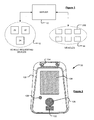
- the architecture for a system in accordance with the present invention is described with reference to Figure 1 .
- the system comprises three principal components: a server 10; a plurality of vehicle requesting devices 12; and a plurality of vehicles 14, each being equipped with a device 200 having route planning and navigation functionality.
- the vehicle requesting devices 12 can be of a number of different forms.
- the vehicle requesting device could take the form of a fixed location device 20, as shown in Figures 2 and 3 .
- a fixed location device as the name suggests, is associated with only a single location and can only be used to request vehicles to this location.
- the vehicle requesting device can also take the form of a mobile device 22, such as a mobile telephone.
- Such mobile devices are capable of determining their own location and can be used to request a vehicle to their current location, or any other location as desired.
- the vehicle requesting device can also be a computing resource 24, such as a desktop or portable personal computer, that does not have means for determining its own location, but nevertheless can still be used to request a vehicle pick-up at a particular location.
- Each of the vehicle requesting devices 12 can be used by a user to send a request for a vehicle, such as a taxi, to the server 10.
- the request will typically include a pick-up location, or data that can be used to derive such a location, and may also include at least one of: a pick-up time; a drop-off location; a desired vehicle type or size (e.g. car, minivan, limousine, etc); the number of passengers to be picked-up; and any additional preferences, such as the need for a child seat, the need for disabled access or if a particular driver is desired.
- the vehicle requests can be transmitted to the server 10 using any suitable communication means, such as the mobile telecommunication network, the Internet, etc.
- the server 10 When a vehicle request is received at the server 10, the server will select a suitable vehicle 14 that meets the criteria set out in the request.
- the server 10 therefore functions as a dispatching system to dispatch a suitable vehicle based on the user's request.
- the vehicles 14 are each equipped with a device 200 comprising a location determining means and a communication means for communicating with the server 10.
- the devices in the vehicles can be of any suitable form, but in illustrative embodiments are navigation apparatus.
- the navigation apparatus can be portable navigation devices (PNDs), which can be removably mounted in the vehicle, or a navigation device that is built into the vehicle.
- An illustrative representation of a navigation device 200 that can be positioned in one of the vehicles 14 is shown in Figure 4 .
- the vehicle devices each transmit their current location, and thus the location of the vehicle, to the server 10 at regular intervals.
- the server 10 therefore knows the current position of all vehicles within the system at any moment in time, at least to a reasonable degree of accuracy.
- the server is also aware of the current availability of a vehicle, e.g. whether a vehicle is already in the process of completing a request and whether the driver of the vehicle is unavailable for any other reason.
- each driver may be able to input a range of times at which their vehicle is available to receive requests. Alternatively, the driver can just activate or deactivate the device as desired.
- the driver may also input certain locations or areas where they will or will not operate.
- the server 10 can select a vehicle 14 in response to a particular request, and thus form a temporary association between the requesting device 12 and the device 200 in the vehicle, according to one or more of the following systems: a bidding system; a rating-based system; and an automatic dispatching system. It will be understood, however, that any selection method or combination of selection methods could be used as desired at the server 10 to match a vehicle with a received request.
- each driver that is able to fulfil a vehicle request is offered the opportunity to bid for a job.
- the bidding system can be a flower bid system wherein the job is offered to a plurality of drivers at a starting price that reduces over time until one driver accepts.
- the bidding system can be an auction bid system wherein each driver keeps bidding, and the highest bidder is awarded the job.
- each driver is awarded a particular rating, e.g. based on previous customer reviews, and the customer request can include a desired driver rating that must be met.
- the job is accordingly only offered to those drivers with a rating equal to or better than the requested rating.
- the server 10 assigns the vehicle request to a particular vehicle 14 based on one or more criteria, e.g. to minimise any waiting time by the vehicle based on their predicted arrival time at the requested location.
- the criteria can include, for example, the closest vehicle in terms of distance and/or time. This allows jobs to be assigned in an efficient manner, e.g. reducing mileage, fuel consumption, maintenance costs, fuel-related taxes, etc, of the vehicles.
- a driver may refuse a job, e.g. through a suitable user-input on their navigation device, even if they are selected by the server 10 as the most suitable.
- an association is made between the requesting device and the navigation device in the vehicle. This association allows data to be exchanged between the two devices, until such a time as the association is broken, e.g. when the trip has been completed and a payment made.
- the navigation device can automatically, or upon an input by the driver, calculate a route from the vehicle's current position to the pick-up location, and begin guiding the driver to the location.
- the pick-up location can be temporarily stored in memory until it is needed, or a route can be calculated to the pick-up location using the drop-off location for the current job as a waypoint.
- an estimated time of arrival (ETA) at the pick-up location is generated, and this can be supplied to the requesting device 12.
- An updated ETA can be sent to the requesting device 12 whenever needed, e.g. if the ETA changes as the vehicle travels the calculated route.
- the server 10 and the navigation device 200 of the vehicle 14 each have, or have access to, the same digital map data that can be used for route calculation.
- the map data can include, or be supplemented, with historical and/or current traffic information, weather information, the presence of taxi-lanes or other information that may impact the optimum route and/or estimated time of arrival.
- the server 10 is aware of the route that will be calculated at the navigation device 200 of the vehicle, and can, for example, determine if the vehicle is deviating from the route that it should be following. If the server 10 identifies such a deviation, it may alert the passenger or another third party, or it may reduce the rating of the driver accordingly.
- the server 10 may also pass the request to another vehicle if the original vehicle is still heading away from the pick-up location.
- the deviation determination algorithm at the server 10 compares the actual time of arrival of the vehicle at the destination with the estimated time of arrival, and reduces the driver's rating only if the actual time is greater than the estimated time by more than a predetermined amount.
- the navigation device 200 of the vehicle 14 Upon picking up the user at the pick-up location, the navigation device 200 of the vehicle 14 will guide the driver to the desired drop-off location.
- the drop-off location could have been provided by the user in the original vehicle request, or it may be given to the driver by the passenger upon pick-up.
- the passenger Upon arrival at the drop-off location, the passenger will pay for the trip. The payment could be made using cash or by using a credit or debit card, however, preferably the passenger will have an account on the server 10 to which the trip can be assigned thereby allowing payment to be made electronically.
- One form that the vehicle requesting devices 12 can take is a fixed location device 20.
- An example of a fixed location device is shown in Figures 2 and 3 .
- the fixed location device 20 is arranged to be positioned within a building or outdoor meeting point, such as a hotel, bar, restaurant, shopping mall, train station or the like, and be associated with a single pick-up location.
- the pick-up location may be the device's actual location, or it may be a location in the vicinity of the device, such as the street entrance of the hotel or bar, or the nearest point on the street where a taxi can safely stop.
- the fixed location device 20 is configured to allow multiple vehicle requests to the pick-up location associated with the device to be placed, and have more than one of these requests pending at any one time.
- the device 20 has a first button 126 by means of which a user can make a vehicle request. In an embodiment, the button must be pressed for a predetermined period of time, such as 1 second, before a request is triggered.
- the device 20 also has a second button 128 by means of which a previously made vehicle request can be cancelled.
- the device 20 may contain a WiFi module, e.g. for areas with limited mobile telecommunications coverage. Such modules are preferably located on a printed circuit board (PCB) 136 within the casing 122 (as shown in Figure 3 ).
- PCB printed circuit board
- the device 20 may also have a physical connection to the Internet, however, such an arrangement limits where the device 20 can be positioned.
- the device 20 has a connection to an external power source 138, but it will be understood that the device 20 may additionally or alternatively have a battery or other internal power source.
- the device 20 further comprises an output means, such as a LED or other similar light emitting device 130, and/or a speaker, which in preferred embodiments is used to indicate when a vehicle is within a predetermined distance of the pick-up location or has arrived at the pick-up location.
- an output means such as a LED or other similar light emitting device 130, and/or a speaker, which in preferred embodiments is used to indicate when a vehicle is within a predetermined distance of the pick-up location or has arrived at the pick-up location.
- a vehicle request is transmitted to the server 10 containing a reference number associated with the device 20.
- the server 10 has a list of reference numbers, one for each of the fixed location devices in the system, and a pick-up location associated with each reference number. This limits the amount of data that needs to be contained in the transmitted vehicle request, and also allows the pick-up location associated with a device 20 to be easily changed.
- the device 20 has an associated display 124, which is used to display a message for each pending request; the message indicating the current status of the request.
- the display 124 may be located within the casing 22 of the device 20, as is shown in Figure 2 . In other embodiments, however, the display 124 may be separate from the device, e.g. positioned on a nearby wall.
- the message can initially say that a request has been placed. It is then changed to say that a vehicle has accepted the request and is en-route to the pick-up location. This message may also include details of the vehicle, the driver and/or the ETA at the pick-up location. The message can then change to indicate that the vehicle has arrived at the pick-up location.
- a message is removed from the display when an indication is received from the server 10 that the vehicle associated with the request has left the pick-up location.
- This determination can be made automatically at the server 10, e.g. by determining that the vehicle has stopped within an area containing the pick-up location for a predetermined period of time and has then moved outside of the area (as will be discussed in more detail below).
- the driver of the vehicle can indicate on their navigation device 200 that they are leaving the pick-up location, and this indication can be transmitted via the server 10 to the device 20.
- the device 20 is arranged is to affixed to a flat surface 142, such as a table, bar area or wall.
- the device 20 therefore has openings 134 through which screws 140 can be placed to fix the device to the surface 142.
- the base 135 of the device 20 also has support features, such as rubber feet 132, to aid in securing the device at a single location and preventing the device 20 from moving on a wet surface as may often be found in an environment such as a bar or restaurant. For this reason, the casing 122 of the device will typically be water resistant.
- vehicle requesting device 12 can take is a mobile device 22, such as a mobile telephone, tablet computer, portable digital assistant (PDA).
- a mobile device 22 such as a mobile telephone, tablet computer, portable digital assistant (PDA).
- PDA portable digital assistant
- the mobile device 22 is located within a housing that includes a processor connected to an input device and a display screen.
- the input device can include a keyboard device, voice input device, touch panel and/or any other known input device utilised to input information; and the display screen can include any type of display screen, such as an LCD display.
- the input device and display screen are integrated into an integrated input and display device, including a touchpad or touchscreen input so that a user need only touch a portion of the display screen to select one of a plurality of display choices or to activate one of a plurality of virtual buttons.
- the mobile device 22 has a location determination means, which is capable of determining the current location of the device 22.
- the location determination means is a global navigation satellite system (GNSS) receiver, such as a GPS receiver, that receives and processes satellite broadcast signals, including location data, to determine a current location of the device.
- GNSS global navigation satellite system
- a software application runs on a processor of the mobile device 22 that allows a user to create a vehicle request, and to send this vehicle request to the server 10.
- the vehicle request is sent to the server 10 using a wireless communications module, such as a GSM or GPRS module.
- the vehicle request will include a pick-up location, which may be the current location of the mobile device 22 (obtained from the GNSS receiver) or can be a location input by the user on the input device.
- the vehicle request may also include a drop-off location, which again can be selected by the user on the input device, and may also include a pick-up time.
- the pick-up time can be an indication that a taxi is required as soon as possible, or it may be a specific future time that is input by the user on the input device.
- a vehicle 14 is selected that meets the criteria in the request.
- a temporary association is then formed between the two devices at the server 10, i.e. such that the two devices will be linked on the system until the requested journey has been completed.
- the server 10 will transmit details of the selected vehicle 14 to the mobile device 22.
- the details can include: information about the vehicle, such as model, colour, registration number, etc; information about the driver, such as a picture, name, telephone number, etc; and information about the current position of the vehicle and/or the route that the vehicle will travel to the pick-up location and/or the estimated time of arrival at the pick-up location.
- the server 10 may continually send the position of the selected vehicle 14 to the mobile device 22, such that the user can see the progress of the vehicle as it travels to the pick-up location.
- the user may include a preferred driver or set of drivers that they would like for their requested journey in the request that is transmitted to the server 10.
- a user may have a one or more preferred drivers associated with a profile stored on the server 10.
- the server 10 takes account of the preferred driver or drivers when selecting the vehicle to complete the request.
- the arrival of the vehicle 14 at the pick-up location is transmitted to the mobile device 22, and an suitable alert is provided to the user.
- the alert may be a visual alert on the display screen of the device, an audible alert, a haptic alert, or any combination thereof.
- the arrival of the vehicle at the pick-up location may be automatically determined by the server 10, e.g. as discussed in more detail below. Alternatively, the vehicle's arrival may be determined when the driver provides an indication on their navigation apparatus 200. In addition to providing such an alert, an indication may be provided on the mobile device 22 as to the current position of the vehicle 14 at the pick-up location.
- the indication can be, for example, a directional pointer or arrow that points towards the current location of the vehicle 14, as received from the server 10, from the current location of the mobile device 22.
- This pointer could generated using any suitable means within the mobile device 22, such as one or more of a compass, gyroscope and accelerometers.
- the use of such a pointer or arrow allows a user to identify his or her vehicle 14 even when, for example, it is parked on the street next to a number of other taxis, and thus be difficult for the user to identify.
- the driver of the vehicle may immediately start travelling towards the drop-off location, if it was already known from the original vehicle request.
- the user may simply inform the driver directly of the drop-off location, and then the driver may input the destination into their navigation apparatus 200.
- the user may input a desired drop-off location on their mobile device 22 and transmit this destination to the navigation device 200 of the vehicle. The user may even do this after providing the driver with an approximate destination so that the driver can begin the journey before a final drop-off location has been provided.
- this functionality also would allow the user to modify the drop-off destination en-route should this be desired.
- the user may be able to see on the display of their mobile device 22, a representation of the route that is being travelled by the vehicle together with the current position of the navigation apparatus, and thus the vehicle.
- the route information and position of the vehicle will be received from the server 10.
- the user is therefore able to see if the driver is travelling along the optimum route that has been determined by the navigation apparatus. Should the driver deviate from this route, then this can be seen by the user and they can enquire with the driver, if needed, as to the reason for the deviation.
- the software application running on the mobile device may also include a means by which the user can send an alert to the server 10 or to another third party if they feel uncomfortable in the vehicle in which they are travelling.
- This alert could be automatically generated at the server 10 by determining if the driver has deviated from the planned route by more than a predetermined amount, e.g. if more than a predefined number of navigation instructions are ignored by the driver or the vehicle is a predefined distance away from the calculated route. The user may be asked to confirm any automatically generated alert on their mobile device 22 before it is sent.
- the payment for the journey may be made automatically, for example, by the user setting up an account on the server 10 having a certain amount of money associated with it.
- the cost of the journey may simply be deducted from the user's account. This may happen automatically, or upon confirmation from the driver and/or user on their respective devices as to the amount of money to be paid.
- the user can also use their mobile device 22 to provide a rating of the journey and/or of the driver.
- This rating will be transmitted to the server 10 and associated with the relevant driver's details held at the server 10.
- the driver's rating can, as discussed above, be used by the user and/or server 10 when selecting a vehicle to complete a vehicle request.
- the rating associated with a driver may also be automatically reduced if the server 10 determines that the driver did not follow the calculated optimum route, and as a result caused the user's journey to be longer than necessary, either in terms of time and/or distance.
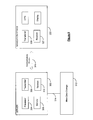
- FIG. 4 is an illustrative representation of a navigation device 200 that can be positioned in one of the vehicles 14.
- the navigation device 200 is shown in block format. It should be noted that the block diagram of the navigation device 200 is not inclusive of all components of the navigation device, but is only representative of many example components.
- the navigation device 200 is described in the following paragraphs as being a portable navigation device (PND) that can be removable mounted in a vehicle. It will be understood, however, that the navigation device 200 could in other embodiments be built into the vehicle.
- PND portable navigation device
- the navigation device 200 will typically comprise digital map data having a plurality of navigable segments representing segments of a navigable route in a geographical area covered by the map.
- the digital map data is used by the navigation device 200 to calculate routes between locations that can be traversed by the vehicle carrying the navigation device, and to provide suitable navigation instructions to driver to guide him or her along the calculated route.
- the navigation device 200 is location within a housing (not shown).
- the housing includes a processor 202 connected to an input device 204 and a display screen 206.
- the input device 204 can include a keyboard device, voice input device, touch panel and/or any other known input device utilised to input information; and the display screen 206 can include any type of display screen such as an LCD display, for example.
- the input device 204 and display screen 206 are integrated into an integrated input and display device, including a touchpad or touchscreen input so that a user need only touch a portion of the display screen 206 to select one of a plurality of display choices or to activate one of a plurality of virtual buttons.
- the navigation device 200 may include an output device 208, for example an audible output device (e.g. a loudspeaker).
- output device 208 can produce audible information for a user of the navigation device 200, it is should equally be understood that input device 204 can include a microphone and software for receiving input voice commands as well.
- processor 202 is operatively connected to and set to receive input information from input device 204 via a connection 210, and operatively connected to at least one of display screen 206 and output device 208, via output connections 212, to output information thereto. Further, the processor 202 is operably coupled to a memory resource 214 via connection 216 and is further adapted to receive/send information from/to input/output (I/O) ports 218 via connection 220, wherein the I/O port 218 is connectible to an I/O device 222 external to the navigation device 200.
- I/O input/output
- the memory resource 214 comprises, for example, a volatile memory, such as a Random Access Memory (RAM) and a non-volatile memory, for example a digital memory, such as a flash memory.
- the external I/O device 222 may include, but is not limited to an external listening device such as an earpiece for example.
- connection to I/O device 222 can further be a wired or wireless connection to any other external device such as a car stereo unit for hands-free operation and/or for voice activated operation for example, for connection to an ear piece or head phones, and/or for connection to a mobile phone for example, wherein the mobile phone connection may be used to establish a data connection between the navigation device 200 and the internet or any other network for example, and/or to establish a connection to a server via the internet or some other network for example.
- any other external device such as a car stereo unit for hands-free operation and/or for voice activated operation for example, for connection to an ear piece or head phones, and/or for connection to a mobile phone for example
- the mobile phone connection may be used to establish a data connection between the navigation device 200 and the internet or any other network for example, and/or to establish a connection to a server via the internet or some other network for example.
- Figure 4 further illustrates an operative connection between the processor 202 and an antenna/receiver 224 via connection 226, wherein the antenna/receiver 224 can be a GPS antenna/receiver for example.
- the antenna and receiver designated by reference numeral 224 are combined schematically for illustration, but that the antenna and receiver may be separately located components, and that the antenna may be a GPS patch antenna or helical antenna for example.
- the electronic components shown in Figure 4 are powered by power sources (not shown) in a conventional manner.
- power sources not shown
- different configurations of the components shown in Figure 4 are considered to be within the scope of the present application.
- the components shown in Figure 4 may be in communication with one another via wired and/or wireless connections and the like.
- the scope of the navigation device 200 of the present application includes a portable or handheld navigation device 200.
- the portable or handheld navigation device 200 of Figure 4 can be connected or "docked" in a known manner to a vehicle such as a bicycle, a motorbike, a car or a boat for example. Such a navigation device 200 is then removable from the docked location for portable or handheld navigation use.
- the navigation device 200 may establish a "mobile" or telecommunications network connection with a server 302 via a mobile device (not shown) (such as a mobile phone, PDA, and/or any device with mobile phone technology) establishing a digital connection (such as a digital connection via known Bluetooth technology for example). Thereafter, through its network service provider, the mobile device can establish a network connection (through the internet for example) with a server 302. As such, a "mobile" network connection is established between the navigation device 200 (which can be, and often times is mobile as it travels alone and/or in a vehicle) and the server 302 to provide a "real-time" or at least very “up to date” gateway for information.
- the establishing of the network connection between the mobile device (via a service provider) and another device such as the server 302, using an internet (such as the World Wide Web) for example, can be done in a known manner. This can include use of TCP/IP layered protocol for example.
- the mobile device can utilize any number of communication standards such as CDMA, GSM, WAN, etc.
- an internet connection may be utilised which is achieved via data connection, via a mobile phone or mobile phone technology within the navigation device 200 for example.
- an internet connection between the server 302 and the navigation device 200 is established. This can be done, for example, through a mobile phone or other mobile device and a GPRS (General Packet Radio Service)-connection (GPRS connection is a high-speed data connection for mobile devices provided by telecom operators; GPRS is a method to connect to the internet).
- GPRS General Packet Radio Service
- the navigation device 200 can further complete a data connection with the mobile device, and eventually with the internet and server 302, via existing Bluetooth technology for example, in a known manner, wherein the data protocol can utilize any number of standards, such as the GSRM, the Data Protocol Standard for the GSM standard, for example.
- the data protocol can utilize any number of standards, such as the GSRM, the Data Protocol Standard for the GSM standard, for example.
- the navigation device 200 may include its own mobile phone technology within the navigation device 200 itself (including an antenna for example, or optionally using the internal antenna of the navigation device 200).
- the mobile phone technology within the navigation device 200 can include internal components as specified above, and/or can include an insertable card (e.g. Subscriber Identity Module or SIM card), complete with necessary mobile phone technology and/or an antenna for example.
- mobile phone technology within the navigation device 200 can similarly establish a network connection between the navigation device 200 and the server 302, via the internet for example, in a manner similar to that of any mobile device.
- a Bluetooth enabled navigation device may be used to correctly work with the ever changing spectrum of mobile phone models, manufacturers, etc; model/manufacturer specific settings may be stored on the navigation device 200, for example. The data stored for this information can be updated.
- the navigation device 200 is depicted as being in communication with the server 302 via a generic communications channel 318 that can be implemented by any of a number of different arrangements.
- the server 302 and a navigation device 200 can communicate when a connection via communications channel 318 is established between the server 302 and the navigation device 200 (noting that such a connection can be a data connection via mobile device, a direct connection via personal computer via the internet, etc).
- the server 302 includes, in addition to other components which may not be illustrated, a processor 304 operatively connected to a memory 306 and further operatively connected, via a wired or wireless connection 314, to a mass data storage device 312.
- the processor 304 is further operatively connected to transmitter 308 and receiver 310, to transmit and send information to and from navigation device 200 via communications channel 318.
- the signals sent and received may include data, communication, and/or other propagated signals.
- the transmitter 308 and receiver 310 may be selected or designed according to the communications requirement and communication technology used in the communication design for the navigation system 200. Further, it should be noted that the functions of transmitter 308 and receiver 310 may be combined into a signal transceiver.
- Server 302 is further connected to (or includes) a mass storage device 312, noting that the mass storage device 312 may be coupled to the server 302 via communication link 314.
- the mass storage device 312 contains a store of navigation data and map information, and can again be a separate device from the server 302 or can be incorporated into the server 302.
- the navigation device 200 is adapted to communicate with the server 302 through communications channel 318, and includes processor, memory, etc as previously described with regard to Figure 4 , as well as transmitter 320 and receiver 322 to send and receive signals and/or data through the communications channel 318, noting that these devices can further be used to communicate with devices other than server 302. Further, the transmitter 320 and receiver 322 are selected or designed according to communication requirements and communication technology used in the communication design for the navigation device 200 and the functions of the transmitter 320 and receiver 322 may be combined into a single transceiver.
- Software stored in server memory 306 provides instructions for the processor 304 and allows the server 302 to provide services to the navigation device 200.
- One service provided by the server 302 involves processing requests from the navigation device 200 and transmitting navigation data from the mass data storage 312 to the navigation device 200.
- Another service provided by the server 302 includes processing the navigation data using various algorithms for a desired application and sending the results of these calculations to the navigation device 200.
- the communication channel 318 generically represents the propagating medium or path that connects the navigation device 200 and the server 302.
- Both the server 302 and navigation device 200 include a transmitter for transmitting data through the communication channel and a receiver for receiving data that has been transmitted through the communication channel.
- the communication channel 318 is not limited to a particular communication technology. Additionally, the communication channel 318 is not limited to a single communication technology; that is, the channel 318 may include several communication links that use a variety of technology. For example, the communication channel 318 can be adapted to provide a path for electrical, optical, and/or electromagnetic communications, etc. As such, the communication channel 318 includes, but is not limited to, one or a combination of the following: electric circuits, electrical conductors such as wires and coaxial cables, fibre optic cables, converters, radio-frequency (RF) waves, the atmosphere, empty space, etc. Furthermore, the communication channel 318 can include intermediate devices such as routers, repeaters, buffers, transmitters, and receivers, for example.
- RF radio-frequency
- the communication channel 318 includes telephone and computer networks. Furthermore, the communication channel 318 may be capable of accommodating wireless communication such as radio frequency, microwave frequency, infrared communication, etc. Additionally, the communication channel 318 can accommodate satellite communication.
- the communication signals transmitted through the communication channel 318 include, but are not limited to, signals as may be required or desired for given communication technology.
- the signals may be adapted to be used in cellular communication technology such as Time Division Multiple Access (TDMA), Frequency Division Multiple Access (FDMA), Code Division Multiple Access (CDMA), Global System for Mobile Communications (GSM), etc.
- TDMA Time Division Multiple Access
- FDMA Frequency Division Multiple Access
- CDMA Code Division Multiple Access
- GSM Global System for Mobile Communications
- Both digital and analogue signals can be transmitted through the communication channel 318.
- These signals may be modulated, encrypted and/or compressed signals as may be desirable for the communication technology.
- the server 302 includes a remote server accessible by the navigation device 200 via a wireless channel.
- the server 302 may include a network server located on a local area network (LAN), wide area network (WAN), virtual private network (VPN), etc.
- the server 302 may include a personal computer such as a desktop or laptop computer, and the communication channel 318 may be a cable connected between the personal computer and the navigation device 200.
- a personal computer may be connected between the navigation device 200 and the server 302 to establish an internet connection between the server 302 and the navigation device 200.
- a mobile telephone or other handheld device may establish a wireless connection to the internet, for connecting the navigation device 200 to the server 302 via the internet.
- the navigation device 200 may be provided with information from the server 302 via information downloads which may be periodically updated automatically or upon a user connecting navigation device 200 to the server 302 and/or may be more dynamic upon a more constant or frequent connection being made between the server 302 and navigation device 200 via a wireless mobile connection device and TCP/IP connection for example.
- the processor 304 in the server 302 may be used to handle the bulk of the processing needs, however, processor 210 of navigation device 200 can also handle much processing and calculation, oftentimes independent of a connection to a server 302.
- the navigation device 200 is arranged to store a number of user profiles, such that the same device can be used by a number of different people. This is beneficial when the navigation device 200 is used within a taxi or other similar vehicle, which will often be shared between a number of different drivers.
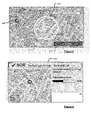
- a particular user logs onto the device, e.g. by touching the "Driver A" icon 400 or by entering his or her details using the "new user” icon 402 (as shown in Figure 6 )
- an indication of this selection is sent to the server 10, such that the server can associate the driver with the vehicle.
- the correct driver details and/or rating can accordingly be supplied to a user when the vehicle is selected to complete a submitted vehicle request from the user.
- the vehicle request 404 relates to a person that is asking for a vehicle as soon as possible at a location in the centre of the city of Amsterdam.
- the driver can touch this icon at any time to indicate they are not available to take requests at the current time.
- an indication is transmitted to the server 10 from the navigation device 200 to notify the system that the vehicle is not currently available.
- the navigation device pans the displayed map such that it is centred at the pick-up location associated with the request.
- the pick-up location is highlighted on the screen, e.g. by a circle 410 and/or by fading or greying the other portions of the map display, such that the driver can quickly identify the pick-up location.
- the current position of the vehicle 408 is also shown on the screen, again to aid the driver in identifying the pick-up location. If the driver wishes to apply for the vehicle request, then they can touch the icon 414. Alternatively, if the driver wishes to decline the vehicle request, then they can touch the icon 412.
- the server 10 If the driver wins the request, then full details of the vehicle request will be sent by the server 10 to the navigation device 200.
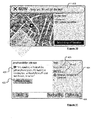
- the request has been submitted by or on behalf of a Jonathan Miller Johnson.
- the details of the request will include at least the pick-up location (A) 424; in this case the Damrak in the centre of Amsterdam.
- the driver will also see the date of the request - 425 and an estimated time of arrival at the pick-up location - 423.
- the ETA at the pick-up location is determined by the navigation device 200 planning a route from the current location of the vehicle to the pick-up location, which in preferred embodiments takes account of historic, current and/or estimated future traffic conditions.
- the request may also include a message from the user indicating where they are currently located, e.g. "I'm standing in front of the yellow phone booth", and an icon 422 that allows the driver to contact the user.
- the trip details screen shown in Figure 11 can be accessed at any time throughout a journey by the driver, and the information contained therein will be updated to reflect the current status of the journey. For example, when the user has been picked up at location A and has provided a destination location to the driver, then the screen will also include details of this location and an associated ETA.
- the trip details screen can also be used by the driver to cancel a trip that they had previously accepted. This can be done by selecting the "cancel trip" icon 426, and a suitable message will be sent to the server 10.
- the message may include a reason for the cancellation, such as traffic, the vehicle being in an accident or the vehicle breaking down.
- appropriate action can be taken at the server 10, such as sending another vehicle to the pick-up location and notifying the user accordingly, or, in the case that the current vehicle has broken down, sending another vehicle to location of the current vehicle.
- the rating of a driver could be automatically decreased by a certain amount if a trip is cancelled without a valid reason.
- the navigation device 200 will automatically calculate a route to the pick-up location and provide guidance to the driver. This is shown, for example, in Figure 12 .
- the arrival of the vehicle at the pick-up location can be indicated by the driver selecting the "arrived at pick up" icon 428, again as shown in Figure 12 . It is also contemplated, however, that the arrival of the vehicle at the pick-up location may be determined automatically at the server 10, and a message indicative thereof being sent to the navigation device 200. The manner by which the server 10 can automatically detect the arrival and/or departure of a vehicle from a particular location will be described in more detail below.
- the navigation device 200 When the vehicle reaches the pick-up location (A), the navigation device 200 will display the screen shown in Figure 13 . The user will, at this point, get into the vehicle and if a drop-off location has not yet been provided, i.e. in the original vehicle request, then the driver will ask the user for the drop-off location. This may be input by the driver on the navigation device 200, or it may be provided by the user on the requesting device, e.g. mobile device 22. Once a drop-off location has been provided, then the driver can select the "go to drop off" icon 430 (as shown in Figure 13 ), and the navigation device 200 will calculate a route from the pick-up location (A) to the drop-off location (B) and provide navigational guidance to the driver.
- the driver and user are not able to immediately locate each other when the vehicle reaches the pick-up location, the driver can attempt to contact the user using the "contact customer" icon 432. If the driver is still not able to locate the user, then they can select the "no show” icon 434, whereupon a suitable message is sent to the server 10.
- the server 10 may decrease a rating of the user associated with their account following such an event. This prevents a user from abusing the system and continually making invalid vehicle requests.
- a screen such as that shown in Figure 14 will be displayed on the navigation device 200.
- the arrival of the vehicle at the drop-off location can be indicated by the driver selecting the "arrived at drop off' icon 436, as shown in Figure 14 . It is again contemplated, however, that the arrival of the vehicle at the drop-off location may be determined automatically at the server 10, and a message indicative thereof being sent to the navigation device 200.
- the navigation device 200 When the vehicle reaches the drop-off location (B), the navigation device 200 will display the screen shown in Figure 15 . From this screen, the driver can see a summary of the completed journey 438, including the journey time and distance. The driver can end the journey by selecting the "end trip" icon 439, which can cause a message to be sent by the server 10 to a mobile device 22 of the user to confirm payment for the journey. The driver can also select the "give feedback" icon 440 to provide information about the journey and/or the user. For example, the driver can indicate that they do not wish to receive further vehicle requests form the user.
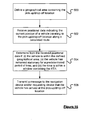
- the server 10 defines a geographical area containing the pick-up or drop-off location - 500. Typically, this area is a circle of radius 250m centred at the location.
- the positional data relating to the vehicle travelling to the location can then analysed to determine if the vehicle has slowed down and stopped for a predetermined period of time within the defined area and has stopped at a moment in time that is within a time window containing the estimated time of arrival associated with the calculated route - 504.
- a chances of mistakenly determining that the vehicle has arrived at a location when in fact the vehicle is, for example, stopped at traffic lights on an adjacent road are substantially reduced.
- the transmission of the vehicle request results in a temporary association being formed at the server 10 between the vehicle requesting device 12 and the vehicle 14.
- This temporary association can then be used to provide many of the benefits associated with the present invention, such as electronic payment, modifying the drop-off location en-route, rating the driver and/or passenger, and the passenger viewing the route that should be travelled by the vehicle. It will be understood, however, that if a user hails a nearby passing vehicle, then no such temporary association will be made even if both the user and the vehicle are part of the vehicle request management system of the present invention.
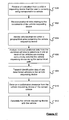
- a user When a user hails a passing taxi, they can send an indication to the server 10 using their mobile device 22 that they have or are about to enter a vehicle 14 - 600. This indication can be generated, for example, simply by opening the appropriate software application on their mobile device 22.
- the server 10 can identify those vehicles that are within a predefined geographic area containing the mobile device 22. This area may be circle, e.g. having a radius of about 30 meters, centred at the current location of the mobile device 22 - 604.
- a comparison can be made at the server 10 between the positional data received from the mobile device 22 and the positional data of the identified vehicles to determine if any of the vehicles are moving concurrently with the mobile device 22 along the same travel path.
- Such concurrent movement can be indicated by similar speeds, accelerations, directional changes, and the like. If only a single vehicle is identified as moving concurrently with the mobile device 22, then it can be inferred that this must be the vehicle in which the user is currently travelled and the server 10 forms associates the mobile deice 22 with the navigation apparatus 200 within the vehicle.
- a list of the vehicles with suitable identification information e.g.
- the server 10 sends details of the vehicle and/or driver to the mobile device 22 - 608.
- the user can then select the appropriate vehicle from the list on the mobile device 22, and this selection can then be transmitted back to the server 10 - 610.
- the server 10 will then associate the mobile device 22 with the navigation device 200 within the selected vehicle - 612.
- the devices may utilise any kind of position sensing technology as an alternative to, or indeed in addition to, GPS.
- the devices may utilise other global navigation satellite systems, such as the European Galileo system. Equally, it is not limited to satellite-based systems, but could readily function using ground-based beacons or other kind of system that enables the device to determine its geographic location.
Landscapes
- Engineering & Computer Science (AREA)
- Computer Networks & Wireless Communication (AREA)
- Signal Processing (AREA)
- Radar, Positioning & Navigation (AREA)
- Remote Sensing (AREA)
- Physics & Mathematics (AREA)
- General Physics & Mathematics (AREA)
- Automation & Control Theory (AREA)
- Traffic Control Systems (AREA)
- Navigation (AREA)
Applications Claiming Priority (2)
| Application Number | Priority Date | Filing Date | Title |
|---|---|---|---|
| GBGB1106555.4A GB201106555D0 (en) | 2011-04-19 | 2011-04-19 | Taxi dispatching system |
| PCT/EP2012/056830 WO2012143302A1 (en) | 2011-04-19 | 2012-04-13 | Vehicle request device |
Publications (2)
| Publication Number | Publication Date |
|---|---|
| EP2700063A1 EP2700063A1 (en) | 2014-02-26 |
| EP2700063B1 true EP2700063B1 (en) | 2015-06-03 |
Family
ID=44147184
Family Applications (3)
| Application Number | Title | Priority Date | Filing Date |
|---|---|---|---|
| EP12718930.6A Active EP2700063B1 (en) | 2011-04-19 | 2012-04-13 | Vehicle request device |
| EP12718118.8A Active EP2700062B1 (en) | 2011-04-19 | 2012-04-13 | Vehicle request management system having a central server |
| EP12718929.8A Active EP2700277B1 (en) | 2011-04-19 | 2012-04-13 | System and method for associating devices moving along the same travel path |
Family Applications After (2)
| Application Number | Title | Priority Date | Filing Date |
|---|---|---|---|
| EP12718118.8A Active EP2700062B1 (en) | 2011-04-19 | 2012-04-13 | Vehicle request management system having a central server |
| EP12718929.8A Active EP2700277B1 (en) | 2011-04-19 | 2012-04-13 | System and method for associating devices moving along the same travel path |
Country Status (7)
| Country | Link |
|---|---|
| US (3) | US9689698B2 (enExample) |
| EP (3) | EP2700063B1 (enExample) |
| JP (4) | JP2014516441A (enExample) |
| AU (2) | AU2012244829B2 (enExample) |
| GB (1) | GB201106555D0 (enExample) |
| WO (3) | WO2012143302A1 (enExample) |
| ZA (2) | ZA201307969B (enExample) |
Cited By (5)
| Publication number | Priority date | Publication date | Assignee | Title |
|---|---|---|---|---|
| WO2017218637A1 (en) | 2016-06-14 | 2017-12-21 | Uber Technologies, Inc. | Trip termination determination for on-demand transport |
| US9852551B2 (en) * | 2015-02-05 | 2017-12-26 | Uber Technologies, Inc. | Programmatically determining location information in connection with a transport service |
| US10129221B1 (en) | 2016-07-05 | 2018-11-13 | Uber Technologies, Inc. | Transport facilitation system implementing dual content encryption |
| US10204528B2 (en) | 2015-08-05 | 2019-02-12 | Uber Technologies, Inc. | Augmenting transport services using driver profiling |
| US11017650B2 (en) | 2011-06-22 | 2021-05-25 | Thinkware Corporation | Safety service system and method thereof |
Families Citing this family (193)
| Publication number | Priority date | Publication date | Assignee | Title |
|---|---|---|---|---|
| US9230292B2 (en) * | 2012-11-08 | 2016-01-05 | Uber Technologies, Inc. | Providing on-demand services through use of portable computing devices |
| WO2011069170A1 (en) | 2009-12-04 | 2011-06-09 | Uber, Inc. | System and method for arranging transport amongst parties through use of mobile devices |
| GB201106555D0 (en) * | 2011-04-19 | 2011-06-01 | Tomtom Int Bv | Taxi dispatching system |
| US9477983B2 (en) * | 2012-05-04 | 2016-10-25 | Gt Gettaxi Limited | Mechanisms for ordering transportation vehicles |
| US9786180B2 (en) * | 2012-06-06 | 2017-10-10 | Toyota Jidosha Kabushiki Kaisha | Position information transmission apparatus, position information transmission system, and vehicle |
| US9671233B2 (en) | 2012-11-08 | 2017-06-06 | Uber Technologies, Inc. | Dynamically providing position information of a transit object to a computing device |
| GB201300006D0 (en) * | 2013-01-01 | 2013-02-13 | Tomtom Dev Germany Gmbh | Vehicle management system |
| CN103968824B (zh) * | 2013-01-28 | 2018-04-10 | 华为终端(东莞)有限公司 | 一种发现增强现实目标的方法及终端 |
| US9645970B2 (en) | 2013-02-28 | 2017-05-09 | Ford Global Technologies, Llc | Driver coaching system |
| US10154382B2 (en) | 2013-03-12 | 2018-12-11 | Zendrive, Inc. | System and method for determining a driver in a telematic application |
| JP6514681B2 (ja) | 2013-03-15 | 2019-05-15 | ウーバー テクノロジーズ,インコーポレイテッド | ロボット用多重知覚ステレオ視のための方法、システム、および装置 |
| US11574263B2 (en) | 2013-03-15 | 2023-02-07 | Via Transportation, Inc. | System and method for providing multiple transportation proposals to a user |
| ITCA20130002A1 (it) * | 2013-04-15 | 2014-10-16 | Maurizio Perla | Dispositivo di geolocalizzazione interattivo per la gestione automatica degli itinerari dei taxi in condivisione tra piu' utenti denominato "taxi sharing" |
| AU2014202287A1 (en) * | 2013-04-29 | 2014-11-13 | ApproachPlus Pty Ltd | Improved messaging method and system |
| WO2014199712A1 (ja) | 2013-06-11 | 2014-12-18 | 日産自動車株式会社 | 車両管理システムおよび車両管理方法 |
| EP2843589B1 (en) | 2013-08-29 | 2019-03-13 | Alcatel Lucent | A method and platform for sending a message to a communication device associated with a moving object |
| US9521521B2 (en) * | 2013-09-25 | 2016-12-13 | Gamesys Ltd. | Systems, methods, and apparatus for geolocation platform mechanics |
| US9230436B2 (en) * | 2013-11-06 | 2016-01-05 | Here Global B.V. | Dynamic location referencing segment aggregation |
| US20150161564A1 (en) * | 2013-12-11 | 2015-06-11 | Uber Technologies, Inc. | System and method for optimizing selection of drivers for transport requests |
| WO2015089221A1 (en) * | 2013-12-11 | 2015-06-18 | Uber Technologies, Inc. | Intelligent queuing for user selection in providing on-demand services |
| US9524156B2 (en) * | 2014-01-09 | 2016-12-20 | Ford Global Technologies, Llc | Flexible feature deployment strategy |
| US9766874B2 (en) | 2014-01-09 | 2017-09-19 | Ford Global Technologies, Llc | Autonomous global software update |
| US9191349B2 (en) * | 2014-01-22 | 2015-11-17 | Qualcomm Incorporated | Dynamic invites with automatically adjusting displays |
| US9304009B2 (en) * | 2014-02-04 | 2016-04-05 | Here Global B.V. | Method and apparatus for providing passenger embarkation points for points of interests |
| US9965783B2 (en) | 2014-02-07 | 2018-05-08 | Uber Technologies, Inc. | User controlled media for use with on-demand transport services |
| KR20150096832A (ko) * | 2014-02-17 | 2015-08-26 | 삼성전자주식회사 | 연락처를 검색하는 방법 이를 제공하는 전자 장치 |
| DE102014002665B4 (de) * | 2014-02-28 | 2019-09-19 | Deutsche Telekom Ag | Verfahren zum Verknüpfen einer mobilen Lokalisierungseinheit mit einer mobilen Überwachungseinheit |
| AU2014386266A1 (en) | 2014-03-13 | 2016-09-29 | Uber Technologies, Inc. | Configurable push notifications for a transport service |
| US9716762B2 (en) | 2014-03-31 | 2017-07-25 | Ford Global Technologies Llc | Remote vehicle connection status |
| US9323546B2 (en) | 2014-03-31 | 2016-04-26 | Ford Global Technologies, Llc | Targeted vehicle remote feature updates |
| US9888087B2 (en) | 2014-03-31 | 2018-02-06 | Uber Technologies, Inc. | Adjusting attributes for an on-demand service system based on real-time information |
| US10140110B2 (en) | 2014-04-02 | 2018-11-27 | Ford Global Technologies, Llc | Multiple chunk software updates |
| US9325650B2 (en) | 2014-04-02 | 2016-04-26 | Ford Global Technologies, Llc | Vehicle telematics data exchange |
| US9494938B1 (en) | 2014-04-03 | 2016-11-15 | Google Inc. | Unique signaling for autonomous vehicles to preserve user privacy |
| US9536271B2 (en) | 2014-05-16 | 2017-01-03 | Uber Technologies, Inc. | User-configurable indication device for use with an on-demand transport service |
| US10467896B2 (en) | 2014-05-29 | 2019-11-05 | Rideshare Displays, Inc. | Vehicle identification system and method |
| US9892637B2 (en) | 2014-05-29 | 2018-02-13 | Rideshare Displays, Inc. | Vehicle identification system |
| US10424036B2 (en) * | 2014-06-02 | 2019-09-24 | Uber Technologies, Inc. | Maintaining data for use with a transport service during connectivity loss between systems |
| EP2961209A1 (en) | 2014-06-25 | 2015-12-30 | Thomson Licensing | Method and device for pairing devices |
| US9679489B2 (en) | 2014-07-22 | 2017-06-13 | Lyft, Inc. | Ride chaining |
| JP6261467B2 (ja) * | 2014-07-23 | 2018-01-17 | Kddi株式会社 | ユーザ特定装置、ユーザ特定方法、およびプログラム |
| WO2016012475A1 (en) | 2014-07-24 | 2016-01-28 | Schucan Management Ag | Ticketing method and system |
| CA2956631C (en) | 2014-07-30 | 2022-04-12 | Uber Technologies, Inc. | Arranging a transport service for multiple users |
| US11010693B2 (en) | 2014-08-04 | 2021-05-18 | Uber Technologies, Inc. | Determining and providing predetermined location data points to service providers |
| TWI509549B (zh) * | 2014-09-03 | 2015-11-21 | Shih Pi Ta Technology Ltd | 身分識別系統和其方法 |
| WO2016035091A1 (en) * | 2014-09-03 | 2016-03-10 | Meru Cab Company Private Limited | Dynamic forecasting for forward reservation of cab |
| US10083448B2 (en) * | 2014-12-19 | 2018-09-25 | Sap Se | System and method for intermediary agency to find better service providers |
| ES2578289B1 (es) * | 2014-12-22 | 2017-05-04 | Idx Informatica, S.L. | Método y sistema para proporcionar servicios de taxi, basados en localización del usuario y del vehículo |
| US10026506B1 (en) | 2015-02-06 | 2018-07-17 | Brain Trust Innovations I, Llc | System, RFID chip, server and method for capturing vehicle data |
| CN104640074A (zh) * | 2015-02-17 | 2015-05-20 | 北京九五智驾信息技术股份有限公司 | 提供拼车服务的方法 |
| GB201503079D0 (en) | 2015-02-24 | 2015-04-08 | Addison Lee Ltd | Managing a vehicle sharing facility |
| GB201503078D0 (en) | 2015-02-24 | 2015-04-08 | Addison Lee Ltd | Managing a vehicle sharing facility |
| KR101725343B1 (ko) * | 2015-03-12 | 2017-04-26 | 네이버 주식회사 | 콜택시 서비스 제공 방법 및 이를 제공하는 콜택시 서비스 서버 |
| JP6475530B2 (ja) * | 2015-03-24 | 2019-02-27 | 株式会社Nttドコモ | 配車装置、配車システム、配車方法及びプログラム |
| JP6682193B2 (ja) * | 2015-05-13 | 2020-04-15 | 株式会社Nttドコモ | 通知システム、サーバ装置、通信端末装置、プログラム及び通知方法 |
| CN108139456B (zh) | 2015-08-20 | 2022-03-04 | 泽安驾驶公司 | 加速度计辅助导航的方法 |
| US9818239B2 (en) | 2015-08-20 | 2017-11-14 | Zendrive, Inc. | Method for smartphone-based accident detection |
| CN105160880B (zh) * | 2015-09-24 | 2017-08-25 | 滴滴(中国)科技有限公司 | 一种车辆载客状态的预估方法及装置 |
| US10866839B2 (en) * | 2015-09-25 | 2020-12-15 | Sony Corporation | Information processing apparatus, service processing apparatus, information processing method, program, and information processing system |
| US10157436B2 (en) | 2015-10-09 | 2018-12-18 | Gt Gettaxi Limited | System for navigating vehicles associated with a delivery service |
| WO2017075355A1 (en) | 2015-10-29 | 2017-05-04 | Axon Vibe AG | System and method for location-based passive payments |
| US11283877B2 (en) | 2015-11-04 | 2022-03-22 | Zoox, Inc. | Software application and logic to modify configuration of an autonomous vehicle |
| US10401852B2 (en) | 2015-11-04 | 2019-09-03 | Zoox, Inc. | Teleoperation system and method for trajectory modification of autonomous vehicles |
| JP7049996B2 (ja) * | 2015-11-04 | 2022-04-07 | ズークス インコーポレイテッド | 自律車両サービスを要求および制御するソフトウェアアプリケーション |
| US9606539B1 (en) | 2015-11-04 | 2017-03-28 | Zoox, Inc. | Autonomous vehicle fleet service and system |
| WO2017079341A2 (en) | 2015-11-04 | 2017-05-11 | Zoox, Inc. | Automated extraction of semantic information to enhance incremental mapping modifications for robotic vehicles |
| US12265386B2 (en) | 2015-11-04 | 2025-04-01 | Zoox, Inc. | Autonomous vehicle fleet service and system |
| US9939279B2 (en) * | 2015-11-16 | 2018-04-10 | Uber Technologies, Inc. | Method and system for shared transport |
| US9613386B1 (en) | 2015-12-01 | 2017-04-04 | Google Inc. | Pickup and drop off zones for autonomous vehicles |
| US9537914B1 (en) * | 2015-12-01 | 2017-01-03 | International Business Machines Corporation | Vehicle domain multi-level parallel buffering and context-based streaming data pre-processing system |
| US20170193625A1 (en) * | 2015-12-21 | 2017-07-06 | Lyft, Inc. | Driver supply control |
| CN106921940A (zh) * | 2015-12-28 | 2017-07-04 | 宁波普天通信技术有限公司 | 同轨迹用户查找方法及装置和同行用户查找方法及装置 |
| US10794713B2 (en) | 2015-12-31 | 2020-10-06 | Lyft, Inc. | System for navigating drivers to passengers based on start times of events |
| CN112135254B (zh) | 2016-01-26 | 2023-04-25 | 北京嘀嘀无限科技发展有限公司 | 监控在途中的交通工具的系统和方法 |
| JP6705187B2 (ja) * | 2016-02-01 | 2020-06-03 | 大日本印刷株式会社 | 走行情報管理装置及び走行情報管理システム |
| US10297148B2 (en) | 2016-02-17 | 2019-05-21 | Uber Technologies, Inc. | Network computer system for analyzing driving actions of drivers on road segments of a geographic region |
| CN105702075A (zh) * | 2016-03-24 | 2016-06-22 | 苏州数字地图信息科技股份有限公司 | 一种监控车辆轨迹的方法及系统 |
| US10255648B2 (en) * | 2016-04-14 | 2019-04-09 | Eric John Wengreen | Self-driving vehicle systems and methods |
| EP3320530A4 (en) * | 2016-06-06 | 2018-05-16 | Beijing Didi Infinity Technology and Development Co., Ltd. | Systems and methods for allocating appointment orders |
| WO2017212472A1 (en) | 2016-06-06 | 2017-12-14 | Rec N' Trek Ltd. | System, device, and method of navigation in tracks |
| US10395333B2 (en) * | 2016-06-07 | 2019-08-27 | Uber Technologies, Inc. | Hierarchical selection process |
| CN107665374A (zh) * | 2016-07-27 | 2018-02-06 | 滴滴(中国)科技有限公司 | 打车路线处理方法及装置 |
| US20180040093A1 (en) * | 2016-08-03 | 2018-02-08 | Bragi GmbH | Vehicle request using wearable earpiece |
| US9955319B2 (en) | 2016-09-12 | 2018-04-24 | Zendrive, Inc. | Method for mobile device-based cooperative data capture |
| US9813510B1 (en) | 2016-09-26 | 2017-11-07 | Uber Technologies, Inc. | Network system to compute and transmit data based on predictive information |
| US20180101878A1 (en) * | 2016-10-11 | 2018-04-12 | Gt Gettaxi Limited | System for navigating drivers to passengers based on arrival times and surge pricing information |
| US10325442B2 (en) | 2016-10-12 | 2019-06-18 | Uber Technologies, Inc. | Facilitating direct rider driver pairing for mass egress areas |
| US9913081B1 (en) * | 2016-10-13 | 2018-03-06 | GM Global Technology Operations LLC | Method and device for communicating with a vehicle system module while conserving power by using two different short range wireless communication (SRWC) protocols |
| US11288716B1 (en) * | 2016-11-04 | 2022-03-29 | Jpmorgan Chase Bank, N.A. | Systems and methods for digital wallet transit payments |
| US10012993B1 (en) | 2016-12-09 | 2018-07-03 | Zendrive, Inc. | Method and system for risk modeling in autonomous vehicles |
| EP3559872B1 (de) * | 2016-12-22 | 2025-06-04 | Volkswagen Aktiengesellschaft | Vorrichtung, computerprogrammprodukt, signalfolge, fortbewegungsmittel und verfahren zur unterstützung eines anwenders bei der findung eines geeigneten mitfahrers |
| CN108268955A (zh) * | 2016-12-30 | 2018-07-10 | 北京嘀嘀无限科技发展有限公司 | 网络约车应用中位置信息修改方法和装置 |
| US10355788B2 (en) | 2017-01-06 | 2019-07-16 | Uber Technologies, Inc. | Method and system for ultrasonic proximity service |
| US10168167B2 (en) | 2017-01-25 | 2019-01-01 | Via Transportation, Inc. | Purposefully selecting longer routes to improve user satisfaction |
| EP3574459A1 (en) * | 2017-01-25 | 2019-12-04 | Via Transportation, Inc. | Systems and methods for vehicle ridesharing |
| US9898791B1 (en) | 2017-02-14 | 2018-02-20 | Uber Technologies, Inc. | Network system to filter requests by destination and deadline |
| US10371542B2 (en) | 2017-02-17 | 2019-08-06 | Uber Technologies, Inc. | System and methods for performing multivariate optimizations based on location data |
| WO2018153093A1 (en) * | 2017-02-24 | 2018-08-30 | Beijing Didi Infinity Technology And Development Co., Ltd. | Systems and methods for providing a navigation route |
| JP2018147282A (ja) * | 2017-03-07 | 2018-09-20 | 株式会社日本総合研究所 | 利用者と車両のマッチングを促進するシステムにおける管理サーバ、表示方法及びプログラム |
| WO2018174840A1 (en) * | 2017-03-20 | 2018-09-27 | Ford Global Technologies, Llc | Predictive vehicle acquisition |
| US10402771B1 (en) | 2017-03-27 | 2019-09-03 | Uber Technologies, Inc. | System and method for evaluating drivers using sensor data from mobile computing devices |
| US10445950B1 (en) | 2017-03-27 | 2019-10-15 | Uber Technologies, Inc. | Vehicle monitoring system |
| US10890458B2 (en) * | 2017-04-02 | 2021-01-12 | Uber Technologies, Inc. | System and method for attributing deviation from predicted travel distance or time for arranged transport services |
| US10440536B2 (en) | 2017-05-19 | 2019-10-08 | Waymo Llc | Early boarding of passengers in autonomous vehicles |
| JP7258777B2 (ja) | 2017-05-22 | 2023-04-17 | ヴィア トランスポーテーション、インコーポレイテッド | ライドシェアリング(相乗り)を管理するためのシステムと方法 |
| US11151813B2 (en) | 2017-06-28 | 2021-10-19 | Zendrive, Inc. | Method and system for vehicle-related driver characteristic determination |
| US10304329B2 (en) | 2017-06-28 | 2019-05-28 | Zendrive, Inc. | Method and system for determining traffic-related characteristics |
| US20190026671A1 (en) * | 2017-07-20 | 2019-01-24 | DTA International FZCO | Device, System, and Method for Optimizing Taxi Dispatch Requests |
| EP3659078B1 (en) | 2017-07-26 | 2023-08-30 | Via Transportation, Inc. | Systems and methods for managing and routing ridesharing vehicles |
| US20190051174A1 (en) * | 2017-08-11 | 2019-02-14 | Lyft, Inc. | Travel path and location predictions |
| US10579788B2 (en) * | 2017-08-17 | 2020-03-03 | Waymo Llc | Recognizing assigned passengers for autonomous vehicles |
| US11151482B2 (en) * | 2017-08-31 | 2021-10-19 | Waymo Llc | Identifying unassigned passengers for autonomous vehicles |
| JP6310606B1 (ja) * | 2017-09-20 | 2018-04-11 | ヤフー株式会社 | 乗車意図判定装置、乗車意図判定方法および乗車意図判定プログラム |
| US10567520B2 (en) | 2017-10-10 | 2020-02-18 | Uber Technologies, Inc. | Multi-user requests for service and optimizations thereof |
| WO2019079807A1 (en) | 2017-10-20 | 2019-04-25 | Zendrive, Inc. | METHOD AND SYSTEM FOR VEHICULAR COMMUNICATIONS |
| JP6941031B2 (ja) * | 2017-11-08 | 2021-09-29 | パナソニック インテレクチュアル プロパティ コーポレーション オブ アメリカPanasonic Intellectual Property Corporation of America | 認証方法、プログラム、サーバ及び配車システム |
| US10706487B1 (en) | 2017-11-11 | 2020-07-07 | Lyft, Inc. | Dynamically generating and updating multipliers for a transportation matching system using machine learning |
| US11508272B2 (en) * | 2017-11-17 | 2022-11-22 | Charles Isgar | Display system for a vehicle |
| US11300416B2 (en) | 2017-11-22 | 2022-04-12 | Uber Technologies, Inc. | Dynamic route recommendation and progress monitoring for service providers |
| US10559211B2 (en) | 2017-11-27 | 2020-02-11 | Uber Technologies, Inc. | Real-time service provider progress monitoring |
| US10278039B1 (en) | 2017-11-27 | 2019-04-30 | Zendrive, Inc. | System and method for vehicle sensing and analysis |
| US10264389B1 (en) | 2017-12-31 | 2019-04-16 | Lyft, Inc. | Optimizing pickup locations for transportation requests based on context information |
| US11073838B2 (en) | 2018-01-06 | 2021-07-27 | Drivent Llc | Self-driving vehicle systems and methods |
| US10299216B1 (en) | 2018-01-06 | 2019-05-21 | Eric John Wengreen | Self-driving vehicle actions in response to a low battery |
| US10274950B1 (en) | 2018-01-06 | 2019-04-30 | Drivent Technologies Inc. | Self-driving vehicle systems and methods |
| US10303181B1 (en) | 2018-11-29 | 2019-05-28 | Eric John Wengreen | Self-driving vehicle systems and methods |
| WO2019136341A1 (en) | 2018-01-08 | 2019-07-11 | Via Transportation, Inc. | Systems and methods for managing and scheduling ridesharing vehicles |
| US12461537B2 (en) | 2018-01-08 | 2025-11-04 | Via Transportation, Inc. | Accounting for driver reaction time when providing driving instructions |
| JP7061280B2 (ja) * | 2018-02-05 | 2022-04-28 | トヨタ自動車株式会社 | サーバ装置、車両及びシステム |
| WO2019176819A1 (ja) * | 2018-03-13 | 2019-09-19 | ビーエルデーオリエンタル株式会社 | 配車課金装置 |
| JP6550162B1 (ja) * | 2018-03-29 | 2019-07-24 | 中村 一人 | タクシー配車システム及びタクシー配車方法 |
| US20190311289A1 (en) * | 2018-04-09 | 2019-10-10 | Cambridge Mobile Telematics Inc. | Vehicle classification based on telematics data |
| US11620592B2 (en) | 2018-04-09 | 2023-04-04 | Via Transportation, Inc. | Systems and methods for planning transportation routes |
| US20200005414A1 (en) * | 2018-06-28 | 2020-01-02 | Task-Ki, Inc. | System and methods for providing a community-based child pick-up service |
| JP7063154B2 (ja) * | 2018-07-06 | 2022-05-09 | トヨタ自動車株式会社 | 情報処理装置および情報処理方法 |
| US10466057B1 (en) | 2018-07-30 | 2019-11-05 | Wesley Edward Schwie | Self-driving vehicle systems and methods |
| US10552773B1 (en) | 2018-09-07 | 2020-02-04 | Lyft, Inc. | Efficiency of a transportation matching system using geocoded provider models |
| US10289922B1 (en) | 2018-09-18 | 2019-05-14 | Eric John Wengreen | System for managing lost, mislaid, or abandoned property in a self-driving vehicle |
| US10223844B1 (en) | 2018-09-18 | 2019-03-05 | Wesley Edward Schwie | Self-driving vehicle systems and methods |
| US10282625B1 (en) | 2018-10-01 | 2019-05-07 | Eric John Wengreen | Self-driving vehicle systems and methods |
| US10493952B1 (en) | 2019-03-21 | 2019-12-03 | Drivent Llc | Self-driving vehicle systems and methods |
| US10479319B1 (en) | 2019-03-21 | 2019-11-19 | Drivent Llc | Self-driving vehicle systems and methods |
| US10471804B1 (en) | 2018-09-18 | 2019-11-12 | Drivent Llc | Self-driving vehicle systems and methods |
| US10900792B2 (en) | 2018-10-22 | 2021-01-26 | Drivent Llc | Self-driving vehicle systems and methods |
| US10794714B2 (en) | 2018-10-01 | 2020-10-06 | Drivent Llc | Self-driving vehicle systems and methods |
| US11644833B2 (en) | 2018-10-01 | 2023-05-09 | Drivent Llc | Self-driving vehicle systems and methods |
| US10832569B2 (en) | 2019-04-02 | 2020-11-10 | Drivent Llc | Vehicle detection systems |
| US11221621B2 (en) | 2019-03-21 | 2022-01-11 | Drivent Llc | Self-driving vehicle systems and methods |
| US10999299B2 (en) | 2018-10-09 | 2021-05-04 | Uber Technologies, Inc. | Location-spoofing detection system for a network service |
| WO2020079746A1 (ja) | 2018-10-16 | 2020-04-23 | 日産自動車株式会社 | 乗降地点提供システム、データサーバー及び乗降地点提供方法 |
| US10240938B1 (en) | 2018-10-22 | 2019-03-26 | Drivent Technologies Inc. | Self-driving vehicle systems and methods |
| US10286908B1 (en) | 2018-11-01 | 2019-05-14 | Eric John Wengreen | Self-driving vehicle systems and methods |
| US11410109B2 (en) * | 2018-11-01 | 2022-08-09 | Precog, LLC | Portable real-time experience communications device and monitoring system |
| US10474154B1 (en) | 2018-11-01 | 2019-11-12 | Drivent Llc | Self-driving vehicle systems and methods |
| US11067400B2 (en) * | 2018-11-29 | 2021-07-20 | International Business Machines Corporation | Request and provide assistance to avoid trip interruption |
| JP7110996B2 (ja) * | 2019-01-15 | 2022-08-02 | トヨタ自動車株式会社 | 車両情報処理装置及び車両情報処理方法 |
| US10672267B1 (en) | 2019-01-29 | 2020-06-02 | Toyota Motor Engineering & Manufacturing North America, Inc. | Smart notification center |
| US10377342B1 (en) | 2019-02-04 | 2019-08-13 | Drivent Technologies Inc. | Self-driving vehicle systems and methods |
| US10744976B1 (en) | 2019-02-04 | 2020-08-18 | Drivent Llc | Self-driving vehicle systems and methods |
| JP6828074B2 (ja) * | 2019-03-19 | 2021-02-10 | ヤフー株式会社 | 情報処理装置、情報処理方法および情報処理プログラム |
| US11716616B2 (en) * | 2019-05-06 | 2023-08-01 | Pointr Limited | Systems and methods for location enabled search and secure authentication |
| CN111866049B (zh) * | 2019-05-10 | 2023-04-18 | 北京嘀嘀无限科技发展有限公司 | 一种服务请求的处理方法、终端、电子设备及存储介质 |
| US11482111B2 (en) | 2019-07-17 | 2022-10-25 | Uber Technologies, Inc. | Computing timing intervals for vehicles through directional route corridors |
| JP6916841B2 (ja) * | 2019-06-28 | 2021-08-11 | 株式会社Mobility Technologies | 配車管理装置及びプログラム |
| JP6956763B2 (ja) * | 2019-08-05 | 2021-11-02 | 株式会社Mobility Technologies | 車両端末、経路提示方法及びプログラム |
| US11097688B2 (en) * | 2019-09-20 | 2021-08-24 | GM Cruise Holdings, LLC | Journey verification for ridesharing via audible signals |
| US12147229B2 (en) | 2019-11-08 | 2024-11-19 | Drivent Llc | Self-driving vehicle systems and methods |
| US11064322B2 (en) | 2019-11-12 | 2021-07-13 | Here Global B.V. | Method, apparatus, and system for detecting joint motion |
| US11107175B2 (en) | 2019-11-12 | 2021-08-31 | Here Global B.V. | Method, apparatus, and system for providing ride-sharing functions based on joint motion |
| US11775010B2 (en) | 2019-12-02 | 2023-10-03 | Zendrive, Inc. | System and method for assessing device usage |
| US12400272B2 (en) | 2019-12-02 | 2025-08-26 | Credit Karma, Llc | System and method for assessing device usage |
| JP2023504269A (ja) | 2019-12-03 | 2023-02-02 | ゼンドライヴ,インコーポレイテッド | ルートのリスク判定方法およびシステム |
| US20220351624A1 (en) * | 2019-12-13 | 2022-11-03 | Arual Siva MURUGAN. V | System and method to manage first and last mile connectivity service of a trip |
| US11570276B2 (en) | 2020-01-17 | 2023-01-31 | Uber Technologies, Inc. | Forecasting requests based on context data for a network-based service |
| US11494517B2 (en) | 2020-02-12 | 2022-11-08 | Uber Technologies, Inc. | Computer system and device for controlling use of secure media recordings |
| US12443981B2 (en) | 2020-02-13 | 2025-10-14 | Lyft, Inc. | Utilizing a directional filter for a geotemporal destination mode of a dynamic transportation matching system |
| JP7454450B2 (ja) * | 2020-06-02 | 2024-03-22 | Go株式会社 | 配車サーバー、配車システム、配車方法、及び配車プログラム |
| KR102431859B1 (ko) * | 2020-06-17 | 2022-08-10 | 주식회사 티머니 | 사용자 위치정보 기반의 대중교통요금 결제방법 및 이를 위한 장치 |
| US12430701B1 (en) | 2020-07-31 | 2025-09-30 | Lyft, Inc. | Dynamically generating geospatial-based-proportion metrics based on transportation events relative to geocoded areas |
| EP4176233B1 (en) | 2020-08-18 | 2025-10-01 | Google LLC | Navigation directions preview |
| US12050110B2 (en) | 2020-09-11 | 2024-07-30 | Google Llc | Detecting and improving simultaneous navigation sessions on multiple devices |
| JP2022060136A (ja) * | 2020-10-02 | 2022-04-14 | 株式会社Mobility Technologies | タクシー情報処理方法、タクシー情報処理システム及びタクシー端末システム |
| US20220164910A1 (en) * | 2020-11-20 | 2022-05-26 | Lyft, Inc. | Prioritized transportation requests for a dynamic transportation matching system |
| DE102021208003A1 (de) | 2021-07-26 | 2023-01-26 | Zf Friedrichshafen Ag | Verfahren und Computerprogram zum Verlängern der Lebensdauer eines Kraftfahrzeugs und Steuergerät eines Kraftfahrzeugs |
| US11429910B1 (en) | 2021-08-05 | 2022-08-30 | Transit Labs Inc. | Dynamic scheduling of driver breaks in a ride-sharing service |
| US11965974B2 (en) | 2021-09-17 | 2024-04-23 | Here Global B.V. | Methods and systems for using a vehicle location to geo-reference radio data collected during a time of commute |
| US12056633B2 (en) | 2021-12-03 | 2024-08-06 | Zendrive, Inc. | System and method for trip classification |
| US12293614B2 (en) * | 2022-02-18 | 2025-05-06 | Cambridge Mobile Telematics Inc. | Verifying mobile telematics with vehicle information |
| US12299608B2 (en) | 2022-04-29 | 2025-05-13 | Uber Technologies, Inc. | Generation of navigational route networks |
| US12474176B2 (en) | 2022-10-28 | 2025-11-18 | Hammel Companies Inc. | Apparatus and method of transport data aggregation |
| US12346580B2 (en) | 2023-03-03 | 2025-07-01 | Bitdrift, Inc. | Systems and methods for managing metric data |
| US20240426617A1 (en) * | 2023-06-21 | 2024-12-26 | Zum Services, Inc. | Charter vehicle routing and tracking in a fleet routing system |
| FR3164292A1 (fr) * | 2024-07-03 | 2026-01-09 | Continental Automotive Technologies GmbH | Procédé et dispositif de traitement pour le positionnement d’un objet sur une carte numérique cible embarquée dans un véhicule |
Family Cites Families (73)
| Publication number | Priority date | Publication date | Assignee | Title |
|---|---|---|---|---|
| US5168451A (en) | 1987-10-21 | 1992-12-01 | Bolger John G | User responsive transit system |
| US5461390A (en) | 1994-05-27 | 1995-10-24 | At&T Ipm Corp. | Locator device useful for house arrest and stalker detection |
| JP3013977B2 (ja) | 1994-11-10 | 2000-02-28 | ソニー株式会社 | 移動体管理システム |
| US5973619A (en) | 1997-06-10 | 1999-10-26 | Paredes; Alexis | Automated vehicle dispatch and payment honoring system |
| US6122591A (en) * | 1998-08-18 | 2000-09-19 | Pomerantz; David | Taxi trip meter system with indication of fare and distance violations |
| US6292743B1 (en) * | 1999-01-06 | 2001-09-18 | Infogation Corporation | Mobile navigation system |
| WO2001012490A1 (fr) * | 1999-08-11 | 2001-02-22 | Hitachi, Ltd. | Dispositif d'identification d'objet en mouvement |
| JP2001331894A (ja) * | 2000-05-19 | 2001-11-30 | Nec Corp | 輸送サービスシステムおよび輸送サービス方法 |
| JP2002056078A (ja) * | 2000-08-09 | 2002-02-20 | Csk Corp | サービス利用者探知システム、サービス利用者探知方法、および、記録媒体 |
| US7062300B1 (en) * | 2000-11-09 | 2006-06-13 | Ki Il Kim | Cellular phone holder with charger mounted to vehicle dashboard |
| JP2002163335A (ja) | 2000-11-29 | 2002-06-07 | Akesesu:Kk | タクシー業務運営システム |
| JP2002197593A (ja) | 2000-12-25 | 2002-07-12 | Nichizou Denshi Seigyo Kk | 輸送車管理システム |
| DE10065382A1 (de) * | 2000-12-27 | 2002-07-18 | Nokia Mobile Phones Ltd | Navigationssystem und Verfahren zur Zielführung von Benutzern, insbesondere von Fahrern von Fahrzeugen |
| US6990119B2 (en) * | 2001-02-07 | 2006-01-24 | Qualcomm, Inc. | Method and apparatus to facilitate a transparent service option transition |
| JP2002330097A (ja) * | 2001-04-27 | 2002-11-15 | Toshiba Corp | 移動体選択接続システム及び方法並びに通信回線接続装置 |
| JP3937916B2 (ja) | 2001-05-24 | 2007-06-27 | 二葉計器株式会社 | タクシーの配車サービス方法及びそのシステム、並びに見積処理プログラムを記録した記録媒体 |
| JP2002367086A (ja) * | 2001-06-06 | 2002-12-20 | Ffc:Kk | タクシー手配システム、タクシー手配方法およびその方法をコンピュータに実行させるプログラム |
| JP2003030788A (ja) * | 2001-07-17 | 2003-01-31 | Omron Corp | 乗り物呼び出し装置および方法、タクシー呼び出し装置および方法、携帯端末および通信方法 |
| JP2003109196A (ja) * | 2001-09-28 | 2003-04-11 | Mazda Motor Corp | 駐車場紹介システム、駐車場紹介用サーバ、駐車場紹介方法、及び、駐車場紹介用プログラム |
| US20030083889A1 (en) * | 2001-10-31 | 2003-05-01 | Lee Macklin | Hotel guest services online |
| JP2003271706A (ja) * | 2002-03-14 | 2003-09-26 | Fujitsu Ltd | タクシー相乗り管理方法、タクシー相乗り管理プログラムおよびタクシー相乗り管理装置 |
| JP2004046309A (ja) * | 2002-07-09 | 2004-02-12 | Takashi Wada | タクシー配車システム |
| JP2004054444A (ja) | 2002-07-17 | 2004-02-19 | Omron Corp | 運転サービス情報仲介システム |
| US20060059023A1 (en) * | 2002-08-02 | 2006-03-16 | Alex Mashinsky | Method system and apparatus for providing transportation services |
| JP2005003527A (ja) * | 2003-06-12 | 2005-01-06 | Denso Corp | 車両用走行状態評価装置 |
| JP2005056002A (ja) * | 2003-08-07 | 2005-03-03 | Aisin Aw Co Ltd | 情報処理センター、情報処理方法及び情報提供システム |
| FI20031210L (fi) * | 2003-08-28 | 2005-03-01 | Ecolane Finland Oy | Kuljetusliikennevälineen tilaaminen |
| JP2005222481A (ja) * | 2004-02-09 | 2005-08-18 | Hitachi Software Eng Co Ltd | タクシー管理システム |
| WO2005086056A1 (en) * | 2004-03-10 | 2005-09-15 | John H Pearce | Transport system |
| JP4350570B2 (ja) * | 2004-03-23 | 2009-10-21 | アルパイン株式会社 | ナビゲーションシステム、車載用ナビゲーション装置及びナビゲーション情報取得方法 |
| US20050222756A1 (en) * | 2004-04-05 | 2005-10-06 | Davis Scott B | Methods for displaying a route traveled by mobile users in a communication network |
| KR101075676B1 (ko) * | 2004-11-20 | 2011-10-21 | 삼성전자주식회사 | 이동통신 단말기에 소프트웨어를 설치하는 장치 및 방법 |
| JP2006350842A (ja) * | 2005-06-17 | 2006-12-28 | Nissan Motor Co Ltd | 配車計画立案装置及び配車計画立案方法 |
| US20060293937A1 (en) * | 2005-06-24 | 2006-12-28 | Mark Sohm | System and method of wireless carpool scheduling |
| US7469827B2 (en) | 2005-11-17 | 2008-12-30 | Google Inc. | Vehicle information systems and methods |
| EP1860904A1 (en) * | 2006-05-26 | 2007-11-28 | Matsushita Electric Industrial Co., Ltd. | Mobility management in communication networks |
| WO2008061151A2 (en) * | 2006-11-14 | 2008-05-22 | Globaltel Media, Inc. | Mobile-to-mobile payment system and method |
| JP5076468B2 (ja) * | 2006-12-01 | 2012-11-21 | 株式会社デンソー | 通信型ナビゲーションシステム、車両ナビゲーション装置及びセンター装置 |
| JP2008183914A (ja) * | 2007-01-26 | 2008-08-14 | Hitachi Ltd | ナビゲーションシステム |
| EP2135200A4 (en) * | 2007-02-12 | 2011-12-28 | Sean O'sullivan | Shared transport system and service network |
| EP2151668A4 (en) * | 2007-05-23 | 2013-04-24 | Navitime Japan Co Ltd | NAVIGATION SYSTEM, ROUTE EXTRACTION SERVER AND MOBILE TERMINAL DEVICE AND ROUTE GUIDING METHOD |
| US20090030885A1 (en) * | 2007-07-26 | 2009-01-29 | Ridecharge | Method and system for on-demand and scheduled services relating to travel and transportation |
| JP4549371B2 (ja) * | 2007-08-28 | 2010-09-22 | 株式会社ナビタイムジャパン | 携帯ナビゲーション装置及びナビゲーション用サーバ並びにナビゲーションシステム |
| JP2009103521A (ja) * | 2007-10-22 | 2009-05-14 | Fujitsu Ten Ltd | ナビゲーションシステム、携帯端末装置および車載装置 |
| US8639229B2 (en) * | 2008-01-17 | 2014-01-28 | Microsoft Corporation | Creating a communication group |
| JP2009198418A (ja) | 2008-02-25 | 2009-09-03 | Denso Corp | 携帯通信機および携帯通信機用のプログラム |
| WO2009122633A1 (ja) * | 2008-04-02 | 2009-10-08 | 三菱電機株式会社 | ナビゲーション装置 |
| US8965394B2 (en) * | 2008-06-19 | 2015-02-24 | John L. Rogitz | Disabling wireless telephone use while in vehicle |
| US9519921B2 (en) * | 2008-06-27 | 2016-12-13 | E-Lantis Corporation | GPS and wireless integrated fleet management system and method |
| US8285611B2 (en) * | 2008-12-31 | 2012-10-09 | Fuller Max L | Method for in-cab driver operation |
| JP5432534B2 (ja) * | 2009-01-23 | 2014-03-05 | 日産自動車株式会社 | 位置情報通知システム及び位置情報通知方法、並びに、情報センタ装置及び車載装置 |
| JP2010216869A (ja) * | 2009-03-13 | 2010-09-30 | Equos Research Co Ltd | 車両用個人検索装置および車両用個人検索プログラム |
| US8630751B2 (en) * | 2009-06-30 | 2014-01-14 | Spider Tracks Limited | Tracking system device and method |
| KR101119117B1 (ko) * | 2009-07-10 | 2012-03-16 | 엘지전자 주식회사 | 차량 호출 방법 및 차량 배차 방법 및 이를 위한 이동 단말기 |
| US9277021B2 (en) * | 2009-08-21 | 2016-03-01 | Avaya Inc. | Sending a user associated telecommunication address |
| KR101772970B1 (ko) * | 2009-08-25 | 2017-09-13 | 삼성전자주식회사 | 차량 정보 제공방법 및 이를 적용한 단말기 |
| KR20110024979A (ko) * | 2009-09-03 | 2011-03-09 | 엘지전자 주식회사 | 서비스 제공 시스템 및 그 방법 |
| US20110060600A1 (en) * | 2009-09-10 | 2011-03-10 | Transittix, Llc | Systems and Methods For Tracking the Transportation of Passengers |
| US10002198B2 (en) * | 2009-10-28 | 2018-06-19 | Verizon Patent And Licensing Inc. | Mobile taxi dispatch system |
| US20110153495A1 (en) * | 2009-11-25 | 2011-06-23 | Cubic Corporation | Mobile wireless payment and access |
| WO2011069170A1 (en) * | 2009-12-04 | 2011-06-09 | Uber, Inc. | System and method for arranging transport amongst parties through use of mobile devices |
| US9299255B2 (en) * | 2010-03-04 | 2016-03-29 | Verizon Telematics Inc. | Method and system for providing location information of a vehicle to a user device |
| EP2556335A2 (en) * | 2010-04-08 | 2013-02-13 | Way Better Ltd. | Public transport optimization |
| EP2384049B1 (en) * | 2010-04-29 | 2012-10-03 | Alcatel Lucent | Transmission of signalling information to a cluster of terminals moving together |
| EP2583062B1 (en) | 2010-06-15 | 2017-08-09 | TomTom Global Content B.V. | Detecting location, timetable and travel time estimations for barrier crossings in a digital map |
| US20120041675A1 (en) * | 2010-08-10 | 2012-02-16 | Steven Juliver | Method and System for Coordinating Transportation Service |
| US8606293B2 (en) * | 2010-10-05 | 2013-12-10 | Qualcomm Incorporated | Mobile device location estimation using environmental information |
| US8766817B2 (en) * | 2011-03-07 | 2014-07-01 | International Business Machines Corporation | Road hazard detection and warning system and method |
| US9129449B2 (en) * | 2011-03-31 | 2015-09-08 | United Parcel Service Of America, Inc. | Calculating speed and travel times with travel delays |
| GB201106555D0 (en) * | 2011-04-19 | 2011-06-01 | Tomtom Int Bv | Taxi dispatching system |
| FI20115464A0 (fi) * | 2011-05-13 | 2011-05-13 | Raeisaenen Sami | Järjestely ja menetelmä yhteiskuljetusta varten |
| US9902343B2 (en) * | 2013-07-31 | 2018-02-27 | Driverdo Llc | Digital vehicle tag and method of integration in vehicle allocation system |
| US10181104B2 (en) * | 2013-07-31 | 2019-01-15 | Driverdo Llc | Allocation system and method of deploying resources |
-
2011
- 2011-04-19 GB GBGB1106555.4A patent/GB201106555D0/en not_active Ceased
-
2012
- 2012-04-13 US US14/113,068 patent/US9689698B2/en active Active
- 2012-04-13 WO PCT/EP2012/056830 patent/WO2012143302A1/en not_active Ceased
- 2012-04-13 AU AU2012244829A patent/AU2012244829B2/en active Active
- 2012-04-13 EP EP12718930.6A patent/EP2700063B1/en active Active
- 2012-04-13 WO PCT/EP2012/056829 patent/WO2012143301A1/en not_active Ceased
- 2012-04-13 AU AU2012244830A patent/AU2012244830B2/en active Active
- 2012-04-13 US US14/113,111 patent/US9618353B2/en active Active
- 2012-04-13 JP JP2014505579A patent/JP2014516441A/ja not_active Ceased
- 2012-04-13 JP JP2014505578A patent/JP2014517374A/ja not_active Ceased
- 2012-04-13 EP EP12718118.8A patent/EP2700062B1/en active Active
- 2012-04-13 US US14/113,006 patent/US10012515B2/en active Active
- 2012-04-13 WO PCT/EP2012/056828 patent/WO2012143300A1/en not_active Ceased
- 2012-04-13 EP EP12718929.8A patent/EP2700277B1/en active Active
-
2013
- 2013-10-24 ZA ZA2013/07969A patent/ZA201307969B/en unknown
- 2013-10-24 ZA ZA2013/07970A patent/ZA201307970B/en unknown
-
2016
- 2016-10-11 JP JP2016200296A patent/JP6404879B2/ja active Active
-
2017
- 2017-10-23 JP JP2017204565A patent/JP6408105B2/ja active Active
Cited By (15)
| Publication number | Priority date | Publication date | Assignee | Title |
|---|---|---|---|---|
| US12020549B2 (en) | 2011-06-22 | 2024-06-25 | Thinkware Corporation | Safety service system and method thereof |
| US12046115B2 (en) | 2011-06-22 | 2024-07-23 | Thinkware Corporation | Safety service system and method thereof |
| US12277846B2 (en) | 2011-06-22 | 2025-04-15 | Thinkware Corporation | Safety service system and method thereof |
| US12272223B2 (en) | 2011-06-22 | 2025-04-08 | Thinkware Corporation | Safety service system and method thereof |
| US11017650B2 (en) | 2011-06-22 | 2021-05-25 | Thinkware Corporation | Safety service system and method thereof |
| US11217078B2 (en) | 2011-06-22 | 2022-01-04 | Thinkware Corporation | Safety service system and method thereof |
| US12272224B2 (en) | 2011-06-22 | 2025-04-08 | Thinkware Corporation | Safety service system and method thereof |
| US12002340B2 (en) | 2011-06-22 | 2024-06-04 | Thinkware Corporation | Safety service system and method thereof |
| US11436907B2 (en) | 2011-06-22 | 2022-09-06 | Thinkware Corporation | Safety service system and method thereof |
| US12260728B2 (en) | 2011-06-22 | 2025-03-25 | Thinkware Corporation | Safety service system and method thereof |
| US11532222B2 (en) | 2011-06-22 | 2022-12-20 | Thinkware Corporation | Safety service system and method thereof |
| US9852551B2 (en) * | 2015-02-05 | 2017-12-26 | Uber Technologies, Inc. | Programmatically determining location information in connection with a transport service |
| US10204528B2 (en) | 2015-08-05 | 2019-02-12 | Uber Technologies, Inc. | Augmenting transport services using driver profiling |
| WO2017218637A1 (en) | 2016-06-14 | 2017-12-21 | Uber Technologies, Inc. | Trip termination determination for on-demand transport |
| US10129221B1 (en) | 2016-07-05 | 2018-11-13 | Uber Technologies, Inc. | Transport facilitation system implementing dual content encryption |
Also Published As
| Publication number | Publication date |
|---|---|
| US20140051465A1 (en) | 2014-02-20 |
| US10012515B2 (en) | 2018-07-03 |
| WO2012143301A1 (en) | 2012-10-26 |
| WO2012143302A1 (en) | 2012-10-26 |
| GB201106555D0 (en) | 2011-06-01 |
| AU2012244829A1 (en) | 2013-11-28 |
| US20140038640A1 (en) | 2014-02-06 |
| JP2018032427A (ja) | 2018-03-01 |
| US9618353B2 (en) | 2017-04-11 |
| JP6408105B2 (ja) | 2018-10-17 |
| EP2700063A1 (en) | 2014-02-26 |
| AU2012244830A1 (en) | 2013-11-28 |
| WO2012143300A1 (en) | 2012-10-26 |
| US9689698B2 (en) | 2017-06-27 |
| EP2700277B1 (en) | 2018-07-18 |
| US20150046080A1 (en) | 2015-02-12 |
| JP2014516441A (ja) | 2014-07-10 |
| EP2700062A1 (en) | 2014-02-26 |
| ZA201307969B (en) | 2015-01-28 |
| JP6404879B2 (ja) | 2018-10-17 |
| EP2700062B1 (en) | 2019-02-13 |
| ZA201307970B (en) | 2014-12-23 |
| JP2014517374A (ja) | 2014-07-17 |
| JP2017050008A (ja) | 2017-03-09 |
| AU2012244829B2 (en) | 2015-12-10 |
| EP2700277A1 (en) | 2014-02-26 |
| AU2012244830B2 (en) | 2016-06-23 |
Similar Documents
| Publication | Publication Date | Title |
|---|---|---|
| EP2700063B1 (en) | Vehicle request device | |
| JP6523177B2 (ja) | 車両管理システム | |
| EP2102598B1 (en) | Navigation system with fuel consumption calculation | |
| CN102037330B (zh) | 导航设备和方法 | |
| KR20110104469A (ko) | 내비게이션 기기,방법 및 시스템 | |
| KR20110038635A (ko) | 주차 정보를 제공하는 내비게이션 기기 및 방법 | |
| JP5699028B2 (ja) | 情報提供システム及び情報提供方法 | |
| JP2006284246A (ja) | タクシー経路検索システム |
Legal Events
| Date | Code | Title | Description |
|---|---|---|---|
| PUAI | Public reference made under article 153(3) epc to a published international application that has entered the european phase |
Free format text: ORIGINAL CODE: 0009012 |
|
| 17P | Request for examination filed |
Effective date: 20131119 |
|
| AK | Designated contracting states |
Kind code of ref document: A1 Designated state(s): AL AT BE BG CH CY CZ DE DK EE ES FI FR GB GR HR HU IE IS IT LI LT LU LV MC MK MT NL NO PL PT RO RS SE SI SK SM TR |
|
| RAP1 | Party data changed (applicant data changed or rights of an application transferred) |
Owner name: TOMTOM INTERNATIONAL B.V. |
|
| DAX | Request for extension of the european patent (deleted) | ||
| GRAP | Despatch of communication of intention to grant a patent |
Free format text: ORIGINAL CODE: EPIDOSNIGR1 |
|
| INTG | Intention to grant announced |
Effective date: 20141030 |
|
| GRAS | Grant fee paid |
Free format text: ORIGINAL CODE: EPIDOSNIGR3 |
|
| GRAA | (expected) grant |
Free format text: ORIGINAL CODE: 0009210 |
|
| AK | Designated contracting states |
Kind code of ref document: B1 Designated state(s): AL AT BE BG CH CY CZ DE DK EE ES FI FR GB GR HR HU IE IS IT LI LT LU LV MC MK MT NL NO PL PT RO RS SE SI SK SM TR |
|
| REG | Reference to a national code |
Ref country code: GB Ref legal event code: FG4D |
|
| REG | Reference to a national code |
Ref country code: CH Ref legal event code: EP |
|
| REG | Reference to a national code |
Ref country code: AT Ref legal event code: REF Ref document number: 730267 Country of ref document: AT Kind code of ref document: T Effective date: 20150715 Ref country code: NL Ref legal event code: T3 Ref country code: IE Ref legal event code: FG4D |
|
| REG | Reference to a national code |
Ref country code: DE Ref legal event code: R096 Ref document number: 602012007767 Country of ref document: DE Effective date: 20150716 |
|
| REG | Reference to a national code |
Ref country code: AT Ref legal event code: MK05 Ref document number: 730267 Country of ref document: AT Kind code of ref document: T Effective date: 20150603 |
|
| PG25 | Lapsed in a contracting state [announced via postgrant information from national office to epo] |
Ref country code: HR Free format text: LAPSE BECAUSE OF FAILURE TO SUBMIT A TRANSLATION OF THE DESCRIPTION OR TO PAY THE FEE WITHIN THE PRESCRIBED TIME-LIMIT Effective date: 20150603 Ref country code: ES Free format text: LAPSE BECAUSE OF FAILURE TO SUBMIT A TRANSLATION OF THE DESCRIPTION OR TO PAY THE FEE WITHIN THE PRESCRIBED TIME-LIMIT Effective date: 20150603 Ref country code: FI Free format text: LAPSE BECAUSE OF FAILURE TO SUBMIT A TRANSLATION OF THE DESCRIPTION OR TO PAY THE FEE WITHIN THE PRESCRIBED TIME-LIMIT Effective date: 20150603 Ref country code: NO Free format text: LAPSE BECAUSE OF FAILURE TO SUBMIT A TRANSLATION OF THE DESCRIPTION OR TO PAY THE FEE WITHIN THE PRESCRIBED TIME-LIMIT Effective date: 20150903 Ref country code: LT Free format text: LAPSE BECAUSE OF FAILURE TO SUBMIT A TRANSLATION OF THE DESCRIPTION OR TO PAY THE FEE WITHIN THE PRESCRIBED TIME-LIMIT Effective date: 20150603 |
|
| REG | Reference to a national code |
Ref country code: LT Ref legal event code: MG4D |
|
| PG25 | Lapsed in a contracting state [announced via postgrant information from national office to epo] |
Ref country code: RS Free format text: LAPSE BECAUSE OF FAILURE TO SUBMIT A TRANSLATION OF THE DESCRIPTION OR TO PAY THE FEE WITHIN THE PRESCRIBED TIME-LIMIT Effective date: 20150603 Ref country code: GR Free format text: LAPSE BECAUSE OF FAILURE TO SUBMIT A TRANSLATION OF THE DESCRIPTION OR TO PAY THE FEE WITHIN THE PRESCRIBED TIME-LIMIT Effective date: 20150904 Ref country code: BG Free format text: LAPSE BECAUSE OF FAILURE TO SUBMIT A TRANSLATION OF THE DESCRIPTION OR TO PAY THE FEE WITHIN THE PRESCRIBED TIME-LIMIT Effective date: 20150903 Ref country code: LV Free format text: LAPSE BECAUSE OF FAILURE TO SUBMIT A TRANSLATION OF THE DESCRIPTION OR TO PAY THE FEE WITHIN THE PRESCRIBED TIME-LIMIT Effective date: 20150603 Ref country code: AT Free format text: LAPSE BECAUSE OF FAILURE TO SUBMIT A TRANSLATION OF THE DESCRIPTION OR TO PAY THE FEE WITHIN THE PRESCRIBED TIME-LIMIT Effective date: 20150603 |
|
| PG25 | Lapsed in a contracting state [announced via postgrant information from national office to epo] |
Ref country code: EE Free format text: LAPSE BECAUSE OF FAILURE TO SUBMIT A TRANSLATION OF THE DESCRIPTION OR TO PAY THE FEE WITHIN THE PRESCRIBED TIME-LIMIT Effective date: 20150603 |
|
| PG25 | Lapsed in a contracting state [announced via postgrant information from national office to epo] |
Ref country code: CZ Free format text: LAPSE BECAUSE OF FAILURE TO SUBMIT A TRANSLATION OF THE DESCRIPTION OR TO PAY THE FEE WITHIN THE PRESCRIBED TIME-LIMIT Effective date: 20150603 Ref country code: IS Free format text: LAPSE BECAUSE OF FAILURE TO SUBMIT A TRANSLATION OF THE DESCRIPTION OR TO PAY THE FEE WITHIN THE PRESCRIBED TIME-LIMIT Effective date: 20151003 Ref country code: PL Free format text: LAPSE BECAUSE OF FAILURE TO SUBMIT A TRANSLATION OF THE DESCRIPTION OR TO PAY THE FEE WITHIN THE PRESCRIBED TIME-LIMIT Effective date: 20150603 Ref country code: RO Free format text: LAPSE BECAUSE OF NON-PAYMENT OF DUE FEES Effective date: 20150603 Ref country code: SK Free format text: LAPSE BECAUSE OF FAILURE TO SUBMIT A TRANSLATION OF THE DESCRIPTION OR TO PAY THE FEE WITHIN THE PRESCRIBED TIME-LIMIT Effective date: 20150603 Ref country code: PT Free format text: LAPSE BECAUSE OF FAILURE TO SUBMIT A TRANSLATION OF THE DESCRIPTION OR TO PAY THE FEE WITHIN THE PRESCRIBED TIME-LIMIT Effective date: 20151006 |
|
| REG | Reference to a national code |
Ref country code: DE Ref legal event code: R097 Ref document number: 602012007767 Country of ref document: DE |
|
| PLBE | No opposition filed within time limit |
Free format text: ORIGINAL CODE: 0009261 |
|
| STAA | Information on the status of an ep patent application or granted ep patent |
Free format text: STATUS: NO OPPOSITION FILED WITHIN TIME LIMIT |
|
| REG | Reference to a national code |
Ref country code: FR Ref legal event code: PLFP Year of fee payment: 5 |
|
| PG25 | Lapsed in a contracting state [announced via postgrant information from national office to epo] |
Ref country code: DK Free format text: LAPSE BECAUSE OF FAILURE TO SUBMIT A TRANSLATION OF THE DESCRIPTION OR TO PAY THE FEE WITHIN THE PRESCRIBED TIME-LIMIT Effective date: 20150603 Ref country code: IT Free format text: LAPSE BECAUSE OF FAILURE TO SUBMIT A TRANSLATION OF THE DESCRIPTION OR TO PAY THE FEE WITHIN THE PRESCRIBED TIME-LIMIT Effective date: 20150603 |
|
| 26N | No opposition filed |
Effective date: 20160304 |
|
| PG25 | Lapsed in a contracting state [announced via postgrant information from national office to epo] |
Ref country code: SI Free format text: LAPSE BECAUSE OF FAILURE TO SUBMIT A TRANSLATION OF THE DESCRIPTION OR TO PAY THE FEE WITHIN THE PRESCRIBED TIME-LIMIT Effective date: 20150603 |
|
| PG25 | Lapsed in a contracting state [announced via postgrant information from national office to epo] |
Ref country code: BE Free format text: LAPSE BECAUSE OF NON-PAYMENT OF DUE FEES Effective date: 20160430 |
|
| REG | Reference to a national code |
Ref country code: CH Ref legal event code: PL |
|
| PG25 | Lapsed in a contracting state [announced via postgrant information from national office to epo] |
Ref country code: LU Free format text: LAPSE BECAUSE OF FAILURE TO SUBMIT A TRANSLATION OF THE DESCRIPTION OR TO PAY THE FEE WITHIN THE PRESCRIBED TIME-LIMIT Effective date: 20160413 Ref country code: BE Free format text: LAPSE BECAUSE OF FAILURE TO SUBMIT A TRANSLATION OF THE DESCRIPTION OR TO PAY THE FEE WITHIN THE PRESCRIBED TIME-LIMIT Effective date: 20150603 |
|
| REG | Reference to a national code |
Ref country code: IE Ref legal event code: MM4A |
|
| PG25 | Lapsed in a contracting state [announced via postgrant information from national office to epo] |
Ref country code: LI Free format text: LAPSE BECAUSE OF NON-PAYMENT OF DUE FEES Effective date: 20160430 Ref country code: CH Free format text: LAPSE BECAUSE OF NON-PAYMENT OF DUE FEES Effective date: 20160430 |
|
| REG | Reference to a national code |
Ref country code: FR Ref legal event code: PLFP Year of fee payment: 6 |
|
| PG25 | Lapsed in a contracting state [announced via postgrant information from national office to epo] |
Ref country code: IE Free format text: LAPSE BECAUSE OF NON-PAYMENT OF DUE FEES Effective date: 20160413 |
|
| PG25 | Lapsed in a contracting state [announced via postgrant information from national office to epo] |
Ref country code: SE Free format text: LAPSE BECAUSE OF FAILURE TO SUBMIT A TRANSLATION OF THE DESCRIPTION OR TO PAY THE FEE WITHIN THE PRESCRIBED TIME-LIMIT Effective date: 20150603 |
|
| REG | Reference to a national code |
Ref country code: FR Ref legal event code: PLFP Year of fee payment: 7 |
|
| PG25 | Lapsed in a contracting state [announced via postgrant information from national office to epo] |
Ref country code: SM Free format text: LAPSE BECAUSE OF FAILURE TO SUBMIT A TRANSLATION OF THE DESCRIPTION OR TO PAY THE FEE WITHIN THE PRESCRIBED TIME-LIMIT Effective date: 20150603 Ref country code: CY Free format text: LAPSE BECAUSE OF FAILURE TO SUBMIT A TRANSLATION OF THE DESCRIPTION OR TO PAY THE FEE WITHIN THE PRESCRIBED TIME-LIMIT Effective date: 20150603 Ref country code: HU Free format text: LAPSE BECAUSE OF FAILURE TO SUBMIT A TRANSLATION OF THE DESCRIPTION OR TO PAY THE FEE WITHIN THE PRESCRIBED TIME-LIMIT; INVALID AB INITIO Effective date: 20120413 |
|
| PG25 | Lapsed in a contracting state [announced via postgrant information from national office to epo] |
Ref country code: MK Free format text: LAPSE BECAUSE OF FAILURE TO SUBMIT A TRANSLATION OF THE DESCRIPTION OR TO PAY THE FEE WITHIN THE PRESCRIBED TIME-LIMIT Effective date: 20150603 Ref country code: MT Free format text: LAPSE BECAUSE OF NON-PAYMENT OF DUE FEES Effective date: 20160430 Ref country code: TR Free format text: LAPSE BECAUSE OF FAILURE TO SUBMIT A TRANSLATION OF THE DESCRIPTION OR TO PAY THE FEE WITHIN THE PRESCRIBED TIME-LIMIT Effective date: 20150603 Ref country code: MC Free format text: LAPSE BECAUSE OF FAILURE TO SUBMIT A TRANSLATION OF THE DESCRIPTION OR TO PAY THE FEE WITHIN THE PRESCRIBED TIME-LIMIT Effective date: 20150603 |
|
| PG25 | Lapsed in a contracting state [announced via postgrant information from national office to epo] |
Ref country code: AL Free format text: LAPSE BECAUSE OF FAILURE TO SUBMIT A TRANSLATION OF THE DESCRIPTION OR TO PAY THE FEE WITHIN THE PRESCRIBED TIME-LIMIT Effective date: 20150603 |
|
| P01 | Opt-out of the competence of the unified patent court (upc) registered |
Effective date: 20230520 |
|
| PGFP | Annual fee paid to national office [announced via postgrant information from national office to epo] |
Ref country code: NL Payment date: 20250317 Year of fee payment: 14 |
|
| PGFP | Annual fee paid to national office [announced via postgrant information from national office to epo] |
Ref country code: FR Payment date: 20250321 Year of fee payment: 14 |
|
| PGFP | Annual fee paid to national office [announced via postgrant information from national office to epo] |
Ref country code: GB Payment date: 20250306 Year of fee payment: 14 |
|
| PGFP | Annual fee paid to national office [announced via postgrant information from national office to epo] |
Ref country code: DE Payment date: 20250305 Year of fee payment: 14 |