EP2697397B1 - Sicheres sortierungssystem - Google Patents
Sicheres sortierungssystem Download PDFInfo
- Publication number
- EP2697397B1 EP2697397B1 EP12772013.4A EP12772013A EP2697397B1 EP 2697397 B1 EP2697397 B1 EP 2697397B1 EP 12772013 A EP12772013 A EP 12772013A EP 2697397 B1 EP2697397 B1 EP 2697397B1
- Authority
- EP
- European Patent Office
- Prior art keywords
- analyte
- fragments
- uid
- sequence
- dna
- Prior art date
- Legal status (The legal status is an assumption and is not a legal conclusion. Google has not performed a legal analysis and makes no representation as to the accuracy of the status listed.)
- Revoked
Links
- 238000012163 sequencing technique Methods 0.000 title description 55
- 230000035772 mutation Effects 0.000 claims description 242
- 108020004414 DNA Proteins 0.000 claims description 187
- 239000012634 fragment Substances 0.000 claims description 137
- 230000003321 amplification Effects 0.000 claims description 117
- 238000003199 nucleic acid amplification method Methods 0.000 claims description 117
- 239000012491 analyte Substances 0.000 claims description 105
- 238000000034 method Methods 0.000 claims description 100
- 150000007523 nucleic acids Chemical group 0.000 claims description 61
- 108090000623 proteins and genes Proteins 0.000 claims description 58
- 239000002773 nucleotide Substances 0.000 claims description 57
- 125000003729 nucleotide group Chemical group 0.000 claims description 57
- 230000000295 complement effect Effects 0.000 claims description 35
- 108091034117 Oligonucleotide Proteins 0.000 claims description 32
- JLCPHMBAVCMARE-UHFFFAOYSA-N [3-[[3-[[3-[[3-[[3-[[3-[[3-[[3-[[3-[[3-[[3-[[5-(2-amino-6-oxo-1H-purin-9-yl)-3-[[3-[[3-[[3-[[3-[[3-[[5-(2-amino-6-oxo-1H-purin-9-yl)-3-[[5-(2-amino-6-oxo-1H-purin-9-yl)-3-hydroxyoxolan-2-yl]methoxy-hydroxyphosphoryl]oxyoxolan-2-yl]methoxy-hydroxyphosphoryl]oxy-5-(5-methyl-2,4-dioxopyrimidin-1-yl)oxolan-2-yl]methoxy-hydroxyphosphoryl]oxy-5-(6-aminopurin-9-yl)oxolan-2-yl]methoxy-hydroxyphosphoryl]oxy-5-(6-aminopurin-9-yl)oxolan-2-yl]methoxy-hydroxyphosphoryl]oxy-5-(6-aminopurin-9-yl)oxolan-2-yl]methoxy-hydroxyphosphoryl]oxy-5-(6-aminopurin-9-yl)oxolan-2-yl]methoxy-hydroxyphosphoryl]oxyoxolan-2-yl]methoxy-hydroxyphosphoryl]oxy-5-(5-methyl-2,4-dioxopyrimidin-1-yl)oxolan-2-yl]methoxy-hydroxyphosphoryl]oxy-5-(4-amino-2-oxopyrimidin-1-yl)oxolan-2-yl]methoxy-hydroxyphosphoryl]oxy-5-(5-methyl-2,4-dioxopyrimidin-1-yl)oxolan-2-yl]methoxy-hydroxyphosphoryl]oxy-5-(5-methyl-2,4-dioxopyrimidin-1-yl)oxolan-2-yl]methoxy-hydroxyphosphoryl]oxy-5-(6-aminopurin-9-yl)oxolan-2-yl]methoxy-hydroxyphosphoryl]oxy-5-(6-aminopurin-9-yl)oxolan-2-yl]methoxy-hydroxyphosphoryl]oxy-5-(4-amino-2-oxopyrimidin-1-yl)oxolan-2-yl]methoxy-hydroxyphosphoryl]oxy-5-(4-amino-2-oxopyrimidin-1-yl)oxolan-2-yl]methoxy-hydroxyphosphoryl]oxy-5-(4-amino-2-oxopyrimidin-1-yl)oxolan-2-yl]methoxy-hydroxyphosphoryl]oxy-5-(6-aminopurin-9-yl)oxolan-2-yl]methoxy-hydroxyphosphoryl]oxy-5-(4-amino-2-oxopyrimidin-1-yl)oxolan-2-yl]methyl [5-(6-aminopurin-9-yl)-2-(hydroxymethyl)oxolan-3-yl] hydrogen phosphate Polymers Cc1cn(C2CC(OP(O)(=O)OCC3OC(CC3OP(O)(=O)OCC3OC(CC3O)n3cnc4c3nc(N)[nH]c4=O)n3cnc4c3nc(N)[nH]c4=O)C(COP(O)(=O)OC3CC(OC3COP(O)(=O)OC3CC(OC3COP(O)(=O)OC3CC(OC3COP(O)(=O)OC3CC(OC3COP(O)(=O)OC3CC(OC3COP(O)(=O)OC3CC(OC3COP(O)(=O)OC3CC(OC3COP(O)(=O)OC3CC(OC3COP(O)(=O)OC3CC(OC3COP(O)(=O)OC3CC(OC3COP(O)(=O)OC3CC(OC3COP(O)(=O)OC3CC(OC3COP(O)(=O)OC3CC(OC3COP(O)(=O)OC3CC(OC3COP(O)(=O)OC3CC(OC3COP(O)(=O)OC3CC(OC3COP(O)(=O)OC3CC(OC3CO)n3cnc4c(N)ncnc34)n3ccc(N)nc3=O)n3cnc4c(N)ncnc34)n3ccc(N)nc3=O)n3ccc(N)nc3=O)n3ccc(N)nc3=O)n3cnc4c(N)ncnc34)n3cnc4c(N)ncnc34)n3cc(C)c(=O)[nH]c3=O)n3cc(C)c(=O)[nH]c3=O)n3ccc(N)nc3=O)n3cc(C)c(=O)[nH]c3=O)n3cnc4c3nc(N)[nH]c4=O)n3cnc4c(N)ncnc34)n3cnc4c(N)ncnc34)n3cnc4c(N)ncnc34)n3cnc4c(N)ncnc34)O2)c(=O)[nH]c1=O JLCPHMBAVCMARE-UHFFFAOYSA-N 0.000 claims description 26
- 230000037452 priming Effects 0.000 claims description 26
- 230000037429 base substitution Effects 0.000 claims description 22
- 238000012217 deletion Methods 0.000 claims description 19
- 230000037430 deletion Effects 0.000 claims description 19
- 108091028043 Nucleic acid sequence Proteins 0.000 claims description 18
- 238000003780 insertion Methods 0.000 claims description 18
- 230000037431 insertion Effects 0.000 claims description 18
- 108060002716 Exonuclease Proteins 0.000 claims description 17
- 102000013165 exonuclease Human genes 0.000 claims description 17
- 108020004707 nucleic acids Proteins 0.000 claims description 11
- 102000039446 nucleic acids Human genes 0.000 claims description 11
- 238000010008 shearing Methods 0.000 claims description 10
- 108091093088 Amplicon Proteins 0.000 claims description 8
- 238000003752 polymerase chain reaction Methods 0.000 claims description 7
- ISAKRJDGNUQOIC-UHFFFAOYSA-N Uracil Chemical compound O=C1C=CNC(=O)N1 ISAKRJDGNUQOIC-UHFFFAOYSA-N 0.000 claims description 6
- RYYWUUFWQRZTIU-UHFFFAOYSA-K thiophosphate Chemical compound [O-]P([O-])([O-])=S RYYWUUFWQRZTIU-UHFFFAOYSA-K 0.000 claims description 6
- LSNNMFCWUKXFEE-UHFFFAOYSA-M Bisulfite Chemical compound OS([O-])=O LSNNMFCWUKXFEE-UHFFFAOYSA-M 0.000 claims description 4
- 238000010438 heat treatment Methods 0.000 claims description 4
- OPTASPLRGRRNAP-UHFFFAOYSA-N cytosine Chemical class NC=1C=CNC(=O)N=1 OPTASPLRGRRNAP-UHFFFAOYSA-N 0.000 claims description 3
- 229940035893 uracil Drugs 0.000 claims description 3
- 238000007385 chemical modification Methods 0.000 claims description 2
- 238000009877 rendering Methods 0.000 claims description 2
- 238000004458 analytical method Methods 0.000 description 61
- 238000002474 experimental method Methods 0.000 description 54
- 210000004027 cell Anatomy 0.000 description 24
- 230000008569 process Effects 0.000 description 22
- 238000007852 inverse PCR Methods 0.000 description 15
- 238000013459 approach Methods 0.000 description 14
- 238000013412 genome amplification Methods 0.000 description 14
- 210000005260 human cell Anatomy 0.000 description 14
- 238000009396 hybridization Methods 0.000 description 13
- 239000000523 sample Substances 0.000 description 11
- 238000000746 purification Methods 0.000 description 9
- 238000007847 digital PCR Methods 0.000 description 8
- 150000008300 phosphoramidites Chemical class 0.000 description 8
- 230000002441 reversible effect Effects 0.000 description 8
- 230000035945 sensitivity Effects 0.000 description 8
- 239000007790 solid phase Substances 0.000 description 8
- 102000004190 Enzymes Human genes 0.000 description 7
- 108090000790 Enzymes Proteins 0.000 description 7
- 238000006243 chemical reaction Methods 0.000 description 7
- 230000002255 enzymatic effect Effects 0.000 description 7
- 238000002360 preparation method Methods 0.000 description 7
- 108020005196 Mitochondrial DNA Proteins 0.000 description 6
- 238000001514 detection method Methods 0.000 description 6
- 238000003786 synthesis reaction Methods 0.000 description 6
- 241000894006 Bacteria Species 0.000 description 5
- 102100028914 Catenin beta-1 Human genes 0.000 description 5
- 108010007577 Exodeoxyribonuclease I Proteins 0.000 description 5
- 102100029075 Exonuclease 1 Human genes 0.000 description 5
- 101000916173 Homo sapiens Catenin beta-1 Proteins 0.000 description 5
- 210000000349 chromosome Anatomy 0.000 description 5
- 230000001351 cycling effect Effects 0.000 description 5
- 201000010099 disease Diseases 0.000 description 5
- 208000037265 diseases, disorders, signs and symptoms Diseases 0.000 description 5
- 238000000338 in vitro Methods 0.000 description 5
- 239000000203 mixture Substances 0.000 description 5
- 230000002829 reductive effect Effects 0.000 description 5
- 238000004088 simulation Methods 0.000 description 5
- 108010014303 DNA-directed DNA polymerase Proteins 0.000 description 4
- 102000016928 DNA-directed DNA polymerase Human genes 0.000 description 4
- 230000015572 biosynthetic process Effects 0.000 description 4
- 238000004422 calculation algorithm Methods 0.000 description 4
- 230000029087 digestion Effects 0.000 description 4
- 238000005516 engineering process Methods 0.000 description 4
- 239000000499 gel Substances 0.000 description 4
- 230000002438 mitochondrial effect Effects 0.000 description 4
- 206010069754 Acquired gene mutation Diseases 0.000 description 3
- 102000003960 Ligases Human genes 0.000 description 3
- 108090000364 Ligases Proteins 0.000 description 3
- 241001625930 Luria Species 0.000 description 3
- 239000000853 adhesive Substances 0.000 description 3
- 230000001070 adhesive effect Effects 0.000 description 3
- 230000000692 anti-sense effect Effects 0.000 description 3
- 230000008901 benefit Effects 0.000 description 3
- 230000000112 colonic effect Effects 0.000 description 3
- 239000003112 inhibitor Substances 0.000 description 3
- 210000004698 lymphocyte Anatomy 0.000 description 3
- 238000005259 measurement Methods 0.000 description 3
- 238000007481 next generation sequencing Methods 0.000 description 3
- 229920002401 polyacrylamide Polymers 0.000 description 3
- 230000037439 somatic mutation Effects 0.000 description 3
- 230000007704 transition Effects 0.000 description 3
- 108091032973 (ribonucleotides)n+m Proteins 0.000 description 2
- 102000053602 DNA Human genes 0.000 description 2
- 102000012410 DNA Ligases Human genes 0.000 description 2
- 108010061982 DNA Ligases Proteins 0.000 description 2
- 206010028980 Neoplasm Diseases 0.000 description 2
- 101710163270 Nuclease Proteins 0.000 description 2
- 238000012408 PCR amplification Methods 0.000 description 2
- 238000011529 RT qPCR Methods 0.000 description 2
- VYPSYNLAJGMNEJ-UHFFFAOYSA-N Silicium dioxide Chemical compound O=[Si]=O VYPSYNLAJGMNEJ-UHFFFAOYSA-N 0.000 description 2
- RYYWUUFWQRZTIU-UHFFFAOYSA-N Thiophosphoric acid Chemical group OP(O)(S)=O RYYWUUFWQRZTIU-UHFFFAOYSA-N 0.000 description 2
- 241000700605 Viruses Species 0.000 description 2
- 238000002835 absorbance Methods 0.000 description 2
- 239000011324 bead Substances 0.000 description 2
- 238000004166 bioassay Methods 0.000 description 2
- 239000003153 chemical reaction reagent Substances 0.000 description 2
- 238000010367 cloning Methods 0.000 description 2
- 238000011109 contamination Methods 0.000 description 2
- 230000003247 decreasing effect Effects 0.000 description 2
- 238000004925 denaturation Methods 0.000 description 2
- 230000036425 denaturation Effects 0.000 description 2
- 239000005547 deoxyribonucleotide Substances 0.000 description 2
- 125000002637 deoxyribonucleotide group Chemical group 0.000 description 2
- 238000009826 distribution Methods 0.000 description 2
- 238000006911 enzymatic reaction Methods 0.000 description 2
- 238000011156 evaluation Methods 0.000 description 2
- 238000010348 incorporation Methods 0.000 description 2
- 230000003287 optical effect Effects 0.000 description 2
- 210000000496 pancreas Anatomy 0.000 description 2
- 239000002243 precursor Substances 0.000 description 2
- 230000010076 replication Effects 0.000 description 2
- 238000011160 research Methods 0.000 description 2
- 230000035882 stress Effects 0.000 description 2
- 239000000126 substance Substances 0.000 description 2
- 238000002560 therapeutic procedure Methods 0.000 description 2
- 208000030507 AIDS Diseases 0.000 description 1
- 229920000936 Agarose Polymers 0.000 description 1
- 101150037241 CTNNB1 gene Proteins 0.000 description 1
- 108010017826 DNA Polymerase I Proteins 0.000 description 1
- 102000004594 DNA Polymerase I Human genes 0.000 description 1
- 230000030933 DNA methylation on cytosine Effects 0.000 description 1
- 206010059866 Drug resistance Diseases 0.000 description 1
- 102000004533 Endonucleases Human genes 0.000 description 1
- 108010042407 Endonucleases Proteins 0.000 description 1
- 241000282412 Homo Species 0.000 description 1
- 208000035346 Margins of Excision Diseases 0.000 description 1
- 206010052641 Mitochondrial DNA mutation Diseases 0.000 description 1
- 238000000342 Monte Carlo simulation Methods 0.000 description 1
- 108700019961 Neoplasm Genes Proteins 0.000 description 1
- 102000048850 Neoplasm Genes Human genes 0.000 description 1
- 108020004485 Nonsense Codon Proteins 0.000 description 1
- 108091093105 Nuclear DNA Proteins 0.000 description 1
- 229910019142 PO4 Inorganic materials 0.000 description 1
- 206010036790 Productive cough Diseases 0.000 description 1
- 238000012181 QIAquick gel extraction kit Methods 0.000 description 1
- 241000283907 Tragelaphus oryx Species 0.000 description 1
- 206010052779 Transplant rejections Diseases 0.000 description 1
- 208000036142 Viral infection Diseases 0.000 description 1
- 238000009825 accumulation Methods 0.000 description 1
- 239000011543 agarose gel Substances 0.000 description 1
- 101150010487 are gene Proteins 0.000 description 1
- 238000003556 assay Methods 0.000 description 1
- 230000001580 bacterial effect Effects 0.000 description 1
- 102000005936 beta-Galactosidase Human genes 0.000 description 1
- 108010005774 beta-Galactosidase Proteins 0.000 description 1
- 238000010256 biochemical assay Methods 0.000 description 1
- 230000031018 biological processes and functions Effects 0.000 description 1
- 210000004369 blood Anatomy 0.000 description 1
- 239000008280 blood Substances 0.000 description 1
- 210000001124 body fluid Anatomy 0.000 description 1
- 201000011510 cancer Diseases 0.000 description 1
- 230000022131 cell cycle Effects 0.000 description 1
- 108091092356 cellular DNA Proteins 0.000 description 1
- 238000012512 characterization method Methods 0.000 description 1
- 230000002759 chromosomal effect Effects 0.000 description 1
- 238000005094 computer simulation Methods 0.000 description 1
- 238000010276 construction Methods 0.000 description 1
- 239000000356 contaminant Substances 0.000 description 1
- 238000012937 correction Methods 0.000 description 1
- 230000008878 coupling Effects 0.000 description 1
- 238000010168 coupling process Methods 0.000 description 1
- 238000005859 coupling reaction Methods 0.000 description 1
- 230000006378 damage Effects 0.000 description 1
- 230000034994 death Effects 0.000 description 1
- 230000007423 decrease Effects 0.000 description 1
- 238000012350 deep sequencing Methods 0.000 description 1
- 238000011161 development Methods 0.000 description 1
- 230000018109 developmental process Effects 0.000 description 1
- 239000000539 dimer Substances 0.000 description 1
- 229940079593 drug Drugs 0.000 description 1
- 239000003814 drug Substances 0.000 description 1
- 230000000694 effects Effects 0.000 description 1
- 239000000839 emulsion Substances 0.000 description 1
- 230000008995 epigenetic change Effects 0.000 description 1
- 230000001605 fetal effect Effects 0.000 description 1
- 238000001502 gel electrophoresis Methods 0.000 description 1
- 230000002068 genetic effect Effects 0.000 description 1
- 208000006454 hepatitis Diseases 0.000 description 1
- 231100000283 hepatitis Toxicity 0.000 description 1
- 238000011534 incubation Methods 0.000 description 1
- 230000003993 interaction Effects 0.000 description 1
- 238000005304 joining Methods 0.000 description 1
- 230000000670 limiting effect Effects 0.000 description 1
- 239000007788 liquid Substances 0.000 description 1
- 239000007791 liquid phase Substances 0.000 description 1
- 235000019689 luncheon sausage Nutrition 0.000 description 1
- 210000001165 lymph node Anatomy 0.000 description 1
- 210000004962 mammalian cell Anatomy 0.000 description 1
- 239000000463 material Substances 0.000 description 1
- 230000008774 maternal effect Effects 0.000 description 1
- 230000001404 mediated effect Effects 0.000 description 1
- 239000012528 membrane Substances 0.000 description 1
- 239000002184 metal Substances 0.000 description 1
- 238000002493 microarray Methods 0.000 description 1
- 238000012986 modification Methods 0.000 description 1
- 230000004048 modification Effects 0.000 description 1
- 238000010369 molecular cloning Methods 0.000 description 1
- 230000000869 mutational effect Effects 0.000 description 1
- 230000001613 neoplastic effect Effects 0.000 description 1
- 230000037434 nonsense mutation Effects 0.000 description 1
- 238000001668 nucleic acid synthesis Methods 0.000 description 1
- XULSCZPZVQIMFM-IPZQJPLYSA-N odevixibat Chemical compound C12=CC(SC)=C(OCC(=O)N[C@@H](C(=O)N[C@@H](CC)C(O)=O)C=3C=CC(O)=CC=3)C=C2S(=O)(=O)NC(CCCC)(CCCC)CN1C1=CC=CC=C1 XULSCZPZVQIMFM-IPZQJPLYSA-N 0.000 description 1
- 210000000056 organ Anatomy 0.000 description 1
- 238000007427 paired t-test Methods 0.000 description 1
- NBIIXXVUZAFLBC-UHFFFAOYSA-K phosphate Chemical compound [O-]P([O-])([O-])=O NBIIXXVUZAFLBC-UHFFFAOYSA-K 0.000 description 1
- 239000010452 phosphate Substances 0.000 description 1
- 239000013600 plasmid vector Substances 0.000 description 1
- -1 polymerases Proteins 0.000 description 1
- 238000006116 polymerization reaction Methods 0.000 description 1
- 102000054765 polymorphisms of proteins Human genes 0.000 description 1
- 238000003793 prenatal diagnosis Methods 0.000 description 1
- 238000012545 processing Methods 0.000 description 1
- 230000000717 retained effect Effects 0.000 description 1
- 238000005096 rolling process Methods 0.000 description 1
- 238000002864 sequence alignment Methods 0.000 description 1
- 239000000377 silicon dioxide Substances 0.000 description 1
- 241000894007 species Species 0.000 description 1
- 238000001228 spectrum Methods 0.000 description 1
- 210000003802 sputum Anatomy 0.000 description 1
- 208000024794 sputum Diseases 0.000 description 1
- 238000005309 stochastic process Methods 0.000 description 1
- 238000006467 substitution reaction Methods 0.000 description 1
- 210000001519 tissue Anatomy 0.000 description 1
- 230000009466 transformation Effects 0.000 description 1
- 230000009385 viral infection Effects 0.000 description 1
- 230000003612 virological effect Effects 0.000 description 1
Images

Classifications
-
- C—CHEMISTRY; METALLURGY
- C12—BIOCHEMISTRY; BEER; SPIRITS; WINE; VINEGAR; MICROBIOLOGY; ENZYMOLOGY; MUTATION OR GENETIC ENGINEERING
- C12Q—MEASURING OR TESTING PROCESSES INVOLVING ENZYMES, NUCLEIC ACIDS OR MICROORGANISMS; COMPOSITIONS OR TEST PAPERS THEREFOR; PROCESSES OF PREPARING SUCH COMPOSITIONS; CONDITION-RESPONSIVE CONTROL IN MICROBIOLOGICAL OR ENZYMOLOGICAL PROCESSES
- C12Q1/00—Measuring or testing processes involving enzymes, nucleic acids or microorganisms; Compositions therefor; Processes of preparing such compositions
- C12Q1/68—Measuring or testing processes involving enzymes, nucleic acids or microorganisms; Compositions therefor; Processes of preparing such compositions involving nucleic acids
- C12Q1/6869—Methods for sequencing
- C12Q1/6874—Methods for sequencing involving nucleic acid arrays, e.g. sequencing by hybridisation
-
- C—CHEMISTRY; METALLURGY
- C12—BIOCHEMISTRY; BEER; SPIRITS; WINE; VINEGAR; MICROBIOLOGY; ENZYMOLOGY; MUTATION OR GENETIC ENGINEERING
- C12Q—MEASURING OR TESTING PROCESSES INVOLVING ENZYMES, NUCLEIC ACIDS OR MICROORGANISMS; COMPOSITIONS OR TEST PAPERS THEREFOR; PROCESSES OF PREPARING SUCH COMPOSITIONS; CONDITION-RESPONSIVE CONTROL IN MICROBIOLOGICAL OR ENZYMOLOGICAL PROCESSES
- C12Q1/00—Measuring or testing processes involving enzymes, nucleic acids or microorganisms; Compositions therefor; Processes of preparing such compositions
- C12Q1/68—Measuring or testing processes involving enzymes, nucleic acids or microorganisms; Compositions therefor; Processes of preparing such compositions involving nucleic acids
- C12Q1/6806—Preparing nucleic acids for analysis, e.g. for polymerase chain reaction [PCR] assay
-
- C—CHEMISTRY; METALLURGY
- C12—BIOCHEMISTRY; BEER; SPIRITS; WINE; VINEGAR; MICROBIOLOGY; ENZYMOLOGY; MUTATION OR GENETIC ENGINEERING
- C12Q—MEASURING OR TESTING PROCESSES INVOLVING ENZYMES, NUCLEIC ACIDS OR MICROORGANISMS; COMPOSITIONS OR TEST PAPERS THEREFOR; PROCESSES OF PREPARING SUCH COMPOSITIONS; CONDITION-RESPONSIVE CONTROL IN MICROBIOLOGICAL OR ENZYMOLOGICAL PROCESSES
- C12Q1/00—Measuring or testing processes involving enzymes, nucleic acids or microorganisms; Compositions therefor; Processes of preparing such compositions
- C12Q1/68—Measuring or testing processes involving enzymes, nucleic acids or microorganisms; Compositions therefor; Processes of preparing such compositions involving nucleic acids
- C12Q1/6869—Methods for sequencing
-
- C—CHEMISTRY; METALLURGY
- C12—BIOCHEMISTRY; BEER; SPIRITS; WINE; VINEGAR; MICROBIOLOGY; ENZYMOLOGY; MUTATION OR GENETIC ENGINEERING
- C12Q—MEASURING OR TESTING PROCESSES INVOLVING ENZYMES, NUCLEIC ACIDS OR MICROORGANISMS; COMPOSITIONS OR TEST PAPERS THEREFOR; PROCESSES OF PREPARING SUCH COMPOSITIONS; CONDITION-RESPONSIVE CONTROL IN MICROBIOLOGICAL OR ENZYMOLOGICAL PROCESSES
- C12Q1/00—Measuring or testing processes involving enzymes, nucleic acids or microorganisms; Compositions therefor; Processes of preparing such compositions
- C12Q1/68—Measuring or testing processes involving enzymes, nucleic acids or microorganisms; Compositions therefor; Processes of preparing such compositions involving nucleic acids
- C12Q1/6876—Nucleic acid products used in the analysis of nucleic acids, e.g. primers or probes
-
- C—CHEMISTRY; METALLURGY
- C12—BIOCHEMISTRY; BEER; SPIRITS; WINE; VINEGAR; MICROBIOLOGY; ENZYMOLOGY; MUTATION OR GENETIC ENGINEERING
- C12Q—MEASURING OR TESTING PROCESSES INVOLVING ENZYMES, NUCLEIC ACIDS OR MICROORGANISMS; COMPOSITIONS OR TEST PAPERS THEREFOR; PROCESSES OF PREPARING SUCH COMPOSITIONS; CONDITION-RESPONSIVE CONTROL IN MICROBIOLOGICAL OR ENZYMOLOGICAL PROCESSES
- C12Q2525/00—Reactions involving modified oligonucleotides, nucleic acids, or nucleotides
- C12Q2525/10—Modifications characterised by
- C12Q2525/179—Modifications characterised by incorporating arbitrary or random nucleotide sequences
-
- C—CHEMISTRY; METALLURGY
- C12—BIOCHEMISTRY; BEER; SPIRITS; WINE; VINEGAR; MICROBIOLOGY; ENZYMOLOGY; MUTATION OR GENETIC ENGINEERING
- C12Q—MEASURING OR TESTING PROCESSES INVOLVING ENZYMES, NUCLEIC ACIDS OR MICROORGANISMS; COMPOSITIONS OR TEST PAPERS THEREFOR; PROCESSES OF PREPARING SUCH COMPOSITIONS; CONDITION-RESPONSIVE CONTROL IN MICROBIOLOGICAL OR ENZYMOLOGICAL PROCESSES
- C12Q2525/00—Reactions involving modified oligonucleotides, nucleic acids, or nucleotides
- C12Q2525/10—Modifications characterised by
- C12Q2525/191—Modifications characterised by incorporating an adaptor
-
- C—CHEMISTRY; METALLURGY
- C12—BIOCHEMISTRY; BEER; SPIRITS; WINE; VINEGAR; MICROBIOLOGY; ENZYMOLOGY; MUTATION OR GENETIC ENGINEERING
- C12Q—MEASURING OR TESTING PROCESSES INVOLVING ENZYMES, NUCLEIC ACIDS OR MICROORGANISMS; COMPOSITIONS OR TEST PAPERS THEREFOR; PROCESSES OF PREPARING SUCH COMPOSITIONS; CONDITION-RESPONSIVE CONTROL IN MICROBIOLOGICAL OR ENZYMOLOGICAL PROCESSES
- C12Q2563/00—Nucleic acid detection characterized by the use of physical, structural and functional properties
- C12Q2563/179—Nucleic acid detection characterized by the use of physical, structural and functional properties the label being a nucleic acid
-
- C—CHEMISTRY; METALLURGY
- C12—BIOCHEMISTRY; BEER; SPIRITS; WINE; VINEGAR; MICROBIOLOGY; ENZYMOLOGY; MUTATION OR GENETIC ENGINEERING
- C12Q—MEASURING OR TESTING PROCESSES INVOLVING ENZYMES, NUCLEIC ACIDS OR MICROORGANISMS; COMPOSITIONS OR TEST PAPERS THEREFOR; PROCESSES OF PREPARING SUCH COMPOSITIONS; CONDITION-RESPONSIVE CONTROL IN MICROBIOLOGICAL OR ENZYMOLOGICAL PROCESSES
- C12Q2600/00—Oligonucleotides characterized by their use
- C12Q2600/158—Expression markers
Definitions
- This invention is related to the area of nucleic acid sequencing. In particular, it relates to manipulative and analytic steps for analyzing and verifying the products of low frequency events.
- Detection of such mutations will likely be essential to optimize therapy. Detection of donor DNA in the blood of organ transplant patients is an important indicator of graft rejection and detection of fetal DNA in maternal plasma can be used for prenatal diagnosis in a non-invasive fashion (7, 8). In neoplastic diseases, which are all driven by somatic mutations, the applications of rare mutant detection are manifold; they can be used to help identify residual disease at surgical margins or in lymph nodes, to follow the course of therapy when assessed in plasma, and perhaps to identify patients with early, surgically curable disease when evaluated in stool, sputum, plasma, and other bodily fluids (9-11).
- Massively parallel sequencing represents a particularly powerful form of Digital PCR in that hundreds of millions of template molecules can be analyzed one-by-one. It has the advantage over conventional Digital PCR methods in that multiple bases can be queried sequentially and easily in an automated fashion.
- massively parallel sequencing cannot generally be used to detect rare variants because of the high error rate associated with the sequencing process. For example, with the commonly used Illumina sequencing instruments, this error rate varies from ⁇ 1%(31, 32) to ⁇ 0.05% (33, 34), depending on factors such as the read length (35), use of improved base calling algorithms (36-38) and the type of variants detected (39). Some of these errors presumably result from mutations introduced during template preparation, during the pre-amplification steps required for library preparation and during further solid-phase amplification on the instrument itself.
- a method analyzes nucleic acid sequences.
- a u nique id entifier (UID) nucleic acid sequence is attached to a first end of each of a plurality of analyte nucleic acid fragments to form uniquely identified analyte nucleic acid fragments.
- Nucleotide sequence of a uniquely identified analyte nucleic acid fragment is redundantly determined, wherein determined nucleotide sequences which share a UID form a family of members.
- a nucleotide sequence is identified as accurately representing an analyte nucleic acid fragment when at least 50 % of members of the family contain the sequence and the sequence is found in at least two families.
- a method analyzes nucleic acid sequences.
- a unique identifier sequence (UID) is attached to a first end of each of a plurality of analyte DNA fragments using at least two cycles of amplification with first and second primers to form uniquely identified analyte DNA fragments.
- the UIDs are in excess of the analyte DNA fragments during amplification.
- the first primers comprise a first segment complementary to a desired amplicon; a second segment containing the UID; and a third segment containing a universal priming site for subsequent amplification.
- the second primers comprise a universal priming site for subsequent amplification.
- Each cycle of amplification attaches one universal priming site to a strand.
- the uniquely identified analyte DNA fragments are amplified to form a family of uniquely identified analyte DNA fragments from each uniquely identified analyte DNA fragment. Nucleotide sequences of a plurality of members of the family are determined.
- Another aspect of the invention is a method to analyze DNA using endogenous unique identifier sequences (UIDs).
- Fragmented analyte DNA is obtained comprising fragments of 30 to 2000 bases, inclusive. Each end of a fragment forms an endogenous UID for the fragment.
- Adapter oligonucleotides are attached to ends of the fragments to form adapted fragments. Fragments representing one or more selected genes are optionally enriched by means of capturing a subset of the fragments using capture oligonucleotides complementary to selected genes in the analyte DNA or by amplifying fragments complementary to selected genes.
- the adapted fragments are amplified using primers complementary to the adapter oligonucleotides to form families of adapted fragments.
- Nucleotide sequence is determined of a plurality of members of a family. Nucleotide sequences of the plurality of members of the family are compared. A nucleotide sequence is identified as accurately representing an analyte DNA fragment when at least a 1% of members of the family contain the sequence.
- Still another aspect of the invention is a composition
- composition comprising population of primer pairs, wherein each pair comprises a first and second primer for amplifying and identifying a gene or gene portion.
- the first primer comprises a first portion of 10-100 nucleotides complementary to the gene or gene portion and a second portion of 10 to 100 nucleotides comprising a site for hybridization to a third primer.
- the second primer comprises a first portion of 10-100 nucleotides complementary to the gene or gene portion and a second portion of 10 to 100 nucleotides comprising a site for hybridization to a fourth primer.
- Interposed between the first portion and the second portion of the second primer is a third portion consisting of 2 to 4000 nucleotides forming a unique identifier (UID).
- UID unique identifier
- the unique identifiers in the population have at least 4 different sequences.
- the first and second primers are complementary to opposite strands of the gene or gene portion.
- a kit may comprise the population of primers and the third and fourth primers complementary to the second portions of each of the first and second primers.
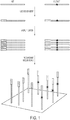
- the inventors have developed an approach, called "Safe-SeqS” (from Safe - Seq uencing S ystem). In one embodiment it involves two basic steps ( Fig. 1 ). The first is the assignment of a Unique Identifier (UID) to each nucleic acid template molecule to be analyzed. The second is the amplification of each uniquely tagged template, so that many daughter molecules with the identical sequence are generated (defined as a UID-family). If a mutation pre-existed in the template molecule used for amplification, that mutation should be present in a certain proportion, or even all, of daughter molecules containing that UID (barring any subsequent replication or sequencing errors).
- UID Unique Identifier
- a UID-family in which every family member (or a certain predetermined proportion) has an identical mutation is called a "super-mutant.” Mutations not occurring in the original templates, such as those occurring during the amplification steps or through errors in base-calling, should not give rise to super-mutants, i.e., will not be present at the pre-determined frequency in a UID family. In other embodiments, amplification is not necessary.
- the approach can be employed for any purpose where a very high level of accuracy and sensitivity is required from sequence data. As shown below, the approach can be used to assess the fidelity of a polymerase, the accuracy of in vitro synthesized nucleic acid synthesis, and the prevalence of mutations in nuclear or mitochondrial nucleic acids of normal cells. The approach may be used to detect and/or quantify mosaicsm and somatic mutations.
- Fragments of nucleic acids may be obtained using a random fragment forming technique such as mechanical shearing, sonicating, or subjecting nucleic acids to other physical or chemical stresses. Fragments may not be strictly random, as some sites may be more susceptible to stresses than others. Endonucleases that randomly or specifically fragment may also be used to generate fragments. Size of fragments may vary, but desirably will be in ranges between 30 and 5,000 basepairs, between 100 and 2,000, between 150 and 1,000, or within ranges with different combinations of these endpoints. Nucleic acids may be, for example, RNA or DNA. Modified forms of RNA or DNA may also be used.
- Attachment of an exogenous UID to an analyte nucleic acids fragment may be performed by any means known in the art, including enzymatic, chemical, or biologic.
- One means employs a polymerase chain reaction.
- Another means employs a ligase enzyme.
- the enzyme may be mammalian or bacterial, for example. Ends of fragments may be repaired prior to joining using other enzymes such as Klenow Fragment of T4 DNA Polymerase. Other enzymes which may be used for attaching are other polymerase enzymes.
- An UID may be added to one or both ends of the fragments.
- a UID may be contained within a nucleic acid molecule that contains other regions for other intended functionality. For example, a universal priming site may be added to permit later amplification. Another additional site may be a region of complementarity to a particular region or gene in the analyte nucleic acids.
- a UID may be from 2 to 4,000, from 100 to 1000, from 4 to 400, bases
- UIDs may be made using random addition of nucleotides to form a short sequence to be used as an identifier. At each position of addition, a selection from one of four deoxyribonucleotides may be used. Alternatively a selection from one of three, two, or one deoxyribonucleotides may be used. Thus the UID may be fully random, somewhat random, or non-random in certain positions.
- Another manner of making UIDs utilizes pre-determined nucleotides assembled on a chip. In this manner of making, complexity is attained in a planned manner. It may be advantageous to attach a UID to each end of a fragment, increasing the complexity of the UID population on fragments.
- a cycle of polymerase chain reaction for adding exogenous UID refers to the thermal denaturation of a double stranded molecule, the hybridization of a first primer to a resulting single strand, the extension of the primer to form a new second strand hybridized to the original single strand.
- a second cycle refers to the denaturation of the new second strand from the original single strand, the hybridization of a second primer to the new second strand, and the extension of the second primer to form a new third strand, hybridized to the new second strand. Multiple cycles may be required to increase efficiency, for example, when analyte is dilute or inhibitors are present.
- adapters can be added to the ends of fragments by ligation.
- Complexity of the analyte fragments can be decreased by a capture step, either on a solid phase or in liquid step.
- the capture step will employ hybridization to probes representing a gene or set of genes of interest. If on a solid phase, non-binding fragments are separated from binding fragments. Suitable solid phases known in the art include filters, membranes, beads, columns, etc.
- a capture reagent can be added which binds to the probes, for example through a biotin-avidin type interaction. After capture, desired fragments can be eluted for further processing.
- the order of adding adapters and capturing is not critical.
- Another means of reducing the complexity of the analyte fragments involves amplification of one or more specific genes or regions.
- One way to accomplish this is to use inverse PCR.
- Primers can be used which are gene-specific, thus enriching while forming libraries.
- the gene-specific primers can contain grafting sequences for subsequent attachment to a massively parallel sequencing platform.
- endogenous UIDs provide a limited number of unique possibilities, depending on the fragment size and sequencing read length
- combinations of both endogenous and exogenous UIDs can be used. Introducing additional sequences when amplifying would increase the available UIDs and thereby increase sensitivity.
- the template can be split into 96 wells, and 96 different primers could be used during the amplification. This would effectively increase the available UIDs 96-fold, because up to 96 templates with the same endogenous UID could be distinguished.
- This technique can also be used with exogenous UIDs, so that each well's primers adds a unique, well-specific sequence to the amplification products. This can improve the specificity of detection of rare templates.
- Amplification of fragments containing a UID can be performed according to known techniques to generate families of fragments. Polymerase chain reaction can be used. Other amplification methods can also be used, as is convenient. Inverse PCR may be used, as can rolling circle amplification. Amplification of fragments typically is done using primers that are complementary to priming sites that are attached to the fragments at the same time as the UIDs. The priming sites are distal to the UIDs, so that amplification includes the UIDs. Amplification forms a family of fragments, each member of the family sharing the same UID. Because the diversity of UIDs is greatly in excess of the diversity of the fragments, each family should derive from a single fragment molecule in the analyte.
- Primers used for the amplification may be chemically modified to render them more resistant to exonucleases.
- One such modification is the use of phosphorothioate linkages between one or more 3' nucleotides.
- Family members are sequenced and compared to identify any divergencies within a family. Sequencing is preferably performed on a massively parallel sequencing platform, many of which are commercially available. If the sequencing platform requires a sequence for "grafting," i.e., attachment to the sequencing device, such a sequence can be added during addition of UIDs or adapters or separately.
- a grafting sequence may be part of a UID primer, a universal primer, a gene target-specific primer, the amplification primers used for making a family, or separate. Redundant sequencing refers to the sequencing of a plurality of members of a single family.
- a threshold can be set for identifying a mutation in an analyte. If the "mutation" appears in all members of a family, then it derives from the analyte. If it appears in less than all members, then it may have been introduced during the analysis.
- Thresholds for calling a mutation may be set, for example, at 50%, 60%, 70%, 80%, 90%, 95%, 97%, 98 %, or 100%. Thresholds will be set based on the number of members of a family that are sequenced and the particular purpose and situation.
- the first primer comprises a first portion of 10-100 nucleotides complementary to the gene or gene portion and a second portion of 10 to 100 nucleotides comprising a site for hybridization to a third primer.
- the second primer comprises a first portion of 10-100 nucleotides complementary to the gene or gene portion and a second portion of 10 to 100 nucleotides comprising a site for hybridization to a fourth primer.
- Interposed between the first portion and the second portion of the second primer is a third portion consisting of 2 to 4,000 nucleotides forming a unique identifier (UID).
- UID unique identifier
- the unique identifiers in the population have at least 4, at least 16, at least 64, at least 256, at least 1,024, at least 4,096, at least 16,384, at least 65,536, at least 262,144, at least 1,048,576, at least 4,194,304, at least 16,777,216, or at least 67,108,864 different sequences.
- the first and second primers are complementary to opposite strands of the gene or gene portion.
- a kit can be made containing both the primers for attaching exogenous UIDs as well as amplification primers, i.e ., the third and fourth primers complementary to the second portions of each of the first and second primers.
- the third and fourth primers can optionally contain additional grafting or indexing sequences.
- the UID may comprise randomly selected sequences, pre-defined nucleotide sequences, or both randomly selected sequences and pre-defined nucleotides. If both, these can be joined together in blocks or interspersed.
- the methods of analysis can be used to quantitate as well as to determine a sequence. For example, the relative abundance of two analyte DNA fragments may be compared.
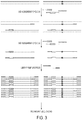
- Safe-SeqS has limitations. For example, we have demonstrated that the exogenous UIDs strategy can be used to analyze a single amplicon in depth. This technology may not be applicable to situations wherein multiple amplicons must be analyzed from a sample containing a limited number of templates. Multiplexing in the UID assignment cycles ( Fig. 3 ) may provide a solution to this challenge.
- a second limitation is that the efficiency of amplification in the UID assignment cycles is critical for the success of the method. Clinical samples may contain inhibitors that reduce the efficiency of this step. This problem can presumably be overcome by performing more than two cycles in the UID assignment PCR step ( Fig. 3 ), though this would complicate the determination of the number of templates analyzed.
- Safe-SeqS The specificity of Safe-SeqS is currently limited by the fidelity of the polymerase used in the UID assignment PCR step, i.e., 8.8 x 10 -7 mutations/bp in its current implementation with two cycles. Increasing the number of cycles in the UID assignment PCR step to five would decrease the overall specificity to ⁇ 2 x 10 -6 mutations/bp. However, this specificity can be increased by requiring more than one super-mutant for mutation identification -- the probability of introducing the same artifactual mutation twice or three times would be exceedingly low ([2 x 10 -6 ] 2 or [2 x 10 -6 ] 3 , respectively). In sum, there are several simple ways to perform Safe-SeqS variations and analysis variations to realize the needs of specific experiments.
- UIDs sometimes called barcodes or indexes
- Safe-SeqS analysis can also determine which strand of a template is mutated, thus an additional criteria for calling mutations could require that the mutation appears in only one or in both strands of the originally double stranded template.
- Massively parallel sequencers are able to obtain sequence information from both ends of a template in two sequential reads. (This type of sequencing experiment is called a "paired end" run on the Illumina platform, but similar experiments can be done on other sequencing platforms where they may be called by another name.)
- the two strands of a double stranded template can be differentiated by the observed orientation of the sequences and the order in which they appear when sequence information is obtained from both ends.
- a UID strand pair could consist of the following two groups of sequences when each end of a template is sequenced in sequential reads: 1) A sequence in the sense orientation that begins at position 100 of chromosome 2 in the first read followed by a sequence in the antisense orientation that begins at position 400 of chromosome 2 in the second read; and 2) A sequence in the antisense orientation that begins at position 400 of chromosome 2 in the first read followed by a sequence in the sense orientation that begins at position 100 of chromosome 2 in the second read.
- 42,222 of 69,505 UIDs (representing 21,111 original double stranded molecules) in the region of interest represented UID strand pairs.
- this strategy employs two sets of PCR primers. The first set is synthesized with standard phosphoramidite precursors and contained sequences complementary to the gene of interest on the 3' end and different tails at the 5' ends of both the forward and reverse primers. The different tails allowed universal amplification in the next step.
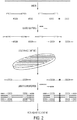
- two cycles of PCR are performed with the primers and a high-fidelity polymerase, producing a uniquely tagged, double-stranded DNA fragment from each of the two strands of each original template molecule ( Fig. 3 ).
- the residual, unused UID assignment primers are removed by digestion with a single-strand specific exonuclease, without further purification, and two new primers are added.
- SPRI solid phase reversible immobilization
- the new primers complementary to the tails introduced in the UID assignment cycles, contain grafting sequences at their 5' ends, permitting solid-phase amplification on the Illumina instrument, and phosphorothioate residues at their 3' ends to make them resistant to any remaining exonuclease. Following 25 additional cycles of PCR, the products are loaded on the Illumina instrument. As shown below, this strategy allowed us to evaluate the majority of input fragments and was used for several illustrative experiments.
- Phusion polymerase The error rate of Phusion polymerase, estimated through cloning of PCR products encoding ⁇ -galactosidase in plasmid vectors and transformation into bacteria, is reported by the manufacturer to be 4.4 x 10 -7 errors/bp/PCR cycle.
- conventional analysis of the Illumina sequencing data revealed an apparent error rate of 9.1 x 10 -6 errors/bp/PCR cycle, more than an order of magnitude higher than the reported Phusion polymerase error rate (Table 2A).
- Safe-SeqS of the same data revealed an error rate of 4.5 x 10 -7 errors/bp/PCR cycle, nearly identical to that measured for Phusion polymerase in biological assays (Table 2A).
- Mitochondrial mutations in DNA from normal human cells Conventional analysis of 7 individuals Total mutations identified 30,599 12,970 Fraction of mutations represented by single base substitutions 98% 1% Fraction of mutations represented by deletions 2% 1% Fraction of mutations represented by insertions 0% 0% Safe-SeqS analysis of 7 individuals Total super-mutants identified 135 61 Fraction of super-mutants represented by single base substitutions 99% 1% Fraction of super-mutants represented by deletions 1% 1% Fraction of super-mutants represented by insertions 0% 0%
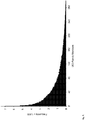
- Safe-SeqS also allowed a determination of the total number of distinct mutational events and an estimation of PCR cycle in which the mutation occurred. There were 19 cycles of. PCR performed in wells containing a single template molecule in these experiments. If a polymerase error occurred in cycle 19, there would be only one super-mutant produced (from the strand containing the mutation). If the error occurred in cycle 18 there should be two super-mutants (derived from the mutant strands produced in cycle 19), etc. Accordingly, the cycle in which the error occurred is related to the number of super-mutants containing that error.
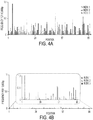
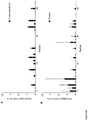
- the oligonucleotides contained a large number of insertion and deletion errors, representing 8.2 ⁇ 0.63% and 25 ⁇ 1.5% of the total super-mutants, respectively. Importantly, both the position and nature of the errors were highly reproducible among seven independent replicates of this experiment performed on the same batch of oligonucleotides ( Fig. 6A ). This nature and distribution of errors had little in common with that of the errors produced by Phusion polymerase ( Fig. 6B and Table 5), which were distributed in the expected stochastic pattern among replicate experiments. The number of errors in the oligonucleotides synthesized with phosphoramidites was -60 times higher than in the equivalent products synthesized by Phusion polymerase.
- the exogenous UID strategy ( Fig. 3 ) was then used to determine the prevalence of rare mutations in a small region of the CTNNBI gene from ⁇ 100,000 normal human cells from three unrelated individuals. Through comparison with the number of UID-families obtained in the Safe-SeqS experiments (Table 2B), we calculated that the majority (78 ⁇ 9.8 %) of the input fragments were converted into UID-families. There was an average of 68 members/UID-family, easily fulfilling the required redundancy for Safe-SeqS ( Fig. 7 ).
- Safe-SeqS One possible strategy to increase the specificity of Safe-SeqS is to perform the library amplification (and possibly the UID assignment cycles) in multiple wells. This can be accomplished in as few as 2 or as many as 384 wells using standard PCR plates, or scaled up to many more wells when using a microfluidic device (thousands to millions). When performed this way, indexing sequences can be introduced into the templates that are unique to the wells in which the template is amplified. Rare mutations, thus, should give rise to two super-mutants (i.e., one from each strand), both with the same well index sequence.
- Genomic DNA from human pancreas or cultured lymphoblastoid cells was prepared using Qiagen kits. The pancreas DNA was used for the capture experiment and the lymphoblastoid cells were used for the inverse PCR experiment. DNA was quantified by optical absorbance and with qPCR. DNA was fragmented to an average size of ⁇ 200 bp by acoustic shearing (Covaris), then end-repaired, A-tailed, and ligated to Y-shaped adapters according to standard Illumina protocols. The ends of each template molecule provide endogenous UIDs corresponding to their chromosomal positions.
- Amplifications were performed using Phusion HotStart I (NEB) in 50 uL reactions containing 1X Phusion HF buffer, 0.5 mM dNTPs, 0.5 uM each forward and reverse primer (both 5'-phosphorylated), and 1U of Phusion polymerase.
- the following cycling conditions were used: one cycle of 98°C for 30s; and 16 cycles of 98°C for 10s, 65°C for 30s, and 72°C for 30s. All 96 reactions were pooled and then purified using a Qiagen MinElute PCR Purification Kit (cat. no. 28004) and a QIAquick Gel Extraction kit (cat. no. 28704).
- the KRAS -specific primers both contained grafting sequences for hybridization to the Illumina GA IIx flow cell (Table 6). The following cycling conditions were used: one cycle of 98°C for 2 min; and 37 cycles of 98°C for 10s, 61°C for 15s, and 72°C for 10s. The final purification was performed with a NucleoSpin Extract II kit (Macherey-Nagel) and eluted in 20uL NE Buffer. The resulting DNA fragments contained UIDs composed of three sequences: two endogenous ones, represented by the two ends of the original sheared fragments plus the exogenous sequence introduced during the indexing amplification.
- Genomic DNA from normal human colonic mucosae or blood lymphocytes was prepared using Qiagen kits. The DNA from colonic mucosae was used for the experiments on CTNNB1 and mitochondrial DNA, while the lymphocyte DNA was used for the experiments on CTNNB1 and on polymerase fidelity.
- DNA was quantified with Digital PCR (2) using primers that amplified single-copy genes from human cells (Analysis of Polymerase Fidelity and CTNNB1 ), qPCR (mitochondrial DNA), or by optical absorbance (oligonucleotides). Each strand of each template molecule was encoded with a 12 or 14 base UID using two cycles of amplicon-specific PCR, as described in the text and Fig.
- the amplicon-specific primers both contained universal tag sequences at their 5' ends for a later amplification step.
- the UIDs constituted 12 or 14 random nucleotide sequences appended to the 5' end of the forward amplicon-specific primers (Table 6). These primers can generate 16.8 and 268 million distinct UIDs, respectively. It is important that the number of distinct UIDs greatly exceed the number of original template molecules to minimize the probability that two different original templates acquired the same UID.
- the UID assignment PCR cycles included Phusion Hot Start II (NEB) in a 45 uL reaction containing 1X Phusion HF buffer, 0.25mM dNTPs, 0.5 uM each forward (containing 12-14 Ns) and reverse primers, and 2U of Phusion polymerase. To keep the final template concentrations ⁇ 1.5 ng/uL, multiple wells were used to create some libraries. The following cycling conditions were employed: one incubation of 98°C for 30s (to activate the Phusion Hot Start II); and two cycles of 98°C for 10 s, 61°C for 120 s, and 72°C for 10 s.
- NEB Phusion Hot Start II
- each well was digested with 60 U of a single strand DNA specific nuclease (Exonuclease-I; Enzymatics) at 37°C for 1hr After a 5 min heat-inactivation at 98°C, primers complementary to the introduced universal tags (Table 6) were added to a final concentration of 0.5uM each.
- These primers contained two terminal phosphorothioates to make them resistant to any residual Exonuclease-I activity. They also contained 5' grafting sequences necessary for hybridization to the Illumina GA IIx flow cell. Finally, they contained an index sequence between the grafting sequence and the universal tag sequence.
- This index sequence enables the PCR products from multiple different individuals to be simultaneously analyzed in the same flow cell compartment of the sequencer.
- the following cycling conditions were used for the subsequent 25 cycles of PCR: 98°C for 10s and 72°C for 15s. No intermediate purification steps were performed in an effort to reduce the losses of template molecules.
- Phusion polymerase fidelity Analysis of Phusion polymerase fidelity. Amplification of a fragment of human genomic DNA within the BMX (RefSeq Accession NM_203281.2) gene was first performed using the PCR conditions described above. The template was diluted so that an average of one template molecule was present in every 10 wells of a 96-well PCR plate. Fifty uL PCR reactions were then performed in 1X Phusion HF buffer, 0.25mM dNTPs, 0.5uM each forward and reverse primers (Table 6), and 2U of Phusion polymerase. The cycling conditions were one cycle of 98°C for 30s; and 19 cycles of 98°C for 10 s, 61°C for 120 s, and 72°C for 10s.
- the primers were removed by digestion with 60 U of Exonuclease-I at 37°C for 1hr followed by a 5 min heat-inactivation at 98°C. No purification of the PCR product was performed, either before or after Exonuclease-I digestion. The entire contents of each well were then used as templates for the exogenous UIDs strategy described above.
- UID-families based on their endogenous or exogenous UIDs. Only UID-families with two or more members were considered. Such UID-families included the vast majority ( ⁇ 99%) of the sequencing reads. To ensure that the same data was used for both conventional and Safe-SeqS analysis, we also excluded UID-families containing only one member from conventional analysis. Furthermore, we only identified a base as "mutant" in conventional sequencing analysis if the same variant was identified in at least two members of at least one UID-family (i.e., two mutations) when comparing conventional analysis to that of Safe-SeqS with exogenous UIDs.
- Apparent mutations defined as any base call that varies from the expected base at a defined position, can result from a variety of processes:
- Safe-SeqS minimizes the number of false-positive mutation calls in several ways.
- Safe-SeqS with exogenous UIDs results in the fewest false-positive mutation calls because it requires the fewest enzymatic steps.
- error-generating processes #3 to #7 are completely eliminated because these steps aren't performed.
- Safe-SeqS with exogenous UIDs also drastically reduces errors resulting from error-generating processes #10 and #11 because of the way the data is analyzed.
Landscapes
- Chemical & Material Sciences (AREA)
- Life Sciences & Earth Sciences (AREA)
- Proteomics, Peptides & Aminoacids (AREA)
- Organic Chemistry (AREA)
- Health & Medical Sciences (AREA)
- Zoology (AREA)
- Engineering & Computer Science (AREA)
- Wood Science & Technology (AREA)
- Analytical Chemistry (AREA)
- Molecular Biology (AREA)
- Biochemistry (AREA)
- Microbiology (AREA)
- Immunology (AREA)
- Biotechnology (AREA)
- Bioinformatics & Cheminformatics (AREA)
- General Engineering & Computer Science (AREA)
- General Health & Medical Sciences (AREA)
- Genetics & Genomics (AREA)
- Biophysics (AREA)
- Physics & Mathematics (AREA)
- Chemical Kinetics & Catalysis (AREA)
- Measuring Or Testing Involving Enzymes Or Micro-Organisms (AREA)
- Investigating Or Analysing Biological Materials (AREA)
Claims (15)
- Verfahren zum Identifizieren von Einzelbasensubstitutions-, Einzelbaseninsertions- und Einzelbasendeletionsmutationen in einem Analyt-Nukleinsäurefragment, umfassend:Anheften einer eindeutigen Identifikator-Nukleinsäuresequenz ("Unique Identifier"-Nukleinsäuresequenz; UID) an ein erstes Ende eines jeden einer Vielzahl von Analyt-Nukleinsäurefragmenten zur Bildung eindeutig identifizierter Analyt-Nukleinsäurefragmente;redundantes Bestimmen der Nukleotidsequenz eines eindeutig identifizierten Analyt-Nukleinsäurefragments, wobei bestimmte Nukleotidsequenzen, die eine UID teilen, eine Familie von Mitgliedern bilden;Identifizieren einer Nukleotidsequenz als eine, die ein Analyt-Nukleinsäurefragment genau wiedergibt, wenn wenigstens 50 % Mitglieder der Familie die Sequenz enthalten und die Sequenz in wenigstens zwei Familien gefunden wird; undIdentifizieren einer Einzelbasensubstitutions-, Einzelbaseninsertions- oder Einzelbasendeletionsmutation in dem Analyt-Nukleinsäurefragment, wenn sich die Nukleotidsequenz, die das Analyt-Nukleinsäurefragment genau wiedergibt, von einer erwarteten Sequenz durch eine Einzelbasensubstitution, Einzelbaseninsertion oder Einzelbasendeletion in dem Analyt-Nukleinsäurefragment unterscheidet.
- Verfahren nach Anspruch 1, wobei:(1) die eindeutig identifizierten Analyt-Nukleinsäurefragmente vor dem Schritt des redundanten Bestimmens amplifiziert werden, und wobei die Analyt-DNA vor der Amplifikation wahlweise mit Bisulfit behandelt wird, um unmethylierte Cytosinbasen in Uracil zu überführen;(2) die Nukleotidsequenz identifiziert ist, wenn wenigstens 70 % Mitglieder der Familie die Sequenz enthalten;(3) die Nukleotidsequenz identifiziert ist, wenn wenigstens 90 % Mitglieder der Familie die Sequenz enthalten;(4) die Nukleotidsequenz identifiziert ist, wenn 100 % Mitglieder der Familie die Sequenz enthalten; oder(5) die Analyt-Nukleinsäurefragmente gebildet werden, indem eine Scherkraft auf Analyt-Nukleinsäure ausgeübt wird.
- Verfahren nach Anspruch 1, wobei der Schritt des Anheftens durch Polymerase-Kettenreaktion erfolgt.
- Verfahren nach Anspruch 1, wobei eine erste Universalprimersequenz an ein zweites Ende eines jeden einer Vielzahl von Analyt-Nukleinsäurefragmenten angeheftet wird, wobei die UID wahlweise kovalent an eine zweite Universalprimersequenz gebunden wird, und wobei die eindeutig identifizierten Analyt-Nukleinsäurefragmente vorzugweise vor dem Schritt des redundanten Bestimmens mit einem Paar von Primern amplifiziert werden, die zu der ersten bzw. der zweiten Universalprimersequenz komplementär sind.
- Verfahren nach Anspruch 3, wobei wenigstens zwei Zyklen Polymerase-Kettenreaktion durchgeführt werden, so dass eine Familie aus eindeutig identifizierten Analyt-Nukleinsäurefragmenten gebildet wird, die eine UID am ersten Ende und eine erste Universalprimersequenz an einem zweiten Ende aufweisen.
- Verfahren nach Anspruch 1, wobei die UID kovalent an eine zweite Universalprimersequenz gebunden wird, wobei wahlweise:(1) die UID an das 5'-Ende eines Analyt-Nukleinsäurefragments angeheftet wird und die zweite Universalprimersequenz 5' zur UID liegt; oder(2) die UID an das 3'-Ende eines Analyt-Nukleinsäurefragments angeheftet wird und die zweite Universalprimersequenz 3' zur UID liegt.
- Verfahren nach Anspruch 3, wobei die eindeutig identifizierten Analyt-Nukleinsäurefragmente vor dem Schritt des redundanten Bestimmens amplifiziert werden, und wobei vor der Amplifikation eine einzelstrangspezifische Exonuklease verwendet wird, um überschüssige Primer, die zum Anheften der UID an die Analyt-Nukleinsäurefragmente verwendet wurden, zu verdauen, wobei wahlweise:(1) die eindeutig identifizierten Analyt-Nukleinsäurefragmente vor dem Schritt des redundanten Bestimmens amplifiziert werden, und wobei die einzelstrangspezifische Exonuklease vor der Amplifikation inaktiviert, inhibiert oder entfernt wird, wobei die einzelstrangspezifische Exonuklease vorzugsweise durch Wärmebehandlung inaktiviert wird;(2) Primer, die bei der Amplifikation verwendet werden, ein oder mehrere chemische Modifikationen umfassen, die sie gegen Exonukleasen resistent machen;(3) Primer, die bei der Amplifikation verwendet werden, ein oder mehrere Thiophosphat-Bindungen enthalten.
- Verfahren zum Identifizieren von Einzelbasensubstitutions-, Einzelbaseninsertions- und Einzelbasendeletionsmutationen in einem Analyt-Nukleinsäurefragment, umfassend:Anheften einer eindeutigen Identifikator-Sequenz (UID) an ein erstes Ende eines jeden einer Vielzahl von Analyt-DNA-Fragmenten durch wenigstens zwei Amplifikationszyklen mit ersten und zweiten Primern zur Bildung eindeutig identifizierter Analyt-DNA-Fragmente, wobei die UIDs bei Amplifikation im Überschuss zu den Analyt-DNA-Fragmenten vorliegen, wobei die ersten Primer umfassen:• ein erstes Segment, das zu einem gewünschten Amplikon komplementär ist;• ein zweites Segment, das die UID enthält;• ein drittes Segment, das eine Universalprimersequenz zur nachfolgenden Amplifikation enthält.und wobei die zweiten Primer eine Universalprimersequenz zur nachfolgenden Amplifikation umfassen; wobei jeder Amplifikationszyklus eine Universalprimersequenz an einen Strang anheftet;Amplifizieren der eindeutig identifizierten Analyt-DNA-Fragmente zur Bildung einer Familie von eindeutig identifizierten Analyt-DNA-Fragmenten von jedem eindeutig identifizierten Analyt-DNA-Fragment; undBestimmen von Nukleotidsequenzen einer Vielzahl von Mitgliedern der Familie, wobei das Verfahren weiterhin die Schritte umfasst:Vergleichen von Sequenzen einer Familie eindeutig identifizierter Analyt-DNA-Fragmente;Identifizieren einer Nukleotidsequenz als eine, die ein Analyt-DNA-Fragment genau wiedergibt, wenn wenigstens 50 % Mitglieder der Familie die Sequenz enthalten und die Sequenz in wenigstens zwei Familien gefunden wird; undIdentifizieren einer Einzelbasensubstitutions-, Einzelbaseninsertions- oder Einzelbasendeletionsmutation, wenn sich die Nukleotidsequenz, die das Analyt-Nukleinsäurefragment genau wiedergibt, von der erwarteten Sequenz durch eine Einzelbasensubstitution, -insertion oder -deletion in dem Analyt-Nukleinsäurefragment unterscheidet, wobei wahlweise:(1) die Nukleotidsequenz identifiziert ist, wenn wenigstens 70 % Mitglieder der Familie die Sequenz enthalten; oder(2) die Nukleotidsequenz identifiziert ist, wenn wenigstens 90 % Mitglieder der Familie die Sequenz enthalten;
- Verfahren nach Anspruch 8, wobei(1) die zweiten Primer jeweils eine UID umfassen; oder(2) die UIDs 2 bis einschließlich 4000 Basen lang sind.
- Verfahren nach Anspruch 8, wobei vor dem Schritt der Amplifikation der eindeutig identifizierten Analyt-DNA-Fragmente eine einzelstrangspezifische Exonuklease verwendet wird, um überschüssige Primer, die zum Anheften der UID an die Analyt-DNA-Fragmente verwendet wurden, zu verdauen, wobei wahlweise:(1) die einzelstrangspezifische Exonuklease vor dem Amplifikationsschritt inaktiviert, inhibiert oder entfernt wird, wobei die einzelstrangspezifische Exonuklease vorzugsweise durch Wärmebehandlung inaktiviert wird; oder(2) Primer, die bei dem Amplifikationsschritt verwendet werden, ein oder mehrere Thiophosphat-Bindungen umfassen.
- Verfahren zum Identifizieren von Einzelbasensubstitutions-, Einzelbaseninsertions- und Einzelbasendeletionsmutationen in einem Analyt-Nukleinsäurefragment unter Verwendung eindeutiger endogener Identifikator-Sequenzen (UIDs), umfassend:Anheften von Adapteroligonukleotiden an Enden von Fragmenten von Analyt-DNA zwischen 30 und einschließlich 2000 Basen Länge zur Bildung von Fragmenten mit Adaptern, wobei jedes Ende eines Fragments vor dem Anheften eine endogene UID für das Fragment ist;Amplifizieren der Fragmente mit Adaptern unter Verwendung von Primern, die zu den Adapteroligonukleotiden komplementär sind, zur Bildung von Familien von Fragmenten mit Adaptern;Bestimmen der Nukleotidsequenz einer Vielzahl von Mitgliedern einer Familie;Vergleichen der Nukleotidsequenzen der Vielzahl von Mitgliedern der Familie;Identifizieren einer Nukleotidsequenz als eine, die ein Analyt-DNA-Fragment genau wiedergibt, wenn wenigstens 50 % Mitglieder der Familie die Sequenz enthalten und die Sequenz in wenigstens zwei Familien gefunden wird; undIdentifizieren einer Einzelbasensubstitutions-, Einzelbaseninsertions- oder Einzelbasendeletionsmutation, wenn sich die Nukleotidsequenz, die das Analyt-Nukleinsäurefragment genau wiedergibt, von einer erwarteten Sequenz durch eine Einzelbasensubstitution, -insertion oder -deletion in dem Analyt-Nukleinsäurefragment unterscheidet.
- Verfahren nach Anspruch 11, wobei(1) das Verfahren weiterhin Anreichern auf Fragmente, die ein oder mehr ausgewählte Gene repräsentieren, durch Capture einer Untergruppe der Fragmente unter Verwendung von Capture-Oligonukleotiden umfasst, die zu ausgewählten Genen in der Analyt-DNA komplementär sind, und wobei der Anheftungsschritt wahlweise vor dem Anreicherungsschritt stattfindet;(2) das Verfahren weiterhin Anreichern auf Fragmente, die ein oder mehr ausgewählte Gene repräsentieren, durch Amplifizieren von Fragmenten umfasst, die zu ausgewählten Genen komplementär sind, und wobei der Anheftungsschritt wahlweise vor dem Anreicherungsschritt stattfindet;(3) die Fragmente durch Scheren gebildet werden; oder(4) eine Nukleotidsequenz als eine identifiziert ist, die ein Analyt-DNA-Fragment genau wiedergibt, wenn wenigstens 70 % Mitglieder der Familie die Sequenz enthalten.
- Verfahren nach Anspruch 8 oder 11, wobei die Analyt-DNA vor der Amplifikation mit Bisulfit behandelt wird, um unmethylierte Cytosinbasen in Uracil zu überführen.
- Verfahren nach Anspruch 1, 8 oder 11, weiterhin umfassend den Schritt des Vergleichens der Anzahl von Familien, die ein erstes Analyt-DNA-Fragment wiedergeben, mit der Anzahl von Familien, die ein zweites Analyt-DNA-Fragment wiedergeben, um eine relative Konzentration eines ersten Analyt-DNA-Fragments zu einem zweiten Analyt-DNA-Fragment in der Vielzahl von Analyt-DNA-Fragmenten zu bestimmen.
- Verfahren nach Anspruch 1, 8 oder 11, wobei eine Nukleotidsequenz als eine identifiziert wird, die ein Analyt-DNA-Fragment genau wiedergibt, wenn(a) die Sequenz in nur einem von zwei Strängen des Analyt-DNA-Fragments vorhanden ist; oder(b) die Sequenz in beiden von zwei Strängen des Analyt-DNA-Fragments vorhanden ist.
Priority Applications (4)
| Application Number | Priority Date | Filing Date | Title |
|---|---|---|---|
| EP21173117.9A EP3907297A1 (de) | 2011-04-15 | 2012-04-12 | Sicheres sortierungssystem |
| EP17154750.8A EP3246416B1 (de) | 2011-04-15 | 2012-04-12 | Sicheres sortierungssystem |
| DK17154750.8T DK3246416T3 (da) | 2011-04-15 | 2012-04-12 | Sikkert sekventeringssystem |
| EP21173115.3A EP3907299A1 (de) | 2011-04-15 | 2012-04-12 | Sicheres sortierungssystem |
Applications Claiming Priority (3)
| Application Number | Priority Date | Filing Date | Title |
|---|---|---|---|
| US201161476150P | 2011-04-15 | 2011-04-15 | |
| US201161484482P | 2011-05-10 | 2011-05-10 | |
| PCT/US2012/033207 WO2012142213A2 (en) | 2011-04-15 | 2012-04-12 | Safe sequencing system |
Related Child Applications (4)
| Application Number | Title | Priority Date | Filing Date |
|---|---|---|---|
| EP21173115.3A Division EP3907299A1 (de) | 2011-04-15 | 2012-04-12 | Sicheres sortierungssystem |
| EP21173117.9A Division EP3907297A1 (de) | 2011-04-15 | 2012-04-12 | Sicheres sortierungssystem |
| EP17154750.8A Division EP3246416B1 (de) | 2011-04-15 | 2012-04-12 | Sicheres sortierungssystem |
| EP17154750.8A Division-Into EP3246416B1 (de) | 2011-04-15 | 2012-04-12 | Sicheres sortierungssystem |
Publications (3)
| Publication Number | Publication Date |
|---|---|
| EP2697397A2 EP2697397A2 (de) | 2014-02-19 |
| EP2697397A4 EP2697397A4 (de) | 2014-10-15 |
| EP2697397B1 true EP2697397B1 (de) | 2017-04-05 |
Family
ID=47009955
Family Applications (4)
| Application Number | Title | Priority Date | Filing Date |
|---|---|---|---|
| EP17154750.8A Active EP3246416B1 (de) | 2011-04-15 | 2012-04-12 | Sicheres sortierungssystem |
| EP21173117.9A Withdrawn EP3907297A1 (de) | 2011-04-15 | 2012-04-12 | Sicheres sortierungssystem |
| EP21173115.3A Pending EP3907299A1 (de) | 2011-04-15 | 2012-04-12 | Sicheres sortierungssystem |
| EP12772013.4A Revoked EP2697397B1 (de) | 2011-04-15 | 2012-04-12 | Sicheres sortierungssystem |
Family Applications Before (3)
| Application Number | Title | Priority Date | Filing Date |
|---|---|---|---|
| EP17154750.8A Active EP3246416B1 (de) | 2011-04-15 | 2012-04-12 | Sicheres sortierungssystem |
| EP21173117.9A Withdrawn EP3907297A1 (de) | 2011-04-15 | 2012-04-12 | Sicheres sortierungssystem |
| EP21173115.3A Pending EP3907299A1 (de) | 2011-04-15 | 2012-04-12 | Sicheres sortierungssystem |
Country Status (9)
| Country | Link |
|---|---|
| US (15) | US9476095B2 (de) |
| EP (4) | EP3246416B1 (de) |
| CN (2) | CN103748236B (de) |
| AU (1) | AU2012242847B2 (de) |
| DK (1) | DK3246416T3 (de) |
| ES (2) | ES2625288T3 (de) |
| HU (1) | HUE068153T2 (de) |
| PL (2) | PL2697397T3 (de) |
| WO (1) | WO2012142213A2 (de) |
Families Citing this family (289)
| Publication number | Priority date | Publication date | Assignee | Title |
|---|---|---|---|---|
| US11111544B2 (en) | 2005-07-29 | 2021-09-07 | Natera, Inc. | System and method for cleaning noisy genetic data and determining chromosome copy number |
| US11111543B2 (en) | 2005-07-29 | 2021-09-07 | Natera, Inc. | System and method for cleaning noisy genetic data and determining chromosome copy number |
| US9424392B2 (en) | 2005-11-26 | 2016-08-23 | Natera, Inc. | System and method for cleaning noisy genetic data from target individuals using genetic data from genetically related individuals |
| US10081839B2 (en) | 2005-07-29 | 2018-09-25 | Natera, Inc | System and method for cleaning noisy genetic data and determining chromosome copy number |
| US10083273B2 (en) | 2005-07-29 | 2018-09-25 | Natera, Inc. | System and method for cleaning noisy genetic data and determining chromosome copy number |
| WO2007081385A2 (en) | 2006-01-11 | 2007-07-19 | Raindance Technologies, Inc. | Microfluidic devices and methods of use in the formation and control of nanoreactors |
| WO2007133710A2 (en) | 2006-05-11 | 2007-11-22 | Raindance Technologies, Inc. | Microfluidic devices and methods of use thereof |
| US9562837B2 (en) | 2006-05-11 | 2017-02-07 | Raindance Technologies, Inc. | Systems for handling microfludic droplets |
| WO2008097559A2 (en) | 2007-02-06 | 2008-08-14 | Brandeis University | Manipulation of fluids and reactions in microfluidic systems |
| WO2008130623A1 (en) | 2007-04-19 | 2008-10-30 | Brandeis University | Manipulation of fluids, fluid components and reactions in microfluidic systems |
| US12038438B2 (en) | 2008-07-18 | 2024-07-16 | Bio-Rad Laboratories, Inc. | Enzyme quantification |
| EP4047367A1 (de) | 2008-07-18 | 2022-08-24 | Bio-Rad Laboratories, Inc. | Verfahren zum nachweis von zielanalyten unter verwendung von tropfenbibliotheken |
| EP3216874A1 (de) | 2008-09-05 | 2017-09-13 | TOMA Biosciences, Inc. | Verfahren zum stratifizieren und annotieren der behandlungsoptionen eines krebsmedikaments |
| US8628927B2 (en) | 2008-11-07 | 2014-01-14 | Sequenta, Inc. | Monitoring health and disease status using clonotype profiles |
| US9365901B2 (en) | 2008-11-07 | 2016-06-14 | Adaptive Biotechnologies Corp. | Monitoring immunoglobulin heavy chain evolution in B-cell acute lymphoblastic leukemia |
| US9528160B2 (en) | 2008-11-07 | 2016-12-27 | Adaptive Biotechnolgies Corp. | Rare clonotypes and uses thereof |
| US8748103B2 (en) | 2008-11-07 | 2014-06-10 | Sequenta, Inc. | Monitoring health and disease status using clonotype profiles |
| US9394567B2 (en) | 2008-11-07 | 2016-07-19 | Adaptive Biotechnologies Corporation | Detection and quantification of sample contamination in immune repertoire analysis |
| EP2364368B1 (de) | 2008-11-07 | 2014-01-15 | Sequenta, Inc. | Verfahren zur überwachung von krankheitszuständen mittels sequenzanalyse |
| US9506119B2 (en) | 2008-11-07 | 2016-11-29 | Adaptive Biotechnologies Corp. | Method of sequence determination using sequence tags |
| ES2568509T3 (es) | 2009-01-15 | 2016-04-29 | Adaptive Biotechnologies Corporation | Perfilado de la inmunidad adaptativa y métodos para la generación de anticuerpos monoclonales |
| WO2010111231A1 (en) | 2009-03-23 | 2010-09-30 | Raindance Technologies, Inc. | Manipulation of microfluidic droplets |
| US9085798B2 (en) | 2009-04-30 | 2015-07-21 | Prognosys Biosciences, Inc. | Nucleic acid constructs and methods of use |
| CA2765949C (en) | 2009-06-25 | 2016-03-29 | Fred Hutchinson Cancer Research Center | Method of measuring adaptive immunity |
| ES2640776T3 (es) | 2009-09-30 | 2017-11-06 | Natera, Inc. | Métodos para denominar de forma no invasiva ploidía prenatal |
| US9315857B2 (en) | 2009-12-15 | 2016-04-19 | Cellular Research, Inc. | Digital counting of individual molecules by stochastic attachment of diverse label-tags |
| US8835358B2 (en) | 2009-12-15 | 2014-09-16 | Cellular Research, Inc. | Digital counting of individual molecules by stochastic attachment of diverse labels |
| US9399797B2 (en) | 2010-02-12 | 2016-07-26 | Raindance Technologies, Inc. | Digital analyte analysis |
| EP4435111A1 (de) | 2010-02-12 | 2024-09-25 | Bio-Rad Laboratories, Inc. | Digitale analytanalyse |
| US20190300945A1 (en) | 2010-04-05 | 2019-10-03 | Prognosys Biosciences, Inc. | Spatially Encoded Biological Assays |
| US10787701B2 (en) | 2010-04-05 | 2020-09-29 | Prognosys Biosciences, Inc. | Spatially encoded biological assays |
| KR101866401B1 (ko) | 2010-04-05 | 2018-06-11 | 프로그노시스 바이오사이언스, 인코포레이티드 | 공간적으로 엔코딩된 생물학적 검정 |
| US20240158855A1 (en) | 2010-05-18 | 2024-05-16 | Natera, Inc. | Methods for simultaneous amplification of target loci |
| US12221653B2 (en) | 2010-05-18 | 2025-02-11 | Natera, Inc. | Methods for simultaneous amplification of target loci |
| US11339429B2 (en) | 2010-05-18 | 2022-05-24 | Natera, Inc. | Methods for non-invasive prenatal ploidy calling |
| US11332793B2 (en) | 2010-05-18 | 2022-05-17 | Natera, Inc. | Methods for simultaneous amplification of target loci |
| US12655483B2 (en) | 2010-05-18 | 2026-06-16 | Natera, Inc. | Methods for simultaneous amplification of target loci |
| US11326208B2 (en) | 2010-05-18 | 2022-05-10 | Natera, Inc. | Methods for nested PCR amplification of cell-free DNA |
| US10316362B2 (en) | 2010-05-18 | 2019-06-11 | Natera, Inc. | Methods for simultaneous amplification of target loci |
| US12545960B2 (en) | 2010-05-18 | 2026-02-10 | Natera, Inc. | Methods for simultaneous amplification of target loci |
| US11322224B2 (en) | 2010-05-18 | 2022-05-03 | Natera, Inc. | Methods for non-invasive prenatal ploidy calling |
| US9677118B2 (en) | 2014-04-21 | 2017-06-13 | Natera, Inc. | Methods for simultaneous amplification of target loci |
| US12152275B2 (en) | 2010-05-18 | 2024-11-26 | Natera, Inc. | Methods for non-invasive prenatal ploidy calling |
| US11408031B2 (en) | 2010-05-18 | 2022-08-09 | Natera, Inc. | Methods for non-invasive prenatal paternity testing |
| US11939634B2 (en) | 2010-05-18 | 2024-03-26 | Natera, Inc. | Methods for simultaneous amplification of target loci |
| US11332785B2 (en) | 2010-05-18 | 2022-05-17 | Natera, Inc. | Methods for non-invasive prenatal ploidy calling |
| US20190010543A1 (en) | 2010-05-18 | 2019-01-10 | Natera, Inc. | Methods for simultaneous amplification of target loci |
| EP2854058A3 (de) | 2010-05-18 | 2015-10-28 | Natera, Inc. | Verfahren zur nichtinvasiven pränatalen Ploidiezuordnung |
| EP2619327B1 (de) | 2010-09-21 | 2014-10-22 | Population Genetics Technologies LTD. | Erhöhung der verlässlichkeit von allel-aufrufen mit molekülzählung |
| AU2011305445B2 (en) | 2010-09-24 | 2017-03-16 | The Board Of Trustees Of The Leland Stanford Junior University | Direct capture, amplification and sequencing of target DNA using immobilized primers |
| DK2630263T4 (da) | 2010-10-22 | 2022-02-14 | Cold Spring Harbor Laboratory | Varital tælling af nucleinsyrer for at opnå information om antal genomiske kopier |
| AU2011348100B2 (en) | 2010-12-22 | 2016-08-25 | Natera, Inc. | Methods for non-invasive prenatal paternity testing |
| JP6153874B2 (ja) | 2011-02-09 | 2017-06-28 | ナテラ, インコーポレイテッド | 非侵襲的出生前倍数性呼び出しのための方法 |
| WO2012112804A1 (en) | 2011-02-18 | 2012-08-23 | Raindance Technoligies, Inc. | Compositions and methods for molecular labeling |
| US9260753B2 (en) | 2011-03-24 | 2016-02-16 | President And Fellows Of Harvard College | Single cell nucleic acid detection and analysis |
| GB201106254D0 (en) | 2011-04-13 | 2011-05-25 | Frisen Jonas | Method and product |
| EP3246416B1 (de) * | 2011-04-15 | 2024-06-05 | The Johns Hopkins University | Sicheres sortierungssystem |
| EP2714970B1 (de) | 2011-06-02 | 2017-04-19 | Raindance Technologies, Inc. | Enzymquantifizierung |
| US8658430B2 (en) | 2011-07-20 | 2014-02-25 | Raindance Technologies, Inc. | Manipulating droplet size |
| US10385475B2 (en) | 2011-09-12 | 2019-08-20 | Adaptive Biotechnologies Corp. | Random array sequencing of low-complexity libraries |
| HK1201565A1 (en) | 2011-10-21 | 2015-09-04 | Adaptive Biotechnologies Corporation | Quantification of adaptive immune cell genomes in a complex mixture of cells |
| EP3388535B1 (de) | 2011-12-09 | 2021-03-24 | Adaptive Biotechnologies Corporation | Diagnose von lymphoid-malignomen und nachweis von minimaler resterkrankung |
| US9499865B2 (en) | 2011-12-13 | 2016-11-22 | Adaptive Biotechnologies Corp. | Detection and measurement of tissue-infiltrating lymphocytes |
| SMT202100154T1 (it) * | 2012-02-17 | 2021-05-07 | Hutchinson Fred Cancer Res | Composizioni e metodi per identificare precisamente mutazioni |
| EP3321378B1 (de) | 2012-02-27 | 2021-11-10 | Becton, Dickinson and Company | Zusammensetzungen für molekularen zählung |
| WO2013130512A2 (en) * | 2012-02-27 | 2013-09-06 | The University Of North Carolina At Chapel Hill | Methods and uses for molecular tags |
| EP3287531B1 (de) | 2012-02-28 | 2019-06-19 | Agilent Technologies, Inc. | Verfahren zur befestigung einer zählersequenz an einer nukleinsäureprobe |
| US10077478B2 (en) | 2012-03-05 | 2018-09-18 | Adaptive Biotechnologies Corp. | Determining paired immune receptor chains from frequency matched subunits |
| US9862995B2 (en) | 2012-03-13 | 2018-01-09 | Abhijit Ajit Patel | Measurement of nucleic acid variants using highly-multiplexed error-suppressed deep sequencing |
| WO2013142389A1 (en) | 2012-03-20 | 2013-09-26 | University Of Washington Through Its Center For Commercialization | Methods of lowering the error rate of massively parallel dna sequencing using duplex consensus sequencing |
| PT2831276T (pt) | 2012-05-08 | 2016-07-26 | Adaptive Biotechnologies Corp | Composições e método para medição e calibração do viés de amplificação em reações pcr multiplex |
| WO2014026031A1 (en) * | 2012-08-10 | 2014-02-13 | Sequenta, Inc. | High sensitivity mutation detection using sequence tags |
| WO2014028378A2 (en) | 2012-08-13 | 2014-02-20 | The Regents Of The University Of California | Methods and systems for detecting biological components |
| US20140100126A1 (en) | 2012-08-17 | 2014-04-10 | Natera, Inc. | Method for Non-Invasive Prenatal Testing Using Parental Mosaicism Data |
| PL2893040T3 (pl) | 2012-09-04 | 2019-05-31 | Guardant Health Inc | Sposoby wykrywania rzadkich mutacji i wariantu liczby kopii |
| US10876152B2 (en) | 2012-09-04 | 2020-12-29 | Guardant Health, Inc. | Systems and methods to detect rare mutations and copy number variation |
| US20160040229A1 (en) | 2013-08-16 | 2016-02-11 | Guardant Health, Inc. | Systems and methods to detect rare mutations and copy number variation |
| US11913065B2 (en) | 2012-09-04 | 2024-02-27 | Guardent Health, Inc. | Systems and methods to detect rare mutations and copy number variation |
| EP2904111B1 (de) | 2012-10-01 | 2017-12-06 | Adaptive Biotechnologies Corporation | Immunkompetenzbeurteilung durch adaptive immunrezeptordiversität und klonalitätscharakterisierung |
| EP3901280B1 (de) | 2012-10-17 | 2025-03-12 | 10x Genomics Sweden AB | Verfahren und produkt zur optimierung einer lokalisierten oder räumlichen detektion einer genexpression in einer gewebeprobe |
| WO2015160439A2 (en) | 2014-04-17 | 2015-10-22 | Adaptive Biotechnologies Corporation | Quantification of adaptive immune cell genomes in a complex mixture of cells |
| WO2014070462A1 (en) | 2012-10-29 | 2014-05-08 | The Johns Hopkins University | Papanicolaou test for ovarian and endometrial cancers |
| EP2914745B1 (de) | 2012-11-05 | 2017-09-06 | Rubicon Genomics, Inc. | Strichcodierung von nukleinsäuren |
| CN105531375B (zh) | 2012-12-10 | 2020-03-03 | 分析生物科学有限公司 | 靶向基因组分析的方法 |
| US10870890B2 (en) | 2013-02-18 | 2020-12-22 | The Johns Hopkins University | TERT promoter mutations in urothelial neoplasia |
| WO2014144495A1 (en) | 2013-03-15 | 2014-09-18 | Abvitro, Inc. | Single cell bar-coding for antibody discovery |
| ES2980689T3 (es) | 2013-03-15 | 2024-10-02 | Guardant Health Inc | Métodos para la secuenciación de polinucleótidos libres de células |
| SG10201708498VA (en) | 2013-04-17 | 2017-11-29 | Agency Science Tech & Res | Method for generating extended sequence reads |
| CN111500680B (zh) | 2013-06-25 | 2024-04-16 | 普罗格诺西斯生物科学公司 | 检测样品中生物靶标的空间分布的方法和系统 |
| US9708657B2 (en) | 2013-07-01 | 2017-07-18 | Adaptive Biotechnologies Corp. | Method for generating clonotype profiles using sequence tags |
| CN105705659B (zh) | 2013-08-28 | 2019-11-29 | 贝克顿迪金森公司 | 大规模平行单细胞分析 |
| US10262755B2 (en) | 2014-04-21 | 2019-04-16 | Natera, Inc. | Detecting cancer mutations and aneuploidy in chromosomal segments |
| US10577655B2 (en) | 2013-09-27 | 2020-03-03 | Natera, Inc. | Cell free DNA diagnostic testing standards |
| US11901041B2 (en) | 2013-10-04 | 2024-02-13 | Bio-Rad Laboratories, Inc. | Digital analysis of nucleic acid modification |
| CN105745528A (zh) | 2013-10-07 | 2016-07-06 | 赛卢拉研究公司 | 用于以数字方式对阵列上的特征进行计数的方法和系统 |
| ES2693217T3 (es) * | 2013-12-02 | 2018-12-10 | Personal Genome Diagnostics Inc. | Método para evaluar variantes minoritarias en una muestra |
| US11859246B2 (en) | 2013-12-11 | 2024-01-02 | Accuragen Holdings Limited | Methods and compositions for enrichment of amplification products |
| IL274464B2 (en) | 2013-12-11 | 2023-08-01 | Accuragen Holdings Ltd | Preparations and methods for the detection of rare sequence variants |
| US11286519B2 (en) | 2013-12-11 | 2022-03-29 | Accuragen Holdings Limited | Methods and compositions for enrichment of amplification products |
| US9944977B2 (en) | 2013-12-12 | 2018-04-17 | Raindance Technologies, Inc. | Distinguishing rare variations in a nucleic acid sequence from a sample |
| CN111534580B (zh) | 2013-12-28 | 2024-06-04 | 夸登特健康公司 | 用于检测遗传变异的方法和系统 |
| AU2015209079B2 (en) | 2014-01-27 | 2021-07-15 | Archerdx, Llc | Methods of preparing nucleic acids for sequencing |
| CA2941612A1 (en) | 2014-03-05 | 2015-09-11 | Adaptive Biotechnologies Corporation | Methods using randomer-containing synthetic molecules |
| US10066265B2 (en) | 2014-04-01 | 2018-09-04 | Adaptive Biotechnologies Corp. | Determining antigen-specific t-cells |
| US20150284715A1 (en) * | 2014-04-07 | 2015-10-08 | Qiagen Gmbh | Enrichment Methods |
| RU2717641C2 (ru) | 2014-04-21 | 2020-03-24 | Натера, Инк. | Обнаружение мутаций и плоидности в хромосомных сегментах |
| US12492429B2 (en) | 2014-04-21 | 2025-12-09 | Natera, Inc. | Detecting mutations and ploidy in chromosomal segments |
| WO2015163778A1 (en) * | 2014-04-22 | 2015-10-29 | Chudakov Dmitry Mikhajlovich | Method to identify hot spot pcr and sequencing errors in highthroughput sequencing data |
| US20170044525A1 (en) | 2014-04-29 | 2017-02-16 | Illumina, Inc. | Multiplexed single cell gene expression analysis using template switch and tagmentation |
| EP2947156A1 (de) * | 2014-05-22 | 2015-11-25 | Qiagen GmbH | Optimierung von Sequenzierungsreaktionen |
| GB201409282D0 (en) | 2014-05-23 | 2014-07-09 | Univ Sydney Tech | Sequencing process |
| US20180173845A1 (en) | 2014-06-05 | 2018-06-21 | Natera, Inc. | Systems and Methods for Detection of Aneuploidy |
| EP3160654A4 (de) | 2014-06-27 | 2017-11-15 | The Regents of The University of California | Pcr-aktivierte sortierung (pas) |
| US20160053301A1 (en) | 2014-08-22 | 2016-02-25 | Clearfork Bioscience, Inc. | Methods for quantitative genetic analysis of cell free dna |
| US10590483B2 (en) | 2014-09-15 | 2020-03-17 | Abvitro Llc | High-throughput nucleotide library sequencing |
| US9845507B2 (en) | 2014-09-30 | 2017-12-19 | Sysmex Corporation | Methods for detecting oncogenic mutations |
| US10434507B2 (en) | 2014-10-22 | 2019-10-08 | The Regents Of The University Of California | High definition microdroplet printer |
| CA2966201A1 (en) | 2014-10-29 | 2016-05-06 | Adaptive Biotechnologies Corp. | Highly-multiplexed simultaneous detection of nucleic acids encoding paired adaptive immune receptor heterodimers from many samples |
| US10246701B2 (en) | 2014-11-14 | 2019-04-02 | Adaptive Biotechnologies Corp. | Multiplexed digital quantitation of rearranged lymphoid receptors in a complex mixture |
| US10233490B2 (en) | 2014-11-21 | 2019-03-19 | Metabiotech Corporation | Methods for assembling and reading nucleic acid sequences from mixed populations |
| EP3498866B1 (de) | 2014-11-25 | 2026-02-25 | Adaptive Biotechnologies Corp. | Charakterisierung von adaptiver immunreaktion auf impfungen oder infektionen unter verwendung von immunrepertoiresequenzierung |
| WO2016109452A1 (en) | 2014-12-31 | 2016-07-07 | Guardant Health , Inc. | Detection and treatment of disease exhibiting disease cell heterogeneity and systems and methods for communicating test results |
| CN107530654A (zh) | 2015-02-04 | 2018-01-02 | 加利福尼亚大学董事会 | 通过在离散实体中条形码化对核酸进行测序 |
| US10421993B2 (en) | 2015-02-11 | 2019-09-24 | Paragon Genomics, Inc. | Methods and compositions for reducing non-specific amplification products |
| EP3259371B1 (de) | 2015-02-19 | 2020-09-02 | Becton, Dickinson and Company | Hochdurchsatzeinzelzellenanalyse mit kombination von proteomischen und genomischen informationen |
| WO2016138122A1 (en) | 2015-02-24 | 2016-09-01 | Adaptive Biotechnologies Corp. | Methods for diagnosing infectious disease and determining hla status using immune repertoire sequencing |
| WO2016138496A1 (en) | 2015-02-27 | 2016-09-01 | Cellular Research, Inc. | Spatially addressable molecular barcoding |
| CN107406888A (zh) | 2015-03-30 | 2017-11-28 | 赛卢拉研究公司 | 用于组合条形编码的方法和组合物 |
| EP3277294B1 (de) | 2015-04-01 | 2024-05-15 | Adaptive Biotechnologies Corp. | Verfahren zur identifizierung von menschlichen kompatiblen t-zell-rezeptoren spezifisch für ein antigen-ziel |
| EP4321627A3 (de) | 2015-04-10 | 2024-04-17 | 10x Genomics Sweden AB | Räumlich getrennte multiplex-nukleinsäureanalyse von biologischen proben |
| EP3286326B1 (de) | 2015-04-23 | 2025-01-22 | Becton, Dickinson and Company | Verfahren zur gesamttranskriptomamplifikation |
| US10844428B2 (en) | 2015-04-28 | 2020-11-24 | Illumina, Inc. | Error suppression in sequenced DNA fragments using redundant reads with unique molecular indices (UMIS) |
| EP4428863A3 (de) | 2015-05-11 | 2024-12-11 | Natera, Inc. | Verfahren und zusammensetzungen zur bestimmung der ploidie |
| WO2016191272A1 (en) | 2015-05-22 | 2016-12-01 | Sigma-Aldrich Co. Llc | Methods for next generation genome walking and related compositions and kits |
| US11124823B2 (en) | 2015-06-01 | 2021-09-21 | Becton, Dickinson And Company | Methods for RNA quantification |
| WO2016201142A1 (en) | 2015-06-09 | 2016-12-15 | Life Technologies Corporation | Methods, systems, compositions, kits, apparatus and computer-readable media for molecular tagging |
| GB2539675B (en) | 2015-06-23 | 2017-11-22 | Cs Genetics Ltd | Libraries of multimeric barcoding reagents and kits thereof for labelling nucleic acids for sequencing |
| US11286531B2 (en) | 2015-08-11 | 2022-03-29 | The Johns Hopkins University | Assaying ovarian cyst fluid |
| CN108350497B (zh) | 2015-08-28 | 2022-07-19 | Illumina公司 | 单细胞核酸序列分析 |
| US10647981B1 (en) | 2015-09-08 | 2020-05-12 | Bio-Rad Laboratories, Inc. | Nucleic acid library generation methods and compositions |
| WO2017044574A1 (en) | 2015-09-11 | 2017-03-16 | Cellular Research, Inc. | Methods and compositions for nucleic acid library normalization |
| JP6560088B2 (ja) * | 2015-09-30 | 2019-08-14 | 富士フイルム株式会社 | プライマーの設計方法、dna増幅方法および解析方法 |
| CN114807323A (zh) | 2015-10-09 | 2022-07-29 | 安可济控股有限公司 | 用于富集扩增产物的方法及组合物 |
| US12603152B2 (en) | 2015-10-10 | 2026-04-14 | Guardant Health, Inc. | Methods and applications of gene fusion detection in cell-free DNA analysis |
| EP3889257A1 (de) | 2015-11-11 | 2021-10-06 | Resolution Bioscience, Inc. | Hocheffiziente konstruktion von dna-bibliotheken |
| EP3383994A4 (de) | 2015-12-03 | 2019-08-28 | Accuragen Holdings Limited | Verfahren und zusammensetzungen zum formen von ligationsprodukten |
| WO2017100441A1 (en) | 2015-12-08 | 2017-06-15 | Twinstrand Biosciences, Inc. | Improved adapters, methods, and compositions for duplex sequencing |
| SG11201805119QA (en) | 2015-12-17 | 2018-07-30 | Guardant Health Inc | Methods to determine tumor gene copy number by analysis of cell-free dna |
| WO2017117541A1 (en) * | 2015-12-31 | 2017-07-06 | Northeastern University | Sequencing methods |
| WO2017132438A1 (en) * | 2016-01-29 | 2017-08-03 | The Johns Hopkins University | Bottleneck sequencing |
| AU2017246318B2 (en) | 2016-04-07 | 2023-07-27 | The Board Of Trustees Of The Leland Stanford Junior University | Noninvasive diagnostics by sequencing 5-hydroxymethylated cell-free DNA |
| WO2017181146A1 (en) | 2016-04-14 | 2017-10-19 | Guardant Health, Inc. | Methods for early detection of cancer |
| US11384382B2 (en) | 2016-04-14 | 2022-07-12 | Guardant Health, Inc. | Methods of attaching adapters to sample nucleic acids |
| CN106555226B (zh) * | 2016-04-14 | 2019-07-23 | 大连晶泰生物技术有限公司 | 一种构建高通量测序文库的方法和试剂盒 |
| JP7280044B2 (ja) | 2016-04-15 | 2023-05-23 | ナテラ, インコーポレイテッド | 肺癌の検出方法 |
| EP3449045B1 (de) | 2016-04-29 | 2022-03-23 | Bio-Rad Laboratories, Inc. | Digitale prüfung der polymerasefidelität |
| EP3452614B1 (de) | 2016-05-02 | 2023-06-28 | Becton, Dickinson and Company | Genaue molekulare barcodierung |
| KR102516168B1 (ko) | 2016-05-02 | 2023-03-30 | 엔코디아, 인코포레이티드 | 암호화 핵산을 사용한 거대분자 분석 |
| CA3024630A1 (en) | 2016-05-16 | 2017-11-23 | Accuragen Holdings Limited | Method of improved sequencing by strand identification |
| US10301677B2 (en) | 2016-05-25 | 2019-05-28 | Cellular Research, Inc. | Normalization of nucleic acid libraries |
| WO2017205691A1 (en) | 2016-05-26 | 2017-11-30 | Cellular Research, Inc. | Molecular label counting adjustment methods |
| US10640763B2 (en) | 2016-05-31 | 2020-05-05 | Cellular Research, Inc. | Molecular indexing of internal sequences |
| US10202641B2 (en) | 2016-05-31 | 2019-02-12 | Cellular Research, Inc. | Error correction in amplification of samples |
| WO2017214557A1 (en) | 2016-06-10 | 2017-12-14 | Counsyl, Inc. | Nucleic acid sequencing adapters and uses thereof |
| WO2017217694A2 (ko) * | 2016-06-16 | 2017-12-21 | 한국한의학연구원 | 돌연변이 발생률의 측정 방법 |
| KR101915701B1 (ko) | 2016-06-16 | 2018-11-07 | 한국한의학연구원 | 돌연변이 발생률의 측정 방법 |
| US11142791B2 (en) | 2016-08-10 | 2021-10-12 | The Regents Of The University Of California | Combined multiple-displacement amplification and PCR in an emulsion microdroplet |
| WO2018035170A1 (en) | 2016-08-15 | 2018-02-22 | Accuragen Holdings Limited | Compositions and methods for detecting rare sequence variants |
| KR102505122B1 (ko) | 2016-08-25 | 2023-03-08 | 레졸루션 바이오사이언스, 인크. | Dna 샘플 중 게놈 카피 변화의 검출을 위한 방법 |
| US12630864B2 (en) | 2016-09-15 | 2026-05-19 | Laboratory Corporation Of America Holdings | Methods of nucleic acid sample preparation |
| US10428325B1 (en) | 2016-09-21 | 2019-10-01 | Adaptive Biotechnologies Corporation | Identification of antigen-specific B cell receptors |
| IL265478B2 (en) | 2016-09-26 | 2024-10-01 | Becton Dickinson Co | Measurement of protein expression using reagents with barcoded oligonucleotide sequences |
| US9850523B1 (en) | 2016-09-30 | 2017-12-26 | Guardant Health, Inc. | Methods for multi-resolution analysis of cell-free nucleic acids |
| EP3792922A1 (de) | 2016-09-30 | 2021-03-17 | Guardant Health, Inc. | Verfahren zur mehrauflösungsanalyse von zellfreien nukleinsäuren |
| WO2018067517A1 (en) | 2016-10-04 | 2018-04-12 | Natera, Inc. | Methods for characterizing copy number variation using proximity-litigation sequencing |
| GB201618485D0 (en) | 2016-11-02 | 2016-12-14 | Ucl Business Plc | Method of detecting tumour recurrence |
| CN109906274B (zh) | 2016-11-08 | 2023-08-25 | 贝克顿迪金森公司 | 用于细胞标记分类的方法 |
| AU2017359048B2 (en) | 2016-11-08 | 2022-07-21 | Becton, Dickinson And Company | Methods for expression profile classification |
| US10011870B2 (en) | 2016-12-07 | 2018-07-03 | Natera, Inc. | Compositions and methods for identifying nucleic acid molecules |
| AU2017382905A1 (en) | 2016-12-21 | 2019-07-04 | The Regents Of The University Of California | Single cell genomic sequencing using hydrogel based droplets |
| GB201622219D0 (en) | 2016-12-23 | 2017-02-08 | Cs Genetics Ltd | Methods and reagents for molecular barcoding |
| GB201622222D0 (en) | 2016-12-23 | 2017-02-08 | Cs Genetics Ltd | Reagents and methods for molecular barcoding of nucleic acids of single cells |
| CN110382716A (zh) | 2017-01-10 | 2019-10-25 | 佰隆基因公司 | 用于减少引物延伸反应中产生的冗余分子条形码的方法和组合物 |
| CN106701956A (zh) * | 2017-01-11 | 2017-05-24 | 上海思路迪生物医学科技有限公司 | ctDNA的数字化深度测序技术 |
| WO2018132610A1 (en) | 2017-01-13 | 2018-07-19 | Cellular Research, Inc. | Hydrophilic coating of fluidic channels |
| CN116497103A (zh) | 2017-01-18 | 2023-07-28 | 伊鲁米那股份有限公司 | 制备测序衔接子的方法和对核酸分子进行测序的方法 |
| US11319583B2 (en) | 2017-02-01 | 2022-05-03 | Becton, Dickinson And Company | Selective amplification using blocking oligonucleotides |
| CA3049139A1 (en) | 2017-02-21 | 2018-08-30 | Natera, Inc. | Compositions, methods, and kits for isolating nucleic acids |
| ES3060893T3 (en) | 2017-03-24 | 2026-03-30 | Univ Johns Hopkins | Strand-specific detection of bisulfite-converted duplexes |
| WO2018183942A1 (en) | 2017-03-31 | 2018-10-04 | Grail, Inc. | Improved library preparation and use thereof for sequencing-based error correction and/or variant identification |
| US11959142B2 (en) | 2017-05-04 | 2024-04-16 | The Johns Hopkins University | Detection of cancer |
| EP3635107B1 (de) | 2017-05-14 | 2025-10-15 | Foresee Genomics Ltd | Dna-konstrukt zur sequenzierung und verfahren zur herstellung davon |
| JP7536450B2 (ja) | 2017-06-05 | 2024-08-20 | ベクトン・ディキンソン・アンド・カンパニー | 単一細胞用のサンプルインデックス付加 |
| US11542540B2 (en) | 2017-06-16 | 2023-01-03 | Life Technologies Corporation | Control nucleic acids, and compositions, kits, and uses thereof |
| US20180365372A1 (en) * | 2017-06-19 | 2018-12-20 | Jungla Inc. | Systems and Methods for the Interpretation of Genetic and Genomic Variants via an Integrated Computational and Experimental Deep Mutational Learning Framework |
| CN107164518A (zh) * | 2017-06-23 | 2017-09-15 | 广东腾飞基因科技股份有限公司 | 一种癌症相关基因突变高灵敏度检测方法和试剂盒 |
| CN107217052A (zh) * | 2017-07-07 | 2017-09-29 | 上海交通大学 | 一种定量高通量测序文库的制备方法及其配套试剂盒 |
| US11505826B2 (en) | 2017-07-12 | 2022-11-22 | Agilent Technologies, Inc. | Sequencing method for genomic rearrangement detection |
| KR20250047324A (ko) | 2017-08-07 | 2025-04-03 | 더 존스 홉킨스 유니버시티 | 암을 평가하고 치료하기 위한 방법 및 재료 |
| US11447818B2 (en) | 2017-09-15 | 2022-09-20 | Illumina, Inc. | Universal short adapters with variable length non-random unique molecular identifiers |
| EP3676846A1 (de) | 2017-10-06 | 2020-07-08 | Grail, Inc. | Ortsspezifisches rauschmodell für gezielte sequenzierung |
| US10501739B2 (en) | 2017-10-18 | 2019-12-10 | Mission Bio, Inc. | Method, systems and apparatus for single cell analysis |
| MX2020004559A (es) | 2017-10-31 | 2020-10-05 | Encodia Inc | Kits para análisis utilizando codificación y/o etiqueta de ácido nucleico. |
| CA3081027A1 (en) | 2017-11-08 | 2019-05-16 | Twinstrand Biosciences, Inc. | Reagents and adapters for nucleic acid sequencing and methods for making such reagents and adapters |
| CN111742059B (zh) | 2017-11-28 | 2024-07-09 | 格瑞尔有限责任公司 | 用于靶向测序的模型 |
| US11254980B1 (en) | 2017-11-29 | 2022-02-22 | Adaptive Biotechnologies Corporation | Methods of profiling targeted polynucleotides while mitigating sequencing depth requirements |
| WO2019118926A1 (en) | 2017-12-14 | 2019-06-20 | Tai Diagnostics, Inc. | Assessing graft suitability for transplantation |
| CN111492068B (zh) | 2017-12-19 | 2025-03-21 | 贝克顿迪金森公司 | 与寡核苷酸相关联的颗粒 |
| EP3737773B1 (de) | 2018-01-12 | 2023-04-12 | Natera, Inc. | Neuartige primer und verwendungen davon |
| CA3089756A1 (en) | 2018-01-29 | 2019-08-01 | St. Jude Children's Research Hospital, Inc. | Method for nucleic acid amplification |
| WO2019161031A1 (en) * | 2018-02-15 | 2019-08-22 | Papgene, Inc. | Barcoded molecular standards |
| WO2019161244A1 (en) | 2018-02-15 | 2019-08-22 | Natera, Inc. | Methods for isolating nucleic acids with size selection |
| US11203782B2 (en) | 2018-03-29 | 2021-12-21 | Accuragen Holdings Limited | Compositions and methods comprising asymmetric barcoding |
| CA3302676A1 (en) | 2018-04-02 | 2026-05-13 | Grail, Inc. | Methylation markers and targeted methylation probe panels |
| DK3781714T3 (da) | 2018-04-14 | 2026-03-30 | Natera Inc | Fremgangsmåder til cancerpåvisning og -overvågning ved personlig påvisning af cirkulerende tumor-dna |
| US11230729B2 (en) | 2018-04-20 | 2022-01-25 | Inanna Diagnostics, Inc | Methods and devices for obtaining cellular and DNA material from human female reproductive system |
| EP4353836B1 (de) | 2018-04-27 | 2025-08-20 | Kao Corporation | Hochgenaues sequenzierungsverfahren |
| EP3788170B1 (de) | 2018-05-03 | 2025-01-01 | Becton, Dickinson and Company | Molekulare barcodierung auf gegenüberliegenden transkriptenden |
| CA3097976A1 (en) | 2018-05-03 | 2019-11-07 | Becton, Dickinson And Company | High throughput multiomics sample analysis |
| CN120608151A (zh) | 2018-05-18 | 2025-09-09 | 约翰·霍普金斯大学 | 用于评估和/或治疗癌症的无细胞dna |
| CN112601823A (zh) | 2018-06-12 | 2021-04-02 | 安可济控股有限公司 | 用于形成连接产物的方法和组合物 |
| SG11202012585YA (en) | 2018-06-22 | 2021-01-28 | Bluestar Genomics Inc | Hydroxymethylation analysis of cell-free nucleic acid samples for assigning tissue of origin, and related methods of use |
| US12234509B2 (en) | 2018-07-03 | 2025-02-25 | Natera, Inc. | Methods for detection of donor-derived cell-free DNA |
| AU2019300172A1 (en) | 2018-07-12 | 2021-01-28 | Twinstrand Biosciences, Inc. | Methods and reagents for characterizing genomic editing, clonal expansion, and associated applications |
| US20200075123A1 (en) | 2018-08-31 | 2020-03-05 | Guardant Health, Inc. | Genetic variant detection based on merged and unmerged reads |
| SG11202102421PA (en) | 2018-09-19 | 2021-04-29 | Bluestar Genomics Inc | Cell-free dna hydroxymethylation profiles in the evaluation of pancreatic lesions |
| EP3856903A4 (de) | 2018-09-27 | 2022-07-27 | Grail, LLC | Methylierungsmarker und gezieltes methylierungssondenpaneel |
| US11104941B2 (en) | 2018-09-28 | 2021-08-31 | Bioo Scientific Corporation | 5′ adapter comprising an internal 5′-5′ linkage |
| US10696994B2 (en) | 2018-09-28 | 2020-06-30 | Bioo Scientific Corporation | Size selection of RNA using poly(A) polymerase |
| EP3861134B1 (de) | 2018-10-01 | 2024-09-04 | Becton, Dickinson and Company | Bestimmung von 5'-transkriptsequenzen |
| EP3877520B1 (de) | 2018-11-08 | 2025-03-19 | Becton, Dickson And Company | Ganze transkriptomanalyse von einzelzellen mittels random-priming |
| EP3894585A2 (de) | 2018-12-10 | 2021-10-20 | 10X Genomics, Inc. | Erzeugung von erfassungssonden zur räumlichen analyse |
| EP3894552B1 (de) | 2018-12-13 | 2026-01-28 | Becton, Dickinson and Company | Selektive verlängerung in der vollständigen transkriptomanalyse von einzelzellen |
| WO2020150356A1 (en) | 2019-01-16 | 2020-07-23 | Becton, Dickinson And Company | Polymerase chain reaction normalization through primer titration |
| EP3914728B1 (de) | 2019-01-23 | 2023-04-05 | Becton, Dickinson and Company | Mit antikörpern assoziierte oligonukleotide |
| EP4567131A3 (de) | 2019-01-31 | 2025-09-03 | Guardant Health, Inc. | Zusammensetzungen und verfahren zur isolierung von zellfreier dna |
| CN113454234B (zh) | 2019-02-14 | 2025-03-18 | 贝克顿迪金森公司 | 杂合体靶向和全转录物组扩增 |
| US11965208B2 (en) | 2019-04-19 | 2024-04-23 | Becton, Dickinson And Company | Methods of associating phenotypical data and single cell sequencing data |
| EP3963070A4 (de) | 2019-04-30 | 2023-02-22 | Encodia, Inc. | Verfahren zur herstellung von analyten und zugehörige kits |
| AU2020280104A1 (en) | 2019-05-22 | 2022-01-20 | Mission Bio, Inc. | Method and apparatus for simultaneous targeted sequencing of DNA, RNA and protein |
| EP3748015A1 (de) | 2019-06-04 | 2020-12-09 | Sysmex Corporation | Verfahren zur analyse von nukleinsäuresequenzen, vorrichtung zur analyse von nukleinsäuresequenzen und programm zur analyse von nukleinsäuresequenzen |
| EP3748014A1 (de) * | 2019-06-04 | 2020-12-09 | Sysmex Corporation | Verfahren zur analyse von nukleinsäuresequenzen, vorrichtung zur analyse von nukleinsäuresequenzen und programm zur analyse von nukleinsäuresequenzen |
| EP3748013A1 (de) * | 2019-06-04 | 2020-12-09 | Sysmex Corporation | Verfahren zur analyse einer nukleinsäuresequenz |
| US12305235B2 (en) | 2019-06-06 | 2025-05-20 | Natera, Inc. | Methods for detecting immune cell DNA and monitoring immune system |
| WO2021003255A1 (en) | 2019-07-01 | 2021-01-07 | Mission Bio | Method and apparatus to normalize quantitative readouts in single-cell experiments |
| WO2021016239A1 (en) | 2019-07-22 | 2021-01-28 | Becton, Dickinson And Company | Single cell chromatin immunoprecipitation sequencing assay |
| CN112301430B (zh) * | 2019-07-30 | 2022-05-17 | 北京泛生子基因科技有限公司 | 一种建库方法及应用 |
| US20210032702A1 (en) * | 2019-07-31 | 2021-02-04 | The General Hospital Corporation | Lineage inference from single-cell transcriptomes |
| US20230220377A1 (en) | 2019-07-31 | 2023-07-13 | BioSkryb Genomics, Inc. | Single cell analysis |
| EP4018003A1 (de) | 2019-08-28 | 2022-06-29 | Grail, LLC | Systeme und verfahren zum vorhersagen und überwachen der behandlungsreaktion von zellfreien nukleinsäuren |
| EP3795685A1 (de) | 2019-09-20 | 2021-03-24 | Sophia Genetics S.A. | Verfahren zur erzeugung einer dna-bibliothek zur ermöglichung der detektion und meldung von niederfrequenzvarianten |
| AU2020378435B2 (en) | 2019-11-06 | 2026-07-30 | The Board Of Trustees Of The Leland Stanford Junior University | Methods and systems for analyzing nucleic acid molecules |
| EP4055160B1 (de) | 2019-11-08 | 2024-04-10 | Becton Dickinson and Company | Verwendung von random-rpiming zur gewinnung von v(d)j-informationen in voller länge für immunrepertoiresequenzierung |
| EP3845667B1 (de) | 2019-12-30 | 2026-01-14 | Industrial Technology Research Institute | Verfahren zur amplifizierung und bestimmung einer zielnukleotidsequenz |
| CN115244184A (zh) | 2020-01-13 | 2022-10-25 | 贝克顿迪金森公司 | 用于定量蛋白和rna的方法和组合物 |
| CN115279919A (zh) | 2020-01-13 | 2022-11-01 | 贝克顿迪金森公司 | 使用含有du的寡核苷酸的细胞捕获 |
| WO2021155057A1 (en) | 2020-01-29 | 2021-08-05 | Becton, Dickinson And Company | Barcoded wells for spatial mapping of single cells through sequencing |
| US12110541B2 (en) | 2020-02-03 | 2024-10-08 | 10X Genomics, Inc. | Methods for preparing high-resolution spatial arrays |
| US12129516B2 (en) | 2020-02-07 | 2024-10-29 | 10X Genomics, Inc. | Quantitative and automated permeabilization performance evaluation for spatial transcriptomics |
| WO2021163546A1 (en) | 2020-02-14 | 2021-08-19 | The Johns Hopkins University | Methods and materials for assessing nucleic acids |
| US11475981B2 (en) | 2020-02-18 | 2022-10-18 | Tempus Labs, Inc. | Methods and systems for dynamic variant thresholding in a liquid biopsy assay |
| US11211144B2 (en) | 2020-02-18 | 2021-12-28 | Tempus Labs, Inc. | Methods and systems for refining copy number variation in a liquid biopsy assay |
| US11211147B2 (en) | 2020-02-18 | 2021-12-28 | Tempus Labs, Inc. | Estimation of circulating tumor fraction using off-target reads of targeted-panel sequencing |
| ES3040741T3 (en) | 2020-02-24 | 2025-11-04 | Univ Leland Stanford Junior | Methods of analyzing cell free nucleic acids and applications thereof |
| US12153043B2 (en) | 2020-02-25 | 2024-11-26 | Becton, Dickinson And Company | Bi-specific probes to enable the use of single-cell samples as single color compensation control |
| JP7490071B2 (ja) | 2020-03-11 | 2024-05-24 | エフ. ホフマン-ラ ロシュ アーゲー | シーケンシングのための新規核酸鋳型構造 |
| JP2023519979A (ja) | 2020-04-03 | 2023-05-15 | エフ. ホフマン-ラ ロシュ アーゲー | ゲノム内の構造再編成の検出方法 |
| WO2021231779A1 (en) | 2020-05-14 | 2021-11-18 | Becton, Dickinson And Company | Primers for immune repertoire profiling |
| US10941453B1 (en) | 2020-05-20 | 2021-03-09 | Paragon Genomics, Inc. | High throughput detection of pathogen RNA in clinical specimens |
| CN115803445A (zh) | 2020-06-02 | 2023-03-14 | 贝克顿迪金森公司 | 用于5撇基因表达测定的寡核苷酸和珠 |
| CA3181004A1 (en) | 2020-06-03 | 2021-12-09 | Weiyang SHI | Method for analyzing target nucleic acid from cell |
| US20230287508A1 (en) | 2020-06-08 | 2023-09-14 | Roche Sequencing Solutions, Inc. | Methods and compositions for detecting structural rearrangements in a genome |
| US12435363B1 (en) | 2020-06-10 | 2025-10-07 | 10X Genomics, Inc. | Materials and methods for spatial transcriptomics |
| US11932901B2 (en) | 2020-07-13 | 2024-03-19 | Becton, Dickinson And Company | Target enrichment using nucleic acid probes for scRNAseq |
| WO2022026909A1 (en) | 2020-07-31 | 2022-02-03 | Becton, Dickinson And Company | Single cell assay for transposase-accessible chromatin |
| WO2022109343A1 (en) | 2020-11-20 | 2022-05-27 | Becton, Dickinson And Company | Profiling of highly expressed and lowly expressed proteins |
| CN116685850A (zh) | 2020-12-15 | 2023-09-01 | 贝克顿迪金森公司 | 单细胞分泌组分析 |
| WO2022174898A1 (en) | 2021-02-18 | 2022-08-25 | F. Hoffmann-La Roche Ag | Structure to prevent threading of nucleic acid templates through a nanopore during sequencing |
| WO2022204321A1 (en) | 2021-03-24 | 2022-09-29 | Ambry Genetics Corporation | Conservative concurrent evaluation of dna modifications |
| US11783912B2 (en) | 2021-05-05 | 2023-10-10 | The Board Of Trustees Of The Leland Stanford Junior University | Methods and systems for analyzing nucleic acid molecules |
| WO2022242734A1 (zh) | 2021-05-21 | 2022-11-24 | 上海绾塍生物科技有限公司 | 分析来自样品的靶分子的组合物和方法 |
| CN117693595A (zh) | 2021-06-07 | 2024-03-12 | 中国海洋大学 | 分析样品组学信息的产品和方法 |
| WO2022263846A1 (en) | 2021-06-18 | 2022-12-22 | Cs Genetics Limited | Reagents and methods for molecular barcoding |
| CN118355129A (zh) | 2021-12-07 | 2024-07-16 | 卡里布生物科学公司 | 捕获crispr核酸内切酶切割产物的方法 |
| US12091715B2 (en) | 2022-04-21 | 2024-09-17 | Paragon Genomics, Inc. | Methods and compositions for reducing base errors of massive parallel sequencing using triseq sequencing |
| US11680293B1 (en) | 2022-04-21 | 2023-06-20 | Paragon Genomics, Inc. | Methods and compositions for amplifying DNA and generating DNA sequencing results from target-enriched DNA molecules |
| CN116218954A (zh) * | 2022-12-02 | 2023-06-06 | 杭州布平医学检验实验室有限公司 | 乳腺癌相关基因高通量扩增子文库的制备方法、多重pcr引物对及应用 |
| US12467087B1 (en) | 2024-06-25 | 2025-11-11 | Guardant Health, Inc. | Sequencing methods with partitioning |
| CN119753115B (zh) * | 2024-12-31 | 2025-10-21 | 北京迈基诺基因科技股份有限公司 | Hba和hbb突变检测系统及非疾病诊断目的的方法 |
Citations (12)
| Publication number | Priority date | Publication date | Assignee | Title |
|---|---|---|---|---|
| WO2002059355A2 (en) | 2001-01-25 | 2002-08-01 | Tm Bioscience Corporation | Polynucleotides for use as tags and tag complements, manufacture and use thereof |
| US20030148335A1 (en) | 2001-10-10 | 2003-08-07 | Li Shen | Detecting targets by unique identifier nucleotide tags |
| US6746845B2 (en) | 1995-09-12 | 2004-06-08 | The Johns Hopkins University | Method for serial analysis of gene expression |
| US20060263789A1 (en) | 2005-05-19 | 2006-11-23 | Robert Kincaid | Unique identifiers for indicating properties associated with entities to which they are attached, and methods for using |
| US20070020640A1 (en) | 2005-07-21 | 2007-01-25 | Mccloskey Megan L | Molecular encoding of nucleic acid templates for PCR and other forms of sequence analysis |
| US20070269805A1 (en) | 2003-09-02 | 2007-11-22 | Keygene N.V. | Ola-Based Methods for the Detection of Target Nucleic Avid Sequences |
| WO2009152928A2 (de) | 2008-05-28 | 2009-12-23 | Genxpro Gmbh | Verfahren zur quantitativen analyse von nukleinsäuren, marker dafür und deren verwendung |
| US20100129874A1 (en) | 2008-09-05 | 2010-05-27 | The Washington University | Method for multiplexed nucleic acid patch polymerase chain reaction |
| WO2010127186A1 (en) | 2009-04-30 | 2010-11-04 | Prognosys Biosciences, Inc. | Nucleic acid constructs and methods of use |
| WO2010126614A2 (en) | 2009-04-30 | 2010-11-04 | Good Start Genetics, Inc. | Methods and compositions for evaluating genetic markers |
| WO2012038839A2 (en) | 2010-09-21 | 2012-03-29 | Population Genetics Technologies Ltd. | Increasing confidence of allele calls with molecular counting |
| WO2012142213A2 (en) | 2011-04-15 | 2012-10-18 | The Johns Hopkins University | Safe sequencing system |
Family Cites Families (303)
| Publication number | Priority date | Publication date | Assignee | Title |
|---|---|---|---|---|
| CA43460A (en) | 1893-07-03 | Robert Wellington Bigger | Furnace | |
| CA57345A (en) | 1897-07-30 | 1897-09-04 | Francis Louis Becker | Upright piano-forte action |
| CA62924A (en) | 1898-12-27 | 1899-03-25 | Azarie Mireault | Medicinal compound |
| US6040166A (en) | 1985-03-28 | 2000-03-21 | Roche Molecular Systems, Inc. | Kits for amplifying and detecting nucleic acid sequences, including a probe |
| US5308751A (en) | 1992-03-23 | 1994-05-03 | General Atomics | Method for sequencing double-stranded DNA |
| GB9323305D0 (en) | 1993-11-11 | 1994-01-05 | Medinnova Sf | Isoaltion of nucleic acid |
| US5750341A (en) | 1995-04-17 | 1998-05-12 | Lynx Therapeutics, Inc. | DNA sequencing by parallel oligonucleotide extensions |
| US6027890A (en) | 1996-01-23 | 2000-02-22 | Rapigene, Inc. | Methods and compositions for enhancing sensitivity in the analysis of biological-based assays |
| EP0929694A4 (de) | 1996-03-15 | 2002-05-02 | Penn State Res Found | Nachweis von extrazellulärer tumor-assoziierter nukleinsäuren im blutplasma oder -serum mittels eines nukleinsäure-amplifizierungsverfahren |
| US6361940B1 (en) | 1996-09-24 | 2002-03-26 | Qiagen Genomics, Inc. | Compositions and methods for enhancing hybridization and priming specificity |
| EP2327797B1 (de) | 1997-04-01 | 2015-11-25 | Illumina Cambridge Limited | Verfahren zur Vervielfältigung von Nukleinsäuren |
| HUP0002356A2 (hu) | 1997-07-22 | 2000-11-28 | Qiagen Genomics, Inc. | Nukleinsav-mátrixokon lejátszódó amplifikáció és más enzimatikus reakciók |
| DE19736691A1 (de) | 1997-08-22 | 1999-02-25 | Michael Prof Dr Med Giesing | Verfahren zur Charakterisierung und Identifizierung disseminierter und metastasierter Krebszellen |
| DE19813317A1 (de) | 1998-03-26 | 1999-09-30 | Roche Diagnostics Gmbh | Verbessertes Verfahren zur Primer Extension Präamplifikations-PCR |
| US6576420B1 (en) | 1998-06-23 | 2003-06-10 | Regents Of The University Of California | Method for early diagnosis of, and determination of prognosis in, cancer |
| US7060431B2 (en) | 1998-06-24 | 2006-06-13 | Illumina, Inc. | Method of making and decoding of array sensors with microspheres |
| US6787308B2 (en) | 1998-07-30 | 2004-09-07 | Solexa Ltd. | Arrayed biomolecules and their use in sequencing |
| AR021833A1 (es) | 1998-09-30 | 2002-08-07 | Applied Research Systems | Metodos de amplificacion y secuenciacion de acido nucleico |
| US7510841B2 (en) | 1998-12-28 | 2009-03-31 | Illumina, Inc. | Methods of making and using composite arrays for the detection of a plurality of target analytes |
| US7683035B1 (en) | 1999-02-23 | 2010-03-23 | Qiagen, Gmbh | Method of stabilizing and/or isolating nucleic acids |
| US20060275782A1 (en) | 1999-04-20 | 2006-12-07 | Illumina, Inc. | Detection of nucleic acid reactions on bead arrays |
| US6544732B1 (en) | 1999-05-20 | 2003-04-08 | Illumina, Inc. | Encoding and decoding of array sensors utilizing nanocrystals |
| AU7569600A (en) | 1999-05-20 | 2000-12-28 | Illumina, Inc. | Combinatorial decoding of random nucleic acid arrays |
| US20020119448A1 (en) * | 1999-06-23 | 2002-08-29 | Joseph A. Sorge | Methods of enriching for and identifying polymorphisms |
| CA2382436C (en) | 1999-08-30 | 2011-05-17 | Illumina, Inc. | Methods for improving signal detection from an array |
| US7211390B2 (en) | 1999-09-16 | 2007-05-01 | 454 Life Sciences Corporation | Method of sequencing a nucleic acid |
| US7244559B2 (en) | 1999-09-16 | 2007-07-17 | 454 Life Sciences Corporation | Method of sequencing a nucleic acid |
| AU7733200A (en) | 1999-09-30 | 2001-04-30 | Qiagen Genomics, Inc. | Compositions and methods for reducing oligonucleotide hybridization and priming specificity |
| US7582420B2 (en) | 2001-07-12 | 2009-09-01 | Illumina, Inc. | Multiplex nucleic acid reactions |
| US6770441B2 (en) | 2000-02-10 | 2004-08-03 | Illumina, Inc. | Array compositions and methods of making same |
| US7601497B2 (en) | 2000-06-15 | 2009-10-13 | Qiagen Gaithersburg, Inc. | Detection of nucleic acids by target-specific hybrid capture method |
| DE10031236A1 (de) | 2000-06-27 | 2002-01-10 | Qiagen Gmbh | Verwendung von Carbonsäuren und anderen Additiven in Kombination mit kationischen Verbindungen zur Stabilisierung von Nukleinsäuren in biologischen Materialien |
| US6686157B2 (en) | 2000-06-30 | 2004-02-03 | Molecular Staging Inc. | Signal amplification with lollipop probes |
| EP1379995A2 (de) | 2000-08-09 | 2004-01-14 | Illumina, Inc. | Automatisierte informationsverarbeitung mit frei wählbar angeordneten matrizen |
| AU2001288393A1 (en) | 2000-08-25 | 2002-03-04 | Illumina, Inc. | Probes and decoder oligonucleotides |
| DE10063179A1 (de) | 2000-12-18 | 2002-06-20 | Bayer Ag | Verfahren zur spezifischen Detektion von Tumorzellen und ihren Vorstufen in Gebärmutterhalsabstrichen durch simultane Messung von mindestens zwei verschiedenen molekularen Markern |
| WO2002099982A2 (en) | 2001-03-01 | 2002-12-12 | Illumina, Inc. | Methods for improving signal detection from an array |
| US7671349B2 (en) | 2003-04-08 | 2010-03-02 | Cymer, Inc. | Laser produced plasma EUV light source |
| AU2003215240A1 (en) | 2002-02-14 | 2003-09-04 | Illumina, Inc. | Automated information processing in randomly ordered arrays |
| US20040259105A1 (en) | 2002-10-03 | 2004-12-23 | Jian-Bing Fan | Multiplex nucleic acid analysis using archived or fixed samples |
| US7822555B2 (en) | 2002-11-11 | 2010-10-26 | Affymetrix, Inc. | Methods for identifying DNA copy number changes |
| US7704687B2 (en) | 2002-11-15 | 2010-04-27 | The Johns Hopkins University | Digital karyotyping |
| US9487823B2 (en) | 2002-12-20 | 2016-11-08 | Qiagen Gmbh | Nucleic acid amplification |
| US6977153B2 (en) | 2002-12-31 | 2005-12-20 | Qiagen Gmbh | Rolling circle amplification of RNA |
| DE602004026033D1 (de) | 2003-01-29 | 2010-04-29 | 454 Corp | Zweiendige sequenzierung |
| US20040209299A1 (en) | 2003-03-07 | 2004-10-21 | Rubicon Genomics, Inc. | In vitro DNA immortalization and whole genome amplification using libraries generated from randomly fragmented DNA |
| US8043834B2 (en) | 2003-03-31 | 2011-10-25 | Qiagen Gmbh | Universal reagents for rolling circle amplification and methods of use |
| US8150626B2 (en) | 2003-05-15 | 2012-04-03 | Illumina, Inc. | Methods and compositions for diagnosing lung cancer with specific DNA methylation patterns |
| AU2004253882B2 (en) | 2003-06-20 | 2010-06-10 | Illumina, Inc. | Methods and compositions for whole genome amplification and genotyping |
| WO2005034732A2 (en) | 2003-10-07 | 2005-04-21 | Millennium Pharmaceuticals, Inc. | Nucleic acid molecules and proteins for the identification, assessment, prevention, and therapy of ovarian cancer |
| US20050244847A1 (en) | 2003-11-26 | 2005-11-03 | Eppendorf Ag | Methods and compositions for in vitro amplification of extrachromosomal nucleic acid |
| EP2361974A1 (de) | 2003-12-02 | 2011-08-31 | Institut Pasteur | Verwendung von Proteinen und Peptiden, kodiert im Genom eines neuen mit SARS verbunden coronavirus Stammes |
| US20050136405A1 (en) | 2003-12-17 | 2005-06-23 | James Linder | Novel method for the detection of cancer biomarkers in cervical specimens |
| ES2537633T3 (es) | 2004-03-02 | 2015-06-10 | The Johns Hopkins University | Mutaciones del gen de PIK3CA en cánceres humanos |
| US7776531B1 (en) | 2004-03-25 | 2010-08-17 | Illumina, Inc. | Compositions and methods for stabilizing surface bound probes |
| CN101056991A (zh) | 2004-04-20 | 2007-10-17 | 基因耐克生物医学制品有限公司 | 检测ncRNA的方法 |
| US8911942B2 (en) | 2004-05-20 | 2014-12-16 | Quest Diagnostics Investments Incorporated | Single label comparative hybridization |
| US7745125B2 (en) | 2004-06-28 | 2010-06-29 | Roche Molecular Systems, Inc. | 2′-terminator related pyrophosphorolysis activated polymerization |
| US7323310B2 (en) | 2004-08-31 | 2008-01-29 | Qiagen North American Holdings, Inc. | Methods and compositions for RNA amplification and detection using an RNA-dependent RNA-polymerase |
| US20090088328A1 (en) | 2004-11-23 | 2009-04-02 | Quest Diagnostics Investments Incorporated | Microarray Quality Control |
| US20060127918A1 (en) | 2004-12-14 | 2006-06-15 | Quest Diagnostics Investments Incorporated | Nucleic acid arrays |
| EP1846760B1 (de) | 2005-01-27 | 2010-12-15 | Quest Diagnostics Investments Incorporated | Schnelle komparative genomhybridisierung |
| DE602005009324D1 (de) | 2005-04-06 | 2008-10-09 | Maurice Stroun | Methode zur Krebsdiagnose mittels Nachweis von DNA und RNA im Kreislauf |
| NZ562928A (en) | 2005-04-18 | 2011-01-28 | Mitomics Inc | Mitochondrial mutations and rearrangements as a diagnostic tool for the detection of sun exposure, prostate cancer and other cancers |
| AU2006341607B2 (en) | 2005-05-31 | 2011-03-17 | Applied Biosystems, Llc. | Multiplexed amplification of short nucleic acids |
| WO2007145612A1 (en) | 2005-06-06 | 2007-12-21 | 454 Life Sciences Corporation | Paired end sequencing |
| US20060292576A1 (en) | 2005-06-23 | 2006-12-28 | Quest Diagnostics Investments Incorporated | Non-in situ hybridization method for detecting chromosomal abnormalities |
| GB0514910D0 (en) | 2005-07-20 | 2005-08-24 | Solexa Ltd | Method for sequencing a polynucleotide template |
| US7977108B2 (en) | 2005-07-25 | 2011-07-12 | Roche Molecular Systems, Inc. | Method for detecting a mutation in a repetitive nucleic acid sequence |
| US9424392B2 (en) | 2005-11-26 | 2016-08-23 | Natera, Inc. | System and method for cleaning noisy genetic data from target individuals using genetic data from genetically related individuals |
| US10081839B2 (en) | 2005-07-29 | 2018-09-25 | Natera, Inc | System and method for cleaning noisy genetic data and determining chromosome copy number |
| JP2009506759A (ja) | 2005-09-01 | 2009-02-19 | コーベット ライフ サイエンス ピーティーワイ リミテッド | 核酸の増幅、定量化、及び同定の方法。 |
| US8076074B2 (en) | 2005-11-29 | 2011-12-13 | Quest Diagnostics Investments Incorporated | Balanced translocation in comparative hybridization |
| ES2882401T3 (es) | 2005-12-22 | 2021-12-01 | Keygene Nv | Método de detección de polimorfismos basado en AFLP de alto rendimiento |
| US7702468B2 (en) | 2006-05-03 | 2010-04-20 | Population Diagnostics, Inc. | Evaluating genetic disorders |
| US8768629B2 (en) | 2009-02-11 | 2014-07-01 | Caris Mpi, Inc. | Molecular profiling of tumors |
| SG140505A1 (en) | 2006-09-05 | 2008-03-28 | Univ Singapore | Diagnostic biomolecule(s) |
| US7754429B2 (en) | 2006-10-06 | 2010-07-13 | Illumina Cambridge Limited | Method for pair-wise sequencing a plurity of target polynucleotides |
| US8568979B2 (en) | 2006-10-10 | 2013-10-29 | Illumina, Inc. | Compositions and methods for representational selection of nucleic acids from complex mixtures using hybridization |
| DE102006050037A1 (de) | 2006-10-24 | 2008-04-30 | Robert Bosch Gmbh | Ultraschallwandler |
| EP2677309B9 (de) | 2006-12-14 | 2014-11-19 | Life Technologies Corporation | Verfahren zur Sequenzierung einer Nukleinsäure mittels grosser FET-Arrays, geeignet zur Messung in einem begrenzten pH-Bereich |
| US7899626B2 (en) | 2007-01-10 | 2011-03-01 | Illumina, Inc. | System and method of measuring methylation of nucleic acids |
| EP2121983A2 (de) * | 2007-02-02 | 2009-11-25 | Illumina Cambridge Limited | Verfahren zur kennzeichnung von proben und sequenzierung mehrerer nukleotidmatrizen |
| AU2008221468A1 (en) | 2007-02-26 | 2008-09-04 | John Wayne Cancer Institute | Utility of B-RAF DNA mutation in diagnosis and treatment of cancer |
| WO2008118877A2 (en) | 2007-03-23 | 2008-10-02 | The Translational Genomics Research Institute | Method of diagnosing, classifying and treating endometrial cancer and precancer |
| DE102007016707A1 (de) | 2007-04-04 | 2008-10-09 | Qiagen Gmbh | Verfahren zur Aufreinigung von Biomolekülen |
| US8999634B2 (en) | 2007-04-27 | 2015-04-07 | Quest Diagnostics Investments Incorporated | Nucleic acid detection combining amplification with fragmentation |
| DE102007025277A1 (de) | 2007-05-31 | 2008-12-04 | Qiagen Gmbh | Verfahren zur Stabilisierung einer biologischen Probe |
| CN101720359A (zh) | 2007-06-01 | 2010-06-02 | 454生命科学公司 | 从多重混合物中识别个别样本的系统和方法 |
| US12180549B2 (en) | 2007-07-23 | 2024-12-31 | The Chinese University Of Hong Kong | Diagnosing fetal chromosomal aneuploidy using genomic sequencing |
| US7507539B2 (en) | 2007-07-30 | 2009-03-24 | Quest Diagnostics Investments Incorporated | Substractive single label comparative hybridization |
| WO2009135212A2 (en) | 2008-05-02 | 2009-11-05 | Epicentre Technologies Corporation | Selective 5' ligation tagging of rna |
| US8871687B2 (en) | 2007-09-28 | 2014-10-28 | Quest Diagnostics Investments Incorporated | Nucleic acid sequencing by single-base primer extension |
| EP2053132A1 (de) | 2007-10-23 | 2009-04-29 | Roche Diagnostics GmbH | Anreicherung und Sequenzanalyse von Genombereichen |
| WO2009058331A2 (en) | 2007-10-29 | 2009-05-07 | Vermilllion, Inc. | Biomarkers for the detection of early stage ovarian cancer |
| US8093063B2 (en) | 2007-11-29 | 2012-01-10 | Quest Diagnostics Investments Incorporated | Assay for detecting genetic abnormalities in genomic nucleic acids |
| EP2489744B1 (de) * | 2008-02-04 | 2014-09-03 | Life Technologies Corporation | Zusammensetzung und Verfahren zum Sequenzieren von Nukleinsäure |
| US9624489B2 (en) | 2008-03-10 | 2017-04-18 | Illumina, Inc. | Methods for selecting and amplifying polynucleotides |
| JP2011515102A (ja) | 2008-03-28 | 2011-05-19 | パシフィック バイオサイエンシーズ オブ カリフォルニア, インコーポレイテッド | 核酸シーケンシング用組成物及び方法 |
| JP2011518333A (ja) | 2008-04-17 | 2011-06-23 | キアジェン ゲイサーズバーグ インコーポレイテッド | 標的核酸の存在を判別するための合成プローブを用いた組成物、方法、およびキット |
| US20100041048A1 (en) | 2008-07-31 | 2010-02-18 | The Johns Hopkins University | Circulating Mutant DNA to Assess Tumor Dynamics |
| US9410956B1 (en) | 2008-08-01 | 2016-08-09 | University Of South Florida | Micro-RNA profiling in ovarian cancer |
| CA2734428A1 (en) | 2008-08-18 | 2010-02-25 | Max-Planck-Gesellschaft Zur Foerderung Der Wissenschaften E.V. | Susceptibility to hsp90-inhibitors |
| US8685660B2 (en) | 2008-09-03 | 2014-04-01 | The Johns Hopkins University | Genetic alterations in isocitrate dehydrogenase and other genes in malignant glioma |
| JP5955557B2 (ja) | 2008-09-03 | 2016-07-20 | ザ・ジョンズ・ホプキンス・ユニバーシティー | 膵臓腫瘍形成の根底にある経路および遺伝性の膵癌遺伝子 |
| US8383345B2 (en) * | 2008-09-12 | 2013-02-26 | University Of Washington | Sequence tag directed subassembly of short sequencing reads into long sequencing reads |
| TWI419974B (zh) | 2008-10-27 | 2013-12-21 | Qiagen Gaithersburg Inc | 於自動平台上之快速結果雜交捕捉法 |
| WO2010056499A1 (en) | 2008-10-30 | 2010-05-20 | Qiagen Gmbh | Individually synthesized primers to be used in whole genome amplification |
| US8399221B2 (en) | 2008-11-04 | 2013-03-19 | Sabiosciences Corporation | Methods for detection and quantitation of small RNAs |
| US9074206B2 (en) | 2008-11-13 | 2015-07-07 | Fudan University | Compositions and methods for micro-RNA expression profiling of colorectal cancer |
| EP2193831A1 (de) | 2008-12-05 | 2010-06-09 | Qiagen GmbH | Parallel-Extraktion von unterschiedlichen Biomolekülen aus Formalin-fixiertem Gewebe |
| WO2010088273A1 (en) | 2009-01-27 | 2010-08-05 | Qiagen Gaithersburg | Thermophilic helicase dependent amplification technology with endpoint homogenous fluorescent detection |
| JP5457222B2 (ja) | 2009-02-25 | 2014-04-02 | エフ.ホフマン−ラ ロシュ アーゲー | 小型化ハイスループット核酸分析 |
| US9347092B2 (en) | 2009-02-25 | 2016-05-24 | Roche Molecular System, Inc. | Solid support for high-throughput nucleic acid analysis |
| WO2010099230A2 (en) | 2009-02-25 | 2010-09-02 | Illumina, Inc. | Separation of pyrophosphate release and pyrophosphate detection |
| US20120010091A1 (en) | 2009-03-30 | 2012-01-12 | Illumina, Inc. | Gene expression analysis in single cells |
| CN103952482A (zh) | 2009-04-02 | 2014-07-30 | 弗卢伊蒂格姆公司 | 用于对目标核酸进行条形码化的多引物扩增方法 |
| AU2010242867B2 (en) | 2009-05-01 | 2016-05-12 | Qiagen Gaithersburg, Inc. | A non-target amplification method for detection of RNA splice-forms in a sample |
| US8426133B2 (en) | 2009-05-26 | 2013-04-23 | Quest Diagnostics Investments Incorporated | Methods for detecting gene dysregulation by intragenic differential expression |
| US20130143747A1 (en) | 2011-12-05 | 2013-06-06 | Myriad Genetics, Incorporated | Methods of detecting cancer |
| WO2010141955A2 (en) | 2009-06-05 | 2010-12-09 | Myriad Genetics, Inc. | Methods of detecting cancer |
| US8409802B2 (en) | 2009-08-14 | 2013-04-02 | Roche Molecular Systems, Inc. | Format of probes to detect nucleic acid differences |
| ES2562159T3 (es) | 2009-08-20 | 2016-03-02 | Population Genetics Technologies Ltd. | Composiciones y métodos para el reordenamiento de ácido nucleico molecular |
| ES2640776T3 (es) | 2009-09-30 | 2017-11-06 | Natera, Inc. | Métodos para denominar de forma no invasiva ploidía prenatal |
| EP2494069B1 (de) | 2009-10-30 | 2013-10-02 | Roche Diagniostics GmbH | Verfahren zum nachweis von ausgeglichenen chromosomalen aberrationen in genomen |
| WO2011071923A2 (en) | 2009-12-07 | 2011-06-16 | Illumina, Inc. | Multi-sample indexing for multiplex genotyping |
| US9238832B2 (en) | 2009-12-11 | 2016-01-19 | Roche Molecular Systems, Inc. | Allele-specific amplification of nucleic acids |
| CA2785999C (en) | 2009-12-14 | 2021-04-13 | North Carolina State University | Mean dna copy number of chromosomal regions is of prognostic significance in cancer |
| US8835358B2 (en) | 2009-12-15 | 2014-09-16 | Cellular Research, Inc. | Digital counting of individual molecules by stochastic attachment of diverse labels |
| US10388403B2 (en) | 2010-01-19 | 2019-08-20 | Verinata Health, Inc. | Analyzing copy number variation in the detection of cancer |
| WO2011094514A1 (en) | 2010-01-29 | 2011-08-04 | Qiagen Gaithersburg, Inc. | Methods and compositions for sequence-specific purification and multiplex analysis of nucleic acids |
| AU2011223655A1 (en) | 2010-03-03 | 2012-06-28 | OSI Pharmaceuticals, LLC | Biological markers predictive of anti-cancer response to insulin-like growth factor-1 receptor kinase inhibitors |
| JP5847097B2 (ja) | 2010-03-05 | 2016-01-20 | ジンテス ゲゼルシャフト ミット ベシュレンクテル ハフツング | 骨造成のための骨セメント系 |
| US8951940B2 (en) | 2010-04-01 | 2015-02-10 | Illumina, Inc. | Solid-phase clonal amplification and related methods |
| CN102241772B (zh) | 2010-05-12 | 2017-03-15 | 浙江数问生物技术有限公司 | 抗体与诊断试剂盒 |
| WO2011143583A1 (en) | 2010-05-13 | 2011-11-17 | Illumina, Inc. | Binding assays for markers |
| US20190010543A1 (en) | 2010-05-18 | 2019-01-10 | Natera, Inc. | Methods for simultaneous amplification of target loci |
| EP2572001A2 (de) | 2010-05-19 | 2013-03-27 | QIAGEN Gaithersburg, Inc. | Verfahren und zusammensetzungen für sequenzspezifische reinigung und multiplex-analyse von nukleinsäuren |
| CA2841142C (en) | 2010-06-23 | 2020-12-15 | Ryan D. Morin | Biomarkers for non-hodgkin lymphomas and uses thereof |
| US9029103B2 (en) | 2010-08-27 | 2015-05-12 | Illumina Cambridge Limited | Methods for sequencing polynucleotides |
| US9051606B2 (en) | 2010-09-10 | 2015-06-09 | Qiagen Gaithersburg, Inc. | Methods and compositions for nucleic acid detection |
| US8483969B2 (en) | 2010-09-17 | 2013-07-09 | Illuminia, Inc. | Variation analysis for multiple templates on a solid support |
| US9957570B2 (en) | 2010-10-04 | 2018-05-01 | The Johns Hopkins University | DNA hypermethylation diagnostic biomarkers for colorectal cancer |
| DK2630263T4 (da) | 2010-10-22 | 2022-02-14 | Cold Spring Harbor Laboratory | Varital tælling af nucleinsyrer for at opnå information om antal genomiske kopier |
| KR102040307B1 (ko) | 2010-11-30 | 2019-11-27 | 더 차이니즈 유니버시티 오브 홍콩 | 암과 연관된 유전적 또는 분자적 이상들의 검출 |
| PH12013501201A1 (en) | 2010-12-09 | 2013-07-29 | Univ Pennsylvania | Use of chimeric antigen receptor-modified t cells to treat cancer |
| JP5897035B2 (ja) | 2010-12-14 | 2016-03-30 | ユニバーシティ オブ メリーランド,ボルチモア | 汎用の抗タグキメラ抗原受容体発現t細胞及びがんを治療する方法 |
| AU2011348100B2 (en) | 2010-12-22 | 2016-08-25 | Natera, Inc. | Methods for non-invasive prenatal paternity testing |
| AU2011352167A1 (en) | 2010-12-28 | 2013-07-11 | Caris Mpi, Inc. | Molecular profiling for cancer |
| EP3225697A3 (de) | 2010-12-30 | 2017-11-22 | Foundation Medicine, Inc. | Optimierung von multigenanalysen von tumorproben |
| EP2663652B1 (de) | 2011-01-11 | 2018-11-14 | Roche Diagniostics GmbH | Schmelzanalyse mit hoher auflösung als voruntersuchungsinstrument |
| WO2012108864A1 (en) | 2011-02-08 | 2012-08-16 | Illumina, Inc. | Selective enrichment of nucleic acids |
| US8728732B2 (en) | 2011-03-01 | 2014-05-20 | The Johns Hopkins University | Global DNA hypomethylation and biomarkers for clinical indications in cancer |
| EP2495336B8 (de) | 2011-03-04 | 2014-07-23 | Roche Diagnostics GmbH | Neuer Typ von universellen Sonden zur Detektion von Genomvarianten |
| US8658572B2 (en) | 2011-03-18 | 2014-02-25 | Roche Nimblegen, Inc. | Whole proteome tiling microarrays |
| AU2012267888A1 (en) | 2011-06-07 | 2014-01-30 | Caris Mpi, Inc. | Molecular profiling for cancer |
| US9453258B2 (en) | 2011-09-23 | 2016-09-27 | Illumina, Inc. | Methods and compositions for nucleic acid sequencing |
| US9410206B2 (en) | 2011-11-30 | 2016-08-09 | John Wayne Cancer Institute | Long noncoding RNA (lncRNA) as a biomarker and therapeutic marker in cancer |
| EP2607495A1 (de) | 2011-12-23 | 2013-06-26 | Genomica S.A.U. | Verfahren zur Erkennung von KRAS-Mutationen |
| HRP20181726T1 (hr) | 2012-01-31 | 2018-12-28 | SPEISER, Paul | Neinvazivno dijagnosticiranje raka |
| CA2865163A1 (en) | 2012-02-23 | 2013-08-29 | Qiagen Mansfield, Inc. | Multimodal pcr target detection |
| WO2013130512A2 (en) | 2012-02-27 | 2013-09-06 | The University Of North Carolina At Chapel Hill | Methods and uses for molecular tags |
| US9862995B2 (en) | 2012-03-13 | 2018-01-09 | Abhijit Ajit Patel | Measurement of nucleic acid variants using highly-multiplexed error-suppressed deep sequencing |
| WO2013142389A1 (en) | 2012-03-20 | 2013-09-26 | University Of Washington Through Its Center For Commercialization | Methods of lowering the error rate of massively parallel dna sequencing using duplex consensus sequencing |
| AU2013240088B2 (en) | 2012-03-26 | 2017-02-02 | The Johns Hopkins University | Rapid aneuploidy detection |
| EP2653558B1 (de) | 2012-04-18 | 2015-10-07 | Roche Diagniostics GmbH | Verfahren zur Erkennung von Nukleinsäuretargets mithilfe eines statistischen Klassifizierers |
| WO2014018093A1 (en) | 2012-07-26 | 2014-01-30 | Illumina, Inc. | Compositions and methods for the amplification of nucleic acids |
| EP2880182B1 (de) | 2012-08-02 | 2017-07-26 | Qiagen GmbH | Rekombinasevermittelte, abgerichtete dna-anreicherung für sequenzierung der nächsten generation |
| US8904664B2 (en) | 2012-08-15 | 2014-12-09 | Mimedx Group, Inc. | Dehydration device and methods for drying biological materials |
| US10876152B2 (en) | 2012-09-04 | 2020-12-29 | Guardant Health, Inc. | Systems and methods to detect rare mutations and copy number variation |
| US20160040229A1 (en) | 2013-08-16 | 2016-02-11 | Guardant Health, Inc. | Systems and methods to detect rare mutations and copy number variation |
| PL2893040T3 (pl) | 2012-09-04 | 2019-05-31 | Guardant Health Inc | Sposoby wykrywania rzadkich mutacji i wariantu liczby kopii |
| US20140066317A1 (en) | 2012-09-04 | 2014-03-06 | Guardant Health, Inc. | Systems and methods to detect rare mutations and copy number variation |
| WO2014044724A1 (en) | 2012-09-18 | 2014-03-27 | Qiagen Gmbh | Method and kit for preparing a target rna depleted sample |
| US20150252415A1 (en) | 2012-10-15 | 2015-09-10 | The Children's Hospital Of Philadelphia | Arid1b and neuroblastoma |
| US20140128270A1 (en) | 2012-11-08 | 2014-05-08 | Roche Molecular Systems, Inc. | Method of improving microarray performance by strand elimination |
| US9218450B2 (en) | 2012-11-29 | 2015-12-22 | Roche Molecular Systems, Inc. | Accurate and fast mapping of reads to genome |
| AU2013355260B2 (en) | 2012-12-04 | 2019-07-25 | Caris Mpi, Inc. | Molecular profiling for cancer |
| US9382581B2 (en) | 2012-12-13 | 2016-07-05 | Roche Molecular Systems, Inc. | Primers with modified phosphate and base in allele-specific PCR |
| US9279146B2 (en) | 2012-12-21 | 2016-03-08 | Roche Molecular Systems, Inc. | Compounds and methods for the enrichment of mutated nucleic acid from a mixture |
| CN105190656B (zh) | 2013-01-17 | 2018-01-16 | 佩索纳里斯公司 | 用于遗传分析的方法和系统 |
| US20140287937A1 (en) | 2013-02-21 | 2014-09-25 | Toma Biosciences, Inc. | Methods for assessing cancer |
| US9365902B2 (en) | 2013-03-15 | 2016-06-14 | Abbott Molecular Inc. | Detection of bisulfite converted nucleotide sequences |
| UY35468A (es) | 2013-03-16 | 2014-10-31 | Novartis Ag | Tratamiento de cáncer utilizando un receptor quimérico de antígeno anti-cd19 |
| AU2014262481A1 (en) | 2013-05-10 | 2015-11-26 | Foundation Medicine, Inc. | Analysis of genetic variants |
| US9501449B2 (en) | 2013-09-10 | 2016-11-22 | Sviral, Inc. | Method, apparatus, and computer-readable medium for parallelization of a computer program on a plurality of computing cores |
| JP6525473B2 (ja) | 2013-11-13 | 2019-06-05 | ニューゲン テクノロジーズ, インコーポレイテッド | 複製物配列決定リードを同定するための組成物および方法 |
| US9873908B2 (en) | 2013-11-27 | 2018-01-23 | Roche Molecular Systems, Inc. | Methods for the enrichment of mutated nucleic acid from a mixture |
| DK3083994T3 (da) | 2013-12-20 | 2021-09-13 | Illumina Inc | Bevarelse af genomisk konnektivitetsinformation i fragmenterede genomiske DNA-prøver |
| CN111534580B (zh) | 2013-12-28 | 2024-06-04 | 夸登特健康公司 | 用于检测遗传变异的方法和系统 |
| US9944924B2 (en) | 2014-01-16 | 2018-04-17 | Illumina, Inc. | Polynucleotide modification on solid support |
| US20170175197A1 (en) | 2014-01-29 | 2017-06-22 | Caris Mpi, Inc. | Molecular profiling of immune modulators |
| US9670530B2 (en) | 2014-01-30 | 2017-06-06 | Illumina, Inc. | Haplotype resolved genome sequencing |
| WO2015120177A1 (en) | 2014-02-07 | 2015-08-13 | Qiagen Sciences Llc | Pcr primers |
| US10208338B2 (en) | 2014-03-03 | 2019-02-19 | Swift Biosciences, Inc. | Enhanced adaptor ligation |
| CA2940692C (en) | 2014-03-18 | 2025-07-08 | Qiagen Gmbh | STABILIZATION AND ISOLATION OF EXTRACELLULAR NUCLEIC ACIDS |
| WO2015148494A1 (en) | 2014-03-25 | 2015-10-01 | Quest Diagnostics Investments Incorporated | Detection of gene fusions by intragenic differential expression (ide) using average cycle thresholds |
| RU2717641C2 (ru) | 2014-04-21 | 2020-03-24 | Натера, Инк. | Обнаружение мутаций и плоидности в хромосомных сегментах |
| US10216895B2 (en) | 2014-05-12 | 2019-02-26 | Roche Molecular Systems, Inc. | Rare variant calls in ultra-deep sequencing |
| WO2015181213A1 (en) | 2014-05-27 | 2015-12-03 | INSERM (Institut National de la Santé et de la Recherche Médicale) | Methods for predicting the survival time of patients suffering from cancer |
| CA3221500A1 (en) | 2014-06-03 | 2015-12-10 | Illumina, Inc. | Compositions, systems, and methods for detecting events using tethers anchored to or adjacent to nanopores |
| US10400277B2 (en) | 2014-06-10 | 2019-09-03 | Diacarta Ltd | DNA mutation detection employing enrichment of mutant polynucleotide sequences and minimally invasive sampling |
| GB201410646D0 (en) | 2014-06-14 | 2014-07-30 | Illumina Cambridge Ltd | Methods of increasing sequencing accuracy |
| US10017759B2 (en) | 2014-06-26 | 2018-07-10 | Illumina, Inc. | Library preparation of tagged nucleic acid |
| WO2015198074A1 (en) | 2014-06-27 | 2015-12-30 | Illumina Cambridge Limited | Methods, applications and systems for processing and presenting gene sequencing information |
| US10658073B2 (en) | 2014-08-15 | 2020-05-19 | QIAGEN Redwood City, Inc. | Methods and systems for interpretation and reporting of sequence-based genetic tests using pooled allele statistics |
| EP3169799B1 (de) | 2014-07-15 | 2019-09-04 | Qiagen Sciences, LLC | Halbzufällige strichcodes zur nukleinsäureanalyse |
| EP3177740B1 (de) | 2014-08-06 | 2021-01-13 | Nugen Technologies, Inc. | Digitale messungen von gezielter sequenzierung |
| WO2016024346A1 (ja) | 2014-08-13 | 2016-02-18 | 株式会社東京精密 | プローバ及びプローブ検査方法 |
| EP3191606B1 (de) | 2014-09-12 | 2020-05-27 | Illumina, Inc. | Verfahren zur erkennung der anwesenheit von polymeruntereinheiten mit chemilumineszenz |
| US10125399B2 (en) | 2014-10-30 | 2018-11-13 | Personalis, Inc. | Methods for using mosaicism in nucleic acids sampled distal to their origin |
| CN104531854B (zh) | 2014-11-10 | 2017-01-18 | 中国人民解放军第三〇七医院 | 检测西妥昔单抗治疗转移性结直肠癌耐药的试剂盒 |
| PL3218511T3 (pl) | 2014-11-11 | 2020-10-19 | Illumina Cambridge Limited | Sposoby i macierze do wytwarzania i sekwencjonowania monoklonalnych klastrów kwasu nukleinowego |
| ES2989276T3 (es) | 2014-12-05 | 2024-11-25 | Found Medicine Inc | Análisis multigénico de muestras tumorales |
| PT3234187T (pt) | 2014-12-15 | 2021-05-26 | Illumina Inc | Método para colocação de moleculas de alvo unico num substrato |
| US10792299B2 (en) | 2014-12-26 | 2020-10-06 | Nitto Denko Corporation | Methods and compositions for treating malignant tumors associated with kras mutation |
| WO2016109452A1 (en) | 2014-12-31 | 2016-07-07 | Guardant Health , Inc. | Detection and treatment of disease exhibiting disease cell heterogeneity and systems and methods for communicating test results |
| EP3247804B1 (de) | 2015-01-23 | 2020-08-05 | Qiagen Sciences, LLC | Hochmultiplex-pcr mit molekularer strichcodierung |
| ES3062422T3 (en) | 2015-02-10 | 2026-04-10 | Illumina Inc | Compositions for analyzing cellular components |
| WO2016134136A2 (en) | 2015-02-20 | 2016-08-25 | The Johns Hopkins University | Genomic alterations in the tumor and circulation of pancreatic cancer patients |
| WO2016135300A1 (en) | 2015-02-26 | 2016-09-01 | Qiagen Gmbh | Efficiency improving methods for gene library generation |
| WO2016140974A1 (en) | 2015-03-01 | 2016-09-09 | Novena Therapeutics Inc. | Process for measuring tumor response to an initial oncology treatment |
| WO2016141169A1 (en) | 2015-03-03 | 2016-09-09 | Caris Mpi, Inc. | Molecular profiling for cancer |
| CA3227242A1 (en) | 2015-03-16 | 2016-09-22 | Personal Genome Diagnostics Inc. | Systems and methods for analyzing nucleic acid |
| WO2016154380A1 (en) | 2015-03-24 | 2016-09-29 | Eutropics Pharmaceuticals, Inc. | Surrogate functional biomarker for solid tumor cancer |
| US20180051329A1 (en) | 2015-03-26 | 2018-02-22 | Quest Diagnostics Investments Incorporated | Alignment and variant sequencing analysis pipeline |
| US9828672B2 (en) | 2015-03-26 | 2017-11-28 | Lam Research Corporation | Minimizing radical recombination using ALD silicon oxide surface coating with intermittent restoration plasma |
| WO2016156529A1 (en) | 2015-03-31 | 2016-10-06 | Qiagen Gmbh | Efficiency improving ligation methods |
| WO2016170147A1 (en) | 2015-04-22 | 2016-10-27 | Qiagen Gmbh | Efficiency improving ligation methods |
| US10844428B2 (en) | 2015-04-28 | 2020-11-24 | Illumina, Inc. | Error suppression in sequenced DNA fragments using redundant reads with unique molecular indices (UMIS) |
| EP3288455B1 (de) | 2015-05-01 | 2023-12-06 | Guardant Health, Inc. | Diagnoseverfahren |
| WO2016181128A1 (en) | 2015-05-11 | 2016-11-17 | Genefirst Ltd | Methods, compositions, and kits for preparing sequencing library |
| EP4435112A3 (de) | 2015-05-27 | 2025-02-26 | Quest Diagnostics Investments Incorporated | Zusammensetzungen und verfahren zum screening von soliden tumoren |
| EP4495255A3 (de) | 2015-06-03 | 2025-04-09 | Illumina Inc. | Systeme und verfahren zur sequenzierung von polynukleotiden mittels tethern, die an polymerasen neben nanoporen verankert sind |
| WO2016193490A1 (en) | 2015-06-05 | 2016-12-08 | Qiagen Gmbh | Method for separating dna by size |
| EP3885438A1 (de) | 2015-06-10 | 2021-09-29 | QIAGEN GmbH | Verfahren zur isolierung extrazellulärer nukleinsäuren mittels anionenaustauschpartikeln |
| WO2017004243A1 (en) | 2015-06-29 | 2017-01-05 | Caris Science, Inc. | Therapeutic oligonucleotides |
| CN115261468A (zh) | 2015-07-06 | 2022-11-01 | 伊卢米纳剑桥有限公司 | 用于核酸扩增的样品制备 |
| US10640823B2 (en) | 2015-07-08 | 2020-05-05 | Quest Diagnostics Investments Incorporated | Detecting genetic copy number variation |
| JP7074661B2 (ja) | 2015-07-21 | 2022-05-25 | ガーダント ヘルス, インコーポレイテッド | 融合遺伝子を捕捉するためのロックド核酸 |
| US10913975B2 (en) | 2015-07-27 | 2021-02-09 | Illumina, Inc. | Spatial mapping of nucleic acid sequence information |
| US11286531B2 (en) | 2015-08-11 | 2022-03-29 | The Johns Hopkins University | Assaying ovarian cyst fluid |
| AU2016313095A1 (en) | 2015-08-24 | 2017-11-23 | Qiagen Gmbh | Method for generating a RNA-sequencing library |
| US12540351B2 (en) | 2015-09-02 | 2026-02-03 | Guardant Health, Inc. | Identification of somatic mutations versus germline variants for cell-free DNA variant calling applications |
| US11302416B2 (en) | 2015-09-02 | 2022-04-12 | Guardant Health | Machine learning for somatic single nucleotide variant detection in cell-free tumor nucleic acid sequencing applications |
| CA2999890A1 (en) | 2015-09-24 | 2017-03-30 | Caris Science, Inc. | Method, apparatus, and computer program product for analyzing biological data |
| US10577643B2 (en) | 2015-10-07 | 2020-03-03 | Illumina, Inc. | Off-target capture reduction in sequencing techniques |
| US12603152B2 (en) | 2015-10-10 | 2026-04-14 | Guardant Health, Inc. | Methods and applications of gene fusion detection in cell-free DNA analysis |
| US20170141793A1 (en) | 2015-11-13 | 2017-05-18 | Microsoft Technology Licensing, Llc | Error correction for nucleotide data stores |
| JP7166169B2 (ja) | 2015-11-20 | 2022-11-07 | キアゲン ゲーエムベーハー | 細胞外核酸の滅菌のための滅菌組成物を調製する方法 |
| SG11201805119QA (en) | 2015-12-17 | 2018-07-30 | Guardant Health Inc | Methods to determine tumor gene copy number by analysis of cell-free dna |
| IL260304B2 (en) | 2016-01-15 | 2025-04-01 | Ventana Med Syst Inc | Creating a depth profile of crops |
| WO2017127741A1 (en) | 2016-01-22 | 2017-07-27 | Grail, Inc. | Methods and systems for high fidelity sequencing |
| WO2017132276A1 (en) | 2016-01-26 | 2017-08-03 | Ventana Medical Systems, Inc. | Predictive diagnostic workflow for tumors usnig automated dissection, next generation sequencing, and automated slide stainers |
| WO2017132438A1 (en) | 2016-01-29 | 2017-08-03 | The Johns Hopkins University | Bottleneck sequencing |
| EP4779643A2 (de) | 2016-02-02 | 2026-07-22 | Guardant Health, Inc. | Nachweis und diagnose von krebsentwicklung |
| WO2017151524A1 (en) | 2016-02-29 | 2017-09-08 | Foundation Medicine, Inc. | Methods and systems for evaluating tumor mutational burden |
| WO2017181146A1 (en) | 2016-04-14 | 2017-10-19 | Guardant Health, Inc. | Methods for early detection of cancer |
| WO2017181134A2 (en) | 2016-04-15 | 2017-10-19 | F. Hoffman-La Roche Ag | Detecting cancer driver genes and pathways |
| JP7280044B2 (ja) | 2016-04-15 | 2023-05-23 | ナテラ, インコーポレイテッド | 肺癌の検出方法 |
| US20170316149A1 (en) | 2016-04-28 | 2017-11-02 | Quest Diagnostics Investments Inc. | Classification of genetic variants |
| EP3656873A3 (de) | 2016-05-11 | 2020-07-29 | Illumina, Inc. | Polynukleotidanreicherung und -amplifikation unter verwendung von argonautensystemen |
| WO2017201315A1 (en) | 2016-05-18 | 2017-11-23 | Roche Sequencing Solutions, Inc. | Quantitative real time pcr amplification using an electrowetting-based device |
| IL298701B2 (en) | 2016-05-25 | 2024-03-01 | Caris Science Inc | Oligonucleotide probes and uses thereof |
| US11299783B2 (en) | 2016-05-27 | 2022-04-12 | Personalis, Inc. | Methods and systems for genetic analysis |
| GB2568608B (en) | 2016-05-27 | 2022-10-12 | Personalis Inc | Personalized genetic testing |
| US11624064B2 (en) | 2016-06-13 | 2023-04-11 | Grail, Llc | Enrichment of mutated cell free nucleic acids for cancer detection |
| WO2018005811A1 (en) | 2016-06-30 | 2018-01-04 | Grail, Inc. | Differential tagging of rna for preparation of a cell-free dna/rna sequencing library |
| ES2967443T3 (es) | 2016-07-06 | 2024-04-30 | Guardant Health Inc | Procedimientos de perfilado de fragmentoma de ácidos nucleicos sin células |
| EP4180539A1 (de) | 2016-07-12 | 2023-05-17 | Qiagen Sciences, LLC | Einzelende-duplex-dna-sequenzierung |
| WO2018018008A1 (en) | 2016-07-22 | 2018-01-25 | Oregon Health & Science University | Single cell whole genome libraries and combinatorial indexing methods of making thereof |
| KR102711907B1 (ko) | 2016-09-22 | 2024-09-27 | 일루미나, 인코포레이티드 | 체세포 복제수 변이 검출 |
| EP3299471B1 (de) | 2016-09-23 | 2019-10-23 | Roche Diagniostics GmbH | Verfahren zur bestimmung der menge einer zielnukleinsäure in einer unverarbeiteten probe |
| US10487358B2 (en) | 2016-09-23 | 2019-11-26 | Grail, Inc. | Methods of preparing and analyzing cell-free nucleic acid sequencing libraries |
| CA3038502A1 (en) | 2016-09-27 | 2018-04-05 | Caris Science, Inc. | Oligonucleotide probes and uses thereof |
| EP3792922A1 (de) | 2016-09-30 | 2021-03-17 | Guardant Health, Inc. | Verfahren zur mehrauflösungsanalyse von zellfreien nukleinsäuren |
| US10810213B2 (en) | 2016-10-03 | 2020-10-20 | Illumina, Inc. | Phenotype/disease specific gene ranking using curated, gene library and network based data structures |
| BR122023004154A2 (pt) | 2016-10-07 | 2023-10-10 | Illumina, Inc | Sistemas para sequenciar polinucleotídeos e métodos implementados por computador para determinar sequência de polinucleotídeo com subsequências de nucleotídeos e para sequenciar polinucleotídeos |
| TWI797095B (zh) | 2016-10-24 | 2023-04-01 | 美商格瑞爾有限責任公司 | 腫瘤檢測之方法及系統 |
| WO2018081604A1 (en) | 2016-10-28 | 2018-05-03 | Grail, Inc. | Methods for single-stranded nucleic acid library preparation |
| CN109844137B (zh) | 2016-10-31 | 2022-04-26 | 豪夫迈·罗氏有限公司 | 用于鉴定嵌合产物的条形码化环状文库构建 |
| US20180203974A1 (en) | 2016-11-07 | 2018-07-19 | Grail, Inc. | Methods of identifying somatic mutational signatures for early cancer detection |
| CA3042434A1 (en) | 2016-11-15 | 2018-05-24 | Personal Genome Diagnostics Inc. | Non-unique barcodes in a genotyping assay |
| CA3044231A1 (en) | 2016-11-16 | 2018-05-24 | Illumina, Inc. | Validation methods and systems for sequence variant calls |
| US10011870B2 (en) | 2016-12-07 | 2018-07-03 | Natera, Inc. | Compositions and methods for identifying nucleic acid molecules |
| EP3551768B1 (de) | 2016-12-12 | 2024-03-06 | Grail, LLC | Verfahren zur markierung und amplifizierung von rna-template-molekülen zur herstellung von sequenzierungsbibliotheken |
| IL302912A (en) | 2016-12-22 | 2023-07-01 | Guardant Health Inc | Methods and systems for analyzing nucleic acid molecules |
| WO2018119438A1 (en) | 2016-12-22 | 2018-06-28 | Grail, Inc. | Base coverage normalization and use thereof in detecting copy number variation |
| WO2018119399A1 (en) | 2016-12-23 | 2018-06-28 | Grail, Inc. | Methods for high efficiency library preparation using double-stranded adapters |
| CN117004721A (zh) | 2016-12-28 | 2023-11-07 | 奎斯特诊断投资有限责任公司 | 用于检测循环肿瘤dna的组合物和方法 |
| AU2018210316A1 (en) | 2017-01-17 | 2019-06-27 | Illumina, Inc. | Oncogenic splice variant determination |
| CN116497103A (zh) | 2017-01-18 | 2023-07-28 | 伊鲁米那股份有限公司 | 制备测序衔接子的方法和对核酸分子进行测序的方法 |
| WO2018137685A1 (en) | 2017-01-25 | 2018-08-02 | The Chinese University Of Hong Kong | Diagnostic applications using nucleic acid fragments |
| EP3929306A1 (de) | 2017-01-26 | 2021-12-29 | QIAGEN GmbH | Verfahren zur anreicherung von schablonennukleinsäuren |
| CN118638898A (zh) | 2017-03-23 | 2024-09-13 | 华盛顿大学 | 用于靶向核酸序列富集的方法及在错误纠正的核酸测序中的应用 |
| EP3382978A1 (de) | 2017-03-31 | 2018-10-03 | Nagravision SA | Distributed denial-of-service-analyse |
| US11959142B2 (en) | 2017-05-04 | 2024-04-16 | The Johns Hopkins University | Detection of cancer |
| CN110892222A (zh) | 2017-05-26 | 2020-03-17 | 诺维尔里斯公司 | 去涂层窑炉的流体温度控制系统及方法 |
| KR20250047324A (ko) | 2017-08-07 | 2025-04-03 | 더 존스 홉킨스 유니버시티 | 암을 평가하고 치료하기 위한 방법 및 재료 |
| EP3718113B1 (de) | 2017-11-30 | 2025-07-02 | Illumina, Inc. | Validierungsverfahren und systeme für sequenz-variant-calls |
| CN108181992A (zh) | 2018-01-22 | 2018-06-19 | 北京百度网讯科技有限公司 | 基于手势的语音唤醒方法、装置、设备及计算机可读介质 |
| WO2019178563A1 (en) | 2018-03-15 | 2019-09-19 | The Board Of Trustees Of Leland Stanford Junior University | Methods using nucleic acid signals for revealing biological attributes |
| US20210292851A1 (en) | 2018-07-27 | 2021-09-23 | Roche Sequencing Solutions, Inc. | Method of monitoring effectiveness of immunotherapy of cancer patients |
-
2012
- 2012-04-12 EP EP17154750.8A patent/EP3246416B1/de active Active
- 2012-04-12 ES ES12772013.4T patent/ES2625288T3/es active Active
- 2012-04-12 EP EP21173117.9A patent/EP3907297A1/de not_active Withdrawn
- 2012-04-12 CN CN201280029284.6A patent/CN103748236B/zh active Active
- 2012-04-12 PL PL12772013T patent/PL2697397T3/pl unknown
- 2012-04-12 PL PL17154750.8T patent/PL3246416T3/pl unknown
- 2012-04-12 WO PCT/US2012/033207 patent/WO2012142213A2/en not_active Ceased
- 2012-04-12 HU HUE17154750A patent/HUE068153T2/hu unknown
- 2012-04-12 CN CN201811425636.5A patent/CN110016499B/zh active Active
- 2012-04-12 ES ES17154750T patent/ES2986436T3/es active Active
- 2012-04-12 AU AU2012242847A patent/AU2012242847B2/en active Active
- 2012-04-12 EP EP21173115.3A patent/EP3907299A1/de active Pending
- 2012-04-12 EP EP12772013.4A patent/EP2697397B1/de not_active Revoked
- 2012-04-12 DK DK17154750.8T patent/DK3246416T3/da active
- 2012-04-12 US US14/111,715 patent/US9476095B2/en active Active
-
2015
- 2015-07-30 US US14/814,030 patent/US9487829B2/en active Active
-
2016
- 2016-04-05 US US15/090,773 patent/US20160215333A1/en not_active Abandoned
- 2016-08-18 US US15/240,034 patent/US11180803B2/en active Active
-
2019
- 2019-05-21 US US16/417,817 patent/US11459611B2/en active Active
-
2021
- 2021-04-28 US US17/243,184 patent/US11773440B2/en active Active
- 2021-05-19 US US17/324,380 patent/US11453913B2/en active Active
- 2021-05-19 US US17/324,253 patent/US20210277467A1/en not_active Abandoned
-
2022
- 2022-06-10 US US17/837,591 patent/US12209281B2/en active Active
-
2023
- 2023-11-13 US US18/507,776 patent/US12252743B2/en active Active
- 2023-11-27 US US18/519,727 patent/US12006544B2/en active Active
-
2024
- 2024-03-22 US US18/613,979 patent/US20240263231A1/en not_active Abandoned
- 2024-06-10 US US18/738,910 patent/US12534759B2/en active Active
-
2025
- 2025-02-10 US US19/049,797 patent/US20250171847A1/en active Pending
- 2025-12-23 US US19/431,229 patent/US20260139313A1/en active Pending
Patent Citations (12)
| Publication number | Priority date | Publication date | Assignee | Title |
|---|---|---|---|---|
| US6746845B2 (en) | 1995-09-12 | 2004-06-08 | The Johns Hopkins University | Method for serial analysis of gene expression |
| WO2002059355A2 (en) | 2001-01-25 | 2002-08-01 | Tm Bioscience Corporation | Polynucleotides for use as tags and tag complements, manufacture and use thereof |
| US20030148335A1 (en) | 2001-10-10 | 2003-08-07 | Li Shen | Detecting targets by unique identifier nucleotide tags |
| US20070269805A1 (en) | 2003-09-02 | 2007-11-22 | Keygene N.V. | Ola-Based Methods for the Detection of Target Nucleic Avid Sequences |
| US20060263789A1 (en) | 2005-05-19 | 2006-11-23 | Robert Kincaid | Unique identifiers for indicating properties associated with entities to which they are attached, and methods for using |
| US20070020640A1 (en) | 2005-07-21 | 2007-01-25 | Mccloskey Megan L | Molecular encoding of nucleic acid templates for PCR and other forms of sequence analysis |
| WO2009152928A2 (de) | 2008-05-28 | 2009-12-23 | Genxpro Gmbh | Verfahren zur quantitativen analyse von nukleinsäuren, marker dafür und deren verwendung |
| US20100129874A1 (en) | 2008-09-05 | 2010-05-27 | The Washington University | Method for multiplexed nucleic acid patch polymerase chain reaction |
| WO2010127186A1 (en) | 2009-04-30 | 2010-11-04 | Prognosys Biosciences, Inc. | Nucleic acid constructs and methods of use |
| WO2010126614A2 (en) | 2009-04-30 | 2010-11-04 | Good Start Genetics, Inc. | Methods and compositions for evaluating genetic markers |
| WO2012038839A2 (en) | 2010-09-21 | 2012-03-29 | Population Genetics Technologies Ltd. | Increasing confidence of allele calls with molecular counting |
| WO2012142213A2 (en) | 2011-04-15 | 2012-10-18 | The Johns Hopkins University | Safe sequencing system |
Non-Patent Citations (21)
| Title |
|---|
| "consensus sequences", WIKIPEDIA, 10 April 2011 (2011-04-10), pages 1 - 2, XP055448731 |
| "exonuclease", THERMO SCIENTIFIC, - 29 November 2016 (2016-11-29), pages 1 - 4, XP055450389 |
| "Polymerase chain reaction", WIKIPEDIA, 29 January 2011 (2011-01-29), pages 1 - 13, XP055450412, Retrieved from the Internet <URL:https://en.wikipedia.org/w/index.php?title=Polymerase_chain_reaction&oldid=410799584> |
| BAINBRIDGE ET AL.: "Whole exome capture in solution with 3 Gbp ofdata", GENOME BIOLOGY, vol. 11, 2010, pages 1 - 8, XP055167629 |
| BELL: "A simple way to treat PCR products prior to sequencing using ExoSAP-IT", BIOTECHNIQUES, vol. 44, no. 6, 2008, pages 834, XP001538198 |
| BINLADEN ET AL: "The use of coded PCR primers enables high-throughput sequencing of multiple homolog amplification products by 454 parallel sequencing", PLOS ONE, vol. 2, no. 2, 2007, pages 1 - 9, XP002732340 |
| BINLADEN J. ET AL.: "The use of coded PCR primers enables high-throughput sequencing of multiple homolog amplification products by 454 parallel sequencing", PLOS ONE, vol. 2, no. 2, 14 February 2007 (2007-02-14), pages 1 - 9, XP002732340 |
| CASBON ET AL: "A method for counting PCR template molecules with application to next-generation sequencing", NUCLEIC ACIDS RESEARCH, vol. 39, no. 12, 2011, pages 1 - 8, XP002666160 |
| CASBON J.A. ET AL.: "A method for counting PCR template molecules with application to next-generation sequencing", NUCLEIC ACIDS RES., vol. 39, no. 12, 13 April 2011 (2011-04-13), pages 1 - 8, XP002666160 |
| FULLWOOD ET AL.: "Next ... generation DNA sequencing of paired ... end tags(PET) for transcripton1e and genome analyses", GENOME RES., vol. 19, 2009, pages 521 - 532, XP055015048 |
| HIATT ET AL: "Parallel, tag-directed assembly of locally derived short sequence reads (+ Online Methods)", NATURE METHODS, vol. 7, no. 2, 2010, pages 119 - 122, XP055005905 |
| INNIS, MICHAEL A. ET AL.: "PCR applications: protocols for functional genomics", 1999, ISBN: 0080919634, article "35 the ckeavase i enzyme for mutation and polymorphism scanning", pages: 537 - 550, XP055448749 |
| KINDE 1. ET AL.: "Detection and quantification of rare mutations with massively parallel sequencing", PROC. NATL. ACAD. SCI. USA., vol. 108, no. 23, 7 June 2011 (2011-06-07), pages 9530 - 9535, XP055164202 |
| KINDE ET AL: "Detection and quantification of rare mutations with massively parallel sequencing", PROCEEDINGS OF THE NATIONAL ACADEMY OF SCIENCES,, vol. 108, no. 23, 2011, pages 9530 - 9535, XP055164202 |
| KIVIOJA ET AL.: "Counting absolute number of molecules using unique molecular identifiers", NATURE PRECEDINGS, 14 April 2011 (2011-04-14), pages 1 - 18, XP055448736 |
| KIVIOJA: "Counting absolute number of molecules using unique molecular identifiers", NATURE PRECEDINGS, 2012, pages 1 - 18, XP055448736 |
| KRAYTSBERG ET AL: "Single molecule PCR in mtDNA mutational analysis: Genuine mutations vs. damage bypass-derived artifacts", METHODS, vol. 46, no. 4, 2008, pages 269 - 273, XP025681208 |
| KRAYTSBERG ET AL: "Single-molecule PCR: an artifact-free PCR approach for the analysis of somatic mutations", FUTURE DRUGS LTD, vol. 5, no. 5, 2005, pages 809 - 815, XP055450406 |
| LINNARSSON: "Recent advances in DNA sequencing methods - general principles of sample preparation", EXPERIMENTAL CELL RESEARCH, vol. 316, 2010, pages 1339 - 1343, XP055087319 |
| METZKER: "Sequencing technologies - the next generation", NAT REV. GENET., vol. 11, 2010, pages 31 - 46, XP055256196 |
| ZILBERMAN ET AL.: "Genome-wide analysis of DNA methylation patterns", DEVELOPMENT, vol. 134, 2007, pages 3959 - 3965, XP002614667 |
Also Published As
Similar Documents
| Publication | Publication Date | Title |
|---|---|---|
| US12006544B2 (en) | Safe sequencing system | |
| AU2014248511B2 (en) | Systems and methods for prenatal genetic analysis | |
| DK2513339T3 (en) | PROCEDURE FOR DETERMINING FRACTION OF Fetal NUCLEIC ACID IN MATERNAL SAMPLES | |
| CN108138227B (zh) | 使用具有独特分子索引(umi)的冗余读段在测序dna片段中抑制误差 | |
| CN108463559A (zh) | 肿瘤的深度测序概况分析 | |
| HK40063403A (en) | Safe sequencing system | |
| HK40063402A (en) | Safe sequencing system | |
| EP4573214B1 (de) | Nukleinsäureamplifikation | |
| HK40008385A (en) | Safe sequencing system | |
| Crinnion | Utilising emerging technologies for the molecular diagnosis of genomic pathology | |
| HK1260078A1 (en) | Deep sequencing profiling of tumors |
Legal Events
| Date | Code | Title | Description |
|---|---|---|---|
| PUAI | Public reference made under article 153(3) epc to a published international application that has entered the european phase |
Free format text: ORIGINAL CODE: 0009012 |
|
| 17P | Request for examination filed |
Effective date: 20131022 |
|
| AK | Designated contracting states |
Kind code of ref document: A2 Designated state(s): AL AT BE BG CH CY CZ DE DK EE ES FI FR GB GR HR HU IE IS IT LI LT LU LV MC MK MT NL NO PL PT RO RS SE SI SK SM TR |
|
| DAX | Request for extension of the european patent (deleted) | ||
| A4 | Supplementary search report drawn up and despatched |
Effective date: 20140917 |
|
| RIC1 | Information provided on ipc code assigned before grant |
Ipc: C12Q 1/68 20060101AFI20140908BHEP Ipc: C12N 15/11 20060101ALI20140908BHEP |
|
| 17Q | First examination report despatched |
Effective date: 20150513 |
|
| GRAP | Despatch of communication of intention to grant a patent |
Free format text: ORIGINAL CODE: EPIDOSNIGR1 |
|
| INTG | Intention to grant announced |
Effective date: 20161012 |
|
| GRAS | Grant fee paid |
Free format text: ORIGINAL CODE: EPIDOSNIGR3 |
|
| STAA | Information on the status of an ep patent application or granted ep patent |
Free format text: STATUS: GRANT OF PATENT IS INTENDED |
|
| GRAA | (expected) grant |
Free format text: ORIGINAL CODE: 0009210 |
|
| STAA | Information on the status of an ep patent application or granted ep patent |
Free format text: STATUS: THE PATENT HAS BEEN GRANTED |
|
| AK | Designated contracting states |
Kind code of ref document: B1 Designated state(s): AL AT BE BG CH CY CZ DE DK EE ES FI FR GB GR HR HU IE IS IT LI LT LU LV MC MK MT NL NO PL PT RO RS SE SI SK SM TR |
|
| REG | Reference to a national code |
Ref country code: GB Ref legal event code: FG4D |
|
| REG | Reference to a national code |
Ref country code: CH Ref legal event code: EP |
|
| REG | Reference to a national code |
Ref country code: AT Ref legal event code: REF Ref document number: 881897 Country of ref document: AT Kind code of ref document: T Effective date: 20170415 |
|
| REG | Reference to a national code |
Ref country code: FR Ref legal event code: PLFP Year of fee payment: 6 |
|
| REG | Reference to a national code |
Ref country code: IE Ref legal event code: FG4D |
|
| REG | Reference to a national code |
Ref country code: NL Ref legal event code: FP |
|
| REG | Reference to a national code |
Ref country code: DE Ref legal event code: R096 Ref document number: 602012030804 Country of ref document: DE |
|
| REG | Reference to a national code |
Ref country code: SE Ref legal event code: TRGR |
|
| REG | Reference to a national code |
Ref country code: NO Ref legal event code: T2 Effective date: 20170405 |
|
| REG | Reference to a national code |
Ref country code: ES Ref legal event code: FG2A Ref document number: 2625288 Country of ref document: ES Kind code of ref document: T3 Effective date: 20170719 |
|
| REG | Reference to a national code |
Ref country code: LT Ref legal event code: MG4D |
|
| REG | Reference to a national code |
Ref country code: AT Ref legal event code: MK05 Ref document number: 881897 Country of ref document: AT Kind code of ref document: T Effective date: 20170405 |
|
| PG25 | Lapsed in a contracting state [announced via postgrant information from national office to epo] |
Ref country code: LT Free format text: LAPSE BECAUSE OF FAILURE TO SUBMIT A TRANSLATION OF THE DESCRIPTION OR TO PAY THE FEE WITHIN THE PRESCRIBED TIME-LIMIT Effective date: 20170405 Ref country code: GR Free format text: LAPSE BECAUSE OF FAILURE TO SUBMIT A TRANSLATION OF THE DESCRIPTION OR TO PAY THE FEE WITHIN THE PRESCRIBED TIME-LIMIT Effective date: 20170706 Ref country code: HR Free format text: LAPSE BECAUSE OF FAILURE TO SUBMIT A TRANSLATION OF THE DESCRIPTION OR TO PAY THE FEE WITHIN THE PRESCRIBED TIME-LIMIT Effective date: 20170405 Ref country code: AT Free format text: LAPSE BECAUSE OF FAILURE TO SUBMIT A TRANSLATION OF THE DESCRIPTION OR TO PAY THE FEE WITHIN THE PRESCRIBED TIME-LIMIT Effective date: 20170405 |
|
| PG25 | Lapsed in a contracting state [announced via postgrant information from national office to epo] |
Ref country code: LV Free format text: LAPSE BECAUSE OF FAILURE TO SUBMIT A TRANSLATION OF THE DESCRIPTION OR TO PAY THE FEE WITHIN THE PRESCRIBED TIME-LIMIT Effective date: 20170405 Ref country code: BG Free format text: LAPSE BECAUSE OF FAILURE TO SUBMIT A TRANSLATION OF THE DESCRIPTION OR TO PAY THE FEE WITHIN THE PRESCRIBED TIME-LIMIT Effective date: 20170705 Ref country code: IS Free format text: LAPSE BECAUSE OF FAILURE TO SUBMIT A TRANSLATION OF THE DESCRIPTION OR TO PAY THE FEE WITHIN THE PRESCRIBED TIME-LIMIT Effective date: 20170805 Ref country code: RS Free format text: LAPSE BECAUSE OF FAILURE TO SUBMIT A TRANSLATION OF THE DESCRIPTION OR TO PAY THE FEE WITHIN THE PRESCRIBED TIME-LIMIT Effective date: 20170405 |
|
| REG | Reference to a national code |
Ref country code: DE Ref legal event code: R026 Ref document number: 602012030804 Country of ref document: DE |
|
| PLBI | Opposition filed |
Free format text: ORIGINAL CODE: 0009260 |
|
| PLBI | Opposition filed |
Free format text: ORIGINAL CODE: 0009260 |
|
| PLBI | Opposition filed |
Free format text: ORIGINAL CODE: 0009260 |
|
| PLAX | Notice of opposition and request to file observation + time limit sent |
Free format text: ORIGINAL CODE: EPIDOSNOBS2 |
|
| 26 | Opposition filed |
Opponent name: ROCHE DIAGNOSTICS GMBH Effective date: 20171220 |
|
| PG25 | Lapsed in a contracting state [announced via postgrant information from national office to epo] |
Ref country code: EE Free format text: LAPSE BECAUSE OF FAILURE TO SUBMIT A TRANSLATION OF THE DESCRIPTION OR TO PAY THE FEE WITHIN THE PRESCRIBED TIME-LIMIT Effective date: 20170405 Ref country code: SK Free format text: LAPSE BECAUSE OF FAILURE TO SUBMIT A TRANSLATION OF THE DESCRIPTION OR TO PAY THE FEE WITHIN THE PRESCRIBED TIME-LIMIT Effective date: 20170405 Ref country code: MC Free format text: LAPSE BECAUSE OF FAILURE TO SUBMIT A TRANSLATION OF THE DESCRIPTION OR TO PAY THE FEE WITHIN THE PRESCRIBED TIME-LIMIT Effective date: 20170405 Ref country code: DK Free format text: LAPSE BECAUSE OF FAILURE TO SUBMIT A TRANSLATION OF THE DESCRIPTION OR TO PAY THE FEE WITHIN THE PRESCRIBED TIME-LIMIT Effective date: 20170405 Ref country code: CZ Free format text: LAPSE BECAUSE OF FAILURE TO SUBMIT A TRANSLATION OF THE DESCRIPTION OR TO PAY THE FEE WITHIN THE PRESCRIBED TIME-LIMIT Effective date: 20170405 Ref country code: RO Free format text: LAPSE BECAUSE OF FAILURE TO SUBMIT A TRANSLATION OF THE DESCRIPTION OR TO PAY THE FEE WITHIN THE PRESCRIBED TIME-LIMIT Effective date: 20170405 |
|
| 26 | Opposition filed |
Opponent name: STRAWMAN LIMITED Effective date: 20180103 |
|
| 26 | Opposition filed |
Opponent name: JAMES POOLE LIMITED Effective date: 20180105 |
|
| PG25 | Lapsed in a contracting state [announced via postgrant information from national office to epo] |
Ref country code: SM Free format text: LAPSE BECAUSE OF FAILURE TO SUBMIT A TRANSLATION OF THE DESCRIPTION OR TO PAY THE FEE WITHIN THE PRESCRIBED TIME-LIMIT Effective date: 20170405 |
|
| REG | Reference to a national code |
Ref country code: FR Ref legal event code: PLFP Year of fee payment: 7 |
|
| PG25 | Lapsed in a contracting state [announced via postgrant information from national office to epo] |
Ref country code: SI Free format text: LAPSE BECAUSE OF FAILURE TO SUBMIT A TRANSLATION OF THE DESCRIPTION OR TO PAY THE FEE WITHIN THE PRESCRIBED TIME-LIMIT Effective date: 20170405 |
|
| PLBB | Reply of patent proprietor to notice(s) of opposition received |
Free format text: ORIGINAL CODE: EPIDOSNOBS3 |
|
| PG25 | Lapsed in a contracting state [announced via postgrant information from national office to epo] |
Ref country code: MT Free format text: LAPSE BECAUSE OF NON-PAYMENT OF DUE FEES Effective date: 20170412 |
|
| PLAB | Opposition data, opponent's data or that of the opponent's representative modified |
Free format text: ORIGINAL CODE: 0009299OPPO |
|
| R26 | Opposition filed (corrected) |
Opponent name: STRAWMAN LIMITED Effective date: 20180103 |
|
| PGFP | Annual fee paid to national office [announced via postgrant information from national office to epo] |
Ref country code: PL Payment date: 20190325 Year of fee payment: 8 |
|
| REG | Reference to a national code |
Ref country code: DE Ref legal event code: R064 Ref document number: 602012030804 Country of ref document: DE Ref country code: DE Ref legal event code: R103 Ref document number: 602012030804 Country of ref document: DE |
|
| RDAF | Communication despatched that patent is revoked |
Free format text: ORIGINAL CODE: EPIDOSNREV1 |
|
| PG25 | Lapsed in a contracting state [announced via postgrant information from national office to epo] |
Ref country code: HU Free format text: LAPSE BECAUSE OF FAILURE TO SUBMIT A TRANSLATION OF THE DESCRIPTION OR TO PAY THE FEE WITHIN THE PRESCRIBED TIME-LIMIT; INVALID AB INITIO Effective date: 20120412 |
|
| PGFP | Annual fee paid to national office [announced via postgrant information from national office to epo] |
Ref country code: NL Payment date: 20190426 Year of fee payment: 8 Ref country code: LU Payment date: 20190429 Year of fee payment: 8 |
|
| PGFP | Annual fee paid to national office [announced via postgrant information from national office to epo] |
Ref country code: IT Payment date: 20190423 Year of fee payment: 8 Ref country code: FI Payment date: 20190429 Year of fee payment: 8 Ref country code: ES Payment date: 20190503 Year of fee payment: 8 Ref country code: IE Payment date: 20190429 Year of fee payment: 8 Ref country code: DE Payment date: 20190429 Year of fee payment: 8 Ref country code: NO Payment date: 20190429 Year of fee payment: 8 |
|
| PGFP | Annual fee paid to national office [announced via postgrant information from national office to epo] |
Ref country code: FR Payment date: 20190425 Year of fee payment: 8 Ref country code: BE Payment date: 20190429 Year of fee payment: 8 |
|
| PGFP | Annual fee paid to national office [announced via postgrant information from national office to epo] |
Ref country code: CH Payment date: 20190501 Year of fee payment: 8 |
|
| RDAG | Patent revoked |
Free format text: ORIGINAL CODE: 0009271 |
|
| STAA | Information on the status of an ep patent application or granted ep patent |
Free format text: STATUS: PATENT REVOKED |
|
| PG25 | Lapsed in a contracting state [announced via postgrant information from national office to epo] |
Ref country code: CY Free format text: LAPSE BECAUSE OF NON-PAYMENT OF DUE FEES Effective date: 20170405 |
|
| PGFP | Annual fee paid to national office [announced via postgrant information from national office to epo] |
Ref country code: GB Payment date: 20190429 Year of fee payment: 8 |
|
| REG | Reference to a national code |
Ref country code: CH Ref legal event code: PL |
|
| 27W | Patent revoked |
Effective date: 20190515 |
|
| GBPR | Gb: patent revoked under art. 102 of the ep convention designating the uk as contracting state |
Effective date: 20190515 |
|
| PG25 | Lapsed in a contracting state [announced via postgrant information from national office to epo] |
Ref country code: MK Free format text: LAPSE BECAUSE OF FAILURE TO SUBMIT A TRANSLATION OF THE DESCRIPTION OR TO PAY THE FEE WITHIN THE PRESCRIBED TIME-LIMIT Effective date: 20170405 |
|
| REG | Reference to a national code |
Ref country code: SE Ref legal event code: ECNC |
|
| PG25 | Lapsed in a contracting state [announced via postgrant information from national office to epo] |
Ref country code: PT Free format text: LAPSE BECAUSE OF FAILURE TO SUBMIT A TRANSLATION OF THE DESCRIPTION OR TO PAY THE FEE WITHIN THE PRESCRIBED TIME-LIMIT Effective date: 20170405 |
|
| PG25 | Lapsed in a contracting state [announced via postgrant information from national office to epo] |
Ref country code: AL Free format text: LAPSE BECAUSE OF FAILURE TO SUBMIT A TRANSLATION OF THE DESCRIPTION OR TO PAY THE FEE WITHIN THE PRESCRIBED TIME-LIMIT Effective date: 20170405 |
|
| PGFP | Annual fee paid to national office [announced via postgrant information from national office to epo] |
Ref country code: SE Payment date: 20210428 Year of fee payment: 10 |
|
| PG25 | Lapsed in a contracting state [announced via postgrant information from national office to epo] |
Ref country code: TR Free format text: LAPSE BECAUSE OF FAILURE TO SUBMIT A TRANSLATION OF THE DESCRIPTION OR TO PAY THE FEE WITHIN THE PRESCRIBED TIME-LIMIT Effective date: 20170405 |