EP2561928B1 - Herstellungsverfahren für einen katalysator auf kupferbasis in nanometergrösse - Google Patents
Herstellungsverfahren für einen katalysator auf kupferbasis in nanometergrösse Download PDFInfo
- Publication number
- EP2561928B1 EP2561928B1 EP11772245.4A EP11772245A EP2561928B1 EP 2561928 B1 EP2561928 B1 EP 2561928B1 EP 11772245 A EP11772245 A EP 11772245A EP 2561928 B1 EP2561928 B1 EP 2561928B1
- Authority
- EP
- European Patent Office
- Prior art keywords
- catalyst
- acid
- precursor
- butyric acid
- hydrogenation
- Prior art date
- Legal status (The legal status is an assumption and is not a legal conclusion. Google has not performed a legal analysis and makes no representation as to the accuracy of the status listed.)
- Active
Links
Images


Classifications
-
- B—PERFORMING OPERATIONS; TRANSPORTING
- B01—PHYSICAL OR CHEMICAL PROCESSES OR APPARATUS IN GENERAL
- B01J—CHEMICAL OR PHYSICAL PROCESSES, e.g. CATALYSIS OR COLLOID CHEMISTRY; THEIR RELEVANT APPARATUS
- B01J23/00—Catalysts comprising metals or metal oxides or hydroxides, not provided for in group B01J21/00
- B01J23/70—Catalysts comprising metals or metal oxides or hydroxides, not provided for in group B01J21/00 of the iron group metals or copper
- B01J23/76—Catalysts comprising metals or metal oxides or hydroxides, not provided for in group B01J21/00 of the iron group metals or copper combined with metals, oxides or hydroxides provided for in groups B01J23/02 - B01J23/36
- B01J23/84—Catalysts comprising metals or metal oxides or hydroxides, not provided for in group B01J21/00 of the iron group metals or copper combined with metals, oxides or hydroxides provided for in groups B01J23/02 - B01J23/36 with arsenic, antimony, bismuth, vanadium, niobium, tantalum, polonium, chromium, molybdenum, tungsten, manganese, technetium or rhenium
- B01J23/847—Vanadium, niobium or tantalum or polonium
- B01J23/8474—Niobium
-
- B—PERFORMING OPERATIONS; TRANSPORTING
- B01—PHYSICAL OR CHEMICAL PROCESSES OR APPARATUS IN GENERAL
- B01J—CHEMICAL OR PHYSICAL PROCESSES, e.g. CATALYSIS OR COLLOID CHEMISTRY; THEIR RELEVANT APPARATUS
- B01J23/00—Catalysts comprising metals or metal oxides or hydroxides, not provided for in group B01J21/00
- B01J23/70—Catalysts comprising metals or metal oxides or hydroxides, not provided for in group B01J21/00 of the iron group metals or copper
- B01J23/72—Copper
-
- B—PERFORMING OPERATIONS; TRANSPORTING
- B01—PHYSICAL OR CHEMICAL PROCESSES OR APPARATUS IN GENERAL
- B01J—CHEMICAL OR PHYSICAL PROCESSES, e.g. CATALYSIS OR COLLOID CHEMISTRY; THEIR RELEVANT APPARATUS
- B01J23/00—Catalysts comprising metals or metal oxides or hydroxides, not provided for in group B01J21/00
- B01J23/70—Catalysts comprising metals or metal oxides or hydroxides, not provided for in group B01J21/00 of the iron group metals or copper
- B01J23/74—Iron group metals
-
- B—PERFORMING OPERATIONS; TRANSPORTING
- B01—PHYSICAL OR CHEMICAL PROCESSES OR APPARATUS IN GENERAL
- B01J—CHEMICAL OR PHYSICAL PROCESSES, e.g. CATALYSIS OR COLLOID CHEMISTRY; THEIR RELEVANT APPARATUS
- B01J23/00—Catalysts comprising metals or metal oxides or hydroxides, not provided for in group B01J21/00
- B01J23/70—Catalysts comprising metals or metal oxides or hydroxides, not provided for in group B01J21/00 of the iron group metals or copper
- B01J23/76—Catalysts comprising metals or metal oxides or hydroxides, not provided for in group B01J21/00 of the iron group metals or copper combined with metals, oxides or hydroxides provided for in groups B01J23/02 - B01J23/36
- B01J23/78—Catalysts comprising metals or metal oxides or hydroxides, not provided for in group B01J21/00 of the iron group metals or copper combined with metals, oxides or hydroxides provided for in groups B01J23/02 - B01J23/36 with alkali- or alkaline earth metals
-
- B—PERFORMING OPERATIONS; TRANSPORTING
- B01—PHYSICAL OR CHEMICAL PROCESSES OR APPARATUS IN GENERAL
- B01J—CHEMICAL OR PHYSICAL PROCESSES, e.g. CATALYSIS OR COLLOID CHEMISTRY; THEIR RELEVANT APPARATUS
- B01J23/00—Catalysts comprising metals or metal oxides or hydroxides, not provided for in group B01J21/00
- B01J23/70—Catalysts comprising metals or metal oxides or hydroxides, not provided for in group B01J21/00 of the iron group metals or copper
- B01J23/76—Catalysts comprising metals or metal oxides or hydroxides, not provided for in group B01J21/00 of the iron group metals or copper combined with metals, oxides or hydroxides provided for in groups B01J23/02 - B01J23/36
- B01J23/80—Catalysts comprising metals or metal oxides or hydroxides, not provided for in group B01J21/00 of the iron group metals or copper combined with metals, oxides or hydroxides provided for in groups B01J23/02 - B01J23/36 with zinc, cadmium or mercury
-
- B—PERFORMING OPERATIONS; TRANSPORTING
- B01—PHYSICAL OR CHEMICAL PROCESSES OR APPARATUS IN GENERAL
- B01J—CHEMICAL OR PHYSICAL PROCESSES, e.g. CATALYSIS OR COLLOID CHEMISTRY; THEIR RELEVANT APPARATUS
- B01J23/00—Catalysts comprising metals or metal oxides or hydroxides, not provided for in group B01J21/00
- B01J23/70—Catalysts comprising metals or metal oxides or hydroxides, not provided for in group B01J21/00 of the iron group metals or copper
- B01J23/76—Catalysts comprising metals or metal oxides or hydroxides, not provided for in group B01J21/00 of the iron group metals or copper combined with metals, oxides or hydroxides provided for in groups B01J23/02 - B01J23/36
- B01J23/84—Catalysts comprising metals or metal oxides or hydroxides, not provided for in group B01J21/00 of the iron group metals or copper combined with metals, oxides or hydroxides provided for in groups B01J23/02 - B01J23/36 with arsenic, antimony, bismuth, vanadium, niobium, tantalum, polonium, chromium, molybdenum, tungsten, manganese, technetium or rhenium
- B01J23/85—Chromium, molybdenum or tungsten
-
- B—PERFORMING OPERATIONS; TRANSPORTING
- B01—PHYSICAL OR CHEMICAL PROCESSES OR APPARATUS IN GENERAL
- B01J—CHEMICAL OR PHYSICAL PROCESSES, e.g. CATALYSIS OR COLLOID CHEMISTRY; THEIR RELEVANT APPARATUS
- B01J23/00—Catalysts comprising metals or metal oxides or hydroxides, not provided for in group B01J21/00
- B01J23/70—Catalysts comprising metals or metal oxides or hydroxides, not provided for in group B01J21/00 of the iron group metals or copper
- B01J23/76—Catalysts comprising metals or metal oxides or hydroxides, not provided for in group B01J21/00 of the iron group metals or copper combined with metals, oxides or hydroxides provided for in groups B01J23/02 - B01J23/36
- B01J23/84—Catalysts comprising metals or metal oxides or hydroxides, not provided for in group B01J21/00 of the iron group metals or copper combined with metals, oxides or hydroxides provided for in groups B01J23/02 - B01J23/36 with arsenic, antimony, bismuth, vanadium, niobium, tantalum, polonium, chromium, molybdenum, tungsten, manganese, technetium or rhenium
- B01J23/889—Manganese, technetium or rhenium
- B01J23/8892—Manganese
-
- B—PERFORMING OPERATIONS; TRANSPORTING
- B01—PHYSICAL OR CHEMICAL PROCESSES OR APPARATUS IN GENERAL
- B01J—CHEMICAL OR PHYSICAL PROCESSES, e.g. CATALYSIS OR COLLOID CHEMISTRY; THEIR RELEVANT APPARATUS
- B01J23/00—Catalysts comprising metals or metal oxides or hydroxides, not provided for in group B01J21/00
- B01J23/70—Catalysts comprising metals or metal oxides or hydroxides, not provided for in group B01J21/00 of the iron group metals or copper
- B01J23/89—Catalysts comprising metals or metal oxides or hydroxides, not provided for in group B01J21/00 of the iron group metals or copper combined with noble metals
- B01J23/8926—Copper and noble metals
-
- B—PERFORMING OPERATIONS; TRANSPORTING
- B01—PHYSICAL OR CHEMICAL PROCESSES OR APPARATUS IN GENERAL
- B01J—CHEMICAL OR PHYSICAL PROCESSES, e.g. CATALYSIS OR COLLOID CHEMISTRY; THEIR RELEVANT APPARATUS
- B01J35/00—Catalysts, in general, characterised by their form or physical properties
- B01J35/40—Catalysts, in general, characterised by their form or physical properties characterised by dimensions, e.g. grain size
-
- B—PERFORMING OPERATIONS; TRANSPORTING
- B01—PHYSICAL OR CHEMICAL PROCESSES OR APPARATUS IN GENERAL
- B01J—CHEMICAL OR PHYSICAL PROCESSES, e.g. CATALYSIS OR COLLOID CHEMISTRY; THEIR RELEVANT APPARATUS
- B01J35/00—Catalysts, in general, characterised by their form or physical properties
- B01J35/40—Catalysts, in general, characterised by their form or physical properties characterised by dimensions, e.g. grain size
- B01J35/45—Nanoparticles
-
- B—PERFORMING OPERATIONS; TRANSPORTING
- B01—PHYSICAL OR CHEMICAL PROCESSES OR APPARATUS IN GENERAL
- B01J—CHEMICAL OR PHYSICAL PROCESSES, e.g. CATALYSIS OR COLLOID CHEMISTRY; THEIR RELEVANT APPARATUS
- B01J37/00—Processes, in general, for preparing catalysts; Processes, in general, for activation of catalysts
- B01J37/02—Impregnation, coating or precipitation
- B01J37/03—Precipitation; Co-precipitation
- B01J37/031—Precipitation
-
- B—PERFORMING OPERATIONS; TRANSPORTING
- B01—PHYSICAL OR CHEMICAL PROCESSES OR APPARATUS IN GENERAL
- B01J—CHEMICAL OR PHYSICAL PROCESSES, e.g. CATALYSIS OR COLLOID CHEMISTRY; THEIR RELEVANT APPARATUS
- B01J37/00—Processes, in general, for preparing catalysts; Processes, in general, for activation of catalysts
- B01J37/02—Impregnation, coating or precipitation
- B01J37/03—Precipitation; Co-precipitation
- B01J37/031—Precipitation
- B01J37/033—Using Hydrolysis
-
- C—CHEMISTRY; METALLURGY
- C07—ORGANIC CHEMISTRY
- C07C—ACYCLIC OR CARBOCYCLIC COMPOUNDS
- C07C29/00—Preparation of compounds having hydroxy or O-metal groups bound to a carbon atom not belonging to a six-membered aromatic ring
- C07C29/132—Preparation of compounds having hydroxy or O-metal groups bound to a carbon atom not belonging to a six-membered aromatic ring by reduction of an oxygen containing functional group
- C07C29/136—Preparation of compounds having hydroxy or O-metal groups bound to a carbon atom not belonging to a six-membered aromatic ring by reduction of an oxygen containing functional group of >C=O containing groups, e.g. —COOH
- C07C29/147—Preparation of compounds having hydroxy or O-metal groups bound to a carbon atom not belonging to a six-membered aromatic ring by reduction of an oxygen containing functional group of >C=O containing groups, e.g. —COOH of carboxylic acids or derivatives thereof
- C07C29/149—Preparation of compounds having hydroxy or O-metal groups bound to a carbon atom not belonging to a six-membered aromatic ring by reduction of an oxygen containing functional group of >C=O containing groups, e.g. —COOH of carboxylic acids or derivatives thereof with hydrogen or hydrogen-containing gases
Definitions
- the present invention relates to a method of preparing a nano-sized Cu based catalyst, and more particularly to a method of preparing Cu particles the size of which is controlled to the level of tens of nm or smaller using a specific precipitant.
- the catalyst may be used in a method of preparing a single alcohol or an alcohol mixture by reacting carboxylic acid comprising a single acid or an acid mixture of two or more acids derived from a microorganism fermented solution, with hydrogen.
- Cu When Cu is used as a catalyst, it is typically active in hydrogenation-dehydrogenation reactions.
- Cu metal which is activated in an atomic state by dissociative adsorption of hydrogen molecule thereon may be used as an active material for hydrogenation along with a noble metal such as Pt, Pd, Re or the like. If the hydrogen adsorption strength of the active material for hydrogenation is too large, it may be hydrocracked, and is undesirably hydrogenated while breaking the C-C bond of the hydrocarbon. Hence, it is necessary that hydrogen be appropriately adsorbed.
- the Cu based catalyst is applied to hydrogenation or dehydrogenation in the relatively low temperature range (200 - 400°C).
- the Cu based catalyst is known to have superior capability in terms of hydrogenation for synthesizing alcohol from carboxylic acid, water-gas shift reaction for making synthesis gas of carbon monoxide and hydrogen from hydrocarbon and water or carbon and water, methanol reforming for producing hydrogen from methanol and CO 2 hydrogenation for synthesizing methanol from hydrogen and CO 2 as opposed thereto, hydro-dechlorination for removing Cl from Cl-containing hydrocarbon, and production of ⁇ -butyrolactone from 1,4-butanediol (1,4-BDO).
- Korean Laid-open Patent Publication No. 2010-0006249 discloses a heterogeneous Cu nanocatalyst, a method of preparing the same, and the use thereof in which the heterogeneous nanocatalyst includes Cu nanoparticles immobilized to a boehmite support.
- Korean Laid-open Patent Publication No. 2007-0028102 discloses a method of preparing a nano-sized Cu-Mn oxide catalyst, comprising dissolving a manganese nitrate hydrate and a copper nitrate hydrate in distilled water, adding urea to the resulting solution so that urea is dissolved therein, adding a support to the solution with stirring in a neutral atmosphere, and drying, grinding and burning the stirred solution.
- carboxylic acid obtained from fermenting biomass is used as a starting material for the preparation of alcohol, ketone, ester, and aldehyde, and is regarded as important in the chemical and energy industries.
- alcohol which is being increasingly used as a fuel as well as a chemical material is produced in a larger amount by a biological process including fermenting biomass which is environmentally friendly, in the production of petrochemicals.
- the process of preparing alcohol comprising pretreating biomass and fermenting it requires a relatively long period of time because the biomass is converted into alcohol via a carboxylate using a pure biological process.
- US Patent Application No. 2008/0248540 discloses the use of biological fermentation and chemical conversion via catalysis thus increasing the production yield of butanol and shortening the preparation time.
- butyric acid resulting from fermentation is esterified and then reacted with alcohol in the presence of an acid catalyst, thus preparing alkylbutyrate ester, which is then hydrogenated in a high-pressure hydrogen atmosphere using hydrocracking, thereby preparing the corresponding alcohol.
- butanol is prepared from butyric acid
- butyric acid is reacted with butanol to form butyric acid butyl ester (or butylbutyrate), followed by performing hydrocracking, thereby preparing butanol, which is represented below.
- the above esterification is carried out under low temperature (100 - 200 ° C) and low pressure (5 bar) conditions using a batch reactor or a continuous flow reactor in the presence of an acid catalyst such as an ion exchange resin catalyst, a zeolite catalyst or the like, and the hydrocracking is carried out in a high-pressure hydrogen atmosphere.
- an acid catalyst such as an ion exchange resin catalyst, a zeolite catalyst or the like
- the hydrocracking is carried out in a high-pressure hydrogen atmosphere.
- the volume of the reactor should be increased and an additional process for separating, purifying and re-circulating the unreacted alcohol is required.
- the equilibrium conversion of the esterification depends on the reaction conditions and thus in order to increase the yield of butanol it is important that the reaction conditions be set so that a high equilibrium conversion is ensured. Also in the hydrocracking, the reaction becomes favorable as the hydrogen partial pressure increases, and the unreacted ester is difficult to separate from alcohol, and thus additional purification and recovery are required.
- the present invention has been developed in light of the above problems occurring in the related art, and the present invention provides a method of preparing a nano-sized Cu based catalyst according to claim 1, including dissolving, in an aqueous solution, a Cu precursor, a Zn precursor, and an Al precursor and then stirring the resulting solution; precipitating the stirred mixture solution by sequentially using Na 2 CO 3 and NaOH as precipitants to form a catalyst precursor precipitate; and washing and filtering the formed catalyst precursor precipitate.
- a nano-sized Cu based catalyst prepared using the above method may be used in hydrogenation, or in a method of preparing alcohol, comprising reacting hydrogen with carboxylic acid comprising a single acid or an acid mixture of two or more acids derived from a microorganism fermented solution.
- a method of preparing a Cu based catalyst according to the present invention Cu, Zn and Al, amounts of these components, the kind of precipitant, and the pH upon co-precipitation are adjusted, so that the nano-sized Cu based catalyst can be produced.
- the nano-sized Cu based catalyst prepared according to the present invention is effective in the preparation of a single alcohol or an alcohol mixture from a single acid or an acid mixture.
- the third component is Al.
- This component itself has no activity but is added in a small amount upon preparation of the catalyst so as to increase the activity, selectivity and stability of the main catalyst or to support the catalyst.
- the amount of this component is not particularly limited, the molar ratio of Cu to Zn to Al of 1:0.8 - 1.5:0.2 - 0.5 is particularly useful.
- a typical Cu based catalyst mainly includes Cu and Zn.
- Such a CuZn catalyst is poor in terms of Cu size, specific surface area, and dispersibility.
- the present inventors have found the fact that when Al is added to the CuZn catalyst, Cu dispersibility may be increased and Cu may be reduced at low temperature.
- the catalyst having no Al is not completely converted into metal Cu upon reduction and large Cu particles are formed.
- the present inventors have discovered the fact that the particle size of the Cu based catalyst is important because hydrogenation efficiency is determined thereby, and also that when Cu, a second component comprising Zn and Al are used, a Cu based catalyst having a size from 1 nm to 50 nm, and particularly a size of 20 nm or less, has hydrogen reduction properties that are effective.
- the hydrogen reducibility of the Cu based catalyst particles may be controlled by adjusting the ratio of Cu to Zn.
- the first step includes dissolving the Cu precursor, the Zn precursor, and the Al precursor in the aqueous solution, and then performing stirring, thus obtaining the mixture solution.
- the aqueous solution includes pure water but is not limited thereto.
- the size ofthe Cu based catalyst affects hydrogenation efficiency as mentioned above, and the catalyst size varies depending on the molar ratio of Cu to Zn.
- the second step includes precipitating the mixture solution obtained in the first step using a precipitant, thus forming the catalyst precursor precipitate.
- Na 2 CO 3 ⁇ and NaOH are sequentially used as precipitants, so that the catalyst precursor precipitate is formed.
- Cu metal particles having a smaller size may be obtained compared to when using either Na 2 CO 3 ⁇ or NaOH as the precipitant.
- the pH is gradually increased using Na 2 CO 3 and then further increased using NaOH, the Cu, the Zn and the Al can be prevented from rapidly precipitating, prohibiting the metal particles from being non-uniformly mixed, and also maintaining the pH uniform to obtain the Cu based catalyst having uniform nanoparticles.
- the pH may fall in the range of 5.0 - 11.0.
- the initial catalyst precursor mixture comprising the Cu precursor, the Zn precursor and the Al precursor which are dissolved in the aqueous solution has a pH of 2 - 4.
- the catalyst precursor begins to be precipitated starting at a pH of 5.
- the catalyst precursor precipitate is washed and then filtered in order to make it neutral.
- the final metal catalyst is obtained in the third step, after which the prepared metal catalyst is dried and then burned so as to be converted into metal oxide and thus used.
- the preparation of alcohol by reacting carboxylic acid with hydrogen using the hydrogenation catalyst is simpler compared to conventional complicated two-step processes comprising esterifying carboxylic acid in the presence of an acid catalyst thus producing a carboxyl ester and then hydrocracking the carboxyl ester under high pressure, thus obtaining the corresponding alcohol. Furthermore, this alcohol preparation is different from one-step process using both carboxylic acid and alcohol as reactants.
- organic acids produced from biomass include large amounts of C2 (acetic acid), C3 (propionic acid), C4 (butyric acid), C5 (pentanoic acid), C6 (hexanoic acid), C7 (heptanoic acid), etc.
- acetic acid has acid strength higher than other acids, if a feed is not completely converted into alcohol under strong acid conditions, the metal is dissolved, undesirably decreasing the activity of the catalyst.
- the catalyst which is efficient at converting butyric acid which has a lower acid strength than acetic acid into butanol using direct hydrogenation is used to convert acetic acid into ethanol, its activity may deteriorate.
- the reaction temperature is not particularly limited, and may vary depending on the kind of carboxylic acid. If the temperature is low, the carboxylic acid which is the reactant is not sufficiently gasified but is partially present in a liquid phase and thus may dissolve the metal component of the catalyst.
- the temperature appropriate for direct hydrogenation of acetic acid may be higher than that of the direct hydrogenation of butyric acid, and the temperature adapted for direct hydrogenation of a carboxylic acid mixture comprising acetic acid and butyric acid is 200 - 350°C, and particularly 280 - 320°C.
- the hydrogen flow rate used in the alcohol preparation method may be 1 - 100 times that of the carboxylic acid based on the molar ratio, and the hydrogen pressure falls in the range of from atmospheric pressure to 100 bar.
- the hydrogenation catalyst prepared according to the present invention is not limited to a special component ratio of the acid mixture derived from biomass.
- acetic acid is mainly produced. Acids other than acetic acid may be produced depending on the fermentation conditions. In this case, acetic acid is essentially produced.
- a catalyst effective for hydrogenating strong acetic acid must be used.
- the hydrogenation catalyst prepared according to the present invention may be effective when the ratio of acetic acid to other carboxylic acids is 1.0 - 9.0:1.0 in the feed comprising the mixture comprising carboxylic acids derived from microorganisms.
- butyric acid and acetic acid may be directly hydrogenated thus preparing butanol and ethanol.
- the conversion of butyric acid and acetic acid and the selectivity of butanol and ethanol linearly increase. This coincides with the trend in which the size of Cu particles of the catalyst is decreased, and as reducibility increases in the low temperature range, this catalyst is highly active in the direct hydrogenation of the acid mixture comprising acetic acid and butyric acid.
- the precipitated metal mixture was stirred at 25°C for 24 hours and then allowed to stand for 6 hours so that water and catalyst precursor were sufficiently phase separated, thus forming a catalyst precursor precipitate which was then sufficiently washed and filtered until the pH of 7.0, yielding a final metal catalyst.
- the prepared metal catalyst was sufficiently dried at 100°C for 24 hours and then burned for 3 hours under flowing air at 450°C and thus converted into metal oxide.
- the precipitated metal was washed, filtered and dried as in Comparative Example 1, and then burned for 3 hours under flowing air at 450°C.
- CuZnAl catalyst having a molar ratio of Cu to Zn to Al of 7:2:1 (which is referred to as "CZA-721")
- CZA-721 CuZnAl catalyst having a molar ratio of Cu to Zn to Al of 7:2:1
- 5.0 g of aluminum nitrate [Al(NO 3 ) 2 ⁇ 6H 2 O] were dissolved together in 300 ml of ultrapure distilled water and then stirred for 1 hour, after which the subsequent procedures were performed in the same manner as in Comparative Example 1, thereby preparing the catalyst.
- CuZnAl catalyst having a molar ratio of Cu to Zn to Al of 5:4:1 (which is referred to as "CZA-541")
- 5.0 g of aluminum nitrate [Al(NO 3 ) 2 ⁇ 6H 2 O] were dissolved together in 300 ml of ultrapure distilled water and then stirred for 1 hour, after which the subsequent procedures were performed in the same manner as in Comparative Example 1, thereby preparing the catalyst.
- Example 8 Co-precipitation of CZA-631 Catalyst at pH of 9.0
- Example 6 This example was performed in the same manner as in Example 6, with the exception that NaOH serving as a precipitant was added in droplets at a rate of 1.0 cc/min until the pH of 7.0, instead of using Na 2 CO 3 ⁇ and then NaOH as precipitants, whereby the catalyst precursor was precipitated from the aqueous solution.
- This example was performed in the same manner as in Example 6, with the exception that a NH 3 aqueous solution (28 - 30 wt%) serving as a precipitant was added in droplets at a rate of 1.0 cc/min until the pH of 7.0, instead of using Na 2 CO 3 ⁇ and then NaOH as precipitants, whereby the catalyst precursor was precipitated from the aqueous solution.
- a NH 3 aqueous solution 28 - 30 wt%) serving as a precipitant was added in droplets at a rate of 1.0 cc/min until the pH of 7.0, instead of using Na 2 CO 3 ⁇ and then NaOH as precipitants, whereby the catalyst precursor was precipitated from the aqueous solution.
- Test Example 1 Particle Size, Specific Surface Area and Dispersibility of Metal Cu of Cu based Catalyst
- the Cu particle size, specific surface area and dispersibility of the CuZn catalyst and the CuZnAl-811, CuZnAl-721, CuZnAl-631, CuZnAl-541 and CuZnAl-451 catalysts were determined by reducing the Cu based catalyst at 300°C for 2 hours, adsorbing N 2 O gas at 90°C, and then calculating the amount of N 2 desorbed after heated.
- Table 1 below shows the Cu particle size, specific surface area and dispersibility of the catalysts.
- the Cu particle size, specific surface area and dispersibility of the CuZn catalyst were not measured unlike the CuZnAl catalysts. This is considered to be because Al functions to increase the dispersibility of Cu and causes Cu to be reduced at low temperature upon preparation of the CuZnAl catalyst.
- the catalyst having no Al was not sufficiently converted into metal Cu upon reduction, and the Cu particles that were formed were so large that they exceeded the measurement range.
- the size of Cu particles was observed depending on the molar ratio of Cu to Zn under conditions of a fixed Al content. Consequently, as the Cu content is comparatively lower, the Cu particle size linearly decreases whereas the specific surface area and the dispersibility of Cu are comparatively increased.
- the CZA catalyst was formed so that the Cu particle size was about 70 nm or less. Furthermore, the size of Cu particles was decreased in proportion to the decrease in the molar ratio of Cu/Zn. In the case of CZA-541 catalyst, the Cu particles having a size of about 20 nm or less were formed.
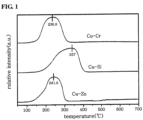
- the hydrogen reduction properties of Cu-Cr, Cu-Si and Cu-Zn as Cu based catalysts were evaluated. The results are shown in FIG. 1 .
- TPR Temporal Programmed Reduction
- the Cu catalyst was pretreated at 120°C at a rate of 50 cc/min in a He atmosphere for 1 hour, cooled to room temperature, and then heated to 700°C in a hydrogen atmosphere, after which the reducibility of the catalyst was measured.
- the Cu-Cr catalyst having reduced Cu particles the size of which was the smallest was reduced at the lowest temperature, and the Cu-Si catalyst including only the dispersant was reduced at the highest temperature.
- Test Example 3 Hydrogen Reduction Properties of Cu based Catalyst depending on Cu/Zn Ratio
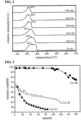
- the hydrogen reduction properties of the CZ catalyst and the CZA catalysts were measured using TPR (Temperature Programmed Reduction).
- the Cu catalyst was pretreated at 120°C at a rate of 50 cc/min in a He atmosphere for 1 hour, cooled to room temperature, and then heated to 700°C in a hydrogen atmosphere, after which the reducibility of the catalyst was measured.
- FIG. 2 shows the hydrogen reduction properties of the CZ catalyst and the CZA catalysts. When observing the temperature positions of the reduction peaks, the CZ catalyst was reduced at the temperature higher than were the CZA catalysts.
- the CZA catalyst is reduced at lower temperature, which coincides with the trend as in Example 1 in which the size of Cu metal particles is decreased in proportion to the decrease in the molar ratio of Cu/Zn. Consequently, the reduction temperature of the CZA catalyst is lowered in proportion to the decrease in the size ofthe Cu metal particles, and the hydrogen reducibility of the Cu metal of the Cu particles can be controlled by adjusting the ratio of Cu/Zn.
- FIG. 3 shows the results of applying the commercially available Cu catalysts to the direct hydrogenation of butyric acid which is a kind of carboxylic acid.
- the Cu-Zn based catalyst had unexpectedly superior performance.
- the activity of the Cu-Cr catalyst was lower than that of the Cu-Si catalyst having only the dispersant without the co-catalyst component.
- the size of the Cu metal particles of the Cu-Si based catalyst for example, a commercially available Cu-SiO 2 catalyst (CuO: 76, SiO 2 , Cr 2 O 3 : 1.5, MgO: 3, graphite) was measured to be 184 nm.
- the above catalyst is applied to direct hydrogenation of acetic acid, it is expected to exhibit low ethanol selectivity and low ethanol yield.
- Zn in direction hydrogenation of carboxylic acid, Zn could be expected to be more favorable than Cr as the co-catalyst component for activating Cu metal, in addition to the size of metal particles.
- Test Example 5 Direct Hydrogenation of Butyric Acid by CZ and CZA Catalysts at Different Cu/Zn Molar Ratios
- the CZA-541 catalyst having larger particle size but relatively higher Cu content could be better in terms of durability.
- the catalyst should actively increase the activation of the carbonyl group present in the butyric acid.
- high hydrogen reduction properties of Cu importantly affect the catalytic activity, in addition to the metal Cu size.
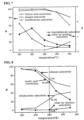
- the catalysts of Examples 1 - 5 were applied to the direct hydrogenation of butyric acid. The results are shown in FIG. 6 .
- Test Example 9 Changes in Particle Size of Cu based Catalyst depending on the pH upon Precipitation
- the yield of butyl aldehyde which is a by-product of the direct hydrogenation of butyric acid was about 2%, and the butanol selectivity was about 97% or higher.
- the maximum butanol yield of 98.6% or higher was observed.
- the butyric acid conversion was decreased.
- the selectivity of the other byproducts was increased in the temperature range falling outside of 280 - 300°C.
- the appropriate reaction temperature was evaluated to be about 300°C or higher, which is about 20°C higher than the reaction temperature of the direct hydrogenation of butyric acid. This is considered to be because, in the direct hydrogenation of acetic acid, the energy it takes to activate the carbonyl group of acetic acid is greater than energy that it takes to activate the carbonyl group of butyric acid. Furthermore, the production of ethanol by direct hydrogenation of acetic acid could be judged to be more difficult.
- Test Example 12 Direct Hydrogenation of Acid Mixture including Acetic acid at Reaction Temperature of 300°C
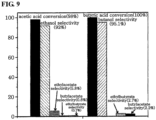
- FIG. 9 shows the results of applying the Cu catalyst of Example 4 to the direct hydrogenation of an acid mixture comprising acetic acid and butyric acid mixed at a molar ratio of 4:1.
- Test Example 13 Direct Hydrogenation of Acid Mixture including Acetic acid at Reaction Temperature of 280°C
- Table 4 shows the results of applying the Cu catalyst of Example 4 to direct hydrogenation of an acid mixture comprising acetic acid and butyric acid mixed at a molar ratio of 4:1.
- the results showed that the acetic acid conversion and the ethanol selectivity were lower than the butyric acid conversion and the butanol selectivity.
Landscapes
- Chemical & Material Sciences (AREA)
- Organic Chemistry (AREA)
- Engineering & Computer Science (AREA)
- Materials Engineering (AREA)
- Chemical Kinetics & Catalysis (AREA)
- Catalysts (AREA)
- Organic Low-Molecular-Weight Compounds And Preparation Thereof (AREA)
- Low-Molecular Organic Synthesis Reactions Using Catalysts (AREA)
Claims (4)
- Herstellungsverfahren für einen Katalysator auf Kupferbasis in Nanometergröße, umfassend:Auflösen eines Kupfer-Präkursors, eines Zink-Präkursors und eines Aluminium-Präkursors in einer wässrigen Lösung und dann Durchführen von Rühren, um somit eine gerührte Gemischlösung zu erhalten;Ausfällen der gerührten Gemischlösung durch sequentielles Verwenden von Na2CO3\ und NaOH als Ausfällungsprodukte, um so eine Präkursor-Ausfällung zu erhalten; undWaschen und Filtern der gebildeten Präkursor-Ausfällung.
- Verfahren nach Anspruch 1, wobei ein Verhältnis von Cu zu dem zweiten Bestandteil derart eingestellt wird, dass das Molverhältnis des zweiten Bestandteils das 0,4-Fache bis 3,5-Fache von dem des Cu ist.
- Verfahren nach Anspruch 1, wobei ein Molverhältnis von Cu zu dem zweiten Bestandteil zu dem dritten Bestandteil 1:0,8 - 1,5:0,2-0,5 beträgt.
- Verfahren nach Anspruch 1, wobei die Ausfällung bei einem pH-Wert von 5,0 - 11,0 durchgeführt wird.
Applications Claiming Priority (3)
| Application Number | Priority Date | Filing Date | Title |
|---|---|---|---|
| KR1020100036679A KR101716496B1 (ko) | 2010-04-21 | 2010-04-21 | 나노미터 크기의 구리계 촉매 제조 방법 |
| KR1020100072312A KR101694545B1 (ko) | 2010-07-27 | 2010-07-27 | 카르복시산의 직접수소화를 통한 알코올 제조방법 |
| PCT/KR2011/002874 WO2011132957A2 (ko) | 2010-04-21 | 2011-04-21 | 나노미터 크기의 구리계 촉매, 그 제조 방법 및 이를 이용한 카르복시산의 직접수소화를 통한 알코올 제조방법 |
Publications (4)
| Publication Number | Publication Date |
|---|---|
| EP2561928A2 EP2561928A2 (de) | 2013-02-27 |
| EP2561928A4 EP2561928A4 (de) | 2015-01-21 |
| EP2561928B1 true EP2561928B1 (de) | 2025-02-26 |
| EP2561928B8 EP2561928B8 (de) | 2025-04-02 |
Family
ID=44834660
Family Applications (1)
| Application Number | Title | Priority Date | Filing Date |
|---|---|---|---|
| EP11772245.4A Active EP2561928B8 (de) | 2010-04-21 | 2011-04-21 | Herstellungsverfahren für einen katalysator auf kupferbasis in nanometergrösse |
Country Status (7)
| Country | Link |
|---|---|
| US (1) | US8518853B2 (de) |
| EP (1) | EP2561928B8 (de) |
| JP (1) | JP5886833B2 (de) |
| CN (1) | CN102946994B (de) |
| BR (1) | BR112012026991B1 (de) |
| RU (1) | RU2564670C2 (de) |
| WO (1) | WO2011132957A2 (de) |
Families Citing this family (26)
| Publication number | Priority date | Publication date | Assignee | Title |
|---|---|---|---|---|
| CN103170352B (zh) * | 2013-03-28 | 2015-01-14 | 湖南长岭石化科技开发有限公司 | 一种乙酸仲丁酯加氢催化剂及其制备方法和应用 |
| US9862663B2 (en) * | 2014-03-06 | 2018-01-09 | Empire Technology Development Llc | Methods, materials, and systems for converting organic acids to alcohols |
| US10035124B2 (en) | 2014-08-12 | 2018-07-31 | Empire Technology Development Llc | Methods, materials, and systems for converting alcohols |
| CN105536803B (zh) * | 2016-01-22 | 2017-12-26 | 盘锦迪宝催化剂技术有限公司 | 一种铜系一氧化碳中温变换催化剂及其制备方法 |
| CN107537516B (zh) * | 2016-06-28 | 2020-05-12 | 中国石油化工股份有限公司 | 用于制备仲丁醇的催化剂及其制备方法 |
| EP3305404A1 (de) * | 2016-10-10 | 2018-04-11 | National Petrochemical Company | Kupfer/zink/aluminium-katalysator für die methanol-synthese hergestellt ausgehend von einer binären zink-aluminium-lösung |
| CN108855119A (zh) * | 2017-05-11 | 2018-11-23 | 中国石油化工股份有限公司 | 一种生产γ-丁内酯催化剂及制备方法 |
| RU2019140875A (ru) * | 2017-05-12 | 2021-06-15 | Басф Се | Осажденный катализатор для гидрирования этилацетата, содержащий медь на диоксиде циркония |
| CN110115998A (zh) * | 2018-02-06 | 2019-08-13 | 中国科学院兰州化学物理研究所苏州研究院 | 一种内酯或环醚类化合物催化加氢制备二元醇的方法 |
| CN110270384B (zh) * | 2018-03-13 | 2021-08-13 | 中国石油化工股份有限公司 | 一种甲醇合成催化剂的制备方法 |
| CN110898849B (zh) * | 2018-09-18 | 2023-06-09 | 北京大学 | 一种将co2转化为多碳醇和多碳烃的方法及其催化剂 |
| EP3917669B1 (de) * | 2019-02-01 | 2023-08-16 | TotalEnergies OneTech | Kupfer-eisen-basierte katalytische zusammensetzung mit zeolithen, verfahren zur herstellung solch einer katalysatorzusammensetzung und verfahren zur verwendung solch einer katalysatorzusammensetzung zur umwandlung von syngas in höhere alkohole |
| US11691139B2 (en) * | 2019-08-15 | 2023-07-04 | ExxonMobil Technology and Engineering Company | Acid/metal bifunctional catalyst systems produced with carbon coatings |
| US11638912B2 (en) * | 2019-08-15 | 2023-05-02 | ExxonMobil Technology and Engineering Company | Metal catalyst synthesis and acid/metal bifunctional catalyst systems thereof |
| US11819818B2 (en) | 2019-08-15 | 2023-11-21 | ExxonMobil Technology and Engineering Company | Acid/metal bifunctional catalyst produced by extrusion |
| US11654421B2 (en) * | 2019-08-15 | 2023-05-23 | ExxonMobil Technology and Engineering Company | Metal catalysts with low-alkali metal content and acid/metal bifunctional catalyst systems thereof |
| US11602734B2 (en) | 2019-08-15 | 2023-03-14 | ExxonMobil Technology and Engineering Company | Acid/metal bifunctional catalysts produced by slurry methods |
| CN110508282B (zh) * | 2019-09-18 | 2022-05-27 | 福州大学 | 一种铜基水煤气变换催化剂及其制备方法和应用 |
| CA3176679A1 (en) | 2021-05-18 | 2022-11-18 | Air Company Holdings, Inc. | Method and apparatus for selective alcohol upgrading |
| CN115364861B (zh) * | 2021-05-20 | 2024-01-26 | 中国石油化工股份有限公司 | 一种加氢催化剂组合物及其应用和草酸二甲酯加氢合成乙二醇的方法 |
| CN116328773A (zh) * | 2021-12-15 | 2023-06-27 | 中国科学院大连化学物理研究所 | 一种二氧化碳加氢合成液态阳光甲醇的催化剂及其制备方法和应用 |
| KR20240134945A (ko) | 2022-01-11 | 2024-09-10 | 에어 컴퍼니 홀딩스, 인크. | 이산화탄소를 장쇄 탄화수소로 전환하는 방법 및 촉매 |
| CN121446391A (zh) | 2022-09-22 | 2026-02-03 | 艾尔控股公司 | 合成燃料和其产生方法和设备 |
| CN115845869B (zh) * | 2022-11-24 | 2024-04-26 | 西安凯立新材料股份有限公司 | 醋酸甲酯加氢制乙醇用催化剂及其制备方法和应用 |
| CN117225423B (zh) * | 2023-09-20 | 2025-10-10 | 西南化工研究设计院有限公司 | 一种用于乙醇脱氢制乙醛的催化剂及制备和应用 |
| CN118304891A (zh) * | 2023-12-25 | 2024-07-09 | 宁夏大学 | 一种纳米CuZnAl催化剂的制备方法及应用 |
Family Cites Families (23)
| Publication number | Priority date | Publication date | Assignee | Title |
|---|---|---|---|---|
| GB8509530D0 (en) | 1985-04-13 | 1985-05-15 | Bp Chem Int Ltd | Hydrogenation of carboxylic acids |
| US5155086A (en) * | 1989-09-12 | 1992-10-13 | Engelhard Corporation | Hydrogenation catalyst, process for preparing and process of using said catalyst |
| JP3339655B2 (ja) * | 1993-10-04 | 2002-10-28 | 花王株式会社 | 水素化反応用触媒前駆体、その製造法、及びアルコールの製造法 |
| JP3865848B2 (ja) * | 1997-01-30 | 2007-01-10 | 関西電力株式会社 | メタノール合成用の触媒 |
| GB9720593D0 (en) * | 1997-09-26 | 1997-11-26 | Exxon Chemical Patents Inc | Catalysts and processes using them |
| EP1000658B1 (de) * | 1998-11-16 | 2006-09-13 | China Petrochemical Corporation | Kupferhaltiger Katalysator, dessen Verfahren zur Herstellung und seine Verwendung |
| DE19942895A1 (de) * | 1999-09-08 | 2001-03-15 | Basf Ag | Katalysator und Verfahren zur Hydrierung von Carbonylverbindungen |
| JP3143745B1 (ja) * | 1999-09-17 | 2001-03-07 | 工業技術院長 | 酢酸メチルおよび酢酸合成用触媒並びに該触媒による酢酸メチルおよび酢酸の合成法 |
| JP3482459B2 (ja) * | 2000-03-06 | 2003-12-22 | 独立行政法人産業技術総合研究所 | メタノールの部分酸化反応による水素製造触媒及びその製造法 |
| JP2002371075A (ja) * | 2001-06-14 | 2002-12-26 | Chisso Corp | ラクトンの製造方法 |
| DE10207443A1 (de) * | 2002-02-22 | 2003-09-04 | Bayer Ag | Verfahren und Katalysator zur Herstellung von Alkoholen |
| RU2294371C2 (ru) * | 2005-02-18 | 2007-02-27 | Государственное учреждение Всероссийский научно-исследовательский институт пищевых ароматизаторов, кислот и красителей Российской академии сельскохозяйственных наук (ГУ ВНИИПАКК) | Способ получения лимонной кислоты и комплекса кислотостабильных амилолитических ферментов |
| KR100722429B1 (ko) | 2005-09-07 | 2007-05-28 | 계명대학교 산학협력단 | 나노입자의 구리-망간 산화물 촉매의 제조방법 및 이에따라 제조된 촉매 |
| JP2007083197A (ja) * | 2005-09-26 | 2007-04-05 | Mitsubishi Gas Chem Co Inc | 銅−亜鉛−アルミニウム系触媒の製造方法 |
| JP5281572B2 (ja) * | 2006-07-26 | 2013-09-04 | ビーエーエスエフ ソシエタス・ヨーロピア | 低温変換用の触媒及び一酸化炭素と水とを二酸化炭素と水素に低温で変換するための方法 |
| CN101611147A (zh) | 2006-12-01 | 2009-12-23 | 得克萨斯A&M大学系统 | 将生物质转化成混合醇的方法 |
| US20080248540A1 (en) | 2007-04-03 | 2008-10-09 | The Ohio State University | Methods of producing butanol |
| WO2008126743A1 (ja) | 2007-04-10 | 2008-10-23 | Idemitsu Kosan Co., Ltd. | 触媒前駆体物質及びそれを用いた触媒 |
| KR100903008B1 (ko) | 2007-11-14 | 2009-06-17 | 한국화학연구원 | n―부탄올의 제조 방법 |
| KR101588052B1 (ko) | 2008-03-28 | 2016-01-25 | 에스케이이노베이션 주식회사 | 발효액으로부터 부티르산을 추출하고 부티르산을 바이오연료로 화학적으로 전환하는 방법 |
| CN101579629A (zh) * | 2008-05-15 | 2009-11-18 | 中国石油天然气股份有限公司 | 一种制备CuO/ZnO/Al2O3催化剂的方法 |
| KR101076628B1 (ko) | 2008-07-09 | 2011-10-27 | 포항공과대학교 산학협력단 | 불균일 구리 나노 촉매 및 그 제조방법 |
| US8309772B2 (en) | 2008-07-31 | 2012-11-13 | Celanese International Corporation | Tunable catalyst gas phase hydrogenation of carboxylic acids |
-
2011
- 2011-04-21 EP EP11772245.4A patent/EP2561928B8/de active Active
- 2011-04-21 JP JP2013506081A patent/JP5886833B2/ja active Active
- 2011-04-21 BR BR112012026991-7A patent/BR112012026991B1/pt active IP Right Grant
- 2011-04-21 RU RU2012148629/04A patent/RU2564670C2/ru not_active IP Right Cessation
- 2011-04-21 US US13/641,813 patent/US8518853B2/en active Active
- 2011-04-21 CN CN201180030189.3A patent/CN102946994B/zh active Active
- 2011-04-21 WO PCT/KR2011/002874 patent/WO2011132957A2/ko not_active Ceased
Also Published As
| Publication number | Publication date |
|---|---|
| US20130030224A1 (en) | 2013-01-31 |
| EP2561928A2 (de) | 2013-02-27 |
| CN102946994B (zh) | 2015-03-18 |
| JP2013529127A (ja) | 2013-07-18 |
| BR112012026991A2 (pt) | 2020-08-25 |
| RU2564670C2 (ru) | 2015-10-10 |
| BR112012026991B1 (pt) | 2021-08-31 |
| US8518853B2 (en) | 2013-08-27 |
| WO2011132957A2 (ko) | 2011-10-27 |
| EP2561928B8 (de) | 2025-04-02 |
| CN102946994A (zh) | 2013-02-27 |
| WO2011132957A3 (ko) | 2012-03-01 |
| EP2561928A4 (de) | 2015-01-21 |
| WO2011132957A9 (ko) | 2011-12-15 |
| JP5886833B2 (ja) | 2016-03-16 |
| RU2012148629A (ru) | 2014-05-27 |
Similar Documents
| Publication | Publication Date | Title |
|---|---|---|
| EP2561928B1 (de) | Herstellungsverfahren für einen katalysator auf kupferbasis in nanometergrösse | |
| EP2248793B1 (de) | Verfahren zur Herstellung eines monohydrischen Alkohols aus einer Monocarboxylsäure oder einem Derivat davon | |
| KR101694545B1 (ko) | 카르복시산의 직접수소화를 통한 알코올 제조방법 | |
| TW593242B (en) | A process for the hydrogenation of carbonyl compounds | |
| JP2655034B2 (ja) | 前駆体アルデヒド水素化触媒 | |
| JPH06170231A (ja) | 銅−酸化亜鉛−酸化アルミニウムを含有する触媒、その製造方法およびそれをアルデヒドのアルコールへの水素化に使用する方法 | |
| CN104039447A (zh) | 含钴加氢催化剂和制备其的方法 | |
| MX2012005666A (es) | Metodo para producir un catalizador de hidrogenacion soportado que tiene una actividad de hidrogenacion incrementada. | |
| JP2000176287A (ja) | メタノ―ル合成用触媒及びメタノ―ルの合成方法 | |
| CN113272055B (zh) | 碳基贵金属-过渡金属复合催化剂及其制备方法 | |
| KR101716496B1 (ko) | 나노미터 크기의 구리계 촉매 제조 방법 | |
| JP3885139B2 (ja) | エタノール水蒸気改質触媒、その製造方法及び水素の製造方法 | |
| JP2000080053A (ja) | シクロアルキルジメタノ―ルの製造方法 | |
| KR100453296B1 (ko) | 3-하이드록시에스터 화합물로부터 1,3-알칸디올을제조하는 방법 | |
| KR100903008B1 (ko) | n―부탄올의 제조 방법 | |
| CN1182639A (zh) | 一种气相加氢制1,4-丁二醇的催化剂 | |
| KR20040079236A (ko) | 말레인산에스테르로부터의 1,4-부탄디올의 제조 방법 | |
| JP2001048819A (ja) | ジカルボン酸類の二段階水素化法 | |
| JP2004034021A (ja) | 水素化触媒、およびこれを用いた1,3−プロパンジオールの製造方法 | |
| KR20250089459A (ko) | 유기산 수소화 반응용 펠렛형 촉매, 이의 제조방법 및 이를 이용하여 유기산으로부터 알코올을 제조하는 방법 | |
| CN117816157A (zh) | 一种含碳材料Ru基催化剂的制备方法 | |
| KR100528837B1 (ko) | 말레인산에스테르로부터의 감마-부티로락톤의 제조 방법 | |
| CN1137944A (zh) | 气相氢化制1,4-丁二醇的催化剂(二) | |
| HK40050907A (en) | Carbon-based, precious metal-transition metal composite catalyst and preparation method therefor | |
| CN118079927A (zh) | 一种铜锌催化剂及其制备方法和应用 |
Legal Events
| Date | Code | Title | Description |
|---|---|---|---|
| PUAI | Public reference made under article 153(3) epc to a published international application that has entered the european phase |
Free format text: ORIGINAL CODE: 0009012 |
|
| 17P | Request for examination filed |
Effective date: 20121115 |
|
| AK | Designated contracting states |
Kind code of ref document: A2 Designated state(s): AL AT BE BG CH CY CZ DE DK EE ES FI FR GB GR HR HU IE IS IT LI LT LU LV MC MK MT NL NO PL PT RO RS SE SI SK SM TR |
|
| RIN1 | Information on inventor provided before grant (corrected) |
Inventor name: JEON, HEE JUNG Inventor name: OH, SEUNG HOON Inventor name: LEE, SEONG HO Inventor name: KIM, HEE SOO Inventor name: KIM, OK YOUN Inventor name: CHUNG, YOUNG MIN Inventor name: YOON, YOUNG SEEK |
|
| DAX | Request for extension of the european patent (deleted) | ||
| A4 | Supplementary search report drawn up and despatched |
Effective date: 20141222 |
|
| RIC1 | Information provided on ipc code assigned before grant |
Ipc: C07C 29/149 20060101ALI20141216BHEP Ipc: B01J 37/03 20060101ALI20141216BHEP Ipc: C07C 31/12 20060101ALI20141216BHEP Ipc: B01J 23/76 20060101AFI20141216BHEP Ipc: B01J 23/80 20060101ALI20141216BHEP |
|
| STAA | Information on the status of an ep patent application or granted ep patent |
Free format text: STATUS: EXAMINATION IS IN PROGRESS |
|
| 17Q | First examination report despatched |
Effective date: 20181127 |
|
| P01 | Opt-out of the competence of the unified patent court (upc) registered |
Effective date: 20230622 |
|
| GRAP | Despatch of communication of intention to grant a patent |
Free format text: ORIGINAL CODE: EPIDOSNIGR1 |
|
| STAA | Information on the status of an ep patent application or granted ep patent |
Free format text: STATUS: GRANT OF PATENT IS INTENDED |
|
| INTG | Intention to grant announced |
Effective date: 20241025 |
|
| GRAS | Grant fee paid |
Free format text: ORIGINAL CODE: EPIDOSNIGR3 |
|
| GRAA | (expected) grant |
Free format text: ORIGINAL CODE: 0009210 |
|
| STAA | Information on the status of an ep patent application or granted ep patent |
Free format text: STATUS: THE PATENT HAS BEEN GRANTED |
|
| AK | Designated contracting states |
Kind code of ref document: B1 Designated state(s): AL AT BE BG CH CY CZ DE DK EE ES FI FR GB GR HR HU IE IS IT LI LT LU LV MC MK MT NL NO PL PT RO RS SE SI SK SM TR |
|
| REG | Reference to a national code |
Ref country code: GB Ref legal event code: FG4D |
|
| REG | Reference to a national code |
Ref country code: CH Ref legal event code: EP |
|
| REG | Reference to a national code |
Ref country code: CH Ref legal event code: PK Free format text: BERICHTIGUNG B8 |
|
| REG | Reference to a national code |
Ref country code: DE Ref legal event code: R096 Ref document number: 602011075241 Country of ref document: DE |
|
| RAP4 | Party data changed (patent owner data changed or rights of a patent transferred) |
Owner name: SK INNOVATION CO., LTD. |
|
| REG | Reference to a national code |
Ref country code: IE Ref legal event code: FG4D |
|
| REG | Reference to a national code |
Ref country code: NL Ref legal event code: MP Effective date: 20250226 |
|
| PG25 | Lapsed in a contracting state [announced via postgrant information from national office to epo] |
Ref country code: RS Free format text: LAPSE BECAUSE OF FAILURE TO SUBMIT A TRANSLATION OF THE DESCRIPTION OR TO PAY THE FEE WITHIN THE PRESCRIBED TIME-LIMIT Effective date: 20250526 |
|
| PG25 | Lapsed in a contracting state [announced via postgrant information from national office to epo] |
Ref country code: FI Free format text: LAPSE BECAUSE OF FAILURE TO SUBMIT A TRANSLATION OF THE DESCRIPTION OR TO PAY THE FEE WITHIN THE PRESCRIBED TIME-LIMIT Effective date: 20250226 |
|
| PG25 | Lapsed in a contracting state [announced via postgrant information from national office to epo] |
Ref country code: PL Free format text: LAPSE BECAUSE OF FAILURE TO SUBMIT A TRANSLATION OF THE DESCRIPTION OR TO PAY THE FEE WITHIN THE PRESCRIBED TIME-LIMIT Effective date: 20250226 |
|
| PGFP | Annual fee paid to national office [announced via postgrant information from national office to epo] |
Ref country code: DE Payment date: 20250423 Year of fee payment: 15 |
|
| PG25 | Lapsed in a contracting state [announced via postgrant information from national office to epo] |
Ref country code: ES Free format text: LAPSE BECAUSE OF FAILURE TO SUBMIT A TRANSLATION OF THE DESCRIPTION OR TO PAY THE FEE WITHIN THE PRESCRIBED TIME-LIMIT Effective date: 20250226 |
|
| REG | Reference to a national code |
Ref country code: LT Ref legal event code: MG9D |
|
| PG25 | Lapsed in a contracting state [announced via postgrant information from national office to epo] |
Ref country code: IS Free format text: LAPSE BECAUSE OF FAILURE TO SUBMIT A TRANSLATION OF THE DESCRIPTION OR TO PAY THE FEE WITHIN THE PRESCRIBED TIME-LIMIT Effective date: 20250626 Ref country code: NO Free format text: LAPSE BECAUSE OF FAILURE TO SUBMIT A TRANSLATION OF THE DESCRIPTION OR TO PAY THE FEE WITHIN THE PRESCRIBED TIME-LIMIT Effective date: 20250526 |
|
| PG25 | Lapsed in a contracting state [announced via postgrant information from national office to epo] |
Ref country code: NL Free format text: LAPSE BECAUSE OF FAILURE TO SUBMIT A TRANSLATION OF THE DESCRIPTION OR TO PAY THE FEE WITHIN THE PRESCRIBED TIME-LIMIT Effective date: 20250226 |
|
| PGFP | Annual fee paid to national office [announced via postgrant information from national office to epo] |
Ref country code: IT Payment date: 20250429 Year of fee payment: 15 |
|
| PG25 | Lapsed in a contracting state [announced via postgrant information from national office to epo] |
Ref country code: HR Free format text: LAPSE BECAUSE OF FAILURE TO SUBMIT A TRANSLATION OF THE DESCRIPTION OR TO PAY THE FEE WITHIN THE PRESCRIBED TIME-LIMIT Effective date: 20250226 |
|
| PG25 | Lapsed in a contracting state [announced via postgrant information from national office to epo] |
Ref country code: LV Free format text: LAPSE BECAUSE OF FAILURE TO SUBMIT A TRANSLATION OF THE DESCRIPTION OR TO PAY THE FEE WITHIN THE PRESCRIBED TIME-LIMIT Effective date: 20250226 Ref country code: PT Free format text: LAPSE BECAUSE OF FAILURE TO SUBMIT A TRANSLATION OF THE DESCRIPTION OR TO PAY THE FEE WITHIN THE PRESCRIBED TIME-LIMIT Effective date: 20250626 |
|
| PGFP | Annual fee paid to national office [announced via postgrant information from national office to epo] |
Ref country code: FR Payment date: 20250426 Year of fee payment: 15 |
|
| PG25 | Lapsed in a contracting state [announced via postgrant information from national office to epo] |
Ref country code: GR Free format text: LAPSE BECAUSE OF FAILURE TO SUBMIT A TRANSLATION OF THE DESCRIPTION OR TO PAY THE FEE WITHIN THE PRESCRIBED TIME-LIMIT Effective date: 20250527 Ref country code: BG Free format text: LAPSE BECAUSE OF FAILURE TO SUBMIT A TRANSLATION OF THE DESCRIPTION OR TO PAY THE FEE WITHIN THE PRESCRIBED TIME-LIMIT Effective date: 20250226 |
|
| REG | Reference to a national code |
Ref country code: AT Ref legal event code: MK05 Ref document number: 1770127 Country of ref document: AT Kind code of ref document: T Effective date: 20250226 |
|
| PG25 | Lapsed in a contracting state [announced via postgrant information from national office to epo] |
Ref country code: SE Free format text: LAPSE BECAUSE OF FAILURE TO SUBMIT A TRANSLATION OF THE DESCRIPTION OR TO PAY THE FEE WITHIN THE PRESCRIBED TIME-LIMIT Effective date: 20250226 |
|
| PG25 | Lapsed in a contracting state [announced via postgrant information from national office to epo] |
Ref country code: SM Free format text: LAPSE BECAUSE OF FAILURE TO SUBMIT A TRANSLATION OF THE DESCRIPTION OR TO PAY THE FEE WITHIN THE PRESCRIBED TIME-LIMIT Effective date: 20250226 |
|
| PG25 | Lapsed in a contracting state [announced via postgrant information from national office to epo] |
Ref country code: DK Free format text: LAPSE BECAUSE OF FAILURE TO SUBMIT A TRANSLATION OF THE DESCRIPTION OR TO PAY THE FEE WITHIN THE PRESCRIBED TIME-LIMIT Effective date: 20250226 |
|
| PG25 | Lapsed in a contracting state [announced via postgrant information from national office to epo] |
Ref country code: AT Free format text: LAPSE BECAUSE OF FAILURE TO SUBMIT A TRANSLATION OF THE DESCRIPTION OR TO PAY THE FEE WITHIN THE PRESCRIBED TIME-LIMIT Effective date: 20250226 |
|
| PG25 | Lapsed in a contracting state [announced via postgrant information from national office to epo] |
Ref country code: CZ Free format text: LAPSE BECAUSE OF FAILURE TO SUBMIT A TRANSLATION OF THE DESCRIPTION OR TO PAY THE FEE WITHIN THE PRESCRIBED TIME-LIMIT Effective date: 20250226 |
|
| PG25 | Lapsed in a contracting state [announced via postgrant information from national office to epo] |
Ref country code: RO Free format text: LAPSE BECAUSE OF FAILURE TO SUBMIT A TRANSLATION OF THE DESCRIPTION OR TO PAY THE FEE WITHIN THE PRESCRIBED TIME-LIMIT Effective date: 20250226 |
|
| PG25 | Lapsed in a contracting state [announced via postgrant information from national office to epo] |
Ref country code: SK Free format text: LAPSE BECAUSE OF FAILURE TO SUBMIT A TRANSLATION OF THE DESCRIPTION OR TO PAY THE FEE WITHIN THE PRESCRIBED TIME-LIMIT Effective date: 20250226 |
|
| REG | Reference to a national code |
Ref country code: CH Ref legal event code: H13 Free format text: ST27 STATUS EVENT CODE: U-0-0-H10-H13 (AS PROVIDED BY THE NATIONAL OFFICE) Effective date: 20251125 |
|
| REG | Reference to a national code |
Ref country code: DE Ref legal event code: R097 Ref document number: 602011075241 Country of ref document: DE |
|
| PG25 | Lapsed in a contracting state [announced via postgrant information from national office to epo] |
Ref country code: LU Free format text: LAPSE BECAUSE OF NON-PAYMENT OF DUE FEES Effective date: 20250421 |
|
| PG25 | Lapsed in a contracting state [announced via postgrant information from national office to epo] |
Ref country code: MC Free format text: LAPSE BECAUSE OF FAILURE TO SUBMIT A TRANSLATION OF THE DESCRIPTION OR TO PAY THE FEE WITHIN THE PRESCRIBED TIME-LIMIT Effective date: 20250226 |
|
| REG | Reference to a national code |
Ref country code: BE Ref legal event code: MM Effective date: 20250430 |
|
| PLBE | No opposition filed within time limit |
Free format text: ORIGINAL CODE: 0009261 |
|
| STAA | Information on the status of an ep patent application or granted ep patent |
Free format text: STATUS: NO OPPOSITION FILED WITHIN TIME LIMIT |
|
| PG25 | Lapsed in a contracting state [announced via postgrant information from national office to epo] |
Ref country code: BE Free format text: LAPSE BECAUSE OF NON-PAYMENT OF DUE FEES Effective date: 20250430 |
|
| PG25 | Lapsed in a contracting state [announced via postgrant information from national office to epo] |
Ref country code: CH Free format text: LAPSE BECAUSE OF NON-PAYMENT OF DUE FEES Effective date: 20250430 |
|
| GBPC | Gb: european patent ceased through non-payment of renewal fee |
Effective date: 20250526 |
|
| 26N | No opposition filed |
Effective date: 20251127 |