EP2246737B1 - Photomask blank and photomask - Google Patents
Photomask blank and photomask Download PDFInfo
- Publication number
- EP2246737B1 EP2246737B1 EP10008135.5A EP10008135A EP2246737B1 EP 2246737 B1 EP2246737 B1 EP 2246737B1 EP 10008135 A EP10008135 A EP 10008135A EP 2246737 B1 EP2246737 B1 EP 2246737B1
- Authority
- EP
- European Patent Office
- Prior art keywords
- film
- light
- transition metal
- shielding film
- photomask
- Prior art date
- Legal status (The legal status is an assumption and is not a legal conclusion. Google has not performed a legal analysis and makes no representation as to the accuracy of the status listed.)
- Expired - Lifetime
Links
Images

Classifications
-
- G—PHYSICS
- G03—PHOTOGRAPHY; CINEMATOGRAPHY; ANALOGOUS TECHNIQUES USING WAVES OTHER THAN OPTICAL WAVES; ELECTROGRAPHY; HOLOGRAPHY
- G03F—PHOTOMECHANICAL PRODUCTION OF TEXTURED OR PATTERNED SURFACES, e.g. FOR PRINTING, FOR PROCESSING OF SEMICONDUCTOR DEVICES; MATERIALS THEREFOR; ORIGINALS THEREFOR; APPARATUS SPECIALLY ADAPTED THEREFOR
- G03F1/00—Originals for photomechanical production of textured or patterned surfaces, e.g., masks, photo-masks, reticles; Mask blanks or pellicles therefor; Containers specially adapted therefor; Preparation thereof
- G03F1/38—Masks having auxiliary features, e.g. special coatings or marks for alignment or testing; Preparation thereof
-
- G—PHYSICS
- G03—PHOTOGRAPHY; CINEMATOGRAPHY; ANALOGOUS TECHNIQUES USING WAVES OTHER THAN OPTICAL WAVES; ELECTROGRAPHY; HOLOGRAPHY
- G03F—PHOTOMECHANICAL PRODUCTION OF TEXTURED OR PATTERNED SURFACES, e.g. FOR PRINTING, FOR PROCESSING OF SEMICONDUCTOR DEVICES; MATERIALS THEREFOR; ORIGINALS THEREFOR; APPARATUS SPECIALLY ADAPTED THEREFOR
- G03F1/00—Originals for photomechanical production of textured or patterned surfaces, e.g., masks, photo-masks, reticles; Mask blanks or pellicles therefor; Containers specially adapted therefor; Preparation thereof
- G03F1/38—Masks having auxiliary features, e.g. special coatings or marks for alignment or testing; Preparation thereof
- G03F1/46—Antireflective coatings
-
- G—PHYSICS
- G03—PHOTOGRAPHY; CINEMATOGRAPHY; ANALOGOUS TECHNIQUES USING WAVES OTHER THAN OPTICAL WAVES; ELECTROGRAPHY; HOLOGRAPHY
- G03F—PHOTOMECHANICAL PRODUCTION OF TEXTURED OR PATTERNED SURFACES, e.g. FOR PRINTING, FOR PROCESSING OF SEMICONDUCTOR DEVICES; MATERIALS THEREFOR; ORIGINALS THEREFOR; APPARATUS SPECIALLY ADAPTED THEREFOR
- G03F1/00—Originals for photomechanical production of textured or patterned surfaces, e.g., masks, photo-masks, reticles; Mask blanks or pellicles therefor; Containers specially adapted therefor; Preparation thereof
- G03F1/50—Mask blanks not covered by G03F1/20 - G03F1/34; Preparation thereof
-
- G—PHYSICS
- G03—PHOTOGRAPHY; CINEMATOGRAPHY; ANALOGOUS TECHNIQUES USING WAVES OTHER THAN OPTICAL WAVES; ELECTROGRAPHY; HOLOGRAPHY
- G03F—PHOTOMECHANICAL PRODUCTION OF TEXTURED OR PATTERNED SURFACES, e.g. FOR PRINTING, FOR PROCESSING OF SEMICONDUCTOR DEVICES; MATERIALS THEREFOR; ORIGINALS THEREFOR; APPARATUS SPECIALLY ADAPTED THEREFOR
- G03F1/00—Originals for photomechanical production of textured or patterned surfaces, e.g., masks, photo-masks, reticles; Mask blanks or pellicles therefor; Containers specially adapted therefor; Preparation thereof
- G03F1/54—Absorbers, e.g. of opaque materials
- G03F1/58—Absorbers, e.g. of opaque materials having two or more different absorber layers, e.g. stacked multilayer absorbers
-
- G—PHYSICS
- G03—PHOTOGRAPHY; CINEMATOGRAPHY; ANALOGOUS TECHNIQUES USING WAVES OTHER THAN OPTICAL WAVES; ELECTROGRAPHY; HOLOGRAPHY
- G03F—PHOTOMECHANICAL PRODUCTION OF TEXTURED OR PATTERNED SURFACES, e.g. FOR PRINTING, FOR PROCESSING OF SEMICONDUCTOR DEVICES; MATERIALS THEREFOR; ORIGINALS THEREFOR; APPARATUS SPECIALLY ADAPTED THEREFOR
- G03F1/00—Originals for photomechanical production of textured or patterned surfaces, e.g., masks, photo-masks, reticles; Mask blanks or pellicles therefor; Containers specially adapted therefor; Preparation thereof
- G03F1/68—Preparation processes not covered by groups G03F1/20 - G03F1/50
Definitions
- This invention relates to photomask blanks and photomasks for use in the microfabrication of semiconductor integrated circuits, charge coupled devices (CCD), liquid crystal display (LCD) color filters, magnetic heads or the like.
- CCD charge coupled devices
- LCD liquid crystal display
- the photomask pattern In order to form a higher accuracy photomask pattern on a photomask substrate, it is of first priority to form a high accuracy resist pattern on a photomask blank. Since the photolithography carries out reduction projection in actually processing semiconductor substrates, the photomask pattern has a size of about 4 times the actually necessary pattern size, but an accuracy which is not loosened accordingly. The photomask serving as an original is rather required to have an accuracy which is higher than the pattern accuracy following exposure.
- a circuit pattern to be written has a size far smaller than the wavelength of light exposed. If a photomask pattern which is a mere 4-time magnification of the circuit feature is used, a shape corresponding to the photomask pattern is not transferred to the resist film due to influences such as optical interference occurring in the actual photolithography operation. To mitigate these influences, in some cases, the photomask pattern must be designed to a shape which is more complex than the actual circuit pattern, i.e., a shape to which the so-called optical and proximity correction (OPC) is applied. Then, at the present, the lithography technology for obtaining photomask patterns also requires a higher accuracy processing method. The lithographic performance is sometimes represented by a maximum resolution. As to the resolution limit, the lithography involved in the photomask processing step is required to have a maximum resolution accuracy which is equal to or greater than the resolution limit necessary for the photolithography used in a semiconductor processing step using a photomask.
- OPC optical and proximity correction
- a photomask pattern is generally formed by forming a photoresist film on a photomask blank having a light-shielding film on a transparent substrate, writing a pattern using electron beam, and developing to form a resist pattern. Using the resulting resist pattern as an etch mask, the light-shielding film is etched into a light-shielding pattern.
- the ratio of film thickness to pattern known as aspect ratio, becomes higher. As a result, the resist pattern profile is degraded, preventing effective pattern transfer, and in some cases, there occurs resist pattern collapse or stripping. Therefore, the miniaturization must entail a thickness reduction of resist film.
- the light-shielding film material which is etched using the resist as an etch mask on the other hand, a number of materials have been proposed.
- chromium compound films are always employed because there are known a number of studies with respect to their etching and the standard process has been established.
- Typical of such films are light-shielding films composed of chromium compounds necessary for photomask blanks for ArF excimer laser lithography, which include chromium compound films with a thickness of 50 to 77 nm as reported in JP-A 2003-195479 , JP-A 2003-195483 , and Japanese Patent No. 3093632 .
- oxygen-containing chlorine dry etching which is a common dry etching process for chromium based films such as chromium compound films often has a capability of etching organic films to some extent. If etching is carried out through a thin resist film, accurate transfer of the resist pattern is difficult. It is a task of some difficulty for the resist to have both a high resolution and etch resistance that allows for high accuracy etching. Then, for the purpose of achieving high resolution and high accuracy, the light-shielding film material has to be reviewed so as to find a transition from the approach relying only on the resist performance to the approach of improving the light-shielding film performance as well.
- JP-A 63-85553 discloses MoSi 2 overlaid with a SiO 2 film, which is used as an etch mask during dry etching of MoSi 2 . It is described that the SiO 2 film can also function as an antireflective film.
- US-A-5942356 describes halftone phase shift mask blanks in which the translucent phase shift film is made of a material composed essentially of transition metal, silicon and nitrogen.
- Various compositions are disclosed, including a proposal that the ratio of silicon to metal be from 1.5:1 to 6:1.
- Preferably the content of N is higher than the content of Si in atom%.
- the present invention has been made in order to solve the above problems, and its object is to provide a photomask blank which endows a photomask with both a high resolution and a high accuracy etching capability for forming a finer photomask pattern, especially as needed in the photolithography involving exposure to light of a wavelength equal to or less than 250 nm such as ArF excimer laser light, i.e., a photomask blank comprising a light-shielding film which can be etched without any substantial load to the resist during etching operation and which has sufficient chemical stability during the mask cleaning step requisite in the photomask manufacture process; and a photomask having a mask pattern formed using the photomask blank.
- a photomask blank which endows a photomask with both a high resolution and a high accuracy etching capability for forming a finer photomask pattern, especially as needed in the photolithography involving exposure to light of a wavelength equal to or less than 250 nm such as ArF exci
- a film containing silicon and a transition metal in a specific ratio has higher light-shielding property to exposure light of a wavelength equal to or less than 250 nm, especially ArF excimer laser light, than the chromium based films which are used in the art, and that although the chemical stability is believed low in the art, it is chemically stable when the ratio falls in the specific range.
- the invention is predicated on this finding.
- the present invention provides a photomask blank as disclosed in claim 1.
- the transition metal may be molybdenum.
- the light-shielding film may have a thickness of 20 to 50 nm.
- the antireflective film may contain as a main component a transition metal silicide oxide, transition metal silicide nitride, transition metal silicide oxynitride, transition metal silicide oxycarbide, transition metal silicide carbonitride or transition metal silicide oxide nitride carbide.
- the transition metal silicide may be molybdenum silicide.
- the antireflective film may contain as a main component a chromium oxide, chromium nitride, chromium oxynitride, chromium oxycarbide, chromium carbonitride or chromium oxide nitride carbide.
- the photomask comprises a transparent substrate and a mask pattern formed thereon including transparent regions and effectively opaque regions to exposure light, which is produced from the photomask blank as described above.
- an antireflective film is disposed on the light-shielding film.
- the antireflective film is made of a transition metal silicide compound such as a transition metal silicide oxide, transition metal silicide nitride, transition metal silicide oxynitride, transition metal silicide oxycarbide, transition metal silicide carbonitride or transition metal silicide oxide nitride carbide
- the light-shielding film and the antireflective film can be etched by fluorine dry etching, ensuring very high etching processability.
- the antireflective film is made of a chromium compound such as a chromium oxide, chromium nitride, chromium oxynitride, chromium oxycarbide, chromium carbonitride or chromium oxide nitride carbide
- the light-shielding film and the antireflective film are such that they can be fully processed using a thin resist film. They can be processed without substantial damage to the resist, and the chemical stability during cleaning is satisfactory.
- the photomask blank having a light-shielding film as constructed according to the invention is a photomask blank having a light-shielding film possessing high light-shielding property and chemical stability, which can be etched or processed under sufficient etching conditions or within a sufficient etching time to minimize the damage to the resist during etching, even when the light-shielding film is overlaid with an antireflective film. Then the resist can be formed relatively thin, thereby avoiding the problems associated with an increase of resist film aspect ratio and enabling higher accuracy photomask pattern formation.
- a photomask comprising a transparent substrate and a mask pattern formed thereon including transparent regions which are transparent to exposure light and regions which are effectively opaque to exposure light, that is, sufficiently opaque to provide a practical light shield when used in pattern exposure as a photomask.
- the photomask blank is constructed by forming a light-shielding film of one or more layers on a transparent substrate with another film which comprises a halftone phase shift film intervening therebetween. At least one layer of the layers of which the light-shielding film is composed contains silicon and a transition metal as main components, and the silicon and the transition metal are present at a silicon/metal molar ratio of 4-15:1 (atomic ratio).
- the light-shielding film may be either a single layer film or a multilayer film. At least one layer of the layers of which the light-shielding film is composed should contain silicon and a transition metal, wherein the silicon and the transition metal are present at a silicon/metal molar ratio of 4-15:1 (atomic ratio), that is, between 4:1 and 15:1 (atomic ratio). In particular, a single layer film is preferred in order to provide higher processability.
- the multilayer film it is preferred that all the layers of which the light-shielding film is composed contain silicon and a transition metal as main components wherein the silicon and the transition metal are present at a silicon/metal molar ratio of 4-15:1 (atomic ratio). It is noted for the multilayer film that a tungsten layer, tantalum layer or the like may be formed as a layer other than the silicon and transition metal-containing layer, specifically between the silicon and transition metal-containing layer and the transparent substrate.
- the light-shielding film must have such chemical stability that it undergoes no thickness changes during cleaning.
- a film thickness change equal to or less than 3 nm during cleaning is required.
- the light-shielding film can be damaged under conditions of cleaning requisite to the photomask manufacture process, especially cleaning with a sulfuric acid - hydrogen peroxide mixture (SPM) so that the light-shielding performance is lost.
- SPM sulfuric acid - hydrogen peroxide mixture
- the light-shielding film of the invention wherein the molar ratio of silicon to transition metal is within the above-specified range ensures that a light-shielding film has a chemical stability and electric conductivity falling within the ranges of practically acceptable physical properties.
- transition metals of which the light-shielding film is composed include molybdenum, tantalum, tungsten, cobalt, nickel, vanadium, titanium, niobium, zirconium, hafnium, and the like. Molybdenum is most preferred for dry etching processability.
- the combination of a halftone phase shift film, light-shielding film and antireflective film should have an optical density OD of at least 2.5, specifically at least 2.8, more specifically at least 3.0 relative to exposure light.
- the film containing silicon and transition metal as main components further contain light elements such as oxygen, nitrogen, carbon or the like as additional components.
- the inventive photomask blank i.e., a photomask blank adapted for ArF excimer laser lithography at wavelength 193 nm that the nitrogen and carbon contents each be equal to or less than 20 atom% and the oxygen content be equal to or less than 10 atom%, and especially the total content of nitrogen, carbon, and oxygen be equal to or less than 40 atom%.
- the light-shielding film preferably has a thickness of 20 to 50 nm. At a film thickness less than 20 nm, sufficient light-shielding effect is not available in some cases. In excess of 50 nm, high accuracy processing with a thin resist having a thickness equal to or less than 250 nm may become difficult, or film stress may cause warpage to the substrate.
- the light-shielding film can be formed by well-known methods. Film formation by sputtering is commonly used as the simplest method of forming a homogeneous film, and the sputtering is the preferred film formation method in the present invention as well.
- the target used may be a single target containing silicon and transition metal in a controlled ratio from 4:1 to 15:1. Alternatively, a ratio of silicon to transition metal may be adjusted by selecting appropriate ones from a silicon target, a transition metal target, and targets of silicon and transition metal (transition metal silicide targets) and controlling the sputtering area of the selected targets or the power applied to the selected targets.
- the light-shielding film containing light elements such as oxygen, nitrogen, and carbon
- the light-shielding film containing light elements can be deposited by reactive sputtering wherein an oxygen-containing gas, nitrogen-containing gas or carbon-containing gas is added to the sputtering gas as a reactive gas.
- the light-shielding film described above is overlaid with an antireflective film.
- the antireflective film used herein may be any of well-known films although the following two embodiments are often used for processability.
- One embodiment is an antireflective film which is suitable when the antireflective film and the light-shielding film are simultaneously etched using the resist as an etch mask.
- This antireflective film contains as a main component a transition metal silicide compound such as a transition metal silicide oxide, transition metal silicide nitride, transition metal silicide oxynitride, transition metal silicide oxycarbide, transition metal silicide carbonitride, transition metal silicide oxide nitride carbide and the like.
- the transition metal used herein the exemplary transition metals illustrated for the light-shielding film are preferred again.
- the transition metal used herein is preferably the same as in the light-shielding film, with molybdenum being most preferred.
- the antireflective film preferably has an atomic composition which is set to the range of 0.2 to 25 atom% transition metal, 10 to 57 atom% Si, 0 to 60 atom% O, 0 to 57 atom% N, and 0 to 30 atom% C, and to provide an optical density OD between 0.3 and 1.5, preferably between 0.5 and 1.0, relative to exposure light when its thickness is within the range described below.
- the thickness of the antireflective film varies with the wavelength of light used for inspection necessary during fabrication or use of the photomask, the antireflection effect is generally exerted at a thickness of 15 to 30 nm. A thickness of 20 to 25 nm is preferred especially for the ArF excimer laser lithography. Since the antireflective film has dry etching characteristics equivalent to those of the light-shielding film, the light-shielding film and the antireflective film can be etched in a single step to form a light-shielding pattern.
- the antireflective film can be formed by well-known methods.
- the method often used herein is by selecting an appropriate target or targets from a silicon target, transition metal target, and silicon and transition metal-containing targets (metal silicide targets), and performing reactive sputtering in a reactive gas or a gas mixture of a reactive gas and an inert gas such as argon. See JP-A 7-140635 and US-A-5 474 864 .
- the other embodiment is an antireflective film containing as a main component a chromium compound such as a chromium oxide, chromium nitride, chromium oxynitride, chromium oxycarbide, chromium carbonitride, chromium oxide nitride carbide or the like.
- a chromium compound such as a chromium oxide, chromium nitride, chromium oxynitride, chromium oxycarbide, chromium carbonitride, chromium oxide nitride carbide or the like.
- the chlorine dry etching which is a typical etching process for chromium compounds can cause damages to the resist as previously pointed out.
- a film thickness of about 15 to 30 nm is sufficient, in which thickness range an antireflective film of chromium compound can be etched to completion before causing any significant damage to the resist.
- this antireflective film that is, chlorine dry etching cannot etch the light-shielding film of the invention.
- a light-shielding film containing silicon and transition metal is etched by fluorine dry etching using the antireflective film as an etch mask.
- the antireflective film functions as an etch mask so that high accuracy etching is expectable.
- This embodiment is preferred in the case of deep trenching at the etching stage, for example, when the mask is used as Levenson-type phase shift mask.
- the antireflective film preferably has an atomic composition which is set to the range of 30 to 85 atom% Cr, 0 to 60 atom% O, 0 to 50 atom% N, and 0 to 20 atom% C, and to provide an optical density OD between 0.3 and 1.5, preferably between 0.5 and 1.0, relative to exposure light when its thickness is within the range described below.
- the thickness of the antireflective film varies with the wavelength of light used for inspection necessary during fabrication or use of the photomask, the antireflection effect is generally exerted at a thickness of 15 to 30 nm. A thickness of 20 to 25 nm is preferred especially for the ArF lithography.
- the antireflective film of this type can be formed by well-known methods.
- the method often used herein is by using a chromium target, and performing reactive sputtering in a reactive gas or a gas mixture of a reactive gas and an inert gas such as argon. See JP-A 7-140635 and US-A-5474864 .
- another film may be provided between the transparent substrate and the light-shielding film, for example an etch stop film or a translucent film.
- the phase shift film may be of MoSi or MoZrSi, or the like.
- the process of processing the photomask blank of the invention traverses some different steps depending on whether a transition metal silicide compound or a chromium compound is used for the antireflective film.
- a transition metal silicide compound or a chromium compound is used for the antireflective film.
- the antireflective film is a transition metal silicide compound.
- a resist pattern for writing a circuitry image is formed on the photomask blank having an antireflective film of transition metal silicide compound.
- surface treatment is preferably carried out for reducing the surface energy of the substrate (photomask blank) surface, prior to coating of the resist.
- the best mode of surface treatment is by alkylsilylating the surface with hexamethylene disilazane (HMDS) or other organosilicon surface treating agents commonly used in the semiconductor manufacture process, which is preferably implemented by exposing the substrate to the treating agent gas or by directly coating the treating agent to the surface.
- HMDS hexamethylene disilazane
- the surface treatment minimizes the occurrence of such problems as fine pattern collapse and stripping.
- a resist material is coated on the surface treated substrate (photomask blank) and dried to form a resist film.
- An appropriate resist must be selected in accordance with the image writing system used.
- positive or negative resist materials comprising aromatic skeleton-bearing polymers are used for the commonly used EB writing process, and chemically amplified resist materials are used for the micropatterning photomask manufacture process where the invention is effectively applicable.
- the resist film should have a thickness within the range where it can form a satisfactory pattern profile and function as an etch mask. Particularly when it is desired to form a fine pattern as an ArF lithography mask, the film thickness is preferably equal to or less than 350 nm, and more preferably equal to or less than 250 nm. Generally the lower limit of the resist film thickness is preferably equal to or greater than 75 nm, and more preferably equal to or greater than 100 nm, although it depends on the etch resistance of the resist.
- the film thickness may be further reduced where a bilayer resist process using a silicone resin based resist in combination with an aromatic resin based bottom layer film or a surface imaging process using an aromatic chemically amplified resist in combination with a silicone base surface treating agent is utilized. Coating conditions and drying means are selected appropriate for a particular resist used.
- Image writing on a resist may be performed by EB irradiation or light irradiation.
- EB irradiation is a preferred method for forming fine patterns.
- image writing is generally performed with an energy amount in the range of 3 to 30 mC/cm 2 , followed by heat treatment and subsequent development to form a resist pattern.
- the light-shielding film is etched.
- the etching is carried out by a well-known fluorine dry etching process, the antireflective film and the light-shielding film can be etched simultaneously. It is also possible that once the antireflective film is etched, the light-shielding film is etched by a chlorine dry etching process. In this case, a film of oxygen-rich transition metal silicide compound is not etched, but a film of oxygen-short transition metal silicide compound is etched. If the oxygen content of the antireflective film is set higher than the oxygen content of the light-shielding film, then the antireflective film can serve as an etch mask, allowing for higher accuracy processing.
- the resist is stripped off with a predetermined stripper solution, resulting in a photomask having the light-shielding film pattern formed thereon.
- a silicon oxide film which is a typical phase shift material or a metal silicide compound film such as metal silicide oxynitride film which is a translucent film can be simultaneously etched under the same etching conditions as is the light-shielding film. Then the invention is applicable to halftone phase shift masks.
- phase shift masks it is a common practice that a phase shift pattern is formed, after which the light-shielding film pattern is partially removed.
- a resist is coated again and patterned according to a standard technique, after which the antireflective film and the light-shielding film are etched away by a fluorine dry etching process.
- the completion of etching of the light-shielding film can be judged by a well-known technique, for example, by detection of etched atoms or detection of reflectance.
- a chlorine dry etching process at the end of etching of the antireflective film as mentioned above, over-etching can be prevented.
- the antireflective film is a chromium compound. It is described how to produce a photomask by processing the photomask blank.
- the procedure taken in this embodiment until a resist pattern is obtained is the same as in the previous embodiment, i.e., a resist pattern can be formed by the same procedure as in the embodiment wherein the antireflective film is a transition metal silicide compound.
- the next stage is a dry etching step where etching is performed by a chlorine dry etching process, especially a chlorine dry etching process using oxygen-laden chlorine. During the chlorine dry etching, an organic film such as a resist can be etched as well, as opposed to fluorine dry etching.
- the antireflective film generally functions at a thickness of about 15 to about 30 nm, and this etching is completed in a brief time because it is intended only for the antireflective film. Then a resist film having a thickness of 100 to 250 nm can be processed at a high accuracy.
- the etching of the light-shielding film is changed to fluorine-based dry etching.
- This type of etching of the light-shielding film ensures ease of high-accuracy processing where the chromium compound film as the antireflective film plays the role of an etch mask because the chromium compound film is not etched at all by fluorine-based dry etching.
- the resist is stripped by a predetermined technique, completing a photomask.
- the chromium compound based antireflective film can be used as an etch mask in processing into a phase shift mask having a phase shift film, this procedure is advantageous when the undercoat film between the transparent substrate and the light-shielding film must be trenched deeply and accurately.
- the photomask resulting from the above step is finally cleaned with sulfuric acid - hydrogen peroxide mixture and/or aqueous ammonia - hydrogen peroxide mixture, completing the photomask. If the light-shielding film does not have sufficient chemical stability to withstand cleaning conditions during the cleaning, the light-shielding film is over-removed or undercut beneath the antireflective film. This gives rise to the problem of a significant decline of mask accuracy for tri-tone masks using high-transmittance halftone mask blanks, and also the problem of a decline of antireflection function where the light-shielding film is present only at the periphery as in the case of low-transmittance halftone masks.
- Photomask blanks having a light-shielding film deposited on a substrate were prepared by the following procedure.
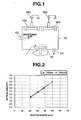
- a light-shielding film composed of silicon and molybdenum was deposited on a quartz substrate. Illustrated in FIG. 1 are a substrate 1, a chamber 101, targets 102a, 102b, a sputtering gas inlet 103, an exhaust port 104, a substrate rotating platform 105, and power supplies 106a, 106b.
- Sputtering gases were introduced at the predetermined flow rates shown in Table 1 so as to establish a gas pressure of 0.05 Pa in the sputtering chamber.
- Two targets were used herein: a Mo target as the transition metal source and a Si (single crystal) target as the silicon source.
- the predetermined discharge powers shown in Table 1 were fed to the respective targets while the substrate was rotated at 30 rpm. In this way, a MoSi film or MoSiON film was deposited to the contents of silicon and molybdenum shown in Table 1 and to the predetermined thickness by controlling the deposition time.
- the contents of light elements in the resultant light-shielding film (as determined by ESCA) are also shown in Table 1.
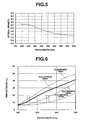
- FIG. 2 plots the film thickness dependency of the optical density of the light-shielding film of Example 1 relative to light of wavelength 248 nm or 193 nm.
- FIG. 3 plots the film thickness dependency of the optical density of the light-shielding films of Example 1 and Comparative Examples 1 and 2 relative to light of wavelength 193 nm.
- the optical density of metallic Cr film and the film thickness dependency thereof are shown in Table 3 and FIG. 4 , respectively.
- the light-shielding film of Example 1 with a thickness of approximately 40 nm has an optical density of about 3.0 both at the wavelength of 193 nm and 248 nm as seen from FIG. 2 , demonstrating superior light shield to the chromium based light-shielding film (see FIG. 4 ).
- the light-shielding film of Comparative Example 1 with a thickness of approximately 40 nm has an optical density of about 2.5 at the wavelength of 193 nm as seen from FIG. 3 , demonstrating no significant difference in light shield from the metallic chromium light-shielding film (see FIG. 4 ).
- the light-shielding film of Comparative Example 3 has a high sheet resistance, failing to meet electric conductivity.
- Example 2 For the light-shielding film (39 nm thick) of Example 1, the wavelength dependency of its optical density was determined by a spectrophotometer. The results are shown in FIG. 5 . As seen from FIG. 5 , this light-shielding film has an excellent optical density on the short wavelength side, demonstrating light-shielding properties suited for DUV lithography.
- the proposed light-shielding films have an optical density of around 3 at a thickness of about 40 nm relative to light with a wavelength equal to or less than 248 nm and have excellent light-shielding properties as compared with those using a chromium based film as the light-shielding film.
- the light-shielding film can be made thinner, the dry etching time can be reduced accordingly, and an improvement in patterning accuracy due to a thickness reduction of the resist film becomes possible.
- the photomask blank of the invention undergoes minimized pattern size variations even when cleaning steps are repeated.
- Photomask blanks (binary mask blanks: not claimed) having a light-shielding film and an antireflective film deposited on a substrate were prepared by the following procedure.
- an antireflective film of molybdenum silicide nitride was deposited on the light-shielding film.
- Sputtering gases, Ar gas at a flow rate of 5 sccm, N 2 gas at 50 sccm, and O 2 gas at 0.2 sccm were introduced so as to establish a gas pressure of 0.1 Pa in the sputtering chamber.
- Two targets were used herein: a Mo target as the transition metal source and a Si (single crystal) target as the silicon source.
- Discharge powers of 150 W and 850 W were fed to the Mo and Si targets, respectively, while the substrate was rotated at 30 rpm.
- a MoSiN film was deposited so as to contain silicon and molybdenum in a Si:Mo ratio of 4.5:1 (atomic ratio) and to the thickness shown in Table 4 by controlling the deposition time.
- an antireflective film of chromium oxynitride was deposited on the light-shielding film.
- Sputtering gases, Ar gas at a flow rate of 10 sccm, N 2 gas at 30 sccm, and O 2 gas at 15 sccm were introduced so as to establish a gas pressure of 0.1 Pa in the sputtering chamber.
- the target used herein was a Cr target.
- a discharge power of 1,000 W was fed to the Cr target while the substrate was rotated at 30 rpm. In this way, a CrON film was deposited to the thickness shown in Table 4 by controlling the deposition time.
- the optical density (OD) of the light-shielding film was measured by a spectrophotometer, provided that light was incident on the transparent substrate side. The results are shown in Table 5. An optical density of around 3.0 relative to light of wavelength 193 nm is obtained when the antireflective film has a thickness of 23 nm (summing to 48 nm, combined with the light-shielding film).
- the wavelength dependency of reflectance was determined by a spectrophotometer, provided that light was incident on the film surface side.
- the results are shown in Table 5 and FIG. 6 .
- a reflectance of 10 to 20% is obtained at the wavelength 257 nm or 365 nm when the antireflective film has a thickness in the range of 19 to 37 nm, proving a possibility of inspection with a commercially available defect detector.
- a change of reflectance was determined by a spectrophotometer UV-2400PC (Shimadzu Corp.). Under both the conditions, the change of reflectance at wavelength 365 nm was less than 1%, demonstrating the elimination of any practical problems.
- a resist pattern was formed by EB lithography using a chemically amplified resist (film thickness 100 nm).
- a cross-section of the resulting structure was observed under a scanning electron microscope. As a result, the shape of the etched cross-section was satisfactory, demonstrating no significant invasion of the light-shielding film by etching.
- CF 4 80 sccm, 60 W, 2 Pa.
- a halftone phase shift mask blank was fabricated and then processed into a half tone phase shift mask as follows.
- a first layer of 10 nm thick was deposited on a quartz substrate of 6 inch square (152.4 mm square) by a sputtering deposition process, specifically by using a MoZrSi 4 sintered body and a Si single crystal as sputtering targets, feeding a discharge power of 560 W and 1,000 W to the MoZrSi 4 and Si targets, respectively, and rotating the substrate at 30 rpm.
- a gas mixture of 8 sccm of Ar, 20 sccm of N 2 , and 5 sccm of O 2 was introduced as the sputtering gas.
- the gas pressure during sputtering was set at 0.15 Pa.
- a second layer 40 nm thick as shown in Table 1 was deposited while changing the discharge powers so as to apply 430 W to the MoZrSi 4 target and 1,000 W to the Si target, changing the sputtering gas to a gas mixture of 15 sccm of Ar, 100 sccm of N 2 , and 1 sccm of O 2 , rotating the substrate at 30 rpm, and setting a gas pressure of 0.25 Pa.
- a third layer of 20 nm thick was deposited while changing the discharge powers so as to apply 430 W to the MoZrSi 4 target and 1,000 W to the Si target, changing the sputtering gas to a gas mixture of 5 sccm of Ar, 50 sccm of N 2 , and 1 sccm of O 2 , rotating the substrate at 30 rpm, and setting a gas pressure of 0.1 Pa.
- a halftone phase shift film was obtained in this way.
- a light-shielding film of molybdenum silicide and an antireflective film of molybdenum silicide nitride as in Reference Example 6 were overcoated by the same procedure as in Reference Example 6 to a thickness of 10 nm for the light-shielding film and 20 nm for the antireflective film.
- a resist pattern was formed by EB lithography using a chemically amplified resist (film thickness 250 nm).
- the resist pattern was first stripped by a standard technique, and a negative resist was coated to form a resist film again. Pattern irradiation was carried out to an outer frame portion where a light-shielding pattern was to be left, after which light was irradiated to the entire surface of the substrate being processed from the backside in order to protect the portion of the substrate surface where the halftone pattern had already been etched away.
- the resist film was developed, forming a resist pattern that the resist was left only in the outer frame portion and the portion where the halftone pattern was absent.
- Cl 2 80 sccm, 60 W, 2 Pa.
- a cross section of the mask pattern was observed under a scanning electron microscope, finding a satisfactory etched shape.
- the halftone phase shift film was also found acceptable in phase and transmittance.
- a halftone phase shift film was deposited on a quartz substrate.
- a light-shielding film of molybdenum silicide and an antireflective film of chromium oxynitride as in Reference Example 10 were overcoated by the same procedure as in Reference Example 10 to a thickness of 10 nm for the light-shielding film and 20 nm for the antireflective film.
- a resist pattern was formed by EB lithography using a chemically amplified resist (film thickness 100 nm).
- the resist pattern was stripped by a standard technique, and a resist film was formed again.
- a resist pattern was formed so that the resist was left only where a light-shielding pattern was to be left.
- Cl 2 dry etching Cl 2 dry etching
- a cross section of the mask pattern was observed under a scanning electron microscope, finding a satisfactory etched shape.
- the halftone phase shift film was also found acceptable in phase and transmittance.
Landscapes
- Physics & Mathematics (AREA)
- General Physics & Mathematics (AREA)
- Preparing Plates And Mask In Photomechanical Process (AREA)
- Exposure And Positioning Against Photoresist Photosensitive Materials (AREA)
Priority Applications (1)
| Application Number | Priority Date | Filing Date | Title |
|---|---|---|---|
| EP10015810.4A EP2302453B1 (en) | 2004-09-10 | 2005-09-08 | Photomask blank and photomask |
Applications Claiming Priority (2)
| Application Number | Priority Date | Filing Date | Title |
|---|---|---|---|
| JP2004263161A JP4407815B2 (ja) | 2004-09-10 | 2004-09-10 | フォトマスクブランク及びフォトマスク |
| EP05782284A EP1801647B1 (en) | 2004-09-10 | 2005-09-08 | Photomask blank and photomask |
Related Parent Applications (2)
| Application Number | Title | Priority Date | Filing Date |
|---|---|---|---|
| EP05782284A Division EP1801647B1 (en) | 2004-09-10 | 2005-09-08 | Photomask blank and photomask |
| EP05782284.3 Division | 2005-09-08 |
Related Child Applications (2)
| Application Number | Title | Priority Date | Filing Date |
|---|---|---|---|
| EP10015810.4A Division EP2302453B1 (en) | 2004-09-10 | 2005-09-08 | Photomask blank and photomask |
| EP10015810.4A Division-Into EP2302453B1 (en) | 2004-09-10 | 2005-09-08 | Photomask blank and photomask |
Publications (2)
| Publication Number | Publication Date |
|---|---|
| EP2246737A1 EP2246737A1 (en) | 2010-11-03 |
| EP2246737B1 true EP2246737B1 (en) | 2015-12-02 |
Family
ID=36036449
Family Applications (4)
| Application Number | Title | Priority Date | Filing Date |
|---|---|---|---|
| EP10008135.5A Expired - Lifetime EP2246737B1 (en) | 2004-09-10 | 2005-09-08 | Photomask blank and photomask |
| EP10196189.4A Expired - Lifetime EP2302452B1 (en) | 2004-09-10 | 2005-09-08 | Photomask blank and photomask |
| EP05782284A Expired - Lifetime EP1801647B1 (en) | 2004-09-10 | 2005-09-08 | Photomask blank and photomask |
| EP10015810.4A Expired - Lifetime EP2302453B1 (en) | 2004-09-10 | 2005-09-08 | Photomask blank and photomask |
Family Applications After (3)
| Application Number | Title | Priority Date | Filing Date |
|---|---|---|---|
| EP10196189.4A Expired - Lifetime EP2302452B1 (en) | 2004-09-10 | 2005-09-08 | Photomask blank and photomask |
| EP05782284A Expired - Lifetime EP1801647B1 (en) | 2004-09-10 | 2005-09-08 | Photomask blank and photomask |
| EP10015810.4A Expired - Lifetime EP2302453B1 (en) | 2004-09-10 | 2005-09-08 | Photomask blank and photomask |
Country Status (7)
| Country | Link |
|---|---|
| US (2) | US7691546B2 (2) |
| EP (4) | EP2246737B1 (2) |
| JP (1) | JP4407815B2 (2) |
| KR (1) | KR101165242B1 (2) |
| CN (1) | CN101052917B (2) |
| TW (1) | TW200623233A (2) |
| WO (1) | WO2006028168A1 (2) |
Families Citing this family (75)
| Publication number | Priority date | Publication date | Assignee | Title |
|---|---|---|---|---|
| JP4509050B2 (ja) | 2006-03-10 | 2010-07-21 | 信越化学工業株式会社 | フォトマスクブランク及びフォトマスク |
| JP4883278B2 (ja) | 2006-03-10 | 2012-02-22 | 信越化学工業株式会社 | フォトマスクブランク及びフォトマスクの製造方法 |
| JP4919259B2 (ja) * | 2006-03-30 | 2012-04-18 | Hoya株式会社 | マスクブランク及びフォトマスク |
| JP4807739B2 (ja) * | 2006-03-30 | 2011-11-02 | Hoya株式会社 | マスクブランク及びフォトマスク |
| US7771913B2 (en) * | 2006-04-04 | 2010-08-10 | Shin-Etsu Chemical Co., Ltd. | Resist composition and patterning process using the same |
| JP4737426B2 (ja) * | 2006-04-21 | 2011-08-03 | 信越化学工業株式会社 | フォトマスクブランク |
| JP4842696B2 (ja) * | 2006-04-28 | 2011-12-21 | 信越化学工業株式会社 | フォトマスクブランクの製造方法およびフォトマスクブランク |
| JP5294227B2 (ja) * | 2006-09-15 | 2013-09-18 | Hoya株式会社 | マスクブランク及び転写マスクの製造方法 |
| US20080241745A1 (en) | 2007-03-29 | 2008-10-02 | Fujifilm Corporation | Negative resist composition and pattern forming method using the same |
| JP4958821B2 (ja) * | 2007-03-29 | 2012-06-20 | 富士フイルム株式会社 | ネガ型レジスト組成物及びそれを用いたパターン形成方法 |
| WO2008139904A1 (ja) * | 2007-04-27 | 2008-11-20 | Hoya Corporation | フォトマスクブランク及びフォトマスク |
| JP4466881B2 (ja) | 2007-06-06 | 2010-05-26 | 信越化学工業株式会社 | フォトマスクブランク、レジストパターンの形成方法、及びフォトマスクの製造方法 |
| JP5242110B2 (ja) * | 2007-09-30 | 2013-07-24 | Hoya株式会社 | フォトマスクブランク、フォトマスク及びその製造方法、並びに半導体装置の製造方法 |
| JP4845978B2 (ja) * | 2008-02-27 | 2011-12-28 | Hoya株式会社 | フォトマスクブランクおよびフォトマスク並びにフォトマスクの製造方法 |
| US20090226823A1 (en) * | 2008-03-06 | 2009-09-10 | Micron Technology, Inc. | Reticles including assistant structures, methods of forming such reticles, and methods of utilizing such reticles |
| JP5530075B2 (ja) | 2008-03-31 | 2014-06-25 | Hoya株式会社 | フォトマスクブランク、フォトマスク及びこれらの製造方法 |
| KR101584383B1 (ko) | 2008-03-31 | 2016-01-11 | 호야 가부시키가이샤 | 포토마스크 블랭크, 포토마스크 및 포토마스크 블랭크의 제조 방법 |
| JP5562835B2 (ja) * | 2008-03-31 | 2014-07-30 | Hoya株式会社 | フォトマスクブランク、フォトマスクおよびフォトマスクブランクの製造方法 |
| JP5702920B2 (ja) * | 2008-06-25 | 2015-04-15 | Hoya株式会社 | 位相シフトマスクブランク、位相シフトマスクおよび位相シフトマスクブランクの製造方法 |
| JP4849276B2 (ja) * | 2008-08-15 | 2012-01-11 | 信越化学工業株式会社 | グレートーンマスクブランク、グレートーンマスク、及び製品加工標識又は製品情報標識の形成方法 |
| KR20160138586A (ko) * | 2008-09-30 | 2016-12-05 | 호야 가부시키가이샤 | 포토마스크 블랭크, 포토마스크 및 그 제조 방법과, 반도체 디바이스의 제조 방법 |
| JP5535932B2 (ja) * | 2008-10-29 | 2014-07-02 | Hoya株式会社 | フォトマスクブランク、フォトマスク及びその製造方法 |
| JP5281362B2 (ja) * | 2008-10-31 | 2013-09-04 | Hoya株式会社 | フォトマスクブランク、フォトマスク及びその製造方法 |
| JP4826842B2 (ja) * | 2009-01-15 | 2011-11-30 | 信越化学工業株式会社 | フォトマスクの製造方法及びフォトマスクブランク |
| JP4826843B2 (ja) * | 2009-01-15 | 2011-11-30 | 信越化学工業株式会社 | ドライエッチング方法 |
| WO2010086850A2 (en) | 2009-01-29 | 2010-08-05 | Digiflex Ltd. | Process for producing a photomask on a photopolymeric surface |
| KR101153663B1 (ko) * | 2009-02-13 | 2012-07-20 | 호야 가부시키가이샤 | 포토마스크 블랭크 및 그 제조 방법과 포토마스크 및 그 제조 방법 |
| KR101793285B1 (ko) * | 2009-03-31 | 2017-11-02 | 호야 가부시키가이샤 | 마스크 블랭크 및 전사용 마스크 |
| JP5317310B2 (ja) * | 2009-03-31 | 2013-10-16 | Hoya株式会社 | マスクブランク及び転写用マスクの製造方法 |
| JP5201361B2 (ja) | 2009-05-15 | 2013-06-05 | 信越化学工業株式会社 | フォトマスクブランクの加工方法 |
| JP5257256B2 (ja) * | 2009-06-11 | 2013-08-07 | 信越化学工業株式会社 | フォトマスクの製造方法 |
| JP4739461B2 (ja) * | 2009-10-12 | 2011-08-03 | Hoya株式会社 | 転写用マスクの製造方法及び半導体デバイスの製造方法 |
| US8435704B2 (en) * | 2010-03-30 | 2013-05-07 | Hoya Corporation | Mask blank, transfer mask, and methods of manufacturing the same |
| JP5313401B2 (ja) * | 2010-04-09 | 2013-10-09 | Hoya株式会社 | 位相シフトマスクブランク及びその製造方法、並びに位相シフトマスク |
| CN102236247A (zh) * | 2010-05-06 | 2011-11-09 | 中芯国际集成电路制造(上海)有限公司 | 光掩膜的制作方法 |
| JP4697495B2 (ja) * | 2010-05-28 | 2011-06-08 | 信越化学工業株式会社 | フォトマスクブランク及びフォトマスクの製造方法 |
| JP5682493B2 (ja) | 2010-08-04 | 2015-03-11 | 信越化学工業株式会社 | バイナリーフォトマスクブランク及びバイナリーフォトマスクの製造方法 |
| JP5644293B2 (ja) | 2010-09-10 | 2014-12-24 | 信越化学工業株式会社 | 遷移金属ケイ素系材料膜の設計方法 |
| JP5154626B2 (ja) | 2010-09-30 | 2013-02-27 | Hoya株式会社 | マスクブランク、転写用マスク、転写用マスクの製造方法、および半導体デバイスの製造方法 |
| KR101374484B1 (ko) | 2010-11-22 | 2014-03-13 | 신에쓰 가가꾸 고교 가부시끼가이샤 | 포토마스크 블랭크 및 포토마스크의 제조 방법, 및 크롬계 재료막 |
| JP5653888B2 (ja) | 2010-12-17 | 2015-01-14 | Hoya株式会社 | マスクブランク、転写用マスク、転写用マスクの製造方法、及び半導体デバイスの製造方法 |
| JP5920965B2 (ja) | 2011-05-20 | 2016-05-24 | Hoya株式会社 | マスクブランクの製造方法、転写用マスク用の製造方法、および半導体デバイスの製造方法 |
| JP5997530B2 (ja) | 2011-09-07 | 2016-09-28 | Hoya株式会社 | マスクブランク、転写用マスク、および半導体デバイスの製造方法 |
| JP4930736B2 (ja) * | 2011-09-21 | 2012-05-16 | 信越化学工業株式会社 | フォトマスクの製造方法及びフォトマスク |
| JP4930737B2 (ja) * | 2011-09-21 | 2012-05-16 | 信越化学工業株式会社 | フォトマスクブランク及びバイナリーマスクの製造方法 |
| JP6084391B2 (ja) | 2011-09-28 | 2017-02-22 | Hoya株式会社 | マスクブランク、転写用マスク、転写用マスクの製造方法および半導体デバイスの製造方法 |
| JP6125772B2 (ja) | 2011-09-28 | 2017-05-10 | Hoya株式会社 | 反射型マスクブランク、反射型マスクおよび反射型マスクの製造方法 |
| CN110083008A (zh) * | 2011-10-21 | 2019-08-02 | 大日本印刷株式会社 | 大型相移掩模及大型相移掩模的制造方法 |
| JP5229838B2 (ja) * | 2011-11-09 | 2013-07-03 | Hoya株式会社 | マスクブランク及びフォトマスク |
| JP5879951B2 (ja) * | 2011-11-21 | 2016-03-08 | 信越化学工業株式会社 | 光パターン照射方法、ハーフトーン位相シフトマスク及びハーフトーン位相シフトマスクブランク |
| JP5896402B2 (ja) | 2011-12-09 | 2016-03-30 | Hoya株式会社 | マスクブランクの製造方法、転写用マスクの製造方法、および半導体デバイスの製造方法 |
| US8703365B2 (en) | 2012-03-06 | 2014-04-22 | Apple Inc. | UV mask with anti-reflection coating and UV absorption material |
| JP5916447B2 (ja) * | 2012-03-14 | 2016-05-11 | Hoya株式会社 | マスクブランクの製造方法及び転写用マスクの製造方法 |
| JP5739375B2 (ja) | 2012-05-16 | 2015-06-24 | 信越化学工業株式会社 | ハーフトーン位相シフトマスクブランク及びハーフトーン位相シフトマスクの製造方法 |
| JP5795992B2 (ja) | 2012-05-16 | 2015-10-14 | 信越化学工業株式会社 | フォトマスクブランク及びフォトマスクの製造方法 |
| JP5795991B2 (ja) | 2012-05-16 | 2015-10-14 | 信越化学工業株式会社 | フォトマスクブランク、フォトマスクの製造方法、および位相シフトマスクの製造方法 |
| US8823003B2 (en) | 2012-08-10 | 2014-09-02 | Apple Inc. | Gate insulator loss free etch-stop oxide thin film transistor |
| US9601557B2 (en) | 2012-11-16 | 2017-03-21 | Apple Inc. | Flexible display |
| KR102205778B1 (ko) | 2012-11-20 | 2021-01-21 | 호야 가부시키가이샤 | 마스크 블랭크, 전사용 마스크, 마스크 블랭크의 제조방법, 전사용 마스크의 제조방법 및 반도체 디바이스의 제조방법 |
| JP6394496B2 (ja) | 2014-07-15 | 2018-09-26 | 信越化学工業株式会社 | バイナリフォトマスクブランク、その製造方法、及びバイナリフォトマスクの製造方法 |
| JP6675156B2 (ja) * | 2014-07-30 | 2020-04-01 | 信越化学工業株式会社 | フォトマスクブランクの設計方法 |
| US9600112B2 (en) | 2014-10-10 | 2017-03-21 | Apple Inc. | Signal trace patterns for flexible substrates |
| JP6319059B2 (ja) | 2014-11-25 | 2018-05-09 | 信越化学工業株式会社 | フォトマスクブランク、レジストパターンの形成方法、及びフォトマスクの製造方法 |
| JP6451469B2 (ja) | 2015-04-07 | 2019-01-16 | 信越化学工業株式会社 | フォトマスクブランク、レジストパターン形成方法、及びフォトマスクの製造方法 |
| JP5962811B2 (ja) * | 2015-04-22 | 2016-08-03 | 信越化学工業株式会社 | 光パターン照射方法 |
| JP6341166B2 (ja) * | 2015-09-03 | 2018-06-13 | 信越化学工業株式会社 | フォトマスクブランク |
| JP6451561B2 (ja) * | 2015-09-03 | 2019-01-16 | 信越化学工業株式会社 | フォトマスクブランク |
| JP6398927B2 (ja) * | 2015-09-18 | 2018-10-03 | 信越化学工業株式会社 | フォトマスクブランク、その製造方法及びフォトマスク |
| JP2016095533A (ja) * | 2016-01-25 | 2016-05-26 | 信越化学工業株式会社 | 光パターン照射方法 |
| SG11201807932XA (en) * | 2016-03-29 | 2018-10-30 | Hoya Corp | Mask blank, method for manufacturing mask blank, method for manufacturing transfer mask, and method for manufacturing semiconductor device |
| US10168612B2 (en) | 2016-12-12 | 2019-01-01 | Globalfoundries Inc. | Photomask blank including a thin chromium hardmask |
| KR102708773B1 (ko) | 2016-12-26 | 2024-09-23 | 엘지디스플레이 주식회사 | 플렉서블 표시장치 |
| CN109960105B (zh) * | 2017-12-26 | 2024-06-18 | Hoya株式会社 | 光掩模坯料及光掩模的制造方法、显示装置的制造方法 |
| KR102495225B1 (ko) * | 2021-12-15 | 2023-02-06 | 에스케이엔펄스 주식회사 | 블랭크 마스크 및 이를 이용한 포토마스크 |
| JP2025180397A (ja) | 2024-05-30 | 2025-12-11 | 信越化学工業株式会社 | フォトマスクブランク |
Family Cites Families (22)
| Publication number | Priority date | Publication date | Assignee | Title |
|---|---|---|---|---|
| JPS61173253A (ja) | 1985-01-28 | 1986-08-04 | Mitsubishi Electric Corp | フオトマスクブランクの形成方法 |
| JPS6385553A (ja) | 1986-09-30 | 1988-04-16 | Toshiba Corp | マスク基板およびマスクパタ−ンの形成方法 |
| JP2556534B2 (ja) | 1987-11-30 | 1996-11-20 | ホーヤ株式会社 | フォトマスクブランク |
| JPH0393632A (ja) | 1989-09-04 | 1991-04-18 | Shibason:Kk | 照明灯用レンズの製造方法 |
| JP2991444B2 (ja) | 1989-09-29 | 1999-12-20 | ホーヤ株式会社 | フォトマスクブランクおよびフォトマスク |
| JPH0720427Y2 (ja) | 1990-01-11 | 1995-05-15 | 豊生ブレーキ工業株式会社 | シュー間隙自動調節機構を備えたドラムブレーキ |
| JP3037763B2 (ja) | 1991-01-31 | 2000-05-08 | ホーヤ株式会社 | フォトマスクブランク及びその製造方法、並びにフォトマスク及びその製造方法 |
| JP3032089B2 (ja) | 1992-09-24 | 2000-04-10 | 三菱電機株式会社 | フォトマスク形成方法 |
| JP3116147B2 (ja) | 1992-09-30 | 2000-12-11 | 東芝機械株式会社 | ダイカスト機の給湯方法 |
| US5674647A (en) * | 1992-11-21 | 1997-10-07 | Ulvac Coating Corporation | Phase shift mask and manufacturing method thereof and exposure method using phase shift mask |
| JP3064769B2 (ja) * | 1992-11-21 | 2000-07-12 | アルバック成膜株式会社 | 位相シフトマスクおよびその製造方法ならびにその位相シフトマスクを用いた露光方法 |
| US5942356A (en) | 1996-03-30 | 1999-08-24 | Hoya Corporation | Phase shift mask and phase shift mask blank |
| JP3093632B2 (ja) | 1996-04-25 | 2000-10-03 | 日本電気アイシーマイコンシステム株式会社 | 半導体記憶装置 |
| JP3214840B2 (ja) * | 1999-03-08 | 2001-10-02 | ホーヤ株式会社 | 位相シフトマスクの製造方法、及び位相シフトマスクブランクの製造方法 |
| JP4686006B2 (ja) * | 2000-04-27 | 2011-05-18 | 大日本印刷株式会社 | ハーフトーン位相シフトフォトマスクとハーフトーン位相シフトフォトマスク用ブランクス、及びハーフトーン位相シフトフォトマスクの製造方法 |
| JP2002014458A (ja) | 2000-06-30 | 2002-01-18 | Toppan Printing Co Ltd | ハーフトーン型位相シフトマスクおよびブランク |
| JP2002090977A (ja) * | 2000-09-12 | 2002-03-27 | Hoya Corp | 位相シフトマスクブランク、フォトマスクブランク、並びにそれらの製造装置及び製造方法 |
| JP2003195479A (ja) | 2001-12-28 | 2003-07-09 | Hoya Corp | ハーフトーン型位相シフトマスクブランク、及びハーフトーン型位相シフトマスクの製造方法 |
| JP2003195483A (ja) | 2001-12-28 | 2003-07-09 | Hoya Corp | フォトマスクブランク、フォトマスク、及びそれらの製造方法 |
| JP3988041B2 (ja) * | 2002-10-08 | 2007-10-10 | 信越化学工業株式会社 | ハーフトーン位相シフトマスクブランク及びその製造方法 |
| US7005217B2 (en) * | 2003-04-04 | 2006-02-28 | Lsi Logic Corporation | Chromeless phase shift mask |
| JP4246649B2 (ja) | 2004-02-17 | 2009-04-02 | 京セラ株式会社 | 携帯電話機 |
-
2004
- 2004-09-10 JP JP2004263161A patent/JP4407815B2/ja not_active Expired - Lifetime
-
2005
- 2005-09-08 EP EP10008135.5A patent/EP2246737B1/en not_active Expired - Lifetime
- 2005-09-08 EP EP10196189.4A patent/EP2302452B1/en not_active Expired - Lifetime
- 2005-09-08 EP EP05782284A patent/EP1801647B1/en not_active Expired - Lifetime
- 2005-09-08 TW TW094130954A patent/TW200623233A/zh not_active IP Right Cessation
- 2005-09-08 WO PCT/JP2005/016511 patent/WO2006028168A1/ja not_active Ceased
- 2005-09-08 CN CN2005800365654A patent/CN101052917B/zh not_active Expired - Lifetime
- 2005-09-08 KR KR1020077005657A patent/KR101165242B1/ko not_active Expired - Lifetime
- 2005-09-08 EP EP10015810.4A patent/EP2302453B1/en not_active Expired - Lifetime
- 2005-09-08 US US11/662,183 patent/US7691546B2/en active Active
-
2010
- 2010-02-19 US US12/709,116 patent/US8007964B2/en not_active Expired - Lifetime
Also Published As
| Publication number | Publication date |
|---|---|
| EP2302452A3 (en) | 2011-05-25 |
| EP2302452B1 (en) | 2015-04-01 |
| TWI320579B (2) | 2010-02-11 |
| CN101052917A (zh) | 2007-10-10 |
| EP2246737A1 (en) | 2010-11-03 |
| KR20070054198A (ko) | 2007-05-28 |
| WO2006028168A1 (ja) | 2006-03-16 |
| JP2006078807A (ja) | 2006-03-23 |
| EP1801647A4 (en) | 2008-01-23 |
| EP2302453B1 (en) | 2015-04-01 |
| EP2302453A3 (en) | 2011-05-25 |
| CN101052917B (zh) | 2010-11-03 |
| KR101165242B1 (ko) | 2012-09-13 |
| US8007964B2 (en) | 2011-08-30 |
| US20080063950A1 (en) | 2008-03-13 |
| EP2302452A2 (en) | 2011-03-30 |
| EP1801647A1 (en) | 2007-06-27 |
| JP4407815B2 (ja) | 2010-02-03 |
| US7691546B2 (en) | 2010-04-06 |
| EP1801647B1 (en) | 2011-11-16 |
| US20100143831A1 (en) | 2010-06-10 |
| EP2302453A2 (en) | 2011-03-30 |
| TW200623233A (en) | 2006-07-01 |
Similar Documents
| Publication | Publication Date | Title |
|---|---|---|
| EP2246737B1 (en) | Photomask blank and photomask | |
| EP2871520B1 (en) | Halftone phase shift photomask blank, halftone phase shift photomask and pattern exposure method | |
| EP1936437B1 (en) | Photomask blank, photomask and fabrication method thereof | |
| JP5464186B2 (ja) | フォトマスクブランク、フォトマスク及びその製造方法 | |
| JP6500791B2 (ja) | ハーフトーン位相シフト型フォトマスクブランク及びその製造方法 | |
| JP6287932B2 (ja) | ハーフトーン位相シフト型フォトマスクブランクの製造方法 | |
| US10712654B2 (en) | Photomask blank | |
| EP3373068B1 (en) | Halftone phase shift photomask blank | |
| CN107870507A (zh) | 半色调相移掩模坯和半色调相移掩模 | |
| US9778559B2 (en) | Method for preparing halftone phase shift photomask blank | |
| JP6332109B2 (ja) | ハーフトーン位相シフト型フォトマスクブランクの製造方法 | |
| EP2975459B1 (en) | Binary photomask blank, preparation thereof, and preparation of binary photomask | |
| TWI807597B (zh) | 半色調相移型空白光罩、其製造方法及半色調相移型光罩 | |
| JP5007843B2 (ja) | フォトマスクブランク及びフォトマスク |
Legal Events
| Date | Code | Title | Description |
|---|---|---|---|
| PUAI | Public reference made under article 153(3) epc to a published international application that has entered the european phase |
Free format text: ORIGINAL CODE: 0009012 |
|
| AC | Divisional application: reference to earlier application |
Ref document number: 1801647 Country of ref document: EP Kind code of ref document: P |
|
| AK | Designated contracting states |
Kind code of ref document: A1 Designated state(s): DE FR GB |
|
| 17P | Request for examination filed |
Effective date: 20110126 |
|
| REG | Reference to a national code |
Ref country code: DE Ref legal event code: R079 Ref document number: 602005048029 Country of ref document: DE Free format text: PREVIOUS MAIN CLASS: G03F0001080000 Ipc: G03F0001000000 |
|
| GRAP | Despatch of communication of intention to grant a patent |
Free format text: ORIGINAL CODE: EPIDOSNIGR1 |
|
| INTG | Intention to grant announced |
Effective date: 20150521 |
|
| RIC1 | Information provided on ipc code assigned before grant |
Ipc: G03F 1/00 20120101AFI20150512BHEP |
|
| GRAS | Grant fee paid |
Free format text: ORIGINAL CODE: EPIDOSNIGR3 |
|
| GRAR | Information related to intention to grant a patent recorded |
Free format text: ORIGINAL CODE: EPIDOSNIGR71 |
|
| GRAA | (expected) grant |
Free format text: ORIGINAL CODE: 0009210 |
|
| INTG | Intention to grant announced |
Effective date: 20151015 |
|
| AC | Divisional application: reference to earlier application |
Ref document number: 1801647 Country of ref document: EP Kind code of ref document: P |
|
| AK | Designated contracting states |
Kind code of ref document: B1 Designated state(s): DE FR GB |
|
| REG | Reference to a national code |
Ref country code: GB Ref legal event code: FG4D |
|
| REG | Reference to a national code |
Ref country code: DE Ref legal event code: R096 Ref document number: 602005048029 Country of ref document: DE |
|
| REG | Reference to a national code |
Ref country code: FR Ref legal event code: PLFP Year of fee payment: 12 |
|
| REG | Reference to a national code |
Ref country code: DE Ref legal event code: R097 Ref document number: 602005048029 Country of ref document: DE |
|
| PLBE | No opposition filed within time limit |
Free format text: ORIGINAL CODE: 0009261 |
|
| STAA | Information on the status of an ep patent application or granted ep patent |
Free format text: STATUS: NO OPPOSITION FILED WITHIN TIME LIMIT |
|
| 26N | No opposition filed |
Effective date: 20160905 |
|
| REG | Reference to a national code |
Ref country code: FR Ref legal event code: PLFP Year of fee payment: 13 |
|
| REG | Reference to a national code |
Ref country code: FR Ref legal event code: PLFP Year of fee payment: 14 |
|
| REG | Reference to a national code |
Ref country code: DE Ref legal event code: R081 Ref document number: 602005048029 Country of ref document: DE Owner name: TOPPAN PHOTOMASK CO., LTD., JP Free format text: FORMER OWNERS: SHIN-ETSU CHEMICAL CO., LTD., TOKYO, JP; TOPPAN PRINTING CO., LTD., TOKYO, JP Ref country code: DE Ref legal event code: R081 Ref document number: 602005048029 Country of ref document: DE Owner name: SHIN-ETSU CHEMICAL CO., LTD., JP Free format text: FORMER OWNERS: SHIN-ETSU CHEMICAL CO., LTD., TOKYO, JP; TOPPAN PRINTING CO., LTD., TOKYO, JP |
|
| REG | Reference to a national code |
Ref country code: GB Ref legal event code: 732E Free format text: REGISTERED BETWEEN 20220922 AND 20220928 |
|
| PGFP | Annual fee paid to national office [announced via postgrant information from national office to epo] |
Ref country code: DE Payment date: 20240730 Year of fee payment: 20 |
|
| PGFP | Annual fee paid to national office [announced via postgrant information from national office to epo] |
Ref country code: GB Payment date: 20240801 Year of fee payment: 20 |
|
| PGFP | Annual fee paid to national office [announced via postgrant information from national office to epo] |
Ref country code: FR Payment date: 20240808 Year of fee payment: 20 |
|
| REG | Reference to a national code |
Ref country code: DE Ref legal event code: R071 Ref document number: 602005048029 Country of ref document: DE |
|
| REG | Reference to a national code |
Ref country code: GB Ref legal event code: PE20 Expiry date: 20250907 |