WO2014199626A1 - 熱硬化性組成物、有機el素子用面封止剤およびその硬化物 - Google Patents
熱硬化性組成物、有機el素子用面封止剤およびその硬化物 Download PDFInfo
- Publication number
- WO2014199626A1 WO2014199626A1 PCT/JP2014/003074 JP2014003074W WO2014199626A1 WO 2014199626 A1 WO2014199626 A1 WO 2014199626A1 JP 2014003074 W JP2014003074 W JP 2014003074W WO 2014199626 A1 WO2014199626 A1 WO 2014199626A1
- Authority
- WO
- WIPO (PCT)
- Prior art keywords
- thermosetting composition
- group
- component
- organic
- mass
- Prior art date
- Legal status (The legal status is an assumption and is not a legal conclusion. Google has not performed a legal analysis and makes no representation as to the accuracy of the status listed.)
- Ceased
Links
Images


Classifications
-
- C—CHEMISTRY; METALLURGY
- C08—ORGANIC MACROMOLECULAR COMPOUNDS; THEIR PREPARATION OR CHEMICAL WORKING-UP; COMPOSITIONS BASED THEREON
- C08L—COMPOSITIONS OF MACROMOLECULAR COMPOUNDS
- C08L71/00—Compositions of polyethers obtained by reactions forming an ether link in the main chain; Compositions of derivatives of such polymers
- C08L71/02—Polyalkylene oxides
-
- C—CHEMISTRY; METALLURGY
- C08—ORGANIC MACROMOLECULAR COMPOUNDS; THEIR PREPARATION OR CHEMICAL WORKING-UP; COMPOSITIONS BASED THEREON
- C08G—MACROMOLECULAR COMPOUNDS OBTAINED OTHERWISE THAN BY REACTIONS ONLY INVOLVING UNSATURATED CARBON-TO-CARBON BONDS
- C08G65/00—Macromolecular compounds obtained by reactions forming an ether link in the main chain of the macromolecule
- C08G65/02—Macromolecular compounds obtained by reactions forming an ether link in the main chain of the macromolecule from cyclic ethers by opening of the heterocyclic ring
- C08G65/04—Macromolecular compounds obtained by reactions forming an ether link in the main chain of the macromolecule from cyclic ethers by opening of the heterocyclic ring from cyclic ethers only
- C08G65/06—Cyclic ethers having no atoms other than carbon and hydrogen outside the ring
- C08G65/08—Saturated oxiranes
- C08G65/10—Saturated oxiranes characterised by the catalysts used
- C08G65/105—Onium compounds
-
- C—CHEMISTRY; METALLURGY
- C08—ORGANIC MACROMOLECULAR COMPOUNDS; THEIR PREPARATION OR CHEMICAL WORKING-UP; COMPOSITIONS BASED THEREON
- C08G—MACROMOLECULAR COMPOUNDS OBTAINED OTHERWISE THAN BY REACTIONS ONLY INVOLVING UNSATURATED CARBON-TO-CARBON BONDS
- C08G65/00—Macromolecular compounds obtained by reactions forming an ether link in the main chain of the macromolecule
- C08G65/02—Macromolecular compounds obtained by reactions forming an ether link in the main chain of the macromolecule from cyclic ethers by opening of the heterocyclic ring
- C08G65/04—Macromolecular compounds obtained by reactions forming an ether link in the main chain of the macromolecule from cyclic ethers by opening of the heterocyclic ring from cyclic ethers only
- C08G65/06—Cyclic ethers having no atoms other than carbon and hydrogen outside the ring
- C08G65/16—Cyclic ethers having four or more ring atoms
- C08G65/18—Oxetanes
-
- C—CHEMISTRY; METALLURGY
- C08—ORGANIC MACROMOLECULAR COMPOUNDS; THEIR PREPARATION OR CHEMICAL WORKING-UP; COMPOSITIONS BASED THEREON
- C08L—COMPOSITIONS OF MACROMOLECULAR COMPOUNDS
- C08L63/00—Compositions of epoxy resins; Compositions of derivatives of epoxy resins
-
- C—CHEMISTRY; METALLURGY
- C08—ORGANIC MACROMOLECULAR COMPOUNDS; THEIR PREPARATION OR CHEMICAL WORKING-UP; COMPOSITIONS BASED THEREON
- C08K—Use of inorganic or non-macromolecular organic substances as compounding ingredients
- C08K5/00—Use of organic ingredients
- C08K5/0008—Organic ingredients according to more than one of the "one dot" groups of C08K5/01 - C08K5/59
- C08K5/0041—Optical brightening agents, organic pigments
-
- C—CHEMISTRY; METALLURGY
- C08—ORGANIC MACROMOLECULAR COMPOUNDS; THEIR PREPARATION OR CHEMICAL WORKING-UP; COMPOSITIONS BASED THEREON
- C08K—Use of inorganic or non-macromolecular organic substances as compounding ingredients
- C08K9/00—Use of pretreated ingredients
- C08K9/04—Ingredients treated with organic substances
-
- C—CHEMISTRY; METALLURGY
- C08—ORGANIC MACROMOLECULAR COMPOUNDS; THEIR PREPARATION OR CHEMICAL WORKING-UP; COMPOSITIONS BASED THEREON
- C08L—COMPOSITIONS OF MACROMOLECULAR COMPOUNDS
- C08L33/00—Compositions of homopolymers or copolymers of compounds having one or more unsaturated aliphatic radicals, each having only one carbon-to-carbon double bond, and only one being terminated by only one carboxyl radical, or of salts, anhydrides, esters, amides, imides or nitriles thereof; Compositions of derivatives of such polymers
- C08L33/04—Homopolymers or copolymers of esters
- C08L33/06—Homopolymers or copolymers of esters of esters containing only carbon, hydrogen and oxygen, which oxygen atoms are present only as part of the carboxyl radical
- C08L33/08—Homopolymers or copolymers of acrylic acid esters
-
- C—CHEMISTRY; METALLURGY
- C08—ORGANIC MACROMOLECULAR COMPOUNDS; THEIR PREPARATION OR CHEMICAL WORKING-UP; COMPOSITIONS BASED THEREON
- C08L—COMPOSITIONS OF MACROMOLECULAR COMPOUNDS
- C08L83/00—Compositions of macromolecular compounds obtained by reactions forming in the main chain of the macromolecule a linkage containing silicon with or without sulfur, nitrogen, oxygen or carbon only; Compositions of derivatives of such polymers
- C08L83/04—Polysiloxanes
-
- H—ELECTRICITY
- H10—SEMICONDUCTOR DEVICES; ELECTRIC SOLID-STATE DEVICES NOT OTHERWISE PROVIDED FOR
- H10K—ORGANIC ELECTRIC SOLID-STATE DEVICES
- H10K59/00—Integrated devices, or assemblies of multiple devices, comprising at least one organic light-emitting element covered by group H10K50/00
- H10K59/80—Constructional details
- H10K59/87—Passivation; Containers; Encapsulations
- H10K59/871—Self-supporting sealing arrangements
- H10K59/8722—Peripheral sealing arrangements, e.g. adhesives, sealants
Definitions
- the present invention relates to a thermosetting composition, a surface sealing agent for organic EL elements, and a cured product thereof.
- Organic EL elements are expected as liquid crystal backlights and self-luminous thin flat display devices.
- organic EL elements are extremely susceptible to deterioration when exposed to moisture and oxygen. Specifically, the interface between the metal electrode and the organic EL layer is peeled off due to the influence of moisture, the metal is oxidized to increase resistance, or the organic matter itself is altered by moisture. As a result, the organic EL element may not emit light or the brightness may be reduced.
- the organic EL element As one method for protecting the organic EL element from moisture and oxygen, there is a method of sealing the surface of the organic EL element with a transparent resin layer.
- the organic EL element is sealed by photocuring or thermosetting.
- a photocurable resin composition for example, a patent
- Document 1 and organic EL element sealing resin compositions for example, Patent Document 6) containing an epoxy compound, a polyester resin, and a Lewis acid compound have been proposed.
- a photocurable resin composition (Patent Documents 2 and 3) containing an epoxy resin, a photocationic polymerization initiator, and a polyoxymethylene polymer compound; and an epoxy resin;
- An epoxy resin powder coating (Patent Document 4) containing a curing agent, a curing accelerator, and a polyol; a thermosetting composition containing an epoxy compound, an amino compound, a catalyst such as nitrate, and a polyalkylene ether glycol
- Patent Documents 2 and 3 containing an epoxy resin, a photocationic polymerization initiator, and a polyoxymethylene polymer compound; and an epoxy resin
- An epoxy resin powder coating (Patent Document 4) containing a curing agent, a curing accelerator, and a polyol;
- a thermosetting composition containing an epoxy compound, an amino compound, a catalyst such as nitrate, and a polyalkylene ether glycol
- the surface sealing of the organic EL element is performed by applying a surface sealing agent on the organic EL element and then curing it.
- the curing can be photocuring or heat curing, but when the element is deteriorated by light, it is desirable to be heat curing.
- the present inventors have applied the surface sealant and heat-curing process; particularly, in the heat-curing process, the temperature distribution and viscosity of the coating film are changed, and unevenness and repellency are likely to occur, and the smoothness of the cured product layer surface It has been found that a new problem arises that tends to be low.
- the unevenness acts like a lens, and the light extracted from the organic EL element tends to be non-uniform in the surface.
- a barrier film such as an inorganic thin film is formed on the cured product layer, defects such as pinholes are likely to occur, a uniform inorganic barrier film cannot be formed, and sufficient barrier properties are difficult to obtain.
- thermosetting composition capable of forming a cured product layer having a high surface smoothness with less unevenness and repellency on an object to be coated such as an organic EL element.
- the purpose is to provide goods.
- thermosetting composition [1] (A) a cationically polymerizable compound having two or more cationically polymerizable functional groups in one molecule, (B) a thermal cationic polymerization initiator, and (C) a polyether compound And (D) a leveling agent, and has a viscosity of 50 to 30000 mPa ⁇ s at 25 ° C. and 2.5 rpm as measured with an E-type viscometer. [2] The thermosetting composition according to [1], wherein the component (D) is a compound selected from the group consisting of a silicone polymer and an acrylate polymer.
- thermosetting composition according to [1] or [2], wherein the component (C) has a weight average molecular weight of 250 to 10,000.
- the thermosetting according to any one of [1] to [4], wherein the cationically polymerizable functional group is one or more groups selected from the group consisting of an epoxy group, an oxetanyl group, and a vinyl ether group. Composition.
- thermosetting composition according to any one of [1] to [6], wherein the component (C) is a polyalkylene oxide. [8] 0.1 to 5 parts by mass of the component (B) and 0.01 to 1 part by mass of the component (D) with respect to 100 parts by mass of the component (A) [1] to [7 ] The thermosetting composition in any one of. [9] The thermosetting composition according to [8], wherein the component (C) is contained in an amount of less than 10 parts by mass with respect to 100 parts by mass of the component (A).
- thermosetting composition comprising the thermosetting composition according to any one of [1] to [9].
- thermosetting composition comprising the thermosetting composition according to any one of [1] to [9].
- thermosetting composition comprising the thermosetting composition according to any one of [1] to [9].
- thermosetting composition comprising the thermosetting composition according to any one of [1] to [9].
- thermosetting composition comprising the thermosetting composition according to any one of [1] to [9].
- thermosetting composition capable of forming a cured product layer with less surface irregularities and repellency and high surface smoothness on an object to be coated such as an organic EL element.
- thermosetting composition of the present invention includes (A) a cationic polymerizable compound, (B) a thermal cationic polymerization initiator, (C) a polyether compound, and (D) a leveling agent. .
- the cationic polymerizable compound may be a compound having two or more cationic polymerizable functional groups in one molecule.
- the cationic polymerizable functional group is at least one selected from the group consisting of an epoxy group, an oxetanyl group, and a vinyl ether group.
- there are a plurality of cationically polymerizable functional groups they may be the same as or different from each other.
- epoxy resins having two or more epoxy groups in one molecule include bisphenol type epoxy resins such as bisphenol A type, bisphenol F type, bisphenol E type, bisphenol S type, bisphenol AD type, and hydrogenated bisphenol A type.
- Diphenyl ether type epoxy resin phenol novolak type, cresol novolak type, biphenyl novolak type, bisphenol novolak type, naphthol novolak type, trisphenol novolak type, dicyclopentadiene novolak type and other novolak type epoxy resins; biphenyl type epoxy resin; naphthyl type Epoxy resin; aromatic epoxy resin such as triphenolalkane type epoxy resin such as triphenolmethane type, triphenolethane type, triphenolpropane type; Alicyclic epoxy resin; Aliphatic epoxy resins and the like are included.
- oxetanyl compounds having two or more oxetanyl groups in one molecule include 1,3-bis [(3-ethyl-3-oxetanyl) methoxy] benzene, 1,4-bis ⁇ [(3-ethyl-3 Aromatic oxetane compounds such as -oxetanyl) methoxy] methyl ⁇ benzene; Alicyclic such as 1,4-bis ⁇ [(3-ethyl-3-oxetanyl) methoxy] methyl ⁇ cyclohexane, 4,4′-bis ⁇ [(3-ethyl-3-oxetanyl) methoxy] methyl ⁇ bicyclohexane Oxetane compounds; Di [1-ethyl (3-oxetanyl)] methyl ether, bis (3-ethyl-3-oxetanylmethyl) ether, trimethylolpropane tris (3-ethyl-3-ox
- vinyl ether compounds having two or more vinyl ether groups in one molecule include alicyclic vinyl ether compounds such as cyclohexanedimethanol divinyl ether; Examples include aliphatic vinyl ether compounds such as ethylene glycol divinyl ether, diethylene glycol divinyl ether, triethylene glycol divinyl ether, propylene glycol divinyl ether, and dipropylene glycol divinyl ether.
- a cationically polymerizable compound that is liquid at 25 ° C. is preferable because the viscosity of the thermosetting composition can be easily adjusted.
- the cationically polymerizable compound that is liquid at 25 ° C. is preferably an epoxy resin having two or more epoxy groups in one molecule from the viewpoint that adhesion to an object is easily obtained.
- the epoxy resin is preferably an aromatic epoxy resin because it easily improves the moisture resistance of the cured product.
- the aromatic epoxy resin is preferably a bisphenol type epoxy compound or a cresol novolac type epoxy compound, and more preferably a bisphenol type epoxy compound.
- the bisphenol-type epoxy compound is preferably a compound represented by the general formula (X), and preferred examples include a compound represented by the general formula (X ′).
- X represents a single bond, a methylene group, an isopropylidene group, —S— or —SO 2 —; each R 1 independently has 1 to 5 carbon atoms.
- N represents an integer of 2 or more;
- P represents an integer of 0 to 4.
- n is preferably 2 to 4.
- the cationically polymerizable compound preferably has a low molecular weight because it is easy to adjust the viscosity of the thermosetting composition to a range described later and to ensure fluidity during coating or curing.
- the weight average molecular weight of the cationic polymerizable compound is preferably 200 to 800, and more preferably 300 to 700.
- the “weight average molecular weight (Mw)” is measured by gel permeation chromatography (GPC) using polystyrene as a standard substance.
- the cation polymerizable functional group equivalent of the cation polymerizable compound is preferably 100 to 800 g / eq.
- the viscosity of the cationically polymerizable compound at 25 ° C. and 2.5 rpm measured with an E-type viscometer is preferably 50 to 30000 mPa ⁇ s. This is because an epoxy resin having a viscosity in the above range can easily adjust the viscosity of the thermosetting composition to a range described later.
- the content of the cationically polymerizable compound can be 60% by mass or more, preferably 70% by mass or more with respect to the thermosetting composition.
- One type of (A) cationic polymerizable compound contained in the thermosetting composition may be used, or two or more types having different types and molecular weights may be combined.
- the thermal cationic polymerization initiator is a compound capable of generating a cationic species that initiates polymerization upon heating.
- the thermal cationic polymerization initiator is not particularly limited, and may be appropriately selected according to the curing conditions and the type of the cationic polymerizable compound.
- the thermal cationic polymerization initiator may be an onium salt such as a quaternary ammonium salt or a phosphonium salt.
- quaternary ammonium salt is preferable from the viewpoint that the storage stability of the thermosetting composition can be improved and coloring of the cured product can be suppressed.
- the quaternary ammonium salt include a salt (B1) containing a specific quaternary ammonium ion and a counter anion.
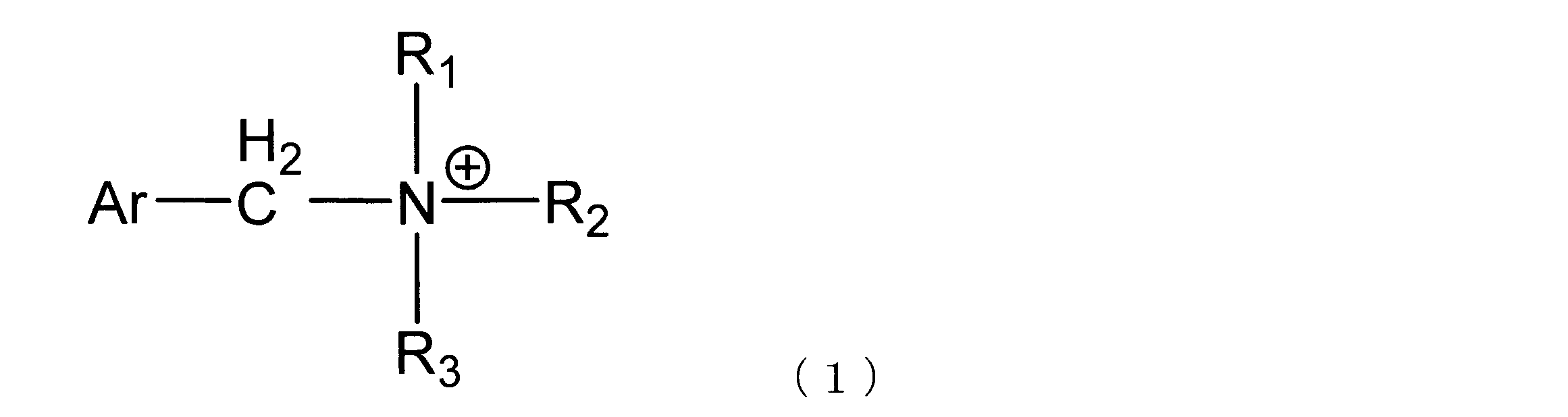
- the quaternary ammonium ion constituting the salt (B1) can be represented by the following general formula (1).
- R 1 , R 2 and R 3 in the general formula (1) are each independently an alkyl group having 1 to 10 carbon atoms which may have a substituent, and 6 to 10 carbon atoms which may have a substituent. Or an aryl group having 7 to 20 carbon atoms which may have a substituent.
- R 1 , R 2 and R 3 are preferably each independently a methyl group, a phenyl group or a benzyl group.
- R 1 , R 2 , and R 3 may have is not particularly limited, but is an alkyl group having 1 to 10 carbon atoms, an alkoxy group having 1 to 10 carbon atoms, —F, —Cl, —Br , —I, —NO 2 , —CN, and a functional group selected from the group consisting of groups represented by the following general formula (2).
- R 13 , R 14 , and R 15 in the general formula (2) each independently represent a hydrogen group or a hydrocarbon group having 1 to 10 carbon atoms. Especially, it is preferable that all of R ⁇ 13> , R ⁇ 14> , and R ⁇ 15 > are hydrocarbon groups from a viewpoint of improving the storage stability of a thermosetting composition.
- the hydrocarbon group may be a linear, branched or cyclic aliphatic group, or may be aromatic.
- Ar in the general formula (1) represents an aryl group having 6 to 10 carbon atoms which may have a substituent.
- Ar is preferably an aromatic hydrocarbon group, and may be, for example, a phenyl group or a naphthyl group.
- the substituent that Ar in the general formula (1) may have is not particularly limited, and may be the same as the substituent that R 1 , R 2 , and R 3 in the general formula (1) may have.
- the bonding position of the substituent bonded to Ar and the number of substituents are not particularly limited.
- the substituent bonded to Ar is an electron withdrawing group; for example, —F, —Cl, —Br, —I, —NO 2 , or —CN, Ar in the general formula (1) and a methylene group
- the substituent is bonded to the meta position or the para position with respect to the bonding position with.
- an electron withdrawing group is bonded to this position, the curing reaction of the cationic polymerizable compound is easily promoted.
- the number of electron withdrawing groups bonded to Ar is preferably 2 or less.
- the substituent bonded to Ar is an electron donating group; for example, an alkyl group, an alkoxy group, or a group represented by the general formula (2), a bond between Ar in the general formula (1) and a methylene group It is preferred that the substituent is bonded to the para position relative to the position. When an electron donating group is bonded to this position, the curing reaction of the cationic polymerizable compound is easily promoted. When the substituent bonded to Ar is an electron donating group, the curing reaction of the cationically polymerizable compound is more easily promoted than when the substituent is an electron withdrawing group.
- an electron donating group for example, an alkyl group, an alkoxy group, or a group represented by the general formula (2)
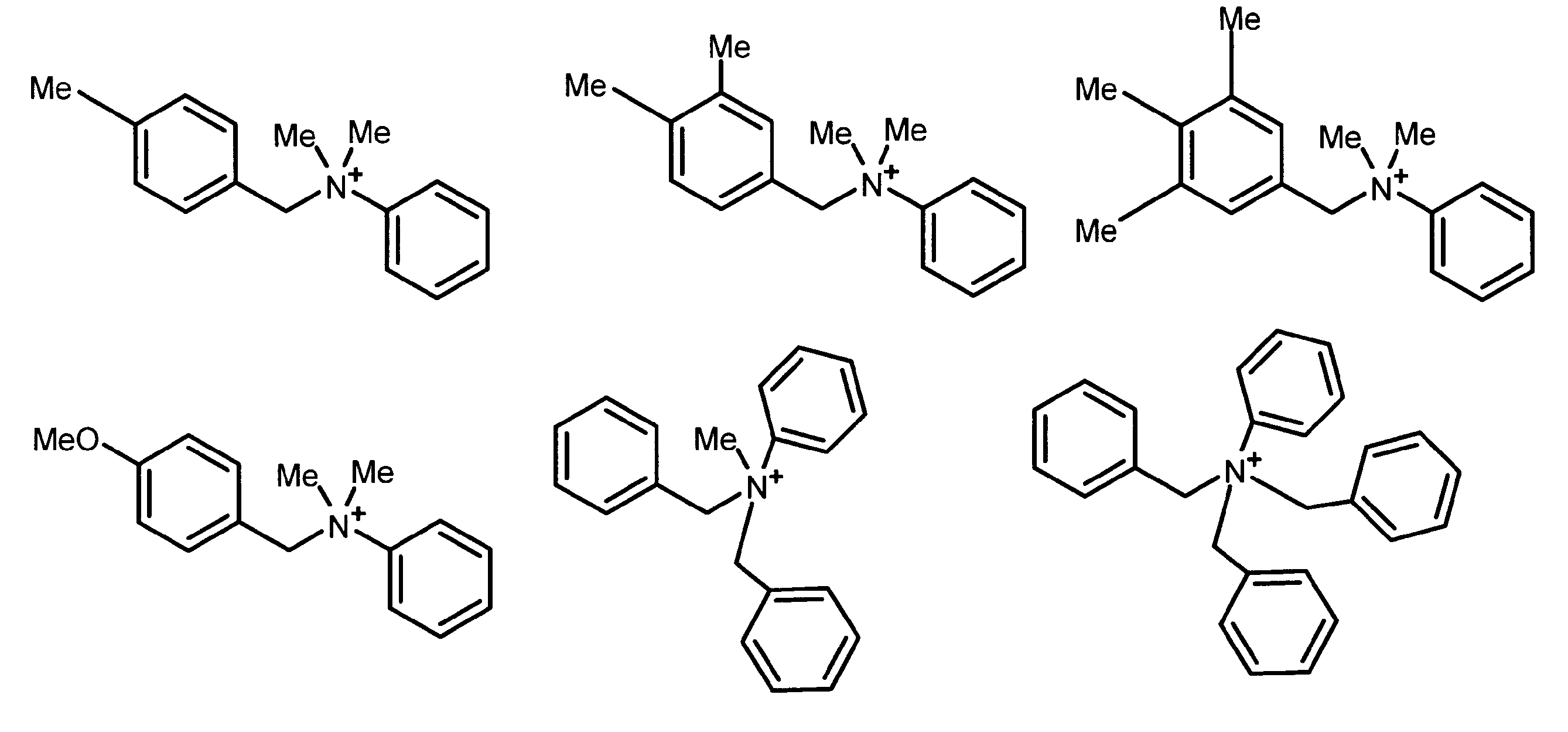
- Preferred examples of the quaternary ammonium ion represented by the general formula (1) include the following ions.
- Examples of the counter anion constituting the salt (B1) include [CF 3 SO 3 ] ⁇ , [C 4 F 9 SO 3 ] ⁇ , [PF 6 ] ⁇ , [AsF 6 ] ⁇ and [Ph 4 B] ⁇ .
- R 16 represents an alkyl group having 1 to 10 carbon atoms
- R 16 represents an alkyl group having 1 to 10 carbon atoms
- an anion having a small logarithm (pKa) of the reciprocal of the acid dissociation constant is preferable. The smaller the pKa, the easier the salt (B1) is ionized and the curing reaction of the epoxy resin is promoted.
- Preferred examples of the salt (B1) include the following compounds.
- the salt (B1) When the salt (B1) is heated to a certain temperature or higher, the proton at the benzyl position of the quaternary ammonium ion of the salt (B1) is eliminated, and the proton is donated to the epoxy group of the epoxy resin. In the epoxy resin to which protons are donated, the epoxy group is ring-opened and polymerized with other epoxy resins to be cured. Thus, the salt (B1) can start the polymerization reaction of the epoxy resin by being heated to a certain temperature or higher. On the other hand, since such a reaction hardly occurs at a low temperature, the storage stability of the thermosetting composition can be improved.
- the reactivity of the quaternary ammonium ion can be adjusted by the substituent of the aryl group adjacent to the methylene group.
- the reactivity of a quaternary ammonium ion can be enhanced by using an aryl group substituent as an electron donating group.
- the content of the thermal cationic polymerization initiator is preferably 0.1 to 5 parts by mass, and preferably 0.1 to 3 parts by mass with respect to 100 parts by mass of the cationic polymerizable compound (component (A)). More preferred.
- the content of the thermal cationic polymerization initiator is a certain level or more, the cationically polymerizable compound is easily cured sufficiently.
- the content of the thermal cationic polymerization initiator is below a certain level, not only is the stability of the resin composition during storage difficult to impair, but the residual amount of unreacted thermal cationic polymerization initiator in the cured product is also reduced. It can be reduced, and the heat resistance of the cured product is hardly impaired.
- the thermal cationic polymerization initiator may be composed of only one kind of compound, or may be a combination of two or more kinds of compounds.
- Ratio of the amount of ammonium ions in the thermal cationic polymerization initiator to the amount of the cationic polymerizable functional group contained in the thermosetting composition is preferably 0.5 to 10%, more preferably 0.5 to 1%.
- thermosetting composition in particular, the thermosetting process, the present inventors may combine (C) a polyether compound and (D) a leveling agent. I found it effective.
- thermosetting composition in the heat curing process of the thermosetting composition, (C) the ether bond portion of the polyether compound does not interfere with the surface tension adjusting function of (D) the leveling agent, and (B) the thermal cationic polymerization initiator
- the cation can be captured and the polymerization of the (A) cationic polymerizable compound can be delayed. Thereby, the time during which the thermosetting composition can flow during the heat curing process can be lengthened; during this period, (D) the leveling agent can sufficiently act.
- polyether compound is a compound which contains the repeating unit which has an ether bond, and does not contain the above-mentioned cation polymerizable functional group.
- Such polyether compounds can be polyalkylene oxides, crown ethers, and the like.
- the number of carbon atoms in the alkylene chain of the alkylene oxide which is a structural unit of the polyalkylene oxide, is 2 to 4, preferably 2 to 3.
- the polyalkylene oxide include polyethylene glycol, polypropylene glycol, polyoxytetramethylene glycol and the like, and preferably polyethylene glycol.
- the molecular terminal of the polyalkylene oxide may be a hydroxyl group, or may be etherified or esterified with another compound.
- crown ethers examples include 12-crown-4, 15-crown-5, 18-crown-6 and the like.
- polyethylene glycol and crown ether are particularly preferable. This is because they are easily mixed with the (A) cationic polymerizable compound.
- the weight average molecular weight of the polyether compound is preferably 150 to 10,000, more preferably 250 to 10,000, and further preferably 400 to 10,000.
- the ether compound portion is sufficiently contained in the polyether compound, so that the cation of the thermal cationic polymerization initiator can be easily captured, and (A) polymerization of the cationic polymerizable compound It is easy to obtain a delayed reaction effect. As a result, it is easy to lengthen the time during which the thermosetting composition can flow in the heat curing process, and a sufficient leveling effect can be easily obtained.
- the molecular weight of the polyether compound is below a certain level, it is difficult to cause a decrease in solubility in the thermosetting composition and an increase in viscosity.
- the content of the polyether compound is preferably less than 10 parts by mass and more preferably 0.05 parts by mass or more and 8 parts by mass or less with respect to 100 parts by mass of the cationically polymerizable compound (component (A)). More preferably, it is 0.5 parts by mass or more and 5 parts by mass or less.
- the content of the polyether compound is not less than a certain value, the cation of the thermal cationic polymerization initiator is easily captured by the ether bond portion, and the effect of delaying the polymerization reaction of the cationic polymerizable compound is easily obtained. As a result, it is easy to sufficiently level the thermosetting composition.
- the content of the polyether compound is less than a certain value, it is easy to dissolve sufficiently in the thermosetting composition, and further, it is difficult to solidify when the composition is stored at room temperature, and the storage stability of the composition is not easily impaired. .
- the polyether compound can be added for the purpose of trapping the cation of the thermal cationic polymerization initiator in the heat curing process. Therefore, the content of the polyether compound is preferably set according to the content (molar amount) of the thermal cationic polymerization initiator. Specifically, by preventing the content of the thermal cationic polymerization initiator from increasing excessively (relative to the polyether compound), a sufficient polymerization delay effect can be easily obtained. On the other hand, by preventing the content of the polyether compound from excessively increasing (relative to the thermal cationic polymerization initiator), poor curing can be suppressed.
- the leveling agent has a surface tension ( ⁇ A) that is smaller than the surface tension ( ⁇ v) of the coating film of the thermosetting composition in the heat curing step, and the interfacial tension ( ⁇ I) between the thermosetting composition and the leveling agent is also It can be selected to be smaller.
- the leveling agent is preferably incompatible with the cationic polymerizable compound.
- Leveling agents improve the wettability of the composition to the coating object by adjusting the surface tension of the coating surface, and improve the fluidity and defoaming property of the coating surface to smooth the surface. These effects are often manifested in small additions. For this reason, for example, a silicone polymer or an acrylate polymer having a smaller surface modifying action than a fluorine polymer or the like is preferable.
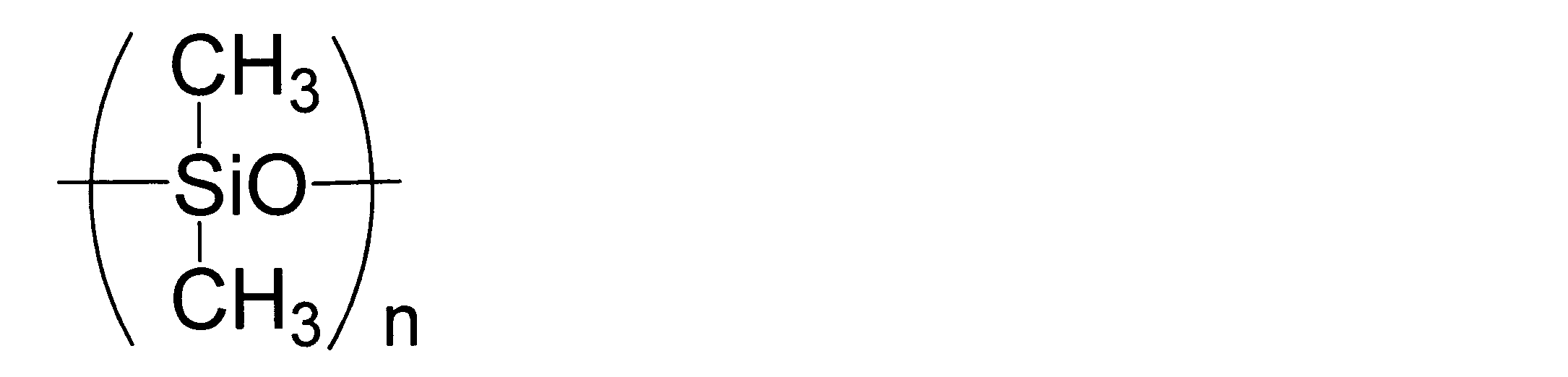
- the silicone polymer is preferably a polymer containing a structure derived from polydimethylsiloxane represented by the following formula.
- N in the following formula is preferably 2 or more, more preferably 2 to 140.
- silicone-based polymer examples include polydimethylsiloxane, polyether-modified polydimethylsiloxane, and polymethylalkylsiloxane.
- the acrylate polymer is preferably an acrylic acid alkyl ester polymer.
- the number of carbon atoms in the alkyl chain of the acrylic acid alkyl ester is preferably 4 or more, and more preferably 6 or more.
- the upper limit of the number of carbon atoms of the alkyl chain of the acrylic acid alkyl ester can be 12, for example.
- Examples of the acrylic acid alkyl ester include butyl acrylate, 2-ethylhexyl acrylate, and the like.
- the acrylate polymer preferably does not contain a fluorine atom.
- the alkyl acrylate ester may be one type or two or more types.
- acrylate polymer examples include a copolymer of butyl acrylate and 2-ethylhexyl acrylate.
- the molecular weight of the silicone polymer or acrylate polymer can be about 1000 to 10,000.
- the leveling agent may be difficult to exude from the cured product.
- the leveling agent is easily oriented on the coating film surface of the thermosetting composition, and a sufficient leveling effect is easily obtained.
- the content of the leveling agent is preferably 0.01 to 1 part by mass, more preferably 0.05 to 0.5 part by mass with respect to 100 parts by mass of the cationically polymerizable compound (component (A)). preferable.
- component (A) cationically polymerizable compound
- the content of the leveling agent is a certain level or more, a sufficient amount of the leveling agent is easily oriented on the coating film surface of the curable resin composition, and a sufficient leveling effect is easily obtained.
- the content of the leveling agent is below a certain level, the compatibility between the leveling agent and the cationic polymerizable compound and the transparency of the cured product are difficult to be impaired.
- the content ratio (D) / (C) (mass ratio) of the leveling agent (D) to the polyether compound (C) is preferably 0.002 to 20, more preferably 0.01 to 10. Even more preferably, 0.03 to 5.
- thermosetting composition of the present invention may further contain (E) other optional components as long as the effects of the present invention are not impaired.
- other optional components include resin components other than the above (A), coupling agents, fillers, modifiers, antioxidants, stabilizers, solvents, and the like.
- Examples of other resin components include solid cationic polymerizable compounds (eg, solid epoxy resins), polyamide, polyamideimide, polyurethane, polybutadiene, polychloroprene, polyether, polyester, styrene-butadiene-styrene block Copolymers, petroleum resins, xylene resins, ketone resins, cellulose resins, fluorine-based oligomers, silicon-based oligomers, polysulfide-based oligomers and the like are included.
- solid cationic polymerizable compounds eg, solid epoxy resins
- polyamide polyamideimide
- polyurethane polybutadiene
- polychloroprene polyether
- polyester styrene-butadiene-styrene block Copolymers
- petroleum resins xylene resins
- ketone resins ketone resins
- cellulose resins fluorine-based oligomers
- coupling agents examples include silane coupling agents, titanium coupling agents, zirconium coupling agents, aluminum coupling agents and the like.
- the coupling agent can enhance the adhesion with the substrate of the organic EL device.
- silane coupling agents include 1) a silane coupling agent having an epoxy group, 2) a silane coupling agent having a functional group capable of reacting with an epoxy group, and 3) other silane coupling agents.
- the silane coupling agent is preferably a silane coupling agent that reacts with the epoxy resin in the thermosetting composition from the viewpoint of preventing the low molecular weight component from remaining in the cured film.
- the silane coupling agent that reacts with the epoxy resin is preferably 1) a silane coupling agent having an epoxy group, or 2) a silane coupling agent having a functional group capable of reacting with an epoxy group. Reacting with an epoxy group means an addition reaction with an epoxy group.
- Examples of the silane coupling agent having an epoxy group include ⁇ -glycidoxypropyltrimethoxysilane, ⁇ - (3,4-epoxycyclohexyl) ethyltrimethoxysilane, and the like.
- Functional groups capable of reacting with epoxy groups include amino groups such as primary amino groups and secondary amino groups; carboxyl groups and the like, and groups that can be converted into functional groups capable of reacting with epoxy groups (for example, Methacryloyl group, isocyanate group, etc.).
- silane coupling agent having a functional group capable of reacting with an epoxy group examples include N-2- (aminoethyl) -3-aminopropylmethyldimethoxysilane, N-2- (aminoethyl) -3- Aminopropylmethyltrimethoxysilane and the like are included. 3)
- silane coupling agents include vinyltriacetoxysilane and vinyltrimethoxysilane.
- One kind of these silane coupling agents may be contained in the thermosetting composition, or two or more kinds thereof may be contained.
- the molecular weight of the silane coupling agent is preferably 80 to 800. When the molecular weight of the silane coupling agent exceeds 800, the adhesion may be lowered.
- the content of the silane coupling agent is preferably 0.05 to 30 parts by mass, more preferably 0.1 to 20 parts by mass, with respect to 100 parts by mass of the thermosetting composition. More preferably, it is 3 to 10 parts by mass.
- Examples of the filler include glass beads, styrene polymer particles, methacrylate polymer particles, ethylene polymer particles, propylene polymer particles, and the like.
- Examples of the modifier include polymerization initiation assistants, antiaging agents, surfactants, plasticizers, and the like.
- Examples of stabilizers include ultraviolet absorbers, preservatives, antibacterial agents and the like.
- Antioxidants refer to those that deactivate radicals generated by plasma irradiation or sunlight irradiation (Hindered Amine Light Stabilizer, HALS) and those that decompose peroxides. Discoloration of the cured product of the thermosetting composition containing the antioxidant can be suppressed.
- antioxidants include Tinuvin 123 (bis (1-octyloxy-2,2,6,6-tetramethyl-4-piperidyl) sebacic acid), Tinuvin 765 (bis (1,2,2,6,6-pentamethyl). -4-piperidyl) sebacic acid and methyl, a mixture of 1,2,2,6,6-pentamethyl-4-piperidyl sebacic acid).
- Solvent can uniformly disperse or dissolve each component.
- the solvent is an organic solvent.
- examples thereof include ketone solvents such as acetone, methyl ethyl ketone, and methyl isobutyl ketone; ethers such as ethylene glycol monoalkyl ether, ethylene glycol dialkyl ether, propylene glycol, and dialkyl ether; Examples include aprotic polar solvents such as N-methylpyrrolidone; esters such as ethyl acetate and butyl acetate.
- the viscosity of the thermosetting composition of the present invention measured by an E-type viscometer at 25 ° C. and 2.5 rpm is preferably 50 to 30000 mPa ⁇ s, and preferably 100 to 10000 mPa ⁇ s. More preferably, it is s.
- coatability for example, screen printability
- the viscosity of the thermosetting composition is measured with an E-type viscometer (RC-500 manufactured by Toki Sangyo).
- the water content of the thermosetting composition of the present invention is preferably 0.1% by mass or less, and more preferably 0.06% by mass or less.
- Organic EL elements are easily degraded by moisture. Therefore, it is preferable to reduce the water content of the thermosetting composition as much as possible.
- the moisture content of the thermosetting composition can be obtained by weighing about 0.1 g of a sample sample, heating to 150 ° C. with a Karl Fischer moisture meter, and measuring the amount of water generated at that time (solid vaporization method). ).
- the reaction activity expression temperature of the thermosetting composition of the present invention is appropriately adjusted depending on the heat resistance temperature of the element to be surface-sealed, and is preferably 70 to 150 ° C., more preferably 80 to 110 ° C., 90 More preferably, the temperature is ⁇ 100 ° C.
- the reaction activity expression temperature is closely related to the curing temperature of the thermosetting composition. If the reaction activity expression temperature is 150 ° C. or lower, the thermosetting composition can be heat-cured at 150 ° C. or lower, and there is little possibility of affecting the organic EL element during surface sealing. On the other hand, when the reaction activity expression temperature is 70 ° C. or higher, an unnecessary curing reaction of the cationic polymerizable compound (component (A)) hardly occurs during storage of the composition, and storage stability is improved.
- the reaction activity expression temperature can be measured as a rising value of an exothermic peak measured by differential scanning calorimetry (DSC).
- the reaction activation temperature can be adjusted by the structure of the quaternary ammonium ion contained in (A) the cationic polymerizable compound or (B) the thermal cationic polymerization initiator, preferably (B) the thermal cationic polymerization initiator.
- the cured product of the thermosetting composition of the present invention preferably has high visible light permeability.
- a cured film obtained by curing a thermosetting composition having a thickness of 10 ⁇ m at 100 ° C. for 30 minutes has a parallel light transmittance in a wavelength region of 380 nm (visible / ultraviolet light) of 80% or more, more preferably 90% or more, More preferably, it is 95% or more.
- the parallel light transmittance is 80% or more, light emitted from the organic EL element can be efficiently extracted through the cured product of the thermosetting composition.
- the transparency of the cured product is not particularly limited.
- the parallel light transmittance of the cured product can be measured by a fully automatic haze meter TC-H III DPK manufactured by Tokyo Denshoku Co., Ltd.
- thermosetting composition of the present invention can be produced, for example, through a step of mixing each of the above components at a temperature lower than the reaction activity expression temperature (for example, 60 ° C. or lower) in an inert gas environment.
- the mixing of each component can be performed by a method of charging each component in a flask and stirring, or a method of kneading with a three roll mill.
- thermosetting composition of the present invention can be preferably used as an optical semiconductor surface sealant.
- An optical semiconductor is, for example, an element that converts electricity into light and emits light. Examples thereof include inorganic LED elements, organic EL elements, and the like, and preferably organic EL elements. That is, the thermosetting composition of the present invention is preferably used as a surface sealing agent for organic EL devices.
- FIG. 1 is a schematic diagram showing an example of an organic EL device that can constitute an organic EL panel.
- the organic EL device 20 is disposed between a display substrate 22 on which an organic EL element 24 is disposed, a counter substrate 26, and at least the organic EL element 24 and the counter substrate 26.
- a sealing member 28 for sealing the element 24 covers the periphery of the organic EL element 24 (surface-sealed), and is composed of a cured product of the surface sealing agent (thermosetting composition) of the present invention.
- the display substrate 22 and the counter substrate 26 are usually glass substrates or resin films, and at least one of the display substrate 22 and the counter substrate 26 is a transparent glass substrate or a transparent resin film.
- transparent resin films include aromatic polyester resins such as polyethylene terephthalate.
- the organic EL element 24 When the organic EL element 24 is a top emission type, the organic EL element 24 includes a pixel electrode layer 30 (made of aluminum or silver), an organic EL layer 32, and a counter electrode layer 34 (ITO) from the display substrate 22 side. (Indium and tin oxide) and IZO (indium and zinc oxide).
- the pixel electrode layer 30, the organic EL layer 32, and the counter electrode layer 34 can be formed by vacuum evaporation, sputtering, or the like.
- An organic EL device is, for example, 1) a step of preparing an organic EL element disposed on a substrate, 2) a step of covering the organic EL element with a surface sealing agent, and 3) a step of heating and curing the surface sealing agent. It can be manufactured through.
- the step of covering the organic EL element with the surface sealing agent can be performed by applying a liquid surface sealing agent or by thermocompression bonding a solid (sheet-like) surface sealing agent. It is preferable to carry out by applying a sealant.
- FIG. 2 is a schematic diagram showing an example of a manufacturing process of an organic EL device.
- the organic EL device 20 includes 1) a step of preparing the display substrate 22 on which the organic EL element 24 is laminated (FIG. 2A), and 2) applying the surface sealing agent of the present invention onto the organic EL element 24. And the step of forming the coating film 28A of the surface sealing agent (FIG. 2B) and 3) the counter substrate 26 is disposed on the coating film 28A of the surface sealing agent, and the coating film 28A of the surface sealing agent Is cured by heating to form the seal member 28, and the counter substrate 26 is attached (FIG. 2C). In this way, the organic EL device 20 can be obtained.
- the surface sealant can be applied by techniques such as screen printing, dispenser application, slit coating, and spray coating.
- the heat curing of the surface sealant can be performed at a relatively low temperature.
- the heat curing temperature may be any temperature at which (B) the thermal cationic polymerization initiator in the surface sealing agent is activated, preferably 70 to 150 ° C., more preferably 80 to 110 ° C., and still more preferably 90 ⁇ 100 ° C.
- the heat curing temperature is 70 ° C. or higher, (B) the thermal cationic polymerization initiator is sufficiently activated, and (A) the cationic polymerizable compound is sufficiently cured.
- the heat curing temperature is 150 ° C. or lower, the possibility of affecting the organic EL element during heat curing can be reduced.
- the heat curing can be performed by a known method such as heating with an oven or a hot plate.
- the heating time is preferably 10 to 120 minutes, more preferably 20 to 90 minutes, and further preferably 30 to 60 minutes.
- the thickness of the seal member 28 may be a thickness that can sufficiently cover the organic EL element 24, and may be, for example, about 0.1 to 20 ⁇ m.
- a passivation film may be further formed on the seal member 28 as necessary.
- the passivation film may cover the entire surface of the seal member 28 or may cover only a part thereof.
- the passivation film may be an inorganic compound film formed by a plasma CVD method, for example.
- the material of the passivation film is preferably a transparent inorganic compound, and examples thereof include silicon nitride, silicon oxide, SiONF, and SiON, but are not particularly limited.
- the thickness of the passivation film is preferably 0.1 to 5 ⁇ m.
- the surface sealing agent of the present invention contains (C) a polyether compound
- the time during which the surface sealing agent can flow without impairing the effect of the (D) leveling agent in the heat curing process of the surface sealing agent. Can be lengthened.
- the time during which (D) the leveling agent acts can be lengthened.
- thermosetting composition Cationic polymerizable compound Bisphenol F type epoxy resin (weight average molecular weight 338, epoxy equivalent 165 to 175 g / eq, E type viscosity (@ 25 ° C., 2.5 rpm) 3000 to 4000 mPa ⁇ s 1) Number of cationically polymerizable functional groups in one molecule: 2): YL983U, manufactured by Japan Epoxy Resin Co., Ltd.
- thermosetting composition (Example 1) In a flask substituted with nitrogen, 100 parts by mass of epoxy resin (YL983U), 2 parts by mass of a quaternary ammonium salt (CXC-1612), 2 parts by mass of a polyether compound (PEG # 400), 0.3 parts by mass Part of a leveling agent (LS-460) and 1 part by weight of a silane coupling agent (KBM-403) were mixed by stirring at 50 ° C. to obtain a thermosetting composition.
- epoxy resin YL983U
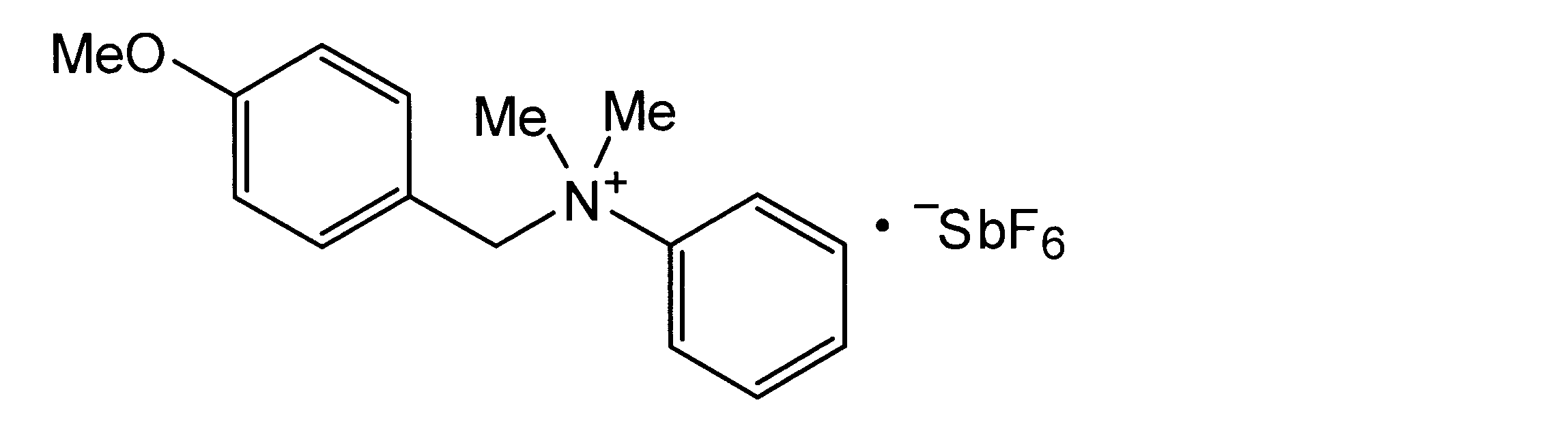
- CXC-1612 quaternary ammonium salt
- PEG # 400 polyether compound
- LS-460 leveling agent
- KBM-403 silane coupling agent
- thermosetting composition was obtained in the same manner as in Example 1 except that the composition of the thermosetting composition was changed as shown in Table 1.
- thermosetting composition The viscosity, storage stability, and smoothness of the cured product surface of the obtained thermosetting composition were evaluated by the following methods.
- thermosetting composition The viscosity of the obtained thermosetting composition was measured at 25 ° C. and 2.5 rpm using an E-type viscometer (RC-500 manufactured by Toki Sangyo).
- thermosetting composition (Storage stability) A predetermined amount of the obtained thermosetting composition was collected and stored at 23 ° C. for 24 hours, and then the presence or absence of white turbidity and fluidity of the thermosetting composition was observed. “No” if the thermosetting composition after storage was not cloudy and fluidity was not reduced; “Yes” if the thermosetting composition after storage was cloudy and fluidity was significantly reduced did.
- thermosetting composition (Smoothness of cured product layer surface)
- the obtained thermosetting composition was printed on a glass substrate (7 cm ⁇ 7 cm ⁇ 0.7 mm thickness) previously cleaned by ozone treatment using a screen printer (Screen Printer Model 2200, manufactured by MITANI).
- coating of the thermosetting composition was performed so that it might become 5 cm x 5 cm x 10 micrometers thickness in a dry state.
- the printed glass substrate was heated on a hot plate heated to 100 ° C. for 30 minutes to obtain a cured product layer. And the obtained hardened
- the cured product layer had no coating defects (repels) or irregularities, and the surface was smooth.
- thermosetting compositions of Examples 1 to 9 including both the polyether compound and the leveling agent are free from coating defects (repels) and unevenness, and have a smooth surface. It turns out that the nature is high.
- thermosetting composition of Comparative Example 1 that does not contain a polyether compound and the cured product layer of the thermosetting composition of Comparative Example 2 that does not contain a leveling agent both have coating defects (repellency) and It can be seen that there are irregularities and the surface smoothness is low.
- thermosetting the thermosetting composition captures the cation of the thermal cationic polymerization initiator, delays the cationic polymerization reaction of the epoxy resin, and the thermosetting composition flows. The possible time can be lengthened. This is considered to be because the leveling agent was able to sufficiently act in the heat curing process of the thermosetting composition.
- thermosetting composition capable of forming a cured product layer with less surface irregularities and repellency and high surface smoothness on an object to be coated such as an organic EL element.
Landscapes
- Chemical & Material Sciences (AREA)
- Health & Medical Sciences (AREA)
- Chemical Kinetics & Catalysis (AREA)
- Medicinal Chemistry (AREA)
- Polymers & Plastics (AREA)
- Organic Chemistry (AREA)
- Electroluminescent Light Sources (AREA)
- Epoxy Resins (AREA)
- Compositions Of Macromolecular Compounds (AREA)
Abstract
Description
[2] 前記(D)成分が、シリコーン系ポリマー、およびアクリレート系ポリマーからなる群より選ばれる化合物である、[1]に記載の熱硬化性組成物。
[3] 前記(C)成分の重量平均分子量が250~10000である、[1]または[2]に記載の熱硬化性組成物。
[4] 前記(C)成分が、前記(A)成分100質量部に対して10質量部未満含まれる、[1]~[3]のいずれかに記載の熱硬化性組成物。
[5] 前記カチオン重合性官能基が、エポキシ基、オキセタニル基、およびビニルエーテル基からなる群より選ばれる一種類以上の基である、[1]~[4]のいずれかに記載の熱硬化性組成物。
[6] 前記(B)成分が、オニウム塩である、[1]~[5]のいずれかに記載の熱硬化性組成物。
[7] 前記(C)成分が、ポリアルキレンオキサイドである、[1]~[6]のいずれかに記載の熱硬化性組成物。
[8] 前記(A)成分100質量部に対して、前記(B)成分を0.1~5質量部、前記(D)成分を0.01~1質量部含む、[1]~[7]のいずれかに記載の熱硬化性組成物。
[9] 前記(C)成分を、前記(A)成分100質量部に対して10質量部未満含む、[8]に記載の熱硬化性組成物。
[11] [10]に記載の面封止剤の硬化物。
本発明の熱硬化性組成物は、(A)カチオン重合性化合物と、(B)熱カチオン重合開始剤と、(C)ポリエーテル化合物と、(D)レベリング剤とを含む。
カチオン重合性化合物は、1分子内に2以上のカチオン重合性官能基を有する化合物でありうる。カチオン重合性官能基は、エポキシ基、オキセタニル基、ビニルエーテル基からなる群より選ばれる一種類以上である。カチオン重合性官能基が複数ある場合、それらは互いに同一であっても異なっていてもよい。
脂環式エポキシ樹脂;
脂肪族エポキシ樹脂などが含まれる。
1,4-ビス{[(3-エチル-3-オキセタニル)メトキシ]メチル}シクロヘキサン、4,4’-ビス{[(3-エチル-3-オキセタニル)メトキシ]メチル}ビシクロヘキサンなどの脂環式オキセタン化合物;
ジ[1-エチル(3-オキセタニル)]メチルエーテル、ビス(3-エチル-3-オキセタニルメチル)エーテル、トリメチロールプロパントリス(3-エチル-3-オキセタニルメチル)エーテル、ペンタエリスリトールトリス(3-エチル-3-オキセタニルメチル)エーテルなどの脂肪族オキセタン化合物などが含まれる。
エチレングリコールジビニルエーテル、ジエチレングリコールジビニルエーテル、トリエチレングリコールジビニルエーテル、プロピレングリコールジビニルエーテル、ジプロピレングリコールジビニルエーテルなどの脂肪族ビニルエーテル化合物などが含まれる。

熱カチオン重合開始剤は、加熱によって重合を開始させるカチオン種を発生しうる化合物である。熱カチオン重合開始剤は、特に制限されず、硬化条件やカチオン重合性化合物の種類に応じて適宜選択されうる。例えば、カチオン重合性化合物がエポキシ樹脂である場合、熱カチオン重合開始剤は、4級アンモニウム塩、ホスホニウム塩などのオニウム塩でありうる。


ポリエーテル化合物は、エーテル結合を有する繰り返し単位を含み、かつ前述のカチオン重合性官能基を含まない化合物である。そのようなポリエーテル化合物は、ポリアルキレンオキサイドやクラウンエーテルなどでありうる。
レベリング剤は、熱硬化性組成物を加熱硬化させる過程で、熱硬化性組成物の塗膜表面に配向して塗膜の表面張力を均一化し、ハジキなどを生じにくくし、被塗布物上に濡れ広がりやすくする。そのため、レベリング剤は、下記式を満たすように選択されることが好ましい。
S=γv-γA-γI>0
(S:拡張係数、γv:熱硬化性組成物の塗膜の表面張力、γA:レベリング剤の表面張力、γI:熱硬化性組成物とレベリング剤の界面張力)
本発明の熱硬化性組成物は、本発明の効果を損なわない範囲で、(E)その他の任意成分をさらに含んでもよい。その他の任意成分の例には、前記(A)以外の他の樹脂成分、カップリング剤、充填剤、改質剤、酸化防止剤、安定剤、溶媒などが含まれる。
本発明の熱硬化性組成物の、E型粘度計により25℃、2.5rpmで測定される粘度は、50~30000mPa・sであることが好ましく、100~10000mPa・sであることがより好ましい。熱硬化性組成物の粘度が上記範囲であると、塗工性(例えばスクリーン印刷性)が高まる。熱硬化性組成物の粘度は、E型粘度計(東機産業製 RC-500)によって測定される。
図1は、有機ELパネルを構成しうる有機ELデバイスの一例を示す模式図である。図1に示されるように、有機ELデバイス20は、有機EL素子24が配置された表示基板22と、対向基板26と、少なくとも有機EL素子24と対向基板26との間に配置され、有機EL素子24を封止するシール部材28とを含む。シール部材28は、有機EL素子24の周囲を覆っており(面封止しており)、本発明の面封止剤(熱硬化性組成物)の硬化物で構成される。
(A)カチオン重合性化合物
ビスフェノールF型エポキシ樹脂(重量平均分子量338、エポキシ当量165~175g/eq、E型粘度(@25℃、2.5rpm)3000~4000mPa・s、1分子内のカチオン重合性官能基の数:2個):YL983U、ジャパンエポキシレジン社製
下記式で表される4級アンモニウム塩:CXC-1612、King industry社製
(ポリエチレングリコール)
PEG#400:重量平均分子量445
PEG#1000:重量平均分子量1030
PEG#2000:重量平均分子量2180
PEG#4000:重量平均分子量3220
PEG#6000:重量平均分子量8450
(クラウンエーテル)
18-クラウン-6-エーテル:分子量264
シリコーン系ポリマー:LS-460、楠本化成社製
3-グリシドキシプロピルトリメトキシシラン(分子量236):KBM-403、信越化学工業社製
(実施例1)
窒素で置換したフラスコで、エポキシ樹脂(YL983U)100質量部と、2質量部の4級アンモニウム塩(CXC-1612)と、2質量部のポリエーテル化合物(PEG#400)と、0.3質量部のレベリング剤(LS-460)と、1質量部のシランカップリング剤(KBM-403)とを、50℃で攪拌混合して、熱硬化性組成物を得た。
熱硬化性組成物の組成を、表1に示されるように変更した以外は実施例1と同様にして熱硬化性組成物を得た。
得られた熱硬化性組成物の粘度を、E型粘度計(東機産業製 RC-500)を用いて、25℃、2.5rpmで測定した。
得られた熱硬化性組成物を所定量採取し、23℃で24時間保存した後、熱硬化性組成物の白濁および流動性の低下の有無を観察した。保存後の熱硬化性組成物が白濁せず、流動性も低下しなかったものを「無」;保存後の熱硬化性組成物が白濁し、流動性が著しく低下したものを「有」とした。
得られた熱硬化性組成物を、予めオゾン処理によって洗浄したガラス基板(7cm×7cm×0.7mm厚)に、スクリーン印刷機(Screen Printer Model 2200、MITANI製)を用いて印刷した。熱硬化性組成物の塗布は、乾燥状態で5cm×5cm×10μm厚となるように行った。印刷したガラス基板を、100℃に加熱したホットプレート上で30分間加熱して、硬化物層を得た。そして、得られた硬化物層を目視観察した。硬化物層に塗布欠陥(ハジキ)や凸凹がなく、表面が平滑であるものを○;硬化物層に塗布欠陥(ハジキ)や凸凹があり、表面が平滑でないものを×とした。

22 表示基板
24 有機EL素子
26 対向基板
28A 面封止剤の塗膜
28 シール部材
30 画素電極層
32 有機EL層
34 対向電極層
Claims (11)
- (A)1分子内にカチオン重合性官能基を2つ以上有する、カチオン重合性化合物と、
(B)熱カチオン重合開始剤と、
(C)ポリエーテル化合物(ただし、前記カチオン重合性官能基を有する化合物を除く)と、
(D)レベリング剤とを含み、
E型粘度計で測定された25℃、2.5rpmにおける粘度が50~30000mPa・sである、熱硬化性組成物。 - 前記(D)成分が、シリコーン系ポリマー、およびアクリレート系ポリマーからなる群より選ばれる化合物である、請求項1に記載の熱硬化性組成物。
- 前記(C)成分の重量平均分子量が250~10000である、請求項1に記載の熱硬化性組成物。
- 前記(C)成分が、前記(A)成分100質量部に対して10質量部未満含まれる、請求項1に記載の熱硬化性組成物。
- 前記カチオン重合性官能基が、エポキシ基、オキセタニル基、およびビニルエーテル基からなる群より選ばれる一種類以上の基である、請求項1に記載の熱硬化性組成物。
- 前記(B)成分が、オニウム塩である、請求項1に記載の熱硬化性組成物。
- 前記(C)成分が、ポリアルキレンオキサイドである、請求項1に記載の熱硬化性組成物。
- 前記(A)成分100質量部に対して、
前記(B)成分を0.1~5質量部、
前記(D)成分を0.01~1質量部含む、請求項1に記載の熱硬化性組成物。 - 前記(C)成分を、前記(A)成分100質量部に対して10質量部未満含む、請求項8に記載の熱硬化性組成物。
- 請求項1に記載の熱硬化性組成物を含む、有機EL素子用面封止剤。
- 請求項10に記載の面封止剤の硬化物。
Priority Applications (3)
| Application Number | Priority Date | Filing Date | Title |
|---|---|---|---|
| KR1020157025702A KR101697892B1 (ko) | 2013-06-10 | 2014-06-10 | 열경화성 조성물, 유기 el 소자용 면 밀봉제 및 그 경화물 |
| JP2014547612A JP5763280B2 (ja) | 2013-06-10 | 2014-06-10 | 有機el素子用面封止剤およびその硬化物 |
| CN201480012025.1A CN105026493B (zh) | 2013-06-10 | 2014-06-10 | 热固性组合物、有机el元件用面密封剂及其固化物 |
Applications Claiming Priority (2)
| Application Number | Priority Date | Filing Date | Title |
|---|---|---|---|
| JP2013-121808 | 2013-06-10 | ||
| JP2013121808 | 2013-06-10 |
Publications (1)
| Publication Number | Publication Date |
|---|---|
| WO2014199626A1 true WO2014199626A1 (ja) | 2014-12-18 |
Family
ID=52021939
Family Applications (1)
| Application Number | Title | Priority Date | Filing Date |
|---|---|---|---|
| PCT/JP2014/003074 Ceased WO2014199626A1 (ja) | 2013-06-10 | 2014-06-10 | 熱硬化性組成物、有機el素子用面封止剤およびその硬化物 |
Country Status (5)
| Country | Link |
|---|---|
| JP (1) | JP5763280B2 (ja) |
| KR (1) | KR101697892B1 (ja) |
| CN (1) | CN105026493B (ja) |
| TW (1) | TWI601783B (ja) |
| WO (1) | WO2014199626A1 (ja) |
Cited By (9)
| Publication number | Priority date | Publication date | Assignee | Title |
|---|---|---|---|---|
| DE102015212058A1 (de) | 2015-06-29 | 2016-12-29 | Tesa Se | Klebemasse insbesondere zur Kapselung einer elektronischen Anordnung |
| JP2017186521A (ja) * | 2016-03-31 | 2017-10-12 | 三井化学株式会社 | 熱硬化性組成物、これを含む封止剤、有機el素子用枠封止剤、及び有機el素子用面封止剤、並びにその硬化物 |
| JP2018193480A (ja) * | 2017-05-17 | 2018-12-06 | 東京応化工業株式会社 | 硬化性組成物、硬化膜、表示パネル、及び硬化物の製造方法 |
| DE102018202545A1 (de) | 2018-02-20 | 2019-08-22 | Tesa Se | Zusammensetzung zur Erzeugung einer Klebemasse insbesondere zur Kapselung einer elektronischen Anordnung |
| JP2020066643A (ja) * | 2018-10-22 | 2020-04-30 | アイカ工業株式会社 | 光カチオン硬化型エポキシ樹脂組成物 |
| JPWO2021006070A1 (ja) * | 2019-07-05 | 2021-01-14 | ||
| KR20210098943A (ko) | 2018-11-28 | 2021-08-11 | 세키스이가가쿠 고교가부시키가이샤 | 경화성 수지 조성물, 경화물, 및, 유기 el 표시 소자 |
| WO2024195590A1 (ja) * | 2023-03-17 | 2024-09-26 | デンカ株式会社 | 組成物、硬化体、表示装置及び表示装置の製造方法 |
| WO2024195593A1 (ja) * | 2023-03-17 | 2024-09-26 | デンカ株式会社 | 組成物、硬化体、表示装置及び表示装置の製造方法 |
Families Citing this family (14)
| Publication number | Priority date | Publication date | Assignee | Title |
|---|---|---|---|---|
| TWI691588B (zh) * | 2014-12-09 | 2020-04-21 | 日商三井化學股份有限公司 | 有機el元件用面密封材及其硬化物 |
| TWI565117B (zh) * | 2015-06-10 | 2017-01-01 | Wisechip Semiconductor Inc | Organic light emitting diode module with optical signal transmission |
| KR102624920B1 (ko) * | 2016-02-22 | 2024-01-16 | 데쿠세리아루즈 가부시키가이샤 | 이방성 도전 필름 |
| JP6776609B2 (ja) | 2016-02-22 | 2020-10-28 | デクセリアルズ株式会社 | 異方性導電フィルム |
| CN105957977B (zh) | 2016-05-13 | 2019-02-05 | 京东方科技集团股份有限公司 | 一种封装材料、封装盖板、烧结设备、烧结方法及显示装置 |
| KR102008177B1 (ko) * | 2016-05-24 | 2019-08-07 | 삼성에스디아이 주식회사 | 유기발광소자 봉지용 조성물 및 이로부터 제조된 유기발광소자 표시장치 |
| JP6719662B2 (ja) | 2016-09-30 | 2020-07-08 | エルジー・ケム・リミテッド | 接着剤組成物 |
| KR102118365B1 (ko) | 2017-04-21 | 2020-06-04 | 주식회사 엘지화학 | 유기전자소자 봉지용 조성물 |
| KR20200115573A (ko) * | 2018-01-26 | 2020-10-07 | 아지노모토 가부시키가이샤 | 밀봉용 경화성 수지 조성물 |
| JP2019130719A (ja) | 2018-01-30 | 2019-08-08 | 株式会社ミマキエンジニアリング | 印刷装置及び印刷方法 |
| CN108873536B (zh) * | 2018-06-01 | 2022-01-18 | Oppo广东移动通信有限公司 | 壳体及其制备方法、电子设备 |
| TWI861285B (zh) * | 2019-11-18 | 2024-11-11 | 日商電化股份有限公司 | 組成物、硬化體、有機電致發光顯示元件用密封材及有機電致發光顯示裝置 |
| WO2021131790A1 (ja) * | 2019-12-27 | 2021-07-01 | 三井化学株式会社 | 硬化性組成物および有機el表示装置 |
| KR102897921B1 (ko) | 2020-03-19 | 2025-12-09 | 삼성디스플레이 주식회사 | 전자 소자용 밀봉 또는 충전 조성물 및 전자 장치 |
Citations (3)
| Publication number | Priority date | Publication date | Assignee | Title |
|---|---|---|---|---|
| JP2008031424A (ja) * | 2006-07-06 | 2008-02-14 | Daicel Chem Ind Ltd | 脂環式ジエポキシ化合物、エポキシ樹脂組成物及び硬化物 |
| JP2009203431A (ja) * | 2008-02-29 | 2009-09-10 | Kyocera Chemical Corp | 注形用エポキシ樹脂組成物および高熱伝導コイル |
| JP2013018921A (ja) * | 2011-07-13 | 2013-01-31 | Daicel Corp | 硬化性エポキシ樹脂組成物 |
Family Cites Families (17)
| Publication number | Priority date | Publication date | Assignee | Title |
|---|---|---|---|---|
| US4397998A (en) | 1981-12-14 | 1983-08-09 | Shell Oil Company | Curable epoxy compositions suitable for use in RIM processes |
| US6306926B1 (en) * | 1998-10-07 | 2001-10-23 | 3M Innovative Properties Company | Radiopaque cationically polymerizable compositions comprising a radiopacifying filler, and method for polymerizing same |
| JP2003246850A (ja) | 2001-12-19 | 2003-09-05 | Sekisui Chem Co Ltd | 光硬化組成物、及び、光硬化組成物を用いた塗装物品、接着物品又は封入物品 |
| JP3820147B2 (ja) | 2001-12-26 | 2006-09-13 | 積水化学工業株式会社 | 光硬化可能組成物 |
| JP2004067828A (ja) | 2002-08-05 | 2004-03-04 | Nippon Perunotsukusu Kk | エポキシ樹脂粉体塗料 |
| JP4384509B2 (ja) | 2003-01-09 | 2009-12-16 | 積水化学工業株式会社 | 有機エレクトロルミネッセンス素子の封止方法及び有機エレクトロルミネッセンス素子 |
| CN100404578C (zh) * | 2003-08-12 | 2008-07-23 | 三井化学株式会社 | 光固化型树脂组合物和用其的平板显示器用密封剂 |
| WO2005014686A1 (ja) * | 2003-08-12 | 2005-02-17 | Mitsui Chemicals, Inc. | 光硬化型樹脂組成物及びそれを用いたフラットパネルディスプレイ用シール剤 |
| US7192991B2 (en) * | 2003-11-26 | 2007-03-20 | 3M Innovative Properties Company | Cationically curable composition |
| JP4687027B2 (ja) * | 2004-01-30 | 2011-05-25 | Dic株式会社 | 硬化性樹脂組成物、転写材及び保護層の形成方法 |
| EP1893704B1 (en) * | 2005-04-22 | 2010-03-31 | Sun Chemical B.V. | An ink jet ink |
| JP4795779B2 (ja) * | 2005-11-09 | 2011-10-19 | 株式会社アルバック | 有機エレクトロルミネッセンス表示パネル |
| JP2010100736A (ja) * | 2008-10-24 | 2010-05-06 | Toyo Ink Mfg Co Ltd | 紫外線硬化型缶用塗料組成物及びその利用 |
| JP2010248387A (ja) * | 2009-04-16 | 2010-11-04 | Sekisui Chem Co Ltd | 光学部材用光硬化性樹脂組成物、接着剤、及び、タッチパネル |
| JP5612406B2 (ja) * | 2010-09-13 | 2014-10-22 | Jsr株式会社 | 光ファイバ素線の最外層被覆用液状硬化性樹脂組成物及び光ファイバ素線 |
| JP5348341B1 (ja) * | 2012-04-27 | 2013-11-20 | Jsr株式会社 | 基材の処理方法、仮固定用組成物および半導体装置 |
| JP5697048B2 (ja) | 2012-06-15 | 2015-04-08 | 古河電気工業株式会社 | 有機エレクトロルミネッセンス素子封止用樹脂組成物、有機エレクトロルミネッセンス素子用封止フィルム、有機エレクトロルミネッセンス素子用ガスバリアフィルムおよびこれを用いた有機エレクトロルミネッセンス素子 |
-
2014
- 2014-06-10 WO PCT/JP2014/003074 patent/WO2014199626A1/ja not_active Ceased
- 2014-06-10 JP JP2014547612A patent/JP5763280B2/ja active Active
- 2014-06-10 CN CN201480012025.1A patent/CN105026493B/zh active Active
- 2014-06-10 KR KR1020157025702A patent/KR101697892B1/ko active Active
- 2014-06-10 TW TW103120041A patent/TWI601783B/zh active
Patent Citations (3)
| Publication number | Priority date | Publication date | Assignee | Title |
|---|---|---|---|---|
| JP2008031424A (ja) * | 2006-07-06 | 2008-02-14 | Daicel Chem Ind Ltd | 脂環式ジエポキシ化合物、エポキシ樹脂組成物及び硬化物 |
| JP2009203431A (ja) * | 2008-02-29 | 2009-09-10 | Kyocera Chemical Corp | 注形用エポキシ樹脂組成物および高熱伝導コイル |
| JP2013018921A (ja) * | 2011-07-13 | 2013-01-31 | Daicel Corp | 硬化性エポキシ樹脂組成物 |
Cited By (18)
| Publication number | Priority date | Publication date | Assignee | Title |
|---|---|---|---|---|
| DE102015212058A1 (de) | 2015-06-29 | 2016-12-29 | Tesa Se | Klebemasse insbesondere zur Kapselung einer elektronischen Anordnung |
| WO2017001126A1 (de) | 2015-06-29 | 2017-01-05 | Tesa Se | Klebemasse insbesondere zur kapselung einer elektronischen anordnung |
| JP2018527425A (ja) * | 2015-06-29 | 2018-09-20 | テーザ・ソシエタス・ヨーロピア | 特に電子的装置のカプセル化のための接着剤 |
| KR102064332B1 (ko) * | 2015-06-29 | 2020-01-09 | 테사 소시에타스 유로파에아 | 접착제 조성물, 특히, 전자 장치를 캡슐화하기 위한 접착제 조성물. |
| JP2017186521A (ja) * | 2016-03-31 | 2017-10-12 | 三井化学株式会社 | 熱硬化性組成物、これを含む封止剤、有機el素子用枠封止剤、及び有機el素子用面封止剤、並びにその硬化物 |
| JP2018193480A (ja) * | 2017-05-17 | 2018-12-06 | 東京応化工業株式会社 | 硬化性組成物、硬化膜、表示パネル、及び硬化物の製造方法 |
| DE102018202545A1 (de) | 2018-02-20 | 2019-08-22 | Tesa Se | Zusammensetzung zur Erzeugung einer Klebemasse insbesondere zur Kapselung einer elektronischen Anordnung |
| WO2019162035A1 (de) | 2018-02-20 | 2019-08-29 | Tesa Se | Zusammensetzung zur erzeugung einer klebemasse insbesondere zur kapselung einer elektronischen anordnung |
| JP2020066643A (ja) * | 2018-10-22 | 2020-04-30 | アイカ工業株式会社 | 光カチオン硬化型エポキシ樹脂組成物 |
| JP7128716B2 (ja) | 2018-10-22 | 2022-08-31 | アイカ工業株式会社 | 光カチオン硬化型エポキシ樹脂組成物 |
| KR20210098943A (ko) | 2018-11-28 | 2021-08-11 | 세키스이가가쿠 고교가부시키가이샤 | 경화성 수지 조성물, 경화물, 및, 유기 el 표시 소자 |
| JPWO2021006070A1 (ja) * | 2019-07-05 | 2021-01-14 | ||
| WO2021006070A1 (ja) * | 2019-07-05 | 2021-01-14 | 三井化学株式会社 | 有機el表示素子用封止剤および有機el表示装置 |
| KR20220016941A (ko) * | 2019-07-05 | 2022-02-10 | 미쓰이 가가쿠 가부시키가이샤 | 유기 el 표시 소자용 봉지제 및 유기 el 표시 장치 |
| JP7412430B2 (ja) | 2019-07-05 | 2024-01-12 | 三井化学株式会社 | 有機el表示素子用封止剤および有機el表示装置 |
| KR102749710B1 (ko) | 2019-07-05 | 2025-01-03 | 미쓰이 가가쿠 가부시키가이샤 | 유기 el 표시 소자용 봉지제 및 유기 el 표시 장치 |
| WO2024195590A1 (ja) * | 2023-03-17 | 2024-09-26 | デンカ株式会社 | 組成物、硬化体、表示装置及び表示装置の製造方法 |
| WO2024195593A1 (ja) * | 2023-03-17 | 2024-09-26 | デンカ株式会社 | 組成物、硬化体、表示装置及び表示装置の製造方法 |
Also Published As
| Publication number | Publication date |
|---|---|
| CN105026493A (zh) | 2015-11-04 |
| TWI601783B (zh) | 2017-10-11 |
| KR20150119935A (ko) | 2015-10-26 |
| TW201502193A (zh) | 2015-01-16 |
| JPWO2014199626A1 (ja) | 2017-02-23 |
| JP5763280B2 (ja) | 2015-08-12 |
| CN105026493B (zh) | 2017-07-07 |
| KR101697892B1 (ko) | 2017-01-18 |
Similar Documents
| Publication | Publication Date | Title |
|---|---|---|
| JP5763280B2 (ja) | 有機el素子用面封止剤およびその硬化物 | |
| JP6419213B2 (ja) | 有機el素子用の面封止材及びその硬化物 | |
| US9013049B2 (en) | Surface sealant for optical semiconductor, method for manufacturing organic EL device, organic EL device and organic EL display panel using the same | |
| KR101800572B1 (ko) | 유기 el 소자용 면봉지제, 이것을 이용한 유기 el 디바이스, 및 그의 제조방법 | |
| KR101563827B1 (ko) | 에폭시 중합성 조성물, 및 유기 el 디바이스 | |
| CN110669204A (zh) | 可固化组合物及其用于电子设备的用途 | |
| JP5799177B2 (ja) | 光後硬化性樹脂組成物 | |
| JPWO2013027389A1 (ja) | シート状エポキシ樹脂組成物、及びこれを含む封止用シート | |
| TWI816853B (zh) | 密封劑 | |
| WO2022085599A1 (ja) | 封止剤、硬化体、有機エレクトロルミネッセンス表示装置、及び、有機エレクトロルミネッセンス表示装置の製造方法 | |
| JP6530767B2 (ja) | 有機エレクトロルミネッセンス表示素子用封止剤 | |
| JP2017075237A (ja) | 放射線硬化性シリコーン組成物及びそれを用いた帯電防止性剥離フィルムの製造方法 | |
| JP7039391B2 (ja) | 表示素子用封止剤、有機el素子用封止剤およびその硬化物 | |
| JP6843664B2 (ja) | 表示素子用シール材およびこれを含む有機el素子用面封止材、有機elデバイスおよびその製造方法、有機elディスプレイパネル、ならびに有機el照明 | |
| WO2022239674A1 (ja) | 表示素子用封止剤、その硬化物および表示装置 | |
| TWI846809B (zh) | 有機el顯示元件用密封劑 | |
| JP7732072B2 (ja) | 有機el用表示素子用封止材、有機el表示装置および有機el表示装置の製造方法 | |
| WO2023054559A1 (ja) | 硬化性樹脂組成物、コーティング層、及び、フィルム | |
| WO2024204248A1 (ja) | 硬化性組成物、封止剤、枠封止剤、表示パネル及びその製造方法 | |
| TW202444827A (zh) | 硬化性組成物、密封劑、框密封劑、顯示面板及其製造方法 | |
| JPWO2019188805A1 (ja) | 有機el表示素子用封止剤 |
Legal Events
| Date | Code | Title | Description |
|---|---|---|---|
| WWE | Wipo information: entry into national phase |
Ref document number: 201480012025.1 Country of ref document: CN |
|
| ENP | Entry into the national phase |
Ref document number: 2014547612 Country of ref document: JP Kind code of ref document: A |
|
| 121 | Ep: the epo has been informed by wipo that ep was designated in this application |
Ref document number: 14810317 Country of ref document: EP Kind code of ref document: A1 |
|
| ENP | Entry into the national phase |
Ref document number: 20157025702 Country of ref document: KR Kind code of ref document: A |
|
| NENP | Non-entry into the national phase |
Ref country code: DE |
|
| 122 | Ep: pct application non-entry in european phase |
Ref document number: 14810317 Country of ref document: EP Kind code of ref document: A1 |