EP3865586A1 - Increasing specificity for rna-guided genome editing - Google Patents
Increasing specificity for rna-guided genome editing Download PDFInfo
- Publication number
- EP3865586A1 EP3865586A1 EP21151899.8A EP21151899A EP3865586A1 EP 3865586 A1 EP3865586 A1 EP 3865586A1 EP 21151899 A EP21151899 A EP 21151899A EP 3865586 A1 EP3865586 A1 EP 3865586A1
- Authority
- EP
- European Patent Office
- Prior art keywords
- sequence
- seq
- target
- rna
- grna
- Prior art date
- Legal status (The legal status is an assumption and is not a legal conclusion. Google has not performed a legal analysis and makes no representation as to the accuracy of the status listed.)
- Withdrawn
Links
Images






Classifications
-
- C—CHEMISTRY; METALLURGY
- C12—BIOCHEMISTRY; BEER; SPIRITS; WINE; VINEGAR; MICROBIOLOGY; ENZYMOLOGY; MUTATION OR GENETIC ENGINEERING
- C12N—MICROORGANISMS OR ENZYMES; COMPOSITIONS THEREOF; PROPAGATING, PRESERVING, OR MAINTAINING MICROORGANISMS; MUTATION OR GENETIC ENGINEERING; CULTURE MEDIA
- C12N9/00—Enzymes; Proenzymes; Compositions thereof; Processes for preparing, activating, inhibiting, separating or purifying enzymes
- C12N9/0004—Oxidoreductases (1.)
- C12N9/0071—Oxidoreductases (1.) acting on paired donors with incorporation of molecular oxygen (1.14)
-
- C—CHEMISTRY; METALLURGY
- C12—BIOCHEMISTRY; BEER; SPIRITS; WINE; VINEGAR; MICROBIOLOGY; ENZYMOLOGY; MUTATION OR GENETIC ENGINEERING
- C12N—MICROORGANISMS OR ENZYMES; COMPOSITIONS THEREOF; PROPAGATING, PRESERVING, OR MAINTAINING MICROORGANISMS; MUTATION OR GENETIC ENGINEERING; CULTURE MEDIA
- C12N15/00—Mutation or genetic engineering; DNA or RNA concerning genetic engineering, vectors, e.g. plasmids, or their isolation, preparation or purification; Use of hosts therefor
- C12N15/09—Recombinant DNA-technology
- C12N15/87—Introduction of foreign genetic material using processes not otherwise provided for, e.g. co-transformation
- C12N15/90—Stable introduction of foreign DNA into chromosome
- C12N15/902—Stable introduction of foreign DNA into chromosome using homologous recombination
- C12N15/907—Stable introduction of foreign DNA into chromosome using homologous recombination in mammalian cells
-
- C—CHEMISTRY; METALLURGY
- C07—ORGANIC CHEMISTRY
- C07K—PEPTIDES
- C07K14/00—Peptides having more than 20 amino acids; Gastrins; Somatostatins; Melanotropins; Derivatives thereof
- C07K14/005—Peptides having more than 20 amino acids; Gastrins; Somatostatins; Melanotropins; Derivatives thereof from viruses
-
- C—CHEMISTRY; METALLURGY
- C07—ORGANIC CHEMISTRY
- C07K—PEPTIDES
- C07K14/00—Peptides having more than 20 amino acids; Gastrins; Somatostatins; Melanotropins; Derivatives thereof
- C07K14/195—Peptides having more than 20 amino acids; Gastrins; Somatostatins; Melanotropins; Derivatives thereof from bacteria
-
- C—CHEMISTRY; METALLURGY
- C12—BIOCHEMISTRY; BEER; SPIRITS; WINE; VINEGAR; MICROBIOLOGY; ENZYMOLOGY; MUTATION OR GENETIC ENGINEERING
- C12N—MICROORGANISMS OR ENZYMES; COMPOSITIONS THEREOF; PROPAGATING, PRESERVING, OR MAINTAINING MICROORGANISMS; MUTATION OR GENETIC ENGINEERING; CULTURE MEDIA
- C12N15/00—Mutation or genetic engineering; DNA or RNA concerning genetic engineering, vectors, e.g. plasmids, or their isolation, preparation or purification; Use of hosts therefor
- C12N15/01—Preparation of mutants without inserting foreign genetic material therein; Screening processes therefor
-
- C—CHEMISTRY; METALLURGY
- C12—BIOCHEMISTRY; BEER; SPIRITS; WINE; VINEGAR; MICROBIOLOGY; ENZYMOLOGY; MUTATION OR GENETIC ENGINEERING
- C12N—MICROORGANISMS OR ENZYMES; COMPOSITIONS THEREOF; PROPAGATING, PRESERVING, OR MAINTAINING MICROORGANISMS; MUTATION OR GENETIC ENGINEERING; CULTURE MEDIA
- C12N15/00—Mutation or genetic engineering; DNA or RNA concerning genetic engineering, vectors, e.g. plasmids, or their isolation, preparation or purification; Use of hosts therefor
- C12N15/09—Recombinant DNA-technology
- C12N15/10—Processes for the isolation, preparation or purification of DNA or RNA
- C12N15/102—Mutagenizing nucleic acids
- C12N15/1031—Mutagenizing nucleic acids mutagenesis by gene assembly, e.g. assembly by oligonucleotide extension PCR
-
- C—CHEMISTRY; METALLURGY
- C12—BIOCHEMISTRY; BEER; SPIRITS; WINE; VINEGAR; MICROBIOLOGY; ENZYMOLOGY; MUTATION OR GENETIC ENGINEERING
- C12N—MICROORGANISMS OR ENZYMES; COMPOSITIONS THEREOF; PROPAGATING, PRESERVING, OR MAINTAINING MICROORGANISMS; MUTATION OR GENETIC ENGINEERING; CULTURE MEDIA
- C12N15/00—Mutation or genetic engineering; DNA or RNA concerning genetic engineering, vectors, e.g. plasmids, or their isolation, preparation or purification; Use of hosts therefor
- C12N15/09—Recombinant DNA-technology
- C12N15/11—DNA or RNA fragments; Modified forms thereof; Non-coding nucleic acids having a biological activity
-
- C—CHEMISTRY; METALLURGY
- C12—BIOCHEMISTRY; BEER; SPIRITS; WINE; VINEGAR; MICROBIOLOGY; ENZYMOLOGY; MUTATION OR GENETIC ENGINEERING
- C12N—MICROORGANISMS OR ENZYMES; COMPOSITIONS THEREOF; PROPAGATING, PRESERVING, OR MAINTAINING MICROORGANISMS; MUTATION OR GENETIC ENGINEERING; CULTURE MEDIA
- C12N15/00—Mutation or genetic engineering; DNA or RNA concerning genetic engineering, vectors, e.g. plasmids, or their isolation, preparation or purification; Use of hosts therefor
- C12N15/09—Recombinant DNA-technology
- C12N15/63—Introduction of foreign genetic material using vectors; Vectors; Use of hosts therefor; Regulation of expression
- C12N15/79—Vectors or expression systems specially adapted for eukaryotic hosts
- C12N15/85—Vectors or expression systems specially adapted for eukaryotic hosts for animal cells
-
- C—CHEMISTRY; METALLURGY
- C12—BIOCHEMISTRY; BEER; SPIRITS; WINE; VINEGAR; MICROBIOLOGY; ENZYMOLOGY; MUTATION OR GENETIC ENGINEERING
- C12N—MICROORGANISMS OR ENZYMES; COMPOSITIONS THEREOF; PROPAGATING, PRESERVING, OR MAINTAINING MICROORGANISMS; MUTATION OR GENETIC ENGINEERING; CULTURE MEDIA
- C12N9/00—Enzymes; Proenzymes; Compositions thereof; Processes for preparing, activating, inhibiting, separating or purifying enzymes
- C12N9/10—Transferases (2.)
- C12N9/1003—Transferases (2.) transferring one-carbon groups (2.1)
- C12N9/1007—Methyltransferases (general) (2.1.1.)
-
- C—CHEMISTRY; METALLURGY
- C12—BIOCHEMISTRY; BEER; SPIRITS; WINE; VINEGAR; MICROBIOLOGY; ENZYMOLOGY; MUTATION OR GENETIC ENGINEERING
- C12N—MICROORGANISMS OR ENZYMES; COMPOSITIONS THEREOF; PROPAGATING, PRESERVING, OR MAINTAINING MICROORGANISMS; MUTATION OR GENETIC ENGINEERING; CULTURE MEDIA
- C12N9/00—Enzymes; Proenzymes; Compositions thereof; Processes for preparing, activating, inhibiting, separating or purifying enzymes
- C12N9/14—Hydrolases (3)
- C12N9/16—Hydrolases (3) acting on ester bonds (3.1)
- C12N9/22—Ribonucleases [RNase]; Deoxyribonucleases [DNase]
- C12N9/222—Clustered regularly interspaced short palindromic repeats [CRISPR]-associated [CAS] enzymes
- C12N9/224—Class 1 CAS enzyme complex, e.g. multi-enzyme
-
- C—CHEMISTRY; METALLURGY
- C12—BIOCHEMISTRY; BEER; SPIRITS; WINE; VINEGAR; MICROBIOLOGY; ENZYMOLOGY; MUTATION OR GENETIC ENGINEERING
- C12N—MICROORGANISMS OR ENZYMES; COMPOSITIONS THEREOF; PROPAGATING, PRESERVING, OR MAINTAINING MICROORGANISMS; MUTATION OR GENETIC ENGINEERING; CULTURE MEDIA
- C12N9/00—Enzymes; Proenzymes; Compositions thereof; Processes for preparing, activating, inhibiting, separating or purifying enzymes
- C12N9/96—Stabilising an enzyme by forming an adduct or a composition; Forming enzyme conjugates
-
- C—CHEMISTRY; METALLURGY
- C12—BIOCHEMISTRY; BEER; SPIRITS; WINE; VINEGAR; MICROBIOLOGY; ENZYMOLOGY; MUTATION OR GENETIC ENGINEERING
- C12Y—ENZYMES
- C12Y301/00—Hydrolases acting on ester bonds (3.1)
- C12Y301/21—Endodeoxyribonucleases producing 5'-phosphomonoesters (3.1.21)
- C12Y301/21004—Type II site-specific deoxyribonuclease (3.1.21.4)
-
- C—CHEMISTRY; METALLURGY
- C07—ORGANIC CHEMISTRY
- C07K—PEPTIDES
- C07K2319/00—Fusion polypeptide
-
- C—CHEMISTRY; METALLURGY
- C07—ORGANIC CHEMISTRY
- C07K—PEPTIDES
- C07K2319/00—Fusion polypeptide
- C07K2319/01—Fusion polypeptide containing a localisation/targetting motif
-
- C—CHEMISTRY; METALLURGY
- C07—ORGANIC CHEMISTRY
- C07K—PEPTIDES
- C07K2319/00—Fusion polypeptide
- C07K2319/80—Fusion polypeptide containing a DNA binding domain, e.g. Lacl or Tet-repressor
-
- C—CHEMISTRY; METALLURGY
- C12—BIOCHEMISTRY; BEER; SPIRITS; WINE; VINEGAR; MICROBIOLOGY; ENZYMOLOGY; MUTATION OR GENETIC ENGINEERING
- C12N—MICROORGANISMS OR ENZYMES; COMPOSITIONS THEREOF; PROPAGATING, PRESERVING, OR MAINTAINING MICROORGANISMS; MUTATION OR GENETIC ENGINEERING; CULTURE MEDIA
- C12N2310/00—Structure or type of the nucleic acid
- C12N2310/10—Type of nucleic acid
- C12N2310/20—Type of nucleic acid involving clustered regularly interspaced short palindromic repeats [CRISPR]
-
- C—CHEMISTRY; METALLURGY
- C12—BIOCHEMISTRY; BEER; SPIRITS; WINE; VINEGAR; MICROBIOLOGY; ENZYMOLOGY; MUTATION OR GENETIC ENGINEERING
- C12N—MICROORGANISMS OR ENZYMES; COMPOSITIONS THEREOF; PROPAGATING, PRESERVING, OR MAINTAINING MICROORGANISMS; MUTATION OR GENETIC ENGINEERING; CULTURE MEDIA
- C12N2710/00—MICROORGANISMS OR ENZYMES; COMPOSITIONS THEREOF; PROPAGATING, PRESERVING, OR MAINTAINING MICROORGANISMS; MUTATION OR GENETIC ENGINEERING; CULTURE MEDIA dsDNA viruses
- C12N2710/00011—Details
- C12N2710/00033—Use of viral protein as therapeutic agent other than vaccine, e.g. apoptosis inducing or anti-inflammatory
-
- C—CHEMISTRY; METALLURGY
- C12—BIOCHEMISTRY; BEER; SPIRITS; WINE; VINEGAR; MICROBIOLOGY; ENZYMOLOGY; MUTATION OR GENETIC ENGINEERING
- C12N—MICROORGANISMS OR ENZYMES; COMPOSITIONS THEREOF; PROPAGATING, PRESERVING, OR MAINTAINING MICROORGANISMS; MUTATION OR GENETIC ENGINEERING; CULTURE MEDIA
- C12N2770/00—MICROORGANISMS OR ENZYMES; COMPOSITIONS THEREOF; PROPAGATING, PRESERVING, OR MAINTAINING MICROORGANISMS; MUTATION OR GENETIC ENGINEERING; CULTURE MEDIA ssRNA viruses positive-sense
- C12N2770/00011—Details
- C12N2770/00033—Use of viral protein as therapeutic agent other than vaccine, e.g. apoptosis inducing or anti-inflammatory
-
- C—CHEMISTRY; METALLURGY
- C12—BIOCHEMISTRY; BEER; SPIRITS; WINE; VINEGAR; MICROBIOLOGY; ENZYMOLOGY; MUTATION OR GENETIC ENGINEERING
- C12N—MICROORGANISMS OR ENZYMES; COMPOSITIONS THEREOF; PROPAGATING, PRESERVING, OR MAINTAINING MICROORGANISMS; MUTATION OR GENETIC ENGINEERING; CULTURE MEDIA
- C12N2800/00—Nucleic acids vectors
- C12N2800/80—Vectors containing sites for inducing double-stranded breaks, e.g. meganuclease restriction sites
-
- C—CHEMISTRY; METALLURGY
- C12—BIOCHEMISTRY; BEER; SPIRITS; WINE; VINEGAR; MICROBIOLOGY; ENZYMOLOGY; MUTATION OR GENETIC ENGINEERING
- C12Y—ENZYMES
- C12Y114/00—Oxidoreductases acting on paired donors, with incorporation or reduction of molecular oxygen (1.14)
- C12Y114/11—Oxidoreductases acting on paired donors, with incorporation or reduction of molecular oxygen (1.14) with 2-oxoglutarate as one donor, and incorporation of one atom each of oxygen into both donors (1.14.11)
-
- C—CHEMISTRY; METALLURGY
- C12—BIOCHEMISTRY; BEER; SPIRITS; WINE; VINEGAR; MICROBIOLOGY; ENZYMOLOGY; MUTATION OR GENETIC ENGINEERING
- C12Y—ENZYMES
- C12Y201/00—Transferases transferring one-carbon groups (2.1)
- C12Y201/01—Methyltransferases (2.1.1)
-
- C—CHEMISTRY; METALLURGY
- C12—BIOCHEMISTRY; BEER; SPIRITS; WINE; VINEGAR; MICROBIOLOGY; ENZYMOLOGY; MUTATION OR GENETIC ENGINEERING
- C12Y—ENZYMES
- C12Y301/00—Hydrolases acting on ester bonds (3.1)
Definitions
- RNA-guided genome editing e.g., editing using CRISPR/Cas9 systems.
- CRISPR clustered, regularly interspaced, short palindromic repeats
- Cas CRISPR-associated systems
- CRISPR can serve as the basis for performing genome editing in bacteria, yeast and human cells, as well as in vivo in whole organisms such as fruit flies, zebrafish and mice
- the Cas9 nuclease from S. pyogenes can be guided via base pair complementarity between the first 20 nucleotides of an engineered gRNA and the complementary strand of a target genomic DNA sequence of interest that lies next to a protospacer adjacent motif (PAM), e.g., a PAM matching the sequence NGG or NAG ( Shen et al., Cell Res (2013 ); Dicarlo et al., Nucleic Acids Res (2013 ); Jiang et al., Nat Biotechnol 31, 233-239 (2013 ); Jinek et al., Elife 2, e00471 (2013 ); Hwang et al., Nat Biotechnol 31, 227-229 (2013 ); Cong et al., Science 339, 819-823 (2013 ); Mali et al., Science 339, 823-826 (2013c ); Cho et al., Nat Biotechnol 31,
- PAM protospacer adjacent
- CRISPR-Cas nucleases can tolerate up to five mismatches and still cleave; it is hard to predict the effects of any given single or combination of mismatches on activity. Taken together, these nucleases can show significant off-target effects but it can be challenging to predict these sites. Described herein are methods of genome editing using the CRISPR/Cas system, e.g., using Cas9 or Cas9-based fusion proteins.
- the invention provides a synthetic guide ribonucleic acid, wherein: one or more of the nucleotides is modified, e.g., locked (2'-O-4'-C methylene bridge), is 5'-methylcytidine, is 2'-O-methyl-pseudouridine, or in which the ribose phosphate backbone has been replaced by a polyamide chain; and/or wherein one or more of the nucleotides is a deoxyribonucleic acid.
- one or more of the nucleotides is modified, e.g., locked (2'-O-4'-C methylene bridge), is 5'-methylcytidine, is 2'-O-methyl-pseudouridine, or in which the ribose phosphate backbone has been replaced by a polyamide chain
- one or more of the nucleotides is a deoxyribonucleic acid.
- the invention provides a guide RNA molecule having a target complementarity region of 17-20 nucleotides, e.g., a sequence complementary to the complementary strand of 17-20 consecutive nucleotides of a target sequence, preferably a target sequence immediately 5' of a protospacer adjacent motif (PAM), e.g., NGG, NAG, or NNGG, wherein one or more of the RNA nucleotides is modified, e.g., locked (2'-O-4'-C methylene bridge), is 5'-methylcytidine, is 2'-O-methyl-pseudouridine, or in which the ribose phosphate backbone has been replaced by a polyamide chain, e.g., one or more of the nucleotides within the sequence X 17-20 , one or more of the nucleotides within the sequence X N , or one or more of the nucleotides within any sequence of the gRNA.
- PAM protospacer adjacent motif
- X 17-20 identical to a sequence that naturally occurs adjacent to the rest of the RNA.
- X N is any sequence, wherein N (in the RNA) can be 0-200, e.g., 0-100, 0-50, or 0-20, that does not interfere with the binding of the ribonucleic acid to Cas9.
- the RNA includes one or more U, e.g., 1 to 8 or more Us (e.g., U, UU, UUU, UUUU, UUUUU, UUUUU, UUUUUU, UUUUUU, UUUUUU, UUUUUUU, UUUUUUUUUUUUUU) at the 3' end of the molecule, as a result of the optional presence of one or more Ts used as a termination signal to terminate RNA PolIII transcription.
- the RNA includes one or more, e.g., up to 3, e.g., one, two, or three, additional nucleotides at the 5' end of the RNA molecule that is not complementary to the target sequence.
- the invention provides a ribonucleic acid comprising or consisting of the sequence:
- the invention provides hybrid nucleic acids comprising or consisting of the sequence:
- the invention provides DNA molecules encoding the ribonucleic acids described herein.
- the invention provides methods for inducing a single or double-stranded break in a target region of a double-stranded DNA molecule, e.g., in a genomic sequence in a cell.
- the methods include expressing in or introducing into the cell: a Cas9 nuclease or nickase; and
- (X 17-20 )GUUUUAGAGCUAUGCUGUUUUG (SEQ ID NO:6) is used as a crRNA
- the following tracrRNA is used: GGAACCAUUCAAAACAGCAUAGCAAGUUAAAAUAAGGCUAGUCCGUUA UCAACUUGAAAAAGUGGCACCGAGUCGGUGC (SEQ ID NO:8) or an active portion thereof.
- (X 17-20 )GUUUUAGAGCUA (SEQ ID NO:5) is used as a crRNA
- the following tracrRNA is used: UAGCAAGUUAAAAUAAGGCUAGUCCGUUAUCAACUUGAAAAAGUGGCA CCGAGUCGGUGC (SEQ ID NO:16) or an active portion thereof.
- (X 17-20 ) GUUUUAGAGCUAUGCU (SEQ ID NO:4) is used as a crRNA
- the following tracrRNA is used: AGCAUAGCAAGUUAAAAUAAGGCUAGUCCGUUAUCAACUUGAAAAAAAGU GGCACCGAGUCGGUGC (SEQ ID NO:17) or an active portion thereof.
- the invention provides methods for sequence-specifically inducing a pair of nicks in a double-stranded DNA molecule, e.g., in a genomic sequence in a cell.
- the methods include expressing in the cell, or introducing into the cell or contacting the cell with, a Cas9-nickase as known in the art or described herein, and:
- the method includes contacting the cell with two nickases, wherein the first nickase comprises a Cas9 with a mutation at D10, E762, H983, or D986 and the second nickase comprises a Cas9 with a mutation at H840 or N863.
- (X 17-20 )GUUUUAGAGCUAUGCUGUUUUG (SEQ ID NO:6) is used as a crRNA
- the following tracrRNA is used: GGAACCAUUCAAAACAGCAUAGCAAGUUAAAAUAAGGCUAGUCCGUUA UCAACUUGAAAAAGUGGCACCGAGUCGGUGC (SEQ ID NO:8) or an active portion thereof.
- (X 17-20 )GUUUUAGAGCUA (SEQ ID NO:5) is used as a crRNA
- the following tracrRNA is used: UAGCAAGUUAAAAUAAGGCUAGUCCGUUAUCAACUUGAAAAAGUGGCA CCGAGUCGGUGC (SEQ ID NO:16) or an active portion thereof.
- (X 17-20 ) GUUUUAGAGCUAUGCU (SEQ ID NO:4) is used as a crRNA
- the following tracrRNA is used: AGCAUAGCAAGUUAAAAUAAGGCUAGUCCGUUAUCAACUUGAAAAAAAGU GGCACCGAGUCGGUGC (SEQ ID NO:17) or an active portion thereof.
- the invention provides three-part fusion guide nucleic acid comprising, in any order that preserves activity of each part: (1) a first sequence that is complementary to the complementary strand of a target genomic sequence, e.g., a first sequence of 17-20 or 17-25 consecutive nucleotides that is complementary to 17-20 or 17-25 consecutive nucleotides of the complementary strand of a target sequence; (2) a second sequence comprising all or part of a Cas9 guide RNA that forms a stem-loop sequence that is recognized by and binds to Cas9; and (3) a third sequence that binds to an RNA binding protein, e.g., MS2, CRISPR/Cas Subtype Ypest protein 4 (Csy4), or lambda N.
- the first and second sequences comprise:
- the invention provides tracrRNA molecule comprising a sequence GUUUUAGAGCUAGAAAUAGCAAGUUAAAAUAAGGCUAGUCCGUUAUCA ACUUGAAAAAGUGGCACCGAGTCGGUGCUUUU (SEQ ID NO:15) or an active portion thereof, UAGCAAGUUAAAAUAAGGCUAGUCCGUUAUCAACUUGAAAAAGUGGCA CCGAGUCGGUGC (SEQ ID NO:16) or an active portion thereof; or AGCAUAGCAAGUUAAAAUAAGGCUAGUCCGUUAUCAACUUGAAAAAGU GGCACCGAGUCGGUGC (SEQ ID NO:17) or an active portion thereof, linked to a sequence that binds to an RNA binding protein, e.g., MS2, Csy4 (e.g., GUUCACUGCCGUAUAGGCAG or GUUCACUGCCGUAUAGGCAGCUAAGAAA), or lambda N.
- an RNA binding protein e.g., MS2, Csy
- the tracrRNA molecule may be truncated from its 3' end by at least 1, 2, 3, 4, 5, 6, 7, 8, 9, 10, 15, 20, 25, 30, 35 or 40 nts. In another embodiment, the tracrRNA molecule may be truncated from its 5' end by at least 1, 2, 3, 4, 5, 6, 7, 8, 9, 10, 15, 20, 25, 30, 35 or 40 nts. Alternatively, the tracrRNA molecule may be truncated from both the 5' and 3' end, e.g., by at least 1, 2, 3, 4, 5, 6, 7, 8, 9, 10, 15 or 20 nts on the 5' end and at least 1, 2, 3, 4, 5, 6, 7, 8, 9, 10, 15, 20, 25, 30, 35 or 40 nts on the 3' end.
- Additional exemplary tracrRNA sequences include: GGAACCAUUCAAAACAGCAUAGCAAGUUAAAAUAAGGCUAGUCCGUUA UCAACUUGAAAAAGUGGCACCGAGUCGGUGC (SEQ ID NO:42) or an active portion thereof; UAGCAAGUUAAAAUAAGGCUAGUCCGUUAUCAACUUGAAAAAGUGGCA CCGAGUCGGUGC (SEQ ID NO:16) or an active portion thereof; CAAAACAGCAUAGCAAGUUAAAAUAAGGCUAGUCCGUUAUCAACUUGA AAAAGUGGCACCGAGUCGGUGC (SEQ ID NO:43) or an active portion thereof; AGCAUAGCAAGUUAAAAUAAGGCUAGUCCGUUAUCAACUUGAAAAAAAGU GGCACCGAGUCGGUGC (SEQ ID NO:17) or an active portion thereof; UAGCAAGUUAAAAUAAGGCUAGUCCGUUAUCAACUUGAAAAAGUG (SEQ ID NO:44) or an active portion thereof; UAGCAAGUUA
- the RNA includes one or more U, e.g., 1 to 8 or more Us (e.g., U, UU, UUU, UUUU, UUUUU, UUUUU, UUUUUU, UUUUUU, UUUUUU, UUUUUUU, UUUUUUUUUUUUUU) at the 3' end of the molecule, as a result of the optional presence of one or more Ts used as a termination signal to terminate RNA PolIII transcription.
- the RNA includes one or more, e.g., up to 3, e.g., one, two, or three, additional nucleotides at the 5' end of the RNA molecule that is not complementary to the target sequence.
- (X 17-20 )GUUUUAGAGCUAUGCUGUUUUG (SEQ ID NO:6) is used as a crRNA
- the following tracrRNA is used: GGAACCAUUCAAAACAGCAUAGCAAGUUAAAAUAAGGCUAGUCCGUUA UCAACUUGAAAAAGUGGCACCGAGUCGGUGC (SEQ ID NO:8) or an active portion thereof.
- (X 17-20 )GUUUUAGAGCUA (SEQ ID NO:5) is used as a crRNA
- the following tracrRNA is used: UAGCAAGUUAAAAUAAGGCUAGUCCGUUAUCAACUUGAAAAAGUGGCA CCGAGUCGGUGC (SEQ ID NO:16) or an active portion thereof.
- (X 17-20 ) GUUUUAGAGCUAUGCU (SEQ ID NO:4) is used as a crRNA
- the following tracrRNA is used: AGCAUAGCAAGUUAAAAUAAGGCUAGUCCGUUAUCAACUUGAAAAAAAGU GGCACCGAGUCGGUGC (SEQ ID NO:17) or an active portion thereof.
- the invention provides DNA molecules encoding the three-part fusion guide nucleic acids or the tracrRNA described herein.
- the invention provides fusion proteins comprising an RNA binding protein, e.g., MS2, Csy4, or lambda N, linked to a catalytic domain of a FokI nuclease or to a heterologous functional domain (HFD) as described herein, optionally with an intervening linker of 2-30, e.g., 5-20 nts, and DNA molecules encoding the fusion proteins.
- an RNA binding protein e.g., MS2, Csy4, or lambda N
- HFD heterologous functional domain
- the fusion protein comprises a FokI catalytic domain sequence fused to the N terminus of Csy4, with an intervening linker, optionally a linker of from 2-30 amino acids, e.g., 4-12 amino acids, e.g., Gly 4 Ser, (Gly 4 Ser) 1-5 .
- the HFD modifies gene expression, histones, or DNA, e.g., transcriptional activation domain, transcriptional repressors (e.g., silencers such as Heterochromatin Protein 1 (HP1), e.g., HP1 ⁇ or HP1 ⁇ , or a transcriptional repression domain, e.g., Krueppel-associated box (KRAB) domain, ERF repressor domain (ERD), or mSin3A interaction domain (SID)), enzymes that modify the methylation state of DNA (e.g., DNA methyltransferase (DNMT) or Ten-Eleven Translocation (TET) proteins, e.g., TET1, also known as Tet Methylcytosine Dioxygenase 1), or enzymes that modify histone subunit (e.g., histone acetyltransferases (HAT), histone deacetylases (HDAC), or histone methyltransferase or histone
- the invention provides methods for sequence-specifically inducing a break in a double-stranded DNA molecule, e.g., in a genomic sequence in a cell.
- the methods include expressing in the cell, or contacting the cell with a fusion protein comprising an RNA binding protein, e.g., MS2, Csy4, or lambda N, linked to a catalytic domain of a FokI nuclease, optionally with an intervening linker of 2-30, e.g., 5-20 nts, a dCas9 protein; and
- the invention provides vectors comprising the DNA molecules described herein, and host cells expressing the vectors.
- the invention provides methods for modifying a target region of a double-stranded DNA molecule, e.g., in a genomic sequence in a cell.
- the methods include expressing in or introducing into the cell: a dCas9-heterologous functional domain fusion protein (dCas9-HFD); and
- the invention provides methods for modifying a target region of a double-stranded DNA molecule, e.g., in a genomic sequence in a cell.
- the methods include expressing in or introducing into the cell:
- the dCas9-heterologous functional domain fusion protein comprises a HFD that modifies gene expression, histones, or DNA, e.g., transcriptional activation domain, transcriptional repressors (e.g., silencers such as Heterochromatin Protein 1 (HP1), e.g., HP1 ⁇ or HP1 ⁇ , or a transcriptional repression domain, e.g., Krueppel-associated box (KRAB) domain, ERF repressor domain (ERD), or mSin3A interaction domain (SID)), enzymes that modify the methylation state of DNA (e.g., DNA methyltransferase (DNMT) or Ten-Eleven Translocation (TET) proteins, e.g., TET1, also known as Tet Methylcytosine Dioxygenase 1), or enzymes that modify histone subunit (e.g., histone acetyltrans
- transcriptional repressors e.g.
- the heterologous functional domain is a transcriptional activation domain, e.g., a transcriptional activation domain from VP64 or NF- ⁇ B p65; an enzyme that catalyzes DNA demethylation, e.g., a TET; or histone modification (e.g., LSD1, histone methyltransferase, HDACs, or HATs) or a transcription silencing domain, e.g., from Heterochromatin Protein 1 (HP1), e.g., HP1 ⁇ or HP1 ⁇ ; or a biological tether, e.g., CRISPR/Cas Subtype Ypest protein 4 (Csy4), MS2,or lambda N protein.
- a transcriptional activation domain e.g., a transcriptional activation domain from VP64 or NF- ⁇ B p65
- an enzyme that catalyzes DNA demethylation e.g., a TET
- histone modification e.g., L
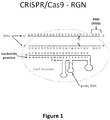
- Figure 1 Schematic illustrating a gRNA/Cas9 nuclease complex bound to its target DNA site. Scissors indicate approximate cleavage points of the Cas9 nuclease on the genomic DNA target site. Note the numbering of nucleotides on the guide RNA proceeds in an inverse fashion from 5' to 3'.
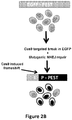
- Figure 2B Schematic overview of the EGFP disruption assay.
- FIGS 2C-F Activities of CRISPR RNA-guided nucleases (RGNs) with gRNAs bearing (C) single mismatches, (D) adjacent double mismatches, (E) variably spaced double mismatches, and (F) increasing numbers of adjacent mismatches assayed on three different target sites in the EGFP reporter gene sequence. Mean activities of replicates (see Online Methods) are shown, normalized to the activity of a perfectly matched gRNA.
- RGNs CRISPR RNA-guided nucleases
- the gRNAs Watson-Crick base pair between the RNA&DNA with the exception of positions indicated with an "m" which are mismatched using the Watson-Crick transversion (i.e. EGFP Site#2 M18-19 is mismatched by changing the gRNA to its Watson-Crick partner at positions 18 & 19.
- positions near the 5' of the gRNA are generally very well tolerated, matches in these positions are important for nuclease activity when other residues are mismatched. When all four positions are mismatched, nuclease activity is no longer detectable. This further demonstrates that matches at these 5' position can help compensate for mismatches at other more 3' positions.
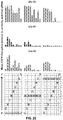
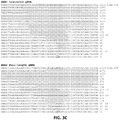
- Figure 3C DNA sequences of indel mutations induced by RGNs using a tru-gRNA or a matched full-length gRNA targeted to the EMX1 site. The portion of the target DNA site that interacts with the gRNA complementarity region is highlighted in grey with the first base of the PAM sequence shown in lowercase. Deletions are indicated by dashes highlighted in grey and insertions by italicized letters highlighted in grey. The net number of bases deleted or inserted and the number of times each sequence was isolated are shown to the right.
- Figure 3D Efficiencies of precise HDR/ssODN-mediated alterations introduced at two endogenous human genes by matched standard and tru-RGNs.
- %HDR was measured using a BamH I restriction digest assay (see the Experimental Procedures for Example 2).
- Control gRNA empty U6 promoter vector.
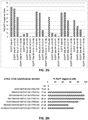
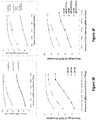
- Figure 3E U2OS.EGFP cells were transfected with variable amounts of full-length gRNA expression plasmids (top) or tru-gRNA expression plasmids (bottom) together with a fixed amount of Cas9 expression plasmid and then assayed for percentage of cells with decreased EGFP expression. Mean values from duplicate experiments are shown with standard errors of the mean. Note that the data obtained with tru-gRNA matches closely with data from experiments performed with full-length gRNA expression plasmids instead of tru-gRNA plasmids for these three EGFP target sites.
- FIG. 3F U2OS.EGFP cells were transfected with variable amount of Cas9 expression plasmid together with variable amounts of full-length gRNA expression plasmids (top) or tru-gRNA expression plasmids (bottom) (amounts determined for each tru-gRNA from the experiments of Figure 3E ). Mean values from duplicate experiments are shown with standard errors of the mean. Note that the data obtained with tru-gRNA matches closely with data from experiments performed with full-length gRNA expression plasmids instead of tru-gRNA plasmids for these three EGFP target sites. The results of these titrations determined the concentrations of plasmids used in the EGFP disruption assays performed in Examples 1 and 2.
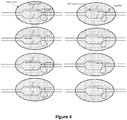
- FIG. 4 Schematic representation of gRNA-guided RGN and DNA-guided Cas9 nuclease.
- the gRNA fusion RNA molecule can bind to both its on-target sequence (no asterisks) and a wide range of off-target sites (mismatches denoted by asterisks) and induce DNA cleavage. Because of the increased sensitivity of DNA-DNA duplexes to mismatches, a DNA-guided Cas9 nuclease system that uses a short DNA oligonucleotide with complementarity to a tracRNA may no longer be able to bind and cut at off-target sites, but may still function in genomic localization of Cas9.
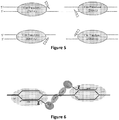
- Figure 5 Pairs of Cas9 RNA-guided nickases used to create paired nicks on opposing strands of DNA
- Figure 6 Schematic illustrating recruitment of two RNA-binding protein-FokI nuclease domain fusions to the DNA (see text for details).
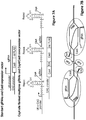
- Figure 7A Variant gRNAs bearing a Csy4 binding site can function to recruit Cas9 to specific sites in human cells.
- Figure 7B Three-part complex of catalytically inactive Cas9 nuclease (dCas9), gRNA with Csy4 recognition site, and FokI-Csy4 fusion.
- dCas9 catalytically inactive Cas9 nuclease
- Protospacer adjacent motif (PAM) sequences are facing 'outward' in this configuration.
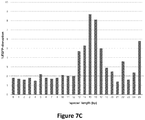
- Figure 7C dCas9/gRNA/FokI-Csy4 pairs with spacer lengths of 15-16 bp showing the highest level of activity in an EGFP-disruption assay.
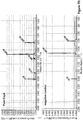
- Figure 7D T7 endonuclease I assay showing molecular evidence of non-homologous end joining-mediated DNA double-stranded break repair in dCas9/gRNA/FokI-Csy4 treated samples, but not in negative controls.
- RGNs CRISPR RNA-guided nucleases
- off-target sites were seen for a number of RGNs, identification of these sites was neither comprehensive nor genome-wide in scale. For the six RGNs studied, only a very small subset of the much larger total number of potential off-target sequences in the human genome (sites that differ by three to six nucleotides from the intended target site) was examined. Although examining such large numbers of loci for off-target mutations by T7EI assay is neither a practical nor a cost-effective strategy, the use of high-throughput sequencing in future studies might enable the interrogation of larger numbers of candidate off-target sites and provide a more sensitive method for detecting bona fide off-target mutations.
- a number of strategies can be used to minimize the frequencies of genomic off-target mutations.
- the specific choice of RGN target site can be optimized; given that off-target sites that differ at up to five positions from the intended target site can be efficiently mutated by RGNs, choosing target sites with minimal numbers of off-target sites as judged by mismatch counting seems unlikely to be effective; thousands of potential off-target sites that differ by four or five positions within the 20 bp RNA:DNA complementarity region will typically exist for any given RGN targeted to a sequence in the human genome. It is also possible that the nucleotide content of the gRNA complementarity region might influence the range of potential off-target effects.
- RGN-induced off-target effects might be to reduce the concentrations of gRNA and Cas9 nuclease expressed in the cell. This idea was tested using the RGNs for VEGFA target sites 2 and 3 in U2OS.EGFP cells; transfecting less gRNA- and Cas9-expressing plasmid decreased the mutation rate at the on-target site but did not appreciably change the relative rates of off-target mutations. Consistent with this, high-level off-target mutagenesis rates were also observed in two other human cell types (HEK293 and K562 cells) even though the absolute rates of on-target mutagenesis are lower than in U2OS.EGFP cells.
- CRISPR-Cas RNA-guided nucleases based on the S. pyogenes Cas9 protein can have significant off-target mutagenic effects that are comparable to or higher than the intended on-target activity (Example 1). Such off-target effects can be problematic for research and in particular for potential therapeutic applications. Therefore, methods for improving the specificity of CRISPR-Cas RNA guided nucleases (RGNs) are needed.
- RGNs CRISPR-Cas RNA guided nucleases
- Cas9 RGNs can induce high-frequency indel mutations at off-target sites in human cells (see also Cradick et al., 2013; Fu et al., 2013; Hsu et al., 2013; Pattanayak et al., 2013). These undesired alterations can occur at genomic sequences that differ by as many as five mismatches from the intended on-target site (see Example 1).
- RNAs generally speaking come in two different systems: System 1, which uses separate crRNA and tracrRNAs that function together to guide cleavage by Cas9, and System 2, which uses a chimeric crRNA-tracrRNA hybrid that combines the two separate guide RNAs in a single system (referred to as a single guide RNA or sgRNA, see also Jinek et al., Science 2012; 337:816-821 ).
- the tracrRNA can be variably truncated and a range of lengths has been shown to function in both the separate system (system 1) and the chimeric gRNA system (system 2).
- tracrRNA may be truncated from its 3' end by at least 1, 2, 3, 4, 5, 6, 7, 8, 9, 10, 15, 20, 25, 30, 35 or 40 nts.
- the tracrRNA molecule may be truncated from its 5' end by at least 1, 2, 3, 4, 5, 6, 7, 8, 9, 10, 15, 20, 25, 30, 35 or 40 nts.
- the tracrRNA molecule may be truncated from both the 5' and 3' end, e.g., by at least 1, 2, 3, 4, 5, 6, 7, 8, 9, 10, 15 or 20 nts on the 5' end and at least 1, 2, 3, 4, 5, 6, 7, 8, 9, 10, 15, 20, 25, 30, 35 or 40 nts on the 3' end.
- the gRNAs are complementary to a region that is within about 100-800 bp upstream of the transcription start site, e.g., is within about 500 bp upstream of the transcription start site, includes the transcription start site, or within about 100-800 bp, e.g., within about 500 bp, downstream of the transcription start site.
- vectors e.g., plasmids
- plasmids encoding more than one gRNA are used, e.g., plasmids encoding, 2, 3, 4, 5, or more gRNAs directed to different sites in the same region of the target gene.
- guide RNAs e.g., single gRNAs or crRNA and tracrRNA, that include one or more modified (e.g., locked) nucleotides or deoxyribonucleotides.
- RNA oligonucleotides such as locked nucleic acids (LNAs) have been demonstrated to increase the specificity of RNA-DNA hybridization by locking the modified oligonucleotides in a more favorable (stable) conformation.
- LNAs locked nucleic acids
- 2'-O-methyl RNA is a modified base where there is an additional covalent linkage between the 2' oxygen and 4' carbon which when incorporated into oligonucleotides can improve overall thermal stability and selectivity (formula I).
- Guide RNAs as described herein may be synthetic guide RNA molecules wherein one, some or all of the nucleotides 5' region of the guide RNA complementary to the target sequence are modified, e.g., locked (2'-O-4'-C methylene bridge), 5'-methylcytidine, 2'-O-methyl-pseudouridine, or in which the ribose phosphate backbone has been replaced by a polyamide chain (peptide nucleic acid), e.g., a synthetic ribonucleic acid.
- a polyamide chain peptide nucleic acid
- one, some or all of the nucleotides of the gRNA sequence may be modified, e.g., locked (2'-O-4'-C methylene bridge), 5'-methylcytidine, 2'-O-methyl-pseudouridine, or in which the ribose phosphate backbone has been replaced by a polyamide chain (peptide nucleic acid), e.g., a synthetic ribonucleic acid.
- a polyamide chain peptide nucleic acid
- exemplary modified or synthetic gRNAs may comprise, or consist of, the following sequences:
- one or both can be synthetic and include one or more locked nucleotides, as dual gRNAs (e.g., the crRNA and tracrRNA found in naturally occurring systems) can also be modified.
- dual gRNAs e.g., the crRNA and tracrRNA found in naturally occurring systems
- a single tracrRNA would be used in conjunction with multiple different crRNAs expressed using the present system, e.g., the following:
- (X 17-20 )GUUUUAGAGCUAUGCUGUUUUG (SEQ ID NO:6) is used as a crRNA
- the following tracrRNA is used: GGAACCAUUCAAAACAGCAUAGCAAGUUAAAAUAAGGCUAGUCCGUUA UCAACUUGAAAAAGUGGCACCGAGUCGGUGC (SEQ ID NO:15) or an active portion thereof.
- (X 17-20 )GUUUUAGAGCUA (SEQ ID NO:5) is used as a crRNA
- the following tracrRNA is used: UAGCAAGUUAAAAUAAGGCUAGUCCGUUAUCAACUUGAAAAAGUGGCA CCGAGUCGGUGC (SEQ ID NO:16) or an active portion thereof.
- (X 17-20 )GUUUUAGAGCUAUGCU (SEQ ID NO:7) is used as a crRNA
- the following tracrRNA is used: AGCAUAGCAAGUUAAAAUAAGGCUAGUCCGUUAUCAACUUGAAAAAAAGU GGCACCGAGUCGGUGC (SEQ ID NO:17) or an active portion thereof.
- one or both can be synthetic and include one or more modified (e.g., locked) nucleotides.
- the single guide RNAs or crRNAs or tracrRNAs includes one or more Adenine (A) or Uracil (U) nucleotides on the 3' end.
- A Adenine
- U Uracil
- the methods described can include contacting the cell with a locked gRNA as described herein, and contacting the cell with or expressing in the cell a nuclease that can be guided by the locked gRNAs, e.g., a Cas9 nuclease, e.g., as described in Mali et al., a Cas9 nickase as described in Jinek et al., 2012; or a dCas9-heterofunctional domain fusion (dCas9-HFD) as described in U.S. Provisional Patent Applications USSN 61/799,647, Filed on March 15, 2013 , USSN 61/838,148 , filed on 6/21/2013, and PCT International Application No. PCT/US 14/27335 , all of which are incorporated herein by reference in its entirety.
- a Cas9 nuclease e.g., as described in Mali et al., a Cas9 nickase as
- RNA-DNA heteroduplexes can form a more promiscuous range of structures than their DNA-DNA counterparts.
- DNA-DNA duplexes are more sensitive to mismatches, suggesting that a DNA-guided nuclease may not bind as readily to off-target sequences, making them comparatively more specific than RNA-guided nucleases.
- an engineered Cas9-based RGN wherein a short DNA oligonucleotide replaces all or part of the complementarity region of a gRNA (for example, see Figure 4 ).
- This DNA-based molecule could replace either all or part of the gRNA in a single gRNA system or alternatively might replace all of part of the crRNA in a dual crRNA/tracrRNA system.
- Such a system that incorporates DNA into the complementarity region should more reliably target the intended genomic DNA sequences due to the general intolerance of DNA-DNA duplexes to mismatching compared to RNA-DNA duplexes.
- Methods for making such duplexes are known in the art, See, e.g., Barker et al., BMC Genomics. 2005 Apr 22;6:57 ; and Sugimoto et al., Biochemistry. 2000 Sep 19;39(37):11270-81 .
- described herein are hybrid guide DNA/RNAs consisting of the sequence:
- one or both can be synthetic and include one or more deoxyribonucleotides, as dual gRNAs (e.g., the crRNA and tracrRNA found in naturally occurring systems) can also be hybrids.
- dual gRNAs e.g., the crRNA and tracrRNA found in naturally occurring systems
- a single tracrRNA would be used in conjunction with multiple different crRNAs expressed using the present system, e.g., the following:
- (X 17-20 )GUUUUAGAGCUAUGCUGUUUUG (SEQ ID NO:6) is used as a crRNA
- the following tracrRNA is used: GGAACCAUUCAAAACAGCAUAGCAAGUUAAAAUAAGGCUAGUCCGUUA UCAACUUGAAAAAGUGGCACCGAGUCGGUGC (SEQ ID NO:15) or an active portion thereof.
- (X 17-20 )GUUUUAGAGCUA (SEQ ID NO:5) is used as a crRNA
- the following tracrRNA is used: UAGCAAGUUAAAAUAAGGCUAGUCCGUUAUCAACUUGAAAAAGUGGCA CCGAGUCGGUGC (SEQ ID NO:16) or an active portion thereof.
- (X 17-20 )GUUUUAGAGCUAUGCU (SEQ ID NO:7) is used as a crRNA
- the following tracrRNA is used: AGCAUAGCAAGUUAAAAUAAGGCUAGUCCGUUAUCAACUUGAAAAAAAGU GGCACCGAGUCGGUGC (SEQ ID NO:17) or an active portion thereof.
- one or both can be synthetic and include one or more deoxyribonucleotides.
- the guide RNA includes one or more Adenine (A) or Uracil (U) nucleotides on the 3' end.
- the RNA includes one or more U, e.g., 1 to 8 or more Us (e.g., U, UU, UUU, UUUU, UUUUU, UUUUU, UUUUUU, UUUUUU, UUUUUU, UUUUUUUUUU, UUUUUUUUUUUUU) at the 3' end of the molecule, as a result of the optional presence of one or more Ts used as a termination signal to terminate RNA PolIII transcription.
- the present system utilizes the Cas9 protein from S. pyogenes, either as encoded in bacteria or codon-optimized for expression in mammalian cells, containing mutations the nuclease portion of the protein partially catalytically inactive.
- S. pyogenes either as encoded in bacteria or codon-optimized for expression in mammalian cells, containing mutations the nuclease portion of the protein partially catalytically inactive.
- the wild type sequence of the S. pyogenes Cas9 that can be used in the methods and compositions described herein is set forth below.
- RNAs and one Cas9-nickase e.g., a Cas9 with a mutation at any of D10, E762, H983, D986, H840, or N863, that renders only one of the nuclease portions of the protein catalytically inactive; substitutions at these positions could be alanine (as they are in Nishimasu al., Cell 156, 935-949 (2014 )) or they could be other residues, e.g., glutamine, asparagine, tyrosine, serine, or aspartate, e.gE762Q, H983N/H983Y, D986N, N863D/N863S/N863H D10A/D10N, H840A/H840N/H840Y), wherein each of the two guide RNAs include sequences that are complementary to either strand of the target sequence, such
- the RGNickase like RGNs consisting of wildtype Cas9 is expected to cut the DNA target site approximately 3bp upstream of the PAM, with the D10A Cas9 cleaving the complementary DNA strand and the H840A Cas9 cleaving the non-complementary strand.
- the two gRNA target sites may be overlapping or some distance away from each other, e.g., up to about 200 nts apart, e.g., less than 100, 50, 25, 10, 5, 4, or 2 nts apart.
- Another method to improve the specificity of Cas9 is to use dCas9 together with a modified gRNA bearing extra RNA sequence on either the 5' or 3' end of the gRNA (or on the ends of the crRNA and/or tracrRNA if using a dual gRNA system) that is bound by an RNA-binding protein that is in turn fused to a heterologous functional domain (HFD), e.g., the FokI nuclease domain.
- HFD heterologous functional domain
- two dCas9 molecules would be targeted to adjacent DNA sequences by appropriate gRNAs and the "extra" RNA sequence on the two gRNA would interact with an appropriate RNA-binding protein-HFD (e.g., FokI nuclease domain) fusion.
- HFD/FokI nuclease domains would dimerize, thereby resulting in introduction of a targeted double-stranded break in the DNA sequence between the two dCas9 binding sites.
- FokI-Csy4 VP64-Csy4, TET1-Csy4, and so on could be used.
- RNA-binding protein/RNA target sequences that could be used would include but are not limited to the lambda N, MS2 or Csy4 proteins.
- the wild type and high-affinity sequences for MS2 are AAACAUGAGGAUUACCCAUGUCG (SEQ ID NO:19) and AAACAUGAGGAUCACCCAUGUCG (SEQ ID NO:20), respectively (see Keryer-Bibens et al., supra, FIG. 2 );
- the nutL and nutR BoxB sequences to which lambda N binds are GCCCUGAAGAAGGGC (SEQ ID NO:21) and GCCCUGAAAAAGGGC (SEQ ID NO:22), respectively.
- the sequences to which Csy4 binds are GUUCACUGCCGUAUAGGCAG (SEQ ID NO:23) or GUUCACUGCCGUAUAGGCAGCUAAGAAA (SEQ ID NO:24).
- the binding sites can be attached to 3' end of a gRNA sequence and gRNAs harboring this additional Csy4 binding site can still direct Cas9 to cleave specific sequences in human cells and thus remain functional in the cell ( Example 2 and Figure 7 ).
- fusion guide nucleic acids comprising: (1) a first sequence of 17-20 nts that is complementary to the complementary strand of 17-20 consecutive nucleotides of a target sequence with an adjacent PAM sequence; (2) a second sequence comprising all or part of a Cas9 guide RNA, e.g., all or part of GUUUUAGAGCUAGAAAUAGCAAGUUAAAAUAAGGCUAGUCCGUUAUCA ACUUGAAAAAGUGGCACCGAGTCGGUGCUUUU (SEQ ID NO:15) or an active portion thereof, UAGCAAGUUAAAAUAAGGCUAGUCCGUUAUCAACUUGAAAAAGUGGCA CCGAGUCGGUGC (SEQ ID NO:16) or an active portion thereof; or AGCAUAGCAAGUUAAAAUAAGGCUAGUCCGUUAUCAACUUGAAAAAGU GGCACCGAGUCGGUGC (SEQ ID NO:17) or an active portion thereof; and (3) a third sequence that forms a stem-
- sequences can be arranged in any order so long as all of the parts retain their function, e.g., (1)-(2)-(3), or (3)-(1)-(2), or (3)-(2)-(1), or (1)-(3)-(2), or (2)-(1)-(3), or (2)-(3)-(1).
- (X 17-20 )GUUUUAGAGCUAUGCUGUUUUG (SEQ ID NO:6) is used as a crRNA
- the following tracrRNA is used: GGAACCAUUCAAAACAGCAUAGCAAGUUAAAAUAAGGCUAGUCCGUUA UCAACUUGAAAAAGUGGCACCGAGUCGGUGC (SEQ ID NO:15) or an active portion thereof.
- (X 17-20 )GUUUUAGAGCUA (SEQ ID NO:5) is used as a crRNA
- the following tracrRNA is used: UAGCAAGUUAAAAUAAGGCUAGUCCGUUAUCAACUUGAAAAAGUGGCA CCGAGUCGGUGC (SEQ ID NO:16) or an active portion thereof.
- (X 17-20 )GUUUUAGAGCUAUGCU (SEQ ID NO:7) is used as a crRNA
- the following tracrRNA is used: AGCAUAGCAAGUUAAAAUAAGGCUAGUCCGUUAUCAACUUGAAAAAAAGU GGCACCGAGUCGGUGC (SEQ ID NO:17) or an active portion thereof.
- nucleotides there are additional nucleotides, e.g., up to 20 additional nucleotides, that act as a flexible linker between Csy4 and the gRNA; these nucleotides should not add any secondary or tertiary structure to the gRNA.
- sequence 'GTTC' has been shown to be unstructured and could be construed as 'linker' sequence.
- the wild-type Csy4 binding sequence is used, which is: GUUCACUGCCGUAUAGGCAGCUAAGAAA (SEQ ID NO:24).
- a truncated Csy4 binding sequence is used, which upon processing by Csy4 produces gRNAs of higher activity. This sequence is GUUCACUGCCGUAUAGGCAG (SEQ ID NO:23).
- fusion proteins comprising an RNA binding protein, e.g., MS2, Csy4, or lambda N, linked to a catalytic domain of a HFD, e.g., a FokI nuclease as described above, optionally with an intervening linker of 2-30, e.g., 5-20 nts, as well as nucleic acids encoding the same.
- an RNA binding protein e.g., MS2, Csy4, or lambda N
- a catalytic domain of a HFD e.g., a FokI nuclease as described above
- an intervening linker of 2-30, e.g., 5-20 nts
- MS2 functions as a dimer, therefore the MS2 protein can include a fused single chain dimer sequence.
- Cys4 are given in Haurwitz et al. 329(5997):1355-8 (2010), e.g., the inactivated form; for example see the Csy4 homologues from Pseudomonas aeruginosa UCBPP-PA14 (Pa14), Yersinia pestis AAM85295 (Yp), Escherichia coli UTI89 (Ec89), Dichelobacter nodosus VCS1703A (Dn), Acinetobacter baumannii AB0057 (Ab), Moritella sp. PE36 (MP1, MP01), Shewanella sp. W3-18-1 (SW), Pasteurella multocida subsp.
- Pseudomonas aeruginosa UCBPP-PA14 Pseudomonas aeruginosa UCBPP-PA14 (Pa14), Yersinia pestis AAM85295 (Yp), Escherichia coli
- the Csy4 is from Pseudomonas aeruginosa.
- Methods of using the fusions include contacting a cell with or expressing in a cell a pair of three-part fusion guide nucleic acids that include sequences complementary to a single region of a target DNA, a RNA-binding protein linked to a catalytic domain of a FokI nuclease, and a Cas9 protein (e.g., the inactive dCas9 protein from S.
- pyogenes either as encoded in bacteria or codon-optimized for expression in mammalian cells, containing mutations at D10, E762, H983, D986, H840, or N863, e.g., D10A/D10N and H840A/H840N/H840Y, to render the nuclease portion of the protein catalytically inactive; substitutions at these positions could be alanine (as they are in Nishimasu al., Cell 156, 935-949 (2014 )) or they could be other residues, e.g., glutamine, asparagine, tyrosine, serine, or aspartate, e.g., E762Q, H983N, H983Y, D986N, N863D, N863S, or N863H ( Figure 1C ).).
- the two gRNA target sites may be overlapping or some distance away from each other, e.g., up to about 200 nts apart
- FokI is a type IIs restriction endonuclease that includes a DNA recognition domain and a catalytic (endonuclease) domain.
- the fusion proteins described herein can include all of FokI or just the catalytic endonuclease domain, i.e., amino acids 388-583 or 408-583 of GenBank Acc. No. AAA24927.1, e.g., as described in Li et al., Nucleic Acids Res. 39(1): 359-372 (2011 ); Cathomen and Joung, Mol. Ther. 16: 1200-1207 (2008 ), or a mutated form of FokI as described in Miller et al.
- An exemplary nucleic acid sequence encoding FokI is as follows:
- the FokI nuclease used herein is at least about 50% identical SEQ ID NO:33, e.g., to amino acids 388-583 or 408-583 of SEQ ID NO:33. These variant nucleases must retain the ability to cleave DNA.
- the nucleotide sequences are about 50%, 55%, 60%, 65%, 70%, 75%, 80%, 85%, 90%, 95%, 99% or 100% identical to amino acids 388-583 or 408-583 of SEQ ID NO:4. In some embodiments, any differences from amino acids 388-583 or 408-583 of SEQ ID NO:4 are in non-conserved regions.
- the sequences are aligned for optimal comparison purposes (gaps are introduced in one or both of a first and a second amino acid or nucleic acid sequence as required for optimal alignment, and non-homologous sequences can be disregarded for comparison purposes).
- the length of a reference sequence aligned for comparison purposes is at least 50% (in some embodiments, about 50%, 55%, 60%, 65%, 70%, 75%, 85%, 90%, 95%, or 100% of the length of the reference sequence is aligned).
- the nucleotides or residues at corresponding positions are then compared. When a position in the first sequence is occupied by the same nucleotide or residue as the corresponding position in the second sequence, then the molecules are identical at that position.
- the percent identity between the two sequences is a function of the number of identical positions shared by the sequences, taking into account the number of gaps, and the length of each gap, which need to be introduced for optimal alignment of the two sequences.
- the comparison of sequences and determination of percent identity between two sequences can be accomplished using a mathematical algorithm.
- the percent identity between two amino acid sequences is determined using the Needleman and Wunsch ((1970) J. Mol. Biol. 48:444-453 ) algorithm which has been incorporated into the GAP program in the GCG software package, using a Blossum 62 scoring matrix with a gap penalty of 12, a gap extend penalty of 4, and a frameshift gap penalty of 5.
- transcriptional activation domains can be fused on the N or C terminus of the Cas9.
- other heterologous functional domains e.g., transcriptional repressors (e.g., KRAB, ERD, SID, and others, e.g., amino acids 473-530 of the ets2 repressor factor (ERF) repressor domain (ERD), amino acids 1-97 of the KRAB domain of KOX1, or amino acids 1-36 of the Mad mSIN3 interaction domain (SID); see Beerli et al., PNAS USA 95:14628-14633 (1998 )) or silencers such as Heterochromatin Protein 1 (HP1, also known as swi6), e.g., HP1 ⁇ or HP1 ⁇ ; proteins or peptides that could recruit long non-coding RNAs (IncRNAs) fused to a fixed RNA binding sequence such as those bound by the MS2
- exemplary proteins include the Ten-Eleven-Translocation (TET)1-3 family, enzymes that converts 5-methylcytosine (5-mC) to 5-hydroxymethylcytosine (5-hmC) in DNA.
- TET Ten-Eleven-Translocation
- all or part of the full-length sequence of the catalytic domain can be included, e.g., a catalytic module comprising the cysteine-rich extension and the 20GFeDO domain encoded by 7 highly conserved exons, e.g., the Tet1 catalytic domain comprising amino acids 1580-2052, Tet2 comprising amino acids 1290-1905 and Tet3 comprising amino acids 966-1678. See, e.g., Fig. 1 of Iyer et al., Cell Cycle. 2009 Jun 1;8(11):1698-710 .
- the sequence includes amino acids 1418-2136 of Tet1 or the corresponding region in Tet2/3.
- catalytic modules can be from the proteins identified in Iyer et al., 2009.
- the heterologous functional domain is a biological tether, and comprises all or part of (e.g., DNA binding domain from) the MS2 coat protein, endoribonuclease Csy4, or the lambda N protein.
- these proteins can be used to recruit RNA molecules containing a specific stem-loop structure to a locale specified by the dCas9 gRNA targeting sequences.
- a dCas9 fused to MS2 coat protein, endoribonuclease Csy4, or lambda N can be used to recruit a long non-coding RNA (lncRNA) such as XIST or HOTAIR; see, e.g., Keryer-Bibens et al., Biol.
- lncRNA long non-coding RNA
- Csy4, MS2 or lambda N binding sequence can be linked to another protein, e.g., as described in Keryer-Bibens et al., supra, and the protein can be targeted to the dCas9 binding site using the methods and compositions described herein.
- the Csy4 is catalytically inactive.
- the fusion proteins include a linker between the dCas9 and the heterologous functional domains.
- Linkers that can be used in these fusion proteins (or between fusion proteins in a concatenated structure) can include any sequence that does not interfere with the function of the fusion proteins.
- the linkers are short, e.g., 2-20 amino acids, and are typically flexible (i.e., comprising amino acids with a high degree of freedom such as glycine, alanine, and serine).
- the linker comprises one or more units consisting of GGGS (SEQ ID NO:14) or GGGGS (SEQ ID NO:15), e.g., two, three, four, or more repeats of the GGGS (SEQ ID NO:14) or GGGGS (SEQ ID NO:15) unit.
- Other linker sequences can also be used.
- Cas9 molecules of a variety of species can be used in the methods and compositions described herein. While the S. pyogenes and S. thermophilus Cas9 molecules are the subject of much of the disclosure herein, Cas9 molecules of, derived from, or based on the Cas9 proteins of other species listed herein can be used as well. In other words, while the much of the description herein uses S. pyogenes and S. thermophilus Cas9 molecules, Cas9 molecules from the other species can replace them. Such species include those set forth in the following table, which was created based on supplementary figure 1 of Chylinski et al., 2013. Alternative Cas9 proteins GenBank Acc No.
- Cas9 orthologs from N. meningitides are described in Hou et al., Proc Natl Acad Sci USA. 2013 Sep 24;110(39):15644-9 and Esvelt et al., Nat Methods. 2013 Nov;10(11):1116-21 . Additionally, Jinek et al. showed in vitro that Cas9 orthologs from S. thermophilus and L. innocua, (but not from N. meningitidis or C. jejuni, which likely use a different guide RNA), can be guided by a dual S. pyogenes gRNA to cleave target plasmid DNA, albeit with slightly decreased efficiency.
- the present system utilizes the Cas9 protein from S. pyogenes, either as encoded in bacteria or codon-optimized for expression in mammalian cells.
- a catalytically inactive Cas9 (dCas9) containing mutations at (i) D10, E762, H983, or D986 and (i) H840 or N863, e.g., D10A/D10N and H840A/H840N/H840Y, to render the nuclease portion of the protein completely catalytically inactive; substitutions at these positions could be alanine (as they are in Nishimasu al., Cell 156, 935-949 (2014 )) or they could be other residues, e.g., glutamine, asparagine, tyrosine, serine, or aspartate, e.g., E762Q, H983N, H983Y, D986N, N863D, N863S,
- a mutation at any of D10, E762, H983, D986, H840, or N863 can be introduced.
- the wild type sequence of S. pyogenes Cas9 nuclease that can be used in the methods and compositions described herein is as follows.
- the Cas9 nuclease used herein is at least about 50% identical to the sequence of S. pyogenes Cas9, i.e., at least 50% identical to SEQ ID NO:18.
- the nucleotide sequences are about 50%, 55%, 60%, 65%, 70%, 75%, 80%, 85%, 90%, 95%, 99% or 100% identical to SEQ ID NO:18.
- any differences from SEQ ID NO:18 are in non-conserved regions, as identified by sequence alignment of sequences set forth in Chylinski et al., RNA Biology 10:5, 1-12; 2013 (e.g., in supplementary figure 1 and supplementary table 1 thereof); Esvelt et al., Nat Methods. 2013 Nov;10(11):1116-21 and Fonfara et al., Nucl. Acids Res. (2014) 42 (4): 2577-2590 . [Epub ahead of print 2013 Nov 22] doi:10.1093/nar/gkt1074.
- the sequences are aligned for optimal comparison purposes (gaps are introduced in one or both of a first and a second amino acid or nucleic acid sequence as required for optimal alignment, and non-homologous sequences can be disregarded for comparison purposes).
- the length of a reference sequence aligned for comparison purposes is at least 50% (in some embodiments, about 50%, 55%, 60%, 65%, 70%, 75%, 85%, 90%, 95%, or 100% of the length of the reference sequence is aligned).
- the nucleotides or residues at corresponding positions are then compared. When a position in the first sequence is occupied by the same nucleotide or residue as the corresponding position in the second sequence, then the molecules are identical at that position.
- the percent identity between the two sequences is a function of the number of identical positions shared by the sequences, taking into account the number of gaps, and the length of each gap, which need to be introduced for optimal alignment of the two sequences.
- the comparison of sequences and determination of percent identity between two sequences can be accomplished using a mathematical algorithm.
- the percent identity between two amino acid sequences is determined using the Needleman and Wunsch ((1970) J. Mol. Biol. 48:444-453 ) algorithm which has been incorporated into the GAP program in the GCG software package, using a Blossum 62 scoring matrix with a gap penalty of 12, a gap extend penalty of 4, and a frameshift gap penalty of 5.
- the engineered proteins may be desirable to express the engineered proteins from a nucleic acid that encodes them.
- the nucleic acid encoding the fusion protein or guide RNA can be cloned into an intermediate vector for transformation into prokaryotic or eukaryotic cells for replication and/or expression.
- Intermediate vectors are typically prokaryote vectors, e.g., plasmids, or shuttle vectors, or insect vectors, for storage or manipulation of the nucleic acid encoding the fusion protein or guide RNA for production of the fusion protein or guide RNA.
- the nucleic acid encoding the fusion protein or guide RNA can also be cloned into an expression vector, for administration to a plant cell, animal cell, preferably a mammalian cell or a human cell, fungal cell, bacterial cell, or protozoan cell.
- a sequence encoding a fusion protein or guide RNA is typically subcloned into an expression vector that contains a promoter to direct transcription.
- Suitable bacterial and eukaryotic promoters are well known in the art and described, e.g., in Sambrook et al., Molecular Cloning, A Laboratory Manual (3d ed. 2001 ); Kriegler, Gene Transfer and Expression: A Laboratory Manual (1990 ); and Current Protocols in Molecular Biology (Ausubel et al., eds., 2010 ).
- Bacterial expression systems for expressing the engineered protein are available in, e.g., E.
- Kits for such expression systems are commercially available.
- Eukaryotic expression systems for mammalian cells, yeast, and insect cells are well known in the art and are also commercially available.
- the promoter used to direct expression of a fusion protein nucleic acid depends on the particular application. For example, a strong constitutive promoter is typically used for expression and purification of fusion proteins. In contrast, when the fusion protein is to be administered in vivo for gene regulation, either a constitutive or an inducible promoter can be used, depending on the particular use of the fusion protein. In addition, a preferred promoter for administration of the fusion protein can be a weak promoter, such as HSV TK or a promoter having similar activity.
- the promoter can also include elements that are responsive to transactivation, e.g., hypoxia response elements, Gal4 response elements, lac repressor response element, and small molecule control systems such as tetracycline-regulated systems and the RU-486 system (see, e.g., Gossen & Bujard, 1992, Proc. Natl. Acad. Sci. USA, 89:5547 ; Oligino et al., 1998, Gene Ther., 5:491-496 ; Wang et al., 1997, Gene Ther., 4:432-441 ; Neering et al., 1996, Blood, 88:1147-55 ; and Rendahl et al., 1998, Nat. Biotechnol., 16:757-761 ).
- elements that are responsive to transactivation e.g., hypoxia response elements, Gal4 response elements, lac repressor response element, and small molecule control systems such as tetracycline-regulated systems and the
- the expression vector typically contains a transcription unit or expression cassette that contains all the additional elements required for the expression of the nucleic acid in host cells, either prokaryotic or eukaryotic.
- a typical expression cassette thus contains a promoter operably linked, e.g., to the nucleic acid sequence encoding the fusion protein, and any signals required, e.g., for efficient polyadenylation of the transcript, transcriptional termination, ribosome binding sites, or translation termination. Additional elements of the cassette may include, e.g., enhancers, and heterologous spliced intronic signals.
- the particular expression vector used to transport the genetic information into the cell is selected with regard to the intended use of the fusion protein, e.g., expression in plants, animals, bacteria, fungus, protozoa, etc.
- Standard bacterial expression vectors include plasmids such as pBR322 based plasmids, pSKF, pET23D, and commercially available tag-fusion expression systems such as GST and LacZ.
- a preferred tag-fusion protein is the maltose binding protein (MBP).
- MBP maltose binding protein
- Such tag-fusion proteins can be used for purification of the engineered TALE repeat protein.
- Epitope tags can also be added to recombinant proteins to provide convenient methods of isolation, for monitoring expression, and for monitoring cellular and subcellular localization, e.g., c-myc or FLAG.
- Expression vectors containing regulatory elements from eukaryotic viruses are often used in eukaryotic expression vectors, e.g., SV40 vectors, papilloma virus vectors, and vectors derived from Epstein-Barr virus.
- eukaryotic vectors include pMSG, pAV009/A+, pMTO10/A+, pMAMneo-5, baculovirus pDSVE, and any other vector allowing expression of proteins under the direction of the SV40 early promoter, SV40 late promoter, metallothionein promoter, murine mammary tumor virus promoter, Rous sarcoma virus promoter, polyhedrin promoter, or other promoters shown effective for expression in eukaryotic cells.
- the vectors for expressing the guide RNAs can include RNA Pol III promoters to drive expression of the guide RNAs, e.g., the H1, U6 or 7SK promoters. These human promoters allow for expression of gRNAs in mammalian cells following plasmid transfection. Alternatively, a T7 promoter may be used, e.g., for in vitro transcription, and the RNA can be transcribed in vitro and purified. Vectors suitable for the expression of short RNAs, e.g., siRNAs, shRNAs, or other small RNAs, can be used.
- Some expression systems have markers for selection of stably transfected cell lines such as thymidine kinase, hygromycin B phosphotransferase, and dihydrofolate reductase.
- High yield expression systems are also suitable, such as using a baculovirus vector in insect cells, with the fusion protein encoding sequence under the direction of the polyhedrin promoter or other strong baculovirus promoters.
- the elements that are typically included in expression vectors also include a replicon that functions in E. coli, a gene encoding antibiotic resistance to permit selection of bacteria that harbor recombinant plasmids, and unique restriction sites in nonessential regions of the plasmid to allow insertion of recombinant sequences.
- Standard transfection methods are used to produce bacterial, mammalian, yeast or insect cell lines that express large quantities of protein, which are then purified using standard techniques (see, e.g., Colley et al., 1989, J. Biol. Chem., 264:17619-22 ; Guide to Protein Purification, in Methods in Enzymology, vol. 182 (Deutscher, ed., 1990 )). Transformation of eukaryotic and prokaryotic cells are performed according to standard techniques (see, e.g., Morrison, 1977, J. Bacteriol. 132:349-351 ; Clark-Curtiss & Curtiss, Methods in Enzymology 101:347-362 (Wu et al., eds, 1983 ).
- Any of the known procedures for introducing foreign nucleotide sequences into host cells may be used. These include the use of calcium phosphate transfection, polybrene, protoplast fusion, electroporation, nucleofection, liposomes, microinjection, naked DNA, plasmid vectors, viral vectors, both episomal and integrative, and any of the other well-known methods for introducing cloned genomic DNA, cDNA, synthetic DNA or other foreign genetic material into a host cell (see, e.g., Sambrook et al., supra). It is only necessary that the particular genetic engineering procedure used be capable of successfully introducing at least one gene into the host cell capable of expressing the protein of choice.
- the fusion protein includes a nuclear localization domain which provides for the protein to be translocated to the nucleus.
- nuclear localization sequences are known, and any suitable NLS can be used.
- many NLSs have a plurality of basic amino acids, referred to as a bipartite basic repeats (reviewed in Garcia-Bustos et al, 1991, Biochim. Biophys. Acta, 1071:83-101 ).
- An NLS containing bipartite basic repeats can be placed in any portion of chimeric protein and results in the chimeric protein being localized inside the nucleus.
- a nuclear localization domain is incorporated into the final fusion protein, as the ultimate functions of the fusion proteins described herein will typically require the proteins to be localized in the nucleus. However, it may not be necessary to add a separate nuclear localization domain in cases where the DBD domain itself, or another functional domain within the final chimeric protein, has intrinsic nuclear translocation function.
- the present invention includes the vectors and cells comprising the vectors.
- RGNs CRISPR RNA-guided nucleases
- Example 1 The following materials and methods were used in Example 1.
- DNA oligonucleotides harboring variable 20 nt sequences for Cas9 targeting were annealed to generate short double-strand DNA fragments with 4 bp overhangs compatible with ligation into BsmBI-digested plasmid pMLM3636. Cloning of these annealed oligonucleotides generates plasmids encoding a chimeric +103 single-chain guide RNA with 20 variable 5' nucleotides under expression of a U6 promoter ( Hwang et al., Nat Biotechnol 31, 227-229 (2013 ); Mali et al., Science 339, 823-826 (2013 ).).
- pMLM3636 and the expression plasmid pJDS246 (encoding a codon optimized version of Cas9) used in this study are both available through the non-profit plasmid distribution service Addgene (addgene.org/crispr-cas).
- U2OS.EGFP cells harboring a single integrated copy of an EGFP-PEST fusion gene were cultured as previously described ( Reyon et al., Nat Biotech 30, 460-465 (2012 )).
- 200,000 cells were Nucleofected with the indicated amounts of gRNA expression plasmid and pJDS246 together with 30 ng of a Td-tomato-encoding plasmid using the SE Cell Line 4D-NucleofectorTM X Kit (Lonza) according to the manufacturer's protocol. Cells were analyzed 2 days post-transfection using a BD LSRII flow cytometer. Transfections for optimizing gRNA/Cas9 plasmid concentration were performed in triplicate and all other transfections were performed in duplicate.
- PCR reactions were performed using Phusion Hot Start II high-fidelity DNA polymerase (NEB) with PCR primers and conditions listed in Table B. Most loci amplified successfully using touchdown PCR (98 °C, 10 s; 72-62 °C, -1 °C/cycle, 15 s; 72 °C, 30 s]10 cycles, [98 °C, 10 s; 62 °C, 15 s; 72 °C, 30 s]25 cycles). PCR for the remaining targets were performed with 35 cycles at a constant annealing temperature of 68 °C or 72 °C and 3% DMSO or 1M betaine, if necessary.
- NEB Phusion Hot Start II high-fidelity DNA polymerase
- PCR products were analyzed on a QIAXCEL capillary electrophoresis system to verify both size and purity. Validated products were treated with ExoSap-IT (Affymetrix) and sequenced by the Sanger method (MGH DNA Sequencing Core) to verify each target site.
- ExoSap-IT Affymetrix
- Sanger method MGH DNA Sequencing Core
- HEK293 cells 1.65 x 10 5 cells were transfected with 125 ng of gRNA expression plasmid or an empty U6 promoter plasmid (for the negative control), 375 ng of Cas9 expression plasmid, and 30 ng of a td-Tomato expression plasmid using Lipofectamine LTX reagent according to the manufacturer's instructions (Life Technologies). Genomic DNA was harvested from transfected U2OS.EGFP, HEK293, or K562 cells using the QIAamp DNA Blood Mini Kit (QIAGEN), according to the manufacturer's instructions.
- QIAamp DNA Blood Mini Kit QIAamp DNA Blood Mini Kit
- PCR products used for the T7EI assay were cloned into Zero Blunt TOPO vector (Life Technologies) and plasmid DNAs were isolated using an alkaline lysis miniprep method by the MGH DNA Automation Core. Plasmids were sequenced using an M13 forward primer (5' - GTAAAACGACGGCCAG - 3' (SEQ ID NO:35)) by the Sanger method (MGH DNA Sequencing Core).
- EGFP enhanced green fluorescent protein
- the activities of nucleases targeted to a single integrated EGFP reporter gene can be quantified by assessing loss of fluorescence signal in human U2OS.EGFP cells caused by inactivating frameshift insertion/deletion (indel) mutations introduced by error prone non-homologous end-joining (NHEJ) repair of nuclease-induced double-stranded breaks (DSBs) ( Fig. 2B ).
- indel frameshift insertion/deletion
- NHEJ error prone non-homologous end-joining
- gRNAs three ⁇ 100 nt single gRNAs (gRNAs) targeted to different sequences within EGFP were used, as follows: EGFP Site 1 GGGCACGGGCAGCTTGCCGGTGG SEQ ID NO: 1 EGFP Site 2 GATGCCGTTCTTCTGCTTGTCGG SEQ ID NO: 2 EGFP Site 3 GGTGGTGCAGATGAACTTCAGGG SEQ ID NO: 3
- gRNAs can efficiently direct Cas9-mediated disruption of EGFP expression (see Example 1e and 2a, and FIGs. 3E (top) and 3F (top) ).
- variant gRNAs were generated for each of the three target sites harboring Watson-Crick transversion mismatches at positions 1 through 19 (numbered 1 to 20 in the 3' to 5' direction; see Fig. 1 ) and the abilities of these various gRNAs to direct Cas9-mediated EGFP disruption in human cells tested (variant gRNAs bearing a substitution at position 20 were not generated because this nucleotide is part of the U6 promoter sequence and therefore must remain a guanine to avoid affecting expression.)
- target site #1 was particularly sensitive to a mismatch at position 2 whereas target site #3 was most sensitive to mismatches at positions 1 and 8.
- gRNA/DNA interface To test the effects of more than one mismatch at the gRNA/DNA interface, a series of variant gRNAs bearing double Watson-Crick transversion mismatches in adjacent and separated positions were created and the abilities of these gRNAs to direct Cas9 nuclease activity were tested in human cells using the EGFP disruption assay. All three target sites generally showed greater sensitivity to double alterations in which one or both mismatches occur within the 3' half of the gRNA targeting region. However, the magnitude of these effects exhibited site-specific variation, with target site #2 showing the greatest sensitivity to these double mismatches and target site #1 generally showing the least.
- variant gRNAs were constructed bearing increasing numbers of mismatched positions ranging from positions 19 to 15 in the 5' end of the gRNA targeting region (where single and double mismatches appeared to be better tolerated).
- gRNAs that target three different sites in the VEGFA gene, one in the EMX1 gene, one in the RNF2 gene, and one in the FANCF gene were used. These six gRNAs efficiently directed Cas9-mediated indels at their respective endogenous loci in human U2OS.EGFP cells as detected by T7 Endonuclease I (T7EI) assay. For each of these six RGNs, we then examined dozens of potential off-target sites (ranging in number from 46 to as many as 64) for evidence of nuclease-induced NHEJ-mediated indel mutations in U2OS.EGFP cells.
- the loci assessed included all genomic sites that differ by one or two nucleotides as well as subsets of genomic sites that differ by three to six nucleotides and with a bias toward those that had one or more of these mismatches in the 5' half of the gRNA targeting sequence.
- T7EI assay four off-target sites (out of 53 candidate sites examined) for VEGFA site 1, twelve (out of 46 examined) for VEGFA site 2, seven (out of 64 examined) for VEGFA site 3 and one (out of 46 examined) for the EMX1 site were readily identified. No off-target mutations were detected among the 43 and 50 potential sites examined for the RNF2 or FANCF genes, respectively.
- the rates of mutation at verified off-target sites were very high, ranging from 5.6% to 125% (mean of 40%) of the rate observed at the intended target site.
- These bona fide off-targets included sequences with mismatches in the 3' end of the target site and with as many as a total of five mismatches, with most off-target sites occurring within protein coding genes.
- DNA sequencing of a subset of off-target sites provided additional molecular confirmation that indel mutations occur at the expected RGN cleavage site.
- Example 1e Titration of gRNA- and Cas9-expressing plasmid amounts used for the EGFP disruption assay
- gRNAs Single guide RNAs
- EGFP SITES 1-3 Three different sequences located upstream of EGFP nucleotide 502, a position at which the introduction of frameshift mutations via non-homologous end-joining can robustly disrupt expression of EGFP ( Maeder, M.L. et al., Mol Cell 31, 294-301 (2008 ); Reyon, D. et al., Nat Biotech 30, 460-465 (2012 )).
- gRNA-expressing plasmid amounts (12.5 to 250 ng) was initially transfected together with 750 ng of a plasmid expressing a codon-optimized version of the Cas9 nuclease into our U2OS.EGFP reporter cells bearing a single copy, constitutively expressed EGFP-PEST reporter gene. All three RGNs efficiently disrupted EGFP expression at the highest concentration of gRNA plasmid (250 ng) ( Fig. 3E (top)).
- RGNs for target sites #1 and #3 exhibited equivalent levels of disruption when lower amounts of gRNA-expressing plasmid were transfected whereas RGN activity at target site #2 dropped immediately when the amount of gRNA-expressing plasmid transfected was decreased ( Fig. 3E (top)).
- the amount of Cas9-encoding plasmid (range from 50 ng to 750 ng) transfected into our U2OS.EGFP reporter cells was titrated EGFP disruption assayed. As shown in Fig. 3F (top), target site #1 tolerated a three-fold decrease in the amount of Cas9-encoding plasmid transfected without substantial loss of EGFP disruption activity. However, the activities of RGNs targeting target sites #2 and #3 decreased immediately with a three-fold reduction in the amount of Cas9 plasmid transfected ( Fig. 3F (top)).
- dCas9 is expressed together with a modified gRNA bearing extra RNA sequence on either or both of the 5' and/or 3' end of the gRNA that is bound by Csy4, an RNA-binding protein, as well as a fusion protein with Csy4 fused to the FokI nuclease domain.
- two dCas9 molecules would be targeted to adjacent DNA sequences by appropriate gRNAs and the Csy4-binding sequence on the two gRNA would interact with the Csy4-FokI nuclease domain fusion proteins.
- the Fok nuclease domains would dimerize, resulting in introduction of a targeted double-stranded break in the DNA sequence
- Csy4 RNA binding sites were attached to the 3' and 5' ends of a gRNA sequence and expressed with Cas9 in cells.
- the Csy4 RNA binding site sequence 'GUUCACUGCCGUAUAGGCAGCUAAGAAA (SEQ ID NO:36)' was fused to the 5' and 3' end of the standard gRNA sequence.
- Multiplex gRNA encoding plasmids were constructed by ligating: 1) annealed oligos encoding the first target site, 2) phosphorylated annealed oligos encoding crRNA, tracrRNA, and Csy4-binding site, and 3) annealed oligos encoding the second targetsite, into a U6-Csy4site-gRNA plasmid backbone digested with BsmBI Type IIs restriction enzyme.
- This sequence is a multiplex gRNA sequence flanked by Csy4 sites (underlined). When processed by Csy4FokI, Csy4FokI remains bound.
- the gRNAs can be encoded in multiplex gRNAs separated by Csy4 sites encoded on one transcript as well as individual gRNAs that have an additional Csy4 sequence.
- the first N20 sequence represents the sequence complementary to one strand of the target genomic sequence
- the second N20 sequence represents the sequence complementary to the other strand of the target genomic sequence.
- a plasmid encoding the Csy4 recognition site containing gRNA was co-transfected with plasmid encoding Cas9 and Csy4 proteins separated by a '2A' peptide linkage.
- the results showed that gRNAs with Csy4 sites fused to the 5' and 3' ends remained capable of directing Cas9-mediated cleavage in human cells using the U2OS-EGFP disruption assay previously described.
- Csy4 RNA binding sites can be attached to 3' end of a gRNA sequence and complexes of these Csy4 site-containing gRNAs with Cas9 remain functional in the cell ( Figure 7A ).
- gRNA target sites that varied in the spacer length between the two sites (edge-to-edge distance between the N20NGG target sites).
- orientation of the gRNA target sites were such that they either had their PAM sequences oriented "outward" from the spacer sequence in between or "inward” towards the spacer sequence in between.
- this configuration (depicted in Figure 7B ) enables gRNA/dCas9/FokI-Csy4 complexes to induce specific cleavage of DNA sequences that requires two gRNA binding sites, thereby increasing the specificity of the cleavage event.
Landscapes
- Health & Medical Sciences (AREA)
- Life Sciences & Earth Sciences (AREA)
- Chemical & Material Sciences (AREA)
- Genetics & Genomics (AREA)
- Organic Chemistry (AREA)
- Engineering & Computer Science (AREA)
- Wood Science & Technology (AREA)
- Bioinformatics & Cheminformatics (AREA)
- Zoology (AREA)
- General Engineering & Computer Science (AREA)
- Biomedical Technology (AREA)
- Biotechnology (AREA)
- Molecular Biology (AREA)
- Biochemistry (AREA)
- General Health & Medical Sciences (AREA)
- Microbiology (AREA)
- Biophysics (AREA)
- Medicinal Chemistry (AREA)
- Plant Pathology (AREA)
- Physics & Mathematics (AREA)
- Gastroenterology & Hepatology (AREA)
- Proteomics, Peptides & Aminoacids (AREA)
- Crystallography & Structural Chemistry (AREA)
- Virology (AREA)
- Mycology (AREA)
- Cell Biology (AREA)
- Micro-Organisms Or Cultivation Processes Thereof (AREA)
- Peptides Or Proteins (AREA)
- Enzymes And Modification Thereof (AREA)
- Pharmaceuticals Containing Other Organic And Inorganic Compounds (AREA)
- Preparation Of Compounds By Using Micro-Organisms (AREA)
- Measuring Or Testing Involving Enzymes Or Micro-Organisms (AREA)
- Developing Agents For Electrophotography (AREA)
- Lubricants (AREA)
- Prostheses (AREA)
Applications Claiming Priority (6)
| Application Number | Priority Date | Filing Date | Title |
|---|---|---|---|
| US201361799647P | 2013-03-15 | 2013-03-15 | |
| US201361838148P | 2013-06-21 | 2013-06-21 | |
| US201361838178P | 2013-06-21 | 2013-06-21 | |
| US201361921007P | 2013-12-26 | 2013-12-26 | |
| EP14764117.9A EP2970208A4 (en) | 2013-03-15 | 2014-03-14 | SPECIFICITY INCREASES FOR RNA-MEDIATED CHANGES |
| PCT/US2014/029304 WO2014144761A2 (en) | 2013-03-15 | 2014-03-14 | Increasing specificity for rna-guided genome editing |
Related Parent Applications (1)
| Application Number | Title | Priority Date | Filing Date |
|---|---|---|---|
| EP14764117.9A Division EP2970208A4 (en) | 2013-03-15 | 2014-03-14 | SPECIFICITY INCREASES FOR RNA-MEDIATED CHANGES |
Publications (1)
| Publication Number | Publication Date |
|---|---|
| EP3865586A1 true EP3865586A1 (en) | 2021-08-18 |
Family
ID=51537665
Family Applications (10)
| Application Number | Title | Priority Date | Filing Date |
|---|---|---|---|
| EP21151899.8A Withdrawn EP3865586A1 (en) | 2013-03-15 | 2014-03-14 | Increasing specificity for rna-guided genome editing |
| EP14764117.9A Withdrawn EP2970208A4 (en) | 2013-03-15 | 2014-03-14 | SPECIFICITY INCREASES FOR RNA-MEDIATED CHANGES |
| EP24176701.1A Pending EP4428141A3 (en) | 2013-03-15 | 2014-03-14 | Rna-guided targeting of genetic and epigenomic regulatory proteins to specific genomic loci |
| EP14768877.4A Active EP2970986B1 (en) | 2013-03-15 | 2014-03-14 | Rna-guided targeting of genetic and epigenomic regulatory proteins to specific genomic loci |
| EP20171165.2A Active EP3741868B1 (en) | 2013-03-15 | 2014-03-14 | Rna-guided targeting of genetic and epigenomic regulatory proteins to specific genomic loci |
| EP21197664.2A Pending EP3988667A1 (en) | 2013-03-15 | 2014-03-14 | Using truncated guide rnas (tru-grnas) to increase specificity for rna-guided genome editing |
| EP20172393.9A Withdrawn EP3744842A1 (en) | 2013-03-15 | 2014-03-14 | Using truncated guide rnas (tru-grnas) to increase specificity for rna-guided genome editing |
| EP18208105.9A Active EP3467125B1 (en) | 2013-03-15 | 2014-03-14 | Using rna-guided foki nucleases (rfns) to increase specificity for rna-guided genome editing |
| EP14764159.1A Not-in-force EP2971041B1 (en) | 2013-03-15 | 2014-03-14 | Using rna-guided foki nucleases (rfns) to increase specificity for rna-guided genome editing |
| EP14763916.5A Active EP2971125B2 (en) | 2013-03-15 | 2014-03-14 | Using truncated guide rnas (tru-grnas) to increase specificity for rna-guided genome editing |
Family Applications After (9)
| Application Number | Title | Priority Date | Filing Date |
|---|---|---|---|
| EP14764117.9A Withdrawn EP2970208A4 (en) | 2013-03-15 | 2014-03-14 | SPECIFICITY INCREASES FOR RNA-MEDIATED CHANGES |
| EP24176701.1A Pending EP4428141A3 (en) | 2013-03-15 | 2014-03-14 | Rna-guided targeting of genetic and epigenomic regulatory proteins to specific genomic loci |
| EP14768877.4A Active EP2970986B1 (en) | 2013-03-15 | 2014-03-14 | Rna-guided targeting of genetic and epigenomic regulatory proteins to specific genomic loci |
| EP20171165.2A Active EP3741868B1 (en) | 2013-03-15 | 2014-03-14 | Rna-guided targeting of genetic and epigenomic regulatory proteins to specific genomic loci |
| EP21197664.2A Pending EP3988667A1 (en) | 2013-03-15 | 2014-03-14 | Using truncated guide rnas (tru-grnas) to increase specificity for rna-guided genome editing |
| EP20172393.9A Withdrawn EP3744842A1 (en) | 2013-03-15 | 2014-03-14 | Using truncated guide rnas (tru-grnas) to increase specificity for rna-guided genome editing |
| EP18208105.9A Active EP3467125B1 (en) | 2013-03-15 | 2014-03-14 | Using rna-guided foki nucleases (rfns) to increase specificity for rna-guided genome editing |
| EP14764159.1A Not-in-force EP2971041B1 (en) | 2013-03-15 | 2014-03-14 | Using rna-guided foki nucleases (rfns) to increase specificity for rna-guided genome editing |
| EP14763916.5A Active EP2971125B2 (en) | 2013-03-15 | 2014-03-14 | Using truncated guide rnas (tru-grnas) to increase specificity for rna-guided genome editing |
Country Status (12)
| Country | Link |
|---|---|
| US (17) | US9567603B2 (enExample) |
| EP (10) | EP3865586A1 (enExample) |
| JP (11) | JP6657069B2 (enExample) |
| KR (8) | KR102210322B1 (enExample) |
| CN (7) | CN110540991B (enExample) |
| AU (10) | AU2014227653B2 (enExample) |
| BR (1) | BR112015023489B1 (enExample) |
| CA (4) | CA2906724A1 (enExample) |
| ES (1) | ES2713503T3 (enExample) |
| IL (2) | IL289396B2 (enExample) |
| WO (4) | WO2014144288A1 (enExample) |
| ZA (1) | ZA201506814B (enExample) |
Cited By (1)
| Publication number | Priority date | Publication date | Assignee | Title |
|---|---|---|---|---|
| US12390538B2 (en) | 2023-05-15 | 2025-08-19 | Nchroma Bio, Inc. | Compositions and methods for epigenetic regulation of HBV gene expression |
Families Citing this family (469)
| Publication number | Priority date | Publication date | Assignee | Title |
|---|---|---|---|---|
| WO2008027558A2 (en) | 2006-08-31 | 2008-03-06 | Codon Devices, Inc. | Iterative nucleic acid assembly using activation of vector-encoded traits |
| US20140031250A1 (en) | 2010-10-07 | 2014-01-30 | David Tsai Ting | Biomarkers of Cancer |
| EP2638157B1 (en) | 2010-11-12 | 2015-07-22 | Gen9, Inc. | Methods and devices for nucleic acids synthesis |
| US10457935B2 (en) | 2010-11-12 | 2019-10-29 | Gen9, Inc. | Protein arrays and methods of using and making the same |
| BR112013024337A2 (pt) | 2011-03-23 | 2017-09-26 | Du Pont | locus de traço transgênico complexo em uma planta, planta ou semente, método para produzir em uma planta um locus de traço transgênico complexo e construto de expressão |
| EP3461896B1 (en) | 2011-07-15 | 2023-11-29 | The General Hospital Corporation | Methods of transcription activator like effector assembly |
| EP2734621B1 (en) | 2011-07-22 | 2019-09-04 | President and Fellows of Harvard College | Evaluation and improvement of nuclease cleavage specificity |
| DK3594340T3 (da) | 2011-08-26 | 2021-09-20 | Gen9 Inc | Sammensætninger og fremgangsmåder til samling med høj nøjagtighed af nukleinsyrer |
| EP3604555B1 (en) | 2011-10-14 | 2024-12-25 | President and Fellows of Harvard College | Sequencing by structure assembly |
| WO2014163886A1 (en) | 2013-03-12 | 2014-10-09 | President And Fellows Of Harvard College | Method of generating a three-dimensional nucleic acid containing matrix |
| ES2991004T3 (es) | 2011-12-22 | 2024-12-02 | Harvard College | Métodos para la detección de analitos |
| GB201122458D0 (en) | 2011-12-30 | 2012-02-08 | Univ Wageningen | Modified cascade ribonucleoproteins and uses thereof |
| WO2013139861A1 (en) | 2012-03-20 | 2013-09-26 | Luc Montagnier | Methods and pharmaceutical compositions of the treatment of autistic syndrome disorders |
| US9150853B2 (en) | 2012-03-21 | 2015-10-06 | Gen9, Inc. | Methods for screening proteins using DNA encoded chemical libraries as templates for enzyme catalysis |
| EP2841601B1 (en) | 2012-04-24 | 2019-03-06 | Gen9, Inc. | Methods for sorting nucleic acids and multiplexed preparative in vitro cloning |
| EP2841572B1 (en) | 2012-04-27 | 2019-06-19 | Duke University | Genetic correction of mutated genes |
| JP6343605B2 (ja) | 2012-05-25 | 2018-06-13 | ザ リージェンツ オブ ザ ユニバーシティ オブ カリフォルニア | Rna依存性標的dna修飾およびrna依存性転写調節のための方法および組成物 |
| US9890364B2 (en) | 2012-05-29 | 2018-02-13 | The General Hospital Corporation | TAL-Tet1 fusion proteins and methods of use thereof |
| CN104685116A (zh) | 2012-06-25 | 2015-06-03 | Gen9股份有限公司 | 用于核酸组装和高通量测序的方法 |
| EP3483185B1 (en) | 2012-10-12 | 2020-09-09 | The General Hospital Corporation | Transcription activator-like effector (tale) - lysine-specific demethylase 1 (lsd1) fusion proteins |
| LT3138911T (lt) | 2012-12-06 | 2019-02-25 | Sigma-Aldrich Co. Llc | Genomo modifikavimas ir reguliavimas crispr pagrindu |
| EP3031921B1 (en) | 2012-12-12 | 2025-03-12 | The Broad Institute, Inc. | Delivery, engineering and optimization of systems, methods and compositions for sequence manipulation and therapeutic applications |
| EP2931899A1 (en) | 2012-12-12 | 2015-10-21 | The Broad Institute, Inc. | Functional genomics using crispr-cas systems, compositions, methods, knock out libraries and applications thereof |
| WO2014093709A1 (en) | 2012-12-12 | 2014-06-19 | The Broad Institute, Inc. | Methods, models, systems, and apparatus for identifying target sequences for cas enzymes or crispr-cas systems for target sequences and conveying results thereof |
| CN113005148A (zh) | 2013-01-16 | 2021-06-22 | 爱默蕾大学 | Cas9-核酸复合物及其相关用途 |
| EP3623463B1 (en) | 2013-02-07 | 2021-10-20 | The General Hospital Corporation | Tale transcriptional activators |
| EP2971167B1 (en) | 2013-03-14 | 2019-07-31 | Caribou Biosciences, Inc. | Compositions and methods of nucleic acid-targeting nucleic acids |
| CA2906724A1 (en) | 2013-03-15 | 2014-09-18 | The General Hospital Corporation | Using truncated guide rnas (tru-grnas) to increase specificity for rna-guided genome editing |
| US10760064B2 (en) | 2013-03-15 | 2020-09-01 | The General Hospital Corporation | RNA-guided targeting of genetic and epigenomic regulatory proteins to specific genomic loci |
| WO2014204578A1 (en) | 2013-06-21 | 2014-12-24 | The General Hospital Corporation | Using rna-guided foki nucleases (rfns) to increase specificity for rna-guided genome editing |
| US9828582B2 (en) | 2013-03-19 | 2017-11-28 | Duke University | Compositions and methods for the induction and tuning of gene expression |
| CN115261411A (zh) | 2013-04-04 | 2022-11-01 | 哈佛学院校长同事会 | 利用CRISPR/Cas系统的基因组编辑的治疗性用途 |
| MX434562B (es) | 2013-06-04 | 2026-05-19 | Harvard College | Regulacion transcripcional guiada por acido ribonucleico |
| US10704060B2 (en) * | 2013-06-05 | 2020-07-07 | Duke University | RNA-guided gene editing and gene regulation |
| WO2014204725A1 (en) | 2013-06-17 | 2014-12-24 | The Broad Institute Inc. | Optimized crispr-cas double nickase systems, methods and compositions for sequence manipulation |
| CN105793425B (zh) | 2013-06-17 | 2021-10-26 | 布罗德研究所有限公司 | 使用病毒组分靶向障碍和疾病的crispr-cas系统和组合物的递送、用途和治疗应用 |
| CA2915842C (en) | 2013-06-17 | 2022-11-29 | The Broad Institute, Inc. | Delivery and use of the crispr-cas systems, vectors and compositions for hepatic targeting and therapy |
| EP3011033B1 (en) | 2013-06-17 | 2020-02-19 | The Broad Institute, Inc. | Functional genomics using crispr-cas systems, compositions methods, screens and applications thereof |
| KR20160044457A (ko) | 2013-06-17 | 2016-04-25 | 더 브로드 인스티튜트, 인코퍼레이티드 | 서열 조작을 위한 탠덤 안내 시스템, 방법 및 조성물의 전달, 조작 및 최적화 |
| EP3019595A4 (en) | 2013-07-09 | 2016-11-30 | THERAPEUTIC USES OF A GENERIC CHANGE WITH CRISPR / CAS SYSTEMS | |
| US9163284B2 (en) | 2013-08-09 | 2015-10-20 | President And Fellows Of Harvard College | Methods for identifying a target site of a Cas9 nuclease |
| US20150044772A1 (en) * | 2013-08-09 | 2015-02-12 | Sage Labs, Inc. | Crispr/cas system-based novel fusion protein and its applications in genome editing |
| US9359599B2 (en) | 2013-08-22 | 2016-06-07 | President And Fellows Of Harvard College | Engineered transcription activator-like effector (TALE) domains and uses thereof |
| DK3036327T3 (da) | 2013-08-22 | 2019-06-11 | Pioneer Hi Bred Int | Genommodificering med guide-polynukleotid/cas-endonuklease-systemer og fremgangsmåder til anvendelse |
| US9526784B2 (en) | 2013-09-06 | 2016-12-27 | President And Fellows Of Harvard College | Delivery system for functional nucleases |
| US9340799B2 (en) | 2013-09-06 | 2016-05-17 | President And Fellows Of Harvard College | MRNA-sensing switchable gRNAs |
| US9388430B2 (en) | 2013-09-06 | 2016-07-12 | President And Fellows Of Harvard College | Cas9-recombinase fusion proteins and uses thereof |
| EP3418379B1 (en) | 2013-09-18 | 2020-12-09 | Kymab Limited | Methods, cells & organisms |
| US10584358B2 (en) | 2013-10-30 | 2020-03-10 | North Carolina State University | Compositions and methods related to a type-II CRISPR-Cas system in Lactobacillus buchneri |
| CN106459995B (zh) | 2013-11-07 | 2020-02-21 | 爱迪塔斯医药有限公司 | 使用统治型gRNA的CRISPR相关方法和组合物 |
| MX433679B (es) | 2013-12-12 | 2026-05-19 | Broad Inst Inc | Suministro, uso y aplicaciones terapeuticas de sistemas y composiciones crispr-cas para edicion del genoma |
| WO2015089364A1 (en) | 2013-12-12 | 2015-06-18 | The Broad Institute Inc. | Crystal structure of a crispr-cas system, and uses thereof |
| EP3080257A1 (en) | 2013-12-12 | 2016-10-19 | The Broad Institute Inc. | Compositions and methods of use of crispr-cas systems in nucleotide repeat disorders |
| EP4183876A1 (en) | 2013-12-12 | 2023-05-24 | The Broad Institute, Inc. | Delivery, use and therapeutic applications of the crispr-cas systems and compositions for hbv and viral diseases and disorders |
| US9994831B2 (en) * | 2013-12-12 | 2018-06-12 | The Regents Of The University Of California | Methods and compositions for modifying a single stranded target nucleic acid |
| US9068179B1 (en) * | 2013-12-12 | 2015-06-30 | President And Fellows Of Harvard College | Methods for correcting presenilin point mutations |
| JP6793547B2 (ja) | 2013-12-12 | 2020-12-02 | ザ・ブロード・インスティテュート・インコーポレイテッド | 最適化機能CRISPR−Cas系による配列操作のための系、方法および組成物 |
| EP3080259B1 (en) | 2013-12-12 | 2023-02-01 | The Broad Institute, Inc. | Engineering of systems, methods and optimized guide compositions with new architectures for sequence manipulation |
| CN113684205B (zh) * | 2013-12-26 | 2024-11-12 | 通用医疗公司 | 多重引导rna |
| US10787654B2 (en) | 2014-01-24 | 2020-09-29 | North Carolina State University | Methods and compositions for sequence guiding Cas9 targeting |
| ES2802984T3 (es) | 2014-02-11 | 2021-01-22 | Univ Colorado Regents | Ingeniería del genoma multiplex mediante CRISPR |
| EP3957735A1 (en) | 2014-03-05 | 2022-02-23 | Editas Medicine, Inc. | Crispr/cas-related methods and compositions for treating usher syndrome and retinitis pigmentosa |
| US11141493B2 (en) | 2014-03-10 | 2021-10-12 | Editas Medicine, Inc. | Compositions and methods for treating CEP290-associated disease |
| US11339437B2 (en) | 2014-03-10 | 2022-05-24 | Editas Medicine, Inc. | Compositions and methods for treating CEP290-associated disease |
| WO2015138510A1 (en) | 2014-03-10 | 2015-09-17 | Editas Medicine., Inc. | Crispr/cas-related methods and compositions for treating leber's congenital amaurosis 10 (lca10) |
| EP3981876A1 (en) | 2014-03-26 | 2022-04-13 | Editas Medicine, Inc. | Crispr/cas-related methods and compositions for treating sickle cell disease |
| US12460231B2 (en) | 2014-04-02 | 2025-11-04 | Editas Medicine, Inc. | Crispr/CAS-related methods and compositions for treating primary open angle glaucoma |
| US11439712B2 (en) | 2014-04-08 | 2022-09-13 | North Carolina State University | Methods and compositions for RNA-directed repression of transcription using CRISPR-associated genes |
| JP2017518372A (ja) | 2014-05-30 | 2017-07-06 | ザ ボード オブ トラスティーズ オブ ザ レランド スタンフォード ジュニア ユニバーシティー | 潜伏性ウイルス感染用の処置剤を送達するための組成物および方法 |
| KR102598819B1 (ko) | 2014-06-23 | 2023-11-03 | 더 제너럴 하스피탈 코포레이션 | 서열결정에 의해 평가된 DSB의 게놈 전체에 걸친 비편향된 확인 (GUIDE-Seq) |
| WO2015200697A1 (en) | 2014-06-25 | 2015-12-30 | The General Hospital Corporation | Targeting human satellite ii (hsatii) |
| WO2015200555A2 (en) * | 2014-06-25 | 2015-12-30 | Caribou Biosciences, Inc. | Rna modification to engineer cas9 activity |
| WO2016007604A1 (en) * | 2014-07-09 | 2016-01-14 | Gen9, Inc. | Compositions and methods for site-directed dna nicking and cleaving |
| US10676754B2 (en) | 2014-07-11 | 2020-06-09 | E I Du Pont De Nemours And Company | Compositions and methods for producing plants resistant to glyphosate herbicide |
| WO2016007839A1 (en) | 2014-07-11 | 2016-01-14 | President And Fellows Of Harvard College | Methods for high-throughput labelling and detection of biological features in situ using microscopy |
| CA2956224A1 (en) | 2014-07-30 | 2016-02-11 | President And Fellows Of Harvard College | Cas9 proteins including ligand-dependent inteins |
| US9932566B2 (en) | 2014-08-07 | 2018-04-03 | Agilent Technologies, Inc. | CIS-blocked guide RNA |
| EP3186375A4 (en) | 2014-08-28 | 2019-03-13 | North Carolina State University | Novel CAS9 PROTEINS AND CHARACTERISTICS FOR DNA TARGETING AND GENOME EDITING |
| EP3628739B1 (en) | 2014-09-12 | 2024-05-01 | Corteva Agriscience LLC | Generation of site-specific-integration sites for complex trait loci in corn and soybean, and methods of use |
| WO2016049258A2 (en) * | 2014-09-25 | 2016-03-31 | The Broad Institute Inc. | Functional screening with optimized functional crispr-cas systems |
| WO2016054106A1 (en) * | 2014-09-29 | 2016-04-07 | The Regents Of The University Of California | SCAFFOLD RNAs |
| WO2016057961A1 (en) | 2014-10-10 | 2016-04-14 | Editas Medicine, Inc. | Compositions and methods for promoting homology directed repair |
| GB201418965D0 (enExample) | 2014-10-24 | 2014-12-10 | Ospedale San Raffaele And Fond Telethon | |
| US9816080B2 (en) | 2014-10-31 | 2017-11-14 | President And Fellows Of Harvard College | Delivery of CAS9 via ARRDC1-mediated microvesicles (ARMMs) |
| WO2016073955A2 (en) | 2014-11-06 | 2016-05-12 | President And Fellows Of Harvard College | Cells lacking b2m surface expression and methods for allogeneic administration of such cells |
| CA2963820A1 (en) | 2014-11-07 | 2016-05-12 | Editas Medicine, Inc. | Methods for improving crispr/cas-mediated genome-editing |
| US11352666B2 (en) | 2014-11-14 | 2022-06-07 | Institute For Basic Science | Method for detecting off-target sites of programmable nucleases in a genome |
| EP3219810B1 (en) * | 2014-11-14 | 2022-01-05 | Institute for Basic Science | Method for detecting off-target site of genetic scissors in genome |
| CN104531633A (zh) * | 2014-11-18 | 2015-04-22 | 李云英 | Cas9-scForkI融合蛋白及其应用 |
| CN107109422B (zh) | 2014-11-19 | 2021-08-13 | 基础科学研究院 | 使用由两个载体表达的拆分的Cas9的基因组编辑 |
| JP7068821B2 (ja) | 2014-12-03 | 2022-05-17 | アジレント・テクノロジーズ・インク | 化学修飾を有するガイドrna |
| US10975392B2 (en) | 2014-12-05 | 2021-04-13 | Abcam Plc | Site-directed CRISPR/recombinase compositions and methods of integrating transgenes |
| HK1245010A1 (zh) | 2014-12-10 | 2018-08-24 | 明尼苏达大学董事会 | 用於治疗疾病的遗传修饰的细胞、组织和器官 |
| EP3230452B1 (en) * | 2014-12-12 | 2025-06-11 | The Broad Institute, Inc. | Dead guides for crispr transcription factors |
| WO2016094867A1 (en) | 2014-12-12 | 2016-06-16 | The Broad Institute Inc. | Protected guide rnas (pgrnas) |
| US20180179523A1 (en) * | 2014-12-18 | 2018-06-28 | Integrated Dna Technologies, Inc. | Crispr-based compositions and methods of use |
| CN112877327B (zh) * | 2014-12-18 | 2024-11-22 | 综合基因技术公司 | 基于crispr的组合物和使用方法 |
| US10190106B2 (en) * | 2014-12-22 | 2019-01-29 | Univesity Of Massachusetts | Cas9-DNA targeting unit chimeras |
| EP3702456A1 (en) | 2014-12-24 | 2020-09-02 | The Broad Institute, Inc. | Crispr having or associated with destabilization domains |
| EP3245232B1 (en) | 2015-01-12 | 2021-04-21 | The Regents of The University of California | Heterodimeric cas9 and methods of use thereof |
| CA2975166C (en) | 2015-01-28 | 2020-01-14 | Pioneer Hi-Bred International, Inc. | Crispr hybrid dna/rna polynucleotides and methods of use |
| WO2016123243A1 (en) | 2015-01-28 | 2016-08-04 | The Regents Of The University Of California | Methods and compositions for labeling a single-stranded target nucleic acid |
| JP6929791B2 (ja) * | 2015-02-09 | 2021-09-01 | デューク ユニバーシティ | エピゲノム編集のための組成物および方法 |
| EP3258774B1 (en) | 2015-02-18 | 2026-04-08 | Iowa State University Research Foundation, Inc. | Modification of transcriptional repressor binding site in nf-yc4 promoter for increased protein content and resistance to stress |
| KR102598856B1 (ko) | 2015-03-03 | 2023-11-07 | 더 제너럴 하스피탈 코포레이션 | 변경된 PAM 특이성을 갖는 조작된 CRISPR-Cas9 뉴클레아제 |
| BR112017017260A2 (pt) | 2015-03-27 | 2018-04-17 | Du Pont | construções de dna, vetor, célula, plantas, semente, método de expressão de rna e método de modificação de local alvo |
| AU2016246450B2 (en) | 2015-04-06 | 2022-03-17 | Agilent Technologies, Inc. | Chemically modified guide RNAs for CRISPR/Cas-mediated gene regulation |
| EP4019975A1 (en) | 2015-04-24 | 2022-06-29 | Editas Medicine, Inc. | Evaluation of cas9 molecule/guide rna molecule complexes |
| WO2016183041A2 (en) | 2015-05-08 | 2016-11-17 | President And Fellows Of Harvard College | Universal donor stem cells and related methods |
| WO2016182959A1 (en) | 2015-05-11 | 2016-11-17 | Editas Medicine, Inc. | Optimized crispr/cas9 systems and methods for gene editing in stem cells |
| US10117911B2 (en) | 2015-05-29 | 2018-11-06 | Agenovir Corporation | Compositions and methods to treat herpes simplex virus infections |
| US20160346360A1 (en) | 2015-05-29 | 2016-12-01 | Agenovir Corporation | Compositions and methods for cell targeted hpv treatment |
| EA201792663A1 (ru) | 2015-05-29 | 2018-04-30 | Норт Каролина Стейт Юниверсити | Способы скрининга бактерий, архей, водорослей и дрожжей с использованием нуклеиновых кислот crispr |
| US10392607B2 (en) | 2015-06-03 | 2019-08-27 | The Regents Of The University Of California | Cas9 variants and methods of use thereof |
| US20180296537A1 (en) | 2015-06-05 | 2018-10-18 | Novartis Ag | Methods and compositions for diagnosing, treating, and monitoring treatment of shank3 deficiency associated disorders |
| WO2016201047A1 (en) | 2015-06-09 | 2016-12-15 | Editas Medicine, Inc. | Crispr/cas-related methods and compositions for improving transplantation |
| ES2961258T3 (es) * | 2015-06-10 | 2024-03-11 | Firmenich & Cie | Líneas celulares para el cribado de receptores de aroma y olor |
| KR20250057105A (ko) | 2015-06-12 | 2025-04-28 | 론자 워커스빌 아이엔씨. | 합성 전사인자를 이용한 핵 역분화 방법 |
| EP4299754A3 (en) | 2015-06-15 | 2024-03-20 | North Carolina State University | Methods and compositions for efficient delivery of nucleic acids and rna-based antimicrobials |
| TWI906646B (zh) | 2015-06-18 | 2025-12-01 | 美商博得學院股份有限公司 | 降低脫靶效應的crispr酶突變 |
| WO2016205759A1 (en) | 2015-06-18 | 2016-12-22 | The Broad Institute Inc. | Engineering and optimization of systems, methods, enzymes and guide scaffolds of cas9 orthologs and variants for sequence manipulation |
| US11279928B2 (en) * | 2015-06-29 | 2022-03-22 | Massachusetts Institute Of Technology | Compositions comprising nucleic acids and methods of using the same |
| JP2018519811A (ja) * | 2015-06-29 | 2018-07-26 | アイオーニス ファーマシューティカルズ, インコーポレーテッドIonis Pharmaceuticals,Inc. | 修飾crispr rna及び修飾単一crispr rnaならびにその使用 |
| CA3168241C (en) | 2015-07-15 | 2026-08-11 | Rutgers. The State University of New Jersey | Nuclease-independent targeted gene editing platform and uses thereof |
| US10676735B2 (en) | 2015-07-22 | 2020-06-09 | Duke University | High-throughput screening of regulatory element function with epigenome editing technologies |
| IL257105B (en) | 2015-07-31 | 2022-09-01 | Univ Minnesota | Adapted cells and treatment methods |
| WO2017024047A1 (en) * | 2015-08-03 | 2017-02-09 | Emendobio Inc. | Compositions and methods for increasing nuclease induced recombination rate in cells |
| WO2017023974A1 (en) * | 2015-08-03 | 2017-02-09 | President And Fellows Of Harvard College | Cas9 genome editing and transcriptional regulation |
| EP4345455A3 (en) * | 2015-08-25 | 2024-07-17 | Duke University | Compositions and methods of improving specificity in genomic engineering using rna-guided endonucleases |
| US9512446B1 (en) | 2015-08-28 | 2016-12-06 | The General Hospital Corporation | Engineered CRISPR-Cas9 nucleases |
| US9926546B2 (en) | 2015-08-28 | 2018-03-27 | The General Hospital Corporation | Engineered CRISPR-Cas9 nucleases |
| JP6799586B2 (ja) * | 2015-08-28 | 2020-12-16 | ザ ジェネラル ホスピタル コーポレイション | 遺伝子操作CRISPR−Cas9ヌクレアーゼ |
| KR102691636B1 (ko) * | 2015-08-31 | 2024-08-02 | 애질런트 테크놀로지스, 인크. | 상동 재조합에 의한 crispr/cas-기반 게놈 편집을 위한 화합물 및 방법 |
| WO2017044776A1 (en) * | 2015-09-10 | 2017-03-16 | Texas Tech University System | Single-guide rna (sgrna) with improved knockout efficiency |
| CN108350453A (zh) | 2015-09-11 | 2018-07-31 | 通用医疗公司 | 核酸酶dsb的完全查询和测序(find-seq) |
| US11667911B2 (en) | 2015-09-24 | 2023-06-06 | Editas Medicine, Inc. | Use of exonucleases to improve CRISPR/CAS-mediated genome editing |
| WO2017058751A1 (en) | 2015-09-28 | 2017-04-06 | North Carolina State University | Methods and compositions for sequence specific antimicrobials |
| CA3000762A1 (en) | 2015-09-30 | 2017-04-06 | The General Hospital Corporation | Comprehensive in vitro reporting of cleavage events by sequencing (circle-seq) |
| CA3001108A1 (en) | 2015-10-06 | 2017-04-13 | Institute For Basic Science | Method for producing whole plants from protoplasts |
| US11970710B2 (en) | 2015-10-13 | 2024-04-30 | Duke University | Genome engineering with Type I CRISPR systems in eukaryotic cells |
| ES2699848T3 (es) | 2015-10-23 | 2019-02-13 | Caribou Biosciences Inc | Acido nucleico CRISPR clase 2 de tipo cruzado modificado que se dirige a ácidos nucleicos |
| SG11201803173VA (en) | 2015-10-23 | 2018-05-30 | Harvard College | Nucleobase editors and uses thereof |
| CN108474022A (zh) | 2015-11-03 | 2018-08-31 | 哈佛学院董事及会员团体 | 用于包含三维核酸的基质容积成像的设备和方法 |
| US11566052B2 (en) | 2015-11-11 | 2023-01-31 | Lonza Ltd. | CRISPR-associated (Cas) proteins with reduced immunogenicity |
| US11542495B2 (en) | 2015-11-20 | 2023-01-03 | Sage Science, Inc. | Preparative electrophoretic method for targeted purification of genomic DNA fragments |
| JP6500293B2 (ja) * | 2015-11-25 | 2019-04-17 | 国立大学法人群馬大学 | Dnaメチル化編集用キットおよびdnaメチル化編集方法 |
| US12214054B2 (en) | 2015-11-30 | 2025-02-04 | Duke University | Therapeutic targets for the correction of the human dystrophin gene by gene editing and methods of use |
| WO2017106251A1 (en) * | 2015-12-14 | 2017-06-22 | President And Fellows Of Harvard College | Cas discrimination using tuned guide rna |
| WO2017112620A1 (en) | 2015-12-22 | 2017-06-29 | North Carolina State University | Methods and compositions for delivery of crispr based antimicrobials |
| CA3009727A1 (en) * | 2015-12-28 | 2017-07-06 | Novartis Ag | Compositions and methods for the treatment of hemoglobinopathies |
| MY194127A (en) | 2016-01-11 | 2022-11-14 | Univ Leland Stanford Junior | Chimeric proteins and methods of immunotherapy |
| IL304088A (en) | 2016-01-11 | 2023-08-01 | Univ Leland Stanford Junior | Systems containing chimeric proteins and their uses for controlling gene expression |
| WO2017136794A1 (en) | 2016-02-03 | 2017-08-10 | Massachusetts Institute Of Technology | Structure-guided chemical modification of guide rna and its applications |
| US20190048415A1 (en) | 2016-02-10 | 2019-02-14 | The Regents Of The University Of Michigan | Detection of nucleic acids |
| US20190249172A1 (en) | 2016-02-18 | 2019-08-15 | The Regents Of The University Of California | Methods and compositions for gene editing in stem cells |
| WO2017151444A1 (en) * | 2016-02-29 | 2017-09-08 | Agilent Technologies, Inc. | Methods and compositions for blocking off-target nucleic acids from cleavage by crispr proteins |
| US10704045B2 (en) | 2016-03-15 | 2020-07-07 | Apse, Inc. | Methods and compositions for increased double stranded RNA production |
| CN109414414A (zh) | 2016-03-16 | 2019-03-01 | 戴维·格拉德斯通研究所 | 用于治疗肥胖症和/或糖尿病以及用于鉴定候选治疗剂的方法和组合物 |
| EP3219799A1 (en) | 2016-03-17 | 2017-09-20 | IMBA-Institut für Molekulare Biotechnologie GmbH | Conditional crispr sgrna expression |
| EP3433363A1 (en) | 2016-03-25 | 2019-01-30 | Editas Medicine, Inc. | Genome editing systems comprising repair-modulating enzyme molecules and methods of their use |
| WO2017165862A1 (en) | 2016-03-25 | 2017-09-28 | Editas Medicine, Inc. | Systems and methods for treating alpha 1-antitrypsin (a1at) deficiency |
| CN106701765A (zh) * | 2016-04-11 | 2017-05-24 | 广东赤萌医疗科技有限公司 | 用于hiv感染治疗的多核苷酸及其制备药物应用 |
| EP4047092B1 (en) | 2016-04-13 | 2025-07-30 | Editas Medicine, Inc. | Cas9 fusion molecules, gene editing systems, and methods of use thereof |
| EP3443081A4 (en) * | 2016-04-13 | 2019-10-30 | Duke University | CRISPR / CAS9-BASED REPRESSORS FOR IN VIVO SHUT-OFF OF GEN-TARGETS AND METHOD OF USE |
| WO2017189525A1 (en) | 2016-04-25 | 2017-11-02 | President And Fellows Of Harvard College | Hybridization chain reaction methods for in situ molecular detection |
| CN107326046A (zh) * | 2016-04-28 | 2017-11-07 | 上海邦耀生物科技有限公司 | 一种提高外源基因同源重组效率的方法 |
| KR102628909B1 (ko) | 2016-05-20 | 2024-01-25 | 리제너론 파마슈티칼스 인코포레이티드 | 다중 가이드 RNAs를 이용한 면역학적 내성 파괴 방법 |
| PT3272867T (pt) * | 2016-06-02 | 2019-12-04 | Sigma Aldrich Co Llc | Utilização de proteínas de ligação ao dna programáveis para intensificar a modificação de genoma direcionada |
| WO2017208247A1 (en) * | 2016-06-02 | 2017-12-07 | Yissum Research Development Company Of The Hebrew University Of Jerusalem Ltd. | Assay for the removal of methyl-cytosine residues from dna |
| US10767175B2 (en) | 2016-06-08 | 2020-09-08 | Agilent Technologies, Inc. | High specificity genome editing using chemically modified guide RNAs |
| CN109312386B (zh) * | 2016-06-15 | 2022-10-25 | 株式会社图尔金 | 使用中靶靶标和脱靶靶标的多重靶标系统筛选靶特异性核酸酶的方法及其用途 |
| JP2019518478A (ja) | 2016-06-24 | 2019-07-04 | ザ リージェンツ オブ ザ ユニバーシティ オブ コロラド,ア ボディー コーポレイトTHE REGENTS OF THE UNIVERSITY OF COLORADO,a body corporate | バーコードを付けたコンビナトリアルライブラリーを生成する方法 |
| US11471462B2 (en) | 2016-06-27 | 2022-10-18 | The Broad Institute, Inc. | Compositions and methods for detecting and treating diabetes |
| US20180004537A1 (en) | 2016-07-01 | 2018-01-04 | Microsoft Technology Licensing, Llc | Molecular State Machines |
| ES2817973T3 (es) | 2016-07-01 | 2021-04-08 | Microsoft Technology Licensing Llc | Almacenamiento a través de la edición iterativa del ADN |
| US11359234B2 (en) | 2016-07-01 | 2022-06-14 | Microsoft Technology Licensing, Llc | Barcoding sequences for identification of gene expression |
| JP7033583B2 (ja) * | 2016-07-13 | 2022-03-10 | バーテックス ファーマシューティカルズ インコーポレイテッド | ゲノム編集効率を高めるための方法、組成物及びキット |
| US20230151341A1 (en) * | 2016-07-13 | 2023-05-18 | Qihan Chen | Method for specifically editing genomic dna and application thereof |
| EP4275747A3 (en) | 2016-07-19 | 2024-01-24 | Duke University | Therapeutic applications of cpf1-based genome editing |
| EP3491133A4 (en) * | 2016-07-26 | 2020-05-06 | The General Hospital Corporation | VARIANTS BY CRISPR FROM PREVOTELLA AND FRANCISELLA 1 (CPF1) |
| JP6875500B2 (ja) * | 2016-07-28 | 2021-05-26 | インスティテュート フォー ベーシック サイエンスInstitute For Basic Science | Cas9タンパク質およびガイドRNAを含む眼疾患治療用薬学組成物 |
| EP3490373B1 (en) | 2016-07-29 | 2023-10-25 | Regeneron Pharmaceuticals, Inc. | Mice comprising mutations resulting in expression of c-truncated fibrillin-1 |
| CA3032822A1 (en) | 2016-08-02 | 2018-02-08 | Editas Medicine, Inc. | Compositions and methods for treating cep290 associated disease |
| CA3032699A1 (en) | 2016-08-03 | 2018-02-08 | President And Fellows Of Harvard College | Adenosine nucleobase editors and uses thereof |
| EP3497214B1 (en) | 2016-08-09 | 2023-06-28 | President and Fellows of Harvard College | Programmable cas9-recombinase fusion proteins and uses thereof |
| JP6799066B2 (ja) | 2016-08-10 | 2020-12-09 | 株式会社GenAhead Bio | 真核細胞のゲノムの標的部位を改変する方法及び標的部位における検出対象核酸配列の存在又は非存在を検出する方法 |
| JP7050215B2 (ja) * | 2016-08-19 | 2022-04-08 | ツールゲン インコーポレイテッド | 人工的に操作された血管新生調節系 |
| US11434476B2 (en) * | 2016-08-19 | 2022-09-06 | Whitehead Institute For Biomedical Research | Methods of editing DNA methylation |
| WO2018039438A1 (en) | 2016-08-24 | 2018-03-01 | President And Fellows Of Harvard College | Incorporation of unnatural amino acids into proteins using base editing |
| SG11201901364VA (en) | 2016-08-24 | 2019-03-28 | Sangamo Therapeutics Inc | Engineered target specific nucleases |
| JP7203014B2 (ja) | 2016-08-24 | 2023-01-12 | サンガモ セラピューティクス, インコーポレイテッド | 工学操作されたヌクレアーゼを使用した遺伝子発現の調節 |
| CN118853848A (zh) | 2016-08-31 | 2024-10-29 | 哈佛学院董事及会员团体 | 将生物分子的检测组合到使用荧光原位测序的单个试验的方法 |
| WO2018048194A1 (ko) * | 2016-09-07 | 2018-03-15 | 울산대학교 산학협력단 | dCas9 단백질 및 표적 핵산 서열에 결합하는 gRNA를 이용한 핵산 검출의 민감도 및 특이도 향상용 조성물 및 방법 |
| CN109890962A (zh) | 2016-09-07 | 2019-06-14 | 旗舰创业股份有限公司 | 用于调节基因表达的方法和组合物 |
| EP3523426A4 (en) | 2016-09-30 | 2020-01-22 | The Regents of The University of California | RNA GUIDED NUCLEIC ACID MODIFYING ENZYMES AND METHOD FOR USE THEREOF |
| CN107880132B (zh) * | 2016-09-30 | 2022-06-17 | 北京大学 | 一种融合蛋白及使用其进行同源重组的方法 |
| KR20250011252A (ko) * | 2016-09-30 | 2025-01-21 | 포세이다 테라퓨틱스, 인크. | 변형된 줄기세포 기억 t 세포, 이의 제조 방법 및 사용 방법 |
| US10669539B2 (en) | 2016-10-06 | 2020-06-02 | Pioneer Biolabs, Llc | Methods and compositions for generating CRISPR guide RNA libraries |
| KR20260019012A (ko) | 2016-10-07 | 2026-02-09 | 인티그레이티드 디엔에이 테크놀로지스 아이엔씨. | S. 피오게네스 cas9 돌연변이 유전자 및 이에 의해 암호화되는 폴리펩티드 |
| US11242542B2 (en) | 2016-10-07 | 2022-02-08 | Integrated Dna Technologies, Inc. | S. pyogenes Cas9 mutant genes and polypeptides encoded by same |
| EP3526320A1 (en) | 2016-10-14 | 2019-08-21 | President and Fellows of Harvard College | Aav delivery of nucleobase editors |
| JP7399710B2 (ja) | 2016-10-14 | 2023-12-18 | ザ ジェネラル ホスピタル コーポレイション | エピジェネティックに調節される部位特異的ヌクレアーゼ |
| CA3041068A1 (en) | 2016-10-18 | 2018-04-26 | Regents Of The University Of Minnesota | Tumor infiltrating lymphocytes and methods of therapy |
| US20180245065A1 (en) | 2016-11-01 | 2018-08-30 | Novartis Ag | Methods and compositions for enhancing gene editing |
| US20180282722A1 (en) * | 2016-11-21 | 2018-10-04 | Massachusetts Institute Of Technology | Chimeric DNA:RNA Guide for High Accuracy Cas9 Genome Editing |
| WO2018098383A1 (en) | 2016-11-22 | 2018-05-31 | Integrated Dna Technologies, Inc. | Crispr/cpf1 systems and methods |
| SG10202106058WA (en) | 2016-12-08 | 2021-07-29 | Intellia Therapeutics Inc | Modified guide rnas |
| EP3551218A4 (en) | 2016-12-12 | 2020-12-09 | Whitehead Institute for Biomedical Research | REGULATION OF TRANSCRIPTION THANKS TO CTCF LOOP ANCHORS |
| US11293022B2 (en) | 2016-12-12 | 2022-04-05 | Integrated Dna Technologies, Inc. | Genome editing enhancement |
| KR20210035022A (ko) | 2016-12-14 | 2021-03-31 | 리간달 인코포레이티드 | 핵산 및/또는 단백질 적재물 전달을 위한 조성물 및 방법 |
| EP3555297A1 (en) | 2016-12-19 | 2019-10-23 | Editas Medicine, Inc. | Assessing nuclease cleavage |
| KR102551664B1 (ko) * | 2016-12-22 | 2023-07-05 | 인텔리아 테라퓨틱스, 인크. | 알파-1 항트립신 결핍을 치료하기 위한 조성물 및 방법 |
| WO2018119359A1 (en) | 2016-12-23 | 2018-06-28 | President And Fellows Of Harvard College | Editing of ccr5 receptor gene to protect against hiv infection |
| EP3562942A4 (en) * | 2016-12-28 | 2020-12-09 | Ionis Pharmaceuticals, Inc. | MODIFIED CRISPR-RNA AND ITS USES |
| WO2018129129A1 (en) | 2017-01-05 | 2018-07-12 | Rutgers, The State University Of New Jersey | Targeted gene editing platform independent of dna double strand break and uses thereof |
| EP3565907B1 (en) | 2017-01-06 | 2022-05-04 | Editas Medicine, Inc. | Methods of assessing nuclease cleavage |
| US11873496B2 (en) | 2017-01-09 | 2024-01-16 | Whitehead Institute For Biomedical Research | Methods of altering gene expression by perturbing transcription factor multimers that structure regulatory loops |
| CN110234770A (zh) * | 2017-01-17 | 2019-09-13 | 基础科学研究院 | 通过dna单链断裂识别碱基编辑脱靶位点的方法 |
| JP7458785B2 (ja) | 2017-01-23 | 2024-04-01 | リジェネロン・ファーマシューティカルズ・インコーポレイテッド | ヒドロキシステロイド17-βデヒドロゲナーゼ13(HSD17B13)バリアント及びその使用 |
| TW201839136A (zh) | 2017-02-06 | 2018-11-01 | 瑞士商諾華公司 | 治療血色素異常症之組合物及方法 |
| WO2018148511A1 (en) * | 2017-02-10 | 2018-08-16 | Zymergen Inc. | A modular universal plasmid design strategy for the assembly and editing of multiple dna constructs for multiple hosts |
| WO2018154096A1 (en) | 2017-02-24 | 2018-08-30 | Georg-August-Universität Göttingen Stiftung Öffentlichen Rechts, Universitätsmedizin | Method for re-expression of different hypermethylated genes involved in fibrosis, like hypermethylated rasal,1 and use thereof in treatment of fibrosis as well as kit of parts for re-expression of hypermethylated genes including rasal1 in a subject |
| AU2018231211A1 (en) | 2017-03-08 | 2019-10-03 | The Regents Of The University Of Michigan | Analyte detection |
| US11898179B2 (en) | 2017-03-09 | 2024-02-13 | President And Fellows Of Harvard College | Suppression of pain by gene editing |
| KR20190123328A (ko) | 2017-03-09 | 2019-10-31 | 프레지던트 앤드 펠로우즈 오브 하바드 칼리지 | 암 백신 |
| KR102964348B1 (ko) | 2017-03-10 | 2026-05-14 | 프레지던트 앤드 펠로우즈 오브 하바드 칼리지 | 시토신에서 구아닌으로의 염기 편집제 |
| EP3596217A1 (en) | 2017-03-14 | 2020-01-22 | Editas Medicine, Inc. | Systems and methods for the treatment of hemoglobinopathies |
| SG11201908658TA (en) | 2017-03-23 | 2019-10-30 | Harvard College | Nucleobase editors comprising nucleic acid programmable dna binding proteins |
| CN108660161B (zh) * | 2017-03-31 | 2023-05-09 | 中国科学院脑科学与智能技术卓越创新中心 | 基于CRISPR/Cas9技术的制备无嵌合基因敲除动物的方法 |
| EP3607308A1 (en) * | 2017-04-07 | 2020-02-12 | Sage Science, Inc. | Systems and methods for detection of genetic structural variation using integrated electrophoretic dna purification |
| EP3609521A4 (en) | 2017-04-14 | 2021-06-16 | University of Massachusetts | TARGETING OF CELL TROPISM RECEPTORS TO INHIBIT INFECTION BY THE CYTOMEGALOVIRUS |
| CA3059208A1 (en) | 2017-04-21 | 2018-10-25 | The General Hospital Corporation | Inducible, tunable, and multiplex human gene regulation using crispr-cpf1 |
| EP4481049A3 (en) | 2017-04-21 | 2025-03-19 | The General Hospital Corporation | Variants of cpf1 (cas12a) with altered pam specificity |
| WO2018201086A1 (en) | 2017-04-28 | 2018-11-01 | Editas Medicine, Inc. | Methods and systems for analyzing guide rna molecules |
| EP3622070A2 (en) | 2017-05-10 | 2020-03-18 | Editas Medicine, Inc. | Crispr/rna-guided nuclease systems and methods |
| WO2018209320A1 (en) | 2017-05-12 | 2018-11-15 | President And Fellows Of Harvard College | Aptazyme-embedded guide rnas for use with crispr-cas9 in genome editing and transcriptional activation |
| AU2018273986A1 (en) | 2017-05-25 | 2019-12-12 | The General Hospital Corporation | Bipartite base editor (BBE) architectures and type-II-C-Cas9 zinc finger editing |
| CN108977442B (zh) * | 2017-06-05 | 2023-01-06 | 广州市锐博生物科技有限公司 | 用于dna编辑的系统及其应用 |
| SG11201911597YA (en) | 2017-06-05 | 2020-01-30 | Regeneron Pharma | B4galt1 variants and uses thereof |
| CA3065813A1 (en) | 2017-06-09 | 2018-12-13 | Editas Medicine, Inc. | Engineered cas9 nucleases |
| MX2019015143A (es) | 2017-06-14 | 2020-07-27 | Wisconsin Alumni Res Found | Rna guias modificados, complejos crispr-ribonucleoproteina y metodos de uso. |
| CN111344020A (zh) | 2017-06-15 | 2020-06-26 | 加利福尼亚大学董事会 | 靶向非病毒dna插入 |
| US10011849B1 (en) | 2017-06-23 | 2018-07-03 | Inscripta, Inc. | Nucleic acid-guided nucleases |
| US9982279B1 (en) | 2017-06-23 | 2018-05-29 | Inscripta, Inc. | Nucleic acid-guided nucleases |
| WO2019006418A2 (en) | 2017-06-30 | 2019-01-03 | Intima Bioscience, Inc. | ADENO-ASSOCIATED VIRAL VECTORS FOR GENE THERAPY |
| US20200140896A1 (en) | 2017-06-30 | 2020-05-07 | Novartis Ag | Methods for the treatment of disease with gene editing systems |
| AU2018299995B2 (en) * | 2017-07-11 | 2021-10-28 | Sigma-Aldrich Co. Llc | Using nucleosome interacting protein domains to enhance targeted genome modification |
| WO2019014564A1 (en) | 2017-07-14 | 2019-01-17 | Editas Medicine, Inc. | SYSTEMS AND METHODS OF TARGETED INTEGRATION AND GENOME EDITING AND DETECTION THEREOF WITH INTEGRATED PRIMING SITES |
| WO2019023680A1 (en) | 2017-07-28 | 2019-01-31 | President And Fellows Of Harvard College | METHODS AND COMPOSITIONS FOR EVOLUTION OF BASIC EDITORS USING PHAGE-ASSISTED CONTINUOUS EVOLUTION (PACE) |
| CN110891419A (zh) | 2017-07-31 | 2020-03-17 | 瑞泽恩制药公司 | 评价crispr/cas-诱导的与外源供体核酸的体内重组 |
| MX2020001178A (es) | 2017-07-31 | 2020-09-25 | Regeneron Pharma | Celulas madre embrionarias de raton transgenico con cas y ratones y usos de los mismos. |
| CN111182790A (zh) | 2017-07-31 | 2020-05-19 | 瑞泽恩制药公司 | Crispr报告体非人类动物及其用途 |
| US11897920B2 (en) | 2017-08-04 | 2024-02-13 | Peking University | Tale RVD specifically recognizing DNA base modified by methylation and application thereof |
| US11624077B2 (en) | 2017-08-08 | 2023-04-11 | Peking University | Gene knockout method |
| BR112020003596A2 (pt) | 2017-08-23 | 2020-09-01 | The General Hospital Corporation | nucleases de crispr-cas9 engenheiradas com especificidade de pam alterada |
| WO2019139645A2 (en) | 2017-08-30 | 2019-07-18 | President And Fellows Of Harvard College | High efficiency base editors comprising gam |
| JP7139419B2 (ja) | 2017-09-29 | 2022-09-20 | リジェネロン・ファーマシューティカルズ・インコーポレイテッド | ヒト化ttr遺伝子座を含む非ヒト動物および使用方法 |
| EP3694993A4 (en) | 2017-10-11 | 2021-10-13 | The General Hospital Corporation | METHOD OF DETECTING A SITE-SPECIFIC AND UNDESIRED GENOMIC DESAMINATION INDUCED BY BASE EDITING TECHNOLOGIES |
| KR20200121782A (ko) | 2017-10-16 | 2020-10-26 | 더 브로드 인스티튜트, 인코퍼레이티드 | 아데노신 염기 편집제의 용도 |
| CN107602707B (zh) * | 2017-10-17 | 2021-04-23 | 湖北大学 | 一种特异性调节枯草芽孢杆菌外源基因表达的dcas9-ω融合蛋白及其应用 |
| CA3080415A1 (en) | 2017-10-27 | 2019-05-02 | The Regents Of The University Of California | Targeted replacement of endogenous t cell receptors |
| CA3081456A1 (en) * | 2017-11-01 | 2019-05-09 | Editas Medicine, Inc. | Methods, compositions and components for crispr-cas9 editing of tgfbr2 in t cells for immunotherapy |
| WO2019087113A1 (en) | 2017-11-01 | 2019-05-09 | Novartis Ag | Synthetic rnas and methods of use |
| CN120310773A (zh) * | 2017-11-16 | 2025-07-15 | 阿斯利康(瑞典)有限公司 | 用于改善基于Cas9的敲入策略的有效性的组合物和方法 |
| WO2019118949A1 (en) | 2017-12-15 | 2019-06-20 | The Broad Institute, Inc. | Systems and methods for predicting repair outcomes in genetic engineering |
| EP3728589A4 (en) * | 2017-12-22 | 2021-11-03 | G+Flas Life Sciences | CHIMERIC GENOMEN ENGINEERING MOLECULES AND PROCEDURES |
| US12509492B2 (en) | 2018-01-19 | 2025-12-30 | Duke University | Genome engineering with CRISPR-Cas systems in eukaryotes |
| CN109504711A (zh) * | 2018-02-14 | 2019-03-22 | 复旦大学 | 基于CRISPR/cas9和过氧化物酶APEX2系统识别分析特异性基因组位点相互作用DNA的方法 |
| US11718849B2 (en) | 2018-02-19 | 2023-08-08 | Agilent Technologies, Inc. | Phosphopeptide-encoding oligonucleotide libraries and methods for detecting phosphorylation-dependent molecular interactions |
| CN112020554B (zh) | 2018-02-23 | 2024-10-22 | 先锋国际良种公司 | 新颖cas9直系同源物 |
| KR20260006713A (ko) | 2018-03-14 | 2026-01-13 | 에디타스 메디신, 인코포레이티드 | 혈색소병증 치료를 위한 시스템 및 방법 |
| CN116349651A (zh) | 2018-03-19 | 2023-06-30 | 瑞泽恩制药公司 | 使用crispr/cas系统对动物进行转录调制 |
| CN116536272A (zh) | 2018-04-06 | 2023-08-04 | 儿童医疗中心有限公司 | 用于体细胞重新编程和调整印记的组合物和方法 |
| AU2019256287B2 (en) | 2018-04-17 | 2026-02-05 | The General Hospital Corporation | Sensitive in vitro assays for substrate preferences and sites of nucleic acid binding, modifying, and cleaving agents |
| BR112020021229A2 (pt) | 2018-04-19 | 2021-02-02 | The Regents Of The University Of California | composições e métodos para edição de genes |
| WO2019213430A1 (en) * | 2018-05-03 | 2019-11-07 | The Board Of Trustees Of The Leland Stanford Junior University | Compositions and methods for nicking target dna sequences |
| CN108588123A (zh) * | 2018-05-07 | 2018-09-28 | 南京医科大学 | CRISPR/Cas9载体组合在制备基因敲除猪的血液制品中的应用 |
| CN112534054B (zh) | 2018-05-11 | 2025-10-28 | 比姆医疗股份有限公司 | 使用可编程碱基编辑器系统取代病原性氨基酸的方法 |
| WO2019222545A1 (en) | 2018-05-16 | 2019-11-21 | Synthego Corporation | Methods and systems for guide rna design and use |
| US12157760B2 (en) | 2018-05-23 | 2024-12-03 | The Broad Institute, Inc. | Base editors and uses thereof |
| EP3575396A1 (en) * | 2018-06-01 | 2019-12-04 | Algentech SAS | Gene targeting |
| US12227776B2 (en) | 2018-06-13 | 2025-02-18 | Caribou Biosciences, Inc. | Engineered cascade components and cascade complexes |
| CN110592141B (zh) | 2018-06-13 | 2023-07-07 | 中国科学院上海有机化学研究所 | 用于调控基因编辑效率的化合物及其应用 |
| US10227576B1 (en) | 2018-06-13 | 2019-03-12 | Caribou Biosciences, Inc. | Engineered cascade components and cascade complexes |
| EP3823633A4 (en) | 2018-06-29 | 2023-05-03 | Editas Medicine, Inc. | SYNTHETIC LEAD MOLECULES, COMPOSITIONS AND METHODS RELATED THERETO |
| US12522807B2 (en) | 2018-07-09 | 2026-01-13 | The Broad Institute, Inc. | RNA programmable epigenetic RNA modifiers and uses thereof |
| CN112513270B (zh) | 2018-07-13 | 2025-02-25 | 加利福尼亚大学董事会 | 基于逆转录转座子的递送媒介物及其使用方法 |
| CN112703250A (zh) | 2018-08-15 | 2021-04-23 | 齐默尔根公司 | CRISPRi在高通量代谢工程中的应用 |
| EP3841205A4 (en) | 2018-08-22 | 2022-08-17 | The Regents of The University of California | VARIANT TYPE V CRISPR/CAS EFFECTOR POLYPEPTIDES AND METHODS OF USE THEREOF |
| KR102712986B1 (ko) | 2018-08-23 | 2024-10-07 | 상가모 테라퓨틱스, 인코포레이티드 | 조작된 표적 특이적 염기 편집기 |
| JP7649735B2 (ja) | 2018-09-07 | 2025-03-21 | アストラゼネカ・アクチエボラーグ | 改善されたヌクレアーゼのための組成物及び方法 |
| WO2020072250A1 (en) | 2018-10-01 | 2020-04-09 | North Carolina State University | Recombinant type i crispr-cas system and uses thereof for genome modification and alteration of expression |
| WO2020072254A1 (en) | 2018-10-01 | 2020-04-09 | North Carolina State University | Recombinant type i crispr-cas system and uses thereof for killing target cells |
| US12203123B2 (en) | 2018-10-01 | 2025-01-21 | North Carolina State University | Recombinant type I CRISPR-Cas system and uses thereof for screening for variant cells |
| US10711267B2 (en) | 2018-10-01 | 2020-07-14 | North Carolina State University | Recombinant type I CRISPR-Cas system |
| WO2020076976A1 (en) | 2018-10-10 | 2020-04-16 | Readcoor, Inc. | Three-dimensional spatial molecular indexing |
| US11407995B1 (en) | 2018-10-26 | 2022-08-09 | Inari Agriculture Technology, Inc. | RNA-guided nucleases and DNA binding proteins |
| WO2020092453A1 (en) | 2018-10-29 | 2020-05-07 | The Broad Institute, Inc. | Nucleobase editors comprising geocas9 and uses thereof |
| US12286623B2 (en) | 2018-10-31 | 2025-04-29 | The Regents Of The University Of California | Methods and kits for identifying cancer treatment targets |
| US11434477B1 (en) | 2018-11-02 | 2022-09-06 | Inari Agriculture Technology, Inc. | RNA-guided nucleases and DNA binding proteins |
| US11739320B2 (en) | 2018-11-05 | 2023-08-29 | Wisconsin Alumni Research Foundation | Gene correction of Pompe disease and other autosomal recessive disorders via RNA-guided nucleases |
| CA3117730A1 (en) | 2018-11-09 | 2020-05-14 | Inari Agriculture, Inc. | Rna-guided nucleases and dna binding proteins |
| JP7794634B2 (ja) | 2018-12-14 | 2026-01-06 | パイオニア ハイ-ブレッド インターナショナル, インコーポレイテッド | ゲノム編集のための新規なcrispr-casシステム |
| EP3732291A1 (en) | 2018-12-20 | 2020-11-04 | Regeneron Pharmaceuticals, Inc. | Nuclease-mediated repeat expansion |
| WO2020148206A1 (en) | 2019-01-14 | 2020-07-23 | INSERM (Institut National de la Santé et de la Recherche Médicale) | Methods and kits for generating and selecting a variant of a binding protein with increased binding affinity and/or specificity |
| US12351837B2 (en) | 2019-01-23 | 2025-07-08 | The Broad Institute, Inc. | Supernegatively charged proteins and uses thereof |
| EP3917573A4 (en) | 2019-01-28 | 2022-12-07 | The Administrators of The Tulane Educational Fund | CRISPR-BASED METHODS AND NOVEL COMPOSITIONS FOR THE TREATMENT OF VASCULAR DISEASES |
| US11946040B2 (en) | 2019-02-04 | 2024-04-02 | The General Hospital Corporation | Adenine DNA base editor variants with reduced off-target RNA editing |
| US12460230B2 (en) | 2019-02-10 | 2025-11-04 | The J. David Gladstone Institutes | Modified mitochondrion and methods of use thereof |
| US12735691B1 (en) | 2019-02-22 | 2026-09-15 | Inari Agriculture Technology, Inc. | RNA-guided nuclease |
| EP4219700A1 (en) | 2019-03-07 | 2023-08-02 | The Regents of the University of California | Crispr-cas effector polypeptides and methods of use thereof |
| ES2970541T3 (es) | 2019-03-18 | 2024-05-29 | Regeneron Pharma | Plataforma de cribado CRISPR/CAS para identificar modificadores genéticos de la siembra o agregación de tau |
| ES2969026T3 (es) | 2019-03-18 | 2024-05-16 | Regeneron Pharma | Plataforma de detección de abandonos CRISPR/CAS para revelar vulnerabilidades genéticas asociadas con la agregación de tau |
| WO2020191171A1 (en) | 2019-03-19 | 2020-09-24 | The Broad Institute, Inc. | Methods and compositions for editing nucleotide sequences |
| MX2021011956A (es) | 2019-04-03 | 2021-12-15 | Regeneron Pharma | Metodos y composiciones para la insercion de secuencias codificantes de anticuerpos en un locus de puerto seguro. |
| US11111504B2 (en) | 2019-04-04 | 2021-09-07 | Regeneron Pharmaceuticals, Inc. | Methods for scarless introduction of targeted modifications into targeting vectors |
| US11737435B2 (en) | 2019-04-04 | 2023-08-29 | Regeneron Pharmaceuticals, Inc. | Non-human animals comprising a humanized coagulation factor 12 locus |
| MA55598A (fr) | 2019-04-12 | 2022-02-16 | Astrazeneca Ab | Compositions et méthodes pour l'édition génétique améliorée |
| BR112021020515A2 (pt) | 2019-04-14 | 2022-01-04 | Univ Duke | Deleção mediada por vetor de aav de hotspot mutacional grande para o tratamento de distrofia muscular de duchenne |
| WO2020214842A1 (en) | 2019-04-17 | 2020-10-22 | The Broad Institute, Inc. | Adenine base editors with reduced off-target effects |
| CA3137761A1 (en) | 2019-06-04 | 2020-12-10 | Regeneron Pharmaceuticals, Inc. | Non-human animals comprising a humanized ttr locus with a beta-slip mutation and methods of use |
| JP7698587B2 (ja) | 2019-06-07 | 2025-06-25 | リジェネロン・ファーマシューティカルズ・インコーポレイテッド | ヒト化アルブミン遺伝子座を含む非ヒト動物 |
| US11845957B2 (en) | 2019-06-14 | 2023-12-19 | Regeneron Pharmaceuticals, Inc. | Models of tauopathy |
| EP4010361A4 (en) | 2019-08-06 | 2023-08-09 | Children's Medical Center Corporation | METHODS AND COMPOSITIONS FOR RESTORING MICROGLIA |
| EP3783104A1 (en) * | 2019-08-20 | 2021-02-24 | Kemijski Institut | Coiled-coil mediated tethering of crispr-cas and exonucleases for enhanced genome editing |
| AU2020346056A1 (en) | 2019-09-13 | 2022-03-31 | Regeneron Pharmaceuticals, Inc. | Transcription modulation in animals using CRISPR/Cas systems delivered by lipid nanoparticles |
| EP4041894A1 (en) | 2019-09-23 | 2022-08-17 | Omega Therapeutics, Inc. | COMPOSITIONS AND METHODS FOR MODULATING HEPATOCYTE NUCLEAR FACTOR 4-ALPHA (HNF4a) GENE EXPRESSION |
| WO2021072328A1 (en) | 2019-10-10 | 2021-04-15 | The Broad Institute, Inc. | Methods and compositions for prime editing rna |
| LT3812472T (lt) | 2019-10-21 | 2023-03-10 | Albert-Ludwigs-Universität Freiburg | Objektyviai nešališkas tyrimas in vitro sąlygomis, skirtas vienos arba daugiau tikslinių programuojamų nukleazių ląstelėje nespecifinės sąveikos aktyvumui profiliuoti (abnoba-seq) |
| WO2021092513A1 (en) | 2019-11-08 | 2021-05-14 | Regeneron Pharmaceuticals, Inc. | Crispr and aav strategies for x-linked juvenile retinoschisis therapy |
| US11331333B2 (en) | 2019-11-08 | 2022-05-17 | Georg-August-Universität Göttingen Stiftung Öffentichen Rechts, Universitätsmadizin | Treatment of aberrant fibroblast proliferation |
| WO2021108363A1 (en) | 2019-11-25 | 2021-06-03 | Regeneron Pharmaceuticals, Inc. | Crispr/cas-mediated upregulation of humanized ttr allele |
| US20230042198A1 (en) * | 2019-11-25 | 2023-02-09 | La Jolla Institute For Immunology | Methods and Compositions for Modulationg Heterochromatin Dysfunction, Genomic Instability, and Associate Conditions |
| IL293569A (en) | 2019-12-11 | 2022-08-01 | Intellia Therapeutics Inc | A modified rnas guide to gene editing |
| CN111088357B (zh) * | 2019-12-31 | 2022-09-20 | 深圳大学 | 针对escc的肿瘤标志物及其应用 |
| EP4093864A4 (en) * | 2020-01-24 | 2024-04-10 | The General Hospital Corporation | UNRESTRICTED GENOME TARGETING WITH NEARLY PAMLESS ENGINEERED CRISPR-CAS9 VARIANTS |
| WO2021151085A2 (en) | 2020-01-24 | 2021-07-29 | The General Hospital Corporation | Crispr-cas enzymes with enhanced on-target activity |
| EP4097251A1 (en) | 2020-01-29 | 2022-12-07 | 10X Genomics, Inc. | Compositions and methods for analyte detection |
| EP4103238A4 (en) | 2020-02-12 | 2024-03-20 | Massachusetts Eye and Ear Infirmary | HAPLOTYPE-BASED TREATMENT OF RP1-ASSOCIATED RETINAL DEGENERATION |
| JP7837276B2 (ja) | 2020-03-04 | 2026-03-30 | リジェネロン・ファーマシューティカルズ・インコーポレイテッド | 免疫療法に対する腫瘍細胞の感作のための方法及び組成物 |
| WO2021178924A1 (en) * | 2020-03-05 | 2021-09-10 | Board Of Regents Of The University Of Nebraska | Crispr/cas9 system for multistrain hiv-1 treatment |
| AU2021234302A1 (en) * | 2020-03-11 | 2022-11-10 | Sepia Therapeutics, Inc. | Compositions and methods for modulating forkhead box p3 (foxp3) gene expression |
| EP4125348A1 (en) | 2020-03-23 | 2023-02-08 | Regeneron Pharmaceuticals, Inc. | Non-human animals comprising a humanized ttr locus comprising a v30m mutation and methods of use |
| EP4133069A2 (en) * | 2020-04-08 | 2023-02-15 | Astrazeneca AB | Compositions and methods for improved site-specific modification |
| US20230158174A1 (en) * | 2020-04-09 | 2023-05-25 | Verve Therapeutics, Inc. | Chemically modified guide rnas for genome editing with cas9 |
| AU2021267334A1 (en) * | 2020-05-04 | 2022-12-22 | Bluerock Therapeutics Lp | Selection by essential-gene knock-in |
| WO2021224633A1 (en) | 2020-05-06 | 2021-11-11 | Orchard Therapeutics (Europe) Limited | Treatment for neurodegenerative diseases |
| GB2614813B (en) | 2020-05-08 | 2025-05-07 | Harvard College | Methods and compositions for simultaneous editing of both strands of a target double-stranded nucleotide sequence |
| WO2021228944A1 (en) | 2020-05-13 | 2021-11-18 | INSERM (Institut National de la Santé et de la Recherche Médicale) | Base editing approaches for the treatment of betahemoglobinopathies |
| WO2021246165A1 (ja) * | 2020-06-03 | 2021-12-09 | 国立大学法人広島大学 | Oasis遺伝子の脱メチル化のための核酸及びそれを用いた脱メチル化方法 |
| WO2021247301A1 (en) | 2020-06-05 | 2021-12-09 | The Regents Of The University Of Michigan | Type i-c crispr system from neisseria lactamica and methods of use |
| IL298605A (en) * | 2020-06-05 | 2023-01-01 | Univ California | Compositions and methods for epigenome editing |
| US20230235315A1 (en) | 2020-07-10 | 2023-07-27 | Horizon Discovery Limited | Method for producing genetically modified cells |
| IL300374A (en) | 2020-08-11 | 2023-04-01 | Yissum Res Dev Co Of Hebrew Univ Jerusalem Ltd | A method for treating diseases related to WWOX |
| US20220049303A1 (en) | 2020-08-17 | 2022-02-17 | Readcoor, Llc | Methods and systems for spatial mapping of genetic variants |
| KR102674574B1 (ko) * | 2020-09-02 | 2024-06-13 | 한국과학기술연구원 | Cas9을 위한 신규 tracrRNA 시스템 |
| JP2023549042A (ja) | 2020-10-13 | 2023-11-22 | サントル ナショナル ドゥ ラ ルシェルシュ シアンティフィック | 接合およびcrispr/casシステムを組み合わせた標的抗菌性プラスミド並びにその使用 |
| CN112430622A (zh) * | 2020-10-26 | 2021-03-02 | 扬州大学 | 一种FokI和dCpf1融合蛋白表达载体及其介导的定点基因编辑方法 |
| RU2762831C1 (ru) * | 2020-10-26 | 2021-12-23 | Федеральное государственное бюджетное научное учреждение "Всероссийский научно-исследовательский институт сельскохозяйственной биотехнологии" (ФГБНУ ВНИИСБ) | Молекула рнк-проводника для геномного редактирования протомоторной области гена vrn-a1 однодольных зерновых с применением системы crispr/cas9 |
| WO2022120022A1 (en) | 2020-12-02 | 2022-06-09 | Regeneron Pharmaceuticals, Inc. | Crispr sam biosensor cell lines and methods of use thereof |
| KR20220082186A (ko) | 2020-12-10 | 2022-06-17 | 한세준 | 유,무선 충전이 가능한 보조배터리형 uv-led살균기 |
| US20240067954A1 (en) | 2021-01-05 | 2024-02-29 | Horizon Discovery Limited | Method for producing genetically modified cells |
| WO2022170059A1 (en) | 2021-02-05 | 2022-08-11 | Christiana Care Health Services, Inc. | Methods of and compositions for reducing gene expression and/or activity |
| EP4297799A1 (en) | 2021-02-25 | 2024-01-03 | Institut National de la Santé et de la Recherche Médicale (INSERM) | Allele-specific genome editing of the nr2e3 mutation g56r |
| KR102882704B1 (ko) | 2021-03-03 | 2025-11-12 | 중앙대학교 산학협력단 | CRISPR/Cas9 시스템을 이용한 유전체 단일염기 편집 방법 및 이의 용도 |
| CN113846019B (zh) * | 2021-03-05 | 2023-08-01 | 海南师范大学 | 一种海洋微拟球藻靶向表观基因组遗传调控方法 |
| EP4095243A1 (en) | 2021-05-25 | 2022-11-30 | European Molecular Biology Laboratory | System for hybridization-based precision genome cleavage and editing, and uses thereof |
| EP4347805A1 (en) | 2021-05-27 | 2024-04-10 | Astrazeneca AB | Cas9 effector proteins with enhanced stability |
| EP4352225A1 (en) | 2021-06-10 | 2024-04-17 | Intellia Therapeutics, Inc. | Modified guide rnas comprising an internal linker for gene editing |
| AU2022313698A1 (en) * | 2021-07-14 | 2024-02-01 | The Governing Council Of The University Of Toronto | Trans-activators and methods and use thereof |
| US20240252684A1 (en) | 2021-07-30 | 2024-08-01 | Tune Therapeutics, Inc. | Compositions and methods for modulating expression of methyl-cpg binding protein 2 (mecp2) |
| CA3227103A1 (en) | 2021-07-30 | 2023-02-02 | Matthew P. GEMBERLING | Compositions and methods for modulating expression of frataxin (fxn) |
| CA3229450A1 (en) | 2021-08-20 | 2023-02-23 | Wisconsin Alumni Research Foundation | Nonviral generation of genome edited chimeric antigen receptor t cells |
| CN117957317A (zh) | 2021-09-10 | 2024-04-30 | 安捷伦科技有限公司 | 用于先导编辑的具有化学修饰的指导rna |
| EP4596697A3 (en) | 2021-09-28 | 2025-08-27 | Acrigen Biosciences | Compositions and methods for nucleic acid modifications |
| US20260139277A1 (en) | 2021-09-28 | 2026-05-21 | Institut National de la Santé et de la Recherche Médicale | Base editing approaches for the treatment of beta-hemoglobinopathies |
| EP4408996A2 (en) | 2021-09-30 | 2024-08-07 | Astrazeneca AB | Use of inhibitors to increase efficiency of crispr/cas insertions |
| IL311570A (en) | 2021-10-14 | 2024-05-01 | Arsenal Biosciences Inc | Immune cells with common expression chain and logic gate systems |
| WO2023069987A1 (en) | 2021-10-20 | 2023-04-27 | University Of Rochester | Rejuvenation treatment of age-related white matter loss cross reference to related application |
| JP2024540086A (ja) | 2021-10-28 | 2024-10-31 | リジェネロン・ファーマシューティカルズ・インコーポレイテッド | C5をノックアウトするためのcrispr/cas関連方法及び組成物 |
| TW202325848A (zh) | 2021-11-03 | 2023-07-01 | 美商英特利亞醫療公司 | 用於基因體編輯之多核苷酸、組合物及方法 |
| EP4426832A1 (en) | 2021-11-03 | 2024-09-11 | The J. David Gladstone Institutes, A Testamentary Trust Established under The Will of J. David Gladstone | Precise genome editing using retrons |
| JP2024543966A (ja) | 2021-12-01 | 2024-11-26 | アンスティチュ ナショナル ドゥ ラ サンテ エ ドゥ ラ ルシェルシュ メディカル | 赤血球特異的BCL11Aエンハンサーの+55kb領域を編集することにより胎児ヘモグロビン含量を増加させるための方法。 |
| KR20240117571A (ko) | 2021-12-08 | 2024-08-01 | 리제너론 파마슈티칼스 인코포레이티드 | 돌연변이 마이오실린 질환 모델 및 이의 용도 |
| US20230279442A1 (en) | 2021-12-15 | 2023-09-07 | Versitech Limited | Engineered cas9-nucleases and method of use thereof |
| EP4463548A1 (en) | 2022-01-14 | 2024-11-20 | Tune Therapeutics, Inc. | Compositions, systems, and methods for programming t cell phenotypes through targeted gene activation |
| WO2023137472A2 (en) | 2022-01-14 | 2023-07-20 | Tune Therapeutics, Inc. | Compositions, systems, and methods for programming t cell phenotypes through targeted gene repression |
| US20250113795A1 (en) * | 2022-01-20 | 2025-04-10 | Inari Agriculture Technology, Inc. | Improved soybean explant preparation and transformation |
| WO2023141602A2 (en) | 2022-01-21 | 2023-07-27 | Renagade Therapeutics Management Inc. | Engineered retrons and methods of use |
| US20250161492A1 (en) | 2022-01-25 | 2025-05-22 | Institut National de la Santé et de la Recherche Médicale | Base editing approaches for the treatment of beta-thalassemia |
| MX2024009563A (es) | 2022-02-02 | 2024-08-19 | Regeneron Pharma | Insercion de anti-tfr:gaa y anti-cd63:gaa para el tratamiento de la enfermedad de pompe. |
| EP4479534A1 (en) | 2022-02-14 | 2024-12-25 | Institut National de la Santé et de la Recherche Médicale (INSERM) | Treatment of liver cancers by disrupting the beta-catenin/tcf-4 binding site located upstream of meg3 in the dlk1/dio3 locus |
| CN119487200A (zh) | 2022-04-29 | 2025-02-18 | 瑞泽恩制药公司 | 用于基因治疗方法的组织特异性基因外安全港的鉴定 |
| EP4522726A1 (en) | 2022-05-09 | 2025-03-19 | Regeneron Pharmaceuticals, Inc. | Vectors and methods for in vivo antibody production |
| EP4522647A1 (en) | 2022-05-10 | 2025-03-19 | Institut National de la Santé et de la Recherche Médicale | Base editing approaches for correcting the cd39 (cag>tag) mutation in patients suffering from beta-thalassemia |
| EP4532720A2 (en) | 2022-05-31 | 2025-04-09 | Regeneron Pharmaceuticals, Inc. | Crispr interference therapeutics for c9orf72 repeat expansion disease |
| WO2023235725A2 (en) | 2022-05-31 | 2023-12-07 | Regeneron Pharmaceuticals, Inc. | Crispr-based therapeutics for c9orf72 repeat expansion disease |
| WO2023250511A2 (en) | 2022-06-24 | 2023-12-28 | Tune Therapeutics, Inc. | Compositions, systems, and methods for reducing low-density lipoprotein through targeted gene repression |
| EP4554967A2 (en) | 2022-07-12 | 2025-05-21 | Tune Therapeutics, Inc. | Compositions, systems, and methods for targeted transcriptional activation |
| EP4558624A2 (en) | 2022-07-18 | 2025-05-28 | Renagade Therapeutics Management Inc. | Gene editing components, systems, and methods of use |
| WO2024018056A1 (en) | 2022-07-22 | 2024-01-25 | Institut National de la Santé et de la Recherche Médicale | Base editing approaches for correcting the ivs2-1 (g>a) mutation in patients suffering from βeta-thalassemia |
| EP4561636A1 (en) | 2022-07-29 | 2025-06-04 | Regeneron Pharmaceuticals, Inc. | Compositions and methods for transferrin receptor (tfr)-mediated delivery to the brain and muscle |
| AU2023325407A1 (en) | 2022-08-19 | 2025-02-20 | Tune Therapeutics, Inc. | Compositions, systems, and methods for regulation of hepatitis b virus through targeted gene repression |
| WO2024044723A1 (en) | 2022-08-25 | 2024-02-29 | Renagade Therapeutics Management Inc. | Engineered retrons and methods of use |
| WO2024047247A1 (en) | 2022-09-02 | 2024-03-07 | Institut National de la Santé et de la Recherche Médicale | Base editing approaches for the treatment of amyotrophic lateral sclerosis |
| CA3268005A1 (en) | 2022-09-19 | 2024-03-28 | Tune Therapeutics, Inc. | Compositions, systems and methods of T lymphocyte function modulation |
| EP4593872A1 (en) | 2022-09-28 | 2025-08-06 | Regeneron Pharmaceuticals, Inc. | Antibody resistant modified receptors to enhance cell-based therapies |
| WO2024084025A1 (en) | 2022-10-21 | 2024-04-25 | Keygene N.V. | Rna transfection in plant cells with modified rna |
| KR20250115463A (ko) | 2022-11-04 | 2025-07-30 | 리제너론 파아마슈티컬스, 인크. | 칼슘 전압 개폐 채널 보조 서브유닛 감마 1(cacng1) 결합 단백질 및 골격근으로의 cacng1-매개 전달 |
| CN120500498A (zh) | 2022-11-14 | 2025-08-15 | 瑞泽恩制药公司 | 用于成纤维细胞生长因子受体3介导的至星形胶质细胞的递送的组合物及方法 |
| CN115820603B (zh) * | 2022-11-15 | 2024-07-05 | 吉林大学 | 一种基于dCasRx-NSUN6单基因特异性M5C修饰编辑方法 |
| WO2024121354A1 (en) | 2022-12-08 | 2024-06-13 | Keygene N.V. | Duplex sequencing with covalently closed dna ends |
| TW202440931A (zh) * | 2022-12-23 | 2024-10-16 | 大陸商益杰立科(上海)生物科技有限公司 | 融合物及其用途 |
| WO2024163678A2 (en) | 2023-02-01 | 2024-08-08 | Tune Therapeutics, Inc. | Fusion proteins and systems for targeted activation of frataxin (fxn) and related methods |
| WO2024163683A2 (en) | 2023-02-01 | 2024-08-08 | Tune Therapeutics, Inc. | Systems, compositions, and methods for modulating expression of methyl-cpg binding protein 2 (mecp2) and x-inactive specific transcript (xist) |
| WO2024165484A1 (en) | 2023-02-06 | 2024-08-15 | Institut National de la Santé et de la Recherche Médicale | Enrichment of genetically modified hematopoietic stem cells through multiplex base editing |
| CN116376975B (zh) * | 2023-02-27 | 2024-05-14 | 中国科学院脑科学与智能技术卓越创新中心 | 激活异染色质基因的方法及应用 |
| TW202436622A (zh) | 2023-03-06 | 2024-09-16 | 美商英特利亞醫療公司 | 用於b型肝炎病毒(hbv)基因體編輯之組合物及方法 |
| CN118684781A (zh) * | 2023-03-21 | 2024-09-24 | 深圳赫兹生命科学技术有限公司 | GnRH-VLP重组去势疫苗及其制备方法 |
| CN121127605A (zh) | 2023-03-29 | 2025-12-12 | 阿斯利康(瑞典)有限公司 | 使用抑制剂来提高CRISPR/Cas插入的效率 |
| WO2024209000A1 (en) | 2023-04-04 | 2024-10-10 | Keygene N.V. | Linkers for duplex sequencing |
| CN121399263A (zh) | 2023-06-30 | 2026-01-23 | 瑞泽恩制药公司 | 用于增加同源定向修复的方法和组合物 |
| EP4747376A1 (en) | 2023-07-17 | 2026-05-27 | Institut National de la Santé et de la Recherche Médicale | Prime editing of the -200 region in the hbg1 and/or hbg2 promoter for increasing fetal hemoglobin content in a eukaryotic cell |
| EP4747377A1 (en) | 2023-07-17 | 2026-05-27 | Institut National de la Santé et de la Recherche Médicale | Prime editing of the -115 region in the hbg1 and/or hbg2 promoter for increasing fetal hemoglobin content in a eukaryotic cell |
| KR20250016657A (ko) * | 2023-07-21 | 2025-02-04 | 한국화학연구원 | dxCas9 및 CRP 유도체를 포함하는, 표적 유전자 발현 조절 시스템 및 이의 제조방법 |
| EP4754250A2 (en) | 2023-07-28 | 2026-06-10 | Regeneron Pharmaceuticals, Inc. | Use of bgh-sv40l tandem polya to enhance transgene expression during unidirectional gene insertion |
| CN121909288A (zh) | 2023-07-28 | 2026-04-21 | 瑞泽恩制药公司 | 用于治疗庞贝病的抗TfR:GAA和抗CD63:GAA插入 |
| JP2026526925A (ja) | 2023-07-28 | 2026-08-10 | リジェネロン・ファーマシューティカルズ・インコーポレイテッド | 酸性スフィンゴミエリナーゼ欠損症の治療のための抗tfr:酸性スフィンゴミエリナーゼ |
| CN121909284A (zh) | 2023-07-31 | 2026-04-21 | 图恩疗法股份有限公司 | 用于调节il-2基因表达的组合物和方法 |
| EP4754248A1 (en) | 2023-07-31 | 2026-06-10 | Tune Therapeutics, Inc. | Compositions and methods for multiplexed activation and repression of t cell gene expression |
| WO2025038494A1 (en) | 2023-08-11 | 2025-02-20 | Tune Therapeutics, Inc. | Compositions, systems, and methods for lymphoid cell differentiation using targeted gene activation |
| TW202515994A (zh) | 2023-08-14 | 2025-04-16 | 美商英特利亞醫療公司 | 用於對cd70進行基因修飾之組合物及方法 |
| AU2024324870A1 (en) | 2023-08-14 | 2026-02-12 | Intellia Therapeutics, Inc. | Compositions and methods for genetically modifying transforming growth factor beta receptor type 2 (tgfβr2) |
| WO2025038637A1 (en) | 2023-08-14 | 2025-02-20 | Intellia Therapeutics, Inc. | Compositions and methods for genetically modifying transforming growth factor beta receptor type 2 (tgfβr2) |
| TW202521564A (zh) | 2023-08-14 | 2025-06-01 | 美商英特利亞醫療公司 | 用於基於細胞之療法的cd70 car-t組合物及方法 |
| EP4771049A1 (en) | 2023-08-28 | 2026-07-08 | Regeneron Pharmaceuticals, Inc. | Cxcr4 antibody-resistant modified receptors |
| WO2025049959A2 (en) | 2023-09-01 | 2025-03-06 | Renagade Therapeutics Management Inc. | Gene editing systems, compositions, and methods for treatment of vexas syndrome |
| WO2025059073A1 (en) | 2023-09-11 | 2025-03-20 | Tune Therapeutics, Inc. | Epigenetic editing methods and systems for differentiating stem cells |
| WO2025064408A1 (en) | 2023-09-18 | 2025-03-27 | The Broad Institute, Inc. | Compositions and methods for treating cardiovascular disease |
| EP4791877A1 (en) | 2023-10-12 | 2026-08-19 | Renagade Therapeutics Management Inc. | Nickase-retron template-based precision editing system and methods of use |
| WO2025090427A1 (en) | 2023-10-23 | 2025-05-01 | University Of Rochester | Glial-targeted relief of hyperexcitability in neurodegenerative diseases |
| WO2025096638A2 (en) | 2023-10-30 | 2025-05-08 | Turnstone Biologics Corp. | Genetically modified tumor infilitrating lymphocytes and methods of producing and using the same |
| WO2025117544A1 (en) | 2023-11-29 | 2025-06-05 | The Broad Institute, Inc. | Engineered omega guide molecule and iscb compositions, systems, and methods of use thereof |
| WO2025155753A2 (en) | 2024-01-17 | 2025-07-24 | Renagade Therapeutics Management Inc. | Improved gene editing system, guides, and methods |
| WO2025174765A1 (en) | 2024-02-12 | 2025-08-21 | Renagade Therapeutics Management Inc. | Lipid nanoparticles comprising coding rna molecules for use in gene editing and as vaccines and therapeutic agents |
| US20250276092A1 (en) | 2024-03-01 | 2025-09-04 | Regeneron Pharmaceuticals, Inc. | Methods and compositions for re-dosing aav using anti-cd40 antagonistic antibody to suppress host anti-aav antibody response |
| WO2025202473A1 (en) | 2024-03-28 | 2025-10-02 | Revvity Discovery Limited | A nucleic acid deaminase, a base editor and uses thereof |
| WO2025235388A1 (en) | 2024-05-06 | 2025-11-13 | Regeneron Pharmaceuticals, Inc. | Transgene genomic identification by nuclease-mediated long read sequencing |
| WO2025240946A1 (en) | 2024-05-17 | 2025-11-20 | Intellia Therapeutics, Inc. | Lipid nanoparticles and lipid nanoparticle compositions |
| WO2025250454A1 (en) | 2024-05-28 | 2025-12-04 | University Of Rochester | Adeno-associated viruses evolved to specifically target human glial progenitor cells in vivo |
| TW202613159A (zh) | 2024-06-07 | 2026-04-01 | 美商英特利亞醫療公司 | Tcr細胞療法中之cd8共受體嵌合多肽 |
| WO2025260068A1 (en) | 2024-06-14 | 2025-12-18 | Tune Therapeutics, Inc. | Lipid nanoparticle formulation for delivery of nucleic acids to cells |
| US20250388890A1 (en) | 2024-06-20 | 2025-12-25 | Regeneron Pharmaceuticals, Inc. | ASS1 Gene Insertion For The Treatment Of Citrullinemia Type I |
| WO2025261475A1 (zh) * | 2024-06-21 | 2025-12-26 | 益杰立科(上海)生物科技有限公司 | 靶向血管内皮生长因子的工程化基因转录阻抑工具及用途 |
| WO2026006542A2 (en) | 2024-06-26 | 2026-01-02 | Yale University | Compositions and methods for crispr/cas9 based reactivation of human angelman syndrome |
| WO2026015647A1 (en) | 2024-07-09 | 2026-01-15 | Tune Therapeutics, Inc. | Compositions, systems, and methods for cell differentiation using targeted gene activation of dll4 and/or vcam1 |
| WO2026077659A1 (en) | 2024-09-17 | 2026-04-16 | Institut National de la Santé et de la Recherche Médicale | Enrichment of genetically modified hematopoietic stem cells through epigenome editing |
| WO2026064753A1 (en) | 2024-09-23 | 2026-03-26 | Tune Therapeutics, Inc. | Dna methyltransferase-like protein (dnmt3l) or dna methyltransferase 3a (dnmt3a) repressor systems for epigenetic editing |
| WO2026072529A1 (en) | 2024-09-24 | 2026-04-02 | University Of Florida Research Foundation, Incorporated | Mettl7a for improved embryo competence |
| WO2026080515A2 (en) | 2024-10-08 | 2026-04-16 | Regeneron Pharmaceuticals, Inc. | Crispr sam biosensor cells and cell lines and methods of use thereof |
| WO2026083309A1 (en) | 2024-10-17 | 2026-04-23 | Astrazeneca Ab | Use of inhibitors or modulators of artemis in gene editing |
| WO2026102058A1 (en) | 2024-11-06 | 2026-05-15 | Tune Therapeutics, Inc. | Methods for treating chronic hepatitis b infection and related formulations |
| WO2026104502A1 (en) | 2024-11-13 | 2026-05-21 | Institut National de la Santé et de la Recherche Médicale | Epigenetic reactivation of gamma-globin expression as a novel curative option for β-hemoglobinopathies |
| WO2026161895A1 (en) | 2025-01-27 | 2026-07-30 | Tune Therapeutics, Inc. | Compositions, systems, and methods for epigenetic regulation of lipoprotein a (lpa) gene expression |
| WO2026163162A1 (en) | 2025-01-31 | 2026-08-06 | Intellia Therapeutics, Inc. | Enhanced cas9 variants and uses thereof |
| WO2026180538A1 (en) | 2025-02-26 | 2026-09-03 | Institut National de la Santé et de la Recherche Médicale | Methods for altering a target sequence of a nucleic acid molecule |
| WO2026183350A1 (en) | 2025-02-26 | 2026-09-03 | The Broad Institute, Inc. | Engineered tigr systems and methods of use |
| WO2026183363A1 (en) | 2025-02-26 | 2026-09-03 | The Broad Institute, Inc. | Nucleic acid-guided tigr recombinase systems and methods of use |
| CN121554544B (zh) * | 2026-01-23 | 2026-04-28 | 成都医学院 | 一种NFT蛋白及其制备方法和应用,以及一种NusA或NusA融合蛋白的纯化方法 |
Citations (1)
| Publication number | Priority date | Publication date | Assignee | Title |
|---|---|---|---|---|
| EP3126503A1 (en) * | 2014-04-03 | 2017-02-08 | Massachusetts Institute Of Technology | Methods and compositions for the production of guide rna |
Family Cites Families (164)
| Publication number | Priority date | Publication date | Assignee | Title |
|---|---|---|---|---|
| US4603044A (en) | 1983-01-06 | 1986-07-29 | Technology Unlimited, Inc. | Hepatocyte Directed Vesicle delivery system |
| US4957773A (en) | 1989-02-13 | 1990-09-18 | Syracuse University | Deposition of boron-containing films from decaborane |
| US5436150A (en) | 1992-04-03 | 1995-07-25 | The Johns Hopkins University | Functional domains in flavobacterium okeanokoities (foki) restriction endonuclease |
| JP4118327B2 (ja) | 1994-08-20 | 2008-07-16 | ゲンダック・リミテッド | Dna認識のための結合タンパク質におけるまたはそれに関連する改良 |
| US20030017149A1 (en) | 1996-10-10 | 2003-01-23 | Hoeffler James P. | Single chain monoclonal antibody fusion reagents that regulate transcription in vivo |
| US6534261B1 (en) | 1999-01-12 | 2003-03-18 | Sangamo Biosciences, Inc. | Regulation of endogenous gene expression in cells using zinc finger proteins |
| US20020164575A1 (en) | 1999-09-14 | 2002-11-07 | Sangamo Biosciences, Inc., A Delaware Corporation | Gene identification |
| IL150069A (en) | 1999-12-06 | 2008-06-05 | Sangamo Biosciences Inc | Methods of using randomized libraries of zinc finger proteins for the identification of gene function |
| WO2001083793A2 (en) | 2000-04-28 | 2001-11-08 | Sangamo Biosciences, Inc. | Targeted modification of chromatin structure |
| US6511808B2 (en) | 2000-04-28 | 2003-01-28 | Sangamo Biosciences, Inc. | Methods for designing exogenous regulatory molecules |
| US20030198627A1 (en) | 2001-09-01 | 2003-10-23 | Gert-Jan Arts | siRNA knockout assay method and constructs |
| AU2003219847A1 (en) * | 2002-02-21 | 2003-09-09 | The Wistar Institute Of Anatomy And Biology | Methods and compositions for reversibly controlling expression of target genes in cells |
| JP2006513694A (ja) * | 2002-06-11 | 2006-04-27 | ザ スクリップス リサーチ インスティテュート | 人工転写因子 |
| WO2004099366A2 (en) | 2002-10-23 | 2004-11-18 | The General Hospital Corporation | Context sensitive parallel optimization of zinc finger dna binding domains |
| US7021555B2 (en) | 2004-01-06 | 2006-04-04 | Zoo Med Laboratories, Inc. | Spraying/misting for plants and animals |
| US7919277B2 (en) | 2004-04-28 | 2011-04-05 | Danisco A/S | Detection and typing of bacterial strains |
| HUE027400T2 (en) | 2005-02-18 | 2016-10-28 | Glaxosmithkline Biologicals Sa | Proteins and nucleic acids from meningitis / sepsis with Escherichia coli |
| US20100055793A1 (en) | 2005-07-25 | 2010-03-04 | Johns Hopkins University | Site-specific modification of the human genome using custom-designed zinc finger nucleases |
| KR20080033455A (ko) | 2005-07-26 | 2008-04-16 | 상가모 바이오사이언스 인코포레이티드 | 외래 핵산 서열의 표적화된 통합 및 발현 |
| PT1916903E (pt) | 2005-08-26 | 2010-09-03 | Danisco | Utilização de genes associados a crispr (cas) |
| JP2009520463A (ja) | 2005-11-28 | 2009-05-28 | ザ スクリプス リサーチ インスティテュート | Tnnのための亜鉛フィンガー結合ドメイン |
| EP2018441B2 (en) | 2006-05-19 | 2025-07-02 | International N&H Denmark ApS | Tagged microorganisms and methods of tagging |
| JP5266210B2 (ja) | 2006-05-25 | 2013-08-21 | サンガモ バイオサイエンシズ インコーポレイテッド | 改変開裂ハーフドメイン |
| EP2034848B1 (en) | 2006-06-16 | 2016-10-19 | DuPont Nutrition Biosciences ApS | Streptococcus thermophilus bacterium |
| US9201063B2 (en) | 2006-11-16 | 2015-12-01 | General Electric Company | Sequential analysis of biological samples |
| WO2008093152A1 (en) * | 2007-02-01 | 2008-08-07 | Cellectis | Obligate heterodimer meganucleases and uses thereof |
| JP5932207B2 (ja) | 2007-03-02 | 2016-06-08 | デュポン ニュートリション バイオサイエンシス エーピーエス | 改善されたファージ耐性をもつ培養物 |
| CA2681661C (en) | 2007-03-23 | 2015-11-24 | New York University | Methods of increasing nitrogen-assimilation capacity in transgenic plants expressing cca1 and glk1 |
| JP5258874B2 (ja) | 2007-04-10 | 2013-08-07 | キアゲン ゲゼルシャフト ミット ベシュレンクテル ハフツング | Rna干渉タグ |
| WO2008151032A2 (en) | 2007-05-31 | 2008-12-11 | Washington University In St. Louis | Arrays and methods comprising m. smithii gene products |
| WO2009041832A2 (en) | 2007-09-25 | 2009-04-02 | Pastoral Greenhouse Gas Research Ltd | Vaccines and vaccine components for inhibition of microbial cells |
| FR2925918A1 (fr) | 2007-12-28 | 2009-07-03 | Pasteur Institut | Typage et sous-typage moleculaire de salmonella par identification des sequences nucleotidiques variables des loci crispr |
| FR2930264B1 (fr) | 2008-04-18 | 2013-02-22 | Gervais Danone Sa | Nouvelle souche de lactobacillus paracasei subsp. paracasei dotee de proprietes antimicrobiennes et immunomodulatrices. |
| JP2010017179A (ja) | 2008-06-11 | 2010-01-28 | Sumitomo Chemical Co Ltd | Dnaを定量又は検出する方法 |
| JP2010017178A (ja) | 2008-06-11 | 2010-01-28 | Sumitomo Chemical Co Ltd | Dnaを定量又は検出する方法 |
| WO2010011961A2 (en) | 2008-07-25 | 2010-01-28 | University Of Georgia Research Foundation, Inc. | Prokaryotic rnai-like system and methods of use |
| JP2010048566A (ja) | 2008-08-19 | 2010-03-04 | Sumitomo Chemical Co Ltd | Dnaを定量又は検出する方法 |
| JP2010068800A (ja) | 2008-08-19 | 2010-04-02 | Sumitomo Chemical Co Ltd | Dnaを定量又は検出する方法 |
| US20100076057A1 (en) | 2008-09-23 | 2010-03-25 | Northwestern University | TARGET DNA INTERFERENCE WITH crRNA |
| US9115386B2 (en) | 2008-09-26 | 2015-08-25 | Children's Medical Center Corporation | Selective oxidation of 5-methylcytosine by TET-family proteins |
| WO2010046648A2 (en) | 2008-10-21 | 2010-04-29 | Animal Health Trust | Diagnostic test for streptococcus equi |
| WO2010046493A2 (en) | 2008-10-23 | 2010-04-29 | Université de Lausanne | Gene transfer vectors comprising at least one isolated dna molecule having insulator and or boundary properties and methods to identify the same |
| WO2010054108A2 (en) | 2008-11-06 | 2010-05-14 | University Of Georgia Research Foundation, Inc. | Cas6 polypeptides and methods of use |
| US10662227B2 (en) | 2008-11-07 | 2020-05-26 | Dupont Nutrition Biosciences Aps | Bifidobacteria CRISPR sequences |
| MX349705B (es) | 2008-11-11 | 2017-08-09 | Alimentary Health Ltd | Bifidobacterium longum. |
| GB2466177A (en) | 2008-12-03 | 2010-06-16 | Arab Science & Technology Found | Bacteriophage selection and breeding |
| DK2367938T3 (da) | 2008-12-12 | 2014-08-25 | Dupont Nutrition Biosci Aps | Genetisk cluster af stammer af streptococcus thermophilus med unikke rheologiske egenskaber til mælkefermentering |
| KR20100093626A (ko) | 2009-02-17 | 2010-08-26 | 서강대학교산학협력단 | 슈도모나스 애루지노사에 대한 파아지 치료 |
| US8828718B2 (en) | 2009-04-03 | 2014-09-09 | Centre National De La Recherche Scientifique | Gene transfer vectors comprising genetic insulator elements and methods to identify genetic insulator elements |
| US8501405B2 (en) | 2009-04-27 | 2013-08-06 | Pacific Biosciences Of California, Inc. | Real-time sequencing methods and systems |
| WO2010144151A2 (en) | 2009-06-12 | 2010-12-16 | Pacific Biosciences Of California, Inc. | Single-molecule real-time analysis of protein synthesis |
| US20120178647A1 (en) | 2009-08-03 | 2012-07-12 | The General Hospital Corporation | Engineering of zinc finger arrays by context-dependent assembly |
| EP2480674A1 (en) | 2009-09-25 | 2012-08-01 | BASF Plant Science Company GmbH | Plants having enhanced yield-related traits and a method for making the same |
| US9677125B2 (en) | 2009-10-21 | 2017-06-13 | General Electric Company | Detection of plurality of targets in biological samples |
| US20110269119A1 (en) | 2009-10-30 | 2011-11-03 | Synthetic Genomics, Inc. | Encoding text into nucleic acid sequences |
| EP2615106B1 (en) | 2010-02-08 | 2018-04-25 | Sangamo Therapeutics, Inc. | Engineered cleavage half-domains |
| WO2011101696A1 (en) * | 2010-02-18 | 2011-08-25 | Cellectis | Improved meganuclease recombination system |
| US20120027786A1 (en) | 2010-02-23 | 2012-02-02 | Massachusetts Institute Of Technology | Genetically programmable pathogen sense and destroy |
| US10087431B2 (en) | 2010-03-10 | 2018-10-02 | The Regents Of The University Of California | Methods of generating nucleic acid fragments |
| CN105707123A (zh) | 2010-03-12 | 2016-06-29 | 布鲁克哈文科学协会有限责任公司 | 肠杆菌638及其应用方法 |
| MX2012013037A (es) | 2010-05-10 | 2013-07-29 | Univ California | Composiciones de endorribonucleasa y metodos de uso de las mismas. |
| EP2580331A4 (en) | 2010-06-14 | 2013-11-27 | Univ Iowa State Res Found Inc | NUCLEASE ACTIVITY OF THE TAL EFFECTOR AND FUSION PROTEIN FOKI |
| WO2012047726A1 (en) | 2010-09-29 | 2012-04-12 | The Broad Institute, Inc. | Methods for chromatin immuno-precipitations |
| WO2012054726A1 (en) | 2010-10-20 | 2012-04-26 | Danisco A/S | Lactococcus crispr-cas sequences |
| AU2011319725A1 (en) | 2010-10-27 | 2013-05-30 | Cellectis | Method for increasing the efficiency of double-strand break-induced mutagenesis |
| WO2012093833A2 (en) * | 2011-01-03 | 2012-07-12 | Toolgen Incorporation | Genome engineering via designed tal effector nucleases |
| EP2663654A1 (en) | 2011-01-14 | 2013-11-20 | Life Technologies Corporation | Methods, compositions, and kits for detecting rare cells |
| WO2012164565A1 (en) | 2011-06-01 | 2012-12-06 | Yeda Research And Development Co. Ltd. | Compositions and methods for downregulating prokaryotic genes |
| EP2543255B2 (en) | 2011-07-04 | 2022-12-28 | DSM IP Assets B.V. | Anti-listerial mixed culture and method for producing cheese |
| EP3461896B1 (en) | 2011-07-15 | 2023-11-29 | The General Hospital Corporation | Methods of transcription activator like effector assembly |
| GB201122458D0 (en) | 2011-12-30 | 2012-02-08 | Univ Wageningen | Modified cascade ribonucleoproteins and uses thereof |
| EP2836226B1 (en) | 2012-02-24 | 2017-06-28 | Fred Hutchinson Cancer Research Center | Compositions and methods for the treatment of hemoglobinopathies |
| RU2639277C2 (ru) | 2012-02-29 | 2017-12-20 | Сангамо Байосайенсиз, Инк. | Способы и составы лечения болезни хантингтона |
| US9637739B2 (en) | 2012-03-20 | 2017-05-02 | Vilnius University | RNA-directed DNA cleavage by the Cas9-crRNA complex |
| CA2872124C (en) | 2012-05-02 | 2022-05-03 | Dow Agrosciences Llc | Plant with targeted modification of the endogenous malate dehydrogenase gene |
| RU2650819C2 (ru) | 2012-05-07 | 2018-04-17 | Сангамо Терапьютикс, Инк. | Способы и композиции для опосредованной нуклеазой направленной интеграции трансгенов |
| US11120889B2 (en) | 2012-05-09 | 2021-09-14 | Georgia Tech Research Corporation | Method for synthesizing a nuclease with reduced off-site cleavage |
| JP6343605B2 (ja) | 2012-05-25 | 2018-06-13 | ザ リージェンツ オブ ザ ユニバーシティ オブ カリフォルニア | Rna依存性標的dna修飾およびrna依存性転写調節のための方法および組成物 |
| US9102936B2 (en) | 2012-06-11 | 2015-08-11 | Agilent Technologies, Inc. | Method of adaptor-dimer subtraction using a CRISPR CAS6 protein |
| EP2674501A1 (en) | 2012-06-14 | 2013-12-18 | Agence nationale de sécurité sanitaire de l'alimentation,de l'environnement et du travail | Method for detecting and identifying enterohemorrhagic Escherichia coli |
| US10025647B2 (en) * | 2012-06-30 | 2018-07-17 | Intel Corporation | Memory poisoning with hints |
| JP6329537B2 (ja) | 2012-07-11 | 2018-05-23 | サンガモ セラピューティクス, インコーポレイテッド | 生物学的薬剤の送達のための方法および組成物 |
| PL3494997T3 (pl) | 2012-07-25 | 2020-04-30 | The Broad Institute, Inc. | Indukowalne białka wiążące dna i narzędzia perturbacji genomu oraz ich zastosowania |
| JP6775953B2 (ja) | 2012-09-07 | 2020-10-28 | ダウ アグロサイエンシィズ エルエルシー | Fad3性能座および標的化切断を誘導可能である対応する標的部位特異的結合タンパク質 |
| AU2013329308B2 (en) | 2012-10-09 | 2018-11-01 | Liposcience, Inc. | NMR quantification of branched chain amino acids |
| EP3483185B1 (en) | 2012-10-12 | 2020-09-09 | The General Hospital Corporation | Transcription activator-like effector (tale) - lysine-specific demethylase 1 (lsd1) fusion proteins |
| US20150315576A1 (en) | 2012-11-01 | 2015-11-05 | Massachusetts Institute Of Technology | Genetic device for the controlled destruction of dna |
| LT3138911T (lt) | 2012-12-06 | 2019-02-25 | Sigma-Aldrich Co. Llc | Genomo modifikavimas ir reguliavimas crispr pagrindu |
| EP4570817A3 (en) | 2012-12-12 | 2025-09-24 | The Broad Institute Inc. | Crispr-cas component systems, methods and compositions for sequence manipulation |
| US20140310830A1 (en) | 2012-12-12 | 2014-10-16 | Feng Zhang | CRISPR-Cas Nickase Systems, Methods And Compositions For Sequence Manipulation in Eukaryotes |
| EP2848690B1 (en) | 2012-12-12 | 2020-08-19 | The Broad Institute, Inc. | Crispr-cas component systems, methods and compositions for sequence manipulation |
| US8697359B1 (en) | 2012-12-12 | 2014-04-15 | The Broad Institute, Inc. | CRISPR-Cas systems and methods for altering expression of gene products |
| JP6552965B2 (ja) | 2012-12-12 | 2019-07-31 | ザ・ブロード・インスティテュート・インコーポレイテッド | 配列操作のための改善された系、方法および酵素組成物のエンジニアリングおよび最適化 |
| EP2931899A1 (en) | 2012-12-12 | 2015-10-21 | The Broad Institute, Inc. | Functional genomics using crispr-cas systems, compositions, methods, knock out libraries and applications thereof |
| PT2784162E (pt) * | 2012-12-12 | 2015-08-27 | Broad Inst Inc | Engenharia de sistemas, métodos e composições guia otimizadas para a manipulação de sequências |
| EP2931898B1 (en) | 2012-12-12 | 2016-03-09 | The Broad Institute, Inc. | Engineering and optimization of systems, methods and compositions for sequence manipulation with functional domains |
| WO2014093709A1 (en) | 2012-12-12 | 2014-06-19 | The Broad Institute, Inc. | Methods, models, systems, and apparatus for identifying target sequences for cas enzymes or crispr-cas systems for target sequences and conveying results thereof |
| EP3031921B1 (en) | 2012-12-12 | 2025-03-12 | The Broad Institute, Inc. | Delivery, engineering and optimization of systems, methods and compositions for sequence manipulation and therapeutic applications |
| KR102240135B1 (ko) | 2012-12-13 | 2021-04-14 | 다우 아그로사이언시즈 엘엘씨 | 부위 특이적 뉴클레아제 활성에 대한 dna 검출 방법 |
| JP6700788B2 (ja) | 2012-12-17 | 2020-05-27 | プレジデント アンド フェローズ オブ ハーバード カレッジ | Rna誘導性ヒトゲノム改変 |
| CA2895212A1 (en) * | 2012-12-19 | 2014-06-26 | Dow Agrosciences Llc | Improved soybean transformation for efficient and high-throughput transgenic event production |
| JP2016507228A (ja) | 2013-01-14 | 2016-03-10 | リコンビネティクス・インコーポレイテッドRecombinetics,Inc. | 無角家畜 |
| CN103233028B (zh) | 2013-01-25 | 2015-05-13 | 南京徇齐生物技术有限公司 | 一种无物种限制无生物安全性问题的真核生物基因打靶方法及螺旋结构dna序列 |
| US20140212869A1 (en) | 2013-01-25 | 2014-07-31 | Agilent Technologies, Inc. | Nucleic Acid Proximity Assay Involving the Formation of a Three-way junction |
| US10660943B2 (en) | 2013-02-07 | 2020-05-26 | The Rockefeller University | Sequence specific antimicrobials |
| EP3623463B1 (en) | 2013-02-07 | 2021-10-20 | The General Hospital Corporation | Tale transcriptional activators |
| WO2014127287A1 (en) | 2013-02-14 | 2014-08-21 | Massachusetts Institute Of Technology | Method for in vivo tergated mutagenesis |
| JP6491113B2 (ja) | 2013-02-25 | 2019-03-27 | サンガモ セラピューティクス, インコーポレイテッド | ヌクレアーゼ媒介性遺伝子破壊を増強するための方法および組成物 |
| JP2016507244A (ja) | 2013-02-27 | 2016-03-10 | ヘルムホルツ・ツェントルム・ミュンヒェン・ドイチェス・フォルシュンクスツェントルム・フューア・ゲズントハイト・ウント・ウムベルト(ゲーエムベーハー)Helmholtz Zentrum MuenchenDeutsches Forschungszentrum fuer Gesundheit und Umwelt (GmbH) | Cas9ヌクレアーゼによる卵母細胞における遺伝子編集 |
| SG11201507138RA (en) | 2013-03-08 | 2015-10-29 | Oxford Nanopore Tech Ltd | Enzyme stalling method |
| WO2014143381A1 (en) | 2013-03-09 | 2014-09-18 | Agilent Technologies, Inc. | Methods of in vivo engineering of large sequences using multiple crispr/cas selections of recombineering events |
| EP2971167B1 (en) | 2013-03-14 | 2019-07-31 | Caribou Biosciences, Inc. | Compositions and methods of nucleic acid-targeting nucleic acids |
| US20140349400A1 (en) | 2013-03-15 | 2014-11-27 | Massachusetts Institute Of Technology | Programmable Modification of DNA |
| US11332719B2 (en) | 2013-03-15 | 2022-05-17 | The Broad Institute, Inc. | Recombinant virus and preparations thereof |
| US9234213B2 (en) | 2013-03-15 | 2016-01-12 | System Biosciences, Llc | Compositions and methods directed to CRISPR/Cas genomic engineering systems |
| WO2014204578A1 (en) | 2013-06-21 | 2014-12-24 | The General Hospital Corporation | Using rna-guided foki nucleases (rfns) to increase specificity for rna-guided genome editing |
| CA2906724A1 (en) | 2013-03-15 | 2014-09-18 | The General Hospital Corporation | Using truncated guide rnas (tru-grnas) to increase specificity for rna-guided genome editing |
| US20140273235A1 (en) | 2013-03-15 | 2014-09-18 | Regents Of The University Of Minnesota | ENGINEERING PLANT GENOMES USING CRISPR/Cas SYSTEMS |
| US20140273230A1 (en) | 2013-03-15 | 2014-09-18 | Sigma-Aldrich Co., Llc | Crispr-based genome modification and regulation |
| US10760064B2 (en) | 2013-03-15 | 2020-09-01 | The General Hospital Corporation | RNA-guided targeting of genetic and epigenomic regulatory proteins to specific genomic loci |
| CA2908512C (en) | 2013-04-05 | 2023-10-24 | Dow Agrosciences Llc | Methods and compositions for integration of an exogenous sequence within the genome of plants |
| US20150056629A1 (en) | 2013-04-14 | 2015-02-26 | Katriona Guthrie-Honea | Compositions, systems, and methods for detecting a DNA sequence |
| PT3456831T (pt) | 2013-04-16 | 2021-09-10 | Regeneron Pharma | Modificação alvejada do genoma de rato |
| CN103224947B (zh) | 2013-04-28 | 2015-06-10 | 陕西师范大学 | 一种基因打靶系统 |
| CA2910427C (en) | 2013-05-10 | 2024-02-20 | Sangamo Biosciences, Inc. | Delivery methods and compositions for nuclease-mediated genome engineering |
| US11414695B2 (en) | 2013-05-29 | 2022-08-16 | Agilent Technologies, Inc. | Nucleic acid enrichment using Cas9 |
| US20150067922A1 (en) | 2013-05-30 | 2015-03-05 | The Penn State Research Foundation | Gene targeting and genetic modification of plants via rna-guided genome editing |
| US20150315252A1 (en) | 2013-06-11 | 2015-11-05 | Clontech Laboratories, Inc. | Protein enriched microvesicles and methods of making and using the same |
| KR20160044457A (ko) | 2013-06-17 | 2016-04-25 | 더 브로드 인스티튜트, 인코퍼레이티드 | 서열 조작을 위한 탠덤 안내 시스템, 방법 및 조성물의 전달, 조작 및 최적화 |
| CN103343120B (zh) | 2013-07-04 | 2015-03-04 | 中国科学院遗传与发育生物学研究所 | 一种小麦基因组定点改造方法 |
| EP3022304B1 (en) | 2013-07-19 | 2018-12-26 | Larix Biosciences LLC | Methods and compositions for producing double allele knock outs |
| US20150044772A1 (en) | 2013-08-09 | 2015-02-12 | Sage Labs, Inc. | Crispr/cas system-based novel fusion protein and its applications in genome editing |
| WO2015031775A1 (en) | 2013-08-29 | 2015-03-05 | Temple University Of The Commonwealth System Of Higher Education | Methods and compositions for rna-guided treatment of hiv infection |
| SG10201801782PA (en) | 2013-09-04 | 2018-04-27 | Csir | Site-specific nuclease single-cell assay targeting gene regulatory elements to silence gene expression |
| US9388430B2 (en) | 2013-09-06 | 2016-07-12 | President And Fellows Of Harvard College | Cas9-recombinase fusion proteins and uses thereof |
| US9074199B1 (en) | 2013-11-19 | 2015-07-07 | President And Fellows Of Harvard College | Mutant Cas9 proteins |
| JP6174811B2 (ja) | 2013-12-11 | 2017-08-02 | リジェネロン・ファーマシューティカルズ・インコーポレイテッドRegeneron Pharmaceuticals, Inc. | ゲノムの標的改変のための方法及び組成物 |
| JP2017501149A (ja) | 2013-12-12 | 2017-01-12 | ザ・ブロード・インスティテュート・インコーポレイテッド | 粒子送達構成成分を用いた障害及び疾患の標的化のためのcrispr−cas系及び組成物の送達、使用及び治療適用 |
| WO2015089364A1 (en) | 2013-12-12 | 2015-06-18 | The Broad Institute Inc. | Crystal structure of a crispr-cas system, and uses thereof |
| US20150191744A1 (en) | 2013-12-17 | 2015-07-09 | University Of Massachusetts | Cas9 effector-mediated regulation of transcription, differentiation and gene editing/labeling |
| CN113684205B (zh) | 2013-12-26 | 2024-11-12 | 通用医疗公司 | 多重引导rna |
| WO2015123449A2 (en) | 2014-02-12 | 2015-08-20 | Thomas Jefferson University | Compositions and methods of using microrna inhibitors |
| WO2015138510A1 (en) | 2014-03-10 | 2015-09-17 | Editas Medicine., Inc. | Crispr/cas-related methods and compositions for treating leber's congenital amaurosis 10 (lca10) |
| US10590433B2 (en) | 2014-03-14 | 2020-03-17 | University Of Washington | Genomic insulator elements and uses thereof |
| WO2015139139A1 (en) | 2014-03-20 | 2015-09-24 | UNIVERSITé LAVAL | Crispr-based methods and products for increasing frataxin levels and uses thereof |
| CA2963820A1 (en) | 2014-11-07 | 2016-05-12 | Editas Medicine, Inc. | Methods for improving crispr/cas-mediated genome-editing |
| MA41349A (fr) | 2015-01-14 | 2017-11-21 | Univ Temple | Éradication de l'herpès simplex de type i et d'autres virus de l'herpès associés guidée par arn |
| CA2975166C (en) | 2015-01-28 | 2020-01-14 | Pioneer Hi-Bred International, Inc. | Crispr hybrid dna/rna polynucleotides and methods of use |
| EP3250693B2 (en) | 2015-01-30 | 2023-12-20 | The Regents of The University of California | Protein delivery in primary hematopoietic cells |
| JP6929791B2 (ja) | 2015-02-09 | 2021-09-01 | デューク ユニバーシティ | エピゲノム編集のための組成物および方法 |
| KR102598856B1 (ko) | 2015-03-03 | 2023-11-07 | 더 제너럴 하스피탈 코포레이션 | 변경된 PAM 특이성을 갖는 조작된 CRISPR-Cas9 뉴클레아제 |
| US20180148711A1 (en) | 2015-05-28 | 2018-05-31 | Coda Biotherapeutics, Inc. | Genome editing vectors |
| WO2016205759A1 (en) | 2015-06-18 | 2016-12-22 | The Broad Institute Inc. | Engineering and optimization of systems, methods, enzymes and guide scaffolds of cas9 orthologs and variants for sequence manipulation |
| US9790490B2 (en) | 2015-06-18 | 2017-10-17 | The Broad Institute Inc. | CRISPR enzymes and systems |
| WO2017031370A1 (en) | 2015-08-18 | 2017-02-23 | The Broad Institute, Inc. | Methods and compositions for altering function and structure of chromatin loops and/or domains |
| JP6799586B2 (ja) | 2015-08-28 | 2020-12-16 | ザ ジェネラル ホスピタル コーポレイション | 遺伝子操作CRISPR−Cas9ヌクレアーゼ |
| US9926546B2 (en) | 2015-08-28 | 2018-03-27 | The General Hospital Corporation | Engineered CRISPR-Cas9 nucleases |
| US9512446B1 (en) | 2015-08-28 | 2016-12-06 | The General Hospital Corporation | Engineered CRISPR-Cas9 nucleases |
| JP7399710B2 (ja) | 2016-10-14 | 2023-12-18 | ザ ジェネラル ホスピタル コーポレイション | エピジェネティックに調節される部位特異的ヌクレアーゼ |
| JP2020506948A (ja) | 2017-02-07 | 2020-03-05 | ザ リージェンツ オブ ザ ユニバーシティ オブ カリフォルニア | ハプロ不全のための遺伝子治療 |
| CA3059208A1 (en) | 2017-04-21 | 2018-10-25 | The General Hospital Corporation | Inducible, tunable, and multiplex human gene regulation using crispr-cpf1 |
| CA3100726A1 (en) | 2018-05-17 | 2019-11-21 | The General Hospital Corporation | Ccctc-binding factor variants |
| JP2023503618A (ja) | 2019-11-27 | 2023-01-31 | ザ ジェネラル ホスピタル コーポレイション | 遺伝子発現を活性化するためのシステムおよび方法 |
| US20230245716A1 (en) | 2020-05-29 | 2023-08-03 | The General Hospital Corporation | Systems and Methods for Stable and Heritable Alteration by Precision Editing (SHAPE) |
-
2014
- 2014-03-14 CA CA2906724A patent/CA2906724A1/en active Pending
- 2014-03-14 US US14/213,479 patent/US9567603B2/en active Active
- 2014-03-14 JP JP2016502406A patent/JP6657069B2/ja active Active
- 2014-03-14 CN CN201910766412.9A patent/CN110540991B/zh active Active
- 2014-03-14 KR KR1020157029177A patent/KR102210322B1/ko active Active
- 2014-03-14 IL IL289396A patent/IL289396B2/en unknown
- 2014-03-14 CN CN202110709688.0A patent/CN113563476B/zh active Active
- 2014-03-14 EP EP21151899.8A patent/EP3865586A1/en not_active Withdrawn
- 2014-03-14 EP EP14764117.9A patent/EP2970208A4/en not_active Withdrawn
- 2014-03-14 EP EP24176701.1A patent/EP4428141A3/en active Pending
- 2014-03-14 AU AU2014227653A patent/AU2014227653B2/en active Active
- 2014-03-14 CN CN201480026133.4A patent/CN105408497B/zh active Active
- 2014-03-14 EP EP14768877.4A patent/EP2970986B1/en active Active
- 2014-03-14 EP EP20171165.2A patent/EP3741868B1/en active Active
- 2014-03-14 KR KR1020157029170A patent/KR102210319B1/ko active Active
- 2014-03-14 WO PCT/US2014/028630 patent/WO2014144288A1/en not_active Ceased
- 2014-03-14 KR KR1020217002427A patent/KR102271291B1/ko active Active
- 2014-03-14 CN CN202010996829.7A patent/CN112301024A/zh active Pending
- 2014-03-14 US US14/775,869 patent/US10378027B2/en active Active
- 2014-03-14 US US14/213,723 patent/US9567604B2/en active Active
- 2014-03-14 JP JP2016502976A patent/JP6980380B2/ja active Active
- 2014-03-14 KR KR1020217002428A patent/KR102405549B1/ko active Active
- 2014-03-14 KR KR1020227018265A patent/KR102602047B1/ko active Active
- 2014-03-14 EP EP21197664.2A patent/EP3988667A1/en active Pending
- 2014-03-14 KR KR1020217002429A patent/KR102271292B1/ko active Active
- 2014-03-14 EP EP20172393.9A patent/EP3744842A1/en not_active Withdrawn
- 2014-03-14 US US14/775,930 patent/US10119133B2/en active Active
- 2014-03-14 EP EP18208105.9A patent/EP3467125B1/en active Active
- 2014-03-14 CN CN201480026276.5A patent/CN105408483A/zh not_active Ceased
- 2014-03-14 WO PCT/US2014/027335 patent/WO2014152432A2/en not_active Ceased
- 2014-03-14 CN CN201480027950.1A patent/CN105247066B/zh active Active
- 2014-03-14 US US14/776,620 patent/US9885033B2/en active Active
- 2014-03-14 CA CA2906553A patent/CA2906553C/en active Active
- 2014-03-14 CA CA3161835A patent/CA3161835A1/en active Pending
- 2014-03-14 WO PCT/US2014/029068 patent/WO2014144592A2/en not_active Ceased
- 2014-03-14 BR BR112015023489-5A patent/BR112015023489B1/pt active IP Right Grant
- 2014-03-14 EP EP14764159.1A patent/EP2971041B1/en not_active Not-in-force
- 2014-03-14 JP JP2016502853A patent/JP6622183B2/ja active Active
- 2014-03-14 CN CN202610417669.3A patent/CN122668273A/zh active Pending
- 2014-03-14 AU AU2014228981A patent/AU2014228981B2/en active Active
- 2014-03-14 KR KR1020237038728A patent/KR102874079B1/ko active Active
- 2014-03-14 KR KR1020157029171A patent/KR102210323B1/ko active Active
- 2014-03-14 CA CA2907198A patent/CA2907198C/en active Active
- 2014-03-14 EP EP14763916.5A patent/EP2971125B2/en active Active
- 2014-03-14 WO PCT/US2014/029304 patent/WO2014144761A2/en not_active Ceased
- 2014-03-14 ES ES14764159T patent/ES2713503T3/es active Active
- 2014-03-14 AU AU2014239665A patent/AU2014239665B2/en active Active
-
2015
- 2015-09-15 ZA ZA2015/06814A patent/ZA201506814B/en unknown
- 2015-09-16 IL IL241671A patent/IL241671B/en unknown
-
2017
- 2017-01-25 US US15/415,431 patent/US10138476B2/en active Active
- 2017-02-10 US US15/430,218 patent/US10415059B2/en active Active
- 2017-07-17 AU AU2017204909A patent/AU2017204909B2/en active Active
-
2018
- 2018-01-12 US US15/870,659 patent/US10844403B2/en active Active
- 2018-06-08 US US16/003,973 patent/US10544433B2/en active Active
-
2019
- 2019-07-01 AU AU2019204675A patent/AU2019204675B2/en active Active
- 2019-08-08 US US16/535,199 patent/US11168338B2/en active Active
- 2019-09-16 US US16/572,248 patent/US11634731B2/en active Active
- 2019-09-27 JP JP2019176599A patent/JP6960438B2/ja not_active Expired - Fee Related
- 2019-11-21 JP JP2019210428A patent/JP6878554B2/ja not_active Expired - Fee Related
-
2020
- 2020-01-24 US US16/751,578 patent/US11098326B2/en active Active
- 2020-02-28 AU AU2020201465A patent/AU2020201465B2/en active Active
- 2020-03-26 JP JP2020055863A patent/JP7053706B2/ja active Active
- 2020-07-23 AU AU2020207840A patent/AU2020207840B2/en active Active
- 2020-11-16 US US17/099,503 patent/US11920152B2/en active Active
-
2021
- 2021-04-28 JP JP2021075869A patent/JP7126588B2/ja active Active
- 2021-05-25 AU AU2021203370A patent/AU2021203370B2/en active Active
- 2021-08-27 JP JP2021138479A patent/JP2021192624A/ja active Pending
- 2021-10-06 US US17/450,135 patent/US12065668B2/en active Active
-
2022
- 2022-03-30 JP JP2022056499A patent/JP7379572B2/ja active Active
- 2022-07-27 AU AU2022209254A patent/AU2022209254B2/en active Active
- 2022-10-13 AU AU2022252788A patent/AU2022252788B2/en active Active
-
2023
- 2023-01-30 JP JP2023011473A patent/JP2023061983A/ja not_active Withdrawn
- 2023-03-06 US US18/178,675 patent/US20230407341A1/en active Pending
- 2023-10-31 JP JP2023186663A patent/JP7812830B2/ja active Active
-
2024
- 2024-01-18 US US18/415,999 patent/US20240240207A1/en active Pending
- 2024-07-05 US US18/764,634 patent/US20250034597A1/en active Pending
Patent Citations (1)
| Publication number | Priority date | Publication date | Assignee | Title |
|---|---|---|---|---|
| EP3126503A1 (en) * | 2014-04-03 | 2017-02-08 | Massachusetts Institute Of Technology | Methods and compositions for the production of guide rna |
Non-Patent Citations (85)
| Title |
|---|
| "GenBank", Database accession no. AAA24927.1 |
| APPELLA ET AL: "Non-natural nucleic acids for synthetic biology", CURRENT OPINION IN CHEMICAL BIOLOGY, CURRENT BIOLOGY LTD, LONDON, GB, vol. 13, no. 5-6, 1 December 2009 (2009-12-01), pages 687 - 696, XP026790653, ISSN: 1367-5931, [retrieved on 20091029] * |
| BARKER ET AL., BMC GENOMICS, vol. 6, 22 April 2005 (2005-04-22), pages 57 |
| BEERLI ET AL., PNAS USA, vol. 95, 1998, pages 14628 - 14633 |
| BITINAITE ET AL., PROC. NATL. ACAD. SCI. USA., vol. 95, 1998, pages 10570 - 10575 |
| CATHOMENJOUNG, MOL. THER., vol. 16, 2008, pages 1200 - 1207 |
| CHENG, A.W.WANG, H.YANG, H.SHI, L.KATZ, Y.THEUNISSEN, T.W.RANGARAJAN, S.SHIVALILA, C.S.DADON, D.B.JAENISCH, R: "Multiplexed activation of endogenous genes by CRISPR-on, an RNA-guided transcriptional activator system", CELL RES, vol. 23, 2013, pages 1163 - 1171 |
| CHO, S.W.KIM, S.KIM, J.M.KIM, J.S.: "Targeted genome engineering in human cells with the Cas9 RNA-guided endonuclease", NAT BIOTECHNOL, vol. 31, 2013, pages 230 - 232 |
| CHYLINSKI ET AL., RNA BIOLOGY, vol. 10, 2013, pages 1 - 12 |
| CLARK-CURTISSCURTISS ET AL.: "Methods in Enzymology", vol. 101, 1983, pages: 347 - 362 |
| COLLEY ET AL., J. BIOL. CHEM., vol. 264, 1989, pages 17619 - 22 |
| CONG ET AL., SCIENCE, vol. 339, no. 6121, 15 February 2013 (2013-02-15), pages 819 - 23 |
| CONG, L. ET AL.: "Multiplex genome engineering using CRISPR/Cas systems", SCIENCE, vol. 339, 2013, pages 819 - 823, XP055458249, DOI: 10.1126/science.1231143 |
| CRADICK, T.J.FINE, E.J.ANTICO, C.J.BAO, G: "CRISPR/Cas9 systems targeting beta-globin and CCR5 genes have substantial off-target activity", NUCLEIC ACIDS RES., 2013 |
| DICARLO, J.E. ET AL.: "Genome engineering in Saccharomyces cerevisiae using CRISPR-Cas systems", NUCLEIC ACIDS RES, 2013 |
| DING, Q.REGAN, S.N.XIA, Y.OOSTROM, L.A.COWAN, C.A.MUSUNURU, K.: "Enhanced efficiency of human pluripotent stem cell genome editing through replacing TALENs with CRISPRs", CELL STEM CELL, vol. 12, 2013, pages 393 - 394, XP055247447, DOI: 10.1016/j.stem.2013.03.006 |
| ESVELT ET AL., NAT METHODS, vol. 10, no. l 1, November 2013 (2013-11-01), pages 1116 - 21 |
| FERNANDO ORDEN RUEDA ET AL: "Mapping the sugar dependency for rational generation of a DNA-RNA hybrid-guided Cas9 endonuclease", NATURE COMMUNICATIONS, vol. 8, no. 1, 20 November 2017 (2017-11-20), XP055729468, DOI: 10.1038/s41467-017-01732-9 * |
| FISHER, S.BARRY, A.ABREU, J.MINIE, B.NOLAN, J.DELOREY, T.M.YOUNG, G.FENNELL, T.J.ALLEN, A.AMBROGIO, L. ET AL.: "A scalable, fully automated process for construction of sequence-ready human exome targeted capture libraries", GENOME BIOL, vol. 12, 2011, pages R1, XP021091778, DOI: 10.1186/gb-2011-12-1-r1 |
| FONFARA ET AL., NUCL. ACIDS RES., vol. 42, no. 4, 22 November 2013 (2013-11-22), pages 2577 - 2590 |
| FRIEDLAND, A.E.TZUR, Y.B.ESVELT, K.M.COLAIACOVO, M.P.CHURCH, G.M.CALARCO, J.A.: "Heritable genome editing in C. elegans via a CRISPR-Cas9 system", NAT METHODS, vol. 10, 2013, pages 741 - 743, XP055429694, DOI: 10.1038/nmeth.2532 |
| FU, Y.FODEN, J.A.KHAYTER, C.MAEDER, M.L.REYON, D.JOUNG, J.K.SANDER, J.D.: "High-frequency off-target mutagenesis induced by CRISPR-Cas nucleases in human cells", NAT BIOTECHNOL, vol. 31, 2013, pages 822 - 826, XP055548416, DOI: 10.1038/nbt.2623 |
| GABRIEL, R. ET AL.: "An unbiased genome-wide analysis of zinc-finger nuclease specificity", NAT BIOTECHNOL, vol. 29, 2011, pages 816 - 823, XP055073828, DOI: 10.1038/nbt.1948 |
| GARCIA-BUSTOS ET AL., BIOCHIM. BIOPHYS. ACTA, vol. 1071, 1991, pages 83 - 101 |
| GILBERT, L.A.LARSON, M.H.MORSUT, L.LIU, Z.BRAR, G.A.TORRES, S.E.STERN-GINOSSAR, N.BRANDMAN, O.WHITEHEAD, E.H.DOUDNA, J.A. ET AL.: "CRISPR-Mediated Modular RNA-Guided Regulation of Transcription in Eukaryotes", CELL, vol. 154, 2013, pages 442 - 451, XP055115843, DOI: 10.1016/j.cell.2013.06.044 |
| GOSSENBUJARD, PROC. NATL. ACAD. SCI. USA, vol. 89, 1992, pages 5547 |
| GRATZ, S.J. ET AL.: "Genome engineering of Drosophila with the CRISPR RNA-guided Cas9 nuclease", GENETICS, vol. 194, no. 4, 2013, pages 1029 - 35, XP055102690, DOI: 10.1534/genetics.113.152710 |
| HAO YIN ET AL: "Partial DNA-guided Cas9 enables genome editing with reduced off-target activity", NATURE CHEMICAL BIOLOGY, vol. 14, no. 3, 29 January 2018 (2018-01-29), New York, pages 311 - 316, XP055515605, ISSN: 1552-4450, DOI: 10.1038/nchembio.2559 * |
| HOCKEMEYER, D. ET AL.: "Genetic engineering of human pluripotent cells using TALE nucleases", NAT BIOTECHNOL, vol. 29, 2011, pages 731 - 734, XP037152052, DOI: 10.1038/nbt.1927 |
| HORVATH, PBARRANGOU, R: "CRISPR/Cas, the immune system of bacteria and archaea", SCIENCE, vol. 327, no. 5997, 2010, pages 1355 - 1358 |
| HOU ET AL., PROC NATL ACAD SCI USA., vol. 110, no. 39, 24 September 2013 (2013-09-24), pages 15644 - 9 |
| HSU, P.D.SCOTT, D.A.WEINSTEIN, J.A.RAN, F.A.KONERMANN, S.AGARWALA, V.LI, Y.FINE, E.J.WU, X.SHALEM, O. ET AL.: "DNA targeting specificity of RNA-guided Cas9 nucleases", NAT BIOTECHNOL, vol. 31, 2013, pages 827 - 832, XP055219426, DOI: 10.1038/nbt.2647 |
| HWANG, W.Y. ET AL.: "Efficient genome editing in zebrafish using a CRISPR-Cas system", NAT BIOTECHNOL, vol. 31, 2013, pages 227 - 229, XP055086625, DOI: 10.1038/nbt.2501 |
| HWANG, W.Y.FU, Y.REYON, D.MAEDER, M.L.KAINI, P.SANDER, J.D.JOUNG, J.K.PETERSON, R.T.YEH, J.R.: "Heritable and Precise Zebrafish Genome Editing Using a CRISPR-Cas System", PLOS ONE, vol. 8, 2013, pages e68708, XP055196397, DOI: 10.1371/journal.pone.0068708 |
| HWANGFU ET AL., NAT BIOTECHNOL., vol. 31, no. 3, March 2013 (2013-03-01), pages 227 - 9 |
| IYER ET AL., CELL CYCLE, vol. 8, no. 11, 1 June 2009 (2009-06-01), pages 1698 - 710 |
| JIANG, W.BIKARD, D.COX, D.ZHANG, F.MARRAFFINI, L.A.: "RNA-guided editing of bacterial genomes using CRISPR-Cas systems", NAT BIOTECHNOL, vol. 31, 2013, pages 233 - 239, XP055249123, DOI: 10.1038/nbt.2508 |
| JINEK, M. ET AL.: "A programmable dual-RNA-guided DNA endonuclease in adaptive bacterial immunity", SCIENCE, vol. 337, 2012, pages 816 - 821, XP055229606, DOI: 10.1126/science.1225829 |
| JINEK, M. ET AL.: "RNA-programmed genome editing in human cells", ELIFE, vol. 2, 2013, pages e00471, XP002699851, DOI: 10.7554/eLife.00471 |
| KERYER-BIBENS ET AL., BIOL. CELL, vol. 100, 2008, pages 125 - 138 |
| KRIEGLER: "Gene Transfer and Expression: A Laboratory Manual", vol. 182, 1990, article "Guide to Protein Purification" |
| LEI?S. QI ET AL: "Repurposing CRISPR as an RNA-Guided Platform for Sequence-Specific Control of Gene Expression", CELL, vol. 152, no. 5, 1 February 2013 (2013-02-01), pages 1173 - 1183, XP055068548, ISSN: 0092-8674, DOI: 10.1016/j.cell.2013.02.022 * |
| LI ET AL., NUCLEIC ACIDS RES., vol. 39, no. 1, 2011, pages 359 - 372 |
| LI, D.QIU, Z.SHAO, Y.CHEN, Y.GUAN, Y.LIU, M.LI, Y.GAO, N.WANG, L.LU, X. ET AL.: "Heritable gene targeting in the mouse and rat using a CRISPR-Cas system", NAT BIOTECHNOL, vol. 31, 2013, pages 681 - 683, XP055372215, DOI: 10.1038/nbt.2661 |
| LI, W.TENG, F.LI, T.ZHOU, Q: "Simultaneous generation and germline transmission of multiple gene mutations in rat using CRISPR-Cas systems", NAT BIOTECHNOL, vol. 31, 2013, pages 684 - 686, XP055324100, DOI: 10.1038/nbt.2652 |
| M. JINEK ET AL: "A Programmable Dual-RNA-Guided DNA Endonuclease in Adaptive Bacterial Immunity", SCIENCE, vol. 337, no. 6096, 17 August 2012 (2012-08-17), US, pages 816 - 821, XP055229606, ISSN: 0036-8075, DOI: 10.1126/science.1225829 * |
| MAEDER, M.L. ET AL., MOL CELL, vol. 31, 2008, pages 294 - 301 |
| MAEDER, M.L.LINDER, S.J.CASCIO, V.M.FU, Y.HO, Q.H.JOUNG, J.K: "CRISPR RNA-guided activation of endogenous human genes", NAT METHODS, vol. 10, 2013, pages 977 - 979, XP055291599, DOI: 10.1038/nmeth.2598 |
| MALI, P. ET AL.: "RNA-guided human genome engineering via Cas9", SCIENCE, vol. 339, 2013, pages 823 - 826, XP055469277, DOI: 10.1126/science.1232033 |
| MALI, P.AACH, J.STRANGES, P.B.ESVELT, K.M.MOOSBURNER, M.KOSURI, S.YANG, L.CHURCH, G.M.: "CAS9 transcriptional activators for target specificity screening and paired nickases for cooperative genome engineering", NAT BIOTECHNOL, vol. 31, 2013, pages 833 - 838, XP055294730, DOI: 10.1038/nbt.2675 |
| MALI, P.ESVELT, K.M.CHURCH, G.M.: "Cas9 as a versatile tool for engineering biology", NAT METHODS, vol. 10, 2013, pages 957 - 963, XP002718606, DOI: 10.1038/nmeth.2649 |
| MORRISON, J. BACTERIOL., vol. 132, 1977, pages 349 - 351 |
| NEEDLEMANWUNSCH, J. MOL. BIOL., vol. 48, 1970, pages 444 - 453 |
| NEERING ET AL., BLOOD, vol. 88, 1996, pages 1147 - 55 |
| NISHIMASU, CELL, vol. 156, 2014, pages 935 - 949 |
| OLIGINO ET AL., GENE THER., vol. 5, 1998, pages 491 - 496 |
| P. MALI ET AL: "RNA-Guided Human Genome Engineering via Cas9", SCIENCE, vol. 339, no. 6121, 15 February 2013 (2013-02-15), pages 823 - 826, XP055337932, ISSN: 0036-8075, DOI: 10.1126/science.1232033 * |
| PALVA ET AL., GENE, vol. 22, 1983, pages 229 - 235 |
| PATTANAYAK, V.LIN, S.GUILINGER, J.PMA, E.DOUDNA, J.A.LIU, D.R.: "High-throughput profiling of off-target DNA cleavage reveals RNA-programmed Cas9 nuclease specificity", NAT BIOTECHNOL, vol. 31, 2013, pages 839 - 843, XP055148795, DOI: 10.1038/nbt.2673 |
| PATTANAYAK, V.RAMIREZ, C.L.JOUNG, J.K.LIU, D.R.: "Revealing off-target cleavage specificities of zinc-finger nucleases by in vitro selection", NAT METHODS, vol. 8, 2011, pages 765 - 770, XP055650557, DOI: 10.1038/nmeth.1670 |
| PEREZ, E.E. ET AL.: "Establishment of HIV-1 resistance in CD4+ T cells by genome editing using zinc-finger nucleases", NAT BIOTECHNOL, vol. 26, 2008, pages 808 - 816, XP055024363, DOI: 10.1038/nbt1410 |
| PEREZ-PINERA, P.KOCAK, D.D.VOCKLEY, C.M.ADLER, A.F.KABADI, A.M.POLSTEIN, L.R.THAKORE, P.I.GLASS, K.A.OUSTEROUT, D.G.LEONG, K.W. ET: "RNA-guided gene activation by CRISPR-Cas9-based transcription factors", NAT METHODS, vol. 10, 2013, pages 973 - 976, XP055181249, DOI: 10.1038/nmeth.2600 |
| PRASHANT MALI ET AL: "CAS9 transcriptional activators for target specificity screening and paired nickases for cooperative genome engineering", NATURE BIOTECHNOLOGY, vol. 31, no. 9, 1 August 2013 (2013-08-01), pages 833 - 838, XP055149275, ISSN: 1087-0156, DOI: 10.1038/nbt.2675 * |
| QI, L.S.LARSON, M.H.GILBERT, L.A.DOUDNA, J.A.WEISSMAN, J.S.ARKIN, A.P.LIM, W.A.: "Repurposing CRISPR as an RNA-guided platform for sequence-specific control of gene expression", CELL, vol. 152, 2013, pages 1173 - 1183, XP055346792, DOI: 10.1016/j.cell.2013.02.022 |
| RACHEL E HAURWITZ ET AL: "Sequence- and Structure-specific RNA processing by a CRISPR Endonuclease", SCIENCE, AMERICAN ASSOCIATION FOR THE ADVANCEMENT OF SCIENCE, US, vol. 329, no. 5997, 10 September 2010 (2010-09-10), pages 1355 - 1358, XP008161966, ISSN: 0036-8075, DOI: 10.1126/SCIENCE.1192272 * |
| RAN, F.A.HSU, P.D.LIN, C.Y.GOOTENBERG, J.S.KONERMANN, S.TREVINO, A.E.SCOTT, D.A.INOUE, A.MATOBA, S.ZHANG, Y. ET AL.: "Double nicking by RNA-guided CRISPR Cas9 for enhanced genome editing specificity", CELL, vol. 154, 2013, pages 1380 - 1389, XP055299681, DOI: 10.1016/j.cell.2013.08.021 |
| RENDAHL ET AL., NAT. BIOTECHNOL., vol. 16, 1998, pages 757 - 761 |
| REYON, D. ET AL.: "FLASH assembly of TALENs for high-throughput genome editing", NAT BIOTECH, vol. 30, 2012, pages 460 - 465, XP055171172, DOI: 10.1038/nbt.2170 |
| S. CONG ET AL: "Multiplex genome engineering using CRISPR/Cas systems", SCIENCE, vol. 339, no. 6121, 3 January 2013 (2013-01-03), US, pages 819 - 823, XP055300065, ISSN: 0036-8075, DOI: 10.1126/science.1229223 * |
| SAMBROOK ET AL.: "Molecular Cloning, A Laboratory Manual", 2001 |
| SANDER, J.D.MAEDER, M.L.REYON, D.VOYTAS, D.F.JOUNG, J.K.DOBBS, D.: "ZiFiT (Zinc Finger Targeter): an updated zinc finger engineering tool", NUCLEIC ACIDS RES, vol. 38, 2010, pages W462 - 468, XP055247371, DOI: 10.1093/nar/gkq319 |
| SANDER, J.D.RAMIREZ, C.L.LINDER, S.J.PATTANAYAK, V.SHORESH, N.KU, M.FODEN, J.A.REYON, D.BERNSTEIN, B.ELIU, D.R. ET AL.: "In silico abstraction of zinc finger nuclease cleavage profiles reveals an expanded landscape of off-target sites", NUCLEIC ACIDS RES., 2013 |
| SANDER, J.D.ZABACK, P.JOUNG, J.K.VOYTAS, D.F.DOBBS, D: "Zinc Finger Targeter (ZiFiT): an engineered zinc finger/target site design tool", NUCLEIC ACIDS RES, vol. 35, 2007, pages W599 - 605, XP002543579, DOI: 10.1093/nar/gkm349 |
| SHANTANU KARKARE ET AL: "Promising nucleic acid analogs and mimics: characteristic features and applications of PNA, LNA, and morpholino", APPLIED MICROBIOLOGY AND BIOTECHNOLOGY, SPRINGER, BERLIN, DE, vol. 71, no. 5, 9 May 2006 (2006-05-09), pages 575 - 586, XP019422061, ISSN: 1432-0614, DOI: 10.1007/S00253-006-0434-2 * |
| SHEN, B ET AL.: "Generation of gene-modified mice via Cas9/RNA-mediated gene targeting", CELL RES, 2013 |
| SUGIMOTO ET AL., BIOCHEMISTRY, vol. 39, no. 37, 19 September 2000 (2000-09-19), pages 11270 - 81 |
| SUGIMOTO, N ET AL.: "Thermodynamic parameters to predict stability of RNA/DNA hybrid duplexes", BIOCHEMISTRY, vol. 34, 1995, pages 11211 - 11216, XP002250298, DOI: 10.1021/bi00035a029 |
| SZCZEPEK ET AL., NAT BIOTECHNOL, vol. 25, 2007, pages 786 - 793 |
| TERNS, M.P.TERNS, R.M.: "CRISPR-based adaptive immune systems", CURR OPIN MICROBIOL, vol. 14, 2011, pages 321 - 327, XP055097823, DOI: 10.1016/j.mib.2011.03.005 |
| UI-TAI: "Functional dissection of siRNA sequence by systematic DNA substitution: modified siRNA with a DNA seed arm is a powerful tool for mammalian gene silencing with significantly reduced off-target effect", NUCLEIC ACIDS RESEARCH, OXFORD UNIVERSITY PRESS, GB, vol. 36, no. 7, 1 January 2008 (2008-01-01), pages 2136 - 2151, XP008155063, ISSN: 0305-1048, DOI: 10.1093/NAR/GKN042 * |
| WANG ET AL., GENE THER., vol. 4, 1997, pages 432 - 441 |
| WANG, H. ET AL.: "One-Step Generation of Mice Carrying Mutations in Multiple Genes by CRISPR/Cas-Mediated Genome Engineering", CELL, vol. 153, 2013, pages 910 - 918, XP028538358, DOI: 10.1016/j.cell.2013.04.025 |
| WIEDENHEFT, B.STERNBERG, S.H.DOUDNA, J.A.: "RNA-guided genetic silencing systems in bacteria and archaea", NATURE, vol. 482, 2012, pages 331 - 338, XP002723433, DOI: 10.1038/nature10886 |
| WOONG Y HWANG ET AL: "Efficient genome editing in zebrafish using a CRISPR-Cas system", NATURE BIOTECHNOLOGY, vol. 31, no. 3, 29 January 2013 (2013-01-29), New York, pages 227 - 229, XP055086625, ISSN: 1087-0156, Retrieved from the Internet <URL:https://www.nature.com/articles/nbt.2501> DOI: 10.1038/nbt.2501 * |
| YANG, L.GUELL, M.BYRNE, S.YANG, J.L.DE LOS ANGELES, A.MALI, P.AACH, J.KIM-KISELAK, C.BRIGGS, A.W.RIOS, X. ET AL.: "Optimization of scarless human stem cell genome editing", NUCLEIC ACIDS RES, vol. 41, 2013, pages 9049 - 9061, XP055113989, DOI: 10.1093/nar/gkt555 |
Cited By (1)
| Publication number | Priority date | Publication date | Assignee | Title |
|---|---|---|---|---|
| US12390538B2 (en) | 2023-05-15 | 2025-08-19 | Nchroma Bio, Inc. | Compositions and methods for epigenetic regulation of HBV gene expression |
Also Published As
Similar Documents
| Publication | Publication Date | Title |
|---|---|---|
| US20240240207A1 (en) | Increasing Specificity for RNA-Guided Genome Editing | |
| US10011850B2 (en) | Using RNA-guided FokI Nucleases (RFNs) to increase specificity for RNA-Guided Genome Editing |
Legal Events
| Date | Code | Title | Description |
|---|---|---|---|
| PUAI | Public reference made under article 153(3) epc to a published international application that has entered the european phase |
Free format text: ORIGINAL CODE: 0009012 |
|
| STAA | Information on the status of an ep patent application or granted ep patent |
Free format text: STATUS: THE APPLICATION HAS BEEN PUBLISHED |
|
| AC | Divisional application: reference to earlier application |
Ref document number: 2970208 Country of ref document: EP Kind code of ref document: P |
|
| AK | Designated contracting states |
Kind code of ref document: A1 Designated state(s): AL AT BE BG CH CY CZ DE DK EE ES FI FR GB GR HR HU IE IS IT LI LT LU LV MC MK MT NL NO PL PT RO RS SE SI SK SM TR |
|
| STAA | Information on the status of an ep patent application or granted ep patent |
Free format text: STATUS: REQUEST FOR EXAMINATION WAS MADE |
|
| 17P | Request for examination filed |
Effective date: 20220215 |
|
| RBV | Designated contracting states (corrected) |
Designated state(s): AL AT BE BG CH CY CZ DE DK EE ES FI FR GB GR HR HU IE IS IT LI LT LU LV MC MK MT NL NO PL PT RO RS SE SI SK SM TR |
|
| STAA | Information on the status of an ep patent application or granted ep patent |
Free format text: STATUS: EXAMINATION IS IN PROGRESS |
|
| 17Q | First examination report despatched |
Effective date: 20221021 |
|
| STAA | Information on the status of an ep patent application or granted ep patent |
Free format text: STATUS: THE APPLICATION IS DEEMED TO BE WITHDRAWN |
|
| 18D | Application deemed to be withdrawn |
Effective date: 20250103 |