EP3443073B1 - Differentiation of pluripotent stem cells to intestinal midgut endoderm cells - Google Patents
Differentiation of pluripotent stem cells to intestinal midgut endoderm cells Download PDFInfo
- Publication number
- EP3443073B1 EP3443073B1 EP17782848.0A EP17782848A EP3443073B1 EP 3443073 B1 EP3443073 B1 EP 3443073B1 EP 17782848 A EP17782848 A EP 17782848A EP 3443073 B1 EP3443073 B1 EP 3443073B1
- Authority
- EP
- European Patent Office
- Prior art keywords
- cells
- endoderm
- cell
- intestinal
- cdx2
- Prior art date
- Legal status (The legal status is an assumption and is not a legal conclusion. Google has not performed a legal analysis and makes no representation as to the accuracy of the status listed.)
- Active
Links
Images














Classifications
-
- C—CHEMISTRY; METALLURGY
- C12—BIOCHEMISTRY; BEER; SPIRITS; WINE; VINEGAR; MICROBIOLOGY; ENZYMOLOGY; MUTATION OR GENETIC ENGINEERING
- C12N—MICROORGANISMS OR ENZYMES; COMPOSITIONS THEREOF; PROPAGATING, PRESERVING, OR MAINTAINING MICROORGANISMS; MUTATION OR GENETIC ENGINEERING; CULTURE MEDIA
- C12N5/00—Undifferentiated human, animal or plant cells, e.g. cell lines; Tissues; Cultivation or maintenance thereof; Culture media therefor
- C12N5/06—Animal cells or tissues; Human cells or tissues
- C12N5/0602—Vertebrate cells
- C12N5/0679—Cells of the gastro-intestinal tract
-
- A—HUMAN NECESSITIES
- A61—MEDICAL OR VETERINARY SCIENCE; HYGIENE
- A61K—PREPARATIONS FOR MEDICAL, DENTAL OR TOILETRY PURPOSES
- A61K35/00—Medicinal preparations containing materials or reaction products thereof with undetermined constitution
- A61K35/12—Materials from mammals; Compositions comprising non-specified tissues or cells; Compositions comprising non-embryonic stem cells; Genetically modified cells
- A61K35/37—Digestive system
- A61K35/38—Stomach; Intestine; Goblet cells; Oral mucosa; Saliva
-
- C—CHEMISTRY; METALLURGY
- C12—BIOCHEMISTRY; BEER; SPIRITS; WINE; VINEGAR; MICROBIOLOGY; ENZYMOLOGY; MUTATION OR GENETIC ENGINEERING
- C12N—MICROORGANISMS OR ENZYMES; COMPOSITIONS THEREOF; PROPAGATING, PRESERVING, OR MAINTAINING MICROORGANISMS; MUTATION OR GENETIC ENGINEERING; CULTURE MEDIA
- C12N5/00—Undifferentiated human, animal or plant cells, e.g. cell lines; Tissues; Cultivation or maintenance thereof; Culture media therefor
-
- C—CHEMISTRY; METALLURGY
- C12—BIOCHEMISTRY; BEER; SPIRITS; WINE; VINEGAR; MICROBIOLOGY; ENZYMOLOGY; MUTATION OR GENETIC ENGINEERING
- C12N—MICROORGANISMS OR ENZYMES; COMPOSITIONS THEREOF; PROPAGATING, PRESERVING, OR MAINTAINING MICROORGANISMS; MUTATION OR GENETIC ENGINEERING; CULTURE MEDIA
- C12N5/00—Undifferentiated human, animal or plant cells, e.g. cell lines; Tissues; Cultivation or maintenance thereof; Culture media therefor
- C12N5/06—Animal cells or tissues; Human cells or tissues
- C12N5/0602—Vertebrate cells
- C12N5/0603—Embryonic cells ; Embryoid bodies
-
- A—HUMAN NECESSITIES
- A61—MEDICAL OR VETERINARY SCIENCE; HYGIENE
- A61K—PREPARATIONS FOR MEDICAL, DENTAL OR TOILETRY PURPOSES
- A61K35/00—Medicinal preparations containing materials or reaction products thereof with undetermined constitution
- A61K35/12—Materials from mammals; Compositions comprising non-specified tissues or cells; Compositions comprising non-embryonic stem cells; Genetically modified cells
- A61K35/48—Reproductive organs
- A61K35/54—Ovaries; Ova; Ovules; Embryos; Foetal cells; Germ cells
- A61K35/545—Embryonic stem cells; Pluripotent stem cells; Induced pluripotent stem cells; Uncharacterised stem cells
-
- A—HUMAN NECESSITIES
- A61—MEDICAL OR VETERINARY SCIENCE; HYGIENE
- A61P—SPECIFIC THERAPEUTIC ACTIVITY OF CHEMICAL COMPOUNDS OR MEDICINAL PREPARATIONS
- A61P3/00—Drugs for disorders of the metabolism
- A61P3/08—Drugs for disorders of the metabolism for glucose homeostasis
- A61P3/10—Drugs for disorders of the metabolism for glucose homeostasis for hyperglycaemia, e.g. antidiabetics
-
- C—CHEMISTRY; METALLURGY
- C12—BIOCHEMISTRY; BEER; SPIRITS; WINE; VINEGAR; MICROBIOLOGY; ENZYMOLOGY; MUTATION OR GENETIC ENGINEERING
- C12N—MICROORGANISMS OR ENZYMES; COMPOSITIONS THEREOF; PROPAGATING, PRESERVING, OR MAINTAINING MICROORGANISMS; MUTATION OR GENETIC ENGINEERING; CULTURE MEDIA
- C12N2500/00—Specific components of cell culture medium
- C12N2500/30—Organic components
-
- C—CHEMISTRY; METALLURGY
- C12—BIOCHEMISTRY; BEER; SPIRITS; WINE; VINEGAR; MICROBIOLOGY; ENZYMOLOGY; MUTATION OR GENETIC ENGINEERING
- C12N—MICROORGANISMS OR ENZYMES; COMPOSITIONS THEREOF; PROPAGATING, PRESERVING, OR MAINTAINING MICROORGANISMS; MUTATION OR GENETIC ENGINEERING; CULTURE MEDIA
- C12N2500/00—Specific components of cell culture medium
- C12N2500/30—Organic components
- C12N2500/38—Vitamins
-
- C—CHEMISTRY; METALLURGY
- C12—BIOCHEMISTRY; BEER; SPIRITS; WINE; VINEGAR; MICROBIOLOGY; ENZYMOLOGY; MUTATION OR GENETIC ENGINEERING
- C12N—MICROORGANISMS OR ENZYMES; COMPOSITIONS THEREOF; PROPAGATING, PRESERVING, OR MAINTAINING MICROORGANISMS; MUTATION OR GENETIC ENGINEERING; CULTURE MEDIA
- C12N2500/00—Specific components of cell culture medium
- C12N2500/60—Buffer, e.g. pH regulation, osmotic pressure
-
- C—CHEMISTRY; METALLURGY
- C12—BIOCHEMISTRY; BEER; SPIRITS; WINE; VINEGAR; MICROBIOLOGY; ENZYMOLOGY; MUTATION OR GENETIC ENGINEERING
- C12N—MICROORGANISMS OR ENZYMES; COMPOSITIONS THEREOF; PROPAGATING, PRESERVING, OR MAINTAINING MICROORGANISMS; MUTATION OR GENETIC ENGINEERING; CULTURE MEDIA
- C12N2501/00—Active agents used in cell culture processes, e.g. differentation
- C12N2501/10—Growth factors
-
- C—CHEMISTRY; METALLURGY
- C12—BIOCHEMISTRY; BEER; SPIRITS; WINE; VINEGAR; MICROBIOLOGY; ENZYMOLOGY; MUTATION OR GENETIC ENGINEERING
- C12N—MICROORGANISMS OR ENZYMES; COMPOSITIONS THEREOF; PROPAGATING, PRESERVING, OR MAINTAINING MICROORGANISMS; MUTATION OR GENETIC ENGINEERING; CULTURE MEDIA
- C12N2501/00—Active agents used in cell culture processes, e.g. differentation
- C12N2501/10—Growth factors
- C12N2501/117—Keratinocyte growth factors (KGF-1, i.e. FGF-7; KGF-2, i.e. FGF-12)
-
- C—CHEMISTRY; METALLURGY
- C12—BIOCHEMISTRY; BEER; SPIRITS; WINE; VINEGAR; MICROBIOLOGY; ENZYMOLOGY; MUTATION OR GENETIC ENGINEERING
- C12N—MICROORGANISMS OR ENZYMES; COMPOSITIONS THEREOF; PROPAGATING, PRESERVING, OR MAINTAINING MICROORGANISMS; MUTATION OR GENETIC ENGINEERING; CULTURE MEDIA
- C12N2501/00—Active agents used in cell culture processes, e.g. differentation
- C12N2501/10—Growth factors
- C12N2501/119—Other fibroblast growth factors, e.g. FGF-4, FGF-8, FGF-10
-
- C—CHEMISTRY; METALLURGY
- C12—BIOCHEMISTRY; BEER; SPIRITS; WINE; VINEGAR; MICROBIOLOGY; ENZYMOLOGY; MUTATION OR GENETIC ENGINEERING
- C12N—MICROORGANISMS OR ENZYMES; COMPOSITIONS THEREOF; PROPAGATING, PRESERVING, OR MAINTAINING MICROORGANISMS; MUTATION OR GENETIC ENGINEERING; CULTURE MEDIA
- C12N2501/00—Active agents used in cell culture processes, e.g. differentation
- C12N2501/10—Growth factors
- C12N2501/155—Bone morphogenic proteins [BMP]; Osteogenins; Osteogenic factor; Bone inducing factor
-
- C—CHEMISTRY; METALLURGY
- C12—BIOCHEMISTRY; BEER; SPIRITS; WINE; VINEGAR; MICROBIOLOGY; ENZYMOLOGY; MUTATION OR GENETIC ENGINEERING
- C12N—MICROORGANISMS OR ENZYMES; COMPOSITIONS THEREOF; PROPAGATING, PRESERVING, OR MAINTAINING MICROORGANISMS; MUTATION OR GENETIC ENGINEERING; CULTURE MEDIA
- C12N2501/00—Active agents used in cell culture processes, e.g. differentation
- C12N2501/10—Growth factors
- C12N2501/16—Activin; Inhibin; Mullerian inhibiting substance
-
- C—CHEMISTRY; METALLURGY
- C12—BIOCHEMISTRY; BEER; SPIRITS; WINE; VINEGAR; MICROBIOLOGY; ENZYMOLOGY; MUTATION OR GENETIC ENGINEERING
- C12N—MICROORGANISMS OR ENZYMES; COMPOSITIONS THEREOF; PROPAGATING, PRESERVING, OR MAINTAINING MICROORGANISMS; MUTATION OR GENETIC ENGINEERING; CULTURE MEDIA
- C12N2501/00—Active agents used in cell culture processes, e.g. differentation
- C12N2501/10—Growth factors
- C12N2501/19—Growth and differentiation factors [GDF]
-
- C—CHEMISTRY; METALLURGY
- C12—BIOCHEMISTRY; BEER; SPIRITS; WINE; VINEGAR; MICROBIOLOGY; ENZYMOLOGY; MUTATION OR GENETIC ENGINEERING
- C12N—MICROORGANISMS OR ENZYMES; COMPOSITIONS THEREOF; PROPAGATING, PRESERVING, OR MAINTAINING MICROORGANISMS; MUTATION OR GENETIC ENGINEERING; CULTURE MEDIA
- C12N2501/00—Active agents used in cell culture processes, e.g. differentation
- C12N2501/30—Hormones
-
- C—CHEMISTRY; METALLURGY
- C12—BIOCHEMISTRY; BEER; SPIRITS; WINE; VINEGAR; MICROBIOLOGY; ENZYMOLOGY; MUTATION OR GENETIC ENGINEERING
- C12N—MICROORGANISMS OR ENZYMES; COMPOSITIONS THEREOF; PROPAGATING, PRESERVING, OR MAINTAINING MICROORGANISMS; MUTATION OR GENETIC ENGINEERING; CULTURE MEDIA
- C12N2501/00—Active agents used in cell culture processes, e.g. differentation
- C12N2501/30—Hormones
- C12N2501/38—Hormones with nuclear receptors
- C12N2501/385—Hormones with nuclear receptors of the family of the retinoic acid recptor, e.g. RAR, RXR; Peroxisome proliferator-activated receptor [PPAR]
-
- C—CHEMISTRY; METALLURGY
- C12—BIOCHEMISTRY; BEER; SPIRITS; WINE; VINEGAR; MICROBIOLOGY; ENZYMOLOGY; MUTATION OR GENETIC ENGINEERING
- C12N—MICROORGANISMS OR ENZYMES; COMPOSITIONS THEREOF; PROPAGATING, PRESERVING, OR MAINTAINING MICROORGANISMS; MUTATION OR GENETIC ENGINEERING; CULTURE MEDIA
- C12N2501/00—Active agents used in cell culture processes, e.g. differentation
- C12N2501/40—Regulators of development
- C12N2501/415—Wnt; Frizzeled
-
- C—CHEMISTRY; METALLURGY
- C12—BIOCHEMISTRY; BEER; SPIRITS; WINE; VINEGAR; MICROBIOLOGY; ENZYMOLOGY; MUTATION OR GENETIC ENGINEERING
- C12N—MICROORGANISMS OR ENZYMES; COMPOSITIONS THEREOF; PROPAGATING, PRESERVING, OR MAINTAINING MICROORGANISMS; MUTATION OR GENETIC ENGINEERING; CULTURE MEDIA
- C12N2501/00—Active agents used in cell culture processes, e.g. differentation
- C12N2501/60—Transcription factors
-
- C—CHEMISTRY; METALLURGY
- C12—BIOCHEMISTRY; BEER; SPIRITS; WINE; VINEGAR; MICROBIOLOGY; ENZYMOLOGY; MUTATION OR GENETIC ENGINEERING
- C12N—MICROORGANISMS OR ENZYMES; COMPOSITIONS THEREOF; PROPAGATING, PRESERVING, OR MAINTAINING MICROORGANISMS; MUTATION OR GENETIC ENGINEERING; CULTURE MEDIA
- C12N2501/00—Active agents used in cell culture processes, e.g. differentation
- C12N2501/60—Transcription factors
- C12N2501/602—Sox-2
-
- C—CHEMISTRY; METALLURGY
- C12—BIOCHEMISTRY; BEER; SPIRITS; WINE; VINEGAR; MICROBIOLOGY; ENZYMOLOGY; MUTATION OR GENETIC ENGINEERING
- C12N—MICROORGANISMS OR ENZYMES; COMPOSITIONS THEREOF; PROPAGATING, PRESERVING, OR MAINTAINING MICROORGANISMS; MUTATION OR GENETIC ENGINEERING; CULTURE MEDIA
- C12N2501/00—Active agents used in cell culture processes, e.g. differentation
- C12N2501/70—Enzymes
- C12N2501/72—Transferases [EC 2.]
-
- C—CHEMISTRY; METALLURGY
- C12—BIOCHEMISTRY; BEER; SPIRITS; WINE; VINEGAR; MICROBIOLOGY; ENZYMOLOGY; MUTATION OR GENETIC ENGINEERING
- C12N—MICROORGANISMS OR ENZYMES; COMPOSITIONS THEREOF; PROPAGATING, PRESERVING, OR MAINTAINING MICROORGANISMS; MUTATION OR GENETIC ENGINEERING; CULTURE MEDIA
- C12N2501/00—Active agents used in cell culture processes, e.g. differentation
- C12N2501/70—Enzymes
- C12N2501/72—Transferases [EC 2.]
- C12N2501/727—Kinases (EC 2.7.)
-
- C—CHEMISTRY; METALLURGY
- C12—BIOCHEMISTRY; BEER; SPIRITS; WINE; VINEGAR; MICROBIOLOGY; ENZYMOLOGY; MUTATION OR GENETIC ENGINEERING
- C12N—MICROORGANISMS OR ENZYMES; COMPOSITIONS THEREOF; PROPAGATING, PRESERVING, OR MAINTAINING MICROORGANISMS; MUTATION OR GENETIC ENGINEERING; CULTURE MEDIA
- C12N2506/00—Differentiation of animal cells from one lineage to another; Differentiation of pluripotent cells
- C12N2506/02—Differentiation of animal cells from one lineage to another; Differentiation of pluripotent cells from embryonic cells
-
- C—CHEMISTRY; METALLURGY
- C12—BIOCHEMISTRY; BEER; SPIRITS; WINE; VINEGAR; MICROBIOLOGY; ENZYMOLOGY; MUTATION OR GENETIC ENGINEERING
- C12N—MICROORGANISMS OR ENZYMES; COMPOSITIONS THEREOF; PROPAGATING, PRESERVING, OR MAINTAINING MICROORGANISMS; MUTATION OR GENETIC ENGINEERING; CULTURE MEDIA
- C12N2506/00—Differentiation of animal cells from one lineage to another; Differentiation of pluripotent cells
- C12N2506/45—Differentiation of animal cells from one lineage to another; Differentiation of pluripotent cells from artificially induced pluripotent stem cells
Definitions
- the invention relates to cells or a cell population that express markers characteristic of intestinal midgut endoderm, as set out in the appended set of claims.
- pluripotent stem cells such as human embryonic stem cells (“hESC”) or induced pluripotent stem cells (“iPS").
- GLP-1 glucagon-like peptide 1
- GIP glucose-dependent insulinotropic polypeptide
- Incretin hormones have systemic effects beneficial for the treatment of diabetes mellitus (Type 1 and Type 2) ( Unger, J., Curr Diab Rep., 2013; 13(5):663-668 ).
- Benefits may include augmentation of many aspects of beta ( ⁇ ) cell function and number, suppression of glucagon secretion, increases in the insulin sensitivity of peripheral metabolic tissues, reduction of hepatic gluconeogenesis, and reduction of appetite.
- incretin-based therapeutic agents Two classes of incretin-based therapeutic agents have been identified for the treatment of diabetes mellitus (GLP-1 receptor agonists and dipeptidyl peptidase 4 (DPP-4) inhibitors).
- GLP-1 receptor agonists and dipeptidyl peptidase 4 (DPP-4) inhibitors.
- DPP-4 dipeptidyl peptidase 4
- incretin-based cell therapy option that would encompass an endogenous and cellular barometer for improved and efficient GLP1-based diabetes treatment.
- current incretin-based therapies are not regulated by circulating blood glucose levels and thus provide non-physiologically regulated GLP production.
- a pluripotent cell gives rise to a group of cells comprising three germ layers (ectoderm, mesoderm, and endoderm) in a process known as gastrulation.
- the mesenchyme tissue is derived from the mesoderm, and is marked by the genes heart and neural crest derivatives expressed 1 (HAND 1), and forkhead box F 1 (FOXF 1), among others.
- HAND 1 heart and neural crest derivatives expressed 1
- FOXF 1 forkhead box F 1
- the endoderm is partitioned into anterior-posterior domains that can be recognized by the expression of a panel of factors that uniquely mark anterior foregut, posterior foregut, midgut, and hindgut regions of the endoderm.
- TFs specific transcription factors
- FOXA2 marks the entire endoderm along the anterior-posterior axis.
- the anterior foregut is marked broadly by the high expression of SOX2, and encompasses organ domains such as the thyroid, lung, and esophagus.
- the midgut (includes the duodenum, ileum, jejunum) and hindgut (includes the colon) are marked by high expression of caudal type homeobox 2 (CDX2).
- CDX2 caudal type homeobox 2
- the SOX2-CDX2 boundary occurs within the posterior foregut, within which additional TFs mark specific organ domains.
- the regionalized pancreas domain within the posterior foregut shows a very high expression of PDX1 and very low expression of CDX2 and SOX2.
- PTF1A is highly expressed in pancreatic tissue.
- Low PDX1 expression, together with high CDX2 expression marks the duodenum domain.
- the intestinal endoderm is patterned by specific homeobox (HOX) genes. For example, HOXC5 is preferentially expressed in midgut endoderm cells.
- HOXA13 and HOXD13 are restricted to hindgut endoderm cells.
- Strides have been made in improving protocols to generate intestinal endoderm cells from human pluripotent stem cells.
- the following publications ( Spence et al., Nature, 2011; 470(7332):105-109 ; Watson et al., Nature Medicine, 2014; 20(11):1310-1314 ; and Kauffman et al., Front Pharmacol, 2013; 4(79):1-18 ) outline differentiation protocols using either fibroblast growth factor (FGF)-4, Wingless-type MMTV integration site family, member 3A (WNT3A), Chiron 99021, or retinoic acid (RA) and FGF7 starting at the definitive endoderm stage, that generate mid-/hindgut spheroids, containing not only a CDX2 + /FOXA2 + endodermal population, but also a significant mesenchymal CDX2 + cell population.
- FGF fibroblast growth factor
- WNT3A Wingless-type MMTV integration site family
- Chiron 99021 Chiron
- the present invention relates to the embodiments as characterized in the claims and described in the following. Accordingly, the invention relates to a population of human cells in culture medium, wherein greater than 50% of the cells express markers characteristic of intestinal midgut endoderm, wherein the cells expressing markers characteristic of intestinal midgut endoderm express CDX2, FOXA2, SOX9, PDX1, KLF5 and HOXC5, and do not express a transcription factor selected from SOX2, ALB, PTF1A, HOXA13 and LGR5. Further described are cells, cell populations and methods of generating the cells by differentiating human pluripotent stem cells. In particular, described are methods of directed differentiation of human pluripotent stem cells, to generate intestinal midgut endoderm cells, more particularly an endodermal monolayer of intestinal midgut endoderm cells.
- a method of producing a population of intestinal midgut endoderm cells comprising culturing human pluripotent stem cells in culture media.
- the method may comprise inducing differentiation of human pluripotent stem cells to intestinal midgut endoderm cells.
- a population of intestinal midgut endoderm cells may be produced.
- a population of substantially intestinal midgut endoderm cells may be produced.
- the intestinal midgut endoderm cells may form and may be stable as a monolayer in culture. Greater than 50% of the differentiated cells express markers characteristic of intestinal midgut endoderm, preferably greater than 60% of the differentiated cells express markers characteristic of intestinal midgut endoderm, more preferably greater than 70%, greater than 80%, and greater than 90% express markers characteristic of intestinal midgut endoderm.
- Differentiated cells expressing markers characteristic of intestinal midgut endoderm may be intestinal midgut endoderm cells.
- the intestinal midgut endoderm cells may express CDX2 and FOXA2.
- the intestinal midgut endoderm cells may express transcription factors selected from SOX9, PDX1, KLF5 and HOXC5.
- the intestinal midgut endoderm cells may not express transcription factors selected from SOX2, ALB, PTF1A, HOXA13 and LGR5.
- Human pluripotent stem cells may be differentiated to intestinal midgut endoderm cells by steps including: a) culturing the human pluripotent stem cells in a first culture media containing GDF-8 and a GSK3 ⁇ inhibitor, such as MCX compound, to induce differentiation into definitive endoderm cells; b) culturing the definitive endoderm cells in a second culture media containing ascorbic acid and FGF7 to induce differentiation into primitive gut tube cells; and c) culturing the primitive gut tube cells in a third culture media containing retinoic acid and BMP2 or BMP4 in acidic conditions to induce differentiation into intestinal midgut endoderm cells.
- acidic conditions may be culture with BLAR medium.
- the pH of the acidic culture can range from 6.8 to 7.2.
- the intestinal midgut endoderm cells may form a monolayer in culture. The monolayer of intestinal midgut endoderm cells may be maintained in culture.
- a method of treating a patient suffering from or at risk of developing diabetes comprising differentiating human pluripotent stem cells to intestinal midgut endoderm cells, and administering the differentiated intestinal midgut endoderm cells in a patient with diabetes.
- Diabetes may be Type 1 or Type 2.
- administering the cells may be via implantation, injection or otherwise administration directly or indirectly to the site of treatment.
- the intestinal midgut endoderm cells may be implanted in the body, such as in subcutaneous space, omentum, liver, kidney, etc.
- the encapsulated delivery of the cells including encapsulation of macro- or micro-encapsulation devices.
- the definitive endoderm cells may be cultured in culture media containing ascorbic acid and FGF7.
- the primitive gut tube cells may be cultured in culture media containing retinoic acid and BMP2 or BMP4.
- the primitive gut tube cells are differentiated to intestinal midgut endoderm cells.
- Primitive gut tube cells may be differentiated to intestinal midgut endoderm cells in acidic conditions (acidic culture media). Acidic conditions may be culture with BLAR medium.
- the pH of the acidic culture can range from 6.8 to 7.2.
- the intestinal midgut endoderm cells may form and maintain a monolayer in culture.
- human pluripotent stem cells are human embryonic stem cells or induced pluripotent stem cells.
- the intestinal midgut endoderm cells express CDX2 and FOXA2.
- the intestinal midgut endoderm cells express transcription factors selected from SOX9, PDX1, KLF5 and HOXC5.
- the intestinal midgut endoderm cells may not express transcription factors selected from SOX2, ALB, PTF1A, HOXA13 and LGR5.
- the intestinal midgut endoderm cells may express CDX2, FOXA2, SOX9, PDX1, KLF5 and HOXC5.
- the intestinal midgut endoderm cells may not express SOX2, ALB, PTF1A, HOXA13 and LGR5.
- Greater than 50% of the differentiated cells express markers characteristic of intestinal midgut endoderm, preferably greater than 60% of the differentiated cells express markers characteristic of intestinal midgut endoderm, more preferably greater than 70%, greater than 80%, and greater than 90% express markers characteristic of intestinal midgut endoderm.
- Differentiated cells expressing markers characteristic of intestinal midgut endoderm may be intestinal midgut endoderm cells.
- the intestinal midgut endoderm cells may express CDX2 and FOXA2.
- the intestinal midgut endoderm cells may express transcription factors selected from SOX9, PDX1, KLF5 and HOXC5.
- the intestinal midgut endoderm cells may not express transcription factors selected from SOX2, ALB, PTF1A, HOXA13 and LGR5. It is possible that intestinal midgut endoderm cells do not express HAND1.
- the population of intestinal midgut endoderm cells may be substantially intestinal midgut endoderm cells.
- the population of intestinal midgut endoderm cells may comprise greater than 70% intestinal midgut endoderm cells, preferably greater than 80%, greater than 90%, and greater than 95% of intestinal midgut endoderm cells.
- the population of intestinal midgut endoderm cells may comprise less than 20% mesenchymal cells, preferably less than 15%, more preferably less than 10%, less than 5%, less than 2%, less than 1%, less than 0.5%.
- the intestinal midgut endoderm cells may lack expression of HAND1.
- differentiation may be induced in vitro.
- intestinal midgut endoderm cells may differentiate further in vivo.
- the intestinal midgut endoderm cells may further differentiate into enteroendocrine cells in vivo.
- the enteroendocrine cells express or secrete incretin hormones.
- the incretin hormones may be GLP1 and GIP.
- Intestinal midgut endoderm cells may serve as starting material for the identification of small molecules that promote at high efficiency the in vitro differentiation of intestinal midgut endoderm cells into, first, enteroendocrine precursors, and ultimately, incretin expressing or secreting enteroendocrine cells.
- Disclosed herein is the generation of intestinal midgut endoderm cells.
- the cells were generated using a specific culturing sequence. Accordingly, disclosed is an in vitro cell culture for differentiating cells derived from pluripotent stem cells into cells expressing markers characteristic of the intestinal midgut endoderm cell lineage, such as expression of CDX2 and FOXA2. Further disclosed is a method for obtaining and maintaining such cells in a monolayer via an in vitro cell culture.
- the invention is also based on the discovery that the inclusion of retinoic acid and BMP4 or BMP2 or analogues thereof, act to induce CDX2 and maintain FOXA2 protein expression in differentiating cells to facilitate differentiation towards intestinal midgut endoderm cells.
- CDX2 is not expressed at the protein level at definitive endoderm (Stage 1) or primitive gut tube (Stage 2). Accordingly, further disclosed are methods of differentiating pluripotent stem cells to generate intestinal midgut endoderm cells that express CDX2 and FOXA2.
- Stem cells are undifferentiated cells defined by the ability of a single cell both to self-renew, and to differentiate to produce progeny cells, including self-renewing progenitors, non-renewing progenitors, and terminally differentiated cells. Stem cells are also characterized by their ability to differentiate in vitro into functional cells of various cell lineages from multiple germ layers (endoderm, mesoderm and ectoderm), as well as to give rise to tissues of multiple germ layers following transplantation, and to contribute substantially to most, if not all, tissues following injection into blastocysts.
- Stem cells are classified according to their developmental potential as: (1) totipotent; (2) pluripotent; (3) multipotent; (4) oligopotent; and (5) unipotent.
- Totipotent cells are able to give rise to all embryonic and extraembryonic cell types.
- Pluripotent cells are able to give rise to all embryonic cell types.
- Multipotent cells include those able to give rise to a subset of cell lineages, but all within a particular tissue, organ, or physiological system (for example, hematopoietic stem cells (HSC) can produce progeny that include HSC (self-renewal), blood cell-restricted oligopotent progenitors, and all cell types and elements (e.g., platelets) that are normal components of the blood).
- HSC hematopoietic stem cells
- Cells that are oligopotent can give rise to a more restricted subset of cell lineages than multipotent stem cells; and cells that are unipotent are able to give rise to a single cell lineage (e.g., spermatogenic stem cells).
- Stem cells are also categorized on the basis of the source from which they may be obtained.
- An adult stem cell is generally a multipotent undifferentiated cell found in tissue comprising multiple differentiated cell types. The adult stem cell can renew itself. Under normal circumstances, it can also differentiate to yield the specialized cell types of the tissue from which it originated, and possibly other tissue types.
- Induced pluripotent stem cells iPS cells
- iPS cells are adult cells that are converted into pluripotent stem cells.
- An embryonic stem cell is a pluripotent cell from the inner cell mass of a blastocyst-stage embryo.
- a fetal stem cell is one that originates from fetal tissues or membranes.
- Embryonic tissue is typically defined as tissue originating from the embryo (which in humans refers to the period from fertilization to about six weeks of development). Fetal tissue refers to tissue originating from the fetus, which in humans refers to the period from about six weeks of development to parturition. Extraembryonic tissue is tissue associated with, but not originating from, the embryo or fetus. Extraembryonic tissues include extraembryonic membranes (chorion, amnion, yolk sac and allantois), umbilical cord and placenta (which itself forms from the chorion and the maternal decidua basalis).
- Differentiation is the process by which an unspecialized ("uncommitted") or less specialized cell acquires the features of a specialized cell, such as an intestinal cell or pancreatic cell, for example.
- a differentiated cell is one that has taken on a more specialized ("committed") position within the lineage of a cell.
- the term committed, when applied to the process of differentiation, refers to a cell that has proceeded in the differentiation pathway to a point where, under normal circumstances, it will continue to differentiate into a specific cell type or subset of cell types, and cannot, under normal circumstances, differentiate into a different cell type or revert to a less differentiated cell type.
- De-differentiation refers to the process by which a cell reverts to a less specialized (or committed) position within the lineage of a cell.
- the lineage of a cell defines the heredity of the cell, i.e. which cells it came from and what cells it can give rise to.
- the lineage of a cell places the cell within a hereditary scheme of development and differentiation.
- a progenitor cell is a cell that has the capacity to create progeny that are more differentiated than itself, and yet retains the capacity to replenish the pool of progenitors.
- stem cells themselves are also progenitor cells, as are the more immediate precursors to terminally differentiated cells.
- a progenitor cell is often defined as a cell that is intermediate in the differentiation pathway, i.e., it arises from a stem cell and is intermediate in the production of a mature cell type or subset of cell types. This type of progenitor cell is generally not able to self-renew. Accordingly, if this type of cell is referred to herein, it will be referred to as a non-renewing progenitor cell or as an intermediate progenitor or precursor cell.
- Markers are nucleic acid or polypeptide molecules that are differentially expressed in a cell of interest.
- differential expression means an increased level for a positive marker and a decreased level for a negative marker as compared to an undifferentiated cell.
- the detectable level of the marker nucleic acid or polypeptide is sufficiently higher or lower in the cells of interest compared to other cells, such that the cell of interest can be identified and distinguished from other cells using any of a variety of methods known in the art.
- a cell is "positive for” a specific marker or “positive” when the specific marker is sufficiently detected in the cell.
- the cell is “negative for” a specific marker, or “negative” when the specific marker is not sufficiently detected in the cell.
- positive by fluorescence-activated flow cytometry (FACS) is usually greater than 2%, whereas the negative threshold by FACS is usually less than 1%.
- RT-PCR real-time PCR
- TLDA Taqman ® Low Density Array
- Stage 1 refers to the first step in the differentiation process, the differentiation of pluripotent stem cells into cells expressing markers characteristic of definitive endoderm cells (hereinafter referred to alternatively as “Stage 1 cells”).
- Stage 2 refers to the second step, the differentiation of cells expressing markers characteristic of definitive endoderm cells into cells expressing markers characteristic of primitive gut tube cells (hereinafter referred to alternatively as “Stage 2 cells”).
- Stage 3 refers to the third step, the differentiation of cells expressing markers characteristic of gut tube cells into cells expressing markers characteristic of intestinal midgut endoderm cells (hereinafter referred to alternatively as “Stage 3 cells”).
- Definitive endoderm cells refers to cells which bear the characteristics of cells arising from the epiblast during gastrulation and which form the gastrointestinal tract and its derivatives. Definitive endoderm cells express at least one of the following markers: FOXA2 (also known as hepatocyte nuclear factor 3- ⁇ (“HNF3 ⁇ ”)), GATA4, SOX17, CXCR4, Brachyury, Cerberus, OTX2, goosecoid, C-Kit, CD99, and MIXL1. Markers characteristic of the definitive endoderm cells include CXCR4, FOXA2 and SOX17. Thus, definitive endoderm cells may be characterized by their expression of CXCR4, FOXA2 and SOX17. In addition, depending on the length of time cells are allowed to remain in Stage 1, an increase in HNF4 ⁇ may be observed.
- FOXA2 also known as hepatocyte nuclear factor 3- ⁇
- GATA4 also known as hepatocyte nuclear factor 3- ⁇
- SOX17 also known as hepatocyte nuclear factor 3- ⁇
- Primary gut tube cells refers to endoderm cells derived from definitive endoderm that can give rise to all endodermal organs, such as lungs, liver, pancreas, stomach, and intestine. Primitive gut tube cells may be characterized by their substantially increased expression of HNF4 ⁇ over that expressed by definitive endoderm cells.
- Formgut endoderm cells refers to endoderm cells that give rise to the esophagus, lungs, stomach, liver, pancreas, gall bladder, and the most anterior portion of the duodenum. Foregut endoderm cells may be characterized by their expression of SOX2, PDX1, ALB, SOX17 and FOXA2, among others.
- Intestinal midgut endoderm cell refers to endoderm cells that give rise to small intestine. Intestinal midgut endoderm cells may be characterized by their expression of CDX2, FOXA2, and low expression of PDX1 (PDX1 LO ). The expression of certain HOX genes can distinguish between midgut and hindgut endoderm. For example, HOXC5 is preferentially expressed in midgut endoderm cells.
- Hindgut endodermal cell refers to endoderm cells that give rise to large intestine. Hindgut endoderm cells may be characterized by their expression of CDX2, FOXA2, HOXA13 and HOXD13.
- Mesenchyme cell refers to mesoderm cells that give rise to connective tissues, such as bones, cartilage, lymphatic, and circulatory systems. Expression of HAND1 and FOXF1 define mesenchyme cells.
- patient or “subject” or “host” refers to animals, including mammals, preferably humans, who are treated with compositions or pharmaceutical compositions, or in accordance with the methods described herein for reference.
- an agent or compound including but not limited to a growth factor which is sufficient to promote and differentiate human pluripotent stem cells to a differentiated cell population, for example, to a definitive endoderm, foregut endoderm, intestinal midgut endoderm, hindgut endoderm, pancreatice endoderm and the like.
- administering and “administration” are used interchangeably herein and mean the cells may be implanted, injected, transplanted or otherwise administered directly or indirectly to the site of treatment.
- implantation is a suitable means of delivery, particularly surgical implantation into a precise location in the body, such as into subcutaneous space, omentum, liver, kidney (kidney capsule).
- liquid or fluid pharmaceutical compositions may be administered to a more general location.
- Pluripotent stem cells have the potential to differentiate into cells of all three germinal layers: endoderm, mesoderm, and ectoderm tissues.
- Exemplary types of pluripotent stem cells that are disclosed for reference only, include established lines of pluripotent cells, including pre-embryonic tissue (such as, for example, a blastocyst), embryonic tissue, or fetal tissue taken any time during gestation, typically but not necessarily, before approximately 10 to 12 weeks gestation.
- pre-embryonic tissue such as, for example, a blastocyst
- embryonic tissue such as, for example, a blastocyst
- fetal tissue fetal tissue taken any time during gestation, typically but not necessarily, before approximately 10 to 12 weeks gestation.
- Non-limiting examples that are disclosed for reference only are established lines of human embryonic stem cells or human embryonic germ cells, such as, for example the human embryonic stem cell lines H1, H7, and H9 (WiCell Research Institute, Madison, WI,
- pluripotent stem cell population already cultured in the absence of feeder cells are also suitable.
- iPS or reprogrammed pluripotent cells, derived from adult somatic cells using forced expression of a number of pluripotent related transcription factors, such as OCT4, NANOG, SOX2, KLF4, and ZFP42 ( Annu Rev Genomics Hum Genet 2011, 12:165-185 ; see also iPS, Cell, 126(4): 663-676 ) may be used.
- the human embryonic stem cells may also be prepared as described by Thomson et al. (U.S. Patent No.
- Mutant human embryonic stem cell lines such as, BG01v (BresaGen, Athens, Ga.) are disclosed for reference only. Cells derived from adult human somatic cells, such as, cells disclosed in Takahashi et al., Cell 131: 1-12 (2007 ) may be used. As disclosed herein, pluripotent stem cells may be derived according to the methods described in: Li et al. (Cell Stem Cell 4: 16-19, 2009 ); Maherali et al.
- the pluripotent stem cells may be of non-embryonic origins.
- Pluripotent stem cells differentiate through various stages each of which may be characterized by the presence or absence of particular markers. Differentiation of the cells into these stages is achieved by the specific culturing conditions, including the presence or lack of certain factors added to the culture media. In general, this differentiation may involve differentiation of pluripotent stem cells into definitive endoderm cells, referred to herein as Stage 1. These definitive endoderm cells may then be further differentiated into primitive gut tube cells, referred to herein as Stage 2. Primitive gut tube cells in turn may then be differentiated into intestinal midgut endoderm cells, referred to herein as Stage 3.
- pluripotent stem cell markers include, for example, the expression of one or more of the following: ABCG2; Cripto; FOXD3; CONNEXIN43; CONNEXIN45; OCT4; SOX2; NANOG; hTERT; UTF1; ZFP42; SSEA-3; SSEA-4; TRA-1-60; and TRA-1-81.
- pluripotent stem cells include the human embryonic stem cell line H1 (NIH code: WA01), the human embryonic stem cell line H9 (NIH code: WA09), the human embryonic stem cell line H7 (NIH code: WA07), and the human embryonic stem cell line SA002 (Cellartis, Sweden).
- Suitable are cells that express at least one of the following markers characteristic of pluripotent cells: ABCG2, Cripto, CD9, FOXD3, CONNEXIN43, CONNEXIN45, OCT4, SOX2, NANOG, hTERT, UTF1, ZFP42, SSEA-3, SSEA-4, TRA-1-60, and TRA-1-81.
- a cell that expresses at least one of the markers characteristic of the definitive endoderm lineage is a cell that expresses at least one of the markers characteristic of the definitive endoderm lineage.
- a cell expressing markers characteristic of the definitive endoderm lineage may be a primitive streak precursor cell.
- a cell expressing markers characteristic of the definitive endoderm lineage may be a mesendoderm cell.
- a cell expressing markers characteristic of the definitive endoderm lineage may be a definitive endoderm cell.
- a cell that expresses at least one of the markers characteristic of the intestinal midgut endoderm lineage may be an intestinal midgut endoderm cell in which the cell expresses FOXA2 and CDX2. It is possible that the cell does not express SOX2, ALB, PTF1A, HOXA13 or LGR5.
- a cell expressing markers characteristic of the intestinal endoderm lineage may be an intestinal midgut endoderm cell in which the cell expresses each of FOXA2, CDX2, SOX9, PDX1, KLF5 and HOXC5.
- a cell expressing markers characteristic of the intestinal endoderm lineage may be an intestinal midgut endoderm cell in which the cell does not express any of SOX2, ALB, PTF1A, HOXA13 and LGR5.
- staged, directed differentiation of pluripotent stem cells toward intestinal midgut endoderm cells using cell culture conditions and media may be employed.
- This protocol includes the following stages.
- Stage 1 Pluripotent stem cells, such as embryonic stem cells obtained for cell culture lines, are treated with appropriate factors to induce differentiation into cells expressing markers characteristic of definitive endoderm cells.
- Stage 2 Cells resulting from Stage 1 are treated with appropriate factors to induce further differentiation into cells expressing markers characteristic of primitive gut tube cells.
- Stage 3 Cells resulting from Stage 2 are treated with appropriate factors to induce further differentiation into cells expressing markers characteristic of intestinal midgut endoderm cells.
- Methods for assessing expression of protein and nucleic acid markers in cultured or isolated cells are standard in the art. These methods include RT-PCR, Northern blots, in situ hybridization (see, e.g., Current Protocols in Molecular Biology (Ausubel et al., eds. 2001 supplement)), and immunoassays (such as immunohistochemical analysis of sectioned material), Western blotting, and for markers that are accessible in intact cells, FACS ( see, e.g., Harlow and Lane, Using Antibodies: A Laboratory Manual, New York: Cold Spring Harbor Laboratory Press (1998 )).
- the efficiency of differentiation may be determined by exposing a treated cell population to an agent (such as an antibody) that specifically recognizes a protein marker expressed by cells expressing markers characteristic of the cell type of interest.
- Pluripotent stem cells may be differentiated into cells expressing markers characteristic of definitive endoderm cells by any suitable method known in the art, or by any method disclosed herein.
- Pluripotent stem cells may be treated with a medium, such as MCDB-131 medium (Life Technologies, Carlsbad, California) supplemented with factors including GDF8 and a GSK3 ⁇ inhibitor (such as the cyclic aniline-pyridinotriazine compounds disclosed in U.S. Patent App. Pub. No. 2010/0015711 ) to induce differentiation into cells expressing markers characteristic of definitive endoderm cells.
- a medium such as MCDB-131 medium (Life Technologies, Carlsbad, California) supplemented with factors including GDF8 and a GSK3 ⁇ inhibitor (such as the cyclic aniline-pyridinotriazine compounds disclosed in U.S. Patent App. Pub. No. 2010/0015711 ) to induce differentiation into cells expressing markers characteristic of definitive endoderm cells.
- GSK3 ⁇ inhibitors such as staurosporine
- GSK3 ⁇ inhibitors such as staurosporine
- the preferred GSK ⁇ inhibitor 14-Prop-2-en-1-yl-3,5,7,14,17,23,27-heptaazatetracyclo [19.3.1.1 ⁇ 2,6 ⁇ .1 ⁇ 8,12 ⁇ ]heptacosa-1(25),2(27),3,5,8(26),9,11,21,23-nonaen-16-one, referred to herein as "MCX Compound”.
- Treatment may involve contacting pluripotent stem cells with a medium supplemented with about 10 ng/ml to 1000 ng/ml, preferably 50 ng/ml to about 150 ng/ml, alternatively about 75 ng/ml to about 125 ng/ml, alternatively about 100 ng/ml of GDF8.
- the treatment may also involve contacting the cells with about 0.1 to 10 ⁇ M, preferably about 0.1 to 5 ⁇ M, alternatively about 0.5 to about 2.5 ⁇ M, preferable about 1.5 ⁇ M or about 1.0 ⁇ M of MCX compound.
- Other components of the medium may include: Sodium bicarbonate at about 2.7g/1000ml to 3.6g/1000ml, preferably 2.7g/1000ml; FAF-BSA at about 0.1% to 2.0%, preferably about 0.5%; GlutaMAX TM (Life Technologies Corporation, Carlsbad, California) at 1:100 dilution ("1X concentration"); and D-Glucose at a concentration range of about 2 mM to 20 mM, preferably 4.5mM to obtain a concentration of 10mM D-Glucose.
- the pluripotent cells may be cultured for approximately two to five days, preferably about three to four days, to facilitate their differentiation into definitive endoderm cells.
- the pluripotent cells may be cultured in the presence of an effective amount of TGF ⁇ signaling molecule and/or GSK3 ⁇ inhibitor, for example, an effective amount of GDF8 and MCX compound for one day, followed by culturing in the presence of GDF8 and a lower concentration of MCX compound for one day, followed by culturing in the presence of GDF8 for one day in the absence of the MCX compound.
- the cells may be cultured in the presence of GDF8 and about 1.5 ⁇ M of MCX compound for one day, followed by culturing in the presence of GDF8 and about 0.1 ⁇ M MCX compound for one day, followed by culturing in the presence of GDF8 for one day in the absence of the MCX compound.
- the cells may be cultured in the presence of GDF8 and about 1.5 ⁇ M of MCX compound for one day, followed by culturing in the presence of GDF8 and about 0.1 ⁇ M MCX compound for one day.
- Generation of cells expressing markers characteristic of definitive endoderm cells may be determined by testing for the presence of the markers before and after following a particular protocol. Pluripotent stem cells typically do not express such markers. Thus, differentiation of pluripotent cells can be detected when the cells begin to express markers characteristic of definitive endoderm cells, such as CXCR4, FOXA2 and SOX17. Cells expressing markers characteristic of definitive endoderm cells may be definitive endoderm cells.
- the cells expressing markers characteristic of definitive endoderm cells may be further differentiated into cells expressing markers characteristic of primitive gut tube cells.
- the formation of cells expressing markers characteristic of primitive gut tube cells includes culturing cells expressing markers characteristic of definitive endoderm cells with a medium, such as MCDB-131, containing FGF7 to differentiate these cells.
- the culture medium may include from about 10 ng/ml to 100 ng/ml, preferably about 25 ng/ml to about 75 ng/ml, alternatively from about 30 ng/ml to about 60 ng/ml, alternatively about 50 ng/ml of FGF7.
- the cells may be cultured under these conditions for about two to three days, preferably about two days.
- differentiation into cells expressing markers characteristic of primitive gut tube cells may include culturing cells expressing markers characteristic of definitive endoderm cells with FGF7 and ascorbic acid (vitamin C).
- the culture medium such as MCDB-131, may include from about 0.1 mM to about 1.0 mM ascorbic acid, preferably about 0.1 mM to about 1.0 mM, alternatively from about 0.2 mM to about 0.4 mM, alternatively about 0.25 mM of ascorbic acid.
- the culture medium may also include from about 10 ng/ml to 100 ng/ml, preferably about 10 ng/ml to about 50 ng/ml, alternatively from about 15 ng/ml to about 30 ng/ml, alternatively about 50 ng/ml or about 25 ng/ml of FGF7.
- the culture medium may include about 0.25 mM ascorbic acid and about 50 ng/ml FGF7.
- Other components of the medium may include: sodium bicarbonate at about 2.7g/1000ml to 3.6g/1000ml, preferably 2.7g/1000ml; FAF-BSA at about 0.1% to 2.0%, preferably about 0.5%; GlutaMAX TM at 1:100 dilution ("1X concentration"); and D-Glucose at a concentration range of about 2 mM to 20 mM, preferably 4.5mM to obtain a concentration of 10mM D-Glucose.
- Cells expressing markers characteristic of definitive endoderm cells may be treated for 2 days with FGF7 and ascorbic acid. Differentiation of definitive endoderm cells can be detected when the cells begin to express markers characteristic of primitive gut tube cells, such as expression of FOXA2 and increased expression of HNF4 ⁇ .
- Cells expressing markers characteristic of primitive gut tube cells may be primitive gut tube cells.
- Cells expressing markers characteristic of primitive gut tube cells may be further differentiated into cells expressing markers characteristic of intestinal midgut endoderm cells.
- Primitive gut tube cells may be further differentiated into intestinal midgut endoderm cells by culturing the primitive gut tube cells in a culture medium, such as BLAR medium (Life Technologies, Corporation, Carlsbad, California), supplemented with retinoic acid and a BMP4 or BMP2.
- the medium may be supplemented with from about 0.5 ⁇ M to about 5 ⁇ M of retinoic acid, preferably about 1 ⁇ M, and from about 10 ng/ml to about 100 ng/ml BMP4 or BMP2, preferably about 50 ng/ml of BMP4 or BMP2.
- Other supplements to the medium may include: FAF-BSA at about 0.1% to 2.0%, preferably about 0.5%; GlutaMAX TM ; and D-Glucose at a concentration range of about 2 mM to 20 mM, preferably 4.5mM to obtain a concentration of 10mM D-Glucose.
- Cells expressing markers characteristic of primitive gut cells may be treated for 3 to 5 days, preferably for 5 days with BMP4 or BMP2 and retinoic acid.
- the pH of the culture can range from 6.8 to 7.2 during the 5-day Stage 3 conditioning period (compared to normal pH at S2D2 being 7.3 or more).
- a method of producing a population of intestinal midgut endoderm cells by culturing human pluripotent stem cells in selected culture media for generating intestinal midgut endoderm cells.
- the method may induce differentiation of human pluripotent stem cell to intestinal midgut endoderm cells in a staged process.
- a population of intestinal midgut endoderm cells may be produced.
- a population of substantially intestinal midgut endoderm cells may be produced.
- the intestinal midgut endoderm cells may form and maintain a monolayer on planar culture.
- the intestinal midgut endoderm cells may be stable as a monolayer in culture. Cells stable as a monolayer, or remain stable as a monolayer, herein refers to a monolayer of cells that do not form spheroids in culture.
- Greater than 50% of the differentiated cells express markers characteristic of intestinal midgut endoderm. Greater than 60%, greater than 70%, greater than 80%, greater than 90% or greater than 95% of the differentiated cells may express markers characteristic of intestinal midgut endoderm.
- Differentiated cells express markers characteristic of intestinal midgut endoderm may be intestinal midgut endoderm cells.
- the intestinal midgut endoderm cells may express CDX2 and FOXA2 as determined by FACS analysis and qPCR.
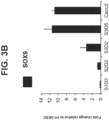
- Intestinal midgut endoderm cells may express transcription factors selected from SOX9, PDX1, KLF5 and HOXC5 as determined by IF analysis and qPCR.
- the intestinal midgut endoderm cells may not express transcription factors selected from SOX2, ALB, PTF1A as determined by IF analysis and qPCR, and HOXA13 and LGR5 as determined by qPCR.
- the definitive endoderm cells may be cultured in culture medium containing ascorbic acid and FGF7.
- the primitive gut tube cells may be cultured in culture medium containing retinoic acid and BMP2 or BMP4.
- the primitive gut tube cells are differentiated to intestinal midgut endoderm cells.
- Primitive gut tube cells may be differentiated to intestinal midgut endoderm cells in acidic conditions (acidic culture media). Acidic conditions may be culture in BLAR media.
- the pH of the acidic culture can range from 6.8 to 7.2 during the 5-day differentiation conditioning period from primitive gut tube cells to intestinal midgut endoderm cells (compared to normal pH at S2D2 being 7.3 or more).
- the intestinal midgut endoderm cells may form and maintain a monolayer in culture.
- human pluripotent stem cells are human hESC or iPS cells.
- the intestinal midgut endoderm cells express CDX2 and FOXA2 as determined by FACS analysis and qPCR.
- the intestinal midgut endoderm cells express transcription factors selected from SOX9, PDX1, KLF5 and HOXC5 as determined by IF analysis and qPCR.
- the intestinal midgut endoderm cells may not express transcription factors selected from SOX2, ALB, PTF1A as determined by IF analysis and qPCR, and HOXA13 and LGR5 as determined by qPCR.
- the intestinal midgut endoderm cells may express CDX2, FOXA2, SOX9, PDX1, KLF5 and HOXC5 by IF analysis and qPCR.
- the intestinal midgut endoderm cells do not express SOX2, ALB and PTF1A as determined by IF analysis and qPCR, and HOXA13 and LGR5 as determined by qPCR.
- a culture of cells expressing markers for intestinal midgut endoderm cells is generated; the cells lack expression of HAND 1 as determined by qPCR, a marker of mesoderm/mesenchymal lineage.
- Varying the differentiation protocol to induce pluripotent stem cells to midgut/hindgut endoderm lineage results in a mixed population of endoderm-mesenchyme CDX2 + mid-/hindgut cells that express HAND1 as determined by qPCR.
- the population of intestinal midgut endoderm cells may be substantially intestinal midgut endoderm cells.
- the population of intestinal midgut endoderm cells may comprise greater than 70% intestinal midgut endoderm cells, preferably greater than 80%, greater than 90%, and greater than 95% of intestinal midgut endoderm cells.
- the population of intestinal midgut endoderm cells may comprise less than 20% mesenchymal cells, preferably less than 15%, more preferably less than 10%, less than 5%, less than 2%, less than 1%, less than 0.5%.
- Intestinal midgut endoderm cells may lack expression of HANOI.
- the differentiated intestinal midgut endoderm cells may be used for treating a patient suffering from or at risk of developing diabetes alone or in combination with differentiated or mature endocrine cells, for example, enteroendocrine cells.
- differentiated intestinal midgut endoderm cells, or mixtures thereof may be administered to a patient having diabetes, for example Type 1 or Type 2 diabetes.
- Intestinal midgut endoderm cells may differentiate and mature to enteroendocrine cells.
- Intestinal midgut endoderm cells may differentiate and mature to enteroendocrine cells, and the enteroendocrine cells may express or secrete incretin type hormones.
- Incretin hormones may include GLP1 and GIP.
- administration of the cells may be via implantation or injection in the body, in particular implantation into subcutaneous space, omentum, liver, kidney, etc.
- intestinal midgut endoderm cells may be induced in vitro.
- intestinal midgut endoderm cells may further differentiate and mature in vivo.
- the intestinal midgut endoderm cells may further differentiate into enteroendocrine cells in vivo or in a mixture with enteroendocrine cells in vivo.
- enteroendocrine cells express or secrete incretin hormones.
- the enteroendocrine cell-secreted incretin hormones may include GLP1 and GIP.
- Intestinal midgut endoderm cells may serve as starting material for the identification of small molecules that promote at high efficiency the in vitro differentiation of intestinal midgut endoderm cell type into, first, enteroendocrine precursors, and then to incretin expressing or secreting enteroendocrine cells.
- cells and cell populations and mixtures such as those described herein may be micro- or macro-encapsulated and subsequently transplanted into a mammalian host.
- encapsulated cells or cells alone may be transplanted (administered) subcutaneously or anywhere else in the body whereby the cells may be vascularized and differentiate and mature in vivo.
- Intestinal midgut endoderm refers to a corresponding in vivo or in situ cell type which is CDX2-positive and FOXA2-positive endoderm cells present at about embryonic day 8.5 (“E8.5”) during mouse development, or at about the 3-4 week time point during human embryonic development.
- H1-hESC human embryonic stem cell line H1
- EZ8 media Cat#A1516901 Gibco, Thermo Fisher Scientific
- GlutaMAX TM 1:100 dilution (“1X concentration") (Life Technologies Corporation, Carlsbad, California, Catalog No. 35050-079) Ascorbic acid 0.25mM (Sigma Aldrich Co. LLC, St. Louis, Missouri, Catalog No. A4544)
- FGF2 100ng/ml (R & D Systems Inc., Minneapolis, Minnesota, Catalog No. 233-FB-025) Transforming Growth Factor beta (“TGF ⁇ ") 1 ng/ml (R & D Systems Inc., Minneapolis, Minnesota, Catalog No. 240-B-002) insulin-transferrin-selenium-ethanolamine (“ITS-X”) 1:200 dilution (Life Technologies, Carlsbad, California, Catalog No.
- IGF-1 Insulin-like Growth Factor-1
- Y-compound Rock Inhibitor Y-27632
- Stage 1 3 days: Cells were cultured for one day in the following Stage 1 media: MCDB-131 medium (Life Technologies, Carlsbad, California, Catalog No.
- ME120219L2 Sodium bicarbonate 2.7 g/1000 ml (Sigma-Aldrich Co. LLC, St. Louis, Missouri, Catalog No. 5761) FAF-BSA 0.5% GlutaMAX TM 1:100 dilution ("1X concentration") D-Glucose 4.5mM to obtain a concentration of 10mM D-Glucose (Sigma-Aldrich Co. LLC, St. Louis, Missouri, Catalog No. G8769) GDF8 100 ng/ml (Peprotech, Rocky Hill, New Jersey, Catalog No.
- Stage 2 Cells were treated for two days with the following medium: MCDB-131 medium Sodium bicarbonate 2.7g/1000ml FAF-BSA 0.5% GlutaMAX TM 1X concentration D-Glucose 4.5mM to obtain a concentration of 10mM D-Glucose Ascorbic Acid 0.25 mM FGF7 50 ng/ml (R&D Systems, Inc., Minneapolis, Minnesota, Catalog No. 251-K c.
- Stage 3 Cells were treated for five day with BLAR 001 custom medium: BLAR medium (custom manufactured by Life Technologies, Corporation, Carlsbad, California, Catalog No.
- ME120123L2 components listed on Table I) FAF-BSA 0.5% GlutaMAX TM 1X concentration D-Glucose 4.5mM to obtain a concentration of 10mM D-Glucose Retinoic Acid 1 ⁇ M (Sigma Aldrich, St. Louis, Missouri, Catalog No. R2625) BMP4 compound (R&D Systems, Inc., Minneapolis, Minnesota, Catalog No. 314-BP 50 ng/ml OR BMP2 compound (R&D Systems, Inc., Minneapolis, Minnesota, Catalog No. 355-BM),
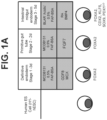
- BMP4 or BMP2 can be used during Stage 3 in this method to achieve intestinal midgut endoderm cells in monolayer with CDX2 and FOXA2 protein co-presence, as illustrated in Figures 1A - 4B (BMP4-based), and Figures 5A - 7 (BMP2-based).
- Table I List of components of BLAR medium.
- Intracellular antibody staining was accomplished by utilizing the LIVE/DEAD Violet Fluorescent reactive dye (Life Technologies, Carlsbad, California, Catalog No. L34955) at 4°C for 30 minutes followed by a single wash in cold PBS. Fixing of cells was in 300 ⁇ l of Cytofix/Cytoperm Buffer (BD Biosciences, San Jose, California, Catalog No. 554723) followed by two washes in Perm/Wash Buffer (BD Biosciences, San Jose, California, Catalog No. 554722).
- IF immunofluorescence
- FIG. 1A A summary of a differentiation method, including the important medium components, growth factors and small molecules that were added to each stage, and key stage-specific markers of the differentiating intestinal midgut endoderm cells (FOXA2; CDX2; KLF5; SOX9; PDX1 LO ) is depicted in Figure 1A .
- S2D2 7.35 ⁇ 0.04
- FIG. 1B As compared to the neutral pH noted for S2D2 (7.35 ⁇ 0.04), cells were exposed to slightly acidic conditions in the BLAR medium, during the entirety of stage 3 (pH; S3D1, 6.98 ⁇ 0.05; S3D2, 7.02 ⁇ 0.04; S3D5, 7.18 ⁇ 0.03) ( Figure 1B ), and as a result of lower sodium bicarbonate levels in BLAR medium.
- FIG. 1C depicts representative phase-contrast images of a S3D5 monolayer ( left ), and human epithelial colon adenocarcinoma cell line ("Caco-2") ( right ), which was used as a benchmark for characterization of differentiation. A uniform morphology at S3D5 was observed. Characterization of cell number using the Nucleocounter ® NC-100 (Chemometec, Alleroed, Denmark, Catalog No. 900-004) shows that one hESC differentiated into 4.56 ⁇ 2.60 S3D5 hindgut endoderm cells ( Figure 1D ).
- the differentiation method utilizing BMP4, efficiently generates and maintains intestinal midgut endoderm cells in monolayer, each comprising both CDX2 and FOXA2 on transcript and protein levels.
- Figure 2A shows that 90.0 ⁇ 5.85 percent of S3D5 cells were co-present for both CDX2 and FOXA2 protein, similar to percentage observed in Caco-2 cells (86.0 ⁇ 6.67).
- definitive endoderm DE - S1D3 cells were devoid of CDX2 and FOXA2 co-presence (2.3 ⁇ 1.2).
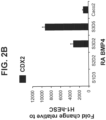
- Gene expression analysis shows CDX2 induced ( Figure 2B ), and FOXA2 maintained ( Figure 2C ) during Stage 3.
- Figure 2D shows that the induction of CDX2 protein levels and CDX2/FOXA2 protein co-presence after the establishment of the FOXA2-positive primitive gut endoderm stage, S2D2 ( Figure 2D -i), progressively increased through S3D2 ( Figure 2D -ii), and at S3D5 ( Figure 2D -iii) reached similar levels as seen in Caco-2 cells ( Figure 2D -iv).
- CDX2 protein is depicted on the bottom row
- FOXA2 protein is depicted on the top row.
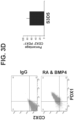
- S3D5 cells did not express the anterior endoderm TF SOX2, and only 1.45 ⁇ 0.15 of S3D5 cells exhibited SOX2 and CDX2 co-presence ( Figure 3G - bottom; 3I), and gene expression was below levels seen in hESC and Caco-2 cells ( Figure 3H ).
- Protein co-presence of KLF5 within CDX2-positive cells at S3D5 was observed ( Figure 3K ).
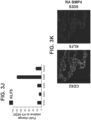
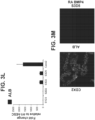
- ALB gene expression Figure 3L
- protein presence Figure 3M
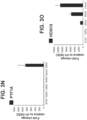
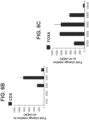
- FIG. 3N shows that the gene expression of PTF1A, a pancreas lineage marker, was not induced in S3D5 cells, as compared to pancreas-biased S4D3 cells.
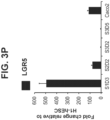
- Figure 3P shows that LGR5, a marker of embryonic intestinal endoderm beginning at mid-gestation in the mouse, was not induced in S3D5 cells ( Figure 3P ).
- FIG. 3Q shows that HOXA13, a marker of the intestinal hindgut endoderm, was not induced in S3D5 cells ( FIG. 3P ).
- Figures 4A - 4B illustrate the proliferative profile of differentiating S3D5 cells.
- Figure 4A depicts Caco-2 cells, where most of CDX2-protein positive cells were in active cell cycle (as indicated by the co-expression with KI67 protein) (left), and the proliferative index of the H1-hESC-derived cells (disclosed for reference only) during Stage 3 that decreased over time (S3D2 - middle; S3D5 - right).
- CDX2 (top row) and KI67 (bottom row) protein levels are depicted as single channel images.
- BMP2 can be used as an alternative to BMP4, during Stage 3 in this method to produce a monolayer of intestinal midgut endoderm cells with CDX2 and FOXA2 protein co-presence.
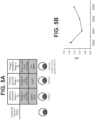
- Figure 5A depicts a summary of a differentiation method, including the medium components, growth factors and small molecules that were added to each stage, and key stage-specific markers of the differentiating intestinal midgut endoderm cells (FOXA2, CDX2, KLF5, SOX9, and PDX1 LO ).
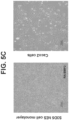
- FIG. 5C depicts representative phase-contrast images of a S3D5 monolayer (left), and Caco-2 cells ( right ) . A uniform morphology at S3D5 was observed.
- the differentiation method generates and maintains proper intestinal midgut endoderm cells in monolayer, each comprising of CDX2, FOXA2, KLF5, SOX9, PDX1 LO and HOXC5 on transcript and protein levels. All TF protein levels are depicted as single channel IF images.
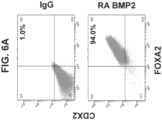
- Figure 6A shows that 94 percent of S3D5 cells were co-present for both CDX2 and FOXA2 protein, similar to percentage seen in Caco-2 cells (86.0 ⁇ 6.67).
- Gene expression analysis shows that CDX2 was induced ( Figure 6B ), and FOXA2 maintained ( Figure 6C ) during Stage 3.
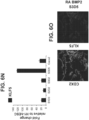
- Figure 6D shows that CDX2 protein levels and complete CDX2/FOXA2 protein co-presence were induced at S3D5 ( Figure 6D ), which is comparable to levels observed in Caco-2 cells ( Figure 2D -iv).
- Figure 6E shows that 99.8 percent of cells were co-present for both CDX2 and SOX9 at S3D5. Strong induction of SOX9 gene expression was observed similar to levels in Caco-2 cells ( Figure 6F ), and protein presence as assessed by IF-analysis was observed ( Figure 6G ). 45.5 percent of cells were co-positive for both CDX2 and PDX1 ( Figure 6H - bottom).
- PDX1 gene expression was induced at low levels, when compared to pancreas-biased S4D3 cells ( Figure 6I ), and low to absent protein levels was reflected in the IF-analysis ( Figure 6J ).
- Anterior endoderm TF SOX2 was not observed in S3D5 cells, as 0.8 percent of S3D5 cells exhibited SOX2 and CDX2 co-presence ( Figure 6K - bottom; 6M), and gene expression was below levels seen in hESC and Caco-2 cells ( Figure 6L ).
- FIG. 6O Protein co-presence of KLF5 within CDX2-positive cells at S3D5 was observed ( Figure 6O ).
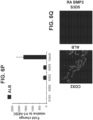
- ALB gene expression ( Figure 6P ), and protein presence ( Figure 6Q ) was not observed in S3D5 cells.
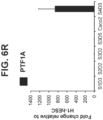
- the gene expression of pancreas lineage allocating TF, PTF1A was not induced in S3D5 cells, as compared to pancreas-biased S4D3 cells ( Figure 6R ).
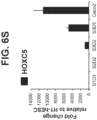
- the homeobox gene HOXC5 present in the embryonic intestinal midgut endoderm, was strongly induced in S3D5 cells ( Figure 6S ).
- Figure 6T demonstrates that LGR5, a marker of embryonic intestinal endoderm beginning at mid-gestation, was not induced in S3D5 cells.
- FIG. 6U demonstrates that HOXA13, a marker of the intestinal hindgut endoderm, was not induced in S3D5 cells ( FIG. 6U ).
- Figure 7 characterizes the proliferative profile of differentiating S3D5 cells, showing Caco-2 cells, where most of CDX2-protein positive cells were in active cell cycle (as indicated by the co-expression with KI67 protein) (left), compared to the proliferative index of the H1-hESC-derived cells (disclosed for reference only) during Stage 3 that was lower (S3D5 - right).
- CDX2 (top row) and KI67 (bottom row) protein levels are depicted as single channel images.
- This example demonstrates the endoderm-mesenchyme-mixed quality of the CDX2 + mid-/hindgut cells generated from intestinal culturing beginning at the definitive endoderm stage using FGF4 and WNT-agonists ( Spence et al., Nature, 2011; 470:105-109 ; Watson et al. Nature Med, 2014; 11:1310-1314 ).
- FGF4 and WNT-agonists Spence et al., Nature, 2011; 470:105-109 ; Watson et al. Nature Med, 2014; 11:1310-1314 .
- Example 2 the differentiation conditions outlined in this Example differ from Example 1 by the following: (i) intestinal condition starting point begins at the definitive endoderm stage; (ii) different growth factors and small molecules are used than RA and BMP4 or BMP2; and (iii) acidic culture conditions are not used.
- H1-hESC cells which are disclosed for reference only, were cultured and maintained as described in Example 1.
- Stage 1-Mimic (3 days) Cells were cultured for one day in the following Stage 1 medium:
- RMPI 1640 medium (Thermo Fisher Scientific, Catalog No. 11875) Penicillin-Streptomycin 1X concentration (1:100 dilution from stock concentration) (Thermo Fisher Scientific, Catalog No. 15140122) L-Glutamine 2mM (Thermo Fisher Scientific, Catalog No. 25030081) Activin A 100 ng/ml (R&D Systems, Inc., Minneapolis, Minnesota, Catalog No. 338-AC)
- FBS Fetal Bovine Serum
- Post-Stage 1 (2 days): For example, pS1d1 is post-Stage 1 day 1 and pS1d2 is post-Stage 1 day 2.
- Cells were cultured for two days in the following Post-Stage 1 medium : RMPI 1640 medium Penicillin-Streptomycin 1X concentration (1:100 dilution from stock concentration) L-Glutamine 2mM FGF4 500 ng/ml (R&D Systems, Inc., Minneapolis, Minnesota, Catalog No. 235-F4) Defined Fetal Bovine Serum (FBS) 2.0% WNT3A 500 ng/ml (R&D Systems, Inc., Minneapolis, Minnesota, Catalog No. 5036-WN) OR 3 ⁇ M Chiron99201 (Stemgent, Catalog No. 0400041)
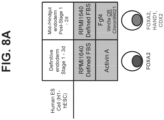
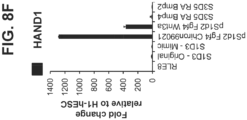
- FIG. 8A A summary of the differentiation methods, including medium components, growth factors and small molecules added to each stage, and signature or key stage-specific markers of the differentiating intestinal mid-/hindgut endoderm cells (HANOI) is depicted in FIG. 8A .
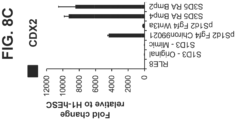
- Intestinal conditioning (post-Stage 1), started at the definitive endoderm stage, with 500 ng/ml FGF4, and either 3 ⁇ M Chiron99021 (Watson et al. ), or 500 ng/ml Wnt3A (Spence et al .).
- the term "Stage 1-mimic” refers to the definitive endoderm differentiation protocol in this example that differs from the "S1D3-Original” that refers to Stage 1 conditioning described in Example 1.
- FIG. 1 A summary of the differentiation methods, including medium components, growth factors and small molecules added to each stage, and signature or key stage-specific markers of the differentiating intestinal mid-/hindgut endoderm cells (HANOI) is depicted in FIG. 8
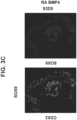
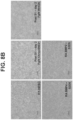
- FIG. 8B shows phase-contrast images of H1-hESC cells (disclosed for reference only) (top row, left ), post-Stage 1 cells conditioned two days with 500 ng/ml FGF4 and 3 ⁇ M Chiron99021 ( top row, middle ), post-Stage 1 cells conditioned two days with 500 ng/ml FGF4 and 500 ng/ml Wnt3A ( top row, right ), along with a S3D5 monolayer conditioned by RA/BMP4 ( bottom row, left ), and a S3D5 monolayer conditioned by RA/BMP2 ( bottom row, right ) (from Example 1).
Landscapes
- Health & Medical Sciences (AREA)
- Life Sciences & Earth Sciences (AREA)
- Engineering & Computer Science (AREA)
- Biomedical Technology (AREA)
- Cell Biology (AREA)
- Chemical & Material Sciences (AREA)
- Zoology (AREA)
- Biotechnology (AREA)
- General Health & Medical Sciences (AREA)
- Organic Chemistry (AREA)
- Bioinformatics & Cheminformatics (AREA)
- Wood Science & Technology (AREA)
- Genetics & Genomics (AREA)
- Developmental Biology & Embryology (AREA)
- Medicinal Chemistry (AREA)
- Pharmacology & Pharmacy (AREA)
- Animal Behavior & Ethology (AREA)
- Veterinary Medicine (AREA)
- Public Health (AREA)
- Immunology (AREA)
- Virology (AREA)
- Epidemiology (AREA)
- Biochemistry (AREA)
- General Engineering & Computer Science (AREA)
- Microbiology (AREA)
- Diabetes (AREA)
- Reproductive Health (AREA)
- Gastroenterology & Hepatology (AREA)
- Nutrition Science (AREA)
- Physiology (AREA)
- Gynecology & Obstetrics (AREA)
- Nuclear Medicine, Radiotherapy & Molecular Imaging (AREA)
- General Chemical & Material Sciences (AREA)
- Chemical Kinetics & Catalysis (AREA)
- Obesity (AREA)
- Hematology (AREA)
- Endocrinology (AREA)
- Emergency Medicine (AREA)
- Micro-Organisms Or Cultivation Processes Thereof (AREA)
- Medicines Containing Material From Animals Or Micro-Organisms (AREA)
Priority Applications (1)
| Application Number | Priority Date | Filing Date | Title |
|---|---|---|---|
| EP24179748.9A EP4450076A2 (en) | 2016-04-14 | 2017-04-04 | Differentiation of pluripotent stem cells to intestinal midgut endoderm cells |
Applications Claiming Priority (2)
| Application Number | Priority Date | Filing Date | Title |
|---|---|---|---|
| US201662322636P | 2016-04-14 | 2016-04-14 | |
| PCT/US2017/025847 WO2017180361A1 (en) | 2016-04-14 | 2017-04-04 | Differentiation of pluripotent stem cells to intestinal midgut endoderm cells |
Related Child Applications (1)
| Application Number | Title | Priority Date | Filing Date |
|---|---|---|---|
| EP24179748.9A Division EP4450076A2 (en) | 2016-04-14 | 2017-04-04 | Differentiation of pluripotent stem cells to intestinal midgut endoderm cells |
Publications (3)
| Publication Number | Publication Date |
|---|---|
| EP3443073A1 EP3443073A1 (en) | 2019-02-20 |
| EP3443073A4 EP3443073A4 (en) | 2019-10-23 |
| EP3443073B1 true EP3443073B1 (en) | 2024-06-05 |
Family
ID=60039713
Family Applications (2)
| Application Number | Title | Priority Date | Filing Date |
|---|---|---|---|
| EP17782848.0A Active EP3443073B1 (en) | 2016-04-14 | 2017-04-04 | Differentiation of pluripotent stem cells to intestinal midgut endoderm cells |
| EP24179748.9A Withdrawn EP4450076A2 (en) | 2016-04-14 | 2017-04-04 | Differentiation of pluripotent stem cells to intestinal midgut endoderm cells |
Family Applications After (1)
| Application Number | Title | Priority Date | Filing Date |
|---|---|---|---|
| EP24179748.9A Withdrawn EP4450076A2 (en) | 2016-04-14 | 2017-04-04 | Differentiation of pluripotent stem cells to intestinal midgut endoderm cells |
Country Status (17)
| Country | Link |
|---|---|
| US (2) | US10420803B2 (https=) |
| EP (2) | EP3443073B1 (https=) |
| JP (3) | JP6705911B2 (https=) |
| KR (4) | KR102162505B1 (https=) |
| CN (2) | CN109563478B (https=) |
| AR (1) | AR108134A1 (https=) |
| AU (1) | AU2017251651B2 (https=) |
| BR (1) | BR112018070293A2 (https=) |
| CA (1) | CA3020905A1 (https=) |
| DK (1) | DK3443073T3 (https=) |
| MA (1) | MA45479A (https=) |
| MX (1) | MX2018012629A (https=) |
| PH (1) | PH12018502061A1 (https=) |
| RU (2) | RU2741114C2 (https=) |
| SG (1) | SG11201807915QA (https=) |
| TW (1) | TW201803983A (https=) |
| WO (1) | WO2017180361A1 (https=) |
Families Citing this family (7)
| Publication number | Priority date | Publication date | Assignee | Title |
|---|---|---|---|---|
| US10420803B2 (en) * | 2016-04-14 | 2019-09-24 | Janssen Biotech, Inc. | Differentiation of pluripotent stem cells to intestinal midgut endoderm cells |
| EP3975926A1 (en) | 2019-05-31 | 2022-04-06 | W.L. Gore & Associates, Inc. | A biocompatible membrane composite |
| CN114173837A (zh) | 2019-05-31 | 2022-03-11 | W.L.戈尔及同仁股份有限公司 | 生物相容性膜复合材料 |
| CA3139292C (en) | 2019-05-31 | 2025-06-10 | Viacyte, Inc. | CELL ENCAPSULATION DEVICES WITH REGULATED OXYGEN DIFFUSION DISTANCES |
| EP3976236A1 (en) | 2019-05-31 | 2022-04-06 | W.L. Gore & Associates Inc. | A biocompatible membrane composite |
| CN110540962B (zh) * | 2019-08-28 | 2022-02-25 | 北京协同创新研究院 | 一种制备人定型内胚层细胞的方法 |
| WO2022025269A1 (ja) * | 2020-07-30 | 2022-02-03 | 国立研究開発法人理化学研究所 | 膀胱オルガノイド及びその製造方法 |
Family Cites Families (268)
| Publication number | Priority date | Publication date | Assignee | Title |
|---|---|---|---|---|
| US3209652A (en) | 1961-03-30 | 1965-10-05 | Burgsmueller Karl | Thread whirling method |
| AT326803B (de) | 1968-08-26 | 1975-12-29 | Binder Fa G | Maschenware sowie verfahren zur herstellung derselben |
| US3935067A (en) | 1974-11-22 | 1976-01-27 | Wyo-Ben Products, Inc. | Inorganic support for culture media |
| CA1201400A (en) | 1982-04-16 | 1986-03-04 | Joel L. Williams | Chemically specific surfaces for influencing cell activity during culture |
| US4499802A (en) | 1982-09-29 | 1985-02-19 | Container Graphics Corporation | Rotary cutting die with scrap ejection |
| US4537773A (en) | 1983-12-05 | 1985-08-27 | E. I. Du Pont De Nemours And Company | α-Aminoboronic acid derivatives |
| US4557264A (en) | 1984-04-09 | 1985-12-10 | Ethicon Inc. | Surgical filament from polypropylene blended with polyethylene |
| US5089396A (en) | 1985-10-03 | 1992-02-18 | Genentech, Inc. | Nucleic acid encoding β chain prodomains of inhibin and method for synthesizing polypeptides using such nucleic acid |
| US5215893A (en) | 1985-10-03 | 1993-06-01 | Genentech, Inc. | Nucleic acid encoding the ba chain prodomains of inhibin and method for synthesizing polypeptides using such nucleic acid |
| US4737578A (en) | 1986-02-10 | 1988-04-12 | The Salk Institute For Biological Studies | Human inhibin |
| US5863531A (en) | 1986-04-18 | 1999-01-26 | Advanced Tissue Sciences, Inc. | In vitro preparation of tubular tissue structures by stromal cell culture on a three-dimensional framework |
| US5804178A (en) | 1986-11-20 | 1998-09-08 | Massachusetts Institute Of Technology | Implantation of cell-matrix structure adjacent mesentery, omentum or peritoneum tissue |
| US5567612A (en) | 1986-11-20 | 1996-10-22 | Massachusetts Institute Of Technology | Genitourinary cell-matrix structure for implantation into a human and a method of making |
| CA1340581C (en) | 1986-11-20 | 1999-06-08 | Joseph P. Vacanti | Chimeric neomorphogenesis of organs by controlled cellular implantation using artificial matrices |
| NZ229354A (en) | 1988-07-01 | 1990-09-26 | Becton Dickinson Co | Treating polymer surfaces with a gas plasma and then applying a layer of endothelial cells to the surface |
| EP0363125A3 (en) | 1988-10-03 | 1990-08-16 | Hana Biologics Inc. | Proliferated pancreatic endocrine cell product and process |
| SU1767433A1 (ru) | 1989-11-27 | 1992-10-07 | Пермский государственный медицинский институт | Способ определени инсулинорезистентности имунного генеза у больных сахарным диабетом I типа |
| US5837539A (en) | 1990-11-16 | 1998-11-17 | Osiris Therapeutics, Inc. | Monoclonal antibodies for human mesenchymal stem cells |
| US5795965A (en) | 1991-04-25 | 1998-08-18 | Chugai Seiyaku Kabushiki Kaisha | Reshaped human to human interleukin-6 receptor |
| US5449383A (en) | 1992-03-18 | 1995-09-12 | Chatelier; Ronald C. | Cell growth substrates |
| GB9206861D0 (en) | 1992-03-28 | 1992-05-13 | Univ Manchester | Wound healing and treatment of fibrotic disorders |
| CA2114282A1 (en) | 1993-01-28 | 1994-07-29 | Lothar Schilder | Multi-layered implant |
| JP3525221B2 (ja) | 1993-02-17 | 2004-05-10 | 味の素株式会社 | 免疫抑制剤 |
| AU687386B2 (en) | 1993-04-08 | 1998-02-26 | Human Cell Cultures, Inc. | Cell culturing method and medium |
| US5523226A (en) | 1993-05-14 | 1996-06-04 | Biotechnology Research And Development Corp. | Transgenic swine compositions and methods |
| GB9310557D0 (en) | 1993-05-21 | 1993-07-07 | Smithkline Beecham Plc | Novel process and apparatus |
| TW257671B (https=) | 1993-11-19 | 1995-09-21 | Ciba Geigy | |
| US5834308A (en) | 1994-04-28 | 1998-11-10 | University Of Florida Research Foundation, Inc. | In vitro growth of functional islets of Langerhans |
| US6001647A (en) | 1994-04-28 | 1999-12-14 | Ixion Biotechnology, Inc. | In vitro growth of functional islets of Langerhans and in vivo uses thereof |
| US6703017B1 (en) | 1994-04-28 | 2004-03-09 | Ixion Biotechnology, Inc. | Reversal of insulin-dependent diabetes by islet-producing stem cells, islet progenitor cells and islet-like structures |
| US6083903A (en) | 1994-10-28 | 2000-07-04 | Leukosite, Inc. | Boronic ester and acid compounds, synthesis and uses |
| EP0800829B2 (en) | 1994-12-29 | 2012-07-25 | Chugai Seiyaku Kabushiki Kaisha | Use of a pm-1 antibody or of a mh 166 antibody for enhancing the anti-tumor effect of cisplatin or carboplatin |
| US5843780A (en) | 1995-01-20 | 1998-12-01 | Wisconsin Alumni Research Foundation | Primate embryonic stem cells |
| US5718922A (en) | 1995-05-31 | 1998-02-17 | Schepens Eye Research Institute, Inc. | Intravitreal microsphere drug delivery and method of preparation |
| US5908782A (en) | 1995-06-05 | 1999-06-01 | Osiris Therapeutics, Inc. | Chemically defined medium for human mesenchymal stem cells |
| US5681561A (en) | 1995-06-07 | 1997-10-28 | Life Medical Sciences, Inc. | Compositions and methods for improving autologous fat grafting |
| CA2277278A1 (en) | 1997-01-10 | 1998-07-16 | Life Technologies, Inc. | Embryonic stem cell serum replacement |
| US5965583A (en) | 1997-04-24 | 1999-10-12 | Ortho-Mcneil Pharmaceutical, Inc. | Substituted imidazoles useful in the treatment of inflammatory disease |
| DE69837491T2 (de) | 1997-07-03 | 2008-01-17 | Osiris Therapeutics, Inc. | Menschliche mesenchymale stammzellen aus peripherem blut |
| US6670127B2 (en) | 1997-09-16 | 2003-12-30 | Egea Biosciences, Inc. | Method for assembly of a polynucleotide encoding a target polypeptide |
| PT1015576E (pt) | 1997-09-16 | 2005-09-30 | Egea Biosciences Llc | Metodo para a sintese quimica completa e montagem de genes e de genomas |
| CA2307807C (en) | 1997-10-23 | 2008-09-02 | Andrea G. Bodnar | Methods and materials for the growth of primate-derived primordial stem cells in feeder-free culture |
| US6372779B1 (en) | 1997-12-29 | 2002-04-16 | Ortho Pharmaceutical Corporation | Anti-inflammatory compounds |
| US6328960B1 (en) | 1998-03-18 | 2001-12-11 | Osiris Therapeutics, Inc. | Mesenchymal stem cells for prevention and treatment of immune responses in transplantation |
| MY132496A (en) | 1998-05-11 | 2007-10-31 | Vertex Pharma | Inhibitors of p38 |
| US6413773B1 (en) | 1998-06-01 | 2002-07-02 | The Regents Of The University Of California | Phosphatidylinositol 3-kinase inhibitors as stimulators of endocrine differentiation |
| US7410798B2 (en) | 2001-01-10 | 2008-08-12 | Geron Corporation | Culture system for rapid expansion of human embryonic stem cells |
| US6667176B1 (en) | 2000-01-11 | 2003-12-23 | Geron Corporation | cDNA libraries reflecting gene expression during growth and differentiation of human pluripotent stem cells |
| US6610540B1 (en) | 1998-11-18 | 2003-08-26 | California Institute Of Technology | Low oxygen culturing of central nervous system progenitor cells |
| US6413556B1 (en) | 1999-01-08 | 2002-07-02 | Sky High, Llc | Aqueous anti-apoptotic compositions |
| EP1144597A2 (en) | 1999-01-21 | 2001-10-17 | Vitro Diagnostics, Inc. | Immortalized cell lines and methods of making the same |
| US6800460B1 (en) | 1999-03-11 | 2004-10-05 | Schering Corporation | Mammalian cytokine complexes |
| US6815203B1 (en) | 1999-06-23 | 2004-11-09 | Joslin Diabetes Center, Inc. | Methods of making pancreatic islet cells |
| US6306424B1 (en) | 1999-06-30 | 2001-10-23 | Ethicon, Inc. | Foam composite for the repair or regeneration of tissue |
| US6333029B1 (en) | 1999-06-30 | 2001-12-25 | Ethicon, Inc. | Porous tissue scaffoldings for the repair of regeneration of tissue |
| AU7719300A (en) | 1999-09-27 | 2001-04-30 | Ixion Biotechnology, Inc. | Reversal of insulin-dependent diabetes by islet-producing stem cells, islet progenitor cells and islet-like structures |
| US6685936B2 (en) | 1999-10-12 | 2004-02-03 | Osiris Therapeutics, Inc. | Suppressor cells induced by culture with mesenchymal stem cells for treatment of immune responses in transplantation |
| US20030082155A1 (en) | 1999-12-06 | 2003-05-01 | Habener Joel F. | Stem cells of the islets of langerhans and their use in treating diabetes mellitus |
| AU778155B2 (en) | 1999-12-13 | 2004-11-18 | Scripps Research Institute, The | Markers for identification and isolation of pancreatic islet alpha and beta cell progenitors |
| US7005252B1 (en) | 2000-03-09 | 2006-02-28 | Wisconsin Alumni Research Foundation | Serum free cultivation of primate embryonic stem cells |
| US7439064B2 (en) | 2000-03-09 | 2008-10-21 | Wicell Research Institute, Inc. | Cultivation of human embryonic stem cells in the absence of feeder cells or without conditioned medium |
| US6436704B1 (en) | 2000-04-10 | 2002-08-20 | Raven Biotechnologies, Inc. | Human pancreatic epithelial progenitor cells and methods of isolation and use thereof |
| US6458589B1 (en) | 2000-04-27 | 2002-10-01 | Geron Corporation | Hepatocyte lineage cells derived from pluripotent stem cells |
| EP1302534A4 (en) | 2000-06-26 | 2004-06-16 | Renomedix Inst Inc | CELL FRACTION WITH CELLS WHICH ARE ABLE TO DIFFERENTIATE IN NERVOUS CELLS |
| CN100525768C (zh) | 2000-10-23 | 2009-08-12 | 史密丝克莱恩比彻姆公司 | 新化合物 |
| ATE301661T1 (de) | 2000-12-08 | 2005-08-15 | Ortho Mcneil Pharm Inc | Makroheterocyclische verbindungen als kinase inhibitoren |
| BR0116468A (pt) | 2000-12-08 | 2004-06-29 | Ortho Mcneil Pharm Inc | Compostos de pirrolina substituìda por indazolila como inibidores de cinase |
| US6599323B2 (en) | 2000-12-21 | 2003-07-29 | Ethicon, Inc. | Reinforced tissue implants and methods of manufacture and use |
| EP1366148A2 (en) | 2001-01-24 | 2003-12-03 | THE GOVERNMENT OF THE UNITED STATES OF AMERICA, represented by THE DEPARTMENT OF HEALTH & HUMAN SERVICES | Differentiation of stem cells to pancreatic endocrine cells |
| ES2571219T3 (es) | 2001-01-25 | 2024-09-23 | The United States Of America Represented By The Sec Dep Of Health And Human Services | Formulación de compuestos de ácido borónico |
| US6656488B2 (en) | 2001-04-11 | 2003-12-02 | Ethicon Endo-Surgery, Inc. | Bioabsorbable bag containing bioabsorbable materials of different bioabsorption rates for tissue engineering |
| WO2002086107A2 (en) | 2001-04-19 | 2002-10-31 | DeveloGen Aktiengesellschaft für entwicklungsbiologische Forschung | A method for differentiating stem cells into insulin-producing cells |
| CN100516204C (zh) | 2001-04-24 | 2009-07-22 | 味之素株式会社 | 干细胞及其分离方法 |
| EP1393066A4 (en) | 2001-05-15 | 2006-01-25 | Rappaport Family Inst For Res | INSULIN-PRODUCING CELLS DERIVED FROM HUMAN EMBRYONIC STEM CELLS |
| US6626950B2 (en) | 2001-06-28 | 2003-09-30 | Ethicon, Inc. | Composite scaffold with post anchor for the repair and regeneration of tissue |
| KR100418195B1 (ko) | 2001-07-05 | 2004-02-11 | 주식회사 우리기술 | 전력케이블의 다중절연진단장치 및 그 방법 |
| GB0117583D0 (en) | 2001-07-19 | 2001-09-12 | Astrazeneca Ab | Novel compounds |
| WO2003014313A2 (en) | 2001-08-06 | 2003-02-20 | Bresagen, Ltd. | Alternative compositions and methods for the culture of stem cells |
| US6617152B2 (en) | 2001-09-04 | 2003-09-09 | Corning Inc | Method for creating a cell growth surface on a polymeric substrate |
| EP1298201A1 (en) | 2001-09-27 | 2003-04-02 | Cardion AG | Process for the production of cells exhibiting an islet-beta-cell-like state |
| CA2463914A1 (en) | 2001-10-18 | 2003-04-24 | Ixion Biotechnology, Inc. | Conversion of liver stem and progenitor cells to pancreatic functional cells |
| EP1442115B9 (en) | 2001-11-15 | 2009-12-16 | Children's Medical Center Corporation | Methods of isolation, expansion and differentiation of fetal stem cells from chorionic villus, amniotic fluid, and placenta and therapeutic uses thereof |
| KR100930139B1 (ko) | 2001-12-07 | 2009-12-07 | 사이토리 테라퓨틱스, 인크. | 처리된 리포애스퍼레이트 세포로 환자를 치료하기 위한시스템 및 방법 |
| IL162131A0 (en) | 2001-12-07 | 2005-11-20 | Geron Corp | Islet cells from human embryonic stem cells |
| AU2002218893A1 (en) | 2001-12-21 | 2003-07-09 | Thromb-X Nv | Compositions for the in vitro derivation and culture of embryonic stem (es) cell lines with germline transmission capability |
| JP2005512593A (ja) | 2001-12-28 | 2005-05-12 | セルアーティス アーベー | 多能性のヒト胚盤胞由来幹細胞株の樹立方法 |
| US20030162290A1 (en) | 2002-01-25 | 2003-08-28 | Kazutomo Inoue | Method for inducing differentiation of embryonic stem cells into functioning cells |
| US20030180268A1 (en) | 2002-02-05 | 2003-09-25 | Anthony Atala | Tissue engineered construct for supplementing or replacing a damaged organ |
| US20050208029A1 (en) | 2002-04-17 | 2005-09-22 | Akihiro Umezawa | Method of forming pancreatic beta cells from mesenchymal cells |
| US20040161419A1 (en) | 2002-04-19 | 2004-08-19 | Strom Stephen C. | Placental stem cells and uses thereof |
| GB0210539D0 (en) | 2002-05-08 | 2002-06-19 | Univ Edinburgh | Control of es cell self renewal and lineage specification, and medium therefor |
| WO2003095452A1 (en) | 2002-05-08 | 2003-11-20 | Janssen Pharmaceutica N.V. | Substituted pyrroline kinase inhibitors |
| US20060003446A1 (en) | 2002-05-17 | 2006-01-05 | Gordon Keller | Mesoderm and definitive endoderm cell populations |
| WO2003102171A1 (en) | 2002-05-28 | 2003-12-11 | Becton, Dickinson And Company | Expansion and transdifferentiation of human acinar cells |
| EP1513830A1 (en) | 2002-06-05 | 2005-03-16 | Janssen Pharmaceutica N.V. | Bisindolyl-maleimid derivatives as kinase inhibitors |
| GB0212976D0 (en) | 2002-06-06 | 2002-07-17 | Tonejet Corp Pty Ltd | Ejection method and apparatus |
| CN1171991C (zh) | 2002-07-08 | 2004-10-20 | 徐如祥 | 人神经干细胞的培养方法 |
| US6877147B2 (en) | 2002-07-22 | 2005-04-05 | Broadcom Corporation | Technique to assess timing delay by use of layout quality analyzer comparison |
| US7838290B2 (en) | 2002-07-25 | 2010-11-23 | The Scripps Research Institute | Hematopoietic stem cells and methods of treatment of neovascular eye diseases therewith |
| JP2005534345A (ja) | 2002-07-29 | 2005-11-17 | エス セル インターナショナル ピーティーイー リミテッド | インスリン陽性、グルコース応答性細胞の分化のための多段階方法 |
| WO2004016747A2 (en) | 2002-08-14 | 2004-02-26 | University Of Florida | Bone marrow cell differentiation |
| JP2005537803A (ja) | 2002-09-06 | 2005-12-15 | アムサイト インコーポレーティッド | Cd56陽性ヒト成体膵臓内分泌前駆細胞 |
| US9969977B2 (en) | 2002-09-20 | 2018-05-15 | Garnet Biotherapeutics | Cell populations which co-express CD49c and CD90 |
| US20040062753A1 (en) | 2002-09-27 | 2004-04-01 | Alireza Rezania | Composite scaffolds seeded with mammalian cells |
| WO2004044158A2 (en) | 2002-11-08 | 2004-05-27 | The Johns Hopkins University | Human embryonic stem cell cultures, and compositions and methods for growing same |
| US7144999B2 (en) | 2002-11-23 | 2006-12-05 | Isis Pharmaceuticals, Inc. | Modulation of hypoxia-inducible factor 1 alpha expression |
| US20060040385A1 (en) | 2002-12-05 | 2006-02-23 | Technion Research & Development Foundation Ltd. | Cultured human pancreatic islets, and uses thereof |
| AU2003303071B2 (en) | 2002-12-16 | 2009-04-23 | Technion Research & Development Foundation Ltd. | Methods of preparing feeder cells-free, xeno-free human embryonic stem cells and stem cell cultures prepared using same |
| US20050118148A1 (en) | 2002-12-20 | 2005-06-02 | Roland Stein | Compositions and methods related to mammalian Maf-A |
| EP1588708A4 (en) | 2003-01-29 | 2006-03-01 | Takeda Pharmaceutical | METHOD FOR PRODUCING COATED PREPARATION |
| RU2359671C2 (ru) | 2003-01-29 | 2009-06-27 | Такеда Фармасьютикал Компани Лимитед | Способ получения препарата с покрытием |
| US20070154981A1 (en) | 2003-02-14 | 2007-07-05 | The Board Of Trustees Of The Leland Stanford Junior University | Insulin-producing cells derived from stem cells |
| US20070155661A1 (en) | 2003-02-14 | 2007-07-05 | The Board Of Trustees Of The Leland Standord Junior University | Methods and compositions for modulating the development of stem cells |
| WO2004087885A2 (en) | 2003-03-27 | 2004-10-14 | Ixion Biotechnology, Inc. | Method for transdifferentiation of non-pancreatic stem cells to the pancreatic pathway |
| US20060194315A1 (en) | 2003-03-31 | 2006-08-31 | Condie Brian G | Compositions and methods for the control, differentiaton and/or manipulation of pluripotent cells through a gamma-secretase signaling pathway |
| US20090203141A1 (en) | 2003-05-15 | 2009-08-13 | Shi-Lung Lin | Generation of tumor-free embryonic stem-like pluripotent cells using inducible recombinant RNA agents |
| WO2005001080A2 (en) | 2003-06-27 | 2005-01-06 | Ethicon, Incorporated | Postpartum-derived cells for use in treatment of disease of the heart and circulatory system |
| IL161903A0 (en) | 2003-07-17 | 2005-11-20 | Gamida Cell Ltd | Ex vivo progenitor and stem cell expansion for usein the treatment of disease of endodermally- deri ved organs |
| ITRM20030395A1 (it) | 2003-08-12 | 2005-02-13 | Istituto Naz Per Le Malattie Infettive Lazz | Terreno di coltura per il mantenimento, la proliferazione e il differenziamento di cellule di mammifero. |
| US7569385B2 (en) | 2003-08-14 | 2009-08-04 | The Regents Of The University Of California | Multipotent amniotic fetal stem cells |
| US7157275B2 (en) | 2003-08-15 | 2007-01-02 | Becton, Dickinson And Company | Peptides for enhanced cell attachment and growth |
| CA2536067A1 (en) | 2003-08-27 | 2005-03-10 | Stemcells California, Inc. | Enriched pancreatic stem cell and progenitor cell populations, and methods for identifying, isolating and enriching for these populations |
| WO2005058301A1 (en) | 2003-12-17 | 2005-06-30 | Allergan, Inc. | Methods for treating retinoid responsive disorders using selective inhibitors of cyp26a and cyp26b |
| US20060030042A1 (en) | 2003-12-19 | 2006-02-09 | Ali Brivanlou | Maintenance of embryonic stem cells by the GSK-3 inhibitor 6-bromoindirubin-3'-oxime |
| US7541185B2 (en) | 2003-12-23 | 2009-06-02 | Cythera, Inc. | Methods for identifying factors for differentiating definitive endoderm |
| US7625753B2 (en) | 2003-12-23 | 2009-12-01 | Cythera, Inc. | Expansion of definitive endoderm cells |
| US20050266554A1 (en) | 2004-04-27 | 2005-12-01 | D Amour Kevin A | PDX1 expressing endoderm |
| CN103898047B (zh) | 2003-12-23 | 2020-03-03 | 维亚希特公司 | 定形内胚层 |
| CN109628371B (zh) | 2003-12-23 | 2021-02-19 | 维亚希特公司 | 定形内胚层 |
| TWI334443B (en) | 2003-12-31 | 2010-12-11 | Ind Tech Res Inst | Method of single cell culture of undifferentiated human embryonic stem cells |
| WO2005065354A2 (en) | 2003-12-31 | 2005-07-21 | The Burnham Institute | Defined media for pluripotent stem cell culture |
| US7794704B2 (en) | 2004-01-23 | 2010-09-14 | Advanced Cell Technology, Inc. | Methods for producing enriched populations of human retinal pigment epithelium cells for treatment of retinal degeneration |
| US20080241107A1 (en) | 2004-01-23 | 2008-10-02 | Copland Iii John A | Methods and Compositions For Preparing Pancreatic Insulin Secreting Cells |
| GB2441530B (en) | 2004-02-12 | 2009-09-23 | Univ Newcastle | Stem Cells |
| JP4901471B2 (ja) | 2004-02-19 | 2012-03-21 | 国立大学法人京都大学 | 体細胞核初期化物質のスクリーニング方法 |
| CA2581424A1 (en) | 2004-03-09 | 2005-09-22 | Gang Xu | Methods for generating insulin-producing cells |
| JP2007528226A (ja) | 2004-03-10 | 2007-10-11 | リージェンツ オブ ザ ユニヴァーシティ オブ カリフォルニア | 胚幹細胞の増殖用組成物および方法 |
| KR101178786B1 (ko) | 2004-03-23 | 2012-09-07 | 다이이찌 산쿄 가부시키가이샤 | 다능성 줄기세포의 증식 방법 |
| WO2005097980A2 (en) | 2004-03-26 | 2005-10-20 | Geron Corporation | New protocols for making hepatocytes from embryonic stem cells |
| AU2005230832B2 (en) | 2004-04-01 | 2010-11-11 | Wisconsin Alumni Research Foundation | Differentiation of stem cells to endoderm and pancreatic lineage |
| CN103103158B (zh) | 2004-04-27 | 2016-08-03 | 韦尔赛特公司 | 细胞培养基 |
| AU2005272078B2 (en) | 2004-07-09 | 2011-04-14 | Viacyte, Inc. | Methods for identifying factors for differentiating definitive endoderm |
| US8187878B2 (en) | 2004-08-13 | 2012-05-29 | University Of Georgia Research Foundation, Inc. | Methods for increasing definitive endoderm differentiation of pluripotent human embryonic stem cells with PI-3 kinase inhibitors |
| WO2006026473A2 (en) | 2004-08-25 | 2006-03-09 | University Of Georgia Research Foundation, Inc. | METHODS AND COMPOSITIONS UTILIZING MYC AND GSK3ß TO MANIPULATE THE PLURIPOTENCY OF EMBRYONIC STEM CELLS |
| DE102004043256B4 (de) | 2004-09-07 | 2013-09-19 | Rheinische Friedrich-Wilhelms-Universität Bonn | Skalierbarer Prozess zur Kultivierung undifferenzierter Stammzellen in Suspension |
| ATE549395T1 (de) | 2004-09-08 | 2012-03-15 | Wisconsin Alumni Res Found | Medium und kultur von embryonalen stammzellen |
| AU2005282414C1 (en) | 2004-09-08 | 2011-04-07 | Wisconsin Alumni Research Foundation | Culturing human embryonic stem cells |
| SG158171A1 (en) * | 2004-12-23 | 2010-01-29 | Cythera Inc | Expansion of definitive endoderm cells |
| WO2006073911A1 (en) | 2004-12-30 | 2006-07-13 | Stemlifeline, Inc. | Methods and compositions relating to embryonic stem cell lines |
| JP2008538276A (ja) | 2005-01-28 | 2008-10-23 | ノヴァセラ・リミテッド | 胚幹細胞培養のための方法 |
| WO2006083782A2 (en) | 2005-01-31 | 2006-08-10 | Es Cell International Pte Ltd. | Directed differentiation of embryonic stem cells and uses thereof |
| WO2006088867A2 (en) | 2005-02-15 | 2006-08-24 | Medistem Laboratories, Incorporated | Method for expansion of stem cells |
| AU2006218359A1 (en) | 2005-03-04 | 2006-09-08 | John O'neil | Adult pancreatic derived stromal cells |
| GB0505970D0 (en) | 2005-03-23 | 2005-04-27 | Univ Edinburgh | Culture medium containing kinase inhibitor, and uses thereof |
| WO2006113470A2 (en) | 2005-04-15 | 2006-10-26 | Geron Corporation | Cancer treatment by combined inhibition of proteasome and telomerase activities |
| CN100425694C (zh) | 2005-04-15 | 2008-10-15 | 北京大学 | 诱导胚胎干细胞向胰腺细胞分化的方法 |
| WO2006114098A2 (en) | 2005-04-26 | 2006-11-02 | Aarhus Universitet | Biocompatible material for surgical implants and cell guiding tissue culture surfaces |
| JP5092124B2 (ja) | 2005-05-24 | 2012-12-05 | 国立大学法人 熊本大学 | Es細胞の分化誘導方法 |
| AU2006202209B2 (en) | 2005-05-27 | 2011-04-14 | Lifescan, Inc. | Amniotic fluid derived cells |
| EP1899344A1 (en) | 2005-06-10 | 2008-03-19 | Irm, Llc | Compounds that maintain pluripotency of embryonic stem cells |
| WO2006138433A2 (en) | 2005-06-14 | 2006-12-28 | The Regents Of The University Of California | Induction of cell differentiation by class i bhlh polypeptides |
| US20080199959A1 (en) | 2005-06-21 | 2008-08-21 | Ge Healthcare Bio-Sciences Ab | Method For Cell Culture |
| JP5560391B2 (ja) | 2005-06-22 | 2014-07-23 | アステリアス バイオセラピューティクス インコーポレイテッド | ヒト胚性幹細胞の懸濁培養法 |
| US8778919B2 (en) | 2005-06-30 | 2014-07-15 | Janssen Pharmaceutica Nv | Cyclic anilino—pyridinotriazines |
| US20080194021A1 (en) | 2005-07-29 | 2008-08-14 | Mays Robert W | Use of a Gsk-3 Inhibitor to Maintain Potency of Culture Cells |
| GB2443370A (en) | 2005-07-29 | 2008-04-30 | Australian Stem Cell Ct Ltd | Compositions and methods for growth of pluripotent cells |
| WO2007025234A2 (en) | 2005-08-26 | 2007-03-01 | The Trustees Of Columbia University In The City Of New York | Generation of pancreatic endocrine cells from primary duct cell cultures and methods of use for treatment of diabetes |
| EP1962719A4 (en) | 2005-08-29 | 2011-05-04 | Technion Res And Dev Of Foundation Ltd | MEDIA FOR BREEDING STEM CELLS |
| EP1937801A1 (en) | 2005-09-02 | 2008-07-02 | Agency for Science, Technology and Research | Method of deriving mesenchymal stem cells |
| GB2444686B (en) | 2005-09-12 | 2010-08-25 | Es Cell Int Pte Ltd | Differentiation of pluripotent stem cells using p38 MAPK inhibitors or prostaglandins |
| CN101310012B (zh) | 2005-10-14 | 2012-05-09 | 明尼苏达大学董事会 | 非胚胎干细胞分化成具有胰腺表型的细胞 |
| US7732202B2 (en) | 2005-10-21 | 2010-06-08 | International Stem Cell Corporation | Oxygen tension for the parthenogenic activation of human oocytes for the production of human embryonic stem cells |
| WO2007051038A2 (en) | 2005-10-27 | 2007-05-03 | Cythera, Inc. | Pdx1-expressing dorsal and ventral foregut endoderm |
| US8048999B2 (en) | 2005-12-13 | 2011-11-01 | Kyoto University | Nuclear reprogramming factor |
| WO2007082963A1 (es) | 2006-01-18 | 2007-07-26 | Fundación Instituto Valenciano De Infertilidad | Líneas de células madre embrionarias humanas y métodos para usar las mismas |
| SG170021A1 (en) | 2006-02-23 | 2011-04-29 | Novocell Inc | Compositions and methods useful for culturing differentiable cells |
| US7695965B2 (en) | 2006-03-02 | 2010-04-13 | Cythera, Inc. | Methods of producing pancreatic hormones |
| JP6110048B2 (ja) | 2006-03-02 | 2017-04-05 | ヴィアサイト,インコーポレイテッド | 内分泌前駆細胞、膵臓ホルモン発現細胞及びそれらの製造方法 |
| GB0615327D0 (en) | 2006-03-30 | 2006-09-13 | Univ Edinburgh | Culture medium containing kinase inhibitors and uses thereof |
| US8741643B2 (en) | 2006-04-28 | 2014-06-03 | Lifescan, Inc. | Differentiation of pluripotent stem cells to definitive endoderm lineage |
| AU2007244675A1 (en) | 2006-04-28 | 2007-11-08 | Lifescan, Inc. | Differentiation of human embryonic stem cells |
| SE534150C2 (sv) | 2006-05-02 | 2011-05-10 | Wisconsin Alumni Res Found | Förfarande för differentiering av stamceller till celler av den endodermala och pankreatiska utvecklingslinjen |
| US8685730B2 (en) | 2006-05-02 | 2014-04-01 | Wisconsin Alumni Research Foundation | Methods and devices for differentiating pluripotent stem cells into cells of the pancreatic lineage |
| US9598673B2 (en) | 2006-05-19 | 2017-03-21 | Creative Medical Health | Treatment of disc degenerative disease |
| US7964402B2 (en) | 2006-05-25 | 2011-06-21 | Sanford-Burnham Medical Research Institute | Methods for culture and production of single cell populations of human embryonic stem cells |
| US20090298169A1 (en) | 2006-06-02 | 2009-12-03 | The University Of Georgia Research Foundation | Pancreatic and Liver Endoderm Cells and Tissue by Differentiation of Definitive Endoderm Cells Obtained from Human Embryonic Stems |
| CN101541953A (zh) | 2006-06-02 | 2009-09-23 | 佐治亚大学研究基金会 | 通过从人胚胎干细胞获得的定形内胚层细胞的分化得到胰和肝内胚层细胞及组织 |
| US8415153B2 (en) | 2006-06-19 | 2013-04-09 | Geron Corporation | Differentiation and enrichment of islet-like cells from human pluripotent stem cells |
| CN100494359C (zh) | 2006-06-23 | 2009-06-03 | 中日友好医院 | 神经干细胞三维立体培养体外扩增的方法 |
| CA2893679C (en) | 2006-06-26 | 2018-10-30 | Lifescan, Inc. | Conditioned medium for pluripotent stem cell culture |
| US20080003676A1 (en) | 2006-06-26 | 2008-01-03 | Millipore Corporation | Growth of embryonic stem cells |
| WO2008004990A2 (en) | 2006-07-06 | 2008-01-10 | Es Cell International Pte Ltd | Method for stem cell culture and cells derived therefrom |
| AU2007277364B2 (en) | 2006-07-26 | 2010-08-12 | Viacyte, Inc. | Methods of producing pancreatic hormones |
| DK3441459T3 (da) | 2006-08-02 | 2021-06-07 | Technion Res & Dev Foundation | Fremgangsmåder til ekspansion af embryonale stamceller i en suspensionskultur |
| KR101331510B1 (ko) | 2006-08-30 | 2013-11-20 | 재단법인서울대학교산학협력재단 | 저농도의 포도당을 함유하는 인간 배아줄기세포용 배지조성물 및 이를 이용한 인간 배아 줄기세포로부터 인슐린생산 세포 또는 세포괴로 분화시키는 방법, 그리고그로부터 유도된 인슐린 생산 세포 또는 세포괴 |
| JP2008099662A (ja) | 2006-09-22 | 2008-05-01 | Institute Of Physical & Chemical Research | 幹細胞の培養方法 |
| US20080091234A1 (en) | 2006-09-26 | 2008-04-17 | Kladakis Stephanie M | Method for modifying a medical implant surface for promoting tissue growth |
| WO2008048647A1 (en) | 2006-10-17 | 2008-04-24 | Cythera, Inc. | Modulation of the phosphatidylinositol-3-kinase pathway in the differentiation of human embryonic stem cells |
| BRPI0718310A2 (pt) | 2006-10-17 | 2013-11-19 | Stiefel Laboratories | Metabólitos de talarozol |
| CA2666789C (en) | 2006-10-18 | 2016-11-22 | Yong Zhao | Embryonic-like stem cells derived from adult human peripheral blood and methods of use |
| EP2088190A4 (en) | 2006-11-09 | 2011-01-05 | Japan Government | METHOD FOR THE CULTURE AND PASSING OF AN EMBRYONAL PRIMATIVE STEM CELL AND METHOD FOR INDUCING THE DIFFERENTIATION OF THE EMBRYONAL STEM CELL |
| WO2008086005A1 (en) | 2007-01-09 | 2008-07-17 | University Of South Florida | Compositions including triciribine and bortezomib and derivatives thereof and methods of use thereof |
| CA2676044C (en) * | 2007-01-30 | 2019-10-22 | University Of Georgia Research Foundation, Inc. | Early mesoderm cells, a stable population of mesendoderm cells that has utility for generation of endoderm and mesoderm lineages and multipotent migratory cells (mmc) |
| GB0703188D0 (en) | 2007-02-19 | 2007-03-28 | Roger Land Building | Large scale production of stem cells |
| US20090053182A1 (en) | 2007-05-25 | 2009-02-26 | Medistem Laboratories, Inc. | Endometrial stem cells and methods of making and using same |
| WO2009006422A1 (en) | 2007-06-29 | 2009-01-08 | Stem Cell Products, Inc. | Automated method and apparatus for embryonic stem cell culture |
| EP3957716A1 (en) | 2007-07-18 | 2022-02-23 | Janssen Biotech, Inc. | Differentiation of human embryonic stem cells |
| DK2185693T3 (da) | 2007-07-31 | 2019-09-23 | Lifescan Inc | Differentiering af humane embryoniske stamceller |
| MX2010002179A (es) | 2007-08-24 | 2010-04-27 | Stichting Het Nl Kanker I | Composicion para el tratamiento de enfermedades neoplasicas. |
| WO2009061442A1 (en) | 2007-11-06 | 2009-05-14 | Children's Medical Center Corporation | Method to produce induced pluripotent stem (ips) cells form non-embryonic human cells |
| CA2954431C (en) | 2007-11-27 | 2021-08-24 | Lifescan, Inc. | Differentiation of human embryonic stem cells to pancreatic cells |
| SG154367A1 (en) | 2008-01-31 | 2009-08-28 | Es Cell Int Pte Ltd | Method of differentiating stem cells |
| WO2009096049A1 (ja) | 2008-02-01 | 2009-08-06 | Kyoto University | 人工多能性幹細胞由来分化細胞 |
| US20100330677A1 (en) | 2008-02-11 | 2010-12-30 | Cambridge Enterprise Limited | Improved Reprogramming of Mammalian Cells, and Cells Obtained |
| WO2009110215A1 (ja) | 2008-03-03 | 2009-09-11 | 独立行政法人 科学技術振興機構 | 繊毛細胞の分化誘導方法 |
| JP2011514169A (ja) | 2008-03-17 | 2011-05-06 | エージェンシー フォー サイエンス,テクノロジー アンド リサーチ | 幹細胞培養のためのマイクロキャリア |
| RU2359030C1 (ru) | 2008-03-19 | 2009-06-20 | Общество С Ограниченной Ответственностью "Лаборатория Клеточных Технологий" | Способ получения эндотелиальных клеток из эмбриональных стволовых клеток человека (варианты) |
| US8338170B2 (en) | 2008-04-21 | 2012-12-25 | Viacyte, Inc. | Methods for purifying endoderm and pancreatic endoderm cells derived from human embryonic stem cells |
| AU2008355123B2 (en) | 2008-04-21 | 2014-12-04 | Viacyte, Inc. | Methods for purifying endoderm and pancreatic endoderm cells derived from human embryonic stem cells |
| US8728812B2 (en) | 2008-04-22 | 2014-05-20 | President And Fellows Of Harvard College | Compositions and methods for promoting the generation of PDX1+ pancreatic cells |
| US8623648B2 (en) | 2008-04-24 | 2014-01-07 | Janssen Biotech, Inc. | Treatment of pluripotent cells |
| US7939322B2 (en) | 2008-04-24 | 2011-05-10 | Centocor Ortho Biotech Inc. | Cells expressing pluripotency markers and expressing markers characteristic of the definitive endoderm |
| EP2297319B1 (en) | 2008-06-03 | 2015-10-07 | Viacyte, Inc. | Growth factors for production of definitive endoderm |
| US20090298178A1 (en) | 2008-06-03 | 2009-12-03 | D Amour Kevin Allen | Growth factors for production of definitive endoderm |
| EP2942392B1 (en) | 2008-06-30 | 2018-10-03 | Janssen Biotech, Inc. | Differentiation of pluripotent stem cells |
| DE102008032236A1 (de) | 2008-06-30 | 2010-04-01 | Eberhard-Karls-Universität Tübingen | Isolierung und/oder Identifizierung von Stammzellen mit adipozytärem, chondrozytärem und pankreatischem Differenzierungspotential |
| US20100028307A1 (en) | 2008-07-31 | 2010-02-04 | O'neil John J | Pluripotent stem cell differentiation |
| WO2010022395A2 (en) | 2008-08-22 | 2010-02-25 | President And Fellows Of Harvard College | Methods of reprogramming cells |
| US9234178B2 (en) | 2008-10-31 | 2016-01-12 | Janssen Biotech, Inc. | Differentiation of human pluripotent stem cells |
| EP2350265B1 (en) | 2008-10-31 | 2019-04-17 | Janssen Biotech, Inc. | Differentiation of human embryonic stem cells to the pancreatic endocrine lineage |
| JP5390624B2 (ja) | 2008-11-04 | 2014-01-15 | バイアサイト インク | 幹細胞集合体懸濁液組成物、その分化方法 |
| US8008075B2 (en) | 2008-11-04 | 2011-08-30 | Viacyte, Inc. | Stem cell aggregate suspension compositions and methods of differentiation thereof |
| JP2012508584A (ja) * | 2008-11-14 | 2012-04-12 | ヴィアサイト,インコーポレイテッド | ヒト多能性幹細胞由来膵臓細胞のカプセル化 |
| KR101774546B1 (ko) | 2008-11-20 | 2017-09-04 | 얀센 바이오테크 인코포레이티드 | 마이크로-캐리어 상의 만능 줄기 세포 배양 |
| ES2633935T3 (es) | 2008-12-05 | 2017-09-26 | Inserm - Institut National De La Santé Et De La Recherche Médicale | Método y medio para la diferenciación neural de células pluripotentes |
| US20120135519A1 (en) * | 2009-05-29 | 2012-05-31 | Cellartis Ab | INDUCED DERIVATION OF SPECIFIC ENDODERM FROM hPS CELL-DERIVED DEFINITIVE ENDODERM |
| CN103952372B (zh) | 2009-07-20 | 2016-10-05 | 詹森生物科技公司 | 人胚胎干细胞的分化 |
| CN102482643B (zh) | 2009-07-20 | 2016-06-29 | 詹森生物科技公司 | 人胚胎干细胞的分化 |
| PL2494035T3 (pl) | 2009-10-29 | 2018-07-31 | Janssen Biotech, Inc. | Pluripotencjalne komórki macierzyste |
| FI20096288A0 (fi) | 2009-12-04 | 2009-12-04 | Kristiina Rajala | Formulations and methods for culturing stem cells |
| SG10201408552YA (en) | 2009-12-23 | 2015-02-27 | Janssen Biotech Inc | Differentiation of human embryonic stem cells |
| CN102712902B (zh) | 2009-12-23 | 2019-01-08 | 詹森生物科技公司 | 人胚胎干细胞的分化 |
| EP2532741B1 (en) | 2010-02-03 | 2018-04-04 | Tetsuya Ishikawa | Induced hepatic stem cell and process for production thereof, and applications of the cell |
| SG10201501513TA (en) | 2010-03-02 | 2015-04-29 | Univ Singapore | Culture additives to boost stem cell proliferation and differentiation response |
| CN102959076B (zh) | 2010-03-31 | 2015-09-16 | 斯克里普斯研究所 | 重编程细胞 |
| EP2563908B1 (en) * | 2010-04-25 | 2019-01-09 | Icahn School of Medicine at Mount Sinai | Generation of anterior foregut endoderm from pluripotent cells |
| RU2587634C2 (ru) | 2010-05-12 | 2016-06-20 | Янссен Байотек, Инк. | Дифференцирование эмбриональных стволовых клеток человека |
| US9279103B2 (en) | 2010-08-05 | 2016-03-08 | Wisconsin Alumni Research Foundation | Simplified basic media for human pluripotent cell culture |
| CN103154237B (zh) | 2010-08-31 | 2016-03-16 | 詹森生物科技公司 | 多能干细胞的分化 |
| PL2853589T3 (pl) | 2010-08-31 | 2018-05-30 | Janssen Biotech, Inc | Różnicowanie ludzkich zarodkowych komórek macierzystych |
| EP2636731B1 (en) * | 2010-11-02 | 2016-07-13 | National University Corporation Kumamoto University | Method of producing intestinal cells |
| MY177150A (en) | 2011-02-28 | 2020-09-08 | Stempeutics Res Malaysia Sdn Bhd | Isolation and expansion of adult stem cells, their therapeutic composition and uses thereof |
| US20130274184A1 (en) | 2011-10-11 | 2013-10-17 | The Trustees Of Columbia University In The City Of New York | Er stress relievers in beta cell protection |
| WO2013055397A1 (en) | 2011-10-14 | 2013-04-18 | Children's Medical Center Corporation | Inhibition and enhancement of reprogramming by chromatin modifying enzymes |
| FI2794857T3 (fi) | 2011-12-22 | 2026-03-25 | Janssen Biotech Inc | Ihmisen alkion kantasolujen erilaistaminen yksittäisiksi hormonaalisiksi insuliinipositiivisiksi soluiksi |
| US10519422B2 (en) | 2012-02-29 | 2019-12-31 | Riken | Method of producing human retinal pigment epithelial cells |
| EP3450544A1 (en) | 2012-06-08 | 2019-03-06 | Janssen Biotech, Inc. | Differentiation of human embryonic stem cells into pancreatic endodrine cells |
| CN104903440B (zh) | 2012-09-03 | 2018-04-06 | 诺和诺德股份有限公司 | 使用小分子从多能干细胞产生胰内胚层 |
| US20150329821A1 (en) * | 2012-10-19 | 2015-11-19 | Agency For Science, Technology And Research | Methods of differentiating stem cells into one or more cell lineages |
| DK2938723T3 (da) | 2012-12-31 | 2023-02-20 | Janssen Biotech Inc | Differentiering af humane embryonale stamceller til pancreatiske endokrine celler under anvendelse af hb9-regulatorer |
| BR112015015714A2 (pt) | 2012-12-31 | 2017-07-11 | Janssen Biotech Inc | suspensão e aglomeração de células pluripotentes humanas para diferenciação em célu-las endócrinas pancreáticas |
| IL311689B2 (en) * | 2013-02-06 | 2025-12-01 | Viacyte Inc | Cell compositions derived from dedifferentiated reprogrammed cells |
| US8859286B2 (en) | 2013-03-14 | 2014-10-14 | Viacyte, Inc. | In vitro differentiation of pluripotent stem cells to pancreatic endoderm cells (PEC) and endocrine cells |
| CA2906643A1 (en) | 2013-03-15 | 2014-09-25 | The Jackson Laboratory | Isolation of non-embryonic stem cells and uses thereof |
| AU2014248167B2 (en) * | 2013-04-03 | 2019-10-10 | FUJIFILM Cellular Dynamics, Inc. | Methods and compositions for culturing endoderm progenitor cells in suspension |
| WO2015175307A1 (en) * | 2014-05-16 | 2015-11-19 | Janssen Biotech, Inc. | Use of small molecules to enhance mafa expression in pancreatic endocrine cells |
| US20170304369A1 (en) * | 2014-10-08 | 2017-10-26 | Agency For Science, Technology And Research | Methods of differentiating stem cells into liver cell lineages |
| US10420803B2 (en) * | 2016-04-14 | 2019-09-24 | Janssen Biotech, Inc. | Differentiation of pluripotent stem cells to intestinal midgut endoderm cells |
-
2017
- 2017-04-04 US US15/478,881 patent/US10420803B2/en active Active
- 2017-04-04 SG SG11201807915QA patent/SG11201807915QA/en unknown
- 2017-04-04 AU AU2017251651A patent/AU2017251651B2/en not_active Ceased
- 2017-04-04 RU RU2018139710A patent/RU2741114C2/ru active
- 2017-04-04 KR KR1020187029579A patent/KR102162505B1/ko active Active
- 2017-04-04 CN CN201780023425.6A patent/CN109563478B/zh not_active Expired - Fee Related
- 2017-04-04 MX MX2018012629A patent/MX2018012629A/es unknown
- 2017-04-04 MA MA045479A patent/MA45479A/fr unknown
- 2017-04-04 EP EP17782848.0A patent/EP3443073B1/en active Active
- 2017-04-04 KR KR1020227017510A patent/KR102509926B1/ko active Active
- 2017-04-04 KR KR1020207027896A patent/KR102403165B1/ko not_active Expired - Fee Related
- 2017-04-04 RU RU2021100063A patent/RU2021100063A/ru unknown
- 2017-04-04 CA CA3020905A patent/CA3020905A1/en active Pending
- 2017-04-04 JP JP2018553183A patent/JP6705911B2/ja not_active Expired - Fee Related
- 2017-04-04 EP EP24179748.9A patent/EP4450076A2/en not_active Withdrawn
- 2017-04-04 BR BR112018070293A patent/BR112018070293A2/pt not_active IP Right Cessation
- 2017-04-04 WO PCT/US2017/025847 patent/WO2017180361A1/en not_active Ceased
- 2017-04-04 DK DK17782848.0T patent/DK3443073T3/da active
- 2017-04-04 KR KR1020237008352A patent/KR102619151B1/ko active Active
- 2017-04-04 CN CN202211105679.1A patent/CN115449506A/zh active Pending
- 2017-04-12 TW TW106112138A patent/TW201803983A/zh unknown
- 2017-04-12 AR ARP170100944A patent/AR108134A1/es unknown
-
2018
- 2018-09-26 PH PH12018502061A patent/PH12018502061A1/en unknown
-
2019
- 2019-08-14 US US16/540,657 patent/US20190365823A1/en not_active Abandoned
-
2020
- 2020-05-14 JP JP2020084976A patent/JP2020146042A/ja active Pending
-
2022
- 2022-06-10 JP JP2022094028A patent/JP2022132249A/ja active Pending
Also Published As
Similar Documents
| Publication | Publication Date | Title |
|---|---|---|
| EP3443073B1 (en) | Differentiation of pluripotent stem cells to intestinal midgut endoderm cells | |
| US20240417692A1 (en) | Differentiation of human embryonic stem cells into pancreatic endocrine cells using hb9 regulators | |
| US10633635B2 (en) | Methods for production of functional beta cells | |
| US10000740B2 (en) | In vitro production of foregut stem cells | |
| RU2658488C2 (ru) | Способ получения клеток, экспрессирующих маркеры, характерные для панкреатических эндокринных клеток | |
| EP2470643A2 (en) | Composition and method for differentiation of human embryonic stem cells |
Legal Events
| Date | Code | Title | Description |
|---|---|---|---|
| STAA | Information on the status of an ep patent application or granted ep patent |
Free format text: STATUS: THE INTERNATIONAL PUBLICATION HAS BEEN MADE |
|
| PUAI | Public reference made under article 153(3) epc to a published international application that has entered the european phase |
Free format text: ORIGINAL CODE: 0009012 |
|
| STAA | Information on the status of an ep patent application or granted ep patent |
Free format text: STATUS: REQUEST FOR EXAMINATION WAS MADE |
|
| 17P | Request for examination filed |
Effective date: 20181016 |
|
| AK | Designated contracting states |
Kind code of ref document: A1 Designated state(s): AL AT BE BG CH CY CZ DE DK EE ES FI FR GB GR HR HU IE IS IT LI LT LU LV MC MK MT NL NO PL PT RO RS SE SI SK SM TR |
|
| AX | Request for extension of the european patent |
Extension state: BA ME |
|
| A4 | Supplementary search report drawn up and despatched |
Effective date: 20190923 |
|
| RIC1 | Information provided on ipc code assigned before grant |
Ipc: A61K 35/38 20150101ALI20190917BHEP Ipc: C12N 5/071 20100101AFI20190917BHEP |
|
| STAA | Information on the status of an ep patent application or granted ep patent |
Free format text: STATUS: EXAMINATION IS IN PROGRESS |
|
| 17Q | First examination report despatched |
Effective date: 20210219 |
|
| GRAP | Despatch of communication of intention to grant a patent |
Free format text: ORIGINAL CODE: EPIDOSNIGR1 |
|
| STAA | Information on the status of an ep patent application or granted ep patent |
Free format text: STATUS: GRANT OF PATENT IS INTENDED |
|
| INTG | Intention to grant announced |
Effective date: 20231019 |
|
| GRAS | Grant fee paid |
Free format text: ORIGINAL CODE: EPIDOSNIGR3 |
|
| GRAA | (expected) grant |
Free format text: ORIGINAL CODE: 0009210 |
|
| STAA | Information on the status of an ep patent application or granted ep patent |
Free format text: STATUS: THE PATENT HAS BEEN GRANTED |
|
| AK | Designated contracting states |
Kind code of ref document: B1 Designated state(s): AL AT BE BG CH CY CZ DE DK EE ES FI FR GB GR HR HU IE IS IT LI LT LU LV MC MK MT NL NO PL PT RO RS SE SI SK SM TR |
|
| REG | Reference to a national code |
Ref country code: GB Ref legal event code: FG4D |
|
| REG | Reference to a national code |
Ref country code: CH Ref legal event code: EP |
|
| REG | Reference to a national code |
Ref country code: DE Ref legal event code: R096 Ref document number: 602017082419 Country of ref document: DE |
|
| P01 | Opt-out of the competence of the unified patent court (upc) registered |
Effective date: 20240528 |
|
| REG | Reference to a national code |
Ref country code: IE Ref legal event code: FG4D |
|
| REG | Reference to a national code |
Ref country code: DK Ref legal event code: T3 Effective date: 20240827 |
|
| REG | Reference to a national code |
Ref country code: LT Ref legal event code: MG9D |
|
| PG25 | Lapsed in a contracting state [announced via postgrant information from national office to epo] |
Ref country code: BG Free format text: LAPSE BECAUSE OF FAILURE TO SUBMIT A TRANSLATION OF THE DESCRIPTION OR TO PAY THE FEE WITHIN THE PRESCRIBED TIME-LIMIT Effective date: 20240605 |
|
| REG | Reference to a national code |
Ref country code: NL Ref legal event code: MP Effective date: 20240605 |
|
| PG25 | Lapsed in a contracting state [announced via postgrant information from national office to epo] |
Ref country code: FI Free format text: LAPSE BECAUSE OF FAILURE TO SUBMIT A TRANSLATION OF THE DESCRIPTION OR TO PAY THE FEE WITHIN THE PRESCRIBED TIME-LIMIT Effective date: 20240605 Ref country code: HR Free format text: LAPSE BECAUSE OF FAILURE TO SUBMIT A TRANSLATION OF THE DESCRIPTION OR TO PAY THE FEE WITHIN THE PRESCRIBED TIME-LIMIT Effective date: 20240605 |
|
| PG25 | Lapsed in a contracting state [announced via postgrant information from national office to epo] |
Ref country code: GR Free format text: LAPSE BECAUSE OF FAILURE TO SUBMIT A TRANSLATION OF THE DESCRIPTION OR TO PAY THE FEE WITHIN THE PRESCRIBED TIME-LIMIT Effective date: 20240906 |
|
| PG25 | Lapsed in a contracting state [announced via postgrant information from national office to epo] |
Ref country code: ES Free format text: LAPSE BECAUSE OF FAILURE TO SUBMIT A TRANSLATION OF THE DESCRIPTION OR TO PAY THE FEE WITHIN THE PRESCRIBED TIME-LIMIT Effective date: 20240605 |
|
| PG25 | Lapsed in a contracting state [announced via postgrant information from national office to epo] |
Ref country code: LV Free format text: LAPSE BECAUSE OF FAILURE TO SUBMIT A TRANSLATION OF THE DESCRIPTION OR TO PAY THE FEE WITHIN THE PRESCRIBED TIME-LIMIT Effective date: 20240605 |
|
| PG25 | Lapsed in a contracting state [announced via postgrant information from national office to epo] |
Ref country code: NO Free format text: LAPSE BECAUSE OF FAILURE TO SUBMIT A TRANSLATION OF THE DESCRIPTION OR TO PAY THE FEE WITHIN THE PRESCRIBED TIME-LIMIT Effective date: 20240905 Ref country code: LV Free format text: LAPSE BECAUSE OF FAILURE TO SUBMIT A TRANSLATION OF THE DESCRIPTION OR TO PAY THE FEE WITHIN THE PRESCRIBED TIME-LIMIT Effective date: 20240605 Ref country code: HR Free format text: LAPSE BECAUSE OF FAILURE TO SUBMIT A TRANSLATION OF THE DESCRIPTION OR TO PAY THE FEE WITHIN THE PRESCRIBED TIME-LIMIT Effective date: 20240605 Ref country code: GR Free format text: LAPSE BECAUSE OF FAILURE TO SUBMIT A TRANSLATION OF THE DESCRIPTION OR TO PAY THE FEE WITHIN THE PRESCRIBED TIME-LIMIT Effective date: 20240906 Ref country code: FI Free format text: LAPSE BECAUSE OF FAILURE TO SUBMIT A TRANSLATION OF THE DESCRIPTION OR TO PAY THE FEE WITHIN THE PRESCRIBED TIME-LIMIT Effective date: 20240605 Ref country code: ES Free format text: LAPSE BECAUSE OF FAILURE TO SUBMIT A TRANSLATION OF THE DESCRIPTION OR TO PAY THE FEE WITHIN THE PRESCRIBED TIME-LIMIT Effective date: 20240605 Ref country code: BG Free format text: LAPSE BECAUSE OF FAILURE TO SUBMIT A TRANSLATION OF THE DESCRIPTION OR TO PAY THE FEE WITHIN THE PRESCRIBED TIME-LIMIT Effective date: 20240605 Ref country code: RS Free format text: LAPSE BECAUSE OF FAILURE TO SUBMIT A TRANSLATION OF THE DESCRIPTION OR TO PAY THE FEE WITHIN THE PRESCRIBED TIME-LIMIT Effective date: 20240905 |
|
| PG25 | Lapsed in a contracting state [announced via postgrant information from national office to epo] |
Ref country code: NL Free format text: LAPSE BECAUSE OF FAILURE TO SUBMIT A TRANSLATION OF THE DESCRIPTION OR TO PAY THE FEE WITHIN THE PRESCRIBED TIME-LIMIT Effective date: 20240605 |
|
| REG | Reference to a national code |
Ref country code: AT Ref legal event code: MK05 Ref document number: 1692471 Country of ref document: AT Kind code of ref document: T Effective date: 20240605 |
|
| PG25 | Lapsed in a contracting state [announced via postgrant information from national office to epo] |
Ref country code: NL Free format text: LAPSE BECAUSE OF FAILURE TO SUBMIT A TRANSLATION OF THE DESCRIPTION OR TO PAY THE FEE WITHIN THE PRESCRIBED TIME-LIMIT Effective date: 20240605 |
|
| PG25 | Lapsed in a contracting state [announced via postgrant information from national office to epo] |
Ref country code: PT Free format text: LAPSE BECAUSE OF FAILURE TO SUBMIT A TRANSLATION OF THE DESCRIPTION OR TO PAY THE FEE WITHIN THE PRESCRIBED TIME-LIMIT Effective date: 20241007 |
|
| PG25 | Lapsed in a contracting state [announced via postgrant information from national office to epo] |
Ref country code: PT Free format text: LAPSE BECAUSE OF FAILURE TO SUBMIT A TRANSLATION OF THE DESCRIPTION OR TO PAY THE FEE WITHIN THE PRESCRIBED TIME-LIMIT Effective date: 20241007 |
|
| PG25 | Lapsed in a contracting state [announced via postgrant information from national office to epo] |
Ref country code: PL Free format text: LAPSE BECAUSE OF FAILURE TO SUBMIT A TRANSLATION OF THE DESCRIPTION OR TO PAY THE FEE WITHIN THE PRESCRIBED TIME-LIMIT Effective date: 20240605 |
|
| PG25 | Lapsed in a contracting state [announced via postgrant information from national office to epo] |
Ref country code: EE Free format text: LAPSE BECAUSE OF FAILURE TO SUBMIT A TRANSLATION OF THE DESCRIPTION OR TO PAY THE FEE WITHIN THE PRESCRIBED TIME-LIMIT Effective date: 20240605 |
|
| PG25 | Lapsed in a contracting state [announced via postgrant information from national office to epo] |
Ref country code: AT Free format text: LAPSE BECAUSE OF FAILURE TO SUBMIT A TRANSLATION OF THE DESCRIPTION OR TO PAY THE FEE WITHIN THE PRESCRIBED TIME-LIMIT Effective date: 20240605 Ref country code: IS Free format text: LAPSE BECAUSE OF FAILURE TO SUBMIT A TRANSLATION OF THE DESCRIPTION OR TO PAY THE FEE WITHIN THE PRESCRIBED TIME-LIMIT Effective date: 20241005 |
|
| PG25 | Lapsed in a contracting state [announced via postgrant information from national office to epo] |
Ref country code: CZ Free format text: LAPSE BECAUSE OF FAILURE TO SUBMIT A TRANSLATION OF THE DESCRIPTION OR TO PAY THE FEE WITHIN THE PRESCRIBED TIME-LIMIT Effective date: 20240605 |
|
| PG25 | Lapsed in a contracting state [announced via postgrant information from national office to epo] |
Ref country code: SK Free format text: LAPSE BECAUSE OF FAILURE TO SUBMIT A TRANSLATION OF THE DESCRIPTION OR TO PAY THE FEE WITHIN THE PRESCRIBED TIME-LIMIT Effective date: 20240605 Ref country code: RO Free format text: LAPSE BECAUSE OF FAILURE TO SUBMIT A TRANSLATION OF THE DESCRIPTION OR TO PAY THE FEE WITHIN THE PRESCRIBED TIME-LIMIT Effective date: 20240605 |
|
| PG25 | Lapsed in a contracting state [announced via postgrant information from national office to epo] |
Ref country code: SM Free format text: LAPSE BECAUSE OF FAILURE TO SUBMIT A TRANSLATION OF THE DESCRIPTION OR TO PAY THE FEE WITHIN THE PRESCRIBED TIME-LIMIT Effective date: 20240605 |
|
| PG25 | Lapsed in a contracting state [announced via postgrant information from national office to epo] |
Ref country code: SM Free format text: LAPSE BECAUSE OF FAILURE TO SUBMIT A TRANSLATION OF THE DESCRIPTION OR TO PAY THE FEE WITHIN THE PRESCRIBED TIME-LIMIT Effective date: 20240605 Ref country code: SK Free format text: LAPSE BECAUSE OF FAILURE TO SUBMIT A TRANSLATION OF THE DESCRIPTION OR TO PAY THE FEE WITHIN THE PRESCRIBED TIME-LIMIT Effective date: 20240605 Ref country code: RO Free format text: LAPSE BECAUSE OF FAILURE TO SUBMIT A TRANSLATION OF THE DESCRIPTION OR TO PAY THE FEE WITHIN THE PRESCRIBED TIME-LIMIT Effective date: 20240605 Ref country code: PL Free format text: LAPSE BECAUSE OF FAILURE TO SUBMIT A TRANSLATION OF THE DESCRIPTION OR TO PAY THE FEE WITHIN THE PRESCRIBED TIME-LIMIT Effective date: 20240605 Ref country code: IS Free format text: LAPSE BECAUSE OF FAILURE TO SUBMIT A TRANSLATION OF THE DESCRIPTION OR TO PAY THE FEE WITHIN THE PRESCRIBED TIME-LIMIT Effective date: 20241005 Ref country code: EE Free format text: LAPSE BECAUSE OF FAILURE TO SUBMIT A TRANSLATION OF THE DESCRIPTION OR TO PAY THE FEE WITHIN THE PRESCRIBED TIME-LIMIT Effective date: 20240605 Ref country code: CZ Free format text: LAPSE BECAUSE OF FAILURE TO SUBMIT A TRANSLATION OF THE DESCRIPTION OR TO PAY THE FEE WITHIN THE PRESCRIBED TIME-LIMIT Effective date: 20240605 Ref country code: AT Free format text: LAPSE BECAUSE OF FAILURE TO SUBMIT A TRANSLATION OF THE DESCRIPTION OR TO PAY THE FEE WITHIN THE PRESCRIBED TIME-LIMIT Effective date: 20240605 |
|
| PG25 | Lapsed in a contracting state [announced via postgrant information from national office to epo] |
Ref country code: IT Free format text: LAPSE BECAUSE OF FAILURE TO SUBMIT A TRANSLATION OF THE DESCRIPTION OR TO PAY THE FEE WITHIN THE PRESCRIBED TIME-LIMIT Effective date: 20240605 |
|
| REG | Reference to a national code |
Ref country code: DE Ref legal event code: R097 Ref document number: 602017082419 Country of ref document: DE |
|
| PLBE | No opposition filed within time limit |
Free format text: ORIGINAL CODE: 0009261 |
|
| STAA | Information on the status of an ep patent application or granted ep patent |
Free format text: STATUS: NO OPPOSITION FILED WITHIN TIME LIMIT |
|
| 26N | No opposition filed |
Effective date: 20250306 |
|
| VS25 | Lapsed in a validation state [announced via postgrant information from nat. office to epo] |
Ref country code: MD Free format text: LAPSE BECAUSE OF FAILURE TO SUBMIT A TRANSLATION OF THE DESCRIPTION OR TO PAY THE FEE WITHIN THE PRESCRIBED TIME-LIMIT Effective date: 20240605 |
|
| PGFP | Annual fee paid to national office [announced via postgrant information from national office to epo] |
Ref country code: DE Payment date: 20250305 Year of fee payment: 9 |
|
| PGFP | Annual fee paid to national office [announced via postgrant information from national office to epo] |
Ref country code: DK Payment date: 20250411 Year of fee payment: 9 |
|
| PG25 | Lapsed in a contracting state [announced via postgrant information from national office to epo] |
Ref country code: SE Free format text: LAPSE BECAUSE OF FAILURE TO SUBMIT A TRANSLATION OF THE DESCRIPTION OR TO PAY THE FEE WITHIN THE PRESCRIBED TIME-LIMIT Effective date: 20240605 |
|
| REG | Reference to a national code |
Ref country code: CH Ref legal event code: H13 Free format text: ST27 STATUS EVENT CODE: U-0-0-H10-H13 (AS PROVIDED BY THE NATIONAL OFFICE) Effective date: 20251125 |
|
| PG25 | Lapsed in a contracting state [announced via postgrant information from national office to epo] |
Ref country code: LU Free format text: LAPSE BECAUSE OF NON-PAYMENT OF DUE FEES Effective date: 20250404 |
|
| PG25 | Lapsed in a contracting state [announced via postgrant information from national office to epo] |
Ref country code: MC Free format text: LAPSE BECAUSE OF FAILURE TO SUBMIT A TRANSLATION OF THE DESCRIPTION OR TO PAY THE FEE WITHIN THE PRESCRIBED TIME-LIMIT Effective date: 20240605 |
|
| REG | Reference to a national code |
Ref country code: BE Ref legal event code: MM Effective date: 20250430 |
|
| PG25 | Lapsed in a contracting state [announced via postgrant information from national office to epo] |
Ref country code: BE Free format text: LAPSE BECAUSE OF NON-PAYMENT OF DUE FEES Effective date: 20250430 |
|
| PG25 | Lapsed in a contracting state [announced via postgrant information from national office to epo] |
Ref country code: CH Free format text: LAPSE BECAUSE OF NON-PAYMENT OF DUE FEES Effective date: 20250430 |
|
| PGFP | Annual fee paid to national office [announced via postgrant information from national office to epo] |
Ref country code: GB Payment date: 20260312 Year of fee payment: 10 |
|
| PG25 | Lapsed in a contracting state [announced via postgrant information from national office to epo] |
Ref country code: IE Free format text: LAPSE BECAUSE OF NON-PAYMENT OF DUE FEES Effective date: 20250404 |
|
| VS25 | Lapsed in a validation state [announced via postgrant information from nat. office to epo] |
Ref country code: MA Free format text: LAPSE BECAUSE OF FAILURE TO SUBMIT A TRANSLATION OF THE DESCRIPTION OR TO PAY THE FEE WITHIN THE PRESCRIBED TIME-LIMIT; INVALID AB INITIO Effective date: 20170404 |
|
| PGFP | Annual fee paid to national office [announced via postgrant information from national office to epo] |
Ref country code: FR Payment date: 20260309 Year of fee payment: 10 |