EP1752471B9 - Synthetic immunoglobulin domains with binding properties engineered in regions of the molecule different from the complementarity determining regions - Google Patents
Synthetic immunoglobulin domains with binding properties engineered in regions of the molecule different from the complementarity determining regions Download PDFInfo
- Publication number
- EP1752471B9 EP1752471B9 EP06121439A EP06121439A EP1752471B9 EP 1752471 B9 EP1752471 B9 EP 1752471B9 EP 06121439 A EP06121439 A EP 06121439A EP 06121439 A EP06121439 A EP 06121439A EP 1752471 B9 EP1752471 B9 EP 1752471B9
- Authority
- EP
- European Patent Office
- Prior art keywords
- immunoglobulin
- modified
- misc
- feature
- binding
- Prior art date
- Legal status (The legal status is an assumption and is not a legal conclusion. Google has not performed a legal analysis and makes no representation as to the accuracy of the status listed.)
- Expired - Lifetime
Links
Images










Classifications
-
- C—CHEMISTRY; METALLURGY
- C40—COMBINATORIAL TECHNOLOGY
- C40B—COMBINATORIAL CHEMISTRY; LIBRARIES, e.g. CHEMICAL LIBRARIES
- C40B40/00—Libraries per se, e.g. arrays, mixtures
- C40B40/04—Libraries containing only organic compounds
- C40B40/06—Libraries containing nucleotides or polynucleotides, or derivatives thereof
- C40B40/08—Libraries containing RNA or DNA which encodes proteins, e.g. gene libraries
-
- C—CHEMISTRY; METALLURGY
- C12—BIOCHEMISTRY; BEER; SPIRITS; WINE; VINEGAR; MICROBIOLOGY; ENZYMOLOGY; MUTATION OR GENETIC ENGINEERING
- C12N—MICROORGANISMS OR ENZYMES; COMPOSITIONS THEREOF; PROPAGATING, PRESERVING, OR MAINTAINING MICROORGANISMS; MUTATION OR GENETIC ENGINEERING; CULTURE MEDIA
- C12N15/00—Mutation or genetic engineering; DNA or RNA concerning genetic engineering, vectors, e.g. plasmids, or their isolation, preparation or purification; Use of hosts therefor
- C12N15/09—Recombinant DNA-technology
- C12N15/11—DNA or RNA fragments; Modified forms thereof; Non-coding nucleic acids having a biological activity
- C12N15/62—DNA sequences coding for fusion proteins
-
- C—CHEMISTRY; METALLURGY
- C07—ORGANIC CHEMISTRY
- C07K—PEPTIDES
- C07K16/00—Immunoglobulins [IG], e.g. monoclonal or polyclonal antibodies
-
- A—HUMAN NECESSITIES
- A61—MEDICAL OR VETERINARY SCIENCE; HYGIENE
- A61P—SPECIFIC THERAPEUTIC ACTIVITY OF CHEMICAL COMPOUNDS OR MEDICINAL PREPARATIONS
- A61P31/00—Antiinfectives, i.e. antibiotics, antiseptics, chemotherapeutics
-
- A—HUMAN NECESSITIES
- A61—MEDICAL OR VETERINARY SCIENCE; HYGIENE
- A61P—SPECIFIC THERAPEUTIC ACTIVITY OF CHEMICAL COMPOUNDS OR MEDICINAL PREPARATIONS
- A61P33/00—Antiparasitic agents
- A61P33/02—Antiprotozoals, e.g. for leishmaniasis, trichomoniasis, toxoplasmosis
-
- A—HUMAN NECESSITIES
- A61—MEDICAL OR VETERINARY SCIENCE; HYGIENE
- A61P—SPECIFIC THERAPEUTIC ACTIVITY OF CHEMICAL COMPOUNDS OR MEDICINAL PREPARATIONS
- A61P35/00—Antineoplastic agents
-
- A—HUMAN NECESSITIES
- A61—MEDICAL OR VETERINARY SCIENCE; HYGIENE
- A61P—SPECIFIC THERAPEUTIC ACTIVITY OF CHEMICAL COMPOUNDS OR MEDICINAL PREPARATIONS
- A61P37/00—Drugs for immunological or allergic disorders
- A61P37/02—Immunomodulators
-
- A—HUMAN NECESSITIES
- A61—MEDICAL OR VETERINARY SCIENCE; HYGIENE
- A61P—SPECIFIC THERAPEUTIC ACTIVITY OF CHEMICAL COMPOUNDS OR MEDICINAL PREPARATIONS
- A61P37/00—Drugs for immunological or allergic disorders
- A61P37/08—Antiallergic agents
-
- C—CHEMISTRY; METALLURGY
- C07—ORGANIC CHEMISTRY
- C07K—PEPTIDES
- C07K19/00—Hybrid peptides, i.e. peptides covalently bound to nucleic acids, or non-covalently bound protein-protein complexes
-
- C—CHEMISTRY; METALLURGY
- C07—ORGANIC CHEMISTRY
- C07K—PEPTIDES
- C07K2317/00—Immunoglobulins specific features
- C07K2317/20—Immunoglobulins specific features characterized by taxonomic origin
- C07K2317/21—Immunoglobulins specific features characterized by taxonomic origin from primates, e.g. man
-
- C—CHEMISTRY; METALLURGY
- C07—ORGANIC CHEMISTRY
- C07K—PEPTIDES
- C07K2317/00—Immunoglobulins specific features
- C07K2317/50—Immunoglobulins specific features characterized by immunoglobulin fragments
- C07K2317/52—Constant or Fc region; Isotype
-
- C—CHEMISTRY; METALLURGY
- C07—ORGANIC CHEMISTRY
- C07K—PEPTIDES
- C07K2318/00—Antibody mimetics or scaffolds
- C07K2318/20—Antigen-binding scaffold molecules wherein the scaffold is not an immunoglobulin variable region or antibody mimetics
-
- C—CHEMISTRY; METALLURGY
- C07—ORGANIC CHEMISTRY
- C07K—PEPTIDES
- C07K2319/00—Fusion polypeptide
- C07K2319/30—Non-immunoglobulin-derived peptide or protein having an immunoglobulin constant or Fc region, or a fragment thereof, attached thereto
Definitions
- the present invention relates to a method for engineering and manufacturing of a modified immunoglobulin.
- the general field is the engineering of proteins with the aim to impart them with specific binding properties. More specifically, the engineered proteins of relevance here are immunoglobulins (antibodies), and even more specifically, single domains or pairs or combinations of single domains of immunoglobulins.
- immunoglobulins immunoglobulins
- the specific binding properties of immunoglobulins are important features since they control the interaction with other molecules such as antigens, and render immunoglobulins useful for diagnostic and therapeutic applications.
- the basic antibody structure will be explained here using as example an intact IgG1 immunoglobulin.
- the heavy chains each have four domains.
- the amino terminal variable domains (VH) are at the tips of the Y. These are followed by three constant domains: CH1, CH2, and the carboxy terminal CH3, at the base of the Y's stem.
- a short stretch, the switch connects the heavy chain variable and constant regions.
- the hinge connects CH2 and CH3 (the Fc fragment) to the remainder of the antibody (the Fab fragments).
- One Fc and two identical Fab fragments can be produced by proteolytic cleavage of the hinge in an intact antibody molecule.
- the light chains are constructed of two domains, variable (VL) and constant (CL), separated by a switch.
- Disulfide bonds in the hinge region connect the two heavy chains.
- the light chains are coupled to the heavy chains by additional disulfide bonds.
- Asn-linked carbohydrate moieties are attached at different positions in constant domains depending on the class of immunoglobulin. For IgG1 two disulfide bonds in the hinge region, between Cys235 and Cys238 pairs, unite the two heavy chains.
- the light chains are coupled to the heavy chains by two additional disulfide bonds, between Cys229s in the CH1 domains and Cys214s in the CL domains.
- Carbohydrate moieties are attached to Asn306 of each CH2, generating a pronounced bulge in the stem of the Y.
- variable regions of both the heavy and light chains (VH) and (VL) lie at the "tips" of the Y, where they are positioned to react with antigen.
- This tip of the molecule is the side on which the N-terminus of the amino acid sequence is located.
- the stem of the Y projects in a way to efficiently mediate effector functions such as the activation of complement and interaction with Fc receptors, or ADCC and ADCP. Its CH2 and CH3 domains bulge to facilitate interaction with effector proteins.
- the C-terminus of the amino acid sequence is located on the opposite side of the tip, which can be termed "bottom" of the Y.
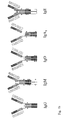
- the structure of an intact IgG1 is illustrated in Figure 1a .
- lambda ⁇
- ⁇ kappa
- a given immunoglobulin either has ⁇ chains or ⁇ chains, never one of each. No functional difference has been found between antibodies having ⁇ or ⁇ light chains.
- the structural organization of the main human immunoglobulin class monomers is shown in Figure 1b .
- the classes differ in the composition and sequence of their respective heavy chains. Both IgM and IgE lack a hinge region but each contains an extra heavy-chain domain (CH4). Numbers and locations of the disulfide bonds (lines) linking the chains differ between the isotypes. They also differ in the distribution of N-linked carbohydrate groups, symbolically shown as circles.
- Each domain in an antibody molecule has a similar structure of two beta sheets packed tightly against each other in a compressed antiparallel beta barrel. This conserved structure is termed the immunoglobulin fold.
- the immunoglobulin fold of constant domains contains a 3-stranded sheet packed against a 4-stranded sheet. The fold is stabilized by hydrogen bonding between the beta strands of each sheet, by hydrophobic bonding between residues of opposite sheets in the interior, and by a disulfide bond between the sheets.
- the 3-stranded sheet comprises strands C, F, and G, and the 4-stranded sheet has strands A, B, E, and D.
- the letters A through G denote the sequential positions of the beta strands along the amino acid sequence of the immunoglobulin fold.
- the fold of variable domains has 9 beta strands arranged in two sheets of 4 and 5 strands.
- the 5-stranded sheet is structurally homologous to the 3-stranded sheet of constant domains, but contains the extra strands C' and C".
- the remainder of the strands (A, B, C, D, E, F, G) have the same topology and similar structure as their counterparts in constant domain immunoglobulin folds.
- a disulfide bond links strands B and F in opposite sheets, as in constant domains.
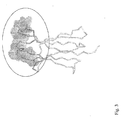
- the immunoglobulin fold is illustrated in Figure 2 for a constant and a variable domain of an immunoglobulin.
- variable domains of both light and heavy immunoglobulin chains contain three hypervariable loops, or complementarity-determining regions (CDRs).
- CDRs complementarity-determining regions
- the CDRs are loops that connect beta strands B-C, C'-C", and F-G of the immunoglobulin fold.
- the residues in the CDRs vary from one immunoglobulin molecule to the next, imparting antigen specificity to each antibody.
- the VL and VH domains at the tips of antibody molecules are closely packed such that the 6 CDRs (3 on each domain) cooperate in constructing a surface (or cavity) for antigen-specific binding.
- the natural antigen binding site of an antibody thus is composed of the loops which connect strands B-C, C'-C" , and F-G of the light chain variable domain and strands B-C, C'-C", and F-G of the heavy chain variable domain.
- the basic principle of this technique is based on the observation that many proteins have a stable core, formed by specific arrangements of secondary structure elements such as beta sheets or alpha helices, which are interconnected by structures such as loops, turns, or random coils. Typically, these latter three structure elements are less crucial for the overall structure of the protein, and amino acid residues in these structure elements can be exchanged often without destroying the general fold of the protein.
- a naturally occurring example for this design principle are the CDRs of antibodies. Artificial examples include lipocalins, ankyrins and other protein scaffolds.
- the loops which are not CDR-loops in a native immunoglobulin do not have antigen binding or epitope binding specificity but contribute to the correct folding of the entire immunoglobulin molecule and/or its effector or other functions and are therefore called structural loops for the purpose of this invention.
- US Pat Appl 2004/0101905 describes binding molecules comprising a target binding site and a Fc effector peptide.
- the Fc effector peptide is a peptide which interacts with effector molecule.
- the insertion of an effector peptide into a non-CDR loop of a CH1-domain of an immunoglobulin fragment has been shown.
- Fc effector peptides are structures which are naturally occurring in non-CDR loops of antibodies and are therefore expected not to disturb the structure of the immunoglobulin if grafted to onto different equivalent locations in an immunoglobulin.
- every peptide grafted into a non-CDR loop according to this disclosure has a high chance of being inactive by the different structural environment it has been selected.
- WO 01/83525 relates to proteins comprising Fc domains fused to biological active peptides, whereby said peptides are fused to the Fc domains at their N- or C- terminus.
- US 2002/0106370 discloses chimeric polypeptides comprising a binding portion which exhibits a specific binding affinity for a eukaryotic target cell surface and an effector portion.
- WO 02/32925 discloses proteins capable to similar antibody function. In order to achieve this also loop structures are introduced in said proteins which correspond in structure and position to CDR loops.
- WO 2006/036834 discloses molecules and methods in which biological active peptides are incorporated in a loop region of an Fc domain.
- the biological active peptide with the desired biological activity is first selected and then introduced into the Fc domains, either by linking the peptide to the protein, or by inserting the respective nucleic acid into the nucleic acid encoding the Fc domain.
- the present invention relates to an immunoglobulin constant domain or past thereof as defined in claims 1 to 7 and to nucleic acid molecules encoding said immunoglobulin as defined in claim 7.
- the method for engineering an immunoglobulin comprising at least one modification in a structural loop region of said immunoglobulin and determining the binding of said immunoglobulin to an epitope of an antigen, wherein the unmodified immunoglobulin does not significantly bind to said epitope, comprises the steps of:
- said method for engineering involves an immunoglobulin binding specifically to an epitope of an antigen selected from the group consisting of allergens, tumor associated antigens, self antigens, enzymes, bacterial antigens, fungal antigens, protozooal antigen and viral antigens.
- an antigen selected from the group consisting of allergens, tumor associated antigens, self antigens, enzymes, bacterial antigens, fungal antigens, protozooal antigen and viral antigens.
- the immunoglobulin may be engineered bind to the epitope.
- the immunoglobulin is binding specifically to at least two such epitopes, that differ from each other, either of the same antigen or of different antigens.
- the method refers to engineering an immunoglobulin binding specifically to at least one first epitope and comprising at least one modification in at least one structural loop region of said immunoglobulin and determining the specific binding of said at least one loop region to at least one second epitope, the epitope being selected from the group of antigens as mentioned above, wherein the unmodified structural loop region (non-CDR region) does not specifically bind to said at least one second epitope, comprising the steps of:
- the method preferably refers to at least one modification in at least one structural loop region of said immunoglobulin and determining the specific binding of said at least one loop region to at least one antigen selected from the group consisting of allergens, tumor associated antigens, self antigens, enzymes, bacterial antigens, fungal antigens, viral antigens and protozooal antigens, wherein the immunoglobulin containing an unmodified structural loop region does not specifically bind to said at least one antigen.
- immunoglobulins may exhibit mono- or multi-specific, or multivalent binding properties, at least two, preferably at least three specific binding sites for epitopes of e.g. antigens, effector molecules/proteins.
- Immunoglobulins according to the invention are also functional fragments accepted in the art, such as Fc, Fab, scFv, single chain dimers of CH/CL domains, Fv, or other derivatives or combinations of the immunoglobulins, domains of the heavy and light chains of the variable region (such as Fd, Vl, Vk, Vh) and .the constant region of an intact antibody such as CH1, CH2, CH3, CH4, Cl and Ck, as well as mini-domains consisting of two beta-strands of an immunoglobulin domain connected by a structural loop.
- the variable region such as Fd, Vl, Vk, Vh
- the constant region of an intact antibody such as CH1, CH2, CH3, CH4, Cl and Ck
- immunoglobulin includes a derivative of immunoglobulins as well.
- a derivative is any combination of one or more immunoglobulins of the invention and or a fusion protein in which any domain or minidomain of the immunoglobulin of the invention may be fused at any position of one or more other proteins (such as other immunoglobulins, ligands, scaffold proteins, enzymes toxins and the like).
- a derivative of the immunoglobulin of the invention may also be obtained by binding to other substances by various chemical techniques such as covalent coupling, electrostatic interaction, disulphide bonding etc.
- the other substances bound to the immunoglobulins may be lipids, carbohydrates, nucleic acids, organic and anorganic molecules or any combination therof (e.g. PEG, prodrugs or drugs).
- a derivative is also an immunoglobulin with the same amino acid sequence but made completely or partly from non-natural or chemically modified amino acids.
- the engineered molecules according to the present invention will be useful as stand-alone proteins as well as fusion proteins or derivatives, most typically fused in such a way as to be part of larger antibody structures or complete antibody molecules, or parts thereof such as Fab fragments, Fc fragments, Fv fragments and others. It will be possible to use the engineered proteins to produce molecules which are monospecific, bispecific, trispecific, and maybe even carry more specificities at the same time, and it will be possible at the same time to control and preselect the valency of binding at the same time according to the requirements of the planned use of such molecules.
- binding regions to antigens or antigen binding sites of all kinds of allergens, tumor associated antigens, self antigens, enzymes, bacterial antigens, fungal antigens, protozooal antigen and viral antigens may be introduced into a structural loop of a given antibody structure.
- antigen shall mean molecules or structures known to interact or capable of interacting with the CDR-loop region of immunoglobulins. Structural loop regions of the prior art do not interact with antigens but rather contribute to the overall structure and/or to the binding to effector molecules.
- allergens, tumor associated antigens, self antigens, enzymes, bacterial antigens, fungal antigens, protozooal antigen and viral antigens shall include all allergens and antigens capable of being recognised by an antibody structure, and fragments of such molecules (especially substructures generally referred to as “epitopes” (e.g. B-cell epitopes)), as long as they are immunologically relevant, i.e. are also recognisable by natural or monoclonal antibodies.
- epitopope shall mean a molecular structure which may completely make up a specific binding partner or be part of a specific binding partner to the binding domain or the immunoglobulin of the present invention.
- an epitope may either be composes of a carbohydrate, a peptide, a fatty acid, a anorganic substance or derivatives thereof and any combinations thereof. If an epitope is a polypeptide, it will usually include at least 3 amino acids, preferably 8 to 50 amino acids, and more preferably between about 10-20 amino acids in the peptide. There is no critical upper limit to the length of the peptide, which could comprise nearly the full length of the polypeptide sequence.
- Epitopes can be either linear or conformational epitopes.
- a linear epitope is comprised of a single segment of a primary sequence of a polypeptide chain. Linear epitopes can be contiguous or overlapping. Conformational epitopes are comprised of amino acids brought together by folding of the polypeptide to form a tertiary structure and the amino acids are not necessarily adjacent to one another in the linear sequence.
- epitopes are at least part of diagnostically relevant molecules, i.e. the absence or presence of an epitope in a sample is qualitatively or quantitatively correlated to either a disease or to the health status or to a process status in manufacturing or to environmental and food status.
- Epitopes may also be at least part of therapeutically relevant molecules, i.e. molecules which can be targeted by the specific binding domain which changes the course of the disease.
- allergens tumor associated antigens, self antigens, enzymes, bacterial antigens, fungal antigens, protozooal antigen and viral antigens
- allergens or antigens which have already been proven to be or are capable of being immunologically or therapeutically relevant, especially those, for which a clinical efficacy has been tested.
- binding capacities may be introduced in the structural loop regions, e.g. binding capacities for small molecules, such as drugs or enzymes, catalytic sites of enzymes or enzyme substrates or for a transition state analog of an enzyme substrate.
- the new antigen binding site in the structural loops is foreign to the unmodified immunoglobulin.
- targets like effector molecules or Fc-receptors are preferably excluded from the binding molecules and the specificity of the immunoglobulins according to the invention.
- the new antigen binding sites in the structural loops are introduced by substitution, deletion and/or insertion of the immunoglobulin encoded by the selected nucleic acid.
- the modification of at least one nucleotide results is a substitution, deletion and/or insertion of the immunoglobulin encoded by said nucleic acid.
- the modification of the at least one loop region may result in a substitution, deletion and/or insertion of 1 or more amino acids, preferably a point mutation, exchange of whole loops, more preferred the change of at least 2, 3, 4, 5, 6, 7, 8, 9, 10 up to 30 amino acids.
- site directed random mutation With this method one or more specific amino acid residues of the loop are exchanged or introduced using randomly generated inserts into such structural loops. Alternatively preferred is the use of combinatorial approaches.
- the at least one loop region is preferably mutated or modified by random, semi-random or, in particular, by site-directed random mutagenesis methods. These methods may be used to make amino acid modifications at desired positions of the immunoglobulin of the present invention. In these cases positions are chosen randomly, or amino acid changes are made using simplistic rules. For example all residues may be mutated to alanine, referred to as alanine scanning. Such methods may be coupled with more sophisticated engineering approaches that employ selection methods to screen higher levels of sequence diversity.
- a preferred method according to the invention refers to the randomly modified nucleic acid molecule which comprises at least one nucleotide repeating unit having the sequence 5'-NNS-3', 5'-NNN- 3' or 5'- NNK-3'.
- the randomly modified nucleic acid molecule may comprise the above identified repeating units, which code for all known naturally occurring amino acids.
- a "structural loop” or “non-CDR-loop” is to be understood in the following manner: immunoglobulins are made of domains with a so called immunoglobulin fold. In essence, anti-parallel beta sheets are connected by loops to form a compressed antiparallel beta barrel. In the variable region, some of the loops of the domains contribute essentially to the specificity of the antibody, i.e. the binding to an antigen. These loops are called CDR-loops. All other loops of antibody domains are rather contributing to the structure of the molecule and/or the effector function. These loops are defined herein as structural loops or non-CDR-loops.
- the nucleic acid molecules encoding the modified immunoglobulins may be cloned into host cells, expressed and assayed for their binding specificities. These practices are carried out using well-known procedures, and a variety of methods that may find use in the present invention are described in Molecular Cloning--A Laboratory Manual, 3.sup.rd Ed. (Maniatis, Cold Spring Harbor Laboratory Press, New York, 2001 ), and Current Protocols in Molecular Biology (John Wiley & Sons ).
- the nucleic acids that encode the modified immunoglobulins of the present invention may be incorporated into an expression vector in order to express said immunoglobulins.
- Expression vectors typically comprise an immunoglobulin operably linked, that is placed in a functional relationship, with control or regulatory sequences, selectable markers, any fusion partners, and/or additional elements.
- the modified immunoglobulins of the present invention may be produced by culturing a host cell transformed with nucleic acid, preferably an expression vector, containing nucleic acid encoding the modified immunoglobulins, under the appropriate conditions to induce or cause expression of the modified immunoglobulins.
- the methods of introducing exogenous nucleic acid molecules into a host are well known in the art, and will vary with the host used. Of course, also acellular or cell free expression systems for the expression of modified immunoglobulins may be employed.
- the modified immunoglobulins are purified or isolated after expression.
- Modified immunoglobulins may be isolated or purified in a variety of ways known to those skilled in the art. Standard purification methods include chromatographic techniques, electrophoretic, immunological, precipitation, dialysis, filtration, concentration, and chromatofocusing techniques. Purification can often be enabled by a particular fusion partner. For example, antibodys may be purified using glutathione resin if a GST fusion is employed, Ni +2 affinity chromatography if a His-tag is employed or immobilized anti-flag antibody if a flag-tag is used.
- modified immunoglobulins according to the present invention on the surface of a host, in particular on the surface of a bacterial, insect or yeast cell or on the surface of phages or viruses.
- Modified immunoglobulins may be screened using a variety of methods, including but not limited to those that use in vitro assays, in vivo and cell-based assays, and selection technologies. Automation and high-throughput screening technologies may be utilized in the screening procedures. Screening may employ the use of a fusion partner or label, for example an enzyme, an immune label, isotopic label, or small molecule label such as a fluorescent or colorimetric dye or a luminogenic molecule.
- a fusion partner or label for example an enzyme, an immune label, isotopic label, or small molecule label such as a fluorescent or colorimetric dye or a luminogenic molecule.
- the functional and/or biophysical properties of the immunoglobulins are screened in an in vitro assay.
- the antibody is screened for functionality, for example its ability to catalyze a reaction or its binding affinity to its target.
- Assays may employ a variety of detection methods including but not limited to chromogenic, fluorescent, luminescent, or isotopic labels.
- selection methods find use in the present invention for screening modified immunoglobulins.
- selection methods When immunoglobulins libraries are screened using a selection method, only those members of a library that are favorable, that is which meet some selection criteria, are propagated, isolated, and/or observed. As will be appreciated, because only the most fit variants are observed, such methods enable the screening of libraries that are larger than those screenable by methods that assay the fitness of library members individually.
- Selection is enabled by any method, technique, or fusion partner that links, covalently or noncovalently, the phenotype of immunoglobulins with its genotype, that is the function of a antibody with the nucleic acid that encodes it.
- phage display as a selection method is enabled by the fusion of library members to the gene III. protein.
- selection or isolation of modified immunoglobulins that meet some criteria, for example binding affinity to the immunoglobulin's target also selects for or isolates the nucleic acid that encodes it.
- the gene or genes encoding modified immunoglobulins may then be amplified. This process of isolation and amplification, referred to as panning, may be repeated, allowing favorable antibody variants in the library to be enriched. Nucleic acid sequencing of the attached nucleic acid ultimately allows for gene identification.
- phage display Phage display of peptides and antibodies: a laboratory manual, Kay et al., 1996, Academic Press, San Diego, Calif., 1996 ; Lowman et al., 1991, Biochemistry 30:10832-10838 ; Smith, 1985, Science 228:1315-1317 ) and its derivatives such as selective phage infection ( Malmborg et al., 1997, J Mol Biol 273:544-551 ), selectively infective phage ( Krebber et al., 1997, J Mol Biol 268:619-630 ), and delayed infectivity panning ( Benhar et al., 2000, J Mol Biol 301:893-904 ), cell surface display ( Witrrup, 2001, Curr Opin Biotechnol, 12:395-399 ) such as display on bacteria ( Georgiou et al., 1997
- selection methods include methods that do not rely on display, such as in vivo methods including but not limited to periplasmic expression and cytometric screening ( Chen et al., 2001, Nat Biotechnol 19:537-542 ), the antibody fragment complementation assay ( Johnsson & Varshavsky, 1994, Proc Natl Acad Sci USA 91:10340-10344 ; Pelletier et al., 1998, Proc Natl Acad Sci USA 95:12141-12146 ), and the yeast two hybrid screen ( Fields & Song, 1989, Nature 340:245-246 ) used in selection mode ( Visintin et al., 1999, Proc Natl Acad Sci USA 96:11723-11728 ).
- in vivo methods including but not limited to periplasmic expression and cytometric screening ( Chen et al., 2001, Nat Biotechnol 19:537-542 ), the antibody fragment complementation assay ( Johnsson & Varshavsky, 1994, Proc Nat
- selection is enabled by a fusion partner that binds to a specific sequence on the expression vector, thus linking covalently or noncovalently the fusion partner and associated Fc variant library member with the nucleic acid that encodes them.
- a fusion partner that binds to a specific sequence on the expression vector, thus linking covalently or noncovalently the fusion partner and associated Fc variant library member with the nucleic acid that encodes them.
- PCT WO 00/22906 ; PCT WO 01/49058 ; PCT WO 02/04852 ; PCT WO 02/04853 ; PCT WO 02/08023 ; PCT WO 01/28702 ; and PCT WO 02/07466 describe such a fusion partner and technique that may find use in the present invention.
- in vivo selection can occur if expression of the antibody imparts some growth, reproduction, or survival advantage to the cell.
- directed evolution methods are those that include the mating or breeding of favourable sequences during selection; sometimes with the incorporation of new mutations.
- directed evolution methods can facilitate identification of the most favourable sequences in a library, and can increase the diversity of sequences that are screened.
- a variety of directed evolution methods are known in the art that may find use in the present invention for screening antibody variants, including but not limited to DNA shuffling (PCT WO 00/42561 A3 ; PCT WO 01/70947 A3 ), exon shuffling ( U.S. Pat. No.
- Antibody variants may be screened using one or more cell-based or in vivo assays.
- purified or unpurified modified immunoglobulins are typically added exogenously such that cells are exposed to individual immunoglobulins or pools of immunoglobulins belonging to a library.
- These assays are typically, but not always, based on the function of the immunoglobulin; that is, the ability of the antibody to bind to its target and mediate some biochemical event, for example effector function, ligand/receptor binding inhibition, apoptosis, and the like.
- Such assays often involve monitoring the response of cells to the antibody, for example cell survival, cell death, change in cellular morphology, or transcriptional activation such as cellular expression of a natural gene or reporter gene.
- such assays may measure the ability of antibody variants to elicit ADCC, ADCP, or CDC.
- additional cells or components that is in addition to the target cells, may need to be added, for example example serum complement, or effector cells such as peripheral blood monocytes (PBMCs), NK cells, macrophages, and the like.
- PBMCs peripheral blood monocytes
- NK cells macrophages, and the like.
- additional cells may be from any organism, preferably humans, mice, rat, rabbit, and monkey.
- Immunoglobulins may cause apoptosis of certain cell lines expressing the target, or they may mediate attack on target cells by immune cells which have been added to the assay.
- Methods for monitoring cell death or viability include the use of dyes, immunochemical, cytochemical, and radioactive reagents.
- caspase staining assays may enable apoptosis to be measured, and uptake or release of radioactive substrates or fluorescent dyes such as alamar blue may enable cell growth or activation to be monitored.
- the DELFIA.RTM. EuTDA-based cytotoxicity assay (Perkin Elmer, MA) may be used.
- dead or damaged target cells may be monitored by measuring the release of one or more natural intracellular components, for example lactate dehydrogenase.
- Transcriptional activation may also serve as a method for assaying function in cell-based assays.
- response may be monitored by assaying for natural genes or immunoglobulins which may be upregulated, for example the release of certain interleukins may be measured, or alternatively readout may be via a reporter construct.
- Cell-based assays may also involve the measure of morphological changes of cells as a response to the presence of modified immunoglobulins.
- Cell types for such assays may be prokaryotic or eukaryotic, and a variety of cell lines that are known in the art may be employed.
- cell-based screens are performed using cells that have been transformed or transfected with nucleic acids encoding the variants. That is, antibody variants are not added exogenously to the cells.
- the cell-based screen utilizes cell surface display.
- a fusion partner can be employed that enables display of modified immunoglobulins on the surface of cells ( Witrrup, 2001, Curr Opin Biotechnol, 12:395-399 ).
- the immunogenicity of the modified immunoglobulins may be determined experimentally using one or more cell-based assays.
- ex vivo T-cell activation assays are used to experimentally quantitate immunogenicity.
- antigen presenting cells and naive T cells from matched donors are challenged with a peptide or whole antibody of interest one or more times.
- T cell activation can be detected using a number of methods, for example by monitoring production of cytokines or measuring uptake of tritiated thymidine.
- interferon gamma production is monitored using Elispot assays ( Schstoff et. al., 2000, J. Immunol. Meth., 24: 17-24 ).
- the biological properties of the modified immunoglobulins of the present invention may be characterized in cell, tissue, and whole organism experiments.
- drugs are often tested in animals, including but not limited to mice, rats, rabbits, dogs, cats, pigs, and monkeys, in order to measure a drug's efficacy for treatment against a disease or disease model, or to measure a drug's pharmacokinetics, toxicity, and other properties.
- the animals may be referred to as disease models.
- Therapeutics are often tested in mice, including but not limited to nude mice, SCID mice, xenograft mice, and transgenic mice (including knockins and knockouts). Such experimentation may provide meaningful data for determination of the potential of the antibody to be used as a therapeutic.
- any organism preferably mammals, may be used for testing.
- monkeys can be suitable therapeutic models, and thus may be used to test the efficacy, toxicity, pharmacokinetics, or other property of the modified immunoglobulins of the present invention. Tests of the in humans are ultimately required for approval as drugs, and thus of course these experiments are contemplated.
- the modified immunoglobulins of the present invention may be tested in humans to determine their therapeutic efficacy, toxicity, immunogenicity, pharmacokinetics, and/or other clinical properties.
- the modified immunoglobulins of the present invention may find use in a wide range of antibody products.
- the antibody variant of the present invention is used for therapy or prophylaxis, for preparative or analytic use, as a diagnostic, an industrial compound or a research reagent, preferably a therapeutic.
- the antibody variant may find use in an antibody composition that is monoclonal or polyclonal.
- the modified immunoglobulins of the present invention are used to kill target cells that bear the target antigen, for example cancer cells.
- the modified immunoglobulins of the present invention are used to block, antagonize, or agonize the target antigen, for example by antagonizing a cytokine or cytokine receptor.
- the modified immunoglobulins of the present invention are used to block, antagonize, or agonize the target antigen and kill the target cells that bear the target antigen.
- the modified immunoglobulins of the present invention are used to block, antagonize, or agonize growth factors or growth factor receptors and kill the target cells that bear or need the target antigen.
- the modified immunoglobulins of the present invention are used to block, antagonize, or agonize enzymes and substrate of enzymes.
- the modified immunoglobulins of the present invention may be used for various therapeutic purposes.
- an antibody comprising the modified immunoglobulins is administered to a patient to treat a specific disorder.
- a "patient” for the purposes of the present invention includes both humans and other animals, preferably mammals and most preferably humans.
- specific disorder herein is meant a disorder that may be ameliorated by the administration of a pharmaceutical composition comprising a modified immunoglobulin of the present invention.
- a modified immunoglobulin according to the present invention is the only therapeutically active agent administered to a patient.
- the modified immunoglobulin according the present invention are administered in combination with one or more other therapeutic agents, including but not limited to cytotoxic agents, chemotherapeutic agents, cytokines, growth inhibitory agents, anti-hormonal agents, kinase inhibitors, anti-angiogenic agents, cardioprotectants, or other therapeutic agents.
- the modified immunoglobulins may be administered concomitantly with one or more other therapeutic regimens.
- an antibody variant of the present invention may be administered to the patient along with chemotherapy, radiation therapy, or both chemotherapy and radiation therapy.
- the modified immunoglobulins of the present invention may be administered in conjunction with one or more antibodies, which may or may not comprise a antibody variant of the present invention.
- the modified immunoglobulins of the present invention and one or more other anti-cancer therapies are employed to treat cancer cells ex vivo. It is contemplated that such ex vivo treatment may be useful in bone marrow transplantation and particularly, autologous bone marrow transplantation. It is of course contemplated that the antibodies of the invention can be employed in combination with still other therapeutic techniques such as surgery.
- the modified immunoglobulin is administered with an anti-angiogenic agent, which is a compound that blocks, or interferes to some degree, the development of blood vessels.
- the anti-angiogenic factor may, for instance, be a small molecule or a protein, for example an antibody, Fc fusion, or cytokine, that binds to a growth factor or growth factor receptor involved in promoting angiogenesis.
- the preferred anti-angiogenic factor herein is an antibody that binds to Vascular Endothelial Growth Factor (VEGF).
- VEGF Vascular Endothelial Growth Factor
- the modified immunoglobulin is administered with a therapeutic agent that induces or enhances adaptive immune response, for example an antibody that targets CTLA-4.
- the modified immunoglobulin is administered with a tyrosine kinase inhibitor, which is a molecule that inhibits to some extent tyrosine kinase activity of a tyrosine kinase.
- the modified immunoglobulins of the present invention are administered with a cytokine.
- cytokine as used herein is meant a generic term for proteins released by one cell population that act on another cell as intercellular mediators including chemokines.
- compositions are contemplated wherein modified immunoglobulins of the present invention and one or more therapeutically active agents are formulated.
- Formulations of the antibody variants of the present invention are prepared for storage by mixing said immunoglobulin having the desired degree of purity with optional pharmaceutically acceptable carriers, excipients or stabilizers ( Remington's Pharmaceutical Sciences 16th edition, Osol, A. Ed., 1980 ), in the form of lyophilized formulations or aqueous solutions.
- the formulations to be used for in vivo administration are preferably sterile. This is readily accomplished by filtration through sterile filtration membranes or other methods.
- the modified immunoglobulins and other therapeutically active agents disclosed herein may also be formulated as immunoliposomes, and/or entrapped in microcapsules
- Administration of the pharmaceutical composition comprising a modified immunoglobulin of the present invention may be done in a variety of ways, including, but not limited to, orally, subcutaneously, intravenously, intranasally, intraotically, transdermally, topically (e.g., gels, salves, lotions, creams, etc.), intraperitoneally, intramuscularly, intrapulmonary (e.g., AERx TM inhalable technology commercially available from Aradigm, or Inhance TM pulmonary delivery system commercially available from Inhale Therapeutics), vaginally, parenterally, rectally, or intraocularly.
- intravenously intravenously, intranasally, intraotically, transdermally, topically (e.g., gels, salves, lotions, creams, etc.), intraperitoneally, intramuscularly, intrapulmonary (e.g., AERx TM inhalable technology commercially available from Aradigm, or Inhance TM pulmonary delivery system commercial
- the term “specifically binds” refers to a binding reaction which is determinative of the cognate ligand of interest in a heterogeneous population of molecules.
- the specified antibody binds to its particular "target” and does not bind in a significant amount to other molecules present in a sample.
- the modified structural loop regions are antigen- or molecule-binding protein moieties and not antigens as such.
- expression system refers to nucleic acid molecules containing a desired coding sequence and control sequences in operable linkage, so that hosts transformed or transfected with these sequences are capable of producing the encoded proteins.
- the expression system may be included on a vector; however, the relevant DNA may than also be integrated into the host chromosome.
- the expression system may comprise a vector. Any expression vector known in the art may be used for this purpose as appropriate.
- the modified immunoglobulin is preferably expressed in a host, preferably in a bacterial, a yeast, a plant cell, in an animal cell or in a plant or animal.
- a wide variety of appropriate host cells may be used to express the modified immunoglobulin, including but not limited to mammalian cells (animal cells), plant cells, bacteria (e.g. Bacillus subtilis, Escherichia coli), insect cells, and yeast (e.g. Pichia pastoris, Saccharomyces cerevisiae).
- mammalian cells animal cells
- bacteria e.g. Bacillus subtilis, Escherichia coli
- insect cells e.g. Bacillus subtilis, Escherichia coli
- yeast e.g. Pichia pastoris, Saccharomyces cerevisiae
- a variety of cell lines that may find use in the present invention are described in the ATCC cell line catalog, available from the American Type Culture Collection.
- plants and animals may be used as hosts for the expression of the immunoglobulin according to the present invention.
- the expression as well as the transfection vectors or cassettes may be selected according to the host used.
- the immunoglobulin or a pharmaceutical preparation thereof comprising at least one modification in a structural loop region of said immunoglobulin and determining the binding of said immunoglobulin to an epitope of an antigen, wherein the unmodified immunoglobulin does not significantly bind to said epitope, may be manufactured as follows:
- bispecific antibodies made of two different polypeptide chains (heavy and light chain) is the necessity to express four different chains (two heavy and two light chains) in one cell resulting in a number of various combinations of molecules which have to be separated from the desired bispecific molecule in the mixture. Due to their similarity the separation of these molecules is difficult and expensive. A number of techniques have been employed to minimize the occurrence of such unwanted pairings ( Carter (2001) Journal of Immunological Methods, vol 248, pages 7-15 )
- bispecific antibodies Another problem of the current design of bispecific antibodies is the fact that even if the parent antibodies are bivalently binding to their respective binding partner (e.g. IgG), the resulting bispecific antibody is monovalent for each of the respective binding partner.
- their respective binding partner e.g. IgG
- bispecific molecule as one polypeptide chain is possible (a modified Ig domain with two binding specificities, see example section), which is easier to accomplish than the expression of two antibody polypeptide chains ( Cabilly et al. Proc. Natl. Acad. Sci. USA 81:3273-3277 (1984 )).
- An antibody of the present invention may consist of a heavy chain and a light chain, which form together a variable region binding to a specific binding partner the second specificity may be formed by a modified loop of any of the structural loops of either the heavy chain or the light chain.
- the binding site may also be formed by more than one non-CDR loop which may be structurally neighboured (either on the heavy chain or on the light chain or on both chains).
- the modified antibody or derivative may be a complete antibody or an antibody fragment (e.g. Fab, CH1-CH2, CH2-CH3).
- It may bind mono- or multi-valently to binding partners or even with different valency for the different binding partners, depending on the design.
- the specific binding domains within one polypeptide chain may be connected with or without a peptide linker.
- Some antibody classes can be regarded as multi-specific, in particular bispecific, by nature: They bind to an antigen (which is typically e.g. either a foreign structure or a cancer associated structure) with the variable region and bind to Fc-effector molecules with the Fc part (e.g. Fc receptors on various immune cells or complement protein) thus enabling effects such as ADCC, ADCP or CDC.
- an antigen which is typically e.g. either a foreign structure or a cancer associated structure
- Fc-effector molecules e.g. Fc receptors on various immune cells or complement protein
- the Fc-effector molecules are bound by the Fc-part of an immunoglobulin molecule (for IgG1 it consists of domains CH2 and CH3) and a number of methods have been described to optimize effector function by improvement of binding of the Fc-part of an antibody molecule either by glycoengineering techniques ( US 6,602,684 ) or by protein engineering either directly at the Fc ( US 2005/0054832 ) or indirectly by engineering outside the Fc ( US 2005/02444403 ). Both, binding of the Fc region to Fc receptor and/or binding to complement proteins such Cq1 has been altered by such techniques. Usually the binding affinity to such Fc-effector molecules is seeked to improve as this correlates with improved effector functions.
- Modified loops in antibody domains other than the loops involved in "natural" Fc-effector molecule binding can be selected from a library or designed to bind to one ore more Fc-effector molecule.
- An antibody with such additional Fc-effector molecule binding sites would either have stronger avidity to a certain Fc-effector molecule or effector-cell displaying an Fc-effector molecule and therefore may have an even stronger effect than glycoengineered antibodies or otherwise improved Fc regions.
- the effector characteristics of a given antibody to be modified should not directly be changed but remain unaffected by the modification in the structural loop according to the present invention.
- Antibody fragments have certain advantages as compared to whole antibodies. Fragments have usually good biodistribution properties and can more easily be produced. However, most of the antibody fragment designs lack effector functions and have short in vivo half life ( Holliger P, et al. Nat Biotechnol.(2005) 23:1126-36 .).
- the WO 02/44215 describes binding molecules which consists of the antigen binding site of an antibody and a peptide binding Fc-effector molecules. In such a way an antibody fragment displaying effector functions can be constructed.
- the peptide is being incorporated into the binding molecule at a position that does neither destroy the antigen binding nor the ability of the peptide to bind to an Fc-effector molecule.
- the binding to Fc-effector molecules may be performed with modified immunoglobulin domains which have been selected for Fc-effector molecule binding from libraries of random loop sequences within a fixed scaffold of an immunoglobulin domain. Therefore, it is possible to select for specific loop sequences which would not bind to Fc-effector molecules outside the Ig-domain scaffold.
- the polypeptides resulting from the present invention may therefore preferably consist of more than 100 amino acids.
- libraries of mutant CH1, C ⁇ or C ⁇ domains may be selected for binding to Fc-receptors and/or complement factors such as C1q.
- binding to FcRn may be selected for with libraries of mutant e.g. CH1-, CH2-, CH3-, CH4-, C ⁇ - or C ⁇ -domains according to the present invention.
- FcRn-receptors for selection may be provided either on the surface of cells expressing naturally the respective receptors or by expression and purification of the extracellular part of the respective receptor.
- a first screening on FcRn may select for mutant domains which can further be tested in vitro and even further characterized in FACS experiments by binding to cells expressing FcRn receptor. It can be further characterized by affinity ranking of binding to various recombinant FcRn, isoforms and allotypes e.g with surface plasmon resonance techniques.
- the immunoglobulin of the present invention is of human origin.
- the modified immunoglobulin may be employed for various purposes; in particular in pharmaceutical compositions, the immunoglobulin is preferably of human origin. Of course, the modified immunoglobulin may also be a chimeric immunoglobulin.
- the human immunoglobulin is derived form IgG, in particular from IgG1, IgG2, IgG3 or IgG4.
- the modified immunoglobulin may be derived from one of the above identified immunoglobulin classes.
- the immunoglobulin comprises preferably a heavy and/or light chain of the immunoglobulin or a part thereof.
- the modified immunoglobulin may comprise a heavy and/or light chain, at least one variable and/or constant domain.
- the immunoglobulin according to the present invention comprises at least one constant domain of the immunoglobulin or a part thereof including a minidomain.
- a constant domain is an immunoglobulin fold unit of the constant part of an immunoglobulin molecule, also refered to as a domain of the constant region (e.g. CH1, CH2, CH3, CH4, Ck, Cl).
- a preferred immunoglobulin according to the invention consists of a constant domain selected from the group consisting of CH1, CH2, CH3, CH4, Igk-C, Igl-C, or a part thereof including a minidomain, with at least one loop region, and is characterised in that said at least one loop region comprises at least one amino acid modification forming at least one modified loop region, wherein said at least one modified loop region binds specifically to at least one epitope of an antigen.
- the constant domain is selected from the group of CH1, CH2, CH3 or CH4 domain, CL domain, C ⁇ domain, C ⁇ , an Fab fragment or an Fc fragment and combinations thereof.
- the modified immunoglobulin according to the present invention may comprise one or more constant domains (e.g. at least two, three, four, five, six, ten domains). If more than one domain is present in the modified immunoglobulin these domains may be of the same type or of varying types (e.g. CH1-CH1-CH2, CH3-CH3). Of course also the order of the single domains may be of any kind (e.g. CH1-CH3-CH2, CH4-CH1-CH3-CH2).
- IMGT the international ImMunoGeneTics information system@imgt.cines.fr; http://imgt.cines.fr; Lefranc et al., 1999, Nucleic Acids Res. 27: 209-212 ; Ruiz et al., 2000 Nucleic Acids Res. 28: 219-221 ; Lefranc et al., 2001, Nucleic Acids Res. 29: 207-209 ; Lefranc et al., 2003, Nucleic Acids Res. 31: 307-310 ; Lefranc et al., 2005, Dev Comp Immunol 29:185-203 ).
- the modified loop regions of CH1, CH2, CH3 and CH4 comprise amino acids 7 to 21, amino acids 25 to 39, amino acids 41 to 81, amino acids 83 to 85, amino acids 89 to 103 and amino acids 106 to 117.
- the loop regions of Igk-C and Igl-C of human origin comprise preferably amino acids 8 to 18, amino acids 27 to 35, amino acids 42 to 78, amino acids 83 to 85, amino acids 92 to 100, amino acids 108 to 117 and amino acids 123 to 126.
- the structural loop regions of the variable domain of the immunoglobulin of human origin comprise preferably amino acids 8 to 20, amino acids 44 to 50, amino acids 67 to 76 and amino acids 89 to 101.
- amino acid regions of the respective immunoglobulins comprise loop regions to be modified.
- the specific binding of the modified immunoglobulin to the molecule is determined by a binding assay selected from the group consisting of immunological assays, preferably enzyme linked immunosorbent assays (ELISA), surface plasmon resonance assays, saturation transfer difference nuclear magnetic resonance spectroscopy, transfer NOE (trNOE) nuclear magnetic resonance spectroscopy, competitive assays, tissue binding assays, live cell binding assays and cellular extract assays.
- immunological assays preferably enzyme linked immunosorbent assays (ELISA), surface plasmon resonance assays, saturation transfer difference nuclear magnetic resonance spectroscopy, transfer NOE (trNOE) nuclear magnetic resonance spectroscopy, competitive assays, tissue binding assays, live cell binding assays and cellular extract assays.
- Binding assays can be carried out using a variety of methods known in the art, including but not limited to FRET (Fluorescence Resonance Energy Transfer) and BRET (Bioluminescence Resonance Energy Transfer)-based assays, AlphaScreen.TM. (Amplified Luminescent Proximity Homogeneous Assay), Scintillation Proximity Assay, ELISA (Enzyme-Linked Immunosorbent Assay), SPR (Surface Plasmon Resonance, also known as BIACORE.RTM.), isothermal titration calorimetry, differential scanning calorimetry, gel electrophoresis, and chromatography including gel filtration. These and other methods may take advantage of some fusion partner or label.
- FRET Fluorescence Resonance Energy Transfer
- BRET Bioluminescence Resonance Energy Transfer
- the modified immunoglobulin is preferably conjugated to a label selected from the group consisting of organic molecules, enzyme labels, radioactive labels, colored labels, fluorescent labels, chromogenic labels, luminescent labels, haptens, digoxigenin, biotin, metal complexes, metals, colloidal gold and mixtures thereof.
- the modified immunoglobulin may be conjugated to other molecules which allow the simple detection of said conjugate in, for instance, binding assays (e.g. ELISA) and binding studies.
- binding assays e.g. ELISA
- the immunoglobulin consists of a constant domain selected from the group consisting of CH1, CH2, CH3, CH4, Igk-C, Igl-C, or a part thereof including minidomains, or combinations thereof, with at least one loop region, characterised in that said at least one loop region comprises at least one amino acid modification forming at least one modified loop region, wherein said at least one modified loop region binds specifically to at least one epitope of an antigen
- At least one modified antibody domain binding to the specific partner via the non-variable sequences or structural loop
- at least one other binding molecule which can be an antibody, antibody fragment, a soluble receptor, a ligand or another modified antibody domain.
- the molecule is selected from the group consisting of proteinaceous molecules, nucleic acids, and carbohydrates.
- the loop regions of the modified immunoglobulins may specifically bind to any kind of binding molecules, in particular to proteinaceous molecules, proteins, peptides, polypeptides, nucleic acids, glycans, carbohydrates, lipids, small organic molecules, anorganic molecules.
- the modified immunoglobulins may comprise at least two loop regions whereby each of the loop regions may specifically bind to other molecules or epitopes.
- the molecule binding to the modified structural loop region is selected from the group consisting of tumor associated antigens, in particular EpCAM, tumor-associated glycoprotein-72 (TAG-72), tumor-associated antigen CA 125, Prostate specific membrane antigen (PSMA), High molecular weight melanoma-associated antigen (HMW-MAA), tumor-associated antigen expressing Lewis Y related carbohydrate, Carcinoembryonic antigen (CEA), CEACAM5, HMFG PEM, mucin MUC1, MUC18 and cytokeratin tumor-associated antigen, bacterial antigens, viral antigens, allergens, fluorescein, lysozyme, toll-like receptor 9, erythropoietin, CD2, CD3, CD3E, CD4, CD11, CD11a, CD14, CD18, CD19, CD20, CD22, CD23, CD25, CD28, CD29, CD30, CD33 (p67 protein), CD38, CD40, CD40, CD40
- EpCAM tumor-
- the modified immunoglobulin according to the present invention may preferably bind to one of the molecules disclosed above. These molecules comprise also allergens.
- amino acid residues of positions 15 to 17, 29 to 34, 85.4 to 85.3, 92 to 94, 97 to 98 and/or 108 to 110 of CH3 are modified.
- the modification of the immunoglobulin according to the present invention is preferably a deletion, substitution or an insertion.
- amino acids are deleted, substituted with other amino acids (also with modified amino acids) or inserted into the loop region of the immunoglobulin.
- the maximum number of amino acids inserted into a loop region of an immunoglobulin may not exceed the number of 30, preferably 25, more preferably 20, amino acids.
- the substitution and the insertion of the amino acids occurs preferably randomly by methods known in the art and as disclosed in the present patent application.
- the immunoglobulin according to the invention is according to a specific embodiment characterised in that the CH3 region comprises SEQ ID No. 16 or SEQ ID No. 18, when EpCam binds to said immunoglobulin, SEQ ID No. 20, when fluorescein binds to said immunoglobulin, SEQ ID No. 22, 24, 26, 28, 30 or 32, when lysozyme binds to said immunoglobulin, SEQ ID No. 34, 36, 38 or 40, when TLR9 binds to said immunoglobulin, and SEQ ID No. 42, when lysozyme and/or erythropoietin bind to said immunoglobulin.
- the immunoglobulin is characterised in that it comprises SEQ ID No. 44 or SEQ ID No. 46, when lysozyme and gp41 bind to said immunoglobulin.
- the modified immunoglobulin is preferably conjugated to a label or reporter molecule selected from the group consisting of organic molecules, enzyme labels, radioactive labels, colored labels, fluorescent labels, chromogenic labels, luminescent labels, haptens, digoxigenin, biotin, metal complexes, metals, colloidal gold and mixtures thereof.
- a label or reporter molecule selected from the group consisting of organic molecules, enzyme labels, radioactive labels, colored labels, fluorescent labels, chromogenic labels, luminescent labels, haptens, digoxigenin, biotin, metal complexes, metals, colloidal gold and mixtures thereof.
- Modified immunoglobulins conjugated to labels as specified above may be used, for instance, in diagnostic methods.
- Another aspect of the present invention relates to the use of an immunoglobulin according to the present invention or obtainable by a method according to the present invention for the preparation of a vaccine for active immunization.
- the immunoglobulin is either used as antigenic drug substance to formulate a vaccine or used for fishing or capturing antigenic structures for use in a vaccine formulation.
- Another aspect of the present invention relates to the use of an immunoglobulin according to the present invention or obtainable by a method according to the present invention for the preparation of a protein library of immunoglobulins.
- the immunoglobulin of the present invention may be used in a method for specifically binding and/or detecting a molecule comprising the steps of:
- the immunoglobulin of the present invention may be used in a method for specifically isolating a molecule comprising the steps of:
- the immunoglobulins according to the present invention may be used to isolate specifically molecules from a sample. If multi-specific immunoglobulins are used more than one molecules may be isolated from a sample. It is especially advantageous using modified immunoglobulins in such methods because it allows, e.g., to generate a matrix having a homogeneous surface with defined amounts of binding partners (i.e. Modified immunoglobulins) immobilised thereon which able to bind to the molecules to be isolated. In contrast thereto, if mono-specific binding partners are used no homogeneous matrix can be generated because the single binding partners do not bind with the same efficiency to the matrix.
- binding partners i.e. Modified immunoglobulins
- the immunoglobulin of the present invention may be used in a method for targeting a compound to a target comprising the steps of:
- Modified immunoglobulins according to the present invention may be used to deliver at least one compound bound to the CDRs and/or modified loop regions to a target. Such immunoglobulins may be used to target therapeutic substances to a preferred site of action in the course of the treatment of a disease.
- the immunoglobulin according to the present invention or obtainable by the method according to the present invention may be part of a protein library.
- the library according to the present invention may be used to identify immunoglobulins binding to a distinct molecule.
- the protein library comprising an immunoglobulin according to the present invention or obtainable by the method according to the present invention may be used for the design of immunoglobulin derivatives.
- An existing immunoglobulin can be changed to introduce antigen binding sites into any domain or minidomain by using a protein library of the respective domain of at least 10, preferably 100, more preferably 1000, more preferably 10000, more preferably 100000, most preferably more than 1000000 variant domains with at least one modified loop.
- the library is then screened for binding to the specific antigen.
- the selected domain or minidomain is cloned into the original immunoglobulin by genetic engineering techniques so that it replaces the wild type region.
- only the DNA coding for the loops or coding for the mutated amino acids may be exchanged to obtain an immunoglobulin with the additional binding site for the specific antigen.
- the choice of the site for the mutated, antigen-specific structural loop is dependent on the structure of the original immunoglobulin and on the purpose of the additional binding site. If, for example, the original molecule is a complete immunoglobulin which needs to have inserted an additional antigen binding site without disturbance of the effector function, the loops to be modified would be selected from domains distant from CH2 and CH3 which are the natural binding partners to Fc-effector molecules. If the original immunoglobulin is a Fab, modification of loops in constant domains of the light chains or the heavy chains or the respective variable domains is possible. To generate a library one may prepare libraries of mutant original molecules which have mutations in one ore more structural loops of one or more domains. The selection with complete mutated original molecules may have some advantages as the selection for antigen binding with a modified structural loop will deliver the sterically advantageous modifications if tested also for the other properties the mutated immunoglobulin should show.
- the size requirement (i.e. the number of variant proteins) of a protein library of a mutated domain or a minidomain or a fusion molecule of a domain is dependent on the task.
- a library to generate an antigen binding site de novo needs to be larger than a library used to further modify an already existing engineered antigen binding site made of a modified structural loop (e.g. for enhancing affinity or changing fine specificity to the antigen).
- the immunoglobulin library or a nucleic acid library comprises a plurality of immunoglobulins, e.g. a constant domain, a minidomain and/or at least one structural loop region contained in a minidomain, or nucleic acid molecules encoding the same.
- the library contains members with different modifications, wherein the plurality is defined by the modifications in the at least one structural loop region.
- the nucleic acid library preferably includes at least 10 different members (resulting in one amino acid exchange) and more preferably includes at least 100, more preferably 1000 or 10000 different members (e.g. designed by randomisation strategies or combinatory techniques). Even more diversified individual member numbers, such as at least 1000000 or at least 10000000 are also preferred.
- Two different domains or minidomains selected from at least two libraries according to the invention may be used in combination in order to generate multispecific immunoglobulins. These selected specific immunoglobulins may be combined with each other and with other molecules, similar to building blocks, to design the optimal arrangement of the domains or minidomains to get the desired properties.
- one or more modified immunoglobulins according to te invention may be introduced at various or all the different sites of a protein possible without destruction of the structure of the protein.
- domain shuffling new libraries are created which can again be selected for the desired properties.
- a library may contain immunoglobulins according to the invention, selected from the group consisting of domains of an immunoglobulin, minidomains or derivatives thereof.
- a preferred embodiment of the present invention is a binding molecule for an antigen (antigen binding molecule) comprising at least one immunoglobulin domain and a structural loop region being modified according to the present invention to bind to the antigen, wherein said binding molecule does not comprise variable domains of an antibody. It may comprise other parts useable for antibody activities (e.g. such as natural or modified effector regions (sequences); however, it lacks the "natural" binding region of antibodies, i.e. the variable domains in their naturally occurring position.
- These antigen binding molecules according to the present invention have the advantages described above for the present molecules, yet without the specific binding activity of antibodies; however with a newly introduced specific binding activity in the structural loop region.
- these-antigen binding molecules according to the present invention comprise CH1, CH2, CH3, CH4, Igk-C, Igl-C and combinations thereof; said combinations comprising at least two, preferably at least four, especially at least six constant domains and at least one structural loop region modified according to the present invention.
- these structural loop regions are either connected via structural loop region modified according to the present invention or the structural loops being naturally present between such two constant domains.
- An embodiment of these antigen binding molecules according to the present invention consists of the Fc region of an antibody with at least one modification in a structural loop according to the present invention.
- the new antigen binding sites in the structural loops are introduced by randomising technologies, i.e. by exchanging one or more amino acid residues of the loop by randomisation techniques or by introducing randomly generated inserts into such structural loops. Alternatively preferred is the use of combinatorial approaches.
- a modified immunoglobulin may have an antigen binding site foreign to the unmodified immunoglobulin and incorporated in one or more structural loops.
- the term "foreign" means that the antigen binding site is not naturally formed by the specific region of the immunoglobulin, and a foreign binding partner, but not the natural binding partner of an immunoglobulin, is bound by the antigen binding site. This means that a binding partner, such as a Fc-receptor or an effector of the immune system, is not considered to be bound by the antigen binding site foreign to the unmodified immunoglobulin.
- the antigen is selected from the group consisting of pathogen antigen, tumour associated antigen, enzyme, substrate, self antigen, organic molecule or allergen. More preferred antigens are selected from the group consisting of viral antigens, bacterial antigens or antigens from pathogens of eukaryots or phages.
- Preferred viral antigens include HAV-, HBV-, HCV-, HIV I-, HIV II-, Parvovirus-, Influenza-, HSV-, Hepatitis Viruses, Flaviviruses, Westnile Virus, Ebola Virus, Pox-Virus, Smallpox Virus, Measles Virus, Herpes Virus, Adenovirus, Papilloma Virus, Polyoma Virus, Parvovirus, Rhinovirus, Coxsackie virus, Polio Virus, Echovirus, Japanese Encephalitis virus, Dengue Virus, Tick Borne Encephalitis Virus, Yellow Fever Virus, Coronavirus, respiratory syncytial virus, parainfluenza virus, La Crosse Virus,Lassa Virus,Rabies Viruse, Rotavirus antigens; preferred bacterial antigens include Pseudomonas-, Mycobacterium-, Staphylococcus-, Salmonella-, Meningococcal-
- Preferred eukaryotic antigens of pathogenic eukaryotes include antigens from Giardia, Toxoplasma, Cyclospora, Cryptosporidium, Trichinella, Yeasts, Candida, Aspergillus, Cryptococcus,Blastomyces, Histoplasma, Coccidioides.
- Preferred immunoglobulins according to the present invention comprise at least two antigen binding sites, the first site binding to a first epitope, and the second site binding to a second epitope.
- the present immunoglobulin comprises at least two loop regions, the first loop region binding to a first epitope, and the second loop region binding to a second epitope. Either the at least first or at least second loop region or both may be contain a structural loop.
- the immunoglobulins according to the present inventions include the fragments thereof known in the art to be functional which contain the essential elements according to the present invention: the structural loop region modified according to the present invention.
- the immunoglobulin according to the present invention is composed of at least two immunoglobulin domains, or a part thereof including a minidomain, and each domain contains at least one antigen binding site.
- An immunoglobulin according to the invention may comprise at least one domain of the constant region or a part thereof including a minidomain.
- a variable domain which is for example modified in the C-terminal region, or the variable domain linked to a modified CH1 region, for instance a modified CH1 minidomain, is one of the preferred embodiments.
- the preferred immunoglobulin according to the invention comprises a domain that has at least 50% homology with the unmodified domain.
- homologous polypeptides indicate that polypeptides have the same or conserved residues at a corresponding position in their primary, secondary or tertiary structure. The term also extends to two or more nucleotide sequences encoding the homologous polypeptides.
- “Homologous immunoglobulin domain” means an immunoglobulin domain according to the invention having at least about 50% amino acid sequence identity with regard to a full-length native sequence immunoglobulin domain sequence or any other fragment of a full-length immunoglobulin domain sequence as disclosed herein.
- a homologous immunoglobulin domain will have at least about 50% amino acid sequence identity, preferably at least about 55% amino acid sequence identity, more preferably at least about 60% amino acid sequence identity, more preferably at least about 65% amino acid sequence identity, more preferably at least about 70% amino acid sequence identity, more preferably at least about 75% amino acid sequence identity, more preferably at least about 80% amino acid sequence identity, more preferably at least about 85% amino acid sequence identity, more preferably at least about 90% amino acid sequence identity, more preferably at least about 95% amino acid sequence identity to a native immunoglobulin domain sequence, or any other specifically defined fragment of a full-length immunoglobulin domain sequence as disclosed herein.
- Percent (%) amino acid sequence identity with respect to the immunoglobulin domain sequences identified herein is defined as the percentage of amino acid residues in a candidate sequence that are identical with the amino acid residues in the specific immunoglobulin domain sequence, after aligning the sequence and introducing gaps, if necessary, to achieve the maximum percent sequence identity, and not considering any conservative substitutions as part of the sequence identity. Alignment for purposes of determining percent amino acid sequence identity can be achieved in various ways that are within the skill in the art, for instance, using publicly available computer software such as BLAST, BLAST-2, ALIGN or Megalign (DNASTAR) software. Those skilled in the art can determine appropriate parameters for measuring alignment, including any algorithms needed to achieve maximal alignment over the full length of the sequences being compared.
- a % amino acid sequence identity value is determined by dividing (a) the number of matching identical amino acid residues between the amino acid sequence of the immunoglobulin domain of interest having a sequence derived from the native immunoglobulin domain and the comparison amino acid sequence of interest (i.e., the sequence against which the immunoglobulin domain of interest is being compared which may be the unmodified immunoglobulin domain) as determined by WU-BLAST-2 by (b) the total number of amino acid residues of the non-randomized parts of the immunoglobulin domain of interest.
- amino acid sequence A is the comparison amino acid sequence of interest and the amino acid sequence B is the amino acid sequence of the immunoglobulin domain of interest.
- the immunoglobulin according to the present invention may be used for any purpose known in the art for immunoglobulins but also enables applications which are depending on the combinations of specificities introduced by the present invention. Accordingly; the immunoglobulins according to the present inventions are preferably used for therapeutic and prophylactic use (e.g. as an active or passive immunotherapy); for preparative and analytic use and for diagnostic use.
- the immunoglobulin of the present invention may be used in a kit of binding partners containing
- Such a binding molecule of this kit according to the present invention may be used for identifying the binding specificity of the modified immunoglobulin according to the present invention.
- the potency of the modified immunoglobulins according to the present invention may be determined.
- Potency as defined here is the binding property of the modified molecule to its antigen.
- the binding can be determined quantitatively and/or qualitatively in terms of specificity and/or affinity and/or avidity as used for quality control purposes.
- the binding molecule of a kit according to the present invention may be used for selecting the modified immunoglobulin according to the present invention from a library consisting of at least 10, preferably at least 100, more preferably at least 1000, more preferred at least 10000, especially at least 100000 immunoglobulins with different modifications in the structural loops.
- one of the key features of the present invention is that the engineering of the immunoglobulin domains takes place in regions which are not normally involved in antigen binding, in other words, in regions other than the CDRs of an antibody. It was observed that the specific fold of immunoglobulin domains allows the introduction of random mutations in regions which are structurally analogous to the CDRs but different in position in sequence.
- the regions identified by the present invention are, like CDRs, loop regions connecting the beta strands of the immunoglobulin fold.
- mutated CH3 domains were selected that bind specifically to either Toll like receptor 9-peptide (TLR-9) or to hen egg lysozyme, which are a peptide and a protein respectively that are not normally recognized and bound by human CH3 domains of IgG1.
- TLR-9 Toll like receptor 9-peptide
- hen egg lysozyme which are a peptide and a protein respectively that are not normally recognized and bound by human CH3 domains of IgG1.
- the mutations introduced by us include mutations in which selected amino acid residues in the wildtype sequence were replaced by randomly chosen residues, and they also include insertions of extra amino acid residues in the loops mentioned above.
- immunoglobulin domains from any class of immunoglobulins and from immunoglobulins from any species are amenable to this type of engineering.
- the specific loops targeted in the present invention can be manipulated, but any loop connecting beta strands in immunoglobulin domains can be manipulated in the same way.
- Engineered immunoglobulin domains from any organism and from any class of immunoglobulin can be used according to the present invention either as such (as single domains), or as part of a larger molecule.
- they can be part of an intact immunoglobulin, which accordingly would have its "normal" antigen binding region formed by the 6 CDRs and the new, engineered antigen binding region.
- a multi-specific, e.g. bispecific, immunoglobulin could be generated.
- the engineered immunoglobulin domains can also be part of any fusion protein. The use of these engineered immunoglobulin domains is in the general field of the use of immunoglobulins.
- immunoglobulin domains are understood as immunoglobulin domains here:
- the primary advantages of the single domains are very similar to all the arguments that are used to promote camel VH molecules ("nanobodies", see www.ablynx.com).
- the randomized immunoglobulin domains are very small proteins (molecular weight ca. 12-15 kDa, depending on the number of inserted amino acid residues) and therefore will have the following advantages as compared to conventional antibodies or antibody fragments such as scFv and Fabs: recognizing uncommon or hidden epitopes, binding into cavities or active sites of protein targets, ease of manufacture, and many others.
- a bivalent or a bispecific molecule can be generated.
- the main advantages of the single domains as part of fusion proteins is additional binding properties can be engineered on any other protein.
- any expression system can be used to make the proteins.
- An analogy to the single domains as described here can be found in the antibodies from the camel, which only has a VH but no VL In these proteins, only 3 CDRs (instead of 6 as in "normal" antibodies are responsible for antigen binding).
- Example 1 Construction of the CH3 library and phage surface display
- FIG. 3 A molecular model of the engineered CH3 domain, with the randomized part indicated by a solvent accessible surface is shown in Figure 3 .
- the engineered gene was produced by a series of PCR reactions followed by ligation of the resulting PCR products. To facilitate ligation, some of the codons of the nucleotide sequence coding for SEQ ID No. 1 were modified to produce restriction sites without changing the amino acid sequences (silent mutations).
- pHEN1 Nucleic Acids Res. 1991 Aug 11;19(15):4133-7 .
- Multi-subunit proteins on the surface of filamentous phage methodologies for displaying antibody (Fab) heavy and light chains.
- cDNA of the heavy chain of the human monoclonal antibody 3D6 ( Felgenhauer M, Kohl J, Rüker F. Nucleotide sequences of the cD-NAs encoding the V-regions of H- and L-chains of a human monoclonal antibody specific to HIV-1-gp41. Nucleic Acids Res. 1990 Aug 25;18(16):4927 ) was used as template for the PCR reactions.
- the 3 PCR products were digested with SacI and/or HindIII respectively and ligated together.
- the ligation product was further digested with NcoI and NotI and ligated into the surface display phagemid vector pHEN1, which had previously been digested with NcoI and NotI.
- a number of selected clones were controlled by restriction analysis and by DNA sequencing and were found to contain the insert as planned, including the correctly inserted randomized sequences.
- standard protocols were followed. Briefly, the ligation mixture was transformed into E. coli TG1 cells by electroporation. Subsequently, phage particles were rescued from E. coli TG1 cells with helper phage M13-KO7. Phage particles were then precipitated from culture supernatant with PEG/NaCl in 2 steps, dissolved in water and used for selection by panning or, alternatively, they were stored at minus 80°C.
- This library was constructed and cloned in the same way as the CH3 library.
- the amino acid sequence of the construct is given in SEQ ID No. 10, the corresponding nucleotide sequence in SEQ ID No. 11, and the primers used for construction were SEQ ID No. 4-7, SEQ ID No. 9 and SEQ ID No. 12.
- This library was constructed and cloned in the same way as the CH3 library.
- the amino acid sequence of the construct is given in SEQ ID No. 13, the corresponding nucleotide sequence in SEQ ID No. 14, and the primers used for construction were SEQ ID No. 4-7, SEQ ID No. 9 and SEQ ID No. 15.
- the surface display phage library was then allowed to react with the bound peptide by adding 100 ⁇ l phage suspension and 100 ⁇ l 4% dry milk (M-PBS), followed by incubation for 45 minutes with shaking and for 90 minutes without shaking at room temperature.
- M-PBS 4% dry milk
- Unbound phage particles were washed away as follows. After the 1st panning round: 10 x 300 ⁇ l T-PBS, 5x 300 ⁇ l PBS; after the 2nd panning round: 15 x 300 ⁇ l T-PBS, 10x 300 ⁇ l PBS; after the 3rd panning round: 20 x 300 ⁇ l T-PBS, 20 x 300 ⁇ l PBS.
- Elution of bound phage particles was performed by adding 200 ⁇ l per well of 0.1 M glycine, pH 2.2, and incubation with shaking for 30 minutes at room temperature. Subsequently, the phage suspension was neutralized by addition of 60 ⁇ l 2M Tris-Base, followed by infection into E. coli TG1 cells by mixing 10 ml exponentially growing culture with 0.5 ml eluted phage and incubation for 30 minutes at 37°C. Finally, infected bacteria were plated on TYE medium with 1% glucose and 100 ⁇ g/ml ampicillin, and incubated at 30°C overnight.
- Table 1 Results of the panning of the CH3 - phage library on TLR-9 peptide (Phage titers) Panning round Concentration TLR-9 at panning Input (phage/ml) Output (phage /ml) 1st 1 mg/ml 6x10 18 2x10 10 2nd 0.5 mg/ml 4x10 18 2x10 10 3rd 0.1 mg/ml 4x10 22 6x10 10
- Phagemid DNA from the phage selected through the 3 panning rounds was isolated with a midi-prep.
- DNA encoding mutated CH3-regions was batch-amplified by PCR and cloned NcoI-NotI into the vector pNOTBAD/Myc-His, which is the E. coli expression vector pBAD/Myc-His (Invitrogen) with an inserted NotI restriction site to facilitate cloning.
- Ligated constructs were transformed into E. coli LMG194 cells (Invitrogen) with electroporation, and grown at 30°C on TYE medium with 1% glucose and ampicillin overnight.
- Selected clones were inoculated into 200 ⁇ l 2xYT medium with ampicillin, grown overnight at 30°C, and induced by adding L-arabinose to an end concentration of 0.1%. After expression at 16°C overnight, the cells were harvested by centrifugation and treated with 100 ⁇ l Na-borate buffer, pH 8.0, at 4°C overnight for preparation of periplasmic extracts. 50 ⁇ l of the periplasmic extracts were used in ELISA (see below).
- Example 7 Panning of the CH3 and of the CH3+5 - phage library on hen egg lysozyme
- the surface display phage library was then allowed to react with the bound hen egg lysozyme by adding 100 ⁇ l phage suspension and 100 ⁇ l 4% dry milk (M-PBS), followed by incubation for 45 minutes with shaking and for 90 minutes without shaking at room temperature.
- M-PBS 4% dry milk
- Elution of bound phage particles was performed by adding 200 ⁇ l per well of 0.1 M glycine, pH 2.2, and incubation with shaking for 30 minutes at room temperature. Subsequently, the phage suspension was neutralized by addition of 60 ⁇ l 2M Tris-Base, followed by infection into E. coli TG1 cells by mixture of 10 ml exponentially growing culture with 0.5 ml eluted phage and incubation for 30 minutes at 37°C. Finally, infected bacteria were plated on TYE medium with 1% glucose and 100 ⁇ g/ml ampicillin, and incubated at 30°C overnight.
- Table 3 Results of the panning of phage library CH3 on hen egg lysozyme (Phage titers) Panning round Concentration HEL at panning Input (phage/ml) Output (phage /ml) 1st 2 mg/ml 4.7x10 10 2nd 1 mg/ml 1.2 9x10 22 8.0x10 9 3rd 1 mg/ml 5.71x10 20 4.8x10 10
- Table 4 Results of the panning of the phage library CH3 +5 on hen egg lysozyme (HEL) (phage titers) Panning round Concentration HEL at panning Input (phage/ml) Output (phage /ml) 1st 2 mg/ml 8.3x10 16 2.9x10 9 2nd 1 mg/ml 2.1x10 19 2.6x10 9 3rd 1 mg/ml 5.4x10 19 1.2x10 10
- Example 8 Cloning of selected clones of example 7 for soluble expression
- Example 9 Soluble expression of selected clones of example 7
- Example 10 ELISA of CH3 mutants selected against hen egg lysozyme
- residues comprise amino acids 8 to 18, amino acids 27 to 35, amino acids 42 to 78, amino acids 83 to 85, amino acids 92 to 100, amino acids 108 to 117 and amino acids 123 to 126 (numbering according to the IMGT numbering system ( Lefranc MP, et al. Nucleic Acids Res. 2005 Jan 1 ;33 (Database issue):D593-7; Lefranc MP, et al. Dev Comp Immunol. 2005;29(3):185-203 )).
- residues 11, 12, 14-18, and 92-95 are randomized within the human CL domain (SEQ ID No. 48). Randomization is achieved by PCR amplification of the coding sequences with PCR primers in which the positions of the relevant codons are encoded by the nucleotide sequence 5'-NNS-3', which potentially encodes for all 20 amino acids while avoiding 2 out of 3 stop codons.
- the library insert is amplified by two separate PCR reactions, and the two PCR fragments are ligated together via a HpyCH4IV restriction site which is introduced as a silent mutation by the PCR primers.
- the primers further provide the restriction endonuclease sites NcoI and NotI respectively for cloning into the phage display vector pHEN ( Hoogenboom HR, et al. Nucleic Acids Res. 1991 Aug 11;19(15):4133-7 ).
- the C-terminal cystein of the CL domain is not included for the phage display, but can be added later on when a modified CL clone is used e.g. for the construction of an Fab fragment.
- a plasmid such as pRcCMV-3D6LC ( Rüker F, et al. Ann N Y Acad Sci. 1991 Dec 27;646:212-9 ), which contains as an insert the complete light chain of the human monoclonal antibody, is.used.
- primer CLRHPY3 and CLRHPY5 are used respectively instead of primer CLRHPY.
- a number of selected library clones (mutated CL domains cloned in the phagmid vector pHEN1) are controlled by restriction analysis and by DNA sequencing to contain the insert as planned, including the correctly inserted randomized sequences.
- standard protocols are followed. Briefly, the ligation mixture is transformed into E. coli TG1 cells by electroporation. Subsequently, phage particles are rescued from E. coli TG1 cells with helper phage M13-KO7. Phage particles are then precipitated from culture supernatant with PEG/NaCl in 2 steps, dissolved in water and used for selection by panning or, alternatively, they can be stored at minus 80°C.
- residues 12-19 and 93-100 are randomized within the human CH1 domain (SEQ ID No. 54, 55). Randomization is achieved by PCR amplification of the coding sequences with PCR primers in which the positions of the relevant codons are encoded by the nucleotide sequence 5'-NNS-3', which potentially encodes for all 20 amino acids while avoiding 2 out of 3 stop codons.
- the library insert is amplified by two separate PCR reactions, and the two PCR fragments are ligated together via a BstEII restriction site which occurs naturally in the CH1 domain.
- the primers further provide the restriction endonuclease sites NcoI and NotI respectively for cloning into the phage display vector pHEN.
- the C-terminal cystein of the CH1 domain is not included for the phage display, but can be added later on when a modified CH1 clone is used e.g. for the construction of an Fab fragment.
- plasmid such as pRcCMV-3D6HC, which contains as an insert the complete heavy chain of the human monoclonal antibody, is used.
- Primer List for CH1 library CH1LBST 5'-ggcacggtca ccacgctgct gag-3' (SEQ ID No. 63)
- CH1RNOT 5'-catagcggcc gcagatttgg gctcaacttt cttgtc-3' (SEQ ID No. 65)
- a number of selected library clones (mutated CH1 domains cloned in the phagmid. vector pHEN1) are controlled by restriction analysis and by DNA sequencing to contain the insert as planned, including the correctly inserted randomized sequences.
- standard protocols are followed. Briefly, the ligation mixture is transformed into E. coli TG1 cells by electroporation. Subsequently, phage particles are rescued from E. coli TG1 cells with helper phage M13-KO7. Phage particles are then precipitated from culture supernatant with PEG/NaCl in 2 steps, dissolved in water and used for selection by panning or, alternatively, they can be stored at minus 80°C.
- Example 13 Panning of the CH1 - phage library on hen egg lysozyme (HEL)
- Incubation is for 1 hour at 37°C, followed by blocking with 2% dry milk (M-PBS) with 200 ⁇ l per well for 1 hour at room temperature.
- M-PBS dry milk
- the surface display phage library is then allowed to react with the bound hen egg lysozyme by adding 100 ⁇ l phage suspension and 100 ⁇ l 4% dry milk (M-PBS), followed by incubation for 45 minutes with shaking and for 90 minutes without shaking at room temperature.
- M-PBS 4% dry milk
- Elution of bound phage particles is performed by adding 200 ⁇ l per well of 0.1 M glycine, pH 2.2, and incubation with shaking for 30 minutes at room temperature. Subsequently, the phage suspension is neutralized by addition of 60 ⁇ l 2M Tris-Base, followed by infection into E. coli TG1 cells by mixture of 10 ml exponentially growing culture with 0.5 ml eluted phage and incubation for 30 minutes at 37°C. Finally, infected bacteria are plated on TYE medium with 1% glucose and 100 ⁇ g/ml ampicillin, and incubated at 30°C overnight.
- Phagmid DNA from the phage selected through the 3 panning rounds is isolated with a midi-prep.
- DNA encoding mutated CH1-domains is batch-amplified by PCR and cloned NcoI-NotI into the vector pNOTBAD/Myc-His, which is the E. coli expression vector pBAD/Myc-His (Invitrogen) with an inserted NotI restriction site to facilitate cloning.
- Ligated constructs are transformed into E. coli LMG194 cells (Invitrogen) with electroporation, and grown at 30°C on TYE medium with 1% glucose and ampicillin overnight.
- Selected clones are inoculated into 200 ⁇ l 2xYT medium with ampicillin, grown overnight at 30°C, and induced by adding L-arabinose to an end concentration of 0.1%. After expression at 16°C overnight, the cells are harvested by centrifugation and treated with 100 ⁇ l Na-borate buffer, pH 8.0, at 4°C overnight for preparation of periplasmic extracts. 50 ⁇ l of the periplasmic extracts are used in ELISA.
- Clones are interpreted as positive when their ELISA signal is at least three times that of the background signal.
- Example 14 Panning of the CL - phage library on hen egg lysozyme (HEL)
- Incubation is for 1 hour at 37°C, followed by blocking with 2% dry milk (M-PBS) with 200 ⁇ l per well for 1 hour at room temperature.
- M-PBS dry milk
- the surface display phage library is then allowed to react with the bound hen egg lysozyme by adding 100 ⁇ l phage suspension and 100 ⁇ l 4% dry milk (M-PBS), followed by incubation for 45 minutes with shaking and for 90 minutes without shaking at room temperature.
- M-PBS 4% dry milk
- Elution of bound phage particles is performed by adding 200 ⁇ l per well of 0.1 M glycine, pH 2.2, and incubation with shaking for 30 minutes at room temperature. Subsequently, the phage suspension is neutralized by addition of 60 ⁇ l 2M Tris-Base, followed by infection into E. coli TG1 cells by mixture of 10 ml exponentially growing culture with 0.5 ml eluted phage and incubation for 30 minutes at 37°C. Finally, infected bacteria are plated on TYE medium with 1% glucose and 100 ⁇ g/ml Ampicillin, and incubated at 30°C overnight.
- Phagmid DNA from the phage selected through the 3 panning rounds is isolated with a midi-prep.
- DNA encoding mutated CL-domains is batch-amplified by PCR and cloned NcoI-NotI into the vector pNOTBAD/Myc-His, which is the E. coli expression vector pBAD/Myc-His (Invitrogen) with an inserted NotI restriction site to facilitate cloning.
- Ligated constructs are transformed into E. coli LMG194 cells (Invitrogen) with electroporation, and grown at 30°C on TYE medium with 1% glucose and ampicillin overnight.
- Selected clones are inoculated into 200 ⁇ l 2xYT medium with ampicillin, grown overnight at 30°C, and induced by adding L-arabinose to an end concentration of 0.1%. After expression at 16°C overnight, the cells are harvested by centrifugation and treated with 100 ⁇ l Na-borate buffer, pH 8.0, at 4°C overnight for preparation of periplasmic extracts. 50 ⁇ l of the periplasmic extracts are used in ELISA.
- Clones are interpreted as positive when their ELISA signal is at least three times that of the background signal.
- Example 15 Construction of an immunoglobulin domain which is randomized on both sides (bispecific engineered C H 3 domain)
- This example describes an engineered immunoglobulin domain with two binding specificities.
- PCR products containing randomised positions were ligated and full-length inserts were amplified by PCR. Subsequently, they were cloned in pHEN-1 via NcoI-NotI sites and transformed into E. coli TG-1 cells to construct the library of about 10 8 colonies. 20 randomly chosen colonies were sequenced and randomised positions were found to be independently mutated. Also no "wild type "(C24) sequence was observed.
- the phage library was generated following standard protocols, and a phage titer of 6.32 x 10 10 TU/ml was achieved.
- rhEPO Erythropoietin
- rhEPO 200 ⁇ l of rhEPO was coated on the 5 wells of microtitre plate (Maxisorp, Nunc) in 0.1 M Na-carbonate buffer, pH 9.6, in decreasing concentrations in subsequent panning rounds (see Table below).
- phage in the blocking agent was allowed to bind at room temperature for 2 h.
- T-PBS washes with T-PBS and 20 with PBS, it was eluted with 0.1 M glycine, pH 2.2, and neutralised with 2M Tris. Eluted phage was used immediately to infect exponentially growing TG-1. Infected cells were selected on ampicilline-containing medium.
- Phage particles were rescued from culture supernatants upon superinfection with helper phage M13-KO7, concentrated with PEG and used in another panning round. Input and output phage numbers were determined as transforming units of E. coli after every panning round (Table 8).
- Table 8 panning round antigen phage input (TU/ml) phage output (TU/ml) 1 rhEPO, 500 ⁇ g/ml 6.32 x 10 10 1.9x10 5 2 lysozyme, 1 mg/ml 6.16x10 15 4.53x10 10 3 rhEPO, 100 ⁇ g/ml 6.07x10 15 6.78x10 10 4 rhEPO, 50 ⁇ g/ml 8.42x10 15 3.0x10 11 5 rhEPO, 50 ⁇ g/ml 5.12x10 15 4.28x10 10
- Example 16 Engineered C H 3 domains provide bispecificity in an Fab-like format
- both the V L and the V H chain of an antibody are fused to an engineered C H 3 domain.
- VL and VH region of the human monoclonal antibody 3D6 He XM, et al. Proc Natl Acad Sci U S A. 1992 89:7154-8 .; Kohl J, et al. Ann N Y Acad Sci. 1991 646:106-14 .; Felgenhauer M, et al. Nucleic Acids Res. 1990 18:4927 ), which recognizes an epitope on gp41 of HIV-1 was used as fusion partner for the engineered C H 3 domain clone C24 which binds specifically to hen egg lysozyme.
- nucleotide- and amino acid sequences respectively of the two chains, 3D6VL-C24 and 3D6VH-C24 are given in SEQ ID No. 47, 46 and SEQ ID No. 45, 44, respectively.
- Primers were designed that allow the amplification of the coding regions, introducing restriction sites at the same time (silent mutations) which were used to ligate the coding regions together.
- the Pichia pastoris expression system was chosen. Constructs were cloned in suitable Pichia pastoris expression vectors: 3D6VL-C24 was cloned in the pPIC9K (final name: pPIC9K3LC) and 3D6VH-C24 (final name: pPICZ3HC) was cloned in pPICZalphaA.
- Construct pPICZ3HC was linearized with Bgl II, transformed into Pichia pastoris GS115 and transformants were selected on zeocin-containing solid medium. One of the transformants was subsequently used as a host cell for the Sal I- linearized construct pPIC9K3LC. Double transformants were then selected on RDB - medium.
- Binding was revealed with an anti-His (4) antibody and goat anti-mouse antibody, conjugated to HRP, and visualised as colour reaction resulting from OPD conversion at 492/620 nm (Table 10).
- Table 10 antigen ELISA signal (A 492/620 ) Background (no antigen) Background (no supernatant) lysozyme 0.198 0.003 0.043 3D6 epitope 0.061 0.001 0.007
Landscapes
- Health & Medical Sciences (AREA)
- Chemical & Material Sciences (AREA)
- Organic Chemistry (AREA)
- Life Sciences & Earth Sciences (AREA)
- General Health & Medical Sciences (AREA)
- Genetics & Genomics (AREA)
- Medicinal Chemistry (AREA)
- Molecular Biology (AREA)
- Biochemistry (AREA)
- General Chemical & Material Sciences (AREA)
- Chemical Kinetics & Catalysis (AREA)
- Veterinary Medicine (AREA)
- Engineering & Computer Science (AREA)
- Immunology (AREA)
- Pharmacology & Pharmacy (AREA)
- Animal Behavior & Ethology (AREA)
- Nuclear Medicine, Radiotherapy & Molecular Imaging (AREA)
- Public Health (AREA)
- Biophysics (AREA)
- Bioinformatics & Cheminformatics (AREA)
- Proteomics, Peptides & Aminoacids (AREA)
- Biomedical Technology (AREA)
- Biotechnology (AREA)
- General Engineering & Computer Science (AREA)
- Zoology (AREA)
- Wood Science & Technology (AREA)
- Communicable Diseases (AREA)
- Tropical Medicine & Parasitology (AREA)
- Physics & Mathematics (AREA)
- Plant Pathology (AREA)
- Microbiology (AREA)
- Oncology (AREA)
- Pulmonology (AREA)
- Peptides Or Proteins (AREA)
- Medicines Containing Antibodies Or Antigens For Use As Internal Diagnostic Agents (AREA)
- Preparation Of Compounds By Using Micro-Organisms (AREA)
- Measuring Or Testing Involving Enzymes Or Micro-Organisms (AREA)
- Micro-Organisms Or Cultivation Processes Thereof (AREA)
- Cosmetics (AREA)
Priority Applications (3)
| Application Number | Priority Date | Filing Date | Title |
|---|---|---|---|
| PL06121439T PL1752471T3 (pl) | 2005-01-05 | 2006-01-05 | Syntetyczne domeny immunoglobulinowe o właściwościach wiążących konstruowanych w regionach cząsteczki różnych od regionów determinujących komplementarność |
| SI200630199T SI1752471T1 (sl) | 2005-01-05 | 2006-01-05 | Sintetične imunoglobulinske domene z modificiranimi vezavnimi lastnostmi v regijah molekule, ki se razlikujejo od komplementarnost določujočih regij |
| CY20091100172T CY1108767T1 (el) | 2005-01-05 | 2009-02-18 | Περιοχες συνθετικης ανοσοσφαιρινης με ιδιοτητες δεσμευσης τροποποιημενης σε περιοχες του μοριου διαφορετικες απο τις περιοχες προσδιορισμου συμπληρωματικοτητας |
Applications Claiming Priority (2)
| Application Number | Priority Date | Filing Date | Title |
|---|---|---|---|
| US64114405P | 2005-01-05 | 2005-01-05 | |
| EP06703578A EP1699826B1 (en) | 2005-01-05 | 2006-01-05 | Synthetic immunoglobulin domains with binding properties engineered in regions of the molecule different from the complementarity determining regions |
Related Parent Applications (1)
| Application Number | Title | Priority Date | Filing Date |
|---|---|---|---|
| EP06703578A Division EP1699826B1 (en) | 2005-01-05 | 2006-01-05 | Synthetic immunoglobulin domains with binding properties engineered in regions of the molecule different from the complementarity determining regions |
Publications (3)
| Publication Number | Publication Date |
|---|---|
| EP1752471A1 EP1752471A1 (en) | 2007-02-14 |
| EP1752471B1 EP1752471B1 (en) | 2008-11-19 |
| EP1752471B9 true EP1752471B9 (en) | 2009-04-15 |
Family
ID=36445146
Family Applications (4)
| Application Number | Title | Priority Date | Filing Date |
|---|---|---|---|
| EP06121439A Expired - Lifetime EP1752471B9 (en) | 2005-01-05 | 2006-01-05 | Synthetic immunoglobulin domains with binding properties engineered in regions of the molecule different from the complementarity determining regions |
| EP06703578A Expired - Lifetime EP1699826B1 (en) | 2005-01-05 | 2006-01-05 | Synthetic immunoglobulin domains with binding properties engineered in regions of the molecule different from the complementarity determining regions |
| EP06011173A Expired - Lifetime EP1772465B1 (en) | 2005-01-05 | 2006-01-05 | Synthetic immunoglobulin domains with binding properties engineered in regions of the molecule different from the complementarity determining regions |
| EP08168439A Expired - Lifetime EP2028193B1 (en) | 2005-01-05 | 2006-01-05 | Synthetic immunoglobulin domains with binding properties engineered in regions of the molecule different from the complementarity determining regions |
Family Applications After (3)
| Application Number | Title | Priority Date | Filing Date |
|---|---|---|---|
| EP06703578A Expired - Lifetime EP1699826B1 (en) | 2005-01-05 | 2006-01-05 | Synthetic immunoglobulin domains with binding properties engineered in regions of the molecule different from the complementarity determining regions |
| EP06011173A Expired - Lifetime EP1772465B1 (en) | 2005-01-05 | 2006-01-05 | Synthetic immunoglobulin domains with binding properties engineered in regions of the molecule different from the complementarity determining regions |
| EP08168439A Expired - Lifetime EP2028193B1 (en) | 2005-01-05 | 2006-01-05 | Synthetic immunoglobulin domains with binding properties engineered in regions of the molecule different from the complementarity determining regions |
Country Status (23)
| Country | Link |
|---|---|
| US (8) | US20090298195A1 (sr) |
| EP (4) | EP1752471B9 (sr) |
| JP (3) | JP4937138B2 (sr) |
| KR (2) | KR20130105885A (sr) |
| CN (2) | CN103555733A (sr) |
| AT (4) | ATE548386T1 (sr) |
| AU (1) | AU2006204459B2 (sr) |
| BR (1) | BRPI0606399A8 (sr) |
| CA (1) | CA2594356C (sr) |
| CY (3) | CY1108767T1 (sr) |
| DE (3) | DE602006005200D1 (sr) |
| DK (4) | DK1699826T3 (sr) |
| EA (1) | EA018897B1 (sr) |
| ES (4) | ES2384039T3 (sr) |
| HR (3) | HRP20090326T1 (sr) |
| IL (1) | IL184103A (sr) |
| MX (1) | MX2007008118A (sr) |
| NZ (1) | NZ555893A (sr) |
| PL (3) | PL1772465T3 (sr) |
| PT (4) | PT1772465E (sr) |
| RS (3) | RS50830B (sr) |
| SI (3) | SI1752471T1 (sr) |
| WO (1) | WO2006072620A1 (sr) |
Cited By (8)
| Publication number | Priority date | Publication date | Assignee | Title |
|---|---|---|---|---|
| US8454960B2 (en) | 2008-01-03 | 2013-06-04 | The Scripps Research Institute | Multispecific antibody targeting and multivalency through modular recognition domains |
| US8557243B2 (en) | 2008-01-03 | 2013-10-15 | The Scripps Research Institute | EFGR antibodies comprising modular recognition domains |
| US8557242B2 (en) | 2008-01-03 | 2013-10-15 | The Scripps Research Institute | ERBB2 antibodies comprising modular recognition domains |
| US8574577B2 (en) | 2008-01-03 | 2013-11-05 | The Scripps Research Institute | VEGF antibodies comprising modular recognition domains |
| US9676833B2 (en) | 2010-07-15 | 2017-06-13 | Zyngenia, Inc. | Ang-2-binding modular recognition domain complexes and pharmaceutical compositions thereof |
| US10030051B2 (en) | 2008-01-03 | 2018-07-24 | The Scripps Research Institute | Antibody targeting through a modular recognition domain |
| US10150800B2 (en) | 2013-03-15 | 2018-12-11 | Zyngenia, Inc. | EGFR-binding modular recognition domains |
| US10526381B2 (en) | 2011-05-24 | 2020-01-07 | Zygenia, Inc. | Multivalent and monovalent multispecific complexes and their uses |
Families Citing this family (225)
| Publication number | Priority date | Publication date | Assignee | Title |
|---|---|---|---|---|
| JP3002651B2 (ja) | 1997-06-18 | 2000-01-24 | 株式会社日立製作所 | クレーンおよび振れ止め方法 |
| EA011879B1 (ru) | 2004-09-24 | 2009-06-30 | Эмджин Инк. | МОЛЕКУЛЫ С МОДИФИЦИРОВАННЫМ Fc ФРАГМЕНТОМ |
| CN103555733A (zh) | 2005-01-05 | 2014-02-05 | F-星生物技术研究与开发有限公司 | 分子中互补决定区以外的区域中工程改造了的具有结合特性的合成免疫球蛋白结构域 |
| US8008453B2 (en) | 2005-08-12 | 2011-08-30 | Amgen Inc. | Modified Fc molecules |
| AT503861B1 (de) * | 2006-07-05 | 2008-06-15 | F Star Biotech Forsch & Entw | Verfahren zur manipulation von t-zell-rezeptoren |
| AT503902B1 (de) * | 2006-07-05 | 2008-06-15 | F Star Biotech Forsch & Entw | Verfahren zur manipulation von immunglobulinen |
| AT503889B1 (de) | 2006-07-05 | 2011-12-15 | Star Biotechnologische Forschungs Und Entwicklungsges M B H F | Multivalente immunglobuline |
| TW200831528A (en) | 2006-11-30 | 2008-08-01 | Astrazeneca Ab | Compounds |
| EP1975178A1 (en) * | 2007-03-30 | 2008-10-01 | f-star Biotechnologische Forschungs- und Entwicklungsges.m.b.H. | Transcytotic modular antibody |
| WO2008124858A2 (en) * | 2007-04-11 | 2008-10-23 | F-Star Biotechnologische Forschungs- Und Entwicklungsges. M.B.H. | Targeted receptor |
| US8541553B2 (en) | 2007-05-24 | 2013-09-24 | Baxter Healthcare Sa | Antibodies specific for the melanoma-associated endogenous retrovirus (MERV) envelope glycoprotein |
| EP3241842B1 (en) | 2007-06-26 | 2024-01-31 | F-star Therapeutics Limited | Display of binding agents |
| AU2008304748C1 (en) | 2007-09-26 | 2014-06-12 | Chugai Seiyaku Kabushiki Kaisha | Modified antibody constant region |
| JP5889533B2 (ja) | 2008-01-31 | 2016-03-22 | ザ ガバメント オブ ザ ユナイテッド ステイツ オブ アメリカ, アズ リプレゼンテッド バイ ザ セクレタリー, デパートメント オブ ヘルス アンド ヒューマン サービシーズ | 改変された抗体定常ドメイン分子 |
| AU2014200215B2 (en) * | 2008-01-31 | 2016-09-29 | The Government Of The United States Of America As Represented By The Secretary Of The Department Of Health And Human Services | Engineered antibody constant domain molecules |
| EP2113255A1 (en) | 2008-05-02 | 2009-11-04 | f-star Biotechnologische Forschungs- und Entwicklungsges.m.b.H. | Cytotoxic immunoglobulin |
| US20100136584A1 (en) * | 2008-09-22 | 2010-06-03 | Icb International, Inc. | Methods for using antibodies and analogs thereof |
| NZ592420A (en) | 2008-10-02 | 2012-12-21 | Emergent Product Dev Seattle | Cd86 antagonist multi-target binding proteins |
| US8580267B2 (en) | 2008-12-19 | 2013-11-12 | Philogen S.P.A. | Immunocytokines for tumour therapy with chemotherapeutic agents |
| CN101609096B (zh) * | 2009-07-21 | 2012-11-07 | 上海师范大学 | 肺癌标志物检测免疫层析试纸的制备方法 |
| EP2461832B1 (en) | 2009-08-05 | 2017-06-28 | Philogen S.p.A. | Targeting of bone marrow neovasculature |
| US9493578B2 (en) | 2009-09-02 | 2016-11-15 | Xencor, Inc. | Compositions and methods for simultaneous bivalent and monovalent co-engagement of antigens |
| US20130052195A1 (en) | 2009-12-23 | 2013-02-28 | Emergent Product Development Seattle,LLC | Compositions Comprising TNF-alpha and IL-6 Antagonists and Methods of Use Thereof |
| CN102958942A (zh) | 2009-12-29 | 2013-03-06 | 新兴产品开发西雅图有限公司 | 异二聚体结合蛋白及其应用 |
| AU2011215684A1 (en) * | 2010-02-12 | 2012-08-30 | Research Corporation Technologies | Multimeric proteins comprising immunoglobulin constant domains |
| EP2407487A1 (en) | 2010-07-14 | 2012-01-18 | F-Star Biotechnologische Forschungs - und Entwicklungsges. M.B.H. | Multispecific modular antibody |
| EP3029066B1 (en) | 2010-07-29 | 2019-02-20 | Xencor, Inc. | Antibodies with modified isoelectric points |
| TW201302793A (zh) | 2010-09-03 | 2013-01-16 | Glaxo Group Ltd | 新穎之抗原結合蛋白 |
| EP3974453A3 (en) | 2010-11-16 | 2022-08-03 | Amgen Inc. | Agents and methods for treating diseases that correlate with bcma expression |
| KR20140003467A (ko) | 2010-12-20 | 2014-01-09 | 메디뮨 리미티드 | 항il-18 항체 및 그의 용도 |
| US9156917B2 (en) | 2011-02-11 | 2015-10-13 | Research Corporation Technologies, Inc. | CH2 domain template molecules derived from rational grafting of donor loops onto CH2 scaffolds |
| UA118950C2 (uk) | 2011-04-22 | 2019-04-10 | Аптево Рісьорч Енд Девелопмент Ллс | Поліпептид, який зв'язує специфічний мембранний антиген простати та комплекс т-клітинного рецептора |
| WO2012158818A2 (en) | 2011-05-16 | 2012-11-22 | Fabion Pharmaceuticals, Inc. | Multi-specific fab fusion proteins and methods of use |
| CN109517059B (zh) | 2011-06-30 | 2023-03-28 | 中外制药株式会社 | 异源二聚化多肽 |
| EP2546268A1 (en) | 2011-07-13 | 2013-01-16 | F-Star Biotechnologische Forschungs - und Entwicklungsges. M.B.H. | Internalising immunoglobulin |
| US10851178B2 (en) | 2011-10-10 | 2020-12-01 | Xencor, Inc. | Heterodimeric human IgG1 polypeptides with isoelectric point modifications |
| US12466897B2 (en) | 2011-10-10 | 2025-11-11 | Xencor, Inc. | Heterodimeric human IgG1 polypeptides with isoelectric point modifications |
| AU2012355435A1 (en) * | 2011-12-21 | 2014-07-17 | Amgen Inc. | Variant Fc-polypeptides with enhanced binding to the neonatal Fc receptor |
| TW201341401A (zh) * | 2012-01-09 | 2013-10-16 | Covx Technologies Ireland Ltd | 突變抗體及其共軛 |
| CN102585000B (zh) * | 2012-02-22 | 2013-05-29 | 尉军 | 一种肿瘤标志物cd25自身抗体及应用 |
| US9676857B2 (en) | 2012-03-16 | 2017-06-13 | The United States Of America, As Represented By The Secretary, Department Of Health And Human Services | Soluble engineered monomeric Fc |
| DK2847231T3 (da) | 2012-05-10 | 2019-10-14 | Bioatla Llc | Multispecifikke monoklonale antistoffer |
| EP2855520B1 (en) * | 2012-06-04 | 2018-09-26 | Novartis AG | Site-specific labeling methods and molecules produced thereby |
| EP4310191A3 (en) | 2012-06-14 | 2024-05-15 | Chugai Seiyaku Kabushiki Kaisha | Antigen-binding molecule containing modified fc region |
| TW202237660A (zh) | 2012-08-24 | 2022-10-01 | 日商中外製藥股份有限公司 | FcγRIIb特異性Fc區域變異體 |
| RU2689674C2 (ru) | 2012-10-15 | 2019-05-28 | Медиммьюн Лимитед | Антитела к бета-амилоиду |
| HUE053669T2 (hu) | 2012-12-05 | 2021-07-28 | Novartis Ag | Készítmények és eljárások EPO-t célzó antitestekre |
| US10766960B2 (en) | 2012-12-27 | 2020-09-08 | Chugai Seiyaku Kabushiki Kaisha | Heterodimerized polypeptide |
| US10487155B2 (en) | 2013-01-14 | 2019-11-26 | Xencor, Inc. | Heterodimeric proteins |
| US9701759B2 (en) | 2013-01-14 | 2017-07-11 | Xencor, Inc. | Heterodimeric proteins |
| US9605084B2 (en) | 2013-03-15 | 2017-03-28 | Xencor, Inc. | Heterodimeric proteins |
| US10968276B2 (en) | 2013-03-12 | 2021-04-06 | Xencor, Inc. | Optimized anti-CD3 variable regions |
| US10131710B2 (en) | 2013-01-14 | 2018-11-20 | Xencor, Inc. | Optimized antibody variable regions |
| US11053316B2 (en) | 2013-01-14 | 2021-07-06 | Xencor, Inc. | Optimized antibody variable regions |
| CA2898100C (en) | 2013-01-14 | 2023-10-10 | Xencor, Inc. | Novel heterodimeric proteins |
| US9738722B2 (en) | 2013-01-15 | 2017-08-22 | Xencor, Inc. | Rapid clearance of antigen complexes using novel antibodies |
| JP6636803B2 (ja) | 2013-02-05 | 2020-01-29 | エンクマフ エスアーエールエル | Bcmaに対する抗体の選択のための方法 |
| EP2762496A1 (en) | 2013-02-05 | 2014-08-06 | EngMab AG | Method for the selection of antibodies against BCMA |
| PT2971039T (pt) | 2013-03-14 | 2020-05-06 | Immusoft Corp | Métodos para diferenciação e transdução in vitro de células b de memória com vetores virais pseudotipados vsv-g |
| US10519242B2 (en) | 2013-03-15 | 2019-12-31 | Xencor, Inc. | Targeting regulatory T cells with heterodimeric proteins |
| EP2970486B1 (en) | 2013-03-15 | 2018-05-16 | Xencor, Inc. | Modulation of t cells with bispecific antibodies and fc fusions |
| US10106624B2 (en) | 2013-03-15 | 2018-10-23 | Xencor, Inc. | Heterodimeric proteins |
| US10858417B2 (en) | 2013-03-15 | 2020-12-08 | Xencor, Inc. | Heterodimeric proteins |
| AU2014250434B2 (en) | 2013-04-02 | 2019-08-08 | Chugai Seiyaku Kabushiki Kaisha | Fc region variant |
| EP2789630A1 (en) | 2013-04-09 | 2014-10-15 | EngMab AG | Bispecific antibodies against CD3e and ROR1 |
| RU2687043C2 (ru) | 2013-04-29 | 2019-05-06 | Ф. Хоффманн-Ля Рош Аг | МОДИФИЦИРОВАННЫЕ АСИММЕТРИЧНЫЕ АНТИТЕЛА, СВЯЗЫВАЮЩИЕ Fc-РЕЦЕПТОР, И СПОСОБЫ ИХ ПРИМЕНЕНИЯ |
| KR20210094669A (ko) | 2013-04-29 | 2021-07-29 | 에프. 호프만-라 로슈 아게 | 인간 fcrn-결합 변형된 항체 및 사용 방법 |
| WO2015017214A1 (en) | 2013-07-29 | 2015-02-05 | Bluebird Bio, Inc. | Multipartite signaling proteins and uses thereof |
| KR101800295B1 (ko) | 2013-09-04 | 2017-12-20 | 엘지디스플레이 주식회사 | 위치감지방법, 위치감지장치, 안테나 장치 및 디스플레이 장치 |
| GB201317622D0 (en) * | 2013-10-04 | 2013-11-20 | Star Biotechnology Ltd F | Cancer biomarkers and uses thereof |
| MX389160B (es) | 2013-10-31 | 2025-03-20 | Hutchinson Fred Cancer Res | Células no t efectoras y madre/progenitoras hematopoyéticas modificadas y usos de estas. |
| TWI712421B (zh) | 2013-11-11 | 2020-12-11 | 日商中外製藥股份有限公司 | 含改變的抗體可變區之抗原結合分子 |
| CN113354744A (zh) | 2013-12-20 | 2021-09-07 | 弗雷德哈钦森癌症研究中心 | 带标签的嵌合效应分子及其受体 |
| RU2698969C2 (ru) | 2014-01-15 | 2019-09-02 | Ф.Хоффманн-Ля Рош Аг | Варианты fc-области с улучшенной способностью связываться с белком а |
| EP3122779B1 (en) * | 2014-03-24 | 2019-05-22 | Cancer Research Technology Limited | Modified antibodies containing modified igg2 domains which elicit agonist or antagonistic properties and use thereof |
| JP6775422B2 (ja) | 2014-03-28 | 2020-10-28 | ゼンコー・インコーポレイテッドXencor、 Inc. | Cd38及びcd3に結合する二重特異性抗体 |
| BR112016030740A2 (pt) | 2014-07-01 | 2018-02-20 | Pfizer Inc. | diacorpos heterodiméricos biespecíficos e seus usos |
| TWI679259B (zh) | 2014-08-11 | 2019-12-11 | 德商漢高智慧財產控股公司 | 光學透明的熱熔黏著劑及其用途 |
| EP3204415B1 (en) | 2014-10-09 | 2020-06-17 | EngMab Sàrl | Bispecific antibodies against cd3epsilon and ror1 |
| TWI880146B (zh) | 2014-11-11 | 2025-04-11 | 日商中外製藥股份有限公司 | 包含經改變之抗體可變區之抗原結合分子的資料庫 |
| US10259887B2 (en) | 2014-11-26 | 2019-04-16 | Xencor, Inc. | Heterodimeric antibodies that bind CD3 and tumor antigens |
| BR112017011166A2 (pt) | 2014-11-26 | 2018-02-27 | Xencor, Inc. | anticorpos heterodiméricos que se ligam a cd3 e cd38 |
| CN110894240B (zh) | 2014-11-26 | 2022-04-15 | 森科股份有限公司 | 结合cd3和肿瘤抗原的异二聚体抗体 |
| ES2935274T3 (es) * | 2014-12-05 | 2023-03-03 | Merck Patent Gmbh | Anticuerpo con intercambio de dominios |
| KR101860280B1 (ko) | 2014-12-19 | 2018-05-21 | 추가이 세이야쿠 가부시키가이샤 | 항-마이오스타틴 항체, 변이체 Fc 영역을 함유하는 폴리펩타이드, 및 사용 방법 |
| DK3234107T3 (da) | 2014-12-19 | 2022-10-17 | Immusoft Corp | B-celler til in vivo-levering af terapeutiske midler |
| WO2016105450A2 (en) | 2014-12-22 | 2016-06-30 | Xencor, Inc. | Trispecific antibodies |
| CN114773470A (zh) | 2015-02-05 | 2022-07-22 | 中外制药株式会社 | 包含离子浓度依赖性的抗原结合结构域的抗体,fc区变体,il-8-结合抗体及其应用 |
| US11497767B2 (en) | 2015-02-18 | 2022-11-15 | Enlivex Therapeutics R&D Ltd | Combination immune therapy and cytokine control therapy for cancer treatment |
| US11000548B2 (en) | 2015-02-18 | 2021-05-11 | Enlivex Therapeutics Ltd | Combination immune therapy and cytokine control therapy for cancer treatment |
| US11304976B2 (en) | 2015-02-18 | 2022-04-19 | Enlivex Therapeutics Ltd | Combination immune therapy and cytokine control therapy for cancer treatment |
| US11512289B2 (en) | 2015-02-18 | 2022-11-29 | Enlivex Therapeutics Rdo Ltd | Combination immune therapy and cytokine control therapy for cancer treatment |
| US11318163B2 (en) | 2015-02-18 | 2022-05-03 | Enlivex Therapeutics Ltd | Combination immune therapy and cytokine control therapy for cancer treatment |
| WO2016170541A1 (en) | 2015-04-21 | 2016-10-27 | Enlivex Therapeutics Ltd. | Therapeutic pooled blood apoptotic cell preparations and uses thereof |
| US11596652B2 (en) | 2015-02-18 | 2023-03-07 | Enlivex Therapeutics R&D Ltd | Early apoptotic cells for use in treating sepsis |
| CA2978186A1 (en) | 2015-03-05 | 2016-09-09 | Fred Hutchinson Cancer Research Center | Immunomodulatory fusion proteins and uses thereof |
| WO2016141387A1 (en) | 2015-03-05 | 2016-09-09 | Xencor, Inc. | Modulation of t cells with bispecific antibodies and fc fusions |
| TW201642897A (zh) | 2015-04-08 | 2016-12-16 | F 星生物科技有限公司 | Her2結合劑治療 |
| EP3288570A4 (en) | 2015-04-29 | 2018-11-21 | Fred Hutchinson Cancer Research Center | Modified stem cells and uses thereof |
| WO2016176651A2 (en) | 2015-04-29 | 2016-11-03 | Fred Hutchinson Cancer Research Center | Modified hematopoietic stem/progenitor and non-t effector cells, and uses thereof |
| EA201792573A1 (ru) | 2015-05-21 | 2018-04-30 | Харпун Терапьютикс, Инк. | Триспецифические связанные белки и способы их применения |
| US10683369B2 (en) | 2015-08-03 | 2020-06-16 | Engmab Sàrl | Monoclonal antibodies against BCMA |
| CN107922975B (zh) | 2015-08-12 | 2022-06-28 | 诺华股份有限公司 | 治疗眼科病症的方法 |
| EP3352760B1 (en) | 2015-09-21 | 2026-03-11 | Aptevo Research and Development LLC | Cd3 binding polypeptides |
| LT3359189T (lt) | 2015-10-05 | 2021-07-26 | Fredax Ab | Humanizuoti anti-psa (5a10) antikūnai |
| JP7058219B2 (ja) | 2015-12-07 | 2022-04-21 | ゼンコア インコーポレイテッド | Cd3及びpsmaに結合するヘテロ二量体抗体 |
| TWI605057B (zh) | 2015-12-18 | 2017-11-11 | 中外製藥股份有限公司 | 抗肌抑素抗體、含變異fc區之多肽及使用方法 |
| CN109069539A (zh) | 2016-02-18 | 2018-12-21 | 恩立夫克治疗有限责任公司 | 用于癌症治疗的联合免疫疗法和细胞因子控制疗法 |
| US10982136B2 (en) | 2016-02-26 | 2021-04-20 | The Regents Of The University Of California | Ligand-sensitized lanthanide nanocrystals as ultraviolet downconverters |
| CN105664157A (zh) * | 2016-03-11 | 2016-06-15 | 江苏亲合力病毒检测工程有限公司 | 一种抗巨细胞病毒人源化抗体药物 |
| CN109476756B (zh) | 2016-03-15 | 2022-05-31 | 埃泰美德(香港)有限公司 | 一种多特异性Fab融合蛋白及其用途 |
| US20190262327A1 (en) | 2016-03-15 | 2019-08-29 | Astrazeneca Ab | Combination of a bace inhibitor and an antibody or antigen-binding fragment for the treatment of a disorder associated with the accumulation of amyloid beta |
| CN109415687A (zh) * | 2016-04-07 | 2019-03-01 | 蓝鸟生物公司 | 嵌合抗原受体t细胞组合物 |
| AU2017250295B2 (en) | 2016-04-14 | 2022-08-25 | Fred Hutchinson Cancer Center | Compositions and methods to program therapeutic cells using targeted nucleic acid nanocarriers |
| JP7101621B2 (ja) | 2016-05-20 | 2022-07-15 | ハープーン セラピューティクス,インク. | 単一ドメイン血清アルブミン結合タンパク質 |
| US11623958B2 (en) | 2016-05-20 | 2023-04-11 | Harpoon Therapeutics, Inc. | Single chain variable fragment CD3 binding proteins |
| CN116987189A (zh) | 2016-05-20 | 2023-11-03 | 哈普恩治疗公司 | 单链可变片段cd3结合蛋白质 |
| SI3468586T1 (sl) | 2016-06-14 | 2025-01-31 | Xencor, Inc. | Bispecifična protitelesa za zaviralce kontrolnih točk |
| KR102306744B1 (ko) | 2016-06-17 | 2021-09-28 | 추가이 세이야쿠 가부시키가이샤 | 항-마이오스타틴 항체 및 사용 방법 |
| KR20190022632A (ko) | 2016-06-20 | 2019-03-06 | 에프-스타 베타 리미티드 | Lag-3 결합 구성원 |
| KR102664891B1 (ko) | 2016-06-20 | 2024-05-13 | 에프-스타 테라퓨틱스 리미티드 | Pd-l1 및 lag-3에 결합하는 결합 분자 |
| WO2018005706A1 (en) | 2016-06-28 | 2018-01-04 | Xencor, Inc. | Heterodimeric antibodies that bind somatostatin receptor 2 |
| US20190233534A1 (en) | 2016-07-14 | 2019-08-01 | Fred Hutchinson Cancer Research Center | Multiple bi-specific binding domain constructs with different epitope binding to treat cancer |
| GB201612520D0 (en) | 2016-07-19 | 2016-08-31 | F-Star Beta Ltd | Binding molecules |
| TWI693940B (zh) | 2016-08-05 | 2020-05-21 | 日商中外製藥股份有限公司 | Il-8相關疾病之治療用或預防用組成物 |
| ES3015117T3 (en) | 2016-08-29 | 2025-04-29 | Fred Hutchinson Cancer Center | Chelating platform for delivery of radionuclides |
| US10793632B2 (en) | 2016-08-30 | 2020-10-06 | Xencor, Inc. | Bispecific immunomodulatory antibodies that bind costimulatory and checkpoint receptors |
| EP3509595B1 (en) | 2016-09-06 | 2022-11-02 | The Regents of The University of California | Formulations of hydroxypyridonate actinide/lanthanide decorporation agents |
| SG10201607778XA (en) | 2016-09-16 | 2018-04-27 | Chugai Pharmaceutical Co Ltd | Anti-Dengue Virus Antibodies, Polypeptides Containing Variant Fc Regions, And Methods Of Use |
| EP4290532A3 (en) | 2016-09-29 | 2024-03-20 | The Regents of the University of California | Separation of metal ions by liquid-liquid extraction |
| CA3038670A1 (en) | 2016-09-29 | 2018-04-05 | The Regents Of The University Of California | Chelating molecules |
| CN110214147A (zh) | 2016-10-14 | 2019-09-06 | Xencor股份有限公司 | IL15/IL15Rα异源二聚体FC-融合蛋白 |
| EP4295918A3 (en) | 2016-11-02 | 2024-03-20 | Bristol-Myers Squibb Company | Bispecific antibody against bcma and cd3 and an immunological drug for combined use in treating multiple myeloma |
| EP3544629A4 (en) | 2016-11-23 | 2020-06-17 | Harpoon Therapeutics, Inc. | PSMA TO BE TRISPECIFIC PROTEINS AND METHOD FOR USE THEREOF |
| CN110198955A (zh) | 2016-11-23 | 2019-09-03 | 哈普恩治疗公司 | 前列腺特异性膜抗原结合蛋白质 |
| WO2018106993A1 (en) * | 2016-12-09 | 2018-06-14 | H. Lee Moffitt Cancer Center And Research Institute Inc. | Tlr9-binding chimeric antigen receptors |
| GB201700345D0 (en) | 2017-01-09 | 2017-02-22 | F-Star Beta Ltd | Conditional agonists of immune responses |
| BR112019016989A2 (pt) | 2017-02-17 | 2020-05-26 | Denali Therapeutics Inc. | Polipeptídeos de ligação ao receptor de transferrina manipulados |
| IL268349B2 (en) | 2017-02-17 | 2024-08-01 | Hutchinson Fred Cancer Res | Combination therapies for treatment of bcma-related cancers and autoimmune disorders |
| EP3589662A4 (en) | 2017-02-28 | 2020-12-30 | Harpoon Therapeutics, Inc. | INDUCTIBLE MONOVALENT ANTIGEN BINDING PROTEIN |
| AU2018236461B2 (en) | 2017-03-17 | 2025-03-27 | Fred Hutchinson Cancer Center | Immunomodulatory fusion proteins and uses thereof |
| AU2018265856B2 (en) | 2017-05-12 | 2023-04-27 | Harpoon Therapeutics, Inc. | Mesothelin binding proteins |
| WO2018209304A1 (en) | 2017-05-12 | 2018-11-15 | Harpoon Therapeutics, Inc. | Msln targeting trispecific proteins and methods of use |
| US11084863B2 (en) | 2017-06-30 | 2021-08-10 | Xencor, Inc. | Targeted heterodimeric Fc fusion proteins containing IL-15 IL-15alpha and antigen binding domains |
| AU2018345303B2 (en) | 2017-10-02 | 2025-09-18 | Denali Therapeutics Inc. | Fusion proteins comprising enzyme replacement therapy enzymes |
| HRP20241268T1 (hr) | 2017-10-13 | 2024-12-06 | Harpoon Therapeutics, Inc. | Trispecifični proteini i postupci primjene |
| IL315737A (en) | 2017-10-13 | 2024-11-01 | Harpoon Therapeutics Inc | B-cell maturation antigen-binding proteins |
| JP2021502100A (ja) | 2017-11-08 | 2021-01-28 | ゼンコア インコーポレイテッド | 新規抗pd−1配列を用いた二重特異性および単一特異性抗体 |
| US10981992B2 (en) | 2017-11-08 | 2021-04-20 | Xencor, Inc. | Bispecific immunomodulatory antibodies that bind costimulatory and checkpoint receptors |
| TW201938194A (zh) | 2017-12-05 | 2019-10-01 | 日商中外製藥股份有限公司 | 包含結合cd3及cd137的改變的抗體可變區之抗原結合分子 |
| AU2018385699B2 (en) | 2017-12-14 | 2024-08-15 | Regeneron Pharmaceuticals, Inc. | Daric interleukin receptors |
| US11319355B2 (en) | 2017-12-19 | 2022-05-03 | Xencor, Inc. | Engineered IL-2 Fc fusion proteins |
| WO2019121906A1 (en) | 2017-12-19 | 2019-06-27 | F-Star Beta Limited | Specific pd-l1 binding sequences inserted in a ch3 domain |
| CA3093729A1 (en) | 2018-03-15 | 2019-09-19 | Chugai Seiyaku Kabushiki Kaisha | Anti-dengue virus antibodies having cross-reactivity to zika virus and methods of use |
| WO2019195623A2 (en) | 2018-04-04 | 2019-10-10 | Xencor, Inc. | Heterodimeric antibodies that bind fibroblast activation protein |
| US10654944B2 (en) | 2018-04-10 | 2020-05-19 | Y-Biologics Inc. | Cell engaging binding molecules |
| SG11202010163QA (en) | 2018-04-18 | 2020-11-27 | Xencor Inc | Pd-1 targeted heterodimeric fusion proteins containing il-15/il-15ra fc-fusion proteins and pd-1 antigen binding domains and uses thereof |
| US11505595B2 (en) | 2018-04-18 | 2022-11-22 | Xencor, Inc. | TIM-3 targeted heterodimeric fusion proteins containing IL-15/IL-15RA Fc-fusion proteins and TIM-3 antigen binding domains |
| EP3794044A4 (en) * | 2018-05-14 | 2022-02-16 | Harpoon Therapeutics, Inc. | DOUBLE BINDING UNIT |
| KR20210020903A (ko) | 2018-05-14 | 2021-02-24 | 하푼 테라퓨틱스, 인크. | 면역글로불린 분자의 조건부 활성화를 위한 결합 모이어티 |
| KR20210028155A (ko) * | 2018-05-17 | 2021-03-11 | 이뮤놈 인코포레이티드 | Ch3 도메인 에피토프 태그 |
| IL279399B1 (en) | 2018-06-14 | 2026-04-01 | Bioatla Llc | Multispecific antibody templates |
| GB201811403D0 (en) | 2018-07-12 | 2018-08-29 | F Star Beta Ltd | Antibody molecules |
| BR112021000282A2 (pt) | 2018-07-12 | 2021-04-06 | F-Star Beta Limited | Moléculas de anticorpo que se ligam a cd137 e ox40 |
| GB201811415D0 (en) | 2018-07-12 | 2018-08-29 | F Star Beta Ltd | Anti-Mesothelin Anti bodies |
| PL3820569T3 (pl) | 2018-07-12 | 2025-07-14 | Invox Pharma Limited | Cząsteczki przeciwciał, które wiążą PD-L1 oraz CD137 |
| GB201811408D0 (en) | 2018-07-12 | 2018-08-29 | F Star Beta Ltd | CD137 Binding Molecules |
| GB201811410D0 (en) | 2018-07-12 | 2018-08-29 | F Star Beta Ltd | OX40 Binding molecules |
| GB201811404D0 (en) | 2018-07-12 | 2018-08-29 | F Star Beta Ltd | Anti-CD137 Antibodies |
| GB201811450D0 (en) | 2018-07-12 | 2018-08-29 | F Star Delta Ltd | Mesothelin and CD137 binding molecules |
| MX2021000827A (es) | 2018-08-03 | 2021-03-25 | Chugai Pharmaceutical Co Ltd | Molecula de union a antigeno que contiene dos dominios de union a antigeno que estan enlazados entre si. |
| EP3835321A4 (en) | 2018-08-10 | 2022-11-02 | Chugai Seiyaku Kabushiki Kaisha | ANTI-CD137 ANTIGEN-BINDING MOLECULE AND USE THEREOF |
| KR20210074279A (ko) * | 2018-08-22 | 2021-06-21 | 데날리 테라퓨틱스 인크. | 항-her2 폴리펩타이드 및 이의 사용방법 |
| EP3847196A4 (en) | 2018-09-07 | 2023-01-04 | ITabMed (HK) Limited | BISPECIFIC ANTIGEN BINDING PROTEINS AND USES THEREOF |
| EP3849565A4 (en) | 2018-09-12 | 2022-12-28 | Fred Hutchinson Cancer Research Center | REDUCTION OF CD33 EXPRESSION TO SELECTIVELY PROTECT THERAPEUTIC CELLS |
| WO2020061482A1 (en) | 2018-09-21 | 2020-03-26 | Harpoon Therapeutics, Inc. | Egfr binding proteins and methods of use |
| US20220054544A1 (en) * | 2018-09-21 | 2022-02-24 | Harpoon Therapeutics, Inc. | Conditionally active receptors |
| SG11202103022WA (en) | 2018-09-25 | 2021-04-29 | Harpoon Therapeutics Inc | Dll3 binding proteins and methods of use |
| BR112021005472A2 (pt) | 2018-09-28 | 2021-06-15 | Chugai Seiyaku Kabushiki Kaisha | molécula de ligação ao antígeno compreendendo uma região variável do anticorpo alterada |
| EP3861016A2 (en) | 2018-10-03 | 2021-08-11 | Xencor, Inc. | Il-12 heterodimeric fc-fusion proteins |
| WO2020079692A1 (en) | 2018-10-17 | 2020-04-23 | Biolinerx Ltd. | Treatment of metastatic pancreatic adenocarcinoma |
| CA3118692A1 (en) | 2018-11-06 | 2020-05-14 | Alsatech, Inc. | Cell-based gene therapy for neurodegenerative diseases |
| US12291560B2 (en) | 2018-12-14 | 2025-05-06 | Regeneron Pharmaceuticals, Inc. | Dimerizing agent regulated immunoreceptor complexes |
| WO2020123938A1 (en) | 2018-12-14 | 2020-06-18 | Bluebird Bio, Inc. | Dimerizing agent regulated immunoreceptor complexes |
| WO2020132810A1 (en) | 2018-12-24 | 2020-07-02 | Generon (Shanghai) Corporation Ltd. | Multispecific antigen binding proteins capable of binding cd19 and cd3, and use thereof |
| UA128825C2 (uk) | 2019-03-01 | 2024-10-30 | Ксенкор, Інк. | Гетеродимерні антитіла, що зв'язують enpp3 та cd3 |
| JP7583411B2 (ja) | 2019-04-10 | 2024-11-14 | 中外製薬株式会社 | Fc領域改変抗体の精製方法 |
| KR20220004751A (ko) | 2019-05-04 | 2022-01-11 | 인히브릭스, 인크. | CLEC12a 결합 폴리펩타이드 및 이의 용도 |
| US12421315B2 (en) | 2019-05-08 | 2025-09-23 | Regeneron Pharmaceuticals, Inc. | CLL-1 targeted immunotherapies |
| US12516128B2 (en) | 2019-05-14 | 2026-01-06 | Harpoon Therapeutics, Inc. | EpCAM binding proteins and methods of use |
| JP2022539248A (ja) | 2019-07-02 | 2022-09-07 | フレッド ハッチンソン キャンサー リサーチ センター | 組換えad35ベクター及び関連遺伝子治療改善 |
| CN112898412A (zh) * | 2019-12-03 | 2021-06-04 | 复旦大学 | 一种高稳定性类Fab抗体及其制备方法和应用 |
| MX2022007479A (es) | 2019-12-18 | 2022-06-29 | Hoffmann La Roche | Anticuerpos anti-ccl2 biespecificos. |
| CA3165846A1 (en) | 2019-12-23 | 2021-07-01 | Denali Therapeutics Inc. | Progranulin variants |
| MY202559A (en) | 2019-12-27 | 2024-05-08 | Chugai Pharmaceutical Co Ltd | Anti-ctla-4 antibody and use thereof |
| IL272194A (en) | 2020-01-22 | 2021-07-29 | Yeda Res & Dev | Multispecific antibodies for use in treating diseases |
| IL272389A (en) | 2020-01-30 | 2021-08-31 | Yeda Res & Dev | Kits containing antibodies to PD-L1 and their uses in therapy |
| IL272390A (en) | 2020-01-30 | 2021-08-31 | Yeda Res & Dev | Cancer treatment methods |
| TWI895351B (zh) | 2020-02-12 | 2025-09-01 | 日商中外製藥股份有限公司 | 用於癌症之治療的抗cd137抗原結合分子 |
| CA3170833A1 (en) | 2020-02-21 | 2021-08-26 | Harpoon Therapeutics, Inc. | Flt3 binding proteins and methods of use |
| TWI909146B (zh) | 2020-03-31 | 2025-12-21 | 日商中外製藥股份有限公司 | Dll3靶向之多特異性抗原結合分子及其用途 |
| CN116096754A (zh) | 2020-05-04 | 2023-05-09 | 免疫里森公司 | 前体三特异性抗体构建体及其使用方法 |
| WO2021231976A1 (en) | 2020-05-14 | 2021-11-18 | Xencor, Inc. | Heterodimeric antibodies that bind prostate specific membrane antigen (psma) and cd3 |
| US10973908B1 (en) | 2020-05-14 | 2021-04-13 | David Gordon Bermudes | Expression of SARS-CoV-2 spike protein receptor binding domain in attenuated salmonella as a vaccine |
| GB202007099D0 (en) | 2020-05-14 | 2020-07-01 | Kymab Ltd | Tumour biomarkers for immunotherapy |
| US12537071B1 (en) | 2020-07-22 | 2026-01-27 | David Gordon Bermudes | Bacteria having boolean control pathways expressing therapeutic proteins including immunotherapeutic cytotoxins |
| CA3192204A1 (en) | 2020-08-19 | 2022-02-24 | Xencor, Inc. | Anti-cd28 and/or anti-b7h3 compositions |
| IL300623A (en) | 2020-08-21 | 2023-04-01 | Genzyme Corp | Anti-FGFR3 antibodies and methods of use |
| JP7731359B2 (ja) | 2020-08-28 | 2025-08-29 | 中外製薬株式会社 | ヘテロ二量体Fcポリペプチド |
| JP2024511319A (ja) | 2021-03-09 | 2024-03-13 | ゼンコア インコーポレイテッド | Cd3及びcldn6に結合するヘテロ二量体抗体 |
| JP2024509274A (ja) | 2021-03-10 | 2024-02-29 | ゼンコア インコーポレイテッド | Cd3及びgpc3に結合するヘテロ二量体抗体 |
| JP2024515303A (ja) * | 2021-04-19 | 2024-04-08 | ヤンセン バイオテツク,インコーポレーテツド | 操作された抗体定常領域変異体を有する分子 |
| IL308163A (en) | 2021-05-03 | 2024-01-01 | Merck Patent Gmbh | Her2 targeting fc antigen binding fragment-drug conjugates |
| WO2022248380A1 (en) | 2021-05-25 | 2022-12-01 | Merck Patent Gmbh | Egfr targeting fc antigen binding fragment-drug conjugates |
| CA3221735A1 (en) | 2021-06-18 | 2022-12-22 | F. Hoffmann-La Roche Ag | Bispecific anti-ccl2 antibodies |
| TWI864408B (zh) | 2021-06-25 | 2024-12-01 | 日商中外製藥股份有限公司 | 抗ctla-4抗體的用途 |
| AU2022299846B2 (en) | 2021-06-25 | 2024-08-15 | Chugai Seiyaku Kabushiki Kaisha | Anti–ctla-4 antibody |
| IL286430A (en) | 2021-09-14 | 2023-04-01 | Yeda Res & Dev | Multispecific antibodies for use in the treatment of diseases |
| CA3265830A1 (en) | 2022-08-26 | 2024-02-29 | Merck Patent Gmbh | CANCER TREATMENT INCLUDING ANTI-MSLN/CD137 ANTIBODY AND CHEMOTHERAPY |
| CN119836302A (zh) | 2022-08-26 | 2025-04-15 | 默克专利股份公司 | 包括抗msln/cd137抗体和pd-1/pd-l1抑制剂的组合癌症治疗 |
| WO2024249568A1 (en) | 2023-05-30 | 2024-12-05 | Paragon Therapeutics, Inc. | Alpha4beta7 integrin antibody compositions and methods of use |
| CN121889424A (zh) | 2023-08-14 | 2026-04-17 | 派拉冈医疗公司 | α4β7整联蛋白结合蛋白及使用方法 |
| WO2026038047A2 (en) | 2024-08-14 | 2026-02-19 | Creasallis Ltd | Agents, methods and uses thereof |
| WO2026038050A2 (en) | 2024-08-14 | 2026-02-19 | Creasallis Ltd | Agents, methods and uses thereof |
| WO2026038048A2 (en) | 2024-08-14 | 2026-02-19 | Creasallis Ltd | Agents, methods and uses thereof |
Family Cites Families (107)
| Publication number | Priority date | Publication date | Assignee | Title |
|---|---|---|---|---|
| DE3588219T2 (de) | 1984-03-01 | 2000-05-18 | The Board Of Trustees Of The Leland S. Stanford Junior University, Stanford | T-Zellenrezeptor, spezifisch für Antigenpolypeptide und verwandte Polynukleotide |
| GB2183661B (en) * | 1985-03-30 | 1989-06-28 | Marc Ballivet | Method for obtaining dna, rna, peptides, polypeptides or proteins by means of a dna recombinant technique |
| US6492107B1 (en) * | 1986-11-20 | 2002-12-10 | Stuart Kauffman | Process for obtaining DNA, RNA, peptides, polypeptides, or protein, by recombinant DNA technique |
| US5892019A (en) * | 1987-07-15 | 1999-04-06 | The United States Of America, As Represented By The Department Of Health And Human Services | Production of a single-gene-encoded immunoglobulin |
| US5223409A (en) | 1988-09-02 | 1993-06-29 | Protein Engineering Corp. | Directed evolution of novel binding proteins |
| IL162181A (en) | 1988-12-28 | 2006-04-10 | Pdl Biopharma Inc | A method of producing humanized immunoglubulin, and polynucleotides encoding the same |
| JP3283041B2 (ja) | 1990-07-13 | 2002-05-20 | 学校法人藤田学園 | 人工抗体 |
| CA2405246A1 (en) | 1990-12-03 | 1992-06-11 | Genentech, Inc. | Enrichment method for variant proteins with alterred binding properties |
| DK0580737T3 (da) | 1991-04-10 | 2004-11-01 | Scripps Research Inst | Heterodimere receptorbiblioteker ved anvendelse af phagemider |
| US5270170A (en) | 1991-10-16 | 1993-12-14 | Affymax Technologies N.V. | Peptide library and screening method |
| US5395750A (en) * | 1992-02-28 | 1995-03-07 | Hoffmann-La Roche Inc. | Methods for producing proteins which bind to predetermined antigens |
| AU675223B2 (en) | 1992-05-08 | 1997-01-30 | Creative Biomolecules, Inc. | Chimeric multivalent protein analogues and methods of use thereof |
| SG41929A1 (en) * | 1992-09-25 | 1997-08-15 | Commw Scient Ind Res Org | Target binding polypeptide |
| US6194166B1 (en) * | 1993-05-24 | 2001-02-27 | Takara Shuzo Co., Ltd. | Gene regulating aureobasidin sensitivity |
| US5536814A (en) | 1993-09-27 | 1996-07-16 | La Jolla Cancer Research Foundation | Integrin-binding peptides |
| DE69522216T2 (de) * | 1994-05-13 | 2002-05-02 | Biovation Ltd | Zielzellen-bindende chimäre Peptide |
| GB9501079D0 (en) * | 1995-01-19 | 1995-03-08 | Bioinvent Int Ab | Activation of T-cells |
| AUPO591797A0 (en) * | 1997-03-27 | 1997-04-24 | Commonwealth Scientific And Industrial Research Organisation | High avidity polyvalent and polyspecific reagents |
| US5783186A (en) | 1995-12-05 | 1998-07-21 | Amgen Inc. | Antibody-induced apoptosis |
| US6358709B1 (en) * | 1995-12-07 | 2002-03-19 | Diversa Corporation | End selection in directed evolution |
| US6361974B1 (en) * | 1995-12-07 | 2002-03-26 | Diversa Corporation | Exonuclease-mediated nucleic acid reassembly in directed evolution |
| US6352842B1 (en) * | 1995-12-07 | 2002-03-05 | Diversa Corporation | Exonucease-mediated gene assembly in directed evolution |
| JP4046354B2 (ja) | 1996-03-18 | 2008-02-13 | ボード オブ リージェンツ,ザ ユニバーシティ オブ テキサス システム | 増大した半減期を有する免疫グロブリン様ドメイン |
| US6696251B1 (en) | 1996-05-31 | 2004-02-24 | Board Of Trustees Of The University Of Illinois | Yeast cell surface display of proteins and uses thereof |
| AU6685698A (en) | 1997-03-07 | 1998-09-22 | Sunol Molecular Corporation | Fusion proteins comprising bacteriophage coat protein and a single-chain t cell receptor |
| US6057098A (en) | 1997-04-04 | 2000-05-02 | Biosite Diagnostics, Inc. | Polyvalent display libraries |
| EP1958962A3 (en) | 1997-06-12 | 2013-05-01 | Novartis International Pharmaceutical Ltd. | Artificial antibody polypeptides |
| GB9722131D0 (en) * | 1997-10-20 | 1997-12-17 | Medical Res Council | Method |
| US6477506B1 (en) * | 1998-02-23 | 2002-11-05 | Sony Corporation | Terminal apparatus, information service center, transmitting system, and transmitting method |
| ES2434961T5 (es) | 1998-04-20 | 2018-01-18 | Roche Glycart Ag | Ingeniería de glicosilación de anticuerpos para mejorar la citotoxicidad celular dependiente del anticuerpo |
| US6180343B1 (en) * | 1998-10-08 | 2001-01-30 | Rigel Pharmaceuticals, Inc. | Green fluorescent protein fusions with random peptides |
| US6818418B1 (en) | 1998-12-10 | 2004-11-16 | Compound Therapeutics, Inc. | Protein scaffolds for antibody mimics and other binding proteins |
| US6376246B1 (en) * | 1999-02-05 | 2002-04-23 | Maxygen, Inc. | Oligonucleotide mediated nucleic acid recombination |
| EP1130093A1 (en) | 1999-01-19 | 2001-09-05 | Maxygen, Inc. | Oligonucleotide mediated nucleic acid recombination |
| US6897044B1 (en) | 1999-01-28 | 2005-05-24 | Biogen Idec, Inc. | Production of tetravalent antibodies |
| CA2362737A1 (en) * | 1999-03-05 | 2000-09-08 | Maxygen, Inc. | Recombination of insertion modified nucleic acids |
| US6472147B1 (en) | 1999-05-25 | 2002-10-29 | The Scripps Research Institute | Methods for display of heterodimeric proteins on filamentous phage using pVII and pIX, compositions, vectors and combinatorial libraries |
| WO2001001748A2 (en) | 1999-07-02 | 2001-01-11 | Genentech, Inc. | Peptide compounds that bind her2 |
| JP4972264B2 (ja) | 1999-12-06 | 2012-07-11 | ボード オブ トラスティーズ オブ ザ ユニバーシティ オブ イリノイ | 高親和性tcrタンパク質および方法 |
| EP1118661A1 (en) | 2000-01-13 | 2001-07-25 | Het Nederlands Kanker Instituut | T cell receptor libraries |
| JP2003274960A (ja) | 2000-02-03 | 2003-09-30 | Japan Science & Technology Corp | 可溶性t細胞受容体タンパク質およびその作成方法 |
| WO2001062908A2 (en) | 2000-02-22 | 2001-08-30 | Ahuva Nissim | Chimeric and tcr phage display libraries, chimeric and tcr reagents and methods of use thereof |
| WO2001070947A2 (en) | 2000-03-20 | 2001-09-27 | Maxygen, Inc. | Method for generating recombinant dna molecules in complex mixtures |
| AU5943201A (en) * | 2000-05-03 | 2001-11-12 | Amgen Inc | Modified peptides as therapeutic agents |
| WO2001088159A2 (en) | 2000-05-16 | 2001-11-22 | Euro-Celtique S.A. | Cd28 synthebody for the modulation of immune responses |
| EP1299419A2 (en) * | 2000-05-24 | 2003-04-09 | Imclone Systems, Inc. | Bispecific immunoglobulin-like antigen binding proteins and method of production |
| US6406863B1 (en) | 2000-06-23 | 2002-06-18 | Genetastix Corporation | High throughput generation and screening of fully human antibody repertoire in yeast |
| WO2002006469A2 (en) | 2000-07-18 | 2002-01-24 | Enchira Biotechnology Corporation | Methods of ligation mediated chimeragenesis utilizing populations of scaffold and donor nucleic acids |
| JP2002058479A (ja) | 2000-08-14 | 2002-02-26 | Canon Inc | 構造認識アミノ酸配列の取得方法 |
| CA2418835A1 (en) * | 2000-10-16 | 2002-04-25 | Phylos, Inc. | Protein scaffolds for antibody mimics and other binding proteins |
| CA2428140A1 (en) * | 2000-11-08 | 2002-05-16 | Incyte Genomics, Inc. | Secreted proteins |
| GB0029407D0 (en) | 2000-12-01 | 2001-01-17 | Affitech As | Product |
| PT1355919E (pt) | 2000-12-12 | 2011-03-02 | Medimmune Llc | Moléculas com semivida longa, composições que as contêm e suas utilizações |
| EP1409646B1 (en) | 2000-12-19 | 2012-06-13 | Altor BioScience Corporation | Transgenic animals comprising a humanized immune system |
| IL141539A0 (en) | 2001-02-20 | 2002-03-10 | Yeda Res & Dev | Dna molecules and cells transfected therewith |
| US20030157561A1 (en) * | 2001-11-19 | 2003-08-21 | Kolkman Joost A. | Combinatorial libraries of monomer domains |
| DK1390535T3 (da) * | 2001-04-26 | 2010-12-06 | Amgen Mountain View Inc | Kombinatoriske biblioteker af monomer-domæner |
| EP1281757A1 (en) | 2001-07-31 | 2003-02-05 | Direvo Biotech AG | Method for the production of nucleic acids consisting of stochastically combined parts of source nucleic acids |
| AU2002321581C1 (en) | 2001-08-31 | 2008-09-18 | Adaptimmune Limited | Soluble T cell receptor |
| DK1438400T3 (da) | 2001-10-01 | 2009-10-05 | Dyax Corp | Flerkædede eukaryote display-vektorer og anvendelser deraf |
| AU2002337954C1 (en) | 2001-10-22 | 2008-10-23 | The Scripps Research Institute | Integrin targeting compounds |
| US20040043424A1 (en) * | 2001-11-15 | 2004-03-04 | Baughn Mariah R | Immunoglobulin superfamily proteins |
| US20050069549A1 (en) | 2002-01-14 | 2005-03-31 | William Herman | Targeted ligands |
| US20040063924A1 (en) * | 2002-01-28 | 2004-04-01 | Y Tom Tang | Secreted proteins |
| US20030157091A1 (en) * | 2002-02-14 | 2003-08-21 | Dyax Corporation | Multi-functional proteins |
| CA2476854A1 (en) * | 2002-02-19 | 2003-08-28 | Syntherica Corporation | Surrogate antibodies and methods of preparation and use thereof |
| US20040132101A1 (en) * | 2002-09-27 | 2004-07-08 | Xencor | Optimized Fc variants and methods for their generation |
| US7317091B2 (en) * | 2002-03-01 | 2008-01-08 | Xencor, Inc. | Optimized Fc variants |
| SI1916001T1 (sl) | 2002-03-04 | 2011-10-28 | Imclone Llc | Äśloveĺ ka protitelesa specifiäśna za kdr in njihova uporaba |
| US20040097711A1 (en) * | 2002-03-12 | 2004-05-20 | Henry Yue | Immunoglobulin superfamily proteins |
| EP1394251A1 (en) | 2002-08-23 | 2004-03-03 | Direvo Biotech AG | Method for the selective randomization of polynucleotides |
| AU2003271904B2 (en) | 2002-10-09 | 2009-03-05 | Adaptimmune Limited | Single chain recombinant T cell receptors |
| CA2505316C (en) | 2002-11-08 | 2014-08-05 | Ablynx N.V. | Single domain antibodies directed against tumour necrosis factor-alpha and uses therefor |
| DE60327795D1 (de) | 2002-11-09 | 2009-07-09 | Immunocore Ltd | T zell rezeptor "display" |
| JP2006523437A (ja) | 2002-12-03 | 2006-10-19 | アヴィデックス リミテッド | レセプター複合体 |
| GB0304068D0 (en) | 2003-02-22 | 2003-03-26 | Avidex Ltd | Substances |
| WO2005021595A1 (en) | 2003-08-28 | 2005-03-10 | Euro-Celtique S.A. | Methods of antibody engineering using antibody display rules |
| WO2005070966A2 (en) | 2004-01-16 | 2005-08-04 | Regeneron Pharmaceuticals, Inc. | Fusion polypeptides capable of activating receptors |
| EP1737890A2 (en) * | 2004-03-24 | 2007-01-03 | Xencor, Inc. | Immunoglobulin variants outside the fc region |
| US7785903B2 (en) | 2004-04-09 | 2010-08-31 | Genentech, Inc. | Variable domain library and uses |
| NZ550815A (en) | 2004-05-19 | 2009-04-30 | Immunocore Ltd | Method of improving T cell receptors |
| DK1765860T3 (da) | 2004-05-19 | 2009-03-09 | Immunocore Ltd | Ny-ESO-T.cellereceptor med höj affinitet |
| GB0411773D0 (en) | 2004-05-26 | 2004-06-30 | Avidex Ltd | Method for the identification of polypeptides which bind to a given peptide mhc complex or cd 1-antigen complex |
| KR20140032004A (ko) | 2004-07-22 | 2014-03-13 | 제넨테크, 인크. | Her2 항체 조성물 |
| EA011879B1 (ru) * | 2004-09-24 | 2009-06-30 | Эмджин Инк. | МОЛЕКУЛЫ С МОДИФИЦИРОВАННЫМ Fc ФРАГМЕНТОМ |
| AU2005291039A1 (en) | 2004-10-01 | 2006-04-13 | Avidex Ltd. | T-cell receptors containing a non-native disulfide interchain bond linked to therapeutic agents |
| EP1810035A4 (en) | 2004-11-10 | 2010-03-17 | Macrogenics Inc | GENERATION OF FC ANTIBODY REGIONS FOR EFFECTOR FUNCTION |
| JP2008520227A (ja) | 2004-11-18 | 2008-06-19 | メディジーン リミテッド | 可溶性二官能性タンパク質 |
| GB0425732D0 (en) | 2004-11-23 | 2004-12-22 | Avidex Ltd | Gamma-delta t cell receptors |
| CN103555733A (zh) | 2005-01-05 | 2014-02-05 | F-星生物技术研究与开发有限公司 | 分子中互补决定区以外的区域中工程改造了的具有结合特性的合成免疫球蛋白结构域 |
| GB0503546D0 (en) | 2005-02-21 | 2005-03-30 | Hellenic Pasteur Inst | Antibody |
| US8008453B2 (en) | 2005-08-12 | 2011-08-30 | Amgen Inc. | Modified Fc molecules |
| BRPI0710011A2 (pt) | 2006-04-14 | 2011-08-02 | Trubion Pharmaceuticals Inc | proteìnas de ligação compreendendo articulação de imunoglobulina e regiões fc dotadas de funções efetoras fc alteradas |
| AT503902B1 (de) | 2006-07-05 | 2008-06-15 | F Star Biotech Forsch & Entw | Verfahren zur manipulation von immunglobulinen |
| AT503889B1 (de) | 2006-07-05 | 2011-12-15 | Star Biotechnologische Forschungs Und Entwicklungsges M B H F | Multivalente immunglobuline |
| AT503861B1 (de) | 2006-07-05 | 2008-06-15 | F Star Biotech Forsch & Entw | Verfahren zur manipulation von t-zell-rezeptoren |
| US7514271B2 (en) | 2007-03-30 | 2009-04-07 | International Business Machines Corporation | Method of forming high density planar magnetic domain wall memory |
| EP1975178A1 (en) | 2007-03-30 | 2008-10-01 | f-star Biotechnologische Forschungs- und Entwicklungsges.m.b.H. | Transcytotic modular antibody |
| EP3241842B1 (en) | 2007-06-26 | 2024-01-31 | F-star Therapeutics Limited | Display of binding agents |
| JP5889533B2 (ja) | 2008-01-31 | 2016-03-22 | ザ ガバメント オブ ザ ユナイテッド ステイツ オブ アメリカ, アズ リプレゼンテッド バイ ザ セクレタリー, デパートメント オブ ヘルス アンド ヒューマン サービシーズ | 改変された抗体定常ドメイン分子 |
| EP2113255A1 (en) | 2008-05-02 | 2009-11-04 | f-star Biotechnologische Forschungs- und Entwicklungsges.m.b.H. | Cytotoxic immunoglobulin |
| CA2765478A1 (en) | 2009-07-09 | 2011-01-13 | F-Star Biotechnologische Forschungs- Und Entwicklungsges.M.B.H. | Stabilized immunoglobulin constant domains |
| US20120010388A1 (en) | 2010-04-16 | 2012-01-12 | Gottfried Himmler | LeY SPECIFIC BIOTHERAPEUTIC |
| EP2407487A1 (en) | 2010-07-14 | 2012-01-18 | F-Star Biotechnologische Forschungs - und Entwicklungsges. M.B.H. | Multispecific modular antibody |
| US20140087957A1 (en) | 2012-09-25 | 2014-03-27 | Marko Vuskovic | Methods, assays and kits for cancer diagnosis and screening utilizing glycan-binding and glycan epitopes |
| GB201317622D0 (en) | 2013-10-04 | 2013-11-20 | Star Biotechnology Ltd F | Cancer biomarkers and uses thereof |
| TW201642897A (zh) | 2015-04-08 | 2016-12-16 | F 星生物科技有限公司 | Her2結合劑治療 |
-
2006
- 2006-01-05 CN CN201310486561.2A patent/CN103555733A/zh active Pending
- 2006-01-05 DK DK06703578T patent/DK1699826T3/da active
- 2006-01-05 AT AT08168439T patent/ATE548386T1/de active
- 2006-01-05 AT AT06703578T patent/ATE425186T1/de active
- 2006-01-05 CN CN200680001831.4A patent/CN101098891B/zh not_active Expired - Lifetime
- 2006-01-05 ES ES08168439T patent/ES2384039T3/es not_active Expired - Lifetime
- 2006-01-05 MX MX2007008118A patent/MX2007008118A/es active IP Right Grant
- 2006-01-05 HR HR20090326T patent/HRP20090326T1/xx unknown
- 2006-01-05 PT PT06011173T patent/PT1772465E/pt unknown
- 2006-01-05 SI SI200630199T patent/SI1752471T1/sl unknown
- 2006-01-05 EA EA200701443A patent/EA018897B1/ru not_active IP Right Cessation
- 2006-01-05 DE DE602006005200T patent/DE602006005200D1/de not_active Expired - Lifetime
- 2006-01-05 SI SI200630280T patent/SI1772465T1/sl unknown
- 2006-01-05 JP JP2007549891A patent/JP4937138B2/ja not_active Expired - Lifetime
- 2006-01-05 AU AU2006204459A patent/AU2006204459B2/en not_active Expired
- 2006-01-05 ES ES06011173T patent/ES2321861T3/es not_active Expired - Lifetime
- 2006-01-05 KR KR1020137018696A patent/KR20130105885A/ko not_active Ceased
- 2006-01-05 PT PT06121439T patent/PT1752471E/pt unknown
- 2006-01-05 ES ES06703578T patent/ES2323651T3/es not_active Expired - Lifetime
- 2006-01-05 EP EP06121439A patent/EP1752471B9/en not_active Expired - Lifetime
- 2006-01-05 PL PL06011173T patent/PL1772465T3/pl unknown
- 2006-01-05 EP EP06703578A patent/EP1699826B1/en not_active Expired - Lifetime
- 2006-01-05 DK DK08168439.1T patent/DK2028193T3/da active
- 2006-01-05 RS RSP-2009/0267A patent/RS50830B/sr unknown
- 2006-01-05 PL PL06703578T patent/PL1699826T3/pl unknown
- 2006-01-05 RS RSP-2009/0212A patent/RS50785B/sr unknown
- 2006-01-05 US US11/722,517 patent/US20090298195A1/en not_active Abandoned
- 2006-01-05 ES ES06121439T patent/ES2320374T3/es not_active Expired - Lifetime
- 2006-01-05 KR KR20077014725A patent/KR101404512B1/ko not_active Expired - Lifetime
- 2006-01-05 AT AT06011173T patent/ATE423140T1/de active
- 2006-01-05 CA CA2594356A patent/CA2594356C/en not_active Expired - Lifetime
- 2006-01-05 EP EP06011173A patent/EP1772465B1/en not_active Expired - Lifetime
- 2006-01-05 PT PT08168439T patent/PT2028193E/pt unknown
- 2006-01-05 DK DK06121439T patent/DK1752471T3/da active
- 2006-01-05 PL PL06121439T patent/PL1752471T3/pl unknown
- 2006-01-05 NZ NZ555893A patent/NZ555893A/en unknown
- 2006-01-05 RS RSP-2009/0076A patent/RS50752B/sr unknown
- 2006-01-05 DK DK06011173T patent/DK1772465T3/da active
- 2006-01-05 AT AT06121439T patent/ATE414718T1/de active
- 2006-01-05 WO PCT/EP2006/050059 patent/WO2006072620A1/en not_active Ceased
- 2006-01-05 EP EP08168439A patent/EP2028193B1/en not_active Expired - Lifetime
- 2006-01-05 DE DE602006003695T patent/DE602006003695D1/de not_active Expired - Lifetime
- 2006-01-05 SI SI200630309T patent/SI1699826T1/sl unknown
- 2006-01-05 PT PT06703578T patent/PT1699826E/pt unknown
- 2006-01-05 DE DE602006005526T patent/DE602006005526D1/de not_active Expired - Lifetime
- 2006-01-05 BR BRPI0606399A patent/BRPI0606399A8/pt not_active Application Discontinuation
-
2007
- 2007-06-21 IL IL184103A patent/IL184103A/en active IP Right Grant
-
2009
- 2009-02-12 HR HR20090087T patent/HRP20090087T3/xx unknown
- 2009-02-18 CY CY20091100172T patent/CY1108767T1/el unknown
- 2009-04-20 HR HR20090228T patent/HRP20090228T1/xx unknown
- 2009-05-18 CY CY20091100528T patent/CY1110895T1/el unknown
- 2009-06-11 CY CY20091100617T patent/CY1109143T1/el unknown
-
2011
- 2011-05-31 US US13/149,871 patent/US9856311B2/en active Active
- 2011-06-01 US US13/151,207 patent/US20110251375A1/en not_active Abandoned
- 2011-06-01 US US13/151,195 patent/US9045528B2/en active Active
- 2011-12-19 JP JP2011277069A patent/JP5483294B2/ja not_active Expired - Lifetime
-
2013
- 2013-12-17 JP JP2013260218A patent/JP5717833B2/ja not_active Expired - Lifetime
-
2017
- 2017-03-31 US US15/476,029 patent/US10385118B2/en active Active
-
2019
- 2019-04-16 US US16/386,067 patent/US11084868B2/en not_active Expired - Lifetime
- 2019-11-22 US US16/692,220 patent/US11499249B2/en not_active Expired - Lifetime
-
2022
- 2022-10-11 US US17/963,509 patent/US20230340696A1/en not_active Abandoned
Cited By (9)
| Publication number | Priority date | Publication date | Assignee | Title |
|---|---|---|---|---|
| US8454960B2 (en) | 2008-01-03 | 2013-06-04 | The Scripps Research Institute | Multispecific antibody targeting and multivalency through modular recognition domains |
| US8557243B2 (en) | 2008-01-03 | 2013-10-15 | The Scripps Research Institute | EFGR antibodies comprising modular recognition domains |
| US8557242B2 (en) | 2008-01-03 | 2013-10-15 | The Scripps Research Institute | ERBB2 antibodies comprising modular recognition domains |
| US8574577B2 (en) | 2008-01-03 | 2013-11-05 | The Scripps Research Institute | VEGF antibodies comprising modular recognition domains |
| US10030051B2 (en) | 2008-01-03 | 2018-07-24 | The Scripps Research Institute | Antibody targeting through a modular recognition domain |
| US9676833B2 (en) | 2010-07-15 | 2017-06-13 | Zyngenia, Inc. | Ang-2-binding modular recognition domain complexes and pharmaceutical compositions thereof |
| US10087222B2 (en) | 2010-07-15 | 2018-10-02 | Zyngenia, Inc. | Polynucleotides encoding angiopoietin-2 (ang-2) binding polypeptides |
| US10526381B2 (en) | 2011-05-24 | 2020-01-07 | Zygenia, Inc. | Multivalent and monovalent multispecific complexes and their uses |
| US10150800B2 (en) | 2013-03-15 | 2018-12-11 | Zyngenia, Inc. | EGFR-binding modular recognition domains |
Also Published As
Similar Documents
| Publication | Publication Date | Title |
|---|---|---|
| US11499249B2 (en) | Synthetic immunoglobulin domains with binding properties engineered in regions of the molecule different from the complementarity determining regions | |
| EP2046831B1 (en) | Novel multivalent immunoglobulins | |
| EP3293200B1 (en) | Method for engineering immunoglobulins | |
| HK1251239B (en) | Method for engineering immunoglobulins |
Legal Events
| Date | Code | Title | Description |
|---|---|---|---|
| PUAI | Public reference made under article 153(3) epc to a published international application that has entered the european phase |
Free format text: ORIGINAL CODE: 0009012 |
|
| 17P | Request for examination filed |
Effective date: 20061212 |
|
| AC | Divisional application: reference to earlier application |
Ref document number: 1699826 Country of ref document: EP Kind code of ref document: P |
|
| AK | Designated contracting states |
Kind code of ref document: A1 Designated state(s): AT BE BG CH CY CZ DE DK EE ES FI FR GB GR HU IE IS IT LI LT LU LV MC NL PL PT RO SE SI SK TR |
|
| AX | Request for extension of the european patent |
Extension state: AL BA HR MK YU |
|
| AKX | Designation fees paid |
Designated state(s): AT BE BG CH CY CZ DE DK EE ES FI FR GB GR HU IE IS IT LI LT LU LV MC NL PL PT RO SE SI SK TR |
|
| AXX | Extension fees paid |
Extension state: HR Payment date: 20070227 Extension state: BA Payment date: 20070227 Extension state: YU Payment date: 20070227 Extension state: MK Payment date: 20070227 Extension state: AL Payment date: 20070227 |
|
| 17Q | First examination report despatched |
Effective date: 20071114 |
|
| RAX | Requested extension states of the european patent have changed |
Extension state: HR Payment date: 20070227 Extension state: MK Payment date: 20070227 Extension state: BA Payment date: 20070227 Extension state: AL Payment date: 20070227 Extension state: RS Payment date: 20070227 |
|
| GRAP | Despatch of communication of intention to grant a patent |
Free format text: ORIGINAL CODE: EPIDOSNIGR1 |
|
| GRAS | Grant fee paid |
Free format text: ORIGINAL CODE: EPIDOSNIGR3 |
|
| RIN1 | Information on inventor provided before grant (corrected) |
Inventor name: HIMMLER, GOTTFRIED Inventor name: WOZNIAK-KNOPP, GORDANA Inventor name: RUEKER, FLORIAN |
|
| RAP1 | Party data changed (applicant data changed or rights of an application transferred) |
Owner name: F-STAR BIOTECHNOLOGISCHE FORSCHUNGS- UND ENTWICKLU |
|
| GRAA | (expected) grant |
Free format text: ORIGINAL CODE: 0009210 |
|
| AC | Divisional application: reference to earlier application |
Ref document number: 1699826 Country of ref document: EP Kind code of ref document: P |
|
| AK | Designated contracting states |
Kind code of ref document: B1 Designated state(s): AT BE BG CH CY CZ DE DK EE ES FI FR GB GR HU IE IS IT LI LT LU LV MC NL PL PT RO SE SI SK TR |
|
| AX | Request for extension of the european patent |
Extension state: AL BA HR MK RS |
|
| REG | Reference to a national code |
Ref country code: GB Ref legal event code: FG4D |
|
| REG | Reference to a national code |
Ref country code: CH Ref legal event code: EP |
|
| REG | Reference to a national code |
Ref country code: IE Ref legal event code: FG4D |
|
| REF | Corresponds to: |
Ref document number: 602006003695 Country of ref document: DE Date of ref document: 20090102 Kind code of ref document: P |
|
| REG | Reference to a national code |
Ref country code: HR Ref legal event code: TUEP Ref document number: P20090087 Country of ref document: HR |
|
| REG | Reference to a national code |
Ref country code: RO Ref legal event code: EPE |
|
| REG | Reference to a national code |
Ref country code: PT Ref legal event code: SC4A Free format text: AVAILABILITY OF NATIONAL TRANSLATION Effective date: 20090217 |
|
| REG | Reference to a national code |
Ref country code: CH Ref legal event code: NV Representative=s name: KATZAROV S.A. |
|
| REG | Reference to a national code |
Ref country code: SE Ref legal event code: TRGR |
|
| REG | Reference to a national code |
Ref country code: DK Ref legal event code: T3 |
|
| REG | Reference to a national code |
Ref country code: GR Ref legal event code: EP Ref document number: 20090400452 Country of ref document: GR |
|
| REG | Reference to a national code |
Ref country code: HR Ref legal event code: T1PR Ref document number: P20090087 Country of ref document: HR |
|
| REG | Reference to a national code |
Ref country code: PL Ref legal event code: T3 |
|
| REG | Reference to a national code |
Ref country code: ES Ref legal event code: FG2A Ref document number: 2320374 Country of ref document: ES Kind code of ref document: T3 |
|
| REG | Reference to a national code |
Ref country code: HU Ref legal event code: AG4A Ref document number: E005443 Country of ref document: HU |
|
| PLBE | No opposition filed within time limit |
Free format text: ORIGINAL CODE: 0009261 |
|
| STAA | Information on the status of an ep patent application or granted ep patent |
Free format text: STATUS: NO OPPOSITION FILED WITHIN TIME LIMIT |
|
| 26N | No opposition filed |
Effective date: 20090820 |
|
| REG | Reference to a national code |
Ref country code: FR Ref legal event code: PLFP Year of fee payment: 11 |
|
| REG | Reference to a national code |
Ref country code: FR Ref legal event code: PLFP Year of fee payment: 12 |
|
| REG | Reference to a national code |
Ref country code: FR Ref legal event code: PLFP Year of fee payment: 13 |
|
| REG | Reference to a national code |
Ref country code: CH Ref legal event code: PCAR Free format text: NEW ADDRESS: AVENUE DES MORGINES 12, 1213 PETIT-LANCY (CH) |
|
| REG | Reference to a national code |
Ref country code: HR Ref legal event code: ODRP Ref document number: P20090087 Country of ref document: HR Payment date: 20181218 Year of fee payment: 14 |
|
| REG | Reference to a national code |
Ref country code: HR Ref legal event code: ODRP Ref document number: P20090087 Country of ref document: HR Payment date: 20191212 Year of fee payment: 15 |
|
| REG | Reference to a national code |
Ref country code: HR Ref legal event code: ODRP Ref document number: P20090087 Country of ref document: HR Payment date: 20201228 Year of fee payment: 16 |
|
| REG | Reference to a national code |
Ref country code: GB Ref legal event code: 732E Free format text: REGISTERED BETWEEN 20210930 AND 20211006 |
|
| REG | Reference to a national code |
Ref country code: FI Ref legal event code: PCE Owner name: F-STAR THERAPEUTICS LIMITED |
|
| REG | Reference to a national code |
Ref country code: DE Ref legal event code: R081 Ref document number: 602006003695 Country of ref document: DE Owner name: F-STAR THERAPEUTICS LIMITED, GB Free format text: FORMER OWNER: F-STAR BIOTECHNOLOGISCHE FORSCHUNGS- UND ENTWICKLUNGSGES.M.B.H., WIEN, AT Ref country code: DE Ref legal event code: R082 Ref document number: 602006003695 Country of ref document: DE Representative=s name: DENNEMEYER & ASSOCIATES S.A., DE Ref country code: DE Ref legal event code: R082 Ref document number: 602006003695 Country of ref document: DE Representative=s name: DENNEMEYER & ASSOCIATES RECHTSANWALTSGESELLSCH, DE |
|
| REG | Reference to a national code |
Ref country code: HU Ref legal event code: GB9C Owner name: F-STAR THERAPEUTICS LIMITED, GB Free format text: FORMER OWNER(S): F-STAR BIOTECHNOLOGISCHE FORSCHUNGS- UND ENTWICKLUNGSGES.M.B.H., AT |
|
| REG | Reference to a national code |
Ref country code: HR Ref legal event code: ODRP Ref document number: P20090087 Country of ref document: HR Payment date: 20211228 Year of fee payment: 17 |
|
| REG | Reference to a national code |
Ref country code: EE Ref legal event code: GB1A Ref document number: E002962 Country of ref document: EE |
|
| REG | Reference to a national code |
Ref country code: LU Ref legal event code: PD Owner name: F-STAR THERAPEUTICS LIMITED; GB Free format text: FORMER OWNER: F-STAR BIOTECHNOLOGISCHE FORSCHUNGS- UND ENTWICKLUNGSGES.M.B.H. Effective date: 20220427 |
|
| REG | Reference to a national code |
Ref country code: AT Ref legal event code: PC Ref document number: 414718 Country of ref document: AT Kind code of ref document: T Owner name: F-STAR THERAPEUTICS LIMITED, GB Effective date: 20220321 |
|
| REG | Reference to a national code |
Ref country code: SI Ref legal event code: SP73 Owner name: F-STAR THERAPEUTICS LIMITED; GB Effective date: 20220420 |
|
| REG | Reference to a national code |
Ref country code: BE Ref legal event code: PD Owner name: F-STAR THERAPEUTICS LIMITED; GB Free format text: DETAILS ASSIGNMENT: CHANGE OF OWNER(S), ASSIGNMENT; FORMER OWNER NAME: F-STAR BIOTECHNOLOGISCHE FORSCHUNGS- UND ENTWICKLUNGSGES.M.B.H. Effective date: 20220427 |
|
| REG | Reference to a national code |
Ref country code: SK Ref legal event code: TE4A Ref document number: E 5091 Country of ref document: SK Owner name: F-STAR BIOTECHNOLOGISCHE FORSCHUNGS- UND ENTWI, AT Effective date: 20220816 Ref country code: SK Ref legal event code: PC4A Ref document number: E 5091 Country of ref document: SK Owner name: F-STAR THERAPEUTICS LIMITED, CAMBRIDGE, GB Free format text: FORMER OWNER: F-STAR BIOTECHNOLOGISCHE FORSCHUNGS- UND ENTWICKLUNGSGES.M.B.H, VIENNA, AT Effective date: 20220816 |
|
| REG | Reference to a national code |
Ref country code: HR Ref legal event code: PPPP Ref document number: P20090087 Country of ref document: HR Owner name: F-STAR THERAPEUTICS LIMITED, GB |
|
| REG | Reference to a national code |
Ref country code: ES Ref legal event code: PC2A Owner name: F-STAR THERAPEUTICS LIMITED Effective date: 20221103 |
|
| REG | Reference to a national code |
Ref country code: HR Ref legal event code: ODRP Ref document number: P20090087 Country of ref document: HR Payment date: 20221228 Year of fee payment: 18 |
|
| REG | Reference to a national code |
Ref country code: NL Ref legal event code: PD Owner name: F-STAR THERAPEUTICS LIMITED; GB Free format text: DETAILS ASSIGNMENT: CHANGE OF OWNER(S), ASSIGNMENT; FORMER OWNER NAME: F-STAR BIOTECHNOLOGISCHE FORSCHUNGS- F-STAR BIOTECHNOLOGISCHE FORSCHUNGS-UND ENTWICKLUNGSGES.M.B.H. Effective date: 20230201 |
|
| P01 | Opt-out of the competence of the unified patent court (upc) registered |
Effective date: 20230526 |
|
| REG | Reference to a national code |
Ref country code: EE Ref legal event code: HC1A Ref document number: E002962 Country of ref document: EE |
|
| REG | Reference to a national code |
Ref country code: HR Ref legal event code: ODRP Ref document number: P20090087 Country of ref document: HR Payment date: 20231228 Year of fee payment: 19 |
|
| PGFP | Annual fee paid to national office [announced via postgrant information from national office to epo] |
Ref country code: RO Payment date: 20231228 Year of fee payment: 19 Ref country code: LT Payment date: 20231222 Year of fee payment: 19 |
|
| PGFP | Annual fee paid to national office [announced via postgrant information from national office to epo] |
Ref country code: LU Payment date: 20240119 Year of fee payment: 19 |
|
| PGFP | Annual fee paid to national office [announced via postgrant information from national office to epo] |
Ref country code: GR Payment date: 20240122 Year of fee payment: 19 |
|
| PGFP | Annual fee paid to national office [announced via postgrant information from national office to epo] |
Ref country code: IS Payment date: 20240110 Year of fee payment: 19 |
|
| PGFP | Annual fee paid to national office [announced via postgrant information from national office to epo] |
Ref country code: MC Payment date: 20240123 Year of fee payment: 19 |
|
| PGFP | Annual fee paid to national office [announced via postgrant information from national office to epo] |
Ref country code: FI Payment date: 20240119 Year of fee payment: 19 Ref country code: EE Payment date: 20240116 Year of fee payment: 19 Ref country code: CY Payment date: 20240108 Year of fee payment: 19 Ref country code: BG Payment date: 20240122 Year of fee payment: 19 Ref country code: SK Payment date: 20240104 Year of fee payment: 19 |
|
| PGFP | Annual fee paid to national office [announced via postgrant information from national office to epo] |
Ref country code: SI Payment date: 20231228 Year of fee payment: 19 |
|
| PGFP | Annual fee paid to national office [announced via postgrant information from national office to epo] |
Ref country code: LV Payment date: 20240117 Year of fee payment: 19 |
|
| PGFP | Annual fee paid to national office [announced via postgrant information from national office to epo] |
Ref country code: PT Payment date: 20241226 Year of fee payment: 20 Ref country code: PL Payment date: 20241227 Year of fee payment: 20 |
|
| PGFP | Annual fee paid to national office [announced via postgrant information from national office to epo] |
Ref country code: CZ Payment date: 20241230 Year of fee payment: 20 |
|
| PGFP | Annual fee paid to national office [announced via postgrant information from national office to epo] |
Ref country code: NL Payment date: 20250121 Year of fee payment: 20 |
|
| PGFP | Annual fee paid to national office [announced via postgrant information from national office to epo] |
Ref country code: HU Payment date: 20250123 Year of fee payment: 20 |
|
| PGFP | Annual fee paid to national office [announced via postgrant information from national office to epo] |
Ref country code: DE Payment date: 20250121 Year of fee payment: 20 |
|
| PGFP | Annual fee paid to national office [announced via postgrant information from national office to epo] |
Ref country code: DK Payment date: 20250124 Year of fee payment: 20 |
|
| PGFP | Annual fee paid to national office [announced via postgrant information from national office to epo] |
Ref country code: ES Payment date: 20250225 Year of fee payment: 20 |
|
| PGFP | Annual fee paid to national office [announced via postgrant information from national office to epo] |
Ref country code: IE Payment date: 20250130 Year of fee payment: 20 Ref country code: SE Payment date: 20250121 Year of fee payment: 20 |
|
| PGFP | Annual fee paid to national office [announced via postgrant information from national office to epo] |
Ref country code: AT Payment date: 20250122 Year of fee payment: 20 Ref country code: CH Payment date: 20250201 Year of fee payment: 20 Ref country code: BE Payment date: 20250121 Year of fee payment: 20 |
|
| PGFP | Annual fee paid to national office [announced via postgrant information from national office to epo] |
Ref country code: FR Payment date: 20250124 Year of fee payment: 20 |
|
| PGFP | Annual fee paid to national office [announced via postgrant information from national office to epo] |
Ref country code: IT Payment date: 20250129 Year of fee payment: 20 Ref country code: GB Payment date: 20250128 Year of fee payment: 20 |
|
| PGFP | Annual fee paid to national office [announced via postgrant information from national office to epo] |
Ref country code: TR Payment date: 20250102 Year of fee payment: 20 |
|
| REG | Reference to a national code |
Ref country code: DE Ref legal event code: R082 Ref document number: 602006003695 Country of ref document: DE Representative=s name: DENNEMEYER & ASSOCIATES RECHTSANWALTSGESELLSCH, DE |
|
| REG | Reference to a national code |
Ref country code: HR Ref legal event code: PBON Ref document number: P20090087 Country of ref document: HR Effective date: 20250105 |
|
| REG | Reference to a national code |
Ref country code: LT Ref legal event code: MM4D Effective date: 20250105 |
|
| REG | Reference to a national code |
Ref country code: SK Ref legal event code: MM4A Ref document number: E 5091 Country of ref document: SK Effective date: 20250105 |
|
| PG25 | Lapsed in a contracting state [announced via postgrant information from national office to epo] |
Ref country code: MC Free format text: LAPSE BECAUSE OF NON-PAYMENT OF DUE FEES Effective date: 20250131 Ref country code: LU Free format text: LAPSE BECAUSE OF NON-PAYMENT OF DUE FEES Effective date: 20250105 |
|
| PG25 | Lapsed in a contracting state [announced via postgrant information from national office to epo] |
Ref country code: FI Free format text: LAPSE BECAUSE OF NON-PAYMENT OF DUE FEES Effective date: 20250105 Ref country code: LT Free format text: LAPSE BECAUSE OF NON-PAYMENT OF DUE FEES Effective date: 20250105 |
|
| PG25 | Lapsed in a contracting state [announced via postgrant information from national office to epo] |
Ref country code: GR Free format text: LAPSE BECAUSE OF NON-PAYMENT OF DUE FEES Effective date: 20250805 |
|
| PG25 | Lapsed in a contracting state [announced via postgrant information from national office to epo] |
Ref country code: BG Free format text: LAPSE BECAUSE OF NON-PAYMENT OF DUE FEES Effective date: 20250105 |
|
| PG25 | Lapsed in a contracting state [announced via postgrant information from national office to epo] |
Ref country code: CY Free format text: LAPSE BECAUSE OF NON-PAYMENT OF DUE FEES Effective date: 20250105 |
|
| PG25 | Lapsed in a contracting state [announced via postgrant information from national office to epo] |
Ref country code: EE Free format text: LAPSE BECAUSE OF NON-PAYMENT OF DUE FEES Effective date: 20250131 |
|
| PG25 | Lapsed in a contracting state [announced via postgrant information from national office to epo] |
Ref country code: RO Free format text: LAPSE BECAUSE OF NON-PAYMENT OF DUE FEES Effective date: 20250105 |
|
| PG25 | Lapsed in a contracting state [announced via postgrant information from national office to epo] |
Ref country code: SK Free format text: LAPSE BECAUSE OF NON-PAYMENT OF DUE FEES Effective date: 20250105 |
|
| PG25 | Lapsed in a contracting state [announced via postgrant information from national office to epo] |
Ref country code: LV Free format text: LAPSE BECAUSE OF NON-PAYMENT OF DUE FEES Effective date: 20250105 |
|
| REG | Reference to a national code |
Ref country code: CH Ref legal event code: H14 Free format text: ST27 STATUS EVENT CODE: U-0-0-H10-H14 (AS PROVIDED BY THE NATIONAL OFFICE) Effective date: 20260105 Ref country code: DE Ref legal event code: R071 Ref document number: 602006003695 Country of ref document: DE |
|
| REG | Reference to a national code |
Ref country code: NL Ref legal event code: MK Effective date: 20260104 |
|
| REG | Reference to a national code |
Ref country code: DK Ref legal event code: EUP Expiry date: 20260105 |
|
| PG25 | Lapsed in a contracting state [announced via postgrant information from national office to epo] |
Ref country code: CZ Free format text: LAPSE BECAUSE OF EXPIRATION OF PROTECTION Effective date: 20260105 |
|
| REG | Reference to a national code |
Ref country code: ES Ref legal event code: FD2A Effective date: 20260126 |
|
| REG | Reference to a national code |
Ref country code: GB Ref legal event code: PE20 Expiry date: 20260104 |
|
| REG | Reference to a national code |
Ref country code: BE Ref legal event code: MK Effective date: 20260105 |
|
| REG | Reference to a national code |
Ref country code: SI Ref legal event code: KO00 Effective date: 20250106 |
|
| REG | Reference to a national code |
Ref country code: AT Ref legal event code: MK07 Ref document number: 414718 Country of ref document: AT Kind code of ref document: T Effective date: 20260105 |
|
| REG | Reference to a national code |
Ref country code: IE Ref legal event code: MK9A |
|
| PG25 | Lapsed in a contracting state [announced via postgrant information from national office to epo] |
Ref country code: ES Free format text: LAPSE BECAUSE OF EXPIRATION OF PROTECTION Effective date: 20260106 |
|
| PG25 | Lapsed in a contracting state [announced via postgrant information from national office to epo] |
Ref country code: IE Free format text: LAPSE BECAUSE OF EXPIRATION OF PROTECTION Effective date: 20260105 |