WO2019059359A1 - 着色樹脂組成物、着色膜、カラーフィルターおよび液晶表示装置 - Google Patents
着色樹脂組成物、着色膜、カラーフィルターおよび液晶表示装置 Download PDFInfo
- Publication number
- WO2019059359A1 WO2019059359A1 PCT/JP2018/035112 JP2018035112W WO2019059359A1 WO 2019059359 A1 WO2019059359 A1 WO 2019059359A1 JP 2018035112 W JP2018035112 W JP 2018035112W WO 2019059359 A1 WO2019059359 A1 WO 2019059359A1
- Authority
- WO
- WIPO (PCT)
- Prior art keywords
- resin composition
- colored
- film
- colored resin
- acid
- Prior art date
- Legal status (The legal status is an assumption and is not a legal conclusion. Google has not performed a legal analysis and makes no representation as to the accuracy of the status listed.)
- Ceased
Links
- 0 C*C=C(c(cc1C(C)O2)ccc1C2=O)Nc1c(*)ccc(*c(cc2)cc(NC(c(cc3)cc(CC*4)c3C4=O)=*)c2I)c1 Chemical compound C*C=C(c(cc1C(C)O2)ccc1C2=O)Nc1c(*)ccc(*c(cc2)cc(NC(c(cc3)cc(CC*4)c3C4=O)=*)c2I)c1 0.000 description 11
Images


Classifications
-
- G—PHYSICS
- G03—PHOTOGRAPHY; CINEMATOGRAPHY; ANALOGOUS TECHNIQUES USING WAVES OTHER THAN OPTICAL WAVES; ELECTROGRAPHY; HOLOGRAPHY
- G03F—PHOTOMECHANICAL PRODUCTION OF TEXTURED OR PATTERNED SURFACES, e.g. FOR PRINTING, FOR PROCESSING OF SEMICONDUCTOR DEVICES; MATERIALS THEREFOR; ORIGINALS THEREFOR; APPARATUS SPECIALLY ADAPTED THEREFOR
- G03F7/00—Photomechanical, e.g. photolithographic, production of textured or patterned surfaces, e.g. printing surfaces; Materials therefor, e.g. comprising photoresists; Apparatus specially adapted therefor
- G03F7/004—Photosensitive materials
- G03F7/09—Photosensitive materials characterised by structural details, e.g. supports, auxiliary layers
- G03F7/105—Photosensitive materials characterised by structural details, e.g. supports, auxiliary layers having substances, e.g. indicators, for forming visible images
-
- G—PHYSICS
- G03—PHOTOGRAPHY; CINEMATOGRAPHY; ANALOGOUS TECHNIQUES USING WAVES OTHER THAN OPTICAL WAVES; ELECTROGRAPHY; HOLOGRAPHY
- G03F—PHOTOMECHANICAL PRODUCTION OF TEXTURED OR PATTERNED SURFACES, e.g. FOR PRINTING, FOR PROCESSING OF SEMICONDUCTOR DEVICES; MATERIALS THEREFOR; ORIGINALS THEREFOR; APPARATUS SPECIALLY ADAPTED THEREFOR
- G03F7/00—Photomechanical, e.g. photolithographic, production of textured or patterned surfaces, e.g. printing surfaces; Materials therefor, e.g. comprising photoresists; Apparatus specially adapted therefor
- G03F7/004—Photosensitive materials
- G03F7/0047—Photosensitive materials characterised by additives for obtaining a metallic or ceramic pattern, e.g. by firing
-
- C—CHEMISTRY; METALLURGY
- C08—ORGANIC MACROMOLECULAR COMPOUNDS; THEIR PREPARATION OR CHEMICAL WORKING-UP; COMPOSITIONS BASED THEREON
- C08F—MACROMOLECULAR COMPOUNDS OBTAINED BY REACTIONS ONLY INVOLVING CARBON-TO-CARBON UNSATURATED BONDS
- C08F2/00—Processes of polymerisation
- C08F2/46—Polymerisation initiated by wave energy or particle radiation
- C08F2/48—Polymerisation initiated by wave energy or particle radiation by ultraviolet or visible light
-
- C—CHEMISTRY; METALLURGY
- C08—ORGANIC MACROMOLECULAR COMPOUNDS; THEIR PREPARATION OR CHEMICAL WORKING-UP; COMPOSITIONS BASED THEREON
- C08F—MACROMOLECULAR COMPOUNDS OBTAINED BY REACTIONS ONLY INVOLVING CARBON-TO-CARBON UNSATURATED BONDS
- C08F2/00—Processes of polymerisation
- C08F2/46—Polymerisation initiated by wave energy or particle radiation
- C08F2/48—Polymerisation initiated by wave energy or particle radiation by ultraviolet or visible light
- C08F2/50—Polymerisation initiated by wave energy or particle radiation by ultraviolet or visible light with sensitising agents
-
- C—CHEMISTRY; METALLURGY
- C08—ORGANIC MACROMOLECULAR COMPOUNDS; THEIR PREPARATION OR CHEMICAL WORKING-UP; COMPOSITIONS BASED THEREON
- C08K—Use of inorganic or non-macromolecular organic substances as compounding ingredients
- C08K3/00—Use of inorganic substances as compounding ingredients
- C08K3/02—Elements
- C08K3/08—Metals
-
- C—CHEMISTRY; METALLURGY
- C08—ORGANIC MACROMOLECULAR COMPOUNDS; THEIR PREPARATION OR CHEMICAL WORKING-UP; COMPOSITIONS BASED THEREON
- C08K—Use of inorganic or non-macromolecular organic substances as compounding ingredients
- C08K3/00—Use of inorganic substances as compounding ingredients
- C08K3/10—Metal compounds
-
- C—CHEMISTRY; METALLURGY
- C08—ORGANIC MACROMOLECULAR COMPOUNDS; THEIR PREPARATION OR CHEMICAL WORKING-UP; COMPOSITIONS BASED THEREON
- C08K—Use of inorganic or non-macromolecular organic substances as compounding ingredients
- C08K3/00—Use of inorganic substances as compounding ingredients
- C08K3/18—Oxygen-containing compounds, e.g. metal carbonyls
- C08K3/20—Oxides; Hydroxides
- C08K3/22—Oxides; Hydroxides of metals
-
- C—CHEMISTRY; METALLURGY
- C08—ORGANIC MACROMOLECULAR COMPOUNDS; THEIR PREPARATION OR CHEMICAL WORKING-UP; COMPOSITIONS BASED THEREON
- C08K—Use of inorganic or non-macromolecular organic substances as compounding ingredients
- C08K3/00—Use of inorganic substances as compounding ingredients
- C08K3/28—Nitrogen-containing compounds
-
- G—PHYSICS
- G02—OPTICS
- G02B—OPTICAL ELEMENTS, SYSTEMS OR APPARATUS
- G02B5/00—Optical elements other than lenses
- G02B5/20—Filters
-
- G—PHYSICS
- G02—OPTICS
- G02F—OPTICAL DEVICES OR ARRANGEMENTS FOR THE CONTROL OF LIGHT BY MODIFICATION OF THE OPTICAL PROPERTIES OF THE MEDIA OF THE ELEMENTS INVOLVED THEREIN; NON-LINEAR OPTICS; FREQUENCY-CHANGING OF LIGHT; OPTICAL LOGIC ELEMENTS; OPTICAL ANALOGUE/DIGITAL CONVERTERS
- G02F1/00—Devices or arrangements for the control of the intensity, colour, phase, polarisation or direction of light arriving from an independent light source, e.g. switching, gating or modulating; Non-linear optics
- G02F1/01—Devices or arrangements for the control of the intensity, colour, phase, polarisation or direction of light arriving from an independent light source, e.g. switching, gating or modulating; Non-linear optics for the control of the intensity, phase, polarisation or colour
- G02F1/13—Devices or arrangements for the control of the intensity, colour, phase, polarisation or direction of light arriving from an independent light source, e.g. switching, gating or modulating; Non-linear optics for the control of the intensity, phase, polarisation or colour based on liquid crystals, e.g. single liquid crystal display cells
- G02F1/133—Constructional arrangements; Operation of liquid crystal cells; Circuit arrangements
- G02F1/1333—Constructional arrangements; Manufacturing methods
- G02F1/1335—Structural association of cells with optical devices, e.g. polarisers or reflectors
-
- G—PHYSICS
- G02—OPTICS
- G02F—OPTICAL DEVICES OR ARRANGEMENTS FOR THE CONTROL OF LIGHT BY MODIFICATION OF THE OPTICAL PROPERTIES OF THE MEDIA OF THE ELEMENTS INVOLVED THEREIN; NON-LINEAR OPTICS; FREQUENCY-CHANGING OF LIGHT; OPTICAL LOGIC ELEMENTS; OPTICAL ANALOGUE/DIGITAL CONVERTERS
- G02F1/00—Devices or arrangements for the control of the intensity, colour, phase, polarisation or direction of light arriving from an independent light source, e.g. switching, gating or modulating; Non-linear optics
- G02F1/01—Devices or arrangements for the control of the intensity, colour, phase, polarisation or direction of light arriving from an independent light source, e.g. switching, gating or modulating; Non-linear optics for the control of the intensity, phase, polarisation or colour
- G02F1/13—Devices or arrangements for the control of the intensity, colour, phase, polarisation or direction of light arriving from an independent light source, e.g. switching, gating or modulating; Non-linear optics for the control of the intensity, phase, polarisation or colour based on liquid crystals, e.g. single liquid crystal display cells
- G02F1/133—Constructional arrangements; Operation of liquid crystal cells; Circuit arrangements
- G02F1/1333—Constructional arrangements; Manufacturing methods
- G02F1/1335—Structural association of cells with optical devices, e.g. polarisers or reflectors
- G02F1/133509—Filters, e.g. light shielding masks
- G02F1/133514—Colour filters
-
- G—PHYSICS
- G03—PHOTOGRAPHY; CINEMATOGRAPHY; ANALOGOUS TECHNIQUES USING WAVES OTHER THAN OPTICAL WAVES; ELECTROGRAPHY; HOLOGRAPHY
- G03F—PHOTOMECHANICAL PRODUCTION OF TEXTURED OR PATTERNED SURFACES, e.g. FOR PRINTING, FOR PROCESSING OF SEMICONDUCTOR DEVICES; MATERIALS THEREFOR; ORIGINALS THEREFOR; APPARATUS SPECIALLY ADAPTED THEREFOR
- G03F7/00—Photomechanical, e.g. photolithographic, production of textured or patterned surfaces, e.g. printing surfaces; Materials therefor, e.g. comprising photoresists; Apparatus specially adapted therefor
- G03F7/0005—Production of optical devices or components in so far as characterised by the lithographic processes or materials used therefor
- G03F7/0007—Filters, e.g. additive colour filters; Components for display devices
-
- G—PHYSICS
- G03—PHOTOGRAPHY; CINEMATOGRAPHY; ANALOGOUS TECHNIQUES USING WAVES OTHER THAN OPTICAL WAVES; ELECTROGRAPHY; HOLOGRAPHY
- G03F—PHOTOMECHANICAL PRODUCTION OF TEXTURED OR PATTERNED SURFACES, e.g. FOR PRINTING, FOR PROCESSING OF SEMICONDUCTOR DEVICES; MATERIALS THEREFOR; ORIGINALS THEREFOR; APPARATUS SPECIALLY ADAPTED THEREFOR
- G03F7/00—Photomechanical, e.g. photolithographic, production of textured or patterned surfaces, e.g. printing surfaces; Materials therefor, e.g. comprising photoresists; Apparatus specially adapted therefor
- G03F7/004—Photosensitive materials
- G03F7/0045—Photosensitive materials with organic non-macromolecular light-sensitive compounds not otherwise provided for, e.g. dissolution inhibitors
-
- G—PHYSICS
- G03—PHOTOGRAPHY; CINEMATOGRAPHY; ANALOGOUS TECHNIQUES USING WAVES OTHER THAN OPTICAL WAVES; ELECTROGRAPHY; HOLOGRAPHY
- G03F—PHOTOMECHANICAL PRODUCTION OF TEXTURED OR PATTERNED SURFACES, e.g. FOR PRINTING, FOR PROCESSING OF SEMICONDUCTOR DEVICES; MATERIALS THEREFOR; ORIGINALS THEREFOR; APPARATUS SPECIALLY ADAPTED THEREFOR
- G03F7/00—Photomechanical, e.g. photolithographic, production of textured or patterned surfaces, e.g. printing surfaces; Materials therefor, e.g. comprising photoresists; Apparatus specially adapted therefor
- G03F7/004—Photosensitive materials
- G03F7/022—Quinonediazides
- G03F7/023—Macromolecular quinonediazides; Macromolecular additives, e.g. binders
- G03F7/0233—Macromolecular quinonediazides; Macromolecular additives, e.g. binders characterised by the polymeric binders or the macromolecular additives other than the macromolecular quinonediazides
-
- G—PHYSICS
- G03—PHOTOGRAPHY; CINEMATOGRAPHY; ANALOGOUS TECHNIQUES USING WAVES OTHER THAN OPTICAL WAVES; ELECTROGRAPHY; HOLOGRAPHY
- G03F—PHOTOMECHANICAL PRODUCTION OF TEXTURED OR PATTERNED SURFACES, e.g. FOR PRINTING, FOR PROCESSING OF SEMICONDUCTOR DEVICES; MATERIALS THEREFOR; ORIGINALS THEREFOR; APPARATUS SPECIALLY ADAPTED THEREFOR
- G03F7/00—Photomechanical, e.g. photolithographic, production of textured or patterned surfaces, e.g. printing surfaces; Materials therefor, e.g. comprising photoresists; Apparatus specially adapted therefor
- G03F7/004—Photosensitive materials
- G03F7/027—Non-macromolecular photopolymerisable compounds having carbon-to-carbon double bonds, e.g. ethylenic compounds
- G03F7/028—Non-macromolecular photopolymerisable compounds having carbon-to-carbon double bonds, e.g. ethylenic compounds with photosensitivity-increasing substances, e.g. photoinitiators
-
- G—PHYSICS
- G03—PHOTOGRAPHY; CINEMATOGRAPHY; ANALOGOUS TECHNIQUES USING WAVES OTHER THAN OPTICAL WAVES; ELECTROGRAPHY; HOLOGRAPHY
- G03F—PHOTOMECHANICAL PRODUCTION OF TEXTURED OR PATTERNED SURFACES, e.g. FOR PRINTING, FOR PROCESSING OF SEMICONDUCTOR DEVICES; MATERIALS THEREFOR; ORIGINALS THEREFOR; APPARATUS SPECIALLY ADAPTED THEREFOR
- G03F7/00—Photomechanical, e.g. photolithographic, production of textured or patterned surfaces, e.g. printing surfaces; Materials therefor, e.g. comprising photoresists; Apparatus specially adapted therefor
- G03F7/004—Photosensitive materials
- G03F7/027—Non-macromolecular photopolymerisable compounds having carbon-to-carbon double bonds, e.g. ethylenic compounds
- G03F7/032—Non-macromolecular photopolymerisable compounds having carbon-to-carbon double bonds, e.g. ethylenic compounds with binders
- G03F7/033—Non-macromolecular photopolymerisable compounds having carbon-to-carbon double bonds, e.g. ethylenic compounds with binders the binders being polymers obtained by reactions only involving carbon-to-carbon unsaturated bonds, e.g. vinyl polymers
-
- G—PHYSICS
- G03—PHOTOGRAPHY; CINEMATOGRAPHY; ANALOGOUS TECHNIQUES USING WAVES OTHER THAN OPTICAL WAVES; ELECTROGRAPHY; HOLOGRAPHY
- G03F—PHOTOMECHANICAL PRODUCTION OF TEXTURED OR PATTERNED SURFACES, e.g. FOR PRINTING, FOR PROCESSING OF SEMICONDUCTOR DEVICES; MATERIALS THEREFOR; ORIGINALS THEREFOR; APPARATUS SPECIALLY ADAPTED THEREFOR
- G03F7/00—Photomechanical, e.g. photolithographic, production of textured or patterned surfaces, e.g. printing surfaces; Materials therefor, e.g. comprising photoresists; Apparatus specially adapted therefor
- G03F7/004—Photosensitive materials
- G03F7/027—Non-macromolecular photopolymerisable compounds having carbon-to-carbon double bonds, e.g. ethylenic compounds
- G03F7/032—Non-macromolecular photopolymerisable compounds having carbon-to-carbon double bonds, e.g. ethylenic compounds with binders
- G03F7/037—Non-macromolecular photopolymerisable compounds having carbon-to-carbon double bonds, e.g. ethylenic compounds with binders the binders being polyamides or polyimides
-
- G—PHYSICS
- G03—PHOTOGRAPHY; CINEMATOGRAPHY; ANALOGOUS TECHNIQUES USING WAVES OTHER THAN OPTICAL WAVES; ELECTROGRAPHY; HOLOGRAPHY
- G03F—PHOTOMECHANICAL PRODUCTION OF TEXTURED OR PATTERNED SURFACES, e.g. FOR PRINTING, FOR PROCESSING OF SEMICONDUCTOR DEVICES; MATERIALS THEREFOR; ORIGINALS THEREFOR; APPARATUS SPECIALLY ADAPTED THEREFOR
- G03F7/00—Photomechanical, e.g. photolithographic, production of textured or patterned surfaces, e.g. printing surfaces; Materials therefor, e.g. comprising photoresists; Apparatus specially adapted therefor
- G03F7/004—Photosensitive materials
- G03F7/038—Macromolecular compounds which are rendered insoluble or differentially wettable
- G03F7/0388—Macromolecular compounds which are rendered insoluble or differentially wettable with ethylenic or acetylenic bands in the side chains of the photopolymer
-
- G—PHYSICS
- G03—PHOTOGRAPHY; CINEMATOGRAPHY; ANALOGOUS TECHNIQUES USING WAVES OTHER THAN OPTICAL WAVES; ELECTROGRAPHY; HOLOGRAPHY
- G03F—PHOTOMECHANICAL PRODUCTION OF TEXTURED OR PATTERNED SURFACES, e.g. FOR PRINTING, FOR PROCESSING OF SEMICONDUCTOR DEVICES; MATERIALS THEREFOR; ORIGINALS THEREFOR; APPARATUS SPECIALLY ADAPTED THEREFOR
- G03F7/00—Photomechanical, e.g. photolithographic, production of textured or patterned surfaces, e.g. printing surfaces; Materials therefor, e.g. comprising photoresists; Apparatus specially adapted therefor
- G03F7/16—Coating processes; Apparatus therefor
- G03F7/168—Finishing the coated layer, e.g. drying, baking, soaking
-
- G—PHYSICS
- G03—PHOTOGRAPHY; CINEMATOGRAPHY; ANALOGOUS TECHNIQUES USING WAVES OTHER THAN OPTICAL WAVES; ELECTROGRAPHY; HOLOGRAPHY
- G03F—PHOTOMECHANICAL PRODUCTION OF TEXTURED OR PATTERNED SURFACES, e.g. FOR PRINTING, FOR PROCESSING OF SEMICONDUCTOR DEVICES; MATERIALS THEREFOR; ORIGINALS THEREFOR; APPARATUS SPECIALLY ADAPTED THEREFOR
- G03F7/00—Photomechanical, e.g. photolithographic, production of textured or patterned surfaces, e.g. printing surfaces; Materials therefor, e.g. comprising photoresists; Apparatus specially adapted therefor
- G03F7/20—Exposure; Apparatus therefor
-
- G—PHYSICS
- G03—PHOTOGRAPHY; CINEMATOGRAPHY; ANALOGOUS TECHNIQUES USING WAVES OTHER THAN OPTICAL WAVES; ELECTROGRAPHY; HOLOGRAPHY
- G03F—PHOTOMECHANICAL PRODUCTION OF TEXTURED OR PATTERNED SURFACES, e.g. FOR PRINTING, FOR PROCESSING OF SEMICONDUCTOR DEVICES; MATERIALS THEREFOR; ORIGINALS THEREFOR; APPARATUS SPECIALLY ADAPTED THEREFOR
- G03F7/00—Photomechanical, e.g. photolithographic, production of textured or patterned surfaces, e.g. printing surfaces; Materials therefor, e.g. comprising photoresists; Apparatus specially adapted therefor
- G03F7/26—Processing photosensitive materials; Apparatus therefor
-
- H—ELECTRICITY
- H10—SEMICONDUCTOR DEVICES; ELECTRIC SOLID-STATE DEVICES NOT OTHERWISE PROVIDED FOR
- H10F—INORGANIC SEMICONDUCTOR DEVICES SENSITIVE TO INFRARED RADIATION, LIGHT, ELECTROMAGNETIC RADIATION OF SHORTER WAVELENGTH OR CORPUSCULAR RADIATION
- H10F39/00—Integrated devices, or assemblies of multiple devices, comprising at least one element covered by group H10F30/00, e.g. radiation detectors comprising photodiode arrays
- H10F39/10—Integrated devices
- H10F39/12—Image sensors
-
- C—CHEMISTRY; METALLURGY
- C08—ORGANIC MACROMOLECULAR COMPOUNDS; THEIR PREPARATION OR CHEMICAL WORKING-UP; COMPOSITIONS BASED THEREON
- C08K—Use of inorganic or non-macromolecular organic substances as compounding ingredients
- C08K2201/00—Specific properties of additives
- C08K2201/002—Physical properties
- C08K2201/005—Additives being defined by their particle size in general
-
- C—CHEMISTRY; METALLURGY
- C08—ORGANIC MACROMOLECULAR COMPOUNDS; THEIR PREPARATION OR CHEMICAL WORKING-UP; COMPOSITIONS BASED THEREON
- C08K—Use of inorganic or non-macromolecular organic substances as compounding ingredients
- C08K2201/00—Specific properties of additives
- C08K2201/002—Physical properties
- C08K2201/006—Additives being defined by their surface area
Definitions
- the present invention relates to a colored resin composition, a colored film using the same, a color filter, and a liquid crystal display device.
- a light shielding film called a black matrix is formed on a transparent substrate such as a glass or plastic sheet to prevent deterioration in display characteristics due to light leakage between pixels such as red, green and blue. It is done.
- a deposited film of a metal or metal compound such as chromium, nickel, or aluminum has been used as a black matrix.
- a black matrix using a metal compound for example, a black matrix formed of a multilayer film made of a zirconium compound has been proposed (see, for example, Patent Document 1).
- a black matrix by a photolithography method using a photosensitive colored resin composition containing a light shielding material since it is excellent in dimensional accuracy and positional accuracy and is easy to form a pattern.
- a black resin composition containing an acrylic polymer, an acrylic polyfunctional monomer or oligomer, a photoinitiator, a solvent and a light shielding material is widely used.
- a light shielding material carbon black, titanium black such as titanium oxynitride and titanium nitride, metal oxides such as iron oxide, and other organic pigment mixed systems are used.
- the diffraction angle 2 ⁇ of the peak derived from the (200) plane of the titanium nitride particles when containing at least titanium nitride particles as a light shielding material and using CuK ⁇ radiation as the X-ray source is 42.5 ° or more
- the black resin composition which is 42.8 degrees or less is proposed (for example, refer to patent documents 2).
- a photosensitive composition containing a specific photopolymerization initiator has been proposed as a material for forming a pattern having good linearity and no peeling or residue (for example, patent documents 3 to 4).
- the present invention aims to provide a highly sensitive colored resin composition by improving the light transmittance in the ultraviolet region (wavelength 365 nm) generally used in photolithography and the light shielding property in the visible region. .
- the present invention is a colored resin composition
- a colored resin composition comprising (A) an alkali-soluble resin, (B) a colorant, (C) an organic solvent and (D) a photosensitizer, wherein at least a zirconia compound is used as the (B) colorant.
- the crystallite size of the zirconium nitride containing particles and contained in the zirconia compound particles is 10 nm as determined from the half width of the peak derived from the (111) plane in the X-ray diffraction spectrum when CuK ⁇ radiation is used as the X-ray source It is a colored resin composition which is 60 nm or less.
- the above-mentioned colored resin composition is coated on a transparent substrate to obtain a coated film, the obtained coated film is dried to obtain a dried film, and the obtained dried film is exposed and developed. It is a manufacturing method of a substrate with a light-shielding pattern which has the process of patterning to a desired shape by carrying out, and the process of exposing the obtained pattern through the above-mentioned transparent substrate.
- the colored resin composition of the present invention is excellent in light transmittance in the ultraviolet region (wavelength 365 nm) and light shielding in the visible region, and further has high sensitivity when it has photosensitivity.
- FIG. 2 is a transmission spectrum obtained by measuring the colored film obtained in Example 1 and Comparative Examples 1 and 2 using an ultraviolet-visible spectrophotometer.
- the colored resin composition of the present invention comprises (A) an alkali-soluble resin, (B) a colorant, (C) an organic solvent and (D) a photosensitizer.
- (B) The crystallite size of the zirconium nitride contained in the zirconia compound particles containing at least the zirconia compound particles as the coloring material is the crystallite size determined from the half value width of the peak derived from the (111) plane using the CuK ⁇ ray as the X-ray source It is characterized by being 10 nm or more and 60 nm or less.
- Such zirconia compound particles are excellent in the light transmittance in the ultraviolet region (wavelength 365 nm), but are excellent in the light shielding property because the light transmittance in the visible region is low.
- B By containing such a zirconia compound particle as a coloring material, light can be sufficiently transmitted to the bottom of the film in photolithography and can be light cured or dissolved, and sensitivity can be increased. Furthermore, since the colored film obtained from the colored resin composition of the present invention has high ultraviolet ray permeability, other members can be irradiated with ultraviolet rays through the colored film.
- the colored resin composition of the present invention is a colored resin composition having photosensitivity by containing (A) an alkali-soluble resin and (D) a photosensitizer.
- the alkali-soluble resin in the present invention has a hydroxyl group and / or a carboxyl group as an alkali-soluble group, has an acid value of 10 mg KOH / g or more, and a weight average molecular weight (Mw) of 500 or more and 150,000 or less
- Mw weight average molecular weight
- the weight average molecular weight (Mw) refers to a value analyzed by gel permeation chromatography using tetrahydrofuran as a carrier and converted using a calibration curve with standard polystyrene.
- alkali-soluble resin for example, cardo resin, acrylic resin, novolac resin, polyimide resin, polyimide precursor, polybenzoxazole resin, polybenzoxazole precursor, polyamide resin satisfying the conditions of the above-mentioned alkali-soluble resin And siloxane resins.
- the colored resin composition has negative photosensitivity, a resin selected from cardo resin, acrylic resin and polyimide resin is preferable from the viewpoint of pattern processability and coating film reliability, and from the viewpoint of dispersion stability, acrylic Resin is more preferred.
- the colored resin composition has positive type photosensitivity
- a resin selected from polyimide resin, polyimide precursor, polybenzoxazole resin, polybenzoxazole precursor and siloxane resin is preferable.
- a polyimide resin or a polyimide precursor is more preferable.
- a resin which is not alkali-soluble may be used in combination from the viewpoint of improving the heat resistance and the dispersion stability of the coloring material.
- a resin which is not alkali-soluble an epoxy resin, an acrylic resin, a siloxane resin, a polyimide resin etc. which do not satisfy the conditions of said alkali-soluble resin are mentioned. Two or more of these may be contained.
- an acrylic resin or a polyimide resin is preferable from the viewpoint of the storage stability of the colored resin composition and the heat resistance of the colored film.
- the colored resin composition of the present invention contains zirconia compound particles containing zirconium nitride (ZrN) as the (B) coloring material.
- zirconium nitride zirconium nitride
- the zirconia compound particles are obtained by using zirconium oxide (ZrO 2 ), low-order zirconium oxide represented by Zr n O 2 n-1 (1 ⁇ n ⁇ 20), ZrO x N y (Zr It contains zirconium oxynitride or the like represented by 0 ⁇ x ⁇ 2.0, 0.1 ⁇ y ⁇ 2.0).
- K is a constant 0.9
- ⁇ is 0.15406 [nm].
- ⁇ is represented by the following formula (2). ⁇ is as described above.
- ⁇ e is a half value width of the diffraction peak
- ⁇ O is a correction value (0.12 [°]) of the half value width.
- beta, .beta.e and beta O are calculated in radians.
- the X-ray diffraction spectrum is measured by a wide-angle X-ray diffraction method using an X-ray source as a CuK ⁇ ray.
- X-ray diffraction apparatus RU-200R manufactured by Rigaku Corporation can be used.
- the output is 50 kV / 200 mA
- the slit system is 1 ° -1 ° -0.15 mm-0.45 mm
- the measurement step (2 ⁇ ) is 0.02 °
- the scan rate is 2 ° / min.
- the zirconia compound particles containing zirconium nitride do not contain zirconium oxide and zirconium oxynitride which are by-products, and these contents are X-ray diffraction peaks. Is preferably reduced to a degree not observed.
- the zirconia compound particles are preferably composite fine particles composed of zirconium nitride and metal particles.
- metal particles By combining metal particles with zirconia nitride, it is possible to suppress the oxidation of zirconium nitride, and it is possible to improve the visible light shielding property and the stability as particles.
- metal of the metal particles used in the present invention has a usual meaning in the field of chemistry, and for example, the "metal” described in "Iwanami Chemical Dictionary (5th Edition)" (issued by Iwanami Shoten, 1998) Page 444).
- the Iwanami Scientific Dictionary (5th Edition) describes the following as a definition of "metal”. "A metallic luster that leads electricity and heat well, is a malleable, ductile material in the solid state. It is all solid at room temperature except mercury. It can be subjected to various mechanical processing in general. Optical and electrical properties are often maintained: Most of single metal crystals have either a face-centered cubic, hexagonal close-packed, or body-centered cubic structure, usually in the form of microcrystal aggregates.
- the atoms in the crystal are connected by * metal bonds, and part of the electrons exist as free electrons.
- the nature of the metal is derived from the metal bond.Single metal such as antimony, bismuth, etc. with a small number of free electrons * semimetal Not only single metals but also two or more kinds of metal elements or phases containing metal elements and certain non-metal elements (boron, carbon, etc.) also show metallicity. Decrease with temperature rise, but increase in non-metals So we can clearly distinguish them from this.
- the metal is not particularly limited, and preferred examples thereof include titanium, aluminum, copper, silver, gold, platinum, palladium, nickel, tin, cobalt, rhodium, iridium, iron, ruthenium, osmium, manganese, molybdenum, tungsten, niobium And at least one selected from tantalum, calcium, titanium, bismuth, antimony, lead, or alloys thereof. More preferable metals include titanium and aluminum.
- the content of the metal particles in the zirconia composite fine particles is preferably 2% by mass to 20% by mass, and more preferably 3% by mass to 10% by mass, based on the total mass of the zirconia composite fine particles. .
- the light shielding property can be further improved.
- the ultraviolet ray transmittance can be further improved by setting the content of the metal particles to 20% by mass or less.
- the content of the zirconia atom and the content of the metal atom can be analyzed by ICP emission spectrometry.
- the content of nitrogen atoms can be analyzed by the inert gas melting-thermal conductivity method.
- the content of oxygen atoms can be analyzed by inert gas melting-infrared absorption method.
- the zirconium nitride contained in the zirconia compound particles has a crystallite size calculated from the half value width of the X-ray diffraction peak derived from the (111) plane in the X-ray diffraction spectrum when the CuK ⁇ ray is the X-ray source. It is important to be 10 nm or more and 60 nm or less. By setting the crystallite size of zirconium nitride to the above range, the transmitted light of the colored film exhibits a bluish purple color with a peak wavelength of 400 nm or less, and light transmittance in the ultraviolet region can be improved.
- the crystallite size of zirconium nitride is less than 10 nm, the particle surface is easily oxidized, and the light shielding property is reduced.
- the crystallite size of zirconium nitride is more preferably 20 nm or more.
- the crystallite size of zirconium nitride exceeds 60 nm, the transmission peak at the time of forming a colored film shifts to a long wavelength, the light transmission in the ultraviolet region decreases, and the light shielding in the visible region decreases.
- the crystallite size of zirconium nitride is preferably 50 nm or less, more preferably 40 nm or less.
- a method of adjusting crystal growth conditions in particle synthesis by gas phase reaction can be mentioned.
- the crystallite size can be easily adjusted within the above-mentioned range by adjusting the cooling time and cooling rate after the particles are vaporized.
- the specific surface area of the zirconia compound particles is preferably 5 m 2 / g or more and 100 m 2 / g or less. By setting the specific surface area of the zirconia compound particles to 5 m 2 / g or more, the particles can be easily dispersed finely, and the dispersion stability in the colored resin composition and the flatness and adhesion of the colored film can be improved. .
- the specific surface area of the zirconia compound particles is more preferably greater than 20 m 2 / g. Moreover, when it does not contain the above-mentioned metal particle, it is more preferable that a specific surface area is larger than 29.7 m ⁇ 2 > / g.
- the specific surface area of the zirconia compound particles is more preferably 60 m 2 / g or less.
- the specific surface area of the zirconia compound particles can be determined by the BET multipoint method by nitrogen gas adsorption method using a gas adsorption type specific surface area measuring device.
- the method of adjusting crystal growth conditions is mentioned, for example in the case of particle
- the specific surface area can be easily adjusted to the above-mentioned range by adjusting the cooling time and cooling rate after vaporizing the particles.
- gaseous-phase reaction methods such as an electric furnace method and a thermal plasma method
- the thermal plasma method is preferable, which is low in mixing of impurities, easy to make the particle diameter uniform, and high in productivity.
- a method of generating thermal plasma for example, direct current arc discharge, multilayer arc discharge, radio frequency (RF) plasma, hybrid plasma and the like can be mentioned.
- RF radio frequency
- a method of synthesizing zirconium nitride by vaporizing and micronizing zirconium in a nitrogen atmosphere by a thermal plasma method for example, Surface Science Vol 5 (1984), No. 4
- zirconium chloride and ammonia by an electric furnace method
- a method of synthesizing zirconium nitride by gas phase reaction for example, Surface Science Vol 8 (1987), No. 5
- a mixture of zirconium dioxide, magnesium oxide and metallic magnesium is fired at high temperature under nitrogen atmosphere
- a method of obtaining a zirconium nitride complex for example, JP-A-2009-91205) and the like can be mentioned.
- organic pigment examples include: diketopyrrolopyrrole-based pigments; azo-based pigments such as azo, disazo and polyazo; phthalocyanine-based pigments such as copper phthalocyanine, halogenated copper phthalocyanine and metal-free phthalocyanine; aminoanthraquinone, diaminodianthraquinone and anthracene Anthraquinone pigments such as pyrimidine, flavanthrone, anthantorone, indanthrone, pyranthrone, biolanthrone, etc .; quinacridone pigments; dioxazine pigments; perinone pigments; perylene pigments; thioindigo pigments; isoindoline pigments; isoindolinone pigments Quinophthalone pigments; Sureren pigments; metal complex pigments and the like.
- diketopyrrolopyrrole-based pigments such as azo, disazo and polyazo
- the dye examples include azo dyes, anthraquinone dyes, fused polycyclic aromatic carbonyl dyes, indigoid dyes, carbonium dyes, phthalocyanine dyes, methine dyes, polymethine dyes and the like.
- black colorants include black organic pigments, mixed organic pigments, black inorganic pigments, and the like.
- a black organic pigment carbon black, perylene black, aniline black, a benzofuranone type pigment etc. are mentioned, for example.
- mixed organic pigments include those obtained by mixing two or more pigments having colors such as red, blue, green, purple, yellow, magenta, cyan, and pseudo-blackening.
- black inorganic pigments include: graphite; fine particles of metals such as titanium, copper, iron, manganese, cobalt, chromium, nickel, zinc, calcium, silver and the like; oxides, complex oxides, sulfides and nitrides of the above metals And oxynitrides.
- white colorants include titanium dioxide, barium carbonate, zirconium oxide, calcium carbonate, barium sulfate, alumina white, silicon dioxide and the like.
- carbon black is preferable from the viewpoint of further improving the light shielding property of the colored film and adjusting the resistance value, chromaticity and the like of the colored film. Since carbon black has low resistance as compared with zirconia compound particles, the mixing ratio of these components makes it possible to easily adjust the resistance value of the colored film to a desired range.
- the carbon black is preferably surface-treated.
- the chromaticity since the transmission color of carbon nitride is red while the transmission color of zirconia nitride is bluish purple, black (neutral black) having no color is obtained by using these in combination. can get.
- a titanium nitride a purple coloring material, etc. from a viewpoint of adjusting light-shielding property and color tone, maintaining transparency in an ultraviolet region.
- a purple coloring material C.I. I. Pigment violet 1, 1: 1, 2, 2: 2, 3, 3: 1, 3: 3, 5, 5: 1, 14, 15, 16, 19, 23, 25, 25, 29, 31, 32, 37, 39, 42, 44, 47, 49 or 50 can be mentioned.
- C. I. Pigment violet 19 or 23 is preferable, and C.I. I. Pigment Violet 23 is more preferable.
- the content thereof is preferably about 5 to 75 parts by weight with respect to 100 parts by weight of the content of the zirconia compound particles.
- the content of the (B) coloring material in the colored resin composition of the present invention is preferably 20 to 90 parts by weight with respect to 100 parts by weight of the total content of the (A) alkali-soluble resin and (B) coloring material.
- the content of the colorant (B) is 20 parts by weight or more, the colored film can be sufficiently colored.
- the content of the colorant (B) is more preferably 40 parts by weight or more.
- the content of the (B) coloring material is 90 parts by weight or less, the dispersion stability of the (B) coloring material can be improved.
- organic solvent (C) examples include ethers, acetates, esters, ketones, aromatic hydrocarbons, amides and alcohols.
- ethers examples include ethylene glycol monomethyl ether, ethylene glycol monoethyl ether, ethylene glycol mono-n-propyl ether, ethylene glycol mono-n-butyl ether, diethylene glycol monomethyl ether, diethylene glycol monoethyl ether, diethylene glycol mono-n-propyl Ether, diethylene glycol mono-n-butyl ether, triethylene glycol monomethyl ether, triethylene glycol monoethyl ether, propylene glycol monomethyl ether, propylene glycol monoethyl ether, propylene glycol mono-n-propyl ether, propylene glycol mono-n-butyl ether, Dipropylene glycol monomethyl ether , Dipropylene glycol monoethyl ether, dipropylene glycol mono-n-propyl ether, dipropylene glycol mono-n-butyl ether, dipropylene glycol dimethyl ether, dipropylene glycol dimethyl
- acetates include butyl acetate, ethylene glycol monomethyl ether acetate, ethylene glycol monoethyl ether acetate, propylene glycol monomethyl ether acetate, 3-methoxybutyl acetate, ethylene glycol monobutyl ether acetate, diethylene glycol monomethyl ether acetate, diethylene glycol monoethyl ether acetate Acetate, diethylene glycol monobutyl ether acetate, cyclohexanol acetate, propylene glycol diacetate, propylene glycol monomethyl ether acetate, propylene glycol monoethyl ether acetate (hereinafter "PGMEA”), dipropylene glycol methyl ether acetate, 3-methyl methacrylate Carboxymethyl-3-methyl-1-butyl acetate, 1,4-butanediol diacetate, 1,3-butylene glycol diacetate, 1,6-hexanediol di
- esters for example, lactic acid alkyl esters such as methyl 2-hydroxypropionate and ethyl 2-hydroxypropionate; ethyl 2-hydroxy-2-methylpropionate, methyl 3-methoxypropionate, 3-methoxypropionic acid Ethyl, methyl 3-ethoxypropionate, ethyl 3-ethoxypropionate, ethyl ethoxyacetate, ethyl hydroxyacetate, methyl 2-hydroxy-3-methylbutanoate, 3-methoxybutyl acetate, 3-methyl-3-methoxybutyl acetate, 3-Methyl-3-methoxybutyl propionate, ethyl acetate, n-propyl acetate, i-propyl acetate, n-butyl acetate, i-butyl acetate, n-pentyl formate, i-pentyl acetate, n-butyl propionate , Ethy
- ketones include methyl ethyl ketone, cyclohexanone, 2-heptanone, 3-heptanone and the like.
- aromatic hydrocarbons include toluene, xylene and the like.
- amides examples include N-methylpyrrolidone, N, N-dimethylformamide, N, N-dimethylacetamide and the like.
- alcohols include butyl alcohol, isobutyl alcohol, pentanol, 4-methyl-2-pentanol, 3-methyl-2-butanol, 3-methyl-3-methoxybutanol, diacetone alcohol and the like.
- acetates are preferable in order to further disperse and stabilize the coloring material.
- the content of acetates in the organic solvent (C) is preferably 50 to 100% by weight, and more preferably 70 to 100% by weight.
- the colored resin composition preferably contains (C) two or more organic solvents, from the viewpoint of achieving suitable volatility and drying properties in coating using a die coating apparatus. (C) 30 to 75% by weight of an organic solvent having a boiling point of 150 to 200 ° C. from the viewpoint of making the film thickness of the obtained coated film uniform and improving the surface smoothness and adhesiveness. Is preferred.
- the content of the organic solvent (C) in the colored resin composition of the present invention is preferably 50% by weight or more, more preferably 70% by weight or more, from the viewpoint of film thickness uniformity of the coated film in the coating step.
- the content of the organic solvent (C) is preferably 95% by weight or less, more preferably 90% by weight or less, from the viewpoint of suppressing pigment sedimentation.
- the colored resin composition of the present invention has photosensitivity by containing (A) an alkali-soluble resin and (D) a photosensitizer.
- the colored resin composition of the present invention reduces the alkali solubility of the exposed area by selecting the type of the photosensitizer (D) and forms a pattern by removing the unexposed area with an alkaline developer, so-called negative So-called positive-type photosensitivity, in which the alkali solubility of the exposed area is made higher than the alkali solubility of the unexposed area, and the exposed area is removed with an alkaline developer to form a pattern. You can also have sex.
- an exposed area can be obtained by containing a photopolymerization initiator as the photosensitizer (D) and further containing a radically polymerizable compound (E). It is possible to impart negative photosensitivity, which is photocured by radical polymerization reaction.
- the photopolymerization initiator refers to a compound which generates a radical by bond cleavage and / or reaction upon exposure to light. By containing a photopolymerization initiator, it is possible to photocure the (E) radically polymerizable compound by exposure.
- the photopolymerization initiator examples include carbazole photopolymerization initiator, acyl phosphine oxide photopolymerization initiator, oxime ester photopolymerization initiator, ⁇ -aminoalkylphenone photopolymerization initiator and the like. Two or more of these may be contained. Among these, in the exposure step to be described later, the carbazole-based photopolymerization initiator or oxime ester-based photopolymerization has high sensitivity to a mixed line composed of i-line (365 nm), h-line (405 nm) and g-line (436 nm). Initiators are preferred.
- the content of the photopolymerization initiator is preferably 5 parts by weight or more, and more preferably 10 parts by weight or more, with respect to 100 parts by weight of the radically polymerizable compound (E), from the viewpoint of improving sensitivity to exposure.
- the content of the photopolymerization initiator is preferably 60 parts by weight or less, and more preferably 40 parts by weight or less, with respect to 100 parts by weight of the radically polymerizable compound (E), from the viewpoint of curing in the deep area to exposure.
- radically polymerizable compound (E) compounds having two or more radically polymerizable groups are preferable.
- a (meth) acryl group is preferable from a viewpoint of the sensitivity improvement at the time of exposure, and the hardness improvement of a cured film.
- the (meth) acrylic group herein refers to a methacryl group or an acryl group.
- the content of the radically polymerizable compound (E) is preferably 5 parts by weight or more based on 100 parts by weight of the total content of the alkali-soluble resin and the radically polymerizable compound (E) described above from the viewpoint of improving sensitivity to exposure. 15 parts by weight or more is more preferable.
- the content of the (E) radically polymerizable compound is 80 parts by weight or less based on 100 parts by weight of the total content of the alkali-soluble resin and the (E) radically polymerizable compound from the viewpoint of reflowability in the curing step. Preferably, 60 parts by weight or less is more preferable.
- the negative photosensitive resin composition by using the cardo resin as the (A) alkali-soluble resin, a resin composition having higher UV sensitivity can be obtained.
- photolithography processing can be easily performed even in a thick coating film, and it is possible to form a rectangular partition wall.
- the cardo resin is a resin having a cardo structure, that is, a skeleton structure in which two cyclic structures are bonded to a quaternary carbon atom constituting the cyclic structure.
- skeleton structure in which two cyclic structures are bonded to a quaternary carbon atom constituting a cyclic structure include a fluorene skeleton, a bisphenol fluorene skeleton, a bisaminophenyl fluorene skeleton, a fluorene skeleton having an epoxy group, and an acrylic group. And the fluorene skeleton and the like.
- a general cardo structure is one in which a benzene ring is bonded to a fluorene ring.
- the cardo resin is formed by polymerization, such as by reaction between functional groups to which the skeleton having the cardo structure is bonded.
- the cardo resin has a structure (cardo structure) in which a main chain and a bulky side chain are connected by one element, and has a ring structure in a direction substantially perpendicular to the main chain.
- monomers having a cardo structure include bis (glycidyloxyphenyl) fluorene type epoxy resin, 9,9-bis (4-hydroxyphenyl) fluorene, 9,9-bis (4-hydroxy-3-methyl) Cardo-structure-containing bisphenols such as phenyl) fluorene, 9, 9-bis (cyanoalkyl) fluorenes such as 9, 9-bis (cyanomethyl) fluorene, 9, 9- bis (3-aminopropyl) fluorene, etc. 9,9-bis (aminoalkyl) fluorenes and the like.
- the cardo resin may be a copolymer with a copolymerizable monomer other than the monomer having a cardo structure.
- the cardo resin used in the present invention is preferably a cardo resin having an ethylenically unsaturated double bond group.
- An ethylenically unsaturated double bond group can be easily introduced into the side chain branched from the main chain of the cardo resin.
- the cardo resin is a photocurable resin, and UV curing at the time of exposure forms a three-dimensional crosslinked structure of carbon-carbon bond. Therefore, the sensitivity at the time of exposure can be improved by incorporating the cardo resin having the ethylenically unsaturated double bond group in the side chain into the negative type colored photosensitive resin composition.
- the cardo resin preferably contains a structural unit having a carboxylic acid such as tetracarboxylic acid, tetracarboxylic acid dianhydride, tricarboxylic acid or dicarboxylic acid.
- a carboxylic acid such as tetracarboxylic acid, tetracarboxylic acid dianhydride, tricarboxylic acid or dicarboxylic acid.
- a quinone diazide compound As a photo-acid generator, a quinone diazide compound is preferable.
- the quinone diazide compound an esterified product of a compound having a phenolic hydroxyl group and quinone diazide sulfonyl chloride is more preferable. In order to improve the alkali solubility, part of the phenolic hydroxyl group may be left intentionally without being esterified.
- the content of the quinone diazide compound is preferably 1 to 50 parts by weight with respect to 100 parts by weight of the (A) alkali-soluble resin from the viewpoint of pattern processability.
- (A) alkali-soluble resin preferably used in the positive photosensitive resin composition
- a polymer obtained from a monomer, a cardo resin, a phenol resin, a cyclic olefin polymer, a siloxane resin and the like can be mentioned, but it is not limited thereto. Two or more of these resins may be contained.
- these alkali-soluble resins those excellent in heat resistance and having a small amount of outgassing at high temperature are preferable.
- At least one alkali-soluble resin or copolymer thereof selected from polyimide, polyimide precursor and polybenzoxazole precursor is preferable.
- These resins are preferably soluble in a low polar solvent such as an acetate solvent from the viewpoint of dispersion stabilization of the colorant.
- a low polar solvent such as an acetate solvent from the viewpoint of dispersion stabilization of the colorant.
- resins exemplified in WO 2017/057143 are preferably used as the polyimide precursor soluble in the low polar solvent.
- an acidic group at the end of its main chain and / or.
- an acidic group a carboxyl group, phenolic hydroxyl group, a sulfonic acid group etc. are mentioned, for example.
- a carboxyl group or a phenolic hydroxyl group is preferred in that it contains no sulfur atom.
- the alkali-soluble resin preferably has a fluorine atom, and when developing with an alkaline aqueous solution, it can impart water repellency to the interface between the film and the substrate, and can suppress the penetration of the alkaline aqueous solution into the interface.
- the content of fluorine atoms in the alkali-soluble resin is preferably 5% by weight or more from the viewpoint of the effect of preventing penetration of the aqueous alkali solution to the interface, and is preferably 20% by weight or less from the viewpoint of solubility in the aqueous alkali solution.
- the polyimide preferably has a structural unit represented by the following general formula (3).
- the polyimide precursor and the polybenzoxazole precursor preferably have a structural unit represented by the following general formula (4). Two or more of these may be contained, or a resin obtained by copolymerizing the structural unit represented by the general formula (3) and the structural unit represented by the general formula (4) may be used.
- R 1 represents a 4- to 10-valent organic group
- R 2 represents a 2- to 8-valent organic group
- R 3 and R 4 each represent a carboxyl group or a phenolic hydroxyl group, and may be single or different from each other.
- p and q each represents an integer of 0 to 6; However, it is p + q> 0.
- R 5 represents a di- to octavalent organic group
- R 6 represents a di- to octavalent organic group
- R 7 and R 8 each represent a phenolic hydroxyl group or COOR 9 and may be single or different.
- R 9 represents a hydrogen atom or a monovalent hydrocarbon group having 1 to 20 carbon atoms.
- r and s represent an integer of 0 to 6; However, it is r + s> 0.
- An alkali-soluble resin selected from polyimide, a polyimide precursor and a polybenzoxazole precursor or a copolymer thereof has 5 to 100000 structural units represented by the general formula (3) or (4) in one molecule. Is preferred. Moreover, in addition to the structural unit represented by General formula (3) or (4), you may have another structural unit. In this case, it is preferable that the structural units represented by the general formula (3) or (4) have 50 mol% or more of the total number of structural units.
- R 1- (R 3 ) p represents a residue of an acid dianhydride.
- R 1 is a tetravalent to 10 valent organic group, and an organic group having 5 to 40 carbon atoms which contains an aromatic ring or a cyclic aliphatic group is particularly preferable.
- acid dianhydride examples include pyromellitic dianhydride, 3,3 ′, 4,4′-biphenyltetracarboxylic acid dianhydride, 2,3,3 ′, 4′-biphenyltetracarboxylic acid.
- R 10 represents an oxygen atom, C (CF 3 ) 2 or C (CH 3 ) 2 .
- R 11 and R 12 each independently represent a hydrogen atom or a hydroxyl group.
- R 5- (R 7 ) r represents an acid residue.
- R 5 is a divalent to octavalent organic group, preferably an organic group having 5 to 40 carbon atoms which contains an aromatic ring or a cyclic aliphatic group.
- Examples of the acid include terephthalic acid, isophthalic acid, diphenyletherdicarboxylic acid, bis (carboxyphenyl) hexafluoropropane, biphenyldicarboxylic acid, benzophenonedicarboxylic acid, triphenyldicarboxylic acid, etc.
- trimellitic acid as an example of tricarboxylic acid
- Trimesic acid diphenyl ether tricarboxylic acid
- biphenyl tricarboxylic acid etc .
- examples of tetracarboxylic acids pyromellitic acid, 3,3 ', 4,4'-biphenyl tetracarboxylic acid, 2,3,3', 4'-biphenyl tetra Carboxylic acid, 2,2 ', 3,3'-biphenyltetracarboxylic acid, 3,3', 4,4'-benzophenonetetracarboxylic acid, 2,2 ', 3,3'-benzophenonetetracarboxylic acid, 2, 2-bis (3,4-dicarb) Ciphenyl) hexafluoropropane, 2,2-bis (2,3-dicarboxyphenyl) hexafluoropropane, 1,1-bis (3,
- R 10 represents an oxygen atom, C (CF 3 ) 2 or C (CH 3 ) 2 .
- R 11 and R 12 each independently represent a hydrogen atom or a hydroxyl group.
- one or two carboxyl groups correspond to the R 7 group in the general formula (4).
- 1 to 4 hydrogen atoms of the carboxyl groups of the dicarboxylic acids, tricarboxylic acids and tetracarboxylic acids exemplified above are substituted with an R 7 group in the general formula (4), preferably with hydroxyl groups.
- These acids can be used as they are or as acid anhydrides and active esters.
- R 2- (R 4 ) q in the above general formula (3) and R 6- (R 8 ) s in the above general formula (4) represent a residue of diamine.
- R 2 and R 8 each represent a divalent to octavalent organic group, and an organic group having 5 to 40 carbon atoms which contains an aromatic ring or a cyclic aliphatic group is particularly preferable.
- diamines include 3,4'-diaminodiphenyl ether, 4,4'-diaminodiphenyl ether, 3,4'-diaminodiphenylmethane, 4,4'-diaminodiphenylmethane, 1,4-bis (4-amino acid) Phenoxy) benzene, benzidine, m-phenylenediamine, p-phenylenediamine, 1,5-naphthalenediamine, 2,6-naphthalenediamine, bis (4-aminophenoxy) biphenyl, bis ⁇ 4- (4-aminophenoxy) phenyl ⁇ Ether, 1,4-bis (4-aminophenoxy) benzene, 2,2′-dimethyl-4,4′-diaminobiphenyl, 2,2′-diethyl-4,4′-diaminobiphenyl, 3,3 ′ -Dimethyl-4,4'-diaminobiphenyl,
- R 10 represents an oxygen atom, C (CF 3 ) 2 or C (CH 3 ) 2 .
- R 11 to R 14 each independently represent a hydrogen atom or a hydroxyl group.
- diamines can be used as diamines or as corresponding diisocyanate compounds, trimethylsilylated diamines.
- the resin which has an acidic group in a principal chain terminal can be obtained by sealing the terminal of these resin by the monoamine which has an acidic group, an acid anhydride, an acid chloride, and monocarboxylic acid.
- Preferred examples of such monoamines include 5-amino-8-hydroxyquinoline, 1-hydroxy-7-aminonaphthalene, 1-hydroxy-6-aminonaphthalene, 1-hydroxy-5-aminonaphthalene, 1-hydroxy- 4-aminonaphthalene, 2-hydroxy-7-aminonaphthalene, 2-hydroxy-6-aminonaphthalene, 2-hydroxy-5-aminonaphthalene, 1-carboxy-7-aminonaphthalene, 1-carboxy-6-aminonaphthalene, 1-carboxy-5-aminonaphthalene, 2-carboxy-7-aminonaphthalene, 2-carboxy-6-aminonaphthalene, 2-carboxy-5-aminonaphthalene, 2-aminobenzoic acid, 3-aminobenzoic acid, 4- Aminobenzoic acid, 4-aminosalicylic acid, 5-amino Lytylic acid, 6-aminosalicylic acid, 3-amino-4,6-dihydroxypyrimidine
- acid anhydrides, acid chlorides and monocarboxylic acids include acids such as phthalic anhydride, maleic anhydride, nadic anhydride, cyclohexanedicarboxylic acid anhydride, 3-hydroxyphthalic acid anhydride and the like.
- the content of the end capping agent such as monoamines, acid anhydrides, acid chlorides and monocarboxylic acids described above is preferably 2 to 25 mol% with respect to 100 mol% in total of the acid and the amine component constituting the resin.
- the end capping agent introduced into the resin can be easily detected by the following method.
- the resin into which the end capping agent has been introduced is dissolved in an acidic solution, decomposed into an amine component and an acid component which are constituent units of the resin, and this is analyzed by gas chromatography (GC) or NMR measurement.
- End capping agents can be easily detected.
- GC gas chromatography
- PPC pyrolysis gas chromatograph
- the alkali-soluble resin can be synthesized by a known method.
- a diester is obtained by tetracarboxylic acid dianhydride and alcohol, and then condensation with amine It can be synthesized by a method of reacting in the presence of an agent, a diester with tetracarboxylic acid dianhydride and an alcohol, and thereafter acid chlorideting the remaining dicarboxylic acid and reacting with an amine.
- polyhydroxyamide it can be obtained by condensation reaction of a bisaminophenol compound and a dicarboxylic acid.
- a dehydrating condensation agent such as dicyclohexyl carbodiimide (DCC) is reacted with an acid, and a bisaminophenol compound is added thereto, or a dicarboxylic acid is added to a solution of a bisaminophenol compound to which a tertiary amine such as pyridine is added.
- DCC dicyclohexyl carbodiimide
- a polyimide it can be obtained by dehydration ring closure of the polyamic acid or polyamic acid ester obtained by the above-mentioned method by heating or chemical treatment with an acid, a base or the like.
- the colored resin composition of the present invention may contain a polymer dispersant.
- the polymer dispersant refers to one having both a pigment affinity group having a chemical bonding or adsorption action to the pigment surface and a polymer chain or group having solventophilicity.
- the polymer dispersant improves the wettability of the pigment to the dispersion medium to promote the deaggregation of the pigment in the wet media dispersion treatment, and stabilizes the particle size and viscosity by steric hindrance and / or electrostatic repulsion effect, Furthermore, the effect of suppressing the occurrence of color separation at the time of storage or application of the colored resin composition is exhibited.
- a polyester type polymer dispersing agent As a polymer dispersing agent, a polyester type polymer dispersing agent, an acryl type polymer dispersing agent, a polyurethane type polymer dispersing agent, a polyallylamine type polymer dispersing agent, a carbodiimide type dispersing agent etc. are mentioned, for example.
- the polymer dispersant is a dispersant having an amine value of 1 mg KOH / g or more and an acid value of less than 1 mg KOH / g, a dispersant having an acid value of 1 mg KOH / g or more and an amine value of less than 1 mg KOH / g, an amine value Is 1 mg KOH / g or more and the acid value is 1 mg KOH / g or more, and the dispersant is classified into the dispersant having an amine value less than 1 mg KOH / g and an acid value less than 1 mg KOH / g. Two or more of these may be contained. Among these, dispersants having an amine value of 1 mg KOH / g or more are preferable.
- Examples of the polymer dispersant having an amine value of 1 mg KOH / g or more and an acid value of less than 1 mg KOH / g include, for example, “DISPERBYK” (registered trademark) 102, 160, 161, 162, 2163, 164, 2164, 166, 166, 166, 167, 168, 2000, 2050, 2150, 2155, 9075, 9077, "BYK”-LP N 6 919, "DISPERBYK”-LP N 21 116, “DISPERBYK”-LP N 2 1234 (above) All of them are made by BIC Chemie Co., Ltd.), “EFKA” (registered trademark) 4015, 4020, 4046, 4047, 4050, 4055, 4060, 4080, 4300, 4330, 4340, 4401, 4402, 4403, 4800 (the above, any of them Also B SF company), "Ajispar” (registered trademark) PB711 (manufacture
- polymer dispersant having an amine value of 1 mg KOH / g or more and an acid value of 1 mg KOH / g or more
- DISPERBYK registered trademark
- Anti- Terra registered trademark
- -205 all are products of BIC Chemie Co., Ltd.
- SOLSPERSE registered trademark
- PB821, PB880, PB881 all of them, All are made by Ajinomoto Fine Techno Co., Ltd.
- SOLSPERSE registered trademark 9000, 11200, 13650, 24000 SC, 24000 GR, 32000, 32500, 32550, 326000, 33000, 34750, 35100, 35200, 37500 39000,56000 (manufactured by Lubrizol Corporation), and the like.
- the content of the polymer dispersant in the colored resin composition of the present invention is preferably 10 parts by weight or more, and 20 parts by weight or more with respect to 100 parts by weight of the colorant (B), from the viewpoint of improving the dispersion stability. Is more preferred.
- the content of the polymer dispersant is preferably 100 parts by weight or less, more preferably 60 parts by weight or less, with respect to 100 parts by weight of the colorant (B), from the viewpoint of improving the heat resistance and adhesion of the colored film. preferable.
- the colored resin composition of the present invention may contain a thermal crosslinking agent.
- a thermal crosslinking agent By containing a thermal crosslinking agent, the finally obtained coating film strength can be improved.
- the thermal crosslinking agent include a compound having two or more alkoxymethyl groups and / or methylol groups, a compound having two or more epoxy groups, and the like. Two or more of these may be contained.
- the colored resin composition of the present invention may contain a leveling agent.
- a leveling agent for example, anionic surfactants such as ammonium lauryl sulfate, polyoxyethylene alkyl ether triethanolamine etc .; cationic surfactants such as stearyl amine acetate, lauryl trimethyl ammonium chloride etc; lauryl dimethyl amine oxide, lauryl carboxy Amphoteric surfactants such as methyl hydroxyethyl imidazolium betaine; nonionic surfactants such as polyoxyethylene lauryl ether, polyoxyethylene stearyl ether, sorbitan monostearate; silicone-based surfactants having a main skeleton of polydimethylsiloxane etc.
- fluorinated surfactants Two or more of these may be contained.
- examples of commercially available surfactants include “BYK” (registered trademark) -302, 333, 350, and 392 (all manufactured by Byk Chemie Co., Ltd.).
- the light transmittance of the coating film at a wavelength of 365 nm is preferably 20% or more, preferably 30%. It is more preferable that it becomes more than.
- the light transmittance at a wavelength of 365 nm of the colored film is 20% or more when the colored film formed of the cured film of the colored resin composition is formed such that the optical density (OD value) becomes 1. And more preferably 30% or more.
- the higher the light transmittance at a wavelength of 365 nm the better the light transmittance in the ultraviolet region and the light shielding property in the visible region.
- the sensitivity to ultraviolet light is high, and pattern processability can be improved.
- ZrO 2 which is an impurity contained in the zirconia compound particles
- a photosensitizer having a small absorbance coefficient in an ultraviolet range, particularly 365 nm or more. It is preferable to select
- the light transmittance of the coating film can be measured by forming a coating film of a colored resin composition on a transparent substrate and using the light transmittance of the transparent substrate as a reference using an ultraviolet-visible spectrophotometer. .
- the light transmittance of the colored film is obtained by forming a coating film of a colored resin composition on a transparent substrate, drying the coating film with a hot plate or the like, and then heat treating the film with a hot air oven or the like.
- the light transmittance of the transparent substrate can be obtained and measured using an ultraviolet-visible spectrophotometer as a reference.
- UV-visible spectrophotometer used for measurement, UV-2600 (manufactured by Shimadzu Corp.) is preferable, and as the transparent substrate, Tempax, which is a translucent glass substrate (manufactured by AGC Techno Glass Co., Ltd.) Is preferred.
- the ratio (365 nm / 550 nm) of the light transmittance at a wavelength of 365 nm to the light transmittance at a wavelength of 550 nm of the coating film is preferably 1.0 or more.
- the ratio is 1.0 or more, even when the light shielding property is very high, it is possible to form a pattern having excellent adhesion, high definition, and excellent shape.
- the light transmittance ratio (365 nm / 550 nm) is more preferably 4.0 or more.
- ZrO 2 which is an impurity contained in the zirconia compound particles, and to contain a purple pigment.
- a resin solution containing (A) an alkali-soluble resin, (B) a colorant, and optionally a dispersant and (C) an organic solvent using a disperser It is preferable to disperse it to prepare a colorant dispersion liquid having a high colorant concentration, and further add (A) an alkali-soluble resin and, if necessary, another component such as a photosensitizer and stir. Filtration may be performed as needed.
- Examples of the dispersing machine include a ball mill, bead mill, sand grinder, three-roll mill, high-speed impact mill and the like.
- a bead mill is preferable for the dispersion efficiency and the fine dispersion.
- a co-ball mill, a basket mill, a pin mill, a Dyno mill etc. are mentioned, for example.
- a bead used for a bead mill a titania bead, a zirconia bead, a zircon bead is mentioned, for example.
- the bead diameter of the bead mill is preferably 0.03 to 1.0 mm.
- the colored film of the present invention can be obtained.
- the colored film of the present invention can be suitably used for producing an electrode (conductor circuit) pattern, a wiring pattern of an electronic component, a light-shielded image such as a black matrix, and a colored partition wall.
- a light-shielded image (including a black matrix) is provided at the spacing portion, the peripheral portion, the outside light side of the TFT, etc. of the coloring pattern to improve the display characteristics of the color filter used for color liquid crystal display It is preferable to use it.
- light shielding films provided on the periphery of display devices such as liquid crystal display devices, EL display devices, and CRT display devices, and for grid-like or stripe-like black portions between red, blue and green colored pixels
- display devices such as liquid crystal display devices, EL display devices, and CRT display devices
- grid-like or stripe-like black portions between red, blue and green colored pixels Preferably, it is more preferably used as a black matrix such as a dot-like or linear black pattern for light shielding of the TFT.
- the light transmittance at a wavelength of 365 nm per optical density (OD value) is preferably 20% or more, and more preferably 30% or more.
- the light transmittance of the colored film can be measured using an ultraviolet-visible spectrophotometer, with the light transmittance of the transparent substrate as a reference.
- a photosensitive colored resin composition is applied onto a substrate to obtain a coated film.
- the substrate include transparent substrates such as soda glass, non-alkali glass, quartz glass, etc .; silicon wafers, ceramics, substrates of gallium arsenide, and the like.
- the coating method include spin coating using a spinner, spray coating, die coating, roll coating and the like.
- the film thickness of the coating film can be appropriately selected depending on the coating method and the like.
- the film thickness after drying is generally 1 to 150 ⁇ m.
- the resulting coated film is dried to obtain a dried film.
- the drying method include heat drying, air drying, reduced pressure drying, infrared irradiation and the like.
- a heat drying apparatus oven, a hotplate, etc. are mentioned, for example.
- the drying temperature is preferably 50 to 150 ° C., and the drying time is preferably 1 minute to several hours.
- the resulting dried film is exposed by irradiation with actinic radiation to obtain an exposed film.
- actinic radiation to be irradiated for example, ultraviolet light, visible light, electron beam, X-ray and the like can be mentioned.
- the colored resin composition of the present invention is preferably irradiated with an i-line (365 nm), an h-line (405 nm) or a g-line (436 nm) of a mercury lamp.
- the exposure step is performed through a mask having the desired pattern.
- Specific examples of the exposure method include a method in which a mask and a dry film are brought into close contact with each other for exposure, and a method using a projection type exposure machine or a highly directional laser light source.
- the unexposed area is removed by developing the obtained exposed film using an alkaline developer or the like to form a patterned colored film (sometimes referred to as a light shielding pattern).
- an alkaline compound used for alkaline developing solution For example, Inorganic alkalis, such as sodium hydroxide, potassium hydroxide, sodium carbonate, potassium carbonate, sodium silicate, sodium metasilicate, ammonia water; Ethylamine, n-propylamine etc.
- Secondary amines such as diethylamine and di-n-propylamine; tertiary amines such as triethylamine and methyldiethylamine; tetraalkyl ammonium hydroxides such as tetramethyl ammonium hydroxide (TMAH); choline Quaternary ammonium salts such as triethanolamine, diethanolamine, monoethanolamine, dimethylaminoethanol, diethylaminoethanol etc .; alcohol amines such as pyrrole, piperidine, 1,8-diazabicyclo 5,4,0] -7-undecene, 1,5-diazabicyclo [4,3,0] -5-nonane, organic alkalis cyclic amines such as morpholine.
- TMAH tetramethyl ammonium hydroxide
- choline Quaternary ammonium salts such as triethanolamine, diethanolamine, monoethanolamine, dimethylaminoethanol, diethylaminoethanol etc
- the concentration of the alkaline compound in the alkaline developing solution is generally 0.01 to 50% by mass, preferably 0.02 to 1% by mass.
- a surfactant such as a nonionic surfactant may be added in an amount of 0.1 to 5% by mass.
- a water-soluble organic solvent such as ethanol, ⁇ -butyrolactone, dimethylformamide, N-methyl-2-pyrrolidone and the like may be added to the developer.
- an immersion method As a developing method, an immersion method, a spray method, a paddle method etc. are mentioned, for example.
- the obtained pattern may be rinsed using pure water or the like.
- the exposure dose is preferably 100 mJ / cm 2 or more from the viewpoint of more effectively advancing the photo-curing of the light shielding pattern and further improving the solvent resistance.
- the exposure dose is preferably 1000 mJ / cm 2 or less from the viewpoint of productivity.
- the step of exposing through the transparent substrate it is preferable to simultaneously expose the pattern from the side opposite to the transparent substrate.
- photocuring can be further promoted, and solvent resistance can be further improved.
- a patterned colored film By heating (post-baking) the obtained pattern, a patterned colored film can be obtained.
- the heat treatment may be performed in air, under a nitrogen atmosphere, or under vacuum.
- the heating temperature is preferably 100 to 300 ° C., and the heating time is preferably 0.25 to 5 hours.
- the heating temperature may be changed continuously or stepwise.
- the color filter of the present invention preferably has pixels on a substrate and a black matrix between the pixels.
- the color filter may have a fixed spacer or overcoat layer as needed.
- the colored film of the present invention may be disposed between the pixels as a black matrix, or may be disposed in the frame portion of the pixels.
- the fixed spacer is fixed to a specific place of the liquid crystal display substrate as disclosed in JP-A-4-318816, and is in contact with the electrode substrate when the liquid crystal display is manufactured.
- the spacer holds a constant gap between the color filter and the electrode substrate, and liquid crystal is injected between the gap.
- the overcoat layer has the function of flattening the holes and steps provided in the pixel and suppressing the elution of the components in the pixel into the liquid crystal layer.
- the material of the overcoat layer include epoxy resin, acrylic epoxy resin, acrylic resin, siloxane resin, polyimide, silicon-containing polyimide, polyimide siloxane and the like.
- the thickness of the overcoat layer tends to be thicker in the recess (portion lower than the periphery) and thinner in the protrusion (portion higher than the periphery) on the uneven substrate due to the leveling property of the overcoat layer.
- the thickness of the overcoat is preferably 0.04 to 3 ⁇ m.
- the liquid crystal display device of the present invention comprises the color filter of the present invention, an electrode substrate disposed opposite to the color filter, a liquid crystal alignment film provided respectively on the color filter and the electrode substrate, and between the liquid crystal alignment films It is preferable to have a spacer for securing a space and a liquid crystal filled in the space.
- the color filter of the present invention and an electrode substrate are opposed to each other via a liquid crystal alignment film provided with rubbing treatment for liquid crystal alignment and a spacer for holding a cell gap provided on the substrates.
- Thin film transistor (TFT) elements, thin film diode (TFD) elements, scanning lines, signal lines and the like are provided on the electrode substrate.
- TFT thin film transistor
- TFD thin film diode
- scanning lines, signal lines and the like are provided on the electrode substrate.
- a liquid crystal display device can be obtained by mounting an IC driver or the like.
- the colored film obtained by curing the colored resin composition of the present invention can be formed with high definition and a rectangular shape even in the case of a thick film, and therefore, it is suitably used as a colored partition for solid-state imaging devices.
- the substrate having the colored partition walls of the present invention on the entire surface of the solid-state imaging device, it is possible to reduce incident stray light and improve the sensitivity of the imaging device.
- the colored resin composition of the present invention is suitably used for a display device having a color conversion luminescent material between colored partition walls.
- a color conversion material contained in the pixel separated by the colored partition it is preferable to contain inorganic fluorescent substance and / or organic fluorescent substance.
- Examples of the inorganic phosphors include YAG phosphors, TAG phosphors, sialon phosphors, Mn 4+ activated fluoride complex phosphors, inorganic semiconductors referred to as quantum dots, and the like. Two or more of these may be used. Among these, quantum dots are preferable. Examples of quantum dots include semiconductors of II-IV, III-V, IV-VI, and IV groups.
- Examples of these inorganic semiconductors include Si, Ge, Sn, Se, Te, B, C (including diamond), P, BN, BP, BAs, AlN, AlP, AlAs, AlAs, AlSb, GaN, GaP, GaAs, GaSb, InN, InP, InAs, InSb, ZnO, ZnS, ZnSe, ZnTe, CdS, CdSe, CdSeZn, CdTe, HgS, HgSe, HgTe, BeS, BeSe, BeTe, MgS, MgSe, GeSe, GeTe, SnS, SnSe, SnTe, PbO, PbS, PbSe, PbTe, CuF, CuCl, CuBr, CuI, Si 3 N 4, Ge 3 N 4, Al 2 O 3 or the like can be mentioned. Two or more of these may be used.
- organic fluorescent substance examples include perylene derivatives, porphyrin derivatives, oxazine derivatives and pyrazine derivatives. Two or more of these may be contained.
- the method for producing a display device having a color conversion luminescent material between colored partition walls will be described by way of an example of a display device having a substrate having the colored partition walls of the present invention and an organic EL cell.
- a photosensitive polyimide resin is applied on a glass substrate, and an insulating film is formed by photolithography. After an aluminum film is formed thereon by sputtering, the aluminum film is patterned by photolithography to form a back electrode layer in the opening having no insulating film.
- Alq3 tris (8-quinolinolato) aluminum
- Alq3 tris (8-quinolinolato) aluminum
- dicyanomethylenepyran, quinacridone and 4,4'-bis (Alq3) are formed as a light emitting layer.
- a white light emitting layer doped with 2,2-diphenylvinyl) biphenyl is formed.
- N, N'-diphenyl-N, N'-bis ( ⁇ -naphthyl) -1,1'-biphenyl-4,4'-diamine is formed into a film by a vacuum evaporation method as a hole transport layer.
- ITO is deposited as a transparent electrode by sputtering to fabricate an organic EL cell having a white light emitting layer.
- a display device can be manufactured by opposing the organic EL cell manufactured in this manner and the substrate provided with the above-described colored partition wall with a sealing agent.
- ⁇ Evaluation method> [Crystallite size and peak intensity ratio ZrO 2 / ZrN of zirconium nitride]
- the zirconium compound particles Zr-1 to Zr-6 used in the production example are packed in a standard sample holder made of aluminum, and using RU-200R manufactured by Rigaku Co., Ltd., the X-ray source is CuK ⁇ 1 by wide-angle X-ray diffraction method The X-ray diffraction spectrum was measured.
- the output was 50 kV / 200 mA
- the slit system was 1 ° -1 ° -0.15 mm-0.45 mm
- the measurement step (2 ⁇ ) was 0.02 °
- the scan rate was 2 ° / min.
- the colored film obtained by each of the examples and the comparative example is exposed to ultraviolet light at 200 mJ / cm 2 through a photomask in which line and space patterns having different pattern widths are arranged at an interval of 1: 1. After shower development with a predetermined alkaline developer, the pattern was observed with a microscope. The minimum line width resolved by the pattern after development was taken as the minimum resolution.
- the exposure amount was lowered for every cm 2 and exposure was performed, and after shower development with a predetermined alkaline developer, the line widths of the pattern and space were observed with a microscope.
- the sensitivity was defined as the lowest exposure that could form a line-and-space pattern one to one. However, when undissolved matter remains in the space pattern portion after development even at the maximum exposure amount, it is regarded as “residue”.
- Synthesis Example 2 Synthesis of Polyamide Ester Resin (P-3) 100 mL of acetone and 18.3 g (0.05 mol) of 2,2-bis (3-amino-4-hydroxyphenyl) hexafluoropropane (manufactured by Central Glass Co., Ltd.) and propylene oxide (manufactured by Tokyo Kasei Co., Ltd.) 17 It was dissolved in 4 g (0.3 mol) and cooled to -15.degree. A solution of 20.4 g (0.11 mol) of 3-nitrobenzoyl chloride (manufactured by Tokyo Kasei Kogyo Co., Ltd.) dissolved in 100 mL of acetone was added dropwise thereto. After completion of the dropwise addition, the mixture was stirred at -15.degree. C. for 4 hours and then returned to room temperature. The precipitated white solid was separated by filtration and vacuum dried at 50 ° C.
- the triethylamine salt was filtered off and the filtrate was poured into water. Thereafter, the deposited precipitate was collected by filtration and further washed with 1 L of 1% hydrochloric acid water. Thereafter, it was further washed twice with 2 L of water. The precipitate was dried by a vacuum drier to obtain a quinone diazide compound (b-1) represented by the following formula (7).
- Production Example 2 Production of Colorant Dispersion (DC-2) A colorant dispersion (DC-2) was obtained in the same manner as in Production Example 1 except that zirconium compound particles Zr-2 produced by the method described in JP-A-2009-91205 were used as the colorant.
- Production Example 8 Production of Colorant Dispersion (DC-8) A colorant dispersion (DC-8) was obtained in the same manner as in Production Example 1 except that organic purple pigment PV23 (manufactured by Clariant) was used as the colorant.
- Production Example 10 Production of Colorant Dispersion (DC-10) A colorant dispersion (DC-10) was obtained in the same manner as in Production Example 1 except that titanium nitride particles (manufactured by Nisshin Engineering Co., Ltd.) were used as the colorant.
- Production Example 11 Production of Colorant Dispersion (DC-11) A colorant dispersion (DC-11) was obtained in the same manner as in Production Example 1 except that carbon black (TPK1227 manufactured by Cabot Co., Ltd.) whose surface was modified with a sulfonic acid group was used as the colorant.
- carbon black TPK1227 manufactured by Cabot Co., Ltd.
- Production Example 12 Production of Colorant Dispersion (DC-12) A colorant dispersion (DC-12) was obtained in the same manner as in Production Example 6, except that carbon black (TPK1227 manufactured by Cabot Co., Ltd.) whose surface was modified with a sulfonic acid group was used as the colorant.
- carbon black TPK1227 manufactured by Cabot Co., Ltd.
- Example 1 284.4 g of a colorant dispersion (DC-1), 184.4 g of a 35 wt% solution of an acrylic polymer (P-1) in PGMEA, dipentaerythritol hexaacrylate (manufactured by Nippon Kayaku Co., Ltd.) as a polyfunctional monomer 50.1 g, “Irgacure” (registered trademark) 907 (manufactured by BASF Corp.) as a photopolymerization initiator and 7.5 g and “KAYACURE” (registered trademark) DETX-S ”(manufactured by Nippon Kayaku Co., Ltd.) 3 .8 g, 12.0 g of KBM 5103 (Shin-Etsu Chemical Co., Ltd.
- the obtained colored resin composition PC-1 is coated on a non-alkali glass substrate (AN 100) using a spinner (1H-DS) manufactured by Mikasa Co., Ltd., and a coated film is formed on a hot plate at 100 ° C. Heated for a minute.
- a mask aligner PEM-6M manufactured by Union Optics Co., Ltd.
- PEM-6M mask aligner
- the obtained patterned substrate was post-baked in a hot air oven at 230 °
- Example 2 A negative photosensitive colored resin composition PC-2 was obtained in the same manner as in Example 1 except that the colorant dispersion (DC-2) was used instead of the colorant dispersion (DC-1). Evaluation similar to Example 1 was performed using obtained colored resin composition PC-2. The results are shown in Table 2.
- Example 3 In 187.0 g of a colorant dispersion (DC-1), 226.8 g of a 35 wt% solution of an acrylic polymer (P-1) in PGMEA, dipentaerythritol hexaacrylate (manufactured by Nippon Kayaku Co., Ltd.) as a polyfunctional monomer 57.6 g, “Irgacure” (registered trademark) 907 (manufactured by BASF Corp.) as a photopolymerization initiator and 8.6 g and “KAYACURE” (registered trademark) DETX as 4.3 g, KBM 5103 (Shin-Etsu Chemical 1) and a solution of 3 g of a 10% by weight PGMEA solution of silicone surfactant "BYK” (registered trademark) 333 (manufactured by Bick Chemie) as a surfactant in 500.7 g of PGMEA Negative photosensitive coloring resin composition PC having a
- Example 4 141.2 g of a 35 wt% PGMEA solution of an acrylic polymer (P-1) in 380.9 g of a colorant dispersion (DC-1), dipentaerythritol hexaacrylate (manufactured by Nippon Kayaku Co., Ltd.) as a polyfunctional monomer 42.5 g, “Irgacure” (registered trademark) 907 (manufactured by BASF Corp.) as a photopolymerization initiator, 6.4 g and “KAYACURE” (registered trademark) DETX (3.2 g) as an adhesion improver, KBM5103 (Shin-Etsu Chemical A solution of 32.0 g of a 10% by weight PGMEA solution dissolved in 410.8 g of PGMEA as a surfactant (12.0 g) and a surfactant of “BYK” (registered trademark) 333 (manufactured by Bick Chemie) as a
- Example 5 A negative photosensitive colored resin composition PC-5 was obtained in the same manner as in Example 1 except that the colorant dispersion (DC-3) was used instead of the colorant dispersion (DC-1). Evaluation similar to Example 1 was performed using obtained colored resin composition PC-5. The results are shown in Table 2.
- Example 6 A negative photosensitive colored resin composition PC-6 was obtained in the same manner as in Example 1 except that the colorant dispersion (DC-4) was used instead of the colorant dispersion (DC-1). Evaluation similar to Example 1 was performed using obtained colored resin composition PC-6. The results are shown in Table 2.
- Example 7 A negative photosensitive colored resin composition PC-7 was obtained in the same manner as in Example 1 except that the colorant dispersion (DC-5) was used instead of the colorant dispersion (DC-1). Evaluation similar to Example 1 was performed using obtained colored resin composition PC-7. The results are shown in Table 2.
- Example 8 Negative type as in Example 1 except that a mixture of 212.3 g of the colorant dispersion (DC-1) and 70.8 g of the colorant dispersion (DC-8) was used as the colorant dispersion.
- a photosensitive colored resin composition PC-8 was obtained. Evaluation similar to Example 1 was performed using obtained colored resin composition PC-8. The results are shown in Table 2.
- Example 1 A negative photosensitive colored resin composition PC-9 was obtained in the same manner as in Example 1 except that the colorant dispersion (DC-9) was used instead of the colorant dispersion (DC-1). Evaluation similar to Example 1 was performed using obtained colored resin composition PC-9. The results are shown in Table 2.
- Example 2 A negative photosensitive colored resin composition PC-10 was obtained in the same manner as in Example 1 except that the colorant dispersion (DC-10) was used instead of the colorant dispersion (DC-1). Evaluation similar to Example 1 was performed using obtained colored resin composition PC-10. The results are shown in Table 2.
- Example 3 A negative photosensitive colored resin composition PC-11 was obtained in the same manner as in Example 1 except that the colorant dispersion (DC-11) was used instead of the colorant dispersion (DC-1). Evaluation similar to Example 1 was performed using obtained colored resin composition PC-11. The results are shown in Table 2.
- the colored resin compositions of the examples have high ultraviolet (365 nm) transmittance and excellent sensitivity.
- the colored resin composition of the comparative example has a low ultraviolet (365 nm) transmittance and is inferior in sensitivity, and in Comparative Examples 1 and 3, the pattern was lost in alkali development after exposure.
- Example 9 273.6 g of a 35 wt% PGMEA solution of an acrylic polymer (P-1) in 128.9 g of a colorant dispersion (DC-1), dipentaerythritol hexaacrylate (manufactured by Nippon Kayaku Co., Ltd.) as a polyfunctional monomer 67.1 g, 1.7 g of "ADEKA ARKRULS" (registered trademark) NCI-831 (made by ADEKA) as a photopolymerization initiator, 3.0 g of KBM 5103 (made by Shin-Etsu Chemical Co., Ltd.) as an adhesion improver, A solution of 3 g of a 10 wt% PGMEA solution of silicone surfactant “BYK” (registered trademark) 333 (manufactured by Bick Chemie) as a surfactant in 522.8 g of PGMEA is added, and the total solid concentration is 20 wt% Thus, a negative photo
- the obtained colored resin composition PC-12 is coated on a non-alkali glass substrate (AN 100) using a spinner (1H-DS) manufactured by Mikasa Co., Ltd., and a coated film is formed on a hot plate at 100 ° C. Heated for a minute.
- a mask aligner PEM-6M
- a negative mask stripe design line width 50 ⁇ m
- Hoya Co. is adhered to the dried film, and ultraviolet light is 200 mJ / cm. It exposed by the exposure amount of 2 .
- Example 10 It is carried out except using Cardo resin V-259ME (manufactured by Nippon Steel & Sumikin Co., Ltd., 45% by weight solution of PGMEA) (P-2) (P-2) instead of 273.6 g of a 35% by weight solution of the acrylic polymer (P-1) in PGMEA.
- PGMEA Cardo resin V-259ME
- P-2 P-2
- 273.6 g a negative photosensitive colored resin composition
- PC-13 Evaluation similar to Example 9 was performed using obtained colored resin composition PC-13. The results are shown in Table 3.
- Cardio resin V-259ME manufactured by Nippon Steel & Sumitomo Metal Co., Ltd., PGMEA 45 wt% solution
- P-2 241.7 g in 49.5 g of a colorant dispersion (DC-1), dipentaerythritol hexahydrate as a polyfunctional monomer 73.7 g of Acrylate (manufactured by Nippon Kayaku Co., Ltd.), 1.8 g of "Adeka Abrucks" (registered trademark) NCI-831 (manufactured by Adeka) as a photopolymerization initiator, KBM 5103 (Shin-Etsu Chemical Co., Ltd.) as an adhesion improver
- Example 12 A negative photosensitive colored resin composition PC-15 was obtained in the same manner as in Example 10 except that the colorant dispersion (DC-3) was used instead of the colorant dispersion (DC-1). Evaluation similar to Example 9 was performed using obtained colored resin composition PC-15. The results are shown in Table 3.
- Example 4 A negative photosensitive colored resin composition PC-16 was obtained in the same manner as in Example 10 except that the colorant dispersion (DC-11) was used instead of the colorant dispersion (DC-1). Evaluation similar to Example 9 was performed using obtained colored resin composition PC-16. The results are shown in Table 3.
- the colored resin compositions of the examples have high ultraviolet (365 nm) transmittance and excellent sensitivity. Since the sensitivity is high, it is possible to form a pattern with high resolution even in a thick film. Further, it is understood that the resolution is further improved by using the cardo resin as the alkali-soluble resin (A). On the other hand, the colored resin composition of the comparative example has a low ultraviolet (365 nm) transmittance, is inferior in sensitivity, and results in missing of a pattern in alkali development after exposure.
- Example 13 28.6 g of the quinone diazide compound (b-1) obtained in Synthesis Example 3 in 97.2 g of the polyamide ester resin (P-3) in 170.0 g of a colorant dispersion (DC-6), and a phenol compound bisphenol-AF A solution of 28.6 g (manufactured by Tokyo Chemical Industry Co., Ltd.) and 3 g of a 10 wt% PGMEA solution of silicone surfactant “BYK” (registered trademark) 333 (manufactured by Bick Chemie) in 645.5 g of PGMEA is added
- a positive photosensitive coloring resin composition PC-17 having a total solid concentration of 20% by weight, and a colorant / resin (weight ratio) of 17/83 was obtained.
- the obtained colored resin composition PC-17 is coated on a non-alkali glass substrate (AN 100) using a spinner (1H-DS) manufactured by Mikasa Co., Ltd., and a coated film is formed on a hot plate at 100 ° C. Heated for a minute.
- the dried film was exposed at 200 mJ / cm 2 through a positive mask (stripe design line width of 50 ⁇ m) manufactured by Hoya Corp. using an i-line stepper (NSR-2005i9C manufactured by Nikon Corporation).
- Example 14 A positive photosensitive coloring resin composition PC-18 was obtained in the same manner as in Example 13, except that the colorant dispersion (DC-7) was used instead of the colorant dispersion (DC-6). Evaluation similar to Example 13 was performed using obtained colored resin composition PC-18. The results are shown in Table 4.
- Example 5 A positive photosensitive coloring resin composition PC-19 was obtained in the same manner as in Example 13 except that the colorant dispersion (DC-12) was used instead of the colorant dispersion (DC-6). Evaluation similar to Example 13 was performed using obtained colored resin composition PC-19. The results are shown in Table 4.
- the colored resin compositions of the examples have high ultraviolet (365 nm) transmittance and excellent sensitivity.
- the high sensitivity makes it possible to form a pattern with high resolution in a positive black photosensitive composition.
- the colored resin composition of the comparative example has a low ultraviolet (365 nm) transmittance and does not transmit the ultraviolet light to the bottom of the coating, residues are generated in alkali development after coating exposure and a pattern can not be formed became.
- Example 16 About the colored film C-1, 50% output, irradiation is performed using an LED lamp (GC-77) manufactured by Hamamatsu Photonics Co., Ltd. so that the i-line exposure dose is 500 mJ / cm 2 with respect to the pattern after development
- GC-77 LED lamp
- a colored film C-21 was obtained in the same manner as in Reference Example 2) except that exposure was performed for 1.66 seconds through an alkali-free glass under the condition of a distance of 3 cm.
- the obtained colored film C-21 was evaluated in the same manner as in Reference Example 1. The results are shown in Table 5.
- Example 6 A colored film C-22 was obtained in the same manner as in Example 16 except that the colored resin composition (PC-9) was used instead of the colored resin composition (PC-1). The same evaluation as in Reference Example 1 was performed using the obtained colored film C-22. The results are shown in Table 5.
- Example 7 A colored film C-23 was obtained in the same manner as in Example 16 except that the colored resin composition (PC-10) was used instead of the colored resin composition (PC-1). The obtained colored film C-23 was evaluated in the same manner as in Reference Example 1. The results are shown in Table 5.
- Example 8 A colored film C-24 was obtained in the same manner as in Example 16 except that the colored resin composition (PC-11) was used instead of the colored resin composition (PC-1). The obtained colored film C-24 was evaluated in the same manner as in Reference Example 1. The results are shown in Table 5.
- the light shielding pattern obtained by the manufacturing method of the example has a small reduction rate of the light shielding property within 20% even after being wiped with PGMEA, and it is understood that it is excellent in solvent resistance.
- the light shielding pattern obtained by the manufacturing method of the comparative example was insufficient in photocuring, and the reduction ratio of the light shielding property after PGMEA wiping was larger than 20%, resulting in poor solvent resistance.
- the colored resin composition of the present invention can be suitably used to form a colored film that transmits ultraviolet light.
Landscapes
- Physics & Mathematics (AREA)
- General Physics & Mathematics (AREA)
- Chemical & Material Sciences (AREA)
- Spectroscopy & Molecular Physics (AREA)
- Chemical Kinetics & Catalysis (AREA)
- Health & Medical Sciences (AREA)
- Medicinal Chemistry (AREA)
- Polymers & Plastics (AREA)
- Organic Chemistry (AREA)
- Nonlinear Science (AREA)
- Optics & Photonics (AREA)
- Engineering & Computer Science (AREA)
- Structural Engineering (AREA)
- Mathematical Physics (AREA)
- Crystallography & Structural Chemistry (AREA)
- Architecture (AREA)
- Ceramic Engineering (AREA)
- Materials For Photolithography (AREA)
- Optical Filters (AREA)
- Liquid Crystal (AREA)
- Devices For Indicating Variable Information By Combining Individual Elements (AREA)
- Paints Or Removers (AREA)
- Macromonomer-Based Addition Polymer (AREA)
- Photosensitive Polymer And Photoresist Processing (AREA)
Abstract
Description


「金属光沢をもち,電気と熱をよく導き,固体状態では展性,延性に富む物質.水銀以外は室温ですべて固体である.ふつう種々の機械的加工を施すことができる.液化しても光学的・電気的性質は保たれることが多い.単体の金属結晶の大部分は面心立方,六方最密,体心立方のいずれかの構造をとり,通常は微結晶の集合体をなす.結晶中の原子は*金属結合によって結ばれ,電子の一部は自由電子として存在する.金属の性質は金属結合に由来する.単体アンチモン,ビスマスなど自由電子の数が少ない金属を*半金属とよぶ.単体に限らず2種以上の金属元素,または金属元素とある種の非金属元素(ホウ素,炭素など)を含む相にも金属性を示すものがある.なお,金属の電気伝導は温度の上昇とともに減少するが,非金属では増加するので,このことから両者を明確に区別することができる.」
金属としては特に限定されず、好ましい例としては、チタン、アルミニウム、銅、銀、金、白金、パラジウム、ニッケル、錫、コバルト、ロジウム、イリジウム、鉄、ルテニウム、オスミウム、マンガン、モリブデン、タングステン、ニオブ、タンタル、カルシウム、チタン、ビスマス、アンチモン、鉛、またはこれらの合金、から選ばれる少なくとも一種を挙げることができる。さらに好ましい金属としてはチタン、アルミニウムが挙げられる。
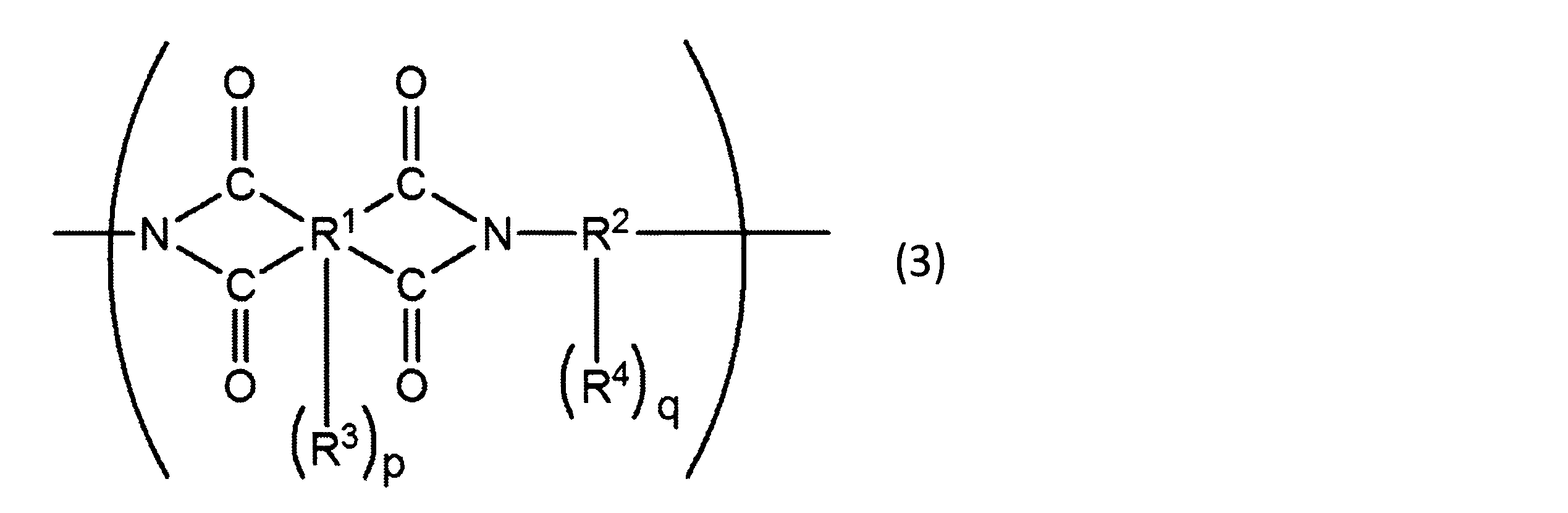


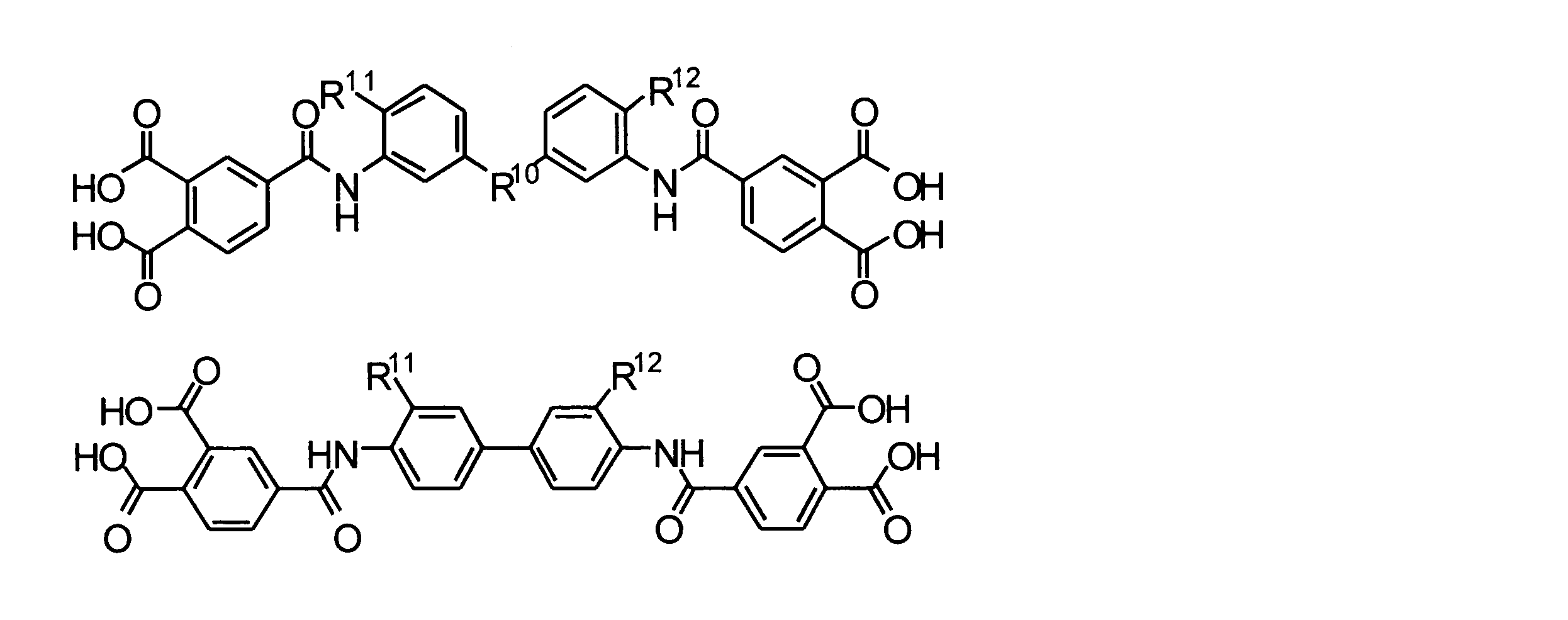
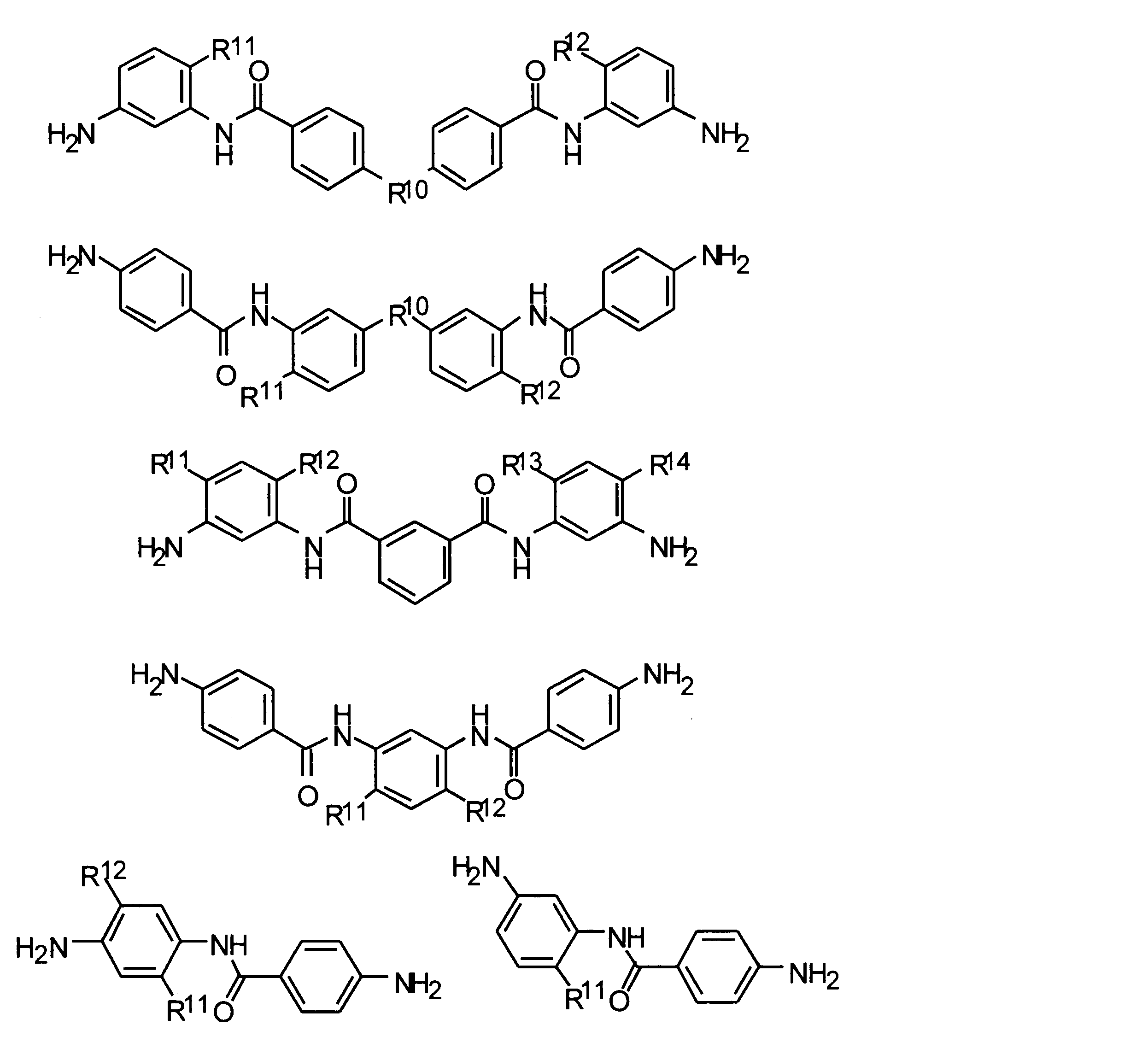
OD値 = log10(I0/I) ・・・ 式(5)
I0:入射光強度
I:透過光強度。
[窒化ジルコニウムの結晶子サイズおよびピーク強度比ZrO2/ZrN]
製造例に用いたジルコニウム化合物粒子Zr-1~Zr-6をアルミ製標準試料ホルダーに詰め、(株)理学製RU-200Rを用いて、X線源をCuKα1線として、広角X線回折法によりX線回折スペクトルを測定した。測定条件としては、出力は50kV/200mA、スリット系は1°-1°-0.15mm-0.45mm、測定ステップ(2θ)は0.02°、スキャン速度は2°/分とした。
製造例に用いたジルコニウム化合物粒子Zr-1~Zr-6について、日本ベル(株)製高精度全自動ガス吸着装置“BELSORP”36を用いて、100℃で真空脱気後、N2ガスの液体窒素温度(77K)における吸着等温線を測定し、この等温線をBET法で解析し比表面積を求めた。結果を表1に示す。
ジルコニウム化合物粒子Zr-4~Zr-6について、アルカリで溶融分解後、溶融物を塩酸で溶解し、超純水で定容して検液とした。ICP-AES(エスアイアイ・ナノテクノロジー(株)製、SPS5100型) により、検液中の元素の定量分析を行った結果を表1に示す。
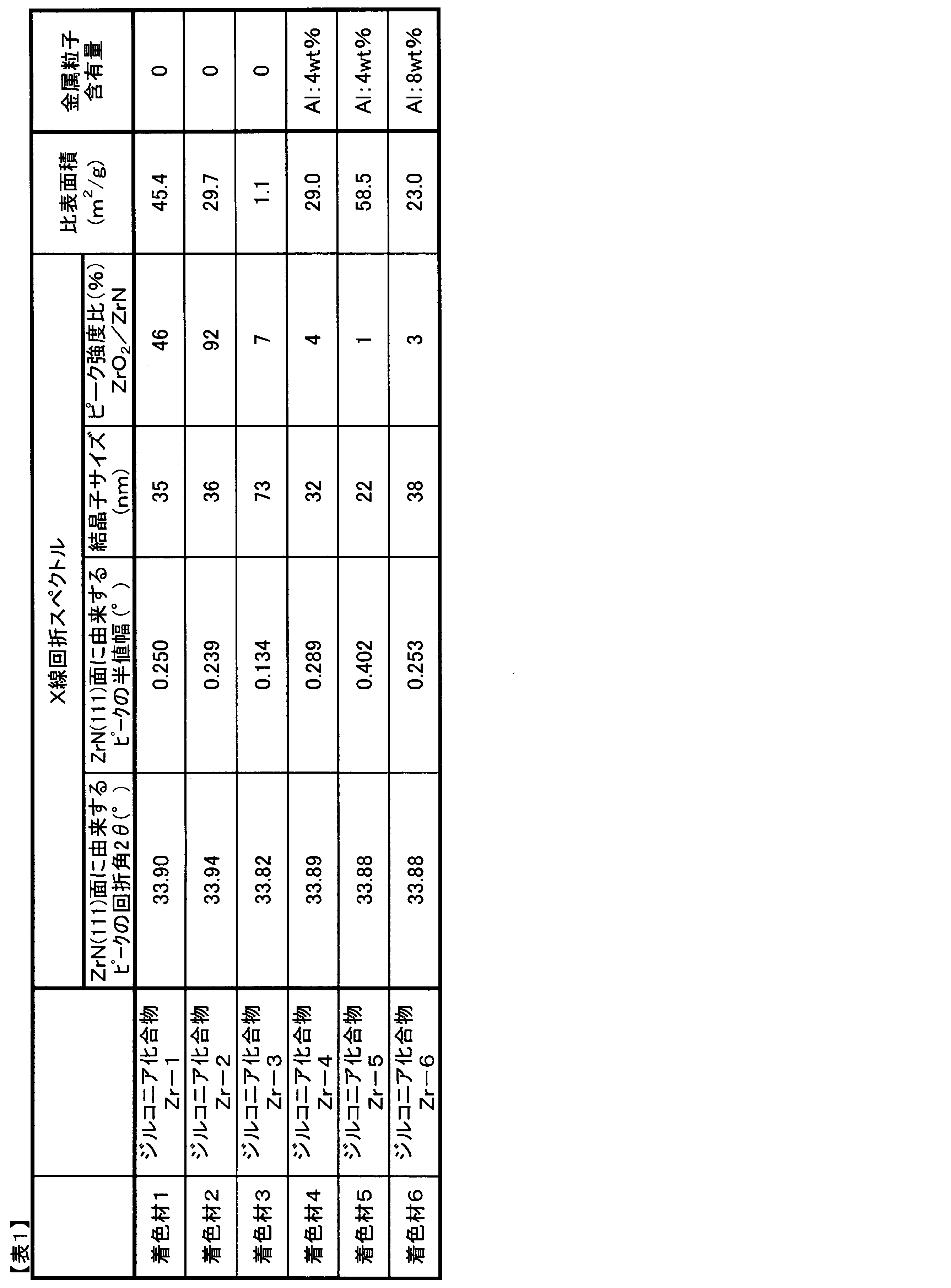
各実施例および比較例により得られた着色膜について、X-Rite社製光学濃度計361TVisualを用いて、膜厚1μmあたりのOD値を算出した。
各実施例および比較例により得られた着色膜について、(株)島津製作所製紫外-可視分光光度計UV-2600を用いて、OD値が1.0となる膜厚における、波長365nmおよび550nmにおける透過率を測定した。波長365nmにおける透過率が高いほど、紫外領域における光透過性に優れる。また、波長550nmにおける光透過率に対する波長365nmにおける光透過率の比を算出した。
各実施例および比較例により得られた着色膜について、接触式膜厚計(“DEKTAK”(登録商標)150;アルバック社販売)を用いて、触針圧5mgでの表面粗度(nm)を測定した。
各実施例および比較例により得られた着色膜に、フォトマスクを介して、紫外線を200mJ/cm2を最大露光量として、10mJ/cm2ごとに露光量を下げて露光し、0.045重量%水酸化カリウム水溶液のアルカリ現像液でシャワー現像した後のパターン表面の荒れの有無を目視にて観察した。現像後のパターン表面に荒れが生じない最低露光量を感度とした。ただし、最大露光量においても現像後にパターンが残存していない場合は「欠落」とした。
各実施例および比較例により得られた着色膜に、パターン幅の異なる、ライン・アンド・スペースパターンが1対1の間隔で配置されたフォトマスクを介して、紫外線を200mJ/cm2露光し、所定のアルカリ現像液でシャワー現像した後に、パターンを顕微鏡にて観察した。現像後のパターンが解像している最小の線幅を最小解像度とした。
各実施例および比較例により得られた着色膜に、線幅20μm、間隔1対1のライン・アンド・スペースパターンが配置されたフォトマスクを介して200mJ/cm2を最大露光量として、10mJ/cm2ごとに露光量を下げて露光し、所定のアルカリ現像液でシャワー現像した後に、パターンおよびスペースの線幅を顕微鏡にて観察した。ライン・アンド・スペースパターンを1対1で形勢できる最低露光量を感度とした。ただし、最大露光量においても現像後にスペースパターン部に未溶解物が残存している場合は「残渣」とした。
各実施例および比較例により得られた遮光パターンについて、プロピレングリコールモノメチルエーテルアセテート(以下、「PGMEA」と記載する)に浸した不織布で15秒間表面をふき取った後のOD値を、前述の[遮光性]と同様に測定した。ふき取り後のOD値がふき取り前のOD値(4.0)に近いほど、耐溶剤性に優れる。
特許第3120476号明細書の実施例1に記載の方法により、メチルメタクリレート/メタクリル酸/スチレン共重合体(重量比30/40/30)を合成した。得られた共重合体100重量部に対し、グリシジルメタクリレート40重量部を付加させ、精製水で再沈し、濾過および乾燥することにより、重量平均分子量15,000、酸価110mgKOH/gのアルカリ可溶性のアクリル樹脂(P-1)を得た。
2,2-ビス(3-アミノ-4-ヒドロキシフェニル)ヘキサフルオロプロパン(セントラル硝子(株)製)18.3g(0.05モル)をアセトン100mL、プロピレンオキシド(東京化成(株)製)17.4g(0.3モル)に溶解させ、-15℃に冷却した。ここに3-ニトロベンゾイルクロリド(東京化成(株)製)20.4g(0.11モル)をアセトン100mLに溶解させた溶液を滴下した。滴下終了後、-15℃で4時間撹拌し、その後室温に戻した。析出した白色固体をろ別し、50℃で真空乾燥した。
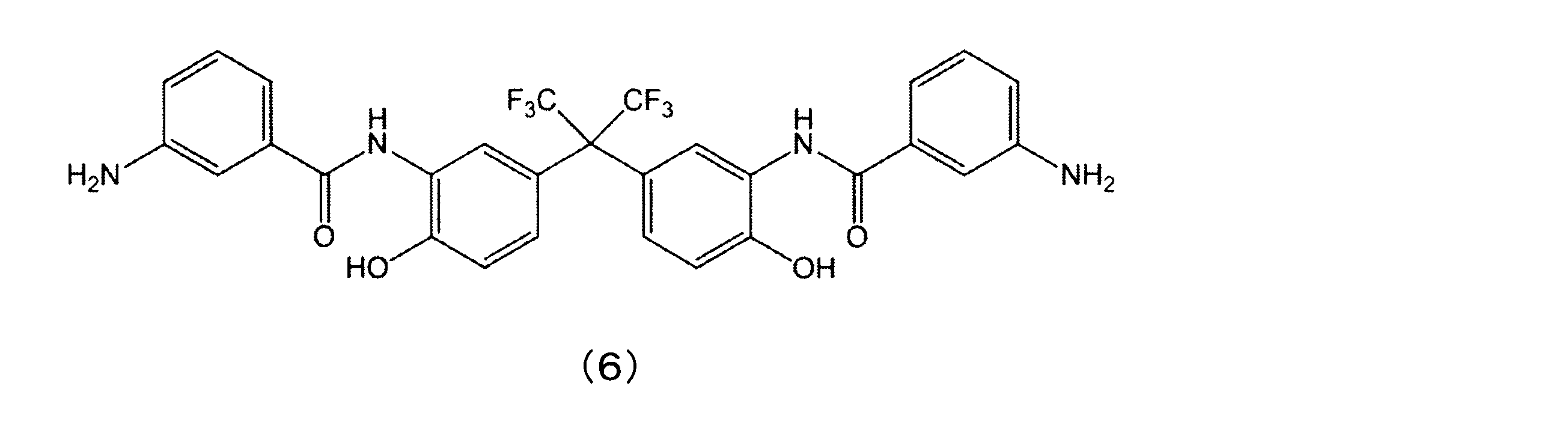
乾燥窒素気流下、TrisP-PA(商品名、本州化学工業(株)製)、21.22g(0.05モル)と5-ナフトキノンジアジドスルホン酸クロリド(東洋合成(株)製、NAC-5)26.8g(0.1モル)を1,4-ジオキサン450gに溶解させ、室温にした。ここに、1,4-ジオキサン50gと混合したトリエチルアミン12.65gを、系内が35℃以上にならないように滴下した。滴下後40℃で2時間撹拌した。トリエチルアミン塩を濾過し、濾液を水に投入した。その後、析出した沈殿を濾過で集め、さらに1%塩酸水1Lで洗浄した。その後、さらに水2Lで2回洗浄した。この沈殿を真空乾燥機で乾燥し、下記式(7)で表されるキノンジアジド化合物(b-1)を得た。
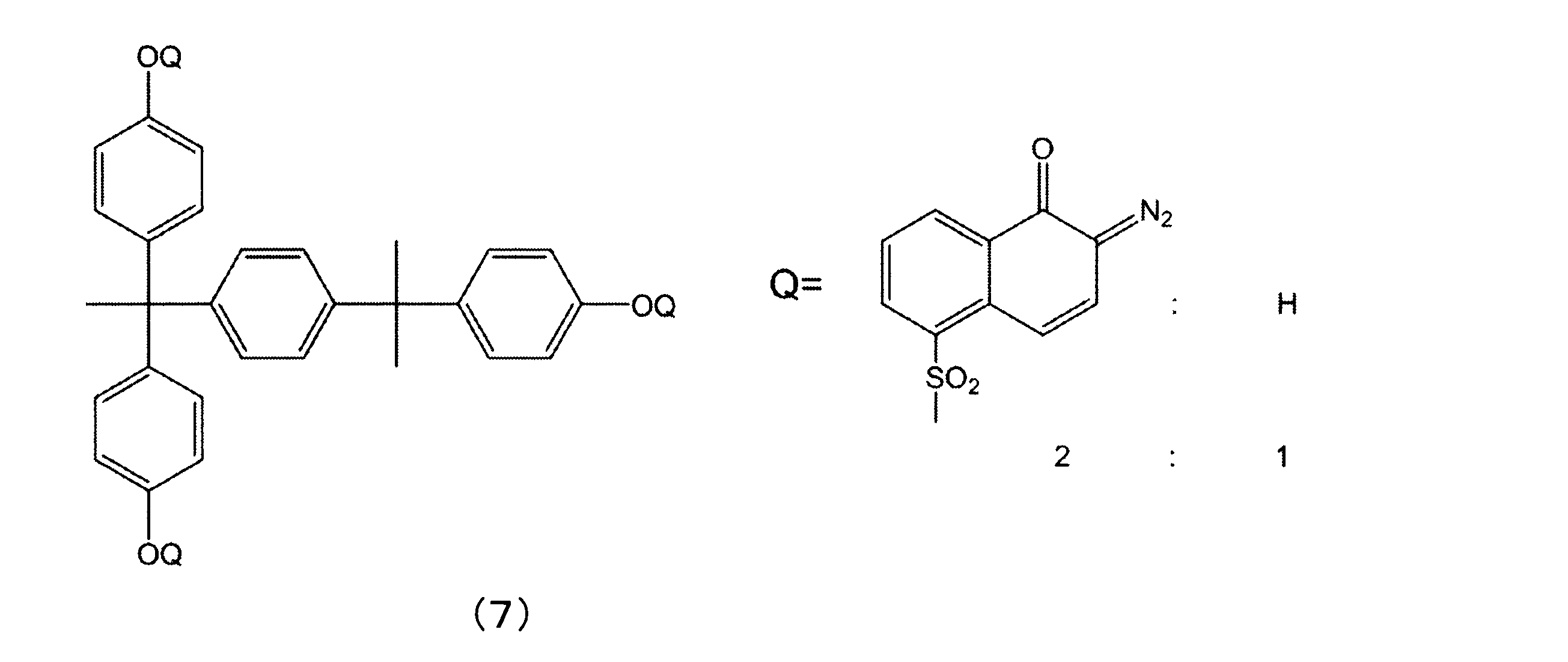
着色材として、熱プラズマ法により製造したジルコニア化合物粒子Zr-1(日清エンジニアリング(株)製)を用いた。Zr-1 200g、アクリルポリマー(P-1)のプロピレングリコールモノメチルエーテルアセテート(PGMEA)35重量%溶液114g、高分子分散剤として3級アミノ基と4級アンモニウム塩を有する“DISPERBYK”(登録商標)LPN-2111625gおよびPGMEA661gをタンクに仕込み、ホモミキサーで20分撹拌し、予備分散液を得た。0.05mmφジルコニアビーズを75体積%充填した遠心分離セパレーターを具備した寿工業(株)製分散機ウルトラアペックスミルに、得られた予備分散液を供給し、回転速度8m/sで3時間分散を行い、固形分濃度25重量%、着色材/樹脂(重量比)=80/20の着色材分散液DC-1を得た。
着色材として、特開2009-91205に記載の方法により製造されたジルコニウム化合物粒子Zr-2を用いた以外は製造例1と同様にして、着色材分散液(DC-2)を得た。
着色材として、熱プラズマ法により製造した窒化ジルコニウムとアルミニウム粒子からなる複合微粒子であるジルコニア化合物粒子Zr-4(アルミ含有量=4wt%、BET表面積=29.0m2/g)を用いた以外は製造例1と同様にして、着色材分散液(DC-3)を得た。
着色材として、熱プラズマ法により製造した窒化ジルコニウムとアルミニウム粒子からなる複合微粒子であるジルコニア化合物粒子Zr-5(アルミ含有量=4wt%、BET表面積=58.5m2/g)を用いた以外は製造例1と同様にして、着色材分散液(DC-4)を得た。
着色材として、熱プラズマ法により製造した窒化ジルコニウムとアルミニウム粒子からなる複合微粒子であるジルコニア化合物粒子Zr-6(アルミ含有量=8wt%、BET表面積=23.0m2/g)を用いた以外は製造例1と同様にして、着色材分散液(DC-5)を得た。
熱プラズマ法により製造したジルコニア化合物粒子Zr-1(日清エンジニアリング(株)製)200g、ポリアミドエステル樹脂(P-3)のプロピレングリコールモノメチルエーテルアセテート(PGMEA)35重量%溶液114g、高分子分散剤としてアミド基を有する“DISPERBYK”(登録商標)-2200gおよびPGMEA661gをタンクに仕込み、ホモミキサーで20分撹拌し、予備分散液を得た。0.05mmφジルコニアビーズを75体積%充填した遠心分離セパレーターを具備した寿工業(株)製分散機ウルトラアペックスミルに、得られた予備分散液を供給し、回転速度8m/sで3時間分散を行い、固形分濃度25重量%、着色材/樹脂(重量比)=80/20の着色材分散液DC-6を得た。
着色材として、熱プラズマ法により製造した窒化ジルコニウムとアルミニウム粒子からなる複合微粒子であるジルコニア化合物粒子Zr-4(アルミ含有量=4wt%、BET表面積=29.0m2/g)を用いた以外は製造例6と同様にして、着色材分散液(DC-7)を得た。
着色材として有機紫顔料PV23(クラリアント社製)を用いた以外は製造例1と同様にして、着色材分散液(DC-8)を得た。
着色材として市販の窒化ジルコニウム粒子Zr-3(日本新金属(株)製)を用いた以外は製造例1と同様にして、着色材分散液(DC-9)を得た。
着色材としてチタン窒化物粒子(日清エンジニアリング(株)製)を用いた以外は製造例1と同様にして、着色材分散液(DC-10)を得た。
着色材としてスルホン酸基により表面が修飾されたカーボンブラック(キャボット製TPK1227)を用いた以外は製造例1と同様にして、着色材分散液(DC-11)を得た。
着色材としてスルホン酸基により表面が修飾されたカーボンブラック(キャボット製TPK1227)を用いた以外は製造例6と同様にして、着色材分散液(DC-12)を得た。
283.1gの着色材分散液(DC-1)に、アクリルポリマー(P-1)のPGMEA35重量%溶液を184.4g、多官能モノマーとしてジペンタエリスリトールヘキサアクリレート(日本化薬(株)製)を50.1g、光重合開始剤として“Irgacure”(登録商標)907(BASF社製)を7.5gおよび“KAYACURE”(登録商標)DETX-S”(日本化薬(株)製)を3.8g、密着改良剤としてKBM5103(信越化学(株)製)を12.0g、界面活性剤としてシリコーン系界面活性剤“BYK”(登録商標)333(ビックケミー社製)のPGMEA10重量%溶液3gを456.1gのPGMEAに溶解した溶液を添加して、全固形分濃度20重量%、着色材/樹脂(重量比)=30/70のネガ型感光性着色樹脂組成物PC-1を得た。
着色材分散液(DC-1)の代わりに着色材分散液(DC-2)を用いた以外は実施例1と同様にして、ネガ型感光性着色樹脂組成物PC-2を得た。得られた着色樹脂組成物PC-2を用いて、実施例1と同様の評価をした。結果を表2に示す。
187.0gの着色材分散液(DC-1)に、アクリルポリマー(P-1)のPGMEA35重量%溶液を226.8g、多官能モノマーとしてジペンタエリスリトールヘキサアクリレート(日本化薬(株)製)を57.6g、光重合開始剤として“Irgacure”(登録商標)907(BASF社製)を8.6gおよび“KAYACURE”(登録商標)DETXを4.3g、密着改良剤としてKBM5103(信越化学(株)製)を12.0g、界面活性剤としてシリコーン系界面活性剤“BYK”(登録商標)333(ビックケミー社製)の10重量%PGMEA溶液3gを500.7gのPGMEAに溶解した溶液を添加して、全固形分濃度20重量%、着色材/樹脂(重量比)=20/80のネガ型感光性着色樹脂組成物PC-3を得た。得られた着色樹脂組成物PC-3を用いて、実施例1と同様の評価をした。結果を表2に示す。
380.9gの着色材分散液(DC-1)に、アクリルポリマー(P-1)のPGMEA35重量%溶液を141.2g、多官能モノマーとしてジペンタエリスリトールヘキサアクリレート(日本化薬(株)製)を42.5g、光重合開始剤として“Irgacure”(登録商標)907(BASF社製)を6.4gおよび“KAYACURE”(登録商標)DETXを3.2g、密着改良剤としてKBM5103(信越化学(株)製)を12.0g、界面活性剤としてシリコーン系界面活性剤“BYK”(登録商標)333(ビックケミー社製)10重量%PGMEA溶液3gを410.8gのPGMEAに溶解した溶液を添加して、全固形分濃度20重量%、着色材/樹脂(重量比)=40/60のネガ型感光性着色樹脂組成物PC-4を得た。得られた着色樹脂組成物PC-4を用いて、実施例1と同様の評価をした。結果を表2に示す。
着色材分散液(DC-1)の代わりに着色材分散液(DC-3)を用いた以外は実施例1と同様にして、ネガ型感光性着色樹脂組成物PC-5を得た。得られた着色樹脂組成物PC-5を用いて、実施例1と同様の評価をした。結果を表2に示す。
着色材分散液(DC-1)の代わりに着色材分散液(DC-4)を用いた以外は実施例1と同様にして、ネガ型感光性着色樹脂組成物PC-6を得た。得られた着色樹脂組成物PC-6を用いて、実施例1と同様の評価をした。結果を表2に示す。
着色材分散液(DC-1)の代わりに着色材分散液(DC-5)を用いた以外は実施例1と同様にして、ネガ型感光性着色樹脂組成物PC-7を得た。得られた着色樹脂組成物PC-7を用いて、実施例1と同様の評価をした。結果を表2に示す。
着色材分散液として、212.3gの着色材分散液(DC-1)および70.8gの着色材分散液(DC-8)の混合液を用いた以外は実施例1と同様にしてネガ型感光性着色樹脂組成物PC-8を得た。得られた着色樹脂組成物PC-8を用いて、実施例1と同様の評価をした。結果を表2に示す。
着色材分散液(DC-1)の代わりに着色材分散液(DC-9)を用いた以外は実施例1と同様にして、ネガ型感光性着色樹脂組成物PC-9を得た。得られた着色樹脂組成物PC-9を用いて、実施例1と同様の評価をした。結果を表2に示す。
着色材分散液(DC-1)の代わりに着色材分散液(DC-10)を用いた以外は実施例1と同様にして、ネガ型感光性着色樹脂組成物PC-10を得た。得られた着色樹脂組成物PC-10を用いて、実施例1と同様の評価をした。結果を表2に示す。
着色材分散液(DC-1)の代わりに着色材分散液(DC-11)を用いた以外は実施例1と同様にして、ネガ型感光性着色樹脂組成物PC-11を得た。得られた着色樹脂組成物PC-11を用いて、実施例1と同様の評価をした。結果を表2に示す。

128.9gの着色材分散液(DC-1)に、アクリルポリマー(P-1)のPGMEA35重量%溶液を273.6g、多官能モノマーとしてジペンタエリスリトールヘキサアクリレート(日本化薬(株)製)を67.1g、光重合開始剤として“アデカアークルズ”(登録商標)NCI-831(ADEKA社製)を1.7g、密着改良剤としてKBM5103(信越化学(株)製)を3.0g、界面活性剤としてシリコーン系界面活性剤“BYK”(登録商標)333(ビックケミー社製)のPGMEA10重量%溶液3gを522.8gのPGMEAに溶解した溶液を添加して、全固形分濃度20重量%、着色材/樹脂(重量比)=13/87のネガ型感光性着色樹脂組成物PC-12を得た。
アクリルポリマー(P-1)のPGMEA35重量%溶液273.6gの代わりにカルド樹脂V-259ME(新日鉄住金(株)製、PGMEA45重量%溶液)(P-2)212.8gを用いた以外は実施例9と同様にして、ネガ型感光性着色樹脂組成物PC-13を得た。得られた着色樹脂組成物PC-13を用いて、実施例9と同様の評価をした。結果を表3に示す。
49.5gの着色材分散液(DC-1)に、カルド樹脂V-259ME(新日鉄住金(株)製、PGMEA45重量%溶液)(P-2)241.7g、多官能モノマーとしてジペンタエリスリトールヘキサアクリレート(日本化薬(株)製)を73.7g、光重合開始剤として“アデカアークルズ”(登録商標)NCI-831(ADEKA社製)を1.8g、密着改良剤としてKBM5103(信越化学(株)製)を3.0g、界面活性剤としてシリコーン系界面活性剤“BYK”(登録商標)333(ビックケミー社製)のPGMEA10重量%溶液3gを627.3gのPGMEAに溶解した溶液を添加して、全固形分濃度20重量%、着色材/樹脂(重量比)=5/95のネガ型感光性着色樹脂組成物PC-14を得た。得られた着色樹脂組成物PC-14を用いて、実施例9と同様の評価をした。結果を表3に示す。
着色材分散液(DC-1)の代わりに着色材分散液(DC-3)を用いた以外は実施例10と同様にして、ネガ型感光性着色樹脂組成物PC-15を得た。得られた着色樹脂組成物PC-15を用いて、実施例9と同様の評価をした。結果を表3に示す。
着色材分散液(DC-1)の代わりに着色材分散液(DC-11)を用いた以外は実施例10と同様にして、ネガ型感光性着色樹脂組成物PC-16を得た。得られた着色樹脂組成物PC-16を用いて、実施例9と同様の評価をした。結果を表3に示す。

170.0gの着色材分散液(DC-6)に、ポリアミドエステル樹脂(P-3)97.2gに合成例3で得られたキノンジアジド化合物(b-1)28.6g、フェノール化合物ビスフェノール-AF(東京化成工業(株)製)28.6g、シリコーン系界面活性剤“BYK”(登録商標)333(ビックケミー社製)のPGMEA10重量%溶液3gを645.5gのPGMEAに溶解した溶液を添加して、全固形分濃度20重量%、着色材/樹脂(重量比)=17/83のポジ型感光性着色樹脂組成物PC-17を得た。
着色材分散液(DC-6)の代わりに着色材分散液(DC-7)を用いた以外は実施例13と同様にして、ポジ型感光性着色樹脂組成物PC-18を得た。得られた着色樹脂組成物PC-18を用いて、実施例13と同様の評価をした。結果を表4に示す。
着色材分散液(DC-6)の代わりに着色材分散液(DC-12)を用いた以外は実施例13と同様にして、ポジ型感光性着色樹脂組成物PC-19を得た。得られた着色樹脂組成物PC-19を用いて、実施例13と同様の評価をした。結果を表4に示す。
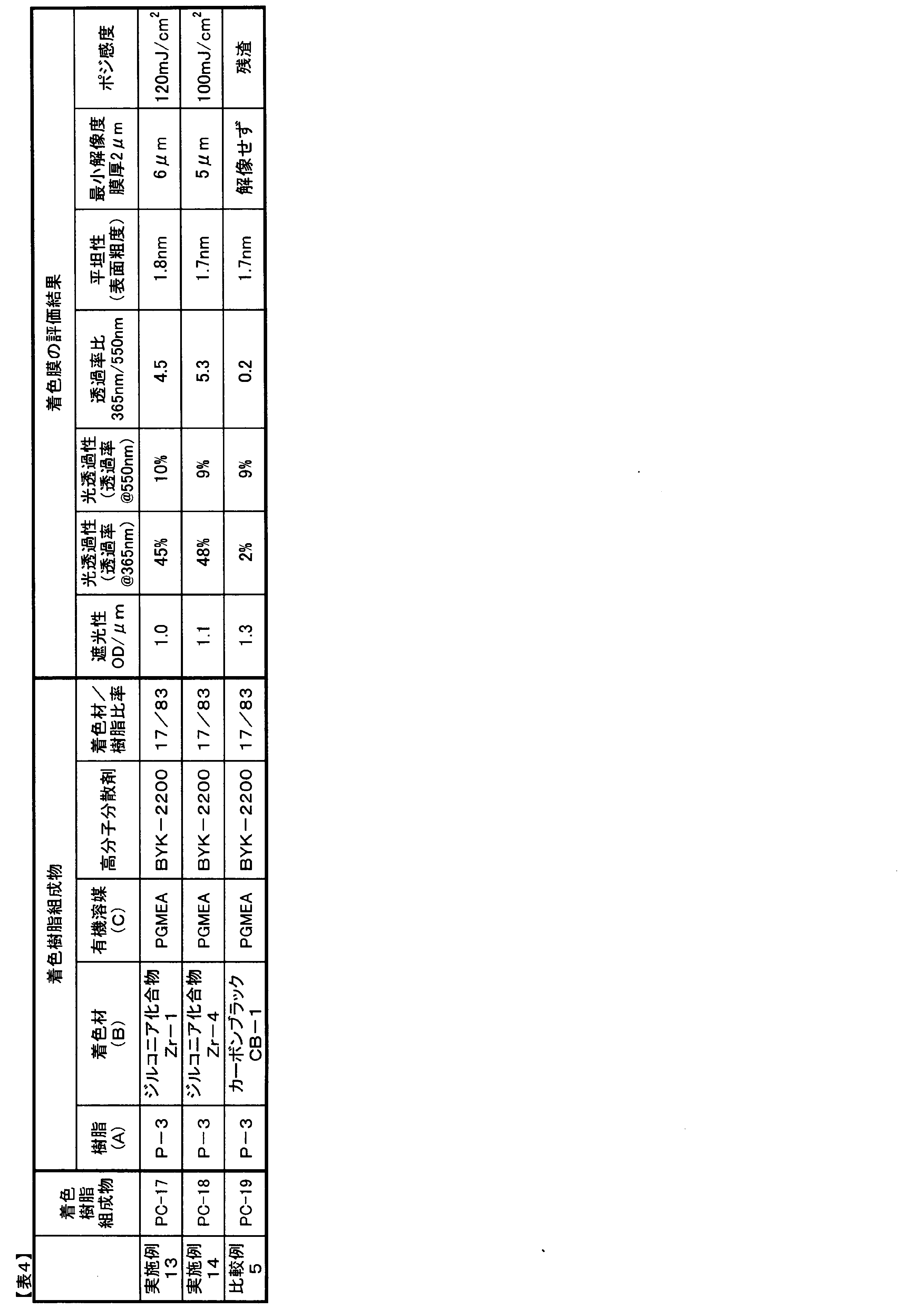
実施例1にて作成した着色膜C-1について、耐溶剤性の結果を表5に示す。
着色膜C-1について、ポストベイクの条件を230℃×30分から100℃×60分に変えた以外は実施例1と同様にして、着色膜C-20を得た。得られた着色膜C-20について、参考例1と同様の評価をした。結果を表5に示す。
着色膜C-1について、現像後のパターンに対して、i線露光量が500mJ/cm2となるよう、浜松ホトニクス(株)製LEDランプ(GC-77)を用いて、出力50%、照射距離3cmの条件で、無アルカリガラスを介して1.66秒間露光した以外は参考例2)と同様にして、着色膜C-21を得た。得られた着色膜C-21について、参考例1と同様の評価をした。結果を表5に示す。
着色樹脂組成物(PC-1)の代わりに着色樹脂組成物(PC-9)を用いた以外は実施例16と同様にして、着色膜C-22を得た。得られた着色膜C-22を用いて、参考例1と同様の評価をした。結果を表5に示す。
着色樹脂組成物(PC-1)の代わりに着色樹脂組成物(PC-10)を用いた以外は実施例16と同様にして、着色膜C-23を得た。得られた着色膜C-23について、参考例1と同様の評価をした。結果を表5に示す。
着色樹脂組成物(PC-1)の代わりに着色樹脂組成物(PC-11)を用いた以外は実施例16と同様にして、着色膜C-24を得た。得られた着色膜C-24について、参考例1と同様の評価をした。結果を表5に示す。
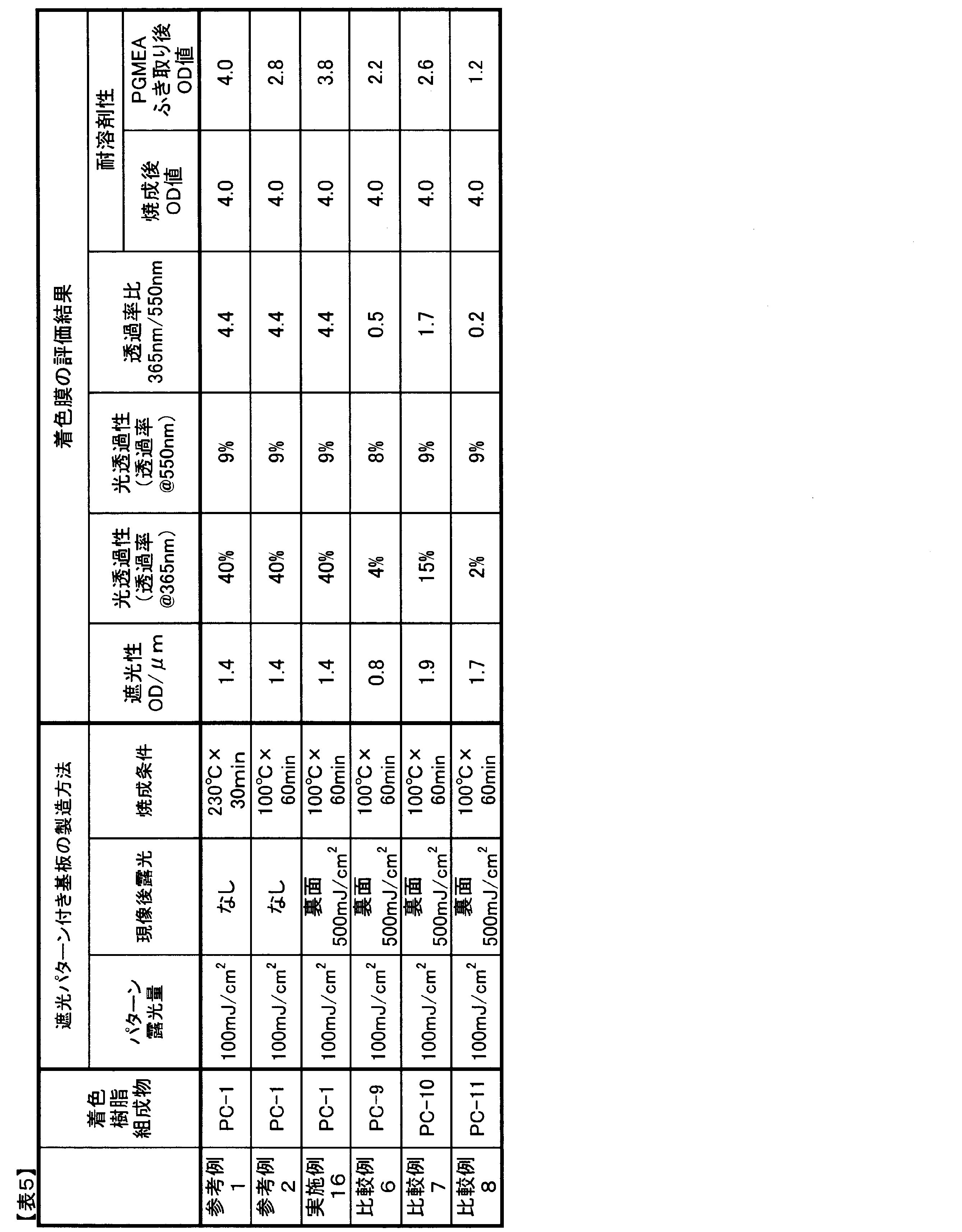
Claims (15)
- (A)アルカリ可溶性樹脂、(B)着色材、(C)有機溶剤および(D)感光剤を含有する着色樹脂組成物であって、前記(B)着色材として少なくともジルコニア化合物粒子を含有し、前記ジルコニア化合物粒子に含まれる窒化ジルコニウムの、CuKα線をX線源としたときのX線回折スペクトルにおける(111)面に由来するピークの半値幅より求めた結晶子サイズが10nm以上60nm以下である着色樹脂組成物。
- 前記ジルコニア化合物粒子が、窒化ジルコニウムと金属粒子からなる複合微粒子を含む請求項1記載の着色樹脂組成物。
- 前記ジルコニア化合物粒子が、前記ジルコニア化合物粒子の比表面積が20.0m2/gよりも大きい請求項1または2に記載の着色樹脂組成物
- 前記ジルコニア化合物粒子が、熱プラズマ法により製造された請求項1~3のいずれか1項に記載の着色樹脂組成物
- 前記(B)着色材として紫着色材をさらに含有する請求項1~4のいずれか1項記載の着色樹脂組成物。
- 光学濃度(OD値)が1となるように着色膜を形成したときの、前記着色膜の波長365nmにおける光透過率が20%以上となる請求項1~5のいずれか1項に記載の着色樹脂組成物。
- 前記(D)感光剤として光重合開始剤を含有し、(E)ラジカル重合性化合物をさらに含有する請求項1~6のいずれか1項に記載の着色樹脂組成物。
- 前記(D)感光剤として光酸発生剤を含有する請求項1~6のいずれか1項に記載の着色樹脂組成物。
- 請求項1~8のいずれか一項記載の着色樹脂組成物の硬化物からなる、着色膜。
- 透明基板上に請求項1~8のいずれか1項記載の着色樹脂組成物を塗布して塗布膜を得る工程、得られた塗布膜を乾燥して乾燥膜を得る工程、得られた乾燥膜を露光および現像することにより所望の形状にパターニングする工程、および、得られたパターンを、前記透明基板を介して露光する工程を有する遮光パターン付き基板の製造方法。
- 請求項9記載の着色膜を具備する、カラーフィルター。
- 請求項11記載のカラーフィルターを具備する、液晶表示装置。
- 請求項9記載の着色膜からなる着色隔壁。
- 請求項13記載の着色隔壁を具備する、固体撮像素子。
- 請求項13記載の着色隔壁間に色変換材料を有する表示装置。
Priority Applications (4)
| Application Number | Priority Date | Filing Date | Title |
|---|---|---|---|
| JP2018550616A JPWO2019059359A1 (ja) | 2017-09-25 | 2018-09-21 | 着色樹脂組成物、着色膜、カラーフィルターおよび液晶表示装置 |
| US16/645,183 US11634555B2 (en) | 2017-09-25 | 2018-09-21 | Colored resin composition, colored film, color filter and liquid crystal display device |
| KR1020207006520A KR102548102B1 (ko) | 2017-09-25 | 2018-09-21 | 착색 수지 조성물, 착색막, 컬러필터 및 액정 표시 장치 |
| CN201880060340.XA CN111095044B (zh) | 2017-09-25 | 2018-09-21 | 着色树脂组合物、着色膜、滤色器及液晶显示装置 |
Applications Claiming Priority (4)
| Application Number | Priority Date | Filing Date | Title |
|---|---|---|---|
| JP2017183230 | 2017-09-25 | ||
| JP2017-183230 | 2017-09-25 | ||
| JP2017-217264 | 2017-11-10 | ||
| JP2017217264 | 2017-11-10 |
Publications (1)
| Publication Number | Publication Date |
|---|---|
| WO2019059359A1 true WO2019059359A1 (ja) | 2019-03-28 |
Family
ID=65810326
Family Applications (1)
| Application Number | Title | Priority Date | Filing Date |
|---|---|---|---|
| PCT/JP2018/035112 Ceased WO2019059359A1 (ja) | 2017-09-25 | 2018-09-21 | 着色樹脂組成物、着色膜、カラーフィルターおよび液晶表示装置 |
Country Status (6)
| Country | Link |
|---|---|
| US (1) | US11634555B2 (ja) |
| JP (2) | JPWO2019059359A1 (ja) |
| KR (1) | KR102548102B1 (ja) |
| CN (1) | CN111095044B (ja) |
| TW (1) | TWI757548B (ja) |
| WO (1) | WO2019059359A1 (ja) |
Cited By (18)
| Publication number | Priority date | Publication date | Assignee | Title |
|---|---|---|---|---|
| KR20200099532A (ko) * | 2017-12-19 | 2020-08-24 | 닛신 엔지니어링 가부시키가이샤 | 복합 입자 및 복합 입자의 제조 방법 |
| JP2020166116A (ja) * | 2019-03-29 | 2020-10-08 | 日鉄ケミカル&マテリアル株式会社 | 遮光膜及びそれを得るための感光性樹脂組成物、遮光膜の製造方法 |
| WO2021018927A1 (en) * | 2019-07-31 | 2021-02-04 | Merck Patent Gmbh | Negative type photosensitive composition comprising black colorant |
| JPWO2021149410A1 (ja) * | 2020-01-21 | 2021-07-29 | ||
| WO2021172084A1 (ja) * | 2020-02-25 | 2021-09-02 | 東レ株式会社 | 黒色樹脂組成物、近赤外線透過遮光膜、加飾基板、加飾フィルムおよび有機elディスプレイ用の着色隔壁 |
| WO2021177027A1 (ja) * | 2020-03-06 | 2021-09-10 | 富士フイルム株式会社 | 感光性組成物、硬化膜、カラーフィルタ、遮光膜、光学素子、固体撮像素子、赤外線センサ、ヘッドライトユニット |
| JPWO2022039034A1 (ja) * | 2020-08-18 | 2022-02-24 | ||
| KR20220054344A (ko) | 2019-09-27 | 2022-05-02 | 후지필름 가부시키가이샤 | 감광성 조성물, 경화막, 컬러 필터, 차광막, 광학 소자, 고체 촬상 소자, 적외선 센서, 헤드라이트 유닛 |
| WO2022092274A1 (ja) * | 2020-11-02 | 2022-05-05 | 三菱マテリアル株式会社 | ジルコニウム含有窒化物粉末及び黒色紫外線硬化型有機組成物 |
| JPWO2022102368A1 (ja) * | 2020-11-13 | 2022-05-19 | ||
| JP2022083434A (ja) * | 2020-11-24 | 2022-06-03 | ローム・アンド・ハース・エレクトロニック・マテリアルズ・コリア・リミテッド | 着色感光性樹脂組成物及びそれから調製される多層硬化フィルム |
| WO2022163449A1 (ja) * | 2021-01-28 | 2022-08-04 | 東レ株式会社 | 着色樹脂組成物、着色膜、加飾基板 |
| WO2022210175A1 (ja) | 2021-03-29 | 2022-10-06 | 富士フイルム株式会社 | 黒色感光性組成物、黒色感光性組成物の製造方法、硬化膜、カラーフィルタ、遮光膜、光学素子、固体撮像素子、ヘッドライトユニット |
| CN115244461A (zh) * | 2020-03-13 | 2022-10-25 | 东丽株式会社 | 有机el显示装置以及感光性树脂组合物 |
| WO2023053809A1 (ja) * | 2021-09-28 | 2023-04-06 | 三菱マテリアル電子化成株式会社 | 酸化アルミニウム系組成物含有窒化ジルコニウム粉末及びその製造方法 |
| WO2024122478A1 (ja) * | 2022-12-09 | 2024-06-13 | 信越化学工業株式会社 | 紫外線硬化型シリコーン組成物、及びその硬化物 |
| JPWO2024122578A1 (ja) * | 2022-12-09 | 2024-06-13 | ||
| WO2024203330A1 (ja) * | 2023-03-31 | 2024-10-03 | 三菱マテリアル電子化成株式会社 | 黒色紫外線硬化型樹脂組成物、黒色樹脂硬化物、電子部品製造用材料、電子部品 |
Families Citing this family (4)
| Publication number | Priority date | Publication date | Assignee | Title |
|---|---|---|---|---|
| JP7027545B2 (ja) * | 2018-07-20 | 2022-03-01 | 富士フイルム株式会社 | 遮光性樹脂組成物、硬化膜、カラーフィルタ、遮光膜、固体撮像素子、画像表示装置 |
| CN110981746B (zh) * | 2019-12-23 | 2024-07-12 | 盐城通海生物科技有限公司 | 一种c5侧链取代的含氟二胺单体的制备方法 |
| JP7407268B2 (ja) * | 2020-03-12 | 2023-12-28 | 富士フイルム株式会社 | 光学素子、赤外線センサー、固体撮像素子、光学素子の製造方法 |
| WO2025195597A1 (en) * | 2024-03-21 | 2025-09-25 | Merck Patent Gmbh | Composition |
Citations (7)
| Publication number | Priority date | Publication date | Assignee | Title |
|---|---|---|---|---|
| JP2006209102A (ja) * | 2004-12-28 | 2006-08-10 | Dainippon Printing Co Ltd | 表示素子用黒色樹脂組成物、及び表示素子用部材 |
| JP2009091205A (ja) * | 2007-10-10 | 2009-04-30 | Tayca Corp | 微粒子低次酸化ジルコニウム・窒化ジルコニウム複合体およびその製造方法 |
| JP2009237294A (ja) * | 2008-03-27 | 2009-10-15 | The Inctec Inc | ブラックマトリクス形成用感光性樹脂組成物 |
| JP2010097210A (ja) * | 2008-09-18 | 2010-04-30 | Toray Ind Inc | 感光性黒色樹脂組成物、樹脂ブラックマトリクス基板、カラーフィルター基板および液晶表示装置 |
| JP2011227467A (ja) * | 2010-03-31 | 2011-11-10 | Toray Ind Inc | 感光性黒色樹脂組成物、樹脂ブラックマトリクス基板 |
| WO2012133148A1 (ja) * | 2011-03-25 | 2012-10-04 | 東レ株式会社 | 黒色樹脂組成物、樹脂ブラックマトリックス基板およびタッチパネル |
| JP2017222559A (ja) * | 2016-09-29 | 2017-12-21 | 三菱マテリアル電子化成株式会社 | 窒化ジルコニウム粉末及びその製造方法 |
Family Cites Families (25)
| Publication number | Priority date | Publication date | Assignee | Title |
|---|---|---|---|---|
| JP3120476B2 (ja) | 1991-02-26 | 2000-12-25 | 東レ株式会社 | カラーフィルタ用着色ペースト |
| JP2953594B2 (ja) | 1991-04-18 | 1999-09-27 | 大日本印刷株式会社 | 液晶表示装置およびカラーフィルター |
| JPH10153703A (ja) | 1996-11-22 | 1998-06-09 | Toppan Printing Co Ltd | ブラックマトリックス及びそれを用いたカラーフィルタ及びそれらの製造方法 |
| US7056642B2 (en) * | 2002-09-18 | 2006-06-06 | Fuji Photo Film Co., Ltd. | Method of graft polymerization and variety of materials utilizing the same as well as producing method thereof |
| TWI333127B (en) | 2003-04-07 | 2010-11-11 | Toray Industries | Positive-type photosensitive resin composition |
| JP4483371B2 (ja) * | 2003-04-07 | 2010-06-16 | 東レ株式会社 | 感光性樹脂組成物 |
| JP4437651B2 (ja) | 2003-08-28 | 2010-03-24 | 新日鐵化学株式会社 | 感光性樹脂組成物及びそれを用いたカラーフィルター |
| JP4448381B2 (ja) | 2004-05-26 | 2010-04-07 | 東京応化工業株式会社 | 感光性組成物 |
| KR100967465B1 (ko) * | 2004-12-28 | 2010-07-07 | 다이니폰 인사츠 가부시키가이샤 | 표시 소자용 흑색 수지 조성물 및 표시 소자용 부재 |
| JP5136139B2 (ja) | 2007-03-20 | 2013-02-06 | 東レ株式会社 | 樹脂ブラックマトリクス用黒色樹脂組成物、樹脂ブラックマトリクス、カラーフィルターおよび液晶表示装置 |
| JP5592599B2 (ja) * | 2008-05-14 | 2014-09-17 | ピーエスフォー ルクスコ エスエイアールエル | 半導体装置 |
| JP5470993B2 (ja) * | 2009-04-13 | 2014-04-16 | 日立化成株式会社 | パターン形成用材料、これを用いたフィルム状エレメント及びパターン形成方法 |
| TWI483999B (zh) * | 2009-06-15 | 2015-05-11 | Toray Industries | 黑色複合微粒子、黑色樹脂組成物、彩色濾光片基板及液晶顯示裝置 |
| CN102073216A (zh) * | 2009-11-18 | 2011-05-25 | 富士胶片株式会社 | 着色感光性树脂组合物、图案形成方法、滤色器的制造方法、滤色器及显示装置 |
| JP2013533508A (ja) * | 2010-07-14 | 2013-08-22 | エルジー・ケム・リミテッド | ポジティブ型感光性樹脂組成物およびこれを含む有機発光素子ブラックバンク |
| CN103787655A (zh) * | 2012-10-29 | 2014-05-14 | 河北联合大学 | Al-ZrO2-N2反应烧结制备ZrN-Al2O3-ZrO2复相陶瓷材料的方法 |
| WO2015030208A1 (ja) * | 2013-08-29 | 2015-03-05 | 三菱化学株式会社 | 静電荷像現像用トナー |
| CN103739205B (zh) * | 2013-11-08 | 2017-06-13 | 北京京东方光电科技有限公司 | 功能材料及其制备方法、显示结构形成材料、彩膜基板、显示装置 |
| JP6573772B2 (ja) * | 2015-03-31 | 2019-09-11 | Nok株式会社 | 密封装置 |
| SG11201802613SA (en) | 2015-09-30 | 2018-04-27 | Toray Industries | Negative type coloring photosensitive resin composition, cured film, element, and display device |
| JP6859353B2 (ja) * | 2016-08-25 | 2021-04-14 | 富士フイルム株式会社 | 硬化性組成物及びその製造方法、硬化膜及びその製造方法、カラーフィルタ、固体撮像素子、固体撮像装置、並びに、赤外線センサ |
| JP6667422B2 (ja) * | 2016-11-22 | 2020-03-18 | 三菱マテリアル電子化成株式会社 | 黒色膜形成用混合粉末及びその製造方法 |
| JP6954769B2 (ja) * | 2017-06-09 | 2021-10-27 | 三菱マテリアル電子化成株式会社 | 窒化ジルコニウム粉末及びその製造方法 |
| US12163032B2 (en) * | 2017-12-19 | 2024-12-10 | Nisshin Engineering Inc. | Composite particles and method for producing composite particles |
| JP6971834B2 (ja) * | 2017-12-26 | 2021-11-24 | 三菱マテリアル電子化成株式会社 | 黒色遮光膜形成用粉末及びその製造方法 |
-
2018
- 2018-09-21 KR KR1020207006520A patent/KR102548102B1/ko active Active
- 2018-09-21 US US16/645,183 patent/US11634555B2/en active Active
- 2018-09-21 CN CN201880060340.XA patent/CN111095044B/zh active Active
- 2018-09-21 JP JP2018550616A patent/JPWO2019059359A1/ja active Pending
- 2018-09-21 WO PCT/JP2018/035112 patent/WO2019059359A1/ja not_active Ceased
- 2018-09-25 TW TW107133564A patent/TWI757548B/zh active
-
2021
- 2021-06-08 JP JP2021095582A patent/JP2021167949A/ja active Pending
Patent Citations (7)
| Publication number | Priority date | Publication date | Assignee | Title |
|---|---|---|---|---|
| JP2006209102A (ja) * | 2004-12-28 | 2006-08-10 | Dainippon Printing Co Ltd | 表示素子用黒色樹脂組成物、及び表示素子用部材 |
| JP2009091205A (ja) * | 2007-10-10 | 2009-04-30 | Tayca Corp | 微粒子低次酸化ジルコニウム・窒化ジルコニウム複合体およびその製造方法 |
| JP2009237294A (ja) * | 2008-03-27 | 2009-10-15 | The Inctec Inc | ブラックマトリクス形成用感光性樹脂組成物 |
| JP2010097210A (ja) * | 2008-09-18 | 2010-04-30 | Toray Ind Inc | 感光性黒色樹脂組成物、樹脂ブラックマトリクス基板、カラーフィルター基板および液晶表示装置 |
| JP2011227467A (ja) * | 2010-03-31 | 2011-11-10 | Toray Ind Inc | 感光性黒色樹脂組成物、樹脂ブラックマトリクス基板 |
| WO2012133148A1 (ja) * | 2011-03-25 | 2012-10-04 | 東レ株式会社 | 黒色樹脂組成物、樹脂ブラックマトリックス基板およびタッチパネル |
| JP2017222559A (ja) * | 2016-09-29 | 2017-12-21 | 三菱マテリアル電子化成株式会社 | 窒化ジルコニウム粉末及びその製造方法 |
Cited By (50)
| Publication number | Priority date | Publication date | Assignee | Title |
|---|---|---|---|---|
| JP7367085B2 (ja) | 2017-12-19 | 2023-10-23 | 日清エンジニアリング株式会社 | 複合粒子および複合粒子の製造方法 |
| KR20200099532A (ko) * | 2017-12-19 | 2020-08-24 | 닛신 엔지니어링 가부시키가이샤 | 복합 입자 및 복합 입자의 제조 방법 |
| JP2022046816A (ja) * | 2017-12-19 | 2022-03-23 | 日清エンジニアリング株式会社 | 複合粒子および複合粒子の製造方法 |
| KR102652839B1 (ko) | 2017-12-19 | 2024-03-28 | 닛신 엔지니어링 가부시키가이샤 | 복합 입자 및 복합 입자의 제조 방법 |
| JP2020166116A (ja) * | 2019-03-29 | 2020-10-08 | 日鉄ケミカル&マテリアル株式会社 | 遮光膜及びそれを得るための感光性樹脂組成物、遮光膜の製造方法 |
| JP7359559B2 (ja) | 2019-03-29 | 2023-10-11 | 日鉄ケミカル&マテリアル株式会社 | 遮光膜及びそれを得るための感光性樹脂組成物、遮光膜の製造方法 |
| WO2021018927A1 (en) * | 2019-07-31 | 2021-02-04 | Merck Patent Gmbh | Negative type photosensitive composition comprising black colorant |
| US11579527B2 (en) | 2019-07-31 | 2023-02-14 | Merck Patent Gmbh | Negative type photosensitive composition comprising black colorant |
| CN114174924A (zh) * | 2019-07-31 | 2022-03-11 | 默克专利有限公司 | 含黑色着色剂的负型感光性组合物 |
| KR20220054344A (ko) | 2019-09-27 | 2022-05-02 | 후지필름 가부시키가이샤 | 감광성 조성물, 경화막, 컬러 필터, 차광막, 광학 소자, 고체 촬상 소자, 적외선 센서, 헤드라이트 유닛 |
| JPWO2021149410A1 (ja) * | 2020-01-21 | 2021-07-29 | ||
| JP7081696B2 (ja) | 2020-01-21 | 2022-06-07 | 東レ株式会社 | ポジ型感光性樹脂組成物、硬化膜、積層体、導電パターン付き基板、積層体の製造方法、タッチパネル及び有機el表示装置 |
| TWI875962B (zh) * | 2020-02-25 | 2025-03-11 | 日商東麗股份有限公司 | 黑色樹脂組成物、近紅外線透射遮光膜、加飾基板、加飾薄膜及有機el顯示器用著色隔壁 |
| US12541046B2 (en) | 2020-02-25 | 2026-02-03 | Toray Industries, Inc. | Black resin composition, near infrared ray-transmitting light-blocking membrane, decorative substrate, decorative film and colored partition wall for organic EL display |
| CN115151846A (zh) * | 2020-02-25 | 2022-10-04 | 东丽株式会社 | 黑色树脂组合物、近红外线透过遮光膜、装饰基板、装饰膜及有机el显示器用着色隔壁 |
| CN115151846B (zh) * | 2020-02-25 | 2023-10-17 | 东丽株式会社 | 黑色树脂组合物、近红外线透过遮光膜、装饰基板、装饰膜及有机el显示器用着色隔壁 |
| JPWO2021172084A1 (ja) * | 2020-02-25 | 2021-09-02 | ||
| WO2021172084A1 (ja) * | 2020-02-25 | 2021-09-02 | 東レ株式会社 | 黒色樹脂組成物、近赤外線透過遮光膜、加飾基板、加飾フィルムおよび有機elディスプレイ用の着色隔壁 |
| JP7111250B2 (ja) | 2020-02-25 | 2022-08-02 | 東レ株式会社 | 黒色樹脂組成物、近赤外線透過遮光膜、加飾基板、加飾フィルムおよび有機elディスプレイ用の着色隔壁 |
| CN115280238A (zh) * | 2020-03-06 | 2022-11-01 | 富士胶片株式会社 | 感光性组合物、固化膜、滤色器、遮光膜、光学元件、固体摄像元件、红外线传感器、头灯单元 |
| JPWO2021177027A1 (ja) * | 2020-03-06 | 2021-09-10 | ||
| WO2021177027A1 (ja) * | 2020-03-06 | 2021-09-10 | 富士フイルム株式会社 | 感光性組成物、硬化膜、カラーフィルタ、遮光膜、光学素子、固体撮像素子、赤外線センサ、ヘッドライトユニット |
| JP7426472B2 (ja) | 2020-03-06 | 2024-02-01 | 富士フイルム株式会社 | 感光性組成物、硬化膜、カラーフィルタ、遮光膜、光学素子、固体撮像素子、赤外線センサ、ヘッドライトユニット |
| KR20220137949A (ko) | 2020-03-06 | 2022-10-12 | 후지필름 가부시키가이샤 | 감광성 조성물, 경화막, 컬러 필터, 차광막, 광학 소자, 고체 촬상 소자, 적외선 센서, 헤드라이트 유닛 |
| KR102697082B1 (ko) | 2020-03-06 | 2024-08-22 | 후지필름 가부시키가이샤 | 감광성 조성물, 경화막, 컬러 필터, 차광막, 광학 소자, 고체 촬상 소자, 적외선 센서, 헤드라이트 유닛 |
| US12422746B2 (en) | 2020-03-06 | 2025-09-23 | Fujifilm Corporation | Photosensitive composition, cured film, color filter, light shielding film, optical element, solid-state imaging element, infrared sensor, and headlight unit |
| CN115244461A (zh) * | 2020-03-13 | 2022-10-25 | 东丽株式会社 | 有机el显示装置以及感光性树脂组合物 |
| KR20220154680A (ko) | 2020-03-13 | 2022-11-22 | 도레이 카부시키가이샤 | 유기 el 표시 장치 및 감광성 수지 조성물 |
| CN116034318A (zh) * | 2020-08-18 | 2023-04-28 | 东丽株式会社 | 着色感光性树脂组合物、固化物、显示装置及固化物的制造方法 |
| WO2022039034A1 (ja) * | 2020-08-18 | 2022-02-24 | 東レ株式会社 | 着色感光性樹脂組成物、硬化物、表示装置及び硬化物の製造方法 |
| JP7750093B2 (ja) | 2020-08-18 | 2025-10-07 | 東レ株式会社 | 着色感光性樹脂組成物、硬化物、表示装置及び硬化物の製造方法 |
| JPWO2022039034A1 (ja) * | 2020-08-18 | 2022-02-24 | ||
| TWI890884B (zh) * | 2020-11-02 | 2025-07-21 | 日商三菱綜合材料股份有限公司 | 含鋯氮化物粉末及黑色紫外線硬化型有機組成物 |
| JP7563476B2 (ja) | 2020-11-02 | 2024-10-08 | 三菱マテリアル株式会社 | ジルコニウム含有窒化物粉末及び黒色紫外線硬化型有機組成物 |
| JPWO2022092274A1 (ja) * | 2020-11-02 | 2022-05-05 | ||
| WO2022092274A1 (ja) * | 2020-11-02 | 2022-05-05 | 三菱マテリアル株式会社 | ジルコニウム含有窒化物粉末及び黒色紫外線硬化型有機組成物 |
| JPWO2022102368A1 (ja) * | 2020-11-13 | 2022-05-19 | ||
| JP2022083434A (ja) * | 2020-11-24 | 2022-06-03 | ローム・アンド・ハース・エレクトロニック・マテリアルズ・コリア・リミテッド | 着色感光性樹脂組成物及びそれから調製される多層硬化フィルム |
| JPWO2022163449A1 (ja) * | 2021-01-28 | 2022-08-04 | ||
| JP7845175B2 (ja) | 2021-01-28 | 2026-04-14 | 東レ株式会社 | 着色樹脂組成物、着色膜、加飾基板 |
| WO2022163449A1 (ja) * | 2021-01-28 | 2022-08-04 | 東レ株式会社 | 着色樹脂組成物、着色膜、加飾基板 |
| WO2022210175A1 (ja) | 2021-03-29 | 2022-10-06 | 富士フイルム株式会社 | 黒色感光性組成物、黒色感光性組成物の製造方法、硬化膜、カラーフィルタ、遮光膜、光学素子、固体撮像素子、ヘッドライトユニット |
| WO2023053809A1 (ja) * | 2021-09-28 | 2023-04-06 | 三菱マテリアル電子化成株式会社 | 酸化アルミニウム系組成物含有窒化ジルコニウム粉末及びその製造方法 |
| JP7650364B2 (ja) | 2021-09-28 | 2025-03-24 | 三菱マテリアル電子化成株式会社 | 酸化アルミニウム系組成物含有窒化ジルコニウム粉末及びその製造方法 |
| JPWO2023053809A1 (ja) * | 2021-09-28 | 2023-04-06 | ||
| JPWO2024122578A1 (ja) * | 2022-12-09 | 2024-06-13 | ||
| WO2024122478A1 (ja) * | 2022-12-09 | 2024-06-13 | 信越化学工業株式会社 | 紫外線硬化型シリコーン組成物、及びその硬化物 |
| JP2024083121A (ja) * | 2022-12-09 | 2024-06-20 | 信越化学工業株式会社 | 紫外線硬化型シリコーン組成物、及びその硬化物 |
| WO2024122578A1 (ja) * | 2022-12-09 | 2024-06-13 | 三菱マテリアル電子化成株式会社 | 黒色分散液、紫外線硬化型黒色組成物、樹脂組成物、電子部品製造用材料、電子部品 |
| WO2024203330A1 (ja) * | 2023-03-31 | 2024-10-03 | 三菱マテリアル電子化成株式会社 | 黒色紫外線硬化型樹脂組成物、黒色樹脂硬化物、電子部品製造用材料、電子部品 |
Also Published As
| Publication number | Publication date |
|---|---|
| CN111095044A (zh) | 2020-05-01 |
| CN111095044B (zh) | 2022-08-12 |
| US11634555B2 (en) | 2023-04-25 |
| JP2021167949A (ja) | 2021-10-21 |
| TWI757548B (zh) | 2022-03-11 |
| KR102548102B1 (ko) | 2023-06-28 |
| US20210115219A1 (en) | 2021-04-22 |
| JPWO2019059359A1 (ja) | 2020-09-03 |
| KR20200055708A (ko) | 2020-05-21 |
| TW201920000A (zh) | 2019-06-01 |
Similar Documents
| Publication | Publication Date | Title |
|---|---|---|
| US11634555B2 (en) | Colored resin composition, colored film, color filter and liquid crystal display device | |
| KR102020812B1 (ko) | 적층 수지 블랙 매트릭스 기판의 제조 방법 | |
| CN108027562B (zh) | 负型着色感光性树脂组合物、固化膜、元件及显示装置 | |
| US8329068B2 (en) | Black resin composition, resin black matrix, color filter and liquid crystal display | |
| JP6172395B2 (ja) | 着色樹脂組成物、着色膜、加飾基板及びタッチパネル | |
| KR102216990B1 (ko) | 감광성 조성물, 경화막 및 유기 el 표시 장치 | |
| JP5577659B2 (ja) | 感光性黒色樹脂組成物、樹脂ブラックマトリクス基板、カラーフィルター基板および液晶表示装置 | |
| JPWO2017221776A1 (ja) | ポリイミド樹脂、ポリイミド樹脂組成物、それを用いたタッチパネルおよびその製造方法、カラーフィルタおよびその製造方法、液晶素子およびその製造方法、有機el素子およびその製造方法 | |
| JP7043840B2 (ja) | 有機el表示装置 | |
| CN110462513A (zh) | 感光性树脂组合物、固化膜、具备固化膜的元件、具备固化膜的有机el显示装置、固化膜的制造方法及有机el显示装置的制造方法 | |
| WO2019065359A1 (ja) | 有機el表示装置、ならびに画素分割層および平坦化層の形成方法 | |
| KR102548098B1 (ko) | 착색 수지 조성물 | |
| JP2015001654A (ja) | 積層樹脂ブラックマトリクス基板の製造方法 | |
| KR101926411B1 (ko) | 수지 블랙 매트릭스 기판 및 터치패널 | |
| WO2021182499A1 (ja) | 有機el表示装置および感光性樹脂組成物 | |
| CN110268021B (zh) | 着色组合物、使用了该着色组合物的滤色器基板及显示装置 | |
| JP2000329926A (ja) | 顔料分散樹脂溶液組成物、その製造方法およびカラーフィルター | |
| KR20220158678A (ko) | 수지 조성물, 배선 기판 및 도전성 패턴의 제조 방법 | |
| JP2023041121A (ja) | 着色樹脂組成物、着色膜および有機el表示装置 | |
| WO2018025417A1 (ja) | 着色樹脂組成物、着色膜、加飾基板及びタッチパネル | |
| CN117043676A (zh) | 正型感光性颜料组合物、及含有其硬化物的硬化膜、以及有机el显示装置 | |
| JP2017211572A (ja) | カラーフィルター基板及び表示装置 | |
| KR20200025833A (ko) | 착색 감광성 수지 조성물 |
Legal Events
| Date | Code | Title | Description |
|---|---|---|---|
| ENP | Entry into the national phase |
Ref document number: 2018550616 Country of ref document: JP Kind code of ref document: A |
|
| 121 | Ep: the epo has been informed by wipo that ep was designated in this application |
Ref document number: 18859593 Country of ref document: EP Kind code of ref document: A1 |
|
| ENP | Entry into the national phase |
Ref document number: 20207006520 Country of ref document: KR Kind code of ref document: A |
|
| NENP | Non-entry into the national phase |
Ref country code: DE |
|
| 122 | Ep: pct application non-entry in european phase |
Ref document number: 18859593 Country of ref document: EP Kind code of ref document: A1 |