WO2011040422A1 - 粘着剤および粘着シート - Google Patents
粘着剤および粘着シート Download PDFInfo
- Publication number
- WO2011040422A1 WO2011040422A1 PCT/JP2010/066875 JP2010066875W WO2011040422A1 WO 2011040422 A1 WO2011040422 A1 WO 2011040422A1 JP 2010066875 W JP2010066875 W JP 2010066875W WO 2011040422 A1 WO2011040422 A1 WO 2011040422A1
- Authority
- WO
- WIPO (PCT)
- Prior art keywords
- sensitive adhesive
- pressure
- acrylate
- meth
- mass
- Prior art date
- Legal status (The legal status is an assumption and is not a legal conclusion. Google has not performed a legal analysis and makes no representation as to the accuracy of the status listed.)
- Ceased
Links
Images


Classifications
-
- C—CHEMISTRY; METALLURGY
- C09—DYES; PAINTS; POLISHES; NATURAL RESINS; ADHESIVES; COMPOSITIONS NOT OTHERWISE PROVIDED FOR; APPLICATIONS OF MATERIALS NOT OTHERWISE PROVIDED FOR
- C09J—ADHESIVES; NON-MECHANICAL ASPECTS OF ADHESIVE PROCESSES IN GENERAL; ADHESIVE PROCESSES NOT PROVIDED FOR ELSEWHERE; USE OF MATERIALS AS ADHESIVES
- C09J133/00—Adhesives based on homopolymers or copolymers of compounds having one or more unsaturated aliphatic radicals, each having only one carbon-to-carbon double bond, and at least one being terminated by only one carboxyl radical, or of salts, anhydrides, esters, amides, imides, or nitriles thereof; Adhesives based on derivatives of such polymers
- C09J133/04—Homopolymers or copolymers of esters
- C09J133/14—Homopolymers or copolymers of esters of esters containing halogen, nitrogen, sulfur or oxygen atoms in addition to the carboxy oxygen
-
- C—CHEMISTRY; METALLURGY
- C09—DYES; PAINTS; POLISHES; NATURAL RESINS; ADHESIVES; COMPOSITIONS NOT OTHERWISE PROVIDED FOR; APPLICATIONS OF MATERIALS NOT OTHERWISE PROVIDED FOR
- C09J—ADHESIVES; NON-MECHANICAL ASPECTS OF ADHESIVE PROCESSES IN GENERAL; ADHESIVE PROCESSES NOT PROVIDED FOR ELSEWHERE; USE OF MATERIALS AS ADHESIVES
- C09J133/00—Adhesives based on homopolymers or copolymers of compounds having one or more unsaturated aliphatic radicals, each having only one carbon-to-carbon double bond, and at least one being terminated by only one carboxyl radical, or of salts, anhydrides, esters, amides, imides, or nitriles thereof; Adhesives based on derivatives of such polymers
- C09J133/24—Homopolymers or copolymers of amides or imides
-
- C—CHEMISTRY; METALLURGY
- C09—DYES; PAINTS; POLISHES; NATURAL RESINS; ADHESIVES; COMPOSITIONS NOT OTHERWISE PROVIDED FOR; APPLICATIONS OF MATERIALS NOT OTHERWISE PROVIDED FOR
- C09J—ADHESIVES; NON-MECHANICAL ASPECTS OF ADHESIVE PROCESSES IN GENERAL; ADHESIVE PROCESSES NOT PROVIDED FOR ELSEWHERE; USE OF MATERIALS AS ADHESIVES
- C09J11/00—Features of adhesives not provided for in group C09J9/00, e.g. additives
- C09J11/02—Non-macromolecular additives
- C09J11/06—Non-macromolecular additives organic
-
- C—CHEMISTRY; METALLURGY
- C09—DYES; PAINTS; POLISHES; NATURAL RESINS; ADHESIVES; COMPOSITIONS NOT OTHERWISE PROVIDED FOR; APPLICATIONS OF MATERIALS NOT OTHERWISE PROVIDED FOR
- C09J—ADHESIVES; NON-MECHANICAL ASPECTS OF ADHESIVE PROCESSES IN GENERAL; ADHESIVE PROCESSES NOT PROVIDED FOR ELSEWHERE; USE OF MATERIALS AS ADHESIVES
- C09J133/00—Adhesives based on homopolymers or copolymers of compounds having one or more unsaturated aliphatic radicals, each having only one carbon-to-carbon double bond, and at least one being terminated by only one carboxyl radical, or of salts, anhydrides, esters, amides, imides, or nitriles thereof; Adhesives based on derivatives of such polymers
- C09J133/04—Homopolymers or copolymers of esters
- C09J133/06—Homopolymers or copolymers of esters of esters containing only carbon, hydrogen and oxygen, the oxygen atom being present only as part of the carboxyl radical
- C09J133/062—Copolymers with monomers not covered by C09J133/06
- C09J133/066—Copolymers with monomers not covered by C09J133/06 containing -OH groups
-
- C—CHEMISTRY; METALLURGY
- C09—DYES; PAINTS; POLISHES; NATURAL RESINS; ADHESIVES; COMPOSITIONS NOT OTHERWISE PROVIDED FOR; APPLICATIONS OF MATERIALS NOT OTHERWISE PROVIDED FOR
- C09J—ADHESIVES; NON-MECHANICAL ASPECTS OF ADHESIVE PROCESSES IN GENERAL; ADHESIVE PROCESSES NOT PROVIDED FOR ELSEWHERE; USE OF MATERIALS AS ADHESIVES
- C09J133/00—Adhesives based on homopolymers or copolymers of compounds having one or more unsaturated aliphatic radicals, each having only one carbon-to-carbon double bond, and at least one being terminated by only one carboxyl radical, or of salts, anhydrides, esters, amides, imides, or nitriles thereof; Adhesives based on derivatives of such polymers
- C09J133/04—Homopolymers or copolymers of esters
- C09J133/06—Homopolymers or copolymers of esters of esters containing only carbon, hydrogen and oxygen, the oxygen atom being present only as part of the carboxyl radical
- C09J133/08—Homopolymers or copolymers of acrylic acid esters
-
- C—CHEMISTRY; METALLURGY
- C09—DYES; PAINTS; POLISHES; NATURAL RESINS; ADHESIVES; COMPOSITIONS NOT OTHERWISE PROVIDED FOR; APPLICATIONS OF MATERIALS NOT OTHERWISE PROVIDED FOR
- C09J—ADHESIVES; NON-MECHANICAL ASPECTS OF ADHESIVE PROCESSES IN GENERAL; ADHESIVE PROCESSES NOT PROVIDED FOR ELSEWHERE; USE OF MATERIALS AS ADHESIVES
- C09J7/00—Adhesives in the form of films or foils
- C09J7/10—Adhesives in the form of films or foils without carriers
-
- C—CHEMISTRY; METALLURGY
- C09—DYES; PAINTS; POLISHES; NATURAL RESINS; ADHESIVES; COMPOSITIONS NOT OTHERWISE PROVIDED FOR; APPLICATIONS OF MATERIALS NOT OTHERWISE PROVIDED FOR
- C09J—ADHESIVES; NON-MECHANICAL ASPECTS OF ADHESIVE PROCESSES IN GENERAL; ADHESIVE PROCESSES NOT PROVIDED FOR ELSEWHERE; USE OF MATERIALS AS ADHESIVES
- C09J7/00—Adhesives in the form of films or foils
- C09J7/30—Adhesives in the form of films or foils characterised by the adhesive composition
- C09J7/38—Pressure-sensitive adhesives [PSA]
- C09J7/381—Pressure-sensitive adhesives [PSA] based on macromolecular compounds obtained by reactions involving only carbon-to-carbon unsaturated bonds
- C09J7/385—Acrylic polymers
-
- C—CHEMISTRY; METALLURGY
- C09—DYES; PAINTS; POLISHES; NATURAL RESINS; ADHESIVES; COMPOSITIONS NOT OTHERWISE PROVIDED FOR; APPLICATIONS OF MATERIALS NOT OTHERWISE PROVIDED FOR
- C09J—ADHESIVES; NON-MECHANICAL ASPECTS OF ADHESIVE PROCESSES IN GENERAL; ADHESIVE PROCESSES NOT PROVIDED FOR ELSEWHERE; USE OF MATERIALS AS ADHESIVES
- C09J2433/00—Presence of (meth)acrylic polymer
-
- Y—GENERAL TAGGING OF NEW TECHNOLOGICAL DEVELOPMENTS; GENERAL TAGGING OF CROSS-SECTIONAL TECHNOLOGIES SPANNING OVER SEVERAL SECTIONS OF THE IPC; TECHNICAL SUBJECTS COVERED BY FORMER USPC CROSS-REFERENCE ART COLLECTIONS [XRACs] AND DIGESTS
- Y10—TECHNICAL SUBJECTS COVERED BY FORMER USPC
- Y10T—TECHNICAL SUBJECTS COVERED BY FORMER US CLASSIFICATION
- Y10T428/00—Stock material or miscellaneous articles
- Y10T428/28—Web or sheet containing structurally defined element or component and having an adhesive outermost layer
- Y10T428/2839—Web or sheet containing structurally defined element or component and having an adhesive outermost layer with release or antistick coating
Definitions
- the present invention relates to an adhesive and an adhesive sheet.
- This application is based on Japanese Patent Application No. 2009-2224039 filed in Japan on September 29, 2009, Japanese Patent Application No. 2009-280671 filed in Japan on December 10, 2009, and April 27, 2010.
- the priority is claimed based on Japanese Patent Application No. 2010-102153 filed in Japan, the contents of which are incorporated herein by reference.
- TPs touch panels
- liquid crystal display or optical recording medium In the surface or inside of the TP, liquid crystal display or optical recording medium, if there are subtle irregular defects on the surface or interface of the member, the light is scattered, refracted and reflected at that part, causing cloudiness. There was a problem that visibility was lowered.
- a hard coat (hereinafter referred to as HC) film is applied to protect the surface of the device.
- the HC composition applied to the surface of the HC film is blended with a leveling agent such as silicone or fluorine-based resin so that the surface becomes smooth.
- the leveling agent lowers the surface tension of the composition for HC and improves the leveling property of the coating film. Therefore, the surface of the HC layer applied to the substrate becomes smooth, but becomes low polarity. .
- Examples of the constituent member of the portable terminal device include materials having a low-polar surface and materials having a polar surface such as glass, polycarbonate resin, or acrylic resin. Therefore, in order to laminate these members, an adhesive having a high adhesive force may be required for both the low polarity surface and the high polarity surface.
- a transparent conductive film made of a conductive material such as indium oxide with tin added on a material having a low-polarity surface, a transparent polymer base material, or glass is formed.
- Polycarbonate resin, or acrylic resin acrylic resin. Therefore, for adhesives for fixing mobile terminal devices, regardless of the polarity of the adherend, the performance with high adhesive strength, or the electrical resistance value of the transparent conductive film, when in direct contact with the transparent conductive film, Performance that does not change may be required.
- Performance that does not change the optical characteristics such as haze value and total light transmittance after the durability test.
- Patent Document 1 after adhesion to a low-polar material and durability are improved by copolymerization of an alicyclic group-containing (meth) acrylate monomer or an aromatic ring group-containing (meth) acrylate monomer, and after being attached to a glass substrate There has been proposed an adhesive that does not generate a bite or peeling even when left in a high temperature environment.
- (A) High molecular weight polymer (a1) (meth) acrylic acid alkyl ester having a mass average molecular weight in the range of 1,000,000 to 2,000,000 obtained by copolymerizing at least the following components (a1), (a2) and (a3) 30-90% by mass (A2) Alicyclic monomer or aromatic ring-containing monomer 9 to 50% by mass (A3) Functional group-containing monomer 0.5 to 10% by mass (B)
- the adhesive for low polar films containing a crosslinking agent is disclosed.
- the crosslinking reaction rate between the hydroxyl group of the acrylic copolymer and the crosslinking agent becomes slow.
- acrylic acid, carboxyl group-containing acrylate monomers, and primary amino group-containing monomers are used for the purpose of promoting the crosslinking between the hydroxyl groups of the acrylic copolymer and the crosslinking agent. It may be introduced into the acrylic copolymer.
- acrylic acid and a carboxyl group-containing acrylate monomer are introduced, the problem of metal corrosion and corrosion of the transparent conductive film occurs, so that the application of the pressure-sensitive adhesive is limited.
- Acrylamide is designated as a deleterious substance.
- Patent Document 2 proposes an adhesive having excellent adhesiveness and foam resistance to plastics. Specifically, Patent Document 2 discloses a copolymerizable unsaturated monomer having a main component of (meth) acrylic acid alkyl ester having an alkyl group having 1 to 12 carbon atoms and containing a carboxyl group.
- Tg glass transition temperature
- Adhesive compositions obtained by adding 1 to 40% by weight is disclosed.
- the pressure-sensitive adhesive of Patent Document 2 has a problem in that sufficient adhesive force cannot be obtained on a low-polar surface because a resin composition containing a highly polar carboxyl group is an essential component.
- a resin composition containing a highly polar carboxyl group is an essential component.
- the transparent conductive film is corroded.
- Patent Document 3 alkyl (meth) acrylate is used as a main monomer component, a carboxyl group-containing monomer is copolymerized in an amount of 1% by mass or more and less than 3% by mass, and a hydroxyl group-containing monomer is substantially copolymerized.
- a pressure-sensitive adhesive composition comprising benzotriazole and / or its derivative (B) in an amount of 1 to 10 parts by mass per 100 parts by mass of the acrylic copolymer (A),
- the epoxy crosslinking agent (C) having a functional group Z capable of reacting with the carboxyl group X in the polymer (A) is used as the epoxy crosslinking agent (C) for the carboxyl group X in the acrylic copolymer (A).
- a pressure-sensitive adhesive layer obtained by crosslinking using an amount such that the equivalent ratio (X: Z) of the functional group Z is 1: 0.01 to 1: 0.4 is formed on at least one side of the support. That has been Metal sticking the adhesive sheet to symptoms is disclosed.
- the pressure-sensitive adhesive composition described in Patent Document 3 contains benzotriazole or a derivative thereof as an essential component of the pressure-sensitive adhesive composition for the purpose of preventing metal corrosion. There is a concern that the adhesive force fluctuates and discoloration due to aging of the components.
- the present invention has been made in view of the above circumstances.
- One object of the present invention is a heavy metal that has sufficient adhesion to an adherend regardless of whether the surface polarity is high or low, and that the crosslinking reaction with the crosslinking agent is performed smoothly, and there are concerns about adverse effects on the environment. It is providing the adhesive which can shorten the stabilization period of an adhesive, without using.
- Another object of the present invention is to have sufficient adhesion to the adherend regardless of whether the surface polarity is high or low, and can maintain sufficient adhesion even in a high temperature environment. It is to provide a pressure-sensitive adhesive that can suppress foaming that occurs at the interface with the pressure-sensitive adhesive.
- Still another object of the present invention is to have a sufficient adhesive force on the adherend regardless of the surface polarity, and to maintain a sufficient adhesive force even in a high temperature environment. It is providing the adhesive which can suppress the change of an optical characteristic.
- the present invention has the following aspects. (1) 30 to 77% by mass of a structural unit (a1) derived from an alkyl acrylate monomer having 5 to 20 carbon atoms in the alkyl group and 20 structural units (a2) derived from an alicyclic group-containing (meth) acrylate monomer 60 to 60% by mass, 0.01 to 5% by mass of a structural unit (a3) derived from a tertiary amino group-containing monomer derived from (meth) acrylic acid, and a functional group (excluding a tertiary amino group).
- a pressure-sensitive adhesive comprising an acrylic copolymer (A) containing 0.1 to 10% by mass of a monomer-derived structural unit (a4) and a crosslinking agent (B).
- the alicyclic group-containing (meth) acrylate monomer is at least one selected from cyclohexyl (meth) acrylate, dicyclopentanyl (meth) acrylate, and isobornyl (meth) acrylate, (1) or (2 ).
- the tertiary amino group-containing monomer derived from (meth) acrylic acid is at least one selected from dimethylaminoethyl (meth) acrylate, dimethylaminopropyl (meth) acrylamide, and diethylaminoethyl (meth) acrylate.
- the pressure-sensitive adhesive according to any one of (1) to (3).
- a pressure-sensitive adhesive sheet having a pressure-sensitive adhesive layer comprising the pressure-sensitive adhesive according to any one of (1) to (5) on at least one surface of a substrate.
- Adhesive sheet It is possible to adhere to both the low-polarity surface of a hard coat film and the surface of a polar material having a contact angle with water at 25 ° C of 72 ° to 120 °, as described in (6) or (7) Adhesive sheet.
- the pressure-sensitive adhesive sheet according to (6) or (9) which is used for internal fixation of a portable information terminal device.
- the “structural unit” means a monomer unit (monomer unit) constituting a resin component (polymer, copolymer).
- “(Meth) acrylate” means one or both of an acrylate having a hydrogen atom bonded to the ⁇ -position and a methacrylate having a methyl group bonded to the ⁇ -position.
- “(Meth) acrylic acid” means one or both of acrylic acid having a hydrogen atom bonded to the ⁇ -position and methacrylic acid having a methyl group bonded to the ⁇ -position.
- the pressure-sensitive adhesive of the present invention (1) it has a sufficient adhesive force on the adherend regardless of the surface polarity, and the cross-linking reaction with the cross-linking agent is carried out smoothly.
- the stabilization period of the pressure-sensitive adhesive can be shortened without using a heavy metal that may be adversely affected.
- the pressure-sensitive adhesive of the present invention (3) it has a sufficient adhesive force on the adherend regardless of the surface polarity, and can maintain a sufficient adhesive force even in a high temperature environment. Furthermore, it is possible to suppress changes in optical properties after the durability test.
- the pressure-sensitive adhesive sheet of the present invention since the pressure-sensitive adhesive layer comprises the pressure-sensitive adhesive, sufficient pressure-sensitive adhesive force can be obtained regardless of the surface polarity of the adherend. It can be used as an adhesive sheet for adherends made of material.
- the change in optical properties after the durability test is reduced, and discoloration and fogging hardly occur even in a harsh environment. Can improve the quality.
- the pressure-sensitive adhesive of the present invention comprises 30 to 77% by mass of a structural unit (a1) derived from an alkyl acrylate monomer having an alkyl group having 5 to 20 carbon atoms, a structural unit derived from an alicyclic group-containing (meth) acrylate monomer ( 20 to 60% by mass of a2), 0.01 to 5% by mass of a structural unit (a3) derived from a tertiary amino group-containing monomer derived from (meth) acrylic acid, and a functional group (tertiary amino group) Excluding the acrylic copolymer (A) containing 0.1 to 10% by mass of the structural unit (a4) derived from the contained monomer and the crosslinking agent (B).
- a structural unit (a1) derived from an alkyl acrylate monomer having an alkyl group having 5 to 20 carbon atoms
- a structural unit derived from an alicyclic group-containing (meth) acrylate monomer 20 to 60% by mass of a2
- the structural unit (a1) in the acrylic copolymer (A) is an alkyl acrylate monomer in which the alkyl group has 5 to 20 carbon atoms.
- the alkyl group preferably has 6 to 14 carbon atoms, particularly preferably 8 to 12 carbon atoms.
- As the alkyl acrylate monomer 2-ethylhexyl acrylate, isooctyl acrylate, n-hexyl acrylate, lauryl acrylate, stearyl acrylate, etc. are preferable, and 2-ethylhexyl acrylate, isooctyl acrylate, n-hexyl acrylate is sufficient for low-polar surfaces.
- the content of the structural unit (a1) is essential to be 30 to 77% by mass with respect to the total mass of the monomers constituting the acrylic copolymer (A). It is preferably 35 to 75% by mass, more preferably 35 to 70% by mass, more preferably 40 to 70% by mass from the viewpoint of providing sufficient adhesive force to the low polar surface while maintaining the content of the structural unit (a2). % Is particularly preferred.
- the structural unit (a2) in the acrylic copolymer (A) is an alicyclic group-containing (meth) acrylate monomer.
- the “alicyclic group” of the alicyclic group-containing (meth) acrylate monomer means a cyclic aliphatic group (cycloalkyl group) and has no aromaticity.
- the alicyclic group-containing (meth) acrylate monomer may be a monocyclic compound or a polycyclic compound.
- the alicyclic group preferably has 5 to 20 carbon atoms, more preferably 6 to 10 carbon atoms.
- alicyclic group-containing (meth) acrylate monomer cyclohexyl (meth) acrylate, dicyclopentanyl (meth) acrylate, isobornyl (meth) acrylate, and the like are preferable. Cyclohexyl (meth) acrylate, dicyclopentanyl (meth) ) Acrylate and isobornyl (meth) acrylate are more preferred. Among these, cyclohexyl (meth) acrylate is particularly preferable from the viewpoints of obtaining sufficient adhesive force on a low-polar surface and suppressing foaming generated at the interface with the plastic panel.
- the content of the structural unit (a2) is preferably 20 to 60% by mass, more preferably 25 to 55% by mass, and more preferably 30 to 50% by mass with respect to the total mass of the monomers constituting the acrylic copolymer (A). Particularly preferred.
- the content of the alicyclic group-containing (meth) acrylate monomer is 20% or more, sufficient adhesive force can be obtained for a low-polarity material.
- the structural unit (a3) in the acrylic copolymer (A) is a tertiary amino group-containing monomer derived from (meth) acrylic acid.
- Tertiary amino group-containing monomers derived from (meth) acrylic acid include tertiary amino group-containing (meth) acrylate monomers and tertiary amino group-containing N-substituted (meth) acrylamide monomers.
- the tertiary amino group-containing (meth) acrylate monomer is preferably a dialkylaminoalkyl (meth) acrylate that has good copolymerizability with other monomers.
- the alkyl groups may be the same or different, and may be a linear, branched, or cyclic alkyl group.
- the alkyl groups each independently have 1 to 10 carbon atoms, preferably 1 to 5 carbon atoms.
- tertiary amino group-containing (meth) acrylate monomer examples include dimethylaminoethyl (meth) acrylate, dimethylaminopropyl (meth) acrylate, dimethylaminobutyl (meth) acrylate, diethylaminoethyl (meth) acrylate, diethylaminopropyl (Meth) acrylate, diethylaminobutyl (meth) acrylate, dibutylaminoethyl (meth) acrylate, (pyrrolidin-1-yl) methyl (meth) acrylate, (pyrrolidin-1-yl) ethyl (meth) acrylate, (pyrrolidine-1 -Yl) propyl (meth) acrylate, (pyrrolidin-1-yl) butyl (meth) acrylate, and the like.
- “Tertiary amino group-containing N-substituted (meth) acrylamide monomer” refers to a compound in which a substituent containing a tertiary amino group is bonded to a nitrogen atom forming an amide group.
- a substituent containing a tertiary amino group is bonded to a nitrogen atom forming an amide group.
- dialkylaminoalkyl (meth) acrylamide is preferable.
- examples of the substituent on the nitrogen atom in the tertiary amino group-containing N-substituted (meth) acrylamide monomer include a linear, branched, or cyclic alkyl group.
- the alkyl groups each independently have 1 to 10 carbon atoms, preferably 1 to 5 carbon atoms.
- Specific examples of the dialkylaminoalkyl (meth) acrylamide include dimethylaminoethyl (meth) acrylamide, dimethylaminopropyl (meth) acrylamide, diethylaminoethyl (meth) acrylamide, diethylaminopropyl (meth) acrylamide and the like.
- the content of the structural unit (a3) is preferably 0.01 to 5% by weight, more preferably 0.05 to 1% by weight, based on the total weight of the monomers constituting the acrylic copolymer (A). 1 to 0.5% by mass is particularly preferred.
- the content is 0.01% by mass or more, a sufficient crosslinking promoting effect between the functional group of the structural unit (a4) and the crosslinking agent is obtained, and the adhesive force is short without using a heavy metal crosslinking accelerator such as organotin. It can lead to a stable region in a period. Moreover, when it is 5 mass% or less, stability in an adhesive solution state is good.
- the structural unit (a4) in the acrylic copolymer (A) is a functional group (excluding tertiary amino group) -containing monomer.
- “Functional group” of a monomer containing a functional group (excluding tertiary amino group) is a reaction capable of binding by reacting with the crosslinking agent (B) such as hydroxyl group or carboxyl group, excluding tertiary amino group.
- the crosslinking agent (B) such as hydroxyl group or carboxyl group, excluding tertiary amino group.
- the functional group (excluding tertiary amino group) -containing monomers include hydroxyl group-containing monomers and carboxyl group-containing monomers.
- hydroxyl group-containing monomers examples include 2-hydroxyethyl (meth) acrylate, 2-hydroxypropyl (meth) acrylate, 3-hydroxypropyl (meth) acrylate, 2-hydroxybutyl (meth) acrylate, and 3-hydroxybutyl (meth) acrylate.
- hydroxyalkyl (meth) acrylates such as 4-hydroxybutyl (meth) acrylate.
- carboxyl group-containing monomer include acrylic acid, methacrylic acid, crotonic acid, fumaric acid, itaconic acid, maleic acid, 2-carboxyethyl methacrylate and the like.
- a hydroxyl group-containing monomer having a relatively low polarity is preferable in order to have a sufficient adhesion to a low polarity surface and to suppress a change in the electric resistance value of the transparent conductive film.
- Ethyl acrylate is particularly preferred.
- the content of the structural unit (a4) is preferably from 0.1 to 10% by weight, more preferably from 0.15 to 7% by weight, based on the total weight of the monomers constituting the acrylic copolymer (A). 2 to 5% by mass is particularly preferred. When the content is 0.1% by mass or more, the cohesive force does not decrease. When the content is 10% by mass or less, the polarity of the pressure-sensitive adhesive does not increase, and sufficient adhesion to a low-polarity surface can be obtained.
- content of a structural unit (a4) is more than 1 mass% and 10 mass% or less from a viewpoint of suppression of a haze value. More preferably, it is 8% by mass.
- the acrylic copolymer (A) (a1) to (a4) within the range satisfying the content ratios of (a1) to (a4) for the purpose of controlling adhesive force and cohesive force.
- Other monomers other than those may optionally be included.
- the other monomer can be selected from the monomers copolymerizable with the above-mentioned acrylic monomers.
- alkyl acrylate monomer having an alkyl group having 1 to 7 carbon atoms examples include methyl acrylate, ethyl acrylate, propyl acrylate, isopropyl acrylate, isobutyl acrylate, n-hexyl acrylate, and the like.
- alkyl methacrylate monomer having an alkyl group having 1 to 18 carbon atoms examples include methyl methacrylate, ethyl methacrylate, propyl methacrylate, n-butyl methacrylate, isopropyl methacrylate, butyl methacrylate, hexyl methacrylate, 2-ethylhexyl methacrylate, and lauryl methacrylate. It is done.
- examples of vinyl monomers include styrene, ⁇ -methylstyrene, vinyl toluene, vinyl formate, vinyl acetate, acrylonitrile, glycidyl acrylate, glycidyl methacrylate, and the like.
- the weight average molecular weight of the acrylic copolymer (A) is preferably 200,000 or more, more preferably from 400,000 to 2 million, and particularly preferably from 500,000 to 1.5 million.
- the pressure-sensitive adhesive has excellent cohesive strength, and when it is less than 2 million, polymerization at the time of polymer synthesis becomes easy.
- the crosslinking agent (B) crosslinks the acrylic copolymer (A), and examples thereof include organic polyvalent isocyanate compounds, organic polyvalent epoxy compounds, and organic polyvalent imine compounds. Among these, an organic polyvalent isocyanate compound is preferable from the viewpoint of availability.
- organic polyvalent isocyanate compounds examples include 2,4-tolylene diisocyanate, 2,6-tolylene diisocyanate, 1,3-xylylene diisocyanate, 1,4-xylylene diisocyanate, and diphenylmethane-4,4 ′.
- organic polyvalent epoxy compounds include bisphenol A type epoxy compounds, bisphenol F type epoxy compounds, 1,3-bis (N, N-diglycidylaminomethyl) toluene, N, N, N ′, N′-tetraglycidyl- Examples include 4,4-diaminodiphenylmethane.
- organic polyvalent imine compounds examples include N, N′-diphenylmethane-4,4′-bis (1-aziridinecarboxamide), trimethylolpropane-tri- ⁇ -aziridinylpropionate, tetramethylolmethane-tri- ⁇ -aziridinylpropionate, N, N′-toluene-2,4-bis (1-aziridinecarboxamide) triethylenemelamine and the like can be mentioned.
- the addition amount of the cross-linking agent (B) is preferably about 0.01 to 10 parts by weight, and preferably about 0.03 to 7 parts by weight with respect to 100 parts by weight of the acrylic copolymer (A). More preferably, the amount is about 0.05 to 5 parts by mass.
- the addition amount of the crosslinking agent (B) is 0.01 parts by mass or more, sufficient cohesive force of the pressure-sensitive adhesive to maintain the shape against the stress in the shear direction is obtained. Adhesive strength can be obtained.
- the addition amount of the crosslinking agent (B) is 0.01 parts by weight or more and 10 parts by weight or less with respect to 100 parts by weight of the solid content of the acrylic copolymer (A), the deposition is performed regardless of the surface polarity.
- the addition amount of the crosslinking agent (B) is more than 0.375 parts by mass and not more than 10 parts by mass with respect to 100 parts by weight of the solid content of the acrylic copolymer (A), it is applied regardless of the surface polarity. It has sufficient adhesive strength to the body, can maintain sufficient adhesive strength even in high temperature environments, and can suppress foaming that occurs at the interface with the adhesive when pasted on a resin plate Therefore, it is preferable.
- the pressure-sensitive adhesive of the present invention may contain other additives as necessary.
- the additive include an ultraviolet absorber, a tackifier, a softener (plasticizer), a filler, an antioxidant, a rust inhibitor, a pigment, and a dye.
- UV absorber examples include those conventionally used for pressure-sensitive adhesives such as benzotriazole, benzophenone, and triazine.
- tackifier examples include rosin and derivatives thereof, polyterpene, terpene phenol resin, coumarone-indene resin, petroleum resin, styrene resin, xylene resin, and the like that have been used in the past.
- softener examples include liquid polyether, glycol ester, liquid polyterpene, liquid polyacrylate, phthalic acid ester, trimellitic acid ester, and the like.
- composition of this invention is obtained by adding an agent.
- the gel fraction of the pressure-sensitive adhesive of the present invention is preferably 50% or more, more preferably 65% or more, and particularly preferably 75% or more. When the gel fraction is less than 50%, foaming may occur when the gel fraction is applied to the resin plate.
- This gel fraction is the type and content of the structural unit (a4) derived from the functional group (excluding the tertiary amino group) -containing monomer, which is one of the structural units of the acrylic copolymer (A), and acrylic. It can adjust with the weight average molecular weight of a copolymer (A), and the kind and quantity of a crosslinking agent (B).
- the storage elastic modulus at 80 ° C. of the pressure-sensitive adhesive of the present invention is preferably 20000 Pa or more, more preferably 25000 Pa or more, and particularly preferably 30000 Pa or more. In the case of 20000 Pa or more, foaming can be more effectively suppressed, and durability under severe environments such as high temperature and high humidity is improved. Moreover, it is preferable that the storage elastic modulus in 80 degreeC of the adhesive of this invention is 50000 Pa or less, More preferably, it is 100000 Pa or less.
- the pressure-sensitive adhesive of the present invention may contain an organic solvent for easy application.
- the organic solvent include methyl ethyl ketone, acetone, ethyl acetate, tetrahydrofuran, dioxane, cyclohexane, n-hexane, toluene, xylene, n-propanol, isopropanol and the like. These organic solvents can be used as they are in the preparation of the acrylic copolymer (A) and the crosslinking agent (B), and the pressure-sensitive adhesive layer can be applied uniformly so that it can be applied at the time of preparation. One or more organic solvents other than the used organic solvent may be added.
- the pressure-sensitive adhesive of the present invention exhibits strong adhesion to both a hard coat layer having a low polarity surface and a high-polarity polycarbonate, and thus can be a pressure-sensitive adhesive sheet consisting of only a single layer.
- the pressure-sensitive adhesive sheet having a single layer may be in the form of a double-sided pressure-sensitive adhesive sheet without a substrate.
- release sheet used in the pressure-sensitive adhesive sheet of the present invention various release sheets can be used, but it is typically composed of a release sheet substrate having release properties on the surface.
- the release sheet substrate polyethylene terephthalate, polyethylene, polypropylene, polybutene, polybutadiene, polymethylpentene, polyvinyl chloride, vinyl chloride copolymer, polybutylene terephthalate, polyurethane, ethylene-vinyl acetate copolymer, ionomer resin, Resin films such as ethylene (meth) acrylic acid copolymer, polystyrene, polycarbonate, fluororesin, low density polyethylene, linear low density polyethylene, triacetyl cellulose, fine paper, coated paper, glassine paper, laminated paper, etc. It is done.
- a release agent such as a fluororesin, silicone resin, or long-chain alkyl group-containing carbamate to the surface. Is preferably 5 to 300 ⁇ m, more preferably 10 to 200 ⁇ m. When a polyethylene terephthalate film is used as the release sheet substrate, 10 to 100 ⁇ m is particularly preferable.
- the coating amount after drying is preferably in the range of 1 to 200 g / m 2 , preferably in the range of 3 to 150 g / m 2 , more preferably in the range of 5 to 100 g / m 2 , and in the range of 10 to 60 g / m 2 . Particularly preferred. Adhesive performance sufficient by setting it as 1 g / m ⁇ 2 > or more is obtained, and it prevents that an adhesive layer protrudes by setting it as 200 g / m ⁇ 2 > or less.
- the thickness of the pressure-sensitive adhesive layer after drying is preferably in the range of 1 to 200 ⁇ m, more preferably in the range of 5 to 100 ⁇ m, and particularly preferably in the range of 10 to 60 ⁇ m. Adhesive performance sufficient by setting it as 1 micrometer or more is acquired, and it prevents that an adhesive layer protrudes by setting it as 200 micrometers or less.
- two release sheets are required.
- Another release sheet is bonded to the pressure-sensitive adhesive layer coated on the release sheet to form a laminate.
- the pressure-sensitive adhesive layer after the pressure-sensitive adhesive layer is coated on one surface of a release sheet having a release agent applied on both sides, it may be wound into a roll.
- the pressure-sensitive adhesive sheet with a base material may be a double-sided pressure-sensitive adhesive sheet with a base material coated with both sides of the pressure-sensitive adhesive layer, or a single-sided pressure-sensitive adhesive sheet with a base material coated on one surface.
- a double-sided pressure-sensitive adhesive sheet with a substrate it is preferable to use the pressure-sensitive adhesive of the present invention on both sides, but two types of pressure-sensitive adhesives with different materials may be laminated on the substrate. In this case, the pressure-sensitive adhesive of the present invention can be applied to one pressure-sensitive adhesive.
- the total thickness of the double-sided pressure-sensitive adhesive sheet can be adjusted by the thickness of the substrate.
- it When it is set as the single-sided adhesive sheet with a base material, it can be used as a label which can be applied without being influenced by the material of the adherend.
- Examples of the base material used for the double-sided pressure-sensitive adhesive sheet with a base material or single-sided pressure-sensitive adhesive sheet with a base material include polyethylene terephthalate, polyethylene naphthalate, polyimide, polyetherimide, polyaramid, polyetherketone, polyetheretherketone, and polyphenylenesulfur.
- Fido poly (4-methylpentene-1) polyethylene, polypropylene, polybutene, polybutadiene, polymethylpentene, polyvinyl chloride, vinyl chloride copolymer, polyethylene terephthalate, polyurethane, ethylene-vinyl acetate copolymer, ionomer resin, ethylene (Meth) acrylic acid copolymer, polystyrene, polycarbonate, fluororesin, low density polyethylene, linear low density polyethylene, resin film such as triacetyl cellulose Sheet or film or laminate thereof, foam, wood free paper, coated paper, glassine paper, and a paper substrate laminated paper.
- the thickness of the base material used in the embodiment of the double-sided pressure-sensitive adhesive sheet with a base material or single-sided pressure-sensitive adhesive sheet with a base material of the present invention varies somewhat depending on the material used, but is preferably 5 to 300 ⁇ m, more preferably 10 to 100 ⁇ m.
- two double-sided double-sided pressure-sensitive adhesive sheets from which one release sheet has been peeled are bonded to both surfaces of the base material to obtain a double-sided pressure-sensitive adhesive sheet with a base material.
- the pressure-sensitive adhesive-containing composition is directly applied to both surfaces of the substrate, and the release sheet is bonded to obtain a double-sided pressure-sensitive adhesive sheet with a substrate.
- a double-sided adhesive sheet without a substrate is bonded to one surface of the substrate, and the adhesive-containing composition is directly applied to the other surface to obtain a double-sided adhesive sheet with a substrate.
- a double-sided pressure-sensitive adhesive sheet is bonded to one side of the substrate to obtain a single-sided pressure-sensitive adhesive sheet with a substrate.
- the pressure-sensitive adhesive-containing composition is directly applied to one surface of the substrate, and the release sheet is bonded to form a single-sided pressure-sensitive adhesive sheet with a substrate.
- a conventionally known method can be used as in the method of applying the pressure-sensitive adhesive to the release sheet.
- Constituent members such as a portable terminal device
- Specific examples include materials having a low polarity surface such as HC films used for TP displays and the like and protective HC films for various displays.
- it has high adhesive force with respect to the material which has polar surfaces, such as glass, a polycarbonate resin, or an acrylic resin which is a structural member of a portable terminal device with the material which has such a low polarity surface.
- the pressure-sensitive adhesive or pressure-sensitive adhesive sheet of the present invention also has a performance that does not change the electrical resistance value of the transparent conductive film even when it is in direct contact with the transparent conductive film.
- the pressure-sensitive adhesive or pressure-sensitive adhesive sheet of the present invention can be bonded not only to a polar surface such as glass, polycarbonate resin, or acrylic resin, but also to a low-polar surface of the HC film.
- the adhesive strength is 10 N or more.
- a low polarity surface is defined as a surface having a contact angle with water at 25 ° C. of 72 ° to 120 °.
- the contact angles of the various plastic materials are as follows [CMC Publishing Co., Ltd., Yoshinori Hoshibuchi, “Color Material Polymer Application Technology, Color Material Polymer Design and Application (2002)”].
- Polytetrafluoroethylene 108 to 113 ° Polypropylene: 95 to 98 ° Polyethylene: 92 to 96 ° Polytrifluoroethylene: 92 ° Polytrifluorochloroethylene: 90 ° Polystyrene: 83 to 87 ° Polyvinyl chloride: 83 to 87 ° Polyvinylidene chloride: 80 ° Polyethylene terephthalate: 71-81 ° Polymethyl methacrylate: 67-74 ° Nylon (polyamide): 63-70 °
- Such an HC film is, for example, a film in which an HC layer having a thickness of about 0.5 to 30 ⁇ m is coated on a base film having a thickness of about 30 to 200 ⁇ m in order to impart scratch resistance and antiglare properties. is there.
- the substrate film on which the HC layer is applied various plastic sheets and films can be used.
- the substrate film include, for example, polyolefin resins such as polyethylene resin and polypropylene resin, polyester resins such as polyethylene terephthalate resin, polyethylene naphthalate resin, and polybutylene terephthalate resin, polyvinyl chloride resin, polystyrene resin, polyurethane resin, and polycarbonate.
- films of various synthetic resins such as resin, polyamide resin, polyimide resin, and fluorine resin.
- the composition of the HC layer includes a curable composition containing an ionizing radiation curable compound, and a cured product of the curable composition containing the cured product, thermoplastic resin, thermosetting resin solution, and thermosetting resin.
- a curable composition containing an ionizing radiation curable compound is preferable.
- the ionizing radiation to be irradiated ionizing radiation generated from various ionizing radiation generators is used. For example, ultraviolet rays radiated from an ultraviolet lamp are usually used.
- an ultraviolet lamp such as a high-pressure mercury lamp, a fusion H lamp, or a xenon lamp that emits ultraviolet light having a spectral distribution in a wavelength range of 300 to 400 nm is used, and the irradiation amount is usually 50 to 3000 mJ / cm. 2 is preferred.
- unsaturated monomers, oligomers, resins or compositions containing them are preferable. Specific examples thereof include polyfunctional (meth) acrylates, urethane (meth) acrylates and polyester (meth) acrylates.
- a polyfunctional ionizing radiation curable acrylic compound having at least two functional groups such as polyfunctional (meth) acrylate and urethane (meth) acrylate is particularly preferred.
- Polyfunctional (meth) acrylates include ethylene glycol di (meth) acrylate, propylene glycol di (meth) acrylate, butylene glycol di (meth) acrylate, neopentyl glycol di (meth) acrylate, hexanediol di (meth) acrylate, Trimethylolethane tri (meth) acrylate, trimethylolpropane tri (meth) acrylate, pentaerythritol tri (meth) acrylate, pentaerythritol tetra (meth) acrylate, dipentaerythritol penta (meth) acrylate, dipentaerythritol hexa (meth) Acrylate, glycerol tri (meth) acrylate, triallyl (meth) acrylate, bisphenol A ethylene oxide modified di (meth) acrylate Etc. The.
- the urethane (meth) acrylate can be obtained, for example, by esterification by a reaction between a hydroxyl group of a polyurethane oligomer obtained by a reaction between a polyether polyol or a polyester polyol and a polyisocyanate and (meth) acrylic acid.
- Polyester (meth) acrylate is obtained by esterifying the hydroxyl group of a polyester oligomer having hydroxyl groups at both ends obtained by condensation of a polyvalent carboxylic acid and a polyhydric alcohol, for example, with (meth) acrylic acid, or It can be obtained by esterifying the terminal hydroxyl group of an oligomer obtained by adding an alkylene oxide with (meth) acrylic acid.
- An ionizing radiation curable compound may be used individually by 1 type, and may be used in combination of 2 or more type.
- the curable composition may contain fillers such as silica (including colloidal silica), silicon powder, mica, glass beads, acrylic fine powder, and hollow particles. Further, the curable composition includes a light stabilizer, an ultraviolet absorber, a catalyst, a colorant, an antistatic agent, a lubricant, a leveling agent, an antifoaming agent, a polymerization accelerator, an antioxidant, a flame retardant, an infrared absorber, Inclusion of additional components such as a surfactant and a surface modifier is optional.
- the HC film has the low-polarity surface and is an object to be adhered to the pressure-sensitive adhesive sheet of the present invention.
- the pressure-sensitive adhesive sheet of the present invention can maintain sufficient adhesive force even in a high-temperature environment, and further can suppress foaming generated at the interface between the pressure-sensitive adhesive and the resin plate when pasted on the resin plate. Suitable for use in the environment.
- the pressure-sensitive adhesive sheet of the present invention has sufficient adhesion to the adherend regardless of whether the surface polarity is high or low, and can maintain sufficient adhesion even in a high-temperature environment. Can be suppressed.
- the pressure-sensitive adhesive sheet of the present invention has a haze value of 3 to 1 hour after being taken out from a high temperature / high humidity environment, and a haze value (initial value) before storage in a high temperature / high humidity environment is 0-1.
- the difference is preferably in the range of 5%, more preferably 0 to 1.0%, particularly preferably 0, that is, the same value as the initial value.
- the adhesive sheet of the present invention can be applied to a transparent conductive film to be applied even in a high-temperature / high-humidity environment even when it is used by being attached to a transparent conductive film such as an ITO (Indium Tin Oxide) film. Since it does not increase the resistivity, it is suitably used as a member of a touch panel.
- the pressure-sensitive adhesive sheet of the present invention preferably has a resistance change rate measurement result of 0 to 30%, preferably 0 to 20% after being stored under the conditions of high temperature and high humidity described in the examples. Is more preferably 0 to 10%.
- the touch panel includes a resistance film method, surface acoustic wave method, infrared method, electromagnetic induction method, capacitance method, etc.
- the capacitance method detects the change in capacitance when touching the screen. This is a method for operating the device.
- the display device performs calculation processing on weak current changes flowing in the four corners of the transparent conductive film, and detects the contact position. From such a principle, in the capacitive touch panel, a slight change in electrical resistivity of the transparent conductive film leads to a decrease in accuracy, resulting in a failure.
- the adhesive sheet of the present invention does not increase the electrical resistivity of the transparent conductive film to be applied even in a high temperature / high humidity environment, the adhesive sheet is particularly preferably used as a member of a capacitive touch panel.
- Capacitive touch panels include a surface type and a projection type, but the pressure-sensitive adhesive sheet of the present invention may be used for either.
- crosslinking agent Tolylene diisocyanate-based crosslinking agent product name “Coron
- this adhesive coating solution was applied to the release-treated surface of a heavy release film (product name “SP-PET 381031H”, film thickness 38 ⁇ m, manufactured by Lintec Corporation) so that the thickness after drying was 25 ⁇ m.
- An adhesive layer was formed by drying at 90 ° C. for about 1 minute.
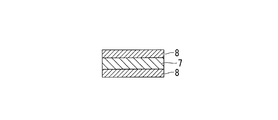
- the adhesive layer is laminated with a release surface of a light release sheet (trade name “SP-PET381031”, thickness 38 ⁇ m, manufactured by Lintec Corporation), and the adhesive layer is sandwiched between two release films. A sheet was produced.
- a polyethylene terephthalate film manufactured by Toyobo Co., Ltd., product name “Cosmo Shine A4100”, thickness 100 ⁇ m
- a single-sided pressure-sensitive adhesive sheet with a base material was obtained.
- a single-sided pressure-sensitive adhesive sheet with a substrate was produced.
- Acrylic copolymer composed of 2-ethylhexyl acrylate (2EHA), cyclohexyl acrylate (CHA), 2-hydroxyethyl acrylate (HEA), dimethylaminoethyl acrylate (DMAEA) (2EHA / CHA / HEA / DMAEA 44.5 / 55 / 0.3 / 0.2, weight average molecular weight 800,000) 100 parts by mass, 0.6 mass of crosslinker (Tolylene diisocyanate crosslinker product name “Coronate L” solid content 75% by Nippon Polyurethane Co., Ltd.) Parts (solid content 0.45 parts by mass with respect to 100 parts by mass of acrylic copolymer solids) were mixed and diluted with methyl ethyl ketone to prepare a pressure-sensitive adhesive coating solution having a nonvolatile content concentration of 30%.
- crosslinker Tolylene diisocyanate crosslinker product name “Coronate L” solid content 75% by Nippon
- this adhesive coating solution was applied to the release-treated surface of a heavy release sheet (product name “SP-PET 382050”, thickness 38 ⁇ m, manufactured by Lintec Corporation) so that the thickness after drying was 25 ⁇ m.
- An adhesive layer was formed by drying at about 1 minute for about 1 minute.
- Double-sided adhesive without base material in which the release-treated surface of a light release sheet (product name “SP-PET381031”, thickness 38 ⁇ m) manufactured by Lintec Co., Ltd., thickness 38 ⁇ m) is laminated to this adhesive layer, and the adhesive layer is sandwiched between two release films Created a sheet.
- the single-sided adhesive sheet with a base material was created.
- DMAEMA dimethylaminoethyl methacrylate
- Acrylic copolymer composed of 2-ethylhexyl acrylate (2EHA), cyclohexyl acrylate (CHA), 2-hydroxyethyl acrylate (HEA), dimethylaminoethyl acrylate (DMAEA) (2EHA / CHA / HEA / DMAEA 56.8 / 40/3 / 0.2 (mass%), mass average molecular weight 800,000, solid content 40 mass%) and 100 parts by mass of tolylene diisocyanate crosslinking agent (manufactured by Toyo Ink Co., Ltd., trade name “Olivein BHS8515, solid content 37) 0.5 mass part) (solid content 0.47 mass part with respect to 100 mass parts of acrylic copolymer solid content) was mixed, and the adhesive coating liquid was produced.
- tolylene diisocyanate crosslinking agent manufactured by Toyo Ink Co., Ltd., trade name “Olivein BHS8515, solid content 37) 0.5 mass part
- this adhesive coating solution was applied to the release-treated surface of a heavy release sheet (trade name “SP-PET382020”, thickness 38 ⁇ m, manufactured by Lintec Corporation) so that the thickness after drying was 25 ⁇ m.
- An adhesive layer was formed by drying at about 1 minute for about 1 minute.
- the adhesive layer is laminated with a release surface of a light release sheet (trade name “SP-PET381031”, thickness 38 ⁇ m, manufactured by Lintec Corporation), and the adhesive layer is sandwiched between two release films. A sheet was produced.
- a single-sided pressure-sensitive adhesive sheet with a substrate was prepared by laminating to the surface.
- an acrylic copolymer having a mass average molecular weight of 800,000 and a solid content of 40% was used.
- i-OA isooctyl acrylate
- CHA cyclohexyl acrylate
- HOA 2-hydroxyethyl acrylate
- DMAEA dimethylaminoethyl acrylate
- 2EHA 2-ethylhexyl acrylate
- CHA cyclohexyl acrylate
- HOA 2-hydroxyethyl acrylate
- DMAPAA dimethylaminopropyl acrylamide
- Acrylic copolymer (2EHA / CHA / HEA / DEAEMA 59.5 / 40) composed of 2-ethylhexyl acrylate (2EHA), cyclohexyl acrylate (CHA), 2-hydroxyethyl acrylate (HEA), diethylaminoethyl methacrylate (DMAEMA) /0.3/0.2, an acrylic copolymer having a weight average molecular weight of 800,000) was used to prepare a double-sided pressure-sensitive adhesive sheet and a single-sided pressure-sensitive adhesive sheet with a base material in the same manner as in Example 5.
- 2EHA 2-ethylhexyl acrylate
- a single-sided pressure-sensitive adhesive sheet with a sheet and a substrate was produced.
- EHA 2-ethylhexyl
- Each surface was affixed to the adherend (HC film was affixed to the E1 surface).
- the single-sided adhesive sheet with the base material affixed to the HC film was allowed to stand for 24 hours in an environment of 23 ° C. and a relative humidity of 50%, and in that environment, a tensile tester (product name “Tensilon” manufactured by Orientec Co., Ltd.) was used.
- a tensile tester product name “Tensilon” manufactured by Orientec Co., Ltd.
- a resistance value measurement sample used in the electrical resistance value measurement test will be described with reference to FIG.
- a polyethylene terephthalate film 13 provided with an ITO film 12 on the surface by sputtering is prepared, and the side of the polyethylene terephthalate film 13 on which the ITO film 12 is not provided and the glass plate 15 are joined to a bonding tape 14 (product name “Tack” manufactured by Lintec Corporation). It was joined via a liner TL-70 ").
- a conductive resin material containing silver made by Fujikura Kasei Co., Ltd., trade name “FA-301CA” dotite touch panel circuit type) is applied on the surface of the ITO film 12 and dried by heating at 80 ° C.
- the obtained single-sided pressure-sensitive adhesive sheet with a base film was cut into a size of 20 mm ⁇ 250 mm, the heavy release sheet of the single-sided pressure-sensitive adhesive sheet with a base film was peeled off, and the pressure-sensitive adhesive layer 7 was along the two points of the electrode 11.
- the sample for resistance value measurement shown in FIG. 4 was prepared.
- the initial resistance value R0 between the electrodes 11 was measured using a digital high tester (manufactured by Hioki Electric Co., Ltd., “3802-50”).
- the resistance value measurement sample was allowed to stand for 240 hours in an environment of a temperature of 80 ° C. and a humidity of 90%, respectively, and then the resistance value R was measured after promoting moist heat.
- the pressure-sensitive adhesive sheets using the pressure-sensitive adhesives obtained in the examples have sufficient adhesion to the adherend regardless of the surface polarity.
- the cross-linking reaction with the cross-linking agent was performed smoothly, and the stabilization period of the pressure-sensitive adhesive could be shortened without using heavy metals that could be harmful to the environment.
- the pressure-sensitive adhesive sheets using the pressure-sensitive adhesives obtained in the examples can be confirmed to show sufficient adhesive force even in a high temperature environment. Furthermore, foaming that occurred at the interface with the pressure-sensitive adhesive when stuck to a resin plate could be suppressed.
- the adhesive sheets of Examples 10 to 12 are attached to the ITO film, the change in the resistance value of the ITO film is 20% or less, and the ITO film is hardly deteriorated. Furthermore, the pressure-sensitive adhesive sheets of Examples 10 to 12 had a haze value of 1.5% difference from the initial value after the durability test in a high temperature / high humidity environment, immediately after removal, after 1 hour, and after 3 hours. The increase in haze value is small, and the deterioration of optical properties after the durability test is small.
- the pressure-sensitive adhesive sheet of Comparative Example 8 has a large increase in the haze value after the durability test in a high temperature / high humidity environment, and after taking out from the high temperature / high humidity environment, it takes 3 hours or more until the haze value returns to the initial value. It also took.
- Comparative Examples 8 and 10 sufficient adhesive strength to the HC film cannot be obtained.
- Comparative Examples 9 and 10 when the ITO film is applied to the ITO film, the change in the resistance value of the ITO film is 20% or more. Deterioration was confirmed. Further, in Comparative Example 11, when an adhesive coating solution was prepared, it was gelled and could not be applied.
- the present invention (1) it has sufficient adhesion to the adherend regardless of whether the surface polarity is high or low, and the crosslinking reaction with the crosslinking agent is carried out smoothly, and there is a concern about adverse effects on the environment. It is possible to provide a pressure-sensitive adhesive and a pressure-sensitive adhesive sheet having a reduced seasoning period without using a heavy metal. In addition, (2) it has sufficient adhesion to the adherend regardless of the surface polarity, and can maintain sufficient adhesion even in a high temperature environment. It is possible to provide a pressure-sensitive adhesive and a pressure-sensitive adhesive sheet in which foaming generated at the interface with the pressure-sensitive adhesive is suppressed.
- the pressure-sensitive adhesive and pressure-sensitive adhesive sheet of the present invention are suitable for uses such as a pressure-sensitive adhesive sheet for internally fixing a portable information terminal device.
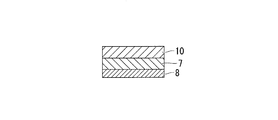
- Adhesive layer 8 Release sheet 10
- Base material 11 Electrode 12 ITO film 13 Polyethylene terephthalate film 14 Bonding tape 15 Glass plate
Landscapes
- Chemical & Material Sciences (AREA)
- Organic Chemistry (AREA)
- Chemical Kinetics & Catalysis (AREA)
- Adhesives Or Adhesive Processes (AREA)
- Adhesive Tapes (AREA)
- Laminated Bodies (AREA)
- Addition Polymer Or Copolymer, Post-Treatments, Or Chemical Modifications (AREA)
Priority Applications (5)
| Application Number | Priority Date | Filing Date | Title |
|---|---|---|---|
| IN2720DEN2012 IN2012DN02720A (enExample) | 2009-09-29 | 2010-09-29 | |
| US13/498,290 US20120183769A1 (en) | 2009-09-29 | 2010-09-29 | Adhesive composition and adhesive sheet |
| EP10820537.8A EP2484738A4 (en) | 2009-09-29 | 2010-09-29 | ADHESIVE AGENT AND ADHESIVE SHEET |
| CN201080036471.8A CN102482546B (zh) | 2009-09-29 | 2010-09-29 | 粘合剂以及粘合片 |
| JP2011534258A JP5531022B2 (ja) | 2009-09-29 | 2010-09-29 | 粘着剤および粘着シート |
Applications Claiming Priority (6)
| Application Number | Priority Date | Filing Date | Title |
|---|---|---|---|
| JP2009224039 | 2009-09-29 | ||
| JP2009-224039 | 2009-09-29 | ||
| JP2009-280671 | 2009-12-10 | ||
| JP2009280671 | 2009-12-10 | ||
| JP2010-102153 | 2010-04-27 | ||
| JP2010102153 | 2010-04-27 |
Publications (1)
| Publication Number | Publication Date |
|---|---|
| WO2011040422A1 true WO2011040422A1 (ja) | 2011-04-07 |
Family
ID=43826238
Family Applications (1)
| Application Number | Title | Priority Date | Filing Date |
|---|---|---|---|
| PCT/JP2010/066875 Ceased WO2011040422A1 (ja) | 2009-09-29 | 2010-09-29 | 粘着剤および粘着シート |
Country Status (8)
| Country | Link |
|---|---|
| US (1) | US20120183769A1 (enExample) |
| EP (1) | EP2484738A4 (enExample) |
| JP (1) | JP5531022B2 (enExample) |
| KR (1) | KR101656757B1 (enExample) |
| CN (2) | CN103992757A (enExample) |
| IN (1) | IN2012DN02720A (enExample) |
| TW (1) | TWI486415B (enExample) |
| WO (1) | WO2011040422A1 (enExample) |
Cited By (32)
| Publication number | Priority date | Publication date | Assignee | Title |
|---|---|---|---|---|
| JP2012177022A (ja) * | 2011-02-25 | 2012-09-13 | Fujikura Kasei Co Ltd | 粘着剤組成物、粘着フィルム、および光学部品 |
| JP2013047296A (ja) * | 2011-08-29 | 2013-03-07 | Soken Chem & Eng Co Ltd | 粘着剤組成物、粘着シートおよびタッチパネル用積層体 |
| JP2013078890A (ja) * | 2011-10-04 | 2013-05-02 | Dainippon Printing Co Ltd | 透明バリア積層体及び画像表示装置 |
| JP2013203864A (ja) * | 2012-03-28 | 2013-10-07 | Daio Paper Corp | 粘着シート及び粘着シートが備わる電子端末用画像表示部材 |
| JP2014034655A (ja) * | 2012-08-09 | 2014-02-24 | Nitto Denko Corp | 粘着剤、粘着剤層、および粘着シート |
| CN103619977A (zh) * | 2011-06-30 | 2014-03-05 | 日东电工株式会社 | 粘合剂组合物、粘合剂层以及粘合片 |
| KR20140051398A (ko) * | 2011-08-12 | 2014-04-30 | 쓰리엠 이노베이티브 프로퍼티즈 컴파니 | 방사선 경화성 감압 접착제 시트 |
| JP2014129538A (ja) * | 2011-05-02 | 2014-07-10 | Nitto Denko Corp | 粘着剤、粘着剤層、および粘着シート |
| JP2014152292A (ja) * | 2013-02-12 | 2014-08-25 | Lintec Corp | 透明導電膜貼付用粘着剤および粘着シート |
| JP2014189755A (ja) * | 2013-03-28 | 2014-10-06 | Dic Corp | 両面粘着テープ |
| JP2014527224A (ja) * | 2011-07-19 | 2014-10-09 | エルジー・ケム・リミテッド | タッチパネル |
| WO2015005388A1 (ja) * | 2013-07-09 | 2015-01-15 | 日東電工株式会社 | 粘着シートおよびその利用 |
| JPWO2012173247A1 (ja) * | 2011-06-17 | 2015-02-23 | 積水化学工業株式会社 | 透明粘着テープ、金属薄膜付フィルム積層体、カバーパネル−タッチパネルモジュール積層体、カバーパネル−ディスプレイパネルモジュール積層体、タッチパネルモジュール−ディスプレイパネルモジュール積層体、及び、画像表示装置 |
| WO2015068571A1 (ja) * | 2013-11-05 | 2015-05-14 | 日東電工株式会社 | 携帯電子機器部材固定用両面粘着シートおよび携帯電子機器の製造方法 |
| CN104893603A (zh) * | 2014-03-05 | 2015-09-09 | 日东电工株式会社 | 粘合片 |
| KR20160030235A (ko) * | 2013-07-09 | 2016-03-16 | 닛토덴코 가부시키가이샤 | 점착제 조성물 |
| JP2016071104A (ja) * | 2014-09-30 | 2016-05-09 | 大日本印刷株式会社 | 光学部材 |
| JP2017008158A (ja) * | 2015-06-18 | 2017-01-12 | 積水化学工業株式会社 | (メタ)アクリル系粘着剤及び粘着テープ |
| JP2017036394A (ja) * | 2015-08-10 | 2017-02-16 | リンテック株式会社 | 粘着性組成物、粘着剤、粘着シートおよび表示体 |
| JP2017061700A (ja) * | 2016-11-04 | 2017-03-30 | リンテック株式会社 | 透明導電膜貼付用粘着剤および粘着シート |
| JPWO2015132940A1 (ja) * | 2014-03-06 | 2017-03-30 | リンテック株式会社 | 粘着性組成物、粘着剤および粘着シート |
| JP2017061699A (ja) * | 2016-11-04 | 2017-03-30 | リンテック株式会社 | 透明導電膜貼付用粘着剤および粘着シート |
| JPWO2015132888A1 (ja) * | 2014-03-04 | 2017-03-30 | リンテック株式会社 | 粘着剤および粘着シート |
| JP2018028913A (ja) * | 2017-08-24 | 2018-02-22 | リンテック株式会社 | タッチパネル |
| JP2018127631A (ja) * | 2018-03-09 | 2018-08-16 | リンテック株式会社 | 活性エネルギー線硬化性粘着シート |
| JP2018145368A (ja) * | 2017-03-09 | 2018-09-20 | 東洋インキScホールディングス株式会社 | 粘着剤および粘着シート |
| US10308844B2 (en) | 2011-05-02 | 2019-06-04 | Nitto Denko Corporation | Pressure-sensitive adhesive, pressure-sensitive adhesive layer, and pressure-sensitive adhesive sheet |
| KR102112238B1 (ko) * | 2019-10-22 | 2020-05-18 | 이승현 | 일체형 베이스 필름을 통한 재점착 라벨 구조 |
| WO2020162439A1 (ja) * | 2019-02-06 | 2020-08-13 | バンドー化学株式会社 | 光学透明粘着シート、積層シート及び貼り合わせ構造物 |
| JP2020530870A (ja) * | 2017-10-20 | 2020-10-29 | エルジー・ケム・リミテッド | 粘着組成物およびその硬化物を含む粘着フィルム |
| JPWO2019239688A1 (ja) * | 2018-06-15 | 2020-12-17 | Dic株式会社 | 粘着剤組成物 |
| WO2026071204A1 (ja) * | 2024-09-30 | 2026-04-02 | 積水化学工業株式会社 | 粘着テープ、及び、電子機器 |
Families Citing this family (29)
| Publication number | Priority date | Publication date | Assignee | Title |
|---|---|---|---|---|
| TWI611933B (zh) * | 2011-09-15 | 2018-01-21 | Nitto Denko Corp | 具有接著劑層之影像顯示裝置用單元及使用該單元的影像顯示裝置 |
| JP6139173B2 (ja) * | 2013-02-25 | 2017-05-31 | リンテック株式会社 | 粘着性組成物、粘着剤および粘着シート |
| JP6216519B2 (ja) * | 2013-03-04 | 2017-10-18 | リンテック株式会社 | 粘着性組成物、粘着剤および粘着シート |
| JP5421493B1 (ja) * | 2013-07-17 | 2014-02-19 | 富士フイルム株式会社 | タッチパネル用積層体、タッチパネル |
| KR101906637B1 (ko) * | 2014-09-17 | 2018-10-11 | 주식회사 엘지화학 | 점착제 조성물, 광학용 점착 필름 및 터치 스크린 패널 |
| US11649382B2 (en) | 2014-09-26 | 2023-05-16 | Ahlstrom Oyj | Biodegradable cellulose fiber-based substrate, its manufacturing process, and use in an adhesive tape |
| FR3026345B1 (fr) * | 2014-09-26 | 2016-09-30 | Ahlstroem Oy | Support a base de fibres cellulosiques, son procede de fabrication et son utilisation en tant que ruban de masquage |
| KR101822698B1 (ko) * | 2014-11-28 | 2018-01-30 | 삼성에스디아이 주식회사 | 편광판용 점착제 조성물, 이를 포함하는 편광판 및 이를 포함하는 광학표시장치 |
| SG11201706582UA (en) * | 2015-02-24 | 2017-09-28 | Lintec Corp | Release agent composition, release sheet, single-sided pressure-sensitive adhesive sheet and double-sided (faced) pressure-sensitive adhesive sheet |
| JP6325484B2 (ja) * | 2015-05-07 | 2018-05-16 | 藤森工業株式会社 | 粘着剤層及び粘着フィルム |
| US20180072928A1 (en) * | 2015-05-11 | 2018-03-15 | 3M Innovative Properties Company | High performance (meth)acrylate adhesive composition |
| CN113402999A (zh) * | 2015-05-29 | 2021-09-17 | 琳得科株式会社 | 粘着片 |
| KR101987441B1 (ko) * | 2015-06-22 | 2019-06-11 | 주식회사 엘지화학 | 광학용 점착 시트 |
| WO2017141655A1 (ja) * | 2016-02-18 | 2017-08-24 | パナソニックIpマネジメント株式会社 | タッチパネル |
| TWI778960B (zh) * | 2016-04-28 | 2022-10-01 | 日商琳得科股份有限公司 | 保護膜形成用膜、保護膜形成用複合片、以及附有保護膜的半導體晶片之製造方法 |
| JP7066331B2 (ja) * | 2016-05-17 | 2022-05-13 | ニットウ デンコウ マテリアルズ (マレーシア) スンディリアン ブルハド | 両面感圧粘着テープ |
| KR102105089B1 (ko) * | 2017-11-17 | 2020-04-27 | 주식회사 엘지화학 | 편광자 보호필름용 광경화성 조성물 및 이의 경화물을 포함하는 편광자 보호필름을 포함하는 편광필름 |
| CN112055734B (zh) * | 2018-05-28 | 2022-07-01 | 电化株式会社 | 粘合带和使用该粘合带的半导体装置的制造方法 |
| CN110951426B (zh) * | 2019-08-07 | 2022-03-29 | 东洋油墨Sc控股株式会社 | 粘接用组合物、粘接用组合物的应用、粘接用组合物的制造方法和施工方法 |
| CN114555746B (zh) * | 2019-10-15 | 2023-09-26 | 综研化学株式会社 | 粘合剂组合物及粘合片 |
| KR102766558B1 (ko) * | 2020-06-22 | 2025-02-10 | 주식회사 엘지화학 | 수성 아크릴계 점착제 조성물, 이의 제조 방법, 이를 사용하여 제조된 점착 부재 |
| KR102784933B1 (ko) * | 2020-08-04 | 2025-03-25 | 삼성에스디아이 주식회사 | 점착 필름, 이를 포함하는 광학 부재 및 이를 포함하는 광학표시장치 |
| CA3203975A1 (en) | 2020-12-03 | 2022-06-09 | Battelle Memorial Institute | Polymer nanoparticle and dna nanostructure compositions and methods for non-viral delivery |
| CN112940631B (zh) * | 2021-01-30 | 2022-11-25 | 昊佰电子科技(上海)有限公司 | 一种防炸开的包裹线材用海绵胶及裹绵线材的制作方法 |
| CA3216359A1 (en) | 2021-04-07 | 2022-10-13 | Battelle Memorial Institute | Rapid design, build, test, and learn technologies for identifying and using non-viral carriers |
| CN115717040A (zh) * | 2022-11-18 | 2023-02-28 | 江西塔益莱高分子材料有限公司 | 一种偏光片用耐湿耐高温无酸压敏胶及其制备方法与应用 |
| AU2024353375A1 (en) | 2023-09-29 | 2026-04-09 | Battelle Memorial Institute | Polymer nanoparticle compositions for in vivo expression of polypeptides |
| WO2025122954A1 (en) | 2023-12-08 | 2025-06-12 | Battelle Memorial Institute | Use of dna origami nanostructures for molecular information based data storage systems |
| KR20250158458A (ko) * | 2024-04-30 | 2025-11-06 | 삼성에스디아이 주식회사 | 전고체 전지용 탄성패드, 이를 포함하는 전고체 전지, 및 이의 제조방법 |
Citations (16)
| Publication number | Priority date | Publication date | Assignee | Title |
|---|---|---|---|---|
| JPS6357684A (ja) * | 1986-08-29 | 1988-03-12 | Hiroshi Fukumoto | ポリオレフイン用接着剤 |
| JPH0425589A (ja) * | 1990-05-21 | 1992-01-29 | Hitachi Chem Co Ltd | 粘着剤用樹脂組成物及び粘着剤 |
| JPH04145183A (ja) * | 1990-10-05 | 1992-05-19 | Japan Synthetic Rubber Co Ltd | 粘着剤用組成物 |
| JPH06108025A (ja) * | 1992-09-28 | 1994-04-19 | Nippon Synthetic Chem Ind Co Ltd:The | 偏光板用粘着剤 |
| JPH10310754A (ja) | 1997-05-13 | 1998-11-24 | Soken Chem & Eng Co Ltd | 粘着剤組成物 |
| JP2001279208A (ja) * | 2000-01-26 | 2001-10-10 | Sekisui Chem Co Ltd | アクリル系粘着剤組成物及びアクリル系粘着テープもしくはシート |
| JP2003193012A (ja) * | 2001-12-26 | 2003-07-09 | Nitto Denko Corp | 感圧性接着剤組成物、感圧性接着シート及び光学フィルム |
| JP2005053976A (ja) | 2003-08-06 | 2005-03-03 | Soken Chem & Eng Co Ltd | 低極性フィルム用粘着剤 |
| JP2006045315A (ja) | 2004-08-03 | 2006-02-16 | Soken Chem & Eng Co Ltd | 粘着シート、金属蒸着フィルムラベル、タッチパネル用部材およびタッチパネル |
| JP2007169327A (ja) * | 2005-12-19 | 2007-07-05 | Lintec Corp | 両面粘着テープ |
| JP2008239758A (ja) * | 2007-03-27 | 2008-10-09 | Sliontec Corp | 両面粘着テープ及びその製造方法 |
| JP2008248199A (ja) * | 2007-03-30 | 2008-10-16 | Jsr Corp | 耐衝撃粘着層、耐衝撃粘着積層体、及び表示装置 |
| JP2009155523A (ja) * | 2007-12-27 | 2009-07-16 | Jsr Corp | 樹脂組成物及び接着剤 |
| JP2009224039A (ja) | 2008-03-13 | 2009-10-01 | Koito Mfg Co Ltd | 車両用前照灯 |
| JP2009280671A (ja) | 2008-05-21 | 2009-12-03 | Konica Minolta Holdings Inc | インクジェットインク、及びインクジェット記録方法 |
| JP2010102153A (ja) | 2008-10-24 | 2010-05-06 | Kyocera Mita Corp | 画像処理装置 |
Family Cites Families (11)
| Publication number | Priority date | Publication date | Assignee | Title |
|---|---|---|---|---|
| DE10256511A1 (de) * | 2002-12-04 | 2004-06-24 | Tesa Ag | Haftklebemasse |
| JP4587019B2 (ja) | 2003-12-24 | 2010-11-24 | Dic株式会社 | 両面粘着シート |
| DE102004002279A1 (de) * | 2004-01-16 | 2005-08-04 | Tesa Ag | Orientierte Acrylathaftklebemassen, Verfahren zu ihrer Herstellung und ihre Verwendung |
| DE102004013699A1 (de) * | 2004-03-18 | 2005-10-06 | Tesa Ag | Haftklebeband für medizinische Diagnosestreifen |
| TWI392715B (zh) * | 2005-02-16 | 2013-04-11 | Nippon Synthetic Chem Ind | 樹脂組成物、光學構件用黏著劑和光學構件用黏著劑之製造方法 |
| DE102006044718A1 (de) * | 2006-09-20 | 2008-04-03 | Tesa Ag | Klebemasse |
| JP4805240B2 (ja) * | 2006-12-15 | 2011-11-02 | 日東電工株式会社 | 粘着型光学フィルムおよび画像表示装置 |
| JP5320683B2 (ja) | 2007-03-28 | 2013-10-23 | Dic株式会社 | 水分散型アクリル系粘着剤組成物及び両面粘着テープ |
| EP2033998B1 (en) * | 2007-09-06 | 2010-11-10 | Nitto Denko Corporation | Pressure sensitive adhesive composition, product using the same, and display using the product |
| JP5379410B2 (ja) * | 2008-03-14 | 2013-12-25 | 日東電工株式会社 | 光学フィルム用粘着剤組成物、粘着型光学フィルムおよび画像表示装置 |
| CN101481437B (zh) * | 2009-01-23 | 2011-04-27 | 华南理工大学 | 一种高封闭性聚丙烯酸酯分散体的制备方法 |
-
2010
- 2010-09-29 WO PCT/JP2010/066875 patent/WO2011040422A1/ja not_active Ceased
- 2010-09-29 CN CN201410203146.6A patent/CN103992757A/zh active Pending
- 2010-09-29 TW TW099133145A patent/TWI486415B/zh active
- 2010-09-29 EP EP10820537.8A patent/EP2484738A4/en not_active Withdrawn
- 2010-09-29 KR KR1020127003050A patent/KR101656757B1/ko active Active
- 2010-09-29 US US13/498,290 patent/US20120183769A1/en not_active Abandoned
- 2010-09-29 IN IN2720DEN2012 patent/IN2012DN02720A/en unknown
- 2010-09-29 JP JP2011534258A patent/JP5531022B2/ja active Active
- 2010-09-29 CN CN201080036471.8A patent/CN102482546B/zh active Active
Patent Citations (16)
| Publication number | Priority date | Publication date | Assignee | Title |
|---|---|---|---|---|
| JPS6357684A (ja) * | 1986-08-29 | 1988-03-12 | Hiroshi Fukumoto | ポリオレフイン用接着剤 |
| JPH0425589A (ja) * | 1990-05-21 | 1992-01-29 | Hitachi Chem Co Ltd | 粘着剤用樹脂組成物及び粘着剤 |
| JPH04145183A (ja) * | 1990-10-05 | 1992-05-19 | Japan Synthetic Rubber Co Ltd | 粘着剤用組成物 |
| JPH06108025A (ja) * | 1992-09-28 | 1994-04-19 | Nippon Synthetic Chem Ind Co Ltd:The | 偏光板用粘着剤 |
| JPH10310754A (ja) | 1997-05-13 | 1998-11-24 | Soken Chem & Eng Co Ltd | 粘着剤組成物 |
| JP2001279208A (ja) * | 2000-01-26 | 2001-10-10 | Sekisui Chem Co Ltd | アクリル系粘着剤組成物及びアクリル系粘着テープもしくはシート |
| JP2003193012A (ja) * | 2001-12-26 | 2003-07-09 | Nitto Denko Corp | 感圧性接着剤組成物、感圧性接着シート及び光学フィルム |
| JP2005053976A (ja) | 2003-08-06 | 2005-03-03 | Soken Chem & Eng Co Ltd | 低極性フィルム用粘着剤 |
| JP2006045315A (ja) | 2004-08-03 | 2006-02-16 | Soken Chem & Eng Co Ltd | 粘着シート、金属蒸着フィルムラベル、タッチパネル用部材およびタッチパネル |
| JP2007169327A (ja) * | 2005-12-19 | 2007-07-05 | Lintec Corp | 両面粘着テープ |
| JP2008239758A (ja) * | 2007-03-27 | 2008-10-09 | Sliontec Corp | 両面粘着テープ及びその製造方法 |
| JP2008248199A (ja) * | 2007-03-30 | 2008-10-16 | Jsr Corp | 耐衝撃粘着層、耐衝撃粘着積層体、及び表示装置 |
| JP2009155523A (ja) * | 2007-12-27 | 2009-07-16 | Jsr Corp | 樹脂組成物及び接着剤 |
| JP2009224039A (ja) | 2008-03-13 | 2009-10-01 | Koito Mfg Co Ltd | 車両用前照灯 |
| JP2009280671A (ja) | 2008-05-21 | 2009-12-03 | Konica Minolta Holdings Inc | インクジェットインク、及びインクジェット記録方法 |
| JP2010102153A (ja) | 2008-10-24 | 2010-05-06 | Kyocera Mita Corp | 画像処理装置 |
Non-Patent Citations (3)
| Title |
|---|
| "Digital High Tester 3802-50", HIOKI E.E. CORPORATION |
| See also references of EP2484738A4 |
| YOSHINORI HOSHINO: "Application of Color Materials - design and application of polymers for color materials", 2002, CMC PUBLISHING CO., LTD. |
Cited By (42)
| Publication number | Priority date | Publication date | Assignee | Title |
|---|---|---|---|---|
| JP2012177022A (ja) * | 2011-02-25 | 2012-09-13 | Fujikura Kasei Co Ltd | 粘着剤組成物、粘着フィルム、および光学部品 |
| JP2014129538A (ja) * | 2011-05-02 | 2014-07-10 | Nitto Denko Corp | 粘着剤、粘着剤層、および粘着シート |
| US10308844B2 (en) | 2011-05-02 | 2019-06-04 | Nitto Denko Corporation | Pressure-sensitive adhesive, pressure-sensitive adhesive layer, and pressure-sensitive adhesive sheet |
| JPWO2012173247A1 (ja) * | 2011-06-17 | 2015-02-23 | 積水化学工業株式会社 | 透明粘着テープ、金属薄膜付フィルム積層体、カバーパネル−タッチパネルモジュール積層体、カバーパネル−ディスプレイパネルモジュール積層体、タッチパネルモジュール−ディスプレイパネルモジュール積層体、及び、画像表示装置 |
| CN103619977A (zh) * | 2011-06-30 | 2014-03-05 | 日东电工株式会社 | 粘合剂组合物、粘合剂层以及粘合片 |
| JP2014527224A (ja) * | 2011-07-19 | 2014-10-09 | エルジー・ケム・リミテッド | タッチパネル |
| KR101966479B1 (ko) | 2011-08-12 | 2019-04-05 | 쓰리엠 이노베이티브 프로퍼티즈 컴파니 | 방사선 경화성 감압 접착제 시트 |
| KR20140051398A (ko) * | 2011-08-12 | 2014-04-30 | 쓰리엠 이노베이티브 프로퍼티즈 컴파니 | 방사선 경화성 감압 접착제 시트 |
| JP2013047296A (ja) * | 2011-08-29 | 2013-03-07 | Soken Chem & Eng Co Ltd | 粘着剤組成物、粘着シートおよびタッチパネル用積層体 |
| JP2013078890A (ja) * | 2011-10-04 | 2013-05-02 | Dainippon Printing Co Ltd | 透明バリア積層体及び画像表示装置 |
| JP2013203864A (ja) * | 2012-03-28 | 2013-10-07 | Daio Paper Corp | 粘着シート及び粘着シートが備わる電子端末用画像表示部材 |
| JP2014034655A (ja) * | 2012-08-09 | 2014-02-24 | Nitto Denko Corp | 粘着剤、粘着剤層、および粘着シート |
| JP2014152292A (ja) * | 2013-02-12 | 2014-08-25 | Lintec Corp | 透明導電膜貼付用粘着剤および粘着シート |
| JP2014189755A (ja) * | 2013-03-28 | 2014-10-06 | Dic Corp | 両面粘着テープ |
| KR102046215B1 (ko) * | 2013-07-09 | 2019-11-18 | 닛토덴코 가부시키가이샤 | 점착제 조성물 |
| KR20160030236A (ko) * | 2013-07-09 | 2016-03-16 | 닛토덴코 가부시키가이샤 | 점착 시트 및 그 이용 |
| KR20160030235A (ko) * | 2013-07-09 | 2016-03-16 | 닛토덴코 가부시키가이샤 | 점착제 조성물 |
| KR102025977B1 (ko) | 2013-07-09 | 2019-09-26 | 닛토덴코 가부시키가이샤 | 점착 시트 및 그 이용 |
| JPWO2015005388A1 (ja) * | 2013-07-09 | 2017-03-02 | 日東電工株式会社 | 粘着シートおよびその利用 |
| WO2015005388A1 (ja) * | 2013-07-09 | 2015-01-15 | 日東電工株式会社 | 粘着シートおよびその利用 |
| US9896606B2 (en) | 2013-07-09 | 2018-02-20 | Nitto Denko Corporation | Pressure-sensitive adhesive sheet and use thereof |
| CN105705602B (zh) * | 2013-11-05 | 2019-06-04 | 日东电工株式会社 | 便携式电子设备构件固定用双面粘合片及便携式电子设备的制造方法 |
| WO2015068571A1 (ja) * | 2013-11-05 | 2015-05-14 | 日東電工株式会社 | 携帯電子機器部材固定用両面粘着シートおよび携帯電子機器の製造方法 |
| CN105705602A (zh) * | 2013-11-05 | 2016-06-22 | 日东电工株式会社 | 便携式电子设备构件固定用双面粘合片及便携式电子设备的制造方法 |
| JPWO2015132888A1 (ja) * | 2014-03-04 | 2017-03-30 | リンテック株式会社 | 粘着剤および粘着シート |
| CN104893603A (zh) * | 2014-03-05 | 2015-09-09 | 日东电工株式会社 | 粘合片 |
| JPWO2015132940A1 (ja) * | 2014-03-06 | 2017-03-30 | リンテック株式会社 | 粘着性組成物、粘着剤および粘着シート |
| JP2016071104A (ja) * | 2014-09-30 | 2016-05-09 | 大日本印刷株式会社 | 光学部材 |
| JP2017008158A (ja) * | 2015-06-18 | 2017-01-12 | 積水化学工業株式会社 | (メタ)アクリル系粘着剤及び粘着テープ |
| JP2017036394A (ja) * | 2015-08-10 | 2017-02-16 | リンテック株式会社 | 粘着性組成物、粘着剤、粘着シートおよび表示体 |
| JP2017061699A (ja) * | 2016-11-04 | 2017-03-30 | リンテック株式会社 | 透明導電膜貼付用粘着剤および粘着シート |
| JP2017061700A (ja) * | 2016-11-04 | 2017-03-30 | リンテック株式会社 | 透明導電膜貼付用粘着剤および粘着シート |
| JP2018145368A (ja) * | 2017-03-09 | 2018-09-20 | 東洋インキScホールディングス株式会社 | 粘着剤および粘着シート |
| JP2018028913A (ja) * | 2017-08-24 | 2018-02-22 | リンテック株式会社 | タッチパネル |
| JP2020530870A (ja) * | 2017-10-20 | 2020-10-29 | エルジー・ケム・リミテッド | 粘着組成物およびその硬化物を含む粘着フィルム |
| JP7004393B2 (ja) | 2017-10-20 | 2022-01-21 | エルジー・ケム・リミテッド | 粘着組成物およびその硬化物を含む粘着フィルム |
| JP2018127631A (ja) * | 2018-03-09 | 2018-08-16 | リンテック株式会社 | 活性エネルギー線硬化性粘着シート |
| JPWO2019239688A1 (ja) * | 2018-06-15 | 2020-12-17 | Dic株式会社 | 粘着剤組成物 |
| WO2020162439A1 (ja) * | 2019-02-06 | 2020-08-13 | バンドー化学株式会社 | 光学透明粘着シート、積層シート及び貼り合わせ構造物 |
| JPWO2020162439A1 (ja) * | 2019-02-06 | 2021-02-18 | バンドー化学株式会社 | 光学透明粘着シート、積層シート及び貼り合わせ構造物 |
| KR102112238B1 (ko) * | 2019-10-22 | 2020-05-18 | 이승현 | 일체형 베이스 필름을 통한 재점착 라벨 구조 |
| WO2026071204A1 (ja) * | 2024-09-30 | 2026-04-02 | 積水化学工業株式会社 | 粘着テープ、及び、電子機器 |
Also Published As
| Publication number | Publication date |
|---|---|
| JP5531022B2 (ja) | 2014-06-25 |
| TWI486415B (zh) | 2015-06-01 |
| CN102482546A (zh) | 2012-05-30 |
| KR20120096462A (ko) | 2012-08-30 |
| KR101656757B1 (ko) | 2016-09-12 |
| JPWO2011040422A1 (ja) | 2013-02-28 |
| IN2012DN02720A (enExample) | 2015-09-11 |
| EP2484738A1 (en) | 2012-08-08 |
| US20120183769A1 (en) | 2012-07-19 |
| CN103992757A (zh) | 2014-08-20 |
| EP2484738A4 (en) | 2014-06-18 |
| TW201113342A (en) | 2011-04-16 |
| CN102482546B (zh) | 2015-11-25 |
Similar Documents
| Publication | Publication Date | Title |
|---|---|---|
| JP5531022B2 (ja) | 粘着剤および粘着シート | |
| JP5607565B2 (ja) | 粘着剤、及び粘着シート | |
| TWI565775B (zh) | 黏著劑及黏著片 | |
| JP7268967B2 (ja) | フレキシブル画像表示装置用粘着剤層、フレキシブル画像表示装置用積層体、及び、フレキシブル画像表示装置 | |
| JP2022130399A (ja) | 両面粘着シート、画像表示装置構成用部材を有する積層体、積層体形成キット及び両面粘着シートの使用 | |
| JP5149533B2 (ja) | 光学機能性フィルム用の粘着剤、粘着剤付き光学機能性フィルム及びその製造方法 | |
| WO2012128294A1 (ja) | 粘着剤、及び粘着シート | |
| US20160185083A1 (en) | Pressure-sensitive-adhesive-layer-attached polarizing film, and image display device | |
| WO2016204154A1 (ja) | 両面粘着剤層付偏光フィルムおよび画像表示装置 | |
| CN111433305A (zh) | 表面保护薄膜及带有保护薄膜的光学构件 | |
| JP2010189545A (ja) | 両面粘着シートおよび粘着型光学部材 | |
| JP2008231358A (ja) | 電子端末用画像表示モジュールおよび全面貼り用粘着シート | |
| JP2016224307A (ja) | 両面粘着剤層付偏光フィルムおよび画像表示装置 | |
| JP5845591B2 (ja) | 剛体貼り合わせ用両面粘着テープ | |
| WO2017216886A1 (ja) | 両面粘着剤層付偏光フィルムおよび画像表示装置 | |
| JP7149975B2 (ja) | 両面粘着剤層付偏光フィルムおよび画像表示装置 | |
| JP2011057883A (ja) | 透明性無基材両面テープ・シートおよびその製造方法 | |
| JP2005023169A (ja) | アクリル系の耐ブリスター性粘着剤樹脂組成物、それを用いるトランスファー性フィルム状粘着剤、耐ブリスター性粘着剤シート及びそれらの用途 | |
| JP5346220B2 (ja) | 粘着剤および粘着シート | |
| CN116438272A (zh) | 用于压敏粘合剂的含丙烯酰胺或(甲基)丙烯酰胺的高tg添加剂 | |
| JP2014084336A (ja) | 保護粘着フィルム | |
| JP7212755B2 (ja) | アクリル系粘着剤組成物及び粘着テープ、並びにその粘着テープにより固定された光学シートを有する光学装置 | |
| JP2012201840A (ja) | 粘着剤組成物および粘着シート | |
| JP2024067533A (ja) | 粘着シート、積層体及び光学デバイス | |
| JP2018119154A (ja) | 保護粘着フィルム |
Legal Events
| Date | Code | Title | Description |
|---|---|---|---|
| WWE | Wipo information: entry into national phase |
Ref document number: 201080036471.8 Country of ref document: CN |
|
| 121 | Ep: the epo has been informed by wipo that ep was designated in this application |
Ref document number: 10820537 Country of ref document: EP Kind code of ref document: A1 |
|
| WWE | Wipo information: entry into national phase |
Ref document number: 2011534258 Country of ref document: JP |
|
| ENP | Entry into the national phase |
Ref document number: 20127003050 Country of ref document: KR Kind code of ref document: A |
|
| WWE | Wipo information: entry into national phase |
Ref document number: 13498290 Country of ref document: US |
|
| WWE | Wipo information: entry into national phase |
Ref document number: 2010820537 Country of ref document: EP |
|
| NENP | Non-entry into the national phase |
Ref country code: DE |
|
| WWE | Wipo information: entry into national phase |
Ref document number: 1201001400 Country of ref document: TH Ref document number: 2720/DELNP/2012 Country of ref document: IN |