EP3936619A1 - Verfahren zur sequenzierung von nukleinsäuren in gesteuertem ausmass - Google Patents
Verfahren zur sequenzierung von nukleinsäuren in gesteuertem ausmass Download PDFInfo
- Publication number
- EP3936619A1 EP3936619A1 EP21170986.0A EP21170986A EP3936619A1 EP 3936619 A1 EP3936619 A1 EP 3936619A1 EP 21170986 A EP21170986 A EP 21170986A EP 3936619 A1 EP3936619 A1 EP 3936619A1
- Authority
- EP
- European Patent Office
- Prior art keywords
- fragments
- genome
- nucleic acid
- sequence
- sequences
- Prior art date
- Legal status (The legal status is an assumption and is not a legal conclusion. Google has not performed a legal analysis and makes no representation as to the accuracy of the status listed.)
- Withdrawn
Links
- 238000000034 method Methods 0.000 title claims abstract description 318
- 150000007523 nucleic acids Chemical group 0.000 title claims description 288
- 108091028043 Nucleic acid sequence Proteins 0.000 title description 6
- 239000012634 fragment Substances 0.000 claims description 279
- 102000039446 nucleic acids Human genes 0.000 claims description 265
- 108020004707 nucleic acids Proteins 0.000 claims description 265
- 238000005192 partition Methods 0.000 claims description 239
- 238000012163 sequencing technique Methods 0.000 claims description 160
- 108091034117 Oligonucleotide Proteins 0.000 claims description 92
- 230000003321 amplification Effects 0.000 claims description 71
- 238000003199 nucleic acid amplification method Methods 0.000 claims description 71
- JLCPHMBAVCMARE-UHFFFAOYSA-N [3-[[3-[[3-[[3-[[3-[[3-[[3-[[3-[[3-[[3-[[3-[[5-(2-amino-6-oxo-1H-purin-9-yl)-3-[[3-[[3-[[3-[[3-[[3-[[5-(2-amino-6-oxo-1H-purin-9-yl)-3-[[5-(2-amino-6-oxo-1H-purin-9-yl)-3-hydroxyoxolan-2-yl]methoxy-hydroxyphosphoryl]oxyoxolan-2-yl]methoxy-hydroxyphosphoryl]oxy-5-(5-methyl-2,4-dioxopyrimidin-1-yl)oxolan-2-yl]methoxy-hydroxyphosphoryl]oxy-5-(6-aminopurin-9-yl)oxolan-2-yl]methoxy-hydroxyphosphoryl]oxy-5-(6-aminopurin-9-yl)oxolan-2-yl]methoxy-hydroxyphosphoryl]oxy-5-(6-aminopurin-9-yl)oxolan-2-yl]methoxy-hydroxyphosphoryl]oxy-5-(6-aminopurin-9-yl)oxolan-2-yl]methoxy-hydroxyphosphoryl]oxyoxolan-2-yl]methoxy-hydroxyphosphoryl]oxy-5-(5-methyl-2,4-dioxopyrimidin-1-yl)oxolan-2-yl]methoxy-hydroxyphosphoryl]oxy-5-(4-amino-2-oxopyrimidin-1-yl)oxolan-2-yl]methoxy-hydroxyphosphoryl]oxy-5-(5-methyl-2,4-dioxopyrimidin-1-yl)oxolan-2-yl]methoxy-hydroxyphosphoryl]oxy-5-(5-methyl-2,4-dioxopyrimidin-1-yl)oxolan-2-yl]methoxy-hydroxyphosphoryl]oxy-5-(6-aminopurin-9-yl)oxolan-2-yl]methoxy-hydroxyphosphoryl]oxy-5-(6-aminopurin-9-yl)oxolan-2-yl]methoxy-hydroxyphosphoryl]oxy-5-(4-amino-2-oxopyrimidin-1-yl)oxolan-2-yl]methoxy-hydroxyphosphoryl]oxy-5-(4-amino-2-oxopyrimidin-1-yl)oxolan-2-yl]methoxy-hydroxyphosphoryl]oxy-5-(4-amino-2-oxopyrimidin-1-yl)oxolan-2-yl]methoxy-hydroxyphosphoryl]oxy-5-(6-aminopurin-9-yl)oxolan-2-yl]methoxy-hydroxyphosphoryl]oxy-5-(4-amino-2-oxopyrimidin-1-yl)oxolan-2-yl]methyl [5-(6-aminopurin-9-yl)-2-(hydroxymethyl)oxolan-3-yl] hydrogen phosphate Polymers Cc1cn(C2CC(OP(O)(=O)OCC3OC(CC3OP(O)(=O)OCC3OC(CC3O)n3cnc4c3nc(N)[nH]c4=O)n3cnc4c3nc(N)[nH]c4=O)C(COP(O)(=O)OC3CC(OC3COP(O)(=O)OC3CC(OC3COP(O)(=O)OC3CC(OC3COP(O)(=O)OC3CC(OC3COP(O)(=O)OC3CC(OC3COP(O)(=O)OC3CC(OC3COP(O)(=O)OC3CC(OC3COP(O)(=O)OC3CC(OC3COP(O)(=O)OC3CC(OC3COP(O)(=O)OC3CC(OC3COP(O)(=O)OC3CC(OC3COP(O)(=O)OC3CC(OC3COP(O)(=O)OC3CC(OC3COP(O)(=O)OC3CC(OC3COP(O)(=O)OC3CC(OC3COP(O)(=O)OC3CC(OC3COP(O)(=O)OC3CC(OC3CO)n3cnc4c(N)ncnc34)n3ccc(N)nc3=O)n3cnc4c(N)ncnc34)n3ccc(N)nc3=O)n3ccc(N)nc3=O)n3ccc(N)nc3=O)n3cnc4c(N)ncnc34)n3cnc4c(N)ncnc34)n3cc(C)c(=O)[nH]c3=O)n3cc(C)c(=O)[nH]c3=O)n3ccc(N)nc3=O)n3cc(C)c(=O)[nH]c3=O)n3cnc4c3nc(N)[nH]c4=O)n3cnc4c(N)ncnc34)n3cnc4c(N)ncnc34)n3cnc4c(N)ncnc34)n3cnc4c(N)ncnc34)O2)c(=O)[nH]c1=O JLCPHMBAVCMARE-UHFFFAOYSA-N 0.000 claims description 69
- 108091093088 Amplicon Proteins 0.000 claims description 61
- 238000006243 chemical reaction Methods 0.000 claims description 55
- 239000000463 material Substances 0.000 claims description 42
- 108020004414 DNA Proteins 0.000 claims description 29
- 210000004027 cell Anatomy 0.000 claims description 25
- 210000000349 chromosome Anatomy 0.000 claims description 25
- 238000012408 PCR amplification Methods 0.000 claims description 17
- ISAKRJDGNUQOIC-UHFFFAOYSA-N Uracil Chemical compound O=C1C=CNC(=O)N1 ISAKRJDGNUQOIC-UHFFFAOYSA-N 0.000 claims description 14
- 239000000839 emulsion Substances 0.000 claims description 12
- 229940035893 uracil Drugs 0.000 claims description 7
- 239000000203 mixture Substances 0.000 abstract description 34
- 239000000523 sample Substances 0.000 description 150
- 239000011324 bead Substances 0.000 description 49
- 230000000295 complement effect Effects 0.000 description 43
- 238000005516 engineering process Methods 0.000 description 32
- 230000008569 process Effects 0.000 description 24
- 238000012512 characterization method Methods 0.000 description 23
- 238000000638 solvent extraction Methods 0.000 description 21
- 108090000623 proteins and genes Proteins 0.000 description 20
- 239000012530 fluid Substances 0.000 description 19
- 230000002068 genetic effect Effects 0.000 description 19
- 230000008901 benefit Effects 0.000 description 18
- 238000012545 processing Methods 0.000 description 16
- 239000003153 chemical reaction reagent Substances 0.000 description 13
- 239000000470 constituent Substances 0.000 description 12
- 239000000126 substance Substances 0.000 description 12
- 206010028980 Neoplasm Diseases 0.000 description 11
- 238000004458 analytical method Methods 0.000 description 11
- 102100025064 Cellular tumor antigen p53 Human genes 0.000 description 9
- -1 nucleoside triphosphates Chemical class 0.000 description 9
- 125000003729 nucleotide group Chemical group 0.000 description 9
- 102000004169 proteins and genes Human genes 0.000 description 9
- 230000010076 replication Effects 0.000 description 9
- 238000000926 separation method Methods 0.000 description 9
- 238000003556 assay Methods 0.000 description 8
- 102000054766 genetic haplotypes Human genes 0.000 description 8
- 238000013507 mapping Methods 0.000 description 8
- 239000002773 nucleotide Substances 0.000 description 8
- 150000002500 ions Chemical class 0.000 description 7
- 102000053602 DNA Human genes 0.000 description 6
- 101000721661 Homo sapiens Cellular tumor antigen p53 Proteins 0.000 description 6
- 230000015572 biosynthetic process Effects 0.000 description 6
- 201000011510 cancer Diseases 0.000 description 6
- 208000037265 diseases, disorders, signs and symptoms Diseases 0.000 description 6
- 230000037452 priming Effects 0.000 description 6
- 101150080074 TP53 gene Proteins 0.000 description 5
- 238000000137 annealing Methods 0.000 description 5
- 238000013459 approach Methods 0.000 description 5
- 108700025694 p53 Genes Proteins 0.000 description 5
- 108700024394 Exon Proteins 0.000 description 4
- 239000003638 chemical reducing agent Substances 0.000 description 4
- 239000003550 marker Substances 0.000 description 4
- 238000002493 microarray Methods 0.000 description 4
- 239000002777 nucleoside Substances 0.000 description 4
- 238000005464 sample preparation method Methods 0.000 description 4
- 239000007787 solid Substances 0.000 description 4
- 210000001519 tissue Anatomy 0.000 description 4
- 239000001226 triphosphate Substances 0.000 description 4
- 235000011178 triphosphate Nutrition 0.000 description 4
- 238000011144 upstream manufacturing Methods 0.000 description 4
- 201000009030 Carcinoma Diseases 0.000 description 3
- 108010014303 DNA-directed DNA polymerase Proteins 0.000 description 3
- 102000016928 DNA-directed DNA polymerase Human genes 0.000 description 3
- 102000004190 Enzymes Human genes 0.000 description 3
- 108090000790 Enzymes Proteins 0.000 description 3
- 238000012300 Sequence Analysis Methods 0.000 description 3
- 239000003795 chemical substances by application Substances 0.000 description 3
- 230000002759 chromosomal effect Effects 0.000 description 3
- 238000003776 cleavage reaction Methods 0.000 description 3
- 238000007796 conventional method Methods 0.000 description 3
- 238000000151 deposition Methods 0.000 description 3
- 238000001514 detection method Methods 0.000 description 3
- 201000010099 disease Diseases 0.000 description 3
- 208000035475 disorder Diseases 0.000 description 3
- 238000009396 hybridization Methods 0.000 description 3
- 238000002955 isolation Methods 0.000 description 3
- 238000004321 preservation Methods 0.000 description 3
- 230000007017 scission Effects 0.000 description 3
- 238000003786 synthesis reaction Methods 0.000 description 3
- 239000007762 w/o emulsion Substances 0.000 description 3
- 108091032973 (ribonucleotides)n+m Proteins 0.000 description 2
- 108091061744 Cell-free fetal DNA Proteins 0.000 description 2
- 208000005443 Circulating Neoplastic Cells Diseases 0.000 description 2
- 108020004635 Complementary DNA Proteins 0.000 description 2
- 241000282412 Homo Species 0.000 description 2
- 101000617738 Homo sapiens Survival motor neuron protein Proteins 0.000 description 2
- 108020005196 Mitochondrial DNA Proteins 0.000 description 2
- 108091008109 Pseudogenes Proteins 0.000 description 2
- 102000057361 Pseudogenes Human genes 0.000 description 2
- 108091081062 Repeated sequence (DNA) Proteins 0.000 description 2
- 108020004682 Single-Stranded DNA Proteins 0.000 description 2
- 102100021947 Survival motor neuron protein Human genes 0.000 description 2
- 108010078814 Tumor Suppressor Protein p53 Proteins 0.000 description 2
- 208000009956 adenocarcinoma Diseases 0.000 description 2
- 239000000427 antigen Substances 0.000 description 2
- 108091007433 antigens Proteins 0.000 description 2
- 102000036639 antigens Human genes 0.000 description 2
- 230000001580 bacterial effect Effects 0.000 description 2
- 239000012472 biological sample Substances 0.000 description 2
- 238000010804 cDNA synthesis Methods 0.000 description 2
- 210000002230 centromere Anatomy 0.000 description 2
- 239000002299 complementary DNA Substances 0.000 description 2
- 238000010790 dilution Methods 0.000 description 2
- 239000012895 dilution Substances 0.000 description 2
- 238000003113 dilution method Methods 0.000 description 2
- 238000002474 experimental method Methods 0.000 description 2
- 238000013467 fragmentation Methods 0.000 description 2
- 238000006062 fragmentation reaction Methods 0.000 description 2
- 230000006870 function Effects 0.000 description 2
- 230000002496 gastric effect Effects 0.000 description 2
- 210000000265 leukocyte Anatomy 0.000 description 2
- 238000011068 loading method Methods 0.000 description 2
- 230000014759 maintenance of location Effects 0.000 description 2
- 239000011159 matrix material Substances 0.000 description 2
- 230000007246 mechanism Effects 0.000 description 2
- 210000000056 organ Anatomy 0.000 description 2
- 210000000496 pancreas Anatomy 0.000 description 2
- 229920000642 polymer Polymers 0.000 description 2
- 108091033319 polynucleotide Proteins 0.000 description 2
- 102000040430 polynucleotide Human genes 0.000 description 2
- 239000002157 polynucleotide Substances 0.000 description 2
- 238000002360 preparation method Methods 0.000 description 2
- 238000012175 pyrosequencing Methods 0.000 description 2
- 238000011160 research Methods 0.000 description 2
- 230000000717 retained effect Effects 0.000 description 2
- 210000003296 saliva Anatomy 0.000 description 2
- 210000002966 serum Anatomy 0.000 description 2
- 239000000243 solution Substances 0.000 description 2
- 210000004881 tumor cell Anatomy 0.000 description 2
- 210000002700 urine Anatomy 0.000 description 2
- 102000040650 (ribonucleotides)n+m Human genes 0.000 description 1
- 241000251468 Actinopterygii Species 0.000 description 1
- 201000003076 Angiosarcoma Diseases 0.000 description 1
- 206010003571 Astrocytoma Diseases 0.000 description 1
- 241000894006 Bacteria Species 0.000 description 1
- 108020000946 Bacterial DNA Proteins 0.000 description 1
- 206010004146 Basal cell carcinoma Diseases 0.000 description 1
- 206010004593 Bile duct cancer Diseases 0.000 description 1
- 206010005003 Bladder cancer Diseases 0.000 description 1
- 241000283690 Bos taurus Species 0.000 description 1
- 206010006187 Breast cancer Diseases 0.000 description 1
- 208000026310 Breast neoplasm Diseases 0.000 description 1
- 241000282465 Canis Species 0.000 description 1
- 241000283707 Capra Species 0.000 description 1
- 101710150820 Cellular tumor antigen p53 Proteins 0.000 description 1
- 206010008342 Cervix carcinoma Diseases 0.000 description 1
- 208000005243 Chondrosarcoma Diseases 0.000 description 1
- 201000009047 Chordoma Diseases 0.000 description 1
- 208000006332 Choriocarcinoma Diseases 0.000 description 1
- 206010009944 Colon cancer Diseases 0.000 description 1
- 208000032170 Congenital Abnormalities Diseases 0.000 description 1
- 208000009798 Craniopharyngioma Diseases 0.000 description 1
- 241000938605 Crocodylia Species 0.000 description 1
- 108010001237 Cytochrome P-450 CYP2D6 Proteins 0.000 description 1
- 102100021704 Cytochrome P450 2D6 Human genes 0.000 description 1
- 201000009051 Embryonal Carcinoma Diseases 0.000 description 1
- 206010014967 Ependymoma Diseases 0.000 description 1
- 241000283073 Equus caballus Species 0.000 description 1
- 208000006168 Ewing Sarcoma Diseases 0.000 description 1
- 241000282324 Felis Species 0.000 description 1
- 201000008808 Fibrosarcoma Diseases 0.000 description 1
- 241000233866 Fungi Species 0.000 description 1
- 241000237858 Gastropoda Species 0.000 description 1
- 208000032612 Glial tumor Diseases 0.000 description 1
- 206010018338 Glioma Diseases 0.000 description 1
- 208000001258 Hemangiosarcoma Diseases 0.000 description 1
- 241000238631 Hexapoda Species 0.000 description 1
- 102100034343 Integrase Human genes 0.000 description 1
- 208000018142 Leiomyosarcoma Diseases 0.000 description 1
- 102000003960 Ligases Human genes 0.000 description 1
- 108090000364 Ligases Proteins 0.000 description 1
- 206010058467 Lung neoplasm malignant Diseases 0.000 description 1
- 241000124008 Mammalia Species 0.000 description 1
- 208000007054 Medullary Carcinoma Diseases 0.000 description 1
- 208000000172 Medulloblastoma Diseases 0.000 description 1
- 206010027406 Mesothelioma Diseases 0.000 description 1
- 108700011259 MicroRNAs Proteins 0.000 description 1
- 241000699670 Mus sp. Species 0.000 description 1
- 206010029260 Neuroblastoma Diseases 0.000 description 1
- 102100030569 Nuclear receptor corepressor 2 Human genes 0.000 description 1
- 101710153660 Nuclear receptor corepressor 2 Proteins 0.000 description 1
- 201000010133 Oligodendroglioma Diseases 0.000 description 1
- 241000283973 Oryctolagus cuniculus Species 0.000 description 1
- 206010033128 Ovarian cancer Diseases 0.000 description 1
- 206010061535 Ovarian neoplasm Diseases 0.000 description 1
- 206010061902 Pancreatic neoplasm Diseases 0.000 description 1
- 208000007641 Pinealoma Diseases 0.000 description 1
- 206010036790 Productive cough Diseases 0.000 description 1
- 206010060862 Prostate cancer Diseases 0.000 description 1
- 208000000236 Prostatic Neoplasms Diseases 0.000 description 1
- 108010092799 RNA-directed DNA polymerase Proteins 0.000 description 1
- 208000006265 Renal cell carcinoma Diseases 0.000 description 1
- 201000000582 Retinoblastoma Diseases 0.000 description 1
- 241000283984 Rodentia Species 0.000 description 1
- 201000010208 Seminoma Diseases 0.000 description 1
- 108091007415 Small Cajal body-specific RNA Proteins 0.000 description 1
- 108020004688 Small Nuclear RNA Proteins 0.000 description 1
- 102000039471 Small Nuclear RNA Human genes 0.000 description 1
- 108020003224 Small Nucleolar RNA Proteins 0.000 description 1
- 102000042773 Small Nucleolar RNA Human genes 0.000 description 1
- 108020004459 Small interfering RNA Proteins 0.000 description 1
- 208000024313 Testicular Neoplasms Diseases 0.000 description 1
- 108700025716 Tumor Suppressor Genes Proteins 0.000 description 1
- 102000044209 Tumor Suppressor Genes Human genes 0.000 description 1
- 108010040002 Tumor Suppressor Proteins Proteins 0.000 description 1
- 102000001742 Tumor Suppressor Proteins Human genes 0.000 description 1
- 208000006105 Uterine Cervical Neoplasms Diseases 0.000 description 1
- 208000014070 Vestibular schwannoma Diseases 0.000 description 1
- 108020005202 Viral DNA Proteins 0.000 description 1
- 108020000999 Viral RNA Proteins 0.000 description 1
- 208000008383 Wilms tumor Diseases 0.000 description 1
- 208000004064 acoustic neuroma Diseases 0.000 description 1
- 230000004075 alteration Effects 0.000 description 1
- 230000004888 barrier function Effects 0.000 description 1
- 201000007180 bile duct carcinoma Diseases 0.000 description 1
- 239000013060 biological fluid Substances 0.000 description 1
- 238000001574 biopsy Methods 0.000 description 1
- 230000007698 birth defect Effects 0.000 description 1
- 201000001531 bladder carcinoma Diseases 0.000 description 1
- 210000000601 blood cell Anatomy 0.000 description 1
- 210000004556 brain Anatomy 0.000 description 1
- 208000003362 bronchogenic carcinoma Diseases 0.000 description 1
- 230000015556 catabolic process Effects 0.000 description 1
- 230000022131 cell cycle Effects 0.000 description 1
- 201000010881 cervical cancer Diseases 0.000 description 1
- 239000013611 chromosomal DNA Substances 0.000 description 1
- 238000004891 communication Methods 0.000 description 1
- 208000002445 cystadenocarcinoma Diseases 0.000 description 1
- 238000006731 degradation reaction Methods 0.000 description 1
- 238000004925 denaturation Methods 0.000 description 1
- 230000036425 denaturation Effects 0.000 description 1
- 230000001079 digestive effect Effects 0.000 description 1
- 208000018554 digestive system carcinoma Diseases 0.000 description 1
- 239000000975 dye Substances 0.000 description 1
- 210000000750 endocrine system Anatomy 0.000 description 1
- 230000002255 enzymatic effect Effects 0.000 description 1
- 208000037828 epithelial carcinoma Diseases 0.000 description 1
- 210000003238 esophagus Anatomy 0.000 description 1
- 210000003527 eukaryotic cell Anatomy 0.000 description 1
- 210000003608 fece Anatomy 0.000 description 1
- 210000004700 fetal blood Anatomy 0.000 description 1
- 230000009969 flowable effect Effects 0.000 description 1
- 238000009472 formulation Methods 0.000 description 1
- 238000007672 fourth generation sequencing Methods 0.000 description 1
- 230000005021 gait Effects 0.000 description 1
- 238000012268 genome sequencing Methods 0.000 description 1
- 238000011331 genomic analysis Methods 0.000 description 1
- 210000002216 heart Anatomy 0.000 description 1
- 210000002064 heart cell Anatomy 0.000 description 1
- 201000002222 hemangioblastoma Diseases 0.000 description 1
- 206010073071 hepatocellular carcinoma Diseases 0.000 description 1
- 238000012165 high-throughput sequencing Methods 0.000 description 1
- 244000005702 human microbiome Species 0.000 description 1
- 210000004251 human milk Anatomy 0.000 description 1
- 235000020256 human milk Nutrition 0.000 description 1
- 238000010348 incorporation Methods 0.000 description 1
- 210000004263 induced pluripotent stem cell Anatomy 0.000 description 1
- 239000004615 ingredient Substances 0.000 description 1
- 238000003780 insertion Methods 0.000 description 1
- 230000037431 insertion Effects 0.000 description 1
- 210000000936 intestine Anatomy 0.000 description 1
- 210000003734 kidney Anatomy 0.000 description 1
- 210000003292 kidney cell Anatomy 0.000 description 1
- 210000000867 larynx Anatomy 0.000 description 1
- 206010024627 liposarcoma Diseases 0.000 description 1
- 210000004185 liver Anatomy 0.000 description 1
- 210000005229 liver cell Anatomy 0.000 description 1
- 210000004072 lung Anatomy 0.000 description 1
- 201000005296 lung carcinoma Diseases 0.000 description 1
- 210000005265 lung cell Anatomy 0.000 description 1
- 210000001165 lymph node Anatomy 0.000 description 1
- 208000037829 lymphangioendotheliosarcoma Diseases 0.000 description 1
- 208000012804 lymphangiosarcoma Diseases 0.000 description 1
- 230000001926 lymphatic effect Effects 0.000 description 1
- 230000003211 malignant effect Effects 0.000 description 1
- 208000015486 malignant pancreatic neoplasm Diseases 0.000 description 1
- 230000001404 mediated effect Effects 0.000 description 1
- 208000023356 medullary thyroid gland carcinoma Diseases 0.000 description 1
- 201000001441 melanoma Diseases 0.000 description 1
- 239000012528 membrane Substances 0.000 description 1
- 206010027191 meningioma Diseases 0.000 description 1
- 108020004999 messenger RNA Proteins 0.000 description 1
- 229910021645 metal ion Inorganic materials 0.000 description 1
- 239000002679 microRNA Substances 0.000 description 1
- 239000003094 microcapsule Substances 0.000 description 1
- 238000010369 molecular cloning Methods 0.000 description 1
- 230000035772 mutation Effects 0.000 description 1
- 208000001611 myxosarcoma Diseases 0.000 description 1
- 239000002105 nanoparticle Substances 0.000 description 1
- 208000025189 neoplasm of testis Diseases 0.000 description 1
- 208000002154 non-small cell lung carcinoma Diseases 0.000 description 1
- 238000002515 oligonucleotide synthesis Methods 0.000 description 1
- 201000008968 osteosarcoma Diseases 0.000 description 1
- 210000001672 ovary Anatomy 0.000 description 1
- 210000002741 palatine tonsil Anatomy 0.000 description 1
- 201000002528 pancreatic cancer Diseases 0.000 description 1
- 208000008443 pancreatic carcinoma Diseases 0.000 description 1
- 208000004019 papillary adenocarcinoma Diseases 0.000 description 1
- 201000010198 papillary carcinoma Diseases 0.000 description 1
- 244000045947 parasite Species 0.000 description 1
- 238000002823 phage display Methods 0.000 description 1
- 208000024724 pineal body neoplasm Diseases 0.000 description 1
- 201000004123 pineal gland cancer Diseases 0.000 description 1
- 230000003169 placental effect Effects 0.000 description 1
- 239000013612 plasmid Substances 0.000 description 1
- 108090000765 processed proteins & peptides Proteins 0.000 description 1
- 210000001236 prokaryotic cell Anatomy 0.000 description 1
- 210000002307 prostate Anatomy 0.000 description 1
- 101150079601 recA gene Proteins 0.000 description 1
- 238000010188 recombinant method Methods 0.000 description 1
- 230000003362 replicative effect Effects 0.000 description 1
- 210000005132 reproductive cell Anatomy 0.000 description 1
- 201000009410 rhabdomyosarcoma Diseases 0.000 description 1
- 108020004418 ribosomal RNA Proteins 0.000 description 1
- 201000008407 sebaceous adenocarcinoma Diseases 0.000 description 1
- 210000000582 semen Anatomy 0.000 description 1
- 210000002027 skeletal muscle Anatomy 0.000 description 1
- 208000000587 small cell lung carcinoma Diseases 0.000 description 1
- 210000000952 spleen Anatomy 0.000 description 1
- 210000003802 sputum Anatomy 0.000 description 1
- 208000024794 sputum Diseases 0.000 description 1
- 206010041823 squamous cell carcinoma Diseases 0.000 description 1
- 238000012409 standard PCR amplification Methods 0.000 description 1
- 210000000130 stem cell Anatomy 0.000 description 1
- 210000002784 stomach Anatomy 0.000 description 1
- 238000006467 substitution reaction Methods 0.000 description 1
- 239000000758 substrate Substances 0.000 description 1
- 210000004243 sweat Anatomy 0.000 description 1
- 201000010965 sweat gland carcinoma Diseases 0.000 description 1
- 206010042863 synovial sarcoma Diseases 0.000 description 1
- 230000008685 targeting Effects 0.000 description 1
- 201000003120 testicular cancer Diseases 0.000 description 1
- 238000005382 thermal cycling Methods 0.000 description 1
- 238000007671 third-generation sequencing Methods 0.000 description 1
- 210000001685 thyroid gland Anatomy 0.000 description 1
- 235000013619 trace mineral Nutrition 0.000 description 1
- 239000011573 trace mineral Substances 0.000 description 1
- 238000013518 transcription Methods 0.000 description 1
- 230000035897 transcription Effects 0.000 description 1
- 230000009466 transformation Effects 0.000 description 1
- 230000007704 transition Effects 0.000 description 1
- 208000010570 urinary bladder carcinoma Diseases 0.000 description 1
- 210000002229 urogenital system Anatomy 0.000 description 1
Images




Classifications
-
- C—CHEMISTRY; METALLURGY
- C12—BIOCHEMISTRY; BEER; SPIRITS; WINE; VINEGAR; MICROBIOLOGY; ENZYMOLOGY; MUTATION OR GENETIC ENGINEERING
- C12Q—MEASURING OR TESTING PROCESSES INVOLVING ENZYMES, NUCLEIC ACIDS OR MICROORGANISMS; COMPOSITIONS OR TEST PAPERS THEREFOR; PROCESSES OF PREPARING SUCH COMPOSITIONS; CONDITION-RESPONSIVE CONTROL IN MICROBIOLOGICAL OR ENZYMOLOGICAL PROCESSES
- C12Q1/00—Measuring or testing processes involving enzymes, nucleic acids or microorganisms; Compositions therefor; Processes of preparing such compositions
- C12Q1/68—Measuring or testing processes involving enzymes, nucleic acids or microorganisms; Compositions therefor; Processes of preparing such compositions involving nucleic acids
- C12Q1/6806—Preparing nucleic acids for analysis, e.g. for polymerase chain reaction [PCR] assay
-
- C—CHEMISTRY; METALLURGY
- C12—BIOCHEMISTRY; BEER; SPIRITS; WINE; VINEGAR; MICROBIOLOGY; ENZYMOLOGY; MUTATION OR GENETIC ENGINEERING
- C12Q—MEASURING OR TESTING PROCESSES INVOLVING ENZYMES, NUCLEIC ACIDS OR MICROORGANISMS; COMPOSITIONS OR TEST PAPERS THEREFOR; PROCESSES OF PREPARING SUCH COMPOSITIONS; CONDITION-RESPONSIVE CONTROL IN MICROBIOLOGICAL OR ENZYMOLOGICAL PROCESSES
- C12Q1/00—Measuring or testing processes involving enzymes, nucleic acids or microorganisms; Compositions therefor; Processes of preparing such compositions
- C12Q1/68—Measuring or testing processes involving enzymes, nucleic acids or microorganisms; Compositions therefor; Processes of preparing such compositions involving nucleic acids
- C12Q1/6869—Methods for sequencing
- C12Q1/6874—Methods for sequencing involving nucleic acid arrays, e.g. sequencing by hybridisation
-
- C—CHEMISTRY; METALLURGY
- C12—BIOCHEMISTRY; BEER; SPIRITS; WINE; VINEGAR; MICROBIOLOGY; ENZYMOLOGY; MUTATION OR GENETIC ENGINEERING
- C12Q—MEASURING OR TESTING PROCESSES INVOLVING ENZYMES, NUCLEIC ACIDS OR MICROORGANISMS; COMPOSITIONS OR TEST PAPERS THEREFOR; PROCESSES OF PREPARING SUCH COMPOSITIONS; CONDITION-RESPONSIVE CONTROL IN MICROBIOLOGICAL OR ENZYMOLOGICAL PROCESSES
- C12Q1/00—Measuring or testing processes involving enzymes, nucleic acids or microorganisms; Compositions therefor; Processes of preparing such compositions
- C12Q1/68—Measuring or testing processes involving enzymes, nucleic acids or microorganisms; Compositions therefor; Processes of preparing such compositions involving nucleic acids
- C12Q1/6869—Methods for sequencing
-
- C—CHEMISTRY; METALLURGY
- C12—BIOCHEMISTRY; BEER; SPIRITS; WINE; VINEGAR; MICROBIOLOGY; ENZYMOLOGY; MUTATION OR GENETIC ENGINEERING
- C12Q—MEASURING OR TESTING PROCESSES INVOLVING ENZYMES, NUCLEIC ACIDS OR MICROORGANISMS; COMPOSITIONS OR TEST PAPERS THEREFOR; PROCESSES OF PREPARING SUCH COMPOSITIONS; CONDITION-RESPONSIVE CONTROL IN MICROBIOLOGICAL OR ENZYMOLOGICAL PROCESSES
- C12Q2535/00—Reactions characterised by the assay type for determining the identity of a nucleotide base or a sequence of oligonucleotides
- C12Q2535/122—Massive parallel sequencing
-
- C—CHEMISTRY; METALLURGY
- C12—BIOCHEMISTRY; BEER; SPIRITS; WINE; VINEGAR; MICROBIOLOGY; ENZYMOLOGY; MUTATION OR GENETIC ENGINEERING
- C12Q—MEASURING OR TESTING PROCESSES INVOLVING ENZYMES, NUCLEIC ACIDS OR MICROORGANISMS; COMPOSITIONS OR TEST PAPERS THEREFOR; PROCESSES OF PREPARING SUCH COMPOSITIONS; CONDITION-RESPONSIVE CONTROL IN MICROBIOLOGICAL OR ENZYMOLOGICAL PROCESSES
- C12Q2563/00—Nucleic acid detection characterized by the use of physical, structural and functional properties
- C12Q2563/159—Microreactors, e.g. emulsion PCR or sequencing, droplet PCR, microcapsules, i.e. non-liquid containers with a range of different permeability's for different reaction components
-
- C—CHEMISTRY; METALLURGY
- C12—BIOCHEMISTRY; BEER; SPIRITS; WINE; VINEGAR; MICROBIOLOGY; ENZYMOLOGY; MUTATION OR GENETIC ENGINEERING
- C12Q—MEASURING OR TESTING PROCESSES INVOLVING ENZYMES, NUCLEIC ACIDS OR MICROORGANISMS; COMPOSITIONS OR TEST PAPERS THEREFOR; PROCESSES OF PREPARING SUCH COMPOSITIONS; CONDITION-RESPONSIVE CONTROL IN MICROBIOLOGICAL OR ENZYMOLOGICAL PROCESSES
- C12Q2565/00—Nucleic acid analysis characterised by mode or means of detection
- C12Q2565/50—Detection characterised by immobilisation to a surface
- C12Q2565/514—Detection characterised by immobilisation to a surface characterised by the use of the arrayed oligonucleotides as identifier tags, e.g. universal addressable array, anti-tag or tag complement array
Definitions
- the present disclosure provides methods, systems and compositions for providing targeted coverage of selected regions of the genome to allow for de novo sequence assembly of those selected regions, and in some aspects, allow for combining that de novo coverage with re-sequencing of remaining regions of the genome with high throughput and high accuracy.
- the present disclosure provides a method for sequencing one or more selected portions of a genome in which the method includes the steps of: (a) providing starting genomic material; (b) distributing individual nucleic acid molecules from the starting genomic material into discrete partitions such that each discrete partition contains an individual nucleic acid molecule; (c) amplifying selected portions of at least some of the individual nucleic acid molecules in the discrete partitions to form a population of amplicons; (d) barcoding the population of amplicons to form a plurality of barcoded fragments of the amplicons, wherein fragments within a given discrete partition each comprise a common barcode, thereby associating each fragment with the individual nucleic acid molecule from which it is derived; (e) obtaining sequence information from the plurality of fragments thereby sequencing one or more selected portions of a genome.
- the one or more selected portions of the genome comprise highly polymorphic regions of the genome.
- the sequencing of the one or more selected portions of the genome is a de-novo sequencing.
- the amplifying comprises PCR amplification across a region of at least 3.5 megabasepairs (Mb). In yet further embodiments, the amplifying comprises a PCR amplification utilizing multiple primer pairs staggered across a region of at least 3.0 Mb.
- the sequencing reaction is a short read, high accuracy sequencing reaction.
- the sequence information generated in the obtaining step retains the molecular context of its originating individual nucleic acid.
- the plurality of fragments is further enriched for fragments comprising at least a portion of the one or more selected portions of the genome by: (i) hybridizing probes complementary to regions in or near the one or more selected portions of the genome to the fragments to form probe-fragment complexes; (ii) capturing probe-fragment complexes to a surface of a solid support.
- the barcoded fragments of the amplicons within the discrete partitions represent about 100X-5000X coverage of the one or more selected portions of the genome. In further embodiments, the barcoded fragments of the amplicons within the discrete partitions represent about 200X-1000X coverage of the one or more selected portions of the genome. In still further embodiments, the barcoded fragments of the amplicons within the discrete partitions represent at least 1000X coverage of the one or more selected portions of the genome. In yet further embodiments, the barcoded fragments of the amplicons within the discrete partitions represent at least 2000X or 5000X coverage of the one or more selected portions of the genome.
- the present disclosure provides a method of obtaining sequence information from one or more poorly characterized portions of a genomic sample, where the method includes the steps of: (a) providing individual first nucleic acid fragment molecules of the genomic sample in discrete partitions; (b) fragmenting the individual first nucleic acid fragment molecules within the discrete partitions to create a plurality of second fragments from each of the individual first nucleic acid fragment molecules; (c) amplifying selected regions of the plurality of second fragments that are poorly characterized to form a population of amplicons; (d) attaching a common barcode sequence to the amplicons within each discrete partition such that each of the amplicons is attributable to the discrete partition in which it is contained; (e) identifying sequences of the amplicons, thereby obtaining sequence information from one or more poorly characterized portions of the genomic sample.
- the amplifying comprises PCR amplification across a region of at least 3.5 megabasepairs (Mb).
- the amplifying comprises a PCR amplification utilizing multiple primer pairs staggered across a region of at least 3.0 Mb.
- the multiple primer pairs contain uracils to prevent amplification of the primer sequences.
- the identifying step preserves the molecular context of the sequences of the amplicons, such that the identifying further comprises identifying amplicons derived from the same individual first nucleic acid fragment molecules.
- the method further comprises linking two or more of the individual first fragment molecules in an inferred contig based upon overlapping sequences of the plurality of second fragments, wherein the inferred contig comprises a length N50 of at least 10kb.
- the barcode sequence further comprises additional sequence segments.
- additional sequence segments comprise one or more of a member selected from the group consisting of: primers, attachment sequences, random n-mer oligonucleotides, oligonucleotides comprising uracil nucleobases.
- the barcode is selected from a library of at least 700,000 barcodes.
- each discrete partition comprises genomic DNA from a single cell. In further embodiments, each discrete partition comprises genomic DNA from a different chromosome.
- the discrete partitions comprise droplets in an emulsion.
- the barcoded amplicons within the discrete partitions represent about 1000X-5000X coverage of the one or more poorly characterized portions of the genome.
- the present application provides a method for obtaining sequence information from one or more portions of a genomic sample while retaining molecular context, the method including the steps of: (a) providing starting genomic material; (b) distributing individual nucleic acid molecules from the starting genomic material into discrete partitions such that each discrete partition contains a first individual nucleic acid molecule; (c) providing a population enriched for fragments comprising at least a portion of the one or more selected portions of the genome; (d) attaching a common barcode sequence to the fragments within each discrete partition such that each of the fragments is attributable to the discrete partition in which it was contained; (e) obtaining sequence information from the fragments, thereby sequencing one or more targeted portions of the genomic sample while retaining molecular context.
- the present disclosure provides a method for obtaining sequence information from one or more portions of a genomic sample while retaining molecular context, the method including the steps of: (a) providing starting genomic material; (b) distributing individual nucleic acid molecules from the starting genomic material into discrete partitions such that each discrete partition contains a first individual nucleic acid molecule; (c) providing a population within at least some of the discrete partitions that is enriched for sequences of the fragments comprising at least a portion of the one or more selected portions of the genome; (d) attaching a common barcode sequence to the fragments within each discrete partition such that each of the fragments is attributable to the discrete partition in which it was contained; (e) separating discrete partitions containing fragments comprising at least a portion of the one or more selected portions of the genome from discrete partitions containing no fragments comprising the one or more selected portions of the genome; (f) obtaining sequence information from the fragments comprising at least a portion of the one or more selected portions of
- the providing a population enriched for sequences of the fragments comprising at least a portion of the one or more selected portions of the genome comprises directed PCR amplification of the fragments comprising at least a portion of the one or more selected portions of the genome to produce a population of amplicons comprising at least a portion of the one or more selected portions of the genome.
- this providing step further comprises attaching a detectable label to the amplicons, which in some embodiments may include a fluorescent molecule.
- the step of separating discrete partitions containing fragments comprising at least a portion of the one or more selected portions of the genome from discrete partitions containing no fragments comprising the one or more selected portions of the genome includes sorting the partitions emitting a signal from the detectable labels from the partitions without such a signal.
- the discrete partitions are combined and the fragments are pooled together.
- the step of obtaining sequence information from the fragments is conducted in such a way as to maintain the molecular context of the sequences of the fragments, such that the identifying further comprises identifying fragments derived from the same first individual nucleic acid molecules.
- this obtaining of sequence information includes a sequencing reaction selected from the group consisting of: short read-length sequencing reactions and long read-length sequencing reactions.
- the sequencing reaction is a short read, high accuracy sequencing reaction.
- the discrete partitions comprise droplets in an emulsion.
- the barcoded fragments within the discrete partitions represent about 100X-5000X coverage of the one or more selected portions of the genome.
- the barcoded fragments within the discrete partitions represent about 200X-1000X coverage of the one or more selected portions of the genome.
- the barcoded fragments of the amplicons within the discrete partitions represent at least 1000X coverage of the one or more selected portions of the genome.
- the barcoded fragments within the discrete partitions represent at least 2000X or 5000X coverage of the one or more selected portions of the genome.
- the present disclosure provides methods for obtaining sequence information from one or more portions of a genomic sample while retaining molecular context, including the steps of (a) providing genomic material; (b) separating individual nucleic acid molecules from the genomic material to form separated individual nucleic acid molecules; (c) providing a population enriched for fragments comprising at least a portion of the one or more selected portions of the genome from the separated individual nucleic acid molecules.
- the separating step is accomplished using any method that allows for one or more nucleic acid molecules to be sorted and processed in relative isolation from other one or more nucleic acid molecules.
- the separating is a physical separation into different compartments on a substrate or into distinct partitions.
- At least a plurality of the fragments are attributable to the individual nucleic acid molecules from which they are derived. That attribution is obtained using any methods that allow designation of a particular fragment as originating with a particular individual nucleic acid molecule. In certain exemplary embodiments, that attribution is obtained by barcoding fragments. In further aspects, sequence information is obtained from the fragments, thereby sequencing one or more targeted portions of the genomic sample while retaining molecular context.
- the practice of the present invention may employ, unless otherwise indicated, conventional techniques and descriptions of organic chemistry, polymer technology, molecular biology (including recombinant techniques), cell biology, biochemistry, and immunology, which are within the skill of the art.
- Such conventional techniques include polymer array synthesis, hybridization, ligation, phage display, and detection of hybridization using a label.
- Specific illustrations of suitable techniques can be had by reference to the example herein below. However, other equivalent conventional procedures can, of course, also be used.
- Such conventional techniques and descriptions can be found in standard laboratory manuals such as Genome Analysis: A Laboratory Manual Series (Vols.
- compositions and methods include the recited elements, but not excluding others.
- Consisting essentially of when used to define compositions and methods, shall mean excluding other elements of any essential significance to the composition or method.
- Consisting of shall mean excluding more than trace elements of other ingredients for claimed compositions and substantial method steps. Embodiments defined by each of these transition terms are within the scope of this invention. Accordingly, it is intended that the methods and compositions can include additional steps and components (comprising) or alternatively including steps and compositions of no significance (consisting essentially of) or alternatively, intending only the stated method steps or compositions (consisting of).
- compositions and systems useful for characterization of genetic material provide methods, compositions and systems useful for characterization of genetic material.
- the methods, compositions and systems described herein provide increased and redundant coverage of selected portions of the genome such that additional redundant sequence information can be obtained from those selected portion of the genome.
- additional sequence information provides enough information to allow for de novo sequencing of those selected portions of the genome.
- the methods, compositions, and systems described herein provide genetic characterization of selected regions of a genome. This genetic characterization is of sufficient depth to allow de novo sequencing of the selected regions of the genome. This de novo sequencing is of particular use for regions of the genome that are poorly characterized, are highly polymorphic, and/or diverge from reference sequences. As will be appreciated, a significant percentage (at least 5-10% according to, for example Altemose et al., PLOS Computational Biology, May 15, 2014, Vol. 10, Issue 5 ) of the human genome remains unassembled, unmapped, and poorly characterized.
- the reference assembly generally annotates these missing regions as multi-megabase heterochromatic gaps, found primarily near centromeres and on the short arms of the acrocentric chromosomes.
- This missing fraction of the genome includes structural features that remain resistant to accurate characterization using generally used sequencing technologies.
- Exemplary regions that are resistant to accurate characterization include areas that have close homologous pseudogenes (for example SMN1/2 CYP2D6), areas that have substantial repeated sequences throughout the genome, including without limitation transposons (such as SINEs, LINEs), and particularly areas that have tremendous variation for which reference sequences serve as a poor guide (such as the regions encoding the genes for the human leukocyte antigen (HLA) complex).
- the methods, compositions, and systems described herein combine selective amplification of the regions of interest with the ability to maintain molecular context, thereby allowing for de novo sequencing of genomic regions that are generally poorly characterized, as well as optionally providing long range molecular context of these regions in the larger genome.
- methods described herein include a step in which selected regions of the genome are selectively amplified prior to sequencing.
- This amplification which is generally conducted using methods known in the art (including without limitation PCR amplification) provides at least 1X, 10X, 20X, 50X, 100X, 200X, 500X, 1000X, 1500X, 2000X, 5000X, or 10000X coverage of the selected regions of the genome, thereby providing a quantity of nucleic acids to allow de novo sequencing of those selected regions.
- the amplification provides at least 1X-20X, 50X-100X, 200X-1000X, 1500X-5000X, 5000X-10,000X, 1000X-10000X, 1500X-9000X, 2000X-8000X, 2500X-7000X, 3000X-6500X, 3500X-6000X, 4000X-5500X coverage of the selected regions of the genome.
- the amplification is generally conducted through extension of primers complementary to sequences within or near the selected regions of the genome.
- a library of primers is used that is designed to tile across the regions of interest - in other words, the library of primers is designed to amplify regions at specific distances along the selected regions of the genome.
- the selective amplification utilizes primers that are complementary to every 10, 15, 20, 25, 50, 100, 200, 250, 500, 750, 1000, or 10000 bases along the selected regions of the genome.
- the tiled library of primers is designed to capture a mixture of distances - that mixture can be a random mixture of distances or intelligently designed such that specific portions or percentages of the selected regions are amplified by different primer pairs.
- the methods and systems described herein accomplish targeted genomic sequencing by providing for the determination of the sequence of selected regions of the genome, and this sequencing information is obtained using methods that have the advantages of the extremely low sequencing error rates and high throughput of short read sequencing technologies.
- Sequencing of nucleic acids is typically carried out in a manner that preserves the molecular context of sequence reads or portions of sequence reads. By that is meant that multiple sequence reads or multiple portions of sequence reads may be attributable to a single originating molecule of a nucleic acid. By 'attributable to' is meant that the sequence reads can be identified as falling within the linear sequence of bases of their particular originating molecules of a nucleic acid - in other words, if fragments 1 and 2 are generated from originating nucleic acid molecule A, then the sequencing is carried out in a manner such that sequence reads from fragments 1, 2, 3 and 4 retain their molecular context and it is readily ascertained that fragments 1 and 2 are derived from originating molecule A.
- the single molecule of a nucleic acid may be of any of a variety of lengths, in preferred aspects, it will be a relatively long molecule, allowing for preservation of long range molecular context.
- the single originating molecule is preferably substantially longer than the typical short read sequence length, e.g., longer than 200 bases, and is often at least 1000 bases or longer, 5000 bases or longer, 10,000 bases or longer, 20,000 bases or longer, 30,000 bases or longer, 40,000 bases or longer, 50,000 bases or longer, 60,000 bases or longer, 70,000 bases or longer, 80,000 bases or longer, 90,000 bases or longer, or 100,000 bases or longer, and in some cases up to 1 megabase or longer.
- nucleic acids particularly nucleic acids from selected regions of the genome, while retaining molecular context.
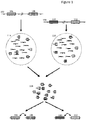
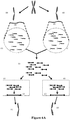
- two discrete individual nucleic acids 102 and 104 are illustrated, each having a number of regions of interest, e.g., region 106 and 108 in nucleic acid 102, and regions 110 and 112 in nucleic acid 104.
- the regions of interest in each nucleic acid are linked within (e.g., originate from) the same nucleic acid molecule, but in some cases these regions may be relatively separated from each other, e.g., more than 1kb apart, more than 5 kb apart, more than 10kb apart, more than 20kb apart, more than 30 kb apart, more than 40kb apart, more than 50 kb apart, and in some cases, as much as 100 kb apart or more.
- the regions of interest are generally discrete and separate parts of the genome - in some cases, such regions are poorly characterized regions.
- the regions of interest may also denote individual genes, gene groups, exons. As shown, each nucleic acid 102 and 104 is separated.
- each nucleic acid is separated into its own partition 114 and 116, respectively; however, as will be appreciated, the methods described herein are not limited to the use of such partitions and any method of separating of nucleic acid molecules can be used and then those separated nucleic acid molecules can be further processed in accordance with any of the methods disclosed herein.
- partitions such as 114 and 116 in Figure 1 are, in many cases, aqueous droplets in a water in oil emulsion. Within each droplet, portions of each fragment are copied in a manner that preserves the original molecular context of those fragments, e.g., as having originated from the same molecule.
- Such molecular context can be preserved using any method that allows for attribution of the fragment to the original nucleic acid molecule from which it was derived. As shown in Figure 1 , one method by which this is achieved is through the inclusion in each copied fragment of a barcode sequence, e.g., barcode sequence "1" or "2" as illustrated, that is representative of the droplet into which the originating fragment was partitioned. For whole genome sequence analysis applications, one could simply pool all of the copied fragments and their associated barcodes, in order to sequence and reassemble the full range sequence information from each of the originating nucleic acids 102 and 104.
- a barcode sequence e.g., barcode sequence "1" or "2" as illustrated
- amplification step in addition to the barcoding step, there may be one or more steps of selective amplification, such that if nucleic acids 102 or 104 contain selected genomic regions of interest, amplicons from those regions will form a larger percentage of the fragments in each of the partitions 114 and 116.
- This amplification step will generally take place prior to or simultaneously with the attachment of the barcodes in accordance with the methods described herein, although in some embodiments the amplification step may also occur subsequent to attachment of the barcodes.
- the pooled fragments within library 118 retain their original molecular context, e.g., through the retention of the barcode information, they may be reassembled into their original molecular contexts with embedded (at times, long range) linkage information, e.g., with inferred linkage as between each of the assembled regions of interest 106:108 and 110:112.
- linkage information e.g., with inferred linkage as between each of the assembled regions of interest 106:108 and 110:112.
- one may identify direct molecular linkage between two disparate targeted portions of the genome, e.g., two or more exons, and that direct molecular linkage may be used to identify structural variations and other genomic characteristics.
- the ability to identify the molecular context also provides a way to sequence those selected regions of the genome, often at a depth of coverage that allows for de novo assembly of those regions.
- sequencing methods described herein include a combination of deep coverage of the selected regions with lower level linked reads across longer ranges of the genome. As will be appreciated, this combination of de novo and re-sequencing provides an efficient way to sequence an entire genome and/or large portions of a genome. Targeted coverage of poorly characterized and/or highly polymorphic regions through the selective amplification methods described herein provides the amount of nucleic acid material at a coverage level necessary for de novo sequence assembly of those regions, whereas linked genomic sequencing over other regions of the genome allows for high throughput analysis of the remainder of the genome by providing sequence information as to discrete regions which are linked together through preservation of their molecular context.
- the methods and compositions described herein are uniquely amenable to allowing for a combination of de novo and linked read sequencing, because the same sequencing platform and sequencing library can be used for both types of coverage.
- the population of nucleic acids and/or nucleic acid fragments that are sequenced in accordance with the methods described herein contain sequences from both the genomic regions for de novo sequencing and the genomic regions for re-sequencing - the proportion of nucleic acids covering the regions of interest for de novo sequencing is higher than the nucleic acids covering the other regions of the genome due to the targeted amplification methods described in further detail herein.
- Such methods are further amenable for de novo assembly of haplotypes, because the methods described herein allow phase information to be retained during assembly.
- the methods and systems described herein can also provide other characterizations of genomic material, including without limitation haplotype phasing, identification of structural variations, and identifying copy number variations, as described in U.S. Patent Application Nos. 14/752,589 and 14/752,602 , which are herein incorporated by reference in their entirety for all purposes and in particular for all written description, figures and working examples directed to characterization of genomic material.
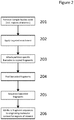
- Methods of the invention include steps as illustrated in Figure 2 , which provides a schematic overview of methods of the invention discussed in further detail herein. As will be appreciated, the method outlined in Figure 2 is an exemplary embodiment that may be altered or modified as needed and as described herein.
- the methods described herein will in most examples include a step in which sample nucleic acids containing the targeted regions of interest are separated, for example into partitions (201).
- each partition containing nucleic acids from genomic regions of interest will undergo a targeted enrichment to produce a population of fragments in which a large proportion will contain sequences from a selected genomic region (202).
- Those fragments are then further fragmented or copied in such a way as to preserve the original molecular context of the fragments (203), usually by barcoding the fragments that are specific to the partition in which they are contained, although any other methods of attributing the original molecular context of the fragments can be used.
- Each partition may in some examples include more than one nucleic acid, and will in some instances contain several hundred nucleic acid molecules - in situations in which multiple nucleic acids are within a partition, any particular locus of the genome will generally be represented by a single individual nucleic acid prior to barcoding.
- the barcoded fragments of step 203 can be generated using any methods known in the art - in some examples, oligonucleotides are the samples within the distinct partitions. Such oligonucleotides may comprise random sequences intended to randomly prime numerous different regions of the samples, or they may comprise a specific primer sequence targeted to prime upstream of a targeted region of the sample.
- these oligonucleotides also contain a barcode sequence, such that the replication process also barcodes the resultant replicated fragment of the original sample nucleic acid.
- barcodes can be added using any method known in the art, including addition of barcode sequences during amplification methods that amplify segments of the individual nucleic acid molecules as well as insertion of barcodes into the original individual nucleic acid molecules using transposons, including methods such as those described in Amini et al., Nature Genetics 46: 1343-1349 (2014) (advance online publication on October 29, 2014 ).
- a particularly elegant process for use of these barcode oligonucleotides in amplifying and barcoding samples is described in detail in U.S. Patent Application Nos.
- Extension reaction reagents e.g., DNA polymerase, nucleoside triphosphates, co-factors (e.g., Mg 2+ or Mn 2+ etc.), that are also contained in the partitions, then extend the primer sequence using the sample as a template, to produce a complementary fragment to the strand of the template to which the primer annealed, and the complementary fragment includes the oligonucleotide and its associated barcode sequence. Annealing and extension of multiple primers to different portions of the sample can result in a large pool of overlapping complementary fragments of the sample, each possessing its own barcode sequence indicative of the partition in which it was created.
- DNA polymerase e.g., DNA polymerase, nucleoside triphosphates, co-factors (e.g., Mg 2+ or Mn 2+ etc.)
- co-factors e.g., Mg 2+ or Mn 2+ etc.
- these complementary fragments may themselves be used as a template primed by the oligonucleotides present in the partition to produce a complement of the complement that again, includes the barcode sequence.
- this replication process is configured such that when the first complement is duplicated, it produces two complementary sequences at or near its termini to allow the formation of a hairpin structure or partial hairpin structure, which reduces the ability of the molecule to be the basis for producing further iterative copies.
- the barcoded fragments are then pooled (204).
- the pooled fragments are then sequenced (205) and the sequences of the fragments are attributed to their originating molecular context (206), such that the targeted regions of interest are both identified and also linked with that originating molecular context.
- targeted genomic regions may be further enriched, isolated or separated, i.e., "pulled down," for further analysis, particularly sequencing, using methods that include both chip-based and solution-based capture methods.
- Such methods utilize probes that are complementary to the genomic regions of interest or to regions near or adjacent to the genomic regions of interest.
- hybrid (or chip-based) capture microarrays containing capture probes (usually single-stranded oligonucleotides) with sequences that taken together cover the region of interest are fixed to a surface. Genomic DNA is fragmented and may further undergo processing such as end-repair to produce blunt ends and/or addition of additional features such as universal priming sequences. These fragments are hybridized to the probes on the microarray.
- Unhybridized fragments are washed away and the desired fragments are eluted or otherwise processed on the surface for sequencing or other analysis, and thus the population of fragments remaining on the surface is enriched for fragments containing the targeted regions of interest (e.g., the regions comprising the sequences complementary to those contained in the capture probes).
- the enriched population of fragments may further be amplified using any amplification technologies known in the art. Exemplary methods for such targeted pull down enrichment methods are described in US Patent Application No. 14/927,297, filed on October 29, 2015 , which is hereby incorporated by reference in its entirety for all purposes and in particular for all teachings related to targeted pull down enrichment methods and sequencing methods, including all written description, figures and examples.
- individual molecular context for short sequence reads of longer nucleic acids.
- Such individual molecular context can be provided by any method or composition that allows attribution of the shorter sequence reads to the originating individual nucleic acid.
- individual molecular context refers to sequence context beyond the specific sequence read, e.g., relation to adjacent or proximal sequences, that are not included within the sequence read itself, and as such, will typically be such that they would not be included in whole or in part in a short sequence read, e.g., a read of about 150 bases, or about 300 bases for paired reads.
- the methods and systems provide long range sequence context for short sequence reads.
- Such long range context includes relationship or linkage of a given sequence read to sequence reads that are within a distance of each other of longer than 1 kb, longer than 5 kb, longer than 10 kb, longer than 15 kb, longer than 20 kb, longer than 30 kb, longer than 40 kb, longer than 50 kb, longer than 60 kb, longer than 70 kb, longer than 80 kb, longer than 90 kb or even longer than 100 kb, or longer.
- one can also derive the phasing information of variants within that individual molecular context e.g., variants on a particular long molecule will be, by definition commonly phased.
- Sequence context can include mapping or providing linkage of fragments across different (generally on the kilobase scale) ranges of full genomic sequence.
- mapping the short sequence reads to the individual longer molecules or contigs of linked molecules as well as long range sequencing of large portions of the longer individual molecules, e.g., having contiguous determined sequences of individual molecules where such determined sequences are longer than 1 kb, longer than 5 kb, longer than 10 kb, longer than 15 kb, longer than 20 kb, longer than 30 kb, longer than 40 kb, longer than 50 kb, longer than 60 kb, longer than 70 kb, longer than 80 kb, longer than 90 kb or even longer than 100 kb.
- the attribution of short sequences to longer nucleic acids may include both mapping of short sequences against longer nucleic acid stretches to provide high level sequence context, as well as providing assembled sequences from the short sequences through these longer nucleic acids.
- long range sequence context associated with long individual molecules
- having such long range sequence context also allows one to infer even longer range sequence context.
- long range molecular context described above, one can identify overlapping variant portions, e.g., phased variants, translocated sequences, etc., among long sequences from different originating molecules, allowing the inferred linkage between those molecules.
- inferred linkages or molecular contexts are referred to herein as "inferred contigs”.
- phase blocks may represent commonly phased sequences, e.g., where by virtue of overlapping phased variants, one can infer a phased contig of substantially greater length than the individual originating molecules.
- phase blocks are referred to herein as "phase blocks”.
- inferred contig or phase blocks By starting with longer single molecule reads (e.g., the "long virtual single molecule reads" discussed above), one can derive longer inferred contigs or phase blocks than would otherwise be attainable using short read sequencing technologies or other approaches to phased sequencing. See, e.g., published U.S. Patent Application No. 2013-0157870 .
- N50 where the sum of the block lengths that are greater than the stated N50 number is 50% of the sum of all block lengths
- inferred contig or phase block lengths having an N50 of at least about 100kb, at least about 150kb, at least about 200kb, and in many cases, at least about 250kb, at least about 300 kb, at least about 350 kb, at least about 400 kb, and in some cases, at least about 500 kb or more, are attained.
- maximum phase block lengths in excess of 200 kb, in excess of 300 kb, in excess of 400 kb, in excess of 500 kb, in excess of 1 Mb, or even in excess of 2 Mb may be obtained.
- the methods and systems described herein provide for the separation of sample nucleic acids for further processing in accordance with any of the methods described herein.
- separation can be of any form that allows the nucleic acids to undergo further processing and reactions in relative isolation from other nucleic acids from which they are separated.
- the separating can be in terms of single nucleic acids each separated from all other nucleic acids, or into groups of two or more nucleic acids, which are then separated from other groups of nucleic acids.
- such separating includes compartmentalization, depositing or partitioning of sample nucleic acids, or fragments thereof, into discrete compartments or partitions (referred to interchangeably herein as partitions), where each partition maintains separation of its own contents from the contents of other partitions.
- partitions discrete compartments or partitions
- Unique identifiers or other means of attribution may be previously, subsequently or concurrently delivered to the separated nucleic acids in order to allow for the later attribution of the characteristics, e.g., nucleic acid sequence information, to the sample nucleic acids from which that information is derived.
- the identifier can be included within or introduced to a particular compartment, and particularly to relatively long stretches of contiguous sample nucleic acids that may be originally deposited into the partitions.
- sample nucleic acids utilized in the methods described herein typically represent a number of overlapping portions of the overall sample to be analyzed, e.g., an entire chromosome, exome, or other large genomic portion. These sample nucleic acids may include whole genomes, individual chromosomes, exomes, amplicons, or any of a variety of different nucleic acids of interest.
- the sample nucleic acids are typically partitioned such that the nucleic acids are present in the partitions in relatively long fragments or stretches of contiguous nucleic acid molecules.
- these fragments of the sample nucleic acids may be longer than 1 kb, longer than 5 kb, longer than 10 kb, longer than 15 kb, longer than 20 kb, longer than 30 kb, longer than 40 kb, longer than 50 kb, longer than 60 kb, longer than 70 kb, longer than 80 kb, longer than 90 kb or even longer than 100 kb, which permits the longer range molecular context described above.
- the sample nucleic acids are also typically partitioned at a level whereby a given partition has a very low probability of including two overlapping fragments of a genomic locus. This is typically accomplished by providing the sample nucleic acid at a low input amount and/or concentration during the partitioning process. As a result, in preferred cases, a given partition may include a number of long, but non-overlapping fragments of the starting sample nucleic acids.
- the sample nucleic acids in the different partitions are then associated with unique identifiers, where for any given partition, nucleic acids contained therein possess the same unique identifier, but where different partitions may include different unique identifiers.
- the partitioning step allocates the sample components into very small volume partitions or droplets, it will be appreciated that in order to achieve the desired allocation as set forth above, one need not conduct substantial dilution of the sample, as would be required in higher volume processes, e.g., in tubes, or wells of a multiwell plate. Further, because the systems described herein employ such high levels of barcode diversity, one can allocate diverse barcodes among higher numbers of genomic equivalents, as provided above. In particular, previously described, multiwell plate approaches (see, e.g., U.S. Published Application No.
- 2013-0079231 and 2013-0157870 typically only operate with a hundred to a few hundred different barcode sequences, and employ a limiting dilution process of their sample in order to be able to attribute barcodes to different cells/nucleic acids. As such, they will generally operate with far fewer than 100 cells, which would typically provide a ratio of genomes: (barcode type) on the order of 1:10, and certainly well above 1:100.
- barcode type on the order of 1:10, and certainly well above 1:100.
- diverse barcode types can operate at genome:(barcode type) ratios that are on the order of 1:50 or less, 1:100 or less, 1:1000 or less, or even smaller ratios, while also allowing for loading higher numbers of genomes (e.g., on the order of greater than 100 genomes per assay, greater than 500 genomes per assay, 1000 genomes per assay, or even more) while still providing for far improved barcode diversity per genome.
- the sample is combined with a set of oligonucleotide tags that are releasably-attached to beads prior to the partitioning step.
- Methods for barcoding nucleic acids are known in the art and described herein. In some examples, methods are utilized as described in Amini et al, 2014, Nature Genetics, Advance Online Publication ), which is herein incorporated by reference in its entirety for all purposes and in particular for all teachings related to attaching barcodes or other oligonucleotide tags to nucleic acids.
- the oligonucleotides may comprise at least a first and second region.
- the first region may be a barcode region that, as between oligonucleotides within a given partition, may be substantially the same barcode sequence, but as between different partitions, may and, in most cases is a different barcode sequence.
- the second region may be an N-mer (either a random N-mer or an N-mer designed to target a particular sequence) that can be used to prime the nucleic acids within the sample within the partitions.
- the N-mer may be designed to target a particular sequence, it may be designed to target a particular chromosome (e.g., chromosome 1, 13, 18, or 21), or region of a chromosome, e.g., an exome or other targeted region.
- the N-mer may be designed to target a particular gene or genetic region, such as a gene or region associated with a disease or disorder (e.g., cancer).
- an amplification reaction may be conducted using the second N-mer to prime the nucleic acid sample at different places along the length of the nucleic acid.
- each partition may contain amplified products of the nucleic acid that are attached to an identical or near-identical barcode, and that may represent overlapping, smaller fragments of the nucleic acids in each partition.
- the bar-code can serve as a marker that signifies that a set of nucleic acids originated from the same partition, and thus potentially also originated from the same strand of nucleic acid.
- the nucleic acids may be pooled, sequenced, and aligned using a sequencing algorithm. Because shorter sequence reads may, by virtue of their associated barcode sequences, be aligned and attributed to a single, long fragment of the sample nucleic acid, all of the identified variants on that sequence can be attributed to a single originating fragment and single originating chromosome. Further, by aligning multiple co-located variants across multiple long fragments, one can further characterize that chromosomal contribution. Accordingly, conclusions regarding the phasing of particular genetic variants may then be drawn, as can analyses across long ranges of genomic sequence - for example, identification of sequence information across stretches of poorly characterized regions of the genome. Such information may also be useful for identifying haplotypes, which are generally a specified set of genetic variants that reside on the same nucleic acid strand or on different nucleic acid strands. Copy number variations may also be identified in this manner.
- Ensemble sample preparation and sequencing methods are predisposed towards primarily identifying and characterizing the majority constituents in the sample, and are not designed to identify and characterize minority constituents, e.g., genetic material contributed by one chromosome, from a poorly characterized or highly polymorphic region of the genome, or material from one or a few cells, or fragmented tumor cell DNA molecule circulating in the bloodstream, that constitute a small percentage of the total DNA in the extracted sample.
- the methods described herein include selective amplification methods that increase the genetic material from these minority constituents, and the ability to retain the molecular context of this genetic material further provides genetic characterization of these constituents.
- the described methods and systems also provide a significant advantage for detecting populations that are present within a larger sample. As such, they are particularly useful for assessing haplotype and copy number variations - the methods disclosed herein are also useful for providing sequence information over regions of the genome that are poorly characterized or are poorly represented in a population of nucleic acid targets due to biases introduced during sample preparation.
- the use of the barcoding technique disclosed herein confers the unique capability of providing individual molecular context for a given set of genetic markers, i.e., attributing a given set of genetic markers (as opposed to a single marker) to individual sample nucleic acid molecules, and through variant coordinated assembly, to provide a broader or even longer range inferred individual molecular context, among multiple sample nucleic acid molecules, and/or to a specific chromosome.
- These genetic markers may include specific genetic loci, e.g., variants, such as SNPs, or they may include short sequences.
- the use of barcoding confers the additional advantages of facilitating the ability to discriminate between minority constituents and majority constituents of the total nucleic acid population extracted from the sample, e.g.
- implementation in a microfluidics format confers the ability to work with extremely small sample volumes and low input quantities of DNA, as well as the ability to rapidly process large numbers of sample partitions (droplets) to facilitate genome-wide tagging.
- an advantage of the methods and systems described herein is that they can achieve the desired results through the use of ubiquitously available, short read sequencing technologies.
- Such technologies have the advantages of being readily available and widely dispersed within the research community, with protocols and reagent systems that are well characterized and highly effective.
- These short read sequencing technologies include those available from, e.g., Illumina, inc. (GAllx, NextSeq, MiSeq, HiSeq, X10), Ion Torrent division of Thermo-Fisher (Ion Proton and Ion PGM), pyrosequencing methods, as well as others.
- the methods and systems described herein utilize these short read sequencing technologies and do so with their associated low error rates and high throughputs.
- the methods and systems described herein achieve the desired individual molecular readlengths or context, as described above, but with individual sequencing reads, excluding mate pair extensions, that are shorter than 1000 bp, shorter than 500 bp, shorter than 300 bp, shorter than 200 bp, shorter than 150 bp or even shorter; and with sequencing error rates for such individual molecular readlengths that are less than 5%, less than 1%, less than 0.5%, less than 0.1%, less than 0.05%, less than 0.01%, less than 0.005%, or even less than 0.001%.
- the methods and systems described in the disclosure provide for separating nucleic acids into different groups or into different regions such that the separated nucleic acids can undergo further processing and/or reactions in relative isolation from one or more other nucleic acids.
- Such separating can in certain exemplary instances include depositing or partitioning individual samples (e.g., nucleic acids) into discrete partitions, where each partition maintains separation of its own contents from the contents in other partitions.
- the partitions refer to containers or vessels that may include a variety of different forms, e.g., wells, tubes, micro or nanowells, through holes, or the like. In preferred aspects, however, the partitions are flowable within fluid streams.
- These vessels may be comprised of, e.g., microcapsules or micro-vesicles that have an outer barrier surrounding an inner fluid center or core, or they may be a porous matrix that is capable of entraining and/or retaining materials within its matrix.
- these partitions may comprise droplets of aqueous fluid within a non-aqueous continuous phase, e.g., an oil phase.
- a non-aqueous continuous phase e.g., an oil phase.
- U.S. Patent Application No. 13/966,150 filed August 13, 2013 .
- emulsion systems for creating stable droplets in non-aqueous or oil continuous phases are described in detail in, e.g., Published U.S. Patent Application No. 2010-0105112 .
- microfluidic channel networks are particularly suited for generating partitions as described herein.
- microfluidic devices include those described in detail in U.S. Patent Application No. 14/682,952, filed April 9, 2015 , the full disclosure of which is incorporated herein by reference in its entirety for all purposes.
- Alternative mechanisms may also be employed in the partitioning of individual cells, including porous membranes through which aqueous mixtures of cells are extruded into non-aqueous fluids.
- Such systems are generally available from, e.g., Nanomi, Inc.
- partitions e.g., droplets
- the partitions also typically include co-partitioned barcode oligonucleotides.
- the relative amount of sample materials within any particular partition may be adjusted by controlling a variety of different parameters of the system, including, for example, the concentration of sample in the aqueous stream, the flow rate of the aqueous stream and/or the non-aqueous stream, and the like.
- the partitions described herein are often characterized by having extremely small volumes.
- the droplets may have overall volumes that are less than 1000 pL, less than 900 pL, less than 800 pL, less than 700 pL, less than 600 pL, less than 500 pL, less than 400pL, less than 300 pL, less than 200 pL, less than 100pL, less than 50 pL, less than 20 pL, less than 10 pL, or even less than 1 pL.
- the sample fluid volume within the partitions may be less than 90% of the above described volumes, less than 80%, less than 70%, less than 60%, less than 50%, less than 40%, less than 30%, less than 20%, or even less than 10% the above described volumes.
- the use of low reaction volume partitions is particularly advantageous in performing reactions with very small amounts of starting reagents, e.g., input nucleic acids. Methods and systems for analyzing samples with low input nucleic acids are presented in U.S. Patent Application Nos. 14/752,589 and 14/752,602 , the full disclosure of which are hereby incorporated by reference in their entirety.
- the sample nucleic acids within partitions are generally subjected to selective amplification, such that regions of the genome that are of interest for targeted coverage to allow for de novo sequencing are present in higher proportion in comparison to other regions of the genome (although, as will be appreciated, those other regions of the genome may also be amplified, but to a lesser extent, as they are not of interest for de novo coverage).
- the genomic regions of interest are amplified to provide at least 1X, 2X, 5X, 10X, 20X, 30X, 40X or 50X coverage of those selected regions of the genome.
- all of the nucleic acids within a partition are amplified, but selected genomic regions are amplified in a targeted way such that at least 1-5, 2-10, 3-15, 4-20, 5-25, 6-30, 7-35, 8-40, 9-45, or 10-50 times more amplicons are produced from those selected genomic regions than from other parts of the genome.
- the nucleic acids (or fragments thereof) within the partitions are provided with unique identifiers such that, upon characterization of those nucleic acids they may be attributed as having been derived from their respective origins. Accordingly, the sample nucleic acids are typically co-partitioned with the unique identifiers.
- such unique identifiers are barcode sequences. For the sake of clarity, much of the discussion herein is directed to identifiers comprising barcode sequences, but, as will be appreciated, any unique identifiers that can be used to retain molecular context for sequence reads can be used in accordance with the methods described herein.
- the unique identifiers are provided in the form of oligonucleotides that comprise nucleic acid barcode sequences that may be attached to the nucleic acid samples.
- the oligonucleotides are partitioned such that as between oligonucleotides in a given partition, the nucleic acid barcode sequences contained therein are the same, but as between different partitions, the oligonucleotides can, and preferably have differing barcode sequences. In preferred aspects, only one nucleic acid barcode sequence will be associated with a given partition, although in some cases, two or more different barcode sequences may be present.
- the nucleic acid barcode sequences will typically include from 6 to about 20 or more nucleotides within the sequence of the oligonucleotides. These nucleotides may be completely contiguous, i.e., in a single stretch of adjacent nucleotides, or they may be separated into two or more separate subsequences that are separated by one or more nucleotides. Typically, separated subsequences may typically be from about 4 to about 16 nucleotides in length.
- the co-partitioned oligonucleotides also typically comprise other functional sequences useful in the processing of the partitioned nucleic acids. These sequences include, e.g., targeted or random/universal amplification primer sequences for amplifying the genomic DNA from the individual nucleic acids within the partitions while attaching the associated barcode sequences, sequencing primers, hybridization or probing sequences, e.g., for identification of presence of the sequences, or for pulling down barcoded nucleic acids, or any of a number of other potential functional sequences.
- sequences include, e.g., targeted or random/universal amplification primer sequences for amplifying the genomic DNA from the individual nucleic acids within the partitions while attaching the associated barcode sequences, sequencing primers, hybridization or probing sequences, e.g., for identification of presence of the sequences, or for pulling down barcoded nucleic acids, or any of a number of other potential functional sequences.
- beads are provided that each may include large numbers of the above described oligonucleotides releasably attached to the beads, where all of the oligonucleotides attached to a particular bead may include the same nucleic acid barcode sequence, but where a large number of diverse barcode sequences may be represented across the population of beads used.
- the population of beads may provide a diverse barcode sequence library that may include at least 1000 different barcode sequences, at least 10,000 different barcode sequences, at least 100,000 different barcode sequences, or in some cases, at least 1,000,000 different barcode sequences.
- each bead may typically be provided with large numbers of oligonucleotide molecules attached.
- the number of molecules of oligonucleotides including the barcode sequence on an individual bead may be at least bout 10,000 oligonucleotides, at least 100,000 oligonucleotide molecules, at least 1,000,000 oligonucleotide molecules, at least 100,000,000 oligonucleotide molecules, and in some cases at least 1 billion oligonucleotide molecules.
- the oligonucleotides may be releasable from the beads upon the application of a particular stimulus to the beads.
- the stimulus may be a photo-stimulus, e.g., through cleavage of a photo-labile linkage that may release the oligonucleotides.
- a thermal stimulus may be used, where elevation of the temperature of the beads environment may result in cleavage of a linkage or other release of the oligonucleotides form the beads.
- a chemical stimulus may be used that cleaves a linkage of the oligonucleotides to the beads, or otherwise may result in release of the oligonucleotides from the beads.
- the beads including the attached oligonucleotides may be co-partitioned with the individual samples, such that a single bead and a single sample are contained within an individual partition.
- the flows and channel architectures are controlled as to ensure a desired number of singly occupied partitions, less than a certain level of unoccupied partitions and less than a certain level of multiply occupied partitions.
- Figure 3 illustrates one particular example method for barcoding and subsequently sequencing a sample nucleic acid, particularly for use for a copy number variation or haplotype assay.
- a sample comprising nucleic acid may be obtained from a source, 300, and a set of barcoded beads may also be obtained, 310.
- the beads are preferably linked to oligonucleotides containing one or more barcode sequences, as well as a primer, such as a random N-mer or other primer.
- the barcode sequences are releasable from the barcoded beads, e.g., through cleavage of a linkage between the barcode and the bead or through degradation of the underlying bead to release the barcode, or a combination of the two.
- the barcoded beads can be degraded or dissolved by an agent, such as a reducing agent to release the barcode sequences.
- an agent such as a reducing agent to release the barcode sequences.
- a low quantity of the sample comprising nucleic acid, 305, barcoded beads, 315, and optionally other reagents, e.g., a reducing agent, 320, are combined and subject to partitioning.
- such partitioning may involve introducing the components to a droplet generation system, such as a microfluidic device, 325.
- a droplet generation system such as a microfluidic device, 325.
- a water-in-oil emulsion 330 may be formed, wherein the emulsion contains aqueous droplets that contain sample nucleic acid, 305, reducing agent, 320, and barcoded beads, 315.
- the reducing agent may dissolve or degrade the barcoded beads, thereby releasing the oligonucleotides with the barcodes and random N-mers from the beads within the droplets, 335.
- the random N-mers may then prime different regions of the sample nucleic acid, resulting in amplified copies of the sample after amplification, wherein each copy is tagged with a barcode sequence, 340.
- each droplet contains a set of oligonucleotides that contain identical barcode sequences and different random N-mer sequences.
- additional sequences e.g., sequences that aid in particular sequencing methods, additional barcodes, etc.
- sequences e.g., sequences that aid in particular sequencing methods, additional barcodes, etc.
- amplification methods 350 (e.g., PCR).
- Sequencing may then be performed, 355, and an algorithm applied to interpret the sequencing data, 360.
- Sequencing algorithms are generally capable, for example, of performing analysis of barcodes to align sequencing reads and/or identify the sample from which a particular sequence read belongs. In addition, and as is described herein, these algorithms may also further be used to attribute the sequences of the copies to their originating molecular context.
- the samples can be amplified in accordance with any of the methods described herein to provide targeted coverage of selected regions of the genome.
- This targeted coverage generally results in a larger population of amplicons representing sequences of the nucleic acids (or portions of thereof) in a partition containing those selected regions of the genome as compared to amplicons from other regions of the genome.
- different amplification protocols are used to favor amplification of fragments containing portions of selected regions of the genome than the protocols used to attach barcode sequences to the fragments.
- the selective amplification using targeted PCR primers are conducted under standard PCR amplification thermal cycling conditions, whereas the amplification for attachment of the barcodes is conducted with a sharp drop in temperature followed by a slow ramp of increasing temperature to allow for the priming and extension of the random N-mers.
- FIG. 4 An example of a microfluidic channel structure for co-partitioning samples and beads comprising barcode oligonucleotides is schematically illustrated in Figure 4 .
- channel segments 402, 404, 406, 408 and 410 are provided in fluid communication at channel junction 412.
- An aqueous stream comprising the individual samples 414 is flowed through channel segment 402 toward channel junction 412. As described elsewhere herein, these samples may be suspended within an aqueous fluid prior to the partitioning process.
- an aqueous stream comprising the barcode carrying beads 416 is flowed through channel segment 404 toward channel junction 412.
- a non-aqueous partitioning fluid is introduced into channel junction 412 from each of side channels 406 and 408, and the combined streams are flowed into outlet channel 410.
- the two combined aqueous streams from channel segments 402 and 404 are combined, and partitioned into droplets 418, that include co-partitioned samples 414 and beads 416.
- the flow characteristics of each of the fluids combining at channel junction 412 as well as controlling the geometry of the channel junction, one can optimize the combination and partitioning to achieve a desired occupancy level of beads, samples or both, within the partitions 418 that are generated.
- reagents may be co-partitioned along with the samples and beads, including, for example, chemical stimuli, nucleic acid extension, transcription, and/or amplification reagents such as polymerases, reverse transcriptases, nucleoside triphosphates or NTP analogues, primer sequences and additional cofactors such as divalent metal ions used in such reactions, ligation reaction reagents, such as ligase enzymes and ligation sequences, dyes, labels, or other tagging reagents.
- the primer sequences may include random primer sequences or targeted PCR primers directed to amplifying selected regions of the genome or a combination thereof.
- the oligonucleotides disposed upon the bead may be used to barcode and amplify the partitioned samples.
- a particularly elegant process for use of these barcode oligonucleotides in amplifying and barcoding samples is described in detail in U.S. Patent Application Nos. 14/316,383 ; 14/316,398 ; 14/316,416 ; 14/316,431 ; 14/316,447 ; and 14/316,463 , the full disclosures of which are hereby incorporated by reference in their entireties.
- the oligonucleotides present on the beads that are co-partitioned with the samples and released from their beads into the partition with the samples.
- the oligonucleotides typically include, along with the barcode sequence, a primer sequence at its 5' end.
- the primer sequence may be random or structured. Random primer sequences are generally intended to randomly prime numerous different regions of the samples. Structured primer sequences can include a range of different structures including defined sequences targeted to prime upstream of a specific targeted region of the sample as well as primers that have some sort of partially defined structure, including without limitation primers containing a percentage of specific bases (such as a percentage of GC N-mers), primers containing partially or wholly degenerate sequences, and/or primers containing sequences that are partially random and partially structured in accordance with any of the description herein. As will be appreciated, any one or more of the above types of random and structured primers may be included in oligonucleotides in any combination.
- the primer portion of the oligonucleotide can anneal to a complementary region of the sample.
- Extension reaction reagents e.g., DNA polymerase, nucleoside triphosphates, co-factors (e.g., Mg2+ or Mn2+ etc.), that are also co-partitioned with the samples and beads, then extend the primer sequence using the sample as a template, to produce a complementary fragment to the strand of the template to which the primer annealed, with complementary fragment includes the oligonucleotide and its associated barcode sequence.
- Annealing and extension of multiple primers to different portions of the sample may result in a large pool of overlapping complementary fragments of the sample, each possessing its own barcode sequence indicative of the partition in which it was created.
- these complementary fragments may themselves be used as a template primed by the oligonucleotides present in the partition to produce a complement of the complement that again, includes the barcode sequence.
- this replication process is configured such that when the first complement is duplicated, it produces two complementary sequences at or near its termini, to allow the formation of a hairpin structure or partial hairpin structure, which reduces the ability of the molecule to be the basis for producing further iterative copies. A schematic illustration of one example of this is shown in Figure 5 .
- oligonucleotides that include a barcode sequence are co-partitioned in, e.g., a droplet 502 in an emulsion, along with a sample nucleic acid 504.
- the oligonucleotides 508 may be provided on a bead 506 that is co-partitioned with the sample nucleic acid 504, which oligonucleotides are preferably releasable from the bead 506, as shown in panel A.
- the oligonucleotides 508 include a barcode sequence 512, in addition to one or more functional sequences, e.g., sequences 510, 514 and 516.
- oligonucleotide 508 is shown as comprising barcode sequence 512, as well as sequence 510 that may function as an attachment or immobilization sequence for a given sequencing system, e.g., a P5 sequence used for attachment in flow cells of an Illumina Hiseq or Miseq system.
- the oligonucleotides also include a primer sequence 516, which may include a random or targeted N-mer for priming replication of portions of the sample nucleic acid 504.
- a sequence 514 which may provide a sequencing priming region, such as a "read1" or R1 priming region, that is used to prime polymerase mediated, template directed sequencing by synthesis reactions in sequencing systems.
- the barcode sequence 512, immobilization sequence 510 and R1 sequence 514 may be common to all of the oligonucleotides attached to a given bead.
- the primer sequence 516 may vary for random N-mer primers, or may be common to the oligonucleotides on a given bead for certain targeted applications.
- the oligonucleotides are able to prime the sample nucleic acid as shown in panel B, which allows for extension of the oligonucleotides 508 and 508a using polymerase enzymes and other extension reagents also co-portioned with the bead 506 and sample nucleic acid 504.
- panel C following extension of the oligonucleotides that, for random N-mer primers, would anneal to multiple different regions of the sample nucleic acid 504; multiple overlapping complements or fragments of the nucleic acid are created, e.g., fragments 518 and 520.
- fragments of the template nucleic acid 504 are often referred to herein as “fragments" of that template sequence.
- fragment encompasses any representation of a portion of the originating nucleic acid sequence, e.g., a template or sample nucleic acid, including those created by other mechanisms of providing portions of the template sequence, such as actual fragmentation of a given molecule of sequence, e.g., through enzymatic, chemical or mechanical fragmentation.
- fragments of a template or sample nucleic acid sequence will denote replicated portions of the underlying sequence or complements thereof.
- the barcoded nucleic acid fragments may then be subjected to characterization, e.g., through sequence analysis, or they may be further amplified in the process, as shown in panel D.
- additional oligonucleotides e.g., oligonucleotide 508b, also released from bead 506, may prime the fragments 518 and 520.
- the oligonucleotide anneals with the fragment 518, and is extended to create a complement 526 to at least a portion of fragment 518 which includes sequence 528, that comprises a duplicate of a portion of the sample nucleic acid sequence. Extension of the oligonucleotide 508b continues until it has replicated through the oligonucleotide portion 508 of fragment 518.
- the oligonucleotides may be configured to prompt a stop in the replication by the polymerase at a desired point, e.g., after replicating through sequences 516 and 514 of oligonucleotide 508 that is included within fragment 518.
- this may be accomplished by different methods, including, for example, the incorporation of different nucleotides and/or nucleotide analogues that are not capable of being processed by the polymerase enzyme used.
- this may include the inclusion of uracil containing nucleotides within the sequence region 512 to prevent a non-uracil tolerant polymerase to cease replication of that region.
- a fragment 526 is created that includes the full-length oligonucleotide 508b at one end, including the barcode sequence 512, the attachment sequence 510, the R1 primer region 514, and the random N-mer sequence 516b.
- the R1 sequence 514 and its complement 514' are then able to hybridize together to form a partial hairpin structure 528.
- sequence 516' which is the complement to random N-mer 516
- sequence 516b which is the complement to random N-mer 516
- the N-mers would be common among oligonucleotides within a given partition.
- nucleic acid 604 originated from a first source 600 (e.g., individual chromosome, strand of nucleic acid, etc.) and a nucleic acid 606 derived from a different chromosome 602 or strand of nucleic acid are each partitioned along with their own sets of barcode oligonucleotides as described above.
- a first source 600 e.g., individual chromosome, strand of nucleic acid, etc.
- nucleic acid 606 derived from a different chromosome 602 or strand of nucleic acid are each partitioned along with their own sets of barcode oligonucleotides as described above.
- each nucleic acid 604 and 606 is then processed to separately provide overlapping set of second fragments of the first fragment(s), e.g., second fragment sets 608 and 610.
- This processing also provides the second fragments with a barcode sequence that is the same for each of the second fragments derived from a particular first fragment.
- the barcode sequence for second fragment set 608 is denoted by "1” while the barcode sequence for fragment set 610 is denoted by "2".
- a diverse library of barcodes may be used to differentially barcode large numbers of different fragment sets. However, it is not necessary for every second fragment set from a different first fragment to be barcoded with different barcode sequences. In fact, in many cases, multiple different first fragments may be processed concurrently to include the same barcode sequence. Diverse barcode libraries are described in detail elsewhere herein.
- the barcoded fragments may then be pooled for sequencing using, for example, sequence by synthesis technologies available from Illumina or Ion Torrent division of Thermo Fisher, Inc.
- sequence reads from the pooled fragments 612 can be attributed to their respective fragment set, e.g., as shown in aggregated reads 614 and 616, at least in part based upon the included barcodes, and optionally, and preferably, in part based upon the sequence of the fragment itself.
- the attributed sequence reads for each fragment set are then assembled to provide the assembled sequence for each sample fragment, e.g., sequences 618 and 620, which in turn, may be further attributed back to their respective original chromosomes or source nucleic acid molecules (600 and 602).
- Methods and systems for assembling genomic sequences are described in, for example, U.S. Patent Application No. 14/752,773, filed June 26, 2015 , the full disclosure of which is hereby incorporated by reference in its entirety.
- primer sets 613 included with the partitions containing fragment sets 608 or 610 are primer sets 613.
- the primer sets 613 are in further embodiments directed to selected regions of the genome, such that prior to, simultaneously with or subsequent to providing the barcode sequences (barcode "1" for 608 and "2" for 610), the fragment sets 608 and 610 are amplified such that the selected regions of the genome are covered to an additional extent over other regions of the genome.
- fragment set 608 contain sequences from the selected regions of the genome to which primer sets 613 are directed, but fragment set 610 does not contain sequences from those selected regions of the genome.
- the pooled fragments 612 contains barcoded fragments contain fragments that have been amplified in a targeted way, allowing for a larger proportion of sequence reads from fragment set 608 (the "1" barcoded fragments) than from fragment set 610 (the “2" barcoded fragments).
- that larger proportion of sequence reads from set 608 can, like the remainder of the fragments in pooled set 612, be attributed back to their respective original source nucleic acid molecules 600 and 602 (shown in Figure 6A ).
- the methods, compositions, and systems described herein are particularly amenable for use in nucleic acid sequencing technologies.
- Such sequencing technologies can include any technologies known in the art, including short-read and long-read sequencing technologies.
- the methods, compositions and systems described herein are used in short read, high accuracy sequencing technologies.
- the methods, compositions, and systems described herein allow for genetic characterization of regions of the genome that are poorly characterized, are highly polymorphic, and/or diverge from reference sequences.
- the methods, compositions and systems described herein provide increased and redundant coverage of selected portions of the genome such that additional redundant sequence information can be obtained from those selected portion of the genome.
- that additional sequence information e.g., increased coverage of targeted regions of the genome
- Additional exemplary regions that are resistant to accurate characterization include without limitation areas that have close homologous pseudogenes (for example SMN1/2 Cyp2d6), areas that have substantial repeated sequences throughout the genome, including without limitation transposons (such as SINEs, LINEs), as well as areas that have tremendous variation for which reference sequences serve as a poor guide (such as the regions encoding the genes for the human leukocyte antigen (HLA) complex).
- SMN1/2 Cyp2d6 areas that have substantial repeated sequences throughout the genome, including without limitation transposons (such as SINEs, LINEs), as well as areas that have tremendous variation for which reference sequences serve as a poor guide (such as the regions encoding the genes for the human leukocyte antigen (HLA) complex).
- HLA human leukocyte antigen
- methods described herein include a step in which selected regions of the genome are selectively amplified prior to sequencing.
- This amplification which is generally conducted using methods known in the art (including without limitation PCR amplification) provides at least 1X, 2X, 3X, 4X, 5X, 6X, 7X, 8X, 9X, 10X, 11X, 12X, 13X, 14X, 15X, 16X, 17X, 18X, 19X, or 20X coverage of the selected regions of the genome, thereby providing a quantity of nucleic acids to allow de novo sequencing of those selected regions.
- the amplification provides at least 1X-30X, 2X-25X, 3X-20X, 4X-15X, or 5X-10X coverage of the selected regions of the genome.
- the amplification is generally conducted through extension of primers complementary to sequences within or near the selected regions of the genome.
- a library of primers is used that is designed to tile across the regions of interest - in other words, the library of primer is designed to amplify regions at specific distances along the selected regions of the genome.
- the selective amplification utilizes primers that are complementary to every 10, 15, 20, 25, 50, 100, 200, 250, 500, 750, 1000, or 10000 bases along the selected regions of the genome.
- the tiled library of primers is designed to capture a mixture of distances - that mixture can be a random mixture of distances or intelligently designed such that specific portions or percentages of the selected regions are amplified by different primer pairs.
- the primer pairs are designed such that each pair amplifies about 1-5%, 2-10%, 3-15%, 4-20%, 5-25%, 6-30%, 7-35%, 8-40%, 9-45%, or 10-50% of any contiguous region of a selected portion of the genome.
- the amplification occurs across a region of the genome that is at least 3 megabasepairs long (Mb).
- the selected region of the genome that is selectively amplified in accordance with any of the methods described herein is at least 3.5, 4, 4.5, 5, 5.5, 6, 6.5, 7, 7.5, 8, 8.5, 9, 9.5, or 10 Mb.
- the selected region of the genome is about 2-20, 3-18, 4-16, 5-14, 6-12, or 7-10 Mb in length.
- amplification may occur across these regions using a single primer pair complementary to sequences at the ends or near the ends of these regions.
- amplification is conducted with a library of primer pairs that are tiled across the length of the region, such that regular segments, random segments, or some combination of different segment distances along the region are amplified, with the extent of coverage in accordance with the description above.
- the primers used in selective amplification of selected regions of the genome contain uracils so that the primers themselves are not amplified.
- the methods and systems described herein accomplish targeted genomic sequencing by providing for the determination of the sequence of selected regions of the genome, and this sequencing information is generally obtained using methods that have the advantages of the extremely low sequencing error rates and high throughput of short read sequencing technologies.
- an advantage of the methods and systems described herein is that they can achieve the desired results through the use of ubiquitously available, short read sequencing technologies. Such technologies have the advantages of being readily available and widely dispersed within the research community, with protocols and reagent systems that are well characterized and highly effective.
- These short read sequencing technologies include those available from, e.g., Illumina, inc. (GAllx, NextSeq, MiSeq, HiSeq, X10), Ion Torrent division of Thermo-Fisher (Ion Proton and Ion PGM), pyrosequencing methods, as well as others.
- the methods and systems described herein utilize these short read sequencing technologies and do so with their associated low error rates.
- the methods and systems described herein achieve the desired individual molecular readlengths or context, as described above, but with individual sequencing reads, excluding mate pair extensions, that are shorter than 1000 bp, shorter than 500 bp, shorter than 300 bp, shorter than 200 bp, shorter than 150 bp or even shorter; and with sequencing error rates for such individual molecular readlengths that are less than 5%, less than 1%, less than 0.5%, less than 0.1%, less than 0.05%, less than 0.01%, less than 0.005%, or even less than 0.001%.
- sequencing of nucleic acids is typically carried out in a manner that preserves the molecular context of sequence reads or portions of sequence reads. By that is meant that multiple sequence reads or multiple portions of sequence reads may be attributable to a single originating molecule of a nucleic acid.
- sequence reads can be identified as falling within the linear sequence of bases of their particular originating molecules of a nucleic acid - in other words, and in reference to Figure 7 , if fragments 703, 704, 705 and 706 are generated from originating nucleic acid molecules 701 and 702, then the sequencing is carried out in a manner such that sequence reads from fragments 703, 704, 705 and 706 retain their molecular context and it is readily ascertained that fragments 703 and 704 are derived from originating molecule 701 whereas 705 and 706 are derived from originating molecule 702, even if all the fragments are pooled together for the sequencing reaction.
- the sequencing is generally conducted such that not only is the originating molecule ascertained, but so also is the relative position of each fragment along that linear molecule - e.g., it can be determined that fragment 703 is "upstream" from fragment 704 along the linear sequence of originating nucleic acid 701.
- molecular context is retained through the use of any identifier or any other method of distinguishing one or more fragments from other fragments.
- identifiers are used on fragments that have been separated into groups or into individual entities. In some examples, such separation is separation into discrete partitions, although, as will be appreciated, any other methods of separating molecules can be used.
- the identifiers used are barcodes, and the linear position is determined both through barcoding as well as algorithmic assembly of sequence reads from overlapping fragments.
- the single originating molecule of a nucleic acid may be of any of a variety of lengths, in preferred aspects, it will be a relatively long molecule, allowing for preservation of long range molecular context.
- the single originating molecule is preferably substantially longer than the typical short read sequence length, e.g., longer than 200 bases, and is often at least 1000 bases or longer, 5000 bases or longer, 10,000 bases or longer, 20,000 bases or longer, 30,000 bases or longer, 40,000 bases or longer, 50,000 bases or longer, 60,000 bases or longer, 70,000 bases or longer, 80,000 bases or longer, 90,000 bases or longer, or 100,000 bases or longer, and in some cases 1 megabase or longer.
- sequencing methods described herein include a combination of deep coverage of the selected regions with lower level linked reads across longer ranges of the genome.
- this combination of de novo and re-sequencing provides an efficient way to sequence an entire genome and/or large portions of a genome.
- Targeted coverage of poorly characterized and/or highly polymorphic regions through the selective amplification methods described herein provides the amount of nucleic acid material necessary for de novo sequence assembly, whereas linked genomic sequencing over other regions of the genome maintains high throughput sequencing of the remainder of the genome.
- the methods and compositions described herein are uniquely amenable to allowing for this combination of de novo and linked read sequencing, because the same sequencing platform can be used for both types of coverage.
- the population of nucleic acids and/or nucleic acid fragments that are sequenced in accordance with the methods described herein contain sequences from both the genomic regions for de novo sequencing and the genomic regions for re-sequencing - the proportion of nucleic acids covering the regions of interest for de novo sequencing is higher than the nucleic acids covering the other regions of the genome due to the targeted amplification methods described in further detail herein.
- nucleic acids particularly nucleic acids from selected regions of the genome, while retaining molecular context.
- two discrete individual nucleic acids 102 and 104 are illustrated, each having a number of regions of interest, e.g., region 106 and 108 in nucleic acid 102, and regions 110 and 112 in nucleic acid 104.
- each nucleic acid is linked within (e.g., originate from) the same nucleic acid molecule, but in some cases these regions may be relatively separated from each other, e.g., more than 1 kb apart, more than 5 kb apart, more than 10kb apart, more than 20kb apart, more than 30 kb apart, more than 40kb apart, more than 50 kb apart, and in some cases, as much as 100 kb apart.
- the regions of interest are generally discrete and separate parts of the genome - in some cases, such regions are poorly characterized regions.
- the regions of interest may also denote individual genes, gene groups, exons. As shown, each nucleic acid 102 and 104 is separated into its own partition 114 and 116, respectively.
- these partitions are, in many cases, aqueous droplets in a water in oil emulsion.
- portions of each fragment are copied in a manner that preserves the original molecular context of those fragments, e.g., as having originated from the same molecule.
- this is achieved through the inclusion in each copied fragment of a barcode sequence, e.g., barcode sequence "1" or "2" as illustrated, that is representative of the droplet into which the originating fragment was partitioned.
- barcode sequence e.g., barcode sequence "1" or "2" as illustrated
- amplification step in addition to the barcoding step, there may be one or more steps of selective amplification, such that if nucleic acids 102 or 104 contain selected genomic regions of interest, amplicons from those regions will form a larger percentage of the fragments in each of the partitions 114 and 116.
- This amplification step will generally take place prior to or simultaneously with the attachment of the barcodes in accordance with the methods described herein, although in some embodiments the amplification step may also occur subsequent to attachment of the barcodes.
- the pooled fragments within library 118 retain their original molecular context, e.g., through the retention of the barcode information, they may be reassembled into their original molecular contexts with embedded (at times, long range) linkage information, e.g., with inferred linkage as between each of the assembled regions of interest 106:108 and 110:112.
- linkage information e.g., with inferred linkage as between each of the assembled regions of interest 106:108 and 110:112.
- one may identify direct molecular linkage between two disparate targeted portions of the genome, e.g., two or more exons, and that direct molecular linkage may be used to identify structural variations and other genomic characteristics.
- the ability to identify the molecular context also provides a way to sequence those selected regions of the genome, often at a depth that allows for de novo assembly of those regions.
- Methods of the invention include steps as illustrated in Figure 2 , which provides a schematic overview of methods of the invention discussed in further detail herein. As will be appreciated, the method outlined in Figure 2 is an exemplary embodiment that may be altered or modified as needed and as described herein.
- the methods described herein will in most examples include a step in which sample nucleic acids containing the targeted regions of interest are partitioned (201). Generally, each partition containing nucleic acids from genomic regions of interest will undergo a targeted enrichment to produce a population of fragments in which a large proportion will contain sequences from a selected genomic region (202). Those fragments are then further fragmented or copied in such a way as to preserve the original molecular context of the fragments (203), usually by barcoding the fragments that are specific to the partition in which they are contained.
- Each partition may in some examples include more than one nucleic acid, and will in some instances contain several hundred nucleic acid molecules - in situations in which multiple nucleic acids are within a partition, any particular locus of the genome will generally be represented by a single individual nucleic acid prior to barcoding.
- the barcoded fragments of step 203 can be generated using any methods known in the art - in some examples, oligonucleotides are the samples within the distinct partitions. Such oligonucleotides may comprise random sequences intended to randomly prime numerous different regions of the samples, or they may comprise a specific primer sequence targeted to prime upstream of a targeted region of the sample.
- these oligonucleotides also contain a barcode sequence, such that the replication process also barcodes the resultant replicated fragment of the original sample nucleic acid.
- a particularly elegant process for use of these barcode oligonucleotides in amplifying and barcoding samples is described in detail in U.S. Patent Application Nos. 14/316,383 ; 14/316,398 ; 14/316,416 ; 14/316,431 ; 14/316,447 ; and 14/316,463 which are herein incorporated by reference in their entirety for all purposes and in particular for all written description, figures and working examples directed to processing nucleic acids and sequencing and other characterizations of genomic material.
- Extension reaction reagents e.g., DNA polymerase, nucleoside triphosphates, co-factors (e.g., Mg 2+ or Mn 2+ etc.), that are also contained in the partitions, then extend the primer sequence using the sample as a template, to produce a complementary fragment to the strand of the template to which the primer annealed, and the complementary fragment includes the oligonucleotide and its associated barcode sequence. Annealing and extension of multiple primers to different portions of the sample can result in a large pool of overlapping complementary fragments of the sample, each possessing its own barcode sequence indicative of the partition in which it was created.
- DNA polymerase e.g., DNA polymerase, nucleoside triphosphates, co-factors (e.g., Mg 2+ or Mn 2+ etc.)
- co-factors e.g., Mg 2+ or Mn 2+ etc.
- these complementary fragments may themselves be used as a template primed by the oligonucleotides present in the partition to produce a complement of the complement that again, includes the barcode sequence.
- this replication process is configured such that when the first complement is duplicated, it produces two complementary sequences at or near its termini to allow the formation of a hairpin structure or partial hairpin structure, which reduces the ability of the molecule to be the basis for producing further iterative copies.
- the barcoded fragments are then pooled (204).
- the pooled fragments are then sequenced (205) and the sequences of the fragments are attributed to their originating molecular context (206), such that the targeted regions of interest are both identified and also linked with that originating molecular context.
- targeted genomic regions may be further enriched, isolated or separated, i.e., "pulled down," for further analysis, particularly sequencing, using methods that include both chip-based and solution-based capture methods.
- Such methods utilize probes that are complementary to the genomic regions of interest or to regions near or adjacent to the genomic regions of interest.
- hybrid (or chip-based) capture microarrays containing capture probes (usually single-stranded oligonucleotides) with sequences that taken together cover the region of interest are fixed to a surface. Genomic DNA is fragmented and may further undergo processing such as end-repair to produce blunt ends and/or addition of additional features such as universal priming sequences. These fragments are hybridized to the probes on the microarray.
- Unhybridized fragments are washed away and the desired fragments are eluted or otherwise processed on the surface for sequencing or other analysis, and thus the population of fragments remaining on the surface is enriched for fragments containing the targeted regions of interest (e.g., the regions comprising the sequences complementary to those contained in the capture probes).
- the enriched population of fragments may further be amplified using any amplification technologies known in the art. Exemplary methods for such targeted pull down enrichment methods are described in USSN 14/927,297, filed on October 29, 2015 , which is hereby incorporated by reference in its entirety for all purposes and in particular for all teachings related to targeted pull down enrichment methods and sequencing methods, including all written description, figures and examples.
- methods for coverage of selected regions of the genome include methods in which the discrete partitions containing nucleic acid molecules and/or fragments thereof from those selected regions are themselves sorted for further processing.
- this sorting of the discrete partitions may take place in any combination with other methods of selective amplification and/or targeted pull-down of genomic regions of interest described herein, in particular in any combination with the steps of the work flow described above.
- such methods of sorting of the discrete partitions includes steps in which partitions containing at least a portion of the one or more selected portions of the genome are separated from partitions that do not contain any sequences from those portions of the genome. These methods include the steps of providing a population enriched for sequences of the fragments comprising at least a portion of the one or more selected portions of the genome within the discrete partitions containing sequences from those portions of the genome. Such enrichment is generally accomplished through the use of directed PCR amplification of the fragments within the discrete partitions that include at least a portion of the one or more selected portions of the genome to produce a population. This directed PCR amplification thus produces amplicons comprising at least a portion of the one or more selected portions of the genome.
- these amplicons are attached to a detectable label, which in some non-limiting embodiments may include a fluorescent molecule.
- a detectable label which in some non-limiting embodiments may include a fluorescent molecule.
- the attachment of the detectable labels occurs during the selective amplification of the one or more selected portions of the genome.
- detectable labels may in further embodiments include without limitation fluorescent labels, electrochemical labels, magnetic beads, and nanoparticles. This attachment of the detectable label can be accomplished using methods known in the art.
- discrete partitions containing fragments comprising at least a portion of the one or more selected portions of the genome are sorted based on signals emitted from the detectable labels attached to the amplicons within those partitions.
- the steps of sorting discrete partitions containing selected portions of the genome from those that do not contain such sequences include the steps of (a) providing starting genomic material; (b) distributing individual nucleic acid molecules from the starting genomic material into discrete partitions such that each discrete partition contains a first individual nucleic acid molecule; (c) providing a population within at least some of the discrete partitions that is enriched for sequences of the fragments comprising at least a portion of the one or more selected portions of the genome; (d) attaching a common barcode sequence to the fragments within each discrete partition such that each of the fragments is attributable to the discrete partition in which it was contained; (e) separating discrete partitions containing fragments comprising at least a portion of the one or more selected portions of the genome from discrete partitions containing no fragments comprising the one or more selected portions of the genome; (f) obtaining sequence information from the fragments comprising at least a portion of the one or more selected portions of the genome, thereby sequencing one or
- the discrete partitions are combined and the fragments are pooled together.
- the step of obtaining sequence information from the fragments is conducted in such a way as to maintain the molecular context of the sequences of the fragments, such that the identifying further comprises identifying fragments derived from the same first individual nucleic acid molecules.
- this obtaining of sequence information includes a sequencing reaction selected from the group consisting of: short read-length sequencing reactions and long read-length sequencing reactions.
- the sequencing reaction is a short read, high accuracy sequencing reaction.
- the discrete partitions comprise droplets in an emulsion.
- the barcoded fragments within the discrete partitions represent about 1X-10X coverage of the one or more selected portions of the genome.
- the barcoded fragments within the discrete partitions represent about 2X-5X coverage of the one or more selected portions of the genome.
- the barcoded fragments of the amplicons within the discrete partitions represent at least 1X coverage of the one or more selected portions of the genome.
- the barcoded fragments within the discrete partitions represent at least 2X or 5X coverage of the one or more selected portions of the genome.
- the methods and systems described herein can also provide other characterizations of genomic material, including without limitation haplotype phasing, identification of structural variations, and identifying copy number variations, as described in US Patent Application Nos. 14/752,589 and 14/752,602 , which are herein incorporated by reference in their entirety for all purposes and in particular for all written description, figures and working examples directed to characterization of genomic material.
- individual molecular context refers to sequence context beyond the specific sequence read, e.g., relation to adjacent or proximal sequences, that are not included within the sequence read itself, and as such, will typically be such that they would not be included in whole or in part in a short sequence read, e.g., a read of about 150 bases, or about 300 bases for paired reads.
- a short sequence read e.g., a read of about 150 bases, or about 300 bases for paired reads.
- the methods and systems provide long range sequence context for short sequence reads.
- Such long range context includes relationship or linkage of a given sequence read to sequence reads that are within a distance of each other of longer than 1 kb, longer than 5 kb, longer than 10 kb, longer than 15 kb, longer than 20 kb, longer than 30 kb, longer than 40 kb, longer than 50 kb, longer than 60 kb, longer than 70 kb, longer than 80 kb, longer than 90 kb or even longer than 100 kb, or longer.
- one can also derive the phasing information of variants within that individual molecular context e.g., variants on a particular long molecule will be, by definition commonly phased.
- Sequence context can include mapping or providing linkage of fragments across different (generally on the kilobase scale) ranges of full genomic sequence.
- mapping the short sequence reads to the individual longer molecules or contigs of linked molecules as well as long range sequencing of large portions of the longer individual molecules, e.g., having contiguous determined sequences of individual molecules where such determined sequences are longer than 1 kb, longer than 5 kb, longer than 10 kb, longer than 15 kb, longer than 20 kb, longer than 30 kb, longer than 40 kb, longer than 50 kb, longer than 60 kb, longer than 70 kb, longer than 80 kb, longer than 90 kb or even longer than 100 kb.
- the attribution of short sequences to longer nucleic acids may include both mapping of short sequences against longer nucleic acid stretches to provide high level sequence context, as well as providing assembled sequences from the short sequences through these longer nucleic acids.
- long range sequence context associated with long individual molecules
- having such long range sequence context also allows one to infer even longer range sequence context.
- long range molecular context described above, one can identify overlapping variant portions, e.g., phased variants, translocated sequences, etc., among long sequences from different originating molecules, allowing the inferred linkage between those molecules.
- inferred linkages or molecular contexts are referred to herein as "inferred contigs”.
- phase blocks may represent commonly phased sequences, e.g., where by virtue of overlapping phased variants, one can infer a phased contig of substantially greater length than the individual originating molecules.
- phase blocks are referred to herein as "phase blocks”.
- inferred contig or phase blocks By starting with longer single molecule reads (e.g., the "long virtual single molecule reads" discussed above), one can derive longer inferred contigs or phase blocks than would otherwise be attainable using short read sequencing technologies or other approaches to phased sequencing. See, e.g., published U.S. Patent Application No. 2013-0157870 .
- N50 where the sum of the block lengths that are greater than the stated N50 number is 50% of the sum of all block lengths
- inferred contig or phase block lengths having an N50 of at least about 100kb, at least about 150kb, at least about 200kb, and in many cases, at least about 250kb, at least about 300 kb, at least about 350 kb, at least about 400 kb, and in some cases, at least about 500 kb or more, are attained.
- maximum phase block lengths in excess of 200 kb, in excess of 300 kb, in excess of 400 kb, in excess of 500 kb, in excess of 1 Mb, or even in excess of 2 Mb may be obtained.
- the methods and systems described herein provide for the compartmentalization, depositing or partitioning of sample nucleic acids, or fragments thereof, into discrete compartments or partitions (referred to interchangeably herein as partitions), where each partition maintains separation of its own contents from the contents of other partitions.
- Unique identifiers may be previously, subsequently or concurrently delivered to the partitions that hold the compartmentalized or partitioned sample nucleic acids, in order to allow for the later attribution of the characteristics, e.g., nucleic acid sequence information, to the sample nucleic acids included within a particular compartment, and particularly to relatively long stretches of contiguous sample nucleic acids that may be originally deposited into the partitions.
- sample nucleic acids utilized in the methods described herein typically represent a number of overlapping portions of the overall sample to be analyzed, e.g., an entire chromosome, exome, or other large genomic portion. These sample nucleic acids may include whole genomes, individual chromosomes, exomes, amplicons, or any of a variety of different nucleic acids of interest.
- the sample nucleic acids are typically partitioned such that the nucleic acids are present in the partitions in relatively long fragments or stretches of contiguous nucleic acid molecules.
- these fragments of the sample nucleic acids may be longer than 1 kb, longer than 5 kb, longer than 10 kb, longer than 15 kb, longer than 20 kb, longer than 30 kb, longer than 40 kb, longer than 50 kb, longer than 60 kb, longer than 70 kb, longer than 80 kb, longer than 90 kb or even longer than 100 kb, which permits the longer range molecular context described above.
- the sample nucleic acids are also typically partitioned at a level whereby a given partition has a very low probability of including two overlapping fragments of the starting sample nucleic acid. This is typically accomplished by providing the sample nucleic acid at a low input amount and/or concentration during the partitioning process. As a result, in preferred cases, a given partition may include a number of long, but non-overlapping fragments of the starting sample nucleic acids.
- the sample nucleic acids in the different partitions are then associated with unique identifiers, where for any given partition, nucleic acids contained therein possess the same unique identifier, but where different partitions may include different unique identifiers.
- the partitioning step allocates the sample components into very small volume partitions or droplets, it will be appreciated that in order to achieve the desired allocation as set forth above, one need not conduct substantial dilution of the sample, as would be required in higher volume processes, e.g., in tubes, or wells of a multiwell plate. Further, because the systems described herein employ such high levels of barcode diversity, one can allocate diverse barcodes among higher numbers of genomic equivalents, as provided above. In particular, previously described, multiwell plate approaches (see, e.g., U.S. Published Application No.
- 2013-0079231 and 2013-0157870 typically only operate with a hundred to a few hundred different barcode sequences, and employ a limiting dilution process of their sample in order to be able to attribute barcodes to different cells/nucleic acids. As such, they will generally operate with far fewer than 100 cells, which would typically provide a ratio of genomes:(barcode type) on the order of 1:10, and certainly well above 1:100.
- diverse barcode types can operate at genome:(barcode type) ratios that are on the order of 1:50 or less, 1:100 or less, 1:1000 or less, or even smaller ratios, while also allowing for loading higher numbers of genomes (e.g., on the order of greater than 100 genomes per assay, greater than 500 genomes per assay, 1000 genomes per assay, or even more) while still providing for far improved barcode diversity per genome.
- the sample is combined with a set of oligonucleotide tags that are releasably-attached to beads prior to the partitioning step.
- amplification methods are used to add barcodes to the resultant amplification products, which in some examples contain smaller segments (fragments) of the full originating nucleic acid molecule from which they are derived.
- methods using transposons are utilized as described in Amini et al, Nature Genetics 46: 1343-1349 (2014) (advance online publication on October 29, 2014 ), which is herein incorporated by reference in its entirety for all purposes and in particular for all teachings related to attaching barcodes or other oligonucleotide tags to nucleic acids.
- methods of attaching barcodes can include the use of nicking enzymes or polymerases and/or invasive probes such as recA to produce gaps along double stranded sample nucleic acids - barcodes can then be inserted into those gaps.
- the oligonucleotide tags may comprise at least a first and second region.
- the first region may be a barcode region that, as between oligonucleotides within a given partition, may be substantially the same barcode sequence, but as between different partitions, may and, in most cases is a different barcode sequence.
- the second region may be an N-mer (either a random N-mer or an N-mer designed to target a particular sequence) that can be used to prime the nucleic acids within the sample within the partitions.
- the N-mer may be designed to target a particular sequence, it may be designed to target a particular chromosome (e.g., chromosome 1, 13, 18, or 21), or region of a chromosome, e.g., an exome or other targeted region. As discussed herein, the N-mer may also be designed to selected regions of the genome that tend to be poorly characterized or are highly polymorphic or divergent from the reference sequence. In some cases, the N-mer may be designed to target a particular gene or genetic region, such as a gene or region associated with a disease or disorder (e.g., cancer).
- a disease or disorder e.g., cancer
- an amplification reaction may be conducted using the second N-mer to prime the nucleic acid sample at different places along the length of the nucleic acid.
- each partition may contain amplified products of the nucleic acid that are attached to an identical or near-identical barcode, and that may represent overlapping, smaller fragments of the nucleic acids in each partition.
- the bar-code can serve as a marker that signifies that a set of nucleic acids originated from the same partition, and thus potentially also originated from the same strand of nucleic acid.
- the nucleic acids may be pooled, sequenced, and aligned using a sequencing algorithm.
- shorter sequence reads may, by virtue of their associated barcode sequences, be aligned and attributed to a single, long fragment of the sample nucleic acid, all of the identified variants on that sequence can be attributed to a single originating fragment and single originating chromosome. Further, by aligning multiple co-located variants across multiple long fragments, one can further characterize that chromosomal contribution. Accordingly, conclusions regarding the phasing of particular genetic variants may then be drawn, as can analyses across long ranges of genomic sequence - for example, identification of sequence information across stretches of poorly characterized regions of the genome. Such information may also be useful for identifying haplotypes, which are generally a specified set of genetic variants that reside on the same nucleic acid strand or on different nucleic acid strands. Copy number variations may also be identified in this manner.
- Ensemble sample preparation and sequencing methods are predisposed towards primarily identifying and characterizing the majority constituents in the sample, and are not designed to identify and characterize minority constituents, e.g., genetic material contributed by one chromosome, from a poorly characterized or highly polymorphic region of the genome, or material from one or a few cells, or fragmented tumor cell DNA molecule circulating in the bloodstream, that constitute a small percentage of the total DNA in the extracted sample.
- the methods described herein include selective amplification methods that increase the genetic material from these minority constituents, and the ability to retain the molecular context of this genetic material further provides genetic characterization of these constituents.
- the described methods and systems also provide a significant advantage for detecting populations that are present within a larger sample. As such, they are particularly useful for assessing haplotype and copy number variations - the methods disclosed herein are also useful for providing sequence information over regions of the genome that are poorly characterized or are poorly represented in a population of nucleic acid targets due to biases introduced during sample preparation.
- the use of the barcoding technique disclosed herein confers the unique capability of providing individual molecular context for a given set of genetic markers, i.e., attributing a given set of genetic markers (as opposed to a single marker) to individual sample nucleic acid molecules, and through variant coordinated assembly, to provide a broader or even longer range inferred individual molecular context, among multiple sample nucleic acid molecules, and/or to a specific chromosome.
- These genetic markers may include specific genetic loci, e.g., variants, such as SNPs, or they may include short sequences.
- the use of barcoding confers the additional advantages of facilitating the ability to discriminate between minority constituents and majority constituents of the total nucleic acid population extracted from the sample, e.g.
- implementation in a microfluidics format confers the ability to work with extremely small sample volumes and low input quantities of DNA, as well as the ability to rapidly process large numbers of sample partitions (droplets) to facilitate genome-wide tagging.
- individual molecular context refers to sequence context beyond the specific sequence read, e.g., relation to adjacent or proximal sequences, that are not included within the sequence read itself, and as such, will typically be such that they would not be included in whole or in part in a short sequence read, e.g., a read of about 150 bases, or about 300 bases for paired reads.
- a short sequence read e.g., a read of about 150 bases, or about 300 bases for paired reads.
- the methods and systems provide long range sequence context for short sequence reads.
- Such long range context includes relationship or linkage of a given sequence read to sequence reads that are within a distance of each other of longer than 1 kb, longer than 5 kb, longer than 10 kb, longer than 15 kb, longer than 20 kb, longer than 30 kb, longer than 40 kb, longer than 50 kb, longer than 60 kb, longer than 70 kb, longer than 80 kb, longer than 90 kb or even longer than 100 kb, or longer.
- the methods and systems of the invention also provide much longer inferred molecular context.
- Sequence context can include lower resolution context, e.g., from mapping the short sequence reads to the individual longer molecules or contigs of linked molecules, as well as the higher resolution sequence context, e.g., from long range sequencing of large portions of the longer individual molecules, e.g., having contiguous determined sequences of individual molecules where such determined sequences are longer than 1 kb, longer than 5 kb, longer than 10 kb, longer than 15 kb, longer than 20 kb, longer than 30 kb, longer than 40 kb, longer than 50 kb, longer than 60 kb, longer than 70 kb, longer than 80 kb, longer than 90 kb or even longer than 100 kb.
- the attribution of short sequences to longer nucleic acids may include both mapping of short sequences against longer nucleic acid stretches to provide high level sequence context, as well as providing assembled sequences from the short sequences through these longer nucleic acids.
- genomic material may be obtained from a sample taken from a patient.
- genomic material may be obtained from a sample taken from a patient.
- samples and types of genomic material of use in the methods and systems discussed herein include without limitation polynucleotides, nucleic acids, oligonucleotides, circulating cell-free nucleic acid, circulating tumor cell (CTC), nucleic acid fragments, nucleotides, DNA, RNA, peptide polynucleotides, complementary DNA (cDNA), double stranded DNA (dsDNA), single stranded DNA (ssDNA), plasmid DNA, cosmid DNA, chromosomal DNA, genomic DNA (gDNA), viral DNA, bacterial DNA, mtDNA (mitochondrial DNA), ribosomal RNA, cell-free DNA, cell free fetal DNA (cffDNA), mRNA, rRNA, tRNA, nRNA, siRNA, snRNA, s
- the substance may be a fluid, e.g., a biological fluid.
- a fluidic substance may include, but not limited to, blood, cord blood, saliva, urine, sweat, serum, semen, vaginal fluid, gastric and digestive fluid, spinal fluid, placental fluid, cavity fluid, ocular fluid, serum, breast milk, lymphatic fluid, or combinations thereof.
- the substance may be solid, for example, a biological tissue.
- the substance may comprise normal healthy tissues, diseased tissues, or a mix of healthy and diseased tissues. In some cases, the substance may comprise tumors. Tumors may be benign (non-cancer) or malignant (cancer).
- Non-limiting examples of tumors may include : fibrosarcoma, myxosarcoma, liposarcoma, chondrosarcoma, osteogenic sarcoma, chordoma, angiosarcoma, endotheliosarcoma, lymphangiosarcoma, lymphangioendotheliosarcoma, synovioma, mesothelioma, Ewing's sarcoma, leiomyosarcoma, rhabdomyosarcoma, gastrointestinal system carcinomas, colon carcinoma, pancreatic cancer, breast cancer, genitourinary system carcinomas, ovarian cancer, prostate cancer, squamous cell carcinoma, basal cell carcinoma, adenocarcinoma, sweat gland carcinoma, sebaceous gland carcinoma, papillary carcinoma, papillary adenocarcinomas, cystadenocarcinoma, medullary carcinoma, bronchogenic carcinoma, renal cell carcinoma, hepatoma, bile
- the substance may be associated with various types of organs.
- organs may include brain, liver, lung, kidney, prostate, ovary, spleen, lymph node (including tonsil), thyroid, pancreas, heart, skeletal muscle, intestine, larynx, esophagus, stomach, or combinations thereof.
- the substance may comprise a variety of cells, including but not limited to: eukaryotic cells, prokaryotic cells, fungi cells, heart cells, lung cells, kidney cells, liver cells, pancreas cells, reproductive cells, stem cells, induced pluripotent stem cells, gastrointestinal cells, blood cells, cancer cells, bacterial cells, bacterial cells isolated from a human microbiome sample, etc.
- the substance may comprise contents of a cell, such as, for example, the contents of a single cell or the contents of multiple cells.
- contents of a cell such as, for example, the contents of a single cell or the contents of multiple cells.
- Samples may be obtained from various subjects.
- a subject may be a living subject or a dead subject. Examples of subjects may include, but not limited to, humans, mammals, non-human mammals, rodents, amphibians, reptiles, canines, felines, bovines, equines, goats, ovines, hens, avines, mice, rabbits, insects, slugs, microbes, bacteria, parasites, or fish.
- the subject may be a patient who is having, suspected of having, or at a risk of developing a disease or disorder.
- the subject may be a pregnant woman.
- the subject may be a normal healthy pregnant woman.
- the subject may be a pregnant woman who is at a risking of carrying a baby with certain birth defect.
- a sample may be obtained from a subject by any means known in the art.
- a sample may be obtained from a subject through accessing the circulatory system (e.g., intravenously or intra-arterially via a syringe or other apparatus), collecting a secreted biological sample (e.g., saliva, sputum urine, feces, etc.), surgically (e.g., biopsy) acquiring a biological sample (e.g., intra-operative samples, post-surgical samples, etc.), swabbing (e.g., buccal swab, oropharyngeal swab), or pipetting.
- a biological sample e.g., intra-operative samples, post-surgical samples, etc.
- swabbing e.g., buccal swab, oropharyngeal swab
- pipetting e.g., buccal swab, oropharyngeal swab
- Tumor protein p53 also known as p53, cellular tumor antigen p53 (UniProt name), phosphoprotein p53, tumor suppressor p53, antigen NY-CO-13, or transformation-related protein 53 (TRP53), is a protein that is encoded by the TP53 gene in humans.
- the p53 protein is crucial in multicellular organisms, where it regulates the cell cycle and, thus, functions as a tumor suppressor, preventing cancer.
- p53 has been described as "the guardian of the genome” because of its role in conserving stability by preventing genome mutation.
- TP53 is classified as a tumor suppressor gene.
- Targeted amplification of the region of the genome containing the TP53 gene (which is about 19149 bp in length) was conducted using a total of 96 primers spanning the entire gene in a multiplex reaction. The primers were designed to tile across this region of the genome about 400 bp apart.
- the amplification reaction was conducted with a temperature gradient for the annealing step, 14 cycles, and an input amount of about 3 ng of DNA.
- the thermocycling protocol used for this example was as follows: Initial Denaturation 98°C 30 seconds 18 Cycles 98°C 10 seconds 30-55°C 15 seconds 72°C 15 seconds Final Extension 72°C 2 minutes Hold 4C
- FIG. 8 An exemplary workflow for this type of reaction is pictured in Figure 8 .
- this is an exemplary embodiment of a method in accordance with the invention described herein and can be altered or expanded using known methods.
- the selected region of the genome (in this case, the TP53 gene) is amplified using target specific primers, such as those pictured as 802 and 803.
- a primer with barcode 801 was also incorporated into the amplicons, which can in certain embodiments as described herein provide molecular context for the subsequent sequence reads (808).
- the primers 802 and 803 had in this experiment "tails" R1 and R2, which rendered the resultant amplicons amenable to sequencing on specific platforms, such as the Illumina platform.
- the amplification with the SI primer (806) further provided a sample index that is also used with the Illumina platform.
- sequences that are useful for other sequencing platforms can be used in place of the R1 and R2 and S1 primers.
- Figure 9 shows that the amplification reaction was specific, as the no template controls (NTC) showed no product.
- Figure 10 provides the fold-enrichment seen as a result of the above-described protocol across a range of temperatures.
Landscapes
- Chemical & Material Sciences (AREA)
- Life Sciences & Earth Sciences (AREA)
- Organic Chemistry (AREA)
- Proteomics, Peptides & Aminoacids (AREA)
- Health & Medical Sciences (AREA)
- Zoology (AREA)
- Wood Science & Technology (AREA)
- Engineering & Computer Science (AREA)
- Analytical Chemistry (AREA)
- Molecular Biology (AREA)
- Immunology (AREA)
- Microbiology (AREA)
- Biotechnology (AREA)
- Biochemistry (AREA)
- Bioinformatics & Cheminformatics (AREA)
- General Engineering & Computer Science (AREA)
- General Health & Medical Sciences (AREA)
- Genetics & Genomics (AREA)
- Biophysics (AREA)
- Physics & Mathematics (AREA)
- Chemical Kinetics & Catalysis (AREA)
- Measuring Or Testing Involving Enzymes Or Micro-Organisms (AREA)
Applications Claiming Priority (4)
| Application Number | Priority Date | Filing Date | Title |
|---|---|---|---|
| US201562119996P | 2015-02-24 | 2015-02-24 | |
| US201562146834P | 2015-04-13 | 2015-04-13 | |
| EP16710366.2A EP3262188B1 (de) | 2015-02-24 | 2016-02-24 | Verfahren zur sequenzierung von nukleinsäuren in gesteuertem ausmass |
| PCT/US2016/019382 WO2016138148A1 (en) | 2015-02-24 | 2016-02-24 | Methods for targeted nucleic acid sequence coverage |
Related Parent Applications (1)
| Application Number | Title | Priority Date | Filing Date |
|---|---|---|---|
| EP16710366.2A Division EP3262188B1 (de) | 2015-02-24 | 2016-02-24 | Verfahren zur sequenzierung von nukleinsäuren in gesteuertem ausmass |
Publications (1)
| Publication Number | Publication Date |
|---|---|
| EP3936619A1 true EP3936619A1 (de) | 2022-01-12 |
Family
ID=55538606
Family Applications (2)
| Application Number | Title | Priority Date | Filing Date |
|---|---|---|---|
| EP21170986.0A Withdrawn EP3936619A1 (de) | 2015-02-24 | 2016-02-24 | Verfahren zur sequenzierung von nukleinsäuren in gesteuertem ausmass |
| EP16710366.2A Active EP3262188B1 (de) | 2015-02-24 | 2016-02-24 | Verfahren zur sequenzierung von nukleinsäuren in gesteuertem ausmass |
Family Applications After (1)
| Application Number | Title | Priority Date | Filing Date |
|---|---|---|---|
| EP16710366.2A Active EP3262188B1 (de) | 2015-02-24 | 2016-02-24 | Verfahren zur sequenzierung von nukleinsäuren in gesteuertem ausmass |
Country Status (11)
| Country | Link |
|---|---|
| US (2) | US11274343B2 (de) |
| EP (2) | EP3936619A1 (de) |
| JP (1) | JP2018505688A (de) |
| KR (1) | KR20170119710A (de) |
| CN (2) | CN107532202A (de) |
| AU (1) | AU2016222719B2 (de) |
| BR (1) | BR112017018054A2 (de) |
| CA (1) | CA2975958A1 (de) |
| IL (1) | IL254120A0 (de) |
| MX (1) | MX2017010857A (de) |
| WO (1) | WO2016138148A1 (de) |
Families Citing this family (85)
| Publication number | Priority date | Publication date | Assignee | Title |
|---|---|---|---|---|
| US10323279B2 (en) | 2012-08-14 | 2019-06-18 | 10X Genomics, Inc. | Methods and systems for processing polynucleotides |
| US9951386B2 (en) | 2014-06-26 | 2018-04-24 | 10X Genomics, Inc. | Methods and systems for processing polynucleotides |
| US10221442B2 (en) | 2012-08-14 | 2019-03-05 | 10X Genomics, Inc. | Compositions and methods for sample processing |
| US10273541B2 (en) | 2012-08-14 | 2019-04-30 | 10X Genomics, Inc. | Methods and systems for processing polynucleotides |
| KR102090851B1 (ko) | 2012-08-14 | 2020-03-19 | 10엑스 제노믹스, 인크. | 마이크로캡슐 조성물 및 방법 |
| US10752949B2 (en) | 2012-08-14 | 2020-08-25 | 10X Genomics, Inc. | Methods and systems for processing polynucleotides |
| US11591637B2 (en) | 2012-08-14 | 2023-02-28 | 10X Genomics, Inc. | Compositions and methods for sample processing |
| US9701998B2 (en) | 2012-12-14 | 2017-07-11 | 10X Genomics, Inc. | Methods and systems for processing polynucleotides |
| US10400280B2 (en) | 2012-08-14 | 2019-09-03 | 10X Genomics, Inc. | Methods and systems for processing polynucleotides |
| CA2894694C (en) | 2012-12-14 | 2023-04-25 | 10X Genomics, Inc. | Methods and systems for processing polynucleotides |
| US10533221B2 (en) | 2012-12-14 | 2020-01-14 | 10X Genomics, Inc. | Methods and systems for processing polynucleotides |
| DK2954065T3 (da) | 2013-02-08 | 2021-09-06 | 10X Genomics Inc | Opdeling og bearbejdning af analytter og andre arter |
| US10395758B2 (en) | 2013-08-30 | 2019-08-27 | 10X Genomics, Inc. | Sequencing methods |
| US9824068B2 (en) | 2013-12-16 | 2017-11-21 | 10X Genomics, Inc. | Methods and apparatus for sorting data |
| KR102596508B1 (ko) | 2014-04-10 | 2023-10-30 | 10엑스 제노믹스, 인크. | 시약을 캡슐화 및 구획화하기 위한 유체 디바이스, 시스템, 및 방법, 및 이의 응용 |
| EP3161157B1 (de) | 2014-06-24 | 2024-03-27 | Bio-Rad Laboratories, Inc. | Digitales pcr-barcoding |
| US12312640B2 (en) | 2014-06-26 | 2025-05-27 | 10X Genomics, Inc. | Analysis of nucleic acid sequences |
| KR102531677B1 (ko) | 2014-06-26 | 2023-05-10 | 10엑스 제노믹스, 인크. | 개별 세포 또는 세포 개체군으로부터 핵산을 분석하는 방법 |
| MX2016016904A (es) | 2014-06-26 | 2017-03-27 | 10X Genomics Inc | Analisis de secuencias de acidos nucleicos. |
| KR20170073667A (ko) | 2014-10-29 | 2017-06-28 | 10엑스 제노믹스, 인크. | 표적화 핵산 서열 분석을 위한 방법 및 조성물 |
| US9975122B2 (en) | 2014-11-05 | 2018-05-22 | 10X Genomics, Inc. | Instrument systems for integrated sample processing |
| KR102321863B1 (ko) | 2015-01-12 | 2021-11-08 | 10엑스 제노믹스, 인크. | 핵산 시퀀싱 라이브러리의 제조 방법 및 시스템 및 이를 이용하여 제조한 라이브러리 |
| RU2017131622A (ru) * | 2015-02-13 | 2019-03-13 | Абхиджит Аджит ПАТЕЛ | Способы высокопараллельного и точного измерения нуклеиновых кислот |
| BR112017018054A2 (pt) * | 2015-02-24 | 2018-07-24 | 10X Genomics Inc | métodos para a cobertura de sequências de ácidos nucleicos direcionadas |
| EP4286516A3 (de) | 2015-02-24 | 2024-03-06 | 10X Genomics, Inc. | Partitionsverarbeitungsverfahren und -systeme |
| US11371094B2 (en) | 2015-11-19 | 2022-06-28 | 10X Genomics, Inc. | Systems and methods for nucleic acid processing using degenerate nucleotides |
| DK3882357T3 (da) | 2015-12-04 | 2022-08-29 | 10X Genomics Inc | Fremgangsmåder og sammensætninger til analyse af nukleinsyrer |
| JP6735348B2 (ja) | 2016-02-11 | 2020-08-05 | 10エックス ジェノミクス, インコーポレイテッド | 全ゲノム配列データのデノボアセンブリのためのシステム、方法及び媒体 |
| WO2017197343A2 (en) | 2016-05-12 | 2017-11-16 | 10X Genomics, Inc. | Microfluidic on-chip filters |
| WO2017197338A1 (en) | 2016-05-13 | 2017-11-16 | 10X Genomics, Inc. | Microfluidic systems and methods of use |
| WO2017218864A1 (en) * | 2016-06-17 | 2017-12-21 | Mayo Foundation For Medical Education And Research | Methods and materials for the effective use of combined targeted enrichment of genomic regions and low coverage whole genome sequencing |
| JP6810559B2 (ja) * | 2016-09-09 | 2021-01-06 | 株式会社日立製作所 | 環状型一本鎖核酸、およびその調製方法と使用方法 |
| US10550429B2 (en) | 2016-12-22 | 2020-02-04 | 10X Genomics, Inc. | Methods and systems for processing polynucleotides |
| US10815525B2 (en) | 2016-12-22 | 2020-10-27 | 10X Genomics, Inc. | Methods and systems for processing polynucleotides |
| US10011872B1 (en) | 2016-12-22 | 2018-07-03 | 10X Genomics, Inc. | Methods and systems for processing polynucleotides |
| US12264411B2 (en) | 2017-01-30 | 2025-04-01 | 10X Genomics, Inc. | Methods and systems for analysis |
| CN117512066A (zh) | 2017-01-30 | 2024-02-06 | 10X基因组学有限公司 | 用于基于微滴的单细胞条形编码的方法和系统 |
| US10995333B2 (en) | 2017-02-06 | 2021-05-04 | 10X Genomics, Inc. | Systems and methods for nucleic acid preparation |
| CN117143960A (zh) | 2017-05-18 | 2023-12-01 | 10X基因组学有限公司 | 用于分选液滴和珠的方法和系统 |
| US10544413B2 (en) | 2017-05-18 | 2020-01-28 | 10X Genomics, Inc. | Methods and systems for sorting droplets and beads |
| EP3445876B1 (de) | 2017-05-26 | 2023-07-05 | 10X Genomics, Inc. | Einzelzellenanalyse von transposasezugänglichem chromatin |
| US10400235B2 (en) | 2017-05-26 | 2019-09-03 | 10X Genomics, Inc. | Single cell analysis of transposase accessible chromatin |
| US10610865B2 (en) | 2017-08-22 | 2020-04-07 | 10X Genomics, Inc. | Droplet forming devices and system with differential surface properties |
| US10590244B2 (en) | 2017-10-04 | 2020-03-17 | 10X Genomics, Inc. | Compositions, methods, and systems for bead formation using improved polymers |
| US10837047B2 (en) | 2017-10-04 | 2020-11-17 | 10X Genomics, Inc. | Compositions, methods, and systems for bead formation using improved polymers |
| WO2019084043A1 (en) | 2017-10-26 | 2019-05-02 | 10X Genomics, Inc. | METHODS AND SYSTEMS FOR NUCLEIC ACID PREPARATION AND CHROMATIN ANALYSIS |
| WO2019083852A1 (en) | 2017-10-26 | 2019-05-02 | 10X Genomics, Inc. | MICROFLUIDIC CHANNEL NETWORKS FOR PARTITIONING |
| EP4241882B1 (de) | 2017-10-27 | 2025-04-30 | 10X Genomics, Inc. | Verfahren zur probenvorbereitung und -analyse |
| SG11201913654QA (en) | 2017-11-15 | 2020-01-30 | 10X Genomics Inc | Functionalized gel beads |
| US10829815B2 (en) | 2017-11-17 | 2020-11-10 | 10X Genomics, Inc. | Methods and systems for associating physical and genetic properties of biological particles |
| WO2019108851A1 (en) | 2017-11-30 | 2019-06-06 | 10X Genomics, Inc. | Systems and methods for nucleic acid preparation and analysis |
| CN118818037A (zh) | 2017-12-12 | 2024-10-22 | 10X基因组学有限公司 | 用于单细胞处理的系统和方法 |
| EP3728631A1 (de) | 2017-12-22 | 2020-10-28 | 10X Genomics, Inc. | Systeme und verfahren zur verarbeitung von nukleinsäuremolekülen aus einer oder mehreren zellen |
| CN112005115A (zh) | 2018-02-12 | 2020-11-27 | 10X基因组学有限公司 | 表征来自单个细胞或细胞群体的多种分析物的方法 |
| US11639928B2 (en) | 2018-02-22 | 2023-05-02 | 10X Genomics, Inc. | Methods and systems for characterizing analytes from individual cells or cell populations |
| WO2019169028A1 (en) | 2018-02-28 | 2019-09-06 | 10X Genomics, Inc. | Transcriptome sequencing through random ligation |
| WO2019195166A1 (en) | 2018-04-06 | 2019-10-10 | 10X Genomics, Inc. | Systems and methods for quality control in single cell processing |
| WO2019217758A1 (en) | 2018-05-10 | 2019-11-14 | 10X Genomics, Inc. | Methods and systems for molecular library generation |
| US11932899B2 (en) | 2018-06-07 | 2024-03-19 | 10X Genomics, Inc. | Methods and systems for characterizing nucleic acid molecules |
| US11703427B2 (en) | 2018-06-25 | 2023-07-18 | 10X Genomics, Inc. | Methods and systems for cell and bead processing |
| US12188014B1 (en) | 2018-07-25 | 2025-01-07 | 10X Genomics, Inc. | Compositions and methods for nucleic acid processing using blocking agents |
| US20200032335A1 (en) | 2018-07-27 | 2020-01-30 | 10X Genomics, Inc. | Systems and methods for metabolome analysis |
| US12163179B2 (en) | 2018-08-03 | 2024-12-10 | 10X Gemomics, Inc. | Methods and systems to minimize barcode exchange |
| WO2020041148A1 (en) | 2018-08-20 | 2020-02-27 | 10X Genomics, Inc. | Methods and systems for detection of protein-dna interactions using proximity ligation |
| US12065688B2 (en) | 2018-08-20 | 2024-08-20 | 10X Genomics, Inc. | Compositions and methods for cellular processing |
| US11459607B1 (en) | 2018-12-10 | 2022-10-04 | 10X Genomics, Inc. | Systems and methods for processing-nucleic acid molecules from a single cell using sequential co-partitioning and composite barcodes |
| US12169198B2 (en) | 2019-01-08 | 2024-12-17 | 10X Genomics, Inc. | Systems and methods for sample analysis |
| US11845983B1 (en) | 2019-01-09 | 2023-12-19 | 10X Genomics, Inc. | Methods and systems for multiplexing of droplet based assays |
| WO2020168013A1 (en) | 2019-02-12 | 2020-08-20 | 10X Genomics, Inc. | Methods for processing nucleic acid molecules |
| US11467153B2 (en) | 2019-02-12 | 2022-10-11 | 10X Genomics, Inc. | Methods for processing nucleic acid molecules |
| US11851683B1 (en) | 2019-02-12 | 2023-12-26 | 10X Genomics, Inc. | Methods and systems for selective analysis of cellular samples |
| US12275993B2 (en) | 2019-02-12 | 2025-04-15 | 10X Genomics, Inc. | Analysis of nucleic acid sequences |
| WO2020167862A1 (en) | 2019-02-12 | 2020-08-20 | 10X Genomics, Inc. | Systems and methods for transfer of reagents between droplets |
| WO2020167866A1 (en) | 2019-02-12 | 2020-08-20 | 10X Genomics, Inc. | Systems and methods for transposon loading |
| US12305239B2 (en) | 2019-02-12 | 2025-05-20 | 10X Genomics, Inc. | Analysis of nucleic acid sequences |
| US11655499B1 (en) | 2019-02-25 | 2023-05-23 | 10X Genomics, Inc. | Detection of sequence elements in nucleic acid molecules |
| WO2020185791A1 (en) | 2019-03-11 | 2020-09-17 | 10X Genomics, Inc. | Systems and methods for processing optically tagged beads |
| US12235262B1 (en) | 2019-09-09 | 2025-02-25 | 10X Genomics, Inc. | Methods and systems for single cell protein analysis |
| US11851700B1 (en) | 2020-05-13 | 2023-12-26 | 10X Genomics, Inc. | Methods, kits, and compositions for processing extracellular molecules |
| CN114250279B (zh) * | 2020-09-22 | 2024-04-30 | 上海韦翰斯生物医药科技有限公司 | 一种单倍型的构建方法 |
| US12480158B1 (en) | 2020-11-05 | 2025-11-25 | 10X Genomics, Inc. | Methods and systems for processing polynucleotides |
| US12084715B1 (en) | 2020-11-05 | 2024-09-10 | 10X Genomics, Inc. | Methods and systems for reducing artifactual antisense products |
| US12398262B1 (en) | 2021-01-22 | 2025-08-26 | 10X Genomics, Inc. | Triblock copolymer-based cell stabilization and fixation system and methods of use thereof |
| EP4298244A1 (de) | 2021-02-23 | 2024-01-03 | 10X Genomics, Inc. | Sonden-basierte analyse von nukleinsäuren und proteinen |
| US12467087B1 (en) | 2024-06-25 | 2025-11-11 | Guardant Health, Inc. | Sequencing methods with partitioning |
Citations (4)
| Publication number | Priority date | Publication date | Assignee | Title |
|---|---|---|---|---|
| US7923113B2 (en) | 2005-12-15 | 2011-04-12 | Akzo Nobel Coating International B.V. | Multilayer coating system |
| WO2013036929A1 (en) * | 2011-09-09 | 2013-03-14 | The Board Of Trustees Of The Leland Stanford Junior | Methods for obtaining a sequence |
| WO2013177220A1 (en) * | 2012-05-21 | 2013-11-28 | The Scripps Research Institute | Methods of sample preparation |
| US20140378345A1 (en) * | 2012-08-14 | 2014-12-25 | 10X Technologies, Inc. | Compositions and methods for sample processing |
Family Cites Families (525)
| Publication number | Priority date | Publication date | Assignee | Title |
|---|---|---|---|---|
| US2797149A (en) | 1953-01-08 | 1957-06-25 | Technicon International Ltd | Methods of and apparatus for analyzing liquids containing crystalloid and non-crystalloid constituents |
| US3047367A (en) | 1959-12-01 | 1962-07-31 | Technicon Instr | Automatic analysis with fluid segmentation |
| US3479141A (en) | 1967-05-17 | 1969-11-18 | Technicon Corp | Method and apparatus for analysis |
| US4124638A (en) | 1977-09-12 | 1978-11-07 | Hansen John N | Solubilizable polyacrylamide gels containing disulfide cross-linkages |
| US4253846A (en) | 1979-11-21 | 1981-03-03 | Technicon Instruments Corporation | Method and apparatus for automated analysis of fluid samples |
| GB2097692B (en) | 1981-01-10 | 1985-05-22 | Shaw Stewart P D | Combining chemical reagents |
| DE3230289A1 (de) | 1982-08-14 | 1984-02-16 | Bayer Ag, 5090 Leverkusen | Herstellung von pharmazeutischen oder kosmetischen dispersionen |
| US4582802A (en) | 1983-09-30 | 1986-04-15 | The United States Of America As Represented By The Department Of Health And Human Services | Stimulation of enzymatic ligation of DNA by high concentrations of nonspecific polymers |
| JPS60227826A (ja) | 1984-04-27 | 1985-11-13 | Sogo Yatsukou Kk | pHに応答するグラフトカプセル |
| US4916070A (en) | 1986-04-14 | 1990-04-10 | The General Hospital Corporation | Fibrin-specific antibodies and method of screening for the antibodies |
| US5618711A (en) | 1986-08-22 | 1997-04-08 | Hoffmann-La Roche Inc. | Recombinant expression vectors and purification methods for Thermus thermophilus DNA polymerase |
| US4872895A (en) | 1986-12-11 | 1989-10-10 | American Telephone And Telegraph Company, At&T Bell Laboratories | Method for fabricating articles which include high silica glass bodies |
| US5525464A (en) | 1987-04-01 | 1996-06-11 | Hyseq, Inc. | Method of sequencing by hybridization of oligonucleotide probes |
| US5202231A (en) | 1987-04-01 | 1993-04-13 | Drmanac Radoje T | Method of sequencing of genomes by hybridization of oligonucleotide probes |
| US5149625A (en) | 1987-08-11 | 1992-09-22 | President And Fellows Of Harvard College | Multiplex analysis of DNA |
| US5137829A (en) | 1987-10-05 | 1992-08-11 | Washington University | DNA transposon TN5SEQ1 |
| US5185099A (en) | 1988-04-20 | 1993-02-09 | Institut National De Recherche Chimique Appliquee | Visco-elastic, isotropic materials based on water, fluorinate sufactants and fluorinated oils, process for their preparation, and their use in various fields, such as optics, pharmacology and electrodynamics |
| US5237016A (en) | 1989-01-05 | 1993-08-17 | Siska Diagnostics, Inc. | End-attachment of oligonucleotides to polyacrylamide solid supports for capture and detection of nucleic acids |
| US5756334A (en) | 1990-04-26 | 1998-05-26 | New England Biolabs, Inc. | Thermostable DNA polymerase from 9°N-7 and methods for producing the same |
| DK0540693T3 (da) | 1990-07-24 | 1999-09-13 | Hoffmann La Roche | Reduktion af ikke-specifik amplifikation under in vitro-nukleinsyreamplifikation under anvendelse af modificerede nukleinsy |
| US5489523A (en) | 1990-12-03 | 1996-02-06 | Stratagene | Exonuclease-deficient thermostable Pyrococcus furiosus DNA polymerase I |
| US6582908B2 (en) | 1990-12-06 | 2003-06-24 | Affymetrix, Inc. | Oligonucleotides |
| US5270183A (en) | 1991-02-08 | 1993-12-14 | Beckman Research Institute Of The City Of Hope | Device and method for the automated cycling of solutions between two or more temperatures |
| US5994056A (en) | 1991-05-02 | 1999-11-30 | Roche Molecular Systems, Inc. | Homogeneous methods for nucleic acid amplification and detection |
| US5770358A (en) | 1991-09-18 | 1998-06-23 | Affymax Technologies N.V. | Tagged synthetic oligomer libraries |
| US5413924A (en) | 1992-02-13 | 1995-05-09 | Kosak; Kenneth M. | Preparation of wax beads containing a reagent for release by heating |
| WO1993019205A1 (en) | 1992-03-19 | 1993-09-30 | The Regents Of The University Of California | Multiple tag labeling method for dna sequencing |
| US5587128A (en) | 1992-05-01 | 1996-12-24 | The Trustees Of The University Of Pennsylvania | Mesoscale polynucleotide amplification devices |
| WO1993022058A1 (en) | 1992-05-01 | 1993-11-11 | Trustees Of The University Of Pennsylvania | Polynucleotide amplification analysis using a microfabricated device |
| US5840865A (en) | 1992-09-14 | 1998-11-24 | Institute Of Molecular Biology And Biotechnology/Forth | Eukaryotic transposable element |
| US5569364A (en) | 1992-11-05 | 1996-10-29 | Soane Biosciences, Inc. | Separation media for electrophoresis |
| EP0682671A4 (de) | 1993-02-01 | 1998-01-14 | Seq Ltd | Verfahren und geräte zur sequenzierung von dns. |
| WO1994019101A1 (en) | 1993-02-16 | 1994-09-01 | Alliance Pharmaceutical Corp. | Method of microemulsifying fluorinated oils |
| CA2160877A1 (en) | 1993-04-19 | 1994-10-27 | Medisorb Technologies International L.P. | Long-acting treatment by slow-release delivery of antisense oligodeoxyribonucleotides from biodegradable microparticles |
| DE69429038T2 (de) | 1993-07-28 | 2002-03-21 | Pe Corporation (Ny), Norwalk | Vorrichtung und Verfahren zur Nukleinsäurevervielfältigung |
| WO1995004069A1 (en) | 1993-07-30 | 1995-02-09 | Affymax Technologies N.V. | Biotinylation of proteins |
| US5512131A (en) | 1993-10-04 | 1996-04-30 | President And Fellows Of Harvard College | Formation of microstamped patterns on surfaces and derivative articles |
| US20030044777A1 (en) | 1993-10-28 | 2003-03-06 | Kenneth L. Beattie | Flowthrough devices for multiple discrete binding reactions |
| US5605793A (en) | 1994-02-17 | 1997-02-25 | Affymax Technologies N.V. | Methods for in vitro recombination |
| US5558071A (en) | 1994-03-07 | 1996-09-24 | Combustion Electromagnetics, Inc. | Ignition system power converter and controller |
| US5648211A (en) | 1994-04-18 | 1997-07-15 | Becton, Dickinson And Company | Strand displacement amplification using thermophilic enzymes |
| WO1995031726A1 (en) | 1994-05-11 | 1995-11-23 | Genera Technologies Limited | Methods of capturing species from liquids and assay procedures |
| US5705628A (en) | 1994-09-20 | 1998-01-06 | Whitehead Institute For Biomedical Research | DNA purification and isolation using magnetic particles |
| US5846719A (en) | 1994-10-13 | 1998-12-08 | Lynx Therapeutics, Inc. | Oligonucleotide tags for sorting and identification |
| WO1998053300A2 (en) | 1997-05-23 | 1998-11-26 | Lynx Therapeutics, Inc. | System and apparaus for sequential processing of analytes |
| US5585069A (en) | 1994-11-10 | 1996-12-17 | David Sarnoff Research Center, Inc. | Partitioned microelectronic and fluidic device array for clinical diagnostics and chemical synthesis |
| WO1996029629A2 (en) | 1995-03-01 | 1996-09-26 | President And Fellows Of Harvard College | Microcontact printing on surfaces and derivative articles |
| US5700642A (en) | 1995-05-22 | 1997-12-23 | Sri International | Oligonucleotide sizing using immobilized cleavable primers |
| HUP9900910A2 (hu) | 1995-06-07 | 1999-07-28 | Lynx Therapeutics, Inc. | Oligonukleotid jelzések osztályozáshoz és azonosításhoz |
| CZ392697A3 (cs) | 1995-06-07 | 1998-06-17 | Lynx Therapeutics, Inc. | Oligonukleotidové značky pro stanovení druhu a identifikaci |
| US5856174A (en) | 1995-06-29 | 1999-01-05 | Affymetrix, Inc. | Integrated nucleic acid diagnostic device |
| US6866760B2 (en) | 1998-08-27 | 2005-03-15 | E Ink Corporation | Electrophoretic medium and process for the production thereof |
| US5872010A (en) | 1995-07-21 | 1999-02-16 | Northeastern University | Microscale fluid handling system |
| US6057149A (en) | 1995-09-15 | 2000-05-02 | The University Of Michigan | Microscale devices and reactions in microscale devices |
| US5851769A (en) | 1995-09-27 | 1998-12-22 | The Regents Of The University Of California | Quantitative DNA fiber mapping |
| US5736330A (en) | 1995-10-11 | 1998-04-07 | Luminex Corporation | Method and compositions for flow cytometric determination of DNA sequences |
| US6051377A (en) | 1995-11-30 | 2000-04-18 | Pharmaseq, Inc. | Multiplex assay for nucleic acids employing transponders |
| US6001571A (en) | 1995-11-30 | 1999-12-14 | Mandecki; Wlodek | Multiplex assay for nucleic acids employing transponders |
| US5736332A (en) | 1995-11-30 | 1998-04-07 | Mandecki; Wlodek | Method of determining the sequence of nucleic acids employing solid-phase particles carrying transponders |
| US5709153A (en) | 1995-12-29 | 1998-01-20 | Motion Controls, Inc. | High dog indexer |
| US6355198B1 (en) | 1996-03-15 | 2002-03-12 | President And Fellows Of Harvard College | Method of forming articles including waveguides via capillary micromolding and microtransfer molding |
| WO1997039359A1 (en) | 1996-04-15 | 1997-10-23 | Dade International Inc. | Apparatus and method for analysis |
| US5846727A (en) | 1996-06-06 | 1998-12-08 | Board Of Supervisors Of Louisiana State University And Agricultural & Mechanical College | Microsystem for rapid DNA sequencing |
| EP0912238B1 (de) | 1996-07-15 | 2001-10-10 | CalCiTech Ltd. | Herstellung von pulvern |
| US5965443A (en) | 1996-09-09 | 1999-10-12 | Wisconsin Alumni Research Foundation | System for in vitro transposition |
| US6133436A (en) | 1996-11-06 | 2000-10-17 | Sequenom, Inc. | Beads bound to a solid support and to nucleic acids |
| US5900481A (en) | 1996-11-06 | 1999-05-04 | Sequenom, Inc. | Bead linkers for immobilizing nucleic acids to solid supports |
| EP0946749A1 (de) | 1996-11-20 | 1999-10-06 | The Regents Of The University Of Michigan | Mikrofabrizierte vorrichtungen sowie verfahren zur isothermen amplifikation von nukleinsäuren |
| US5958703A (en) | 1996-12-03 | 1999-09-28 | Glaxo Group Limited | Use of modified tethers in screening compound libraries |
| US20020172965A1 (en) | 1996-12-13 | 2002-11-21 | Arcaris, Inc. | Methods for measuring relative amounts of nucleic acids in a complex mixture and retrieval of specific sequences therefrom |
| US20050042625A1 (en) | 1997-01-15 | 2005-02-24 | Xzillion Gmbh & Co. | Mass label linked hybridisation probes |
| US20020034737A1 (en) | 1997-03-04 | 2002-03-21 | Hyseq, Inc. | Methods and compositions for detection or quantification of nucleic acid species |
| US6297006B1 (en) | 1997-01-16 | 2001-10-02 | Hyseq, Inc. | Methods for sequencing repetitive sequences and for determining the order of sequence subfragments |
| US6327410B1 (en) | 1997-03-14 | 2001-12-04 | The Trustees Of Tufts College | Target analyte sensors utilizing Microspheres |
| US7622294B2 (en) | 1997-03-14 | 2009-11-24 | Trustees Of Tufts College | Methods for detecting target analytes and enzymatic reactions |
| US6391622B1 (en) | 1997-04-04 | 2002-05-21 | Caliper Technologies Corp. | Closed-loop biochemical analyzers |
| US6143496A (en) | 1997-04-17 | 2000-11-07 | Cytonix Corporation | Method of sampling, amplifying and quantifying segment of nucleic acid, polymerase chain reaction assembly having nanoliter-sized sample chambers, and method of filling assembly |
| EP0981408B1 (de) | 1997-05-16 | 2004-04-21 | Alberta Research Council | Mikrofluidisches system und verfahren zu dessen betrieb |
| US6969488B2 (en) | 1998-05-22 | 2005-11-29 | Solexa, Inc. | System and apparatus for sequential processing of analytes |
| US20040241759A1 (en) | 1997-06-16 | 2004-12-02 | Eileen Tozer | High throughput screening of libraries |
| ES2283936T3 (es) | 1997-07-07 | 2007-11-01 | Medical Research Council | Procedimiento de clasificacion in vitro. |
| GB9714716D0 (en) | 1997-07-11 | 1997-09-17 | Brax Genomics Ltd | Characterising nucleic acids |
| FI103809B1 (fi) | 1997-07-14 | 1999-09-30 | Finnzymes Oy | In vitro -menetelmä templaattien tuottamiseksi DNA-sekventointia varten |
| US20050037397A1 (en) | 2001-03-28 | 2005-02-17 | Nanosphere, Inc. | Bio-barcode based detection of target analytes |
| US6974669B2 (en) | 2000-03-28 | 2005-12-13 | Nanosphere, Inc. | Bio-barcodes based on oligonucleotide-modified nanoparticles |
| US6368871B1 (en) | 1997-08-13 | 2002-04-09 | Cepheid | Non-planar microstructures for manipulation of fluid samples |
| AU8908198A (en) | 1997-08-15 | 1999-03-08 | Hyseq, Inc. | Methods and compositions for detection or quantification of nucleic acid species |
| WO1999014368A2 (en) | 1997-09-15 | 1999-03-25 | Whitehead Institute For Biomedical Research | Methods and apparatus for processing a sample of biomolecular analyte using a microfabricated device |
| US20020092767A1 (en) | 1997-09-19 | 2002-07-18 | Aclara Biosciences, Inc. | Multiple array microfluidic device units |
| US7214298B2 (en) | 1997-09-23 | 2007-05-08 | California Institute Of Technology | Microfabricated cell sorter |
| WO1999018438A1 (en) | 1997-10-02 | 1999-04-15 | Aclara Biosciences, Inc. | Capillary assays involving separation of free and bound species |
| US5842787A (en) | 1997-10-09 | 1998-12-01 | Caliper Technologies Corporation | Microfluidic systems incorporating varied channel dimensions |
| US6485944B1 (en) | 1997-10-10 | 2002-11-26 | President And Fellows Of Harvard College | Replica amplification of nucleic acid arrays |
| US6511803B1 (en) | 1997-10-10 | 2003-01-28 | President And Fellows Of Harvard College | Replica amplification of nucleic acid arrays |
| US6432360B1 (en) | 1997-10-10 | 2002-08-13 | President And Fellows Of Harvard College | Replica amplification of nucleic acid arrays |
| US6632526B1 (en) | 1997-10-14 | 2003-10-14 | Luminex Corporation | Precision fluorescently dyed particles and methods of making and using same |
| US6913935B1 (en) | 1997-12-04 | 2005-07-05 | Amersham Biosciences Uk Limited | Multiple assay method |
| AU1726199A (en) | 1997-12-31 | 1999-07-19 | Chiron Corporation | Metastatic cancer regulated gene |
| AU3196099A (en) | 1998-03-27 | 1999-10-18 | President And Fellows Of Harvard College | Systematic identification of essential genes by (in vitro) transposon mutagenesis |
| US6022716A (en) | 1998-04-10 | 2000-02-08 | Genset Sa | High throughput DNA sequencing vector |
| AU3555599A (en) | 1998-04-13 | 1999-11-01 | Luminex Corporation | Liquid labeling with fluorescent microparticles |
| US5997636A (en) | 1998-05-01 | 1999-12-07 | Instrumentation Technology Associates, Inc. | Method and apparatus for growing crystals |
| US6780591B2 (en) | 1998-05-01 | 2004-08-24 | Arizona Board Of Regents | Method of determining the nucleotide sequence of oligonucleotides and DNA molecules |
| US6306590B1 (en) | 1998-06-08 | 2001-10-23 | Caliper Technologies Corp. | Microfluidic matrix localization apparatus and methods |
| JP2002531056A (ja) | 1998-08-07 | 2002-09-24 | セレイ, エルエルシー | 遺伝子分析におけるゲルマイクロドロップ |
| US6159736A (en) | 1998-09-23 | 2000-12-12 | Wisconsin Alumni Research Foundation | Method for making insertional mutations using a Tn5 synaptic complex |
| AR021833A1 (es) | 1998-09-30 | 2002-08-07 | Applied Research Systems | Metodos de amplificacion y secuenciacion de acido nucleico |
| US6296020B1 (en) | 1998-10-13 | 2001-10-02 | Biomicro Systems, Inc. | Fluid circuit components based upon passive fluid dynamics |
| US6489096B1 (en) | 1998-10-15 | 2002-12-03 | Princeton University | Quantitative analysis of hybridization patterns and intensities in oligonucleotide arrays |
| SE9803614L (sv) | 1998-10-19 | 2000-04-20 | Muhammed Mamoun | Förfarande och anordning för framställning av nanopartiklar |
| WO2000026412A1 (en) | 1998-11-02 | 2000-05-11 | Kenneth Loren Beattie | Nucleic acid analysis using sequence-targeted tandem hybridization |
| US6569631B1 (en) | 1998-11-12 | 2003-05-27 | 3-Dimensional Pharmaceuticals, Inc. | Microplate thermal shift assay for ligand development using 5-(4″dimethylaminophenyl)-2-(4′-phenyl)oxazole derivative fluorescent dyes |
| NO986133D0 (no) | 1998-12-23 | 1998-12-23 | Preben Lexow | FremgangsmÕte for DNA-sekvensering |
| GB9900298D0 (en) | 1999-01-07 | 1999-02-24 | Medical Res Council | Optical sorting method |
| US6416642B1 (en) | 1999-01-21 | 2002-07-09 | Caliper Technologies Corp. | Method and apparatus for continuous liquid flow in microscale channels using pressure injection, wicking, and electrokinetic injection |
| US6635419B1 (en) | 1999-02-16 | 2003-10-21 | Applera Corporation | Polynucleotide sequencing method |
| US20030027214A1 (en) | 1999-02-17 | 2003-02-06 | Kamb Carl Alexander | Methods for substrate-ligand interaction screening |
| ATE556149T1 (de) | 1999-02-23 | 2012-05-15 | Caliper Life Sciences Inc | Manipulation von mikropartikeln in mikrofluidischen systemen |
| US6171850B1 (en) | 1999-03-08 | 2001-01-09 | Caliper Technologies Corp. | Integrated devices and systems for performing temperature controlled reactions and analyses |
| US6303343B1 (en) | 1999-04-06 | 2001-10-16 | Caliper Technologies Corp. | Inefficient fast PCR |
| US6908737B2 (en) | 1999-04-15 | 2005-06-21 | Vitra Bioscience, Inc. | Systems and methods of conducting multiplexed experiments |
| US20060275782A1 (en) | 1999-04-20 | 2006-12-07 | Illumina, Inc. | Detection of nucleic acid reactions on bead arrays |
| US6291243B1 (en) | 1999-04-28 | 2001-09-18 | The Board Of Trustees Of The Leland Stanford Jr. University | P element derived vector and methods for its use |
| CA2373537A1 (en) | 1999-05-12 | 2000-11-16 | Aclara Biosciences, Inc. | Multiplexed fluorescent detection in microfluidic devices |
| WO2000070095A2 (en) | 1999-05-17 | 2000-11-23 | Dade Behring Inc. | Homogeneous isothermal amplification and detection of nucleic acids using a template switch oligonucleotide |
| US20020051971A1 (en) | 1999-05-21 | 2002-05-02 | John R. Stuelpnagel | Use of microfluidic systems in the detection of target analytes using microsphere arrays |
| US6846622B1 (en) | 1999-05-26 | 2005-01-25 | Oregon Health & Science University | Tagged epitope protein transposable element |
| US20030124509A1 (en) | 1999-06-03 | 2003-07-03 | Kenis Paul J.A. | Laminar flow patterning and articles made thereby |
| US6372813B1 (en) | 1999-06-25 | 2002-04-16 | Motorola | Methods and compositions for attachment of biomolecules to solid supports, hydrogels, and hydrogel arrays |
| AU6068300A (en) | 1999-07-06 | 2001-01-22 | Caliper Technologies Corporation | Microfluidic systems and methods for determining modulator kinetics |
| US6977145B2 (en) | 1999-07-28 | 2005-12-20 | Serono Genetics Institute S.A. | Method for carrying out a biochemical protocol in continuous flow in a microreactor |
| US6524456B1 (en) | 1999-08-12 | 2003-02-25 | Ut-Battelle, Llc | Microfluidic devices for the controlled manipulation of small volumes |
| WO2001013086A2 (en) | 1999-08-13 | 2001-02-22 | Brandeis University | Detection of nucleic acids |
| WO2001014589A2 (en) | 1999-08-20 | 2001-03-01 | Luminex Corporation | Liquid array technology |
| WO2001016372A1 (en) | 1999-08-27 | 2001-03-08 | Matrix Technologies Corporation | Methods of immobilizing ligands on solid supports and apparatus and methods of use therefor |
| US6982146B1 (en) | 1999-08-30 | 2006-01-03 | The United States Of America As Represented By The Department Of Health And Human Services | High speed parallel molecular nucleic acid sequencing |
| WO2001027610A2 (en) | 1999-10-13 | 2001-04-19 | Signature Bioscience, Inc. | System and method for detecting and identifying molecular events in a test sample |
| US6958225B2 (en) | 1999-10-27 | 2005-10-25 | Affymetrix, Inc. | Complexity management of genomic DNA |
| WO2001030965A2 (en) | 1999-10-28 | 2001-05-03 | The Board Of Trustees Of The Leland Stanford Junior University | Methods of in vivo gene transfer using a sleeping beauty transposon system |
| HK1052203A1 (zh) | 1999-11-08 | 2003-09-05 | 荣研化学株式会社 | 检测突变和/或多态性的方法 |
| US6432290B1 (en) | 1999-11-26 | 2002-08-13 | The Governors Of The University Of Alberta | Apparatus and method for trapping bead based reagents within microfluidic analysis systems |
| US20010051348A1 (en) | 2000-01-28 | 2001-12-13 | Lee Chee Wee | Novel ligands and methods for preparing same |
| US6454924B2 (en) | 2000-02-23 | 2002-09-24 | Zyomyx, Inc. | Microfluidic devices and methods |
| IL134830A0 (en) | 2000-03-01 | 2001-05-20 | Chay 13 Medical Res Group N V | Peptides and immunostimulatory and anti-bacterial pharmaceutical compositions containing them |
| JP2003526671A (ja) | 2000-03-14 | 2003-09-09 | レストラゲン,インコーポレイテッド | 幽門洞−十二指腸運動性に対するグルカゴン様ペプチド‐1(7−36)の作用 |
| AU2001251218B2 (en) | 2000-03-31 | 2006-06-29 | Perkinelmer Health Sciences, Inc. | Protein crystallization in microfluidic structures |
| AU2001250058A1 (en) | 2000-04-06 | 2001-10-23 | Caliper Technologies Corp. | Methods and devices for achieving long incubation times in high-throughput systems |
| US6481453B1 (en) | 2000-04-14 | 2002-11-19 | Nanostream, Inc. | Microfluidic branch metering systems and methods |
| US6800298B1 (en) | 2000-05-11 | 2004-10-05 | Clemson University | Biological lubricant composition and method of applying lubricant composition |
| US20060008799A1 (en) | 2000-05-22 | 2006-01-12 | Hong Cai | Rapid haplotyping by single molecule detection |
| CA2408574A1 (en) | 2000-05-24 | 2001-11-29 | Micronics, Inc. | Microfluidic concentration gradient loop |
| US6645432B1 (en) | 2000-05-25 | 2003-11-11 | President & Fellows Of Harvard College | Microfluidic systems including three-dimensionally arrayed channel networks |
| US20060263888A1 (en) | 2000-06-02 | 2006-11-23 | Honeywell International Inc. | Differential white blood count on a disposable card |
| US6632606B1 (en) | 2000-06-12 | 2003-10-14 | Aclara Biosciences, Inc. | Methods for single nucleotide polymorphism detection |
| AU2001272993B2 (en) | 2000-06-21 | 2005-03-10 | Bioarray Solutions, Ltd. | Multianalyte molecular analysis |
| EP1309404A2 (de) | 2000-08-07 | 2003-05-14 | Nanostream, Inc. | Mischvorrichtung in einem mikrofluidischen system |
| US6773566B2 (en) | 2000-08-31 | 2004-08-10 | Nanolytics, Inc. | Electrostatic actuators for microfluidics and methods for using same |
| US6610499B1 (en) | 2000-08-31 | 2003-08-26 | The Regents Of The University Of California | Capillary array and related methods |
| JP4949600B2 (ja) | 2000-09-14 | 2012-06-13 | カリパー・ライフ・サイエンシズ・インク. | 温度介在反応を行うためのマイクロ流体装置及び方法 |
| EP1334347A1 (de) | 2000-09-15 | 2003-08-13 | California Institute Of Technology | Miniaturisierte querstromvorrichtungen und -verfahren |
| CA2393374A1 (en) | 2000-10-10 | 2002-04-18 | Diversa Corporation | High throughput or capillary-based screening for a bioactivity or biomolecule |
| JP2002155305A (ja) | 2000-11-14 | 2002-05-31 | Akira Kawasaki | 単分散粒子の製造装置及び単分散粒子の製造方法及びその製造方法で製造された単分散粒子 |
| US6492154B2 (en) | 2001-01-31 | 2002-12-10 | Applera Corporation | Isolated human kinase proteins, nucleic acid molecules encoding human kinase proteins, and uses thereof |
| CA2332186A1 (en) | 2001-02-08 | 2002-08-08 | Her Majesty In Right Of Canada As Represented By The Minister Of Agricul Ture And Agri-Food Canada | Replicative in vivo gene targeting |
| US7670559B2 (en) | 2001-02-15 | 2010-03-02 | Caliper Life Sciences, Inc. | Microfluidic systems with enhanced detection systems |
| EP1368309B2 (de) | 2001-02-22 | 2014-10-01 | Anika Therapeutics Inc. | Thiol-modifizierte hyaluronan-derivate |
| CA2438856C (en) | 2001-02-23 | 2007-08-07 | Japan Science And Technology Corporation | Process and apparatus for producing emulsion and microcapsules |
| US7211654B2 (en) | 2001-03-14 | 2007-05-01 | Regents Of The University Of Michigan | Linkers and co-coupling agents for optimization of oligonucleotide synthesis and purification on solid supports |
| US20020159920A1 (en) | 2001-04-03 | 2002-10-31 | Weigl Bernhard H. | Multiple redundant microfluidic structures cross reference to related applications |
| US7138267B1 (en) | 2001-04-04 | 2006-11-21 | Epicentre Technologies Corporation | Methods and compositions for amplifying DNA clone copy number |
| US20030027221A1 (en) | 2001-04-06 | 2003-02-06 | Scott Melissa E. | High-throughput screening assays by encapsulation |
| US7572642B2 (en) | 2001-04-18 | 2009-08-11 | Ambrigen, Llc | Assay based on particles, which specifically bind with targets in spatially distributed characteristic patterns |
| DE60229246D1 (de) | 2001-05-26 | 2008-11-20 | One Cell Systems Inc | |
| US6880576B2 (en) | 2001-06-07 | 2005-04-19 | Nanostream, Inc. | Microfluidic devices for methods development |
| US7179423B2 (en) | 2001-06-20 | 2007-02-20 | Cytonome, Inc. | Microfluidic system including a virtual wall fluid interface port for interfacing fluids with the microfluidic system |
| US7682353B2 (en) | 2001-06-29 | 2010-03-23 | Coloplast A/S | Catheter device |
| US6613523B2 (en) | 2001-06-29 | 2003-09-02 | Agilent Technologies, Inc. | Method of DNA sequencing using cleavable tags |
| US7077152B2 (en) | 2001-07-07 | 2006-07-18 | Nanostream, Inc. | Microfluidic metering systems and methods |
| US6767731B2 (en) | 2001-08-27 | 2004-07-27 | Intel Corporation | Electron induced fluorescent method for nucleic acid sequencing |
| US7297485B2 (en) | 2001-10-15 | 2007-11-20 | Qiagen Gmbh | Method for nucleic acid amplification that results in low amplification bias |
| US6783647B2 (en) | 2001-10-19 | 2004-08-31 | Ut-Battelle, Llc | Microfluidic systems and methods of transport and lysis of cells and analysis of cell lysate |
| CA2464350A1 (en) | 2001-10-19 | 2003-05-30 | West Virginia University Research Corporation | Microfluidic system for proteome analysis |
| US20030149307A1 (en) | 2001-10-24 | 2003-08-07 | Baxter International Inc. | Process for the preparation of polyethylene glycol bis amine |
| WO2003038558A2 (en) | 2001-10-30 | 2003-05-08 | Nanomics Biosystems Pty, Ltd. | Device and methods for directed synthesis of chemical libraries |
| GB0127564D0 (en) | 2001-11-16 | 2002-01-09 | Medical Res Council | Emulsion compositions |
| AU2002351193A1 (en) | 2001-11-28 | 2003-06-10 | Mj Bioworks Incorporated | Parallel polymorphism scoring by amplification and error correction |
| US7335153B2 (en) | 2001-12-28 | 2008-02-26 | Bio Array Solutions Ltd. | Arrays of microparticles and methods of preparation thereof |
| AU2003210438A1 (en) | 2002-01-04 | 2003-07-24 | Board Of Regents, The University Of Texas System | Droplet-based microfluidic oligonucleotide synthesis engine |
| AU2003202026A1 (en) | 2002-01-16 | 2003-09-02 | Dynal Biotech Asa | Method for isolating nucleic acids and protein from a single sample |
| KR100459870B1 (ko) | 2002-02-22 | 2004-12-04 | 한국과학기술원 | 트랜스포존과 Cre/loxP 부위 특이적 재조합 방법을 이용하는 염색체의 특정부위가 제거된 미생물 변이주 제조방법 |
| US20050202429A1 (en) | 2002-03-20 | 2005-09-15 | Innovativebio.Biz | Microcapsules with controlable permeability encapsulating a nucleic acid amplification reaction mixture and their use as reaction compartment for parallels reactions |
| US7901939B2 (en) | 2002-05-09 | 2011-03-08 | University Of Chicago | Method for performing crystallization and reactions in pressure-driven fluid plugs |
| DE60333995D1 (de) | 2002-05-09 | 2010-10-14 | Univ Chicago | Einrichtugn und verfahren für druckgesteuerten plug-transport und reaktion |
| US7527966B2 (en) | 2002-06-26 | 2009-05-05 | Transgenrx, Inc. | Gene regulation in transgenic animals using a transposon-based vector |
| JP2006507921A (ja) | 2002-06-28 | 2006-03-09 | プレジデント・アンド・フェロウズ・オブ・ハーバード・カレッジ | 流体分散のための方法および装置 |
| AU2003252136A1 (en) | 2002-07-24 | 2004-02-09 | Ptc Therapeutics, Inc. | METHODS FOR IDENTIFYING SMALL MOLEDULES THAT MODULATE PREMATURE TRANSLATION TERMINATION AND NONSENSE MEDIATED mRNA DECAY |
| IL151660A0 (en) | 2002-09-09 | 2003-04-10 | Univ Ben Gurion | Method for isolating and culturing unculturable microorganisms |
| US20040081962A1 (en) | 2002-10-23 | 2004-04-29 | Caifu Chen | Methods for synthesizing complementary DNA |
| US20040248299A1 (en) | 2002-12-27 | 2004-12-09 | Sumedha Jayasena | RNA interference |
| DE602004021902D1 (de) | 2003-01-17 | 2009-08-20 | Univ Boston | Haplotypanalyse |
| AU2004209001B2 (en) | 2003-01-29 | 2007-10-11 | 454 Life Sciences Corporation | Bead emulsion nucleic acid amplification |
| EP1594973B1 (de) | 2003-02-10 | 2011-12-07 | Max-Delbrück-Centrum für Molekulare Medizin (MDC) | Transposon basiertes targeting- system |
| US20100022414A1 (en) | 2008-07-18 | 2010-01-28 | Raindance Technologies, Inc. | Droplet Libraries |
| US7041481B2 (en) | 2003-03-14 | 2006-05-09 | The Regents Of The University Of California | Chemical amplification based on fluid partitioning |
| US7316903B2 (en) | 2003-03-28 | 2008-01-08 | United States Of America As Represented By The Department Of Health And Human Services | Detection of nucleic acid sequence variations using phase Mu transposase |
| GB0307403D0 (en) | 2003-03-31 | 2003-05-07 | Medical Res Council | Selection by compartmentalised screening |
| GB0307428D0 (en) | 2003-03-31 | 2003-05-07 | Medical Res Council | Compartmentalised combinatorial chemistry |
| US20060078893A1 (en) | 2004-10-12 | 2006-04-13 | Medical Research Council | Compartmentalised combinatorial chemistry by microfluidic control |
| PL1613346T3 (pl) | 2003-04-04 | 2013-03-29 | Zoetis Services Llc | Poddane mikrofluidyzacji emulsje typu olej w wodzie i kompozycje szczepionek |
| US20100035254A1 (en) | 2003-04-08 | 2010-02-11 | Pacific Biosciences Of California, Inc. | Composition and method for nucleic acid sequencing |
| EP2127736A1 (de) | 2003-04-10 | 2009-12-02 | The President and Fellows of Harvard College | Erzeugung und Kontrolle von Fluiden |
| EP1629286A1 (de) | 2003-05-16 | 2006-03-01 | Global Technologies (NZ) Ltd. | Verfahren und vorrichtung zum mischen von probe und reagens in einer suspensionsflüssigkeit |
| WO2004103565A2 (de) | 2003-05-19 | 2004-12-02 | Hans-Knöll-Institut für Naturstoff-Forschung e.V. | Vorrichtung und verfahren zur strukturierung von flüssigkeiten und zum zudosieren von reaktionsflüssigkeiten zu in separationsmedium eingebetteten flüssigkeitskompartimenten |
| WO2004105734A1 (en) | 2003-05-28 | 2004-12-09 | Valorisation Recherche, Societe En Commandite | Method of preparing microcapsules |
| JP2007503597A (ja) | 2003-06-13 | 2007-02-22 | ザ ジェネラル ホスピタル コーポレーション | 血液から赤血球および血小板をサイズに基づいて除去するための微少流体システム |
| GB2403475B (en) | 2003-07-01 | 2008-02-06 | Oxitec Ltd | Stable integrands |
| GB0315438D0 (en) | 2003-07-02 | 2003-08-06 | Univ Manchester | Analysis of mixed cell populations |
| JP5183063B2 (ja) | 2003-07-05 | 2013-04-17 | ザ ジョンズ ホプキンス ユニバーシティ | 遺伝的変異の検出および列挙のための方法ならびに組成物 |
| BRPI0414004A (pt) | 2003-08-27 | 2006-10-24 | Harvard College | controle eletrÈnico de espécies fluìdicas |
| JP4988345B2 (ja) | 2003-09-04 | 2012-08-01 | ザ・ユナイテッド・ステイツ・オブ・アメリカ・アズ・リプレゼンティッド・バイ・ザ・デパートメント・オブ・ヴェテランズ・アフェアーズ | 眼用ハイドロゲルナノコンポジット |
| JP4353945B2 (ja) | 2003-09-22 | 2009-10-28 | 独立行政法人理化学研究所 | 効率的なdna逆位反復構造の調製方法 |
| EP2381255A1 (de) | 2003-09-25 | 2011-10-26 | Toyama Prefecture | Microwell-Array-Chip und Verfahren zu dessen Herstellung |
| EP1691792A4 (de) | 2003-11-24 | 2008-05-28 | Yeda Res & Dev | Zusammensetzungen und verfahren für die sortierung in vitro von molekül- und zell-bibliotheken |
| US20050136417A1 (en) | 2003-12-19 | 2005-06-23 | Affymetrix, Inc. | Amplification of nucleic acids |
| US8071364B2 (en) | 2003-12-24 | 2011-12-06 | Transgenrx, Inc. | Gene therapy using transposon-based vectors |
| US20050181379A1 (en) | 2004-02-18 | 2005-08-18 | Intel Corporation | Method and device for isolating and positioning single nucleic acid molecules |
| CN1950519A (zh) | 2004-02-27 | 2007-04-18 | 哈佛大学的校长及成员们 | 聚合酶群落荧光原位测序珠子 |
| KR100552706B1 (ko) | 2004-03-12 | 2006-02-20 | 삼성전자주식회사 | 핵산 증폭 방법 및 장치 |
| US20050221339A1 (en) | 2004-03-31 | 2005-10-06 | Medical Research Council Harvard University | Compartmentalised screening by microfluidic control |
| EP1735668A2 (de) | 2004-04-13 | 2006-12-27 | President And Fellows Of Harvard College | Verfahren und vorrichtungen zur manipulation und/oder bestimmung von biologischen proben und anderen objekten |
| US20080268507A1 (en) | 2004-05-25 | 2008-10-30 | Airbus Deutschland Gmbh | Recombinant Dna Nicking Endonuclease and Uses Thereof |
| US7799553B2 (en) | 2004-06-01 | 2010-09-21 | The Regents Of The University Of California | Microfabricated integrated DNA analysis system |
| US7700281B2 (en) | 2004-06-30 | 2010-04-20 | Usb Corporation | Hot start nucleic acid amplification |
| US7968085B2 (en) | 2004-07-05 | 2011-06-28 | Ascendis Pharma A/S | Hydrogel formulations |
| CN1648671B (zh) | 2005-02-06 | 2012-09-26 | 成都夸常医学工业有限公司 | 多反应器分析芯片检测方法和分析芯片及检测装置 |
| US7608434B2 (en) | 2004-08-04 | 2009-10-27 | Wisconsin Alumni Research Foundation | Mutated Tn5 transposase proteins and the use thereof |
| US20080268431A1 (en) | 2004-09-14 | 2008-10-30 | Jin-Ho Choy | Information Code System Using Dna Sequences |
| US7892731B2 (en) | 2004-10-01 | 2011-02-22 | Radix Biosolutions, Ltd. | System and method for inhibiting the decryption of a nucleic acid probe sequence used for the detection of a specific nucleic acid |
| US7968287B2 (en) | 2004-10-08 | 2011-06-28 | Medical Research Council Harvard University | In vitro evolution in microfluidic systems |
| US9492400B2 (en) | 2004-11-04 | 2016-11-15 | Massachusetts Institute Of Technology | Coated controlled release polymer particles as efficient oral delivery vehicles for biopharmaceuticals |
| WO2006051552A2 (en) | 2004-11-15 | 2006-05-18 | Yeda Research And Development Co. Ltd. At The Weizmann Institute Of Science | Directed evolution and selection using in vitro compartmentalization |
| US7329493B2 (en) | 2004-12-22 | 2008-02-12 | Asiagen Corporation | One-tube nested PCR for detecting Mycobacterium tuberculosis |
| US20080213593A1 (en) | 2005-01-21 | 2008-09-04 | President And Fellows Of Harvard College | Systems And Methods For Forming Fluidic Droplets Encapsulated In Particles Such As Colloidal Particles |
| EP1841879A4 (de) | 2005-01-25 | 2009-05-27 | Population Genetics Technologi | Isothermische dna-amplifikation |
| US7407757B2 (en) | 2005-02-10 | 2008-08-05 | Population Genetics Technologies | Genetic analysis by sequence-specific sorting |
| US7393665B2 (en) | 2005-02-10 | 2008-07-01 | Population Genetics Technologies Ltd | Methods and compositions for tagging and identifying polynucleotides |
| KR101544351B1 (ko) | 2005-02-18 | 2015-08-13 | 캐논 유.에스. 라이프 사이언시즈, 인크. | 유기체의 게놈 dna를 확인하기 위한 장치 및 방법 |
| EP1867702B1 (de) | 2005-02-21 | 2011-09-28 | Kagoshima University | Verfahren zur reinigung von biodiesel-kraftstoff |
| US20070054119A1 (en) | 2005-03-04 | 2007-03-08 | Piotr Garstecki | Systems and methods of forming particles |
| EP2248578B1 (de) | 2005-03-04 | 2012-06-06 | President and Fellows of Harvard College | Verfahren zur Bildung mehrerer Emulsionen |
| US9040237B2 (en) | 2005-03-04 | 2015-05-26 | Intel Corporation | Sensor arrays and nucleic acid sequencing applications |
| JP2006289250A (ja) | 2005-04-08 | 2006-10-26 | Kao Corp | マイクロミキサー及びそれを用いた流体混合方法 |
| US20090264299A1 (en) | 2006-02-24 | 2009-10-22 | Complete Genomics, Inc. | High throughput genome sequencing on DNA arrays |
| EP3257949A1 (de) | 2005-06-15 | 2017-12-20 | Complete Genomics Inc. | Nukleinsäureanalyse durch zufällige mischungen von nichtüberlappenden fragmenten |
| JP2006349060A (ja) | 2005-06-16 | 2006-12-28 | Ntn Corp | ボールねじ |
| WO2007002490A2 (en) | 2005-06-22 | 2007-01-04 | The Research Foundation Of State University Of New York | Massively parallel 2-dimensional capillary electrophoresis |
| WO2007002567A2 (en) | 2005-06-23 | 2007-01-04 | Nanosphere, Inc. | Selective isolation and concentration of nucleic acids from complex samples |
| EP2392657B1 (de) | 2005-07-05 | 2013-09-25 | The Chemo-Sero-Therapeutic Research Institute | Modifizierter Transposonvektor und seine Verwendung |
| JP5051490B2 (ja) | 2005-07-08 | 2012-10-17 | 独立行政法人産業技術総合研究所 | マクロ生体材料を内包する無機マイクロカプセルおよびその製造方法 |
| US20070020640A1 (en) | 2005-07-21 | 2007-01-25 | Mccloskey Megan L | Molecular encoding of nucleic acid templates for PCR and other forms of sequence analysis |
| FR2888912B1 (fr) | 2005-07-25 | 2007-08-24 | Commissariat Energie Atomique | Procede de commande d'une communication entre deux zones par electromouillage, dispositif comportant des zones isolables les unes des autres et procede de realisation d'un tel dispositif |
| US20070031857A1 (en) | 2005-08-02 | 2007-02-08 | Rubicon Genomics, Inc. | Compositions and methods for processing and amplification of DNA, including using multiple enzymes in a single reaction |
| WO2007024840A2 (en) | 2005-08-22 | 2007-03-01 | Critical Therapeutics, Inc. | Method of quantitating nucleic acids by flow cytometry microparticle-based array |
| JP2007074967A (ja) | 2005-09-13 | 2007-03-29 | Canon Inc | 識別子プローブ及びそれを用いた核酸増幅方法 |
| CN101523156A (zh) | 2005-09-16 | 2009-09-02 | 加利福尼亚大学董事会 | 用于分析物检测的比色生物条形码扩增测定 |
| US7960104B2 (en) | 2005-10-07 | 2011-06-14 | Callida Genomics, Inc. | Self-assembled single molecule arrays and uses thereof |
| WO2007120265A2 (en) | 2005-11-14 | 2007-10-25 | Applera Corporation | Coded molecules for detecting target analytes |
| US20070134277A1 (en) | 2005-12-09 | 2007-06-14 | Children's Medical Center Corporation | Pharmaceutical formulation for sulfur-containing drugs in liquid dosage forms |
| US20070141584A1 (en) | 2005-12-20 | 2007-06-21 | Roberts Douglas N | Methods for assessment of native chromatin on microarrays |
| US7932037B2 (en) | 2007-12-05 | 2011-04-26 | Perkinelmer Health Sciences, Inc. | DNA assays using amplicon probes on encoded particles |
| EP1984738A2 (de) | 2006-01-11 | 2008-10-29 | Raindance Technologies, Inc. | Mikrofluidische vorrichtungen und verfahren zur verwendung bei der bildung und kontrolle von nanoreaktoren |
| WO2007087310A2 (en) | 2006-01-23 | 2007-08-02 | Population Genetics Technologies Ltd. | Nucleic acid analysis using sequence tokens |
| WO2007087312A2 (en) | 2006-01-23 | 2007-08-02 | Population Genetics Technologies Ltd. | Molecular counting |
| AU2007210152A1 (en) | 2006-01-27 | 2007-08-09 | President And Fellows Of Harvard College | Fluidic droplet coalescence |
| SI3002338T1 (sl) | 2006-02-02 | 2019-11-29 | Univ Leland Stanford Junior | Neinvaziven genetski pregled zarodka z digitalno analizo |
| WO2007092538A2 (en) | 2006-02-07 | 2007-08-16 | President And Fellows Of Harvard College | Methods for making nucleotide probes for sequencing and synthesis |
| GB0603251D0 (en) | 2006-02-17 | 2006-03-29 | Isis Innovation | DNA conformation |
| EP2495337A1 (de) | 2006-02-24 | 2012-09-05 | Callida Genomics, Inc. | Genomsequenzierung auf DNA-Arrays mit hohem Durchsatz |
| WO2007111937A1 (en) | 2006-03-23 | 2007-10-04 | Applera Corporation | Directed enrichment of genomic dna for high-throughput sequencing |
| JP4921829B2 (ja) | 2006-03-30 | 2012-04-25 | 株式会社東芝 | 微粒子の製造装置、乳化剤保持部、微粒子の製造方法および分子膜の製造方法 |
| WO2007114794A1 (en) | 2006-03-31 | 2007-10-11 | Nam Trung Nguyen | Active control for droplet-based microfluidics |
| JP2009538123A (ja) | 2006-04-19 | 2009-11-05 | アプライド バイオシステムズ, エルエルシー | ゲル非含有ビーズベースの配列決定のための試薬、方法およびライブラリー |
| US7811603B2 (en) | 2006-05-09 | 2010-10-12 | The Regents Of The University Of California | Microfluidic device for forming monodisperse lipoplexes |
| EP4190448A3 (de) | 2006-05-11 | 2023-09-20 | Bio-Rad Laboratories, Inc. | Mikrofluidische vorrichtungen |
| ES2620398T3 (es) | 2006-05-22 | 2017-06-28 | Nanostring Technologies, Inc. | Sistemas y métodos para analizar nanoindicadores |
| US20080124726A1 (en) | 2006-05-26 | 2008-05-29 | Althea Technologies, Inc. | Biochemical analysis of partitioned cells |
| FR2901717A1 (fr) | 2006-05-30 | 2007-12-07 | Centre Nat Rech Scient | Procede de traitement de gouttes dans un circuit microfluidique. |
| EP3424598B1 (de) | 2006-06-14 | 2022-06-08 | Verinata Health, Inc. | Analyse seltener zellen mittels probentrennung und dna-etiketten |
| AU2007261445B2 (en) | 2006-06-19 | 2013-04-18 | The Johns Hopkins University | Single-molecule PCR on microparticles in water-in-oil emulsions |
| US20080076909A1 (en) | 2006-06-30 | 2008-03-27 | Applera Corporation | Emulsion pcr and amplicon capture |
| EP1878501A1 (de) | 2006-07-14 | 2008-01-16 | Roche Diagnostics GmbH | Vorrichtung zur Heizung und Kühlung |
| US9012390B2 (en) | 2006-08-07 | 2015-04-21 | Raindance Technologies, Inc. | Fluorocarbon emulsion stabilizing surfactants |
| WO2008037082A1 (en) | 2006-09-25 | 2008-04-03 | Archer-Daniels-Midland Company | Superabsorbent surface-treated carboxyalkylated polysaccharides and process for producing same |
| US7935518B2 (en) | 2006-09-27 | 2011-05-03 | Alessandra Luchini | Smart hydrogel particles for biomarker harvesting |
| US8841116B2 (en) | 2006-10-25 | 2014-09-23 | The Regents Of The University Of California | Inline-injection microdevice and microfabricated integrated DNA analysis system using same |
| WO2008070352A2 (en) | 2006-10-27 | 2008-06-12 | Complete Genomics, Inc. | Efficient arrays of amplified polynucleotides |
| EP2082063B1 (de) | 2006-11-15 | 2014-05-07 | Biospherex LLC | Multi-tag-sequenzieren und ökogenomik-analyse |
| US20080242560A1 (en) | 2006-11-21 | 2008-10-02 | Gunderson Kevin L | Methods for generating amplified nucleic acid arrays |
| JP5320546B2 (ja) | 2006-12-13 | 2013-10-23 | 国立大学法人名古屋大学 | Tol1因子のトランスポザーゼ及びそれを用いたDNA導入システム |
| US7844658B2 (en) | 2007-01-22 | 2010-11-30 | Comcast Cable Holdings, Llc | System and method for providing an application to a device |
| US20080176768A1 (en) | 2007-01-23 | 2008-07-24 | Honeywell Honeywell International | Hydrogel microarray with embedded metal nanoparticles |
| EP2121983A2 (de) | 2007-02-02 | 2009-11-25 | Illumina Cambridge Limited | Verfahren zur kennzeichnung von proben und sequenzierung mehrerer nukleotidmatrizen |
| US8003312B2 (en) | 2007-02-16 | 2011-08-23 | The Board Of Trustees Of The Leland Stanford Junior University | Multiplex cellular assays using detectable cell barcodes |
| FI20075124A0 (fi) | 2007-02-21 | 2007-02-21 | Valtion Teknillinen | Menetelmä ja testikitti nukleotidivariaatioiden toteamiseksi |
| US9029085B2 (en) | 2007-03-07 | 2015-05-12 | President And Fellows Of Harvard College | Assays and other reactions involving droplets |
| US20080228268A1 (en) | 2007-03-15 | 2008-09-18 | Uluru, Inc. | Method of Formation of Viscous, Shape Conforming Gels and Their Uses as Medical Prosthesis |
| EP2136786B8 (de) | 2007-03-28 | 2012-11-14 | President and Fellows of Harvard College | Vorrichtung zur Formung von Tröpfchen |
| US9222936B2 (en) | 2007-04-18 | 2015-12-29 | Solulink, Inc. | Methods and/or use of oligonucleotide conjugates for suppressing background due to cross-hybridization |
| WO2008134153A1 (en) | 2007-04-23 | 2008-11-06 | Advanced Liquid Logic, Inc. | Bead-based multiplexed analytical methods and instrumentation |
| CN101293191B (zh) | 2007-04-25 | 2011-11-09 | 中国科学院过程工程研究所 | 一种琼脂糖凝胶微球的制备方法 |
| WO2008135512A2 (en) | 2007-05-02 | 2008-11-13 | Jerzy Paszkowski | Dna amplification method |
| JP2010528608A (ja) | 2007-06-01 | 2010-08-26 | 454 ライフ サイエンシーズ コーポレイション | 複合的な混合物から個々の試料を特定するためのシステムおよび方法 |
| US20100255556A1 (en) | 2007-06-29 | 2010-10-07 | President And Fellows Of Harvard College | Methods and apparatus for manipulation of fluidic species |
| WO2009011808A1 (en) | 2007-07-13 | 2009-01-22 | President And Fellows Of Harvard College | Droplet-based selection |
| US8454906B2 (en) | 2007-07-24 | 2013-06-04 | The Regents Of The University Of California | Microfabricated droplet generator for single molecule/cell genetic analysis in engineered monodispersed emulsions |
| US20130084243A1 (en) | 2010-01-27 | 2013-04-04 | Liliane Goetsch | Igf-1r specific antibodies useful in the detection and diagnosis of cellular proliferative disorders |
| US8563527B2 (en) | 2007-08-20 | 2013-10-22 | Pharmain Corporation | Oligonucleotide core carrier compositions for delivery of nucleic acid-containing therapeutic agents, methods of making and using the same |
| US8268564B2 (en) | 2007-09-26 | 2012-09-18 | President And Fellows Of Harvard College | Methods and applications for stitched DNA barcodes |
| WO2009048532A2 (en) | 2007-10-05 | 2009-04-16 | President And Fellows Of Harvard College | Formation of particles for ultrasound application, drug release, and other uses, and microfluidic methods of preparation |
| US20090099040A1 (en) | 2007-10-15 | 2009-04-16 | Sigma Aldrich Company | Degenerate oligonucleotides and their uses |
| US20100086914A1 (en) | 2008-10-03 | 2010-04-08 | Roche Molecular Systems, Inc. | High resolution, high throughput hla genotyping by clonal sequencing |
| WO2009061372A1 (en) | 2007-11-02 | 2009-05-14 | President And Fellows Of Harvard College | Systems and methods for creating multi-phase entities, including particles and/or fluids |
| US8592150B2 (en) | 2007-12-05 | 2013-11-26 | Complete Genomics, Inc. | Methods and compositions for long fragment read sequencing |
| CN101918590B (zh) | 2007-12-10 | 2013-03-27 | 高晓莲 | 核酸测序 |
| US7771944B2 (en) | 2007-12-14 | 2010-08-10 | The Board Of Trustees Of The University Of Illinois | Methods for determining genetic haplotypes and DNA mapping |
| US9797010B2 (en) | 2007-12-21 | 2017-10-24 | President And Fellows Of Harvard College | Systems and methods for nucleic acid sequencing |
| EP3699291B1 (de) | 2008-01-17 | 2024-08-07 | Sequenom, Inc. | Einzelmolekülnukleinsäurensequenzanalyseverfahren und zusammensetzungen |
| EP2252625B1 (de) | 2008-02-07 | 2017-12-20 | Pacific Biosciences of California, Inc. | In linker eingebundene, cis-reaktive sauerstoffquencher |
| JP5468271B2 (ja) | 2008-02-08 | 2014-04-09 | 花王株式会社 | 微粒子分散液の製造方法 |
| US20090203531A1 (en) | 2008-02-12 | 2009-08-13 | Nurith Kurn | Method for Archiving and Clonal Expansion |
| US9068181B2 (en) | 2008-05-23 | 2015-06-30 | The General Hospital Corporation | Microfluidic droplet encapsulation |
| GB0810051D0 (en) | 2008-06-02 | 2008-07-09 | Oxford Biodynamics Ltd | Method of diagnosis |
| KR20110042050A (ko) | 2008-06-05 | 2011-04-22 | 프레지던트 앤드 펠로우즈 오브 하바드 칼리지 | 폴리머좀, 콜로이드좀, 리포좀 및 유체 액적과 관련된 다른 종 |
| EP2291533B2 (de) | 2008-07-02 | 2020-09-30 | Illumina Cambridge Limited | Verwendung von kügelchengruppen zur herstellung von arrays auf oberflächen |
| EP2303245B1 (de) | 2008-07-11 | 2016-12-28 | ETH Zurich | Abbaubare mikrokapseln |
| US20100062494A1 (en) | 2008-08-08 | 2010-03-11 | President And Fellows Of Harvard College | Enzymatic oligonucleotide pre-adenylation |
| US8383345B2 (en) | 2008-09-12 | 2013-02-26 | University Of Washington | Sequence tag directed subassembly of short sequencing reads into long sequencing reads |
| WO2010033200A2 (en) | 2008-09-19 | 2010-03-25 | President And Fellows Of Harvard College | Creation of libraries of droplets and related species |
| US8709762B2 (en) | 2010-03-02 | 2014-04-29 | Bio-Rad Laboratories, Inc. | System for hot-start amplification via a multiple emulsion |
| US9156010B2 (en) | 2008-09-23 | 2015-10-13 | Bio-Rad Laboratories, Inc. | Droplet-based assay system |
| WO2013016459A1 (en) | 2011-07-25 | 2013-01-31 | Bio-Rad Laboratories, Inc. | Breakage of an emulsion containing nucleic acid |
| US20120252015A1 (en) | 2011-02-18 | 2012-10-04 | Bio-Rad Laboratories | Methods and compositions for detecting genetic material |
| US9194861B2 (en) | 2009-09-02 | 2015-11-24 | Bio-Rad Laboratories, Inc. | Method of mixing fluids by coalescence of multiple emulsions |
| AU2009296734B2 (en) | 2008-09-25 | 2016-02-18 | Cephalon Llc | Liquid formulations of bendamustine |
| US8361299B2 (en) | 2008-10-08 | 2013-01-29 | Sage Science, Inc. | Multichannel preparative electrophoresis system |
| DK2787565T3 (en) | 2008-10-24 | 2015-10-12 | Epict Technologies Corp | Transposon-end COMPOSITIONS AND METHODS TO MODIFY nucleic acids |
| US9080211B2 (en) | 2008-10-24 | 2015-07-14 | Epicentre Technologies Corporation | Transposon end compositions and methods for modifying nucleic acids |
| US20100113296A1 (en) | 2008-11-05 | 2010-05-06 | Joel Myerson | Methods And Kits For Nucleic Acid Analysis |
| US8748103B2 (en) | 2008-11-07 | 2014-06-10 | Sequenta, Inc. | Monitoring health and disease status using clonotype profiles |
| EP3150724A1 (de) | 2008-12-19 | 2017-04-05 | President and Fellows of Harvard College | Partikelunterstützte nukleinsäuresequenzierung |
| KR101065807B1 (ko) | 2009-01-23 | 2011-09-19 | 충남대학교산학협력단 | 액적 기반의 미세유체 칩을 이용한 마이크로 캡슐 제조방법 |
| US9347092B2 (en) | 2009-02-25 | 2016-05-24 | Roche Molecular System, Inc. | Solid support for high-throughput nucleic acid analysis |
| JP5457222B2 (ja) | 2009-02-25 | 2014-04-02 | エフ.ホフマン−ラ ロシュ アーゲー | 小型化ハイスループット核酸分析 |
| WO2010104604A1 (en) | 2009-03-13 | 2010-09-16 | President And Fellows Of Harvard College | Method for the controlled creation of emulsions, including multiple emulsions |
| US9056299B2 (en) | 2009-03-13 | 2015-06-16 | President And Fellows Of Harvard College | Scale-up of flow-focusing microfluidic devices |
| US8528589B2 (en) | 2009-03-23 | 2013-09-10 | Raindance Technologies, Inc. | Manipulation of microfluidic droplets |
| ES2706227T3 (es) | 2009-03-30 | 2019-03-27 | Illumina Inc | Análisis de expresión génica en células individuales |
| EP2789694A1 (de) | 2009-04-02 | 2014-10-15 | Fluidigm Corporation | Mikrofluidische Vorrichtung mit Reaktionsproduktrückgewinnungssystem |
| FR2945819B1 (fr) | 2009-05-19 | 2011-06-17 | Commissariat Energie Atomique | Dispositif et procede d'isolement de cibles biologiques ou chimiques |
| US8574835B2 (en) | 2009-05-29 | 2013-11-05 | Life Technologies Corporation | Scaffolded nucleic acid polymer particles and methods of making and using |
| US9524369B2 (en) | 2009-06-15 | 2016-12-20 | Complete Genomics, Inc. | Processing and analysis of complex nucleic acid sequence data |
| CN102459592B (zh) | 2009-06-15 | 2017-04-05 | 考利达基因组股份有限公司 | 用于长片段阅读测序的方法和组合物 |
| EP4019977B1 (de) | 2009-06-26 | 2024-11-20 | President and Fellows of Harvard College | Flüssigkeitseinspritzung |
| US20110028412A1 (en) | 2009-08-03 | 2011-02-03 | Cappellos, Inc. | Herbal enhanced analgesic formulations |
| US20110033548A1 (en) | 2009-08-05 | 2011-02-10 | E.I. Du Pont De Nemours And Company | Degradable crosslinked aminated dextran microspheres and methods of use |
| ES2562159T3 (es) | 2009-08-20 | 2016-03-02 | Population Genetics Technologies Ltd. | Composiciones y métodos para el reordenamiento de ácido nucleico molecular |
| US20120211084A1 (en) | 2009-09-02 | 2012-08-23 | President And Fellows Of Harvard College | Multiple emulsions created using jetting and other techniques |
| US9625454B2 (en) | 2009-09-04 | 2017-04-18 | The Research Foundation For The State University Of New York | Rapid and continuous analyte processing in droplet microfluidic devices |
| GB0918564D0 (en) | 2009-10-22 | 2009-12-09 | Plasticell Ltd | Nested cell encapsulation |
| EP2493619B1 (de) | 2009-10-27 | 2018-12-19 | President and Fellows of Harvard College | Verfahren zur tröpfchenbildung |
| US10207240B2 (en) | 2009-11-03 | 2019-02-19 | Gen9, Inc. | Methods and microfluidic devices for the manipulation of droplets in high fidelity polynucleotide assembly |
| EP2496700B1 (de) | 2009-11-04 | 2017-03-01 | The University Of British Columbia | Nukleinsäurehaltige fettpartikel und entsprechende verfahren |
| CA2767028A1 (en) | 2009-11-25 | 2011-06-03 | Quantalife, Inc. | Methods and compositions for detecting genetic material |
| JP2013511991A (ja) | 2009-11-25 | 2013-04-11 | クアンタライフ, インコーポレイテッド | 遺伝子材料を検出する方法および組成物 |
| US9023769B2 (en) | 2009-11-30 | 2015-05-05 | Complete Genomics, Inc. | cDNA library for nucleic acid sequencing |
| US8835358B2 (en) | 2009-12-15 | 2014-09-16 | Cellular Research, Inc. | Digital counting of individual molecules by stochastic attachment of diverse labels |
| CN102656279A (zh) | 2009-12-17 | 2012-09-05 | 凯津公司 | 基于全基因组测序的限制性酶 |
| EP2517025B1 (de) | 2009-12-23 | 2019-11-27 | Bio-Rad Laboratories, Inc. | Verfahren zur reduzierung des austauschs von molekülen zwischen tröpfchen |
| US8236574B2 (en) | 2010-03-01 | 2012-08-07 | Quanterix Corporation | Ultra-sensitive detection of molecules or particles using beads or other capture objects |
| EP2550528B1 (de) | 2010-03-25 | 2019-09-11 | Bio-Rad Laboratories, Inc. | Tropfenerzeugung für tropfenbasierte prüfungen |
| US20120000777A1 (en) | 2010-06-04 | 2012-01-05 | The Regents Of The University Of California | Devices and methods for forming double emulsion droplet compositions and polymer particles |
| US8703493B2 (en) | 2010-06-15 | 2014-04-22 | Src, Inc. | Location analysis using fire retardant-protected nucleic acid-labeled tags |
| US20120003657A1 (en) | 2010-07-02 | 2012-01-05 | Samuel Myllykangas | Targeted sequencing library preparation by genomic dna circularization |
| US20120238738A1 (en) | 2010-07-19 | 2012-09-20 | New England Biolabs, Inc. | Oligonucleotide Adapters: Compositions and Methods of Use |
| CN103202812B (zh) | 2010-08-09 | 2015-10-28 | 南京大学 | 一种制备用于体内递送药理活性物质的蛋白纳米粒的方法 |
| US20130203675A1 (en) | 2010-09-16 | 2013-08-08 | Joseph M. DeSimone | Asymmetric biofunctional silyl monomers and particles thereof as prodrugs and delivery vehicles for pharmaceutical, chemical and biological agents |
| ES2523140T3 (es) | 2010-09-21 | 2014-11-21 | Population Genetics Technologies Ltd. | Aumento de la confianza en las identificaciones de alelos con el recuento molecular |
| WO2012047889A2 (en) | 2010-10-04 | 2012-04-12 | Genapsys Inc. | Systems and methods for automated reusable parallel biological reactions |
| US9999886B2 (en) | 2010-10-07 | 2018-06-19 | The Regents Of The University Of California | Methods and systems for on demand droplet generation and impedance based detection |
| WO2012048341A1 (en) | 2010-10-08 | 2012-04-12 | President And Fellows Of Harvard College | High-throughput single cell barcoding |
| ES2730951T3 (es) | 2010-10-08 | 2019-11-13 | Harvard College | Secuenciación inmune de alto rendimiento |
| US8829171B2 (en) | 2011-02-10 | 2014-09-09 | Illumina, Inc. | Linking sequence reads using paired code tags |
| CA2821299C (en) | 2010-11-05 | 2019-02-12 | Frank J. Steemers | Linking sequence reads using paired code tags |
| US9074251B2 (en) | 2011-02-10 | 2015-07-07 | Illumina, Inc. | Linking sequence reads using paired code tags |
| US20140057799A1 (en) | 2010-12-16 | 2014-02-27 | Gigagen | System and Methods for Massively Parallel Analysis of Nucleic Acids in Single Cells |
| US8765455B2 (en) | 2011-01-27 | 2014-07-01 | Lawrence Livermore National Security, Llc | Chip-based droplet sorting |
| ES2762866T3 (es) | 2011-01-28 | 2020-05-26 | Illumina Inc | Reemplazo de nucleótidos por bibliotecas doblemente etiquetadas y direccionales |
| JP6017458B2 (ja) | 2011-02-02 | 2016-11-02 | ユニヴァーシティ・オブ・ワシントン・スルー・イッツ・センター・フォー・コマーシャリゼーション | 大量並列連続性マッピング |
| EP2675819B1 (de) | 2011-02-18 | 2020-04-08 | Bio-Rad Laboratories, Inc. | Zusammensetzungen und verfahren für molekulare etikettierung |
| GB2489714B (en) | 2011-04-05 | 2013-11-06 | Tracesa Ltd | Fluid Identification Method |
| EP2702175B1 (de) | 2011-04-25 | 2018-08-08 | Bio-Rad Laboratories, Inc. | Verfahren und zusammensetzungen zur nukleinsäureanalyse |
| EP2702170B1 (de) * | 2011-04-28 | 2015-12-16 | Life Technologies Corporation | Verfahren und zusammensetzungen für multiplex-pcr |
| EP3421592B1 (de) | 2011-04-28 | 2023-09-13 | The Board of Trustees of the Leland Stanford Junior University | Identifizierung von mit einer probe assoziierten polynukleotiden |
| WO2012157684A1 (ja) | 2011-05-16 | 2012-11-22 | 地方独立行政法人 大阪府立病院機構 | 血中dnaの定量的検出による悪性新生物の病勢の進行を評価する方法 |
| US9005935B2 (en) | 2011-05-23 | 2015-04-14 | Agilent Technologies, Inc. | Methods and compositions for DNA fragmentation and tagging by transposases |
| EP2714254B1 (de) | 2011-05-23 | 2017-09-06 | President and Fellows of Harvard College | Kontrolle von emulsionen, einschliesslich mehrerer emulsionen |
| US9617598B2 (en) | 2011-05-27 | 2017-04-11 | President And Fellows Of Harvard College | Methods of amplifying whole genome of a single cell |
| US8841071B2 (en) | 2011-06-02 | 2014-09-23 | Raindance Technologies, Inc. | Sample multiplexing |
| US9150916B2 (en) | 2011-06-24 | 2015-10-06 | Beat Christen | Compositions and methods for identifying the essential genome of an organism |
| US8927218B2 (en) | 2011-06-27 | 2015-01-06 | Flir Systems, Inc. | Methods and compositions for segregating target nucleic acid from mixed nucleic acid samples |
| WO2013006824A2 (en) | 2011-07-07 | 2013-01-10 | Life Technologies Corporation | Polymer particles, nucleic acid polymer particles and methods of making and using the same |
| US20130017978A1 (en) | 2011-07-11 | 2013-01-17 | Finnzymes Oy | Methods and transposon nucleic acids for generating a dna library |
| US9605304B2 (en) | 2011-07-20 | 2017-03-28 | The Hong Kong Polytechnic University | Ultra-stable oligonucleotide-gold and-silver nanoparticle conjugates and method of their preparation |
| WO2013019751A1 (en) | 2011-07-29 | 2013-02-07 | Bio-Rad Laboratories, Inc., | Library characterization by digital assay |
| US20130109596A1 (en) | 2011-09-26 | 2013-05-02 | Life Technologies Corporation | High efficiency, small volume nucleic acid synthesis |
| US9514272B2 (en) | 2011-10-12 | 2016-12-06 | Complete Genomics, Inc. | Identification of DNA fragments and structural variations |
| US9469874B2 (en) * | 2011-10-18 | 2016-10-18 | The Regents Of The University Of California | Long-range barcode labeling-sequencing |
| US20130109576A1 (en) | 2011-10-28 | 2013-05-02 | Anthony P. Shuber | Methods for detecting mutations |
| EP2774277A4 (de) | 2011-11-04 | 2015-07-22 | Intel Corp | Signalisierung zur konfiguration koordinierter downlink-mehrpunktkommunikationen |
| CN103946548B (zh) | 2011-11-16 | 2016-10-05 | 国际商业机器公司 | 具有可变形阀的微流体器件 |
| US10689643B2 (en) | 2011-11-22 | 2020-06-23 | Active Motif, Inc. | Targeted transposition for use in epigenetic studies |
| US9938524B2 (en) | 2011-11-22 | 2018-04-10 | Active Motif, Inc. | Multiplex isolation of protein-associated nucleic acids |
| EP2794928B1 (de) | 2011-12-22 | 2019-02-20 | President and Fellows of Harvard College | Zusammensetzungen und verfahren zum nachweis von analyten |
| US20150125865A1 (en) | 2011-12-23 | 2015-05-07 | Gigagen, Inc. | Methods And Apparatuses For Droplet Mixing |
| US9243085B2 (en) | 2012-02-09 | 2016-01-26 | Life Technologies Corporation | Hydrophilic polymeric particles and methods for making and using same |
| US9637781B2 (en) | 2012-02-14 | 2017-05-02 | The Johns Hopkins University | MiRNA analysis methods |
| WO2013123382A1 (en) | 2012-02-15 | 2013-08-22 | Wisconsin Alumni Research Foundation | Dithioamine reducing agents |
| US10202628B2 (en) | 2012-02-17 | 2019-02-12 | President And Fellows Of Harvard College | Assembly of nucleic acid sequences in emulsions |
| US9176031B2 (en) | 2012-02-24 | 2015-11-03 | Raindance Technologies, Inc. | Labeling and sample preparation for sequencing |
| EP2823064B1 (de) | 2012-03-05 | 2019-02-06 | President and Fellows of Harvard College | Verfahren für epigenetische sequenzierung |
| NO2694769T3 (de) | 2012-03-06 | 2018-03-03 | ||
| EP2647426A1 (de) | 2012-04-03 | 2013-10-09 | Max-Planck-Gesellschaft zur Förderung der Wissenschaften e.V. | Replikation von verteilten Nukleinsäuremolekülen mit Aufrechterhaltung ihrer relativen Verteilung durch hybridisierungsbasierte Bindung |
| US20130296173A1 (en) | 2012-04-23 | 2013-11-07 | Complete Genomics, Inc. | Pre-anchor wash |
| WO2013188872A1 (en) | 2012-06-15 | 2013-12-19 | The Board Of Regents Of The University Of Texas System | High throughput sequencing of multiple transcripts of a single cell |
| US9951386B2 (en) | 2014-06-26 | 2018-04-24 | 10X Genomics, Inc. | Methods and systems for processing polynucleotides |
| US20150005199A1 (en) | 2012-08-14 | 2015-01-01 | 10X Technologies, Inc. | Compositions and methods for sample processing |
| US20150005200A1 (en) | 2012-08-14 | 2015-01-01 | 10X Technologies, Inc. | Compositions and methods for sample processing |
| US9701998B2 (en) | 2012-12-14 | 2017-07-11 | 10X Genomics, Inc. | Methods and systems for processing polynucleotides |
| US20140378349A1 (en) | 2012-08-14 | 2014-12-25 | 10X Technologies, Inc. | Compositions and methods for sample processing |
| US10221442B2 (en) | 2012-08-14 | 2019-03-05 | 10X Genomics, Inc. | Compositions and methods for sample processing |
| US10323279B2 (en) | 2012-08-14 | 2019-06-18 | 10X Genomics, Inc. | Methods and systems for processing polynucleotides |
| KR102090851B1 (ko) | 2012-08-14 | 2020-03-19 | 10엑스 제노믹스, 인크. | 마이크로캡슐 조성물 및 방법 |
| US20140378322A1 (en) | 2012-08-14 | 2014-12-25 | 10X Technologies, Inc. | Compositions and methods for sample processing |
| EP2898096B1 (de) | 2012-09-21 | 2024-02-14 | The Broad Institute, Inc. | Verfahren zur markierung von rns |
| US9644199B2 (en) | 2012-10-01 | 2017-05-09 | Agilent Technologies, Inc. | Immobilized transposase complexes for DNA fragmentation and tagging |
| GB201217772D0 (en) | 2012-10-04 | 2012-11-14 | Base4 Innovation Ltd | Sequencing method |
| WO2014062717A1 (en) | 2012-10-15 | 2014-04-24 | Life Technologies Corporation | Compositions, methods, systems and kits for target nucleic acid enrichment |
| US10155942B2 (en) | 2012-11-05 | 2018-12-18 | Takara Bio Usa, Inc. | Barcoding nucleic acids |
| US20140127688A1 (en) | 2012-11-07 | 2014-05-08 | Good Start Genetics, Inc. | Methods and systems for identifying contamination in samples |
| CN105026576A (zh) | 2012-12-03 | 2015-11-04 | 以琳生物药物有限公司 | 单链多核苷酸扩增方法 |
| WO2014093701A1 (en) | 2012-12-12 | 2014-06-19 | The Broad Institute, Inc. | Functional genomics using crispr-cas systems, compositions, methods, knock out libraries and applications thereof |
| CA2894694C (en) | 2012-12-14 | 2023-04-25 | 10X Genomics, Inc. | Methods and systems for processing polynucleotides |
| EP2752664A1 (de) | 2013-01-07 | 2014-07-09 | Max-Planck-Gesellschaft zur Förderung der Wissenschaften e.V. | Etikettenfreies Verfahren zur Erkennung von Analyten |
| US9683230B2 (en) | 2013-01-09 | 2017-06-20 | Illumina Cambridge Limited | Sample preparation on a solid support |
| KR101984699B1 (ko) | 2013-01-24 | 2019-05-31 | 삼성전자주식회사 | 핵산 분석용 미세 유체 시스템 |
| DK2954065T3 (da) | 2013-02-08 | 2021-09-06 | 10X Genomics Inc | Opdeling og bearbejdning af analytter og andre arter |
| EP2964787B1 (de) | 2013-03-08 | 2018-09-12 | Bio-Rad Laboratories, Inc. | Zusammensetzungen, verfahren und systeme für polymerasekettenreaktionstests |
| DK3553175T3 (da) | 2013-03-13 | 2021-08-23 | Illumina Inc | Fremgangsmåde til fremstilling af et nukleinsyresekvenseringsbibliotek |
| US9328382B2 (en) | 2013-03-15 | 2016-05-03 | Complete Genomics, Inc. | Multiple tagging of individual long DNA fragments |
| WO2014144495A1 (en) | 2013-03-15 | 2014-09-18 | Abvitro, Inc. | Single cell bar-coding for antibody discovery |
| US20140274729A1 (en) | 2013-03-15 | 2014-09-18 | Nugen Technologies, Inc. | Methods, compositions and kits for generation of stranded rna or dna libraries |
| CN105283558B (zh) | 2013-03-15 | 2019-05-10 | 西格尼斯生物技术有限责任公司 | 使用热稳定的TthPrimPol扩增和测序的方法 |
| CN105431575B (zh) | 2013-05-09 | 2017-08-29 | 生物辐射实验室股份有限公司 | 磁性免疫数字pcr试验 |
| EP4617376A3 (de) | 2013-05-23 | 2025-12-10 | The Board of Trustees of the Leland Stanford Junior University | Transposition in natives chromatin für persönliche epigenomik |
| US20160122753A1 (en) | 2013-06-12 | 2016-05-05 | Tarjei Mikkelsen | High-throughput rna-seq |
| KR20240172759A (ko) | 2013-06-17 | 2024-12-10 | 더 브로드 인스티튜트, 인코퍼레이티드 | 간의 표적화 및 치료를 위한 CRISPRCas 시스템, 벡터 및 조성물의 전달 및 용도 |
| US20160208323A1 (en) | 2013-06-21 | 2016-07-21 | The Broad Institute, Inc. | Methods for Shearing and Tagging DNA for Chromatin Immunoprecipitation and Sequencing |
| CA2915499A1 (en) | 2013-06-27 | 2014-12-31 | 10X Genomics, Inc. | Compositions and methods for sample processing |
| EP3019618B1 (de) | 2013-07-12 | 2018-10-31 | University of South Alabama | Minimale piggybac-vektoren für genomische integration |
| ES2857908T3 (es) | 2013-08-28 | 2021-09-29 | Becton Dickinson Co | Análisis masivamente paralelo de células individuales |
| CA2959978A1 (en) | 2013-09-24 | 2015-04-02 | The Regents Of The University Of California | Encapsulated sensors and sensing systems for bioassays and diagnostics and methods for making and using them |
| GB201317301D0 (en) | 2013-09-30 | 2013-11-13 | Linnarsson Sten | Method for capturing and encoding nucleic acid from a plurality of single cells |
| WO2015053943A1 (en) | 2013-10-09 | 2015-04-16 | Stc.Unm | Synthetic long read dna sequencing |
| WO2015065924A2 (en) | 2013-10-28 | 2015-05-07 | Massachusetts Institute Of Technology | Hydrogel microstructures with immiscible fluid isolation for small reaction volumes |
| CN106460033B (zh) | 2013-12-30 | 2021-12-24 | 阿特雷卡公司 | 使用核酸条形码分析与单细胞缔合的核酸 |
| EP3102691B1 (de) | 2014-02-03 | 2019-09-11 | Thermo Fisher Scientific Baltics UAB | Verfahren zur kontrollierten dna-fragmentierung |
| CN105531408B (zh) | 2014-02-13 | 2019-09-10 | 生物辐射实验室股份有限公司 | 染色体构象划分产物捕获 |
| JP6996844B2 (ja) | 2014-02-27 | 2022-02-03 | ジャンプコード ゲノミクス,インク. | 体細胞可動要素の分析のための方法、およびその使用 |
| KR102596508B1 (ko) | 2014-04-10 | 2023-10-30 | 10엑스 제노믹스, 인크. | 시약을 캡슐화 및 구획화하기 위한 유체 디바이스, 시스템, 및 방법, 및 이의 응용 |
| SG11201608585RA (en) | 2014-04-15 | 2016-11-29 | Illumina Inc | Modified transposases for improved insertion sequence bias and increased dna input tolerance |
| LT3134536T (lt) | 2014-04-21 | 2020-05-11 | President And Fellows Of Harvard College | Sistemos ir būdai, skirti nukleorūgščių brūkšniniam kodavimui |
| US20150298091A1 (en) | 2014-04-21 | 2015-10-22 | President And Fellows Of Harvard College | Systems and methods for barcoding nucleic acids |
| US10975371B2 (en) | 2014-04-29 | 2021-04-13 | Illumina, Inc. | Nucleic acid sequence analysis from single cells |
| WO2015179706A1 (en) | 2014-05-23 | 2015-11-26 | Fluidigm Corporation | Haploidome determination by digitized transposons |
| WO2015191877A1 (en) | 2014-06-11 | 2015-12-17 | Life Technologies Corporation | Systems and methods for substrate enrichment |
| EP3161157B1 (de) | 2014-06-24 | 2024-03-27 | Bio-Rad Laboratories, Inc. | Digitales pcr-barcoding |
| CN106575322B (zh) | 2014-06-26 | 2019-06-18 | 10X基因组学有限公司 | 核酸序列装配的方法和系统 |
| US10017759B2 (en) | 2014-06-26 | 2018-07-10 | Illumina, Inc. | Library preparation of tagged nucleic acid |
| MX2016016904A (es) | 2014-06-26 | 2017-03-27 | 10X Genomics Inc | Analisis de secuencias de acidos nucleicos. |
| KR102531677B1 (ko) | 2014-06-26 | 2023-05-10 | 10엑스 제노믹스, 인크. | 개별 세포 또는 세포 개체군으로부터 핵산을 분석하는 방법 |
| CN106574298A (zh) | 2014-06-26 | 2017-04-19 | 10X基因组学有限公司 | 用于样品分析的方法和组合物 |
| US10697007B2 (en) * | 2014-06-27 | 2020-06-30 | The Regents Of The University Of California | PCR-activated sorting (PAS) |
| US20160024558A1 (en) | 2014-07-23 | 2016-01-28 | 10X Genomics, Inc. | Nucleic acid binding proteins and uses thereof |
| EP4105337A1 (de) | 2014-09-09 | 2022-12-21 | The Broad Institute, Inc. | Tröpfchenbasiertes verfahren und vorrichtung zur analyse einer zusammengesetzten einzelligen nukleinsäure |
| WO2016044227A1 (en) | 2014-09-15 | 2016-03-24 | Abvitro, Inc. | High-throughput nucleotide library sequencing |
| AU2015331739B2 (en) | 2014-10-17 | 2021-12-02 | Illumina Cambridge Limited | Contiguity preserving transposition |
| KR20170073667A (ko) | 2014-10-29 | 2017-06-28 | 10엑스 제노믹스, 인크. | 표적화 핵산 서열 분석을 위한 방법 및 조성물 |
| KR102321863B1 (ko) | 2015-01-12 | 2021-11-08 | 10엑스 제노믹스, 인크. | 핵산 시퀀싱 라이브러리의 제조 방법 및 시스템 및 이를 이용하여 제조한 라이브러리 |
| JP2018508198A (ja) | 2015-02-04 | 2018-03-29 | ザ リージェンツ オブ ザ ユニバーシティ オブ カリフォルニア | 別個の実体におけるバーコード付加による核酸のシーケンシング |
| EP4286516A3 (de) | 2015-02-24 | 2024-03-06 | 10X Genomics, Inc. | Partitionsverarbeitungsverfahren und -systeme |
| BR112017018054A2 (pt) * | 2015-02-24 | 2018-07-24 | 10X Genomics Inc | métodos para a cobertura de sequências de ácidos nucleicos direcionadas |
| CN107532218A (zh) | 2015-05-18 | 2018-01-02 | 10X基因组学有限公司 | 稳定化还原剂及其使用方法 |
| US20160348093A1 (en) | 2015-05-18 | 2016-12-01 | 10X Genomics, Inc. | Mobile Solid Phase Compositions for Use in Biochemical Reactions and Analyses |
| WO2016187717A1 (en) | 2015-05-26 | 2016-12-01 | Exerkine Corporation | Exosomes useful for genome editing |
| US20180087050A1 (en) | 2015-05-27 | 2018-03-29 | Jianbiao Zheng | Methods of inserting molecular barcodes |
| EP3314018A1 (de) | 2015-06-24 | 2018-05-02 | Oxford Biodynamics Limited | Nachweisverfahren unter verwendung von chromosominteraktionsstellen |
| AU2016297510B2 (en) | 2015-07-17 | 2021-09-09 | President And Fellows Of Harvard College | Methods of amplifying nucleic acid sequences |
| EP3334841B1 (de) | 2015-08-12 | 2019-10-30 | CeMM - Forschungszentrum für Molekulare Medizin GmbH | Verfahren zur untersuchung von nukleinsäuren |
| WO2017053905A1 (en) | 2015-09-24 | 2017-03-30 | Abvitro Llc | Affinity-oligonucleotide conjugates and uses thereof |
| WO2017075265A1 (en) | 2015-10-28 | 2017-05-04 | The Broad Institute, Inc. | Multiplex analysis of single cell constituents |
| CN108350499B (zh) | 2015-11-19 | 2022-05-13 | 10X基因组学有限公司 | 可转化标记组合物、方法及结合其的过程 |
| WO2017139690A1 (en) | 2016-02-11 | 2017-08-17 | 10X Genomics, Inc. | Cell population analysis using single nucleotide polymorphisms from single cell transcriptomes |
| CN109196115A (zh) | 2016-03-01 | 2019-01-11 | 通用测序技术公司 | 跟踪核酸靶标来源以用于核酸测序的方法和试剂盒 |
| CN109072206A (zh) | 2016-03-10 | 2018-12-21 | 斯坦福大学托管董事会 | 转座酶介导的对可接近基因组的成像 |
| WO2017180420A1 (en) | 2016-04-11 | 2017-10-19 | Board Of Regents, The University Of Texas System | Methods and compositions for detecting single t cell receptor affinity and sequence |
| GB2569252A (en) | 2016-08-31 | 2019-06-12 | Harvard College | Methods of combining the detection of biomolecules into a single assay using fluorescent in situ sequencing |
| US11021738B2 (en) | 2016-12-19 | 2021-06-01 | Bio-Rad Laboratories, Inc. | Droplet tagging contiguity preserved tagmented DNA |
| US10011872B1 (en) | 2016-12-22 | 2018-07-03 | 10X Genomics, Inc. | Methods and systems for processing polynucleotides |
| CN117512066A (zh) | 2017-01-30 | 2024-02-06 | 10X基因组学有限公司 | 用于基于微滴的单细胞条形编码的方法和系统 |
| US10914729B2 (en) | 2017-05-22 | 2021-02-09 | The Trustees Of Princeton University | Methods for detecting protein binding sequences and tagging nucleic acids |
| US10400235B2 (en) | 2017-05-26 | 2019-09-03 | 10X Genomics, Inc. | Single cell analysis of transposase accessible chromatin |
| CN108336542B (zh) | 2017-06-23 | 2020-02-21 | 番禺得意精密电子工业有限公司 | 电连接器 |
| WO2019084328A1 (en) | 2017-10-26 | 2019-05-02 | 10X Genomics, Inc. | METHODS FOR PREPARING NUCLEIC ACID MOLECULES |
| SG11201913654QA (en) | 2017-11-15 | 2020-01-30 | 10X Genomics Inc | Functionalized gel beads |
| US10829815B2 (en) | 2017-11-17 | 2020-11-10 | 10X Genomics, Inc. | Methods and systems for associating physical and genetic properties of biological particles |
-
2016
- 2016-02-24 BR BR112017018054A patent/BR112017018054A2/pt not_active Application Discontinuation
- 2016-02-24 EP EP21170986.0A patent/EP3936619A1/de not_active Withdrawn
- 2016-02-24 MX MX2017010857A patent/MX2017010857A/es unknown
- 2016-02-24 WO PCT/US2016/019382 patent/WO2016138148A1/en not_active Ceased
- 2016-02-24 JP JP2017543973A patent/JP2018505688A/ja active Pending
- 2016-02-24 KR KR1020177026877A patent/KR20170119710A/ko not_active Withdrawn
- 2016-02-24 CA CA2975958A patent/CA2975958A1/en not_active Abandoned
- 2016-02-24 EP EP16710366.2A patent/EP3262188B1/de active Active
- 2016-02-24 CN CN201680011692.7A patent/CN107532202A/zh active Pending
- 2016-02-24 US US15/052,612 patent/US11274343B2/en active Active
- 2016-02-24 AU AU2016222719A patent/AU2016222719B2/en active Active
- 2016-02-24 CN CN202210652941.8A patent/CN115651972A/zh active Pending
-
2017
- 2017-08-23 IL IL254120A patent/IL254120A0/en unknown
-
2022
- 2022-02-02 US US17/591,480 patent/US20220403464A1/en not_active Abandoned
Patent Citations (4)
| Publication number | Priority date | Publication date | Assignee | Title |
|---|---|---|---|---|
| US7923113B2 (en) | 2005-12-15 | 2011-04-12 | Akzo Nobel Coating International B.V. | Multilayer coating system |
| WO2013036929A1 (en) * | 2011-09-09 | 2013-03-14 | The Board Of Trustees Of The Leland Stanford Junior | Methods for obtaining a sequence |
| WO2013177220A1 (en) * | 2012-05-21 | 2013-11-28 | The Scripps Research Institute | Methods of sample preparation |
| US20140378345A1 (en) * | 2012-08-14 | 2014-12-25 | 10X Technologies, Inc. | Compositions and methods for sample processing |
Non-Patent Citations (7)
| Title |
|---|
| ALTEMOSE ET AL., PLOS COMPUTATIONAL BIOLOGY, vol. 10, 15 May 2014 (2014-05-15) |
| AMINI ET AL., NATURE GENETICS, ADVANCE ONLINE PUBLICATION, 2014 |
| AMINI ET AL., NATURE GENETICS, vol. 46, 29 October 2014 (2014-10-29), pages 1343 - 1349 |
| BERG ET AL.: "Principles of Biochemistry", 2002, W. H. FREEMAN PUB., NEW YORK |
| GAIT: "Oligonucleotide Synthesis: A Practical Approach", 1984, IRL PRESS, LONDON, NELSON AND COX |
| JE HYUK LEE ET AL: "Fluorescent in situ sequencing (FISSEQ) of RNA for gene expression profiling in intact cells and tissues", NATURE PROTOCOLS, vol. 10, no. 3, 12 February 2015 (2015-02-12), GB, pages 442 - 458, XP055272042, ISSN: 1754-2189, DOI: 10.1038/nprot.2014.191 * |
| STRYER, L.: "PCR Primer: A Laboratory Manual, and Molecular Cloning: A Laboratory Manual", vol. I-IV, 1995, COLD SPRING HARBOR LABORATORY PRESS |
Also Published As
| Publication number | Publication date |
|---|---|
| AU2016222719B2 (en) | 2022-03-31 |
| IL254120A0 (en) | 2017-10-31 |
| JP2018505688A (ja) | 2018-03-01 |
| MX2017010857A (es) | 2017-12-11 |
| US11274343B2 (en) | 2022-03-15 |
| BR112017018054A2 (pt) | 2018-07-24 |
| CN107532202A (zh) | 2018-01-02 |
| KR20170119710A (ko) | 2017-10-27 |
| US20220403464A1 (en) | 2022-12-22 |
| EP3262188B1 (de) | 2021-05-05 |
| CA2975958A1 (en) | 2016-09-01 |
| EP3262188A1 (de) | 2018-01-03 |
| CN115651972A (zh) | 2023-01-31 |
| AU2016222719A1 (en) | 2017-09-07 |
| WO2016138148A1 (en) | 2016-09-01 |
| US20160281160A1 (en) | 2016-09-29 |
Similar Documents
| Publication | Publication Date | Title |
|---|---|---|
| US20220403464A1 (en) | Methods and Compositions for Targeted Nucleic Acid Sequence Coverage | |
| US20240035066A1 (en) | Methods and compositions for targeted nucleic acid sequencing | |
| US11873528B2 (en) | Methods and compositions for nucleic acid analysis | |
| HK40084565A (en) | Methods and compositions for nucleic acid analysis | |
| HK40059275A (en) | Methods and compositions for nucleic acid analysis | |
| HK40059275B (en) | Methods and compositions for nucleic acid analysis |
Legal Events
| Date | Code | Title | Description |
|---|---|---|---|
| PUAI | Public reference made under article 153(3) epc to a published international application that has entered the european phase |
Free format text: ORIGINAL CODE: 0009012 |
|
| STAA | Information on the status of an ep patent application or granted ep patent |
Free format text: STATUS: THE APPLICATION HAS BEEN PUBLISHED |
|
| AC | Divisional application: reference to earlier application |
Ref document number: 3262188 Country of ref document: EP Kind code of ref document: P |
|
| AK | Designated contracting states |
Kind code of ref document: A1 Designated state(s): AL AT BE BG CH CY CZ DE DK EE ES FI FR GB GR HR HU IE IS IT LI LT LU LV MC MK MT NL NO PL PT RO RS SE SI SK SM TR |
|
| B565 | Issuance of search results under rule 164(2) epc |
Effective date: 20211209 |
|
| STAA | Information on the status of an ep patent application or granted ep patent |
Free format text: STATUS: THE APPLICATION IS DEEMED TO BE WITHDRAWN |
|
| 18D | Application deemed to be withdrawn |
Effective date: 20220713 |