EP3312708B1 - Method and terminal for locking target in game scene - Google Patents
Method and terminal for locking target in game scene Download PDFInfo
- Publication number
- EP3312708B1 EP3312708B1 EP16810746.4A EP16810746A EP3312708B1 EP 3312708 B1 EP3312708 B1 EP 3312708B1 EP 16810746 A EP16810746 A EP 16810746A EP 3312708 B1 EP3312708 B1 EP 3312708B1
- Authority
- EP
- European Patent Office
- Prior art keywords
- target
- targets
- locking
- locked
- virtual character
- Prior art date
- Legal status (The legal status is an assumption and is not a legal conclusion. Google has not performed a legal analysis and makes no representation as to the accuracy of the status listed.)
- Active
Links
Images



Classifications
-
- G—PHYSICS
- G06—COMPUTING OR CALCULATING; COUNTING
- G06F—ELECTRIC DIGITAL DATA PROCESSING
- G06F3/00—Input arrangements for transferring data to be processed into a form capable of being handled by the computer; Output arrangements for transferring data from processing unit to output unit, e.g. interface arrangements
- G06F3/01—Input arrangements or combined input and output arrangements for interaction between user and computer
- G06F3/048—Interaction techniques based on graphical user interfaces [GUI]
- G06F3/0484—Interaction techniques based on graphical user interfaces [GUI] for the control of specific functions or operations, e.g. selecting or manipulating an object, an image or a displayed text element, setting a parameter value or selecting a range
-
- A—HUMAN NECESSITIES
- A63—SPORTS; GAMES; AMUSEMENTS
- A63F—CARD, BOARD, OR ROULETTE GAMES; INDOOR GAMES USING SMALL MOVING PLAYING BODIES; VIDEO GAMES; GAMES NOT OTHERWISE PROVIDED FOR
- A63F13/00—Video games, i.e. games using an electronically generated display having two or more dimensions
- A63F13/20—Input arrangements for video game devices
- A63F13/21—Input arrangements for video game devices characterised by their sensors, purposes or types
- A63F13/214—Input arrangements for video game devices characterised by their sensors, purposes or types for locating contacts on a surface, e.g. floor mats or touch pads
- A63F13/2145—Input arrangements for video game devices characterised by their sensors, purposes or types for locating contacts on a surface, e.g. floor mats or touch pads the surface being also a display device, e.g. touch screens
-
- G—PHYSICS
- G06—COMPUTING OR CALCULATING; COUNTING
- G06F—ELECTRIC DIGITAL DATA PROCESSING
- G06F3/00—Input arrangements for transferring data to be processed into a form capable of being handled by the computer; Output arrangements for transferring data from processing unit to output unit, e.g. interface arrangements
- G06F3/01—Input arrangements or combined input and output arrangements for interaction between user and computer
- G06F3/048—Interaction techniques based on graphical user interfaces [GUI]
- G06F3/0487—Interaction techniques based on graphical user interfaces [GUI] using specific features provided by the input device, e.g. functions controlled by the rotation of a mouse with dual sensing arrangements, or of the nature of the input device, e.g. tap gestures based on pressure sensed by a digitiser
- G06F3/0488—Interaction techniques based on graphical user interfaces [GUI] using specific features provided by the input device, e.g. functions controlled by the rotation of a mouse with dual sensing arrangements, or of the nature of the input device, e.g. tap gestures based on pressure sensed by a digitiser using a touch-screen or digitiser, e.g. input of commands through traced gestures
- G06F3/04883—Interaction techniques based on graphical user interfaces [GUI] using specific features provided by the input device, e.g. functions controlled by the rotation of a mouse with dual sensing arrangements, or of the nature of the input device, e.g. tap gestures based on pressure sensed by a digitiser using a touch-screen or digitiser, e.g. input of commands through traced gestures for inputting data by handwriting, e.g. gesture or text
-
- A—HUMAN NECESSITIES
- A63—SPORTS; GAMES; AMUSEMENTS
- A63F—CARD, BOARD, OR ROULETTE GAMES; INDOOR GAMES USING SMALL MOVING PLAYING BODIES; VIDEO GAMES; GAMES NOT OTHERWISE PROVIDED FOR
- A63F13/00—Video games, i.e. games using an electronically generated display having two or more dimensions
- A63F13/20—Input arrangements for video game devices
- A63F13/21—Input arrangements for video game devices characterised by their sensors, purposes or types
- A63F13/213—Input arrangements for video game devices characterised by their sensors, purposes or types comprising photodetecting means, e.g. cameras, photodiodes or infrared cells
-
- A—HUMAN NECESSITIES
- A63—SPORTS; GAMES; AMUSEMENTS
- A63F—CARD, BOARD, OR ROULETTE GAMES; INDOOR GAMES USING SMALL MOVING PLAYING BODIES; VIDEO GAMES; GAMES NOT OTHERWISE PROVIDED FOR
- A63F13/00—Video games, i.e. games using an electronically generated display having two or more dimensions
- A63F13/40—Processing input control signals of video game devices, e.g. signals generated by the player or derived from the environment
- A63F13/42—Processing input control signals of video game devices, e.g. signals generated by the player or derived from the environment by mapping the input signals into game commands, e.g. mapping the displacement of a stylus on a touch screen to the steering angle of a virtual vehicle
-
- A—HUMAN NECESSITIES
- A63—SPORTS; GAMES; AMUSEMENTS
- A63F—CARD, BOARD, OR ROULETTE GAMES; INDOOR GAMES USING SMALL MOVING PLAYING BODIES; VIDEO GAMES; GAMES NOT OTHERWISE PROVIDED FOR
- A63F13/00—Video games, i.e. games using an electronically generated display having two or more dimensions
- A63F13/40—Processing input control signals of video game devices, e.g. signals generated by the player or derived from the environment
- A63F13/42—Processing input control signals of video game devices, e.g. signals generated by the player or derived from the environment by mapping the input signals into game commands, e.g. mapping the displacement of a stylus on a touch screen to the steering angle of a virtual vehicle
- A63F13/426—Processing input control signals of video game devices, e.g. signals generated by the player or derived from the environment by mapping the input signals into game commands, e.g. mapping the displacement of a stylus on a touch screen to the steering angle of a virtual vehicle involving on-screen location information, e.g. screen coordinates of an area at which the player is aiming with a light gun
-
- A—HUMAN NECESSITIES
- A63—SPORTS; GAMES; AMUSEMENTS
- A63F—CARD, BOARD, OR ROULETTE GAMES; INDOOR GAMES USING SMALL MOVING PLAYING BODIES; VIDEO GAMES; GAMES NOT OTHERWISE PROVIDED FOR
- A63F13/00—Video games, i.e. games using an electronically generated display having two or more dimensions
- A63F13/80—Special adaptations for executing a specific game genre or game mode
- A63F13/822—Strategy games; Role-playing games
-
- G—PHYSICS
- G06—COMPUTING OR CALCULATING; COUNTING
- G06F—ELECTRIC DIGITAL DATA PROCESSING
- G06F3/00—Input arrangements for transferring data to be processed into a form capable of being handled by the computer; Output arrangements for transferring data from processing unit to output unit, e.g. interface arrangements
- G06F3/01—Input arrangements or combined input and output arrangements for interaction between user and computer
- G06F3/048—Interaction techniques based on graphical user interfaces [GUI]
- G06F3/0484—Interaction techniques based on graphical user interfaces [GUI] for the control of specific functions or operations, e.g. selecting or manipulating an object, an image or a displayed text element, setting a parameter value or selecting a range
- G06F3/04842—Selection of displayed objects or displayed text elements
Definitions
- the present disclosure relates to the field of data processing, and in particular, to a method for locking a target in a game application and a terminal.
- first and second used in the present disclosure may be used to describe various elements herein, but these elements are not limited by these terms. These terms are merely used to differentiate a first element from another element.
- a first client may be referred to a second client, and similarly, a second client may be referred to as a first client. Both the first client and the second client are clients, but they are not a same client.
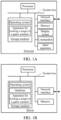
- FIG. 1A is a schematic diagram of an internal structure of a terminal according to an embodiment.
- the terminal includes a processor, a storage medium, a memory, a network interface, a sound collecting apparatus, a display screen, a loudspeaker, and an input apparatus that are connected by using a system bus.
- An operating system is stored in the storage medium of the terminal, and an apparatus for locking a target in a game application is further stored in the storage medium, where the apparatus for locking a target in a game application is configured to implement a method for locking a target in a game application.
- the processor is used for providing computational and control capabilities to support operation of the entire terminal.
- the memory in the terminal is used for providing an environment for functioning of the apparatus for locking a target in a game application in the storage medium
- the network interface is used for network communication with a server, for example, uploading data of a virtual character to the server and receiving related data of the virtual character that is returned by the server.
- the display screen of the terminal may be a liquid crystal screen, an electronic ink display screen, or the like.
- the input apparatus may be a touch layer covered on the display screen, or may be buttons, a trackball, or a touchpad disposed on a housing of the terminal, or may be an external keyboard, touchpad, or mouse.
- the terminal may be a mobile phone, a tablet computer, or a personal digital assistant.
- FIG. 1A is merely a block diagram of a structure of parts related to the solutions in the present application, and does not form a limitation on a terminal to which the solutions in the present application are applied.
- a specific terminal may include more or less components than those shown in the figure, or combine some components, or have a different component arrangement.
- FIG. 1B is a schematic diagram of an internal structure of a server according to an embodiment.
- the server includes a processor, a storage medium, a memory, and a network interface that are connected by using a system bus.
- An operating system, a database, and an apparatus for locking a target in a game application are stored in the storage medium of the server, where the database stores game application data and virtual character related data, and the apparatus for locking a target in a game application is configured to implement a method for locking a target in a game application that is applicable to the server.
- the processor of the server is used for providing computational and control capabilities to support operation of the entire server.
- the memory of the server is used for providing an environment for functioning of the apparatus for locking a target in a game application in the storage medium.
- the network interface of the server is used for communication with an external terminal through a network connection, for example, receiving data of a virtual character that is uploaded by the terminal and sending data of other virtual characters to the terminal.
- the server may be implemented by using an independent server or a server cluster included of multiple servers. It may be understood by a person skilled in the art that, the structure shown in FIG. 1B is merely a block diagram of a structure of parts related to the solutions in the present application, and does not form a limitation on a server to which the solutions in the present application are applied. A specific server may include more or less components than those shown in the figure, or combine some components, or have a different component arrangement.
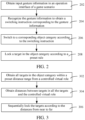
- FIG. 2 is a flowchart of a method for locking a target in a game application according to an embodiment.
- the method for locking a target in a game application in FIG. 2 is performed on a terminal.
- the method for locking a target in a game application includes the following steps:
- Step 202 Obtain input gesture information in an operation interface of a game application.
- the input gesture information is obtained in the operation interface of the game application by using an input device such as a touch screen, or the input gesture information is collected by using a collecting apparatus such as a camera.
- the input gesture information may be some preset gestures. For example, sliding up on the touch screen is corresponding to a switching instruction, and sliding down is corresponding to another switching instruction.
- a gesture recognition database needs to be built in advance, and correspondences between gesture information and instructions need to be established in the gesture recognition database for subsequent recognition.
- the gesture recognition database may be built in advance, and predefined gesture information and corresponding instructions are stored in the gesture recognition database, and then the database is periodically updated and improved.
- Step 204 Recognize the gesture information to obtain a switching instruction corresponding to the gesture information.
- the gesture information is recognized, and the recognized gesture information and gesture information in the gesture recognition database are compared, and after same gesture information is found, a corresponding switching instruction is found according to a correspondence between the gesture information and the instruction.
- Step 206 Switch to a corresponding object category according to the switching instruction.
- an object is a virtual character in the game application.
- virtual characters may include a minion, a beast, a hero, a boss, and others. Each type of virtual character may be classified into different levels. For example, a minion may be classified as a footman or an archer. Virtual characters may be classified according to different levels. Beasts may be classified into six levels: level 1 to level 6. In some game applications, virtual characters may include virtual figures and the like.
- Objects in the game application are classified in advance. For example, the objects are classified into two classes, where one class is minions and beasts, and the other class is heroes and bosses. The objects are then classified according to different levels. For example, the heroes are classified into 50 levels: level 1 to level 50. The bosses are classified into 10 levels to 20 levels.
- Different switching instructions are corresponding to different object categories. Correspondences between the switching instructions and the object categories are established in advance. After a switching instruction is obtained through recognition, an object category corresponding to the switching instruction obtained through recognition is obtained according to a correspondence between the switching instruction and the object category. For example, gesture information is sliding up, and a switching instruction obtained through recognition is switching to a hero/boss, and a hero/boss category is switched to according to the switching instruction.
- Step 208 Lock a target in the object category according to a preset rule.
- the preset rule is a condition that is set in advance according to an actual need.
- the preset rule may be locking targets according to distances from near to far, locking targets according to attribute values of the targets from small to large, or the like.
- the attribute values of the targets may be blood, and the targets are locked according to blood from less to more.
- the target in the object category means a virtual character in the object category.
- data generated by a target in a locked object category may also be uploaded to a server to realize data synchronization.
- gesture information is obtained, a switching instruction corresponding to the gesture information is obtained through recognition, a corresponding object category is switched to according to the switching instruction, and then a target in the object category is locked according to a preset rule.
- a switching instruction corresponding to the gesture information is obtained through recognition, a corresponding object category is switched to according to the switching instruction, and then a target in the object category is locked according to a preset rule.
- FIG. 3 is a specific flowchart of locking a target in an object category according to a preset rule according to an embodiment.
- the step of locking a target in the object category according to a preset rule includes: Step 302: Obtain all targets in the object category within a preset distance range from a controlled virtual character.
- the object category is hero/boss, and all heroes and bosses within the preset distance range are obtained.
- Step 304 Obtain distances between targets in all the targets and the controlled virtual character.
- distances between the targets and the controlled virtual character are obtained.
- Step 306 Sequentially lock the targets according to the distances from near to far.
- the targets may be sorted according to the distances from near to far or from far to near, and then the targets may be sequentially locked according to their respective distances from near to far. For targets at a same distance, one of the targets at the same distance is randomly locked.
- a target that has been locked is marked by using a first indicator
- a target that has not been locked is marked by using a second indicator.
- the first indicator and the second indicator may be set according to a need.
- the first indicator may be 1 and the second indicator may be 0, or the first indicator is 0 and the second indicator is 1, or the first indicator is % and the second indicator is *.
- the targets are sequentially locked according to their respective distances from near to far, without the need of manual control and operation of a user, bringing convenient operations.
- FIG. 4 is a specific flowchart of locking a target in an object category according to a preset rule according to another embodiment.
- the step of locking a target in the object category according to a preset rule includes: Step 402: Obtain all targets in the object category within a preset distance range from a controlled virtual character.
- the object category is hero/boss, and all heroes and bosses within the preset distance range are obtained.
- the preset distance range means a maximum distance range within which the controlled virtual character can perform information interaction.
- Step 404 Obtain distances between targets in all the targets and the controlled virtual character.
- distances between the targets and the controlled virtual character are obtained.
- Step 406 Select and lock a target that is closest to the controlled virtual character, and add the locked target to a locking array.
- the targets may be sorted according to their respective distances from near to far or from far to near, and then a target that is closest to the controlled virtual character is selected and locked, and the locked target is added to the locking array.
- a target that has been locked is marked by using a first indicator, and a target that has not been locked is marked by using a second indicator.
- the first indicator and the second indicator may be set according to a need.
- the first indicator may be 1 and the second indicator may be 0, or the first indicator is 0 and the second indicator is 1, or the first indicator is % and the second indicator is *.
- a target that has been locked and a target that has not been locked are differentiated by using the first indicator and the second indicator, bringing convenient operations and easy identification.
- Step 408 Obtain distances between targets within the preset distance range that have not been locked and the controlled virtual character, select and lock a target that is closest to the controlled virtual character in the targets that have not been locked, and add the locked target to the locking array, until all the targets within the preset distance range are locked, and reset the locked targets.
- a locked target is added to the locking array, distances between targets within the preset distance range that have not been locked and the controlled virtual character are calculated, and then a target that is closest to the controlled virtual character in the targets that have not been locked is selected and locked.
- FIG. 5 is a flowchart of changing of locked targets in an array.
- the first indicator 1 indicates that a target has been locked
- the second indicator 0 indicates that a target has not been locked.
- targets marked with 0 are obtained and placed before targets marked with 1, and the targets marked with 0 are sorted according to distances from the virtual character from near to far, by which two targets marked with 0 and three targets marked with 1, that is, [0, 0, 1, 1, 1] , are obtained, and the first target marked with 0 is closest to the virtual character, and the second target marked with 0 is further from the virtual character.
- the indicator 0 of the virtual character is modified as 1, and the target is placed at the back of the array, thereby obtaining one target marked with 0 and four targets marked with 1, that is, [0, 1, 1, 1, 1] .
- the single target that has not been locked is locked, obtaining five targets marked with 1, that is, [1, 1, 1, 1, 1] .
- the targets are reset, and the first indicators 1 of all the targets are modified as the second indicator 0, thereby obtaining five targets marked with 0, that is, [0, 0, 0, 0, 0 ] , that are to be locked again.
- the foregoing method for locking a target in a game application further includes: when a preset condition is satisfied, switching from locking a current target to locking a next target.
- the preset condition includes any one of the following:
- gesture information input by a user is obtained, the gesture information is recognized to obtain a switching instruction, and a next target is locked according to the switching instruction.
- the step of obtaining input gesture information in an operation interface of a game application includes: obtaining, in the operation interface of the game application, gesture information that is formed by a sliding operation on a touch screen.
- gesture information that is formed by a sliding operation on the touch screen is corresponding to a switching instruction.
- first gesture information is formed by a sliding operation in a first direction on the touch screen
- the first gesture information is recognized to obtain a corresponding first switching instruction
- a corresponding first object category is switched to according to the first switching instruction.
- Second gesture information is formed by a sliding operation in a second direction on the touch screen, the second gesture information is recognized to obtain a corresponding second switching instruction, and a corresponding second object category is switched to according to the second switching instruction.
- correspondences between gesture information formed by multiple sliding operations and switching instructions may further be set, and each switching instruction is corresponding to an object category.
- the first gesture information may be sliding up
- the second gesture information may be sliding down.
- the foregoing method for locking a target in a game application further includes: after the switching to a corresponding object category according to the switching instruction, obtaining, in the operation interface of the game application, horizontal gesture information that is formed by a sliding operation on the touch screen; recognizing the horizontal gesture information to obtain a screening instruction corresponding to the horizontal gesture information; screening out corresponding level targets from the corresponding object category according to the screening instruction; and locking a target in the level targets according to a preset rule.
- the horizontal gesture information means gesture information that is generated after the corresponding object category is switched to, and is different from gesture information for switching an object category.
- the horizontal gesture information may be sliding a circle on the touch screen indicating level 1 or level 1 to level 5. That is, the horizontal gesture information may be corresponding to a level or be corresponding to a level range. This may be set according to a need.
- the horizontal gesture information may also be digital gesture information formed by sliding on the touch screen that indicates a corresponding level. For example, when “1" is formed, it indicates level 1, and when "10" is formed, it indicates level 10.
- Corresponding horizontal gesture information is recognized, a screening instruction corresponding to the horizontal gesture information is obtained, corresponding level targets are screened out, and then a target in the level targets is locked according to a preset rule.
- the preset rule may be that shown in FIG. 3 or FIG. 4 . Targets are screened according to different levels, and therefore a locking operation is finer and more precise.
- the step of locking a target in the level targets according to a preset rule includes:
- the step of locking a target in the level targets according to a preset rule includes:
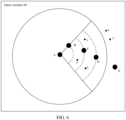
- a process of locking targets that is applied to a controlled hero character A in a game is described below with reference to FIG. 6 .
- a user controls a hero character A.
- a maximum distance range that is, a preset distance range
- hero characters B, C, and D B, C, and D are opponents of A
- minion characters a, b, and c beyond the maximum distance range, there exist a hero character E and minion characters e and f.
- a sliding up gesture that is input by the user in an operation interface of the game application is obtained, the sliding up gesture is recognized and a switching instruction for switching to a hero character is obtained, and the hero characters B, C, and D are switched to according to the switching instruction.
- a process of locking the multiple hero characters B, C, and D by the controlled hero character A includes:
- B, C, and D are sequentially locked according to an order of B-C-D.
- a hero character that has been locked is marked with 1
- a hero character that has not been locked is marked with 0.
- B, C, and D are all marked with 1
- indicators are reset to 0 to enter a locking cycle again.
- an indicator is reset to 0.
- a sliding down gesture that is input by the user in the operation interface of the game application is obtained, the sliding down gesture is recognized and a switching instruction for switching to a minion character is obtained, and the multiple minion characters a, b, and c are switched to according to the switching instruction.
- a process of locking the multiple minion characters a, b, and c by the controlled hero character A is the same as the process of locking the multiple hero characters B, C, and D, and details are not described herein again.
- a game application to which the foregoing method for locking a target in a game application is applied may be a MOBA (Multiplayer Online Battle Arena) game application.
- MOBA Multiplayer Online Battle Arena
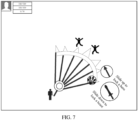
- corresponding skills, and effects, halos, and operations that assist skill release with a skill indicator are provided for a virtual character. As shown in FIG. 7 , it may be indicated on the skill indicator that sliding up to switch to a hero and sliding down to switch to a minion.
- FIG. 8 is a block diagram of an internal structure of an apparatus for locking a target in a game application according to an embodiment.
- the apparatus for locking a target in a game application includes a gesture obtaining module 810, a recognition module 820, a switching module 830, and a locking module 840.
- the gesture obtaining module 810 is configured to obtain input gesture information in an operation interface of a game application. Specifically, the input gesture information is obtained in the operation interface of the game application by using an input device such as a touch screen, or the input gesture information is collected by using a collecting apparatus such as a camera.
- the input gesture information may be some preset gestures. For example, sliding up on the touch screen is corresponding to a switching instruction, and sliding down is corresponding to another switching instruction.
- a gesture recognition database needs to be built in advance, and correspondences between gesture information and instructions need to be established in the gesture recognition database for subsequent recognition.
- the gesture recognition database may be built in advance, and predefined gesture information and corresponding instructions are stored in the gesture recognition database, and then the database is periodically updated and improved.
- the recognition module 820 is configured to recognize the gesture information to obtain a switching instruction corresponding to the gesture information.
- the gesture information is recognized, and the recognized gesture information and gesture information in the gesture recognition database are compared, and after same gesture information is found, a corresponding switching instruction is found according to a correspondence between the gesture information and the instruction.
- the switching module 830 is configured to switch to a corresponding object category according to the switching instruction.
- an object is a virtual character in the game application.
- virtual characters may include a minion, a beast, a hero, a boss, and others. Each type of virtual character may be classified into different levels. For example, a minion may be classified as a footman or an archer. Virtual characters may be classified according to different levels. Beasts may be classified into six levels: level 1 to level 6. In some game applications, virtual characters may include virtual figures and the like.
- Objects in the game application are classified in advance. For example, the objects are classified into two classes, where one class is minions and beasts, and the other class is heroes and bosses. The objects are then classified according to different levels. For example, the heroes are classified into 50 levels: level 1 to level 50.
- the bosses are classified into 10 levels to 20 levels.
- Different switching instructions are corresponding to different object categories. Correspondences between the switching instructions and the object categories are established in advance. After a switching instruction is obtained through recognition, an object category corresponding to the switching instruction obtained through recognition is obtained according to a correspondence between the switching instruction and the object category. For example, gesture information is sliding up, and a switching instruction obtained through recognition is switching to a hero/boss, and a hero/boss category is switched to according to the switching instruction.
- the locking module 840 is configured to lock a target in the object category according to a preset rule.
- the preset rule is a condition that is set in advance according to an actual need.
- the preset rule may be locking targets according to distances from near to far, locking targets according to attribute values of the targets from small to large, or the like.
- the attribute values of the targets may be blood, and the targets are locked according to blood from less to more.
- the target in the object category means a virtual character in the object category.
- gesture information is obtained, a switching instruction corresponding to the gesture information is obtained through recognition, a corresponding object category is switched to according to the switching instruction, and then a target in the object category is locked according to a preset rule.
- a switching instruction corresponding to the gesture information is obtained through recognition, a corresponding object category is switched to according to the switching instruction, and then a target in the object category is locked according to a preset rule.
- FIG. 9 is a block diagram of an internal structure of a locking module according to an embodiment.
- the locking module 840 includes an obtaining unit 910, a distance obtaining unit 920, and a locking unit 930.
- the obtaining unit 910 is configured to obtain all targets in the object category within a preset distance range from a controlled virtual character.
- the object category is hero/boss, and all heroes and bosses within the preset distance range are obtained.
- the distance obtaining unit 920 is configured to obtain distances between targets in all the targets and the controlled virtual character.
- distances between the targets and the controlled virtual character are calculated.
- the locking unit 930 is configured to sequentially lock the targets according to their respective distances from near to far.
- the targets may be sorted according to their respective distances from near to far or from far to near, and then the targets may be sequentially locked according to their respective distances from near to far. For targets at a same distance, one of the targets at the same distance is randomly locked.
- FIG. 10 is a block diagram of an internal structure of a locking module according to another embodiment.
- the locking module 840 includes a target obtaining unit 1010, a distance measurement unit 1020, and a selection unit 1030.
- the target obtaining unit 1010 is configured to obtain all targets in the object category within a preset distance range from a controlled virtual character.
- the object category is hero/boss, and all heroes and bosses within the preset distance range are obtained.
- the preset distance range means a maximum distance range within which the controlled virtual character can perform information interaction.
- the distance measurement unit 1020 is configured to obtain distances between targets in all the targets and the controlled virtual character.
- distances between the targets and the controlled virtual character are calculated.
- the selection unit 1030 is configured to select and lock a target that is closest to the controlled virtual character, and add the locked target to a locking array.
- the targets may be sorted according to their respective distances from near to far or from far to near, and then a target that is closest to the controlled virtual character is selected and locked, and the locked target is added to the locking array.
- the distance measurement unit 1020 is configured to obtain distances between targets within the preset distance range that have not been locked and the controlled virtual character.
- the selection unit 1030 is further configured to: select and lock a target that is closest to the controlled virtual character in the targets that have not been locked, and add the locked target to the locking array, until all the targets within the preset distance range are locked, and reset the locked targets.
- a locked target is added to the locking array, distances between targets within the preset distance range that have not been locked and the controlled virtual character are calculated, and then a target that is closest to the controlled virtual character in the targets that have not been locked is selected and locked.
- the foregoing apparatus for locking a target in a game application is further configured to perform the following operation: when a preset condition is satisfied, switching from locking a current target to locking a next target.
- the preset condition includes any one of the following:
- the preset quantity of interaction times may be set according to a need, for example, to 3 times or 5 times.
- the preset interaction time may be set according to a need, for example, to 2 seconds or 5 seconds.
- that the currently locked disappears may be that the currently locked target dies, or the like.
- gesture information input by a user is obtained, the gesture information is recognized to obtain a switching instruction, and a next target is locked according to the switching instruction.
- the gesture obtaining module 810 is further configured to obtain, in the operation interface of the game application, gesture information that is formed by a sliding operation on a touch screen.
- gesture information that is formed by a sliding operation on the touch screen is corresponding to a switching instruction.
- first gesture information is formed by a sliding operation in a first direction on the touch screen
- the first gesture information is recognized to obtain a corresponding first switching instruction
- a corresponding first object category is switched to according to the first switching instruction.
- Second gesture information is formed by a sliding operation in a second direction on the touch screen, the second gesture information is recognized to obtain a corresponding second switching instruction, and a corresponding second object category is switched to according to the second switching instruction.
- correspondences between gesture information formed by multiple sliding operations and switching instructions may further be set, and each switching instruction is corresponding to an object category.
- the first gesture information may be sliding up
- the second gesture information may be sliding down.
- FIG. 11 is a block diagram of a structure of an apparatus for locking a target in a game application according to another embodiment.
- the apparatus for locking a target in a game application further includes a screening module 850.
- the gesture obtaining module 810 is further configured to: after the switching to a corresponding object category according to the switching instruction, obtain, in the operation interface of the game application, horizontal gesture information that is formed by a sliding operation on the touch screen.
- the recognition module 820 is further configured to recognize the horizontal gesture information to obtain a screening instruction corresponding to the horizontal gesture information.
- the locking module 840 is further configured to lock a target in the level targets according to a preset rule.
- Corresponding horizontal gesture information is recognized, a screening instruction corresponding to the horizontal gesture information is obtained, corresponding level targets are screened out, and then a target in the level targets is locked according to a preset rule.
- the preset rule may be that shown in FIG. 9 or FIG. 10 .
- FIG. 12 is a block diagram of an internal structure of an apparatus for locking a target in a game application according to another embodiment.
- the apparatus for locking a target in a game application further includes a marking module 860.
- the marking module 860 is configured to: mark, by using a first indicator, a target that has been locked, and mark, by using a second indicator, a target that has not been locked.
- the first indicator and the second indicator may be set according to a need.
- the first indicator may be 1 and the second indicator may be 0, or the first indicator is 0 and the second indicator is 1, or the first indicator is % and the second indicator is *.
- a target that has been locked and a target that has not been locked are differentiated by using the first indicator and the second indicator, bringing convenient operations and easy identification.
- the foregoing apparatus for locking a target in a game application may include any possible combination of the gesture obtaining module 810, the recognition module 820, the switching module 830, the locking module 840, the screening module 850, and the marking module 860.
- the program may be stored in a non-volatile computer readable storage medium.
- the storage medium may be a magnetic disk, an optical disc, a read-only memory (ROM), or the like.
Landscapes
- Engineering & Computer Science (AREA)
- Multimedia (AREA)
- Human Computer Interaction (AREA)
- General Engineering & Computer Science (AREA)
- Theoretical Computer Science (AREA)
- Physics & Mathematics (AREA)
- General Physics & Mathematics (AREA)
- User Interface Of Digital Computer (AREA)
Applications Claiming Priority (2)
| Application Number | Priority Date | Filing Date | Title |
|---|---|---|---|
| CN201510334941.3A CN105302434B (zh) | 2015-06-16 | 2015-06-16 | 游戏场景中锁定目标的方法和装置 |
| PCT/CN2016/074329 WO2016202005A1 (zh) | 2015-06-16 | 2016-02-23 | 游戏场景中锁定目标的方法和终端 |
Publications (4)
| Publication Number | Publication Date |
|---|---|
| EP3312708A4 EP3312708A4 (en) | 2018-04-25 |
| EP3312708A1 EP3312708A1 (en) | 2018-04-25 |
| EP3312708C0 EP3312708C0 (en) | 2024-04-03 |
| EP3312708B1 true EP3312708B1 (en) | 2024-04-03 |
Family
ID=55199752
Family Applications (1)
| Application Number | Title | Priority Date | Filing Date |
|---|---|---|---|
| EP16810746.4A Active EP3312708B1 (en) | 2015-06-16 | 2016-02-23 | Method and terminal for locking target in game scene |
Country Status (9)
| Country | Link |
|---|---|
| US (2) | US10391390B2 (enExample) |
| EP (1) | EP3312708B1 (enExample) |
| JP (1) | JP6807877B2 (enExample) |
| KR (1) | KR102034947B1 (enExample) |
| CN (2) | CN105302434B (enExample) |
| AU (1) | AU2016278358B2 (enExample) |
| CA (1) | CA2988821C (enExample) |
| MY (1) | MY189625A (enExample) |
| WO (1) | WO2016202005A1 (enExample) |
Families Citing this family (49)
| Publication number | Priority date | Publication date | Assignee | Title |
|---|---|---|---|---|
| CN105302434B (zh) | 2015-06-16 | 2019-03-26 | 深圳市腾讯计算机系统有限公司 | 游戏场景中锁定目标的方法和装置 |
| JP6515053B2 (ja) * | 2016-03-16 | 2019-05-15 | 株式会社バンダイナムコエンターテインメント | プログラム及びゲームシステム |
| CN106201169A (zh) * | 2016-06-23 | 2016-12-07 | 广东小天才科技有限公司 | 一种人机交互学习方法及装置、终端设备 |
| CN106422329A (zh) * | 2016-11-01 | 2017-02-22 | 网易(杭州)网络有限公司 | 游戏操控方法和装置 |
| CN107748637A (zh) * | 2017-06-26 | 2018-03-02 | 陶畅 | 一种对自变形图像进行交互式控制的游戏方法 |
| CN107469344A (zh) * | 2017-08-04 | 2017-12-15 | 上海风格信息技术股份有限公司 | 一种实现多人在线游戏移动终端点触操控的方法 |
| CN107590493B (zh) * | 2017-09-08 | 2021-08-24 | 北京奇虎科技有限公司 | 基于游戏场景的目标物识别方法及装置 |
| CN107754309B (zh) * | 2017-09-30 | 2019-03-08 | 网易(杭州)网络有限公司 | 信息处理方法、装置、电子设备及存储介质 |
| CN107803028B (zh) * | 2017-09-30 | 2019-03-08 | 网易(杭州)网络有限公司 | 信息处理方法、装置、电子设备及存储介质 |
| CN107967096A (zh) * | 2017-11-24 | 2018-04-27 | 网易(杭州)网络有限公司 | 目标对象确定方法、装置、电子设备及存储介质 |
| CN108744529A (zh) * | 2018-05-24 | 2018-11-06 | 网易(杭州)网络有限公司 | 游戏中的点对点通信方法和设备 |
| CN108717372B (zh) * | 2018-05-24 | 2022-08-09 | 网易(杭州)网络有限公司 | 一种游戏场景中虚拟对象控制方法和装置 |
| CN109117076B (zh) * | 2018-08-24 | 2020-10-16 | 广州要玩娱乐网络技术股份有限公司 | 游戏单位选中方法及存储介质、计算机设备 |
| CN109151320B (zh) * | 2018-09-29 | 2022-04-22 | 联想(北京)有限公司 | 一种目标对象选取方法及装置 |
| CN110420462A (zh) * | 2018-10-25 | 2019-11-08 | 网易(杭州)网络有限公司 | 游戏中虚拟对象锁定的方法及装置、电子设备、存储介质 |
| CN109513209B (zh) * | 2018-11-22 | 2020-04-17 | 网易(杭州)网络有限公司 | 虚拟对象处理方法及装置、电子设备以及存储介质 |
| CN109587540B (zh) * | 2018-12-07 | 2022-06-17 | 武汉瓯越网视有限公司 | 一种对象的控制方法、装置、终端及存储介质 |
| CN109876438B (zh) | 2019-02-20 | 2021-06-18 | 腾讯科技(深圳)有限公司 | 用户界面显示方法、装置、设备及存储介质 |
| JP6588177B1 (ja) * | 2019-03-07 | 2019-10-09 | 株式会社Cygames | 情報処理プログラム、情報処理方法、情報処理装置、及び情報処理システム |
| CN110420459B (zh) * | 2019-07-29 | 2023-06-13 | 网易(杭州)网络有限公司 | 虚拟单位组队控制方法、装置、电子设备及存储介质 |
| CN110548286A (zh) * | 2019-09-29 | 2019-12-10 | 网易(杭州)网络有限公司 | 游戏中虚拟对象的锁定方法、装置及电子设备 |
| CN113117335B (zh) * | 2019-12-30 | 2023-04-07 | 深圳云天励飞技术有限公司 | 游戏角色控制方法及相关装置 |
| CN111481932B (zh) | 2020-04-15 | 2022-05-17 | 腾讯科技(深圳)有限公司 | 虚拟对象的控制方法、装置、设备和存储介质 |
| CN111538410A (zh) * | 2020-04-16 | 2020-08-14 | 上海唯二网络科技有限公司 | 一种vr场景中确定目标算法的方法及装置、计算设备 |
| CN111589136B (zh) | 2020-04-29 | 2021-10-29 | 腾讯科技(深圳)有限公司 | 虚拟对象控制方法、装置、计算机设备及存储介质 |
| CN111672114B (zh) | 2020-06-05 | 2022-03-18 | 腾讯科技(深圳)有限公司 | 目标虚拟对象确定方法、装置、终端及存储介质 |
| CN111752434A (zh) * | 2020-06-23 | 2020-10-09 | 万鹤龄 | 一种游戏视野变换方法 |
| CN111857922B (zh) * | 2020-07-17 | 2024-10-18 | 北京嘀嘀无限科技发展有限公司 | 一种虚拟元素的控制方法及装置 |
| JP7270008B2 (ja) * | 2020-09-08 | 2023-05-09 | カムツス コーポレーション | ゲーム提供方法、コンピュータプログラム、コンピュータ読取可能な記録媒体、およびコンピュータ装置 |
| CN112245909B (zh) * | 2020-11-11 | 2024-03-15 | 网易(杭州)网络有限公司 | 一种游戏内对象锁定的方法及装置 |
| CN112473139B (zh) * | 2020-11-27 | 2025-02-25 | 完美世界(重庆)互动科技有限公司 | 对象形态的切换方法及装置、存储介质、电子装置 |
| CN112506465B (zh) * | 2020-12-01 | 2023-03-21 | 建信金融科技有限责任公司 | 全景漫游中场景切换的方法和装置 |
| CN112637655A (zh) * | 2021-01-08 | 2021-04-09 | 深圳市掌视互娱网络有限公司 | 智能电视的控制方法、系统及移动终端 |
| CN112999662A (zh) * | 2021-02-26 | 2021-06-22 | 上海硬通网络科技有限公司 | 游戏角色切换方法、装置及电子设备 |
| CN113190106B (zh) | 2021-03-16 | 2022-11-22 | 青岛小鸟看看科技有限公司 | 手势识别方法、装置及电子设备 |
| JP7355948B2 (ja) * | 2021-05-13 | 2023-10-03 | テンセント・テクノロジー・(シェンジェン)・カンパニー・リミテッド | 仮想オブジェクトの制御方法及び装置並びにコンピュータ装置及びプログラム |
| CN113304478B (zh) * | 2021-06-22 | 2022-07-29 | 腾讯科技(深圳)有限公司 | 技能指示器的控制方法和装置、存储介质及电子设备 |
| CN113499585B (zh) * | 2021-08-09 | 2024-07-09 | 网易(杭州)网络有限公司 | 游戏中交互方法、装置、电子设备和存储介质 |
| CN113663326B (zh) * | 2021-08-30 | 2024-04-26 | 网易(杭州)网络有限公司 | 一种游戏技能的瞄准方法和装置 |
| CN113769379B (zh) * | 2021-09-27 | 2023-07-14 | 腾讯科技(深圳)有限公司 | 虚拟对象的锁定方法、装置、设备、存储介质及程序产品 |
| CN114130023A (zh) * | 2021-12-10 | 2022-03-04 | 腾讯科技(深圳)有限公司 | 虚拟对象的切换方法、装置、设备、介质及程序产品 |
| CN114332585B (zh) * | 2021-12-22 | 2025-10-21 | 珠海格力电器股份有限公司 | 目标的状态切换方法、装置、设备及存储介质 |
| CN114425161B (zh) * | 2022-01-25 | 2025-07-25 | 网易(杭州)网络有限公司 | 目标锁定方法、装置、电子设备及存储介质 |
| CN114832388B (zh) * | 2022-03-17 | 2025-06-13 | 网易(杭州)网络有限公司 | 一种游戏中的信息处理方法、装置、电子设备及存储介质 |
| CN114879885B (zh) * | 2022-04-18 | 2024-03-22 | 上海星阑信息科技有限公司 | 虚拟对象分组控制方法、装置、设备及存储介质 |
| CN115206150B (zh) * | 2022-06-06 | 2024-04-26 | 北京新唐思创教育科技有限公司 | 基于情节体验的教学方法、装置、设备及存储介质 |
| CN115382207B (zh) * | 2022-07-22 | 2025-01-24 | 网易(杭州)网络有限公司 | 指示标识的显示方法、装置和电子设备 |
| CN116597119B (zh) * | 2022-12-30 | 2025-06-24 | 北京津发科技股份有限公司 | 可穿戴扩展现实设备的人机交互采集方法、装置和系统 |
| CN119633369B (zh) * | 2024-11-27 | 2026-02-10 | 网易(杭州)网络有限公司 | 一种游戏控制方法、装置、计算机设备及存储介质 |
Citations (1)
| Publication number | Priority date | Publication date | Assignee | Title |
|---|---|---|---|---|
| US20150157940A1 (en) * | 2013-12-11 | 2015-06-11 | Activision Publishing, Inc. | System and method for playing video games on touchscreen-based devices |
Family Cites Families (21)
| Publication number | Priority date | Publication date | Assignee | Title |
|---|---|---|---|---|
| JP3505705B2 (ja) * | 1999-11-30 | 2004-03-15 | 株式会社光栄 | 記録媒体及びゲーム装置 |
| JP4262217B2 (ja) * | 2005-04-26 | 2009-05-13 | 任天堂株式会社 | ゲームプログラム及びゲーム装置 |
| JP5019897B2 (ja) * | 2007-02-07 | 2012-09-05 | 任天堂株式会社 | ゲームプログラムおよびゲーム装置 |
| US8099332B2 (en) | 2008-06-06 | 2012-01-17 | Apple Inc. | User interface for application management for a mobile device |
| JP5349853B2 (ja) * | 2008-06-27 | 2013-11-20 | 株式会社タイトー | ロックオン条件設定プログラム及びゲーム機 |
| JP2010017395A (ja) * | 2008-07-11 | 2010-01-28 | Namco Bandai Games Inc | プログラム、情報記憶媒体及びゲーム装置 |
| JP5481092B2 (ja) * | 2009-04-22 | 2014-04-23 | 株式会社バンダイナムコゲームス | プログラム、情報記憶媒体、及びゲーム装置 |
| US20100302138A1 (en) * | 2009-05-29 | 2010-12-02 | Microsoft Corporation | Methods and systems for defining or modifying a visual representation |
| WO2013021385A2 (en) * | 2011-08-11 | 2013-02-14 | Eyesight Mobile Technologies Ltd. | Gesture based interface system and method |
| AU2013205613B2 (en) * | 2012-05-04 | 2017-12-21 | Samsung Electronics Co., Ltd. | Terminal and method for controlling the same based on spatial interaction |
| CN203075637U (zh) * | 2012-12-04 | 2013-07-24 | 博睿祥科技(天津)有限公司 | 一种搭载有快速切换目标及锁定目标功能的掌上游戏终端 |
| KR102090269B1 (ko) * | 2012-12-14 | 2020-03-17 | 삼성전자주식회사 | 정보 검색 방법, 그와 같은 기능을 갖는 디바이스 및 기록 매체 |
| US20140258942A1 (en) * | 2013-03-05 | 2014-09-11 | Intel Corporation | Interaction of multiple perceptual sensing inputs |
| JP2014087587A (ja) * | 2013-05-09 | 2014-05-15 | Gree Inc | フライトゲームシステム、同システムにおける方法、同方法を実行するためのプログラム及び同プログラムを記憶する情報記録媒体 |
| JP2014236931A (ja) * | 2013-06-10 | 2014-12-18 | 株式会社セガ | ゲームプログラム及びゲーム装置 |
| US20150231509A1 (en) * | 2014-02-17 | 2015-08-20 | Xaviant, LLC (a GA Limited Liability Company) | System, Method, and Apparatus for Smart Targeting |
| CN104436657B (zh) * | 2014-12-22 | 2018-11-13 | 青岛烈焰畅游网络技术有限公司 | 游戏控制方法、装置以及电子设备 |
| CN104635925A (zh) * | 2015-01-05 | 2015-05-20 | 徐杨 | 一种滑动手势锁定目标的方法及装置 |
| CN104699399A (zh) * | 2015-02-16 | 2015-06-10 | 上海逗屋网络科技有限公司 | 一种用于在触摸终端上确定目标操作对象的方法与设备 |
| JP6788327B2 (ja) * | 2015-02-27 | 2020-11-25 | 株式会社ソニー・インタラクティブエンタテインメント | 表示制御プログラム、表示制御装置、及び表示制御方法 |
| CN105302434B (zh) * | 2015-06-16 | 2019-03-26 | 深圳市腾讯计算机系统有限公司 | 游戏场景中锁定目标的方法和装置 |
-
2015
- 2015-06-16 CN CN201510334941.3A patent/CN105302434B/zh active Active
- 2015-06-16 CN CN201810009045.3A patent/CN107967116B/zh active Active
-
2016
- 2016-02-23 CA CA2988821A patent/CA2988821C/en active Active
- 2016-02-23 MY MYPI2017703906A patent/MY189625A/en unknown
- 2016-02-23 KR KR1020177037076A patent/KR102034947B1/ko active Active
- 2016-02-23 JP JP2017563222A patent/JP6807877B2/ja active Active
- 2016-02-23 AU AU2016278358A patent/AU2016278358B2/en active Active
- 2016-02-23 WO PCT/CN2016/074329 patent/WO2016202005A1/zh not_active Ceased
- 2016-02-23 EP EP16810746.4A patent/EP3312708B1/en active Active
-
2017
- 2017-09-13 US US15/703,623 patent/US10391390B2/en active Active
-
2019
- 2019-07-15 US US16/512,171 patent/US10814221B2/en active Active
Patent Citations (1)
| Publication number | Priority date | Publication date | Assignee | Title |
|---|---|---|---|---|
| US20150157940A1 (en) * | 2013-12-11 | 2015-06-11 | Activision Publishing, Inc. | System and method for playing video games on touchscreen-based devices |
Also Published As
| Publication number | Publication date |
|---|---|
| KR102034947B1 (ko) | 2019-10-21 |
| JP6807877B2 (ja) | 2021-01-06 |
| CA2988821A1 (en) | 2016-12-22 |
| CN105302434B (zh) | 2019-03-26 |
| US20190336853A1 (en) | 2019-11-07 |
| US10391390B2 (en) | 2019-08-27 |
| MY189625A (en) | 2022-02-22 |
| AU2016278358A1 (en) | 2017-11-02 |
| AU2016278358B2 (en) | 2019-10-24 |
| EP3312708C0 (en) | 2024-04-03 |
| EP3312708A4 (en) | 2018-04-25 |
| CN107967116B (zh) | 2019-07-19 |
| US10814221B2 (en) | 2020-10-27 |
| CA2988821C (en) | 2019-10-29 |
| US20180001189A1 (en) | 2018-01-04 |
| CN105302434A (zh) | 2016-02-03 |
| JP2018524060A (ja) | 2018-08-30 |
| EP3312708A1 (en) | 2018-04-25 |
| KR20180012790A (ko) | 2018-02-06 |
| WO2016202005A1 (zh) | 2016-12-22 |
| CN107967116A (zh) | 2018-04-27 |
Similar Documents
| Publication | Publication Date | Title |
|---|---|---|
| US10814221B2 (en) | Method for locking target in game scenario and terminal | |
| CN105335064B (zh) | 一种信息处理方法和终端 | |
| US20230274513A1 (en) | Content creation in augmented reality environment | |
| CN105159687B (zh) | 一种信息处理方法、终端及计算机存储介质 | |
| US20170291108A1 (en) | Method for controlling automatic attack of user character | |
| KR20220160665A (ko) | 증강 현실 항목 모음 | |
| EP3311894A1 (en) | Method for controlling interaction with virtual target, terminal, and storage medium | |
| WO2019218815A1 (zh) | 虚拟场景中的标记元素显示方法、装置、计算机设备及计算机可读存储介质 | |
| CN112891931A (zh) | 虚拟角色的选择方法、装置、设备及存储介质 | |
| CN110866940B (zh) | 虚拟画面的控制方法、装置、终端设备及存储介质 | |
| JP2013164696A (ja) | 画像処理装置、画像処理方法及びプログラム | |
| CN111913674A (zh) | 虚拟内容的显示方法、装置、系统、终端设备及存储介质 | |
| US11491406B2 (en) | Game drawer | |
| CN113941152A (zh) | 虚拟对象控制方法、装置、电子设备及存储介质 | |
| CN105160219B (zh) | 一种终端解锁方法及终端 | |
| CN112911052A (zh) | 信息分享方法和装置 | |
| US10057321B2 (en) | Image management apparatus and control method capable of automatically creating comment data relevant to an image | |
| JP6815359B2 (ja) | ゲームプログラム、方法、および情報処理装置 | |
| CN116159308B (zh) | 游戏交互方法、装置、计算机设备和计算机可读存储介质 | |
| CN121478253A (zh) | 编程积木的查找方法、装置、设备及存储介质 | |
| KR20260017480A (ko) | 제어 방법, 장치, 기기 및 컴퓨터 판독 가능한 저장 매체 | |
| KR20260064734A (ko) | 증강 및 가상 현실 객체들의 가상 조작 | |
| HK40088263A (zh) | 赛程显示方法、装置、设备及存储介质 | |
| HK40046041A (en) | Method, device, equipment and storage medium for selecting virtual role |
Legal Events
| Date | Code | Title | Description |
|---|---|---|---|
| STAA | Information on the status of an ep patent application or granted ep patent |
Free format text: STATUS: THE INTERNATIONAL PUBLICATION HAS BEEN MADE |
|
| PUAI | Public reference made under article 153(3) epc to a published international application that has entered the european phase |
Free format text: ORIGINAL CODE: 0009012 |
|
| STAA | Information on the status of an ep patent application or granted ep patent |
Free format text: STATUS: REQUEST FOR EXAMINATION WAS MADE |
|
| 17P | Request for examination filed |
Effective date: 20171204 |
|
| A4 | Supplementary search report drawn up and despatched |
Effective date: 20180226 |
|
| AK | Designated contracting states |
Kind code of ref document: A1 Designated state(s): AL AT BE BG CH CY CZ DE DK EE ES FI FR GB GR HR HU IE IS IT LI LT LU LV MC MK MT NL NO PL PT RO RS SE SI SK SM TR |
|
| AX | Request for extension of the european patent |
Extension state: BA ME |
|
| DAV | Request for validation of the european patent (deleted) | ||
| DAX | Request for extension of the european patent (deleted) | ||
| STAA | Information on the status of an ep patent application or granted ep patent |
Free format text: STATUS: EXAMINATION IS IN PROGRESS |
|
| 17Q | First examination report despatched |
Effective date: 20210325 |
|
| RAP3 | Party data changed (applicant data changed or rights of an application transferred) |
Owner name: TENCENT TECHNOLOGY (SHENZHEN) COMPANY LIMITED |
|
| GRAP | Despatch of communication of intention to grant a patent |
Free format text: ORIGINAL CODE: EPIDOSNIGR1 |
|
| STAA | Information on the status of an ep patent application or granted ep patent |
Free format text: STATUS: GRANT OF PATENT IS INTENDED |
|
| INTG | Intention to grant announced |
Effective date: 20231106 |
|
| GRAS | Grant fee paid |
Free format text: ORIGINAL CODE: EPIDOSNIGR3 |
|
| GRAA | (expected) grant |
Free format text: ORIGINAL CODE: 0009210 |
|
| STAA | Information on the status of an ep patent application or granted ep patent |
Free format text: STATUS: THE PATENT HAS BEEN GRANTED |
|
| AK | Designated contracting states |
Kind code of ref document: B1 Designated state(s): AL AT BE BG CH CY CZ DE DK EE ES FI FR GB GR HR HU IE IS IT LI LT LU LV MC MK MT NL NO PL PT RO RS SE SI SK SM TR |
|
| REG | Reference to a national code |
Ref country code: GB Ref legal event code: FG4D |
|
| REG | Reference to a national code |
Ref country code: CH Ref legal event code: EP |
|
| REG | Reference to a national code |
Ref country code: IE Ref legal event code: FG4D |
|
| REG | Reference to a national code |
Ref country code: DE Ref legal event code: R096 Ref document number: 602016086704 Country of ref document: DE |
|
| U01 | Request for unitary effect filed |
Effective date: 20240426 |
|
| U07 | Unitary effect registered |
Designated state(s): AT BE BG DE DK EE FI FR IT LT LU LV MT NL PT SE SI Effective date: 20240503 |
|
| PG25 | Lapsed in a contracting state [announced via postgrant information from national office to epo] |
Ref country code: IS Free format text: LAPSE BECAUSE OF FAILURE TO SUBMIT A TRANSLATION OF THE DESCRIPTION OR TO PAY THE FEE WITHIN THE PRESCRIBED TIME-LIMIT Effective date: 20240803 |
|
| PG25 | Lapsed in a contracting state [announced via postgrant information from national office to epo] |
Ref country code: HR Free format text: LAPSE BECAUSE OF FAILURE TO SUBMIT A TRANSLATION OF THE DESCRIPTION OR TO PAY THE FEE WITHIN THE PRESCRIBED TIME-LIMIT Effective date: 20240403 |
|
| PG25 | Lapsed in a contracting state [announced via postgrant information from national office to epo] |
Ref country code: GR Free format text: LAPSE BECAUSE OF FAILURE TO SUBMIT A TRANSLATION OF THE DESCRIPTION OR TO PAY THE FEE WITHIN THE PRESCRIBED TIME-LIMIT Effective date: 20240704 |
|
| PG25 | Lapsed in a contracting state [announced via postgrant information from national office to epo] |
Ref country code: ES Free format text: LAPSE BECAUSE OF FAILURE TO SUBMIT A TRANSLATION OF THE DESCRIPTION OR TO PAY THE FEE WITHIN THE PRESCRIBED TIME-LIMIT Effective date: 20240403 |
|
| PG25 | Lapsed in a contracting state [announced via postgrant information from national office to epo] |
Ref country code: CZ Free format text: LAPSE BECAUSE OF FAILURE TO SUBMIT A TRANSLATION OF THE DESCRIPTION OR TO PAY THE FEE WITHIN THE PRESCRIBED TIME-LIMIT Effective date: 20240403 |
|
| PG25 | Lapsed in a contracting state [announced via postgrant information from national office to epo] |
Ref country code: PL Free format text: LAPSE BECAUSE OF FAILURE TO SUBMIT A TRANSLATION OF THE DESCRIPTION OR TO PAY THE FEE WITHIN THE PRESCRIBED TIME-LIMIT Effective date: 20240403 |
|
| PG25 | Lapsed in a contracting state [announced via postgrant information from national office to epo] |
Ref country code: PL Free format text: LAPSE BECAUSE OF FAILURE TO SUBMIT A TRANSLATION OF THE DESCRIPTION OR TO PAY THE FEE WITHIN THE PRESCRIBED TIME-LIMIT Effective date: 20240403 Ref country code: NO Free format text: LAPSE BECAUSE OF FAILURE TO SUBMIT A TRANSLATION OF THE DESCRIPTION OR TO PAY THE FEE WITHIN THE PRESCRIBED TIME-LIMIT Effective date: 20240703 Ref country code: IS Free format text: LAPSE BECAUSE OF FAILURE TO SUBMIT A TRANSLATION OF THE DESCRIPTION OR TO PAY THE FEE WITHIN THE PRESCRIBED TIME-LIMIT Effective date: 20240803 Ref country code: HR Free format text: LAPSE BECAUSE OF FAILURE TO SUBMIT A TRANSLATION OF THE DESCRIPTION OR TO PAY THE FEE WITHIN THE PRESCRIBED TIME-LIMIT Effective date: 20240403 Ref country code: GR Free format text: LAPSE BECAUSE OF FAILURE TO SUBMIT A TRANSLATION OF THE DESCRIPTION OR TO PAY THE FEE WITHIN THE PRESCRIBED TIME-LIMIT Effective date: 20240704 Ref country code: ES Free format text: LAPSE BECAUSE OF FAILURE TO SUBMIT A TRANSLATION OF THE DESCRIPTION OR TO PAY THE FEE WITHIN THE PRESCRIBED TIME-LIMIT Effective date: 20240403 Ref country code: CZ Free format text: LAPSE BECAUSE OF FAILURE TO SUBMIT A TRANSLATION OF THE DESCRIPTION OR TO PAY THE FEE WITHIN THE PRESCRIBED TIME-LIMIT Effective date: 20240403 Ref country code: RS Free format text: LAPSE BECAUSE OF FAILURE TO SUBMIT A TRANSLATION OF THE DESCRIPTION OR TO PAY THE FEE WITHIN THE PRESCRIBED TIME-LIMIT Effective date: 20240703 |
|
| REG | Reference to a national code |
Ref country code: DE Ref legal event code: R097 Ref document number: 602016086704 Country of ref document: DE |
|
| PG25 | Lapsed in a contracting state [announced via postgrant information from national office to epo] |
Ref country code: SK Free format text: LAPSE BECAUSE OF FAILURE TO SUBMIT A TRANSLATION OF THE DESCRIPTION OR TO PAY THE FEE WITHIN THE PRESCRIBED TIME-LIMIT Effective date: 20240403 Ref country code: RO Free format text: LAPSE BECAUSE OF FAILURE TO SUBMIT A TRANSLATION OF THE DESCRIPTION OR TO PAY THE FEE WITHIN THE PRESCRIBED TIME-LIMIT Effective date: 20240403 |
|
| PG25 | Lapsed in a contracting state [announced via postgrant information from national office to epo] |
Ref country code: SM Free format text: LAPSE BECAUSE OF FAILURE TO SUBMIT A TRANSLATION OF THE DESCRIPTION OR TO PAY THE FEE WITHIN THE PRESCRIBED TIME-LIMIT Effective date: 20240403 |
|
| PG25 | Lapsed in a contracting state [announced via postgrant information from national office to epo] |
Ref country code: SM Free format text: LAPSE BECAUSE OF FAILURE TO SUBMIT A TRANSLATION OF THE DESCRIPTION OR TO PAY THE FEE WITHIN THE PRESCRIBED TIME-LIMIT Effective date: 20240403 Ref country code: SK Free format text: LAPSE BECAUSE OF FAILURE TO SUBMIT A TRANSLATION OF THE DESCRIPTION OR TO PAY THE FEE WITHIN THE PRESCRIBED TIME-LIMIT Effective date: 20240403 Ref country code: RO Free format text: LAPSE BECAUSE OF FAILURE TO SUBMIT A TRANSLATION OF THE DESCRIPTION OR TO PAY THE FEE WITHIN THE PRESCRIBED TIME-LIMIT Effective date: 20240403 |
|
| PLBE | No opposition filed within time limit |
Free format text: ORIGINAL CODE: 0009261 |
|
| STAA | Information on the status of an ep patent application or granted ep patent |
Free format text: STATUS: NO OPPOSITION FILED WITHIN TIME LIMIT |
|
| 26N | No opposition filed |
Effective date: 20250106 |
|
| U20 | Renewal fee for the european patent with unitary effect paid |
Year of fee payment: 10 Effective date: 20250224 |
|
| PG25 | Lapsed in a contracting state [announced via postgrant information from national office to epo] |
Ref country code: MC Free format text: LAPSE BECAUSE OF FAILURE TO SUBMIT A TRANSLATION OF THE DESCRIPTION OR TO PAY THE FEE WITHIN THE PRESCRIBED TIME-LIMIT Effective date: 20240403 |
|
| REG | Reference to a national code |
Ref country code: CH Ref legal event code: PL |
|
| PG25 | Lapsed in a contracting state [announced via postgrant information from national office to epo] |
Ref country code: CH Free format text: LAPSE BECAUSE OF NON-PAYMENT OF DUE FEES Effective date: 20250228 |
|
| PG25 | Lapsed in a contracting state [announced via postgrant information from national office to epo] |
Ref country code: IE Free format text: LAPSE BECAUSE OF NON-PAYMENT OF DUE FEES Effective date: 20250223 |
|
| U20 | Renewal fee for the european patent with unitary effect paid |
Year of fee payment: 11 Effective date: 20260224 |
|
| PGFP | Annual fee paid to national office [announced via postgrant information from national office to epo] |
Ref country code: GB Payment date: 20260219 Year of fee payment: 11 |