EP3057948B1 - Selectively substituted quinoline derivatives - Google Patents
Selectively substituted quinoline derivatives Download PDFInfo
- Publication number
- EP3057948B1 EP3057948B1 EP14790936.0A EP14790936A EP3057948B1 EP 3057948 B1 EP3057948 B1 EP 3057948B1 EP 14790936 A EP14790936 A EP 14790936A EP 3057948 B1 EP3057948 B1 EP 3057948B1
- Authority
- EP
- European Patent Office
- Prior art keywords
- methylpiperidin
- cyanoquinolin
- amino
- mmol
- methyl
- Prior art date
- Legal status (The legal status is an assumption and is not a legal conclusion. Google has not performed a legal analysis and makes no representation as to the accuracy of the status listed.)
- Active
Links
- DAYKHFAZOORREQ-UHFFFAOYSA-N N#Cc(cc1)c2ncccc2c1Br Chemical compound N#Cc(cc1)c2ncccc2c1Br DAYKHFAZOORREQ-UHFFFAOYSA-N 0.000 description 1
- KPUNUPJPDZATGH-AWNIVKPZSA-N O/N=C/c(cc1)c2ncccc2c1Br Chemical compound O/N=C/c(cc1)c2ncccc2c1Br KPUNUPJPDZATGH-AWNIVKPZSA-N 0.000 description 1
- NPLPBRIDHFAGPQ-UHFFFAOYSA-N O=Cc(cc1)c2ncccc2c1Br Chemical compound O=Cc(cc1)c2ncccc2c1Br NPLPBRIDHFAGPQ-UHFFFAOYSA-N 0.000 description 1
Images


















Classifications
-
- C—CHEMISTRY; METALLURGY
- C07—ORGANIC CHEMISTRY
- C07D—HETEROCYCLIC COMPOUNDS
- C07D401/00—Heterocyclic compounds containing two or more hetero rings, having nitrogen atoms as the only ring hetero atoms, at least one ring being a six-membered ring with only one nitrogen atom
- C07D401/02—Heterocyclic compounds containing two or more hetero rings, having nitrogen atoms as the only ring hetero atoms, at least one ring being a six-membered ring with only one nitrogen atom containing two hetero rings
-
- A—HUMAN NECESSITIES
- A61—MEDICAL OR VETERINARY SCIENCE; HYGIENE
- A61K—PREPARATIONS FOR MEDICAL, DENTAL OR TOILETRY PURPOSES
- A61K31/00—Medicinal preparations containing organic active ingredients
- A61K31/33—Heterocyclic compounds
- A61K31/395—Heterocyclic compounds having nitrogen as a ring hetero atom, e.g. guanethidine or rifamycins
- A61K31/41—Heterocyclic compounds having nitrogen as a ring hetero atom, e.g. guanethidine or rifamycins having five-membered rings with two or more ring hetero atoms, at least one of which being nitrogen, e.g. tetrazole
- A61K31/42—Oxazoles
- A61K31/422—Oxazoles not condensed and containing further heterocyclic rings
-
- A—HUMAN NECESSITIES
- A61—MEDICAL OR VETERINARY SCIENCE; HYGIENE
- A61K—PREPARATIONS FOR MEDICAL, DENTAL OR TOILETRY PURPOSES
- A61K31/00—Medicinal preparations containing organic active ingredients
- A61K31/33—Heterocyclic compounds
- A61K31/395—Heterocyclic compounds having nitrogen as a ring hetero atom, e.g. guanethidine or rifamycins
- A61K31/41—Heterocyclic compounds having nitrogen as a ring hetero atom, e.g. guanethidine or rifamycins having five-membered rings with two or more ring hetero atoms, at least one of which being nitrogen, e.g. tetrazole
- A61K31/425—Thiazoles
- A61K31/427—Thiazoles not condensed and containing further heterocyclic rings
-
- A—HUMAN NECESSITIES
- A61—MEDICAL OR VETERINARY SCIENCE; HYGIENE
- A61K—PREPARATIONS FOR MEDICAL, DENTAL OR TOILETRY PURPOSES
- A61K31/00—Medicinal preparations containing organic active ingredients
- A61K31/33—Heterocyclic compounds
- A61K31/395—Heterocyclic compounds having nitrogen as a ring hetero atom, e.g. guanethidine or rifamycins
- A61K31/435—Heterocyclic compounds having nitrogen as a ring hetero atom, e.g. guanethidine or rifamycins having six-membered rings with one nitrogen as the only ring hetero atom
- A61K31/44—Non condensed pyridines; Hydrogenated derivatives thereof
- A61K31/445—Non condensed piperidines, e.g. piperocaine
- A61K31/4523—Non condensed piperidines, e.g. piperocaine containing further heterocyclic ring systems
- A61K31/4545—Non condensed piperidines, e.g. piperocaine containing further heterocyclic ring systems containing a six-membered ring with nitrogen as a ring hetero atom, e.g. pipamperone, anabasine
-
- A—HUMAN NECESSITIES
- A61—MEDICAL OR VETERINARY SCIENCE; HYGIENE
- A61K—PREPARATIONS FOR MEDICAL, DENTAL OR TOILETRY PURPOSES
- A61K31/00—Medicinal preparations containing organic active ingredients
- A61K31/33—Heterocyclic compounds
- A61K31/395—Heterocyclic compounds having nitrogen as a ring hetero atom, e.g. guanethidine or rifamycins
- A61K31/435—Heterocyclic compounds having nitrogen as a ring hetero atom, e.g. guanethidine or rifamycins having six-membered rings with one nitrogen as the only ring hetero atom
- A61K31/47—Quinolines; Isoquinolines
- A61K31/4709—Non-condensed quinolines and containing further heterocyclic rings
-
- A—HUMAN NECESSITIES
- A61—MEDICAL OR VETERINARY SCIENCE; HYGIENE
- A61K—PREPARATIONS FOR MEDICAL, DENTAL OR TOILETRY PURPOSES
- A61K31/00—Medicinal preparations containing organic active ingredients
- A61K31/33—Heterocyclic compounds
- A61K31/395—Heterocyclic compounds having nitrogen as a ring hetero atom, e.g. guanethidine or rifamycins
- A61K31/435—Heterocyclic compounds having nitrogen as a ring hetero atom, e.g. guanethidine or rifamycins having six-membered rings with one nitrogen as the only ring hetero atom
- A61K31/47—Quinolines; Isoquinolines
- A61K31/472—Non-condensed isoquinolines, e.g. papaverine
- A61K31/4725—Non-condensed isoquinolines, e.g. papaverine containing further heterocyclic rings
-
- A—HUMAN NECESSITIES
- A61—MEDICAL OR VETERINARY SCIENCE; HYGIENE
- A61K—PREPARATIONS FOR MEDICAL, DENTAL OR TOILETRY PURPOSES
- A61K9/00—Medicinal preparations characterised by special physical form
- A61K9/20—Pills, tablets, discs, rods
-
- A—HUMAN NECESSITIES
- A61—MEDICAL OR VETERINARY SCIENCE; HYGIENE
- A61P—SPECIFIC THERAPEUTIC ACTIVITY OF CHEMICAL COMPOUNDS OR MEDICINAL PREPARATIONS
- A61P13/00—Drugs for disorders of the urinary system
- A61P13/12—Drugs for disorders of the urinary system of the kidneys
-
- A—HUMAN NECESSITIES
- A61—MEDICAL OR VETERINARY SCIENCE; HYGIENE
- A61P—SPECIFIC THERAPEUTIC ACTIVITY OF CHEMICAL COMPOUNDS OR MEDICINAL PREPARATIONS
- A61P17/00—Drugs for dermatological disorders
-
- A—HUMAN NECESSITIES
- A61—MEDICAL OR VETERINARY SCIENCE; HYGIENE
- A61P—SPECIFIC THERAPEUTIC ACTIVITY OF CHEMICAL COMPOUNDS OR MEDICINAL PREPARATIONS
- A61P25/00—Drugs for disorders of the nervous system
-
- A—HUMAN NECESSITIES
- A61—MEDICAL OR VETERINARY SCIENCE; HYGIENE
- A61P—SPECIFIC THERAPEUTIC ACTIVITY OF CHEMICAL COMPOUNDS OR MEDICINAL PREPARATIONS
- A61P37/00—Drugs for immunological or allergic disorders
-
- A—HUMAN NECESSITIES
- A61—MEDICAL OR VETERINARY SCIENCE; HYGIENE
- A61P—SPECIFIC THERAPEUTIC ACTIVITY OF CHEMICAL COMPOUNDS OR MEDICINAL PREPARATIONS
- A61P37/00—Drugs for immunological or allergic disorders
- A61P37/02—Immunomodulators
-
- A—HUMAN NECESSITIES
- A61—MEDICAL OR VETERINARY SCIENCE; HYGIENE
- A61P—SPECIFIC THERAPEUTIC ACTIVITY OF CHEMICAL COMPOUNDS OR MEDICINAL PREPARATIONS
- A61P43/00—Drugs for specific purposes, not provided for in groups A61P1/00-A61P41/00
-
- C—CHEMISTRY; METALLURGY
- C07—ORGANIC CHEMISTRY
- C07D—HETEROCYCLIC COMPOUNDS
- C07D401/00—Heterocyclic compounds containing two or more hetero rings, having nitrogen atoms as the only ring hetero atoms, at least one ring being a six-membered ring with only one nitrogen atom
- C07D401/02—Heterocyclic compounds containing two or more hetero rings, having nitrogen atoms as the only ring hetero atoms, at least one ring being a six-membered ring with only one nitrogen atom containing two hetero rings
- C07D401/04—Heterocyclic compounds containing two or more hetero rings, having nitrogen atoms as the only ring hetero atoms, at least one ring being a six-membered ring with only one nitrogen atom containing two hetero rings directly linked by a ring-member-to-ring-member bond
-
- C—CHEMISTRY; METALLURGY
- C07—ORGANIC CHEMISTRY
- C07D—HETEROCYCLIC COMPOUNDS
- C07D401/00—Heterocyclic compounds containing two or more hetero rings, having nitrogen atoms as the only ring hetero atoms, at least one ring being a six-membered ring with only one nitrogen atom
- C07D401/14—Heterocyclic compounds containing two or more hetero rings, having nitrogen atoms as the only ring hetero atoms, at least one ring being a six-membered ring with only one nitrogen atom containing three or more hetero rings
-
- C—CHEMISTRY; METALLURGY
- C07—ORGANIC CHEMISTRY
- C07D—HETEROCYCLIC COMPOUNDS
- C07D405/00—Heterocyclic compounds containing both one or more hetero rings having oxygen atoms as the only ring hetero atoms, and one or more rings having nitrogen as the only ring hetero atom
- C07D405/14—Heterocyclic compounds containing both one or more hetero rings having oxygen atoms as the only ring hetero atoms, and one or more rings having nitrogen as the only ring hetero atom containing three or more hetero rings
-
- C—CHEMISTRY; METALLURGY
- C07—ORGANIC CHEMISTRY
- C07D—HETEROCYCLIC COMPOUNDS
- C07D409/00—Heterocyclic compounds containing two or more hetero rings, at least one ring having sulfur atoms as the only ring hetero atoms
- C07D409/14—Heterocyclic compounds containing two or more hetero rings, at least one ring having sulfur atoms as the only ring hetero atoms containing three or more hetero rings
-
- C—CHEMISTRY; METALLURGY
- C07—ORGANIC CHEMISTRY
- C07D—HETEROCYCLIC COMPOUNDS
- C07D413/00—Heterocyclic compounds containing two or more hetero rings, at least one ring having nitrogen and oxygen atoms as the only ring hetero atoms
- C07D413/14—Heterocyclic compounds containing two or more hetero rings, at least one ring having nitrogen and oxygen atoms as the only ring hetero atoms containing three or more hetero rings
-
- C—CHEMISTRY; METALLURGY
- C07—ORGANIC CHEMISTRY
- C07D—HETEROCYCLIC COMPOUNDS
- C07D417/00—Heterocyclic compounds containing two or more hetero rings, at least one ring having nitrogen and sulfur atoms as the only ring hetero atoms, not provided for by group C07D415/00
- C07D417/14—Heterocyclic compounds containing two or more hetero rings, at least one ring having nitrogen and sulfur atoms as the only ring hetero atoms, not provided for by group C07D415/00 containing three or more hetero rings
-
- C—CHEMISTRY; METALLURGY
- C07—ORGANIC CHEMISTRY
- C07D—HETEROCYCLIC COMPOUNDS
- C07D471/00—Heterocyclic compounds containing nitrogen atoms as the only ring hetero atoms in the condensed system, at least one ring being a six-membered ring with one nitrogen atom, not provided for by groups C07D451/00 - C07D463/00
- C07D471/02—Heterocyclic compounds containing nitrogen atoms as the only ring hetero atoms in the condensed system, at least one ring being a six-membered ring with one nitrogen atom, not provided for by groups C07D451/00 - C07D463/00 in which the condensed system contains two hetero rings
- C07D471/04—Ortho-condensed systems
Definitions
- Embodiments of the disclosure relate to selectively substituted quinoline compounds and pharmaceutical agents comprising one or more of those compounds as active ingredient(s). More particularly, embodiments of the disclosure relate to those compounds that act as an antagonist or inhibitor for Toll-like receptors (TLR) 7 and 8, and their use in a pharmaceutical composition effective for treatment of systemic lupus erythematosus (SLE) and lupus nephritis.
- TLR Toll-like receptors
- SLE Systemic lupus erythematosus
- lupus nephritis are autoimmune diseases characterized by inflammation and tissue damage.
- SLE may cause damage to the skin, liver, kidneys, joints, lungs, and central nervous system.
- SLE sufferers may experience general symptoms such as extreme fatigue, painful and swollen joints, unexplained fever, skin rash, and kidney dysfunction. Because organ involvement differs amongst patients, symptoms may vary.
- SLE is predominantly a disease of younger women, with peak onset between 15-40 years of age and an approximate 10-fold higher prevalence in women vs. men.
- Embodiments of the disclosure provide compounds and methods of use for preventing or treating diseases or conditions characterized by Toll-like receptor 7 or 8 activation in patients.
- One embodiment features a compound of formula (I):
- a further embodiment provides a compound of Formula (I): wherein
- the compound is 5-(( 3R , 5S )-3-amino-5-methylpiperidin-1-yl)quinoline-8-carbonitrile.
- the compound or pharmaceutically effective salt thereof of a compound of the preceding paragraphs has an IC50 less than or equal to 20 nM against human TLR7 receptors expressed in a HEK-293 cell line. In a further embodiment the compound or pharmaceutically effective salt thereof of the preceding paragraph of this disclosure has an IC50 less than or equal to 100 nM against human TLR7 receptors expressed in a HEK-293 cell line.
- the IC50 against human TLR7 receptors expressed in a HEK-293 cell line is measured by (1) plating cells of the HEK-293 cell line stably expressing TLR7 in Dulbecco's modified Eagle's medium containing 10 % fetal bovine serum at a density of 2.22X10⁵ cells/ml into a 384-well plate and incubating for 2 days at 37 °C, 5 % CO 2 ; (2) adding the compound or pharmaceutically acceptable salt thereof and incubating the cells for 30 minutes; (3) adding CL097 (InvivoGen) at 3ug/ml and incubating the cells for approximately 20 hours; and (4) quantifying NF-kappaB dependent reporter activation by measuring luminescence.
- CL097 InvivoGen
- compounds have an IC50 against human TLR7 receptors expressed in a HEK-293 cell line less than or equal to 200 nM, less than or equal to 180 nM, less than or equal to 160 nM, less than or equal to 140 nM, less than or equal to 120 nM, less than or equal to 100 nM, less than or equal to 80 nM, less than or equal to 60 nM, less than or equal to 40 nM, or less than or equal to 20 nM.
- compounds have an IC50 against human TLR7 receptors expressed in a HEK-293 cell line from 10 nM to 30 nM, from 10 nM to 50 nM, from 10 nM to 100 nM, from 30 nM to 50 nM, from 30 nM to 100 nM, or from 50 nM to 100 nM.
- the IC50 against human TLR7 receptors expressed in a HEK-293 cell line is measured by (1) plating cells of the HEK-293 cell line stably expressing TLR7 in Dulbecco's modified Eagle's medium containing 10 % fetal bovine serum at a density of 2.22X10⁵ cells/ml into a 384-well plate and incubating for 2 days at 37 °C, 5 % CO 2 ; (2) adding the compound or pharmaceutically acceptable salt thereof and incubating the cells for 30 minutes; (3) adding CL097 (InvivoGen) at 3ug/ml and incubating the cells for approximately 20 hours; and (4) quantifying NF-kappaB dependent reporter activation by measuring luminescence.
- CL097 InvivoGen
- Further embodiments provide methods for antagonizing TLR7, including administering a pharmaceutically effective amount of a compound or pharmaceutically acceptable salt of the disclosure.
- Further embodiments provide methods for antagonizing TLR8, including administering a pharmaceutically effective amount of a compound or pharmaceutically acceptable salt of the disclosure.
- compositions comprising at least one compound or pharmaceutically acceptable salt of the disclosure and at least one pharmaceutically acceptable carrier.
- Further embodiments provide methods for antagonizing TLR7, including administering a pharmaceutically effective amount of a compound or pharmaceutically acceptable salt of the disclosure.
- Further embodiments provide methods for antagonizing TLR8, including administering a pharmaceutically effective amount of a compound or pharmaceutically acceptable salt of the disclosure.
- compositions comprising at least one compound or pharmaceutically acceptable salt of the disclosure and at least one pharmaceutically acceptable carrier.
- optionally substituted means that the subject structure may include, but is not required to include, one or more substituents independently selected from lower alkyl, methoxy-, -OH, -NH 2 , -CH 2 -NH-CH 2 , -OCH 2 CH 2 CH 3 , or -OCH(CH 3 ) 2 . If the optionally substituted moiety is cyclic, then the optional substitution may be a methyl bridge between two atoms in the ring.
- lower alkyl refers to straight, or, in the case of three- and four-carbon groups, straight, branched, or cyclic saturated hydrocarbons having between one and four carbon atoms.
- the term "attached through a nitrogen" when referring to a heterocyclic moiety including nitrogen, means that a point of attachment of the moiety to another structure is through a nitrogen that is part of the heterocycle.
- TLR7/8 means "TLR7 and TLR8" or “TLR7 or TLR8" or “TLR7 and/or TLR8.” The particular meaning can be understood by a person skilled in the art based upon the context in which "TLR7/8" appears.
- Heterocyclic moieties recited herein include azetidinyl, pyrrolidinyl, piperidinyl, methylazetidinyl, pyrazolyl, piperazinyl, morpholinyl, thiazolyl, pyrrolopyrrolyl, imidazolidinyl, and isothiazolyl.
- a heterocyclic group is mentioned, unless otherwise indicated it will be understood that the heterocyclic atom(s) in the group may be at any position in the group. It will further be understood that imidazolyl, pyrazolyl, thiazolyl, and pyrrolyl may be unsaturated or partially unsaturated.
- An embodiment of the disclosure may include a pharmaceutical composition that includes one or more compounds of the disclosure with a pharmaceutically acceptable excipient.
- These pharmaceutical compositions may be used to treat or prevent a disease or condition characterized by TLR7/8 activation in a patient, typically a human patient, who has or is predisposed to have such a condition or disease.
- diseases or conditions characterized by TLR7/8 activation include systemic lupus erythematosus (SLE) and lupus nephritis.
- effective amount of a compound of an embodiment of the disclosure is effective amount of the above-identified compounds in an amount sufficient to treat or prevent SLE and lupus nephritis.
- Embodiments presented herein may include asymmetric or chiral centers. Embodiments include the various stereoisomers and mixtures thereof. Individual stereoisomers of compounds of embodiments of the disclosure may be prepared synthetically from commercially available starting materials that contain asymmetric or chiral centers, or by preparation of mixtures of enantiomeric compounds followed by resolution of those compounds. Suitable methods of resolution include attachment of a racemic mixture of enantiomers, designated (+/-), to a chiral auxiliary, separation of the resulting diastereomer by chromatography or recrystallization and separation of the optically pure product from the auxiliary; or direct separation of the mixture of optical enantiomers on chiral chromatographic columns.
- Embodiments of the disclosure also include a pharmaceutical composition including any compound of the disclosure as well as a pharmaceutically acceptable excipient.
- the pharmaceutical compositions can be used to treat or prevent SLE and lupus nephritis. Therefore, embodiments of the disclosure may also feature a method for treating or preventing SLE or lupus nephritis in a human patient having or predisposed to having lupus nephritis or SLE.
- Embodiments of the disclosure include pharmaceutically acceptable salts of the compounds presented herein.
- pharmaceutically acceptable salt refers to those salts that are, within the scope of sound medical judgment, suitable for use in contact with the tissues of humans and animals without undue toxicity, irritation, or allergic response.
- Pharmaceutically acceptable salts are well known in the art. For example, S. M. Berge, et al., describes pharmaceutically acceptable salts in detail in J. Pharmaceutical Sciences 66:1-19, 1977 . Salts can be prepared in situ during final isolation and purification of a compound or separately by reacting a free base group with a suitable organic acid.
- Representative acid addition salts include acetate, adipate, alginate, ascorbate, aspartate, benzenesulfonate, benzoate, bisulfate, borate, butyrate, camphorate, camphersulfonate, citrate, cyclopentanepropionate, digluconate, dodecylsulfate, ethanesulfonate, fumarate, glucoheptonate, glycerophosphate, hemisulfate, heptonate, hexanoate, hydrobromide, hydrochloride, hydroiodide, 2-hydroxy-ethanesulfonate, lactobionate, lactate, laurate, lauryl sulfate, malate, maleate, monomaleate, malonate, methanesulfonate, 2-naphthalenesulfonate, nicotinate, nitrate, oleate, oxalate, palmitate, pam
- alkali or alkaline earth metal salts include sodium, lithium, potassium, calcium, magnesium and the like, as well as nontoxic ammonium, quaternary ammonium, and amine cations, including, but not limited to ammonium, tetramethylammonium, tetraethylammonium, methylamine, dimethylamine, trimethylamine, triethylamine, ethylamine, and the like.
- pharmaceutically acceptable ester represents esters that hydrolyze in vivo and include those that break down readily in the human body to leave the parent compound or a salt thereof.
- Suitable ester groups include, for example, those derived from pharmaceutically acceptable aliphatic carboxylic acids, particularly alkanoic, alkenoic, cycloalkanoic, and alkanedioic acids, in which each alkyl or alkenyl group typically has not more than 6 carbon atoms.
- Examples of particular esters include formates, acetates, propionates, butyates, acrylates, and ethylsuccinates.
- enantiomers are designated by the symbols " R " or “S” or are drawn by conventional means with a bolded line defining a substituent above the plane of the page in three-dimensional space and a hashed or dashed line defining a substituent beneath the plane of the printed page in three-dimensional space. If no stereochemical designation is made, then the structure definition includes both stereochemical options. If a structure or chemical name includes “REL” or “rel” then that structure is understood to show relative stereochemistry.
- TLR7 can be activated by single-stranded RNA (ssRNA) derived from both mammalian and viral sources
- TLR9 can be activated by DNA derived from mammalian, viral, and bacterial sources.
- Lupus is characterized by auto-antibodies reactive against double-stranded DNA (dsDNA) itself and associated proteins (histones) as well as against a broad array of RNA-associated proteins such as Ro, La, Smith (Sm), and U1 snRNP. Kirou, K.A., et al., Activation of the interferon-alpha pathway identifies a subgroup of systemic lupus erythematosus patients with distinct serologic features and active disease. Arthritis Rheum, 2005. 52(5): p. 1491-503 .
- IFNs type-1 interferons
- PBMC PBMC
- type-1 IFN gene signature a major source of IFN in the blood is a specialized immunocyte called a plasmacytoid dendritic cell (pDC), which constitutively expresses both TLR7 and TLR9.
- pDC plasmacytoid dendritic cell
- MicroRNA-3148 modulates allelic expression of toll-like receptor 7 variant associated with systemic lupus erythematosus. PLOS Genetics, 2013. e1003336 .
- lupus standard-of-care (SOC) anti-malarial drugs such as chloroquine disrupt endosomal TLR7/9 signaling and inhibit PBMC and/or pDC IFNalpha production induced by ssRNA-ribonucleoprotein complexes or lupus patient serum.
- TLR7 As a critical determinant of autoimmunity, transgenic overexpression of TLR7 alone leads to spontaneous anti-RNA auto-reactivity and nephritis in the normally disease-resistant C57BL/6 strain. Deane, supra.
- TLR7, 8, or 9-single or 7/8- and 7/9-dual gene deficient mice are immune-compromised to the extent that infection by opportunistic pathogens is observed.
- SOC anti-malarials are thought to be largely safe and effective for long-term use in humans to control lupus disease flare at doses predicted to at least partially inhibit TLR7/9 signaling.
- TLR7 in particular is a well-validated target in the context of mouse pre-clinical SLE models.
- Both genetic and functional human studies support the hypothesis that antagonism of the TLR7 and/or TLR8 pathways will afford therapeutic benefit to lupus patients.
- both mouse TLR gene deletion studies and the long-term use of anti-malarials in humans suggest that pharmacological TLR7, 8 and/or 9 suppression can be undertaken without significantly compromising host defense.
- a compound that suppresses TLR7, TLR8, or both TLR7 and TLR8 may therefore be expected to act as a therapeutic or prophylactic agent for SLE or lupus nephritis.
- the compound according to the present disclosure or a pharmaceutically acceptable salt thereof is administered at a dose of approximately 30 ⁇ g to 100 ⁇ g, a dose of 30 ⁇ g to 500 ⁇ g, a dose of 30 ⁇ g to 10 g, a dose of 100 ⁇ g to 5 g, or a dose of 100 ⁇ g to 1 g per adult per day.
- a dose is administered once or divided over several administrations. Dosage may be simulated, for example, using the Simcyp® program.
- a compound of the disclosure may be administered to a mammal in a single dose or multiple doses. When multiple doses are administered, the doses may be separated from one another by, for example, several hours, one day, one week, one month, or one year. It is to be understood that, for any particular subject, specific dosage regimes should be adjusted over time according to the individual need and the professional judgment of the person administering or supervising the administration of a pharmaceutical composition that includes a compound of the disclosure.
- compositions containing at least one compound of the disclosure that is suitable for use in human or veterinary medicine may be presented in forms permitting administration by a suitable route. These compositions may be prepared according to the customary methods, using one or more pharmaceutically acceptable adjuvants or excipients.
- the adjuvants comprise, inter alia, diluents, sterile aqueous media, and various non-toxic organic solvents.
- Acceptable carriers or diluents for therapeutic use are well known in the pharmaceutical field, and are described, for example, in Remington: The Science and Practice of Pharmacy (20th ed.), ed. A. R. Gennaro, Lippincott Williams & Wilkins, 2000, Philadelphia , and Encyclopedia of Pharmaceutical Technology, eds. J. Swarbrick and J. C. Boylan, 1988, 1999, Marcel Dekker, New York .
- compositions may be presented in the form of tablets, pills, granules, powders, aqueous solutions or suspensions, injectable solutions, elixirs, or syrups, and the compositions may optionally contain one or more agents chosen from the group comprising sweeteners, flavorings, colorings, and stabilizers to obtain pharmaceutically acceptable preparations.
- excipients such as lactose, sodium citrate, calcium carbonate, and dicalcium phosphate and disintegrating agents such as starch, alginic acids, and certain complex silicates combined with lubricants (e.g., magnesium stearate, sodium lauryl sulfate, and talc) may be used for preparing tablets.
- lubricants e.g., magnesium stearate, sodium lauryl sulfate, and talc
- lactose and high molecular weight polyethylene glycols When aqueous suspensions are used, they may contain emulsifying agents that facilitate suspension.
- Diluents such as sucrose, ethanol, polyethylene glycol, propylene glycol, glycerol, chloroform, or mixtures thereof may also be used.
- emulsions, suspensions, or solutions of the compositions of the disclosure in vegetable oil e.g., sesame oil, groundnut oil, or olive oil
- aqueous-organic solutions e.g., water and propylene glycol
- injectable organic esters e.g., ethyl oleate
- sterile aqueous solutions of the pharmaceutically acceptable salts are used.
- the solutions of the salts of the compositions of the disclosure are especially useful for administration by intramuscular or subcutaneous injection.
- Aqueous solutions that include solutions of the salts in pure distilled water may be used for intravenous administration with the proviso that (i) their pH is adjusted suitably, (ii) they are appropriately buffered and rendered isotonic with a sufficient quantity of glucose or sodium chloride, and (iii) they are sterilized by heating, irradiation, or microfiltration.
- Suitable compositions containing a compound of the disclosure may be dissolved or suspended in a suitable carrier for use in a nebulizer or a suspension or solution aerosol, or may be absorbed or adsorbed onto a suitable solid carrier for use in a dry powder inhaler.
- Solid compositions for rectal administration include suppositories formulated in accordance with known methods and containing at least one compound of the disclosure.
- Dosage formulations of a compound of the disclosure to be used for therapeutic administration should be sterile. Sterility is readily accomplished by filtration through sterile membranes (e.g., 0.2 micron membranes) or by other conventional methods. Formulations typically are stored in lyophilized form or as an aqueous solution.
- the pH of the compositions of this disclosure in some embodiments, for example, may be between 3 and 11, may be between 5 and 9, or may be between 7 and 8, inclusive.
- compositions may be administered subcutaneously, intravenously, intramuscularly, colonically, rectally, nasally, or intraperitoneally in a variety of dosage forms such as suppositories, implanted pellets or small cylinders, aerosols, oral dosage formulations, and topical formulations such as ointments, drops, and dermal patches.
- dosage forms such as suppositories, implanted pellets or small cylinders, aerosols, oral dosage formulations, and topical formulations such as ointments, drops, and dermal patches.
- Compounds of embodiments of the disclosure may be incorporated into shaped articles such as implants, including but not limited to valves, stents, tubing, and prostheses, which may employ inert materials such as synthetic polymers or silicones, (e.g., Silastic® compositions, silicone rubber, or other commercially available polymers).
- Such polymers can include polyvinylpyrrolidone, pyran copolymer, polyhydroxy-propyl-methacrylamide-phenol, polyhydroxyethyl-aspartamide-phenol, or polyethyleneoxide-polylysine substituted with palmitoyl residues.
- a compound of the disclosure may be coupled to a class of biodegradable polymers useful in achieving controlled release of a drug, for example polylactic acid, polyglycolic acid, copolymers of polylactic and polyglycolic acid, polyepsilon caprolactone, polyhydroxy butyric acid, polyorthoesters, polyacetals, polydihydropyrans, polycyanoacrylates, and cross linked or amphipathic block copolymers of hydrogels.
- biodegradable polymers useful in achieving controlled release of a drug, for example polylactic acid, polyglycolic acid, copolymers of polylactic and polyglycolic acid, polyepsilon caprolactone, polyhydroxy butyric acid, polyorthoesters, polyacetals, polydihydropyrans, polycyanoacrylates, and cross linked or amphipathic block copolymers of hydrogels.
- a compound of the disclosure may also be administered in the form of liposome delivery systems, such as small unilamellar vesicles, large unilamellar vesicles, and multilamellar vesicles.
- Liposomes can be formed from a variety of lipids, such as cholesterol, stearylamine, or phosphatidylcholines.
- a compound of the disclosure may also be delivered using antibodies, antibody fragments, growth factors, hormones, or other targeting moieties to which the compound molecules are coupled (e.g., see Remington: The Science and Practice of Pharmacy, vide supra), including in vivo conjugation to blood components of a compound of an embodiment of the disclosure.
- Microwave heating was done using a Biotage® Emrys Liberator or Initiator microwave reactor.
- Column chromatography was carried out using Biotage® SP4 flash chromatography system.
- Solvent removal was carried out using either a Büchii rotary evaporator or a Genevac® centrifugal evaporator.
- NMR spectra were recorded at 400 MHz on a Varian Unity® spectrometer using deuterated solvents. Chemical shifts are reported relative to residual protonated solvent.
- Thin layer chromatography was performed on Whatman® glass plates precoated with a 0.25 mm layer of silica gel using various ratios of one or more of the following solvents: EtOAc, heptane, dichloromethane or MeOH.
- Analytical LC/MS was performed for many examples on a Waters AcquityTM system using an XBridgeTM C18 1.7 ⁇ m 2.1 ⁇ 50mm column.
- Solvents A and B are Water w/ 0.1% formic acid and Acetonitrile w/ 0.1% formic acid, respectively. 5 minute total method time with 5% B to 99% B over 4 minutes with a flow rate of 0.3 ml/min.
- Mass spectral data were acquired on a Waters SQD from 100-2000 amu in electrospray positive mode.
- Preparative reverse phase LC/MS was carried out for many examples on a Waters Autopurification system using an XBridgeTM C8 5 ⁇ m, 19 ⁇ 100mm column.
- Solvents A and B are water w/ 0.1% formic acid and Acetonitrile w/ 0.1% formic acid, respectively. 12 minute total method time with 30% B to 95% B over 10 minutes with a flow rate of 20 ml/min.
- Mass spectral data were acquired on a Micromass ZQTM from 130-1000 amu in electrospray positive mode.
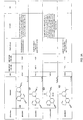
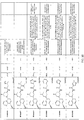
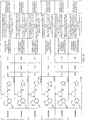
- intermediate 3 which can be prepared according to the route depicted in Scheme 1.
- the commercially available 5-bromoquinoline-8-carbaldehyde 1 Frédérieric de Montigny, Gilles Argouarch, Claude Lapinte, "New Route to Unsymmetrical 9,10-Disubstituted Ethynylanthracene Derivatives," Synthesis, 2006 , 293-298 .
- hydroxylamine hydrochloride to provide the oxime 2 .
- 2 is subsequently converted to the corresponding nitrile 3 in the presence of catalytic amount of copper acetate to provide one of the key intermediates for this invention.
- Intermediate 3 is used for the generation of the compounds of this invention by the displacement of the 5-position of 5-bromoquinoline-8-carbaldehyde with appropriate aromatic, heteroaromatic and saturated heterocyclic compounds such as piperidines, piperazines and morpholines using appropriate conditions described in detail below.
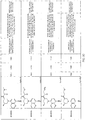
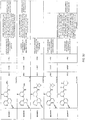
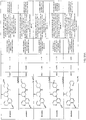
- Resolution of the desired enantiomer can be performed via formation of a mixtures of diastereomeric salts using one equivalent a chiral acid such as (2 R ,3 R )-2,3-bis(4-methoxybenzoyl)oxy)succinic acid where upon the desired diastereomeric salt crystalizes out of solution. Collection, recrystallization, and desalting of the resultant crystals allows one to obtained the desired enantiomer 53 in high ee. 53 is then coupled with the 5-bromoquinoline 3 using an appropriate coupling reagent to provide the Boc-protected 54 , which is easily deprotected to example 55 or ER-888840 .
- the alcohol analog 56 can be easily generated by subjecting the amine 55 to sodium nitrite.
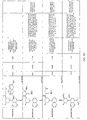
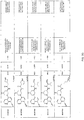
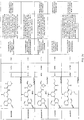
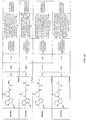
- Additional example compounds can be prepared using 54 or 55 as key intermediates as shown in Schemes 4 and Scheme 5 , Alkylation of 54 is possible by deprotonation of the amide proton with a strong base followed by the addition of an appropriately activated alkylating agent. Alkylation of 55 is possible by reductive amination methodology to provide examples depicted by the general structure 57 . Alkylation of 55 is also possible by use an appropriate base in the presence of appropriate subsituted alkyl, aryl, groups containing an appropriate leaving group (LG) provides a mixture of mono- and disubstituted examples with the general structure 57 and 58 as depicted in Scheme 4 .
- LG appropriate leaving group
- the mixture was partially concentrated to approximately 250 mL after which time water (250 mL), 2-methoxy-2-methylpropane (120 mL), and heptane (120 mL) were added followed by re-concentrated the mixture to approximately 250 mL.
- the resultant slurry was diluted with water (250 mL) and cooled to 0 °C after which time 1 M NaOH in water (211mL) was added and the final mixture was stirred vigorously for 10min.
- the suspension was filtered, rinsed with water (498 mL) and the filter cake dried at 30 °C for 18 h to afford aldoxime 2 (49.75 g, 0.198 mol, 93.9% yield) as tan powder.
- the crude mixture was filtered, rinse with toluene (175 mL) and the resultant solid was dried in a vacuo at 45 °C for 17 h to provide 1-benzyl-3-(( tert -butoxycarbonyl)amino)-5-methylpyridin-1-ium bromide, 50 (35.59 g, 93.8 mmol) as an off-white powder.
- the filtrate was concentrated and suspended in a mixture of EtOAc (150 mL) and ethanol (15 mL) and the resultant solid was filtered, rinsed with EtOAc (50 mL) and dried in vacuo to provide additional 50 (5.20 g, 13.7 mmol, or 66.4 % overall yield for 2 steps).
- the resultant mixture was vigorously stirred at 5-10 °C for 10 min then partially concentrated to approximately 50 ml.
- MTBE 100 mL was added under vigorous stirring and the mixture was re-concentrated to approximately 50 ml.
- Resultant mixture was extracted with MTBE (0.10 L x 2) and the combined organic layers were washed with water (20 ml), 9 wt% NaHCO 3 (3 g), concentrated, and azeotroped two times with ethanol (50 ml each).
- the resultant mixture was diluted with MTBE (50 ml) and filtered. The filtrate was concentrated and diluted with ethanol to adjust total weight of 50.0 g of crude 51 which was used in the next step without further concentration or purification.
- Compound 52 can also be prepared according to the reported method ( WO2010/009014 , incorporated by reference herein).
- ER-888840 -HCl 55 (33.3 mg, 0.125 mmol) was suspended in IPA (9.63 mL) and heated to 45 °C followed by the addition of 0.1M HCl (1.13 mL, 0.12 mmol) while maintaining the temperature 40-45 °C. Resultant mixture was cooled down to rt and stirring was continued for 2 h. Yellow precipitates were collected by filtration, rinsed with IPA (2.0 mL), dried under N2/vacuum, for 2 h, and further dried in vacuum oven at 45 °C for 20 h to give ER-888840 -HCl as yellow solid (14.5 mg, 0.048 mmol, 38% yield).
- ER-878921 (5.2 mg, 0.021 mmol, 32.8 % yield) was prepared in a similar manner to ER-888840 starting with Compound 3 (15 mg, 0.064 mmol) and ( R )-piperidin-3-amine dihydrochloride (13.4 mg, 0.077 mmol). The reaction was microwaved at 180 °C for 3 h and purified by methods described for this series of examples.
- the amine was treated with 4.0 M HCl in Dioxane (0.037 mL) at rt for 30 min, after which time the mixture azeotroped to dryness two times with toluene (2 mL each) and dried in vacuo to provide ER-897184- HCl (79.8 mg, 0.252 mmol, 100.0 % yield) as an orange solid.
- ER-897275 (49 mg, 0.151 mmol, 55.3 % yield) was prepared in a similar manner to ER-897184 starting with 54 -2HCl (100 mg, 0.273 mmol) and 1-bromo-2-methoxyethane (37.9 mg, .273 mmol). The secondary amine was isolated without forming the HCl salt.
- ER-899075 (48.8 mg, 0.135 mmol, 91 % yield) was prepared in a similar manner to ER-899369 starting with 55 -2HCl (50.3 mg, 0.148 mmol) and 3-methyloxetane-3-carbaldehyde (22.5 mg, .225 mmol). Deprotection was not required for this example. The HCl salt was not formed.
- ER-899506 (107 mg, 0.305 mmol, 92 % yield) was prepared in a similar manner to ER-99075 starting with 55 -2HCl (50.3 mg, 0.148 mmol) and tetrahydro- 4H -pyran-4-one (0.092 ml, .999 mmol).
- ER-899541 (11 mg, 0.034 mmol, 17.8 % yield) was prepared in a similar manner to ER-99075 starting with 55 -2HCl (65 mg, 0.192 mmol) and oxetan-3-one (0.025 mL, 0.384 mmol) along with DIPEA (0.05 mL, 0.288 mmol).
- ER-899543 (11 mg, 0.034 mmol, 17.8 % yield) was prepared in a similar manner to ER-99541 starting with 55 -2HCl (57 mg, 0.168 mmol) and 5-(trifluoromethyl)picolinaldehyde (58.8 mg, 0.336 mmol).
- ER-899544 (37 mg, 0.110 mmol, 65.5 % yield) was prepared in a similar manner to ER-99541 starting with 55 -2HCl (57 mg, 0.168 mmol) and dihydrofuran-3(2 H )-one (28.9 mg, 0.336 mmol).
- ER-899551 (23 mg, 0.066 mmol, 32.6 % yield) was prepared in a similar manner to ER-99541 starting with 55 -2HCl (69 mg, 0.203 mmol) and oxazole-2-carbaldehyde (39.4 mg, 0.406 mmol).
- ER-899552 (24 mg, 0.067 mmol, 32.6 % yield) was prepared in a similar manner to ER-99541 starting with 55 -2HCl (69 mg, 0.203 mmol) and 1-methyl- 1H -imidazole-4-carbaldehyde (44.7 mg, 0.406 mmol).
- ER-899563 (8.8 mg, 0.021 mmol, 12.3 % yield) was prepared in a similar manner to ER-99541 starting with 55 -2HCl (57 mg, 0.168 mmol) and 6-(trifluoromethyl)nicotinaldehyde (58.8 mg, 0.336 mmol).
- ER-899564 (17 mg, 0.049 mmol, 12.3 % yield) was prepared in a similar manner to ER-99541 starting with 55 -2HCl (58 mg, 0.171 mmol) and 1H -pyrazole-5-carbaldehyde (33 mg, 0.342 mmol).
- ER-899565 (27 mg, 0.072 mmol, 38.1 % yield) was prepared in a similar manner to ER-99541 starting with 55 -2HCl (64 mg, 0.189 mmol) and 1,4-dimethyl- 1H -pyrazole-3-carbaldehyde (46.9 mg, 0.378 mmol).
- ER-899566 (25 mg, 0.067 mmol, 36.0 % yield) was prepared in a similar manner to ER-99541 starting with 55 -2HCl (63 mg, 0.186 mmol) and 3,5-dimethylisoxazole-4-carbaldehyde (46.5 mg, 0.372 mmol).
- ER-899577 (18 mg, 0.052 mmol, 31.8 % yield) was prepared in a similar manner to ER-99541 starting with 55 -2HCl (55 mg, 0.162 mmol) and pyrrolidine-2,4-dione (32.1 mg, .324 mmol).
- ER-899602 (11 mg, 0.028 mmol, 4.8 % yield) was prepared in a similar manner to ER-99541 starting with 55 -2HCl (201 mg, 0.592 mmol) and 3-(methylthio)propanal (123 mg, 1.185 mmol) followed by dissolving the intermediate thiol in DCM (3 ml), cooling to 0 °C and adding 3-chloroperoxybenzoic acid (255 mg, 1.48 mmol). The reaction mixture was stirred at 0 °C for 5 min, warmed to RT, and stirred an additional 3 h.
- the crude residue was purified over silica gel (Biotage ultra, 10g, eluted with a gradient of 0 to 20% MeOH in DCM) followed by concentration of the desired fractions and re-purifying over a reverse phase HPLC column ((X-Bridge C18 19 x 100 mm column; eluting with a gradient of increasing acetonitrile in water containing 0.1 % NH 4 OH).
- the desired fractions were concentrated and dried in vacuo to provide ER-899602.
- ER-899604 (18 mg, 0.050 mmol, 25.0 % yield) was prepared in a similar manner to ER-99541 starting with 55 -2HCl (68 mg, 0.200 mmol) and 2-oxocyclopentanecarbonitrile (43.7 mg, .401 mmol).
- ER-899607 (15 mg, 0.040 mmol, 22.1 % yield) was prepared in a similar manner to ER-99541 starting with 55 -2HCl (62 mg, 0.183 mmol) and 1-(pyridin-2-yl)ethanone (0.041 mL, .365 mmol).
- ER-899621 (25 mg, 0.071 mmol, 42.5 % yield) was prepared in a similar manner to ER-99541 starting with 55 -2HCl (57 mg, 0.168 mmol) and dihydro- 2H -pyran-3( 4H )-one (33.6 mg, .336 mmol).
- ER-899633 (41.2 mg, 0.103 mmol, 52.3 % yield) was prepared in a similar manner to ER-99541 starting with 55 -2HCl (67 mg, 0.197 mmol) and dihydro- 2H -thiopyran-4( 3H )-one 1,1-dioxide (58.5 mg, .395 mmol).
- ER-899634 (20 mg, 0.052 mmol, 30.9 % yield) was prepared in a similar manner to ER-99541 starting with 55 -2HCl (57 mg, 0.168 mmol) and 1-(6-methylpyridin-2-yl)ethanone (45.4 mg, .336 mmol).
- ER-899630 (12 mg, 0.033 mmol, 8.7 % yield) and ER-899631 (19 mg, 0.052 mmol, 13.7 % yield) was prepared in a similar manner to ER-899541 starting with 55 -2HCl (129 mg, 0.380 mmol) and 4-hydroxycyclohexanone (87 mg, .76 mmol) where both diastereomers were isolated via silica gel chromatography. Note: The stereochemistry for both compounds is arbitrarily assigned and has not been confirmed.
- ER-899632 (12 mg, 0.033 mmol, 18.9 % yield) was prepared by the oxidation of the diastereomeric mixture of ER-899630 & ER-899631 (64 mg, 0.176 mmol) by adding DMP (373 mg, .879 mmol) in four portions over 1 h per portion at rt in DCM (3 mL). The completed reaction was diluted with DCM (10 mL) and washed with saturated NaHCO 3 (5 mL) then brine (5 mL). The combined aqueous layers were extracted two times with DCM (5 mL each) after which time the combined organic layers were dried over anhydrous Na 2 SO 4 , filtered and concentrated to dry.
- the crude residue was purified over silica gel (Biotage ultra, 10g, eluted with a 0 to 20% MeOH in DCM), followed by concentration of the desired fractions and re-purifying over a reverse phase HPLC column ((X-Bridge C18 19 x 100 mm column; eluting with a gradient of increasing acetonitrile in water containing 0.1 % NH 4 OH).
- the desired fractions were concentrated and dried in vacuo to provide ER-899632.
- ER-899508 To a stirred suspension of 55 (85 mg, .251 mmol) and potassium carbonate (34.6 mg, .251 mmol) in DMF (1 mL, 12.92 mmol), was added 3,3,3-trifluoropropyl methanesulfonate (0.052 mL, .376 mmol). The reaction was stirred at rt for 24 h after which time the reaction was diluted with EtOAc-Heptane ( ⁇ 4:1) (10 mL) and water (5 mL).
- ER-899823 To a stirred solution of oxalyl chloride (0.108 ml, 1.234 mmol) in DCM (2 mL) at -78 °C was added DMSO (0.175 ml, 2.469 mmol) dropwise. After the addition was complete the mixture was stirred 30 m at -78 °C after which time a solution of ER-896464 (220 mg, .823 mmol) in DCM (2 mL) was added dropwise followed by warming to rt and stirring for an additional 1h. DIPEA (0.719 ml, 4.115 mmol) was added dropwise, stirred for 1h followed by being quenched with aqueous ammonium chloride (2 mL).
- ER-899504 & ER-899505 To a stirred suspension of ER-888840 (688 mg, 2.028 mmol) and potassium carbonate (423 mg, 3.061 mmol) in DMF (3.00 mL) was added ethyl bromoacetate (368 ⁇ l, 3.305 mmol). The reaction mixture was stirred at rt for 14 h after which time the completed reaction was diluted with sat. NaHCO 3 (5 mL) and EtOAc (10 mL) and the layers separated. The aqueous layer was extracted two times with EtOAc (5 mL each) and the combined organic layers were washed with brine (5 mL), dried over Na 2 SO 4 , filtered and concentrated.
- the crude product was purified by over silica gel (10 g, eluted with 0 to 100 % EtOAc in heptane) to provide two products as a yellow oils after separate combining each desired fractions, concentration and drying under vacuo ER-899505 (382 mg, 0.871 mmol, 43.0 % yield) and ER-899504 (207 mg, 0.587 mmol, 29.0 % yield).
- ER-899715 To a stirred solution of ER-899541 (40 mg, .124 mmol) in 37% aq formaldehyde (1 ml, .124 mmol) was added formic acid (70 ⁇ l, 1.825 mmol) followed by heating at 100 °C for 2 h. The completed reaction was diluted with aqueous NaHCO 3 (5 mL) and extracted three times with EtOAc (3 mL each). The combined organic layers were washed with brine (5 mL), dried over MgSO 4 , filtered and concentrated.
- ER-896310 To a stirred solution of ER-888840 (100 mg, .375 mmol) in DCM (1.0 ml, 15.542 mmol) was added pyridine (0.091 ml, 1.126 mmol) followed by acetic anhydride (0.043 ml, .451 mmol). The reaction mixture was stirred 2h at rt after which time the completed reaction was diluted with DCM (5 mL) and washed with aq NaHCO 3 (2 mL) . The organic layer was dried over MgSO 4 , filtered and concentrated. The crude product was purified over silica gel (Biotage) to provide ER-896310 (97 mg, 0.315 mmol, 84 % yield) after separate combining each desired fractions, concentration and drying under vacuo.
- ER-898758 (17 mg, 0.047 mmol, 15.9 % yield) was prepared in a similar manner to ER-896310 starting with ER-888840 -2HCl (100 mg, 0.295 mmol) and trifluoroacetic anhydride (0.052 mL, 0.368 mmol).
- ER-898912 To a mixture of ER-888840 (50 mg, 0.188 mmol) and pyridine (0.046 mL, .563 mmol) in DCM (2 mL) was added 5-methylisoxazole-3-carbonyl chloride (27.3 mg, .188 mmol). The mixture was stirred 18 h at rt, followed by the addition of DMAP (23 mg, 0.188 mmol) and allowed reaction mixture to stir 6 h at rt. HATU (85.8 mg, 0.226 mmol) was added and the reaction was stirred for 18 h at room temp.
- ER-897272 To a stirred solution of ER-888840 (50 mg, .188 mmol), 2-(dimethylamino)acetic acid hydrochloride (31.4 mg, .225 mmol), and HBTU (85 mg, .225 mmol) in DCM (2 mL) was added TEA (78 ⁇ l, .563 mmol). The reaction mixture was stirred for 18 h at rt after which time the completed reaction was diluted with EtOAc (5 mL), washed with aq. NH 4 Cl (2 mL), water (2 mL), and brine (2 mL).
- ER-897273 43 mg, 0.127 mmol, 67.6 % yield was prepared in a similar manner to ER-897272 starting with ER-888840 (50 mg, 0.188 mmol) and 2-methoxyacetic acid (20.29 mg, .225 mmol).
- ER-897274 (53 mg, 0.163 mmol, 87.2 % yield) was prepared in a similar manner to ER-897272 starting with ER-888840 (50 mg, 0.188 mmol) and 2-(( tert -butoxycarbonyl)amino)acetic acid (39.5 mg, .225 mmol), followed by de-protecting the Boc-group using TFA and neutralization methodologies described in previous examples.
- ER-897607 .HCL (47 mg, 0.121 mmol, 64.9 % yield) was prepared in a similar manner to ER-897272 starting with ER-888840 (50 mg, 0.188 mmol) and 2-(( tert- butoxycarbonyl)amino)-2-methylpropanoic acid (45.8 mg, .225 mmol) with the addition of EDC (54.0 mg, .282 mmol), followed by de-protecting the Boc-group using HCl in dioxane following the methodologies described in previous examples.
- ER-897608 .HCl (40 mg, 0.107 mmol, 71.2 % yield) was prepared in a similar manner to ER-897607 starting with ER-888840 (40 mg, 0.150 mmol) and 2-(( tert -butoxycarbonyl)-(methyl)amino)acetic acid (34.1 mg, .18 mmol).
- ER-897971 To a stirred solution of ER-888840 -HCl (35.0 mg, 0.103 mmol) in NMP (500.0 ⁇ l) was added 2-hydroxyacetic acid (11.0 mg, 0.145 mmol), HBTU (43.0 mg, 0.113 mmol), and DIPEA (45.0 ⁇ l, 0.258 mmol). The reaction mixture was stirred at 50 °C overnight followed by direct purification over a reverse-phase HPLC column ((X-Bridge C18 19 x 100 mm column; eluting with a gradient of increasing acetonitrile in water containing 0.1 % NH 4 OH). The fractions containing product were combined and concentrated in vacuo to provide ER-897971 (16.9 mg, 0.052 mmol, 50.5 % yield).
- ER-897972 (15.2 mg, 0.014 mmol, 13.8 % yield) was prepared in a similar manner to ER-897971 starting with ER-888840 -HCl (35.0 mg, 0.103 mmol) and ( S )-2-hydroxy-3-methylbutanoic acid (18.0 mg, 0.152 mmol).
- ER-897973 (5.2 mg, 0.039 mmol, 38.1 % yield) was prepared in a similar manner to ER-897971 starting with ER-888840 -HCl (35.0 mg, 0.103 mmol) and 3-hydroxybenzoic acid (21.0 mg, 0.152 mmol).
- ER-897975 (4.7 mg, 0.012 mmol, 11.8 % yield) was prepared in a similar manner to ER-897971 starting with ER-888840 -HCl (35.0 mg, 0.103 mmol) and 4-hydroxybenzoic acid (21.0 mg, 0.152 mmol).
- ER-897976 (15.9 mg, 0.045 mmol, 43.5 % yield) was prepared in a similar manner to ER-897971 starting with ER-888840 -HCl (35.0 mg, 0.103 mmol) and 2-(methylthio)acetic acid (16.0 mg, 0.151 mmol).
- ER-897977 (16.7 mg, 0.045 mmol, 43.9 % yield) was prepared in a similar manner to ER-897971 starting with ER-888840 -HCl (35.0 mg, 0.103 mmol) and 2-(ethylthio)acetic acid (18.0 mg, 0.150 mmol).
- ER-897978 (12.6 mg, 0.033 mmol, 31.6 % yield) was prepared in a similar manner to ER-897971 starting with ER-888840 -HCl (35.0 mg, 0.103 mmol) and 2-(methylsulfonyl)acetic acid (21.0 mg, 0.152 mmol).
- ER-897979 (9.2 mg, 0.027 mmol, 26.2 % yield) was prepared in a similar manner to ER-897971 starting with ER-888840 (35.0 mg, 0.103 mmol) and ( S )-2-(( tert- butoxycarbonyl)amino)propanoic acid (29.4 mg, 0.155 mmol),, followed by de-protecting the Boc-group using TFA and neutralization methodologies described in previous examples.
- ER-897980 (12.6 mg, 0.033 mmol, 32.0 % yield) was prepared in a similar manner to ER-897979 starting with 54b (35.0 mg, 0.103 mmol) and ( R )-2-(( tert- butoxycarbonyl)amino)propanoic acid (28.4 mg, 0.150 mmol).
- ER-897981 (12.8 mg, 0.037 mmol, 35.9 % yield) was prepared in a similar manner to ER-897979 starting with ER-888840 (35.0 mg, 0.103 mmol) and 1-(( tert -butoxycarbonyl)amino)-cyclopropanecarboxylic acid (30.7 mg, 0.153 mmol).
- ER-897982 (1.9 mg, 0.005 mmol, 4.9 % yield) was prepared in a similar manner to ER-897979 starting with ER-888840 (35.0 mg, 0.103 mmol) and ( R )-2-(( tert- butoxycarbonyl)amino)-3-hydroxypropanoic acid (30.9 mg, 0.151 mmol).
- ER-897983 (5.6 mg, 0.015 mmol, 14.6 % yield) was prepared in a similar manner to ER-897979 starting with ER-888840 (35.0 mg, 0.103 mmol) and ( R )-1-( tert- butoxycarbonyl)pyrrolidine-2-carboxylic acid (33.2 mg, 0.154 mmol).
- ER-897984 (0.3 mg, 0.001 mmol, 1.0 % yield) was prepared in a similar manner to ER-897979 starting with ER-888840 (35.0 mg, 0.103 mmol) and 2-(1-( tert -butoxycarbonyl)azetidin-3-yl)acetic acid (33.0 mg, 0.153 mmol).
- ER-897985 (8.7 mg, 0.024 mmol, 23.3 % yield) was prepared in a similar manner to ER-897979 starting with ER-888840 (35.0 mg, 0.103 mmol) and 1-( tert -butoxycarbonyl)pyrrolidine-3-carboxylic acid (32.3 mg, 0.150 mmol).
- ER-897986 (12.5 mg, 0.034 mmol, 33.0 % yield) was prepared in a similar manner to ER-897979 starting with ER-888840 (35.0 mg, 0.103 mmol) and 2-(( tert -butoxycarbonyl)amino)-3-methylbutanoic acid (34.0 mg, 0.156 mmol).
- ER-897987 (2.8 mg, 0.008 mmol, 7.8 % yield) was prepared in a similar manner to ER-897979 starting with ER-888840 (35.0 mg, 0.103 mmol) and (S)-2-(( tert -butoxycarbonyl)amino)-3-methylbutanoic acid (33.5 mg, 0.154 mmol).
- ER-897988 (9.9 mg, 0.027 mmol, 26.2 % yield) was prepared in a similar manner to ER-897979 starting with ER-888840 (35.0 mg, 0.103 mmol) and 5-(( tert- butoxycarbonyl)amino)pentanoic acid (33.1 mg, 0.152 mmol).
- ER-897989 (9.0 mg, 0.025 mmol, 24.3 % yield) was prepared in a similar manner to ER-897979 starting with ER-888840 (35.0 mg, 0.103 mmol) and ( S )-2-(( tert- butoxycarbonyl)amino)pentanoic acid (32.7 mg, 0.151 mmol).
- ER-897990 (3.5 mg, 0.010 mmol, 9.2 % yield) was prepared in a similar manner to ER-897979 starting with ER-888840 (35.0 mg, 0.103 mmol) and ( S )-2-(( tert -butoxycarbonyl)amino)-3-methoxypropanoic acid (33.0 mg, 0.151 mmol).
- ER-897991 (7.1 mg, 0.019 mmol, 18.4 % yield) was prepared in a similar manner to ER-897979 starting with ER-888840 (35.0 mg, 0.103 mmol) and ( 2R,3S )-2-(( tert- butoxycarbonyl)amino)-3-hydroxybutanoic acid (33.9 mg, 0.155 mmol).
- ER-897992 (12.2 mg, 0.032 mmol, 31.1 % yield) was prepared in a similar manner to ER-897979 starting with ER-888840 (35.0 mg, 0.103 mmol) and 1-( tert- butoxycarbonyl)piperidine-4-carboxylic acid (34.8 mg, 0.152 mmol).
- ER-897993 (9.7 mg, 0.026 mmol, 25.2 % yield) was prepared in a similar manner to ER-897979 starting with ER-888840 (35.0 mg, 0.103 mmol) and 1-( tert -butoxycarbonyl)piperidine-3-carboxylic acid (34.4 mg, 0.150 mmol).
- ER-897994 (9.8 mg, 0.026 mmol, 25.2 % yield) was prepared in a similar manner to ER-897979 starting with ER-888840 (35.0 mg, 0.103 mmol) and 2-(1-( tert- butoxycarbonyl)pyrrolidin-3-yl)acetic acid (34.4 mg, 0.150 mmol).
- ER-897995 (10.8 mg, 0.030 mmol, 27.2 % yield) was prepared in a similar manner to ER-897979 starting with ER-888840 (35.0 mg, 0.103 mmol) and 4-( tert- butoxycarbonyl)piperazine-2-carboxylic acid (34.5 mg, 0.150 mmol).
- ER-897996 (11.2 mg, 0.028 mmol, 29.1 % yield) was prepared in a similar manner to ER-897979 starting with ER-888840 (35.0 mg, 0.103 mmol) and ( 2S,4R )-1-( tert -butoxycarbonyl)-4-hydroxypyrrolidine-2-carboxylic acid (35.0 mg, 0.151 mmol).
- ER-897997 (4.9 mg, 0.013 mmol, 12.6 % yield) was prepared in a similar manner to ER-897979 starting with ER-888840 (35.0 mg, 0.103 mmol) and ( 2S,3S )-2-(( tert- butoxycarbonyl)amino)-3-methylpentanoic acid (35.6 mg, 0.154 mmol).
- ER-897998 (9.3 mg, 0.025 mmol, 24.3 % yield) was prepared in a similar manner to ER-897979 starting with ER-888840 (35.0 mg, 0.103 mmol) and ( R) -2-(( tert- butoxycarbonyl)amino)-4-methylpentanoic acid (35.7 mg, 0.154 mmol).
- ER-897999 (7.7 mg, 0.020 mmol, 29.5 % yield) was prepared in a similar manner to ER-897979 starting with ER-888840 (35.0 mg, 0.103 mmol) and ( S )-2-(( tert -butoxycarbonyl)amino)-4-methylpentanoic acid (34.8 mg, 0.150 mmol).
- ER-898000 (9.5 mg, 0.025 mmol, 24.3 % yield) was prepared in a similar manner to ER-897979 starting with ER-888840 (35.0 mg, 0.103 mmol) and ( S )-2-(( tert -butoxycarbonyl)amino)-3,3-dimethylbutanoic acid (34.9 mg, 0.151 mmol).
- ER-898001 (3.3 mg, 0.009 mmol, 8.7 % yield) was prepared in a similar manner to ER-897979 starting with ER-888840 (35.0 mg, 0.103 mmol) and ( R )-2-(( tert- butoxycarbonyl)amino)-3,3-dimethylbutanoic acid (34.9 mg, 0.151 mmol).
- ER-898334 (4.5 mg, 0.012 mmol, 11.7 % yield) was prepared in a similar manner to ER-897979 starting with ER-888840 (35.0 mg, 0.103 mmol) and 2-(( tert- butoxycarbonyl)(methyl)amino)-3-methylbutanoic acid (35.0 mg, 0.151 mmol).
- ER-898335 (5.1 mg, 0.013 mmol, 12.6 % yield) was prepared in a similar manner to ER-897979 starting with ER-888840 (35.0 mg, 0.103 mmol) and ( S )-4-amino-3-(( tert- butoxycarbonyl)amino)-4-oxobutanoic acid (35.3 mg, 0.152 mmol).
- ER-898336 (2.6 mg, 0.007 mmol, 6.6 % yield) was prepared in a similar manner to ER-897979 starting with ER-888840 (35.0 mg, 0.103 mmol) and ( S )-4-amino-2-(( tert- butoxycarbonyl)amino)-4-oxobutanoic acid (35.3 mg, 0.152 mmol).
- ER-898337 (2.8 mg, 0.007 mmol, 7.1 % yield) was prepared in a similar manner to ER-897979 starting with ER-888840 (35.0 mg, 0.103 mmol) and ( R )-4-amino-2-(( tert- butoxycarbonyl)amino)-4-oxobutanoic acid (35.4 mg, 0.152 mmol).
- ER-898338 (4.5 mg, 0.012 mmol, 11.7 % yield) was prepared in a similar manner to ER-897979 starting with ER-888840 (35.0 mg, 0.103 mmol) and ( S )-3-( tert- butoxycarbonyl)thiazolidine-4-carboxylic acid (35.8 mg, 0.153 mmol).
- ER-898339 (2.7 mg, 0.007 mmol, 6.8 % yield) was prepared in a similar manner to ER-897979 starting with ER-888840 (35.0 mg, 0.103 mmol) and 4-(( tert- butoxycarbonyl)amino)benzoic acid (36.1 mg, 0.152 mmol).
- ER-898341 (7.5 mg, 0.019 mmol, 18.4 % yield) was prepared in a similar manner to ER-897979 starting with ER-888840 (35.0 mg, 0.103 mmol) and 2-(1-( tert- butoxycarbonyl)piperidin-4-yl)acetic acid (36.0 mg, 0.148 mmol).
- ER-898342 (8.8 mg, 0.022 mmol, 21.3 % yield) was prepared in a similar manner to ER-897979 starting with ER-888840 (35.0 mg, 0.103 mmol) and 1-( tert -butoxycarbonyl)-4-methylpiperidine-4-carboxylic acid (36.0 mg, 0.148 mmol).
- ER-898343 (2.2 mg, 0.006 mmol, 5.4 % yield) was prepared in a similar manner to ER-897979 starting with ER-888840 (35,0 mg, 0.103 mmol) and 1-(( tert -butoxycarbonyl)amino)-3-hydroxycyclopentanecarboxylic acid (37.0 mg, 0.151 mmol).
- ER-898344 (9.4 mg, 0.024 mmol, 23.3 % yield) was prepared in a similar manner to ER-897979 starting with ER-888840 (35.0 mg, 0.103 mmol) and ( S )-2-(( tert- butoxycarbonyl)(methyl)amino)-4-methylpentanoic acid (37.0 mg, 0.151 mmol).
- ER-898345 (8.0 mg, 0.020 mmol, 19.4 % yield) was prepared in a similar manner to ER-897979 starting with ER-888840 (35.0 mg, 0.103 mmol) and ( S )-2-(( tert -butoxycarbonyl)amino)-4,4-dimethylpentanoic acid (37.0 mg, 0.151 mmol).
- ER-898346 (6.5 mg, 0.017 mmol, 16.5 % yield) was prepared in a similar manner to ER-897979 starting with ER-888840 (35.0 mg, 0.103 mmol) and ( S )-2-(( tert -butoxycarbonyl)-(methyl)amino)hexanoic acid (37.0 mg, 0.151 mmol).
- ER-898347 (0.9 mg, 0.002 mmol, 2.2 % yield) was prepared in a similar manner to ER-897979 starting with ER-888840 (35.0 mg, 0.103 mmol) and ( S )-5-amino-2-(( tert- butoxycarbonyl)amino)-5-oxopentanoic acid (37.0 mg, 0.150 mmol).
- ER-898348 (6.3 mg, 0.016 mmol, 15.5 % yield) was prepared in a similar manner to ER-897979 starting with ER-888840 (35.0 mg, 0.103 mmol) and ( R )-2-(( tert- butoxycarbonyl)amino)-3-(ethylthio)propanoic acid (37.0 mg, 0.148 mmol).
- ER-898349 (6.0 mg, 0.015 mmol, 14.6 % yield) was prepared in a similar manner to ER-897979 starting with ER-888840 (35.0 mg, 0.103 mmol) and 2-(( tert -butoxycarbonyl)amino)-4-(methylthio)butanoic acid (37.0 mg, 0.148 mmol).
- ER-898350 (5.6 mg, 0.014 mmol, 13.6 % yield) was prepared in a similar manner to ER-897979 starting with ER-888840 (35.0 mg, 0.103 mmol) and ( R )-2-(( tert- butoxycarbonyl)amino)-2-phenylacetic acid (38.0 mg, 0.151 mmol).
- ER-898351 (8.6 mg, 0.022 mmol, 21.3 % yield) was prepared in a similar manner to ER-897979 starting with ER-888840 (35.0 mg, 0.103 mmol) and ( S )-2-(( tert -butoxycarbonyl)amino)-2-phenylacetic acid (38.0 mg, 0.151 mmol).
- ER-898352 (5.1 mg, 0.013 mmol, 12.6 % yield) was prepared in a similar manner to ER-897979 starting with ER-888840 (35.0 mg, 0.103 mmol) and ( S )-2-(( tert -butoxycarbonyl)amino)-3-(1H-imidazol-4-yl)propanoic acid (38.0 mg, 0.149 mmol).
- ER-898353 (6.8 mg, 0.017 mmol, 16.5 % yield) was prepared in a similar manner to ER-897979 starting with ER-888840 (35.0 mg, 0.103 mmol) and 3-(1-( tert- butoxycarbonyl)piperidin-2-yl)propanoic acid (39.0 mg, 0.152 mmol).
- ER-898354 (4.9 mg, 0.012 mmol, 11.7 % yield) was prepared in a similar manner to ER-897979 starting with ER-888840 (35.0 mg, 0.103 mmol) and 3-(1-( tert- butoxycarbonyl)piperidin-3-yl)propanoic acid (39.0 mg, 0.152 mmol).
- ER-898355 (3.2 mg, 0.008 mmol, 7.7 % yield) was prepared in a similar manner to ER-897979 starting with ER-888840 (35.0 mg, 0.103 mmol) and 1-(( tert -butoxycarbonyl)amino)-4-hydroxycyclohexanecarboxylic acid (39.0 mg, 0.150 mmol).
- ER-898356 (3.3 mg, 0.008 mmol, 7.8 % yield) was prepared in a similar manner to ER-897979 starting with ER-888840 (35.0 mg, 0.103 mmol) and (R)-2-(( tert- butoxycarbonyl)amino)-3-phenylpropanoic acid (40.0 mg, 0.151 mmol).
- ER-898357 (9.1 mg, 0.022 mmol, 21.3 % yield) was prepared in a similar manner to ER-897979 starting with ER-888840 (35.0 mg, 0.103 mmol) and ( 2S )-2-(( tert- butoxycarbonyl)amino)-4-(methylsulfinyl)butanoic acid (40.1 mg, 0.151 mmol).
- ER-898358 (12.6 mg, 0.030 mmol, 29.1 % yield) was prepared in a similar manner to ER-897979 starting with ER-888840 (35.0 mg, 0.103 mmol) and (S)-2-(( tert- butoxycarbonyl)amino)-3-(pyridin-2-yl)propanoic acid (40.0 mg, 0.150 mmol).
- ER-898359 (16.3 mg, 0.039 mmol, 37.9 % yield) was prepared in a similar manner to ER-897979 starting with ER-888840 (35.0 mg, 0.103 mmol) and (S)-2-(( tert- butoxycarbonyl)amino)-3-(pyridin-4-yl)propanoic acid (40.0 mg, 0.150 mmol).
- ER-898360 (17.1 mg, 0.041 mmol, 39.8 % yield) was prepared in a similar manner to ER-897979 starting with ER-888840 (35.0 mg, 0.103 mmol) and ( S ) -2- (( tert- butoxycarbonyl)amino)-3-(pyridin-3-yl)propanoic acid (40.0 mg, 0.150 mmol).
- ER-898361 (19.6 mg, 0.047 mmol, 45.6 % yield) was prepared in a similar manner to ER-897979 starting with ER-888840 (35.0 mg, 0.103 mmol) and (R)-2-(( tert- butoxycarbonyl)amino)-3-(pyridin-3-yl)propanoic acid (40.0 mg, 0.150 mmol).
- ER-898362 (9.1 mg, 0.022 mmol, 21.4 % yield) was prepared in a similar manner to ER-897979 starting with ER-888840 (35.0 mg, 0.103 mmol) and 5-( tert -butoxycarbonyl)-4,5,6,7-tetrahydro-1H-pyrazolo[4,3-c]pyridine-3-carboxylic acid (40.0 mg, 0.150 mmol).
- ER-898364 (9.1 mg, 0.022 mmol, 21.4 % yield) was prepared in a similar manner to ER-897979 starting with ER-888840 (35.0 mg, 0.103 mmol) and 2-(1-((( tert- butoxycarbonyl)amino)methyl)-cyclohexyl)acetic acid (41.7 mg, 0.154 mmol).
- ER-898365 (11.7 mg, 0.028 mmol, 27.2 % yield) was prepared in a similar manner to ER-897979 starting with ER-888840 (35.0 mg, 0.103 mmol) and (S)-2-(( tert- butoxycarbonyl)amino)-3-(thiazol-4-yl)propanoic acid (41.0 mg, 0.151 mmol).
- ER-898366 (13.7 mg, 0.032 mmol, 31.1 % yield) was prepared in a similar manner to ER-897979 starting with ER-888840 (35.0 mg, 0.103 mmol) and (S)-2-(( tert- butoxycarbonyl)(methyl)amino)-3-phenylpropanoic acid (42.0 mg, 0.150 mmol).
- ER-898367 (14.5 mg, 0.034 mmol, 33.0 % yield) was prepared in a similar manner to ER-897979 starting with ER-888840 (35.0 mg, 0.103 mmol) and (R)-2-(( tert- butoxycarbonyl)(methyl)amino)-3-phenylpropanoic acid (43.0 mg, 0.154 mmol).
- ER-898368 (6.8 mg, 0.016 mmol, 15.5 % yield) was prepared in a similar manner to ER-897979 starting with ER-888840 (35.0 mg, 0.103 mmol) and ( S )-2-(( tert -butoxycarbonyl)amino)-3-(4-hydroxyphenyl)propanoic acid (42.2 mg, 0.150 mmol).
- ER-898369 (9.5 mg, 0.022 mmol, 21.4 % yield) was prepared in a similar manner to ER-897979 starting with ER-888840 (35.0 mg, 0.103 mmol) and ( S )-2-(( tert -butoxycarbonyl)amino)-4-(methylsulfonyl)butanoic acid (43.0 mg, 0.153 mmol).
- ER-898758 (9.5 mg, 0.022 mmol, 21.4 % yield) was prepared in a similar manner to ER-897979 starting with ER-888840 (35.0 mg, 0.103 mmol) and ( S )-2-(( tert -butoxycarbonyl)amino)-4-(methylsulfonyl)butanoic acid (43.0 mg, 0.153 mmol).
- ER-898991 (3.6 mg, 0.009 mmol, 5.1 % yield) and ER-898992 (1.6 mg, 0.004 mmol, 2.3 % yield) were separated by using the preparation in a similar manner to ER-898761 starting with ER-888840 -2HCl (60 mg, 0.177 mmol) and 2-amino-3,3,3-trifluoropropanoic acid (25.3 mg, .177 mmol). The stereochemistries of both diastereomers were arbitrarily assigned and not confirmed.
- ER-899072 (51.4 mg, 0.137 mmol, 89 % yield) was preparation in a similar manner to ER-898761 starting with ER-888840 -2HCl (52.3 mg, 0.154 mmol) and 3-methyloxetane-3-carboxylic acid (50.2 mg, 0.432 mmol).
- ER-898763 (19 mg, 0.050 mmol, 34.0 % yield) was prepared in a similar manner to ER-898761 starting with ER-888840 -2HCl (50 mg, 0.147 mmol) and ( S )-3-(( tert- butoxycarbonyl)amino)-4-methylpentanoic acid (102 mg, .442 mmol) followed by de-protecting the Boc-group using TFA and neutralization methodologies described in previous examples.
- ER-898765 (19 mg, 0.054 mmol, 36.7 % yield) was prepared in a similar manner to ER-898763 starting with ER-888840 -2HCl (50 mg, 0.147 mmol) and ( S ) - 3-(( tert- butoxycarbonyl)amino)butanoic acid (90 mg, .442 mmol).
- ER-898901 (42 mg, 0.120 mmol, 81.6 % yield) was prepared in a similar manner to ER-898763 starting with ER-888840 -2HCl (50 mg, 0.147 mmol) and ( S )-2-(( tert- butoxycarbonyl)(methyl)amino)propanoic acid (90 mg, .442 mmol).
- ER-898902 13 mg, 0.034 mmol, 23.1 % yield was prepared in a similar manner to ER-898763 starting with ER-888840 -2HCl (50 mg, 0.147 mmol) and ( R) -3-(( tert- butoxycarbonyl)amino)-4-methylpentanoic acid (102 mg, .442 mmol).
- ER-898976 (19 mg, 0.054 mmol, 36.7 % yield) was prepared in a similar manner to ER-898763 starting with ER-888840 -2HCl (50 mg, 0.147 mmol) and ( R )-3-(( tert- butoxycarbonyl)amino)butanoic acid (90 mg, .442 mmol).
- ER-898977 (50 mg, 0.132 mmol, 89.8 % yield) was prepared in a similar manner to ER-898763 starting with ER-888840 -2HCl (50 mg, 0.147 mmol) and ( S )-2-(( tert- butoxycarbonyl)(methyl)amino)-3-methylbutanoic acid (102 mg, .442 mmol).
- ER-899127 To a stirred solution of ( R )-4-( tert -butoxycarbonyl)morpholine-3-carboxylic acid (87 mg, .375 mmol) in THF (2.0 ml) at rt, was added 4-methylmorpholine (0.041 ml, .375 mmol) followed by isobutyl chloroformate (0.049 ml, .375 mmol) drop wise.
- ER-888840 -2HCl 51.2 mg, 0.150 mmol
- DIPEA 0.052 ml, .30 mmol
- ER-899128 (29.9 mg, 0.078 mmol, 52.2 % yield) was prepared in a similar manner to ER-899127 starting with ER-888840 -2HCl (51.2 mg, 0.150 mmol) and ( S )-4-( tert- butoxycarbonyl)morpholine-3-carboxylic acid (87 mg, .375 mmol).
- ER-898881 (101 mg, 0.266 mmol, 31.6 % yield) was prepared in a similar manner to ER-899127 starting with ER-888840 -2HCl (250 mg, 0.841 mmol) and ( S )- tert -butyl 2-(aminomethyl)morpholine-4-carboxylate (364 mg, 1.682 mmol).
- ER-898979 To a stirred solution of 2-( 1H -imidazol-4-yl)acetic acid hydrochloride (33 mg, 0.200 mmol) in DMF (0.5 mL) was added HATU (76 mg, 0.200 mmol). The mixture was stirred 30 min at rt after which time ER-888840 -2HCl (68 mg, 0.200 mmol) in DMF (0.5 mL) was added followed by DIPEA (0.14 mL, 0.80 mmol). The mixture was stirred 24 h at rt, after which time it was quenched aq. NaHCO 3 (2 mL) and water (10 mL).
- ER-898980 (30 mg, 0.078 mmol, 36.7 % yield) was prepared in a similar manner to ER-898979 starting with ER-888840 -2HCl (68 mg, 0.200 mmol) and 2-(pyridin-2-yl)acetic acid hydrochloride (34.7 mg, .200 mmol).
- ER-898981 (25 mg, 0.067 mmol, 33.4 % yield) was prepared in a similar manner to ER-898979 starting with ER-888840 -2HCl (68 mg, 0.200 mmol) and 2-(1H-pyrazol-1-yl)acetic acid (25.2 mg, .200 mmol).
- ER-898982 (10 mg, 0.028 mmol, 13.9 % yield) was prepared in a similar manner to ER-898979 starting with ER-888840 -2HCl (68 mg, 0.200 mmol) and 1H-pyrazole-4-carboxylic acid (22.4 mg, .200 mmol).
- ER-898984 (18 mg, 0.048 mmol, 24.4 % yield) was prepared in a similar manner to ER-898979 starting with ER-888840 -2HCl (68 mg, 0.200 mmol) and nicotinic acid (25 mg, .200 mmol).
- ER-898985 (27 mg, 0.072 mmol, 36.1 % yield) was prepared in a similar manner to ER-898979 starting with ER-888840 -2HCl (68 mg, 0.200 mmol) and 1-methyl-1H-imidazole-5-carboxylic acid (25.2 mg, .200 mmol).
- ER-898986 (45 mg, 0.120 mmol, 60.1 % yield) was prepared in a similar manner to ER-898979 starting with ER-888840 -2HCl (68 mg, 0.200 mmol) and 1-methyl- 1H -pyrazole-5-carboxylic acid (25.2 mg, .200 mmol).
- ER-899350.HCl (36 mg, 0.090 mmol, 30.5 % yield) was prepared in a similar manner to ER-898979 starting with ER-888840 -2HCl (100 mg, 0.295 mmol) and 3-(( tert- butoxycarbonyl)amino)oxetane-3-carboxylic acid (70.4 mg, .324 mmol) using TFA to deprotected the Boc-group and formation of the HCl salt as described in previous examples.
- ER-896760 To a stirred solution of ER-888840 -2HCl (100 mg, .295 mmol) in DCM (1.0 ml) was added TEA (0.205 ml, 1.474 mmol), followed by isopropylsulfonyl chloride (0.050 ml, .442 mmol). The reaction mixture was stirred for 2 h at rt, after which time the completed reaction was diluted with DCM (10 mL) followed by washing with sat. NaHCO 3 (5 mL) and brine (5 mL). The organic layer was dried with Na 2 SO 4 , filtered and concentrated followed by purification over silica gel (Biotage SP4. Column Interchim 25g, 30 ⁇ M. 6-50% EtOAc in Heptane) to obtain ER-898760 (3.7 mg, 9.93 ⁇ mol, 3.37 % yield) as a white solid after concentration of the desired product fractions, concentration and drying in vacuo.
- ER-899672.HCL (25 mg, 0.055 mmol, 37.6 % yield) was prepared in a similar manner to ER-898760 starting with ER-888840 -2HCl (50 mg, 0.147 mmol) and 3-(dimethylamino)propane-1-sulfonyl chloride hydrochloride (65.5 mg, .295 mmol).
- the hydrochloride salt was made in a similar fashion described in other examples.
- ER-899669-HCl To a stirred solution of ER-888840 -2HCl (200 mg, .59 mmol) in DCM (2.0 ml, 31.083 mmol) was added TEA (0.411 ml, 2.948 mmol), followed by 2-(1,3-dioxoisoindolin-2-yl)ethanesulfonyl chloride (323 mg, 1.179 mmol). The reaction mixture was stirred for 2 h at rt, after which time the completed reaction was diluted with DCM (5 mL), washed with saturated NaHCO 3 (2 mL) and brine (2 mL).
- ER-899669 (52 mg, 0.139 mmol) was dissolved in 1,4-dioxane (2.0 ml) and treated with 4.00M HCl in Dioxane (0.037 mL) at rt for 30 min. The mixture was diluted with toluene (2 mL) and concentrated. The product was azeotroped with toluene (2 mL). Product was dried on vacuum pump to obtain ER-899669- HCl (57 mg, 0.139 mmol, 100.0 % yield) as an orange solid.
- ER-899671-HCl A solution of ER-899669 (50 mg, .134 mmol) and 37 % formaldehyde in water (109 mg, 1.339 mmol) in formic acid (0.1 ml, 2.607 mmol) was stirred at 80 °C for 8 h. The completed reaction was azeotroped two times with toluene (2mL each). The residue was dissolved in MeOH (5mL) followed by the addition of Amberlite IRA400 hydroxide form with stirring over a 10-min period until a neutral pH was obtained. The Amberlite was filtered, rinsed with MeOH and the filtrate was concentrated followed by azeotroping two times to dry with toluene (2 mL).
- the ER-899671 (28 mg, 0.070 mmol) was dissolved in 1,4-dioxane (2.0 ml) and treated with 4.0 M HCl in dioxane (0.017 ml, .066 mmol) at rt for 30 min. The mixture was azeotroped three times with toluene (2 mL each). The product was dried in vacuo to provide ER-899671 -HCl (30 mg, 0.068 mmol, 100 % yield) as an orange solid.
- ER-889591 ER-888840 (15 mg, 0.056 mmol), formic acid (0.0.64 mL, mmol) and 37% aq. formaldehyde (0.042 mL, mmol) were combined and microwaved at 80 °C for 8 h after which time the cooled reaction was concentrated.
- the crude product diluted in MeOH (2 mL) and purified over a C-18 reverser-phase HPLC, eluting with 10 - 100% acetonitrile in water with 0.1 % TFA.
- the crude product was purified over silica gel (Biotage, SP4 eluting with 0 to 100% EtOAc in heptane) to provide tert -butyl (( 3R , 5S )-1-(8-cyanoquinolin-5-yl)-5-methylpiperidin-3-yl)carbamate (817 mg, 2.229 mmol, 53.7 % yield) after combining the desired fractions, concentration and drying in vacuo.
- ER-897810 To a stirred solution of tert -butyl (( 3R , 5S )-1-(8-cyanoquinolin-5-yl)-5-methylpiperidin-3-yl)carbamate, 54 (75 mg, 0.205 mmol) in ethanol (4.5 ml) was added 0.5 M sodium hydroxide (4.503 mL, 2.251 mmol) followed by 60 % hydrogen peroxide in water (0.233 mL, 2.281 mmol). The reaction mixture was warmed to 50 °C and then stirred for 4 h..
- the completed reaction was cooled to rt followed by the addition of 5% aq sodium thiosulfate (1 mL), stirring for 5 min, and addition IN HCl to pH7-8.
- the mixture was concentrated to 50 % volume followed by extraction three times with DCM (5 mL each). The combined organic layers were washed with water (5 mL), dried over MgSO 4 , filtered and concentrated to dry.
- the crude product was purified over silica gel (10 g, eluting with 0 - 60% EtOAc in heptane) to provide tert -butyl (( 3R , 5S )-1-(8-carbamoylquinolin-5-yl)-5-methylpiperidin-3-yl)carbamate (57 mg, 0.148 mmol, 72.4 % yield) after collection of the desired fractions, concentration and drying in vacuo.
- TLR7/8 compounds were initially screened across a cell-based panel of human TLR4, TLR7, and TLR9 reporter lines (see Materials and Methods for more details). At least one compound that was potent and selective for TLR7 was also tested for TLR8 activity (see Table 2 below) and for TLR7/8 potency in the primary human PBMC assay (see Materials and Methods for more details). Certain compounds were advanced into the short-term in vivo (STIV) assay to determine dose-dependent activity and duration-of-action against mouse TLR7 (see Materials and Methods for more details). Select compounds were then evaluated for impact in one or more of the following mouse lupus disease models: BXSB-Yaa, NZBxNZW, and Pristane:DBA/1.
- TLR8 activity see Table 2 below
- TLR7/8 potency in the primary human PBMC assay see Materials and Methods for more details.
- Certain compounds were advanced into the short-term in vivo (STIV) assay to determine dose-dependent activity
- Ligand Receptor(s): Analyte: ER-888840 IC50 (uM) HCQ 2 IC50 (uM) HEK-293 LPS Human TLR4 NFkB-luciferase >10 N.D. HEK-293 CL097 Human TLR7 NFkB-luciferase 0.0002 N.D. HEK-293 CL097 Mouse TLR7 NFkB-luciferase N.D. HEK-293 CL097 Human TLR8 NFkB-luciferase N.D. HEK-293 CpG-ODN Human TLR9 NFkB-luciferase 8.77 N.D.
- Hu PBMC 1 RNA-Ig Human TLR7/8 IL-6 0.0014 1-2
- Hu PBMC 1 RNA-Ig Human TLR7/8 TNF ⁇ N.D.
- Hu PBMC 1 RNA-Ig Human TLR7/8 IP-10 N.D.
- Hu PBMC R848 Human TLR7/8 IL-6 N.D. Mu Spleen R848 Mouse TLR7 IL-6 N.D.
- RNA-Ig ssRNA derived from UlsnRNA stem loop IV sequence in complex with antibody (see Materials and Methods for more details)
- HCQ Hydroxychloroquine TABLE 2. Potency of select compound against human TLR8 in the HEK-293 assay format (see Materials and Methods for more details).
- Short-term in vivo (STIV) assay To assess compound potency in vivo against mouse TLR7, a short-term in vivo (STIV) assay was utilized. Briefly, mice were orally dosed with compounds and at various time points afterwards were injected subcutaneously with agonist R848 to stimulate TLR7. The plasma IL-6 level following R848 stimulation was then measured by ELISA to assess compound potency and duration-of-action. Importantly, cytokine production following in vitro or in vivo stimulation with R848 was shown to be completely TLR7-dependent utilizing TLR7-deficient mice. Therefore, the activity of compounds in the STN assay can be confidently attributed to their modulation of the TLR7 pathway. A summary of STIV assay potency for a panel of compounds appears in Table 3 below.
- NZB/W and Pristane Two distinct lupus disease models (NZB/W and Pristane) were chosen for compound POC evaluation because (1) the NZB/W strain develops spontaneous disease with polygenic etiology, demonstrating many hallmarks of human lupus such as DNA-associated autoreactivity, proteinuria, and immune-complex mediated nephritis, and (2) positive TLR7 and/or TLR9 target validation results have been reported for both disease models.
- HEK-293 cells were engineered to stably express a NF-kappaB transcription factor inducible E-selectin (ELAM-1) luciferase reporter derived from the plasmid pGL3 (Promega) containing base pairs -2241 bp to -254bp from the promoter of the human E-selectin gene (Accession No. NM_000450). These cells were then subsequently engineered to stably and individually express human TLR4, TLR7 or TLR9 full-length ORF cDNAs. Human TLR4 cDNA (Accession No. NM_138554) was cloned into pcDNA 3.0 expression vector (Invitrogen).
- TLR4 transfected cells were also engineered to express human MD-2 co-receptor [MD-2 cDNA (Accession No. NM_015364) was cloned into the pEF-BOS vector] and were supplemented with 10nM soluble CD14 (R&D Systems) in the media to optimize LPS responsiveness.
- Human TLR9 cDNA (Accession No. NM_017442) was cloned into the pBluescript II KS vector (Agilent).
- Human TLR7 cDNA (Accession No. NM_016562) was obtained from OriGene.
- HEK-293 cells stably expressing human TLR8 accesion No.
- NM_138636 or mouse TLR7 (Accession No. NM_133211) were purchased from InvivoGen and were then stably transfected with pNiFty2(NF-kappaB)-luciferase reporter plasmid (InvivoGen). Each cell type was plated in Dulbecco's modified Eagle's medium (DMEM) containing 10 % fetal bovine serum (FBS) at a density of 2.22X10 5 cells/ml into a 384-well plate and incubated for 2 days at 37 °C, 5 % CO 2 . Varying concentrations of antagonist compounds were then added.
- DMEM Dulbecco's modified Eagle's medium
- FBS fetal bovine serum
- TLR lipopolysaccharide
- CL097 InvivoGen
- CpG-2006-2A sequence: TCGTCGTTAAGTCGTTAAGTCGTT (SEQ ID NO: 1) with phosphorothioate backbone, synthesized by Sigma-Aldrich] at 0.6uM for TLR9.
- NF-kappaB dependent luciferase reporter activation was quantified by measuring luminescence with SteadyGlo® (Promega) or SteadyliteTM (Perkin Elmer) reagent as per the manufacturer's suggested protocol.
- Human PBMC cell-based assay Human peripheral blood mononuclear cells (PBMC) were isolated from freshly-drawn heparinized (10 USP units/ml, Hospira, Lakeforest, IL) healthy donor whole blood by density gradient (Histopaque® 1077, Sigma, Inc., St. Louis, MO). Briefly, 25 ml blood was diluted with 15 ml PBS (without Ca 2+ , Mg 2+ ) in a 50 ml conical tube, and 12 ml Histopaque was underlaid using a spinal needle. Tubes were centrifuged for 45 minutes at 1200 rpm (350xg), and PBMC were collected from the buffy coat.
- PBMC peripheral blood mononuclear cells
- Antagonist compounds solubilized and serial diluted in 100 % DMSO were added in triplicate to cells to yield a final concentration of 0.1 % DMSO (v/v).
- Hydroxychloroquine (Acros Organics) solubilized and serial diluted in PBS was added in triplicate to cells.
- PBMC peripheral blood mononuclear cells
- TLR agonist reagents in 100 ul complete media per well as follows (final concentrations indicated): R848 (Resiquimod; GLSynthesis, Worcester, MA) at 1uM for TLR7 and TLR8, Pam 3 CSK 4 (InvivoGen) at 50ng/ml for TLR1/2, LPS (Sigma) at 10 ng/ml for TLR4, and CpG-2216 (InvivoGen) at 5ug/ml for TLR9.
- RNA with a sequence derived from human U1 snRNA stem loop IV [(sequence: GGGGGACUGCGU-UCGCGCUUUCCC (SEQ ID NO: 2) with phosphorothioate backbone] was synthesized (Dharmacon, Inc., Lafayette, CO), which has been shown previously to be a potent TLR7 and TLR8 agonist.
- RNA molecule was diluted to 2.5 ⁇ M in serum-free RPMI, and mouse anti-human single stranded DNA monoclonal antibody (MAB3034, Millipore, Inc., Billerica, MA), which also cross-reacts with RNA, was added at a 1:25 dilution or at 1ug/ml.
- MAB3034 mouse anti-human single stranded DNA monoclonal antibody
- the resulting "RNA-Ig” stimulus was incubated at room temperature for 15-30 minutes before adding to cells.
- PBMC were incubated with the various TLR agonists for 20 hours at 37 °C, 5 % CO 2 .
- Spleens are harvested from female BALB/c mice (Jackson Labs, Bar Harbor, ME) euthanized by CO 2 .
- a single cell suspension is obtained by passing spleens through a 40 ⁇ m nylon cell strainer.
- Cells are washed twice with 50 ml PBS (Mediatech, Inc., Manassas, VA) and red blood cells are lysed in 5 ml RBC Lysis buffer (eBioscience, Inc., San Diego, CA) for 5 minutes at room temperature. Cells are washed twice more in PBS and finally resuspended in supplemented RPMI-1640 at 2.5X10 6 cells/ml.
- Cells are plated at 100 ⁇ l/well (2.5X10 5 cells/well) in 96-well tissue culture treated plates (Falcon). Serial dilutions of compounds solubilized in 100 % DMSO are added in triplicate to cells to yield a final concentration of 0.1 % DMSO. Cells are incubated with compound for 30 minutes at 37 °C, 5 % CO 2 before adding 100 ⁇ l/well of 740 nM R848 (Resiquimod; GLSynthesis, Worcester, MA) in complete media for a final concentration of 370nM R848. Cells are incubated for 20 hours at 37 °C, 5 % CO 2 . Culture supernatants are collected, and levels of IL-6 are assessed by standard ELISA procedure according to the manufacturer's recommended protocol (BD Biosciences, Inc., San Diego, CA).
- mice Short-term in vivo (STIV) assay.
- TLR7 Short-term in vivo mice.
- mice Six to eight week old female BALB/c mice (Jackson Labs, Bar Harbor, ME) were dosed by oral gavage in 200 ul volume with antagonist compounds formulated in 0.5 % aqueous methyl-cellulose (Sigma, St. Louis, MO).
- mice were injected subcutaneously (s.c.) in 100 ul volume with 15 ug R848 (Resiquimod; GLSynthesis, Worcester, MA) to stimulate TLR7.
- Blood plasma was collected by cardiac puncture, and levels of IL-6 at 1.5 hours after TLR7 stimulation were then assessed by standard ELISA procedure according to the manufacturer's recommended protocol (R&D Systems).
- mice Male BXSB-Yaa and female NZBWF1/J mice were purchased from Jackson Labs (Bar Harbor, ME), both of which manifest with spontaneous lupus disease.
- Female DBA/1 mice were purchased from Harlan Laboratories (Indianapolis, IN) and at the indicated ages given an intraperitoneal injection of 0.5 ml pristane (2,6,10,14-Tetramethylpentadecane; Sigma, St. Louis, MO) to chemically induce lupus disease or of 0.5ml PBS to generate age-matched, non-diseased control mice.
- 0.5 ml pristane 2,6,10,14-Tetramethylpentadecane
- Anti-dsDNA, -Sm/nRNP, -RiboP, and -Histone titers were evaluated by standard ELISA approach. Briefly, 96-well EIA/RIA ELISA plates (Corning) were coated with 100 ul of diluted antigen in PBS for 90 minutes at room temperature as follows (final concentrations indicated): 10 U/ml Sm/nRNP complex (Immunovision), 10 ug/ml calf thymus dsDNA (Sigma), 5 U/ml RiboP (Immunovision), and 5 ug/ml Histone (Immunovision).
- Plates were washed with PBS/0.05 % Tween20 (washing buffer) and blocked overnight with PBS/1 % BSA (blocking buffer) at 4 °C. Plates were washed, mouse plasma samples diluted in blocking buffer (ranging from 1:25 - 1:10,000 depending on the model and the antigen) were added to wells in 100 ul volume per well, and plates were incubated for 90 minutes at room temperature. Plates were then washed, 100 ul anti-mouse-IgG-HRPO (Southern Biotech) diluted 1:50,000 in PBS/1 %BSA/0.05 %Tween was added to each well, and plates were incubated for 90 minutes at room temperature.
- blocking buffer ranging from 1:25 - 1:10,000 depending on the model and the antigen
- Plates were washed, and 100 ul of a 1:1 mix of substrate components from the OptEIA TMB substrate kit (BD Biosciences) was added to the wells. Plates were incubated at room temperature, and after sufficient color development the reaction was stopped by adding 100 ul of 0.18M sulfuric acid solution. Plates were read by spectrophotometry at 450 nm.
- Urine was collected manually from individual mice or by housing 1-2 mice per metabolic cage for 18 hours, and the Urinary Albumin Creatinine Ratio (UACR) was determined for each animal as an indirect measure of kidney function (UACR calculated as the ratio of mg of albumin/ g of creatinine per dL of urine).
- Albumin levels in the urine samples were determined using a custom sandwich ELISA protocol using an anti-mouse albumin antibody set (Bethyl Labs), which included a coating antibody and a secondary antibody tagged with an HRP conjugate for detection. Creatinine levels were determined using a commercial creatinine assay kit (Cayman).
- Kidneys were collected from individual mice, fixed in 10 % formalin for 24 hours, embedded in paraffin, and H&E stained sections were generated for histopathology assessment in a blinded fashion.
- Features of Nephritis Disease Scores are as follows: Grade 0 - normal limits; Grade 1 - ribbon-like capillary wall thickening; Grade 2 - hypercellularity, segmentation, crescent formation; Grade 3 - see Grade 2, increased severity and extent (% glomeruli affected) of glomerular lesions; Grade 4 - sclerosis; severe glomerular disease (non-functional organ).
- mice were euthanized, blood was collected via the vena cava, and 100 ul was preserved in tubes containing RNAlater (Ambion, Austin TX). Total RNA was isolated using the Mouse RiboPure Blood RNA Isolation Kit (Ambion). RNA concentrations were determined using a NanoDrop ND-1000 spectrophotometer (Thermo Scientific, Waltham MA). First strand cDNA was synthesized from 100 ng total RNA using SuperScript® VILOTM Master Mix (Life Technologies, Grand Island, NY).
- cDNA was diluted with nuclease-free water and mixed with TaqMan® Fast Advanced Master Mix (Applied Biosystems). The mixture was then applied to a custom TaqMan® Low Density Array (TLDA) manufactured by Applied Biosystems, and qPCR was performed on the ABI 7900HT Fast Real-time PCR System (Applied Biosystems). Raw data was collected using RQ Manager 1.2.1 (Applied Biosystems) and analyzed using GeneData Analyst 2.2 software (GeneData).
- TLDA TaqMan® Low Density Array
- the TLDA panel contained as many as 45 target genes chosen from Table 7 below, and 3 housekeeping genes for normalization .
- the housekeeping gene Hprtl was chosen for normalization based on coefficient-of-variation. Relative quantities were determined for the target genes and used to calculate a fold change for each diseased mouse relative to the non-diseased control group receiving intraperitoneal PBS injection only. A standard Student's t-test was performed to determine which target genes were significantly increased between the non-diseased group (PBS treated) and the vehicle-treated diseased group (pristane treated), thereby representing the disease-regulated gene set. An "IFN score" was subsequently calculated for each mouse as the median fold change of all disease-regulated genes identified in the t-test.
Landscapes
- Chemical & Material Sciences (AREA)
- Organic Chemistry (AREA)
- Health & Medical Sciences (AREA)
- Life Sciences & Earth Sciences (AREA)
- Veterinary Medicine (AREA)
- Public Health (AREA)
- General Health & Medical Sciences (AREA)
- Medicinal Chemistry (AREA)
- Animal Behavior & Ethology (AREA)
- Pharmacology & Pharmacy (AREA)
- Epidemiology (AREA)
- General Chemical & Material Sciences (AREA)
- Nuclear Medicine, Radiotherapy & Molecular Imaging (AREA)
- Chemical Kinetics & Catalysis (AREA)
- Bioinformatics & Cheminformatics (AREA)
- Engineering & Computer Science (AREA)
- Immunology (AREA)
- Biomedical Technology (AREA)
- Neurology (AREA)
- Neurosurgery (AREA)
- Dermatology (AREA)
- Urology & Nephrology (AREA)
- Pharmaceuticals Containing Other Organic And Inorganic Compounds (AREA)
- Plural Heterocyclic Compounds (AREA)
- Nitrogen Condensed Heterocyclic Rings (AREA)
- Measuring Or Testing Involving Enzymes Or Micro-Organisms (AREA)
- Medicines That Contain Protein Lipid Enzymes And Other Medicines (AREA)
Applications Claiming Priority (2)
| Application Number | Priority Date | Filing Date | Title |
|---|---|---|---|
| US201361890858P | 2013-10-14 | 2013-10-14 | |
| PCT/US2014/060412 WO2015057655A1 (en) | 2013-10-14 | 2014-10-14 | Selectively substituted quinoline compounds |
Publications (2)
| Publication Number | Publication Date |
|---|---|
| EP3057948A1 EP3057948A1 (en) | 2016-08-24 |
| EP3057948B1 true EP3057948B1 (en) | 2018-03-14 |
Family
ID=51842880
Family Applications (1)
| Application Number | Title | Priority Date | Filing Date |
|---|---|---|---|
| EP14790936.0A Active EP3057948B1 (en) | 2013-10-14 | 2014-10-14 | Selectively substituted quinoline derivatives |
Country Status (13)
| Country | Link |
|---|---|
| US (1) | US9663486B2 (enExample) |
| EP (1) | EP3057948B1 (enExample) |
| JP (1) | JP6483666B2 (enExample) |
| KR (1) | KR102365952B1 (enExample) |
| CN (2) | CN107935988A (enExample) |
| AU (1) | AU2014334551B2 (enExample) |
| BR (1) | BR112016008378B1 (enExample) |
| CA (1) | CA2920791C (enExample) |
| ES (1) | ES2670550T3 (enExample) |
| IL (2) | IL243926B (enExample) |
| MX (1) | MX363708B (enExample) |
| RU (1) | RU2671496C2 (enExample) |
| WO (1) | WO2015057655A1 (enExample) |
Families Citing this family (69)
| Publication number | Priority date | Publication date | Assignee | Title |
|---|---|---|---|---|
| WO2013096194A1 (en) * | 2011-12-22 | 2013-06-27 | Merck Patent Gmbh | Novel heterocyclic carboxamides as modulators of kinase activity |
| RS59911B1 (sr) | 2013-10-14 | 2020-03-31 | Eisai R&D Man Co Ltd | Selektivno supstituisana jedinjenja hinolina |
| CA2920791C (en) | 2013-10-14 | 2021-11-16 | Eisai R&D Management Co., Ltd. | Selectively substituted quinoline compounds |
| EP3889145B1 (en) * | 2015-12-17 | 2024-02-21 | Merck Patent GmbH | 8-cyano-5-piperidino-quinolines as tlr7/8 antagonists and their uses for treating immune disorders |
| US10947214B2 (en) * | 2016-08-08 | 2021-03-16 | Merck Patent Gmbh | TLR7/8 antagonists and uses thereof |
| WO2018047081A1 (en) | 2016-09-09 | 2018-03-15 | Novartis Ag | Compounds and compositions as inhibitors of endosomal toll-like receptors |
| KR20230010826A (ko) | 2016-10-14 | 2023-01-19 | 프리시젼 바이오사이언시스 인코포레이티드 | B형 간염 바이러스 게놈 내의 인식 서열에 대해 특이적인 조작된 메가뉴클레아제 |
| EP3655401B1 (en) * | 2017-07-18 | 2023-09-06 | Merck Patent GmbH | Tlr7/8 antagonists and uses thereof |
| CA3086172A1 (en) * | 2017-12-19 | 2019-06-27 | Merck Patent Gmbh | Tlr7/8 antagonists and uses thereof |
| CN111511754B (zh) | 2017-12-20 | 2023-09-12 | 捷克共和国有机化学与生物化学研究所 | 活化sting转接蛋白的具有膦酸酯键的2’3’环状二核苷酸 |
| US10966999B2 (en) | 2017-12-20 | 2021-04-06 | Institute Of Organic Chemistry And Biochemistry Ascr, V.V.I. | 3′3′ cyclic dinucleotides with phosphonate bond activating the sting adaptor protein |
| WO2019123294A2 (en) * | 2017-12-22 | 2019-06-27 | Novartis Ag | Novel uses of pyrazolo piperidine derivatives |
| EP3752505B1 (en) | 2018-02-12 | 2023-01-11 | F. Hoffmann-La Roche AG | Novel sulfone compounds and derivatives for the treatment and prophylaxis of virus infection |
| CA3091142C (en) | 2018-02-26 | 2023-04-11 | Gilead Sciences, Inc. | Substituted pyrrolizine compounds and uses thereof |
| US10870691B2 (en) | 2018-04-05 | 2020-12-22 | Gilead Sciences, Inc. | Antibodies and fragments thereof that bind hepatitis B virus protein X |
| TWI833744B (zh) | 2018-04-06 | 2024-03-01 | 捷克科學院有機化學與生物化學研究所 | 3'3'-環二核苷酸 |
| TW202005654A (zh) | 2018-04-06 | 2020-02-01 | 捷克科學院有機化學與生物化學研究所 | 2,2,─環二核苷酸 |
| TWI818007B (zh) | 2018-04-06 | 2023-10-11 | 捷克科學院有機化學與生物化學研究所 | 2'3'-環二核苷酸 |
| US11142750B2 (en) | 2018-04-12 | 2021-10-12 | Precision Biosciences, Inc. | Optimized engineered meganucleases having specificity for a recognition sequence in the Hepatitis B virus genome |
| US20190359645A1 (en) | 2018-05-03 | 2019-11-28 | Institute Of Organic Chemistry And Biochemistry Ascr, V.V.I. | 2'3'-cyclic dinucleotides comprising carbocyclic nucleotide |
| AU2019280728A1 (en) | 2018-06-05 | 2020-11-12 | F. Hoffmann-La Roche Ag | Tetrahydro-1 H-pyrazino[2,1 -ajisoindolylquinoline compounds for the treatment of autoimmune disease |
| TW202016105A (zh) | 2018-06-12 | 2020-05-01 | 瑞士商赫孚孟拉羅股份公司 | 用於治療自體免疫疾病的新穎雜芳基雜環基化合物 |
| EP3807271A1 (en) * | 2018-06-13 | 2021-04-21 | F. Hoffmann-La Roche AG | Pyridinyl heterocyclyl compounds for the treatment of autoimmune disease |
| JPWO2020017569A1 (ja) * | 2018-07-17 | 2021-12-02 | 日本ケミファ株式会社 | T型カルシウムチャネル阻害剤 |
| EP3826724B1 (en) * | 2018-07-23 | 2022-10-05 | F. Hoffmann-La Roche AG | Novel piperazine compounds for the treatment of autoimmune disease |
| JP7491900B2 (ja) * | 2018-07-31 | 2024-05-28 | メルク パテント ゲゼルシャフト ミット ベシュレンクテル ハフツング | Tlr7/8アンタゴニストおよびそれらの使用 |
| WO2020028097A1 (en) | 2018-08-01 | 2020-02-06 | Gilead Sciences, Inc. | Solid forms of (r)-11-(methoxymethyl)-12-(3-methoxypropoxy)-3,3-dimethyl-8-0x0-2,3,8,13b-tetrahydro-1h-pyrido[2,1-a]pyrrolo[1,2-c] phthalazine-7-c arboxylic acid |
| EP3847169A1 (en) | 2018-09-04 | 2021-07-14 | F. Hoffmann-La Roche AG | Benzothiazole compounds for the treatment of autoimmune diseases |
| JP2022502353A (ja) * | 2018-09-06 | 2022-01-11 | エフ.ホフマン−ラ ロシュ アーゲーF. Hoffmann−La Roche Aktiengesellschaft | 自己免疫疾患の処置のための新規の環状アミジン化合物 |
| EP3847173B1 (en) | 2018-09-06 | 2023-04-12 | F. Hoffmann-La Roche AG | Novel pyrazolopyridine compounds for the treatment of autoimmune disease |
| JP2022501326A (ja) * | 2018-09-07 | 2022-01-06 | エフ.ホフマン−ラ ロシュ アーゲーF. Hoffmann−La Roche Aktiengesellschaft | 自己免疫疾患の治療のための新規ピロリジンアミン化合物 |
| CN117105933A (zh) | 2018-10-31 | 2023-11-24 | 吉利德科学公司 | 具有hpk1抑制活性的取代的6-氮杂苯并咪唑化合物 |
| MX2021005047A (es) | 2018-10-31 | 2021-09-08 | Gilead Sciences Inc | Compuestos de 6-azabenzimidazol sustituidos como inhibidores de hpk1. |
| US11008303B2 (en) | 2019-01-30 | 2021-05-18 | Insilico Medicine Ip Limited | TLR 9 inhibitors |
| US11807622B2 (en) | 2019-01-30 | 2023-11-07 | Insilico Medicine Ip Limited | TLR 9 inhibitors |
| US10689360B1 (en) * | 2019-01-30 | 2020-06-23 | Insilico Medicine Ip Limited | TLR inhibitors |
| AU2020231115B2 (en) | 2019-03-07 | 2025-02-20 | Institute Of Organic Chemistry And Biochemistry Ascr, V.V.I. | 3'3'-cyclic dinucleotides and prodrugs thereof |
| US11766447B2 (en) | 2019-03-07 | 2023-09-26 | Institute Of Organic Chemistry And Biochemistry Ascr, V.V.I. | 3′3′-cyclic dinucleotide analogue comprising a cyclopentanyl modified nucleotide as sting modulator |
| DK3934757T3 (da) | 2019-03-07 | 2023-04-17 | Inst Of Organic Chemistry And Biochemistry Ascr V V I | 2'3'-cykliske dinukleotider og prodrugs deraf |
| JP2022081710A (ja) * | 2019-03-29 | 2022-06-01 | ユーティアイ リミテッド パートナーシップ | 関節リウマチを治療するためのt型カルシウムチャネル阻害剤の使用 |
| JPWO2020203609A1 (enExample) * | 2019-03-29 | 2020-10-08 | ||
| TWI751516B (zh) | 2019-04-17 | 2022-01-01 | 美商基利科學股份有限公司 | 類鐸受體調節劑之固體形式 |
| TW202212339A (zh) | 2019-04-17 | 2022-04-01 | 美商基利科學股份有限公司 | 類鐸受體調節劑之固體形式 |
| TWI826690B (zh) | 2019-05-23 | 2023-12-21 | 美商基利科學股份有限公司 | 經取代之烯吲哚酮化物及其用途 |
| US20220296619A1 (en) | 2019-08-19 | 2022-09-22 | Gilead Sciences, Inc. | Pharmaceutical formulations of tenofovir alafenamide |
| US20220363665A1 (en) | 2019-09-10 | 2022-11-17 | Hoffmann-La Roche Inc. | Quinoline compounds for the treatment of autoimmune disease |
| JP2022547729A (ja) | 2019-09-16 | 2022-11-15 | エフ.ホフマン-ラ ロシュ アーゲー | 自己免疫疾患を治療するためのピペリジニルアミン化合物 |
| EP4089083A1 (en) | 2019-09-23 | 2022-11-16 | Accutar Biotechnology Inc. | Piperidine-2,6-dione substituted isoindoles in the preparation of substituted quinoline-8-carbonitrile derivatives having androgen receptor degradation activity and uses thereof |
| EP4458975A3 (en) | 2019-09-30 | 2025-02-12 | Gilead Sciences, Inc. | Hbv vaccines and methods treating hbv |
| WO2021084022A1 (en) | 2019-10-31 | 2021-05-06 | F. Hoffmann-La Roche Ag | Hydropyrazino[1,2-d][1,4]diazepine compounds for the treatment of autoimmune disease |
| JP7707163B2 (ja) * | 2019-11-12 | 2025-07-14 | エフ. ホフマン-ラ ロシュ アーゲー | 自己免疫疾患の処置のためのヒドロピラジノ[1,2-b]イソキノリン化合物 |
| CN114728976B (zh) | 2019-11-19 | 2024-08-16 | 豪夫迈·罗氏有限公司 | 用于治疗自身免疫性疾病的氢-1H-吡咯并[1,2-a]吡嗪化合物 |
| US12421252B2 (en) | 2019-11-20 | 2025-09-23 | Hoffmann-La Roche Inc. | Spiro (isobenzofuranazetidine) compounds for the treatment of autoimmune disease |
| US12421229B2 (en) | 2019-12-03 | 2025-09-23 | Hoffmann-La Roche Inc. | Hydropyrido[1,2-α]pyrazine compounds for the treatment of autoimmune disease |
| EP4069729B1 (en) | 2019-12-06 | 2025-01-22 | Precision BioSciences, Inc. | Optimized engineered meganucleases having specificity for a recognition sequence in the hepatitis b virus genome |
| AR121620A1 (es) | 2020-03-20 | 2022-06-22 | Gilead Sciences Inc | Profármacos de nucleósidos 4-c-sustituidos-2-halo-2-deoxiadenosina y métodos de preparación y uso de los mismos |
| CN112649540B9 (zh) * | 2021-01-11 | 2022-02-18 | 中国科学院西北生态环境资源研究院 | 一种类异戊二烯烷烃中姥鲛烷非对映异构体快速分离方法 |
| CN115109032B (zh) * | 2021-03-18 | 2023-09-05 | 成都百裕制药股份有限公司 | 喹啉衍生物及其在医药上的应用 |
| US11661431B2 (en) | 2021-04-16 | 2023-05-30 | Gilead Sciences, Inc. | Thienopyrrole compounds |
| AU2022274607A1 (en) | 2021-05-13 | 2023-11-16 | Gilead Sciences, Inc. | COMBINATION OF A TLR8 MODULATING COMPOUND AND ANTI-HBV siRNA THERAPEUTICS |
| JP7686086B2 (ja) | 2021-06-23 | 2025-05-30 | ギリアード サイエンシーズ, インコーポレイテッド | ジアシルグリエルコール(diacylglyercol)キナーゼ調節化合物 |
| WO2022271684A1 (en) | 2021-06-23 | 2022-12-29 | Gilead Sciences, Inc. | Diacylglyercol kinase modulating compounds |
| KR20240005901A (ko) | 2021-06-23 | 2024-01-12 | 길리애드 사이언시즈, 인코포레이티드 | 디아실글리세롤 키나제 조절 화합물 |
| WO2022271659A1 (en) | 2021-06-23 | 2022-12-29 | Gilead Sciences, Inc. | Diacylglyercol kinase modulating compounds |
| CN117957234A (zh) | 2021-09-10 | 2024-04-30 | 吉利德科学公司 | 噻吩并吡咯化合物 |
| WO2025240242A1 (en) | 2024-05-13 | 2025-11-20 | Gilead Sciences, Inc. | Combination therapies with ribavirin |
| WO2025240246A1 (en) | 2024-05-13 | 2025-11-20 | Gilead Sciences, Inc. | Combination therapies with ribavirin |
| WO2025240243A1 (en) | 2024-05-13 | 2025-11-20 | Gilead Sciences, Inc. | Combination therapies with bulevirtide and an inhibitory nucleic acid targeting hepatitis b virus |
| WO2025240244A1 (en) | 2024-05-13 | 2025-11-20 | Gilead Sciences, Inc. | Combination therapies comprising bulevirtide and lonafarnib for use in the treatment of hepatitis d virus infection |
Family Cites Families (166)
| Publication number | Priority date | Publication date | Assignee | Title |
|---|---|---|---|---|
| NO156828C (no) | 1980-11-10 | 1987-12-02 | Otsuka Pharma Co Ltd | Analogifremgangsm te for fremstilling av antibakterielt virksomme benzoheterocykliske forbindelser. |
| IL62783A (en) | 1981-05-04 | 1987-01-30 | Usv Pharma Corp | Antihypertensive 1,4-thiazine,1,4-thiazepine and 1,4-thiazocine compounds,method for the preparation thereof and pharmaceutical compositions containing the same |
| JPS5890511A (ja) | 1981-11-25 | 1983-05-30 | Otsuka Pharmaceut Co Ltd | 抗菌剤 |
| US5358949A (en) | 1986-03-05 | 1994-10-25 | Otsuka Pharmaceutical Co., Ltd. | Carbostyril derivatives and salts thereof and anti-arrhythmic agents containing the carbostyril derivatives |
| JPS6354363A (ja) | 1986-08-26 | 1988-03-08 | Ss Pharmaceut Co Ltd | キノリン誘導体 |
| AU639529B2 (en) | 1987-03-04 | 1993-07-29 | Higuchi, Yoshinari | Carbostyril derivatives and salts thereof and anti-arrhythmic agents containing the carbostyril derivatives |
| JPH01156960A (ja) * | 1987-09-24 | 1989-06-20 | Ss Pharmaceut Co Ltd | キノリン誘導体 |
| US4933447A (en) * | 1987-09-24 | 1990-06-12 | Ss Pharmaceutical Co., Ltd. | Quinoline derivatives |
| JPH08295690A (ja) | 1995-04-26 | 1996-11-12 | Tokuyama Corp | クロメン化合物 |
| EP0934924B1 (en) | 1996-10-11 | 2008-08-13 | Kowa Co. Ltd. | Novel diamide compounds and drugs containing the same |
| DE19643048A1 (de) | 1996-10-18 | 1998-04-23 | Daimler Benz Ag | Verbindungen und deren Verwendung sowie Verfahren zur Herstellung von flüssigkristallinen Polymeren daraus |
| GB9712761D0 (en) | 1997-06-17 | 1997-08-20 | Chiroscience Ltd | Quinolines and their therapeutic use |
| US6933272B1 (en) | 1998-09-22 | 2005-08-23 | Erik Helmerhorst | Use of non-peptidyl compounds for the treatment of insulin related ailments |
| EE200100558A (et) | 1999-04-28 | 2002-12-16 | Aventis Pharma Deutschland Gmbh | Triarüülhappe derivaat, seda sisaldav farmatseutiline kompositsioon ja ühendi raviotstarbeline kasutamine |
| CN101070316A (zh) | 1999-04-28 | 2007-11-14 | 萨诺费-阿文蒂斯德国有限公司 | 作为ppar受体配体的二芳基酸衍生物 |
| DE19936437A1 (de) | 1999-08-03 | 2001-02-08 | Aventis Cropscience Gmbh | Kombinationen aus Herbiziden und Safenern |
| FR2798656B1 (fr) * | 1999-09-17 | 2004-12-17 | Aventis Pharma Sa | Derives de la quinolyl propyl piperidine, leur preparation et les compositions qui les contiennent |
| US6710205B2 (en) | 2000-02-22 | 2004-03-23 | Ono Pharmaceutical Co., Ltd. | Benzoic acid derivatives, processes for producing the same and drugs containing the same as the active ingredient |
| WO2001070734A2 (en) | 2000-03-17 | 2001-09-27 | Bristol-Myers Squibb Pharma Company | Beta-amino acid derivatives as inhibitors of matrix metalloproteases and tnf-alpha |
| CZ20023033A3 (cs) | 2000-03-17 | 2003-01-15 | Bristol-Myers Squibb Pharma Company | Deriváty cyklických beta-aminokyselin jako inhibitory matrixových metaloproteáz a TNF-alfa |
| WO2002018335A1 (en) | 2000-08-28 | 2002-03-07 | Yamanouchi Pharmaceutical Co., Ltd. | Cyclic amine derivatives |
| US20030028018A1 (en) | 2000-09-11 | 2003-02-06 | Chiron Coporation | Quinolinone derivatives |
| ES2302106T3 (es) | 2000-09-11 | 2008-07-01 | Novartis Vaccines And Diagnostics, Inc. | Procedimiento de preparacion de derivados de bencimidazol-2-il quinolina. |
| EP1217000A1 (en) | 2000-12-23 | 2002-06-26 | Aventis Pharma Deutschland GmbH | Inhibitors of factor Xa and factor VIIa |
| CN1509184A (zh) | 2001-03-19 | 2004-06-30 | �ձ���ҩ��ʽ���� | 止痒剂 |
| US20030055263A1 (en) | 2001-07-11 | 2003-03-20 | Boehringer Ingelheim Pharma Kg | Carboxylic acid derivatives, medicaments comprising these compounds, their use and processes for their production |
| CA2465978C (en) | 2001-09-14 | 2015-04-07 | Soon Hyung Woo | Inhibitors of histone deacetylase |
| US7868204B2 (en) | 2001-09-14 | 2011-01-11 | Methylgene Inc. | Inhibitors of histone deacetylase |
| US6897220B2 (en) | 2001-09-14 | 2005-05-24 | Methylgene, Inc. | Inhibitors of histone deacetylase |
| DE10222166A1 (de) | 2002-05-20 | 2003-12-11 | Fraunhofer Ges Forschung | Chirale Verbindungen und deren Verwendung |
| DE10229070A1 (de) | 2002-06-28 | 2004-01-15 | Merck Patent Gmbh | Phenylderivate 5 |
| AU2003257822A1 (en) | 2002-08-13 | 2004-04-30 | Shionogi And Co., Ltd. | Heterocyclic compound having hiv integrase inhibitory activity |
| US7825132B2 (en) | 2002-08-23 | 2010-11-02 | Novartis Vaccines And Diagnostics, Inc. | Inhibition of FGFR3 and treatment of multiple myeloma |
| US20050256157A1 (en) | 2002-08-23 | 2005-11-17 | Chiron Corporation | Combination therapy with CHK1 inhibitors |
| BR0313743A (pt) | 2002-08-23 | 2005-07-05 | Chiron Corp | Benzimidazol quinolinonas e usos destas |
| US7041693B2 (en) | 2002-10-04 | 2006-05-09 | Bristol-Myers Squibb Company | Hydantoin derivatives as inhibitors of matrix metalloproteinases and/or TNF-α converting enzyme (TACE) |
| US7074810B2 (en) | 2002-10-07 | 2006-07-11 | Bristol-Myers Squibb Company | Triazolone and triazolethione derivatives as inhibitors of matrix metalloproteinases and/or TNF-α converting enzyme |
| US20040072802A1 (en) | 2002-10-09 | 2004-04-15 | Jingwu Duan | Beta-amino acid derivatives as inhibitors of matrix metalloproteases and TNF-alpha |
| GB2396154B (en) | 2002-10-15 | 2007-02-28 | Merck Patent Gmbh | 4,5-Dicyanoimidazole derivatives and their use in liquid crystal media and liquid crystal devices |
| US7442475B2 (en) | 2003-02-22 | 2008-10-28 | Merck Patent Gmbh | Cyanopyridone derivatives as liquid crystals |
| EP1608373A4 (en) | 2003-03-19 | 2010-09-29 | Exelixis Inc | TIE-2 MODULATORS AND USE METHOD |
| WO2004087698A2 (en) | 2003-03-25 | 2004-10-14 | Vertex Pharmaceuticals Incorporated | Thiazoles useful as inhibitors of protein kinases |
| WO2004087835A1 (en) | 2003-04-01 | 2004-10-14 | Merck Patent Gmbh | Chiral polymerizable compounds |
| ZA200510028B (en) * | 2003-06-20 | 2007-03-28 | Coley Pharm Gmbh | Small molicule toll-like receptor (TLR) antagonists |
| MXPA05013922A (es) | 2003-06-20 | 2006-02-24 | Coley Pharm Group Inc | Antagonistas de receptor tipo toll de molecula pequena. |
| WO2005028488A1 (en) | 2003-09-12 | 2005-03-31 | Quatrx Pharmaceuticals Co. | Heteroaryl phosphinyl and thiophosphinyl compounds for regulation of glucose, triglycerides, and ldl/hdl levels |
| US7211671B2 (en) | 2003-10-01 | 2007-05-01 | Bristol Myers Squibb Company | Substituted 1,3-dihydro-imidazol-2-one and 1,3-dihydro-imidazol-2-thione derivatives as inhibitors of matrix metalloproteinases and/or TNF-α converting enzyme (TACE) |
| JP2005132834A (ja) | 2003-10-09 | 2005-05-26 | Kyowa Hakko Kogyo Co Ltd | キノリン誘導体 |
| GB0325956D0 (en) | 2003-11-06 | 2003-12-10 | Addex Pharmaceuticals Sa | Novel compounds |
| KR101167573B1 (ko) | 2003-11-07 | 2012-07-30 | 노바티스 백신즈 앤드 다이아그노스틱스 인코포레이티드 | 개선된 약학적 성질을 갖는 퀴놀리논 화합물의 약학적으로허용가능한 염 |
| KR101104100B1 (ko) | 2003-11-19 | 2012-01-12 | 제이엔씨 석유 화학 주식회사 | 광 중합성 액정 조성물, 그의 중합체 또는 중합체 조성물및 광학보상 소자 |
| CA2555311A1 (en) | 2004-02-04 | 2005-08-18 | Neurosearch A/S | Diazabicyclic aryl derivatives as nicotinic acetylcholine receptor ligands |
| EA200601266A1 (ru) | 2004-02-18 | 2007-02-27 | Астразенека Аб | Соединения триазола и их применение в качестве антагонистов метаботропного рецептора глутамата |
| WO2005082340A2 (en) | 2004-02-20 | 2005-09-09 | Chiron Corporation | Modulation of inflammatory and metastatic processes |
| US8404747B2 (en) | 2004-03-05 | 2013-03-26 | The General Hospital Corporation | Compositions and methods for modulating interaction between polypeptides |
| WO2005108370A1 (ja) | 2004-04-16 | 2005-11-17 | Ajinomoto Co., Inc. | ベンゼン化合物 |
| WO2005115361A2 (en) | 2004-05-17 | 2005-12-08 | Acadia Pharmaceuticals Inc. | Androgen receptor modulators and method of treating disease using the same |
| US20070004679A1 (en) | 2004-05-17 | 2007-01-04 | Nathalie Schlienger | Androgen receptor modulators and methods of treating disease using the same |
| JP2007538046A (ja) | 2004-05-19 | 2007-12-27 | ノイロサーチ アクティーゼルスカブ | 新規なアザビシクロアリール誘導体 |
| GB0418046D0 (en) | 2004-08-12 | 2004-09-15 | Prosidion Ltd | Eantioselective process |
| DE102004039789A1 (de) | 2004-08-16 | 2006-03-02 | Sanofi-Aventis Deutschland Gmbh | Arylsubstituierte polycyclische Amine, Verfahren zu ihrer Herstellung und ihre Verwendung als Arzneimittel |
| GB0510143D0 (en) | 2005-05-18 | 2005-06-22 | Addex Pharmaceuticals Sa | Novel compounds A1 |
| US20080306055A1 (en) | 2004-12-21 | 2008-12-11 | Astrazeneca Ab | Heterocyclic Mchr1 Antagonists And Their Use In Therapy |
| US7880002B2 (en) | 2004-12-29 | 2011-02-01 | Millennium Pharmaceuticals, Inc. | Substituted piperazinyl-pyrrolidine compounds useful as chemokine receptor antagonists |
| US7317024B2 (en) | 2005-01-13 | 2008-01-08 | Bristol-Myers Squibb Co. | Heterocyclic modulators of the glucocorticoid receptor, AP-1, and/or NF-κB activity and use thereof |
| WO2006110276A2 (en) | 2005-04-08 | 2006-10-19 | Cropsolution, Inc. | Acylated thiosemicarbazides as herbicides |
| GB0510139D0 (en) | 2005-05-18 | 2005-06-22 | Addex Pharmaceuticals Sa | Novel compounds B1 |
| JP2007045752A (ja) | 2005-08-10 | 2007-02-22 | Takeda Chem Ind Ltd | 5員芳香族複素環誘導体、その製造法および用途 |
| JP2007131765A (ja) | 2005-11-11 | 2007-05-31 | Fujifilm Corp | 液晶性組成物 |
| RU2441869C2 (ru) | 2005-12-21 | 2012-02-10 | Эбботт Лэборетриз | Противовирусные соединения |
| US20070254894A1 (en) | 2006-01-10 | 2007-11-01 | Kane John L Jr | Novel small molecules with selective cytotoxicity against human microvascular endothelial cell proliferation |
| BRPI0707223A2 (pt) | 2006-01-27 | 2011-04-26 | Pfizer Prod Inc | compostos de derivados de aminoftalazina |
| AR061974A1 (es) | 2006-07-14 | 2008-08-10 | Novartis Ag | Derivados de pirimidina como inhibidores de alk, composiciones farmaceuticas y procesos de obtencion |
| US7683060B2 (en) | 2006-08-07 | 2010-03-23 | Incyte Corporation | Triazolotriazines as kinase inhibitors |
| EP1900731A1 (de) | 2006-09-07 | 2008-03-19 | Bayer Schering Pharma Aktiengesellschaft | N-(1-Phthalazin-1-yl-piperidin-4-yl)-amide als EP2-Rezeptor Modulatoren |
| EP2086974B1 (en) | 2006-11-17 | 2013-07-24 | Polyera Corporation | Diimide-based semiconductor materials and methods of preparing and using the same |
| DE102007015169A1 (de) | 2007-03-27 | 2008-10-02 | Universität des Saarlandes Campus Saarbrücken | 17Beta-Hydroxysteroid-Dehydrogenase-Typ1-Inhibitoren zur Behandlung hormonabhängiger Erkrankungen |
| MX2009010517A (es) | 2007-04-05 | 2009-10-19 | Amgen Inc | Moduladores de cinasa aurora y metodos de uso. |
| US8173639B2 (en) | 2007-04-26 | 2012-05-08 | H. Lundbeck A/S | Isoquinolinone derivatives as NK3 antagonists |
| WO2008131779A1 (en) | 2007-04-26 | 2008-11-06 | H. Lundbeck A/S | Isoquinolinone derivatives as nk3 antagonists |
| EP2167058B1 (en) | 2007-06-18 | 2015-08-12 | University Of Louisville Research Foundation, Inc. | Family of pfkfb3 inhibitors with anti-neoplastic activities |
| US8557823B2 (en) | 2007-06-18 | 2013-10-15 | Advanced Cancer Therapeutics, Llc | Family of PFKFB3 inhibitors with anti-neoplastic activities |
| AU2008266954A1 (en) | 2007-06-20 | 2008-12-24 | Merck Sharp & Dohme Corp. | CETP inhibitors derived from benzoxazole arylamides |
| CA2689523A1 (en) | 2007-06-20 | 2008-12-24 | Merck Sharp & Dohme Corp. | Cetp inhibitors derived from benzoxazole arylamides |
| JP5057056B2 (ja) | 2007-08-03 | 2012-10-24 | Jsr株式会社 | 液晶配向剤、液晶配向膜の製造方法、ポリアミック酸およびポリイミドならびにジアミン化合物 |
| CA2703980A1 (en) | 2007-10-29 | 2009-05-07 | Schering Corporation | Diamido thiazole derivatives as protein kinase inhibitors |
| JP2009108152A (ja) | 2007-10-29 | 2009-05-21 | Sumitomo Chemical Co Ltd | 重合性化合物および光学フィルム |
| CN101440062B (zh) | 2007-11-23 | 2011-09-28 | 齐齐哈尔大学 | N-酰基-8-氨基喹啉衍生物的合成及其作为荧光分子探针的应用 |
| JP2009149754A (ja) | 2007-12-20 | 2009-07-09 | Sumitomo Chemical Co Ltd | 重合性化合物および該重合性化合物を重合してなる光学フィルム |
| EP2262773A1 (en) | 2008-03-07 | 2010-12-22 | F. Hoffmann-La Roche AG | 2-aminoquinoline derivatives |
| JP5219583B2 (ja) | 2008-03-31 | 2013-06-26 | 住友化学株式会社 | 組成物、光学フィルムとその製造方法、光学部材及び表示装置 |
| US8980877B2 (en) | 2008-04-15 | 2015-03-17 | Dac S.R.L. | Spirocyclic derivatives as histone deacetylase inhibitors |
| WO2009137081A2 (en) | 2008-05-07 | 2009-11-12 | Massachusetts Institute Of Technology | Small molecule inhibitors of plasmodium falciparum dihydroorotate dehydrogenase |
| WO2009139438A1 (ja) | 2008-05-15 | 2009-11-19 | 田辺三菱製薬株式会社 | 光学活性カルボン酸の製造方法 |
| EP2299824B1 (en) | 2008-06-11 | 2013-06-19 | Merck Sharp & Dohme Corp. | Pyrazole derivatives useful as inhibitors of faah |
| CA2727245A1 (en) | 2008-06-11 | 2009-12-17 | Merck Sharp & Dohme Corp. | Imidazole derivatives useful as inhibitors of faah |
| EA201001847A1 (ru) | 2008-06-11 | 2011-08-30 | Айрм Ллк | Соединения и композиции, применяемые для лечения малярии |
| US8822513B2 (en) | 2010-03-01 | 2014-09-02 | Gtx, Inc. | Compounds for treatment of cancer |
| HUE060249T2 (hu) | 2008-06-16 | 2023-02-28 | Univ Tennessee Res Found | Vegyületek rák kezelésére |
| US20120157492A1 (en) | 2008-07-15 | 2012-06-21 | Taigen Biotechnology Co., Ltd. | Antibiotic drug |
| WO2010010187A1 (en) | 2008-07-25 | 2010-01-28 | Galapagos Nv | Novel compounds useful for the treatment of degenerative and inflammatory diseases |
| MX2011001090A (es) | 2008-07-28 | 2011-03-15 | Gilead Sciences Inc | Compuestos de inhibidor de desacetilasa de histona de cicloalquilideno y heterocicloalquilideno. |
| WO2010017079A1 (en) | 2008-08-04 | 2010-02-11 | Merck & Co., Inc. | Oxazole derivatives useful as inhibitors of faah |
| JP2011530483A (ja) | 2008-08-12 | 2011-12-22 | 武田薬品工業株式会社 | アミド化合物 |
| JP5443720B2 (ja) | 2008-09-05 | 2014-03-19 | 住友化学株式会社 | 組成物、光学フィルム及びその製造方法、光学部材ならびに表示装置 |
| JP2010066630A (ja) | 2008-09-12 | 2010-03-25 | Sumitomo Chemical Co Ltd | 光学フィルムの製造方法及び光学フィルム |
| WO2010048149A2 (en) | 2008-10-20 | 2010-04-29 | Kalypsys, Inc. | Heterocyclic modulators of gpr119 for treatment of disease |
| CA2738453C (en) | 2008-10-23 | 2017-07-04 | Boehringer Ingelheim International Gmbh | Urea derivatives of substituted nortropanes, medicaments containing such compounds and their use |
| US8987242B2 (en) | 2008-12-05 | 2015-03-24 | Merck Sharp & Dohme Corp. | Morpholinone compounds as factor IXA inhibitors |
| JP2012511008A (ja) | 2008-12-05 | 2012-05-17 | 持田製薬株式会社 | IXa因子阻害薬としてのモルホリノン化合物 |
| MX2011006332A (es) | 2008-12-23 | 2011-06-27 | Abbott Lab | Compuestos antivirales. |
| JP2012513410A (ja) | 2008-12-23 | 2012-06-14 | アボット・ラボラトリーズ | 抗ウイルス化合物 |
| CN101759683B (zh) | 2008-12-25 | 2011-12-28 | 哈尔滨誉衡药业股份有限公司 | 二氢化茚酰胺化合物制备方法、包含其的药物组合物、及其作为蛋白激酶抑制剂的应用 |
| WO2010096371A2 (en) | 2009-02-18 | 2010-08-26 | Boehringer Ingelheim International Gmbh | Heterocyclic compounds which modulate the cb2 receptor |
| JP5899607B2 (ja) | 2009-03-16 | 2016-04-06 | 住友化学株式会社 | 化合物、光学フィルム及び光学フィルムの製造方法 |
| KR101641385B1 (ko) | 2009-03-16 | 2016-07-20 | 스미또모 가가꾸 가부시끼가이샤 | 화합물, 광학 필름 및 광학 필름의 제조 방법 |
| JP2011008205A (ja) | 2009-05-27 | 2011-01-13 | Fujifilm Corp | 二軸性光学異方性膜を作製するための組成物 |
| JP2011006360A (ja) | 2009-06-26 | 2011-01-13 | Sumitomo Chemical Co Ltd | 化合物、光学フィルム及び光学フィルムの製造方法 |
| GB0912777D0 (en) | 2009-07-22 | 2009-08-26 | Eisai London Res Lab Ltd | Fused aminodihydropyrimidone derivatives |
| US20110021531A1 (en) | 2009-07-27 | 2011-01-27 | Chobanian Harry | Oxazole derivatives useful as inhibitors of faah |
| US9212177B2 (en) | 2009-08-05 | 2015-12-15 | Versitech Limited | Antiviral compounds and methods of making and using thereof |
| CN102573994B (zh) | 2009-08-06 | 2015-06-24 | 默克专利有限公司 | 双环脲化合物 |
| JP2011042606A (ja) | 2009-08-20 | 2011-03-03 | Sumitomo Chemical Co Ltd | 化合物、光学フィルム及び光学フィルムの製造方法 |
| EP2470183B1 (en) | 2009-08-26 | 2015-09-16 | Merck Sharp & Dohme Corp. | Heterocyclic amide compounds as protein kinase inhibitors |
| AU2010286933A1 (en) | 2009-08-31 | 2012-03-15 | Merck Sharp & Dohme Corp. | Morpholinone compounds as factor IXa inhibitors |
| WO2011031896A2 (en) | 2009-09-09 | 2011-03-17 | Avila Therapeutics, Inc. | Pi3 kinase inhibitors and uses thereof |
| MX2012003007A (es) | 2009-09-10 | 2012-04-11 | Novartis Ag | Sulfonamidas como inhibidores de las proteinas de la familia bcl-2 para el tratamiento de cancer. |
| KR101746250B1 (ko) | 2009-12-01 | 2017-06-12 | 스미또모 가가꾸 가부시키가이샤 | 시클로알칸디카르복실산 모노에스테르의 제조 방법 |
| CA2784748A1 (en) | 2009-12-18 | 2011-06-23 | Idenix Pharmaceuticals, Inc. | 5,5-fused arylene or heteroarylene hepatitis c virus inhibitors |
| EP2523664A4 (en) | 2010-01-13 | 2013-06-26 | Tempero Pharmaceuticals Inc | COMPOUNDS AND METHODS |
| WO2011088181A1 (en) | 2010-01-13 | 2011-07-21 | Tempero Pharmaceuticals, Inc. | Compounds and methods |
| BR112012018913A2 (pt) | 2010-01-28 | 2017-06-20 | Merck Sharp & Dohme | "composição farmacêutica, e, uso da composição" |
| CN102892288B (zh) | 2010-02-11 | 2016-02-24 | 范德比尔特大学 | 作为亲代谢性谷氨酸受体4(mGLuR4)变构增效剂的吡唑并吡啶化合物、吡唑并吡嗪化合物、吡唑并吡嘧啶化合物、吡唑并噻吩化合物和吡唑并噻唑化合物,组合物,以及其治疗神经学上的功能失调的方法 |
| AU2010347233B2 (en) | 2010-03-01 | 2015-06-18 | Oncternal Therapeutics, Inc. | Compounds for treatment of cancer |
| JP5871896B2 (ja) | 2010-03-26 | 2016-03-01 | ベーリンガー インゲルハイム インターナショナル ゲゼルシャフト ミット ベシュレンクテル ハフツング | B−rafキナーゼインヒビター |
| US8865703B2 (en) | 2010-03-26 | 2014-10-21 | Boehringer Ingelheim International Gmbh | Pyridyltriazoles |
| US9725479B2 (en) | 2010-04-22 | 2017-08-08 | Ionis Pharmaceuticals, Inc. | 5′-end derivatives |
| JP5856606B2 (ja) | 2010-04-22 | 2016-02-10 | メルク・シャープ・エンド・ドーム・コーポレイション | Faahの調節薬として有用なオキサゾール誘導体 |
| AU2011242688B2 (en) | 2010-04-23 | 2015-01-22 | Kineta, Inc. | Anti-viral compounds |
| EP2560636A4 (en) | 2010-04-23 | 2013-11-27 | Kineta Inc | ANTIVIRAL CONNECTIONS |
| US20120149715A1 (en) | 2010-05-28 | 2012-06-14 | Yi Tsun Richard Kao | Compounds and methods for the treatment of viral infections |
| JP5652011B2 (ja) | 2010-06-10 | 2015-01-14 | 住友化学株式会社 | 光学フィルム |
| EP2593107A1 (en) | 2010-07-12 | 2013-05-22 | Merck Sharp & Dohme Corp. | Tyrosine kinase inhibitors |
| WO2012016133A2 (en) | 2010-07-29 | 2012-02-02 | President And Fellows Of Harvard College | Ros1 kinase inhibitors for the treatment of glioblastoma and other p53-deficient cancers |
| EP2609092B1 (en) | 2010-08-26 | 2015-04-01 | Boehringer Ingelheim International GmbH | Oxadiazole inhibitors of leukotriene production |
| WO2012033390A2 (en) | 2010-09-10 | 2012-03-15 | Green Cross Corporation | Novel thiophene derivative as sglt2 inhibitor and pharmaceutical composition comprising same |
| WO2012052540A1 (en) | 2010-10-21 | 2012-04-26 | Universitaet Des Saarlandes | Selective cyp11b1 inhibitors for the treatment of cortisol dependent diseases |
| EP2632898A4 (en) | 2010-10-29 | 2014-04-02 | Biogen Idec Inc | HETEROCYCLIC TYROSINE KINASE HEMMER |
| US8710055B2 (en) | 2010-12-21 | 2014-04-29 | Boehringer Ingelheim International Gmbh | Triazolylphenyl sulfonamides as serine/threonine kinase inhibitors |
| WO2012084219A1 (en) | 2010-12-23 | 2012-06-28 | Solvay Sa | Preparation of a fac-isomer for a tris homoleptic metal complex |
| US20120214803A1 (en) | 2011-02-18 | 2012-08-23 | Vifor (International) Ag | Novel Sulfonaminoquinoline Hepcidin Antagonists |
| EP2686325B1 (en) | 2011-03-14 | 2016-12-14 | Vertex Pharmaceuticals Incorporated | Morpholine-spirocyclic piperidine amides as modulators of ion channels |
| CN102675289B (zh) | 2011-03-18 | 2014-11-05 | 浙江大德药业集团有限公司 | 作为蛋白激酶抑制剂的n-苯基苯甲酰胺衍生物 |
| WO2012128582A2 (en) | 2011-03-23 | 2012-09-27 | Hyundai Pharm Co., Ltd. | A COMPOUND FOR INHIBITING HUMAN 11-β-HYDROXY STEROID DEHYDROGENASE TYPE 1, AND A PHARMACEUTICAL COMPOSITION COMPRISING THE SAME |
| US20120252721A1 (en) | 2011-03-31 | 2012-10-04 | Idenix Pharmaceuticals, Inc. | Methods for treating drug-resistant hepatitis c virus infection with a 5,5-fused arylene or heteroarylene hepatitis c virus inhibitor |
| WO2013004332A1 (en) | 2011-07-07 | 2013-01-10 | Merck Patent Gmbh | Substituted azaheterocycles for the treatment of cancer |
| WO2013009827A1 (en) | 2011-07-13 | 2013-01-17 | Tempero Pharmaceuticals, Inc. | Methods of treatment |
| WO2013009830A1 (en) | 2011-07-13 | 2013-01-17 | Tempero Pharmaceuticals, Inc. | Methods of treatment |
| WO2013009810A1 (en) | 2011-07-13 | 2013-01-17 | Tempero Pharmaceuticals, Inc. | Methods of treatment |
| CA2849726A1 (en) | 2011-09-23 | 2013-03-28 | Advinus Therapeutics Limited | Amide compounds, compositions and applications thereof |
| US8846917B2 (en) | 2011-11-09 | 2014-09-30 | Vertex Pharmaceuticals Incorporated | Compounds useful as inhibitors of ATR kinase |
| US8841450B2 (en) | 2011-11-09 | 2014-09-23 | Vertex Pharmaceuticals Incorporated | Compounds useful as inhibitors of ATR kinase |
| WO2013071090A1 (en) | 2011-11-09 | 2013-05-16 | Vertex Pharmaceuticals Incorporated | Compounds useful as inhibitors of atr kinase |
| JO3407B1 (ar) | 2012-05-31 | 2019-10-20 | Eisai R&D Man Co Ltd | مركبات رباعي هيدرو بيرازولو بيريميدين |
| CA2920791C (en) | 2013-10-14 | 2021-11-16 | Eisai R&D Management Co., Ltd. | Selectively substituted quinoline compounds |
| RS59911B1 (sr) | 2013-10-14 | 2020-03-31 | Eisai R&D Man Co Ltd | Selektivno supstituisana jedinjenja hinolina |
-
2014
- 2014-10-14 CA CA2920791A patent/CA2920791C/en active Active
- 2014-10-14 AU AU2014334551A patent/AU2014334551B2/en active Active
- 2014-10-14 US US14/908,164 patent/US9663486B2/en active Active
- 2014-10-14 ES ES14790936.0T patent/ES2670550T3/es active Active
- 2014-10-14 WO PCT/US2014/060412 patent/WO2015057655A1/en not_active Ceased
- 2014-10-14 BR BR112016008378-4A patent/BR112016008378B1/pt active IP Right Grant
- 2014-10-14 RU RU2016118624A patent/RU2671496C2/ru active
- 2014-10-14 CN CN201710963307.5A patent/CN107935988A/zh active Pending
- 2014-10-14 MX MX2016004629A patent/MX363708B/es unknown
- 2014-10-14 JP JP2016516866A patent/JP6483666B2/ja active Active
- 2014-10-14 CN CN201480056216.8A patent/CN105636945B/zh active Active
- 2014-10-14 EP EP14790936.0A patent/EP3057948B1/en active Active
- 2014-10-14 KR KR1020167009292A patent/KR102365952B1/ko active Active
-
2016
- 2016-02-03 IL IL243926A patent/IL243926B/en active IP Right Grant
-
2019
- 2019-06-02 IL IL267031A patent/IL267031B/en active IP Right Grant
Also Published As
| Publication number | Publication date |
|---|---|
| WO2015057655A1 (en) | 2015-04-23 |
| KR102365952B1 (ko) | 2022-02-22 |
| CA2920791A1 (en) | 2015-04-23 |
| JP6483666B2 (ja) | 2019-03-13 |
| ES2670550T3 (es) | 2018-05-30 |
| CN105636945B (zh) | 2017-11-17 |
| IL267031A (en) | 2019-07-31 |
| KR20160068775A (ko) | 2016-06-15 |
| JP2016539079A (ja) | 2016-12-15 |
| MX2016004629A (es) | 2016-08-01 |
| AU2014334551B2 (en) | 2018-05-10 |
| MX363708B (es) | 2019-03-29 |
| RU2671496C2 (ru) | 2018-11-01 |
| IL267031B (en) | 2021-05-31 |
| IL243926A0 (en) | 2016-04-21 |
| US20160176841A1 (en) | 2016-06-23 |
| CA2920791C (en) | 2021-11-16 |
| RU2016118624A (ru) | 2017-11-17 |
| CN105636945A (zh) | 2016-06-01 |
| BR112016008378A2 (enExample) | 2017-10-03 |
| CN107935988A (zh) | 2018-04-20 |
| IL243926B (en) | 2019-06-30 |
| BR112016008378B1 (pt) | 2022-11-08 |
| US9663486B2 (en) | 2017-05-30 |
| RU2016118624A3 (enExample) | 2018-04-25 |
| EP3057948A1 (en) | 2016-08-24 |
| AU2014334551A1 (en) | 2016-02-25 |
Similar Documents
| Publication | Publication Date | Title |
|---|---|---|
| EP3057948B1 (en) | Selectively substituted quinoline derivatives | |
| US11130758B2 (en) | Tetrahydropyrazolopyrimidine compounds | |
| US10087174B2 (en) | Selectively substituted quinoline compounds | |
| HK1203498B (en) | Tetrahydropyrazolopyrimidine compounds | |
| HK1223092B (en) | Selectively substituted quinoline compounds | |
| HK40016808A (en) | Selectively substituted quinoline compounds |
Legal Events
| Date | Code | Title | Description |
|---|---|---|---|
| PUAI | Public reference made under article 153(3) epc to a published international application that has entered the european phase |
Free format text: ORIGINAL CODE: 0009012 |
|
| 17P | Request for examination filed |
Effective date: 20160506 |
|
| AK | Designated contracting states |
Kind code of ref document: A1 Designated state(s): AL AT BE BG CH CY CZ DE DK EE ES FI FR GB GR HR HU IE IS IT LI LT LU LV MC MK MT NL NO PL PT RO RS SE SI SK SM TR |
|
| AX | Request for extension of the european patent |
Extension state: BA ME |
|
| RIN1 | Information on inventor provided before grant (corrected) |
Inventor name: BOIVIN, ROCH Inventor name: THE OTHER INVENTORS HAVE AGREED TO WAIVE THEIR ENT Inventor name: HAWKINS, LYNN Inventor name: ISHIZAKA, SALLY Inventor name: ENDO, ATSUSHI Inventor name: BERGER, GREGORY Inventor name: NARAYAN, SRIDHAR Inventor name: HANSEN, HANS Inventor name: MACKEY, MATTHEW Inventor name: YU, ROBERT T. Inventor name: SCHILLER, SHAWN Inventor name: OGAWA, CHIKAKO |
|
| REG | Reference to a national code |
Ref country code: DE Ref legal event code: R079 Ref document number: 602014022396 Country of ref document: DE Free format text: PREVIOUS MAIN CLASS: C07D0401040000 Ipc: C07D0401020000 |
|
| GRAP | Despatch of communication of intention to grant a patent |
Free format text: ORIGINAL CODE: EPIDOSNIGR1 |
|
| STAA | Information on the status of an ep patent application or granted ep patent |
Free format text: STATUS: GRANT OF PATENT IS INTENDED |
|
| RIC1 | Information provided on ipc code assigned before grant |
Ipc: C07D 401/14 20060101ALI20170223BHEP Ipc: C07D 401/04 20060101ALI20170223BHEP Ipc: C07D 413/14 20060101ALI20170223BHEP Ipc: A61P 37/00 20060101ALI20170223BHEP Ipc: A61K 31/4545 20060101ALI20170223BHEP Ipc: C07D 417/14 20060101ALI20170223BHEP Ipc: C07D 471/04 20060101ALI20170223BHEP Ipc: C07D 401/02 20060101AFI20170223BHEP |
|
| INTG | Intention to grant announced |
Effective date: 20170324 |
|
| GRAJ | Information related to disapproval of communication of intention to grant by the applicant or resumption of examination proceedings by the epo deleted |
Free format text: ORIGINAL CODE: EPIDOSDIGR1 |
|
| STAA | Information on the status of an ep patent application or granted ep patent |
Free format text: STATUS: REQUEST FOR EXAMINATION WAS MADE |
|
| INTC | Intention to grant announced (deleted) | ||
| GRAP | Despatch of communication of intention to grant a patent |
Free format text: ORIGINAL CODE: EPIDOSNIGR1 |
|
| STAA | Information on the status of an ep patent application or granted ep patent |
Free format text: STATUS: GRANT OF PATENT IS INTENDED |
|
| INTG | Intention to grant announced |
Effective date: 20171002 |
|
| GRAS | Grant fee paid |
Free format text: ORIGINAL CODE: EPIDOSNIGR3 |
|
| GRAA | (expected) grant |
Free format text: ORIGINAL CODE: 0009210 |
|
| STAA | Information on the status of an ep patent application or granted ep patent |
Free format text: STATUS: THE PATENT HAS BEEN GRANTED |
|
| AK | Designated contracting states |
Kind code of ref document: B1 Designated state(s): AL AT BE BG CH CY CZ DE DK EE ES FI FR GB GR HR HU IE IS IT LI LT LU LV MC MK MT NL NO PL PT RO RS SE SI SK SM TR |
|
| AX | Request for extension of the european patent |
Extension state: BA ME |
|
| REG | Reference to a national code |
Ref country code: GB Ref legal event code: FG4D |
|
| REG | Reference to a national code |
Ref country code: CH Ref legal event code: EP Ref country code: AT Ref legal event code: REF Ref document number: 978753 Country of ref document: AT Kind code of ref document: T Effective date: 20180315 |
|
| REG | Reference to a national code |
Ref country code: IE Ref legal event code: FG4D |
|
| REG | Reference to a national code |
Ref country code: DE Ref legal event code: R096 Ref document number: 602014022396 Country of ref document: DE |
|
| REG | Reference to a national code |
Ref country code: NL Ref legal event code: FP Ref country code: ES Ref legal event code: FG2A Ref document number: 2670550 Country of ref document: ES Kind code of ref document: T3 Effective date: 20180530 |
|
| REG | Reference to a national code |
Ref country code: SE Ref legal event code: TRGR |
|
| REG | Reference to a national code |
Ref country code: LT Ref legal event code: MG4D |
|
| PG25 | Lapsed in a contracting state [announced via postgrant information from national office to epo] |
Ref country code: FI Free format text: LAPSE BECAUSE OF FAILURE TO SUBMIT A TRANSLATION OF THE DESCRIPTION OR TO PAY THE FEE WITHIN THE PRESCRIBED TIME-LIMIT Effective date: 20180314 Ref country code: CY Free format text: LAPSE BECAUSE OF FAILURE TO SUBMIT A TRANSLATION OF THE DESCRIPTION OR TO PAY THE FEE WITHIN THE PRESCRIBED TIME-LIMIT Effective date: 20180314 Ref country code: HR Free format text: LAPSE BECAUSE OF FAILURE TO SUBMIT A TRANSLATION OF THE DESCRIPTION OR TO PAY THE FEE WITHIN THE PRESCRIBED TIME-LIMIT Effective date: 20180314 Ref country code: LT Free format text: LAPSE BECAUSE OF FAILURE TO SUBMIT A TRANSLATION OF THE DESCRIPTION OR TO PAY THE FEE WITHIN THE PRESCRIBED TIME-LIMIT Effective date: 20180314 Ref country code: NO Free format text: LAPSE BECAUSE OF FAILURE TO SUBMIT A TRANSLATION OF THE DESCRIPTION OR TO PAY THE FEE WITHIN THE PRESCRIBED TIME-LIMIT Effective date: 20180614 |
|
| REG | Reference to a national code |
Ref country code: AT Ref legal event code: MK05 Ref document number: 978753 Country of ref document: AT Kind code of ref document: T Effective date: 20180314 |
|
| PG25 | Lapsed in a contracting state [announced via postgrant information from national office to epo] |
Ref country code: BG Free format text: LAPSE BECAUSE OF FAILURE TO SUBMIT A TRANSLATION OF THE DESCRIPTION OR TO PAY THE FEE WITHIN THE PRESCRIBED TIME-LIMIT Effective date: 20180614 Ref country code: LV Free format text: LAPSE BECAUSE OF FAILURE TO SUBMIT A TRANSLATION OF THE DESCRIPTION OR TO PAY THE FEE WITHIN THE PRESCRIBED TIME-LIMIT Effective date: 20180314 Ref country code: RS Free format text: LAPSE BECAUSE OF FAILURE TO SUBMIT A TRANSLATION OF THE DESCRIPTION OR TO PAY THE FEE WITHIN THE PRESCRIBED TIME-LIMIT Effective date: 20180314 |
|
| REG | Reference to a national code |
Ref country code: FR Ref legal event code: PLFP Year of fee payment: 5 |
|
| PG25 | Lapsed in a contracting state [announced via postgrant information from national office to epo] |
Ref country code: PL Free format text: LAPSE BECAUSE OF FAILURE TO SUBMIT A TRANSLATION OF THE DESCRIPTION OR TO PAY THE FEE WITHIN THE PRESCRIBED TIME-LIMIT Effective date: 20180314 Ref country code: EE Free format text: LAPSE BECAUSE OF FAILURE TO SUBMIT A TRANSLATION OF THE DESCRIPTION OR TO PAY THE FEE WITHIN THE PRESCRIBED TIME-LIMIT Effective date: 20180314 Ref country code: RO Free format text: LAPSE BECAUSE OF FAILURE TO SUBMIT A TRANSLATION OF THE DESCRIPTION OR TO PAY THE FEE WITHIN THE PRESCRIBED TIME-LIMIT Effective date: 20180314 Ref country code: AL Free format text: LAPSE BECAUSE OF FAILURE TO SUBMIT A TRANSLATION OF THE DESCRIPTION OR TO PAY THE FEE WITHIN THE PRESCRIBED TIME-LIMIT Effective date: 20180314 |
|
| PG25 | Lapsed in a contracting state [announced via postgrant information from national office to epo] |
Ref country code: AT Free format text: LAPSE BECAUSE OF FAILURE TO SUBMIT A TRANSLATION OF THE DESCRIPTION OR TO PAY THE FEE WITHIN THE PRESCRIBED TIME-LIMIT Effective date: 20180314 Ref country code: SM Free format text: LAPSE BECAUSE OF FAILURE TO SUBMIT A TRANSLATION OF THE DESCRIPTION OR TO PAY THE FEE WITHIN THE PRESCRIBED TIME-LIMIT Effective date: 20180314 Ref country code: SK Free format text: LAPSE BECAUSE OF FAILURE TO SUBMIT A TRANSLATION OF THE DESCRIPTION OR TO PAY THE FEE WITHIN THE PRESCRIBED TIME-LIMIT Effective date: 20180314 Ref country code: CZ Free format text: LAPSE BECAUSE OF FAILURE TO SUBMIT A TRANSLATION OF THE DESCRIPTION OR TO PAY THE FEE WITHIN THE PRESCRIBED TIME-LIMIT Effective date: 20180314 |
|
| REG | Reference to a national code |
Ref country code: DE Ref legal event code: R097 Ref document number: 602014022396 Country of ref document: DE |
|
| PG25 | Lapsed in a contracting state [announced via postgrant information from national office to epo] |
Ref country code: PT Free format text: LAPSE BECAUSE OF FAILURE TO SUBMIT A TRANSLATION OF THE DESCRIPTION OR TO PAY THE FEE WITHIN THE PRESCRIBED TIME-LIMIT Effective date: 20180716 |
|
| PLBE | No opposition filed within time limit |
Free format text: ORIGINAL CODE: 0009261 |
|
| STAA | Information on the status of an ep patent application or granted ep patent |
Free format text: STATUS: NO OPPOSITION FILED WITHIN TIME LIMIT |
|
| PG25 | Lapsed in a contracting state [announced via postgrant information from national office to epo] |
Ref country code: DK Free format text: LAPSE BECAUSE OF FAILURE TO SUBMIT A TRANSLATION OF THE DESCRIPTION OR TO PAY THE FEE WITHIN THE PRESCRIBED TIME-LIMIT Effective date: 20180314 |
|
| 26N | No opposition filed |
Effective date: 20181217 |
|
| PG25 | Lapsed in a contracting state [announced via postgrant information from national office to epo] |
Ref country code: SI Free format text: LAPSE BECAUSE OF FAILURE TO SUBMIT A TRANSLATION OF THE DESCRIPTION OR TO PAY THE FEE WITHIN THE PRESCRIBED TIME-LIMIT Effective date: 20180314 |
|
| REG | Reference to a national code |
Ref country code: BE Ref legal event code: MM Effective date: 20181031 |
|
| PG25 | Lapsed in a contracting state [announced via postgrant information from national office to epo] |
Ref country code: MC Free format text: LAPSE BECAUSE OF FAILURE TO SUBMIT A TRANSLATION OF THE DESCRIPTION OR TO PAY THE FEE WITHIN THE PRESCRIBED TIME-LIMIT Effective date: 20180314 Ref country code: LU Free format text: LAPSE BECAUSE OF NON-PAYMENT OF DUE FEES Effective date: 20181014 |
|
| REG | Reference to a national code |
Ref country code: IE Ref legal event code: MM4A |
|
| PG25 | Lapsed in a contracting state [announced via postgrant information from national office to epo] |
Ref country code: BE Free format text: LAPSE BECAUSE OF NON-PAYMENT OF DUE FEES Effective date: 20181031 |
|
| PG25 | Lapsed in a contracting state [announced via postgrant information from national office to epo] |
Ref country code: IE Free format text: LAPSE BECAUSE OF NON-PAYMENT OF DUE FEES Effective date: 20181014 |
|
| PG25 | Lapsed in a contracting state [announced via postgrant information from national office to epo] |
Ref country code: MT Free format text: LAPSE BECAUSE OF NON-PAYMENT OF DUE FEES Effective date: 20181014 |
|
| PG25 | Lapsed in a contracting state [announced via postgrant information from national office to epo] |
Ref country code: TR Free format text: LAPSE BECAUSE OF FAILURE TO SUBMIT A TRANSLATION OF THE DESCRIPTION OR TO PAY THE FEE WITHIN THE PRESCRIBED TIME-LIMIT Effective date: 20180314 |
|
| PG25 | Lapsed in a contracting state [announced via postgrant information from national office to epo] |
Ref country code: HU Free format text: LAPSE BECAUSE OF FAILURE TO SUBMIT A TRANSLATION OF THE DESCRIPTION OR TO PAY THE FEE WITHIN THE PRESCRIBED TIME-LIMIT; INVALID AB INITIO Effective date: 20141014 Ref country code: GR Free format text: LAPSE BECAUSE OF FAILURE TO SUBMIT A TRANSLATION OF THE DESCRIPTION OR TO PAY THE FEE WITHIN THE PRESCRIBED TIME-LIMIT Effective date: 20180314 Ref country code: MK Free format text: LAPSE BECAUSE OF NON-PAYMENT OF DUE FEES Effective date: 20180314 |
|
| PG25 | Lapsed in a contracting state [announced via postgrant information from national office to epo] |
Ref country code: IS Free format text: LAPSE BECAUSE OF FAILURE TO SUBMIT A TRANSLATION OF THE DESCRIPTION OR TO PAY THE FEE WITHIN THE PRESCRIBED TIME-LIMIT Effective date: 20180714 |
|
| P01 | Opt-out of the competence of the unified patent court (upc) registered |
Effective date: 20230510 |
|
| PGFP | Annual fee paid to national office [announced via postgrant information from national office to epo] |
Ref country code: DE Payment date: 20241029 Year of fee payment: 11 |
|
| PGFP | Annual fee paid to national office [announced via postgrant information from national office to epo] |
Ref country code: GB Payment date: 20241028 Year of fee payment: 11 |
|
| PGFP | Annual fee paid to national office [announced via postgrant information from national office to epo] |
Ref country code: FR Payment date: 20241025 Year of fee payment: 11 |
|
| PGFP | Annual fee paid to national office [announced via postgrant information from national office to epo] |
Ref country code: IT Payment date: 20241021 Year of fee payment: 11 Ref country code: ES Payment date: 20241104 Year of fee payment: 11 |
|
| PGFP | Annual fee paid to national office [announced via postgrant information from national office to epo] |
Ref country code: SE Payment date: 20241027 Year of fee payment: 11 |
|
| PGFP | Annual fee paid to national office [announced via postgrant information from national office to epo] |
Ref country code: CH Payment date: 20241101 Year of fee payment: 11 |
|
| REG | Reference to a national code |
Ref country code: CH Ref legal event code: U11 Free format text: ST27 STATUS EVENT CODE: U-0-0-U10-U11 (AS PROVIDED BY THE NATIONAL OFFICE) Effective date: 20251101 |
|
| PGFP | Annual fee paid to national office [announced via postgrant information from national office to epo] |
Ref country code: NL Payment date: 20251026 Year of fee payment: 12 |