EP2881982B1 - Verfahren zur Herstellung CMOS-kompatibler Kontaktschichten in Halbleitervorrichtungen - Google Patents
Verfahren zur Herstellung CMOS-kompatibler Kontaktschichten in Halbleitervorrichtungen Download PDFInfo
- Publication number
- EP2881982B1 EP2881982B1 EP14189155.6A EP14189155A EP2881982B1 EP 2881982 B1 EP2881982 B1 EP 2881982B1 EP 14189155 A EP14189155 A EP 14189155A EP 2881982 B1 EP2881982 B1 EP 2881982B1
- Authority
- EP
- European Patent Office
- Prior art keywords
- layer
- gan
- semiconductor devices
- cmos compatible
- based structure
- Prior art date
- Legal status (The legal status is an assumption and is not a legal conclusion. Google has not performed a legal analysis and makes no representation as to the accuracy of the status listed.)
- Active
Links
Images


Classifications
-
- H—ELECTRICITY
- H10—SEMICONDUCTOR DEVICES; ELECTRIC SOLID-STATE DEVICES NOT OTHERWISE PROVIDED FOR
- H10H—INORGANIC LIGHT-EMITTING SEMICONDUCTOR DEVICES HAVING POTENTIAL BARRIERS
- H10H20/00—Individual inorganic light-emitting semiconductor devices having potential barriers, e.g. light-emitting diodes [LED]
- H10H20/80—Constructional details
- H10H20/83—Electrodes
- H10H20/832—Electrodes characterised by their material
-
- H—ELECTRICITY
- H10—SEMICONDUCTOR DEVICES; ELECTRIC SOLID-STATE DEVICES NOT OTHERWISE PROVIDED FOR
- H10D—INORGANIC ELECTRIC SEMICONDUCTOR DEVICES
- H10D62/00—Semiconductor bodies, or regions thereof, of devices having potential barriers
- H10D62/80—Semiconductor bodies, or regions thereof, of devices having potential barriers characterised by the materials
- H10D62/85—Semiconductor bodies, or regions thereof, of devices having potential barriers characterised by the materials being Group III-V materials, e.g. GaAs
-
- H—ELECTRICITY
- H10—SEMICONDUCTOR DEVICES; ELECTRIC SOLID-STATE DEVICES NOT OTHERWISE PROVIDED FOR
- H10D—INORGANIC ELECTRIC SEMICONDUCTOR DEVICES
- H10D62/00—Semiconductor bodies, or regions thereof, of devices having potential barriers
- H10D62/80—Semiconductor bodies, or regions thereof, of devices having potential barriers characterised by the materials
- H10D62/85—Semiconductor bodies, or regions thereof, of devices having potential barriers characterised by the materials being Group III-V materials, e.g. GaAs
- H10D62/8503—Nitride Group III-V materials, e.g. AlN or GaN
-
- H—ELECTRICITY
- H10—SEMICONDUCTOR DEVICES; ELECTRIC SOLID-STATE DEVICES NOT OTHERWISE PROVIDED FOR
- H10D—INORGANIC ELECTRIC SEMICONDUCTOR DEVICES
- H10D64/00—Electrodes of devices having potential barriers
- H10D64/60—Electrodes characterised by their materials
- H10D64/62—Electrodes ohmically coupled to a semiconductor
-
- H—ELECTRICITY
- H10—SEMICONDUCTOR DEVICES; ELECTRIC SOLID-STATE DEVICES NOT OTHERWISE PROVIDED FOR
- H10D—INORGANIC ELECTRIC SEMICONDUCTOR DEVICES
- H10D84/00—Integrated devices formed in or on semiconductor substrates that comprise only semiconducting layers, e.g. on Si wafers or on GaAs-on-Si wafers
- H10D84/01—Manufacture or treatment
- H10D84/02—Manufacture or treatment characterised by using material-based technologies
- H10D84/05—Manufacture or treatment characterised by using material-based technologies using Group III-V technology
-
- H—ELECTRICITY
- H10—SEMICONDUCTOR DEVICES; ELECTRIC SOLID-STATE DEVICES NOT OTHERWISE PROVIDED FOR
- H10H—INORGANIC LIGHT-EMITTING SEMICONDUCTOR DEVICES HAVING POTENTIAL BARRIERS
- H10H20/00—Individual inorganic light-emitting semiconductor devices having potential barriers, e.g. light-emitting diodes [LED]
- H10H20/80—Constructional details
- H10H20/81—Bodies
- H10H20/822—Materials of the light-emitting regions
- H10H20/824—Materials of the light-emitting regions comprising only Group III-V materials, e.g. GaP
- H10H20/825—Materials of the light-emitting regions comprising only Group III-V materials, e.g. GaP containing nitrogen, e.g. GaN
- H10H20/8252—Materials of the light-emitting regions comprising only Group III-V materials, e.g. GaP containing nitrogen, e.g. GaN characterised by the dopants
-
- H—ELECTRICITY
- H10—SEMICONDUCTOR DEVICES; ELECTRIC SOLID-STATE DEVICES NOT OTHERWISE PROVIDED FOR
- H10P—GENERIC PROCESSES OR APPARATUS FOR THE MANUFACTURE OR TREATMENT OF DEVICES COVERED BY CLASS H10
- H10P14/00—Formation of materials, e.g. in the shape of layers or pillars
- H10P14/40—Formation of materials, e.g. in the shape of layers or pillars of conductive or resistive materials
- H10P14/412—Deposition of metallic or metal-silicide materials
-
- H—ELECTRICITY
- H10—SEMICONDUCTOR DEVICES; ELECTRIC SOLID-STATE DEVICES NOT OTHERWISE PROVIDED FOR
- H10P—GENERIC PROCESSES OR APPARATUS FOR THE MANUFACTURE OR TREATMENT OF DEVICES COVERED BY CLASS H10
- H10P50/00—Etching of wafers, substrates or parts of devices
- H10P50/60—Wet etching
- H10P50/66—Wet etching of conductive or resistive materials
- H10P50/663—Wet etching of conductive or resistive materials by chemical means only
- H10P50/667—Wet etching of conductive or resistive materials by chemical means only by liquid etching only
-
- H—ELECTRICITY
- H10—SEMICONDUCTOR DEVICES; ELECTRIC SOLID-STATE DEVICES NOT OTHERWISE PROVIDED FOR
- H10P—GENERIC PROCESSES OR APPARATUS FOR THE MANUFACTURE OR TREATMENT OF DEVICES COVERED BY CLASS H10
- H10P95/00—Generic processes or apparatus for manufacture or treatments not covered by the other groups of this subclass
- H10P95/90—Thermal treatments, e.g. annealing or sintering
- H10P95/904—Thermal treatments, e.g. annealing or sintering of Group III-V semiconductors
-
- H—ELECTRICITY
- H10—SEMICONDUCTOR DEVICES; ELECTRIC SOLID-STATE DEVICES NOT OTHERWISE PROVIDED FOR
- H10D—INORGANIC ELECTRIC SEMICONDUCTOR DEVICES
- H10D62/00—Semiconductor bodies, or regions thereof, of devices having potential barriers
- H10D62/80—Semiconductor bodies, or regions thereof, of devices having potential barriers characterised by the materials
- H10D62/85—Semiconductor bodies, or regions thereof, of devices having potential barriers characterised by the materials being Group III-V materials, e.g. GaAs
- H10D62/854—Semiconductor bodies, or regions thereof, of devices having potential barriers characterised by the materials being Group III-V materials, e.g. GaAs further characterised by the dopants
-
- H—ELECTRICITY
- H10—SEMICONDUCTOR DEVICES; ELECTRIC SOLID-STATE DEVICES NOT OTHERWISE PROVIDED FOR
- H10H—INORGANIC LIGHT-EMITTING SEMICONDUCTOR DEVICES HAVING POTENTIAL BARRIERS
- H10H20/00—Individual inorganic light-emitting semiconductor devices having potential barriers, e.g. light-emitting diodes [LED]
- H10H20/01—Manufacture or treatment
- H10H20/032—Manufacture or treatment of electrodes
-
- H—ELECTRICITY
- H10—SEMICONDUCTOR DEVICES; ELECTRIC SOLID-STATE DEVICES NOT OTHERWISE PROVIDED FOR
- H10H—INORGANIC LIGHT-EMITTING SEMICONDUCTOR DEVICES HAVING POTENTIAL BARRIERS
- H10H20/00—Individual inorganic light-emitting semiconductor devices having potential barriers, e.g. light-emitting diodes [LED]
- H10H20/80—Constructional details
- H10H20/81—Bodies
- H10H20/822—Materials of the light-emitting regions
- H10H20/824—Materials of the light-emitting regions comprising only Group III-V materials, e.g. GaP
- H10H20/825—Materials of the light-emitting regions comprising only Group III-V materials, e.g. GaP containing nitrogen, e.g. GaN
Definitions
- Embodiments of the present subject matter relate to III-V nitride-based semiconductor devices. More particularly, embodiments of the present subject matter relate to fabricating contact layers in the semiconductor devices.
- III-V nitride-based semiconductors are widely used in fabricating semiconductor devices because of their large energy band gap.
- high contact resistance may be seen between a metal electrode and a semiconductor interface or contact.
- GaN gallium nitride
- Mg magnesium
- the Mg-H complexes lead to passivation of the Mg dopants, which results in high contact resistance between the metal electrode and the contact of the p-type GaN layer.
- the document EP1172867 discloses a method for producing a p-type gallium nitride based compound semiconductor, wherein a catalyst layer comprising a metal is formed on a p-type doped gallium nitride based layer, and the gallium nitride based layer with the catalyst layer layer fixed thereto is annealed.
- CMOS complementary metal oxide semiconductor
- existing method for fabricating CMOS compatible contacts includes usage of aluminum (Al), which is a CMOS compatible material.
- Al has bad adhesion to the p-type GaN layer.
- Another existing method for fabricating CMOS compatible contacts includes fabricating an interfacial layer of metals with high work function on the p-type GaN layer. However, even with the presence of the interfacial layer the contacts may have poor electrical characteristics and may not be CMOS compatible.
- CMOS Complementary Metal Oxide Semiconductor
- a nickel (Ni) layer is deposited on a p-type gallium nitride (GaN) layer of a GaN based structure.
- the Ni layer with a thickness of 5 nm to 15 nm is deposited on the p-type GaN layer.
- the GaN based structure is thermally treated at a temperature range of 350°C to 500°C in an oxygen atmosphere, upon the deposition of the Ni layer. Further, the Ni layer is removed using an etchant.
- a CMOS compatible contact layer is deposited on the p-type GaN layer, upon removal of the Ni layer.
- the CMOS compatible contact layer is titanium aluminum titanium (TiAlTi).
- CMOS complementary metal oxide semiconductor
- GaN based structure refers to a structure including a substrate and a heterogeneous layer stack of gallium nitride (GaN) based materials deposited on the substrate.
- the heterogeneous layer stack typically includes a p-type GaN layer and an n-type GaN layer deposited on the substrate. Further, the heterogeneous layer stack includes additional layers depending on the semiconductor device, in which the GaN based structure is used.
- the GaN based structure used in a light emitting diode includes a substrate and a heterogeneous layer stack including a nucleation layer, a graded intermediate layer, a n-type GaN layer, a multiple quantum well, an electron blocking layer and a p-type GaN layer.
- the present invention relates to fabricating a CMOS compatible contact layer on a p-type GaN layer of a GaN based structure.
- the method includes deposition of a nickel (Ni) layer on top of the p-type GaN layer, followed by thermal treatment in an oxygen (O 2 ) atmosphere. Furthermore, the Ni layer is wet stripped in a solution of sulfuric acid (H 2 SO 4 ) and hydrogen peroxide (H 2 O 2 ). Finally, the CMOS compatible contact layer (i.e., aluminum (Al) based) is deposited on the p-type GaN layer.
- FIG. 1 illustrates flow chart 100 of an example method for fabricating a CMOS compatible contact layer on a p-type GaN layer of a GaN based structure, according to one embodiment.
- the GaN based structure is annealed at a temperature of about 750°C in a nitrogen (N 2 ) atmosphere.
- the GaN based structure is annealed in a rapid thermal annealing (RTA) oven for 10 minutes in the N 2 atmosphere.
- RTA rapid thermal annealing
- a Ni layer is deposited on the p-type GaN layer of the GaN based structure.
- the Ni layer includes a thickness ranging from 5 nm to 15 nm.
- the deposition of the Ni layer on the p-type GaN layer provides better electrical characteristics, such as lower threshold voltage, as explained in detail with reference to FIG. 3 . Further, the electrical characteristics also depend on the thickness of the Ni layer, as explained in detail with reference to FIG. 4 .
- the GaN based structure is thermally treated at a temperature ranging from 350°C to 500°C. In this case, deposition of additional layers, such as Au or alloys thereof, on the Ni layer is not required.
- the GaN based structure is thermally treated at 450°C in a 100% O 2 atmosphere.
- the thermal treatment of the GaN based structure is performed for a time period of 60 seconds.
- FIG. 5 illustrates the improved electrical characteristics of semiconductor devices when the GaN based structure is thermally treated at 450°C in the O 2 atmosphere for 60 seconds.
- the Ni layer is removed using an etchant.
- the Ni layer deposited on the p-type GaN layer is wet stripped using a wet etchant.
- wet etchants include, a solution of hydrochloric acid (HCl), nitric acid (HNO 3 ) and water (H 2 O), a solution of H 2 SO 4 and H 2 O 2 (piranha solution) and the like.
- the Ni layer can be etched for about 2 minutes using the solution of H 2 SO 4 +H 2 O 2 to provide better electrical characteristics.
- the CMOS compatible contact layer is deposited on the p-type GaN layer.
- the CMOS compatible contact layer includes a multi layer structure of titanium aluminum titanium (TiAlTi) having a thickness of 1/100/10 nm.
- the GaN based structure includes a silicon (Si) substrate, an aluminum nitride (AlN) nucleation layer, a graded aluminum gallium nitride (AlGaN) intermediate layer, a Si doped n-type GaN layer, a indium gallium nitride (InGaN)/GaN multiple quantum well, a AlGaN electron blocking layer, and the p-type GaN layer. Further, the GaN based structure is annealed at 750°C for 10 min in the N 2 atmosphere.
- the Ni layer is deposited on the p-type GaN of the GaN based structure. Furthermore, the GaN based structure is thermally treated in the 100% O 2 atmosphere at 450°C for 60 seconds. Additionally, the Ni layer is etched using the solution of H 2 SO 4 +H 2 O 2 , in the ratio of 4:1. Thereafter, the CMOS compatible contact layer is deposited on the p-type GaN layer. After deposition of the CMOS compatible contact layer on the p-type GaN layer, a diode mesa structure is defined on the GaN based structure, by means of a chlorine based inductively coupled plasma (ICP) dry etch process. In addition, a contact layer is deposited on the Si doped n-type GaN layer of the GaN based structure.
- ICP inductively coupled plasma
- GaN based structure 220 includes substrate 202 on which a heterogeneous layer stack of GaN based materials is deposited.
- the heterogeneous layer stack is deposited on substrate 202 using a metalorganic vapor phase epitaxy (MOVPE) technique.
- MOVPE metalorganic vapor phase epitaxy
- the MOVPE technique refers to a process of depositing thin layers of atoms of the GaN based materials onto substrate 202.
- precursor chemicals i.e., precursors to the atoms deposited on substrate 202
- the atoms of the GaN based materials i.e., atoms of Ga, Al and N
- the precursor chemicals trimethylgallium, trimethylaluminum and ammonia, respectively.
- trimethylgallium, trimethylaluminum and ammonia are vaporized and transported using hydrogen as a carrier gas, such that the heterogeneous layer stack is deposited on substrate 202.
- the heterogeneous stack of GaN based materials includes nucleation layer 204, graded intermediate layer 206, n-type GaN layer 208, multiple quantum well 210, electron blocking layer 212 and p-type GaN layer 214.
- nucleation layer 204 is composed of AlN and graded intermediate layer 206 is composed of AlGaN.
- n-type GaN layer 208 is doped with Si dopants and p-type GaN layer 214 is doped with Mg dopants.
- multiple quantum well 210 has an InGaN/GaN quantum well structure.
- electron blocking layer 212 is composed of Mg doped AlGaN.
- FIG. 2 shows, GaN based structure 220 having top surface 220A and bottom surface 220B.
- Top surface 220A is formed by thermally treating a Ni layer (not shown in FIG. 2 ) at a temperature range of 350°C to 500°C for about 60 seconds and then removing the Ni layer.
- the Ni layer has a thickness of 10 nm and is thermally treated at 450°C for 60 seconds in an O 2 atmosphere. Further, the Ni layer is removed using a solution of H 2 SO 4 +H 2 O 2 .
- CMOS compatible contact layer 216 is present on p-type GaN layer 214.
- contact layer 218 is present on n-type GaN layer 208.
- CMOS compatible layer 216 includes a multi layer structure composed of TiAlTi, having a thickness of 1/100/10 nm.
- GaN based structure 220 has a mesa structure and is used in the fabrication of LEDs.
- FIG. 3 illustrates comparative chart 300, showing a comparison of threshold voltages of semiconductor devices having CMOS compatible contact layers fabricated without and with Ni layer, with threshold voltage shown on y-axis.
- graph 302 illustrates the threshold voltages of semiconductor devices having the CMOS compatible contact layers fabricated without using of the Ni layer.
- graph 304 of comparative chart 300 illustrates the threshold voltages of the semiconductor devices having the CMOS compatible contact layers that are fabricated by using of the Ni layer having a thickness of 10 nm.
- the threshold voltages in graph 302 are between 4.25v to 5v, whereas, the threshold voltages in graph 304 are between 3v to 4.25v. From comparative chart 300, it is observed that there is a significant reduction in the threshold voltages when the Ni layer is used.
- the reduction in the threshold voltages is attributed to improved hole concentration in the p-type GaN layers (e.g., p-type GaN layer 214 of FIG. 2 ), of the GaN based structures used in the semiconductor devices.
- the Mg dopants of p-type GaN layer 214 form Mg-H complexes with hydrogen.
- the deposition of the Ni layer enhances hydrogen desorption from the Mg dopants, which results in improved hole concentration.
- the improved hole concentration in p-type GaN layer 214 results in the reduction of the contact resistance, which in turn results in the reduction of the threshold voltages of the semiconductor devices. Therefore, better electrical characteristics are achieved when the Ni layer is deposited on the p-type GaN layer 214.
- FIG. 4 illustrates comparative chart 400, showing a comparison of threshold voltages of semiconductor devices having the CMOS compatible contact layers fabricated using a 2 nm Ni layer, a 10 nm Ni layer and a 50 nm Ni layer, in accordance with the method described in FIG. 1 .
- graph 402 illustrates the threshold voltages of the semiconductor devices having the CMOS compatible contact layers fabricated with the 2 nm Ni layer.
- graph 404 illustrates the threshold voltages of the semiconductor devices having the CMOS compatible contact layers fabricated with the 10 nm Ni layer.
- graph 406 illustrates the threshold voltages of the semiconductor devices having the CMOS compatible contact layers fabricated with the 50 nm Ni layer. Additionally, threshold voltage is shown on y-axis.
- the threshold voltages in graph 402 range from 3.75v to 3.85v.
- the threshold voltages in graph 404 range mainly from 3.65v to 3.725v.
- the threshold voltages in graph 406 range mainly from 4.535v to 4.575v. Therefore, lowest threshold voltage range is observed when the 10 nm Ni layers are used to fabricate the CMOS compatible contact layers.
- FIG. 5 illustrates comparative chart 500, showing a comparison of threshold voltages of the semiconductor devices having the CMOS compatible contact layers fabricated by thermally treating the GaN based structure in different atmospheres and for different time durations.
- graph 502A and graph 502B illustrate the threshold voltages of the semiconductor devices having the CMOS compatible contact layers fabricated in the N 2 atmosphere for 60 seconds and 600 seconds, respectively.
- graph 504A and graph 504B illustrate the threshold voltages of the semiconductor devices having the CMOS compatible contact layers fabricated in the O 2 atmosphere for 60 seconds and 600 seconds, respectively.
- threshold voltage range in graph 502A and graph 502B is mainly between 4.25v to 4.45v and 4.4v to 4.6v, respectively.
- threshold voltage range in graph 504A and graph 504B is mainly between 3.625v to 3.7v and 3.4v to 3.45v, respectively. Therefore, it is observed that there is a significant reduction in the threshold voltages when the CMOS compatible contact layers fabricated in the O 2 atmosphere.
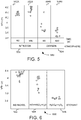
- FIG. 6 illustrates comparative chart 600, showing a comparison of threshold voltages of the semiconductor devices having the CMOS compatible contact layers fabricated by removing the Ni layer using different etchants, in accordance with the method described in FIG. 1 .
- graph 602 illustrates the threshold voltages of the semiconductor devices having the CMOS compatible contact layers fabricated without the Ni layer.
- graph 604 illustrates the threshold voltages of the semiconductor devices, when the Ni layer is etched for 10 minutes using HCl+HNO 3 +H 2 O having the ratio of 3:1:2.
- graph 606 illustrates the threshold voltages of the semiconductor devices, when the Ni layer is etched for 2 minutes using H 2 SO 4 +H 2 O 2 .
- threshold voltage range is 3.8v to 4.4v.
- the threshold voltages of the semiconductor devices are in the range of 3.2v to 4.1v.
- the threshold voltages of the semiconductor devices are in the range of 2.9v to 3v. Therefore, it is observed that there is a significant drop in the threshold voltages of the semiconductor devices when the Ni layer is etched using H 2 SO 4 +H 2 O 2 .
- the semiconductor devices having the CMOS compatible contact layers fabricated in accordance with the method described in FIG. 1 show better electrical characteristics as compared to the approaches used in the prior art. Further, by using the CMOS compatible contact layers there is a reduction in the cost of fabricating the semiconductor devices. In other words, by using the CMOS compatible contact layers, the economy-of-scale of existing CMOS production lines is effectively used during the fabrication of the semiconductor devices.
Landscapes
- Electrodes Of Semiconductors (AREA)
- Led Devices (AREA)
- Weting (AREA)
Claims (6)
- Verfahren zur Herstellung einer komplementären Metall-Oxid-Halbleiter- (CMOS-) kompatiblen Kontaktschicht auf einer p-Typ Galliumnitrid- (GaN-) Schicht einer GaN-basierten Struktur, umfassend:- Glühen der GaN-basierten Struktur bei etwa 750 °C in einer Stickstoffatmosphäre, bevor eine Nickelschicht abgeschieden wird;- Abscheiden der Nickel-(Ni)-Schicht auf der p-Typ GaN-Schicht;- Wärmebehandlung der GaN-basierten Struktur bei einem Temperaturbereich von 350 °C bis 500 °C nach dem Abscheiden der Ni-Schicht;- Entfernen der Ni-Schicht durch Verwendung eines Ätzmittels, nachdem die GaN-basierte Struktur thermisch behandelt wurde; und- Abscheiden der CMOS-kompatiblen Kontaktschicht auf der p-Typ GaN-Schicht nach dem Entfernen der Ni-Schicht.
- Verfahren nach Anspruch 1, wobei die p-Typ GaN-Schicht Magnesium- (Mg-) Dotiermittel umfasst.
- Verfahren nach einem der vorstehenden Ansprüche, wobei die thermische Behandlung der GaN-basierten Struktur weiter umfasst: Wärmebehandlung der GaN-basierten Struktur in einer Sauerstoffatmosphäre über einen Zeitraum von etwa 60 Sekunden.
- Verfahren nach einem der vorstehenden Ansprüche, wobei die Ni-Schicht eine Dicke von 5 nm bis 15 nm umfasst.
- Verfahren nach einem der vorstehenden Ansprüche, wobei das Ätzmittel eine Lösung von Schwefelsäure (H2SO4) und Wasserstoffperoxid (H2O2) umfasst.
- Verfahren nach einem der vorstehenden Ansprüche, wobei die CMOS-kompatible Kontaktschicht eine Mehrschichtstruktur aus Titan-Aluminium-Titan (TiAlTi) umfasst.
Priority Applications (1)
| Application Number | Priority Date | Filing Date | Title |
|---|---|---|---|
| EP14189155.6A EP2881982B1 (de) | 2013-12-05 | 2014-10-16 | Verfahren zur Herstellung CMOS-kompatibler Kontaktschichten in Halbleitervorrichtungen |
Applications Claiming Priority (2)
| Application Number | Priority Date | Filing Date | Title |
|---|---|---|---|
| EP13195799 | 2013-12-05 | ||
| EP14189155.6A EP2881982B1 (de) | 2013-12-05 | 2014-10-16 | Verfahren zur Herstellung CMOS-kompatibler Kontaktschichten in Halbleitervorrichtungen |
Publications (3)
| Publication Number | Publication Date |
|---|---|
| EP2881982A2 EP2881982A2 (de) | 2015-06-10 |
| EP2881982A3 EP2881982A3 (de) | 2015-08-26 |
| EP2881982B1 true EP2881982B1 (de) | 2019-09-04 |
Family
ID=49759051
Family Applications (1)
| Application Number | Title | Priority Date | Filing Date |
|---|---|---|---|
| EP14189155.6A Active EP2881982B1 (de) | 2013-12-05 | 2014-10-16 | Verfahren zur Herstellung CMOS-kompatibler Kontaktschichten in Halbleitervorrichtungen |
Country Status (3)
| Country | Link |
|---|---|
| US (2) | US20150162212A1 (de) |
| EP (1) | EP2881982B1 (de) |
| JP (1) | JP2015109438A (de) |
Families Citing this family (2)
| Publication number | Priority date | Publication date | Assignee | Title |
|---|---|---|---|---|
| TWI568016B (zh) * | 2014-12-23 | 2017-01-21 | 錼創科技股份有限公司 | 半導體發光元件 |
| CN107180896B (zh) * | 2017-04-27 | 2019-06-28 | 华灿光电(浙江)有限公司 | 一种发光二极管的外延片及其制备方法 |
Citations (3)
| Publication number | Priority date | Publication date | Assignee | Title |
|---|---|---|---|---|
| JPH05183189A (ja) * | 1991-11-08 | 1993-07-23 | Nichia Chem Ind Ltd | p型窒化ガリウム系化合物半導体の製造方法。 |
| US20040000671A1 (en) * | 2002-06-28 | 2004-01-01 | Kopin Corporation | Electrode for p-type gallium nitride-based semiconductors |
| WO2013143289A1 (zh) * | 2012-03-28 | 2013-10-03 | 华为技术有限公司 | GaN衬底、半导体器件及其制作方法 |
Family Cites Families (58)
| Publication number | Priority date | Publication date | Assignee | Title |
|---|---|---|---|---|
| JPS63276267A (ja) * | 1987-05-08 | 1988-11-14 | Fujitsu Ltd | 半導体装置の製造方法 |
| JPH08250768A (ja) * | 1995-03-13 | 1996-09-27 | Toyoda Gosei Co Ltd | 半導体光素子 |
| CA2203557A1 (en) * | 1995-08-24 | 1997-03-06 | Mitsuhiro Nakamura | Multi-layered structure for fabricating an ohmic electrode and ohmic electrode |
| JP3292044B2 (ja) * | 1996-05-31 | 2002-06-17 | 豊田合成株式会社 | p伝導形3族窒化物半導体の電極パッド及びそれを有した素子及び素子の製造方法 |
| JP3289617B2 (ja) * | 1996-10-03 | 2002-06-10 | 豊田合成株式会社 | GaN系半導体素子の製造方法 |
| JPH1174559A (ja) * | 1997-08-28 | 1999-03-16 | Fuji Photo Film Co Ltd | 半導体発光素子および露光装置 |
| JP3509514B2 (ja) * | 1997-11-13 | 2004-03-22 | 豊田合成株式会社 | 窒化ガリウム系化合物半導体の製造方法 |
| JP4026294B2 (ja) * | 2000-03-07 | 2007-12-26 | 豊田合成株式会社 | Iii族窒化物系化合物半導体素子の製造方法 |
| US6326294B1 (en) * | 2000-04-27 | 2001-12-04 | Kwangju Institute Of Science And Technology | Method of fabricating an ohmic metal electrode for use in nitride compound semiconductor devices |
| JP4652530B2 (ja) * | 2000-07-10 | 2011-03-16 | 昭和電工株式会社 | 窒化ガリウム系化合物半導体発光素子の作製方法 |
| JP4148664B2 (ja) * | 2001-02-02 | 2008-09-10 | 三洋電機株式会社 | 窒化物系半導体レーザ素子およびその形成方法 |
| JP3520919B2 (ja) * | 2001-03-27 | 2004-04-19 | 士郎 酒井 | 窒化物系半導体装置の製造方法 |
| WO2002103769A1 (en) * | 2001-06-18 | 2002-12-27 | Toyoda Gosei Co., Ltd. | P-type semiconductor manufacturing method and semiconductor device |
| TW502438B (en) * | 2001-07-23 | 2002-09-11 | Uni Light Technology Inc | Semiconductor device with ohmic contact and method for producing the same |
| US6605832B2 (en) * | 2001-07-31 | 2003-08-12 | Xerox Corporation | Semiconductor structures having reduced contact resistance |
| JP4023121B2 (ja) * | 2001-09-06 | 2007-12-19 | 豊田合成株式会社 | n型電極、III族窒化物系化合物半導体素子、n型電極の製造方法、及びIII族窒化物系化合物半導体素子の製造方法 |
| KR100467316B1 (ko) * | 2002-03-20 | 2005-01-24 | 학교법인 포항공과대학교 | 갈륨나이트라이드계 광소자의 p형 오믹 전극 및 그 제조방법 |
| KR100491968B1 (ko) * | 2002-03-25 | 2005-05-27 | 학교법인 포항공과대학교 | 갈륨나이트라이드계 광소자의 p형 오믹 전극의 제조방법 |
| EP2101355A1 (de) * | 2002-08-29 | 2009-09-16 | Seoul Semiconductor Co., Ltd. | Lichtemittierende Vorrichtung mit lichtemittierenden Elementen |
| JP4311000B2 (ja) * | 2002-11-28 | 2009-08-12 | 日亜化学工業株式会社 | 窒化物半導体発光素子とその製造方法 |
| KR100612832B1 (ko) * | 2003-05-07 | 2006-08-18 | 삼성전자주식회사 | 고성능의 질화갈륨계 광소자 구현을 위한 니켈계 고용체를 이용한 오믹 접촉 형성을 위한 금속박막 및 그 제조방법 |
| KR100707167B1 (ko) * | 2003-07-11 | 2007-04-13 | 삼성전자주식회사 | 고성능의 질화갈륨계 광소자 구현을 위한 p형 열전산화물을 형성하는 2원계 및 3원계 합금 또는 고용체박막을 이용한 오믹접촉 형성을 위한 박막전극 및 그제조방법 |
| JP4030534B2 (ja) * | 2003-07-25 | 2008-01-09 | 昭和電工株式会社 | 化合物半導体発光素子およびその製造方法 |
| KR100506736B1 (ko) * | 2003-10-10 | 2005-08-08 | 삼성전기주식회사 | 질화갈륨계 반도체 발광 소자 및 그 제조방법 |
| KR100571819B1 (ko) * | 2003-10-16 | 2006-04-17 | 삼성전자주식회사 | 질화물계 발광소자 및 그 제조방법 |
| US7009215B2 (en) * | 2003-10-24 | 2006-03-07 | General Electric Company | Group III-nitride based resonant cavity light emitting devices fabricated on single crystal gallium nitride substrates |
| JP4479657B2 (ja) * | 2003-10-27 | 2010-06-09 | 住友電気工業株式会社 | 窒化ガリウム系半導体基板の製造方法 |
| DE60341314C5 (de) * | 2003-12-09 | 2023-03-23 | The Regents Of The University Of California | Hocheffiziente leuchtdioden auf galliumnitridbasis mit oberflächenaufrauhung |
| KR100590532B1 (ko) * | 2003-12-22 | 2006-06-15 | 삼성전자주식회사 | 플립칩형 질화물계 발광소자 및 그 제조방법 |
| US20050167681A1 (en) * | 2004-02-04 | 2005-08-04 | Samsung Electronics Co., Ltd. | Electrode layer, light emitting device including the same, and method of forming the electrode layer |
| US7547928B2 (en) * | 2004-06-30 | 2009-06-16 | Interuniversitair Microelektronica Centrum (Imec) | AlGaN/GaN high electron mobility transistor devices |
| KR100773538B1 (ko) * | 2004-10-07 | 2007-11-07 | 삼성전자주식회사 | 반사 전극 및 이를 구비하는 화합물 반도체 발광소자 |
| JP4301136B2 (ja) * | 2004-10-18 | 2009-07-22 | サンケン電気株式会社 | 半導体発光素子およびその製造方法 |
| JP2006324628A (ja) * | 2005-05-16 | 2006-11-30 | Interuniv Micro Electronica Centrum Vzw | 完全ケイ化ゲート形成方法及び当該方法によって得られたデバイス |
| WO2006129553A1 (ja) * | 2005-06-03 | 2006-12-07 | The Furukawa Electric Co., Ltd. | Iii-v族窒化物系化合物半導体装置、及び電極形成方法 |
| TWI255568B (en) * | 2005-09-15 | 2006-05-21 | Chipmos Technologies Inc | Light emitting diode and fabricating method thereof |
| JP4694395B2 (ja) * | 2006-03-22 | 2011-06-08 | 日本オプネクスト株式会社 | 窒化物半導体発光素子及びその製造方法 |
| JP5462161B2 (ja) * | 2007-07-20 | 2014-04-02 | アイメック | Iii−v族mesfetでのダマシンコンタクト製造方法 |
| JP2009212472A (ja) * | 2008-03-06 | 2009-09-17 | Rohm Co Ltd | 窒化物半導体素子 |
| JP2010232279A (ja) * | 2009-03-26 | 2010-10-14 | Furukawa Electric Co Ltd:The | 電界効果トランジスタ |
| KR101694883B1 (ko) * | 2009-04-08 | 2017-01-10 | 이피션트 파워 컨버젼 코퍼레이션 | 역확산 억제 구조 |
| US20110140173A1 (en) * | 2009-12-16 | 2011-06-16 | National Semiconductor Corporation | Low OHMIC contacts containing germanium for gallium nitride or other nitride-based power devices |
| WO2011077473A1 (ja) * | 2009-12-21 | 2011-06-30 | 株式会社 東芝 | 窒化物半導体発光素子およびその製造方法 |
| US20110291147A1 (en) * | 2010-05-25 | 2011-12-01 | Yongjun Jeff Hu | Ohmic contacts for semiconductor structures |
| JP2012084739A (ja) * | 2010-10-13 | 2012-04-26 | Sumitomo Electric Ind Ltd | 半導体装置およびその製造方法 |
| US9070758B2 (en) * | 2011-06-20 | 2015-06-30 | Imec | CMOS compatible method for manufacturing a HEMT device and the HEMT device thereof |
| US9666764B2 (en) * | 2012-04-09 | 2017-05-30 | Cree, Inc. | Wafer level packaging of multiple light emitting diodes (LEDs) on a single carrier die |
| JP5713856B2 (ja) * | 2011-09-26 | 2015-05-07 | 株式会社東芝 | 光透過型金属電極、電子装置及び光学素子 |
| RU2566383C1 (ru) * | 2011-09-30 | 2015-10-27 | Соко Кагаку Ко., Лтд. | Нитридный полупроводниковый элемент и способ его изготовления |
| US9111904B2 (en) * | 2011-11-29 | 2015-08-18 | Taiwan Semiconductor Manufacturing Company, Ltd. | Substrate breakdown voltage improvement for group III-nitride on a silicon substrate |
| US9184346B2 (en) * | 2011-12-12 | 2015-11-10 | Sensor Electronic Technology, Inc. | Ultraviolet reflective contact |
| KR20130127209A (ko) * | 2012-05-14 | 2013-11-22 | 삼성전자주식회사 | 질화갈륨계 반도체 발광소자의 제조방법 |
| JP6052962B2 (ja) * | 2012-08-03 | 2016-12-27 | スタンレー電気株式会社 | 半導体発光装置 |
| CN102789976A (zh) * | 2012-08-28 | 2012-11-21 | 厦门市三安光电科技有限公司 | 一种GaN基LED芯片的制作方法 |
| EP2806463A1 (de) * | 2013-05-22 | 2014-11-26 | Imec | Ohmsche Niedrigtemperaturkontakte für III-N-Leistungsvorrichtungen |
| US9245991B2 (en) * | 2013-08-12 | 2016-01-26 | Taiwan Semiconductor Manufacturing Company, Ltd. | Semiconductor device, high electron mobility transistor (HEMT) and method of manufacturing |
| EP2843708A1 (de) * | 2013-08-28 | 2015-03-04 | Seoul Semiconductor Co., Ltd. | Transistoren auf Nitridbasis und Herstellungsverfahren dafür |
| US20150279961A1 (en) * | 2014-03-31 | 2015-10-01 | National Tsing Hua University | METHOD OF MANUFACTURING HIGH POWER VERTICAL GaN-PIN DIODE |
-
2014
- 2014-10-16 EP EP14189155.6A patent/EP2881982B1/de active Active
- 2014-10-28 JP JP2014219046A patent/JP2015109438A/ja active Pending
- 2014-11-24 US US14/551,398 patent/US20150162212A1/en not_active Abandoned
-
2016
- 2016-01-06 US US14/989,114 patent/US9698309B2/en active Active
Patent Citations (4)
| Publication number | Priority date | Publication date | Assignee | Title |
|---|---|---|---|---|
| JPH05183189A (ja) * | 1991-11-08 | 1993-07-23 | Nichia Chem Ind Ltd | p型窒化ガリウム系化合物半導体の製造方法。 |
| US20040000671A1 (en) * | 2002-06-28 | 2004-01-01 | Kopin Corporation | Electrode for p-type gallium nitride-based semiconductors |
| WO2013143289A1 (zh) * | 2012-03-28 | 2013-10-03 | 华为技术有限公司 | GaN衬底、半导体器件及其制作方法 |
| EP2806459A1 (de) * | 2012-03-28 | 2014-11-26 | Huawei Technologies Co., Ltd | Gan-substrat, halbleiterbauelement und herstellungsverfahren dafür |
Also Published As
| Publication number | Publication date |
|---|---|
| EP2881982A3 (de) | 2015-08-26 |
| US20150162212A1 (en) | 2015-06-11 |
| EP2881982A2 (de) | 2015-06-10 |
| US20160118542A1 (en) | 2016-04-28 |
| US9698309B2 (en) | 2017-07-04 |
| JP2015109438A (ja) | 2015-06-11 |
Similar Documents
| Publication | Publication Date | Title |
|---|---|---|
| US7875534B2 (en) | Realizing N-face III-nitride semiconductors by nitridation treatment | |
| KR100755656B1 (ko) | 질화물계 반도체 발광소자의 제조방법 | |
| WO2003065526A1 (en) | Quantum well structure and semiconductor element using it and production method of semiconductor element | |
| JP2008244307A (ja) | 半導体発光素子および窒化物半導体発光素子 | |
| TWI727116B (zh) | 半導體發光元件的製造方法 | |
| KR20080022459A (ko) | 질화물계 반도체 발광소자의 제조방법 | |
| JP5103979B2 (ja) | III族窒化物系化合物半導体に対する電極形成方法及びp型III族窒化物系化合物半導体の製造方法 | |
| KR100988194B1 (ko) | 반도체 발광 소자 및 그 제조 방법 | |
| US8431936B2 (en) | Method for fabricating a p-type semiconductor structure | |
| US9698309B2 (en) | Method for fabricating CMOS compatible contact layers in semiconductor devices | |
| CN112750925A (zh) | 深紫外led器件结构及其制备方法 | |
| CN101834240A (zh) | 具有高反射率接触电极的发光二极管及其制造方法 | |
| TWI736707B (zh) | 半導體發光元件的製造方法 | |
| JP2009272441A (ja) | 半導体装置および半導体装置の製造方法 | |
| US20140284550A1 (en) | Light-emitting device | |
| JP6260159B2 (ja) | 窒化物半導体発光ダイオード、及びその製造方法 | |
| CN104201255B (zh) | 一种提升GaN基发光器件p型欧姆接触性能的方法 | |
| KR20110099682A (ko) | Ⅲ족 질화물계 반도체 소자 | |
| JP2010245109A (ja) | Iii族窒化物系半導体素子、及び電極を作製する方法 | |
| US12040432B2 (en) | Light emitting diode devices with patterned TCO layer including different thicknesses | |
| JP2007208047A (ja) | 半導体発光素子 | |
| KR101045949B1 (ko) | 질화물 반도체 발광소자 및 이의 제조 방법 | |
| WO2025103303A1 (zh) | 显示芯片及制作方法 | |
| CN104900767A (zh) | 发光二极管p型掺杂层生长方法 | |
| KR20140012584A (ko) | 질화물계 반도체 소자 |
Legal Events
| Date | Code | Title | Description |
|---|---|---|---|
| PUAI | Public reference made under article 153(3) epc to a published international application that has entered the european phase |
Free format text: ORIGINAL CODE: 0009012 |
|
| 17P | Request for examination filed |
Effective date: 20141016 |
|
| AK | Designated contracting states |
Kind code of ref document: A2 Designated state(s): AL AT BE BG CH CY CZ DE DK EE ES FI FR GB GR HR HU IE IS IT LI LT LU LV MC MK MT NL NO PL PT RO RS SE SI SK SM TR |
|
| AX | Request for extension of the european patent |
Extension state: BA ME |
|
| PUAL | Search report despatched |
Free format text: ORIGINAL CODE: 0009013 |
|
| RIC1 | Information provided on ipc code assigned before grant |
Ipc: H01L 21/3205 20060101ALI20150709BHEP Ipc: H01L 21/8252 20060101AFI20150709BHEP Ipc: H01L 21/3213 20060101ALI20150709BHEP Ipc: H01L 29/45 20060101ALI20150709BHEP |
|
| AK | Designated contracting states |
Kind code of ref document: A3 Designated state(s): AL AT BE BG CH CY CZ DE DK EE ES FI FR GB GR HR HU IE IS IT LI LT LU LV MC MK MT NL NO PL PT RO RS SE SI SK SM TR |
|
| AX | Request for extension of the european patent |
Extension state: BA ME |
|
| RIC1 | Information provided on ipc code assigned before grant |
Ipc: H01L 21/3205 20060101ALI20150717BHEP Ipc: H01L 29/45 20060101ALI20150717BHEP Ipc: H01L 21/8252 20060101AFI20150717BHEP Ipc: H01L 21/3213 20060101ALI20150717BHEP |
|
| R17P | Request for examination filed (corrected) |
Effective date: 20160210 |
|
| RBV | Designated contracting states (corrected) |
Designated state(s): AL AT BE BG CH CY CZ DE DK EE ES FI FR GB GR HR HU IE IS IT LI LT LU LV MC MK MT NL NO PL PT RO RS SE SI SK SM TR |
|
| STAA | Information on the status of an ep patent application or granted ep patent |
Free format text: STATUS: EXAMINATION IS IN PROGRESS |
|
| 17Q | First examination report despatched |
Effective date: 20170425 |
|
| GRAP | Despatch of communication of intention to grant a patent |
Free format text: ORIGINAL CODE: EPIDOSNIGR1 |
|
| STAA | Information on the status of an ep patent application or granted ep patent |
Free format text: STATUS: GRANT OF PATENT IS INTENDED |
|
| RIC1 | Information provided on ipc code assigned before grant |
Ipc: H01L 21/3205 20060101ALI20181102BHEP Ipc: H01L 29/207 20060101ALI20181102BHEP Ipc: H01L 33/40 20100101ALI20181102BHEP Ipc: H01L 29/45 20060101ALI20181102BHEP Ipc: H01L 29/20 20060101ALI20181102BHEP Ipc: H01L 21/324 20060101ALI20181102BHEP Ipc: H01L 21/3213 20060101ALI20181102BHEP Ipc: H01L 33/32 20100101ALI20181102BHEP Ipc: H01L 21/8252 20060101AFI20181102BHEP |
|
| INTG | Intention to grant announced |
Effective date: 20181203 |
|
| GRAJ | Information related to disapproval of communication of intention to grant by the applicant or resumption of examination proceedings by the epo deleted |
Free format text: ORIGINAL CODE: EPIDOSDIGR1 |
|
| STAA | Information on the status of an ep patent application or granted ep patent |
Free format text: STATUS: EXAMINATION IS IN PROGRESS |
|
| GRAP | Despatch of communication of intention to grant a patent |
Free format text: ORIGINAL CODE: EPIDOSNIGR1 |
|
| STAA | Information on the status of an ep patent application or granted ep patent |
Free format text: STATUS: GRANT OF PATENT IS INTENDED |
|
| INTC | Intention to grant announced (deleted) | ||
| INTG | Intention to grant announced |
Effective date: 20190508 |
|
| GRAS | Grant fee paid |
Free format text: ORIGINAL CODE: EPIDOSNIGR3 |
|
| GRAA | (expected) grant |
Free format text: ORIGINAL CODE: 0009210 |
|
| STAA | Information on the status of an ep patent application or granted ep patent |
Free format text: STATUS: THE PATENT HAS BEEN GRANTED |
|
| AK | Designated contracting states |
Kind code of ref document: B1 Designated state(s): AL AT BE BG CH CY CZ DE DK EE ES FI FR GB GR HR HU IE IS IT LI LT LU LV MC MK MT NL NO PL PT RO RS SE SI SK SM TR |
|
| REG | Reference to a national code |
Ref country code: GB Ref legal event code: FG4D |
|
| REG | Reference to a national code |
Ref country code: CH Ref legal event code: EP |
|
| REG | Reference to a national code |
Ref country code: AT Ref legal event code: REF Ref document number: 1176568 Country of ref document: AT Kind code of ref document: T Effective date: 20190915 |
|
| REG | Reference to a national code |
Ref country code: DE Ref legal event code: R096 Ref document number: 602014052875 Country of ref document: DE |
|
| REG | Reference to a national code |
Ref country code: IE Ref legal event code: FG4D |
|
| REG | Reference to a national code |
Ref country code: NL Ref legal event code: MP Effective date: 20190904 |
|
| REG | Reference to a national code |
Ref country code: LT Ref legal event code: MG4D |
|
| PG25 | Lapsed in a contracting state [announced via postgrant information from national office to epo] |
Ref country code: SE Free format text: LAPSE BECAUSE OF FAILURE TO SUBMIT A TRANSLATION OF THE DESCRIPTION OR TO PAY THE FEE WITHIN THE PRESCRIBED TIME-LIMIT Effective date: 20190904 Ref country code: BG Free format text: LAPSE BECAUSE OF FAILURE TO SUBMIT A TRANSLATION OF THE DESCRIPTION OR TO PAY THE FEE WITHIN THE PRESCRIBED TIME-LIMIT Effective date: 20191204 Ref country code: NO Free format text: LAPSE BECAUSE OF FAILURE TO SUBMIT A TRANSLATION OF THE DESCRIPTION OR TO PAY THE FEE WITHIN THE PRESCRIBED TIME-LIMIT Effective date: 20191204 Ref country code: FI Free format text: LAPSE BECAUSE OF FAILURE TO SUBMIT A TRANSLATION OF THE DESCRIPTION OR TO PAY THE FEE WITHIN THE PRESCRIBED TIME-LIMIT Effective date: 20190904 Ref country code: HR Free format text: LAPSE BECAUSE OF FAILURE TO SUBMIT A TRANSLATION OF THE DESCRIPTION OR TO PAY THE FEE WITHIN THE PRESCRIBED TIME-LIMIT Effective date: 20190904 Ref country code: LT Free format text: LAPSE BECAUSE OF FAILURE TO SUBMIT A TRANSLATION OF THE DESCRIPTION OR TO PAY THE FEE WITHIN THE PRESCRIBED TIME-LIMIT Effective date: 20190904 |
|
| PG25 | Lapsed in a contracting state [announced via postgrant information from national office to epo] |
Ref country code: AL Free format text: LAPSE BECAUSE OF FAILURE TO SUBMIT A TRANSLATION OF THE DESCRIPTION OR TO PAY THE FEE WITHIN THE PRESCRIBED TIME-LIMIT Effective date: 20190904 Ref country code: ES Free format text: LAPSE BECAUSE OF FAILURE TO SUBMIT A TRANSLATION OF THE DESCRIPTION OR TO PAY THE FEE WITHIN THE PRESCRIBED TIME-LIMIT Effective date: 20190904 Ref country code: GR Free format text: LAPSE BECAUSE OF FAILURE TO SUBMIT A TRANSLATION OF THE DESCRIPTION OR TO PAY THE FEE WITHIN THE PRESCRIBED TIME-LIMIT Effective date: 20191205 Ref country code: RS Free format text: LAPSE BECAUSE OF FAILURE TO SUBMIT A TRANSLATION OF THE DESCRIPTION OR TO PAY THE FEE WITHIN THE PRESCRIBED TIME-LIMIT Effective date: 20190904 Ref country code: LV Free format text: LAPSE BECAUSE OF FAILURE TO SUBMIT A TRANSLATION OF THE DESCRIPTION OR TO PAY THE FEE WITHIN THE PRESCRIBED TIME-LIMIT Effective date: 20190904 |
|
| REG | Reference to a national code |
Ref country code: AT Ref legal event code: MK05 Ref document number: 1176568 Country of ref document: AT Kind code of ref document: T Effective date: 20190904 |
|
| PG25 | Lapsed in a contracting state [announced via postgrant information from national office to epo] |
Ref country code: PT Free format text: LAPSE BECAUSE OF FAILURE TO SUBMIT A TRANSLATION OF THE DESCRIPTION OR TO PAY THE FEE WITHIN THE PRESCRIBED TIME-LIMIT Effective date: 20200106 Ref country code: PL Free format text: LAPSE BECAUSE OF FAILURE TO SUBMIT A TRANSLATION OF THE DESCRIPTION OR TO PAY THE FEE WITHIN THE PRESCRIBED TIME-LIMIT Effective date: 20190904 Ref country code: EE Free format text: LAPSE BECAUSE OF FAILURE TO SUBMIT A TRANSLATION OF THE DESCRIPTION OR TO PAY THE FEE WITHIN THE PRESCRIBED TIME-LIMIT Effective date: 20190904 Ref country code: RO Free format text: LAPSE BECAUSE OF FAILURE TO SUBMIT A TRANSLATION OF THE DESCRIPTION OR TO PAY THE FEE WITHIN THE PRESCRIBED TIME-LIMIT Effective date: 20190904 Ref country code: IT Free format text: LAPSE BECAUSE OF FAILURE TO SUBMIT A TRANSLATION OF THE DESCRIPTION OR TO PAY THE FEE WITHIN THE PRESCRIBED TIME-LIMIT Effective date: 20190904 Ref country code: NL Free format text: LAPSE BECAUSE OF FAILURE TO SUBMIT A TRANSLATION OF THE DESCRIPTION OR TO PAY THE FEE WITHIN THE PRESCRIBED TIME-LIMIT Effective date: 20190904 Ref country code: AT Free format text: LAPSE BECAUSE OF FAILURE TO SUBMIT A TRANSLATION OF THE DESCRIPTION OR TO PAY THE FEE WITHIN THE PRESCRIBED TIME-LIMIT Effective date: 20190904 |
|
| PG25 | Lapsed in a contracting state [announced via postgrant information from national office to epo] |
Ref country code: IS Free format text: LAPSE BECAUSE OF FAILURE TO SUBMIT A TRANSLATION OF THE DESCRIPTION OR TO PAY THE FEE WITHIN THE PRESCRIBED TIME-LIMIT Effective date: 20200224 Ref country code: CZ Free format text: LAPSE BECAUSE OF FAILURE TO SUBMIT A TRANSLATION OF THE DESCRIPTION OR TO PAY THE FEE WITHIN THE PRESCRIBED TIME-LIMIT Effective date: 20190904 Ref country code: SK Free format text: LAPSE BECAUSE OF FAILURE TO SUBMIT A TRANSLATION OF THE DESCRIPTION OR TO PAY THE FEE WITHIN THE PRESCRIBED TIME-LIMIT Effective date: 20190904 Ref country code: SM Free format text: LAPSE BECAUSE OF FAILURE TO SUBMIT A TRANSLATION OF THE DESCRIPTION OR TO PAY THE FEE WITHIN THE PRESCRIBED TIME-LIMIT Effective date: 20190904 |
|
| REG | Reference to a national code |
Ref country code: CH Ref legal event code: PL |
|
| REG | Reference to a national code |
Ref country code: DE Ref legal event code: R097 Ref document number: 602014052875 Country of ref document: DE |
|
| PLBE | No opposition filed within time limit |
Free format text: ORIGINAL CODE: 0009261 |
|
| STAA | Information on the status of an ep patent application or granted ep patent |
Free format text: STATUS: NO OPPOSITION FILED WITHIN TIME LIMIT |
|
| PG2D | Information on lapse in contracting state deleted |
Ref country code: IS |
|
| PG25 | Lapsed in a contracting state [announced via postgrant information from national office to epo] |
Ref country code: LI Free format text: LAPSE BECAUSE OF NON-PAYMENT OF DUE FEES Effective date: 20191031 Ref country code: DK Free format text: LAPSE BECAUSE OF FAILURE TO SUBMIT A TRANSLATION OF THE DESCRIPTION OR TO PAY THE FEE WITHIN THE PRESCRIBED TIME-LIMIT Effective date: 20190904 Ref country code: LU Free format text: LAPSE BECAUSE OF NON-PAYMENT OF DUE FEES Effective date: 20191016 Ref country code: CH Free format text: LAPSE BECAUSE OF NON-PAYMENT OF DUE FEES Effective date: 20191031 Ref country code: IS Free format text: LAPSE BECAUSE OF FAILURE TO SUBMIT A TRANSLATION OF THE DESCRIPTION OR TO PAY THE FEE WITHIN THE PRESCRIBED TIME-LIMIT Effective date: 20200105 |
|
| 26N | No opposition filed |
Effective date: 20200605 |
|
| REG | Reference to a national code |
Ref country code: BE Ref legal event code: MM Effective date: 20191031 |
|
| PG25 | Lapsed in a contracting state [announced via postgrant information from national office to epo] |
Ref country code: BE Free format text: LAPSE BECAUSE OF NON-PAYMENT OF DUE FEES Effective date: 20191031 Ref country code: SI Free format text: LAPSE BECAUSE OF FAILURE TO SUBMIT A TRANSLATION OF THE DESCRIPTION OR TO PAY THE FEE WITHIN THE PRESCRIBED TIME-LIMIT Effective date: 20190904 Ref country code: MC Free format text: LAPSE BECAUSE OF FAILURE TO SUBMIT A TRANSLATION OF THE DESCRIPTION OR TO PAY THE FEE WITHIN THE PRESCRIBED TIME-LIMIT Effective date: 20190904 |
|
| GBPC | Gb: european patent ceased through non-payment of renewal fee |
Effective date: 20191204 |
|
| PG25 | Lapsed in a contracting state [announced via postgrant information from national office to epo] |
Ref country code: GB Free format text: LAPSE BECAUSE OF NON-PAYMENT OF DUE FEES Effective date: 20191204 Ref country code: IE Free format text: LAPSE BECAUSE OF NON-PAYMENT OF DUE FEES Effective date: 20191016 |
|
| PG25 | Lapsed in a contracting state [announced via postgrant information from national office to epo] |
Ref country code: CY Free format text: LAPSE BECAUSE OF FAILURE TO SUBMIT A TRANSLATION OF THE DESCRIPTION OR TO PAY THE FEE WITHIN THE PRESCRIBED TIME-LIMIT Effective date: 20190904 |
|
| PG25 | Lapsed in a contracting state [announced via postgrant information from national office to epo] |
Ref country code: MT Free format text: LAPSE BECAUSE OF FAILURE TO SUBMIT A TRANSLATION OF THE DESCRIPTION OR TO PAY THE FEE WITHIN THE PRESCRIBED TIME-LIMIT Effective date: 20190904 Ref country code: HU Free format text: LAPSE BECAUSE OF FAILURE TO SUBMIT A TRANSLATION OF THE DESCRIPTION OR TO PAY THE FEE WITHIN THE PRESCRIBED TIME-LIMIT; INVALID AB INITIO Effective date: 20141016 |
|
| PG25 | Lapsed in a contracting state [announced via postgrant information from national office to epo] |
Ref country code: TR Free format text: LAPSE BECAUSE OF FAILURE TO SUBMIT A TRANSLATION OF THE DESCRIPTION OR TO PAY THE FEE WITHIN THE PRESCRIBED TIME-LIMIT Effective date: 20190904 |
|
| PG25 | Lapsed in a contracting state [announced via postgrant information from national office to epo] |
Ref country code: MK Free format text: LAPSE BECAUSE OF FAILURE TO SUBMIT A TRANSLATION OF THE DESCRIPTION OR TO PAY THE FEE WITHIN THE PRESCRIBED TIME-LIMIT Effective date: 20190904 |
|
| P01 | Opt-out of the competence of the unified patent court (upc) registered |
Effective date: 20230513 |
|
| REG | Reference to a national code |
Ref country code: DE Ref legal event code: R079 Ref document number: 602014052875 Country of ref document: DE Free format text: PREVIOUS MAIN CLASS: H01L0021825200 Ipc: H10D0084050000 |
|
| PGFP | Annual fee paid to national office [announced via postgrant information from national office to epo] |
Ref country code: FR Payment date: 20250923 Year of fee payment: 12 |
|
| PGFP | Annual fee paid to national office [announced via postgrant information from national office to epo] |
Ref country code: DE Payment date: 20250923 Year of fee payment: 12 |