EP2440559B1 - Egfr inhibitors and methods of treating disorders - Google Patents
Egfr inhibitors and methods of treating disorders Download PDFInfo
- Publication number
- EP2440559B1 EP2440559B1 EP10772385.0A EP10772385A EP2440559B1 EP 2440559 B1 EP2440559 B1 EP 2440559B1 EP 10772385 A EP10772385 A EP 10772385A EP 2440559 B1 EP2440559 B1 EP 2440559B1
- Authority
- EP
- European Patent Office
- Prior art keywords
- heterocyclic
- independently
- heteroaryl
- egfr
- aryl
- Prior art date
- Legal status (The legal status is an assumption and is not a legal conclusion. Google has not performed a legal analysis and makes no representation as to the accuracy of the status listed.)
- Not-in-force
Links
- 0 CCN(C)C(CC*)=O Chemical compound CCN(C)C(CC*)=O 0.000 description 3
- VHGGRTWHRJRQKU-UHFFFAOYSA-N CN(CC=C1)C1=O Chemical compound CN(CC=C1)C1=O VHGGRTWHRJRQKU-UHFFFAOYSA-N 0.000 description 2
- HEENAZUJVXSMHE-UHFFFAOYSA-N CC(C#N)N1CCN(C)CC1 Chemical compound CC(C#N)N1CCN(C)CC1 HEENAZUJVXSMHE-UHFFFAOYSA-N 0.000 description 1
- AOGSDSILFJVKJR-JXMROGBWSA-N CC(C)S(c(cccc1)c1Nc(nc(Nc(cc1)ccc1NC(/C=C/CN(C)C)=O)nc1)c1Cl)(=O)=O Chemical compound CC(C)S(c(cccc1)c1Nc(nc(Nc(cc1)ccc1NC(/C=C/CN(C)C)=O)nc1)c1Cl)(=O)=O AOGSDSILFJVKJR-JXMROGBWSA-N 0.000 description 1
- BGZKFUWEJKUXSM-UHFFFAOYSA-N CC(CC(N1C)=O)=CC1=O Chemical compound CC(CC(N1C)=O)=CC1=O BGZKFUWEJKUXSM-UHFFFAOYSA-N 0.000 description 1
- FHRYZLPZQIHDFO-UHFFFAOYSA-N CCC(N(C)c(cc1)ccc1Nc1nc(N(CC2)CCC2NC(C=C)=O)c2nc[nH]c2n1)=O Chemical compound CCC(N(C)c(cc1)ccc1Nc1nc(N(CC2)CCC2NC(C=C)=O)c2nc[nH]c2n1)=O FHRYZLPZQIHDFO-UHFFFAOYSA-N 0.000 description 1
- OTPQDXLFXQGSHS-UHFFFAOYSA-N CCC(N(C)c(cc1)ccc1Nc1nc(NC(CCC2)CN2C(C=C)=O)c2nc[nH]c2n1)=O Chemical compound CCC(N(C)c(cc1)ccc1Nc1nc(NC(CCC2)CN2C(C=C)=O)c2nc[nH]c2n1)=O OTPQDXLFXQGSHS-UHFFFAOYSA-N 0.000 description 1
- OOTUGRIPTXTAPS-UHFFFAOYSA-N CCC(N(C)c(cc1)ccc1Nc1nc(NC(CCC2)CN2C(CC)=O)c2nc[nH]c2n1)=O Chemical compound CCC(N(C)c(cc1)ccc1Nc1nc(NC(CCC2)CN2C(CC)=O)c2nc[nH]c2n1)=O OOTUGRIPTXTAPS-UHFFFAOYSA-N 0.000 description 1
- KVYWGEARTFDKKG-UHFFFAOYSA-N CCC(N(C)c(cc1)ccc1[N+]([O-])=O)=O Chemical compound CCC(N(C)c(cc1)ccc1[N+]([O-])=O)=O KVYWGEARTFDKKG-UHFFFAOYSA-N 0.000 description 1
- RIVCOQTUTFSYJZ-UHFFFAOYSA-N CCNC1=CC=C(C)CC=C1 Chemical compound CCNC1=CC=C(C)CC=C1 RIVCOQTUTFSYJZ-UHFFFAOYSA-N 0.000 description 1
- SEEYREPSKCQBBF-UHFFFAOYSA-N CN(C(C=C1)=O)C1=O Chemical compound CN(C(C=C1)=O)C1=O SEEYREPSKCQBBF-UHFFFAOYSA-N 0.000 description 1
- QSFQNBLZKFNECJ-UHFFFAOYSA-N CN(C)C(CC1)CN1I Chemical compound CN(C)C(CC1)CN1I QSFQNBLZKFNECJ-UHFFFAOYSA-N 0.000 description 1
- GDIFCQLWYYKKCZ-UHFFFAOYSA-N CN(C)C(CC1)CN1c(cc1OC)ccc1Nc(nc1)nc(Oc2cc(NC(C=C)=O)ccc2)c1Cl Chemical compound CN(C)C(CC1)CN1c(cc1OC)ccc1Nc(nc1)nc(Oc2cc(NC(C=C)=O)ccc2)c1Cl GDIFCQLWYYKKCZ-UHFFFAOYSA-N 0.000 description 1
- MRPCEDWPRFGSQS-UHFFFAOYSA-N CN(C)CCCNc(cc1OC)ccc1Nc(nc1)nc(Oc2cc(NC(C=C)=O)ccc2)c1Cl Chemical compound CN(C)CCCNc(cc1OC)ccc1Nc(nc1)nc(Oc2cc(NC(C=C)=O)ccc2)c1Cl MRPCEDWPRFGSQS-UHFFFAOYSA-N 0.000 description 1
- BTVJTKWOCSGJDQ-UHFFFAOYSA-N CN(CC1)CCC1C(N)=O Chemical compound CN(CC1)CCC1C(N)=O BTVJTKWOCSGJDQ-UHFFFAOYSA-N 0.000 description 1
- GPASDLXNNAPVRX-UHFFFAOYSA-N CN(CC1)CCC1N1CCCCC1 Chemical compound CN(CC1)CCC1N1CCCCC1 GPASDLXNNAPVRX-UHFFFAOYSA-N 0.000 description 1
- YZMIRCBSCFJIFB-UHFFFAOYSA-N CN(CC1)CCC1OC Chemical compound CN(CC1)CCC1OC YZMIRCBSCFJIFB-UHFFFAOYSA-N 0.000 description 1
- CWPBOUXRQQDMTC-UHFFFAOYSA-N CN(CC1)CCC1Oc(cc1)cc(OC)c1Nc(nc1)nc(Oc2cc(NC(C=C)=O)ccc2)c1Cl Chemical compound CN(CC1)CCC1Oc(cc1)cc(OC)c1Nc(nc1)nc(Oc2cc(NC(C=C)=O)ccc2)c1Cl CWPBOUXRQQDMTC-UHFFFAOYSA-N 0.000 description 1
- ORLNAWKFJOUGBS-UHFFFAOYSA-N CN(CC1)CCN1c(cc1)cc(OC)c1Nc1nc(Oc2cc(NC(C=C)=O)ccc2)c(cn[nH]2)c2n1 Chemical compound CN(CC1)CCN1c(cc1)cc(OC)c1Nc1nc(Oc2cc(NC(C=C)=O)ccc2)c(cn[nH]2)c2n1 ORLNAWKFJOUGBS-UHFFFAOYSA-N 0.000 description 1
- DBGGIUVHCOGOSD-UHFFFAOYSA-N CN(CC1)CCN1c(cc1)ccc1Nc(nc1)nc(N(CC2)c3c2ccc(NC(C=C)=O)c3)c1Cl Chemical compound CN(CC1)CCN1c(cc1)ccc1Nc(nc1)nc(N(CC2)c3c2ccc(NC(C=C)=O)c3)c1Cl DBGGIUVHCOGOSD-UHFFFAOYSA-N 0.000 description 1
- GJXWYORWANFTCG-UHFFFAOYSA-N CN(CC1)CCN1c(cc1)ccc1Nc(nc1)nc(Oc(cc2)ccc2NC(C=C)=O)c1Cl Chemical compound CN(CC1)CCN1c(cc1)ccc1Nc(nc1)nc(Oc(cc2)ccc2NC(C=C)=O)c1Cl GJXWYORWANFTCG-UHFFFAOYSA-N 0.000 description 1
- KMVGFBJMBRMHMW-UHFFFAOYSA-N CN(CC1)CCN1c(cc1)cnc1Nc(nc1)nc(Oc2cc(NC(C=C)=O)ccc2)c1Cl Chemical compound CN(CC1)CCN1c(cc1)cnc1Nc(nc1)nc(Oc2cc(NC(C=C)=O)ccc2)c1Cl KMVGFBJMBRMHMW-UHFFFAOYSA-N 0.000 description 1
- ACYSGNKOTCFOSQ-UHFFFAOYSA-N CN(CC1)CCN1c(cc1OC)ccc1Nc(nc1)nc(Nc2cc(NC(C=C)=O)ccc2)c1Cl Chemical compound CN(CC1)CCN1c(cc1OC)ccc1Nc(nc1)nc(Nc2cc(NC(C=C)=O)ccc2)c1Cl ACYSGNKOTCFOSQ-UHFFFAOYSA-N 0.000 description 1
- MUOSQROTKVXTFE-UHFFFAOYSA-N CN(CC1)CCN1c(cc1OC)ccc1Nc(nc1)nc(Oc2cc(NC(C=C)=O)cc(F)c2)c1Cl Chemical compound CN(CC1)CCN1c(cc1OC)ccc1Nc(nc1)nc(Oc2cc(NC(C=C)=O)cc(F)c2)c1Cl MUOSQROTKVXTFE-UHFFFAOYSA-N 0.000 description 1
- SKVDSWBGMRMWRY-UHFFFAOYSA-N CN(CC1)CCN1c(cc1OC)ccc1Nc1cc(Oc2cc(NC(C=C)=O)ccc2)c(cc[nH]2)c2n1 Chemical compound CN(CC1)CCN1c(cc1OC)ccc1Nc1cc(Oc2cc(NC(C=C)=O)ccc2)c(cc[nH]2)c2n1 SKVDSWBGMRMWRY-UHFFFAOYSA-N 0.000 description 1
- MTTLWSIECSQKME-UHFFFAOYSA-N CN1CCN(Cc(cc2OC)ccc2Nc(nc2)nc(Oc3cc(NC(C=C)=O)ccc3)c2Cl)CC1 Chemical compound CN1CCN(Cc(cc2OC)ccc2Nc(nc2)nc(Oc3cc(NC(C=C)=O)ccc3)c2Cl)CC1 MTTLWSIECSQKME-UHFFFAOYSA-N 0.000 description 1
- BPVJSKXIWKALTH-SNAWJCMRSA-N CNC(/C=C/CN(C)C)=O Chemical compound CNC(/C=C/CN(C)C)=O BPVJSKXIWKALTH-SNAWJCMRSA-N 0.000 description 1
- JAEQOSKUYPMJAT-UHFFFAOYSA-N COCCN1CCOCC1 Chemical compound COCCN1CCOCC1 JAEQOSKUYPMJAT-UHFFFAOYSA-N 0.000 description 1
- NYBXCMTUMUARSE-UHFFFAOYSA-N COc1cc(N(CC2)CCC2N2CCCCC2)ccc1Nc(nc1)nc(Oc2cc(NC(C=C)=O)ccc2)c1Cl Chemical compound COc1cc(N(CC2)CCC2N2CCCCC2)ccc1Nc(nc1)nc(Oc2cc(NC(C=C)=O)ccc2)c1Cl NYBXCMTUMUARSE-UHFFFAOYSA-N 0.000 description 1
- WPEVXTMBTWBQTP-UHFFFAOYSA-N Cc(cc1Nc(nc2)cc(Oc3cccc(NC(C=C)=O)c3)c2Cl)c(C2CCN(C)CC2)cc1OC Chemical compound Cc(cc1Nc(nc2)cc(Oc3cccc(NC(C=C)=O)c3)c2Cl)c(C2CCN(C)CC2)cc1OC WPEVXTMBTWBQTP-UHFFFAOYSA-N 0.000 description 1
Images




Classifications
-
- C—CHEMISTRY; METALLURGY
- C07—ORGANIC CHEMISTRY
- C07D—HETEROCYCLIC COMPOUNDS
- C07D473/00—Heterocyclic compounds containing purine ring systems
- C07D473/02—Heterocyclic compounds containing purine ring systems with oxygen, sulphur, or nitrogen atoms directly attached in positions 2 and 6
- C07D473/16—Heterocyclic compounds containing purine ring systems with oxygen, sulphur, or nitrogen atoms directly attached in positions 2 and 6 two nitrogen atoms
-
- A—HUMAN NECESSITIES
- A61—MEDICAL OR VETERINARY SCIENCE; HYGIENE
- A61K—PREPARATIONS FOR MEDICAL, DENTAL OR TOILETRY PURPOSES
- A61K31/00—Medicinal preparations containing organic active ingredients
- A61K31/33—Heterocyclic compounds
- A61K31/395—Heterocyclic compounds having nitrogen as a ring hetero atom, e.g. guanethidine or rifamycins
- A61K31/495—Heterocyclic compounds having nitrogen as a ring hetero atom, e.g. guanethidine or rifamycins having six-membered rings with two or more nitrogen atoms as the only ring heteroatoms, e.g. piperazine or tetrazines
- A61K31/505—Pyrimidines; Hydrogenated pyrimidines, e.g. trimethoprim
- A61K31/519—Pyrimidines; Hydrogenated pyrimidines, e.g. trimethoprim ortho- or peri-condensed with heterocyclic rings
- A61K31/52—Purines, e.g. adenine
-
- A—HUMAN NECESSITIES
- A61—MEDICAL OR VETERINARY SCIENCE; HYGIENE
- A61P—SPECIFIC THERAPEUTIC ACTIVITY OF CHEMICAL COMPOUNDS OR MEDICINAL PREPARATIONS
- A61P1/00—Drugs for disorders of the alimentary tract or the digestive system
- A61P1/04—Drugs for disorders of the alimentary tract or the digestive system for ulcers, gastritis or reflux esophagitis, e.g. antacids, inhibitors of acid secretion, mucosal protectants
-
- A—HUMAN NECESSITIES
- A61—MEDICAL OR VETERINARY SCIENCE; HYGIENE
- A61P—SPECIFIC THERAPEUTIC ACTIVITY OF CHEMICAL COMPOUNDS OR MEDICINAL PREPARATIONS
- A61P1/00—Drugs for disorders of the alimentary tract or the digestive system
- A61P1/16—Drugs for disorders of the alimentary tract or the digestive system for liver or gallbladder disorders, e.g. hepatoprotective agents, cholagogues, litholytics
-
- A—HUMAN NECESSITIES
- A61—MEDICAL OR VETERINARY SCIENCE; HYGIENE
- A61P—SPECIFIC THERAPEUTIC ACTIVITY OF CHEMICAL COMPOUNDS OR MEDICINAL PREPARATIONS
- A61P11/00—Drugs for disorders of the respiratory system
-
- A—HUMAN NECESSITIES
- A61—MEDICAL OR VETERINARY SCIENCE; HYGIENE
- A61P—SPECIFIC THERAPEUTIC ACTIVITY OF CHEMICAL COMPOUNDS OR MEDICINAL PREPARATIONS
- A61P11/00—Drugs for disorders of the respiratory system
- A61P11/06—Antiasthmatics
-
- A—HUMAN NECESSITIES
- A61—MEDICAL OR VETERINARY SCIENCE; HYGIENE
- A61P—SPECIFIC THERAPEUTIC ACTIVITY OF CHEMICAL COMPOUNDS OR MEDICINAL PREPARATIONS
- A61P13/00—Drugs for disorders of the urinary system
- A61P13/12—Drugs for disorders of the urinary system of the kidneys
-
- A—HUMAN NECESSITIES
- A61—MEDICAL OR VETERINARY SCIENCE; HYGIENE
- A61P—SPECIFIC THERAPEUTIC ACTIVITY OF CHEMICAL COMPOUNDS OR MEDICINAL PREPARATIONS
- A61P17/00—Drugs for dermatological disorders
-
- A—HUMAN NECESSITIES
- A61—MEDICAL OR VETERINARY SCIENCE; HYGIENE
- A61P—SPECIFIC THERAPEUTIC ACTIVITY OF CHEMICAL COMPOUNDS OR MEDICINAL PREPARATIONS
- A61P19/00—Drugs for skeletal disorders
- A61P19/02—Drugs for skeletal disorders for joint disorders, e.g. arthritis, arthrosis
-
- A—HUMAN NECESSITIES
- A61—MEDICAL OR VETERINARY SCIENCE; HYGIENE
- A61P—SPECIFIC THERAPEUTIC ACTIVITY OF CHEMICAL COMPOUNDS OR MEDICINAL PREPARATIONS
- A61P19/00—Drugs for skeletal disorders
- A61P19/08—Drugs for skeletal disorders for bone diseases, e.g. rachitism, Paget's disease
- A61P19/10—Drugs for skeletal disorders for bone diseases, e.g. rachitism, Paget's disease for osteoporosis
-
- A—HUMAN NECESSITIES
- A61—MEDICAL OR VETERINARY SCIENCE; HYGIENE
- A61P—SPECIFIC THERAPEUTIC ACTIVITY OF CHEMICAL COMPOUNDS OR MEDICINAL PREPARATIONS
- A61P21/00—Drugs for disorders of the muscular or neuromuscular system
-
- A—HUMAN NECESSITIES
- A61—MEDICAL OR VETERINARY SCIENCE; HYGIENE
- A61P—SPECIFIC THERAPEUTIC ACTIVITY OF CHEMICAL COMPOUNDS OR MEDICINAL PREPARATIONS
- A61P25/00—Drugs for disorders of the nervous system
-
- A—HUMAN NECESSITIES
- A61—MEDICAL OR VETERINARY SCIENCE; HYGIENE
- A61P—SPECIFIC THERAPEUTIC ACTIVITY OF CHEMICAL COMPOUNDS OR MEDICINAL PREPARATIONS
- A61P25/00—Drugs for disorders of the nervous system
- A61P25/04—Centrally acting analgesics, e.g. opioids
-
- A—HUMAN NECESSITIES
- A61—MEDICAL OR VETERINARY SCIENCE; HYGIENE
- A61P—SPECIFIC THERAPEUTIC ACTIVITY OF CHEMICAL COMPOUNDS OR MEDICINAL PREPARATIONS
- A61P25/00—Drugs for disorders of the nervous system
- A61P25/14—Drugs for disorders of the nervous system for treating abnormal movements, e.g. chorea, dyskinesia
-
- A—HUMAN NECESSITIES
- A61—MEDICAL OR VETERINARY SCIENCE; HYGIENE
- A61P—SPECIFIC THERAPEUTIC ACTIVITY OF CHEMICAL COMPOUNDS OR MEDICINAL PREPARATIONS
- A61P25/00—Drugs for disorders of the nervous system
- A61P25/14—Drugs for disorders of the nervous system for treating abnormal movements, e.g. chorea, dyskinesia
- A61P25/16—Anti-Parkinson drugs
-
- A—HUMAN NECESSITIES
- A61—MEDICAL OR VETERINARY SCIENCE; HYGIENE
- A61P—SPECIFIC THERAPEUTIC ACTIVITY OF CHEMICAL COMPOUNDS OR MEDICINAL PREPARATIONS
- A61P25/00—Drugs for disorders of the nervous system
- A61P25/28—Drugs for disorders of the nervous system for treating neurodegenerative disorders of the central nervous system, e.g. nootropic agents, cognition enhancers, drugs for treating Alzheimer's disease or other forms of dementia
-
- A—HUMAN NECESSITIES
- A61—MEDICAL OR VETERINARY SCIENCE; HYGIENE
- A61P—SPECIFIC THERAPEUTIC ACTIVITY OF CHEMICAL COMPOUNDS OR MEDICINAL PREPARATIONS
- A61P29/00—Non-central analgesic, antipyretic or antiinflammatory agents, e.g. antirheumatic agents; Non-steroidal antiinflammatory drugs [NSAID]
-
- A—HUMAN NECESSITIES
- A61—MEDICAL OR VETERINARY SCIENCE; HYGIENE
- A61P—SPECIFIC THERAPEUTIC ACTIVITY OF CHEMICAL COMPOUNDS OR MEDICINAL PREPARATIONS
- A61P31/00—Antiinfectives, i.e. antibiotics, antiseptics, chemotherapeutics
- A61P31/04—Antibacterial agents
-
- A—HUMAN NECESSITIES
- A61—MEDICAL OR VETERINARY SCIENCE; HYGIENE
- A61P—SPECIFIC THERAPEUTIC ACTIVITY OF CHEMICAL COMPOUNDS OR MEDICINAL PREPARATIONS
- A61P31/00—Antiinfectives, i.e. antibiotics, antiseptics, chemotherapeutics
- A61P31/12—Antivirals
-
- A—HUMAN NECESSITIES
- A61—MEDICAL OR VETERINARY SCIENCE; HYGIENE
- A61P—SPECIFIC THERAPEUTIC ACTIVITY OF CHEMICAL COMPOUNDS OR MEDICINAL PREPARATIONS
- A61P31/00—Antiinfectives, i.e. antibiotics, antiseptics, chemotherapeutics
- A61P31/12—Antivirals
- A61P31/14—Antivirals for RNA viruses
- A61P31/16—Antivirals for RNA viruses for influenza or rhinoviruses
-
- A—HUMAN NECESSITIES
- A61—MEDICAL OR VETERINARY SCIENCE; HYGIENE
- A61P—SPECIFIC THERAPEUTIC ACTIVITY OF CHEMICAL COMPOUNDS OR MEDICINAL PREPARATIONS
- A61P31/00—Antiinfectives, i.e. antibiotics, antiseptics, chemotherapeutics
- A61P31/12—Antivirals
- A61P31/14—Antivirals for RNA viruses
- A61P31/18—Antivirals for RNA viruses for HIV
-
- A—HUMAN NECESSITIES
- A61—MEDICAL OR VETERINARY SCIENCE; HYGIENE
- A61P—SPECIFIC THERAPEUTIC ACTIVITY OF CHEMICAL COMPOUNDS OR MEDICINAL PREPARATIONS
- A61P33/00—Antiparasitic agents
- A61P33/02—Antiprotozoals, e.g. for leishmaniasis, trichomoniasis, toxoplasmosis
- A61P33/06—Antimalarials
-
- A—HUMAN NECESSITIES
- A61—MEDICAL OR VETERINARY SCIENCE; HYGIENE
- A61P—SPECIFIC THERAPEUTIC ACTIVITY OF CHEMICAL COMPOUNDS OR MEDICINAL PREPARATIONS
- A61P35/00—Antineoplastic agents
-
- A—HUMAN NECESSITIES
- A61—MEDICAL OR VETERINARY SCIENCE; HYGIENE
- A61P—SPECIFIC THERAPEUTIC ACTIVITY OF CHEMICAL COMPOUNDS OR MEDICINAL PREPARATIONS
- A61P35/00—Antineoplastic agents
- A61P35/02—Antineoplastic agents specific for leukemia
-
- A—HUMAN NECESSITIES
- A61—MEDICAL OR VETERINARY SCIENCE; HYGIENE
- A61P—SPECIFIC THERAPEUTIC ACTIVITY OF CHEMICAL COMPOUNDS OR MEDICINAL PREPARATIONS
- A61P37/00—Drugs for immunological or allergic disorders
- A61P37/02—Immunomodulators
-
- A—HUMAN NECESSITIES
- A61—MEDICAL OR VETERINARY SCIENCE; HYGIENE
- A61P—SPECIFIC THERAPEUTIC ACTIVITY OF CHEMICAL COMPOUNDS OR MEDICINAL PREPARATIONS
- A61P37/00—Drugs for immunological or allergic disorders
- A61P37/02—Immunomodulators
- A61P37/06—Immunosuppressants, e.g. drugs for graft rejection
-
- A—HUMAN NECESSITIES
- A61—MEDICAL OR VETERINARY SCIENCE; HYGIENE
- A61P—SPECIFIC THERAPEUTIC ACTIVITY OF CHEMICAL COMPOUNDS OR MEDICINAL PREPARATIONS
- A61P7/00—Drugs for disorders of the blood or the extracellular fluid
- A61P7/02—Antithrombotic agents; Anticoagulants; Platelet aggregation inhibitors
-
- A—HUMAN NECESSITIES
- A61—MEDICAL OR VETERINARY SCIENCE; HYGIENE
- A61P—SPECIFIC THERAPEUTIC ACTIVITY OF CHEMICAL COMPOUNDS OR MEDICINAL PREPARATIONS
- A61P9/00—Drugs for disorders of the cardiovascular system
-
- A—HUMAN NECESSITIES
- A61—MEDICAL OR VETERINARY SCIENCE; HYGIENE
- A61P—SPECIFIC THERAPEUTIC ACTIVITY OF CHEMICAL COMPOUNDS OR MEDICINAL PREPARATIONS
- A61P9/00—Drugs for disorders of the cardiovascular system
- A61P9/10—Drugs for disorders of the cardiovascular system for treating ischaemic or atherosclerotic diseases, e.g. antianginal drugs, coronary vasodilators, drugs for myocardial infarction, retinopathy, cerebrovascula insufficiency, renal arteriosclerosis
-
- C—CHEMISTRY; METALLURGY
- C07—ORGANIC CHEMISTRY
- C07D—HETEROCYCLIC COMPOUNDS
- C07D403/00—Heterocyclic compounds containing two or more hetero rings, having nitrogen atoms as the only ring hetero atoms, not provided for by group C07D401/00
- C07D403/14—Heterocyclic compounds containing two or more hetero rings, having nitrogen atoms as the only ring hetero atoms, not provided for by group C07D401/00 containing three or more hetero rings
Definitions
- the present invention relates to compounds WZ 3146, WZ 4002 or WZ 8040, and their use in treating a disease, in particular in treating cancer.
- the epidermal growth factor receptor (EGFR, Erb-B1) belongs to a family of proteins, involved in the proliferation of normal and malignant cells ( Artega, C. L., J. Clin Oncol 19, 2001, 32-40 ). Overexpression of Epidermal Growth Factor Receptor (EGFR) is present in at least 70% of human cancers ( Seymour, L.
- NSCLC non-small cell lung carcinomas
- breast cancers breast cancers
- gliomas squamous cell carcinoma of the head and neck
- prostate cancer Raymond et al., Drugs 60 Suppl 1, 2000 , discussion 41-2; Salomon et al., Crit Rev Oncol Hematol 19, 1995, 183-232 ; Voldborg et al., Ann Oncol 8, 1997, 1197-1206 ).
- the EGFR-TK is therefore widely recognized as an attractive target for the design and development of compounds that can specifically bind and inhibit the tyrosine kinase activity and its signal transduction pathway in cancer cells, and thus can serve as either diagnostic or therapeutic agents.
- EGFR-TK EGFR tyrosine kinase
- TARCEVA RTM EGFR tyrosine kinase reversible inhibitor
- Other anti-EGFR targeted molecules have also been approved including LAPATINIB RTM and IRESSA RTM .
- erlotinib and gefitinib are used in the treatment of all lung cancer patients (not selected for presence/absence of activated (mutant) EGFR), the likelihood of tumor shrinkage (response rate) is 8-10% and the median time to tumor progression is approximately 2 months ⁇ Shepherd et al NEJM 2004 , Thatcher et al. Lancet 2005 ⁇ . In 2004 it was disovered that lung cancers with somatic mutations in EGFR were associated with dramatic clinical responses following treatment with geftinib and erlotinib ⁇ Paez et al. Science 20004 ; Lynch et al.
- Somatic mutations identified to date include point mutations in which a single aminoacid residue is altered in the expressed protein (e.g. L858R, G719S, G719C, G719A, L861Q), as well as small in frame deletions in Exon19 or insetions in Exon20.
- Somatic mutations in EGFR are found in 10-15% of Caucasian and in 30-40% of Asian NSCLC patients. EGFR mutations are present more frequently in never-smokers, females, those with adenocarcinoma and in patients of East Asian ethnicity ⁇ Shigematsu et al JNCI 2005 ⁇ .
- EGFR mutations provide an important selection method for NSCLC patients for a therapy (EGFR TKIs) that is more effective than conventional systemic chemotherapy. EGFR mutations are routinely being evaluated in NSCLC patients in many clinical centers.
- These irreversible EGFR inhibitors are structurally similar to reversible inhibitors gefitinib and erlotinib, but differ in that they contain a Michael-acceptor that allows them to covalently bind EGFR at Cys 797.
- the T790M mutation does not preclude binding of irreversible inhibitors; instead, it confers resistance to reversible inhibitors in part by increasing the affinity of the enzyme for ATP, at least in the L858R/T790M mutant EGFR ⁇ Yun et al., PNAS 2008 ⁇ . Irreversible inhibitors overcome this mechanism of resistance because once they are covalently bound, they are no longer in competition with ATP.
- a major limitation of all current EGFR inhibitors is the development of toxicity in normal tissues. Since ATP affinity of EGFR T790M is similar to WT EGFR, the concentration of an irreversible EGFR inhibitor required to inhibit EGFR T790M will also effectively inhibit WT EGFR.
- the class-specific toxicities of current EGFR kinase inhibitors, skin rash and diarrhea, are a result of inhibiting WT EGFR in non-cancer tissues. This toxicity, as a result of inhibiting WT EGFR, precludes dose escalation of current agents to plasma levels that would effectively inhibit EGFR T790M .
- a major advance would be the identification of a mutant specific EGFR inhibitor that was less effective against wild type EGFR. Such an agent would likely be clinically more effective and also potentially more tolerable as a therapeutic agent in patients with cancer.
- the current invention provides compounds WZ 3146, WZ 4002 or WZ 8040, or medical uses thereof, wherein the compound exhibits greater inhibition of a drug-resistant EGFR mutant relative to wild-type EGFR.
- the current invention is directed towards compounds WZ 3146, WZ 4002 or WZ 8040, or medical uses thereof, wherein the compound exhibits at least, 3-fold, 5-fold, 10-fold, 25-fold, or 50-fold greater inhibition of a drug-resistant EGFR mutant EGFR relative to wild-type EGFR.
- the drug-resistant EGFR mutant may be L858R/T790M or Del/T790M EGFR.
- the compound may exhibit up to 1000-fold greater inhibition of L858R/T790M or Del/T790M EGFR relative to wild-type EGFR or may exhibit up to 10000-fold greater inhibition of L858R/T790M or Del/T790M EGFR relative to wild-type EGFR.
- the compound exhibits from about 3-fold to about 50-fold greater inhibition of a drug-resistant EGFR mutant relative to wild-type EGFR.
- the compound may exhibit from about 10-fold to about 100-fold greater inhibition of L858R/T790M or Del/T790M EGFR relative to wild-type EGFR or may exhibit from about 100-fold to about 1000-fold greater inhibition of L858R/T790M or Del/T790M EGFR relative to wild-type EGFR.
- the compound may exhibit from about 1000-fold to about 10000-fold greater inhibition of L858R/T790M or Del/T790M EGFR relative to wild-type EGFR.
- the compound may exhibit at least 2-fold greater inhibition of L858R/T790M or Del/T790M EGFR relative to wild-type EGFR.
- the current invention is directed towards compounds WZ 3146, WZ 4002 or WZ 8040, or a medical use thereof, wherein the compound exhibits at least 3-fold greater inhibition of a drug-resistant EGFR mutant relative to wild-type EGFR.
- the current invention is directed towards compounds WZ 3146, WZ 4002 or WZ 8040, or a medical use thereof, wherein the compound exhibits at least 5-fold greater inhibition of a drug-resistant EGFR mutant relative to wild-type EGFR.
- the current invention is directed towards compounds WZ 3146, WZ 4002 or WZ 8040, or a medical use thereof, wherein the compound exhibits at least 10-fold greater inhibition of a drug-resistant EGFR mutant relative to wild-type EGFR. In certain embodiments, the current invention is directed towards compounds WZ 3146, WZ 4002 or WZ 8040, or a medical use thereof, wherein the compound exhibits at least 25-fold greater inhibition of a drug-resistant EGFR mutant relative to wild-type EGFR.
- the current invention is directed towards compounds WZ 3146, WZ 4002 or WZ 8040, or a medical use thereof, wherein the compound exhibits at least 50-fold greater inhibition of a drug-resistant EGFR mutant relative to wild-type EGFR.
- the compound may exhibit greater than 100-fold inhibition of L858R/T790M or Del/T790M EGFR relative to wild-type EGFR.
- the compound may covalently modify Cysteine 797 in EGFR.
- the compound may comprise an irreversible kinase inhibitor, wherein the compound is a more potent. inhibitor of a drug-resistant epidermal growth factor receptor (EGFR) mutant relative to a wild type EGFR.
- EGFR epidermal growth factor receptor
- the compound can be at least about 2-fold, 3-fold, 5-fold, 10-fold, 25-fold, 50-fold or about 100-fold more potent at inhibiting the kinase activity of the drug-resistant EGFR mutant relative to the compound's inhibition of wild type EGFR kinase activity.
- the drug-resistant EGFR mutant may be resistant to one or more of gefitinib, erlotinib and lapatinib and may comprise an activating mutation.
- the compound may comprise an irreversible kinase inhibitor, wherein the compound inhibits kinase activity of a drug-resistant EGFR mutant harboring an activating mutation and a drug-resistance mutation with less than a 10-fold difference in potency relative to an EGFR mutant harboring the activating mutation but not the drug-resistance mutation.
- the difference in potency may be less than about 9-fold, 8-fold, 7-fold, 6-fold, 5-fold, 4-fold, 3-fold or 2-fold.
- the compound may comprise an irreversible kinase inhibitor, wherein the compound is more potent than gefitinib, HKI-272 and CL-387,785 at inhibiting EGFR T790M kinase activity.
- the compound can be at least about 2-fold, 3-fold, 5-fold, 10-fold, 25-fold, 50-fold or about 100-fold more potent than gefitinib, HKI-272 and CL-387,785 at inhibiting the kinase activity of the EGFR T790M mutant.
- the compound may also be less potent than gefitinib, HKI-272 and CL-387,785 at inhibiting a kinase activity of a wild type EGFR.
- the compound can be at least about 2-fold, 3-fold, 5-fold, 10-fold, 25-fold, 50-fold or about 100-fold less potent than gefitinib, HKI-272 or CL-387,785 at inhibiting the kinase activity of the wild type EGFR.
- Potency of the inhibitor can be determined by IC50 value.
- a compound with a lower IC50 value, as determined under substantially similar conditions, is a more potent inhibitor relative to a compound with a higher IC50 value.
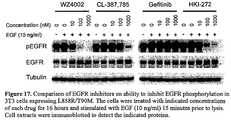
- the substantially similar conditions may comprise determining an EGFR-dependent phosphorylation level in 3T3 cells expressing a wild type EGFR, a mutant EGFR, or a fragment of any thereof.
- Activating mutations comprise without limitation L858R, G719S, G719C, G719A, L861Q, a deletion in exon 19 and/or an insertion in exon 20.
- Drug-resistant EGFR mutants can have without limitation a drug resistance mutation comprising T790M, T854A or D761Y.
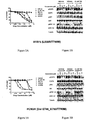
- the selectivity between wild-type EGFR and the L858R/T790M or Exon19 deletion/T790M EGFR mutants can be measured using cellular proliferation assays where cell proliferation is completely dependent on kinase activity.
- murine Ba/F3 cells transfected with a suitable version of wild-type EGFR such as VIII; containing a WT EGFR kinase domain
- Ba/F3 cells transfected with L858R/T790M or Exon19 deletion/T790M can be used.
- Proliferation assays are preformed at a range of inhibitor concentrations (10 uM, 3 uM, 1.1 uM, 330 nM, 110 nM, 33 nM, 11 nM, 3 nM, 1 nM) and an EC50 is calculated.
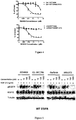
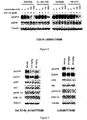
- An alternative method is to measure effects on EGFR activity is to assay EGFR phosphorylation.
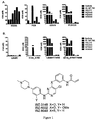
- Wild type or mutant (L858R/T790M or Del19/T790M) EGFR can be transfected into NIH-3T3 cells (which do not normally express endogenous EGFR) and the ability of the inhibitor (using concentrations as above) to inhibit EGFR phosphorylation can be assayed. Cells are exposed to increasing concentrations of inhibitor for 6 hours and stimulated with EGF for 10 minutes. The effects on EGFR phosphorylation are assayed by Western Blotting using phospho-specific (Y1068) EGFR antibodies.
- the compound described above may be a compound of formula I.
- a compound of formula I or a pharmaceutically acceptable salt, ester or prodrug thereof, wherein,
- composition comprising a compound of formula I, or a pharmaceutically acceptable ester, salt, or prodrug thereof, together with a pharmaceutically acceptable carrier.
- alkyl refers to saturated, straight- or branched-chain hydrocarbon radicals containing, in certain embodiments, between one and six, or one and eight carbon atoms, respectively.
- Examples of C 1 -C 6 alkyl radicals include, but are not limited to, methyl, ethyl, propyl, isopropyl, n -butyl, tert -butyl, neopentyl, n-hexyl radicals; and examples of C 1 -C 8 alkyl radicals include, but are not limited to, methyl, ethyl, propyl, isopropyl, n -butyl, tert -butyl, neopentyl, n-hexyl, heptyl, octyl radicals.
- alkenyl denotes a monovalent group derived from a hydrocarbon moiety containing, in certain embodiments, from two to six, or two to eight carbon atoms having at least one carbon-carbon double bond. The double bond may or may not be the point of attachment to another group.
- Alkenyl groups include, but are not limited to, for example, ethenyl, propenyl, butenyl, 1-methyl-2-buten-1-yl, heptenyl, octenyl and the like.
- alkynyl denotes a monovalent group derived from a hydrocarbon moiety containing, in certain embodiments, from two to six, or two to eight carbon atoms having at least one carbon-carbon triple bond.
- the alkynyl group may or may not be the point of attachment to another group.
- Representative alkynyl groups include, but are not limited to, for example, ethynyl, 1-propynyl, 1-butynyl, heptynyl, octynyl and the like.
- alkoxy refers to an -O-alkyl radical.
- aryl refers to a mono- or poly-cyclic carbocyclic ring system having one or more aromatic rings, fused or non-fused, including, but not limited to, phenyl, naphthyl, tetrahydronaphthyl, indanyl, idenyl and the like.
- aralkyl refers to an alkyl residue attached to an aryl ring. Examples include, but are not limited to, benzyl, phenethyl and the like.
- cycloalkyl denotes a monovalent group derived from a monocyclic or polycyclic saturated or partially unsatured carbocyclic ring compound.
- Examples of C 3 -C 8 -cycloalkyl include, but not limited to, cyclopropyl, cyclobutyl, cyclopentyl, cyclohexyl, cyclopentyl and cyclooctyl; and examples of C 3 -C 12 -cycloalkyl include, but not limited to, cyclopropyl, cyclobutyl, cyclopentyl, cyclohexyl, bicyclo [2.2.1] heptyl, and bicyclo [2.2.2] octyl.
- the monovalent group may be derived from a monocyclic or polycyclic carbocyclic ring compound having at least one carbon-carbon double bond by the removal of a single hydrogen atom.
- Examples of such groups include, but are not limited to, cyclopropenyl, cyclobutenyl, cyclopentenyl, cyclohexenyl, cycloheptenyl, cyclooctenyl, and the like.
- heteroaryl refers to a mono- or poly-cyclic (e.g., bi-, or tri-cyclic or more) fused or non-fused, radical or ring system having at least one aromatic ring, having from five to ten ring atoms of which one ring atoms is selected from S, O and N; zero, one or two ring atoms are additional heteroatoms independently selected from S, O and N; and the remaining ring atoms are carbon.
- mono- or poly-cyclic e.g., bi-, or tri-cyclic or more fused or non-fused, radical or ring system having at least one aromatic ring, having from five to ten ring atoms of which one ring atoms is selected from S, O and N; zero, one or two ring atoms are additional heteroatoms independently selected from S, O and N; and the remaining ring atoms are carbon.
- Heteroaryl includes, but is not limited to, pyridinyl, pyrazinyl, pyrimidinyl, pyrrolyl, pyrazolyl, imidazolyl, thiazolyl, oxazolyl, isooxazolyl, thiadiazolyl, oxadiazolyl, thiophenyl, furanyl, quinolinyl, isoquinolinyl, benzimidazolyl, benzooxazolyl, quinoxalinyl, and the like.
- heteroarylkyl refers to an alkyl residue residue attached to a heteroaryl ring. Examples include, but are not limited to, pyridinylmethyl, pyrimidinylethyl and the like.
- heterocycloalkyl refers to a non-aromatic 3-, 4-, 5-, 6- or 7-membered ring or a bi- or tri-cyclic group fused of non-fused system, where (i) each ring contains between one and three heteroatoms independently selected from oxygen, sulfur and nitrogen, (ii) each 5-membered ring has 0 to 1 double bonds and each 6-membered ring has 0 to 2 double bonds, (iii) the nitrogen and sulfur heteroatoms may optionally be oxidized, (iv) the nitrogen heteroatom may optionally be quaternized, and (iv) any of the above rings may be fused to a benzene ring.
- heterocycloalkyl groups include, but are not limited to, [1,3]dioxolane, pyrrolidinyl, pyrazolinyl, pyrazolidinyl, imidazolinyl, imidazolidinyl, piperidinyl, piperazinyl, oxazolidinyl, isoxazolidinyl, morpholinyl, thiazolidinyl, isothiazolidinyl, and tetrahydrofuryl.
- alkylamino refers to a group having the structure --NH(C 1 -C 12 alkyl) where C 1 -C 12 alkyl is as previously defined.
- acyl includes residues derived from acids, including but not limited to carboxylic acids, carbamic acids, carbonic acids, sulfonic acids, and phosphorous acids. Examples include aliphatic carbonyls, aromatic carbonyls, aliphatic sulfonyls, aromatic sulfinyls, aliphatic sulfinyls, aromatic phosphates and aliphatic phosphates. Examples of aliphatic carbonyls include, but are not limited to, acetyl, propionyl, 2-fluoroacetyl, butyryl, 2-hydroxy acetyl, and the like.
- aryls, substituted aryls, heteroaryls and substituted heteroaryls described herein can be any aromatic group.
- Aromatic groups can be substituted or unsubstituted.
- hal refers to an atom selected from fluorine, chlorine, bromine and iodine.
- compounds may optionally be substituted with one or more substituents, such as are illustrated generally above, or as exemplified by particular classes, subclasses, and species of the invention. It will be appreciated that the phrase “optionally substituted” is used interchangeably with the phrase “substituted or unsubstituted. " In general, the term “substituted”, whether preceded by the term “optionally” or not, refers to the replacement of hydrogen radicals in a given structure with the radical of a specified substituent.
- an optionally substituted group may have a substituent at each substitutable position of the group, and when more than one position in any given structure may be substituted with more than one substituent selected from a specified group, the substituent may be either the same or different at every position.
- optionally substituted refers to groups that are substituted or unsubstituted by independent replacement of one, two, or three or more of the hydrogen atoms thereon with substituents including, but not limited to:
- aryls, heteroaryls, alkyls, and the like can be further substituted.
- cancer includes, but is not limited to, the following cancers: epidermoid Oral: buccal cavity, lip, tongue, mouth, pharynx; Cardiac: sarcoma (angiosarcoma, fibrosarcoma, rhabdomyosarcoma, liposarcoma), myxoma, rhabdomyoma, fibroma, lipoma and teratoma; Lung: bronchogenic carcinoma (squamous cell or epidermoid, undifferentiated small cell, undifferentiated large cell, adenocarcinoma), alveolar (bronchiolar) carcinoma, bronchial adenoma, sarcoma, lymphoma, chondromatous hamartoma, mesothelioma; Gastrointestinal: esophagus (squamous cell carcinoma, larynx, adenocarcinoma, leiomyosarcoma, lymphoma
- EGFR kinase refers to epidermal growth factor receptor kinase.
- HER human epidermal growth factor receptor kinase
- subject refers to a mammal.
- a subject therefore refers to, for example, dogs, cats, horses, cows, pigs, guinea pigs, and the like.
- the subject is a human.
- the subject may be referred to herein as a patient.
- Treat refers to a method of alleviating or abating a disease and/or its attendant symptoms.
- the term "pharmaceutically acceptable salt” refers to those salts of the compounds formed by the process described herein which are, within the scope of sound medical judgment, suitable for use in contact with the tissues of humans and lower animals without undue toxicity, irritation, allergic response and the like, and are commensurate with a reasonable benefit/risk ratio.
- Pharmaceutically acceptable salts are well known in the art. For example, S. M. Berge, et al. describes pharmaceutically acceptable salts in detail in J. Pharmaceutical Sciences, 66: 1-19 (1977 ). The salts can be prepared in situ during the final isolation and purification of the compounds, or separately by reacting the free base function with a suitable organic acid.
- nontoxic acid addition salts are salts of an amino group formed with inorganic acids such as hydrochloric acid, hydrobromic acid, phosphoric acid, sulfuric acid and perchloric acid or with organic acids such as acetic acid, maleic acid, tartaric acid, citric acid, succinic acid or malonic acid or by using other methods used in the art such as ion exchange.
- salts include, but are not limited to, adipate, alginate, ascorbate, aspartate, benzenesulfonate, benzoate, bisulfate, borate, butyrate, camphorate, camphorsulfonate, citrate, cyclopentanepropionate, digluconate, dodecylsulfate, ethanesulfonate, formate, fumarate, glucoheptonate, glycerophosphate, gluconate, hemisulfate, heptanoate, hexanoate, hydroiodide, 2-hydroxy-ethanesulfonate, lactobionate, lactate, laurate, lauryl sulfate, malate, maleate, malonate, methanesulfonate, 2-naphthalenesulfonate, nicotinate, nitrate, oleate, oxalate, palmitate, pamo
- alkali or alkaline earth metal salts include sodium, lithium, potassium, calcium, magnesium, and the like.
- Further pharmaceutically acceptable salts include, when appropriate, nontoxic ammonium, quaternary ammonium, and amine cations formed using counterions such as halide, hydroxide, carboxylate, sulfate, phosphate, nitrate, alkyl having from 1 to 6 carbon atoms, sulfonate and aryl sulfonate.
- ester refers to esters of the compounds formed by the process described herein which hydrolyze in vivo and include those that break down readily in the human body to leave the parent compound or a salt thereof.
- Suitable ester groups include, for example, those derived from pharmaceutically acceptable aliphatic carboxylic acids, particularly alkanoic, alkenoic, cycloalkanoic and alkanedioic acids, in which each alkyl or alkenyl moiety advantageously has not more than 6 carbon atoms.
- esters include, but are not limited to, formates, acetates, propionates, butyrates, acrylates and ethylsuccinates.
- prodrugs refers to those prodrugs of the compounds formed by the process described herein which are, within the scope of sound medical judgment, suitable for use in contact with the tissues of humans and lower animals with undue toxicity, irritation, allergic response, and the like, commensurate with a reasonable benefit/risk ratio, and effective for their intended use, as well as the zwitterionic forms.
- Prodrug as used herein means a compound which is convertible in vivo by metabolic means (e.g. by hydrolysis) to afford any compound delineated by the formulae herein disclosed.
- prodrugs are known in the art, for example, as discussed in Bundgaard, (ed.), Design of Prodrugs, Elsevier (1985 ); Widder, et al. (ed.), Methods in Enzymology, vol. 4, Academic Press (1985 ); Krogsgaard-Larsen, et al., (ed). "Design and Application of Prodrugs, Textbook of Drug Design and Development, Chapter 5, 113-191 (1991 ); Bundgaard, et al., Journal of Drug Deliver Reviews, 8:1-38(1992 ); Bundgaard, J. of Pharmaceutical Sciences, 77:285 et seq.
- compositions containing, and methods of treating disorders through administering, pharmaceutically acceptable prodrugs of compounds of the invention are also herein described.
- compounds having free amino, amido, hydroxy or carboxylic groups can be converted into prodrugs.
- Prodrugs include compounds wherein an amino acid residue, or a polypeptide chain of two or more (e.g., two, three or four) amino acid residues is covalently joined through an amide or ester bond to a free amino, hydroxy or carboxylic acid group of compounds herein described.
- the amino acid residues include but are not limited to the 20 naturally occurring amino acids commonly designated by three letter symbols and also includes 4-hydroxyproline, hydroxyysine, demosine, isodemosine, 3-methylhistidine, norvalin, beta-alanine, gamma-aminobutyric acid, citrulline, homocysteine, homoserine, ornithine and methionine sulfone. Additional types of prodrugs are also herein described. For instance, free carboxyl groups can be derivatized as amides or alkyl esters.
- Free hydroxy groups may be derivatized using groups including but not limited to hemisuccinates, phosphate esters, dimethylaminoacetates, and phosphoryloxymethyloxy carbonyls, as outlined in Advanced Drug Delivery Reviews, 1996, 19, 1 15 .
- Carbamate prodrugs of hydroxy and amino groups are also included, as are carbonate prodrugs, sulfonate esters and sulfate esters of hydroxy groups.
- stable refers to compounds which possess stability sufficient to allow manufacture and which maintains the integrity of the compound for a sufficient period of time to be useful for the purposes detailed herein (e.g., therapeutic or prophylactic administration to a subject).
- Z 1 and Z 2 are N, and Z 3 and Z 4 are C.
- Z 1 , Z 2 and Z 4 are N, and Z 3 is C.
- R A is H, hal, OH, NH 2 , NHR 3 , haloalkyl, CN, N 3 , or NO 2
- R B is H, hal, OH, NH 2 , NHR 3 , haloalkyl, CN, N 3 , or NO 2 .
- R A and R B together with the atoms to which each is attached, form a fused aryl, heteroaryl, carbocyclic or heterocyclic, each of which may be optionally substituted.
- Z 1 and Z 2 are N and Z 3 and Z 4 are C.
- R A is H, Cl, Br, or CF 3
- R B is H
- X is NH
- Y is O, S, NH, or NMe.
- ring A and ring B are each independently phenyl or pyridyl.
- each R 1 is independently N(R 3 )CO(R 4 ), C(O)R 3 , C(O)NH(R 3 ), alkyl, haloalkyl, alkoxy, heteroaryl, carbocyclic, or heterocyclic, each of which may be optionally substituted; and m is 1 or 2.
- each R 1 is independently N(R 3 )CO(R 4 ), C(O)R 3 , C(O)NH(R 3 ), methyl, trifluoromethyl, fluoromethyl, methoxy, ethoxy, cyclohexyl, pyridinyl, pyrrolidinyl, morpholinyl, piperidinyl, piperazinyl, or imidazolyl, each of which may be optionally substituted.
- each R 1 is independently methyl, fluoromethyl, methoxy,
- each R 2 is independently methyl, F, Cl,
- each R 2 is independently
- ring B is indolinyl, pyrrolidinyl, morpholinyl, piperidinyl, piperazinyl, or imidazolyl.
- each R 1 is independently N(R 3 )(R 4 ), N(R 3 )CO(R 4 ), C(O)R 3 , C(O)NH(R 3 ), alky, haloalky, alkoxy, or heterocyclic; and each R 3 and R 4 is independently H or alkyl, each of which may be optionally substituted.
- each R 1 is independently methyl, fluoromethyl, methoxy,
- R 2 is independently
- each R 1 is independently methyl, fluoromethyl, methoxy,
- each R 2 is independently
- Z 5 is N and Z 6 is CH.
- X is NR 6 ; and Y is O, NR 6 , or absent.
- ring A is aryl, carbocyclic or heterocyclic. In some instances ring A is phenyl, naphthyl, piperidinyl, cyclopropyl, cyclobutyl, cyclopentyl, cyclohexyl, or cycloheptyl, each of which may be optionally substituted.
- ring B is aryl or heterocyclic. In some instances, ring B is phenyl, naphthyl, piperidinyl, pyrrolidinyl, morpholinyl, piperazinyl, or imidazolyl, each of which may be optionally r substituted.
- each R 1 is independently methyl, methoxy,
- each R 2 is independently
- R 8 is H, methyl, isopropyl, or phenyl, each of which may be optionally substituted.
- Z 5 is CH and Z 6 is N.
- X is NR 6 ; and Y is O, S, NR 6 , or absent.
- ring A is aryl or heterocyclic. In some instances, ring A is phenyl, naphthyl, or piperidinyl, each of which may be optionally substituted.
- ring B is aryl or heterocyclic. In some instances ring B is phenyl, naphthyl, piperidinyl, pyrrolidinyl, morpholinyl, piperazinyl, or imidazolyl, each of which may be optionally substituted.
- R 1 is N(R 3 )(R 4 ), N(R 3 )CO(R 4 ), C(O)R 3 , alkyl, alkoxy or heterocyclic, each of which may be optionally substituted.
- each R 1 is independently methyl, methoxy,
- each R 2 is independently hal
- R 8 is H, methyl, isopropyl, or phenyl, each of which may be optionally substituted.
- Y is O.
- ring B is aryl. In some instances, ring B is phenyl or naphthyl, each of which may be optionally substituted.
- ring D is aryl or heteroaryl. In some instances, ring D is phenyl, naphthyl, pyridinyl, or quinolynyl, each of which may be optionally substituted.
- each R 2 is independently ; preferably
- R 7 is alkyl or alkoxy.
- ring A is aryl or carbocyclic. In some instances, ring A is phenyl, naphthyl, cyclopropyl, cyclobutyl, cyclopentyl, cyclohexyl, or cycloheptyl, each of which may be optionally substituted.
- ring B is aryl or heterocyclic. In some instances, ring B is phenyl, naphthyl, piperidinyl, pyrrolidinyl, morpholinyl, piperazinyl, or imidazolyl, each of which may be optionally substituted.
- each R 1 is independently N(R 3 )(R 4 ), N(R 3 )CO(R 4 ), C(O)R 3 , alkyl, alkoxy, or heterocyclic, each of which may be optionally substituted. In some instances, each R 1 is independently methyl, methoxy,
- each R 2 is independently
- X is O or NR 6 ; and Y is O or NR 6 .
- ring A is aryl or heterocyclic. In some instances, ring A is phenyl, naphthyl, piperidinyl, pyrrolidinyl, morpholinyl, piperazinyl, or imidazolyl, each of which may be further substituted.
- ring B is aryl or heterocyclic. In some instances, ring B is phenyl, naphthyl, piperidinyl, pyrrolidinyl, morpholinyl, piperazinyl, or imidazolyl, each of which may be further substituted.
- each R 1 is independently N(R 3 )(R 4 ), N(R 3 )CO(R 4 ), C(O)R 3 , alkyl, alkoxy, or heterocyclic, each of which may be further substituted. In some instances, each R 1 is independently methyl, methoxy,
- each R 2 is independently hal
- R B is H, hal, OH, NH 2 , NHR 3 , or haloalkyl.
- R A is H or Cl.
- each R 1 is independently methyl, trifluoromethyl, fluoromethyl, methoxy, ethoxy, cyclohexyl, pyridinyl, pyrrolidinyl, morpholinyl, piperidinyl, piperazinyl, or imidazolyl, each of which may be optionally substituted.
- each R 1 is independently methyl, fluoromethyl, methoxy,
- each R 2 is independently
- the compound may covalently modify Cysteine 797 in EGFR, wherein the compound exhibits greater inhibition of L858R/T790M or Del/T790M EGFR relative to wild-type EGFR.
- the compound exhibits at least 3-fold, 5-fold, 10-fold, 25-fold, or 50-fold greater inhibition of a drug-resistant EGFR mutant relative to wild-type EGFR.
- the compound exhibits at least 100-fold greater inhibition of L858R/T790M or Del/T790M EGFR relative to wild-type EGFR.
- the compound is a compound of formula I.
- the invention provides compounds 2-1 (WZ 3146), 2-2 (WZ 4002) and 2-15 (WZ 8040), selected from Table 2.
- Table 1 Compound Number Structure Physical Data 1 H NMR 600 MHz and/or MS (m/z) 1-1 MS m/z : 449.52 (M + 1). 1-2 MS m/z : 471.96 (M + 1). 1-3 MS m/z: 471.96 (M + 1). 1-4 MS m/z : 473.54 (M + 1). 1-5 MS m/z: 463.55 (M + 1). 1-6 MS m/z : 463.55 (M + 1).
- composition comprising a compound of formula I, or a pharmaceutically acceptable ester, salt, or prodrug thereof, together with a pharmaceutically acceptable carrier.
- kits comprising a compound capable of inhibiting EGFR activity selected from one or more compounds of formula I, and instructions for use in treating cancer.
- Also described herein is a method of method of synthesizing a compound of formula I.
- the method can include the use of one or more intermediates or chemical reagents delineated herein.
- Another aspect is an isotopically labeled compound of any of the formulae delineated herein.
- Such compounds have one or more isotope atoms which may or may not be radioactive (e.g., 3 H, 2 H, 14 C, 13 C, 18 F, 35 S, 32 P, 125 I, and 131 I) introduced into the compound.
- isotope atoms which may or may not be radioactive (e.g., 3 H, 2 H, 14 C, 13 C, 18 F, 35 S, 32 P, 125 I, and 131 I) introduced into the compound.
- radioactive e.g., 3 H, 2 H, 14 C, 13 C, 18 F, 35 S, 32 P, 125 I, and 131 I
- a compound described herein can be prepared as a pharmaceutically acceptable acid addition salt by reacting the free base form of the compound with a pharmaceutically acceptable inorganic or organic acid.
- a pharmaceutically acceptable base addition salt of a compound herein described can be prepared by reacting the free acid form of the compound with a pharmaceutically acceptable inorganic or organic base.
- salt forms of the compounds herein described can be prepared using salts of the starting materials or intermediates.
- the free acid or free base forms of the compounds herein described can be prepared from the corresponding base addition salt or acid addition salt from, respectively.
- a compound herein described in an acid addition salt form can be converted to the corresponding free base by treating with a suitable base (e.g., ammonium hydroxide solution, sodium hydroxide, and the like).
- a suitable base e.g., ammonium hydroxide solution, sodium hydroxide, and the like.
- a compound herein described in a base addition salt form can be converted to the corresponding free acid by treating with a suitable acid (e.g., hydrochloric acid, etc.).
- Prodrug derivatives of the compounds herein described can be prepared by methods known to those of ordinary skill in the art (e.g., for further details see Saulnier et al., (1994), Bioorganic and Medicinal Chemistry Letters, Vol. 4, p. 1985 ).
- appropriate prodrugs can be prepared by reacting a non-derivatized compound of the invention with a suitable carbamylating agent (e.g., 1,1-acyloxyalkylcarbanochloridate, para-nitrophenyl carbonate, or the like).
- Hydrates of compounds can be conveniently prepared by recrystallization from an aqueous/organic solvent mixture, using organic solvents such as dioxin, tetrahydrofuran or methanol.
- Acids and bases useful in the methods herein are known in the art.
- Acid catalysts are any acidic chemical, which can be inorganic (e.g., hydrochloric, sulfuric, nitric acids, aluminum trichloride) or organic (e.g., camphorsulfonic acid, p-toluenesulfonic acid, acetic acid, ytterbium triflate) in nature. Acids are useful in either catalytic or stoichiometric amounts to facilitate chemical reactions.
- Bases are any basic chemical, which can be inorganic (e.g., sodium bicarbonate, potassium hydroxide) or organic (e.g., triethylamine, pyridine) in nature. Bases are useful in either catalytic or stoichiometric amounts to facilitate chemical reactions.
- some of the compounds of this invention have one or more double bonds, or one or more asymmetric centers.
- Such compounds can occur as racemates, racemic mixtures, single enantiomers, individual diastereomers, diastereomeric mixtures, and cis- or trans- or E- or Z- double isomeric forms, and other stereoisomeric forms that may be defined, in terms of absolute stereochemistry, as (R)- or (S)- , or as (D)- or (L)- for amino acids. All such isomeric forms of these compounds are expressly included in the present invention.
- Optical isomers may be prepared from their respective optically active precursors by the procedures described above, or by resolving the racemic mixtures.
- the resolution can be carried out in the presence of a resolving agent, by chromatography or by repeated crystallization or by some combination of these techniques which are known to those skilled in the art. Further details regarding resolutions can be found in Jacques, et al., Enantiomers, Racemates, and Resolutions (John Wiley & Sons, 1981 ).
- the compounds of this invention may also be represented in multiple tautomeric forms, in such instances, the invention expressly includes all tautomeric forms of the compounds described herein (e.g., alkylation of a ring system may result in alkylation at multiple sites, the invention expressly includes all such reaction products).
- the synthesized compounds can be separated from a reaction mixture and further purified by a method such as column chromatography, high pressure liquid chromatography, or recrystallization.
- a method such as column chromatography, high pressure liquid chromatography, or recrystallization.
- further methods of synthesizing the compounds of the formulae herein will be evident to those of ordinary skill in the art.
- the various synthetic steps may be performed in an alternate sequence or order to give the desired compounds.
- the solvents, temperatures, reaction durations, etc. delineated herein are for purposes of illustration only and one of ordinary skill in the art will recognize that variation of the reaction conditions can produce the desired bridged macrocyclic products of the present invention.
- Synthetic chemistry transformations and protecting group methodologies useful in synthesizing the compounds described herein are known in the art and include, for example, those such as described in R. Larock, Comprehensive Organic Transformations, VCH Publishers (1989 ); T.W. Greene and P.G.M. Wuts, Protective Groups in Organic Synthesis, 2d. Ed., John Wiley and Sons (1991 ); L. Fieser and M. Fieser, Fieser and Fieser's Reagents for Organic Synthesis, John Wiley and Sons (1994 ); and L. Paquette, ed., Encyclopedia of Reagents for Organic Synthesis, John Wiley and Sons (1995 ), and subsequent editions thereof.
- the compounds of this invention may be modified by appending various functionalities via any synthetic means delineated herein to enhance selective biological properties.
- modifications are known in the art and include those which increase biological penetration into a given biological system (e.g., blood, lymphatic system, central nervous system), increase oral availability, increase solubility to allow administration by injection, alter metabolism and alter rate of excretion.
- the compounds of the invention are defined herein by their chemical structures and/or chemical names. Where a compound is referred to by both a chemical structure and a chemical name, and the chemical structure and chemical name conflict, the chemical structure is determinative of the compound's identity.
- the method as described above uses the compound is a compound of formula II-a, II-b, II-c, III, IV, V, VI, or VII. In some instances the method as described above uses a compound selected from the compounds in Tables 1-6. In some instances, the compound is WZ3146, WZ4002 or WZ8040.
- the kinase comprises a cysteine residue.
- cysteine residue is located in or near the position equivalent to Cys 797 in EGFR, including such position in Jak3, Blk, Bmx, Btk, HER2 (ErbB2), HER4 (ErbB4), Itk, Tec, and Txk.
- a method of inhibiting a kinase in a subject comprising administering a compound of formula I or a pharmaceutically acceptable salt, ester or prodrug thereof, wherein,
- the method as described above uses a compound of formula II-a, II-b, II-c, III, IV, V, VI, or VII.
- the compound may be selected from the compounds in Tables 1-6 or may be WZ3146, WZ4002 or WZ8040.
- the kinase may comprise a cysteine residue.
- the cysteine residue may be located in or near the position equivalent to Cys 797 in EGFR, including such positions in Jak3, Blk, Bmx, Btk, HER2 (ErbB2), HER4 (ErbB4), Itk, Tec, and Txk.
- Also described herein is a method of inhibiting epidermal growth factor receptor (EGFR) in a subject, comprising administering a compound of formula I or a pharmaceutically acceptable salt, ester or prodrug thereof, wherein,
- the invention provides a method as described above wherein the compound is a compound of formula II-a, II-b, II-c, III, IV, V, VI, or VII.
- the EGFR is a Her-kinase.
- the invention provides WZ 3146, WZ 4002 or WZ 8040 for use in treating a disease in a subject. Also herein described is a method of treating a disease in a subject comprising administering to the subject a compound, pharmaceutically acceptable salt, ester or prodrug of formula I or a pharmaceutically acceptable salt, ester or prodrug thereof, wherein,
- the method described above uses a compound of formula II-a, II-b, II-c, III, IV, V, VI, or VII.
- the compound may be selected from the compounds in Tables 1-6.
- the compound is WZ3146, WZ4002 or WZ8040.
- the disease may be mediated by a kinase.
- the kinase may be comprise a cysteine residue.
- the cysteine residue may be located in or near the position equivalent to Cys 797 in EGFR, including Jak3, Blk, Bmx, Btk, HER2 (ErbB2), HER4 (ErbB4), Itk, Tec, and Txk.
- the disease may be mediated by EGFR.
- the EGFR is a Her-kinase. In some instances, the disease is mediated by HER1, HER2, or HER4.
- the disease is cancer.
- the cancer may be lung cancer, colon cancer, breast cancer, prostate cancer, liver cancer, pancreas cancer, brain cancer kidney cancer, ovarian cancer, stomach cancer, skin cancer, bone cancer, gastric cancer, breast cancer, pancreatic cancer, glioma, glioblastoma, hepatocellular carcinoma, papillary renal carcinoma, head and neck squamous cell carcinoma, leukemias, lymphomas, myelomas, and solid tumors.
- the disease is inflammation, arthritis, rheumatoid arthritis, spondylarthropathies, gouty arthritis, osteoarthritis, juvenile arthritis, and other arthritic conditions, systemic lupus erthematosus (SLE), skin-related conditions, psoriasis, eczema, burns, dermatitis, neuroinflammation, allergy, pain, neuropathic pain, fever, pulmonary disorders, lung inflammation, adult respiratory distress syndrome, pulmonary sarcoisosis, asthma, silicosis, chronic pulmonary inflammatory disease, and chronic obstructive pulmonary disease (COPD), cardiovascular disease, arteriosclerosis, myocardial infarction (including post-myocardial infarction indications), thrombosis, congestive heart failure, cardiac reperfusion injury, as well as complications associated with hypertension and/or heart failure such as vascular organ damage, restenosis, cardiomyopathy, stroke including ischemic and hemorrhagic stroke
- neoplasia epithelial call-derived neoplasia (epithelial carcinoma), basal cell carcinoma, adenocarcinoma, gastrointestinal cancer, lip cancer, mouth cancer, esophageal cancer, small bowel cancer, stomach cancer, colon cancer, liver cancer, bladder cancer, pancreas cancer, ovarian cancer, cervical cancer, lung cancer, breast cancer, skin cancer, squamus cell and/or basal cell cancers, prostate cancer, renal cell carcinoma, and other known cancers that affect epithelial cells throughout the body, chronic myelogenous leukemia (CML), acute myeloid leukemia (AML) and acute promyelocytic leukemia (APL), angiogenesis including neoplasia, metastasis, central nervous system disorders, central nervous system disorders having an inflammatory or apop
- the disease is inflammation, arthritis, rheumatoid arthritis, spondylarthropathies, gouty arthritis, osteoarthritis, juvenile arthritis, and other arthritic conditions, systemic lupus erthematosus (SLE), skin-related conditions, psoriasis, eczema, dermatitis, pain, pulmonary disorders, lung inflammation, adult respiratory distress syndrome, pulmonary sarcoisosis, asthma, chronic pulmonary inflammatory disease, and chronic obstructive pulmonary disease (COPD), cardiovascular disease, arteriosclerosis, myocardial infarction (including post-myocardial infarction indications), congestive heart failure, cardiac reperfusion injury, inflammatory bowel disease, Crohn's disease, gastritis, irritable bowel syndrome, leukemia, lymphoma.
- SLE systemic lupus erthematosus
- COPD chronic obstructive pulmonary disease
- cardiovascular disease arteriosclerosis, myo
- a method of treating a kinase mediated disorder in a subject comprising: administering to the subject identified as in need thereof a compound, pharmaceutically acceptable salt, ester or prodrug of formula I or a pharmaceutically acceptable salt, ester or prodrug thereof, wherein,
- the method as described above uses a compound of formula II-a, II-b, II-c, III, IV, V, VI, or VII.
- the compound may be selected from the compounds in Tables 1-6.
- the compound may be, WZ3146, or WZ4002 or WZ8040.
- the compound may be an inhibitor of HER1, HER2, or HER4.
- the subject may be administered an additional therapeutic agent.
- the compound and the additional therapeutic agent may be administered simultaneously or sequentially.
- the method as described above may use a compound of formula II-a, II-b, II-c, III, IV, V, VI, or VII.
- the compound may be selected from the compounds in Tables 1-6.
- the compound may be WZ3146, WZ4002 or WZ8040.
- the EGFR targeted therapy may comprise treatment with gefitinib, erlotinib,lapatinib, XL-647, HKI-272, BIBW2992, AV-412, CI-1033, PF00299804, BMS 690514, cetuximab, panitumumab, or matuzumab.
- the disease may comprise an EGFR mutation.
- the EGFR mutation may be an EGFR T790M, T854A or D761Y resistance mutation.
- the disease may be cancer including, lung cancer, colon cancer, breast cancer, prostate cancer, liver cancer, pancreas cancer, brain cancer, kidney cancer, ovarian cancer, stomach cancer, skin cancer, bone cancer, gastric cancer, breast cancer, pancreatic cancer, glioma, glioblastoma, hepatocellular carcinoma, papillary renal carcinoma, head and neck squamous cell carcinoma, leukemias, lymphomas, myelomas, or solid tumors.
- cancer including, lung cancer, colon cancer, breast cancer, prostate cancer, liver cancer, pancreas cancer, brain cancer, kidney cancer, ovarian cancer, stomach cancer, skin cancer, bone cancer, gastric cancer, breast cancer, pancreatic cancer, glioma, glioblastoma, hepatocellular carcinoma, papillary renal carcinoma, head and neck squamous cell carcinoma, leukemias, lymphomas, myelomas, or solid tumors.
- the invention provides compounds WZ 3146, WZ 4002 or WZ 8040 for use in treating cancer in a subject. Also herein described is a method of treating cancer in a subject, wherein the cancer comprises EGFR activated tumors, comprising administering to the subject a compound, pharmaceutically acceptable salt, ester or prodrug of formula I or a pharmaceutically acceptable salt, ester or prodrug thereof, wherein,
- the method as described above may use a compound of formula II-a, II-b, II-c, III, IV, V, VI, or VII.
- the compound may be selected from the compounds in Tables 1-6.
- the compound is WZ3146, WZ4002 or WZ8040.
- the cancer may comprise EGFR activated tumors.
- the EGFR activation is selected from mutation of EGFR.
- An EGFR activation may also result from amplification of EGFR, expression of EGFR, and ligand mediated activation of EGFR.
- the mutation of EGFR is located at G719S, G719C, G719A, T790M L858R, L861Q, an exon 19 deletion mutation or an exon 20 insertion mutation.
- the cancer may be lung cancer, colon cancer, breast cancer, prostate cancer, liver cancer, pancreas cancer, brain cancer, kidney cancer, ovarian cancer, stomach cancer, skin cancer, bone cancer, gastric cancer, breast cancer, pancreatic cancer, glioma, glioblastoma, hepatocellular carcinoma, papillary renal carcinoma, head and neck squamous cell carcinoma, leukemias, lymphomas, myelomas, or solid tumors.
- the method as described above may use a compound of formula II-a, II-b, II-c, III, IV, V, VI, or VII.
- the compound may be selected from the compounds in Tables 1-6 including compounds WZ3146, WZ4002 or WZ8040.
- the subject is identified as being in need of EGFR inhibition is resistant to gefitinib or erlotinib.
- a diagnostic test is performed to determine if the subject has an activating mutation in EGFR.
- a diagnostic test is performed to determine if the subject has an EGFR harboring an activating and a drug resistance mutation.
- Activating mutations comprise without limitation L858R, G719S, G719C, G719A, L861Q, a deletion in exon 19 and/or an insertion in exon 20.
- Drug-resistant EGFR mutants can have without limitation a drug resistance mutation comprising T790M, T854A or D761Y.
- the diagnostic test can comprise sequencing, pyrosequencing, PCR, RT-PCR, or similar analysis techniques known to those of skill in the art that can detect nucleotide sequences.
- cancer comprises ERBB2 activated tumors
- administering comprising administering to the subject a compound, pharmaceutically acceptable salt, ester or prodrug of formula I or a pharmaceutically acceptable salt, ester or prodrug thereof, wherein,
- the method as described above may use a compound of formula II-a, II-b, II-c, III, IV, V, VI, or VII.
- the compound may be selected from the compounds in Tables 1-6. In some instances, the compound is WZ3146, WZ4002 or WZ8040.
- the ERBB2 activation may be selected from mutation of ERBB2, expression of ERBB2 and amplification of ERBB2.
- the mutation may be a mutation in exon 20 of ERBB2.
- the disease may be lung cancer, colon cancer, breast cancer, prostate cancer, liver cancer, pancreas cancer, brain cancer, kidney cancer, ovarian cancer, stomach cancer, skin cancer, bone cancer, gastric cancer, breast cancer, pancreatic cancer, glioma, glioblastoma, hepatocellular carcinoma, papillary renal carcinoma, head and neck squamous cell carcinoma, leukemias, lymphomas, myelomas, or solid tumors.
- a method of treating cancer in a subject comprising administering to the subject a compound, pharmaceutically acceptable salt, ester or prodrug of formula I or a pharmaceutically acceptable salt, ester or prodrug thereof, wherein,
- the method as described above may use a compound of formula II-a, II-b, II-c, III, IV, V, VI, or VII.
- the compound may be selected from the compounds in Tables 1-6. In some instances, the compound is WZ3146, WZ4002 or WZ8040.
- the method as described above may use a compound of formula II-a, II-b, II-c, III, IV, V, VI, or VII.
- the compound may be selected from the compounds in Tables 1-6.
- the invention provides a method as described above wherein the compound is WZ3146, WZ4002 or WZ8040.
- the disease is cancer.
- the disease may be lung cancer, colon cancer, breast cancer, prostate cancer, liver cancer, pancreas cancer, brain cancer, kidney cancer, ovarian cancer, stomach cancer, skin cancer, bone cancer, gastric cancer, breast cancer, pancreatic cancer, glioma, glioblastoma, hepatocellular carcinoma, papillary renal carcinoma, head and neck squamous cell carcinoma, leukemias, lymphomas, myelomas, or solid tumors.
- the subject is a human.
- Her kinases are particularly useful for treating or lessening the severity of a disease, condition, or disorder where a protein kinase is implicated in the disease, condition, or disorder.
- the compounds of the invention may be used for treating or lessening the severity of a disease, condition, or disorder where a protein kinase is implicated in the disease state.
- the compounds of the invention may be used for treating or lessening the severity of a kinase disease, condition, or disorder where inhibition of enzymatic activity is implicated in the treatment of the disease.
- the compounds of the invention may be used method for treating or lessening the severity of a disease, condition, or disorder with compounds that inhibit enzymatic activity by binding to the protein kinase.
- the compounds of the invention may be used for treating or lessening the severity of a kinase disease, condition, or disorder by inhibiting enzymatic activity of the kinase with a protein kinase inhibitor.
- the method described herein may be used to treat or prevent a condition selected from autoimmune diseases, inflammatory diseases, proliferative and hyperproliferative diseases, immunologically-mediated diseases, bone diseases, metabolic diseases, neurological and neurodegenerative diseases, cardiovascular diseases, hormone related diseases, allergies, asthma, and Alzheimer's disease.
- Said condition may be selected from a proliferative disorder and a neurodegenerative disorder.
- cancer includes, but is not limited to, the following cancers: breast; ovary; cervix; prostate; testis, genitourinary tract; esophagus; larynx, glioblastoma; neuroblastoma; stomach; skin, keratoacanthoma; lung, epidermoid carcinoma, large cell carcinoma, small cell carcinoma, lung adenocarcinoma; bone; colon; colorectal; adenoma; pancreas, adenocarcinoma; thyroid, follicular carcinoma, undifferentiated carcinoma, papillary carcinoma; seminoma; melanoma; sarcoma; bladder carcinoma; liver carcinoma and biliary passages; kidney carcinoma; myeloid disorders; lymphoid disorders, Hodgkin's, hairy cells; buccal cavity and pharynx (oral), lip, tongue, mouth, pharynx; small intestine
- cancer includes, but is not limited to, the following cancers: myeloma, lymphoma, or a cancer selected from gastric, renal, or and the following cancers: head and neck, oropharangeal , non-small cell lung cancer (NSCLC), endometrial, hepatocarcinoma, Non-Hodgkins lymphoma, and pulmonary.
- NSCLC non-small cell lung cancer
- cancer refers to any cancer caused by the proliferation of malignant neoplastic cells, such as tumors, neoplasms, carcinomas, sarcomas, leukemias, lymphomas and the like.
- cancers include, but are not limited to, mesothelioma, leukemias and lymphomas such as cutaneous T-cell lymphomas (CTCL), noncutaneous peripheral T-cell lymphomas, lymphomas associated with human T-cell lymphotrophic virus (HTLV) such as adult T-cell leukemia/lymphoma (ATLL), B-cell lymphoma, acute nonlymphocytic leukemias, chronic lymphocytic leukemia, chronic myelogenous leukemia, acute myelogenous leukemia, lymphomas, and multiple myeloma, non-Hodgkin lymphoma, acute lymphatic leukemia (ALL), chronic lymphatic leukemia (CLL), Hodgkin's lymphoma, Burkit
- myelodisplastic syndrome childhood solid tumors such as brain tumors, neuroblastoma, retinoblastoma, Wilms' tumor, bone tumors, and soft-tissue sarcomas, common solid tumors of adults such as head and neck cancers (e.g., oral, laryngeal, nasopharyngeal and esophageal), genitourinary cancers (e.g., prostate, bladder, renal, uterine, ovarian, testicular), lung cancer (e.g., small-cell and non small cell), breast cancer, pancreatic cancer, melanoma and other skin cancers, stomach cancer, brain tumors, tumors related to Gorlin's syndrome (e.g., medulloblastoma, meningioma, etc.), and liver cancer.
- childhood solid tumors such as brain tumors, neuroblastoma, retinoblastoma, Wilms' tumor, bone tumors, and soft-tissue
- Additional exemplary forms of cancer which may be treated by the subject compounds include, but are not limited to, cancer of skeletal or smooth muscle, stomach cancer, cancer of the small intestine, rectum carcinoma, cancer of the salivary gland, endometrial cancer, adrenal cancer, anal cancer, rectal cancer, parathyroid cancer, and pituitary cancer.
- cancers include, but are not limited to, labial carcinoma, larynx carcinoma, hypopharynx carcinoma, tongue carcinoma, salivary gland carcinoma, gastric carcinoma, adenocarcinoma, thyroid cancer (medullary and papillary thyroid carcinoma), renal carcinoma, kidney parenchyma carcinoma, cervix carcinoma, uterine corpus carcinoma, endometrium carcinoma, chorion carcinoma, testis carcinoma, urinary carcinoma, melanoma, brain tumors such as glioblastoma, astrocytoma, meningioma, medulloblastoma and peripheral neuroectodermal tumors, gall bladder carcinoma, bronchial carcinoma, multiple myeloma, basalioma, teratoma, retinoblast
- the compounds of this invention are useful for treating cancer, such as colorectal, thyroid, breast, and lung cancer; and myeloproliferative disorders, such as polycythemia vera, thrombocythemia, myeloid metaplasia with myelofibrosis, chronic myelogenous leukemia, chronic myelomonocytic leukemia, hypereosinophilic syndrome, juvenile myelomonocytic leukemia, and systemic mast cell disease.
- cancer such as colorectal, thyroid, breast, and lung cancer
- myeloproliferative disorders such as polycythemia vera, thrombocythemia, myeloid metaplasia with myelofibrosis, chronic myelogenous leukemia, chronic myelomonocytic leukemia, hypereosinophilic syndrome, juvenile myelomonocytic leukemia, and systemic mast cell disease.
- the compounds of this invention are useful for treating hematopoietic disorders, in particular, acute-myelogenous leukemia (AMLi), chronic-myelogenous leukemia (CML), acute-prornyelocytic leukemia, and acute lymphocytic leukemia (ALL).
- AMLi acute-myelogenous leukemia
- CML chronic-myelogenous leukemia
- ALL acute lymphocytic leukemia
- the compounds of the invention may be useful in the treatment or prevention of cell proliferative disorders such as hyperplasias, dysplasias and pre-cancerous lesions.
- Dysplasia is the earliest form of pre-cancerous lesion recognizable in a biopsy by a pathologist.
- the subject compounds may be administered for the purpose of preventing said hyperplasias, dysplasias or pre-cancerous lesions from continuing to expand or from becoming cancerous. Examples of pre-cancerous lesions may occur in skin, esophageal tissue, breast and cervical intra-epithelial tissue.
- neurodegenerative diseases include, without limitation, Adrenoleukodystrophy (ALD), Alexander's disease, Alper's disease, Alzheimer's disease, Amyotrophic lateral sclerosis (Lou Gehrig's Disease), Ataxia telangiectasia, Batten disease (also known as Spielmeyer-Vogt-Sjögren-Batten disease), Bovine spongiform encephalopathy (BSE), Canavan disease, Cockayne syndrome, Corticobasal degeneration, Creutzfeldt-Jakob disease, Familial fatal insomnia, Frontotemporal lobar degeneration, Huntington's disease, HIV-associated dementia, Kennedy's disease, Krabbe's disease, Lewy body dementia, Neuroborreliosis, Machado-Joseph disease (Spinocerebellar ataxia type 3), Multiple System Atrophy, Multiple sclerosis, Narcolepsy, Niemann Pick disease, Parkinson's disease, Pelizaeus-Merzbacher Disease, Pick'
- Her kinases are also useful in biological samples.
- the protein kinase activity in a biological sample may be inhibited by a method which comprises contacting said biological sample with a compound of the invention or a composition comprising said compound.
- biological sample means an in vitro or an ex vivo sample, including, without limitation, cell cultures or extracts thereof; biopsied material obtained from a mammal or extracts thereof; and blood, saliva, urine, feces, semen, tears, or other body fluids or extracts thereof.
- Inhibition of protein kinase activity in a biological sample is useful for a variety of purposes that are known to one of skill in the art. Examples of such purposes include, but are not limited to, blood transfusion, organ- transplantation, and biological specimen storage.
- uses include, but are not limited to, biological assays such as enzyme assays and cell-based assays.
- the activity of the compounds as Her kinase inhibitors may be assayed in vitro, in vivo or in a cell line.
- In vitro assays include assays that determine inhibition of either the kinase activity or ATPase activity of the activated kinase. Alternate in vitro assays quantitate the ability of the inhibitor to bind to the protein kinase and may be measured either by radiolabelling the inhibitor prior to binding, isolating the inhibitor/kinase complex and determining the amount of radiolabel bound, or by running a competition experiment where new inhibitors are incubated with the kinase bound to known radioligands.
- Detailed conditions for assaying a compound utilized in this invention as an inhibitor of various kinases are set forth in the Examples below.
- a method for preventing or treating any of the diseases or disorders described above in a subject in need of such treatment comprises administering to said subject a therapeutically effective amount of a compound of the invention or a pharmaceutically acceptable salt thereof.
- the required dosage will vary depending on the mode of administration, the particular condition to be treated and the effect desired.
- composition comprising a compound of formula I, or a pharmaceutically acceptable ester, salt, or prodrug thereof, together with a pharmaceutically acceptable carrier.
- Compounds of the invention can be administered as pharmaceutical compositions by any conventional route, in particular enterally, e.g., orally, e.g., in the form of tablets or capsules, or parenterally, e.g., in the form of injectable solutions or suspensions, topically, e.g., in the form of lotions, gels, ointments or creams, or in a nasal or suppository form.
- Pharmaceutical compositions comprising a compound of the present invention in free form or in a pharmaceutically acceptable salt form in association with at least one pharmaceutically acceptable carrier or diluent can be manufactured in a conventional manner by mixing, granulating or coating methods.
- oral compositions can be tablets or gelatin capsules comprising the active ingredient together with a) diluents, e.g., lactose, dextrose, sucrose, mannitol, sorbitol, cellulose and/or glycine; b) lubricants, e.g., silica, talcum, stearic acid, its magnesium or calcium salt and/or polyethyleneglycol; for tablets also c) binders, e.g., magnesium aluminum silicate, starch paste, gelatin, tragacanth, methylcellulose, sodium carboxymethylcellulose and or polyvinylpyrrolidone; if desired d) disintegrants, e.g., starches, agar, alginic acid or its sodium salt, or effervescent mixtures; and/or e) absorbents, colorants, flavors and sweeteners.
- diluents e.g., lactose, dextrose, sucrose,
- compositions can be aqueous isotonic solutions or suspensions, and suppositories can be prepared from fatty emulsions or suspensions.
- the compositions may be sterilized and/or contain adjuvants, such as preserving, stabilizing, wetting or emulsifying agents, solution promoters, salts for regulating the osmotic pressure and/or buffers. In addition, they may also contain other therapeutically valuable substances.
- Suitable formulations for transdermal applications include an effective amount of a compound of the present invention with a carrier.
- a carrier can include absorbable pharmacologically acceptable solvents to assist passage through the skin of the host.
- transdermal devices are in the form of a bandage comprising a backing member, a reservoir containing the compound optionally with carriers, optionally a rate controlling barrier to deliver the compound to the skin of the host at a controlled and predetermined rate over a prolonged period of time, and means to secure the device to the skin.
- Matrix transdermal formulations may also be used.
- Suitable formulations for topical application, e.g., to the skin and eyes, are preferably aqueous solutions, ointments, creams or gels well-known in the art. Such may contain solubilizers, stabilizers, tonicity enhancing agents, buffers and preservatives.
- Compounds of the invention can be administered in therapeutically effective amounts in combination with one or more therapeutic agents (pharmaceutical combinations). For example, synergistic effects can occur with other anti-proliferative, anti-cancer, immunomodulatory or anti-inflammatory substances. Where the compounds of the invention are administered in conjunction with other therapies, dosages of the co-administered compounds will of course vary depending on the type of co-drug employed, on the specific drug employed, on the condition being treated and so forth.
- Combination therapy includes the administration of the subject compounds in further combination with other biologically active ingredients (such as, but not limited to, a second and different antineoplastic agent) and non-drug therapies (such as, but not limited to, surgery or radiation treatment).
- the compounds of the invention can be used in combination with other pharmaceutically active compounds, preferably compounds that are able to enhance the effect of the compounds of the invention.
- the compounds of the invention can be administered simultaneously (as a single preparation or separate preparation) or sequentially to the other drug therapy.
- a combination therapy envisions administration of two or more drugs during a single cycle or course of therapy.
- the compounds may be administered in combination with one or more separate agents that modulate protein kinases involved in various disease states.
- kinases may include, but are not limited to: serine/threonine specific kinases, receptor tyrosine specific kinases and non-receptor tyrosine specific kinases.
- Serine/threonine kinases include mitogen activated protein kinases (MAPK), meiosis specific kinase (MEK), RAF and aurora kinase.
- MAPK mitogen activated protein kinases
- MEK meiosis specific kinase
- RAF aurora kinase
- receptor kinase families include epidermal growth factor receptor (EGFR) (e.g.
- FGF fibroblast growth factor
- HGFR hepatocyte growth/scatter factor receptor
- IGFI-R insulin receptor
- Eph e.g.
- Non-receptor tyrosine kinase families include, but are not limited to, BCR-ABL (e.g. p43.sup.abl, ARG); BTK (e.g. ITK/EMT, TEC); CSK, FAK, FPS, JAK, SRC, BMX, FER, CDK and SYK.
- the subject compounds may be administered in combination with one or more agents that modulate non-kinase biological targets or processes.
- targets include histone deacetylases (HDAC), DNA methyltransferase (DNMT), heat shock proteins (e.g. HSP90), and proteosomes.
- the subject compounds may be combined with antineoplastic agents (e.g. small molecules, monoclonal antibodies, antisense RNA, and fusion proteins) that inhibit one or more biological targets such as Zolinza, Tarceva, Iressa, Tykerb, Gleevec, Sutent, Sprycel, Nexavar, Sorafinib, CNF2024, RG108, BMS387032, Affinitak, Avastin, Herceptin, Erbitux, AG24322, PD325901, ZD6474, PD184322, Obatodax, ABT737 and AEE788.
- antineoplastic agents e.g. small molecules, monoclonal antibodies, antisense RNA, and fusion proteins
- the compounds of the invention may be administered in combination with a chemotherapeutic agent.
- chemotherapeutic agents encompass a wide range of therapeutic treatments in the field of oncology. These agents are administered at various stages of the disease for the purposes of shrinking tumors, destroying remaining cancer cells left over after surgery, inducing remission, maintaining remission and/or alleviating symptoms relating to the cancer or its treatment.
- alkylating agents such as mustard gas derivatives (Mechlorethamine, cylophosphamide, chlorambucil, melphalan, ifosfamide), ethylenimines (thiotepa, hexamethylmelanine), Alkylsulfonates (Busulfan), Hydrazines and Triazines (Altretamine, Procarbazine, dacarbazine and Temozolomide), Nitrosoureas (Carmustine, Lomustine and Streptozocin), Ifosfamide and metal salts (Carboplatin, Cisplatin, and Oxaliplatin); plant alkaloids such as Podophyllotoxins (Etoposide and Tenisopide), Taxanes (Paclitaxel and Docetaxel), Vinca alkaloids (Vincristine, Vinblastine, Vindesine and Vinorelbine), and Camptothecan analogs (Iri)
- the compounds of the invention may be administered in combination with a chemoprotective agent.
- chemoprotective agents act to protect the body or minimize the side effects of chemotherapy. Examples of such agents include, but are not limited to, amfostine, mesna, and dexrazoxane.
- the subject compounds may be administered in combination with radiation therapy.
- Radiation is commonly delivered internally (implantation of radioactive material near cancer site) or externally from a machine that employs photon (x-ray or gamma-ray) or particle radiation.
- the combination therapy further comprises radiation treatment
- the radiation treatment may be conducted at any suitable time so long as a beneficial effect from the co-action of the combination of the therapeutic agents and radiation treatment is achieved. For example, in appropriate cases, the beneficial effect is still achieved when the radiation treatment is temporally removed from the administration of the therapeutic agents, perhaps by days or even weeks.
- compounds of the invention can be used in combination with an immunotherapeutic agent.
- immunotherapy is the generation of an active systemic tumor-specific immune response of host origin by administering a vaccine composition at a site distant from the tumor.
- Various types of vaccines have been proposed, including isolated tumor-antigen vaccines and anti-idiotype vaccines.
- Another approach is to use tumor cells from the subject to be treated, or a derivative of such cells (reviewed by Schirrmacher et al. (1995) J. Cancer Res. Clin. Oncol. 121:487 ).
- Schirrmacher et al. (1995) J. Cancer Res. Clin. Oncol. 121:487 In U.S. Pat. No. 5,484,596, Hanna Jr. et al.
- a method for treating a resectable carcinoma to prevent recurrence or metastases comprising surgically removing the tumor, dispersing the cells with collagenase, irradiating the cells, and vaccinating the patient with at least three consecutive doses of about 10 7 cells.
- Suitable agents for adjunctive therapy include a 5HT 1 agonist, such as a triptan (e.g. sumatriptan or naratriptan); an adenosine A1 agonist; an EP ligand; an NMDA modulator, such as a glycine antagonist; a sodium channel blocker (e.g. lamotrigine); a substance P antagonist (e.g. an NK 1 antagonist); a cannabinoid; acetaminophen or phenacetin; a 5-lipoxygenase inhibitor; a leukotriene receptor antagonist; a DMARD (e.g.
- a 5HT 1 agonist such as a triptan (e.g. sumatriptan or naratriptan); an adenosine A1 agonist; an EP ligand; an NMDA modulator, such as a glycine antagonist; a sodium channel blocker (e.g. lamotrigine); a substance P antagonist (e.
- methotrexate e.g. methotrexate
- gabapentin and related compounds e.g. a tricyclic antidepressant (e.g. amitryptilline); a neurone stabilising antiepileptic drug; a mono-aminergic uptake inhibitor (e.g. venlafaxine); a matrix metalloproteinase inhibitor; a nitric oxide synthase (NOS) inhibitor, such as an iNOS or an nNOS inhibitor; an inhibitor of the release, or action, of tumour necrosis factor a; an antibody therapy, such as a monoclonal antibody therapy; an antiviral agent, such as a nucleoside inhibitor (e.g. lamivudine) or an immune system modulator (e.g.
- a nucleoside inhibitor e.g. lamivudine
- an immune system modulator e.g.
- an opioid analgesic e.g. a local anaesthetic; a stimulant, including caffeine; an H 2 -antagonist (e.g. ranitidine); a proton pump inhibitor (e.g. omeprazole); an antacid (e.g. aluminium or magnesium hydroxide; an antiflatulent (e.g. simethicone); a decongestant (e.g. phenylephrine, phenylpropanolamine, pseudoephedrine, oxymetazoline, epinephrine, naphazoline, xylometazoline, propylhexedrine, or levo-desoxyephedrine); an antitussive (e.g. codeine, hydrocodone, carmiphen, carbetapentane, or dextramethorphan); a diuretic; or a sedating or non-sedating antihistamine.
- an antitussive e.g. codeine,
- compositions described herein comprise a therapeutically effective amount of a compound of the present invention formulated together with one or more pharmaceutically acceptable carriers.
- pharmaceutically acceptable carrier means a non-toxic, inert solid, semi-solid or liquid filler, diluent, encapsulating material or formulation auxiliary of any type.
- the pharmaceutical compositions described herein can be administered to humans and other animals orally, rectally, parenterally, intracisternally, intravaginally, intraperitoneally, topically (as by powders, ointments, or drops), buccally, or as an oral or nasal spray.
- Liquid dosage forms for oral administration include pharmaceutically acceptable emulsions, microemulsions, solutions, suspensions, syrups and elixirs.
- the liquid dosage forms may contain inert diluents commonly used in the art such as, for example, water or other solvents, solubilizing agents and emulsifiers such as ethyl alcohol, isopropyl alcohol, ethyl carbonate, ethyl acetate, benzyl alcohol, benzyl benzoate, propylene glycol, 1,3-butylene glycol, dimethylformamide, oils (in particular, cottonseed, groundnut, corn, germ, olive, castor, and sesame oils), glycerol, tetrahydrofurfuryl alcohol, polyethylene glycols and fatty acid esters of sorbitan, and mixtures thereof.
- the oral compositions can also include adjuvants such as wetting agents, e
- sterile injectable aqueous or oleaginous suspensions may be formulated according to the known art using suitable dispersing or wetting agents and suspending agents.
- the sterile injectable preparation may also be a sterile injectable solution, suspension or emulsion in a nontoxic parenterally acceptable diluent or solvent, for example, as a solution in 1,3-butanediol.
- acceptable vehicles and solvents that may be employed are water, Ringer's solution, U.S.P. and isotonic sodium chloride solution.
- sterile, fixed oils are conventionally employed as a solvent or suspending medium.
- any bland fixed oil can be employed including synthetic mono- or diglycerides.
- fatty acids such as oleic acid are used in the preparation of injectables.
- compositions for rectal or vaginal administration are preferably suppositories which can be prepared by mixing the compounds of this invention with suitable non-irritating excipients or carriers such as cocoa butter, polyethylene glycol or a suppository wax which are solid at ambient temperature but liquid at body temperature and therefore melt in the rectum or vaginal cavity and release the active compound.
- suitable non-irritating excipients or carriers such as cocoa butter, polyethylene glycol or a suppository wax which are solid at ambient temperature but liquid at body temperature and therefore melt in the rectum or vaginal cavity and release the active compound.
- compositions of a similar type may also be employed as fillers in soft and hard-filled gelatin capsules using such excipients as lactose or milk sugar as well as high molecular weight polyethylene glycols and the like.
- the active compounds can also be in micro-encapsulated form with one or more excipients as noted above.
- the solid dosage forms of tablets, dragees, capsules, pills, and granules can be prepared with coatings and shells such as enteric coatings, release controlling coatings and other coatings well known in the pharmaceutical formulating art.
- the active compound may be admixed with at least one inert diluent such as sucrose, lactose or starch.
- Such dosage forms may also comprise, as is normal practice, additional substances other than inert diluents, e.g., tableting lubricants and other tableting aids such a magnesium stearate and microcrystalline cellulose.
- the dosage forms may also comprise buffering agents.
- Dosage forms for topical or transdermal administration of a compound of this invention include ointments, pastes, creams, lotions, gels, powders, solutions, sprays, inhalants or patches.
- the active component is admixed under sterile conditions with a pharmaceutically acceptable carrier and any needed preservatives or buffers as may be required.
- Ophthalmic formulation, ear drops, eye ointments, powders and solutions are also contemplated as being within the scope of this invention.
- the ointments, pastes, creams and gels may contain, in addition to an active compound of this invention, excipients such as animal and vegetable fats, oils, waxes, paraffins, starch, tragacanth, cellulose derivatives, polyethylene glycols, silicones, bentonites, silicic acid, talc and zinc oxide, or mixtures thereof.
- excipients such as animal and vegetable fats, oils, waxes, paraffins, starch, tragacanth, cellulose derivatives, polyethylene glycols, silicones, bentonites, silicic acid, talc and zinc oxide, or mixtures thereof.
- Powders and sprays can contain, in addition to the compounds of this invention, excipients such as lactose, talc, silicic acid, aluminum hydroxide, calcium silicates and polyamide powder, or mixtures of these substances.
- Sprays can additionally contain customary propellants such as chlorofluorohydrocarbons.
- Transdermal patches have the added advantage of providing controlled delivery of a compound to the body.
- dosage forms can be made by dissolving or dispensing the compound in the proper medium.
- Absorption enhancers can also be used to increase the flux of the compound across the skin.
- the rate can be controlled by either providing a rate controlling membrane or by dispersing the compound in a polymer matrix or gel.
- disorders are treated or prevented in a subject, such as a human or other animal, by administering to the subject a therapeutically effective amount of a compound of the invention, in such amounts and for such time as is necessary to achieve the desired result.
- a therapeutically effective amount of a compound of the invention means a sufficient amount of the compound so as to decrease the symptoms of a disorder in a subject.
- a therapeutically effective amount of a compound of this invention will be at a reasonable benefit/risk ratio applicable to any medical treatment.
- compounds of the invention will be administered in therapeutically effective amounts via any of the usual and acceptable modes known in the art, either singly or in combination with one or more therapeutic agents.
- a therapeutically effective amount may vary widely depending on the severity of the disease, the age and relative health of the subject, the potency of the compound used and other factors. In general, satisfactory results are indicated to be obtained systemically at daily dosages of from about 0.03 to 2.5 mg/kg per body weight.
- An indicated daily dosage in the larger mammal, e.g. humans is in the range from about 0.5 mg to about 100 mg, conveniently administered, e.g. in divided doses up to four times a day or in retard form.
- Suitable unit dosage forms for oral administration comprise from ca. 1 to 50 mg active ingredient.
- a therapeutic amount or dose of the compounds of the present invention may range from about 0.1 mg/Kg to about 500 mg/Kg, alternatively from about 1 to about 50 mg/Kg.
- treatment regimens according to the present invention comprise administration to a patient in need of such treatment from about 10 mg to about 1000 mg of the compound(s) of this invention per day in single or multiple doses.
- Therapeutic amounts or doses will also vary depending on route of administration, as well as the possibility of co-usage with other agents.
- a maintenance dose of a compound, composition or combination of this invention may be administered, if necessary. Subsequently, the dosage or frequency of administration, or both, may be reduced, as a function of the symptoms, to a level at which the improved condition is retained when the symptoms have been alleviated to the desired level, treatment should cease.
- the subject may, however, require intermittent treatment on a long-term basis upon any recurrence of disease symptoms.
- the total daily usage of the compounds of the present invention will be decided by the attending physician within the scope of sound medical judgment.
- the specific inhibitory dose for any particular patient will depend upon a variety of factors including the disorder being treated and the severity of the disorder; the activity of the specific compound employed; the specific composition employed; the age, body weight, general health, sex and diet of the patient; the time of administration, route of administration, and rate of excretion of the specific compound employed; the duration of the treatment; drugs used in combination or coincidental with the specific compound employed; and like factors well known in the medical arts.
- kits comprising a) a first agent which is a compound of the invention as disclosed herein, in free form or in pharmaceutically acceptable salt form, and b) at least one co-agent.
- the kit can comprise instructions for its administration.
- co-administration or “combined administration” or the like as utilized herein are meant to encompass administration of the selected therapeutic agents to a single patient, and are intended to include treatment regimens in which the agents are not necessarily administered by the same route of administration or at the same time.
- pharmaceutical combination means a product that results from the mixing or combining of more than one active ingredient and includes both fixed and non-fixed combinations of the active ingredients.
- fixed combination means that the active ingredients, e.g. a compound of the invention and a co-agent, are both administered to a patient simultaneously in the form of a single entity or dosage.
- non-fixed combination means that the active ingredients, e.g. a compound of the invention and a co-agent, are both administered to a patient as separate entities either simultaneously, concurrently or sequentially with no specific time limits, wherein such administration provides therapeutically effective levels of the two compounds in the body of the patient.
- cocktail therapy e.g. the administration of three or more active ingredients.
- compositions optionally further comprise one or more additional therapeutic agents.
- chemotherapeutic agents or other antiproliferative agents may be combined with the compounds of this invention to treat proliferative diseases and cancer.
- chemotherapeutic agents include, but are not limited to, GleevecTM, adriamycin, dexamethasone, vincristine, cyclophosphamide, fluorouracil , topotecan, taxol , interferons, and platinum derivatives.
- agents the compounds of this invention may also be combined with include, without limitation: treatments for Alzheimer's Disease such as Aricept 18 and Excelon(R); treatments for Parkinson's Disease such as L-DOPA/carbidopa, entacapone, ropinrole, pramipexole, bromocriptine, pergolide, trihexephendyl, and amantadine; agents for treating Multiple Sclerosis (MS) such as beta interferon (e.g., Avonex(R) and Rebif(R)), Copaxone(R), and mitoxantrone; treatments for asthma such as albuterol and Singulair(R); agents for treating schizophrenia such as zyprexa, risperdal, seroquel , and haloperidol; anti-inflammatory agents such as corticosteroids, TNF blockers, IL-I RA, azathioprine, cyclophosphamide, and sulfasalazine; immunomodulatory and immunosuppressive
- materials which can serve as pharmaceutically acceptable carriers include, but are not limited to, ion exchangers, alumina, aluminum stearate, lecithin, serum proteins, such as human serum albumin, buffer substances such as phosphates, glycine, sorbic acid, or potassium sorbate, partial glyceride mixtures of saturated vegetable fatty acids, water, salts or electrolytes, such as protamine sulfate, disodium hydrogen phosphate, potassium hydrogen phosphate, sodium chloride, zinc salts, colloidal silica, magnesium trisilicate, polyvinyl pyrrolidone, polyacrylates, waxes, polyethylene-polyoxypropylene-block polymers, wool fat, sugars such as lactose, glucose and sucrose; starches such as corn starch and potato starch; cellulose and its derivatives such as sodium carboxymethyl cellulose, ethyl cellulose and cellulose acetate; powdered tragacanth; malt; gelatin; talc
- the protein kinase inhibitors or pharmaceutical salts thereof may be formulated into pharmaceutical compositions for administration to animals or humans .
- These pharmaceutical compositions which comprise an amount of the protein inhibitor effective to treat or prevent a protein kinase-mediated condition and a pharmaceutically acceptable carrier, are another embodiment of the present invention.
- kits comprising a compound capable of inhibiting kinase activity selected from one or more compounds of formula I, and instructions for use in treating cancer.
- the kit may further comprises-components for performing a test to determine whether a subject has activating and/or drug resistance mutations in EGFR.
- N-(4-nitrophenyl)propionamide (1.37g) was dissolved in DMF(20mL) and cooled to 0°C.
- Sodium hydride (0.84g) and methyliodide (1.32mL) were added sequentially. The reaction was stirred for 1h. After it was quenched by water, the crude product was extracted with ethyl acetate and then purified by flash chromatography with 3:1 hexane-ethyl acetate to afford the title compound (1. 17g).
- Step 5 Synthesis of tert-butyl-3-(2-chloro-9-(tetrahydro-2H-pyran-2-yl)-9H-purin-6-ylamino)piperidine-1-carboxylate
- Step 6 tert-butyl-3-(2-(4-(N-methylpropionamido)phenylamino)-9-(tetrahydro-2H-pyran-2-yl)-9H-purin-6-ylamino)piperidine-1-carboxylate
- a sealed tube was charged with N-(4-aminophenyl)-N-methylpropionamide (62mg), Pd 2 (dba) 3 (12mg), and tert-butyl 3-(2-chloro-9-(tetrahydro-2H-pyran-2-yl)-9H-purin-6-ylamino) piperidine-1-carboxytate (110mg), 1,3-Bis(2,6-diisopropyphenyl)imidazonium chloride (10mg), potassium tert-butoxide (120mg) in dioxane (4.0mL). The reaction was heated to 90°C and stirred for 2h..
- Step 7 Synthesis of N-methyl-N-(4-(6-(piperidin-3-ylamino)-9H-purin-2-ylamino)phenyl)propionamide
- Step 8 Synthesis of N-(4-(6-(1-acryloylpiperidin-3-ylamino)-9H-purin-2-ylamino)phenyl)-N-methylpropionamide
- N-methyl-N-(4-(6-(piperidin-3-ylamino)-9H-purin-2-ylamino)phenyl)acetamide was dissolved in DMF (2mL) and CH 2 Cl 2 (6mL).
- Diisopropylethylamine (0.17mL) and acryloyl chloride (16uL) were added sequentially at 0°C.
- the reaction was stirred for 1h. After removal of solvents, the residue was dissolved in DMSO (3 mL) and purified by Prep-HPLC to give 45 mg of title compound as TFA salt.
- Step 3 Synthesis of 4-(4-aminophenoxy)-5-chloro-N-(4-(4-methylpiperazin-1-yl)phenyl)pyrimidin-2-amine
- Step 4 Synthesis of N-(4-(5-chloro-2-(4-(4-methylpiperazin-1-yl)phenylamino)pyrimidin-4-yloxy)phenyl)acrylamide
- Step 2 Synthesis of tert-butyl-3-(5-iodo-7-((2-(trimethylsilyl)ethoxy)methyl)-7H-pyrrolo[2,3-d]pyrimidin-4-yloxy)phenylcarbamate
- Step 3 Synthesis of tert-butyl-3-(5-(pyridin-3-yl)-7-((2-(trimethylsilyl)ethoxy)methyl)-7H-pyrrolo[2,3-d]pyrimidin-4-yloxy)phenylcarbamate
- Step 5 Synthesis of N-(3-(7-(hydroxymethyl)-5-(pyridin-3-yl)-7H-pyrrolo[2,3-d]pyrimidin-4-yloxy)phenyl)acrylamide
- N-(3-(7-(hydroxymethyl)-5-(pyridin-3-yl)-7H-pyrrolo[2,3-d]pyrimidin-4-yloxy)phenyl)acrylamide was dissolved in THF (3 mL). NaHCO 3 (IN, 3 mL) was added and stirred for 2 hours. After removing the THF, the residue was purified by preparative reverse phase HPLC to afford 40mg of white solid.
- tert-butyl 4-(4-amino-3-methoxyphenyl)piperazine-1-carboxylate To a solution of tert-butyl 4-(3-methoxy-4-nitrophenyl)piperazine-1-carboxylate (3.90g, 11.6mmol) in MeOH (100mL) was added Pd/C (40mg). The suspension was stirred under hydrogen for 2 hours. The mixture was filtrated through celite. The solution was concentrated to afford the title compound. MS (M+1): 308.3
- tert-butyl 4-(4-(5-chloro-4-(3-nitrophenoxy)pyrimidin-2-ylamino)-3-methoxyphenyl)piperazine-1-carboxylate A flask was charged with 2,5-dichloro-4-(3-nitrophenoxy)pyrimidine (200mg, 0.7mmol), tert-butyl 4-(4-amino-3-methoxyphenyl)piperazine-1-carboxylate (215mg, 0.7mmol), Pd 2 (dba) 3 (64mg, 0.07mmol)), X-Phos (33 mg, 0.07mmol), potassium carbonate (200mg, 1.4mmol) in 2-BuOH (10mL).
- tert-butyl 4-(4-(4-(3-aminophenoxy)-5-chloropyrimidin-2-ylamino)-3-methoxyphenyl)piperazine-1-carboxylate A flask was charged with tert-butyl 4-(4-(5-chloro-4-(3-nitrophenoxy)pyrimidin-2-ylamino)-3-methoxyphenyl)piperazine-1-carboxylate (200mg,0.36mmol), PtO 2 (20mg) in MeOH. The mixture was stirred under hydrogen for 2 hours and then filtrated through celite. The solution was concentrated to afford the title compound.
- the EGFR mutant NSCLC cell lines HCC827 (del E746_A750), H3255 (L858R), HCC827 GR (del E746_A750/MET amplified), H1975 (L858R/T790M) and PC9 (del E746_A750) have been previously characterized ( Amann, J. et al. Cancer Res 65, 226-35 (2005 ); Engelman, J. A. et al. Science 316, 1039-43 (2007 ); Ono, M. et al. Mol Cancer Ther 3, 465-72 (2004 ); Ogino, A. et al. Cancer Res 67, 7807-14 (2007 )).
- the PC9 GR (del E746_A750/T790M) cells were generated and verified to contain del E746_A750 in cis with T790M.
- the ERBB2 amplified (Calu-3 and H1819) and mutant (H1781) were obtained from ATCC. All cell lines were maintained in RPMI 1640 (Cellgro; Mediatech Inc., Herndon, CA) supplemented with 10% FBS 100 units/mL penicillin, 100 units/mL streptomycin, and 2 mM glutamine. H3255 were maintained in ACL-4 media (Invitrogen, Carlsbad, CA) supplemented with 5% FBS, 100 units/mL penicillin, 100 units/mL streptomycin, and 2 mM glutamine.
- the EGFR and ERBB2 mutant Ba/F3 cells and the NIH-3T3 cells have been previously characterized ( Engelman, J. A. et al. Cancer Res 67, 11924-32 (2007 ); Yuza, Y. et al. Cancer Biol Ther 6 (2007 )).
- the EGFR C797S and the ERBB2 T798I mutations were introduced using site directed mutagenesis using the Quick Change Site-Directed Mutagenesis kit (Stratagene; La Jolla, CA) according to the manufacturer's instructions ( Mukohara, T. et al. J Natl Cancer Inst 97, 1185-94 (2005 )).
- the oligonucleotide sequences are available upon request.
- constructs were confirmed by DNA sequencing.
- the constructs were shuttled into the retroviral vector JP1540 using the BD CreatorTM System (BD Biosciences).
- Ba/F3 of NIH-3T3 cells were infected with retrovirus according to standard protocols, as described previously ( Engelman, J. A. et al. Proc Natl Acad Sci U S A 102, 3788-93 (2005 ); Zhao, J. J. et al. Cancer Cell 3, 483-95 (2003 )).
- Stable populations were obtained by selection in puromycin (2 ⁇ g/ml).
- Gefitinib was obtained from commercial sources and was purified through an ethyl acetate extraction. The resulting product was verified by liquid chromatography-electrospray mass spectrometry (LC-MS). CL-387,785 was obtained from EMD (Gibbstown, NJ). HKI-272 was obtained from Medicilon Inc. (Shanghai, China). The structure of HKI-272 was confirmed LC-MS and 1 H and 13 C nuclear magnetic resonance (NMR). HKI-272 was determined to be >95% pure by LC-MS. Stock solutions of all drugs were prepared in DMSO. and stored at - 20°C.
- MTS assay a colorimetric method for determining the number of viable cells, is based on the bioreduction of 3-(4,5-dimethylthiazol-2-yl)-5-(3-carboxymethoxyphenyl)-2-(4-sulfophenyl)-2H-tetrazolium (MTS) by cells to a formazan product that is soluble in cell culture medium, can be detected spectrophotometrically and was performed according to previously established methods ( Mukohara, T. et al. J Natl Cancer Inst 97, 1185-94 (2005 ); Paez, J. G. et al. Science 304, 1497-500 (2004 ); Engelman, J.
- MTS 3-(4,5-dimethylthiazol-2-yl)-5-(3-carboxymethoxyphenyl)-2-(4-sulfophenyl)-2H-tetrazolium
- NSCLC or Ba/F3 cells were exposed to treatment for 72 hours and the number of cells used per experiment determined empirically and has been previously established. All experimental points were set up in six to twelve wells and all experiments were repeated at least three times. The data was graphically displayed using GraphPad Prism version 5.0 for Windows, (GraphPad Software; www.graphpad.com). The curves were fitted using a non-linear regression model with a sigmoidal dose response.
- lysis buffer 20 mM Tris, pH 7.4/150 mM NaCl/1% Nonidet P-40/ 10% glycerol/1 mM EDTA/1 mM EGTA/5 mM sodium pyrophosphate/50 mM NaF/10 nM ⁇ -glycerophosphate/1 mM sodium vanadate/0.5 mM DTT/4 ⁇ g/ml leupeptin/4 ⁇ g/ml pepstatin/4 ⁇ g/ml apoprotein/1 mM PMSF. After cell lysis, lysates were centrifuged at 16,000 ⁇ g for 5 min at 4°C. The supernatant was used for subsequent procedures.
- the proteins T790M alone and with small molecules bound were injected onto a POROS 20 R2 protein trap and desalted with 0.05% trifluroacetic acid (TFA) at a flow rate of 100 ⁇ L/min.
- TFA trifluroacetic acid
- the proteins were eluted into the mass spectrometer using a linear 15%-75% (v/v) acetonitrile gradient over 4 min at 50 ⁇ L/min using a Shimadzu HPLC system (LC-10ADvp).
- Intact protein analyses were performed on an LCT-Premier instrument (Waters Corp., Milford, MA, USA) equipped with a standard electrospray source. The capillary voltage was 3.2 kV and the cone voltage of 35 V.
- Nitrogen was used as desolvation gas.
- a source temperature of 175 °C and a desolvation temperature of 80 °C were applied.
- the instrument was calibrated by infusing a solution of 500 fmol/ ⁇ L myoglobin and the mass accuracy was less than 10 ppm.
- Mass spectra were obtained with a Waters QTOF Premier equipped with standard ESI source (Waters Corp., Milford, MA, USA).
- the instrument configuration was the following: capillary was 3.5kV, trap collision energy at 6V, sampling cone at 37 V, source temperature of 100 °C and desolvation temperature of 250 °C.
- Mass spectra were acquired over an m / z range of 100 to 2000. Mass accuracy was ensured by calibration with 100 fmol/ ⁇ L GFP, and was less than 10 ppm throughout all experiments. Identification of the peptic fragments was accomplished through a combination of exact mass analysis and MS E12 using custom Identity Software from the Waters Corporation. MS E was performed by a series of low-high collision energies ramping from 5-25 V, therefore ensuring proper fragmentation of all the peptic peptides eluting from the LC system.
- EGFR-TL mice T790M/L858R mice were generated as previously described ( Li, D. et al. Cancer Cell 12, 81-93 (2007 )).
- EGFR exon19 Deleletion-T790M (TD) inducible bitransgenic mice were similarly generated and characterized. Briefly, exon 19 deletion was introduced in the human EGFR gene through site directed mutagenesis in the pTRE2-hyg-EGFR-T790M. The constructs were then digested with XhoI to release the entire allele containing Tet-op-EGFR TD-beta-globin PolyA. Transgenic mice were then generated by injection of the construct into FVB/N fertilized eggs.
- mice Progeny were genotyped through PCR exactly the same as reported. Founders were crossed with CCSP-rtTA mice and inducible bitransgenic mice with high and inducible expression of the mutant hEGFR transgene were identified and expanded for subsequent analyses and experiments. All mice were housed in a pathogen- free environment at the Harvard School of Public Health and were handled in strict accordance with Good Animal Practice as defined by the Office of Laboratory Animal Welfare, and all animal work was done with Dana-Farber Cancer Institute IACUC approval.
- mice undergo MRI after 6 to 8 weeks of doxycycline diet to document and quantify the lung cancer burden before being assigned to various treatment study cohorts. There is a minimum of 3 mice per treatment group. Mice are then treated either with vehicle (NMP (10% 1-methyl-2-pyrrolidinone: 90% PEG-300) alone or WZ4002 at 25mg/kg gavage daily. After 2 weeks of treatment, these mice undergo a second round of MRI to document their response to the treatment. MRIs and tumor burden measurement were performed as described previously ( Li, D. et al. Cancer Cell 12, 81-93 (2007 ); Ji, H. et al. Cancer Cell 9, 485-95 (2006 )).
- mice were anesthetized with 1% isoflurane in an oxygen/air mixture.
- the respiratory and cardiac rates of anesthetized mice were monitored using Biotrig Software.
- RARE relaxation enhancement
- Matrix size of 128 X 128 and a field of view (FOV) of 2.5 cm X 2.5 cm 2 were used for all imaging.
- GEFI gradient echo fast imaging
- Hematoxylin and eosin (H&E) staining of tumor sections was performed at the Department of Pathology at the Brigham and Women's Hospital. Immunohistochemistry was performed on formal fixed paraffin embedded tumor sections. The antibodies used were: total EGFR and phospho-EGFR Y1068 (Cell Signaling Technology) and Ki67. Apoptosis was measured by counting nuclear bodies in H&E stained sections and by a terminal deoxynucleotidyl-transferase mediated dUTP-biotin nick end labeling (TUNEL) assay.
- TUNEL terminal deoxynucleotidyl-transferase mediated dUTP-biotin nick end labeling
- Dose administration All mice are weighed before dose administration and randomized.
- freshly prepared solution of WZ-4002 is administered at a dose level of 1 mg/kg via tail vein at a slow and steady rate.
- the dosing volume for intravenous administration is 5 mL/kg.
- Freshly prepared suspension of WZ-4002 is administered at an oral dose of 10 mg/kg, by stomach intubation using a 16 gauge oral feeding needle.
- the dosing volume for oral dose group is 10 mL/kg.
- Blood samples (0.06 mL) are collected from saphenous vein of each mouse at regular intervals. During each sampling point, blood samples are collected in labeled micro-tubes containing K2EDTA as an anticoagulant. Samples are centrifuged at 4000 rpm for 10 min at 4 ⁇ 2°C (Centrifuge Model: Kubota 3500). The recovered quantity of plasma from each sample is transferred to labeled micro-tubes. The plasma samples are stored at -70°C until bioanalysis.
- Bioanalysis of samples Bioanalytical method for the determination of WZ-4002 in mouse plasma is developed using LC-MS/MS equipment. The method is partially validated prior to sample analysis.
- Pharmacokinetic analysis The pharmacokinetic parameters of WZ-4002 such as T max , C max , AUC, CL, V d , T 1 ⁇ 2 and bioavailability in mouse plasma are determined from the concentration-time data using non-compartmental analysis (WinNonlin Enterprise version 5.2, Pharsight Corporation, USA).
- the selectivity between wild-type EGFR and the L858R/T790M or Exon19 deletion/T790M EGFR mutants was measured using cellular proliferation assays where cell proliferation is completely dependent on kinase activity.
- murine Ba/F3 cells transfected with a suitable version of wild-type EGFR such as VIII; containing a WT EGFR kinase domain
- Ba/F3 cells transfected with L858R/T790M or Exon19 deletion/T790M were used.
- Proliferation assays were preformed at a range of inhibitor concentrations (10 uM, 3 uM, 1.1 uM, 330 nM, 110 nM, 33 nM, 11 nM, 3 nM, 1 nM) and an EC50 was calculated.
- compound 2-2 WZ4002
- IC50 8 nM
- EC50 157 nM
- EC50 2 nM
- An alternative method to measure effects on EGFR activity is to assay EGFR phosphorylation.
- Wild type or mutant (L858R/T790M or Del19/T790M) EGFR was transfected into NIH-3T3 cells (which do not normally express endogenous EGFR) and the ability of the inhibitor (using concentrations as above) to inhibit EGFR phosphorylation was assayed. Cells were exposed to increasing concentrations of inhibitor for 6 hours and stimulated with EGF for 10 minutes. The effects on EGFR phosphorylation were assayed by Western Blotting using phospho-specific (Y1068) EGFR antibodies.
Landscapes
- Health & Medical Sciences (AREA)
- Chemical & Material Sciences (AREA)
- Organic Chemistry (AREA)
- Life Sciences & Earth Sciences (AREA)
- Veterinary Medicine (AREA)
- Animal Behavior & Ethology (AREA)
- Pharmacology & Pharmacy (AREA)
- Public Health (AREA)
- Medicinal Chemistry (AREA)
- General Health & Medical Sciences (AREA)
- Chemical Kinetics & Catalysis (AREA)
- General Chemical & Material Sciences (AREA)
- Nuclear Medicine, Radiotherapy & Molecular Imaging (AREA)
- Engineering & Computer Science (AREA)
- Bioinformatics & Cheminformatics (AREA)
- Neurology (AREA)
- Biomedical Technology (AREA)
- Neurosurgery (AREA)
- Immunology (AREA)
- Virology (AREA)
- Physical Education & Sports Medicine (AREA)
- Oncology (AREA)
- Communicable Diseases (AREA)
- Rheumatology (AREA)
- Pulmonology (AREA)
- Orthopedic Medicine & Surgery (AREA)
- Tropical Medicine & Parasitology (AREA)
- Urology & Nephrology (AREA)
- Heart & Thoracic Surgery (AREA)
- Cardiology (AREA)
- Molecular Biology (AREA)
- Pain & Pain Management (AREA)
- Psychology (AREA)
- Hematology (AREA)
- Gastroenterology & Hepatology (AREA)
- Psychiatry (AREA)
- Diabetes (AREA)
- Hospice & Palliative Care (AREA)
- Epidemiology (AREA)
- Transplantation (AREA)
Applications Claiming Priority (2)
| Application Number | Priority Date | Filing Date | Title |
|---|---|---|---|
| US21541909P | 2009-05-05 | 2009-05-05 | |
| PCT/US2010/001341 WO2010129053A2 (en) | 2009-05-05 | 2010-05-05 | Egfr inhibitors and methods of treating disorders |
Publications (3)
| Publication Number | Publication Date |
|---|---|
| EP2440559A2 EP2440559A2 (en) | 2012-04-18 |
| EP2440559A4 EP2440559A4 (en) | 2012-11-21 |
| EP2440559B1 true EP2440559B1 (en) | 2018-01-10 |
Family
ID=43050677
Family Applications (1)
| Application Number | Title | Priority Date | Filing Date |
|---|---|---|---|
| EP10772385.0A Not-in-force EP2440559B1 (en) | 2009-05-05 | 2010-05-05 | Egfr inhibitors and methods of treating disorders |
Country Status (9)
| Country | Link |
|---|---|
| US (2) | US9908884B2 (OSRAM) |
| EP (1) | EP2440559B1 (OSRAM) |
| JP (1) | JP5918693B2 (OSRAM) |
| KR (1) | KR101705158B1 (OSRAM) |
| CN (1) | CN102482277B (OSRAM) |
| CA (1) | CA2760794C (OSRAM) |
| ES (1) | ES2659725T3 (OSRAM) |
| IL (1) | IL216140B (OSRAM) |
| WO (1) | WO2010129053A2 (OSRAM) |
Cited By (1)
| Publication number | Priority date | Publication date | Assignee | Title |
|---|---|---|---|---|
| US11174252B2 (en) | 2018-02-15 | 2021-11-16 | Nuvation Bio Inc. | Heterocyclic compounds as kinase inhibitors |
Families Citing this family (227)
| Publication number | Priority date | Publication date | Assignee | Title |
|---|---|---|---|---|
| DK1848414T3 (da) | 2005-02-03 | 2011-07-25 | Gen Hospital Corp | Fremgangsmåde til behandling af gefitinib-resistent cancer |
| AU2006311877A1 (en) | 2005-11-04 | 2007-05-18 | Wyeth Llc | Antineoplastic combinations with mTOR inhibitor, herceptin, and/orHKI-272 |
| CA2833852C (en) | 2005-11-11 | 2014-10-21 | Boehringer Ingelheim International Gmbh | Quinazoline derivatives for the treatment of cancer diseases |
| US8022216B2 (en) | 2007-10-17 | 2011-09-20 | Wyeth Llc | Maleate salts of (E)-N-{4-[3-chloro-4-(2-pyridinylmethoxy)anilino]-3-cyano-7-ethoxy-6-quinolinyl}-4-(dimethylamino)-2-butenamide and crystalline forms thereof |
| PL2300013T5 (pl) | 2008-05-21 | 2025-04-28 | Takeda Pharmaceutical Company Limited | Pochodne fosforu jako inhibitor kinazy |
| US9273077B2 (en) | 2008-05-21 | 2016-03-01 | Ariad Pharmaceuticals, Inc. | Phosphorus derivatives as kinase inhibitors |
| SI2310011T1 (sl) | 2008-06-17 | 2013-10-30 | Wyeth Llc | Antineoplastične kombinacije, ki vsebujejo HKI-272 in vinorelbin |
| TWI458721B (zh) * | 2008-06-27 | 2014-11-01 | Celgene Avilomics Res Inc | 雜芳基化合物及其用途 |
| US8338439B2 (en) | 2008-06-27 | 2012-12-25 | Celgene Avilomics Research, Inc. | 2,4-disubstituted pyrimidines useful as kinase inhibitors |
| US11351168B1 (en) | 2008-06-27 | 2022-06-07 | Celgene Car Llc | 2,4-disubstituted pyrimidines useful as kinase inhibitors |
| BRPI0916694B1 (pt) | 2008-08-04 | 2021-06-08 | Wyeth Llc | uso de neratinibe em combinação com capecitabina para tratar câncer de mama metastático de erbb-2 positivo, kit e produto compreendendo os mesmos |
| TW201024281A (en) * | 2008-11-24 | 2010-07-01 | Boehringer Ingelheim Int | New compounds |
| AR074210A1 (es) | 2008-11-24 | 2010-12-29 | Boehringer Ingelheim Int | Derivados de pirimidina como inhibidores de ptk2-quinasa |
| CA2755789C (en) | 2009-04-06 | 2016-01-19 | Wyeth Llc | Treatment regimen utilizing neratinib for breast cancer |
| KR101705158B1 (ko) | 2009-05-05 | 2017-02-09 | 다나-파버 캔서 인스티튜트 인크. | Egfr 억제제 및 질환 치료방법 |
| EP2451445B1 (en) | 2009-07-06 | 2019-04-03 | Boehringer Ingelheim International GmbH | Process for drying of bibw2992, of its salts and of solid pharmaceutical formulations comprising this active ingredient |
| US8466155B2 (en) | 2009-10-02 | 2013-06-18 | Boehringer Ingelheim International Gmbh | Pyrimidines |
| AU2010343102B2 (en) | 2009-12-29 | 2016-03-24 | Dana-Farber Cancer Institute, Inc. | Type II Raf kinase inhibitors |
| WO2011140338A1 (en) * | 2010-05-05 | 2011-11-10 | Gatekeeper Pharmaceuticals, Inc. | Compounds that modulate egfr activity and methods for treating or preventing conditions therewith |
| HUE029196T2 (en) * | 2010-06-04 | 2017-02-28 | Hoffmann La Roche | Aminoprimidine derivatives as LRRK2 modulators |
| LT2585470T (lt) | 2010-06-23 | 2017-04-10 | Hanmi Science Co., Ltd. | Nauji kondensuoti pirimidino dariniai tirozino kinazės aktyvumo slopinimui |
| UA112517C2 (uk) | 2010-07-06 | 2016-09-26 | Новартіс Аг | Тетрагідропіридопіримідинові похідні |
| RU2013109393A (ru) | 2010-08-10 | 2014-09-20 | Сэлджин Авиаломикс Ресеарч, Инк. | Безилатная соль ингибитора втк |
| EP2635285B1 (en) * | 2010-11-01 | 2017-05-03 | Celgene Avilomics Research, Inc. | Heteroaryl compounds and uses thereof |
| CA2815858C (en) | 2010-11-01 | 2018-10-16 | Celgene Avilomics Research, Inc. | Heterocyclic compounds and uses thereof |
| BR112013011600B1 (pt) | 2010-11-10 | 2022-01-11 | Genentech, Inc | Derivados de pirazol aminopirimidina, seu uso e composição que os compreende |
| EP2637502B1 (en) * | 2010-11-10 | 2018-01-10 | Celgene CAR LLC | Mutant-selective egfr inhibitors and uses thereof |
| EP2646819A1 (en) * | 2010-11-30 | 2013-10-09 | Genentech, Inc. | Assays and biomarkers for lrrk2 |
| PL2678332T3 (pl) * | 2011-02-25 | 2016-12-30 | Pochodne diaminopirymidyny i sposoby ich wytwarzania | |
| WO2012135801A1 (en) * | 2011-04-01 | 2012-10-04 | University Of Utah Research Foundation | Substituted n-(3-(pyrimidin-4-yl)phenyl)acrylamide analogs as tyrosine receptor kinase btk inhibitors |
| WO2012143144A1 (en) | 2011-04-21 | 2012-10-26 | Origenis Gmbh | Pyrazolo [4, 3-d] pyrimidines useful as kinase inhibitors |
| EP2704572B1 (en) | 2011-05-04 | 2015-12-30 | Ariad Pharmaceuticals, Inc. | Compounds for inhibiting cell proliferation in egfr-driven cancers |
| US8828391B2 (en) * | 2011-05-17 | 2014-09-09 | Boehringer Ingelheim International Gmbh | Method for EGFR directed combination treatment of non-small cell lung cancer |
| LT2729173T (lt) | 2011-07-06 | 2016-10-10 | Sykehuset Sorlandet Hf | Egfr taikinių terapija |
| ES2548414T3 (es) | 2011-07-08 | 2015-10-16 | Novartis Ag | Novedosos derivados de pirrolo pirimidina |
| ES2654177T3 (es) | 2011-07-27 | 2018-02-12 | Astrazeneca Ab | Derivados de 2-(2,4,5-anilino sustituido)pirimidina como moduladores de EGFR útiles para tratar el cáncer |
| JP2014531449A (ja) * | 2011-09-20 | 2014-11-27 | セルゾーム リミティッド | キナーゼ阻害剤としてのピラゾロ[4,3―c]ピリジン誘導体 |
| PE20141228A1 (es) | 2011-09-22 | 2014-10-01 | Pfizer | Derivados de pirrolopirimidina y purina |
| CA2853498A1 (en) | 2011-10-28 | 2013-05-02 | Celgene Avilomics Research, Inc. | Methods of treating a bruton's tyrosine kinase disease or disorder |
| CN103086982A (zh) * | 2011-10-31 | 2013-05-08 | 上海壹志医药科技有限公司 | 嘧啶衍生物的盐 |
| EP2822935B1 (en) | 2011-11-17 | 2019-05-15 | Dana-Farber Cancer Institute, Inc. | Inhibitors of c-jun-n-terminal kinase (jnk) |
| CA2852609C (en) * | 2011-11-29 | 2020-03-10 | F. Hoffmann-La Roche Ag | Aminopyrimidine derivatives as lrrk2 modulators |
| AR089182A1 (es) * | 2011-11-29 | 2014-08-06 | Hoffmann La Roche | Derivados de aminopirimidina como moduladores de lrrk2 |
| WO2013079505A1 (en) * | 2011-11-29 | 2013-06-06 | F. Hoffmann-La Roche Ag | Aminopyrimidine derivatives as lrrk2 modulators |
| KR20130076046A (ko) * | 2011-12-28 | 2013-07-08 | 한미약품 주식회사 | 타이로신 카이네이즈 억제 활성을 갖는 신규 이미다조피리딘 유도체 |
| US9464089B2 (en) | 2012-01-13 | 2016-10-11 | Acea Biosciences Inc. | Heterocyclic compounds and uses thereof |
| US9586965B2 (en) | 2012-01-13 | 2017-03-07 | Acea Biosciences Inc. | Pyrrolo[2,3-d]pyrimidine compounds as inhibitors of protein kinases |
| US9034885B2 (en) | 2012-01-13 | 2015-05-19 | Acea Biosciences Inc. | EGFR modulators and uses thereof |
| CN110194748A (zh) * | 2012-01-13 | 2019-09-03 | 艾森生物科学公司 | 杂环化合物及其作为抗癌药的用途 |
| UA111010C2 (uk) | 2012-01-17 | 2016-03-10 | Астеллас Фарма Інк. | Сполука піразинкарбоксаміду |
| RU2711077C9 (ru) | 2012-03-15 | 2020-08-11 | Селджен Кар Ллс | Соли ингибитора киназы рецептора эпидермального фактора роста |
| BR112014022789B1 (pt) * | 2012-03-15 | 2022-04-19 | Celgene Car Llc | Formas sólidas de um inibidor de quinase de receptor do fator de crescimento epidérmico, composição farmacêutica e usos do mesmo |
| LT2840080T (lt) * | 2012-04-17 | 2018-02-12 | Fujifilm Corporation | Heterociklinis junginys, turintis azotą, arba jo druska |
| EP2844658B1 (en) * | 2012-05-03 | 2019-03-20 | Genentech, Inc. | Pyrazole aminopyrimidine derivatives as lrrk2 modulators for use in the treatment of parkinson's disease |
| JP6469567B2 (ja) * | 2012-05-05 | 2019-02-13 | アリアド・ファーマシューティカルズ・インコーポレイテッド | Egfr発動性がんの細胞増殖阻害用化合物 |
| KR20150027267A (ko) | 2012-06-29 | 2015-03-11 | 화이자 인코포레이티드 | LRRK2 억제제로서의 4-(치환된-아미노)-7H-피롤로[2,3-d]피리미딘 |
| US9505765B2 (en) | 2012-07-26 | 2016-11-29 | Confluence Life Sciences Inc. | 4-alkoxy/aralkoxy-5-substituted-pyrrolopyrimidine compounds as TAK1 inhibitors in disease treatment |
| KR102181365B1 (ko) * | 2012-08-06 | 2020-11-23 | 에이시아 바이오사이언시스 인코포레이티드. | 단백질 키나아제 억제제로서 새로운 피롤로피리미딘 화합물 |
| US8729263B2 (en) | 2012-08-13 | 2014-05-20 | Novartis Ag | 1,4-disubstituted pyridazine analogs there of and methods for treating SMN-deficiency-related conditions |
| CN104822663B (zh) * | 2012-10-04 | 2017-03-08 | 犹他大学研究基金会 | 作为酪氨酸受体激酶btk抑制剂的取代的n‑(3‑(嘧啶‑4‑基)苯基)丙烯酰胺类似物 |
| JP6401169B2 (ja) * | 2012-10-04 | 2018-10-03 | ユニヴァーシティー オブ ユタ リサーチ ファウンデーション | チロシン受容体キナーゼbtk阻害剤としての置換n−(3−(ピリミジン−4−イル)フェニル)アクリルアミド類似体 |
| US10112927B2 (en) | 2012-10-18 | 2018-10-30 | Dana-Farber Cancer Institute, Inc. | Inhibitors of cyclin-dependent kinase 7 (CDK7) |
| US10000483B2 (en) | 2012-10-19 | 2018-06-19 | Dana-Farber Cancer Institute, Inc. | Bone marrow on X chromosome kinase (BMX) inhibitors and uses thereof |
| WO2014060112A1 (en) | 2012-10-19 | 2014-04-24 | Origenis Gmbh | Pyrazolo[4,3-d]pyrimidines as kinase inhibitors |
| WO2014063061A1 (en) | 2012-10-19 | 2014-04-24 | Dana-Farber Cancer Institute, Inc. | Hydrophobically tagged small molecules as inducers of protein degradation |
| US20150320861A1 (en) * | 2012-12-21 | 2015-11-12 | Sykehuset Sørlandet Hf | Egfr targeted therapy of neurological disorders and pain |
| WO2014100748A1 (en) | 2012-12-21 | 2014-06-26 | Celgene Avilomics Research, Inc. | Heteroaryl compounds and uses thereof |
| EP2953457B1 (en) | 2013-02-08 | 2020-04-08 | Celgene CAR LLC | Erk inhibitors and uses thereof |
| US9346801B2 (en) | 2013-03-01 | 2016-05-24 | Amgen Inc. | Substituted 7-oxo-pyrido[2,3-d]pyrimidines and methods of use |
| WO2014134308A1 (en) * | 2013-03-01 | 2014-09-04 | Amgen Inc. | Substituted 7-oxo-pyrido [2, 3-d] pyrimidines and their use for the treatment of egfr / erbb2 related disorders |
| US9611283B1 (en) | 2013-04-10 | 2017-04-04 | Ariad Pharmaceuticals, Inc. | Methods for inhibiting cell proliferation in ALK-driven cancers |
| WO2014175370A1 (ja) * | 2013-04-25 | 2014-10-30 | 塩野義製薬株式会社 | ピロリジン誘導体およびそれらを含有する医薬組成物 |
| JP2016518408A (ja) * | 2013-05-06 | 2016-06-23 | クロヴィス・オンコロジー,インコーポレーテッド | 上皮増殖因子受容体キナーゼ阻害剤の塩 |
| AU2014287209B2 (en) | 2013-07-09 | 2019-01-24 | Dana-Farber Cancer Institute, Inc. | Kinase inhibitors for the treatment of disease |
| AU2014287016B2 (en) * | 2013-07-11 | 2018-11-01 | Acea Biosciences Inc. | Pyrimidine derivatives as kinase inhibitors |
| PL3027600T3 (pl) | 2013-07-31 | 2022-08-08 | Novartis Ag | 1,4-dwupodstawione pochodne pirydazyny i ich zastosowanie do leczenia stanów związanych z niedoborem smn |
| US10273224B2 (en) | 2013-08-22 | 2019-04-30 | Jubilant Biosys Limited | Substituted pyrimidine compounds, compositions and medicinal applications thereof |
| US20170050936A1 (en) | 2013-08-23 | 2017-02-23 | Neupharma, Inc. | Certain chemical entities, compositions, and methods |
| US9492471B2 (en) | 2013-08-27 | 2016-11-15 | Celgene Avilomics Research, Inc. | Methods of treating a disease or disorder associated with Bruton'S Tyrosine Kinase |
| CA2924362C (en) | 2013-09-18 | 2018-12-18 | Beijing Hanmi Pharmaceutical Co., Ltd. | Compound inhibiting activities of btk and/or jak3 kinases |
| US10125144B2 (en) | 2013-10-07 | 2018-11-13 | Kadmon Corporation, Llc | Rho kinase inhibitors |
| EP3059227B1 (en) | 2013-10-16 | 2019-06-26 | FUJIFILM Corporation | Salt of nitrogen-containing heterocyclic compound or crystal thereof, pharmaceutical composition, and flt3 inhibitor |
| ES2676734T3 (es) | 2013-10-18 | 2018-07-24 | Syros Pharmaceuticals, Inc. | Compuestos heteroatómicos útiles para el tratamiento de enfermedades proliferativas |
| EP3057956B1 (en) | 2013-10-18 | 2021-05-05 | Dana-Farber Cancer Institute, Inc. | Polycyclic inhibitors of cyclin-dependent kinase 7 (cdk7) |
| UA115388C2 (uk) * | 2013-11-21 | 2017-10-25 | Пфайзер Інк. | 2,6-заміщені пуринові похідні та їх застосування в лікуванні проліферативних захворювань |
| MD4649C1 (ro) * | 2013-12-05 | 2020-04-30 | Pfizer Inc. | Pirol[2,3-d]pirimidinil, pirol[2,3-b]pirazinil şi pirol[2,3-d]piridinil acrilamide |
| US9695171B2 (en) | 2013-12-17 | 2017-07-04 | Pfizer Inc. | 3,4-disubstituted-1 H-pyrrolo[2,3-b]pyridines and 4,5-disubstituted-7H-pyrrolo[2,3-c]pyridazines as LRRK2 inhibitors |
| US9415049B2 (en) | 2013-12-20 | 2016-08-16 | Celgene Avilomics Research, Inc. | Heteroaryl compounds and uses thereof |
| US9242965B2 (en) | 2013-12-31 | 2016-01-26 | Boehringer Ingelheim International Gmbh | Process for the manufacture of (E)-4-N,N-dialkylamino crotonic acid in HX salt form and use thereof for synthesis of EGFR tyrosine kinase inhibitors |
| WO2015103355A1 (en) | 2014-01-01 | 2015-07-09 | Medivation Technologies, Inc. | Compounds and methods of use |
| US9815841B2 (en) | 2014-01-29 | 2017-11-14 | Glaxosmithkline Intellectual Property Development Limited | Compounds |
| CA2937431A1 (en) | 2014-01-29 | 2015-08-06 | Glaxosmithkline Intellectual Property Development Limited | Compounds |
| NO2718543T3 (OSRAM) * | 2014-02-04 | 2018-01-06 | ||
| CN104860891B (zh) * | 2014-02-25 | 2017-06-30 | 上海海雁医药科技有限公司 | 芳氨基嘧啶类化合物及其应用以及由其制备的药物组合物和药用组合物 |
| JP6517319B2 (ja) | 2014-03-28 | 2019-05-22 | キャリター・サイエンシーズ・リミテッド・ライアビリティ・カンパニーCalitor Sciences, Llc | 置換されたヘテロアリール化合物および使用方法 |
| WO2015164604A1 (en) | 2014-04-23 | 2015-10-29 | Dana-Farber Cancer Institute, Inc. | Hydrophobically tagged janus kinase inhibitors and uses thereof |
| US10017477B2 (en) | 2014-04-23 | 2018-07-10 | Dana-Farber Cancer Institute, Inc. | Janus kinase inhibitors and uses thereof |
| US20170166598A1 (en) * | 2014-05-13 | 2017-06-15 | Ariad Pharmaceuticals, Inc. | Heteroaryl compounds for kinase inhibition |
| CN104825455B (zh) * | 2014-06-11 | 2017-08-15 | 中国科学院合肥物质科学研究院 | 依鲁替尼的用途 |
| BR112016029662B1 (pt) * | 2014-06-19 | 2023-10-24 | Takeda Pharmaceutical Company Limited | COMPOSTO DE FÓRMULA Bf OU UMA FORMA FARMACEUTICAMENTE ACEITÁVEL DO MESMO, COMPOSIÇÃO FARMACÊUTICA COMPREENDENDO O MESMO E SEU USO |
| AU2015287969B2 (en) * | 2014-07-07 | 2020-07-09 | Dana-Farber Cancer Institute, Inc. | Methods of treating cancer |
| CN105315285B (zh) * | 2014-07-25 | 2017-12-08 | 上海海雁医药科技有限公司 | 2,4‑二取代7H‑吡咯并[2,3‑d]嘧啶衍生物、其制法与医药上的用途 |
| CN105315259B (zh) * | 2014-07-29 | 2018-03-09 | 上海艾力斯医药科技有限公司 | 吡啶胺基嘧啶衍生物、其制备方法及应用 |
| SG11201700777VA (en) | 2014-08-04 | 2017-02-27 | Nuevolution As | Optionally fused heterocyclyl-substituted derivatives of pyrimidine useful for the treatment of inflammatory, metabolic, oncologic and autoimmune diseases |
| EP3179858B1 (en) | 2014-08-13 | 2019-05-15 | Celgene Car Llc | Forms and compositions of an erk inhibitor |
| BR112017003186A2 (pt) * | 2014-08-22 | 2017-11-28 | Fujifilm Corp | composição farmacêutica para tratamento de cancer positivo para mutação em flt3, inibidor de flt3 mutante e usos dos mesmos |
| CN105384694B (zh) * | 2014-08-22 | 2020-09-04 | 四川海思科制药有限公司 | 一种取代的氨基嘧啶衍生物及其制备方法和药物用途 |
| CN105384695B (zh) * | 2014-08-22 | 2019-12-20 | 四川海思科制药有限公司 | 嘧啶衍生物及其制备方法和在医药上的应用 |
| CN105461694B (zh) * | 2014-09-27 | 2019-05-24 | 广东东阳光药业有限公司 | 取代的杂芳基化合物及其组合物和用途 |
| CN105524068B (zh) | 2014-09-30 | 2017-11-24 | 上海海雁医药科技有限公司 | 氮杂双环衍生物、其制法与医药上的用途 |
| SI3205650T1 (sl) * | 2014-10-11 | 2021-10-29 | Shanghai Hansoh Biomedical Co Ltd | Zaviralec EGFR-ja in priprava ter uporaba le-tega |
| CN105503827B (zh) * | 2014-10-11 | 2019-09-24 | 上海翰森生物医药科技有限公司 | Egfr抑制剂及其制备方法和用途 |
| HRP20250213T1 (hr) | 2014-10-13 | 2025-04-25 | Yuhan Corporation | Spojevi i pripravci za modulaciju aktivnosti egfr mutantne kinaze |
| WO2016060963A1 (en) * | 2014-10-14 | 2016-04-21 | Sunshine Lake Pharma Co., Ltd. | Substituted heteroaryl compounds and methods of use |
| CN105085489B (zh) | 2014-11-05 | 2019-03-01 | 益方生物科技(上海)有限公司 | 嘧啶或吡啶类化合物、其制备方法和医药用途 |
| SG11201704685TA (en) * | 2014-12-11 | 2017-07-28 | Beta Pharma Inc | Substituted 2-anilinopyrimidine derivatives as egfr modulators |
| US10870651B2 (en) | 2014-12-23 | 2020-12-22 | Dana-Farber Cancer Institute, Inc. | Inhibitors of cyclin-dependent kinase 7 (CDK7) |
| WO2016105525A2 (en) | 2014-12-23 | 2016-06-30 | Dana-Farber Cancer Institute, Inc. | Novel pyrimidines as egfr inhibitors and methods of treating disorders |
| US9695200B2 (en) | 2015-01-23 | 2017-07-04 | Confluence Life Sciences, Inc. | Heterocyclic ITK inhibitors for treating inflammation and cancer |
| WO2016130920A2 (en) * | 2015-02-13 | 2016-08-18 | Dana-Farber Cancer Institute, Inc. | Lrrk2 inhibitors and methods of making and using the same |
| CN107613769A (zh) * | 2015-02-17 | 2018-01-19 | 润新生物公司 | 某些化学实体、组合物和方法 |
| AU2016243529B2 (en) | 2015-03-27 | 2021-03-25 | Dana-Farber Cancer Institute, Inc. | Inhibitors of cyclin-dependent kinases |
| CN106146478B (zh) * | 2015-04-10 | 2019-07-16 | 海南轩竹医药科技有限公司 | 三嗪衍生物类间变性淋巴瘤激酶抑制剂 |
| WO2016175264A1 (ja) * | 2015-04-28 | 2016-11-03 | カルナバイオサイエンス株式会社 | 抗マラリア活性を有する新規ヘテロアリール誘導体 |
| CN106188029B (zh) * | 2015-05-05 | 2018-09-18 | 山东轩竹医药科技有限公司 | 二并环类间变性淋巴瘤激酶抑制剂 |
| US10702527B2 (en) | 2015-06-12 | 2020-07-07 | Dana-Farber Cancer Institute, Inc. | Combination therapy of transcription inhibitors and kinase inhibitors |
| WO2017009751A1 (en) | 2015-07-15 | 2017-01-19 | Pfizer Inc. | Pyrimidine derivatives |
| JP6412471B2 (ja) | 2015-07-15 | 2018-10-24 | 富士フイルム株式会社 | 含窒素複素環化合物の製造方法およびその中間体 |
| JP7028766B2 (ja) | 2015-09-09 | 2022-03-02 | ダナ-ファーバー キャンサー インスティテュート, インコーポレイテッド | サイクリン依存性キナーゼの阻害剤 |
| US9938257B2 (en) | 2015-09-11 | 2018-04-10 | Calitor Sciences, Llc | Substituted heteroaryl compounds and methods of use |
| JP6873980B2 (ja) | 2015-09-14 | 2021-05-19 | ファイザー・インク | LRRK2阻害薬としての新規のイミダゾ[4,5−c]キノリンおよびイミダゾ[4,5−c][1,5]ナフチリジン誘導体 |
| JP6767491B2 (ja) * | 2015-09-25 | 2020-10-14 | ディザル(ジァンスー)ファーマシューティカル・カンパニー・リミテッド | Jakを阻害するための化合物及び方法 |
| RU2018115334A (ru) | 2015-10-09 | 2019-11-11 | Ацея Терапьютикс, Инк. | Фармацевтические соли, физические формы и композиции пирролопиримидиновых ингибиторов киназ, и способы их получения |
| CN108137544B (zh) * | 2015-12-10 | 2022-01-04 | 深圳市塔吉瑞生物医药有限公司 | 用于抑制蛋白酪氨酸激酶活性的氨基嘧啶类化合物 |
| CN106905245B (zh) * | 2015-12-23 | 2021-06-25 | 正大天晴药业集团股份有限公司 | 2,4-二取代的嘧啶类化合物 |
| CN107098887B (zh) * | 2016-02-22 | 2019-08-09 | 复旦大学 | 嘧啶类化合物 |
| CN109952306A (zh) * | 2016-04-19 | 2019-06-28 | 加利福尼亚大学董事会 | ErbB抑制剂及其用途 |
| WO2017204582A1 (en) * | 2016-05-27 | 2017-11-30 | Hanmi Pharm. Co., Ltd. | Pharmaceutical composition comprising an amide derivative or a pharmaceutically acceptable salt thereof inhibiting growth of cancer cells and a stabilizer having low melting point |
| US10774064B2 (en) | 2016-06-02 | 2020-09-15 | Cadent Therapeutics, Inc. | Potassium channel modulators |
| EP3478687B1 (en) * | 2016-06-30 | 2024-03-20 | Daewoong Pharmaceutical Co., Ltd. | Pyrazolopyrimidine derivatives as kinase inhibitor |
| ES2846833T3 (es) | 2016-07-18 | 2021-07-29 | Janssen Pharmaceutica Nv | Ligandos de obtención de imágenes de tau por PET |
| EP3492462B1 (en) * | 2016-07-26 | 2023-08-30 | Shenzhen TargetRx, Inc. | Amino pyrimidine compound for inhibiting protein tyrosine kinase activity |
| WO2018035061A1 (en) | 2016-08-15 | 2018-02-22 | Neupharma, Inc. | Certain chemical entities, compositions, and methods |
| CN114149432B (zh) * | 2016-09-30 | 2024-07-05 | 斯坦福国际研究院 | 用于癌症治疗的双重clk/cdk1抑制剂 |
| KR102686957B1 (ko) * | 2016-11-08 | 2024-07-22 | 주식회사 대웅제약 | 신규한 피롤로피리미딘 유도체 및 이를 포함하는 약학적 조성물 |
| AU2017374992A1 (en) | 2016-12-16 | 2019-06-20 | Basf Se | Pesticidal compounds |
| CU24560B1 (es) | 2017-01-23 | 2021-12-08 | Cadent Therapeutics Inc | N-(4,4-difluorociclohexil)-2-(3-metil-1h-pirazol-1-il)-6-morfolinopirimidin-4-amina útil como modulador de canales de potasio |
| WO2018139883A1 (ko) * | 2017-01-26 | 2018-08-02 | 부광약품 주식회사 | 다중 표적 키나아제 저해제로서 융합피리미딘 유도체 |
| JP7164203B2 (ja) * | 2017-02-08 | 2022-11-01 | 中国医▲薬▼研究▲開▼▲発▼中心有限公司 | ピロロ芳香族複素環化合物及びその製造方法並びに医薬用途 |
| CN106916112B (zh) * | 2017-03-02 | 2019-12-20 | 四川海思科制药有限公司 | 嘧啶衍生物及其制备方法和在医药上的应用 |
| US11160280B2 (en) | 2017-03-28 | 2021-11-02 | Basf Se | Pesticial compounds |
| CA3059072A1 (en) | 2017-04-07 | 2018-10-11 | ACEA Therapeutics, Inc. | Pharmaceutical salts, physical forms, and compositions of pyrrolopyrimidine kinase inhibitors, and methods of making same |
| KR102032418B1 (ko) * | 2017-06-15 | 2019-10-16 | 한국화학연구원 | 접합 피리미딘 유도체, 이의 제조방법 및 이를 유효성분으로 포함하는 브루톤티로신 키나제 활성 관련 질환의 예방 또는 치료용 약학적 조성물 |
| TW201904577A (zh) | 2017-06-16 | 2019-02-01 | 美商貝達醫藥公司 | N-(2-(2-二甲胺基)乙氧基)-4-甲氧基-5-((4-(1-甲基-1h-吲哚-3-基)嘧啶-2-基)胺基)苯基)丙烯醯胺及其鹽之醫藥調配物 |
| CN111683662B (zh) * | 2017-08-28 | 2024-04-02 | 陈志宏 | 取代嘧啶类化合物及其药物组合物和治疗方法 |
| JP2019062834A (ja) * | 2017-10-03 | 2019-04-25 | アークレイ株式会社 | ヒトegfrのc797s(g2390c)変異検出用プローブ、ヒトegfrのc797s(g2390c)変異検出用キット、及びヒトegfrのc797s(g2390c)変異の検出方法 |
| UY37935A (es) * | 2017-10-18 | 2020-03-31 | Spectrum Pharmaceuticals Inc | Inhibidores de tirosina quinasas de la familia de los egfr mutantes |
| WO2019099311A1 (en) | 2017-11-19 | 2019-05-23 | Sunshine Lake Pharma Co., Ltd. | Substituted heteroaryl compounds and methods of use |
| UA127604C2 (uk) | 2017-12-21 | 2023-11-01 | Басф Се | Пестицидні сполуки |
| KR102577242B1 (ko) * | 2017-12-28 | 2023-09-11 | 주식회사 대웅제약 | 카이네이즈 저해제로서의 아미노-메틸피페리딘 유도체 |
| MX2020006799A (es) | 2017-12-28 | 2020-09-03 | Daewoong Pharmaceutical Co Ltd | Derivados de oxi-fluoropiperidina como inhibidor de cinasa. |
| KR102577241B1 (ko) * | 2017-12-28 | 2023-09-11 | 주식회사 대웅제약 | 카이네이즈 저해제로서의 아미노-플루오로피페리딘 유도체 |
| KR20190114910A (ko) * | 2018-03-30 | 2019-10-10 | 한미약품 주식회사 | 상피세포 성장인자 수용체 돌연변이 저해 효과를 갖는 신규 설폰아마이드 유도체 |
| CN108530450B (zh) * | 2018-05-03 | 2021-03-30 | 赖建智 | 具有egfr抑制活性的化合物、制备方法及其在疾病治疗中的应用 |
| WO2019222093A1 (en) * | 2018-05-14 | 2019-11-21 | Ariad Pharmaceuticals, Inc. | Pharmaceutical salts of pyrimidine derivatives and method of treating disorders |
| AU2019295632B2 (en) | 2018-06-25 | 2025-03-06 | Dana-Farber Cancer Institute, Inc. | Taire family kinase inhibitors and uses thereof |
| CN112601742A (zh) * | 2018-06-30 | 2021-04-02 | 北京生命科学研究所 | 组织蛋白酶c抑制剂 |
| EP3613738A1 (en) * | 2018-08-23 | 2020-02-26 | Lead Discovery Center GmbH | 4-substituted pyrrolo[2,3-b]pyridine as erbb modulators useful for treating cancer |
| KR102328682B1 (ko) | 2018-08-27 | 2021-11-18 | 주식회사 대웅제약 | 신규한 헤테로사이클릭아민 유도체 및 이를 포함하는 약학 조성물 |
| EP3849538A4 (en) | 2018-09-10 | 2022-06-29 | Mirati Therapeutics, Inc. | Combination therapies |
| US20200115389A1 (en) | 2018-09-18 | 2020-04-16 | Nikang Therapeutics, Inc. | Fused tricyclic ring derivatives as src homology-2 phosphatase inhibitors |
| EP3856349A1 (en) * | 2018-09-25 | 2021-08-04 | Black Diamond Therapeutics, Inc. | Tyrosine kinase inhibitor compositions, methods of making and methods of use |
| TWI767148B (zh) | 2018-10-10 | 2022-06-11 | 美商弗瑪治療公司 | 抑制脂肪酸合成酶(fasn) |
| US11066404B2 (en) | 2018-10-11 | 2021-07-20 | Incyte Corporation | Dihydropyrido[2,3-d]pyrimidinone compounds as CDK2 inhibitors |
| EP3866798A4 (en) * | 2018-10-15 | 2022-07-13 | Dana-Farber Cancer Institute, Inc. | ENHANCED TRANSCRIPTIONAL ASSOCIATED DOMAIN (TEAD) TRANSCRIPTION FACTOR INHIBITORS AND THEIR USES |
| AU2019366312B2 (en) | 2018-10-22 | 2025-04-24 | Novartis Ag | Crystalline forms of potassium channel modulators |
| EP3643705A1 (en) | 2018-10-24 | 2020-04-29 | Basf Se | Pesticidal compounds |
| CN109265469A (zh) * | 2018-11-12 | 2019-01-25 | 大连医科大学附属第医院 | 嘧啶并噻唑类杂环化合物,组合物及其治疗淋巴细胞白血病的用途 |
| JP7660063B2 (ja) | 2018-12-28 | 2025-04-10 | ダナ-ファーバー キャンサー インスティテュート, インコーポレイテッド | サイクリン依存性キナーゼ7のインヒビターおよびそれらの使用 |
| CN111393377B (zh) * | 2019-01-02 | 2022-04-05 | 四川大学华西医院 | 具有抗癌作用的氘代嘧啶衍生物 |
| US11384083B2 (en) | 2019-02-15 | 2022-07-12 | Incyte Corporation | Substituted spiro[cyclopropane-1,5′-pyrrolo[2,3-d]pyrimidin]-6′(7′h)-ones as CDK2 inhibitors |
| WO2020180959A1 (en) | 2019-03-05 | 2020-09-10 | Incyte Corporation | Pyrazolyl pyrimidinylamine compounds as cdk2 inhibitors |
| KR20210142154A (ko) | 2019-03-21 | 2021-11-24 | 옹쎄오 | 암 치료를 위한 키나제 억제제와 조합된 dbait 분자 |
| MX2021011810A (es) | 2019-03-29 | 2021-10-26 | Astrazeneca Ab | Osimertinib para su uso en el tratamiento de cancer de pulmon de celulas no peque?as. |
| WO2020205560A1 (en) | 2019-03-29 | 2020-10-08 | Incyte Corporation | Sulfonylamide compounds as cdk2 inhibitors |
| CN111747950B (zh) | 2019-03-29 | 2024-01-23 | 深圳福沃药业有限公司 | 用于治疗癌症的嘧啶衍生物 |
| US11440914B2 (en) | 2019-05-01 | 2022-09-13 | Incyte Corporation | Tricyclic amine compounds as CDK2 inhibitors |
| US11447494B2 (en) | 2019-05-01 | 2022-09-20 | Incyte Corporation | Tricyclic amine compounds as CDK2 inhibitors |
| US20220296595A1 (en) | 2019-05-05 | 2022-09-22 | Qilu Regor Therapeutics Inc. | Cdk inhibitors |
| WO2020245208A1 (en) | 2019-06-04 | 2020-12-10 | INSERM (Institut National de la Santé et de la Recherche Médicale) | Use of cd9 as a biomarker and as a biotarget in glomerulonephritis or glomerulosclerosis |
| US12365664B2 (en) | 2019-06-20 | 2025-07-22 | Dana-Farber Cancer Institute, Inc. | Small molecule inhibitors of SRC tyrosine kinase |
| BR112021025764A2 (pt) * | 2019-06-20 | 2022-02-01 | Oncobix Co Ltd | Derivado de pirimidina que inibe o crescimento de células cancerígenas e uso medicinal do mesmo |
| WO2021003417A1 (en) | 2019-07-03 | 2021-01-07 | Sumitomo Dainippon Pharma Oncology, Inc. | Tyrosine kinase non-receptor 1 (tnk1) inhibitors and uses thereof |
| EP3766879A1 (en) | 2019-07-19 | 2021-01-20 | Basf Se | Pesticidal pyrazole derivatives |
| KR102470980B1 (ko) * | 2019-07-26 | 2022-11-25 | 차이나 리소시즈 파마수티컬 홀딩스 컴퍼니 리미티드 | Egfr 및 erbb2에 작용하는 피리미딘계 화합물 |
| BR112022002698A2 (pt) | 2019-08-14 | 2022-07-19 | Incyte Corp | Compostos de imidazolil pirimidinilamina como inibidores de cdk2 |
| MX2022004390A (es) | 2019-10-11 | 2022-08-08 | Incyte Corp | Aminas biciclicas como inhibidores de la cinasa dependiente de ciclina 2 (cdk2). |
| CN114761006A (zh) | 2019-11-08 | 2022-07-15 | Inserm(法国国家健康医学研究院) | 对激酶抑制剂产生耐药性的癌症的治疗方法 |
| CN111057021B (zh) * | 2019-12-11 | 2023-05-23 | 中国药科大学 | 均三嗪类化合物及其制备方法和用途 |
| JP2021098692A (ja) | 2019-12-20 | 2021-07-01 | ヌエヴォリューション・アクティーゼルスカブNuevolution A/S | 核内受容体に対して活性の化合物 |
| US11685727B2 (en) | 2019-12-20 | 2023-06-27 | Nuevolution A/S | Compounds active towards nuclear receptors |
| CA3163007A1 (en) | 2019-12-23 | 2021-07-01 | John Emmerson Campbell | Inhibitors of mutant forms of egfr |
| US12441707B2 (en) | 2019-12-30 | 2025-10-14 | Tyra Biosciences, Inc. | Indazole compounds |
| CN115023428B (zh) * | 2020-01-21 | 2025-04-08 | 江苏先声药业有限公司 | 嘧啶并吡咯类化合物 |
| WO2021148581A1 (en) | 2020-01-22 | 2021-07-29 | Onxeo | Novel dbait molecule and its use |
| JP7713954B2 (ja) | 2020-03-31 | 2025-07-28 | ヌエヴォリューション・アクティーゼルスカブ | 核内受容体に対して活性な化合物 |
| MX2022012260A (es) | 2020-03-31 | 2022-11-30 | Nuevolution As | Compuestos activos frente a receptores nucleares. |
| CN111848631B (zh) * | 2020-08-28 | 2022-04-19 | 四川大学华西医院 | 一种靶向EGFR突变的吡咯并[2,3-d]嘧啶衍生物及其制备方法和用途 |
| TW202212331A (zh) * | 2020-09-22 | 2022-04-01 | 英屬開曼群島商百濟神州有限公司 | 作為egfr抑製劑之吲哚啉化合物及衍生物 |
| EP4301360A4 (en) * | 2021-03-02 | 2025-05-28 | Dana-Farber Cancer Institute, Inc. | Covalent egfr inhibitors and methods of use thereof |
| KR20220128590A (ko) * | 2021-03-11 | 2022-09-21 | 주식회사 온코빅스 | 암세포 성장 억제 효과를 나타내는 신규한 피리미딘 유도체 |
| WO2022199599A1 (zh) * | 2021-03-23 | 2022-09-29 | 凯复(苏州)生物医药有限公司 | 丙烯酰基取代的化合物、包含其的药物组合物及其用途 |
| CN116670127A (zh) * | 2021-03-30 | 2023-08-29 | 贝达药业股份有限公司 | Egfr抑制剂及其组合物和用途 |
| WO2022206795A1 (en) * | 2021-04-02 | 2022-10-06 | Taizhou Eoc Pharma Co., Ltd. | A cyclin-dependent kinase inhibitor |
| CN117321036A (zh) * | 2021-04-30 | 2023-12-29 | 成都安泰康赛生物科技有限公司 | 具有抗癌活性的苯基-o-喹啉、喹唑啉、噻吩并吡啶、噻吩并嘧啶、吡咯并吡啶、吡咯并嘧啶化合物 |
| TW202317126A (zh) | 2021-06-15 | 2023-05-01 | 美商建南德克公司 | Egfr抑制劑和perk活化劑組合療法 |
| US11981671B2 (en) | 2021-06-21 | 2024-05-14 | Incyte Corporation | Bicyclic pyrazolyl amines as CDK2 inhibitors |
| CN113582995B (zh) * | 2021-08-17 | 2022-08-16 | 西安交通大学 | 9-位含有丙烯酰氨基片段的-9h-嘌呤类化合物及其盐和应用 |
| WO2023046128A1 (en) * | 2021-09-27 | 2023-03-30 | Taizhou Eoc Pharma Co., Ltd. | A cyclin-dependent kinase inhibitor |
| US11976073B2 (en) | 2021-12-10 | 2024-05-07 | Incyte Corporation | Bicyclic amines as CDK2 inhibitors |
| US12084453B2 (en) | 2021-12-10 | 2024-09-10 | Incyte Corporation | Bicyclic amines as CDK12 inhibitors |
| TW202333667A (zh) * | 2021-12-13 | 2023-09-01 | 大陸商希格生科(深圳)有限公司 | 嘧啶或吡啶類衍生物及其醫藥用途 |
| AU2022426300B2 (en) * | 2021-12-30 | 2025-09-18 | Korea Research Institute Of Chemical Technology | Pyrazolopyrimidine derivative and anticancer pharmaceutical composition containing same as active ingredient |
| KR102847312B1 (ko) * | 2021-12-30 | 2025-08-19 | 한국화학연구원 | 피라졸로피리미딘 유도체 및 이를 유효성분으로 함유하는 항암용 약학적 조성물 |
| CN114957248B (zh) * | 2022-05-09 | 2023-12-29 | 南开大学 | 一种吡咯并嘧啶化合物及其制备方法、药物组合物和应用 |
| WO2024253416A1 (en) * | 2023-06-09 | 2024-12-12 | Yuhan Corporation | Pyrimidine/pyridine derivatives or salts thereof and pharmaceutical compositions comprising the same |
| CN119143806B (zh) * | 2024-11-19 | 2025-03-11 | 四川大学华西医院 | 一种靶向egfr突变的二甲基氧膦取代的苯胺嘧啶衍生物、其制备方法、用途及其制成的药物 |
Family Cites Families (144)
| Publication number | Priority date | Publication date | Assignee | Title |
|---|---|---|---|---|
| US4828991A (en) | 1984-01-31 | 1989-05-09 | Akzo N.V. | Tumor specific monoclonal antibodies |
| JPH0741461A (ja) | 1993-05-27 | 1995-02-10 | Eisai Co Ltd | スルホン酸エステル誘導体 |
| CA2214685C (en) | 1995-03-10 | 2008-05-20 | Berlex Laboratories, Inc. | Benzamidine derivatives their preparation and their use as anti-coagulants |
| GB9523675D0 (en) | 1995-11-20 | 1996-01-24 | Celltech Therapeutics Ltd | Chemical compounds |
| GB9619284D0 (en) | 1996-09-16 | 1996-10-30 | Celltech Therapeutics Ltd | Chemical compounds |
| GB9622363D0 (en) | 1996-10-28 | 1997-01-08 | Celltech Therapeutics Ltd | Chemical compounds |
| WO1999031073A1 (en) | 1997-12-15 | 1999-06-24 | Yamanouchi Pharmaceutical Co., Ltd. | Novel pyrimidine-5-carboxamide derivatives |
| US6303652B1 (en) | 1998-08-21 | 2001-10-16 | Hughes Institute | BTK inhibitors and methods for their identification and use |
| EP1107957B1 (en) | 1998-08-29 | 2006-10-18 | AstraZeneca AB | Pyrimidine compounds |
| AU762523C (en) | 1998-11-10 | 2004-02-12 | Janssen Pharmaceutica N.V. | HIV replication inhibiting pyrimidines |
| US6262088B1 (en) | 1998-11-19 | 2001-07-17 | Berlex Laboratories, Inc. | Polyhydroxylated monocyclic N-heterocyclic derivatives as anti-coagulants |
| US6127376A (en) | 1998-12-04 | 2000-10-03 | Berlex Laboratories, Inc. | Aryl and heterocyclyl substituted pyrimidine derivatives as anti-coagulants |
| GB9828511D0 (en) | 1998-12-24 | 1999-02-17 | Zeneca Ltd | Chemical compounds |
| US6495558B1 (en) | 1999-01-22 | 2002-12-17 | Amgen Inc. | Kinase inhibitors |
| WO2000046203A2 (en) | 1999-02-04 | 2000-08-10 | Millennium Pharmaceuticals, Inc. | G-protein coupled heptahelical receptor binding compounds and methods of use thereof |
| GB9914258D0 (en) | 1999-06-18 | 1999-08-18 | Celltech Therapeutics Ltd | Chemical compounds |
| JP4794793B2 (ja) | 1999-12-28 | 2011-10-19 | ファーマコペイア, インコーポレイテッド | N−ヘテロ環TNF−α発現阻害剤 |
| US20030004174A9 (en) | 2000-02-17 | 2003-01-02 | Armistead David M. | Kinase inhibitors |
| GB0004887D0 (en) | 2000-03-01 | 2000-04-19 | Astrazeneca Uk Ltd | Chemical compounds |
| GB0004890D0 (en) * | 2000-03-01 | 2000-04-19 | Astrazeneca Uk Ltd | Chemical compounds |
| GB0004888D0 (en) | 2000-03-01 | 2000-04-19 | Astrazeneca Uk Ltd | Chemical compounds |
| EP1282607B1 (en) | 2000-05-08 | 2015-11-11 | Janssen Pharmaceutica NV | Prodrugs of hiv replication inhibiting pyrimidines |
| CA2417500C (en) | 2000-07-28 | 2008-11-18 | Georgetown University Medical Center | Erbb-2 selective small molecule kinase inhibitors |
| US6881737B2 (en) | 2001-04-11 | 2005-04-19 | Amgen Inc. | Substituted triazinyl acrylamide derivatives and methods of use |
| JO3429B1 (ar) | 2001-08-13 | 2019-10-20 | Janssen Pharmaceutica Nv | مشتقات برميدينات مثبطة فيروس الايدز |
| US6939874B2 (en) | 2001-08-22 | 2005-09-06 | Amgen Inc. | Substituted pyrimidinyl derivatives and methods of use |
| WO2003030909A1 (en) | 2001-09-25 | 2003-04-17 | Bayer Pharmaceuticals Corporation | 2- and 4-aminopyrimidines n-substtituded by a bicyclic ring for use as kinase inhibitors in the treatment of cancer |
| WO2003026665A1 (en) * | 2001-09-26 | 2003-04-03 | Bayer Pharmaceuticals Corporation | 2-phenylamino-4-(5-pyrazolylamino)-pyrimidine derivatives as kinase inhibitors, in particular, src kinase inhibitors |
| EA007298B1 (ru) | 2001-11-01 | 2006-08-25 | Янссен Фармацевтика Н.В. | Гетероариламины в качестве ингибиторов гликогенсинтаза-киназы 3-бета (ингибиторов gsk3) |
| TWI329105B (en) | 2002-02-01 | 2010-08-21 | Rigel Pharmaceuticals Inc | 2,4-pyrimidinediamine compounds and their uses |
| US7459455B2 (en) | 2002-02-08 | 2008-12-02 | Smithkline Beecham Corporation | Pyrimidine compounds |
| GB0206215D0 (en) | 2002-03-15 | 2002-05-01 | Novartis Ag | Organic compounds |
| WO2003081210A2 (en) | 2002-03-21 | 2003-10-02 | Sunesis Pharmaceuticals, Inc. | Identification of kinase inhibitors |
| US20040002395A1 (en) | 2002-06-27 | 2004-01-01 | Poynor Raymond L. | Bridge weight for metal wood golf club |
| ATE451104T1 (de) | 2002-07-29 | 2009-12-15 | Rigel Pharmaceuticals Inc | Verfahren zur behandlung oder pruvention von autoimmunkrankheiten mit 2,4-pyrimidindiamin- verbindungen |
| CA2439440A1 (en) | 2002-09-05 | 2004-03-05 | Emory University | Treatment of tuberous sclerosis associated neoplasms |
| AU2002951853A0 (en) | 2002-10-04 | 2002-10-24 | Commonwealth Scientific And Industrial Research Organisation | Crystal structure of erbb2 and uses thereof |
| UA80767C2 (en) | 2002-12-20 | 2007-10-25 | Pfizer Prod Inc | Pyrimidine derivatives for the treatment of abnormal cell growth |
| KR20110132482A (ko) | 2003-02-07 | 2011-12-07 | 얀센 파마슈티카 엔.브이. | Hiv 감염 예방용 피리미딘 유도체 |
| EP1597251B1 (en) | 2003-02-20 | 2009-06-10 | SmithKline Beecham Corporation | Pyrimidine compounds |
| GB0305929D0 (en) * | 2003-03-14 | 2003-04-23 | Novartis Ag | Organic compounds |
| US20050014753A1 (en) | 2003-04-04 | 2005-01-20 | Irm Llc | Novel compounds and compositions as protein kinase inhibitors |
| US7504396B2 (en) | 2003-06-24 | 2009-03-17 | Amgen Inc. | Substituted heterocyclic compounds and methods of use |
| ES2421139T3 (es) | 2003-07-30 | 2013-08-29 | Rigel Pharmaceuticals, Inc. | Compuestos de 2,4-pirimidindiamina para su uso en el tratamiento o la prevención de enfermedades autoinmunitarias |
| EP1663242B1 (en) | 2003-08-07 | 2011-04-27 | Rigel Pharmaceuticals, Inc. | 2,4-pyrimidinediamine compounds and uses as anti-proliferative agents |
| DK2287156T3 (da) | 2003-08-15 | 2013-08-26 | Novartis Ag | 2,4-Di(phenylamino)-pyrimidiner egnede i behandling af neoplastiske sygdomme, inflammatoriske lidelser og lidelser i immunsystemet |
| GB0321710D0 (en) | 2003-09-16 | 2003-10-15 | Novartis Ag | Organic compounds |
| JP2007505858A (ja) | 2003-09-18 | 2007-03-15 | ノバルティス アクチエンゲゼルシャフト | 増殖性障害の処置に有用な2,4−ジ(フェニルアミノ)ピリミジン |
| KR101164541B1 (ko) | 2004-01-12 | 2012-07-10 | 와이엠 바이오사이언시즈 오스트레일리아 피티와이 엘티디 | 선택적 키나제 저해제 |
| EP1735268B1 (en) | 2004-03-15 | 2012-02-15 | Eli Lilly And Company | Opioid receptor antagonists |
| WO2005105988A2 (en) | 2004-04-28 | 2005-11-10 | Vertex Pharmaceuticals Incorporated | Crystal structure of human jak3 kinase domain complex and binding pockets thereof |
| CA2566531A1 (en) | 2004-05-18 | 2005-12-15 | Rigel Pharmaceuticals, Inc. | Cycloalkyl substituted pyrimidinediamine compounds and their uses |
| EP1598343A1 (de) | 2004-05-19 | 2005-11-23 | Boehringer Ingelheim International GmbH | 2-Arylaminopyrimidine als PLK Inhibitoren |
| EP3042964A1 (en) | 2004-06-04 | 2016-07-13 | Genentech, Inc. | Egfr mutations |
| US7521457B2 (en) | 2004-08-20 | 2009-04-21 | Boehringer Ingelheim International Gmbh | Pyrimidines as PLK inhibitors |
| GB0419160D0 (en) | 2004-08-27 | 2004-09-29 | Novartis Ag | Organic compounds |
| GB0419161D0 (en) | 2004-08-27 | 2004-09-29 | Novartis Ag | Organic compounds |
| WO2006034473A2 (en) | 2004-09-23 | 2006-03-30 | Reddy Us Therapeutics, Inc. | Novel pyrimidine compounds, process for their preparation and compositions containing them |
| CA2573976C (en) | 2004-09-30 | 2014-04-29 | Tibotec Pharmaceuticals Ltd. | Hiv inhibiting 5-carbo- or heterocyclic substituted pyrimidines |
| AU2005295788A1 (en) | 2004-10-13 | 2006-04-27 | Wyeth | N-benzenesulfonyl substituted anilino-pyrimidine analogs |
| US20060088471A1 (en) | 2004-10-20 | 2006-04-27 | Proteolix, Inc. | Compounds for enzyme inhibition |
| TW200628463A (en) | 2004-11-10 | 2006-08-16 | Synta Pharmaceuticals Corp | Heteroaryl compounds |
| EP1841760B1 (en) | 2004-12-30 | 2011-08-10 | Exelixis, Inc. | Pyrimidine derivatives as kinase modulators and method of use |
| EP1856053A1 (en) | 2005-01-14 | 2007-11-21 | Millennium Pharmaceuticals, Inc. | Cinnamide and hydrocinnamide derivatives with raf-kinase inhibitory activity |
| DK1848414T3 (da) | 2005-02-03 | 2011-07-25 | Gen Hospital Corp | Fremgangsmåde til behandling af gefitinib-resistent cancer |
| US8067175B2 (en) | 2005-02-11 | 2011-11-29 | Memorial Sloan-Kettering Cancer Center | Methods and compositions for detecting a drug resistant EGFR mutant |
| AU2006227628A1 (en) | 2005-03-16 | 2006-09-28 | Targegen, Inc. | Pyrimidine compounds and methods of use |
| DE102005016634A1 (de) | 2005-04-12 | 2006-10-19 | Merck Patent Gmbh | Neuartige Aza-Hetercyclen als Kinase-Inhibitoren |
| WO2007027238A2 (en) | 2005-05-03 | 2007-03-08 | Rigel Pharmaceuticals, Inc. | Jak kinase inhibitors and their uses |
| WO2006124874A2 (en) | 2005-05-12 | 2006-11-23 | Kalypsys, Inc. | Inhibitors of b-raf kinase |
| WO2006128172A2 (en) | 2005-05-26 | 2006-11-30 | Synta Pharmaceuticals Corp. | Method for treating b cell regulated autoimmune disorders |
| WO2006128129A2 (en) | 2005-05-26 | 2006-11-30 | Synta Pharmaceuticals Corp. | Method for treating cancer |
| WO2006129100A1 (en) | 2005-06-03 | 2006-12-07 | Glaxo Group Limited | Novel compounds |
| US7491732B2 (en) | 2005-06-08 | 2009-02-17 | Rigel Pharmaceuticals, Inc. | Compositions and methods for inhibition of the JAK pathway |
| US20070203161A1 (en) | 2006-02-24 | 2007-08-30 | Rigel Pharmaceuticals, Inc. | Compositions and methods for inhibition of the jak pathway |
| JP5376950B2 (ja) | 2005-10-21 | 2013-12-25 | エクセリクシス, インク. | カゼインキナーゼii(ck2)モジュレーターとしてのピリミジオン類 |
| NZ592990A (en) | 2005-11-01 | 2013-01-25 | Targegen Inc | Bi-aryl meta-pyrimidine inhibitors of kinases |
| WO2007056151A2 (en) | 2005-11-03 | 2007-05-18 | Irm Llc | Protein kinase inhbitors |
| US20080318989A1 (en) | 2005-12-19 | 2008-12-25 | Burdick Daniel J | Pyrimidine Kinase Inhibitors |
| TW200736232A (en) | 2006-01-26 | 2007-10-01 | Astrazeneca Ab | Pyrimidine derivatives |
| KR20080110998A (ko) | 2006-01-30 | 2008-12-22 | 엑셀리시스, 인코포레이티드 | Jak2 조절자로서 4아릴2아미노피리미딘 또는 4아릴2아미노알킬피리미딘 및 이들을 포함하는 약제학적 조성물 |
| WO2007098507A2 (en) | 2006-02-24 | 2007-08-30 | Rigel Pharmaceuticals, Inc. | Compositions and methods for inhibition of the jak pathway |
| BRPI0709690B8 (pt) | 2006-03-30 | 2021-05-25 | Janssen R & D Ireland | 5-amido pirimidinas substituídas e composição farmacêutica que as compreende |
| ATE482953T1 (de) | 2006-03-30 | 2010-10-15 | Tibotec Pharm Ltd | Hiv-inhibierende 5-(hydroxymethylen- und aminomethylen) substituierte pyrimidine |
| GB0608386D0 (en) | 2006-04-27 | 2006-06-07 | Senexis Ltd | Compounds |
| US8604031B2 (en) | 2006-05-18 | 2013-12-10 | Mannkind Corporation | Intracellular kinase inhibitors |
| DE102006027156A1 (de) | 2006-06-08 | 2007-12-13 | Bayer Schering Pharma Ag | Sulfimide als Proteinkinaseinhibitoren |
| CA2656290A1 (en) | 2006-07-05 | 2008-01-10 | Exelixis, Inc. | Methods of using igf1r and abl kinase modulators |
| WO2008009458A1 (en) | 2006-07-21 | 2008-01-24 | Novartis Ag | 2, 4 -di (arylaminio) -pyrimidine-5-carboxamide compounds as jak kinases inhibitors |
| DE102006041382A1 (de) | 2006-08-29 | 2008-03-20 | Bayer Schering Pharma Ag | Carbamoyl-Sulfoximide als Proteinkinaseinhibitoren |
| PT2201840E (pt) | 2006-09-22 | 2012-02-14 | Pharmacyclics Inc | Inibidores da tirosina quinase de bruton |
| WO2008049123A2 (en) | 2006-10-19 | 2008-04-24 | Rigel Pharmaceuticals, Inc. | 2,4-pyrimidinediamine derivatives as inhibitors of jak kinases for the treatment of autoimmune diseases |
| EP2089391B1 (en) | 2006-11-03 | 2013-01-16 | Pharmacyclics, Inc. | Bruton's tyrosine kinase activity probe and method of using |
| KR101149295B1 (ko) * | 2006-12-08 | 2012-07-05 | 아이알엠 엘엘씨 | 단백질 키나제 억제제로서의 화합물 |
| CA2670645A1 (en) | 2006-12-19 | 2008-07-03 | Genentech, Inc. | Pyrimidine kinase inhibitors |
| EP1939185A1 (de) | 2006-12-20 | 2008-07-02 | Bayer Schering Pharma Aktiengesellschaft | Neuartige Hetaryl-Phenylendiamin-Pyrimidine als Proteinkinaseinhibitoren zur Behandlung von Krebs |
| CN101573342A (zh) | 2006-12-29 | 2009-11-04 | 泰博特克药品有限公司 | 抑制hiv的5,6-取代的嘧啶类化合物 |
| KR20090094073A (ko) | 2006-12-29 | 2009-09-03 | 티보텍 파마슈티칼즈 리미티드 | Hiv를 억제하는 6-치환된 피리미딘 |
| KR20090112732A (ko) | 2007-01-26 | 2009-10-28 | 아이알엠 엘엘씨 | 플라스모듐 관련 질환의 치료를 위한 키나제 억제제로서의 퓨린 화합물 및 조성물 |
| AR065015A1 (es) | 2007-01-26 | 2009-05-13 | Smithkline Beecham Corp | Derivados de antranilamida, composiciones farmaceuticas que los contienen, y usos para el tratamiento del cancer |
| AU2008210266B2 (en) | 2007-01-31 | 2013-09-05 | Ym Biosciences Australia Pty Ltd | Thiopyrimidine-based compounds and uses thereof |
| TW200840581A (en) * | 2007-02-28 | 2008-10-16 | Astrazeneca Ab | Novel pyrimidine derivatives |
| DE102007010801A1 (de) | 2007-03-02 | 2008-09-04 | Bayer Cropscience Ag | Diaminopyrimidine als Fungizide |
| CN101677554A (zh) | 2007-03-20 | 2010-03-24 | 史密丝克莱恩比彻姆公司 | 化合物 |
| CN101686675A (zh) | 2007-03-20 | 2010-03-31 | 史密丝克莱恩比彻姆公司 | 化合物 |
| US7947698B2 (en) | 2007-03-23 | 2011-05-24 | Rigel Pharmaceuticals, Inc. | Compositions and methods for inhibition of the JAK pathway |
| US7834024B2 (en) | 2007-03-26 | 2010-11-16 | Rigel Pharmaceuticals, Inc. | Compositions and methods for inhibition of the JAK pathway |
| US8809273B2 (en) | 2007-03-28 | 2014-08-19 | Pharmacyclics, Inc. | Inhibitors of Bruton's tyrosine kinase |
| NZ581397A (en) * | 2007-04-27 | 2012-02-24 | Astrazeneca Ab | Pyrimidine compounds for the inhibition of Eph receptors and for the treatment of cancer |
| CA2689989A1 (en) | 2007-06-04 | 2008-12-11 | Avila Therapeutics, Inc. | Heterocyclic compounds and uses thereof |
| TWI377944B (en) | 2007-06-05 | 2012-12-01 | Hanmi Holdings Co Ltd | Novel amide derivative for inhibiting the growth of cancer cells |
| TWI389893B (zh) | 2007-07-06 | 2013-03-21 | Astellas Pharma Inc | 二(芳胺基)芳基化合物 |
| WO2009012421A1 (en) | 2007-07-17 | 2009-01-22 | Rigel Pharmaceuticals, Inc. | Cyclic amine substituted pyrimidinediamines as pkc inhibitors |
| WO2009017838A2 (en) * | 2007-08-01 | 2009-02-05 | Exelixis, Inc. | Combinations of jak-2 inhibitors and other agents |
| CA2696824A1 (en) | 2007-08-28 | 2009-03-12 | Irm Llc | Compounds and compositions as kinase inhibitors |
| WO2009032703A1 (en) | 2007-08-28 | 2009-03-12 | Irm Llc | 2- (het) arylamino-6-aminopyridine derivatives and fused forms thereof as anaplastic lymphoma kinase inhibitors |
| CA2702674C (en) | 2007-10-19 | 2016-05-03 | Avila Therapeutics, Inc. | Heteroaryl compounds and uses thereof |
| US7989465B2 (en) | 2007-10-19 | 2011-08-02 | Avila Therapeutics, Inc. | 4,6-disubstituted pyrimidines useful as kinase inhibitors |
| CA2710118A1 (en) | 2007-12-20 | 2009-07-02 | Cellzome Limited | Sulfamides as zap-70 inhibitors |
| EP2276747A1 (en) | 2008-03-11 | 2011-01-26 | Cellzome Limited | Sulfonamides as zap-70 inhibitors |
| US8205348B2 (en) | 2008-03-19 | 2012-06-26 | Zashiki-Warashi Manufacturing Inc. | Tile spacer and holder therefor |
| CL2009000600A1 (es) | 2008-03-20 | 2010-05-07 | Bayer Cropscience Ag | Uso de compuestos de diaminopirimidina como agentes fitosanitarios; compuestos de diaminopirimidina; su procedimiento de preparacion; agente que los contiene; procedimiento para la preparacion de dicho agente; y procedimiento para combatir plagas de animales y/u hongos dañinos patogenos de plantas. |
| WO2009127642A2 (en) | 2008-04-15 | 2009-10-22 | Cellzome Limited | Use of lrrk2 inhibitors for neurodegenerative diseases |
| CN102066339B (zh) | 2008-04-16 | 2014-09-24 | 波托拉医药品公司 | 作为syk或jak蛋白激酶抑制剂的2,6-二氨基-嘧啶-5-基甲酰胺类化合物 |
| US8138339B2 (en) | 2008-04-16 | 2012-03-20 | Portola Pharmaceuticals, Inc. | Inhibitors of protein kinases |
| JP2011518836A (ja) | 2008-04-24 | 2011-06-30 | インサイト・コーポレイション | 大環状化合物およびそれらのキナーゼ阻害剤としての使用 |
| PL2300013T5 (pl) | 2008-05-21 | 2025-04-28 | Takeda Pharmaceutical Company Limited | Pochodne fosforu jako inhibitor kinazy |
| US8338439B2 (en) | 2008-06-27 | 2012-12-25 | Celgene Avilomics Research, Inc. | 2,4-disubstituted pyrimidines useful as kinase inhibitors |
| TWI458721B (zh) | 2008-06-27 | 2014-11-01 | Celgene Avilomics Res Inc | 雜芳基化合物及其用途 |
| AU2009270856B2 (en) | 2008-07-16 | 2013-07-25 | Pharmacyclics Llc | Inhibitors of Bruton's tyrosine kinase for the treatment of solid tumors |
| WO2010025833A1 (de) | 2008-09-03 | 2010-03-11 | Bayer Cropscience Ag | Alkoxy- und alkylthio-substituierte anilinopyrimidine |
| EP2379559B1 (en) | 2009-01-06 | 2017-10-25 | Dana-Farber Cancer Institute, Inc. | Pyrimido-diazepinone kinase scaffold compounds and methods of treating disorders |
| KR101705158B1 (ko) | 2009-05-05 | 2017-02-09 | 다나-파버 캔서 인스티튜트 인크. | Egfr 억제제 및 질환 치료방법 |
| US7741330B1 (en) | 2009-10-12 | 2010-06-22 | Pharmacyclics, Inc. | Pyrazolo-pyrimidine inhibitors of Bruton's tyrosine kinase |
| WO2011079231A1 (en) | 2009-12-23 | 2011-06-30 | Gatekeeper Pharmaceutical, Inc. | Compounds that modulate egfr activity and methods for treating or preventing conditions therewith |
| AU2011227643A1 (en) | 2010-03-16 | 2012-09-20 | Dana-Farber Cancer Institute, Inc. | Indazole compounds and their uses |
| WO2011140338A1 (en) | 2010-05-05 | 2011-11-10 | Gatekeeper Pharmaceuticals, Inc. | Compounds that modulate egfr activity and methods for treating or preventing conditions therewith |
| EA201890869A3 (ru) | 2010-06-03 | 2019-03-29 | Фармасайкликс, Инк. | Применение ингибиторов тирозинкиназы брутона (btk) |
| CA2815858C (en) | 2010-11-01 | 2018-10-16 | Celgene Avilomics Research, Inc. | Heterocyclic compounds and uses thereof |
| EP2635285B1 (en) | 2010-11-01 | 2017-05-03 | Celgene Avilomics Research, Inc. | Heteroaryl compounds and uses thereof |
| EP2637502B1 (en) | 2010-11-10 | 2018-01-10 | Celgene CAR LLC | Mutant-selective egfr inhibitors and uses thereof |
| KR102054468B1 (ko) | 2011-10-19 | 2019-12-11 | 파마싸이클릭스 엘엘씨 | 브루톤 티로신 인산화효소(btk)의 억제제의 용도 |
| CA2890111A1 (en) | 2012-11-02 | 2014-05-08 | Pharmacyclics, Inc. | Tec family kinase inhibitor adjuvant therapy |
| AR097204A1 (es) | 2013-08-02 | 2016-02-24 | Pharmacyclics Inc | Métodos de tratamiento de tumores sólidos |
-
2010
- 2010-05-05 KR KR1020117029112A patent/KR101705158B1/ko not_active Expired - Fee Related
- 2010-05-05 EP EP10772385.0A patent/EP2440559B1/en not_active Not-in-force
- 2010-05-05 JP JP2012509790A patent/JP5918693B2/ja active Active
- 2010-05-05 CN CN201080030188.4A patent/CN102482277B/zh active Active
- 2010-05-05 CA CA2760794A patent/CA2760794C/en active Active
- 2010-05-05 WO PCT/US2010/001341 patent/WO2010129053A2/en not_active Ceased
- 2010-05-05 ES ES10772385.0T patent/ES2659725T3/es active Active
- 2010-05-05 US US13/319,079 patent/US9908884B2/en active Active
-
2011
- 2011-11-03 IL IL216140A patent/IL216140B/en active IP Right Grant
-
2018
- 2018-03-02 US US15/910,035 patent/US20190040065A1/en not_active Abandoned
Non-Patent Citations (1)
| Title |
|---|
| None * |
Cited By (1)
| Publication number | Priority date | Publication date | Assignee | Title |
|---|---|---|---|---|
| US11174252B2 (en) | 2018-02-15 | 2021-11-16 | Nuvation Bio Inc. | Heterocyclic compounds as kinase inhibitors |
Also Published As
| Publication number | Publication date |
|---|---|
| US20190040065A1 (en) | 2019-02-07 |
| EP2440559A2 (en) | 2012-04-18 |
| WO2010129053A3 (en) | 2011-03-24 |
| CN102482277A (zh) | 2012-05-30 |
| JP2012526113A (ja) | 2012-10-25 |
| CN102482277B (zh) | 2017-09-19 |
| KR101705158B1 (ko) | 2017-02-09 |
| CA2760794A1 (en) | 2010-11-11 |
| CA2760794C (en) | 2017-07-25 |
| US20120094999A1 (en) | 2012-04-19 |
| WO2010129053A2 (en) | 2010-11-11 |
| KR20120047208A (ko) | 2012-05-11 |
| EP2440559A4 (en) | 2012-11-21 |
| WO2010129053A8 (en) | 2011-12-15 |
| ES2659725T3 (es) | 2018-03-19 |
| US9908884B2 (en) | 2018-03-06 |
| JP5918693B2 (ja) | 2016-05-18 |
| IL216140A0 (en) | 2012-01-31 |
| IL216140B (en) | 2018-03-29 |
Similar Documents
| Publication | Publication Date | Title |
|---|---|---|
| EP2440559B1 (en) | Egfr inhibitors and methods of treating disorders | |
| US12331037B2 (en) | Pyrimidines as EGFR-inhibitors and methods of treating disorders | |
| US11826365B2 (en) | Type II raf kinase inhibitors | |
| WO2011079231A1 (en) | Compounds that modulate egfr activity and methods for treating or preventing conditions therewith | |
| EP3019491A1 (en) | Kinase inhibitors for the treatment of disease | |
| US10550112B2 (en) | Pyrimidines as EGFR inhibitors and methods of treating disorders | |
| HK40063325A (en) | Novel pyrimidines as egfr inhibitors and methods of treating disorders | |
| HK1246231B (zh) | 作为egfr抑制剂的新的嘧啶和治疗病症的方法 |
Legal Events
| Date | Code | Title | Description |
|---|---|---|---|
| PUAI | Public reference made under article 153(3) epc to a published international application that has entered the european phase |
Free format text: ORIGINAL CODE: 0009012 |
|
| 17P | Request for examination filed |
Effective date: 20111202 |
|
| AK | Designated contracting states |
Kind code of ref document: A2 Designated state(s): AL AT BE BG CH CY CZ DE DK EE ES FI FR GB GR HR HU IE IS IT LI LT LU LV MC MK MT NL NO PL PT RO SE SI SK SM TR |
|
| DAX | Request for extension of the european patent (deleted) | ||
| A4 | Supplementary search report drawn up and despatched |
Effective date: 20121023 |
|
| RIC1 | Information provided on ipc code assigned before grant |
Ipc: C07D 403/14 20060101ALI20121017BHEP Ipc: A61P 35/00 20060101ALI20121017BHEP Ipc: C07D 473/16 20060101AFI20121017BHEP Ipc: A61K 31/52 20060101ALI20121017BHEP Ipc: A61P 19/02 20060101ALI20121017BHEP |
|
| TPAC | Observations filed by third parties |
Free format text: ORIGINAL CODE: EPIDOSNTIPA |
|
| 17Q | First examination report despatched |
Effective date: 20150218 |
|
| TPAC | Observations filed by third parties |
Free format text: ORIGINAL CODE: EPIDOSNTIPA |
|
| GRAP | Despatch of communication of intention to grant a patent |
Free format text: ORIGINAL CODE: EPIDOSNIGR1 |
|
| INTG | Intention to grant announced |
Effective date: 20160523 |
|
| GRAJ | Information related to disapproval of communication of intention to grant by the applicant or resumption of examination proceedings by the epo deleted |
Free format text: ORIGINAL CODE: EPIDOSDIGR1 |
|
| INTC | Intention to grant announced (deleted) | ||
| STAA | Information on the status of an ep patent application or granted ep patent |
Free format text: STATUS: EXAMINATION IS IN PROGRESS |
|
| GRAP | Despatch of communication of intention to grant a patent |
Free format text: ORIGINAL CODE: EPIDOSNIGR1 |
|
| STAA | Information on the status of an ep patent application or granted ep patent |
Free format text: STATUS: GRANT OF PATENT IS INTENDED |
|
| INTG | Intention to grant announced |
Effective date: 20170314 |
|
| GRAJ | Information related to disapproval of communication of intention to grant by the applicant or resumption of examination proceedings by the epo deleted |
Free format text: ORIGINAL CODE: EPIDOSDIGR1 |
|
| STAA | Information on the status of an ep patent application or granted ep patent |
Free format text: STATUS: EXAMINATION IS IN PROGRESS |
|
| GRAP | Despatch of communication of intention to grant a patent |
Free format text: ORIGINAL CODE: EPIDOSNIGR1 |
|
| STAA | Information on the status of an ep patent application or granted ep patent |
Free format text: STATUS: GRANT OF PATENT IS INTENDED |
|
| INTC | Intention to grant announced (deleted) | ||
| INTG | Intention to grant announced |
Effective date: 20170809 |
|
| GRAS | Grant fee paid |
Free format text: ORIGINAL CODE: EPIDOSNIGR3 |
|
| GRAA | (expected) grant |
Free format text: ORIGINAL CODE: 0009210 |
|
| STAA | Information on the status of an ep patent application or granted ep patent |
Free format text: STATUS: THE PATENT HAS BEEN GRANTED |
|
| AK | Designated contracting states |
Kind code of ref document: B1 Designated state(s): AL AT BE BG CH CY CZ DE DK EE ES FI FR GB GR HR HU IE IS IT LI LT LU LV MC MK MT NL NO PL PT RO SE SI SK SM TR |
|
| REG | Reference to a national code |
Ref country code: GB Ref legal event code: FG4D |
|
| REG | Reference to a national code |
Ref country code: CH Ref legal event code: EP Ref country code: AT Ref legal event code: REF Ref document number: 962279 Country of ref document: AT Kind code of ref document: T Effective date: 20180115 |
|
| REG | Reference to a national code |
Ref country code: IE Ref legal event code: FG4D |
|
| REG | Reference to a national code |
Ref country code: DE Ref legal event code: R096 Ref document number: 602010047977 Country of ref document: DE |
|
| REG | Reference to a national code |
Ref country code: ES Ref legal event code: FG2A Ref document number: 2659725 Country of ref document: ES Kind code of ref document: T3 Effective date: 20180319 |
|
| REG | Reference to a national code |
Ref country code: FR Ref legal event code: PLFP Year of fee payment: 9 |
|
| REG | Reference to a national code |
Ref country code: NL Ref legal event code: MP Effective date: 20180110 |
|
| REG | Reference to a national code |
Ref country code: AT Ref legal event code: MK05 Ref document number: 962279 Country of ref document: AT Kind code of ref document: T Effective date: 20180110 |
|
| PG25 | Lapsed in a contracting state [announced via postgrant information from national office to epo] |
Ref country code: NL Free format text: LAPSE BECAUSE OF FAILURE TO SUBMIT A TRANSLATION OF THE DESCRIPTION OR TO PAY THE FEE WITHIN THE PRESCRIBED TIME-LIMIT Effective date: 20180110 |
|
| PG25 | Lapsed in a contracting state [announced via postgrant information from national office to epo] |
Ref country code: FI Free format text: LAPSE BECAUSE OF FAILURE TO SUBMIT A TRANSLATION OF THE DESCRIPTION OR TO PAY THE FEE WITHIN THE PRESCRIBED TIME-LIMIT Effective date: 20180110 Ref country code: NO Free format text: LAPSE BECAUSE OF FAILURE TO SUBMIT A TRANSLATION OF THE DESCRIPTION OR TO PAY THE FEE WITHIN THE PRESCRIBED TIME-LIMIT Effective date: 20180410 Ref country code: CY Free format text: LAPSE BECAUSE OF FAILURE TO SUBMIT A TRANSLATION OF THE DESCRIPTION OR TO PAY THE FEE WITHIN THE PRESCRIBED TIME-LIMIT Effective date: 20180110 Ref country code: HR Free format text: LAPSE BECAUSE OF FAILURE TO SUBMIT A TRANSLATION OF THE DESCRIPTION OR TO PAY THE FEE WITHIN THE PRESCRIBED TIME-LIMIT Effective date: 20180110 Ref country code: LT Free format text: LAPSE BECAUSE OF FAILURE TO SUBMIT A TRANSLATION OF THE DESCRIPTION OR TO PAY THE FEE WITHIN THE PRESCRIBED TIME-LIMIT Effective date: 20180110 |
|
| PG25 | Lapsed in a contracting state [announced via postgrant information from national office to epo] |
Ref country code: GR Free format text: LAPSE BECAUSE OF FAILURE TO SUBMIT A TRANSLATION OF THE DESCRIPTION OR TO PAY THE FEE WITHIN THE PRESCRIBED TIME-LIMIT Effective date: 20180411 Ref country code: AT Free format text: LAPSE BECAUSE OF FAILURE TO SUBMIT A TRANSLATION OF THE DESCRIPTION OR TO PAY THE FEE WITHIN THE PRESCRIBED TIME-LIMIT Effective date: 20180110 Ref country code: BG Free format text: LAPSE BECAUSE OF FAILURE TO SUBMIT A TRANSLATION OF THE DESCRIPTION OR TO PAY THE FEE WITHIN THE PRESCRIBED TIME-LIMIT Effective date: 20180410 Ref country code: LV Free format text: LAPSE BECAUSE OF FAILURE TO SUBMIT A TRANSLATION OF THE DESCRIPTION OR TO PAY THE FEE WITHIN THE PRESCRIBED TIME-LIMIT Effective date: 20180110 Ref country code: SE Free format text: LAPSE BECAUSE OF FAILURE TO SUBMIT A TRANSLATION OF THE DESCRIPTION OR TO PAY THE FEE WITHIN THE PRESCRIBED TIME-LIMIT Effective date: 20180110 Ref country code: IS Free format text: LAPSE BECAUSE OF FAILURE TO SUBMIT A TRANSLATION OF THE DESCRIPTION OR TO PAY THE FEE WITHIN THE PRESCRIBED TIME-LIMIT Effective date: 20180510 Ref country code: PL Free format text: LAPSE BECAUSE OF FAILURE TO SUBMIT A TRANSLATION OF THE DESCRIPTION OR TO PAY THE FEE WITHIN THE PRESCRIBED TIME-LIMIT Effective date: 20180110 |
|
| REG | Reference to a national code |
Ref country code: DE Ref legal event code: R097 Ref document number: 602010047977 Country of ref document: DE |
|
| PG25 | Lapsed in a contracting state [announced via postgrant information from national office to epo] |
Ref country code: EE Free format text: LAPSE BECAUSE OF FAILURE TO SUBMIT A TRANSLATION OF THE DESCRIPTION OR TO PAY THE FEE WITHIN THE PRESCRIBED TIME-LIMIT Effective date: 20180110 Ref country code: RO Free format text: LAPSE BECAUSE OF FAILURE TO SUBMIT A TRANSLATION OF THE DESCRIPTION OR TO PAY THE FEE WITHIN THE PRESCRIBED TIME-LIMIT Effective date: 20180110 Ref country code: AL Free format text: LAPSE BECAUSE OF FAILURE TO SUBMIT A TRANSLATION OF THE DESCRIPTION OR TO PAY THE FEE WITHIN THE PRESCRIBED TIME-LIMIT Effective date: 20180110 |
|
| PLBE | No opposition filed within time limit |
Free format text: ORIGINAL CODE: 0009261 |
|
| STAA | Information on the status of an ep patent application or granted ep patent |
Free format text: STATUS: NO OPPOSITION FILED WITHIN TIME LIMIT |
|
| PG25 | Lapsed in a contracting state [announced via postgrant information from national office to epo] |
Ref country code: SK Free format text: LAPSE BECAUSE OF FAILURE TO SUBMIT A TRANSLATION OF THE DESCRIPTION OR TO PAY THE FEE WITHIN THE PRESCRIBED TIME-LIMIT Effective date: 20180110 Ref country code: DK Free format text: LAPSE BECAUSE OF FAILURE TO SUBMIT A TRANSLATION OF THE DESCRIPTION OR TO PAY THE FEE WITHIN THE PRESCRIBED TIME-LIMIT Effective date: 20180110 Ref country code: SM Free format text: LAPSE BECAUSE OF FAILURE TO SUBMIT A TRANSLATION OF THE DESCRIPTION OR TO PAY THE FEE WITHIN THE PRESCRIBED TIME-LIMIT Effective date: 20180110 Ref country code: CZ Free format text: LAPSE BECAUSE OF FAILURE TO SUBMIT A TRANSLATION OF THE DESCRIPTION OR TO PAY THE FEE WITHIN THE PRESCRIBED TIME-LIMIT Effective date: 20180110 |
|
| REG | Reference to a national code |
Ref country code: CH Ref legal event code: PL |
|
| 26N | No opposition filed |
Effective date: 20181011 |
|
| REG | Reference to a national code |
Ref country code: BE Ref legal event code: MM Effective date: 20180531 |
|
| PG25 | Lapsed in a contracting state [announced via postgrant information from national office to epo] |
Ref country code: MC Free format text: LAPSE BECAUSE OF FAILURE TO SUBMIT A TRANSLATION OF THE DESCRIPTION OR TO PAY THE FEE WITHIN THE PRESCRIBED TIME-LIMIT Effective date: 20180110 |
|
| REG | Reference to a national code |
Ref country code: IE Ref legal event code: MM4A |
|
| PG25 | Lapsed in a contracting state [announced via postgrant information from national office to epo] |
Ref country code: LI Free format text: LAPSE BECAUSE OF NON-PAYMENT OF DUE FEES Effective date: 20180531 Ref country code: SI Free format text: LAPSE BECAUSE OF FAILURE TO SUBMIT A TRANSLATION OF THE DESCRIPTION OR TO PAY THE FEE WITHIN THE PRESCRIBED TIME-LIMIT Effective date: 20180110 Ref country code: CH Free format text: LAPSE BECAUSE OF NON-PAYMENT OF DUE FEES Effective date: 20180531 |
|
| PG25 | Lapsed in a contracting state [announced via postgrant information from national office to epo] |
Ref country code: LU Free format text: LAPSE BECAUSE OF NON-PAYMENT OF DUE FEES Effective date: 20180505 |
|
| PG25 | Lapsed in a contracting state [announced via postgrant information from national office to epo] |
Ref country code: IE Free format text: LAPSE BECAUSE OF NON-PAYMENT OF DUE FEES Effective date: 20180505 |
|
| PG25 | Lapsed in a contracting state [announced via postgrant information from national office to epo] |
Ref country code: BE Free format text: LAPSE BECAUSE OF NON-PAYMENT OF DUE FEES Effective date: 20180531 |
|
| PG25 | Lapsed in a contracting state [announced via postgrant information from national office to epo] |
Ref country code: MT Free format text: LAPSE BECAUSE OF NON-PAYMENT OF DUE FEES Effective date: 20180505 |
|
| PG25 | Lapsed in a contracting state [announced via postgrant information from national office to epo] |
Ref country code: TR Free format text: LAPSE BECAUSE OF FAILURE TO SUBMIT A TRANSLATION OF THE DESCRIPTION OR TO PAY THE FEE WITHIN THE PRESCRIBED TIME-LIMIT Effective date: 20180110 |
|
| PG25 | Lapsed in a contracting state [announced via postgrant information from national office to epo] |
Ref country code: HU Free format text: LAPSE BECAUSE OF FAILURE TO SUBMIT A TRANSLATION OF THE DESCRIPTION OR TO PAY THE FEE WITHIN THE PRESCRIBED TIME-LIMIT; INVALID AB INITIO Effective date: 20100505 Ref country code: PT Free format text: LAPSE BECAUSE OF FAILURE TO SUBMIT A TRANSLATION OF THE DESCRIPTION OR TO PAY THE FEE WITHIN THE PRESCRIBED TIME-LIMIT Effective date: 20180110 |
|
| PG25 | Lapsed in a contracting state [announced via postgrant information from national office to epo] |
Ref country code: MK Free format text: LAPSE BECAUSE OF NON-PAYMENT OF DUE FEES Effective date: 20180110 |
|
| PGFP | Annual fee paid to national office [announced via postgrant information from national office to epo] |
Ref country code: IT Payment date: 20220523 Year of fee payment: 13 Ref country code: GB Payment date: 20220527 Year of fee payment: 13 Ref country code: FR Payment date: 20220525 Year of fee payment: 13 Ref country code: ES Payment date: 20220601 Year of fee payment: 13 Ref country code: DE Payment date: 20220527 Year of fee payment: 13 |
|
| P01 | Opt-out of the competence of the unified patent court (upc) registered |
Effective date: 20230520 |
|
| REG | Reference to a national code |
Ref country code: DE Ref legal event code: R119 Ref document number: 602010047977 Country of ref document: DE |
|
| GBPC | Gb: european patent ceased through non-payment of renewal fee |
Effective date: 20230505 |
|
| PG25 | Lapsed in a contracting state [announced via postgrant information from national office to epo] |
Ref country code: IT Free format text: LAPSE BECAUSE OF NON-PAYMENT OF DUE FEES Effective date: 20230505 Ref country code: DE Free format text: LAPSE BECAUSE OF NON-PAYMENT OF DUE FEES Effective date: 20231201 Ref country code: GB Free format text: LAPSE BECAUSE OF NON-PAYMENT OF DUE FEES Effective date: 20230505 |
|
| PG25 | Lapsed in a contracting state [announced via postgrant information from national office to epo] |
Ref country code: FR Free format text: LAPSE BECAUSE OF NON-PAYMENT OF DUE FEES Effective date: 20230531 |
|
| REG | Reference to a national code |
Ref country code: ES Ref legal event code: FD2A Effective date: 20240627 |
|
| PG25 | Lapsed in a contracting state [announced via postgrant information from national office to epo] |
Ref country code: ES Free format text: LAPSE BECAUSE OF NON-PAYMENT OF DUE FEES Effective date: 20230506 |
|
| PG25 | Lapsed in a contracting state [announced via postgrant information from national office to epo] |
Ref country code: ES Free format text: LAPSE BECAUSE OF NON-PAYMENT OF DUE FEES Effective date: 20230506 |