WO2017209197A1 - ポリイミド前駆体、ポリイミド、ポリイミドフィルム、及び基板、並びにポリイミドの製造に使用されるテトラカルボン酸二無水物 - Google Patents
ポリイミド前駆体、ポリイミド、ポリイミドフィルム、及び基板、並びにポリイミドの製造に使用されるテトラカルボン酸二無水物 Download PDFInfo
- Publication number
- WO2017209197A1 WO2017209197A1 PCT/JP2017/020315 JP2017020315W WO2017209197A1 WO 2017209197 A1 WO2017209197 A1 WO 2017209197A1 JP 2017020315 W JP2017020315 W JP 2017020315W WO 2017209197 A1 WO2017209197 A1 WO 2017209197A1
- Authority
- WO
- WIPO (PCT)
- Prior art keywords
- chemical formula
- represented
- following chemical
- polyimide
- formula
- Prior art date
- Legal status (The legal status is an assumption and is not a legal conclusion. Google has not performed a legal analysis and makes no representation as to the accuracy of the status listed.)
- Ceased
Links
- 0 Cc1c(*2)c3cc(C)c(C)cc3c2c1C Chemical compound Cc1c(*2)c3cc(C)c(C)cc3c2c1C 0.000 description 4
- SNXVOAXDGSIMJV-UHFFFAOYSA-N O=C(C1C2C3C(CCCC4)C4C1C3)OC2=O Chemical compound O=C(C1C2C3C(CCCC4)C4C1C3)OC2=O SNXVOAXDGSIMJV-UHFFFAOYSA-N 0.000 description 2
Classifications
-
- C—CHEMISTRY; METALLURGY
- C08—ORGANIC MACROMOLECULAR COMPOUNDS; THEIR PREPARATION OR CHEMICAL WORKING-UP; COMPOSITIONS BASED THEREON
- C08G—MACROMOLECULAR COMPOUNDS OBTAINED OTHERWISE THAN BY REACTIONS ONLY INVOLVING UNSATURATED CARBON-TO-CARBON BONDS
- C08G73/00—Macromolecular compounds obtained by reactions forming a linkage containing nitrogen with or without oxygen or carbon in the main chain of the macromolecule, not provided for in groups C08G12/00 - C08G71/00
- C08G73/06—Polycondensates having nitrogen-containing heterocyclic rings in the main chain of the macromolecule
- C08G73/10—Polyimides; Polyester-imides; Polyamide-imides; Polyamide acids or similar polyimide precursors
- C08G73/1003—Preparatory processes
- C08G73/1007—Preparatory processes from tetracarboxylic acids or derivatives and diamines
-
- C—CHEMISTRY; METALLURGY
- C07—ORGANIC CHEMISTRY
- C07C—ACYCLIC OR CARBOCYCLIC COMPOUNDS
- C07C69/00—Esters of carboxylic acids; Esters of carbonic or haloformic acids
- C07C69/74—Esters of carboxylic acids having an esterified carboxyl group bound to a carbon atom of a ring other than a six-membered aromatic ring
- C07C69/753—Esters of carboxylic acids having an esterified carboxyl group bound to a carbon atom of a ring other than a six-membered aromatic ring of polycyclic acids
-
- C—CHEMISTRY; METALLURGY
- C07—ORGANIC CHEMISTRY
- C07D—HETEROCYCLIC COMPOUNDS
- C07D307/00—Heterocyclic compounds containing five-membered rings having one oxygen atom as the only ring hetero atom
- C07D307/77—Heterocyclic compounds containing five-membered rings having one oxygen atom as the only ring hetero atom ortho- or peri-condensed with carbocyclic rings or ring systems
- C07D307/93—Heterocyclic compounds containing five-membered rings having one oxygen atom as the only ring hetero atom ortho- or peri-condensed with carbocyclic rings or ring systems condensed with a ring other than six-membered
-
- C—CHEMISTRY; METALLURGY
- C07—ORGANIC CHEMISTRY
- C07D—HETEROCYCLIC COMPOUNDS
- C07D493/00—Heterocyclic compounds containing oxygen atoms as the only ring hetero atoms in the condensed system
- C07D493/02—Heterocyclic compounds containing oxygen atoms as the only ring hetero atoms in the condensed system in which the condensed system contains two hetero rings
- C07D493/04—Ortho-condensed systems
-
- C—CHEMISTRY; METALLURGY
- C08—ORGANIC MACROMOLECULAR COMPOUNDS; THEIR PREPARATION OR CHEMICAL WORKING-UP; COMPOSITIONS BASED THEREON
- C08G—MACROMOLECULAR COMPOUNDS OBTAINED OTHERWISE THAN BY REACTIONS ONLY INVOLVING UNSATURATED CARBON-TO-CARBON BONDS
- C08G73/00—Macromolecular compounds obtained by reactions forming a linkage containing nitrogen with or without oxygen or carbon in the main chain of the macromolecule, not provided for in groups C08G12/00 - C08G71/00
- C08G73/06—Polycondensates having nitrogen-containing heterocyclic rings in the main chain of the macromolecule
- C08G73/10—Polyimides; Polyester-imides; Polyamide-imides; Polyamide acids or similar polyimide precursors
-
- C—CHEMISTRY; METALLURGY
- C08—ORGANIC MACROMOLECULAR COMPOUNDS; THEIR PREPARATION OR CHEMICAL WORKING-UP; COMPOSITIONS BASED THEREON
- C08J—WORKING-UP; GENERAL PROCESSES OF COMPOUNDING; AFTER-TREATMENT NOT COVERED BY SUBCLASSES C08B, C08C, C08F, C08G or C08H
- C08J5/00—Manufacture of articles or shaped materials containing macromolecular substances
- C08J5/18—Manufacture of films or sheets
-
- C—CHEMISTRY; METALLURGY
- C08—ORGANIC MACROMOLECULAR COMPOUNDS; THEIR PREPARATION OR CHEMICAL WORKING-UP; COMPOSITIONS BASED THEREON
- C08L—COMPOSITIONS OF MACROMOLECULAR COMPOUNDS
- C08L79/00—Compositions of macromolecular compounds obtained by reactions forming in the main chain of the macromolecule a linkage containing nitrogen with or without oxygen or carbon only, not provided for in groups C08L61/00 - C08L77/00
- C08L79/04—Polycondensates having nitrogen-containing heterocyclic rings in the main chain; Polyhydrazides; Polyamide acids or similar polyimide precursors
- C08L79/08—Polyimides; Polyester-imides; Polyamide-imides; Polyamide acids or similar polyimide precursors
-
- C—CHEMISTRY; METALLURGY
- C09—DYES; PAINTS; POLISHES; NATURAL RESINS; ADHESIVES; COMPOSITIONS NOT OTHERWISE PROVIDED FOR; APPLICATIONS OF MATERIALS NOT OTHERWISE PROVIDED FOR
- C09D—COATING COMPOSITIONS, e.g. PAINTS, VARNISHES OR LACQUERS; FILLING PASTES; CHEMICAL PAINT OR INK REMOVERS; INKS; CORRECTING FLUIDS; WOODSTAINS; PASTES OR SOLIDS FOR COLOURING OR PRINTING; USE OF MATERIALS THEREFOR
- C09D179/00—Coating compositions based on macromolecular compounds obtained by reactions forming in the main chain of the macromolecule a linkage containing nitrogen, with or without oxygen, or carbon only, not provided for in groups C09D161/00 - C09D177/00
- C09D179/04—Polycondensates having nitrogen-containing heterocyclic rings in the main chain; Polyhydrazides; Polyamide acids or similar polyimide precursors
- C09D179/08—Polyimides; Polyester-imides; Polyamide-imides; Polyamide acids or similar polyimide precursors
-
- G—PHYSICS
- G02—OPTICS
- G02F—OPTICAL DEVICES OR ARRANGEMENTS FOR THE CONTROL OF LIGHT BY MODIFICATION OF THE OPTICAL PROPERTIES OF THE MEDIA OF THE ELEMENTS INVOLVED THEREIN; NON-LINEAR OPTICS; FREQUENCY-CHANGING OF LIGHT; OPTICAL LOGIC ELEMENTS; OPTICAL ANALOGUE/DIGITAL CONVERTERS
- G02F1/00—Devices or arrangements for the control of the intensity, colour, phase, polarisation or direction of light arriving from an independent light source, e.g. switching, gating or modulating; Non-linear optics
- G02F1/01—Devices or arrangements for the control of the intensity, colour, phase, polarisation or direction of light arriving from an independent light source, e.g. switching, gating or modulating; Non-linear optics for the control of the intensity, phase, polarisation or colour
- G02F1/13—Devices or arrangements for the control of the intensity, colour, phase, polarisation or direction of light arriving from an independent light source, e.g. switching, gating or modulating; Non-linear optics for the control of the intensity, phase, polarisation or colour based on liquid crystals, e.g. single liquid crystal display cells
- G02F1/133—Constructional arrangements; Operation of liquid crystal cells; Circuit arrangements
- G02F1/1333—Constructional arrangements; Manufacturing methods
- G02F1/133305—Flexible substrates, e.g. plastics, organic film
-
- G—PHYSICS
- G06—COMPUTING OR CALCULATING; COUNTING
- G06F—ELECTRIC DIGITAL DATA PROCESSING
- G06F3/00—Input arrangements for transferring data to be processed into a form capable of being handled by the computer; Output arrangements for transferring data from processing unit to output unit, e.g. interface arrangements
- G06F3/01—Input arrangements or combined input and output arrangements for interaction between user and computer
- G06F3/03—Arrangements for converting the position or the displacement of a member into a coded form
- G06F3/041—Digitisers, e.g. for touch screens or touch pads, characterised by the transducing means
-
- H—ELECTRICITY
- H10—SEMICONDUCTOR DEVICES; ELECTRIC SOLID-STATE DEVICES NOT OTHERWISE PROVIDED FOR
- H10F—INORGANIC SEMICONDUCTOR DEVICES SENSITIVE TO INFRARED RADIATION, LIGHT, ELECTROMAGNETIC RADIATION OF SHORTER WAVELENGTH OR CORPUSCULAR RADIATION
- H10F77/00—Constructional details of devices covered by this subclass
- H10F77/30—Coatings
- H10F77/306—Coatings for devices having potential barriers
- H10F77/311—Coatings for devices having potential barriers for photovoltaic cells
-
- C—CHEMISTRY; METALLURGY
- C07—ORGANIC CHEMISTRY
- C07C—ACYCLIC OR CARBOCYCLIC COMPOUNDS
- C07C2603/00—Systems containing at least three condensed rings
- C07C2603/56—Ring systems containing bridged rings
- C07C2603/86—Ring systems containing bridged rings containing four rings
-
- C—CHEMISTRY; METALLURGY
- C07—ORGANIC CHEMISTRY
- C07C—ACYCLIC OR CARBOCYCLIC COMPOUNDS
- C07C2603/00—Systems containing at least three condensed rings
- C07C2603/56—Ring systems containing bridged rings
- C07C2603/90—Ring systems containing bridged rings containing more than four rings
-
- C—CHEMISTRY; METALLURGY
- C08—ORGANIC MACROMOLECULAR COMPOUNDS; THEIR PREPARATION OR CHEMICAL WORKING-UP; COMPOSITIONS BASED THEREON
- C08J—WORKING-UP; GENERAL PROCESSES OF COMPOUNDING; AFTER-TREATMENT NOT COVERED BY SUBCLASSES C08B, C08C, C08F, C08G or C08H
- C08J2379/00—Characterised by the use of macromolecular compounds obtained by reactions forming in the main chain of the macromolecule a linkage containing nitrogen with or without oxygen, or carbon only, not provided for in groups C08J2361/00 - C08J2377/00
- C08J2379/04—Polycondensates having nitrogen-containing heterocyclic rings in the main chain; Polyhydrazides; Polyamide acids or similar polyimide precursors
- C08J2379/08—Polyimides; Polyester-imides; Polyamide-imides; Polyamide acids or similar polyimide precursors
-
- C—CHEMISTRY; METALLURGY
- C08—ORGANIC MACROMOLECULAR COMPOUNDS; THEIR PREPARATION OR CHEMICAL WORKING-UP; COMPOSITIONS BASED THEREON
- C08L—COMPOSITIONS OF MACROMOLECULAR COMPOUNDS
- C08L2201/00—Properties
- C08L2201/10—Transparent films; Clear coatings; Transparent materials
-
- C—CHEMISTRY; METALLURGY
- C08—ORGANIC MACROMOLECULAR COMPOUNDS; THEIR PREPARATION OR CHEMICAL WORKING-UP; COMPOSITIONS BASED THEREON
- C08L—COMPOSITIONS OF MACROMOLECULAR COMPOUNDS
- C08L2203/00—Applications
- C08L2203/16—Applications used for films
Definitions
- the present invention relates to a polyimide having excellent characteristics such as transparency, bending resistance, high heat resistance, and low linear thermal expansion coefficient, a precursor thereof, and a tetracarboxylic dianhydride used in the production thereof.
- Aromatic polyimide is essentially yellowish brown due to intramolecular conjugation and the formation of charge transfer complexes. For this reason, as a means to suppress coloration, for example, introduction of fluorine atoms into the molecule, imparting flexibility to the main chain, introduction of bulky groups as side chains, etc. inhibits intramolecular conjugation and charge transfer complex formation. Thus, a method for expressing transparency has been proposed.
- a method of expressing transparency by using a semi-alicyclic or fully alicyclic polyimide that does not form a charge transfer complex in principle has also been proposed.
- Many semi-alicyclic polyimides that use aromatic diamines as anhydride and diamine components and have high transparency have been proposed.
- Patent Document 1 discloses an alicyclic tetracarboxylic acid component having at least one aliphatic 6-membered ring in the chemical structure and no aromatic ring, at least one amide bond and aromatic in the chemical structure.
- a semi-alicyclic polyimide precursor obtained from an aromatic diamine component having an aromatic ring and a polyimide are disclosed.
- bicyclo [2.2.2] octane-2,3,5,6-tetracarboxylic dianhydride, decahydro-1 is used as the alicyclic tetracarboxylic acid component.
- Patent Document 2 discloses a method for producing a polyamic acid characterized by reacting a specific alicyclic tetracarboxylic dianhydride with a diamine in the presence of an inorganic salt as a catalyst. Yes.
- Example 8 of Patent Document 2 hexacyclo [6.6.1.1 3,6 ... Which is an alicyclic tetracarboxylic dianhydride in the presence of calcium chloride as a catalyst. 1 10,13 . 0 2,7 .
- Non-Patent Document 1 further describes relaxation in a soluble alicyclic polyimide obtained from tricyclodecene tetracarboxylic dianhydride (addition product of benzene and maleic anhydride) and diaminodiphenyl ether. The relationship between transition and strength properties is disclosed.
- An object of the present invention is to provide a novel polyimide having excellent characteristics such as transparency, bending resistance, high heat resistance, and low linear thermal expansion coefficient, and a precursor thereof.
- Another object of the present invention is to provide a novel tetracarboxylic dianhydride used for the production of polyimide and a method for producing the same.
- the present invention relates to the following items. 1. Including at least one repeating unit represented by the following chemical formula (1-1), A polyimide precursor, wherein the total content of repeating units represented by the chemical formula (1-1) is 50 mol% or more based on all repeating units.
- a 11 is a tetravalent group represented by the following chemical formula (A-1) or a tetravalent group represented by the following chemical formula (A-2), and B 11 is represented by the following chemical formula ( A divalent group represented by B-1) or a divalent group represented by the following chemical formula (B-2), wherein X 1 and X 2 are each independently hydrogen, a carbon number of 1 to 6 Or an alkylsilyl group having 3 to 9 carbon atoms.
- R 1 , R 2 and R 3 are each independently —CH 2 —, —CH 2 CH 2 —, or —CH ⁇ CH—).
- R 4 is —CH 2 —, —CH 2 CH 2 —, or —CH ⁇ CH—
- n 1 represents an integer of 0 to 3
- n 2 represents an integer of 0 to 3.
- Y 1 , Y 2 , and Y 3 each independently represent a hydrogen atom, a methyl group, or a trifluoromethyl group.
- Q 1 and Q 2 are each independently a direct bond or a group represented by the formula: —NHCO—, —CONH—, —COO—, —OCO—. 1 type selected from the group consisting of:
- Y 4 represents a hydrogen atom or an alkyl group having 1 to 4 carbon atoms.
- a polyimide precursor comprising at least one repeating unit represented by the following chemical formula (1-2).
- a 12 is a tetravalent group represented by the following chemical formula (A-3) or a tetravalent group represented by the following chemical formula (A-4), and B 12 is an aromatic ring Or a divalent group having an alicyclic structure, and X 3 and X 4 are each independently hydrogen, an alkyl group having 1 to 6 carbon atoms, or an alkylsilyl group having 3 to 9 carbon atoms.
- R 5 and R 6 are each independently —CH 2 —, —CH 2 CH 2 —, or —CH ⁇ CH—).
- a 21 is a tetravalent group represented by the following chemical formula (A-1) or a tetravalent group represented by the following chemical formula (A-2), and B 21 is represented by the following chemical formula ( A divalent group represented by B-1) or a divalent group represented by the following chemical formula (B-2).)
- R 1 , R 2 and R 3 are each independently —CH 2 —, —CH 2 CH 2 —, or —CH ⁇ CH—).
- R 4 is —CH 2 —, —CH 2 CH 2 —, or —CH ⁇ CH—
- n 1 represents an integer of 0 to 3
- n 2 represents an integer of 0 to 3.
- Y 1 , Y 2 , and Y 3 each independently represent a hydrogen atom, a methyl group, or a trifluoromethyl group.
- Q 1 and Q 2 are each independently a direct bond or a group represented by the formula: —NHCO—, —CONH—, —COO—, —OCO—. 1 type selected from the group consisting of:
- Y 4 represents a hydrogen atom or an alkyl group having 1 to 4 carbon atoms.
- a polyimide comprising at least one repeating unit represented by the following chemical formula (2-2).
- a 22 represents a tetravalent group represented by the following chemical formula (A-3) or a tetravalent group represented by the following chemical formula (A-4), and B 22 represents an aromatic ring. Or a divalent group having an alicyclic structure.
- R 5 and R 6 are each independently —CH 2 —, —CH 2 CH 2 —, or —CH ⁇ CH—).
- R 5 ′ and R 6 ′ are each independently —CH 2 — or —CH 2 CH 2 —). 13.
- R 5 ′ and R 6 ′ are each independently —CH 2 — or —CH 2 CH 2 —, and R 11 , R 12 , R 13 , R 14 are each independently carbon (It is an alkyl group of the number 1 to 10.)
- R 5 ′ and R 6 ′ are each independently —CH 2 — or —CH 2 CH 2 —, and R 11 , R 12 , R 13 , R 14 are each independently carbon (It is an alkyl group of the number 1 to 10.)
- R 5 ′ and R 6 ′ are each independently —CH 2 — or —CH 2 CH 2 —).
- An olefin compound represented by the following chemical formula (MA-2) by reacting an aliphatic sulfonic acid chloride with an aromatic sulfonic acid chloride
- R 5 ′ and R 6 ′ are as defined above, and R is an alkyl group or an aryl group which may have a substituent.
- MA-2 The olefin compound represented by the chemical formula (MA-2) is reacted with an alcohol compound and carbon monoxide in the presence of a palladium catalyst and a copper compound, and represented by the following chemical formula (MA-3).
- Tetracarboxylic dianhydride represented by the following chemical formula (M-4).
- R 7 is —CH 2 CH 2 — or —CH ⁇ CH—
- R 21 , R 22 , R 23 , and R 24 are each independently an alkyl group having 1 to 10 carbon atoms. is there.
- M-6 A dihalogenodicarboxylic anhydride represented by the following chemical formula (M-6).
- a dicarboxylic acid anhydride represented by the following chemical formula (M-7).
- R 21 , R 22 , R 23 and R 24 are each independently an alkyl group having 1 to 10 carbon atoms.
- R 31 and R 32 are each independently an alkyl group having 1 to 10 carbon atoms or a phenyl group.
- MC-3 a diester compound represented by the following chemical formula (MC-3)
- Anhydrides and methods for their production can be provided.
- the polyimide obtained from the polyimide precursor of the present invention and the polyimide of the present invention can easily form a fine circuit and can be suitably used for forming a substrate for display applications. Moreover, the polyimide obtained from the polyimide precursor of this invention and the polyimide of this invention can be used suitably also in order to form the board
- polyimide precursor (1-1) includes at least one repeating unit represented by the chemical formula (1-1). And a polyimide precursor having a total content of repeating units represented by the chemical formula (1-1) of 50 mol% or more based on all repeating units.
- a polyimide precursor having a total content of repeating units represented by the chemical formula (1-1) of 50 mol% or more based on all repeating units in the chemical formula (1-1), one of four bonds of A 11 which is a tetravalent group derived from a tetracarboxylic acid component is bonded to —CONH— and one is bonded to —CONH—B 11. It is bonded to —, one is bonded to —COOX 1 and one is bonded to —COOX 2.
- the chemical formula (1-1) includes all of the structural isomers.
- the total number of repeating units represented by the chemical formula (1-1) is 50 mol% or more, more preferably 60 mol%, in all repeating units. More preferably, it is preferable to contain 70 mol% or more, particularly preferably 80 mol% or more.
- the polyimide precursor (1-1) of the present invention may contain two or more repeating units of the above chemical formula (1-1) in which A 11 and / or B 11 are different.
- the polyimide precursor (1-1) of the present invention has one or two repeating units of the chemical formula (1-1) in which A 11 is a tetravalent group represented by the chemical formula (A-1).
- the polyimide precursor (1-1) of the present invention includes a tetracarboxylic acid component that provides the structure of the chemical formula (A-1) and / or a tetracarboxylic acid component that provides the structure of the chemical formula (A-2). And a diamine component containing a diamine component giving the structure of the chemical formula (B-1) and / or a diamine component giving the structure of the chemical formula (B-2). .
- the tetracarboxylic acid component giving the repeating unit of the chemical formula (1-1) includes a tetracarboxylic acid component giving the structure of the chemical formula (A-1) and a tetracarboxylic acid component giving the structure of the chemical formula (A-2). It is.
- Examples of the tetracarboxylic acid component that gives the structure of the chemical formula (A-1) include, for example, tetradecahydro-1H, 3H-4,12: 5,11: 6,10-trimethanoanthra [2,3-c: 6,7-c ′] difuran-1,3,7,9-tetraone, tetradecahydro-1H, 3H-4,12-ethano-5,11: 6,10-dimethanoanthra [2,3-c: 6 , 7-c ′] difuran-1,3,7,9-tetraone, tetradecahydro-1H, 3H-4,12: 5,11-dietano-6,10-methanoanthra [2,3-c: 6, 7-c ′] difuran-1,3,7,9-tetraone, tetradecahydro-1H, 3H-4,12: 5,11: 6,10-triethanoanthra [2,3-c: 6,7 -
- tetracarboxylic acid components may be used alone or in combination of two or more.
- tetracarboxylic acids and the like represent tetracarboxylic acid and tetracarboxylic acid derivatives such as tetracarboxylic dianhydride, tetracarboxylic acid silyl ester, tetracarboxylic acid ester, and tetracarboxylic acid chloride.
- the diamine component giving the repeating unit of the chemical formula (1-1) is a diamine component giving the structure of the chemical formula (B-1) and a diamine component giving the structure of the chemical formula (B-2).
- the diamine component that gives the structure of the chemical formula (B-1) has an aromatic ring, and when there are a plurality of aromatic rings, the aromatic rings are each independently linked by a direct bond, an amide bond, or an ester bond. is there.
- the connection position of the aromatic rings is not particularly limited, but it is preferable to bond at the 4-position with respect to the amino group or the connection group of the aromatic rings. That is, in the group represented by the chemical formula (B-1), the connecting position of the aromatic rings is not particularly limited, but with respect to the amide group (—CONH—) bonded to A 11 or the connecting group of the aromatic rings. Bonding at the 4-position is preferred. By bonding in this way, the resulting polyimide has a linear structure and may have low linear thermal expansion.
- the diamine component giving the structure of the chemical formula (B-1) has one aromatic ring, it preferably has a p-phenylene structure. That is, when the group represented by the chemical formula (B-1) has one aromatic ring (when n 1 and n 2 are 0), the group represented by the chemical formula (B-1) P-phenylene which may have a group (Y 1 ), preferably unsubstituted p-phenylene is preferable. In addition, a methyl group or a trifluoromethyl group may be substituted on the aromatic ring. The substitution position is not particularly limited.
- the diamine component giving the structure of the chemical formula (B-2) has an aliphatic 6-membered ring, and the aliphatic 6-membered ring has a methyl group, an ethyl group, an n-propyl group, an isopropyl group, an n-butyl group.
- Alkyl group having 1 to 4 carbon atoms such as isobutyl group, sec-butyl group, tert-butyl group and the like may be substituted, but from the viewpoint of heat resistance and linear thermal expansion coefficient of the obtained polyimide, it is unsubstituted. It is preferably an aliphatic 6-membered ring.
- Y 4 is preferably a hydrogen atom.
- the substitution position is not particularly limited.
- the diamine component giving the structure of the chemical formula (B-2) preferably has a 1,4-cyclohexane structure as an aliphatic 6-membered ring. That is, the group represented by the chemical formula (B-2) is 1,4-cyclohexylene which may have a substituent (Y 4 ), preferably unsubstituted 1,4-cyclohexylene. Is preferred.
- the diamine component that gives the structure of the chemical formula (B-1) is not particularly limited.
- Examples of the diamine component that gives the structure of the chemical formula (B-2) include 1,4-diaminocyclohexane, 1,4-diamino-2-methylcyclohexane, 1,4-diamino-2-ethylcyclohexane, 1,4-diamino.
- 1,4-diaminocyclohexane is more preferable because the resulting polyimide has a low coefficient of thermal expansion.
- the steric structure at the 1,4-position of the diamine having the 1,4-cyclohexane structure is not particularly limited, but is preferably a trans structure. In the case of a trans structure, coloring of the resulting polyimide may be further suppressed as compared with the case of a cis structure.
- These diamine components may be used individually by 1 type, and can also be used in combination of multiple types.
- B 11 in the chemical formula (1-1) that is, the divalent group represented by the chemical formula (B-1) and the divalent group represented by the chemical formula (B-2), A group represented by any one of (B-1-1) to (B-1-6) and (B-2-1) is preferred.
- the diamine component that gives the repeating unit represented by the chemical formula (1-1) represented by the formula (-5) is 2,2′-bis (trifluoromethyl) benzidine
- B 11 represents the chemical formula (B-1- Table in 6)
- the diamine component that gives the repeating unit of the chemical formula (1-1) is m-tolidine
- B 11 is represented by the chemical formula (B-2-1).
- the ratio of the groups represented by any one of the chemical formulas (B-1-1) to (B-1-6) and (B-2-1) is as follows:
- the total amount is preferably 30 mol% or more, more preferably 50 mol% or more, and particularly preferably 70 mol% or more.
- the polyimide precursor (1-1) of the present invention can contain other repeating units other than the repeating unit represented by the chemical formula (1-1).
- a repeating unit other than the repeating unit represented by the chemical formula (1-1) for example, a tetravalent group derived from a tetracarboxylic acid component is represented by the chemical formula (A-1).
- a tetravalent group represented by the chemical formula (A-2), wherein the divalent group derived from the diamine component has a plurality of aromatic rings, and the aromatic rings are ether-bonded It is preferable that the repeating unit connected by —O— is included in all repeating units, for example, 30 mol% or less, alternatively 25 mol% or less, alternatively 20 mol% or less, alternatively 10 mol% or less.
- the tetravalent group derived from the tetracarboxylic acid component is represented by the tetravalent group represented by the chemical formula (A-1) or the chemical formula (A-2) depending on the required properties and applications.
- aromatic or aliphatic tetracarboxylic acids can be used as the tetracarboxylic acid component that gives other repeating units.
- 2,2-bis (3,4-dicarboxyphenyl) hexafluoropropane 4- (2,5-dioxotetrahydrofuran-3-yl) -1,2,3, 4-tetrahydronaphthalene-1,2-dicarboxylic acid, pyromellitic acid, 3,3 ′, 4,4′-benzophenone tetracarboxylic acid, 3,3 ′, 4,4′-biphenyltetracarboxylic acid, 2,3, 3 ′, 4′-biphenyltetracarboxylic acid, 4,4′-oxydiphthalic acid, bis (3,4-dicarboxyphenyl) sulfone dianhydride, m-terphenyl-3,4,3 ′, 4′-tetra Carboxylic acids
- tetracarboxylic acid components may be used alone or in combination of two or more.
- Derivatives such as 5 ′′, 6,6 ′′ -tetracarboxylic acid, and acid dianhydrides thereof are preferable.
- the diamine component to be combined is another diamine other than the diamine component giving the structure of the chemical formula (B-1) and the diamine component giving the structure of the chemical formula (B-2), other repeating units are given.
- the tetracarboxylic acid component one or more of a tetracarboxylic acid component giving the structure of the chemical formula (A-1) and a tetracarboxylic acid component giving the structure of the chemical formula (A-2) can be used. .
- aromatic or aliphatic diamines can be used as the diamine component that gives other repeating units.
- the tetracarboxylic acid component to be combined may be other tetracarboxylic acids other than the tetracarboxylic acid component giving the structure of the chemical formula (A-1) and the tetracarboxylic acid component giving the structure of the chemical formula (A-2).
- one or more of a diamine component giving the structure of the chemical formula (B-1) and a diamine component giving the structure of the chemical formula (B-2) are used as the diamine component giving another repeating unit. You can also
- a plurality of aromatic rings such as 4,4′-oxydianiline, 4,4′-bis (4-aminophenoxy) biphenyl, and the aromatic rings are ether-bonded (—O—
- the diamine component linked in the above is preferably used in 100 mol% of the diamine component, for example, 30 mol% or less, alternatively 25 mol% or less, alternatively 20 mol% or less, alternatively 10 mol% or less.
- a diamine component having a plurality of aromatic rings and having aromatic rings connected by an ether bond (—O—) is used in 100 mol% of the diamine component, for example, 40 mol% or less, preferably 35 mol% or less.
- polyimide precursor (1-2) includes at least one repeating unit represented by the chemical formula (1-2). It is a polyimide precursor containing. However, in the chemical formula (1-2), one of four bonds of A 12 which is a tetravalent group derived from a tetracarboxylic acid component is bonded to —CONH— and one is bonded to —CONH—B 12. - bind to, one is bound to -COOX 3, one of indicates that it is bound to -COOX 4, wherein the chemical formula (1-2), include all of the structural isomers.
- the total content of the repeating units represented by the chemical formula (1-2) is not particularly limited, but is preferably 50 mol% or more with respect to all the repeating units. That is, the polyimide precursor (1-2) of the present invention preferably contains one or more repeating units represented by the chemical formula (1-2) in a total repeating unit of 50 mol% or more in total. More preferably, it is 60 mol% or more, more preferably 70 mol% or more, more preferably 80 mol% or more, and particularly preferably 90 mol% or more.
- the polyimide precursor (1-2) of the present invention may contain two or more repeating units of the chemical formula (1-2) having different A 12 and / or B 12 .
- the polyimide precursor (1-2) of the present invention has one or two repeating units of the chemical formula (1-2) in which A 12 is a tetravalent group represented by the chemical formula (A-3). It may contain a seed or more and a repeating unit of the chemical formula (1-2) in which A 12 is a tetravalent group represented by the chemical formula (A-4).
- the polyimide precursor (1-2) of the present invention includes a tetracarboxylic acid component that gives the structure of the chemical formula (A-3) and / or a tetracarboxylic acid component that gives the structure of the chemical formula (A-4). And a diamine component containing an aromatic ring or alicyclic structure (that is, an aromatic diamine or an alicyclic diamine).
- the tetracarboxylic acid component giving the repeating unit of the chemical formula (1-2) includes a tetracarboxylic acid component giving the structure of the chemical formula (A-3), and a tetracarboxylic acid component giving the structure of the chemical formula (A-4). It is.
- Examples of the tetracarboxylic acid component giving the structure of the chemical formula (A-3) include 3a, 4, 6, 6a, 9a, 10, 12, 12a-octahydro-1H, 3H-4, 12: 6, 10- Dimethanoanthra [2,3-c: 6,7-c ′] difuran-1,3,7,9-tetraone, 3a, 4,6,6a, 9a, 10,12,12a-octahydro-1H, 3H-4 , 12-Etano-6,10-methanoanthra [2,3-c: 6,7-c ′] difuran-1,3,7,9-tetraone, 3a, 4,6,6a, 9a, 10,12, 12a-Octahydro-1H, 3H-4,12: 6,10-diethananthra [2,3-c: 6,7-c ′] difuran-1,3,7,9-tetraone, 3a, 4,6,6a 9a, 10, 12, 12a-o
- tetracarboxylic acid components that give the structure of the chemical formula (A-4) include decahydro-1H, 3H-4, 10 -Ethano-5,9-methanonaphtho [2,3-c: 6,7-c '] difuran-1,3,6,8-tetraone and the corresponding tetracarboxylic acids and other than tetracarboxylic dianhydrides Tetracarboxylic acid inducer Body, and the like.
- These tetracarboxylic acid components may be used alone or in combination of two or more.
- tetracarboxylic acids and the like represent tetracarboxylic acid and tetracarboxylic acid derivatives such as tetracarboxylic dianhydride, tetracarboxylic acid silyl ester, tetracarboxylic acid ester, and tetracarboxylic acid chloride.
- B 12 in the chemical formula (1-2) is a divalent group having an aromatic ring or alicyclic structure, and is a divalent group having an aromatic ring from the viewpoint of heat resistance of the resulting polyimide. It is preferable.
- B 12 in the chemical formula (1-2), that is, the diamine component is not particularly limited, and can be appropriately selected according to required characteristics and applications.
- Examples of the diamine component giving the repeating unit of the chemical formula (1-2) include a diamine component giving the structure of the chemical formula (B-1) of the polyimide precursor (1-1) and the chemical formula (B-2).
- a diamine that gives other repeating units other than the diamine component that gives the structure of the formula (B-1), and the diamine component that gives the structure of the formula (B-1) and the diamine component that gives the structure of the formula (B-2) The same thing as what was mentioned as a component is mentioned, All can be used conveniently.
- these diamine components may be used alone or in combination of two or more.
- B 12 in the chemical formula (1-2) is preferably a divalent group having an aromatic ring having 6 to 40 carbon atoms, and the chemical formula (B--) exemplified in the polyimide precursor (1-1) is preferred.
- the group represented by 1) is more preferable.
- the group represented by the chemical formula (B-2) exemplified in the polyimide precursor (1-1) is also preferable.
- B 12 in the chemical formula (1-2) is a group represented by any of the chemical formulas (B-1-1) to (B-1-6) and (B-2-1), among others. Particularly preferred.
- B 12 in the chemical formula (1-2) is preferably a divalent group having a plurality of aromatic rings, and a part or all of the aromatic rings are connected by an ether bond (—O—).
- a group represented by any one of the following chemical formulas (B-3-1) to (B-3-4) is also particularly preferable.
- the diamine component B 12 gives a repeating unit of Formula Formula is represented in (B-3-1) (1-2) is 4,4'-oxydianiline, B 12 is The diamine component that gives the repeating unit of the chemical formula (1-2) represented by the chemical formula (B-3-2) is 1,4-bis (4-aminophenoxy) benzene, and B 12 is the above-mentioned
- the diamine component giving the repeating unit of the chemical formula (1-2) represented by the chemical formula (B-3-3) is 1,3-bis (4-aminophenoxy) benzene, and B 12 is the chemical formula
- the diamine component that gives the repeating unit of the chemical formula (1-2) represented by (B-3-4) is 4,4′-bis (4-aminophenoxy) biphenyl.
- B 12 in the chemical formula (1-2), that is, the diamine component can be appropriately selected according to required characteristics and applications.
- a group represented by Formula group and / or the formula represented by (B-1) (B- 2) more preferably The ratio of the groups represented by any one of the chemical formulas (B-1-1) to (B-1-6) and (B-2-1) is, for example, 50 mol% or more in total, more preferably It is preferably 60 mol% or more, more preferably 65 mol% or more, more preferably 70 mol% or more, or 75 mol% or more.
- B 12 in the chemical formula (1-2) has a plurality of aromatic rings, and a part or all of the aromatic rings are connected by an ether bond (—O—). More preferably, the ratio of the groups represented by any one of the chemical formulas (B-3-1) to (B-3-4) is, for example, 30 mol% or more, more preferably 50 mol. % Or more is preferable.
- the proportion of the group represented by Formula group and / or the formula represented by (B-1) (B- 2) is,
- the total amount is 60 mol% or more, preferably 65 mol% or more, alternatively 70 mol% or more, alternatively 75 mol% or more, and any one of the chemical formulas (B-3-1) to (B-3-4).
- the ratio of the group represented is 40 mol% or less in total, Preferably it is 35 mol% or less, or 30 mol% or less, or 25 mol% or less.
- the polyimide precursor (1-2) of the present invention can contain other repeating units other than the repeating unit represented by the chemical formula (1-2).
- tetracarboxylic acid component that gives other repeating units other aromatic or aliphatic tetracarboxylic acids can be used.
- tetracarboxylic acid components that give other repeating units in the polyimide precursor (1-1) can be used. Examples of the acid component are the same as those mentioned above.
- a tetracarboxylic acid component giving a repeating unit of the chemical formula (1-1) that is, a tetracarboxylic acid component giving a structure of the chemical formula (A-1) and a tetracarboxylic acid component giving a structure of the chemical formula (A-2) What was mentioned as a carboxylic acid component
- the tetracarboxylic acid component that gives these other repeating units may be used alone or in combination of two or more.
- a tetracarboxylic acid component that gives the structure of the above chemical formula (A-3) as a tetracarboxylic acid component that gives another repeating unit
- tetracarboxylic acid components that give the structure of the chemical formula (A-4) can also be used.
- diamine component that gives other repeating units other aromatic or aliphatic diamines can be used.
- diamine component that gives other repeating units in the polyimide precursor (1-1) examples thereof include a diamine component that gives a repeating unit of the chemical formula (1-1) (that is, a diamine component that gives a structure of the chemical formula (B-1) and a diamine component that gives a structure of the chemical formula (B-2)).
- the diamine component giving these other repeating units may be used alone or in combination of two or more.
- X 1 and X 2 in the chemical formula (1-1) , and the chemical formula (1-2) X 3 and X 4 therein are each independently hydrogen, an alkyl group having 1 to 6 carbon atoms, preferably 1 to 3 carbon atoms, or an alkylsilyl group having 3 to 9 carbon atoms.
- X 1 , X 2 , X 3 , and X 4 can change the type of functional group and the introduction rate of the functional group by a production method described later.
- X 1 and X 2 , X 3 and X 4 are alkyl groups having 1 to 6 carbon atoms, preferably 1 to 3 carbon atoms, the storage stability of the polyimide precursor tends to be excellent.
- X 1 and X 2 , X 3 and X 4 are more preferably a methyl group or an ethyl group.
- X 1 and X 2 , X 3 and X 4 are alkylsilyl groups having 3 to 9 carbon atoms, the solubility of the polyimide precursor tends to be excellent.
- X 1 and X 2 , X 3 and X 4 are more preferably a trimethylsilyl group or a t-butyldimethylsilyl group.
- the introduction rate of the functional group is not particularly limited, but when an alkyl group or an alkylsilyl group is introduced, X 1 and X 2 , X 3 and X 4 are each 25% or more, preferably 50% or more, more preferably More than 75% can be an alkyl group or an alkylsilyl group.
- Polyimide precursors of the present invention the chemical structure X 1 and X 2, X 3 and X 4 is taken, 1) a polyamic acid (X 1 and X 2, X 3 and X 4 is hydrogen), 2) a polyamic acid ester (At least a part of X 1 and X 2 is an alkyl group, at least a part of X 3 and X 4 is an alkyl group), 3) 4) Polyamic acid silyl ester (at least a part of X 1 and X 2 is an alkylsilyl group) , X 3 and X 4 can be classified as alkylsilyl groups).
- the polyimide precursor of this invention can be easily manufactured with the following manufacturing methods for every classification. However, the manufacturing method of the polyimide precursor of this invention is not limited to the following manufacturing methods.
- the polyimide precursor of the present invention comprises a tetracarboxylic dianhydride as a tetracarboxylic acid component and a diamine component in a solvent in an approximately equimolar amount, preferably a molar ratio of the diamine component to the tetracarboxylic acid component [diamine.
- the number of moles of the component / the number of moles of the tetracarboxylic acid component] is preferably 0.90 to 1.10, more preferably 0.95 to 1.05, for example, imidization at a relatively low temperature of 120 ° C. or less. It can obtain suitably as a polyimide precursor solution composition by reacting, suppressing.
- the method for synthesizing the polyimide precursor of the present invention is not limited, but more specifically, diamine is dissolved in an organic solvent, and tetracarboxylic dianhydride is gradually added to this solution while stirring.
- the polyimide precursor is obtained by stirring at 0 to 120 ° C., preferably 5 to 80 ° C. for 1 to 72 hours.
- the reaction is carried out at 80 ° C. or higher, the molecular weight varies depending on the temperature history at the time of polymerization, and imidization proceeds due to heat, so there is a possibility that the polyimide precursor cannot be produced stably.
- the order of addition of diamine and tetracarboxylic dianhydride in the above production method is preferable because the molecular weight of the polyimide precursor is likely to increase. Moreover, it is also possible to reverse the order of addition of the diamine and tetracarboxylic dianhydride in the above production method, and this is preferable because precipitates are reduced.
- the molar ratio of the tetracarboxylic acid component and the diamine component is an excess of the diamine component, if necessary, an amount of a carboxylic acid derivative substantially corresponding to the excess mole number of the diamine component is added, and the tetracarboxylic acid component and the diamine are added.
- the molar ratio of the components can be approximated to the equivalent.
- the carboxylic acid derivative herein, a tetracarboxylic acid that does not substantially increase the viscosity of the polyimide precursor solution, that is, substantially does not participate in molecular chain extension, or a tricarboxylic acid that functions as a terminal terminator and its anhydride, Dicarboxylic acid and its anhydride are preferred.
- a polyimide precursor can be easily obtained by dehydrating and condensing diester dicarboxylic acid and diamine using a phosphorus condensing agent or a carbodiimide condensing agent.
- the polyimide precursor obtained by this method is stable, it can be purified by reprecipitation by adding a solvent such as water or alcohol.
- silylating agent that does not contain chlorine as the silylating agent used here, because it is not necessary to purify the silylated diamine.
- the silylating agent not containing a chlorine atom include N, O-bis (trimethylsilyl) trifluoroacetamide, N, O-bis (trimethylsilyl) acetamide, and hexamethyldisilazane.
- N, O-bis (trimethylsilyl) acetamide and hexamethyldisilazane are particularly preferred because they do not contain fluorine atoms and are low in cost.
- an amine catalyst such as pyridine, piperidine or triethylamine can be used to accelerate the reaction.
- This catalyst can be used as it is as a polymerization catalyst for the polyimide precursor.
- a polyimide precursor is obtained by mixing the polyamic acid solution obtained by the method 1) and a silylating agent and stirring at 0 to 120 ° C., preferably 5 to 80 ° C. for 1 to 72 hours.
- the reaction is carried out at 80 ° C. or higher, the molecular weight varies depending on the temperature history at the time of polymerization, and imidization proceeds due to heat, so there is a possibility that the polyimide precursor cannot be produced stably.
- silylating agent used here it is preferable to use a silylating agent not containing chlorine because it is not necessary to purify the silylated polyamic acid or the obtained polyimide.
- examples of the silylating agent not containing a chlorine atom include N, O-bis (trimethylsilyl) trifluoroacetamide, N, O-bis (trimethylsilyl) acetamide, and hexamethyldisilazane.
- N, O-bis (trimethylsilyl) acetamide and hexamethyldisilazane are particularly preferred because they do not contain fluorine atoms and are low in cost.
- any of the above production methods can be suitably carried out in an organic solvent, and as a result, the polyimide precursor varnish of the present invention can be easily obtained.
- Solvents used in preparing the polyimide precursor are, for example, N, N-dimethylformamide, N, N-dimethylacetamide, N-methyl-2-pyrrolidone, 1,3-dimethyl-2-imidazolidinone, dimethyl sulfoxide
- An aprotic solvent such as N, N-dimethylacetamide and N-methyl-2-pyrrolidone is preferable, but any kind of solvent can be used as long as the raw material monomer component and the polyimide precursor to be formed are dissolved. Since there is no problem and it can be used, the structure is not particularly limited.
- amide solvents such as N, N-dimethylformamide, N, N-dimethylacetamide, N-methylpyrrolidone, ⁇ -butyrolactone, ⁇ -valerolactone, ⁇ -valerolactone, ⁇ -caprolactone, ⁇ -caprolactone, ⁇ - Cyclic ester solvents such as methyl- ⁇ -butyrolactone, carbonate solvents such as ethylene carbonate and propylene carbonate, glycol solvents such as triethylene glycol, phenols such as m-cresol, p-cresol, 3-chlorophenol and 4-chlorophenol A system solvent, acetophenone, 1,3-dimethyl-2-imidazolidinone, sulfolane, dimethyl sulfoxide and the like are preferably employed.
- the logarithmic viscosity of the polyimide precursor is not particularly limited, but the logarithmic viscosity in an N, N-dimethylacetamide solution having a concentration of 0.5 g / dL at 30 ° C. is 0.2 dL / g or more, more preferably 0. It is preferably 3 dL / g or more.
- the logarithmic viscosity is 0.2 dL / g or more, the molecular weight of the polyimide precursor is high, and the mechanical strength and heat resistance of the resulting polyimide are excellent.
- the polyimide precursor varnish contains at least the polyimide precursor of the present invention [polyimide precursor (1-1) and / or polyimide precursor (1-2)] and a solvent.
- the total amount of the tetracarboxylic acid component and the diamine component is 5% by mass or more, preferably 10% by mass or more, more preferably 15% by mass or more with respect to the total amount of the solvent, the tetracarboxylic acid component and the diamine component. It is preferable that In general, the total amount of the tetracarboxylic acid component and the diamine component is 60% by mass or less, preferably 50% by mass or less, based on the total amount of the solvent, the tetracarboxylic acid component, and the diamine component.
- This concentration is a concentration approximately approximate to the solid content concentration resulting from the polyimide precursor, but if this concentration is too low, it becomes difficult to control the film thickness of the polyimide film obtained, for example, when producing a polyimide film. Sometimes.
- amide solvents such as N, N-dimethylformamide, N, N-dimethylacetamide, N-methyl-2-pyrrolidone, ⁇ -butyrolactone, ⁇ -valerolactone, ⁇ -valerolactone, ⁇ -caprolactone, ⁇ -caprolactone , Cyclic ester solvents such as ⁇ -methyl- ⁇ -butyrolactone, carbonate solvents such as ethylene carbonate and propylene carbonate, glycol solvents such as triethylene glycol, m-cresol, p-cresol, 3-chlorophenol, 4-chlorophenol Phenol solvents such as acetophenone, 1,3-dimethyl-2-imidazolidinone, sulfolane, dimethyl sulfoxide and the like are preferably employed.
- the viscosity (rotational viscosity) of the varnish of the polyimide precursor is not particularly limited, but the rotational viscosity measured using an E-type rotational viscometer at a temperature of 25 ° C. and a shear rate of 20 sec ⁇ 1 is 0.01 to 1000 Pa ⁇ sec is preferable, and 0.1 to 100 Pa ⁇ sec is more preferable. Moreover, thixotropy can also be provided as needed. When the viscosity is in the above range, it is easy to handle when coating or forming a film, and the repelling is suppressed and the leveling property is excellent, so that a good film can be obtained.
- the varnish of the polyimide precursor of the present invention is optionally prepared by chemical imidizing agents (acid anhydrides such as acetic anhydride, amine compounds such as pyridine and isoquinoline), antioxidants and fillers (inorganic particles such as silica). ), Coupling agents such as dyes, pigments, silane coupling agents, primers, flame retardants, antifoaming agents, leveling agents, rheology control agents (flow aids), release agents and the like can be added.
- chemical imidizing agents as acid anhydrides such as acetic anhydride, amine compounds such as pyridine and isoquinoline
- antioxidants and fillers inorganic particles such as silica.
- Coupling agents such as dyes, pigments, silane coupling agents, primers, flame retardants, antifoaming agents, leveling agents, rheology control agents (flow aids), release agents and the like can be added.
- the polyimide of the first aspect of the present invention includes at least one repeating unit represented by the chemical formula (2-1), and has the chemical formula
- the total content of the repeating units represented by (2-1) is a polyimide having a content of 50 mol% or more based on all repeating units. That is, the polyimide (2-1) of the present invention can be obtained by using the tetracarboxylic acid component and the diamine component, which are used for obtaining the polyimide precursor (1-1) of the present invention.
- the tetracarboxylic acid component and the diamine component are the same as the polyimide precursor (1-1) of the present invention.
- the chemical formula (2-1) corresponds to the chemical formula (1-1) of the polyimide precursor (1-1), and A 21 and B 21 in the chemical formula (2-1) are This corresponds to A 11 and B 11 in the chemical formula (1-1).
- the polyimide according to the second aspect of the present invention (hereinafter sometimes referred to as “polyimide (2-2)”) is a polyimide containing at least one repeating unit represented by the chemical formula (2-2). .
- the total content of the repeating units represented by the chemical formula (2-2) is not particularly limited, but is preferably 50 mol% or more with respect to all the repeating units. That is, the polyimide (2-2) of the present invention can be obtained by using the tetracarboxylic acid component and the diamine component, which are used to obtain the polyimide precursor (1-2) of the present invention, and is preferable.
- the tetracarboxylic acid component and the diamine component are the same as the polyimide precursor (1-2) of the present invention.
- the chemical formula (2-2) corresponds to the chemical formula (1-2) of the polyimide precursor (1-2), and A 22 and B 22 in the chemical formula (2-2) are It corresponds to A 12 and B 12 in the chemical formula (1-2).
- the polyimide (2-1) of the present invention can be suitably produced by subjecting the polyimide precursor (1-1) of the present invention as described above to a dehydration ring-closing reaction (imidation reaction).
- the polyimide (2-2) of the present invention can be preferably produced by subjecting the polyimide precursor (1-2) of the present invention as described above to a dehydration ring-closing reaction (imidation reaction).
- the imidization method is not particularly limited, and a known thermal imidation or chemical imidization method can be suitably applied.
- a film, a laminate of the polyimide film and another substrate, a coating film, a powder, a bead, a molded body, a foam, a varnish, and the like can be preferably exemplified.
- the logarithmic viscosity of polyimide is not particularly limited, but the logarithmic viscosity in an N, N-dimethylacetamide solution having a concentration of 0.5 g / dL at 30 ° C. is 0.2 dL / g or more, more preferably 0.4 dL. / G or more, particularly preferably 0.5 dL / g or more.
- the logarithmic viscosity is 0.2 dL / g or more, the resulting polyimide has excellent mechanical strength and heat resistance.
- the polyimide varnish contains at least the polyimide of the present invention and a solvent, and the polyimide is 5% by mass or more, preferably 10% by mass or more, more preferably 15% by mass with respect to the total amount of the solvent and the polyimide. As described above, a ratio of 20% by mass or more is particularly preferable. When this density
- the solvent used in the polyimide varnish of the present invention is not a problem as long as the polyimide dissolves, and the structure is not particularly limited.
- the solvent used for the varnish of the polyimide precursor of the present invention can be similarly used.
- the viscosity (rotational viscosity) of the polyimide varnish is not particularly limited, but the rotational viscosity measured using an E-type rotational viscometer at a temperature of 25 ° C. and a shear rate of 20 sec ⁇ 1 is 0.01 to 1000 Pa ⁇ sec is preferable, and 0.1 to 100 Pa ⁇ sec is more preferable. Moreover, thixotropy can also be provided as needed.
- the viscosity is in the above range, it is easy to handle when coating or forming a film, and the repelling is suppressed and the leveling property is excellent, so that a good film can be obtained.
- the polyimide varnish of the present invention includes an antioxidant, a filler (inorganic particles such as silica), a dye, a pigment, a coupling agent such as a silane coupling agent, a primer, a flame retardant, and an antifoaming agent as necessary. , Leveling agents, rheology control agents (flow aids), release agents and the like can be added.
- the polyimide obtained from the polyimide precursor of the present invention and the polyimide of the present invention are not particularly limited, but the linear thermal expansion coefficient from 100 ° C. to 250 ° C. when formed into a film is preferably 45 ppm / K or less, more preferably It can be 40 ppm / K or less.
- the linear thermal expansion coefficient is large, the difference in the linear thermal expansion coefficient with a conductor such as metal is large, which may cause problems such as an increase in warpage when a circuit board is formed.
- the polyimide obtained from the polyimide precursor of the present invention and the polyimide of the present invention are not particularly limited, but the total light transmittance (average light transmittance at a wavelength of 380 nm to 780 nm) in a film having a thickness of 10 ⁇ m is preferably 70%. More preferably, it can be 75% or more, and more preferably 80% or more. When used for a display application or the like, if the total light transmittance is low, it is necessary to strengthen the light source, which may cause a problem that energy is applied.
- the film made of the polyimide of the present invention depends on the application, but the thickness of the film is preferably 1 ⁇ m to 250 ⁇ m, more preferably 1 ⁇ m to 150 ⁇ m, still more preferably 1 ⁇ m to 50 ⁇ m, and particularly preferably 1 ⁇ m to 30 ⁇ m. is there.
- the polyimide film is used for light transmission such as a display application, if the polyimide film is too thick, the light transmittance may be lowered.
- the polyimide obtained from the polyimide precursor of the present invention and the polyimide of the present invention are not particularly limited, but the 5% weight loss temperature, which is an indicator of the heat resistance of the polyimide, is preferably 420 ° C or higher, more preferably 450 ° C or higher. Can be.
- a gas barrier film or the like is formed on a polyimide by forming a transistor on the polyimide or the like, if the heat resistance is low, swelling may occur between the polyimide and the barrier film due to outgassing due to decomposition of the polyimide or the like. .
- the polyimide obtained from the polyimide precursor of the present invention and the polyimide of the present invention can be suitably used in, for example, a display transparent substrate, a touch panel transparent substrate, or a solar cell substrate.
- the polyimide precursor varnish of the present invention is cast on a substrate such as ceramic (glass, silicon, alumina, etc.), metal (copper, aluminum, stainless steel, etc.), heat-resistant plastic film (polyimide film, etc.), and in vacuum.
- a substrate such as ceramic (glass, silicon, alumina, etc.), metal (copper, aluminum, stainless steel, etc.), heat-resistant plastic film (polyimide film, etc.), and in vacuum.
- an inert gas such as nitrogen, or in the air, it is dried in a temperature range of 20 to 180 ° C., preferably 20 to 150 ° C. using hot air or infrared rays.
- a polyimide film / substrate laminate or a polyimide film can be produced by heating imidization in air using hot air or infrared rays, for example, at a temperature of about 200 to 500 ° C., more preferably about 250 to 460 ° C. it can.
- the imidization reaction of the polyimide precursor instead of the heat imidation by the heat treatment as described above, contains a dehydration cyclization reagent such as acetic anhydride in the presence of a tertiary amine such as pyridine or triethylamine. It is also possible to carry out by chemical treatment such as immersion in a solution.
- a partially imidized polyimide precursor is prepared by previously charging and stirring these dehydration cyclization reagents in a varnish of a polyimide precursor, and casting and drying it on a base material. The partially imidized polyimide precursor film obtained was peeled off from the substrate, or the polyimide precursor film was peeled off from the substrate and the end of the film was fixed. By performing the heat treatment, a polyimide film / substrate laminate or a polyimide film can be obtained.
- a flexible conductive substrate can be obtained by forming a conductive layer on one side or both sides of the polyimide film / base laminate or the polyimide film obtained in this way.
- a flexible conductive substrate can be obtained, for example, by the following method. That is, as a first method, the polyimide film / substrate laminate is not peeled off from the substrate, and the surface of the polyimide film is sputtered, vapor-deposited, printed, etc. by a conductive substance (metal or metal oxide). A conductive layer of conductive layer / polyimide film / base material is produced. Then, if necessary, a transparent and flexible conductive substrate comprising the conductive layer / polyimide film laminate can be obtained by peeling the conductive layer / polyimide film laminate from the substrate.
- a transparent and flexible conductive substrate comprising the conductive layer / polyimide film laminate can be obtained by peeling the conductive layer / polyimide film laminate from the substrate.
- the polyimide film is peeled off from the substrate of the polyimide film / substrate laminate to obtain a polyimide film, and a conductive substance (metal or metal oxide, conductive organic substance, A conductive layer of conductive carbon, etc.) is formed in the same manner as in the first method, and a transparent and flexible conductive layer comprising a conductive layer / polyimide film laminate or a conductive layer / polyimide film / conductive layer laminate.
- a conductive substrate can be obtained.
- a gas barrier layer such as water vapor or oxygen, light adjustment by sputtering, vapor deposition or gel-sol method, etc.
- An inorganic layer such as a layer may be formed.
- the conductive layer is preferably formed with a circuit by a method such as a photolithography method, various printing methods, or an ink jet method.
- the substrate of the present invention thus obtained has a circuit of a conductive layer on the surface of a polyimide film composed of the polyimide of the present invention with a gas barrier layer or an inorganic layer as necessary.
- This substrate is flexible and can easily form a fine circuit. Therefore, this board
- a transistor inorganic transistor, organic transistor
- a transistor is further formed on this substrate by vapor deposition, various printing methods, an ink jet method or the like to manufacture a flexible thin film transistor, and a liquid crystal element, an EL element, a photoelectric transistor for a display device are manufactured. It is suitably used as an element.
- An anhydride and the tetracarboxylic dianhydride represented by the chemical formula (M-4) are novel compounds.
- the tetracarboxylic dianhydride represented by the chemical formula (M-1) is disclosed in JP 2010-184898 A, J. MoI. Chin. Chem. Soc. 1998, 45, 799, Tetrahedron 1998, 54, 7013, Helvetica. Chim. Acta. 2003, 86, 439, Angew. Chem. Int. Ed. Engl. 1989, 28, 1037 etc. can be referred, for example, according to the reaction scheme shown below.
- tetracarboxylic dianhydrides represented by the chemical formula (M-1) in which R 5 ′ and R 6 ′ are —CH 2 —, that is, 3a, 4, 6, 6a, 9a, 10, 12, 12a -Octahydro-1H, 3H-4,12: 6,10-dimethanoanthra [2,3-c: 6,7-c ′] difuran-1,3,7,9-tetraone (DMADA) will be described as an example.
- Other tetracarboxylic dianhydrides can be produced in the same manner.
- R is an alkyl group or an aryl group which may have a substituent
- R 11 , R 12 , R 13 and R 14 are each independently an alkyl group having 1 to 10 carbon atoms. is there.
- (First step) In the first step, when synthesizing tetracarboxylic dianhydride (DMADA) of the chemical formula (M-1) in which R 5 ′ and R 6 ′ are —CH 2 —, p-benzoquinone (BQ) and cyclopentadiene ( CP) and 1,4,4a, 5,8,8a, 9a, 10a-octahydro-1,4: 5,8-dimethanoanthracene-9,10-dione (DNBQ).
- DMADA tetracarboxylic dianhydride
- the amount of cyclopentadiene (or 1,3-cyclohexadiene, etc.) used is preferably 1.0 to 20 mol, more preferably 1.5 to 10.0 mol, per 1 mol of p-benzoquinone (BQ). It is.
- This reaction is usually performed in an organic solvent.
- the organic solvent used is not particularly limited as long as it does not inhibit the reaction.
- amides such as N, N-dimethylformamide, N, N-dimethylacetamide, N-methylpyrrolidone; N, N-dimethylimidazo Ureas such as lydinone; sulfoxides such as dimethyl sulfoxide and sulfolane; nitriles such as acetonitrile and propionitrile; alcohols such as methanol, ethanol, n-propyl alcohol, isopropyl alcohol, n-butyl alcohol, and t-butyl alcohol Ethers such as diisopropyl ether, dioxane, tetrahydrofuran and cyclopropyl methyl ether; aromatic hydrocarbons such as benzene, toluene and xylene; aliphatic hydrocarbons such as hexane, cyclohexane
- the amount of the organic solvent used is appropriately adjusted depending on the uniformity and stirrability of the reaction solution, but is preferably 1 to 50 g, more preferably 2 to 30 g based on 1 g of BQ.
- This reaction is performed by, for example, a method of mixing and stirring BQ and CP in an organic solvent.
- the reaction temperature at that time is preferably 0 to 150 ° C., more preferably 15 to 60 ° C., and the reaction pressure is not particularly limited.
- the amount of sodium borohydride used is preferably 0.5 to 10 mol, more preferably 1.5 to 5.0 mol, with respect to 1 mol of DNBQ.
- This reaction is usually performed in an organic solvent.
- the organic solvent used is not particularly limited as long as it does not inhibit the reaction.
- amides such as N, N-dimethylformamide, N, N-dimethylacetamide, N-methylpyrrolidone; N, N-dimethylimidazo Ureas such as lydinone; sulfoxides such as dimethyl sulfoxide and sulfolane; nitriles such as acetonitrile and propionitrile; alcohols such as methanol, ethanol, n-propyl alcohol, isopropyl alcohol, n-butyl alcohol, and t-butyl alcohol Ethers such as diisopropyl ether, dioxane, tetrahydrofuran and cyclopropyl methyl ether; aromatic hydrocarbons such as benzene, toluene and xylene; aliphatic hydrocarbons such as hexane, cyclohexane
- the amount of the organic solvent used is appropriately adjusted depending on the uniformity and stirring properties of the reaction solution, but is preferably 1 to 100 g, more preferably 5 to 50 g, with respect to 1 g of DNBQ.
- This reaction is performed, for example, by a method such as mixing and stirring DNBQ and sodium borohydride in an organic solvent.
- the reaction temperature at that time is preferably ⁇ 20 to 150 ° C., more preferably 0 to 50 ° C., and the reaction pressure is not particularly limited.
- 1,4,4a, 5,8,8a, 9,9a, 10,10a-decahydro is obtained by reacting DNHQ obtained in the second step with methanesulfonic acid chloride in the presence of a base.
- -1,4 5,8-dimethanoanthracene-9,10-diyl dimethanesulfonate (DNCMS; in this case, R is —CH 3 [—SO 2 R is a mesyl group (—SO 2 CH 3 )]) Synthesize.
- methanesulfonic acid chloride instead of methanesulfonic acid chloride, other aliphatic sulfonic acid chlorides or aromatic sulfonic acid chlorides can also be used.
- a base is used.
- the base used in this reaction include secondary amines such as dibutylamine, piperidine and 2-pipecholine; tertiary amines such as triethylamine and tributylamine; pyridines such as pyridine, methylpyridine and dimethylaminopyridine; Quinolines such as quinoline, isoquinoline and methylquinoline; alkali metal hydrides such as sodium hydride and potassium hydride; alkali metal alkoxides such as sodium methoxide, sodium ethoxide, sodium isopropoxide and potassium t-butoxide; sodium carbonate Alkali metal carbonates such as potassium carbonate; alkali metal hydrogen carbonates such as sodium hydrogen carbonate and potassium hydrogen carbonate; alkali metal hydroxides such as sodium hydroxide and potassium hydroxide, preferably tertiary amines Pyridines, quinolines, alkali metal carbonates are used. In addition, you may use these bases individually or in
- the amount of the base used is preferably 0.01 to 200 mol, more preferably 0.1 to 100 mol, relative to 1 mol of DNHQ.
- sulfonic acid chloride in this reaction.
- the sulfonic acid chloride used in this reaction include aliphatic sulfonic acid chlorides such as methanesulfonic acid chloride, ethanesulfonic acid chloride, and trifluoromethanesulfonic acid chloride; benzenesulfonic acid chloride, toluenesulfonic acid chloride, and nitrobenzenesulfonic acid.
- Aromatic sulfonic acid chlorides such as chloride may be mentioned, and aliphatic sulfonic acid chloride is preferably used. In addition, you may use these sulfonic acid chlorides individually or in mixture of 2 or more types.
- the amount of the sulfonic acid chloride used is preferably 1.5 to 10 mol, more preferably 1.8 to 5 mol, relative to 1 mol of DNHQ.
- This reaction is usually performed in an organic solvent.
- the organic solvent used is not particularly limited as long as it does not inhibit the reaction.
- amides such as N, N-dimethylformamide, N, N-dimethylacetamide, N-methylpyrrolidone; N, N-dimethylimidazo Ureas such as ridinone; pyridines such as pyridine, methylpyridine, dimethylaminopyridine; quinolines such as quinoline, isoquinoline, methylquinoline; sulfoxides such as dimethylsulfoxide and sulfolane; Ethers such as diisopropyl ether, dioxane, tetrahydrofuran, and cyclopropyl methyl ether; aromatic hydrocarbons such as benzene, toluene, and xylene; aliphatic hydrocarbons such as hexane, cyclohexane, heptane, and octane; Esters such as
- the amount of the organic solvent used is appropriately adjusted depending on the uniformity and stirrability of the reaction solution, but is preferably 1 to 200 g, more preferably 10 to 100 g, with respect to 1 g of DNHQ.
- This reaction is performed by, for example, a method of mixing DNHQ, a base and sulfonic acid chloride in an organic solvent and stirring the mixture.
- the reaction temperature at that time is preferably ⁇ 20 to 150 ° C., more preferably 0 to 50 ° C., and the reaction pressure is not particularly limited.
- Examples of the alcohol compound used in this reaction include methanol, ethanol, n-propyl alcohol, isopropyl alcohol, n-butyl alcohol, sec-butyl alcohol, t-butyl alcohol, pentyl alcohol, methoxyethanol, ethoxyethanol, and ethylene glycol. Triethylene glycol and the like, and methanol, ethanol, n-propyl alcohol, isopropyl alcohol, and more preferably methanol, ethanol, isopropyl alcohol are used. In addition, you may use these alcohol compounds individually or in mixture of 2 or more types.
- the amount of the alcohol compound used is preferably 1 to 100 g, more preferably 5 to 50 g, with respect to 1 g of DNCMS.
- the palladium catalyst used in this reaction is not particularly limited as long as it contains palladium.
- palladium halides such as palladium chloride and palladium bromide
- palladium organic acid salts such as palladium acetate and palladium oxalate
- nitric acid Palladium inorganic acid salts such as palladium and palladium sulfate
- palladium carbon and palladium alumina in which palladium is supported on a carrier such as carbon and alumina, and the like, preferably palladium chloride and palladium carbon are used.
- the amount of the palladium catalyst used is preferably 0.001 to 1 mol, more preferably 0.01 to 0.5 mol, per 1 mol of DNCMS.
- copper compound used in this reaction examples include monovalent copper compounds such as copper (I) oxide, copper (I) chloride, and copper (I) bromide, copper (II) oxide, copper (II) chloride, although bivalent copper compounds, such as copper (II) bromide, etc. are mentioned, Preferably a bivalent copper compound is used, More preferably, copper (II) chloride is used. In addition, you may use these copper compounds individually or in mixture of 2 or more types.
- the amount of the copper compound used is preferably 1.0 to 50 mol, more preferably 4.0 to 20 mol, with respect to 1 mol of DNCMS.
- an organic solvent other than the alcohol compound may be used.
- the organic solvent to be used is not particularly limited as long as it does not inhibit the reaction.
- aliphatic carboxylic acids for example, formic acid, acetic acid, propionic acid, trifluoroacetic acid, etc.
- organic sulfonic acids for example, methanesulfonic acid
- Trifluoromethanesulfonic acid etc.
- ketones eg, acetone, butanone, cyclohexanone, etc.
- aliphatic hydrocarbons eg, n-pentane, n-hexane, n-heptane, cyclohexane, etc.
- amides eg, N, N-dimethylformamide, N, N-dimethylacetamide, N-methylpyrrolidone, etc.
- ureas N, N′-dimethylimidazolidinone, etc.
- ethers eg, die
- the amount of the organic solvent used is appropriately adjusted depending on the uniformity and stirring properties of the reaction solution, but is preferably 1 to 100 g, more preferably 5 to 50 g, with respect to 1 g of DNCMS.
- This reaction is performed by, for example, a method of mixing DNCMS and an alcohol compound, a palladium catalyst and a copper compound in an organic solvent, and stirring in an atmosphere of carbon monoxide.
- the reaction temperature at that time is preferably ⁇ 20 to 100 ° C., more preferably 0 to 50 ° C., and the reaction pressure is not particularly limited.
- tetramethyl-1,2,3,4,4a, 5,6,7,8,9a-decahydro-1,4: is obtained by demethanesulfonylation reaction of DNMTE obtained in the fourth step.
- 5,8-Dimethanoanthracene-2,3,6,7-tetracarboxylate (DMHAE) is synthesized.
- the compound obtained in the fifth step is a tetraester compound represented by the chemical formula (M-3) and is a novel compound.
- This reaction is performed, for example, by a method such as stirring DNMTE in an organic solvent while heating as necessary.
- the reaction temperature at that time is preferably ⁇ 20 to 200 ° C., more preferably 25 to 180 ° C., and the reaction pressure is not particularly limited.
- the base used is not particularly limited as long as it does not inhibit the reaction.
- secondary amines such as dibutylamine, piperidine and 2-pipecoline; tertiary amines such as triethylamine and tributylamine; pyridine, methylpyridine Pyridines such as dimethylaminopyridine; quinolines such as quinoline, isoquinoline and methylquinoline; alkali metal hydrides such as sodium hydride and potassium hydride; sodium methoxide, sodium ethoxide, sodium isopropoxide, potassium t- Alkali metal alkoxides such as butoxide; alkali metal carbonates such as sodium carbonate, potassium carbonate and lithium carbonate; alkali metal hydrogen carbonates such as sodium bicarbonate and potassium bicarbonate; alkali metal hydroxides such as
- the amount of the base used is preferably 1.5 to 5 mol, more preferably 1.8 to 3 mol, with respect to 1 mol of DNMTE.
- This reaction is usually performed in an organic solvent.
- the organic solvent to be used is not particularly limited as long as it does not inhibit the reaction.
- amides such as N, N-dimethylformamide, N, N-dimethylacetamide, N-methylpyrrolidone, and N, N-dimethylisobutyramide are used.
- Ureas such as N, N-dimethylimidazolidinone; Sulfoxides such as dimethyl sulfoxide and sulfolane; Nitriles such as acetonitrile and propionitrile; Methanol, ethanol, n-propyl alcohol, isopropyl alcohol, n-butyl alcohol Alcohols such as t-butyl alcohol; ethers such as diisopropyl ether, dioxane, tetrahydrofuran and cyclopropyl methyl ether; aromatic hydrocarbons such as benzene, toluene and xylene; hexane, cyclohexane, heptane, Aliphatic hydrocarbons such as kutan; Halogenated hydrocarbons such as methylene chloride, chloroform, 1,2-dichloroethane, chlorobenzene; Esters such as ethyl acetate and butyl acetate; Acetone, methyl eth
- the amount of the organic solvent used is appropriately adjusted depending on the uniformity and stirrability of the reaction solution, but is preferably 1 to 100 g, more preferably 2 to 50 g, with respect to 1 g of DNMTE.
- tetramethyl-1,2,3,4,5,6,7,8-octahydro-1,4: 5 is obtained by the aromatization reaction (oxidation reaction) of DMHAE obtained in the fifth step.
- DMAME 8-Dimethanoanthracene-2,3,6,7-tetracarboxylate
- the compound obtained in the sixth step is a tetraester compound represented by the chemical formula (M-2) and is a novel compound.
- This reaction is performed by, for example, a method of stirring DMHAE and an oxidizing agent for aromatization in a solvent while heating as necessary.
- the reaction temperature at that time is preferably 25 to 150 ° C., more preferably 40 to 120 ° C., and the reaction pressure is not particularly limited.
- an oxidizing agent is used to aromatize.
- the oxidizing agent to be used is not particularly limited as long as it does not inhibit the reaction.
- benzoquinones such as 2,3-dichloro-5,6-dicyano-p-benzoquinone and chloranil are used.
- the amount of the oxidizing agent used is preferably 0.5 to 5 mol, more preferably 0.8 to 3 mol, with respect to 1 mol of DMHAE.
- This reaction is usually performed in a solvent.
- the solvent to be used is not particularly limited as long as it does not inhibit the reaction.
- water N, N-dimethylformamide, N, N-dimethylacetamide, N-methylpyrrolidone, N, N-dimethylisobutyramide, etc.
- Ureas such as N, N-dimethylimidazolidinone; Nitriles such as acetonitrile and propionitrile; Alcohols such as methanol, ethanol, n-propyl alcohol, isopropyl alcohol, n-butyl alcohol, and t-butyl alcohol Ethers such as diisopropyl ether, dioxane, tetrahydrofuran and cyclopropyl methyl ether; aromatic hydrocarbons such as benzene, toluene and xylene; aliphatic hydrocarbons such as hexane, cyclohexane, heptane and octane; methylene chloride and chloroform Halogenated hydrocarbons such as ethyl, 1,2-dichloroethane, chlorobenzene; esters such as ethyl acetate and butyl acetate; acetone, methyl ethyl ketone, methyl
- the amount of the solvent used is appropriately adjusted depending on the uniformity and stirring properties of the reaction solution, but is preferably 1 to 100 g, more preferably 2 to 50 g, with respect to 1 g of DMHAE.
- This reaction is performed, for example, by a method such as stirring DMAME while heating in an organic solvent in the presence of an acid catalyst.
- the reaction temperature at that time is preferably 50 to 130 ° C., more preferably 80 to 120 ° C., and the reaction pressure is not particularly limited.
- an acid catalyst is used.
- the acid catalyst used in this reaction is not particularly limited as long as it is an acid.
- mineral acids such as hydrochloric acid, hydrobromic acid, hydroiodic acid, sulfuric acid, chlorosulfuric acid, nitric acid; methanesulfonic acid, benzenesulfone
- examples include acids, organic sulfonic acids such as p-toluenesulfonic acid; halogenated carboxylic acids such as chloroacetic acid and trifluoroacetic acid, ion exchange resins, sulfuric acid silica gel, zeolite, acidic alumina and the like, preferably mineral acids and organic sulfones Acids, more preferably organic sulfonic acids are used.
- the amount of the acid catalyst to be used is preferably 0.0001 to 0.1 mol, more preferably 0.001 to 0.05 mol, per 1 mol of DMAME.
- This reaction is preferably performed in a solvent.
- organic acid solvents such as formic acid, acetic acid and propionic acid are preferable.
- the amount of the solvent used is appropriately adjusted depending on the uniformity and stirring properties of the reaction solution, but is preferably 0.1 to 100 g, more preferably 1 to 10 g, based on 1 g of DMAME.
- reaction product may be isolated and purified by a general method such as sublimation, recrystallization, column chromatography and the like.
- the tetracarboxylic dianhydride represented by the chemical formula (M-4) is Helv. Chim. Acta. 1975, 58, 160, Macromolecules 1993, 26, 3490, etc. can be referred to, for example, according to the reaction scheme shown below.
- X 11 and X 12 are each independently —F, —Cl, —Br, or —I, and R 21 , R 22 , R 23 , and R 24 each independently represent 1 carbon atom) ⁇ 10 alkyl groups.
- This reaction is performed, for example, by putting NA in a pressure vessel such as an autoclave, introducing 1,3-butadiene, heating and stirring.
- the reaction temperature at that time is preferably 80 to 220 ° C., more preferably 100 to 180 ° C., and the reaction pressure is not particularly limited.
- the amount of 1,3-butadiene used is preferably 0.5 to 5 mol, more preferably 0.8 to 3 mol, per 1 mol of NA.
- an organic solvent may or may not be used.
- the solvent used is not particularly limited as long as it does not inhibit the reaction.
- ketones for example, acetone, butanone, cyclohexanone, etc.
- aliphatic hydrocarbons for example, n-pentane, n-hexane, n-heptane, cyclohexane, etc.
- amides eg, N, N-dimethylformamide, N, N-dimethylacetamide, N-methylpyrrolidone, N, N-dimethylisobutylamide, etc.
- ureas N, N′- Dimethylimidazolidinone, etc.
- ethers eg, diethyl ether, diisopropyl ether, tetrahydrofuran, dioxane, 1,2-methylenedioxybenzene, etc.
- aromatic hydrocarbons eg, benzene, toluene, xylene
- the amount of the organic solvent used is appropriately adjusted depending on the uniformity and stirring properties of the reaction solution, but is preferably 0.1 to 100 g, more preferably 1 to 50 g, relative to 1 g of NA. .
- This reaction is performed by, for example, a method of mixing OMNA and a dihalogenating agent in an organic solvent and stirring the mixture.
- the reaction temperature at that time is preferably ⁇ 100 to 50 ° C., more preferably ⁇ 80 to 30 ° C., and the reaction pressure is not particularly limited.
- a dihalogenating agent such as bromine is used.
- the dihalogenating agent used in this reaction is not particularly limited as long as it can dihalogenate olefins, and halogens such as fluorine, chlorine, bromine and iodine, and pyridinium salts and ammonium salts thereof, pyridinium tribromide and benzyl.
- Tribromide salts such as trimethylammonium tribromide, halogen compounds such as chlorine fluoride, bromine chloride, iodine chloride, iodine bromide, iodine tribromide, and pyridinium salts and ammonium salts thereof, preferably halogens, Particular preference is given to using bromine.
- the amount of the dihalogenating agent to be used is preferably 0.5 to 5 mol, more preferably 0.8 to 2 mol, relative to 1 mol of OMNA.
- This reaction is usually performed in an organic solvent.
- the solvent used is not particularly limited as long as it does not inhibit the reaction.
- ketones for example, acetone, butanone, cyclohexanone, etc.
- aliphatic hydrocarbons for example, n-pentane, n-hexane, n-heptane, cyclohexane, etc.
- amides eg, N, N-dimethylformamide, N, N-dimethylacetamide, N-methylpyrrolidone, N, N-dimethylisobutylamide, etc.
- ureas N, N′- Dimethylimidazolidinone, etc.
- ethers eg, diethyl ether, diisopropyl ether, tetrahydrofuran, dioxane, 1,2-methylenedioxybenzene, etc.
- aromatic hydrocarbons eg, benzene, toluene, xylene
- the amount of the organic solvent used is appropriately adjusted depending on the uniformity and stirring properties of the reaction solution, but is preferably 0.1 to 100 g, more preferably 1 to 50 g, relative to 1 g of OMNA.
- the DBDNA obtained in the second step is reacted with maleic anhydride to give 3a, 4,4a, 5,5a, 8a, 9,9a, 10,10a-decahydro-1H, 3H-4 , 10-ethano-5,9-methanonaphtho [2,3-c: 6,7-c ′] difuran-1,3,6,8-tetraone (EEMDA) is synthesized.
- the compound obtained in the third step is a tetracarboxylic dianhydride represented by the above chemical formula (M-4) in which R 7 is —CH ⁇ CH—, and is a novel compound.
- This reaction is performed, for example, by a method of mixing DBDNA and maleic anhydride, heating and stirring.
- the reaction temperature at that time is preferably 100 to 250 ° C., more preferably 120 to 230 ° C., and the reaction pressure is not particularly limited.
- the amount of the maleic anhydride used is usually 1 mol or more, preferably 2 mol or more, more preferably 4 mol or more with respect to 1 mol of DBDNA.
- Examples of the organic solvent added after the reaction include ketones (eg, acetone, butanone, cyclohexanone, etc.), aliphatic hydrocarbons (eg, n-pentane, n-hexane, n-heptane, cyclohexane, etc.), amides (For example, N, N-dimethylformamide, N, N-dimethylacetamide, N-methylpyrrolidone, N, N-dimethylisobutyramide, etc.), ureas (N, N′-dimethylimidazolidinone, etc.), ethers ( For example, diethyl ether, diisopropyl ether, tetrahydrofuran, dioxane, 1,2-methylenedioxybenzene, etc.), aromatic hydrocarbons (eg, benzene, toluene, xylene, etc.), halogenated aromatic hydrocarbons (eg, chlorobenzene)
- the amount of the organic solvent used is appropriately adjusted depending on the homogeneity and agitation of the prepared solution, but is preferably 0.1 to 30 mL, more preferably 0.5 to 20 mL with respect to 1 g of DBDNA.
- This reaction is performed, for example, by mixing EEMDA, orthoesters, and alcohols in the presence of an acid and stirring the mixture.
- the reaction temperature at that time is preferably 20 to 150 ° C., more preferably 50 to 100 ° C., and the reaction pressure is not particularly limited.
- the acid used in this reaction is not particularly limited, but for example, mineral acids such as hydrochloric acid, hydrobromic acid, hydroiodic acid, sulfuric acid, chlorosulfuric acid, nitric acid; methanesulfonic acid, benzenesulfonic acid, p-toluene Organic sulfonic acids such as sulfonic acids; halogenated carboxylic acids such as chloroacetic acid and trifluoroacetic acid, ion exchange resins, sulfuric acid silica gel, zeolite, acidic alumina, and the like, preferably mineral acids, organic sulfonic acids, more preferably Mineral acids are used. In addition, you may use these acids individually or in mixture of 2 or more types.
- the amount of the acid used is preferably 0.01 to 10 mol, more preferably 0.05 to 3 mol, relative to 1 mol of EEMDA.
- an alcohol compound is used.
- the alcohol compound used in this reaction include methanol, ethanol, n-propyl alcohol, isopropyl alcohol, n-butyl alcohol, sec-butyl alcohol, t-butyl alcohol, pentyl alcohol, methoxyethanol, ethoxyethanol, and ethylene glycol.
- Triethylene glycol and the like can be mentioned, but preferably methanol, ethanol, n-propyl alcohol, isopropyl alcohol, more preferably methanol, ethanol are used.
- the amount of the alcohol compound used is preferably 0.1 to 200 g, more preferably 1 to 100 g, with respect to 1 g of EEMDA.
- an organic solvent other than the alcohols may be used.
- the organic solvent to be used is not particularly limited as long as it does not inhibit the reaction.
- aliphatic carboxylic acids for example, formic acid, acetic acid, propionic acid, trifluoroacetic acid, etc.
- organic sulfonic acids for example, methanesulfonic acid
- Trifluoromethanesulfonic acid etc.
- ketones eg, acetone, butanone, cyclohexanone, etc.
- aliphatic hydrocarbons eg, n-pentane, n-hexane, n-heptane, cyclohexane, etc.
- amides eg, N, N-dimethylformamide, N, N-dimethylacetamide, N-methylpyrrolidone, etc.
- ureas N, N′-dimethylimidazolidinone, etc.
- ethers eg, die
- the amount of the organic solvent other than the alcohol is preferably 0.1 to 200 g, more preferably 1 to 100 g, based on 1 g of EEMDA.
- orthoesters are used.
- orthoesters to be used include compounds represented by the following formulas such as trimethyl orthoformate and triethyl orthoformate, and trimethyl orthoformate is preferably used.
- R f represents a hydrogen atom or an alkyl group having 1 to 5 carbon atoms, preferably a hydrogen atom, a methyl group, more preferably a hydrogen atom.
- R e represents an alkyl group having 1 to 5 carbon atoms, preferably a methyl group, an ethyl group, and more preferably a methyl group.
- the three R e may be the same or different but are preferably the same.
- the amount of the orthoester used is preferably 0.5 g or more, more preferably 1 to 5 g with respect to 1 g of EEMDA.
- the EEMDE obtained in the fourth step is reacted with hydrogen to give tetramethyl-decahydro-1,4-ethano-5,8-methanonaphthalene-2,3,6,7-tetracarboxylate ( EMDE).
- the compound obtained in the fifth step is a tetraester compound represented by the above chemical formula (M-5) in which R 7 is —CH 2 CH 2 —, and is a novel compound.
- This reaction is performed, for example, by a method of mixing EEMDE and a metal catalyst in a solvent and stirring the mixture under a hydrogen atmosphere while heating as necessary.
- the reaction temperature is preferably 0 to 150 ° C., more preferably 10 to 120 ° C.
- the reaction pressure is preferably 0.1 to 20 MPa, more preferably 0.1 to 5 MPa.
- hydrogen is used.
- the amount of hydrogen used is preferably 0.8 to 100 mol, more preferably 1 to 50 mol, relative to 1 mol of EEMDE.
- a metal catalyst is used in this reaction.
- the metal catalyst to be used is not particularly limited as long as the olefin part in the structure of EEMDE can be hydrogenated.
- rhodium catalyst rhodium carbon, Wilkinson complex, etc.
- palladium catalyst palladium carbon, palladium alumina.
- Palladium silica gel, etc. platinum catalysts (platinum carbon, platinum alumina, etc.), nickel catalysts (Raney nickel catalyst, sponge nickel catalyst, etc.).
- a rhodium catalyst and a palladium catalyst are preferable, and a rhodium catalyst is more preferable.
- the amount of the metal catalyst used is preferably 0.0001 to 1 mol, more preferably 0.001 to 0.8 mol, based on 1 mol of EEMDE, in terms of metal atoms.
- a solvent used is not particularly limited as long as it does not inhibit the reaction.
- the solvent used is not particularly limited as long as it does not inhibit the reaction.
- water alcohols (methanol, ethanol, n-propyl alcohol, isopropyl alcohol, n-butyl alcohol, sec-butyl alcohol, t-butyl alcohol) Butyl alcohol, etc.), ketones (eg, acetone, butanone, cyclohexanone, etc.), aliphatic hydrocarbons (eg, n-pentane, n-hexane, n-heptane, cyclohexane, etc.), amides (eg, N, N -Dimethylformamide, N, N-dimethylacetamide, N-methylpyrrolidone, N, N-dimethylisobutyramide, etc.), ureas (N, N'-dimethylimidazolidinone, etc.), ethers (eg, diethy
- the amount of the solvent used is appropriately adjusted depending on the uniformity and stirrability of the reaction solution, but is preferably 0.1 to 100 g, more preferably 1 to 50 g with respect to 1 g of EEMDE.
- decahydro-1H, 3H-4,10-ethano-5,9-methanonaphtho [2,3-c: 6,7-c ′] is obtained by dehydration reaction of EMDE obtained in the fifth step.
- Difuran-1,3,6,8-tetraone (EMDA) is synthesized.
- the compound obtained in the sixth step is a tetracarboxylic dianhydride represented by the above chemical formula (M-4), wherein R 7 is —CH 2 CH 2 —.
- This reaction is performed, for example, by a method such as stirring EMDE while heating in an organic solvent in the presence of an acid catalyst.
- the reaction temperature at that time is preferably 50 to 130 ° C., more preferably 80 to 120 ° C., and the reaction pressure is not particularly limited.
- an acid catalyst is used.
- the acid catalyst used in this reaction is not particularly limited as long as it is an acid.
- mineral acids such as hydrochloric acid, hydrobromic acid, hydroiodic acid, sulfuric acid, chlorosulfuric acid, nitric acid; methanesulfonic acid, benzenesulfone
- examples include acids, organic sulfonic acids such as p-toluenesulfonic acid; halogenated carboxylic acids such as chloroacetic acid and trifluoroacetic acid, ion exchange resins, sulfuric acid silica gel, zeolite, acidic alumina and the like, preferably mineral acids and organic sulfones Acids, more preferably organic sulfonic acids are used.
- the amount of the acid catalyst to be used is preferably 0.001 to 0.5 mol, more preferably 0.001 to 0.2 mol, per 1 mol of EMDE.
- This reaction is preferably performed in a solvent.
- organic acid solvents such as formic acid, acetic acid and propionic acid are preferable.
- the amount of the solvent used is appropriately adjusted depending on the uniformity and stirrability of the reaction solution, but is preferably 0.1 to 100 g, more preferably 1 to 10 g with respect to 1 g of EMDE.
- reaction product may be isolated and purified by a general method such as sublimation, recrystallization, column chromatography and the like.
- a novel method for producing a tetracarboxylic dianhydride represented by the chemical formula (M-9), which is a tetracarboxylic acid component giving the structure of the chemical formula (A-2), can also be provided.
- the manufacturing method will be described below.
- the tetracarboxylic dianhydride represented by the chemical formula (M-9) is described in Can. J. et al. Chem. 1975, 53, 256, Tetrahedron Lett. With reference to 2003, 44, 561, etc., for example, it can be synthesized according to the reaction scheme shown below.
- a tetracarboxylic dianhydride represented by the chemical formula (M-9) in which R 4 is —CH 2 —, that is, 3a, 4,10,10a-tetrahydro-1H, 3H-4,10-methanonaphtho [ 2,3-c: 6,7-c ′] difuran-1,3,6,8-tetraone (BNDA) will be described as an example, but other tetracarboxylic dianhydrides can be produced in the same manner. it can.
- R 31 and R 32 are each independently an alkyl group having 1 to 10 carbon atoms or a phenyl group, and R 33 and R 34 are each independently an alkyl group having 1 to 10 carbon atoms. is there.
- This reaction is performed, for example, by a method of mixing DCB and CP and stirring them.
- the reaction temperature at that time is preferably 50 to 250 ° C., more preferably 150 to 220 ° C., and the reaction pressure is not particularly limited.
- CP is a monomer of dicyclopentadiene (DCP), and CP can be obtained quantitatively by heating DCP at 160 to 200 ° C.
- the CP used in the first step can also be generated and used in the system by thermal decomposition of DCP.
- DCP is a compound shown in the scheme.
- the amount of CP used is preferably 0.2 to 10 mol, more preferably 0.5 to 5 mol, with respect to 1 mol of DCB.
- an organic solvent may or may not be used.
- the organic solvent to be used is not particularly limited as long as it does not inhibit the reaction.
- aliphatic carboxylic acids for example, formic acid, acetic acid, propionic acid, trifluoroacetic acid, etc.
- organic sulfonic acids for example, methanesulfonic acid
- Trifluoromethanesulfonic acid etc.
- alcohols eg, methanol, ethanol, isopropyl alcohol, t-butyl alcohol, ethylene glycol, triethylene glycol, etc.
- ketones eg, acetone, butanone, cyclohexanone, etc.
- aliphatic carbonization Hydrogens eg, n-pentane, n-hexane, n-heptane, cyclohexane, etc.
- amides eg, N, N-dimethylformamide, N, N-dimethylacetamide, N-
- Ethers eg, diethyl ether, diisopropyl ether, tetrahydrofuran, dioxane, 1,2-methylenedioxybenzene, etc.
- aromatic hydrocarbons eg, benzene, toluene, xylene, etc.
- halogenated aromatic hydrocarbons Eg, chlorobenzene, 1,2-dichlorobenzene, 1,3-dichlorobenzene, 1,4-dichlorobenzene, etc.
- nitrated aromatic hydrocarbons eg, nitrobenzene
- halogenated hydrocarbons eg, Methylene chloride, chloroform, carbon tetrachloride, 1,2-dichloroethane, etc.
- carboxylic acid esters eg, ethyl acetate, propyl acetate, butyl acetate, etc.
- nitriles eg, acetonitrile, propionitrile,
- the amount of the organic solvent used is appropriately adjusted depending on the uniformity and agitation of the reaction solution, but is preferably 0.2 to 10 g, more preferably 0.3 to 5 g based on 1 g of DCB. It is.
- This reaction is performed by, for example, a method of mixing BCMN and a base in a solvent and stirring the mixture.
- the reaction temperature at that time is preferably 0 to 150 ° C., more preferably 20 to 120 ° C., and the reaction pressure is not particularly limited.
- a base is used.
- the base used in this reaction include secondary amines such as dibutylamine, piperidine and 2-pipecholine; tertiary amines such as triethylamine and tributylamine; pyridines such as pyridine, methylpyridine and dimethylaminopyridine; Quinolines such as quinoline, isoquinoline and methylquinoline; alkali metal hydrides such as sodium hydride and potassium hydride; alkali metal alkoxides such as sodium methoxide, sodium ethoxide, sodium isopropoxide and potassium t-butoxide; sodium carbonate Alkali metal carbonates such as potassium carbonate; alkali metal hydrogen carbonates such as sodium hydrogen carbonate and potassium hydrogen carbonate; alkali metal hydroxides such as sodium hydroxide and potassium hydroxide, preferably tertiary amines Alkali metal alkoxides, alkali metal carbonates, alkali metal hydroxides are used.
- the amount of the base used is preferably 1 to 20 mol, more preferably 1.5 to 10 mol, per 1 mol of BCMN.
- This reaction is usually preferably carried out in a solvent.
- the solvent used is not particularly limited as long as it does not inhibit the reaction.
- water alcohols (eg, methanol, ethanol, isopropyl alcohol, t-butyl alcohol, ethylene glycol, triethylene glycol, etc.), aliphatic Hydrocarbons (eg, n-pentane, n-hexane, n-heptane, cyclohexane, etc.), amides (eg, N, N-dimethylformamide, N, N-dimethylacetamide, N-methylpyrrolidone, etc.), ureas (N, N′-dimethylimidazolidinone, etc.), ethers (eg, diethyl ether, diisopropyl ether, tetrahydrofuran, dioxane, 1,2-methylenedioxybenzene, etc.), aromatic hydrocarbons (eg, benzene, toluene
- the amount of the solvent used is appropriately adjusted depending on the uniformity and agitation of the reaction solution, but is preferably 0.1 to 100 g, more preferably 0.2 to 50 g based on 1 g of BCMN.
- CYDE obtained in the second step is reacted with dimethyl acetylenedicarboxylate (DMAD) to give dimethyl 1,4,5,8-tetrahydro-1,4-methanonaphthalene-6,7-di- Carboxylate (CYME; in this case, R 31 and R 32 are methyl groups) is synthesized.
- DMAD dimethyl acetylenedicarboxylate
- R 31 and R 32 are methyl groups
- This reaction is performed by, for example, a method of mixing CYDE and DMAD in a solvent and stirring them.
- the reaction temperature at that time is preferably 0 to 150 ° C., more preferably 20 to 120 ° C., and the reaction pressure is not particularly limited.
- an acetylenedicarboxylic acid diester such as DMAD is used.
- the acetylenedicarboxylic acid diester to be used is selected to correspond to the desired ester compound.
- Examples of the acetylenedicarboxylic acid diester used in this reaction include dimethyl acetylenedicarboxylate, diethyl acetylenedicarboxylate, dipropyl acetylenedicarboxylate, and preferably dimethyl acetylenedicarboxylate and diethyl acetylenedicarboxylate are used.
- diphenyl acetylenedicarboxylate can also be used.
- the two substituents bonded to acetylene may be the same or different.
- the amount of the acetylenedicarboxylic acid diester such as DMAD used is preferably 0.8 to 20 mol, more preferably 1 to 10 mol, relative to 1 mol of CYDE.
- This reaction is usually preferably carried out in a solvent.
- the solvent used is not particularly limited as long as it does not inhibit the reaction.
- water alcohols (for example, methanol, ethanol, isopropyl alcohol, t-butyl alcohol, ethylene glycol, triethylene glycol, etc.), ketones (Eg, acetone, butanone, cyclohexanone, etc.), aliphatic hydrocarbons (eg, n-pentane, n-hexane, n-heptane, cyclohexane, etc.), amides (eg, N, N-dimethylformamide, N, N -Dimethylacetamide, N-methylpyrrolidone, etc.), ureas (N, N'-dimethylimidazolidinone, etc.), ethers (eg, diethyl ether, diisopropyl ether, tetrahydrofuran, dioxane, 1,2-methylenedi
- the amount of the solvent used is appropriately adjusted depending on the uniformity and stirring properties of the reaction solution, but is preferably 0.2 to 200 g, more preferably 0.3 to 100 g, relative to 1 g of CYME.
- CYPDM dimethyl 1,4-dihydro-1,4-methanonaphthalene-6,7-dicarboxylate
- This reaction is performed, for example, by a method of stirring CYME and an oxidizing agent for aromatization in a solvent.
- the reaction temperature at that time is preferably ⁇ 20 to 150 ° C., more preferably 0 to 120 ° C., and the reaction pressure is not particularly limited.
- an oxidizing agent is used to aromatize.
- the oxidizing agent to be used is not particularly limited as long as it does not inhibit the reaction.
- benzoquinones such as 2,3-dichloro-5,6-dicyano-p-benzoquinone and chloranil are used.
- the amount of the oxidizing agent used is preferably 0.5 to 10 mol, more preferably 0.8 to 5 mol, with respect to 1 mol of CYME.
- This reaction is usually performed in a solvent.
- the solvent to be used is not particularly limited as long as it does not inhibit the reaction.
- water N, N-dimethylformamide, N, N-dimethylacetamide, N-methylpyrrolidone, N, N-dimethylisobutyramide, etc.
- Ureas such as N, N-dimethylimidazolidinone; Nitriles such as acetonitrile and propionitrile; Alcohols such as methanol, ethanol, n-propyl alcohol, isopropyl alcohol, n-butyl alcohol, and t-butyl alcohol Ethers such as diisopropyl ether, dioxane, tetrahydrofuran and cyclopropyl methyl ether; aromatic hydrocarbons such as benzene, toluene and xylene; aliphatic hydrocarbons such as hexane, cyclohexane, heptane and octane; methylene chloride and chloroform Halogenated hydrocarbons such as ethyl, 1,2-dichloroethane, chlorobenzene; esters such as ethyl acetate and butyl acetate; acetone, methyl ethyl ketone, methyl
- the amount of the solvent used is appropriately adjusted depending on the uniformity and stirring properties of the reaction solution, but is preferably 1 to 100 g, more preferably 2 to 50 g, relative to 1 g of CYME.
- This reaction is performed, for example, by a method of mixing an alcohol corresponding to CYPDM and a desired ester compound, a palladium catalyst and a copper compound in an organic solvent, and stirring in an atmosphere of carbon monoxide.
- the reaction temperature at that time is preferably ⁇ 10 to 100 ° C., more preferably ⁇ 10 to 70 ° C., and the reaction pressure is not particularly limited.
- an alcohol compound is used.
- the alcohol compound used in this reaction include methanol, ethanol, n-propyl alcohol, isopropyl alcohol, n-butyl alcohol, sec-butyl alcohol, t-butyl alcohol, pentyl alcohol, methoxyethanol, ethoxyethanol, and ethylene glycol. Triethylene glycol and the like, and methanol, ethanol, n-propyl alcohol, isopropyl alcohol, and more preferably methanol, ethanol, isopropyl alcohol are used. In addition, you may use these alcohol compounds individually or in mixture of 2 or more types.
- the amount of the alcohol compound used is preferably 0.1 to 200 g, more preferably 1 to 100 g, based on 1 g of CYPDM.
- an organic solvent other than the alcohols may be used.
- the organic solvent to be used is not particularly limited as long as it does not inhibit the reaction.
- formic acid aliphatic carboxylic acids (for example, acetic acid, propionic acid, trifluoroacetic acid, etc.), organic sulfonic acids (for example, methanesulfonic acid) , Trifluoromethanesulfonic acid, etc.), aliphatic hydrocarbons (eg, n-pentane, n-hexane, n-heptane, cyclohexane, etc.), amides (eg, N, N-dimethylformamide, N, N-dimethylacetamide) N-methylpyrrolidone, etc.), ureas (N, N′-dimethylimidazolidinone, etc.), ethers (eg, diethyl ether, diisopropyl ether, tetrahydrofuran, di
- the amount of the organic solvent other than the alcohol is preferably 0.1 to 200 g, more preferably 1 to 100 g, based on 1 g of CYPDM.
- the palladium catalyst used in this reaction is not particularly limited as long as it contains palladium.
- palladium halides such as palladium chloride and palladium bromide
- palladium organic acid salts such as palladium acetate and palladium oxalate
- nitric acid Palladium inorganic acid salts such as palladium and palladium sulfate
- palladium complexes such as bis (acetylacetonato) palladium and bis (1,1,1-5,5,5-hexafluoroacetylacetonato) palladium
- palladium carbon supported on a carrier such as alumina and palladium alumina, and palladium chloride and palladium carbon are preferably used.
- the amount of the palladium catalyst used is preferably 0.0001 to 0.2 mol, more preferably 0.001 to 0.1 mol, with respect to 1 mol of CYPDM.
- the copper compound used in this reaction is not particularly limited as long as it can oxidize Pd (0) to Pd (II) when Pd (II) in the palladium catalyst is reduced to Pd (0).
- a copper compound, an iron compound, etc. are mentioned, Preferably it is a copper compound.
- copper compounds used in this reaction include copper, copper acetate, copper propionate, copper normal butyrate, copper 2-methylpropionate, copper pivalate, copper lactate, copper butyrate, copper benzoate, Copper fluoroacetate, bis (acetylacetonato) copper, bis (1,1,1-5,5,5-hexafluoroacetylacetonato) copper, copper chloride, copper bromide, copper iodide, copper nitrate, nitrous acid
- iron compound examples include ferric chloride, ferric nitrate, ferric sulfate, and ferric acetate.
- a divalent copper compound is preferably used, and copper (II) chloride is more preferably used.
- copper compound is used in the sense that it includes copper alone in addition to so-called compounds. In addition, you may use these copper compounds individually or in mixture of 2 or more types.
- the amount of the copper compound used is preferably 4 to 50 mol, more preferably 5 to 20 mol, relative to 1 mol of CYPDM.
- This reaction is performed, for example, by a method such as stirring BNME while heating in an organic solvent in the presence of an acid catalyst.
- the reaction temperature at that time is preferably 50 to 130 ° C., more preferably 80 to 120 ° C., and the reaction pressure is not particularly limited.
- an acid catalyst is used.
- the acid catalyst used in this reaction is not particularly limited as long as it is an acid.
- mineral acids such as hydrochloric acid, hydrobromic acid, hydroiodic acid, sulfuric acid, chlorosulfuric acid, nitric acid; methanesulfonic acid, benzenesulfone
- examples include acids, organic sulfonic acids such as p-toluenesulfonic acid; halogenated carboxylic acids such as chloroacetic acid and trifluoroacetic acid, ion exchange resins, sulfuric acid silica gel, zeolite, acidic alumina and the like, preferably mineral acids and organic sulfones Acids, more preferably organic sulfonic acids are used.
- the amount of the acid catalyst to be used is preferably 0.001 to 0.5 mol, more preferably 0.001 to 0.2 mol, per 1 mol of BNME.
- This reaction is preferably performed in a solvent.
- organic acid solvents such as formic acid, acetic acid and propionic acid are preferable.
- the amount of the solvent used is appropriately adjusted depending on the uniformity and stirring properties of the reaction solution, but is preferably 0.1 to 100 g, more preferably 1 to 10 g, relative to 1 g of BNME.
- reaction product may be isolated and purified by a general method such as sublimation, recrystallization, column chromatography and the like.
- Linear thermal expansion coefficient (CTE), Tg A polyimide film having a thickness of 10 ⁇ m is cut into a strip having a width of 4 mm to form a test piece, and a TMA / SS6100 (manufactured by SII Nano Technology Co., Ltd.) is used. The temperature was raised to 500 ° C. The linear thermal expansion coefficient from 100 ° C. to 250 ° C. was determined from the obtained TMA curve. The inflection point of the TMA curve was defined as Tg (glass transition temperature).
- DABAN 4,4′-diaminobenzanilide
- PPD p-phenylenediamine
- TFMB 2,2′-bis (trifluoromethyl) benzidine
- 4′-ODA 4,4′-oxydianiline
- TPE-R 1 , 3-Bis (4-aminophenoxy) benzene
- BAPB 4,4′-bis (4-aminophenoxy) biphenyl tra-DACH: trans-1,4-diaminocyclohexane
- TNDA Tetradecahydro-1H, 3H-4,12: 5,11: 6,10-trimethanoanthra
- 2,3-c 6,7-c ′] difuran-1,3,7,9-tetraone
- BNDA 3a, 4,10,10a-tetrahydro-1H, 3H-4,10-methanonaphtho [2,3-c: 6,7-c ′] difuran-1
- Table 1 shows the structural formulas of the tetracarboxylic acid component and the diamine component used in Examples and Comparative Examples.
- reaction vessel having a capacity of 2 L
- 1500 mL of toluene and 153.3 g (1.39 mol) of p-benzoquinone (BQ) were placed.
- 183.5 g (2.78 mmol) of cyclopentadiene was added dropwise over 2 hours, followed by reaction at 25 ° C. for 20 hours.
- the reaction solution was concentrated to dryness, 1490 g of ethanol was added to the resulting concentrate, and the mixture was stirred overnight. Thereafter, the solid was filtered, washed with ethanol, and then vacuum dried at 60 ° C. to obtain 227 g of a light red solid.
- Ethanol 1350g was added to 227g of the obtained light red solid, and it stirred at 80 degreeC for 1 hour, and solid was filtered. The filtrate was dissolved in 1080 g of chloroform, 10 g of activated carbon was added, and the mixture was stirred for 1 hour. Thereafter, filtration is performed, and the filtrate is concentrated to dryness. The obtained solid is vacuum-dried at 60 ° C. to obtain 1,4,4a, 5,8,8a, 9a, 10a-octahydro-1, 184 g of 4: 5,8-dimethanoanthracene-9,10-dione (DNBQ) was obtained (purity 100% according to 1 H-NMR analysis, yield 55.3%).
- the precipitated white solid was filtered, and 1.5 L of ion exchange water was added to the obtained white solid, followed by stirring at 40 ° C. for 1 hour. Thereafter, the white solid was filtered, washed twice with 200 mL of ion-exchanged water, then washed twice with 100 mL of ethyl acetate, and vacuum dried to give 1,4,4a, 5,8,8a, 9,9a, 10,10a-decahydro-1,4: 5,8-dimethanoanthracene-9,10-diol (DNHQ) 84.2 g was obtained (purity 100% according to 1 H-NMR analysis, yield 82). %).
- DNHQ The physical properties of DNHQ were as follows.
- the obtained white solid was washed 5 times with 200 mL of 10% hydrochloric acid, 200 mL of 10% aqueous sodium hydrogen carbonate solution, and 200 mL of ion-exchanged water, and dried in vacuum. 128.9 g of the obtained white solid was dissolved in 2800 g of ethyl acetate and dried (dehydrated) with 35 g of anhydrous magnesium sulfate.
- a reaction vessel having a capacity of 500 mL was charged with 6.4 g (86.8 mmol) of lithium carbonate and 130 g of N, N′-dimethylformamide and heated to 150 ° C. Subsequently, a mixed solution of 27.6 g (42.1 mol) of DNMTE and 130 g of N, N′-dimethylformamide was added dropwise over 1 hour and reacted at the same temperature for 15 hours. After completion of the reaction, the reaction solution was concentrated under reduced pressure to obtain 22.4 g of a white solid.
- a 300 mL reaction vessel was charged with 68 mL of toluene and 7.3 g (31.9 mmol) of 2,3-dichloro-5,6-dicyano-p-benzoquinone, and the temperature was raised to 80 ° C.
- a solution of 13.5 g (30.4 mmol) of DMHAE dissolved in 200 mL of toluene was dropped and reacted for 8 hours.
- the reaction solution was concentrated, and 130 mL of chloroform was added to the concentrate to obtain a red-brown suspension. Subsequently, it filtered and isolate
- the filtrate was washed 3 times with 100 mL of saturated aqueous sodium hydrogen carbonate solution, and then 12 g of anhydrous magnesium sulfate was added to the obtained organic layer for dehydration. Next, filtration was performed, and the filtrate was concentrated to dryness to obtain 5.6 g of a reddish brown solid. In addition, 100 mL of chloroform was added to the above-mentioned dark red black filtrate, and the same operation was performed to obtain 4.0 g of a reddish brown solid.
- DMAME 5.27 g (11.9 mmol), formic acid 26.3 g, and paratoluenesulfonic acid monohydrate 47 mg (0.24 mmol) were charged into a reaction vessel having a capacity of 100 mL, and reacted at a temperature of 98 ° C. for 30 hours. After completion of the reaction, the reaction solution was concentrated under reduced pressure, and 30 g of toluene was added to the concentrate. This operation was repeated 6 times, and formic acid was distilled off almost completely. The obtained suspension was filtered, and the obtained solid was washed with 30 g of toluene and then vacuum-dried at 80 ° C. to obtain 4.0 g of milky white solid.
- OMAdx 560 g (2.54 mol) and dichloromethane 9.5 L were added to a reaction vessel with a capacity of 20 L. While cooling to a temperature of ⁇ 55 to ⁇ 43 ° C., a solution of 496 g (3.1 mol) of bromine dissolved in 4.9 L of dichloromethane was added dropwise and reacted for 1 hour. After completion of the reaction, the solvent was removed with an evaporator, and 600 mL of heptane was added to the obtained solid and stirred. The white solid was filtered, washed with 4.5 L of heptane, and then dried under reduced pressure at 40 ° C.
- EEMDAdx75g (239mmol), trimethyl orthoformate 152g, methanol 1500g and concentrated sulfuric acid 22.5g were added to a reaction vessel with a capacity of 2L, and reacted at a temperature of 63 ° C for 23 hours. After completion of the reaction, the reaction solution was concentrated under reduced pressure, 600 g of a saturated aqueous sodium hydrogen carbonate solution was added to the concentrated residue, and the mixture was extracted with 500 g of chloroform. The organic layer was washed twice with 200 g of water, dried (dehydrated) with anhydrous magnesium sulfate (MgSO 4 ), filtered, and the filtrate was concentrated under reduced pressure to obtain 80.7 g of a solid.
- MgSO 4 anhydrous magnesium sulfate
- Crystallization was performed with 150 g of toluene and 450 g of heptane, and tetramethyl (1R, 4S, 5R, 6S, 7R, 8S, 10S, 11R) -1,4,4a, 5,6,7,8, 75 g of 8a-octahydro-1,4-ethano-5,8-methanonaphthalene-6,7,10,11-tetracarboxylate (EEMDEdx) was obtained (purity 100% according to 1 H-NMR analysis, yield 77%). ).
- EMDEdx 30 g (73.4 mmol), formic acid 150 g, and paratoluenesulfonic acid monohydrate 280 mg (1.47 mmol) were added to a 300 mL capacity reaction vessel, and reacted at a temperature of 95 ° C. to 99 ° C. for 16 hours. After completion of the reaction, the reaction solution was concentrated under reduced pressure, and 72 mL of toluene was added to the concentrate. This operation was repeated 6 times, and formic acid was distilled off almost completely. The obtained suspension was filtered, and the obtained solid was washed with 35 mL of toluene and then vacuum-dried at 80 ° C. to obtain 23.4 g of a gray solid.
- EEMDxx 98.2 g (242 mmol) and methanol 1720 g were charged in a 3 L capacity autoclave, and 49.1 g of a 10% rhodium-carbon catalyst (manufactured by NE Chemcat, 50% water-containing product) was added. After substituting the system with hydrogen, hydrogen was pressurized to 0.9 MPa and reacted at an internal temperature of 80 ° C. for 4 hours. After completion of the reaction, the precipitated solid was dissolved in 3235 g of N, N′-dimethylformamide, and the reaction product was taken out and filtered through celite to remove the catalyst. This operation was further performed twice on 97.3 g (239 mmol) of EEMDxx.
- EMDAxx was used and purified under sublimation conditions of 250 to 290 ° C./5 Pa to obtain 146 g of EMDAxx as a white solid (100% purity by 1 H-NMR analysis, recovery rate 97.6%).
- CYPDM dimethyl 1,4-dihydro-1,4-methananaphthalene-6,7-dicarboxylate
- CYPDM The physical properties of CYPDM were as follows.
- BNME (20 g, 50.4 mmol), formic acid (60 g), and paratoluenesulfonic acid monohydrate (194.2 mg, 1.02 mmol) were added to a reaction vessel having a capacity of 200 mL, and reacted at an internal temperature of 95 ° C. to 99 ° C. for 57 hours. After completion of the reaction, the reaction solution was concentrated under reduced pressure, and 42 g of toluene was added to the concentrate. This operation was repeated 7 times, and formic acid was distilled off almost completely. The obtained suspension was filtered, and the obtained solid was washed with 21 g of toluene and then vacuum-dried at 80 ° C. to obtain 16.1 g of a milky white solid.
- BNDA 15 g was used for purification under sublimation conditions of 220 to 230 ° C./5 Pa to obtain 11.6 g of BNDA as a white solid (100% purity by 1 H-NMR analysis, recovery rate 76.4%) ).
- Example 1 In a reaction vessel substituted with nitrogen gas, 0.60 g (2.6 mmol) of DABAN was placed, and NMP was added in an amount of 6.29 g so that the total monomer weight (total of diamine component and carboxylic acid component) was 20% by mass. And stirred at room temperature for 1 hour. To this solution was gradually added 1.12 g (2.6 mmol) of TNDA. The mixture was stirred at room temperature for 48 hours to obtain a uniform and viscous polyimide precursor solution.
- a polyimide precursor solution filtered with a PTFE membrane filter is applied to a glass substrate, and heated in a nitrogen atmosphere (oxygen concentration of 200 ppm or less) from room temperature to 440 ° C. on the glass substrate to thermally imidize it.
- a transparent polyimide film / glass laminate was obtained.
- the obtained polyimide film / glass laminate was immersed in water and then peeled and dried to obtain a polyimide film having a thickness of 10 ⁇ m.
- Example 2 In a reaction vessel purged with nitrogen gas, 1.00 g (4.4 mmol) of DABAN, 0.07 g (0.6 mmol) of PPD and 0.46 g (1.3 mmol) of BAPB were added, NMP was charged, and the total amount of monomers was charged. 11.54 g of an amount such that the mass (the total of the diamine component and the carboxylic acid component) was 25% by mass was added and stirred at room temperature for 1 hour. To this solution was slowly added 2.32 g (6.3 mmol) of TNDA. The mixture was stirred at room temperature for 48 hours to obtain a uniform and viscous polyimide precursor solution.
- a polyimide precursor solution filtered through a PTFE membrane filter is applied to a glass substrate, and heated in a nitrogen atmosphere (oxygen concentration of 200 ppm or less) from room temperature to 460 ° C. on the glass substrate to thermally imidize it.
- a transparent polyimide film / glass laminate was obtained.
- the obtained polyimide film / glass laminate was immersed in water and then peeled and dried to obtain a polyimide film having a thickness of 10 ⁇ m.
- a polyimide precursor solution filtered through a PTFE membrane filter is applied to a glass substrate, and heated in a nitrogen atmosphere (oxygen concentration of 200 ppm or less) from room temperature to 430 ° C. as it is to thermally imidize.
- a transparent polyimide film / glass laminate was obtained.
- the obtained polyimide film / glass laminate was immersed in water and then peeled and dried to obtain a polyimide film having a thickness of 10 ⁇ m.
- a polyimide precursor solution filtered through a PTFE membrane filter is applied to a glass substrate, and heated in a nitrogen atmosphere (oxygen concentration of 200 ppm or less) from room temperature to 430 ° C. as it is to thermally imidize.
- a transparent polyimide film / glass laminate was obtained.
- the obtained polyimide film / glass laminate was immersed in water and then peeled and dried to obtain a polyimide film having a thickness of 10 ⁇ m.
- Example 3 In a reaction vessel substituted with nitrogen gas, 0.23 g (1.0 mmol) of DABAN was added, and NMP was added in an amount of 2.70 g in such an amount that the total monomer mass (total of diamine component and carboxylic acid component) was 16% by mass. And stirred at room temperature for 1 hour. To this solution, 0.29 g (1.0 mmol) of BNDA obtained in Example S-3 was gradually added. The mixture was stirred at room temperature for 48 hours to obtain a uniform and viscous polyimide precursor solution.
- a polyimide precursor solution filtered through a PTFE membrane filter is applied to a glass substrate, and heated in a nitrogen atmosphere (oxygen concentration of 200 ppm or less) from room temperature to 320 ° C. as it is, and thermally imidized.
- a transparent polyimide film / glass laminate was obtained.
- the obtained polyimide film / glass laminate was immersed in water and then peeled and dried to obtain a polyimide film having a thickness of 10 ⁇ m.
- Example 4 In a reaction vessel substituted with nitrogen gas, 0.40 g (3.7 mmol) of PPD was added, and NMP was charged in an amount of 5.81 g in such an amount that the total monomer weight (total of diamine component and carboxylic acid component) was 20% by mass. And stirred at room temperature for 1 hour. To this solution, 1.05 g (3.7 mmol) of BNDA obtained in Example S-3 was gradually added. The mixture was stirred at room temperature for 48 hours to obtain a uniform and viscous polyimide precursor solution.
- a polyimide precursor solution filtered through a PTFE membrane filter is applied to a glass substrate, and heated in a nitrogen atmosphere (oxygen concentration of 200 ppm or less) from room temperature to 350 ° C. as it is, and thermally imidized.
- a transparent polyimide film / glass laminate was obtained.
- the obtained polyimide film / glass laminate was immersed in water and then peeled and dried to obtain a polyimide film having a thickness of 10 ⁇ m.
- Example 5 TFMB 1.52 g (4.7 mmol) was put in a reaction vessel substituted with nitrogen gas, and NMP was charged in an amount of 11.41 g so that the total monomer mass (total of diamine component and carboxylic acid component) was 20% by mass. And stirred at room temperature for 1 hour. To this solution, 1.35 g (4.7 mmol) of BNDA obtained in Example S-3 was gradually added. The mixture was stirred at room temperature for 48 hours to obtain a uniform and viscous polyimide precursor solution.
- a polyimide precursor solution filtered through a PTFE membrane filter is applied to a glass substrate, and heated in a nitrogen atmosphere (oxygen concentration of 200 ppm or less) from room temperature to 320 ° C. as it is, and thermally imidized.
- a transparent polyimide film / glass laminate was obtained.
- the obtained polyimide film / glass laminate was immersed in water and then peeled and dried to obtain a polyimide film having a thickness of 10 ⁇ m.
- Example 6 In a reaction vessel substituted with nitrogen gas, 0.40 g (1.8 mmol) of DABAN, 0.70 g (2.2 mmol) of TFMB and 0.16 g (0.4 mmol) of BAPB were added, NMP was charged, and the total amount of monomers was charged. 10.00 g of an amount such that the mass (the total of the diamine component and the carboxylic acid component) was 20% by mass was added and stirred at room temperature for 1 hour. To this solution, 1.24 g (4.4 mmol) of BNDA obtained in Example S-3 was gradually added. The mixture was stirred at room temperature for 48 hours to obtain a uniform and viscous polyimide precursor solution.
- a polyimide precursor solution filtered through a PTFE membrane filter is applied to a glass substrate, and heated in a nitrogen atmosphere (oxygen concentration of 200 ppm or less) from room temperature to 350 ° C. as it is, and thermally imidized.
- a transparent polyimide film / glass laminate was obtained.
- the obtained polyimide film / glass laminate was immersed in water and then peeled and dried to obtain a polyimide film having a thickness of 10 ⁇ m.
- Example 7 In a reaction vessel substituted with nitrogen gas, 0.39 g (3.5 mmol) of tra-DACH was added, and NMP was charged in an amount of 11 so that the total monomer mass (total of diamine component and carboxylic acid component) was 11% by mass. .14 g was added and stirred at room temperature for 1 hour. To this solution, 0.98 g (3.5 mmol) of BNDA obtained in Example S-3 was gradually added. The mixture was stirred at room temperature for 48 hours to obtain a uniform and viscous polyimide precursor solution.
- a polyimide precursor solution filtered through a PTFE membrane filter is applied to a glass substrate, and heated in a nitrogen atmosphere (oxygen concentration of 200 ppm or less) from room temperature to 320 ° C. as it is, and thermally imidized.
- a transparent polyimide film / glass laminate was obtained.
- the obtained polyimide film / glass laminate was immersed in water and then peeled and dried to obtain a polyimide film having a thickness of 10 ⁇ m.
- a polyimide precursor solution filtered through a PTFE membrane filter is applied to a glass substrate, and heated in a nitrogen atmosphere (oxygen concentration of 200 ppm or less) from room temperature to 320 ° C. as it is, and thermally imidized.
- a transparent polyimide film / glass laminate was obtained.
- the obtained polyimide film / glass laminate was immersed in water and then peeled and dried to obtain a polyimide film having a thickness of 10 ⁇ m.
- Example 8 In a reaction vessel substituted with nitrogen gas, 0.74 g (3.5 mmol) of 4,4′-ODA is placed, NMP is charged, and the total mass of monomers (total of diamine component and carboxylic acid component) is 7 mass%. An amount of 25.57 g was added and stirred at room temperature for 1 hour. To this solution, 1.22 g (3.5 mmol) of DMADA obtained in Example S-1 was gradually added. The mixture was stirred at room temperature for 48 hours to obtain a uniform and viscous polyimide precursor solution.
- a polyimide precursor solution filtered through a PTFE membrane filter is applied to a glass substrate, and heated in a nitrogen atmosphere (oxygen concentration of 200 ppm or less) from room temperature to 350 ° C. as it is, and thermally imidized.
- a transparent polyimide film / glass laminate was obtained.
- the obtained polyimide film / glass laminate was immersed in water and then peeled and dried to obtain a polyimide film having a thickness of 10 ⁇ m.
- Example 9 In a reaction vessel substituted with nitrogen gas, 1.20 g (4.1 mmol) of TPE-R was added, and NMP was charged in an amount of 11 so that the total monomer weight (total of diamine component and carboxylic acid component) was 25% by mass. .39 g was added and stirred at room temperature for 1 hour. To this solution, 1.32 g (4.1 mmol) of EMDAxx obtained in Example S-2-2 was gradually added. The mixture was stirred at room temperature for 48 hours to obtain a uniform and viscous polyimide precursor solution.
- a polyimide precursor solution filtered through a PTFE membrane filter is applied to a glass substrate, and heated in a nitrogen atmosphere (oxygen concentration of 200 ppm or less) from room temperature to 450 ° C. on the glass substrate to thermally imidize it.
- a transparent polyimide film / glass laminate was obtained.
- the obtained polyimide film / glass laminate was immersed in water and then peeled and dried to obtain a polyimide film having a thickness of 10 ⁇ m.
- the ether bond (—O—) is compared with the case where only the diamine (4,4′-ODA) having an ether bond (—O—) is used as the diamine component.
- the diamine (DABAN, PPD, TFMB) that gives the structure of the chemical formula (B-1) and the diamine (tra-DACH) that gives the structure of the chemical formula (B-2) are used, sufficient transparency, It can be seen that the linear thermal expansion coefficient of the resulting polyimide is extremely low and the heat resistance is equivalent or better while maintaining the mechanical properties (Examples 3 to 7 and Comparative Example 3).
- a polyimide having excellent properties such as transparency, bending resistance, high heat resistance, and low linear thermal expansion coefficient, a precursor thereof, and a novel tetracarboxylic dianhydride used in the production thereof Can be provided.
- the polyimide obtained from the polyimide precursor of the present invention and the polyimide of the present invention are highly transparent, have a low linear thermal expansion coefficient, can easily form a fine circuit, and also have solvent resistance. In particular, it can be suitably used to form a substrate for display applications.
Landscapes
- Chemical & Material Sciences (AREA)
- Organic Chemistry (AREA)
- Engineering & Computer Science (AREA)
- Physics & Mathematics (AREA)
- Chemical Kinetics & Catalysis (AREA)
- Polymers & Plastics (AREA)
- Health & Medical Sciences (AREA)
- Medicinal Chemistry (AREA)
- Theoretical Computer Science (AREA)
- Manufacturing & Machinery (AREA)
- General Engineering & Computer Science (AREA)
- Nonlinear Science (AREA)
- General Physics & Mathematics (AREA)
- Materials Engineering (AREA)
- Life Sciences & Earth Sciences (AREA)
- Optics & Photonics (AREA)
- Wood Science & Technology (AREA)
- Human Computer Interaction (AREA)
- Crystallography & Structural Chemistry (AREA)
- Mathematical Physics (AREA)
- Macromolecular Compounds Obtained By Forming Nitrogen-Containing Linkages In General (AREA)
- Organic Low-Molecular-Weight Compounds And Preparation Thereof (AREA)
- Heterocyclic Carbon Compounds Containing A Hetero Ring Having Oxygen Or Sulfur (AREA)
- Low-Molecular Organic Synthesis Reactions Using Catalysts (AREA)
- Sustainable Development (AREA)
- Sustainable Energy (AREA)
- Polymers With Sulfur, Phosphorus Or Metals In The Main Chain (AREA)
Abstract
Description
1. 下記化学式(1-1)で表される繰り返し単位を少なくとも1種含み、
化学式(1-1)で表される繰り返し単位の合計含有量が、全繰り返し単位に対して、50モル%以上であることを特徴とするポリイミド前駆体。
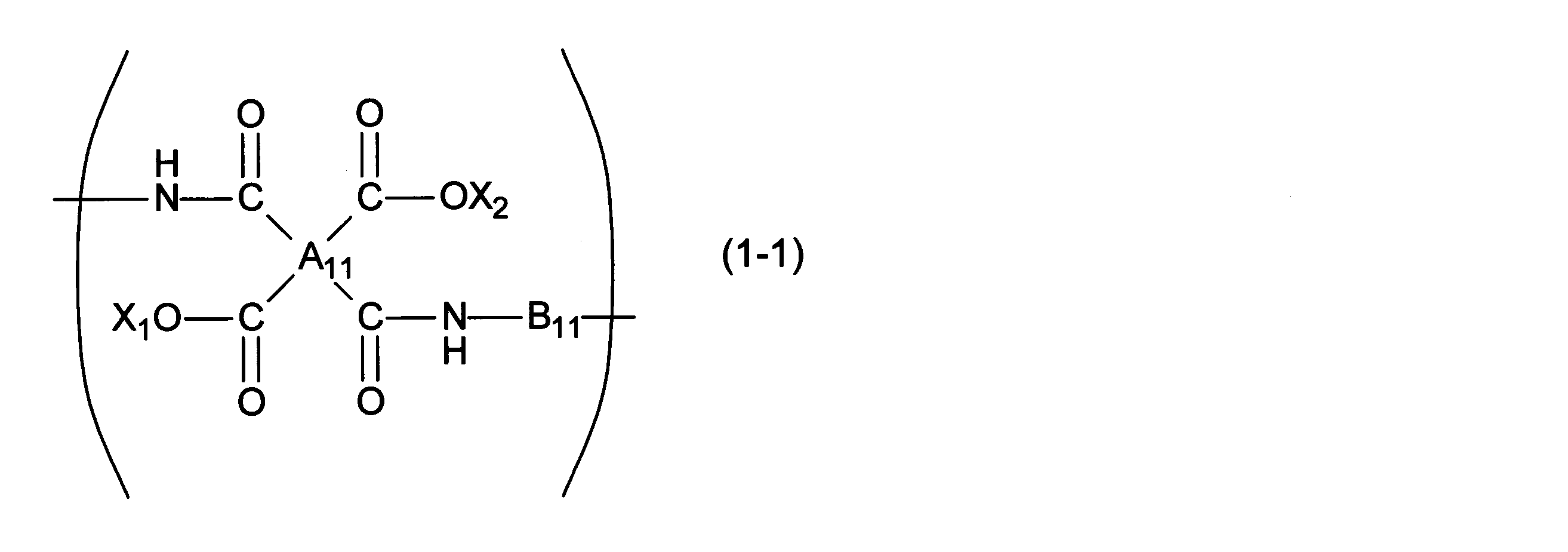





3. 前記化学式(1-2)で表される繰り返し単位の合計含有量が、全繰り返し単位に対して、50モル%以上であることを特徴とする前記項2に記載のポリイミド前駆体。
化学式(2-1)で表される繰り返し単位の合計含有量が、全繰り返し単位に対して、50モル%以上であることを特徴とするポリイミド。



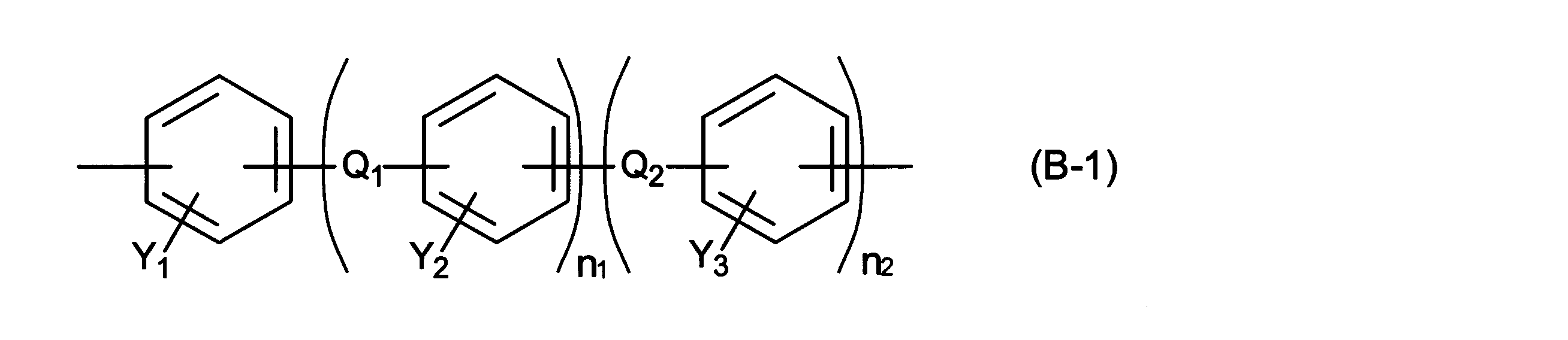

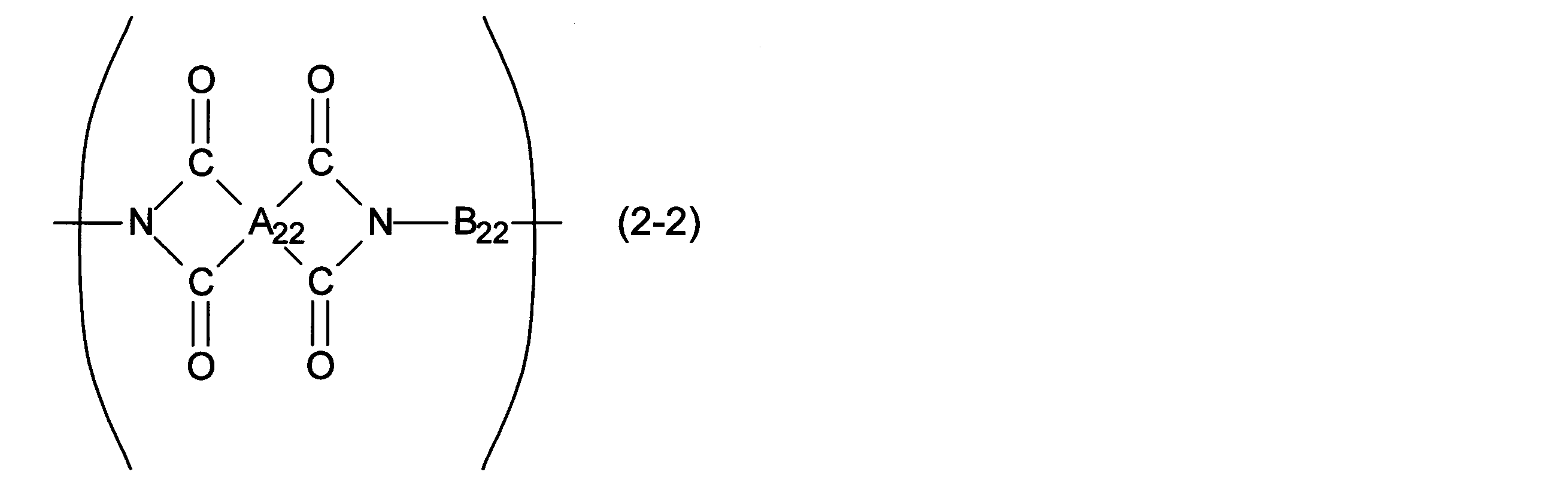

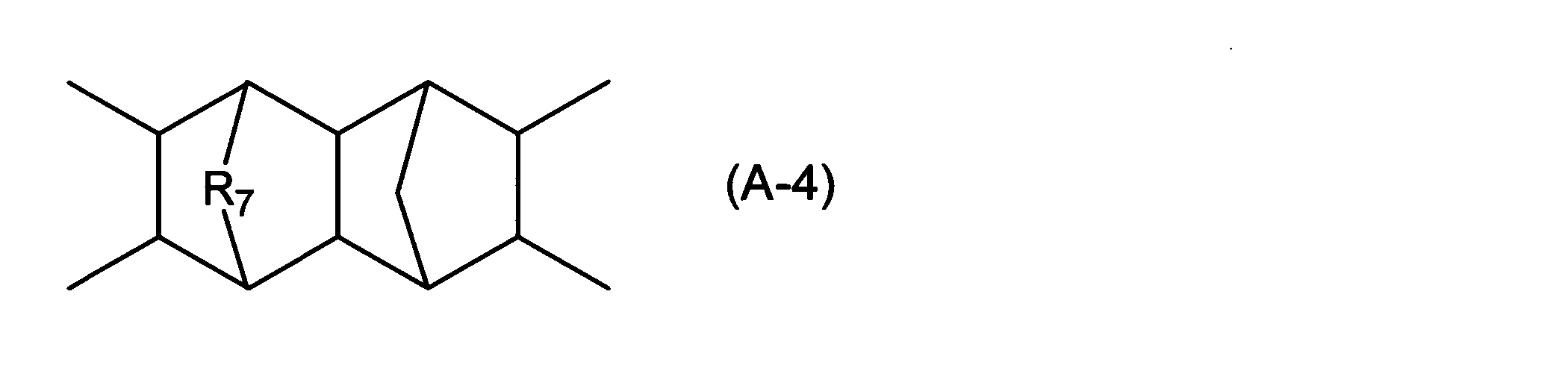
6. 前記化学式(2-2)で表される繰り返し単位の合計含有量が、全繰り返し単位に対して、50モル%以上であることを特徴とする前記項5に記載のポリイミド。
8. 前記項1~3のいずれかに記載のポリイミド前駆体から得られるポリイミド、または前記項4~6のいずれかに記載のポリイミドから主としてなるフィルム。
9. 前記項1~3のいずれかに記載のポリイミド前駆体、または前記項4~6のいずれかに記載のポリイミドを含むワニス。
10. 前記項1~3のいずれかに記載のポリイミド前駆体、または前記項4~6のいずれかに記載のポリイミドを含むワニスを用いて得られたポリイミドフィルム。
11. 前記項1~3のいずれかに記載のポリイミド前駆体から得られるポリイミド、または前記項4~6のいずれかに記載のポリイミドを含むことを特徴とするディスプレイ用、タッチパネル用、または太陽電池用の基板。

13. 下記化学式(M-2)で表されるテトラエステル化合物。
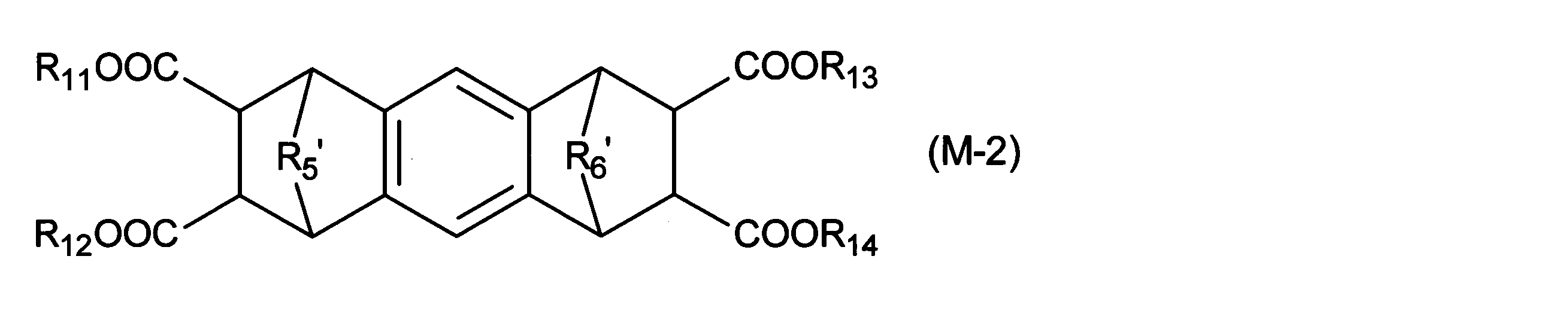
14. 下記化学式(M-3)で表されるテトラエステル化合物。

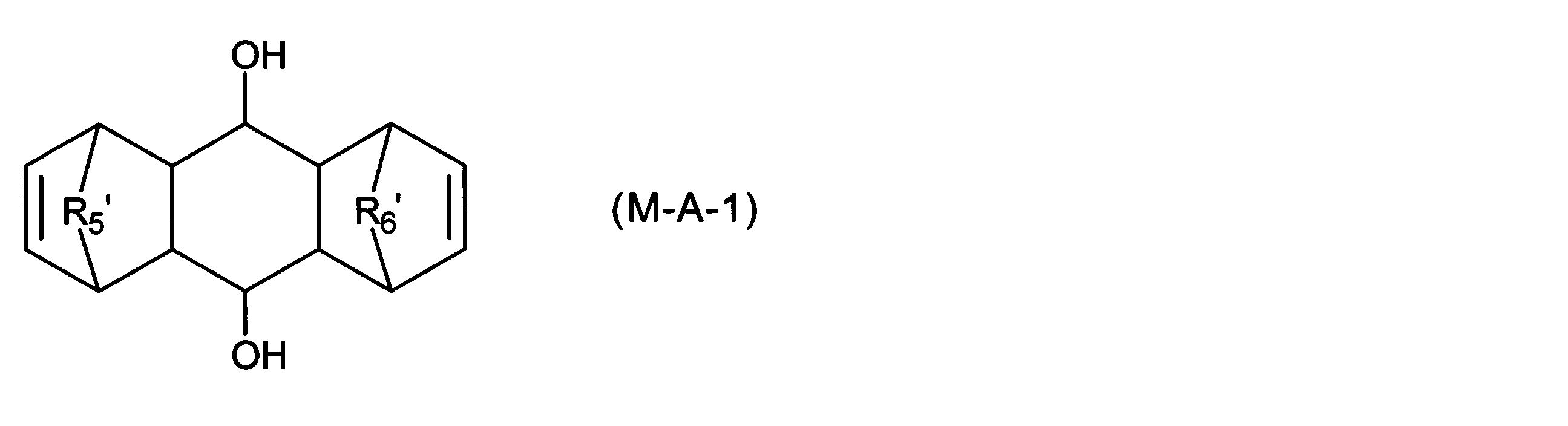
と脂肪族スルホン酸クロリドまたは芳香族スルホン酸クロリドとを反応させて、下記化学式(M-A-2)で表されるオレフィン化合物

を得る工程、
(B)前記化学式(M-A-2)で表されるオレフィン化合物を、パラジウム触媒と銅化合物存在下、アルコール化合物と一酸化炭素と反応させて、下記化学式(M-A-3)で表されるテトラエステル化合物
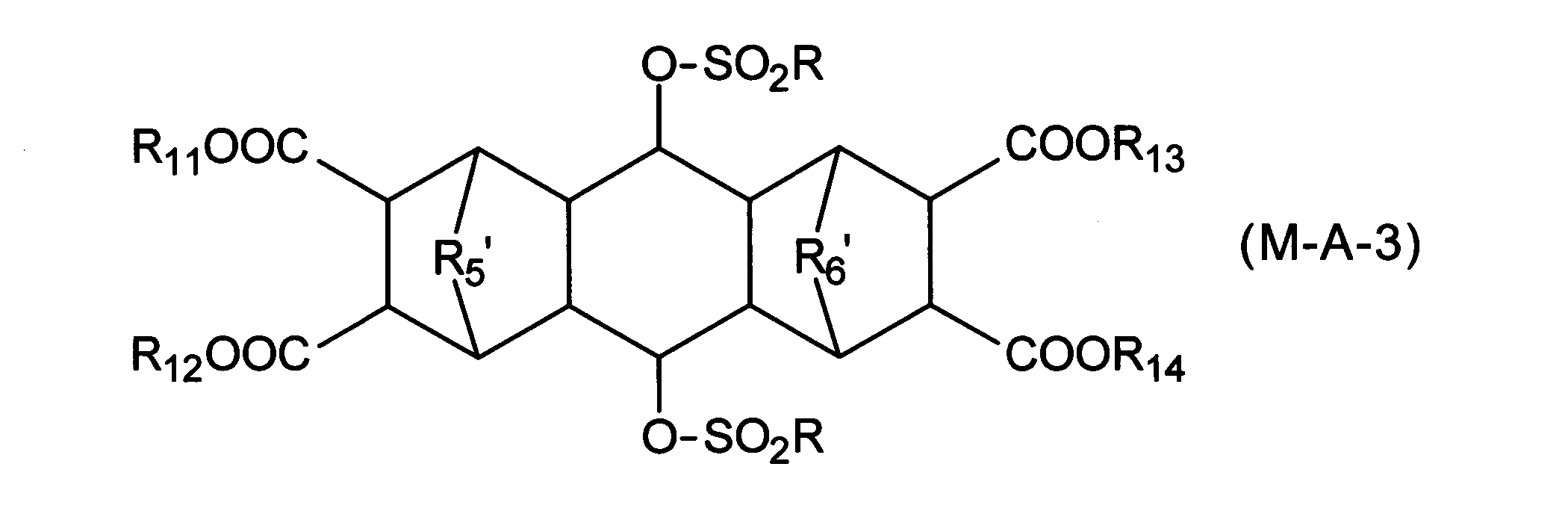
を得る工程、
(C)前記化学式(M-A-3)で表されるテトラエステル化合物より、下記化学式(M-3)で表されるテトラエステル化合物
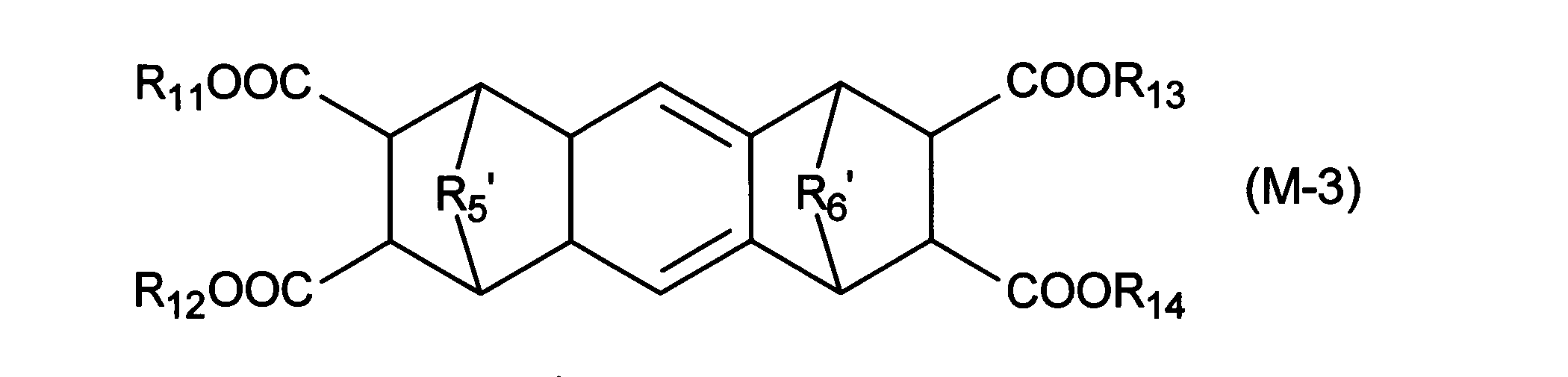
を得る工程、
(D)前記化学式(M-3)で表されるテトラエステル化合物の酸化反応により、下記化学式(M-2)で表されるテトラエステル化合物

を得る工程、
(E)前記化学式(M-2)で表されるテトラエステル化合物を酸触媒の存在下、有機溶媒中で反応させて、下記化学式(M-1)で表されるテトラカルボン酸二無水物

を得る工程、
を含むことを特徴とするテトラカルボン酸二無水物の製造方法。

17. 下記化学式(M-5)で表されるテトラエステル化合物。
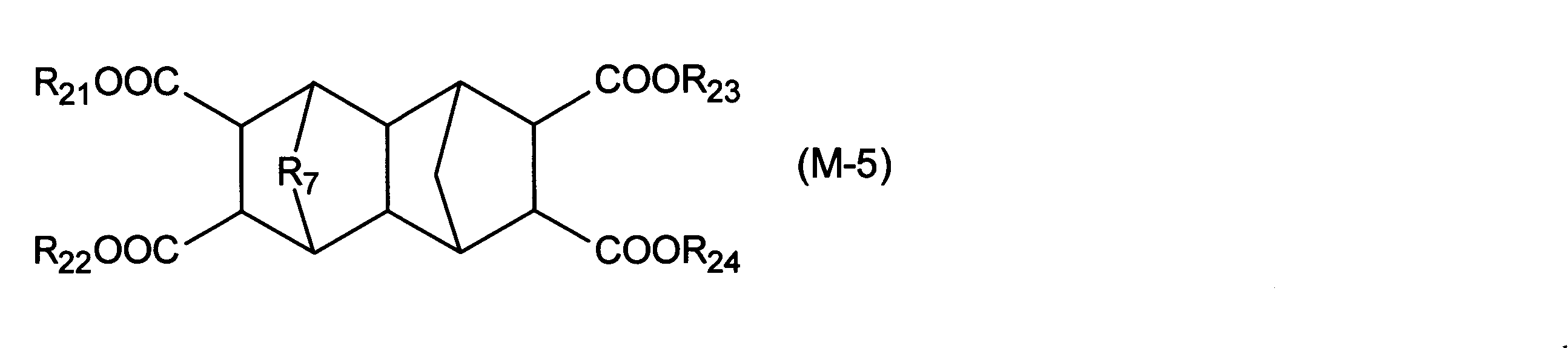
18. 下記化学式(M-6)で表されるジハロゲノジカルボン酸無水物。
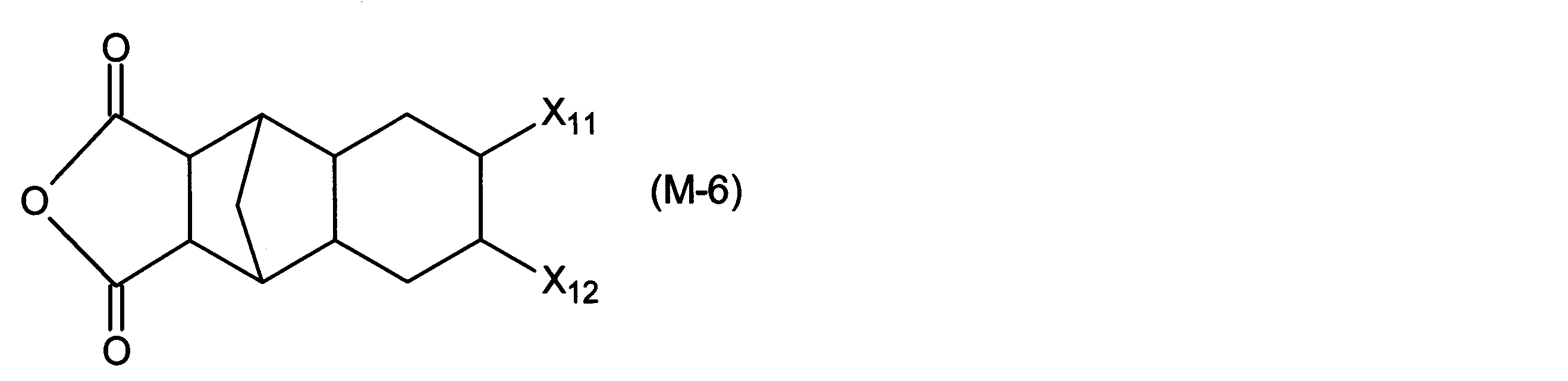
19. 下記化学式(M-7)で表されるジカルボン酸無水物。
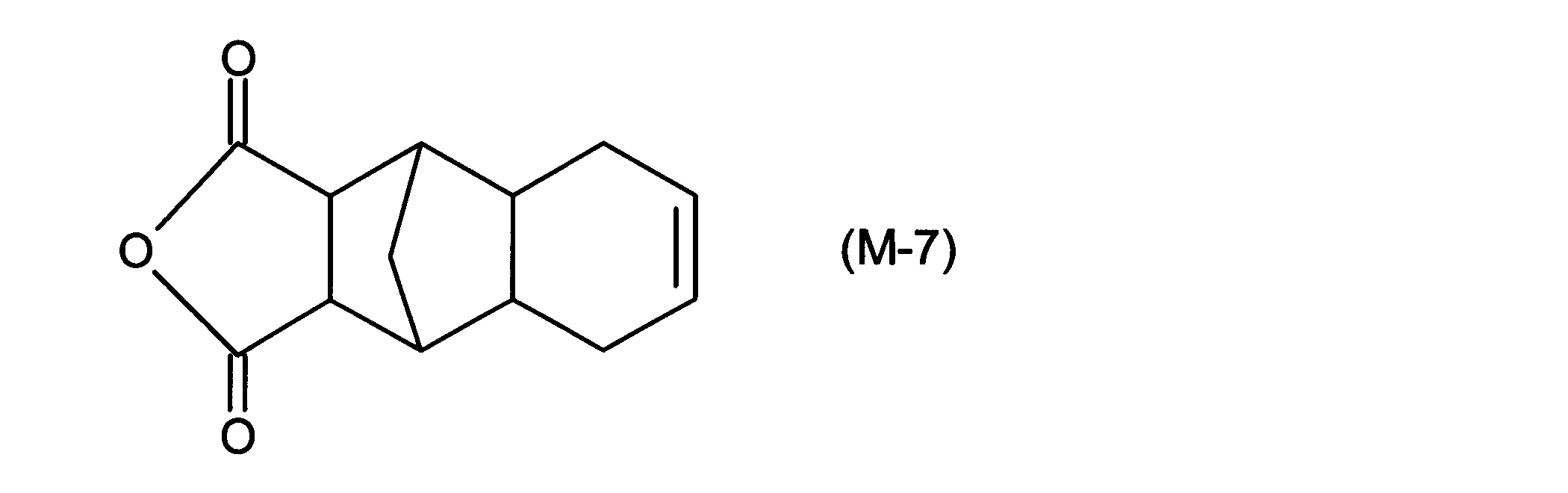
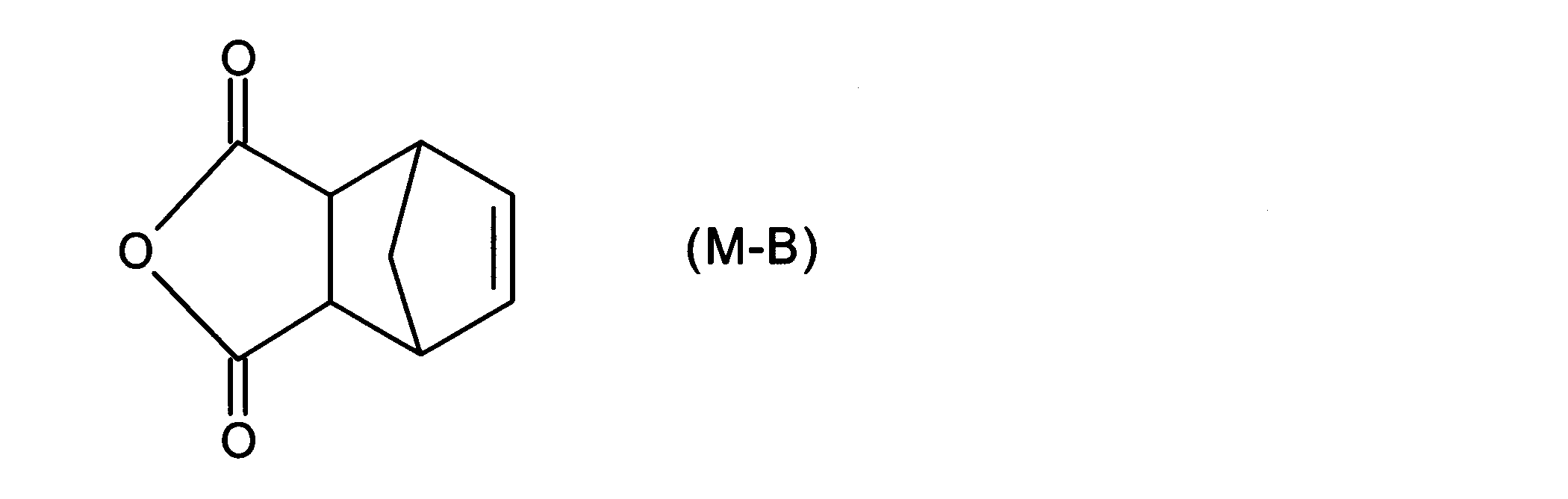
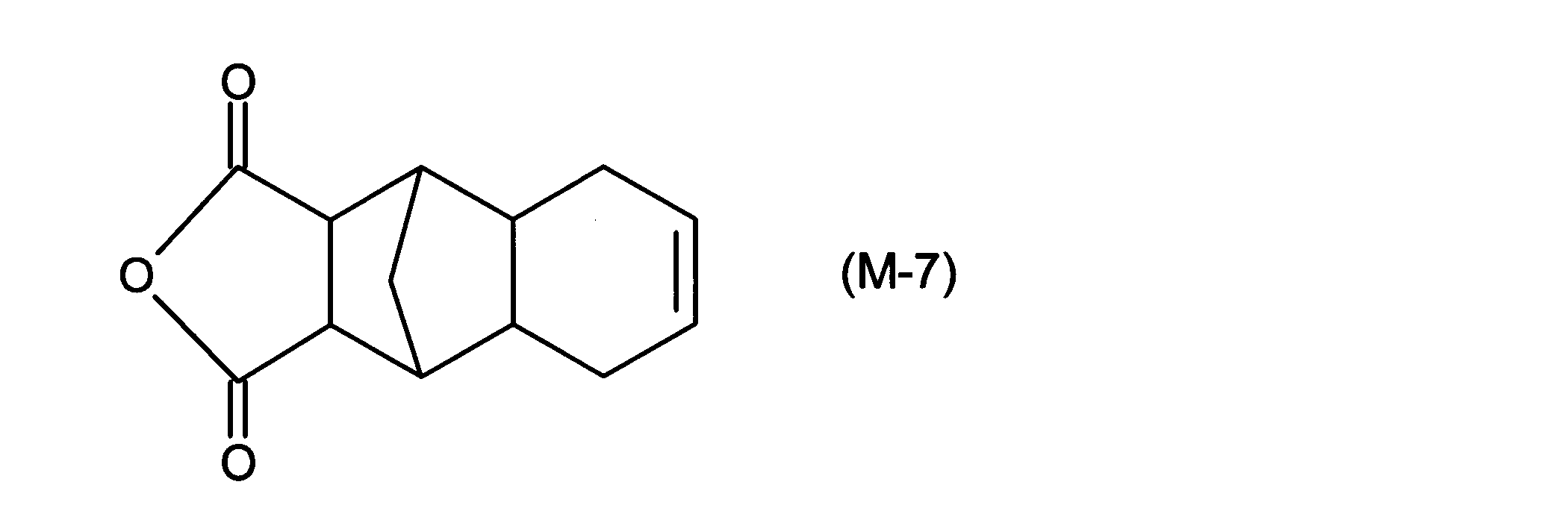
(B)前記化学式(M-7)で表されるジカルボン酸無水物とジハロゲン化剤とを反応させて、下記化学式(M-6)で表されるジハロゲノジカルボン酸無水物

を得る工程、
(C)前記化学式(M-6)で表されるジハロゲノジカルボン酸無水物を無水マレイン酸と反応させて、下記化学式(M-4-1)で表されるテトラカルボン酸二無水物

(D)前記化学式(M-4-1)で表されるテトラカルボン酸二無水物を、酸の存在下、アルコール化合物と反応させて、下記化学式(M-5-1)で表されるテトラエステル化合物

を得る工程、
(E)前記化学式(M-5-1)で表されるテトラエステル化合物を金属触媒存在下、水素と反応させて、下記化学式(M-5-2)で表されるテトラエステル化合物

を得る工程、
(F)前記化学式(M-5-2)で表されるテトラエステル化合物を酸触媒の存在下、有機溶媒中で反応させて、下記化学式(M-4-2)で表されるテトラカルボン酸二無水物

を含むことを特徴とするテトラカルボン酸二無水物の製造方法。

と下記化学式(M-C-2)で表されるアセチレン化合物

とを反応させて、下記化学式(M-C-3)で表されるジエステル化合物
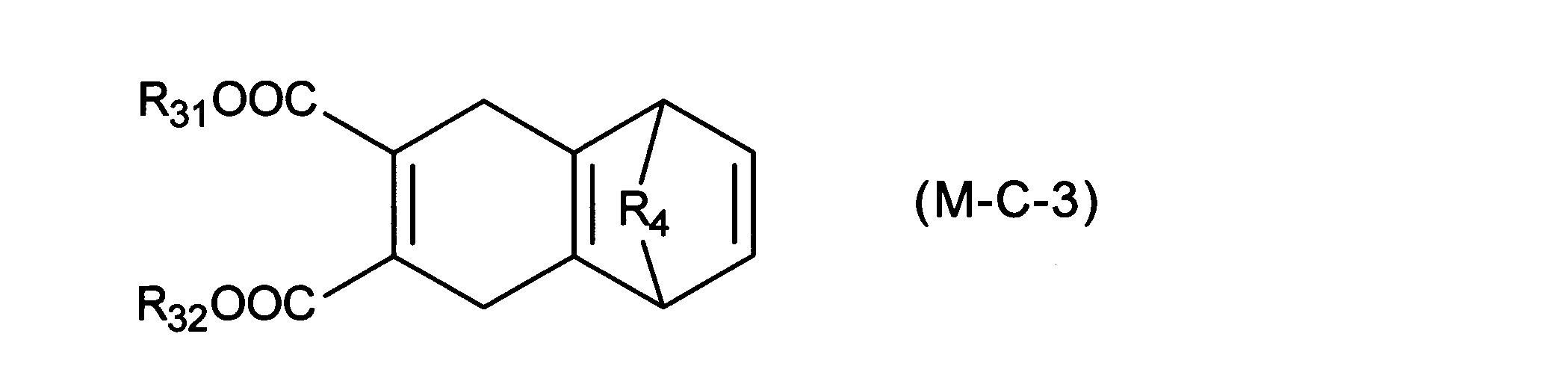
を得る工程、
(B)前記化学式(M-C-3)で表されるジエステル化合物の酸化反応により、下記化学式(M-C-4)で表されるジエステル化合物
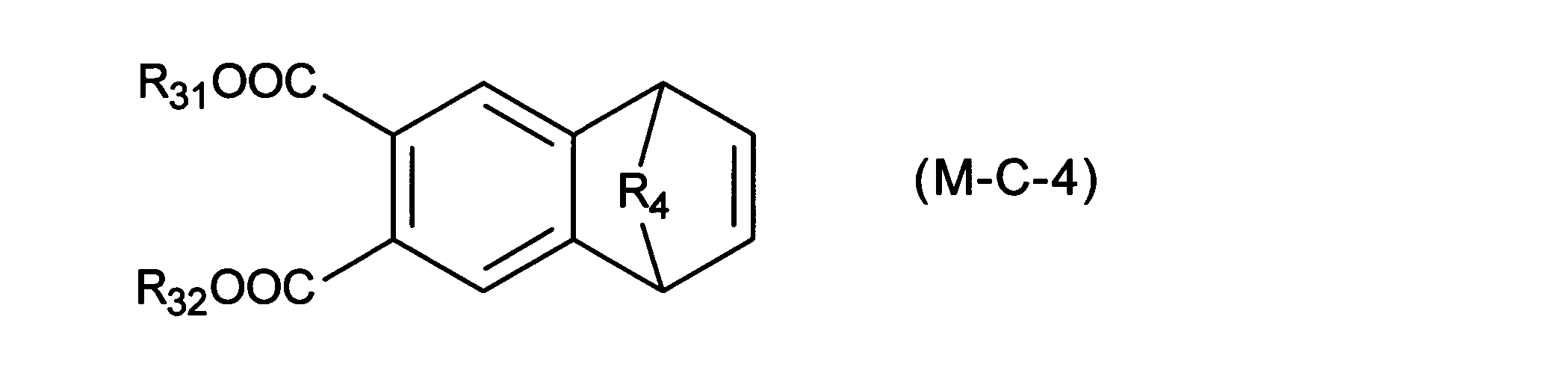
を得る工程、
(C)前記化学式(M-C-4)で表されるジエステル化合物を、パラジウム触媒及び銅化合物存在下、アルコール化合物と一酸化炭素と反応させて、下記化学式(M-C-5)で表されるテトラエステル化合物

を得る工程、
(D)前記化学式(M-C-5)で表されるテトラエステル化合物を酸触媒の存在下、有機溶媒中で反応させて、下記化学式(M-9)で表されるテトラカルボン酸二無水物
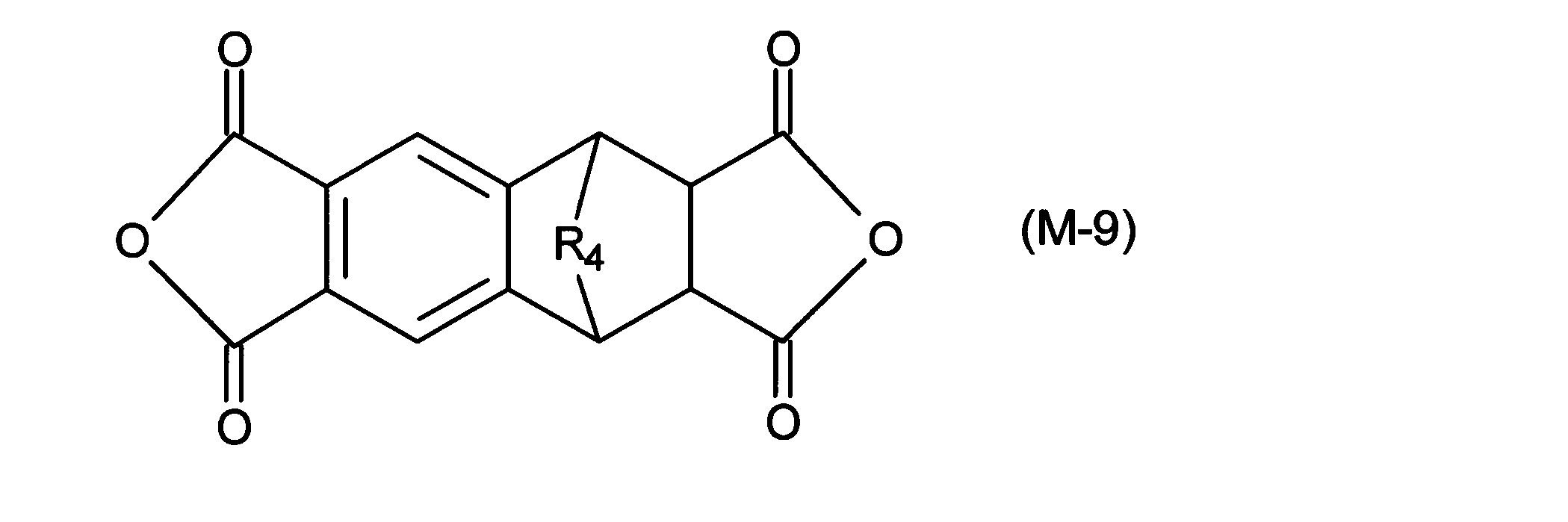
を得る工程、
を含むことを特徴とするテトラカルボン酸二無水物の製造方法。

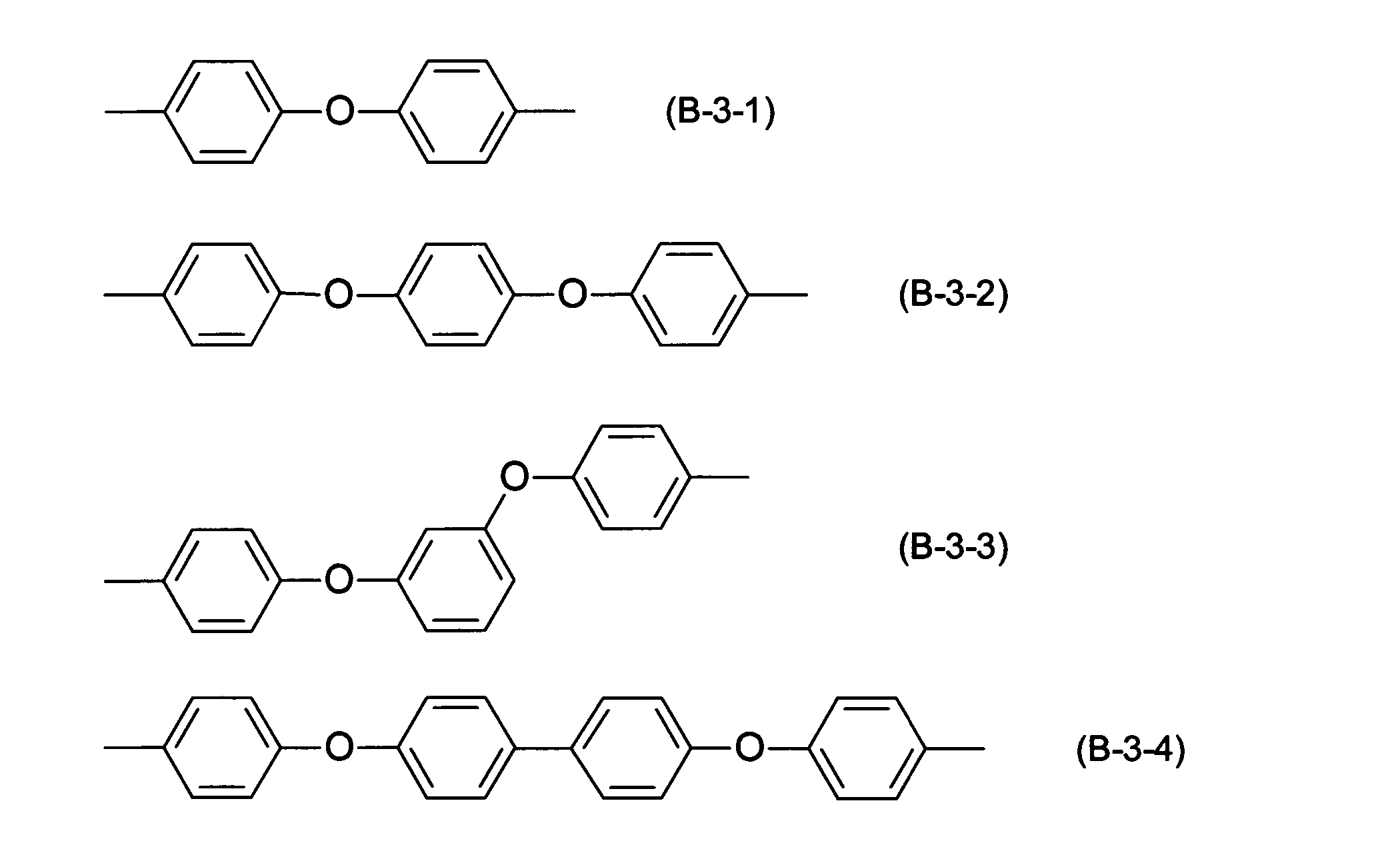
本発明のポリイミド前駆体は、溶媒中でテトラカルボン酸成分としてのテトラカルボン酸二無水物とジアミン成分とを略等モル、好ましくはテトラカルボン酸成分に対するジアミン成分のモル比[ジアミン成分のモル数/テトラカルボン酸成分のモル数]が好ましくは0.90~1.10、より好ましくは0.95~1.05の割合で、例えば120℃以下の比較的低温度でイミド化を抑制しながら反応することによって、ポリイミド前駆体溶液組成物として好適に得ることができる。
テトラカルボン酸二無水物を任意のアルコールと反応させ、ジエステルジカルボン酸を得た後、塩素化試薬(チオニルクロライド、オキサリルクロライドなど)と反応させ、ジエステルジカルボン酸クロライドを得る。このジエステルジカルボン酸クロライドとジアミンを-20~120℃、好ましくは-5~80℃の範囲で1~72時間攪拌することで、ポリイミド前駆体が得られる。80℃以上で反応させる場合、分子量が重合時の温度履歴に依存して変動し、また熱によりイミド化が進行することから、ポリイミド前駆体を安定して製造できなくなる可能性がある。また、ジエステルジカルボン酸とジアミンを、リン系縮合剤や、カルボジイミド縮合剤などを用いて脱水縮合することでも、簡便にポリイミド前駆体が得られる。
あらかじめ、ジアミンとシリル化剤を反応させ、シリル化されたジアミンを得る。必要に応じて、蒸留等により、シリル化されたジアミンの精製を行う。そして、脱水された溶剤中にシリル化されたジアミンを溶解させておき、攪拌しながら、テトラカルボン酸二無水物を徐々に添加し、0~120℃、好ましくは5~80℃の範囲で1~72時間攪拌することで、ポリイミド前駆体が得られる。80℃以上で反応させる場合、分子量が重合時の温度履歴に依存して変動し、また熱によりイミド化が進行することから、ポリイミド前駆体を安定して製造できなくなる可能性がある。
1)の方法で得られたポリアミド酸溶液とシリル化剤を混合し、0~120℃、好ましくは5~80℃の範囲で1~72時間攪拌することで、ポリイミド前駆体が得られる。80℃以上で反応させる場合、分子量が重合時の温度履歴に依存して変動し、また熱によりイミド化が進行することから、ポリイミド前駆体を安定して製造できなくなる可能性がある。

第1工程では、R5’、R6’が-CH2-である化学式(M-1)のテトラカルボン酸二無水物(DMADA)を合成する場合、p-ベンゾキノン(BQ)とシクロペンタジエン(CP)とを反応させて、1,4,4a,5,8,8a,9a,10a-オクタヒドロ-1,4:5,8-ジメタノアントラセン-9,10-ジオン(DNBQ)を合成する。R5’、R6’が-CH2CH2-である化学式(M-1)のテトラカルボン酸二無水物を合成する場合、ここで、シクロペンタジエン(CP)に代えて、1,3-シクロヘキサジエンをBQと反応させればよい。
第2工程では、第1工程で得られたDNBQと水素化ホウ素ナトリウムとを反応させて、1,4,4a,5,8,8a,9,9a,10,10a-デカヒドロ-1,4:5,8-ジメタノアントラセン-9,10-ジオール(DNHQ)を合成する。
第3工程では、塩基存在下で、第2工程で得られたDNHQとメタンスルホン酸クロリドとを反応させて、1,4,4a,5,8,8a,9,9a,10,10a-デカヒドロ-1,4:5,8-ジメタノアントラセン-9,10-ジイル ジメタンスルホネート(DNCMS;この場合、Rは-CH3〔-SO2Rはメシル基(-SO2CH3)〕)を合成する。メタンスルホン酸クロリドに代えて、その他の脂肪族スルホン酸クロリドまたは芳香族スルホン酸クロリドを使用することもできる。
第4工程では、パラジウム触媒と銅化合物存在下、メタノール類と一酸化炭素を、第3工程で得られたDNCMSとを反応させて、テトラメチル-9,10-ビス((メチルスルホニル)オキシ)テトラデカヒドロ-1,4:5,8-ジメタノアントラセン-2,3,6,7-テトラカルボキシレート(DNMTE;この場合、R11~R14はメチル基)を合成する。メタノールに代えて、所望のエステル化合物に対応するその他のアルコール化合物を使用することもできる。
第5工程では、第4工程で得られたDNMTEの脱メタンスルホニル化反応により、テトラメチル-1,2,3,4,4a,5,6,7,8,9a-デカヒドロ-1,4:5,8-ジメタノアントラセン-2,3,6,7-テトラカルボキシレート(DMHAE)を合成する。この第5工程で得られる化合物は、前記化学式(M-3)で表されるテトラエステル化合物であり、新規な化合物である。
第6工程では、第5工程で得られたDMHAEの芳香族化反応(酸化反応)により、テトラメチル-1,2,3,4,5,6,7,8-オクタヒドロ-1,4:5,8-ジメタノアントラセン-2,3,6,7-テトラカルボキシレート(DMAME)を合成する。この第6工程で得られる化合物は、前記化学式(M-2)で表されるテトラエステル化合物であり、新規な化合物である。
第7工程では、第6工程で得られたDMAMEの無水化反応により、3a,4,6,6a,9a,10,12,12a-オクタヒドロ-1H,3H-4,12:6,10-ジメタノアントラ[2,3-c:6,7-c’]ジフラン-1,3,7,9-テトラオン(DMADA)を合成する。この第7工程で得られる化合物が、前記化学式(M-1)で表されるテトラカルボン酸二無水物である。
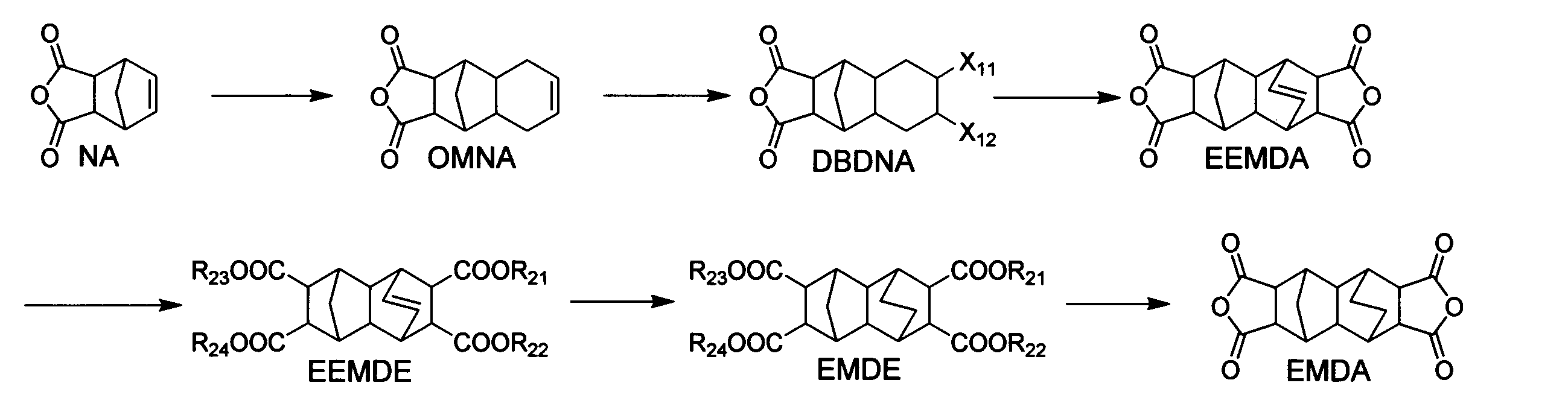
第1工程では、5-ノルボルネン-2,3-ジカルボン酸無水物(NA)と1,3-ブタジエンとを反応させて、3a,4,4a,5,8,8a,9,9a-オクタヒドロ-4,9-メタノナフト[2,3-c]フラン-1,3-ジオン(OMNA)を合成する。この第1工程で得られる化合物は、前記化学式(M-7)で表されるジカルボン酸無水物であり、新規な化合物である。
第2工程では、第1工程で得られたOMNAと、ジハロゲン化剤としての臭素とを反応させて、6,7-ジブロモデカヒドロ-4,9-メタノナフト[2,3-c]フラン-1,3-ジオン(DBDNA;この場合、X11、X12は-Br)を合成する。臭素に代えて、後述する、その他のジハロゲン化剤を使用することもできる。この第2工程で得られる化合物は、前記化学式(M-6)で表されるジハロゲノジカルボン酸無水物であり、新規な化合物である。
第3工程では、第2工程で得られたDBDNAと無水マレイン酸とを反応させて、3a,4,4a,5,5a,8a,9,9a,10,10a-デカヒドロ-1H,3H-4,10-エタノ-5,9-メタノナフト[2,3-c:6,7-c’]ジフラン-1,3,6,8-テトラオン(EEMDA)を合成する。この第3工程で得られる化合物は、R7が-CH=CH-である前記化学式(M-4)で表されるテトラカルボン酸二無水物であり、新規な化合物である。
第4工程では、第3工程で得られたEEMDAとメタノール類とを反応させて、テトラメチル-1,4,4a,5,6,7,8,8a-オクタヒドロ-1,4-エタノ-5,8-メタノナフタレン-6,7,10,11-テトラカルボキシレート(EEMDE;この場合、R21~R24はメチル基)を合成する。メタノールに代えて、所望のエステル化合物に対応するその他のアルコール化合物を使用することもできる。この第4工程で得られる化合物は、R7が-CH=CH-である前記化学式(M-5)で表されるテトラエステル化合物であり、新規な化合物である。

第5工程では、第4工程で得られたEEMDEを水素と反応させて、テトラメチル-デカヒドロ-1,4-エタノ-5,8-メタノナフタレン-2,3,6,7-テトラカルボキシレート(EMDE)を合成する。この第5工程で得られる化合物は、R7が-CH2CH2-である前記化学式(M-5)で表されるテトラエステル化合物であり、新規な化合物である。
第6工程では、第5工程で得られたEMDEの無水化反応により、デカヒドロ-1H,3H-4,10-エタノ-5,9-メタノナフト[2,3-c:6,7-c’]ジフラン-1,3,6,8-テトラオン(EMDA)を合成する。この第6工程で得られる化合物が、R7が-CH2CH2-である前記化学式(M-4)で表されるテトラカルボン酸二無水物である。
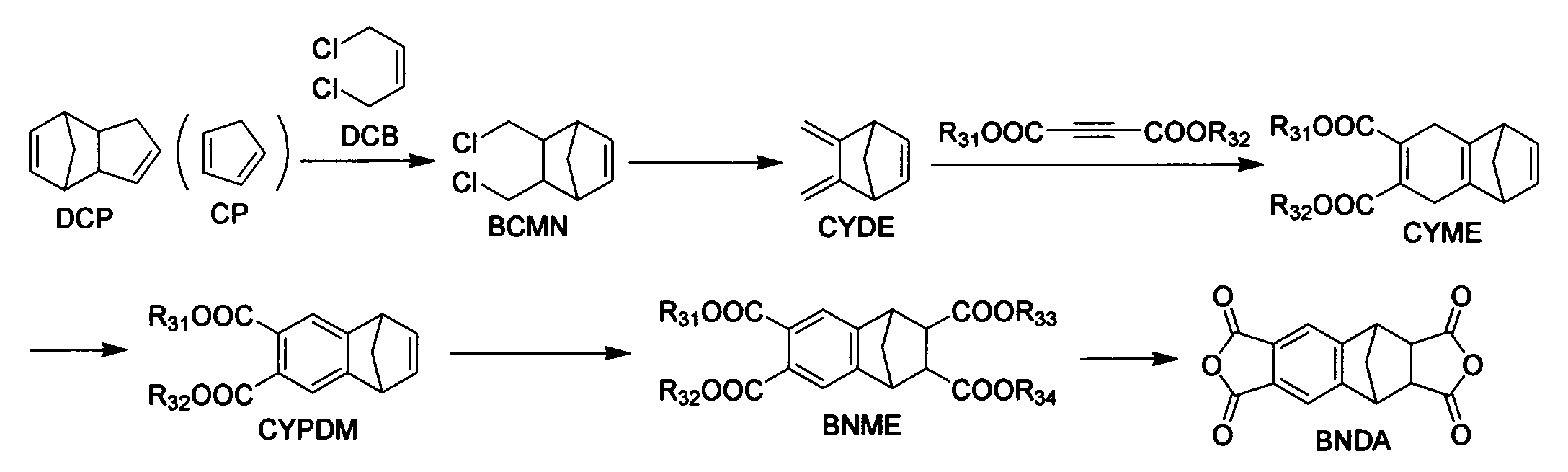
第1工程では、R4が-CH2-である化学式(M-9)のテトラカルボン酸二無水物(BNDA)を合成する場合、シス-1,4-ジクロロ-2-ブテン(DCB)とシクロペンタジエン(CP)とを反応させて、5,6-ビス(クロロメチル)ビシクロ[2.2.1]ヘプト-2-エン(BCMN)を合成する。R4が-CH2CH2-である化学式(M-9)のテトラカルボン酸二無水物を合成する場合、ここで、シクロペンタジエン(CP)に代えて、1,3-シクロヘキサジエンをDCBと反応させればよい。
第2工程では、第1工程で得られたBCMNと塩基との反応により脱塩化水素化させて、5,6-ジメチレンビシクロ[2.2.1]ヘプト-2-エン(CYDE)を合成する。
第3工程では、第2工程で得られたCYDEとアセチレンジカルボン酸ジメチル(DMAD)とを反応させて、ジメチル1,4,5,8-テトラヒドロ-1,4-メタノナフタレン-6,7-ジカルボキシレート(CYME;この場合、R31、R32はメチル基)を合成する。アセチレンジカルボン酸ジメチルに代えて、後述する、その他のアセチレンジカルボン酸ジエステルを使用することもできる。
第4工程では、第3工程で得られたCYMEの芳香族化反応(酸化反応)により、ジメチル1,4-ジヒドロ-1,4-メタノナフタレン-6,7-ジカルボキシレート(CYPDM)を合成する。
第5工程では、パラジウム触媒及び銅化合物存在下、第4工程で得られたCYPDMとメタノール類と一酸化炭素とを反応させて、テトラメチル-1,2,3,4-テトラヒドロ-1,4-メタノナフタレン-2,3,6,7-テトラカルボキシレート(BNME;この場合、R31~R34はメチル基)を合成する。メタノールに代えて、所望のエステル化合物に対応するその他のアルコール化合物を使用することもできる。
第6工程では、第5工程で得られたBNMEの無水化反応により、3a,4,10,10a-テトラヒドロ-1H,3H-4,10-メタノナフト[2,3-c:6,7-c’]ジフラン-1,3,6,8-テトラオン(BNDA)を合成する。この第6工程で得られる化合物が、前記化学式(M-9)で表されるテトラカルボン酸二無水物である。
[全光透過率]
紫外可視分光光度計/V-650DS(日本分光製)を用いて、膜厚10μmのポリイミドフィルムの全光透過率(380nm~780nmにおける平均透過率)を測定した。
ポリイミドフィルムをIEC-540(S)規格のダンベル形状に打ち抜いて試験片(幅:4mm)とし、ORIENTEC社製TENSILONを用いて、チャック間長30mm、引張速度2mm/分で、初期の引張弾性率、破断点伸度、破断強度を測定した。
膜厚10μmのポリイミドフィルムを幅4mmの短冊状に切り取って試験片とし、TMA/SS6100(エスアイアイ・ナノテクノロジー株式会社製)を用い、チャック間長15mm、荷重2g、昇温速度20℃/分で500℃まで昇温した。得られたTMA曲線から、100℃から250℃までの線熱膨張係数を求めた。また、TMA曲線の変曲点をTg(ガラス転移温度)とした。
膜厚10μmのポリイミドフィルムを試験片とし、TAインスツルメント社製 熱重量測定装置(Q5000IR)を用い、窒素気流中、昇温速度10℃/分で25℃から600℃まで昇温した。得られた重量曲線から、5%重量減少温度を求めた。
DABAN: 4,4’-ジアミノベンズアニリド
PPD: p-フェニレンジアミン
TFMB: 2,2’-ビス(トリフルオロメチル)ベンジジン
4,4’-ODA: 4,4’-オキシジアニリン
TPE-R: 1,3-ビス(4-アミノフェノキシ)ベンゼン
BAPB: 4,4’-ビス(4-アミノフェノキシ)ビフェニル
tra-DACH:トランス-1,4-ジアミノシクロヘキサン
[テトラカルボン酸成分]
TNDA:テトラデカヒドロ-1H,3H-4,12:5,11:6,10-トリメタノアントラ[2,3-c:6,7-c’]ジフラン-1,3,7,9-テトラオン
BNDA:3a,4,10,10a-テトラヒドロ-1H,3H-4,10-メタノナフト[2,3-c:6,7-c’]ジフラン-1,3,6,8-テトラオン
DMADA:3a,4,6,6a,9a,10,12,12a-オクタヒドロ-1H,3H-4,12:6,10-ジメタノアントラ[2,3-c:6,7-c’]ジフラン-1,3,7,9-テトラオン
EMDAdx:(3aR,4R,5S,5aR,8aS,9R,10S,10aS)-デカヒドロ-1H,3H-4,10-エタノ-5,9-メタノナフト[2,3-c:6,7-c’]ジフラン-1,3,6,8-テトラオン
EMDAxx:(3aR,4R,5S,5aS,8aR,9R,10S,10aS)-デカヒドロ-1H,3H-4,10-エタノ-5,9-メタノナフト[2,3-c:6,7-c’]ジフラン-1,3,6,8-テトラオン
NMP: N-メチル-2-ピロリドン
DMAc: N,N-ジメチルアセトアミド


CI-MS(m/z); 241(M+1)
CI-MS(m/z); 245(M+1)
CI-MS(m/z); 401(M+1)
CI-MS(m/z); 637(M+1)
CI-MS(m/z); 445(M+1)
CI-MS(m/z); 442(M+1)
CI-MS(m/z); 351(M+1)
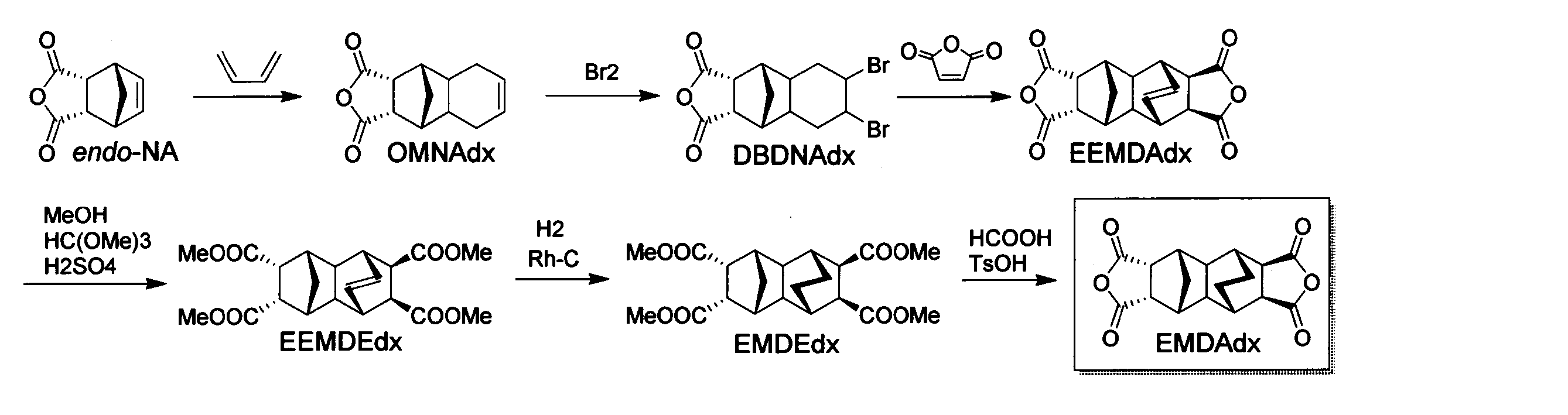
CI-MS(m/z); 219(M+1)
CI-MS(m/z); 379(M+1)
CI-MS(m/z); 314(M+1)
CI-MS(m/z); 407(M+1)
1H-NMR(CDCl3,σ(ppm)); 1.25(d,J=11Hz,1H),1.49(d,J=9.0Hz,2H),1.79(d,J=9.0Hz,2H),2.00(s,2H),2.14(s,2H),2.24(d,J=11Hz,1H),2.51(s,2H),2.90(s,2H),3.02(t,J=2.0Hz,2H),3.63(s,6H),3.64(s,6H)
CI-MS(m/z); 409(M+1)
CI-MS(m/z); 317(M+1)
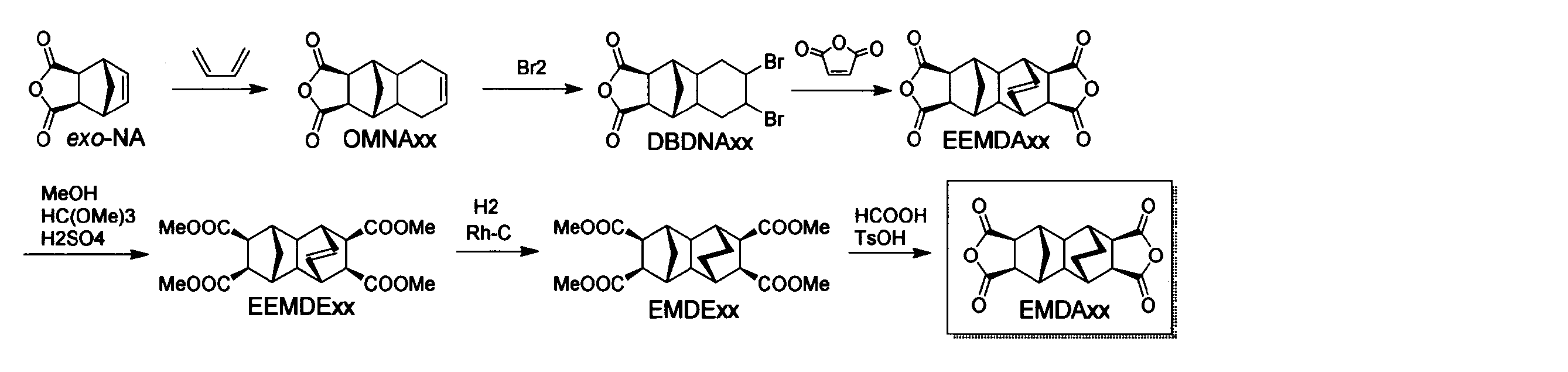
CI-MS(m/z); 219(M+1)
CI-MS(m/z); 379(M+1)
CI-MS(m/z); 314(M+1)
CI-MS(m/z); 407(M+1)
CI-MS(m/z); 409(M+1)
CI-MS(m/z); 317(M+1)
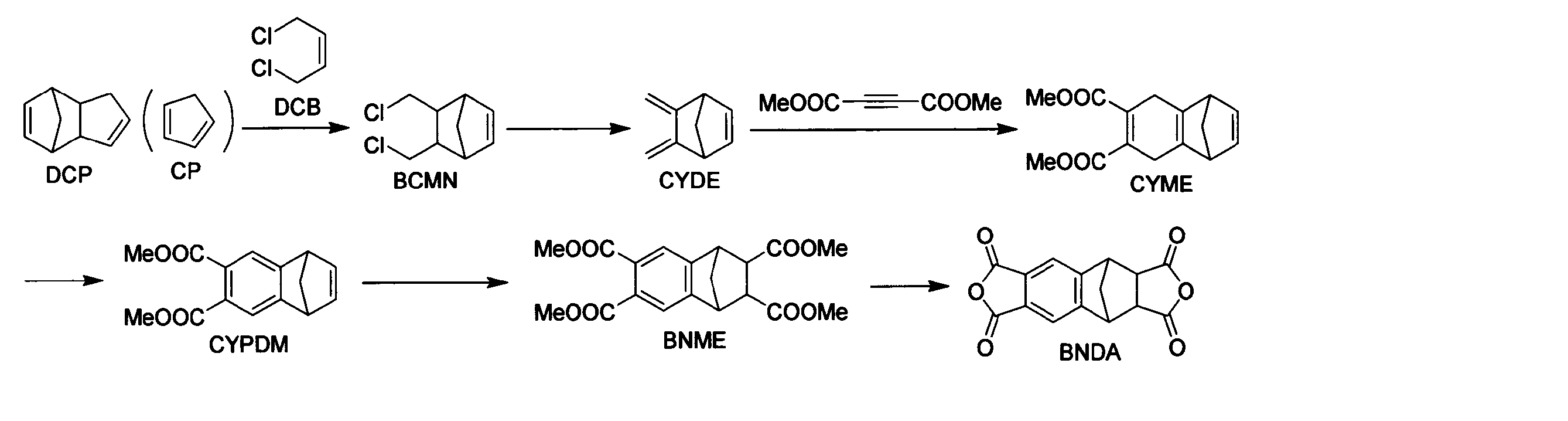
CI-MS(m/z); 191(M+1)
CI-MS(m/z); 119(M+1)
CI-MS(m/z); 261(M+1)
CI-MS(m/z); 259(M+1)
CI-MS(m/z); 377(M+1)
CI-MS(m/z); 285(M+1)
窒素ガスで置換した反応容器中にDABAN 0.60g(2.6ミリモル)を入れ、NMPを、仕込みモノマー総質量(ジアミン成分とカルボン酸成分の総和)が 20質量%となる量の6.29gを加え、室温で1時間攪拌した。この溶液にTNDA 1.12g(2.6ミリモル)を徐々に加えた。室温で48時間撹拌し、均一で粘稠なポリイミド前駆体溶液を得た。
窒素ガスで置換した反応容器中にDABAN 1.00g(4.4ミリモル)とPPD 0.07g(0.6ミリモル)とBAPB 0.46g(1.3ミリモル)を入れ、NMPを、仕込みモノマー総質量(ジアミン成分とカルボン酸成分の総和)が 25質量%となる量の11.54gを加え、室温で1時間攪拌した。この溶液にTNDA 2.32g(6.3ミリモル)を徐々に加えた。室温で48時間撹拌し、均一で粘稠なポリイミド前駆体溶液を得た。
窒素ガスで置換した反応容器中にBAPB 1.00g(2.7ミリモル)を入れ、NMPを、仕込みモノマー総質量(ジアミン成分とカルボン酸成分の総和)が 25質量%となる量の6.00gを加え、室温で1時間攪拌した。この溶液にTNDA 1.00g(2.7ミリモル)を徐々に加えた。室温で48時間撹拌し、均一で粘稠なポリイミド前駆体溶液を得た。
窒素ガスで置換した反応容器中に4,4’-ODA 0.70g(3.5ミリモル)を入れ、DMAcを、仕込みモノマー総質量(ジアミン成分とカルボン酸成分の総和)が 20質量%となる量の7.95gを加え、室温で1時間攪拌した。この溶液にTNDA 1.29g(3.5ミリモル)を徐々に加えた。室温で48時間撹拌し、均一で粘稠なポリイミド前駆体溶液を得た。
窒素ガスで置換した反応容器中にDABAN 0.23g(1.0ミリモル)を入れ、NMPを、仕込みモノマー総質量(ジアミン成分とカルボン酸成分の総和)が 16質量%となる量の2.70gを加え、室温で1時間攪拌した。この溶液に実施例S-3で得られたBNDA 0.29g(1.0ミリモル)を徐々に加えた。室温で48時間撹拌し、均一で粘稠なポリイミド前駆体溶液を得た。
窒素ガスで置換した反応容器中にPPD 0.40g(3.7ミリモル)を入れ、NMPを、仕込みモノマー総質量(ジアミン成分とカルボン酸成分の総和)が 20質量%となる量の5.81gを加え、室温で1時間攪拌した。この溶液に実施例S-3で得られたBNDA 1.05g(3.7ミリモル)を徐々に加えた。室温で48時間撹拌し、均一で粘稠なポリイミド前駆体溶液を得た。
窒素ガスで置換した反応容器中にTFMB 1.52g(4.7ミリモル)を入れ、NMPを、仕込みモノマー総質量(ジアミン成分とカルボン酸成分の総和)が 20質量%となる量の11.41gを加え、室温で1時間攪拌した。この溶液に実施例S-3で得られたBNDA 1.35g(4.7ミリモル)を徐々に加えた。室温で48時間撹拌し、均一で粘稠なポリイミド前駆体溶液を得た。
窒素ガスで置換した反応容器中にDABAN 0.40g(1.8ミリモル)とTFMB 0.70g(2.2ミリモル)とBAPB 0.16g(0.4ミリモル)を入れ、NMPを、仕込みモノマー総質量(ジアミン成分とカルボン酸成分の総和)が 20質量%となる量の10.00gを加え、室温で1時間攪拌した。この溶液に実施例S-3で得られたBNDA 1.24g(4.4ミリモル)を徐々に加えた。室温で48時間撹拌し、均一で粘稠なポリイミド前駆体溶液を得た。
窒素ガスで置換した反応容器中にtra-DACH 0.39g(3.5ミリモル)を入れ、NMPを、仕込みモノマー総質量(ジアミン成分とカルボン酸成分の総和)が 11質量%となる量の11.14gを加え、室温で1時間攪拌した。この溶液に実施例S-3で得られたBNDA 0.98g(3.5ミリモル)を徐々に加えた。室温で48時間撹拌し、均一で粘稠なポリイミド前駆体溶液を得た。
窒素ガスで置換した反応容器中に4,4’-ODA 0.60g(3.0ミリモル)を入れ、NMPを、仕込みモノマー総質量(ジアミン成分とカルボン酸成分の総和)が 10質量%となる量の13.06gを加え、室温で1時間攪拌した。この溶液に実施例S-3で得られたBNDA 0.85g(3.0ミリモル)を徐々に加えた。室温で48時間撹拌し、均一で粘稠なポリイミド前駆体溶液を得た。
窒素ガスで置換した反応容器中に4,4’-ODA 0.70g(3.5ミリモル)を入れ、NMPを、仕込みモノマー総質量(ジアミン成分とカルボン酸成分の総和)が 7質量%となる量の25.57gを加え、室温で1時間攪拌した。この溶液に実施例S-1で得られたDMADA 1.22g(3.5ミリモル)を徐々に加えた。室温で48時間撹拌し、均一で粘稠なポリイミド前駆体溶液を得た。
窒素ガスで置換した反応容器中にTPE-R 1.20g(4.1ミリモル)を入れ、NMPを、仕込みモノマー総質量(ジアミン成分とカルボン酸成分の総和)が 25質量%となる量の11.39gを加え、室温で1時間攪拌した。この溶液に実施例S-2-2で得られたEMDAxx 1.32g(4.1ミリモル)を徐々に加えた。室温で48時間撹拌し、均一で粘稠なポリイミド前駆体溶液を得た。

Claims (21)
- 下記化学式(1-1)で表される繰り返し単位を少なくとも1種含み、
化学式(1-1)で表される繰り返し単位の合計含有量が、全繰り返し単位に対して、50モル%以上であることを特徴とするポリイミド前駆体。

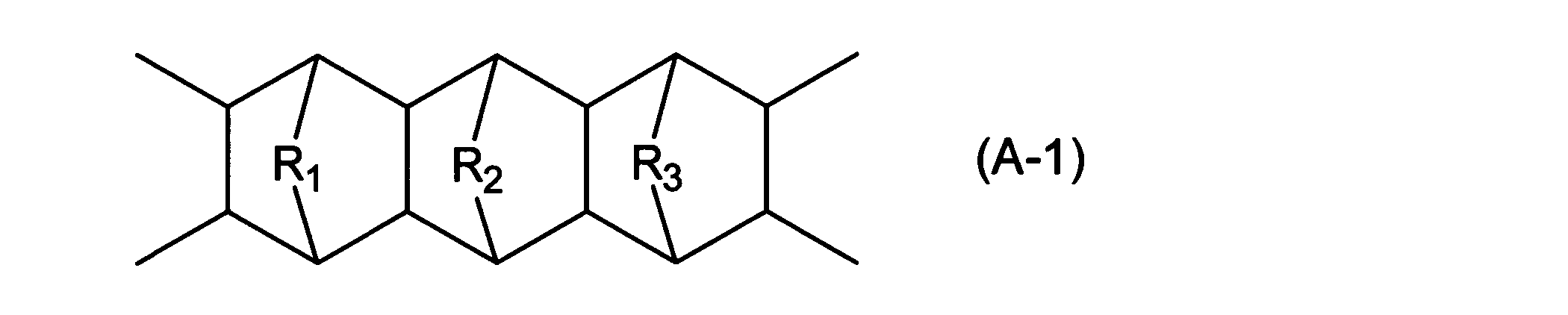



- 下記化学式(1-2)で表される繰り返し単位を少なくとも1種含むことを特徴とするポリイミド前駆体。
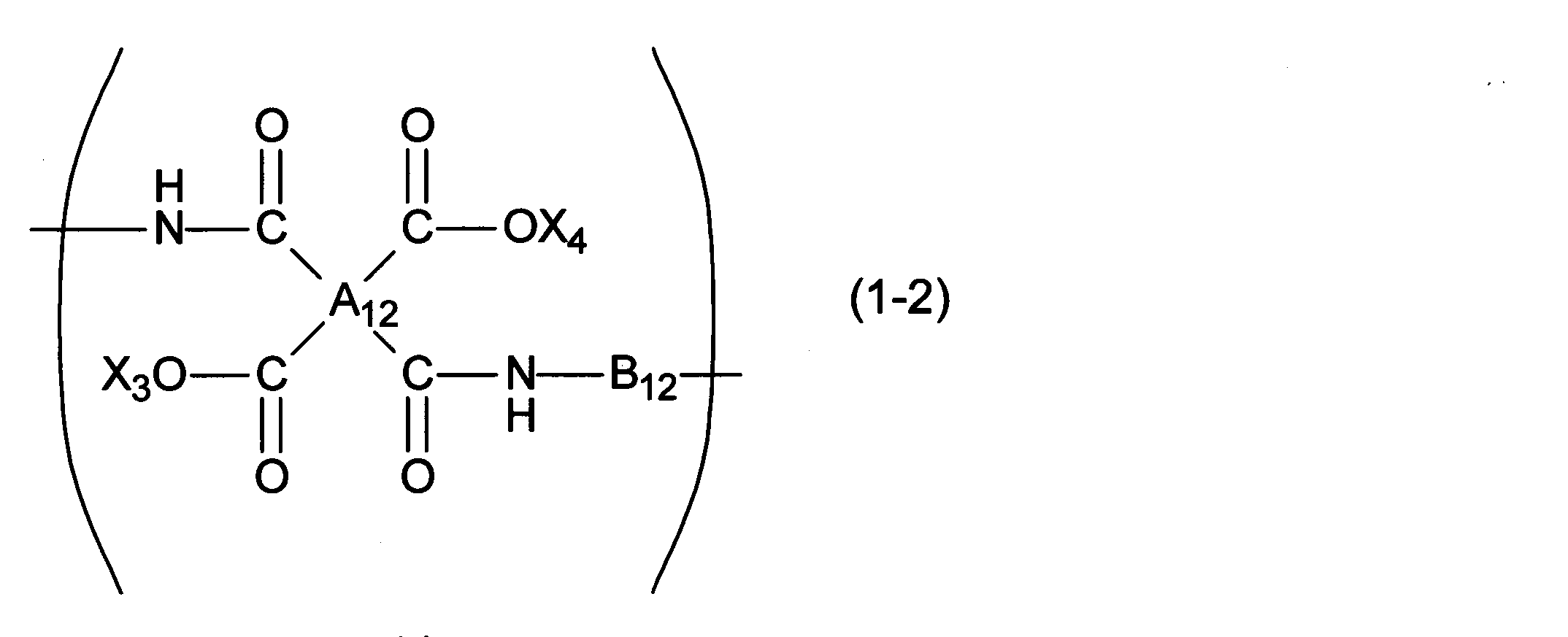


- 前記化学式(1-2)で表される繰り返し単位の合計含有量が、全繰り返し単位に対して、50モル%以上であることを特徴とする請求項2に記載のポリイミド前駆体。
- 下記化学式(2-1)で表される繰り返し単位を少なくとも1種含み、
化学式(2-1)で表される繰り返し単位の合計含有量が、全繰り返し単位に対して、50モル%以上であることを特徴とするポリイミド。




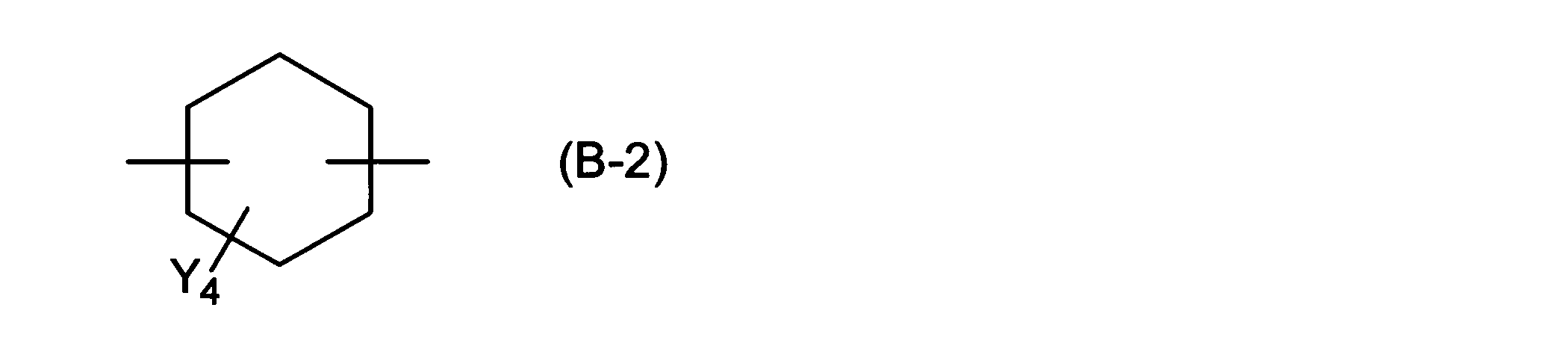
- 下記化学式(2-2)で表される繰り返し単位を少なくとも1種含むことを特徴とするポリイミド。



- 前記化学式(2-2)で表される繰り返し単位の合計含有量が、全繰り返し単位に対して、50モル%以上であることを特徴とする請求項5に記載のポリイミド。
- 請求項1~3のいずれかに記載のポリイミド前駆体から得られるポリイミド。
- 請求項1~3のいずれかに記載のポリイミド前駆体から得られるポリイミド、または請求項4~6のいずれかに記載のポリイミドから主としてなるフィルム。
- 請求項1~3のいずれかに記載のポリイミド前駆体、または請求項4~6のいずれかに記載のポリイミドを含むワニス。
- 請求項1~3のいずれかに記載のポリイミド前駆体、または請求項4~6のいずれかに記載のポリイミドを含むワニスを用いて得られたポリイミドフィルム。
- 請求項1~3のいずれかに記載のポリイミド前駆体から得られるポリイミド、または請求項4~6のいずれかに記載のポリイミドを含むことを特徴とするディスプレイ用、タッチパネル用、または太陽電池用の基板。
- 下記化学式(M-1)で表されるテトラカルボン酸二無水物。

- 下記化学式(M-2)で表されるテトラエステル化合物。

- 下記化学式(M-3)で表されるテトラエステル化合物。

- (A)塩基存在下、下記化学式(M-A-1)で表されるオレフィン化合物

と脂肪族スルホン酸クロリドまたは芳香族スルホン酸クロリドとを反応させて、下記化学式(M-A-2)で表されるオレフィン化合物
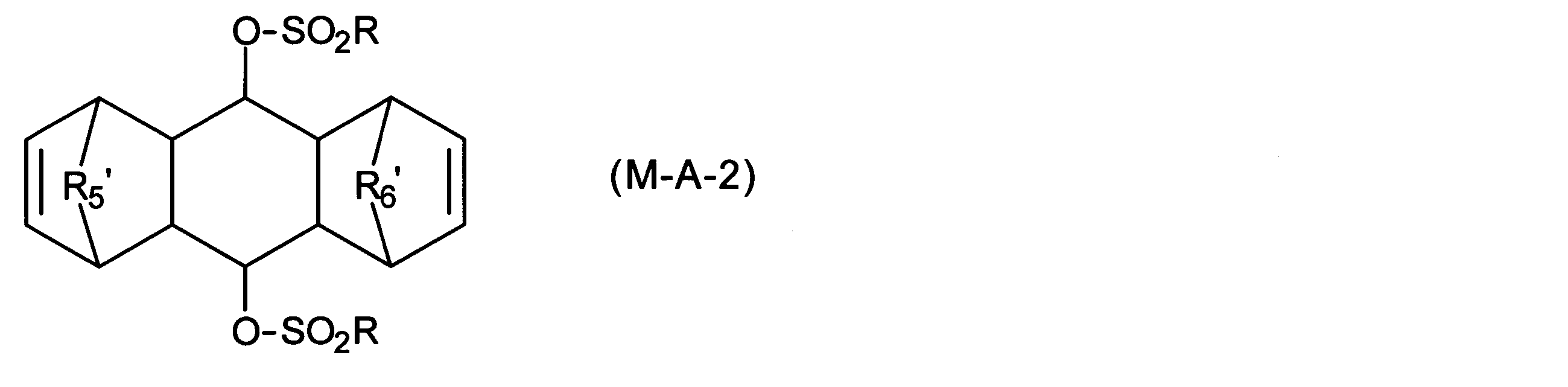
を得る工程、
(B)前記化学式(M-A-2)で表されるオレフィン化合物を、パラジウム触媒と銅化合物存在下、アルコール化合物と一酸化炭素と反応させて、下記化学式(M-A-3)で表されるテトラエステル化合物

を得る工程、
(C)前記化学式(M-A-3)で表されるテトラエステル化合物より、下記化学式(M-3)で表されるテトラエステル化合物

を得る工程、
(D)前記化学式(M-3)で表されるテトラエステル化合物の酸化反応により、下記化学式(M-2)で表されるテトラエステル化合物

を得る工程、
(E)前記化学式(M-2)で表されるテトラエステル化合物を酸触媒の存在下、有機溶媒中で反応させて、下記化学式(M-1)で表されるテトラカルボン酸二無水物
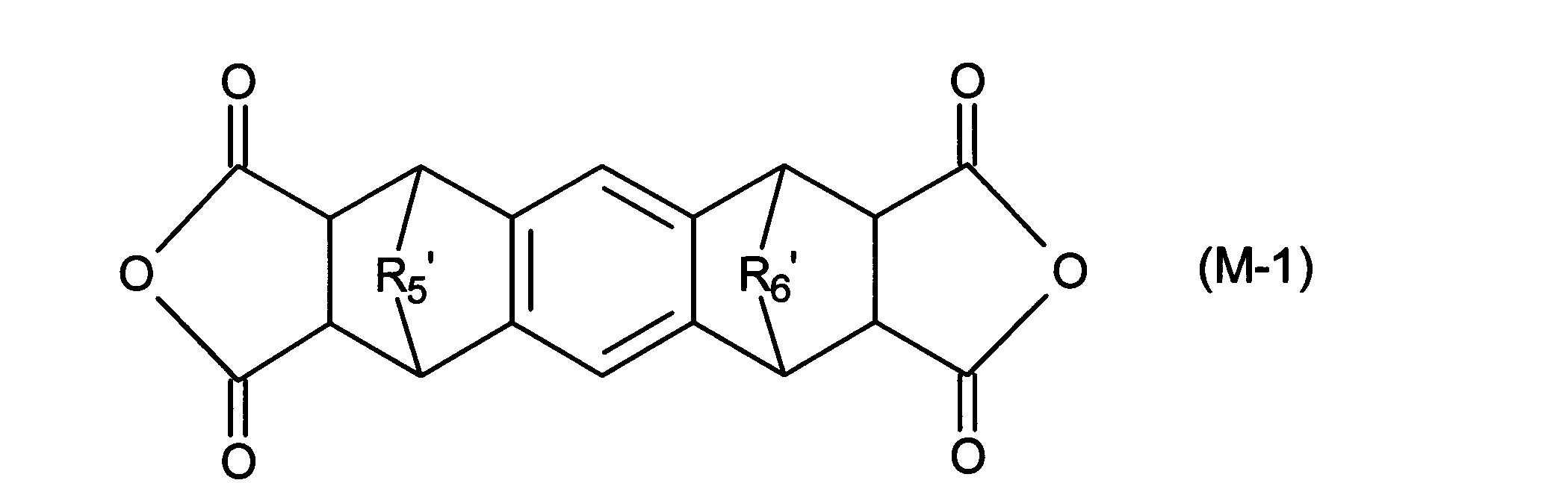
を得る工程、
を含むことを特徴とするテトラカルボン酸二無水物の製造方法。 - 下記化学式(M-4)で表されるテトラカルボン酸二無水物。
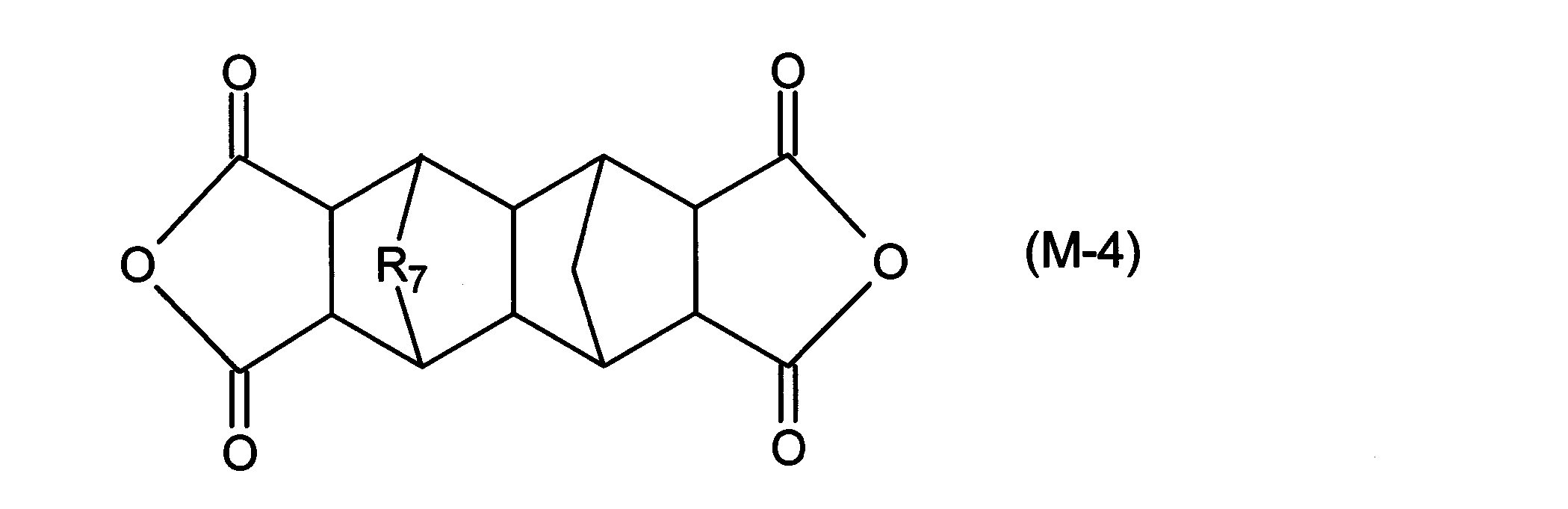
- 下記化学式(M-5)で表されるテトラエステル化合物。

- 下記化学式(M-6)で表されるジハロゲノジカルボン酸無水物。
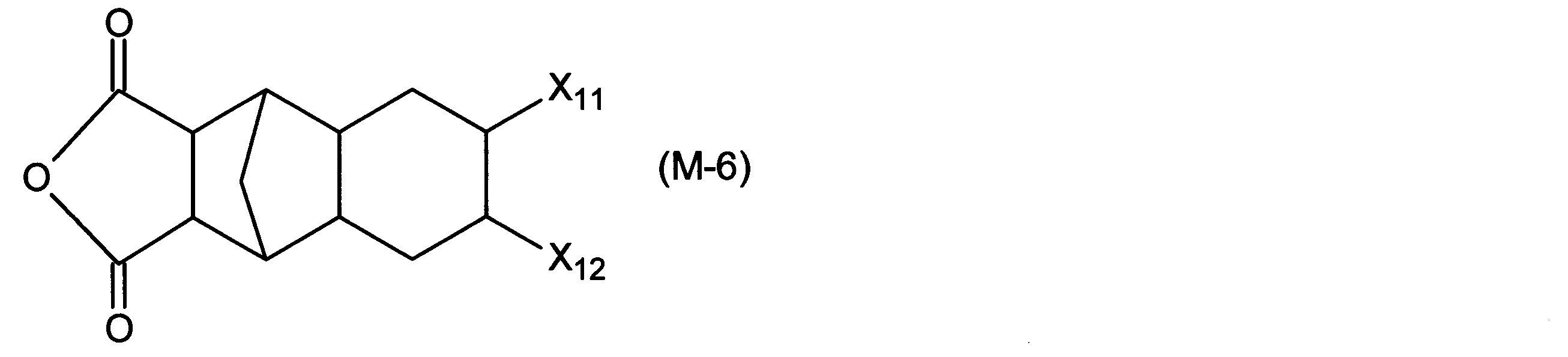
- 下記化学式(M-7)で表されるジカルボン酸無水物。

- (A)下記化学式(M-B)で表されるジカルボン酸無水物


(B)前記化学式(M-7)で表されるジカルボン酸無水物とジハロゲン化剤とを反応させて、下記化学式(M-6)で表されるジハロゲノジカルボン酸無水物
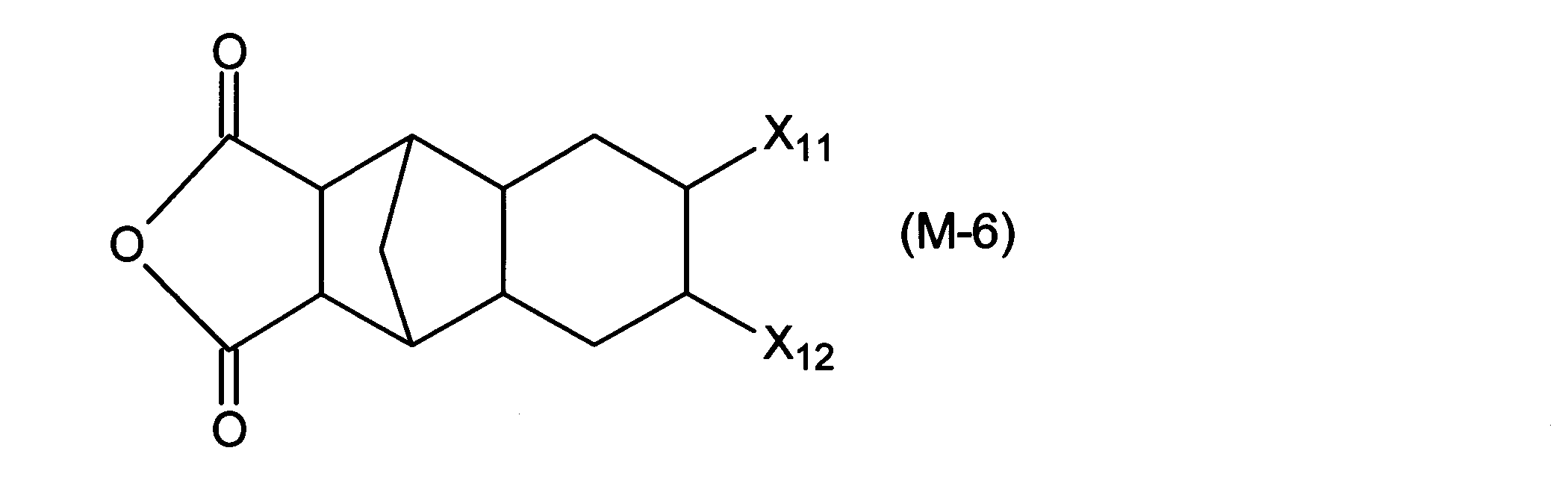
を得る工程、
(C)前記化学式(M-6)で表されるジハロゲノジカルボン酸無水物を無水マレイン酸と反応させて、下記化学式(M-4-1)で表されるテトラカルボン酸二無水物

(D)前記化学式(M-4-1)で表されるテトラカルボン酸二無水物を、酸の存在下、アルコール化合物と反応させて、下記化学式(M-5-1)で表されるテトラエステル化合物

を得る工程、
(E)前記化学式(M-5-1)で表されるテトラエステル化合物を金属触媒存在下、水素と反応させて、下記化学式(M-5-2)で表されるテトラエステル化合物

を得る工程、
(F)前記化学式(M-5-2)で表されるテトラエステル化合物を酸触媒の存在下、有機溶媒中で反応させて、下記化学式(M-4-2)で表されるテトラカルボン酸二無水物
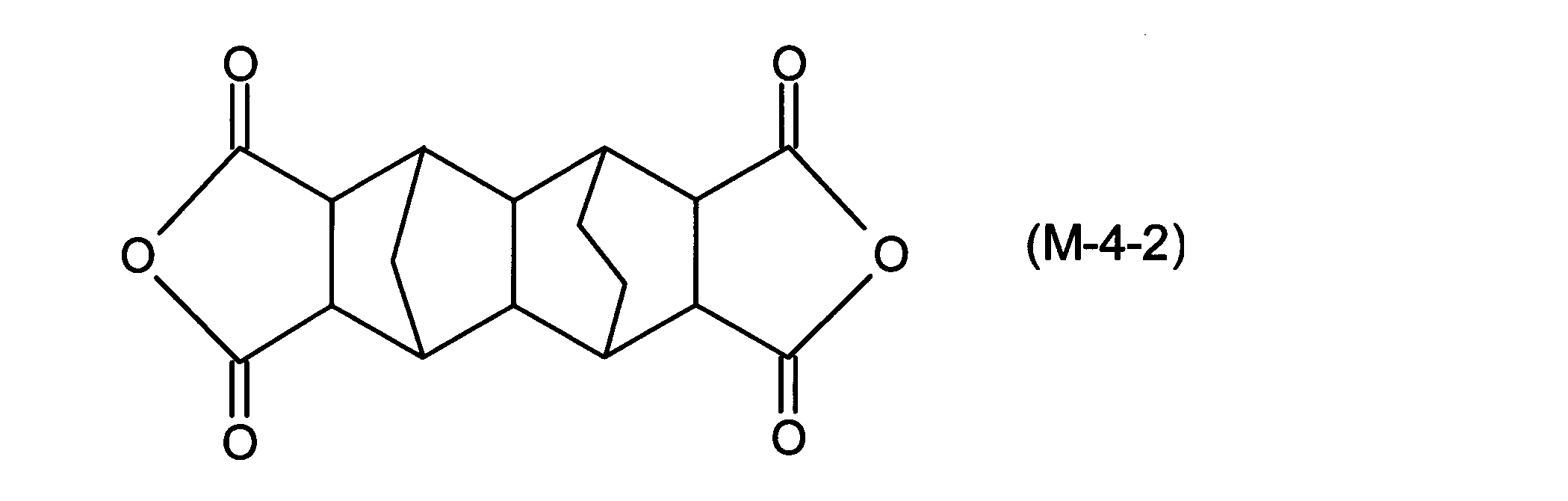
を含むことを特徴とするテトラカルボン酸二無水物の製造方法。 - (A)下記化学式(M-C-1)で表されるジエン化合物

と下記化学式(M-C-2)で表されるアセチレン化合物

とを反応させて、下記化学式(M-C-3)で表されるジエステル化合物

を得る工程、
(B)前記化学式(M-C-3)で表されるジエステル化合物の酸化反応により、下記化学式(M-C-4)で表されるジエステル化合物

を得る工程、
(C)前記化学式(M-C-4)で表されるジエステル化合物を、パラジウム触媒及び銅化合物存在下、アルコール化合物と一酸化炭素と反応させて、下記化学式(M-C-5)で表されるテトラエステル化合物

を得る工程、
(D)前記化学式(M-C-5)で表されるテトラエステル化合物を酸触媒の存在下、有機溶媒中で反応させて、下記化学式(M-9)で表されるテトラカルボン酸二無水物

を得る工程、
を含むことを特徴とするテトラカルボン酸二無水物の製造方法。
Priority Applications (5)
| Application Number | Priority Date | Filing Date | Title |
|---|---|---|---|
| CN202410327300.4A CN118221527A (zh) | 2016-05-31 | 2017-05-31 | 聚酰亚胺前体、聚酰亚胺、聚酰亚胺膜和基板 |
| JP2018520967A JP6939779B2 (ja) | 2016-05-31 | 2017-05-31 | ポリイミド前駆体、ポリイミド、ポリイミドフィルム、及び基板、並びにポリイミドの製造に使用されるテトラカルボン酸二無水物 |
| CN202210579415.3A CN114854010B (zh) | 2016-05-31 | 2017-05-31 | 聚酰亚胺前体、聚酰亚胺、聚酰亚胺膜和基板 |
| CN201780032695.3A CN109312071B (zh) | 2016-05-31 | 2017-05-31 | 聚酰亚胺前体、聚酰亚胺、聚酰亚胺膜和基板、以及在聚酰亚胺的制造中使用的四羧酸二酐 |
| KR1020187036700A KR102347037B1 (ko) | 2016-05-31 | 2017-05-31 | 폴리이미드 전구체, 폴리이미드, 폴리이미드 필름 및 기판, 그리고 폴리이미드의 제조에 사용되는 테트라카르복실산 이무수물 |
Applications Claiming Priority (2)
| Application Number | Priority Date | Filing Date | Title |
|---|---|---|---|
| JP2016108630 | 2016-05-31 | ||
| JP2016-108630 | 2016-05-31 |
Publications (1)
| Publication Number | Publication Date |
|---|---|
| WO2017209197A1 true WO2017209197A1 (ja) | 2017-12-07 |
Family
ID=60478607
Family Applications (2)
| Application Number | Title | Priority Date | Filing Date |
|---|---|---|---|
| PCT/JP2017/020320 Ceased WO2017209199A1 (ja) | 2016-05-31 | 2017-05-31 | 脂環式テトラカルボン酸二無水物の製造方法 |
| PCT/JP2017/020315 Ceased WO2017209197A1 (ja) | 2016-05-31 | 2017-05-31 | ポリイミド前駆体、ポリイミド、ポリイミドフィルム、及び基板、並びにポリイミドの製造に使用されるテトラカルボン酸二無水物 |
Family Applications Before (1)
| Application Number | Title | Priority Date | Filing Date |
|---|---|---|---|
| PCT/JP2017/020320 Ceased WO2017209199A1 (ja) | 2016-05-31 | 2017-05-31 | 脂環式テトラカルボン酸二無水物の製造方法 |
Country Status (5)
| Country | Link |
|---|---|
| JP (4) | JP7052723B2 (ja) |
| KR (1) | KR102347037B1 (ja) |
| CN (4) | CN118221527A (ja) |
| TW (2) | TWI791277B (ja) |
| WO (2) | WO2017209199A1 (ja) |
Cited By (3)
| Publication number | Priority date | Publication date | Assignee | Title |
|---|---|---|---|---|
| WO2018221607A1 (ja) * | 2017-05-31 | 2018-12-06 | 宇部興産株式会社 | ポリイミドフィルム |
| JPWO2022196664A1 (ja) * | 2021-03-17 | 2022-09-22 | ||
| JP2023550619A (ja) * | 2020-11-30 | 2023-12-04 | ピーアイ・アドバンスド・マテリアルズ・カンパニー・リミテッド | グラファイトシート用ポリイミドフィルム、その製造方法およびそれから製造されたグラファイトシート |
Families Citing this family (5)
| Publication number | Priority date | Publication date | Assignee | Title |
|---|---|---|---|---|
| KR102791022B1 (ko) * | 2020-04-14 | 2025-04-02 | 주식회사 엘지화학 | 폴리이미드 필름 적층체 및 이의 제조 방법 |
| CN113388109B (zh) * | 2021-07-10 | 2023-01-31 | 南昌大学 | 主链含苯并降冰片烯结构的聚酰亚胺及制备方法 |
| CN115745931B (zh) | 2021-09-03 | 2024-05-24 | 财团法人工业技术研究院 | 酸酐化合物、由其制得的聚酰亚胺与薄膜 |
| CN120187695A (zh) * | 2022-11-15 | 2025-06-20 | 国立大学法人九州大学 | 制备具有二羧酸衍生物结构的化合物的方法 |
| TWI896498B (zh) * | 2025-03-12 | 2025-09-01 | 國立臺灣科技大學 | 聚醯亞胺、含醚基的脂環族二酸酐及其合成方法 |
Citations (8)
| Publication number | Priority date | Publication date | Assignee | Title |
|---|---|---|---|---|
| JPH05271409A (ja) * | 1992-03-30 | 1993-10-19 | Japan Synthetic Rubber Co Ltd | ポリアミド酸の製造方法 |
| JPH06345868A (ja) * | 1993-06-03 | 1994-12-20 | Shin Etsu Chem Co Ltd | ポリイミド及びその製造方法 |
| JP2004325545A (ja) * | 2003-04-22 | 2004-11-18 | Jsr Corp | 液晶配向剤 |
| JP2007002023A (ja) * | 2005-06-21 | 2007-01-11 | Fujifilm Holdings Corp | フィルムおよび画像表示装置 |
| JP2007025216A (ja) * | 2005-07-15 | 2007-02-01 | Chisso Corp | 垂直配向液晶表示素子用の液晶配向剤及び垂直配向液晶表示素子 |
| JP2009294274A (ja) * | 2008-06-03 | 2009-12-17 | Jsr Corp | 液晶配向剤、液晶配向膜および液晶表示素子 |
| JP2010184898A (ja) * | 2009-02-12 | 2010-08-26 | Tokyo Kogei Univ | ドデカハイドロ−1,4:5,8−ジメタノアントラセン−9,10−ジオン−2,3,6,7−テトラカルボン酸−2,3:6,7−二無水物類、ドデカハイドロ−1,4:5,8−ジメタノアントラセン−9,10−ジオン−2,3,6,7−テトラカルボン酸テトラエステル類、及び、その製造方法 |
| JP2015108092A (ja) * | 2013-12-05 | 2015-06-11 | 学校法人東京工芸大学 | ポリイミドの製造方法及びその製造方法により得られるポリイミド |
Family Cites Families (20)
| Publication number | Priority date | Publication date | Assignee | Title |
|---|---|---|---|---|
| CA1239649A (en) * | 1982-09-30 | 1988-07-26 | Howard Alper | Process for the production of carboxylic acid esters and/or carboxylic acids |
| JPS61275247A (ja) * | 1985-05-29 | 1986-12-05 | Sagami Chem Res Center | β−アルコキシカルボン酸エステルの製造方法 |
| JPS61275246A (ja) * | 1985-05-29 | 1986-12-05 | Sagami Chem Res Center | カルボン酸エステルの製造方法 |
| GB8602177D0 (en) * | 1986-01-29 | 1986-03-05 | Shell Int Research | Preparation of diester of dicarboxylic acid |
| GB8605034D0 (en) * | 1986-02-28 | 1986-04-09 | Shell Int Research | Carbonylation of compounds |
| JP2513006B2 (ja) * | 1988-11-30 | 1996-07-03 | 日本合成ゴム株式会社 | 脂環式テトラカルボン酸およびその誘導体 |
| JP2666457B2 (ja) * | 1989-03-09 | 1997-10-22 | 日本合成ゴム株式会社 | 脂環式テトラカルボン酸およびその誘導体 |
| JPH049368A (ja) * | 1990-04-26 | 1992-01-14 | Sumitomo Pharmaceut Co Ltd | エシソ―シス―2,3―ノルボルナンジカルボン酸イミドの製造法 |
| JPH05140141A (ja) * | 1991-11-13 | 1993-06-08 | Japan Synthetic Rubber Co Ltd | カルボン酸無水物の製造方法 |
| US6071670A (en) * | 1996-10-11 | 2000-06-06 | Kabushiki Kaisha Toshiba | Transparent resin, photosensitive composition, and method of forming a pattern |
| JP2001151728A (ja) * | 1999-11-30 | 2001-06-05 | Nissan Chem Ind Ltd | 脂環式ジカルボン酸誘導体の製造法及び脂環式ジカルボン酸誘導体 |
| US20120190802A1 (en) * | 2011-01-26 | 2012-07-26 | Nexolve Corporation | Polyimide polymer from non-stoichiometric components |
| CN105254883B (zh) * | 2011-03-11 | 2018-02-02 | 宇部兴产株式会社 | 聚酰亚胺前体和聚酰亚胺 |
| JP5845918B2 (ja) * | 2012-01-20 | 2016-01-20 | 宇部興産株式会社 | ポリイミド前駆体及びポリイミド |
| JP6060695B2 (ja) * | 2012-01-20 | 2017-01-18 | 宇部興産株式会社 | ポリイミド前駆体及びポリイミド |
| US10174166B2 (en) * | 2012-09-10 | 2019-01-08 | Ube Industries, Ltd. | Polyimide precursor, polyimide, varnish, polyimide film, and substrate |
| WO2014038715A1 (ja) * | 2012-09-10 | 2014-03-13 | 宇部興産株式会社 | ポリイミド前駆体、ポリイミド、ワニス、ポリイミドフィルム、及び基板 |
| CN105492496B (zh) * | 2013-06-27 | 2017-09-22 | 宇部兴产株式会社 | 聚酰亚胺前体和聚酰亚胺 |
| US10513582B2 (en) * | 2014-04-23 | 2019-12-24 | Jxtg Nippon Oil & Energy Corporation | Tetracarboxylic dianhydride, polyamic acid, polyimide, methods for producing the same, and polyamic acid solution |
| JP6086139B2 (ja) * | 2015-10-05 | 2017-03-01 | 宇部興産株式会社 | ポリイミド前駆体及びポリイミド |
-
2017
- 2017-05-31 TW TW110132670A patent/TWI791277B/zh active
- 2017-05-31 KR KR1020187036700A patent/KR102347037B1/ko active Active
- 2017-05-31 CN CN202410327300.4A patent/CN118221527A/zh active Pending
- 2017-05-31 JP JP2018520969A patent/JP7052723B2/ja active Active
- 2017-05-31 CN CN201780032695.3A patent/CN109312071B/zh active Active
- 2017-05-31 CN CN201780041078.XA patent/CN109415379A/zh active Pending
- 2017-05-31 TW TW106117913A patent/TWI742087B/zh active
- 2017-05-31 CN CN202210579415.3A patent/CN114854010B/zh active Active
- 2017-05-31 WO PCT/JP2017/020320 patent/WO2017209199A1/ja not_active Ceased
- 2017-05-31 JP JP2018520967A patent/JP6939779B2/ja active Active
- 2017-05-31 WO PCT/JP2017/020315 patent/WO2017209197A1/ja not_active Ceased
-
2021
- 2021-04-26 JP JP2021073717A patent/JP7173204B2/ja active Active
-
2022
- 2022-05-12 JP JP2022078910A patent/JP7327573B2/ja active Active
Patent Citations (8)
| Publication number | Priority date | Publication date | Assignee | Title |
|---|---|---|---|---|
| JPH05271409A (ja) * | 1992-03-30 | 1993-10-19 | Japan Synthetic Rubber Co Ltd | ポリアミド酸の製造方法 |
| JPH06345868A (ja) * | 1993-06-03 | 1994-12-20 | Shin Etsu Chem Co Ltd | ポリイミド及びその製造方法 |
| JP2004325545A (ja) * | 2003-04-22 | 2004-11-18 | Jsr Corp | 液晶配向剤 |
| JP2007002023A (ja) * | 2005-06-21 | 2007-01-11 | Fujifilm Holdings Corp | フィルムおよび画像表示装置 |
| JP2007025216A (ja) * | 2005-07-15 | 2007-02-01 | Chisso Corp | 垂直配向液晶表示素子用の液晶配向剤及び垂直配向液晶表示素子 |
| JP2009294274A (ja) * | 2008-06-03 | 2009-12-17 | Jsr Corp | 液晶配向剤、液晶配向膜および液晶表示素子 |
| JP2010184898A (ja) * | 2009-02-12 | 2010-08-26 | Tokyo Kogei Univ | ドデカハイドロ−1,4:5,8−ジメタノアントラセン−9,10−ジオン−2,3,6,7−テトラカルボン酸−2,3:6,7−二無水物類、ドデカハイドロ−1,4:5,8−ジメタノアントラセン−9,10−ジオン−2,3,6,7−テトラカルボン酸テトラエステル類、及び、その製造方法 |
| JP2015108092A (ja) * | 2013-12-05 | 2015-06-11 | 学校法人東京工芸大学 | ポリイミドの製造方法及びその製造方法により得られるポリイミド |
Non-Patent Citations (2)
| Title |
|---|
| DATABASE CAPLUS STN; 1987, "Interrelation between relaxation transitions and strength properties in alicyclic polyimides", Database accession no. 1988:76206 * |
| JOLLIFFE,KATE ET AL.: "A Study of the Scope of the Bismethoxycarbonylation of Norbornene Systems", TETRAHEDRON, vol. 51, no. 9, 1995, pages 2689 - 2698, XP004104734, DOI: doi:10.1016/0040-4020(94)01115-G * |
Cited By (5)
| Publication number | Priority date | Publication date | Assignee | Title |
|---|---|---|---|---|
| WO2018221607A1 (ja) * | 2017-05-31 | 2018-12-06 | 宇部興産株式会社 | ポリイミドフィルム |
| JP2023550619A (ja) * | 2020-11-30 | 2023-12-04 | ピーアイ・アドバンスド・マテリアルズ・カンパニー・リミテッド | グラファイトシート用ポリイミドフィルム、その製造方法およびそれから製造されたグラファイトシート |
| JP7634675B2 (ja) | 2020-11-30 | 2025-02-21 | ピーアイ・アドバンスド・マテリアルズ・カンパニー・リミテッド | グラファイトシート用ポリイミドフィルム、その製造方法およびそれから製造されたグラファイトシート |
| JPWO2022196664A1 (ja) * | 2021-03-17 | 2022-09-22 | ||
| WO2022196664A1 (ja) * | 2021-03-17 | 2022-09-22 | 三菱瓦斯化学株式会社 | ポリイミド前駆体組成物 |
Also Published As
| Publication number | Publication date |
|---|---|
| JP2021138952A (ja) | 2021-09-16 |
| KR20190014518A (ko) | 2019-02-12 |
| TWI791277B (zh) | 2023-02-01 |
| JP2022116052A (ja) | 2022-08-09 |
| WO2017209199A1 (ja) | 2017-12-07 |
| JPWO2017209199A1 (ja) | 2019-04-04 |
| CN109312071B (zh) | 2022-06-14 |
| JP7173204B2 (ja) | 2022-11-16 |
| CN109415379A (zh) | 2019-03-01 |
| CN114854010B (zh) | 2024-04-16 |
| JPWO2017209197A1 (ja) | 2019-03-28 |
| CN114854010A (zh) | 2022-08-05 |
| JP7052723B2 (ja) | 2022-04-12 |
| TWI742087B (zh) | 2021-10-11 |
| CN109312071A (zh) | 2019-02-05 |
| TW201802144A (zh) | 2018-01-16 |
| CN118221527A (zh) | 2024-06-21 |
| TW202146531A (zh) | 2021-12-16 |
| KR102347037B1 (ko) | 2022-01-05 |
| JP7327573B2 (ja) | 2023-08-16 |
| JP6939779B2 (ja) | 2021-09-22 |
Similar Documents
| Publication | Publication Date | Title |
|---|---|---|
| JP7327573B2 (ja) | ポリイミド前駆体、ポリイミド、ポリイミドフィルム、及び基板、並びにポリイミドの製造に使用されるテトラカルボン酸二無水物 | |
| TWI548678B (zh) | A transparent film, a transparent conductive laminate, and a touch panel, a solar cell, and a display device using the same | |
| JP7072140B2 (ja) | ポリイミドフィルム | |
| US20130079490A1 (en) | NORBORNANE-2-SPIRO-alpha-CYCLOALKANONE-alpha'-SPIRO-2''-NORBORNANE-5,5'',6,6''-TETRACARBOXYLIC DIANHYDRIDE, NORBORNANE-2-SPIRO-alpha-CYCLOALKANONE-alpha'-SPIRO-2''-NORBORNANE-5,5'',6,6''-TETRACARBOXYLIC ACID AND ESTER THEREOF, METHOD FOR PRODUCING NORBORNANE-2-SPIRO-alpha-CYCLOALKANONE-alpha'-SPIRO-2''-NORBORNANE-5,5'',6,6''-TETRACARBOXYLIC DIANHYDRIDE, POLYIMIDE OBTAINED BY USING THE SAME, AND METHOD FOR PRODUCING POLYIMIDE | |
| JP6060695B2 (ja) | ポリイミド前駆体及びポリイミド | |
| JP6086139B2 (ja) | ポリイミド前駆体及びポリイミド | |
| JP2019108552A (ja) | ポリイミド前駆体組成物、ポリイミドの製造方法、ポリイミド、ポリイミドフィルム、及び基板 | |
| JPWO2015080139A1 (ja) | ポリイミド前駆体組成物、ポリイミドの製造方法、ポリイミド、ポリイミドフィルム、及び基板 | |
| CN120795781A (zh) | 聚酰亚胺前体、聚酰亚胺及其制备中所用的材料 | |
| TWI833752B (zh) | 用於電子裝置中的聚合物 | |
| JP2016074915A (ja) | ポリイミド前駆体、ポリイミド、ポリイミドフィルム、ワニス、及び基板 | |
| TW201623373A (zh) | 聚醯亞胺前驅體及聚醯亞胺 | |
| JP6635506B2 (ja) | フルオレン骨格を有するジアミン、ポリアミック酸、及びポリイミド | |
| US20150284513A1 (en) | Polyimide precursor, polyimide, varnish, polyimide film, and substrate | |
| JP5845918B2 (ja) | ポリイミド前駆体及びポリイミド | |
| JP2011201952A (ja) | ポリイミド及びその製造方法、並びにポリアミド酸及びその製造方法 | |
| JP6443579B2 (ja) | ポリイミドフィルム | |
| JP2023035862A (ja) | シクロブタン環を有するジアミン誘導体、およびその塩 |
Legal Events
| Date | Code | Title | Description |
|---|---|---|---|
| ENP | Entry into the national phase |
Ref document number: 2018520967 Country of ref document: JP Kind code of ref document: A |
|
| 121 | Ep: the epo has been informed by wipo that ep was designated in this application |
Ref document number: 17806748 Country of ref document: EP Kind code of ref document: A1 |
|
| NENP | Non-entry into the national phase |
Ref country code: DE |
|
| ENP | Entry into the national phase |
Ref document number: 20187036700 Country of ref document: KR Kind code of ref document: A |
|
| 122 | Ep: pct application non-entry in european phase |
Ref document number: 17806748 Country of ref document: EP Kind code of ref document: A1 |