WO2010104082A1 - ポリイミド前駆体、ポリイミド及び液晶配向剤 - Google Patents
ポリイミド前駆体、ポリイミド及び液晶配向剤 Download PDFInfo
- Publication number
- WO2010104082A1 WO2010104082A1 PCT/JP2010/053913 JP2010053913W WO2010104082A1 WO 2010104082 A1 WO2010104082 A1 WO 2010104082A1 JP 2010053913 W JP2010053913 W JP 2010053913W WO 2010104082 A1 WO2010104082 A1 WO 2010104082A1
- Authority
- WO
- WIPO (PCT)
- Prior art keywords
- group
- formula
- liquid crystal
- polyimide precursor
- represented
- Prior art date
- Legal status (The legal status is an assumption and is not a legal conclusion. Google has not performed a legal analysis and makes no representation as to the accuracy of the status listed.)
- Ceased
Links
- POPWUQHOUZWHCY-UHFFFAOYSA-N CC1C(C)CC(CC2CC(C)C(C)CC2)CC1 Chemical compound CC1C(C)CC(CC2CC(C)C(C)CC2)CC1 POPWUQHOUZWHCY-UHFFFAOYSA-N 0.000 description 2
- 0 C*OC(CC1)CCC1C(CC1)CCC1OCc1cc(C)cc(C)c1 Chemical compound C*OC(CC1)CCC1C(CC1)CCC1OCc1cc(C)cc(C)c1 0.000 description 1
- XIAHSJTUQAWUAW-UHFFFAOYSA-N CC(C)(c1ccc(C)cc1)c1ccc(C)cc1 Chemical compound CC(C)(c1ccc(C)cc1)c1ccc(C)cc1 XIAHSJTUQAWUAW-UHFFFAOYSA-N 0.000 description 1
- CLSBTDGUHSQYTO-UHFFFAOYSA-N CC(C)c1c(C)ccc(C)c1 Chemical compound CC(C)c1c(C)ccc(C)c1 CLSBTDGUHSQYTO-UHFFFAOYSA-N 0.000 description 1
- SGVUHPSBDNVHKL-UHFFFAOYSA-N CC1CC(C)CCC1 Chemical compound CC1CC(C)CCC1 SGVUHPSBDNVHKL-UHFFFAOYSA-N 0.000 description 1
- QRMPKOFEUHIBNM-UHFFFAOYSA-N CC1CCC(C)CC1 Chemical compound CC1CCC(C)CC1 QRMPKOFEUHIBNM-UHFFFAOYSA-N 0.000 description 1
- TTZRPMQXODKNFP-UHFFFAOYSA-N CC1CCC(CC2CCC(C)CC2)CC1 Chemical compound CC1CCC(CC2CCC(C)CC2)CC1 TTZRPMQXODKNFP-UHFFFAOYSA-N 0.000 description 1
- RZLBSRNGNIOMGU-UHFFFAOYSA-N CCCN(CCC)c1c(C)cc(C)cc1 Chemical compound CCCN(CCC)c1c(C)cc(C)cc1 RZLBSRNGNIOMGU-UHFFFAOYSA-N 0.000 description 1
- LDTFOCBJMIRMCS-UHFFFAOYSA-N CCOC(CC1)CCC1c(cc1)ccc1OCc1cc(C)cc(C)c1 Chemical compound CCOC(CC1)CCC1c(cc1)ccc1OCc1cc(C)cc(C)c1 LDTFOCBJMIRMCS-UHFFFAOYSA-N 0.000 description 1
- ADJWMEUPRPWQQS-UHFFFAOYSA-N CCc(cc1)ccc1-c(cc1)ccc1OCc1cc(C)cc(C)c1 Chemical compound CCc(cc1)ccc1-c(cc1)ccc1OCc1cc(C)cc(C)c1 ADJWMEUPRPWQQS-UHFFFAOYSA-N 0.000 description 1
- OLCFJDDCIHZWOP-UHFFFAOYSA-N Cc(cc1)cc(C)c1N(CC=C)CC=C Chemical compound Cc(cc1)cc(C)c1N(CC=C)CC=C OLCFJDDCIHZWOP-UHFFFAOYSA-N 0.000 description 1
- WEAYCYAIVOIUMG-UHFFFAOYSA-N Cc(cc1)ccc1S(c1ccc(C)cc1)(=O)=O Chemical compound Cc(cc1)ccc1S(c1ccc(C)cc1)(=O)=O WEAYCYAIVOIUMG-UHFFFAOYSA-N 0.000 description 1
- UIEVCEQLNUHDIF-UHFFFAOYSA-N Cc(cc1C)ccc1Cl Chemical compound Cc(cc1C)ccc1Cl UIEVCEQLNUHDIF-UHFFFAOYSA-N 0.000 description 1
- UJCFZCTTZWHRNL-UHFFFAOYSA-N Cc(cc1C)ccc1OC Chemical compound Cc(cc1C)ccc1OC UJCFZCTTZWHRNL-UHFFFAOYSA-N 0.000 description 1
- UCEDBFHGRARVAJ-UHFFFAOYSA-N Cc(cccc1C(c2c3cccc2C)=O)c1C3=O Chemical compound Cc(cccc1C(c2c3cccc2C)=O)c1C3=O UCEDBFHGRARVAJ-UHFFFAOYSA-N 0.000 description 1
- GLFKFHJEFMLTOB-UHFFFAOYSA-N Cc1c(C)cc(C(C(F)(F)F)(C(F)(F)F)c2cc(C)c(C)cc2)cc1 Chemical compound Cc1c(C)cc(C(C(F)(F)F)(C(F)(F)F)c2cc(C)c(C)cc2)cc1 GLFKFHJEFMLTOB-UHFFFAOYSA-N 0.000 description 1
- CTQNGGLPUBDAKN-UHFFFAOYSA-N Cc1c(C)cccc1 Chemical compound Cc1c(C)cccc1 CTQNGGLPUBDAKN-UHFFFAOYSA-N 0.000 description 1
- SQNZJJAZBFDUTD-UHFFFAOYSA-N Cc1cc(C)c(C)cc1C Chemical compound Cc1cc(C)c(C)cc1C SQNZJJAZBFDUTD-UHFFFAOYSA-N 0.000 description 1
- RNJJYLDKQJRYMW-UHFFFAOYSA-N Cc1cc(C)cc(COC(CC2)CCC2c(cc2)ccc2OC)c1 Chemical compound Cc1cc(C)cc(COC(CC2)CCC2c(cc2)ccc2OC)c1 RNJJYLDKQJRYMW-UHFFFAOYSA-N 0.000 description 1
- IVSZLXZYQVIEFR-UHFFFAOYSA-N Cc1cc(C)ccc1 Chemical compound Cc1cc(C)ccc1 IVSZLXZYQVIEFR-UHFFFAOYSA-N 0.000 description 1
- UTGSRNVBAFCOEU-UHFFFAOYSA-N Cc1cc(Cl)c(C)cc1Cl Chemical compound Cc1cc(Cl)c(C)cc1Cl UTGSRNVBAFCOEU-UHFFFAOYSA-N 0.000 description 1
- SJZAUIVYZWPNAS-UHFFFAOYSA-N Cc1cc(OC)c(C)cc1 Chemical compound Cc1cc(OC)c(C)cc1 SJZAUIVYZWPNAS-UHFFFAOYSA-N 0.000 description 1
- OWEIAGSMFHSSES-UHFFFAOYSA-N Cc1ccc(C(C(F)(F)F)(C(F)(F)F)c2ccc(C)cc2)cc1 Chemical compound Cc1ccc(C(C(F)(F)F)(C(F)(F)F)c2ccc(C)cc2)cc1 OWEIAGSMFHSSES-UHFFFAOYSA-N 0.000 description 1
- GWHJZXXIDMPWGX-UHFFFAOYSA-N Cc1ccc(C)c(C)c1 Chemical compound Cc1ccc(C)c(C)c1 GWHJZXXIDMPWGX-UHFFFAOYSA-N 0.000 description 1
- URLKBWYHVLBVBO-UHFFFAOYSA-N Cc1ccc(C)cc1 Chemical compound Cc1ccc(C)cc1 URLKBWYHVLBVBO-UHFFFAOYSA-N 0.000 description 1
- KRPHZIRPXLJJIZ-UHFFFAOYSA-N Cc1ccc2-c3ccc(C)cc3Cc2c1 Chemical compound Cc1ccc2-c3ccc(C)cc3Cc2c1 KRPHZIRPXLJJIZ-UHFFFAOYSA-N 0.000 description 1
- HNACKJNPFWWEKI-UHFFFAOYSA-N Cc1ccc2[nH]c3ccc(C)cc3c2c1 Chemical compound Cc1ccc2[nH]c3ccc(C)cc3c2c1 HNACKJNPFWWEKI-UHFFFAOYSA-N 0.000 description 1
- CGXDIDXEMHMPIX-UHFFFAOYSA-N Cc1cccc(C(c2cc(C)ccc2)=O)c1 Chemical compound Cc1cccc(C(c2cc(C)ccc2)=O)c1 CGXDIDXEMHMPIX-UHFFFAOYSA-N 0.000 description 1
- NZOSGGNRVDMIHW-UHFFFAOYSA-N Cc1cccc(S(c2cccc(C)c2)(=O)=O)c1 Chemical compound Cc1cccc(S(c2cccc(C)c2)(=O)=O)c1 NZOSGGNRVDMIHW-UHFFFAOYSA-N 0.000 description 1
- PAYRUJLWNCNPSJ-UHFFFAOYSA-N Nc1ccccc1 Chemical compound Nc1ccccc1 PAYRUJLWNCNPSJ-UHFFFAOYSA-N 0.000 description 1
Classifications
-
- C—CHEMISTRY; METALLURGY
- C08—ORGANIC MACROMOLECULAR COMPOUNDS; THEIR PREPARATION OR CHEMICAL WORKING-UP; COMPOSITIONS BASED THEREON
- C08G—MACROMOLECULAR COMPOUNDS OBTAINED OTHERWISE THAN BY REACTIONS ONLY INVOLVING UNSATURATED CARBON-TO-CARBON BONDS
- C08G73/00—Macromolecular compounds obtained by reactions forming a linkage containing nitrogen with or without oxygen or carbon in the main chain of the macromolecule, not provided for in groups C08G12/00 - C08G71/00
- C08G73/06—Polycondensates having nitrogen-containing heterocyclic rings in the main chain of the macromolecule
- C08G73/10—Polyimides; Polyester-imides; Polyamide-imides; Polyamide acids or similar polyimide precursors
-
- C—CHEMISTRY; METALLURGY
- C08—ORGANIC MACROMOLECULAR COMPOUNDS; THEIR PREPARATION OR CHEMICAL WORKING-UP; COMPOSITIONS BASED THEREON
- C08G—MACROMOLECULAR COMPOUNDS OBTAINED OTHERWISE THAN BY REACTIONS ONLY INVOLVING UNSATURATED CARBON-TO-CARBON BONDS
- C08G73/00—Macromolecular compounds obtained by reactions forming a linkage containing nitrogen with or without oxygen or carbon in the main chain of the macromolecule, not provided for in groups C08G12/00 - C08G71/00
- C08G73/06—Polycondensates having nitrogen-containing heterocyclic rings in the main chain of the macromolecule
- C08G73/10—Polyimides; Polyester-imides; Polyamide-imides; Polyamide acids or similar polyimide precursors
- C08G73/1075—Partially aromatic polyimides
- C08G73/1078—Partially aromatic polyimides wholly aromatic in the diamino moiety
-
- C—CHEMISTRY; METALLURGY
- C07—ORGANIC CHEMISTRY
- C07C—ACYCLIC OR CARBOCYCLIC COMPOUNDS
- C07C219/00—Compounds containing amino and esterified hydroxy groups bound to the same carbon skeleton
- C07C219/02—Compounds containing amino and esterified hydroxy groups bound to the same carbon skeleton having esterified hydroxy groups and amino groups bound to acyclic carbon atoms of the same carbon skeleton
- C07C219/18—Compounds containing amino and esterified hydroxy groups bound to the same carbon skeleton having esterified hydroxy groups and amino groups bound to acyclic carbon atoms of the same carbon skeleton the carbon skeleton being saturated and containing rings
-
- C—CHEMISTRY; METALLURGY
- C07—ORGANIC CHEMISTRY
- C07C—ACYCLIC OR CARBOCYCLIC COMPOUNDS
- C07C229/00—Compounds containing amino and carboxyl groups bound to the same carbon skeleton
- C07C229/02—Compounds containing amino and carboxyl groups bound to the same carbon skeleton having amino and carboxyl groups bound to acyclic carbon atoms of the same carbon skeleton
- C07C229/04—Compounds containing amino and carboxyl groups bound to the same carbon skeleton having amino and carboxyl groups bound to acyclic carbon atoms of the same carbon skeleton the carbon skeleton being acyclic and saturated
- C07C229/06—Compounds containing amino and carboxyl groups bound to the same carbon skeleton having amino and carboxyl groups bound to acyclic carbon atoms of the same carbon skeleton the carbon skeleton being acyclic and saturated having only one amino and one carboxyl group bound to the carbon skeleton
- C07C229/18—Compounds containing amino and carboxyl groups bound to the same carbon skeleton having amino and carboxyl groups bound to acyclic carbon atoms of the same carbon skeleton the carbon skeleton being acyclic and saturated having only one amino and one carboxyl group bound to the carbon skeleton the nitrogen atom of the amino group being further bound to carbon atoms of six-membered aromatic rings
-
- C—CHEMISTRY; METALLURGY
- C07—ORGANIC CHEMISTRY
- C07C—ACYCLIC OR CARBOCYCLIC COMPOUNDS
- C07C271/00—Derivatives of carbamic acids, i.e. compounds containing any of the groups, the nitrogen atom not being part of nitro or nitroso groups
- C07C271/06—Esters of carbamic acids
- C07C271/08—Esters of carbamic acids having oxygen atoms of carbamate groups bound to acyclic carbon atoms
- C07C271/10—Esters of carbamic acids having oxygen atoms of carbamate groups bound to acyclic carbon atoms with the nitrogen atoms of the carbamate groups bound to hydrogen atoms or to acyclic carbon atoms
- C07C271/22—Esters of carbamic acids having oxygen atoms of carbamate groups bound to acyclic carbon atoms with the nitrogen atoms of the carbamate groups bound to hydrogen atoms or to acyclic carbon atoms to carbon atoms of hydrocarbon radicals substituted by carboxyl groups
-
- C—CHEMISTRY; METALLURGY
- C08—ORGANIC MACROMOLECULAR COMPOUNDS; THEIR PREPARATION OR CHEMICAL WORKING-UP; COMPOSITIONS BASED THEREON
- C08G—MACROMOLECULAR COMPOUNDS OBTAINED OTHERWISE THAN BY REACTIONS ONLY INVOLVING UNSATURATED CARBON-TO-CARBON BONDS
- C08G73/00—Macromolecular compounds obtained by reactions forming a linkage containing nitrogen with or without oxygen or carbon in the main chain of the macromolecule, not provided for in groups C08G12/00 - C08G71/00
- C08G73/06—Polycondensates having nitrogen-containing heterocyclic rings in the main chain of the macromolecule
- C08G73/10—Polyimides; Polyester-imides; Polyamide-imides; Polyamide acids or similar polyimide precursors
- C08G73/12—Unsaturated polyimide precursors
-
- C—CHEMISTRY; METALLURGY
- C08—ORGANIC MACROMOLECULAR COMPOUNDS; THEIR PREPARATION OR CHEMICAL WORKING-UP; COMPOSITIONS BASED THEREON
- C08L—COMPOSITIONS OF MACROMOLECULAR COMPOUNDS
- C08L79/00—Compositions of macromolecular compounds obtained by reactions forming in the main chain of the macromolecule a linkage containing nitrogen with or without oxygen or carbon only, not provided for in groups C08L61/00 - C08L77/00
- C08L79/04—Polycondensates having nitrogen-containing heterocyclic rings in the main chain; Polyhydrazides; Polyamide acids or similar polyimide precursors
- C08L79/08—Polyimides; Polyester-imides; Polyamide-imides; Polyamide acids or similar polyimide precursors
-
- C—CHEMISTRY; METALLURGY
- C09—DYES; PAINTS; POLISHES; NATURAL RESINS; ADHESIVES; COMPOSITIONS NOT OTHERWISE PROVIDED FOR; APPLICATIONS OF MATERIALS NOT OTHERWISE PROVIDED FOR
- C09D—COATING COMPOSITIONS, e.g. PAINTS, VARNISHES OR LACQUERS; FILLING PASTES; CHEMICAL PAINT OR INK REMOVERS; INKS; CORRECTING FLUIDS; WOODSTAINS; PASTES OR SOLIDS FOR COLOURING OR PRINTING; USE OF MATERIALS THEREFOR
- C09D179/00—Coating compositions based on macromolecular compounds obtained by reactions forming in the main chain of the macromolecule a linkage containing nitrogen, with or without oxygen, or carbon only, not provided for in groups C09D161/00 - C09D177/00
- C09D179/04—Polycondensates having nitrogen-containing heterocyclic rings in the main chain; Polyhydrazides; Polyamide acids or similar polyimide precursors
- C09D179/08—Polyimides; Polyester-imides; Polyamide-imides; Polyamide acids or similar polyimide precursors
-
- G—PHYSICS
- G02—OPTICS
- G02F—OPTICAL DEVICES OR ARRANGEMENTS FOR THE CONTROL OF LIGHT BY MODIFICATION OF THE OPTICAL PROPERTIES OF THE MEDIA OF THE ELEMENTS INVOLVED THEREIN; NON-LINEAR OPTICS; FREQUENCY-CHANGING OF LIGHT; OPTICAL LOGIC ELEMENTS; OPTICAL ANALOGUE/DIGITAL CONVERTERS
- G02F1/00—Devices or arrangements for the control of the intensity, colour, phase, polarisation or direction of light arriving from an independent light source, e.g. switching, gating or modulating; Non-linear optics
- G02F1/01—Devices or arrangements for the control of the intensity, colour, phase, polarisation or direction of light arriving from an independent light source, e.g. switching, gating or modulating; Non-linear optics for the control of the intensity, phase, polarisation or colour
- G02F1/13—Devices or arrangements for the control of the intensity, colour, phase, polarisation or direction of light arriving from an independent light source, e.g. switching, gating or modulating; Non-linear optics for the control of the intensity, phase, polarisation or colour based on liquid crystals, e.g. single liquid crystal display cells
- G02F1/133—Constructional arrangements; Operation of liquid crystal cells; Circuit arrangements
- G02F1/1333—Constructional arrangements; Manufacturing methods
- G02F1/1337—Surface-induced orientation of the liquid crystal molecules, e.g. by alignment layers
-
- G—PHYSICS
- G02—OPTICS
- G02F—OPTICAL DEVICES OR ARRANGEMENTS FOR THE CONTROL OF LIGHT BY MODIFICATION OF THE OPTICAL PROPERTIES OF THE MEDIA OF THE ELEMENTS INVOLVED THEREIN; NON-LINEAR OPTICS; FREQUENCY-CHANGING OF LIGHT; OPTICAL LOGIC ELEMENTS; OPTICAL ANALOGUE/DIGITAL CONVERTERS
- G02F1/00—Devices or arrangements for the control of the intensity, colour, phase, polarisation or direction of light arriving from an independent light source, e.g. switching, gating or modulating; Non-linear optics
- G02F1/01—Devices or arrangements for the control of the intensity, colour, phase, polarisation or direction of light arriving from an independent light source, e.g. switching, gating or modulating; Non-linear optics for the control of the intensity, phase, polarisation or colour
- G02F1/13—Devices or arrangements for the control of the intensity, colour, phase, polarisation or direction of light arriving from an independent light source, e.g. switching, gating or modulating; Non-linear optics for the control of the intensity, phase, polarisation or colour based on liquid crystals, e.g. single liquid crystal display cells
- G02F1/133—Constructional arrangements; Operation of liquid crystal cells; Circuit arrangements
- G02F1/1333—Constructional arrangements; Manufacturing methods
- G02F1/1337—Surface-induced orientation of the liquid crystal molecules, e.g. by alignment layers
- G02F1/133711—Surface-induced orientation of the liquid crystal molecules, e.g. by alignment layers by organic films, e.g. polymeric films
-
- G—PHYSICS
- G02—OPTICS
- G02F—OPTICAL DEVICES OR ARRANGEMENTS FOR THE CONTROL OF LIGHT BY MODIFICATION OF THE OPTICAL PROPERTIES OF THE MEDIA OF THE ELEMENTS INVOLVED THEREIN; NON-LINEAR OPTICS; FREQUENCY-CHANGING OF LIGHT; OPTICAL LOGIC ELEMENTS; OPTICAL ANALOGUE/DIGITAL CONVERTERS
- G02F1/00—Devices or arrangements for the control of the intensity, colour, phase, polarisation or direction of light arriving from an independent light source, e.g. switching, gating or modulating; Non-linear optics
- G02F1/01—Devices or arrangements for the control of the intensity, colour, phase, polarisation or direction of light arriving from an independent light source, e.g. switching, gating or modulating; Non-linear optics for the control of the intensity, phase, polarisation or colour
- G02F1/13—Devices or arrangements for the control of the intensity, colour, phase, polarisation or direction of light arriving from an independent light source, e.g. switching, gating or modulating; Non-linear optics for the control of the intensity, phase, polarisation or colour based on liquid crystals, e.g. single liquid crystal display cells
- G02F1/133—Constructional arrangements; Operation of liquid crystal cells; Circuit arrangements
- G02F1/1333—Constructional arrangements; Manufacturing methods
- G02F1/1337—Surface-induced orientation of the liquid crystal molecules, e.g. by alignment layers
- G02F1/133711—Surface-induced orientation of the liquid crystal molecules, e.g. by alignment layers by organic films, e.g. polymeric films
- G02F1/133723—Polyimide, polyamide-imide
Definitions
- the present invention relates to a novel polyimide precursor or polyimide useful for use in a liquid crystal alignment film of a liquid crystal display element, and a liquid crystal aligning agent containing these polymers. Furthermore, it relates to a novel diamine that can be used to obtain these polymers.
- the charge accumulated in the element at the time of driving causes an afterimage phenomenon
- the accumulated charge amount in this case is a liquid crystal display element such as a liquid crystal, a liquid crystal alignment film, an electrode, an insulating film, a color filter, etc. It is known that it is influenced by physical property values such as volume resistivity and relative dielectric constant of members constituting the material (Non-Patent Document 1, Non-Patent Document 2, and Non-Patent Document 3).
- the liquid crystal alignment film used for the liquid crystal display element is produced mainly by coating and baking a polyamic acid, a polyamic acid ester, or a polyimide varnish. And in the liquid crystal aligning film, the method of reducing the afterimage phenomenon of a liquid crystal display element by reducing volume resistivity is proposed (patent documents 1 and patent documents 2).
- the present invention is as follows. 1. It is a polyimide precursor having a polymerization unit represented by the following formula (1),
- R 1 is a hydrogen atom or an alkyl group having 1 to 4 carbon atoms.
- R 2 and R 3 are independently a hydrogen atom or a monovalent organic group.
- X is a tetravalent organic group.
- Y is a divalent organic group.
- R 2 , R 3 in the formula (1), or both are groups represented by the following formula (2).
- the structure represented by the following formula (2) is included in the structure of X, Y, or both of the formula (1), and R 2 , R 3 , or both are represented by the following formula (2). It is a group.
- A is a single bond or a divalent organic group, provided that the atom to which the t-butoxycarbonyl group is bonded is a carbon atom.
- R 4 is a single bond or a divalent organic group having 1 to 20 carbon atoms.
- R 5 is a structure represented by the formula (2).
- A is an integer of 0 to 4.
- R 6 is a structure represented by the following formula (2).
- B is 1 or 2.
- A is a single bond or a divalent organic group, provided that the atom to which the t-butoxycarbonyl group is bonded is a carbon atom.
- a diamine compound represented by the following formula (5) is represented by the following formula (5).
- R 7 is a structure represented by the following formula (2).
- A is a divalent organic group, provided that the atom to which the t-butoxycarbonyl group is bonded is a carbon atom.
- the polyimide precursor and polyimide of the present invention give a polyimide film with low volume resistivity.
- the liquid crystal alignment film of the present invention has excellent afterimage characteristics when formed into a liquid crystal display element.
- the liquid crystal aligning agent of the present invention retains high storage stability even when various additives are added.
- the diamine compound of the present invention is reacted with a tetracarboxylic acid derivative to give a polyimide precursor or polyimide having a t-butyl ester moiety, and the polyimide film obtained from these polymers has a low volume resistivity.
- the polyimide precursor of the present invention is a polyimide precursor having a polymerization unit represented by the formula (1), and satisfies any of the following (i) to (iii): It is a polyimide precursor.
- R 1 is a hydrogen atom or an alkyl group having 1 to 4 carbon atoms. Specific examples of the alkyl group include a methyl group, an ethyl group, a propyl group, a 2-propyl group, a butyl group, or a t-butyl group.
- the temperature at which imidization proceeds increases as the number of carbon atoms increases, such as a methyl group, an ethyl group, and a propyl group. Therefore, from the viewpoint of easiness of imidization by heat, a methyl group or an ethyl group is preferable, and a methyl group is particularly preferable.
- R 2 and R 3 are a hydrogen atom or a monovalent organic group.
- R 2 or R 3 is a monovalent organic group, imidation of this portion does not occur. Therefore, by controlling this ratio, the maximum imidization rate when imidizing the polyimide precursor is controlled. be able to.
- the ratio of R 2 and R 3 being hydrogen atoms with respect to the entire polyimide precursor is 50% or more. It is preferable to set it as 75% or more.
- the monovalent organic group represented by R 2 or R 3 include alkyl groups such as a methyl group, an ethyl group, a propyl group, a butyl group, a t-butyl group, a hexyl group, an octyl group, and a decyl group; a cyclopentyl group, A cycloalkyl group such as a cyclohexyl group; a bicycloalkyl group such as a bicyclohexyl group; a vinyl group, a 1-propenyl group, a 2-propenyl group, an isopropenyl group, a 1-methyl-2-propenyl group, 1 or 2 or 3-butenyl Group, alkenyl group such as hexenyl group; aryl group such as phenyl group, xylyl group, tolyl group, biphenyl group, naphthyl group; aralkyl group such as
- the group represented by the formula (2) has a t-butyl ester structure.
- This t-butyl ester is converted to a carboxyl group by heating at 150 ° C. or higher. Therefore, in the coating liquid containing the polyimide precursor or polyimide according to the present invention, a carboxyl group is generated by setting the heating process at the time of film formation to 150 ° C. or more, and the coating film formed by the action of this carboxyl group The volume resistivity of the is reduced.
- this coating film is used for a liquid crystal alignment film, the afterimage characteristics of the liquid crystal display element are improved by the effect of decreasing the volume resistivity.
- R 1 in the above formula (1) is a hydrogen atom, it becomes a polyimide precursor containing a carboxyl group, but this carboxyl group is consumed when changing from a polyimide precursor to a polyimide to convert an imide group. Since it changes to the partial structure which comprises, it cannot contribute to the fall of volume resistivity.
- R 1 is a t-butyl group, this portion also has a t-butyl ester structure, so that a carboxyl group is generated in the heating step. This carboxyl group is also consumed in the step of changing to a polyimide in the same manner as described above. Will be.
- the group of the formula (2) when the group of the formula (2) is contained under any of the conditions (i) to (iii) described above, it is generated from the structure of the formula (2) even after changing to polyimide. This is characterized in that the carboxyl group can remain. However, depending on the relative position between the t-butoxycarbonyl group specified in formula (2) and the amide group present in the main chain of the polyimide precursor, a 5-membered or 6-membered stable imide ring is formed. As a result, the generated carboxyl group may be consumed.
- the relative position between the amide group and the t-butoxycarbonyl group traces between the nitrogen atom of the amide group and the carbon atom of the carbonyl group adjacent to the t-butoxy group.
- the number of atoms present on the path is 2 or less, or 5 or more, or the path contains one or more double bonds of trans structure, or one or more triple bonds It is preferable to include.
- the polyimide precursor when the polyimide precursor is imidized in a solution state, an imidizing reagent such as a basic compound or an acid anhydride is often used, but the carboxyl group in the polyimide precursor is an imidized product of these. Since it reacts with the reagent, it is difficult to synthesize polyimide with the carboxyl group remaining. Even for such an imidization reaction step, the t-butyl ester structure of the formula (2) does not react with the imidization reagent, and a polyimide having a carboxyl group can be obtained through a heating step thereafter. .
- the coating solution may contain a carboxyl group in the polyimide structure. Gelation and polymer precipitation may occur, and it may be difficult to stably store the coating solution for a long period of time.
- the t-butyl ester structure is used as in the structure of the formula (2), There is an advantage that no problem occurs.
- A is a single bond or a divalent organic group, but in order to suppress a decrease in the reactivity of the diamine, it also reduces the possibility of consumption of a carboxyl group due to the reaction with the amide group described above. Therefore, a divalent organic group represented by the following formula (6) is preferable.
- B 1 and B 2 are each independently a single bond or a divalent linking group, provided that at least one of B 1 and B 2 is a divalent linking group.
- R 8 and R 9 are each independently a single bond or a divalent hydrocarbon having 1 to 20 carbon atoms, provided that in B 1 , B 2 , R 8 , and R 9 , they are clearly shown in the formula (2)
- the atom to which the t-butoxycarbonyl group is bonded is a carbon atom.
- Specific examples of the B 1 and B 2 are shown below, but is not limited thereto. In order to improve the mechanical properties of the liquid crystal alignment film, it is preferable that at least one of B 1 and B 2 is B-9.
- R 10 and R 11 are a hydrogen atom or a monovalent hydrocarbon having 1 to 20 carbon atoms.
- the monovalent hydrocarbon is an alkyl group such as a methyl group, an ethyl group, a propyl group, a butyl group, a t-butyl group, a hexyl group, an octyl group or a decyl group; a cycloalkyl group such as a cyclopentyl group or a cyclohexyl group.
- a bicycloalkyl group such as a bicyclohexyl group; an alkenyl such as a vinyl group, 1-propenyl group, 2-propenyl group, isopropenyl group, 1-methyl-2-propenyl group, 1 or 2 or 3-butenyl group, hexenyl group, etc.
- Groups aryl groups such as phenyl group, xylyl group, tolyl group, biphenyl group and naphthyl group; and aralkyl groups such as benzyl group, phenylethyl group and phenylcyclohexyl group.
- Some or all of the hydrogen atoms of these monovalent hydrocarbon groups are halogen atoms, hydroxyl groups, thiol groups, amino groups, phosphate ester groups, ester groups, carboxyl groups, phosphate groups, thioester groups, amide groups. Substituted with nitro group, organooxy group, organosilyl group, organothio group, organoamino group, carbamate group, acyl group, alkyl group, cycloalkyl group, bicycloalkyl group, alkenyl group, aryl group, aralkyl group, etc. It may be. In addition, these may have a ring structure.
- R 10 and R 11 have a bulky structure such as an aromatic ring or an alicyclic structure, the liquid crystal alignment may be lowered or the solubility of the polymer may be lowered. Therefore, methyl group, ethyl group, propyl Group, an alkyl group such as a butyl group, or a hydrogen atom is preferable, and a hydrogen atom is more preferable. In order to improve the mechanical properties of the liquid crystal alignment film, a carbamic acid t-butyl ester group is preferable.
- R 8 and R 9 are divalent hydrocarbons having 1 to 20 carbon atoms, specific examples thereof are shown below, but are not limited thereto.
- Methylene group 1,1-ethylene group, 1,2-ethylene group, 1,1-propylene group, 1,2-propylene group, 1,3-propylene group, 1,2-butylene group, 1,4-butylene Group, 2,3-butylene group, 1,6-hexylene group, 1,8-octylene group, 1,10-decylene group and other alkylene groups; 1,2-cyclopropylene group, 1,2-cyclobutylene group Cycloalkylene groups such as 1,3-cyclobutylene group, 1,2-cyclopentylene group, 1,1-cyclohexylene group, 1,2-cyclohexylene group, 1,4-cyclohexylene group; 1,1-ethenylene group, 1,2-ethenylene group, 1,2-ethenylenemethylene group, 1-methyl-1,2-ethenylene group, 1,
- a part or all of the hydrogen atoms of the divalent hydrocarbon group are halogen atoms, hydroxyl groups, thiol groups, phosphate ester groups, ester groups, carboxyl groups, phosphate groups, thioester groups, amide groups, nitro groups, May be substituted with an organooxy group, an organosilyl group, an organothio group, an organoamino group, a carbamate group, an acyl group, an alkyl group, a cycloalkyl group, a bicycloalkyl group, an alkenyl group, an aryl group, an aralkyl group, etc. . In addition, these may have a ring structure.
- R 8 and R 9 are preferably an alkylene group having 1 to 5 carbon atoms, an alkenylene group having 1 to 5 carbon atoms, or an alkynylene group having 1 to 5 carbon atoms because liquid crystal orientation is improved when the number of carbon atoms is small. . Moreover, it is preferable that both or one of R 10 and R 11 is a single bond. Although the preferable specific example of the structure represented by Formula (2) below is given, this invention is not limited to this.
- n is determined in order to eliminate the possibility of the reaction between the amide group in the main chain described above and the carboxyl group generated from the structure of the formula (2).
- the number of atoms present on the pathway is 2 or less, or 5 or more
- n is preferably 0 to 10, and more preferably 0 to 5.
- the position where the group of formula (2) is present may be any of X, Y, R 2 and R 3 in formula (1). .
- the form which is a group to be used is preferable from the viewpoints of convenience when synthesizing a monomer which is a raw material of the polyimide precursor and ease of handling of this monomer.
- R 2 or R 3 in the formula (1) is a group represented by the formula (2)
- imidation of the portion of the amide group to which the formula (2) is bonded does not occur.
- R 2 and R 3 in formula (1) are hydrogen atoms
- X, Y in formula (1), or both are represented by formula (2). What is necessary is just to set it as the form which has group represented.
- the ratio of R 2 and R 3 to hydrogen atoms is 50 with respect to the entire polyimide precursor. % Or more, preferably 75% or more.
- the polyimide precursor of this invention is represented by Formula (1) and contains the polymer unit which the group of Formula (2) does not exist in any place of X, Y, R ⁇ 2 >, R ⁇ 3 >. I do not care.
- the content of the formula (2) existing in any one of X, Y, R 2 and R 3 is expressed by the formula (1). It is preferably 0.05 or more, particularly preferably 0.10 or more, based on the polymerization unit.
- the polymerization unit represented by the formula (1) contained in the polyimide precursor has “the X and Y in the formula (1) each have one group of the formula (2), and When R 2 and R 3 are only “polymerized units in which the group of the formula (2) is present”, the content of the formula (2) in this polyimide precursor is 4.00.
- X is a tetravalent organic group and is not particularly limited.
- two or more types of X structures may be mixed.
- examples of the structure not having the group of the formula (2) include the following structures X-1 to X-46.
- examples of the structure having a group of the formula (2) include those in which one or more arbitrary hydrogen atoms in the structure of X-1 to X-46 are replaced with a group of the formula (2).
- it is preferable that the group of Formula (2) contained in X is 4 or less from the reason of the availability of a monomer.
- Y is a divalent organic group and is not particularly limited. Two or more types of Y structures may be present in the polyimide precursor. If the specific example of the structure of Y is shown, the structure of Y-1 to Y-97 shown below is mentioned as a structure which does not have the group of Formula (2). Examples of the structure having a group of the formula (2) include those in which one or more arbitrary hydrogen atoms are replaced with a group of the formula (2) in the structure of Y-1 to Y-97. In addition, from the reason of the availability of a monomer, it is preferable that the number of Formula (2) contained in Y is 4 or less.
- the basic skeleton of Y in the formula (1) is not particularly limited with respect to the effect of lowering the volume resistivity of polyimide.
- N—R 2 or Y in Y The structure of the moiety bonded to N—R 3 is preferably an aromatic ring, and the aromatic ring is more preferably a benzene ring.
- a particularly preferable Y structure is a structure represented by the following formula (3).
- R 4 is a single bond or a divalent organic group having 1 to 20 carbon atoms, more preferably a single bond.
- R 5 is a structure represented by the formula (2), and a is an integer of 0 to 4. Although the specific example of preferable Y is shown below, it is not limited to this. In the following structure, R 5 is a structure represented by the formula (2), c is an integer of 0 to 4, and d and e are integers of 0 to 2.
- the polyimide precursor of the present invention can be obtained by a reaction between any of the tetracarboxylic acid derivatives represented by the following formulas (42) to (44) and a diamine compound represented by the formula (45).
- X in formula (1) has a group represented by formula (2)
- X in any of the above formulas (42) to (44) is represented by formula (2).
- a tetracarboxylic acid derivative which is X having a structure having the above group may be used.
- Y in the above (45) is Y having a structure having a group represented by the formula (2). What is necessary is just to use the diamine compound which is.
- R 2 or R 3 in the formula (1) or both are groups represented by the formula (2)
- R 2 or R 3 in the above (45) or What is necessary is just to use the diamine compound whose both are groups represented by Formula (2).
- X and R 1 in the tetracarboxylic acid derivatives represented by the formulas (42) to (44), and Y and R 2 to R 3 in the diamine compound represented by the formula (45) are the formulas (1) to be obtained.
- the structure may be the same as that corresponding to the structure. Therefore, in these specific examples and preferred examples, the structure exemplified in the description of the formula (1) can be mentioned as it is.
- polyimide precursor 1 (synthesis of polyamic acid)
- the polyamic acid can be synthesized from tetracarboxylic dianhydride and a diamine compound.
- tetracarboxylic dianhydride and diamine are reacted in the presence of an organic solvent at ⁇ 20 ° C. to 150 ° C., preferably 0 ° C. to 50 ° C., for 30 minutes to 24 hours, preferably 1 to 12 hours.
- the solvent used in the above reaction is preferably N, N-dimethylformamide, N-methyl-2-pyrrolidone, or ⁇ -butyrolactone from the solubility of the monomer and polymer, and these are used alone or in combination of two or more. May be.
- the concentration at the time of synthesis is preferably 1 to 30% by mass, and more preferably 5 to 20% by mass from the viewpoint that polymer precipitation is unlikely to occur and a high molecular weight product is easily obtained.
- the polyamic acid obtained as described above can be recovered by precipitating the polymer by pouring into the poor solvent while thoroughly stirring the reaction solution. Moreover, the powder of polyamic acid refine
- a poor solvent is not specifically limited, Water, methanol, ethanol, hexane, butyl cellosolve, acetone, toluene etc. are mentioned.
- the polyamic acid ester can be synthesized by the following methods (A) to (C).
- A) When synthesizing polyamic acid ester from polyamic acid Polyamic acid ester can be synthesized by esterifying polyamic acid obtained from tetracarboxylic dianhydride and diamine.
- the polyamic acid and the esterifying agent are reacted in the presence of an organic solvent at ⁇ 20 ° C. to 150 ° C., preferably 0 ° C. to 50 ° C., for 30 minutes to 24 hours, preferably 1 to 4 hours.
- an organic solvent at ⁇ 20 ° C. to 150 ° C., preferably 0 ° C. to 50 ° C., for 30 minutes to 24 hours, preferably 1 to 4 hours.
- the esterifying agent is preferably one that can be easily removed by purification, and N, N-dimethylformamide dimethyl acetal, N, N-dimethylformamide diethyl acetal, N, N-dimethylformamide dipropyl acetal, N, N-dimethylformamide Dineopentyl butyl acetal, N, N-dimethylformamide di-t-butyl acetal, 1-methyl-3-p-tolyltriazene, 1-ethyl-3-p-tolyltriazene, 1-propyl-3-p -Tolyltriazene and the like.
- the addition amount of the esterifying agent is preferably 2 to 6 molar equivalents per 1 mol of the polyamic acid repeating unit.
- the solvent used in the above reaction is preferably N, N-dimethylformamide, N-methyl-2-pyrrolidone, or ⁇ -butyrolactone from the solubility of the polymer, and these may be used alone or in combination. Good.
- the concentration at the time of synthesis is preferably 1 to 30% by mass, and more preferably 5 to 20% by mass from the viewpoint that polymer precipitation is unlikely to occur and a high molecular weight product is easily obtained.
- tetracarboxylic acid diester dichloride and diamine in the presence of a base and an organic solvent at ⁇ 20 ° C. to 150 ° C., preferably 0 ° C. to 50 ° C., for 30 minutes to 24 hours, preferably 1 to 4 hours. It can be synthesized by reacting.
- a base pyridine, triethylamine, or 4-dimethylaminopyridine can be used, but pyridine is preferable because the reaction proceeds gently.
- the addition amount of the base is preferably 2 to 4 times the molar amount of the tetracarboxylic acid diester dichloride from the viewpoint of easy removal and high molecular weight.
- the solvent used in the above reaction is preferably N-methyl-2-pyrrolidone or ⁇ -butyrolactone in view of the solubility of the monomer and polymer, and these may be used alone or in combination.
- the concentration at the time of synthesis is preferably 1 to 30% by mass, and more preferably 5 to 20% by mass from the viewpoint that polymer precipitation is unlikely to occur and a high molecular weight product is easily obtained.
- the solvent used for the synthesis of the polyamic acid ester is preferably dehydrated as much as possible, and it is preferable to prevent mixing of outside air in a nitrogen atmosphere.
- polyamic acid ester can be synthesized by condensing a tetracarboxylic acid diester and a diamine with a condensing agent.
- tetracarboxylic acid diester and diamine in the presence of a condensing agent, a base, and an organic solvent at 0 ° C. to 150 ° C., preferably 0 ° C. to 100 ° C., for 30 minutes to 24 hours, preferably 3 to 15 hours. It can be synthesized by reacting.
- condensing agent examples include triphenyl phosphite, dicyclohexylcarbodiimide, 1-ethyl-3- (3-dimethylaminopropyl) carbodiimide hydrochloride, N, N′-carbonyldiimidazole, dimethoxy-1,3,5-triazide.
- Nylmethylmorpholinium O- (benzotriazol-1-yl) -N, N, N ′, N′-tetramethyluronium tetrafluoroborate, O- (benzotriazol-1-yl) -N, N , N ′, N′-tetramethyluronium hexafluorophosphate, (2,3-dihydro-2-thioxo-3-benzoxazolyl) phosphonate diphenyl, and the like.
- the addition amount of the condensing agent is preferably 2 to 3 times the molar amount of the tetracarboxylic acid diester.
- tertiary amines such as pyridine and triethylamine can be used.
- the addition amount of the base is preferably 2 to 4 moles relative to the diamine component from the viewpoint of easy removal and easy obtaining of a high molecular weight product.
- the reaction proceeds efficiently by adding Lewis acid as an additive.
- Lewis acid lithium halides such as lithium chloride and lithium bromide are preferable.
- the addition amount of the Lewis acid is preferably 0 to 1.0 mole per mole of the diamine component.
- the synthesis method (A) or (B) is particularly preferable.
- the solution of the polyamic acid ester obtained as described above can be polymerized by pouring into a poor solvent while stirring well. Precipitation is performed several times, and after washing with a poor solvent, a purified polyamic acid ester powder can be obtained at room temperature or by heating and drying.
- a poor solvent is not specifically limited, Water, methanol, ethanol, hexane, butyl cellosolve, acetone, toluene etc. are mentioned.
- the molecular weight of the polyimide precursor affects the viscosity of the varnish and the physical strength of the polyimide film.
- the weight average molecular weight is preferably 500,000 or less from the viewpoint of obtaining good application workability of the varnish and the coating film, and 2,000 or more is preferred from the viewpoint of obtaining a sufficiently strong polyimide film. .
- the weight average molecular weight is more preferably 5,000 to 300,000, still more preferably 10,000 to 100,000.
- the molecular weight of the polyimide precursor can be controlled by adjusting the ratio of the diamine component used for the polymerization reaction and the tetracarboxylic acid derivative.
- Examples of the ratio of the diamine component to the tetracarboxylic acid derivative include a molar ratio of 1: 0.7 to 1.2. The closer the molar ratio is to 1: 1, the higher the molecular weight of the resulting polyimide precursor.
- the polyimide of the present invention can be synthesized by imidizing the polyimide precursor.
- a simple method for synthesizing a polyimide from a polyimide precursor is chemical imidization in which a catalyst is added to the polyamic acid solution obtained by the reaction of a diamine component and tetracarboxylic dianhydride, This is preferable because the imidization reaction proceeds at a low temperature and the molecular weight of the polymer is hardly lowered during the imidization process.
- Chemical imidation can be performed by stirring a polymer to be imidized in an organic solvent in the presence of a basic catalyst and an acid anhydride.
- the solvent used at the time of the polymerization reaction mentioned above can be used.
- the basic catalyst include pyridine, triethylamine, trimethylamine, tributylamine, trioctylamine and the like. Of these, pyridine is preferable because it has an appropriate basicity for proceeding with the reaction.
- the acid anhydride include acetic anhydride, trimellitic anhydride, pyromellitic anhydride and the like. Among them, use of acetic anhydride is preferable because purification after completion of the reaction is facilitated.
- the temperature for carrying out the imidization reaction is ⁇ 20 to 200 ° C., preferably 0 to 180 ° C., and the reaction time can be 1 to 100 hours.
- the amount of the basic catalyst is 0.5 to 30 mol times, preferably 2 to 20 mol times the amic acid group, and the amount of the acid anhydride is 1 to 50 mol times, preferably 3 to 30 mol times the amic acid group. Is double.
- the imidation ratio of the resulting polymer can be controlled by adjusting the amount of catalyst, temperature, and reaction time. Since the added catalyst or the like remains in the solution after the imidation reaction, the obtained imidized polymer is recovered by the means described below, redissolved in an organic solvent, and the liquid crystal alignment according to the present invention. It is preferable to use an agent.
- the polymer solution can be precipitated by pouring the polyimide solution obtained by the above method into a poor solvent while stirring well.
- the purified polyimide powder can be obtained by performing precipitation several times, washing with a poor solvent, and drying at room temperature or by heating.
- the poor solvent is not particularly limited as long as the polymer is precipitated, and examples thereof include methanol, acetone, hexane, butyl cellosolve, heptane, methyl ethyl ketone, methyl isobutyl ketone, ethanol, toluene, and benzene.
- the liquid crystal aligning agent of the present invention is a coating liquid containing at least one of the polyimide precursor or polyimide obtained as described above, and is used for forming a liquid crystal aligning film.
- the liquid crystal aligning agent of this invention may contain 2 or more types of polyimide precursors, 2 or more types of polyimides, and may contain both a polyimide precursor and a polyimide. Furthermore, you may contain polymer components other than the polyimide precursor of this invention, or the polyimide of this invention.
- the simplest structural example of the liquid crystal aligning agent of the present invention includes a composition containing a polymer component selected from the above polyimide precursor or polyimide and an organic solvent for dissolving the polymer component.
- This composition may be a polyimide precursor or a reaction solution when the polyimide is synthesized, or may be a solution obtained by diluting the reaction solution with a solvent described later.
- the polyimide precursor or polyimide is recovered as a powder, it may be dissolved in an organic solvent to form a polymer solution.
- the concentration (content) of the polyimide precursor and / or polyimide in the organic solvent is preferably 10 to 30% by mass, particularly preferably 10 to 15% by mass. Moreover, you may heat when dissolving these.
- the heating temperature is preferably 20 ° C to 150 ° C, particularly preferably 20 ° C to 80 ° C.
- the organic solvent for dissolving the polyimide precursor or polyimide is not particularly limited as long as the polymer component is uniformly dissolved.
- N-dimethylformamide N, N-diethylformamide, N, N-dimethylacetamide
- N-methyl-2-pyrrolidone N-ethyl-2-pyrrolidone
- N-methylcaprolactam examples include 2-pyrrolidone, N-vinyl-2-pyrrolidone, dimethyl sulfoxide, dimethyl sulfone, ⁇ -butyrolactone, 1,3-dimethyl-imidazolidinone, 3-methoxy-N, N-dimethylpropanamide and the like. You may use these 1 type or in mixture of 2 or more types. Moreover, even if it is a solvent which cannot melt
- the solvent component of the liquid crystal aligning agent of the present invention may contain, in addition to the organic solvent for dissolving the polymer component, a solvent for improving the coating film uniformity when the liquid crystal aligning agent is applied to the substrate.
- a solvent for improving the coating film uniformity when the liquid crystal aligning agent is applied to the substrate.
- a solvent having a surface tension lower than that of the organic solvent is generally used.
- ethyl cellosolve ethyl cellosolve
- butyl cellosolve ethyl carbitol
- butyl carbitol ethyl carbitol
- ethyl carbitol acetate ethylene glycol, 1-methoxy-2-propanol, 1-ethoxy-2-propanol, 1-butoxy-2 -Propanol, 1-phenoxy-2-propanol, propylene glycol monoacetate, propylene glycol diacetate, propylene glycol-1-monomethyl ether-2-acetate, propylene glycol-1-monoethyl ether-2-acetate, dipropylene glycol, 2- (2-ethoxypropoxy) propanol, lactate methyl ester, lactate ethyl ester, lactate n-propyl ester, lactate n-butyl ester, lactate isoamyl ester, etc. That. Two types of these solvents may be used
- the polymer concentration of the liquid crystal aligning agent of the present invention can be appropriately changed depending on the setting of the thickness of the polyimide film to be formed, but is 1% by mass or more from the viewpoint of forming a uniform and defect-free coating film. It is preferable to be 10% by mass or less from the viewpoint of storage stability of the solution.
- the liquid crystal aligning agent of this invention may contain various additives, such as a silane coupling agent and a crosslinking agent.
- the silane coupling agent is added for the purpose of improving the adhesion between the substrate on which the liquid crystal alignment agent is applied and the liquid crystal alignment film formed thereon.
- the specific example of a silane coupling agent is given to the following, the silane coupling agent which can be used for the liquid crystal aligning agent of this invention is not limited to this.
- the addition amount of the silane coupling agent is preferably 0.01 to 5.0% by mass with respect to the polymer component from the viewpoint that the unreacted one does not adversely affect the liquid crystal alignment and the effect of adhesion appears. 0.1 to 1.0% by mass is more preferable.
- the liquid crystal alignment film of the present invention is a coating film obtained by applying the liquid crystal aligning agent obtained as described above to a substrate, drying and baking, and rubbing or lighting the coating film surface as necessary. Processing such as orientation.
- the substrate to which the liquid crystal aligning agent of the present invention is applied is not particularly limited as long as it is a highly transparent substrate, and a glass substrate, a silicon nitride substrate, a plastic substrate such as an acrylic substrate or a polycarbonate substrate, or the like can be used. From the viewpoint of simplification of the process, it is preferable to use a substrate on which an ITO electrode or the like is formed.
- an opaque material such as a silicon wafer can be used as long as the substrate is only on one side, and in this case, a material that reflects light such as aluminum can be used.
- the method for applying the liquid crystal aligning agent of the present invention include a spin coating method, a printing method, and an ink jet method. Arbitrary temperature and time can be selected for the drying and baking steps after applying the liquid crystal aligning agent of the present invention. Usually, in order to sufficiently remove the organic solvent contained, drying is performed at 50 ° C. to 120 ° C. for 1 minute to 10 minutes, and then baking is performed at 150 ° C. to 300 ° C. for 5 minutes to 120 minutes.
- the thickness of the coating film after firing is not particularly limited, but if it is too thin, the reliability of the liquid crystal display element may be lowered, so it is 5 to 300 nm, preferably 10 to 200 nm.
- the rubbing process can be performed using an existing rubbing apparatus.
- Examples of the material of the rubbing cloth at this time include cotton, nylon, and rayon.
- As the conditions for rubbing treatment generally, conditions of a rotational speed of 300 to 2000 rpm, a feed speed of 5 to 100 mm / s, and an indentation amount of 0.1 to 1.0 mm are used. Thereafter, the residue generated by rubbing is removed by ultrasonic cleaning using pure water or alcohol.
- the photo-alignment treatment method there is a method in which the surface of the coating film is irradiated with radiation polarized in a certain direction, and in some cases, a heat treatment is further performed at a temperature of 150 to 250 ° C. to impart liquid crystal alignment ability.
- ultraviolet rays and visible rays having a wavelength of 100 nm to 800 nm can be used.
- ultraviolet rays having a wavelength of 100 nm to 400 nm are preferable, and those having a wavelength of 200 nm to 400 nm are particularly preferable.
- radiation may be irradiated while heating the coated substrate at 50 to 250 ° C. Dose of the radiation is preferably in the range of 1 ⁇ 10,000mJ / cm 2, and particularly preferably in the range of 100 ⁇ 5,000mJ / cm 2.
- the liquid crystal display element of the present invention is a liquid crystal display element obtained by obtaining a substrate with a liquid crystal alignment film from the liquid crystal aligning agent of the present invention by the method described above, and then preparing a liquid crystal cell by a known method.
- the manufacturing method of the liquid crystal cell is not particularly limited, but for example, a pair of substrates on which the liquid crystal alignment film is formed is preferably 1 to 30 ⁇ m, more preferably 2 to 10 ⁇ m with the liquid crystal alignment film surface inside.
- a method is generally employed in which the spacer is fixed with a sealing agent after the spacer is sandwiched, and liquid crystal is injected and sealed.
- the method for encapsulating liquid crystal is not particularly limited, and examples thereof include a vacuum method in which liquid crystal is injected after reducing the pressure inside the produced liquid crystal cell, and a dropping method in which liquid crystal is dropped and then sealed.
- the liquid crystal aligning agent is applied to a glass substrate with an ITO transparent electrode by spin coating.
- the drying and baking steps after coating can be performed at any temperature and time. However, as in the general alignment film forming step, drying is performed at 50 ° C. to 120 ° C. for 1 minute to 10 minutes, and then 150 ° C. Baking is preferably performed at a temperature of from 300 to 300 ° C. for 5 to 120 minutes.
- the thickness of the coating film after baking is not particularly limited, but is preferably 50 nm to 2000 nm from the viewpoint that pinholes due to fine particles do not occur, production is easy in the process, and the actual physical properties of the liquid crystal alignment film are reflected. More preferably, it is 100 to 1000 nm.
- an electrode is formed on the surface of the coating film.
- the electrode is preferably an aluminum electrode that can be easily deposited without damaging the coating film.
- the electrode area is preferably 0.001 cm 2 to 0.05 cm 2 from the viewpoint that it does not easily contain pinholes in the coating film and does not require a large applied voltage during measurement.
- a constant voltage is applied to the manufactured element, and the volume resistivity can be calculated from the measured current value.
- the applied voltage is preferably 1 to 20 V from the viewpoint of easy measurement of the current value and difficulty in short-circuiting.
- the method for evaluating the afterimage characteristics of the liquid crystal display element of the present invention is not particularly limited, and examples thereof include a dielectric absorption method for measuring a residual voltage after applying a DC voltage to a liquid crystal cell as described below.
- the liquid crystal aligning agent is applied to a glass substrate with an ITO transparent electrode by spin coating.
- the drying and baking steps after coating can be performed at any temperature and time. However, as in the general alignment film forming step, drying is performed at 50 ° C. to 120 ° C. for 1 minute to 10 minutes, and then 150 ° C. Baking is preferably performed at a temperature of from 300 to 300 ° C. for 5 to 120 minutes.
- the thickness of the coating after baking is not particularly limited, but is 5 to 300 nm, preferably 10 to 200 nm, as in the general alignment film forming step.
- the coating surface is subjected to an alignment treatment by rubbing to obtain a substrate with a liquid crystal alignment film.
- the sealing agent is cured to produce an empty cell.
- a liquid crystal is injected into this empty cell by a reduced pressure injection method, and the injection port is sealed to obtain a twisted nematic liquid crystal cell.
- a 10 V DC voltage is applied to the twisted nematic liquid crystal cell at an arbitrary temperature for 30 minutes, and the time change of the potential generated in the liquid crystal cell after short-circuiting for 1 second is measured.
- Y in the formula (45) is represented by the formula (2) from the viewpoint of simplicity when synthesizing the monomer as a raw material of the polyimide precursor and ease of handling of the monomer.
- the diamine compounds when a liquid crystal alignment film is used, the liquid crystal orientation is high, the mechanical properties are strong, the volume resistivity is low, and a liquid crystal display element having excellent residual DC characteristics can be obtained.
- the diamine compound represented by the following formula (4) or formula (5) is preferable.
- R 6 is a structure represented by the formula (2).
- B is 1 or 2
- R 7 is a structure represented by the formula (2).
- the diamine compounds of the following formulas (A) to (D) are particularly preferable compounds because they can be synthesized relatively easily among the diamines represented by the above formula (4) or formula (5).
- the diamine compounds of the above formulas (A) to (D) can be synthesized as follows.
- Specific diamine compound (A) examples include propargylamine of the following formula (A1), t-butyl bromoacetate of the formula (A2), di-t-butyl dicarbonate of the formula (A3), and 2 of the formula (A4) Synthesis is possible by the following four-step route using iodo-4-nitroaniline as the main raw material.
- the propargylamine of the formula (A1) is dissolved in an organic solvent, and a base is added.
- the organic solvent to be used is preferably a polar solvent that is commonly used in nucleophilic substitution reactions, and specific examples include N, N-dimethylformamide, dimethyl sulfoxide, acetone, tetrahydrofuran, methanol, ethanol, and the like.
- the base include potassium hydroxide, sodium hydroxide, potassium carbonate, sodium carbonate, sodium hydrogen carbonate, sodium hydride, triethylamine, diisopropylethylamine, pyridine, 4- (N, N-dimethylamino) pyridine and the like.
- the solid in the reaction mixture is filtered off, and an extraction operation with an organic solvent and water is performed.
- the organic solvent used for the extraction operation is not particularly limited as long as it has a low boiling point and is well separated from water and easily dissolves organic substances.
- ethyl acetate, dichloromethane, dichloroethane, diethyl ether, cyclopentyl methyl ether, t-butyl Examples include methyl ether.
- the separated organic layer is washed with pure water or saturated saline and dried with a desiccant.
- the desiccant sodium sulfate or magnesium sulfate is preferable.
- the desiccant is filtered off, and the solvent of the filtrate is distilled off to obtain the compound of the above formula (A5).
- This can be used in the next reaction without purification, but may be purified by various methods. Examples of the purification method include silica gel column chromatography and distillation.
- the compound (A5) is dissolved in an organic solvent, di-t-butyl dicarbonate of the formula (A3) is added, and the reaction temperature is ⁇ 10 ° C. to 40 ° C., preferably 0 ° C. to 20 ° C., for 1 hour to 48 hours. Preferably, stirring is performed for 2 to 24 hours.
- the organic solvent used in the reaction is not particularly limited as long as it can dissolve the compound (A5) and does not react with di-t-butyl dicarbonate, but dichloromethane or tetrahydrofuran is more preferable.
- organic bases such as a triethylamine and a pyridine.
- the addition amount is preferably 1 to 2 times the molar amount relative to the compound (A5).
- extraction is performed with an organic solvent, pure water or saturated saline, and a desiccant is added to the obtained organic layer and dried.
- the organic solvent used for the extraction is not limited as long as it is not mixed with water, but dichloromethane is preferred. Further, impurities may be extracted by adding water or saturated saline to the reaction solution.
- the desiccant sodium sulfate or magnesium sulfate is preferable.
- the compound of the above formula (A6) can be obtained.
- the obtained compound can be used for the next reaction without purification, but is preferably purified by various methods. Examples of the purification method include silica gel column chromatography.
- the aryl iodide of formula (A4), palladium catalyst, copper catalyst and base are added and dissolved in an organic solvent.
- the palladium catalyst bis (triphenylphosphine) palladium dichloride or tetrakis (triphenylphosphine) palladium is preferable, and the addition amount is 0.05 mol% to 10 mol%, preferably with respect to aryl iodide. 0.1 mol% to 5.0 mol% is more preferable.
- the copper catalyst copper iodide is preferable, and the addition amount thereof is 0.05 mol% to 10 mol%, preferably 0.1 mol% to 5.0 mol%, based on aryl iodide. .
- triethylamine, diethylamine, and diisopropylethylamine are preferable, and the addition amount thereof is preferably 1 to 10 times, more preferably 5 to 8 times the amount of aryl iodide.
- the organic solvent used in the reaction is not particularly limited as long as it dissolves aryl iodide and does not react with various reagents to be added later. N, N-dimethylformamide is preferred.
- the above reaction solution is stirred at 0 ° C. to 40 ° C., preferably 0 ° C. to 30 ° C., for 5 minutes to 30 minutes, and then the compound (A6) is added, and 1 hour to 48 hours, preferably 2 hours to 24 hours.
- the addition amount of formula (A6) is preferably 1.0-fold molar amount to 2.0-fold molar amount, and more preferably 1.0-fold molar amount to 1.5-fold molar amount with respect to aryl iodide.
- an organic solvent and an acidic aqueous solution are added to the reaction solution, and an extraction operation is performed.
- the organic solvent used for the extraction is not limited as long as it dissolves the compound (A7) and does not mix with water, but ethyl acetate, dichloromethane, chloroform, or 1,2-dichloroethane is preferable.
- an aqueous solution of ammonium chloride, hydrochloric acid, acetic acid, or formic acid is preferable. If the acidity is too high, decomposition of the compound occurs, so an aqueous ammonium chloride solution is more preferable.
- the concentration of the acidic aqueous solution is preferably 0.5 to 2.0 mol / L, and more preferably 1.0 to 1.5 mol / L.
- the organic layer after extraction is washed several times with an acidic aqueous solution, then washed with pure water or saturated brine, and dried with a desiccant.
- the desiccant sodium sulfate and magnesium sulfate are preferable.
- the desiccant is filtered off and the solvent is distilled off, a crude product of compound (A7) can be obtained. This can be used for the next reaction without purification, but is preferably purified by various methods. Examples of the purification method include silica gel column chromatography, recrystallization, washing with an organic solvent, and the like.
- Recrystallization is more preferable from the viewpoint of ease of operation and high purification efficiency.
- the organic solvent used for recrystallization is an organic solvent which can recrystallize a compound (A7), the kind may be chosen and it may recrystallize with 2 or more types of mixed solvents.
- the diamine compound of the present invention represented by the above formula (A) can be obtained.
- An example of the reduction method is shown below.
- the organic solvent used is preferably methanol, ethanol, 2-propanol, tetrahydrofuran, or 1,4-dioxane, more preferably methanol or ethanol, in order to promote the reaction more efficiently.
- the catalyst examples include palladium carbon, platinum carbon, platinum oxide, and the like, but palladium carbon is more preferable because of high reaction efficiency.
- the reaction mixture is stirred at 0 ° C. to 100 ° C., preferably 10 ° C. to 60 ° C. for 12 hours to 72 hours, preferably 24 hours to 60 hours.
- the catalyst is removed and the organic solvent is distilled off to obtain a crude product of diamine (A).
- the obtained diamine compound is preferably purified by various methods so that a polymerization reaction for obtaining a polyimide precursor proceeds rapidly and a high molecular weight polymer is obtained.
- the purification method include silica gel column chromatography and activated carbon treatment, and activated carbon treatment with a low possibility of decomposition of the product is preferable.
- diamine compound (B) examples include N- (diphenylmethylene) glycine t-butyl ester of the following formula (B1), propargyl bromide of the formula (B2), and dit-carbonate of the above formula (A3). It can be synthesized by the following five-step route using butyl and 2-iodo-4-nitroaniline of the formula (A4) as main raw materials.
- N- (diphenylmethylene) glycine t-butyl of the above formula (B1) is dissolved in an organic solvent, and a base is added.
- the type of the organic solvent to be used is not limited as long as it can dissolve (B1), but specific examples include dichloromethane, dichloroethane, toluene, tetrahydrofuran, N, N-dimethylformamide and the like. Two or more kinds may be mixed.
- Examples of the base include potassium hydroxide, sodium hydroxide, potassium carbonate, sodium carbonate, sodium hydrogen carbonate, sodium hydride, triethylamine, diisopropylethylamine, pyridine, 4- (N, N-dimethylamino) pyridine and the like.
- these aqueous solutions and phase transfer catalysts may be combined.
- Examples of the phase transfer catalyst include tetrabutylammonium bromide and benzyltrimethylammonium chloride. Subsequently, while stirring this solution at 0 ° C. to 70 ° C., preferably 10 ° C.
- the compound of formula (B3) is obtained.
- the solid in the reaction mixture is filtered off, and an extraction operation with an organic solvent and water is performed.
- the organic solvent used for the extraction is not particularly limited as long as it has a low boiling point and is well separated from water and can easily dissolve the compound (B3).
- ethyl acetate, dichloromethane, dichloroethane, diethyl ether, cyclopentyl methyl ether, t Examples include butyl methyl ether.
- the separated organic layer is washed with pure water or saturated saline and dried with a desiccant.
- a desiccant sodium sulfate or magnesium sulfate is preferable. Thereafter, when the desiccant is removed and the solvent is distilled off, a crude product of compound (B3) is obtained.
- This can be used for the next reaction without purification, but may be purified by various methods. Examples of the purification method include silica gel column chromatography.
- the compound (B3) is dissolved in an organic solvent, an aqueous solution of citric acid is added, and the reaction temperature is 0 ° C. to 100 ° C., preferably 10 ° C. to 40 ° C., for 1 hour to 12 hours, preferably 1 hour to 6 hours.
- the compound of the said formula (B4) is obtained by stirring for time.
- the organic solvent used in the reaction is not limited as long as (B3) is dissolved, but tetrahydrofuran is preferred.
- an organic solvent is added, and the compound (B4) is extracted into an aqueous layer with an acidic aqueous solution. After that, the base is added to the aqueous layer to make it basic, and then extracted with an organic solvent.
- the organic solvent is not limited as long as it dissolves (B4) and separates from water, and examples include ethyl acetate, dichloromethane, dichloroethane, diethyl ether, cyclopentyl methyl ether, and t-butyl methyl ether.
- the acidic aqueous solution is not limited as long as it dissolves the compound (B4) and does not decompose (B4), but an aqueous hydrochloric acid solution is preferred.
- the base is not limited as long as it separates the compound (B4) from the acidic aqueous solution and does not decompose (B4), but sodium hydroxide, potassium hydroxide, sodium carbonate, potassium carbonate, sodium bicarbonate For example.
- the organic layer after extraction is washed with pure water or saturated saline, and a drying agent is added to the obtained organic layer and dried.
- a drying agent is added to the obtained organic layer and dried.
- the desiccant sodium sulfate or magnesium sulfate is preferable.
- the desiccant is filtered off, and the solvent is distilled off from the filtrate, whereby the compound (B4) can be obtained.
- the obtained compound can be used for the next reaction without purification, but is preferably purified by various methods. Examples of the purification method include silica gel column chromatography and distillation.
- the compound (B4) is dissolved in an organic solvent, di-t-butyl dicarbonate of the formula (A3) is added, and the reaction temperature is ⁇ 10 ° C. to 40 ° C., preferably 0 ° C. to 30 ° C. for 1 hour to 48 hours. Preferably, stirring is performed for 2 to 24 hours.
- the organic solvent used in the reaction is not particularly limited as long as it can dissolve the compound of the formula (B4) and does not react with di-t-butyl dicarbonate, but dichloromethane and tetrahydrofuran are more preferable.
- organic bases such as a triethylamine and a pyridine.
- the addition amount is preferably 1 to 2 times the molar amount relative to the compound (B4).
- an organic solvent, pure water or saturated saline is added, extraction operation is performed, and a desiccant is added to the obtained organic layer and dried.
- the organic solvent used for extraction is not limited as long as it dissolves (B4) and does not mix with water, but dichloromethane is preferred. Further, impurities may be extracted by adding water or saturated saline to the reaction solution.
- As the desiccant sodium sulfate or magnesium sulfate is preferable.
- the compound of the above formula (B5) can be obtained.
- the obtained compound can be used for the next reaction without purification, but is preferably purified by various methods. Examples of the purification method include silica gel column chromatography.
- the compound of the above formula (B6) can be obtained by reacting the compound (B5) with the compound (A4).
- the nitro group and ethynylene group of the compound (B6) are reduced to obtain a crude product of the diamine compound of the present invention represented by the above formula (B).
- the obtained diamine compound is preferably purified by various methods so that a polymerization reaction for obtaining a polyimide precursor proceeds rapidly and a high molecular weight polymer is obtained.
- the purification method include silica gel column chromatography and activated carbon treatment, and activated carbon treatment with a low possibility of decomposition of the product is preferable.
- diamine compound (C) The diamine compound of the formula (C) can be synthesized, for example, by the following two-step route using 2-amino-4-nitroaniline of the following formula (C1) and an amino acid derivative of the formula (C2) as main raw materials.
- the compound of the above formula (C3) can be synthesized by a condensation reaction between the amino group at the 2-position of the 2-amino-4-nitroaniline of the formula (C1) and the carboxyl group of the amino acid derivative of the formula (C2). it can.
- the amino group at the 1-position of 2-amino-4-nitroaniline is reduced in nucleophilicity due to the influence of the nitro group present at the 4-position. Therefore, since the amino group at the 2-position and the carboxyl group of the amino acid derivative react preferentially, the compound (C3) can be synthesized. When the amino acid derivative is added excessively, an amide bond is formed with the amino group at the 4-position.
- the added amount of the amino acid derivative is 0.9 to 1.2 times the molar amount relative to 2-amino-4-nitroaniline. It is preferable that The condensation reaction of the amino group and the carboxyl group can be performed by a known method, but a method using a mixed acid anhydride and a method using a condensing agent are preferable.
- a mixed acid anhydride for example, a carboxylic acid is mixed with an acid halide or chloroformate in an organic solvent in the presence of a base at ⁇ 70 ° C. to 40 ° C., preferably ⁇ 50 ° C. to 5 ° C.
- the reaction is carried out by reacting the resulting mixed acid anhydride with an amine compound in an organic solvent at ⁇ 70 ° C. to 40 ° C., preferably at ⁇ 50 ° C. to 5 ° C.
- the organic solvent used in the reaction is not limited as long as it dissolves (C2) and does not react with each reagent used in the reaction, but dehydrated chloroform, dichloromethane, or tetrahydrofuran is preferable. Tetrahydrofuran is more preferable because of its solubility in amino acid derivatives.
- the base used in the reaction is preferably a tertiary amine, more preferably pyridine, triethylamine, 4- (N, N-dimethylamino) pyridine, or N-methylmorpholine. If the amount of the base added is too large, it is difficult to remove the base. Therefore, the amount is preferably 2 to 4 times the amount of (C1).
- the acid halide and chloroformate are preferably pivaloyl chloride, tosyl chloride, mesyl chloride, ethyl chloroformate, or isobutyl chloroformate.
- the addition amount of the acid halide and chloroformate is preferably 1.1 to 2.0 times the molar amount relative to (C1).
- (C1) and (C2) are combined in the presence of a condensing agent, a base and an organic solvent at 0 ° C. to 150 ° C., preferably at 0 ° C. to 100 ° C., for 30 minutes to 24 hours, preferably The reaction is performed for 3 to 15 hours.
- the condensing agent include triphenyl phosphite, dicyclohexylcarbodiimide, 1-ethyl-3- (3-dimethylaminopropyl) carbodiimide hydrochloride, N, N′-carbonyldiimidazole, dimethoxy-1,3,5-triazide.
- Nylmethylmorpholinium O- (benzotriazol-1-yl) -N, N, N ′, N′-tetramethyluronium tetrafluoroborate, O- (benzotriazol-1-yl) -N, N , N ′, N′-tetramethyluronium hexafluorophosphate, (2,3-dihydro-2-thioxo-3-benzoxazolyl) phosphonate diphenyl, and the like.
- the addition amount of the condensing agent is preferably 2 to 3 times the molar amount of (C2).
- tertiary amines such as pyridine and triethylamine can be used. If the amount of the base added is too large, it is difficult to remove, and if it is too small, the reaction efficiency is lowered.
- the reaction proceeds efficiently by adding Lewis acid as an additive.
- Lewis acid lithium halides such as lithium chloride and lithium bromide are preferable.
- the addition amount of the Lewis acid is preferably 0.1 to 1.0 times the molar amount relative to (C1).
- the reaction solution obtained by the above two methods is prepared by removing precipitates, adding an acidic or basic aqueous solution and an organic solvent, and adding acid halide, chloroformate, condensing agent, base, and these compounds. It is preferred to remove the derived co-product by extraction.
- acidic aqueous solution an aqueous solution of hydrochloric acid, acetic acid, formic acid, or ammonium chloride is preferable.
- aqueous base solution an aqueous solution of sodium hydroxide, potassium hydroxide, sodium hydrogen carbonate, or potassium carbonate is preferable.
- the organic solvent used for the extraction is not limited as long as it does not cause precipitation of the contents even when added to the reaction solution and does not mix with water, but ethyl acetate, dichloromethane, chloroform, or 1, 2 -Dichloroethane is more preferred.
- the obtained organic layer is washed several times with the acidic aqueous solution or the basic aqueous solution and then dried with a desiccant.
- a desiccant sodium sulfate or magnesium sulfate is preferable.
- the desiccant is filtered off and the solvent is distilled off, the compound (C3) can be obtained.
- the obtained (C3) can be used for the next reaction without purification, but it is preferable to purify by various methods. Examples of the purification method include silica gel column chromatography, recrystallization, washing with an organic solvent, and the like. Recrystallization is more preferable from the viewpoint of ease of operation and high purification efficiency.
- the organic solvent used for recrystallization is an organic solvent which can recrystallize (C3), the kind may be chosen and it may recrystallize with 2 or more types of mixed solvents.
- the nitro group of the compound (C3) is reduced to obtain a crude product of the diamine compound of the present invention represented by the above formula (C).
- the obtained diamine compound is preferably purified by various methods so that a polymerization reaction for obtaining a polyimide precursor proceeds rapidly and a high molecular weight polymer is obtained.
- the purification method include silica gel column chromatography, recrystallization, washing with an organic solvent, and the like. Recrystallization is more preferable from the viewpoint of ease of operation and high purification efficiency.
- the diamine compound of the formula (D) can be synthesized, for example, by the following method using t-butyl bromoacetate of the formula (A2) and p-phenylenediamine of the following formula (D1) as main raw materials.
- P-Phenylenediamine of the above formula (D1) is dissolved in an organic solvent, and a base is added.
- the organic solvent to be used is preferably a polar solvent that is commonly used in nucleophilic substitution reactions, and specific examples include dimethylformamide, dimethyl sulfoxide, acetone, tetrahydrofuran, and the like.
- the base include potassium hydroxide, sodium hydroxide, potassium carbonate, sodium carbonate, sodium hydrogen carbonate, sodium hydride, triethylamine, diisopropylethylamine, pyridine, 4- (N, N-dimethylamino) pyridine and the like. However, it is not limited to this.
- t-butyl bromoacetate is added to 1.0% of p-phenylenediamine while stirring the reaction solution. Addition of ⁇ 3.0 times molar amount, preferably 1.5 to 2.5 times molar amount.
- the diamine (D) can be obtained by stirring the reaction solution at ⁇ 30 ° C. to 30 ° C. for 1 hour to 48 hours, preferably 2 hours to 24 hours.
- the obtained diamine compound is preferably purified by various methods so that a polymerization reaction for obtaining a polyimide precursor proceeds rapidly and a high molecular weight polymer is obtained.
- the purification method include silica gel column chromatography, recrystallization, washing with an organic solvent, and the like. Recrystallization is more preferable from the viewpoint of ease of operation and high purification efficiency. The present invention will be described in more detail with reference to examples below, but the present invention is not limited to these examples.
- the molecular weight of the polymer is measured by a GPC (normal temperature gel permeation chromatography) device, and the number average molecular weight (hereinafter also referred to as Mn) and the weight average molecular weight (hereinafter also referred to as Mw) are calculated as polyethylene glycol and polyethylene oxide equivalent values. did.
- Mn number average molecular weight
- Mw weight average molecular weight
- GPC device Showa Denko (GPC-101) Column: manufactured by Showa Denko KK (series of KD803 and KD805) Column temperature: 50 ° C Eluent: N, N-dimethylformamide (as additives, lithium bromide-hydrate (LiBr ⁇ H 2 O) 30 mmol / L, phosphoric acid / anhydrous crystals (o-phosphoric acid) 30 mmol / L, tetrahydrofuran) Is 10mL / L) Flow rate: 1.0 mL / min.
- Standard sample for preparing a calibration curve TSK standard polyethylene oxide (weight average molecular weight (Mw) of about 900,000, 150,000, 100,000, 30,000) manufactured by Tosoh Corporation, and polymer laboratory Polyethylene glycol manufactured by the company (peak top molecular weight (Mp) of about 12,000, 4,000, 1,000).
- Mw weight average molecular weight
- Mp peak top molecular weight
- the measurement was performed by mixing four types of 900,000, 100,000, 12,000 and 1,000, and three types of 150,000, 30,000 and 4,000. Two samples of mixed samples are measured separately.
- the imidation rate was determined by the following formula using the integrated value of the peak derived from the NH group of the amic acid appearing in the vicinity of 9.5 to 10.0 ppm, based on the peak derived from the structure that does not change before and after imidation.
- Imidization rate (%) (1 ⁇ ⁇ x / y) ⁇ 100
- x is the integrated value of the peak derived from the NH group of the amic acid
- y is the integrated value of the reference peak
- ⁇ is the NH group of the amic acid in the case of polyamic acid (imidation rate is 0%). It is the ratio of the peak integrated value as a reference to the integrated peak derived value.
- a liquid crystal alignment material is spin-coated on a glass substrate with an ITO electrode, dried on a hot plate at 80 ° C. for 5 minutes, and then baked in a hot-air circulating oven at 230 ° C. for 60 minutes.
- a liquid crystal alignment film was prepared. Depending on the sample, this substrate with a liquid crystal alignment film was irradiated with 1 J / cm 2 of 254 nm polarized light.
- an aluminum electrode was formed by vapor deposition so as to have a diameter of 1 mm and a thickness of 100 nm, thereby producing a volume resistivity measuring element.
- volume resistivity measurement Apply 10V voltage between ITO electrode and aluminum electrode of the above element for 120 seconds in a shield case connected to an electrometer (Caseley, Model No. 617) and flow after 110 seconds to 120 seconds The volume resistivity was calculated from the average value of the measured current.
- abbreviations of compounds may be used.
- CBDE-Cl Dimethyl-1,3-bis (chlorocarbonyl) cyclobutane-2,4-carboxylate
- 1,3-DMCBDE-Cl Dimethyl 1,3-bis (chlorocarbonyl) -1,3-dimethylcyclobutane-2
- 4-carboxylate TDA 3,4-dicarboxy-1,2,3,4-tetrahydro-1-naphthalene succinic dianhydride
- pPDA p-phenylenediamine
- TBDA 1-t-butoxycarbonyl-3,5 -Diaminobenzene
- EtDA 1-Ethoxycarbonyl-3,5-diaminobenzene
- the diamine compound (A) was synthesized by the following four-step route.
- First Step Synthesis of Compound (A5) Into a 500 mL eggplant flask, put propargylamine (8.81 g, 160 mmol), N, N-dimethylformamide (112 mL), potassium carbonate (18.5 g, 134 mmol) in this order. The solution was brought to 0 ° C., and a solution of t-butyl bromoacetate (21.9 g, 112 mmol) dissolved in N, N-dimethylformamide (80 mL) was added dropwise with stirring for about 1 hour. After completion of the dropwise addition, the reaction solution was brought to room temperature and stirred for 20 hours.
- Second Step Synthesis of Compound (A6)
- the above N-propargylaminoacetate t-butyl (12.0 g, 70.9 mmol) and dichloromethane (600 mL) were placed in a 1 L eggplant flask to make a solution, and the mixture was stirred and cooled with ice.
- a solution of di-t-butyl dicarbonate (15.5 g, 70.9 mmol) in dichloromethane (100 mL) was added dropwise over 1 hour. After completion of the dropwise addition, the reaction solution was brought to room temperature and stirred for 20 hours. After completion of the reaction, the reaction solution was washed with 300 mL of saturated brine and dried over magnesium sulfate.
- the activated carbon was filtered, the organic solvent was distilled off under reduced pressure, and the remaining oil was dried under reduced pressure to obtain a diamine compound (A).
- the yield was 19.8 g, and the yield was 96%.
- the diamine compound (A) was confirmed by 1 H NMR.
- the diamine compound (B) was synthesized by the following five-step route.
- First Step Synthesis of Compound (B3) In a 2 L eggplant flask, (N-diphenylmethine) glycine t-butyl (23.6 g, 80.0 mmol), dichloromethane (267 mL), toluene (533 mL), tetrabutyl bromide Ammonium (1.56 g, 4.0 mmol), propargyl bromide (11.4 g, 96.0 mmol) and 50% aqueous potassium hydroxide solution (157 g) were added in this order, and the mixture was stirred at room temperature for 20 hours.
- Carpropargylglycine t-butyl (9.69 g, 36.0 mmol) was dissolved in N, N-dimethylformamide (16 mL), and the mixture was stirred at room temperature for 16 hours. After completion of the reaction, 500 mL of ethyl acetate was added, washed with 100 mL of 1 mol / L aqueous ammonium chloride solution three times and once with 100 mL of saturated brine, and dried over magnesium sulfate.
- Step 5 Reduction of Compound (B6)
- 2- ⁇ 4- (Nt-butoxycarbonylamino) -4- (t-butoxycarbonyl) -1-butynyl) ⁇ -4-nitro was added.
- Aniline (5.54 g, 13.7 mmol) and ethanol (49.9 g) were added, the inside of the system was replaced with nitrogen, palladium carbon (0.540 g) was added, the inside of the system was replaced with hydrogen, and at 50 ° C. for 48 hours. Stir. After completion of the reaction, palladium carbon was removed by Celite filtration, activated carbon was added to the filtrate, and the mixture was stirred at 50 ° C. for 30 minutes.
- Second step Reduction of compound (C3)
- Compound (C3) (4.85 g, 11.4 mmol) was placed in a 300 mL eggplant flask, ethanol (150 mL) was added, the inside of the system was purged with nitrogen, palladium carbon ( 0.49 g) was added, and the system was replaced with hydrogen, followed by stirring at 20 ° C. for 48 hours.
- the precipitate was removed by Celite filtration, and the oily residue obtained by distilling off the solvent under reduced pressure was recrystallized from toluene to obtain a light purple solid diamine compound (C).
- the yield was 3.03 g, and the yield was 67%.
- the structure of the diamine compound (C) was confirmed by 1 H NMR.
- Example 5 Synthesis of Polyimide Precursor
- p-phenylenediamine (0.700 g, 6.47 mmol) and diamine compound (D) (0.191 g, 0.719 mmol) were placed, and NMP (N-methyl- 2-pyrrolidone) (44.6 mL) and pyridine (1.39 mL, 17.3 mmol) were added and dissolved.
- NMP N-methyl- 2-pyrrolidone
- pyridine 1.39 mL, 17.3 mmol
- CBDE-Cl dimethyl-1,3-bis (chlorocarbonyl) cyclobutane-2,4-carboxylate
- NMP NMP was added so that the mixture was cooled and stirred for 4 hours while cooling with water.
- This solution is poured into 250 g of water to precipitate the polymer, and the polymer is collected by suction filtration, washed again with 250 g of water, then washed with methanol (63 g x 3 times), and decompressed at 40 ° C.
- polyamic acid ester powder [A] was obtained.
- Example 7 Synthesis of Polyimide Precursor A diamine compound (A) (43.6 g, 115 mmol) and p-phenylenediamine (44.0 g, 407 mmol) were placed in a 3 L three-necked flask, and NMP (820 mL), ⁇ -BL (623 mL). ) And pyridine (93.4 mL) were added and dissolved.
- 1,3-DMCBDE-Cl dimethyl 1,3-bis (chlorocarbonyl) -1,3-dimethylcyclobutane-2,4-carboxylate
- NMP was added so that the solid content was 10% by mass, and the mixture was stirred for 4 hours while cooling with water.
- polyamic acid ester powder [D] After washing with 2.10 kg of water, it was washed with ethanol (2.10 kg ⁇ 1 time, 525 g ⁇ 3 times), and dried under reduced pressure at 40 ° C for 3 hours and at 60 ° C for 5 hours to obtain polyamic acid ester powder [D]. Obtained.
- Example 8 Synthesis of Polyimide Precursor A 500 mL three-necked flask was charged with diamine compound (A) (3.35 g, 8.82 mmol) and p-phenylenediamine (0.953 g, 8.81 mmol), and NMP (156 mL), pyridine (3.40 mL) was added and dissolved. While stirring this solution with water, 1,3-DMCBDE-Cl (5.73 g, 17.6 mmol) was added, NMP was further added so that the solid content was 5% by mass, and the mixture was stirred for 4 hours while cooling with water.
- Example 9 Synthesis of polyimide precursor
- diamine compound (B) (1.14 g, 3.00 mmol) and p-phenylenediamine (0.235 g, 3.00 mmol) were placed, and NMP (6.8 mL), pyridine ( 1.2 mL) was added and dissolved. While stirring this solution with water, 1,3-DMCBDE-Cl (1.95 g, 6.01 mmol) was added, and NMP was further added so that the solid content was 10% by mass, followed by stirring for 4 hours while cooling with water.
- Polyamic acid ester powder [I] was obtained by drying under reduced pressure at 40 ° C. for 3 hours and 60 ° C. for 5 hours.
- Example 13 Synthesis of polyimide
- NMP was added to the polyamic acid solution (4.96 g) of Example 4 so that the solid concentration was 6% by mass, and acetic anhydride (2.39 g) and pyridine (1.11 g) were added.
- acetic anhydride (2.39 g) and pyridine (1.11 g) were added.
- This solution is poured into 81.9 g of methanol to precipitate a polymer, and the polymer is collected by suction filtration, washed again with methanol (23.4 g ⁇ 2 times), and dried at 100 ° C. under reduced pressure to obtain polyimide powder [ K].
- the imidation ratio calculated from 1H NMR was 89%.
- Example 15 Preparation of polyimide precursor varnish 0.602 g of polyamic acid ester powder [D] was dissolved in ⁇ -BL (5.41 g), and ⁇ -BL (2.00 g) and BS (1.99 g) were added to this solution. In addition, 6% by mass of polyamic acid ester varnish [D-1] was prepared.
- Example 16> Preparation of polyimide precursor varnish 0.302 g of polyamic acid ester powder [E] was dissolved in ⁇ -BL (2.72 g), and ⁇ -BL (1.00 g) and BS (1.00 g) were added to this solution. In addition, 6% by mass of polyamic acid ester varnish [E-1] was prepared.
- Example 18 Preparation of polyimide precursor varnish 0.308 g of polyamic acid ester powder [G] was dissolved in ⁇ -BL (2.73 g), and ⁇ -BL (1.00 g) and BS (1.00 g) were added to this solution. In addition, 6% by mass of polyamic acid ester varnish [G-1] was prepared.
- Example 19 Preparation of polyimide precursor varnish 0.603 g of polyamic acid ester powder [H] was dissolved in DMF (N, N-dimethylformamide) (5.42 g), and NMP (1.99 g), BS ( 2.07 g) was added to prepare 6% by mass of polyamic acid ester varnish [H-1].
- Example 20 Preparation of polyimide precursor varnish To 1.82 g of polyamic acid solution [J], dissolved in NMP (2.18 g), NMP (1.99 g) and BS (1.00 g) were added to this solution, and 8 masses. % Polyamic acid varnish [J-1] was prepared.
- Example 21 Preparation of polyimide varnish 0.601 g of polyimide powder [K] was dissolved in ⁇ -BL (5.40 g), and ⁇ -BL (2.01 g) and BS (2.03 g) were added to this solution to obtain 6 mass. % Of polyimide varnish [K-1] was prepared.
- ⁇ Comparative Example 7> Preparation of polyimide precursor varnish To 1.82 g of polyamic acid solution [L], NMP (2.18 g) was dissolved, and NMP (1.99 g) and BS (1.00 g) were added to this solution to obtain 8 mass. % Polyamic acid varnish [L-1] was prepared.
- ⁇ Comparative Example 8> Preparation of polyimide varnish 0.601 g of polyimide powder [M] was dissolved in ⁇ -BL (5.40 g), and ⁇ -BL (2.01 g) and BS (2.03 g) were added to this solution to obtain 6 mass. % Of polyimide varnish [M-1] was prepared.
- the coating film surface was irradiated with 1.0 J / cm 2 of 254 nm ultraviolet light through a polarizing plate to obtain a substrate with a liquid crystal alignment film.
- Two substrates with such a liquid crystal alignment film are prepared, and a 6 ⁇ m spacer is dispersed on the liquid crystal alignment film surface of one of the substrates, and then the two substrates are combined so that the alignment directions of the two substrates are twisted from parallel to 85 degrees.
- the periphery was sealed leaving the inlet, and an empty cell with a cell gap of 6 ⁇ m was produced.
- Liquid crystal (MLC-2003, manufactured by Merck & Co., Inc.) was vacuum-injected into this empty cell at room temperature, and the injection port was sealed to obtain a twisted nematic liquid crystal cell.
- MLC-2003 manufactured by Merck & Co., Inc.
- the alignment state of the liquid crystal cell was observed with a polarizing microscope, it was confirmed that the liquid crystal cell had a uniform alignment without defects.
- the liquid crystal aligning agent of the present invention When used as a liquid crystal aligning film in a liquid crystal display element, it becomes a liquid crystal aligning film suitable for producing a liquid crystal display element having excellent residual DC characteristics.
- the polyimide precursor and polyimide of the present invention With the polyimide precursor and polyimide of the present invention, a polyimide film having a small volume resistivity can be obtained.
- the diamine compound of the present invention is optimal as a raw material for obtaining the polyimide precursor and polyimide of the present invention and a liquid crystal alignment film using them.
Landscapes
- Chemical & Material Sciences (AREA)
- Organic Chemistry (AREA)
- Physics & Mathematics (AREA)
- Chemical Kinetics & Catalysis (AREA)
- Health & Medical Sciences (AREA)
- Polymers & Plastics (AREA)
- Medicinal Chemistry (AREA)
- Nonlinear Science (AREA)
- General Physics & Mathematics (AREA)
- Spectroscopy & Molecular Physics (AREA)
- Mathematical Physics (AREA)
- Crystallography & Structural Chemistry (AREA)
- Optics & Photonics (AREA)
- Wood Science & Technology (AREA)
- Materials Engineering (AREA)
- Engineering & Computer Science (AREA)
- Life Sciences & Earth Sciences (AREA)
- Macromolecular Compounds Obtained By Forming Nitrogen-Containing Linkages In General (AREA)
- Liquid Crystal (AREA)
- Organic Low-Molecular-Weight Compounds And Preparation Thereof (AREA)
- Liquid Crystal Substances (AREA)
Abstract
Description
液晶表示素子に用いられる液晶配向膜は、主にポリアミック酸、ポリアミック酸エステル、または、ポリイミドのワニスを塗膜・焼成することにより製造されている。そして、液晶配向膜においては、体積抵抗率を低下させることで、液晶表示素子の残像現象を低減させる方法が提案されている(特許文献1、特許文献2)。
1.下記式(1)で表される重合単位を有するポリイミド前駆体であり、
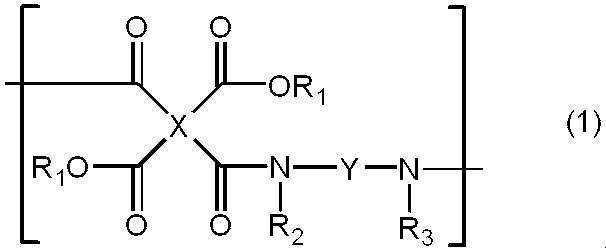
かつ下記(i)~(iii)のいずれかを満たすことを特徴とするポリイミド前駆体。
(i) 式(1)のX、Y、又はその両方の構造に下記式(2)で表される基を有している。
(ii) 式(1)のR2、R3、又はその両方が下記式(2)で表される基である。
(iii) 式(1)のX、Y、又はその両方の構造に下記式(2)で表される基を有し、R2、R3、又はその両方が下記式(2)で表される基である。
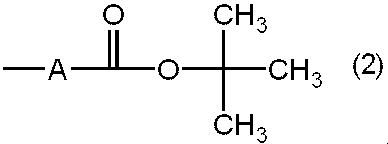
3.式(1)のR2、R3、又はその両方が式(2)で表される基である上記1に記載のポリイミド前駆体。
4.式(1)のYが下記式(3)で表される構造である上記2又は3に記載のポリイミド前駆体。

6.上記1~5のいずれかに記載のポリイミド前駆体をイミド化して得られるポリイミド。
7.上記1~5のいずれかに記載のポリイミド前駆体又は上記6に記載のポリイミドを含有する液晶配向剤。
8.上記7に記載の液晶配向剤を用いて得られる液晶配向膜。
9.上記8に記載の液晶配向膜を有する液晶表示素子。
10.下記式(4)で表されるジアミン化合物
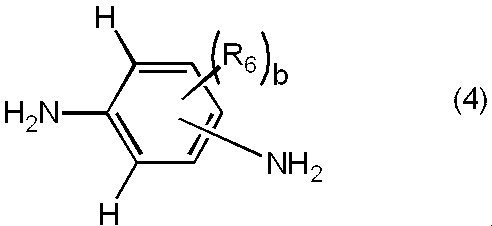

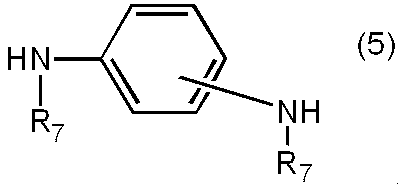
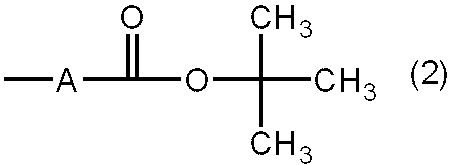


式(1)において、R1は水素原子又は炭素数1~4のアルキル基である。アルキル基の具体的例としては、メチル基、エチル基、プロピル基、2-プロピル基、ブチル基、又はt-ブチル基が挙げられる。一般に、ポリアミック酸エステルは、メチル基、エチル基、プロピル基と炭素数が増えるに従ってイミド化が進行する温度が高くなる。したがって、熱によるイミド化のしやすさの観点から、メチル基、又はエチル基が好ましく、メチル基が特に好ましい。
式(2)において、Aは単結合又は2価の有機基であるが、ジアミンの反応性低下を抑制するため、また、前述したアミド基との反応によるカルボキシル基の消費の可能性を低くするため、下記式(6)で表される2価の有機基であることが好ましい。

上記B1およびB2の具体的な例を以下に示すが、これに限定されない。液晶配向膜の機械特性が向上するため、B1およびB2の少なくともどちらか一方がB-9であると好ましい。
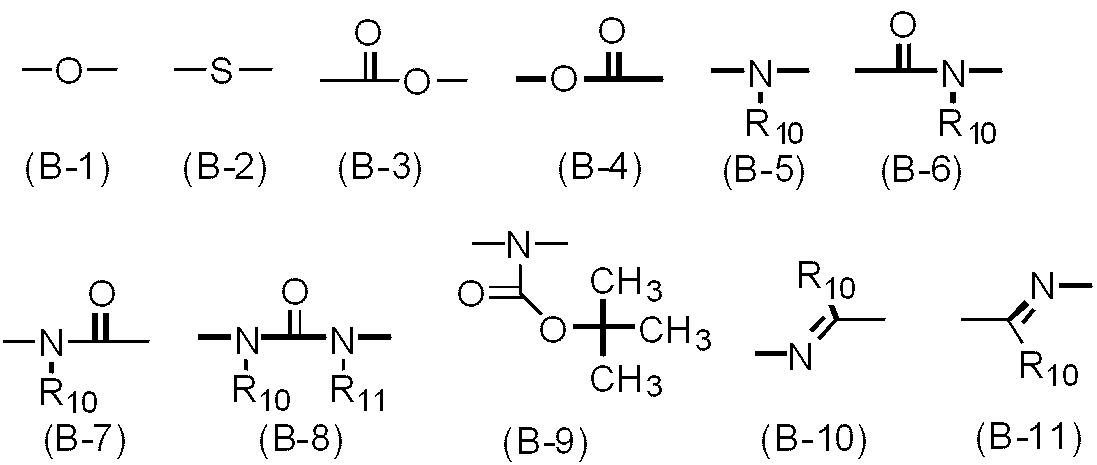
R8およびR9は、炭素数が少ないと、液晶配向性が良くなるため、炭素数1~5のアルキレン基、炭素数1~5のアルケニレン基、又は炭素数1~5のアルキニレン基が好ましい。また、R10およびR11の両方、またはどちらか一方が単結合であることが好ましい。
以下に、式(2)で表される構造の好ましい具体的を挙げるが、本発明はこれに限定されない。
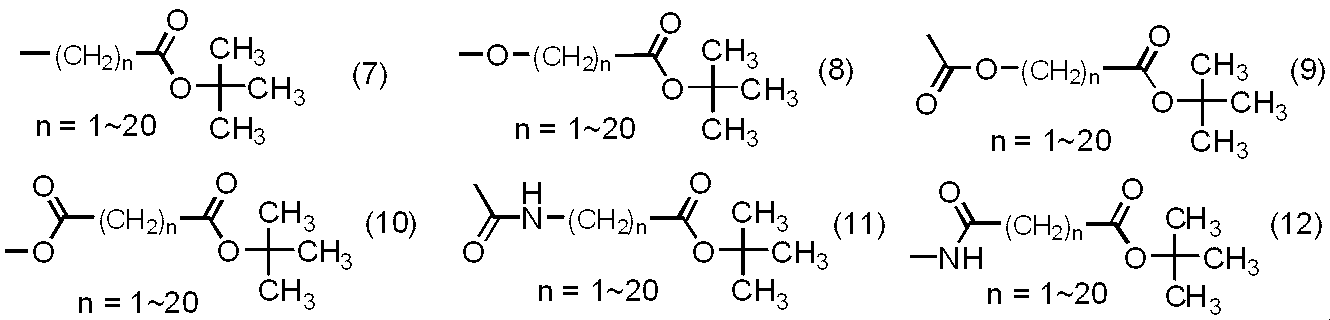


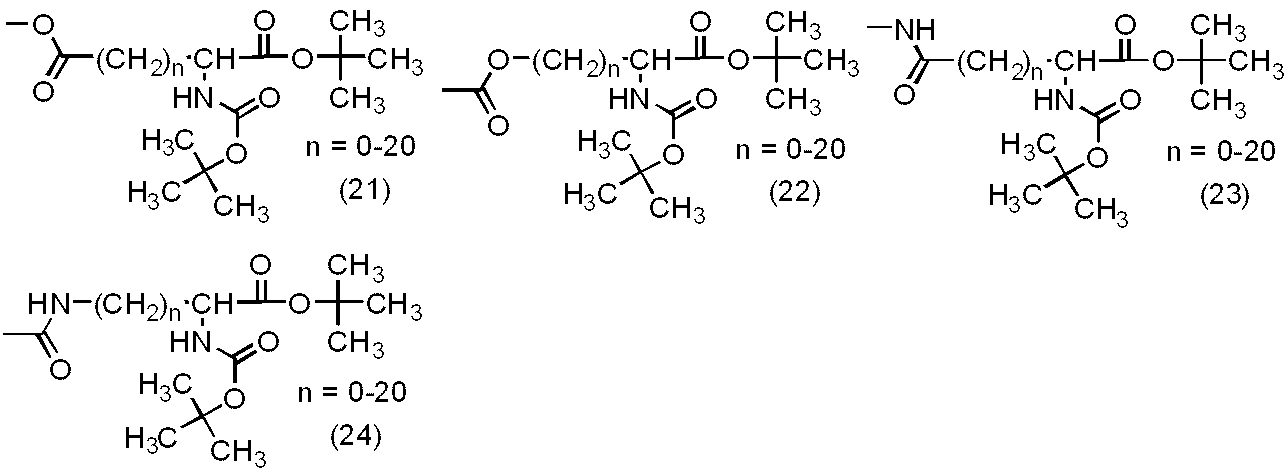
上記の定義では、例えばポリイミド前駆体に含まれる式(1)で表される重合単位が、「式(1)のX及びYにはそれぞれ式(2)の基を1個ずつ有し、且つR2及びR3が式(2)の基である重合単位」のみである場合、このポリイミド前駆体における式(2)の含有率は4.00となる。
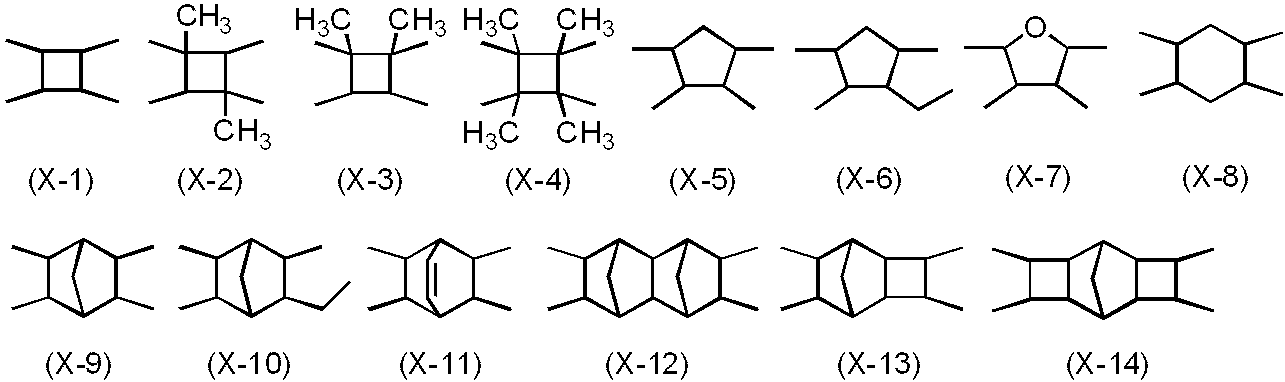


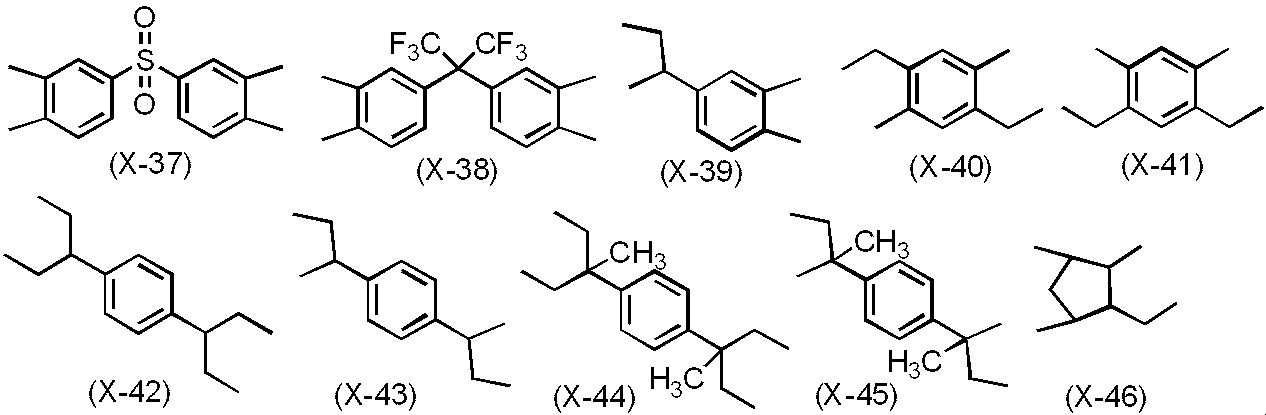
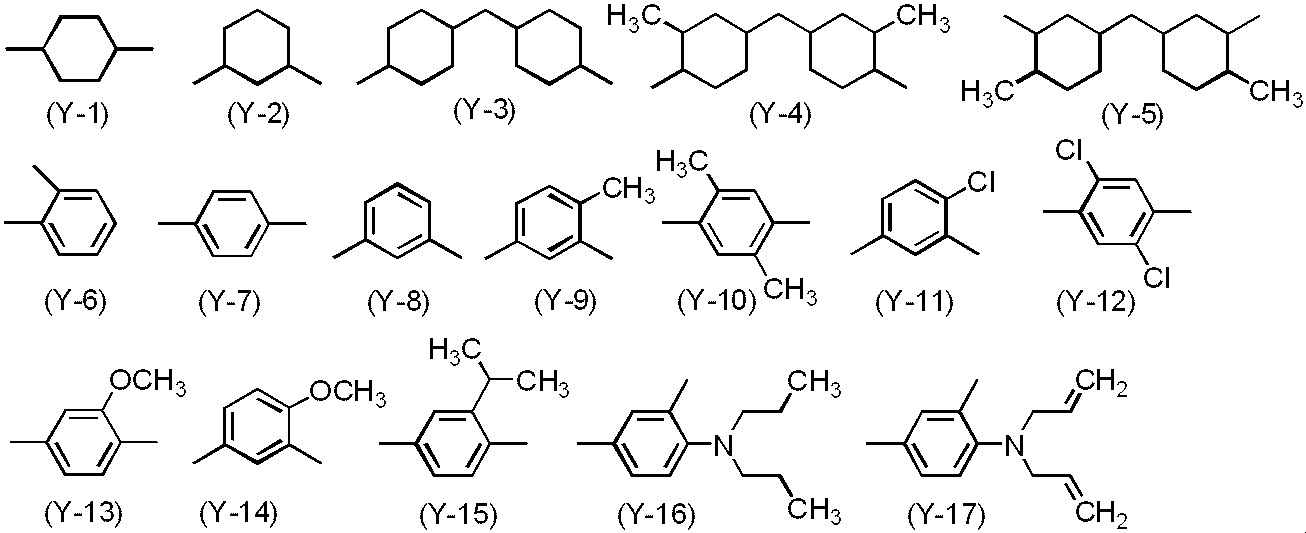
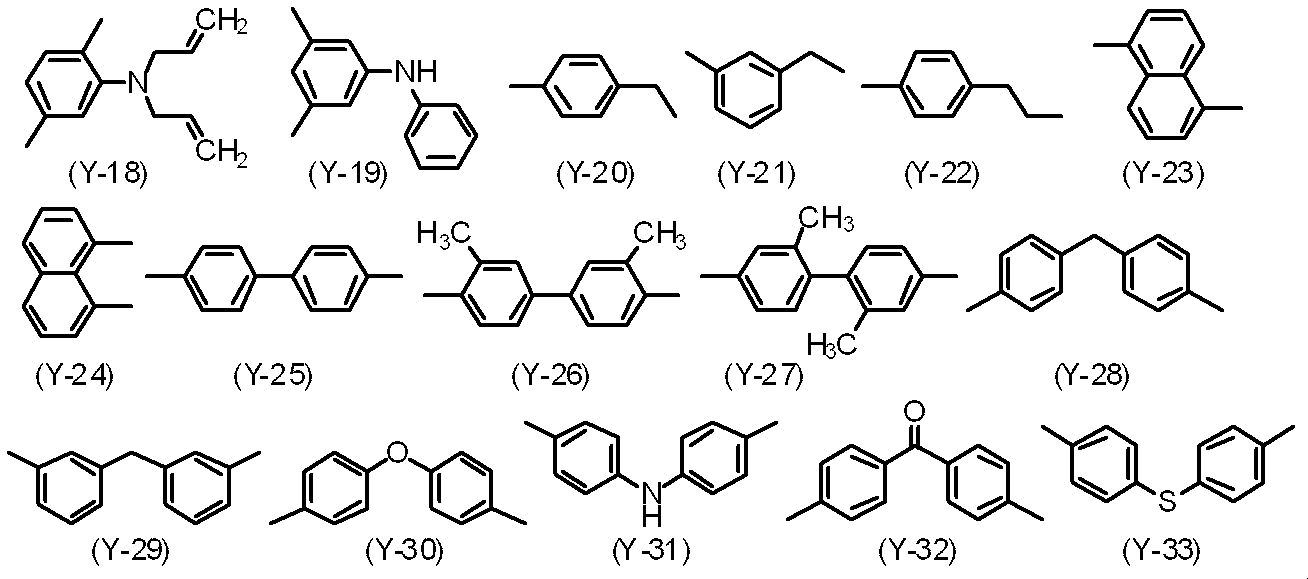
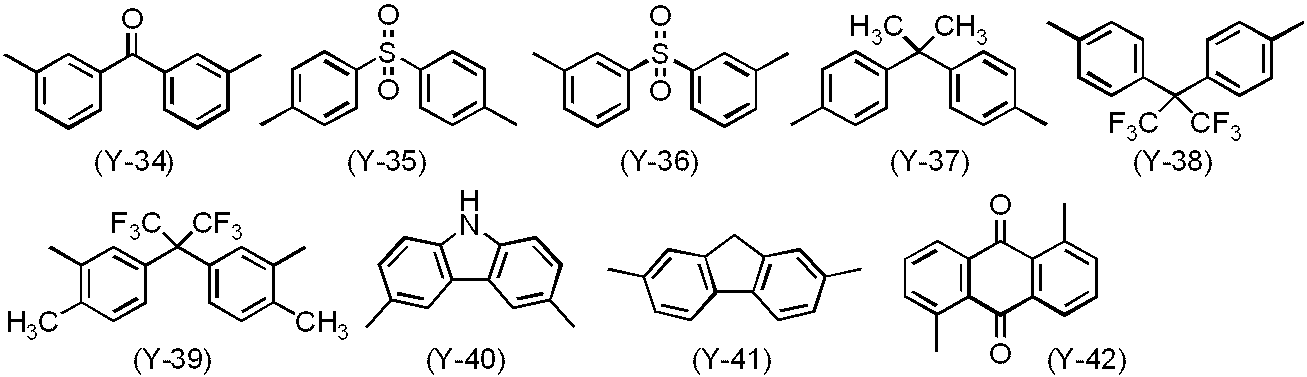


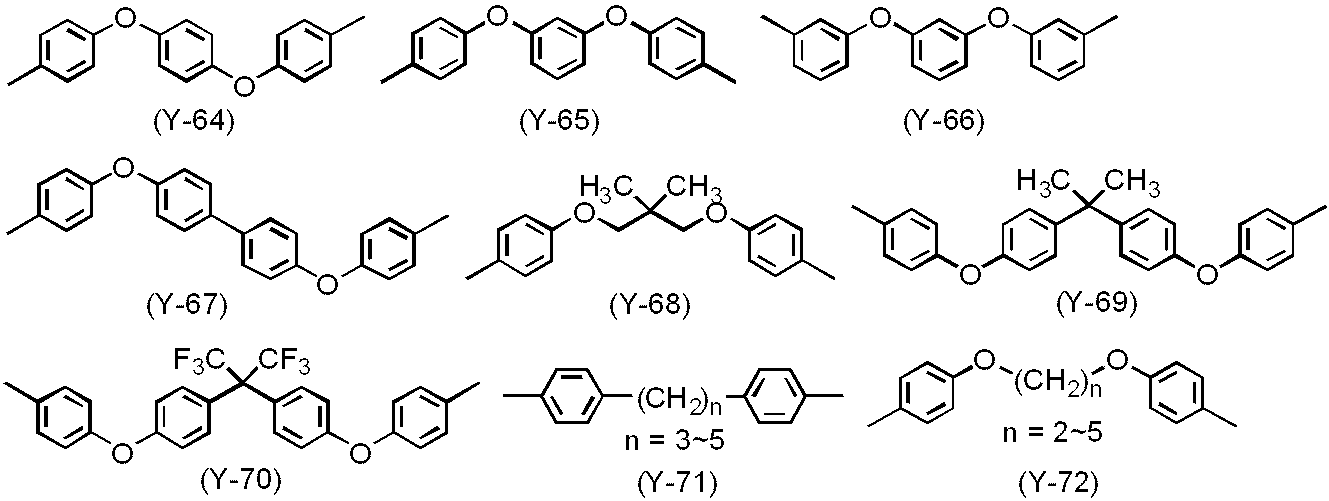
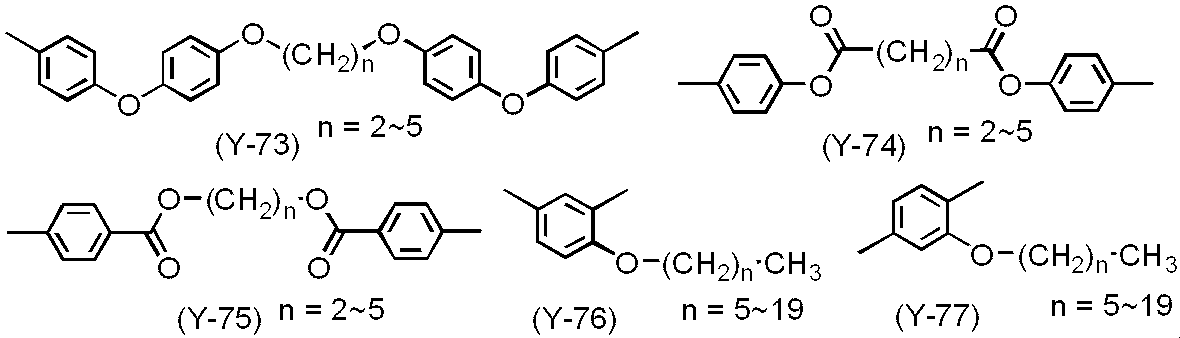


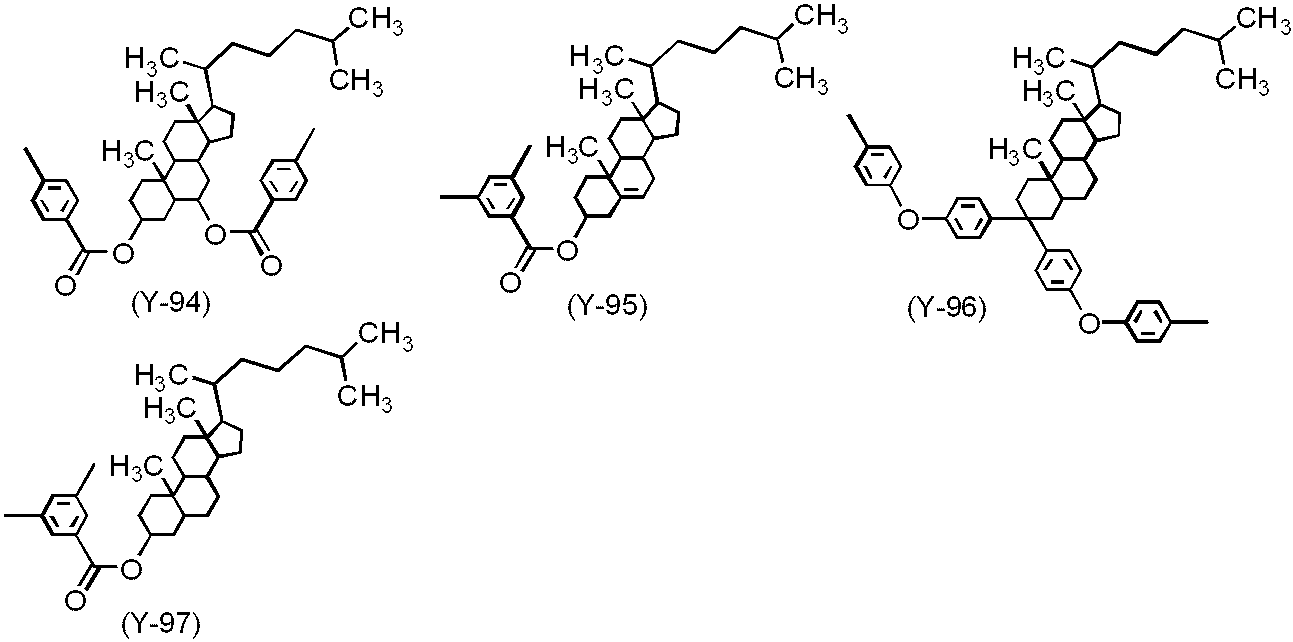
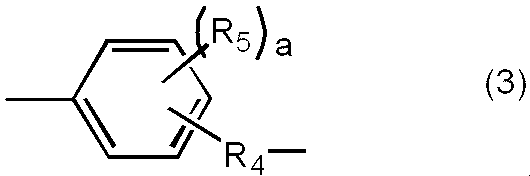
以下に好ましいYの具体例を示すが、これに限定されるものではない。なお、下記の構造中、R5は式(2)で表される構造であり、cは0~4の整数であり、d及びeは0~2の整数である。

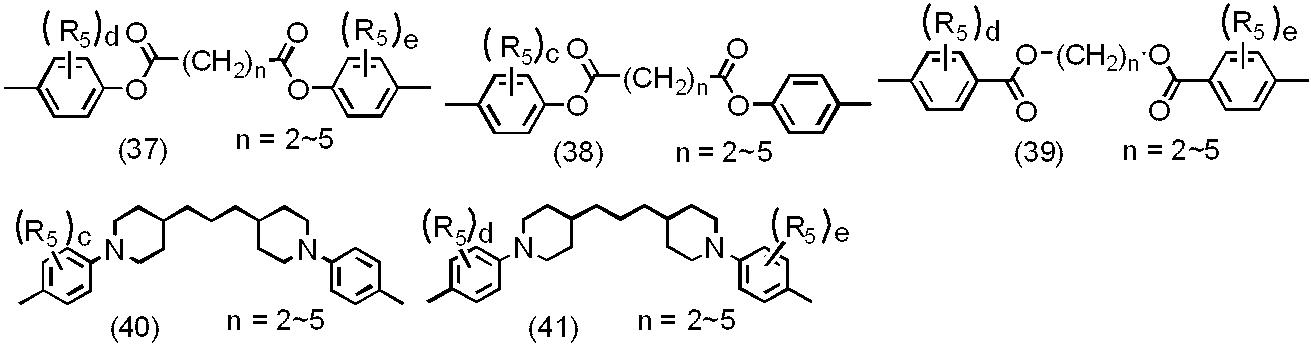
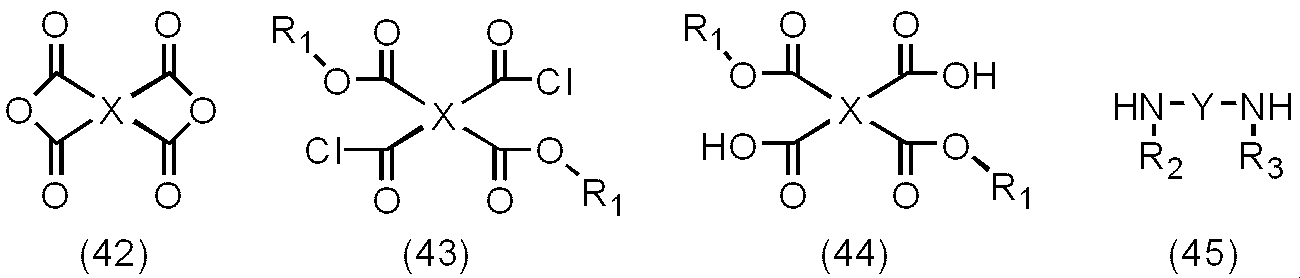
また、式(1)のYに式(2)で表される基を有する構造単位を得るためには、上記(45)におけるYが、式(2)で表される基を有する構造のYであるジアミン化合物を使用すればよい。
同様に、式(1)のR2又はR3或はその両方が式(2)で表される基である構造単位を得るためには、上記(45)におけるR2又はR3或はその両方が式(2)で表される基であるジアミン化合物を使用すればよい。
式(42)~(44)で表されるテトラカルボン酸誘導体におけるX及びR1、式(45)で表されるジアミン化合物におけるY及びR2~R3は、得ようとする式(1)の構造に対応するそれぞれと同一の構造とすればよい。よって、これらの具体例及び好ましい例は、式(1)の説明で例示した構造をそのまま挙げることができる。
ポリアミック酸は、テトラカルボン酸二無水物とジアミン化合物から合成することができる。
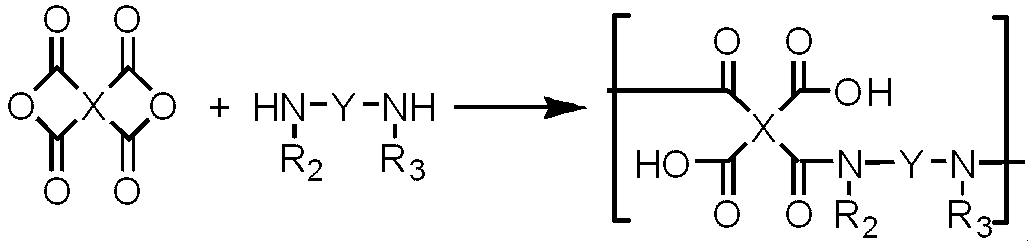
上記の反応に用いる溶媒は、モノマーおよびポリマーの溶解性からN,N-ジメチルホルムアミド、N-メチル-2-ピロリドン、又はγ-ブチロラクトンが好ましく、これらは1種又は2種以上を混合して用いてもよい。合成時の濃度は、ポリマーの析出が起こりにくく、かつ高分子量体が得やすいという観点から、1~30質量%が好ましく、5~20質量%がより好ましい。
上記のようにして得られたポリアミック酸は、反応溶液をよく撹拌させながら貧溶媒に注入することで、ポリマーを析出させて回収することができる。また、析出を数回行い、貧溶媒で洗浄後、常温あるいは加熱乾燥することで精製されたポリアミック酸の粉末を得ることができる。貧溶媒は、特に限定されないが、水、メタノール、エタノール、ヘキサン、ブチルセロソルブ、アセトン、トルエン等が挙げられる。
ポリアミック酸エステルは、以下に示す(A)~(C)の方法で合成することができる。
(A)ポリアミック酸からポリアミック酸エステルを合成する場合
ポリアミック酸エステルは、テトラカルボン酸二無水物とジアミンから得られるポリアミック酸をエステル化することによって合成することができる。
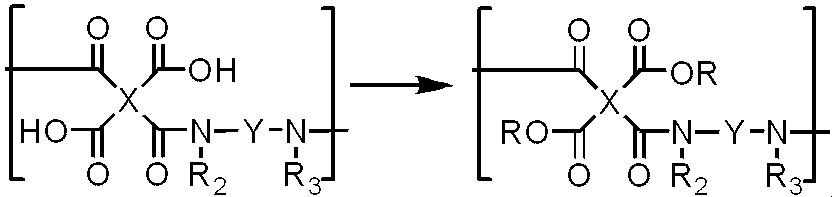
エステル化剤としては、精製によって容易に除去できるものが好ましく、N,N-ジメチルホルムアミドジメチルアセタール、N,N-ジメチルホルムアミドジエチルアセタール、N,N-ジメチルホルムアミドジプロピルアセタール、N,N-ジメチルホルムアミドジネオペンチルブチルアセタール、N,N-ジメチルホルムアミドジ-t-ブチルアセタール、1-メチル-3-p-トリルトリアゼン、1-エチル-3-p-トリルトリアゼン、1-プロピル-3-p-トリルトリアゼンなどが挙げられる。エステル化剤の添加量は、ポリアミック酸の繰り返し単位1モルに対して、2~6モル当量が好ましい。
(B)テトラカルボン酸ジエステルジクロリドとジアミンからポリアミック酸エステルを合成する場合
ポリアミック酸エステルは、テトラカルボン酸ジエステルジクロリドとジアミンから合成することができる。
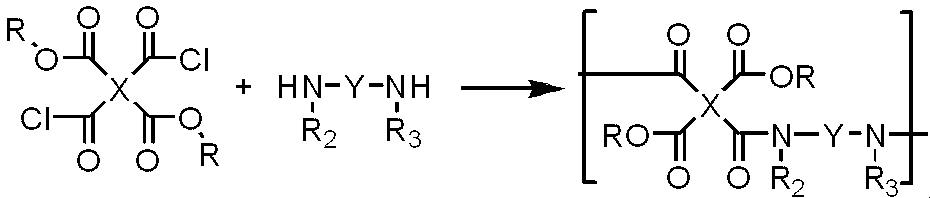
前記塩基には、ピリジン、トリエチルアミン、又は4-ジメチルアミノピリジンが使用できるが、反応が穏和に進行するためにピリジンが好ましい。塩基の添加量は、除去が容易な量で、かつ高分子量体が得やすいという観点から、テトラカルボン酸ジエステルジクロリドに対して、2~4倍モルであることが好ましい。
(C)テトラカルボン酸ジエステルとジアミンからポリアミック酸を合成する場合
ポリアミック酸エステルは、テトラカルボン酸ジエステルとジアミンを縮合剤により縮合することにより合成することができる。

前記塩基には、ピリジン、トリエチルアミンなどの3級アミンが使用できる。塩基の添加量は、除去が容易な量で、かつ高分子量体が得やすいという観点から、ジアミン成分に対して2~4倍モルであることが好ましい。
上記3つのポリアミック酸エステルの合成方法の中でも、高分子量のポリアミック酸エステルが得られるため、(A)又は(B)の合成法が特に好ましい。
ポリイミド前駆体の分子量は、ワニスの粘度や、ポリイミド膜の物理的な強度に影響を与える。ワニスの良好な塗布作業性や塗膜の良好な均一性を得るという観点からは重量平均分子量で500,000以下が好ましく、十分な強度のポリイミド膜を得るという観点からは2,000以上が好ましい。重量平均分子量は、より好ましくは5,000~300,000であり、さらに好ましくは、10,000~100,000である。ポリイミド前駆体の分子量は、前記重合反応に用いるジアミン成分とテトラカルボン酸誘導体の比率を調整することで制御できる。ジアミン成分:テトラカルボン酸誘導体の比率としては、モル比で1:0.7~1.2を例示することができる。このモル比が1:1に近いほど得られるポリイミド前駆体の分子量は大きくなる。
本発明のポリイミドは、前記ポリイミド前駆体をイミド化することにより合成することができる。ポリイミド前駆体からポリイミドを合成する方法として簡便なものは、ジアミン成分とテトラカルボン酸二無水物との反応で得られた前記ポリアミック酸の溶液に触媒を添加する化学的イミド化であり、比較的低温でイミド化反応が進行し、イミド化の過程で重合体の分子量低下が起こりにくいので好ましい。
化学的イミド化は、イミド化させたい重合体を、有機溶媒中において塩基性触媒と酸無水物の存在下で攪拌することにより行うことができる。有機溶媒としては前述した重合反応時に用いる溶媒を使用することができる。塩基性触媒としてはピリジン、トリエチルアミン、トリメチルアミン、トリブチルアミン、トリオクチルアミン等を挙げることができる。中でもピリジンは反応を進行させるのに適度な塩基性を持つので好ましい。また、酸無水物としては無水酢酸、無水トリメリット酸、無水ピロメリット酸等を挙げることができ、中でも無水酢酸を用いると反応終了後の精製が容易となるので好ましい。
本発明の液晶配向剤は、上記のようにして得られたポリイミド前駆体又はポリイミドの少なくとも一方を含有する塗布液であり、液晶配向膜を形成するのに用いられる。
本発明の液晶配向剤は、2種類以上のポリイミド前駆体や2種類以上のポリイミドを含有していてもよく、ポリイミド前駆体とポリイミドの両方を含有していてもよい。更には、本発明のポリイミド前駆体又は本発明のポリイミド以外のポリマー成分を含有してもよい。
ポリイミド前駆体またはポリイミドを溶解させるための有機溶媒としては、ポリマー成分が均一に溶解するものであれは特に限定されない。その具体例を挙げるならば、N,N-ジメチルホルムアミド、N,N-ジエチルホルムアミド、N,N-ジメチルアセトアミド、N-メチル-2-ピロリドン、N-エチル-2-ピロリドン、N-メチルカプロラクタム、2-ピロリドン、N-ビニル-2-ピロリドン、ジメチルスルホキシド、ジメチルスルホン、γ-ブチロラクトン、1,3-ジメチル-イミダゾリジノン、3-メトキシ-N,N-ジメチルプロパンアミド等を挙げることができる。これらは1種又は2種以上を混合して用いてもよい。また、単独ではポリマー成分を均一に溶解できない溶媒であっても、重合体が析出しない範囲であれば、上記の有機溶媒に混合してもよい。
その他、本発明の液晶配向剤はシランカップリング剤や架橋剤などの各種添加剤を含有してもよい。
シランカップリング剤は、液晶配向剤が塗布される基板と、そこに形成される液晶配向膜との密着性を向上させる目的で添加される。以下にシランカップリング剤の具体例を挙げるが、本発明の液晶配向剤に使用可能なシランカップリング剤はこれに限定されるものではない。
本発明の液晶配向膜は、上記のようにして得られた液晶配向剤を基板に塗布し、乾燥、焼成して得られた塗膜であり、必要に応じてこの塗膜面にラビング又は光配向等の処理をする。
本発明の液晶配向剤を塗布する基板としては透明性の高い基板であれば特に限定されず、ガラス基板、窒化珪素基板、アクリル基板やポリカーボネート基板等のプラスチック基板等を用いることができ、液晶駆動のためのITO電極等が形成された基板を用いることがプロセスの簡素化の観点から好ましい。また、反射型の液晶表示素子では片側の基板のみにならばシリコンウエハー等の不透明な物でも使用でき、この場合の電極はアルミ等の光を反射する材料も使用できる。本発明の液晶配向剤の塗布方法としては、スピンコート法、印刷法、インクジェット法などが挙げられる。本発明の液晶配向剤を塗布した後の乾燥、焼成工程は、任意の温度と時間を選択することができる。通常は、含有される有機溶媒を十分に除去するために50℃~120℃で1分~10分乾燥させ、その後150℃~300℃で5分~120分焼成される。焼成後の塗膜の厚みは、特に限定されないが、薄すぎると液晶表示素子の信頼性が低下する場合があるので、5~300nm、好ましくは10~200nmである。
光配向処理法の具体例としては、前記塗膜表面に、一定方向に偏光した放射線を照射し、場合によってはさらに150~250℃の温度で加熱処理を行い、液晶配向能を付与する方法が挙げられる。放射線としては、100nm~800nmの波長を有する紫外線および可視光線を用いることができる。このうち、100nm~400nmの波長を有する紫外線が好ましく、200nm~400nmの波長を有するものが特に好ましい。また、液晶配向性を改善するために、塗膜基板を50~250℃で加熱しつつ、放射線を照射してもよい。前記放射線の照射量は、1~10,000mJ/cm2の範囲にあることが好ましく、100~5,000mJ/cm2の範囲にあることが特に好ましい。
本発明の液晶表示素子は、上記した手法により本発明の液晶配向剤から液晶配向膜付き基板を得た後、公知の方法で液晶セルを作成し、液晶表示素子としたものである。
液晶セルの製造方法は特に限定されないが、一例を挙げるならば、液晶配向膜が形成された1対の基板を液晶配向膜面を内側にして、好ましくは1~30μm、より好ましくは2~10μmのスペーサーを挟んで設置した後、周囲をシール剤で固定し、液晶を注入して封止する方法が一般的である。液晶封入の方法については特に制限されず、作製した液晶セル内を減圧にした後液晶を注入する真空法、液晶を滴下した後、封止を行う滴下法などが例示できる。
本発明の液晶配向膜の体積抵抗率の測定方法は特に限定されないが、一例として以下の方法が挙げられる。
上記の液晶配向剤をITO透明電極付きガラス基板にスピンコート法により塗布する。塗布した後の乾燥、焼成工程は、任意の温度と時間を選択することができるが、一般的な配向膜形成工程と同様に、50℃~120℃で1分~10分乾燥させ、その後150℃~300℃で5分~120分焼成することが好ましい。焼成後の塗膜の厚みは、特に限定されないが、微粒子によるピンホールが発生せず、工程上作製が容易で、かつ実際の液晶配向膜の物性を反映させるという観点から、50nm~2000nmが好ましく、より好ましくは100~1000nmである。その後、塗膜表面に電極を形成する。電極は、塗膜を傷つけることなく簡便に蒸着することができるアルミ電極が好ましい。電極面積は、塗膜中のピンホールを含みにくく、かつ測定時に大きな印加電圧を必要としないという観点から、0.001cm2~0.05cm2が好ましい。作製した素子に一定電圧を印加し、測定される電流値から体積抵抗率が算出できる。印加電圧は電流値の測定が容易で、かつショートしにくいという観点から1V~20Vが好ましい。
本発明の液晶表示素子の残像特性の評価法は特に限定されないが、一例として以下に述べるような液晶セルに直流電圧を印加した後の残留電圧を測定する誘電吸収法が挙げられる。
上記の液晶配向剤をITO透明電極付きガラス基板にスピンコート法により塗布する。塗布した後の乾燥、焼成工程は、任意の温度と時間を選択することができるが、一般的な配向膜形成工程と同様に、50℃~120℃で1分~10分乾燥させ、その後150℃~300℃で5分~120分焼成することが好ましい。焼成後の塗膜の厚みは、特に限定されないが、一般的な配向膜形成工程と同様に、5~300nm、好ましくは10~200nmである。この塗膜面にラビングによる配向処理を施して液晶配向膜付き基板とする。この液晶配向膜付き基板を2枚用意し、一方の液晶配向膜上に4μm~6μmのスペーサーを散布した後、その上からシール剤を印刷し、もう一方の基板を液晶配向膜が向き合いラビング方向が直行するように張り合わせた後、シール剤を硬化させて空セルを作製する。この空セルに減圧注入法によって、液晶を注入し、注入口を封止して、ツイストネマティック液晶セルを得る。
このツイストネマティック液晶セルに、任意の温度下で10Vの直流電圧を30分間印加し、1秒間短絡させた後の液晶セル内に発生している電位の時間変化を測定する。
本発明のポリイミド前駆体を合成するにあたり、ポリイミド前駆体の原料となるモノマーを合成する時の簡便性、およびこのモノマーの取り扱いやすさの観点からは、前記式(45)におけるYが式(2)で表される基を有するジアミン化合物を使用するか、前記式(45)におけるR2、R3、又はその両方に式(2)で表される基が結合しているジアミン化合物を使用することが好ましい。このようなジアミン化合物の中でも、液晶配向膜としたときに液晶配向性が高く、機械特性が強く、体積抵抗率が低く、残留DC特性に優れた液晶表示素子を得ることができる等の理由から、下記式(4)又は式(5)で表されるジアミン化合物が好ましい。


下記式(A)~(D)のジアミン化合物は、上記式(4)又は式(5)で表されるジアミンの中でも、比較的容易に合成できるため、特に好ましい化合物である。
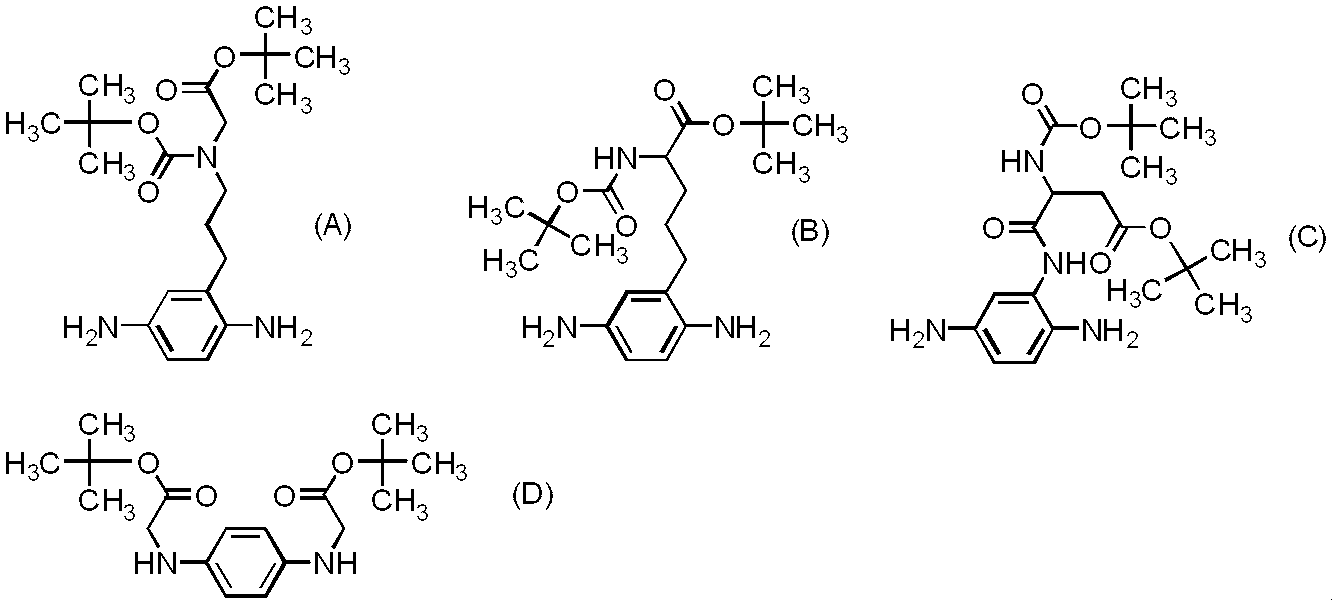
上記式(A)~(D)のジアミン化合物は以下のようにして合成することができる。
特定ジアミン化合物(A)
式(A)のジアミン化合物は、例えば、下記式(A1)のプロパルギルアミン、式(A2)のブロモ酢酸t-ブチル、式(A3)の二炭酸ジt-ブチル、および式(A4)の2-ヨード-4-ニトロアニリンを主原料として、以下に示す4ステップの経路で合成できる。
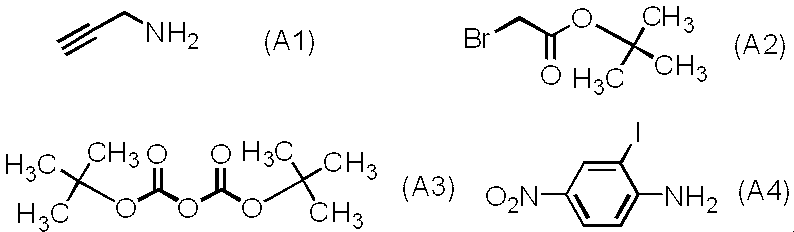
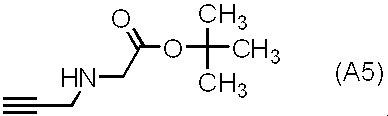

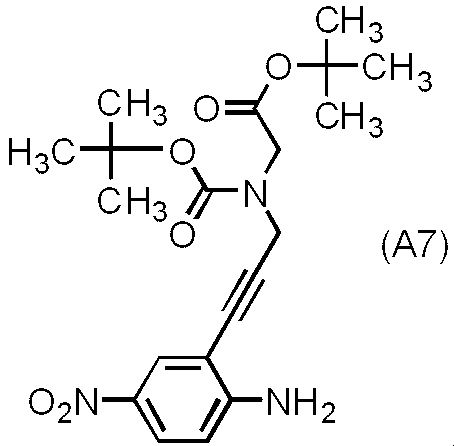
上記反応溶液を0℃~40℃、好ましくは、0℃~30℃で、5分~30分撹拌した後、前記化合物(A6)を加え、1時間~48時間、好ましくは2時間~24時間撹拌すると上記式(A7)の化合物が得られる。式(A6)の添加量は、ヨウ化アリールに対して、1.0倍モル量~2.0倍モル量が好ましく、1.0倍モル量~1.5倍モル量がより好ましい。
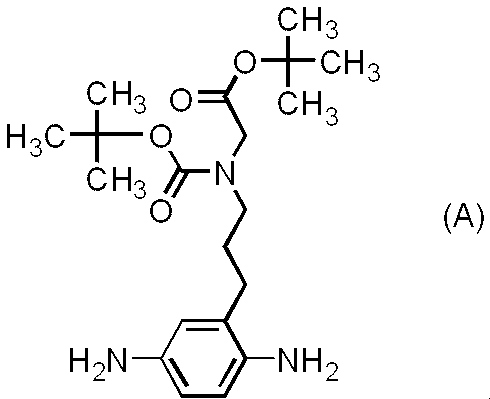
化合物(A7)を有機溶剤に溶解させた後、反応容器内を窒素で置換し、触媒を加え、反応容器内を水素で置換する。ここで、使用する有機溶剤は、反応をより効率的に進めるために、メタノール、エタノール、2-プロパノール、テトラヒドロフラン、又は1,4-ジオキサンが好ましく、メタノール、又はエタノールがより好ましい。触媒としては、パラジウムカーボン、プラチナカーボン、酸化白金などが挙げられるが、反応効率が良いため、パラジウムカーボンがより好ましい。反応混合物を0℃~100℃、好ましくは、10℃~60℃で、12時間~72時間、好ましくは、24時間~60時間撹拌する。反応終了後、触媒を除去し、有機溶剤を留去することで、ジアミン(A)の粗生成物を得ることができる。得られたジアミン化合物は、ポリイミド前駆体を得るための重合反応が速やかに進行し、高分子量のポリマーが得られるように、種々の方法で精製するのが好ましい。精製方法としては、シリカゲルカラムクロマトグラフィー、活性炭処理が挙げられるが、生成物が分解する可能性が低い活性炭処理が好ましい。
式(B)のジアミン化合物は、例えば、下記式(B1)のN-(ジフェニルメチレン)グリシンt-ブチルエステル、式(B2)の臭化プロパルギル、および前記式(A3)の二炭酸ジt-ブチル、および式(A4)の2-ヨード-4-ニトロアニリンを主原料として、以下に示す5ステップの経路で合成できる。

第1ステップ:化合物(B3)の合成
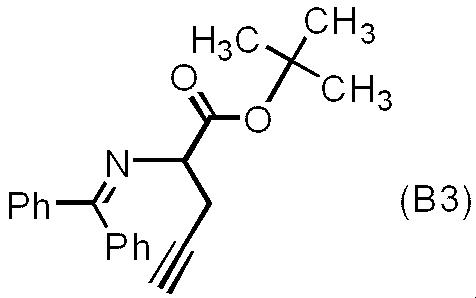
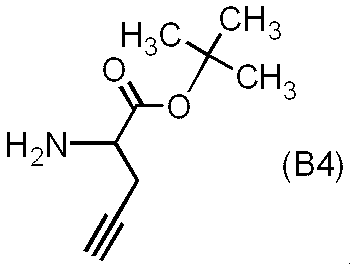
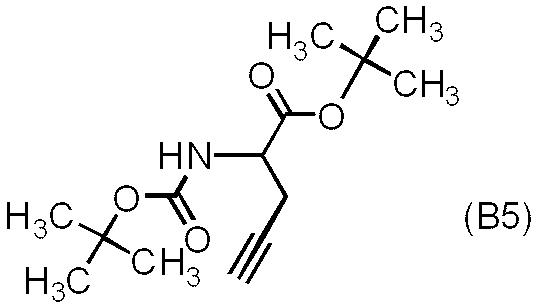
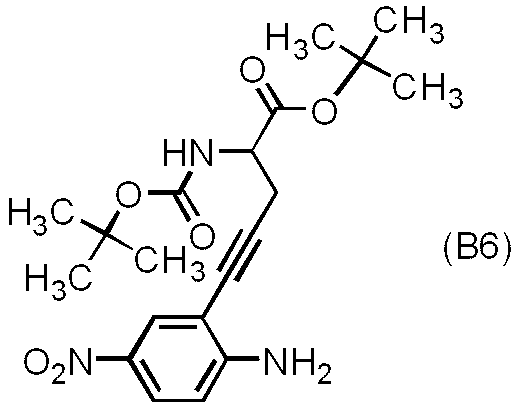

式(C)のジアミン化合物は、例えば、下記式(C1)の2-アミノ-4-ニトロアニリン、および式(C2)のアミノ酸誘導体を主原料として、以下に示す2ステップの経路で合成できる。

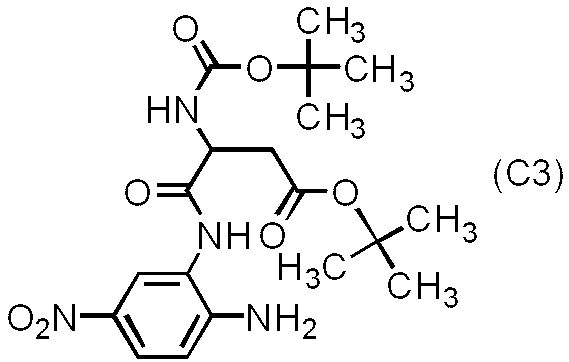
2-アミノ-4-ニトロアニリンの1位のアミノ基は、4位に存在するニトロ基の影響で求核性が低下する。そのため、2位のアミノ基とアミノ酸誘導体のカルボキシル基が優先的に反応するため、化合物(C3)を合成することができる。アミノ酸誘導体を過剰に添加すると、4位のアミノ基とアミド結合を形成するため、アミノ酸誘導体の添加量は、2-アミノ-4-ニトロアニリンに対して、0.9~1.2倍モル量であることが好ましい。
上記アミノ基とカルボキシル基の縮合反応は公知の方法で行うことができるが、混合酸無水物を用いる方法、縮合剤を用いる方法が好ましい。
混合酸無水物を用いる方法は、例えば、カルボン酸を有機溶媒中で、塩基の存在下、酸ハライド、またはクロロギ酸エステルと、-70℃~40℃、好ましくは、-50℃~5℃で反応させ、得られた混合酸無水物を有機溶媒中で、アミン化合物と-70℃~40℃、好ましくは、-50℃~5℃で反応させることにより行なわれる。
反応に使用する塩基としては、3級アミンが好ましく、ピリジン、トリエチルアミン、4-(N,N-ジメチルアミノ)ピリジン、又はN-メチルモルホルリンがより好ましい。塩基の添加量は、多すぎると除去が難しいため、(C1)に対して2~4倍モル量であることが好ましい。
前記酸ハライドおよびクロロギ酸エステルとしては、ピバロイルクロライド、トシルクロライド、メシルクロライド、クロロギ酸エチル、又はクロロギ酸イソブチルが好ましい。酸ハライドおよびクロロギ酸エステルの添加量は、(C1)に対して1.1~2.0倍モル量であることが好ましい。
前記縮合剤には、トリフェニルホスファイト、ジシクロヘキシルカルボジイミド、1-エチル-3-(3-ジメチルアミノプロピル)カルボジイミド塩酸塩、N,N'-カルボニルジイミダゾール、ジメトキシ-1,3,5-トリアジニルメチルモルホリニウム、O-(ベンゾトリアゾール-1-イル)-N,N,N',N'-テトラメチルウロニウム テトラフルオロボラート、O-(ベンゾトリアゾール-1-イル)-N,N,N',N'-テトラメチルウロニウムヘキサフルオロホスファート、(2,3-ジヒドロ-2-チオキソ-3-ベンゾオキサゾリル)ホスホン酸ジフェニルなどが使用できる。縮合剤の添加量は、(C2)に対して2~3倍モル量であることが好ましい。
前記塩基には、ピリジン、トリエチルアミンなどの3級アミンが使用できる。塩基の添加量は、多すぎると除去が難しく、少なすぎると反応効率が低下するため、(C1)に対して2~4倍モル量であることが好ましい。
上記2種類の方法で、得られた反応溶液は、析出物を除去した後、酸性または塩基性水溶液と有機溶剤を加えて、酸ハライド、クロロギ酸エステル、縮合剤、塩基、およびこれらの化合物に由来する共生成物を抽出によって除くことが好ましい。酸性水溶液としては、塩酸、酢酸、ギ酸、又は塩化アンモニウムの水溶液が好ましい。塩基水溶液としては、水酸化ナトリウム、水酸化カリウム、炭酸水素ナトリウム、又は炭酸カリウムの水溶液が好ましい。抽出に使用する有機溶剤は、反応溶液に加えても、内容物の析出が起こらず、水と混合しないものであれば、その種類を選ばないが、酢酸エチル、ジクロロメタン、クロロホルム、又は1,2-ジクロロエタンがより好ましい。
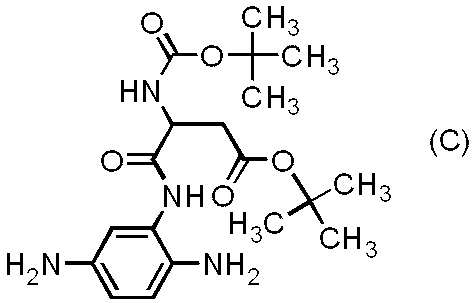
式(D)のジアミン化合物は、例えば、前記式(A2)のブロモ酢酸t-ブチルと下記式(D1)のp-フェニレンジアミンを主原料として、以下に示す方法で合成できる。
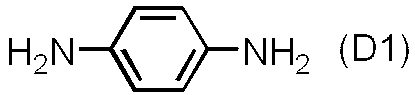

以下に実施例を挙げ、本発明を更に詳しく説明するが、本発明はこれらに限定されるものではない。
[1H NMR]
装置:フーリエ変換型超伝導核磁気共鳴装置(FT-NMR)INOVA-400(Varian社製)400MHz
溶媒:重水素化ジメチルスルホキシド(DMSO-d6)
標準物質:テトラメチルシラン(TMS)
積算回数:8
ポリマーの分子量はGPC(常温ゲル浸透クロマトグラフィー)装置によって測定し、ポリエチレングリコール、ポリエチレンオキシド換算値として数平均分子量(以下、Mnとも言う。)と重量平均分子量(以下、Mwとも言う。)を算出した。
GPC装置:昭和電工社製(GPC-101)
カラム:昭和電工社製(KD803、KD805の直列)
カラム温度:50℃
溶離液:N,N-ジメチルホルムアミド(添加剤として、臭化リチウム-水和物(LiBr・H2O)が30mmol/L、リン酸・無水結晶(o-リン酸)が30mmol/L、テトラヒドロフランが10mL/L)
流速:1.0mL/分
検量線作成用標準サンプル:東ソー社製 TSK 標準ポリエチレンオキサイド(重量平均分子量(Mw) 約900,000、150,000、100,000、30,000)、及び、ポリマーラボラトリー社製 ポリエチレングリコール(ピークトップ分子量(Mp) 約12,000、4,000、1,000)。測定は、ピークが重なるのを避けるため、900,000、100,000、12,000、1,000の4種類を混合したサンプル、および150,000、30,000、4,000の3種類を混合したサンプルの2サンプルを別々に測定。
ポリイミド粉末20mgを重水素化ジメチルスルホキシド(DMSO-d6、0.05%TMS(テトラメチルシラン)混合品)1gに溶解し、1H NMRを測定した。イミド化率は、イミド化前後で変化しない構造に由来するピークを基準とし、9.5-10.0ppm付近に現れるアミド酸のNH基に由来するピークの積算値を用い、以下の式によって求めた。
イミド化率(%)=(1-α・x/y)×100
上記式において、xはアミド酸のNH基に由来するピークの積算値、yは基準とするピークの積算値、αはポリアミド酸(イミド化率が0%)の場合におけるアミド酸のNH基に由来するピークの積算値に対する基準とするピークの積算値の割合である。
素子の作製:液晶配向材をITO電極付きガラス基板にスピンコートし、80℃のホットプレート上で5分間乾燥させた後、230℃の熱風循環式オーブンで60分焼成を行い、膜厚200nmの液晶配向膜を作製した。試料によっては、この液晶配向膜付き基板に254nmの偏光を1J/cm2照射した。このように作製した液晶配向膜付き基板に、アルミニウム電極を直径1mm、厚さ100nmになるように蒸着によって形成し、体積抵抗率測定用素子を作製した。
体積抵抗率の測定:エレクトロメーター(ケースレー社製、型番617)に接続したシールドケース内で上記素子のITO電極とアルミニウム電極間に10Vの電圧を120秒間印加し、110秒後から120秒後に流れた電流の平均値から体積抵抗率を算出した。
以下において、化合物の略称をもちいることがある。
CBDE-Cl: ジメチル-1,3-ビス(クロロカルボニル)シクロブタン-2,4-カルボキシレート
1,3-DMCBDE-Cl: ジメチル 1,3-ビス(クロロカルボニル)-1,3-ジメチルシクロブタン-2,4-カルボキシレート
TDA: 3,4-ジカルボキシ-1,2,3,4-テトラヒドロ-1-ナフタレンコハク酸二無水物
pPDA:p-フェニレンジアミン
TBDA: 1-t-ブトキシカルボニル-3,5-ジアミノベンゼン
EtDA: 1-エトキシカルボニル-3,5-ジアミノベンゼン
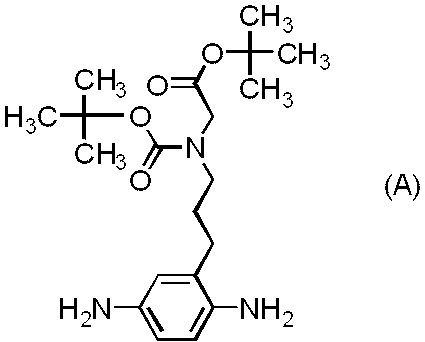
第1ステップ:化合物(A5)の合成
500 mL のナスフラスコにプロパルギルアミン (8.81 g, 160 mmol) 、N,N-ジメチルホルムアミド (112 mL) 、炭酸カリウム (18.5 g, 134 mmol) の順に入れ、0 ℃ にし、ブロモ酢酸t-ブチル (21.9 g, 112 mmol) をN,N-ジメチルホルムアミド (80 mL) に溶かした溶液を約1時間で、撹拌しながら滴下した。滴下終了後、反応溶液を室温にし、20時間撹拌した。その後、固形物をろ過により除去し、ろ液に酢酸エチルを 1 L 加え、300 mL の水で 4 回、300 mL の飽和食塩水で 1 回洗浄した。その後、有機層を硫酸マグネシウムで乾燥し、溶媒を減圧留去した。最後に、残留した油状物を 0.6 Torr, 70 ℃で減圧蒸留することにより、無色液体のN-プロパルギルアミノ酢酸t-ブチル(化合物(A5))を得た。収量は 12.0 g、収率は63% であった。
1 L のナスフラスコに上記N-プロパルギルアミノ酢酸t-ブチル (12.0 g, 70.9 mmol)、ジクロロメタン (600 mL) を入れて溶液とし、攪拌氷冷しながら、二炭酸ジt-ブチル (15.5 g, 70.9 mmol) をジクロロメタン (100 mL) に溶かした溶液を1時間で滴下した。滴下終了後、反応溶液を室温にし、20時間攪拌した。反応終了後、反応溶液を300 mL の飽和食塩水で洗浄し、硫酸マグネシウムで乾燥した。その後、溶媒を減圧留去することで、薄黄色液体のN-プロパルギル-N-t-ブトキシカルボニルアミノ酢酸t-ブチル(化合物(A6))を得た。収量は 18.0 g、収率は 94% であった。
300 mL の四つ口フラスコに2-ヨード-4-ニトロアニリン (22.5 g, 85.4 mmol)、ビス(トリフェニルホスフィン)パラジウムジクロリド (1.20 g, 1.71 mmol)、ヨウ化銅 (0.651 g, 3.42 mmol)を入れ、窒素置換した後、ジエチルアミン (43.7 g, 598 mmol)、N,N-ジメチルホルムアミド (128 mL) を加え、氷冷攪拌しながら、前記N-プロパルギルアミノ-N-t-ブトキシカルボニル酢酸t-ブチル (27.6 g, 102 mmol) を加え、室温で20時間攪拌した。反応終了後、1 L の酢酸エチルを加え、1 mol/L の塩化アンモニウム水溶液 150 mL で3回、150 mL の飽和食塩水で1回洗浄し、硫酸マグネシウムで乾燥した。その後、溶媒を減圧留去することで析出した固体を200 mL の酢酸エチルに溶かし、1 L のヘキサンを加えることで再結晶を行った。この固体をろ取し、減圧乾燥することで、黄色固体の2-{3-(N-t-ブトキシカルボニル-N-t-ブトキシカルボニルメチルアミノ)-1-プロピニル)}-4-ニトロアニリン(化合物(A7))を得た。収量は23.0 g, 収率は66%であった。
500 mL の四つ口フラスコに前記2-{3-(N-t-ブトキシカルボニル-N-t-ブトキシカルボニルメチルアミノ)-1-プロピニル)}-4-ニトロアニリン (22.0 g, 54.2 mmol)、および、エタノール (200 g) を加え、系内を窒素で置換した後、パラジウム炭素 (2.20 g) を加え、系内を水素で置換し、50 ℃で48時間攪拌した。反応終了後、セライトろ過によりパラジウム炭素を除き、ろ液に活性炭を加え、50 ℃で30 分攪拌した。その後、活性炭をろ過し、有機溶媒を減圧留去し、残留した油状物を減圧乾燥することで、ジアミン化合物(A)を得た。収量は19.8 g、収率は 96% であった。
ジアミン化合物(A)は1H NMRにより確認した。
1H NMR (DMSO-d6): δ 6.54-6.42 (m, 3H, Ar), 3.49, 3.47 (each s, 2H, NCH2CO2t-Bu), 3.38-3.30 (m, 2H, CH2CH2N), 2.51-2.44 (m, 2H, ArCH2), 1.84-1.76 (m, 2H, CH2CH2CH2), 1.48-1.44 (m, 18H, NCO2t-Bu and CH2CO2t-Bu).
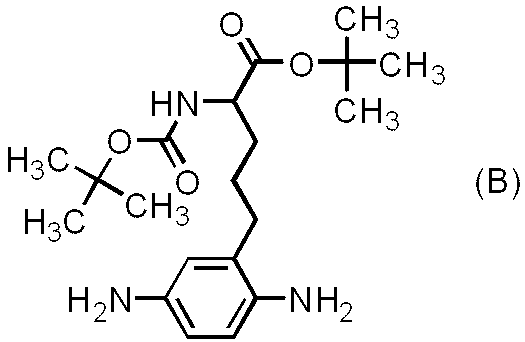
第1ステップ:化合物(B3)の合成
2 L のナスフラスコに(N-ジフェニルメチン)グリシンt-ブチル (23.6 g, 80.0 mmol)、ジクロロメタン (267 mL)、トルエン (533 mL)、臭化テトラブチルアンモニウム (1.56 g, 4.0 mmol)、臭化プロパルギル (11.4 g, 96.0 mmol)、50%水酸化カリウム水溶液 (157 g) の順にを入れ、室温で20時間撹拌した。その後、有機層を分離し、水層を200 mL の酢酸エチルで2回抽出し、これらを有機層と合わせ、300 mL の飽和食塩水で 1 回洗浄した。その後、有機層を硫酸マグネシウムで乾燥し、溶媒を減圧留去し、残留した油状物をシリカゲルカラムクロマトグラフィーで生成することにより、無色液体の (N-ジフェニルメチン)プロパルギルグリシンt-ブチル(化合物(B3))を得た。収量は 26.7 g、収率は99% であった。
500 mL のナスフラスコに前記(N-ジフェニルメチン)プロパルギルグリシンt-ブチル (26.7 g, 80.0 mmol), テトラヒドロフラン (320 mL)、15%質量クエン酸水溶液 (152 g)を入れ、室温で2時間攪拌した。反応終了後、1 mol/L の塩酸を90 mL 加え、水層を分離し、160 mL の酢酸エチルで3回洗浄した後、炭酸カリウムをpHが8になるまで加えた。その後、この水層を160 mL の酢酸エチルで3回抽出し、有機層を合わせて硫酸マグネシウムで乾燥した。最後に、溶媒を減圧留去し、残留した油状物を減圧乾燥することで、黄色液体のプロパルギルグリシンt-ブチル(化合物(B4))を得た。収量は 8.51 g、収率は63%であった。
1 L のナスフラスコに前記プロパルギルグリシンt-ブチル (6.43 g, 38.0 mmol)、ジクロロメタン (127 mL)、トリエチルアミン (4.23 g, 41.2 mmol)、二炭酸ジt-ブチル (9.12 g, 41.2 mmol) の順に加え、室温で20時間攪拌した。反応終了後、反応溶液を100 mL の飽和食塩水で洗浄し、硫酸マグネシウムで乾燥した。その後、溶媒を減圧留去することで、オレンジ色液体のN-t-ブトキシカルボニルプロパルギルグリシンt-ブチル(化合物(B5))を得た。収量は 9.69 g、収率は 95% であった。
200 mL の四つ口フラスコに2-ヨード-4-ニトロアニリン (8.72 g, 33.0 mmol)、ビス(トリフェニルホスフィン)パラジウムジクロリド (0.463 g, 0.660 mmol)、ヨウ化銅 (0.251 g, 1.32 mmol)を入れ、窒素置換した後、ジエチルアミン (16.9 g, 231 mmol)、N,N-ジメチルホルムアミド (50 mL) を加え、氷冷攪拌しながら、前記N-t-ブトキシカルプロパルギルグリシンt-ブチル (9.69 g, 36.0 mmol) をN,N-ジメチルホルムアミド (16 mL)に溶かして加え、室温で16時間攪拌した。反応終了後、500 mL の酢酸エチルを加え、1 mol/L の塩化アンモニウム水溶液 100 mL で3回、100 mL の飽和食塩水で1回洗浄し、硫酸マグネシウムで乾燥した。その後、溶媒を減圧留去し残留した油状物をシリカゲルカラムクロマトグラフィーにより精製することで、黄色固体の2-{4-(N-t-ブトキシカルボニルアミノ)-4-(t-ブトキシカルボニル)-1-ブチニル)}-4-ニトロアニリン(化合物(B6))を得た。収量は5.54 g, 収率は41%であった。
500 mL の四つ口フラスコに前記2-{4-(N-t-ブトキシカルボニルアミノ)-4-(t-ブトキシカルボニル)-1-ブチニル)}-4-ニトロアニリン (5.54 g, 13.7 mmol)、および、エタノール (49.9 g) を加え、系内を窒素で置換した後、パラジウム炭素 (0.540 g) を加え、系内を水素で置換し、50 ℃で48時間攪拌した。反応終了後、セライトろ過によりパラジウム炭素を除き、ろ液に活性炭を加え、50 ℃で30 分攪拌した。その後、活性炭をろ過し、有機溶媒を減圧留去し、生成した油性物を減圧乾燥することで、ジアミン化合物(B)を得た。収量は3.90 g、収率は 85% であった。
ジアミン化合物(B)の構造は1H NMRにより確認した。
1H NMR (DMSO-d6): δ 7.15 (d, J = 7.6 Hz, 1H, Ar), 6.37 (d, J = 8.0 Hz, 1H, Ar), 6.24-6.20 (dd, J = 8.0, 7.6 Hz, 1H, Ar),4.09 (br s, 4H, NH2), 3.79 (m, 1H, NCH), 2.27 (m, 2H, ArCH2), 1.72-145 (m, 4H, -CH2CH2-), 1.38 (s, 18H, t-Bu).
以下に示す2ステップの経路でジアミン化合物(C)を合成した。
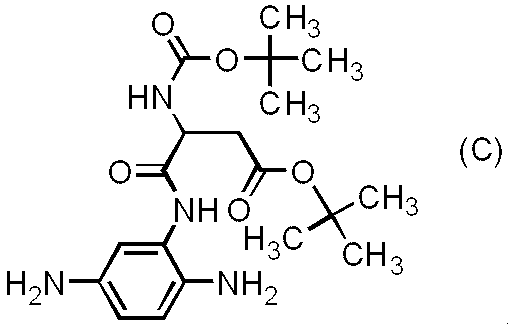
窒素置換した500 mL の四つ口フラスコにアミノ酸誘導体(5.00 g, 17.3 mmol)を入れ、THF(テトラヒドロフラン) (150 mL) に溶解させた。そこへ、NMM(N-メチルモルホルリン)(3.55 g, 35.1 mmol)を加え、-45℃に冷却した。この溶液に、クロロギ酸イソブチル(2.97 g, 21.8 mmol)を加え、-45℃にて10分間撹拌した。10分後、2-アミノ-4-ニトロアニリン ( 2.59 g, 16.9 mmol) をTHF (100mL) に溶かした溶液を滴下した。滴下終了後、-45℃にて1時間攪拌し、その後、20℃で18時間撹拌した。反応終了後、析出した固体をろ別し、得られたろ液を減圧濃縮した。残渣を 500ml の酢酸エチル、および、500mLのTHFに溶解させ、200 mLのリン酸二水素カリウム水溶液 (1 mol/L) で2回、200mL の飽和食塩水で1回、200 mL の飽和炭酸水素ナトリウム水溶液で2回、最後に200 mL の飽和食塩水で1回洗浄した。得られた有機層を硫酸マグネシウムで乾燥し、溶媒を減圧留去し、残留した薄黄色固体を酢酸エチルで洗浄することにより、2-(3-t-ブトキシカルボニル-2-t-ブトキシカルボニルアミノプロピオニルアミノ)-4-ニトロアニリン(化合物(C3))を得た。収量は4.88 g、収率は68.0%であった。
300 mL のナスフラスコに、化合物(C3)(4.85 g, 11.4 mmol) を入れ、エタノール (150 mL) を加え、系内を窒素置換した後、パラジウム炭素 (0.49 g) を加え、系内を水素で置換し、20 ℃で48 時間撹拌した。反応終了後、セライトろ過により析出物を除き、溶媒を減圧留去することで得られた油状残渣をトルエンで再結晶することにより薄紫色固体のジアミン化合物(C)を得た。収量は3.03 g、収率は67%であった。
ジアミン化合物(C)の構造は1H NMRにより確認した。
1H NMR (DMSO-d6): δ 8.99 (s, 1H, NHCO2t-Bu), 7.20 (d, J = 8.0 Hz, 1H, ArNH), 6.59 (d, J = 2.8 Hz, Ar), 6.49 (d, J = 8.0 Hz, 2H, Ar), 6.24 (dd, J = 8.0, 2.8 Hz, 1H, Ar), 4.23 (dd, J = 8.8, 4.7 Hz, 1H, CH), 4.35, 4.00 (each s, 4H, NH2), 2.72 (dd, J = 16.0, 4.7 Hz, 1H, CH2), 2.49 (dd, J = 16.0, 8.8 Hz, 1H, CH2), 1.40 (s, 18H, t-Bu).

ジアミン化合物(D)の構造は1H NMRにより確認した。
1H NMR (DMSO-d6): δ 6.39 (s, 4H, Ar), 5.09 (t, J = 6.6 Hz, 2H, NH), 3.64 (d, J = 6.6 Hz, 4H, CH2), 1.39 (s, 18H, t-Bu).
300mL四つ口フラスコに、p-フェニレンジアミン(0.700 g, 6.47 mmol)、ジアミン化合物(D)(0.191 g, 0.719 mmol)を入れ、NMP(N-メチル-2-ピロリドン)(44.6 mL)、ピリジン(1.39 mL, 17.3 mmol)を加えて溶解させた。この溶液を水冷撹拌しながらCBDE-Cl(ジメチル-1,3-ビス(クロロカルボニル)シクロブタン-2,4-カルボキシレート)(2.14 g, 7.19 mmol)を添加し、更に固形分濃度が5質量%になるようにNMPを加え、水冷しながら4時間撹拌した。この溶液を250 g の水に注いで、ポリマーを析出させ、吸引ろ過によりポリマーをろ取し、再度水250 gで洗浄した後、メタノール(63 g ×3回)で洗浄し、40℃で減圧乾燥することで、ポリアミック酸エステル粉末[A]を得た。また、このポリアミック酸エステルの分子量はMn=12,652、Mw=27,434であった。
50mL四つ口フラスコに、ジアミン化合物(A)(0.530g、1.40mmol)、p-フェニレンジアミン(0.604g、5.59mmol)を入れ、NMP(9.8mL)、γ-BL(γ-ブチロラクトン)(13.1mL)、ピリジン(1.31mL、16.3mmol)を加えて溶解させた。この溶液を水冷撹拌しながら、CBDE-Cl(2.01g、6.77mmol)を添加し、更に固形分濃度が8質量%になるようにNMPを加え、水冷しながら4時間撹拌した。この溶液を5質量%になるようにNMP:γ-BLが重量比1:1の混合溶媒を加え、265gの水に注いで、ポリマーを析出させ、吸引ろ過によりポリマーをろ取し、再度水265gで洗浄した後、エタノール(265g×1回、66g×3回)で洗浄し、40℃で3時間、60℃で5時間減圧乾燥することで、ポリアミック酸エステル粉末[B]を得た。また、ポリアミック酸エステルの分子量はMn=25,934、Mw=78,562であった。
50mL二口フラスコに、p-フェニレンジアミン(0.700g、6.47mmol)を入れ、NMP(21.7mL)、ピリジン(1.56mL、19.4mmol)を加えて溶解させた。この溶液を水冷撹拌しながらCBDE-Cl(1.92g、6.47mmol)を添加し、さらに固形分濃度が8質量%になるようにNMPを加え、水冷しながら1時間撹拌した。この溶液を5質量%になるようにNMP加えた後、215gの水に注いで、ポリマーを析出させ、吸引ろ過によりポリマーをろ取し、再度水215gで洗浄した後、メタノール(54g×3回)で洗浄し、40℃で減圧乾燥することで、ポリアミック酸エステル粉末[C]を得た。また、ポリアミック酸エステルの分子量はMn=24,559、Mw=73,634であった。
3L三口フラスコに、ジアミン化合物(A)(43.6g、115mmol)、p-フェニレンジアミン(44.0g、407mmol)を入れ、NMP(820mL)、γ-BL(623mL)、ピリジン(93.4mL)を加えて溶解させた。この溶液を水冷撹拌しながら、1,3-DMCBDE-Cl(ジメチル 1,3-ビス(クロロカルボニル)-1,3-ジメチルシクロブタン-2,4-カルボキシレート)(158g、486mmol)を添加し、更に固形分が10質量%になるようにNMPを加え、水冷しながら4時間撹拌した。この溶液を5質量%になるようにNMP:γ-BLが重量比1:1の混合溶媒を加え、2.10kgの水に注いで、ポリマーを析出させ、吸引ろ過によりポリマーをろ取し、再度水2.10kgで洗浄した後、エタノール(2.10kg×1回、525g×3回)で洗浄し、40℃で3時間、60℃で5時間減圧乾燥することで、ポリアミック酸エステル粉末[D]を得た。また、ポリアミック酸エステルの分子量はMn=13,350、Mw=28,323であった。
500mL三口フラスコに、ジアミン化合物(A)(3.35g、8.82mmol)、p-フェニレンジアミン(0.953g、8.81mmol)を入れ、NMP(156mL)、ピリジン(3.40mL)を加えて溶解させた。この溶液を水冷撹拌しながら、1,3-DMCBDE-Cl(5.73g、17.6mmol)を添加し、更に固形分が5質量%になるようにNMPを加え、水冷しながら4時間撹拌した。この溶液を875gの水に注いで、ポリマーを析出させ、吸引ろ過によりポリマーをろ取し、再度水875gで洗浄した後、エタノール(875g×1回、219g×3回)で洗浄し、40℃で3時間、60℃で5時間減圧乾燥することで、ポリアミック酸エステル粉末[E]を得た。また、ポリアミック酸エステルの分子量はMn=30,549、Mw=57,127であった。
50mL三口フラスコに、ジアミン化合物(B)(1.14g、3.00mmol)、p-フェニレンジアミン(0.235g、3.00mmol)を入れ、NMP(6.8mL)、ピリジン(1.2mL)を加えて溶解させた。この溶液を水冷撹拌しながら、1,3-DMCBDE-Cl(1.95g、6.01mmol)を添加し、更に固形分が10質量%になるようにNMPを加え、水冷しながら4時間撹拌した。この溶液を298gの水に注いで、ポリマーを析出させ、吸引ろ過によりポリマーをろ取し、再度水298gで洗浄した後、エタノール(298g×1回、75g×3回)で洗浄し、40℃で3時間、60℃で5時間減圧乾燥することで、ポリアミック酸エステル粉末[F]を得た。また、ポリアミック酸エステルの分子量はMn=26,518、Mw=47,398であった。
300mL三口フラスコに、ジアミン化合物(C)(0.502g、1.27mmol)、p-フェニレンジアミン(0.550g、5.09mmol)を入れ、NMP(47.4mL)、ピリジン(1.23mL)を加えて溶解させた。この溶液を水冷撹拌しながら、1,3-DMCBDE-Cl(2.07g、6.36mmol)を添加し、更に固形分が5質量%になるようにNMPを加え、水冷しながら4時間撹拌した。この溶液を266gの水に注いで、ポリマーを析出させ、吸引ろ過によりポリマーをろ取し、再度水266gで洗浄した後、エタノール(266g×1回、66g×3回)で洗浄し、40℃で3時間、60℃で5時間減圧乾燥することで、ポリアミック酸エステル粉末[G]を得た。また、ポリアミック酸エステルの分子量はMn=48,729、Mw=94,484であった。
50mL三口フラスコに、ジアミン化合物(D)(0.277g、0.822mmol)、p-フェニレンジアミン(0.800g、7.40mmol)を入れ、NMP(56.8mL)、ピリジン(1.59mL)を加えて溶解させた。この溶液を水冷撹拌しながら、1,3-DMCBDE-Cl(2.67g、8.22mmol)を添加し、更に固形分が5質量%になるようにNMPを加え、水冷しながら4時間撹拌した。この溶液を315gの水に注いで、ポリマーを析出させ、吸引ろ過によりポリマーをろ取し、再度水315gで洗浄した後、メタノール(79g×5回)で洗浄し、40℃で5時間減圧乾燥することで、ポリアミック酸エステル粉末[H]を得た。また、ポリアミック酸エステルの分子量はMn=12,994、Mw=23,104であった。
1L三口フラスコに、p-フェニレンジアミン(6.99g、64.6mmol)を入れ、NMP(386mL)、ピリジン(11.9mL)を加えて溶解させた。この溶液を水冷撹拌しながら、1,3-DMCBDE-Cl(20.0g、61.4mmol)を添加し、更に固形分が5質量%になるようにNMPを加え、水冷しながら4時間撹拌した。この溶液を2.24kgの水に注いで、ポリマーを析出させ、吸引ろ過によりポリマーをろ取し、再度水2.24kgで洗浄した後、エタノール(2.24kg×1回、562g×3回)で洗浄し、40℃で3時間、60℃で5時間減圧乾燥することで、ポリアミック酸エステル粉末[I]を得た。また、ポリアミック酸エステルの分子量はMn=16,813、Mw=38,585であった。
50mL四つ口フラスコに、TBDA(1-t-ブトキシカルボニル-3,5-ジアミノベンゼン、1.46g、7.01mmol)を入れ、NMP(14.3g)を加えて溶解させた。この溶液にTDA(3,4-ジカルボキシ-1,2,3,4-テトラヒドロ-1-ナフタレンコハク酸二無水物)(2.10g、6.99mmol)を添加し、40℃のオイルバスで90時間撹拌することで、ポリアミック酸溶液[J]を得た。また、ポリアミック酸の分子量はMn=11,074、Mw=26,449であった。
50mL三角フラスコに、実施例4のポリアミック酸溶液(4.96g)に固形分濃度6質量%になるようにNMPを加え、無水酢酸(2.39g)、ピリジン(1.11g)を加え、室温で30分間撹拌した後、40℃で3時間撹拌した。この溶液を81.9gのメタノールに注いで、ポリマーを析出させ、吸引ろ過によりポリマーをろ取し、再度メタノール(23.4g×2回)で洗浄し、100℃で減圧乾燥することで、ポリイミド粉末[K]を得た。また、ポリイミドの分子量はMn=10,317、Mw=23,312であった。また、1H NMRから算出したイミド化率は89%であった。
50mL四つ口フラスコに、EtDA(1-エトキシカルボニル-3,5-ジアミノベンゼン、2.69g、14.9mmol)を入れ、NMP(28.7g)を加えて溶解させた。この溶液にTDA(4.45g、14.8mmol)を添加し、40℃のオイルバスで27時間撹拌することで、ポリアミック酸溶液[L]を得た。また、ポリアミック酸の分子量はMn=7,611、Mw=14,341であった。
50mL三角フラスコに、比較例5のポリアミック酸溶液(10.0g)に固形分濃度6質量%になるようにNMPを加え、無水酢酸(4.70g)、ピリジン(2.18g)を加え、室温で30分間撹拌した後、40℃で3時間撹拌した。この溶液を153gのメタノールに注いで、ポリマーを析出させ、吸引ろ過によりポリマーをろ取し、再度メタノール(43.7g×2回)で洗浄し、100℃で減圧乾燥することで、ポリイミド粉末[M]を得た。また、ポリイミドの分子量はMn=7,748、Mw=14,307であった。また、1H NMRから算出したイミド化率は94%であった。
0.204gのポリアミック酸エステル粉末[B]をNMP(3.95g)に溶解し、この溶液にBS(ブチルセロソルブ)(1.0g)を加え、4質量%のポリアミック酸エステルワニス[B-1]を調製した。
<比較例5>ポリイミド前駆体ワニスの調製
0.199gのポリアミック酸エステル粉末[C]をDMF(N,N-ジメチルホルムアミド)(1.81g)に溶解し、この溶液にNMP(2.00g)、BS(ブチルセロソルブ)(1.01g)を加え、4質量%のポリアミック酸エステルワニス[C-1]を調製した。
0.602gのポリアミック酸エステル粉末[D]をγ-BL(5.41g)に溶解し、この溶液にγ-BL(2.00g)、BS(1.99g)を加え、6質量%のポリアミック酸エステルワニス[D-1]を調製した。
<実施例16>ポリイミド前駆体ワニスの調製
0.302gのポリアミック酸エステル粉末[E]をγ-BL(2.72g)に溶解し、この溶液にγ-BL(1.00g)、BS(1.00g)を加え、6質量%のポリアミック酸エステルワニス[E-1]を調製した。
<実施例17>ポリイミド前駆体ワニスの調製
0.301gのポリアミック酸エステル粉末[F]をγ-BL(2.70g)に溶解し、この溶液にγ-BL(1.00g)、BS(1.00g)を加え、6質量%のポリアミック酸エステルワニス[F-1]を調製した。
0.308gのポリアミック酸エステル粉末[G]をγ-BL(2.73g)に溶解し、この溶液にγ-BL(1.00g)、BS(1.00g)を加え、6質量%のポリアミック酸エステルワニス[G-1]を調製した。
<実施例19>ポリイミド前駆体ワニスの調製
0.603gのポリアミック酸エステル粉末[H]をDMF(N,N-ジメチルホルムアミド)(5.42g)に溶解し、この溶液にNMP(1.99g)、BS(2.07g)を加え、6質量%のポリアミック酸エステルワニス[H-1]を調製した。
<比較例6>ポリイミド前駆体ワニスの調製
0.631gのポリアミック酸エステル粉末[I]をDMF(5.67g)に溶解し、この溶液にγ-BL(2.13g)、BS(2.10g)を加え、6質量%のポリアミック酸エステルワニス[I-1]を調製した。
1.82gのポリアミック酸溶液[J]に、NMP(2.18g)に溶解し、この溶液にNMP(1.99g)、BS(1.00g)を加え、8質量%のポリアミック酸ワニス[J-1]を調製した。
<実施例21>ポリイミドワニスの調製
0.601gのポリイミド粉末[K]をγ-BL(5.40g)に溶解し、この溶液にγ-BL(2.01g)、BS(2.03g)を加え、6質量%のポリイミドワニス[K-1]を調製した。
<比較例7>ポリイミド前駆体ワニスの調製
1.82gのポリアミック酸溶液[L]に、NMP(2.18g)に溶解し、この溶液にNMP(1.99g)、BS(1.00g)を加え、8質量%のポリアミック酸ワニス[L-1]を調製した。
<比較例8>ポリイミドワニスの調製
0.601gのポリイミド粉末[M]をγ-BL(5.40g)に溶解し、この溶液にγ-BL(2.01g)、BS(2.03g)を加え、6質量%のポリイミドワニス[M-1]を調製した。
上記で調製したワニスを用いて体積抵抗率を測定した。ワニス[B-1]と[C-1]については254nmの偏光紫外光を照射後についても測定した。結果を表1に示す。
<実施例32>
実施例14で得られた液晶配向剤(B-1)を1.0μmのフィルターで濾過した後、透明電極付きガラス基板上にスピンコートし、温度80℃のホットプレート上で5分間の乾燥、温度230℃で20分間の焼成を経て膜厚100nmのポリイミド膜を得た。この塗膜面に偏光板を介して254nmの紫外線を1.0J/cm2照射し、液晶配向膜付き基板を得た。このような液晶配向膜付き基板を2枚用意し、一方の基板の液晶配向膜面に6μmのスペーサーを散布した後、2枚の基板の配向方向が平行から85度捩れるように組み合わせ、液晶注入口を残して周囲をシールし、セルギャップが6μmの空セルを作製した。この空セルに液晶(MLC-2003、メルク株式会社製)を常温で真空注入し、注入口を封止してツイストネマチック液晶セルとした。この液晶セルの配向状態を偏光顕微鏡にて観察したところ、欠陥のない均一な配向をしていることが確認された。
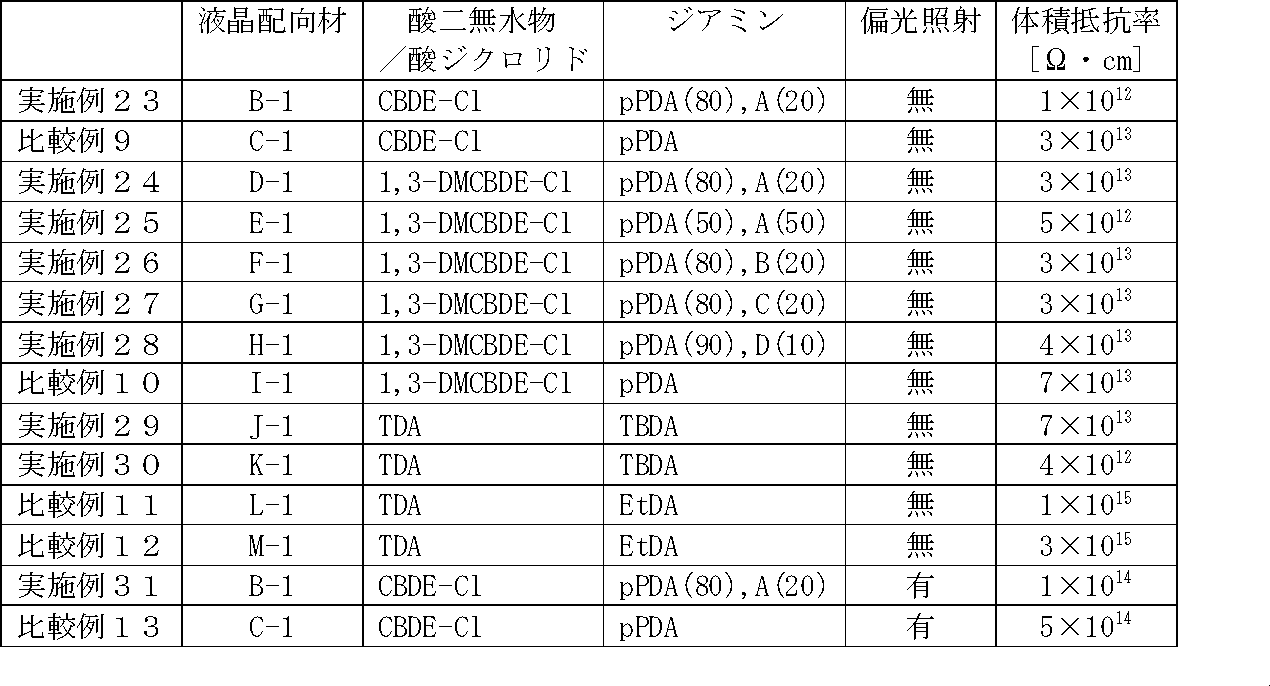
本発明のポリイミド前駆体並びにポリイミドは、体積抵抗率の小さなポリイミド膜が得られる。
本発明のジアミン化合物は、本発明のポリイミド前駆体並びにポリイミドおよびこれらを用いた液晶配向膜の得るための原料として最適である。
なお、2009年3月10日に出願された日本特許出願2009-056426号の明細書、特許請求の範囲、及び要約書の全内容をここに引用し、本発明の明細書の開示として、取り入れるものである。
Claims (13)
- 下記式(1)で表される重合単位を有するポリイミド前駆体であり、

かつ下記(i)~(iii)のいずれかを満たすことを特徴とするポリイミド前駆体。
(i) 式(1)のX、Y、又はその両方の構造に下記式(2)で表される基を有している。
(ii) 式(1)のR2、R3、又はその両方が下記式(2)で表される基である。
(iii) 式(1)のX、Y、又はその両方の構造に下記式(2)で表される基を有し、R2、R3、又はその両方が下記式(2)表される基である。

- 式(1)のYの構造に式(2)で表される基を有している請求項1に記載のポリイミド前駆体。
- 式(1)のR2、R3、又はその両方が式(2)で表される基である請求項1又は2に記載のポリイミド前駆体。
- 式(1)のYが下記式(3)で表される基である請求項2又は3に記載のポリイミド前駆体。
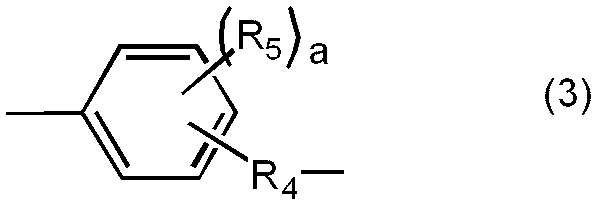
- R4が単結合である請求項4に記載のポリイミド前駆体。
- 請求項1~5のいずれかに記載のポリイミド前駆体をイミド化して得られるポリイミド。
- 請求項1~5のいずれかに記載のポリイミド前駆体及び/又は請求項6に記載のポリイミドを含有する液晶配向剤。
- 請求項7に記載の液晶配向剤を用いて得られる液晶配向膜。
- 請求項8に記載の液晶配向膜を有する液晶表示素子。
- 下記式(4)で表されるジアミン化合物


- 下記式(5)で表されるジアミン化合物。
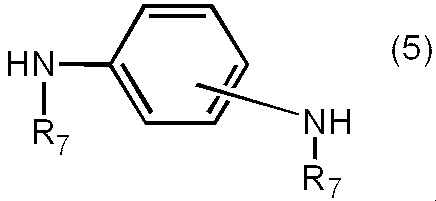

- 下記式(A)~(C)のいずれかで表される請求項10に記載のジアミン化合物。
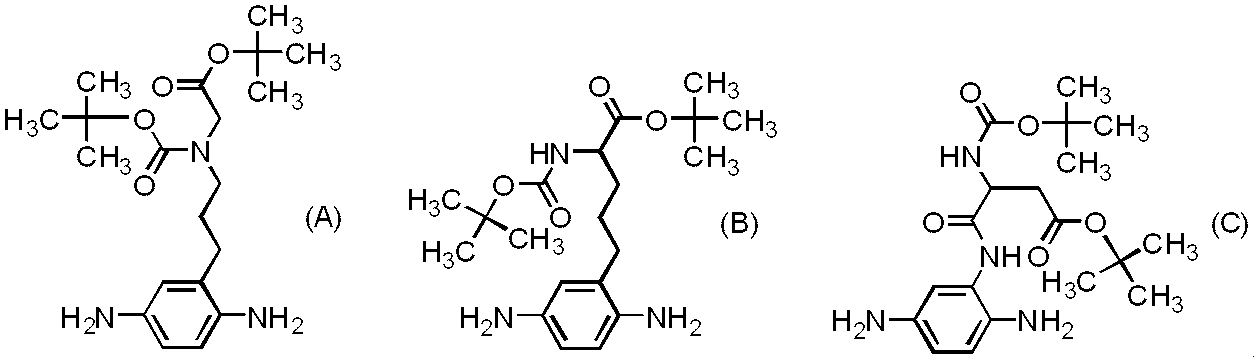
- 下記式(D)で表される請求項11に記載のジアミン化合物。

Priority Applications (5)
| Application Number | Priority Date | Filing Date | Title |
|---|---|---|---|
| KR1020167028289A KR101771871B1 (ko) | 2009-03-10 | 2010-03-09 | 디아민 화합물 |
| JP2011503830A JP5899927B2 (ja) | 2009-03-10 | 2010-03-09 | 液晶配向剤 |
| CN201080020923.3A CN102428121B (zh) | 2009-03-10 | 2010-03-09 | 聚酰亚胺前体、聚酰亚胺及液晶取向剂 |
| KR1020117023651A KR101726456B1 (ko) | 2009-03-10 | 2010-03-09 | 폴리이미드 전구체, 폴리이미드 및 액정 배향제 |
| US13/255,644 US8901353B2 (en) | 2009-03-10 | 2010-03-09 | Polyimide precursor, polyimide, and liquid crystal aligning agent |
Applications Claiming Priority (2)
| Application Number | Priority Date | Filing Date | Title |
|---|---|---|---|
| JP2009056426 | 2009-03-10 | ||
| JP2009-056426 | 2009-03-10 |
Publications (1)
| Publication Number | Publication Date |
|---|---|
| WO2010104082A1 true WO2010104082A1 (ja) | 2010-09-16 |
Family
ID=42728371
Family Applications (1)
| Application Number | Title | Priority Date | Filing Date |
|---|---|---|---|
| PCT/JP2010/053913 Ceased WO2010104082A1 (ja) | 2009-03-10 | 2010-03-09 | ポリイミド前駆体、ポリイミド及び液晶配向剤 |
Country Status (6)
| Country | Link |
|---|---|
| US (1) | US8901353B2 (ja) |
| JP (2) | JP5899927B2 (ja) |
| KR (2) | KR101726456B1 (ja) |
| CN (1) | CN102428121B (ja) |
| TW (1) | TWI567106B (ja) |
| WO (1) | WO2010104082A1 (ja) |
Cited By (8)
| Publication number | Priority date | Publication date | Assignee | Title |
|---|---|---|---|---|
| WO2011115118A1 (ja) * | 2010-03-15 | 2011-09-22 | 日産化学工業株式会社 | ポリアミック酸エステル含有液晶配向剤、及び液晶配向膜 |
| WO2012023570A1 (ja) * | 2010-08-17 | 2012-02-23 | 日産化学工業株式会社 | ジアミン前駆体化合物の製造方法 |
| WO2012053525A1 (ja) * | 2010-10-19 | 2012-04-26 | 日産化学工業株式会社 | 光配向処理法に適した液晶配向剤、及びそれを用いた液晶配向膜 |
| WO2012057337A1 (ja) * | 2010-10-28 | 2012-05-03 | 日産化学工業株式会社 | 液晶配向剤、及び液晶配向膜 |
| WO2013031857A1 (ja) * | 2011-08-31 | 2013-03-07 | 日産化学工業株式会社 | ポリアミック酸エステルを含む液晶配向剤、液晶配向膜及び液晶表示素子 |
| KR20150052111A (ko) * | 2012-08-29 | 2015-05-13 | 닛산 가가쿠 고교 가부시키 가이샤 | 액정 배향제, 액정 배향막, 및 액정 표시 소자 |
| JP2016164186A (ja) * | 2011-03-02 | 2016-09-08 | Jnc株式会社 | ジアミン |
| KR20160115685A (ko) * | 2015-03-27 | 2016-10-06 | 제이에스알 가부시끼가이샤 | 액정 배향제, 액정 배향막 및 그의 제조 방법, 액정 표시 소자, 위상차 필름 및 그의 제조 방법, 중합체 그리고 화합물 |
Families Citing this family (17)
| Publication number | Priority date | Publication date | Assignee | Title |
|---|---|---|---|---|
| US9796927B2 (en) * | 2012-04-16 | 2017-10-24 | Jnc Corporation | Liquid crystal aligning agents for forming photo-aligning liquid crystal alignment layers, liquid crystal alignment layers and liquid crystal display devices using the same |
| JP5928129B2 (ja) * | 2012-04-25 | 2016-06-01 | Jnc株式会社 | インクジェットインク |
| JP6400284B2 (ja) * | 2013-10-22 | 2018-10-03 | 株式会社ジャパンディスプレイ | 液晶表示装置 |
| KR102241786B1 (ko) * | 2013-10-23 | 2021-04-16 | 닛산 가가쿠 가부시키가이샤 | 열 탈리성기를 갖는 폴리이미드 전구체 및/또는 폴리이미드를 함유하는 액정 배향제 |
| KR101802218B1 (ko) * | 2014-06-02 | 2017-11-28 | 디아이씨 가부시끼가이샤 | 액정 배향막 |
| JP6631077B2 (ja) * | 2014-11-05 | 2020-01-15 | Jsr株式会社 | 液晶配向剤、液晶配向膜及び液晶表示素子 |
| WO2016104514A1 (ja) * | 2014-12-22 | 2016-06-30 | 日産化学工業株式会社 | 液晶配向剤、液晶配向膜及び液晶表示素子 |
| EP3150564B1 (en) * | 2015-09-30 | 2018-12-05 | Corning Incorporated | Halogenated polyimide siloxane chemical compositions and glass articles with halogenated polylmide siloxane low-friction coatings |
| WO2017057854A1 (ko) * | 2015-10-02 | 2017-04-06 | 주식회사 엘지화학 | 광배향막의 제조 방법 |
| KR101809650B1 (ko) | 2015-10-02 | 2017-12-15 | 주식회사 엘지화학 | 광배향막의 제조 방법 |
| CN108369359B (zh) * | 2015-10-07 | 2021-07-27 | 日产化学工业株式会社 | 液晶取向剂、液晶取向膜和液晶表示元件 |
| JP6738353B2 (ja) * | 2016-01-13 | 2020-08-12 | 太陽ホールディングス株式会社 | 感光性樹脂組成物、ドライフィルム、硬化物およびプリント配線板 |
| JP6637871B2 (ja) | 2016-10-27 | 2020-01-29 | 信越化学工業株式会社 | テトラカルボン酸ジエステル化合物、ポリイミド前駆体の重合体及びその製造方法、ネガ型感光性樹脂組成物、パターン形成方法、及び硬化被膜形成方法 |
| TW201843526A (zh) * | 2017-04-26 | 2018-12-16 | 日商日立化成股份有限公司 | 感光性樹脂組成物及抗蝕劑圖案的形成方法 |
| CN111139087B (zh) * | 2019-12-30 | 2022-12-27 | 常州市尚科新材料有限公司 | 液晶光取向剂、液晶光取向膜及其制备方法和应用 |
| WO2022051645A2 (en) | 2020-09-04 | 2022-03-10 | Corning Incorporated | Ultraviolet light-blocking coated pharmaceutical packages |
| KR102796468B1 (ko) * | 2024-03-06 | 2025-04-18 | 주식회사 비엠씨 | 스테이터 코일의 바니쉬 함침 장치 |
Citations (6)
| Publication number | Priority date | Publication date | Assignee | Title |
|---|---|---|---|---|
| JP2001089426A (ja) * | 1999-09-14 | 2001-04-03 | Fuji Photo Film Co Ltd | 新規アセチレン化合物 |
| JP2005239727A (ja) * | 2004-02-27 | 2005-09-08 | L'oreal Sa | カルボキシル基を含有する第二p−フェニレンジアミン類、これらを用いた染料組成物、その製造方法および使用 |
| WO2006070737A1 (ja) * | 2004-12-27 | 2006-07-06 | Suntory Limited | ベンゼン環上に二置換基を有するβ-ベンジルオキシアスパラギン酸誘導体 |
| JP2007094317A (ja) * | 2005-09-30 | 2007-04-12 | Tokyo Institute Of Technology | ポジ型感光性樹脂組成物、その製造方法、及びレリーフパターンの形成方法 |
| JP2008203332A (ja) * | 2007-02-16 | 2008-09-04 | Nissan Chem Ind Ltd | 液晶配向剤およびそれを用いた液晶表示素子 |
| WO2010050523A1 (ja) * | 2008-10-29 | 2010-05-06 | 日産化学工業株式会社 | ジアミン、ポリイミド、液晶配向剤及び液晶配向膜 |
Family Cites Families (11)
| Publication number | Priority date | Publication date | Assignee | Title |
|---|---|---|---|---|
| US4089973A (en) | 1973-07-26 | 1978-05-16 | The Upjohn Company | Cyano phenylene dioxamic acid compounds used in the treatment of allergy |
| US5457180A (en) * | 1989-08-04 | 1995-10-10 | Biochem Pharma Inc. | Methods for producing linear thiopeptides using an amino acid ortho amino thioanilide compound |
| JPH0854631A (ja) | 1994-08-12 | 1996-02-27 | Japan Synthetic Rubber Co Ltd | 液晶配向剤 |
| JPH08146431A (ja) * | 1994-11-24 | 1996-06-07 | Hitachi Ltd | 液晶配向膜用組成物および液晶配向膜 |
| JP2002512960A (ja) * | 1998-04-27 | 2002-05-08 | スミスクライン・ビーチャム・コーポレイション | Ccr−3受容体アンタゴニスト |
| KR100520168B1 (ko) * | 1999-06-21 | 2005-10-10 | 주식회사 하이닉스반도체 | 화학증폭형 레지스트에 첨가되는 새로운 페닐렌디아민계 유도체 |
| US7384432B2 (en) | 2004-02-27 | 2008-06-10 | L'oreal S.A. | Secondary para-phenylenediamines having a carboxyl group, dye compositions comprising the same, and dyeing processes using the compositions |
| US7498068B2 (en) * | 2004-04-28 | 2009-03-03 | Nissan Chemical Industries, Ltd. | Liquid-crystal aligning agent, liquid-crystal alignment film comprising the same, and liquid-crystal element |
| JP2007241249A (ja) | 2006-02-07 | 2007-09-20 | Jsr Corp | 垂直配向型液晶配向剤、および垂直配向型液晶表示素子 |
| WO2008038841A1 (en) * | 2006-09-30 | 2008-04-03 | Japan Tobacco Inc. | Thiadiazolone derivative and use thereof |
| US9679499B2 (en) | 2008-09-15 | 2017-06-13 | Immersion Medical, Inc. | Systems and methods for sensing hand motion by measuring remote displacement |
-
2010
- 2010-03-09 JP JP2011503830A patent/JP5899927B2/ja active Active
- 2010-03-09 WO PCT/JP2010/053913 patent/WO2010104082A1/ja not_active Ceased
- 2010-03-09 KR KR1020117023651A patent/KR101726456B1/ko active Active
- 2010-03-09 KR KR1020167028289A patent/KR101771871B1/ko active Active
- 2010-03-09 CN CN201080020923.3A patent/CN102428121B/zh active Active
- 2010-03-09 US US13/255,644 patent/US8901353B2/en active Active
- 2010-03-10 TW TW099106924A patent/TWI567106B/zh active
-
2014
- 2014-08-06 JP JP2014160717A patent/JP5867555B2/ja active Active
Patent Citations (6)
| Publication number | Priority date | Publication date | Assignee | Title |
|---|---|---|---|---|
| JP2001089426A (ja) * | 1999-09-14 | 2001-04-03 | Fuji Photo Film Co Ltd | 新規アセチレン化合物 |
| JP2005239727A (ja) * | 2004-02-27 | 2005-09-08 | L'oreal Sa | カルボキシル基を含有する第二p−フェニレンジアミン類、これらを用いた染料組成物、その製造方法および使用 |
| WO2006070737A1 (ja) * | 2004-12-27 | 2006-07-06 | Suntory Limited | ベンゼン環上に二置換基を有するβ-ベンジルオキシアスパラギン酸誘導体 |
| JP2007094317A (ja) * | 2005-09-30 | 2007-04-12 | Tokyo Institute Of Technology | ポジ型感光性樹脂組成物、その製造方法、及びレリーフパターンの形成方法 |
| JP2008203332A (ja) * | 2007-02-16 | 2008-09-04 | Nissan Chem Ind Ltd | 液晶配向剤およびそれを用いた液晶表示素子 |
| WO2010050523A1 (ja) * | 2008-10-29 | 2010-05-06 | 日産化学工業株式会社 | ジアミン、ポリイミド、液晶配向剤及び液晶配向膜 |
Cited By (20)
| Publication number | Priority date | Publication date | Assignee | Title |
|---|---|---|---|---|
| WO2011115118A1 (ja) * | 2010-03-15 | 2011-09-22 | 日産化学工業株式会社 | ポリアミック酸エステル含有液晶配向剤、及び液晶配向膜 |
| JP5915523B2 (ja) * | 2010-03-15 | 2016-05-11 | 日産化学工業株式会社 | ポリアミック酸エステル含有液晶配向剤、及び液晶配向膜 |
| WO2012023570A1 (ja) * | 2010-08-17 | 2012-02-23 | 日産化学工業株式会社 | ジアミン前駆体化合物の製造方法 |
| JPWO2012023570A1 (ja) * | 2010-08-17 | 2013-10-28 | 日産化学工業株式会社 | ジアミン前駆体化合物の製造方法 |
| WO2012053525A1 (ja) * | 2010-10-19 | 2012-04-26 | 日産化学工業株式会社 | 光配向処理法に適した液晶配向剤、及びそれを用いた液晶配向膜 |
| CN103261956A (zh) * | 2010-10-19 | 2013-08-21 | 日产化学工业株式会社 | 适用于光取向处理法的液晶取向剂及使用该液晶取向剂的液晶取向膜 |
| JP5900344B2 (ja) * | 2010-10-19 | 2016-04-06 | 日産化学工業株式会社 | 光配向処理法に適した液晶配向剤、及びそれを用いた液晶配向膜 |
| CN103282824B (zh) * | 2010-10-28 | 2016-01-13 | 日产化学工业株式会社 | 液晶取向剂及液晶取向膜 |
| WO2012057337A1 (ja) * | 2010-10-28 | 2012-05-03 | 日産化学工業株式会社 | 液晶配向剤、及び液晶配向膜 |
| CN103282824A (zh) * | 2010-10-28 | 2013-09-04 | 日产化学工业株式会社 | 液晶取向剂及液晶取向膜 |
| JP5962512B2 (ja) * | 2010-10-28 | 2016-08-03 | 日産化学工業株式会社 | 液晶配向剤、及び液晶配向膜 |
| JP2016164186A (ja) * | 2011-03-02 | 2016-09-08 | Jnc株式会社 | ジアミン |
| JPWO2013031857A1 (ja) * | 2011-08-31 | 2015-03-23 | 日産化学工業株式会社 | ポリアミック酸エステルを含む液晶配向剤、液晶配向膜及び液晶表示素子 |
| CN103765304A (zh) * | 2011-08-31 | 2014-04-30 | 日产化学工业株式会社 | 包含聚酰胺酸酯的液晶取向剂、液晶取向膜及液晶显示元件 |
| WO2013031857A1 (ja) * | 2011-08-31 | 2013-03-07 | 日産化学工業株式会社 | ポリアミック酸エステルを含む液晶配向剤、液晶配向膜及び液晶表示素子 |
| KR20150052111A (ko) * | 2012-08-29 | 2015-05-13 | 닛산 가가쿠 고교 가부시키 가이샤 | 액정 배향제, 액정 배향막, 및 액정 표시 소자 |
| KR102125106B1 (ko) | 2012-08-29 | 2020-06-19 | 닛산 가가쿠 가부시키가이샤 | 액정 배향제, 액정 배향막, 및 액정 표시 소자 |
| KR20160115685A (ko) * | 2015-03-27 | 2016-10-06 | 제이에스알 가부시끼가이샤 | 액정 배향제, 액정 배향막 및 그의 제조 방법, 액정 표시 소자, 위상차 필름 및 그의 제조 방법, 중합체 그리고 화합물 |
| JP2016186568A (ja) * | 2015-03-27 | 2016-10-27 | Jsr株式会社 | 液晶配向剤、液晶配向膜及びその製造方法、液晶表示素子、位相差フィルム及びその製造方法、重合体並びに化合物 |
| KR102390792B1 (ko) | 2015-03-27 | 2022-04-25 | 제이에스알 가부시끼가이샤 | 액정 배향제, 액정 배향막 및 그의 제조 방법, 액정 표시 소자, 위상차 필름 및 그의 제조 방법, 중합체 그리고 화합물 |
Also Published As
| Publication number | Publication date |
|---|---|
| CN102428121A (zh) | 2012-04-25 |
| JPWO2010104082A1 (ja) | 2012-09-13 |
| CN102428121B (zh) | 2014-05-28 |
| JP5899927B2 (ja) | 2016-04-13 |
| TW201100462A (en) | 2011-01-01 |
| TWI567106B (zh) | 2017-01-21 |
| KR101771871B1 (ko) | 2017-08-25 |
| KR20110129457A (ko) | 2011-12-01 |
| JP2014237839A (ja) | 2014-12-18 |
| KR101726456B1 (ko) | 2017-04-12 |
| US8901353B2 (en) | 2014-12-02 |
| US20120088888A1 (en) | 2012-04-12 |
| JP5867555B2 (ja) | 2016-02-24 |
| KR20160121614A (ko) | 2016-10-19 |
Similar Documents
| Publication | Publication Date | Title |
|---|---|---|
| JP5867555B2 (ja) | ポリイミド前駆体、及びポリイミド | |
| JP5846230B2 (ja) | 新規なジアミン化合物 | |
| JP5915523B2 (ja) | ポリアミック酸エステル含有液晶配向剤、及び液晶配向膜 | |
| JP6048143B2 (ja) | ポリアミック酸エステルとポリアミック酸とを含有する液晶配向剤及び液晶配向膜 | |
| JP5761183B2 (ja) | 熱脱離性基含有化合物を含有する液晶配向剤、及び液晶配向膜 | |
| CN106415380B (zh) | 含有聚酰胺酸酯-聚酰胺酸共聚物的液晶取向剂、以及使用了其的液晶取向膜 | |
| JP6064997B2 (ja) | ポリイミド系の液晶配向処理剤、液晶配向膜、及び液晶表示素子 | |
| WO2011115080A1 (ja) | ポリアミック酸エステル液晶配向剤及びそれを用いた液晶配向膜 | |
| JP5998939B2 (ja) | ポリアミック酸エステルとポリアミック酸とを含有する液晶配向剤 | |
| CN102893210A (zh) | 光取向处理法用液晶取向剂、以及利用该取向剂的液晶取向膜 | |
| JP5655439B2 (ja) | 光配向性の新規な液晶配向剤、及び新規なジアミン化合物 | |
| JP5783166B2 (ja) | 液晶配向剤、液晶表示素子及びジアミン化合物 | |
| WO2017094898A1 (ja) | 液晶配向剤、液晶配向膜及びそれを用いた液晶表示素子 | |
| JP5761428B2 (ja) | 新規なジアミン化合物 |
Legal Events
| Date | Code | Title | Description |
|---|---|---|---|
| WWE | Wipo information: entry into national phase |
Ref document number: 201080020923.3 Country of ref document: CN |
|
| 121 | Ep: the epo has been informed by wipo that ep was designated in this application |
Ref document number: 10750835 Country of ref document: EP Kind code of ref document: A1 |
|
| WWE | Wipo information: entry into national phase |
Ref document number: 2011503830 Country of ref document: JP |
|
| NENP | Non-entry into the national phase |
Ref country code: DE |
|
| ENP | Entry into the national phase |
Ref document number: 20117023651 Country of ref document: KR Kind code of ref document: A |
|
| WWE | Wipo information: entry into national phase |
Ref document number: 13255644 Country of ref document: US |
|
| 122 | Ep: pct application non-entry in european phase |
Ref document number: 10750835 Country of ref document: EP Kind code of ref document: A1 |