US8067199B2 - Anti-IL13 antibodies and uses thereof - Google Patents
Anti-IL13 antibodies and uses thereof Download PDFInfo
- Publication number
- US8067199B2 US8067199B2 US10/583,927 US58392704A US8067199B2 US 8067199 B2 US8067199 B2 US 8067199B2 US 58392704 A US58392704 A US 58392704A US 8067199 B2 US8067199 B2 US 8067199B2
- Authority
- US
- United States
- Prior art keywords
- antibody
- seq
- polynucleotide
- antibodies
- binds human
- Prior art date
- Legal status (The legal status is an assumption and is not a legal conclusion. Google has not performed a legal analysis and makes no representation as to the accuracy of the status listed.)
- Expired - Lifetime, expires
Links
Images







Classifications
-
- C—CHEMISTRY; METALLURGY
- C07—ORGANIC CHEMISTRY
- C07K—PEPTIDES
- C07K16/00—Immunoglobulins [IGs], e.g. monoclonal or polyclonal antibodies
- C07K16/18—Immunoglobulins [IGs], e.g. monoclonal or polyclonal antibodies against material from animals or humans
- C07K16/24—Immunoglobulins [IGs], e.g. monoclonal or polyclonal antibodies against material from animals or humans against cytokines, lymphokines or interferons
- C07K16/244—Interleukins [IL]
-
- C—CHEMISTRY; METALLURGY
- C07—ORGANIC CHEMISTRY
- C07K—PEPTIDES
- C07K16/00—Immunoglobulins [IGs], e.g. monoclonal or polyclonal antibodies
-
- A—HUMAN NECESSITIES
- A61—MEDICAL OR VETERINARY SCIENCE; HYGIENE
- A61K—PREPARATIONS FOR MEDICAL, DENTAL OR TOILETRY PURPOSES
- A61K39/00—Medicinal preparations containing antigens or antibodies
- A61K39/395—Antibodies; Immunoglobulins; Immune serum, e.g. antilymphocytic serum
-
- A—HUMAN NECESSITIES
- A61—MEDICAL OR VETERINARY SCIENCE; HYGIENE
- A61P—SPECIFIC THERAPEUTIC ACTIVITY OF CHEMICAL COMPOUNDS OR MEDICINAL PREPARATIONS
- A61P1/00—Drugs for disorders of the alimentary tract or the digestive system
- A61P1/04—Drugs for disorders of the alimentary tract or the digestive system for ulcers, gastritis or reflux esophagitis, e.g. antacids, inhibitors of acid secretion, mucosal protectants
-
- A—HUMAN NECESSITIES
- A61—MEDICAL OR VETERINARY SCIENCE; HYGIENE
- A61P—SPECIFIC THERAPEUTIC ACTIVITY OF CHEMICAL COMPOUNDS OR MEDICINAL PREPARATIONS
- A61P11/00—Drugs for disorders of the respiratory system
-
- A—HUMAN NECESSITIES
- A61—MEDICAL OR VETERINARY SCIENCE; HYGIENE
- A61P—SPECIFIC THERAPEUTIC ACTIVITY OF CHEMICAL COMPOUNDS OR MEDICINAL PREPARATIONS
- A61P11/00—Drugs for disorders of the respiratory system
- A61P11/02—Nasal agents, e.g. decongestants
-
- A—HUMAN NECESSITIES
- A61—MEDICAL OR VETERINARY SCIENCE; HYGIENE
- A61P—SPECIFIC THERAPEUTIC ACTIVITY OF CHEMICAL COMPOUNDS OR MEDICINAL PREPARATIONS
- A61P11/00—Drugs for disorders of the respiratory system
- A61P11/06—Antiasthmatics
-
- A—HUMAN NECESSITIES
- A61—MEDICAL OR VETERINARY SCIENCE; HYGIENE
- A61P—SPECIFIC THERAPEUTIC ACTIVITY OF CHEMICAL COMPOUNDS OR MEDICINAL PREPARATIONS
- A61P17/00—Drugs for dermatological disorders
-
- A—HUMAN NECESSITIES
- A61—MEDICAL OR VETERINARY SCIENCE; HYGIENE
- A61P—SPECIFIC THERAPEUTIC ACTIVITY OF CHEMICAL COMPOUNDS OR MEDICINAL PREPARATIONS
- A61P17/00—Drugs for dermatological disorders
- A61P17/02—Drugs for dermatological disorders for treating wounds, ulcers, burns, scars, keloids, or the like
-
- A—HUMAN NECESSITIES
- A61—MEDICAL OR VETERINARY SCIENCE; HYGIENE
- A61P—SPECIFIC THERAPEUTIC ACTIVITY OF CHEMICAL COMPOUNDS OR MEDICINAL PREPARATIONS
- A61P17/00—Drugs for dermatological disorders
- A61P17/04—Antipruritics
-
- A—HUMAN NECESSITIES
- A61—MEDICAL OR VETERINARY SCIENCE; HYGIENE
- A61P—SPECIFIC THERAPEUTIC ACTIVITY OF CHEMICAL COMPOUNDS OR MEDICINAL PREPARATIONS
- A61P19/00—Drugs for skeletal disorders
- A61P19/08—Drugs for skeletal disorders for bone diseases, e.g. rachitism, Paget's disease
- A61P19/10—Drugs for skeletal disorders for bone diseases, e.g. rachitism, Paget's disease for osteoporosis
-
- A—HUMAN NECESSITIES
- A61—MEDICAL OR VETERINARY SCIENCE; HYGIENE
- A61P—SPECIFIC THERAPEUTIC ACTIVITY OF CHEMICAL COMPOUNDS OR MEDICINAL PREPARATIONS
- A61P27/00—Drugs for disorders of the senses
- A61P27/02—Ophthalmic agents
-
- A—HUMAN NECESSITIES
- A61—MEDICAL OR VETERINARY SCIENCE; HYGIENE
- A61P—SPECIFIC THERAPEUTIC ACTIVITY OF CHEMICAL COMPOUNDS OR MEDICINAL PREPARATIONS
- A61P29/00—Non-central analgesic, antipyretic or antiinflammatory agents, e.g. antirheumatic agents; Non-steroidal antiinflammatory drugs [NSAID]
-
- A—HUMAN NECESSITIES
- A61—MEDICAL OR VETERINARY SCIENCE; HYGIENE
- A61P—SPECIFIC THERAPEUTIC ACTIVITY OF CHEMICAL COMPOUNDS OR MEDICINAL PREPARATIONS
- A61P31/00—Antiinfectives, i.e. antibiotics, antiseptics, chemotherapeutics
- A61P31/12—Antivirals
-
- A—HUMAN NECESSITIES
- A61—MEDICAL OR VETERINARY SCIENCE; HYGIENE
- A61P—SPECIFIC THERAPEUTIC ACTIVITY OF CHEMICAL COMPOUNDS OR MEDICINAL PREPARATIONS
- A61P35/00—Antineoplastic agents
-
- A—HUMAN NECESSITIES
- A61—MEDICAL OR VETERINARY SCIENCE; HYGIENE
- A61P—SPECIFIC THERAPEUTIC ACTIVITY OF CHEMICAL COMPOUNDS OR MEDICINAL PREPARATIONS
- A61P35/00—Antineoplastic agents
- A61P35/04—Antineoplastic agents specific for metastasis
-
- A—HUMAN NECESSITIES
- A61—MEDICAL OR VETERINARY SCIENCE; HYGIENE
- A61P—SPECIFIC THERAPEUTIC ACTIVITY OF CHEMICAL COMPOUNDS OR MEDICINAL PREPARATIONS
- A61P37/00—Drugs for immunological or allergic disorders
-
- A—HUMAN NECESSITIES
- A61—MEDICAL OR VETERINARY SCIENCE; HYGIENE
- A61P—SPECIFIC THERAPEUTIC ACTIVITY OF CHEMICAL COMPOUNDS OR MEDICINAL PREPARATIONS
- A61P37/00—Drugs for immunological or allergic disorders
- A61P37/08—Antiallergic agents
-
- A—HUMAN NECESSITIES
- A61—MEDICAL OR VETERINARY SCIENCE; HYGIENE
- A61P—SPECIFIC THERAPEUTIC ACTIVITY OF CHEMICAL COMPOUNDS OR MEDICINAL PREPARATIONS
- A61P43/00—Drugs for specific purposes, not provided for in groups A61P1/00-A61P41/00
-
- C—CHEMISTRY; METALLURGY
- C07—ORGANIC CHEMISTRY
- C07K—PEPTIDES
- C07K7/00—Peptides having 5 to 20 amino acids in a fully defined sequence; Derivatives thereof
- C07K7/04—Linear peptides containing only normal peptide links
- C07K7/06—Linear peptides containing only normal peptide links having 5 to 11 amino acids
-
- C—CHEMISTRY; METALLURGY
- C07—ORGANIC CHEMISTRY
- C07K—PEPTIDES
- C07K7/00—Peptides having 5 to 20 amino acids in a fully defined sequence; Derivatives thereof
- C07K7/04—Linear peptides containing only normal peptide links
- C07K7/08—Linear peptides containing only normal peptide links having 12 to 20 amino acids
-
- A—HUMAN NECESSITIES
- A61—MEDICAL OR VETERINARY SCIENCE; HYGIENE
- A61K—PREPARATIONS FOR MEDICAL, DENTAL OR TOILETRY PURPOSES
- A61K39/00—Medicinal preparations containing antigens or antibodies
- A61K2039/505—Medicinal preparations containing antigens or antibodies comprising antibodies
-
- A—HUMAN NECESSITIES
- A61—MEDICAL OR VETERINARY SCIENCE; HYGIENE
- A61K—PREPARATIONS FOR MEDICAL, DENTAL OR TOILETRY PURPOSES
- A61K39/00—Medicinal preparations containing antigens or antibodies
- A61K2039/555—Medicinal preparations containing antigens or antibodies characterised by a specific combination antigen/adjuvant
- A61K2039/55511—Organic adjuvants
- A61K2039/55522—Cytokines; Lymphokines; Interferons
-
- C—CHEMISTRY; METALLURGY
- C07—ORGANIC CHEMISTRY
- C07K—PEPTIDES
- C07K2317/00—Immunoglobulins specific features
- C07K2317/20—Immunoglobulins specific features characterized by taxonomic origin
- C07K2317/24—Immunoglobulins specific features characterized by taxonomic origin containing regions, domains or residues from different species, e.g. chimeric, humanized or veneered
-
- C—CHEMISTRY; METALLURGY
- C07—ORGANIC CHEMISTRY
- C07K—PEPTIDES
- C07K2317/00—Immunoglobulins specific features
- C07K2317/30—Immunoglobulins specific features characterized by aspects of specificity or valency
- C07K2317/34—Identification of a linear epitope shorter than 20 amino acid residues or of a conformational epitope defined by amino acid residues
-
- C—CHEMISTRY; METALLURGY
- C07—ORGANIC CHEMISTRY
- C07K—PEPTIDES
- C07K2317/00—Immunoglobulins specific features
- C07K2317/50—Immunoglobulins specific features characterized by immunoglobulin fragments
- C07K2317/56—Immunoglobulins specific features characterized by immunoglobulin fragments variable (Fv) region, i.e. VH and/or VL
-
- C—CHEMISTRY; METALLURGY
- C07—ORGANIC CHEMISTRY
- C07K—PEPTIDES
- C07K2317/00—Immunoglobulins specific features
- C07K2317/50—Immunoglobulins specific features characterized by immunoglobulin fragments
- C07K2317/56—Immunoglobulins specific features characterized by immunoglobulin fragments variable (Fv) region, i.e. VH and/or VL
- C07K2317/565—Complementarity determining region [CDR]
-
- C—CHEMISTRY; METALLURGY
- C07—ORGANIC CHEMISTRY
- C07K—PEPTIDES
- C07K2317/00—Immunoglobulins specific features
- C07K2317/50—Immunoglobulins specific features characterized by immunoglobulin fragments
- C07K2317/56—Immunoglobulins specific features characterized by immunoglobulin fragments variable (Fv) region, i.e. VH and/or VL
- C07K2317/567—Framework region [FR]
-
- C—CHEMISTRY; METALLURGY
- C07—ORGANIC CHEMISTRY
- C07K—PEPTIDES
- C07K2317/00—Immunoglobulins specific features
- C07K2317/70—Immunoglobulins specific features characterized by effect upon binding to a cell or to an antigen
- C07K2317/73—Inducing cell death, e.g. apoptosis, necrosis or inhibition of cell proliferation
-
- C—CHEMISTRY; METALLURGY
- C07—ORGANIC CHEMISTRY
- C07K—PEPTIDES
- C07K2317/00—Immunoglobulins specific features
- C07K2317/70—Immunoglobulins specific features characterized by effect upon binding to a cell or to an antigen
- C07K2317/76—Antagonist effect on antigen, e.g. neutralization or inhibition of binding
-
- C—CHEMISTRY; METALLURGY
- C07—ORGANIC CHEMISTRY
- C07K—PEPTIDES
- C07K2317/00—Immunoglobulins specific features
- C07K2317/90—Immunoglobulins specific features characterized by (pharmaco)kinetic aspects or by stability of the immunoglobulin
- C07K2317/92—Affinity (KD), association rate (Ka), dissociation rate (Kd) or EC50 value
Definitions
- the interleukin (IL)-13 is a pleiotropic T helper cell subclass 2 (Th2) cytokine. Like IL4, IL13 belongs to the family of type I cytokines sharing the tertiary structure defined by a 4 ⁇ -helical hydrophobic bundle core. IL13 has approximately 30% amino acid sequence homology with IL4 and shares many of the properties of IL4 (Wynn, Ann. Rev. Immunol., 21: 425 (2003)). The functional similarity of IL4 and IL13 is attributed to the fact that IL13 can bind IL4 receptor alpha chain (IL4R- ⁇ ) subsequent to its binding to IL13 receptor alpha chain-1 (IL13R ⁇ 1) (Hershey, J. Allergy Clin.
- IL4R ⁇ is activated by IL4 and IL13 resulting in Jak1-dependent STAT6 phosphorylation. Both IL4 and IL13 promote B-cell proliferation and induce class switching to IgG4 and IgE in combination with CD40/CD40L costimulation (Punnonen et al., Proc. Natl. Acad. Sci. USA, 90: 3730 (1993), Oettgen et al., J. Allergy Clin. Immunol., 107: 429 (2001)).
- IL13 is not involved in the differentiation of na ⁇ ve T cells into Th2 cells (Zurawski et al., Immunol. Today, 15: 19 (1994)). IL13 up-regulates Fc ⁇ RI and thus helps in IgE priming of mast cells (de Vries, Allergy Clin. Immunol. 102: 165 (1998). In monocytes/macrophages, IL13 up-regulates expression of CD23 and MHC class I and class II antigens, down-regulate the expression of Fc ⁇ and CD14, and inhibit antibody-dependent cytotoxicity (de Waal Malefyt et al., J.
- IL13 but not IL4, promotes eosinophil survival, activation, and recruitment (Horie et al., Intern. Med., 36: 179 (1997), Luttmann et al., J. Immunol. 157:1678 (1996), Pope et al., J. Allergy Clin. Immunol., 108: 594 (2001).
- IL13 also manifests important functions on nonhematopoietic cells, such as smooth muscle cells, epithelial cells, endothelial cells and fibroblast cells.
- IL13 enhances proliferation and cholinergic-induced contractions of smooth muscles (Wills-Karp, J. Allergy Clin. Immunol., 107: 9 (2001).
- IL13 is a potent inducer of chemokine production (Li et al., J. Immunol., 162: 2477 (1999), alters mucociliary differentiation (Laoukili et al., J. Clin. Invest., 108: 1817 (2001), decreases ciliary beat frequency of ciliated epithelial cells (Laoukili et al., J. Clin.
- IL13 is a potent inducer of vascular cell adhesion molecule 1 (VCAM-1) which is important for recruitment of eosinophils (Bochner et al., J. Immunol., 154: 799 (1995)).
- VCAM-1 vascular cell adhesion molecule 1
- IL13 induces type 1 collagen synthesis in human dermal fibroblasts (Roux et al., J. Invest. Dermatol., 103: 444 (1994)).
- IL13 and IL4 share certain functional similarities, studies in animal models of disease and gene-knockout mice demonstrated that IL13 possesses unique effector functions distinct from IL4 and provides compelling evidence that IL13, independent of other Th2 cytokines, is necessary and sufficient to induce all features of allergic asthma (Wills-Karp et al. Science, 282: 2258 (1998), Walter et al. J. Immunol. 167: 4668 (2001)). IL13 may play a more significant role than other Th2 cytokines in effector functions associated with the symptoms of asthma (Corry, Curr. Opin. Immunol., 11: 610 (1999)).
- IL13 induces features of the allergic response via its actions on mucosal epithelium and smooth muscle cells, rather than through the traditional pathways involving eosinophils and IgE-mediated events (Wills-Karp et al., Sci., 282: 2258 (1998)).
- Asthma is described as a chronic pulmonary disease that involves airway inflammation, hyperresponsiveness and obstruction.
- airway hyperresponsiveness is documented by decreased bronchial airflow after bronchoprovocation with methacholine or histamine.
- Other triggers that provoke airway obstruction include cold air, exercise, viral upper respiratory infection, cigarette smoke, and respiratory allergens.
- Bronchial provocation with allergen induces a prompt early phase immunoglobulin E (IgE)-mediated decrease in bronchial airflow followed in many patients by a late-phase IgE-mediated reaction with a decrease in bronchial airflow for 4-8 hours.
- IgE immunoglobulin E
- the early response is caused by acute release of inflammatory substances, such as histamine, PGD 2 , leukotriene, tryptase and platelet activating factor (PAF), whereas the late response is caused by de novo synthesized pro-inflammatory cytokines (e.g. TNF ⁇ , IL4, IL13) and chemokines (e.g. MCP-1 and MIP-1 ⁇ ) (Busse et al. In: Allergy: Principles and Practice, Ed. Middleston, 1173 (1998)).
- pro-inflammatory cytokines e.g. TNF ⁇ , IL4, IL13
- chemokines e.g. MCP-1 and MIP-1 ⁇
- Th2 cytokines are believed to play a vital role in the disease (Larche et al., J. Allergy Clin.
- IL13 and IL4 produced by Th2 cells with NK phenotype (NKT) in the airway as indicated in a model of asthma in rodents (Akbari et al., Nature Med., 9: 582 (2003)).
- the gross pathology of asthmatic airways displays lung hyperinflation, smooth muscle hypertrophy, lamina reticularis thickening, mucosal edema, epithelial cell sloughing, cilia cell disruption, and mucus gland hypersecretion.
- asthma is characterized by the presence of increased numbers of eosinophils, neutrophils, lymphocytes, and plasma cells in the bronchial tissues, bronchial secretions, and mucus.
- the activated T-lymphocytes also direct the release of inflammatory mediators from eosinophils, mast cells, and lymphocytes.
- the Th2 cells produce IL4, IL5, IL9 and IL13.
- IL4 in conjunction with IL13, signals the switch from IgM to IgE antibodies.
- Cross-linking of membrane-bound IgE molecules by allergen causes mast cells to degranulate, releasing histamine, leukotrienes, and other mediators that perpetuate the airway inflammation.
- IL5 activates the recruitment and activation of eosinophils.
- the activated mast cells and eosinophils also generate their cytokines that help to perpetuate the inflammation.
- Moderate asthma is currently treated with a daily inhaled anti-inflammatory-corticosteroid or mast cell inhibitor such as cromolyn sodium or nedocromil plus an inhaled beta2-agonist as needed (3-4 times per day) to relieve breakthrough symptoms or allergen- or exercise-induced asthma.
- Cromolyn sodium and nedocromil block bronchospasm and inflammation, but are usually effective only for asthma that is associated with allergens or exercise and typically, only for juvenile asthmatics.
- Inhaled corticosteroids improve inflammation, airways hyperreactivity, and obstruction, and reduce the number of acute exacerbations. However, it takes at least a month before effects are apparent and up to a year for marked improvement to occur.
- T cells and mast cells release cytokines that promote eosinophil growth and maturation and the production of IgE antibodies, and these, in turn, increase microvascular permeability, disrupt the epithelium, and stimulate neural reflexes and mucus-secreting glands.
- cytokines that promote eosinophil growth and maturation and the production of IgE antibodies, and these, in turn, increase microvascular permeability, disrupt the epithelium, and stimulate neural reflexes and mucus-secreting glands.
- the result is airways hyperreactivity, bronchoconstriction, and hypersecretion, manifested by wheezing, coughing, and dyspnea.
- asthma has been treated with oral and inhaled bronchodilators. These agents help the symptoms of asthma, but do nothing for the underlying inflammation. Recognition during the last 10 years of the importance of inflammation in the etiology of asthma has led to the increased use of corticosteroids, but many patients continue to suffer from uncontrolled asthma.
- the present invention relates at least in part to antibodies that bind specifically and with high affinity to both glycosylated and non-glycosylated human IL13; does not bind mouse IL13, and neutralize human IL13 activity at an approximate molar ratio of 1:2 (MAb:IL13). Also included in the present invention are antibodies comprising the antigen binding regions derived from the light and/or heavy chain variable regions of said antibodies.
- the antibodies of the invention may be monoclonal, and a monoclonal antibody may be a human antibody, a chimeric antibody, or a humanized antibody.
- Examples of these antibodies are 228B/C-1, 228A-4, 227-26, and 227-43.
- the hybridomas that produce these antibodies were deposited on Nov. 20, 2003, with the American Type Culture Collection, 10801 University Boulevard., Manassas, Va. 20110-2209, under Accession Numbers PTA-5657, PTA-5656, PTA-5654, and PTA-5655, respectively.
- the present invention includes antibodies which have a VL sequence at least 95% homologous to that set forth in SEQ ID NO: 3, and a VH sequence at least 95% homologous to that set forth in SEQ ID NO: 4; antibodies which have a VL sequence at least 95% homologous to that set forth in SEQ ID NO: 5, and a VH sequence at least 95% homologous to that set forth in SEQ ID NO: 6; and antibodies which have a VL sequence at least 95% homologous to that set forth in SEQ ID NO: 7, and a VH sequence at least 95% homologous to that set forth in SEQ ID NO: 8.
- the present invention also includes a recombinant antibody molecule, or an IL13-binding fragment thereof, comprising at least one antibody heavy chain, or an IL13-binding fragment thereof, comprising non-human CDRs at positions 31-35 (CDR1), 50-65 (CDR2) and 95-102 (CDR3) (Kabat numbering) from a mouse anti-IL13 antibody, wherein positions 27-30 have the amino acid Gly 26, Phe 27, Ser 28, Leu 29, Asn 30, (SEQ ID NO: 18); and at least one antibody light chain, or an IL13-binding fragment thereof, comprising non-human CDRs at positions 24-34 (CDR1), 50-56 (CDR2) and 89-97 (CDR3) from a mouse anti-IL13 antibody, and framework regions from a human monoclonal antibody.
- a recombinant antibody molecule or an IL13-binding fragment thereof, comprising at least one antibody heavy chain, or an IL13-binding fragment thereof, comprising non-human CDRs
- the present invention includes human antigen-binding antibody fragments of the antibodies of the present invention including, but are not limited to, Fab, Fab′ and F(ab′) 2 , Fd, single-chain Fvs (scFv), single-chain antibodies, disulfide-linked Fvs (sdFv).
- the invention also includes single-domain antibodies comprising either a VL or VH domain. On example of an scFv is depicted in FIG. 21 , having the sequence of SEQ ID NO 152.
- the present invention includes humanized sequences of monoclonal antibody 228B/C-1.
- These humanized recombinant antibody molecules comprise a variable light chain region comprising an amino acid sequence having the formula: FRL1-CDRL1-FRL2-CDRL2-FRL3-CDRL3-FRL4, wherein FRL1 consists of any one of SEQ ID Nos: 20-25; CDRL1 consists of any one of SEQ ID NOs: 99-103; FRL2 consists of SEQ ID NO: 29; CDRL2 consists of any one of SEQ ID NOs: 104-114; FRL3 consists of any one of SEQ ID NOs: 30-56; CDRL3 consists of any of SEQ ID NOs: 115-116; and FRL4 consists of SEQ ID NO: 57-59; and comprising a variable heavy chain region comprising an amino acid sequence having the formula: FRH1-CDRH1-FRH2-CDRH2-FRH3-CDRH3-FRH4, wherein FRH
- variable heavy chain region may further comprise at least the CH1 domain of a constant region or the CH1, CH2 and CH3 domains of a constant region.
- the heavy chain constant region may comprise an IgG antibody. wherein the IgG antibody is an IgG1 antibody, an IgG2 antibody, an IgG3 antibody, or an IgG4 antibody.
- the present invention also includes recombinant antibody molecules wherein the variable light chain is chosen from any one of SEQ ID Nos: 3, 5, 7, 93, 95, 97, 142, 144, and 150, and a variable heavy chain chosen from any one of SEQ ID Nos: 4, 6, 8, 94, 96, 98, 143, 145, 146, 147, 148, and 149.
- One particular antibody comprises the variable light chain having the sequence set forth in SEQ ID NO:142, and a variable heavy chain having the sequence set forth in SEQ ID NO:143.
- the present invention includes the hybridoma cell lines that produce the monoclonal antibodies 228B/C-1, 228A-4, 227-26, and 227-43.
- the present invention includes nucleic acids encoding the monoclonal antibodies 228B/C-1, 228A-4, 227-26, and 227-43, cell lines comprising a nucleic acid encoding these antibodies or chains thereof, and vectors comprising the nucleic acid encoding these antibodies or chains thereof.
- the present invention also includes antibodies that bind the same epitope as 228B/C-1.
- Exemplary polypeptides comprise all or a portion of SEQ ID NO. 1 or variants thereof, or SEQ ID NO. 2, wherein amino acid 13 is changed from glutamic acid to lysine.
- the invention also relates to the epitope recognized by the antibodies of the present invention.
- Epitope peptides include a peptide comprising essentially or consisting of ESLINVSG (SEQ ID NO: 18) or YCAALESLINVS (SEQ ID NO:19).
- the present invention includes a composition comprising the antibodies according to the claimed invention in combination with a pharmaceutically acceptable carrier, diluent, excipient, or stabilizer.
- the present invention includes a method of treating a subject suffering from asthmatic symptoms comprising administering to a subject, e.g. a subject in need thereof, an amount of an antibody according to the claimed invention effective to reduce the asthmatic symptoms, wherein the antibody may down-regulate the activity of IL13 in the patient, reduce bronchial hyperresponsiveness in the patient, and/or reduce eosinophilia in the lungs of the subject.
- the present invention also includes a method of inhibiting the infection of respiratory syncytial virus (RSV) comprising administering to a subject, e.g. a subject in need thereof, an inhibiting amount of the antibody of the claimed invention.
- RSV respiratory syncytial virus
- the antibody of the present invention may be administered by one or more of the routes including intravenous, intraperitoneal, inhalation, intramuscular, subcutaneous and oral routes.
- the present invention includes an inhalation device that delivers to a patient a therapeutically effective amount of an antibody according to the claimed invention.
- the present invention includes a method for detecting interleukin-13 protein in a subject, e.g., a patient suffering from an allergic disease, comprising, e.g., the steps of allowing the antibody of the claimed invention to contact a sample; and detecting the interleukin-13 through the occurrence of immunoreaction. Also described are and methods for diagnosing overexpression of IL13 in a subject, comprising the steps of (a) obtaining a sample from the subject; (b) combining the sample with an antibody according to the claimed invention under conditions which would allow immunoreaction with IL13; and (c) determining whether or not IL13 is overexpressed relative to a normal level of expression of IL13.
- the present invention includes a method for producing the antibodies of the claimed invention, comprising the steps of: a) producing an immunogenic compound comprising a glycosylated IL13 moiety and an immunogenic moiety; b) preparing an injectable solution comprising said immunogenic compound in phosphate buffered saline (PBS) and an adjuvant; c) immunizing a mouse with said injectable solution by a combination of intravenous and intraperitoneal injections, d) producing a hybridoma by fusing a spleen cell from said immunized mouse with a myeloma cell; e) selecting a hybridoma producing an antibody having the characteristics of the antibody of the claimed invention; and f) isolating said antibody.
- PBS phosphate buffered saline
- the present invention includes a method for inhibiting IgE antibody production in a patient, which comprises administrating to the patient an effective amount of an IgE antibody production inhibiting effective amount of an antibody according to the claimed invention.
- the inhibition of IgE antibody production may prevent bronchial asthma, allergic rhinitis, allergic dermatitis, and anaphylaxis, and also treat bronchial asthma, allergic rhinitis, uticaria, and atopic dermatitis.
- the present invention includes a method of treating an IL13-mediated disorder in a patient, comprising administering to the patient an effective amount of an antibody or antigen-binding fragment thereof according to the claimed invention, wherein said antibody or antigen-binding fragment thereof inhibits binding of IL13 to its receptor and inhibits one or more functions associated with binding of the interleukin to said receptor.
- the present invention includes a method of treating an IgE-mediated disorder in a patient, comprising administering to the patient an effective amount of an antibody or antigen-binding fragment thereof according to the claimed invention, wherein said antibody or antigen-binding fragment thereof inhibits binding of IL13 to its receptor and inhibits one or more functions associated with binding of the interleukin to said receptor.
- the present invention includes a method for reducing the severity of asthma in a mammal comprising administering to the mammal a therapeutically effective amount of an anti-IL13 monoclonal antibody having at least one of the following characteristics: the ability to bind human IL13 with a K D between about 1 ⁇ 10 10 to about 1 ⁇ 10 12 M; the ability to inhibit one or more functions associated with binding of the interleukin IL13 to the IL13 receptor; and the inability of the antibody does to bind to mouse IL13.
- IL13 Diseases and/or conditions mediated by IL13 that are contemplated by the invention include, but are not limited to, allergic asthma, non-allergic (intrinsic) asthma, allergic rhinitis, atopic dermatitis, allergic conjunctivitis, eczema, urticaria, food allergies, chronic obstructive pulmonary disease, ulcerative colitis, RSV infection, uveitis, scleroderma, and osteoporosis.
- FIG. 1 depicts the binding of anti-IL13 monoclonal antibodies to human IL13.
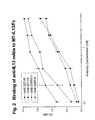
- FIG. 2 depicts the binding of anti-IL13 monoclonal antibodies mutant IL13-Fc.
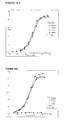
- FIG. 3 illustrates that there is no inhibition of MAb 228B/C-1 binding to human IL13 by MAb JES10-5A2 (Pharmingen).
- FIG. 4 illustrates the effect of anti-IL13 monoclonal antibodies on the proliferation of Hodgkin Lymphoma L-1236 cells.
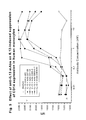
- FIG. 5 illustrates the effect of anti-IL13 monoclonal antibodies on IL13-induced suppression of CD14 expression in human monocytes.
- FIG. 6 illustrates the effect of anti-IL13 monoclonal antibodies on IL13-induced up-regulation of CD23 expression in human monocytes.
- FIG. 7 illustrates the effect of anti-IL13 monoclonal antibodies on IL13-induced STAT6 phosphorylation in THP-1 cells.
- FIG. 8 depicts the amino acid sequence of the VH and VL regions of monoclonal antibody 228B/C-1.
- FIG. 9 depicts the amino acid sequence of the VH and VL regions of monoclonal antibody 228A-4.
- FIG. 10 depicts the amino acid sequence of the VH and VL regions of monoclonal antibody 227-26.
- FIGS. 11A-1 , 11 A- 2 , 11 B- 1 , 11 B- 2 , 11 C- 1 , 11 C- 2 , 11 D- 1 , and 11 D- 2 depict the sequences of the light chain variable regions (VK) for humanization of monoclonal antibody 228B/C-1.
- Clones B to R represent clones tested with a human template 2 for VK and a murine VH.
- HT2-NEW and HT2-DP27 clones were constructed with human frameworks for both VK and VH.
- the amino acid sequences of framework region (FR) 1 ( FIGS. 11A-1 and 11 C- 1 ), FR2 ( FIGS. 11A-2 and 11 C- 2 ), FR3 ( FIGS. 11B-1 and 11 D- 1 ), and FR4 ( FIGS. 11B-2 and 11 D- 2 ) of the VK of the indicated clones are depicted.
- FIGS. 12A-1 , 12 A- 2 , 12 B- 1 , 12 B- 2 , 12 C- 1 , 12 C- 2 , 12 C- 3 , 12 C- 4 , 12 D- 1 , 12 D- 2 , 12 D- 3 , and 12 D- 4 depict the corresponding heavy chain variable region sequences of clones in FIG. 11 (i.e., 11 A- 1 , 11 A- 1 , 11 B- 1 , 11 B- 2 , 11 C- 1 , 11 C- 2 , 11 D- 1 , and 11 D- 2 ).
- the amino acid sequences of FR1 FIGS. 12A-1 , 12 C- 1 , and 12 C- 2
- FR2 FIGS.
- FIGS. 12A-2 , 12 C- 3 , and 12 C- 4 FR3 ( FIGS. 12B-1 , 12 D- 1 and 12 D- 2 ), and FR4 ( FIGS. 12B-2 , 12 D- 3 and 12 D- 4 ) of the VH of the indicated clones are depicted.
- FIG. 13A-D depict ELISA profiles for combinatorial humanized candidates.
- FIG. 14A depicts ELISA profiles for 89 Vk/276G.
- FIG. 14B depicts the ELISA results for construct 115Vk/73Vh FL.
- FIG. 15 depicts the sequences of combinatorial library candidates.
- FIG. 16 depicts a competition profile for two candidates (CL5 and CL-13) assayed demonstrated as compared with the chimeric candidate (228 B/C #3) for binding to IL-13.
- the irrelevant Fab is 5I, which demonstrates no ability to compete.
- FIG. 17 depicts the sequences of three affinity matured candidates.
- FIG. 18 shows the alignment of IL13 protein sequences.
- the amino acid sequence for the following species of IL-13 protein are aligned: human (SEQ ID NO: 187), monkey (SEQ ID NO: 188), bovine (SEQ ID NO: 189), dog (SEQ ID NO: 190), rat (SEQ ID NO: 191), mouse (SEQ ID NO: 192), and gerbil (SEQ ID NO: 193).
- the majority sequence SEQ ID NO: 186) based on the alignment is depicted.
- FIG. 19 depicts the binding epitope of Mab 228B/C-1.
- the human (SEQ ID NO: 187), monkey (SEQ ID NO: 188) and mouse (SEQ ID NO: 192) IL-13 amino acid sequences are depicted.
- FIG. 20 depicts the CDR variants and their respective SEQ ID Nos.
- FIGS. 21A and 21B depict the variable light chain and variable heavy chain sequences for select candidate recombinant antibodies.
- Recombinant IL13 was used to immunize mice to generate the hybridomas that produce the monoclonal antibodies of the present invention.
- Recombinant IL13 is commercially available from a number of sources (see, e.g. R & D Systems, Minneapolis, Minn., PeproTech, Inc., NJ, and Sanofi Bio-Industries, Inc., Tervose, Pa.).
- a gene or a cDNA encoding IL13 may be cloned into a plasmid or other expression vector and expressed in any of a number of expression systems according to methods well known to those of skill in the art.
- IL13 and the nucleic acid sequence for IL13 are well known (see, for example, U.S. Pat. No. 5,652,123). Because of the degeneracy of the genetic code, a multitude of nucleotide sequences encoding IL13 polypeptides may be produced. One may vary the nucleotide sequence by selecting combinations based on possible codon choices. These combinations are made in accordance with the standard triplet genetic code as applied to the nucleotide sequence that codes for naturally occurring IL13 polypeptide and all such variations are to be considered. Any one of these polypeptides may be used in the immunization of an animal to generate antibodies that bind to IL13.
- the immunogen IL13 polypeptide may, when beneficial, be expressed as a fusion protein that has the IL13 polypeptide attached to a fusion segment.
- the fusion segment often aids in protein purification, e.g., by permitting the fusion protein to be isolated and purified by affinity chromatography.
- Fusion proteins can be produced by culturing a recombinant cell transformed with a fusion nucleic acid sequence that encodes a protein including the fusion segment attached to either the carboxyl and/or amino terminal end of the protein.
- Fusion segments may include, but are not limited to, immunoglobulin Fc regions, glutathione-S-transferase, ⁇ -galactosidase, a poly-histidine segment capable of binding to a divalent metal ion, and maltose binding protein.
- Exemplary polypeptides comprise all or a portion of SEQ ID NO. 1 or variants thereof, or SEQ ID NO. 2 wherein amino acid 13 is Xaa and may be changed from the wt, e.g., glutamic acid to lysine.
- a fusion protein comprising a mutant form of human IL13 was used to generate the antibodies of the present invention.
- This mutant form of IL13 contained a single mutation resulting in an inactive form of the protein (Thompson et al., J. Biol. Chem. 274: 2994 (1999)).
- the fusion protein comprised the mutant IL13 protein fused to an immunoglobulin Fc, specifically IgG1, and was expressed in a mammalian cell line such that the recombinant protein was naturally glycosylated.
- the Fc portion of the fusion protein may have provided a conformational structure that exposed a key epitope. The glycosylation may have increased the immunogenicity of the epitope, allowing the generation of antibodies to this particular epitope.
- IL13 polypeptides expressed in E. coli lack glycosylation and the commercially available antibodies tested were generated using this protein. We tested these antibodies, e.g., R&D Systems and Pharmingen, and found that antibodies generated with an immunogen produced in E. coli do not cross react with the epitope bound by the antibodies of the present invention.
- the antibodies of the present invention may be generated by any suitable method known in the art.
- the antibodies of the present invention may comprise polyclonal antibodies. Methods of preparing polyclonal antibodies are known to the skilled artisan (Harlow, et al., Antibodies: a Laboratory Manual, (Cold spring Harbor Laboratory Press, 2nd ed. (1988), which is hereby incorporated herein by reference in its entirety).
- an immunogen as described above may be administered to various host animals including, but not limited to, rabbits, mice, rats, etc., to induce the production of sera containing polyclonal antibodies specific for the antigen.
- the administration of the immunogen may entail one or more injections of an immunizing agent and, if desired, an adjuvant.
- adjuvants may be used to increase the immunological response, depending on the host species, and include but are not limited to, Freund's (complete and incomplete), mineral gels such as aluminum hydroxide, surface active substances such as lysolecithin, pluronic polyols, polyanions, peptides, oil emulsions, keyhole limpet hemocyanins, dinitrophenol, and potentially useful human adjuvants such as BCG (bacille Calmette-Guerin) and Corynebacterium parvum . Additional examples of adjuvants which may be employed include the MPL-TDM adjuvant (monophosphoryl lipid A, synthetic trehalose dicorynomycolate). Immunization protocols are well known in the art in the art and may be performed by any method that elicits an immune response in the animal host chosen. Adjuvants are also well known in the art.
- the immunogen (with or without adjuvant) is injected into the mammal by multiple subcutaneous or intraperitoneal injections, or intramuscularly or through IV.
- the immunogen may include an IL13 polypeptide, a fusion protein or variants thereof.
- percent hydrophobicity, percent hydrophilicity, stability, net charge, isoelectric point etc. it may be useful to conjugate the immunogen to a protein known to be immunogenic in the mammal being immunized.
- Such conjugation includes either chemical conjugation by derivatizing active chemical functional groups to both the immunogen and the immunogenic protein to be conjugated such that a covalent bond is formed, or through fusion-protein based methodology, or other methods known to the skilled artisan.
- immunogenic proteins include, but are not limited to, keyhole limpet hemocyanin, ovalbumin, serum albumin, bovine thyroglobulin, soybean trypsin inhibitor, and promiscuous T helper peptides.
- Various adjuvants may be used to increase the immunological response as described above.
- the antibodies of the present invention comprise monoclonal antibodies.
- Monoclonal antibodies may be prepared using hybridoma technology, such as those described by Kohler and Milstein, Nature, 256:495 (1975) and U.S. Pat. No. 4,376,110, by Harlow, et al., Antibodies: A Laboratory Manual, (Cold spring Harbor Laboratory Press, 2.sup.nd ed. (1988), by Hammerling, et al., Monoclonal Antibodies and T-Cell Hybridomas (Elsevier, N.Y., (1981)), or other methods known to the artisan.
- Suitable methods which may be employed for producing monoclonal antibodies include, but are not limited to, the human B-cell hybridoma technique (Kosbor et al., 1983, Immunology Today 4:72; Cole et al., 1983, Proc. Natl. Acad. Sci. USA 80:2026-2030), and the EBV-hybridoma technique (Cole et al., 1985, Monoclonal Antibodies And Cancer Therapy, Alan R. Liss, Inc., pp. 77-96).
- Such antibodies may be of any immunoglobulin class including IgG, IgM, IgE, IgA, IgD and any subclass thereof.
- the hybridoma producing the MAb of this invention may be cultivated in vitro or in vivo.
- a host such as a mouse, a humanized mouse, a mouse with a human immune system, hamster, rabbit, camel or any other appropriate host animal, is typically immunized with an immunogen to elicit lymphocytes that produce or are capable of producing antibodies that will specifically bind to IL13.
- lymphocytes may be immunized in vitro with the antigen.
- peripheral blood lymphocytes are used if cells of human origin are desired, or spleen cells or lymph node cells are used if non-human mammalian sources are desired.
- the lymphocytes are then fused with an immortalized cell line using a suitable fusing agent, such as polyethylene glycol, to form a hybridoma cell (Goding, Monoclonal Antibodies: Principles and Practice, Academic Press, (1986), pp. 59-103).
- Immortalized cell lines are usually transformed mammalian cells, particularly myeloma cells of rodent, bovine or human origin. Typically, a rat or mouse myeloma cell line is employed.
- the hybridoma cells may be cultured in a suitable culture medium that preferably contains one or more substances that inhibit the growth or survival of the unfused, immortalized cells.
- a suitable culture medium that preferably contains one or more substances that inhibit the growth or survival of the unfused, immortalized cells.
- the culture medium for the hybridomas typically will include hypoxanthine, aminopterin, and thymidine (“HAT medium”), substances that prevent the growth of HGPRT-deficient cells.
- Preferred immortalized cell lines are those that fuse efficiently, support stable high level expression of antibody by the selected antibody-producing cells, and are sensitive to a medium such as HAT medium. More preferred immortalized cell lines are murine myeloma lines, which can be obtained, for instance, from the Salk Institute Cell Distribution Center, San Diego, Calif. and the American Type Culture Collection, Manassas, Va. Human myeloma and mouse-human heteromyeloma cell lines may also be used for the production of human monoclonal antibodies (Kozbor, J. Immunol., 133:3001 (1984); Brodeur et al., Monoclonal Antibody Production Techniques and Applications, Marcel Dekker, Inc., New York, (1987) pp. 51-63).
- the culture medium in which the hybridoma cells are cultured can then be assayed for the presence of monoclonal antibodies directed against the IL13.
- the binding specificity of monoclonal antibodies produced by the hybridoma cells is determined by, e.g., immunoprecipitation or by an in vitro binding assay, such as radioimmunoassay (RIA) or enzyme-linked immunoadsorbant assay (ELISA). Such techniques are known in the art and within the skill of the artisan.
- the binding affinity of the monoclonal antibody to IL13 can, for example, be determined by a Scatchard analysis (Munson et al., Anal. Biochem., 107:220 (1980)).
- the clones may be subcloned by limiting dilution procedures and grown by standard methods (Goding, supra). Suitable culture media for this purpose include, for example, Dulbecco's Modified Eagle's Medium and RPMI-1640.
- the monoclonal antibodies secreted by the subclones may be isolated or purified from the culture medium by conventional immunoglobulin purification procedures such as, e.g., protein A-sepharose, hydroxyapatite chromatography, gel exclusion chromatography, gel electrophoresis, dialysis, or affinity chromatography.
- the invention is not limited to their sole production in hydridomas.
- the monoclonal antibodies may be made by recombinant DNA methods, such as those described in U.S. Pat. No. 4,816,567.
- the term “monoclonal antibody” refers to an antibody derived from a single eukaryotic, phage, or prokaryotic clone.
- the DNA encoding the monoclonal antibodies of the invention can be readily isolated and sequenced using conventional procedures (e.g., by using oligonucleotide probes that are capable of binding specifically to genes encoding the heavy and light chains of murine antibodies, or such chains from human, humanized, or other sources).
- the hydridoma cells of the invention serve as a preferred source of such DNA.
- the DNA may be placed into expression vectors, which are then transformed into host cells such as NS0 cells, Simian COS cells, Chinese hamster ovary (CHO) cells, or myeloma cells that do not otherwise produce immunoglobulin protein, to obtain the synthesis of monoclonal antibodies in the recombinant host cells.
- the DNA also may be modified, for example, by substituting the coding sequence for human heavy and light chain constant domains in place of the homologous murine sequences (U.S. Pat. No. 4,816,567; Morrison et al, supra) or by covalently joining to the immunoglobulin coding sequence all or part of the coding sequence for a non-immunoglobulin polypeptide.
- a non-immunoglobulin polypeptide can be substituted for the constant domains of an antibody of the invention, or can be substituted for the variable domains of one antigen-combining site of an antibody of the invention to create a chimeric bivalent antibody.
- the antibodies may be monovalent antibodies.
- Methods for preparing monovalent antibodies are well known in the art. For example, one method involves recombinant expression of immunoglobulin light chain and modified heavy chain.
- the heavy chain is truncated generally at any point in the Fc region so as to prevent heavy chain cross-linking.
- the relevant cysteine residues are substituted with another amino acid residue or are deleted so as to prevent cross-linking.
- Antibody fragments which recognize specific epitopes may be generated by known techniques.
- Fab and F(ab′) 2 fragments of the invention may be produced by proteolytic cleavage of immunoglobulin molecules, using enzymes such as papain (to produce Fab fragments) or pepsin (to produce F(ab′) 2 fragments).
- F(ab′) 2 fragments contain the variable region, the light chain constant region and the CH1 domain of the heavy chain.
- a chimeric antibody is a molecule in which different portions of the antibody are derived from different animal species, such as antibodies having a variable region derived from a murine monoclonal antibody and a human immunoglobulin constant region.
- Methods for producing chimeric antibodies are known in the art. See e.g., Morrison, Science 229:1202 (1985); Oi et al., BioTechniques 4:214 (1986); Gillies et al., (1989) J. Immunol. Methods 125:191-202; U.S. Pat. Nos. 5,807,715; 4,816,567; and 4,816,397, which are incorporated herein by reference in their entirety.
- Humanized antibodies are antibody molecules generated in a non-human species that bind the desired antigen having one or more complementarity determining regions (CDRs) from the non-human species and framework (FR) regions from a human immunoglobulin molecule.
- CDRs complementarity determining regions
- FR framework
- framework residues in the human framework regions will be substituted with the corresponding residue from the CDR donor antibody to alter, preferably improve, antigen binding.
- framework substitutions are identified by methods well known in the art, e.g., by modeling of the interactions of the CDR and framework residues to identify framework residues important for antigen binding and sequence comparison to identify unusual framework residues at particular positions. (See, e.g., Queen et al., U.S. Pat. No.
- Antibodies can be humanized using a variety of techniques known in the art including, for example, CDR-grafting (EP 239,400; PCT publication WO 91/09967; U.S. Pat. Nos. 5,225,539; 5,530,101; and 5,585,089), veneering or resurfacing (EP 592,106; EP 519,596; Padlan, Molecular Immunology 28 (4/5):489-498 (1991); Studnicka et al., Protein Engineering 7 (6):805-814 (1994); Roguska. et al., PNAS 91:969-973 (1994)), and chain shuffling (U.S. Pat. No. 5,565,332).
- a humanized antibody has one or more amino acid residues introduced into it from a source that is non-human. These non-human amino acid residues are often referred to as “import” residues, which are typically taken from an “import” variable domain. Humanization can be essentially performed following the methods of Winter and co-workers (Jones et al., Nature, 321:522-525 (1986); Reichmann et al., Nature, 332:323-327 (1988); Verhoeyen et al., Science, 239:1534-1536 (1988), by substituting rodent CDRs or CDR sequences for the corresponding sequences of a human antibody. Accordingly, such “humanized” antibodies are chimeric antibodies (U.S. Pat.
- humanized antibodies are typically human antibodies in which some CDR residues and possible some FR residues are substituted from analogous sites in rodent antibodies.
- Human antibodies are particularly desirable for therapeutic treatment of human patients.
- Human antibodies can be made by a variety of methods known in the art including phage display methods described above using antibody libraries derived from human immunoglobulin sequences. See also, U.S. Pat. Nos. 4,444,887 and 4,716,111; and PCT publications WO 98/46645, WO 98/50433, WO 98/24893, WO 98/16654, WO 96/34096, WO 96/33735, and WO 91/10741; each of which is incorporated herein by reference in its entirety.
- Human antibodies can also be produced using transgenic mice which are incapable of expressing functional endogenous immunoglobulins, but which can express human immunoglobulin genes.
- the human heavy and light chain immunoglobulin gene complexes may be introduced randomly or by homologous recombination into mouse embryonic stem cells.
- the human variable region, constant region, and diversity region may be introduced into mouse embryonic stem cells in addition to the human heavy and light chain genes.
- the mouse heavy and light chain immunoglobulin genes may be rendered non-functional separately or simultaneously with the introduction of human immunoglobulin loci by homologous recombination. In particular, homozygous deletion of the JH region prevents endogenous antibody production.
- the modified embryonic stem cells are expanded and microinjected into blastocysts to produce chimeric mice.
- the chimeric mice are then bred to produce homozygous offspring which express human antibodies.
- the transgenic mice are immunized in the normal fashion with a selected antigen, e.g., all or a portion of a polypeptide of the invention.
- Monoclonal antibodies directed against the antigen can be obtained from the immunized, transgenic mice using conventional hybridoma technology.
- the human immunoglobulin transgenes harbored by the transgenic mice rearrange during B cell differentiation, and subsequently undergo class switching and somatic mutation.
- human MAbs could be made by immunizing mice transplanted with human peripheral blood leukocytes, splenocytes or bone marrows (e.g., Trioma techniques of XTL).
- Completely human antibodies which recognize a selected epitope can be generated using a technique referred to as “guided selection.”
- a selected non-human monoclonal antibody e.g., a mouse antibody, is used to guide the selection of a completely human antibody recognizing the same epitope. (Jespers et al., Bio/technology 12:899-903 (1988)).
- antibodies to the polypeptides of the invention can, in turn, be utilized to generate anti-idiotype antibodies that “mimic” polypeptides of the invention using techniques well known to those skilled in the art. (See, e.g., Greenspan & Bona, FASEB J. 7 (5):437-444; (1989) and Nissinoff, J. Immunol. 147 (8):2429-2438 (1991)).
- antibodies which bind to and competitively inhibit polypeptide multimerization and/or binding of a polypeptide of the invention to a ligand can be used to generate anti-idiotypes that “mimic” the polypeptide multimerization and/or binding domain and, as a consequence, bind to and neutralize polypeptide and/or its ligand.
- anti-idiotypes or Fab fragments of such anti-idiotypes can be used in therapeutic regimens to neutralize polypeptide ligand.
- anti-idiotypic antibodies can be used to bind a polypeptide of the invention and/or to bind its ligands/receptors, and thereby block its biological activity.
- the antibodies of the present invention may be bispecific antibodies.
- Bispecific antibodies are monoclonal, preferably human or humanized, antibodies that have binding specificities for at least two different antigens.
- one of the binding specificities may be directed towards IL13, the other may be for any other antigen, and preferably for a cell-surface protein, receptor, receptor subunit, tissue-specific antigen, virally derived protein, virally encoded envelope protein, bacterially derived protein, or bacterial surface protein, etc.
- bispecific antibodies are well known. Traditionally, the recombinant production of bispecific antibodies is based on the co-expression of two immunoglobulin heavy-chain/light-chain pairs, where the two heavy chains have different specificities (Milstein and Cuello, Nature, 305:537-539 (1983). Because of the random assortment of immunoglobulin heavy and light chains, these hybridomas (quadromas) produce a potential mixture of ten different antibody molecules, of which only one has the correct bispecific structure. The purification of the correct molecule is usually accomplished by affinity chromatography steps. Similar procedures are disclosed in WO 93/08829, published May 13, 1993, and in Traunecker et al., EMBO J., 10:3655-3659 (1991).
- Antibody variable domains with the desired binding specificities can be fused to immunoglobulin constant domain sequences.
- the fusion preferably is with an immunoglobulin heavy-chain constant domain, comprising at least part of the hinge, CH2, and CH3 regions. It may have the first heavy-chain constant region (CH1) containing the site necessary for light-chain binding present in at least one of the fusions.
- DNAs encoding the immunoglobulin heavy-chain fusions and, if desired, the immunoglobulin light chain are inserted into separate expression vectors, and are co-transformed into a suitable host organism.
- DNAs encoding the immunoglobulin heavy-chain fusions and, if desired, the immunoglobulin light chain are inserted into separate expression vectors, and are co-transformed into a suitable host organism.
- Heteroconjugate antibodies are also contemplated by the present invention.
- Heteroconjugate antibodies are composed of two covalently joined antibodies. Such antibodies have, for example, been proposed to target immune system cells to unwanted cells (U.S. Pat. No. 4,676,980).
- the antibodies may be prepared in vitro using known methods in synthetic protein chemistry, including those involving cross-linking agents.
- immunotoxins may be constructed using a disulfide exchange reaction or by forming a thioester bond. Examples of suitable reagents for this purpose include iminothiolate and methyl-4-mercaptobutyrimidate and those disclosed, for example, in U.S. Pat. No. 4,676,980.
- the present invention provides antagonist monoclonal antibodies that inhibit and neutralize the action of IL13.
- the antibodies of the present invention bind to IL13 and inhibit the activation of the IL13 receptor alpha chain-1 (IL13R ⁇ 1).
- the antibodies of the present invention include the antibodies designated 228B/C-1, 228A-4, 227-26, and 227-43, and humanized clones of 228B/C-1 are disclosed.
- the present invention also includes antibodies that bind to the same epitope as one of these antibodies, e.g., that of monoclonal antibody 228B/C-1.
- Candidate anti-IL13 antibodies were tested by enzyme linked immunosorbent assay (ELISA), Western immunoblotting, or other immunochemical techniques. Assays performed to characterize the individual antibodies included: (1) Inhibition of IL13-autocrine proliferation of Hodgkin's lymphoma cell lines HDLM-2 and L-1236; (2) Inhibition of IL13-induced STAT6 phosphorylation in THP-1 cells; and (3) Inhibition of IL13-induced suppression of CD14 expression in primary human monocytes; and (4) Inhibition of IL13-induced up-regulation of CD23 expression on primary human monocytes. Experimental details are described in the Examples.
- Antibodies of the invention include, but are not limited to, polyclonal, monoclonal, monovalent, bispecific, heteroconjugate, multispecific, human, humanized or chimeric antibodies, single chain antibodies, single-domain antibodies, Fab fragments, F(ab′) fragments, fragments produced by a Fab expression library, anti-idiotypic (anti-Id) antibodies (including, e.g., anti-Id antibodies to antibodies of the invention), and epitope-binding fragments of any of the above.
- antibody refers to immunoglobulin molecules and immunologically active portions of immunoglobulin molecules, i.e., molecules that contain an antigen binding site that immunospecifically binds an antigen.
- the immunoglobulin molecules of the invention can be of any type (e.g., IgG, IgE, IgM, IgD, IgA and IgY), class (e.g., IgG1, IgG2, IgG3, IgG4, IgA1 and IgA2) or subclass of immunoglobulin molecule.
- antibody or “monoclonal antibody” (MAb) is meant to include intact molecules, as well as, antibody fragments (such as, for example, Fab and F(ab′) 2 fragments) which are capable of specifically binding to a protein.
- Fab and F(ab′) 2 fragments lack the Fc fragment of intact antibody, clear more rapidly from the circulation of the animal or plant, and may have less non-specific tissue binding than an intact antibody (Wahl et al., J. Nucl. Med. 24:316-325 (1983)).
- the antibodies may be human antigen-binding antibody fragments of the present invention and include, but are not limited to, Fab, Fab′ and F(ab′) 2 , Fd, single-chain Fvs (scFv), single-chain antibodies, disulfide-linked Fvs (sdFv) and single-domain antibodies comprising either a VL or VH domain.
- Antigen-binding antibody fragments, including single-chain antibodies may comprise the variable region(s) alone or in combination with the entirety or a portion of the following: hinge region, CH1, CH2, and CH3 domains. Also included in the invention are antigen-binding fragments comprising any combination of variable region(s) with a hinge region, CH1, CH2, and CH3 domains.
- the antibodies of the invention may be from any animal origin including birds and mammals.
- the antibodies are from human, non-human primates, rodents (e.g., mouse and rat), donkey, sheep, rabbit, goat, guinea pig, camel, horse, or chicken.
- human antibodies include antibodies having the amino acid sequence of a human immunoglobulin and include antibodies isolated from human immunoglobulin libraries or from animals transgenic for one or more human immunoglobulin and that do not express endogenous immunoglobulins, as described infra and, for example in, U.S. Pat. No. 5,939,598 by Kucherlapati et al.
- the antibodies of the present invention may be monospecific, bispecific, trispecific or of greater multispecificity.
- Multispecific antibodies may be specific for different epitopes of IL13 or may be specific for both IL13 as well as for a heterologous epitope, such as a heterologous polypeptide or solid support material.
- a heterologous epitope such as a heterologous polypeptide or solid support material.
- Antibodies of the present invention may be described or specified in terms of the epitope(s) or portion(s) of IL13 which they recognize or specifically bind.
- the epitope(s) or polypeptide portion(s) may be specified as described herein, e.g., by N-terminal and C-terminal positions, by size in contiguous amino acid residues, or listed in the Tables and Figures.
- Antibodies of the present invention may also be described or specified in terms of their cross-reactivity. Antibodies that bind IL13 polypeptides, which have at least 95%, at least 90%, at least 85%, at least 80%, at least 75%, at least 70%, at least 65%, at least 60%, at least 55%, and at least 50% identity (as calculated using methods known in the art and described herein) to IL-13 are also included in the present invention. Anti-IL-13 antibodies may also bind with a K D of less than about 10 ⁇ 7 M, less than about 10 ⁇ 6 M, or less than about 10 ⁇ 5 M to other proteins, such as IL-13 antibodies from species other than that against which the anti-IL-13 antibody is directed.
- antibodies of the present invention cross-react with monkey homologues of human IL13 and the corresponding epitopes thereof.
- the above-described cross-reactivity is with respect to any single specific antigenic or immunogenic polypeptide, or combination(s) of the specific antigenic and/or immunogenic polypeptides disclosed herein.
- binding affinities include those with an equilibrium dissociation constant or K D from 10 ⁇ 8 to 10 ⁇ 15 M, 10 ⁇ 8 to 10 ⁇ 12 M, 10 ⁇ 8 to 10 ⁇ 10 M, or 10 ⁇ 10 to 10 ⁇ 12 M.
- the invention also provides antibodies that competitively inhibit binding of an antibody to an epitope of the invention as determined by any method known in the art for determining competitive binding, for example, the immunoassays described herein.
- the antibody competitively inhibits binding to the epitope by at least 95%, at least 90%, at least 85%, at least 80%, at least 75%, at least 70%, at least 60%, or at least 50%.
- the present invention provides vector constructs comprising a nucleotide sequence encoding the antibodies of the present invention and a host cell comprising such a vector.
- Standard techniques for cloning and transformation may be used in the preparation of cell lines expressing the antibodies of the present invention.
- Recombinant expression vectors containing a nucleotide sequence encoding the antibodies of the present invention can be prepared using well known techniques.
- the expression vectors include a nucleotide sequence operably linked to suitable transcriptional or translational regulatory nucleotide sequences such as those derived from mammalian, microbial, viral, or insect genes.
- suitable transcriptional or translational regulatory nucleotide sequences such as those derived from mammalian, microbial, viral, or insect genes.
- regulatory sequences include transcriptional promoters, operators, enhancers, mRNA ribosomal binding sites, and/or other appropriate sequences which control transcription and translation initiation and termination.
- Nucleotide sequences are “operably linked” when the regulatory sequence functionally relates to the nucleotide sequence for the appropriate polypeptide.
- a promoter nucleotide sequence is operably linked to, e.g., the antibody heavy chain sequence if the promoter nucleotide sequence controls the transcription of
- sequences encoding appropriate signal peptides that are not naturally associated with antibody heavy and/or light chain sequences can be incorporated into expression vectors.
- a nucleotide sequence for a signal peptide may be fused in-frame to the polypeptide sequence so that the antibody is secreted to the periplasmic space or into the medium.
- a signal peptide that is functional in the intended host cells enhances extracellular secretion of the appropriate antibody.
- the signal peptide may be cleaved from the polypeptide upon secretion of antibody from the cell. Examples of such secretory signals are well known and include, e.g., those described in U.S. Pat. No. 5,698,435, U.S. Pat. No. 5,698,417, and U.S. Pat. No. 6,204,023.
- Host cells useful in the present invention include but are not limited to microorganisms such as bacteria (e.g., E. coli, B. subtilis ) transformed with recombinant bacteriophage DNA, plasmid DNA or cosmid DNA expression vectors containing antibody coding sequences; yeast (e.g., Saccharomyces, Pichia ) transformed with recombinant yeast expression vectors containing antibody coding sequences; insect cell systems infected with recombinant virus expression vectors (e.g., Baculovirus) containing antibody coding sequences; plant cell systems infected with recombinant virus expression vectors (e.g., cauliflower mosaic virus, CaMV; tobacco mosaic virus, TMV) or transformed with recombinant plasmid expression vectors (e.g., Ti plasmid) containing antibody coding sequences; or mammalian cell systems (e.g., COS, CHO, BHK, 293, 3T3 cells) harboring recombinant
- the vector may be a plasmid vector, a single or double-stranded phage vector, or a single or double-stranded RNA or DNA viral vector.
- Such vectors may be introduced into cells as polynucleotides by well known techniques for introducing DNA and RNA into cells.
- the vectors, in the case of phage and viral vectors also may be introduced into cells as packaged or encapsulated virus by well known techniques for infection and transduction.
- Viral vectors may be replication competent or replication defective. In the latter case, viral propagation generally will occur only in complementing host cells. Cell-free translation systems may also be employed to produce the protein using RNAs derived from the present DNA constructs.
- Such vectors may include the nucleotide sequence encoding the constant region of the antibody molecule (see, e.g., PCT Publication WO 86/05807; PCT Publication WO 89/01036; and U.S. Pat. No. 5,122,464) and the variable domain of the antibody may be cloned into such a vector for expression of the entire heavy or light chain.
- Prokaryotes useful as host cells in the present invention include gram negative or gram positive organisms such as E. coli , and B. subtilis .
- Expression vectors for use in prokaryotic host cells generally comprise one or more phenotypic selectable marker genes.
- a phenotypic selectable marker gene is, for example, a gene encoding a protein that confers antibiotic resistance or that supplies an autotrophic requirement.
- useful expression vectors for prokaryotic host cells include those derived from commercially available plasmids such as the pKK223-3 (Pharmacia Fine Chemicals, Uppsala, Sweden), pGEM1 (Promega Biotec, Madison, Wis., USA), and the pET (Novagen, Madison, Wis., USA) and pRSET (Invitrogen Corporation, Carlsbad, Calif., USA) series of vectors (Studier, F. W., J. Mol. Biol. 219: 37 (1991); Schoepfer, R. Gene 124: 83 (1993)).
- Promoter sequences commonly used for recombinant prokaryotic host cell expression vectors include T7, (Rosenberg, et al.
- Yeasts useful in the present invention include those from the genus Saccharomyces, Pichia, Actinomycetes and Kluyveromyces .
- Yeast vectors will often contain an origin of replication sequence from a 2 ⁇ yeast plasmid, an autonomously replicating sequence (ARS), a promoter region, sequences for polyadenylation, sequences for transcription termination, and a selectable marker gene.
- ARS autonomously replicating sequence
- Suitable promoter sequences for yeast vectors include, among others, promoters for metallothionein, 3-phosphoglycerate kinase (Hitzeman et al., J. Biol. Chem. 255:2073, (1980)) or other glycolytic enzymes (Holland et al., Biochem.
- yeast transformation protocols are well known. One such protocol is described by Hinnen et al., Proc. Natl. Acad. Sci., 75:1929 (1978). The Hinnen protocol selects for Trp + transformants in a selective medium.
- Mammalian or insect host cell culture systems may also be employed to express recombinant antibodies, e.g., Baculovirus systems for production of heterologous proteins.
- Baculovirus systems for production of heterologous proteins.
- an insect system — Autographa californica nuclear polyhedrosis virus (AcNPV) may be used as a vector to express foreign genes. The virus grows in Spodoptera frugiperda cells.
- the antibody coding sequence may be cloned individually into non-essential regions (for example the polyhedrin gene) of the virus and placed under control of an AcNPV promoter (for example the polyhedrin promoter).
- NS0 or Chinese hamster ovary (CHO) cells for mammalian expression of the antibodies of the present invention may be used.
- Transcriptional and translational control sequences for mammalian host cell expression vectors may be excised from viral genomes. Commonly used promoter sequences and enhancer sequences are derived from Polyoma virus, Adenovirus 2, Simian Virus 40 (SV40), and human cytomegalovirus (CMV). DNA sequences derived from the SV40 viral genome may be used to provide other genetic elements for expression of a structural gene sequence in a mammalian host cell, e.g., SV40 origin, early and late promoter, enhancer, splice, and polyadenylation sites. Viral early and late promoters are particularly useful because both are easily obtained from a viral genome as a fragment which may also contain a viral origin of replication. Exemplary expression vectors for use in mammalian host cells are commercially available.
- the invention further provides polynucleotides or nucleic acids, e.g., DNA, comprising a nucleotide sequence encoding an antibody of the invention and fragments thereof.
- exemplary polynucleotides include those encoding antibody chains comprising one or more of the amino acid sequences described herein.
- the invention also encompasses polynucleotides that hybridize under stringent or lower stringency hybridization conditions to polynucleotides that encode an antibody of the present invention.
- the polynucleotides may be obtained, and the nucleotide sequence of the polynucleotides determined, by any method known in the art.
- a polynucleotide encoding the antibody may be assembled from chemically synthesized oligonucleotides (e.g., as described in Kutmeier et al., BioTechniques 17:242 (1994)), which, briefly, involves the synthesis of overlapping oligonucleotides containing portions of the sequence encoding the antibody, annealing and ligating of those oligonucleotides, and then amplification of the ligated oligonucleotides by PCR.
- a polynucleotide encoding an antibody may be generated from nucleic acid from a suitable source. If a clone containing a nucleic acid encoding a particular antibody is not available, but the sequence of the antibody molecule is known, a nucleic acid encoding the immunoglobulin may be chemically synthesized or obtained from a suitable source (e.g., an antibody cDNA library, or a cDNA library generated from, or nucleic acid, preferably poly A + RNA, isolated from, any tissue or cells expressing the antibody, such as hybridoma cells selected to express an antibody of the invention) by PCR amplification using synthetic primers hybridizable to the 3′ and 5′ ends of the sequence or by cloning using an oligonucleotide probe specific for the particular gene sequence to identify, e.g., a cDNA clone from a cDNA library that encodes the antibody. Amplified nucleic acids generated by PCR may then be
- nucleotide sequence and corresponding amino acid sequence of the antibody may be manipulated using methods well known in the art for the manipulation of nucleotide sequences, e.g., recombinant DNA techniques, site directed mutagenesis, PCR, etc. (see, for example, the techniques described in Sambrook et al., 1990, Molecular Cloning, A Laboratory Manual, 2d Ed., Cold Spring Harbor Laboratory, Cold Spring Harbor, N.Y.
- the amino acid sequence of the heavy and/or light chain variable domains may be inspected to identify the sequences of the CDRs by well known methods, e.g., by comparison to known amino acid sequences of other heavy and light chain variable regions to determine the regions of sequence hypervariability.
- one or more of the CDRs may be inserted within framework regions, e.g., into human framework regions to humanize a non-human antibody, as described supra.
- the framework regions may be naturally occurring or consensus framework regions, and preferably human framework regions (see, e.g., Chothia et al., J. Mol. Biol. 278: 457-479 (1998) for a listing of human framework regions).
- the polynucleotide generated by the combination of the framework regions and CDRs encodes an antibody that specifically binds a polypeptide of the invention.
- one or more amino acid substitutions may be made within the framework regions, and, preferably, the amino acid substitutions improve binding of the antibody to its antigen.
- such methods may be used to make amino acid substitutions or deletions of one or more variable region cysteine residues participating in an intrachain disulfide bond to generate antibody molecules lacking one or more intrachain disulfide bonds.
- Other alterations to the polynucleotide are encompassed by the present invention and within the skill of the art.
- a chimeric antibody is a molecule in which different portions are derived from different animal species, such as those having a variable region derived from a murine MAb and a human immunoglobulin constant region, e.g., humanized antibodies.
- Single chain antibodies are formed by linking the heavy and light chain fragments of the Fv region via an amino acid bridge, resulting in a single chain polypeptide.
- Techniques for the assembly of functional Fv fragments in E. coli may also be used (Skerra et al., Science 242:1038-1041 (1988)).
- the antibodies of the invention can be produced by any method known in the art for the synthesis of antibodies, in particular, by chemical synthesis or preferably, by recombinant expression techniques.
- Recombinant expression of an antibody of the invention, or fragment, derivative or analog thereof, requires construction of an expression vector containing a polynucleotide that encodes the antibody or a fragment of the antibody.
- an expression vector containing a polynucleotide that encodes the antibody or a fragment of the antibody.
- the vector for the production of the antibody may be produced by recombinant DNA technology.
- An expression vector is constructed containing antibody coding sequences and appropriate transcriptional and translational control signals. These methods include, for example, in vitro recombinant DNA techniques, synthetic techniques, and in vivo genetic recombination.
- the expression vector is transferred to a host cell by conventional techniques and the transfected cells are then cultured by conventional techniques to produce an antibody of the invention.
- vectors encoding both the heavy and light chains may be co-expressed in the host cell for expression of the entire immunoglobulin molecule, as detailed below.
- host-expression vector systems may be utilized to express the antibody molecules of the invention as described above.
- Such host-expression systems represent vehicles by which the coding sequences of interest may be produced and subsequently purified, but also represent cells which may, when transformed or transfected with the appropriate nucleotide coding sequences, express an antibody molecule of the invention in situ.
- Bacterial cells such as E. coli , and eukaryotic cells are commonly used for the expression of a recombinant antibody molecule, especially for the expression of whole recombinant antibody molecule.
- mammalian cells such as Chinese hamster ovary cells (CHO), in conjunction with a vector such as the major intermediate early gene promoter element from human cytomegalovirus is an effective expression system for antibodies (Foecking et al., Gene 45:101 (1986); Cockett et al., Bio/Technology 8:2 (1990)).
- CHO Chinese hamster ovary cells
- a vector such as the major intermediate early gene promoter element from human cytomegalovirus
- a host cell strain may be chosen which modulates the expression of the inserted sequences, or modifies and processes the gene product in the specific fashion desired. Such modifications (e.g., glycosylation) and processing (e.g., cleavage) of protein products may be important for the function of the protein.
- Different host cells have characteristic and specific mechanisms for the post-translational processing and modification of proteins and gene products. Appropriate cell lines or host systems can be chosen to ensure the correct modification and processing of the foreign protein expressed.
- eukaryotic host cells which possess the cellular machinery for proper processing of the primary transcript, glycosylation, and phosphorylation of the gene product may be used.
- mammalian host cells include, but are not limited to, CHO, COS, 293, 3T3, or myeloma cells.
- cell lines which stably express the antibody molecule may be engineered.
- host cells can be transformed with DNA controlled by appropriate expression control elements (e.g., promoter, enhancer, sequences, transcription terminators, polyadenylation sites, etc.), and a selectable marker.
- appropriate expression control elements e.g., promoter, enhancer, sequences, transcription terminators, polyadenylation sites, etc.
- engineered cells may be allowed to grow for 1-2 days in an enriched media, and then are switched to a selective media.
- the selectable marker in the recombinant plasmid confers resistance to the selection and allows cells to stably integrate the plasmid into their chromosomes and grow to form foci which in turn can be cloned and expanded into cell lines.
- This method may advantageously be used to engineer cell lines which express the antibody molecule.
- Such engineered cell lines may be particularly useful in screening and evaluation of compounds that interact directly or indirectly with the antibody molecule.
- a number of selection systems may be used, including but not limited to the herpes simplex virus thymidine kinase (Wigler et al., Cell 11:223 (1977)), hypoxanthine-guanine phosphoribosyltransferase (Szybalska & Szybalski, Proc. Natl. Acad. Sci. USA 48:202 (1992)), and adenine phosphoribosyltransferase (Lowy et al., Cell 22:817 (1980)) genes can be employed in tk, hgprt or aprt-cells, respectively.
- antimetabolite resistance can be used as the basis of selection for the following genes: dhfr, which confers resistance to methotrexate (Wigler et al., Proc. Natl. Acad. Sci. USA 77:357 (1980); O'Hare et al., Proc. Natl. Acad. Sci. USA 78:1527 (1981)); gpt, which confers resistance to mycophenolic acid (Mulligan & Berg, Proc. Natl. Acad. Sci.
- the expression levels of an antibody molecule can be increased by vector amplification (for a review, see Bebbington and Hentschel, “The use of vectors based on gene amplification for the expression of cloned genes in mammalian cells” (DNA Cloning, Vol. 3. Academic Press, New York, 1987)).
- vector amplification for a review, see Bebbington and Hentschel, “The use of vectors based on gene amplification for the expression of cloned genes in mammalian cells” (DNA Cloning, Vol. 3. Academic Press, New York, 1987)).
- a marker in the vector system expressing antibody is amplifiable
- increase in the level of inhibitor present in culture of host cell will increase the number of copies of the marker gene. Since the amplified region is associated with the antibody gene, production of the antibody will also increase (Crouse et al., Mol. Cell. Biol. 3:257 (1983)).
- the host cell may be co-transfected with two expression vectors of the invention, the first vector encoding a heavy chain derived polypeptide and the second vector encoding a light chain derived polypeptide.
- the two vectors may contain identical selectable markers which enable equal expression of heavy and light chain polypeptides.
- a single vector may be used which encodes, and is capable of expressing, both heavy and light chain polypeptides. In such situations, the light chain should be placed before the heavy chain to avoid an excess of toxic free heavy chain (Proudfoot, Nature 322:52 (1986); Kohler, Proc. Natl. Acad. Sci. USA 77:2197 (1980)).
- the coding sequences for the heavy and light chains may comprise cDNA or genomic DNA.
- an antibody molecule of the invention may be purified by any method known in the art for purification of an immunoglobulin molecule, for example, by chromatography (e.g., ion exchange, affinity, particularly by affinity for the specific antigen after Protein A, and size-exclusion chromatography), centrifugation, differential solubility, or by any other standard technique for the purification of proteins.
- chromatography e.g., ion exchange, affinity, particularly by affinity for the specific antigen after Protein A, and size-exclusion chromatography
- centrifugation e.g., ion exchange, affinity, particularly by affinity for the specific antigen after Protein A, and size-exclusion chromatography
- differential solubility e.g., differential solubility, or by any other standard technique for the purification of proteins.
- the antibodies of the present invention or fragments thereof can be fused to heterologous polypeptide sequences described herein or otherwise known in the art, to facilitate purification.
- the present invention encompasses antibodies recombinantly fused or chemically conjugated (including both covalently and non-covalently conjugations) to a polypeptide.
- Fused or conjugated antibodies of the present invention may be used for ease in purification. See e.g., Harbor et al., supra, and PCT publication WO 93/21232; EP 439,095; Naramura et al., Immunol. Lett. 39:91-99 (1994); U.S. Pat. No. 5,474,981; Gillies et al., Proc. Natl. Acad. Sci. 89:1428-1432 (1992); Fell et al., J. Immunol. 146:2446-2452 (1991), which are incorporated by reference in their entireties.
- the antibodies or fragments thereof of the present invention can be fused to marker sequences, such as a peptide to facilitate purification.
- the marker amino acid sequence is a hexa-histidine peptide, such as the tag provided in a pQE vector (QIAGEN, Inc., 9259 Eton Avenue, Chatsworth, Calif., 91311), among others, many of which are commercially available.
- hexa-histidine provides for convenient purification of the fusion protein.
- peptide tags useful for purification include, but are not limited to, the “HA” tag, which corresponds to an epitope derived from the influenza hemagglutinin protein (Wilson et al., Cell 37:767 (1984)) and the “flag” tag.
- the antibodies of the invention include derivatives that are modified, i.e., by the covalent attachment of any type of molecule to the antibody, such that covalent attachment does not interfere with binding to IL13.
- the antibody derivatives include antibodies that have been modified, e.g., by biotinylation, HRP, or any other detectable moiety.
- Antibodies of the present invention may be used, for example, but not limited to, to purify or detect IL13, including both in vitro and in vivo diagnostic methods.
- the antibodies have use in immunoassays for qualitatively and quantitatively measuring levels of IL13 in biological samples. See, e.g., Harlow et al., Antibodies: A Laboratory Manual, (Cold Spring Harbor Laboratory Press, 2nd ed. 1988) (incorporated by reference herein in its entirety).
- the antibodies of the present invention may be used either alone or in combination with other compositions.
- the antibodies may further be recombinantly fused to a heterologous polypeptide at the N- or C-terminus or chemically conjugated (including covalently and non-covalently conjugations) to polypeptides or other compositions.
- antibodies of the present invention may be recombinantly fused or conjugated to molecules useful as labels in detection assays.
- the present invention further encompasses antibodies or fragments thereof conjugated to a diagnostic agent.
- the antibodies can be used diagnostically to, for example, monitor the development or progression of an allergic response as part of a clinical testing procedure to, e.g., determine the efficacy of a given treatment regimen. Detection can be facilitated by coupling the antibody to a detectable substance. Examples of detectable substances include various enzymes, prosthetic groups, fluorescent materials, luminescent materials, bioluminescent materials, radioactive materials, positron emitting metals using various positron emission tomographies, and nonradioactive paramagnetic metal ions.
- the detectable substance may be coupled or conjugated either directly to the antibody (or fragment thereof) or indirectly, through an intermediate (such as, for example, a linker known in the art) using techniques known in the art. See, for example, U.S. Pat. No. 4,741,900 for metal ions which can be conjugated to antibodies for use as diagnostics according to the present invention.
- suitable enzymes include horseradish peroxidase, alkaline phosphatase, beta-galactosidase, or acetylcholinesterase;
- suitable prosthetic group complexes include streptavidin/biotin and avidin/biotin;
- suitable fluorescent materials include umbelliferone, fluorescein, fluorescein isothiocyanate, rhodamine, dichlorotriazinylamine fluorescein, dansyl chloride or phycoerythrin;
- an example of a luminescent material includes luminol;
- examples of bioluminescent materials include luciferase, luciferin, and aequorin;
- suitable radioactive material include 125 I, 131 I, 111 In or 99 Tc.
- Antibodies may also be attached to solid supports, which are particularly useful for immunoassays or purification of the target antigen.
- solid supports include, but are not limited to, glass, cellulose, polyacrylamide, nylon, polystyrene, polyvinyl chloride or polypropylene.
- Labeled antibodies, and derivatives and analogs thereof, which specifically bind to IL13 can be used for diagnostic purposes to detect, diagnose, or monitor diseases, disorders, and/or conditions associated with the aberrant expression and/or activity of IL13.
- the invention provides for the detection of aberrant expression of IL13, comprising (a) assaying the expression of IL13 in cells or body fluid of an individual using one or more antibodies of the present invention specific to IL13 and (b) comparing the level of gene expression with a standard gene expression level, whereby an increase or decrease in the assayed IL13 expression level compared to the standard expression level is indicative of aberrant expression.
- Antibodies may be used for detecting the presence and/or levels of IL13 in a sample, e.g., a bodily fluid or tissue sample.
- the detecting method may comprise contacting the sample with an IL13 antibody and determining the amount of antibody that is bound to the sample.
- the invention provides a diagnostic assay for diagnosing a disorder, comprising (a) assaying the expression of IL13 in cells or body fluid of an individual using one or more antibodies of the present invention and (b) comparing the level of gene expression with a standard gene expression level, whereby an increase or decrease in the assayed gene expression level compared to the standard expression level is indicative of a particular disorder.
- Antibodies of the invention can be used to assay protein levels in a biological sample using classical immunohistological methods known to those of skill in the art (e.g., see Jalkanen, et al., J. Cell. Biol. 101:976-985 (1985); Jalkanen, et al., J. Cell. Biol. 105:3087-3096 (1987)).
- Other antibody-based methods useful for detecting protein gene expression include immunoassays, such as the enzyme linked immunosorbent assay (ELISA) and the radioimmunoassay (RIA).
- Suitable antibody assay labels include enzyme labels, such as, glucose oxidase; radioisotopes, such as iodine ( 125 I, 121 I), carbon ( 14 C), sulfur ( 35 S), tritium ( 3 H), indium ( 112 In), and technetium ( 99 Tc); luminescent labels, such as luminol; and fluorescent labels, such as fluorescein and rhodamine, and biotin.
- enzyme labels such as, glucose oxidase
- radioisotopes such as iodine ( 125 I, 121 I), carbon ( 14 C), sulfur ( 35 S), tritium ( 3 H), indium ( 112 In), and technetium ( 99 Tc)
- luminescent labels such as luminol
- fluorescent labels such as fluorescein and rhodamine, and biotin.
- diagnosis comprises: a) administering (for example, parenterally, subcutaneously, or intraperitoneally) to a subject an effective amount of a labeled molecule which specifically binds to IL13; b) waiting for a time interval following the administration permitting the labeled molecule to preferentially concentrate at sites in the subject where the polypeptide is expressed (and for unbound labeled molecule to be cleared to background level); c) determining background level; and d) detecting the labeled molecule in the subject, such that detection of labeled molecule above the background level indicates that the subject has a particular disease or disorder associated with aberrant expression of IL13.
- Background level can be determined by various methods including, comparing the amount of labeled molecule detected to a standard value previously determined for a particular system.
- the size of the subject and the imaging system used will determine the quantity of imaging moiety needed to produce diagnostic images.
- the quantity of radioactivity injected will normally range from about 5 to 20 millicuries of 99 Tc.
- the labeled antibody or antibody fragment will then preferentially accumulate at the location of cells which contain the specific protein.
- In vivo imaging is described in S. W. Burchiel et al., “Immunopharmacokinetics of Radiolabeled Antibodies and Their Fragments.” (Chapter 13 in Tumor Imaging: The Radiochemical Detection of Cancer, S. W. Burchiel and B. A. Rhodes, eds., Masson Publishing Inc. (1982).
- the time interval following the administration for permitting the labeled molecule to preferentially concentrate at sites in the subject and for unbound labeled molecule to be cleared to background level is 6 to 48 hours or 6 to 24 hours or 6 to 12 hours. In another embodiment the time interval following administration is 5 to 20 days or 5 to 10 days.
- monitoring of the disease or disorder is carried out by repeating the method for diagnosing the disease or disease, for example, one month after initial diagnosis, six months after initial diagnosis, one year after initial diagnosis, etc.
- Presence of the labeled molecule can be detected in the patient using methods known in the art for in vivo scanning. These methods depend upon the type of label used. Skilled artisans will be able to determine the appropriate method for detecting a particular label. Methods and devices that may be used in the diagnostic methods of the invention include, but are not limited to, computed tomography (CT), whole body scan such as position emission tomography (PET), magnetic resonance imaging (MRI), and sonography.
- CT computed tomography
- PET position emission tomography
- MRI magnetic resonance imaging
- sonography sonography
- the molecule is labeled with a radioisotope and is detected in the patient using a radiation responsive surgical instrument (Thurston et al., U.S. Pat. No. 5,441,050).
- the molecule is labeled with a fluorescent compound and is detected in the patient using a fluorescence responsive scanning instrument.
- the molecule is labeled with a positron emitting metal and is detected in the patent using positron emission-tomography.
- the molecule is labeled with a paramagnetic label and is detected in a patient using magnetic resonance imaging (MRI).
- MRI magnetic resonance imaging
- the present invention provides a method for diagnosing the predisposition of a patient to develop diseases caused by the unregulated expression of cytokines. Increased amounts of IL13 in certain patient cells, tissues, or body fluids may indicate that the patient is predisposed to certain immune diseases.
- the method comprises collecting a cell, tissue, or body fluid sample a subject known to have low or normal levels of IL13, analyzing the tissue or body fluid for the presence of IL13 in the tissue, and predicting the predisposition of the patient to certain immune diseases based upon the level of expression of IL13 in the tissue or body fluid.
- the method comprises collecting a cell, tissue, or body fluid sample known to contain a defined level of IL13 from a patient, analyzing the tissue or body fluid for the amount of IL13, and predicting the predisposition of the patient to certain immune diseases based upon the change in the amount of IL13 compared to a defined or tested level established for normal cell, tissue, or bodily fluid.
- the defined level of IL13 may be a known amount based upon literature values or may be determined in advance by measuring the amount in normal cell, tissue, or body fluids. Specifically, determination of IL13 levels in certain tissues or body fluids permits specific and early, preferably before disease occurs, detection of immune diseases in the patient. Immune diseases that can be diagnosed using the present method include, but are not limited to, the immune diseases described herein.
- the tissue or body fluid is peripheral blood, peripheral blood leukocytes, biopsy tissues such as lung or skin biopsies, and tissue.
- the present invention is directed to antibody-based therapies which involve administering antibodies of the invention to an animal, a mammal, or a human, for treating an IL13-mediated disease, disorder, or condition.
- the animal or subject may be an animal in need of a particular treatment, such as an animal having been diagnosed with a particular disorder, e.g., one relating to IL13.
- Antibodies directed against IL13 are useful for inhibiting allergic reactions in animals, including but not limited to cows, pigs, horses, chickens, cats, dogs, non-human primates etc., as well as humans.
- an allergic response to antigens may be reduced or eliminated in the treated mammal.
- Therapeutic compounds of the invention include, but are not limited to, antibodies of the invention (including fragments, analogs and derivatives thereof as described herein) and nucleic acids encoding antibodies of the invention as described below (including fragments, analogs and derivatives thereof and anti-idiotypic antibodies as described herein).
- the antibodies of the invention can be used to treat, inhibit or prevent diseases, disorders or conditions associated with aberrant expression and/or activity of IL13, including, but not limited to, any one or more of the diseases, disorders, or conditions described herein.
- the treatment and/or prevention of diseases, disorders, or conditions associated with aberrant expression and/or activity of IL13 includes, but is not limited to, alleviating at least one symptoms associated with those diseases, disorders or conditions.
- Antibodies of the invention may be provided in pharmaceutically acceptable compositions as known in the art or as described herein.
- Anti-IL13 antibodies of the present invention may be used therapeutically in a variety of diseases.
- the present invention provides a method for preventing or treating IL13-mediated diseases in a mammal.
- the method comprises administering a disease preventing or treating amount of anti-IL13 antibody to the mammal.
- the anti-IL13 antibody binds to IL13 and regulates cytokine and cellular receptor expression resulting in cytokine levels characteristic of non-disease states.
- diseases for treatment include allergy, asthma, autoimmune disease, or other inflammatory diseases.
- allergic diseases include allergic rhinitis, atopic dermatitis, food hypersensitivity and urticaria; immune-mediated skin diseases include bullous skin diseases, erythema multiform and contact dermatitis; autoimmune disease include psoriasis, rheumatoid arthritis, juvenile chronic arthritis; inflammatory bowel disease (i.e., ulcerative colitis, Crohn's disease); other diseases associated with IL13 include idiopathic interstitial pneumonia, goblet cell metaplasia, inflammatory and fibrotic lung diseases such as cystic fibrosis, gluten-sensitive enteropathy, and Whipple's disease; immunologic diseases of the lung such as eosinophilic pneumonia, idiopathic pulmonary fibrosis and hypersensitivity pneumonitis; chronic obstructive pulmonary disease, RSV infection, uvelitis, scleroderma, osteoporosis, and Hodgkin's lymphoma.
- immune-mediated skin diseases include bullous skin diseases, erythe
- the amount of the antibody which will be effective in the treatment, inhibition and prevention of a disease or disorder associated with aberrant expression and/or activity of IL13 can be determined by standard clinical techniques.
- the antibody can be administered in treatment regimes consistent with the disease, e.g., a single or a few doses over one to several days to ameliorate a disease state or periodic doses over an extended time to prevent allergy or asthma.
- in vitro assays may optionally be employed to help identify optimal dosage ranges.
- the precise dose to be employed in the formulation will also depend on the route of administration, and the seriousness of the disease or disorder, and should be decided according to the judgment of the practitioner and each patient's circumstances. Effective doses may be extrapolated from dose-response curves derived from in vitro or animal model test systems.
- the dosage administered to a patient is typically 0.1 mg/kg to 100 mg/kg of the patient's body weight.
- the dosage administered to a patient is between 0.1 mg/kg and 20 mg/kg of the patient's body weight, more preferably 1 mg/kg to 10 mg/kg of the patient's body weight.
- human antibodies have a longer half-life within the human body than antibodies from other species due to the immune response to the foreign polypeptides. Thus, lower dosages of human antibodies and less frequent administration is often possible.
- the dosage and frequency of administration of antibodies of the invention may be reduced by enhancing uptake and tissue penetration (e.g., into the brain) of the antibodies by modifications such as, for example, lipidation.
- the antibodies of this invention may be advantageously utilized in combination with other monoclonal or chimeric antibodies, or with lymphokines or hematopoietic growth factors (such as, e.g., IL-2, IL-3 IL-7, IFN), for example, which serve to increase the number or activity of effector cells which interact with the antibodies.
- lymphokines or hematopoietic growth factors such as, e.g., IL-2, IL-3 IL-7, IFN
- the antibodies of the invention may be administered alone or in combination with other types of treatments, such as immunotherapy, bronchodilators, anti-IgE molecules, anti-histamines, or anti-leukotrienes.
- the antibody is substantially purified (e.g., substantially free from substances that limit its effect or produce undesired side-effects).
- Various delivery systems are known and can be used to administer an antibody of the present invention, including injection, e.g., encapsulation in liposomes, microparticles, microcapsules, recombinant cells capable of expressing the compound, receptor-mediated endocytosis (see, e.g., Wu et al., J. Biol. Chem. 262:4429-4432 (1987)), construction of a nucleic acid as part of a retroviral or other vector, etc.
- injection e.g., encapsulation in liposomes, microparticles, microcapsules, recombinant cells capable of expressing the compound, receptor-mediated endocytosis (see, e.g., Wu et al., J. Biol. Chem. 262:4429-4432 (1987)
- construction of a nucleic acid as part of a retroviral or other vector, etc.
- the anti-IL13 antibody can be administered to the mammal in any acceptable manner.
- Methods of introduction include but are not limited to intradermal, intramuscular, intraperitoneal, intravenous, subcutaneous, intranasal, epidural, inhalation and oral routes.
- the antibodies or compositions may be administered by any convenient route, for example by infusion or bolus injection, by absorption through epithelial or mucocutaneous linings (e.g., oral mucosa, rectal and intestinal mucosa, etc.) and may be administered together with other biologically active agents. Administration can be systemic or local.
- intraventricular injection may be facilitated by an intraventricular catheter, for example, attached to a reservoir, such as an Ommaya reservoir.
- Pulmonary administration can also be employed, e.g., by use of an inhaler or nebulizer, and formulation with an aerosolizing agent.
- the antibody may also be administered into the lungs of a patient in the form of a dry powder composition (See e.g., U.S. Pat. No. 6,514,496).
- the therapeutic antibodies or compositions of the invention may be desirable to administer the therapeutic antibodies or compositions of the invention locally to the area in need of treatment; this may be achieved by, for example, and not by way of limitation, local infusion, topical application, by injection, by means of a catheter, by means of a suppository, or by means of an implant, said implant being of a porous, non-porous, or gelatinous material, including membranes, such as sialastic membranes, or fibers.
- care must be taken to use materials to which the protein does not absorb.
- the antibody in another embodiment, can be delivered in a vesicle, in particular a liposome (see Langer, Science 249:1527-1533 (1990); Treat et al., in Liposomes in the Therapy of Infectious Disease and Cancer, Lopez-Berestein and Fidler (eds.), Liss, New York, pp. 353-365 (1989); Lopez-Berestein, ibid., pp. 317-327; see generally ibid.).
- a liposome see Langer, Science 249:1527-1533 (1990); Treat et al., in Liposomes in the Therapy of Infectious Disease and Cancer, Lopez-Berestein and Fidler (eds.), Liss, New York, pp. 353-365 (1989); Lopez-Berestein, ibid., pp. 317-327; see generally ibid.).
- the antibody can be delivered in a controlled release system.
- a pump may be used (see Langer, supra; Sefton, CRC Crit. Ref. Biomed. Eng. 14:201 (1987); Buchwald et al., Surgery 88:507 (1980); Saudek et al., N. Engl. J. Med. 321:574 (1989)).
- polymeric materials can be used (see Medical Applications of Controlled Release, Langer and Wise (eds.), CRC Pres., Boca Raton, Fla.
- a controlled release system can be placed in proximity of the therapeutic target.
- compositions comprise a therapeutically effective amount of the antibody, and a physiologically acceptable carrier.
- physiologically acceptable means approved by a regulatory agency of the Federal or a state government or listed in the U.S. Pharmacopeia or other generally recognized pharmacopeia for use in animals, and more particularly in humans.
- carrier refers to a diluent, adjuvant, excipient, or vehicle with which the therapeutic is administered.
- physiological carriers can be sterile liquids, such as water and oils, including those of petroleum, animal, vegetable or synthetic origin, such as peanut oil, soybean oil, mineral oil, sesame oil and the like. Water is a preferred carrier when the pharmaceutical composition is administered intravenously.
- Saline solutions and aqueous dextrose and glycerol solutions can also be employed as liquid carriers, particularly for injectable solutions.
- suitable pharmaceutical excipients include starch, glucose, lactose, sucrose, gelatin, malt, rice, flour, chalk, silica gel, sodium stearate, glycerol monostearate, talc, sodium chloride, dried skim milk, glycerol, propylene, glycol, water, ethanol and the like.
- the composition if desired, can also contain minor amounts of wetting or emulsifying agents, or pH buffering agents. These compositions can take the form of solutions, suspensions, emulsion, tablets, pills, capsules, powders, sustained-release formulations and the like.
- composition can be formulated as a suppository, with traditional binders and carriers such as triglycerides.
- Oral formulation can include standard carriers such as pharmaceutical grades of mannitol, lactose, starch, magnesium stearate, sodium saccharine, cellulose, magnesium carbonate, etc. Examples of suitable carriers are described in “Remington's Pharmaceutical Sciences” by E. W. Martin.
- Such compositions will contain an effective amount of the antibody, preferably in purified form, together with a suitable amount of carrier so as to provide the form for proper administration to the patient.
- the formulation should suit the mode of administration.
- the composition is formulated in accordance with routine procedures as a pharmaceutical composition adapted for intravenous administration to human beings.
- compositions for intravenous administration are solutions in sterile isotonic aqueous buffer.
- the composition may also include a solubilizing agent and a local anesthetic such as lignocaine to ease pain at the site of the injection.
- the ingredients are supplied either separately or mixed together in unit dosage form, for example, as a dry lyophilized powder or water free concentrate in a hermetically sealed container such as an ampoule or sachette indicating the quantity of active agent.
- composition is to be administered by infusion, it can be dispensed with an infusion bottle containing sterile pharmaceutical grade water or saline.
- an ampoule of sterile water for injection or saline can be provided so that the ingredients may be mixed prior to administration.
- the invention also provides a pharmaceutical pack or kit comprising one or more containers filled with one or more of the ingredients of the pharmaceutical compositions of the invention.
- a pharmaceutical pack or kit comprising one or more containers filled with one or more of the ingredients of the pharmaceutical compositions of the invention.
- Optionally associated with such container(s) can be a notice in the form prescribed by a governmental agency regulating the manufacture, use or sale of pharmaceuticals or biological products, which notice reflects approval by the agency of manufacture, use or sale for human administration.
- the antibodies of the present invention may be conjugated to various effector molecules such as heterologous polypeptides, drugs, radionucleotides, or toxins. See, e.g., PCT publications WO 92/08495; WO 91/14438; WO 89/12624; U.S. Pat. No. 5,314,995; and EP 396,387.
- An antibody or fragment thereof may be conjugated to a therapeutic moiety such as a cytotoxin, e.g., a cytostatic or cytocidal agent, a therapeutic agent or a radioactive metal ion, e.g., alpha-emitters such as, for example, 213Bi.
- a cytotoxin or cytotoxic agent includes any agent that is detrimental to cells. Examples include paclitaxol, cytochalasin B, gramicidin D, ethidium bromide, emetine, mitomycin, etoposide, tenoposide, vincristine, vinblastine, colchicin, doxorubicin, daunorubicin, dihydroxy anthracin dione, mitoxantrone, mithramycin, actinomycin D, 1-dehydrotestosterone, glucocorticoids, procaine, tetracaine, lidocaine, propranolol, and puromycin and analogs or homologues thereof.
- Therapeutic agents include, but are not limited to, antimetabolites (e.g., methotrexate, 6-mercaptopurine, 6-thioguanine, cytarabine, 5-fluorouracil decarbazine), alkylating agents (e.g., mechlorethamine, thioepa chlorambucil, melphalan, carmustine (BSNU) and lomustine (CCNU), cyclothosphamide, busulfan, dibromomannitol, streptozotocin, mitomycin C, and cis-dichlorodiamine platinum (II) (DDP) cisplatin), anthracyclines (e.g., daunorubicin (formerly daunomycin) and doxorubicin), antibiotics (e.g., dactinomycin (formerly actinomycin), bleomycin, mithramycin, and anthramycin (AMC)), and anti-mitotic agents (e.g.
- an antibody can be conjugated to a second antibody to form an antibody heteroconjugate. (See, e.g., Segal in U.S. Pat. No. 4,676,980).
- the conjugates of the invention can be used for modifying a given biological response, the therapeutic agent or drug moiety is not to be construed as limited to classical chemical therapeutic agents.
- the drug moiety may be a protein or polypeptide possessing a desired biological activity.
- proteins may include, for example, a toxin such as abrin, ricin A, pseudomonas exotoxin, or diphtheria toxin; a protein such as tumor necrosis factor, ⁇ -interferon, ⁇ -interferon, nerve growth factor, platelet derived growth factor, tissue plasminogen activator, an apoptotic agent, e.g., TNF- ⁇ , TNF- ⁇ , AIM I (See, International Publication No.
- a thrombotic agent or an anti-angiogenic agent e.g., angiostatin or endostatin
- biological response modifiers such as, for example, lymphokines, interleukin-1 (“IL-1”), interleukin-2 (“IL-2”), interleukin-6 (“IL-6”), granulocyte macrophage colony stimulating factor (“GM-CSF”), granulocyte colony stimulating factor (“G-CSF”), or other growth factors.
- IL-1 interleukin-1
- IL-2 interleukin-2
- IL-6 interleukin-6
- GM-CSF granulocyte macrophage colony stimulating factor
- G-CSF granulocyte colony stimulating factor
- nucleic acids comprising sequences encoding antibodies or functional derivatives thereof, are administered to treat, inhibit or prevent a disease or disorder associated with aberrant expression and/or activity of IL13, by way of gene therapy.
- Gene therapy refers to therapy performed by the administration to a subject of an expressed or expressible nucleic acid.
- the nucleic acids produce their encoded protein that mediates a therapeutic effect. Any of the methods for gene therapy available can be used according to the present invention. Exemplary methods are described below.
- the compound comprises nucleic acid sequences encoding an antibody, said nucleic acid sequences being part of expression vectors that express the antibody or fragments or chimeric proteins or heavy or light chains thereof in a suitable host.
- nucleic acid sequences have promoters operably linked to the antibody coding region, said promoter being inducible or constitutive, and, optionally, tissue-specific.
- nucleic acid molecules are used in which the antibody coding sequences and any other desired sequences are flanked by regions that promote homologous recombination at a desired site in the genome, thus providing for intrachromosomal expression of the antibody encoding nucleic acids (Koller and Smithies, Proc. Natl. Acad. Sci. USA 86:8932-8935 (1989); Zijistra et al., Nature 342:435-438 (1989).
- the expressed antibody molecule is a single chain antibody; alternatively, the nucleic acid sequences include sequences encoding both the heavy and light chains, or fragments thereof, of the antibody.
- Delivery of the nucleic acids into a patient may be either direct, in which case the patient is directly exposed to the nucleic acid or nucleic acid-carrying vectors, or indirect, in which case, cells are first transformed with the nucleic acids in vitro, then transplanted into the patient. These two approaches are known, respectively, as in vivo or ex vivo gene therapy.
- the nucleic acid sequences are directly administered in vivo, where it is expressed to produce the encoded product.
- This can be accomplished by any of numerous methods known in the art, e.g., by constructing them as part of an appropriate nucleic acid expression vector and administering it so that they become intracellular, e.g., by infection using defective or attenuated retrovirals or other viral vectors (see U.S. Pat. No.
- microparticle bombardment e.g., a gene gun; Biolistic, Dupont
- coating lipids or cell-surface receptors or transfecting agents, encapsulation in liposomes, microparticles, or microcapsules, or by administering them in linkage to a peptide which is known to enter the nucleus, by administering it in linkage to a ligand subject to receptor-mediated endocytosis (see, e.g., Wu and Wu, J. Biol. Chem. 262:4429-4432 (1987)) (which can be used to target cell types specifically expressing the receptors), etc.
- nucleic acid-ligand complexes can be formed in which the ligand comprises a fusogenic viral peptide to disrupt endosomes, allowing the nucleic acid to avoid lysosomal degradation.
- the nucleic acid can be targeted in vivo for cell specific uptake and expression, by targeting a specific receptor (see, e.g., PCT Publications WO 92/06180; WO 92/22635; WO92/20316; WO93/14188, WO 93/20221).
- the nucleic acid can be introduced intracellularly and incorporated within host cell DNA for expression, by homologous recombination (Koller and Smithies, Proc. Natl. Acad. Sci. USA 86:8932-8935 (1989); Zijistra et al., Nature 342:435-438 (1989)).
- viral vectors that contain nucleic acid sequences encoding an antibody of the invention are used.
- a retroviral vector can be used (see Miller et al., Meth. Enzymol. 217:581-599 (1993)). These retroviral vectors contain the components necessary for the correct packaging of the viral genome and integration into the host cell DNA.
- the nucleic acid sequences encoding the antibody to be used in gene therapy are cloned into one or more vectors, which facilitates the delivery of the gene into a patient.
- retroviral vectors More detail about retroviral vectors can be found in Boesen et al., Biotherapy 6:291-302 (1994), which describes the use of a retroviral vector to deliver the mdrI gene to hematopoietic stem cells in order to make the stem cells more resistant to chemotherapy.
- Other references illustrating the use of retroviral vectors in gene therapy are: Clowes et al., J. Clin. Invest. 93:644-651 (1994); Kiem et al., Blood 83:1467-1473 (1994); Salmons and Gunzberg, Human Gene Therapy 4:129-141 (1993); and Grossman and Wilson, Curr. Opin. Gen. and Dev. 3:110-114 (1993).
- Adenoviruses may also be used in the present invention.
- Adenoviruses are especially attractive vehicles in the present invention for delivering antibodies to respiratory epithelia.
- Adenoviruses naturally infect respiratory epithelia.
- Other targets for adenovirus-based delivery systems are liver, the central nervous system, endothelial cells, and muscle.
- Adenoviruses have the advantage of being capable of infecting non-dividing cells.
- Kozarsky and Wilson, Curr. Opin. Gen. Dev. 3:499-503 (1993) present a review of adenovirus-based gene therapy.
- Bout et al., Human Gene Therapy 5:3-10 (1994) demonstrated the use of adenovirus vectors to transfer genes to the respiratory epithelia of rhesus monkeys.
- Another approach to gene therapy involves transferring a gene to cells in tissue culture by such methods as electroporation, lipofection, calcium phosphate mediated transfection, or viral infection.
- the method of transfer includes the transfer of a selectable marker to the cells. The cells are then placed under selection to isolate those cells that have taken up and are expressing the transferred gene. Those cells are then delivered to a patient.
- the nucleic acid is introduced into a cell prior to administration in vivo of the resulting recombinant cell.
- introduction can be carried out by any method known in the art, including but not limited to transfection, electroporation, microinjection, infection with a viral or bacteriophage vector containing the nucleic acid sequences, cell fusion, chromosome-mediated gene transfer, microcell-mediated gene transfer, spheroplast fusion, etc.
- Numerous techniques are known in the art for the introduction of foreign genes into cells (see, e.g., Loeffler and Behr, Meth. Enzymol. 217:599-618 (1993); Cohen et al., Meth. Enzymol.
- the technique should provide for the stable transfer of the nucleic acid to the cell, so that the nucleic acid is expressible by the cell and preferably heritable and expressible by its cell progeny.
- Recombinant blood cells e.g., hematopoietic stem or progenitor cells
- Recombinant blood cells are preferably administered intravenously.
- the amount of cells envisioned for use depends on the desired effect, patient state, etc., and can be determined by one skilled in the art.
- Cells into which a nucleic acid can be introduced for purposes of gene therapy encompass any desired, available cell type, and include but are not limited to epithelial cells, endothelial cells, keratinocytes, fibroblasts, muscle cells, hepatocytes; blood cells such as T lymphocytes, B lymphocytes, monocytes, macrophages, neutrophils, eosinophils, megakaryocytes, granulocytes; various stem or progenitor cells, in particular hematopoietic stem or progenitor cells, e.g., as obtained from bone marrow, umbilical cord blood, peripheral blood, fetal liver, etc.
- the cell used for gene therapy is autologous to the patient.
- Nucleic acid sequences encoding an antibody of the present invention are introduced into the cells such that they are expressible by the cells or their progeny, and the recombinant cells are then administered in vivo for therapeutic effect.
- stem or progenitor cells are used. Any stem and/or progenitor cells which can be isolated and maintained in vitro can potentially be used in accordance with this embodiment of the present invention (see e.g. PCT Publication WO 94/08598; Stemple and Anderson, Cell 71:973-985 (1992); Rheinwald, Meth. Cell Bio. 21A:229 (1980); and Pittelkow and Scott, Mayo Clinic Proc. 61:771 (1986)).
- PCR polymerase chain reactions
- MT-IL13/Fc transient expression of MT-IL13/Fc
- purified plasmid DNA was transfected into 293T cells by Lipofectamine 2000 (Invitrogen), according to the manufacturer's protocol.
- culture supernatants from transfected cells were collected for purification.
- cell lines were established using a Flp-In 293T cell line (Invitrogen).
- culture supernatants were analyzed by sodium dodecyl sulfate polyacrylamide gel electrophoresis (SDS-PAGE).
- the separated proteins were transferred to nitrocellulose membrane and detected by reaction with horseradish peroxidase (HRP) conjugated mouse anti-human IgG (Fc) monoclonal antibody (Sigma, St. Louis, Mo.) or polyclonal goat anti-IL13 antibodies (R&D Systems, Minneapolis, Minn.), which were then detected with HRP-donkey anti-goat IgG (Jackson ImmunoResearch Laboratories, West Grove, Pa.).
- HRP horseradish peroxidase
- Fc mouse anti-human IgG
- Fc horseradish peroxidase monoclonal antibody
- HRP-donkey anti-goat IgG Jackson ImmunoResearch Laboratories, West Grove, Pa.
- the immunoreactive proteins were identified on film, using enhanced chemi-luminescence detection (Supersignal West Pico Chemiluminescent Substrate, Pierce, Rockford, Ill.).
- MT-IL13/Fc was purified with a hyper-D protein A affinity column (Invitrogen) equilibrated with phosphate-buffered saline (PBS). After applying the cell culture supernatant to the column, the resin was washed with more than 20 column volumes of PBS. Then, the resin was washed with SCC buffer (0.05 M sodium citrate, 0.5 M sodium chloride, pH 6.0) to remove unbound proteins. The IL13 fusion proteins were then eluted (0.05 M sodium citrate, 0.15 M sodium chloride, pH 3.0) and dialyzed in PBS.
- SCC buffer 0.05 M sodium citrate, 0.5 M sodium chloride, pH 6.0
- Fractions from the affinity column containing MT-IL13/Fc were analyzed by SDS-PAGE. The purity of the proteins were analyzed by Coomassie Blue staining and the identity of the proteins by Western immunoblotting using goat anti-human IgG (Fc) antibody (Sigma) and goat anti-human IL13 antibody (R&D Systems) as described above.
- Fc goat anti-human IgG
- R&D Systems goat anti-human IL13 antibody
- mice Male A/J mice (Harlan, Indianapolis, Ind.), 8-12 weeks old, were injected subcutaneously with 20 ⁇ g MT-IL13/Fc in complete Freund's adjuvant (Difco Laboratories, Detroit, Mich.) in 200 ⁇ L of PBS pH 7.4. At two-week intervals the mice were twice injected subcutaneously with 20 ⁇ g MT-IL13/Fc in incomplete Freund's adjuvant. Then, two weeks later and three days prior to sacrifice, the mice were again injected intraperitoneally with 20 ⁇ g of the same immunogen in PBS. Spleen cells isolated from one or more antigen-immunized mouse were used for fusion. Similar procedures of immunization and fusion were also used with E. coli expressed human IL13 (R&D Systems) as immunogen.
- the cells were then adjusted to a concentration of 1.5 ⁇ 10 5 spleen cells per 250 ⁇ L of the suspension in DMEM medium (Invitrogen, CA), supplemented with 10% fetal bovine serum, 100 units/mL of penicillin, 100 ⁇ g/mL of streptomycin, 0.1 mM hypoxanthine, 0.4 ⁇ M aminopterin, and 16 ⁇ M thymidine. Two hundred and fifty microliters of the cell suspension were added to each well of about fifty 96-well microculture plates. After about ten days culture supernatants were withdrawn for screening for reactivity with MT-IL13/Fc in ELISA.
- the culture supernatants from the positive wells of MT-IL13/Fc screening were then tested for negative binding to an irrelevant F ⁇ 1 fusion protein. Final positive wells were then selected for single-cell cloning by limiting dilution. Culture supernatants from monoclonal antibodies were re-tested to confirm their reactivity by ELISA. Selected hybridomas were grown in spinner flasks and the spent culture supernatant collected for antibody purification by protein A affinity chromatography.
- the purified antibodies were tested by four assays: i) Cross-reactivity with 293T cell expressed MT-IL13/Fc and E. coli expressed mouse IL13; ii) Inhibition of IL13-autocrine proliferation of HDLM-2 and L-1236 cells; iii) Inhibition of IL13-induced STAT6 phosphorylation in THP-1 cells; and iv) Inhibition of IL13-regulated CD14 and CD23 expression on human monocytes.
- One hundred microliters of two-fold serially diluted anti-IL13 MAbs (0.5 ⁇ g/mL (3.33 nM) to 0.05 ng/mL (0.00033 nM)) were added to the wells for 1 hour at room temperature.
- An isotype-matched mouse anti-HIV-1 gp120 MAb was used as irrelevant negative control. The wells were then washed with PBST.
- Bound antibody was detected by incubation with diluted HRP-goat anti-mouse IgG (Fc) (Jackson ImmunoResearch) for 1 hour at room temperature. Peroxidase substrate solution was then added for color development as described above. The OD 450 was measured using an ELISA reader.
- FIG. 1 shows the dose-dependent binding of anti-IL13 MAbs 228B/C-1, 228A-4, 227-26, 227-43, and the negative control in ELISA. Among these MAbs, 228B/C-1 showed the strongest reactivity.
- FIG. 2 shows the dose-dependent binding of the anti-IL13 MAbs to MT-IL13/Fc in ELISA. 228B/C-1 and 228A-4 showed the strongest reactivity with MT-IL13/Fc, whereas 227-26 and 227-43 showed moderate reactivity.
- FIGS. 1 and 2 show that 228B/C-1 has highest affinity for both glycosylated and non-glycosylated human IL13 among all the anti-IL13 MAbs tested. All these anti-IL13 MAbs did not cross-react with mouse IL13 in ELISA (data no shown).
- FIG. 3 demonstrates that JES10-5A2 does not compete with the binding of 228B/C-1-HRP to human IL13, indicating that 228B/C-1 and JES10-5A2 bind to different sites on human IL13.
- L-1236 and HDLM-2 are Hodgkin lymphoma cell lines obtained from the German Collection of Microorganisms and Cell Cultures (DSMZ, Braunschweig, Germany). These cell lines produce IL13 which in turn activates their cell proliferation in an autocrine fashion (Kapp U et. al., J. Exp. Med. 189:1939 (1999)).
- Cells were cultured (25,000 cells/well) in the presence or absence of different anti-IL13 MAb (0.2, 0.02 and 0.002 ⁇ g/mL) in 5% CO 2 at 37° C. for 3-5 days. Cell proliferation was then measured either by an assay using the tetrazolium compound MTS (Promega, Madison, Wis.) (readouts at OD 490 ) or by the incorporation of 3 H-thymidine (Amersham Biosciences, Piscataway, N.J.).
- FIG. 4 shows the effect of anti-IL13 MAb of the present invention on the proliferation of L-1235 cells.
- MAb 228B/C-1 displays the highest potency of inhibition of L-1236 cell proliferation in a dose-dependent manner among the neutralizing antibodies tested.
- TA1-37 an anti-IL13 MAb generated by using E. coli expressed human IL13 as immunogen did not have any inhibitory activity even at a dose as high as 0.2 ⁇ g/mL. Similar results were obtained with HDLM-2 cells.
- IL13 induces suppression of CD14 expression and the up-regulation of CD23 expression in the human monocytes (de Waal Malefyt et al., J. Immunol., 151: 6370 (1993), Chomarat et al., Int. Rev. Immunol., 17: 1 (1998)).
- Peripheral blood leukocytes PBLs were isolated from freshly collected, heparinized whole blood of healthy human donors by density-gradient centrifugation in Histopaque-1077 (Sigma).
- CD14 expression or CD23 expression on monocytes was suppressed or up-regulated, respectively, by the addition of 0.813 nM human IL13 to the incubating medium.
- the medium control contained RPMI-1640/FBS medium without recombinant IL13.
- the cells were incubated in 5% CO 2 at 37° C. for 2 days.
- the cells were harvested for staining with anti-CD14-FITC or anti-CD23-PE (BD Biosciences-Pharmingen).
- the expression levels of CD14 and CD23 in the monocyte population were measured by flow cytometry and represented by Median Fluorescence Intensity (MFI).
- FIG. 5 The effects of anti-IL13 MAbs on IL13-suppressed CD14 expression on human monocytes are depicted in FIG. 5 .
- 228B/C-1 had the highest potency in inhibiting the effect of IL13 on CD14 expression.
- Complete inhibition of the effect of IL13 was achieved at 0.33 nM.
- the inhibitory activities of MAbs 227-26 and 228A-4 were moderate, whereas that of JES10-5A2 was weak.
- the effect of IL13 could not be completely inhibited by JES10-5A2 even at 80 nM.
- FIG. 6 The effects of anti-IL13 MAbs on IL13-induced CD23 up-regulation on human monocytes are depicted in FIG. 6 . Similar to the results on CD14 expression ( FIG. 5 ), 228B/C-1 was most potent in inhibiting the effect of IL13 on CD23 expression among the anti-IL13 MAbs tested. Complete inhibition by 228B/C-1 was achieved at 0.33 nM. The inhibitory potency of JES10-5A2 was weak.
- IL13 can activate the myeloid cell line THP-1 (ATCC, Manassas, Va.) to induce phosphorylation of STAT6 which is a critical step in the signal transduction pathway of IL13 (Murata T et al., Int. Immunol. 10: 1103-1110 (1998).
- the anti-IL13 MAbs were tested for inhibition of IL13 in this assay.
- DMEM Dulbecco's Modified Eagle Medium
- the mixtures were incubated at 37° C. under 5% CO 2 for 10 min.
- the plates were then centrifuged at 300 ⁇ g for 3 minutes at 4° C.
- the cell pellets were resuspended in 100 ⁇ L of Laemmli non-reducing sample buffer (SDS-PAGE loading buffer, BioRad, CA) and then transferred to microcentrifuge tubes.
- the tubes were heated at 95° C. for 5 minutes and then centrifuged at 10,000 ⁇ g for 10 minutes at room temperature.
- the supernatants were collected and analyzed by 4-20% gradient SDS-PAGE.
- the separated proteins were transferred to PVDF membrane which was then incubated with diluted mouse anti-human Stat6 (Y641, phospho-specific) MAb (BD Bioscienses Pharmingen).
- FIG. 7 depicts the results of the effect of anti-IL13 MAbs on IL13-induced phosphorylation of Stat6 in THP-1 cells.
- Stat6 is phosphorylated in THP-1 cells treated with 0.813 nM human IL13. Dose-dependent inhibition of Stat6 phosphorylation was found when the cells were treated with MAbs 228B/C-1, 228A-4, 227-26, 227-43 and JES10-5A2.
- MAb 228B/C-1 is the most potent neutralizing antibodies among the anti-IL13 MAbs tested. Complete inhibition by 228B/C-1 was achieved at a concentration between 0.667 nM and 0.133 nM. The approximate molar stoichiometric ratio between 228B/C-1 and IL13 for complete inhibition was 1:2. It is consistent with the data shown in FIGS. 5 and 6 .
- the reaction mixture was incubated at 65° C. for 5 minutes and placed on ice immediately for 1 minute. After a brief centrifugation, the following reagents were added: 4 mL of 5 ⁇ first strand buffer (250 mM Tris-HCl, pH 8.3, 375 mM KCl, 15 mM MgCl 2 ), 2 mL of 0.1 mM DTT, and 1 mL of RNaseOUT RNase inhibitor (40 U/mL). After mixing, the reaction was incubated at room temperature for 2 minutes. One milliliter of Superscript II RT (50 U/ml) was then added to the mixture for incubation at 25° C. for 10 minutes followed by 50 minutes at 42° C.
- 5 ⁇ first strand buffer 250 mM Tris-HCl, pH 8.3, 375 mM KCl, 15 mM MgCl 2
- RNaseOUT RNase inhibitor 40 U/mL
- 5′ and 3′ primers (1.5 mL of 10 mM) were mixed with 5 mL of 10 ⁇ PCR buffer (250 mM Tris-HCl, pH 8.8, 20 mM MgSO 4 , 100 mM KCl, 100 mM (NH 4 ) 2 SO 4 , 1% Triton X-100, 1 mg/mL nuclease free BSA), 1 mL cDNA as prepared previously, 1 mL of Turbo pfu (Stratagene) and water to adjust the total volume of the reaction to 50 mL.
- PCR was performed as follows: 1 cycle at 94° C. for 4 minutes; 25 cycles at 94° C. for 30 seconds, at 53° C. for 30 seconds, and at 72° C. for 45 seconds; and 1 cycle at 72° C. for 7 minutes. Reaction mixtures were resolved by electrophoresis in a 1% agarose gel.
- FIGS. 8-10 depict the VH and VL chain amino acid sequences for 228B/C, 228A-4, and 227-26, respectively.
- variable regions of murine antibody 228B/C were cloned and sequenced as described in Example 8.
- a chimeric Fab in a phage vector was constructed as a control which combined the variable regions of the murine 228B/C and the constant region of the human kappa chain and the CH1 part of human IgG.
- a suitable v gene sequence selected from known human germ line gene sequences was selected to provide the framework regions one to three (FM1-FM3), and a suitable J gene sequence was selected to provide framework 4 (FM4) according to the criteria described in WO04/070010 (incorporated herein by reference).
- This template may be chosen based on, e.g., its comparative overall length, the size of the CDRs, the amino acid residues located at the junction between the framework and the CDRs, overall homology, etc.
- the template chosen can be a mixture of more than one sequence or may be a consensus template.
- Constructing an expression vector comprising the heavy and/or light chain variants generated comprised the formulas: FRH1-CDRH1-FRH2-CDRH2-FRH3-CDRH3-FRH4 (i) and FRL1-CDRL1-FRL2-CDRL2-FRL3-CDRL3-FRL4 (ii), wherein FRH1, FRH2, FRH3, FRH4, FRL1, FRL2, FRL3 and FRL4 represent the variants of the framework template heavy chain and light chain sequences chosen from the germ line templates and the CDRs represent those of the parent antibody.
- the differences between the murine parent antibody and the selected human template sequences were determined to serve as a basis for generating a library of antibody Fabs. This library can be generated for the light chain individually, and then the heavy chain or simultaneously. Affinity maturation of the CDR regions may also be analyzed simultaneously or sequentially with the humanization of the framework.
- the library of variant Fabs was generated containing (1) the murine amino acid residue, (2) the amino acid residue from the chosen human germ line gene, or optionally, (3) a randomly selected amino acid, at each of the selected positions found to differ from the murine framework sequence.
- the desired variants were generated by annealing overlapping oligonucleotides and then incorporating the chosen residue at the framework positions that were of interest. An amplification of the annealed product was done using two primers, one of which was biotin-labeled.
- the biotin tag was used for the purification of a single-strand of the primer and this was used as a mutagenic oligo in a Kunkel-based mutagenesis reaction using the vector of interest in a U-template format (Rosok, M. J., et al., (1996) Journal of Biological Chemistry 271: 22611-22618).
- the reaction underwent digestion with a unique restriction enzyme, XbaI, which cleaves the original template but not the newly synthesized mutated strand.
- the plasmid was electroporated into competent cells for amplification and mixed with a phage-competent E. coli cell-type for generation of phage particles.
- the plasmid constructs are able to synthesize a Fab which is secreted into the supernatant. Individual plaques were selected and the antibody eluted for analysis.
- the library was analyzed for quality and completeness. Upon sequencing a random sampling of the library, the number of candidates selected that had the correct insertion of the Vk (or Vh) region was determined. This number was used to determine the overall efficiency of the library. Once the library was established, the candidates were screened using a functional ELISA-based assay to determine which candidates produced functional Fabs specific for IL-13. Those candidates demonstrating activity for IL-13 comparable to the chimeric clone were assayed further for reproducibility. Several of the candidates were sequenced to determine how tolerant the targeted framework positions were for humanization.
- variants were analyzed for binding affinity, and those found to have comparable or greater binding affinity than the chimeric control antibody were sequenced. If the isolates analyzed did not contain a residue from human germ line gene at a chosen position in the framework, it was concluded that the human amino acid residue was not tolerated at that position. At this point, if only the murine and human amino acids were tested, another Fab library could be made randomizing the amino acids at the positions where human template residues were not found. Fabs with suitable replacement residues (non murine) would then be selected and converted into whole MAbs. In addition, consensus templates may be used as the starting framework.
- Vk variable region of the light chain
- a library was generated varying each of these positions with either the murine or the human template residue. Approximately 860 variants were screened using a functional ELISA assay. Only 18 candidates demonstrated comparable function to the chimeric clone. These candidates were assayed further. Six candidates of the 18 demonstrated a greater affinity for antigen compared to the chimeric clone, and these 6 were sequenced. The sequencing results are presented in FIGS. 11A and B, and from these results, positions 4, 12 and 81 favor the murine residue.
- a library was established varying 10 positions within the human DP27 template framework that differed from the murine parent, while maintaining the murine light chain.
- the library was generated using synthesized overlapping oligonucleotides for the Vh, and generation of the murine Vk using PCR.
- the Vk and Vh were then inserted into the Fab expression vector using mutagenesis and the library was then screened for functional Fabs.
- the candidates from this library that were chosen for sequencing were those that yielded the highest values from the screen results.
- Five of these high activity candidates were sequenced to determine their level of humanization and their sequences are presented in FIGS. 12A and B. From these results, three of the framework residues on the heavy chain favored the murine residue (#24, 68 and 94).
- the second framework studied was the human template NEW.
- a combinatorial library was generated in which both the Vk and Vh were humanized concurrently. Nine residues on the Vk were varied between the murine and the human residues and nine residues were also chosen for the Vh. Approximately 5200 candidates (55 96-well plates) were screened from this library. From the screen, approximately 300 candidates yielded results comparable to the chimeric clone. From this group, thirty candidates were sequenced to determine the humanization level of these functional clones.
- the sequencing results for the light chains are presented in FIGS. 11A and B.
- the heavy chain sequences are presented in FIG. 12 A & B.
- Position 83 on the Vk had a high incidence for retaining the murine residue, whereas several positions in the Vh template favored the murine residue. In particular, position 94 retained the murine residue in 29 out of 30 candidates screened. Although no candidates appear to have completely humanized frameworks, several variable regions which were highly humanized in either the Vk or Vh will be used for further humanization. The most humanized Vk was combined with the most humanized Vh to assay functional activity. (See FIG. 13 ).
- a second library which combined the framework residues of the Vk and Vh of interest was generated using DP27 as the heavy chain template and HT2 as the light chain template.
- overlapping oligonucleotides were synthesized which contained the human framework with either human or murine residues at each position in question. These oligos were mixed and then annealed to generate the complete variable regions. The regions were amplified through PCR and then made into single-stranded fragments. The fragments were phosphorylated and then used in a mutagenesis reaction to incorporate the variable regions into the M13-based vector.
- the library was then screened for functional Fabs that were specific for IL-13 in an ELISA-based assay. The sequences for the light chain and heavy chains are shown in FIGS. 11 C&D and 12 C&D, respectively.
- the Vk chain was able to tolerate human residues throughout, and thus this chain was fully humanized.
- the heavy chain two positions were intolerant of the human residues: position 24 and 94.
- the heavy chain variable region was ⁇ 98% humanized.
- the humanization was engineered. A series of candidates were generated in which the desired humanization levels were obtained.
- the most humanized Vk from the HT2 library was combined with the most humanized Vh from either the NEW or the DP27 libraries. These combinatorial candidates were then assayed to determine which maintained the specific function while carrying the highest humanization level.
- the candidates chosen from HT2-NEW were HT2-NEW #73 for heavy chain and HT2-NEW #115 for the light chain.
- the candidates chosen from HT2-DP27 light chain were HT2-DP27 #89 and HT2-DP27 #144, and the candidates for heavy chain were HT2-DP27 #123 and HT2-DP27 #276.
- constructs were made as follows: #89Vk with #276Vh and #89Vk with #123Vh; #144Vk with #276Vh and #144Vk with #123Vh.
- one construct was made with #144Vk DP27 with #73Vh NEW to determine whether NEW and DP27 interactions with the HT2 light chain differed.
- FIG. 13 depicts the functional assay results.
- FIG. 13 A 115Vk/73Vh;
- FIGS. 13 B 89Vk/276Vh;
- FIGS. 13 C 144Vk/276Vh; and
- FIG. 13 D 144Vk/73Vh. From these data, the observed results suggested that the engineered combinations of humanized variable regions did not adversely affect the binding of the Fabs to the antigen.
- FIGS. 11 and 12 suggest that the HT2 light chain could be fully humanized and all but 2 positions in DP27 (24 and 94) could be humanized
- the ideal humanized candidate was engineered in which the only 2 murine residues remained.
- the clone was assayed in comparison with its parent as well as the other candidates to determine if there was any loss of function. From the data presented in FIG. 14A , this humanized candidate shows no significant loss of function with this high degree of humanization (89 Vk/276G). Humanization was also done for the HT2-NEW framework candidate. This candidate has a final humanization level of 98%, as there are two murine residues that remain on the heavy chain.
- FIG. 14B depicts the ELISA results for this construct (115Vk/73Vh FL).
- the CDR amino acid sequence was randomized and then the libraries were screened to identify those candidates which had equal or better functional activity than the parent clone.
- the parent candidate was RL-36 (see above).
- the six CDRs were randomized, one position at a time and the libraries were screened using a functional ELISA. Strongly reactive candidates were sequenced for comparison with the parent CDR. It is noted that all unique sequences listed in the tables below also appear in FIG. 20 with appropriate SEQ ID NO identifiers.
- CDR-L1 comprised 15 amino acids. Each of these positions was randomized using synthesized oligonucleotides which were the mixed in equimolar amounts to be used in a mutagenesis reaction. The efficiency of incorporation of the mutagenic oligonucleotides was determined to be 40%. Using this percentage, the number of candidates which needed to be screened was 3600. The clones were assayed using a functional ELISA and those clones that yielded comparable functional activity were sequenced. From the number of candidates that were screened, 166 positive candidates were identified. From this group, 10 candidates were sequenced to determine the changes within the CDR. From the sequencing results shown below results, the positions 11 and 14 lead to improved affinity are N to Q and M to L.
- CDR-L2 comprised 7 amino acids.
- This library was prepared as described above. The efficiency of this library was 80% and 840 clones were assayed. The number of positive clones identified from the assay was 75 and 11 were sequenced. From the results shown below, several positions within this CDR yielded improved activity, although the positions and replacement amino acids appeared random. This result supports the observation that CDR-L2 is farthest from the antigen binding site and as such should exert the least influence upon antigen binding.
- CDR-L3 was composed of 9 amino acids. This library upon generation yielded an efficiency of 50%, requiring ⁇ 1700 clones be screened. From this screen, 257 positive candidates were identified and ten were sequenced. From these results, only one position yielded a change from the parent sequence. Several candidates demonstrated the same sequence which suggested that this positional change was highly favored (N to A).
- CDR-H1 comprised 5 amino acids.
- the efficiency of this library was 80%, requiring only about 600 candidates be screened. From the screen, there were 138 positive clones and eleven of the clones were sequenced. From the results are listed below, the second position within this CDR seemed to offer the greatest chance of improvement of antigen binding. However, several amino acids favorably affect binding.
- CDR-H2 comprised 16 amino acids.
- the efficiency of this library was 70%, which meant that over 2100 candidates needed to be screened. From the screen, 192 positive candidates were identified and thirteen were sequenced to determine the changes that occurred within the CDR. From the sequencing results listed below, several positions improved binding affinity but none of the amino acid changes appeared significantly different from the parent.
- CDR-H3 comprised 10 amino acids. This CDR in general is believed to be the one that imposes the greatest influence on antigen binding, because this loop is generally in the middle of the binding site. This library had an efficiency of 40%, and so 2400 candidates needed to be screened. Of these, 174 positive candidates were identified and ten were sequenced to determine the changes within the CDR. The results listed below indicated that the change from Y to R in the third position may be an important one for improvement in binding.
- the initial clone was the one that incorporated the alteration in CDR-L1-59 (N to Q).
- the other changes were made for CDR-L3, N to A (position 4), for CDR-H1, Y to either R, H, K or S (position 2), for CDR-H3, Y to R (position 3) and D to either K or S (position 9).
- No changes were made to CDR-L2 or CDR-H2.
- Over 1100 candidates from this library were screened using a functional ELISA assay. A total of 120 candidates were identified as having activity greater than the parent clone. The sequences of those clones are shown in FIG. 15 .
- a competition assay was performed.
- IL-13 was captured on an ELISA plate.
- the candidates, which are purified Fabs, were pre-mixed in varying concentrations to a constant concentration of labeled chimeric anti-IL-13 Fab. This mixture was added to the ELISA plate.
- the labeled chimeric anti-IL-13 capable of binding to the plate-bound IL-13 were detected.
- FIG. 16 depicts the sequences of three affinity matured candidates.
- Anti-IL13 MAb 228B/C-1 binds to a conformational epitope and binds to cynomologous monkey IL13 with the same high affinity as it does to human IL13. However, 228B/C does not bind to murine IL13. So, the strategy devised for epitope mapping was to exchange small portions of the monkey IL13 with the corresponding mouse IL13 sequence. Overlapping oligonucleotides were synthesized as shown in FIG. 18 . Two rounds of PCR were performed to assemble the IL13 hybrid constructs so that part of monkey IL13 was replaced by the corresponding sequence from mouse IL13 ( FIG. 18 ).
- the final PCR amplified IL13 coding regions were cloned into pcDNA3.1 vector in frame with a V5 tag using TOPO cloning kit (Invitrogen). All PCR amplified region were confirmed by sequencing to contain only the desired domain swapping mutations and not additional unwanted mutation in the expression vectors.
- the anti-IL13 MAb binding epitope was identified as a 8-mer peptide from amino acid #49 to 56, ESLINVSG (SEQ ID NO 18). This epitope is located in Helix-B and loop-BC in human IL13.
- the epitope peptide derived from cyno-IL13 was used to swap the corresponding sequence in murine IL13, the resulting hybrid IL13 molecule can bind to 228B/C with affinity similar to that of the original cynoIL13, further validated that 228B/C MAb binding to cyno or human IL13 at this peptide between residual #49-56.
- Hybridoma ATCC NO. Deposit Date Anti-IL13 228B/C-1 PTA-5657 Nov. 20, 2003 Anti-IL13 228A-4 PTA-5656 Nov. 20, 2003 Anti-IL13 227-26 PTA-5654 Nov. 20, 2003 Anti-IL13 227-43 PTA-5655 Nov. 20, 2003
Landscapes
- Health & Medical Sciences (AREA)
- Chemical & Material Sciences (AREA)
- Organic Chemistry (AREA)
- Life Sciences & Earth Sciences (AREA)
- Medicinal Chemistry (AREA)
- General Health & Medical Sciences (AREA)
- Pharmacology & Pharmacy (AREA)
- Animal Behavior & Ethology (AREA)
- Public Health (AREA)
- Veterinary Medicine (AREA)
- General Chemical & Material Sciences (AREA)
- Nuclear Medicine, Radiotherapy & Molecular Imaging (AREA)
- Chemical Kinetics & Catalysis (AREA)
- Bioinformatics & Cheminformatics (AREA)
- Engineering & Computer Science (AREA)
- Immunology (AREA)
- Molecular Biology (AREA)
- Biophysics (AREA)
- Proteomics, Peptides & Aminoacids (AREA)
- Genetics & Genomics (AREA)
- Biochemistry (AREA)
- Pulmonology (AREA)
- Rheumatology (AREA)
- Physical Education & Sports Medicine (AREA)
- Dermatology (AREA)
- Epidemiology (AREA)
- Mycology (AREA)
- Microbiology (AREA)
- Orthopedic Medicine & Surgery (AREA)
- Oncology (AREA)
- Otolaryngology (AREA)
- Virology (AREA)
- Pain & Pain Management (AREA)
- Ophthalmology & Optometry (AREA)
- Communicable Diseases (AREA)
- Peptides Or Proteins (AREA)
- Medicines Containing Antibodies Or Antigens For Use As Internal Diagnostic Agents (AREA)
- Organic Low-Molecular-Weight Compounds And Preparation Thereof (AREA)
- Medicines That Contain Protein Lipid Enzymes And Other Medicines (AREA)
- Preparation Of Compounds By Using Micro-Organisms (AREA)
Priority Applications (7)
| Application Number | Priority Date | Filing Date | Title |
|---|---|---|---|
| US10/583,927 US8067199B2 (en) | 2003-12-23 | 2004-12-23 | Anti-IL13 antibodies and uses thereof |
| US12/240,604 US8088618B2 (en) | 2003-12-23 | 2008-09-29 | Anti-IL 13 antibodies and uses thereof |
| US13/275,658 US8734797B2 (en) | 2003-12-23 | 2011-10-18 | Anti-IL13 antibodies and uses thereof |
| US13/308,186 US9067994B2 (en) | 2003-12-23 | 2011-11-30 | Anti-IL13 antibodies and uses thereof |
| US13/971,394 US9605065B2 (en) | 2003-12-23 | 2013-08-20 | Anti-IL13 antibodies and uses thereof |
| US15/721,570 US20180251538A1 (en) | 2003-12-23 | 2017-09-29 | Novel anti-il13 antibodies and uses thereof |
| US16/682,773 US11434287B2 (en) | 2003-12-23 | 2019-11-13 | Anti-IL13 antibodies and uses thereof |
Applications Claiming Priority (3)
| Application Number | Priority Date | Filing Date | Title |
|---|---|---|---|
| US53213003P | 2003-12-23 | 2003-12-23 | |
| US10/583,927 US8067199B2 (en) | 2003-12-23 | 2004-12-23 | Anti-IL13 antibodies and uses thereof |
| PCT/US2004/043501 WO2005062967A2 (en) | 2003-12-23 | 2004-12-23 | Novel anti-il 13 antibodies and uses thereof |
Related Parent Applications (1)
| Application Number | Title | Priority Date | Filing Date |
|---|---|---|---|
| PCT/US2004/043501 A-371-Of-International WO2005062967A2 (en) | 2003-12-23 | 2004-12-23 | Novel anti-il 13 antibodies and uses thereof |
Related Child Applications (3)
| Application Number | Title | Priority Date | Filing Date |
|---|---|---|---|
| US12/240,604 Division US8088618B2 (en) | 2003-12-23 | 2008-09-29 | Anti-IL 13 antibodies and uses thereof |
| US13/275,658 Division US8734797B2 (en) | 2003-12-23 | 2011-10-18 | Anti-IL13 antibodies and uses thereof |
| US13/275,684 Division US8734801B2 (en) | 2003-12-23 | 2011-10-18 | Anti-IL13 antibodies and uses thereof |
Publications (2)
| Publication Number | Publication Date |
|---|---|
| US20090214523A1 US20090214523A1 (en) | 2009-08-27 |
| US8067199B2 true US8067199B2 (en) | 2011-11-29 |
Family
ID=34738751
Family Applications (10)
| Application Number | Title | Priority Date | Filing Date |
|---|---|---|---|
| US10/583,927 Expired - Lifetime US8067199B2 (en) | 2003-12-23 | 2004-12-23 | Anti-IL13 antibodies and uses thereof |
| US10/583,926 Active 2026-03-23 US7674459B2 (en) | 2003-12-23 | 2004-12-23 | Treatment of cancer with a novel anti-IL13 monoclonal antibody |
| US12/240,604 Active 2026-03-01 US8088618B2 (en) | 2003-12-23 | 2008-09-29 | Anti-IL 13 antibodies and uses thereof |
| US12/687,637 Expired - Lifetime US8318160B2 (en) | 2003-12-23 | 2010-01-14 | Treatment of cancer with novel anti-IL13 monoclonal antibodies |
| US13/275,658 Expired - Lifetime US8734797B2 (en) | 2003-12-23 | 2011-10-18 | Anti-IL13 antibodies and uses thereof |
| US13/275,684 Expired - Lifetime US8734801B2 (en) | 2003-12-23 | 2011-10-18 | Anti-IL13 antibodies and uses thereof |
| US13/308,186 Expired - Lifetime US9067994B2 (en) | 2003-12-23 | 2011-11-30 | Anti-IL13 antibodies and uses thereof |
| US13/971,394 Active 2026-05-08 US9605065B2 (en) | 2003-12-23 | 2013-08-20 | Anti-IL13 antibodies and uses thereof |
| US15/721,570 Abandoned US20180251538A1 (en) | 2003-12-23 | 2017-09-29 | Novel anti-il13 antibodies and uses thereof |
| US16/682,773 Expired - Lifetime US11434287B2 (en) | 2003-12-23 | 2019-11-13 | Anti-IL13 antibodies and uses thereof |
Family Applications After (9)
| Application Number | Title | Priority Date | Filing Date |
|---|---|---|---|
| US10/583,926 Active 2026-03-23 US7674459B2 (en) | 2003-12-23 | 2004-12-23 | Treatment of cancer with a novel anti-IL13 monoclonal antibody |
| US12/240,604 Active 2026-03-01 US8088618B2 (en) | 2003-12-23 | 2008-09-29 | Anti-IL 13 antibodies and uses thereof |
| US12/687,637 Expired - Lifetime US8318160B2 (en) | 2003-12-23 | 2010-01-14 | Treatment of cancer with novel anti-IL13 monoclonal antibodies |
| US13/275,658 Expired - Lifetime US8734797B2 (en) | 2003-12-23 | 2011-10-18 | Anti-IL13 antibodies and uses thereof |
| US13/275,684 Expired - Lifetime US8734801B2 (en) | 2003-12-23 | 2011-10-18 | Anti-IL13 antibodies and uses thereof |
| US13/308,186 Expired - Lifetime US9067994B2 (en) | 2003-12-23 | 2011-11-30 | Anti-IL13 antibodies and uses thereof |
| US13/971,394 Active 2026-05-08 US9605065B2 (en) | 2003-12-23 | 2013-08-20 | Anti-IL13 antibodies and uses thereof |
| US15/721,570 Abandoned US20180251538A1 (en) | 2003-12-23 | 2017-09-29 | Novel anti-il13 antibodies and uses thereof |
| US16/682,773 Expired - Lifetime US11434287B2 (en) | 2003-12-23 | 2019-11-13 | Anti-IL13 antibodies and uses thereof |
Country Status (23)
| Country | Link |
|---|---|
| US (10) | US8067199B2 (de) |
| EP (6) | EP2332575B1 (de) |
| JP (5) | JP4943161B2 (de) |
| KR (5) | KR101280338B1 (de) |
| CN (4) | CN1898264A (de) |
| AT (1) | ATE552850T1 (de) |
| AU (1) | AU2004308494B2 (de) |
| CA (2) | CA2551110C (de) |
| CY (2) | CY1113009T1 (de) |
| DK (4) | DK1711528T3 (de) |
| ES (5) | ES2390344T3 (de) |
| FI (1) | FI3718564T3 (de) |
| HR (3) | HRP20120376T1 (de) |
| HU (2) | HUE064610T2 (de) |
| IL (2) | IL176042A (de) |
| LT (2) | LT2805728T (de) |
| MX (1) | MX361174B (de) |
| PL (4) | PL1711528T3 (de) |
| PT (3) | PT2805728T (de) |
| RU (3) | RU2487887C2 (de) |
| SG (4) | SG151296A1 (de) |
| SI (4) | SI2805728T1 (de) |
| WO (2) | WO2005062972A2 (de) |
Cited By (16)
| Publication number | Priority date | Publication date | Assignee | Title |
|---|---|---|---|---|
| US8318160B2 (en) | 2003-12-23 | 2012-11-27 | Genentech, Inc. | Treatment of cancer with novel anti-IL13 monoclonal antibodies |
| WO2016077381A1 (en) | 2014-11-10 | 2016-05-19 | Genentech, Inc. | Anti-interleukin-33 antibodies and uses thereof |
| WO2016077366A1 (en) | 2014-11-10 | 2016-05-19 | Genentec, Inc. | Therapeutic and diagnostic methods for il-33-mediated disorders |
| WO2016172551A2 (en) | 2015-04-24 | 2016-10-27 | Genentech, Inc. | Methods of identifying bacteria comprising binding polypeptides |
| US9684000B2 (en) | 2010-12-16 | 2017-06-20 | Genentech, Inc. | Diagnosis and treatments relating to TH2 inhibition |
| US9920120B2 (en) | 2013-09-13 | 2018-03-20 | Genentech, Inc. | Methods and compositions comprising purified recombinant polypeptides |
| US9945858B2 (en) | 2013-09-13 | 2018-04-17 | Genentech, Inc. | Compositions and methods for detecting and quantifying host cells protein in cell lines and recombinant polypeptide products |
| WO2018148585A1 (en) | 2017-02-10 | 2018-08-16 | Genentech, Inc. | Anti-tryptase antibodies, compositions thereof, and uses thereof |
| WO2018183932A1 (en) | 2017-03-30 | 2018-10-04 | Progenity Inc. | Treatment of a disease of the gastrointestinal tract with a il-13 inhibitor |
| WO2020106754A1 (en) | 2018-11-19 | 2020-05-28 | Progenity, Inc. | Methods and devices for treating a disease with biotherapeutics |
| WO2021119482A1 (en) | 2019-12-13 | 2021-06-17 | Progenity, Inc. | Ingestible device for delivery of therapeutic agent to the gastrointestinal tract |
| WO2021183849A1 (en) | 2020-03-13 | 2021-09-16 | Genentech, Inc. | Anti-interleukin-33 antibodies and uses thereof |
| EP4252629A2 (de) | 2016-12-07 | 2023-10-04 | Biora Therapeutics, Inc. | Verfahren, vorrichtungen und systeme zur detektion des magen-darm-trakts |
| US12122826B2 (en) | 2016-04-27 | 2024-10-22 | Abbvie Inc. | Methods of treatment of diseases in which IL-13 activity is detrimental using anti-IL-13 antibodies |
| WO2025137344A1 (en) | 2023-12-20 | 2025-06-26 | Bristol-Myers Squibb Company | Antibodies targeting il-18 receptor beta (il-18rβ) and related methods |
| US12358979B2 (en) | 2022-06-17 | 2025-07-15 | Apogee Therapeutics, Inc. | Antibodies that bind interleukin 13 and methods of use |
Families Citing this family (105)
| Publication number | Priority date | Publication date | Assignee | Title |
|---|---|---|---|---|
| US7883704B2 (en) * | 1999-03-25 | 2011-02-08 | Abbott Gmbh & Co. Kg | Methods for inhibiting the activity of the P40 subunit of human IL-12 |
| US6914128B1 (en) | 1999-03-25 | 2005-07-05 | Abbott Gmbh & Co. Kg | Human antibodies that bind human IL-12 and methods for producing |
| GB0407315D0 (en) | 2003-07-15 | 2004-05-05 | Cambridge Antibody Tech | Human antibody molecules |
| CA2555841A1 (en) * | 2004-02-12 | 2005-09-01 | Nektar Therapeutics | Interleukin-13 antagonist powders, spray-dried particles, and methods |
| DE602005018325D1 (de) | 2004-02-19 | 2010-01-28 | Genentech Inc | Antikörper mit korrigierten cdr |
| US20090098142A1 (en) * | 2004-06-09 | 2009-04-16 | Kasaian Marion T | Methods and compositions for treating and monitoring treatment of IL-13-associated disorders |
| AR049390A1 (es) * | 2004-06-09 | 2006-07-26 | Wyeth Corp | Anticuerpos contra la interleuquina-13 humana y usos de los mismos |
| US7501121B2 (en) | 2004-06-17 | 2009-03-10 | Wyeth | IL-13 binding agents |
| MX2007005866A (es) | 2004-11-17 | 2007-11-12 | Amgen Inc | Anticuerpos monoclonales totalmente humanos para il-13. |
| EP1942939B2 (de) * | 2005-09-30 | 2021-07-07 | Medimmune Limited | Interleukin-13-antikörper-zusammensetzung |
| US20070202106A1 (en) * | 2005-10-06 | 2007-08-30 | Baylor Research Institute | Compositions and methods for the treatment of cancer |
| CA2658833A1 (en) * | 2005-10-06 | 2007-04-19 | Baylor Research Institute | Compositions and methods for the treatment of cancer |
| KR20080049113A (ko) | 2005-10-21 | 2008-06-03 | 노파르티스 아게 | Il-13에 대항한 인간 항체 및 치료적 용도 |
| KR20140087058A (ko) | 2005-11-30 | 2014-07-08 | 애브비 인코포레이티드 | 아밀로이드 베타 단백질에 대한 모노클로날 항체 및 이의 용도 |
| GB0600488D0 (en) * | 2006-01-11 | 2006-02-22 | Glaxo Group Ltd | Immunoglobulins |
| JP2009523460A (ja) * | 2006-01-24 | 2009-06-25 | ドマンティス リミテッド | Il−4および/またはil−13に結合するリガンド |
| WO2008027236A2 (en) | 2006-08-30 | 2008-03-06 | Genentech, Inc. | Multispecific antibodies |
| ES2902063T3 (es) | 2006-09-08 | 2022-03-24 | Abbvie Bahamas Ltd | Proteínas de unión a interleucina-13 |
| AU2008205512B2 (en) | 2007-01-16 | 2014-06-12 | Abbvie Inc. | Methods for treating psoriasis |
| CA2685123A1 (en) * | 2007-04-23 | 2008-10-30 | Wyeth | Methods and compositions for treating and monitoring treatment of il-13-associated disorders |
| WO2008140455A1 (en) * | 2007-05-15 | 2008-11-20 | Tanox, Inc. | Treatment of radiation and chemo-therapy induced fibrosis using novel anti-il 13 monoclonal antibodies |
| US8183982B2 (en) | 2007-08-14 | 2012-05-22 | Infineon Technologies Ag | System including reply signal that at least partially overlaps request |
| EP2193805A4 (de) | 2007-08-24 | 2013-09-04 | Univ Keio | Immunsuppressions-entwöhnungsmittel mit tumorzellen und dieses verwendende antitumorale mittel |
| EP2050764A1 (de) | 2007-10-15 | 2009-04-22 | sanofi-aventis | Neues polyvalentes bispezifisches Antikörperformat und Verwendung |
| US8178092B2 (en) | 2008-03-18 | 2012-05-15 | Abbott Laboratories | Methods of treating psoriasis by administration of antibodies to the p40 subunit of IL-12 and/or IL-23 |
| JP6161233B2 (ja) * | 2008-03-31 | 2017-07-12 | ジェネンテック, インコーポレイテッド | 喘息の治療及び診断のための組成物及び方法 |
| WO2010021874A2 (en) | 2008-08-20 | 2010-02-25 | Centocor Ortho Biotech Inc. | Engineered anti-il-13 antibodies, compositions, methods and uses |
| CA2734905A1 (en) | 2008-09-03 | 2010-03-11 | Jenny M. Bostrom | Multispecific antibodies |
| SG171733A1 (en) * | 2008-11-26 | 2011-07-28 | Glaxo Group Ltd | Ligands that bind il-13 |
| GB0904214D0 (en) | 2009-03-11 | 2009-04-22 | Ucb Pharma Sa | Biological products |
| BR112012027001A2 (pt) | 2010-04-23 | 2016-07-19 | Genentech Inc | produção de proteínas heteromultiméricas |
| CA2807552A1 (en) | 2010-08-06 | 2012-02-09 | Moderna Therapeutics, Inc. | Engineered nucleic acids and methods of use thereof |
| MX2013003681A (es) | 2010-10-01 | 2013-11-20 | Moderna Therapeutics Inc | Ácidos nucleicos manipulados y métodos de uso de los mismos. |
| DK3604339T3 (da) | 2011-01-14 | 2021-04-12 | Univ California | Terapeutiske antistoffer mod ror-1-protein og fremgangsmåder til anvendelse af samme |
| RU2013140685A (ru) | 2011-02-04 | 2015-03-10 | Дженентек, Инк. | ВАРИАНТЫ Fc, СПОСОБЫ ИХ ПОЛУЧЕНИЯ |
| US10689447B2 (en) | 2011-02-04 | 2020-06-23 | Genentech, Inc. | Fc variants and methods for their production |
| JP2014510730A (ja) | 2011-03-16 | 2014-05-01 | サノフイ | デュアルv領域抗体様タンパク質の使用 |
| DE12722942T1 (de) | 2011-03-31 | 2021-09-30 | Modernatx, Inc. | Freisetzung und formulierung von manipulierten nukleinsäuren |
| WO2012149197A2 (en) | 2011-04-27 | 2012-11-01 | Abbott Laboratories | Methods for controlling the galactosylation profile of recombinantly-expressed proteins |
| US9464124B2 (en) | 2011-09-12 | 2016-10-11 | Moderna Therapeutics, Inc. | Engineered nucleic acids and methods of use thereof |
| SI3682905T1 (sl) | 2011-10-03 | 2022-04-29 | Modernatx, Inc. | Modificirani nukleozidi, nukleotidi in nukleinske kisline ter njihove uporabe |
| CA3078979C (en) * | 2011-10-31 | 2022-10-11 | Genentech, Inc. | Formulation comprising an anti-il13 antibody having extended stability |
| KR101483335B1 (ko) | 2011-11-01 | 2015-01-15 | 울산대학교 산학협력단 | 골 손실 진단 마커로서의 피브리노겐의 용도 |
| US20130156849A1 (en) | 2011-12-16 | 2013-06-20 | modeRNA Therapeutics | Modified nucleoside, nucleotide, and nucleic acid compositions |
| JP6404208B2 (ja) | 2012-03-27 | 2018-10-10 | ジェネンテック, インコーポレイテッド | 特発性肺線維症の予後予測、診断および処置の方法 |
| US9572897B2 (en) | 2012-04-02 | 2017-02-21 | Modernatx, Inc. | Modified polynucleotides for the production of cytoplasmic and cytoskeletal proteins |
| US10501512B2 (en) | 2012-04-02 | 2019-12-10 | Modernatx, Inc. | Modified polynucleotides |
| HK1206601A1 (en) | 2012-04-02 | 2016-01-15 | Moderna Therapeutics, Inc. | Modified polynucleotides for the production of biologics and proteins associated with human disease |
| US9283287B2 (en) | 2012-04-02 | 2016-03-15 | Moderna Therapeutics, Inc. | Modified polynucleotides for the production of nuclear proteins |
| US9150645B2 (en) | 2012-04-20 | 2015-10-06 | Abbvie, Inc. | Cell culture methods to reduce acidic species |
| US9067990B2 (en) | 2013-03-14 | 2015-06-30 | Abbvie, Inc. | Protein purification using displacement chromatography |
| US9181572B2 (en) | 2012-04-20 | 2015-11-10 | Abbvie, Inc. | Methods to modulate lysine variant distribution |
| WO2013176754A1 (en) | 2012-05-24 | 2013-11-28 | Abbvie Inc. | Novel purification of antibodies using hydrophobic interaction chromatography |
| CN104507537A (zh) * | 2012-07-13 | 2015-04-08 | 宾夕法尼亚大学董事会 | 用于调节car t细胞的组合物和方法 |
| US9512214B2 (en) | 2012-09-02 | 2016-12-06 | Abbvie, Inc. | Methods to control protein heterogeneity |
| SI2922554T1 (sl) | 2012-11-26 | 2022-06-30 | Modernatx, Inc. | Terminalno modificirana RNA |
| SG11201507230PA (en) | 2013-03-12 | 2015-10-29 | Abbvie Inc | Human antibodies that bind human tnf-alpha and methods of preparing the same |
| WO2014151878A2 (en) | 2013-03-14 | 2014-09-25 | Abbvie Inc. | Methods for modulating protein glycosylation profiles of recombinant protein therapeutics using monosaccharides and oligosacharides |
| US9017687B1 (en) | 2013-10-18 | 2015-04-28 | Abbvie, Inc. | Low acidic species compositions and methods for producing and using the same using displacement chromatography |
| US8980864B2 (en) | 2013-03-15 | 2015-03-17 | Moderna Therapeutics, Inc. | Compositions and methods of altering cholesterol levels |
| EP2981286A4 (de) * | 2013-04-05 | 2016-08-24 | Hoffmann La Roche | Anti-il-4-antikörper und bispezifische antikörper sowie verwendungen davon |
| EP3052106A4 (de) | 2013-09-30 | 2017-07-19 | ModernaTX, Inc. | Polynukleotide zur codierung immunmodulierender polypeptide |
| SG11201602503TA (en) | 2013-10-03 | 2016-04-28 | Moderna Therapeutics Inc | Polynucleotides encoding low density lipoprotein receptor |
| US9598667B2 (en) | 2013-10-04 | 2017-03-21 | Abbvie Inc. | Use of metal ions for modulation of protein glycosylation profiles of recombinant proteins |
| US9085618B2 (en) * | 2013-10-18 | 2015-07-21 | Abbvie, Inc. | Low acidic species compositions and methods for producing and using the same |
| US9181337B2 (en) | 2013-10-18 | 2015-11-10 | Abbvie, Inc. | Modulated lysine variant species compositions and methods for producing and using the same |
| US20150139988A1 (en) | 2013-11-15 | 2015-05-21 | Abbvie, Inc. | Glycoengineered binding protein compositions |
| KR20160124165A (ko) * | 2014-02-21 | 2016-10-26 | 제넨테크, 인크. | 항-il-13/il-17 이중특이적 항체 및 그의 용도 |
| MX2016013372A (es) * | 2014-04-11 | 2017-01-26 | Novartis Ag | Metodos de tratar selectivamente el asma utilizando antagonistas de il-13. |
| KR20250165670A (ko) | 2014-05-06 | 2025-11-26 | 제넨테크, 인크. | 포유동물 세포를 사용한 이종다량체 단백질의 생산 |
| SG10201811177SA (en) * | 2014-06-18 | 2019-01-30 | Medimmune Llc | Cell culture methods and media comprising n-acetylcysteine |
| EP3215526A1 (de) | 2014-11-05 | 2017-09-13 | F. Hoffmann-La Roche AG | Verfahren zur herstellung von zweikettigen proteinen in bakterien |
| ES2819256T3 (es) | 2014-11-05 | 2021-04-15 | Genentech Inc | Métodos para producir proteínas bicatenarias en bacterias |
| WO2016149276A1 (en) | 2015-03-16 | 2016-09-22 | Genentech, Inc. | Methods of detecting and quantifying il-13 and uses in diagnosing and treating th2-associated diseases |
| CN116063543A (zh) | 2015-04-24 | 2023-05-05 | 豪夫迈·罗氏有限公司 | 多特异性抗原结合蛋白 |
| RS64550B1 (sr) | 2016-09-23 | 2023-09-29 | Hoffmann La Roche | Upotreba il-13 antagonista za lečenje atopičnog dermatitisa |
| CA3059731A1 (en) | 2017-04-21 | 2018-10-25 | Kindred Biosciences, Inc. | Il4/il13 receptor molecule for veterinary use |
| US11053309B2 (en) | 2017-08-04 | 2021-07-06 | Regeneron Pharmaceuticals, Inc. | Methods for treating active eosinophilic esophagitis |
| CN109776677B (zh) * | 2017-11-15 | 2023-11-03 | 尚华科创投资管理(江苏)有限公司 | 一种人源化抗il-13抗体及其制备方法和应用 |
| CN113101364B (zh) | 2018-05-29 | 2023-12-01 | 康诺亚生物医药科技(成都)有限公司 | 一种自免疫抑制剂的开发和应用 |
| WO2020006486A1 (en) * | 2018-06-29 | 2020-01-02 | Krystal Biotech, Inc. | Compositions and methods for antibody delivery |
| US20210220471A1 (en) * | 2018-07-13 | 2021-07-22 | Memorial Sloan Kettering Cancer Center | Methods of using pharmacologic inhibitors of type 2 cytokine signaling to treat or prevent pancreatic cancer |
| WO2020086886A1 (en) | 2018-10-25 | 2020-04-30 | Kindred Biosciences, Inc. | Il4/il13 receptor molecule for veterinary use |
| JP7548924B2 (ja) | 2019-03-06 | 2024-09-10 | リジェネロン・ファーマシューティカルズ・インコーポレイテッド | がんの処置における増強された有効性のためのil-4/il-13経路阻害剤 |
| CN121102493A (zh) | 2019-03-21 | 2025-12-12 | 瑞泽恩制药公司 | 用于治疗过敏症的il-4/il-13途径抑制剂和浆细胞消融的组合 |
| AU2020268399B2 (en) * | 2019-05-09 | 2025-01-23 | Genentech, Inc. | Methods of making antibodies |
| US12329760B2 (en) * | 2019-05-10 | 2025-06-17 | The Trustees Of The University Of Pennsylvania | Methods and compositions for targeting retinoic acid for solid tumor immunotherapy |
| CN114555792A (zh) | 2019-10-15 | 2022-05-27 | 伊莱利利公司 | 重组改造的、脂肪酶/酯酶缺陷型哺乳动物细胞系 |
| WO2021216899A1 (en) * | 2020-04-22 | 2021-10-28 | Kindred Biosciences, Inc. | Il4/il13 receptor molecules for veterinary use |
| TWI847170B (zh) | 2021-07-16 | 2024-07-01 | 美商德米拉股份有限公司 | 用於治療異位性皮炎之il-13抗體 |
| TWI859566B (zh) | 2021-08-13 | 2024-10-21 | 美商德米拉股份有限公司 | 用於治療異位性皮膚炎之il-13抗體 |
| MX2024003183A (es) | 2021-09-15 | 2024-03-26 | Dermira Inc | Inhibidores de il-13 para el tratamiento del prurigo nodular. |
| AU2022425608A1 (en) | 2021-12-30 | 2024-08-15 | Regeneron Pharmaceuticals, Inc. | Methods for attenuating atopic march by administering an il-4/il-13 antagonist |
| CR20240455A (es) * | 2022-04-26 | 2024-12-20 | Novartis Ag | Anticuerpos multiespecíficos que se dirigen a il-13 e il-18 |
| CN118005784A (zh) * | 2022-11-08 | 2024-05-10 | 上海洛启生物医药技术有限公司 | 抗il-13长效纳米抗体序列及其应用 |
| CN120826237A (zh) | 2023-03-08 | 2025-10-21 | 德米拉公司 | Il-13抗体用于治疗特应性皮炎 |
| WO2024264003A2 (en) * | 2023-06-22 | 2024-12-26 | Paragon Therapeutics, Inc. | Antibodies that bind interleukin 13 and tslp or tslpr and methods of use |
| TW202525846A (zh) | 2023-08-25 | 2025-07-01 | 美商普羅特歐拉吉克適美國公司 | 抗il—13多特異性抗體構築體及其用途 |
| TW202544035A (zh) | 2023-12-14 | 2025-11-16 | 美商德米拉股份有限公司 | 用於治療全年性過敏性鼻炎之il-13抗體 |
| TW202541839A (zh) | 2023-12-14 | 2025-11-01 | 美商德米拉股份有限公司 | 用於治療具鼻息肉之慢性鼻竇炎之il-13抗體 |
| WO2025137410A1 (en) | 2023-12-20 | 2025-06-26 | Apogee Therapeutics, Inc. | Pharmaceutical compositions of anti-il-13 antibodies with and without c-terminal lysine |
| WO2025137523A2 (en) | 2023-12-20 | 2025-06-26 | Apogee Therapeutics, Inc. | Pharmaceutical formulations of antibodies that bind interleukin 13 |
| WO2025184453A1 (en) | 2024-03-01 | 2025-09-04 | Dermira, Inc. | Il-13 antibodies for the treatment of post-inflammatory hyperpigmentation or hypopigmentation of skin |
| CN121135878A (zh) | 2024-06-14 | 2025-12-16 | 康诺亚生物医药科技(成都)有限公司 | 针对ox40l和il-13的双特异性抗体及其用途 |
| WO2025264960A1 (en) | 2024-06-21 | 2025-12-26 | Apogee Therapeutics, Inc. | Antibodies that bind il-13 and antibodies that bind ox40l |
Citations (59)
| Publication number | Priority date | Publication date | Assignee | Title |
|---|---|---|---|---|
| WO1989004838A1 (en) | 1987-11-25 | 1989-06-01 | Immunex Corporation | Interleukin-1 receptors |
| US5011778A (en) | 1989-05-23 | 1991-04-30 | Otsuka Pharmaceutical Co., Ltd. | Monoclonal antibodies directed to IL-1 activated endothelial cells and medicaments employing the monoclonal antibodies |
| WO1991009059A1 (en) | 1989-12-20 | 1991-06-27 | Schering Corporation | Antibody antagonists of human interleukin-4 |
| WO1993015766A1 (en) | 1992-02-10 | 1993-08-19 | Seragen, Inc. | Desensitization to specific allergens |
| WO1994004680A1 (en) | 1992-08-21 | 1994-03-03 | Schering Corporation | Human interleukin-13 |
| WO1994014975A1 (en) | 1992-12-29 | 1994-07-07 | Schering Corporation | Monoclonal antibodies against the human interleukin-4 receptor and hybridomas producing the same |
| US5359037A (en) | 1988-09-12 | 1994-10-25 | Yeda Research And Development Co. Ltd. | Antibodies to TNF binding protein I |
| WO1995014780A2 (en) | 1993-11-23 | 1995-06-01 | Schering Corporation | Human monoclonal antibodies against human cytokines and methods of making and using such antibodies |
| US5596072A (en) | 1992-08-21 | 1997-01-21 | Schering Corporation | Method of refolding human IL-13 |
| WO1997015663A1 (en) | 1995-10-23 | 1997-05-01 | Amrad Operations Pty. Ltd. | A novel haemopoietin receptor and genetic sequences encoding same |
| WO1997020926A1 (fr) | 1995-12-06 | 1997-06-12 | Sanofi | Polypeptide recepteur de l'il-i3 |
| US5652123A (en) | 1991-03-29 | 1997-07-29 | Elf Sanofi | Protein having interleukin 13 activity, recombinant DNA coding for this protein, transformed cells and microorganisms |
| WO1997029131A1 (en) | 1996-02-09 | 1997-08-14 | Basf Aktiengesellschaft | HUMAN ANTIBODIES THAT BIND HUMAN TNF$g(a) |
| WO1997031946A1 (en) | 1996-03-01 | 1997-09-04 | Genetics Institute, Inc. | Il-13 binding chain of il-13 receptor |
| US5677165A (en) | 1992-07-09 | 1997-10-14 | Chiron Corporation | Anti-CD40 monoclonal antibodies capable of blocking B-cell activation |
| WO1997047742A1 (en) | 1996-06-12 | 1997-12-18 | Smithkline Beecham Corporation | Hr-1 receptor |
| US5705154A (en) | 1995-03-08 | 1998-01-06 | Schering Corporation | Humanized monoclonal antibodies against human interleukin-4 |
| US5717072A (en) | 1988-10-31 | 1998-02-10 | Immunex Corporation | Antibodies that are immunoreactive with interleukin-4 receptors |
| WO1998010638A1 (en) | 1996-09-10 | 1998-03-19 | Amrad Operations Pty. Ltd. | Therapeutic molecules |
| US5747037A (en) | 1993-09-02 | 1998-05-05 | Bristol-Myers Squibb Company | Anti-GP39 antibodies |
| WO1998030240A1 (en) | 1997-01-10 | 1998-07-16 | Biogen, Inc. | Treatment of lupus nephritis with anti-cd40l compounds |
| US5783181A (en) | 1994-07-29 | 1998-07-21 | Smithkline Beecham Corporation | Therapeutic uses of fusion proteins between mutant IL 4/IL13 antagonists and immunoglobulins |
| US5965709A (en) | 1991-08-14 | 1999-10-12 | Genentech, Inc. | IgE antagonists |
| US5994514A (en) | 1991-08-14 | 1999-11-30 | Genentech, Inc. | Immunoglobulin variants |
| US6037453A (en) | 1995-03-15 | 2000-03-14 | Genentech, Inc. | Immunoglobulin variants |
| WO2000015663A1 (en) | 1998-09-14 | 2000-03-23 | Cancer Research Ventures Limited | MIP-1α ISOFORM LD78β AND USES THEREOF |
| WO2000023410A1 (de) | 1998-10-17 | 2000-04-27 | Bayer Aktiengesellschaft | Verfahren zur herstellung von bis(4-hydroxyaryl)alkanen |
| WO2000036103A1 (en) | 1998-12-14 | 2000-06-22 | Genetics Institute, Inc. | Cytokine receptor chain |
| WO2000044407A2 (en) | 1999-02-01 | 2000-08-03 | Amgen Canada | Materials and methods to inhibit hodgkin and reed sternberg cell growth |
| US6143871A (en) | 1996-12-13 | 2000-11-07 | Bonnefoy; Jean-Yves | IL-13 and IL-4 binding polypeptides |
| US6156321A (en) | 1997-01-22 | 2000-12-05 | Board Of Regents, The University Of Texas System | Tissue factor methods and compositions for coagulation and tumor treatment |
| WO2001034645A2 (en) | 1999-11-11 | 2001-05-17 | The Government Of The United States Of America, As Represented By The Secretary Of The Department Of Health And Human Services | Mutated il-13 molecules and their uses |
| US6299875B1 (en) | 1998-06-04 | 2001-10-09 | Panacea Pharmaceuticals, Llc | Methods to block IGE binding to cell surface receptors of mast cells |
| WO2001092514A1 (fr) | 2000-05-16 | 2001-12-06 | Shanghai Biowindow Gene Development Inc. | Nouveau polypeptide, interleukine humaine 13 (il-13), et polynucleotide codant ce polypeptide |
| US6329509B1 (en) | 1991-08-14 | 2001-12-11 | Genentech, Inc. | Anti-IgE antibodies |
| WO2002055100A2 (en) | 2000-10-20 | 2002-07-18 | Genetics Institute, Llc | Method and composition for inhibition of tumor growth and enhancing an immune response |
| EP1270595A1 (de) | 2000-03-03 | 2003-01-02 | Kyowa Hakko Kogyo Co., Ltd. | Gen für einen rekombinanten antikörper und fragmente davon |
| WO2003018635A1 (fr) | 2001-08-31 | 2003-03-06 | Kyowa Hakko Kogyo Co., Ltd. | Anticorps greffes cdr humains et fragments de ces anticorps |
| WO2003035847A2 (en) | 2001-10-26 | 2003-05-01 | Centocor, Inc. | Il-13 mutein proteins, antibodies, compositions, methods and uses |
| WO2003040164A2 (en) | 2001-11-07 | 2003-05-15 | Cytos Biotechnology Ag | Antigen arrays presenting il-5, il-3 or eotaxin for treatment of allergic eosinophilic diseases |
| US6576232B1 (en) | 1998-04-03 | 2003-06-10 | The Penn State Research Foundation | IL13 mutants |
| EP1327681A1 (de) | 2000-10-20 | 2003-07-16 | Chugai Seiyaku Kabushiki Kaisha | Degradierte Agonisten Antikörper |
| WO2003086451A1 (en) | 2002-04-05 | 2003-10-23 | Centocor, Inc. | Asthma-related anti-il-13 immunoglobulin derived proteins, compositions, methods and uses |
| US6664227B1 (en) | 1996-03-01 | 2003-12-16 | Genetics Institute, Llc | Treatment of fibrosis by antagonism of IL-13 and IL-13 receptor chains |
| WO2004001655A1 (en) | 2002-06-14 | 2003-12-31 | The Govermment Of The United States Of America, As Represented By The Secretary, Dept. Of Health And Human Services Office Of Technology Transfer | Methods of treating and preventing colitis involving il-13 and nk-t cells |
| WO2004019975A2 (en) | 2002-08-30 | 2004-03-11 | Glaxo Group Limited | Il-14 vaccine for the treatment of asthma and atopic disorders |
| WO2004019974A2 (en) | 2002-08-30 | 2004-03-11 | Glaxo Group Limited | Immunogenic composition comprising an il-13 element and t cell epitopes, and its therapeutic use |
| US6743604B1 (en) | 1996-12-13 | 2004-06-01 | Smithkline Beecham Corporation | Substances and their uses |
| WO2005007699A2 (en) | 2003-07-15 | 2005-01-27 | Cambridge Antibody Technology Limited | Human antibody molecules for il-13 |
| US6911530B1 (en) | 1995-10-23 | 2005-06-28 | Amrad Operations, Pty., Ltd. | Haemopoietin receptor and genetic sequences encoding same |
| WO2005062972A2 (en) | 2003-12-23 | 2005-07-14 | Tanox, Inc. | Treatment of cancer with novel anti-il 13 monoclonal antibodies |
| US20050277126A1 (en) | 1998-12-14 | 2005-12-15 | Mary Collins | Cytokine receptor chain |
| WO2005121177A2 (en) | 2004-06-09 | 2005-12-22 | Wyeth | Anti-il-13 antibodies, crystals of anti-il-13 antibodies and complexes comprising them |
| US7078496B2 (en) | 2001-10-09 | 2006-07-18 | Nektar Therapeutics Al, Corporation | Thioester-terminated water soluble polymers and method of modifying the N-terminus of a polypeptide therewith |
| US7078494B1 (en) | 1996-03-01 | 2006-07-18 | Genetics Institute, Llc | Antibodies to human IL-13bc and methods of their use in inhibiting IL-13 binding |
| WO2007036745A2 (en) | 2005-09-30 | 2007-04-05 | Medimmune Limited | Interleukin-13 antibody composition |
| WO2007045477A2 (en) | 2005-10-21 | 2007-04-26 | Novartis Ag | Human antibodies against il-13 and therapeutic uses |
| WO2008140455A1 (en) | 2007-05-15 | 2008-11-20 | Tanox, Inc. | Treatment of radiation and chemo-therapy induced fibrosis using novel anti-il 13 monoclonal antibodies |
| WO2009124090A1 (en) | 2008-03-31 | 2009-10-08 | Genentech, Inc. | Compositions and methods for treating and diagnosing asthma |
Family Cites Families (93)
| Publication number | Priority date | Publication date | Assignee | Title |
|---|---|---|---|---|
| US4444887A (en) | 1979-12-10 | 1984-04-24 | Sloan-Kettering Institute | Process for making human antibody producing B-lymphocytes |
| US4376110A (en) | 1980-08-04 | 1983-03-08 | Hybritech, Incorporated | Immunometric assays using monoclonal antibodies |
| US4474893A (en) | 1981-07-01 | 1984-10-02 | The University of Texas System Cancer Center | Recombinant monoclonal antibodies |
| US4714681A (en) | 1981-07-01 | 1987-12-22 | The Board Of Reagents, The University Of Texas System Cancer Center | Quadroma cells and trioma cells and methods for the production of same |
| DE3127674A1 (de) | 1981-07-14 | 1983-02-24 | Rheinmetall GmbH, 4000 Düsseldorf | Verfahren und vorrichtung zum belegen einer zielflaeche mit munition |
| US4716111A (en) | 1982-08-11 | 1987-12-29 | Trustees Of Boston University | Process for producing human antibodies |
| US4741900A (en) | 1982-11-16 | 1988-05-03 | Cytogen Corporation | Antibody-metal ion complexes |
| GB8308235D0 (en) | 1983-03-25 | 1983-05-05 | Celltech Ltd | Polypeptides |
| US4816567A (en) | 1983-04-08 | 1989-03-28 | Genentech, Inc. | Recombinant immunoglobin preparations |
| US5807715A (en) | 1984-08-27 | 1998-09-15 | The Board Of Trustees Of The Leland Stanford Junior University | Methods and transformed mammalian lymphocyte cells for producing functional antigen-binding protein including chimeric immunoglobulin |
| WO1986005807A1 (en) | 1985-04-01 | 1986-10-09 | Celltech Limited | Transformed myeloma cell-line and a process for the expression of a gene coding for a eukaryotic polypeptide employing same |
| US4980286A (en) | 1985-07-05 | 1990-12-25 | Whitehead Institute For Biomedical Research | In vivo introduction and expression of foreign genetic material in epithelial cells |
| US4676980A (en) | 1985-09-23 | 1987-06-30 | The United States Of America As Represented By The Secretary Of The Department Of Health And Human Services | Target specific cross-linked heteroantibodies |
| US5618920A (en) | 1985-11-01 | 1997-04-08 | Xoma Corporation | Modular assembly of antibody genes, antibodies prepared thereby and use |
| GB8601597D0 (en) | 1986-01-23 | 1986-02-26 | Wilson R H | Nucleotide sequences |
| US5225539A (en) | 1986-03-27 | 1993-07-06 | Medical Research Council | Recombinant altered antibodies and methods of making altered antibodies |
| GB8607679D0 (en) | 1986-03-27 | 1986-04-30 | Winter G P | Recombinant dna product |
| US4946778A (en) | 1987-09-21 | 1990-08-07 | Genex Corporation | Single polypeptide chain binding molecules |
| GB8717430D0 (en) | 1987-07-23 | 1987-08-26 | Celltech Ltd | Recombinant dna product |
| ATE120454T1 (de) | 1988-06-14 | 1995-04-15 | Cetus Oncology Corp | Kupplungsmittel und sterisch gehinderte, mit disulfid gebundene konjugate daraus. |
| US4925648A (en) | 1988-07-29 | 1990-05-15 | Immunomedics, Inc. | Detection and treatment of infectious and inflammatory lesions |
| US5601819A (en) | 1988-08-11 | 1997-02-11 | The General Hospital Corporation | Bispecific antibodies for selective immune regulation and for selective immune cell binding |
| ES2052027T5 (es) | 1988-11-11 | 2005-04-16 | Medical Research Council | Clonacion de secuencias de dominio variable de inmunoglobulina. |
| US5530101A (en) | 1988-12-28 | 1996-06-25 | Protein Design Labs, Inc. | Humanized immunoglobulins |
| IE63847B1 (en) | 1989-05-05 | 1995-06-14 | Res Dev Foundation | A novel antibody delivery system for biological response modifiers |
| DK0479909T3 (da) | 1989-06-29 | 1997-04-07 | Medarex Inc | Bispecifikke reagenser til AIDS-behandling |
| US5413923A (en) | 1989-07-25 | 1995-05-09 | Cell Genesys, Inc. | Homologous recombination for universal donor cells and chimeric mammalian hosts |
| US5436146A (en) | 1989-09-07 | 1995-07-25 | The Trustees Of Princeton University | Helper-free stocks of recombinant adeno-associated virus vectors |
| GB8928874D0 (en) | 1989-12-21 | 1990-02-28 | Celltech Ltd | Humanised antibodies |
| DK0463151T3 (da) | 1990-01-12 | 1996-07-01 | Cell Genesys Inc | Frembringelse af xenogene antistoffer |
| US5314995A (en) | 1990-01-22 | 1994-05-24 | Oncogen | Therapeutic interleukin-2-antibody based fusion proteins |
| AU654811B2 (en) | 1990-03-20 | 1994-11-24 | Trustees Of Columbia University In The City Of New York, The | Chimeric antibodies with receptor binding ligands in place of their constant region |
| GB9015198D0 (en) | 1990-07-10 | 1990-08-29 | Brien Caroline J O | Binding substance |
| DE69127627T2 (de) | 1990-08-29 | 1998-02-19 | Genpharm Int | Produktion und Nützung nicht-menschliche transgentiere zur Produktion heterologe Antikörper |
| US5625126A (en) | 1990-08-29 | 1997-04-29 | Genpharm International, Inc. | Transgenic non-human animals for producing heterologous antibodies |
| US5545806A (en) | 1990-08-29 | 1996-08-13 | Genpharm International, Inc. | Ransgenic non-human animals for producing heterologous antibodies |
| US5633425A (en) | 1990-08-29 | 1997-05-27 | Genpharm International, Inc. | Transgenic non-human animals capable of producing heterologous antibodies |
| US5814318A (en) | 1990-08-29 | 1998-09-29 | Genpharm International Inc. | Transgenic non-human animals for producing heterologous antibodies |
| US5661016A (en) | 1990-08-29 | 1997-08-26 | Genpharm International Inc. | Transgenic non-human animals capable of producing heterologous antibodies of various isotypes |
| JPH07500961A (ja) | 1990-10-01 | 1995-02-02 | ユニバーシティ オブ コネチカット | 細胞による選択的内在化を目的としたウイルス及び細胞の標的設定 |
| JP3583420B2 (ja) | 1990-10-05 | 2004-11-04 | メダレツクス・インコーポレーテツド | 二特異的試薬を用いた標的免疫化 |
| WO1992008802A1 (en) | 1990-10-29 | 1992-05-29 | Cetus Oncology Corporation | Bispecific antibodies, method of production, and uses thereof |
| ES2178635T3 (es) | 1990-11-09 | 2003-01-01 | Stephen D Gillies | Inmunoconjugados de citoquinas. |
| EP0582595A1 (de) | 1991-04-26 | 1994-02-16 | Surface Active Limited | Neue antikörper und verfahren zu ihrer verwendung |
| WO1992020316A2 (en) | 1991-05-14 | 1992-11-26 | University Of Connecticut | Targeted delivery of genes encoding immunogenic proteins |
| EP0519596B1 (de) | 1991-05-17 | 2005-02-23 | Merck & Co. Inc. | Verfahren zur Verminderung der Immunogenität der variablen Antikörperdomänen |
| DK0587738T3 (da) | 1991-06-05 | 2000-12-18 | Univ Connecticut | Destineret levering af gener, som koder for sekretionsproteiner |
| ES2136092T3 (es) | 1991-09-23 | 1999-11-16 | Medical Res Council | Procedimientos para la produccion de anticuerpos humanizados. |
| WO1993008829A1 (en) | 1991-11-04 | 1993-05-13 | The Regents Of The University Of California | Compositions that mediate killing of hiv-infected cells |
| ES2341666T3 (es) | 1991-12-02 | 2010-06-24 | Medimmune Limited | Produccion de autoanticuerpos de repertorios de segmentos de anticue rpos expresados en la superficie de fagos. |
| AU3434393A (en) | 1992-01-17 | 1993-08-03 | Regents Of The University Of Michigan, The | Targeted virus |
| US6004554A (en) | 1992-03-05 | 1999-12-21 | Board Of Regents, The University Of Texas System | Methods for targeting the vasculature of solid tumors |
| JPH07505773A (ja) | 1992-04-03 | 1995-06-29 | ヤング アレキサンダー ティー | 標的化されたウイルスベクターを用いた遺伝子治療 |
| ZA932522B (en) | 1992-04-10 | 1993-12-20 | Res Dev Foundation | Immunotoxins directed against c-erbB-2(HER/neu) related surface antigens |
| US5318564A (en) | 1992-05-01 | 1994-06-07 | Hemostatic Surgery Corporation | Bipolar surgical snare and methods of use |
| US5775745A (en) | 1992-06-09 | 1998-07-07 | Hoppe Holding Ag | Latch and lockset system |
| CN1085953A (zh) * | 1992-08-21 | 1994-04-27 | 先灵公司 | 人白细胞介素13 |
| JPH08501085A (ja) | 1992-08-26 | 1996-02-06 | プレジデント アンド フェローズ オブ ハーバード カレッジ | 抗腫瘍剤としてのサイトカインip−10の利用 |
| US5639641A (en) | 1992-09-09 | 1997-06-17 | Immunogen Inc. | Resurfacing of rodent antibodies |
| AU689758B2 (en) | 1992-10-09 | 1998-04-09 | Advanced Tissue Sciences, Inc. | Liver reserve cells |
| WO1994012649A2 (en) | 1992-12-03 | 1994-06-09 | Genzyme Corporation | Gene therapy for cystic fibrosis |
| US5441050A (en) | 1992-12-18 | 1995-08-15 | Neoprobe Corporation | Radiation responsive surgical instrument |
| AU6796094A (en) | 1993-04-29 | 1994-11-21 | Raymond Hamers | Production of antibodies or (functionalized) fragments thereof derived from heavy chain immunoglobulins of (camelidae) |
| ZA946875B (en) * | 1993-09-07 | 1995-07-06 | Smithkline Beecham Corp | Recombinant il4 antibodies useful in treatment of il4 mediated disorders |
| IT1270662B (it) * | 1994-10-13 | 1997-05-07 | Applied Research Systems | Antagonista della interleuchina-1 |
| US6518061B1 (en) * | 1995-03-15 | 2003-02-11 | The United States Of America As Represented By The Department Of Health And Human Services | IL-13 receptor specific chimeric proteins and uses thereof |
| US6165463A (en) | 1997-10-16 | 2000-12-26 | Inhale Therapeutic Systems, Inc. | Dispersible antibody compositions and methods for their preparation and use |
| KR100654645B1 (ko) | 1995-04-27 | 2007-04-04 | 아브게닉스, 인크. | 면역화된 제노마우스 유래의 인간 항체 |
| AU2466895A (en) | 1995-04-28 | 1996-11-18 | Abgenix, Inc. | Human antibodies derived from immunized xenomice |
| CA2230758A1 (en) | 1995-09-08 | 1997-03-13 | Genzyme Corporation | Improved aav vectors for gene therapy |
| AU5711196A (en) | 1996-03-14 | 1997-10-01 | Human Genome Sciences, Inc. | Apoptosis inducing molecule i |
| EP0904278A4 (de) | 1996-03-22 | 1999-09-15 | Human Genome Sciences Inc | Apoptose-induzierendes molekül ii |
| US5916771A (en) | 1996-10-11 | 1999-06-29 | Abgenix, Inc. | Production of a multimeric protein by cell fusion method |
| JP4215172B2 (ja) | 1996-12-03 | 2009-01-28 | アムジェン フレモント インク. | 複数のV▲下H▼およびV▲下κ▼領域を含むヒトIg遺伝子座を有するトランスジェニック哺乳動物、ならびにそれから産生される抗体 |
| ES2172149T3 (es) | 1997-04-14 | 2002-09-16 | Micromet Ag | Nuevo metodo para la produccion de receptores de antigeno anti-humano y sus usos. |
| US6235883B1 (en) | 1997-05-05 | 2001-05-22 | Abgenix, Inc. | Human monoclonal antibodies to epidermal growth factor receptor |
| US6642051B1 (en) | 1997-10-21 | 2003-11-04 | Targeted Genetics Corporation | Amplifiable adeno-associated virus(AAV) packaging cassettes for the production of recombinant AAV vectors |
| MXPA00004256A (es) | 1997-11-03 | 2005-07-01 | Human Genome Sciences Inc | Inhibidor de las celulas endoteliales vasculares, un inhibidor de la angiogenesis y crecimiento del tumor. |
| US6482403B1 (en) | 1998-05-29 | 2002-11-19 | Heska Corporation | Caniney IL-13 immunoregulatory proteins and uses thereof |
| US6222971B1 (en) | 1998-07-17 | 2001-04-24 | David Slobodin | Small inlet optical panel and a method of making a small inlet optical panel |
| CN1338135B (zh) | 1999-01-26 | 2010-10-13 | 加利福尼亚理工学院 | 具有光谐振器的光电振荡器 |
| JP2003511019A (ja) * | 1999-10-06 | 2003-03-25 | ザ ペン ステート リサーチ ファウンデーション | Il13変異体 |
| US7422376B2 (en) | 1999-12-07 | 2008-09-09 | Molex Incorporated | Self-contained fiber optic connector module |
| EP1455833A1 (de) * | 2001-12-04 | 2004-09-15 | THE GOVERNMENT OF THE UNITED STATES OF AMERICA, represented by THE DEPARTMENT OF HEALTH & HUMAN SERVICES | Chimäre moleküle für die behandlung von th2-ähnlichen vermittelten krankheiten |
| US20030170724A1 (en) * | 2002-03-08 | 2003-09-11 | Anderson David C. | Methods of identifying target polypeptides |
| AU2003225727A1 (en) * | 2002-03-08 | 2003-09-22 | Rigel Pharmaceuticals, Inc. | COMPOUNDS THAT MODULATE PROCESSES ASSOCIATED WITH IgE PRODUCTION AND METHODS AND KITS FOR IDENTIFYING AND USING THE SAME |
| US7374894B2 (en) * | 2002-07-16 | 2008-05-20 | Rigel Pharmaceuticals, Inc. | Methods of identifying compounds that modulate IL-4 receptor-mediated IgE synthesis utilizing a chloride intracellular channel 1 protein |
| KR101317045B1 (ko) * | 2002-09-06 | 2013-10-16 | 암젠 인코포레이티드 | 치료학적 인체 항-il-1r1 모노클로날 항체 |
| CA2514840C (en) | 2003-02-01 | 2017-11-07 | Tanox, Inc. | High affinity, anti-human ige antibodies |
| DK1471057T3 (da) * | 2003-04-25 | 2006-05-15 | Actimis Pharmaceuticals Inc | Pyrimidinyleddikesyrederivater, der er egnede til behandlingen af sygdomme medieret af CRTH2 |
| US7501121B2 (en) | 2004-06-17 | 2009-03-10 | Wyeth | IL-13 binding agents |
| TWI307630B (en) | 2004-07-01 | 2009-03-21 | Glaxo Group Ltd | Immunoglobulins |
| TWI708944B (zh) | 2010-12-16 | 2020-11-01 | 美商建南德克公司 | 關於th2抑制作用之診斷及治療 |
-
2004
- 2004-12-23 HU HUE20155148A patent/HUE064610T2/hu unknown
- 2004-12-23 US US10/583,927 patent/US8067199B2/en not_active Expired - Lifetime
- 2004-12-23 KR KR1020067014859A patent/KR101280338B1/ko not_active Expired - Lifetime
- 2004-12-23 EP EP10179775.1A patent/EP2332575B1/de not_active Expired - Lifetime
- 2004-12-23 KR KR1020127001379A patent/KR20120020203A/ko not_active Ceased
- 2004-12-23 ES ES04815598T patent/ES2390344T3/es not_active Expired - Lifetime
- 2004-12-23 HU HUE14164624A patent/HUE049161T2/hu unknown
- 2004-12-23 SG SG200901976-1A patent/SG151296A1/en unknown
- 2004-12-23 PT PT141646240T patent/PT2805728T/pt unknown
- 2004-12-23 RU RU2006122037/10A patent/RU2487887C2/ru active
- 2004-12-23 FI FIEP20155148.8T patent/FI3718564T3/fi active
- 2004-12-23 CA CA2551110A patent/CA2551110C/en not_active Expired - Lifetime
- 2004-12-23 CN CNA2004800388204A patent/CN1898264A/zh active Pending
- 2004-12-23 HR HRP20120376TT patent/HRP20120376T1/hr unknown
- 2004-12-23 DK DK04815598.0T patent/DK1711528T3/da active
- 2004-12-23 US US10/583,926 patent/US7674459B2/en active Active
- 2004-12-23 LT LTEP14164624.0T patent/LT2805728T/lt unknown
- 2004-12-23 MX MX2015002420A patent/MX361174B/es unknown
- 2004-12-23 SI SI200432492T patent/SI2805728T1/sl unknown
- 2004-12-23 HR HRP20231569TT patent/HRP20231569T1/hr unknown
- 2004-12-23 JP JP2006547441A patent/JP4943161B2/ja not_active Expired - Lifetime
- 2004-12-23 SI SI200432525T patent/SI3718564T1/sl unknown
- 2004-12-23 DK DK14164624.0T patent/DK2805728T3/da active
- 2004-12-23 SI SI200431935T patent/SI1711528T1/sl unknown
- 2004-12-23 CN CN2004800386571A patent/CN1973053B/zh not_active Expired - Lifetime
- 2004-12-23 JP JP2006547431A patent/JP4851944B2/ja not_active Expired - Lifetime
- 2004-12-23 ES ES04815562T patent/ES2385038T3/es not_active Expired - Lifetime
- 2004-12-23 LT LTEP20155148.8T patent/LT3718564T/lt unknown
- 2004-12-23 DK DK04815562.6T patent/DK1703893T3/da active
- 2004-12-23 PL PL04815598T patent/PL1711528T3/pl unknown
- 2004-12-23 CA CA2550651A patent/CA2550651C/en not_active Expired - Lifetime
- 2004-12-23 PL PL14164624T patent/PL2805728T3/pl unknown
- 2004-12-23 CN CN201410077001.6A patent/CN104013957B/zh not_active Expired - Lifetime
- 2004-12-23 EP EP04815598A patent/EP1711528B1/de not_active Expired - Lifetime
- 2004-12-23 PT PT04815562T patent/PT1703893E/pt unknown
- 2004-12-23 WO PCT/US2004/043541 patent/WO2005062972A2/en not_active Ceased
- 2004-12-23 SG SG10201404273QA patent/SG10201404273QA/en unknown
- 2004-12-23 SG SG10201900535UA patent/SG10201900535UA/en unknown
- 2004-12-23 PL PL04815562T patent/PL1703893T3/pl unknown
- 2004-12-23 ES ES20155148T patent/ES2967485T3/es not_active Expired - Lifetime
- 2004-12-23 AT AT04815562T patent/ATE552850T1/de active
- 2004-12-23 KR KR1020147003706A patent/KR101627588B1/ko not_active Expired - Lifetime
- 2004-12-23 EP EP14164624.0A patent/EP2805728B1/de not_active Expired - Lifetime
- 2004-12-23 EP EP04815562A patent/EP1703893B1/de not_active Expired - Lifetime
- 2004-12-23 EP EP20155148.8A patent/EP3718564B1/de not_active Expired - Lifetime
- 2004-12-23 ES ES10179775.1T patent/ES2533084T3/es not_active Expired - Lifetime
- 2004-12-23 EP EP10178487A patent/EP2351584A1/de not_active Withdrawn
- 2004-12-23 PL PL20155148.8T patent/PL3718564T3/pl unknown
- 2004-12-23 SG SG2012070413A patent/SG184774A1/en unknown
- 2004-12-23 ES ES14164624T patent/ES2775204T3/es not_active Expired - Lifetime
- 2004-12-23 SI SI200431888T patent/SI1703893T1/sl unknown
- 2004-12-23 KR KR1020137007978A patent/KR20130041373A/ko not_active Ceased
- 2004-12-23 DK DK20155148.8T patent/DK3718564T3/da active
- 2004-12-23 PT PT201551488T patent/PT3718564T/pt unknown
- 2004-12-23 KR KR1020157014126A patent/KR20150064250A/ko not_active Ceased
- 2004-12-23 WO PCT/US2004/043501 patent/WO2005062967A2/en not_active Ceased
- 2004-12-23 AU AU2004308494A patent/AU2004308494B2/en active Active
- 2004-12-23 CN CN201210299210.6A patent/CN102993302B/zh not_active Expired - Lifetime
-
2006
- 2006-05-31 IL IL176042A patent/IL176042A/en active IP Right Grant
-
2007
- 2007-01-25 JP JP2007015642A patent/JP2007161724A/ja active Pending
-
2008
- 2008-09-29 US US12/240,604 patent/US8088618B2/en active Active
-
2010
- 2010-01-14 US US12/687,637 patent/US8318160B2/en not_active Expired - Lifetime
- 2010-10-15 JP JP2010233095A patent/JP2011042669A/ja active Pending
-
2011
- 2011-05-18 JP JP2011111913A patent/JP2011200242A/ja not_active Withdrawn
- 2011-10-18 US US13/275,658 patent/US8734797B2/en not_active Expired - Lifetime
- 2011-10-18 US US13/275,684 patent/US8734801B2/en not_active Expired - Lifetime
- 2011-11-30 US US13/308,186 patent/US9067994B2/en not_active Expired - Lifetime
-
2012
- 2012-05-31 CY CY20121100496T patent/CY1113009T1/el unknown
- 2012-06-05 RU RU2012123148/10A patent/RU2012123148A/ru unknown
-
2013
- 2013-08-20 US US13/971,394 patent/US9605065B2/en active Active
-
2014
- 2014-04-23 IL IL232210A patent/IL232210A0/en unknown
-
2017
- 2017-09-29 US US15/721,570 patent/US20180251538A1/en not_active Abandoned
-
2019
- 2019-11-13 US US16/682,773 patent/US11434287B2/en not_active Expired - Lifetime
-
2020
- 2020-02-13 RU RU2020106818A patent/RU2752833C1/ru active
- 2020-04-14 HR HRP20200592TT patent/HRP20200592T1/hr unknown
- 2020-04-28 CY CY20201100385T patent/CY1122817T1/el unknown
Patent Citations (78)
| Publication number | Priority date | Publication date | Assignee | Title |
|---|---|---|---|---|
| WO1989004838A1 (en) | 1987-11-25 | 1989-06-01 | Immunex Corporation | Interleukin-1 receptors |
| US5359037A (en) | 1988-09-12 | 1994-10-25 | Yeda Research And Development Co. Ltd. | Antibodies to TNF binding protein I |
| US5717072A (en) | 1988-10-31 | 1998-02-10 | Immunex Corporation | Antibodies that are immunoreactive with interleukin-4 receptors |
| US5011778A (en) | 1989-05-23 | 1991-04-30 | Otsuka Pharmaceutical Co., Ltd. | Monoclonal antibodies directed to IL-1 activated endothelial cells and medicaments employing the monoclonal antibodies |
| WO1991009059A1 (en) | 1989-12-20 | 1991-06-27 | Schering Corporation | Antibody antagonists of human interleukin-4 |
| US5652123A (en) | 1991-03-29 | 1997-07-29 | Elf Sanofi | Protein having interleukin 13 activity, recombinant DNA coding for this protein, transformed cells and microorganisms |
| US5965709A (en) | 1991-08-14 | 1999-10-12 | Genentech, Inc. | IgE antagonists |
| US5994514A (en) | 1991-08-14 | 1999-11-30 | Genentech, Inc. | Immunoglobulin variants |
| US6329509B1 (en) | 1991-08-14 | 2001-12-11 | Genentech, Inc. | Anti-IgE antibodies |
| WO1993015766A1 (en) | 1992-02-10 | 1993-08-19 | Seragen, Inc. | Desensitization to specific allergens |
| US5677165A (en) | 1992-07-09 | 1997-10-14 | Chiron Corporation | Anti-CD40 monoclonal antibodies capable of blocking B-cell activation |
| WO1994004680A1 (en) | 1992-08-21 | 1994-03-03 | Schering Corporation | Human interleukin-13 |
| US5596072A (en) | 1992-08-21 | 1997-01-21 | Schering Corporation | Method of refolding human IL-13 |
| WO1994014975A1 (en) | 1992-12-29 | 1994-07-07 | Schering Corporation | Monoclonal antibodies against the human interleukin-4 receptor and hybridomas producing the same |
| US5747037A (en) | 1993-09-02 | 1998-05-05 | Bristol-Myers Squibb Company | Anti-GP39 antibodies |
| WO1995014780A2 (en) | 1993-11-23 | 1995-06-01 | Schering Corporation | Human monoclonal antibodies against human cytokines and methods of making and using such antibodies |
| US5783181A (en) | 1994-07-29 | 1998-07-21 | Smithkline Beecham Corporation | Therapeutic uses of fusion proteins between mutant IL 4/IL13 antagonists and immunoglobulins |
| US5705154A (en) | 1995-03-08 | 1998-01-06 | Schering Corporation | Humanized monoclonal antibodies against human interleukin-4 |
| US6037453A (en) | 1995-03-15 | 2000-03-14 | Genentech, Inc. | Immunoglobulin variants |
| US6911530B1 (en) | 1995-10-23 | 2005-06-28 | Amrad Operations, Pty., Ltd. | Haemopoietin receptor and genetic sequences encoding same |
| WO1997015663A1 (en) | 1995-10-23 | 1997-05-01 | Amrad Operations Pty. Ltd. | A novel haemopoietin receptor and genetic sequences encoding same |
| EP0876482B1 (de) | 1995-12-06 | 2003-03-19 | Sanofi-Synthelabo | Il-13 rezeptor polypeptid |
| WO1997020926A1 (fr) | 1995-12-06 | 1997-06-12 | Sanofi | Polypeptide recepteur de l'il-i3 |
| WO1997029131A1 (en) | 1996-02-09 | 1997-08-14 | Basf Aktiengesellschaft | HUMAN ANTIBODIES THAT BIND HUMAN TNF$g(a) |
| US6664227B1 (en) | 1996-03-01 | 2003-12-16 | Genetics Institute, Llc | Treatment of fibrosis by antagonism of IL-13 and IL-13 receptor chains |
| WO1997031946A1 (en) | 1996-03-01 | 1997-09-04 | Genetics Institute, Inc. | Il-13 binding chain of il-13 receptor |
| US5710023A (en) | 1996-03-01 | 1998-01-20 | Genetics Institute, Inc. | IL-13 cytokine receptor chain |
| US7078494B1 (en) | 1996-03-01 | 2006-07-18 | Genetics Institute, Llc | Antibodies to human IL-13bc and methods of their use in inhibiting IL-13 binding |
| WO1997047742A1 (en) | 1996-06-12 | 1997-12-18 | Smithkline Beecham Corporation | Hr-1 receptor |
| WO1998010638A1 (en) | 1996-09-10 | 1998-03-19 | Amrad Operations Pty. Ltd. | Therapeutic molecules |
| US6743604B1 (en) | 1996-12-13 | 2004-06-01 | Smithkline Beecham Corporation | Substances and their uses |
| US6143871A (en) | 1996-12-13 | 2000-11-07 | Bonnefoy; Jean-Yves | IL-13 and IL-4 binding polypeptides |
| WO1998030240A1 (en) | 1997-01-10 | 1998-07-16 | Biogen, Inc. | Treatment of lupus nephritis with anti-cd40l compounds |
| US6156321A (en) | 1997-01-22 | 2000-12-05 | Board Of Regents, The University Of Texas System | Tissue factor methods and compositions for coagulation and tumor treatment |
| US6576232B1 (en) | 1998-04-03 | 2003-06-10 | The Penn State Research Foundation | IL13 mutants |
| US6299875B1 (en) | 1998-06-04 | 2001-10-09 | Panacea Pharmaceuticals, Llc | Methods to block IGE binding to cell surface receptors of mast cells |
| WO2000015663A1 (en) | 1998-09-14 | 2000-03-23 | Cancer Research Ventures Limited | MIP-1α ISOFORM LD78β AND USES THEREOF |
| WO2000023410A1 (de) | 1998-10-17 | 2000-04-27 | Bayer Aktiengesellschaft | Verfahren zur herstellung von bis(4-hydroxyaryl)alkanen |
| EP1141286B1 (de) | 1998-12-14 | 2006-10-18 | Genetics Institute, LLC | Cytokinrezeptor-kette |
| US7553487B2 (en) | 1998-12-14 | 2009-06-30 | Genetics Institute, Llc | Method and compositions for treating asthma |
| US20050277126A1 (en) | 1998-12-14 | 2005-12-15 | Mary Collins | Cytokine receptor chain |
| WO2000036103A1 (en) | 1998-12-14 | 2000-06-22 | Genetics Institute, Inc. | Cytokine receptor chain |
| US6468528B1 (en) | 1999-02-01 | 2002-10-22 | Amgen Canada Inc. | Materials and methods to inhibit Hodgkin and Reed Sternberg cell growth |
| US20030049257A1 (en) | 1999-02-01 | 2003-03-13 | Mak Tak W. | Materials and methods to inhibit Hodgkin and Reed Sternberg cell growth |
| US7312024B2 (en) | 1999-02-01 | 2007-12-25 | Amgen Canada Inc. | Materials and methods to inhibit Hodgkin and Reed Sternberg cell growth |
| WO2000044407A2 (en) | 1999-02-01 | 2000-08-03 | Amgen Canada | Materials and methods to inhibit hodgkin and reed sternberg cell growth |
| WO2001034645A2 (en) | 1999-11-11 | 2001-05-17 | The Government Of The United States Of America, As Represented By The Secretary Of The Department Of Health And Human Services | Mutated il-13 molecules and their uses |
| EP1270595A1 (de) | 2000-03-03 | 2003-01-02 | Kyowa Hakko Kogyo Co., Ltd. | Gen für einen rekombinanten antikörper und fragmente davon |
| WO2001092514A1 (fr) | 2000-05-16 | 2001-12-06 | Shanghai Biowindow Gene Development Inc. | Nouveau polypeptide, interleukine humaine 13 (il-13), et polynucleotide codant ce polypeptide |
| EP1327681A1 (de) | 2000-10-20 | 2003-07-16 | Chugai Seiyaku Kabushiki Kaisha | Degradierte Agonisten Antikörper |
| WO2002055100A2 (en) | 2000-10-20 | 2002-07-18 | Genetics Institute, Llc | Method and composition for inhibition of tumor growth and enhancing an immune response |
| WO2003018635A1 (fr) | 2001-08-31 | 2003-03-06 | Kyowa Hakko Kogyo Co., Ltd. | Anticorps greffes cdr humains et fragments de ces anticorps |
| US7078496B2 (en) | 2001-10-09 | 2006-07-18 | Nektar Therapeutics Al, Corporation | Thioester-terminated water soluble polymers and method of modifying the N-terminus of a polypeptide therewith |
| WO2003035847A2 (en) | 2001-10-26 | 2003-05-01 | Centocor, Inc. | Il-13 mutein proteins, antibodies, compositions, methods and uses |
| WO2003040164A2 (en) | 2001-11-07 | 2003-05-15 | Cytos Biotechnology Ag | Antigen arrays presenting il-5, il-3 or eotaxin for treatment of allergic eosinophilic diseases |
| US20030235555A1 (en) | 2002-04-05 | 2003-12-25 | David Shealey | Asthma-related anti-IL-13 immunoglobulin derived proteins, compositions, methods and uses |
| WO2003086451A1 (en) | 2002-04-05 | 2003-10-23 | Centocor, Inc. | Asthma-related anti-il-13 immunoglobulin derived proteins, compositions, methods and uses |
| WO2004001655A1 (en) | 2002-06-14 | 2003-12-31 | The Govermment Of The United States Of America, As Represented By The Secretary, Dept. Of Health And Human Services Office Of Technology Transfer | Methods of treating and preventing colitis involving il-13 and nk-t cells |
| WO2004019974A2 (en) | 2002-08-30 | 2004-03-11 | Glaxo Group Limited | Immunogenic composition comprising an il-13 element and t cell epitopes, and its therapeutic use |
| WO2004019975A2 (en) | 2002-08-30 | 2004-03-11 | Glaxo Group Limited | Il-14 vaccine for the treatment of asthma and atopic disorders |
| WO2004019979A2 (en) | 2002-08-30 | 2004-03-11 | Glaxo Group Limited | Vaccine comprising il-13 and an adjuvant |
| WO2005007699A2 (en) | 2003-07-15 | 2005-01-27 | Cambridge Antibody Technology Limited | Human antibody molecules for il-13 |
| EP1646656A2 (de) | 2003-07-15 | 2006-04-19 | Cambridge Antibody Technology Limited | Humane antikörpermoleküle für il-13 |
| JP2007161724A (ja) | 2003-12-23 | 2007-06-28 | Tanox Inc | 新規抗il13抗体およびその使用 |
| WO2005062967A2 (en) | 2003-12-23 | 2005-07-14 | Tanox, Inc. | Novel anti-il 13 antibodies and uses thereof |
| US20100266494A1 (en) | 2003-12-23 | 2010-10-21 | Genentech, Inc. | Treatment of cancer with novel anti-il13 monoclonal antibodies |
| JP2008500024A (ja) | 2003-12-23 | 2008-01-10 | タノックス インコーポレイテッド | 新規抗il13抗体およびその使用 |
| US20080008648A1 (en) | 2003-12-23 | 2008-01-10 | Tanox, Inc. | Treatment of Cancer With a Novel Anti-Il13 Monoclonal Antibody |
| US7674459B2 (en) | 2003-12-23 | 2010-03-09 | Genentech, Inc. | Treatment of cancer with a novel anti-IL13 monoclonal antibody |
| WO2005062972A2 (en) | 2003-12-23 | 2005-07-14 | Tanox, Inc. | Treatment of cancer with novel anti-il 13 monoclonal antibodies |
| WO2005123126A2 (en) | 2004-06-09 | 2005-12-29 | Wyeth | Antibodies against human interleukin-13 and uses therefor |
| WO2005121177A2 (en) | 2004-06-09 | 2005-12-22 | Wyeth | Anti-il-13 antibodies, crystals of anti-il-13 antibodies and complexes comprising them |
| US7615213B2 (en) | 2004-06-09 | 2009-11-10 | Wyeth | Antibodies against human interleukin-13 and pharmaceutical compositions thereof |
| WO2007036745A2 (en) | 2005-09-30 | 2007-04-05 | Medimmune Limited | Interleukin-13 antibody composition |
| WO2007045477A2 (en) | 2005-10-21 | 2007-04-26 | Novartis Ag | Human antibodies against il-13 and therapeutic uses |
| WO2008140455A1 (en) | 2007-05-15 | 2008-11-20 | Tanox, Inc. | Treatment of radiation and chemo-therapy induced fibrosis using novel anti-il 13 monoclonal antibodies |
| WO2009124090A1 (en) | 2008-03-31 | 2009-10-08 | Genentech, Inc. | Compositions and methods for treating and diagnosing asthma |
| US20110123530A1 (en) | 2008-03-31 | 2011-05-26 | Arron Joseph R | Compositions and methods for treating and diagnosing asthma |
Non-Patent Citations (159)
Cited By (39)
| Publication number | Priority date | Publication date | Assignee | Title |
|---|---|---|---|---|
| US8318160B2 (en) | 2003-12-23 | 2012-11-27 | Genentech, Inc. | Treatment of cancer with novel anti-IL13 monoclonal antibodies |
| US8734801B2 (en) | 2003-12-23 | 2014-05-27 | Genentech, Inc. | Anti-IL13 antibodies and uses thereof |
| US8734797B2 (en) | 2003-12-23 | 2014-05-27 | Genentech, Inc. | Anti-IL13 antibodies and uses thereof |
| US9067994B2 (en) | 2003-12-23 | 2015-06-30 | Genentech, Inc. | Anti-IL13 antibodies and uses thereof |
| US11434287B2 (en) | 2003-12-23 | 2022-09-06 | Genentech, Inc. | Anti-IL13 antibodies and uses thereof |
| US9605065B2 (en) | 2003-12-23 | 2017-03-28 | Genentech, Inc. | Anti-IL13 antibodies and uses thereof |
| US11226341B2 (en) | 2010-12-16 | 2022-01-18 | Genentech, Inc. | Method of treating asthma using an IL-13 antibody |
| US9995755B2 (en) | 2010-12-16 | 2018-06-12 | Genentech, Inc. | Diagnosis and treatments relating to TH2 inhibition |
| US9684000B2 (en) | 2010-12-16 | 2017-06-20 | Genentech, Inc. | Diagnosis and treatments relating to TH2 inhibition |
| US9920120B2 (en) | 2013-09-13 | 2018-03-20 | Genentech, Inc. | Methods and compositions comprising purified recombinant polypeptides |
| US12312399B2 (en) | 2013-09-13 | 2025-05-27 | Genentech, Inc. | Methods and compositions comprising purified recombinant polypeptides |
| US11667706B2 (en) | 2013-09-13 | 2023-06-06 | Genentech, Inc. | Methods of purifying recombinant anti-abeta antibodies |
| US11519912B2 (en) | 2013-09-13 | 2022-12-06 | Genentech, Inc. | Compositions and methods for detecting and quantifying host cell protein in cell lines and recombinant polypeptide products |
| US9945858B2 (en) | 2013-09-13 | 2018-04-17 | Genentech, Inc. | Compositions and methods for detecting and quantifying host cells protein in cell lines and recombinant polypeptide products |
| US10494429B2 (en) | 2013-09-13 | 2019-12-03 | Genentech, Inc. | Compositions comprising purified anti-abeta monoclonal antibodies |
| US10597447B2 (en) | 2013-09-13 | 2020-03-24 | Genentech, Inc. | Compositions comprising purified recombinant IL-13 antibody |
| US10597446B2 (en) | 2013-09-13 | 2020-03-24 | Genentech, Inc. | Method of treatment comprising purified recombinant IL-13 antibody |
| US10822404B2 (en) | 2013-09-13 | 2020-11-03 | Genentech, Inc. | Methods and compositions comprising purified recombinant polypeptides |
| US10788494B2 (en) | 2013-09-13 | 2020-09-29 | Genentech, Inc. | Compositions and methods for detecting and quantifying host cell protein in cell lines and recombinant polypeptide products |
| WO2016077381A1 (en) | 2014-11-10 | 2016-05-19 | Genentech, Inc. | Anti-interleukin-33 antibodies and uses thereof |
| WO2016077366A1 (en) | 2014-11-10 | 2016-05-19 | Genentec, Inc. | Therapeutic and diagnostic methods for il-33-mediated disorders |
| EP3783023A1 (de) | 2014-11-10 | 2021-02-24 | H. Hoffnabb-La Roche Ag | Anti-interleukin-33-antikörper und verwendungen davon |
| EP3913052A1 (de) | 2015-04-24 | 2021-11-24 | F. Hoffmann-La Roche AG | Verfahren zur identifizierung von bakterien mit bindenden polypeptiden |
| WO2016172551A2 (en) | 2015-04-24 | 2016-10-27 | Genentech, Inc. | Methods of identifying bacteria comprising binding polypeptides |
| US12122826B2 (en) | 2016-04-27 | 2024-10-22 | Abbvie Inc. | Methods of treatment of diseases in which IL-13 activity is detrimental using anti-IL-13 antibodies |
| US12129294B2 (en) | 2016-04-27 | 2024-10-29 | Abbvie Inc. | Methods of treatment of diseases in which IL-13 activity is detrimental using anti-IL-13 antibodies |
| EP4252629A2 (de) | 2016-12-07 | 2023-10-04 | Biora Therapeutics, Inc. | Verfahren, vorrichtungen und systeme zur detektion des magen-darm-trakts |
| WO2018148585A1 (en) | 2017-02-10 | 2018-08-16 | Genentech, Inc. | Anti-tryptase antibodies, compositions thereof, and uses thereof |
| WO2018183932A1 (en) | 2017-03-30 | 2018-10-04 | Progenity Inc. | Treatment of a disease of the gastrointestinal tract with a il-13 inhibitor |
| WO2020106704A2 (en) | 2018-11-19 | 2020-05-28 | Progenity, Inc. | Ingestible device for delivery of therapeutic agent to the gastrointestinal tract |
| WO2020106754A1 (en) | 2018-11-19 | 2020-05-28 | Progenity, Inc. | Methods and devices for treating a disease with biotherapeutics |
| WO2020106757A1 (en) | 2018-11-19 | 2020-05-28 | Progenity, Inc. | Ingestible device for delivery of therapeutic agent to the gastrointestinal tract |
| WO2020106750A1 (en) | 2018-11-19 | 2020-05-28 | Progenity, Inc. | Methods and devices for treating a disease with biotherapeutics |
| WO2021119482A1 (en) | 2019-12-13 | 2021-06-17 | Progenity, Inc. | Ingestible device for delivery of therapeutic agent to the gastrointestinal tract |
| EP4309722A2 (de) | 2019-12-13 | 2024-01-24 | Biora Therapeutics, Inc. | Einnehmbare vorrichtung zur abgabe eines therapeutischen mittels an den magen-darm-trakt |
| US11760797B2 (en) | 2020-03-13 | 2023-09-19 | Genentech, Inc. | Anti-interleukin-33 antibodies and uses thereof |
| WO2021183849A1 (en) | 2020-03-13 | 2021-09-16 | Genentech, Inc. | Anti-interleukin-33 antibodies and uses thereof |
| US12358979B2 (en) | 2022-06-17 | 2025-07-15 | Apogee Therapeutics, Inc. | Antibodies that bind interleukin 13 and methods of use |
| WO2025137344A1 (en) | 2023-12-20 | 2025-06-26 | Bristol-Myers Squibb Company | Antibodies targeting il-18 receptor beta (il-18rβ) and related methods |
Also Published As
Similar Documents
| Publication | Publication Date | Title |
|---|---|---|
| US11434287B2 (en) | Anti-IL13 antibodies and uses thereof | |
| HK1204288B (en) | Novel anti-il 13 antibodies and uses thereof | |
| HK1160400A (en) | Novel anti-il 13 antibodies and uses thereof | |
| MXPA06007181A (en) | Novel anti-il 13 antibodies and uses thereof | |
| HK1108007B (en) | Novel anti-il 13 antibodies and uses thereof |
Legal Events
| Date | Code | Title | Description |
|---|---|---|---|
| AS | Assignment |
Owner name: TANOX, INC., TEXAS Free format text: ASSIGNMENT OF ASSIGNORS INTEREST;ASSIGNORS:FUNG, SEK CHUNG;LU, MEISHENG;MOYLE, MATTHEW;AND OTHERS;REEL/FRAME:016595/0762;SIGNING DATES FROM 20031216 TO 20031217 Owner name: TANOX, INC., TEXAS Free format text: ASSIGNMENT OF ASSIGNORS INTEREST;ASSIGNORS:FUNG, SEK CHUNG;LU, MEISHENG;MOYLE, MATTHEW;AND OTHERS;SIGNING DATES FROM 20031216 TO 20031217;REEL/FRAME:016595/0762 |
|
| AS | Assignment |
Owner name: GENENTECH, INC., CALIFORNIA Free format text: ASSIGNMENT OF ASSIGNORS INTEREST;ASSIGNOR:TANOX, INC.;REEL/FRAME:020184/0025 Effective date: 20071113 |
|
| STCF | Information on status: patent grant |
Free format text: PATENTED CASE |
|
| FPAY | Fee payment |
Year of fee payment: 4 |
|
| AS | Assignment |
Owner name: TANOX, INC., TEXAS Free format text: ASSIGNMENT OF ASSIGNORS INTEREST;ASSIGNORS:CHUNG FUNG, SEK;LU, MASON;MOYLE, MATTHEW;AND OTHERS;SIGNING DATES FROM 20060615 TO 20060713;REEL/FRAME:037462/0229 |
|
| AS | Assignment |
Owner name: ATHYRIUM OPPORTUNITIES III ACQUISITION LP, NEW YORK Free format text: SECURITY INTEREST;ASSIGNOR:DERMIRA, INC.;REEL/FRAME:047701/0465 Effective date: 20181203 Owner name: ATHYRIUM OPPORTUNITIES III ACQUISITION LP, NEW YOR Free format text: SECURITY INTEREST;ASSIGNOR:DERMIRA, INC.;REEL/FRAME:047701/0465 Effective date: 20181203 |
|
| MAFP | Maintenance fee payment |
Free format text: PAYMENT OF MAINTENANCE FEE, 8TH YEAR, LARGE ENTITY (ORIGINAL EVENT CODE: M1552); ENTITY STATUS OF PATENT OWNER: LARGE ENTITY Year of fee payment: 8 |
|
| AS | Assignment |
Owner name: DERMIRA, INC., CALIFORNIA Free format text: RELEASE BY SECURED PARTY;ASSIGNOR:ATHYRIUM OPPORTUNITIES III ACQUISITION LP;REEL/FRAME:051882/0260 Effective date: 20200220 |
|
| MAFP | Maintenance fee payment |
Free format text: PAYMENT OF MAINTENANCE FEE, 12TH YEAR, LARGE ENTITY (ORIGINAL EVENT CODE: M1553); ENTITY STATUS OF PATENT OWNER: LARGE ENTITY Year of fee payment: 12 |