EP4530296A2 - Méthodes de traitement de maladies dans lesquelles l'activité de l'il-13 est nuisible à l'aide d'anticorps anti-il-13 - Google Patents
Méthodes de traitement de maladies dans lesquelles l'activité de l'il-13 est nuisible à l'aide d'anticorps anti-il-13 Download PDFInfo
- Publication number
- EP4530296A2 EP4530296A2 EP25150653.1A EP25150653A EP4530296A2 EP 4530296 A2 EP4530296 A2 EP 4530296A2 EP 25150653 A EP25150653 A EP 25150653A EP 4530296 A2 EP4530296 A2 EP 4530296A2
- Authority
- EP
- European Patent Office
- Prior art keywords
- antibody
- subject
- antigen
- steroid
- binding fragment
- Prior art date
- Legal status (The legal status is an assumption and is not a legal conclusion. Google has not performed a legal analysis and makes no representation as to the accuracy of the status listed.)
- Pending
Links
Images





Classifications
-
- A—HUMAN NECESSITIES
- A61—MEDICAL OR VETERINARY SCIENCE; HYGIENE
- A61K—PREPARATIONS FOR MEDICAL, DENTAL OR TOILETRY PURPOSES
- A61K31/00—Medicinal preparations containing organic active ingredients
- A61K31/33—Heterocyclic compounds
- A61K31/395—Heterocyclic compounds having nitrogen as a ring hetero atom, e.g. guanethidine or rifamycins
- A61K31/435—Heterocyclic compounds having nitrogen as a ring hetero atom, e.g. guanethidine or rifamycins having six-membered rings with one nitrogen as the only ring hetero atom
- A61K31/4353—Heterocyclic compounds having nitrogen as a ring hetero atom, e.g. guanethidine or rifamycins having six-membered rings with one nitrogen as the only ring hetero atom ortho- or peri-condensed with heterocyclic ring systems
- A61K31/436—Heterocyclic compounds having nitrogen as a ring hetero atom, e.g. guanethidine or rifamycins having six-membered rings with one nitrogen as the only ring hetero atom ortho- or peri-condensed with heterocyclic ring systems the heterocyclic ring system containing a six-membered ring having oxygen as a ring hetero atom, e.g. rapamycin
-
- A—HUMAN NECESSITIES
- A61—MEDICAL OR VETERINARY SCIENCE; HYGIENE
- A61K—PREPARATIONS FOR MEDICAL, DENTAL OR TOILETRY PURPOSES
- A61K31/00—Medicinal preparations containing organic active ingredients
- A61K31/33—Heterocyclic compounds
- A61K31/395—Heterocyclic compounds having nitrogen as a ring hetero atom, e.g. guanethidine or rifamycins
- A61K31/495—Heterocyclic compounds having nitrogen as a ring hetero atom, e.g. guanethidine or rifamycins having six-membered rings with two or more nitrogen atoms as the only ring heteroatoms, e.g. piperazine or tetrazines
- A61K31/505—Pyrimidines; Hydrogenated pyrimidines, e.g. trimethoprim
- A61K31/519—Pyrimidines; Hydrogenated pyrimidines, e.g. trimethoprim ortho- or peri-condensed with heterocyclic rings
-
- A—HUMAN NECESSITIES
- A61—MEDICAL OR VETERINARY SCIENCE; HYGIENE
- A61K—PREPARATIONS FOR MEDICAL, DENTAL OR TOILETRY PURPOSES
- A61K31/00—Medicinal preparations containing organic active ingredients
- A61K31/56—Compounds containing cyclopenta[a]hydrophenanthrene ring systems; Derivatives thereof, e.g. steroids
-
- A—HUMAN NECESSITIES
- A61—MEDICAL OR VETERINARY SCIENCE; HYGIENE
- A61K—PREPARATIONS FOR MEDICAL, DENTAL OR TOILETRY PURPOSES
- A61K31/00—Medicinal preparations containing organic active ingredients
- A61K31/56—Compounds containing cyclopenta[a]hydrophenanthrene ring systems; Derivatives thereof, e.g. steroids
- A61K31/58—Compounds containing cyclopenta[a]hydrophenanthrene ring systems; Derivatives thereof, e.g. steroids containing heterocyclic rings, e.g. danazol, stanozolol, pancuronium or digitogenin
-
- A—HUMAN NECESSITIES
- A61—MEDICAL OR VETERINARY SCIENCE; HYGIENE
- A61K—PREPARATIONS FOR MEDICAL, DENTAL OR TOILETRY PURPOSES
- A61K38/00—Medicinal preparations containing peptides
- A61K38/04—Peptides having up to 20 amino acids in a fully defined sequence; Derivatives thereof
- A61K38/12—Cyclic peptides, e.g. bacitracins; Polymyxins; Gramicidins S, C; Tyrocidins A, B or C
- A61K38/13—Cyclosporins
-
- A—HUMAN NECESSITIES
- A61—MEDICAL OR VETERINARY SCIENCE; HYGIENE
- A61K—PREPARATIONS FOR MEDICAL, DENTAL OR TOILETRY PURPOSES
- A61K39/00—Medicinal preparations containing antigens or antibodies
- A61K39/395—Antibodies; Immunoglobulins; Immune serum, e.g. antilymphocytic serum
-
- A—HUMAN NECESSITIES
- A61—MEDICAL OR VETERINARY SCIENCE; HYGIENE
- A61K—PREPARATIONS FOR MEDICAL, DENTAL OR TOILETRY PURPOSES
- A61K39/00—Medicinal preparations containing antigens or antibodies
- A61K39/395—Antibodies; Immunoglobulins; Immune serum, e.g. antilymphocytic serum
- A61K39/39533—Antibodies; Immunoglobulins; Immune serum, e.g. antilymphocytic serum against materials from animals
- A61K39/3955—Antibodies; Immunoglobulins; Immune serum, e.g. antilymphocytic serum against materials from animals against proteinaceous materials, e.g. enzymes, hormones, lymphokines
-
- A—HUMAN NECESSITIES
- A61—MEDICAL OR VETERINARY SCIENCE; HYGIENE
- A61K—PREPARATIONS FOR MEDICAL, DENTAL OR TOILETRY PURPOSES
- A61K45/00—Medicinal preparations containing active ingredients not provided for in groups A61K31/00 - A61K41/00
- A61K45/06—Mixtures of active ingredients without chemical characterisation, e.g. antiphlogistics and cardiaca
-
- A—HUMAN NECESSITIES
- A61—MEDICAL OR VETERINARY SCIENCE; HYGIENE
- A61P—SPECIFIC THERAPEUTIC ACTIVITY OF CHEMICAL COMPOUNDS OR MEDICINAL PREPARATIONS
- A61P1/00—Drugs for disorders of the alimentary tract or the digestive system
-
- A—HUMAN NECESSITIES
- A61—MEDICAL OR VETERINARY SCIENCE; HYGIENE
- A61P—SPECIFIC THERAPEUTIC ACTIVITY OF CHEMICAL COMPOUNDS OR MEDICINAL PREPARATIONS
- A61P1/00—Drugs for disorders of the alimentary tract or the digestive system
- A61P1/04—Drugs for disorders of the alimentary tract or the digestive system for ulcers, gastritis or reflux esophagitis, e.g. antacids, inhibitors of acid secretion, mucosal protectants
-
- A—HUMAN NECESSITIES
- A61—MEDICAL OR VETERINARY SCIENCE; HYGIENE
- A61P—SPECIFIC THERAPEUTIC ACTIVITY OF CHEMICAL COMPOUNDS OR MEDICINAL PREPARATIONS
- A61P1/00—Drugs for disorders of the alimentary tract or the digestive system
- A61P1/14—Prodigestives, e.g. acids, enzymes, appetite stimulants, antidyspeptics, tonics, antiflatulents
-
- A—HUMAN NECESSITIES
- A61—MEDICAL OR VETERINARY SCIENCE; HYGIENE
- A61P—SPECIFIC THERAPEUTIC ACTIVITY OF CHEMICAL COMPOUNDS OR MEDICINAL PREPARATIONS
- A61P11/00—Drugs for disorders of the respiratory system
- A61P11/06—Antiasthmatics
-
- A—HUMAN NECESSITIES
- A61—MEDICAL OR VETERINARY SCIENCE; HYGIENE
- A61P—SPECIFIC THERAPEUTIC ACTIVITY OF CHEMICAL COMPOUNDS OR MEDICINAL PREPARATIONS
- A61P37/00—Drugs for immunological or allergic disorders
- A61P37/02—Immunomodulators
- A61P37/06—Immunosuppressants, e.g. drugs for graft rejection
-
- C—CHEMISTRY; METALLURGY
- C07—ORGANIC CHEMISTRY
- C07K—PEPTIDES
- C07K16/00—Immunoglobulins [IG], e.g. monoclonal or polyclonal antibodies
- C07K16/18—Immunoglobulins [IG], e.g. monoclonal or polyclonal antibodies against material from animals or humans
- C07K16/24—Immunoglobulins [IG], e.g. monoclonal or polyclonal antibodies against material from animals or humans against cytokines, lymphokines or interferons
- C07K16/244—Interleukins [IL]
-
- C—CHEMISTRY; METALLURGY
- C07—ORGANIC CHEMISTRY
- C07K—PEPTIDES
- C07K16/00—Immunoglobulins [IG], e.g. monoclonal or polyclonal antibodies
- C07K16/18—Immunoglobulins [IG], e.g. monoclonal or polyclonal antibodies against material from animals or humans
- C07K16/28—Immunoglobulins [IG], e.g. monoclonal or polyclonal antibodies against material from animals or humans against receptors, cell surface antigens or cell surface determinants
-
- A—HUMAN NECESSITIES
- A61—MEDICAL OR VETERINARY SCIENCE; HYGIENE
- A61K—PREPARATIONS FOR MEDICAL, DENTAL OR TOILETRY PURPOSES
- A61K39/00—Medicinal preparations containing antigens or antibodies
- A61K2039/505—Medicinal preparations containing antigens or antibodies comprising antibodies
-
- A—HUMAN NECESSITIES
- A61—MEDICAL OR VETERINARY SCIENCE; HYGIENE
- A61K—PREPARATIONS FOR MEDICAL, DENTAL OR TOILETRY PURPOSES
- A61K39/00—Medicinal preparations containing antigens or antibodies
- A61K2039/54—Medicinal preparations containing antigens or antibodies characterised by the route of administration
-
- A—HUMAN NECESSITIES
- A61—MEDICAL OR VETERINARY SCIENCE; HYGIENE
- A61K—PREPARATIONS FOR MEDICAL, DENTAL OR TOILETRY PURPOSES
- A61K39/00—Medicinal preparations containing antigens or antibodies
- A61K2039/545—Medicinal preparations containing antigens or antibodies characterised by the dose, timing or administration schedule
-
- A—HUMAN NECESSITIES
- A61—MEDICAL OR VETERINARY SCIENCE; HYGIENE
- A61K—PREPARATIONS FOR MEDICAL, DENTAL OR TOILETRY PURPOSES
- A61K2300/00—Mixtures or combinations of active ingredients, wherein at least one active ingredient is fully defined in groups A61K31/00 - A61K41/00
-
- C—CHEMISTRY; METALLURGY
- C07—ORGANIC CHEMISTRY
- C07K—PEPTIDES
- C07K2317/00—Immunoglobulins specific features
- C07K2317/20—Immunoglobulins specific features characterized by taxonomic origin
- C07K2317/24—Immunoglobulins specific features characterized by taxonomic origin containing regions, domains or residues from different species, e.g. chimeric, humanized or veneered
-
- C—CHEMISTRY; METALLURGY
- C07—ORGANIC CHEMISTRY
- C07K—PEPTIDES
- C07K2317/00—Immunoglobulins specific features
- C07K2317/50—Immunoglobulins specific features characterized by immunoglobulin fragments
- C07K2317/56—Immunoglobulins specific features characterized by immunoglobulin fragments variable (Fv) region, i.e. VH and/or VL
Definitions
- Eosinophilic disorders constitute a diverse spectrum of disorders that are often characterized by aberration in the number and/or activity of eosinophils (termed hypereosinophilia). This aberration is often observed in conjunction with, and sometimes constitutes the pathological basis for, many allergic conditions involving the gastrointestinal tract.
- Eosinophilic gastrointestinal disorders examples include eosinophilic esophagitis (EoE or EE), eosinophilic gastritis (EoG or EG), eosinophilic duodenitis (ED), eosinophilic jejunitis (EJ), eosinophilic ileitis (EI), and eosinophilic colitis (EC).
- EoE or EE eosinophilic esophagitis
- EoG or EG eosinophilic gastritis
- ED eosinophilic duodenitis
- EJ eosinophilic jejunitis
- EI eosinophilic ileitis
- EC eosinophilic colitis
- EoE The EGID that has been studied the most is EoE, partly because the diagnosis is made with increasing frequency ( Furata et al., Gastroenterology 133:1342-63 (2007 )). EoE is characterized most frequently by signs and symptoms related to esophageal dysfunction ( Liacouras et al., J. Allergy Clin. Immunol. 128:3-20 (2011 )). In adults these include dysphagia, chest pain, food impaction, emesis and upper abdominal pain ( Croese et al., Gastrointest. Endosc., 58:516-522 (2003 )). Clinical manifestations in children vary by age. Infants often present with feeding difficulties and failure to thrive, whereas school-aged children are likely to exhibit increased emesis and chest pain ( Liacouras et al., 2011; supra ).
- EoE is considered to have an allergic etiology with 70% of patients having current or past allergic disease or positive skin prick tests to food or other allergens ( Blanchard et al., Gastrointest. Endosc. Clin. N. Am., 18:133-43 (2008 )).
- the symptoms of EoE are generally resistant to proton pump inhibitor (PPI) therapy, although a small subset of patients does demonstrate a clinicopathological response to PPIs ( Molina-Infante et al., Clin. Gastroenterol. Hepatol., 9:110-117 (2011 )).
- PPI proton pump inhibitor
- Topical corticosteroids used "off-label" in EoE, can be effective at reducing the eosinophilic load of the esophagus.
- fluticasone and budesonide may be effective as induction treatments for reducing eosinophilic load and symptoms in both children and adults with EoE ( Schaefer et al., Clin. Gastroenterol.
- Interleukin-13 has been implicated in the aforementioned gastrointestinal disorders. Moreover, inflammatory cytokines, such as IL-13, are also relevant for other allergy/inflammatory diseases. For example, IL-13 is thought to be pivotal in the pathogenesis of human asthma, in that elevated levels of IL-13 are present in the lungs of asthma patients, and these levels correlate with disease severity. Likewise, increased IL-13 is present in both sputum and in lung biopsies of patients with moderate to severe asthma who are treated with inhaled corticosteroids (ICS) or systemic corticosteroids but continue to be symptomatic. Moreover, human IL-13 genetic polymorphisms are associated with asthma and atopy (allergic hypersensitivity).
- ICS inhaled corticosteroids
- the present disclosure provides a solution to the problem of effectively treating diseases in which IL-13 activity is detrimental, such as asthma and eosinophilic disorders, e . g ., eosinophilic esophagitis (EoE or EE), using an anti-IL-13 antibody, or antigen-binding portion thereof.
- diseases in which IL-13 activity is detrimental such as asthma and eosinophilic disorders, e . g ., eosinophilic esophagitis (EoE or EE)
- EoE or EE eosinophilic esophagitis
- the present disclosure provides dosing regimens with improved therapeutic efficacy.
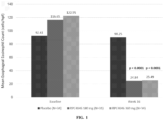
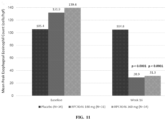
- the claimed methods of treatment using anti-IL-13 antibodies were shown to surprisingly and significantly reduce esophageal eosinophil count in esophageal biopsies of patients with EoE.
- the instant invention provides for a method of treating eosinophilic esophagitis (EoE) in a subject, comprising subcutaneously administering about 180 mg to about 360 mg of an IL-13 antibody, or antigen binding fragment thereof, to the subject weekly, thereby treating EoE in the subject.
- EoE eosinophilic esophagitis
- the IL-13 antibody, or antigen-binding fragment thereof binds to IL-13 and prevents interaction between IL-13 and an IL-13 receptor.
- the IL-13 antibody, or antigen-binding portion thereof is a monoclonal antibody, or antigen-binding portion thereof.
- the IL-13 antibody, or antigen-binding portion thereof is a humanized antibody, or antigen-binding portion thereof.
- the IL-13 antibody, or antigen-binding portion thereof is a human antibody, or antigen-binding portion thereof.
- the IL-13 antibody, or antigen-binding fragment thereof is the antibody 13C5.5, or an antigen binding fragment thereof.
- the 13C5.5 antibody, or antigen-binding fragment thereof comprises a heavy chain variable region comprising SEQ ID NO: 2 and a light chain variable region comprising SEQ ID NO: 3.
- the anti-IL-13 antibody is 6A1, 3G4, tralokinumab, lebrikizumab, QAZ-576, IMA-638 or IMA-026, or an antigen-binding portion thereof.
- the method comprises subcutaneously administering about 180 mg of the IL-13 antibody, or antigen binding fragment thereof, to the subject weekly. In another embodiment, the method comprises subcutaneously administering about 360 mg of the IL-13 antibody, or antigen binding fragment thereof, to the subject weekly.
- the method further comprises a step of selecting a subject who exhibits at least one symptom associated with EoE.
- the symptom associated with EoE is selected from the group consisting of eosinophilic infiltration of the esophagus, thickening of the esophageal wall, food refusal, vomiting, abdominal pain, heartburn, regurgitation, dysphagia, and food impaction.
- the method further comprises selecting a subject who also has a disease or disorder selected from the group consisting of atopic dermatitis, asthma, allergic rhinitis, allergic conjunctivitis, and a combination thereof.
- the selection step comprises selecting a subject based on an elevated level of a biomarker associated with eosinophilic esophagitis (EoE).
- the biomarker selected from the group consisting of esophagus eosinophils, eotaxin-3, periostin, serum IgE, IL-13, IL-5, serum thymus and activation regulated chemokine (TARC; CCL17), thymic stromal lymphopoietin (TSLP), serum ECP, and eosinophil-derived neurotoxin (EDN) or a combination thereof.
- TARC thymic stromal lymphopoietin
- ECN eosinophil-derived neurotoxin
- the selection step comprises selecting a subject based on the mean esophageal eosinophil count in a biopsy sample obtained from the subject during an esophageal endoscopy. In one embodiment, the selection step comprises selecting a subject based on peak eosinophil count of ⁇ 15 per high powered field (HPF) in the esophagus.
- HPF high powered field
- the subject exhibits at least 50% decrease in the number of eosinophils per HPF from the peak level after at least 16 weeks of administration of the IL-13 antibody, or antigen binding fragment thereof.
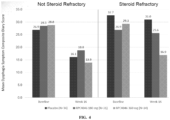
- the subject is a steroid naive subject who has not previously undergone steroid therapy. In another embodiment, the subject is a human subject who has previously undergone steroid therapy. In one embodiment, the subject is a human subject who has previously undergone steroid therapy and is non-steroid refractory. In another embodiment, the subject is a human subject who has previously undergone steroid therapy and is steroid refractory.
- the antibody, or antigen-binding portion thereof is administered to the subject for at least about 16 weeks. In another embodiment, the antibody, or antigen-binding portion thereof, is administered to the subject for the duration of EoE disease.
- the method comprises determining a mean esophageal eosinophil count measured in the 5 most inflamed high powered field (HPF) in the esophagus before administration of the antibody, or antigen-binding portion thereof, to the subject. In another embodiment, the method comprises determining the mean esophageal eosinophil count measured in the 5 most inflamed high powered field (HPF) in the esophagus after administration of the antibody, or antigen-binding portion thereof, to the subject.
- HPF 5 most inflamed high powered field
- a decrease in the mean esophageal eosinophil count after administration of the antibody, or antigen-binding portion thereof, to the subject as compared to the mean esophageal eosinophil count before administration indicates that the antibody, or antigen-binding portion thereof, is effective in treating the subject.
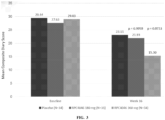
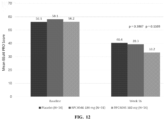
- the method comprises determining dysphagia clinical symptoms before administration of the antibody, or antigen-binding portion thereof, to the subject. In one embodiment, the method comprises determining the dysphagia clinical symptoms after administration of the antibody, or antigen-binding portion thereof, to the subject, wherein a decrease in the dysphagia clinical symptoms after administration of the antibody, or antigen-binding portion thereof, to the subject as compared to the dysphagia clinical symptoms before administration indicates that the antibody, or antigen-binding portion thereof, is effective in treating the subject.
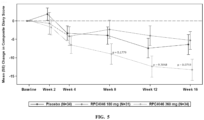
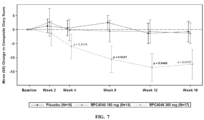
- the method comprises determining eosinophilic esophagitis activity index (EEsAI) and recorded as a daily symptom diary (DSD) before administration of the antibody, or antigen-binding portion thereof, to the subject.
- the method comprises determining the eosinophilic esophagitis activity index (EEsAI) and recorded as a daily symptom diary (DSD) after administration of the antibody, or antigen-binding portion thereof, to the subject, wherein a decrease in the EEsAI after administration of the antibody, or antigen-binding portion thereof, to the subject as compared to the EEsAI before administration indicates that the antibody, or antigen-binding portion thereof, is effective in treating the subject.
- EEsAI eosinophilic esophagitis activity index
- DSD daily symptom diary
- the method comprises determining dysphagia symptom questionnaire (DSQ) score before administration of the antibody, or antigen-binding portion thereof, to the subject. In one embodiment, the method comprises determining the DSQ score after administration of the antibody, or antigen-binding portion thereof, to the subject; wherein a decrease in the DSQ score after administration of the antibody, or antigen-binding portion thereof, to the subject as compared to the DSQ score before administration indicates that the antibody, or antigen-binding portion thereof, is effective in treating the subject.
- DSQ dysphagia symptom questionnaire
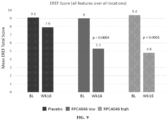
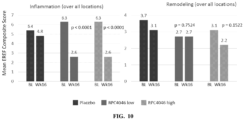
- the method comprises determining endoscopic reference score (EREF) before administration of the antibody, or antigen-binding portion thereof, to the subject. In one embodiment, the method comprises determining the EREF score after administration of the antibody, or antigen-binding portion thereof, to the subject; wherein a decrease in the EREF score after administration of the antibody, or antigen-binding portion thereof, to the subject as compared to the EREF score before administration indicates that the antibody, or antigen-binding portion thereof, is effective in treating the subject.
- EREF endoscopic reference score
- the EREF is determined based on the presence of inflammatory markers in the esophagus, the presence of remodeling markers in the esophagus, or a combination thereof. In one embodiment, the EREF is determined based on the presence or absence of plurality of features selected from the group consisting of edema, fixed rings, exudates, furrows and stricture, or a combination thereof.
- the method comprises determining a subject's global assessment of disease severity before administration of the antibody, or antigen-binding portion thereof, to the subject. In one embodiment, the method comprises determining the subject's global assessment of disease severity after administration of the antibody, or antigen-binding portion thereof, to the subject; wherein a decrease in the a subject's global assessment of disease severity after administration of the antibody, or antigen-binding portion thereof, to the subject as compared to the a subject's global assessment of disease severity before administration indicates that the antibody, or antigen-binding portion thereof, is effective in treating the subject.
- the method comprises determining a clinician's global assessment of disease severity before administration of the antibody, or antigen-binding portion thereof, to the subject. In one embodiment, the method comprises determining the clinician's global assessment of disease severity after administration of the antibody, or antigen-binding portion thereof, to the subject; wherein a decrease in the a clinician's global assessment of disease severity after administration of the antibody, or antigen-binding portion thereof, to the subject as compared to the clinician's global assessment of disease severity before administration indicates that the antibody, or antigen-binding portion thereof, is effective in treating the subject.
- the method comprises determining a histology grade and a mean stage-adjusted score (HGMSAS) before administration of the antibody, or antigen-binding portion thereof, to the subject. In one embodiment, the method comprises determining the HGMSAS after administration of the antibody, or antigen-binding portion thereof, to the subject; wherein a decrease in the HGMSAS after administration of the antibody, or antigen-binding portion thereof, to the HGMSAS before administration indicates that the antibody, or antigen-binding portion thereof, is effective in treating the subject.
- HGMSAS mean stage-adjusted score
- the method further comprises administration of an additional agent.
- the additional agent is a steroid.
- the additional agent is the steroid compound budesonide.
- the additional agent is selected from the group consisting of: a therapeutic agent, an imaging agent, a cytotoxic agent, an angiogenesis inhibitor, a kinase inhibitor, a co-stimulation molecule blocker, an adhesion molecule blocker, an anti-cytokine antibody or functional fragment thereof; methotrexate, a cyclosporin, a rapamycin, an FK506, a detectable label or reporter, a TNF antagonist, an anti-rheumatic, a muscle relaxant, a narcotic, a non-steroid anti-inflammatory drug (NSAID), an analgesic, an anesthetic, a sedative, a local anesthetic, a neuromuscular blocker, an antimicrobial, an antipsoriatic, a cortico
- NSAID non-steroid anti-
- the present disclosure provides compositions and methods for treating asthma.
- the instant disclosure provides for a method of treating asthma in a subject, comprising subcutaneously administering about 180 mg to about 360 mg of an IL-13 antibody, or antigen binding fragment thereof, to the subject weekly, thereby treating asthma in the subject.
- the IL-13 antibody, or antigen-binding fragment thereof binds to IL-13 and prevents interaction between IL-13 and an IL-13 receptor.
- the antibody, or antigen-binding portion thereof is a monoclonal antibody.
- the antibody, or antigen-binding portion thereof is a humanized antibody.
- the antibody, or antigen-binding portion thereof is a human antibody.
- the antibody, or antigen-binding portion thereof is a 13C5.5 antibody.
- the 13C5.5 antibody, or antigen-binding fragment thereof comprises a heavy chain variable region comprising SEQ ID NO: 2 and a light chain variable region comprising SEQ ID NO: 3.
- the anti-IL-13 antibody is 6A1, 3G4, tralokinumab, lebrikizumab, QAZ-576, IMA-638 or IMA-026, or an antigen-binding portion thereof.
- the method comprises subcutaneously administering about 180 mg of the IL-13 antibody, or antigen binding fragment thereof, to the subject weekly. In one embodiment, the method comprises subcutaneously administering about 360 mg of the IL-13 antibody, or antigen binding fragment thereof, to the subject weekly.
- the asthma is mild to moderate asthma.
- the method further comprises selecting a subject who exhibits at least one symptom associated with asthma.
- the at least one symptom associated with asthma selected from the group consisting of secretion or build-up of sticky mucus or phlegm, coughing, wheezing, shortness of breath, chest tightness, chest pain and chest pressure.
- the subject is a human subject. In another embodiment, the subject is a steroid naive subject who has not previously undergone steroid therapy. In one embodiment, the subject has previously undergone steroid therapy. In one embodiment, the subject is a subject who has previously undergone steroid therapy, and the subject is non-steroid refractory. In another embodiment, the subject is a subject who has previously undergone steroid therapy, and the subject is steroid refractory.
- the antibody, or antigen binding fragment thereof is administered to the subject weekly for at least about 16 weeks. In another embodiment, the antibody, or antigen binding portion thereof, is administered to the subject weekly for the duration of EoE disease.
- the method further comprises determining a biomarker associated with asthma before and after administration of the IL-13 antibody, or antigen binding fragment thereof, to the subject, wherein a change in the biomarker level indicates the efficacy of the IL-13 antibody, or antigen binding fragment thereof, in treating the subject.
- the method further comprises administration of an additional agen.
- the additional agent is a steroid.
- the additional agent is budesonide.
- the additional agent is selected from the group consisting of: a therapeutic agent, an imaging agent, a cytotoxic agent, an angiogenesis inhibitor, a kinase inhibitor, a co-stimulation molecule blocker, an adhesion molecule blocker, an anti-cytokine antibody or functional fragment thereof; methotrexate, a cyclosporin, a rapamycin, an FK506, a detectable label or reporter, a TNF antagonist, an anti-rheumatic, a muscle relaxant, a narcotic, a non-steroid anti-inflammatory drug (NSAID), an analgesic, an anesthetic, a sedative, a local anesthetic, a neuromuscular blocker, an antimicrobial, an antipsoriatic, a corticosteroid, an NSAID), an analgesic,
- the present disclosure surprisingly provides methods for treating or ameliorating at least one symptom of an eosinophilic disorder, e . g ., EoE, in a subject, using an anti-IL-13 antibody, or antigen-binding portion thereof.
- EoE eosinophilic disorder
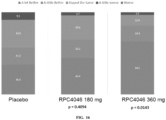
- the instant invention surprisingly demonstrates that subcutaneous doses of anti-IL-13 antibody administered weekly at dosages of 180 mg to 360 mg were found to be effective in treating EoE, for example, by decreasing dysphagic clinical symptoms. Specific embodiments of the invention are described in more detail in the subsections, below.
- IL-13 and IL-13 wild type include a cytokine that is secreted primarily by T helper 2 cells.
- the terms "IL-13” and “IL-13 wild type” include a monomeric protein of 13 kDa polypeptide.
- the structure of IL-13 is described further in, for example, Moy, Diblasio et al., J Mol Biol 310 219-30 (2001 ).
- the term IL-13 is intended to include recombinant human IL-13 (rh IL-13), which can be prepared by standard recombinant expression methods. Additionally, the term may include orthologs/homologs of IL-13 in other species, for example, dogs, cats, cows, horses, pigs, chicken, etc.
- the IL-13 polypeptide targets of the instant disclosure include human IL-13 proteins, including, variants, fragments, isoforms, and congeners thereof.
- the amino acid sequence of human IL-13 is known in the art and is depicted in SEQ ID NO: 1 (NCBI accession No. AF043334.1 (ver. 1, updated Mar 10, 2010); UNIPROT accession No. P35225 (ver. 170; reviewed Mar 16, 2016)).
- IL-13 variant (abbreviated herein as IL-13v), as used herein, includes any variant of IL-13.
- An example of a human IL-13 variant is wherein amino acid residue 130 of SEQ ID NO: 1 is changed from Arginine to Glutamine (R130Q).
- This particular human IL-13 variant sequence is known in the art (NCBI accession No. AAH96141.2 (ver. 2, updated Sep 23, 2014)).
- the receptor portion of the IL-13 ligand/receptor system comprises a multimeric, transmembrane receptor that includes the alpha chain of the IL-4 receptor (IL-4R ⁇ ) and at least one of two known IL-13-specific binding chains ( Wynn et al., Annu. Rev. Immunol. 21: 425-56 (2003 )).
- the effects are mediated primarily via a transcription factor, signal transducer and activator of transcription 6 (STAT6).
- the antibody or an antigen-binding fragment thereof specifically binds to an IL-13 polypeptide, thereby diminishing or neutralizing the binding of the IL-13 ligand to its cognate receptor.
- the IL-13 antibody, or antigen-binding portion thereof may result in the inhibition and/or neutralization of the biological activity of the IL-13 ligand/receptor system.
- Biological activity refers to all inherent biological properties of the cytokine.
- Biological properties of IL-13 include but are not limited to binding IL-13 receptor to elicit inflammation, enhanced secretion of chemokines, increased migration of allergic effector cells, metaplasia, etc. in the epithelial tissue surrounding the mucosa of the GI tract. Additionally, IL-13 has been shown to induce 20% of the EE transcriptome, and more particularly to induce eotaxin-3 expression in primary esophageal epithelial cells ( Blanchard et al., J Allergy Clin Immunol., 120:1292, 2007 ).
- telomere binding in reference to the interaction of an antibody, a protein, or a peptide with a second chemical species, mean that the interaction is dependent upon the presence of a particular structure (e.g., an antigenic determinant or epitope) on the chemical species; for example, an antibody recognizes and binds to a specific protein structure rather than to proteins generally. If an antibody is specific for epitope "A”, the presence of a molecule containing epitope A (or free, unlabeled A), in a reaction containing labeled "A” and the antibody, will reduce the amount of labeled A bound to the antibody.
- a particular structure e.g., an antigenic determinant or epitope
- antibody broadly refers to any immunoglobulin (Ig) molecule comprised of four polypeptide chains, two heavy (H) chains and two light (L) chains, or any functional fragment, mutant, variant, or derivation thereof, which retains the essential epitope binding features of an Ig molecule.
- Ig immunoglobulin
- Such mutant, variant, or derivative antibody formats are known in the art. Non-limiting embodiments of which are discussed herein.
- the antibody used in the compositions and methods of the disclosure is the anti-IL-13 antibody 13C5.5 described in U.S. Patent No. 7,915,388 , incorporated by reference herein.
- the antibody used in the compositions and methods of the disclosure is the antibody 6A1, 3G4, tralokinumab, lebrikizumab, dectrekumab (QAX-576), IMA-638 or IMA-026.
- each heavy chain is comprised of a heavy chain variable region (abbreviated herein as HCVR or VH) and a heavy chain constant region.
- the heavy chain constant region is comprised of three domains, CH1, CH2 and CH3.
- Each light chain is comprised of a light chain variable region (abbreviated herein as LCVR or VL) and a light chain constant region.
- the light chain constant region is comprised of one domain, CL.
- the VH and VL regions can be further subdivided into regions of hypervariability, termed complementarity determining regions (CDR), interspersed with regions that are more conserved, termed framework regions (FR).
- CDR complementarity determining regions
- Each VH and VL is composed of three CDRs and four FRs, arranged from amino-terminus to carboxy-terminus in the following order: FR1, CDR1, FR2, CDR2, FR3, CDR3, FR4.
- Immunoglobulin molecules can be of any type (e.g., IgG, IgE, IgM, IgD, IgA and IgY), class (e.g., IgG 1, IgG2, IgG 3, IgG4, IgA1 and IgA2) or subclass.
- antibody portion refers to one or more fragments of an antibody that retain the ability to specifically bind to an antigen (e.g., IL-13). It has been shown that the antigen-binding function of an antibody can be performed by fragments of a full-length antibody. Such antibody embodiments may also be bispecific, dual specific, or multi-specific formats; specifically binding to two or more different antigens.
- binding fragments encompassed within the term "antigen-binding portion" of an antibody include (i) a Fab fragment, a monovalent fragment consisting of the VL, VH, CL and CH1 domains; (ii) a F(ab') 2 fragment, a bivalent fragment comprising two Fab fragments linked by a disulfide bridge at the hinge region; (iii) a Fd fragment consisting of the VH and CH1 domains; (iv) a Fv fragment consisting of the VL and VH domains of a single arm of an antibody, (v) a dAb fragment ( Ward et al., (1989) Nature 341:544-546 , Winter et al., PCT publication WO 90/05144 A1 herein incorporated by reference), which comprises a single variable domain; and (vi) an isolated complementarity determining region (CDR).
- CDR complementarity determining region
- the two domains of the Fv fragment, VL and VH are coded for by separate genes, they can be joined, using recombinant methods, by a synthetic linker that enables them to be made as a single protein chain in which the VL and VH regions pair to form monovalent molecules (known as single chain Fv (scFv); see e.g., Bird et al. (1988) Science 242:423-426 ; and Huston et al. (1988) Proc. Natl. Acad. Sci. USA 85:5879-5883 ).
- single chain Fv single chain Fv
- Such single chain antibodies are also intended to be encompassed within the term "antigen-binding portion" of an antibody.
- Other forms of single chain antibodies, such as diabodies are also encompassed.
- Diabodies are bivalent, bispecific antibodies in which VH and VL domains are expressed on a single polypeptide chain, but using a linker that is too short to allow for pairing between the two domains on the same chain, thereby forcing the domains to pair with complementary domains of another chain and creating two antigen binding sites (see e.g., Holliger et al., Proc. Natl. Acad. Sci. USA 90:6444-6448 (1993 ); Poljak et al., Structure 2:1121-1123 (1994 )).
- Such antibody binding portions are known in the art ( Kontermann and Dubel eds., Antibody Engineering (2001) Springer-Verlag. New York. 790 pp. (ISBN 3-540-41354-5 ).
- antibody construct refers to a polypeptide comprising one or more the antigen binding portions of the disclosure linked to a linker polypeptide or an immunoglobulin constant domain.
- Linker polypeptides comprise two or more amino acid residues joined by peptide bonds and are used to link one or more antigen binding portions.
- Such linker polypeptides are well known in the art (see e.g., Holliger et al., Proc. Natl. Acad. Sci. USA 90:6444-6448 (1993 ); Poljak et al., Structure 2:1121-1123 (1994 )).
- An immunoglobulin constant domain refers to a heavy or light chain constant domain. Human IgG heavy chain and light chain constant domain amino acid sequences are known in the art and disclosed in Table 2 of U.S. Patent No. 7,915,388 , the entire contents of which are incorporated herein by reference.
- an antibody or antigen-binding portion thereof may be part of a larger immunoadhesion molecules, formed by covalent or noncovalent association of the antibody or antibody portion with one or more other proteins or peptides.
- immunoadhesion molecules include use of the streptavidin core region to make a tetrameric scFv molecule ( Kipriyanov et al., Human Antibodies and Hybridomas 6:93-101 (1995 )) and use of a cysteine residue, a marker peptide and a C-terminal polyhistidine tag to make bivalent and biotinylated scFv molecules ( Kipriyanov et al., Mol. Immunol.
- Antibody portions such as Fab and F(ab') 2 fragments, can be prepared from whole antibodies using conventional techniques, such as papain or pepsin digestion, respectively, of whole antibodies.
- antibodies, antibody portions and immunoadhesion molecules can be obtained using standard recombinant DNA techniques, as described herein.
- an "isolated antibody”, as used herein, is intended to refer to an antibody that is substantially free of other antibodies having different antigenic specificities (e.g., an isolated antibody that specifically binds IL-13 is substantially free of antibodies that specifically bind antigens other than IL-13).
- An isolated antibody that specifically binds IL-13 may, however, have cross-reactivity to other antigens, such as IL-13 molecules from other species.
- an isolated antibody may be substantially free of other cellular material and/or chemicals.
- human antibody is intended to include antibodies having variable and constant regions derived from human germline immunoglobulin sequences.
- the human antibodies of the disclosure may include amino acid residues not encoded by human germline immunoglobulin sequences (e.g., mutations introduced by random or site-specific mutagenesis in vitro or by somatic mutation in vivo ), for example in the CDRs and in particular CDR3.
- the term "human antibody”, as used herein, is not intended to include antibodies in which CDR sequences derived from the germline of another mammalian species, such as a mouse, have been grafted onto human framework sequences.
- recombinant human antibody is intended to include all human antibodies that are prepared, expressed, created or isolated by recombinant means, such as antibodies expressed using a recombinant expression vector transfected into a host cell (described further in U.S. Patent No. 7,915,388 , the contents of which are incorporated herein by reference), antibodies isolated from a recombinant, combinatorial human antibody library ( Hoogenboom et al., TIB Tech. 15:62-70 (1994 ); Azzazy et al., Clin. Biochem.
- such recombinant human antibodies are subjected to in vitro mutagenesis (or, when an animal transgenic for human Ig sequences is used, in vivo somatic mutagenesis) and thus the amino acid sequences of the VH and VL regions of the recombinant antibodies are sequences that, while derived from and related to human germline VH and VL sequences, may not naturally exist within the human antibody germline repertoire in vivo.
- One embodiment provides fully human antibodies capable of binding human IL-13 which can be generated using techniques well known in the art, such as, but not limited to, using human Ig phage libraries such as those disclosed in Jermutus et al., PCT publication No. WO 2005/007699 A2 .
- chimeric antibody refers to antibodies which comprise heavy and light chain variable region sequences from one species and constant region sequences from another species, such as antibodies having murine heavy and light chain variable regions linked to human constant regions.
- Methods for producing chimeric antibodies are known in the art and discussed in to detail in Example 2.1. See e.g., Morrison, Science 229:1202 (1985 ); Oi et al., BioTechniques 4:214 (1986 ); Gillies et al., (1989) J. Immunol. Methods 125:191-202 ; U.S. Pat. Nos. 5,807,715 ; 4,816,567 ; and 4,816,397 , which are incorporated herein by reference in their entireties.
- chimeric antibodies may be produced by art-known techniques. See, Morrison et al., 1984, Proc. Natl. Acad. Sci. 81:851-855 ; Neuberger et al., 1984, Nature 312:604-608 ; Takeda et al., 1985, Nature 314:452-454 which are incorporated herein by reference in their entireties.
- the chimeric antibodies for use in the compositions and/or methods of the disclosure are produced by replacing the heavy chain constant region of the murine monoclonal anti human IL-13 antibodies described in section 1 with a human IgG1 constant region.
- the chimeric antibody of the disclosure comprises a heavy chain variable region (VH) comprising the amino acid sequence of SEQ ID NO: 34; SEQ ID NO: 36; SEQ ID NO: 41; SEQ ID NO: 42; or SEQ ID NO: 46 and a light chain variable region (VL) comprising the amino acid sequence of SEQ ID NO: 35; SEQ ID NO: 37; SEQ ID NO: 40; SEQ ID NO: 43; or SEQ ID NO: 47 disclosed in U.S. Pat. No. 7,195,388 . Any combination of the aforementioned VH and VL sequences may be employed.
- CDR-grafted antibody refers to antibodies which comprise heavy and light chain variable region sequences from one species but in which the sequences of one or more of the CDR regions of VH and/or VL are replaced with CDR sequences of another species, such as antibodies having murine heavy and light chain variable regions in which one or more of the murine CDRs (e.g., CDR3) has been replaced with human CDR sequences.
- humanized antibody refers to antibodies which comprise heavy and light chain variable region sequences from a non-human species (e.g., a mouse) but in which at least a portion of the VH and/or VL sequence has been altered to be more "human-like", i.e., more similar to human germline variable sequences.
- a non-human species e.g., a mouse
- humanized antibody is a CDR-grafted antibody, in which human CDR sequences are introduced into non-human VH and VL sequences to replace the corresponding nonhuman CDR sequences.
- humanized anti human IL-13 antibodies and antigen binding portions are provided.
- Such antibodies were generated by obtaining murine anti-IL-13 monoclonal antibodies using traditional hybridoma technology followed by humanization using in vitro genetic engineering, such as those disclosed in Kasaian et al PCT publication No. WO 2005/123126 A2 .
- Human Ig sequences are known in the art. See, e.g., Kabat et al., Sequences of Proteins of Immunological Interest, U.S. Dept. Health (1983 ), entirely incorporated herein by reference. Such imported sequences can be used to reduce immunogenicity or reduce, enhance or modify binding, affinity, on-rate, off-rate, avidity, specificity, half-life, or any other suitable characteristic, as known in the art.
- Framework residues in the human framework regions may be substituted with the corresponding residue from the CDR donor antibody to alter, preferably improve, antigen binding.
- These framework substitutions are identified by methods well known in the art, e.g., by modeling of the interactions of the CDR and framework residues to identify framework residues important for antigen binding and sequence comparison to identify unusual framework residues at particular positions. (See, e.g., Queen et al., U.S. Pat. No. 5,585,089 ; Riechmann et al., Nature 332:323 (1988 ), which are incorporated herein by reference in their entireties.) Three-dimensional immunoglobulin models are commonly available and are familiar to those skilled in the art.
- Antibodies can be humanized using a variety of techniques known in the art, such as but not limited to those described in Jones et al., Nature 321:522 (1986 ); Verhoeyen et al., Science 239:1534 (1988 )), Sims et al., J. Immunol. 151: 2296 (1993 ); Chothia and Lesk, J. Mol. Biol. 196:901 (1987 ), Carter et al., Proc. Natl. Acad. Sci. U.S.A. 89:4285 (1992 ); Presta et al., J. Immunol.
- libraries may be comprised of antibody fragments from a source of genes that is not explicitly biased for clones that bind to an antigen.
- “naive antibody” or “natural antibody” libraries derive from natural, unimmunized, rearranged V genes.
- synthetic antibody libraries are constructed entirely by in vitro methods, introducing areas of complete or tailored degeneracy into the CDRs of one or more V genes.
- “Semi-synthetic libraries” combine natural and synthetic diversity, and are often created to increase natural diversity while maintaining a desired level of functional diversity. Thus, such libraries can, for example, be created by shuffling natural CDR regions ( Soderlind et al., Nat. Biotechnol.
- the terms “acceptor” and “acceptor antibody” refer to the antibody or nucleic acid sequence providing or encoding at least 80%, at least 85%, at least 90%, at least 95%, at least 96%, at least 97%, at least 98%, at least 99%, or 100% of the amino acid sequences of one or more of the framework regions.
- the term “acceptor” refers to the antibody amino acid or nucleic acid sequence providing or encoding the constant region(s).
- the term “acceptor” refers to the antibody amino acid or nucleic acid sequence providing or encoding one or more of the framework regions and the constant region(s).
- the term "acceptor” refers to a human antibody amino acid or nucleic acid sequence that provides or encodes at least 80%, preferably, at least 85%, at least 90%, at least 95%, at least 98%, or 100% of the amino acid sequences of one or more of the framework regions.
- an acceptor may contain at least 1, at least 2, at least 3, least 4, at least 5, or at least 10 amino acid residues that does (do) not occur at one or more specific positions of a human antibody.
- acceptor framework region and/or acceptor constant region(s) may be, e.g., derived or obtained from a germline antibody gene, a mature antibody gene, a functional antibody (e.g., antibodies well-known in the art, antibodies in development, or antibodies commercially available).
- CDR refers to the complementarity determining region within antibody variable sequences. There are three CDRs in each of the variable regions of the heavy chain and the light chain, which are designated CDR1, CDR2 and CDR3, for each of the variable regions.
- CDR set refers to a group of three CDRs that occur in a single variable region capable of binding the antigen. The exact boundaries of these CDRs have been defined differently according to different systems. The system described by Kabat ( Kabat et al., Sequences of Proteins of Immunological Interest (National Institutes of Health, Bethesda, Md.
- CDR boundary definitions may not strictly follow one of the above systems, but will nonetheless overlap with the Kabat CDRs, although they may be shortened or lengthened in light of prediction or experimental findings that particular residues or groups of residues or even entire CDRs do not significantly impact antigen binding.
- the methods used herein may utilize CDRs defined according to any of these systems, although preferred embodiments use Kabat or Chothia defined CDRs.
- canonical residue refers to a residue in a CDR or framework that defines a particular canonical CDR structure as defined by Chothia et al. (J. Mol. Biol. 196:901-907 (1987 ); Chothia et al., J. Mol. Biol. 227:799 (1992 ), both are incorporated herein by reference). According to Chothia et al., critical portions of the CDRs of many antibodies have nearly identical peptide backbone confirmations despite great diversity at the level of amino acid sequence. Each canonical structure specifies primarily a set of peptide backbone torsion angles for a contiguous segment of amino acid residues forming a loop.
- the terms “donor” and “donor antibody” refer to an antibody providing one or more CDRs.
- the donor antibody is an antibody from a species different from the antibody from which the framework regions are obtained or derived.
- the term “donor antibody” refers to a non-human antibody providing one or more CDRs.
- the term "framework” or "framework sequence” refers to the remaining sequences of a variable region minus the CDRs. Because the exact definition of a CDR sequence can be determined by different systems, the meaning of a framework sequence is subject to correspondingly different interpretations.
- the six CDRs (CDR-L1, CDR-L2, and CDR-L3 of light chain and CDR-H1, CDR-H2, and CDR-H3 of heavy chain) also divide the framework regions on the light chain and the heavy chain into four sub-regions (FR1, FR2, FR3 and FR4) on each chain, in which CDR1 is positioned between FR1 and FR2, CDR2 between FR2 and FR3, and CDR3 between FR3 and FR4.
- a framework region represents the combined FR's within the variable region of a single, naturally occurring immunoglobulin chain.
- a FR represents one of the four sub-regions, and FRs represents two or more of the four sub-regions constituting a framework region.
- Human heavy chain and light chain acceptor sequences are known in the art. In one embodiment of the disclosure the human heavy chain and light chain acceptor sequences are selected from the sequences described in Table 3 and Table 4 disclosed in U.S. Patent NO. 7,915,388 , the contents of which are incorporated herein by reference.
- the term "germline antibody gene” or “gene fragment” refers to an immunoglobulin sequence encoded by non-lymphoid cells that have not undergone the maturation process that leads to genetic rearrangement and mutation for expression of a particular immunoglobulin. (See, e.g., Shapiro et al., Crit. Rev. Immunol. 22(3): 183-200 (2002 ); Marchalonis et al., Adv Exp Med. Biol. 484:13-30 (2001 )).
- One of the advantages provided by various embodiments of the present disclosure stems from the recognition that germline antibody genes are more likely than mature antibody genes to conserve essential amino acid sequence structures characteristic of individuals in the species, hence less likely to be recognized as from a foreign source when used therapeutically in that species.
- key residues refer to certain residues within the variable region that have more impact on the binding specificity and/or affinity of an antibody, in particular a humanized antibody.
- a key residue includes, but is not limited to, one or more of the following: a residue that is adjacent to a CDR, a potential glycosylation site (can be either N- or O-glycosylation site), a rare residue, a residue capable of interacting with the antigen, a residue capable of interacting with a CDR, a canonical residue, a contact residue between heavy chain variable region and light chain variable region, a residue within the Vernier zone, and a residue in the region that overlaps between the Chothia definition of a variable heavy chain CDR1 and the Kabat definition of the first heavy chain framework.
- humanized antibody is an antibody or a variant, derivative, analog or fragment thereof which immuno specifically binds to an antigen of interest and which comprises a framework (FR) region having substantially the amino acid sequence of a human antibody and a complementary determining region (CDR) having substantially the amino acid sequence of a non-human antibody.
- FR framework
- CDR complementary determining region
- substantially in the context of a CDR refers to a CDR having an amino acid sequence at least 80%, preferably at least 85%, at least 90%, at least 95%, at least 96%, at least 97%, at least 98% or at least 99% identical to the amino acid sequence of a non-human antibody CDR.
- a humanized antibody comprises substantially all of at least one, and typically two, variable domains (Fab, Fab', F(ab') 2 , FabC, Fv) in which all or substantially all of the CDR regions correspond to those of a non-human immunoglobulin (i.e., donor antibody) and all or substantially all of the framework regions are those of a human immunoglobulin consensus sequence.
- a humanized antibody also comprises at least a portion of an immunoglobulin constant region (Fc), typically that of a human immunoglobulin.
- a humanized antibody contains both the light chain as well as at least the variable domain of a heavy chain.
- the antibody also may include the CH1, hinge, CH2, CH3, and CH4 regions of the heavy chain.
- a humanized antibody only contains a humanized light chain. In some embodiments, a humanized antibody only contains a humanized heavy chain. In specific embodiments, a humanized antibody only contains a humanized variable domain of a light chain and/or humanized heavy chain.
- the humanized antibody can be selected from any class of immunoglobulins, including IgM, IgG, IgD, IgA and IgE, and any isotype, including without limitation IgG 1, IgG2, IgG3 and IgG4.
- the humanized antibody may comprise sequences from more than one class or isotype, and particular constant domains may be selected to optimize desired effector functions using techniques well-known in the art.
- the framework and CDR regions of a humanized antibody need not correspond precisely to the parental sequences, e . g ., the donor antibody CDR or the consensus framework may be mutagenized by substitution, insertion and/or deletion of at least one amino acid residue so that the CDR or framework residue at that site does not correspond to either the donor antibody or the consensus framework. In a preferred embodiment, such mutations, however, will not be extensive. Usually, at least 80%, preferably at least 85%, more preferably at least 90%, and most preferably at least 95% of the humanized antibody residues will correspond to those of the parental FR and CDR sequences.
- the term "consensus framework" refers to the framework region in the consensus immunoglobulin sequence.
- the term "consensus immunoglobulin sequence” refers to the sequence formed from the most frequently occurring amino acids (or nucleotides) in a family of related immunoglobulin sequences (See e . g ., Winnaker, From Genes to Clones ( Verlagsgesellschaft, Weinheim, Germany 1987). In a family of immunoglobulins, each position in the consensus sequence is occupied by the amino acid occurring most frequently at that position in the family. If two amino acids occur equally frequently, either can be included in the consensus sequence.
- the humanized anti-IL-13 antibody is 13C5.5.
- 13C5.5 has the sequences SEQ ID NO: 2 (heavy chain variable region) and SEQ ID NO: 3 (light chain variable region). See also U.S. Patent No. 7,915,388 , the entire contents of which are incorporated herein by reference.
- IL-13 antibodies are known in the art.
- the antibody is 6A1, 3G4, tralokinumab, lebrikizumab, QAZ-576, IMA-638 or IMA-026, or an antigen-binding portion thereof.
- Table 5 of U.S. Pat. No. 7,195,388 (the contents of which are incorporated herein by reference) provides a list of amino acid sequences of VH and VL regions of preferred anti-IL-13 antibodies to be used in the compositions and/or methods of the disclosure.
- These isolated anti-IL-13 antibody CDR sequences establish a family of IL-13 binding proteins, isolated in accordance with this disclosure, and comprising polypeptides that include the CDR sequences listed in Table 6 of U.S. Pat.
- neutralizing refers to neutralization of biological activity of a cytokine when a binding protein specifically binds the cytokine.
- a neutralizing binding protein is a neutralizing antibody whose binding to IL-13 and/or IL-13 results in inhibition of a biological activity of IL-13 and/or IL-13.
- the neutralizing binding protein binds IL-13 and/or IL-13 and reduces a biologically activity of IL-13 and/or IL-13 by at least about 20%, 40%, 60%, 80%, 85% or more.
- Inhibition of a biological activity of IL-13 and/or IL-13 by a neutralizing binding protein can be assessed by measuring one or more indicators of IL-13 and/or IL-13 biological activity well known in the art. For example, inhibition of human IL-13 induced production of TARC (CCL-17) by A-549 cells can be measured (see Example 1.1.C of U.S. Patent No. 7,915,388 , which is incorporated herein by reference).
- activity includes activities such as the binding specificity/affinity of an antibody for an antigen, for example, an anti-IL-13 antibody that binds to an IL-13 antigen and/or the neutralizing potency of an antibody, for example, an anti-IL-13 antibody whose binding to IL-13 inhibits the biological activity of IL-13, e.g. For example inhibition of human IL-13 induced production of TARC (CCL-17) by A-549 cells (see Example 1.1.C of U.S. Patent No. 7,915,388 , which is incorporated herein by reference).
- epitope includes any polypeptide determinant capable of specific binding to an immunoglobulin or T-cell receptor.
- epitope determinants include chemically active surface groupings of molecules such as amino acids, sugar side chains, phosphoryl, or sulfonyl, and, in certain embodiments, may have specific three dimensional structural characteristics, and/or specific charge characteristics.
- An epitope is a region of an antigen that is bound by an antibody.
- an antibody is said to specifically bind an antigen when it preferentially recognizes its target antigen in a complex mixture of proteins and/or macromolecules.
- SPR surface plasmon resonance
- the anti-IL-13 antibodies used in the context of the methods of the present disclosure may have pH-dependent binding characteristics.
- an anti-IL-13 antibody for use in the methods of the present disclosure may exhibit reduced binding to IL-13 at acidic pH as compared to neutral pH.
- an anti-IL-13 antibody of the disclosure may exhibit enhanced binding to its antigen at acidic pH as compared to neutral pH.
- the expression "acidic pH” includes pH values less than about 6.2, e.g., about 6.0, 5.95, 5.9, 5.85, 5.8, 5.75, 5.7, 5.65, 5.6, 5.55, 5.5, 5.45, 5.4, 5.35, 5.3, 5.25, 5.2, 5.15, 5.1, 5.05, 5.0, or less.
- neutral pH means a pH of about 7.0 to about 7.4.
- the expression “neutral pH” includes pH values of about 7.0, 7.05, 7.1, 7.15, 7.2, 7.25, 7.3, 7.35, and 7.4.
- "reduced binding to IL-13 at acidic pH as compared to neutral pH” is expressed in terms of a ratio of the K D value of the antibody binding to IL-13 at acidic pH to the K D value of the antibody binding to IL-13 at neutral pH (or vice versa).
- an antibody or antigen-binding fragment thereof may be regarded as exhibiting "reduced binding to IL-13 at acidic pH as compared to neutral pH” for purposes of the present disclosure if the antibody or antigen-binding fragment thereof exhibits an acidic/neutral KD ratio of about 3.0 or greater.
- the acidic/neutral KD ratio for an antibody or antigen-binding fragment of the present disclosure can be about 3.0, 3.5, 4.0, 4.5, 5.0, 5.5, 6.0, 6.5, 7.0, 7.5, 8.0, 8.5, 90, 9.5, 10.0, 10.5, 11.0, 11.5, 12.0, 12.5, 13.0, 13.5, 14.0, 14.5, 15.0, 20.0, 25.0, 30.0, 40.0, 50.0, 60.0, 70.0, 100.0, or greater.
- Antibodies with pH-dependent binding characteristics may be obtained, e.g., by screening a population of antibodies for reduced (or enhanced) binding to a particular antigen at acidic pH as compared to neutral pH. Additionally, modifications of the antigen-binding domain at the amino acid level may yield antibodies with pH-dependent characteristics. For example, by substituting one or more amino acids of an antigen-binding domain (e.g., within a CDR) with a histidine residue, an antibody with reduced antigen-binding at acidic pH relative to neutral pH may be obtained.
- the expression "acidic pH” means a pH of 6.0 or less.
- antibody conjugate refers to a binding protein, such as an antibody, chemically linked to a second chemical moiety, such as a therapeutic or cytotoxic agent.
- the chemical moiety may be a diagnostic agent, e.g., a radio-ligand.
- agent is used herein to denote a chemical compound, a mixture of chemical compounds, a biological macromolecule, or an extract made from biological materials.
- the therapeutic or cytotoxic agents include, but are not limited to, pertussis toxin, taxol, cytochalasin B, gramicidin D, ethidium bromide, emetine, mitomycin, etoposide, tenoposide, vincristine, vinblastine, colchicin, doxorubicin, daunorubicin, dihydroxy anthracin dione, mitoxantrone, mithramycin, actinomycin D, 1-dehydrotestosterone, glucocorticoids, procaine, tetracaine, lidocaine, propranolol, and puromycin and analogs or homologs thereof.
- the term “regulate” and “modulate” are used interchangeably, and, as used herein, refers to a change or an alteration in the activity of a molecule of interest (e.g., the biological activity of IL-13). Modulation may be an increase or a decrease in the magnitude of a certain activity or function of the molecule of interest. Exemplary activities and functions of a molecule include, but are not limited to, binding characteristics, enzymatic activity, cell receptor activation, and signal transduction.
- a modulator is a compound capable of changing or altering an activity or function of a molecule of interest (e.g., the biological activity of IL-13).
- a modulator may cause an increase or decrease in the magnitude of a certain activity or function of a molecule compared to the magnitude of the activity or function observed in the absence of the modulator.
- a modulator is an inhibitor, which decreases the magnitude of at least one activity or function of a molecule.
- Exemplary inhibitors include, but are not limited to, proteins, peptides, antibodies, peptibodies, carbohydrates or small organic molecules. Peptibodies are described, e.g., in WO 01/83525 .
- agonist refers to a modulator that, when contacted with a molecule of interest, causes an increase in the magnitude of a certain activity or function of the molecule compared to the magnitude of the activity or function observed in the absence of the agonist.
- agonists of interest may include, but are not limited to, IL-13 polypeptides or polypeptides, nucleic acids, carbohydrates, or any other molecules that bind to IL-13.
- antagonist refers to a modulator that, when contacted with a molecule of interest causes a decrease in the magnitude of a certain activity or function of the molecule compared to the magnitude of the activity or function observed in the absence of the antagonist.
- Particular antagonists of interest include those that block or modulate the biological or immunological activity of IL-13 and/or IL-13v.
- Antagonists and inhibitors of IL-13 and/or IL-13v may include, but are not limited to, proteins; nucleic acids, carbohydrates, or any other molecules, which bind to IL-13 or IL-13v.
- inhibit binding to the receptor refers to the ability of the binding protein to prevent the binding of IL-13 to one or more of its receptors. Such inhibition of binding to the receptor would result in diminishing or abolishing the biological activity mediated by binding of IL-13 to its receptor or receptors.
- the term "effective amount” refers to the amount of an antibody, or antigen-binding portion thereof, which is sufficient to reduce or ameliorate the severity and/or duration of a disorder or one or more symptoms thereof, prevent the advancement of a disorder, cause regression of a disorder, prevent the recurrence, development, onset or progression of one or more symptoms associated with a disorder, detect a disorder, or enhance or improve the prophylactic or therapeutic effect(s) of another therapy (e.g., prophylactic or therapeutic agent).
- another therapy e.g., prophylactic or therapeutic agent
- the present disclosure includes methods which comprise administering an IL-13 antibody, or antigen-binding portion thereof, to a subject wherein the IL-13 antibody, or antigen-binding portion thereof, is contained within a pharmaceutical composition.
- the pharmaceutical compositions may be formulated with suitable carriers, excipients, and other agents that provide suitable transfer, delivery, tolerance, and the like.
- suitable carriers, excipients, and other agents that provide suitable transfer, delivery, tolerance, and the like.
- a multitude of appropriate formulations can be found in the formulary known to all pharmaceutical chemists: Remington's Pharmaceutical Sciences, Mack Publishing Company, Easton, Pa.
- formulations include, for example, powders, pastes, ointments, jellies, waxes, oils, lipids, lipid (cationic or anionic) containing vesicles (such as LIPOFECTIN TM ), DNA conjugates, anhydrous absorption pastes, oil-in-water and water-in-oil emulsions, emulsions carbowax (polyethylene glycols of various molecular weights), semi-solid gels, and semi-solid mixtures containing carbowax. See also Powell et al. "Compendium of excipients for parenteral formulations" PDA (1998) J Pharm Sci Technol 52:238-311 .
- compositions e . g ., encapsulation in liposomes, microparticles, microcapsules, recombinant cells capable of expressing the mutant viruses, receptor mediated endocytosis (see, e.g., Wu et al., 1987, J. Biol. Chem. 262: 4429-4432 ).
- Methods of administration include, but are not limited to, intradermal, intramuscular, intraperitoneal, intravenous, subcutaneous, intranasal, epidural, and oral routes.
- composition may be administered by any convenient route, for example by infusion or bolus injection, by absorption through epithelial or mucocutaneous linings (e.g., oral mucosa, rectal and intestinal mucosa, etc.) and may be administered together with other biologically active agents.
- infusion or bolus injection by absorption through epithelial or mucocutaneous linings (e.g., oral mucosa, rectal and intestinal mucosa, etc.) and may be administered together with other biologically active agents.
- epithelial or mucocutaneous linings e.g., oral mucosa, rectal and intestinal mucosa, etc.
- a pharmaceutical composition can be delivered subcutaneously or intravenously with a standard needle and syringe.
- a pen delivery device readily has applications in delivering a pharmaceutical composition.
- Such a pen delivery device can be reusable or disposable.
- a reusable pen delivery device generally utilizes a replaceable cartridge that contains a pharmaceutical composition. Once all of the pharmaceutical composition within the cartridge has been administered and the cartridge is empty, the empty cartridge can readily be discarded and replaced with a new cartridge that contains the pharmaceutical composition. The pen delivery device can then be reused.
- a disposable pen delivery device there is no replaceable cartridge. Rather, the disposable pen delivery device comes prefilled with the pharmaceutical composition held in a reservoir within the device. Once the reservoir is emptied of the pharmaceutical composition, the entire device is discarded.
- the pharmaceutical composition can be delivered in a controlled release system.
- a pump may be used.
- polymeric materials can be used; see, Medical Applications of Controlled Release, Langer and Wise (eds.), 1974, CRC Pres., Boca Raton, Fla.
- a controlled release system can be placed in proximity of the composition's target, thus requiring only a fraction of the systemic dose (see, e . g ., Goodson, 1984, in Medical Applications of Controlled Release, supra, vol. 2, pp. 115-138 ).
- Other controlled release systems are discussed in the review by Langer, 1990, Science 249:1527-1533 .
- the injectable preparations may include dosage forms for intravenous, subcutaneous, intracutaneous and intramuscular injections, drip infusions, etc. These injectable preparations may be prepared by known methods. For example, the injectable preparations may be prepared, e.g., by dissolving, suspending or emulsifying the antibody or its salt described above in a sterile aqueous medium or an oily medium conventionally used for injections.
- aqueous medium for injections there are, for example, physiological saline, an isotonic solution containing glucose and other auxiliary agents, etc., which may be used in combination with an appropriate solubilizing agent such as an alcohol (e.g., ethanol), a polyalcohol (e.g., propylene glycol, polyethylene glycol), a nonionic surfactant [ e.g., polysorbate 80, HCO-50 (polyoxyethylene (50 mol) adduct of hydrogenated castor oil)], etc.
- an oily medium there are employed, e . g ., sesame oil, soybean oil, etc., which may be used in combination with a solubilizing agent such as benzyl benzoate, benzyl alcohol, etc.
- the injection thus prepared is preferably filled in an appropriate ampoule.
- the pharmaceutical compositions for oral or parenteral use described above are prepared into dosage forms in a unit dose suited to fit a dose of the active ingredients.
- dosage forms in a unit dose include, for example, tablets, pills, capsules, injections (ampoules), suppositories, etc.
- compositions comprising an anti-IL-13 antibody that can be used in the context of the present disclosure are disclosed, e . g ., in US patent app. Pub. No. 2012/0097565 , the entire contents of which are expressly incorporated herein by reference.
- the present disclosure provides a pharmaceutical composition comprising one or more of the aforementioned IL-13 antibodies, and antigen-binding portions thereof, and a pharmaceutically acceptable carrier. Additionally, in a related embodiment, the present disclosure provides a diagnostic composition comprising one or more of the aforementioned IL-13 antibodies, and antigen-binding portions thereof, and a plurality of reagents, buffers, and carriers for diagnostic testing. According this aspect, the pharmaceutical composition may be formulated for intravenous administration, subcutaneous administration, intraperitoneal administration, or intramuscular administration. Still further according to this aspect, the pharmaceutical composition may be formulated for subcutaneous administration as a microneedle patch. The pharmaceutical compositions may be formulated for parenteral administration by bolus injection or by gradual perfusion over time. The diagnostic composition may be formulated for in vitro, in vivo, or ex vivo application.
- Exemplary agents used in formulating the aforementioned IL-13 antibodies, and antigen-binding portions thereof, into pharmaceutical compositions and/or diagnostic compositions are provided in US patent pub. No. 2014/0341913 , which is incorporated by reference herein.
- exemplary agents used in formulating the aforementioned IL-13 antibodies, and antigen-binding portions thereof, into pharmaceutical compositions for the treatment of EoE are provided in US patent pub. No. 2015/0017176 , which is incorporated by reference herein.
- the amount of IL-13 antibody, or antigen-binding portion thereof, administered to a subject according to the methods of the present disclosure is, generally, a therapeutically effective amount.
- therapeutically effective amount means an amount of IL-13 antibody, or antigen-binding portion thereof, that results in one or more of: (a) a reduction in the severity or duration of a symptom of eosinophilic esophagitis; (b) a reduction in the number of eosinophils in esophagus; (c) prevention or alleviation of an allergic reaction; and (d) a reduction in the use or need for conventional allergy therapy (e.g., reduced or eliminated use of antihistamines, decongestants, nasal or inhaled steroids, anti-IgE treatment, epinephrine, etc.).
- the instant invention provides the surprising results of a phase II clinical trial demonstrating that a therapeutically effective is about 180 mg to about 360 mg of the antibody, or antigen-binding portion thereof, administered subcutaneously on a weekly dosing regimen.
- a therapeutically effective amount is about 180 mg of the antibody, or antigen-binding portion thereof.
- the therapeutically effective amount is about 360 mg of the antibody, or antigen-binding portion thereof.
- a therapeutically effective amount can be about 150 mg, about 160 mg, about 170 mg, about 180 mg, about 190 mg, about 200 mg, about 210 mg, about 220 mg, about 230 mg, about 240 mg, about 250 mg, about 260 mg, about 270 mg, about 280 mg, about 290 mg, about 300 mg, about 310 mg, about 320 mg, about 330 mg, about 340 mg, about 350 mg, about 360 mg, about 370 mg, about 380 mg, about 390 mg, about 400 mg or more of the anti-IL-13 antibody, or antigen-binding portion thereof.
- the therapeutically effective amount is about 160 mg to about 200 mg of the antibody, or antigen-binding portion thereof.
- the therapeutically effective amount is about 340 mg to about 380 mg of the antibody, or antigen-binding portion thereof. In another embodiment, the therapeutically effective amount is about 160 mg to about 200 mg of the antibody, or antigen-binding portion thereof. In another embodiment, the therapeutically effective amount is about 160 mg to about 200 mg, about 170 mg to about 210 mg, about 180 mg to about 220 mg, about 190 mg to about 230 mg, about 200 mg to about 240 mg, about 210 mg to about 250 mg, about 220 mg to about 260 mg, about 230 mg to about 270 mg, about 240 mg to about 280 mg, about 250 mg to about 290 mg, about 260 mg to about 300 mg, about 270 mg to about 310 mg, about 280 mg to about 320 mg, about 290 mg to about 330 mg, about 300 mg to about 340 mg, about 310 mg to about 350 mg, about 320 mg to about 360 mg, about 330 mg to about 370 mg, or about 340 mg to about 380 mg of the antibody
- the composition of the disclosure is administered once. In another embodiment, the composition is administered weekly. In another embodiment, the composition is administered for two weeks. In another embodiment, the composition is administered for three weeks. In another embodiment, the composition is administered for four weeks, five weeks, six weeks, seven weeks, eight weeks, nine weeks, ten weeks, eleven weeks, three months, four months, five months, six months, seven months, eight months, nine months, ten months, eleven months, twelve months, thirteen months, fourteen months, fifteen months, sixteen months, seventeen months, eighteen months, nineteen months, twenty months, twenty-one months, twenty-two months, twenty-three months, two years, three years, four years, five years, ten years, for the duration of the disease, or for the life of the subject.
- the composition is administered subcutaneously. In another embodiment, the composition is administered intravenously. In one embodiment, the composition is administered intravenously for one administration, followed by weekly subcutaneous dosages. In one embodiment, the first administration of the antibody, or antigen-binding portion thereof, is at a dosage of 5 mg/kg intravenously, followed by weekly subcutaneous administration of the antibody, or antigen-binding portion thereof, at a dosage of 180 mg. In another embodiment, the first administration of the antibody, or antigen-binding portion thereof, is at a dosage of 10 mg/kg intravenously, followed by weekly subcutaneous administration of the antibody, or antigen-binding portion thereof, at a dosage of 360 mg.
- the dose of the pharmaceutical compositions may be altered depending on the age, sex, health, and weight of the recipient, kind of concurrent treatment, if any, frequency of treatment, and the nature of the effect desired.
- Formulation used as preclinical and clinical therapeutics or in clinical diagnostics may be produced by those of skill, employing accepted principles of diagnosis and treatment.
- the dose ranges for the compositions may be large enough to produce the desired effect.
- the dose of the diagnostic composition may be altered depending on the nature of the diagnosis, e.g., in vitro versus in vivo application. Methods of formulating the IL-13 antibodies, and antigen-binding portions thereof, into diagnostic agents, e .
- chelating an antibody to a diagnostic agent selected from a radio label, a colorimetric moiety, a fluorescent moiety, a chemiluminescent moiety, an enzymatic moiety, and immunogenic moiety are known in the art.
- kits refers to a packaged product comprising components with which to administer the anti-IL-13 antibody of the disclosure for treatment of a IL-13 related disorder.
- the kit preferably comprises a box or container that holds the components of the kit.
- the box or container is affixed with a label or a Food and Drug Administration approved protocol.
- the box or container holds components of the disclosure which are preferably contained within plastic, polyethylene, polypropylene, ethylene, or propylene vessels.
- the vessels can be capped-tubes or bottles.
- the kit can also include instructions for administering an anti-IL-13 antibody.
- combination therapy refers to the administration of two or more therapeutic substances, e . g ., an anti-IL-13 antibody and another agent.
- the other drug(s) may be administered concomitant with, prior to, or following the administration of the anti-IL-13 antibody.
- the additional agent is an agent that is useful in the diagnosis and/or therapy of eosinophilic disorders.
- the additional agent is an agent that is useful in the therapy/diagnosis of eosinophilic gastrointestinal disorders (EGID).
- the additional agent may be selected from the group consisting of: a therapeutic agent, an imaging agent, a cytotoxic agent, an angiogenesis inhibitor, a kinase inhibitor, a co-stimulation molecule blocker, an adhesion molecule blocker, an anti-cytokine antibody or functional fragment thereof; methotrexate, a cyclosporin, a rapamycin, an FK506, a detectable label or reporter, a TNF antagonist, an anti-rheumatic, a muscle relaxant, a narcotic, a non-steroid anti-inflammatory drug (NSAID), an analgesic, an anesthetic, a sedative, a local anesthetic, a neuromuscular blocker, an antimicrobial, an antipsoriatic, a corticosteroid, an anabolic steroid, an erythropoietin, an immunization, an immunoglobulin, an immunosup
- the additional agent is selected from the group consisting of an IL-1 ⁇ inhibitor, an IL-5 inhibitor, an IL-9 inhibitor, an IL-17 inhibitor, an IL-25 inhibitor, a TNF- ⁇ inhibitor, an eotaxin-3 inhibitor, an IgE inhibitor, a prostaglandin D2 inhibitor, an immunosuppressant, a corticosteroid, a glucocorticoid, a proton pump inhibitor, a NSAID, an agent for allergen removal and an agent aiding diet management.
- an IL-1 ⁇ inhibitor an IL-5 inhibitor, an IL-9 inhibitor, an IL-17 inhibitor, an IL-25 inhibitor, a TNF- ⁇ inhibitor, an eotaxin-3 inhibitor, an IgE inhibitor, a prostaglandin D2 inhibitor, an immunosuppressant, a corticosteroid, a glucocorticoid, a proton pump inhibitor, a NSAID, an agent for allergen removal and an agent aiding diet management.
- a first agent in combination with a second agent includes co-administration of a first agent and a second agent, which for example may be dissolved or intermixed in the same pharmaceutically acceptable carrier, or administration of a first agent, followed by the second agent, or administration of the second agent, followed by the first agent.
- the present disclosure therefore, includes methods of combination therapeutic treatment and combination pharmaceutical compositions.
- concomitant as in the phrase “concomitant therapeutic treatment” includes administering an agent in the presence of a second agent.
- a concomitant therapeutic treatment method includes methods in which the first, second, third, or additional agents are co-administered.
- a concomitant therapeutic treatment method also includes methods in which the first or additional agents are administered in the presence of a second or additional agents, wherein the second or additional agents, for example, may have been previously administered.
- a concomitant therapeutic treatment method may be executed step-wise by different actors.
- one actor may administer to a subject a first agent and a second actor may to administer to the subject a second agent, and the administering steps may be executed at the same time, or nearly the same time, or at distant times, so long as the first agent (and additional agents) are after administration in the presence of the second agent (and additional agents).
- the actor and the subject may be the same entity (e.g., human).
- a disorder in which IL-13 activity is detrimental is intended to include diseases and other disorders in which the presence of IL-13 in a subject suffering from the disorder has been shown to be or is suspected of being either responsible for the pathophysiology of the disorder or a factor that contributes to a worsening of the disorder.
- the disorder in which IL-13 activity is detrimental is asthma, e.g., mild asthma or moderate asthma.
- the disorder in which IL-13 activity is detrimental is eosinophilic esophagitis (EoE).
- a disorder in which IL-13 activity is detrimental is a disorder in which reduction of IL-13 activity is expected to alleviate the symptoms and/or progression of the disorder.
- Such disorders may be evidenced, for example, by an increase in the concentration of IL-13 in a biological fluid of a subject suffering from the disorder (e.g., an increase in the concentration of IL-13 in serum, plasma, synovial fluid, etc. of the subject), which can be detected, for example, using an anti-IL-13 antibody as described above.
- disorders that can be treated with the antibodies of the invention include asthma, e.g., mild or moderate asthma, eosinophilic esophagitis, as well as those disorders discussed in the sections below pertaining to pharmaceutical compositions of the antibodies of the invention.
- IL-13 has been implicated as having a pivotal role in causing pathological responses associated with asthma and Eoe.
- mediators of differential immunological pathways are also involved in disease pathogenesis, and blocking these mediators, in addition to IL-13, may offer additional therapeutic benefit.
- Eosinophilic Disorders such as Eosinophilic Esophaeitis (EoE)
- the eosinophilic disorder that can be treated using the anti-IL-13 antibodies, and antigen-binding portions thereof, disclosed herein is an eosinophilic gastrointestinal disorder (EGID).
- Eosinophilic gastrointestinal disorders are defined as disorders that selectively affect the gastrointestinal tract with eosinophil-rich inflammation in the absence of known causes for eosinophilia (e.g., drug reactions, parasitic infections, and malignancy).
- EoE eosinophilic esophagitis
- EoG eosinophilic gastritis
- ED eosinophilic duodenitis
- EJ eosinophilic jejunitis
- EI eosinophilic ileitis
- EC eosinophilic colitis
- the aforementioned diseases may be individually or collectively presented in subjects.
- the frequency of diagnosis may vary depending on age, sex, race, and other relevant genetic and/or environmental factors.
- eosinophilic esophagitis is perhaps the most common EGID, affecting roughly 1% of the population.
- EoE is an allergic inflammatory condition of the esophagus that involves infiltration of eosinophils ( Arora et al., Gastroenterology and Hepatology, vol. 2, no. 7, pp. 523-530 (2004 )).
- eosinophilic gastroenteritis is a rare and heterogeneous condition characterized by patchy or diffuse eosinophilic infiltration of gastrointestinal tissue, e.g., tissues lining the stomach, small intestine and colon ( Whitaker et al., Eur J Gastroenterol Hepatol., 16(4):407-9 (2004 )).
- Eosinophilic duodenitis is most frequently observed in pediatric patients and is characterized by eosinophilic inflammation of the small bowel that results in the production of leukotrienes ( Gaertner et al., Gastroenterology Research and Practice, Article ID 857508 (2011 )).
- Eosinophilic ileitis is characterized by mass infiltration of eosinophils and mast cells into the ileum and is frequently characterized by perforation and remodeling of intestinal wall ( Lombardi et al., Allergy, 62, 1343-1345 (2011 )).
- Eosinophilic jejunitis is a rare disorder characterized by infiltration of eosinophils in the intestine and is characterized by abdominal pain and obstructive symptoms concomitant with weight loss ( Caliskan et al., Langenbecks Arch Surg., 395:99-101 (2010 )).
- Eosinophilic Esophagitis refers to an inflammatory disease characterized by abnormal eosinophilic inflammation within the esophagus and esophageal dysfunction.
- the primary symptoms of EoE include, but are not limited to, chest and abdominal pain, dysphagia, heartburn, food refusal, vomiting and food impaction.
- the clinicopathology of EoE is characterized by presence of ridges or trachea-like rings in the esophageal wall and eosinophilic infiltration in the esophageal mucosa.
- EoE is presently diagnosed by endoscopy of the esophagus followed by microscopic and biochemical analysis of the esophageal mucosal lining. EoE may be classified as allergic or non-allergic depending upon the status of the subject. In one embodiment, the methods disclosed herein are useful for treating allergic EoE. In another embodiment, the methods disclosed herein are useful for treating non-allergic EoE.
- the terms “treat”, “treating”, or the like mean to alleviate symptoms, eliminate the causation of symptoms either on a temporary or permanent basis, or to prevent or slow the appearance of symptoms of eosinophilic inflammation in the esophagus.
- the present methods are useful for reducing the incidence of symptoms or indications associated with an eosinophilic disorder, e . g ., EoE.
- Particular embodiments of the disclosure relate to methods for treating or ameliorating at least one symptom or indication associated with an eosinophilic disorder.
- the present methods are useful for treating or ameliorating at least one symptom or indication of eosinophilic gastrointestinal disorder (EGID).
- EGID is particularly selected from the group consisting of eosinophilic esophagitis (EoE), eosinophilic gastritis (EoG), eosinophilic duodenitis (ED), eosinophilic jejunitis (EJ), eosinophilic ileitis (EI) and eosinophilic colitis (EC).
- EoE eosinophilic esophagitis
- EoG eosinophilic gastritis
- ED eosinophilic duodenitis
- EJ eosinophilic jejunitis
- EI eosinophilic ileitis
- EC eosinophilic colitis
- the symptoms or indications that are treatable in accordance with this embodiment include, but are not limited to, eosinophilic infiltration, remodeling of GI tract, perforation, inflammation, obstruction of bowel movement, constipation, abdominal pain, weight loss and the like.
- the present methods are useful for treating or ameliorating at least one symptom or indication of eosinophilic esophagitis (EoE).
- EoE eosinophilic esophagitis
- the symptoms or indications associated with EoE that are treatable in accordance with this embodiment include, but are not limited to, inflammation of the esophagus, thickening of the esophageal wall, appearance of trachea-like rings or ridges in the esophagus, chest and abdominal pain, food refusal, vomiting, dysphagia and food impaction.
- the therapeutic compositions of the instant disclosure are administered to subjects in need of such compositions.
- a subject in need thereof' means a human or non-human mammal that exhibits one or more symptoms or indications of eosinophilic disorder and/or who has been diagnosed with eosinophilic disorder.
- the subject exhibits one or more symptoms or indications associated with an EGID, wherein the EGID is selected from the group consisting of EoE, EG, ED, EI, EJ, and EC.
- the subject exhibits one or more symptoms or indications associated with eosinophilic esophagitis (EoE).
- the methods of the present disclosure may be used to treat subjects that show elevated levels of one or more EGID-associated markers.
- the methods of the present disclosure comprise treating subjects with elevated levels of serum IgE (allergen specific IgE or global pool of IgE or both) or elevated eotaxin-3 levels.
- the subjects may display other physiological markers, such as, e.g., overexpression of pro-inflammatory mediators such as mast cells, enhanced eosinophilic infiltration of the mucosal membrane, thickening of the epithelial lining, dysphagia, food impaction, chest and abdominal pain, or a combination thereof.
- the elevated level is a two-fold increase in marker expression as compared to a control level of the marker in a subject not having EoE. In one embodiment, the elevated level is a 3-fold, 4-fold, or 5-fold increase in marker expression as compared to a control level of the marker in a subject not having EoE.
- the methods of the present disclosure comprise treating subjects with elevated levels of EoE-associated markers.
- EoE-associated markers include, but are not limited to, for example, a molecule is selected from the group consisting of esophagus eosinophils, eotaxin-3, periostin, serum IgE, IL-13, IL-5, serum thymus and activation regulated chemokine (TARC), thymic stromal lymphopoietin (TSLP), serum eosinophilic cationic protein (ECP), and eosinophil-derived neurotoxin (EDN).
- TARC thymic stromal lymphopoietin
- ECP serum eosinophilic cationic protein
- EDN eosinophil-derived neurotoxin
- EoE-associated markers include, for example, a count of ⁇ 15 eosinophils per high power field (HPF) in the esophagus, elevated peripheral eosinophil counts (>300 cells/ ⁇ L) or elevated serum IgE (>150 kU/L), or a combination thereof.
- HPF high power field
- the elevated level is a two-fold increase in marker expression as compared to a control level of the marker in a subject not having EoE.
- the elevated level is a 3-fold, 4-fold, or 5-fold increase in marker expression as compared to a control level of the marker in a subject not having EoE.
- the subject or patient is an animal, preferably a mammal or a bird.
- the subject is selected from the group consisting of humans, dogs, cats, pigs, cows, buffalo and horses.
- the subject is a human subject.
- the methods herein may be used to treat eosinophilic disorder (e.g., EoE) in child subjects who are less than 3 years old.
- EoE eosinophilic disorder
- the present methods may be used to treat infant subjects who are less than 1 month, 2 months, 3 months, 4 months, 5 months, 6 months, 7 months, 8 months, 9 months, 10 months, 11 months or less than 12 months old.
- the methods of the present disclosure may be used to treat children who are more than 3 years old, more than 4 years, 5 years, 6 years, 7 years, 8 years, 9 years, 10 years, 11 years, 12 years, 13 years, 14 years, or more than 15 years old (including all ages in between).
- the methods herein may be used to treat EoE in adult subjects.
- adults it is meant that the subject is at least 16 years old, which includes, a subject whose age is, for example, 16 years, 17 years, 18 years, 19 years, 20 years, 25 years, 30 years, 40 years, 50 years, 60 years, 70 years, 80 years, 90 years, or greater (including all ages in between).
- disclosed herein are methods for treating or ameliorating at least one symptom of eosinophilic disorders in a subject in need thereof, comprising first selecting a subject who exhibits at least one symptom associated with an eosinophilic disorder, and administering a therapeutically effective amount of an interleukin-13 antibody, or antigen-binding portion thereof, to the subject.
- the method comprises first selecting a subject who has EoE. In one embodiment, the method comprises first selecting a subject who has been diagnosed with EoE. Particularly, the subject is a human subject who displays at least one symptom or indication associated with EGID. Especially, the subject is a human subject who displays at least one symptom or indication associated with an EGID that is selected from the group consisting of EoE, EG, ED, EI, EJ, and EC.
- the second step comprises administering a composition of the instant disclosure comprising an IL-13 antibody, or antigen-binding portion thereof.
- the selection step may be used to identify a subset of population which is more susceptible to the eosinophilic disorder.
- the subject may display a particular trait or condition associated with the eosinophilic disorder.
- a subject in need thereof' may include a subject suffering from an atopic disease or disorder such as food allergy, atopic dermatitis, asthma, allergic rhinitis and allergic conjunctivitis.
- the term "a subject in need thereof' includes a subject who, prior to or at the time of therapy for eosinophilic disorder, has been or is diagnosed with atopic dermatitis, asthma, allergic rhinitis or allergic conjunctivitis.
- the term "a subject in need thereof' may include a subset of subjects with inherited connective tissue disorders.
- the selection step may be used to identify a subset of population which is more likely to benefit from the therapy with the IL-13 antibody, or antigen-binding portion thereof.
- An example of such a subset of population is EoE patients who have previously undergone therapy with at least one steroid agent, but who are deemed unresponsive, refractory or as having relapsed from the therapy with the steroid agent.
- the methods may comprise implementing one or more reagents and/or tools for detecting disease-specific markers associated with EGID.
- EGID-associated markers may include protein markers such as elevated IgE levels or elevated eotaxin-3 levels.
- the EGID-associated marker may include physiological markers, e . g ., esophageal overexpression of pro-inflammatory mediators, enhanced level of eosinophilic infiltration of the mucosal lining, thickening of the epithelium, dysphagia, food impaction, chest and abdominal pain, or a combination thereof.
- a combination of the aforementioned markers, e . g ., a biomarker and a physiological marker may also be employed.
- the methods of the present disclosure may involve first identifying a subset of subjects suffering from EoE based on detection of an EoE-specific marker.
- EoE-specific markers include biomarkers, e . g ., protein markers, and physiological markers.
- an EoE-specific biomarker may be a molecule is selected from the group consisting of esophagus eosinophils, eotaxin-3, periostin, serum IgE, IL-13, IL-5, serum thymus and activation regulated chemokine (TARC), thymic stromal lymphopoietin (TSLP), serum eosinophilic cationic protein (ECP), and eosinophil-derived neurotoxin (EDN).
- TARC thymic stromal lymphopoietin
- ECP serum eosinophilic cationic protein
- EDN eosinophil-derived neurotoxin
- EoE-associated physiological markers include, for example, a count of ⁇ 15 eosinophils per high power field (HPF) in the esophagus, elevated peripheral eosinophil counts (>300 cells/ ⁇ L) or elevated serum IgE (>150 kU/L), or a combination thereof.
- HPF high power field
- a combination of the aforementioned markers, e . g ., a biomarker and a physiological marker may also be employed.
- the selection step may involve, alternately or additionally, determination of eosinophilic infiltration, remodeling of GI tract, perforation, inflammation, obstruction of bowel movement, constipation, abdominal pain, weight loss and the like.
- the selection step may involve determining inflammation of the esophagus, thickening of the esophageal wall, appearance of trachea-like rings or ridges in the esophagus, chest and abdominal pain, food refusal, vomiting, dysphagia and food impaction.
- a positive identification may involve presence of at least 1, at least 2, at least 3 or more of the aforementioned markers.
- the subjects that are selected for treatment in accordance with the instant disclosure include subjects who display at least one of the aforementioned traits, e.g., food allergy, atopic dermatitis, asthma, allergic rhinitis and allergic conjunctivitis and who also test positive for an EGID-associated biomarker, e . g ., IgE, eotaxin-3, periostin, IL-5, or IL-13.
- an EGID-associated biomarker e. g ., IgE, eotaxin-3, periostin, IL-5, or IL-13.
- a subject in need thereof' includes a subject susceptible to an allergen.
- a subject in need thereof' includes a subject who may exhibit one of the following characteristics: (a) is prone to allergic reactions or responses when exposed to one or more allergens; (b) has previously exhibited an allergic response or reaction to one or more allergens; (c) has a known history of allergies; and/or (d) exhibits a sign or symptom of an allergic response or anaphylaxis.
- the subject is allergic to an allergen associated with EGID or that renders the subject susceptible or prone to developing EGID.
- the subject is allergic to an allergen associated with EOE or that renders the subject susceptible or prone to developing EOE.
- allergen includes any substance, chemical, particle or composition which is capable of stimulating an allergic response in a susceptible individual. Allergens may be contained within or derived from a food item such as, e.g., dairy products (e.g., cow's milk), egg, wheat, soy, corn, rye, fish, shellfish, peanuts and tree nuts.
- an allergen may be contained within or derived from a non-food item such as, e.g., dust (e.g., containing dust mite), pollen, insect venom (e.g., venom of bees, wasps, mosquitoes, etc.), mold, animal dander, latex, medication, drugs, ragweed, grass and birch.
- a non-food item such as, e.g., dust (e.g., containing dust mite), pollen, insect venom (e.g., venom of bees, wasps, mosquitoes, etc.), mold, animal dander, latex, medication, drugs, ragweed, grass and birch.
- a subject in need thereof' includes a subset of population which exhibits an allergic reaction to a food allergen.
- a subject in need thereof' may include a subject who has an allergy to an allergen contained in a food item including, but not limited to, a dairy product, egg, wheat, soy, corn, rye, fish, shellfish, peanut, a tree nut, beef, chicken, oat, barley, pork, green beans, and fruits such as apple and pineapple.
- the term includes a subject allergic to a non-food allergen such as allergens derived from dust, mold, insects, plants including pollen, and pets such as cats and dogs.
- a non-food allergen such as allergens derived from dust, mold, insects, plants including pollen, and pets such as cats and dogs.
- non-food allergens also known as environmental allergens or aeroallergens
- non-food allergens include, but are not limited to, house dust mite allergens, pollen allergens, animal dander allergens, insect venom, grass allergens, and latex.
- the phrases "allergic response,” “allergic reaction,” “allergic symptom,” and the like include one or more signs or symptoms selected from the group consisting of urticaria (e.g., hives), angioedema, rhinitis, asthma, vomiting, sneezing, runny nose, sinus inflammation, watery eyes, wheezing, bronchospasm, reduced peak expiratory flow (PEF), gastrointestinal distress, flushing, swollen lips, swollen tongue, reduced blood pressure, anaphylaxis, and organ dysfunction/failure.
- An “allergic response,” “allergic reaction,” “allergic symptom,” etc. also includes immunological responses and reactions such as, e . g ., increased IgE production, increased allergen-specific immunoglobulin production and/or eosinophilia.
- Embodiments of the disclosure is directed to treatment of treatment-naive as well as previously-treated subjects.
- the subjects may include responders, non-responders, refractory or relapsed subjects.
- treatment-naive is meant to include subjects who have never been actively treated for any eosinophilic disorder.
- Existing modes of therapy of EGIDs include, e.g., dietary therapy (i . e ., staying away from particular foods), mechanical intervention (e.g., dilation of the esophagus, colon, or small intestines, including surgery) or pharmacological therapy (i.e., use of pharmaceutical agents).
- pharmacological therapy may include, for instance, use of acid suspending agents such as proton pump inhibitors, treatment with glucocorticoids such as fluticasone, budesonide, and ciclesonide, use of prostaglandin D2 receptor antagonists such as OC000459, systemic or local use of antihistamines and/or mast cell stabilizers such as cromolyn, and therapy with antibodies such as mepolizumab, reslizumab, omalizumab, infliximab or experimental agents such as MONTELUKAST.
- the subject is non-responsive to or has relapsed from therapy with the one or more of the aforementioned pharmacological agents.
- embodiments of the disclosure relate to methods for treating, reducing the incidence of, preventing, or ameliorating at least one symptom or indication of EGID in a subject who has previously undergone therapy for the EGID and who is deemed non-responsive to or have refracted or relapsed from the EGID therapy, comprising administering a therapeutically effective amount of an interleukin-13 antibody, or antigen-binding portion thereof, to the subject.
- the subject is preferably a human subject who displays at least one symptom or indication associated with EoE, EG, ED, EI, EJ, or EC.
- the subject has relapsed from or is refractory to steroid therapy, e.g., therapy with fluticasone, budesonide, and ciclesonide, including related molecules, e . g ., tautomers, analogs, derivatives of the aforementioned steroid agents.
- steroid therapy e.g., therapy with fluticasone, budesonide, and ciclesonide
- related molecules e. g ., tautomers, analogs, derivatives of the aforementioned steroid agents.
- congeners of fluticasone, budesonide, and ciclesonide, and the like are known, e . g ., via the PUBCHEM compound database.
- glucocorticoids up to 20 to 80 mg/day (particularly between 40 to 60 mg/day) within 30 days for oral therapy or 7 to 10 days for IV therapy are considered to be steroid-refractory.
- Meaningful clinical response of the steroid agent in treating eosinophilic disorders may be determined pathologically, histologically, or clinically.
- Such methods may involve laboratory studies, endoscopic analysis, stool analysis, imaging studies (e.g., via computed tomography (CT) enterography, magnetic resonance (MR) enterography, or dedicated small bowel series) or the like.
- CT computed tomography
- MR magnetic resonance
- methods for treating EoE are tied to determination of effectiveness of treatment.
- the subject is administered a composition comprising a therapeutically effective amount of an IL-13 antagonist and a change in the EoE-associated marker is monitored before and/or after therapy.
- the therapy is deemed effective if at least one EoE-associated marker (e.g., esophagus eosinophil count, eotaxin-3, IgE, etc.) is reduced at a time after administration of the composition, as compared to the level of the marker in the subject prior to the administration.
- EoE-associated marker e.g., esophagus eosinophil count, eotaxin-3, IgE, etc.
- a reduction of at least 40%, at least 50%, at least 60%, at least 70%, at least 80%, at least 90%, at least 95% or more in the level of the marker after treatment with the composition containing the IL-13 antibody, or antigen-binding portion thereof, compared to the level of the marker before treatment with the composition (or treatment with a placebo) signifies that the treatment is effective.
- the methods of the present disclosure comprise determining an EoE-associated parameter selected from: (a) dysphagia clinical symptom frequency/severity as assessed by a daily symptom diary (DSD) score; (b) peak esophageal eosinophil count (cells/hpf); (c) mean EEsAI PRO scores; (d) subject's global assessment of disease severity; (e) clinician's global assessment of disease severity; and (f) number and/or severity of treatment-associated adverse events (TEAE), each of which are described in more detail below.
- the mean esophageal eosinophil count is determined in a subject both before and after treatment with the antibody, or antigen-binding portion thereof, in order to determine response to treatment.
- Eosinophil count may be assessed using any methods known to one of skill in the art, for example, but not limited to histology, flow cytometry. See, US patent app. pub. Nos. 2013/0096096 and 2009/0181099 and Rodrigo et al. (The American Journal of Gastroenterology 103, 435-442 (2008 )), the disclosures in which are incorporated by reference herein.
- a mean esophageal eosinophil count is measured from at least one, at least two, at least 3, at least 4, at least 5, at least 6, at least 7, at least 8, at least 9, at least 10, at least 15, at least 20, at least 25, at least 30, or more inflamed high powered fields in the esophagus.
- the eosinophil count may be measured by any one of the commercially available kits.
- the mean esophageal eosinophil count in at least 5 inflamed high powered fields (HPF) in the esophagus is determined in a subject, before treatment with the antibody, or antigen-binding portion thereof. In one embodiment, a count of >15 cells/HPF indicates that the subject has EoE.
- the mean esophageal eosinophil count in EoE subjects is between 50-200 cells/HPF, between 80-150 cells/HPF, and especially between 90-125 cells/HPF.
- a count between 15-40 cells/HPF indicates mild grade/severity of EoE
- a count between 41-80 cells/HPF indicates moderate grade/severity of EoE
- a count >80 cells/HPF indicates high grade/severity of EoE.
- the mean esophageal eosinophil count in at least 5 inflamed high powered fields (HPF) in the esophagus is determined in a subject, both before treatment (baseline) and after treatment (post-treatment) with the antibody, or antigen-binding portion thereof, in order to determine response to treatment.
- a reduction in the mean esophageal eosinophil count in the post-treatment level compared to the pre-treatment level is indicative of the efficacy of treatment.
- the baseline mean esophageal eosinophil count in EoE subjects is between 50-200 cells/HPF, between 80-150 cells/HPF, or preferably between 90-125 cells/HPF.
- the peak esophageal eosinophil count in at least 5 inflamed high powered fields (HPF) in the esophagus is determined in a subject, both before administration of the antibody, or antigen-binding portion thereof (baseline), and after administration (post-treatment), wherein a reduction in the peak esophageal eosinophil count post-treatment compared to the baseline is indicative of the efficacy of treatment.
- the baseline peak esophageal eosinophil count in EoE subjects is between 18-389 cells/HPF, between 40-160 cells/HPF, or between 70-140 cells/HPF.
- scoring of dysphagia clinical symptoms in a subject both before administration of the antibody, or antigen-binding portion thereof (baseline), and after administration (post-treatment), is performed, wherein a reduction in the dysphagia clinical symptoms post-treatment compared to the baseline is indicative of the efficacy of treatment.
- Dysphagia clinical symptoms include, for example, having pain while swallowing (odynophagia) being unable to swallow, having the sensation of food getting stuck in the throat or chest or behind the breastbone (sternum), drooling, regurgitation, frequent heartburns, acid reflux, unexpected weight loss, coughing or gagging when swallowing, hoarse/inaudible speech, etc.
- Dysphagia clinical symptoms may be assessed using any methods known to one of skill in the art. See, Cheung et al. (J. Pediatr. Gastroenterol. Nutr., 37:498-503 (2003 )) and Furata et al. (Gastroenterology, 133:1342-1363 (2007 )), the disclosures in which are incorporated by reference herein.
- the dysphagia clinical symptoms are assessed by a patient's dysphagia symptom questionnaire (DSQ) score.
- DSQ dysphagia symptom questionnaire
- Methods of determining DSQ scores are known in the art. See, e.g., US patent app. pub. No. 2016/0078186 and Delton et al. (Aliment Pharmacol Ther., 38(6):634-642 (2013 )), the disclosures in which are incorporated by reference herein.
- a representative method for determining DSQ is provided below in the Examples section.
- scoring of a mean dysphagia symptom composite diary score in a subject both before administration of the antibody, or antigen-binding portion thereof (baseline), and after administration (post-treatment), is performed, wherein a reduction in the mean dysphagia symptom composite diary score post-treatment compared to the baseline is indicative of the efficacy of treatment.
- a mean dysphagia symptom composite diary score of >5 indicates that the subject has EoE.
- the mean dysphagia symptom composite diary score in EoE subjects prior to treatment is between 5-50, between 19-40, or between 25-35.
- a baseline score of between 5-15 indicates mild grade/severity EoE, a score between 16-25 indicates moderate grade/severity EoE, and a score >25 indicates high grade/severity EoE.
- a post-treatment score of between 0 and 40 preferably between 6 and 32 and especially preferably between 10 and 20, is indicative of an effective treatment.
- the baseline score may be between 5-50, between 19-40, or 25-35; and a post-treatment score of between 0-40, preferably between 10-24, and especially preferably between 14-18, is indicative of response to treatment.
- scoring of eosinophilic esophagitis activity index may be measured both pre-treatment and post-treatment.
- EEsAI may be assessed using any methods known to one of skill in the art. See, US patent pub. No. 2015/0017176 and Schoepfer et al. (Gastroenterology, 147(6):1255-66 (2014 )). See also the review article by Schoepfer et al. (Digestive Diseases, Vol. 32, No.
- a baseline score of >10 indicates that the subject has EoE.
- the EEsAI in EoE subjects is between 5-100, between 30-90, or between 40-70.
- an EEsAI score of between 0-20 indicates mild grade/severity EoE
- a score between 21-40 indicates moderate grade/severity EoE
- a score >41 indicates high grade/severity EoE.
- determining the EEsAI in a subject both before administration of the antibody, or antigen-binding portion thereof (baseline), and after administration (post-treatment), is performed, wherein a reduction in the EEsAI post-treatment compared to the baseline is indicative of the efficacy of treatment.
- a post-treatment level of between 5 and 90, preferably between 10 and 60, and especially preferably between 20 and 40 is indicative of a response to treatment.
- the baseline level is between 5-100, between 30-90, or preferably between 40-70
- a post-treatment level of between 5 and 90, preferably between 20 and 50 and especially preferably between 30 and 40 is indicative of response to treatment.
- a decrease in EEsAI below 40 indicates significantly effective treatment.
- the endoscopic reference score is determined.
- EREF score may be assessed using any methods known to one of skill in the art, for example, but not limited to measurement of inflammatory and remodeling esophageal features. See, US patent pub. No. 2015/0017176 and van Rhijn et al. (Endoscopy 46(12):1049-55 (2014 )). A representative method for the measurement of EREF score is provided below in the Examples section.
- a baseline EREF score in EoE subjects is between 4-10, between 5-10, or between 7-9. In one embodiment, an EREF score of between 0-4 indicates mild grade/severity EoE, a score between 4-7 indicates moderate grade/severity EoE, and a score >7 indicates high grade/severity EoE.
- determining the EREF in a subject both before administration of the antibody, or antigen-binding portion thereof (baseline), and after administration (post-treatment), is performed, wherein a reduction in the EREF post-treatment compared to the baseline is indicative of the efficacy of treatment.
- the baseline level is between 4-10, between 5-10, or preferably >9.
- a post-treatment level of between 3 and 8, preferably between 4 and 7 and especially preferably ⁇ 5.5 is indicative of a response to treatment.
- the baseline level of inflammation-specific EREF is between 4-8, between 5-8, or >5.
- a post-treatment level of inflammation-specific EREF between 1 and 6, preferably between 2 and 5, and especially preferably ⁇ 3.0, is indicative of a response to treatment.
- the baseline level of remodeling-specific EREF is between 2-5, between 3-4, or >2.5.
- a post-treatment level of inflammation-specific EREF between 2 and 4, preferably between 2.2 and 3.1, and especially preferably ⁇ 3.0 is indicative of a response to treatment.
- a subject's global assessment of disease severity is determined.
- a clinician's global assessment of disease severity is determined.
- a combination of subject's global assessment of disease severity and a clinician's global assessment of disease severity is determined.
- Global assessments of EoE disease therapy are well known in the art. For example, Schoepfer et al. (The American Journal of Gastroenterology 110, 402-414 (2015 )) describe a method involving assessments by gastroenterologists (PhysGA), which involved analysis of biopsy samples after esophagogastroduodenoscopy, with scores being issued on Likert scale ranging from 0 to 10 based on patient history and endoscopic and histologic findings.
- determining the subject's assessment of disease severity is determined in a subject both before administration of the antibody, or antigen-binding portion thereof (baseline), and after administration (post-treatment), is performed, wherein a reduction in the subject's assessment of disease severity compared to the baseline is indicative of the efficacy of treatment.
- a baseline score of >1 indicates that the subject has EoE.
- a baseline score of between 2-9, between 3-8, or >5 indicates that the subject has EoE.
- a subject's score of between 1-3 indicates mild grade/severity EoE
- a score between 4-7 indicates moderate grade/severity EoE
- a score >7 indicates high grade/severity EoE.
- a post-treatment level of between 0 and 9, preferably between 2 and 6, and especially preferably ⁇ 3 indicates a response to treatment.
- determining the clinician's assessment of disease severity is determined in a subject both before administration of the antibody, or antigen-binding portion thereof (baseline), and after administration (post-treatment), is performed, wherein a reduction in the clinician's assessment of disease severity compared to the baseline is indicative of the efficacy of treatment.
- a clinician's score of >2 indicates that the subject has EoE.
- the baseline clinician's score in EoE subjects is between 3-10, between 3-9, or >6.
- a clinician's score of between 1-3 indicates mild grade/severity EoE, a score between 4-7 indicates moderate grade/severity EoE, and a score >7 indicates high grade/severity EoE.
- a post-treatment level of between 0 and 8, preferably between 2 and 6, and especially preferably ⁇ 3.3 is indicative of a response to treatment.
- a composite (composite score) of a subject's score and a clinician's score before administration of the composition (baseline level) and after administration of the composition (post-treatment level) is determined, wherein a reduction in the composite score post-treatment compared to the baseline is indicative of the efficacy of treatment.
- a baseline composite score is between 2-20, between 6-18, or >11.
- a post-treatment level of between 0 and 17, preferably between 4 and 12, and preferably ⁇ 6.3, is indicative of an efficacious response to treatment.
- an increase or decrease in an EoE-associated biomarker can be determined by comparing (i) the level of the biomarker measured in a subject at a defined time point after administration of the composition comprising an IL-13 antibody, or antigen-binding portion thereof, to (ii) the level of the biomarker measured in the patient prior to the administration of the composition comprising an IL-13 antibody, or antigen-binding portion thereof ( i.e ., the "baseline measurement").
- the defined time point at which the biomarker is measured can be, e.g., at about 4 hours, 8 hours, 12 hours, 1 day, 2 days, 3 days, 4 days, 5 days, 6 days, 7 days, 8 days, 9 days, 10 days, 15 days, 20 days, 35 days, 40 days, 50 days, 55 days, 60 days, 65 days, 70 days, 75 days, 80 days, 85 days, or more, after administration of the of the composition comprising an IL-13 antibody, or antigen-binding portion thereof.
- a subject may exhibit a decrease in the level of one or more of IgE and/or eotaxin-3 following administration of a composition comprising an IL-13 antibody, or antigen-binding portion thereof.
- a composition comprising an IL-13 antibody, or antigen-binding portion thereof.
- the subject at about day 1, day 4, day 8, day 15, day 22, day 25, day 29, day 36, day 43, day 50, day 57, day 64, day 71 or day 85, following administration of a first, second, third or fourth dose of a composition comprising about 75 mg to about 600 mg of an anti-IL-13 antibody ( e.g., RPC4046), the subject, according to the present disclosure, may exhibit a decrease in eotaxin-3 of about 1%, 2%, 5%, 10%, 15%, 20%, 25%, 30%, 35%, 40%, 45%, 50%, 55%, 60%, 65%, 70%, 75%, 80%, 85%, 90%, 95% or more from baseline (wherein "baseline” is defined as the level of
- the subject following administration of a first, second, third or fourth dose of a composition comprising about 75 mg to about 600 mg of an anti-IL-13 antibody (e.g., RPC4046), the subject, according to the present disclosure, may exhibit a decrease in IgE of about 1%, 2%, 5%, 10%, 15%, 20%, 25%, 30%, 35%, 40%, 45%, 50%, 55%, 60%, 65%, 70%, 75%, 80%, 85%, 90%, 95% or more from baseline (wherein "baseline” is defined as the level of IgE in the subject just prior to the first administration).
- baseline is defined as the level of IgE in the subject just prior to the first administration).
- the present disclosure also includes methods for determining whether a subject is suitable for the therapy with a composition comprising an IL-13 antibody, or antigen-binding portion thereof. For example, if an individual, prior to receiving a composition comprising an IL-13 antibody, or antigen-binding portion thereof, exhibits a level of an EoE-associated biomarker which signifies the disease state, the individual is therefore identified as a suitable patient for whom administration of a composition of the disclosure (a composition comprising an anti-IL-13 antibody) would be beneficial.
- the present disclosure includes methods for treating suitable subjects, wherein a suitable subject may be more susceptible to EoE, for example, due to food allergy, or an atopic disease.
- the present disclosure includes methods comprising administering an IL-13 antibody, or antigen-binding portion thereof, to subjects who have food allergy, atopic dermatitis, asthma, allergic rhinitis or allergic conjunctivitis.
- the present disclosure includes methods comprising administering an IL-13 antibody, or antigen-binding portion thereof, to subjects who have, Mendelian-inherited connective tissue disorders, e . g ., Marfan syndrome, Loeys-Dietz syndrome, hypermobile Ehlers Danlos syndrome (EDS) or joint hypermobility syndrome (JHS).
- Such subject populations may have an elevated level of an EoE-associated biomarker.
- an individual may be identified as a good candidate for anti-IL-13 therapy if the individual exhibits one or more of the following: (i) an eotaxin-3 level greater than about 30 pg/ml, greater than about 40 pg/ml, greater than about 50 pg/ml, greater than about 100 pg/ml, greater than about 1500 pg/ml, greater than about 200 pg/ml, greater than about 250 pg/ml, greater than about 300 pg/ml, greater than about 350 pg/ml, greater than about 400 pg/ml, greater than about 450 pg/ml, or greater than about 500 pg/ml; or (ii) a serum IgE level greater than about 114 kU/L, greater than about 150 kU/L, greater than about 500 kU/L, greater than about 1000 kU/L, greater than about 1500 kU/L, greater than about 2000 kU/L,
- Additional criteria such as other clinical indicators of EoE (e.g., thickening of the esophageal wall, and food allergy indicative of EoE), may be used in combination with any of the foregoing EoE-associated biomarkers to identify an individual as a suitable candidate for anti-IL-13 therapy as described elsewhere herein.
- the diagnostic methods may be aided by the power of gene expression assays.
- Chips used in gene expression analysis and markers that are specific to EGIDs are known in the art, e.g., US patent pub. Nos. 2015/0045334 and 2014/0286896 , the contents of which are incorporated by reference herein in their entirety.
- eosinophilic infiltration refers to the presence of eosinophils in an organ or tissue including blood, esophagus, stomach, duodenum, ileum, colon of a subject.
- the term “eosinophilic infiltration” refers to presence of eosinophils in the mucosal lining of a region of the gastro-intestinal tract including, but not limited to, esophagus, stomach, ileum, duodenum, colon, etc.
- Eosinophilic infiltration may be analyzed, for example, in a tissue biopsy of a subject suffering from the eosinophilic disorder.
- the diagnosis is made from a tissue biopsy of a subject suffering from an EGID selected from the group consisting of EoE, EG, ED, EJ, EI and EC.
- the tissues that are useful in the biopsy include, for example, esophagus, gut, duodenum, jejunum, ileum, colon, or a combination thereof.
- Other tissue samples, e . g ., organs and linings of the GI tract, may also be optionally and/or additionally employed.
- eosinophilic infiltration refers to the presence of ⁇ 15 eosinophils per high power field (HPF) in the esophagus.
- HPF high power field
- high power field refers to a standard total magnification of 200-times (or greater) by a microscope used to view eosinophils in a tissue, e . g ., from the esophagus of a subject.
- HPF refers to standard total magnification of 400-times by a microscope.
- "eosinophilic infiltration” includes infiltration into a tissue by leucocytes, for example, lymphocytes, neutrophils and mast cells.
- leucocytes for example, lymphocytes, neutrophils and mast cells.
- the leucocyte infiltration into, e . g ., esophageal tissue can be detected by cell surface markers such as eosinophil-specific markers (e.g., CD11cLow/Neg, SiglecF+, F4/80+, EMR1+, Siglec 8+, and MBP2+), macrophage-specific markers (e.g., CD11b+, F4/80+, CD14+, EMR1+, and CD68+), neutrophil-specific markers (e.g., CD11b+, Ly6G+, Ly6C+, CD11b+, and CD66b+), and T-cell-specific markers (e.g., CD3+ CD4+ CD8+).
- a reduction in eosinophils means that the number of eosinophils and other leucocytes measured in the particular tissue/site of interest, e . g ., esophagus, gut, duodenum, jejunum, ileum, and/or colon of a subject with EGID, is reduced in treated subjects compared to the same or equivalent subject who has not been treated with an IL-13 inhibitor, e .g ., IL-13 antibody, or antigen-binding portion thereof.
- an IL-13 inhibitor e .g ., IL-13 antibody, or antigen-binding portion thereof.
- treatment with the compositions of the instant disclosure results in a net reduction in the number of eosinophils and/or leucocytes in the tissue/situs of at least 5%, at least 10%, at least 20%, at least 50%, at least 70%, at least 80%, at least 90%, or at least 99% compared to that of the untreated subjects.
- treatment with the compositions of the instant disclosure results in a net reduction in the number of eosinophils and/or leucocytes in the esophagus of at least 5%, at least 10%, at least 20%, at least 50%, at least 70%, at least 80%, at least 90%, or at least 99% compared to that of the untreated subjects.
- reducing eosinophilic infiltration means detecting fewer than 50 eosinophils per high power field, particularly fewer than 30 eosinophils, fewer than 20 eosinophils, fewer than 15 eosinophils, fewer than 10 eosinophils, fewer than 8 eosinophils, or fewer than 6 eosinophils per high power field (HPF) in a biopsy of the tissue/site of interest.
- HPF high power field
- reducing eosinophilic infiltration means detecting fewer than 15 eosinophils, fewer than 12 eosinophils, fewer than 10 eosinophils, fewer than 8, or fewer than 6 eosinophils per HPF in a biopsy of the GI tissue, e . g ., epithelial mucosa lining the esophagus.
- a reduction in eosinophilic infiltration means that no eosinophils are detected in the esophageal mucosa of a subject.
- a subject who has been treated with the IL-13 antibody, or antigen-binding portion thereof is assessed at various time points using a plurality of specific and global markers.
- the specific marker may be a biomarker or a physiological marker described previously.
- the prognosis of therapy may be described as good or favorable depending on the reduction of EoE-specific markers.
- the subject would be recommended to continue therapy with the therapeutic agent.
- related embodiments of the disclosure provide methods for monitoring of subjects undergoing therapy for eosinophilic disorders comprising determining a parameter before and after therapy.
- the eosinophilic disorder is an EGID selected from EoE, EG, EJ, EI, ED, and EC. Representative examples of such parameters include reduction in the aforementioned physiological markers or biomarkers of EGID.
- the parameter is selected from a subject's global assessment of disease severity; a clinician's global assessment of disease severity; a subject's global impression (e.g., based on wellness scoring); histology grades and stage-adjusted scores of the disease; number and severity of treatment-emergent adverse events (TEAE) (collectively termed "macroscopic assessments").
- a post-treatment reduction of at least 30%, at least 40%, at least 50%, at least 60%, at least 70%, at least 80%, at least 90%, at least 95% or more in the subject's/clinician's assessment of disease severity, histology/stage scores, or TEAE numbers compared to pre-treatment levels is indicative of effective therapy.
- a post-treatment increase of at least 30%, least 40%, at least 50%, at least 60%, at least 70%, at least 80%, at least 90%, at least 1-fold, at least 1.2-fold, at least 1.5-fold, at least 1.8-fold, at least 2.0-fold, at least 2.5-fold, at least 3.0-fold or more in the betterment and/or wellness scores compared those obtained prior to treatment is indicative of effective therapy.
- Asthma is a chronic inflammatory disorder of the airways characterized by wheezing, breathlessness, chest tightness, and cough. Asthma affects approximately 20 million people in the US, and about 75% of asthma patients are adults. Of the adult asthma patients, approximately 60% of asthma patients have mild disease, about 20% have moderate disease and the remaining 20% have severe disease.
- Interleukin-13 is thought to be pivotal in the pathogenesis of human asthma, in that elevated levels of IL-13 are present in the lungs of asthma patients, and these levels correlate with disease severity. Likewise, increased IL-13 is present in both sputum and in lung biopsies of patients with moderate to severe asthma who are treated with inhaled corticosteroids (ICS) or systemic corticosteroids and continue to be symptomatic. Moreover, human IL-13 genetic polymorphisms are associated with asthma and atopy (allergic hypersensitivity). IL-13 binds to two receptors, IL 13R ⁇ 1 and IL 13R ⁇ 2. IL 13 is a well-validated target for asthma as efficacy has been demonstrated using various means of IL-13 antagonism in multiple, pre-clinical models of asthma.
- asthma examples include, but are not limited to, allergic and non-allergic asthma (e.g., asthma due to infection with, e.g., respiratory syncytial virus (RSV), e.g., in younger children)), chronic obstructive pulmonary disease (COPD), and other conditions involving airway inflammation, eosinophilia, fibrosis and excess mucus production, e . g ., cystic fibrosis and pulmonary fibrosis.
- RSV respiratory syncytial virus
- COPD chronic obstructive pulmonary disease
- this application provides a method of treating (e . g ., reducing, ameliorating) or preventing one or more symptoms associated with a respiratory disorder, e.g., asthma (e.g., allergic and nonallergic asthma); allergies; chronic obstructive pulmonary disease (COPD); a condition involving airway inflammation, eosinophilia, fibrosis and excess mucus production, e . g ., cystic fibrosis and pulmonary fibrosis.
- a respiratory disorder e.g., asthma (e.g., allergic and nonallergic asthma); allergies; chronic obstructive pulmonary disease (COPD); a condition involving airway inflammation, eosinophilia, fibrosis and excess mucus production, e . g ., cystic fibrosis and pulmonary fibrosis.
- symptoms of asthma include, but are not limited to, wheezing, shortness of breath, bronchoconstriction, airway hyperreactivity, decreased
- the method comprises administering to the subject an IL-13 antagonist, e.g., an IL-13 antibody or a fragment thereof, in an amount sufficient to treat (e.g., reduce, ameliorate) or prevent one or more symptoms.
- the IL-13 antibody can be administered therapeutically or prophylactically, or both.
- the IL-13 antagonist, e.g., the anti-IL-13 antibody, or antigen-binding portion thereof, can be administered to the subject, alone or in combination with other therapeutic modalities as described herein.
- the subject is a mammal, e . g ., a human suffering from an IL-13-associated disorder, such as asthma, as described herein.
- embodiments of the instant invention relate to treatment of patients with asthma comprising administering to a subject in need thereof, an IL-13 antibody or an antigen-binding fragment thereof, including, compositions containing such antibodies. It is contemplated that the dosages and the types of compositions that are found effective for the treatment of EoE are also effective in treating asthma.
- embodiments of the instant invention relate to methods for evaluating the efficacy of such anti-IL-13 antibodies or antigen-binding fragments thereof, in reducing the severity or grade of asthma in subjects. It is contemplated that the methods and assays that are effective in evaluating the efficacy of treatment of EoE are also applicable for determining the efficacy of such agents in treating asthma.
- Antibodies of the invention, or antigen binding portions thereof can be used alone or in combination to treat such diseases. It should be understood that the antibodies of the invention or antigen binding portion thereof can be used alone or in combination with an additional agent, e.g., a therapeutic agent, said additional agent being selected by the skilled artisan for its intended purpose.
- the additional agent can be a therapeutic agent art-recognized as being useful to treat the disease or condition being treated by the antibody of the present invention.
- the additional agent also can be an agent that imparts a beneficial attribute to the therapeutic composition e . g ., an agent which effects the viscosity of the composition.
- the combinations which are to be included within this invention are those combinations useful for their intended purpose.
- the agents set forth below are illustrative for purposes and not intended to be limited.
- the combinations, which are part of this invention can be the antibodies of the present invention and at least one additional agent selected from the lists below.
- the combination can also include more than one additional agent, e.g., two or three additional agents if the combination is such that the formed composition can perform its intended function.
- the combination therapy can include one or more IL-13 inhibitors, e.g., anti-IL-13 antibodies or fragments thereof, coformulated with, and/or coadministered with, one or more additional therapeutic agents, e.g., one or more cytokine and growth factor inhibitors, immunosuppressants, anti-inflammatory agents (e . g ., systemic anti-inflammatory agents), anti-fibrotic agents, metabolic inhibitors, enzyme inhibitors, and/or cytotoxic or cytostatic agents, as described in more herein.
- additional therapeutic agents e.g., one or more cytokine and growth factor inhibitors, immunosuppressants, anti-inflammatory agents (e . g ., systemic anti-inflammatory agents), anti-fibrotic agents, metabolic inhibitors, enzyme inhibitors, and/or cytotoxic or cytostatic agents, as described in more herein.
- IL-13 antagonists examples include, but are not limited to, one or more of: inhaled steroids; beta-agonists, e . g ., short-acting or long-acting beta-agonists; antagonists of leukotrienes or leukotriene receptors; combination drugs such as ADVAIR; IgE inhibitors, e.g., anti-IgE antibodies ( e.g., XOLAIR); phosphodiesterase inhibitors ( e .
- PDE4 inhibitors xanthines
- anticholinergic drugs g., IL-4 inhibitors
- mast cell-stabilizing agents such as cromolyn
- IL-4 inhibitors IL-4 inhibitors
- IL-5 inhibitors IL-5 inhibitors
- eotaxin/CCR3 inhibitors antagonists of histamine or its receptors including H1, H2, H3, and H4, and antagonists of prostaglandin D or its receptors (DP1 and CRTH2).
- DP1 and CRTH2 prostaglandin D or its receptors
- TNF antagonists e.g., a soluble fragment of a TNF receptor, e.g., p55 or p75 human TNF receptor or derivatives thereof, e.g., 75 kD TNFR-IgG (75
- methotrexate e.g., methotrexate, leflunomide, or a sirolimus (raparnycin) or an analog thereof, e.g., CCI-779; COX2 and cPLA2 inhibitors; NSAIDs; immunomodulators; p38 inhibitors, TPL-2, MK-2 and NFkB inhibitors, among others.
- sirolimus raparnycin
- an analog thereof e.g., CCI-779; COX2 and cPLA2 inhibitors; NSAIDs; immunomodulators; p38 inhibitors, TPL-2, MK-2 and NFkB inhibitors, among others.
- cytokine suppressive anti-inflammatory drug(s) CSAIDs
- antibodies to or antagonists of other human cytokines or growth factors for example, IL-1, IL-2, IL-3, IL-4, IL-5, IL-6, IL-7, IL-8, IL-15, IL-16, IL-18, IL-21, IL-31, interferons, EMAP-II, GM-CSF, FGF, EGF, PDGF, and edothelin-1, as well as the receptors of these cytokines and growth factors.
- Antibodies of the invention, or antigen binding portions thereof, can be combined with antibodies to cell surface molecules such as CD2, CD3, CD4, CD8, CD25, CD28, CD30, CD40, CD45, CD69, CD80 (B7.1), CD86 (B7.2), CD90, CTLA or their ligands including CD154 (gp39 or CD40L).
- cell surface molecules such as CD2, CD3, CD4, CD8, CD25, CD28, CD30, CD40, CD45, CD69, CD80 (B7.1), CD86 (B7.2), CD90, CTLA or their ligands including CD154 (gp39 or CD40L).
- Preferred combinations of therapeutic agents may interfere at different points in the inflammatory cascade; preferred examples include TNF antagonists like chimeric, humanized or human TNF antibodies, D2E7, ( PCT Publication No. WO 97/29131 ), CA2 (Remicade TM ), CDP 571, and soluble p55 or p75 TNF receptors, derivatives, thereof, (p75TNFR1gG (Enbrel TM ) or p55TNFR1gG (Lenercept), and also TNF converting enzyme (TACE) inhibitors; similarly IL-1 inhibitors (Interleukin-1-converting enzyme inhibitors, IL-1RA etc.) may be effective for the same reason.
- TNF antagonists like chimeric, humanized or human TNF antibodies, D2E7, ( PCT Publication No. WO 97/29131 ), CA2 (Remicade TM ), CDP 571, and soluble p55 or p75 TNF receptors, derivatives, thereof, (p75TNFR1
- Yet another preferred combination are other key players of the asthmatic response which may act parallel to, dependent on or in concert with IL-13 function; especially preferred are IL-9 antagonists including IL-9 antibodies. It has been shown that IL-13 and IL-9 have overlapping but distinct functions and a combination of antagonists to both may be most effective. Yet another preferred combination are anti-IL-5 antibodies. Yet other preferred combinations include antagonists of chemokines including MCP-1, MCP-4, eotaxins, RANTES, MDC, CCL-12 and CCL-17 (TARC) and chemokine receptors including CCR2, CCR3, CCR4, and CXCR4.
- asthma mediators including acid mammalian chitinase, CRHT2, chymase, S1P1, S1P2, Tyk2, ROCKII, Stat6, p38, NFkB, phosphodiesterase 4 (PDE-4), mast cell trytase, NO, adenosine, IKK2, GATA3, ICAM-1, VCAM-1, and ICOS.
- antagonists to asthma mediators including acid mammalian chitinase, CRHT2, chymase, S1P1, S1P2, Tyk2, ROCKII, Stat6, p38, NFkB, phosphodiesterase 4 (PDE-4), mast cell trytase, NO, adenosine, IKK2, GATA3, ICAM-1, VCAM-1, and ICOS.
- Example 1 Study of the efficacy of a recombinant humanized, high-affinity, selective, anti-interleukin-13 monoclonal antibody, for eosinophilic esophagitis Introduction
- Interleukin (IL)-13 stimulation of primary human oesophageal epithelial cells induces expression of eotaxin-3, an eosinophil chemo-attractant protein, and periostin, an extracellular matrix adhesion protein.
- eotaxin-3 an eosinophil chemo-attractant protein
- periostin an extracellular matrix adhesion protein.
- IL-13-induced proteins are over-expressed in esophageal tissue of patients with eosinophilic esophagitis (EoE), and strongly promote allergic inflammation.
- An anti-IL-13 antibody, RPC4046 also referred to as 13C5.5
- cytokines have been shown to enhance human allergic inflammation.
- RPC4046 is highly selective for IL-13 and does not bind to other cytokines.
- the efficacy and safety of RPC4046 was evaluated in a phase 2 study in patients with EoE.
- the primary objective of the trial was to characterize the effect of RPC4046 on eosinophil counts in esophageal biopsy samples from subjects with symptomatic eosinophilic esophagitis (EoE).
- the secondary objectives of the study were to characterize the effects of RPC4046 on clinical symptoms of EoE; characterize the effects of RPC4046 on EoE endoscopic score; characterize the effects of RPC4046 on esophageal histologic findings; and characterize the safety and tolerability of RPC4046, including the development of anti-RPC4046 antibodies.
- EoE placebo-controlled, dose-finding study was conducted at 40 canters in North America and Switzerland.
- Table 1 provides a summary of patient demographics. Esophageal eosinophil counts were measured from biopsies during screening, at week 16, and at early termination, if applicable.
- the frequency and severity of dysphagia clinical symptoms were assessed using the Eosinophilic Esophagitis Activity Index (EEsAI) and recorded in a daily symptom diary (DSD), which contained answers to a standard questionnaire, from which a score was computed (Table 2). Safety was monitored throughout the study.
- the primary endpoint was change from baseline (BL) to week 16 in mean oesophageal eosinophil count. The study was powered for the primary endpoint. Secondary endpoints included mean change from BL to week 16 in dysphagia clinical symptom frequency and severity.
- the double-blind phase was subsequently followed up with an open-label extension (52 weeks), wherein all subjects were treated at the high dose of RPC4046.
- a key primary endpoint of the study is the change from Baseline to Week 16 in the mean esophageal eosinophil count measured in the 5 most inflamed high powered field (HPF) from the esophageal biopsies.
- a key secondary endpoint of the study is the mean change from Baseline to Week 16 in the dysphagia clinical symptom frequency and severity as assessed by a daily symptom diary completed over two weeks. Additionally, various safety and tolerability endpoints are also measurable. Safety and tolerability parameters are evaluated by the incidence, severity, and relationship of adverse events (AEs), serious AEs (SAEs), clinical laboratory abnormalities, changes in vital signs, physical examination abnormalities, and the presence of anti-drug antibodies.
- AEs adverse events
- SAEs serious AEs
- clinical laboratory abnormalities changes in vital signs, physical examination abnormalities, and the presence of anti-drug antibodies.
- biopsies were obtained from proximal and distal esophagus (i.e., 4 biopsy fragments from each level) at screening. Additional biopsies from mid-esophagus was encouraged and effort was made to obtain subsequent biopsies from the same levels. The biopsies were blinded and read by single central pathologist. To be eligible for trial, subjects were evaluated for peak eosinophil count of ⁇ 15/HPF, from 2 of 3 (proximal, mid-, and/or distal) levels of the esophagus at the screening endoscopy.
- mean dysphagia symptom composite diary score was 29.4 (PBO), 27.63 (LD), and 29.03 (HD).
- Subgroup analysis by steroid refractory status at 16 week showed improvement in dysphagia as reported by DSD.
- RPC4046 was well-tolerated with a favorable safety profile. The net change in dysphagia over the 16-week treatment period as measured by DSD a is shown in Table 3.
- Table 3 Mean change from baseline to Week 16 in the dysphagia clinical symptom frequency and severity as assessed by the DSD completed over 2 weeks.
- FIG. 2(a) shows mean esophageal eosinophil counts (cells/hpf) at week 16 in placebo versus subjects who were treated with the low (180 mg) dose of RPC4046 (further highlight cell counts within various subgroups of patients).
- FIG. 2(b) shows mean esophageal eosinophil counts (cells/hpf) at week 16 in in placebo versus subjects who were treated with the high (360 mg) dose of RPC4046 (further highlight cell counts within various subgroups of patients).
- EREF mean eosinophilic esophagitis endoscopic reference score
- RPC4046 Treatment with RPC4046 reduces mean esophageal eosinophil count, which was statistically significant over placebo in both active treatment arms. With regard to key secondary endpoint of improvement in dysphagia score, a positive numeric trend was observed with the higher dose (360 mg) of RPC4046 over placebo (nearing statistical significance). With respect to the effect of RPC4046 on various subgroups of patients, greater treatment effect was observed in the steroid refractory subgroup compared to the non-steroid-refractory subgroup. With respect to dosing, numerically greater improvements were observed with the RPC 360 mg dose (as measured by the DSD and EEsAI).
- RPC4046 With respect to global assessment of disease severity (both subject's and clinician's), treatment with RPC4046 resulted in a statistically significant improvement over placebo. Overall RPC4046 appeared to be generally safe and well-tolerated by subjects. The most-frequently reported adverse events were headache, URI, arthralgia, nasopharyngitis, sinusitis, abdominal pain and oropharyngeal pain. There were no reported instances of infusional hypersensitivity events within the treatment groups.
Landscapes
- Health & Medical Sciences (AREA)
- Chemical & Material Sciences (AREA)
- Life Sciences & Earth Sciences (AREA)
- Medicinal Chemistry (AREA)
- General Health & Medical Sciences (AREA)
- Pharmacology & Pharmacy (AREA)
- Animal Behavior & Ethology (AREA)
- Veterinary Medicine (AREA)
- Public Health (AREA)
- Immunology (AREA)
- Organic Chemistry (AREA)
- Epidemiology (AREA)
- Bioinformatics & Cheminformatics (AREA)
- Engineering & Computer Science (AREA)
- Nuclear Medicine, Radiotherapy & Molecular Imaging (AREA)
- Chemical Kinetics & Catalysis (AREA)
- General Chemical & Material Sciences (AREA)
- Proteomics, Peptides & Aminoacids (AREA)
- Biochemistry (AREA)
- Biophysics (AREA)
- Genetics & Genomics (AREA)
- Molecular Biology (AREA)
- Mycology (AREA)
- Microbiology (AREA)
- Transplantation (AREA)
- Endocrinology (AREA)
- Gastroenterology & Hepatology (AREA)
- Pulmonology (AREA)
- Nutrition Science (AREA)
- Medicines Containing Antibodies Or Antigens For Use As Internal Diagnostic Agents (AREA)
- Peptides Or Proteins (AREA)
- Medicines That Contain Protein Lipid Enzymes And Other Medicines (AREA)
- Pharmaceuticals Containing Other Organic And Inorganic Compounds (AREA)
- Management, Administration, Business Operations System, And Electronic Commerce (AREA)
Applications Claiming Priority (4)
| Application Number | Priority Date | Filing Date | Title |
|---|---|---|---|
| US201662328539P | 2016-04-27 | 2016-04-27 | |
| PCT/US2017/029768 WO2017189805A1 (fr) | 2016-04-27 | 2017-04-27 | Méthodes de traitement de maladies dans lesquelles l'activité de l'il-13 est préjudiciable à l'aide d'anticorps anti-il-13 |
| EP17790401.8A EP3448391B1 (fr) | 2016-04-27 | 2017-04-27 | Méthodes de traitement de maladies dans lesquelles l'activité de l'il-13 est préjudiciable à l'aide d'anticorps anti-il-13 |
| EP23191176.9A EP4276108A3 (fr) | 2016-04-27 | 2017-04-27 | Méthodes de traitement de maladies dans lesquelles l'activité de l'il-13 est préjudiciable à l'aide d'anticorps anti-il-13 |
Related Parent Applications (2)
| Application Number | Title | Priority Date | Filing Date |
|---|---|---|---|
| EP17790401.8A Division EP3448391B1 (fr) | 2016-04-27 | 2017-04-27 | Méthodes de traitement de maladies dans lesquelles l'activité de l'il-13 est préjudiciable à l'aide d'anticorps anti-il-13 |
| EP23191176.9A Division EP4276108A3 (fr) | 2016-04-27 | 2017-04-27 | Méthodes de traitement de maladies dans lesquelles l'activité de l'il-13 est préjudiciable à l'aide d'anticorps anti-il-13 |
Publications (2)
| Publication Number | Publication Date |
|---|---|
| EP4530296A2 true EP4530296A2 (fr) | 2025-04-02 |
| EP4530296A3 EP4530296A3 (fr) | 2025-06-11 |
Family
ID=60160091
Family Applications (3)
| Application Number | Title | Priority Date | Filing Date |
|---|---|---|---|
| EP25150653.1A Pending EP4530296A3 (fr) | 2016-04-27 | 2017-04-27 | Méthodes de traitement de maladies dans lesquelles l'activité de l'il-13 est nuisible à l'aide d'anticorps anti-il-13 |
| EP23191176.9A Pending EP4276108A3 (fr) | 2016-04-27 | 2017-04-27 | Méthodes de traitement de maladies dans lesquelles l'activité de l'il-13 est préjudiciable à l'aide d'anticorps anti-il-13 |
| EP17790401.8A Active EP3448391B1 (fr) | 2016-04-27 | 2017-04-27 | Méthodes de traitement de maladies dans lesquelles l'activité de l'il-13 est préjudiciable à l'aide d'anticorps anti-il-13 |
Family Applications After (2)
| Application Number | Title | Priority Date | Filing Date |
|---|---|---|---|
| EP23191176.9A Pending EP4276108A3 (fr) | 2016-04-27 | 2017-04-27 | Méthodes de traitement de maladies dans lesquelles l'activité de l'il-13 est préjudiciable à l'aide d'anticorps anti-il-13 |
| EP17790401.8A Active EP3448391B1 (fr) | 2016-04-27 | 2017-04-27 | Méthodes de traitement de maladies dans lesquelles l'activité de l'il-13 est préjudiciable à l'aide d'anticorps anti-il-13 |
Country Status (25)
| Country | Link |
|---|---|
| US (4) | US11390669B2 (fr) |
| EP (3) | EP4530296A3 (fr) |
| JP (4) | JP6871948B2 (fr) |
| KR (3) | KR20220147722A (fr) |
| CN (2) | CN114617962A (fr) |
| AU (5) | AU2017258097B2 (fr) |
| BR (1) | BR112018072263A2 (fr) |
| CA (1) | CA3021334C (fr) |
| DK (1) | DK3448391T3 (fr) |
| EA (2) | EA202190162A3 (fr) |
| ES (1) | ES2981704T3 (fr) |
| FI (1) | FI3448391T3 (fr) |
| HR (1) | HRP20240846T1 (fr) |
| HU (1) | HUE067896T2 (fr) |
| IL (2) | IL297519B2 (fr) |
| LT (1) | LT3448391T (fr) |
| MX (2) | MX393693B (fr) |
| PL (1) | PL3448391T3 (fr) |
| PT (1) | PT3448391T (fr) |
| RS (1) | RS65652B1 (fr) |
| SG (1) | SG11201809253RA (fr) |
| SI (1) | SI3448391T1 (fr) |
| SM (1) | SMT202400239T1 (fr) |
| WO (1) | WO2017189805A1 (fr) |
| ZA (2) | ZA201807174B (fr) |
Families Citing this family (13)
| Publication number | Priority date | Publication date | Assignee | Title |
|---|---|---|---|---|
| KR20150043548A (ko) | 2009-10-01 | 2015-04-22 | 앱탈리스 파마테크, 인코포레이티드 | 경구 투여용 코르티코스테로이드 조성물 |
| TWI634900B (zh) | 2013-07-11 | 2018-09-11 | 再生元醫藥公司 | 藉由投與il-4r抑制劑治療嗜酸性食道炎的方法 |
| WO2015034678A2 (fr) | 2013-09-06 | 2015-03-12 | Aptalis Pharmatech, Inc. | Corticostéroïde contenant des compositions de comprimés se désintégrant par voie orale pour œsophagite à éonisophiles |
| WO2017189805A1 (fr) | 2016-04-27 | 2017-11-02 | Abbvie Inc. | Méthodes de traitement de maladies dans lesquelles l'activité de l'il-13 est préjudiciable à l'aide d'anticorps anti-il-13 |
| CN107400165A (zh) | 2016-05-18 | 2017-11-28 | 上海开拓者生物医药有限公司 | 一种il‑13抗体及其制备方法和应用 |
| TWI777515B (zh) | 2016-08-18 | 2022-09-11 | 美商愛戴爾製藥股份有限公司 | 治療嗜伊紅性食道炎之方法 |
| CA3087063A1 (fr) | 2017-12-29 | 2019-07-04 | Cornell University | Therapie genique pour les maladies eosinophiliques |
| EP3755432A4 (fr) * | 2018-02-21 | 2021-12-01 | Ellodi Pharmaceuticals, L.P. | Méthode de traitement d'oesophagite à éosinophiles |
| US12691128B2 (en) | 2019-10-01 | 2026-07-28 | Ellodi Pharmaceuticals, L.P. | Methods of treating eosinophilic esophagitis and reducing candidiasis |
| GB201919062D0 (en) | 2019-12-20 | 2020-02-05 | Ucb Biopharma Sprl | Antibody |
| JP7862322B2 (ja) * | 2020-05-22 | 2026-05-19 | リジェネロン・ファーマシューティカルズ・インコーポレイテッド | Il-4r阻害剤の投与により好酸球性食道炎を処置する方法 |
| GB202102277D0 (en) * | 2021-02-18 | 2021-04-07 | Nordic Bioscience As | Immunoassay for detecting Eosinophilic Esophagitis |
| EP4308603A1 (fr) * | 2021-03-17 | 2024-01-24 | Receptos Llc | Méthodes de traitement de la dermatite atopique avec des anticorps anti il-13 |
Citations (42)
| Publication number | Priority date | Publication date | Assignee | Title |
|---|---|---|---|---|
| EP0229246A2 (fr) | 1986-01-15 | 1987-07-22 | ANT Nachrichtentechnik GmbH | Méthode pour décoder des signaux numériques, décodeur Viterbi et applications |
| EP0239400A2 (fr) | 1986-03-27 | 1987-09-30 | Medical Research Council | Anticorps recombinants et leurs procédés de production |
| GB8901334D0 (en) | 1989-01-21 | 1989-03-15 | Oakland Design Products Ltd | Improvements relating to broadhead arrows |
| US4816567A (en) | 1983-04-08 | 1989-03-28 | Genentech, Inc. | Recombinant immunoglobin preparations |
| US4816397A (en) | 1983-03-25 | 1989-03-28 | Celltech, Limited | Multichain polypeptides or proteins and processes for their production |
| WO1990005144A1 (fr) | 1988-11-11 | 1990-05-17 | Medical Research Council | Ligands a domaine unique, recepteurs comprenant lesdits ligands, procedes pour leur production, et emploi desdits ligands et recepteurs |
| WO1990014430A1 (fr) | 1989-05-16 | 1990-11-29 | Scripps Clinic And Research Foundation | Nouveau procede d'exploitation du repertoire immunologique |
| WO1990014443A1 (fr) | 1989-05-16 | 1990-11-29 | Huse William D | Coexpression de recepteurs heteromeres |
| WO1990014424A1 (fr) | 1989-05-16 | 1990-11-29 | Scripps Clinic And Research Foundation | Procede d'isolement de recepteurs presentant une specificite preselectionnee |
| GB9101134D0 (en) | 1991-01-18 | 1991-02-27 | R B S | Improvements in and relating to accommodation for animals |
| WO1991009967A1 (fr) | 1989-12-21 | 1991-07-11 | Celltech Limited | Anticorps humanises |
| GB9201755D0 (en) | 1992-01-28 | 1992-03-11 | British Bio Technology | Compounds |
| EP0519596A1 (fr) | 1991-05-17 | 1992-12-23 | Merck & Co. Inc. | Procédé pour réduire l'immunogénécité des domaines variables d'anticorps |
| US5225539A (en) | 1986-03-27 | 1993-07-06 | Medical Research Council | Recombinant altered antibodies and methods of making altered antibodies |
| EP0592106A1 (fr) | 1992-09-09 | 1994-04-13 | Immunogen Inc | Remodelage d'anticorps des rongeurs |
| US5530101A (en) | 1988-12-28 | 1996-06-25 | Protein Design Labs, Inc. | Humanized immunoglobulins |
| US5565332A (en) | 1991-09-23 | 1996-10-15 | Medical Research Council | Production of chimeric antibodies - a combinatorial approach |
| WO1997029131A1 (fr) | 1996-02-09 | 1997-08-14 | Basf Aktiengesellschaft | ANTICORPS HUMAINS SE FIXANT AU FACTEUR NECROSANT DES TUMEURS DE TYPE $g(a) |
| US5714352A (en) | 1996-03-20 | 1998-02-03 | Xenotech Incorporated | Directed switch-mediated DNA recombination |
| US5723323A (en) | 1985-03-30 | 1998-03-03 | Kauffman; Stuart Alan | Method of identifying a stochastically-generated peptide, polypeptide, or protein having ligand binding property and compositions thereof |
| US5763192A (en) | 1986-11-20 | 1998-06-09 | Ixsys, Incorporated | Process for obtaining DNA, RNA, peptides, polypeptides, or protein, by recombinant DNA technique |
| US5766886A (en) | 1991-12-13 | 1998-06-16 | Xoma Corporation | Modified antibody variable domains |
| US5807715A (en) | 1984-08-27 | 1998-09-15 | The Board Of Trustees Of The Leland Stanford Junior University | Methods and transformed mammalian lymphocyte cells for producing functional antigen-binding protein including chimeric immunoglobulin |
| US6204023B1 (en) | 1985-11-01 | 2001-03-20 | Xoma Ltd. | Modular assembly of antibody genes, antibodies prepared thereby and use |
| WO2001083525A2 (fr) | 2000-05-03 | 2001-11-08 | Amgen Inc. | Peptides modifies utilises comme agents therapeutiques |
| WO2005007699A2 (fr) | 2003-07-15 | 2005-01-27 | Cambridge Antibody Technology Limited | Molecules d'anticorps humains anti-il13 |
| WO2005123126A2 (fr) | 2004-06-09 | 2005-12-29 | Wyeth | Anticorps anti-interleukine-13 et leurs utilisations |
| US7195388B2 (en) | 2003-12-09 | 2007-03-27 | Casio Computer Co., Ltd. | Light source device and projector apparatus having same |
| US20080171014A1 (en) | 2006-09-08 | 2008-07-17 | Chengbin Wu | Interleukin-13 binding proteins |
| US20090181099A1 (en) | 2005-11-12 | 2009-07-16 | The Regents Of The University Of California, San Diego | Topical corticosteroids for the treatment of inflammatory diseases of the gastrointestinal tract |
| US20120097565A1 (en) | 2010-10-06 | 2012-04-26 | Regeneron Pharmaceuticals, Inc. | Stabilized Formulations Containing Anti-Interleukin-4 Receptor (IL-4R) Antibodies |
| US20130096096A1 (en) | 2005-11-12 | 2013-04-18 | The Regents Of The University Of California | Viscous budesonide for the treatment of inflammatory diseases of the gastrointestinal tract |
| US20140286896A1 (en) | 2011-06-23 | 2014-09-25 | Children's Hospital Medical Center | Molecular diagnostic panel of eosinophilic gastrointestinal disorders |
| US20140341913A1 (en) | 2011-07-13 | 2014-11-20 | Abbvie Inc. | Methods and compositions for treating asthma using anti-il-13 antibodies |
| US20150017176A1 (en) | 2013-07-11 | 2015-01-15 | Regeneron Pharmaceuticals, Inc. | Methods for treating eosinophilic esophagitis by administering an il-4r inhibitor |
| US20150045334A1 (en) | 2011-06-21 | 2015-02-12 | Marc E. Rothenberg | Diagnostic methods of eosinophilic esophagitis |
| US9105939B2 (en) | 2008-03-10 | 2015-08-11 | Nissan Motor Co., Ltd. | Battery with battery electrode and method of manufacturing same |
| US9109630B2 (en) | 2013-01-15 | 2015-08-18 | Jtekt Corporation | Rolling bearing unit |
| US20160078186A1 (en) | 2014-09-11 | 2016-03-17 | Meritage Pharma Inc. | Systems, methods, and software for providing a patient-reported outcome measure of dysphagia patients with eosinophilic esophagitis |
| US9401234B2 (en) | 2013-03-22 | 2016-07-26 | Polytronics Technology Corp. | Over-current protection device |
| US9618978B2 (en) | 2013-10-03 | 2017-04-11 | Acer Incorporated | Methods for controlling a touch panel and portable computers using the same |
| US9816280B1 (en) | 2016-11-02 | 2017-11-14 | Matthew Reitnauer | Portable floor |
Family Cites Families (230)
| Publication number | Priority date | Publication date | Assignee | Title |
|---|---|---|---|---|
| GB9415379D0 (en) | 1994-07-29 | 1994-09-21 | Smithkline Beecham Plc | Novel compounds |
| AU2013257402B2 (en) | 1996-02-09 | 2014-02-20 | Abbvie Biotechnology Ltd | Human antibodies that bind human TNFalpha |
| US7078494B1 (en) | 1996-03-01 | 2006-07-18 | Genetics Institute, Llc | Antibodies to human IL-13bc and methods of their use in inhibiting IL-13 binding |
| US6743604B1 (en) | 1996-12-13 | 2004-06-01 | Smithkline Beecham Corporation | Substances and their uses |
| DE19708713C2 (de) | 1997-03-04 | 2002-11-28 | Boehringer Ingelheim Int | Verwendung von anti-CD44 Antikörpern enthaltenden Präparationen zur Behandlung bestimmter Tumore und zur Unterdrückung von Immunreaktionen |
| US6576232B1 (en) | 1998-04-03 | 2003-06-10 | The Penn State Research Foundation | IL13 mutants |
| US7553487B2 (en) | 1998-12-14 | 2009-06-30 | Genetics Institute, Llc | Method and compositions for treating asthma |
| WO2001039800A2 (fr) | 1999-12-06 | 2001-06-07 | The Board Of Trustees Of The University Of Arkansas | Controlled delivery of antigens |
| GB0004016D0 (en) | 2000-02-22 | 2000-04-12 | Royal Brompton Hospital | Biological material and uses thereof |
| JP2004502742A (ja) | 2000-07-12 | 2004-01-29 | アイデック ファーマスーティカルズ コーポレイション | B細胞を消滅させる抗体及び免疫調節抗体を併用するb細胞悪性疾患の治療関連出願 |
| AU2007234583B2 (en) | 2001-05-15 | 2012-03-15 | The Feinstein Institute For Medical Research | Use of HMG fragment as anti-inflammatory agents |
| US20040234499A1 (en) | 2001-10-26 | 2004-11-25 | David Shealy | Asthma-related anti-IL-13 immunoglobulin derived proteins, compositions, methods and uses |
| CA2469082A1 (fr) | 2001-12-04 | 2003-06-12 | Raj K. Puri | Molecule chimerique destinee au traitement de troubles a mediation par cytokine de type th2 |
| WO2003092610A2 (fr) | 2002-05-01 | 2003-11-13 | Regeneron Pharmaceuticals, Inc. | Procedes d'utilisation des antagonistes des cytokines dans le traitement de l'infection par le vih et le sida |
| EP1545611B1 (fr) | 2002-09-06 | 2016-11-09 | Alexion Pharmaceuticals, Inc. | Procede de traitement de l'asthme mettant en oeuvre des anticorps en complement du constituant c5 |
| US20110223168A1 (en) | 2002-12-27 | 2011-09-15 | Greg Winter | Ligand that has binding specificity for il-4 and/or il-13 |
| GB0230203D0 (en) | 2002-12-27 | 2003-02-05 | Domantis Ltd | Fc fusion |
| WO2005014646A1 (fr) | 2003-06-11 | 2005-02-17 | Wyeth | Procede de production d'un polypeptide |
| MX361174B (es) | 2003-12-23 | 2018-11-29 | Genentech Inc | Anticuerpos anti-il13 novedosos y sus usos. |
| CA2555841A1 (fr) | 2004-02-12 | 2005-09-01 | Nektar Therapeutics | Poudres antagonistes de l'interleukine-13, particules sechees par pulverisation, et procedes |
| WO2005085284A1 (fr) | 2004-02-27 | 2005-09-15 | Regeneron Pharmaceuticals, Inc. | Polypeptides specifiques d'il-4/il-13 et utilisations therapeutiques associees |
| CA2557724A1 (fr) | 2004-02-27 | 2005-10-06 | Centocor, Inc. | Procedes et compositions pour traiter des pathologies associees a l'il-13 |
| TWI307630B (en) | 2004-07-01 | 2009-03-21 | Glaxo Group Ltd | Immunoglobulins |
| CA2577631A1 (fr) | 2004-08-20 | 2006-03-02 | Amgen Inc. | Procedes et compositions pour le traitement d'inflammation allergique |
| MX2007004374A (es) | 2004-10-12 | 2008-01-29 | Amprotein Corp | Proteina quimerica. |
| WO2006055638A2 (fr) | 2004-11-17 | 2006-05-26 | Abgenix, Inc. | Anticorps monoclonaux entierement humains diriges contre l'il-13 |
| WO2006119343A1 (fr) | 2005-05-03 | 2006-11-09 | Children's Hospital Medical Center | Determination d'une oesophagite eosinophile |
| US20080044420A1 (en) | 2005-05-11 | 2008-02-21 | Heavner George A | Anti-IL-13 antibodies, compositions, methods and uses |
| BRPI0611600B8 (pt) | 2005-06-17 | 2021-05-25 | Wyeth Corp | método para purificação de uma proteína tendo uma região fc a partir de um líquido fonte compreendendo a proteína e uma ou mais impurezas, e kit |
| JP2007031414A (ja) | 2005-06-24 | 2007-02-08 | International Medical Center Of Japan | Il−13シグナリング阻害をメカニズムとする消化管粘膜傷害治療剤及び薬物スクリーニング方法 |
| WO2007019620A1 (fr) | 2005-08-15 | 2007-02-22 | Arana Therapeutics Limited | Anticorps conçus avec des régions de charpente de primates du nouveau monde |
| US7612181B2 (en) | 2005-08-19 | 2009-11-03 | Abbott Laboratories | Dual variable domain immunoglobulin and uses thereof |
| AU2014203217B2 (en) | 2005-08-19 | 2017-03-30 | Abbvie Inc. | Dual variable domain immunoglobin and uses thereof |
| ES2704040T3 (es) | 2005-09-15 | 2019-03-13 | Wyeth Llc | Floculación de proteínas mediante el uso de sales |
| EP1943359B1 (fr) | 2005-09-30 | 2011-06-29 | Centocor Ortho Biotech Inc. | Compositions et methodes pour des biomarqueurs pour il-13 |
| KR101363777B1 (ko) | 2005-09-30 | 2014-02-14 | 메디뮨 리미티드 | 인터루킨―13 항체 조성물 |
| EP2532677A1 (fr) | 2005-10-21 | 2012-12-12 | Novartis AG | Anticorps humains dirigés contre l'IL -13 et utilisations thérapeutiques |
| AU2006309718B2 (en) | 2005-10-31 | 2011-06-02 | Kao Corporation | Thickening/Foam-Promoting Agent |
| JP5405122B2 (ja) | 2005-12-21 | 2014-02-05 | ワイス・エルエルシー | 低粘度のタンパク質製剤およびその用途 |
| GB0600488D0 (en) | 2006-01-11 | 2006-02-22 | Glaxo Group Ltd | Immunoglobulins |
| EP2471816A1 (fr) | 2006-08-30 | 2012-07-04 | Genentech, Inc. | Anticorps multi-spécifiques |
| US20080139790A1 (en) | 2006-12-08 | 2008-06-12 | Jennings Philip A | Chimeric antibodies |
| JP5419709B2 (ja) | 2007-01-09 | 2014-02-19 | ワイス・エルエルシー | 抗il−13抗体製剤およびその使用 |
| AU2014201308A1 (en) | 2007-01-09 | 2014-03-27 | Wyeth | Anti-IL-13 antibody formulations and uses thereof |
| AU2014200946A1 (en) | 2007-02-28 | 2014-03-13 | Merck Sharp & Dohme Corp. | Combination therapy for treatment of immune disorders |
| AU2014215990A1 (en) | 2007-03-22 | 2014-09-11 | Genentech, Inc. | Apoptotic anti-IgE antibodies binding the membrane-bound IgE |
| PL2132230T3 (pl) | 2007-03-22 | 2014-09-30 | Genentech Inc | Apoptotyczne przeciwciała anty-IgE wiążące IgE związaną z błoną |
| US20090068195A1 (en) | 2007-04-23 | 2009-03-12 | Wyeth | Methods and compositions for treating and monitoring treatment of il-13-associated disorders |
| US9701747B2 (en) | 2007-05-21 | 2017-07-11 | Alderbio Holdings Llc | Method of improving patient survivability and quality of life by anti-IL-6 antibody administration |
| BRPI0816142A2 (pt) | 2007-08-24 | 2015-02-18 | Novartis Ag | Modulador de nrg1 para tratamento de distúrbios respiratórios. |
| EP2050764A1 (fr) | 2007-10-15 | 2009-04-22 | sanofi-aventis | Nouveau format d'anticorps bispécifique polyvalent |
| US8637239B2 (en) | 2007-11-05 | 2014-01-28 | The Board Of Trustees Of The University Of Illinois | Minimally-invasive measurement of esophageal inflammation |
| TW200944231A (en) | 2007-11-30 | 2009-11-01 | Glaxo Group Ltd | Antigen-binding constructs |
| EP2225256B1 (fr) | 2007-11-30 | 2013-01-09 | Pfizer Limited | Nouveaux agonistes des récepteurs des glucocorticoïdes |
| EP2234669A4 (fr) | 2007-12-21 | 2011-11-23 | Glycan Biosciences | Conception et sélection de médicaments qui modulent la fonction et l'activité de l'interleukine 13 |
| AU2016202780A1 (en) | 2008-01-15 | 2016-05-19 | AbbVie Deutschland GmbH & Co. KG | Powdered protein compositions and methods of making same |
| NZ601815A (en) | 2008-03-31 | 2014-10-31 | Genentech Inc | Compositions and methods for treating and diagnosing asthma |
| AU2016201495A1 (en) | 2008-03-31 | 2016-03-24 | Genentech, Inc. | Compositions and methods for treating and diagnosing asthma |
| EP2285347A4 (fr) | 2008-05-01 | 2011-09-21 | Revalesio Corp | Compositions et méthodes de traitement de troubles digestifs |
| AU2013211542A1 (en) | 2008-06-03 | 2013-08-22 | Abbvie Inc. | Dual variable domain immunoglobulins and uses thereof |
| EP2297209A4 (fr) | 2008-06-03 | 2012-08-01 | Abbott Lab | Immunoglobulines à deux domaines variables et leurs utilisations |
| EP2328615A2 (fr) | 2008-08-20 | 2011-06-08 | Centocor Ortho Biotech Inc. | Anticorps anti-il-13 modifiés, compositions, procédés et utilisations |
| CA2744588A1 (fr) | 2008-11-26 | 2010-06-03 | Glaxo Group Limited | Ligands qui se lient a il-13 |
| CA2748712A1 (fr) | 2008-12-01 | 2010-06-10 | Children's Hospital Medical Center | Procedes de determination de l'efficacite d'un traitement par glucocorticoide de l'esophagite a eosinophiles |
| WO2010065491A2 (fr) | 2008-12-01 | 2010-06-10 | Carolus Therapeutics, Inc. | Procédés de traitement de troubles inflammatoires |
| GB0904214D0 (en) | 2009-03-11 | 2009-04-22 | Ucb Pharma Sa | Biological products |
| PT2405928T (pt) | 2009-03-11 | 2017-02-07 | Promedior Inc | Métodos de tratamento e de diagnóstico para patologias de hipersensibilidade |
| PE20120401A1 (es) | 2009-05-28 | 2012-05-04 | Glaxo Group Ltd | Proteina de enlace de il-13 |
| JP5901517B2 (ja) | 2009-05-28 | 2016-04-13 | グラクソ グループ リミテッドGlaxo Group Limited | 抗原結合性タンパク質 |
| EP2435462A1 (fr) | 2009-05-29 | 2012-04-04 | Pfizer Limited | Nouveaux agonistes du récepteur des glucocorticoïdes |
| AU2010306563B2 (en) | 2009-10-15 | 2013-11-28 | Circle 33, Llc | Antibody therapeutics with local activity in the digestive tract |
| NZ599100A (en) | 2009-10-20 | 2014-07-25 | Abbvie Inc | Isolation and purification of anti-il-13 antibodies using protein a affinity chromatography |
| AU2016250478A1 (en) | 2009-11-24 | 2016-11-17 | Alder Biopharmaceuticals, Inc. | Antibodies to IL-6 and use thereof |
| US20130171062A1 (en) | 2010-04-05 | 2013-07-04 | University Of Utah Research Foundation | Mapping in vivo eosinophil activation in eosinophilic esophagitis |
| WO2012009705A1 (fr) | 2010-07-15 | 2012-01-19 | Zyngenia, Inc. | Complexes liant ang-2 et leurs utilisations |
| KR20130100118A (ko) | 2010-08-03 | 2013-09-09 | 아비에 인코포레이티드 | 이원 가변 도메인 면역글로불린 및 이의 용도 |
| JP2012082157A (ja) | 2010-10-12 | 2012-04-26 | Dainippon Sumitomo Pharma Co Ltd | 新規な医薬品組成物 |
| PL2627673T3 (pl) | 2010-10-15 | 2018-01-31 | Medimmune Ltd | Terapie poprawiające funkcje płuc |
| EP2662078A1 (fr) | 2010-11-10 | 2013-11-13 | National Jewish Health | Procédés pour traiter des états allergiques |
| AU2013204894B2 (en) | 2010-12-16 | 2016-11-10 | Genentech, Inc. | Diagnosis and treatments relating to TH2 inhibition |
| KR101615420B1 (ko) | 2010-12-16 | 2016-04-26 | 제넨테크, 인크. | Th2 억제에 관한 진단 및 치료 |
| US20120195900A1 (en) | 2010-12-22 | 2012-08-02 | Abbott Laboratories | Tri-variable domain binding proteins and uses thereof |
| US20120201746A1 (en) | 2010-12-22 | 2012-08-09 | Abbott Laboratories | Half immunoglobulin binding proteins and uses thereof |
| US20130324435A1 (en) | 2011-01-06 | 2013-12-05 | Children's Hospital Medical Center | Esophageal cytokine expression profiles in eosinophilic esophagitis |
| WO2012125775A1 (fr) | 2011-03-16 | 2012-09-20 | Sanofi | Utilisations d'une protéine de type anticorps à région v double |
| JP2012233777A (ja) | 2011-04-28 | 2012-11-29 | Chiba Univ | 母乳中サイトカイン/ケモカイン値に基づく乳児アトピー性皮膚炎の発症予知 |
| WO2012158954A1 (fr) | 2011-05-18 | 2012-11-22 | Medimmune, Llc | Méthodes de diagnostic et de traitement de maladies ou affections pulmonaires |
| US20130065972A1 (en) | 2011-09-07 | 2013-03-14 | Indiana University Research And Technology Corporation | METHODS FOR SCREENING Th2 INFLAMMATORY DISEASES |
| AU2012332767C1 (en) | 2011-10-31 | 2017-02-02 | Genentech, Inc. | Antibody formulations |
| EP2596802A1 (fr) | 2011-11-23 | 2013-05-29 | PLS-Design GmbH | Composition pharmaceutique pour le traitement des réactions allergiques |
| WO2013087914A1 (fr) | 2011-12-16 | 2013-06-20 | Synthon Biopharmaceuticals B.V. | Expression d'anticorps iga sécrétoires chez la lentille d'eau |
| AR089529A1 (es) | 2011-12-30 | 2014-08-27 | Abbvie Inc | Proteinas de union especificas duales dirigidas contra il-13 y/o il-17 |
| WO2013116287A1 (fr) | 2012-01-31 | 2013-08-08 | Genentech, Inc. | ANTICORPS ANTI-IgE SE LIANT À M1' ET LEURS PROCÉDÉS D'UTILISATION |
| GB201203051D0 (en) | 2012-02-22 | 2012-04-04 | Ucb Pharma Sa | Biological products |
| US9260756B2 (en) | 2012-02-24 | 2016-02-16 | Children's Hospital Medical Center | Esophageal microRNA expression profiles in eosinophilic esophagitis |
| CN104427964A (zh) | 2012-04-03 | 2015-03-18 | 米迪缪尼有限公司 | 具有热变色应答指示剂的装置 |
| US9315544B2 (en) | 2012-09-10 | 2016-04-19 | National Tsing Hua University | Method of treating eosinophilia by administering an immunomodulating peptide |
| NZ711373A (en) | 2013-03-13 | 2020-07-31 | Bioasis Technologies Inc | Fragments of p97 and uses thereof |
| JO3532B1 (ar) | 2013-03-13 | 2020-07-05 | Regeneron Pharma | الأجسام المضادة لمضاد انترلوكين-33 واستعمالاتها |
| JP6404314B2 (ja) | 2013-03-15 | 2018-10-10 | リジェネロン・ファーマシューティカルズ・インコーポレイテッドRegeneron Pharmaceuticals, Inc. | Il−33拮抗薬とその使用法 |
| CA2906100A1 (fr) | 2013-03-15 | 2014-09-18 | Genentech, Inc. | Traitement de maladies dans lesquelles interviennent les lymphocytes th2 par inhibition de bromodomaines |
| CA2904407A1 (fr) | 2013-03-15 | 2014-09-18 | Abbvie Inc. | Proteines de liaison specifiques a domaines variables doubles dirigees contre tnf |
| EP2981286A4 (fr) | 2013-04-05 | 2016-08-24 | Hoffmann La Roche | Anticorps anti-il-4 et anticorps bispécifiques et leurs utilisations |
| TWI679019B (zh) | 2013-04-29 | 2019-12-11 | 法商賽諾菲公司 | 抗il-4/抗il-13之雙特異性抗體調配物 |
| RS67279B1 (sr) | 2013-07-12 | 2025-10-31 | Areteia Therapeutics Inc | Lečenje povišenih nivoa eozinofila i/ili bazofila |
| SG11201601823TA (en) | 2013-09-13 | 2016-04-28 | Genentech Inc | Methods and compositions comprising purified recombinant polypeptides |
| JP6715767B2 (ja) | 2013-10-23 | 2020-07-01 | ジェネンテック, インコーポレイテッド | 好酸球性疾患の診断及び治療方法 |
| BR112016011027A2 (pt) | 2013-12-20 | 2017-12-05 | Genentech Inc | método de produção de um anticorpo, anticorpos, composição farmacêutica, polinucleotídeo, vetor, célula hospedeira, método de tratamento de asma e método de tratamento de um distúrbio |
| AU2014374055B2 (en) | 2013-12-30 | 2018-11-08 | Epimab Biotherapeutics Inc. | Fabs-in-tandem immunoglobulin and uses thereof |
| US20190160177A1 (en) | 2014-01-17 | 2019-05-30 | Université Catholique de Louvain | Method for increasing the bioavailability of inhaled compounds |
| EP3099817A1 (fr) | 2014-01-27 | 2016-12-07 | Imperial Innovations Ltd | Procédé |
| WO2015112970A1 (fr) | 2014-01-27 | 2015-07-30 | Medimmune, Llc | Dipeptidyl peptidase-4 (dpp4/cd26) comme biomarqueur périphérique de l'activation de l'il-13 dans des poumons asthmatiques |
| WO2015121318A1 (fr) | 2014-02-12 | 2015-08-20 | Sanofi | Formulations de polyglutamate/anticorps bispécifique anti-il-4/anti-il-13 |
| JP2017507939A (ja) | 2014-02-21 | 2017-03-23 | ジェネンテック, インコーポレイテッド | 抗il−13/il−17二重特異性抗体及びその使用 |
| US20190082912A1 (en) | 2016-10-06 | 2019-03-21 | Novartis Ag | Methods Of Selectively Treating Asthma Using IL-13 Antagonists |
| SG11201606763VA (en) | 2014-05-27 | 2016-09-29 | Almirall Sa | Medical use |
| TW201628647A (zh) | 2014-06-27 | 2016-08-16 | 賽諾菲公司 | 抗-il4-il13雙特異性抗體 |
| US9840557B2 (en) | 2014-09-23 | 2017-12-12 | Regeneron Pharmaceuticals, Inc. | Anti-IL-25 antibodies and uses thereof |
| US11708608B2 (en) | 2014-11-10 | 2023-07-25 | Genentech, Inc. | Therapeutic and diagnostic methods for IL-33-mediated disorders |
| JP6929771B2 (ja) | 2014-11-10 | 2021-09-01 | ジェネンテック, インコーポレイテッド | 抗インターロイキン−33抗体及びその使用 |
| US20160272706A1 (en) | 2015-01-12 | 2016-09-22 | Medimmune Limited | Il-13 binding proteins and uses thereof |
| EP3271723A1 (fr) | 2015-03-16 | 2018-01-24 | F. Hoffmann-La Roche AG | Méthodes de détection et de quantification d'il-13 et utilisations dans le diagnostic et le traitement de maladies associées à th2 |
| CA2983030A1 (fr) | 2015-04-16 | 2016-10-20 | Alder Biopharmaceuticals, Inc. | Utilisation d'anticorps anti-pacap et de leurs fragments de liaison a l'antigene pour le traitement, la prevention ou l'inhibition de la photophobie |
| EP3286315B1 (fr) | 2015-04-24 | 2021-05-26 | F. Hoffmann-La Roche AG | Procédés d'identification de bactéries comprenant des polypeptides de liaison |
| WO2016196146A1 (fr) | 2015-05-29 | 2016-12-08 | Children's Hospital Medical Center | Agents thérapeutiques à base de cdh26 et leur utilisation |
| TW201705961A (zh) | 2015-06-11 | 2017-02-16 | 阿爾米雷爾有限公司 | 作為jak抑制劑的2-(吡唑并吡啶-3-基)嘧啶衍生物 |
| EP3307749A4 (fr) | 2015-06-15 | 2019-06-19 | Hangzhou Dac Biotech Co., Ltd | Lieurs hydrophiles pour conjugaison |
| US10975112B2 (en) | 2015-06-16 | 2021-04-13 | Hangzhou Dac Biotech Co., Ltd. | Linkers for conjugation of cell-binding molecules |
| CN116726190A (zh) | 2015-06-20 | 2023-09-12 | 杭州多禧生物科技有限公司 | 澳瑞他汀类似物及其与细胞结合分子的共轭偶联物 |
| AU2016285868B2 (en) | 2015-06-30 | 2021-11-11 | Nanotics, Llc | Compositions and methods related to scavenger particles |
| CN113698335A (zh) | 2015-07-04 | 2021-11-26 | 杭州多禧生物科技有限公司 | 细胞结合分子的特异性偶联 |
| CA2991973C (fr) | 2015-07-12 | 2021-12-07 | Suzhou M-Conj Biotech Co., Ltd. | Lieurs de pontage pour la conjugaison d'une molecule de liaison cellulaire |
| JP7573262B2 (ja) | 2015-07-12 | 2024-10-25 | ハンジョウ ディーエーシー バイオテック シーオー.,エルティディ. | 細胞結合分子の共役のための架橋連結体 |
| US9839687B2 (en) | 2015-07-15 | 2017-12-12 | Suzhou M-Conj Biotech Co., Ltd. | Acetylenedicarboxyl linkers and their uses in specific conjugation of a cell-binding molecule |
| US10292961B2 (en) | 2015-07-15 | 2019-05-21 | Hangzhou Dac Biotech Co., Ltd. | Disulfur bridge linkers for conjugation of a cell-binding molecule |
| JP6817288B2 (ja) | 2015-08-10 | 2021-01-20 | ハンジョウ ディーエーシー バイオテック シーオー.,エルティディ.Hangzhou Dac Biotech Co.,Ltd. | 新規な連結体及び生体分子と薬物との特異的共役におけるその使用 |
| US20180230127A1 (en) | 2015-08-13 | 2018-08-16 | Pfizer Inc. | Bicyclic-Fused Heteroaryl Or Aryl Compounds |
| US20170056621A1 (en) | 2015-08-31 | 2017-03-02 | Mercator Medsystems, Inc. | Local administration of drugs for the treatment of asthma |
| US20170056504A1 (en) | 2015-09-02 | 2017-03-02 | Kenneth I. Kohn | Method of extending half-life of crystaline antibodies |
| JP6959912B2 (ja) | 2015-09-23 | 2021-11-05 | ジェネンテック, インコーポレイテッド | 抗vegf抗体の最適化変異体 |
| JP6858182B2 (ja) | 2015-10-06 | 2021-04-14 | リジェネロン・ファーマシューティカルズ・インコーポレイテッドRegeneron Pharmaceuticals, Inc. | インターロイキン33(il−33)媒介疾患に関するバイオマーカーおよびその使用 |
| EP3402572B1 (fr) | 2016-01-13 | 2022-03-16 | Children's Hospital Medical Center | Compositions et méthodes de traitement d'états inflammatoires allergiques |
| HK1259487A1 (zh) | 2016-02-04 | 2019-11-29 | Hangzhou Dac Biotech Co. Ltd. | 特定的共轭连接子,特定的免疫共轭物,制造和使用这些共轭物的方法 |
| WO2017143156A1 (fr) | 2016-02-19 | 2017-08-24 | Genisphere Llc | Vecteurs d'acide nucléique et leurs procédés thérapeutiques d'utilisation |
| JP2019513692A (ja) | 2016-02-19 | 2019-05-30 | ジェニスフィア・エルエルシー | 核酸キャリア及び治療上の使用方法 |
| JP2019510752A (ja) | 2016-03-04 | 2019-04-18 | ギリアード サイエンシーズ, インコーポレイテッド | オートタキシン阻害剤の組成物及び合剤 |
| JP7039480B2 (ja) | 2016-03-08 | 2022-03-22 | レスピバート・リミテツド | プロテインキナーゼ阻害剤としてのインドール誘導体およびそれらの使用 |
| MX2018012803A (es) | 2016-04-20 | 2019-06-24 | Hangzhou Dac Biotech Co Ltd | Derivados de las toxinas de amanita y su conjugacion a una molecula de union celular. |
| US11332544B2 (en) | 2016-04-21 | 2022-05-17 | Merck Sharp & Dohme Corp. | Glycan-based antibody-drug conjugates |
| WO2017189805A1 (fr) | 2016-04-27 | 2017-11-02 | Abbvie Inc. | Méthodes de traitement de maladies dans lesquelles l'activité de l'il-13 est préjudiciable à l'aide d'anticorps anti-il-13 |
| CN107400165A (zh) | 2016-05-18 | 2017-11-28 | 上海开拓者生物医药有限公司 | 一种il‑13抗体及其制备方法和应用 |
| GB201613166D0 (en) | 2016-07-29 | 2016-09-14 | Vectura Ltd | Polymer |
| CN106267191A (zh) | 2016-09-03 | 2017-01-04 | 山西纳安生物科技有限公司 | 纳米抗体生物药透皮给药制剂系统及制备方法和应用 |
| CN106265480A (zh) | 2016-09-03 | 2017-01-04 | 山西纳安生物科技有限公司 | 纳米抗体阴道给药系统及制备方法和应用 |
| TWI787203B (zh) | 2016-09-23 | 2022-12-21 | 美商建南德克公司 | Il-13拮抗劑用於治療異位性皮炎之用途 |
| EP3526246A1 (fr) | 2016-10-17 | 2019-08-21 | Vetoquinol SA | Région constante modifiée d'un anticorps |
| CN106492216A (zh) | 2016-10-28 | 2017-03-15 | 山西纳安生物科技有限公司 | 经头颈部内外表皮的纳米抗体给药制剂系统及制备方法和应用 |
| EP3532500A1 (fr) | 2016-10-31 | 2019-09-04 | Vectura Limited | Composition de poudre inhalable comprenant un anticorps il -13 |
| KR20220147719A (ko) | 2016-11-14 | 2022-11-03 | 항저우 디에이씨 바이오테크 씨오, 엘티디 | 결합 링커, 그러한 결합 링커를 함유하는 세포 결합 분자-약물 결합체, 링커를 갖는 그러한 결합체의 제조 및 사용 |
| TWI784988B (zh) | 2016-12-01 | 2022-12-01 | 美商再生元醫藥公司 | 治療發炎症狀的方法 |
| CN116715775A (zh) | 2017-02-10 | 2023-09-08 | 豪夫迈·罗氏有限公司 | 抗类胰蛋白酶抗体、其组合物及其用途 |
| US10093731B2 (en) | 2017-02-24 | 2018-10-09 | Kindred Biosciences, Inc. | Anti-IL31 antibodies for veterinary use |
| JP2020509025A (ja) | 2017-03-01 | 2020-03-26 | メドイミューン・リミテッドMedImmune Limited | モノクローナル抗体製剤 |
| EP3600442A1 (fr) | 2017-03-22 | 2020-02-05 | Genentech, Inc. | Compositions d'anticorps optimisées pour le traitement de troubles oculaires |
| JP7657548B2 (ja) | 2017-04-21 | 2025-04-07 | エランコ・ユーエス・インコーポレイテッド | 獣医学的使用のためのil4/il13受容体分子 |
| AU2018290272A1 (en) | 2017-06-21 | 2020-01-30 | Gsbio, Llc | Heterodimeric bispecific antibodies |
| WO2019028367A1 (fr) | 2017-08-04 | 2019-02-07 | Regeneron Pharmaceuticals, Inc. | Méthodes de traitement de l'oesophagite à éosinophiles active |
| CN111225686A (zh) | 2017-08-15 | 2020-06-02 | 普罗根尼蒂公司 | 使用可摄入装置释放免疫调节剂治疗炎性疾病 |
| CN109705217B (zh) | 2017-10-25 | 2020-09-11 | 北京智仁美博生物科技有限公司 | 抗il-13抗体及其用途 |
| CN109776677B (zh) | 2017-11-15 | 2023-11-03 | 尚华科创投资管理(江苏)有限公司 | 一种人源化抗il-13抗体及其制备方法和应用 |
| CN109810192A (zh) | 2017-11-21 | 2019-05-28 | 深圳福沃药业有限公司 | 抗-il-13抗体 |
| KR20220098056A (ko) | 2018-02-09 | 2022-07-08 | 제넨테크, 인크. | 비만 세포 매개 염증성 질환에 대한 치료 및 진단 방법 |
| GB201802487D0 (en) | 2018-02-15 | 2018-04-04 | Argenx Bvba | Cytokine combination therapy |
| EP3755432A4 (fr) | 2018-02-21 | 2021-12-01 | Ellodi Pharmaceuticals, L.P. | Méthode de traitement d'oesophagite à éosinophiles |
| JP2021516966A (ja) | 2018-03-09 | 2021-07-15 | ユニバーシティ オブ ピッツバーグ − オブ ザ コモンウェルス システム オブ ハイヤー エデュケイション | 組織への生物学的薬物の送達 |
| WO2019183449A1 (fr) | 2018-03-23 | 2019-09-26 | North Carolina State University | Méthodes et compositions pour troubles allergiques |
| MX2020014083A (es) | 2018-07-05 | 2021-04-12 | Hangzhou Dac Biotech Co Ltd | Un derivado de dímero de pirrolobenzodiazepina (pbd) reticulado y sus conjugados. |
| US20210380700A1 (en) | 2018-07-06 | 2021-12-09 | Abmax Biopharmaceuticals | De-adcc/cdc functions of antibodies and their applications |
| US11022608B2 (en) | 2018-09-27 | 2021-06-01 | Duke University | Compositions and methods for detecting and treating pathological fibroblast cells |
| WO2020081664A1 (fr) | 2018-10-16 | 2020-04-23 | National Jewish Health | Procédés d'identification de dermatite atopique et d'allergies alimentaires |
| EP3870601A4 (fr) | 2018-10-25 | 2022-07-13 | Kindred Biosciences, Inc. | Molécule du récepteur d'il4/il13 à usage vétérinaire |
| WO2020092015A1 (fr) | 2018-11-02 | 2020-05-07 | University Of Rochester | Atténuation thérapeutique d'une infection épithéliale |
| KR102330596B1 (ko) | 2018-11-09 | 2021-11-26 | 아주대학교산학협력단 | 인간 il-4 수용체 알파에 대한 고친화도 인간 항체 및 이의 용도 |
| CN113348011B (zh) | 2018-11-19 | 2023-04-18 | 比奥拉治疗股份有限公司 | 用生物治疗剂治疗疾病的方法和装置 |
| US20220062352A1 (en) | 2018-12-03 | 2022-03-03 | Demata Therapeutics, LLC | Compositions for the treatment of conditions |
| SG11202107007VA (en) | 2018-12-27 | 2021-07-29 | Akeso Biopharma Inc | Antibody against human il-4ra and use thereof |
| WO2020160516A1 (fr) | 2019-01-31 | 2020-08-06 | The Regents Of The University Of California | Matériaux et méthodes pour l'identification et le traitement des troubles éosinophiliques |
| KR20210143246A (ko) | 2019-03-21 | 2021-11-26 | 리제너론 파아마슈티컬스, 인크. | 알레르기 치료용 il-4/il-13 경로 억제제 및 형질 세포 절제의 병용 |
| CN112203642B (zh) | 2019-03-25 | 2025-03-07 | 阿特根公司 | 用于皮下注射的包含人透明质酸酶ph20变体和药物的药物组合物 |
| CN113905766A (zh) | 2019-04-11 | 2022-01-07 | 索尼集团公司 | 可编程的聚合药物 |
| CN120037399A (zh) | 2019-04-11 | 2025-05-27 | 索尼集团公司 | 可编程的聚合药物 |
| EP3952916A1 (fr) | 2019-04-11 | 2022-02-16 | Sony Group Corporation | Médicaments polymères programmables |
| EP4004041A1 (fr) | 2019-07-26 | 2022-06-01 | Amgen Inc. | Protéines de liaison à un antigène anti-il13 |
| JP7671275B2 (ja) | 2019-08-29 | 2025-05-01 | エランコ・ユーエス・インコーポレイテッド | 動物用の抗il31抗体 |
| WO2021041715A2 (fr) | 2019-08-30 | 2021-03-04 | University Of Kansas | Compositions comprenant des mutations de fc d'igg et leurs utilisations |
| JP7331298B2 (ja) | 2019-09-04 | 2023-08-23 | ビオシオン インコーポレイテッド | 抗体結合tslp及びその使用 |
| WO2021046347A1 (fr) | 2019-09-04 | 2021-03-11 | Bolt Biotherapeutics, Inc. | Procédé de synthèse d'immunoconjugué |
| CA3157209A1 (fr) | 2019-10-08 | 2021-04-15 | Afyx Therapeutics A/S | Compositions destinee a l'administration de proteines |
| US20240342293A1 (en) | 2019-10-10 | 2024-10-17 | Yale University | Engineered antibodies as molecular degraders through cellular receptors |
| US20210128689A1 (en) | 2019-10-16 | 2021-05-06 | Washington University | Compositions and methods for treating allergic disorders |
| JP7149610B2 (ja) | 2019-11-22 | 2022-10-07 | ハンジョウ ディーエーシー バイオテック シーオー.,エルティディ. | 細胞結合分子の特異的共役体 |
| CN114980974A (zh) | 2019-12-09 | 2022-08-30 | 艾伯霖克斯公司 | 含靶向il-13和tslp的免疫球蛋白单可变结构域的多肽 |
| EP4047019A4 (fr) | 2019-12-13 | 2023-11-15 | Sichuan Kelun-Biotech Biopharmaceutical Co., Ltd. | Anticorps anti-tslp et utilisations de celui-ci |
| GB201919062D0 (en) | 2019-12-20 | 2020-02-05 | Ucb Biopharma Sprl | Antibody |
| GB201919061D0 (en) | 2019-12-20 | 2020-02-05 | Ucb Biopharma Sprl | Multi-specific antibody |
| EP3862023A1 (fr) | 2020-02-05 | 2021-08-11 | Hangzhou DAC Biotech Co, Ltd | Conjugués de molécules de liaison cellulaire à des agents cytotoxiques |
| EP4103605A1 (fr) | 2020-02-13 | 2022-12-21 | Amgen Inc. | Traitement de la dermatite atopique avec un anticorps anti-tslp |
| EP4118114A1 (fr) | 2020-03-13 | 2023-01-18 | Genentech, Inc. | Anticorps anti-interleukine-33 et leurs utilisations |
| US20240067738A1 (en) | 2020-03-18 | 2024-02-29 | Elanco Us Inc. | Anti-il4 receptor antibodies for veterinary use |
| EP4126943B1 (fr) | 2020-03-23 | 2026-04-22 | MedImmune Limited | Méthodes de traitement de la dermatite atopique et des troubles associés |
| MX2022013149A (es) | 2020-04-22 | 2023-02-09 | Kindred Biosciences Inc | Moléculas receptoras de interleucina 4/interleucina 13 para uso veterinario. |
| CA3173864A1 (fr) | 2020-04-22 | 2021-10-28 | Shyr Jiann Li | Anticorps anti-il31 a action prolongee a usage veterinaire |
| TWI879947B (zh) | 2020-04-29 | 2025-04-11 | 大陸商廣東東陽光藥業股份有限公司 | 取代的氮雜五元環類化合物及其在藥物中的應用 |
| TWI877358B (zh) | 2020-04-29 | 2025-03-21 | 大陸商廣東東陽光藥業股份有限公司 | 取代的吡咯烷類化合物及其在藥物中的應用 |
| JP7862322B2 (ja) | 2020-05-22 | 2026-05-19 | リジェネロン・ファーマシューティカルズ・インコーポレイテッド | Il-4r阻害剤の投与により好酸球性食道炎を処置する方法 |
| WO2021238932A1 (fr) | 2020-05-26 | 2021-12-02 | 百奥泰生物制药股份有限公司 | Anticorps multi-spécifique et son application |
| US20230257453A1 (en) | 2020-06-11 | 2023-08-17 | Proviva Therapeutics (Hong Kong) Limited | Collagen-targeted fusion proteins and antibodies |
| WO2021249555A1 (fr) | 2020-06-12 | 2021-12-16 | Beijing Vdjbio Co., Ltd. | Polypeptide de fusion |
| WO2022007807A1 (fr) | 2020-07-07 | 2022-01-13 | 百奥泰生物制药股份有限公司 | Anticorps bispécifique et son utilisation |
| GB202012331D0 (en) | 2020-08-07 | 2020-09-23 | Petmedix Ltd | Therapeutic antibodies |
| EP3957308A1 (fr) | 2020-08-21 | 2022-02-23 | Palobiofarma, S.L. | Acide (1r,3s)-3-((5-cyano-4-phénylthiazol-2-yl)carbamoyl)cyclopentane-1-carboxylique et ses dérivés à utiliser dans le traitement des maladies des voies respiratoires |
| WO2022063984A1 (fr) | 2020-09-25 | 2022-03-31 | Ablynx Nv | Polypeptides comprenant des domaines variables uniques d'immunoglobuline ciblant il-13 et ox40l |
| WO2022079036A1 (fr) | 2020-10-13 | 2022-04-21 | Almirall, S.A. | Molécules bispécifiques et procédés de traitement les utilisant |
| US20240002846A1 (en) | 2020-10-15 | 2024-01-04 | Duke University | Compositions and methods for the diagnosis and treatment of itch |
| CA3197627A1 (fr) | 2020-11-18 | 2022-05-27 | Kimberly SHEPARD | Formulations de poudre seche pour inhalation comprenant des inhibiteurs de l'angiogenese |
| US20240067758A1 (en) | 2020-12-07 | 2024-02-29 | UCB Biopharma SRL | Multi-specific antibodies and antibody combinations |
| CN114605535B (zh) | 2020-12-08 | 2025-01-17 | 深圳福沃药业有限公司 | 抗il-13抗体及其用途 |
| CA3202331A1 (fr) | 2020-12-18 | 2022-06-23 | Stephanie A. Pierce | Anticorps anti-tnf? et ngf a usage veterinaire |
| WO2022157773A2 (fr) | 2021-01-21 | 2022-07-28 | Biolojic Design Ltd. | Anticorps à liaison double, procédés de production d'anticorps à liaison double et leurs utilisations |
| CN117980327A (zh) | 2021-11-03 | 2024-05-03 | 杭州多禧生物科技有限公司 | 抗体的特异性偶联 |
-
2017
- 2017-04-27 WO PCT/US2017/029768 patent/WO2017189805A1/fr not_active Ceased
- 2017-04-27 PL PL17790401.8T patent/PL3448391T3/pl unknown
- 2017-04-27 EP EP25150653.1A patent/EP4530296A3/fr active Pending
- 2017-04-27 HU HUE17790401A patent/HUE067896T2/hu unknown
- 2017-04-27 RS RS20240677A patent/RS65652B1/sr unknown
- 2017-04-27 FI FIEP17790401.8T patent/FI3448391T3/fi active
- 2017-04-27 SM SM20240239T patent/SMT202400239T1/it unknown
- 2017-04-27 JP JP2018556362A patent/JP6871948B2/ja active Active
- 2017-04-27 CA CA3021334A patent/CA3021334C/fr active Active
- 2017-04-27 EP EP23191176.9A patent/EP4276108A3/fr active Pending
- 2017-04-27 MX MX2018013172A patent/MX393693B/es unknown
- 2017-04-27 KR KR1020227036943A patent/KR20220147722A/ko not_active Ceased
- 2017-04-27 CN CN202210154170.XA patent/CN114617962A/zh active Pending
- 2017-04-27 SI SI201731529T patent/SI3448391T1/sl unknown
- 2017-04-27 ES ES17790401T patent/ES2981704T3/es active Active
- 2017-04-27 US US16/092,943 patent/US11390669B2/en active Active
- 2017-04-27 KR KR1020187034419A patent/KR102460040B1/ko active Active
- 2017-04-27 DK DK17790401.8T patent/DK3448391T3/da active
- 2017-04-27 EA EA202190162A patent/EA202190162A3/ru unknown
- 2017-04-27 BR BR112018072263-4A patent/BR112018072263A2/pt active Search and Examination
- 2017-04-27 AU AU2017258097A patent/AU2017258097B2/en active Active
- 2017-04-27 EA EA201892409A patent/EA037960B1/ru unknown
- 2017-04-27 EP EP17790401.8A patent/EP3448391B1/fr active Active
- 2017-04-27 HR HRP20240846TT patent/HRP20240846T1/hr unknown
- 2017-04-27 PT PT177904018T patent/PT3448391T/pt unknown
- 2017-04-27 IL IL297519A patent/IL297519B2/en unknown
- 2017-04-27 CN CN201780040303.8A patent/CN109562115A/zh active Pending
- 2017-04-27 LT LTEPPCT/US2017/029768T patent/LT3448391T/lt unknown
- 2017-04-27 SG SG11201809253RA patent/SG11201809253RA/en unknown
- 2017-04-27 KR KR1020247011874A patent/KR20240052871A/ko not_active Ceased
-
2018
- 2018-10-17 IL IL262441A patent/IL262441B2/en unknown
- 2018-10-26 ZA ZA2018/07174A patent/ZA201807174B/en unknown
- 2018-10-26 MX MX2022008255A patent/MX2022008255A/es unknown
-
2019
- 2019-12-06 AU AU2019275659A patent/AU2019275659B2/en active Active
-
2020
- 2020-01-24 ZA ZA2020/00478A patent/ZA202000478B/en unknown
- 2020-11-19 JP JP2020192246A patent/JP7124040B2/ja active Active
-
2021
- 2021-05-24 AU AU2021203358A patent/AU2021203358B2/en active Active
-
2022
- 2022-05-10 US US17/740,988 patent/US12122826B2/en active Active
- 2022-08-09 JP JP2022126880A patent/JP7434456B2/ja active Active
- 2022-11-08 AU AU2022268294A patent/AU2022268294B2/en active Active
-
2023
- 2023-02-03 US US18/105,316 patent/US12129294B2/en active Active
-
2024
- 2024-02-07 JP JP2024016902A patent/JP7805549B2/ja active Active
- 2024-09-09 US US18/828,518 patent/US20240425582A1/en active Pending
- 2024-10-18 AU AU2024227468A patent/AU2024227468A1/en active Pending
Patent Citations (50)
| Publication number | Priority date | Publication date | Assignee | Title |
|---|---|---|---|---|
| US4816397A (en) | 1983-03-25 | 1989-03-28 | Celltech, Limited | Multichain polypeptides or proteins and processes for their production |
| US4816567A (en) | 1983-04-08 | 1989-03-28 | Genentech, Inc. | Recombinant immunoglobin preparations |
| US5807715A (en) | 1984-08-27 | 1998-09-15 | The Board Of Trustees Of The Leland Stanford Junior University | Methods and transformed mammalian lymphocyte cells for producing functional antigen-binding protein including chimeric immunoglobulin |
| US5814476A (en) | 1985-03-30 | 1998-09-29 | Stuart Kauffman | Process for the production of stochastically-generated transcription or translation products |
| US5723323A (en) | 1985-03-30 | 1998-03-03 | Kauffman; Stuart Alan | Method of identifying a stochastically-generated peptide, polypeptide, or protein having ligand binding property and compositions thereof |
| US5817483A (en) | 1985-03-30 | 1998-10-06 | Stuart Kauffman | Process for the production of stochastically-generated peptides,polypeptides or proteins having a predetermined property |
| US5824514A (en) | 1985-03-30 | 1998-10-20 | Stuart A. Kauffman | Process for the production of expression vectors comprising at least one stochastic sequence of polynucleotides |
| US5976862A (en) | 1985-03-30 | 1999-11-02 | Ixsys Corporation | Process for obtaining DNA, RNA, peptides, polypeptides, or proteins, by recombinant DNA technique |
| US6204023B1 (en) | 1985-11-01 | 2001-03-20 | Xoma Ltd. | Modular assembly of antibody genes, antibodies prepared thereby and use |
| EP0229246A2 (fr) | 1986-01-15 | 1987-07-22 | ANT Nachrichtentechnik GmbH | Méthode pour décoder des signaux numériques, décodeur Viterbi et applications |
| EP0239400A2 (fr) | 1986-03-27 | 1987-09-30 | Medical Research Council | Anticorps recombinants et leurs procédés de production |
| US5225539A (en) | 1986-03-27 | 1993-07-06 | Medical Research Council | Recombinant altered antibodies and methods of making altered antibodies |
| US5763192A (en) | 1986-11-20 | 1998-06-09 | Ixsys, Incorporated | Process for obtaining DNA, RNA, peptides, polypeptides, or protein, by recombinant DNA technique |
| WO1990005144A1 (fr) | 1988-11-11 | 1990-05-17 | Medical Research Council | Ligands a domaine unique, recepteurs comprenant lesdits ligands, procedes pour leur production, et emploi desdits ligands et recepteurs |
| US5693762A (en) | 1988-12-28 | 1997-12-02 | Protein Design Labs, Inc. | Humanized immunoglobulins |
| US5530101A (en) | 1988-12-28 | 1996-06-25 | Protein Design Labs, Inc. | Humanized immunoglobulins |
| US5585089A (en) | 1988-12-28 | 1996-12-17 | Protein Design Labs, Inc. | Humanized immunoglobulins |
| US6180370B1 (en) | 1988-12-28 | 2001-01-30 | Protein Design Labs, Inc. | Humanized immunoglobulins and methods of making the same |
| GB8901334D0 (en) | 1989-01-21 | 1989-03-15 | Oakland Design Products Ltd | Improvements relating to broadhead arrows |
| WO1990014443A1 (fr) | 1989-05-16 | 1990-11-29 | Huse William D | Coexpression de recepteurs heteromeres |
| WO1990014430A1 (fr) | 1989-05-16 | 1990-11-29 | Scripps Clinic And Research Foundation | Nouveau procede d'exploitation du repertoire immunologique |
| WO1990014424A1 (fr) | 1989-05-16 | 1990-11-29 | Scripps Clinic And Research Foundation | Procede d'isolement de recepteurs presentant une specificite preselectionnee |
| WO1991009967A1 (fr) | 1989-12-21 | 1991-07-11 | Celltech Limited | Anticorps humanises |
| GB9101134D0 (en) | 1991-01-18 | 1991-02-27 | R B S | Improvements in and relating to accommodation for animals |
| EP0519596A1 (fr) | 1991-05-17 | 1992-12-23 | Merck & Co. Inc. | Procédé pour réduire l'immunogénécité des domaines variables d'anticorps |
| US5565332A (en) | 1991-09-23 | 1996-10-15 | Medical Research Council | Production of chimeric antibodies - a combinatorial approach |
| US5766886A (en) | 1991-12-13 | 1998-06-16 | Xoma Corporation | Modified antibody variable domains |
| GB9201755D0 (en) | 1992-01-28 | 1992-03-11 | British Bio Technology | Compounds |
| EP0592106A1 (fr) | 1992-09-09 | 1994-04-13 | Immunogen Inc | Remodelage d'anticorps des rongeurs |
| WO1997029131A1 (fr) | 1996-02-09 | 1997-08-14 | Basf Aktiengesellschaft | ANTICORPS HUMAINS SE FIXANT AU FACTEUR NECROSANT DES TUMEURS DE TYPE $g(a) |
| US5714352A (en) | 1996-03-20 | 1998-02-03 | Xenotech Incorporated | Directed switch-mediated DNA recombination |
| WO2001083525A2 (fr) | 2000-05-03 | 2001-11-08 | Amgen Inc. | Peptides modifies utilises comme agents therapeutiques |
| WO2005007699A2 (fr) | 2003-07-15 | 2005-01-27 | Cambridge Antibody Technology Limited | Molecules d'anticorps humains anti-il13 |
| US7195388B2 (en) | 2003-12-09 | 2007-03-27 | Casio Computer Co., Ltd. | Light source device and projector apparatus having same |
| WO2005123126A2 (fr) | 2004-06-09 | 2005-12-29 | Wyeth | Anticorps anti-interleukine-13 et leurs utilisations |
| US20130096096A1 (en) | 2005-11-12 | 2013-04-18 | The Regents Of The University Of California | Viscous budesonide for the treatment of inflammatory diseases of the gastrointestinal tract |
| US20090181099A1 (en) | 2005-11-12 | 2009-07-16 | The Regents Of The University Of California, San Diego | Topical corticosteroids for the treatment of inflammatory diseases of the gastrointestinal tract |
| US7915388B2 (en) | 2006-09-08 | 2011-03-29 | Abbott Laboratories | Interleukin-13 binding proteins |
| US20080171014A1 (en) | 2006-09-08 | 2008-07-17 | Chengbin Wu | Interleukin-13 binding proteins |
| US9105939B2 (en) | 2008-03-10 | 2015-08-11 | Nissan Motor Co., Ltd. | Battery with battery electrode and method of manufacturing same |
| US20120097565A1 (en) | 2010-10-06 | 2012-04-26 | Regeneron Pharmaceuticals, Inc. | Stabilized Formulations Containing Anti-Interleukin-4 Receptor (IL-4R) Antibodies |
| US20150045334A1 (en) | 2011-06-21 | 2015-02-12 | Marc E. Rothenberg | Diagnostic methods of eosinophilic esophagitis |
| US20140286896A1 (en) | 2011-06-23 | 2014-09-25 | Children's Hospital Medical Center | Molecular diagnostic panel of eosinophilic gastrointestinal disorders |
| US20140341913A1 (en) | 2011-07-13 | 2014-11-20 | Abbvie Inc. | Methods and compositions for treating asthma using anti-il-13 antibodies |
| US9109630B2 (en) | 2013-01-15 | 2015-08-18 | Jtekt Corporation | Rolling bearing unit |
| US9401234B2 (en) | 2013-03-22 | 2016-07-26 | Polytronics Technology Corp. | Over-current protection device |
| US20150017176A1 (en) | 2013-07-11 | 2015-01-15 | Regeneron Pharmaceuticals, Inc. | Methods for treating eosinophilic esophagitis by administering an il-4r inhibitor |
| US9618978B2 (en) | 2013-10-03 | 2017-04-11 | Acer Incorporated | Methods for controlling a touch panel and portable computers using the same |
| US20160078186A1 (en) | 2014-09-11 | 2016-03-17 | Meritage Pharma Inc. | Systems, methods, and software for providing a patient-reported outcome measure of dysphagia patients with eosinophilic esophagitis |
| US9816280B1 (en) | 2016-11-02 | 2017-11-14 | Matthew Reitnauer | Portable floor |
Non-Patent Citations (68)
| Title |
|---|
| ARORA ET AL., , GASTROENTEROLOGY AND HEPATOLOGY, vol. 2, no. 7, 2004, pages 523 - 530 |
| AZZAZY ET AL., , CLIN. BIOCHEM., vol. 35, 2002, pages 425 - 445 |
| BLANCHARD ET AL., , GASTROINTEST. ENDOSC. CLIN. N. AM., vol. 18, 2008, pages 133 - 43 |
| BLANCHARD ET AL., J ALLERGY CLIN IMMUNOL., vol. 120, 2007, pages 1292 |
| CALISKAN ET AL., , LANGENBECKS ARCH SURG., vol. 395, 2010, pages 99 - 101 |
| CARTER ET AL., PROC. NATL. ACAD. SCI. U.S.A., vol. 89, 1992, pages 4285 |
| CHEUNG ET AL., J. PEDIATR. GASTROENTEROL. NUTR., vol. 37, 2003, pages 498 - 503 |
| CHOTHIA ET AL., J. MOL. BIOL., vol. 196, 1987, pages 901 - 907 |
| CHOTHIA ET AL., J. MOL. BIOL., vol. 227, 1992, pages 799 |
| CHOTHIA ET AL., NATURE, vol. 342, 1989, pages 877 - 883 |
| CROESE ET AL., , GASTROINTEST. ENDOSC., vol. 58, 2003, pages 516 - 522 |
| DELTON ET AL., ALIMENT PHARMACOL THER., vol. 38, no. 6, 2013, pages 634 - 642 |
| DIBLASIO ET AL., J MOL BIOL, vol. 310, 2001, pages 219 - 30 |
| FASEB J., vol. 9, 1995, pages 133 - 139 |
| FURATA ET AL., , GASTROENTEROLOGY, vol. 133, 2007, pages 1342 - 63 |
| FURATA ET AL., GASTROENTEROLOGY, vol. 133, 2007, pages 1342 - 1363 |
| GAVILONDO ET AL., , BIOTECHNIQUES, vol. 29, 2002, pages 128 - 145 |
| GILLIES ET AL., J. IMMUNOL. METHODS, vol. 125, 1989, pages 191 - 202 |
| HOET ET AL., NAT. BIOTECHNOL., vol. 23, 2005, pages 455 - 38 |
| HOLLIGER ET AL., PROC. NATL. ACAD. SCI. USA, vol. 90, 1993, pages 6444 - 6448 |
| HOOGENBOOM ET AL., , IMMUNOLOGY TODAY, vol. 21, 2000, pages 371 - 378 |
| HOOGENBOOM ET AL., TIB TECH., vol. 15, 1994, pages 62 - 70 |
| HUSTON ET AL., PROC. NATL. ACAD. SCI. USA, vol. 85, 1988, pages 5879 - 5883 |
| J MOL BIOL, vol. 262, no. 5, 1996, pages 732 - 45 |
| JOHNNSON, B. ET AL., ANAL. BIOCHEM., vol. 198, 1991, pages 268 - 277 |
| JOHNSSON ET AL., J. MOL. RECOGNIT., vol. 8, 1995, pages 125 - 131 |
| JONES ET AL., NATURE, vol. 321, 1986, pages 522 |
| JONSSON ET AL., ANN. BIOL. CLIN., vol. 51, 1993, pages 19 - 26 |
| JONSSON, BIOTECHNIQUES, vol. 11, 1991, pages 620 - 627 |
| KABAT ET AL., ANN. NY ACAD, SCI., vol. 190, 1971, pages 382 - 391 |
| KELLERMANN ET AL., , CURRENT OPINION IN BIOTECHNOLOGY, vol. 13, 2002, pages 593 - 597 |
| KIPRIYANOV ET AL., , HUMAN ANTIBODIES AND HYBRIDOMAS, vol. 6, 1995, pages 93 - 101 |
| KIPRIYANOV ET AL., , MOL. IMMUNOL., vol. 31, 1994, pages 1047 - 1058 |
| KONIKOFF ET AL., , GASTROENTEROLOGY, vol. 131, 2006, pages 1381 - 1391 |
| LANGER, SCIENCE, vol. 249, 1990, pages 1527 - 1533 |
| LIACOURAS ET AL., J. ALLERGY CLIN. IMMUNOL., vol. 128, 2011, pages 3 - 20 |
| LITTLE ET AL., , IMMUNOLOGY TODAY, vol. 21, 2002, pages 364 - 370 |
| LOMBARDI ET AL., , ALLERGY, vol. 62, 2011, pages 1343 - 1345 |
| MARCHALONIS ET AL., , ADV EXP MED. BIOL., vol. 484, 2001, pages 790 - 30 |
| MOLINA-INFANTE ET AL., , CLIN. GASTROENTEROL. HEPATOL., vol. 9, 2011, pages 110 - 117 |
| MORRISON ET AL., PROC. NATL. ACAD. SCI., vol. 81, 1984, pages 851 - 855 |
| MORRISON, SCIENCE, vol. 229, 1985, pages 1202 |
| NEUBERGER ET AL., NATURE, vol. 312, 1984, pages 604 - 608 |
| OI ET AL., , BIOTECHNIQUES, vol. 4, 1986, pages 214 |
| PADLAN, MOLECULAR IMMUNOLOGY, vol. 28, no. 4/5, 1991, pages 489 - 498 |
| POLJAK ET AL., , STRUCTURE, vol. 2, 1994, pages 1121 - 1123 |
| POWELL ET AL.: "Compendium of excipients for parenteral formulations", PDA (1998) J PHARM SCI TECHNOL, vol. 52, pages 238 - 311, XP009119027 |
| PRESTA ET AL., J. IMMUNOL., vol. 151, 1993, pages 2623 |
| RIECHMANN ET AL., NATURE, vol. 332, 1988, pages 323 |
| RODRIGO ET AL., THE AMERICAN JOURNAL OF GASTROENTEROLOGY, vol. 103, 2008, pages 435 - 442 |
| ROGUSKA. ET AL., , PNAS, vol. 91, 1994, pages 969 - 973 |
| ROTHENBERG ET AL., , ALLERGY CLIN. IMMUNOL., vol. 113, 2004, pages 11 - 28 |
| SCHAEFER ET AL., , CLIN. GASTROENTEROL. HEPATOL., vol. 6, 2008, pages 165 - 173 |
| SCHOEPFER ET AL., DIGESTIVE DISEASES, vol. 32, no. 1-2, 2014 |
| SCHOEPFER ET AL., GASTROENTEROLOGY, vol. 147, no. 6, 2014, pages 1255 - 66 |
| SCHOEPFER ET AL., THE AMERICAN JOURNAL OF GASTROENTEROLOGY, vol. 110, 2015, pages 402 - 414 |
| SHAPIRO ET AL., , CRIT. REV. IMMUNOL., vol. 22, no. 3, 2002, pages 183 - 200 |
| SODERLIND ET AL., NAT. BIOTECHNOL., vol. 18, 2000, pages 852 - 856 |
| STRAUMANN ET AL., , GASTROENTEROLOGY, vol. 139, 2010, pages 1526 - 1537 |
| STUDNICKA ET AL., , PROTEIN ENGINEERING, vol. 7, no. 6, 1994, pages 805 - 814 |
| TAKEDA ET AL., NATURE, vol. 314, 1985, pages 452 - 454 |
| TALLEY ET AL., GUT, vol. 31, 1990, pages 54 - 8 |
| TAYLOR ET AL., , NUCL. ACIDS RES., vol. 20, 1992, pages 6287 - 6295 |
| VAN RHIJN ET AL., ENDOSCOPY, vol. 46, no. 12, 2014, pages 1049 - 55 |
| VERHOEYEN ET AL., SCIENCE, vol. 239, 1988, pages 1534 - 426 |
| WHITAKER ET AL., , EUR J GASTROENTEROL HEPATOL., vol. 16, no. 4, 2004, pages 407 - 9 |
| WU ET AL., J. BIOL. CHEM., vol. 262, 1987, pages 4429 - 4432 |
| WYNN ET AL., ANNU. REV. IMMUNOL., vol. 21, 2003, pages 425 - 56 |
Also Published As
Similar Documents
| Publication | Publication Date | Title |
|---|---|---|
| US12129294B2 (en) | Methods of treatment of diseases in which IL-13 activity is detrimental using anti-IL-13 antibodies | |
| CN103857411A (zh) | 使用抗il-13抗体治疗哮喘的方法和组合物 | |
| AU2018311981A1 (en) | Methods for treating active eosinophilic esophagitis | |
| HK40072292A (en) | Methods of treatment of diseases in which il-13 activity is detrimental using anti-il-13 antibodies | |
| HK40004820A (en) | Methods of treatment of diseases in which il-13 activity is detrimental using anti-il-13 antibodies | |
| HK40004820B (en) | Methods of treatment of diseases in which il-13 activity is detrimental using anti-il-13 antibodies | |
| NZ786219A (en) | Methods of treatment of diseases in which IL-13 activity is detrimental using anti-IL-13 antibodies | |
| EA045955B1 (ru) | Способы лечения заболеваний, при которых активность il-13 оказывает негативное влияние, с применением антител против il-13 |
Legal Events
| Date | Code | Title | Description |
|---|---|---|---|
| PUAI | Public reference made under article 153(3) epc to a published international application that has entered the european phase |
Free format text: ORIGINAL CODE: 0009012 |
|
| STAA | Information on the status of an ep patent application or granted ep patent |
Free format text: STATUS: THE APPLICATION HAS BEEN PUBLISHED |
|
| AC | Divisional application: reference to earlier application |
Ref document number: 3448391 Country of ref document: EP Kind code of ref document: P Ref document number: 4276108 Country of ref document: EP Kind code of ref document: P |
|
| AK | Designated contracting states |
Kind code of ref document: A2 Designated state(s): AL AT BE BG CH CY CZ DE DK EE ES FI FR GB GR HR HU IE IS IT LI LT LU LV MC MK MT NL NO PL PT RO RS SE SI SK SM TR |
|
| REG | Reference to a national code |
Ref country code: DE Ref legal event code: R079 Free format text: PREVIOUS MAIN CLASS: C07K0016240000 Ipc: A61K0031560000 |
|
| PUAL | Search report despatched |
Free format text: ORIGINAL CODE: 0009013 |
|
| RIN1 | Information on inventor provided before grant (corrected) |
Inventor name: OLSON, ALLAN Inventor name: PEACH, ROBERT Inventor name: GUJRATHI, SHEILA Inventor name: TIMONY, GREGG |
|
| AK | Designated contracting states |
Kind code of ref document: A3 Designated state(s): AL AT BE BG CH CY CZ DE DK EE ES FI FR GB GR HR HU IE IS IT LI LT LU LV MC MK MT NL NO PL PT RO RS SE SI SK SM TR |
|
| RIC1 | Information provided on ipc code assigned before grant |
Ipc: C07K 16/24 20060101ALI20250508BHEP Ipc: A61K 45/06 20060101ALI20250508BHEP Ipc: A61K 39/395 20060101ALI20250508BHEP Ipc: A61K 31/56 20060101AFI20250508BHEP |
|
| STAA | Information on the status of an ep patent application or granted ep patent |
Free format text: STATUS: REQUEST FOR EXAMINATION WAS MADE |
|
| 17P | Request for examination filed |
Effective date: 20251211 |