EP4101855B9 - Antitumoral compounds - Google Patents
Antitumoral compounds Download PDFInfo
- Publication number
- EP4101855B9 EP4101855B9 EP22187664.2A EP22187664A EP4101855B9 EP 4101855 B9 EP4101855 B9 EP 4101855B9 EP 22187664 A EP22187664 A EP 22187664A EP 4101855 B9 EP4101855 B9 EP 4101855B9
- Authority
- EP
- European Patent Office
- Prior art keywords
- substituted
- unsubstituted
- compound
- butyl
- mmol
- Prior art date
- Legal status (The legal status is an assumption and is not a legal conclusion. Google has not performed a legal analysis and makes no representation as to the accuracy of the status listed.)
- Active
Links
Images















Classifications
-
- C—CHEMISTRY; METALLURGY
- C07—ORGANIC CHEMISTRY
- C07D—HETEROCYCLIC COMPOUNDS
- C07D515/00—Heterocyclic compounds containing in the condensed system at least one hetero ring having nitrogen, oxygen, and sulfur atoms as the only ring hetero atoms, not provided for in groups C07D463/00, C07D477/00 or C07D499/00 - C07D507/00
- C07D515/22—Heterocyclic compounds containing in the condensed system at least one hetero ring having nitrogen, oxygen, and sulfur atoms as the only ring hetero atoms, not provided for in groups C07D463/00, C07D477/00 or C07D499/00 - C07D507/00 in which the condensed system contains four or more hetero rings
-
- A—HUMAN NECESSITIES
- A61—MEDICAL OR VETERINARY SCIENCE; HYGIENE
- A61K—PREPARATIONS FOR MEDICAL, DENTAL OR TOILETRY PURPOSES
- A61K31/00—Medicinal preparations containing organic active ingredients
- A61K31/33—Heterocyclic compounds
- A61K31/395—Heterocyclic compounds having nitrogen as a ring hetero atom, e.g. guanethidine or rifamycins
- A61K31/495—Heterocyclic compounds having nitrogen as a ring hetero atom, e.g. guanethidine or rifamycins having six-membered rings with two or more nitrogen atoms as the only ring heteroatoms, e.g. piperazine or tetrazines
- A61K31/4995—Pyrazines or piperazines forming part of bridged ring systems
-
- A—HUMAN NECESSITIES
- A61—MEDICAL OR VETERINARY SCIENCE; HYGIENE
- A61P—SPECIFIC THERAPEUTIC ACTIVITY OF CHEMICAL COMPOUNDS OR MEDICINAL PREPARATIONS
- A61P35/00—Antineoplastic agents
-
- C—CHEMISTRY; METALLURGY
- C07—ORGANIC CHEMISTRY
- C07B—GENERAL METHODS OF ORGANIC CHEMISTRY; APPARATUS THEREFOR
- C07B2200/00—Indexing scheme relating to specific properties of organic compounds
- C07B2200/07—Optical isomers
-
- Y—GENERAL TAGGING OF NEW TECHNOLOGICAL DEVELOPMENTS; GENERAL TAGGING OF CROSS-SECTIONAL TECHNOLOGIES SPANNING OVER SEVERAL SECTIONS OF THE IPC; TECHNICAL SUBJECTS COVERED BY FORMER USPC CROSS-REFERENCE ART COLLECTIONS [XRACs] AND DIGESTS
- Y02—TECHNOLOGIES OR APPLICATIONS FOR MITIGATION OR ADAPTATION AGAINST CLIMATE CHANGE
- Y02P—CLIMATE CHANGE MITIGATION TECHNOLOGIES IN THE PRODUCTION OR PROCESSING OF GOODS
- Y02P20/00—Technologies relating to chemical industry
- Y02P20/50—Improvements relating to the production of bulk chemicals
- Y02P20/55—Design of synthesis routes, e.g. reducing the use of auxiliary or protecting groups
Definitions
- the present invention relates to synthetic analogues of the ecteinascidins, particularly of ecteinascidin 736 (ET-736), pharmaceutical compositions containing them, methods for their manufacture and said compounds for use as antitumoral agents.
- Ecteinascidin 736 ecteinascidin 736
- the ecteinascidins are exceedingly potent antitumor agents isolated from the marine tunicate Ecteinascidia turbinata.
- One of these compounds, ET-743 of formula: is being employed as an anticancer medicament, under the international nonproprietary name (INN) trabectedin, for the treatment of patients with advanced and metastatic soft tissue sarcoma (STS) after failure of anthracyclines and ifosfamide, or who are unsuited to receive such agents, and for the treatment of relapsed platinum-sensitive ovarian cancer in combination with pegylated liposomal doxorubicin.
- INN international nonproprietary name
- STS metastatic soft tissue sarcoma
- Ecteinascidin 736 (ET-736) was first discovered by Rinehart and features a tetrahydro- ⁇ -carboline unit in place of the tetrahydroisoquinoline unit more usually found in the ecteinascidin compounds isolated from natural sources; See for example Sakai et al., Proc. Natl. Acad. Sci. USA 1992, vol. 89, 11456-11460 .
- E-736 Ecteinascidin 736 isolated from the Caribbean tunicate Ecteinascidia turbinata, and it structure. ET-736 protects mice in vivo at very low concentrations against P388 lymphoma, B16 melanoma, and Lewis lung carcinoma.
- WO03014127 describes several synthetic analogues of ET-736 and their cytotoxic activity against tumoral cells.
- WO03014127 describes compounds A to D together with their cytotoxic activity against a panel of cancer cell lines.
- WO2011/147828 describes synthetic processes for the manufacture of ecteinascidin compounds.
- PM01183 Another compound described in this patent application, PM01183, is currently in clinical trials for the treatment of cancer.
- PM01183 has the following chemical structure:
- PM01183 has demonstrated a highly potent in vitro activity against solid and non-solid tumour cell lines as well as a significant in vivo activity in several xenografted human tumor cell lines in mice, such as those for breast, kidney and ovarian cancer. PM01183 exerts its anticancer effects through the covalent modification of guanines in the DNA minor groove that eventually give rise to DNA double-strand break, S -phase arrest and apoptosis in cancer cells.
- a pharmaceutical composition comprising a compound according to the present invention and a pharmaceutically acceptable carrier.
- a dosage form comprising a pharmaceutical composition according to the present invention.
- a compound, pharmaceutical composition or dosage form according to the present invention for use as a medicament.
- a compound, pharmaceutical composition or dosage form according to the present invention for use in the treatment of cancer.
- kits comprising a therapeutically effective amount of a compound according to the present invention and a pharmaceutically acceptable carrier.
- the kit is for use in the treatment of cancer.
- a process for obtaining compounds of formula ID or a pharmaceutically acceptable salt or ester thereof comprising the step of reacting a compound of formula II with a compound of formula III to give a compound of formula IV: wherein (insofar as allowed by possible substituent groups):
- the process may include the further step of replacing the cyano group in the compound of formula IV with a hydroxy group to give a compound of formula ID where R 1 is OH.
- the alkyl groups may be branched or unbranched, and preferably have from 1 to about 12 carbon atoms.
- One more preferred class of alkyl groups has from 1 to about 6 carbon atoms.
- Even more preferred are alkyl groups having 1, 2, 3 or 4 carbon atoms.
- Methyl, ethyl, n-propyl, isopropyl and butyl, including n-butyl, isobutyl, sec-butyl and tert-butyl are particularly preferred alkyl groups in the compounds of the present invention.
- the alkenyl groups may be branched or unbranched, have one or more double bonds and from 2 to about 12 carbon atoms.
- One more preferred class of alkenyl groups has from 2 to about 6 carbon atoms. Even more preferred are alkenyl groups having 2, 3 or 4 carbon atoms.
- Ethenyl, 1-propenyl, 2-propenyl, 1-methylethenyl, 1-butenyl, 2-butenyl, and 3-butenyl are particularly preferred alkenyl groups in the compounds of the present invention.
- the alkynyl groups may be branched or unbranched, have one or more triple bonds and from 2 to about 12 carbon atoms.
- One more preferred class of alkynyl groups has from 2 to about 6 carbon atoms. Even more preferred are alkynyl groups having 2, 3 or 4 carbon atoms.
- Suitable aryl groups in the compounds of the present invention include single and multiple ring compounds, including multiple ring compounds that contain separate and/or fused aryl groups.
- Typical aryl groups contain from 1 to 3 separated and/or fused rings and from 6 to about 18 carbon ring atoms.
- Preferably aryl groups contain from 6 to about 10 carbon ring atoms.
- Specially preferred aryl groups included substituted or unsubstituted phenyl, substituted or unsubstituted naphthyl, substituted or unsubstituted biphenyl, substituted or unsubstituted phenanthryl and substituted or unsubstituted anthryl.
- Suitable heterocyclic groups include heteroaromatic and heteroalicyclic groups containing from 1 to 3 separated and/or fused rings and from 5 to about 18 ring atoms.
- Preferably heteroaromatic and heteroalicyclic groups contain from 5 to about 10 ring atoms, most preferably 5, 6, or 7 ring atoms.
- Suitable heteroaromatic groups in the compounds of the present invention contain one, two or three heteroatoms selected from N, O or S atoms and include, e.g., coumarinyl including 8-coumarinyl, quinolyl including 8-quinolyl, isoquinolyl, pyridyl, pyrazinyl, pyrazolyl, pyrimidinyl, furyl, pyrrolyl, thienyl, thiazolyl, isothiazolyl, triazolyl, tetrazolyl, isoxazolyl, oxazolyl, imidazolyl, indolyl, isoindolyl, indazolyl, indolizinyl, phthalazinyl, pteridyl, purinyl, oxadiazolyl, thiadiazolyl, furazanyl, pyridazinyl, triazinyl, cinnolinyl, benzimi
- Suitable heteroalicyclic groups in the compounds of the present invention contain one, two or three heteroatoms selected from N, O or S and include, e.g., pyrrolidinyl, tetrahydrofuranyl, tetrahydrothienyl, tetrahydrothiopyranyl, piperidyl, morpholinyl, thiomorpholinyl, thioxanyl, piperazinyl, azetidinyl, oxetanyl, thietanyl, homopiperidyl, oxepanyl, thiepanyl, oxazepinyl, diazepinyl, thiazepinyl, 1,2,3,6-tetrahydropyridyl, 2-pirrolinyl, 3-pyrrolinyl, indolinyl, 2 H- pyranyl, 4 H -pyranyl, dioxanyl, 1,3-dioxolanyl, pyra
- the halogen substituents include F, Cl, Br, and I.
- pharmaceutically acceptable salt and “ester” refers to any pharmaceutically acceptable salt or ester which, upon administration to the patient is capable of providing (directly or indirectly) a compound as described herein.
- non-pharmaceutically acceptable salts also are disclosed since those may be useful in the preparation of pharmaceutically acceptable salts.
- the preparation of salts can be carried out by methods known in the art.
- salts of the compounds provided herein are synthesized from the parent compounds, which contain a basic or acidic moiety, by conventional chemical methods.
- such salts are, for example, prepared by reacting the free acid or base of these compounds with a stoichiometric amount of the appropriate base or acid in water or in an organic solvent or in a mixture of both.
- nonaqueous media like ether, ethyl acetate, ethanol, 2-propanol or acetonitrile are preferred.
- acid addition salts include mineral acid addition salts such as, for example, hydrochloride, hydrobromide, hydroiodide, sulfate, nitrate, phosphate, and organic acid addition salts such as, for example, acetate, trifluoroacetate, maleate, fumarate, citrate, oxalate, succinate, tartrate, malate, mandelate, methanesulfonate and p -toluenesulfonate.
- mineral acid addition salts such as, for example, hydrochloride, hydrobromide, hydroiodide, sulfate, nitrate, phosphate
- organic acid addition salts such as, for example, acetate, trifluoroacetate, maleate, fumarate, citrate, oxalate, succinate, tartrate, malate, mandelate, methanesulfonate and p -toluenesulfonate.
- alkali addition salts include inorganic salts such as, for example, sodium, potassium, calcium and ammonium salts, and organic alkali salts such as, for example, ethylenediamine, ethanolamine, N,N- dialkylenethanolamine, triethanolamine and basic aminoacids salts.
- the compounds of the invention may be in crystalline or amorphous form either as free compounds or as solvates (e.g. hydrates) and it is intended that all forms are within the scope of the present invention. Methods of solvation are generally known within the art.
- Stereoisomerism about the asymmetric carbons with unspecified stereochemistry is possible, therefore in such cases the asymmetric carbons can have ( R ) or ( S ) configuration. All diastereomers generated by a specific configuration of such asymmetric carbons in conjunction with the other asymmetric carbons present in the molecule, and mixtures thereof, are considered within the scope of the present invention.
- Stereoisomerism about the double bond is also possible, therefore in some cases the molecule could exist as ( E )-isomer or ( Z )-isomer. If the molecule contains several double bonds, each double bond will have its own stereoisomerism, that could be the same or different than the stereoisomerism of the other double bonds of the molecule.
- compounds referred to herein may exist as atropoisomers.
- the single stereoisomers including diastereoisomers, geometric isomers and atropoisomers of the compounds referred to herein, and mixtures thereof fall within the scope of the present invention.
- compounds referred to herein may exist in isotopically-labelled forms. All pharmaceutically acceptable salts, esters and isotopically labelled forms of the compounds referred to herein, and mixtures thereof, are considered within the scope of the present invention.
- Protected forms of the compounds disclosed herein are considered within the scope of the present invention. Suitable protecting groups are well known for the skilled person in the art. A general review of protecting groups in organic chemistry is provided by Wuts, PGM and Greene TW in Protecting Groups in Organic Synthesis, 4th Ed. Wiley-Interscience , and by Kocienski PJ in Protecting Groups, 3rd Ed. Georg Thieme Verlag . These references provide sections on protecting groups for OH, amino and SH groups.
- an OH protecting group is defined to be the O -bonded moiety resulting from the protection of the OH through the formation of a suitable protected OH group.
- protected OH groups include ethers, silyl ethers, esters, sulfonates, sulfenates and sulfinates, carbonates, and carbamates.
- the protecting group for the OH can be selected from methyl, methoxymethyl, methylthiomethyl, (phenyldimethylsilyl)methoxymethyl, benzyloxymethyl, p -methoxybenzyloxymethyl, [(3,4-dimethoxybenzyl)oxy]methyl, p -nitrobenzyloxymethyl, o- nitrobenzyloxymethyl, [( R )-1-(2-nitrophenyl)ethoxy]methyl, (4-methoxyphenoxy)methyl, guaiacolmethyl, [( p- phenylphenyl)oxy]methyl, t -butoxymethyl, 4-pentenyloxymethyl, siloxymethyl, 2-methoxyethoxymethyl, 2-cyanoethoxymethyl, bis(2-chloroethoxy)methyl, 2,2,2-trichloroethoxymethyl, 2-(trimethylsilyl)ethoxymethyl, menthoxymethyl, O -bis(2-acetoxy-ethoxy
- the protecting group for the OH can be selected from trimethylsilyl, triethylsilyl, triisopropylsilyl, dimethylisopropylsilyl, diethylisopropylsilyl, dimethylhexylsilyl, 2-norbornyldimethylsilyl, t -butyldimethylsilyl, t -butyldiphenylsilyl, tribenzylsilyl, tri- p -xylylsilyl, triphenylsilyl, diphenylmethylsilyl, di- t -butylmethylsilyl, bis( t -butyl)-1-pyrenylmethoxysilyl, tris(trimethylsilyl)silyl, (2-hydroxystyryl)dimethylsilyl, (2-hydroxystyryl)diisopropylsilyl, t- butylmethoxyphen
- esters the protecting group for the OH together with the oxygen atom of the unprotected OH to which it is attached form an ester that can be selected from formate, benzoylformate, acetate, chloroacetate, dichloroacetate, trichloroacetate, trichloroacetamidate, trifluoroacetate, methoxyacetate, triphenylmethoxyacetate, phenoxyacetate, p -chlorophenoxyacetate, phenylacetate, diphenylacetate, 3-phenylpropionate, bisfluorous chain type propanoyl, 4-pentenoate, 4-oxopentanoate, 4,4-(ethylenedithio)pentanoate, 5 [3-bis(4-methoxyphenyl)hydro-xymethylphenoxy]levulinate, pivaloate, 1-adamantoate, crotonate, 4-methoxycrotonate, benzoate, p -phenylbenz
- sulfonates, sulfenates and sulfinates the protecting group for the OH together with the oxygen atom of the unprotected OH to which it is attached form a sulfonate, sulfenate or sulfinates that can be selected from sulfate, allylsulfonate, methanesulfonate, benzylsulfonate, tosylate, 2-[(4-nitrophenyl)ethyl]sulfonate, 2-trifluoromethylbenzenesulfonate, 4-monomethoxytritylsulfenate, alkyl 2,4-dinitrophenylsulfenate, 2,2,5,5-tetramethylpyrrolidin-3-one-1-sulfinate, and dimethylphosphinothioyl.
- the protecting group for the OH together with the oxygen atom of the unprotected OH to which it is attached form a carbonate that can be selected from methyl carbonate, methoxymethyl carbonate, 9-fluorenylmethyl carbonate, ethyl carbonate, bromoethyl carbonate, 2-(methylthiomethoxy)ethyl carbonate, 2,2,2-trichloroethyl carbonate, 1,1-dimethyl-2,2,2-trichloroethyl carbonate, 2-(trimethylsilyl)ethyl carbonate, 2-[dimethyl(2-naphthylmethyl)silyl]ethyl carbonate, 2-(phenylsulfonyl)ethyl carbonate, 2-(triphenylphosphonio)ethyl carbonate, cis- [4-[[(methoxytrityl)sulfenyl]oxy]tetrahydrofuran-3-yl]oxy carbonate,
- the protecting group for OH together with the oxygen atom of the unprotected OH to which it is attached forms a carbamate that can be selected from dimethyl thiocarbamate, N -phenyl carbamate, and N -methyl- N -( o -nitrophenyl) carbamate.
- an amino protecting group is defined to be the N -bonded moiety resulting from the protection of the amino group through the formation of a suitable protected amino group.
- protected amino groups include carbamates, ureas, amides, heterocyclic systems, N -alkyl amines, N -alkenyl amines, N -alkynyl amines, N -aryl amines, imines, enamines, N-metal derivatives, N-N derivatives, N-P derivatives, N-Si derivatives, and N-S derivatives.
- the protecting group for the amino group together with the amino group to which it is attached form a carbamate that can be selected from methyl carbamate, ethyl carbamate, 9-fluorenylmethyl carbamate, 2,6-di- t -butyl-9-fluorenylmethyl carbamate, 2,7-bis(trimethylsilyl)fluorenylmethyl carbamate, 9-(2-sulfo)fluorenylmethyl carbamate, 9-(2,7-dibromo)fluorenylmethyl carbamate, 17-tetrabenzo[ a,c,g,i ]fluorenylmethyl carbamate, 2-chloro-3-indenylmethyl carbamate, benz[ f ]inden-3-ylmethyl carbamate, 1,1-dioxobenzo[ b ]-thiophene-2-ylmethyl carbamate, 2-methylsulfonyl-3-phenyl-1-prop
- the protecting groups for the amino group can be selected from phenothiazinyl-(10)-carbonyl, N' - p -toluenesulfonylaminocarbonyl, N'- phenylaminothiocarbonyl, 4-hydroxyphenylaminocarbonyl, 3-hydroxytryptaminocarbonyl, and N'-phenylaminothiocarbonyl.
- the protecting group for the amino together with the amino group to which it is attached form an amide that can be selected from formamide, acetamide, chloroacetamide, trichloroacetamide, trifluoroacetamide, phenylacetamide, 3-phenylpropanamide, pent-4-enamide, picolinamide, 3-pyridylcarboxamide, N -benzoylphenylalanyl amide, benzamide, p -phenylbenzamide, o -nitrophenylacetamide, 2,2-dimethyl-2-( o -nitrophenyl)acetamide, o -nitrophenoxyacetamide, 3-( o -nitrophenyl)propanamide, 2-methyl-2-( o -nitrophenoxy)propanamide, 3-methyl-3-nitrobutanamide, o -nitrocinnamide, o- nitrobenzamide, 3-(4-t-butyl-2,6-dinitrophenyl)-2,2-d
- the protecting group for the amino group together with the amino group to which it is attached form a heterocyclic system that can be selected from 4,5-diphenyl-3-oxazolin-2-one, N -phthalimide, N- dichlorophthalimide, N -tetrachlorophthalimide, N -4-nitrophthalimide, N -thiodiglycoloyl, N- dithiasuccinimide, N -2,3-diphenylmaleimide, N -2,3-dimethylmaleimide, N -2,5-dimethylpyrrole, N -2,5-bis(triisopropylsiloxy)pyrrole, N -1,1,4,4-tetramethyldisilylazacyclopentane adduct, N- 1,1,3,3-tetramethyl-1,3-disilaisoindoline, N -diphenylsilyldiethylene, N -5-substituted-1,
- the protecting group for the amino group can be selected from N- methyl, N - t -butyl, N -allyl, N -prenyl, N -cinnamyl, N -phenylallyl, N -propargyl, N- methoxymethyl, N -[2-(trimethylsilyl)ethoxy]methyl, N -3-acetoxypropyl, N -cyanomethyl, N-2- azanorbornenes, N -benzyl, N -4-methoxybenzyl, N -2,4-dimethoxybenzyl, N -2-hydroxybenzyl, N -ferrocenylmethyl, N -2,4-dinitrophenyl, o -methoxyphenyl, p -methoxyphenyl, N- 9-phenylfluorenyl,
- the protecting group for the amino group can be selected from N -1,1-dimethylthiomethylene, N- benzylidene, N - p -methoxybenzylidene, N -diphenylmethylene, N -[2-pyridyl)mesityl]methylene, N- ( N ' ,N '-dimethylaminomethylene) , N- ( N',N' -dibenzylaminomethylene) , N -( N '- t -butylaminome-thylene), N , N '-isopropylidene, N - p- nitrobenzylidene, N -salicylidene, N -5-chlorosalicylidene, N- (5-chloro-2-hydroxyphenyl)phenylmethylene, N -cyclohexylidene, and N - t -butylidene.
- the protecting group for the amino group can be selected from N- (5,5-dimethyl-3-oxo-1-cyclohexenyl), N -2,7-dichloro-9-fluorenylmethylene, N -1-(4,4-dimethyl-2,6-dioxocyclohexylidene)ethyl, N -(1,3-dimethyl-2,4,6-(1 H ,3 H ,5 H )-trioxopyrimidine-5-ylidene)-methyl, N -4,4,4-trifluoro-3-oxo-1-butenyl, and N -(1-isopropyl-4-nitro-2-oxo-3-pyrrolin-3-yl).
- the protecting group for the amino group can be selected from N-borane, N -diphenylborinic ester, N -diethylborinic ester, N -9-borabicyclononane, N- difluoroborinic ester, and 3,5-bis(trifluoromethyl)phenylboronic acid; and also including N- phenyl(pentacarbonylchromium)carbenyl, N -phenyl(pentacarbonyl-tungsten)carbenyl, N- methyl(pentacarbonylchromium)carbenyl, N -methyl(pentacarbonyltungsten)carbenyl, N -copper chelate, N -zinc chelate, and a 18-crown-6-derivative.
- N-N derivatives the protecting group for the amino group together with the amino group to which it is attached form a N-N derivative that can be selected from N -nitroamino, N -nitrosoamino, amine N -oxide, azide, triazene derivative, and N-trimethylsilylmethyl-N-benzylhydrazine.
- N-P derivatives the protected group for the amino group together with the amino group to which it is attached form a N-P derivative that can be selected from diphenylphosphinamide, dimethylthiophosphinamide, diphenylthiophosphinamide, dialkyl phosphoramidate, dibenzyl phosphoramidate, diphenyl phosphoramidate, and iminotriphenylphosphorane.
- the protecting group for the NH 2 can be selected from t -butyldiphenylsilyl and triphenylsilyl.
- the protected amino group can be selected from N-sulfenyl or N-sulfonyl derivatives.
- the N-sulfenyl derivatives can be selected from benzenesulfenamide, 2-nitrobenzenesulfenamide, 2,4-dinitrobenzenesulfenamide, pentachlorobenzenesulfenamide, 2-nitro-4-methoxybenzenesulfenamide, triphenylmethylsulfe-namide, 1-(2,2,2-trifluoro-1,1-diphenyl)ethylsulfenamide, and N -3-nitro-2-pyridinesulfenamide.
- the N-sulfonyl derivatives can be selected from methane sulfonamide, trifluoromethanesulfonamide, t-butylsulfonamide, benzylsulfonamide, 2-(trimethylsilyl) ethanesulfonamide, p -toluenesulfonamide, benzenesulfonamide, o -anisylsulfonamide, 2-nitrobenzenesulfonamide, 4-nitrobenzenesulfonamide, 2,4-dinitrobenzenesulfonamide, 2-naphthalenesulfonamide, 4-(4',8'-dimethoxynaphthylmethyl)benzenesulfonamide, 2-(4-methylphenyl)-6-methoxy-4-methylsulfonamide, 9-anthracenesulfonamide, pyridine-2-sulfonamide, benzothiazole-2-sulfonamide,
- a protecting group for SH is defined to be the S-bonded moiety resulting from the protection of the SH group through the formation of a suitable a protected SH group.
- protected SH groups include thioethers, disulfides, silyl thioethers, thioesters, thiocarbonates, and thiocarbamates.
- the protecting group for the SH can be selected from S -alkyl, S -benzyl, S-p- methoxybenzyl, S-o -hydroxybenzyl, S-p -hydroxybenzyl, S-o -acetoxybenzyl, S-p- acetoxybenzyl, S-p -nitrobenzyl, S-o -nitrobenzyl, S -2,4,6-trimethylbenzyl, S -2,4,6,-trimethoxybenzyl, S -4-picolyl, S -2-picolyl- N -oxide, S -2-quinolinylmethyl, S -9-anthrylmethyl, S -9-fluorenylmethyl, S -xanthenyl, S -ferrocenylmethyl, S -diphenylmethyl, S -bis(4-methoxyphenyl)methyl, S -5-dibenzosuberyl, S -triphenylmethyl
- the protected SH group can be selected from S -ethyl disulfide, S - t -butyl disulfide, S -2-nitrophenyl disulfide, S -2,4-dinitrophenyl disulfide, S -2-phenylazophenyl disulfide, S- 2-carboxyphenyl disulfide, and S -3-nitro-2-pyridyl disulfide.
- the protecting group for the SH can be selected from the list of groups that was listed above for the protection of OH with silyl ethers.
- the protecting group for the SH can be selected from S -acetyl, S -benzoyl, S -2-methoxyisobutyryl, S-trifluoroacetyl, S - N -[[p-biphenylyl)-isopropyloxy]carbonyl]- N -methyl-y-aminothiobutyrate, and S - N -( t -butoxycarbonyl)- N -methyl- ⁇ -aminothiobutyrate.
- thiocarbonate protecting group for the SH can be selected from S -2,2,2-trichloroethoxycarbonyl, S - t -butoxycarbonyl, S -benzyloxycarbonyl, S-p -methoxybenzyloxycarbonyl, and S- fluorenylmethylcarbonyl.
- the protected SH group can be selected from S -( N -ethylcarbamate) and S -( N -methoxymethylcarbamate).
- the compound of the invention is a compound of formula ID or a pharmaceutically acceptable salt or ester thereof: wherein:
- Preferred compounds of the compounds of formula ID are those having general formula IDa or IDb, or a pharmaceutically acceptable salt or ester thereof:
- R 4 may not be hydrogen.
- Preferred compounds of the compounds of formula ID may be those having formula IDc or a pharmaceutically acceptable salt or ester thereof: wherein:
- R a is selected from substituted or unsubstituted methyl, substituted or unsubstituted ethyl, substituted or unsubstituted n -propyl, substituted or unsubstituted isopropyl, substituted or unsubstituted n- butyl, substituted or unsubstituted isobutyl, substituted or unsubstituted sec -butyl and substituted or unsubstituted tert -butyl.
- R 2 is acetyl.
- R 3 is hydrogen or a -OR b group where R b is a substituted or unsubstituted C 1 -C 6 alkyl.
- Particularly preferred R b is selected from substituted or unsubstituted methyl, substituted or unsubstituted ethyl, substituted or unsubstituted n -propyl, substituted or unsubstituted isopropyl, substituted or unsubstituted n- butyl, substituted or unsubstituted isobutyl, substituted or unsubstituted sec -butyl and substituted or unsubstituted tert -butyl.
- More preferred R 3 are hydrogen and methoxy, being hydrogen the most preferred R 3 group.
- R c is selected from substituted or unsubstituted methyl, substituted or unsubstituted ethyl, substituted or unsubstituted n -propyl, substituted or unsubstituted isopropyl, substituted or unsubstituted n -butyl, substituted or unsubstituted isobutyl, substituted or unsubstituted sec- butyl, and substituted or unsubstituted tert -butyl.
- Most preferred R c is methyl.
- Most preferred R 4 is -CH 2 OH.
- R c is a substituted or unsubstituted methyl, substituted or unsubstituted ethyl, substituted or unsubstituted n -propyl, substituted or unsubstituted isopropyl, substituted or unsubstituted n -butyl, substituted or unsubstituted isobutyl, substituted or unsubstituted sec -butyl, and substituted or unsubstituted tert -butyl.
- Most preferred R c is methyl.
- Most preferred R 4 is -CH 2 OH.
- X is -O-.
- Preferred compounds according to the present invention include:
- Particularly preferred compounds according to the present invention include:
- More preferred compounds according to the present invention include
- Particularly more preferred compounds according to the present invention include:
- the preferences described above for the different substituents are combined.
- the present invention is also directed to such combinations of preferred substitutions (where allowed by possible substituent groups) in compounds of formula ID, IDa, IDb and IDc according to the present invention.
- compositions comprising a compound of formula ID, IDa, IDb and IDc of the invention and uses thereof
- a pharmaceutical composition comprising a compound according to the present invention and a pharmaceutically acceptable carrier.
- the administration form include without limitation oral, topical, parenteral, sublingual, rectal, vaginal, ocular and intranasal.
- Parenteral administration includes subcutaneous injections, intravenous, intramuscular, intrasternal injection or infusion techniques.
- the compositions are administered parenterally.
- Pharmaceutical compositions of the invention can be formulated so as to allow a compound according to the present invention to be bioavailable upon administration of the composition to an animal, preferably human.
- compositions can take the form of one or more dosage units, where for example, a tablet can be a single dosage unit, and a container of a compound according to the present invention may contain the compound in liquid or in aerosol form and may hold a single or a plurality of dosage units.
- the pharmaceutically acceptable carrier or vehicle can be particulate, so that the compositions are, for example, in tablet or powder form.
- the carrier(s) can be liquid, with the compositions being, for example, an oral syrup or injectable liquid.
- the carrier(s) can be gaseous, or liquid so as to provide an aerosol composition useful in, for example inhalatory administration. Powders may also be used for inhalation dosage forms.
- carrier refers to a diluent, adjuvant or excipient, with which the compound according to the present invention is administered.
- Such pharmaceutical carriers can be liquids, such as water and oils including those of petroleum, animal, vegetable or synthetic origin, such as peanut oil, soybean oil, mineral oil, sesame oil and the like.
- the carriers can be saline, gum acacia, gelatin, starch paste, talc, keratin, colloidal silica, urea, disaccharides, and the like.
- auxiliary, stabilizing, thickening, lubricating and coloring agents can be used.
- the compounds and compositions according to the present invention, and pharmaceutically acceptable carriers are sterile. Water is a preferred carrier when the compounds according to the present invention are administered intravenously. Saline solutions and aqueous dextrose and glycerol solutions can also be employed as liquid carriers, particularly for injectable solutions.
- Suitable pharmaceutical carriers also include excipients such as starch, glucose, lactose, sucrose, gelatin, malt, rice, flour, chalk, silica gel, sodium stearate, glycerol monostearate, talc, sodium chloride, dried skim milk, glycerol, propylene glycol, water, ethanol and the like.
- excipients such as starch, glucose, lactose, sucrose, gelatin, malt, rice, flour, chalk, silica gel, sodium stearate, glycerol monostearate, talc, sodium chloride, dried skim milk, glycerol, propylene glycol, water, ethanol and the like.
- the present compositions if desired, can also contain minor amounts of wetting or emulsifying agents, or pH buffering agents.
- composition When intended for oral administration, the composition is preferably in solid or liquid form, where semi-solid, semi-liquid, suspension and gel forms are included within the forms considered herein as either solid or liquid.
- the composition can be formulated into a powder, granule, compressed tablet, pill, capsule, chewing gum, wafer or the like form.
- a solid composition typically contains one or more inert diluents.
- binders such as carboxymethylcellulose, ethyl cellulose, microcrystalline cellulose, or gelatin; excipients such as starch, lactose or dextrins, disintegrating agents such as alginic acid, sodium alginate, corn starch and the like; lubricants such as magnesium stearate; glidants such as colloidal silicon dioxide; sweetening agent such as sucrose or saccharin; a flavoring agent such as peppermint, methyl salicylate or orange flavoring; and a coloring agent.
- composition when in the form of a capsule (e.g. a gelatin capsule), it can contain, in addition to materials of the above type, a liquid carrier such as polyethylene glycol, cyclodextrins or a fatty oil.
- a liquid carrier such as polyethylene glycol, cyclodextrins or a fatty oil.
- the composition can be in the form of a liquid, e.g. an elixir, syrup, solution, emulsion or suspension.
- the liquid can be useful for oral administration or for delivery by injection.
- a composition can comprise one or more of a sweetening agent, preservatives, dye/colorant and flavor enhancer.
- a surfactant, preservative, wetting agent, dispersing agent, suspending agent, buffer, stabilizer and isotonic agent can also be included.
- the preferred route of administration is parenteral administration including, but not limited to, intradermal, intramuscular, intraperitoneal, intravenous, subcutaneous, intranasal, epidural, intracerebral, intraventricular, intrathecal, intravaginal or transdermal.
- the preferred mode of administration is left to the discretion of the practitioner, and will depend in part upon the site of the medical condition (such as the site of cancer).
- the compounds according to the present invention are administered intravenously. Infusion times of up to 24 hours are preferred to be used, more preferably 1 to 12 hours, with 1 to 6 hours being most preferred. Short infusion times which allow treatment to be carried out without an overnight stay in a hospital are especially desirable. However, infusion may be 12 to 24 hours or even longer if required. Infusion may be carried out at suitable intervals of, for example, 1 to 4 weeks.
- the liquid compositions of the invention can also include one or more of the following: sterile diluents such as water for injection, saline solution, preferably physiological saline, Ringer's solution, isotonic sodium chloride, fixed oils such as synthetic mono or diglycerides, polyethylene glycols, glycerin, or other solvents; antibacterial agents such as benzyl alcohol or methyl paraben; and agents for the adjustment of tonicity such as sodium chloride or dextrose.
- sterile diluents such as water for injection, saline solution, preferably physiological saline, Ringer's solution, isotonic sodium chloride, fixed oils such as synthetic mono or diglycerides, polyethylene glycols, glycerin, or other solvents
- antibacterial agents such as benzyl alcohol or methyl paraben
- agents for the adjustment of tonicity such as sodium chloride or dextrose.
- a parenteral composition can be enclosed in an ampoule,
- the amount of the compound according to the present invention that is effective in the treatment of a particular disorder or condition will depend on the nature of the disorder or condition, and can be determined by standard clinical techniques. In addition, in vitro or in vivo assays can optionally be employed to help identify optimal dosage ranges. The precise dose to be employed in the compositions will also depend on the route of administration, and the seriousness of the disease or disorder, and should be decided according to the judgement of the practitioner and each patient's circumstances.
- compositions comprise an effective amount of a compound of the present invention such that a suitable dosage will be obtained.
- the correct dosage of the compounds will vary according to the particular formulation, the mode of application, and its particular site, host and the disease being treated, e.g. cancer and, if so, what type of tumor. Other factors like age, body weight, sex, diet, time of administration, rate of excretion, condition of the host, drug combinations, reaction sensitivities and severity of the disease should be taken into account. Administration can be carried out continuously or periodically within the maximum tolerated dose.
- the amount is at least about 0.01% of a compound of the present invention, and may comprise at least 80%, by weight of the composition. When intended for oral administration, this amount can be varied to range from about 0.1% to about 80% by weight of the composition.
- Preferred oral compositions can comprise from about 4% to about 50% of the compound of the present invention by weight of the composition.
- compositions of the present invention are prepared so that a parenteral dosage unit contains from about 0.01% to about 10 % by weight of the compound of the present invention. More preferred parenteral dosage unit contains about 0.5 % to about 5 % by weight of the compound of the present invention.
- the composition is suitable for doses from about 0.1 mg/kg to about 250 mg/kg of the animal's body weight, preferably from about 0.1 mg/kg and about 20 mg/kg of the animal's body weight, and more preferably from about 1 mg/kg to about 10 mg/kg of the animal's body weight.
- the compound of the present invention can be administered by any convenient route, for example by infusion or bolus injection, by absorption through epithelial or mucocutaneous linings.
- administration can be by direct injection at the site (or former site) of a cancer, tumor or neoplastic or pre-neoplastic tissue.
- Pulmonary administration can also be employed, e.g. by use of an inhaler or nebulizer, and formulation with an aerosolizing agent, or via perfusion in a fluorocarbon or synthetic pulmonary surfactant.
- the compound of the present invention can be formulated as a suppository, with traditional binders and carriers such as triglycerides.
- compositions can take the form of solutions, suspensions, emulsions, tablets, pills, pellets, capsules, capsules containing liquids, powders, sustained-release formulations, suppositories, emulsions, aerosols, sprays, suspensions, or any other form suitable for use.
- suitable pharmaceutical carriers are described in "Remington's Pharmaceutical Sciences” by E. W. Martin.
- compositions can be prepared using methodology well known in the pharmaceutical art.
- a composition intended to be administered by injection can be prepared by combining a compound of the present invention with water, or other physiologically suitable diluent, such as phosphate buffered saline, so as to form a solution.
- a surfactant can be added to facilitate the formation of a homogeneous solution or suspension.
- compositions according to the present invention include:
- the ratio of the active substance to the disaccharide in embodiments of the present invention is determined according to the solubility of the disaccharide and, when the formulation is freeze dried, also according to the freeze-dryability of the disaccharide. It is envisaged that this active substance: disaccharide ratio (w/w) can be about 1:10 in some embodiments, about 1:20 in other embodiments, about 1:50 in still other embodiments. It is envisaged that other embodiments have such ratios in the range from about 1:5 to about 1:500, and still further embodiments have such ratios in the range from about 1:10 to about 1:500.
- composition comprising a compound of the present invention may be lyophilized.
- composition comprising a compound of the present invention is usually presented in a vial which contains a specified amount of such compound.
- the present invention provides a compound or composition for use in the treatment of cancer, and more preferably a cancer selected from lung cancer, including non-small cell lung cancer and small cell lung cancer, colon cancer, breast cancer, pancreas cancer, sarcoma, ovarian cancer, prostate cancer and gastric cancer.
- lung cancer including non-small cell lung cancer and small cell lung cancer, colon cancer, breast cancer, pancreas cancer, sarcoma, ovarian cancer, prostate cancer and gastric cancer.
- the compounds and compositions according to the present invention are useful for inhibiting the multiplication, or proliferation, of a tumor cell or cancer cell, or for treating cancer in an animal.
- the compounds and compositions according to the present invention show excellent activity in the treatment of cancers such as lung cancer including non-small cell lung cancer and small cell lung cancer, colon cancer, breast cancer, pancreas cancer, sarcoma, ovarian cancer, prostate cancerand gastric cancer.
- cancers such as lung cancer including non-small cell lung cancer and small cell lung cancer, colon cancer, breast cancer, pancreas cancer, sarcoma, ovarian cancer, prostate cancerand gastric cancer.
- Most preferred cancers are selected from lung cancer including non-small cell lung cancer and small cell lung cancer, breast cancer, pancreas cancer and colorectal cancer.
- cancer it is meant to include tumors, neoplasias and any other malignant disease having as cause malignant tissue or cells.
- treating means reversing, attenuating, alleviating or inhibiting the progress of the disease or condition to which such term applies, or one or more symptoms of such disorder or condition.
- treatment refers to the act of treating as “treating” is defined immediately above.
- the compounds and compositions according to the present invention can be administered to an animal that has also undergone surgery as treatment for the cancer.
- the additional treatment is radiation therapy.
- the compound or composition according to the present invention is administered concurrently with radiation therapy.
- the radiation therapy is administered prior or subsequent to administration of the compound or composition of the present invention, preferably at least an hour, three hours, five hours, 12 hours, a day, a week, a month, more preferably several months (e.g. up to three months) prior or subsequent to administration of a compound or composition of the present invention.
- any radiation therapy protocol can be used depending upon the type of cancer to be treated.
- x-ray radiation can be administered; in particular, high-energy megavoltage (radiation of greater than 1 MeV energy) can be used for deep tumors, and electron beam and orthovoltage x-ray radiation can be used for skin cancers.
- Gamma-ray emitting radioisotopes such as radioactive isotopes of radium, cobalt and other elements, can also be administered.
- kits comprising a therapeutically effective amount of a compound according to the present invention and a pharmaceutically acceptable carrier.
- the kit according to this embodiment is for use in the treatment of cancer, and more preferably a cancer selected from lung cancer, including non-small cell lung cancer and small cell lung cancer, colon cancer, breast cancer, pancreas cancer, sarcoma, ovarian cancer, prostate cancer and gastric cancer.
- lung cancer including non-small cell lung cancer and small cell lung cancer, colon cancer, breast cancer, pancreas cancer, sarcoma, ovarian cancer, prostate cancer and gastric cancer.
- a process for obtaining a compound of formula ID, IDa, and IDb, or a pharmaceutically acceptable salt or ester thereof comprising the step of reacting a compound of formula II with a compound of formula III to give a compound of formula IV: wherein (where allowed by possible substituent groups):
- Preferred processes according to the present invention include:
- Compound 1 was prepared as described in Example 20 of WO 01/87895 .
- Reference compounds A, B, C, D, E, F, ET-736, and PM01183 were prepared as described in WO 03/014127 (Compounds 19, 18, 44, 43, 2, 1, 26, and 27 respectively).
- R f 0.5 (CH 2 Cl 2 :CH 3 OH, 9:1).
- R f 0.5 (CH 2 Cl 2 :CH 3 OH, 9:1).
- R f 0.5 (CH 2 Cl 2 :CH 3 OH, 1:1).
- R f 0.5 (CH 2 Cl 2 :CH 3 OH, 1:1).
- R f 0.2 (CH 2 Cl 2 :CH 3 OH, 4:1).
- R f 0.2 (CH 2 Cl 2 :CH 3 OH, 4:1).
- R f 0.1 (CH 2 Cl 2 :CH 3 OH, 8:2).
- R f 0.1 (CH 2 Cl 2 :CH 3 OH, 8:2).
- R f 0.1 (CH 2 Cl 2 :CH 3 OH, 4:1).
- R f 0.1 (CH 2 Cl 2 :CH 3 OH, 8:2).
- R f 0.1 (CH 2 Cl 2 :CH 3 OH, 8:2).
- Example 27 In vitro bioassays for the detection of antitumor activity
- the aim of this assay is to evaluate the in vitro cytostatic (ability to delay or arrest tumor cell growth) or cytotoxic (ability to kill tumor cells) activity of the samples being tested.
- N° ATCC Species Tissue Characteristics A549 CCL-185 human lung lung carcinoma (NSCLC) HT29 HTB-38 human colon colorectal adenocarcinoma MDA-MB-231 HTB-26 human breast breast adenocarcinoma PSN1 CRM-CRL-3211 human pancreas pancreas adenocarcinoma PC-3 CRL-1435 human prostate prostate adenocarcinoma 22Rv1 CRL-2505 human prostate prostate carcinoma
- a colorimetric assay, using sulforhodamine B (SRB) reaction has been adapted to provide a quantitative measurement of cell growth and viability (following the technique described by Skehan et al. J. Natl. Cancer Inst. 1990, 82, 1107-1112 ).
- Another colorimetric assay based on 3-(4,5-Dimethylthiazol-2-yl)-2,5-diphenyltetrazolium bromide (MTT) reduction to a purple formazan has been also used to assess the antiproliferative activity (following the technique described by Mosmann et al. J. Immunol. Meth. 1983, 65, 55-63 ).
- A549, HT29, MDA-MB-231 and PSN1 cells were maintained in Dulbecco's Modified Eagle Medium (DMEM) while PC-3 and 22Rv1 cells were maintained in Roswell Park Memorial Institute Medium (RPMI). All cell lines were supplemented with 10% Fetal Bovine Serum (FBS), 2mM L-glutamine, 100 U/mL penicillin, and 100 U/mL streptomycin at 37 °C, 5% CO 2 and 98% humidity. For the experiments, cells were harvested from subconfluent cultures using trypsinization and resuspended in fresh medium before counting and plating.
- FBS Fetal Bovine Serum
- 2mM L-glutamine 100 U/mL penicillin
- streptomycin 100 U/mL
- A549, HT29, MDA-MB-231 and PSN1 cells were seeded in 96 well microtiter plates, at 5000 cells per well in aliquots of 150 ⁇ L, and allowed to attach to the plate surface for 18 hours (overnight) in drug free medium. After that, one control (untreated) plate of each cell line was fixed (as described below) and used for time zero reference value. Culture plates were then treated with test compounds (50 ⁇ L aliquots of 4X stock solutions in complete culture medium plus 4% DMSO) using ten 2/5 serial dilutions (concentrations ranging from 10 to 0.003 ⁇ g/mL) and triplicate cultures (1% final concentration in DMSO).
- the antitumor effect was measured by using the SRB methodology: Briefly, cells were washed twice with PBS, fixed for 15 min in 1% glutaraldehyde solution at room temperature, rinsed twice in PBS, and stained in 0.4% SRB solution for 30 min at room temperature. Cells were then rinsed several times with 1% acetic acid solution and air-dried at room temperature. SRB was then extracted in 10 mM trizma base solution and the absorbance measured in an automated spectrophotometric plate reader at 490 nm.
- PC-3 and 22Rv1 cells were seeded in 96-well plates and allowed to stand in culture medium for 24 h at 37°C under 5% CO2 and 98% humidity. Then, compounds or DMSO in culture medium were added to reach a final volume of 200 ⁇ L and the intended compound concentration in a range covering ten serial 2/5 dilutions starting from 0.1 ⁇ g/mL in 1% (v/v) DMSO. At this point a set of "time zero control plates" treated with 1% (v/v) DMSO were processed with MTT as described below.
- Tables 1-9 illustrate data on the biological activity of compounds of the present invention together with biological activity of the reference compounds. Only compounds 31, 32, 34, 35, 38-S, 38-R, 39-S and 39-R are compounds according to the present invention in tables 1-9; other compounds such as A, B, E, F, ET-736, PM01183, 14-S, 15-S, 28-S, 28-R, 29-S, and 29-R, are not part of the present invention. Table 1.
- the compounds of the present invention are shown to have high potency in vitro, when compared against reference compounds. This demonsrates that the compounds according to the present invention exhibit high cytoxiticy towards cancer cells and are useful in the treatment of cancer.
- Example 28 MTD and MTMD determination
- mice were randomly allocated into experimental groups and intravenously administered, once for the MTD (Maximum Tolerated Dose) determination or one administration a week during three consecutive weeks, for the MTMD (Maximum Tolerated Multiple Dose) determination study.
- the animals were administered with white formulation or with compound dissolved in the experimental formulation at different concentrations. The volume administered was always 10 mL/kg. Once administered, animals were monitored for clinical signs of systemic toxicity, changes in body weight and mortality up to 14 days after the administration.
- MTMD results are summarized in Table 11
- Table 11 Compound Route / Schedule Doses (mg/Kg) MTMD (mg/kg) 4-S (reference) iv / Q7dx3 0.00, 0.50, 0.75, 1.00, 1.25 1.25 4-R (reference) 0.00, 0.15, 0.20, 0.25, 0.30 0.30 12-S (reference) 0.00, 0.10, 0.25, 0.50, 0.75, 1.00, 1.25, 1.50, 2.00, 2.50, 5.00 0.25 12-R (reference) 0.00, 0.010, 0.025, 0.050, 0.075, 0.10, 0.25, 0.50, 0.75, 1.00, 1.25, 1.50, 2.00, 2.50, 5.00 0.05 19-S (reference) 0.00,0.10,0.25,0.50,0.75 0.75 19-R (reference) 0.00, 0.025, 0.075, 0.10, 0.15 0.15 Comp C (reference) 0.0, 1.0, 1.5, 2.0, 3.0,
- mice Female athymic nu/nu mice (Harlan Laboratories Models, S.L. Barcelona, Spain or Envigo, Spain) were utilized for all experiments. Animal were housed in individually ventilated cages Sealsafe ® Plus, Techniplast S.P.A.), up to ten per cage on a 12-hour light-dark cycle at 21-23 °C and 40-60 % humidity. Mice were allowed free access to irradiated standard rodent diet (Tecklad 2914C) and sterilized water. Animals were acclimated for at least 5 days prior to tumor implantation with a tumor cell suspension.
- MDA-MB-231 cells were maintained in vitro at 37° C with 5% CO 2 in Dulbecco's Modified Eagle's Medium (Sigma-Aldrich, Co). Culture cells were passaged every 3 to 5 days upon reaching confluence. Each animal was subcutaneously implanted (on the right flank using 26G needle and a 1 cc syringe) at 4-6 weeks of age with 7.5 ⁇ 10 6 MDA-MB-231 cells suspended in 0.05 mL of a solution consisting of 50% Matrigel ® (Corning Incorporated Life Sciences) and 50% medium without serum or antibiotics.
- HGC27 cells were maintained in vitro at 37 °C with 5% CO 2 in Iscove's Modified Dulbecco's Medium (Sigma Aldrich, Co). Culture cells were passage every 3 to 5 days on reaching confluence. Each animal was subcutaneously implanted (on the right flank using 26G needle and a 1 cc syringe) at 4-6 weeks of age with 5 ⁇ 10 6 HGC-27 cells suspended in 0.05 mL of a solution consisting of 50% Matrigel ® (Corning Incorporated Life Sciences), 50% medium without serum or antibiotics.
- H526 cells were maintained in vitro at 37 °C with 5% CO 2 in RPMI-1640 Medium (Sigma-Aldrich, Co). H526 cells were grown as a suspension and maintained by addition of fresh medium, as the cell density increases, every 2 to 3 days. Every week, culture was reestablished by centrifugation of the suspension with subsequent resuspension in fresh medium at a concentration of 1 ⁇ 10 5 cell/mL.
- Each animal was subcutaneously implanted (on the right flank using 26G needle and a 1 cc syringe) at 4-6 weeks of age with 5 ⁇ 10 6 H526 cells suspended in 0.05 mL of a solution consisting of 50% Matrigel ® (Corning Incorporated Life Sciences) and 50% medium without serum or antibiotics.
- PC3 cells were maintained in vitro at 37 °C with 5 % CO2 in RPMI-1640 Medium (Sigma-Aldrich, Co). Culture cells were passaged every 3 to 5 days upon reaching confluence. Each female athymic mice was subcutaneously implanted (on the right flank using a 26G needle and a 1 cc syringe) at 4-6 weeks of age with 3 ⁇ 10 6 PC3 cells suspended in 0.05 mL of a solution consisting of 50% Matrigel ® Matrix (Corning Incorporated Life Sciences) and 50% medium without serum or antibiotics. In this model, instead of male, female animals were used because PC-3 growth is not hormone dependant.
- DU-145 cells were maintained in vitro at 37 °C with 5 % CO2 in RPMI-1640 Medium (Sigma-Aldrich, Co). Culture cells were passaged every 3 to 5 days upon reaching confluence Each male athymic mice was subcutaneously implanted (on the right flank using a 26G needle and a 1 cc syringe) at 4-6 weeks of age with 5 ⁇ 10 6 DU-145 cells suspended in 0.05 mL of a solution consisting of 50% Matrigel ® Matrix (Corning Incorporated Life Sciences) and 50% medium without serum or antibiotics.
- 22Rv1 cells were maintained in vitro at 37 °C with 5 % CO 2 in RPMI-1640 Medium (Sigma-Aldrich, Co). Culture cells were passage every 3 to 5 days upon reaching confluence. Each male athymic mice was subcutaneously implanted (on the right flank using 26G needle and a 1 cc syringe) at 4-6 weeks of age with 5 ⁇ 10 6 22Rv1 cells suspended in 0.05 mL of a solution consisting of 50% Matrigel ® Matrix (Corning Incorporated Life Sciences) and 50% medium without serum or antibiotics.
- Treatment tolerability was assessed by monitoring body weight evolution, clinical signs of systemic toxicity, as well as evidences of local damage in the injection site.
- Treatments producing >20 % lethality and/or 20% net body weight loss were considered toxic.
- Placebo was provided in the form of lyophilised cake containing 100 mg Sucrose + Potassium dihydrogen phosphate 6.8 mg + Phosphoric acid q.s. pH 3.8-4.5 which was reconstituted with water for infusion.
- Reference Example 29a In vivo studies to determine the effect of 4-S and 12-S in human fibrosarcoma xenografts.
- the aim of this study was to compare the antitumoral activity of 4-S and 12-S with the antitumoral activity of compound C by using a xenograft model of human sarcoma.
- the tumor model used in this study was HT1080 cell line.
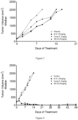
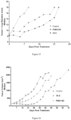
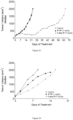
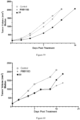
- Table 12 reports the total diameter (tumor + leg) evaluation of HT1080 tumors in mice treated with placebo, compound C, 4-S, and 12-S. These results are also showed in Figure 1 .
- Table 12 Days Total diameter (tumor + leg) (mm) Control Compound C 4-S 12-S 0.0 7.5 7.5 7.5 7.5 2.0 9.4 8.8 7.7 8.2 5.0 11.4 9.0 8.3 8.6 7.0 12.1 9.6 8.8 9.5 9.0 13.2 10.2 8.4 10.0 12.0 14.5 10.2 8.4 11.2 14.0 15.2 11.2 9.6 11.7 16.0 15.9 12.4 10.0 12.7 19.0 18.0 13.3 10.4 13.5 21.0 15.2 12.1 14.4 23.0 18.0 12.7 16.5 27.0 13.5 15.2 30.0 15.6 16.4 33.0 18.0
- Reference Example 29b In vivo studies to determine the effect of 4-S and 12-S in human breast xenografts.
- the aim of this study was to compare the antitumoral activity of 4-S and 12-S with the antitumoral activity of compound C by using a xenograft model of human breast cancer.
- the tumor model used in this study was MDA-MB-231 cell line.
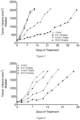
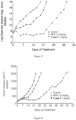
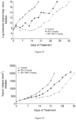
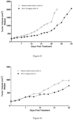
- Table 13 reports the median tumor volume evaluation of MDA-MB-231 tumors in mice treated with placebo, compound C, 4-S, and 12-S. These results are also showed in Figure 2 .
- Table 13 Days Median Tumor Volume (mm 3 ) Control Compound C 4-S 12-S 0.0 149.4 149.4 150.6 150.2 2.0 240.0 217.1 197.3 229.9 5.0 325.1 281.3 250.9 290.5 7.0 407.8 338.6 265.0 398.2 9.0 514.8 385.1 272.5 508.9 12.0 648.1 400.4 270.6 602.5 14.0 799.0 436.9 281.3 751.0 16.0 1002.5 585.7 293.6 977.7 19.0 1233.9 774.7 322.1 1252.6 21.0 1539.1 965.9 324.4 1560.7 23.0 2006.5 1215.2 326.6 2005.9 26.0 2027.7 1503.2 398.8 2066.2 28.0 1785.3 501.8 30.0 2037.1 654.8 33.0 856.7 35.0 1147.1 37.0 1635.9
- the aim of this study was to compare the antitumoral activity of 4-S and 12-S with the antitumoral activity of compound C by using three different xenograft models of human lung cancer. These models correspond to non-small cell lung cancer (H-460 cell line) and to small cell lung cancer (H526 and H82 cell lines).
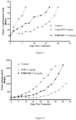
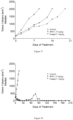
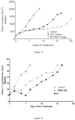
- Table 14 reports the median tumor volume evaluation of H460 tumors in mice treated with placebo, compound C, 4-S, and 12-S. These results are also showed in Figure 3 .
- Table 14 Days Median Tumor Volume (mm 3 ) Control Compound C 4-S 12-S 0.0 187.4 186.1 185.9 186.0 2.0 577.5 395.4 310.9 460.5 5.0 1352.0 665.9 634.6 922.4 7.0 1642.9 929.5 959.1 1252.1 9.0 2025.0 1063.7 1064.9 1409.4 12.0 1436.5 1421.0 1531.7 14.0 2025.0 1845.5 2025.0 16.0 2025.0 2025.0
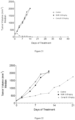
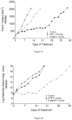
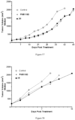
- Table 15 reports the median tumor volume evaluation of H526 tumors in mice treated with placebo, compound C, 4-S and 12-S. These results are also showed in Figure 4 .
- Table 15 Days Median Tumor Volume (mm 3 ) Control Compound C 4-S 12-S 0.0 217.2 217.9 211.8 212.7 2.0 410.7 262.4 279.0 412.7 4.0 778.5 108.3 98.8 637.9 7.0 1083.2 129.8 56.7 968.5 9.0 1371.0 85.9 62.5 1250.3 11.0 1782.0 52.3 32.0 1568.0 14.0 2025.0 54.1 18.0 2025.0 16.0 47.3 32.0 21.0 4.0 4.0 28.0 4.0 4.0 35.0 4.0 4.0 42.0 62.5 4.0 49.0 53.5 4.0
- Table 16 reports the median tumor volume evaluation of H82 tumors in mice treated with placebo, compound C, 4-S and 12-S. These results are also showed in Figure 5 .
- Table 16 Days Median Tumor Volume (mm 3 ) Control Compound C 4-S 12-S 0.0 171.6 170.5 168.3 174.0 2.0 439.4 265.3 215.2 360.1 5.0 1024.7 488.7 253.6 899.7 7.0 1422.0 760.0 341.4 1398.6 9.0 1923.8 899.5 349.4 1847.6 12.0 2025.0 1038.5 436.4 2089.7 14.0 1213.4 516.0 16.0 1256.4 521.8 19.0 1741.5 560.9 21.0 1878.8 627.7 23.0 2057.0 690.9 26.0 953.4 28.0 847.1 30.0 1067.5 33.0 1200.6 35.0 1257.7 37.0 1497.7 41.0 2014.2
- Reference Example 29d In vivo studies to determine the effect of 4-S and 12-S in human ovarian tumor xenografts.
- the aim of this study was to compare the antitumoral activity of 4-S and 12-S with the antitumoral activity of compound C by using a xenograft model of human ovarian cancer.
- the tumor model used in this study was A2780.
- Table 17 reports the volume evaluation of A2780 tumors in mice treated with placebo, compound C, 4-S, and 12-S. These results are also showed in Figure 6 .
- Table 17 Days Median Tumor Volume (mm 3 ) Control Compound C 4-S 12-S 0.0 169.5 169.6 168.3 168.5 2.0 317.5 206.3 150.6 262.1 5.0 758.9 372.7 175.9 628.6 7.0 1351.9 607.6 317.7 976.3 9.0 1675.8 696.2 281.9 1387.5 12.0 2025.0 855.6 372.1 1666.0 14.0 1293.9 709.2 2025.0 16.0 1683.5 870.9 19.0 2137.5 1235.4 21.0 1453.3 23.0 1666.0 26.0 2025.0
- the aim of this study was to compare the antitumoral activity of 4-S and 12-S with the antitumoral activity of Compound C by using a xenograft model of human gastric cancer.
- the tumor model used in this study was HGC27.
- Table 18 reports tumor volume growth of HGC27 tumors in mice treated with placebo, compound C, 4-S, and 12-S. These results are also showed in Figure 7 .
- Table 18 Days Median Tumor Volume (mm 3 ) Control Compound C 4-S 12-S 0.0 200.7 195.0 194.8 196.6 2.0 429.0 391.0 358.6 411.9 5.0 835.5 578.6 515.3 834.1 7.0 1256.5 708.2 589.2 1176.6 9.0 1602.2 937.7 779.4 1531.6 12.0 2040.7 1169.5 980.8 2030.2 14.0 1496.8 1153.3 16.0 1690.6 1346.2 19.0 2004.0 1643.4 21.0 2004.7 Reference Example 30. In vivo studies to determine the effect of 4-R in several xenograft models
- 4-R was provided in the form of freeze dried vials. 4-R cake was reconstituted with water for infusion to a concentration of 0.5 mg/mL. The 4-R stock solution was further diluted in 5% dextrose solution for injection to the dosing formulation concentration. The 4-R administered dose was 0.30 mg/kg.
- PM01183 was provided in the form of vials of lyophilized product. Each vial was reconstituted with water for infusion to a concentration of 0.2 mg/mL. Further dilutions were made with 5% glucose or 0.9% sodium chloride solution for injection to the dosing formulation concentrations. The administered dose was 0.18 mg/kg.
- Placebo was provided in the form of lyophilised cake containing 100 mg Sucrose + Potassium dihydrogen phosphate 6.8 mg + Phosphoric acid q.s. pH 3.8-4.5 which was reconstituted with water for infusion.
- Reference Example 30a In vivo studies to determine the effect of 4-R in human fibrosarcoma xenografts.
- the aim of this study was to compare the antitumoral activity of 4-R and Compound D with the antitumoral activity of PM01183 by using a xenograft model of human sarcoma.
- Table 19 reports the total diameter (tumor + leg) evaluation of HT1080 tumors in mice treated with placebo, PM01183 and 4-R. These results are also showed in Figure 8 .
- Table 19 Days Total diameter (tumor+leg) (mm) Control PM01183 4-R 0 8.1 8.1 8.1 2 11.2 9.7 8.6 7 13.6 11.2 8.7 9 15.2 12.3 9.0 14 16.9 14.6 9.3 18 18.1 15.6 10.3 21 15.1 11.5 23 16.3 13.3 25 18.0 15.8 28 18.0
- Table 20 reports the total diameter (tumor + leg) evaluation of HT1080 tumors in mice treated with placebo, PM01183 and Compound D. These results are also showed in Figure 9 .
- Table 20 Days Total diameter (tumor+leg) (mm) Control PM01183 Compound D 0 7.8 7.7 7.7 2 11.0 9.2 9.5 5 14.0 9.8 8.8 7 15.0 12.2 8.7 9 18.0 12.6 9.4 12 13.1 9.4 14 14.6 10.1 16 14.5 10.9 19 15.0 11.2 21 18.0 12.1 23 13.0 26 15.0 28 18.0
- Reference Example 30b In vivo studies to determine the effect of 4-R in human breast xenografts.
- the aim of this study was to compare the antitumoral activity of 4-R and Compound D with the antitumoral activity of PM01183 by using a xenograft model of human breast cancer.
- the tumor model used in this study was MDA-MB-231 cell line.
- Table 21 reports the median tumor volume evaluation of MDA-MB-231 tumors in mice treated with placebo, PM01183 and 4-R. These results are also showed in Figure 10 .
- Table 21 Days Median Tumor Volume (mm 3 ) Control PM01183 4-R 0 130.6 129.3 129.3 7 230.7 189.0 151.9 14 422.2 230.1 164.1 21 687.7 305.9 136.8 28 1114.9 535.8 195.9 35 1555.3 819.7 294.2 42 2138.5 962.7 494.4 49 1301.3 843.8 52 2199.4 1042.5
- Table 22 reports the volume evaluation of MDA-MB-231 tumors in mice treated with placebo, PM01183 and Compound D. These results are also showed in Figure 11 .
- Table 22 Days Median Tumor Volume (mm 3 ) Control PM01183 Compound D 0 129.2 129.6 129.5 7 284.0 185.9 147.9 14 564.3 290.8 186.4 21 686.0 337.9 136.5 28 1068.6 507.4 290.7 35 1359.4 796.1 431.7 42 1533.7 1062.5 770.1 49 1653.1 1416.3 970.0 56 2029.3 1673.3 1461.9 63 2060.8 1811.9 1526.4
- Reference Example 30c In vivo studies to determine the effect of 4-R in human lung tumor xenografts.
- the aim of this study was to compare the antitumoral activity of 4-R and Compound D with the antitumoral activity of PM01183 by using a xenograft model of human lung cancer.
- the tumor model used in this study was H-460 cell line.
- Table 23 reports the volume evaluation of H460 tumors in mice treated with placebo, PM01183 and 4-R. These results are also showed in Figure 12 .
- Table 23 Days Median Tumor Volume (mm 3 ) Control PM01183 4-R 0 156.2 156.7 155.5 2 290.9 227.3 223.3 7 1323.8 940.4 737.8 9 1816.9 1210.3 861.0 11 2120.9 1433.8 1102.9 14 1529.5 1638.0 16 2028.6
- Table 24 reports the volume evaluation of H460 tumors in mice treated with placebo, PM01183 and Compound D. These results are also showed in Figure 13 .
- Table 24 Days Median Tumor Volume (mm 3 ) Control PM01183 Compound D 0 205.2 204.5 203.4 2 508.0 418.1 367.3 7 1355.8 1004.0 792.0 9 1682.1 1211.3 854.6 12 1938.6 1515.4 1026.7 14 2275.9 1633.3 1175.8 16 1723.9 1322.1 19 2112.3 1581.1 21 2409.4 1789.3 23 1966.5 26 2080.7
- Reference Example 30d In vivo studies to determine the effect of 4-R in human ovarian tumor xenografts.
- the aim of this study was to compare the antitumoral activity of 4-R and Compound D with the antitumoral activity of PM01183 by using a xenograft model of human ovarian cancer.
- the tumor model used in this study was A2780.
- Table 25 reports the volume evaluation of A2780 tumors in mice treated with placebo, PM01183 and 4-R. These results are also showed in Figure 14 .
- Table 25 Days Median Tumor Volume (mm 3 ) Control PM01183 4-R 0 172.8 175.5 175.2 5 896.6 671.2 611.4 7 1415.3 1048.9 1036.5 12 2205.3 2020.3 1992.0 14 2165.3
- Table 26 reports the volume evaluation of A2780 tumors in mice treated with placebo, PM01183 and Compound D. These results are also showed in Figure 15 .
- Table 26 Days Median Tumor Volume (mm 3 ) Control PM01183 Compound D 0 189.4 191.2 190.1 3 588.5 454.5 319.6 5 1086.0 772.1 514.4 7 1428.6 1161.5 897.4 10 2077.1 1615.6 1239.8 12 2163.1 1703.0 1656.2 14 2029.3 1951.7 17 2121.7 19 2068.6
- the aim of this study was to compare the antitumoral activity of 4-R and Compound D with the antitumoral activity of PM01183 by using a xenograft model of human gastric cancer.
- the tumor model used in this study was HGC27.
- Table 27 reports tumor volume growth of HGC27 tumors in mice treated with placebo, PM01183 and 4-R. These results are also showed in Figure 16 .
- Table 27 Days Median Tumor Volume (mm 3 ) Control PM01183 4-R 0 174.6 171.6 173.0 2 319.1 317.5 266.8 5 632.5 404.0 370.7 7 1046.0 485.7 418.5 9 1359.1 604.6 627.8 12 1863.8 760.8 713.5 14 2115.0 789.6 837.0 16 719.5 867.1 19 895.9 1040.2 21 1051.3 1229.8 26 1901.2 1784.5 28 2028.9 2073.6
- Table 28 reports tumor volume growth of HGC27 tumors in mice treated with placebo, PM01183 and Compound D. These results are also showed in Figure 17 .
- Table 28 Days Median Tumor Volume (mm 3 ) Control PM01183 Compound D 0 142.3 169.5 157.4 2 286.5 372.4 327.6 5 527.7 474.1 439.6 7 821.4 571.8 418.7 9 1130.9 787.9 567.9 12 1547.8 951.1 537.0 14 1868.5 1064.4 654.6 16 1887.0 1346.1 672.4 19 2162.3 1691.8 843.0 21 1920.0 842.7 23 2011.4 963.7 26 2102.2 1203.3 28 1589.7 30 1777.6 33 2146.2
- 12-R was provided in the form of freeze dries vials. 12-R cake was reconstituted with water for infusion to a concentration of 0.5 mg/mL. The 12-R stock solution was further diluted in 5% dextrose solution for injection to the dosing formulation concentration. The 12-R administered dose was 0.05 mg/kg.
- Placebo was provided in the form of lyophilised cake containing 100 mg Sucrose + Potassium dihydrogen phosphate 6.8 mg + Phosphoric acid q.s. pH 3.8-4.5 which was reconstituted with water for infusion.
- Reference Example 31a In vivo studies to determine the effect of 12-R in human fibrosarcoma xenografts.
- the aim of this study was to compare the antitumoral activity of 12-R with the antitumoral activity of Compound D by using a xenograft model of human sarcoma.
- the tumor model used in this study was HT1080 cell line.
- Table 29 reports the total diameter (tumor + leg) evaluation of HT1080 tumors in mice treated with placebo, Compound D and 12-R. These results are also showed in Figure 18 .
- Table 29 Days Total diameter (tumor + leg) (mm) Control Compound D 12-R 0.0 7.5 7.5 7.5 2.0 9.4 8.2 8.9 5.0 11.4 7.5 8.8 7.0 12.1 7.4 9.5 9.0 13.2 8.1 9.5 12.0 14.5 7.9 11.0 14.0 15.2 7.7 11.7 16.0 15.9 8.8 12.9 19.0 18.0 10.2 13.5 21.0 11.2 15.5 23.0 12.2 18.0 27.0 13.2 30.0 14.6 33.0 16.3 35.0 18.0
- Reference Example 31b In vivo studies to determine the effect of 12-R in human breast xenografts.
- the aim of this study was to compare the antitumoral activity of 12-R with the antitumoral activity of Compound D by using a xenograft model of human breast cancer.
- the tumor model used in this study was MDA-MB-231 cell line.
- the aim of this study was to compare the antitumoral activity of 12-R with the antitumoral activity of Compound D by using three different xenograft models of human lung cancer. These models correspond to non-small cell lung cancer (H460 cell line and to small cell lung cancer (H526 and H82 cell lines).
- Table 31 reports the volume evaluation of H460 tumors in mice treated with placebo, Compound D and 12-R. These results are also showed in Figure 20 .
- Table 31 Days Median Tumor Volume (mm 3 ) Control Compound D 12-R 0.0 187.4 187.2 187.0 2.0 577.5 329.7 410.7 5.0 1352.0 559.4 796.7 7.0 1642.9 756.5 1167.9 9.0 2025.0 971.9 1360.3 12.0 1370.9 1666.0 14.0 1626.8 2025.0 16.0 2025.0
- Table 32 reports the median tumor volume evaluation of H526 tumors in mice treated with placebo, compound D and 12-R. The results are also shown in Figure 21 .
- Table 32 Days Median Tumor Volume (mm 3 ) Control Compound D 12-R 0.0 217.20 216.1 214.20 2.0 410.70 240.9 404.50 4.0 778.50 99.3 680.50 7.0 1083.20 56.7 995.20 9.0 1371.00 62.5 1290.50 11.0 1782.00 62.5 1568.00 14.0 2025.00 32.0 2025.00 16.0 4.0 21.0 4.0 28.0 4.0 35.0 4.0 42.0 4.0 49.0 4.0
- Table 33 reports the median tumor volume evaluation of H82 tumors in mice treated with placebo, compound D and 12-R. The results are also shown in Figure 22 .
- Table 33 Days Median Tumor Volume (mm 3 ) Control Compound D 12-R 0.0 171.60 169.4 170.50 2.0 439.40 340.6 381.40 5.0 1024.70 443.3 793.20 7.0 1422.00 496.2 1187.20 9.0 1923.80 614.1 1699.30 12.0 2025.00 665.5 2125.60 14.0 1041.6 16.0 1151.2 19.0 1516.7 21.0 1748.0
- the aim of this study was to compare the antitumoral activity of 12-R with the antitumoral activity of Compound D by using a xenograft model of human ovarian cancer.
- the tumor model used in this study was A2780.
- Table 34 reports the volume evaluation of A2780 tumors in mice treated with placebo, Compound D and 12-R. These results are also showed in Figure 23 .
- Table 34 Days Median Tumor Volume (mm 3 ) Control Compound D 12-R 0.0 169.5 168.8 169.6 2.0 317.5 225.7 302.8 5.0 758.9 256.6 786.5 7.0 1351.9 473.8 1113.3 9.0 1675.8 633.6 1490.6 12.0 2025.0 822.8 2025.00 14.0 1129.3 2025.00 16.0 1198.6 19.0 1649.6 21.0 2025.0
- the aim of this study was to compare the antitumoral activity of 12-R with the antitumoral activity of Compound D by using a xenograft model of human gastric cancer.
- the tumor model used in this study was HGC27.
- Table 35 reports tumor volume growth of HGC27 tumors in mice treated with placebo, Compound D and 12-R. These results are also showed in Figure 24 .
- Table 35 Days Median Tumor Volume (mm 3 ) Control Compound D 12-R 0.0 200.7 194.0 193.3 2.0 429.0 324.2 413.3 5.0 835.5 561.6 809.1 7.0 1256.5 504.2 1261.5 9.0 1602.2 584.2 1589.5 12.0 2040.7 767.7 2017.9 14.0 1056.8 2034.9 16.0 1440.2 19.0 1717.9 21.0 2043.4
- 19-S was provided in the form of freeze dried vials. 19-S cake was reconstituted with water for infusion to a concentration of 0.5 mg/mL. The 19-S stock solution was further diluted in 5 % dextrose solution for injection to the dosing formulation concentration. The 19-S administered dose was 0.75 mg/kg.
- PM01183 was provided in the form of vials of lyophilized product. Each vial was reconstituted with water for infusion to a concentration of 0.2 mg/mL. The PM01183 stock solution was further diluted in 5% glucose solution for injection to the dosing formulation concentrations. The administered dose was 0.18 mg/kg.
- Placebo was provided in the form of lyophilised cake containing 100 mg Sucrose + Potassium dihydrogen phosphate 6.8 mg + Phosphoric acid q.s. pH 3.8-4.5 which was reconstituted with water for infusion.
- Reference Example 32a In vivo studies to determine the effect of 19-S in human fibrosarcoma xenografts.
- the aim of this study was to compare the antitumoral activities of 19-S and PM01183 by using a xenograft model of human sarcoma.
- the tumor model used in this study was HT1080 cell line.
- Table 36 reports the total diameter (tumor + leg) evaluation of HT1080 tumors in mice treated with placebo, PM01183 and 19-S. These results are also showed in Figure 25 .
- Table 36 Days Total diameter (tumor + leg) (mm) Control PM01183 19-S 0 8.4 8.4 8.2 2 10.9 9.8 8.4 5 14.8 9.7 7.8 7 15.9 11.4 9.5 9 18.0 12.7 9.9 12 13.7 10.7 14 14.6 11.3 16 15.5 11.9 19 15.6 13.4 21 18.0 14.4 23 18.0
- Reference Example 32b In vivo studies to determine the effect of 19-S in human breast adenocarcinoma xenografts.
- the aim of this study was to compare the antitumoral activities of 19-S and PM01183 by using a xenograft model of human breast cancer.
- the tumor model used in this study was MDA-MB-231 cell line.
- Table 37 reports the median tumor volume evaluation of MDA-MB-231 tumors in mice treated with placebo, PM01183 and 19-S. These results are also showed in Figure 26 .
- Table 37 Days Median Tumor Volume (mm 3 ) Control PM01183 19-S 0 132.6 134.3 133.6 4 194.1 177.2 157.2 7 248.2 186.3 142.6 11 377.6 250.7 133.9 14 461.3 266.1 117.3 18 679.2 327.7 79.3 21 753.2 391.0 89.2 25 909.2 493.1 120.6 28 1090.7 627.3 144.4 32 1433.4 789.0 246.1 36 1887.5 1022.0 419.3 39 1785.2 1294.2 593.7 42 2081.5 1643.3 945.9 46 2137.5 1658.9 985.3 49 1938.0 1211.5 53 1324.3 56 1703.9 60 1793.3 63 1603.0 70 2324.2
- Reference Example 32c In vivo studies to determine the effect of 19-S in human lung cancer xenografts.
- the aim of this study was to compare the antitumoral activities of 19-S and PM01183 by using a xenograft model of human lung cancer.
- the tumor model used in this study was H-460 cell line.
- Table 38 reports the median tumor volume evaluation of H-460 tumors in mice treated with placebo, PM01183 and 19-S. These results are also showed in Figure 27 .
- Table 38 Days Median Tumor Volume (mm 3 ) Control PM01183 19-S 0 197.0 196.3 196.9 2 529.5 457.0 364.0 4 1057.4 861.5 624.9 7 1582.5 1280.2 966.5 9 2094.8 1424.9 1078.2 11 1969.9 1449.0 14 1761.5
- Reference Example 32d In vivo studies to determine the effect of 19-S in human ovarian tumor xenografts.
- the aim of this study was to compare the antitumoral activities of 19-S and PM01183 by using a xenograft model of human ovarian cancer.
- the tumor model used in this study was A2780.
- Table 39 reports the median tumor volume evaluation of A2780 tumors in mice treated with placebo, PM01183 and 19-S. These results are also showed in Figure 28 .
- Table 39 Days Median Tumor Volume (mm 3 ) Control PM01183 19-S 0 163.4 163.6 164.4 2 287.1 235.5 187.9 4 568.7 463.2 205.4 7 1211.3 986.3 513.6 9 1633.7 1451.4 650.6 11 2047.8 2062 659.8 14 1236.2 18 1575.9 23 1895.7 25 2177.0
- the aim of this study was to compare the antitumoral activities of 19-S and PM01183 by using a xenograft model of human gastric cancer.
- the tumor model used in this study was HGC27.
- Table 40 reports the median tumor volume evaluation of HGC27 tumors in mice treated with placebo, PM01183 and 19-S. These results are also showed in Figure 29 .
- Table 40 Days Median Tumor Volume (mm 3 ) Control PM01183 19-S 0 178.3 177.6 181.5 2 409 395.6 404.6 5 907.4 572.4 600.3 7 1283.6 766.6 660.3 9 1664 950.7 787.5 14 2102.8 1199.4 864.4 16 1353.1 882.4 19 1294.3 925.2 21 1335.1 893.6 23 1320.3 874.4 26 1364.5 932.1 30 1671.9 1547.8 33 2009.2 2020.4
- PM01183 was provided in the form of vials of lyophilized product. Each vial was reconstituted with water for infusion to a concentration of 0.2 mg/mL. The PM01183 stock solution was further diluted in 5% glucose solution for injection to the dosing formulation concentrations. The administered dose was 0.18 mg/kg.
- Placebo was provided in the form of lyophilised cake containing 100 mg Sucrose + Potassium dihydrogen phosphate 6.8 mg + Phosphoric acid q.s. pH 3.8-4.5 which was reconstituted with water for infusion.
- Reference Example 33a In vivo studies to determine the effect of 19-R in human fibrosarcoma xenografts.
- the aim of this study was to compare the antitumoral activity of 19-R with the antitumoral activity of PM01183 by using a xenograft model of human sarcoma.
- the tumor model used in this study was HT1080 cell line.
- Table 41 reports the total diameter (tumor + leg) evaluation of HT-1080 tumors in mice treated with placebo, PM01183 and 19-R. These results are also showed in Figure 30 .
- Table 41 Days Total diameter (tumor + leg) (mm) Control PM01183 19-R 0 8.4 8.4 8.3 2 10.9 9.8 9.4 5 14.8 9.7 8.0 7 15.9 11.4 7.2 9 18.0 12.7 7.8 12 13.7 7.8 14 14.6 8.4 16 15.5 8.2 19 15.6 11.3 21 18.0 12.2 23 13.3 26 15.2 28 18.0
- Reference Example 33b In vivo studies to determine the effect of 19-R in human breast adenocarcinoma xenografts.
- the aim of this study was to compare the antitumoral activity of 19-R with the antitumoral activity of PM01183 by using a xenograft model of human breast cancer.
- the tumor model used in this study was MDA-MB-231 cell line.
- Table 42 reports the median tumor volume evaluation of MDA-MB-231 tumors in mice treated with placebo, PM01183 and 19-R. These results are also showed in Figure 31 .
- Table 42 Days Median Tumor Volume (mm 3 ) Control PM01183 19-R 0 132.6 134.3 132.5 4 194.1 177.2 189.3 7 248.2 186.3 151.9 11 377.6 250.7 167.5 14 461.3 266.1 152.6 18 679.2 327.7 162.2 21 753.2 391.0 201.2 25 909.2 493.1 208.5 28 1090.7 627.3 274.8 32 1433.4 789.0 355.8 36 1887.5 1022.0 513.8 39 1785.2 1294.2 793.7 42 2081.5 1643.3 1012.2 46 2137.5 1658.9 1188.5 49 1938.0 1380.7 53 1568.0 56 1862.6 60 2129.4
- Reference Example 33c In vivo studies to determine the effect of 19-R in human lung tumor xenografts.
- the aim of this study was to compare the antitumoral activity of 19-R with the antitumoral activity of PM01183 by using a xenograft model of human lung cancer.
- the tumor model used in this study was H-460 cell line.
- Table 43 reports the median tumor volume evaluation of H460 tumors in mice treated with placebo, PM01183 and 19-R. These results are also showed in Figure 32 .
- Table 43 Days Median Tumor Volume (mm 3 ) Control PM01183 19-R 0 197.0 196.3 196.8 2 529.5 457.0 418.7 4 1057.4 861.5 697.2 7 1582.5 1280.2 911.7 9 2094.8 1424.9 1111.5 11 1969.9 1281.3 14 1478.7 16 1594.0
- Reference Example 33d In vivo studies to determine the effect of 19-R in human ovarian tumor xenografts.
- the aim of this study was to compare the antitumoral activity of 19-R with the antitumoral activity of PM01183 by using a xenograft model of human ovarian cancer.
- the tumor model used in this study was A2780.
- Table 44 reports the median tumor volume evaluation of A2780 tumors in mice treated with placebo, PM01183 and 19-R. These results are also showed in Figure 33 .
- Table 44 Days Median Tumor Volume (mm 3 ) Control PM01183 19-R 0 163.4 163.6 162.8 2 287.1 236.5 212.9 4 568.7 463.2 368.5 7 1211.3 986.3 841.3 9 1633.7 1451.4 1138.9 11 2047.8 2062.0 1519.9 14 2056.0
- the aim of this study was to compare the antitumoral activity of 19-R with the antitumoral activity of PM01183 by using a xenograft model of human gastric cancer.
- the tumor model used in this study was HGC27.
- Table 45 reports the median tumor volume evaluation of HGC-27 tumors in mice treated with placebo, PM01183 and 19-R. These results are also showed in Figure 34 .
- Table 45 Days Median Tumor Volume (mm 3 ) Control PM01183 19-R 0 178.3 177.6 182.0 2 409.0 395.6 414.9 5 907.4 572.4 735.0 7 1283.6 766.6 901.2 9 1664.0 950.7 1048.1 14 2102.8 1199.4 1293.9 16 1353.1 1488.8 19 1294.3 1668.3 21 1335.1 1845.0 23 1320.3 2025.0 26 1364.5 30 1671.9 33 2009.2
- Example 34 In vivo studies to determine the effect of 39-S in several xenograft models.
- Compound 39-S and C were provided in the form of freeze-dried vials of lyophilized product. Each vial was reconstituted with sterile water for injection to a concentration of 0.5 mg/mL. Further dilutions were made with 5% dextrose solution for injection to the dosing formulation concentration. The administered doses of 39-S and C (reference) were 1.25 and 3 mg/Kg, respectively.
- Placebo was provided in the forms of vials of lyophilised product.
- Each vial sucrose 200 mg + potassium dihydrogen phosphate 13.6 mg + phosphoric acid q.s. pH 3.8-4.5
- sterile water for injection 2 mL
- Further dilutions were made with 5% dextrose solution for injection.
- Example 34a In vivo studies to determine the effect of 39-S in human fibrosarcoma xenografts.
- the aim of this study was to evaluate the antitumoral activity of compound 39-S by comparison with the antitumoral activity of compound C (reference) by using a xenograft model of human sarcoma.
- the tumor model used in this study was HT1080 cell line.
- Table 46 reports the total diameter (tumor + leg) evaluation of HT1080 tumors in mice treated with placebo, compound C (reference) and 39-S. These results are also showed in Figure 35 .
- Table 46 Days Total diameter (tumor + leg) (mm) Control 39-S Compound C 0 7.5 7.5 7.5 2 9.4 7.9 8.8 5 11.4 6.4 9.0 7 12.1 6.8 9.6 9 13.2 6.9 10.2 12 14.5 6.6 10.2 14 15.2 6.4 11.2 16 15.9 6.8 12.4 19 18.0 7.0 13.3 21 7.0 15.2 23 8.5 18.0 27 10.8 30 12.5 33 14.3 35 15.3 37 18.0
- Example 34b In vivo studies to determine the effect of 39-S in human breast adenocarcinoma xenografts.
- the aim of this study was to compare the antitumoral activities of 39-S and compound C (reference) by using a xenograft model of human breast cancer.
- the tumor model used in this study was MDA-MB-231 cell line.
- Table 47 reports the median tumor volume evaluation of MDA-MB-231 tumors in mice treated with placebo, compound C (reference) and 39-S. These results are also showed in Figure 36 . Table 47. Days Median Tumor Volume (mm 3 ) Control 39-S Compound C 0 149.4 151.0 149.4 2 240.0 209.3 217.1 5 325.1 290.9 281.3 7 407.8 301.8 338.6 9 514.8 300.8 385.1 12 648.1 278.7 400.4 14 799.0 249.7 436.9 16 1002.5 243.6 585.7 19 1233.9 248.3 774.7 21 1539.1 250.0 965.9 23 2006.5 260.3 1215.2 26 2027.7 304.9 1503.2 28 337.1 1785.3 30 451.3 2037.1 33 584.1 35 683.4 37 784.7 40 937.4 42 1060.5 44 1170.5 47 1112.9 49 1138.6 51 1283.2 54 1415.1 56 1518.7 58 1728.5 61 2017.9
- Example 34c In vivo studies to determine the effect of 39-S in human lung cancer xenografts.
- the aim of this study was to compare the antitumoral activity of 39-S with the antitumoral activity of compound C (reference) by using three different xenograft models of human lung cancer. These models correspond to non-small cell lung cancer (H-460 cell line) and to small cell lung cancer (H526 and H82 cell lines).
- Table 48 reports the median tumor volume evaluation of H460 tumors in mice treated with placebo, compound C (reference) and 39-S. These results are also showed in Figure 37 .
- Table 48 Days Median Tumor Volume (mm 3 ) Control 39-S Compound C 0 187.4 187.8 186.1 2 577.5 314.4 395.4 5 1352.0 584.1 665.9 7 1642.9 831.2 929.5 9 2025.0 841.0 1063.7 12 1008.0 1436.5 14 1309.8 2025.0 16 1470.0 2025.0 19 2025.0
- Table 49 reports the median tumor volume evaluation of H526 tumors in mice treated with placebo, compound C (reference) and 39-S. These results are also showed in Figure 38 .
- Table 49 Days Median Tumor Volume (mm 3 ) Control 39-S Compound C 0 217.2 214.5 217.9 2 410.7 260.3 262.4 4 778.5 80.0 108.3 7 1083.2 46.2 129.8 9 1371.0 32.0 85.9 11 1782.0 32.0 52.3 14 2025.0 4.0 54.1 16 4.0 47.3 21 4.0 4.0 28 4.0 4.0 35 4.0 4.0 42 4.0 62.5 49 4.0 53.5 56 4.0 70.0 63 4.0 132.3 70 4.0 368.5 77 4.0 465.8 84 4.0 107.4 91 4.0 130.0 98 4.0 5.0 105 4.0 4.0 112 4.0 119 4.0 4.0 126 4.0 133 4.0 4.0 140 4.0 4.0 147 4.0 4.0 165 4.0 4.0 175 4.0 4.0 191 4.0
- Table 50 reports the median tumor volume evaluation of H82 tumors in mice treated with placebo, compound C (reference) and 39-S. These results are also showed in Figure 39 .
- Table 50 Days Median Tumor Volume (mm 3 ) Control 39-S Compound C 0 171.6 170.3 170.5 2 439.4 325.2 265.3 5 1024.7 430.8 488.7 7 1422.0 466.2 760.0 9 1923.8 544.3 899.5 12 2025.0 640.3 1038.5 14 711.2 1213.4 16 802.7 1256.4 19 916.0 1741.5 21 1047.2 1878.8 23 1189.1 2057.0 26 1497.2 28 1741.8 30 1731.7 33 2029.4
- Example 34d In vivo studies to determine the effect of 39-S in human ovarian tumor xenografts.
- the aim of this study was to compare the antitumoral activity of 39-S with the antitumoral activity of compound C (reference) by using a xenograft model of human ovarian cancer.
- Table 51 reports the volume evaluation of A2780 tumors in mice treated with placebo, compound C (reference) and 39-S. These results are also showed in Figure 40 .
- Table 51 Day Median Tumor Volume (mm 3 ) Control 39-S Compound C 0 169.5 170.5 169.6 2 317.5 206.5 206.3 5 758.9 163.4 372.7 7 1351.9 298.6 607.6 9 1675.8 317.4 696.2 12 2025.0 378.2 855.6 14 668.5 1293.9 16 853.5 1683.5 19 1415.5 2137.5 21 1519.2 23 1666.0 30 2025.0
- Example 34e In vivo studies to determine the effect of 39-S in human gastric tumor xenografts.
- the aim of this study was to compare the antitumoral activity of 39-S with the antitumoral activity of compound C (reference) by using a xenograft model of human gastric cancer.
- the tumor model used in this study was HGC27.
- Table 52 reports tumor volume growth of HGC27 tumors in mice treated with placebo, compound C (reference), and 39-S. These results are also showed in Figure 41 .
- Table 52 Days Median Tumor Volume (mm 3 ) Control 39-S Compound C 0 200.7 195.6 195.0 2 429.0 356.3 391.0 5 835.5 469.7 578.6 7 1256.5 467.8 708.2 9 1602.2 575.2 937.7 12 2040.7 611.1 1169.5 14 637.3 1496.8 16 690.4 1690.6 19 701.8 2004.0 21 697.4 1741.4 23 715.5 2056.4 26 898.1 28 1163.4 30 1409.3 33 1450.5 35 1708.5 37 1804.4 40 2075.2
- Compound 47-R was provided in the form of freeze-dried vials of lyophilized product. Each vial was reconstituted with sterile water for injection to a concentration of 0.5 mg/mL. Further dilutions were made with 5% dextrose solution for injection to the dosing formulation concentration. 47-R administered dose was 0.1 mg/Kg.
- Placebo was provided in the form of vials of lyophilised product.
- Each vial sucrose 200 mg + potassium dihydrogen phosphate 13.6 mg + phosphoric acid q.s. pH 3.8-4.5
- sterile water for injection 2 mL
- Further dilutions were made with 5% dextrose solution for injection.
- Reference Example 35a In vivo studies to determine the effect of 47-R in human fibrosarcoma xenografts.
- the aim of this study was to evaluate the antitumoral activity of compound 47-R by comparison with the antitumoral activity of compound D by using a xenograft model of human sarcoma.
- the tumor model used in this study was HT1080 cell line.
- Table 53 reports the total diameter (tumor + leg) evaluation of HT1080 tumors in mice treated with placebo, compound D and 47-R. These results are also showed in Figure 42 .
- Table 53 Days Total diameter (tumor + leg) (mm) Control 47-R Compound D 0 7.5 7.5 7.5 2 9.4 8.9 8.2 5 11.4 10.1 7.5 7 12.1 10.5 7.4 9 13.2 11.5 8.1 12 14.5 13.5 7.9 14 15.2 13.9 7.7 16 15.9 14.6 8.8 19 18.0 18.0 10.2 21 11.2 23 12.2 27 13.2 30 14.6 33 16.3 35 18.0
- Reference Example 35b In vivo studies to determine the effect of 47-R in human breast adenocarcinoma xenografts.
- the aim of this study was to compare the antitumoral activities of 47-R and compound D by using a xenograft model of human breast cancer.
- the tumor model used in this study was MDA-MB-231 cell line.
- Table 54 reports the median tumor volume evaluation of MDA-MB-231 tumors in mice treated with placebo, compound D and 47-R. These results are also showed in Figure 43 .
- Table 54 Days Median Tumor Volume (mm 3 ) Control 47-R Compound D 0 149.4 150.5 149.6 2 240.0 225.3 217.2 5 325.1 323.2 284.5 7 407.8 405.0 310.0 9 514.8 495.9 325.5 12 648.1 594.1 268.4 14 799.0 769.5 237.7 16 1002.5 1009.5 261.2 19 1233.9 1298.0 251.3 21 1539.1 1580.7 219.9 23 2006.5 2006.5 221.8 26 2027.7 2032.1 245.5 28 320.3 30 401.6 33 545.8 35 629.2 37 670.7 40 669.9 42 696.3 44 798.1 47 857.7 49 870.7 51 925.8 54 1005.4 56 1064.2 58 1235.6 61 1367.8 63 1553.7 65 2017.9
- the aim of this study was to compare the antitumoral activity of 47-R with the antitumoral activity of compound D by using three different xenograft models of human lung cancer. These models correspond to non-small cell lung cancer (H-460 cell line) and to small cell lung cancer (H526 and H82 cell lines).
- Table 55 reports the median tumor volume evaluation of H460 tumors in mice treated with placebo, compound D and 47-R. These results are also showed in Figure 44 .
- Table 55 Days Median Tumor Volume (mm 3 ) Control 47-R Compound D 0 187.4 185.8 187.2 2 577.5 508.1 329.7 5 1352.0 979.3 559.4 7 1642.9 1280.0 756.5 9 2025.0 1543.1 971.9 12 1764.0 1370.9 14 1845.5 1626.8 16 2025.0
- Table 56 reports the median tumor volume evaluation of H526 tumors in mice treated with placebo, compound D and 47-R. These results are also showed in Figure 45 .
- Table 56 Days Median Tumor Volume (mm 3 ) Control 47-R Compound D 0 217.2 211.5 216.1 2 410.7 367.9 240.9 4 778.5 583.7 99.3 7 1083.2 941.7 56.7 9 1371.0 1305.2 62.5 11 1782.0 1484.7 62.5 14 2025.0 2025.0 32.0 16 4.0 21 4.0 28 4.0 35 4.0 42 4.0 49 4.0 56 4.0 63 4.0 70 4.0 77 4.0 84 4.0 91 4.0 98 4.0 4.0 112 4.0 119 4.0 126 4.0 133 4.0 140 4.0 147 4.0 165 4.0 175 4.0 191 4.0 205 .
- Table 57 reports the median tumor volume evaluation of H82 tumors in mice treated with placebo, compound D and 47-R. These results are also showed in Figure 46 . Table 57. Days Median Tumor Volume (mm 3 ) Control 47-R Compound D 0 171.6 169.0 169.4 2 439.4 371.6 340.6 5 1024.7 888.8 443.3 7 1422.0 1314.2 496.2 9 1923.8 1811.0 614.1 12 2025.0 2055.4 665.5 14 1041.6 16 1151.2 19 1516.7 21 1748.0
- the aim of this study was to compare the antitumoral activity of 47-R with the antitumoral activity of compound D by using a xenograft model of human ovarian cancer.
- the tumor model used in this study was A2780.
- Table 58 reports the volume evaluation of A2780 tumors in mice treated with placebo, compound D and 47-R. These results are also showed in Figure 47 .
- Table 58 Days Median Tumor Volume (mm 3 ) Control 47-R Compound D 0 169.5 170.6 168.8 2 317.5 280.6 225.7 5 758.9 653.9 256.6 7 1351.9 848.7 473.8 9 1675.8 1569.1 633.6 12 2025.0 1764.0 822.8 14 1666.0 1129.3 16 2025.0 1198.6 19 1649.6 21 2025.0
- the aim of this study was to compare the antitumoral activity of 47-R with the antitumoral activity of compound D by using a xenograft model of human gastric cancer.
- the tumor model used in this study was HGC27.
- Table 59 reports tumor volume growth of HGC27 tumors in mice treated with placebo, compound D, and 47-R. These results are also showed in Figure 48 .
- Table 59 Days Median Tumor Volume (mm 3 ) Control 47-R Compound D 0 200.7 194.0 194.0 2 429.0 359.4 324.2 5 835.5 774.8 561.6 7 1256.5 1155.4 504.2 9 1602.2 1474.7 584.2 12 2040.7 1870.2 767.7 14 2031.3 1056.8 16 2075.2 1440.2 19 1717.9 21 2043.4
- Example 36 In vivo studies to determine the effect of 32 in several xenograft models.
- Compounds 32 and ET-736 were provided in the form of freeze-dried vials of lyophilized product. Each vial was reconstituted with sterile water for injection to a concentration of 0.5 mg/mL. Further dilutions were made with 5% dextrose solution for injection to the dosing formulation concentration. The administered dose of 32 and ET-736 (reference) was 0.5 mg/Kg.
- Placebo was provided in the form of lyophilised product.
- Each vial sucrose 200 mg + potassium dihydrogen phosphate 13.6 mg + phosphoric acid q.s. pH 3.8-4.5
- sterile water for injection 2 mL
- Further dilutions were made with 5% dextrose solution for injection.
- Example 36a In vivo studies to determine the effect of 32 in human fibrosarcoma xenografts.
- the aim of this study was to evaluate the antitumoral activity of compound 32 by comparison with the antitumoral activity of ET-736 (reference) by using a xenograft model of human sarcoma.
- the tumor model used in this study was HT-1080 cell line.
- Table 60 reports the total diameter (tumor + leg) evaluation of HT1080 tumors in mice treated with placebo, ET-736 (reference) and 32. These results are also showed in Figure 49 .
- Table 60 Days Total diameter (tumor + leg) (mm) Control 32 ET-736 0 7.5 7.5 7.4 2 9.4 8.9 8.3 5 11.4 8.2 7.1 7 12.1 8.8 7.6 9 13.2 10.0 7.4 12 14.5 8.8 7.0 14 15.2 10.8 7.1 16 15.9 11.8 7.4 19 18.0 12.0 8.4 21 14.0 8.6 23 13.8 10.0 27 13.6 10.9 30 15.5 13.2 33 18.0 14.3 35 15.2 37 15.8 40 16.6 42 18.0
- Example 36b In vivo studies to determine the effect of 32 in human breast adenocarcinoma xenografts.
- the aim of this study was to compare the antitumoral activities of 32 and ET-736 (reference) by using a xenograft model of human breast cancer.
- the tumor model used in this study was MDA-MB-231 cell line.
- Table 61 reports the median tumor volume evaluation of MDA-MB-231 tumors in mice treated with placebo, ET-736 (reference) and 32. These results are also showed in Figure 50 .
- Table 61 Days Median Tumor Volume (mm 3 ) Control 32 ET-736 0 149.4 150.2 150.0 2 240.0 233.6 237.7 5 325.1 310.6 302.1 7 407.8 386.1 364.9 9 514.8 437.5 404.6 12 648.1 493.4 395.4 14 799.0 560.3 398.3 16 1002.5 649.5 447.2 19 1233.9 853.0 485.0 21 1539.1 1017.5 536.3 23 2006.5 1263.2 669.8 26 2027.7 1487.7 778.9 28 1726.6 1046.1 30 1892.6 1315.9 33 2082.8 1664.9 35 2007.7
- Example 36c In vivo studies to determine the effect of 32 in human lung cancer xenografts.
- the aim of this study was to compare the antitumoral activities of 32 and ET-736 (reference) by using three different xenograft models of human lung cancer. These models correspond to non-small cell lung cancer (H-460 cell line) and to small cell lung cancer (H526 and H82 cell lines).
- Table 62 reports the median tumor volume evaluation of H460 tumors in mice treated with placebo, ET-736 (reference) and 32. These results are also showed in Figure 51 .
- Table 62 Days Median Tumor Volume (mm 3 ) Control 32 ET-736 0 187.4 183.9 185.8 2 577.5 455.2 457.8 5 1352.0 784.8 732.8 7 1642.9 837.4 930.1 9 2025.0 1044.3 1207.2 12 2025.0 1452.4 1568.0 14 1845.5 1845.5 16 2025.0 2025.0
- Table 63 reports the median tumor volume evaluation of H526 tumors in mice treated with placebo, ET-736 (reference) and 32. These results are also showed in Figure 52 .
- Table 63 Days Median Tumor Volume (mm 3 ) Control 32 ET-736 0 217.2 212.1 213.5 2 410.7 277.3 240.5 4 778.5 127.0 97.2 7 1083.2 95.0 48.8 9 1371.0 63.1 62.5 11 1782.0 62.5 62.5 14 2025.0 62.5 47.3 16 62.5 32.0 21 4.0 4.0 28 4.0 4.0 35 55.3 4.0 42 85.3 4.0 49 185.6 4.0 56 169.1 4.0 63 62.5 4.0 70 88.9 4.0 77 280.6 4.0 84 694.2 199.8 91 1150.9 786.5
- Table 64 reports the median tumor volume evaluation of H82 tumors in mice treated with placebo, ET-736 (reference) and 32. These results are also showed in Figure 53 .
- Table 64 Days Median Tumor Volume (mm 3 ) Control 32 ET-736 0 171.6 171.6 170.0 2 439.4 309.4 334.4 5 1024.7 485.0 539.4 7 1422.0 708.4 836.4 9 1923.8 972.6 1013.1 12 2025.0 1101.6 1290.9 14 1339.6 1648.0 16 1430.3 19 1885.7
- Example 36d In vivo studies to determine the effect of 32 in human ovarian tumor xenografts.
- the aim of this study was to compare the antitumoral activities of 32 and ET-736 (reference) by using a xenograft model of human ovarian cancer.
- the tumor model used in this study was A2780.
- Table 65 reports the volume evaluation of A2780 tumors in mice treated with placebo, ET-736 (reference) and 32. These results are also showed in Figure 54 .
- Table 65 Days Median Tumor Volume (mm 3 ) Control 32 ET-736 0 169.5 168.6 168.8 2 317.5 262.9 251.2 5 758.9 572.7 382.6 7 1351.9 997.5 676.1 9 1675.8 1359.9 959.4 12 2025.0 1715.0 1241.5 14 2025.0 1582.7 16 2025.0 1646.4 19 1845.5 21 2025.0
- Example 36e In vivo studies to determine the effect of 32 in human gastric tumor xenografts.
- the aim of this study was to compare the antitumoral activities of 32 and ET-736 (reference) by using a xenograft model of human gastric cancer.
- the tumor model used in this study was HGC27.
- Table 66 reports tumor volume growth of HGC27 tumors in mice treated with placebo, ET-736 (reference) and 32. These results are also showed in Figure 55 .
- Table 66 Days Median Tumor Volume (mm 3 ) Control 32 ET-736 0 200.7 194.8 195.9 2 429.0 386.3 359.2 5 835.5 551.3 537.6 7 1256.5 579.2 553.5 9 1602.2 665.8 604.7 12 2040.7 701.1 627.4 14 814.5 648.0 16 959.9 687.6 19 1312.4 760.0 21 1626.8 792.4 23 1737.3 818.9 26 1026.1 28 1354.9
- Example 37 In vivo studies to determine the effect of 35 in several xenograft models.
- Compound 35 was provided in the form of freeze-dried vials of lyophilized product. Each vial was reconstituted with sterile water for injection to a concentration of 0.5 mg/mL. Further dilutions were made with 5% dextrose solution for injection to the dosing formulation concentration. The administered dose of 35 was 0.25 mg/Kg.
- PM01183 (reference) was provided in the form of vials of lyophilized product. Each vial was reconstituted with sterile water for injection to a concentration of 0.5 mg/mL. Further dilutions were made with 5% glucose or 0.9% sodium chloride solution for injection to the dosing formulation concentration. The administered dose of PM01183 (reference) was 0.18 mg/Kg.
- Placebo was provided in the form of vials of lyophilised product each vial (sucrose 200 mg + potassium dihydrogen phosphate 13.6 mg + phosphoric acid q.s. pH 3.8-4.5) was reconstituted with sterile water for injection (2 mL). Further dilutions were made with 5% dextrose solution for injection.
- Example 37a In vivo studies to determine the effect of 35 in human fibrosarcoma xenografts.
- the aim of this study was to evaluate the antitumoral activities of compound 35 and PM01183 (reference) by using a xenograft model of human sarcoma.
- the tumor model used in this study was HT-1080 cell line.
- Table 67 reports the total diameter (tumor + leg) evaluation of HT1080 tumors in mice treated with placebo, PM01183 (reference) and 35. These results are also showed in Figure 56 .
- Table 67 Days Total diameter (tumor+leg) (mm) Control PM01183 35 0 8.4 8.4 8.3 2 10.9 9.8 9.4 5 14.8 9.7 8.7 7 15.9 11.4 8.0 9 18.0 12.7 9.9 12 13.7 11.4 14 14.6 12.5 16 15.5 13.2 19 15.6 14.6 21 18.0 15.7 23 18.0
- Example 37b In vivo studies to determine the effect of 35 in human breast adenocarcinoma xenografts.
- the aim of this study was to compare the antitumoral activities of 35 and PM01183 (reference) by using a xenograft model of human breast cancer.
- the tumor model used in this study was MDA-MB-231 cell line.
- Table 68 reports the median tumor volume evaluation of MDA-MB-231 tumors in mice treated with placebo, PM01183 (reference) and 35. These results are also showed in Figure 57 .
- Table 68 Days Median Tumor Volume (mm 3 ) Control 35 PM01183 0 132.6 132.7 134.3 4 194.1 193.6 177.2 7 248.2 179.1 186.3 11 377.6 276.7 250.7 14 461.3 286.0 266.1 18 679.2 384.5 327.7 21 753.2 436.8 391.0 25 909.2 554.3 493.1 28 1090.7 647.0 627.3 32 1433.4 817.5 789.0 36 1887.5 1156.7 1022.0 39 1785.2 1387.6 1294.2 42 2081.5 1595.3 1643.3 46 2137.5 1689.9 1658.9 49 2044.2 1938.0
- Example 37c In vivo studies to determine the effect of 35 in human lung cancer xenografts.
- the aim of this study was to compare the antitumoral activities of 35 and PM01183 (reference) by using a xenograft model of human lung cancer.
- the tumor model used in this study was H460 cell line.
- Table 69 reports the median tumor volume evaluation of H460 tumors in mice treated with placebo, PM01183 (reference) and 35. These results are also showed in Figure 58 .
- Table 69 Days Median Tumor Volume (mm 3 ) Control PM01183 35 0 197.0 196.3 197.2 2 529.5 457.0 415.3 4 1057.4 861.5 750.8 7 1582.5 1280.2 1242.3 9 2094.8 1424.9 1536.3 11 1969.9 1728.7 14 2080.9
- Example 37d In vivo studies to determine the effect of 35 in human ovarian tumor xenografts.
- the aim of this study was to compare the antitumoral activities of 35 and PM01183 (reference) by using a xenograft model of human ovarian cancer.
- the tumor model used in this study was A2780.
- Table 70 reports the volume evaluation of A2780 tumors in mice treated with placebo, PM01183 (reference) and 35. These results are also showed in Figure 59 .
- Table 70 Days Median Tumor Volume (mm 3 ) Control PM01183 35 0 163.4 163.6 163.6 2 287.1 236.5 189.9 4 568.7 463.2 284.3 7 1211.3 986.3 606.4 9 1633.7 1451.4 946.9 11 2047.8 2062.0 1394.2 14 2067.7
- Example 37e In vivo studies to determine the effect of 35 in human gastric tumor xenografts.
- the aim of this study was to compare the antitumoral activities of 35 and PM01183 (reference) by using a xenograft model of human gastric cancer.
- the tumor model used in this study was HGC27.
- Table 71 reports volume growth of HGC27 tumors in mice treated with placebo, PM01183 (reference) and 35. These results are also showed in Figure 60 .
- Table 71 Days Median Tumor Volume (mm 3 ) Control 35 PM01183 0 178.3 182.3 177.6 2 409.0 382.2 395.6 5 907.4 610.8 572.4 7 1283.6 775.5 766.6 9 1664.0 988.0 950.7 12 1692.4 1005.6 972.0 14 2102.8 1531.7 1199.4 16 1866.3 1353.1
- 12-S and 12-R were provided in the form of freeze-dried vials of lyophilized product. Each vial was reconstituted with water for infusion to a concentration of 0.5 mg/mL. Further dilutions were made with 5% dextrose solution for injection to the dosing formulation concentration. The administered doses of 12-S and 12-R were 0.25 mg/kg and 0.05 mg/kg respectively.
- Placebo was provided in the form of lyophilised cake containing 100 mg Sucrose + Potassium dihydrogen phosphate 6.8 mg + Phosphoric acid q.s. pH 3.8-4.5 which was reconstituted with water for infusion.
- the aim of this study was to compare the antitumoral activity of 12-S and 12-R by using a xenograft model of human prostate cancer.
- the tumor model used in this study was PC-3 cell line.
- Table 72 reports the median tumor volume evaluation of PC-3 tumors in mice treated with placebo, 12-S and 12-R. These results are also showed in Figure 61 .
- Table 72 Median Tumor Volume (mm 3 ) Days Control 12-R 12-S 0 128.0 129.0 128.0 2 149.6 136.2 141.5 4 197.0 144.2 143.7 7 250.9 172.2 183.9 11 291.6 183.6 208.1 14 326.5 205.2 270.7 16 361.9 256.0 286.3 18 397.0 325.7 336.1 21 476.9 322.2 357.1 23 506.1 407.8 400.8 25 526.7 419.9 443.6 29 593.6 459.1 523.4 32 769.5 512.1 652.6 35 875.3 579.2 689.7 37 900.0 613.8 692.2 39 977.8 764.1 726.9 42 1061.5 785.0 823.7 44 1463.4 845.5 864.2 46 1612.8 748.0 1182.8 49 1809.2 808.7 1219.2 51 2030.9 855.8 1331.9 56 1125.2 1335.2
- Reference Example 39 In vivo studies to determine the effect of 4-S in human prostate xenografts.
- the aim of this study was to compare the antitumoral activity of 4-S by using three different xenograft models of human prostate cancer. These models correspond to PC-3, DU-145 and 22Rv1 cell lines.
- Compound 4-S was provided in the form of freeze-dried vials of lyophilized product. Each vial was reconstituted with sterile water for injection to a concentration of 0.5 mg/mL. Further dilutions were made with 5% dextrose solution for injection to the dosing formulation concentration. The administered dose of 4-S varied depending on the study, being 1.25 mg/Kg when the tumor model was PC-3, 1.00 mg/Kg when the tumor model was DU-145 and 0.75 mg/Kg when the tumor model was 22Rv1, respectively.
- Placebo was provided in the form of lyophilised cake containing 100 mg Sucrose + Potassium dihydrogen phosphate 6.8 mg + Phosphoric acid q.s. pH 3.8-4.5 which was reconstituted with water for infusion.
- Table 73 reports the median tumor volume evaluation of PC-3 tumors in mice treated with placebo and 4-S. These results are also showed in Figure 62 .
- Table 73 Median Tumor Volume (mm 3 ) Days Control 4-S 0 140.5 141.3 2 178.6 130.7 4 233.1 147.6 7 284.6 157.7 9 331.7 200.9 11 433.7 192.8 14 500.4 210.8 16 570.8 255.5 18 680.3 261.1 21 850.1 282.4 23 928.5 382.2 25 915.7 451.6 28 1187.5 611.1 30 1270.1 762.3 32 1327.1 821.6 35 1373.6 1045.6
- Table 74 reports the median tumor volume evaluation of DU-145 tumors in mice treated with placebo and 4-S. These results are also showed in Figure 63 .
- Table 74 Median Tumor Volume (mm 3 ) Days Control 4-S 0 127.4 126.2 3 180.9 102.4 5 248.8 119.5 7 320.4 149.5 10 384.6 216.8 12 441.0 181.4 14 519.6 237.7 17 601.0 204.4 19 660.8 210.9 24 740.7 300.0 26 798.6 378.4 28 587.0 31 650.3
- Table 75 reports the median tumor volume evaluation of 22Rv1 tumors in mice treated with placebo and 4-S. These results are also showed in Figure 64 .
- Table 75 Median Tumor Volume (mm 3 ) Days Control 4-S 0 174.6 173.6 3 307.2 70.3 5 511.5 63.1 7 739.1 76.7 10 955.2 49.1 12 1286.1 59.8 14 1385.8 74.9 17 1791.1 55.1 19 2025.0 64.9 24 138.4 26 186.9 28 242.0 31 392.5 33 561.8 35 799.3 38 1107.0 40 1426.4 42 1685.5 45 2025.0
- Example 40 In vivo studies to determine the effect of 39-S in human prostate xenografts.
- the aim of this study was to compare the antitumoral activity of 39-S by using three different xenograft models of human prostate cancer. These models correspond to PC-3, DU-145 and 22Rv1 cell lines.
- Compound 39-S was provided in the form of freeze-dried vials of lyophilized product. Each vial was reconstituted with sterile water for injection to a concentration of 0.5 mg/mL. Further dilutions were made with 5% dextrose solution for injection to the dosing formulation concentration. The administered dose of 39-S varied depending on the study, being 1.25 mg/Kg when the tumor model was PC-3, 1.00 mg/Kg when the tumor model was DU-145 and 0.75 mg/Kg when the tumor model was 22Rv1, respectively.
- Placebo was provided in the form of lyophilised cake containing 100 mg Sucrose + Potassium dihydrogen phosphate 6.8 mg + Phosphoric acid q.s. pH 3.8-4.5 which was reconstituted with water for infusion.
- Table 76 reports the median tumor volume evaluation of PC-3 tumors in mice treated with placebo and 39-S. These results are also showed in Figure 65 .
- Table 76 Median Tumor Volume (mm 3 ) Days Control 39-S 0 181.9 182.3 2 254.8 222.6 4 308.7 244.0 7 344.5 269.3 9 396.8 295.8 11 439.2 315.0 14 542.7 356.9 16 619.0 388.0 18 721.3 400.1 21 908.1 503.3 23 1039.1 556.0 25 1117.0 579.6 28 1232.3 694.9 30 1778.6 811.1 32 2018.1 1027.1 35 1194.3 37 1495.0 39 1710.7 42 2066.2
- Table 77 reports the median tumor volume evaluation of DU-145 tumors in mice treated with placebo and 39-S. These results are also showed in Figure 66 .
- Table 77 Median Tumor Volume (mm 3 ) Days Control 39-S 0 156.8 179.9 2 198.3 199.9 4 253.9 222.2 7 325.8 340.5 9 385.1 354.1 11 462.2 349.7 14 483.8 429.1 16 599.0 454.8 18 664.0 449.7 21 816.9 517.5 23 861.3 568.5 25 977.9 629.4 28 973.6 775.7
- Table 78 reports the median tumor volume evaluation of 22Rv1 tumors in mice treated with placebo and 39-S. These results are also showed in Figure 67 .
- Table 78 Median Tumor Volume (mm 3 ) Days Control 39-S 0 174.6 173.5 3 307.2 93.0 5 511.5 96.8 7 739.1 115.2 10 955.2 108.2 12 1286.1 128.4 14 1385.8 155.6 17 1791.1 173.4 19 2025.0 210.2 24 358.8 26 456.5 28 645.2 31 1049.5 33 1439.4 35 2025.0
Landscapes
- Chemical & Material Sciences (AREA)
- Organic Chemistry (AREA)
- Health & Medical Sciences (AREA)
- Veterinary Medicine (AREA)
- General Health & Medical Sciences (AREA)
- Medicinal Chemistry (AREA)
- Public Health (AREA)
- Pharmacology & Pharmacy (AREA)
- Life Sciences & Earth Sciences (AREA)
- Animal Behavior & Ethology (AREA)
- General Chemical & Material Sciences (AREA)
- Nuclear Medicine, Radiotherapy & Molecular Imaging (AREA)
- Chemical Kinetics & Catalysis (AREA)
- Epidemiology (AREA)
- Pharmaceuticals Containing Other Organic And Inorganic Compounds (AREA)
- Organic Low-Molecular-Weight Compounds And Preparation Thereof (AREA)
- Acyclic And Carbocyclic Compounds In Medicinal Compositions (AREA)
- Steroid Compounds (AREA)
- Nitrogen Condensed Heterocyclic Rings (AREA)
Priority Applications (4)
| Application Number | Priority Date | Filing Date | Title |
|---|---|---|---|
| SM20230343T SMT202300343T1 (it) | 2017-04-27 | 2018-04-27 | Composti antitumorali |
| RS20230905A RS64686B1 (sr) | 2017-04-27 | 2018-04-27 | Antitumorska jedinjenja |
| HRP20231233TT HRP20231233T1 (hr) | 2017-04-27 | 2018-04-27 | Antitumorski spojevi |
| SI201830966T SI4101855T1 (sl) | 2017-04-27 | 2018-04-27 | Protitumorske spojine |
Applications Claiming Priority (4)
| Application Number | Priority Date | Filing Date | Title |
|---|---|---|---|
| EP17382228 | 2017-04-27 | ||
| EP17382497 | 2017-07-26 | ||
| PCT/EP2018/060868 WO2018197663A1 (en) | 2017-04-27 | 2018-04-27 | Antitumoral compounds |
| EP18720255.1A EP3615544B9 (en) | 2017-04-27 | 2018-04-27 | Antitumoral compounds |
Related Parent Applications (2)
| Application Number | Title | Priority Date | Filing Date |
|---|---|---|---|
| EP18720255.1A Division-Into EP3615544B9 (en) | 2017-04-27 | 2018-04-27 | Antitumoral compounds |
| EP18720255.1A Division EP3615544B9 (en) | 2017-04-27 | 2018-04-27 | Antitumoral compounds |
Publications (3)
| Publication Number | Publication Date |
|---|---|
| EP4101855A1 EP4101855A1 (en) | 2022-12-14 |
| EP4101855B1 EP4101855B1 (en) | 2023-08-02 |
| EP4101855B9 true EP4101855B9 (en) | 2024-01-03 |
Family
ID=62063080
Family Applications (5)
| Application Number | Title | Priority Date | Filing Date |
|---|---|---|---|
| EP18382287.3A Active EP3395820B1 (en) | 2017-04-27 | 2018-04-27 | Antitumoral compounds |
| EP22166571.4A Active EP4047002B1 (en) | 2017-04-27 | 2018-04-27 | Antitumoral compounds |
| EP18720255.1A Active EP3615544B9 (en) | 2017-04-27 | 2018-04-27 | Antitumoral compounds |
| EP18382288.1A Active EP3395821B1 (en) | 2017-04-27 | 2018-04-27 | Antitumoral compounds |
| EP22187664.2A Active EP4101855B9 (en) | 2017-04-27 | 2018-04-27 | Antitumoral compounds |
Family Applications Before (4)
| Application Number | Title | Priority Date | Filing Date |
|---|---|---|---|
| EP18382287.3A Active EP3395820B1 (en) | 2017-04-27 | 2018-04-27 | Antitumoral compounds |
| EP22166571.4A Active EP4047002B1 (en) | 2017-04-27 | 2018-04-27 | Antitumoral compounds |
| EP18720255.1A Active EP3615544B9 (en) | 2017-04-27 | 2018-04-27 | Antitumoral compounds |
| EP18382288.1A Active EP3395821B1 (en) | 2017-04-27 | 2018-04-27 | Antitumoral compounds |
Country Status (39)
Families Citing this family (15)
| Publication number | Priority date | Publication date | Assignee | Title |
|---|---|---|---|---|
| JOP20190254A1 (ar) | 2017-04-27 | 2019-10-27 | Pharma Mar Sa | مركبات مضادة للأورام |
| TWI824043B (zh) * | 2018-10-25 | 2023-12-01 | 西班牙商瑪製藥股份有限公司 | 藥物抗體共軛物 |
| CN118924688A (zh) * | 2019-11-21 | 2024-11-12 | 法马马有限公司 | 用鲁比卡丁制剂治疗小细胞肺癌的方法 |
| KR20230004714A (ko) | 2020-04-21 | 2023-01-06 | 파르마 마르, 에스.에이. | 약물 항체 접합체 |
| TW202144369A (zh) * | 2020-04-26 | 2021-12-01 | 大陸商江蘇恆瑞醫藥股份有限公司 | 海鞘素類衍生物及其製備方法與醫藥用途 |
| CA3218171A1 (en) | 2021-05-19 | 2022-11-24 | Carmen KAHATT | Dosage regimens for ecubectedin |
| WO2024186263A1 (en) * | 2023-03-07 | 2024-09-12 | Axcynsis Therapeutics Pte. Ltd. | Antibody-drug conjugates comprising trabectedin and lurbinectedin derivatives |
| WO2025077996A1 (en) | 2023-10-09 | 2025-04-17 | Pharma Mar, S.A. | Synthetic process for the manufacture of ecteinascidin compounds |
| EP4563149A1 (en) | 2023-11-30 | 2025-06-04 | Pharma Mar, S.A. | Lurbinectedin, ecubectedin and a related compound for use in the treatment of skin cancers |
| WO2025168075A1 (zh) * | 2024-02-08 | 2025-08-14 | 映恩生物科技(上海)有限公司 | 海鞘素类化合物及其应用 |
| WO2025228595A1 (en) | 2024-04-30 | 2025-11-06 | Pharma Mar, S.A. | Use of compound ia in the treatment of cancers including combination therapy with atezolizumab. |
| WO2025228594A1 (en) | 2024-04-30 | 2025-11-06 | Pharma Mar, S.A. | Use of ecubectedin in the treatment of cancers including combination therapy with atezolizumab |
| WO2025228597A1 (en) | 2024-04-30 | 2025-11-06 | Pharma Mar, S.A. | Combination of compound ia and a topoisomerase i inhibitor in the treatment of cancer |
| WO2025228596A1 (en) | 2024-04-30 | 2025-11-06 | Pharma Mar, S.A. | Combination of pm14 and a topoisomerase i inhibitor in the treatment of cancer |
| WO2025233522A1 (en) | 2024-05-10 | 2025-11-13 | Pharma Mar, S.A. | Synthetic process for an ecteinascidin |
Family Cites Families (220)
| Publication number | Priority date | Publication date | Assignee | Title |
|---|---|---|---|---|
| US3205220A (en) | 1961-10-26 | 1965-09-07 | Lilly Co Eli | Leurosidine and leurocristine and their production |
| US4762949A (en) | 1979-06-20 | 1988-08-09 | University Of Illinois Foundation | Acyl and carbamimidoyl alkanediamines |
| GB2058047B (en) | 1979-07-11 | 1983-09-21 | Asahi Chemical Ind | Amides and amidines |
| FR2461995A1 (fr) | 1979-07-20 | 1981-02-06 | Lcc Cice Cie Europ Compo Elect | Transducteur magneto-electrique pour systeme d'enregistrement magnetique, et systeme d'enregistrement comportant un tel transducteur |
| DE3161556D1 (en) | 1980-09-12 | 1984-01-05 | Univ Illinois | Novel antibiotics, derivatives thereof, processes for their extraction, and compositions containing them |
| US4782135A (en) | 1980-09-12 | 1988-11-01 | Board Of Trustees, University Of Illinois | Composition of matter and process |
| US4950649A (en) | 1980-09-12 | 1990-08-21 | University Of Illinois | Didemnins and nordidemnins |
| US5137870A (en) | 1980-09-12 | 1992-08-11 | The Board Of Trustees Of The University Of Illinois | Didemnins and nordidemnins |
| US4493796A (en) | 1980-09-12 | 1985-01-15 | Board Of Trustees, Univ. Of Ill. | Didemnins A, B, C, and derivatives thereof, as antiviral agents |
| US4548814A (en) | 1980-12-18 | 1985-10-22 | The Board Of Trustees Of The University Of Illinois | Composition of matter and process |
| JPS5922518A (ja) | 1982-07-29 | 1984-02-04 | 余合住金産業株式会社 | 洋服タンス |
| IT1153974B (it) | 1982-09-23 | 1987-01-21 | Erba Farmitalia | Composizioni farmacologiche a base di cisplatino e metodo per il loro ottenimento |
| US4855086A (en) | 1982-10-15 | 1989-08-08 | Burroughs Wellcome Co. | Novel pesticides, preparation and use |
| US4537883A (en) | 1982-11-12 | 1985-08-27 | Mead Johnson & Company | Lyophilized cyclophosphamide |
| JPS59225189A (ja) | 1983-06-03 | 1984-12-18 | Shionogi & Co Ltd | キノナミン誘導体およびその製造法 |
| US4631149A (en) | 1983-07-25 | 1986-12-23 | University Of Illinois | Antiviral eudistomins from a marine tunicate |
| JPS6084288A (ja) | 1983-10-13 | 1985-05-13 | Shionogi & Co Ltd | シアノキノナミンアセテ−ト類およびその製造法 |
| US4567253A (en) | 1984-02-03 | 1986-01-28 | Tony Durst | 2-Substituted derivatives of podophyllotoxin and etoposide |
| JPS61109717A (ja) | 1984-11-02 | 1986-05-28 | Teruhiko Beppu | 抗腫瘍剤 |
| EP0207124B1 (en) | 1984-12-28 | 1991-10-09 | Conpharm Ab | Use of podophyllotoxin and derivatives thereof |
| US4644072A (en) | 1985-04-12 | 1987-02-17 | Bristol-Myers Company | Intermediates for the production of epipodophyllotoxin and related compounds and processes for the preparation and use thereof |
| EP0220453B1 (de) | 1985-09-20 | 1992-04-15 | Cernitin S.A. | Verwendung von Pflanzenpollenextrakten zur Herstellung von das Wachstum von Tumorzellen hemmenden pharmazeutischen Präparaten und Verfahren zu ihrer Herstellung |
| US4731377A (en) | 1986-01-31 | 1988-03-15 | Harbor Branch Oceanographic Institute, Inc. | Antitumor cyclic peroxides |
| US5149804A (en) | 1990-11-30 | 1992-09-22 | The Board Of Trustees Of The University Of Illinois | Ecteinascidins 736 and 722 |
| US5256663A (en) | 1986-06-09 | 1993-10-26 | The Board Of Trustees Of The University Of Illinois | Compositions comprising ecteinascidins and a method of treating herpes simplex virus infections therewith |
| JP2562162B2 (ja) | 1986-06-09 | 1996-12-11 | ユニバーシティ・オブ・イリノイ | エクテインアシジン729、743、745、759a、759bおよび770 |
| US5089273A (en) | 1986-06-09 | 1992-02-18 | Board Of Trustees Of The University Of Illinois | Ecteinascidins 729, 743, 745, 759A, 759B and 770 |
| US4816450A (en) | 1986-09-15 | 1989-03-28 | Duke University | Inhibition of protein kinase C by long-chain bases |
| US4737510A (en) | 1986-09-30 | 1988-04-12 | The Board Of Trustees Of The University Of Illinois | Bioactive metabolites from the caribbean sponge agelas coniferin |
| US5093330A (en) | 1987-06-15 | 1992-03-03 | Ciba-Geigy Corporation | Staurosporine derivatives substituted at methylamino nitrogen |
| US4847246A (en) | 1987-09-11 | 1989-07-11 | Wilson George R | Antiviral compositions derived from fireflies and their methods of use |
| FR2623504B1 (fr) | 1987-11-25 | 1990-03-09 | Adir | Nouveaux derives n-(vinblastinoyl-23) d'acide amino-1 methylphosphonique, leurs procedes de preparation et les compositions pharmaceutiques qui les contiennent |
| US5559145A (en) | 1988-06-01 | 1996-09-24 | Oxaco S.A. | 1,2,4-trioxane derivatives |
| DE68903907T2 (de) | 1988-09-05 | 1993-06-09 | Sankyo Co | Cyclisches peptid, seine herstellung und seine verwendung zur behandlung von cardiovasculaeren stoerungen. |
| WO1990005731A1 (en) | 1988-11-24 | 1990-05-31 | University Of Queensland | Cytotoxic macromolecules |
| US5190876A (en) | 1988-12-27 | 1993-03-02 | Emory University | Method of modifying cellular differentiation and function and compositions therefor |
| US5583160A (en) | 1989-02-03 | 1996-12-10 | The Biomembrane Institute | Methylsphingosine used to treat apoptosis |
| CA2007507C (en) | 1989-02-03 | 1998-05-19 | Yasuyuki Igarashi | Sphingosine and n-methyl-sphingosine as inhibitor of cell growth |
| US4948791A (en) | 1989-04-10 | 1990-08-14 | The Board Of Trustees Of The University Of Illinois | Novel Cytotoxic cyclic depsipeptides from the tunicate trididemnum solidum |
| US4986988A (en) | 1989-05-18 | 1991-01-22 | Arizona Board Of Regents | Isolation and structural elucidation of the cytostatic linear depsipeptides dolastatin 13 and dehydrodolastatin 13 |
| GB8922026D0 (en) | 1989-09-29 | 1989-11-15 | Pharma Mar Sa | Novel anti-viral and cytotoxic agent |
| US20030148933A1 (en) | 1990-10-01 | 2003-08-07 | Pharma Mar S.A. | Derivatives of dehydrodidemnin B |
| US5053559A (en) | 1989-12-29 | 1991-10-01 | Oxaco S.A. | Cleavage of 1,2,4-trioxanes |
| KR910014122A (ko) | 1990-01-19 | 1991-08-31 | 디께다 가즈히꼬 | 에토포시드-2-디메틸아미노 화합물의 동결건조 제제 |
| JPH0539283A (ja) | 1991-01-31 | 1993-02-19 | Suntory Ltd | 新規物質S−59917a及びその製造方法 |
| US5721352A (en) | 1991-02-19 | 1998-02-24 | University Of Florida Research Foundation | Entomopoxvirus expression system |
| DE4120327A1 (de) | 1991-06-20 | 1992-12-24 | Basf Ag | Neue peptide, ihre herstellung und verwendung |
| US5336669A (en) | 1991-12-10 | 1994-08-09 | Erbamont, Inc. | Cyclophosphamide monohydrate and lactose |
| JPH05247055A (ja) | 1992-03-03 | 1993-09-24 | Meiji Seika Kaisha Ltd | スタウロスポリン誘導体及びそれを含有する抗腫瘍効果増強剤 |
| GB9206244D0 (en) | 1992-03-23 | 1992-05-06 | Pharma Mar Sa | Cytotoxic compound from a marine sponge |
| GB9212000D0 (en) | 1992-06-05 | 1992-07-15 | Univ Madrid Complutense | New synthetic antitumoral compound |
| WO1994004541A2 (en) | 1992-08-12 | 1994-03-03 | The Upjohn Company | Protein kinase inhibitors and related compounds combined with taxol |
| US5756734A (en) | 1992-09-11 | 1998-05-26 | Pharmamar, S.A. | Crambescidins: new antiviral and cytotoxic compounds from the sponge crambe crambe |
| ES2059259B1 (es) | 1992-09-22 | 1995-10-01 | Pharma Mar S A Pharmar | Procedimiento de obtencion de nuevos areno (e)indoles utiles como intermedios en la sintesis de productos con actividad antitumoral. |
| US5580871A (en) | 1992-11-20 | 1996-12-03 | The Dupont Merck Pharmaceutical Company | 4-Heteroaryl- 1,4-dihydropyridine compounds with calcium agonist and alpha1 -antagonist activity |
| GB9302044D0 (en) | 1993-02-03 | 1993-03-24 | Pharma Mar Sa | Cytotoxic compounds i |
| US6274551B1 (en) | 1994-02-03 | 2001-08-14 | Pharmamar, S.A. | Cytotoxic and antiviral compound |
| GB9302046D0 (en) | 1993-02-03 | 1993-03-24 | Pharma Mar Sa | Antiumoral compound-v |
| US5569757A (en) | 1993-03-30 | 1996-10-29 | Rinehart; Kenneth L. | 9-deazaadenosine and its 5'-α-D-glycopyranoside isolated from the cyanobacterium anabaena affinis strain VS-1 |
| GB9308111D0 (en) | 1993-04-20 | 1993-06-02 | Pharma Gen S A | Active compound from a stonge |
| US5556777A (en) | 1993-09-09 | 1996-09-17 | Pharmamar, S.A. | Immunosuppressive pharmaceutical compositions new biological activity from a marine agrobacterium sp. |
| US5478932A (en) | 1993-12-02 | 1995-12-26 | The Board Of Trustees Of The University Of Illinois | Ecteinascidins |
| US5462726A (en) | 1993-12-17 | 1995-10-31 | Bristol-Myers Squibb Company | Method of inhibiting side effects of solvents containing ricinoleic acid or castor oil or derivatives thereof employing a thromboxane A2 receptor antagonist and pharmaceutical compositions containing such solvents |
| US20040059112A1 (en) | 1994-02-18 | 2004-03-25 | Rinehart Kenneth L. | Ecteinascidins |
| US5514708A (en) | 1994-02-18 | 1996-05-07 | Pharmamar, S.A. | Cytotoxic metabolites from Myriapora truncata |
| US5681813A (en) | 1994-04-06 | 1997-10-28 | Pharma Mar, S.A. | Thiodepsipeptide isolated from a marine actinomycete |
| ES2100124B1 (es) | 1994-08-01 | 1998-04-01 | Pharma Mar Sa | Perfeccionamientos introducidos en la p.i. 9401697 por terpeno-quinonas con actividad antitumoral. |
| US5514705A (en) | 1994-09-07 | 1996-05-07 | Pharmamar, S.A. | Epidioxymanadic acids A and B |
| US5523456A (en) | 1994-09-29 | 1996-06-04 | Merck & Co., Inc. | Inhibitors of farnesyl-protein transferase |
| GB9422946D0 (en) | 1994-11-14 | 1995-01-04 | Univ Salamanca | Antineoplastic cyclolignan derivatives |
| GB9422947D0 (en) | 1994-11-14 | 1995-01-04 | Univ Salamanca | Immunosuppressive cyclolignan derivatives |
| GB9504662D0 (en) | 1995-03-08 | 1995-04-26 | Pharma Mar Sa | Antitumour isocoumarins |
| US20010039041A1 (en) | 1995-06-07 | 2001-11-08 | Pharma Mar, S.A. | Immunosuppressive sesbanimide compositions and methods of treatment using same |
| US5661175A (en) | 1995-06-20 | 1997-08-26 | Kashman; Yoel | Hemiasterlin and geodiamolide TA |
| US5852033A (en) | 1995-06-29 | 1998-12-22 | Pharma Mar, S.A. | Methods of treatment using lamellarin-class alkaloids |
| ES2102322B1 (es) | 1995-07-13 | 1998-03-01 | Pharma Mar Sa | Procedimiento de preparacion de didemnina a. |
| US5681847A (en) | 1995-12-05 | 1997-10-28 | Harbor Branch Oceanographic Institution, Inc. | Methods of using discodermolide compounds |
| EP0821068A3 (en) | 1996-03-29 | 1999-06-02 | Rohm And Haas Company | Novel sphingolipids and a process thereto |
| GB9608010D0 (en) | 1996-04-18 | 1996-06-19 | Pharma Mar Sa | Trunkamide A |
| US6156724A (en) | 1996-06-07 | 2000-12-05 | Rinehart; Kenneth L. | Uses of didemnins as immunomodulating agents |
| US5721362A (en) | 1996-09-18 | 1998-02-24 | President And Fellows Of Harvard College | Process for producing ecteinascidin compounds |
| WO1998017302A1 (en) | 1996-10-24 | 1998-04-30 | The Board Of Trustees Of The University Of Illinois | Total synthesis of the amino hip analogue of didemnin a |
| JP2001503746A (ja) | 1996-10-24 | 2001-03-21 | ザ・ボード・オブ・トラステイーズ・オブ・ザ・ユニバーシテイ・オブ・イリノイ | ジデムニン類似体の半合成法 |
| GB9622427D0 (en) | 1996-10-28 | 1997-01-08 | Pharma Mar Sa | Antimalarial drugs |
| US5985876A (en) | 1997-04-15 | 1999-11-16 | Univ Illinois | Nucleophile substituted ecteinascidins and N-oxide ecteinascidins |
| US6028077A (en) | 1997-04-15 | 2000-02-22 | Rinehart; Kenneth L. | Crambescidin compounds |
| USRE38793E1 (en) | 1997-04-15 | 2005-09-06 | Rinehart Kenneth L | Spisulosine compounds |
| US6800661B1 (en) | 1997-04-15 | 2004-10-05 | Board Of Trustees Of The University Of Illinois | Spisulosine compounds |
| US6107520A (en) | 1997-04-15 | 2000-08-22 | The Board Of Trustees Of The University Of Illinois | Spisulosine compounds |
| US6034058A (en) | 1997-04-15 | 2000-03-07 | Rinehart; Kenneth L. | Semi-synthetic alanyl dilemnin analogs |
| AUPO656597A0 (en) | 1997-05-02 | 1997-05-29 | Australian National University, The | Preparation of therapeutic compounds |
| WO1998050048A1 (en) | 1997-05-07 | 1998-11-12 | Pharma Mar, S.A. | Aplidine as an l-type calcium channel enhancer |
| GB9723206D0 (en) | 1997-11-03 | 1998-01-07 | Inst Biomar Sa | New cytotoxic pyridoacridine alkaloids |
| GB9727301D0 (en) | 1997-12-23 | 1998-02-25 | Inst Biomar Sa | Asmarine A and B: New cytotoxic alkaloids |
| US6420357B1 (en) | 1997-12-23 | 2002-07-16 | Instituto Biomar, S.A. | Cytotoxic alkaloid derivatives including Asmarine A and B isolated from a sponge |
| GB9801741D0 (en) | 1998-01-27 | 1998-03-25 | Inst Biomar Sa | New cytotoxic tris (oxazole)-containing macrolides |
| GB9803448D0 (en) | 1998-02-18 | 1998-04-15 | Pharma Mar Sa | Pharmaceutical formulation |
| AU758100B2 (en) | 1998-04-06 | 2003-03-13 | Board Of Trustees Of The University Of Illinois, The | Semi-synthetic ecteinascidins |
| US6656948B2 (en) | 1998-04-29 | 2003-12-02 | Universidad Complutense De Madrid | Cytotoxic compounds: derivatives of the pyrido[2,3,4-kl]acridine ring system |
| IL139472A0 (en) | 1998-05-05 | 2001-11-25 | Ruffles Graham Keith | Culture of sessile marine animals |
| JP4583598B2 (ja) | 1998-05-11 | 2010-11-17 | ファルマ・マール・ソシエダード・アノニマ | エクテイナシジン743の代謝産物 |
| GB9810998D0 (en) | 1998-05-21 | 1998-07-22 | Univ Madrid Complutense | Antitumour 1,5-diazaanthraquinones |
| US6124292A (en) | 1998-09-30 | 2000-09-26 | President And Fellows Of Harvard College | Synthetic analogs of ecteinascidin-743 |
| GB9821975D0 (en) | 1998-10-08 | 1998-12-02 | Pharma Mar Sa | New cytotoxic alkaloids |
| US6245759B1 (en) | 1999-03-11 | 2001-06-12 | Merck & Co., Inc. | Tyrosine kinase inhibitors |
| MY164077A (en) | 1999-05-13 | 2017-11-30 | Pharma Mar Sa | Compositions and uses of et743 for treating cancer |
| GB9918178D0 (en) | 2000-05-15 | 1999-10-06 | Pharma Mar Sa | Synthetic methods |
| AR035842A1 (es) | 1999-05-14 | 2004-07-21 | Pharma Mar Sa | Metodo de hemisintesis para la formacion de compuestos intermediarios y derivados y de estructuras relacionadas con la ecteinascidina y de tetrahidroisoquinolinfenoles y compuestos intermediarios de aplicacion en dicho metodo |
| GB9915069D0 (en) | 1999-06-28 | 1999-08-25 | Inst Biomar Sa | New indolocarbazole alkaloids from a marine actinomycete |
| US6635677B2 (en) | 1999-08-13 | 2003-10-21 | Case Western Reserve University | Methoxyamine combinations in the treatment of cancer |
| IL149488A0 (en) | 1999-11-15 | 2002-11-10 | Pharma Mar Sa | Pharmaceutical compositions containing aplidine |
| WO2001053299A1 (en) | 2000-01-19 | 2001-07-26 | The Trustees Of Columbia University In The City Of New York | Compounds of the saframycin-ecteinascidin series, uses, and synthesis thereof |
| GB0002952D0 (en) | 2000-02-09 | 2000-03-29 | Pharma Mar Sa | Process for producing kahalalide F compounds |
| JP2003523338A (ja) | 2000-02-16 | 2003-08-05 | ファルマ・マール・ソシエダード・アノニマ | 抗腫瘍活性を有するオキシ−及びアミノ−置換テトラヒドロフリル誘導体 |
| US20030187075A1 (en) | 2000-03-20 | 2003-10-02 | Junichi Tanaka Keith | Sponge antitumor compounds |
| AU2001251498A1 (en) | 2000-04-07 | 2001-10-23 | The Trustees Of The University Of Pennsylvania | Tamandarin and didemnin analogs and methods of making and using them |
| US6509315B1 (en) | 2000-04-07 | 2003-01-21 | The Trustees Of The University Of Pennsylvania | Didemnin analogs and fragments and methods of making and using them |
| US7919493B2 (en) | 2000-04-12 | 2011-04-05 | Pharma Mar, S.A. | Anititumoral ecteinascidin derivatives |
| DK1280809T3 (da) | 2000-04-12 | 2005-11-07 | Pharma Mar Sa | Antitumorecteinascidinderivater |
| GB0010799D0 (en) | 2000-05-04 | 2000-06-28 | Inst Biomar Sa | Stolonoxides |
| US7420051B2 (en) | 2000-05-15 | 2008-09-02 | Pharma Mar, S.A. | Synthetic process for the manufacture of an ecteinaschidin compound |
| MXPA02011319A (es) | 2000-05-15 | 2003-06-06 | Pharma Mar Sa | Analogos antitumorales de ecteinascidina 743. |
| GB0011927D0 (en) | 2000-05-17 | 2000-07-05 | Inst Biomar Sa | New use of citreamicins |
| ATE376552T1 (de) | 2000-06-06 | 2007-11-15 | Pharma Mar Sa | Antitumorale verbindungen |
| GB0016020D0 (en) | 2000-06-29 | 2000-08-23 | Inst Biomar Sa | New polyciclic xanthones and their use |
| UA76718C2 (uk) | 2000-06-30 | 2006-09-15 | Фарма Мар, С.А. | Протипухлинні похідні аплідину |
| WO2002004447A1 (en) | 2000-07-11 | 2002-01-17 | Pharma Mar, S.A. | Variolin derivatives as anti-cancer agents |
| EP2275174B1 (en) | 2000-07-13 | 2016-04-20 | ReCor Medical, Inc. | Thermal treatment apparatus with ultrasound energy application |
| GB0019117D0 (en) | 2000-08-03 | 2000-09-27 | Univ Barcelona | Derivatives of variolin B |
| HK1054191A1 (zh) | 2000-10-12 | 2003-11-21 | Pharma Mar, S.A. | 施用aplidine時同時使用myoprotector的癌症治療 |
| MXPA03003230A (es) | 2000-10-12 | 2004-12-03 | Pharma Mar Sa | Tratamiento de canceres. |
| MXPA03003704A (es) | 2000-10-31 | 2004-05-04 | Pharma Mar Sa | Formulacion de kahalalide f. |
| CN100374162C (zh) | 2000-11-06 | 2008-03-12 | 法马马有限公司 | 海鞘素-743在制备用于治疗肿瘤的药剂中的应用 |
| GB0030417D0 (en) | 2000-12-13 | 2001-01-24 | Pharma Mar Sa | An anticancer lead compound isolated from a New Zealand ascidian |
| JP2004521112A (ja) | 2001-01-24 | 2004-07-15 | メステックス アクチエンゲゼルシャフト | 関節痛治療薬を製造することへの神経毒性物質の使用 |
| WO2002062338A1 (en) | 2001-01-25 | 2002-08-15 | Bristol-Myers Squibb Company | Parenteral formulation containing epothilone analogs |
| EP1360337A1 (en) | 2001-02-09 | 2003-11-12 | The Regents Of The University Of California | Ecteinascidin family compounds: compositions and methods |
| GB0105745D0 (en) | 2001-03-08 | 2001-04-25 | Pharma Gen S A | Immobilisation of ligands |
| GB0108234D0 (en) | 2001-04-02 | 2001-05-23 | Pharma Mar Sa | Process for producing trunkamide A compounds |
| GB0116966D0 (en) | 2001-07-11 | 2001-09-05 | Pharma Mar Sa | Anittumoral compounds |
| GB0117402D0 (en) | 2001-07-17 | 2001-09-05 | Pharma Mar Sa | New antitumoral derivatives of et-743 |
| GB0119243D0 (en) | 2001-08-07 | 2001-10-03 | Pharma Mar Sa | Antitumoral analogs of ET-743 |
| WO2003033013A1 (en) | 2001-10-19 | 2003-04-24 | Pharma Mar, S.A. | Use of aplidine for the treatment of pancreatic cancer |
| US20050054555A1 (en) | 2001-10-19 | 2005-03-10 | Jose Jimeno | Kahalalide compounds for use in cancer therapy |
| KR20050038578A (ko) | 2001-10-19 | 2005-04-27 | 파르마 마르, 에스.에이. | 항종양성 화합물의 암치료에 있어서의 향상된 용도 |
| EP1435990A1 (en) | 2001-10-19 | 2004-07-14 | Pharma Mar, S.A. | Kahalalide compounds for use in cancer therapy |
| GB0202544D0 (en) | 2002-02-04 | 2002-03-20 | Pharma Mar Sa | The synthesis of naturally occuring ecteinascidins and related compounds |
| US20040019027A1 (en) | 2002-04-12 | 2004-01-29 | Barry Forman | Method of treating cerebrotendinous xanthomatosis |
| GB0217638D0 (en) | 2002-07-30 | 2002-09-11 | Pharma Mar Sa | Total synthesis of myriaporones |
| EP2353611B1 (en) | 2002-07-31 | 2015-05-13 | Seattle Genetics, Inc. | Drug conjugates and their use for treating cancer, an autoimmune disease or an infectious disease |
| GB0218813D0 (en) | 2002-08-13 | 2002-09-18 | Pharma Mar Sa | DNA sequences from an endosymbiont and their uses |
| GB0218816D0 (en) | 2002-08-13 | 2002-09-18 | Pharma Mar Sa | Antitumoral analogs of lamellarins |
| US20040033940A1 (en) | 2002-08-16 | 2004-02-19 | Pharma Mar, S.A. | Cyclic hepta-peptide derivative from colonial ascidians, lissoclinum SP |
| GB0304367D0 (en) | 2003-02-26 | 2003-04-02 | Pharma Mar Sau | Methods for treating psoriasis |
| BR0315489A (pt) | 2002-10-18 | 2005-08-23 | Pharma Mar Sau | Composição antitumorais |
| GB0229793D0 (en) | 2002-12-20 | 2003-01-29 | Pharma Mar Sa | The gene cluster involved in safracin biosynthesis and its uses for genetic engineering |
| EP2100619B1 (en) | 2003-02-20 | 2014-02-12 | Seattle Genetics, Inc. | Anti-CD70 antibody-drug conjugates and their use for the treatment of immune disorders |
| GB0303940D0 (en) | 2003-02-20 | 2003-03-26 | Pharma Mar Sau | Solid phase synthesis of antitumoral compounds |
| US7507708B2 (en) | 2003-02-26 | 2009-03-24 | Pharma Mar, S.A.U. | Antitumoral compounds |
| CA2516572A1 (en) | 2003-03-12 | 2004-09-23 | Pharma Mar, S.A. | Improved antitumoral treatments |
| MXPA05009742A (es) | 2003-03-12 | 2006-05-25 | Dana Farber Cancer Inst Inc | Aplidina para tratamiento de mieloma multiple. |
| CN1819837A (zh) | 2003-03-21 | 2006-08-16 | 玛德琳·M.·茹利 | Tamandarin类似物及其片段以及制备和使用方法 |
| US8088387B2 (en) | 2003-10-10 | 2012-01-03 | Immunogen Inc. | Method of targeting specific cell populations using cell-binding agent maytansinoid conjugates linked via a non-cleavable linker, said conjugates, and methods of making said conjugates |
| GB0312407D0 (en) | 2003-05-29 | 2003-07-02 | Pharma Mar Sau | Treatment |
| WO2005005601A2 (en) | 2003-06-09 | 2005-01-20 | The Regents Of The University Of Michigan | Compositions and methods for treating and diagnosing cancer |
| GB0314726D0 (en) | 2003-06-24 | 2003-07-30 | Inst Biomar Sa | New cytotoxic depsipeptides |
| JP2006528611A (ja) | 2003-07-25 | 2006-12-21 | ノバルティス アクチエンゲゼルシャフト | 置換ラクタムおよびそれらの抗がん剤としての使用 |
| GB0321066D0 (en) | 2003-09-09 | 2003-10-08 | Pharma Mar Sau | New antitumoral compounds |
| DE602004018811D1 (de) | 2003-10-09 | 2009-02-12 | Abbott Lab | Pyrrolidinylharnstoffderivate als angiogeneseinhibitoren |
| GB0324201D0 (en) | 2003-10-15 | 2003-11-19 | Pharma Mar Sau | Improved antitumoral combinations |
| WO2005049031A1 (en) | 2003-11-13 | 2005-06-02 | Pharma Mar, S.A.U. | Combination |
| GB0326486D0 (en) | 2003-11-14 | 2003-12-17 | Pharma Mar Sau | Combination treatment |
| US20080255132A1 (en) | 2003-11-14 | 2008-10-16 | Eric Rowinsky | Combination Therapy Comprising the Use of Et-743 and Paclitaxel for Treating Cancer |
| DE102004011809A1 (de) | 2004-03-11 | 2005-09-29 | Robert Bosch Gmbh | Magnetsensoranordnung |
| GB0408958D0 (en) | 2004-04-22 | 2004-05-26 | Pharma Mar Sa | Convergent synthesis for kahalalide compounds |
| WO2005118584A2 (en) | 2004-05-26 | 2005-12-15 | Axys Pharmaceuticals, Inc. | Saframycin analogs as therapeutic agents in the treatment of cancer |
| US7446196B2 (en) | 2004-06-03 | 2008-11-04 | Kosan Biosciences, Incorporated | Leptomycin compounds |
| US20080293725A1 (en) | 2004-07-09 | 2008-11-27 | Rafael Rosell Costa | Prognostic Molecular Markers |
| CA2583464A1 (en) | 2004-09-29 | 2006-04-06 | Pharma Mar S.A., Sociedad Unipersonal | Ecteinascidin compounds as anti -inflammatory agents |
| JP4554684B2 (ja) | 2004-10-26 | 2010-09-29 | ファルマ・マル・エス・アー, ソシエダッド・ユニペルソナル | 抗癌治療 |
| KR101188691B1 (ko) | 2004-10-29 | 2012-10-09 | 파르마 마르 에스.에이. | 엑티나시딘 및 디사카라이드를 포함하는 제제 |
| WO2006060533A2 (en) | 2004-12-01 | 2006-06-08 | Genentech, Inc. | Conjugates of 1, 8-bis-naphthalimides with an antibody |
| WO2006066183A2 (en) | 2004-12-16 | 2006-06-22 | Axys Pharmaceuticals, Inc. | Novel saframycin analogs as therapeutic agents |
| EA013160B1 (ru) | 2005-05-03 | 2010-02-26 | Фарма Мар, С.А. | Противоопухолевые тетрагидропиримидины |
| GB0515673D0 (en) | 2005-08-01 | 2005-09-07 | Pharma Mar Sa | Antitumoral compounds |
| RU2008107974A (ru) | 2005-08-02 | 2009-09-10 | Фарма Мар, С.А. (Es) | Гены, участвующие в биосинтезе тиокоралина и его гетерологичном продуцировании |
| GB0522082D0 (en) | 2005-10-31 | 2005-12-07 | Pharma Mar Sa | Formulations |
| GB0523098D0 (en) | 2005-11-14 | 2005-12-21 | Pharma Mar Sa | Antitumoral compounds |
| JP2009517403A (ja) | 2005-11-25 | 2009-04-30 | ユニバーシティー オブ メディシン アンド デンティストリー オブ ニュージャージー | Parp−1阻害剤の使用 |
| ES2276629B1 (es) | 2005-12-15 | 2009-04-01 | Pharma Mar, S.A. | Compuestos antitumorales. |
| ES2288107B1 (es) | 2006-01-27 | 2008-11-01 | Fundacion Imabis Instituto Mediterraneo Para El Avance De La Biotecnologia Y La Investigacion Sanita | Derivados aciclicos saturados e insaturados de cadena larga de sulfamidas como activadores especificos de receptores ppar-alfa. |
| EP2029155B1 (en) | 2006-02-28 | 2016-04-13 | Pharma Mar S.A. | Improved treatment of multiple myeloma |
| EP2023931A2 (en) | 2006-05-12 | 2009-02-18 | Pharma Mar S.A. | Anticancer treatments with a combination of docetaxel and ecteinascidin |
| EP1864682A1 (en) | 2006-06-09 | 2007-12-12 | Sanofi-Aventis | Leptomycin derivatives |
| AU2007259257B8 (en) | 2006-06-16 | 2012-04-05 | Pharma Mar, S.A. | Antitumoral dihydropyran-2-one compounds |
| KR20100099128A (ko) | 2007-10-19 | 2010-09-10 | 파르마 마르 에스.에이. | 개선된 항암치료 |
| CA2703024A1 (en) | 2007-10-19 | 2009-04-23 | Giuseppe Longo Sorbello | Improved antitumoral treatments |
| JP2011500046A (ja) | 2007-10-19 | 2011-01-06 | ファルマ・マール・ソシエダード・アノニマ | Et−743治療のための予後分子マーカー |
| ES2406107T3 (es) | 2007-12-14 | 2013-06-05 | Pharma Mar S.A. | Compuestos antitumorales |
| CA2710087C (en) | 2007-12-20 | 2015-06-02 | Pharma Mar, S.A. | Antitumoral compounds |
| CA2713459A1 (en) | 2008-01-30 | 2009-08-06 | Pharma Mar, S.A. | Improved antitumoral treatments |
| EP2262522A1 (en) | 2008-03-07 | 2010-12-22 | Pharma Mar, S.A. | Improved antitumoral treatments |
| KR20100131474A (ko) | 2008-03-07 | 2010-12-15 | 파르마 마르 에스.에이. | 개선된 항암치료 |
| CN102065865B (zh) | 2008-05-16 | 2013-03-20 | 马尔药品公司 | 多发性骨髓瘤治疗 |
| MX2010012501A (es) | 2008-05-16 | 2010-12-20 | Pharma Mar Sa | Terapia de combinacion con un alcaloide antitumoral. |
| EP2294072B1 (en) | 2008-05-23 | 2017-03-29 | Wyeth LLC | Triazine compounds as p13 kinase and mtor inhibitors |
| MX2011000144A (es) | 2008-07-03 | 2011-02-24 | Pharma Mar Sa | Compuestos antitumorales. |
| RU2523419C2 (ru) | 2008-07-15 | 2014-07-20 | Дженетек, Инк. | Конъюгаты производного антрациклина, способы их получения и их применение в качестве противоопухолевых соединений |
| AU2009272661A1 (en) | 2008-07-17 | 2010-01-21 | Pharma Mar, S.A. | Anticancer compounds |
| US20110237520A1 (en) | 2008-12-19 | 2011-09-29 | Pharma Mar, Sa | Anticancer Compounds |
| WO2010149688A2 (en) | 2009-06-24 | 2010-12-29 | Pharma Mar, S.A. | Antitumoral compounds |
| RS54780B1 (sr) | 2010-04-27 | 2016-10-31 | Pharma Mar Sa | Antikancerski steroidni laktoni nezasićeni na poziciji 7(8) |
| AU2011257277B2 (en) * | 2010-05-25 | 2016-02-25 | Pharma Mar, S.A. | Synthetic process for the manufacture of ecteinascidin compounds |
| SMT201900190T1 (it) | 2010-11-12 | 2019-05-10 | Pharma Mar Sa | Multiterapia con un inibitore mitotico |
| DE102012211024B4 (de) | 2012-06-27 | 2024-10-24 | Robert Bosch Gmbh | Verfahren zum Betreiben eines Fahrzeuges |
| JP5922518B2 (ja) | 2012-07-20 | 2016-05-24 | 浜松ホトニクス株式会社 | シンチレータパネル及び放射線検出器 |
| GB201309807D0 (en) | 2013-05-31 | 2013-07-17 | Pharma Mar Sau | Antibody drug conjugates |
| US10906888B2 (en) | 2016-07-14 | 2021-02-02 | Pfizer Inc. | Pyrimidine carboxamides as inhibitors of Vanin-1 enzyme |
| JOP20190254A1 (ar) | 2017-04-27 | 2019-10-27 | Pharma Mar Sa | مركبات مضادة للأورام |
| TWI824043B (zh) * | 2018-10-25 | 2023-12-01 | 西班牙商瑪製藥股份有限公司 | 藥物抗體共軛物 |
-
2017
- 2017-06-16 JO JOP/2019/0254A patent/JOP20190254A1/ar unknown
-
2018
- 2018-04-27 TN TNP/2019/000210A patent/TN2019000210A1/en unknown
- 2018-04-27 US US16/608,617 patent/US11332480B2/en active Active
- 2018-04-27 MX MX2019012812A patent/MX392601B/es unknown
- 2018-04-27 FI FIEP22166571.4T patent/FI4047002T3/fi active
- 2018-04-27 SG SG11201909841R patent/SG11201909841RA/en unknown
- 2018-04-27 MX MX2021016054A patent/MX392829B/es unknown
- 2018-04-27 MD MDE20221377T patent/MD4101855T2/ro unknown
- 2018-04-27 TN TNP/2019/000211A patent/TN2019000211A1/en unknown
- 2018-04-27 FI FIEP18720255.1T patent/FI3615544T3/fi active
- 2018-04-27 RS RS20230905A patent/RS64686B1/sr unknown
- 2018-04-27 HR HRP20230455TT patent/HRP20230455T1/hr unknown
- 2018-04-27 EP EP18382287.3A patent/EP3395820B1/en active Active
- 2018-04-27 DK DK18382288.1T patent/DK3395821T3/da active
- 2018-04-27 TW TW107114533A patent/TWI742273B/zh active
- 2018-04-27 SI SI201830902T patent/SI3615544T1/sl unknown
- 2018-04-27 MD MDE20200225T patent/MD3615544T2/ro unknown
- 2018-04-27 PL PL22166571.4T patent/PL4047002T3/pl unknown
- 2018-04-27 AU AU2018260314A patent/AU2018260314C1/en active Active
- 2018-04-27 PT PT18382287T patent/PT3395820T/pt unknown
- 2018-04-27 ES ES18382287T patent/ES2740073T3/es active Active
- 2018-04-27 MD MDE20181217 patent/MD3395821T2/ro unknown
- 2018-04-27 HU HUE18720255A patent/HUE062157T2/hu unknown
- 2018-04-27 RS RSP20191061 patent/RS59173B1/sr unknown
- 2018-04-27 ES ES22187664T patent/ES2960063T3/es active Active
- 2018-04-27 DK DK18720255.1T patent/DK3615544T3/da active
- 2018-04-27 KR KR1020197032625A patent/KR102492283B1/ko active Active
- 2018-04-27 CN CN202410023357.5A patent/CN117865987A/zh active Pending
- 2018-04-27 SM SM20230160T patent/SMT202300160T1/it unknown
- 2018-04-27 RS RS20230332A patent/RS64174B1/sr unknown
- 2018-04-27 LT LTEP22166571.4T patent/LT4047002T/lt unknown
- 2018-04-27 CN CN201880027781.XA patent/CN110621678B/zh active Active
- 2018-04-27 PT PT18382288T patent/PT3395821T/pt unknown
- 2018-04-27 MA MA44021A patent/MA44021B1/fr unknown
- 2018-04-27 MA MA44020A patent/MA44020B1/fr unknown
- 2018-04-27 DK DK22187664.2T patent/DK4101855T3/da active
- 2018-04-27 DK DK22166571.4T patent/DK4047002T3/da active
- 2018-04-27 SI SI201830966T patent/SI4101855T1/sl unknown
- 2018-04-27 IL IL295044A patent/IL295044B2/en unknown
- 2018-04-27 EP EP22166571.4A patent/EP4047002B1/en active Active
- 2018-04-27 SM SM20190447T patent/SMT201900447T1/it unknown
- 2018-04-27 HU HUE18382288A patent/HUE046109T2/hu unknown
- 2018-04-27 PL PL22187664.2T patent/PL4101855T3/pl unknown
- 2018-04-27 EP EP18720255.1A patent/EP3615544B9/en active Active
- 2018-04-27 LT LTEP22187664.2T patent/LT4101855T/lt unknown
- 2018-04-27 MY MYPI2019006255A patent/MY198004A/en unknown
- 2018-04-27 UY UY0001037706A patent/UY37706A/es active IP Right Grant
- 2018-04-27 IL IL270153A patent/IL270153B2/en unknown
- 2018-04-27 ES ES18382288T patent/ES2741901T3/es active Active
- 2018-04-27 LT LTEP18382288.1T patent/LT3395821T/lt unknown
- 2018-04-27 LT LTEP18382287.3T patent/LT3395820T/lt unknown
- 2018-04-27 FI FIEP22187664.2T patent/FI4101855T3/fi active
- 2018-04-27 US US15/964,381 patent/US10538535B2/en active Active
- 2018-04-27 LT LTEPPCT/EP2018/060868T patent/LT3615544T/lt unknown
- 2018-04-27 DK DK18382287.3T patent/DK3395820T3/da active
- 2018-04-27 RS RSP20191062 patent/RS59174B1/sr unknown
- 2018-04-27 ES ES18720255T patent/ES2944579T3/es active Active
- 2018-04-27 HU HUE22187664A patent/HUE063736T2/hu unknown
- 2018-04-27 ME MEP-2019-228A patent/ME03466B/me unknown
- 2018-04-27 JP JP2018086736A patent/JP6501946B2/ja active Active
- 2018-04-27 ES ES22166571T patent/ES2944344T3/es active Active
- 2018-04-27 EP EP18382288.1A patent/EP3395821B1/en active Active
- 2018-04-27 CN CN202210424238.1A patent/CN114751920B/zh active Active
- 2018-04-27 IL IL289963A patent/IL289963B2/en unknown
- 2018-04-27 CA CA3061518A patent/CA3061518A1/en active Pending
- 2018-04-27 MD MDE20181216 patent/MD3395820T2/ro unknown
- 2018-04-27 SM SM20190448T patent/SMT201900448T1/it unknown
- 2018-04-27 WO PCT/EP2018/060868 patent/WO2018197663A1/en not_active Ceased
- 2018-04-27 KR KR1020227026211A patent/KR102510975B1/ko active Active
- 2018-04-27 TW TW110133271A patent/TWI807411B/zh active
- 2018-04-27 SI SI201830002T patent/SI3395820T1/sl unknown
- 2018-04-27 EP EP22187664.2A patent/EP4101855B9/en active Active
- 2018-04-27 SG SG10201913300YA patent/SG10201913300YA/en unknown
- 2018-04-27 ME MEP-2019-227A patent/ME03467B/me unknown
- 2018-04-27 SI SI201830901T patent/SI4047002T1/sl unknown
- 2018-04-27 MD MDE20220945T patent/MD4047002T2/ro unknown
- 2018-04-27 KR KR1020217032517A patent/KR102491180B1/ko active Active
- 2018-04-27 PL PL18720255.1T patent/PL3615544T3/pl unknown
- 2018-04-27 PL PL18382287T patent/PL3395820T3/pl unknown
- 2018-04-27 HR HRP20231233TT patent/HRP20231233T1/hr unknown
- 2018-04-27 SI SI201830003T patent/SI3395821T1/sl unknown
- 2018-04-27 HR HRP20230433TT patent/HRP20230433T1/hr unknown
- 2018-04-27 JP JP2019558467A patent/JP7186723B2/ja active Active
- 2018-04-27 PL PL18382288T patent/PL3395821T3/pl unknown
- 2018-04-27 CN CN202210424240.9A patent/CN114736219B/zh active Active
- 2018-04-27 TW TW112129621A patent/TWI875118B/zh active
- 2018-04-27 BR BR112019022282A patent/BR112019022282A2/pt unknown
- 2018-04-27 RS RS20230364A patent/RS64200B1/sr unknown
- 2018-04-27 SM SM20230343T patent/SMT202300343T1/it unknown
- 2018-04-27 JP JP2018086737A patent/JP6501947B2/ja active Active
- 2018-04-27 SM SM20230169T patent/SMT202300169T1/it unknown
- 2018-04-27 HU HUE18382287A patent/HUE045641T2/hu unknown
- 2018-04-27 HU HUE22166571A patent/HUE062032T2/hu unknown
- 2018-11-23 HK HK18115007.9A patent/HK1255938B/en unknown
- 2018-11-23 HK HK18115010.4A patent/HK1255941B/en unknown
-
2019
- 2019-08-09 HR HRP20191443 patent/HRP20191443T1/hr unknown
- 2019-08-09 HR HRP20191442 patent/HRP20191442T1/hr unknown
- 2019-08-13 CY CY20191100873T patent/CY1121885T1/el unknown
- 2019-08-13 CY CY20191100872T patent/CY1121884T1/el unknown
- 2019-10-24 CL CL2019003057A patent/CL2019003057A1/es unknown
- 2019-10-25 PH PH12019550224A patent/PH12019550224A1/en unknown
- 2019-10-25 MX MX2021016058A patent/MX2021016058A/es unknown
- 2019-10-25 CO CONC2019/0011967A patent/CO2019011967A2/es unknown
- 2019-10-27 SA SA523440283A patent/SA523440283B1/ar unknown
- 2019-10-28 ZA ZA2019/07119A patent/ZA201907119B/en unknown
- 2019-11-26 EC ECSENADI201983967A patent/ECSP19083967A/es unknown
-
2021
- 2021-04-02 US US17/221,445 patent/US11339180B2/en active Active
-
2022
- 2022-01-14 AU AU2022200250A patent/AU2022200250C1/en active Active
- 2022-01-14 AU AU2022200249A patent/AU2022200249C1/en active Active
- 2022-03-09 AU AU2022201657A patent/AU2022201657A1/en not_active Abandoned
- 2022-04-05 US US17/714,114 patent/US11713325B2/en active Active
- 2022-07-04 JP JP2022107785A patent/JP7422812B2/ja active Active
-
2023
- 2023-01-24 JP JP2023008821A patent/JP7490835B2/ja active Active
- 2023-06-15 CY CY20231100283T patent/CY1126061T1/el unknown
- 2023-06-22 US US18/213,082 patent/US12384800B2/en active Active
Also Published As
Similar Documents
| Publication | Publication Date | Title |
|---|---|---|
| EP4101855B9 (en) | Antitumoral compounds | |
| HK40080330B (en) | Antitumoral compounds | |
| HK40069341B (en) | Antitumoral compounds | |
| HK40080330A (en) | Antitumoral compounds | |
| HK40069341A (en) | Antitumoral compounds | |
| HK40023315B (en) | Antitumoral compounds | |
| HK40023315A (en) | Antitumoral compounds |
Legal Events
| Date | Code | Title | Description |
|---|---|---|---|
| PUAI | Public reference made under article 153(3) epc to a published international application that has entered the european phase |
Free format text: ORIGINAL CODE: 0009012 |
|
| STAA | Information on the status of an ep patent application or granted ep patent |
Free format text: STATUS: EXAMINATION IS IN PROGRESS |
|
| 17P | Request for examination filed |
Effective date: 20220728 |
|
| AC | Divisional application: reference to earlier application |
Ref document number: 3615544 Country of ref document: EP Kind code of ref document: P |
|
| AK | Designated contracting states |
Kind code of ref document: A1 Designated state(s): AL AT BE BG CH CY CZ DE DK EE ES FI FR GB GR HR HU IE IS IT LI LT LU LV MC MK MT NL NO PL PT RO RS SE SI SK SM TR |
|
| GRAP | Despatch of communication of intention to grant a patent |
Free format text: ORIGINAL CODE: EPIDOSNIGR1 |
|
| STAA | Information on the status of an ep patent application or granted ep patent |
Free format text: STATUS: GRANT OF PATENT IS INTENDED |
|
| INTG | Intention to grant announced |
Effective date: 20230217 |
|
| RAP3 | Party data changed (applicant data changed or rights of an application transferred) |
Owner name: PHARMA MAR, S.A. |
|
| REG | Reference to a national code |
Ref country code: HK Ref legal event code: DE Ref document number: 40080330 Country of ref document: HK |
|
| GRAS | Grant fee paid |
Free format text: ORIGINAL CODE: EPIDOSNIGR3 |
|
| P01 | Opt-out of the competence of the unified patent court (upc) registered |
Effective date: 20230519 |
|
| GRAA | (expected) grant |
Free format text: ORIGINAL CODE: 0009210 |
|
| STAA | Information on the status of an ep patent application or granted ep patent |
Free format text: STATUS: THE PATENT HAS BEEN GRANTED |
|
| AC | Divisional application: reference to earlier application |
Ref document number: 3615544 Country of ref document: EP Kind code of ref document: P |
|
| AK | Designated contracting states |
Kind code of ref document: B1 Designated state(s): AL AT BE BG CH CY CZ DE DK EE ES FI FR GB GR HR HU IE IS IT LI LT LU LV MC MK MT NL NO PL PT RO RS SE SI SK SM TR |
|
| REG | Reference to a national code |
Ref country code: GB Ref legal event code: FG4D Ref country code: TN Ref legal event code: VAGR Ref document number: TN/P/2023/000271 Country of ref document: TN |
|
| REG | Reference to a national code |
Ref country code: CH Ref legal event code: EP |
|
| REG | Reference to a national code |
Ref country code: DE Ref legal event code: R096 Ref document number: 602018054864 Country of ref document: DE |
|
| REG | Reference to a national code |
Ref country code: IE Ref legal event code: FG4D |
|
| REG | Reference to a national code |
Ref country code: FI Ref legal event code: FGE |
|
| REG | Reference to a national code |
Ref country code: MA Ref legal event code: VAGR Ref document number: 58643 Country of ref document: MA Kind code of ref document: B1 |
|
| REG | Reference to a national code |
Ref country code: PT Ref legal event code: SC4A Ref document number: 4101855 Country of ref document: PT Date of ref document: 20231013 Kind code of ref document: T Free format text: AVAILABILITY OF NATIONAL TRANSLATION Effective date: 20231004 |
|
| REG | Reference to a national code |
Ref country code: DK Ref legal event code: T3 Effective date: 20231031 Ref country code: NO Ref legal event code: T2 Effective date: 20230802 |
|
| REG | Reference to a national code |
Ref country code: SE Ref legal event code: TRGR |
|
| REG | Reference to a national code |
Ref country code: NL Ref legal event code: FP |
|
| REG | Reference to a national code |
Ref country code: GR Ref legal event code: EP Ref document number: 20230401731 Country of ref document: GR Effective date: 20231113 |
|
| REG | Reference to a national code |
Ref country code: SK Ref legal event code: T3 Ref document number: E 42391 Country of ref document: SK |
|
| REG | Reference to a national code |
Ref country code: CH Ref legal event code: PK Free format text: BERICHTIGUNG B9 Ref country code: EE Ref legal event code: FG4A Ref document number: E023662 Country of ref document: EE Effective date: 20231020 |
|
| REG | Reference to a national code |
Ref country code: MD Ref legal event code: VAGR Ref document number: 4101855 Country of ref document: MD Date of ref document: 20231231 Kind code of ref document: T2 |
|
| REG | Reference to a national code |
Ref country code: HR Ref legal event code: T1PR Ref document number: P20231233 Country of ref document: HR |
|
| REG | Reference to a national code |
Ref country code: HU Ref legal event code: AG4A Ref document number: E063736 Country of ref document: HU |
|
| REG | Reference to a national code |
Ref country code: ES Ref legal event code: FG2A Ref document number: 2960063 Country of ref document: ES Kind code of ref document: T3 Effective date: 20240229 |
|
| REG | Reference to a national code |
Ref country code: LT Ref legal event code: TK9D Effective date: 20240402 |
|
| REG | Reference to a national code |
Ref country code: DE Ref legal event code: R097 Ref document number: 602018054864 Country of ref document: DE |
|
| REG | Reference to a national code |
Ref country code: HR Ref legal event code: ODRP Ref document number: P20231233 Country of ref document: HR Payment date: 20240405 Year of fee payment: 7 |
|
| REG | Reference to a national code |
Ref country code: EE Ref legal event code: LD4A Ref document number: E023662 Country of ref document: EE |
|
| PLBE | No opposition filed within time limit |
Free format text: ORIGINAL CODE: 0009261 |
|
| STAA | Information on the status of an ep patent application or granted ep patent |
Free format text: STATUS: NO OPPOSITION FILED WITHIN TIME LIMIT |
|
| 26N | No opposition filed |
Effective date: 20240503 |
|
| PGFP | Annual fee paid to national office [announced via postgrant information from national office to epo] |
Ref country code: CY Payment date: 20240404 Year of fee payment: 7 |
|
| PGFP | Annual fee paid to national office [announced via postgrant information from national office to epo] |
Ref country code: SI Payment date: 20250331 Year of fee payment: 8 |
|
| PGFP | Annual fee paid to national office [announced via postgrant information from national office to epo] |
Ref country code: NL Payment date: 20250427 Year of fee payment: 8 |
|
| PGFP | Annual fee paid to national office [announced via postgrant information from national office to epo] |
Ref country code: LU Payment date: 20250428 Year of fee payment: 8 |
|
| REG | Reference to a national code |
Ref country code: HR Ref legal event code: ODRP Ref document number: P20231233 Country of ref document: HR Payment date: 20250414 Year of fee payment: 8 |
|
| PGFP | Annual fee paid to national office [announced via postgrant information from national office to epo] |
Ref country code: SM Payment date: 20250407 Year of fee payment: 8 |
|
| PGFP | Annual fee paid to national office [announced via postgrant information from national office to epo] |
Ref country code: MC Payment date: 20250403 Year of fee payment: 8 |
|
| PGFP | Annual fee paid to national office [announced via postgrant information from national office to epo] |
Ref country code: FI Payment date: 20250425 Year of fee payment: 8 |
|
| PGFP | Annual fee paid to national office [announced via postgrant information from national office to epo] |
Ref country code: PL Payment date: 20250403 Year of fee payment: 8 Ref country code: DE Payment date: 20250429 Year of fee payment: 8 |
|
| PGFP | Annual fee paid to national office [announced via postgrant information from national office to epo] |
Ref country code: GB Payment date: 20250428 Year of fee payment: 8 Ref country code: ES Payment date: 20250505 Year of fee payment: 8 Ref country code: DK Payment date: 20250425 Year of fee payment: 8 |
|
| PGFP | Annual fee paid to national office [announced via postgrant information from national office to epo] |
Ref country code: LT Payment date: 20250401 Year of fee payment: 8 |
|
| PGFP | Annual fee paid to national office [announced via postgrant information from national office to epo] |
Ref country code: RS Payment date: 20250402 Year of fee payment: 8 Ref country code: IS Payment date: 20250416 Year of fee payment: 8 Ref country code: HU Payment date: 20250422 Year of fee payment: 8 Ref country code: NO Payment date: 20250429 Year of fee payment: 8 |
|
| VSFP | Annual fee paid to validation state [announced via postgrant information from national office to epo] |
Ref country code: MD Payment date: 20250403 Year of fee payment: 8 |
|
| PGFP | Annual fee paid to national office [announced via postgrant information from national office to epo] |
Ref country code: AL Payment date: 20250425 Year of fee payment: 8 Ref country code: BE Payment date: 20250428 Year of fee payment: 8 Ref country code: IT Payment date: 20250422 Year of fee payment: 8 |
|
| PGFP | Annual fee paid to national office [announced via postgrant information from national office to epo] |
Ref country code: HR Payment date: 20250414 Year of fee payment: 8 |
|
| PGFP | Annual fee paid to national office [announced via postgrant information from national office to epo] |
Ref country code: PT Payment date: 20250407 Year of fee payment: 8 Ref country code: LV Payment date: 20250401 Year of fee payment: 8 |
|
| PGFP | Annual fee paid to national office [announced via postgrant information from national office to epo] |
Ref country code: EE Payment date: 20250407 Year of fee payment: 8 Ref country code: FR Payment date: 20250425 Year of fee payment: 8 |
|
| PGFP | Annual fee paid to national office [announced via postgrant information from national office to epo] |
Ref country code: MT Payment date: 20250408 Year of fee payment: 8 Ref country code: GR Payment date: 20250430 Year of fee payment: 8 Ref country code: BG Payment date: 20250417 Year of fee payment: 8 |
|
| PGFP | Annual fee paid to national office [announced via postgrant information from national office to epo] |
Ref country code: CH Payment date: 20250501 Year of fee payment: 8 |
|
| PGFP | Annual fee paid to national office [announced via postgrant information from national office to epo] |
Ref country code: RO Payment date: 20250407 Year of fee payment: 8 Ref country code: AT Payment date: 20250402 Year of fee payment: 8 |
|
| PGFP | Annual fee paid to national office [announced via postgrant information from national office to epo] |
Ref country code: TR Payment date: 20250418 Year of fee payment: 8 Ref country code: SK Payment date: 20250401 Year of fee payment: 8 |
|
| PGFP | Annual fee paid to national office [announced via postgrant information from national office to epo] |
Ref country code: CZ Payment date: 20250408 Year of fee payment: 8 |
|
| PGFP | Annual fee paid to national office [announced via postgrant information from national office to epo] |
Ref country code: IE Payment date: 20250428 Year of fee payment: 8 |
|
| PGFP | Annual fee paid to national office [announced via postgrant information from national office to epo] |
Ref country code: SE Payment date: 20250507 Year of fee payment: 8 |
|
| VSFP | Annual fee paid to validation state [announced via postgrant information from national office to epo] |
Ref country code: MD Payment date: 20240405 Year of fee payment: 7 |
|
| REG | Reference to a national code |
Ref country code: AT Ref legal event code: UEP Ref document number: 1594655 Country of ref document: AT Kind code of ref document: T Effective date: 20230802 |
|
| VSFP | Annual fee paid to validation state [announced via postgrant information from national office to epo] |
Ref country code: MA Payment date: 20240416 Year of fee payment: 7 |
|
| PGFP | Annual fee paid to national office [announced via postgrant information from national office to epo] |
Ref country code: MK Payment date: 20250402 Year of fee payment: 8 |
|
| VSFP | Annual fee paid to validation state [announced via postgrant information from national office to epo] |
Ref country code: MA Payment date: 20250430 Year of fee payment: 8 |