EP3689383A1 - Chimeric antigen receptors targeting b-cell maturation antigen - Google Patents
Chimeric antigen receptors targeting b-cell maturation antigen Download PDFInfo
- Publication number
- EP3689383A1 EP3689383A1 EP19216091.9A EP19216091A EP3689383A1 EP 3689383 A1 EP3689383 A1 EP 3689383A1 EP 19216091 A EP19216091 A EP 19216091A EP 3689383 A1 EP3689383 A1 EP 3689383A1
- Authority
- EP
- European Patent Office
- Prior art keywords
- cells
- car
- seq
- cell
- bcma
- Prior art date
- Legal status (The legal status is an assumption and is not a legal conclusion. Google has not performed a legal analysis and makes no representation as to the accuracy of the status listed.)
- Pending
Links
Images



Classifications
-
- C—CHEMISTRY; METALLURGY
- C12—BIOCHEMISTRY; BEER; SPIRITS; WINE; VINEGAR; MICROBIOLOGY; ENZYMOLOGY; MUTATION OR GENETIC ENGINEERING
- C12N—MICROORGANISMS OR ENZYMES; COMPOSITIONS THEREOF; PROPAGATING, PRESERVING, OR MAINTAINING MICROORGANISMS; MUTATION OR GENETIC ENGINEERING; CULTURE MEDIA
- C12N15/00—Mutation or genetic engineering; DNA or RNA concerning genetic engineering, vectors, e.g. plasmids, or their isolation, preparation or purification; Use of hosts therefor
- C12N15/09—Recombinant DNA-technology
- C12N15/11—DNA or RNA fragments; Modified forms thereof; Non-coding nucleic acids having a biological activity
- C12N15/62—DNA sequences coding for fusion proteins
-
- A—HUMAN NECESSITIES
- A61—MEDICAL OR VETERINARY SCIENCE; HYGIENE
- A61K—PREPARATIONS FOR MEDICAL, DENTAL OR TOILETRY PURPOSES
- A61K39/00—Medicinal preparations containing antigens or antibodies
- A61K39/395—Antibodies; Immunoglobulins; Immune serum, e.g. antilymphocytic serum
-
- A—HUMAN NECESSITIES
- A61—MEDICAL OR VETERINARY SCIENCE; HYGIENE
- A61K—PREPARATIONS FOR MEDICAL, DENTAL OR TOILETRY PURPOSES
- A61K39/00—Medicinal preparations containing antigens or antibodies
-
- A—HUMAN NECESSITIES
- A61—MEDICAL OR VETERINARY SCIENCE; HYGIENE
- A61K—PREPARATIONS FOR MEDICAL, DENTAL OR TOILETRY PURPOSES
- A61K40/00—Cellular immunotherapy
- A61K40/30—Cellular immunotherapy characterised by the recombinant expression of specific molecules in the cells of the immune system
- A61K40/31—Chimeric antigen receptors [CAR]
-
- A—HUMAN NECESSITIES
- A61—MEDICAL OR VETERINARY SCIENCE; HYGIENE
- A61K—PREPARATIONS FOR MEDICAL, DENTAL OR TOILETRY PURPOSES
- A61K48/00—Medicinal preparations containing genetic material which is inserted into cells of the living body to treat genetic diseases; Gene therapy
-
- A—HUMAN NECESSITIES
- A61—MEDICAL OR VETERINARY SCIENCE; HYGIENE
- A61P—SPECIFIC THERAPEUTIC ACTIVITY OF CHEMICAL COMPOUNDS OR MEDICINAL PREPARATIONS
- A61P35/00—Antineoplastic agents
-
- A—HUMAN NECESSITIES
- A61—MEDICAL OR VETERINARY SCIENCE; HYGIENE
- A61P—SPECIFIC THERAPEUTIC ACTIVITY OF CHEMICAL COMPOUNDS OR MEDICINAL PREPARATIONS
- A61P35/00—Antineoplastic agents
- A61P35/02—Antineoplastic agents specific for leukemia
-
- A—HUMAN NECESSITIES
- A61—MEDICAL OR VETERINARY SCIENCE; HYGIENE
- A61P—SPECIFIC THERAPEUTIC ACTIVITY OF CHEMICAL COMPOUNDS OR MEDICINAL PREPARATIONS
- A61P43/00—Drugs for specific purposes, not provided for in groups A61P1/00-A61P41/00
-
- C—CHEMISTRY; METALLURGY
- C07—ORGANIC CHEMISTRY
- C07K—PEPTIDES
- C07K14/00—Peptides having more than 20 amino acids; Gastrins; Somatostatins; Melanotropins; Derivatives thereof
- C07K14/435—Peptides having more than 20 amino acids; Gastrins; Somatostatins; Melanotropins; Derivatives thereof from animals; from humans
- C07K14/705—Receptors; Cell surface antigens; Cell surface determinants
- C07K14/70503—Immunoglobulin superfamily
-
- C—CHEMISTRY; METALLURGY
- C07—ORGANIC CHEMISTRY
- C07K—PEPTIDES
- C07K14/00—Peptides having more than 20 amino acids; Gastrins; Somatostatins; Melanotropins; Derivatives thereof
- C07K14/435—Peptides having more than 20 amino acids; Gastrins; Somatostatins; Melanotropins; Derivatives thereof from animals; from humans
- C07K14/705—Receptors; Cell surface antigens; Cell surface determinants
- C07K14/70503—Immunoglobulin superfamily
- C07K14/7051—T-cell receptor (TcR)-CD3 complex
-
- C—CHEMISTRY; METALLURGY
- C07—ORGANIC CHEMISTRY
- C07K—PEPTIDES
- C07K14/00—Peptides having more than 20 amino acids; Gastrins; Somatostatins; Melanotropins; Derivatives thereof
- C07K14/435—Peptides having more than 20 amino acids; Gastrins; Somatostatins; Melanotropins; Derivatives thereof from animals; from humans
- C07K14/705—Receptors; Cell surface antigens; Cell surface determinants
- C07K14/70503—Immunoglobulin superfamily
- C07K14/70517—CD8
-
- C—CHEMISTRY; METALLURGY
- C07—ORGANIC CHEMISTRY
- C07K—PEPTIDES
- C07K14/00—Peptides having more than 20 amino acids; Gastrins; Somatostatins; Melanotropins; Derivatives thereof
- C07K14/435—Peptides having more than 20 amino acids; Gastrins; Somatostatins; Melanotropins; Derivatives thereof from animals; from humans
- C07K14/705—Receptors; Cell surface antigens; Cell surface determinants
- C07K14/70503—Immunoglobulin superfamily
- C07K14/70521—CD28, CD152
-
- C—CHEMISTRY; METALLURGY
- C07—ORGANIC CHEMISTRY
- C07K—PEPTIDES
- C07K14/00—Peptides having more than 20 amino acids; Gastrins; Somatostatins; Melanotropins; Derivatives thereof
- C07K14/435—Peptides having more than 20 amino acids; Gastrins; Somatostatins; Melanotropins; Derivatives thereof from animals; from humans
- C07K14/705—Receptors; Cell surface antigens; Cell surface determinants
- C07K14/70578—NGF-receptor/TNF-receptor superfamily, e.g. CD27, CD30, CD40, CD95
-
- C—CHEMISTRY; METALLURGY
- C07—ORGANIC CHEMISTRY
- C07K—PEPTIDES
- C07K16/00—Immunoglobulins [IGs], e.g. monoclonal or polyclonal antibodies
- C07K16/18—Immunoglobulins [IGs], e.g. monoclonal or polyclonal antibodies against material from animals or humans
-
- C—CHEMISTRY; METALLURGY
- C07—ORGANIC CHEMISTRY
- C07K—PEPTIDES
- C07K16/00—Immunoglobulins [IGs], e.g. monoclonal or polyclonal antibodies
- C07K16/18—Immunoglobulins [IGs], e.g. monoclonal or polyclonal antibodies against material from animals or humans
- C07K16/28—Immunoglobulins [IGs], e.g. monoclonal or polyclonal antibodies against material from animals or humans against receptors, cell surface antigens or cell surface determinants
- C07K16/2878—Immunoglobulins [IGs], e.g. monoclonal or polyclonal antibodies against material from animals or humans against receptors, cell surface antigens or cell surface determinants against the NGF-receptor/TNF-receptor superfamily, e.g. CD27, CD30, CD40, CD95
-
- A—HUMAN NECESSITIES
- A61—MEDICAL OR VETERINARY SCIENCE; HYGIENE
- A61K—PREPARATIONS FOR MEDICAL, DENTAL OR TOILETRY PURPOSES
- A61K39/00—Medicinal preparations containing antigens or antibodies
- A61K2039/505—Medicinal preparations containing antigens or antibodies comprising antibodies
-
- A—HUMAN NECESSITIES
- A61—MEDICAL OR VETERINARY SCIENCE; HYGIENE
- A61K—PREPARATIONS FOR MEDICAL, DENTAL OR TOILETRY PURPOSES
- A61K2121/00—Preparations for use in therapy
-
- A—HUMAN NECESSITIES
- A61—MEDICAL OR VETERINARY SCIENCE; HYGIENE
- A61K—PREPARATIONS FOR MEDICAL, DENTAL OR TOILETRY PURPOSES
- A61K2300/00—Mixtures or combinations of active ingredients, wherein at least one active ingredient is fully defined in groups A61K31/00 - A61K41/00
-
- C—CHEMISTRY; METALLURGY
- C07—ORGANIC CHEMISTRY
- C07K—PEPTIDES
- C07K2317/00—Immunoglobulins specific features
- C07K2317/60—Immunoglobulins specific features characterized by non-natural combinations of immunoglobulin fragments
- C07K2317/62—Immunoglobulins specific features characterized by non-natural combinations of immunoglobulin fragments comprising only variable region components
- C07K2317/622—Single chain antibody (scFv)
-
- C—CHEMISTRY; METALLURGY
- C07—ORGANIC CHEMISTRY
- C07K—PEPTIDES
- C07K2317/00—Immunoglobulins specific features
- C07K2317/70—Immunoglobulins specific features characterized by effect upon binding to a cell or to an antigen
- C07K2317/73—Inducing cell death, e.g. apoptosis, necrosis or inhibition of cell proliferation
-
- C—CHEMISTRY; METALLURGY
- C07—ORGANIC CHEMISTRY
- C07K—PEPTIDES
- C07K2319/00—Fusion polypeptide
-
- C—CHEMISTRY; METALLURGY
- C07—ORGANIC CHEMISTRY
- C07K—PEPTIDES
- C07K2319/00—Fusion polypeptide
- C07K2319/01—Fusion polypeptide containing a localisation/targetting motif
- C07K2319/03—Fusion polypeptide containing a localisation/targetting motif containing a transmembrane segment
Definitions
- MM Multiple myeloma
- Palumbo et al., New England J. Med., 364(11): 1046-1060 (2011 ), and Lonial et al., Clinical Cancer Res., 17(6): 1264-1277 (2011 ) Current therapies for MM often cause remissions, but nearly all patients eventually relapse and die (see, e.g., Lonial et al., supra , and Rajkumar, Nature Rev. Clinical Oncol., 8(8): 479-491 (2011 )).
- Allogeneic hematopoietic stem cell transplantation has been shown to induce immune-mediated elimination of myeloma cells; however, the toxicity of this approach is high, and few patients are cured (see, e.g., Lonial et al., supra, and Salit et al., Clin. Lymphoma, Myeloma, and Leukemia, 11(3): 247-252 (2011 )).
- Currently, there are no clinically effective, FDA-approved monoclonal antibody or autologous T-cell therapies for MM see, e.g., Richardson et al., British J. Haematology, 154(6): 745-754 (2011 ), and Yi, Cancer Journal, 15(6): 502-510 (2009 )).
- T-cells can be genetically modified to express chimeric antigen receptors (CARs), which are fusion proteins comprised of an antigen recognition moiety and T-cell activation domains (see, e.g., Kershaw et al., supra, Eshhar et al., Proc. Natl. Acad. Sci. USA, 90(2): 720-724 (1993 ), and Sadelain et al., Curr. Opin. Immunol., 21(2): 215-223 (2009 )).
- CARs chimeric antigen receptors
- T-cells expressing CARs the ability to recognize an antigen independent of antigen processing, thus bypassing a major mechanism of tumor escape.
- CARs when expressed in T-cells, CARs advantageously do not dimerize with endogenous T-cell receptor (TCR) alpha and beta chains.
- Nucleic acid sequence is intended to encompass a polymer of DNA or RNA, i.e., a polynucleotide, which can be single-stranded or double-stranded and which can contain non-natural or altered nucleotides.
- nucleic acid and polynucleotide refer to a polymeric form of nucleotides of any length, either ribonucleotides (RNA) or deoxyribonucleotides (DNA). These terms refer to the primary structure of the molecule, and thus include double- and single-stranded DNA, and double- and single-stranded RNA. The terms include, as equivalents, analogs of either RNA or DNA made from nucleotide analogs and modified polynucleotides such as, though not limited to methylated and/or capped polynucleotides.
- isolated is meant the removal of a nucleic acid from its natural environment.
- purified is meant that a given nucleic acid, whether one that has been removed from nature (including genomic DNA and mRNA) or synthesized (including cDNA) and/or amplified under laboratory conditions, has been increased in purity, wherein “purity” is a relative term, not “absolute purity.” It is to be understood, however, that nucleic acids and proteins may be formulated with diluents or adjuvants and still for practical purposes be isolated. For example, nucleic acids typically are mixed with an acceptable carrier or diluent when used for introduction into cells.
- CD8 exists as a dimer composed of a CD8 ⁇ and CD8 ⁇ chain.
- CD28 is expressed on T-cells and provides co-stimulatory signals required for T-cell activation.
- CD28 is the receptor for CD80 (B7.1) and CD86 (B7.2).
- the CD8 ⁇ and CD28 are human.
- CD3 ⁇ associates with TCRs to produce a signal and contains immunoreceptor tyrosine-based activation motifs (ITAMs).
- 4-1BB also known as CD137, transmits a potent costimulatory signal to T-cells, promoting differentiation and enhancing long-term survival of T lymphocytes.
- the CD28, CD3 zeta, 4-1BB, OX40, and CD27 are human.
- the inventive nucleic acid sequence encodes a CAR which comprises, from 5' to 3', a granulocyte-macrophage colony stimulating factor receptor (GM-CSF receptor) signal sequence, an anti-BCMA scFv, the hinge and transmembrane regions of the human CD8 ⁇ molecule, the cytoplasmic T-cell signaling domain of the human CD28 molecule, and T-cell signaling domain of the human CD3 ⁇ molecule.
- GM-CSF receptor granulocyte-macrophage colony stimulating factor receptor
- the inventive nucleic acid sequence encodes a CAR which comprises, from 5' to 3', a human CD8 ⁇ signal sequence, an anti-BCMA scFv, the hinge and transmembrane regions of the human CD8 ⁇ molecule, the cytoplasmic T-cell signaling domain of the human 4-1BB molecule and/or the cytoplasmic T-cell signaling domain of the human OX40 molecule, and T-cell signaling domain of the human CD3 ⁇ molecule.
- the inventive nucleic acid sequence comprises or consists of the nucleic acid sequence of SEQ ID NO: 1, SEQ ID NO: 2, or SEQ ID NO: 3.
- the CAR is about 50 to about 700 amino acids (e.g., about 70, about 80, about 90, about 150, about 200, about 300, about 400, about 550, or about 650 amino acids), about 100 to about 500 amino acids (e.g., about 125, about 175, about 225, about 250, about 275, about 325, about 350, about 375, about 425, about 450, or about 475 amino acids), or a range defined by any two of the foregoing values.
- amino acids e.g., about 70, about 80, about 90, about 150, about 200, about 300, about 400, about 550, or about 650 amino acids
- about 100 to about 500 amino acids e.g., about 125, about 175, about 225, about 250, about 275, about 325, about 350, about 375, about 425, about 450, or about 475 amino acids
- nucleic acid sequences that encode functional portions of the CAR described herein.
- Functional portions encompass, for example, those parts of a CAR that retain the ability to recognize target cells, or detect, treat, or prevent a disease, to a similar extent, the same extent, or to a higher extent, as the parent CAR.
- the invention also provides nucleic acid sequences encoding functional variants of the aforementioned CAR.
- the term "functional variant,” as used herein, refers to a CAR, a polypeptide, or a protein having substantial or significant sequence identity or similarity to the CAR encoded by the inventive nucleic acid sequence, which functional variant retains the biological activity of the CAR of which it is a variant.
- Functional variants encompass, for example, those variants of the CAR described herein (the parent CAR) that retain the ability to recognize target cells to a similar extent, the same extent, or to a higher extent, as the parent CAR.
- conservative mutations include amino acid substitutions of amino acids within the sub-groups above, for example, lysine for arginine and vice versa such that a positive charge may be maintained; glutamic acid for aspartic acid and vice versa such that a negative charge may be maintained; serine for threonine such that a free -OH can be maintained; and glutamine for asparagine such that a free -NH 2 can be maintained.
- the inventive nucleic acid sequence can encode a CAR (including functional portions and functional variants thereof) which is glycosylated, amidated, carboxylated, phosphorylated, esterified, N-acylated, cyclized via, e.g., a disulfide bridge, or converted into an acid addition salt and/or optionally dimerized or polymerized, or conjugated.
- a CAR including functional portions and functional variants thereof
- nucleic acid sequences, polypeptides, and proteins can be recombinantly produced using standard recombinant DNA methodology (see, e.g., Sambrook et al., Molecular Cloning: A Laboratory Manual, 3rd ed., Cold Spring Harbor Press, Cold Spring Harbor, NY 2001 ; and Ausubel et al., Current Protocols in Molecular Biology, Greene Publishing Associates and John Wiley & Sons, NY, 1994 ).
- a synthetically produced nucleic acid sequence encoding the CAR can be isolated and/or purified from a source, such as a plant, a bacterium, an insect, or a mammal, e.g., a rat, a human, etc. Methods of isolation and purification are well-known in the art.
- the nucleic acid sequences described herein can be commercially synthesized.
- the inventive nucleic acid sequence can be synthetic, recombinant, isolated, and/or purified.
- the vector preferably comprises expression control sequences, such as promoters, enhancers, polyadenylation signals, transcription terminators, internal ribosome entry sites (IRES), and the like, that provide for the expression of the nucleic acid sequence in a host cell.
- expression control sequences such as promoters, enhancers, polyadenylation signals, transcription terminators, internal ribosome entry sites (IRES), and the like, that provide for the expression of the nucleic acid sequence in a host cell.
- Exemplary expression control sequences are known in the art and described in, for example, Goeddel, Gene Expression Technology: Methods in Enzymology, Vol. 185, Academic Press, San Diego, Calif. (1990 ).
- the vector also can comprise a "selectable marker gene.”
- selectable marker gene refers to a nucleic acid sequence that allows cells expressing the nucleic acid sequence to be specifically selected for or against, in the presence of a corresponding selective agent. Suitable selectable marker genes are known in the art and described in, e.g., International Patent Application Publications WO 1992/08796 and WO 1994/28143 ; Wigler et al., Proc. Natl. Acad. Sci. USA, 77: 3567 (1980 ); O'Hare et al., Proc. Natl. Acad. Sci. USA, 78: 1527 (1981 ); Mulligan & Berg, Proc. Natl. Acad.
- the vector is an "episomal expression vector” or "episome,” which is able to replicate in a host cell, and persists as an extrachromosomal segment of DNA within the host cell in the presence of appropriate selective pressure (see, e.g., Conese et al., Gene Therapy, 11: 1735-1742 (2004 )).
- episomal expression vectors include, but are not limited to, episomal plasmids that utilize Epstein Barr Nuclear Antigen 1 (EBNA1) and the Epstein Barr Virus (EBV) origin of replication (oriP).
- vectors that randomly integrate into host cell chromosomes include, for example, pcDNA3.1 (when introduced in the absence of T-antigen) from Invitrogen (Carlsbad, CA), and pCI or pFN10A (ACT) FLEXITM from Promega (Madison, WI).
- Viral vectors also can be used.
- Representative viral expression vectors include, but are not limited to, the adenovirus-based vectors (e.g., the adenovirus-based Per.C6 system available from Crucell, Inc. (Leiden, The Netherlands)), lentivirus-based vectors (e.g., the lentiviral-based pLP1 from Life Technologies (Carlsbad, CA)), and retroviral vectors (e.g., the pFB-ERV plus pCFB-EGSH from Stratagene (La Jolla, CA)).
- the viral vector is a lentivirus vector.
- the vector comprising the inventive nucleic acid encoding the CAR can be introduced into a host cell that is capable of expressing the CAR encoded thereby, including any suitable prokaryotic or eukaryotic cell.
- Preferred host cells are those that can be easily and reliably grown, have reasonably fast growth rates, have well characterized expression systems, and can be transformed or transfected easily and efficiently.
- the host cell may be a prokaryotic cell, e.g., a DH5 ⁇ cell.
- the host cell can be a mammalian cell.
- the host cell preferably is a human cell.
- the host cell can be of any cell type, can originate from any type of tissue, and can be of any developmental stage.
- the host cell can be a peripheral blood lymphocyte (PBL), a peripheral blood mononuclear cell (PBMC), or a natural killer (NK).
- PBL peripheral blood lymphocyte
- PBMC peripheral blood mononuclear cell
- NK natural killer
- the host cell is a natural killer (NK) cell. More preferably, the host cell is a T-cell.
- NK natural killer
- Methods for selecting suitable mammalian host cells and methods for transformation, culture, amplification, screening, and purification of cells are known in the art.
- T-cell lines are available from, e.g., the American Type Culture Collection (ATCC, Manassas, VA), and the German Collection of Microorganisms and Cell Cultures (DSMZ) and include, for example, Jurkat cells (ATCC TIB-152), Sup-T1 cells (ATCC CRL-1942), RPMI 8402 cells (DSMZ ACC-290), Karpas 45 cells (DSMZ ACC-545), and derivatives thereof.
- ATCC American Type Culture Collection
- DSMZ German Collection of Microorganisms and Cell Cultures
- the host cell is a natural killer (NK) cell.
- NK cells are a type of cytotoxic lymphocyte that plays a role in the innate immune system. NK cells are defined as large granular lymphocytes and constitute the third kind of cells differentiated from the common lymphoid progenitor which also gives rise to B and T lymphocytes (see, e.g., Immunobiology, 5th ed., Janeway et al., eds., Garland Publishing, New York, NY (2001 )). NK cells differentiate and mature in the bone marrow, lymph node, spleen, tonsils, and thymus. Following maturation, NK cells enter into the circulation as large lymphocytes with distinctive cytotoxic granules.
- Phage or viral vectors can be introduced into host cells, after growth of infectious particles in suitable packaging cells, many of which are commercially available.
- multiple myeloma also known as plasma cell myeloma or Kahler's disease
- plasma cell myeloma is a cancer of plasma cells, which are a type of white blood cell normally responsible for the production of antibodies
- Multiple myeloma affects 1-4 per 100,000 people per year. The disease is more common in men, and for yet unknown reasons is twice as common in African Americans as it is in Caucasian Americans. Multiple myeloma is the least common hematological malignancy (14%) and constitutes 1% of all cancers (Raab et al., supra).
- One or more isolated T-cells expressing the inventive nucleic acid sequence encoding the anti-BCMA CAR described herein can be contacted with a population of multiple myeloma cells that express BCMA ex vivo, in vivo, or in vitro .
- Ex vivo refers to methods conducted within or on cells or tissue in an artificial environment outside an organism with minimum alteration of natural conditions.
- the tenn "in vivo” refers to a method that is conducted within living organisms in their normal, intact state, while an " in vitro” method is conducted using components of an organism that have been isolated from its usual biological context.
- the inventive method preferably involves ex vivo and in vivo components.
- the T-cells or NK cells desirably are administered to a human in the form of a composition, such as a pharmaceutical composition.
- a composition such as a pharmaceutical composition.
- inventive nucleic acid sequence encoding the CAR, or a vector comprising the CAR-encoding nucleic acid sequence can be formulated into a composition, such as a pharmaceutical composition, and administered to a human.
- the inventive pharmaceutical composition can comprise a population of T-cells of NK cells that express the inventive CAR.
- the pharmaceutical composition can comprise other pharmaceutically active agents or drugs, such as chemotherapeutic agents, e.g., asparaginase, busulfan, carboplatin, cisplatin, daunorubicin, doxorubicin, fluorouracil, gemcitabine, hydroxyurea, methotrexate, paclitaxel, rituximab, vinblastine, vincristine, etc.
- chemotherapeutic agents e.g., asparaginase, busulfan, carboplatin, cisplatin, daunorubicin, doxorubicin, fluorouracil, gemcitabine, hydroxyurea, methotrexate, paclitaxel, rituximab, vinblastine, vincristine, etc.
- the pharmaceutical composition comprises an isolated T-cell or NK cell which expresses the inventive CAR, more preferably a population of T-cells or NK cells which express the inventive CAR.
- the choice of carrier will be determined in part by the particular inventive nucleic acid sequence, vector, or host cells expressing the CAR, as well as by the particular method used to administer the inventive nucleic acid sequence, vector, or host cells expressing the CAR.
- the pharmaceutical composition can contain preservatives. Suitable preservatives may include, for example, methylparaben, propylparaben, sodium benzoate, and benzalkonium chloride. A mixture of two or more preservatives optionally may be used. The preservative or mixtures thereof are typically present in an amount of about 0.0001% to about 2% by weight of the total composition.
- composition comprising the inventive nucleic acid sequence encoding the CAR, or host cells expressing the CAR, can be formulated as an inclusion complex, such as cyclodextrin inclusion complex, or as a liposome.
- Liposomes can serve to target the host cells (e.g., T-cells or NK cells) or the inventive nucleic acid sequence to a particular tissue. Liposomes also can be used to increase the half-life of the inventive nucleic acid sequence. Many methods are available for preparing liposomes, such as those described in, for example, Szoka et al., Ann. Rev. Biophys. Bioeng., 9: 467 (1980 ), and U.S. Patents 4,235,871 , 4,501,728 , 4,837,028 , and 5,019,369 .
- the composition can employ time-released, delayed release, and sustained release delivery systems such that the delivery of the inventive composition occurs prior to, and with sufficient time to cause, sensitization of the site to be treated.
- release delivery systems are available and known to those of ordinary skill in the art. Such systems can avoid repeated administrations of the composition, thereby increasing convenience to the subject and the physician, and may be particularly suitable for certain composition embodiments of the invention.
- the pharmacologic and/or physiologic effect may be prophylactic, i.e., the effect completely or partially prevents a disease or symptom thereof.
- the inventive method comprises administering a "prophylactically effective amount" of the composition comprising the host cells expressing the inventive nucleic acid sequence encoding a CAR, or a vector comprising the inventive nucleic acid sequence, to a mammal that is predisposed to multiple myeloma or Hodgkin's lymphoma.
- a “prophylactically effective amount” refers to an amount effective, at dosages and for periods of time necessary, to achieve a desired prophylactic result (e.g., prevention of disease onset).
- a typical amount of host cells administered to a mammal can be, for example, in the range of one million to 100 billion cells; however, amounts below or above this exemplary range are within the scope of the invention.
- the daily dose of inventive host cells can be about 1 million to about 50 billion cells (e.g., about 5 million cells, about 25 million cells, about 500 million cells, about 1 billion cells, about 5 billion cells, about 20 billion cells, about 30 billion cells, about 40 billion cells, or a range defined by any two of the foregoing values), preferably about 10 million to about 100 billion cells (e.g., about 20 million cells, about 30 million cells, about 40 million cells, about 60 million cells, about 70 million cells, about 80 million cells, about 90 million cells, about 10 billion cells, about 25 billion cells, about 50 billion cells, about 75 billion cells, about 90 billion cells, or a range defined by any two of the foregoing values), more preferably about 100 million cells to about 50 billion cells (e.g., about 120 million cells, about 250
- Therapeutic or prophylactic efficacy can be monitored by periodic assessment of treated patients. For repeated administrations over several days or longer, depending on the condition, the treatment is repeated until a desired suppression of disease symptoms occurs.
- other dosage regimens may be useful and are within the scope of the invention.
- the desired dosage can be delivered by a single bolus administration of the composition, by multiple bolus administrations of the composition, or by continuous infusion administration of the composition.
- the biological activity of the CAR can be measured by any suitable method known in the art.
- the CAR binds to BCMA on the multiple myeloma cells, and the multiple myeloma cells are destroyed. Binding of the CAR to BCMA on the surface of multiple myeloma cells can be assayed using any suitable method known in the art, including, for example, ELISA and flow cytometry.
- the ability of the CAR to destroy multiple myeloma cells can be measured using any suitable method known in the art, such as cytotoxicity assays described in, for example, Kochenderfer et al., J. Immunotherapy, 32(7): 689-702 (2009 ), and Herman et al. J. Immunological Methods, 285(1): 25-40 (2004 ).
- the biological activity of the CAR also can be measured by assaying expression of certain cytokines, such as CD107a, IFN ⁇ , IL-2, and TNF.
- Quantitative polymerase chain reaction was performed on a panel of cDNA samples from a wide range of normal tissues included in the Human Major Tissue qPCR panel II (Origine Technologies, Rockville, MD) using a BCMA-specific primer and probe set (Life Technologies, Carlsbad, CA).
- cDNA from cells of a plasmacytoma that was resected from a patient with advanced multiple myeloma was analyzed as a positive control.
- RNA was extracted from the plasmacytoma cells with an RNeasy mini kit (Qiagen, Inc., Valencia, CA), and cDNA was synthesized using standard methods.
- a standard curve for the BCMA qPCR was created by diluting a plasmid that encoded the full-length BCMA cDNA (Origine Technologies, Rockville, MD) in carrier DNA. The qPCR accurately detected copy numbers from 10 2 to 10 9 copies of BCMA per reaction. The number of ⁇ -actin cDNA copies in the same tissues was quantitated with a Taqman ⁇ -actin primer and probe kit (Life Technologies, Carlsbad, CA). A ⁇ -actin standard curve was created by amplifying serial dilutions of a ⁇ -actin plasmid. All qPCR reactions were carried out on the Roche LightCycler480 machine (Roche Applied Sciences, Indianapolis, IN).
- FIG. 1A and 1B The results of the qPCR analysis are depicted in Figures 1A and 1B . 93% percent of the cells from the plasmacytoma sample were plasma cells as determined by flow cytometry. BCMA expression in the plasmacytoma sample was dramatically higher than BCMA expression in any other tissue. BCMA cDNA was detected in several hematologic tissues, such as peripheral blood mononuclear cells (PBMC), bone marrow, spleen, lymph node, and tonsil. Low levels of BCMA cDNA were detected in most gastrointestinal organs, such as duodenum, rectum, and stomach.
- PBMC peripheral blood mononuclear cells
- spleen spleen
- lymph node lymph node
- tonsil Low levels of BCMA cDNA were detected in most gastrointestinal organs, such as duodenum, rectum, and stomach.
- BCMA expression in gastrointestinal organs may be the result of plasma cells and B-cells present in gut-associated lymphoid tissues such as the lamina intestinal and Peyer's Patches (see, e.g., Brandtzaeg, Immunological Investigations, 39(4-5): 303-355 (2010 )).
- Low levels of BCMA cDNA also were detected in the testis and the trachea.
- the low levels of BCMA cDNA detected in the trachea may be due to the presence of plasma cells in the lamina limbal of the trachea (see, e.g., Soutar, Thorax, 31(2):158-166 (1976 )).
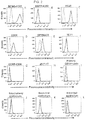
- BCMA on the surface of various cell types was further characterized using flow cytometry (see Figures 2A-2L ), including multiple myeloma cell lines H929, U266, and RPMI8226.
- the multiple myeloma cell lines H929, U266, and RPMI8226 all expressed cell surface BCMA.
- the sarcoma cell line TC71, the T-cell leukemia line CCRF-CEM, and the kidney cell line 293T-17 did not express cell surface BCMA.
- Primary CD34 + hematopoietic cells, primary small airway epithelial cells, primary bronchial epithelial cells, and primary intestinal epithelial cells all lacked cell surface BCMA expression.
- This example describes the construction of the inventive nucleic acid sequence encoding anti-BCMA chimeric antigen receptors (CARs).
- Antibody sequences of two mouse-anti-human-BCMA antibodies designated as "C12A3.2” and “C11D5.3” were obtained from International Patent Application Publication WO 2010/104949 (Kalled et al. ).
- the amino acid sequences of the heavy chain variable regions and light chain variable regions of these antibodies were used to design single chain variable fragments (scFvs) having the following general structure: light chain variable region - linker - heavy chain variable region.
- the linker had the following amino acid sequence: GSTSGSGKPGSGEGSTKG (SEQ ID NO: 7) (see, e.g., Cooper et al., Blood, 101(4): 1637-1644 (2003 )).
- DNA sequences encoding two chimeric antigen receptors were designed, each of which contained the following elements from 5' to 3': the CD8 ⁇ signal sequence, the aforementioned anti-BCMA scFv, hinge and transmembrane regions of the human CD8 ⁇ molecule, the cytoplasmic portion of the CD28 molecule, and the cytoplasmic portion of the CD3 ⁇ molecule.
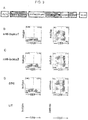
- a schematic of these CAR-encoding nucleic acid sequences is set forth in Figure 3A .
- the CARs incorporating variable regions from C12A3.2 and C11D5.3 were designated anti-bcma1 and anti-bcma2, respectively.
- DNA sequences encoding five additional chimeric antigen receptors based on the above-described anti-bcma2 CAR were designed, each of which contained different signal sequences and T-cell activation domains.
- 8ss-anti-bcma2 CAR contained the following elements from 5' to 3: the CD8 ⁇ signal sequence, scFv, hinge and transmembrane regions of the human CD8 ⁇ molecule, the cytoplasmic portion of the CD28 molecule, and the cytoplasmic portion of the CD3 ⁇ molecule.
- the G-anti-bcma2 CAR contained the following elements from 5' to 3': the human GM-CSF receptor signal sequence, scFv, hinge and transmembrane regions of the human CD8 ⁇ molecule, the cytoplasmic portion of the CD28 molecule, and the cytoplasmic portion of the CD3 ⁇ molecule.
- the anti-bcma2-BB CAR contained the following elements from 5' to 3': the CD8 ⁇ signal sequence, scFv, hinge and transmembrane regions of the human CD8 ⁇ molecule, the cytoplasmic portion of the 4-1BB molecule, and the cytoplasmic portion of the CD3 ⁇ molecule.
- the anti-bcma2-OX40 CAR contained the following elements from 5' to 3': the CD8 ⁇ signal sequence, scFv, hinge and transmembrane regions of the human CD8 ⁇ molecule, the cytoplasmic portion of the OX40 molecule (see, e.g., Latza et al., European Journal of Immunology, 24: 677-683 (1994 )), and the cytoplasmic portion of the CD3 ⁇ molecule.
- the CAR-encoding nucleic acid sequences were generated using methods known in the art, such as those described in, for example, Kochenderfer et al., J. Immunology, 32(7): 689-702 (2009 ), and Zhao et al., J. Immunology, 183(9): 5563-5574 (2009 ).
- the nucleic acid sequence encoding each CAR was codon optimized and synthesized using GeneArtTM technology (Life Technologies, Carlsbad, CA) with appropriate restriction sites.
- the sequences encoding the anti-bcma1 and anti-bcma2 CARs were ligated into a lentiviral vector plasmid designated pRRLSIN.cPPT.MSCV.coDMF5.oPRE (see, e.g., Yang et al., J. Immunotherapy, 33(6): 648-658 (2010 )).
- the coDMF5 portion of this vector was replaced with the CAR-encoding nucleic acid sequences using standard methods.
- the two resulting anti-BCMA CAR vectors were denoted pRRLSIN.cPPT.MSCV.anti-bcma1.oPRE and pRRLSIN.cPPT.MSCV.anti-bcma2.oPRE.
- a negative-control CAR containing the SP6 scFv that recognizes the hapten 2,4,6-trinitrophenyl also was constructed (see, e.g., Gross et al., Proc. Natl. Acad. Sci. USA, 86(24): 10024-10028 (1989 )). This CAR was referred to as SP6.
- the SP6 CAR was cloned into the same lentiviral vector as the anti-BCMA CARs and contained the same signaling domains as anti-bcma1 and anti-bcma2.
- Supernatant containing lentiviruses encoding each CAR was produced by the protocol described in Yang et al., supra.
- the sequences encoding the G-anti-bcma2, 8ss-anti-bcma2, anti-bcma2-BB, anti-bcma2-OX40, and anti-bcma2-BBOX40 CARs were each ligated into a gammaretroviral vector plasmid designated MSGV (mouse stem cell virus-based splice-gag vector) using standard methods, such as those described in, e.g., Hughes et al., Human Gene Therapy, 16: 457-472 (2005 ).
- MSGV mae stem cell virus-based splice-gag vector
- T-cells were cultured as described previously (see, e.g., Kochenderfer ct al., J.
- the T-cells were then cultured for three hours at 37 °C.
- the supernatant was then diluted 1:1 with RPMI medium (Mediatech, Inc., Manassas, VA) +10% fetal bovine serum (Life Technologies, Carlsbad, CA) and IL-2.
- the T-cells were cultured in the diluted supernatant overnight, and then returned to culture in AIM VTM medium (Life Technologies, Carlsbad, CA) plus 5% human AB serum with IL-2.
- T-cells were stained with biotin-labeled polyclonal goat anti-mouse-F(ab) 2 antibodies (Jackson Immunoresearch Laboratories, Inc., West Grove, PA) to detect the anti-BCMA CARs. High levels of cell surface expression of the anti-bcma1 CAR, the anti-bcma2 CAR, and the SP6 CAR on the transduced T-cells were observed, as shown in Figures 3B-3D .
- RETRONECTINTM polypeptide (Takara Bio Inc., Shiga, Japan), which is a recombinant polypeptide of human fibronectin fragments that binds viruses and cell surface proteins, was dissolved at a concentration of 11 ⁇ g/mL in phosphate buffered saline (PBS) solution, and two mL of the RETRONECTINTM polypeptide in PBS solution were added to each well of nontissue-culture-coated 6 well plates (BD Biosciences, Franklin Lakes, New Jersey). The plates were incubated for two hours at room temperature (RT).
- PBS phosphate buffered saline
- RETRONECTINTM solution was aspirated, and 2 mL of a blocking solution consisting of Hanks' balanced salt solution (HBSS) plus 2% bovine serum albumin (BSA) were added to each RETRONECTINTM-coated well.
- HBSS Hanks' balanced salt solution
- BSA bovine serum albumin
- the plates were centrifuged for 10 minutes at 1000xg. The plates were incubated at 37 °C overnight. The transduction was repeated the next day. After an 18-24 hour incubation, the T-cells were removed from the plates and suspended in fresh T-cell medium with 300 IU/mL of IL-2 at a concentration of 0.5x10 6 cells per mL and cultured at 37 °C and 5% CO 2 . High levels of cell surface expression of anti-bcma2-BBOX40, anti-bcma2-BB, and 8ss-anti-bcma2 on the transduced T-cells were observed.
- results of this example demonstrate a method of producing the inventive CAR-encoding nucleic acid sequence, and methods of expressing the CAR on the surface of T-cells.
- This example describes a series of experiments used to determine the specificity of the inventive CAR for BCMA.
- NGFR-K562 are K562 cells that have been transduced with the gene encoding low-affinity nerve growth factor (see, e.g., Kochenderfer et al., J. Immunotherapy., 32(7):689-702 (2009 )).
- Peripheral blood lymphocytes (PBL) from three patients with multiple myeloma i.e., Myeloma Patient 1 through 3 were used, as were PBL from three other subjects: Donor A, Donor B, and Donor C. Donors A through C all had melanoma.
- CD34+ primary cells were obtained from three normal healthy donors.
- a sample of plasmacytoma cells was obtained from Myeloma patient 1, and a sample of bone marrow was obtained from Myeloma Patient 3. All of the human samples mentioned above were obtained from patients enrolled in IRB-approved clinical trials at the National Cancer Institute.
- the following primary human epithelial cells were obtained from Lonza, Inc. (Basel, Switzerland): small airway epithelial cells, bronchial epithelial cells, and intestinal epithelial cells.
- BCMA-postivie or BCMA-negative cells were combined with CAR-transduced T-cells in duplicate wells of a 96 well round bottom plate (Corning Life Sciences, Lowell, MA) in AIM VTM medium (Life Technologies, Carlsbad, CA) + 5% human serum. The plates were incubated at 37 °C for 18-20 hours. Following the incubation, ELISAs for IFN ⁇ and TNF were performed using standard methods (Pierce, Rockford, IL).
- T-cells transduced with the anti-bcma1 or anti-bcma2 CARs produced large amounts of IFN ⁇ when they were cultured overnight with the BCMA-expressing cell line BCMA-K562, but the CAR-transduced T-cells only produced background levels of IFN ⁇ when they were cultured with the negative control cell line NGFR-K562, as indicated in Table 2 (all units are pg/mL IFN ⁇ ).
- T-cells expressing the 8ss-anti-bcma2, anti-bcma2-BB, and anti-bcma2-OX40 CARs produced IFN ⁇ specifically in response to BCMA+ target cells when T-cells and target cells were cocultured overnight, as indicated in Table 3 (all units are pg/mL of IFN ⁇ ).
- BCMA-Positive Targets BCMA-Negative Targets BCMA-K562 RPMI-8226 NGFR-K562 CCRF-CEM A549 T-cells Alone Effector Cells anti-bcma2-OX40 17704 4875 42 44 24 40 anti-bcma2-BB 25304 8838 404 602 350 706 8ss-anti-bcma2 9671 2168 100 120 49 171 Untransduced ⁇ 12 57 15 17 ⁇ 12 20
- T-cells transduced with anti-BCMA CARs produced large amounts of IFN ⁇ when they were cultured overnight with BCMA-expressing multiple myeloma cell lines. In contrast, the anti-BCMA CARs produced much lower amounts of IFN ⁇ when they were cultured with a variety of BCMA-negative cell lines.
- T-cells transduced with the anti-bcma1 CAR T-cells transduced with the anti-bcma2 CAR and variants thereof (i.e., 8ss-anti-bcma2, anti-bcma2-BB, and anti-bcma2-OX40) produced more IFN ⁇ when cultured with BCMA-positive cells and less IFN ⁇ when cultured with BCMA-negative cells.
- T-cells transduced with the anti-bcma2 CAR variants produced TNF specifically in response to BCMA+ target cells when T-cells and target cells were cocultured overnight, as indicated in Table 4 (all units are pg/mL of tumor necrosis factor (TNF)).
- TNF tumor necrosis factor
- T-cells transduced with the anti-bcma2 CAR and variants thereof exhibited slightly stronger and more specific recognition of BCMA-expressing cells than T-cells transduced with the anti-bcma1 CAR, only the anti-bcma2 CAR and anti-bcma2 CAR variants were used in the following experiments.
- T-cells Two populations of T-cells were prepared in two separate tubes.
- One tube contained BCMA-K562 cells, and the other tube contained NGFR-K562 cells.
- Both tubes also contained T-cells transduced with the anti-bcma2 CAR and anti-bcma2 CAR variants, 1 mL of AIM VTM medium (Life Technologies, Carlsbad, CA) + 5% human serum, a titrated concentration of an anti-CD107a antibody (eBioscience, Inc., San Diego, CA; clone eBioH4A3), and 1 ⁇ L of Golgi Stop (BD Biosciences, Franklin Lakes, NJ). All tubes were incubated at 37 °C for four hours and then stained for expression of CD3, CD4, and CD8.
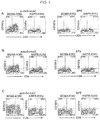
- CAR-transduced T-cells from three different subjects upregulated CD107a specifically in response to stimulation with BCMA-expressing target cells (see Figures 4A-4C ). This indicates the occurrence of BCMA-specific degranulation of the T-cells, which is a prerequisite for perfotin-mediated cytotoxicity (see, e.g., Rubio et al., Nature Medicine, 9(11): 1377-1382 (2003 )).
- a population of BCMA-K562 cells and a population of NGFR-K562 cells were prepared in two separate tubes as described above. Both tubes also contained T-cells transduced with the anti-bcma2 CAR from Myeloma Patient 2, 1 mL of AIM V medium (Life Technologies, Carlsbad, CA) + 5% human serum, and 1 ⁇ L of Golgi Stop (BD Biosciences, Franklin Lakes, NJ). All tubes were incubated at 37 °C for six hours. The cells were surface-stained with anti-CD3, anti-CD4, and anti-CD8 antibodies.
- the cells were permeabilized, and intracellular staining was conducted for IFN ⁇ (BD Biosciences, Franklin Lakes, NJ, clone B27), IL-2 (BD Biosciences, Franklin Lakes, NJ, clone MQ1-17H12), and TNF (BD Biosciences, Franklin Lakes, NJ, clone MAb11) by following the instructions of the Cytolix/Cytoperm kit (BD Biosciences, Franklin Lakes, NJ).
- IFN ⁇ BD Biosciences, Franklin Lakes, NJ, clone B27
- IL-2 BD Biosciences, Franklin Lakes, NJ, clone MQ1-17H12
- TNF BD Biosciences, Franklin Lakes, NJ, clone MAb11
- T-cells expressing the anti-bcma2 CAR were cultured with either BCMA-K562 cells or NGFR-K562 cells. After 4 days of culture, 2.7x10 6 T-cells expressing the anti-bcma2 CAR were present in the cultures containing BCMA-K562 cells while only 0.6x10 6 T-cells expressing the anti-bcma2 CAR were present in the cultures containing NGFR-K562 cells. This BCMA-specific increase in the absolute number of T-cells expressing the anti-bcma2 CAR indicates that these T-cells proliferated in response to BCMA.
- T-cells expressing the inventive CAR exhibit BCMA-specific cytokine production, degranulation, and proliferation.
- T-cells expressing the inventive anti-BCMA CAR can destroy multiple myeloma cell lines.
- T-cells transduced with the anti-bcma2 CAR specifically killed the BCMA-expressing multiple myeloma cell lines H929 and RPMI8226.
- T-cells transduced with the SP6 CAR exhibited much lower levels of cytotoxicity against these cell lines.
- results of this example demonstrate that the inventive nucleic acid sequence encoding an anti-BCMA CAR can be used in a method of destroying multiple myeloma cell lines.
- T-cells expressing the inventive anti-BCMA CAR can destroy primary multiple myeloma cells.
- the primary multiple myeloma cells described in Example 2 were evaluated for BCMA expression, as well as BCMA-specific cytokine production, degranulation, and proliferation using the methods described above.
- Anti-bcma2 CAR-transduced T-cells from the same allogeneic donor produced much less IFN ⁇ when they were cultured with peripheral blood mononuclear cell (PBMC) from Myeloma Patient 3.
- PBMC peripheral blood mononuclear cell
- SP6-CAR-transduced T-cells from Donor C did not specifically recognize the bone marrow of Myeloma Patient 3.
- normal PBMC does not contain cells that express BCMA (see, e.g., Ng et al., J. Immunology, 173(2): 807-817 (2004 )).
- PBMC of Patient 3 was assessed for BCMA expression by flow cytometry.
- PBMC of Patient 3 did not contain BCMA-expressing cells, aside from a small population of CD56+CD38 high cells that made up approximately 0.75% of the PBMC. This population possibly consisted of circulating multiple myeloma cells.
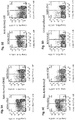
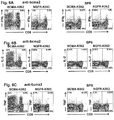
- a plasmacytoma resected from Myeloma Patient 1 consisted of 93% plasma cells, and these primary plasma cells expressed BCMA, as shown in Figure 8C .
- T-cells from Myeloma Patient 2 produced IFN ⁇ when cultured with the allogeneic, unmanipulated plasmacytoma cells of Myeloma Patient 1.
- T-cells from Myeloma Patient 2 did not produce significant amounts of IFN ⁇ when cultured with PBMC from Myeloma patient 1.
- T-cells from Myeloma Patient 2 that were transduced with the SP6 CAR did not produce significant amounts of IFN ⁇ when they were cultured with either plasmacytoma cells or PBMC from Myeloma Patient 1.
- the PBMC of Myeloma Patient 1 did not express BCMA as measured by flow cytometry.
- T-cells of Myeloma Patient 1 who had received eight prior cycles of myeloma therapy, were successfully cultured and transduced with a lentivirus vector encoding the anti-bcma2 CAR. Eight days after the cultures were initiated, expression of the anti-bcma2 CAR was detected on 65% of the T-cells.
- the T-cells from Myeloma Patient 1 expressing the anti-bcma2 CAR produced IFN ⁇ specifically in response to autologous plasmacytoma cells ( Figure 8D ). T-cells from Myeloma Patient 1 expressing the SP6 CAR did not recognize autologous plasmacytoma cells.
- T-cells expressing the anti-bcma2 CAR and T-cells expressing the SP6 CAR did not recognize autologous PBMC.
- T-cells from Myeloma Patient 1 expressing the anti-bcma2 CAR also specifically killed autologous plasmacytoma cells at low effector to target ratios.
- T-cells from Myeloma Patient 1 expressing the SP6 CAR exhibited low levels of cytotoxicity against autologous plasmacytoma cells ( Figure 8E ).
- T-cells expressing the inventive anti-BCMA CARs can destroy established tumors in mice.
- Immunodeficient NSG mice (NOD.Cg-Prkdcscid Il2rgtml Wjl/SzJ, Jackson Laboratory) were injected intradermally with 8x10 6 RPMI8226 cells. Tumors were allowed to grow for 17 to 19 days, and then the mice received intravenous infusions of 8x10 6 human T-cells that were transduced with either the anti-bcma2 CAR or the SP6 CAR. Tumors were measured with calipers every 3 days. The longest length and the length perpendicular to the longest length were multiplied to obtain the tumor size (area) in mm 2 . When the longest length reached 15 mm, mice were sacrificed. Animal studies were approved by the National Cancer Institute Animal Care and Use Committee.
- mice treated with anti-bcma2-transduced T-cells showed a reduction in tumor size, and tumors were eradicated at day 15.
- all mice treated with anti-bcma2-transduced T-cells survived out to 30 days post T-cell infusion.
Landscapes
- Health & Medical Sciences (AREA)
- Chemical & Material Sciences (AREA)
- Life Sciences & Earth Sciences (AREA)
- Organic Chemistry (AREA)
- Immunology (AREA)
- Genetics & Genomics (AREA)
- General Health & Medical Sciences (AREA)
- Medicinal Chemistry (AREA)
- Molecular Biology (AREA)
- Biochemistry (AREA)
- Biophysics (AREA)
- Proteomics, Peptides & Aminoacids (AREA)
- Zoology (AREA)
- Cell Biology (AREA)
- Gastroenterology & Hepatology (AREA)
- Toxicology (AREA)
- Engineering & Computer Science (AREA)
- Veterinary Medicine (AREA)
- Animal Behavior & Ethology (AREA)
- Public Health (AREA)
- Pharmacology & Pharmacy (AREA)
- Biomedical Technology (AREA)
- Nuclear Medicine, Radiotherapy & Molecular Imaging (AREA)
- Chemical Kinetics & Catalysis (AREA)
- General Chemical & Material Sciences (AREA)
- Biotechnology (AREA)
- Bioinformatics & Cheminformatics (AREA)
- Wood Science & Technology (AREA)
- General Engineering & Computer Science (AREA)
- Epidemiology (AREA)
- Microbiology (AREA)
- Plant Pathology (AREA)
- Physics & Mathematics (AREA)
- Hematology (AREA)
- Oncology (AREA)
- Mycology (AREA)
- Micro-Organisms Or Cultivation Processes Thereof (AREA)
- Peptides Or Proteins (AREA)
- Medicines Containing Material From Animals Or Micro-Organisms (AREA)
- Medicines That Contain Protein Lipid Enzymes And Other Medicines (AREA)
Priority Applications (1)
| Application Number | Priority Date | Filing Date | Title |
|---|---|---|---|
| EP25206361.5A EP4653456A2 (en) | 2012-04-11 | 2013-03-15 | Chimeric antigen receptors targeting b-cell maturation antigen |
Applications Claiming Priority (3)
| Application Number | Priority Date | Filing Date | Title |
|---|---|---|---|
| US201261622600P | 2012-04-11 | 2012-04-11 | |
| PCT/US2013/032029 WO2013154760A1 (en) | 2012-04-11 | 2013-03-15 | Chimeric antigen receptors targeting b-cell maturation antigen |
| EP13714125.5A EP2836239A1 (en) | 2012-04-11 | 2013-03-15 | Chimeric antigen receptors targeting b-cell maturation antigen |
Related Parent Applications (1)
| Application Number | Title | Priority Date | Filing Date |
|---|---|---|---|
| EP13714125.5A Division EP2836239A1 (en) | 2012-04-11 | 2013-03-15 | Chimeric antigen receptors targeting b-cell maturation antigen |
Related Child Applications (1)
| Application Number | Title | Priority Date | Filing Date |
|---|---|---|---|
| EP25206361.5A Division EP4653456A2 (en) | 2012-04-11 | 2013-03-15 | Chimeric antigen receptors targeting b-cell maturation antigen |
Publications (1)
| Publication Number | Publication Date |
|---|---|
| EP3689383A1 true EP3689383A1 (en) | 2020-08-05 |
Family
ID=48045750
Family Applications (3)
| Application Number | Title | Priority Date | Filing Date |
|---|---|---|---|
| EP19216091.9A Pending EP3689383A1 (en) | 2012-04-11 | 2013-03-15 | Chimeric antigen receptors targeting b-cell maturation antigen |
| EP25206361.5A Pending EP4653456A2 (en) | 2012-04-11 | 2013-03-15 | Chimeric antigen receptors targeting b-cell maturation antigen |
| EP13714125.5A Withdrawn EP2836239A1 (en) | 2012-04-11 | 2013-03-15 | Chimeric antigen receptors targeting b-cell maturation antigen |
Family Applications After (2)
| Application Number | Title | Priority Date | Filing Date |
|---|---|---|---|
| EP25206361.5A Pending EP4653456A2 (en) | 2012-04-11 | 2013-03-15 | Chimeric antigen receptors targeting b-cell maturation antigen |
| EP13714125.5A Withdrawn EP2836239A1 (en) | 2012-04-11 | 2013-03-15 | Chimeric antigen receptors targeting b-cell maturation antigen |
Country Status (17)
| Country | Link |
|---|---|
| US (20) | US9765342B2 (enExample) |
| EP (3) | EP3689383A1 (enExample) |
| JP (5) | JP6359520B2 (enExample) |
| KR (5) | KR20210032014A (enExample) |
| CN (3) | CN110331154A (enExample) |
| AU (5) | AU2013246443B2 (enExample) |
| BR (1) | BR112014024893B8 (enExample) |
| CA (1) | CA2869562C (enExample) |
| EA (2) | EA201990959A1 (enExample) |
| HK (1) | HK1203393A1 (enExample) |
| IL (4) | IL234870B (enExample) |
| IS (1) | IS9056A (enExample) |
| MX (3) | MX394639B (enExample) |
| NZ (1) | NZ700362A (enExample) |
| RU (2) | RU2650805C2 (enExample) |
| SG (1) | SG11201406414WA (enExample) |
| WO (1) | WO2013154760A1 (enExample) |
Families Citing this family (280)
| Publication number | Priority date | Publication date | Assignee | Title |
|---|---|---|---|---|
| WO2013154760A1 (en) | 2012-04-11 | 2013-10-17 | The United States Of America, As Represented By The Secretary, Department Of Health And Human Services | Chimeric antigen receptors targeting b-cell maturation antigen |
| US20150320799A1 (en) | 2012-12-20 | 2015-11-12 | Purdue Research Foundation | Chimeric antigen receptor-expressing t cells as anti-cancer therapeutics |
| PL2953972T3 (pl) | 2013-02-05 | 2021-03-08 | Engmab Sàrl | Metoda wyboru przeciwciał przeciwko bcma |
| KR20150131218A (ko) | 2013-03-14 | 2015-11-24 | 벨리쿰 파마슈티컬스, 인크. | T 세포 증식의 제어 방법 |
| KR102238226B1 (ko) | 2013-05-14 | 2021-04-09 | 보드 오브 리전츠, 더 유니버시티 오브 텍사스 시스템 | 가공된 키메라 항원 수용체 (car) t-세포의 인간 적용 |
| GB201317929D0 (en) * | 2013-10-10 | 2013-11-27 | Ucl Business Plc | Chimeric antigen receptor |
| JP2016537345A (ja) | 2013-11-13 | 2016-12-01 | ノバルティス アーゲー | 免疫応答を増強するためのmTOR阻害剤 |
| ES2792849T3 (es) | 2014-02-10 | 2020-11-12 | Univ Emory | Expresión de polipéptido químico con receptores de linfocitos variables en células inmunes y usos para tratar el cáncer |
| CN106132423B (zh) | 2014-02-14 | 2020-07-31 | 贝里坤制药股份有限公司 | 用诱导型嵌合多肽活化t细胞的方法 |
| KR102375998B1 (ko) | 2014-02-14 | 2022-03-21 | 더 보드 오브 리젠츠 오브 더 유니버시티 오브 텍사스 시스템 | 키메라 항원 수용체 및 제조방법 |
| EP3243831A1 (en) | 2014-02-27 | 2017-11-15 | Ucl Business Plc | Variants of the proliferation-inducing ligand (april) |
| ES2740903T3 (es) * | 2014-03-19 | 2020-02-07 | Cellectis | Receptores antigénicos quiméricos específicos de CD123 para inmunoterapia del cáncer |
| SG11201608393TA (en) * | 2014-04-10 | 2016-11-29 | Seattle Children S Hospital Dba Seattle Children S Res Inst | Transgene genetic tags and methods of use |
| EP3131927B8 (en) | 2014-04-14 | 2020-12-23 | Cellectis | Bcma (cd269) specific chimeric antigen receptors for cancer immunotherapy |
| EP3738597A1 (en) * | 2014-04-25 | 2020-11-18 | Bluebird Bio, Inc. | Improved methods for manufacturing adoptive cell therapies |
| SI3689899T1 (sl) | 2014-04-25 | 2022-01-31 | 2Seventy Bio, Inc. | MND promotor kimeričnih antigenskih receptorjev |
| EP4008725A1 (en) | 2014-05-02 | 2022-06-08 | The Trustees of the University of Pennsylvania | Compositions and methods of chimeric autoantibody receptor t cells |
| AU2015270912B9 (en) * | 2014-06-02 | 2021-01-21 | The United States Of America, As Represented By The Secretary, Department Of Health And Human Services | Chimeric antigen receptors targeting CD-19 |
| NZ726989A (en) * | 2014-06-06 | 2020-08-28 | Bluebird Bio Inc | Improved t cell compositions |
| ES2813437T3 (es) | 2014-07-11 | 2021-03-23 | Celgene Corp | Métodos para mejorar la eficiencia de la transducción vectorial en linfocitos T |
| MX2017000646A (es) | 2014-07-15 | 2017-04-27 | Juno Therapeutics Inc | Celulas geneticamente modificadas para terapia celular adoptiva. |
| CN107109420A (zh) | 2014-07-21 | 2017-08-29 | 诺华股份有限公司 | 使用cll-1嵌合抗原受体的癌症治疗 |
| WO2016014565A2 (en) * | 2014-07-21 | 2016-01-28 | Novartis Ag | Treatment of cancer using humanized anti-bcma chimeric antigen receptor |
| SG10201900455YA (en) * | 2014-07-24 | 2019-02-27 | Bluebird Bio Inc | Bcma chimeric antigen receptors |
| BR112017001821A2 (pt) * | 2014-07-29 | 2017-11-21 | Cellectis | receptores de antígenos quiméricos específicos de ror1 (ntrkr1) para imunoterapia de câncer |
| EP2982692A1 (en) | 2014-08-04 | 2016-02-10 | EngMab AG | Bispecific antibodies against CD3epsilon and BCMA |
| JP6868554B2 (ja) | 2014-09-02 | 2021-05-12 | ベリカム ファーマシューティカルズ, インコーポレイテッド | MyD88およびCD40ポリペプチドによるキメラ抗原受容体の共刺激 |
| EP3023437A1 (en) | 2014-11-20 | 2016-05-25 | EngMab AG | Bispecific antibodies against CD3epsilon and BCMA |
| EP3029068A1 (en) | 2014-12-03 | 2016-06-08 | EngMab AG | Bispecific antibodies against CD3epsilon and BCMA for use in the treatment of diseases |
| SG10201900931XA (en) * | 2014-12-05 | 2019-02-27 | Memorial Sloan Kettering Cancer Center | Chimeric antigen receptors targeting b-cell maturation antigen and uses thereof |
| DK3226897T3 (da) | 2014-12-05 | 2021-04-19 | Memorial Sloan Kettering Cancer Center | Antistoffer der rammer b-cellemodningsantigen og fremgangsmåder til anvendelse |
| NZ733025A (en) * | 2014-12-12 | 2022-01-28 | 2Seventy Bio Inc | Bcma chimeric antigen receptors |
| KR20170090506A (ko) * | 2014-12-19 | 2017-08-07 | 다나-파버 캔서 인스티튜트 인크. | 키메라 항원 수용체 및 이의 사용 방법 |
| HRP20191400T1 (hr) | 2014-12-24 | 2019-11-15 | Aadigen Llc | Peptidi i nanočestice za unutarstaničnu isporuku molekula |
| CA2973529A1 (en) | 2015-01-26 | 2016-08-04 | Cellectis | Cll1-specific multi-chain chimeric antigen receptor |
| CN107614008A (zh) * | 2015-03-20 | 2018-01-19 | 蓝鸟生物公司 | 载体制剂 |
| EP3273994B1 (en) | 2015-03-27 | 2021-12-01 | University of Southern California | Car t-cell therapy directed to lhr for the treatment of solid tumors |
| JP6921001B2 (ja) * | 2015-04-13 | 2021-08-18 | ファイザー・インク | B細胞成熟抗原を標的にするキメラ抗原受容体 |
| ES3012402T3 (en) | 2015-04-13 | 2025-04-09 | Pfizer | Therapeutic antibodies and their uses |
| CN108136021A (zh) | 2015-04-25 | 2018-06-08 | 综合医院公司 | 用于治疗癌症的抗驱走性试剂和抗癌剂联合疗法和组合物 |
| GB201507119D0 (en) * | 2015-04-27 | 2015-06-10 | Ucl Business Plc | Nucleic Acid Construct |
| KR20180029201A (ko) | 2015-05-18 | 2018-03-20 | 티씨알2 테라퓨틱스 인크. | 융합 단백질을 이용하는 tcr 리프로그래밍을 위한 조성물 및 방법 |
| CN107847491A (zh) | 2015-05-20 | 2018-03-27 | 诺华公司 | 依维莫司(everolimus)与达托里昔布(dactolisib)的医药组合 |
| CN107847601A (zh) * | 2015-06-04 | 2018-03-27 | 南加利福尼亚大学 | Lym‑1和lym‑2靶向的car细胞免疫疗法 |
| CN107708741A (zh) * | 2015-06-12 | 2018-02-16 | 免疫医疗公司 | 用嵌合抗原受体(car)构建体和表达car构建体的t细胞(car‑t)或nk细胞(car‑nk)进行的疾病疗法 |
| PT3310805T (pt) | 2015-06-19 | 2021-05-19 | Kobold Sebastian | Proteínas de fusão pd-1-cd28 e a sua utilização em medicina |
| MA42895A (fr) * | 2015-07-15 | 2018-05-23 | Juno Therapeutics Inc | Cellules modifiées pour thérapie cellulaire adoptive |
| PT3331910T (pt) | 2015-08-03 | 2020-03-24 | Engmab Sarl | Anticorpos monoclonais contra o antigénio de maturação de células b (bcma) humano |
| US11458167B2 (en) | 2015-08-07 | 2022-10-04 | Seattle Children's Hospital | Bispecific CAR T-cells for solid tumor targeting |
| CN105384825B (zh) * | 2015-08-11 | 2018-06-01 | 南京传奇生物科技有限公司 | 一种基于单域抗体的双特异性嵌合抗原受体及其应用 |
| JP7010487B2 (ja) | 2015-08-17 | 2022-03-03 | ソウル大学校産学協力団 | 抗コチニン抗体が連結したキメラ抗原受容体およびその使用 |
| EP3349797A4 (en) | 2015-09-18 | 2019-06-12 | The General Hospital Corporation Dba Massachusetts General Hospital | LOCALIZED RELEASE OF ANTIFUGETACTIC AGENT FOR THE TREATMENT OF CANCER |
| ES2895901T3 (es) | 2015-10-16 | 2022-02-23 | Univ Muenchen Ludwig Maximilians | Células T transducidas con CXCR6 para terapia tumoral dirigida |
| WO2017070042A1 (en) | 2015-10-20 | 2017-04-27 | The United States Of America, As Represented By The Secretary, Department Of Health And Human Services | Methods of producing t cell populations using akt inhibitors |
| US10925969B2 (en) | 2015-11-13 | 2021-02-23 | The United States Of America, As Represented By The Secretary, Department Of Health And Human Service | Anti-BCMA polypeptides and proteins |
| US20190153049A1 (en) * | 2015-11-26 | 2019-05-23 | Guangzhou Cas Lamvac Biotech Co., Ltd. | Anti-placenta-chondroitin-sulfate chimeric antigen receptor and application thereof |
| WO2017088012A1 (en) | 2015-11-27 | 2017-06-01 | Cartherics Pty. Ltd. | Genetically modified cells and uses thereof |
| US11479755B2 (en) | 2015-12-07 | 2022-10-25 | 2Seventy Bio, Inc. | T cell compositions |
| EP3184548A1 (en) * | 2015-12-23 | 2017-06-28 | Miltenyi Biotec GmbH | Chimeric antigen receptor with cytokine receptor activating or blocking domain |
| US11571469B2 (en) | 2016-01-07 | 2023-02-07 | Mayo Foundation For Medical Education And Research | Methods of treating cancer with interferon wherein the cancer cells are HLA negative or have reduced HLA expression |
| EP3408297A2 (en) | 2016-01-29 | 2018-12-05 | Med Manor Organics, (P) Ltd | A chimeric antigen receptor specific to b-cell maturation antigen, a recombinant expression vector and a method thereof |
| WO2017139199A1 (en) | 2016-02-10 | 2017-08-17 | The United States Of America, As Represented By The Secretary, Department Of Health And Human Services | Inducible arginase |
| PL3436079T3 (pl) | 2016-04-01 | 2021-12-20 | Kite Pharma, Inc. | Antygen chimeryczny i receptory komórek t oraz sposoby ich stosowania |
| PE20190356A1 (es) | 2016-04-01 | 2019-03-07 | Kite Pharma Inc | Receptores quimericos y metodos de uso de los mismos |
| US10689450B2 (en) * | 2016-04-01 | 2020-06-23 | Kite Pharma, Inc | BCMA binding molecules and methods of use thereof |
| JP7282521B2 (ja) | 2016-04-08 | 2023-05-29 | パーデュー・リサーチ・ファウンデイション | Car t細胞療法のための方法および組成物 |
| AU2017271606B2 (en) | 2016-05-27 | 2024-08-01 | The United States Of America, As Represented By The Secretary, Department Of Health And Human Services | FLT3-specific chimeric antigen receptors and methods using same |
| US12048718B2 (en) | 2016-06-07 | 2024-07-30 | Max-Delbrück-Centrum für Molekulare Medizin in der Helmholtz-Geminschaft | Chimeric antigen receptor and CAR-T cells that bind BCMA |
| EP3478722A1 (en) | 2016-06-30 | 2019-05-08 | F. Hoffmann-La Roche AG | Improved adoptive t-cell therapy |
| WO2018026953A1 (en) | 2016-08-02 | 2018-02-08 | TCR2 Therapeutics Inc. | Compositions and methods for tcr reprogramming using fusion proteins |
| MA46236A (fr) * | 2016-09-14 | 2019-07-24 | Janssen Biotech Inc | Récepteurs antigéniques chimériques comprenant des domaines de la fibronectine de type iii spécifiques du bcma, et utilisations correspondantes |
| IL302917A (en) | 2016-10-07 | 2023-07-01 | Tcr2 Therapeutics Inc | Compositions and methods for t-cell receptors reprogramming using fusion proteins |
| US11124577B2 (en) | 2016-11-02 | 2021-09-21 | Engmab Sàrl | Bispecific antibody against BCMA and CD3 and an immunological drug for combined use in treating multiple myeloma |
| CN108004259B (zh) * | 2016-11-02 | 2020-06-30 | 上海恒润达生生物科技有限公司 | 靶向b细胞成熟抗原的嵌合抗原受体及其用途 |
| KR20240005168A (ko) | 2016-11-04 | 2024-01-11 | 2세븐티 바이오, 인코포레이티드 | 항-bcma car t 세포 조성물 |
| JP7291396B2 (ja) | 2016-11-22 | 2023-06-15 | ティーシーアール2 セラピューティクス インク. | 融合タンパク質を用いたtcrの再プログラミングのための組成物及び方法 |
| CN110114070A (zh) | 2016-11-23 | 2019-08-09 | 诺华公司 | 使用依维莫司(everolimus)、达托里昔布(dactolisib)或二者增强免疫反应的方法 |
| CA3040533A1 (en) * | 2016-12-02 | 2018-06-07 | Cartesian Therapeutics, Inc. | Cancer immunotherapy with highly enriched cd8+ chimeric antigen receptor t cells |
| CN110291200B (zh) | 2016-12-12 | 2024-05-14 | 西雅图儿童医院(Dba西雅图儿童研究所) | 对哺乳动物细胞中转基因表达的药剂配体诱导具有增大的灵敏度的嵌合转录因子变异体 |
| IL267485B2 (en) | 2016-12-21 | 2024-01-01 | Teneobio Inc | Anti-bcma heavy chain-only antibodies and uses thereof |
| CN110475857B (zh) * | 2017-01-05 | 2023-07-18 | 韩国生命工学研究院 | 表达抗-可替宁嵌合抗原受体的天然杀伤细胞 |
| WO2018144535A1 (en) | 2017-01-31 | 2018-08-09 | Novartis Ag | Treatment of cancer using chimeric t cell receptor proteins having multiple specificities |
| EP3579870A4 (en) | 2017-02-07 | 2020-12-30 | Seattle Children's Hospital (DBA Seattle Children's Research Institute) | PHOSPHOLIPID ETHER (PLE) T CAR-LYMPHOCYTE TUMOR (CTCT) TARGETING AGENTS |
| SG11201907580SA (en) * | 2017-02-17 | 2019-09-27 | Hutchinson Fred Cancer Res | Combination therapies for treatment of bcma-related cancers and autoimmune disorders |
| WO2018160622A1 (en) | 2017-02-28 | 2018-09-07 | Endocyte, Inc. | Compositions and methods for car t cell therapy |
| MX2019011324A (es) | 2017-03-23 | 2020-01-21 | Massachusetts Gen Hospital | Bloqueo de cxcr4/cxcr7 y tratamiento de enfermedad asociada con el virus del papiloma humano. |
| JP7618192B2 (ja) * | 2017-03-28 | 2025-01-21 | ザ トラスティーズ オブ ザ ユニバーシティ オブ ペンシルバニア | 移植された組織を拒絶反応から保護するための方法 |
| JP7249287B2 (ja) | 2017-03-31 | 2023-03-30 | ザ・ボード・オブ・トラスティーズ・オブ・ザ・リーランド・スタンフォード・ジュニア・ユニバーシティ | T細胞受容体シグナル伝達を阻害または調節することによって、t細胞枯渇を処置する方法 |
| CN110753555A (zh) | 2017-04-19 | 2020-02-04 | 得克萨斯州大学系统董事会 | 表达工程化抗原受体的免疫细胞 |
| EP3615055A1 (en) | 2017-04-28 | 2020-03-04 | Novartis AG | Cells expressing a bcma-targeting chimeric antigen receptor, and combination therapy with a gamma secretase inhibitor |
| WO2018201051A1 (en) | 2017-04-28 | 2018-11-01 | Novartis Ag | Bcma-targeting agent, and combination therapy with a gamma secretase inhibitor |
| CA3061945A1 (en) | 2017-05-01 | 2018-11-08 | Juno Therapeutics, Inc. | Combination of a cell therapy and an immunomodulatory compound |
| US12226479B2 (en) | 2017-05-11 | 2025-02-18 | The General Hospital Corporation | Methods and compositions of use of CD8+ tumor infiltrating lymphocyte subtypes and gene signatures thereof |
| US11166985B2 (en) | 2017-05-12 | 2021-11-09 | Crispr Therapeutics Ag | Materials and methods for engineering cells and uses thereof in immuno-oncology |
| MY201573A (en) | 2017-05-12 | 2024-03-02 | Crispr Therapeutics Ag | Materials and methods for engineering cells and uses thereof in immuno-oncology |
| EP3638218A4 (en) | 2017-06-14 | 2021-06-09 | The Broad Institute, Inc. | COMPOSITIONS AND METHOD OF TARGETING COMPLEMENTING COMPONENT 3 FOR INHIBITION OF TUMOR GROWTH |
| KR20250007003A (ko) | 2017-06-20 | 2025-01-13 | 테네오바이오, 인코포레이티드 | 항-bcma 중쇄-단독 항체 |
| WO2019000223A1 (en) | 2017-06-27 | 2019-01-03 | Nanjing Legend Biotech Co., Ltd. | ENABLERS OF IMMUNE EFFECTOR CELLS OF CHIMERIC ANTIBODIES AND METHODS OF USE THEREOF |
| AU2018291128B2 (en) * | 2017-06-30 | 2024-10-10 | Teneobio, Inc. | Anti-B-cell maturation antigen chimeric antigen receptors with human domains |
| US12049643B2 (en) | 2017-07-14 | 2024-07-30 | The Broad Institute, Inc. | Methods and compositions for modulating cytotoxic lymphocyte activity |
| WO2019025983A1 (en) * | 2017-08-01 | 2019-02-07 | Medimmune, Llc | CONJUGATED MONOCLONAL ANTIBODY-MEDICINE DIRECTED AGAINST BCMA |
| CN111107874A (zh) | 2017-09-14 | 2020-05-05 | 葛兰素史密斯克莱知识产权发展有限公司 | 用于癌症的组合治疗 |
| WO2019053613A2 (en) | 2017-09-14 | 2019-03-21 | Glaxosmithkline Intellectual Property Development Limited | POLY THERAPY FOR THE TREATMENT OF CANCER |
| WO2019053611A1 (en) | 2017-09-14 | 2019-03-21 | Glaxosmithkline Intellectual Property Development Limited | POLY THERAPY FOR THE TREATMENT OF CANCER |
| JP7654240B2 (ja) | 2017-09-19 | 2025-04-01 | マサチューセッツ インスティテュート オブ テクノロジー | キメラ抗原受容体t細胞治療のための組成物およびその使用 |
| WO2019070755A1 (en) | 2017-10-02 | 2019-04-11 | The Broad Institute, Inc. | METHODS AND COMPOSITIONS FOR DETECTING AND MODULATING A GENETIC SIGNATURE OF IMMUNOTHERAPY RESISTANCE IN CANCER |
| WO2019075055A1 (en) | 2017-10-11 | 2019-04-18 | The United States Of America, As Represented By The Secretary, Department Of Health And Human Services | METHODS FOR PRODUCING T-CELL POPULATIONS USING P38 MAPK INHIBITORS |
| BR112020007576A2 (pt) | 2017-10-18 | 2020-09-24 | Novartis Ag | composições e métodos para degradação de proteína seletiva |
| BR112020008638A2 (pt) | 2017-11-01 | 2020-10-20 | Juno Therapeutics Inc | receptores de antígenos quiméricos específicos para antígenos de maturação de células b (bcma) |
| WO2019089982A1 (en) | 2017-11-01 | 2019-05-09 | Juno Therapeutics, Inc. | Method of assessing activity of recombinant antigen receptors |
| CA3080904A1 (en) | 2017-11-01 | 2019-05-09 | Juno Therapeutics, Inc. | Antibodies and chimeric antigen receptors specific for b-cell maturation antigen |
| CN109748968B (zh) * | 2017-11-03 | 2020-12-01 | 西安宇繁生物科技有限责任公司 | Bcma特异性嵌合抗原受体t细胞及其应用 |
| AU2018359907A1 (en) | 2017-11-06 | 2020-05-07 | Fred Hutchinson Cancer Center | Combination of a cell therapy and a gamma secretase inhibitor |
| WO2019094983A1 (en) | 2017-11-13 | 2019-05-16 | The Broad Institute, Inc. | Methods and compositions for treating cancer by targeting the clec2d-klrb1 pathway |
| WO2019094955A1 (en) | 2017-11-13 | 2019-05-16 | The Broad Institute, Inc. | Methods and compositions for targeting developmental and oncogenic programs in h3k27m gliomas |
| AU2018369639C1 (en) * | 2017-11-14 | 2025-04-03 | Arcellx, Inc. | D-domain containing polypeptides and uses thereof |
| US20200360431A1 (en) | 2017-11-15 | 2020-11-19 | Novartis Ag | Bcma-targeting chimeric antigen receptor, cd19-targeting chimeric antigen receptor, and combination therapies |
| EP3714041A1 (en) | 2017-11-22 | 2020-09-30 | Iovance Biotherapeutics, Inc. | Expansion of peripheral blood lymphocytes (pbls) from peripheral blood |
| TW201925782A (zh) | 2017-11-30 | 2019-07-01 | 瑞士商諾華公司 | 靶向bcma之嵌合抗原受體及其用途 |
| KR20250010750A (ko) * | 2017-12-20 | 2025-01-21 | 포세이다 테라퓨틱스, 인크. | Vcar 조성물 및 사용 방법 |
| CN109971715A (zh) * | 2017-12-28 | 2019-07-05 | 深圳华大生命科学研究院 | 一种扩增特异性car-t细胞的培养方法 |
| CN109971716B (zh) * | 2017-12-28 | 2023-08-01 | 上海细胞治疗研究院 | 自分泌cd47抗体的egfr特异性car-t细胞及其用途 |
| TW201930591A (zh) | 2018-01-08 | 2019-08-01 | 瑞士商諾華公司 | 用於與嵌合抗原受體療法併用之免疫增強rna |
| AU2019209432A1 (en) | 2018-01-22 | 2020-08-06 | Seattle Children's Hospital (dba Seattle Children's Research Institute) | Methods of use for CAR T cells |
| CA3090249A1 (en) | 2018-01-31 | 2019-08-08 | Novartis Ag | Combination therapy using a chimeric antigen receptor |
| CA3074526C (en) * | 2018-02-01 | 2021-08-03 | Nanjing Iaso Biotherapeutics Co., Ltd. | Chimeric antigen receptor (car) binding to bcma and application thereof |
| US11266690B2 (en) * | 2018-02-01 | 2022-03-08 | Nanjing Iaso Biotherapeutics Co., Ltd. | Chimeric antigen receptor (CAR) binding to BCMA, and uses thereof |
| CN111936518A (zh) | 2018-02-06 | 2020-11-13 | 西雅图儿童医院(Dba西雅图儿童研究所) | 对fl-ple标记的肿瘤表现出最佳的t细胞功能的荧光素特异性car |
| WO2019157130A1 (en) | 2018-02-09 | 2019-08-15 | The United States Of America, As Represented By The Secretary, Department Of Health And Human Services | Tethered interleukin-15 and interleukin-21 |
| CN110157675B (zh) * | 2018-02-12 | 2022-05-27 | 深圳宾德生物技术有限公司 | 一种靶向性t淋巴细胞及其制备方法和应用 |
| WO2019157516A1 (en) | 2018-02-12 | 2019-08-15 | resTORbio, Inc. | Combination therapies |
| WO2019160956A1 (en) | 2018-02-13 | 2019-08-22 | Novartis Ag | Chimeric antigen receptor therapy in combination with il-15r and il15 |
| EP3755349A4 (en) | 2018-02-21 | 2021-11-17 | Board of Regents, The University of Texas System | PROCESS FOR ACTIVATION AND EXPANSION OF NATURAL KILLER CELLS AND THEIR USES |
| WO2019165237A1 (en) | 2018-02-23 | 2019-08-29 | Endocyte, Inc. | Sequencing method for car t cell therapy |
| CN116836297A (zh) * | 2018-04-12 | 2023-10-03 | 上海赛比曼生物科技有限公司 | 靶向bcma的嵌合抗原受体及其制法和应用 |
| WO2019209715A1 (en) | 2018-04-24 | 2019-10-31 | The United States Of America, As Represented By The Secretary, Department Of Health And Human Services | Methods of producing t cell populations using hydroxycitric acid and/or a salt thereof |
| US11957695B2 (en) | 2018-04-26 | 2024-04-16 | The Broad Institute, Inc. | Methods and compositions targeting glucocorticoid signaling for modulating immune responses |
| JP7542441B2 (ja) | 2018-05-11 | 2024-08-30 | クリスパー セラピューティクス アクチェンゲゼルシャフト | 癌を治療するための方法及び組成物 |
| TWI848951B (zh) | 2018-06-01 | 2024-07-21 | 瑞士商諾華公司 | 針對bcma之結合分子及其用途 |
| US20210371932A1 (en) | 2018-06-01 | 2021-12-02 | Massachusetts Institute Of Technology | Methods and compositions for detecting and modulating microenvironment gene signatures from the csf of metastasis patients |
| CN112566643A (zh) | 2018-06-12 | 2021-03-26 | 加利福尼亚大学董事会 | 用于治疗癌症的单链双特异性嵌合抗原受体 |
| AU2019284911A1 (en) | 2018-06-13 | 2020-12-17 | Novartis Ag | BCMA chimeric antigen receptors and uses thereof |
| US12036240B2 (en) | 2018-06-14 | 2024-07-16 | The Broad Institute, Inc. | Compositions and methods targeting complement component 3 for inhibiting tumor growth |
| JP2021530217A (ja) * | 2018-07-10 | 2021-11-11 | プレシゲン,インコーポレイテッド | Ror−1特異的キメラ抗原受容体およびその使用 |
| TWI838389B (zh) | 2018-07-19 | 2024-04-11 | 美商再生元醫藥公司 | 雙特異性抗-BCMAx抗-CD3抗體及其用途 |
| US20210221903A1 (en) * | 2018-08-14 | 2021-07-22 | Hrain Biotechnology Co., Ltd. | Bcma-targeting chimeric antigen receptor and uses thereof |
| ES3042082T3 (en) | 2018-08-31 | 2025-11-18 | Novartis Ag | Methods of making chimeric antigen receptor-expressing cells |
| WO2020047449A2 (en) | 2018-08-31 | 2020-03-05 | Novartis Ag | Methods of making chimeric antigen receptor-expressing cells |
| EP3856775B9 (en) | 2018-09-27 | 2025-01-22 | Autolus Limited | Chimeric antigen receptor |
| AU2019346335B2 (en) | 2018-09-28 | 2024-07-25 | Massachusetts Institute Of Technology | Collagen-localized immunomodulatory molecules and methods thereof |
| US20210382068A1 (en) | 2018-10-02 | 2021-12-09 | Dana-Farber Cancer Institute, Inc. | Hla single allele lines |
| US20210379057A1 (en) | 2018-10-16 | 2021-12-09 | Massachusetts Institute Of Technology | Nutlin-3a for use in treating a mycobacterium tuberculosis infection |
| US20200190163A1 (en) * | 2018-10-26 | 2020-06-18 | Lijun Wu | Humanized bcma-car-t cells |
| WO2020092455A2 (en) | 2018-10-29 | 2020-05-07 | The Broad Institute, Inc. | Car t cell transcriptional atlas |
| CN112955748A (zh) | 2018-10-31 | 2021-06-11 | 葛兰素史密斯克莱知识产权发展有限公司 | 治疗癌症的方法 |
| AU2019374103A1 (en) | 2018-11-01 | 2021-05-20 | Juno Therapeutics, Inc. | Chimeric antigen receptors specific for G Protein-Coupled Receptor Class C Group 5 Member D (GPRC5D) |
| AU2019372331A1 (en) | 2018-11-01 | 2021-05-27 | Juno Therapeutics, Inc. | Methods for treatment using chimeric antigen receptors specific for B-cell maturation antigen |
| MX2021005366A (es) | 2018-11-08 | 2021-09-10 | Juno Therapeutics Inc | Metodos y combinaciones para el tratamiento y modulacion de celulas t. |
| IL283734B2 (en) | 2018-12-12 | 2025-03-01 | Kite Pharma Inc | Chimeric antigen receptors and CAR-T cells and methods of use |
| US20220062394A1 (en) | 2018-12-17 | 2022-03-03 | The Broad Institute, Inc. | Methods for identifying neoantigens |
| CA3123167A1 (en) * | 2018-12-20 | 2020-06-25 | Oslo Universitetssykehus Hf | Chimeric antigen receptors (cars) and their use in medicine |
| US11739156B2 (en) | 2019-01-06 | 2023-08-29 | The Broad Institute, Inc. Massachusetts Institute of Technology | Methods and compositions for overcoming immunosuppression |
| PT3749338T (pt) | 2019-01-16 | 2024-09-20 | Caribou Biosciences Inc | Anticorpo de bcma humanizado e células bcma-car-t |
| AU2020221324A1 (en) | 2019-02-15 | 2021-09-02 | University Of Southern California | Lym-1 and Lym-2 antibody compositions and improved CAR constructs |
| KR20210134339A (ko) | 2019-02-25 | 2021-11-09 | 노파르티스 아게 | 바이러스 전달을 위한 메조다공성 실리카 입자 조성물 |
| MX2021010288A (es) | 2019-03-01 | 2021-09-23 | Iovance Biotherapeutics Inc | Expansion de linfocitos infiltrantes de tumores a partir de tumores liquidos y usos terapeuticos de los mismos. |
| EP3773918A4 (en) | 2019-03-05 | 2022-01-05 | Nkarta, Inc. | ANTI-CD19 CHEMERIC ANTIGEN RECEPTORS AND THEIR USE IN IMMUNOTHERAPY |
| EP3935151A1 (en) | 2019-03-08 | 2022-01-12 | Klinikum der Universität München | Ccr8 expressing lymphocytes for targeted tumor therapy |
| WO2020186101A1 (en) | 2019-03-12 | 2020-09-17 | The Broad Institute, Inc. | Detection means, compositions and methods for modulating synovial sarcoma cells |
| CA3158025C (en) * | 2019-03-15 | 2023-07-11 | Yi Zhang | Anti-bcma chimeric antigen receptors |
| EP3942023A1 (en) | 2019-03-18 | 2022-01-26 | The Broad Institute, Inc. | Compositions and methods for modulating metabolic regulators of t cell pathogenicity |
| WO2020191316A1 (en) | 2019-03-21 | 2020-09-24 | Novartis Ag | Car-t cell therapies with enhanced efficacy |
| CN113646426B (zh) | 2019-04-04 | 2024-09-13 | 上海医药集团股份有限公司 | 一种包含肿瘤抗原识别受体的免疫细胞及其应用 |
| WO2020210678A1 (en) | 2019-04-12 | 2020-10-15 | Novartis Ag | Methods of making chimeric antigen receptor-expressing cells |
| MX2021012740A (es) | 2019-04-17 | 2022-01-24 | Aadigen Llc | Péptidos y nanopartículas para entrega intracelular de moléculas. |
| US20220251152A1 (en) | 2019-04-24 | 2022-08-11 | Novartis Ag | Compositions and methods for selective protein degradation |
| EP3733707A1 (en) | 2019-04-30 | 2020-11-04 | Celyad S.A. | Car t-cells targeting bcma and uses thereof |
| US20220249558A1 (en) | 2019-04-30 | 2022-08-11 | Crispr Therapeutics Ag | Allogeneic cell therapy of b cell malignancies using genetically engineered t cells targeting cd19 |
| SG11202112382WA (en) | 2019-05-07 | 2021-12-30 | Gracell Biotechnologies Shanghai Co Ltd | Engineered immune cell targeting bcma and use thereof |
| US20220235340A1 (en) | 2019-05-20 | 2022-07-28 | The Broad Institute, Inc. | Novel crispr-cas systems and uses thereof |
| BR112021023048A2 (pt) | 2019-05-21 | 2022-04-19 | Novartis Ag | Moléculas de ligação a cd19 e usos das mesmas |
| EP3990491A1 (en) | 2019-06-26 | 2022-05-04 | Massachusetts Institute of Technology | Immunomodulatory fusion protein-metal hydroxide complexes and methods thereof |
| BR112022001546A2 (pt) | 2019-07-30 | 2022-03-22 | Jiangsu Hansoh Pharmaceutical Group Co Ltd | Anticorpo anti-bcma, fragmento de ligação ao antígeno do mesmo e uso médico do mesmo |
| NZ784975A (en) | 2019-08-06 | 2025-10-31 | Glaxosmithkline Ip Dev Ltd | Biopharmacuetical compositions and related methods |
| WO2021030627A1 (en) | 2019-08-13 | 2021-02-18 | The General Hospital Corporation | Methods for predicting outcomes of checkpoint inhibition and treatment thereof |
| US12421557B2 (en) | 2019-08-16 | 2025-09-23 | The Broad Institute, Inc. | Methods for predicting outcomes and treating colorectal cancer using a cell atlas |
| KR20220041934A (ko) | 2019-08-16 | 2022-04-01 | 얀센 바이오테크 인코포레이티드 | 개선된 기능을 갖는 치료용 면역 세포 및 이의 제조 방법 |
| CN112409482B (zh) * | 2019-08-20 | 2022-08-26 | 杭州尚健生物技术有限公司 | Bcma抗体 |
| WO2021041922A1 (en) | 2019-08-30 | 2021-03-04 | The Broad Institute, Inc. | Crispr-associated mu transposase systems |
| EP4031577A4 (en) * | 2019-09-18 | 2023-12-20 | Board of Regents, The University of Texas System | METHOD FOR CULTURING NATURAL KILLER CELLS AGAINST BCMA-POSITIVE TUMORS |
| WO2021061648A1 (en) | 2019-09-23 | 2021-04-01 | Massachusetts Institute Of Technology | Methods and compositions for stimulation of endogenous t cell responses |
| US12297426B2 (en) | 2019-10-01 | 2025-05-13 | The Broad Institute, Inc. | DNA damage response signature guided rational design of CRISPR-based systems and therapies |
| US12394502B2 (en) | 2019-10-02 | 2025-08-19 | The General Hospital Corporation | Method for predicting HLA-binding peptides using protein structural features |
| US12195725B2 (en) | 2019-10-03 | 2025-01-14 | Dana-Farber Cancer Institute, Inc. | Compositions and methods for modulating and detecting tissue specific TH17 cell pathogenicity |
| US11981922B2 (en) | 2019-10-03 | 2024-05-14 | Dana-Farber Cancer Institute, Inc. | Methods and compositions for the modulation of cell interactions and signaling in the tumor microenvironment |
| US11793787B2 (en) | 2019-10-07 | 2023-10-24 | The Broad Institute, Inc. | Methods and compositions for enhancing anti-tumor immunity by targeting steroidogenesis |
| CN110642953B (zh) * | 2019-10-12 | 2021-09-17 | 华夏源(上海)细胞基因工程股份有限公司 | 一种靶向bcma的t细胞受体融合蛋白和应用 |
| US11844800B2 (en) | 2019-10-30 | 2023-12-19 | Massachusetts Institute Of Technology | Methods and compositions for predicting and preventing relapse of acute lymphoblastic leukemia |
| CA3163104A1 (en) | 2019-11-26 | 2021-06-03 | Novartis Ag | Chimeric antigen receptors and uses thereof |
| WO2021132746A1 (en) * | 2019-12-24 | 2021-07-01 | Abl Bio, Inc. | Anti-bcma/anti-4-1bb bispecific antibodies and uses thereof |
| US20230028399A1 (en) * | 2020-01-13 | 2023-01-26 | Nkarta, Inc. | Bcma-directed cellular immunotherapy compositions and methods |
| US12165747B2 (en) | 2020-01-23 | 2024-12-10 | The Broad Institute, Inc. | Molecular spatial mapping of metastatic tumor microenvironment |
| US20230256017A1 (en) | 2020-02-27 | 2023-08-17 | Jennifer Brogdon | Methods of making chimeric antigen receptor-expressing cells |
| BR112022016633A2 (pt) | 2020-02-27 | 2022-12-13 | Novartis Ag | Métodos para produzir células que expressam receptor de antígeno quimérico |
| JP2023517889A (ja) | 2020-03-10 | 2023-04-27 | マサチューセッツ インスティテュート オブ テクノロジー | NPM1c陽性がんの免疫療法のための組成物および方法 |
| CA3173527A1 (en) | 2020-03-10 | 2021-09-16 | Massachusetts Institute Of Technology | Methods for generating engineered memory-like nk cells and compositions thereof |
| KR102371151B1 (ko) | 2020-03-13 | 2022-03-07 | 주식회사 큐로셀 | 항-bcma 결합 영역, 이를 포함하는 융합단백질, 및 이를 포함하는 조성물 |
| EP4142723A2 (en) | 2020-04-28 | 2023-03-08 | Juno Therapeutics, Inc. | Combination of bcma-directed t cell therapy and an immunomodulatory compound |
| US12433954B2 (en) | 2020-05-01 | 2025-10-07 | Massachusetts Institute Of Technology | Methods of activating anti-CD19 chimeric antigen receptor (CAR) T cells using amphiphilic ligand conjugates comprising CAR-targeting protein sequence motifs |
| US20210340524A1 (en) | 2020-05-01 | 2021-11-04 | Massachusetts Institute Of Technology | Methods for identifying chimeric antigen receptor-targeting ligands and uses thereof |
| KR102400977B1 (ko) | 2020-05-29 | 2022-05-25 | 성균관대학교산학협력단 | 프로세서를 통한 페이지 폴트 처리 방법 |
| US20230332104A1 (en) | 2020-06-11 | 2023-10-19 | Novartis Ag | Zbtb32 inhibitors and uses thereof |
| EP4192875A1 (en) * | 2020-08-10 | 2023-06-14 | Precision BioSciences, Inc. | Antibodies and fragments specific for b-cell maturation antigen and uses thereof |
| US20230302155A1 (en) | 2020-08-21 | 2023-09-28 | Novartis Ag | Compositions and methods for in vivo generation of car expressing cells |
| EP4211228B1 (en) | 2020-09-08 | 2025-11-05 | The United States of America, as represented by the Secretary, Department of Health and Human Services | T cell phenotypes associated with response to adoptive cell therapy |
| WO2022078344A1 (zh) | 2020-10-12 | 2022-04-21 | 南京驯鹿医疗技术有限公司 | 一种结合cd70的抗体、嵌合抗原受体(car)及其应用 |
| US20240002505A1 (en) | 2020-11-01 | 2024-01-04 | Nanjing IASO Biotechnology Co., Ltd. | Fully human antibody targeting cd5, and fully human chimeric antigen receptor (car) and application thereof |
| EP4243937A2 (en) | 2020-11-13 | 2023-09-20 | The United States of America, as represented by the Secretary, Department of Health and Human Services | Enhanced antigen reactivity of immune cells expressing a mutant non-signaling cd3 zeta chain |
| WO2022116952A1 (zh) | 2020-12-01 | 2022-06-09 | 苏州克睿基因生物科技有限公司 | 靶向cd70的抗原结合蛋白及其应用 |
| CA3201008A1 (en) * | 2020-12-02 | 2022-06-09 | Shanghai Cellular Biopharmaceutical Group Ltd. | Bcma-targeted chimeric antigen receptors |
| EP4263600A1 (en) | 2020-12-18 | 2023-10-25 | Century Therapeutics, Inc. | Chimeric antigen receptor systems with adaptable receptor specificity |
| WO2022147481A1 (en) | 2020-12-30 | 2022-07-07 | Ansun Biopharma Inc. | Combination therapy of an oncolytic virus delivering a foreign antigen and an engineered immune cell expressing a chimeric receptor targeting the foreign antigen |
| CN112321713B (zh) * | 2020-12-31 | 2021-05-25 | 北京艺妙神州医药科技有限公司 | 一种抗bcma的抗体及其应用 |
| US20240050568A1 (en) | 2021-01-12 | 2024-02-15 | Nanjing IASO Biotechnology Co., Ltd. | Fully human single-domain tandem chimeric antigen receptor (car) targeting cd5, and use thereof |
| US20240108654A1 (en) | 2021-03-03 | 2024-04-04 | Juno Therapeutics, Inc. | Combination of a t cell therapy and a dgk inhibitor |
| IL307612A (en) | 2021-04-16 | 2023-12-01 | Celgene Corp | Combined therapies with BCMA-directed T-cell therapy |
| AU2022257093A1 (en) | 2021-04-16 | 2023-11-02 | Celgene Corporation | T cell therapy in patients who have had prior stem cell transplant |
| CN118056008A (zh) | 2021-04-27 | 2024-05-17 | 诺华股份有限公司 | 病毒载体生产系统 |
| CN117916256A (zh) | 2021-05-06 | 2024-04-19 | 朱诺治疗学有限公司 | 用于刺激和转导t细胞的方法 |
| JP2024521187A (ja) | 2021-05-28 | 2024-05-28 | グラクソスミスクライン、インテレクチュアル、プロパティー、ディベロップメント、リミテッド | ガンの治療のための組み合わせ療法 |
| KR20240040786A (ko) | 2021-08-03 | 2024-03-28 | 글락소스미스클라인 인털렉츄얼 프로퍼티 디벨로프먼트 리미티드 | 생물제약 조성물 및 안정한 동위원소 표지 펩티드 맵핑 방법 |
| EP4384544A1 (en) | 2021-08-11 | 2024-06-19 | Sana Biotechnology, Inc. | Genetically modified cells for allogeneic cell therapy |
| EP4384598A1 (en) | 2021-08-11 | 2024-06-19 | Sana Biotechnology, Inc. | Genetically modified cells for allogeneic cell therapy to reduce complement-mediated inflammatory reactions |
| WO2023019225A2 (en) | 2021-08-11 | 2023-02-16 | Sana Biotechnology, Inc. | Genetically modified cells for allogeneic cell therapy to reduce instant blood mediated inflammatory reactions |
| AU2022325232A1 (en) | 2021-08-11 | 2024-02-08 | Sana Biotechnology, Inc. | Genetically modified primary cells for allogeneic cell therapy |
| EP4387991A1 (en) | 2021-08-18 | 2024-06-26 | Julius-Maximilians-Universität Würzburg | Hybrid tumor/cancer therapy based on targeting the resolution of or inducing transcription-replication conflicts (trcs) |
| WO2023021477A1 (en) | 2021-08-20 | 2023-02-23 | Novartis Ag | Methods of making chimeric antigen receptor–expressing cells |
| CN117858943A (zh) | 2021-08-24 | 2024-04-09 | 赛斯尔擎生物技术(上海)有限公司 | T细胞产品及其用途 |
| CN118056012B (zh) | 2021-08-24 | 2025-05-30 | 赛斯尔擎生物技术(上海)有限公司 | 一种修饰细胞的方法 |
| CN118159294A (zh) | 2021-10-05 | 2024-06-07 | 葛兰素史密斯克莱知识产权发展有限公司 | 用于治疗癌症的联合疗法 |
| CN119120424A (zh) | 2021-11-02 | 2024-12-13 | 辉大(上海)生物科技有限公司 | 一种CRISPR-Cas12i系统 |
| WO2023081715A1 (en) | 2021-11-03 | 2023-05-11 | Viracta Therapeutics, Inc. | Combination of car t-cell therapy with btk inhibitors and methods of use thereof |
| MX2024005406A (es) | 2021-11-03 | 2024-08-06 | Janssen Biotech Inc | Reduccion de corticosteroides en el tratamiento con anticuerpos anti-cd38. |
| EP4426339A1 (en) | 2021-11-03 | 2024-09-11 | Celgene Corporation | Chimeric antigen receptors specific for b-cell maturation antigen for use in treating myeloma |
| US20250108113A1 (en) | 2021-12-30 | 2025-04-03 | Tr1X, Inc. | Cd4+ t cells expressing il-10 and chimeric antigen receptors and uses thereof |
| CA3241588A1 (en) | 2021-12-31 | 2023-07-06 | Sri Krishna | T cell therapy with vaccination as a combination immunotherapy against cancer |
| CN118591560A (zh) | 2022-01-25 | 2024-09-03 | 葛兰素史密斯克莱知识产权发展有限公司 | 癌症的组合疗法 |
| WO2023147515A1 (en) | 2022-01-28 | 2023-08-03 | Juno Therapeutics, Inc. | Methods of manufacturing cellular compositions |
| KR20240155390A (ko) | 2022-02-17 | 2024-10-28 | 사나 바이오테크놀로지, 인크. | 조작된 cd47 단백질 및 이의 용도 |
| US20250297282A1 (en) | 2022-05-05 | 2025-09-25 | Juno Therapeutics Gmbh | Viral-binding protein and related reagents, articles, and methods of use |
| WO2023220655A1 (en) | 2022-05-11 | 2023-11-16 | Celgene Corporation | Methods to overcome drug resistance by re-sensitizing cancer cells to treatment with a prior therapy via treatment with a t cell therapy |
| WO2023220641A2 (en) | 2022-05-11 | 2023-11-16 | Juno Therapeutics, Inc. | Methods and uses related to t cell therapy and production of same |
| US20250345432A1 (en) | 2022-05-25 | 2025-11-13 | Celgene Corporation | Method for predicting response to a t cell therapy |
| WO2023230581A1 (en) | 2022-05-25 | 2023-11-30 | Celgene Corporation | Methods of manufacturing t cell therapies |
| CN119585438A (zh) | 2022-05-26 | 2025-03-07 | 再生元制药公司 | 用于维持慢病毒载体的组合物及其用途 |
| EP4565262A2 (en) | 2022-08-05 | 2025-06-11 | Juno Therapeutics, Inc. | Chimeric antigen receptors specific for gprc5d and bcma |
| EP4572772A1 (en) | 2022-08-17 | 2025-06-25 | Capstan Therapeutics, Inc. | Conditioning for in vivo immune cell engineering |
| JP2025531850A (ja) | 2022-09-08 | 2025-09-25 | ジュノー セラピューティクス インコーポレイテッド | T細胞療法および継続的または間欠的dgk阻害剤投薬の組合せ |
| WO2024077256A1 (en) | 2022-10-07 | 2024-04-11 | The General Hospital Corporation | Methods and compositions for high-throughput discovery ofpeptide-mhc targeting binding proteins |
| WO2024089639A1 (en) | 2022-10-26 | 2024-05-02 | Novartis Ag | Lentiviral formulations |
| WO2024097313A1 (en) | 2022-11-02 | 2024-05-10 | Sana Biotechnology, Inc. | Methods for producing t cell therapy products |
| WO2024097905A1 (en) | 2022-11-02 | 2024-05-10 | Celgene Corporation | Methods of treatment with t cell therapy and immunomodulatory agent maintenance therapy |
| WO2024098024A1 (en) | 2022-11-04 | 2024-05-10 | Iovance Biotherapeutics, Inc. | Expansion of tumor infiltrating lymphocytes from liquid tumors and therapeutic uses thereof |
| WO2024100604A1 (en) | 2022-11-09 | 2024-05-16 | Juno Therapeutics Gmbh | Methods for manufacturing engineered immune cells |
| EP4620974A1 (en) | 2022-11-15 | 2025-09-24 | Oricell Therapeutics Co., Ltd. | Anti-afp/hla02 tcr-like antibody and use thereof |
| WO2024121711A1 (en) | 2022-12-05 | 2024-06-13 | Glaxosmithkline Intellectual Property Development Limited | Methods of treatment using b-cell maturation antigen antagonists |
| WO2024124044A1 (en) | 2022-12-07 | 2024-06-13 | The Brigham And Women’S Hospital, Inc. | Compositions and methods targeting sat1 for enhancing anti¬ tumor immunity during tumor progression |
| CN121100267A (zh) | 2022-12-09 | 2025-12-09 | 朱诺治疗学股份有限公司 | 使用全息成像预测细胞表型的机器学习方法 |
| EP4658675A1 (en) | 2023-02-03 | 2025-12-10 | C3S2 GmbH | Methods for non-viral manufacturing of engineered immune cells |
| WO2024168192A1 (en) | 2023-02-10 | 2024-08-15 | Celgene Corporation | Assessment of bcma in biological samples |
| CN116535521B (zh) * | 2023-03-08 | 2024-12-24 | 深圳细胞谷生物医药有限公司 | 靶向bcma嵌合抗原受体及其应用 |
| KR20250131823A (ko) | 2023-03-31 | 2025-09-03 | 아벨제타 인크. | Cd20 및 bcma를 표적화하는 이중특이적 키메라 항원 수용체 |
| WO2025029930A1 (en) | 2023-07-31 | 2025-02-06 | Legend Biotech Ireland Limited | Cells overexpressing cd31 and methods of use thereof |
| WO2025043172A1 (en) | 2023-08-23 | 2025-02-27 | Sana Biotechnology, Inc. | Modified cd47 proteins and their uses |
| WO2025059533A1 (en) | 2023-09-13 | 2025-03-20 | The Broad Institute, Inc. | Crispr enzymes and systems |
| WO2025097055A2 (en) | 2023-11-02 | 2025-05-08 | The Broad Institute, Inc. | Compositions and methods of use of t cells in immunotherapy |
| WO2025117544A1 (en) | 2023-11-29 | 2025-06-05 | The Broad Institute, Inc. | Engineered omega guide molecule and iscb compositions, systems, and methods of use thereof |
| WO2025137751A1 (pt) * | 2023-12-26 | 2025-07-03 | Sociedade Beneficente Israelita Brasileira Hospital Albert Einstein | Polinucleotídeo, receptor de antígeno quimérico, vetor, composição, método para produção de célula imune efetora modificada e uso do polinucleotídeo |
| WO2025160480A1 (en) | 2024-01-26 | 2025-07-31 | The United States Of America, As Represented By The Secretary, Department Of Health And Human Services | Enhanced tumor reactivity of t cells lacking sit1, lax1, or trat1 |
| WO2025250587A1 (en) | 2024-05-29 | 2025-12-04 | The United States Of America, As Represented By The Secretary, Department Of Health And Human Services | Drug-regulatable, inducible cytokine expression |
Citations (16)
| Publication number | Priority date | Publication date | Assignee | Title |
|---|---|---|---|---|
| US4235871A (en) | 1978-02-24 | 1980-11-25 | Papahadjopoulos Demetrios P | Method of encapsulating biologically active materials in lipid vesicles |
| US4501728A (en) | 1983-01-06 | 1985-02-26 | Technology Unlimited, Inc. | Masking of liposomes from RES recognition |
| US4837028A (en) | 1986-12-24 | 1989-06-06 | Liposome Technology, Inc. | Liposomes with enhanced circulation time |
| US5019369A (en) | 1984-10-22 | 1991-05-28 | Vestar, Inc. | Method of targeting tumors in humans |
| US5087616A (en) | 1986-08-07 | 1992-02-11 | Battelle Memorial Institute | Cytotoxic drug conjugates and their delivery to tumor cells |
| WO1992008796A1 (en) | 1990-11-13 | 1992-05-29 | Immunex Corporation | Bifunctional selectable fusion genes |
| US5122464A (en) | 1986-01-23 | 1992-06-16 | Celltech Limited, A British Company | Method for dominant selection in eucaryotic cells |
| WO1994028143A1 (en) | 1993-05-21 | 1994-12-08 | Targeted Genetics Corporation | Bifunctional selectable fusion genes based on the cytosine deaminase (cd) gene |
| US5464758A (en) | 1993-06-14 | 1995-11-07 | Gossen; Manfred | Tight control of gene expression in eucaryotic cells by tetracycline-responsive promoters |
| US5814618A (en) | 1993-06-14 | 1998-09-29 | Basf Aktiengesellschaft | Methods for regulating gene expression |
| US5885827A (en) | 1996-01-23 | 1999-03-23 | The Regents Of The Universtiy Of California | Eukaryotic high rate mutagenesis system |
| US7112715B2 (en) | 2000-10-03 | 2006-09-26 | Gie-Cerbm, Centre Europeen De Recherche En Biologie Et En Medecine (Gie) | Transgenic mouse for targeted recombination mediated by modified Cre-ER |
| US20090093024A1 (en) | 2007-02-20 | 2009-04-09 | Anaptysbio, Inc. | Methods of generating libraries and uses thereof |
| WO2010104949A2 (en) | 2009-03-10 | 2010-09-16 | Biogen Idec Ma Inc. | Anti-bcma antibodies |
| WO2011041093A1 (en) * | 2009-10-01 | 2011-04-07 | The United States Of America, As Represented By The Secretary, Department Of Health And Human Services | Anti-vascular endothelial growth factor receptor-2 chimeric antigen receptors and use of same for the treatment of cancer |
| WO2012031744A1 (en) * | 2010-09-08 | 2012-03-15 | Chemotherapeutisches Forschungsinstitut | Chimeric antigen receptors with an optimized hinge region |
Family Cites Families (20)
| Publication number | Priority date | Publication date | Assignee | Title |
|---|---|---|---|---|
| US8212004B2 (en) | 1999-03-02 | 2012-07-03 | Human Genome Sciences, Inc. | Neutrokine-alpha fusion proteins |
| AU2005200008B2 (en) * | 1999-01-07 | 2008-03-06 | Zymogenetics, Inc. | Soluble receptor BR43x2 and methods of using |
| GB0013345D0 (en) | 2000-06-01 | 2000-07-26 | Glaxo Group Ltd | Modified receptor and assay |
| WO2002066516A2 (en) | 2001-02-20 | 2002-08-29 | Zymogenetics, Inc. | Antibodies that bind both bcma and taci |
| SG179291A1 (en) * | 2003-06-18 | 2012-04-27 | Genelux Corp | Modified recombinant vaccinia viruses and other microorganisms, uses thereof |
| WO2006008548A2 (en) | 2004-07-22 | 2006-01-26 | Erasmus University Medical Centre Rotterdam | Binding molecules |
| CA2609190A1 (en) * | 2005-05-18 | 2006-11-23 | Biogen Idec Inc. | Methods for treating fibrotic conditions |
| WO2009091826A2 (en) | 2008-01-14 | 2009-07-23 | The Board Of Regents Of The University Of Texas System | Compositions and methods related to a human cd19-specific chimeric antigen receptor (h-car) |
| DK2842575T3 (da) * | 2008-03-18 | 2017-11-27 | Seattle Genetics Inc | Auristatin-lægemiddel-linker-konjugater |
| PL3006459T3 (pl) * | 2008-08-26 | 2022-01-17 | City Of Hope | Sposób i kompozycje dla wzmocnionego działania efektorowego komórek t przeciw guzowi nowotworowemu |
| RU2444570C1 (ru) * | 2010-06-23 | 2012-03-10 | Федеральное государственное бюджетное учреждение "Научно-исследовательский институт эпидемиологии и микробиологии имени почетного академика Н.Ф.Гамалеи" Министерства здравоохранения и социального развития Российской Федерации | Способ получения рекомбинантной вакцины |
| WO2012136231A1 (en) | 2010-09-08 | 2012-10-11 | Chemotherapeutisches Forschungsinstitut Georg-Speyer-Haus | Interleukin 15 as selectable marker for gene transfer in lymphocytes |
| PH12013501201A1 (en) * | 2010-12-09 | 2013-07-29 | Univ Pennsylvania | Use of chimeric antigen receptor-modified t cells to treat cancer |
| PH12013502421A1 (en) | 2011-05-27 | 2014-01-06 | Glaxo Group Ltd | Bcma (cd269/tnfrsf17) -binding proteins |
| JP6850528B2 (ja) | 2012-02-13 | 2021-03-31 | シアトル チルドレンズ ホスピタル ドゥーイング ビジネス アズ シアトル チルドレンズ リサーチ インスティテュート | 二重特異性キメラ抗原受容体およびその治療的使用 |
| EP2817330B1 (en) | 2012-02-22 | 2020-07-08 | The Trustees of the University of Pennsylvania | Use of icos-based cars to enhance antitumor activity and car persistence |
| WO2013154760A1 (en) * | 2012-04-11 | 2013-10-17 | The United States Of America, As Represented By The Secretary, Department Of Health And Human Services | Chimeric antigen receptors targeting b-cell maturation antigen |
| US10925969B2 (en) * | 2015-11-13 | 2021-02-23 | The United States Of America, As Represented By The Secretary, Department Of Health And Human Service | Anti-BCMA polypeptides and proteins |
| CN117946283A (zh) | 2017-01-09 | 2024-04-30 | 莱蒂恩技术公司 | 用于用抗间皮素免疫治疗癌症的组合物和方法 |
| AU2018291128B2 (en) * | 2017-06-30 | 2024-10-10 | Teneobio, Inc. | Anti-B-cell maturation antigen chimeric antigen receptors with human domains |
-
2013
- 2013-03-15 WO PCT/US2013/032029 patent/WO2013154760A1/en not_active Ceased
- 2013-03-15 KR KR1020217007607A patent/KR20210032014A/ko not_active Ceased
- 2013-03-15 MX MX2018008352A patent/MX394639B/es unknown
- 2013-03-15 MX MX2014012222A patent/MX357823B/es active IP Right Grant
- 2013-03-15 EA EA201990959A patent/EA201990959A1/ru unknown
- 2013-03-15 AU AU2013246443A patent/AU2013246443B2/en active Active
- 2013-03-15 CN CN201910556436.1A patent/CN110331154A/zh active Pending
- 2013-03-15 NZ NZ700362A patent/NZ700362A/en unknown
- 2013-03-15 HK HK15104056.6A patent/HK1203393A1/xx unknown
- 2013-03-15 CN CN201380027676.3A patent/CN104379179A/zh not_active Withdrawn
- 2013-03-15 CA CA2869562A patent/CA2869562C/en active Active
- 2013-03-15 JP JP2015505765A patent/JP6359520B2/ja active Active
- 2013-03-15 EP EP19216091.9A patent/EP3689383A1/en active Pending
- 2013-03-15 SG SG11201406414WA patent/SG11201406414WA/en unknown
- 2013-03-15 KR KR1020207006131A patent/KR102229945B1/ko active Active
- 2013-03-15 KR KR1020147031520A patent/KR102086874B1/ko active Active
- 2013-03-15 US US14/389,677 patent/US9765342B2/en active Active
- 2013-03-15 EP EP25206361.5A patent/EP4653456A2/en active Pending
- 2013-03-15 CN CN201910555422.8A patent/CN110295186A/zh active Pending
- 2013-03-15 BR BR112014024893A patent/BR112014024893B8/pt active IP Right Grant
- 2013-03-15 KR KR1020247025571A patent/KR20240136359A/ko active Pending
- 2013-03-15 EP EP13714125.5A patent/EP2836239A1/en not_active Withdrawn
- 2013-03-15 KR KR1020227005825A patent/KR20220029757A/ko not_active Ceased
- 2013-03-15 EA EA201491837A patent/EA033110B1/ru unknown
- 2013-03-15 RU RU2014144143A patent/RU2650805C2/ru active
- 2013-03-15 RU RU2018111462A patent/RU2766608C2/ru active
-
2014
- 2014-09-29 IL IL234870A patent/IL234870B/en active IP Right Grant
- 2014-10-06 IS IS9056A patent/IS9056A/is unknown
- 2014-10-09 MX MX2022009653A patent/MX2022009653A/es unknown
-
2017
- 2017-07-26 AU AU2017208279A patent/AU2017208279B2/en active Active
- 2017-08-31 US US15/692,473 patent/US10767184B2/en active Active
-
2018
- 2018-06-20 JP JP2018117381A patent/JP6657317B2/ja active Active
- 2018-12-02 IL IL263417A patent/IL263417B/en active IP Right Grant
-
2019
- 2019-04-30 AU AU2019203042A patent/AU2019203042B2/en active Active
- 2019-11-14 US US16/683,477 patent/US10844387B2/en active Active
- 2019-11-14 US US16/683,435 patent/US10738312B2/en active Active
- 2019-11-14 US US16/683,494 patent/US10829767B2/en active Active
- 2019-11-14 US US16/683,524 patent/US10900042B2/en active Active
- 2019-11-14 US US16/683,543 patent/US10876123B2/en active Active
- 2019-11-14 US US16/683,417 patent/US10815487B2/en active Active
- 2019-11-14 US US16/683,453 patent/US10738313B2/en active Active
- 2019-11-14 US US16/683,625 patent/US10815488B2/en active Active
- 2019-11-15 US US16/684,978 patent/US10837019B2/en active Active
- 2019-11-15 US US16/684,994 patent/US10829769B2/en active Active
- 2019-11-15 US US16/684,962 patent/US10829768B2/en active Active
-
2020
- 2020-02-05 JP JP2020018005A patent/JP6989634B2/ja active Active
- 2020-10-13 IL IL278003A patent/IL278003B2/en unknown
- 2020-12-10 US US17/117,311 patent/US11066674B2/en active Active
- 2020-12-10 US US17/117,335 patent/US11377660B2/en active Active
- 2020-12-10 US US17/117,368 patent/US11359204B2/en active Active
-
2021
- 2021-04-08 AU AU2021202158A patent/AU2021202158B2/en active Active
- 2021-12-02 JP JP2021196490A patent/JP7778549B2/ja active Active
-
2022
- 2022-02-09 IL IL290471A patent/IL290471B2/en unknown
- 2022-05-16 US US17/745,067 patent/US12180484B2/en active Active
- 2022-10-06 US US17/938,529 patent/US11773396B2/en active Active
- 2022-10-06 US US17/938,535 patent/US11827889B2/en active Active
-
2023
- 2023-09-08 JP JP2023146498A patent/JP2023175763A/ja active Pending
-
2024
- 2024-08-23 AU AU2024216293A patent/AU2024216293A1/en active Pending
- 2024-11-12 US US18/944,297 patent/US20250136998A1/en active Pending
Patent Citations (17)
| Publication number | Priority date | Publication date | Assignee | Title |
|---|---|---|---|---|
| US4235871A (en) | 1978-02-24 | 1980-11-25 | Papahadjopoulos Demetrios P | Method of encapsulating biologically active materials in lipid vesicles |
| US4501728A (en) | 1983-01-06 | 1985-02-26 | Technology Unlimited, Inc. | Masking of liposomes from RES recognition |
| US5019369A (en) | 1984-10-22 | 1991-05-28 | Vestar, Inc. | Method of targeting tumors in humans |
| US5770359A (en) | 1986-01-23 | 1998-06-23 | Celltech Therapeutics Limited | Recombinant DNA sequences, vectors containing them and method for the use thereof |
| US5122464A (en) | 1986-01-23 | 1992-06-16 | Celltech Limited, A British Company | Method for dominant selection in eucaryotic cells |
| US5087616A (en) | 1986-08-07 | 1992-02-11 | Battelle Memorial Institute | Cytotoxic drug conjugates and their delivery to tumor cells |
| US4837028A (en) | 1986-12-24 | 1989-06-06 | Liposome Technology, Inc. | Liposomes with enhanced circulation time |
| WO1992008796A1 (en) | 1990-11-13 | 1992-05-29 | Immunex Corporation | Bifunctional selectable fusion genes |
| WO1994028143A1 (en) | 1993-05-21 | 1994-12-08 | Targeted Genetics Corporation | Bifunctional selectable fusion genes based on the cytosine deaminase (cd) gene |
| US5464758A (en) | 1993-06-14 | 1995-11-07 | Gossen; Manfred | Tight control of gene expression in eucaryotic cells by tetracycline-responsive promoters |
| US5814618A (en) | 1993-06-14 | 1998-09-29 | Basf Aktiengesellschaft | Methods for regulating gene expression |
| US5885827A (en) | 1996-01-23 | 1999-03-23 | The Regents Of The Universtiy Of California | Eukaryotic high rate mutagenesis system |
| US7112715B2 (en) | 2000-10-03 | 2006-09-26 | Gie-Cerbm, Centre Europeen De Recherche En Biologie Et En Medecine (Gie) | Transgenic mouse for targeted recombination mediated by modified Cre-ER |
| US20090093024A1 (en) | 2007-02-20 | 2009-04-09 | Anaptysbio, Inc. | Methods of generating libraries and uses thereof |
| WO2010104949A2 (en) | 2009-03-10 | 2010-09-16 | Biogen Idec Ma Inc. | Anti-bcma antibodies |
| WO2011041093A1 (en) * | 2009-10-01 | 2011-04-07 | The United States Of America, As Represented By The Secretary, Department Of Health And Human Services | Anti-vascular endothelial growth factor receptor-2 chimeric antigen receptors and use of same for the treatment of cancer |
| WO2012031744A1 (en) * | 2010-09-08 | 2012-03-15 | Chemotherapeutisches Forschungsinstitut | Chimeric antigen receptors with an optimized hinge region |
Non-Patent Citations (122)
| Title |
|---|
| "Fundamental Immunology", 1993, RAVEN PRESS, pages: 353 - 363 |
| "Methods in Molecular Biology", vol. 7, 1991, HUMANA PRESS, article "Gene Transfer and Expression Protocols" |
| "Remington: The Science and Practice of Pharmacy", 1 May 2005, LIPPINCOTT WILLIAMS & WILKINS |
| ALI S A ED - ALI S A: "T cells expressing an anti-B-cell maturation antigen chimeric antigen receptor cause remissions of multiple myeloma", BLOOD,, vol. 239, no. 13, 29 September 2016 (2016-09-29), pages 1688 - 1700, XP002788936, DOI: 10.1182/BLOOD-2016-04-711903 * |
| ANONYMOUS: "Considerations for the Design of Early-Phase Clinical Trials of Cellular and Gene Therapy Products _________________________________ Guidance for Industry", 1 June 2015 (2015-06-01), XP093288861, Retrieved from the Internet <URL:https://www.fda.gov/media/106369/download> * |
| BARBER A ET AL.: "Treatment of multiple myeloma with adoptively transferred chimeric NKG2D receptor-expressing T cells", GENE THER, vol. 18, May 2011 (2011-05-01), pages 509 - 516, XP037771544, DOI: 10.1038/gt.2010.174 |
| BARBER A ET AL: "Treatment of multiple myeloma with adoptively transferred chimeric NKG2D receptor-expressing T cells", GENE THERAPY, NATURE PUBLISHING GROUP, LONDON, GB, vol. 18, no. 5, 6 January 2011 (2011-01-06), pages 509 - 516, XP037771544, ISSN: 0969-7128, [retrieved on 20110106], DOI: 10.1038/GT.2010.174 * |
| BARBER A; MEEHAN K R; SENTMAN C L: "Treatment of multiple myeloma with adoptively transferred chimeric NKG2D receptor-expressing T cells", GENE THERAPY, NATURE PUBLISHING GROUP, vol. 18, no. 5, 6 January 2011 (2011-01-06), GB , pages 509 - 516, XP037771544, ISSN: 0969-7128, DOI: 10.1038/gt.2010.174 |
| BARBER ET AL., GENE THERAPY, vol. 18, 2011, pages 509 - 516 |
| BELLUCCI ET AL., BLOOD, vol. 105, no. 10, 2005, pages 3945 - 3950 |
| BELLUCCI ROBERTO ET AL: "Graft-versus-tumor response in patients with multiple myeloma is associated with antibody response to BCMA, a plasma-cell membrane receptor", BLOOD, AMSTERDAM, NL, vol. 105, no. 10, 15 May 2005 (2005-05-15), pages 3945 - 3950, XP002581271 * |
| BELLUCCI ROBERTO, ET AL: "Graft-versus-tumor response in patients with multiple myeloma is associated with antibody response to BCMA, a plasma-cell membrane receptor.", BLOOD, vol. 105, no. 10, 15 May 2005 (2005-05-15), AMSTERDAM, NL, pages 3945 - 3950, XP002581271 |
| BIRD ET AL., SCIENCE, vol. 242, 1988, pages 423 - 426 |
| BRANDTZAEG, IMMUNOLOGICAL INVESTIGATIONS, vol. 39, no. 4-5, 2010, pages 303 - 355 |
| BRASH ET AL., MOL. CELL BIOL., vol. 7, 1987, pages 2031 - 2034 |
| BRENNER ET AL., CURRENT OPINION IN IMMUNOLOGY, vol. 22, no. 2, 2010, pages 251 - 257 |
| BRENTJENS ET AL., BLOOD, vol. 117, no. 18, 2011, pages 4817 - 4828 |
| BRENTJENS ET AL., CLINICAL CANCER RESEARCH, vol. 13, no. 19, 2007, pages 5903 - 5909 |
| BRENTJENS ET AL., NATURE MEDICINE, vol. 9, no. 11, 2003, pages 1377 - 1382 |
| CARLOS A RAMOS ET AL: "Chimeric antigen receptor (CAR)-engineered lymphocytes for cancer therapy", EXPERT OPINION ON BIOLOGICAL THERAPY, vol. 11, no. 7, 1 July 2011 (2011-07-01), pages 855 - 873, XP055122639, ISSN: 1471-2598, DOI: 10.1517/14712598.2011.573476 * |
| CARLOS A RAMOS, GIANPIETRO DOTTI: "Chimeric antigen receptor (CAR)-engineered lymphocytes for cancer therapy", EXPERT OPINION ON BIOLOGICAL THERAPY, vol. 11, no. 7, 1 July 2011 (2011-07-01), pages 855 - 873, XP055122639, ISSN: 14712598, DOI: 10.1517/14712598.2011.573476 |
| CARLOS A. RAMOS1GIANPIETRO DOTTI, CHIMERIC ANTIGEN RECEPTOR (CAR)-ENGINEERED LYMPHOCYTES FOR CANCER THERAPY, 2011 |
| CARPENTER R O ET AL: "B-cell Maturation Antigen Is a Promising Target for Adoptive T-cell Therapy of Multiple Myeloma", CLINICAL CANCER RESEARCH,, vol. 19, no. 8, 15 April 2013 (2013-04-15), pages 2048 - 2060, XP002727959, ISSN: 1078-0432, [retrieved on 20130123], DOI: 10.1158/1078-0432.CCR-12-2422 * |
| CARPENTER R O, EVBUOMWAN M O, PITTALUGA S, ROSE J J, RAFFELD M, YANG S, GRESS R E, HAKIM F T, KOCHENDERFER J N: "B-cell Maturation Antigen Is a Promising Target for Adoptive T-cell Therapy of Multiple Myeloma", CLINICAL CANCER RESEARCH, vol. 19, no. 8, 15 April 2013 (2013-04-15), pages 2048 - 2060, XP002727959, ISSN: 1078-0432, DOI: 10.1158/1078-0432.CCR-12-2422 |
| CARPENTER ROBERT O ET AL: "B-Cell Maturation Antigen Is a Promising Target for Genetically-Modified T-Cell Therapy of Multiple Myeloma", BLOOD, W.B. SAUNDERS, vol. 120, no. 21, 1 November 2012 (2012-11-01), pages 937, XP009170186, ISSN: 0006-4971, [retrieved on 20121116] * |
| CHEADLE ET AL., JOURNAL OF IMMUNOLOGY, vol. 184, no. 4, 2010, pages 1885 - 1896 |
| CHIU ET AL., BLOOD, vol. 109, no. 2, 2007, pages 729 - 739 |
| COLBERRE-GARAPIN ET AL., J. MOL. BIOL., vol. 150, 1981, pages 1 |
| CONESE ET AL., GENE THERAPY, vol. II, 2004, pages 1735 - 1742 |
| COOPER ET AL., BLOOD, vol. 101, no. 4, 2003, pages 1637 - 1644 |
| ESHHAR ET AL., PROC. NATL. ACAD. SCI. USA, vol. 90, no. 2, 1993, pages 720 - 724 |
| GATTINONI ET AL., NAT. REV. IRNMUNOL, vol. 6, no. 5, 2006, pages 383 - 393 |
| GROSS ET AL., PROC. NATL. ACAD. SCI. USA, vol. 86, no. 24, 1989, pages 10024 - 10028 |
| GUPTA ET AL., AMER. J. CLIN. PATHOLOGY, vol. 132, no. 5, 2009, pages 728 - 732 |
| HERMAN ET AL., IMMUNOLOGICAL METHODS, vol. 285, no. 1, 2004, pages 25 - 40 |
| HERMANS ET AL., J. IMMUNOLOGICAL METHODS, vol. 285, no. 1, 2004, pages 25 - 40 |
| HOLLIGER ET AL., NAT. BIOTECH., vol. 23, no. 9, 2005, pages 1126 - 1129 |
| HU YI ET AL: "Targeting BCMA in multiple myeloma: designs, challenges, and future directions", CANCER IMMUNOLOGY, IMMUNOTHERAPY, SPRINGER BERLIN HEIDELBERG, BERLIN/HEIDELBERG, vol. 74, no. 3, 1 February 2025 (2025-02-01), XP038091583, [retrieved on 20250201], DOI: 10.1007/S00262-024-03913-0 * |
| HU YI; XIE YUETAO; WANG XIAODONG; YANG LUFENG; GENG HE; YI ZUGANG; ZHANG YAO; MA LIN; CHEN FANG: "Targeting BCMA in multiple myeloma: designs, challenges, and future directions", CANCER IMMUNOLOGY, IMMUNOTHERAPY, vol. 74, no. 3, 1 February 2025 (2025-02-01), Berlin/Heidelberg, XP038054324, DOI: 10.1007/s00262-024-03913-0 |
| HUGHES ET AL., HUMAN GENE THERAPY, vol. 16, 2005, pages 457 - 472 |
| HUSTON ET AL., PROC. NATL. ACAD. SCI. USA, vol. 85, 1988, pages 5879 - 5883 |
| INDRA ET AL., NUC. ACID. RES., vol. 27, 1999, pages 4324 - 4327 |
| JENNIFER N. BRUDNO ET AL: "T Cells Genetically Modified to Express an Anti-B-Cell Maturation Antigen Chimeric Antigen Receptor Cause Remissions of Poor-Prognosis Relapsed Multiple Myeloma", JOURNAL OF CLINICAL ONCOLOGY, vol. 36, no. 22, 1 August 2018 (2018-08-01), pages 2267 - 2280, XP055545771, ISSN: 0732-183X, DOI: 10.1200/JCO.2018.77.8084 * |
| JENSEN ET AL., BIOLOGY OF BLOOD AND MARROW TRANSPLANTATION, vol. 16, 2010, pages 1245 - 1256 |
| JOHNSTON, NATURE, vol. 346, 1990, pages 776 - 777 |
| JUNE, CH, J. CLIN. INVEST., vol. 117, no. 6, 2007, pages 1466 - 76 |
| KALLED ET AL., IMMUNOLOGICAL REVIEWS, vol. 204, 2005, pages 43 - 54 |
| KALOS ET AL., SCIENCE TRANSLATIONAL MEDICINE, vol. 3, no. 95, 2011, pages 95ra73 |
| KENT ET AL., SCIENCE, vol. 23, no. 7, 1987, pages 901 - 903 |
| KERSHAW ET AL., NATURE REVIEWS IMMUNOLOGY, vol. 5, no. 12, 2005, pages 928 - 940 |
| KOCHENDERFER ET AL., BLOOD, 8 December 2011 (2011-12-08) |
| KOCHENDERFER ET AL., BLOOD, vol. 116, no. 20, 2010, pages 4099 - 4102 |
| KOCHENDERFER ET AL., J. IMMUNOLOGY, vol. 183, no. 9, 2009, pages 5563 - 5574 |
| KOCHENDERFER ET AL., J. IMMUNOTHERAPY, vol. 32, no. 7, 2009, pages 689 - 702 |
| KOCHENDERFER J N ET AL: "Construction and preclinical evaluation of an anti-CD19 chimeric antigen receptor", JOURNAL OF IMMUNOTHERAPY, LIPPINCOTT WILLIAMS & WILKINS, HAGERSTOWN, MD, US, vol. 32, no. 7, 1 September 2009 (2009-09-01), pages 689 - 702, XP009133189, ISSN: 1524-9557 * |
| KOCHENDERFER JAMES N ET AL: "A Phase I Clinical Trial of Treatment of B-Cell Malignancies with Autologous Anti-CD19-CAR-Transduced T Cells", BLOOD, vol. 116, no. 21, November 2010 (2010-11-01), & 52ND ANNUAL MEETING OF THE AMERICAN-SOCIETY-OF-HEMATOLOGY (ASH); ORLANDO, FL, USA; DECEMBER 04 -07, 2010, pages 1179 - 1180, XP009170179 * |
| KOCHENDERFER JAMES N.; DUDLEY MARK E.; STETLER-STEVENSON MARYALICE; WILSON WYNDHAM H.; JANIK JOHN E.; NATHAN DEBBIE-ANN N.; MARIC : "A Phase I Clinical Trial of Treatment of B-Cell Malignancies with Autologous Anti-CD19-CAR-Transduced T Cells", BLOOD, vol. 116, no. 21, 19 November 2010 (2010-11-19), AMSTERDAM, NL, pages 2865, XP086606521, DOI: 10.1182/blood.V116.21.2865.2865 |
| KRAMERFUSSENEGGER, METHODS MOL. BIOL., vol. 308, 2005, pages 123 - 144 |
| LAABI ET AL., EMBO J., vol. 11, no. 11, 1992, pages 3897 - 3904 |
| LAABI ET AL., NUCLEIC ACIDS RES., vol. 22, no. 7, 1994, pages 1 147 - 1154 |
| LAABI YACINE ET AL: "The BCMA gene, preferentially expressed during B lymphoid maturation, is bidirectionally transcribed", NUCLEIC ACIDS RESEARCH, vol. 22, no. 7, 1 January 1994 (1994-01-01), England, pages 1147 - 1154, XP093256714, ISSN: 0305-1048, DOI: 10.1093/nar/22.7.1147 * |
| LAABI YACINE, GRAS MARIE-PIERRE, BROUET JEAN-CLAUDE, BERGER ROLAND, LARSEN CHRISTIAN-JACQUES, TSAPIS ANDRÉAS: "The BCMA gene, preferentially expressed during B lymphoid maturation, is bidirectionally transcribed", NUCLEIC ACIDS RESEARCH, vol. 22, no. 7, 1 January 1994 (1994-01-01), pages 1147 - 1154, XP093256714, ISSN: 0305-1048, DOI: 10.1093/nar/22.7.1147 |
| LATZA ET AL., EUROPEAN JOURNAL OF IMMUNOLOGY, vol. 24, 1994, pages 677 - 683 |
| LIN ET AL., AMER. J CLIN. PATHOLOGY, vol. 121, no. 4, 2004, pages 482 - 488 |
| LIN LIU ET AL: "Adoptive T-cell therapy of B-cell malignancies: Conventional and physiological chimeric antigen receptors", CANCER LETTERS, NEW YORK, NY, US, vol. 316, no. 1, 19 October 2011 (2011-10-19), pages 1 - 5, XP028434062, ISSN: 0304-3835, [retrieved on 20111029], DOI: 10.1016/J.CANLET.2011.10.027 * |
| LIPPINCOTT WILLIAMS & WILKINS: "JOURNAL OF IMMUNOTHERAPY", vol. 32, 1 September 2009, article ""Construction and preclinical evaluation of an anti-CD19 chimeric antigen receptor",", pages: 689 - 702 |
| LONIAL ET AL., CLINICAL CANCER RES., vol. 17, no. 6, 2011, pages 1264 - 1277 |
| LONIAL SAGAR ET AL: "Belantamab mafodotin for relapsed or refractory multiple myeloma (DREAMM-2): a two-arm, randomised, open-label, phase 2 study", THE LANCET ONCOLOGY, ELSEVIER, AMSTERDAM, NL, vol. 21, no. 2, 16 December 2019 (2019-12-16), pages 207 - 221, XP085987247, [retrieved on 20191216], DOI: 10.1016/S1470-2045(19)30788-0 * |
| LONIAL SAGAR; LEE HANS C; BADROS ASHRAF; TRUDEL SUZANNE; NOOKA AJAY K; CHARI AJAI; ABDALLAH AL-OLA; CALLANDER NATALIE; LENDVAI NIK: "Belantamab mafodotin for relapsed or refractory multiple myeloma (DREAMM-2): a two-arm, randomised, open-label, phase 2 study", THE LANCET ONCOLOGY, vol. 21, no. 2, 16 December 2019 (2019-12-16), AMSTERDAM, NL , pages 207 - 221, XP085987247, DOI: 10.1016/S1470-2045(19)30788-0 |
| LOWY ET AL., CELL, vol. 22, 1980, pages 817 |
| M. SADELAIN ET AL: "The Basic Principles of Chimeric Antigen Receptor Design", CANCER DISCOVERY, vol. 3, no. 4, 1 April 2013 (2013-04-01), pages 388 - 398, XP055133523, ISSN: 2159-8274, DOI: 10.1158/2159-8290.CD-12-0548 * |
| M. SADELAIN, R. BRENTJENS, I. RIVIERE: "The Basic Principles of Chimeric Antigen Receptor Design", CANCER DISCOVERY, vol. 3, no. 4, 1 April 2013 (2013-04-01), pages 388 - 398, XP055133523, ISSN: 21598274, DOI: 10.1158/2159-8290.CD-12-0548 |
| MACKAY ET AL., ANNU. REV. IMMUNOL., vol. 21, 2003, pages 231 - 264 |
| MAHINDRA ANUJ ET AL: "Latest advances and current challenges in the treatment of multiple myeloma", NATURE REVIEWS CLINICAL ONCOLOGY, vol. 9, no. 3, 21 February 2012 (2012-02-21), NY, US, pages 135 - 143, XP093327051, ISSN: 1759-4774, DOI: 10.1038/nrclinonc.2012.15 * |
| MANNERING ET AL., J. IMMUNOLOGICAL METHODS, vol. 283, no. 1-2, 2003, pages 173 - 183 |
| MOREAUX ET AL., BLOOD, vol. 103, no. 8, 2004, pages 3148 - 3157 |
| MORGAN ET AL., SCIENCE, vol. 314, no. 5796, 2006, pages 126 - 129 |
| NG ET AL., J. IMMUNOL., vol. 173, no. 2, 2004, pages 807 - 817 |
| NG ET AL., J. IMMUNOLOGY, vol. 173, no. 2, 2004, pages 807 - 817 |
| NO ET AL., PROC. NAIL. ACAD. SCI., vol. 93, 1996, pages 3346 - 3351 |
| NOOPUR RAJE ET AL: "Anti-BCMA CAR T-cell Therapy bb2121 in relapsed or refractory multiple myeloma", vol. 380, no. 18, 2 May 2019 (2019-05-02), pages 1726 - 1737, XP009516323, ISSN: 1533-4406, Retrieved from the Internet <URL:https://ovidsp.ovid.com/> DOI: 10.1056/NEJMOA1817226 * |
| NUC. ACID. RES., vol. 28, 2000, pages e99 |
| O'CONNOR ET AL., J. EXP. MEDICINE, vol. 199, no. 1, 2004, pages 91 - 97 |
| O'HARE ET AL., PROC. NATL. ACAD. SCI. USA, vol. 78, 1981, pages 2072 |
| OSBOURN ET AL., NAT. BIOTECHNOL., vol. 16, 1998, pages 778 |
| PALUMBO ET AL., NCWK,-NGLA D.1, MED., vol. 364, no. 11, 2011, pages 1046 - 1060 |
| PORTER ET AL., THE NEW ENGLAND JOURNAL OF MEDICINE, vol. 365, no. 8, 2011, pages 725 - 733 |
| PULE ET AL., NATURE MEDICINE, vol. 14, no. il, 2008, pages 1264 - 1270 |
| RAAB ET AL., LANCET, vol. 374, 2009, pages 324 - 329 |
| RAJKUMA, NATURE REV. CLINICAL ONEOL., vol. 8, no. 8, 2011, pages 479 - 491 |
| RENDO MATTHEW J, JOSEPH JACINTH J, PHAN LIEM MINH, DESTEFANO CHRISTIN B: "CAR T-Cell Therapy for Patients with Multiple Myeloma: Current Evidence and Challenges", BLOOD AND LYMPHATIC CANCER, vol. Volume 12, 29 August 2022 (2022-08-29), pages 119 - 136, XP093072923, DOI: 10.2147/BLCTT.S327016 |
| RENNERT P ET AL: "A soluble form of B cell maturation antigen, a receptor for the tumor necrosis factor family member APRIL, inhibits tumor cell growth", JOURNAL OF EXPERIMENTAL MEDICINE, ROCKEFELLER UNIVERSITY PRESS, US, vol. 192, no. 11, 4 December 2000 (2000-12-04), pages 1677 - 1683, XP002224719, ISSN: 0022-1007, DOI: 10.1084/JEM.192.11.1677 * |
| RENNERT P, ET AL: "A soluble form of B cell maturation antigen, a receptor for the tumor necrosis factor family member APRIL, inhibits tumor cell growth", JOURNAL OF EXPERIMENTAL MEDICINE, vol. 192, no. 11, 4 December 2000 (2000-12-04), US , pages 1677 - 1683, XP002224719, ISSN: 0022-1007, DOI: 10.1084/jem.192.11.1677 |
| RICHARDSON ET AL., BRITISH J. HAEMATOLOGY, vol. 154, no. 6, 2011, pages 745 - 754 |
| ROBERTO BELLUCCIEDWIN P. ALYEASABINA CHIARETTICATHERINE J. WUEMMANUEL ZORNEDIE WELLERBINGYAN WUCHRISTINE CANNINGROBERT SCHLOSSMANN, GRAFT-VERSUS-TUMOR RESPONSE IN PATIENTS WITH MULTIPLE MYELOMA IS ASSOCIATED WITH ANTIBODY RESPONSE TO BCMA, A PLASMA-CELL MEMBRANE RECEPTOR, 2005 |
| ROSENBERG, NATURE REVIEWS CANCER, vol. 8, no. 4, 2008, pages 299 - 308 |
| RUDIKOFF S ET AL: "Single amino acid substitution altering antigen-binding specificity", PROCEEDINGS OF THE NATIONAL ACADEMY OF SCIENCES, NATIONAL ACADEMY OF SCIENCES, US, vol. 79, 1 March 1982 (1982-03-01), pages 1979 - 1983, XP007901436, ISSN: 0027-8424, DOI: 10.1073/PNAS.79.6.1979 * |
| SADELAIN ET AL., CURR. OPIN. IMMUNOL., vol. 27, no. 2, 2009, pages 215 - 223 |
| SALIT ET AL., C!IN. LYMPHOMA, MYELOMA, AND LEUKEMIA, vol. 11, no. 3, 2011, pages 247 - 252 |
| SAMBROOK ET AL.: "Molecular Cloning: A Laboratory Manual", 2001, COLD SPRING HARBOR PRESS |
| SANTERRE ET AL., GENE, vol. 30, 1984, pages 147 |
| SAVOLDO ET AL., JOURNAL OF CLINICAL INVESTIGATION, vol. 121, no. 5, 2011, pages 1822 - 1826 |
| SCHELLER LUKAS ET AL: "BCMA CAR-T cells in multiple myeloma-ready for take-off?", LEUKEMIA & LYMPHOMA, vol. 65, no. 2, 24 November 2023 (2023-11-24), pages 143 - 157, XP093288865, ISSN: 1042-8194, Retrieved from the Internet <URL:https://www.tandfonline.com/doi/pdf/10.1080/10428194.2023.2276676> DOI: 10.1080/10428194.2023.2276676 * |
| SCHELLER LUKAS, TEBUKA ERIUS, RAMBAU PETER FABIAN, EINSELE HERMANN, HUDECEK MICHAEL, PROMMERSBERGER SABRINA REBECCA, DANHOF SOPHIA: "BCMA CAR-T cells in multiple myeloma–ready for take-off?", LEUKEMIA & LYMPHOMA, vol. 65, no. 2, 28 January 2024 (2024-01-28), pages 143 - 157, XP093288865, ISSN: 1042-8194, DOI: 10.1080/10428194.2023.2276676 |
| SCHIEMANN ET AL., SCIENCE, vol. 293, no. 5537, 2001, pages 2111 - 2114 |
| SCHULZ, G. E.SCHIRMER, R, H.: "Principles of Protein Structure", 1979, SPRINGER-VCRLAG |
| SOUTAR, THORAX, vol. 31, no. 2, 1976, pages 158 - 166 |
| SWAN DAWN ET AL: "CAR-T cell therapy in Multiple Myeloma: current status and future challenges", BLOOD CANCER JOURNAL, vol. 14, no. 1, 26 November 2024 (2024-11-26), GB, XP093288867, ISSN: 2044-5385, Retrieved from the Internet <URL:https://www.nature.com/articles/s41408-024-01191-8.pdf> DOI: 10.1038/s41408-024-01191-8 * |
| SWAN DAWN, MADDURI DEEPU, HOCKING JAY: "CAR-T cell therapy in Multiple Myeloma: current status and future challenges", BLOOD CANCER JOURNAL, vol. 14, no. 1, 26 November 2024 (2024-11-26), GB , XP093288867, ISSN: 2044-5385, DOI: 10.1038/s41408-024-01191-8 |
| SZOKA ET AL., ANN. REV. 13IOPLIYS. BIOENG., vol. 9, 1980, pages 467 |
| SZYBALSKASZYBALSKI, PROC. NATL. ACAD. SCI. USA, vol. 48, 1962, pages 2026 |
| TEOH PHAIK JU ET AL: "CAR T-cell therapy in multiple myeloma: more room for improvement", BLOOD CANCER JOURNAL, vol. 11, no. 4, 1 April 2021 (2021-04-01), pages 84, XP055950065, Retrieved from the Internet <URL:https://www.ncbi.nlm.nih.gov/pmc/articles/PMC8085238/pdf/41408_2021_Article_469.pdf> DOI: 10.1038/s41408-021-00469-5 * |
| TEOH PHAIK JU, CHNG WEE JOO: "CAR T-cell therapy in multiple myeloma: more room for improvement", BLOOD CANCER JOURNAL, vol. 11, no. 4, 1 April 2021 (2021-04-01), pages 84, XP055950065, DOI: 10.1038/s41408-021-00469-5 |
| THOMPSON ET AL., J. EXP. MEDICINE, vol. 192, no. 1, 2000, pages 129 - 135 |
| WADWA ET AL., J. DRUG TARGETING, vol. 3, 1995, pages 111 |
| WIGLER ET AL., CELL, vol. 11, 1977, pages 223 |
| WIGLER ET AL., PROC. NATL. ACAD. SCI. USA, vol. 77, 1980, pages 3567 |
| WOOF ET AL., NAT. REV, IMMUNOL., vol. 4, no. 2, 2004, pages 89 - 99 |
| XU ET AL., MOL. CELL. BIOL., vol. 21, no. 12, 2001, pages 4067 - 4074 |
| YACINE LAABIMARIE-PIERRE GRASJEAN-CLAUDE BROUET1ROLAND BERGERCHRISTIAN-JACQUES LARSENANDREAS TSAPIS, THE BCMA GENE, PREFERENTIALLY EXPRESSED DURING B LYMPHOID MATURATION, IS BIDIRECTIONALLY TRANSCRIBED, 1994 |
| YANG ET AL., J IMMUNOTHERAPY, vol. 33, no. 6, 2010, pages 648 - 658 |
| YI, CANCER JOURNAL, vol. 15, no. 6, 2009, pages 502 - 510 |
Also Published As
Similar Documents
| Publication | Publication Date | Title |
|---|---|---|
| US11827889B2 (en) | Chimeric antigen receptors targeting B-cell maturation antigen | |
| HK40030803A (en) | Chimeric antigen receptors targeting b-cell maturation antigen |
Legal Events
| Date | Code | Title | Description |
|---|---|---|---|
| PUAI | Public reference made under article 153(3) epc to a published international application that has entered the european phase |
Free format text: ORIGINAL CODE: 0009012 |
|
| STAA | Information on the status of an ep patent application or granted ep patent |
Free format text: STATUS: REQUEST FOR EXAMINATION WAS MADE |
|
| 17P | Request for examination filed |
Effective date: 20191213 |
|
| AC | Divisional application: reference to earlier application |
Ref document number: 2836239 Country of ref document: EP Kind code of ref document: P |
|
| AK | Designated contracting states |
Kind code of ref document: A1 Designated state(s): AL AT BE BG CH CY CZ DE DK EE ES FI FR GB GR HR HU IE IS IT LI LT LU LV MC MK MT NL NO PL PT RO RS SE SI SK SM TR |
|
| REG | Reference to a national code |
Ref country code: HK Ref legal event code: DE Ref document number: 40030803 Country of ref document: HK |
|
| STAA | Information on the status of an ep patent application or granted ep patent |
Free format text: STATUS: EXAMINATION IS IN PROGRESS |
|
| 17Q | First examination report despatched |
Effective date: 20230511 |
|
| P01 | Opt-out of the competence of the unified patent court (upc) registered |
Effective date: 20230531 |
|
| TPAC | Observations filed by third parties |
Free format text: ORIGINAL CODE: EPIDOSNTIPA |
|
| TPAC | Observations filed by third parties |
Free format text: ORIGINAL CODE: EPIDOSNTIPA |
|
| GRAP | Despatch of communication of intention to grant a patent |
Free format text: ORIGINAL CODE: EPIDOSNIGR1 |
|
| STAA | Information on the status of an ep patent application or granted ep patent |
Free format text: STATUS: GRANT OF PATENT IS INTENDED |
|
| GRAS | Grant fee paid |
Free format text: ORIGINAL CODE: EPIDOSNIGR3 |
|
| GRAA | (expected) grant |
Free format text: ORIGINAL CODE: 0009210 |
|
| STAA | Information on the status of an ep patent application or granted ep patent |
Free format text: STATUS: THE PATENT HAS BEEN GRANTED |
|
| INTG | Intention to grant announced |
Effective date: 20251030 |
|
| RAP3 | Party data changed (applicant data changed or rights of an application transferred) |
Owner name: THE UNITED STATES OF AMERICA, AS REPRESENTED BYTHE SECRETARY, DEPARTMENT OF HEALTH AND HUMANSERVICES |