EP3660004B1 - Verbindungen und verfahren zum gezielten abbau des androgenrezeptors - Google Patents
Verbindungen und verfahren zum gezielten abbau des androgenrezeptors Download PDFInfo
- Publication number
- EP3660004B1 EP3660004B1 EP20150564.1A EP20150564A EP3660004B1 EP 3660004 B1 EP3660004 B1 EP 3660004B1 EP 20150564 A EP20150564 A EP 20150564A EP 3660004 B1 EP3660004 B1 EP 3660004B1
- Authority
- EP
- European Patent Office
- Prior art keywords
- dioxopiperidin
- chloro
- cyanophenoxy
- tetramethylcyclobutyl
- piperazin
- Prior art date
- Legal status (The legal status is an assumption and is not a legal conclusion. Google has not performed a legal analysis and makes no representation as to the accuracy of the status listed.)
- Active
Links
Images











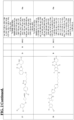

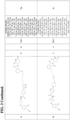

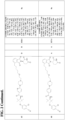
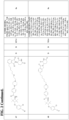



































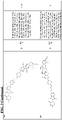


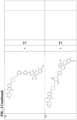
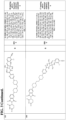
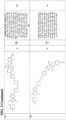







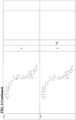
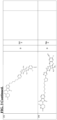

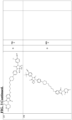
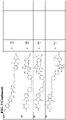









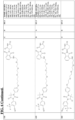

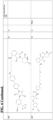
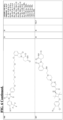
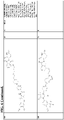







































































Classifications
-
- C—CHEMISTRY; METALLURGY
- C07—ORGANIC CHEMISTRY
- C07D—HETEROCYCLIC COMPOUNDS
- C07D233/00—Heterocyclic compounds containing 1,3-diazole or hydrogenated 1,3-diazole rings, not condensed with other rings
- C07D233/04—Heterocyclic compounds containing 1,3-diazole or hydrogenated 1,3-diazole rings, not condensed with other rings having one double bond between ring members or between a ring member and a non-ring member
- C07D233/28—Heterocyclic compounds containing 1,3-diazole or hydrogenated 1,3-diazole rings, not condensed with other rings having one double bond between ring members or between a ring member and a non-ring member with hetero atoms or with carbon atoms having three bonds to hetero atoms with at the most one bond to halogen, e.g. ester or nitrile radicals, directly attached to ring carbon atoms
- C07D233/30—Oxygen or sulfur atoms
- C07D233/42—Sulfur atoms
-
- C—CHEMISTRY; METALLURGY
- C07—ORGANIC CHEMISTRY
- C07D—HETEROCYCLIC COMPOUNDS
- C07D401/00—Heterocyclic compounds containing two or more hetero rings, having nitrogen atoms as the only ring hetero atoms, at least one ring being a six-membered ring with only one nitrogen atom
- C07D401/14—Heterocyclic compounds containing two or more hetero rings, having nitrogen atoms as the only ring hetero atoms, at least one ring being a six-membered ring with only one nitrogen atom containing three or more hetero rings
-
- A—HUMAN NECESSITIES
- A61—MEDICAL OR VETERINARY SCIENCE; HYGIENE
- A61K—PREPARATIONS FOR MEDICAL, DENTAL OR TOILETRY PURPOSES
- A61K31/00—Medicinal preparations containing organic active ingredients
- A61K31/02—Halogenated hydrocarbons
-
- A—HUMAN NECESSITIES
- A61—MEDICAL OR VETERINARY SCIENCE; HYGIENE
- A61K—PREPARATIONS FOR MEDICAL, DENTAL OR TOILETRY PURPOSES
- A61K31/00—Medicinal preparations containing organic active ingredients
- A61K31/16—Amides, e.g. hydroxamic acids
- A61K31/165—Amides, e.g. hydroxamic acids having aromatic rings, e.g. colchicine, atenolol, progabide
- A61K31/166—Amides, e.g. hydroxamic acids having aromatic rings, e.g. colchicine, atenolol, progabide having the carbon of a carboxamide group directly attached to the aromatic ring, e.g. procainamide, procarbazine, metoclopramide, labetalol
-
- A—HUMAN NECESSITIES
- A61—MEDICAL OR VETERINARY SCIENCE; HYGIENE
- A61K—PREPARATIONS FOR MEDICAL, DENTAL OR TOILETRY PURPOSES
- A61K31/00—Medicinal preparations containing organic active ingredients
- A61K31/275—Nitriles; Isonitriles
- A61K31/277—Nitriles; Isonitriles having a ring, e.g. verapamil
-
- A—HUMAN NECESSITIES
- A61—MEDICAL OR VETERINARY SCIENCE; HYGIENE
- A61K—PREPARATIONS FOR MEDICAL, DENTAL OR TOILETRY PURPOSES
- A61K31/00—Medicinal preparations containing organic active ingredients
- A61K31/33—Heterocyclic compounds
- A61K31/395—Heterocyclic compounds having nitrogen as a ring hetero atom, e.g. guanethidine or rifamycins
- A61K31/435—Heterocyclic compounds having nitrogen as a ring hetero atom, e.g. guanethidine or rifamycins having six-membered rings with one nitrogen as the only ring hetero atom
- A61K31/44—Non condensed pyridines; Hydrogenated derivatives thereof
- A61K31/445—Non condensed piperidines, e.g. piperocaine
- A61K31/4523—Non condensed piperidines, e.g. piperocaine containing further heterocyclic ring systems
- A61K31/4545—Non condensed piperidines, e.g. piperocaine containing further heterocyclic ring systems containing a six-membered ring with nitrogen as a ring hetero atom, e.g. pipamperone, anabasine
-
- A—HUMAN NECESSITIES
- A61—MEDICAL OR VETERINARY SCIENCE; HYGIENE
- A61K—PREPARATIONS FOR MEDICAL, DENTAL OR TOILETRY PURPOSES
- A61K31/00—Medicinal preparations containing organic active ingredients
- A61K31/33—Heterocyclic compounds
- A61K31/395—Heterocyclic compounds having nitrogen as a ring hetero atom, e.g. guanethidine or rifamycins
- A61K31/495—Heterocyclic compounds having nitrogen as a ring hetero atom, e.g. guanethidine or rifamycins having six-membered rings with two or more nitrogen atoms as the only ring heteroatoms, e.g. piperazine or tetrazines
- A61K31/496—Non-condensed piperazines containing further heterocyclic rings, e.g. rifampin, thiothixene or sparfloxacin
-
- A—HUMAN NECESSITIES
- A61—MEDICAL OR VETERINARY SCIENCE; HYGIENE
- A61K—PREPARATIONS FOR MEDICAL, DENTAL OR TOILETRY PURPOSES
- A61K31/00—Medicinal preparations containing organic active ingredients
- A61K31/33—Heterocyclic compounds
- A61K31/395—Heterocyclic compounds having nitrogen as a ring hetero atom, e.g. guanethidine or rifamycins
- A61K31/495—Heterocyclic compounds having nitrogen as a ring hetero atom, e.g. guanethidine or rifamycins having six-membered rings with two or more nitrogen atoms as the only ring heteroatoms, e.g. piperazine or tetrazines
- A61K31/4965—Non-condensed pyrazines
-
- A—HUMAN NECESSITIES
- A61—MEDICAL OR VETERINARY SCIENCE; HYGIENE
- A61K—PREPARATIONS FOR MEDICAL, DENTAL OR TOILETRY PURPOSES
- A61K31/00—Medicinal preparations containing organic active ingredients
- A61K31/33—Heterocyclic compounds
- A61K31/395—Heterocyclic compounds having nitrogen as a ring hetero atom, e.g. guanethidine or rifamycins
- A61K31/495—Heterocyclic compounds having nitrogen as a ring hetero atom, e.g. guanethidine or rifamycins having six-membered rings with two or more nitrogen atoms as the only ring heteroatoms, e.g. piperazine or tetrazines
- A61K31/4965—Non-condensed pyrazines
- A61K31/497—Non-condensed pyrazines containing further heterocyclic rings
-
- A—HUMAN NECESSITIES
- A61—MEDICAL OR VETERINARY SCIENCE; HYGIENE
- A61K—PREPARATIONS FOR MEDICAL, DENTAL OR TOILETRY PURPOSES
- A61K31/00—Medicinal preparations containing organic active ingredients
- A61K31/33—Heterocyclic compounds
- A61K31/395—Heterocyclic compounds having nitrogen as a ring hetero atom, e.g. guanethidine or rifamycins
- A61K31/495—Heterocyclic compounds having nitrogen as a ring hetero atom, e.g. guanethidine or rifamycins having six-membered rings with two or more nitrogen atoms as the only ring heteroatoms, e.g. piperazine or tetrazines
- A61K31/50—Pyridazines; Hydrogenated pyridazines
- A61K31/501—Pyridazines; Hydrogenated pyridazines not condensed and containing further heterocyclic rings
-
- A—HUMAN NECESSITIES
- A61—MEDICAL OR VETERINARY SCIENCE; HYGIENE
- A61K—PREPARATIONS FOR MEDICAL, DENTAL OR TOILETRY PURPOSES
- A61K31/00—Medicinal preparations containing organic active ingredients
- A61K31/33—Heterocyclic compounds
- A61K31/395—Heterocyclic compounds having nitrogen as a ring hetero atom, e.g. guanethidine or rifamycins
- A61K31/495—Heterocyclic compounds having nitrogen as a ring hetero atom, e.g. guanethidine or rifamycins having six-membered rings with two or more nitrogen atoms as the only ring heteroatoms, e.g. piperazine or tetrazines
- A61K31/505—Pyrimidines; Hydrogenated pyrimidines, e.g. trimethoprim
- A61K31/506—Pyrimidines; Hydrogenated pyrimidines, e.g. trimethoprim not condensed and containing further heterocyclic rings
-
- A—HUMAN NECESSITIES
- A61—MEDICAL OR VETERINARY SCIENCE; HYGIENE
- A61K—PREPARATIONS FOR MEDICAL, DENTAL OR TOILETRY PURPOSES
- A61K45/00—Medicinal preparations containing active ingredients not provided for in groups A61K31/00 - A61K41/00
- A61K45/06—Mixtures of active ingredients without chemical characterisation, e.g. antiphlogistics and cardiaca
-
- A—HUMAN NECESSITIES
- A61—MEDICAL OR VETERINARY SCIENCE; HYGIENE
- A61K—PREPARATIONS FOR MEDICAL, DENTAL OR TOILETRY PURPOSES
- A61K47/00—Medicinal preparations characterised by the non-active ingredients used, e.g. carriers or inert additives; Targeting or modifying agents chemically bound to the active ingredient
- A61K47/06—Organic compounds, e.g. natural or synthetic hydrocarbons, polyolefins, mineral oil, petrolatum or ozokerite
- A61K47/08—Organic compounds, e.g. natural or synthetic hydrocarbons, polyolefins, mineral oil, petrolatum or ozokerite containing oxygen, e.g. ethers, acetals, ketones, quinones, aldehydes, peroxides
- A61K47/10—Alcohols; Phenols; Salts thereof, e.g. glycerol; Polyethylene glycols [PEG]; Poloxamers; PEG/POE alkyl ethers
-
- A—HUMAN NECESSITIES
- A61—MEDICAL OR VETERINARY SCIENCE; HYGIENE
- A61K—PREPARATIONS FOR MEDICAL, DENTAL OR TOILETRY PURPOSES
- A61K47/00—Medicinal preparations characterised by the non-active ingredients used, e.g. carriers or inert additives; Targeting or modifying agents chemically bound to the active ingredient
- A61K47/50—Medicinal preparations characterised by the non-active ingredients used, e.g. carriers or inert additives; Targeting or modifying agents chemically bound to the active ingredient the non-active ingredient being chemically bound to the active ingredient, e.g. polymer-drug conjugates
- A61K47/51—Medicinal preparations characterised by the non-active ingredients used, e.g. carriers or inert additives; Targeting or modifying agents chemically bound to the active ingredient the non-active ingredient being chemically bound to the active ingredient, e.g. polymer-drug conjugates the non-active ingredient being a modifying agent
- A61K47/54—Medicinal preparations characterised by the non-active ingredients used, e.g. carriers or inert additives; Targeting or modifying agents chemically bound to the active ingredient the non-active ingredient being chemically bound to the active ingredient, e.g. polymer-drug conjugates the non-active ingredient being a modifying agent the modifying agent being an organic compound
- A61K47/55—Medicinal preparations characterised by the non-active ingredients used, e.g. carriers or inert additives; Targeting or modifying agents chemically bound to the active ingredient the non-active ingredient being chemically bound to the active ingredient, e.g. polymer-drug conjugates the non-active ingredient being a modifying agent the modifying agent being an organic compound the modifying agent being also a pharmacologically or therapeutically active agent, i.e. the entire conjugate being a codrug
-
- A—HUMAN NECESSITIES
- A61—MEDICAL OR VETERINARY SCIENCE; HYGIENE
- A61P—SPECIFIC THERAPEUTIC ACTIVITY OF CHEMICAL COMPOUNDS OR MEDICINAL PREPARATIONS
- A61P13/00—Drugs for disorders of the urinary system
- A61P13/08—Drugs for disorders of the urinary system of the prostate
-
- A—HUMAN NECESSITIES
- A61—MEDICAL OR VETERINARY SCIENCE; HYGIENE
- A61P—SPECIFIC THERAPEUTIC ACTIVITY OF CHEMICAL COMPOUNDS OR MEDICINAL PREPARATIONS
- A61P35/00—Antineoplastic agents
-
- C—CHEMISTRY; METALLURGY
- C07—ORGANIC CHEMISTRY
- C07D—HETEROCYCLIC COMPOUNDS
- C07D205/00—Heterocyclic compounds containing four-membered rings with one nitrogen atom as the only ring hetero atom
- C07D205/02—Heterocyclic compounds containing four-membered rings with one nitrogen atom as the only ring hetero atom not condensed with other rings
- C07D205/04—Heterocyclic compounds containing four-membered rings with one nitrogen atom as the only ring hetero atom not condensed with other rings having no double bonds between ring members or between ring members and non-ring members
-
- C—CHEMISTRY; METALLURGY
- C07—ORGANIC CHEMISTRY
- C07D—HETEROCYCLIC COMPOUNDS
- C07D209/00—Heterocyclic compounds containing five-membered rings, condensed with other rings, with one nitrogen atom as the only ring hetero atom
- C07D209/02—Heterocyclic compounds containing five-membered rings, condensed with other rings, with one nitrogen atom as the only ring hetero atom condensed with one carbocyclic ring
- C07D209/44—Iso-indoles; Hydrogenated iso-indoles
- C07D209/48—Iso-indoles; Hydrogenated iso-indoles with oxygen atoms in positions 1 and 3, e.g. phthalimide
-
- C—CHEMISTRY; METALLURGY
- C07—ORGANIC CHEMISTRY
- C07D—HETEROCYCLIC COMPOUNDS
- C07D211/00—Heterocyclic compounds containing hydrogenated pyridine rings, not condensed with other rings
- C07D211/04—Heterocyclic compounds containing hydrogenated pyridine rings, not condensed with other rings with only hydrogen or carbon atoms directly attached to the ring nitrogen atom
- C07D211/68—Heterocyclic compounds containing hydrogenated pyridine rings, not condensed with other rings with only hydrogen or carbon atoms directly attached to the ring nitrogen atom having one double bond between ring members or between a ring member and a non-ring member
- C07D211/72—Heterocyclic compounds containing hydrogenated pyridine rings, not condensed with other rings with only hydrogen or carbon atoms directly attached to the ring nitrogen atom having one double bond between ring members or between a ring member and a non-ring member with hetero atoms or with carbon atoms having three bonds to hetero atoms, with at the most one bond to halogen, directly attached to ring carbon atoms
- C07D211/74—Oxygen atoms
- C07D211/76—Oxygen atoms attached in position 2 or 6
-
- C—CHEMISTRY; METALLURGY
- C07—ORGANIC CHEMISTRY
- C07D—HETEROCYCLIC COMPOUNDS
- C07D213/00—Heterocyclic compounds containing six-membered rings, not condensed with other rings, with one nitrogen atom as the only ring hetero atom and three or more double bonds between ring members or between ring members and non-ring members
- C07D213/02—Heterocyclic compounds containing six-membered rings, not condensed with other rings, with one nitrogen atom as the only ring hetero atom and three or more double bonds between ring members or between ring members and non-ring members having three double bonds between ring members or between ring members and non-ring members
- C07D213/04—Heterocyclic compounds containing six-membered rings, not condensed with other rings, with one nitrogen atom as the only ring hetero atom and three or more double bonds between ring members or between ring members and non-ring members having three double bonds between ring members or between ring members and non-ring members having no bond between the ring nitrogen atom and a non-ring member or having only hydrogen or carbon atoms directly attached to the ring nitrogen atom
- C07D213/60—Heterocyclic compounds containing six-membered rings, not condensed with other rings, with one nitrogen atom as the only ring hetero atom and three or more double bonds between ring members or between ring members and non-ring members having three double bonds between ring members or between ring members and non-ring members having no bond between the ring nitrogen atom and a non-ring member or having only hydrogen or carbon atoms directly attached to the ring nitrogen atom with hetero atoms or with carbon atoms having three bonds to hetero atoms with at the most one bond to halogen, e.g. ester or nitrile radicals, directly attached to ring carbon atoms
- C07D213/72—Nitrogen atoms
-
- C—CHEMISTRY; METALLURGY
- C07—ORGANIC CHEMISTRY
- C07D—HETEROCYCLIC COMPOUNDS
- C07D221/00—Heterocyclic compounds containing six-membered rings having one nitrogen atom as the only ring hetero atom, not provided for by groups C07D211/00 - C07D219/00
- C07D221/02—Heterocyclic compounds containing six-membered rings having one nitrogen atom as the only ring hetero atom, not provided for by groups C07D211/00 - C07D219/00 condensed with carbocyclic rings or ring systems
- C07D221/20—Spiro-condensed ring systems
-
- C—CHEMISTRY; METALLURGY
- C07—ORGANIC CHEMISTRY
- C07D—HETEROCYCLIC COMPOUNDS
- C07D231/00—Heterocyclic compounds containing 1,2-diazole or hydrogenated 1,2-diazole rings
- C07D231/02—Heterocyclic compounds containing 1,2-diazole or hydrogenated 1,2-diazole rings not condensed with other rings
- C07D231/10—Heterocyclic compounds containing 1,2-diazole or hydrogenated 1,2-diazole rings not condensed with other rings having two or three double bonds between ring members or between ring members and non-ring members
- C07D231/12—Heterocyclic compounds containing 1,2-diazole or hydrogenated 1,2-diazole rings not condensed with other rings having two or three double bonds between ring members or between ring members and non-ring members with only hydrogen atoms, hydrocarbon or substituted hydrocarbon radicals, directly attached to ring carbon atoms
-
- C—CHEMISTRY; METALLURGY
- C07—ORGANIC CHEMISTRY
- C07D—HETEROCYCLIC COMPOUNDS
- C07D237/00—Heterocyclic compounds containing 1,2-diazine or hydrogenated 1,2-diazine rings
- C07D237/02—Heterocyclic compounds containing 1,2-diazine or hydrogenated 1,2-diazine rings not condensed with other rings
- C07D237/06—Heterocyclic compounds containing 1,2-diazine or hydrogenated 1,2-diazine rings not condensed with other rings having three double bonds between ring members or between ring members and non-ring members
- C07D237/08—Heterocyclic compounds containing 1,2-diazine or hydrogenated 1,2-diazine rings not condensed with other rings having three double bonds between ring members or between ring members and non-ring members with only hydrogen atoms, hydrocarbon or substituted hydrocarbon radicals, directly attached to ring carbon atoms
-
- C—CHEMISTRY; METALLURGY
- C07—ORGANIC CHEMISTRY
- C07D—HETEROCYCLIC COMPOUNDS
- C07D239/00—Heterocyclic compounds containing 1,3-diazine or hydrogenated 1,3-diazine rings
- C07D239/02—Heterocyclic compounds containing 1,3-diazine or hydrogenated 1,3-diazine rings not condensed with other rings
- C07D239/24—Heterocyclic compounds containing 1,3-diazine or hydrogenated 1,3-diazine rings not condensed with other rings having three or more double bonds between ring members or between ring members and non-ring members
-
- C—CHEMISTRY; METALLURGY
- C07—ORGANIC CHEMISTRY
- C07D—HETEROCYCLIC COMPOUNDS
- C07D241/00—Heterocyclic compounds containing 1,4-diazine or hydrogenated 1,4-diazine rings
- C07D241/02—Heterocyclic compounds containing 1,4-diazine or hydrogenated 1,4-diazine rings not condensed with other rings
- C07D241/04—Heterocyclic compounds containing 1,4-diazine or hydrogenated 1,4-diazine rings not condensed with other rings having no double bonds between ring members or between ring members and non-ring members
-
- C—CHEMISTRY; METALLURGY
- C07—ORGANIC CHEMISTRY
- C07D—HETEROCYCLIC COMPOUNDS
- C07D401/00—Heterocyclic compounds containing two or more hetero rings, having nitrogen atoms as the only ring hetero atoms, at least one ring being a six-membered ring with only one nitrogen atom
- C07D401/02—Heterocyclic compounds containing two or more hetero rings, having nitrogen atoms as the only ring hetero atoms, at least one ring being a six-membered ring with only one nitrogen atom containing two hetero rings
- C07D401/04—Heterocyclic compounds containing two or more hetero rings, having nitrogen atoms as the only ring hetero atoms, at least one ring being a six-membered ring with only one nitrogen atom containing two hetero rings directly linked by a ring-member-to-ring-member bond
Definitions
- the present description provides imide-based compounds, including bifunctional compounds comprising the same, and associated methods of use.
- the bifunctional compounds are useful as modulators of targeted ubiquitination, especially with respect to a variety of polypeptides and other proteins, which are degraded and/or otherwise inhibited by bifunctional compounds according to the present disclosure.
- the bifunctional compounds comprise a Cereblon E3 Ubiquitin Ligase (CRBN) binding moiety, which binds to the cereblon E3 ubiquitin ligase, a target protein binding moiety, which binds to the target protein (e.g., androgen receptor), and optionally a linker moiety which links the cereblon binding moiety and target protein binding moiety.
- CRBN Cereblon E3 Ubiquitin Ligase
- target protein binding moiety which binds to the target protein (e.g., androgen receptor)
- optionally a linker moiety which links the cereblon binding moiety and target protein binding mo
- E3 ubiquitin ligases (of which hundreds are know in humans) confer substrate specificity for ubiquitination, and therefore, are more attractive therapeutic targets than general proteasome inhibitors due to their specificity for certain protein substrates.
- the development of ligands of E3 ligases has proven challenging, in part due to the fact that they must disrupt protein-protein interactions.
- recent developments have provided specific ligands wich bind to these ligases. For example, since the discovery of nutlins, the first small molecule E3 ligase inhibitors, additional compounds have been reported that target E3 ligases, but the field remains underdeveloped.
- Cereblon a protein that in humans is encoded by the CRBN gene.
- CRBN orthologs are highly conserved from plants to humans, which underscores its physiological importance.
- Cereblon forms an E3 ubiquitin ligase complex with damaged DNA binding protein 1 (DDB1), Cullin-4A (CUL4A), and regulator of cullins 1 (ROC1). This complex ubiquitinates a number of other proteins.
- DDB1 DNA binding protein 1
- CUL4A Cullin-4A
- ROC1 regulator of cullins 1
- FGF8 in turn regulates a number of developmental processes, such as limb and auditory vesicle formation.
- the net result is that this ubiquitin ligase complex is important for limb outgrowth in embryos.
- DDB 1 forms a complex with DDB2 that functions as a DNA damage-binding protein.
- Thalidomide which has been approved for the treatment of a number of immunological indications, has also been approved for the treatment of certain neoplastic diseases, including multiple myeloma.
- thalidomide and several of its analogs are also currently under investigation for use in treating a variety of other types of cancer. While the precise mechanism of thalidomide's anti-tumor activity is still emerging, it is known to inhibit angiogenesis.
- Recent literature discussing the biology of the imides includes Lu et al. Science 343, 305 (2014 ) and Krönke et al. Science 343, 301 (2014 ).
- thalidomide and its analogs e.g. pomolinamiode and lenalinomide
- these agents bind to cereblon, altering the specificity of the complex to induce the ubiquitination and degradation of Ikaros (IKZF1) and Aiolos (IKZF3), transcription factors essential for multiple myeloma growth.
- IKZF1 and Aiolos IKZF3
- IKZF3 Aiolos
- Androgen Receptor belongs to a nuclear hormone receptor family that is activated by androgens, such as testosterone and dihydrotestosterone ( Pharmacol. Rev. 2006, 58(4), 782-97 ; Vitam. Horm. 1999, 55:309-52 .).
- AR is bound by Heat Shock Protein 90 (Hsp90) in the cytosol.
- Hsp90 Heat Shock Protein 90
- an androgen binds AR, its conformation changes to release AR from Hsp90 and to expose the Nuclear Localization Signal (NLS).
- NLS Nuclear Localization Signal
- the latter enables AR to translocate into the nucleus where AR acts as a transcription factor to promote gene expression responsible for male sexual characteristics ( Endocr. Rev. 1987, 8(1):1-28 ; Mol. Endocrinol. 2002, 16(10), 2181-7 ).
- AR deficiency leads to Androgen Insensitivity Syndrome, formerly termed testicular feminization.
- AR is responsible for development of male sexual characteristics, it is also a well-documented oncogene in certain forms cancers including prostate cancers ( Endocr. Rev. 2004, 25(2), 276-308 ).
- a commonly measured target gene of AR activity is the secreted Prostate Specific Antigen (PSA) protein.
- PSA Prostate Specific Antigen
- the current treatment regimen for prostate cancer involves inhibiting the androgen-AR axis by two methods. The first approach relies on reduction of androgens, while the second strategy aims to inhibit AR function ( Nat. Rev. Drug Discovery, 2013, 12,823-824 ).
- An alternative approach for the treatment of prostate cancer involves eliminating the AR protein. Because AR is a critical driver of tumorigenesis in many forms of prostate cancers, its elimination should lead to therapeutically beneficial response.
- the present disclosure describes bi-functional compounds, which function to recruit endogenous proteins to an E3 Ubiquitin Ligase for degradation, and methods of using the same.
- the present disclosure provides bifunctional or proteolysis targeting chimeric (PROTAC) compounds, which find utility as modulators of targeted ubiquitination of a variety of polypeptides and other proteins (such as androgen receptor), which are then degraded and/or otherwise inhibited by the bifunctional compounds as described herein.
- An advantage of the compounds provided herein is that a broad range of pharmacological activites is possible, consistent with the degradation/inhibition of targeted polypeptides from virtually any protein class or family.
- the description provides methods of using an effective amount of the compounds as described herein for the treatment or amelioration of a disease condition including cancer, e.g., prostate cancer, and Kennedy's Disease.
- the disclosure provides bifunctional or PROTAC compounds, which comprise an E3 Ubiqutin Ligase binding moiety (i.e. a ligand for an E3 Ubiquitin Ligase or "ULM” group), and a moiety that binds a target protein (i.e. a protein/polypeptide targeting ligand or "PTM” group) such that the target protein/polypeptide is placed in proximity to the ubiquitin ligase to effect degrataion (and inhibition) of that protein.
- the ULM is a cereblon E3 Ubiquitin Ligase binding moiety (i.e. a "CLM").
- the structure of the bifunctional compound can be depicted as: PTM - CLM.
- the bifunctional compound further comprise a chemical linker ("L").
- L chemical linker
- the structure of the bifunctional compunds can be depicted as: PTM - L - CLM, wherein the PTM is a protein/polypeptide targeting moiety, the L is a chemical linker moiety or bond that links the PTM and the CLM, and the CLM is a cereblon E3 ubiquitin ligase binding moiety.
- the E3 Ubiquitin Ligase is cereblon.
- the CLM of the bifunctional compound comprises chemistries such as imide, amide, thioamide, thioimide derived moieties.
- the CLM comprises a phthalimido group or an analog or derivative thereof.
- the CLM comprises a phthalimido-glutarimide group or an analog or derivative thereof.
- the CLM comprises a member of the group consisting of thalidomide, lenalidomide, pomalidomide, and analogs or derivatives thereof.
- the compounds as described herein comprise multiple CLMs, multiple PTMs, multiple chemical linkers or a combination thereof.
- the PTM is an AR binding moieties (ABM).
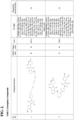
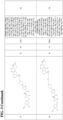
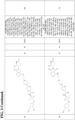
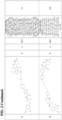
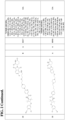
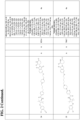
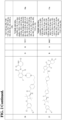
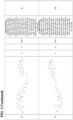
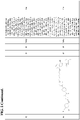
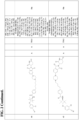
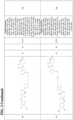
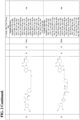
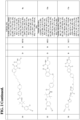
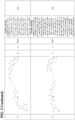
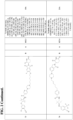
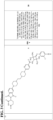
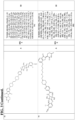
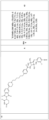
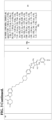
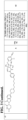
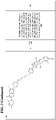
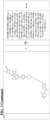
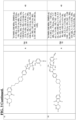
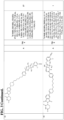
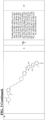
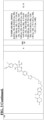
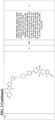
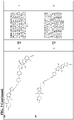
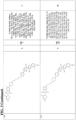
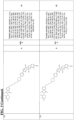
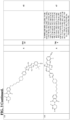
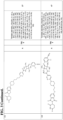
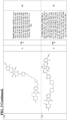
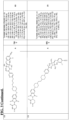
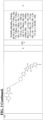
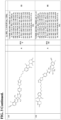
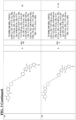
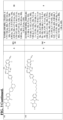
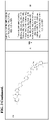
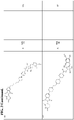
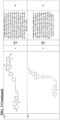
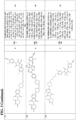
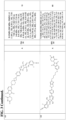
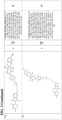
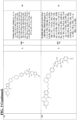
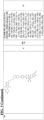
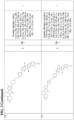
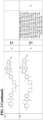
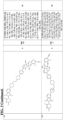
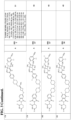
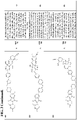
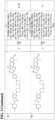
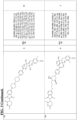
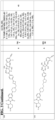
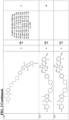
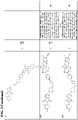
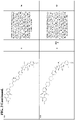
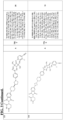
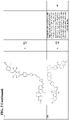
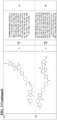
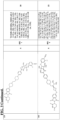
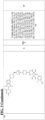
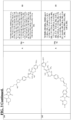
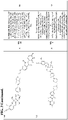
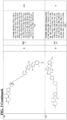
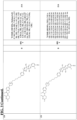
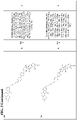
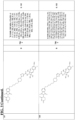
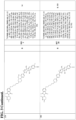
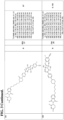
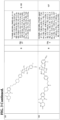
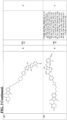
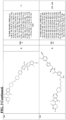
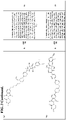
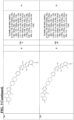
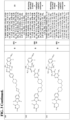
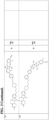
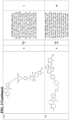
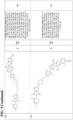
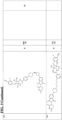
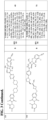
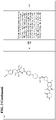
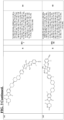
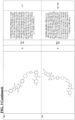
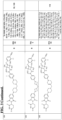
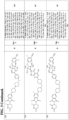
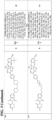
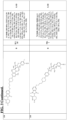
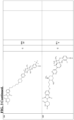
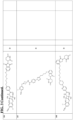
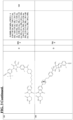
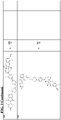
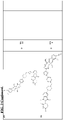
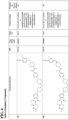
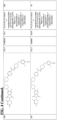
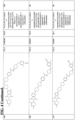
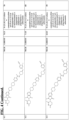
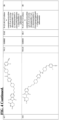
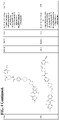
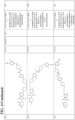
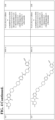
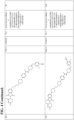
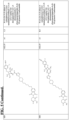
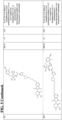
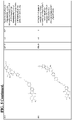
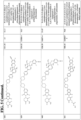
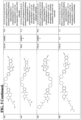
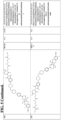
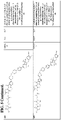
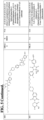
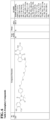
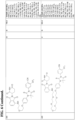
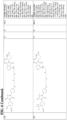
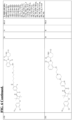
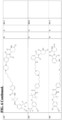
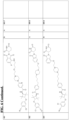
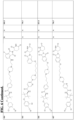
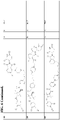
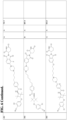
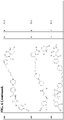
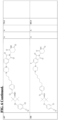
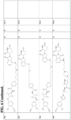
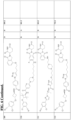
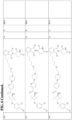
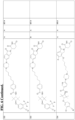
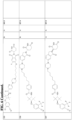
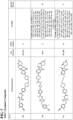
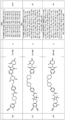
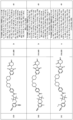
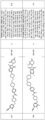
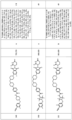
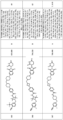
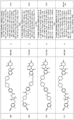
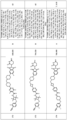
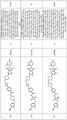
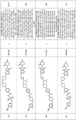
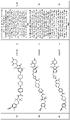
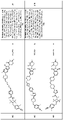
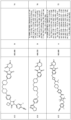
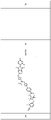
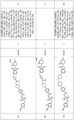
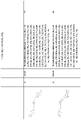
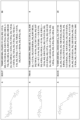
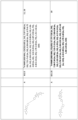
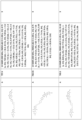
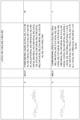
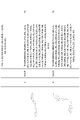
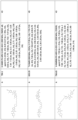
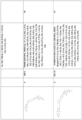
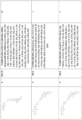
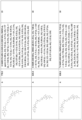
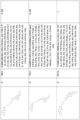
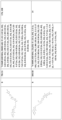
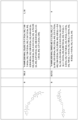
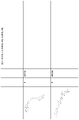
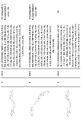
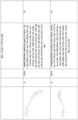
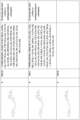
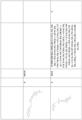
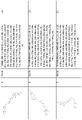
- the present invention provides a compound having the structure: or or a pharmaceutically acceptable salt, enantiomer, stereoisomer, or isotopic derivative of any of the foregoing.
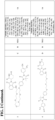
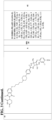
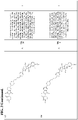
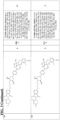
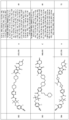
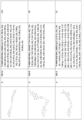
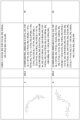
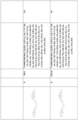
- the compound has the structure: or a pharmaceutically acceptable salt, enantiomer, stereoisomer, or isotopic derivative thereof.
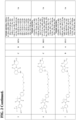
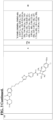
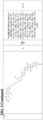
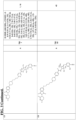
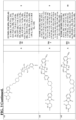
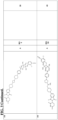
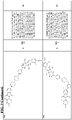
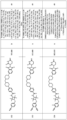
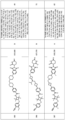
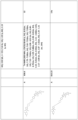
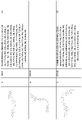
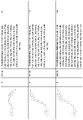
- the compound has the structure: or a pharmaceutically acceptable salt, enantiomer, stereoisomer, or isotopic derivative thereof.
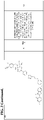
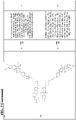
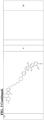
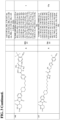
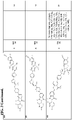
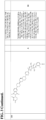
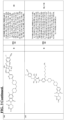
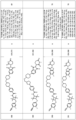
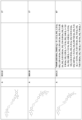
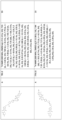
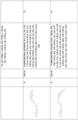
- the compound has the structure: or a pharmaceutically acceptable salt, enantiomer, stereoisomer, or isotopic derivative thereof.
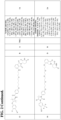
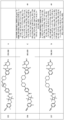
- the compound has the structure: or a pharmaceutically acceptable salt, enantiomer, stereoisomer, or isotopic derivative thereof.
- the description provides pharmaceutical compositions comprising an effective amount of a compound as described herein or salt form thereof, and a pharmaceutically acceptable carrier.
- the therapeutic compositions modulate protein degradation in a patient or subject, for example, an animal such as a human, and can be used for treating or ameliorating disease states or conditions which are modulated through the degraded protein.
- the therapeutic compositions as described herein may be used to effectuate the degradation and/or inhibition of proteins of interest for the treatment or amelioration of a disease, e.g., cancer.
- the present disclosure also provides a method of ubiquitinating/ degrading a target protein in a cell.
- the method may comprise administering a bifunctional compound as described herein comprising an CLM and a PTM, preferably linked through a linker moiety, as otherwise described herein, wherein the CLM is coupled to the PTM and wherein the CLM recognizes a ubiquitin pathway protein (e.g., a ubiquitin ligase, preferably an E3 ubiquitin ligase such as cereblon) and the PTM recognizes the target protein such that degradation of the target protein will occur when the target protein is placed in proximity to the ubiquitin ligase, thus resulting in degradation/inhibition of the effects of the target protein and the control of protein levels.
- a ubiquitin pathway protein e.g., a ubiquitin ligase, preferably an E3 ubiquitin ligase such as cereblon
- the PTM recognizes the target protein such that degradation of the target protein will occur when the target protein is placed in proximity to the ubiquitin ligase, thus resulting in degradation
- the description also provides a method for assessing (i.e., determining and/or measuring) a CLM's binding affinity.
- the method may comprise providing a test agent or compound of interest, for example, an agent or compound having an imide moiety, e.g., a phthalimido group, phthalimido-glutarimide group, derivatized thalidomide, derivatized lenalidomide or derivatized pomalidomide, and comparing the cereblon binding affinity and/or inhibitory activity of the test agent or compound as compared to an agent or compound known to bind and/or inhibit the activity of cereblon.
- an agent or compound having an imide moiety e.g., a phthalimido group, phthalimido-glutarimide group, derivatized thalidomide, derivatized lenalidomide or derivatized pomalidomide
- compositions further comprise an effective amount of an additional anti-cancer agent, for example a FLT-3 inhibitor, androgen receptor inhibitor, VEGFR inhibitor, EGFR TK inhibitor, aurora kinase inhibitor, PIK-1 modulator, Bcl-2 inhibitor, HDAC inhibitor, c-MET inhibitor, PARP inhibitor, CDK inhibitor, anti-HGF antibody, IGFR TK inhibitor, PI3 kinase inhibitor, AKT inhibitor, JAK/STAT inhibitor, checkpoint 1 inhibitor, checkpoint 2 inhibitor, focal adhesion kinase inhibitor, MAP kinase kinase inhibitor, or VEGF trap antibody.
- an additional anti-cancer agent for example a FLT-3 inhibitor, androgen receptor inhibitor, VEGFR inhibitor, EGFR TK inhibitor, aurora kinase inhibitor, PIK-1 modulator, Bcl-2 inhibitor, HDAC inhibitor, c-MET inhibitor, PARP inhibitor, CDK inhibitor, anti-HGF antibody, IGFR TK inhibitor, PI3 kina
- the anti-cancer agent is estramustine, docetaxel, ketoconazole, goserelin acetate, histrelin, buserelin, cyproterone, flutamide, bicalutamide, nilutamide, pamidronate, zolendronate, mitoxantrone, pemetrexed, ipilimumab, vorinostat, etoposide, gemcitabine, doxorubicin, vincristine, temozolomide, capecitabine, PEG-labelled irinotecan, tamoxifen, anastrazole, exemestane, letrozole, diethylstilbestrol, estradiol, estrogen, bevacizumab, leuprolide acetate, triptorelin pamoate, medroxyprogesterone acetate, hydroxyprogesterone caproate, raloxifene, megestrol acetate, carb
- the anti-cancer agent is estramustine, docetaxel, ketoconazole, goserelin acetate, histrelin, triptorelin pamoate, buserelin, cyproterone, flutamide, bicalutamide, nilutamide, pamidronate, or zolendronate.
- the anti-cancer agent is docetaxel, mitoxantrone, estramustine, or leuprolide acetate.
- the present invention also provides a compound or composition as disclosed herein for use in the treatment of prostate cancer in a subject.
- the treatment further comprises the use of an effective amount of an additional anti-cancer agent, for example, those as described above.
- any one of the embodiments described herein are contemplated to be able to combine with any other one or more embodiments, even though the embodiments are described under different aspects of the disclosure.
- the preceding general areas of utility are given by way of example only and are not intended to be limiting on the scope of the present disclosure and appended claims. Additional objects and advantages associated with the compositions, methods, and processes of the present disclosure will be appreciated by one of ordinary skill in the art in light of the instant claims, description, and examples.
- the various aspects and embodiments of the disclosure may be utilized in numerous combinations, all of which are expressly contemplated by the present description.
- the present description relates to the surprising and unexpected discovery that an E3 ubiquitin ligase protein can ubiquitinate a target protein, in particular androgen receptor, once the E3 ubiquitin ligase protein and the target protein are brought into proximity by a chimeric construct (e.g., PROTAC) as described herein, in which a moiety that binds the E3 ubiquitin ligase protein is coupled, e.g., covalently, to a moiety that bind the androgen receptor target protein.
- a chimeric construct e.g., PROTAC
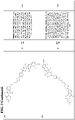
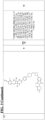
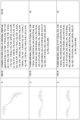
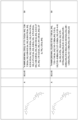
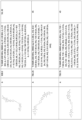
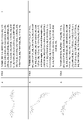
- the present description provides compounds, compositions comprising the same, and associated methods of use for ubiquitination and degradation of a chosen target protein, e.g., androgen receptor (See Figure 1A and Figure 1B ).
- a reference to "A and/or B", when used in conjunction with open-ended language such as “comprising” can refer, in one embodiment, to A only (optionally including elements other than B); in another embodiment, to B only (optionally including elements other than A); in yet another embodiment, to both A and B (optionally including other elements); etc.
- the phrase "at least one,” in reference to a list of one or more elements, should be understood to mean at least one element selected from anyone or more of the elements in the list of elements, but not necessarily including at least one of each and every element specifically listed within the list of elements and not excluding any combinations of elements in the list of elements.
- This definition also allows that elements may optionally be present other than the elements specifically identified within the list of elements to which the phrase "at least one" refers, whether related or unrelated to those elements specifically identified.
- At least one of A and B can refer, in one embodiment, to at least one, optionally including more than one, A, with no B present (and optionally including elements other than B); in another embodiment, to at least one, optionally including more than one, B, with no A present (and optionally including elements other than A); in yet another embodiment, to at least one, optionally including more than one, A, and at least one, optionally including more than one, B (and optionally including other elements); etc.
- co-administration and “co-administering” or “combination therapy” can refer to both concurrent administration (administration of two or more therapeutic agents at the same time) and time varied administration (administration of one or more therapeutic agents at a time different from that of the administration of an additional therapeutic agent or agents), as long as the therapeutic agents are present in the patient to some extent, preferably at effective amounts, at the same time.
- one or more of the present compounds described herein are coadministered in combination with at least one additional bioactive agent, especially including an anticancer agent.
- the co-administration of compounds results in synergistic activity and/or therapy, including anticancer activity.
- the term "effective” can mean, but is in no way limited to, that amount/dose of the active pharmaceutical ingredient, which, when used in the context of its intended use, effectuates or is sufficient to prevent, inhibit the occurrence, ameliorate, delay or treat (alleviate a symptom to some extent, preferably all) the symptoms of a condition, disorder or disease state in a subject in need of such treatment or receiving such treatment.
- effective subsumes all other effective amount or effective concentration terms, e.g., "effective amount/dose,” “pharmaceutically effective amount/dose” or “therapeutically effective amount/dose,” which are otherwise described or used in the present application.
- the effective amount depends on the type and severity of disease, the composition used, the route of administration, the type of mammal being treated, the physical characteristics of the specific mammal under consideration, concurrent medication, and other factors which those skilled in the medical arts will recognize.
- the exact amount can be ascertainable by one skilled in the art using known techniques (see, e.g., Lieberman, Pharmaceutical Dosage Forms (vols. 1-3, 1992 ); Lloyd, The Art, Science and Technology of Pharmaceutical Compounding (1999 ); Pickar, Dosage Calculations (1999 ); and Remington: The Science and Practice of Pharmacy, 20th Edition, 2003, Gennaro, Ed., Lippincott, Williams & Wilkins ).
- compositions can mean, but is in no way limited to, a composition or formulation that allows for the effective distribution of an agent provided by the present disclosure, which is in a form suitable for administration to the physical location most suitable for their desired activity, e.g., systemic administration.
- pharmaceutically acceptable or “pharmacologically acceptable” can mean, but is in no way limited to, entities and compositions that do not produce an adverse, allergic or other untoward reaction when administered to an animal, or a human, as appropriate.
- pharmaceutically acceptable carrier or “pharmacologically acceptable carrier” can mean, but is in no way limited to, any and all solvents, dispersion media, coatings, antibacterial and antifungal agents, isotonic and absorption delaying agents, and the like, compatible with pharmaceutical administration. Suitable carriers are described in the most recent edition of Remington's Pharmaceutical Sciences, a standard reference text in the field. Preferred examples of such carriers or diluents include, but are not limited to, water, saline, finger's solutions, dextrose solution, and 5% human serum albumin. Liposomes and non-aqueous vehicles such as fixed oils may also be used. The use of such media and agents for pharmaceutically active substances is well known in the art. Except insofar as any conventional media or agent is incompatible with the active compound, use thereof in the compositions is contemplated. Supplementary active compounds can also be incorporated into the compositions.
- systemic administration refers to a route of administration that is, e.g., enteral or parenteral, and results in the systemic distribution of an agent leading to systemic absorption or accumulation of drugs in the blood stream followed by distribution throughout the entire body.
- Suitable forms depend upon the use or the route of entry, for example oral, transdermal, or by injection. Such forms should not prevent the composition or formulation from reaching a target cell (i.e., a cell to which the negatively charged polymer is desired to be delivered to).
- pharmacological compositions injected into the blood stream should be soluble.
- Other factors are known in the art, and include considerations such as toxicity and forms which prevent the composition or formulation from exerting its effect.
- Administration routes which lead to systemic absorption include, without limitations: intravenous, subcutaneous, intraperitoneal, inhalation, oral, intrapulmonary and intramuscular.
- the rate of entry of a drug into the circulation has been shown to be a function of molecular weight or size.
- the use of a liposome or other drug carrier comprising the compounds of the instant disclosure can potentially localize the drug, for example, in certain tissue types, such as the tissues of the reticular endothelial system (RES).
- RES reticular endothelial system
- a liposome formulation which can facilitate the association of drug with the surface of cells, such as, lymphocytes and macrophages is also useful.
- local administration refers to a route of administration in which the agent is delivered to a site that is apposite or proximal, e.g., within about 10 cm, to the site of the lesion or disease.
- compound refers to any specific chemical compound disclosed herein and includes tautomers, regioisomers, geometric isomers, and where applicable, stereoisomers, including optical isomers (enantiomers) and other steroisomers (diastereomers) thereof, as well as pharmaceutically acceptable salts and derivatives (including prodrug forms) thereof where applicable, in context.
- compound generally refers to a single compound, but also may include other compounds such as stereoisomers, regioisomers and/or optical isomers (including racemic mixtures) as well as specific enantiomers or enantiomerically enriched mixtures of disclosed compounds.
- the term also refers, in context to prodrug forms of compounds which have been modified to facilitate the administration and delivery of compounds to a site of activity. It is noted that in describing the present compounds, numerous substituents and variables associated with same, among others, are described.
- derivatives can mean compositions formed from the native compounds either directly, by modification, or by partial substitution.
- analogs can mean compositions that have a structure similar to, but not identical to, the native compound.
- Ubiquitin Ligase refers to a family of proteins that facilitate the transfer of ubiquitin to a specific substrate protein, targeting the substrate protein for degradation.
- cereblon is an E3 Ubiquitin Ligase protein that alone or in combination with an E2 ubiquitin-conjugating enzyme causes the attachment of ubiquitin to a lysine on a target protein, and subsequently targets the specific protein substrates for degradation by the proteasome.
- E3 ubiquitin ligase alone or in complex with an E2 ubiquitin conjugating enzyme is responsible for the transfer of ubiquitin to targeted proteins.
- the ubiquitin ligase is involved in polyubiquitination such that a second ubiquitin is attached to the first; a third is attached to the second, and so forth.
- Polyubiquitination marks proteins for degradation by the proteasome.
- Mono-ubiquitinated proteins are not targeted to the proteasome for degradation, but may instead be altered in their cellular location or function, for example, via binding other proteins that have domains capable of binding ubiquitin.
- different lysines on ubiquitin can be targeted by an E3 to make chains. The most common lysine is Lys48 on the ubiquitin chain. This is the lysine used to make polyubiquitin, which is recognized by the proteasome.
- patient or “subject” is used throughout the specification to describe a cell, tissue, or animal, preferably a mammal, e.g., a human or a domesticated animal, to whom treatment, including prophylactic treatment, with the compositions according to the present disclosure is provided.
- a mammal e.g., a human or a domesticated animal
- the term patient refers to that specific animal, including a domesticated animal such as a dog or cat or a farm animal such as a horse, cow, sheep, etc.
- the term patient refers to a human patient unless otherwise stated or implied from the context of the use of the term.
- the present disclosure provides compounds useful for regulating protein activity.
- the composition comprises a ubiquitin pathway protein binding moiety (preferably for an E3 ubiquitin ligase, alone or in complex with an E2 ubiquitin conjugating enzyme which is responsible for the transfer of ubiquitin to targeted proteins) according to a defined chemical structure and a protein targeting moiety which are linked or coupled together, preferably through a linker, wherein the ubiquitin pathway protein binding moiety recognizes a ubiquitin pathway protein and the targeting moiety recognizes a target protein (e.g., androgen receptor).
- a target protein e.g., androgen receptor
- the description provides compounds comprising an E3 Ubiquitin Ligase binding moiety (“ULM”) that is a cereblon E3 Ubiquitin Ligase binding moiety (“CLM”).
- the CLM is coupled to a chemical linker group (L) according to the structure: L-CLM (I) wherein L is a chemical linker group and CLM is a cereblon E3 Ubiquitin Ligase binding moiety.
- L-CLM (I) wherein L is a chemical linker group and CLM is a cereblon E3 Ubiquitin Ligase binding moiety.
- ULM and CLM are used in their inclusive sense unless the context indicates otherwise.
- ULM is inclusive of all ULMs, including those that bind cereblon (i.e., CLMs).
- CLM is inclusive of all possible cereblon E3 Ubiquitin Ligase binding moieties.
- the description also provides a compound which comprises a plurality of CLMs coupled directly or via a chemical linker moiety (L).
- a compound having two CLMs can be depicted as: CLM-CLM (II) or CLM-L-CLM (III).
- the CLMs may be identical.
- the compound comprising a plurality of CLMs may further comprise at least one PTM coupled to a CLM directly or via a chemical linker (L) or both.
- the compound comprising a plurality of CLMs may further comprise multiple PTMs.
- the PTMs may be the same or different. Where the PTMs are different the respective PTMs may bind the same protein target or bind specifically to a different protein target.
- the description also provides a compound comprising at least two different CLMs coupled directly or via a chemical linker (L) or both.
- a compound having two different CLMs can be depicted as: CLM-CLM' (IV) or CLM-L-CLM' (V) wherein CLM' indicates a cereblon E3 Ubiquitin Ligase binding moiety that is structurally different from CLM.
- the compound may comprise a plurality of CLMs and/or a plurality of CLM's.
- the compound comprising at least two different CLMs, a plurality of CLMs, and/or a plurality of CLM's may further comprise at least one PTM coupled to a CLM or a CLM' directly or via a chemical linker or both.
- a compound comprising at least two different CLMs can further comprise multiple PTMs.
- the PTMs may be the same or different. Where the PTMs are different the respective PTMs may bind the same protein target or bind specifically to a different protein target.
- the PTM itself may be a ULM or CLM (or ULM' or CLM')
- the description provides bifunctional or PROTAC compounds, which comprise an E3 Ubiqutin Ligase binding moiety (“ULM”) that is a cereblon E3 Ubiquitin Ligase binding moiety (“CLM”), and a moiety that binds a target protein (i.e. a protein/polypeptide targeting ligand or "PTM” group) that is an AR binding moiety (“ABM”).
- UBM E3 Ubiqutin Ligase binding moiety
- CLM cereblon E3 Ubiquitin Ligase binding moiety
- ABM AR binding moiety
- ABM-L wherein ABM is an AR binding moiety as described herein, and L is a chemical linker moiety, e.g., a linker as described herein, or optionally a bond.
- the bifunctional compound further comprises a chemical linker ("L").
- L a chemical linker
- ABM is an AR binding moiety as described herein
- CLM is a cereblon E3 ligase binding moiety as described herein
- L is a chemical linker moiety, e.g., a linker as described herein, or optionally a bond, that links the ABM and CLM.
- CLM is inclusive of all possible cereblon E3 Ubiquitin Ligase binding moieties.
- the CLM group and ABM group may be covalently linked to the linker group through any covalent bond which is appropriate and stable to the chemistry of the linker.
- the CLM comprises a moiety that is a ligand of the cereblon E3 Ubiquitin Ligase (CRBN).
- the CLM comprises a chemotype from the "imide" class of molecules.
- the CLM comprises a phthalimido group or an analog or derivative thereof.
- the CLM comprises a phthalimido-glutarimide group or an analog or derivative thereof.
- the CLM comprises a member of the group consisting of thalidomide, lenalidomide, pomalidomide, and analogs or derivatives thereof.
- the general structures are exemplary and the respective moieties can be arranged in any desired order or configuration, e.g., CLM-L-ABM, and CLM-L-ABM respectively.
- the compounds comprise a plurality of E3 ligase binding moieties and/or a plurality of ABMs.
- the compounds as described herein comprise multiple ABMs (targeting the same or different locations of the AR), multiple CLMs, one or more ULMs (i.e., moieties that bind specifically to another E3 Ubiquitin Ligase, e.g., VHL) or a combination thereof.
- the ABMs, CLMs, and ULMs can be coupled directly or via one or more chemical linkers or a combination thereof.
- the ULMs can be for the same E3 Ubiquitin Ligase or each respective ULM can bind specifically to a different E3 Ubiquitin Ligase.
- the ABMs are the same or, optionally, different.
- the CLMs are identical or, optionally, different.
- the compound comprising a plurality of CLMs further comprises at least one ABM coupled to a CLM directly or via a chemical linker (L) or both.
- the compound comprising a plurality of CLMs further comprises multiple ABMs.
- the ABMs are the same or, optionally, different.
- ABM alone, without forming ABM-L-CLM, provides desired properties in regulating protein activity.
- the compounds are intended to encompass pharmaceutically acceptable salts, enantiomers, stereoisomers, solvates or polymorphs thereof.
- the compounds as described herein comprise multiple PTMs (targeting the same or different protein targets), multiple ABMs, multiple CLMs, one or more ULMs (i.e., moieties that bind specifically to another E3 Ubiquitin Ligase, e.g., cereblon) or a combination thereof.
- the PTMs, ABMs, CLMs, and ULMs can be coupled directly or via one or more chemical linkers or a combination thereof.
- the ULMs can be for the same E3 Ubiquintin Ligase or each respective ULM can bind specifically to a different E3 Ubiquitin Ligase.
- the PTMs can bind the same target protein or each respective PTM can bind specifically to a different target protein.
- neo-imide CLMs examples include: wherein:
- CLMs comprise a chemical structure selected from the group: wherein:
- the CLM or ULM may comprise a chemical structure selected from the group: wherein:
- alkyl shall mean within its context a linear, branch-chained or cyclic fully saturated hydrocarbon radical or alkyl group, preferably a C 1 -C 10 , more preferably a C 1 -C 6 , alternatively a C 1 -C 3 alkyl group, which may be optionally substituted.
- alkyl groups are methyl, ethyl, n-butyl, sec-butyl, n-hexyl, n-heptyl, n-octyl, n-nonyl, n-decyl, isopropyl, 2-methylpropyl, cyclopropyl, cyclopropylmethyl, cyclobutyl, cyclopentyl, cyclopentylethyl, cyclohexylethyl and cyclohexyl, among others.
- the alkyl group is end-capped with a halogen group (At, Br, Cl, F, or I).
- compounds according to the present disclosure which may be used to covalently bind to dehalogenase enzymes.
- These compounds generally contain a side chain (often linked through a polyethylene glycol group) which terminates in an alkyl group which has a halogen substituent (often chlorine or bromine) on its distal end which results in covalent binding of the compound containing such a moiety to the protein.
- alkylene when used, refers to a -(CH 2 ) n - group (n is an integer generally from 0-6), which may be optionally substituted.
- the alkylene group When substituted, the alkylene group preferably is substituted on one or more of the methylene groups with a C 1 -C 6 alkyl group (including a cyclopropyl group or a t-butyl group), but may also be substituted with one or more halo groups, preferably from 1 to 3 halo groups or one or two hydroxyl groups, O-(C 1 -C 6 alkyl) groups or amino acid sidechains as otherwise disclosed herein.
- an alkylene group may be substituted with a urethane or alkoxy group (or other group) which is further substituted with a polyethylene glycol chain (of from 1 to 10, preferably 1 to 6, often 1 to 4 ethylene glycol units) to which is substituted (preferably, but not exclusively on the distal end of the polyethylene glycol chain) an alkyl chain substituted with a single halogen group, preferably a chlorine group.
- a polyethylene glycol chain of from 1 to 10, preferably 1 to 6, often 1 to 4 ethylene glycol units
- the alkylene (often, a methylene) group may be substituted with an amino acid sidechain group such as a sidechain group of a natural or unnatural amino acid, for example, alanine, ⁇ -alanine, arginine, asparagine, aspartic acid, cysteine, cystine, glutamic acid, glutamine, glycine, phenylalanine, histidine, isoleucine, lysine, leucine, methionine, proline, serine, threonine, valine, tryptophan or tyrosine.
- an amino acid sidechain group such as a sidechain group of a natural or unnatural amino acid, for example, alanine, ⁇ -alanine, arginine, asparagine, aspartic acid, cysteine, cystine, glutamic acid, glutamine, glycine, phenylalanine, histidine, isoleucine, lysine, leucine, methion
- unsubstituted shall mean substituted only with hydrogen atoms.
- a range of carbon atoms which includes C 0 means that carbon is absent and is replaced with H.
- a range of carbon atoms which is C 0 -C 6 includes carbons atoms of 1, 2, 3, 4, 5 and 6 and for C 0 , H stands in place of carbon.
- Substituents according to the present disclosure may include, for example - SiR 1 R 2 R 3 groups where each of R 1 and R 2 is as otherwise described herein and R 3 is H or a C 1 -C 6 alkyl group, preferably R 1 , R 2 , R 3 in this context is a C 1 -C 3 alkyl group (including an isopropyl or t-butyl group).
- Each of the above-described groups may be linked directly to the substituted moiety or alternatively, the substituent may be linked to the substituted moiety (preferably in the case of an aryl or heteraryl moiety) through an optionally substituted -(CH 2 ) m -or alternatively an optionally substituted -(OCH 2 ) m -, -(OCH 2 CH 2 ) m - or -(CH 2 CH 2 O) m - group, which may be substituted with any one or more of the above-described substituents.
- Alkylene groups -(CH 2 ) m - or -(CH 2 ) n - groups or other chains such as ethylene glycol chains, as identified above, may be substituted anywhere on the chain.
- Preferred substituents on alkylene groups include halogen or C 1 -C 6 (preferably C 1 -C 3 ) alkyl groups, which may be optionally substituted with one or two hydroxyl groups, one or two ether groups (O-C 1 -C 6 groups), up to three halo groups (preferably F), or a sideshain of an amino acid as otherwise described herein and optionally substituted amide (preferably carboxamide substituted as described above) or urethane groups (often with one or two C 0 -C 6 alkyl substitutents, which group(s) may be further substituted).
- the alkylene group (often a single methylene group) is substituted with one or two optionally substituted C 1 -C 6 alkyl groups, preferably C 1 -C 4 alkyl group, most often methyl or O-methyl groups or a sidechain of an amino acid as otherwise described herein.
- a moiety in a molecule may be optionally substituted with up to five substituents, preferably up to three substituents. Most often, in the present disclosure moieties which are substituted are substituted with one or two substituents.
- substituted (each substituent being independent of any other substituent) shall also mean within its context of use C 1 -C 6 alkyl, C 1 -C 6 alkoxy, halogen, amido, carboxamido, sulfone, including sulfonamide, keto, carboxy, C 1 -C 6 ester (oxyester or carbonylester), C 1 -C 6 keto, urethane -O-C(O)-NR 1 R 2 or -N(R 1 )-C(O)-O-R 1 , nitro, cyano and amine (especially including a C 1 -C 6 alkylene-NR 1 R 2 , a mono- or di- C 1 -C 6 alkyl substituted amines which may be optionally substituted with one or two hydroxyl groups).
- R 1 and R 2 are each, within context, H or a C 1 -C 6 alkyl group (which may be optionally substituted with one or two hydroxyl groups or up to three halogen groups, preferably fluorine).
- substituted shall also mean, within the chemical context of the compound defined and substituent used, an optionally substituted aryl or heteroaryl group or an optionally substituted heterocyclic group as otherwise described herein.
- Alkylene groups may also be substituted as otherwise disclosed herein, preferably with optionally substituted C 1 -C 6 alkyl groups (methyl, ethyl or hydroxymethyl or hydroxyethyl is preferred, thus providing a chiral center), a sidechain of an amino acid group as otherwise described herein, an amido group as described hereinabove, or a urethane group O-C(O)-NR 1 R 2 group where R 1 and R 2 are as otherwise described herein, although numerous other groups may also be used as substituents.
- Various optionally substituted moieties may be substituted with 3 or more substituents, preferably no more than 3 substituents and preferably with 1 or 2 substituents.
- aryl or "aromatic”, in context, refers to a substituted (as otherwise described herein) or unsubstituted monovalent aromatic radical having a single ring (e.g., benzene, phenyl, benzyl) or condensed rings (e.g., naphthyl, anthracenyl, phenanthrenyl, etc.) and can be bound to the compound according to the present disclosure at any available stable position on the ring(s) or as otherwise indicated in the chemical structure presented.
- aryl groups in context, may include heterocyclic aromatic ring systems, "heteroaryl” groups having one or more nitrogen, oxygen, or sulfur atoms in the ring (moncyclic) such as imidazole, furyl, pyrrole, furanyl, thiene, thiazole, pyridine, pyrimidine, pyrazine, triazole, oxazole or fused ring systems such as indole, quinoline, indolizine, azaindolizine, benzofurazan, etc., among others, which may be optionally substituted as described above.
- heteroaryl groups having one or more nitrogen, oxygen, or sulfur atoms in the ring (moncyclic) such as imidazole, furyl, pyrrole, furanyl, thiene, thiazole, pyridine, pyrimidine, pyrazine, triazole, oxazole or fused ring systems such as indole, quinoline, indolizin
- heteroaryl groups include nitrogen-containing heteroaryl groups such as pyrrole, pyridine, pyridone, pyridazine, pyrimidine, pyrazine, pyrazole, imidazole, triazole, triazine, tetrazole, indole, isoindole, indolizine, azaindolizine, purine, indazole, quinoline, dihydroquinoline, tetrahydroquinoline, isoquinoline, dihydroisoquinoline, tetrahydroisoquinoline, quinolizine, phthalazine, naphthyridine, quinoxaline, quinazoline, cinnoline, pteridine, imidazopyridine, imidazotriazine, pyrazinopyridazine, acridine, phenanthridine, carbazole, carbazoline, pyrimidine, phenanthroline
- substituted aryl refers to an aromatic carbocyclic group comprised of at least one aromatic ring or of multiple condensed rings at least one of which being aromatic, wherein the ring(s) are substituted with one or more substituents.
- an aryl group can comprise a substituent(s) selected from: -(CH 2 ) n OH, -(CH 2 ) n -O-(C 1 -C 6 )alkyl, -(CH 2 ) n -O-(CH 2 ) n -(C 1 -C 6 )alkyl, -(CH 2 ) n -C(O)(C 0 -C 6 ) alkyl, -(CH 2 ) n -C(O)O(C 0 -C 6 )alkyl, -(CH 2 ) n -OC(O)(C 0 -C 6 )alkyl, amine, mono- or di-(C 1 -C 6 alkyl) amine wherein the alkyl group on the amine is optionally substituted with 1 or 2 hydroxyl groups or up to three halo (preferably F, Cl) groups, OH, COOH, C 1 -C 6 alkyl,
- Carboxyl denotes the group --C(O)OR, where R is hydrogen, alkyl, substituted alkyl, aryl, substituted aryl, heteroaryl or substituted heteroaryl , whereas these generic substituents have meanings which are identical with definitions of the corresponding groups defined herein.
- heteroaryl can mean but is in no way limited to an optionally substituted quinoline (which may be attached to the pharmacophore or substituted on any carbon atom within the quinoline ring), an optionally substituted indole (including dihydroindole), an optionally substituted indolizine, an optionally substituted azaindolizine (2, 3 or 4-azaindolizine) an optionally substituted benzimidazole, benzodiazole, benzoxofuran, an optionally substituted imidazole, an optionally substituted isoxazole, an optionally substituted oxazole (preferably methyl substituted), an optionally substituted diazole, an optionally substituted triazole, a tetrazole, an optionally substituted benzofuran, an optionally substituted thiophene, an optionally substituted thiazole (preferably methyl and/or thiol substituted), an optionally substituted is
- aralkyl and heteroarylalkyl refer to groups that comprise both aryl or, respectively, heteroaryl as well as alkyl and/or heteroalkyl and/or carbocyclic and/or heterocycloalkyl ring systems according to the above definitions.
- arylalkyl refers to an aryl group as defined above appended to an alkyl group defined above.
- the arylalkyl group is attached to the parent moiety through an alkyl group wherein the alkyl group is one to six carbon atoms.
- the aryl group in the arylalkyl group may be substituted as defined above.
- Heterocycle refers to a cyclic group which contains at least one heteroatom, e.g., N, O or S, and may be aromatic (heteroaryl) or non-aromatic.
- heteroaryl moieties are subsumed under the definition of heterocycle, depending on the context of its use. Exemplary heteroaryl groups are described hereinabove.
- heterocyclics include: azetidinyl, benzimidazolyl, 1,4- benzodioxanyl, 1,3-benzodioxolyl, benzoxazolyl, benzothiazolyl, benzothienyl, dihydroimidazolyl, dihydropyranyl, dihydrofuranyl, dioxanyl, dioxolanyl, ethyleneurea, 1,3-dioxolane, 1,3-dioxane, 1,4-dioxane, furyl, homopiperidinyl, imidazolyl, imidazolinyl, imidazolidinyl, indolinyl, indolyl, isoquinolinyl, isothiazolidinyl, isothiazolyl, isoxazolidinyl, isoxazolyl, morpholinyl, naphthyridinyl, oxazolidinyl, oxazo
- Heterocyclic groups can be optionally substituted with a member selected from the group consisting of alkoxy, substituted alkoxy, cycloalkyl, substituted cycloalkyl, cycloalkenyl, substituted cycloalkenyl, acyl, acylamino, acyloxy, amino, substituted amino, aminoacyl, aminoacyloxy, oxyaminoacyl, azido, cyano, halogen, hydroxyl, keto, thioketo, carboxy, carboxyalkyl, thioaryloxy, thioheteroaryloxy, thioheterocyclooxy, thiol, thioalkoxy, substituted thioalkoxy, aryl, aryloxy, heteroaryl, heteroaryloxy, heterocyclic, heterocyclooxy, hydroxyamino, alkoxyamino, nitro, -SO-alkyl, -SO-substituted alkyl, -SOary
- heterocyclic groups can have a single ring or multiple condensed rings.
- nitrogen heterocycles and heteroaryls include, but are not limited to, pyrrole, imidazole, pyrazole, pyridine, pyrazine, pyrimidine, pyridazine, indolizine, isoindole, indole, indazole, purine, quinolizine, isoquinoline, quinoline, phthalazine, naphthylpyridine, quinoxaline, quinazoline, cinnoline, pteridine, carbazole, carboline, phenanthridine, acridine, phenanthroline, isothiazole, phenazine, isoxazole, phenoxazine, phenothiazine, imidazolidine, imidazoline, piperidine, piperazine, indoline, morpholino, piperidinyl, tetrahydrofur
- heterocyclic also includes bicyclic groups in which any of the heterocyclic rings is fused to a benzene ring or a cyclohexane ring or another heterocyclic ring (for example, indolyl, quinolyl, isoquinolyl, tetrahydroquinolyl, and the like).
- cycloalkyl can mean but is in no way limited to univalent groups derived from monocyclic or polycyclic alkyl groups or cycloalkanes, as defnied herein, e.g., saturated monocyclic hydrocarbon groups having from three to twenty carbon atoms in the ring, including, but not limited to, cyclopropyl, cyclobutyl, cyclopentyl, cyclohexyl, cycloheptyl and the like.
- substituted cycloalkyl can mean but is in no way limited to a monocyclic or polycyclic alkyl group and being substituted by one or more substituents, for example, amino, halogen, alkyl, substituted alkyl, carbyloxy, carbylmercapto, aryl, nitro, mercapto or sulfo, whereas these generic substituent groups have meanings which are identical with definitions of the corresponding groups as defined in this legend.
- Heterocycloalkyl refers to a monocyclic or polycyclic alkyl group in which at least one ring carbon atom of its cyclic structure being replaced with a heteroatom selected from the group consisting of N, O, S or P.
- Substituted heterocycloalkyl refers to a monocyclic or polycyclic alkyl group in which at least one ring carbon atom of its cyclic structure being replaced with a heteroatom selected from the group consisting of N, O, S or P and the group is containing one or more substituents selected from the group consisting of halogen, alkyl, substituted alkyl, carbyloxy, carbylmercapto, aryl, nitro, mercapto or sulfo, whereas these generic substituent group have meanings which are identical with definitions of the corresponding groups as defined in this legend.
- hydrocarbyl shall mean a compound which contains carbon and hydrogen and which may be fully saturated, partially unsaturated or aromatic and includes aryl groups, alkyl groups, alkenyl groups and alkynyl groups.
- the W, X, Y, Z, G, G', R, R', R", Q1-Q4, A, and Rn can independently be covalently coupled to a linker and/or a linker to which is attached one or more ABM, ULM, CLM or CLM' groups.
- CLMs include those shown below as well as those 'hybrid' molecules that arise from the combination of 1 or more of the different features shown in the molecules below, wherein Rn comprises 1-4 independently selected functional groups or atoms, and optionally, one of which is modified to be covalently joined to a ABM, a chemical linker group (L), a ULM, CLM (or CLM') or combination thereof.
- Rn comprises 1-4 independently selected functional groups or atoms, and optionally, one of which is modified to be covalently joined to a ABM, a chemical linker group (L), a ULM, CLM (or CLM') or combination thereof.
- the compounds as described herein include one or more ABM chemically linked or coupled to one or more ULMs or CLMs via a chemical linker (L).
- the linker group L may comprise one or more covalently connected structural units (e.g., -A 1 ...A q - or -A q -), wherein A 1 is a group coupled to ABM, and A q is a group coupled to ULM.
- Certain exemplary linker groups L are selected from A q -;
- q is an integer which may be greater than or equal to 0. q may be an integer greater than or equal to 1.
- a q is a group which is connected to ULM, and A 1 and A q are connected via structural units of the linker (L).
- a q is a group which is connected to A 1 and to a ULM.
- the structure of the linker group L is -A 1 -, and A 1 is a group which is connected to a ULM moiety and a ABM moiety.
- the linker (L) comprises a group represented by a general structure selected from the group consisting of:
- the linker (L) comprises a group represented by a general structure selected from the group consisting of: -N(R)-(CH2) m -O(CH2) n -O(CH2) o -O(CH2) p -O(CH2) q -O(CH2) r -OCH2-, -O-(CH2) m -O(CH2) n -O(CH2) o -O(CH2) p -O(CH2) q -O(CH2) r -OCH2-, -O-(CH2) m -O(CH2) n -O(CH2) o -O(CH2) p -O(CH2) q -O(CH2) r -O-; -N(R)-(CH2) m -O(CH2) n -O(CH2) o -O(CH2) p -O(CH2) q -O(CH2) r -O-; -N(R)
- the linker (L) comprises a group represented by a general structure: wherein m can be 2, 3, 4, 5.
- the linker (L) comprises a group represented by a general structure selected from the group consisting of: wherein n and m are each independently 0, 1, 2, 3, 4, 5, 6; and X is H, or F.
- the linker group may be optionally substituted (poly)ethyleneglycol having between 1 and about 100 ethylene glycol units, between about 1 and about 50 ethylene glycol units, between 1 and about 25 ethylene glycol units, between about 1 and 10 ethylene glycol units, between 1 and about 8 ethylene glycol units and 1 and 6 ethylene glycol units, between 2 and 4 ethylene glycol units,or optionally substituted alkyl groups interdispersed with optionally substituted, O, N, S, P or Si atoms.
- the linker may be substituted with an aryl, phenyl, benzyl, alkyl, alkylene, or heterocycle group.
- the linker may be asymmetric or symmetrical.
- the linker may be a substituted or unsubstituted polyethylene glycol group ranging in size from about 1 to about 12 ethylene glycol units, between 1 and about 10 ethylene glycol units, about 2 about 6 ethylene glycol units, between about 2 and 5 ethylene glycol units, between about 2 and 4 ethylene glycol units.
- ABM binds to a target protein (e.g., Androgen Receptor) or polypeptide, which is ubiquitinated by an ubiquitin ligase and is chemically linked directly to the ULM group or through a linker moiety L
- ABM is alternatively a ULM' group which is also an ubiquitin ligase binding moiety, which may be the same or different than the ULM group as described above and is linked directly to the ULM group directly or through the linker moiety
- L is a linker moiety as described above which may be present or absent and which chemically (covalently) links ULM to ABM, or a pharmaceutically acceptable salt, enantiomer, stereoisomer, solvate or polymorph thereof.
- the ULM may show activity or bind to an E3 ubiquitin ligase with an IC 50 of less than about 200 ⁇ M.
- the IC 50 can be determined according to any method known in the art, e.g., a fluorescent polarization assay.
- the bifunctional compounds described herein demonstrate an activity with an IC 50 of less than about 100, 50, 10, 1, 0.5, 0.1, 0.05, 0.01, 0.005, 0.001 mM, or less than about 100, 50, 10, 1, 0.5, 0.1, 0.05, 0.01, 0.005, 0.001 ⁇ M, or less than about 100, 50, 10, 1, 0.5, 0.1, 0.05, 0.01, 0.005, 0.001 nM.
- the linker is independently covalently bonded to the ULM group and the ABM group preferably through an amide, ester, thioester, keto group, carbamate (urethane), carbon or ether, each of which groups may be inserted anywhere on the ULM group and ABM group to provide maximum binding of the ULM group on the ubiquitin ligase and the ABM group on the target protein to be degraded.
- the linker may be linked to an optionally substituted alkyl, alkylene, alkene or alkyne group, an aryl group or a heterocyclic group on the ULM and/or ABM groups.
- ABSMs Androgen Binding Moieties
- ABSM AR binding moieties
- the ABM comprises a chemical moiety that binds to the androgen receptor (AR).
- AR androgen receptor
- various androgen receptor binding compounds have been described in literature, including various androgen derivatives such as testosterone, dihydrotestosterone, and metribolone (also known as methyltrienolone or R1881), and non-steroidal compounds such as bicalutamide, enzalutamide.
- Those of ordinary skill in the art would appreciate that these androgen receptor binding compounds could be potentially used as an ABM moiety in a PROTAC compound.
- Such literature includes, but not limited to, G. F. Allan et. al, Nuclear Receptor Signaling, 2003, 1, e009 ; R. H. Bradbury et.
- the ABM may comprise a structure selected from, but not limited to the structures shown below, where a dashed line indicates the attachment point of a linker moiety or a ULM: and wherein:
- W 2 may be covalently coupled to one or more ULM or CLM groups, or a linker to which is attached one or more ULM or CLM groups as described herein.
- W 1 may be wherein each R 22 is independently halo, H, optionally substituted alkyl, haloalkyl, cyano, or nitro; and each R 23 is independently H, halo, CF 3 , optionally substituted alkyl, alkoxy,haloalkyl, cyano, or nitro.
- W 1 may be selected from the group consisting of:
- the ABM comprises a structure selected from the following structures shown below, where a indicates tha attachment point of a linker or a ULM: and wherein:
- each R Q is independently H or CH 3 .
- R Q3 is CN.
- the ABM comprises a structure selected from the following structures shown below, where a indicates the attachment point of a linker or a ULM: and wherein:
- R Q3 is a CN.
- the ABM comprises a structure shown below, where a dashed line indicates the attachment point of a linker moiety or a ULM or a CLM: wherein:
- W 2 may be covalently coupled to one or more ULM or CLM groups, or a linker to which is attached one or more ULM or CLM groups as described herein.
- W 1 may be selected from the group consisting of:
- W 2 may be selected from the group consisting of:
- the ABM comprises a structure selected from, but not limited to the structures shown below, where a dashed line indicates the attachment point of a linker moiety or a ULM: wherein W 1 is
- W 2 may be covalently coupled to one or more ULM or CLM groups, or a linker to which is attached one or more ULM or CLM groups as described herein.
- W 1 may be selected from the group consisting of:
- W2 may be selected from the group consisting of:
- the ABM may be selected from the group consisting of:
- an androgen receptor binding moiety has a structure of: wherein W 1 is
- W 2 may be selected from the group consisting of:
- W 2 may be covalently coupled to one or more ULM or CLM groups, or a linker to which is attached one or more ULM or CLM groups as described herein.
- W 1 may be selected from the group consisting of:
- an androgen binding moiety has a structure of: wherein W 1 is aryl, independently substituted by 1 or more halo, CN;
- W 2 may be covalently coupled to one or more ULM or CLM groups, or a linker to which is attached one or more ULM or CLM groups as described herein.
- W 1 may be wherein each R 22 is independently halo or CN; and each R 23 is independently H or halo.
- W 1 may be selected from the group consisting of:
- W 2 is
- (Y 3 ) 0-5 is
- the ABM comprises a structure selected from, but not limited to the structures shown below, where a dashed line indicates the attachment point of a linker moiety or a ULM: wherein:
- W 2 may be covalently coupled to one or more ULM or CLM groups, or a linker to which is attached one or more ULM or CLM groups as described herein.
- W 1 may be selected from the group consisting of:
- W2 is selected from the group consisting of:
- the ABM comprises a structure shown below, where a dashed line indicates the attachment point of a linker moiety or a ULM or a CLM: wherein:
- W 2 is selected from the group consisting of:
- Examples of androgen receptor binding compound of ABM include: trans-2-Chloro-4-[3-amino-2,2,4,4-tetramethylcyclobutoxy]benzonitrile; cis-2-Chloro-4-[3-amino-2,2,4,4-tetramethylcyclobutoxy]benzonitrile; trans 6-Amino-N-[3-(3-chloro-4-cyanophenoxy)-2,2,4,4-tetramethylcyclobutyl]pyridazine-3-carboxamide; trans tert-Butyl N-[3-(3-chloro-4-cyanophenoxy)-2,2,4,4-tetramethylcyclobutyl]carbamate; trans 4-Amino-N-[3-(3-chloro-4-cyanophenoxy)-2,2,4,4-tetramethylcyclobutyl]benzamide; trans 5-Amino-N-[3-(3-chloro-4-cyanophenoxy)-2,2,4,4-
- hydrocarbyl shall mean a compound which contains carbon and hydrogen and which may be fully saturated, partially unsaturated or aromatic and includes aryl groups, alkyl groups, alkenyl groups and alkynyl groups.
- unsubstituted shall mean substituted only with hydrogen atoms.
- a range of carbon atoms which includes C 0 means that carbon is absent and is replaced with H.
- a range of carbon atoms which is C 0 -C 6 includes carbons atoms of 1, 2, 3, 4, 5 and 6 and for C 0 , H stands in place of carbon.
- Substituents according to the present disclosure may include, for example - SiR 1 R 2 R 3 groups where each of R 1 and R 2 is as otherwise described herein and R 3 is H or a C 1 -C 6 alkyl group, preferably R 1 , R 2 , R 3 in this context is a C 1 -C 3 alkyl group (including an isopropyl or t-butyl group).
- Each of the above-described groups may be linked directly to the substituted moiety or alternatively, the substituent may be linked to the substituted moiety (preferably in the case of an aryl or heteraryl moiety) through an optionally substituted -(CH 2 ) m - or alternatively an optionally substituted -(OCH 2 ) m -, -(OCH 2 CH 2 ) m - or -(CH 2 CH 2 O) m - group, which may be substituted with any one or more of the above-described substituents.
- Alkylene groups -(CH 2 ) m - or -(CH 2 ) n - groups or other chains such as ethylene glycol chains, as identified above, may be substituted anywhere on the chain.
- Preferred substituents on alkylene groups include halogen or C 1 -C 6 (preferably C 1 -C 3 ) alkyl groups, which may be optionally substituted with one or two hydroxyl groups, one or two ether groups (O-C 1 -C 6 groups), up to three halo groups (preferably F), or a sidechain of an amino acid as otherwise described herein and optionally substituted amide (preferably carboxamide substituted as described above) or urethane groups (often with one or two C 0 -C 6 alkyl substituents, which group(s) may be further substituted).
- the alkylene group (often a single methylene group) is substituted with one or two optionally substituted C 1 -C 6 alkyl groups, preferably C 1 -C 4 alkyl group, most often methyl or O-methyl groups or a sidechain of an amino acid as otherwise described herein.
- a moiety in a molecule may be optionally substituted with up to five substituents, preferably up to three substituents. Most often, in the present disclosure moieties that are substituted, are substituted with one or two substituents.
- substituted (each substituent being independent of any other substituent) shall also mean within its context of use C 1 -C 6 alkyl, C 1 -C 6 alkoxy, halogen, amido, carboxamido, sulfone, including sulfonamide, keto, carboxy, C 1 -C 6 ester (oxyester or carbonylester), C 1 -C 6 keto, urethane -O-C(O)-NR 1 R 2 or -N(R 1 )-C(O)-O-R 1 , nitro, cyano and amine (especially including a C 1 -C 6 alkylene-NR 1 R 2 , a mono- or di- C 1 -C 6 alkyl substituted amines which may be optionally substituted with one or two hydroxyl groups).
- R 1 and R 2 are each, within context, H or a C 1 -C 6 alkyl group (which may be optionally substituted with one or two hydroxyl groups or up to three halogen groups, preferably fluorine).
- substituted shall also mean, within the chemical context of the compound defined and substituent used, an optionally substituted aryl or heteroaryl group or an optionally substituted heterocyclic group as otherwise described herein.
- Alkylene groups may also be substituted as otherwise disclosed herein, preferably with optionally substituted C 1 -C 6 alkyl groups (methyl, ethyl or hydroxymethyl or hydroxyethyl is preferred, thus providing a chiral center), a sidechain of an amino acid group as otherwise described herein, an amido group as described hereinabove, or a urethane group O-C(O)-NR 1 R 2 group where R 1 and R 2 are as otherwise described herein, although numerous other groups may also be used as substituents.
- Various optionally substituted moieties may be substituted with 3 or more substituents, preferably no more than 3 substituents and preferably with 1 or 2 substituents.
- the description provides bifuctional PROTAC compounds comprising at least one ABM group, a linker, and at least one ULM (or CLM) group as described herein.
- Such compounds include compounds 1-625 (i.e., the chemical structures described in Table 2, Table 3, Table 4, Table 5, Table 6, and Table 7 of Figures 2 , 3 , 4 , 5 , 6 , and 7 , respectively), and salts and polymorphs thereof.
- Examples 400, 401, 403, 404, 405, 406, 407, 408 and 414 are those according to the invention.
- the compound is selected from the group consisting of N-((1r,4r)-4-(3-chloro-4-cyanophenoxy)cyclohexyl)-6-(4-((4-(2-(2,6-dioxopiperidin-3-yl)-1,3-dioxoisoindolin-5-yl)piperazin-1-yl)methyl)piperidin-1-yl)nicotinamide (400); N-((1r,4r)-4-(3-chloro-4-cyanophenoxy)cyclohexyl)-4-(4-((4-(2-(2,6-dioxopiperidin-3-yl)-1,3-dioxoisoindolin-5-yl)piperazin-1-yl)methyl)piperidin-1-yl)benzamide (401); N-((1r,4r)-4-(3-chloro-4-cyanophenoxy)cyclohexyl)-2-(4-(4
- Examples of compounds which are not in accordance with the present invention include: 4- ⁇ 3-[4-( ⁇ 1-[2-(2,6-dioxopiperidin-3-yl)-1,3-dioxo-2,3-dihydro-1H-isoindol-4-yl]-4,7,10-trioxa-1-azadodecan-12-yl ⁇ oxy)phenyl] -4,4-dimethyl-5-oxo-2-sulfanylideneimidazolidin-1-yl ⁇ -2-(trifluoromethyl)benzonitrile (1); 4-(3- ⁇ 4-[2-(2- ⁇ [2-(2,6-dioxopiperidin-3-yl)-1,3-dioxo-2,3-dihydro-1H-isoindol-4-yl] amino ⁇ ethoxy)ethoxy]phenyl ⁇ -4,4-dimethyl-5-oxo-2-sulfanylideneimidazolidin-1-
- the present disclosure provides a library of compounds.
- the library comprises more than one compound wherein each compound has a formula of ABM-L-ULM, wherein ULM is a ubiquitin pathway protein binding moiety (preferably, an E3 ubiquitin ligase moiety as otherwise disclosed herein), e.g., a CLM, and ABM is an AR protein binding moiety, wherein ABM is coupled (preferably, through a linker moiety) to ULM, and wherein the ubiquitin pathway protein binding moiety recognizes an ubiquitin pathway protein, in particular, an E3 ubiquitin ligase.
- ULM is a ubiquitin pathway protein binding moiety (preferably, an E3 ubiquitin ligase moiety as otherwise disclosed herein), e.g., a CLM
- ABM is an AR protein binding moiety
- ABM is coupled (preferably, through a linker moiety) to ULM
- the ubiquitin pathway protein binding moiety recognizes an ubiquitin pathway
- compositions comprising the pharmaceutically acceptable salts, in particular, acid or base addition salts of compounds of the present disclosure.
- pharmaceutically acceptable salt is used throughout the specification to describe, where applicable, a salt form of one or more of the compounds described herein which are presented to increase the solubility of the compound in the gastic juices of the patient's gastrointestinal tract in order to promote dissolution and the bioavailability of the compounds.
- Pharmaceutically acceptable salts include those derived from pharmaceutically acceptable inorganic or organic bases and acids, where applicable. Suitable salts include those derived from alkali metals such as potassium and sodium, alkaline earth metals such as calcium, magnesium and ammonium salts, among numerous other acids and bases well known in the pharmaceutical art. Sodium and potassium salts are particularly preferred as neutralization salts of the phosphates according to the present disclosure.
- the acids which are used to prepare the pharmaceutically acceptable acid addition salts of the aforementioned base compounds useful in this disclosure are those which form non-toxic acid addition salts, i.e., salts containing pharmacologically acceptable anions, such as the hydrochloride, hydrobromide, hydroiodide, nitrate, sulfate, bisulfate, phosphate, acid phosphate, acetate, lactate, citrate, acid citrate, tartrate, bitartrate, succinate, maleate, fumarate, gluconate, saccharate, benzoate, methanesulfonate, ethanesulfonate, benzenesulfonate, p-toluenesulfonate and pamoate [i.e., 1,1'-methylene-bis-(2-hydroxy-3 naphthoate)]salts, among numerous others.
- non-toxic acid addition salts i.e., salts containing pharmacologically acceptable anions,
- Pharmaceutically acceptable base addition salts may also be used to produce pharmaceutically acceptable salt forms of the compounds or derivatives according to the present disclosure.
- the chemical bases that may be used as reagents to prepare pharmaceutically acceptable base salts of the present compounds that are acidic in nature are those that form non-toxic base salts with such compounds.
- Such non-toxic base salts include, but are not limited to those derived from such pharmacologically acceptable cations such as alkali metal cations (eg., potassium and sodium) and alkaline earth metal cations (eg, calcium, zinc and magnesium), ammonium or water-soluble amine addition salts such as N-methylglucamine-(meglumine), and the lower alkanolammonium and other base salts of pharmaceutically acceptable organic amines, among others.
- compositions comprising compounds as described herein, including salts thereof, and a pharmaceutically acceptable carrier.
- the compositions are therapeutic or pharmaceutical compositions comprising an effective amount of a compound as described herein and a pharmaceutally acceptable carrier.
- the amount of compound in a pharmaceutical composition of the instant disclosure that may be combined with the carrier materials to produce a single dosage form will vary depending upon the host and disease treated, the particular mode of administration. Generally, an amount between 0.1 mg/kg and 1000 mg/kg body weight/day of active ingredients is administered dependent upon potency of the agent. Toxicity and therapeutic efficacy of such compounds can be determined by standard pharmaceutical procedures in cell cultures or experimental animals, e.g., for determining the LD50 (the dose lethal to 50% of the population) and the ED50 (the dose therapeutically effective in 50% of the population). The dose ratio between toxic and therapeutic effects is the therapeutic index and it can be expressed as the ratio LD50/ED50. Compounds that exhibit large therapeutic indices are preferred.
- While compounds that exhibit toxic side effects may be used, care should be taken to design a delivery system that targets such compounds to the site of affected tissue in order to minimize potential damage to uninfected cells and, thereby, reduce side effects.
- the data obtained from the cell culture assays and animal studies can be used in formulating a range of dosage for use in humans.
- the dosage of such compounds lies preferably within a range of circulating concentrations that include the ED50 with little or no toxicity.
- the dosage may vary within this range depending upon the dosage form employed and the route of administration utilized.
- the therapeutically effective dose can be estimated initially from cell culture assays.
- a dose may be formulated in animal models to achieve a circulating plasma concentration range that includes the IC50 (i.e., the concentration of the test compound which achieves a half-maximal inhibition of symptoms) as determined in cell culture. Such information can be used to more accurately determine useful doses in humans. Levels in plasma may be measured, for example, by high performance liquid chromatography.
- compositions of the present disclosure may be formulated in a conventional manner using one or more pharmaceutically acceptable carriers and may also be administered in controlled-release formulations.
- Pharmaceutically acceptable carriers that may be used in these pharmaceutical compositions include, but are not limited to, ion exchangers, alumina, aluminum stearate, lecithin, serum proteins, such as human serum albumin, buffer substances such as phosphates, glycine, sorbic acid, potassium sorbate, partial glyceride mixtures of saturated vegetable fatty acids, water, salts or electrolytes, such as prolamine sulfate, disodium hydrogen phosphate, potassium hydrogen phosphate, sodium chloride, zinc salts, colloidal silica, magnesium trisilicate, polyvinyl pyrrolidone, cellulose-based substances, polyethylene glycol, sodium carboxymethylcellulose, polyacrylates, waxes, polyethylene-polyoxypropylene-block polymers, polyethylene glycol and wool fat.
- the active compound is included in the pharmaceutically acceptable carrier or diluent in an amount sufficient to deliver to a patient a therapeutically effective amount for the desired indication, without causing serious toxic effects in the patient treated.
- a preferred dose of the active compound for all of the herein-mentioned conditions is in the range from about 10 ng/kg to 300 mg/kg, preferably 0.1 to 100 mg/kg per day, more generally 0.5 to about 25 mg per kilogram body weight of the recipient/patient per day.
- a typical topical dosage will range from 0.01-5% wt/wt in a suitable carrier.
- the compound is conveniently administered in any suitable unit dosage form, including but not limited to one containing less than 1mg, 1 mg to 3000 mg, preferably 5 to 500 mg of active ingredient per unit dosage form.
- An oral dosage of about 25-250 mg is often convenient.
- the active ingredient is preferably administered to achieve peak plasma concentrations of the active compound of about 0.00001-30 mM, preferably about 0.1-30 ⁇ M. This may be achieved, for example, by the intravenous injection of a solution or formulation of the active ingredient, optionally in saline, or an aqueous medium or administered as a bolus of the active ingredient. Oral administration is also appropriate to generate effective plasma concentrations of active agent.
- the concentration of active compound in the drug composition will depend on absorption, distribution, inactivation, and excretion rates of the drug as well as other factors known to those of skill in the art. It is to be noted that dosage values will also vary with the severity of the condition to be alleviated. It is to be further understood that for any particular subject, specific dosage regimens should be adjusted over time according to the individual need and the professional judgment of the person administering or supervising the administration of the compositions, and that the concentration ranges set forth herein are exemplary only and are not intended to limit the scope or practice of the claimed composition.
- the active ingredient may be administered at once, or may be divided into a number of smaller doses to be administered at varying intervals of time.
- preferred carriers are physiological saline or phosphate buffered saline (PBS).
- the active compounds are prepared with carriers that will protect the compound against rapid elimination from the body, such as a controlled release formulation, including implants and microencapsulated delivery systems.
- a controlled release formulation including implants and microencapsulated delivery systems.
- Biodegradable, biocompatible polymers can be used, such as ethylene vinyl acetate, polyanhydrides, polyglycolic acid, collagen, polyorthoesters, and polylactic acid. Methods for preparation of such formulations will be apparent to those skilled in the art.
- Liposomal suspensions may also be pharmaceutically acceptable carriers. These may be prepared according to methods known to those skilled in the art, for example, as described in U.S. Pat. No. 4,522,811 .
- liposome formulations may be prepared by dissolving appropriate lipid(s) (such as stearoyl phosphatidyl ethanolamine, stearoyl phosphatidyl choline, arachadoyl phosphatidyl choline, and cholesterol) in an inorganic solvent that is then evaporated, leaving behind a thin film of dried lipid on the surface of the container. An aqueous solution of the active compound are then introduced into the container. The container is then swirled by hand to free lipid material from the sides of the container and to disperse lipid aggregates, thereby forming the liposomal suspension.
- appropriate lipid(s) such as stearoyl phosphatidyl ethanolamine, stearoyl phosphatidyl choline, arac
- the therapeutic compositions comprising compounds described herein can be in any suitable dosage form configured to be delivered by any suitable route.
- the compounds can be administered by any appropriate route, for example, orally, parenterally, intravenously, intradermally, subcutaneously, or topically, including transdermally, in liquid, cream, gel, or solid form, rectally, nasally, buccally, vaginally or via an implanted reservoir or by aerosol form.
- parenteral includes subcutaneous, intravenous, intramuscular, intra-articular, intra-synovial, intrasternal, intrathecal, intrahepatic, intralesional and intracranial injection or infusion techniques.
- the compositions are administered orally, intraperitoneally or intravenously.
- the compounds as described herein may be administered in single or divided doses by the oral, parenteral or topical routes.
- Administration of the active compound may range from continuous (intravenous drip) to several oral administrations per day (for example, Q.I.D.) and may include oral, topical, parenteral, intramuscular, intravenous, sub-cutaneous, transdermal (which may include a penetration enhancement agent), buccal, sublingual and suppository administration, among other routes of administration.
- Enteric coated oral tablets may also be used to enhance bioavailability of the compounds from an oral route of administration. The most effective dosage form will depend upon the pharmacokinetics of the particular agent chosen as well as the severity of disease in the patient.
- Compounds as described herein may be administered in immediate release, intermediate release or sustained or controlled release forms. Sustained or controlled release forms are preferably administered orally, but also in suppository and transdermal or other topical forms. Intramuscular injections in liposomal form may also be used to control or sustain the release of compound at an injection site.
- Sterile injectable forms of the compositions as described herein may be aqueous or oleaginous suspension. These suspensions may be formulated according to techniques known in the art using suitable dispersing or wetting agents and suspending agents.
- the sterile injectable preparation may also be a sterile injectable solution or suspension in a non-toxic parenterally-acceptable diluent or solvent, for example as a solution in 1, 3-butanediol.
- the acceptable vehicles and solvents that may be employed are water, Ringer's solution and isotonic sodium chloride solution.
- sterile, fixed oils are conventionally employed as a solvent or suspending medium. For this purpose, any bland fixed oil may be employed including synthetic mono- or di-glycerides.
- Fatty acids such as oleic acid and its glyceride derivatives are useful in the preparation of injectables, as are natural pharmaceutically-acceptable oils, such as olive oil or castor oil, especially in their polyoxyethylated versions.
- oils such as olive oil or castor oil, especially in their polyoxyethylated versions.
- These oil solutions or suspensions may also contain a long-chain alcohol diluent or dispersant, such as Ph. Helv or similar alcohol.
- compositions as described herein may be orally administered in any orally acceptable dosage form including, but not limited to, capsules, tablets, aqueous suspensions or solutions.
- carriers which are commonly used include lactose and corn starch.
- Lubricating agents such as magnesium stearate, are also typically added.
- useful diluents include lactose and dried corn starch.
- aqueous suspensions are required for oral use, the active ingredient is combined with emulsifying and suspending agents. If desired, certain sweetening, flavoring or coloring agents may also be added.
- Oral compositions will generally include an inert diluent or an edible carrier. They may be enclosed in gelatin capsules or compressed into tablets.
- the active compound or its prodrug derivative can be incorporated with excipients and used in the form of tablets, troches, or capsules. Pharmaceutically compatible binding agents, and/or adjuvant materials are included as part of the composition.
- the tablets, pills, capsules, troches and the like can contain any of the following ingredients, or compounds of a similar nature: a binder such as microcrystalline cellulose, gum tragacanth or gelatin; an excipient such as starch or lactose, a dispersing agent such as alginic acid, Primogel, or corn starch; a lubricant such as magnesium stearate or Sterotes; a glidant such as colloidal silicon dioxide; a sweetening agent such as sucrose or saccharin; or a flavoring agent such as peppermint, methyl salicylate, or orange flavoring.
- a binder such as microcrystalline cellulose, gum tragacanth or gelatin
- an excipient such as starch or lactose, a dispersing agent such as alginic acid, Primogel, or corn starch
- a lubricant such as magnesium stearate or Sterotes
- a glidant such as colloidal silicon dioxide
- the active compound or pharmaceutically acceptable salt thereof can be administered as a component of an elixir, suspension, syrup, wafer, chewing gum or the like.
- a syrup may contain, in addition to the active compounds, sucrose as a sweetening agent and certain preservatives, dyes and colorings and flavors.
- compositions as described herein may be administered in the form of suppositories for rectal administration.
- suppositories for rectal administration.
- a suitable non-irritating excipient which is solid at room temperature but liquid at rectal temperature and therefore will melt in the rectum to release the drug.
- suitable non-irritating excipient include cocoa butter, beeswax and polyethylene glycols.
- compositions of the disclosure may also be administered topically. Suitable topical formulations are readily prepared for each of these areas or organs. Topical application for the lower intestinal tract can be effected in a rectal suppository formulation (see above) or in a suitable enema formulation. Topically-acceptable transdermal patches may also be used.
- the pharmaceutical compositions may be formulated in a suitable ointment containing the active component suspended or dissolved in one or more carriers.
- Carriers for topical administration of the compounds of this disclosure include, but are not limited to, mineral oil, liquid petrolatum, white petrolatum, propylene glycol, polyoxyethylene, polyoxypropylene compound, emulsifying wax and water.
- the compounds may be coated onto a stent which is to be surgically implanted into a patient in order to inhibit or reduce the likelihood of occlusion occurring in the stent in the patient.
- the pharmaceutical compositions can be formulated in a suitable lotion or cream containing the active components suspended or dissolved in one or more pharmaceutically acceptable carriers.
- suitable carriers include, but are not limited to, mineral oil, sorbitan monostearate, polysorbate 60, cetyl esters wax, cetearyl alcohol, 2-octyldodecanol, benzyl alcohol and water.
- the pharmaceutical compositions may be formulated as micronized suspensions in isotonic, pH adjusted sterile saline, or, preferably, as solutions in isotonic, pH adjusted sterile saline, either with our without a preservative such as benzylalkonium chloride.
- the pharmaceutical compositions may be formulated in an ointment such as petrolatum.
- compositions of this disclosure may also be administered by nasal aerosol or inhalation.
- Such compositions are prepared according to techniques well-known in the art of pharmaceutical formulation and may be prepared as solutions in saline, employing benzyl alcohol or other suitable preservatives, absorption promoters to enhance bioavailability, fluorocarbons, and/or other conventional solubilizing or dispersing agents.
- Solutions or suspensions used for parenteral, intradermal, subcutaneous, or topical application can include the following components: a sterile diluent such as water for injection, saline solution, fixed oils, polyethylene glycols, glycerine, propylene glycol or other synthetic solvents; antibacterial agents such as benzyl alcohol or methyl parabens; antioxidants such as ascorbic acid or sodium bisulfite; chelating agents such as ethylenediaminetetraacetic acid; buffers such as acetates, citrates or phosphates and agents for the adjustment of tonicity such as sodium chloride or dextrose.
- the parental preparation can be enclosed in ampoules, disposable syringes or multiple dose vials made of glass or plastic.
- a specific dosage and treatment regimen for any particular patient will depend upon a variety of factors, including the activity of the specific compound employed, the age, body weight, general health, sex, diet, time of administration, rate of excretion, drug combination, and the judgment of the treating physician and the severity of the particular disease or condition being treated.
- a patient or subject in need of therapy using compounds as described herein can be treated by administering to the patient (subject) an effective amount of the compound including pharmaceutically acceptable salts, solvates or polymorphs, thereof optionally in a pharmaceutically acceptable carrier or diluent, either alone, or in combination with other known agents.
- cancer e.g., prostate cancer
- Kennedy's disease e.g., cancer-associated neoplasmic styreion styreion styreion styreion styreon styreon styreon styreon styreon styreon styreon styreon styreon ad.
- additional biologically or bioactive active agent e.g., an agent effective for the treatment of cancer, that is co-administered.
- co-administration shall mean that at least two compounds or compositions are administered to the patient at the same time, such that effective amounts or concentrations of each of the two or more compounds may be found in the patient at a given point in time.
- compounds according to the present disclosure may be co-administered to a patient at the same time, the term embraces both administration of two or more agents at the same time or at different times, provided that effective concentrations of all coadministered compounds or compositions are found in the subject at a given time.
- one or more of the present compounds described above are coadministered in combination with at least one additional bioactive agent, especially including an anticancer agent.
- the co-administration of compounds results in synergistic therapeutic, including anticancer therapy.
- the description provides a composition comprising an effective amount of two or more of the PROTAC compounds as described herein, and a pharmaceutically acceptable carrier.
- the composition further comprises an effective or synergistic amount of another bioactive agent that is not a PROTAC compound.
- compositions comprising combinations of an effective amount of at least one bifunctional compound according to the present disclosure, and one or more of the compounds otherwise described herein, all in effective amounts, in combination with a pharmaceutically effective amount of a carrier, additive or excipient, represents a further aspect of the present disclosure.
- bioactive agent is used to describe an agent, other than the PROTAC compounds described herein, which is used in combination with the present compounds as an agent with biological activity to assist in effecting an intended therapy, inhibition and/or prevention/prophylaxis for which the present compounds are used.
- Preferred bioactive agents for use herein include those agents which have pharmacological activity similar to that for which the present compounds are used or administered and include for example, anti-cancer agents.
- additional anti-cancer agent is used to describe an anti-cancer agent, which may be combined with PROTAC compounds according to the present description to treat cancer.
- agents include, for example, everolimus, trabectedin, abraxane, TLK 286, AV-299, DN-101, pazopanib, GSK690693, RTA 744, ON 0910.Na, AZD 6244 (ARRY-142886), AMN-107, TKI-258, GSK461364, AZD 1152, enzastaurin, vandetanib, ARQ-197, MK-0457, MLN8054, PHA-739358, R-763, AT-9263, a FLT-3 inhibitor, an androgen receptor inhibitor, a VEGFR inhibitor, an EGFR TK inhibitor, an aurora kinase inhibitor, a PIK-1 modulator, a Bcl-2 inhibitor, an HDAC inhbitor, a c-MET inhibitor, a PAR
- Methods of Treatment are directed to compounds for use in said method.
- the protein is androgen receptor (AR).
- the description provides a method for regulating protein activity of the androgen receptor in a patient in need comprising administering to said patient an amount of a compound as described herein to a patient.
- the description provides a method of treating a disease state or condition in a patient wherein dysregulated protein activity is responsible for said disease state or condition, said method comprising administering to said patient an effective amount of a compound as described herein to said patient in order to regulate said protein activity in said patient.
- the protein is AR.
- treat refers to any action providing a benefit to a patient for which the present compounds may be administered, including the treatment of any disease state or condition which is modulated through the protein to which the present compounds bind.
- Disease states or conditions, including cancer, which may be treated using compounds according to the present disclosure are set forth hereinabove.
- the disclosure provides methods of modulating AR protein ubiquitination and degradation in a subject, e.g., a cell, a tissue, mammal, or human patient, the method comprising administering an effective amount of a compound as described herein or a composition comprising an effective amount of a compound as described herein to a subject, wherein the compound or composition comprising the same is effective in modulating AR protein ubquitination and degradation of the protein in the subject.
- the disclosure provides methods of treating or ameliorating a symptom of a disease related to AR activity in a subject, e.g., a cell, a tissue, mammal, or human patient, the method comprising administering an effective amount of a compound as described herein or a composition comprising an effective amount of the same to a subject in need thereof, wherein the compound or composition comprising the same is effective in treating or ameliorating a symptom of a disease related to AR activity in the subject.
- the disease or disorder may be asthma, multiple sclerosis, cancer, prostate cancer, Kenney's disease, ciliopathies, cleft palate, diabetes, heart disease, hypertension, inflammatory bowel disease, mental retardation, mood disorder, obesity, refractive error, infertility, Angelman syndrome, Canavan disease, Coeliac disease, Charcot-Marie-Tooth disease, Cystic fibrosis, Duchenne muscular dystrophy, Haemochromatosis, Haemophilia, Klinefelter's syndrome, Neurofibromatosis, Phenylketonuria, Polycystic kidney disease, (PKD1) or 4 (PKD2) Prader-Willi syndrome, Sickle-cell disease, Tay-Sachs disease, Turner syndrome.
- the cancer may be squamous-cell carcinoma, basal cell carcinoma, adenocarcinoma, hepatocellular carcinomas, and renal cell carcinomas, cancer of the bladder, bowel, breast, cervix, colon, esophagus, head, kidney, liver, lung, neck, ovary, pancreas, prostate, and stomach; leukemias; benign and malignant lymphomas, particularly Burkitt's lymphoma and Non-Hodgkin's lymphoma; benign and malignant melanomas; myeloproliferative diseases; sarcomas, including Ewing's sarcoma, hemangiosarcoma, Kaposi's sarcoma, liposarcoma, myosarcomas, peripheral neuroepithelioma, synovial sarcoma, gliomas, astrocytomas, oligodendrogliomas, ependymomas, gliobastomas, neuroblastomas
- the disclosure provides methods of treating or ameliorating a symptom of a disease related to AR activity in a subject, e.g., a cell, a tissue, mammal, or human patient, the method comprising administering an effective amount of a compound as described herein or a composition comprising an effective amount of the same and an effective or synergistic amount of another bioactive agent to a subject in need thereof, wherein the composition comprising the same is effective in treating or ameliorating a symptom of a disease related to AR activity in the subject.
- the disease to be treated may be cancer, e.g., prostate cancer, or Kennedy's Disease.
- the subject is a human.
- the additional bioactive agent may be an anti-cancer agent.
- the present disclosure relates to a method for treating a disease state by degrading a protein or polypeptide through which a disease state or condition is modulated comprising administering to said patient or subject an effective amount of at least one compound as described hereinabove, optionally in combination with an additional bioactive agent.
- the method according to the present disclosure may be used to treat a large number of disease states or conditions including cancer, by virtue of the administration of effective amounts of at least one compound described herein.
- the disclosure provides methods for identifying the effects of the degradation of proteins of interest in a biological system using compounds according to the present disclosure.
- kits comprising compounds or compositions as described herein.
- the kit may be promoted, distributed, or sold as a unit for performing the methods of the present disclosure.
- the kits of the present disclosure may preferably contain instructions, which describe a suitable use.
- Such kits can be conveniently used, e.g., in clinical settings, to treat patients exhibiting symptoms of, e.g., cancer, prostate cancer or Kennedy's Disease.
- 1 HNMR (300 or 400 MHz) and 13 CNMR (100.6 MHz) spectra were recorded on Bruker spectrometers at room temperature with TMS or the residual solvent peak as the internal standard.
- the line positions or multiples are given in ( ⁇ ) and the coupling constants (J) are given as absolute values in Hertz (Hz).
- the multiplicities in 1 HNMR spectra are abbreviated as follows: s (singlet), d (doublet), t (triplet), q (quartet), m (multiplet), br or broad (broadened).
- Preparative HPLC purifications were performed on a Waters ® UV-Directed Purification System equipped with 2545 Binary Gradient Module, 2767 Sample Manager and 2489 UV/Visible Detector, controlled by MassLynx V4.1 software. All purification work was completed using the following columns: Atlantis Prep T3 OBD Column, SunFire Prep C18 OBD Column and XBridge Prep Phenyl OBD Column. The mobile phases were water (with 0.1%TFA or 0.01% NH 4 HCO 3 ) and acetonitrile; all reagents used were of HPLC grade. The flow rate was 30ml/min.
- a 1:1000 LC packings flow splitter allowed transfer of a small portion of the eluent into the UV detector.
- the electrospray source was set at 3.0 kV capillary voltage, 30 V conevoltage, 110°C source temperature, 350°C desolvation temperature, 600L/h desolvation gas flow, and 60L/h cone gas flow.
- the multiplier was set at 550 for preparative tune method.
- Analytical LC-MS data was collected on a Shimadzu LCMS-2020 with a mobile phase of 0.05% TFA in Acetonitrile (A) and 0.05% TFA in HPLC grade water (B); 0.1% FA in Acetonitrile (A) and 0.1% FA in HPLC grade water (B); Acetonitrile (A) and 5 mM ammonium bicarbonate in HPLC grade water (B).
- 3.0 minute run ACE UltraCore Super C18 column, 2.5 ⁇ m, 3.0 ⁇ 50 mm.
- the flow rate is 1.5 mL/min
- the run time is 3.0 min
- the gradient profiles are 0.01 min 10% A, 2.00 min 95% A, 2.60 min 95% A, 2.70 min 10% A, 3.00 min 10% A.
- the UV detection is an averaged signal from wavelength of 210nm to 350nm and mass spectra are recorded on a mass spectrometer using positive mode electrospray ionization.
- a PROTAC of ABM-L-ULM may be prepared by the general approaches described below (Schemes 1 and 2, and General Schemes 1-122, 1A-22A, and 1B-25B), together with synthetic methods known in the art of organic chemistry, or modifications and derivatizations that are familiar to those of ordinary skill in the art.
- the reaction mixture was allowed to stir at ambient temperature for 17h at which time it was washed with sat. NaHCO 3 (250 mL) twice, dried with Na 2 SO 4 , and evaporated to dryness.
- the crude was dry-loaded with silica gel to column. ISCO (0% 3CV, 0-10% MeOH/DCM 30 CV, 750 g column) separated the mixture.
- the product was dried in heated vacuum oven at 40 0 C for 16 hours to give 9 19.6 g (yield 85%, 99.55% pure by 18 mins analytical method) as a yellow solid.
- the resulting solution was stirred for 2 hours at room temperature. The reaction was then quenched by the addition of 50 mL of water. The resulting solution was extracted with ethyl acetate and the organic layers combined. The resulting mixture was washed with brine. The mixture was dried over anhydrous sodium sulfate and concentrated under vacuum. The residue was applied onto a silica gel column with ethyl acetate/hexane (1/3). The collected fractions were combined and concentrated under vacuum.
- the resulting solution was stirred for 20 hours at room temperature. The reaction was then quenched by the addition of water. The resulting solution was extracted with ethyl acetate and the organic layers combined. The resulting mixture was washed with brine. The solid was dried in an oven under reduced pressure. The residue was applied onto a silica gel column with ethyl acetate/petroleum ether (1:1).
- the resulting solution was stirred for 12 hours at 70°C in an oil bath.
- the resulting mixture was concentrated under vacuum.
- the crude product (3 mL) was purified by Prep-HPLC with the following conditions: Column, XBridge Shield RP18 OBD Column, 5um, 19 ⁇ 150mm; mobile phase, water (10 mmol/L ammonium bicarbonate) and acetonitrile (56.0% acetonitrile up to 65.0% in 8 min); Detector, UV 254nm. 41.3 mg product was obtained.
- the resulting solution was stirred for 4 hours at room temperature. The reaction was then quenched by the addition of water (100.0 mL). The resulting solution was extracted with ethyl acetate (30 mL x 3) and the organic layers combined and dried over anhydrous sodium sulfate and concentrated under vacuum. The residue was applied onto a silica gel column with ethyl acetate/petroleum ether (1:1).
- the resulting solution was stirred for 1 hour at room temperature. The reaction was then quenched by the addition of water (80 mL) . The resulting solution was extracted with ethyl acetate (30 mL x 3) and the organic layers combined and concentrated under vacuum.
- the crude product (5 mL) was purified by Prep-HPLC with the following conditions: Column, XBridge Prep C18 OBD Column, 5um,19 ⁇ 150 mm; mobile phase, Water(10MMOL/L ammonium bicarbonate) and acetonitrile (59.0% acetonitrile up to 80.0% in 8 min); Detector, UV 220nm. 4 mL product was obtained.
- the resulting solution was stirred for 4 hours at room temperature. The reaction was then quenched by the addition of water (20 mL). The resulting solution was extracted with ethyl acetate (30 mL x 3) and the combined organic layers were washed with brine (20 mL x 1). The organic layer was dried over anhydrous sodium sulfate. The crude was subjected to a silica gel column with ethyl acetate/petroleum ether (1:1).
- the resulting solution was stirred for 3 hours at room temperature. The reaction was then quenched by the addition of water (10 mL). The resulting solution was extracted with dichloromethane (20 mL x 3); the combined organic layers were washed with water (10 mL x 2) and brine (10 mL x 1). The organic layer was dried over anhydrous sodium sulfate.
- the crude product was purified by Prep-HPLC with the following conditions: Column, XBridge Prep OBD C18 Column, 19*250mm,5um; mobile phase, Water(10mmol/L NH 4 HCO 3 ) and acetonitrile (20% Phase B up to 60% in 8 min); Detector, UV254/220.
- the resulting solution was stirred for 16 hours at 60 °C in an oil bath.
- the resulting mixture was extracted with dichloromethane (50 mL ⁇ 3) and the organic layer was washed with brine (30 mL ⁇ 1).
- the crude product was purified by Prep-HPLC with the following conditions: Column, XSelect CSH Prep C18 OBD Column, 5um, 19 ⁇ 150mm; mobile phase, water(10mmol/L NH 4 HCO 3 ) and acetonitrile (30% Phase B up to 55% in 8.5 min); Detector: UV254/220.
- Step 1 [(R)-tert-butyl (1-(3-(3-chloro-4-cyanophenyl)-1H-pyrazol-1-yl)propan-2-yl)carbamate].
- Step 2 [(R)-4-(1-(2-aminopropyl)-1H-pyrazol-3-yl)-2-chlorobenzonitrile hydrochloride].
- Step 3 [tert-butyl 4-(prop-2-yn-1-yl)piperazine-1-carboxylate].
- Step 2 [tert-butyl 4-((3-(ethoxycarbonyl)-1H-pyrazol-5-yl)methyl)piperazine-1-carboxylate].
- Step 3 [5-((4-(tert-butoxycarbonyl)piperazin-1-yl)methyl)-1H-pyrazole-3-carboxylic acid].
- reaction mixture was acidified with diluted hydrochloride acid (1N) till pH 6-7, the resulting mixture was concentrated under reduced pressure to afford 5-((4-(tert-butoxycarbonyl)piperazin-1-yl)methyl)-1H-pyrazole-3-carboxylic acid (1.1 g, crude) as yellow solid.
- Step 4 [(R)-tert-butyl 4-((3-((1-(3-(3-chloro-4-cyanophenyl)-1H-pyrazol-1-yl)propan-2-yl)carbamoyl)-1H-pyrazol-5-yl)methyl)piperazine-1-carboxylate] .
- Step 5 [(R)-N-(1-(3-(3-chloro-4-cyanophenyl)-1H-pyrazol-1-yl)propan-2-yl)-5-(piperazin-1-ylmethyl)-1H-pyrazole-3-carboxamide dihydrochloride].
- Step 7 [5-(4-chlorobutoxy)-2-(2,6-dioxopiperidin-3-yl)isoindoline-1,3-dione]
- Step 8 [N-((R)-1-(3-(3-chloro-4-cyanophenyl)-1H-pyrazol-1-yl)propan-2-yl)-5-((4-(4-((2-(2,6-dioxopiperidin-3-yl)-1,3-dioxoisoindolin-5-yl)oxy)butyl)piperazin-1-yl)methyl)-1H-pyrazole-3-carboxamide].
- reaction mixture was hydrogenated at room temperature for 4 hours under hydrogen atmosphere using a hydrogen balloon, then filtered through a Celite pad and concentrated under reduced pressure. The resulting mixture was concentrated under reduced pressure. This resulted in 1.2 g (86%) of tert-butyl 4-[[1-(4-amino-2-fluorophenyl) piperidin-4-yl] methyl] piperazine-1-carboxylate as a pink solid.
- the resulting solution was stirred overnight at 100 °C in an oil bath. The reaction was then quenched by the addition of 5 mL of ice water. The resulting solution was extracted with ethyl acetate (20 mL ⁇ 2) and the organic layers combined and dried over anhydrous sodium sulfate and concentrated under reduced pressure. The residue was applied onto a silica gel column with ethyl acetate/petroleum ether (1:0).
- the resulting solution was stirred for 2 hours at 80 °C in an oil bath. The reaction was then quenched by the addition of 5 mL of ice water. The resulting solution was extracted with ethyl acetate (20 mL ⁇ 2) and the organic layers combined and dried over anhydrous sodium sulfate and concentrated under reduced pressure.
- the resulting suspension was stirred for 20 hours at 150 °C in an oil bath. The reaction was then quenched by the addition of 150 mL of water. The resulting solution was extracted with ethyl acetate (30 mL ⁇ 2) and the organic layers combined. The resulting mixture was washed with brine (30 mL ⁇ 2). The mixture was dried over anhydrous sodium sulfate. The solids were filtered out. The resulting mixture was concentrated under reduced pressure. The residue was applied onto a silica gel column with ethyl acetate/petroleum ether (1:1).
- the resulting solution was stirred for 3 hours at 130 °C in an oil bath. The reaction was then quenched by the addition of 150 mL of water. The resulting solution was extracted with ethyl acetate (30 mL ⁇ 2) and the organic layers combined. The resulting mixture was washed with brine (50 mL ⁇ 2). The mixture was dried over anhydrous sodium sulfate and the solid was filtered out. The resulting mixture was concentrated under reduced pressure. The residue was applied onto a silica gel column with methanol: ethyl acetate (1:10).
- the crude product was further purified by Prep-HPLC (Column: XBridge Prep C18 OBD Column, 5um, 19 ⁇ 150mm; Mobile Phase A: Water (10 mmoL/L NH 4 HCO 3 ), Mobile Phase B: ACN; Flow rate: 20 mL/min; Gradient: 45% B to 63% B in 8 min; 254 nm; Rt: 7.8 min).
- the crude product was purified by Prep-HPLC with the following conditions: Column, XBridge Prep C18 OBD Column,, 5um,19*150mm; mobile phase, Water(10MMOL/L NH 4 HCO 3 ) and ACN (53.0% ACN up to 72.0% in 8 min); Detector, UV 254nm.
- the resulting solution was stirred for 15 minutes at 25 °C.
- the resulting solution was allowed to react, with stirring, for an additional 1 hour at 25 °C.
- the resulting solution was allowed to react, with stirring, for an additional 2 hours at 25 °C.
- the resulting solution was diluted with dichloromethane (30 mL).
- the resulting mixture was washed with water (30 mL ⁇ 1.
- the mixture was dried over anhydrous sodium sulfate and concentrated under vacuum. The residue was applied onto a silica gel column with dichloromethane/ethyl acetate (3:1).
- the crude product was purified by Prep-HPLC with the following conditions: Column, XBridge Prep C18 OBD Column, 5um, 19 ⁇ 150mm; mobile phase, water (10mmol/L NH 4 HCO 3 ) and acetonitrile (32.0% acetonitrile up to 75.0% in 8 min); Detector, UV 254/220 nm.
- the resulting solution was stirred for 30 minutes at room temperature.
- the resulting solution was extracted with ethyl acetate and the organic layers combined.
- the resulting mixture was washed with of brine.
- the mixture was dried over anhydrous sodium sulfate and concentrated under vacuum.
- the residue was applied onto a silica gel column with ethyl acetate (100%). The collected fractions were combined and concentrated under vacuum.
- the resulting solution was stirred for 12 hours at 70 °C in an oil bath.
- the resulting solution was diluted with 20 mL of acetonitrile.
- the resulting mixture was concentrated under vacuum.
- the crude product (50 mL) was purified by Prep-HPLC with the following conditions: Mobile Phase A:Water(0.1% Formic acid), Mobile Phase B: acetonitrile; Flow rate: 20 mL/min; Gradient: 30% B to 48% B in 8 min; 254 nm; Rt: 7.83 min.
- the resulting solution was stirred for 2 hours at 25 °C.
- the resulting solution was diluted with dichloromethane (30 mL).
- the resulting mixture was washed with H 2 O (30 mL ⁇ 3).
- the mixture was dried over anhydrous sodium sulfate and concentrated under vacuum.
- the resulting mixture was concentrated under vacuum.
- the residue was applied onto a silica gel column with dichloromethane/ethyl acetate (3:1).
- the crude product was purified by Prep-HPLC with the following conditions: Column, XBridge Prep C18 OBD Column, 5um,19 ⁇ 150mm; mobile phase, Water (10 mmol/L NH 4 HCO 3 ) and acetonitrile (43% Phase B up to 65% in 8 min); Detector, uv.
- N-(2,2-dimethoxyethyl)-3,4-dihydro-2H-pyrrol-5-amine 5.72 g, 33.21 mmol, 1 equiv
- formic acid 100 mL
- the resulting solution was stirred for 16 hours at 100 °C in an oil bath.
- the resulting mixture was concentrated under vacuum. This resulted in 3.1 g (86.31%) of 5H,6H,7H-pyrrolo[1,2-a]imidazole as a brown solid.
- tert-butyl 4-[[1-(4-aminophenyl)piperidin-4-yl]methyl]piperazine-1-carboxylate 2.0 g
- acetonitrile 100 mg
- tert-butyl nitrite 770 mg
- dibromocopper 1.25 g
- the resulting solution was stirred for 3 hours at 0°C in a water/ice bath.
- the residue was applied onto a silica gel column with ethyl acetate/petroleum ether (0:100-1:2). This resulted in 320 mg of tert-butyl 4-[[1-(4-bromophenyl)piperidin-4-yl]methyl]piperazine-1-carboxylate as a white solid.
- the resulting solution was stirred for 3 hours at 130 °C in an oil bath.
- the resulting solution was extracted with ethyl acetate (30 mL ⁇ 3).
- the resulting mixture was washed with brine (30 mL ⁇ 1).
- the resulting mixture was concentrated under reduced pressure.
- the crude product was purified by Prep-HPLC with the following conditions: Column, XB ridge Prep C18 OBD Column, 5um,19* 150mm; mobile phase, Water (10mmol/L NH 4 HCO 3 ) and acetonitrile (38% Phase B up to 55% in 8 min); Detector, UV.
- Step 1 [6-(4-(tert-butoxycarbonyl)piperazin-1-yl)nicotinic acid].
- Step 2 [tert-butyl 4-(5-(((1r,3r)-3-(3-chloro-4-cyanophenoxy)-2,2,4,4-tetramethylcyclobutyl)carbamoyl)pyridin-2-yl)piperazine-1-carboxylate].
- Step 4 [2-(2,6-dioxopiperidin-3-yl)-5-(4-(2-hydroxyethyl)piperazin-1-yl)isoindoline-1,3-dione]
- Step 2 [2-(4-(2-(2,6-dioxopiperidin-3-yl)-1,3-dioxoisoindolin-5-yl)piperazin-1-yl)ethyl 4-methylbenzenesulfonate]
- reaction mixture was diluted with dichloromethane (10 ml), washed with water (10 ml ⁇ 2) then brine (10 ml), dried over anhydrous sodium sulfate and concentrated under reduced pressure to give 2-(4-(2-(2,6-dioxopiperidin-3-yl)-1,3-dioxoisoindolin-5-yl)piperazin-1-yl)ethyl 4-methylbenzenesulfonate (200 mg, 38%) as yellow solid which was used in next step without further purification.
- Step 3 [N-((1r,3r)-3-(3-chloro-4-cyanophenoxy)-2,2,4,4-tetramethylcyclobutyl)-6-(4-(2-(4-(2-(2,6-dioxopiperidin-3-yl)-1,3-dioxoisoindolin-5-yl)piperazin-1-yl)ethyl)piperazin-1-yl)nicotinamide]
- the resulting solution was stirred overnight at 105.0 °C in an oil bath. The reaction was then quenched by the addition of 20.0 mL of water. The resulting solution was extracted with ethyl acetate (40.0 mL) and the organic layers combined. The pH value of the solution was adjusted to 8 with hydrogen chloride (1.0 mol/L). The resulting solution was extracted with ethyl acetate (40.0 mL) and the organic layers combined and dried over anhydrous sodium sulfate and concentrated under vacuum.
- the reaction was then quenched by the addition of 20.0 mL of water.
- the resulting solution was extracted with ethyl acetate (40.0 mL) and the organic layers combined.
- the resulting mixture was washed with sodium chloride (40.0 mL).
- the mixture was dried over anhydrous sodium sulfate.
- the residue was applied onto a silica gel column with ethyl acetate/petroleum ether (1/1). The collected fractions were combined and concentrated under vacuum.
- the crude product (mL) was purified by Prep-HPLC with the following conditions (2#-AnalyseHPLC-SHIMADZU(HPLC-10)): Column, XBridge Prep C18 OBD Column,, 5um,19 ⁇ 150mm; mobile phase, Water(0.1%FA) and acetonitrile (25.0% acetonitrile up to 62.0% in 8 min); This resulted in 89.9 mg (83%) of 4-(3-[3-fluoro-4-[(piperazin-1-yl)carbonyl]phenyl]-4,4-dimethyl-5-oxo-2-sulfanylideneimidazolidin-1-yl)-2-(trifluoromethyl)benzonitrile hydrochloride as a yellow solid.
- Step 2 [(3-(5-(4-((1-(4-(((1r,3r)-3-(3-chloro-4-cyanophenoxy)-2,2,4,4-tetramethylcyclobutyl)carbamoyl)phenyl)piperidin-4-yl)methyl)piperazin-1-yl)-1,3-dioxoisoindolin-2-yl)-2,6-dioxopiperidin-1-yl)methyl 2,5,8,11-tetraoxatridecan-13-yl carbonate]
- Step 3 [(S)-tert-butyl (1-((2-aminoethyl)amino)-3-methyl-1-oxobutan-2-yl)carbamate]
- Step4 (3-(5-(4-((1-(4-(((1r,3r)-3-(3-chloro-4-cyanophenoxy)-2,2,4,4-tetramethylcyclobutyl)carbamoyl)phenyl)piperidin-4-yl)methyl)piperazin-1-yl)-1,3-dioxoisoindolin-2-yl)-2,6-dioxopiperidin-1-yl)methyl (2-((S)-2-((tert-butoxycarbonyl)amino)-3-methylbutanamido)ethyl)carbamate
- Step 5 [(3-(5-(4-((1-(4-(((1r,3r)-3-(3-chloro-4-cyanophenoxy)-2,2,4,4-tetramethylcyclobutyl)carbamoyl)phenyl)piperidin-4-yl)methyl)piperazin-1-yl)-1,3-dioxoisoindolin-2-yl)-2,6-dioxopiperidin-1-yl)methyl (2-((S)-2-amino-3-methylbutanamido)ethyl)carbamate]
- ABM-1 2-chloro-4-(3-(4-hydroxyphenyl)-4,4-dimethyl-5-oxo-2-thioxoimidazolidin-1-yl)benzonitrile
- Step 2 Synthesis of 2-chloro-4-[3-(4-hydroxyphenyl)-5-imino-4, 4-dimethyl-2-sulfanylideneimidazolidin-1-yl]benzonitrile (D).
- Step 3 Synthesis of 2-chloro-4-[3-(4-hydroxyphenyl)-4,4-dimethyl-5-oxo- 2-sulfanylideneimidazolidin-1-yl]benzonitrile (ABM-1).
- ABM-2 2-fluoro-4-(3-(4-hydroxyphenyl)-4,4-dimethyl-5-oxo-2-thioxoimidazolidin-1-yl)benzonitrile:
- ABM-3 4-(3-(4-hydroxyphenyl)-4,4-dimethyl-5-oxo-2-thioxoimidazolidin-1-yl)-2-(trifluoromethyl)benzonitrile:
- ABM-4 5-(3-(4-hydroxyphenyl)-4,4-dimethyl-5-oxo-2-thioxoimidazolidin-1-yl)-3-(trifluoromethyl)picolinonitrile:
- ABM-5 4-(3-(4-hydroxyphenyl)-4,4-dimethyl-5-oxo-2-thioxoimidazolidin-1-yl)-2-methoxybenzonitrile:
- ABM-6 4-(3-(4-hydroxyphenyl)-4,4-dimethyl-5-oxo-2-thioxoimidazolidin-1-yl)-2-methylbenzonitrile:
- ABM-7 3-chloro-5-(3-(4-hydroxyphenyl)-4,4-dimethyl-5-oxo-2-thioxoimidazolidin-1-yl)picolinonitrile:
- ABM-8 4-(1-(4-hydroxyphenyl)-4-oxo-2-thioxo-8-oxa-1,3-diazaspiro[4.5]decan-3-yl)-2-(trifluoromethyl)benzonitrile:
- ABM-9 4-(1-(4-hydroxyphenyl)-8-methyl-4-oxo-2-thioxo-1,3,8-triazaspiro[4.5]decan-3-yl)-2-(trifluoromethyl)benzonitrile:
- ABM-11 5-(5-(4-hydroxyphenyl)-8-oxo-6-thioxo-5,7-diazaspiro[3.4]octan-7-yl)-3-(trifluoromethyl)picolinonitrile:
- ABM-12 4-(4-(3-(4-cyano-3-(trifluoromethyl)phenyl)-5,5-dimethyl-4-oxo-2-thioxoimidazolidin-1-yl)phenyl)butanoic acid:
- ABM-13 2-chloro-4-(3-(4'-hydroxybiphenyl-4-yl)-4,4-dimethyl-5-oxo-2-thioxoimidazolidin-1-yl)benzonitrile:
- ABM-14 4-(3-(4'-hydroxybiphenyl-4-yl)-4,4-dimethyl-5-oxo-2-thioxoimidazolidin-1-yl)-2-(trifluoromethyl)benzonitrile:
- ABM-15 5-(3-(4'-hydroxybiphenyl-4-yl)-4,4-dimethyl-5-oxo-2-thioxoimidazolidin-1-yl)-3-(trifluoromethyl)picolinonitrile:
- ABM-16 4-(3-(3-fluoro-4-hydroxyphenyl)-4,4-dimethyl-5-oxo-2-thioxoimidazolidin-1-yl)-2-(trifluoromethyl)benzonitrile:
- ABM-17 1-(4-hydroxyphenyl)-5,5-dimethyl-3-(4-nitro-3-(trifluoromethyl)phenyl)-2-thioxoimidazolidin-4-one:
- ABM-18 4-(3-(3,5-difluoro-4-hydroxyphenyl)-4,4-dimethyl-5-oxo-2-thioxoimidazolidin-1-yl)-2-(trifluoromethyl)benzonitrile:
- ABM-20 4-(3-(6-hydroxypyridin-3-yl)-4,4-dimethyl-5-oxo-2-thioxoimidazolidin-1-yl)-2-(trifluoromethyl)benzonitrile:
- ABM-21 2-chloro-4-(3-(3-fluoro-4-hydroxyphenyl)-4,4-dimethyl-5-oxo-2-thioxoimidazolidin-1-yl)benzonitrile:
- ABM-22 4-(3-(3-fluoro-4-hydroxyphenyl)-4,4-dimethyl-5-oxo-2-thioxoimidazolidin-1-yl)-2-methoxybenzonitrile:
- ABM-23 5-(3-(3-fluoro-4-hydroxyphenyl)-4,4-dimethyl-5-oxo-2-thioxoimidazolidin-1-yl)-3-(trifluoromethyl)picolinonitrile:
- ABM-24 5-(3-(2-fluoro-4'-hydroxybiphenyl-4-yl)-4,4-dimethyl-5-oxo-2-thioxoimidazolidin-1-yl)-3-(trifluoromethyl)picolinonitrile:
- ABM-25 4-(4,4-dimethyl-5-oxo-3-(4-(piperidin-4-yl)phenyl)-2-thioxoimidazolidin-1-yl)-2-(trifluoromethyl)benzonitrile:
- ABM-26 trans-2-Chloro-4-[3-amino-2,2,4,4-tetramethylcyclobutoxy]benzonitrile.
- ABM-27 cis-2-Chloro-4-[3-amino-2,2,4,4-tetramethylcyclobutoxy]benzonitrile
- ABM-28 trans 6-Amino-N-[3-(3-chloro-4-cyanophenoxy)-2,2,4,4-tetramethylcyclobutyl]pyridazine-3-carboxamide
- ABM-29 trans tert-Butyl N-[3-(3-chloro-4-cyanophenoxy)-2,2,4,4-tetramethylcyclobutyl]carbamate.
- ABM-30 trans 4-Amino-N-[3-(3-chloro-4-cyanophenoxy)-2,2,4,4-tetramethylcyclobutyl]benzamide
- Step 1 Synthesis of tert -butyl (4-((trans-3-(3-chloro-4-cyanophenoxy)-2,2,4,4-tetramethylcyclobutyl)carbamoyl)phenyl)carbamate.
- Step 2 synthesis of trans 4-Amino-N-[3-(3-chloro-4-cyanophenoxy)-2,2,4,4-tetramethylcyclobutyl]benzamide.
- ABM-31 trans 5-Amino-N-[3-(3-chloro-4-cyanophenoxy)-2,2,4,4-tetramethylcyclobutyl]pyrazine-2-carboxamide
- ABM-32 trans 2-Amino-N-[3-(3-chloro-4-cyanophenoxy)-2,2,4,4-tetramethylcyclobutyl]pyrimidine-5-carboxamid
- ABM-33 4-Methoxy-N-[(1r,3r)-3-(3-chloro-4-cyanophenoxy)-2,2,4,4-tetramethylcyclobutyl]benzamide
- ABM-34 trans 1-(2-Hydroxyethyl)-N-[3-(3-chloro-4-cyanophenoxy)-2,2,4,4-tetramethylcyclobutyl]-1H-pyrazole-4-carboxamide
- ABM-35 trans 6-Amino-N-[3-(3-chloro-4-cyanophenoxy)-2,2,4,4-tetramethylcyclobutyl]pyridine-3-carboxamide.
- ABM-36 trans 4-[(5-Hydroxypentyl)amino]-N-[3-(3-chloro-4-cyanophenoxy)-2,2,4,4-tetramethylcyclobutyl]benzamide
- ABM-37 trans tert-Butyl 2-( ⁇ 5-[(4- ⁇ [3-(3-chloro-4-cyanophenoxy)-2,2,4,4-tetramethylcyclobutyl]carbamoyl ⁇ phenyl)aminopentyl ⁇ oxy)acetate
- ABM-38 N-((1r,3r)-3-(4-cyanophenoxy)-2,2,4,4-tetramethylcyclobutyl)-4-methylbenzamide
- ABM-39 N-((1r,4r)-4-(3-chloro-4-cyanophenoxy)cyclohexyl)-6-methylpyridazine-3-carboxamide
- ABM-40 N-((1r,4r)-4-(3-chloro-4-cyanophenoxy)cyclohexyl)-6-methylpyridazine-3-carboxamide
- R comprises 1-4 independently selected functional groups or atoms, and optionally, one of which is modified to be covalently joined to a ABM, a chemical linker group (L), a ULM, CLM (or CLM') or combination thereof.
- dimethyl phthalate derivatives can be condensed with glutamine (racemate or enantiomer) or glutamine analogs then further reacted with agents such as carbonyl diimidazole to form 2-(2,6-dioxopiperidin-3-yl)-2,3-dihydro-1H-isoindole-1,3-dione derivatives.
- the intermediate phthalimide produced in the initial condensation described above may be separately prepared and/or isolated and then reacted with dehydrating agents such as trifluoroacetamide, POCl 3 or acetic anhydride to form the desired 2-(2,6-dioxopiperidin-3-yl)-2,3-dihydro-1H-isoindole-1,3-dione derivatives.
- dehydrating agents such as trifluoroacetamide, POCl 3 or acetic anhydride
- the same type of intermediate phthalimide can also be reacted with Lawesson's reagent prior to the dehydration step to provide thio analogs such as that shown in representative reactions 8 and 9.
- 2-(2,6-dioxopiperidin-3-yl)-2,3-dihydro-1H-isoindole-1,3-dione derivatives such as the N 1 -BOC species shown in representative example 3 can be deprotected to reveal the target 2-(2,6-dioxopiperidin-3-yl)-2,3-dihydro-1H-isoindole-1,3-dione derivatives by using, in this case, reagents such as TFA or silica.
- Phthalic anhydrides such as that shown in representative example 4 can be ring-opened by reaction with amines such as 3-aminopiperidine-2,6-dione to form an intermediate carboxylate species, that on treatment with carbonyldiimidazole and benzotriazole will form the target 2-(2,6-dioxopiperidin-3-yl)-2,3-dihydro-1H-isoindole-1,3-dione derivatives.
- the two components may be combined in the presence of acetic acid to provide desired product as shown in representative reaction 13.
- anhydride derivatives like those shown in representative reaction 5 may be reacted with amines (ammonia in the example shown) then carbonyldiimidazoleto form the desired 2-(2,6-dioxopiperidin-3-yl)-2,3-dihydro-1H-isoindole-1,3-dione derivatives.
- o -Bromobenzamides can be reacted with a source of CO such as the acid chloride shown in representative reaction 7 in the presence of a palladium catalyst and associated phosphine ligand to produce the desired 2-(2,6-dioxopiperidin-3-yl)-2,3-dihydro-1H-isoindole-1,3-dione derivatives.
- a source of CO such as the acid chloride shown in representative reaction 7 in the presence of a palladium catalyst and associated phosphine ligand to produce the desired 2-(2,6-dioxopiperidin-3-yl)-2,3-dihydro-1H-isoindole-1,3-dione derivatives.
- CO gas itself may be used in conjunction with rhodium (II) catalysts and silver carbonate to provide the desired products.
- 2-(2,4-dioxo-1,2,3,4-tetrahydropyrimidin-5-yl)-2,3-dihydro-1H-isoindole-1,3-dione, and 5-(1,3-dioxo-2,3-dihydro-1H-isoindol-2-yl)-1,3-diazinane-2,4,6-trione derivatives can be prepared by analogous means to some of the methods described above for 2-(2,6-dioxopiperidin-3-yl)-2,3-dihydro-1H-isoindole-1,3-dione derivatives.
- a phthalic anhydride in representative reactions 20 and 21, can be reacted with 5-amino-1,2,3,4-tetrahydropyrimidine-2,4-dione or 5-amino-1,3-diazinane-2,4,6-trione derivatives, respectively, in the presence of acetic acid to form the desired products.
- 5-(1,3-dioxo-2,3-dihydro-1H-isoindol-2-yl)-1,3-diazinane-2,4,6-trione derivatives can be prepared by reaction of 5-amino-1,3-diazinane-2,4,6-trione derivatives with phthalic acid mono tert-butyl esters in the presence of Hünig's base, a carbodiimide and benzotriazole as shown in representative reaction 12.
- Compounds such as 3-(2,6-dioxopiperidin-3-yl)-1,2,3,4-tetrahydroquinazoline-2,4-dione can be prepared from anthranilic acid derivatives by reaction of 3-aminopiperidine-2,6-diones with a carbodiimide as in representative reaction 16.
- the intermediate benzamide product may be isolated (or separately produced) and further reacted with a carbodiimide to produce 3-(2,6-dioxopiperidin-3-yl)-1,2,3,4-tetrahydroquinazoline-2,4-dione derivatives as shown in representative reaction 15.
- 3-(2,6-Dioxopiperidin-3-yl)-3,4-dihydro-2H-1,3-benzoxazine-2,4-dione analogs can be prepared by activation of salicylic acids with chloroformates then condensation with 3-aminopiperidine-2,6-diones as shown in representative reaction 17.
- 3,3-Dichloro-2,1 ⁇ 6 -benzoxathiole-1,1-diones as shown in representative reaction 18 can be prepared by reaction of 2-sulfobenzoic acids with POCl 3 and PCl 5 . These compounds can be reacted with amino derivatives to produce, for example, desired 2-(2,6-dioxopiperidin-3-yl)-2,3-dihydro-1 ⁇ 6 ,2-benzothiazole-1,1,3-trione derivatives.
- anions of saccharin derivatives can be alkylated with electrophiles such as the 3-bromo-3-methylpiperidin-2-one to produce targeted 2-(3-methyl-2-oxopiperidin-3-yl)-2,3-dihydro-1 ⁇ 6 ,2-benzothiazole-1,1,3-trione derivatives.
- Analogs of 2-(2,6-dioxopiperidin-3-yl)-2,3-dihydro-1 ⁇ 6 ,2-benzothiazole-1,1,3-trione may also be prepared by reaction of methyl 2-[(2,6-dioxopiperidin-3-yl)sulfamoyl]benzoate with strong bases such as sodium hydride (see representative reaction 20).
- N 1 -substituted compounds such as 2-[1-(benzyloxy)-2,6-dioxopiperidin-3-yl]-2,3-dihydro-1H-isoindole-1,4-dione (representative reaction 22) can be achieved by reaction of 2-(1,3-dioxo-2,3-dihydro-1H-isoindol-2-yl)pentanedioic acid with N-benzylhydroxylamine and with trifluoroacetic anhydride.
- molecules such as 2-[1-(benzyloxy)-2,6-dioxopiperidin-3-yl]-2,3-dihydro-1H-isoindole-1,4-dione may be subject to benzyl removal under hydrogenation conditions to yield N 1 -hydroxy analogs such as 2-(1-hydroxy-2,6-dioxopiperidin-3-yl)-2,3-dihydro-1H-isoindole-1,3-dione.
- the isomeric derivatives such as 2-(6-oxopiperidin-3-yl)-2,3-dihydro-1H-isoindole-1,3-dione shown in representative reaction 27 are attainable through reaction of phthalic acid with 5-aminopiperidin-2-one.
- N 1 -substituted compounds such as 2-(1-benzyl-2,6-dioxopiperidin-3-yl)-2,3-dihydro-1H-isoindole-1,4-dione (representative reactions 28 and 29) can be achieved through multiple routes.
- anhydride (2-(2,6-dioxooxan-3-yl)-2,3-dihydro-1H-isoindole-1,3-dione) can be condensed with 3-aminopiperidine-2,6-dione in the presence of DMAP and carbonyldiimidazole (representative reaction 28), or 2-(2,6-dioxopiperidin-3-yl)-2,3-dihydro-1H-isoindole-1,3-dione derivatives can be alkylated with electrophiles such as benzyl bromide in the presence of base as shown in representative reaction 29.
- protecting group strategies and/or functional group interconversions may be required to facilitate the preparation of the desired materials.
- FGIs functional group interconversions
- Step 2 Synthesis of 3- ⁇ [5-(benzyloxy)pentyl]oxy ⁇ propan-1-ol ( Y )
- Step 3 Synthesis of tert-butyl 2-(3- ⁇ [5-(benzyloxy)pentyl]oxy ⁇ propoxy)acetate ( Z )
- Step 4 Synthesis of tert-butyl 2-[3-[(5-hydroxypentyl)oxy]propoxy]acetate ( AA )
- Step 5 Synthesis of tert-butyl 2-[3-( ⁇ 5-[(4-methylbenzenesulfonyl)oxy]pentyl ⁇ oxy)propoxy]acetate ( AB )
- Step 1 Synthesis of 2-[3-( ⁇ 5-[(4-methylbenzenesulfonyl)oxy]pentyl ⁇ oxy)propoxy]acetic acid ( L-1 )
- Linkers ( L ) were prepared in a similar manner as for the preparation of L-1.
- Step 1 Synthesis of 4- ⁇ 4-[(4-methylbenzenesulfonyl)oxy]butoxy ⁇ butan-1-ol ( AE )
- Step 2 Synthesis of ethyl 2-(4- ⁇ 4-[(4-methylbenzenesulfonyl)oxy]butoxy ⁇ butoxy)acetate ( AF )
- Step 3 Synthesis of 2-(4- ⁇ 4-[(4-methylbenzenesulfonyl)oxy]butoxy ⁇ butoxy)acetic acid ( L-7 )
Landscapes
- Chemical & Material Sciences (AREA)
- Organic Chemistry (AREA)
- Health & Medical Sciences (AREA)
- Veterinary Medicine (AREA)
- Pharmacology & Pharmacy (AREA)
- Life Sciences & Earth Sciences (AREA)
- Animal Behavior & Ethology (AREA)
- General Health & Medical Sciences (AREA)
- Public Health (AREA)
- Medicinal Chemistry (AREA)
- Epidemiology (AREA)
- General Chemical & Material Sciences (AREA)
- Chemical Kinetics & Catalysis (AREA)
- Engineering & Computer Science (AREA)
- Nuclear Medicine, Radiotherapy & Molecular Imaging (AREA)
- Bioinformatics & Cheminformatics (AREA)
- Oil, Petroleum & Natural Gas (AREA)
- Urology & Nephrology (AREA)
- Pharmaceuticals Containing Other Organic And Inorganic Compounds (AREA)
- Nitrogen Condensed Heterocyclic Rings (AREA)
- Medicines That Contain Protein Lipid Enzymes And Other Medicines (AREA)
- Acyclic And Carbocyclic Compounds In Medicinal Compositions (AREA)
- Plural Heterocyclic Compounds (AREA)
- Nitrogen And Oxygen Or Sulfur-Condensed Heterocyclic Ring Systems (AREA)
- Medicinal Preparation (AREA)
Claims (26)
- Verbindung mit der Struktur:


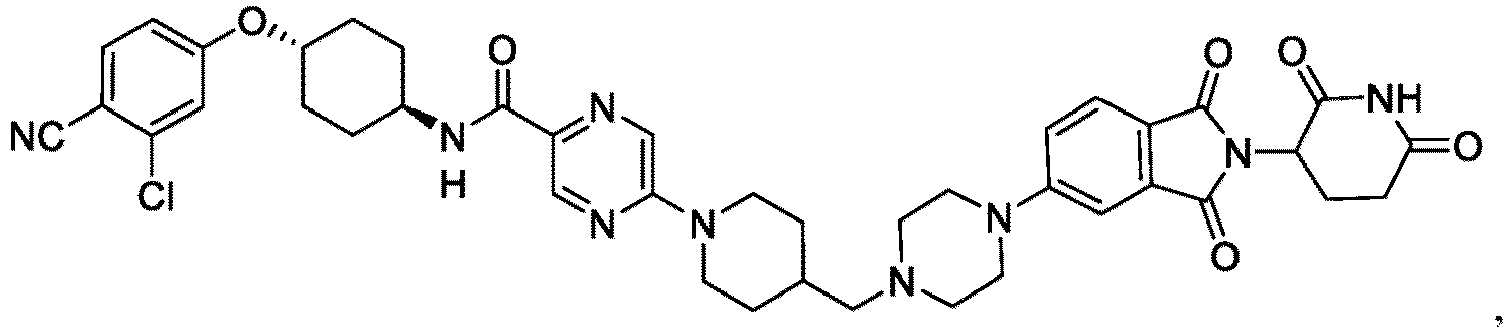


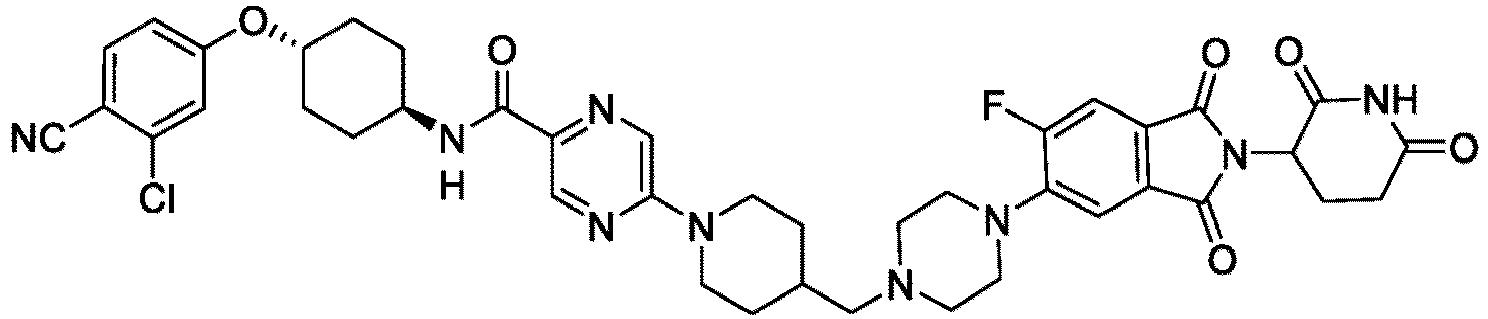
- Verbindung nach Anspruch 1 mit der Struktur:


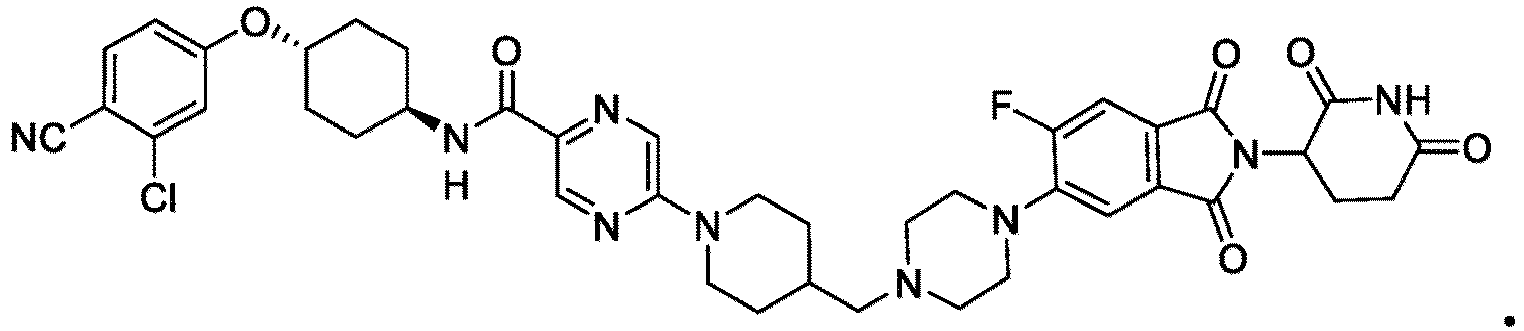
- Verbindung nach Anspruch 1 mit der Struktur:

- Verbindung nach Anspruch 1 mit der Struktur:

- Verbindung nach Anspruch 1 mit der Struktur:
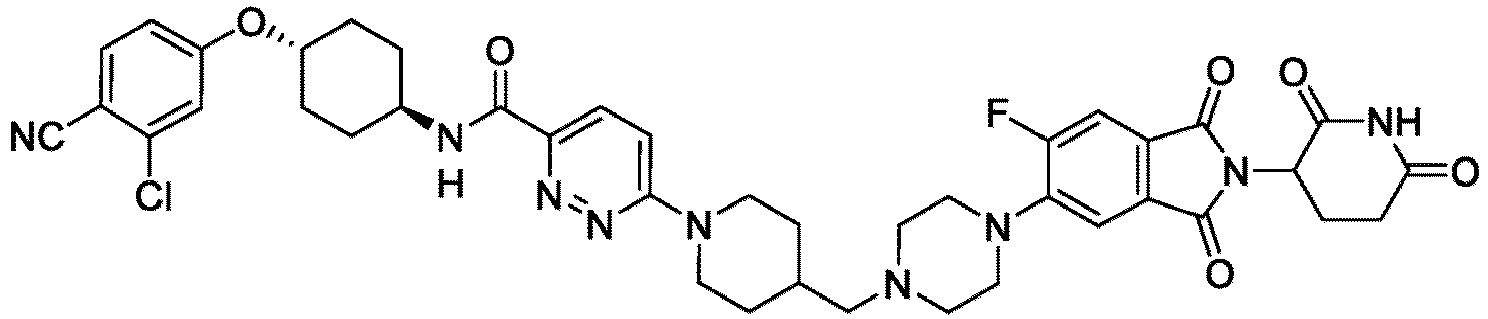
- Verbindung nach Anspruch 1 mit der Struktur:
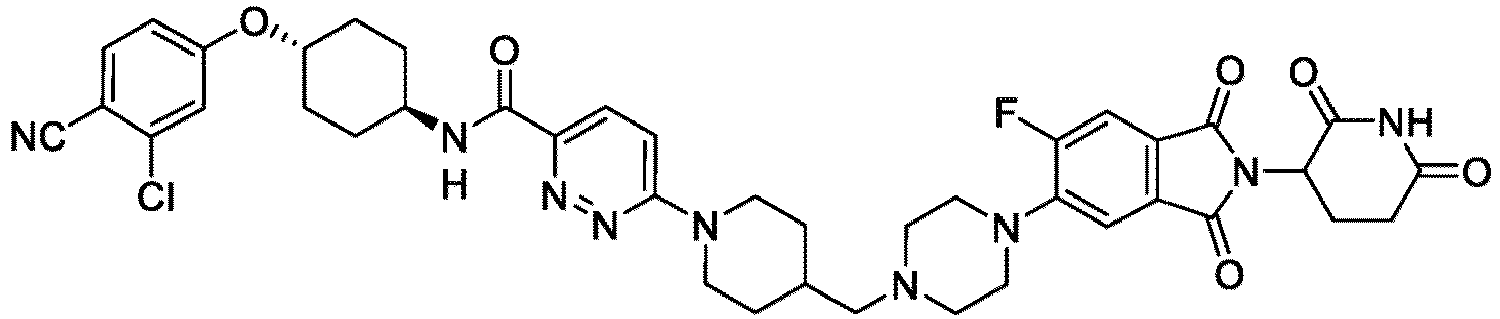
- Verbindung nach Anspruch 1 mit der Struktur:

- Verbindung nach Anspruch 1 mit der Struktur:

- Verbindung nach Anspruch 1 mit der Struktur:
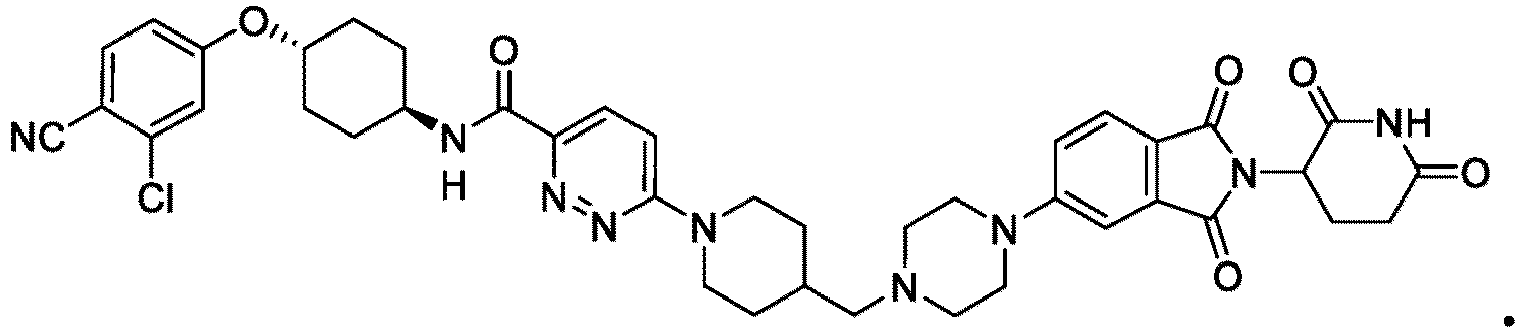
- Verbindung nach Anspruch 1 mit der Struktur:

- Verbindung nach Anspruch 1 mit der Struktur:

- Pharmazeutische Zusammensetzung, umfassend eine Verbindung nach einem der Ansprüche 1-11 und einen pharmazeutisch unbedenklichen Träger.
- Pharmazeutische Zusammensetzung nach Anspruch 12, ferner umfassend eine wirksame Menge eines zusätzlichen Antikrebsmittels.
- Pharmazeutische Zusammensetzung nach Anspruch 13, wobei es sich bei dem zusätzlichen Antikrebsmittel um einen FLT-3-Inhibitor, Androgenrezeptor-Inhibitor, VEGFR-Inhibitor, EGFR-TK-Inhibitor, Aurorakinase-Inhibitor, PIK-1-Modulator, Bcl-2-Inhibitor, HDAC-Inhibitor, c-MET-Inhibitor, PARP-Inhibitor, CDK-Inhibitor, Anti-HGF-Antikörper, IFGR-TK-Inhibitor, PI3-Kinase-Inhibitor, AKT-Inhibitor, JAK/STAT-Inhibitor, Checkpoint-1-Inhibitor, Checkpoint-2-Inhibitor, Focal-Adhesion-Kinase-Inhibitor, MAP-Kinase-Kinase-Inhibitor oder VEGF-Trap-Antikörper handelt.
- Pharmazeutische Zusammensetzung nach Anspruch 13, wobei es sich bei dem zusätzlichen Antikrebsmittel um Estramustin, Docetaxel, Ketoconazol, Goserelinacetat, Histrelin, Buserelin, Cyproteron, Flutamid, Bicalutamid, Nilutamid, Pamidronat, Zoledronat, Mitoxantron, Pemetrexed, Ipilimumab, Vorinostat, Etoposid, Gemcitabin, Doxorubicin, Vincristin, Temozolomid, Capecitabin, PEG-markiertes Irinotecan, Tamoxifen, Anastrozol, Exemestan, Letrozol, Diethylstilbestrol, Estradiol, Estrogen, Bevacizumab, Leuprolidacetat, Triptorelinpamoat, Medroxyprogesteronacetat, Hydroxyprogesteroncaproat, Raloxifen, Megestrolacetat, Carboplatin, Cisplatin, Dacarbazin, Methotrexat, Vinblastin, Vinorelbin, Topotecan, Finasterid, Arzoxifen, Fulvestrant oder Prednisolon handelt.
- Pharmazeutische Zusammensetzung nach Anspruch 15, wobei:(a) es sich bei dem zusätzlichen Antikrebsmittel um Estramustin, Docetaxel, Ketoconazol, Goserelinacetat, Histrelin, Triptorelinpamoat, Buserelin, Cyproteron, Flutamid, Bicalutamid, Nilutamid, Pamidronat oder Zoledronat handelt oder(b) es sich bei dem zusätzlichen Antikrebsmittel um Docetaxel, Mitoxantron, Estramustin oder Leuprolidacetat handelt.
- Verbindung nach einem der Ansprüche 1-11 oder pharmazeutische Zusammensetzung nach Anspruch 12 zur Verwendung bei der Behandlung von Prostatakrebs bei einem Individuum.
- Verbindung nach Anspruch 6 zur Verwendung bei der Behandlung von Prostatakrebs bei einem Individuum.
- Verbindung nach Anspruch 7 zur Verwendung bei der Behandlung von Prostatakrebs bei einem Individuum.
- Verbindung oder pharmazeutische Zusammensetzung zur Verwendung nach Anspruch 17, wobei die Behandlung ferner die Verwendung einer wirksamen Menge eines zusätzlichen Antikrebsmittels umfasst.
- Verbindung zur Verwendung nach Anspruch 18, wobei die Behandlung ferner die Verwendung einer wirksamen Menge eines zusätzlichen Antikrebsmittels umfasst.
- Verbindung zur Verwendung nach Anspruch 19, wobei die Behandlung ferner die Verwendung einer wirksamen Menge eines zusätzlichen Antikrebsmittels umfasst.
- Verbindung oder pharmazeutische Zusammensetzung zur Verwendung nach einem der Ansprüche 20-22, wobei es sich bei dem zusätzlichen Antikrebsmittel um einen FLT-3-Inhibitor, Androgenrezeptor-Inhibitor, VEGFR-Inhibitor, EGFR-TK-Inhibitor, Aurorakinase-Inhibitor, PIK-1-Modulator, Bcl-2-Inhibitor, HDAC-Inhibitor, c-MET-Inhibitor, PARP-Inhibitor, CDK-Inhibitor, Anti-HGF-Antikörper, IFGR-TK-Inhibitor, PI3-Kinase-Inhibitor, AKT-Inhibitor, JAK/STAT-Inhibitor, Checkpoint-1-Inhibitor, Checkpoint-2-Inhibitor, Focal-Adhesion-Kinase-Inhibitor, MAP-Kinase-Kinase-Inhibitor oder VEGF-Trap-Antikörper handelt.
- Verbindung oder pharmazeutische Zusammensetzung zur Verwendung nach einem der Ansprüche 20-22, wobei es sich bei dem zusätzlichen Antikrebsmittel um Estramustin, Docetaxel, Ketoconazol, Goserelinacetat, Histrelin, Buserelin, Cyproteron, Flutamid, Bicalutamid, Nilutamid, Pamidronat, Zoledronat, Mitoxantron, Pemetrexed, Ipilimumab, Vorinostat, Etoposid, Gemcitabin, Doxorubicin, Vincristin, Temozolomid, Capecitabin, PEG-markiertes Irinotecan, Tamoxifen, Anastrozol, Exemestan, Letrozol, Diethylstilbestrol, Estradiol, Estrogen, Bevacizumab, Leuprolidacetat, Triptorelinpamoat, Medroxyprogesteronacetat, Hydroxyprogesteroncaproat, Raloxifen, Megestrolacetat, Carboplatin, Cisplatin, Dacarbazin, Methotrexat, Vinblastin, Vinorelbin, Topotecan, Finasterid, Arzoxifen, Fulvestrant oder Prednisolon handelt.
- Verbindung oder pharmazeutische Zusammensetzung zur Verwendung nach Anspruch 24, wobei:(a) es sich bei dem zusätzlichen Antikrebsmittel um Estramustin, Docetaxel, Ketoconazol, Goserelinacetat, Histrelin, Triptorelinpamoat, Buserelin, Cyproteron, Flutamid, Bicalutamid, Nilutamid, Pamidronat oder Zoledronat handelt oder(b) es sich bei dem zusätzlichen Antikrebsmittel um Docetaxel, Mitoxantron, Estramustin oder Leuprolidacetat handelt.
- Pharmazeutische Zusammensetzung nach einem der Ansprüche 13-16 zur Verwendung bei der Behandlung von Prostatakrebs bei einem Individuum.
Priority Applications (5)
| Application Number | Priority Date | Filing Date | Title |
|---|---|---|---|
| SM20230152T SMT202300152T1 (it) | 2016-10-11 | 2017-10-11 | Composti e metodi per la degradazione mirata di recettore degli androgeni |
| SI201731344T SI3660004T1 (sl) | 2016-10-11 | 2017-10-11 | Spojine in postopki za ciljno razgradnjo androgenskih receptorjev |
| RS20230358A RS64208B1 (sr) | 2016-10-11 | 2017-10-11 | Jedinjenja i metode za ciljanu degradaciju androgenog receptora |
| HRP20230414TT HRP20230414T1 (hr) | 2016-10-11 | 2017-10-11 | Spojevi i postupci za ciljanu razgradnju androgenog receptora |
| CY20231100243T CY1126053T1 (el) | 2016-10-11 | 2023-05-22 | Ενωσεις και μεθοδοι για στοχευμενη αποικοδομηση υποδοχεα ανδρογονων |
Applications Claiming Priority (4)
| Application Number | Priority Date | Filing Date | Title |
|---|---|---|---|
| US201662406888P | 2016-10-11 | 2016-10-11 | |
| US201762528385P | 2017-07-03 | 2017-07-03 | |
| PCT/US2017/056234 WO2018071606A1 (en) | 2016-10-11 | 2017-10-11 | Compounds and methods for the targeted degradation of androgen receptor |
| EP17860767.7A EP3526202B1 (de) | 2016-10-11 | 2017-10-11 | Verbindungen und verfahren für gezielten abbau des androgenrezeptors |
Related Parent Applications (2)
| Application Number | Title | Priority Date | Filing Date |
|---|---|---|---|
| EP17860767.7A Division-Into EP3526202B1 (de) | 2016-10-11 | 2017-10-11 | Verbindungen und verfahren für gezielten abbau des androgenrezeptors |
| EP17860767.7A Division EP3526202B1 (de) | 2016-10-11 | 2017-10-11 | Verbindungen und verfahren für gezielten abbau des androgenrezeptors |
Publications (2)
| Publication Number | Publication Date |
|---|---|
| EP3660004A1 EP3660004A1 (de) | 2020-06-03 |
| EP3660004B1 true EP3660004B1 (de) | 2023-02-22 |
Family
ID=61830620
Family Applications (3)
| Application Number | Title | Priority Date | Filing Date |
|---|---|---|---|
| EP20150564.1A Active EP3660004B1 (de) | 2016-10-11 | 2017-10-11 | Verbindungen und verfahren zum gezielten abbau des androgenrezeptors |
| EP24221895.6A Pending EP4509184A3 (de) | 2016-10-11 | 2017-10-11 | Verbindungen und verfahren für gezielten abbau des androgenrezeptors |
| EP17860767.7A Active EP3526202B1 (de) | 2016-10-11 | 2017-10-11 | Verbindungen und verfahren für gezielten abbau des androgenrezeptors |
Family Applications After (2)
| Application Number | Title | Priority Date | Filing Date |
|---|---|---|---|
| EP24221895.6A Pending EP4509184A3 (de) | 2016-10-11 | 2017-10-11 | Verbindungen und verfahren für gezielten abbau des androgenrezeptors |
| EP17860767.7A Active EP3526202B1 (de) | 2016-10-11 | 2017-10-11 | Verbindungen und verfahren für gezielten abbau des androgenrezeptors |
Country Status (23)
| Country | Link |
|---|---|
| US (8) | US10584101B2 (de) |
| EP (3) | EP3660004B1 (de) |
| JP (6) | JP7009466B2 (de) |
| KR (3) | KR102173463B1 (de) |
| CN (2) | CN110506039A (de) |
| AU (6) | AU2017341723B2 (de) |
| CA (1) | CA3038979A1 (de) |
| CO (1) | CO2019003642A2 (de) |
| CY (1) | CY1126053T1 (de) |
| DK (2) | DK3526202T3 (de) |
| ES (2) | ES3023040T3 (de) |
| FI (2) | FI3526202T3 (de) |
| HR (2) | HRP20250181T1 (de) |
| HU (2) | HUE070289T2 (de) |
| IL (4) | IL265806B2 (de) |
| LT (2) | LT3660004T (de) |
| MX (3) | MX2019004278A (de) |
| PL (2) | PL3660004T3 (de) |
| PT (2) | PT3526202T (de) |
| RS (2) | RS64208B1 (de) |
| SI (2) | SI3526202T1 (de) |
| SM (1) | SMT202300152T1 (de) |
| WO (1) | WO2018071606A1 (de) |
Families Citing this family (240)
| Publication number | Priority date | Publication date | Assignee | Title |
|---|---|---|---|---|
| EP4649963A3 (de) * | 2014-04-14 | 2026-05-13 | Arvinas Operations, Inc. | Imidbasierte modulatoren der proteolyse und zugehörige verfahren zur verwendung |
| US20180228907A1 (en) | 2014-04-14 | 2018-08-16 | Arvinas, Inc. | Cereblon ligands and bifunctional compounds comprising the same |
| JP6817962B2 (ja) | 2015-01-20 | 2021-01-20 | アルビナス・オペレーションズ・インコーポレイテッドArvinas Operations, Inc. | ターゲティングされたアンドロゲン受容体分解のための化合物および方法 |
| US12312316B2 (en) | 2015-01-20 | 2025-05-27 | Arvinas Operations, Inc. | Compounds and methods for the targeted degradation of androgen receptor |
| WO2016197114A1 (en) | 2015-06-05 | 2016-12-08 | Arvinas, Inc. | Tank-binding kinase-1 protacs and associated methods of use |
| EP3319944A4 (de) | 2015-07-10 | 2019-04-24 | Arvinas, Inc. | Mdm2-basierte modulatoren der proteolyse und zugehörige verwendungsverfahren |
| EP3337476A4 (de) | 2015-08-19 | 2019-09-04 | Arvinas, Inc. | Verbindungen und verfahren für den gezielten abbau von bromdomänenhaltigen proteinen |
| CN109153644B (zh) | 2016-03-16 | 2022-10-21 | H·李·莫菲特癌症中心研究有限公司 | 用以增强效应t细胞功能的针对cereblon的小分子 |
| US20170281784A1 (en) | 2016-04-05 | 2017-10-05 | Arvinas, Inc. | Protein-protein interaction inducing technology |
| CN109562107A (zh) | 2016-05-10 | 2019-04-02 | C4医药公司 | 用于靶蛋白降解的杂环降解决定子体 |
| CN109562113A (zh) | 2016-05-10 | 2019-04-02 | C4医药公司 | 用于靶蛋白降解的螺环降解决定子体 |
| WO2017197046A1 (en) | 2016-05-10 | 2017-11-16 | C4 Therapeutics, Inc. | C3-carbon linked glutarimide degronimers for target protein degradation |
| CN121974842A (zh) | 2016-05-10 | 2026-05-05 | C4医药公司 | 用于靶蛋白降解的胺连接的c3-戊二酰亚胺降解决定子体 |
| CN110087680B (zh) | 2016-08-19 | 2024-03-19 | 百济神州有限公司 | 使用包含btk抑制剂的组合产品治疗癌症 |
| EP3512842B1 (de) | 2016-09-15 | 2024-01-17 | Arvinas, Inc. | Indolderivate als abbauer des östrogenrezeptors |
| SI3526202T1 (sl) | 2016-10-11 | 2025-04-30 | Arvinas Operations, Inc. | Spojine in postopki za ciljno razgradnjo androgenskih receptorjev |
| MX2019005007A (es) | 2016-11-01 | 2019-07-18 | Arvinas Inc | Protac dirigidos a la proteína tau y métodos asociados de uso. |
| IL266842B (en) | 2016-12-01 | 2022-09-01 | Arvinas Operations Inc | History of tetrahydronaphthalene and tetrahydroisoquinoline as estrogen receptor antagonists |
| US11173211B2 (en) | 2016-12-23 | 2021-11-16 | Arvinas Operations, Inc. | Compounds and methods for the targeted degradation of rapidly accelerated Fibrosarcoma polypeptides |
| US10806737B2 (en) | 2016-12-23 | 2020-10-20 | Arvinas Operations, Inc. | Compounds and methods for the targeted degradation of fetal liver kinase polypeptides |
| CN110753693A (zh) | 2016-12-23 | 2020-02-04 | 阿尔维纳斯运营股份有限公司 | Egfr蛋白水解靶向嵌合分子和相关使用方法 |
| IL325835A (en) | 2016-12-23 | 2026-03-01 | Univ Yale | Compounds and methods for the targeted degradation of rapidly accelerated fibrosarcoma polypeptides |
| US11191741B2 (en) | 2016-12-24 | 2021-12-07 | Arvinas Operations, Inc. | Compounds and methods for the targeted degradation of enhancer of zeste homolog 2 polypeptide |
| IL300417A (en) | 2017-01-26 | 2023-04-01 | Arvinas Operations Inc | Bifunctional benzothiophene compounds, preparations containing them and their use in therapy |
| IL319363A (en) | 2017-01-31 | 2025-05-01 | Arvinas Operations Inc | Cervalon ligands and bifunctional compounds containing them |
| EP4717317A3 (de) | 2017-06-20 | 2026-06-03 | C4 Therapeutics, Inc. | N/o-verknüpfte degrone und degronimere zum proteinabbau |
| EP3645569A4 (de) | 2017-06-26 | 2021-03-24 | BeiGene, Ltd. | Immuntherapie für leberzellkarzinom |
| JP7258009B2 (ja) | 2017-07-10 | 2023-04-14 | セルジーン コーポレイション | 抗増殖化合物及びその使用方法 |
| TWI793151B (zh) | 2017-08-23 | 2023-02-21 | 瑞士商諾華公司 | 3-(1-氧異吲哚啉-2-基)之氫吡啶-2,6-二酮衍生物及其用途 |
| WO2019043217A1 (en) | 2017-09-04 | 2019-03-07 | F. Hoffmann-La Roche Ag | DIHYDROBENZIMIDAZOLONES |
| WO2019043208A1 (en) | 2017-09-04 | 2019-03-07 | F. Hoffmann-La Roche Ag | DIHYDROQUINOLINONES |
| CN118108706A (zh) | 2017-09-04 | 2024-05-31 | C4医药公司 | 戊二酰亚胺 |
| EP3710002A4 (de) | 2017-11-16 | 2021-07-07 | C4 Therapeutics, Inc. | Degrader und degrone für gezielten proteinabbau |
| US11065231B2 (en) | 2017-11-17 | 2021-07-20 | Arvinas Operations, Inc. | Compounds and methods for the targeted degradation of interleukin-1 receptor- associated kinase 4 polypeptides |
| US11786529B2 (en) | 2017-11-29 | 2023-10-17 | Beigene Switzerland Gmbh | Treatment of indolent or aggressive B-cell lymphomas using a combination comprising BTK inhibitors |
| JP2021512153A (ja) | 2018-01-26 | 2021-05-13 | イエール ユニバーシティ | タンパク質分解のイミド系モジュレーターおよび使用方法 |
| WO2019177902A1 (en) | 2018-03-10 | 2019-09-19 | Yale University | Modulators of btk proteolysis and methods of use |
| CN111902141A (zh) | 2018-03-26 | 2020-11-06 | C4医药公司 | 用于ikaros降解的羟脑苷脂结合剂 |
| EP3774804A1 (de) | 2018-03-26 | 2021-02-17 | Novartis AG | N-(3-(7h-pyrrolo[2,3-d]pyrimidin-4-yl)phenyl)benzamid-derivate |
| US12539292B2 (en) | 2018-04-01 | 2026-02-03 | Arvinas Operations, Inc. | BRM targeting compounds and associated methods of use |
| BR112020020307A2 (pt) | 2018-04-04 | 2021-01-12 | Arvinas Operations, Inc. | Moduladores de proteólise e métodos de uso associados |
| EP3778590A4 (de) * | 2018-04-09 | 2021-12-22 | ShanghaiTech University | Gegen proteinabbau gerichtete verbindung, antitumor-anwendung, zwischenprodukt davon und verwendung von zwischenprodukt |
| CA3095912A1 (en) * | 2018-04-13 | 2019-10-17 | Arvinas Operations, Inc. | Cereblon ligands and bifunctional compounds comprising the same |
| WO2019204354A1 (en) | 2018-04-16 | 2019-10-24 | C4 Therapeutics, Inc. | Spirocyclic compounds |
| CN118344338A (zh) | 2018-04-23 | 2024-07-16 | 细胞基因公司 | 取代的4-氨基异吲哚啉-1,3-二酮化合物以及它们用于治疗淋巴瘤的用途 |
| BR112020023136A2 (pt) | 2018-05-14 | 2021-02-09 | Nuvation Bio Inc. | compostos de alvo de receptor de hormônio nuclear anticâncer |
| EP3578561A1 (de) | 2018-06-04 | 2019-12-11 | F. Hoffmann-La Roche AG | Spiroverbindungen |
| AR116109A1 (es) | 2018-07-10 | 2021-03-31 | Novartis Ag | Derivados de 3-(5-amino-1-oxoisoindolin-2-il)piperidina-2,6-diona y usos de los mismos |
| BR122022012697B1 (pt) | 2018-07-10 | 2023-04-04 | Novartis Ag | Usos de derivados de 3-(5-hidróxi-1-oxoisoindolin-2-il)piperidina-2,6- diona, e kit |
| EP3820532A4 (de) | 2018-07-11 | 2022-04-06 | H. Lee Moffitt Cancer Center & Research Institute, Inc. | Dimere immunmodulatorische verbindungen gegen cereblonbasierte mechanismen |
| US20200038513A1 (en) | 2018-07-26 | 2020-02-06 | Arvinas Operations, Inc. | Modulators of fak proteolysis and associated methods of use |
| WO2020027225A1 (ja) | 2018-07-31 | 2020-02-06 | ファイメクス株式会社 | 複素環化合物 |
| US11707452B2 (en) | 2018-08-20 | 2023-07-25 | Arvinas Operations, Inc. | Modulators of alpha-synuclein proteolysis and associated methods of use |
| US11969472B2 (en) | 2018-08-22 | 2024-04-30 | Cullgen (Shanghai), Inc. | Tropomyosin receptor kinase (TRK) degradation compounds and methods of use |
| MX2021001957A (es) | 2018-08-22 | 2021-07-15 | Cullgen Shanghai Inc | Compuestos de degradacion y metodos de uso del receptor de tropomiosina quinasa (trk). |
| WO2020051235A1 (en) | 2018-09-04 | 2020-03-12 | C4 Therapeutics, Inc. | Compounds for the degradation of brd9 or mth1 |
| JP2022507267A (ja) * | 2018-11-13 | 2022-01-18 | バイオセリックス, インコーポレイテッド | 置換イソインドリノン |
| AU2019389174A1 (en) | 2018-11-30 | 2021-07-01 | Kymera Therapeutics, Inc. | Irak degraders and uses thereof |
| AU2019404022A1 (en) | 2018-12-19 | 2021-07-08 | Celgene Corporation | Substituted 3-((3-aminophenyl)amino)piperidine-2,6-dione compounds, compositions thereof, and methods of treatment therewith |
| BR112021011968A2 (pt) | 2018-12-19 | 2021-09-08 | Celgene Corporation | Compostos de 3-((3-aminofenil)amino)piperidina-2,6-diona substituídos, composições dos mesmos e métodos de tratamento com os mesmos |
| EP3897631A4 (de) | 2018-12-20 | 2022-11-23 | C4 Therapeutics, Inc. | Gezielter proteinabbau |
| US20220081435A1 (en) * | 2019-01-03 | 2022-03-17 | The Regents Of The University Of Michigan | Androgen receptor protein degraders |
| WO2020160193A2 (en) * | 2019-01-29 | 2020-08-06 | Foghorn Therapeutics Inc. | Compounds and uses thereof |
| WO2020160192A1 (en) | 2019-01-29 | 2020-08-06 | Foghorn Therapeutics Inc. | Compounds and uses thereof |
| US11547759B2 (en) | 2019-01-30 | 2023-01-10 | Montelino Therapeutics, Inc. | Bi-functional compounds and methods for targeted ubiquitination of androgen receptor |
| WO2020160295A1 (en) | 2019-01-30 | 2020-08-06 | Montelino Therapeutics, Llc | Bi-functional compounds and methods for targeted ubiquitination of androgen receptor |
| EP3924054B1 (de) * | 2019-02-15 | 2025-04-02 | Novartis AG | 3-(1-oxo-5- (piperidin-4-yl)isoindolin-2-yl)piperidin-2,6-dionderivate und ihre verwendungen |
| CA3123519A1 (en) * | 2019-02-15 | 2020-08-20 | Novartis Ag | Substituted 3-(1-oxoisoindolin-2-yl)piperidine-2,6-dione derivatives and uses thereof |
| EP3932922A4 (de) | 2019-02-25 | 2022-05-11 | ShanghaiTech University | Schwefelhaltige verbindung auf der basis eines glutarimidgerüsts und deren verwendung |
| US12398139B2 (en) * | 2019-03-05 | 2025-08-26 | Centre For Addiction And Mental Health | Modulators of AMPA receptor signaling |
| ES2995214T3 (en) | 2019-03-06 | 2025-02-07 | C4 Therapeutics Inc | Heterocyclic compounds for medical treatment |
| KR20210141554A (ko) | 2019-03-21 | 2021-11-23 | 코디악 바이오사이언시즈, 인크. | 세포외 소포 접합체 및 이의 용도 |
| EP3941607A1 (de) | 2019-03-21 | 2022-01-26 | Codiak BioSciences, Inc. | Verfahren zur herstellung von extrazellulären vesikeln |
| TW202102497A (zh) | 2019-03-29 | 2021-01-16 | 瑞典商阿斯特捷利康公司 | 化合物及它們在治療癌症中之用途 |
| CN111747924B (zh) * | 2019-03-29 | 2023-11-10 | 华东师范大学 | 一类来那度胺/泊马度胺类似物及其应用 |
| WO2020214555A1 (en) | 2019-04-16 | 2020-10-22 | Northwestern University | Bifunctional compounds comprising apcin-a and their use in the treatment of cancer |
| BR112021020775A2 (pt) * | 2019-04-18 | 2021-12-14 | Hinova Pharmaceuticals Inc | Classe de compostos heterocíclicos quiméricos bifuncionais para a degradação direcionada de receptores de andrógeno e uso dos mesmos |
| CN113811333B (zh) | 2019-05-14 | 2024-03-12 | 诺维逊生物股份有限公司 | 靶向抗癌核激素受体的化合物 |
| JP2022533147A (ja) * | 2019-05-17 | 2022-07-21 | ヒノバ ファーマシューティカルズ インコーポレイテッド | 芳香族アミン類のar及びbetを標的とするタンパク質分解キメラ化合物及び使用 |
| US11458149B1 (en) | 2019-05-31 | 2022-10-04 | Ikena Oncology, Inc. | TEAD inhibitors and uses thereof |
| BR112021024108A2 (pt) | 2019-05-31 | 2022-03-22 | Ikena Oncology Inc | Inibidores de tead e usos dos mesmos |
| CN118027041A (zh) * | 2019-05-31 | 2024-05-14 | 西藏海思科制药有限公司 | 一种btk抑制剂环衍生物及其制备方法和药学上的应用 |
| PH12022500002A1 (en) | 2019-06-28 | 2023-04-03 | Kymera Therapeutics Inc | Irak degraders and uses thereof |
| US12558427B2 (en) | 2019-07-17 | 2026-02-24 | Kymera Therapeutics, Inc. | IRAK degraders and uses thereof |
| EP3999182A1 (de) | 2019-07-17 | 2022-05-25 | Arvinas Operations, Inc. | Gegen tau-protein gerichtete verbindungen und zugehörige verfahren zur verwendung |
| WO2021022163A2 (en) | 2019-07-31 | 2021-02-04 | Foghorn Therapeutics Inc. | Compounds and uses thereof |
| WO2021023233A1 (zh) | 2019-08-05 | 2021-02-11 | 上海科技大学 | Egfr蛋白降解剂及其抗肿瘤应用 |
| WO2021041348A1 (en) | 2019-08-26 | 2021-03-04 | Arvinas Operations, Inc. | Methods of treating breast cancer with tetrahydronaphthalene derivatives as estrogen receptor degraders |
| EP4031247A1 (de) * | 2019-09-16 | 2022-07-27 | Novartis AG | Bifunktionelle abbauprodukte und deren verwendungsverfahren |
| AU2020348849A1 (en) * | 2019-09-19 | 2022-04-07 | The Regents Of The University Of Michigan | Spirocyclic androgen receptor protein degraders |
| EP4034114A4 (de) * | 2019-09-23 | 2023-07-26 | Accutar Biotechnology Inc. | Neuartige harnstoffe mit androgenrezeptorabbauaktivität und deren verwendungen |
| EP3795570B1 (de) * | 2019-09-23 | 2022-02-23 | Accutar Biotechnology Inc. | Substituierte chinolin-8-carbonitril-derivate mit androgenrezeptor-abbauaktivität und verwendungen davon |
| JP7724394B2 (ja) * | 2019-10-09 | 2025-08-18 | モンテ ローザ セラピューティクス アーゲー | イソインドリノン化合物 |
| MX2022004526A (es) | 2019-10-17 | 2022-07-21 | Arvinas Operations Inc | Moléculas bifuncionales que contienen una porción de unión a la ligasa de ubiquitina e3 unida a una porción de direccionamiento a bcl6. |
| US20210113557A1 (en) * | 2019-10-22 | 2021-04-22 | Arvinas Operations, Inc. | Methods of treating prostate cancer |
| CN110790750B (zh) * | 2019-11-07 | 2021-09-21 | 郑州大学 | 一种邻苯二甲酰亚胺类选择性雄激素受体降解剂及其制备方法和用途 |
| CN110746400B (zh) * | 2019-11-07 | 2021-12-17 | 郑州大学 | 一种靶向雄激素受体的荧光探针及其制备方法 |
| EP4058464A1 (de) | 2019-11-13 | 2022-09-21 | Nuvation Bio Inc. | Auf nuklearhormonrezeptor abzielende antikrebsverbindungen |
| JP7629459B2 (ja) | 2019-11-19 | 2025-02-13 | ブリストル-マイヤーズ スクイブ カンパニー | Heliosタンパク質の阻害剤として有用な化合物 |
| WO2021119159A1 (en) | 2019-12-10 | 2021-06-17 | Kymera Therapeutics, Inc. | Irak degraders and uses thereof |
| JP7871189B2 (ja) * | 2019-12-17 | 2026-06-08 | オリオニス バイオサイエンシズ,インコーポレイテッド | タンパク質の動員および/または分解を調節する化合物 |
| CA3161878A1 (en) | 2019-12-17 | 2021-06-24 | Matthew M. Weiss | Irak degraders and uses thereof |
| PH12022551482A1 (en) | 2019-12-18 | 2023-11-29 | Novartis Ag | 3-(5-methoxy-1-oxoisoindolin-2-yl)piperidine-2,6-dione derivatives and uses thereof |
| WO2021127443A1 (en) * | 2019-12-19 | 2021-06-24 | Arvinas Operations, Inc. | Compounds and methods for the targeted degradation of androgen receptor |
| AU2020414151A1 (en) | 2019-12-23 | 2022-08-25 | Jiangxi Jemincare Group Co., Ltd | Protein degradation agent compound preparation method and application |
| US12528825B2 (en) | 2020-01-29 | 2026-01-20 | Foghorn Therapeutics Inc. | Compounds and uses thereof |
| JP7815127B2 (ja) | 2020-02-19 | 2026-02-17 | ニューリックス セラピューティクス,インコーポレイテッド | インターロイキン-1受容体関連キナーゼの二機能性分解剤およびその治療的使用 |
| AU2021226514B2 (en) * | 2020-02-25 | 2023-10-19 | Shanghaitech University | Glutarimide skeleton-based compounds and application thereof |
| BR112022016901A2 (pt) | 2020-02-26 | 2022-12-06 | Cullgen Shanghai Inc | Compostos de degradação do receptor de tropomiosina quinase (trk) e métodos de uso |
| CN119823124A (zh) | 2020-03-05 | 2025-04-15 | C4医药公司 | 用于brd9的靶向降解的化合物 |
| CN113387930B (zh) | 2020-03-11 | 2022-07-12 | 苏州开拓药业股份有限公司 | 一种双官能化合物及其制备方法和用途 |
| TW202140441A (zh) | 2020-03-23 | 2021-11-01 | 美商必治妥美雅史谷比公司 | 經取代之側氧基異吲哚啉化合物 |
| CN113582974B (zh) * | 2020-04-30 | 2022-05-17 | 江西济民可信集团有限公司 | 一类作为蛋白降解剂的化合物及其制备方法和医药用途 |
| CN115996918A (zh) * | 2020-05-09 | 2023-04-21 | 阿尔维纳斯运营股份有限公司 | 制造双官能团化合物的方法、双官能团化合物的超纯形式以及包括所述双官能团化合物的剂型 |
| KR20230015934A (ko) * | 2020-05-12 | 2023-01-31 | 아비나스 오퍼레이션스, 인코포레이티드 | 전립선암 치료 방법 |
| WO2021231927A1 (en) * | 2020-05-14 | 2021-11-18 | The Regents Of The University Of Michigan | Androgen receptor protein degraders with a tricyclic cereblon ligand |
| WO2021237100A1 (en) | 2020-05-21 | 2021-11-25 | Codiak Biosciences, Inc. | Methods of targeting extracellular vesicles to lung |
| KR20230024328A (ko) | 2020-06-12 | 2023-02-20 | 상하이 제민케어 파마슈티칼스 컴퍼니 리미티드 | 프탈라지논 화합물, 이의 제조 방법 및 이의 의학적 용도 |
| WO2021255212A1 (en) | 2020-06-19 | 2021-12-23 | F. Hoffmann-La Roche Ag | Braf degraders |
| CN113896711A (zh) * | 2020-07-06 | 2022-01-07 | 北京诺诚健华医药科技有限公司 | 杂环类免疫调节剂 |
| WO2022011205A1 (en) * | 2020-07-10 | 2022-01-13 | The Regents Of The University Of Michigan | Androgen receptor protein degraders |
| WO2022011204A1 (en) * | 2020-07-10 | 2022-01-13 | The Regents Of The University Of Michigan | Small molecule androgen receptor protein degraders |
| WO2022019597A1 (ko) * | 2020-07-21 | 2022-01-27 | 주식회사 유빅스테라퓨틱스 | 안드로겐 수용체 분해용 화합물 및 이들의 의약 용도 |
| US20230302014A1 (en) * | 2020-08-04 | 2023-09-28 | Oric Pharmaceuticals, Inc. | Uses of glucocorticoid receptor (gr) antagonist and androgen receptor (ar) degrader combinations |
| CN116490186B (zh) | 2020-08-05 | 2025-10-31 | C4医药公司 | 用于ret的靶向降解的化合物 |
| WO2022047145A1 (en) | 2020-08-28 | 2022-03-03 | Arvinas Operations, Inc. | Rapidly accelerating fibrosarcoma protein degrading compounds and associated methods of use |
| WO2022048605A1 (zh) * | 2020-09-04 | 2022-03-10 | 南昌奥瑞药业有限公司 | 一种杂环化合物、其制备方法、中间体、组合物以及应用 |
| CN114163444B (zh) * | 2020-09-11 | 2023-07-14 | 江苏恒瑞医药股份有限公司 | 一种用于雄激素受体蛋白靶向降解的嵌合体化合物、其制备方法及其在医药上的应用 |
| CN114181196A (zh) * | 2020-09-14 | 2022-03-15 | 海思科医药集团股份有限公司 | 一种抑制并降解parp酶的化合物及其制备方法和药学上的应用 |
| AU2021342287A1 (en) | 2020-09-14 | 2023-04-13 | Arvinas Operations, Inc. | Crystalline forms of a compound for the targeted degradation of estrogen receptor |
| CN114181277A (zh) * | 2020-09-15 | 2022-03-15 | 江苏恒瑞医药股份有限公司 | 一种用于雄激素受体蛋白靶向降解的嵌合体化合物、其制备方法及其在医药上的应用 |
| WO2022066835A1 (en) | 2020-09-23 | 2022-03-31 | St. Jude Children's Research Hospital, Inc. | Substituted n-(2-(2,6-dioxopiperidin-3-yl)-1,3-dioxoisoindolin-5-yl)arylsulfonamide analogs as modulators of cereblon protein |
| WO2022066928A2 (en) | 2020-09-23 | 2022-03-31 | Codiak Biosciences, Inc. | Process for preparing extracellular vesicles |
| TW202221000A (zh) | 2020-09-30 | 2022-06-01 | 英屬開曼群島商百濟神州有限公司 | 用於降解egfr之雙功能化合物及相關使用方法 |
| WO2022087125A1 (en) * | 2020-10-21 | 2022-04-28 | Arvinas Operations, Inc. | Compounds and methods for the targeted degradation of androgen receptor protein |
| WO2022099117A1 (en) | 2020-11-06 | 2022-05-12 | Prelude Therapeutics Incorporated | Brm targeting compounds and associated methods of use |
| EP4240733A1 (de) * | 2020-11-06 | 2023-09-13 | Arvinas Operations, Inc. | Verbindungen und verfahren zum gezielten abbau des androgenrezeptors und zugehörige verfahren zur verwendung |
| CN116529248B (zh) * | 2020-11-25 | 2025-10-17 | 西藏海思科制药有限公司 | 一种苯环衍生物及其组合物和药学上的应用 |
| CN114262319B (zh) * | 2020-12-01 | 2023-05-05 | 南昌奥瑞药业有限公司 | 一类双功能分子、其制备方法及其应用 |
| WO2022120355A1 (en) * | 2020-12-02 | 2022-06-09 | Ikena Oncology, Inc. | Tead degraders and uses thereof |
| US20220184078A1 (en) | 2020-12-11 | 2022-06-16 | Arvinas Operations, Inc. | Methods of treating prostate cancer |
| US12152035B2 (en) | 2020-12-30 | 2024-11-26 | Industrial Technology Research Institute | Androgen receptor binding molecule and use thereof |
| CN117242060B (zh) | 2021-01-13 | 2026-07-17 | 蒙特罗莎治疗股份有限公司 | 异吲哚啉酮化合物 |
| CN114853846A (zh) * | 2021-02-04 | 2022-08-05 | 苏州国匡医药科技有限公司 | 一种雄激素受体降解剂及其应用 |
| CN116847848A (zh) | 2021-02-10 | 2023-10-03 | 百济神州有限公司 | Egfr降解剂和使用方法 |
| WO2022174268A1 (en) | 2021-02-15 | 2022-08-18 | Kymera Therapeutics, Inc. | Irak4 degraders and uses thereof |
| MX2023009178A (es) | 2021-02-15 | 2023-08-21 | Kymera Therapeutics Inc | Degradadores de la cinasa 4 asociada al receptor de interleucina 1 (irak4) y usos de los mismos. |
| WO2022187423A1 (en) * | 2021-03-03 | 2022-09-09 | The Regents Of The University Of Michigan | Cereblon ligands |
| WO2022187419A1 (en) * | 2021-03-03 | 2022-09-09 | The Regents Of The University Of Michigan | Small molecule degraders of androgen receptor |
| AU2022240688B2 (en) * | 2021-03-17 | 2024-07-11 | Shanghai Qilu Pharmaceutical Research And Development Centre Ltd. | Furan fused ring-substituted glutarimide compound |
| CA3211347A1 (en) | 2021-03-19 | 2022-09-22 | Erika Araujo | Indazole based compounds and associated methods of use |
| EP4313991A1 (de) | 2021-03-23 | 2024-02-07 | Nuvation Bio Inc. | Gegen krebs gerichtete kernhormonrezeptorverbindungen |
| PE20231941A1 (es) | 2021-04-06 | 2023-12-05 | Bristol Myers Squibb Co | Compuestos de oxoisoindolina sustituidos con piridinilo |
| CN118388454A (zh) | 2021-04-16 | 2024-07-26 | 阿尔维纳斯运营股份有限公司 | Bcl6蛋白水解的调节剂和其相关使用方法 |
| EP4329746A4 (de) * | 2021-04-29 | 2025-03-19 | Dana-Farber Cancer Institute, Inc. | Phthalimido-cerblon-komplexbinder und transkriptionsfaktorabbauer und verfahren zur verwendung |
| EP4330251A4 (de) | 2021-04-30 | 2025-03-05 | BeiGene Switzerland GmbH | Egfr-abbauer und zugehörige verfahren zur verwendung |
| WO2022235585A1 (en) | 2021-05-03 | 2022-11-10 | Nuvation Bio Inc. | Anti-cancer nuclear hormone receptor-targeting compounds |
| US20240287076A1 (en) | 2021-05-05 | 2024-08-29 | Biogen Ma Inc. | Compounds for targeting degradation of bruton's tyrosine kinase |
| CA3217792A1 (en) | 2021-05-07 | 2022-11-10 | Kymera Therapeutics, Inc | Cdk2 degraders and uses thereof |
| WO2022251588A1 (en) * | 2021-05-27 | 2022-12-01 | Halda Therapeutics Opco, Inc. | Heterobifunctional compounds and methods of treating disease |
| WO2022255888A1 (en) * | 2021-06-01 | 2022-12-08 | Captor Therapeutics S.A. | Targeted protein degradation using bifunctional compounds that bind ubiquitin ligase and target mcl-1 protein |
| WO2022254362A1 (en) | 2021-06-03 | 2022-12-08 | Novartis Ag | 3-(1-oxoisoindolin-2-yl)piperidine-2,6-dione derivatives and medical uses thereof |
| EP4361153A4 (de) | 2021-06-25 | 2025-07-02 | Korea Res Inst Chemical Tech | Neuartige bifunktionelle heterocyclische verbindung mit btk-abbaufunktion über ubiquitin-proteasom-signalweg und verwendung davon |
| CA3224732A1 (en) | 2021-07-07 | 2023-01-12 | Kevin M. Guckian | Compounds for targeting degradation of irak4 proteins |
| WO2023283372A1 (en) | 2021-07-07 | 2023-01-12 | Biogen Ma Inc. | Compounds for targeting degradation of irak4 proteins |
| TW202317546A (zh) | 2021-07-09 | 2023-05-01 | 美商普萊克斯姆公司 | 調節ikzf2之芳基化合物及醫藥組合物 |
| HUE070709T2 (hu) | 2021-08-18 | 2025-06-28 | Nurix Therapeutics Inc | Interleukin-1 receptorhoz kapcsolódó kinázok kétfunkciós lebontói és terápiás alkalmazásuk |
| WO2023025268A1 (zh) * | 2021-08-27 | 2023-03-02 | 苏州晶云药物科技股份有限公司 | 哒嗪甲酰胺类化合物的晶型及其制备方法 |
| EP4395549A1 (de) | 2021-09-01 | 2024-07-10 | Oerth Bio LLC | Zusammensetzungen und verfahren zum gezielten abbau von proteinen in einer pflanzenzelle |
| CN115772210A (zh) * | 2021-09-08 | 2023-03-10 | 苏州开拓药业股份有限公司 | 硫代乙内酰脲化合物或其药用盐的无定形物、晶体、药物组合物、制备方法和用途 |
| CN113861186B (zh) * | 2021-09-10 | 2023-08-25 | 浙江师范大学 | 基于异恶唑取代苯甲酰胺类衍生物及抗前列腺癌药物应用 |
| US11981672B2 (en) | 2021-09-13 | 2024-05-14 | Montelino Therapeutics Inc. | Bi-functional compounds and methods for targeted ubiquitination of androgen receptor |
| CN113620931B (zh) * | 2021-09-13 | 2023-06-09 | 中国海洋大学 | 一种雄激素受体抑制剂及其用途 |
| US20240382603A1 (en) * | 2021-09-13 | 2024-11-21 | Montelino Therapeutics, Inc. | Bi-functional compounds and methods for targeted ubiquitination of androgen receptor |
| US20240376118A1 (en) * | 2021-09-13 | 2024-11-14 | Montelino Therapeutics, Inc. | Bi-functional compounds and methods for targeted ubiquitination of androgen receptor |
| US20240412330A1 (en) | 2021-10-15 | 2024-12-12 | University Of Tsukuba | Information processing device, information processing method, and program |
| JP2024539269A (ja) * | 2021-10-22 | 2024-10-28 | グルータクス セラピューティクス (シャンハイ) カンパニー、リミテッド | Crbn e3リガーゼリガンド化合物、当該リガンド化合物に基づいて開発したタンパク質分解剤及びそれらの応用 |
| JP2024540080A (ja) | 2021-10-29 | 2024-10-31 | カイメラ セラピューティクス, インコーポレイテッド | Irak4分解剤およびその合成 |
| WO2023093845A1 (zh) | 2021-11-25 | 2023-06-01 | 江苏恒瑞医药股份有限公司 | 一种用于雄激素受体蛋白靶向降解的嵌合体化合物、其制备方法及其在医药上的应用 |
| CN115894450B (zh) * | 2021-11-30 | 2023-09-12 | 山东如至生物医药科技有限公司 | 一种新型多环类化合物及其组合物和用途 |
| AU2022405474B2 (en) * | 2021-12-08 | 2026-08-13 | Gluetacs Therapeutics (Shanghai) Co., Ltd. | E3 ubiquitin ligase ligand compound, protein degrader developed based thereon and their applications |
| EP4455133A4 (de) * | 2021-12-24 | 2026-04-15 | Suzhou Kintor Pharmaceuticals Inc | Mehrproteinabbaumittel mit imidskelett |
| CA3240051A1 (en) | 2021-12-30 | 2023-07-06 | Beigene Switzerland Gmbh | Degradation of bruton's tyrosine kinase (btk) by conjugation of btk inhibitors with e3 ligase ligand and methods of use |
| TW202346281A (zh) | 2022-01-21 | 2023-12-01 | 瑞典商阿斯特捷利康公司 | 化合物以及它們在治療癌症中之用途 |
| WO2023143427A1 (zh) * | 2022-01-27 | 2023-08-03 | 杭州领业医药科技有限公司 | Arv-110的晶型及其制备方法和用途 |
| KR20230140396A (ko) | 2022-03-23 | 2023-10-06 | 주식회사 대웅테라퓨틱스 | 핵 수용체의 저해 또는 분해를 유도하는 신규 화합물 |
| CN119301111A (zh) | 2022-03-24 | 2025-01-10 | 葛兰素史密斯克莱知识产权发展有限公司 | 作为protac中的降解决定子的2,4-二氧代四氢嘧啶基衍生物 |
| JP2025512788A (ja) | 2022-03-25 | 2025-04-22 | シェンチェン ファーマシン シーオー.,エルティーディー. | Protac化合物の医薬組成物及びその使用 |
| KR20250004694A (ko) * | 2022-04-06 | 2025-01-08 | 클루젠 (상하이), 인크. | 암 치료를 위한 조성물 및 방법 |
| US12662467B2 (en) | 2022-04-18 | 2026-06-23 | BioThery X, Inc. | Isoindolinones, pharmaceutical compositions, and therapeutic applications |
| TW202404643A (zh) | 2022-04-20 | 2024-02-01 | 大陸商同宜醫藥(蘇州)有限公司 | 化合物及用途 |
| EP4511128A1 (de) | 2022-04-20 | 2025-02-26 | Kumquat Biosciences Inc. | Makrocyclische heterocyclen und verwendungen davon |
| WO2023205481A1 (en) | 2022-04-21 | 2023-10-26 | Arvinas Operations, Inc. | A combination for use in treating prostate cancer comprising arv-100 and abiraterone |
| IL316803A (en) | 2022-06-06 | 2025-01-01 | C4 Therapeutics Inc | Bicyclic glutarimide-modified cervalon-binding agents |
| WO2023242598A1 (en) * | 2022-06-16 | 2023-12-21 | Amphista Therapeutics Limited | Bifunctional molecules for targeted protein degradation |
| PE20251398A1 (es) * | 2022-06-30 | 2025-05-22 | Bristol Myers Squibb Co | Compuestos de degradacion de wee1 y usos de los mismos |
| WO2024002205A1 (en) * | 2022-06-30 | 2024-01-04 | Anhorn Medicines Co., Ltd. | Bifunctional compound and pharmaceutical composition comprising the bifunctional compound, and method for treating androgen receptor related disease by using the same |
| CN119948021A (zh) * | 2022-07-15 | 2025-05-06 | 西藏海思科制药有限公司 | 一种含氮杂环衍生物及其组合物和药学上的应用 |
| JP2025524816A (ja) * | 2022-07-20 | 2025-08-01 | ザ リージェンツ オブ ザ ユニバーシティ オブ カリフォルニア | ダロルタミドを含有する薬物インプラント及びその使用方法 |
| CN115475164B (zh) * | 2022-08-22 | 2024-06-04 | 西安交通大学 | 一种可降解PDGFR-β的蛋白降解靶向嵌合体及其制备方法和应用 |
| WO2024050016A1 (en) | 2022-08-31 | 2024-03-07 | Oerth Bio Llc | Compositions and methods for targeted inhibition and degradation of proteins in an insect cell |
| EP4584258A1 (de) | 2022-09-07 | 2025-07-16 | Arvinas Operations, Inc. | Schnell beschleunigte fibrosarkom (raf)-abbauende verbindungen und zugehörige verfahren zur verwendung |
| WO2024054952A1 (en) * | 2022-09-08 | 2024-03-14 | Halda Therapeutics Opco, Inc. | Heterobifunctional compounds and methods of treating disease |
| WO2024054954A1 (en) * | 2022-09-08 | 2024-03-14 | Halda Therapeutics Opco, Inc. | Heterobifunctional compounds and methods of treating disease |
| KR20250067809A (ko) * | 2022-09-14 | 2025-05-15 | 상하이 치루 파마슈티컬 리서치 앤 디벨롭먼트 센터 리미티드 | 나프토푸란 치환 글루타르이미드계 화합물의 결정형, 제조방법 및 이의 용도 |
| WO2024073507A1 (en) | 2022-09-28 | 2024-04-04 | Theseus Pharmaceuticals, Inc. | Macrocyclic compounds and uses thereof |
| WO2024102810A1 (en) | 2022-11-08 | 2024-05-16 | Montelino Therapeutics, Inc. | Bi-functional compounds and methods for targeted ubiquitination of androgen receptor |
| EP4634184A1 (de) | 2022-12-14 | 2025-10-22 | Crossfire Oncology Holding B.V. | Bifunktionelle verbindungen zum abbau von kinasen über den ubiquitin-proteosom-weg |
| PE20260006A1 (es) | 2023-01-26 | 2026-01-06 | Arvinas Operations Inc | Protacs degradadores de kras basados en cereblon y usos relacionados con los mismos |
| JP2026510359A (ja) | 2023-03-10 | 2026-04-02 | アストラゼネカ・アクチエボラーグ | アンドロゲン受容体を分解することができる二官能性化合物 |
| WO2024201244A1 (en) | 2023-03-24 | 2024-10-03 | Assia Chemical Industries Ltd. | Solid state forms of bavdegalutamide and process for preparation thereof |
| WO2024220926A1 (en) | 2023-04-21 | 2024-10-24 | Arvinas Operations, Inc. | Use of an androgen receptor degrader protac for the treatment of prostate cancer |
| WO2024233696A1 (en) | 2023-05-09 | 2024-11-14 | Arvinas Operations, Inc. | Bavdegalutamide for treating prostate cancer without ar l702h mutation |
| WO2024243441A1 (en) | 2023-05-24 | 2024-11-28 | Kumquat Biosciences Inc. | Heterocyclic compounds and uses thereof |
| AU2024278036A1 (en) | 2023-05-24 | 2025-11-27 | Jiangsu Hengrui Pharmaceuticals Co., Ltd. | Amorphous substance and crystal of dioxopiperidine compound or pharmaceutically acceptable salt thereof, preparation method, and use |
| WO2024246838A1 (en) | 2023-05-31 | 2024-12-05 | Beigene Switzerland Gmbh | Compounds for the degradation of egfr kinase |
| EP4735451A1 (de) | 2023-06-30 | 2026-05-06 | Kumquat Biosciences Inc. | Substituierte kondensierte tricyclische aminverbindungen und ihre verwendung als ras-inhibitoren |
| CN122161821A (zh) * | 2023-07-12 | 2026-06-05 | 上海壹迪生物技术有限公司 | 氰基喹啉类靶向蛋白降解分子、其制备方法和应用 |
| CN117263865B (zh) * | 2023-08-04 | 2026-03-27 | 南开大学 | 以6,6-二甲基双环[3.1.1]-2-甲胺为疏水基团的蛋白降解剂及其制备方法、药物组合物和应用 |
| CN117126133B (zh) * | 2023-08-14 | 2026-06-30 | 中国海洋大学 | 一种化合物及其用途 |
| WO2025049555A1 (en) | 2023-08-31 | 2025-03-06 | Oerth Bio Llc | Compositions and methods for targeted inhibition and degradation of proteins in an insect cell |
| AU2024352092A1 (en) | 2023-09-28 | 2026-04-09 | Arvinas Operations, Inc. | Benzimidazole and benzimidazolone based protac compounds for the targeted degradation of leucine rich repeat kinase 2 (lrrk2) |
| WO2025085738A1 (en) | 2023-10-18 | 2025-04-24 | Halda Therapeutics Opco, Inc. | Heterobifunctional compounds and methods of treating disease |
| WO2025083472A2 (en) * | 2023-10-20 | 2025-04-24 | Seed Therapeutics Us, Inc. | Protac compounds binding keap1 ubiquitin ligase for targeted protein degradation |
| WO2025085815A1 (en) * | 2023-10-20 | 2025-04-24 | Seed Therapeutics Us, Inc. | Protac compounds binding keap1 ubiquitin ligase for targeted protein degradation |
| CN122228262A (zh) | 2023-11-02 | 2026-06-16 | 金橘生物科技公司 | 降解剂及其用途 |
| WO2025108404A1 (zh) * | 2023-11-22 | 2025-05-30 | 广东东阳光药业股份有限公司 | 一种靶向降解雄激素受体的双功能嵌合体的杂环化合物及其用途 |
| WO2025114875A1 (en) | 2023-12-01 | 2025-06-05 | Astrazeneca Ab | Er degraders and uses thereof |
| AU2024392985A1 (en) | 2023-12-08 | 2026-06-04 | Arvinas Operations, Inc. | Use of androgen receptor degrader for the treatment of spinal and bulbar muscular atrophy |
| CN122270449A (zh) | 2023-12-13 | 2026-06-23 | 百济神州(苏州)生物科技有限公司 | 通过将irak4抑制剂与e3连接酶配体缀合来降解irak4以及使用方法 |
| WO2025152777A1 (zh) * | 2024-01-18 | 2025-07-24 | 海创药业股份有限公司 | 一种制备雄激素受体靶向降解化合物及其盐的方法 |
| WO2025189056A1 (en) | 2024-03-08 | 2025-09-12 | Halda Therapeutics Opco, Inc. | Heterobifunctional compounds and their use in treating disease |
| CN118084737A (zh) * | 2024-04-07 | 2024-05-28 | 江苏工程职业技术学院 | 4-(1-((叔丁氧基羰基)氨基)环丁基)苯甲酸的合成方法 |
| WO2025226797A1 (en) * | 2024-04-24 | 2025-10-30 | Genentech, Inc. | Kred catalyzed ketoreduction of a cyclobutanone carbamic ester |
| WO2025235600A1 (en) * | 2024-05-07 | 2025-11-13 | Bristol-Myers Squibb Company | Processes for the preparation of substituted 3-((3-aminophenyl)amino) piperidine-2,6-dione compounds |
| CN118955474A (zh) * | 2024-07-29 | 2024-11-15 | 浙江爱索拓标记医药科技有限公司 | 一种放射性同位素碳-14标记的巴德卡鲁胺及其制备方法和应用 |
| WO2026052822A1 (en) | 2024-09-06 | 2026-03-12 | Amphista Therapeutics Limited | Tetrahydroisoquinoline compounds for targeted protein degradation |
| CN121735910A (zh) * | 2024-09-27 | 2026-03-27 | 上海交通大学 | 一种模块化的分子胶化合物库及其构建方法和应用 |
| WO2026129303A1 (zh) * | 2024-12-20 | 2026-06-25 | 上海壹迪生物技术有限公司 | 一种靶向雄激素受体蛋白降解的双功能化合物及其应用 |
| KR20260106136A (ko) * | 2024-12-30 | 2026-07-07 | 재단법인 대구경북첨단의료산업진흥재단 | 오토파지 매개 안드로겐 수용체 표적 분해용 신규 화합물 및 이의 의학적 용도 |
Family Cites Families (105)
| Publication number | Priority date | Publication date | Assignee | Title |
|---|---|---|---|---|
| US1226974A (en) * | 1916-06-06 | 1917-05-22 | August H Jahn | Cut-out for gas-engines. |
| US1818885A (en) * | 1930-05-31 | 1931-08-11 | Pettibone Mulliken Company | Split-switch structure |
| US4522811A (en) | 1982-07-08 | 1985-06-11 | Syntex (U.S.A.) Inc. | Serial injection of muramyldipeptides and liposomes enhances the anti-infective activity of muramyldipeptides |
| JP3241875B2 (ja) * | 1993-06-25 | 2001-12-25 | 新東工業株式会社 | 加飾体の貼着方法 |
| DE69740140D1 (de) | 1996-07-24 | 2011-04-14 | Celgene Corp | Substituierte 2-(2,6-Dioxopiperidin-3-yl)-phthalimide und Oxoisoindoline und Verfahren zur Verringerung der TNF-Alpha-Stufen |
| ATE460423T1 (de) | 1997-05-14 | 2010-03-15 | Sloan Kettering Inst Cancer | Verfahren und zubereitungen zur zerstörung bestimmter proteine |
| SK9192000A3 (en) | 1997-12-17 | 2001-03-12 | Merck & Co Inc | Integrin receptor antagonists |
| US6306663B1 (en) | 1999-02-12 | 2001-10-23 | Proteinex, Inc. | Controlling protein levels in eucaryotic organisms |
| EP1176959B1 (de) | 1999-05-05 | 2006-03-08 | Merck & Co., Inc. | Neue prolinverbindungen als mikrobizide mittel |
| HUP0303172A3 (en) * | 2000-06-28 | 2006-05-29 | Bristol Myers Squibb Co | Selective androgen receptor modulators and methods for their identification, desing and use |
| US7208157B2 (en) | 2000-09-08 | 2007-04-24 | California Institute Of Technology | Proteolysis targeting chimeric pharmaceutical |
| AU2001295041A1 (en) | 2000-09-08 | 2002-03-22 | California Institute Of Technology | Proteolysis targeting chimeric pharmaceutical |
| RU2298554C2 (ru) | 2000-09-19 | 2007-05-10 | Бристол-Маерс Сквибб Компани | Конденсированные гетероциклические сукцинимидные соединения |
| US7091353B2 (en) | 2000-12-27 | 2006-08-15 | Celgene Corporation | Isoindole-imide compounds, compositions, and uses thereof |
| US20030045552A1 (en) | 2000-12-27 | 2003-03-06 | Robarge Michael J. | Isoindole-imide compounds, compositions, and uses thereof |
| WO2002066512A1 (en) | 2001-02-16 | 2002-08-29 | E.I. Dupont De Nemours And Company | Angiogenesis-inhibitory tripeptides, compositions and their methods of use |
| HN2002000136A (es) | 2001-06-11 | 2003-07-31 | Basf Ag | Inhibidores de la proteasa del virus hiv, compuestos que contienen a los mismos, sus usos farmaceuticos y los materiales para su sintesis |
| ATE508725T1 (de) | 2001-06-20 | 2011-05-15 | Takeda Pharmaceutical | Verfahren zur herstellung von tabletten |
| DE60231989D1 (de) | 2001-08-06 | 2009-05-28 | Childrens Medical Center | Antiangiogenese wirkung von stickstoffsubstituierten thalidomid-analoga |
| US7030141B2 (en) | 2001-11-29 | 2006-04-18 | Christopher Franklin Bigge | Inhibitors of factor Xa and other serine proteases involved in the coagulation cascade |
| US20060004029A1 (en) | 2002-08-30 | 2006-01-05 | Akihiko Tsuruoka | Nitrogen-containing aromatic derivatives |
| MXPA06015169A (es) | 2004-07-08 | 2007-08-21 | Warner Lambert Co | Moduladores de androgenos. |
| CN100383139C (zh) | 2005-04-07 | 2008-04-23 | 天津和美生物技术有限公司 | 可抑制细胞释放肿瘤坏死因子的哌啶-2,6-二酮衍生物 |
| US20060252698A1 (en) | 2005-04-20 | 2006-11-09 | Malcolm Bruce A | Compounds for inhibiting cathepsin activity |
| CA2822094C (en) | 2005-08-31 | 2015-10-27 | Celgene Corporation | Isoindole-imide compounds and compositions comprising and methods of using the same |
| WO2007106670A2 (en) | 2006-03-03 | 2007-09-20 | Novartis Ag | N-formyl hydroxylamine compounds |
| NZ596260A (en) | 2006-03-29 | 2013-05-31 | Univ California | Diarylthiohydantoin compounds |
| AU2007275415A1 (en) | 2006-07-20 | 2008-01-24 | Ligand Pharmaceuticals Incorporated | Proline urea CCR1 antagonists for the treatment of autoimmune diseases or inflammation |
| US8877780B2 (en) | 2006-08-30 | 2014-11-04 | Celgene Corporation | 5-substituted isoindoline compounds |
| RU2448101C2 (ru) | 2006-08-30 | 2012-04-20 | Селджин Корпорейшн | 5-замещенные изоиндолиновые соединения |
| AU2007290407A1 (en) | 2006-08-30 | 2008-03-06 | Celgene Corporation | 5-substituted isoindoline compounds |
| WO2008054827A2 (en) | 2006-11-03 | 2008-05-08 | Pharmacyclics, Inc. | Bruton's tyrosine kinase activity probe and method of using |
| US8415340B2 (en) | 2007-07-25 | 2013-04-09 | Bristol-Myers Squibb Company | Triazine kinase inhibitors |
| CA2694953C (en) | 2007-07-31 | 2015-12-01 | Androscience Corporation | Compositions including androgen receptor degradation (ard) enhancers and methods of prophylactic or therapeutic treatment of skin disorders and hair loss |
| CA2957226C (en) | 2008-10-29 | 2018-08-14 | Celgene Corporation | Isoindoline compounds for use in the treatment of cancer |
| WO2010141805A1 (en) | 2009-06-05 | 2010-12-09 | Janssen Pharmaceutica Nv | Heterocyclic amides as modulators of trpa1 |
| WO2011008260A2 (en) | 2009-07-13 | 2011-01-20 | President And Fellows Of Harvard College | Bifunctional stapled polypeptides and uses thereof |
| AR078793A1 (es) | 2009-10-27 | 2011-12-07 | Orion Corp | Derivados de carboxamidas no esteroidales y acil hidrazona moduladores de receptores androgenicos de tejido selectivo (sarm), composiciones farmaceuticas que los contienen y uso de los mismos en el tratamiento del cancer de prostata entre otros |
| SG183257A1 (en) | 2010-02-11 | 2012-09-27 | Celgene Corp | Arylmethoxy isoindoline derivatives and compositions comprising and methods of using the same |
| EP2588129A4 (de) | 2010-06-30 | 2014-07-09 | Univ Brandeis | Auf kleine moleküle zielender proteinabbau |
| JP5852658B2 (ja) | 2010-09-24 | 2016-02-03 | ザ リージェンツ オブ ザ ユニバーシティー オブ ミシガン | デユビキチナーゼ阻害剤およびその使用方法 |
| EP2649099A4 (de) | 2010-12-07 | 2016-10-19 | Univ Yale | Kleinmolekülige hydrophobe markierung von fusionsproteinen und induzierter abbau davon |
| WO2012090104A1 (en) | 2010-12-31 | 2012-07-05 | Kareus Therapeutics, Sa | Methods and compositions for designing novel conjugate therapeutics |
| JP5964407B2 (ja) | 2011-04-21 | 2016-08-03 | オリオン コーポレーション | アンドロゲン受容体調節カルボキシアミド |
| WO2012149299A2 (en) | 2011-04-29 | 2012-11-01 | Celgene Corporaiton | Methods for the treatment of cancer and inflammatory diseases using cereblon as a predictor |
| KR102438072B1 (ko) | 2012-01-12 | 2022-08-31 | 예일 유니버시티 | E3 유비퀴틴 리가아제에 의한 표적 단백질 및 다른 폴리펩티드의 증진된 분해를 위한 화합물 및 방법 |
| WO2013106646A2 (en) | 2012-01-12 | 2013-07-18 | Yale University | Compounds and methods for the inhibition of vcb e3 ubiquitin ligase |
| US20140079636A1 (en) * | 2012-04-16 | 2014-03-20 | Dinesh U. Chimmanamada | Targeted therapeutics |
| WO2013170147A1 (en) | 2012-05-11 | 2013-11-14 | Yale University | Compounds useful for promoting protein degradation and methods using same |
| WO2014015157A2 (en) | 2012-07-19 | 2014-01-23 | Philadelphia Health & Education Corporation | Novel sigma receptor ligands and methods of modulating cellular protein homeostasis using same |
| GB201311910D0 (en) | 2013-07-03 | 2013-08-14 | Glaxosmithkline Ip Dev Ltd | Novel Compounds |
| NL2011274C2 (en) | 2013-08-06 | 2015-02-09 | Illumicare Ip B V 51 | Groundbreaking platform technology for specific binding to necrotic cells. |
| GB201311888D0 (en) | 2013-07-03 | 2013-08-14 | Glaxosmithkline Ip Dev Ltd | Novel compounds |
| GB201311891D0 (en) | 2013-07-03 | 2013-08-14 | Glaxosmithkline Ip Dev Ltd | Novel compound |
| EP3738594A1 (de) * | 2013-09-10 | 2020-11-18 | Madrigal Pharmaceuticals, Inc. | Zielgerichtete therapeutika mit einem hsp90 liganden als bindungsregion |
| WO2015114314A1 (en) | 2014-01-28 | 2015-08-06 | Cipla Limited | Pharmaceutical composition comprising abiraterone |
| JP6576942B6 (ja) * | 2014-03-03 | 2019-11-27 | マドリガル ファーマシューティカルズ インコーポレイテッド | 標的治療薬 |
| US20180228907A1 (en) * | 2014-04-14 | 2018-08-16 | Arvinas, Inc. | Cereblon ligands and bifunctional compounds comprising the same |
| US20160058872A1 (en) | 2014-04-14 | 2016-03-03 | Arvinas, Inc. | Imide-based modulators of proteolysis and associated methods of use |
| EP4649963A3 (de) | 2014-04-14 | 2026-05-13 | Arvinas Operations, Inc. | Imidbasierte modulatoren der proteolyse und zugehörige verfahren zur verwendung |
| TW201613916A (en) | 2014-06-03 | 2016-04-16 | Gilead Sciences Inc | TANK-binding kinase inhibitor compounds |
| US20160022642A1 (en) | 2014-07-25 | 2016-01-28 | Yale University | Compounds Useful for Promoting Protein Degradation and Methods Using Same |
| US10071164B2 (en) | 2014-08-11 | 2018-09-11 | Yale University | Estrogen-related receptor alpha based protac compounds and associated methods of use |
| RS59490B1 (sr) | 2014-11-21 | 2019-12-31 | Biohaven Therapeutics Ltd | Sublingvalna formulacija riluzola |
| WO2016097071A1 (en) * | 2014-12-18 | 2016-06-23 | F. Hoffmann-La Roche Ag | Estrogen receptor modulators and uses thereof |
| US9694084B2 (en) * | 2014-12-23 | 2017-07-04 | Dana-Farber Cancer Institute, Inc. | Methods to induce targeted protein degradation through bifunctional molecules |
| JP6815318B2 (ja) | 2014-12-23 | 2021-01-20 | ダナ−ファーバー キャンサー インスティテュート,インコーポレイテッド | 二官能性分子によって標的化タンパク質分解を誘導する方法 |
| US12312316B2 (en) | 2015-01-20 | 2025-05-27 | Arvinas Operations, Inc. | Compounds and methods for the targeted degradation of androgen receptor |
| JP6817962B2 (ja) | 2015-01-20 | 2021-01-20 | アルビナス・オペレーションズ・インコーポレイテッドArvinas Operations, Inc. | ターゲティングされたアンドロゲン受容体分解のための化合物および方法 |
| GB201504314D0 (en) | 2015-03-13 | 2015-04-29 | Univ Dundee | Small molecules |
| AU2016232705C1 (en) | 2015-03-18 | 2021-06-17 | Arvinas, Inc. | Compounds and methods for the enhanced degradation of targeted proteins |
| GB201506872D0 (en) | 2015-04-22 | 2015-06-03 | Ge Oil & Gas Uk Ltd | Novel compounds |
| GB201506871D0 (en) | 2015-04-22 | 2015-06-03 | Glaxosmithkline Ip Dev Ltd | Novel compounds |
| CA2988414C (en) * | 2015-06-04 | 2023-09-26 | Arvinas, Inc. | Imide-based modulators of proteolysis and associated methods of use |
| WO2016197114A1 (en) * | 2015-06-05 | 2016-12-08 | Arvinas, Inc. | Tank-binding kinase-1 protacs and associated methods of use |
| WO2017007612A1 (en) * | 2015-07-07 | 2017-01-12 | Dana-Farber Cancer Institute, Inc. | Methods to induce targeted protein degradation through bifunctional molecules |
| EP3319944A4 (de) | 2015-07-10 | 2019-04-24 | Arvinas, Inc. | Mdm2-basierte modulatoren der proteolyse und zugehörige verwendungsverfahren |
| CA2988436A1 (en) | 2015-07-13 | 2017-01-19 | Arvinas, Inc. | Alanine-based modulators of proteolysis and associated methods of use |
| EP3337476A4 (de) | 2015-08-19 | 2019-09-04 | Arvinas, Inc. | Verbindungen und verfahren für den gezielten abbau von bromdomänenhaltigen proteinen |
| BR112018008918A8 (pt) | 2015-11-02 | 2019-02-26 | Univ Yale | compostos de quimera proteólise dirigida e métodos para preparação e uso dos mesmos |
| KR101859074B1 (ko) | 2016-01-28 | 2018-05-18 | 이화여자대학교 산학협력단 | 신규한 글라이신 아미드 화합물 또는 이의 약학적으로 허용 가능한 염, 이의 제조방법 및 이를 포함하는 소듐 채널 활성 관련 질환의 예방 또는 치료용 약학적 조성물 |
| US20170281784A1 (en) | 2016-04-05 | 2017-10-05 | Arvinas, Inc. | Protein-protein interaction inducing technology |
| CN109152933B (zh) | 2016-04-21 | 2022-12-02 | 生物风险投资有限责任公司 | 诱导抗细胞凋亡bcl-2家族蛋白的降解的化合物及其用途 |
| WO2017185031A1 (en) * | 2016-04-22 | 2017-10-26 | Dana-Farber Cancer Institute, Inc. | Degradation of cyclin-dependent kinase 4/6 (cdk4/6) by conjugation of cdk4/6 inhibitors with e3 ligase ligand and methods of use |
| US10865205B2 (en) * | 2016-04-22 | 2020-12-15 | Dana-Farber Cancer Institute, Inc. | Degradation of cyclin-dependent kinase 8 (CDK8) by conjugation of CDK8 inhibitors with E3 ligase ligand and methods of use |
| WO2017197056A1 (en) * | 2016-05-10 | 2017-11-16 | C4 Therapeutics, Inc. | Bromodomain targeting degronimers for target protein degradation |
| CN121974842A (zh) | 2016-05-10 | 2026-05-05 | C4医药公司 | 用于靶蛋白降解的胺连接的c3-戊二酰亚胺降解决定子体 |
| WO2017197046A1 (en) | 2016-05-10 | 2017-11-16 | C4 Therapeutics, Inc. | C3-carbon linked glutarimide degronimers for target protein degradation |
| US10646488B2 (en) | 2016-07-13 | 2020-05-12 | Araxes Pharma Llc | Conjugates of cereblon binding compounds and G12C mutant KRAS, HRAS or NRAS protein modulating compounds and methods of use thereof |
| EP3512842B1 (de) | 2016-09-15 | 2024-01-17 | Arvinas, Inc. | Indolderivate als abbauer des östrogenrezeptors |
| SI3526202T1 (sl) * | 2016-10-11 | 2025-04-30 | Arvinas Operations, Inc. | Spojine in postopki za ciljno razgradnjo androgenskih receptorjev |
| AU2017363257B2 (en) | 2016-11-22 | 2021-08-19 | Dana-Farber Cancer Institute, Inc. | Degradation of protein kinases by conjugation of protein kinase inhibitors with E3 ligase ligand and methods of use |
| FR3064633B1 (fr) | 2017-03-28 | 2019-04-12 | Ecole Polytechnique | Nouveaux composes de type dithiospirocetals et leur utilisation |
| CA3062161A1 (en) | 2017-05-01 | 2018-11-08 | Spg Therapeutics, Inc. | Tripartite androgen receptor eliminators, methods and uses thereof |
| KR102119465B1 (ko) | 2017-09-20 | 2020-06-08 | (주)아모레퍼시픽 | 트리메톡시 페닐 화합물 및 그를 포함하는 발모 또는 육모 촉진용 조성물 |
| WO2020047487A1 (en) | 2018-08-31 | 2020-03-05 | The Regents Of The University Of California | Methods for treating cancer with rorgamma inhibitors and statins |
| BR112021020775A2 (pt) | 2019-04-18 | 2021-12-14 | Hinova Pharmaceuticals Inc | Classe de compostos heterocíclicos quiméricos bifuncionais para a degradação direcionada de receptores de andrógeno e uso dos mesmos |
| EP4034114A4 (de) | 2019-09-23 | 2023-07-26 | Accutar Biotechnology Inc. | Neuartige harnstoffe mit androgenrezeptorabbauaktivität und deren verwendungen |
| US20210113557A1 (en) * | 2019-10-22 | 2021-04-22 | Arvinas Operations, Inc. | Methods of treating prostate cancer |
| CN115996918A (zh) * | 2020-05-09 | 2023-04-21 | 阿尔维纳斯运营股份有限公司 | 制造双官能团化合物的方法、双官能团化合物的超纯形式以及包括所述双官能团化合物的剂型 |
| KR20230015934A (ko) | 2020-05-12 | 2023-01-31 | 아비나스 오퍼레이션스, 인코포레이티드 | 전립선암 치료 방법 |
| WO2022087125A1 (en) * | 2020-10-21 | 2022-04-28 | Arvinas Operations, Inc. | Compounds and methods for the targeted degradation of androgen receptor protein |
| EP4240733A1 (de) | 2020-11-06 | 2023-09-13 | Arvinas Operations, Inc. | Verbindungen und verfahren zum gezielten abbau des androgenrezeptors und zugehörige verfahren zur verwendung |
| US20220184078A1 (en) * | 2020-12-11 | 2022-06-16 | Arvinas Operations, Inc. | Methods of treating prostate cancer |
| WO2023205481A1 (en) | 2022-04-21 | 2023-10-26 | Arvinas Operations, Inc. | A combination for use in treating prostate cancer comprising arv-100 and abiraterone |
-
2017
- 2017-10-11 SI SI201731594T patent/SI3526202T1/sl unknown
- 2017-10-11 FI FIEP17860767.7T patent/FI3526202T3/fi active
- 2017-10-11 CN CN201780076646.XA patent/CN110506039A/zh active Pending
- 2017-10-11 RS RS20230358A patent/RS64208B1/sr unknown
- 2017-10-11 LT LTEP20150564.1T patent/LT3660004T/lt unknown
- 2017-10-11 EP EP20150564.1A patent/EP3660004B1/de active Active
- 2017-10-11 WO PCT/US2017/056234 patent/WO2018071606A1/en not_active Ceased
- 2017-10-11 DK DK17860767.7T patent/DK3526202T3/da active
- 2017-10-11 JP JP2019519731A patent/JP7009466B2/ja active Active
- 2017-10-11 SM SM20230152T patent/SMT202300152T1/it unknown
- 2017-10-11 SI SI201731344T patent/SI3660004T1/sl unknown
- 2017-10-11 ES ES17860767T patent/ES3023040T3/es active Active
- 2017-10-11 EP EP24221895.6A patent/EP4509184A3/de active Pending
- 2017-10-11 KR KR1020207004643A patent/KR102173463B1/ko active Active
- 2017-10-11 MX MX2019004278A patent/MX2019004278A/es unknown
- 2017-10-11 PT PT178607677T patent/PT3526202T/pt unknown
- 2017-10-11 PL PL20150564.1T patent/PL3660004T3/pl unknown
- 2017-10-11 FI FIEP20150564.1T patent/FI3660004T3/fi active
- 2017-10-11 IL IL265806A patent/IL265806B2/en unknown
- 2017-10-11 IL IL318681A patent/IL318681A/en unknown
- 2017-10-11 KR KR1020257009253A patent/KR20250044800A/ko active Pending
- 2017-10-11 AU AU2017341723A patent/AU2017341723B2/en active Active
- 2017-10-11 HU HUE17860767A patent/HUE070289T2/hu unknown
- 2017-10-11 HR HRP20250181TT patent/HRP20250181T1/hr unknown
- 2017-10-11 CN CN202010284436.3A patent/CN111892577B/zh active Active
- 2017-10-11 PT PT201505641T patent/PT3660004T/pt unknown
- 2017-10-11 US US15/730,728 patent/US10584101B2/en active Active
- 2017-10-11 ES ES20150564T patent/ES2945224T3/es active Active
- 2017-10-11 DK DK20150564.1T patent/DK3660004T3/da active
- 2017-10-11 CA CA3038979A patent/CA3038979A1/en active Pending
- 2017-10-11 HU HUE20150564A patent/HUE061847T2/hu unknown
- 2017-10-11 PL PL17860767.7T patent/PL3526202T3/pl unknown
- 2017-10-11 HR HRP20230414TT patent/HRP20230414T1/hr unknown
- 2017-10-11 IL IL283761A patent/IL283761B2/en unknown
- 2017-10-11 LT LTEPPCT/US2017/056234T patent/LT3526202T/lt unknown
- 2017-10-11 EP EP17860767.7A patent/EP3526202B1/de active Active
- 2017-10-11 RS RS20250288A patent/RS66647B1/sr unknown
- 2017-10-11 KR KR1020197013528A patent/KR102789883B1/ko active Active
-
2019
- 2019-04-11 MX MX2022006089A patent/MX2022006089A/es unknown
- 2019-04-11 MX MX2022006090A patent/MX2022006090A/es unknown
- 2019-04-11 CO CONC2019/0003642A patent/CO2019003642A2/es unknown
- 2019-09-20 US US16/577,901 patent/US10844021B2/en active Active
-
2020
- 2020-02-06 IL IL272523A patent/IL272523B/en unknown
- 2020-02-27 JP JP2020032037A patent/JP6972210B2/ja active Active
- 2020-03-11 AU AU2020201792A patent/AU2020201792B2/en active Active
- 2020-05-29 US US16/888,484 patent/US11964945B2/en active Active
- 2020-07-24 US US16/938,864 patent/US11236051B2/en active Active
- 2020-08-28 US US17/006,193 patent/US20210040044A1/en not_active Abandoned
-
2021
- 2021-06-30 AU AU2021204556A patent/AU2021204556B2/en active Active
- 2021-07-08 JP JP2021113423A patent/JP7178532B2/ja active Active
- 2021-11-30 AU AU2021277645A patent/AU2021277645B2/en active Active
- 2021-12-01 US US17/539,679 patent/US11952347B2/en active Active
- 2021-12-07 JP JP2021198476A patent/JP7203936B2/ja active Active
-
2022
- 2022-12-27 JP JP2022210062A patent/JP7590399B2/ja active Active
-
2023
- 2023-05-22 CY CY20231100243T patent/CY1126053T1/el unknown
- 2023-06-22 US US18/213,055 patent/US12077509B2/en active Active
- 2023-08-18 AU AU2023216887A patent/AU2023216887B2/en active Active
-
2024
- 2024-07-12 US US18/772,066 patent/US20250034096A1/en active Pending
- 2024-11-14 JP JP2024198850A patent/JP2025026916A/ja active Pending
-
2025
- 2025-10-02 AU AU2025242182A patent/AU2025242182A1/en active Pending
Also Published As
Similar Documents
| Publication | Publication Date | Title |
|---|---|---|
| US12077509B2 (en) | Compounds and methods for the targeted degradation of androgen receptor | |
| HK40123091A (en) | Compounds and methods for the targeted degradation of androgen receptor | |
| RU2792006C2 (ru) | Соединения и способы для направленной деградации андрогенного рецептора | |
| HK40019394B (en) | Compounds and methods for the targeted degradation of androgen receptor | |
| HK40019394A (en) | Compounds and methods for the targeted degradation of androgen receptor | |
| RU2791904C2 (ru) | Соединения и способы для направленной деградации андрогенного рецептора | |
| HK40005598B (en) | Compounds and methods for the targeted degradation of androgen receptor | |
| HK40005598A (en) | Compounds and methods for the targeted degradation of androgen receptor | |
| BR122025003995A2 (pt) | Compostos que comprendem uma fração que se liga ao receptor de androgênio, composições farmacêuticas que compreendem os compostos e usos terapeuticos dos mesmos |
Legal Events
| Date | Code | Title | Description |
|---|---|---|---|
| REG | Reference to a national code |
Ref country code: HR Ref legal event code: TUEP Ref document number: P20230414T Country of ref document: HR |
|
| PUAI | Public reference made under article 153(3) epc to a published international application that has entered the european phase |
Free format text: ORIGINAL CODE: 0009012 |
|
| STAA | Information on the status of an ep patent application or granted ep patent |
Free format text: STATUS: REQUEST FOR EXAMINATION WAS MADE |
|
| 17P | Request for examination filed |
Effective date: 20200107 |
|
| AC | Divisional application: reference to earlier application |
Ref document number: 3526202 Country of ref document: EP Kind code of ref document: P |
|
| AK | Designated contracting states |
Kind code of ref document: A1 Designated state(s): AL AT BE BG CH CY CZ DE DK EE ES FI FR GB GR HR HU IE IS IT LI LT LU LV MC MK MT NL NO PL PT RO RS SE SI SK SM TR |
|
| STAA | Information on the status of an ep patent application or granted ep patent |
Free format text: STATUS: EXAMINATION IS IN PROGRESS |
|
| 17Q | First examination report despatched |
Effective date: 20200715 |
|
| REG | Reference to a national code |
Ref country code: HK Ref legal event code: DE Ref document number: 40019394 Country of ref document: HK |
|
| REG | Reference to a national code |
Ref country code: DE Ref legal event code: R079 Ref document number: 602017066329 Country of ref document: DE Free format text: PREVIOUS MAIN CLASS: C07D0233860000 Ipc: C07D0401140000 |
|
| RIC1 | Information provided on ipc code assigned before grant |
Ipc: C07D 401/14 20060101AFI20201207BHEP Ipc: A61K 31/44 20060101ALI20201207BHEP Ipc: C07D 401/04 20060101ALI20201207BHEP Ipc: A61K 31/4035 20060101ALI20201207BHEP Ipc: C07D 233/86 20060101ALI20201207BHEP Ipc: C07D 471/10 20060101ALI20201207BHEP Ipc: C07D 491/107 20060101ALI20201207BHEP Ipc: A61P 35/00 20060101ALI20201207BHEP Ipc: C07D 403/14 20060101ALI20201207BHEP |
|
| GRAP | Despatch of communication of intention to grant a patent |
Free format text: ORIGINAL CODE: EPIDOSNIGR1 |
|
| STAA | Information on the status of an ep patent application or granted ep patent |
Free format text: STATUS: GRANT OF PATENT IS INTENDED |
|
| INTG | Intention to grant announced |
Effective date: 20210127 |
|
| GRAJ | Information related to disapproval of communication of intention to grant by the applicant or resumption of examination proceedings by the epo deleted |
Free format text: ORIGINAL CODE: EPIDOSDIGR1 |
|
| STAA | Information on the status of an ep patent application or granted ep patent |
Free format text: STATUS: EXAMINATION IS IN PROGRESS |
|
| GRAP | Despatch of communication of intention to grant a patent |
Free format text: ORIGINAL CODE: EPIDOSNIGR1 |
|
| STAA | Information on the status of an ep patent application or granted ep patent |
Free format text: STATUS: GRANT OF PATENT IS INTENDED |
|
| INTC | Intention to grant announced (deleted) | ||
| INTG | Intention to grant announced |
Effective date: 20210713 |
|
| GRAJ | Information related to disapproval of communication of intention to grant by the applicant or resumption of examination proceedings by the epo deleted |
Free format text: ORIGINAL CODE: EPIDOSDIGR1 |
|
| STAA | Information on the status of an ep patent application or granted ep patent |
Free format text: STATUS: EXAMINATION IS IN PROGRESS |
|
| INTC | Intention to grant announced (deleted) | ||
| GRAP | Despatch of communication of intention to grant a patent |
Free format text: ORIGINAL CODE: EPIDOSNIGR1 |
|
| STAA | Information on the status of an ep patent application or granted ep patent |
Free format text: STATUS: GRANT OF PATENT IS INTENDED |
|
| INTG | Intention to grant announced |
Effective date: 20220216 |
|
| GRAJ | Information related to disapproval of communication of intention to grant by the applicant or resumption of examination proceedings by the epo deleted |
Free format text: ORIGINAL CODE: EPIDOSDIGR1 |
|
| STAA | Information on the status of an ep patent application or granted ep patent |
Free format text: STATUS: EXAMINATION IS IN PROGRESS |
|
| INTC | Intention to grant announced (deleted) | ||
| GRAP | Despatch of communication of intention to grant a patent |
Free format text: ORIGINAL CODE: EPIDOSNIGR1 |
|
| STAA | Information on the status of an ep patent application or granted ep patent |
Free format text: STATUS: GRANT OF PATENT IS INTENDED |
|
| INTG | Intention to grant announced |
Effective date: 20220901 |
|
| GRAS | Grant fee paid |
Free format text: ORIGINAL CODE: EPIDOSNIGR3 |
|
| GRAA | (expected) grant |
Free format text: ORIGINAL CODE: 0009210 |
|
| STAA | Information on the status of an ep patent application or granted ep patent |
Free format text: STATUS: THE PATENT HAS BEEN GRANTED |
|
| AC | Divisional application: reference to earlier application |
Ref document number: 3526202 Country of ref document: EP Kind code of ref document: P |
|
| AK | Designated contracting states |
Kind code of ref document: B1 Designated state(s): AL AT BE BG CH CY CZ DE DK EE ES FI FR GB GR HR HU IE IS IT LI LT LU LV MC MK MT NL NO PL PT RO RS SE SI SK SM TR |
|
| REG | Reference to a national code |
Ref country code: GB Ref legal event code: FG4D |
|
| REG | Reference to a national code |
Ref country code: CH Ref legal event code: EP |
|
| REG | Reference to a national code |
Ref country code: DE Ref legal event code: R096 Ref document number: 602017066329 Country of ref document: DE |
|
| REG | Reference to a national code |
Ref country code: AT Ref legal event code: REF Ref document number: 1549447 Country of ref document: AT Kind code of ref document: T Effective date: 20230315 Ref country code: IE Ref legal event code: FG4D |
|
| REG | Reference to a national code |
Ref country code: DK Ref legal event code: T3 Effective date: 20230503 |
|
| REG | Reference to a national code |
Ref country code: NL Ref legal event code: FP |
|
| REG | Reference to a national code |
Ref country code: NO Ref legal event code: T2 Effective date: 20230222 |
|
| REG | Reference to a national code |
Ref country code: PT Ref legal event code: SC4A Ref document number: 3660004 Country of ref document: PT Date of ref document: 20230523 Kind code of ref document: T Free format text: AVAILABILITY OF NATIONAL TRANSLATION Effective date: 20230517 Ref country code: SE Ref legal event code: TRGR |
|
| P01 | Opt-out of the competence of the unified patent court (upc) registered |
Effective date: 20230520 |
|
| REG | Reference to a national code |
Ref country code: ES Ref legal event code: FG2A Ref document number: 2945224 Country of ref document: ES Kind code of ref document: T3 Effective date: 20230629 |
|
| REG | Reference to a national code |
Ref country code: HR Ref legal event code: T1PR Ref document number: P20230414 Country of ref document: HR |
|
| REG | Reference to a national code |
Ref country code: SK Ref legal event code: T3 Ref document number: E 41663 Country of ref document: SK |
|
| REG | Reference to a national code |
Ref country code: EE Ref legal event code: FG4A Ref document number: E023330 Country of ref document: EE Effective date: 20230515 |
|
| REG | Reference to a national code |
Ref country code: GR Ref legal event code: EP Ref document number: 20230400707 Country of ref document: GR Effective date: 20230613 |
|
| REG | Reference to a national code |
Ref country code: HU Ref legal event code: AG4A Ref document number: E061847 Country of ref document: HU |
|
| REG | Reference to a national code |
Ref country code: HR Ref legal event code: ODRP Ref document number: P20230414 Country of ref document: HR Payment date: 20230913 Year of fee payment: 7 |
|
| REG | Reference to a national code |
Ref country code: DE Ref legal event code: R097 Ref document number: 602017066329 Country of ref document: DE |
|
| PG25 | Lapsed in a contracting state [announced via postgrant information from national office to epo] |
Ref country code: AL Free format text: LAPSE BECAUSE OF FAILURE TO SUBMIT A TRANSLATION OF THE DESCRIPTION OR TO PAY THE FEE WITHIN THE PRESCRIBED TIME-LIMIT Effective date: 20230222 |
|
| PLBE | No opposition filed within time limit |
Free format text: ORIGINAL CODE: 0009261 |
|
| STAA | Information on the status of an ep patent application or granted ep patent |
Free format text: STATUS: NO OPPOSITION FILED WITHIN TIME LIMIT |
|
| 26N | No opposition filed |
Effective date: 20231123 |
|
| REG | Reference to a national code |
Ref country code: HR Ref legal event code: ODRP Ref document number: P20230414 Country of ref document: HR Payment date: 20240902 Year of fee payment: 8 |
|
| PGFP | Annual fee paid to national office [announced via postgrant information from national office to epo] |
Ref country code: NO Payment date: 20241009 Year of fee payment: 8 |
|
| PGFP | Annual fee paid to national office [announced via postgrant information from national office to epo] |
Ref country code: DK Payment date: 20241011 Year of fee payment: 8 |
|
| PGFP | Annual fee paid to national office [announced via postgrant information from national office to epo] |
Ref country code: FI Payment date: 20241015 Year of fee payment: 8 |
|
| PGFP | Annual fee paid to national office [announced via postgrant information from national office to epo] |
Ref country code: ES Payment date: 20241108 Year of fee payment: 8 |
|
| PGFP | Annual fee paid to national office [announced via postgrant information from national office to epo] |
Ref country code: MT Payment date: 20241022 Year of fee payment: 8 |
|
| PGFP | Annual fee paid to national office [announced via postgrant information from national office to epo] |
Ref country code: CY Payment date: 20241004 Year of fee payment: 8 |
|
| PGFP | Annual fee paid to national office [announced via postgrant information from national office to epo] |
Ref country code: NL Payment date: 20250826 Year of fee payment: 9 |
|
| PGFP | Annual fee paid to national office [announced via postgrant information from national office to epo] |
Ref country code: LT Payment date: 20250828 Year of fee payment: 9 |
|
| PGFP | Annual fee paid to national office [announced via postgrant information from national office to epo] |
Ref country code: GR Payment date: 20250911 Year of fee payment: 9 |
|
| PGFP | Annual fee paid to national office [announced via postgrant information from national office to epo] |
Ref country code: LU Payment date: 20250929 Year of fee payment: 9 Ref country code: PL Payment date: 20250827 Year of fee payment: 9 Ref country code: IT Payment date: 20250922 Year of fee payment: 9 |
|
| PGFP | Annual fee paid to national office [announced via postgrant information from national office to epo] |
Ref country code: BG Payment date: 20250903 Year of fee payment: 9 Ref country code: BE Payment date: 20250917 Year of fee payment: 9 Ref country code: GB Payment date: 20250821 Year of fee payment: 9 |
|
| PGFP | Annual fee paid to national office [announced via postgrant information from national office to epo] |
Ref country code: HR Payment date: 20250901 Year of fee payment: 9 |
|
| PGFP | Annual fee paid to national office [announced via postgrant information from national office to epo] |
Ref country code: FR Payment date: 20250821 Year of fee payment: 9 |
|
| PGFP | Annual fee paid to national office [announced via postgrant information from national office to epo] |
Ref country code: SE Payment date: 20250827 Year of fee payment: 9 |
|
| PGFP | Annual fee paid to national office [announced via postgrant information from national office to epo] |
Ref country code: RS Payment date: 20250923 Year of fee payment: 9 Ref country code: EE Payment date: 20250909 Year of fee payment: 9 Ref country code: IE Payment date: 20250827 Year of fee payment: 9 Ref country code: CZ Payment date: 20250923 Year of fee payment: 9 |
|
| PGFP | Annual fee paid to national office [announced via postgrant information from national office to epo] |
Ref country code: RO Payment date: 20250905 Year of fee payment: 9 |
|
| REG | Reference to a national code |
Ref country code: HR Ref legal event code: ODRP Ref document number: P20230414 Country of ref document: HR Payment date: 20250901 Year of fee payment: 9 |
|
| PGFP | Annual fee paid to national office [announced via postgrant information from national office to epo] |
Ref country code: SK Payment date: 20250912 Year of fee payment: 9 |
|
| PGFP | Annual fee paid to national office [announced via postgrant information from national office to epo] |
Ref country code: LV Payment date: 20250819 Year of fee payment: 9 |
|
| PGFP | Annual fee paid to national office [announced via postgrant information from national office to epo] |
Ref country code: SI Payment date: 20250827 Year of fee payment: 9 |
|
| REG | Reference to a national code |
Ref country code: CH Ref legal event code: U11 Free format text: ST27 STATUS EVENT CODE: U-0-0-U10-U11 (AS PROVIDED BY THE NATIONAL OFFICE) Effective date: 20251101 |
|
| PGFP | Annual fee paid to national office [announced via postgrant information from national office to epo] |
Ref country code: MK Payment date: 20250821 Year of fee payment: 9 |
|
| PGFP | Annual fee paid to national office [announced via postgrant information from national office to epo] |
Ref country code: HU Payment date: 20250915 Year of fee payment: 9 |
|
| PGFP | Annual fee paid to national office [announced via postgrant information from national office to epo] |
Ref country code: PT Payment date: 20251009 Year of fee payment: 9 |
|
| PGFP | Annual fee paid to national office [announced via postgrant information from national office to epo] |
Ref country code: IS Payment date: 20251002 Year of fee payment: 9 Ref country code: DE Payment date: 20250819 Year of fee payment: 9 |
|
| PGFP | Annual fee paid to national office [announced via postgrant information from national office to epo] |
Ref country code: MC Payment date: 20251002 Year of fee payment: 9 |
|
| PGFP | Annual fee paid to national office [announced via postgrant information from national office to epo] |
Ref country code: SM Payment date: 20251002 Year of fee payment: 9 Ref country code: AT Payment date: 20250925 Year of fee payment: 9 |
|
| PGFP | Annual fee paid to national office [announced via postgrant information from national office to epo] |
Ref country code: TR Payment date: 20251003 Year of fee payment: 9 Ref country code: AL Payment date: 20251006 Year of fee payment: 9 |
|
| PGFP | Annual fee paid to national office [announced via postgrant information from national office to epo] |
Ref country code: CH Payment date: 20251101 Year of fee payment: 9 |
|
| REG | Reference to a national code |
Ref country code: AT Ref legal event code: UEP Ref document number: 1549447 Country of ref document: AT Kind code of ref document: T Effective date: 20230222 |
|
| REG | Reference to a national code |
Ref country code: DK Ref legal event code: EBP Effective date: 20251031 |
|
| PG25 | Lapsed in a contracting state [announced via postgrant information from national office to epo] |
Ref country code: NO Free format text: LAPSE BECAUSE OF NON-PAYMENT OF DUE FEES Effective date: 20251031 |
|
| PG25 | Lapsed in a contracting state [announced via postgrant information from national office to epo] |
Ref country code: FI Free format text: LAPSE BECAUSE OF NON-PAYMENT OF DUE FEES Effective date: 20251011 |