EP3556631A1 - Fahrzeuginternes system - Google Patents
Fahrzeuginternes system Download PDFInfo
- Publication number
- EP3556631A1 EP3556631A1 EP19160217.6A EP19160217A EP3556631A1 EP 3556631 A1 EP3556631 A1 EP 3556631A1 EP 19160217 A EP19160217 A EP 19160217A EP 3556631 A1 EP3556631 A1 EP 3556631A1
- Authority
- EP
- European Patent Office
- Prior art keywords
- vehicle
- state
- call
- mobile terminal
- driver
- Prior art date
- Legal status (The legal status is an assumption and is not a legal conclusion. Google has not performed a legal analysis and makes no representation as to the accuracy of the status listed.)
- Granted
Links
Images



Classifications
-
- B—PERFORMING OPERATIONS; TRANSPORTING
- B60—VEHICLES IN GENERAL
- B60W—CONJOINT CONTROL OF VEHICLE SUB-UNITS OF DIFFERENT TYPE OR DIFFERENT FUNCTION; CONTROL SYSTEMS SPECIALLY ADAPTED FOR HYBRID VEHICLES; ROAD VEHICLE DRIVE CONTROL SYSTEMS FOR PURPOSES NOT RELATED TO THE CONTROL OF A PARTICULAR SUB-UNIT
- B60W30/00—Purposes of road vehicle drive control systems not related to the control of a particular sub-unit, e.g. of systems using conjoint control of vehicle sub-units
- B60W30/18—Propelling the vehicle
- B60W30/182—Selecting between different operative modes, e.g. comfort and performance modes
-
- B—PERFORMING OPERATIONS; TRANSPORTING
- B60—VEHICLES IN GENERAL
- B60K—ARRANGEMENT OR MOUNTING OF PROPULSION UNITS OR OF TRANSMISSIONS IN VEHICLES; ARRANGEMENT OR MOUNTING OF PLURAL DIVERSE PRIME-MOVERS IN VEHICLES; AUXILIARY DRIVES FOR VEHICLES; INSTRUMENTATION OR DASHBOARDS FOR VEHICLES; ARRANGEMENTS IN CONNECTION WITH COOLING, AIR INTAKE, GAS EXHAUST OR FUEL SUPPLY OF PROPULSION UNITS IN VEHICLES
- B60K35/00—Instruments specially adapted for vehicles; Arrangement of instruments in or on vehicles
- B60K35/20—Output arrangements, i.e. from vehicle to user, associated with vehicle functions or specially adapted therefor
- B60K35/29—Instruments characterised by the way in which information is handled, e.g. showing information on plural displays or prioritising information according to driving conditions
-
- B—PERFORMING OPERATIONS; TRANSPORTING
- B60—VEHICLES IN GENERAL
- B60W—CONJOINT CONTROL OF VEHICLE SUB-UNITS OF DIFFERENT TYPE OR DIFFERENT FUNCTION; CONTROL SYSTEMS SPECIALLY ADAPTED FOR HYBRID VEHICLES; ROAD VEHICLE DRIVE CONTROL SYSTEMS FOR PURPOSES NOT RELATED TO THE CONTROL OF A PARTICULAR SUB-UNIT
- B60W40/00—Estimation or calculation of non-directly measurable driving parameters for road vehicle drive control systems not related to the control of a particular sub unit, e.g. by using mathematical models
- B60W40/08—Estimation or calculation of non-directly measurable driving parameters for road vehicle drive control systems not related to the control of a particular sub unit, e.g. by using mathematical models related to drivers or passengers
-
- B—PERFORMING OPERATIONS; TRANSPORTING
- B60—VEHICLES IN GENERAL
- B60W—CONJOINT CONTROL OF VEHICLE SUB-UNITS OF DIFFERENT TYPE OR DIFFERENT FUNCTION; CONTROL SYSTEMS SPECIALLY ADAPTED FOR HYBRID VEHICLES; ROAD VEHICLE DRIVE CONTROL SYSTEMS FOR PURPOSES NOT RELATED TO THE CONTROL OF A PARTICULAR SUB-UNIT
- B60W50/00—Details of control systems for road vehicle drive control not related to the control of a particular sub-unit, e.g. process diagnostic or vehicle driver interfaces
- B60W50/08—Interaction between the driver and the control system
-
- B—PERFORMING OPERATIONS; TRANSPORTING
- B60—VEHICLES IN GENERAL
- B60W—CONJOINT CONTROL OF VEHICLE SUB-UNITS OF DIFFERENT TYPE OR DIFFERENT FUNCTION; CONTROL SYSTEMS SPECIALLY ADAPTED FOR HYBRID VEHICLES; ROAD VEHICLE DRIVE CONTROL SYSTEMS FOR PURPOSES NOT RELATED TO THE CONTROL OF A PARTICULAR SUB-UNIT
- B60W50/00—Details of control systems for road vehicle drive control not related to the control of a particular sub-unit, e.g. process diagnostic or vehicle driver interfaces
- B60W50/08—Interaction between the driver and the control system
- B60W50/14—Means for informing the driver, warning the driver or prompting a driver intervention
-
- B—PERFORMING OPERATIONS; TRANSPORTING
- B60—VEHICLES IN GENERAL
- B60W—CONJOINT CONTROL OF VEHICLE SUB-UNITS OF DIFFERENT TYPE OR DIFFERENT FUNCTION; CONTROL SYSTEMS SPECIALLY ADAPTED FOR HYBRID VEHICLES; ROAD VEHICLE DRIVE CONTROL SYSTEMS FOR PURPOSES NOT RELATED TO THE CONTROL OF A PARTICULAR SUB-UNIT
- B60W60/00—Drive control systems specially adapted for autonomous road vehicles
- B60W60/005—Handover processes
- B60W60/0057—Estimation of the time available or required for the handover
-
- H—ELECTRICITY
- H04—ELECTRIC COMMUNICATION TECHNIQUE
- H04M—TELEPHONIC COMMUNICATION
- H04M1/00—Substation equipment, e.g. for use by subscribers
- H04M1/72—Mobile telephones; Cordless telephones, i.e. devices for establishing wireless links to base stations without route selection
- H04M1/724—User interfaces specially adapted for cordless or mobile telephones
- H04M1/72448—User interfaces specially adapted for cordless or mobile telephones with means for adapting the functionality of the device according to specific conditions
- H04M1/72463—User interfaces specially adapted for cordless or mobile telephones with means for adapting the functionality of the device according to specific conditions to restrict the functionality of the device
-
- H—ELECTRICITY
- H04—ELECTRIC COMMUNICATION TECHNIQUE
- H04W—WIRELESS COMMUNICATION NETWORKS
- H04W4/00—Services specially adapted for wireless communication networks; Facilities therefor
- H04W4/30—Services specially adapted for particular environments, situations or purposes
- H04W4/40—Services specially adapted for particular environments, situations or purposes for vehicles, e.g. vehicle-to-pedestrians [V2P]
-
- B—PERFORMING OPERATIONS; TRANSPORTING
- B60—VEHICLES IN GENERAL
- B60K—ARRANGEMENT OR MOUNTING OF PROPULSION UNITS OR OF TRANSMISSIONS IN VEHICLES; ARRANGEMENT OR MOUNTING OF PLURAL DIVERSE PRIME-MOVERS IN VEHICLES; AUXILIARY DRIVES FOR VEHICLES; INSTRUMENTATION OR DASHBOARDS FOR VEHICLES; ARRANGEMENTS IN CONNECTION WITH COOLING, AIR INTAKE, GAS EXHAUST OR FUEL SUPPLY OF PROPULSION UNITS IN VEHICLES
- B60K2360/00—Indexing scheme associated with groups B60K35/00 or B60K37/00 relating to details of instruments or dashboards
- B60K2360/18—Information management
- B60K2360/195—Blocking or enabling display functions
-
- B—PERFORMING OPERATIONS; TRANSPORTING
- B60—VEHICLES IN GENERAL
- B60W—CONJOINT CONTROL OF VEHICLE SUB-UNITS OF DIFFERENT TYPE OR DIFFERENT FUNCTION; CONTROL SYSTEMS SPECIALLY ADAPTED FOR HYBRID VEHICLES; ROAD VEHICLE DRIVE CONTROL SYSTEMS FOR PURPOSES NOT RELATED TO THE CONTROL OF A PARTICULAR SUB-UNIT
- B60W50/00—Details of control systems for road vehicle drive control not related to the control of a particular sub-unit, e.g. process diagnostic or vehicle driver interfaces
- B60W50/08—Interaction between the driver and the control system
- B60W50/14—Means for informing the driver, warning the driver or prompting a driver intervention
- B60W2050/146—Display means
Definitions
- One or more aspects of the present invention relate to an in-vehicle system for presenting information related to automated driving to a driver of a vehicle on the vehicle equipped with an automated driving function, and more particularly to a technique for using a terminal such as a mobile phone on a vehicle.
- a radio wave blocking device of an automobile disclosed in, for example, JP-A-2000-349895 proposes a technique for making it impossible for a driver to perform transmission and reception through a mobile phone while the automobile is driven and eliminating a car accident caused by a mobile phone call. Specifically, it is determined that driving is possible when an engine key is turned and a starter motor of an engine is started and, in this case, a blocking wave for blocking the reception and transmission of radio waves of the same predetermined frequency as that of a mobile phone owned by a driver is emitted around a driver's seat through an antenna of blocking wave emission means.
- an in-vehicle electronic device blocker disclosed in JP-A-2014-506081 proposes a method for controlling the operability and functionality of an electronic device in a vehicle. Specifically, when any one of usage prohibition conditions is satisfied in a state in which an electronic device located in a vehicle is close to a driver of the vehicle, the function of the electronic device in use is restricted. Also, deployment of an airbag is exemplified as an example of the usage prohibition condition.
- JP-A-2017-74909 discloses a technology of a pre-crash safety system (PCS) mounted on a vehicle. That is, a brake control device determines the possibility of the vehicle colliding with an object based on object information (distance, direction, relative speed, and the like) obtained from a millimeter wave radar device and a camera device and PCS automatic braking for automatically applying a braking force to the vehicle is executed when it is determined that the possibility of the vehicle colliding with the object is high.
- object information distance, direction, relative speed, and the like
- a system When the handover as described above is executed, a system presents an important message such as "Please switch to manual driving" by display, voice, or the like and informs a driver that the handover is necessary. Then, when a driver starts manual driving operations, the handover is actually executed and the mode transits to the manual driving mode or the like.
- the automatic braking device as disclosed in JP-A-2017-74909 is activated while the vehicle is driven, it is preferable to transmit, for example, a message indicating that the automatic braking device has been activated from the system to a driver, so that the driver can quickly grasp the current situation of a host vehicle. Therefore, the driver does not panic at sudden deceleration, and thus safety of driving can be ensured.
- JP-A-2000-349895 or JP-A-2014-506081 it is conceivable to adopt the technology of, for example, JP-A-2000-349895 or JP-A-2014-506081 to restrict the use of a mobile phone or the like.
- JP-A-2000-349895 since the radio waves of a mobile phone are blocked while the vehicle is driven, the mobile phone cannot be used at all during driving. That is, even in a case of a vehicle equipped with a hands-free call function capable of relatively safe phone calling, the function cannot be used, and thus it is inevitable that the user's convenience deteriorates.
- One or more or aspects of the invention have been made in view of the circumstances described above and an object thereof is to provide an in-vehicle system capable of ensuring safety during vehicle driving and suppressing deterioration of convenience related to use of a mobile phone on a vehicle.
- the information presentation unit presents information related to automated driving in a situation where, for example, the handover is required or automatic braking is activated
- the operation of the mobile terminal is restricted.
- a driver can grasp the situation by the message presented by the information presentation unit, there is no confusion in grasping the situation.
- the call management unit automatically switches an extent of the operation restriction of the mobile terminal according to an amount of a remaining time or distance until the vehicle reaches the first state.
- the in-vehicle system having the configuration of (4) described above, it is possible to automatically notify a message related to communication restriction to a partner who is talking or communicating with a driver of the host vehicle. Therefore, the communication partner is not confused at the time of restricting the communication and such an unnecessary action that the communication partner calls back while communication is restricted can be avoided.
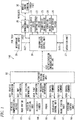
- the in-vehicle system 100 includes an automated driving function for a car, a function for presenting information related to automated driving to a driver, and a function for managing a hands-free call of a mobile phone terminal 30.
- the in-vehicle system illustrated in Fig. 1 includes an automated driving control unit 10, a wireless communication device 11, a road map database (DB) 12, a position detection unit 13, an in-vehicle camera 14, a radar 15, an accelerator control unit 16, a brake control unit 17, and a steering control unit 18 as components necessary for automated driving of a car.
- DB road map database
- the wireless communication device 11 can acquire weather information, traffic information, or the like at each place in front of a road in a travelling direction on which a host vehicle is currently travelling.
- the weather information, the traffic information, and the like acquired by the wireless communication device 11 are input to the automated driving control unit 10 as input information SG11.
- the road map database 12 accumulates in advance and holds a wide range of road maps including the road on which the host vehicle is currently travelling and various types of information related to the road. Information such as a map held by the road map database 12 is input to the automated driving control unit 10 as input information SG12.
- the position detection unit 13 can calculate the latest position information representing the current position of the host vehicle by receiving and using radio waves from, for example, Global Positioning System (GPS) satellites.
- GPS Global Positioning System
- the position information is input to the automated driving control unit 10 as input information SG13.
- the in-vehicle camera 14 can capture images showing the respective circumstances of surroundings, for example, the front, rear, and lateral directions of the host vehicle in the travelling direction and can output image signals.
- the video signal is input to the automated driving control unit 10 as input information SG14.
- the radar 15 can detect the presence or absence of an obstacle such as a preceding vehicle and the distance between the preceding vehicle and the host vehicle by using a detection function using a radio wave such as a millimeter wave.
- the detection information of the radar 15 is input into the automated driving control unit 10 as input information SG15.
- the accelerator control unit 16 has an electrically controllable actuator necessary for automatically adjusting an accelerator opening degree of the host vehicle.
- the accelerator control unit 16 can adjust the accelerator opening in accordance with control command SG16 output by the automated driving control unit 10.
- the brake control unit 17 includes an electrically controllable actuator connected to a brake mechanism of the host vehicle.
- the brake control unit 17 can control the on/off and braking force of the brake of the host vehicle in accordance with control command SG17 output by the automated driving control unit 10.
- the steering control unit 18 has an electrically controllable actuator connected to a steering mechanism of the host vehicle.
- the steering control unit 18 can move the steering mechanism of the host vehicle or generate an assisting torque for assisting the steering force of the driver in accordance with control command SG18 output by the automated driving control unit 10.
- the automated driving control unit 10 is an electronic control unit (ECU) for controlling the automated driving of the car and is equipped with functions corresponding to automated driving of the level 2 (LV2) or the level 3 (LV3) of the automation level prescribed by, for example, the Government of Japan or United States Department of transportation's National Highway Traffic Safety Administration (NHTSA). Further, in addition to the general automated driving function, a function of performing braking control of a pre-crash safety system as an emergency system is also installed in the automated driving control unit 10.
- ECU electronice control unit
- LV3 level 3
- a function of performing braking control of a pre-crash safety system as an emergency system is also installed in the automated driving control unit 10.
- the pre-crash safety system determines the possibility of the host vehicle colliding with an object based on the object information (distance, direction, relative speed, and the like) obtained from the radar 15 of millimeter waves and the in-vehicle camera 14 and automatically applies a brake to the host vehicle when it is determined that there is a high possibility that the host vehicle will collide with the object.
- object information distance, direction, relative speed, and the like
- the system automatically carries out a plurality of operations among acceleration, steering, and braking of the vehicle.
- the level 2 it is necessary for a driver to constantly monitor the driving situation and carry out the driving operation as necessary.
- the system performs all the control of acceleration, steering, and braking of the vehicle, and thus usually a driver only has to monitor the driving situation. Also, it is not absolutely necessary for a driver to monitor the situation. However, even in the case of the level 3, when the system sends a request in the event of emergency or system accuracy deterioration, it is necessary for a driver to respond to the request. In other words, it is necessary to hand over the responsibility of driving from the system to the manual operation of a driver and shift the automated driving level from the level 3 to the level 2 or the like having a lower automation rate than that or the level 3.
- the automated driving control unit 10 analyzes the image of the in-vehicle camera 14 to grasp each white line at the boundary of a travelling lane and the position of the host vehicle in a right-left direction, in such a manner that the automated driving control unit 10 can calculate the appropriate position of the host vehicle in the right-left direction and can grasp the condition of the curve of the road ahead of the vehicle. Therefore, the automated driving control unit 10 can realize, for example, a lane keeping assistance function for automatically controlling the host vehicle to travel on the central position of the travelling lane on the road.
- the automated driving control unit 10 can automatically perform acceleration and deceleration based on a result of analyzing the image of the in-vehicle camera 14 and the position and distance information of a preceding vehicle detected by the radar 15 so that, for example, the inter-vehicle distance between the preceding vehicle and the host vehicle is maintained within a safe range. That is, an Adaptive Cruise Control System (ACC) can be realized.
- ACC Adaptive Cruise Control System
- the automated driving control unit 10 can calculate an appropriate travelling route on the road on which the host vehicle should travel or can predict a change in the condition of the road ahead of the vehicle based on a predetermined target point, the current position detected by the position detection unit 13, the road map of the road map database 12, the traffic information acquired by the wireless communication device 11 and the like.
- prediction accuracy can be improved.
- the automated driving control unit 10 can perform a handover from the level 3 to the level 2 or the like having a lower automation rate than that of the level 3 by accepting an automated/manual switching instruction generated by the driver's switch operation or the like or detecting the start of the manual driving operation by a driver.
- the automated driving control unit 10 can detect a situation where it is difficult to ensure safety based on the analysis result of the image of the in-vehicle camera 14, the distance information detected by the radar 15, and the like. It is possible to detect the situation where it is difficult to ensure safety by grasping, for example, the time margin based on the remaining time TTC (Time To Collision) or the like up to the time when there is a possibility that the host vehicle may come into contact with another vehicle existing in the vicinity thereof.
- the automated driving control unit 10 detects a situation where it is difficult to ensure safety, the automated driving control unit 10 outputs a signal representing a request for handover as notification information SG10.
- the notification information SG10 may include information indicating the type of event that is predicted or a notification indicating the brake operation of the pre-crash safety system.
- the notification information SG10 is input to the information input/output control unit 20.
- the information input/output control unit 20 is an electronic control unit (ECU) which performs a control for realizing a function of presenting necessary information to a driver at the time of automated driving or a function related to a hands-free call of the mobile phone terminal 30.
- ECU electronice control unit
- the automated driving control unit 10 and the information input/output control unit 20 illustrated in Fig. 1 may be integrated.
- the mobile phone terminal 30 is a terminal which is a user's possession brought into the vehicle and used by a user such as a driver as necessary. Further, the in-vehicle system 100 provides the function of a hands-free call to the mobile phone terminal 30 so that a safe call can be made even while the host vehicle is driven. Therefore, the mobile phone terminal 30 is connected to the information input/output control unit 20 via a call management unit 28.
- the information input/output control unit 20 and the call management unit 28 are connected by wires and the call management unit 28 and the mobile phone terminal 30 are wirelessly connected using, for example, Bluetooth (registered trademark) or the like.
- the mobile phone terminal 30 can transmit voice information SG21 input from a microphone 26 to the partner terminal. Further, it is possible to remotely operate the mobile phone terminal 30 by using a touch panel or a switch provided in an operation unit 27. Further, the mobile phone terminal 30 can output voice information and ringing tones during a phone call as sound from a speaker of a sound/voice output device 23.
- a display output device 21 corresponds to a display device arranged at such a position that an occupant driving a vehicle in a driver's seat can easily view it, such as a meter unit or a center display mounted on the vehicle.
- a lighting output device 22 corresponds to various kinds of interior lighting equipment installed in a vehicle.
- the sound/voice output device 23 corresponds to various auditory output devices including an audio device and the like.
- a vibration output device 24 is a device capable of generating mechanical vibration by electrical control. The vibration output device 24 is attached or connected to the seating portion of the driver's seat or the steering wheel so that a driver can recognize the vibration as a tactile sensation or the like during driving.
- An odor output device 25 is a device capable of generating a specific odor in the passenger compartment by electrical control. This odor output device 25 is installed in, for example, a car air conditioner and it can spray air freshener and spread the smell to the space inside the passenger compartment by blowing.
- the information input/output control unit 20 can select one of the display output device 21, the lighting output device 22, the sound/voice output device 23, the vibration output device 24, and the odor output device 25 or combine a plurality of them to present the necessary information to a driver.
- the information input/output control unit 20 can present information in various kinds of forms and can adjust the intensity of information presentation.
- Fig. 2 illustrates a configuration example of a table which defines the operation pattern of the in-vehicle system 100. That is, for example, the information input/output control unit 20 controls a hands-free call of the mobile phone terminal 30 according to the operation pattern defined in the table of Fig. 2 to ensure the safety of driving of the host vehicle.
- the operation contents corresponding to the combination of the original state before the occurrence of the event and the type of the event that has occurred are defined.
- the original state before the event occurs is managed by the information input/output control unit 20. Further, the handover pre-notification, the handover notification, and the pre-crash safety system notification are notified from the automated driving control unit 10 to the information input/output control unit 20 as the notification information SG10. The event of an incoming call is notified from the call management unit 28 to the information input/output control unit 20 by communication control information SG23.
- the time at which the handover pre-notification occurs is, for example, three minutes before the scheduled time at which the handover is required.
- the time at which the handover notification occurs is, for example, 10 seconds before the scheduled time at which the handover is required.
- the system (automated driving control unit 10) predicts the occurrence of a situation requiring the handover based on the road conditions and the like, the system generates the handover pre-notification and the handover notification at an appropriate predetermined time while considering the remaining time or distance until the vehicle actually reaches the corresponding point.
- the time may be changed as necessary.
- the time at which the pre-crash safety system notification occurs is immediately before (two to three seconds before) the collision occurs.
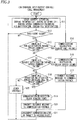
- Fig. 3 illustrates an operation example of information input/output control for managing a call.
- the information input/output control unit 20 illustrated in Fig. 1 executes the operation of Fig. 3 . Therefore, in accordance with the operation pattern defined in the table as illustrated in Fig. 2 , appropriate call management is performed according to the combination of the current state and the event that has occurred. A case where the information input/output control unit 20 executes the operation illustrated in Fig. 3 will be described below.
- the information input/output control unit 20 always grasps the current situation by monitoring the notification information SG10 and the communication control information SG23 (S11). That is, respective states such as during handover notification (including pre-notification), during pre-crash safety system notification, during incoming call, during outgoing call, and during speech communication of the mobile phone terminal 30 are distinguished. Thus, the original state in the table illustrated in Fig. 2 can be specified.
- the information input/output control unit 20 monitors the notification information SG10 and the communication control information SG23, thereby identifying the occurrence of a new event (S12). When the occurrence of a new event is detected, the process proceeds to S13 and subsequent steps.
- the information input/output control unit 20 proceeds from S13 to S14.
- communication restriction is applied to the hands-free call use of the mobile phone terminal 30.
- the specific communication restriction in this case is reduction of the call volume. That is, although the users (a driver and a speech partner) can still continue the call, the users talk while being conscious that the call is scheduled to be interrupted after a few minutes due to the recognition of the volume reduction. At the same time, a notification sound indicating that the handover pre-notification has been generated is output or attention is attracted using the screen display. A specific example will be explained below.
- the information input/output control unit 20 proceeds from S15 to S16.
- communication restriction is applied to the hands-free call use of the mobile phone terminal 30.
- the specific communication restriction in this case is cutting-off of the speech sound. Therefore, in this case, the user's call is forcibly terminated. Therefore, a driver does not need to be conscious of the call, so it becomes easy to recognize the handover notification (request) that has occurred, and thus it is possible to respond to the handover request.
- the information input/output control unit 20 sends a guidance message, that is, information on the disconnection guidance, indicating that the call is interrupted to the terminal of the call partner.
- the call partner who is talking with the driver of the host vehicle is also subjected to the call interruption in a state where the call partner reliably recognizes that the call is interrupted. Therefore, it is possible to avoid the occurrence of such an unnecessary action that the call partner calls back after the call is automatically interrupted, and thus the convenience is improved.
- a message indicating a request for handover is output by the screen display or the like so that a driver can easily view it.
- This message is output using a display on a meter unit of a vehicle, a head-up display (HUD), a display of a next generation In-Vehicle Infotainment system (IVI), or the like.
- HUD head-up display
- IVI In-Vehicle Infotainment system
- the information input or output control unit 20 controls the call management unit 28 in S21 and performs disconnection of the telephone line or transition to the holding state.
- the information input/output control unit 20 proceeds from S18 to S19. Then, communication restriction is applied to the hands-free call use of the mobile phone terminal 30.
- the specific communication restriction in this case is cutting-off of the ringing tone. Therefore, in this case, even when there is an incoming call, the ringing tone does not sound so that a driver is not conscious of the incoming call and can easily grasp the pre-crash safety system notification. In other words, since a driver can immediately recognize that the brake is activated by the pre-crash safety system, the driver will not panic against sudden deceleration of the host vehicle, and thus safety can be ensured.
- the information input/output control unit 20 sends a predetermined guidance message to the terminal of the communication partner whose call is received at the subsequent S20. Specifically, the communication partner is notified that the driver of the host vehicle is in a state where he/she cannot currently make a call. Therefore, the communication partner can call back at a later time if necessary. Also, in this case, after finishing the transmission of the guidance message in S20, the information input/output control unit 20 controls the call management unit 28 in S21 and performs disconnection of the telephone line or transition to the holding state.
- Step S22 of Fig. 3 Other operation patterns except for those illustrated in the table of Fig. 2 can also be similarly processed in Step S22 of Fig. 3 . That is, when the handover pre-notification or the handover notification (request) occurs in a state of incoming call or outgoing call in accordance with the contents of each operation pattern defined in the table of Fig. 2 , communication restriction (ringing tone disconnection) is performed as similar to S19 to S21 and a guidance message is sent, and then automatic disconnection of the outgoing call or incoming call or transition to a holding state is performed.
- communication restriction ringing tone disconnection
- communication restriction cutting-off the speech sound
- a guidance message is sent, and then automatic disconnection of the outgoing call or incoming call or transition to a holding state is performed.
- an event of the incoming call occurs during the handover notification or pre-crash safety system notification, the line is disconnected without accepting the incoming call.
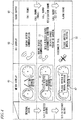
- FIG. 4 An example of a state change of each part when the handover request occurs during speech communication is illustrated in Fig. 4 . That is, Fig. 4 illustrates the state change of each part of the system corresponding to the actions AC1 and AC2 defined in the table illustrated in Fig. 2 . Further, in this example, it is assumed that a meter display screen 40, an IVI display screen 50, and a sound output unit 60 are included in the system and those can be controlled by the information input/output control unit 20.
- the meter display screen 40 When "original state” is in a state of speech communication and other events have not yet occurred, the meter display screen 40 outputs normal display contents and the IVI display screen 50 displays a message of "during speech communication", and further the sound output unit 60 outputs the speech sound at normal volume as illustrated in the upper part of Fig. 4 .
- the state is shifted to the state illustrated in the middle part of Fig. 4 as "H/O 3 minutes before".
- the meter display screen 40 displays a message of a handover announcement display 41. Further, in addition to “during speech communication", the IVI display screen 50 displays a message which shows that it is three minutes before the scheduled handover and notifies that the call is about to be disconnected soon.
- the sound output unit 60 reduces the volume of the speech sound lower than usual and outputs the notification sound indicating the handover notification in a state where the notification sound is superimposed on the speech sound.
- the meter display screen 40 displays a handover request message 42.
- the IVI display screen 50 displays a handover request message 52 including a message indicating that the call has been disconnected.
- the sound output unit 60 shuts down the output of the speech sound and outputs an alarm sound representing a request for the handover.
- a driver recognizes the content of at least one of the meter display screen 40, the IVI display screen 50, and the sound output unit 60, in such a manner that the driver can reliably understand that switching to manual driving is necessary and can start the operation of the manual driving.
- the handover is executed. Also, since, about three minutes before the time described above, the occurrence of the handover is predicted in a state of the middle part of Fig. 4 , a driver can prepare for the handover with a sufficient margin before the state becomes the state of "H/O-10 seconds before", and thus the smooth handover can be easily executed.
- FIG. 5 An example of a state change of each part when the brake of the pre-crash safety system is activated during incoming call is illustrated in Fig. 5 . That is, Fig. 5 illustrates the state change of each part of the system corresponding to the action AC3 defined in the table illustrated in Fig. 2 .
- the meter display screen 40, the IVI display screen 50, and the sound output unit 60 are included in the system and those can be controlled by the information input/output control unit 20.
- the meter display screen 40 When "original state” is in a state of incoming call and other events have not yet occurred, the meter display screen 40 outputs normal display contents and the IVI display screen 50 displays a message of "incoming call", and further the sound output unit 60 outputs the ringing tone at normal volume as illustrated in the upper part of Fig. 5 .
- the state is shifted to the state illustrated in the lower part of FIG. 5 as "PCS occurrence”.
- the meter display screen 40 displays an emergency brake operation indication 43. Also, the IVI display screen 50 displays the emergency brake operation indication 53. Further, the sound output unit 60 shuts off the output of the ringing tone and outputs an alarm sound to attract attention. Therefore, a driver can easily recognize that the host vehicle suddenly decelerates by the operation of emergency braking.
- FIG. 6 An example of a detailed operation sequence when the handover request occurs during speech communication is illustrated in Fig. 6 . That is, the flow of operations of a meter (MET) display control 101, a meter sound control 102, an IVI background display control 103, an IVI pop-up display control 104, an IVI sound control 105, and a telephone state 106 when the operations corresponding to the actions AC1 and AC2 defined in the table illustrated in Fig. 2 are executed is illustrated in Fig. 6 .
- MET meter
- meter display control 101 the meter sound control 102, and the IVI background display control 103 are controlled by basic software (operating system: OS) which controls an electronic control unit built in the meter unit.
- IVI pop-up display control 104, the IVI sound control 105, and the telephone state 106 are controlled by basic software which controls an electronic control unit built in the next generation In-Vehicle Infotainment system. The operation of Fig. 6 will be described below.
- the meter display control 101 displays "H/O-3 minutes before”.
- the meter sound control 102 outputs a notification sound.
- the IVI background display control 103 displays "H/O-3 minutes before”.
- the IVI pop-up display control 104 outputs a warning indication related to the pre-notification of call disconnection. That is, it notifies the pre-notification in advance before the call is actually cut off.
- the IVI sound control 105 suppresses the volume of the speech sound and ringing tone lower than usual (temporarily). Therefore, for example, a message specially outputted as illustrated in the middle part of Fig. 4 is easily transmitted to a driver.
- the state of speech communication or incoming call is maintained.
- the meter display control 101 displays "Please hand over driving from vehicle” or the like.
- the meter sound control 102 outputs a pseudo voice such as "Please hand over driving from vehicle” together with the output of the attention calling sound.
- the IVI background display control 103 displays "Please hand over driving from vehicle” or the like.
- the IVI sound control 105 transmits a guidance message such as "Cannot answer the phone now" by a signal of a pseudo voice to the terminal of the speech partner and cuts off the speech sound.
- the IVI sound control 105 When the IVI sound control 105 outputs the guidance message described above, "during speech communication" is maintained in the telephone state 106. However, the speech sound on the driver's side of the host vehicle is in a cut-off state and the speech partner can receive only the guidance message. After the transmission of the guidance message is finished, the telephone state 106 shifted to a call disconnection state or a holding state.
- the meter display control 101 displays a message of "Switched to manual driving".
- the meter sound control 102 outputs a pseudo voice representing a message of "switched to manual driving”.
- the IVI background display control 103 displays a message of "Switched to manual driving".
- the IVI pop-up display control 104 displays a proposal message for calling back the disconnected call or performing a restoring operation of the call that has shifted to a holding state.
- FIG. 7 An example of the detailed operation sequence when the brake of the pre-crash safety system is activated during incoming call is illustrated in Fig. 7 . That is, the flow of operations of the meter (MET/HUD) display control 101, the meter sound control 102, the IVI background display control 103, the IVI pop-up display control 104, the IVI sound control 105, and the telephone state 106 when the operations corresponding to the action AC3 defined in the table illustrated in Fig. 2 are executed is illustrated in Fig. 7 . The operations of Fig. 7 will be described below.
- the IVI pop-up display control 104 displays a message of "Incoming call” and the IVI sound control 105 outputs the ringtone at usual state. Also, the telephone state 106 is in a call state.
- the meter display control 101 displays a message indicating "brake operation" in the display area of the meter display screen 40 or a head-up display.
- the meter sound control 102 outputs an alarm sound representing "brake operation".
- the IVI pop-up display control 104 displays a message indicating "brake operation" as similar to the emergency brake operation indication 53 of the IVI display screen 50 in Fig. 5 .
- the IVI sound control 105 cuts out the output of the speech voice on both the vehicle and the speech partner and transmits a guidance message of "Cannot answer the phone now" to the terminal of the speech partner.
- the telephone state 106 shifts to the disconnection state or the holding state after the transmission of the guidance message described above is completed.
- the IVI pop-up display control 104 outputs a message indicating the content of proposing calling-back of the disconnected call or returning of the call in a holding state to the original state after the driving state of the host vehicle is stabilized.
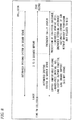
- Fig. 8 The relationship between various functions related to the automated driving of the vehicle and the time to collision is illustrated in Fig. 8 .
- the various automated driving functions include both the "automated driving system in a narrow sense” and the “emergency safety system” illustrated in Fig. 8 .
- the "automated driving system in a narrow sense” is a function to support the comfortable driving of the own vehicle driver and there are various types of the “automated driving system in a narrow sense” such as a hands-free driving support function, an adaptive cruise control (ACC) function, a lane keeping support function, and a lane change support function. Also, in the case of the "automated driving system in a narrow sense", the handover may occur.
- the "emergency safety system” is a function for preventing a collision between the host vehicle and another vehicle and the like. In the “emergency safety system”, even without driver's permission, for example, the operation is automatically started from two to three seconds before the expected collision time. As the “emergency safety system”, an emergency steering avoidance system and the like are also assumed besides the pre-crash safety system described above. In a case of the "emergency safety system", the handover does not occur.
- the telephone call or the like of the mobile phone terminal 30 is automatically restricted. Therefore, it is possible to prevent transmission of an important message related to driving to a driver from being inhibited by calls, incoming calls, or the likes, thereby ensuring safety of driving.
- the in-vehicle system 100 executes the handover pre-notification at a time having a sufficient margin with respect to the time at which the handover request occurs. Therefore, the driver can respond to the handover request with a time margin, and thus the smooth handover is realized.
- the in-vehicle system 100 performs restrictions such as automatic suppression of the call volume, and thus a driver does not need to interrupt the call immediately. Therefore, a driver can also prepare for the handover while continuing the call.
Landscapes
- Engineering & Computer Science (AREA)
- Automation & Control Theory (AREA)
- Transportation (AREA)
- Mechanical Engineering (AREA)
- Human Computer Interaction (AREA)
- Computer Networks & Wireless Communication (AREA)
- Signal Processing (AREA)
- Physics & Mathematics (AREA)
- Mathematical Physics (AREA)
- Chemical & Material Sciences (AREA)
- Combustion & Propulsion (AREA)
- Traffic Control Systems (AREA)
- Control Of Driving Devices And Active Controlling Of Vehicle (AREA)
- Telephone Function (AREA)
- Business, Economics & Management (AREA)
- Health & Medical Sciences (AREA)
- Artificial Intelligence (AREA)
- Evolutionary Computation (AREA)
- Game Theory and Decision Science (AREA)
- Medical Informatics (AREA)
- Aviation & Aerospace Engineering (AREA)
- Radar, Positioning & Navigation (AREA)
- Remote Sensing (AREA)
- General Physics & Mathematics (AREA)
Applications Claiming Priority (1)
| Application Number | Priority Date | Filing Date | Title |
|---|---|---|---|
| JP2018044602A JP6974220B2 (ja) | 2018-03-12 | 2018-03-12 | 車載システム |
Publications (2)
| Publication Number | Publication Date |
|---|---|
| EP3556631A1 true EP3556631A1 (de) | 2019-10-23 |
| EP3556631B1 EP3556631B1 (de) | 2022-05-04 |
Family
ID=65657342
Family Applications (1)
| Application Number | Title | Priority Date | Filing Date |
|---|---|---|---|
| EP19160217.6A Active EP3556631B1 (de) | 2018-03-12 | 2019-03-01 | Fahrzeuginternes system |
Country Status (4)
| Country | Link |
|---|---|
| US (1) | US10597044B2 (de) |
| EP (1) | EP3556631B1 (de) |
| JP (1) | JP6974220B2 (de) |
| CN (1) | CN110254431B (de) |
Families Citing this family (13)
| Publication number | Priority date | Publication date | Assignee | Title |
|---|---|---|---|---|
| JP2018203009A (ja) * | 2017-06-02 | 2018-12-27 | 本田技研工業株式会社 | 車両制御システム、車両制御方法、およびプログラム |
| US10759441B1 (en) * | 2019-05-06 | 2020-09-01 | Cambridge Mobile Telematics Inc. | Determining, scoring, and reporting mobile phone distraction of a driver |
| CN115567891B (zh) * | 2019-06-05 | 2025-01-14 | 深圳引望智能技术有限公司 | 自动驾驶信息指示方法、自动驾驶信息获取方法及装置 |
| JP7431546B2 (ja) * | 2019-09-25 | 2024-02-15 | 株式会社Subaru | 車両制御装置 |
| CN111565250B (zh) * | 2020-03-25 | 2021-05-25 | 浙江吉利汽车研究院有限公司 | 一种智能车载接听电话的方法、系统及车辆 |
| JP2021170726A (ja) * | 2020-04-15 | 2021-10-28 | リンナイ株式会社 | 通信システム |
| US11932285B2 (en) | 2020-11-09 | 2024-03-19 | International Business Machines Corporation | Communication prioritization in vehicles with automated driver assistance |
| DE102021104155A1 (de) | 2021-02-22 | 2022-08-25 | Bayerische Motoren Werke Aktiengesellschaft | Verfahren zum betreiben eines telefons in einem fahrzeug |
| CN113815637A (zh) * | 2021-08-28 | 2021-12-21 | 济南臻真技术研究所 | 基于驾驶辅助功能调度通知的方法,设备及存储介质 |
| JP2023097576A (ja) * | 2021-12-28 | 2023-07-10 | パイオニア株式会社 | 通信システム、通信装置、サーバ装置、通信方法、通信プログラム及び記憶媒体 |
| US12589765B2 (en) | 2023-01-10 | 2026-03-31 | Woven By Toyota, Inc. | Systems and methods for enhancing operator vigilance |
| JP7573672B2 (ja) | 2023-03-22 | 2024-10-25 | 本田技研工業株式会社 | 車両制御装置、車両制御方法、およびプログラム |
| EP4458636A3 (de) * | 2023-05-01 | 2024-12-25 | Toyota Jidosha Kabushiki Kaisha | Benachrichtigungssystem, fahrzeugsteuerungsvorrichtung, benachrichtigungsverfahren und nichttransitorisches speichermedium |
Citations (8)
| Publication number | Priority date | Publication date | Assignee | Title |
|---|---|---|---|---|
| JP2000349895A (ja) | 1999-06-08 | 2000-12-15 | Sukenobu Kaneda | 自動車の電波遮断装置 |
| EP1467543A2 (de) * | 2003-04-09 | 2004-10-13 | DaimlerChrysler AG | System, Betriebsverfahren und Benutzerschnittstelle für Funkkommunikationen mit einem Einschränkungs-Betriebsmodus in einem Kraftfahrzeug |
| DE102004037231A1 (de) * | 2004-07-31 | 2006-02-16 | Robert Bosch Gmbh | Evaluierungseinheit zum Erhöhen der Sicherheit beim Führen eines Fortbewegungsmittels und hierauf bezogenes Verfahren |
| DE102009054100A1 (de) * | 2009-11-20 | 2010-06-17 | Daimler Ag | Steuern einer Kommunikationseinrichtung eines Fahrzeugs in Abhängigkeit von einem Fahrerassistenzsystem |
| DE102009048954A1 (de) * | 2009-10-10 | 2011-04-14 | Daimler Ag | Verfahren und Vorrichtung zum automatischen Betreiben eines Fahrzeugs in einem keine Nutzeraktion erfordernden autonomen Fahrbetrieb |
| JP2014506081A (ja) | 2011-01-21 | 2014-03-06 | ジョンソン コントロールズ テクノロジー カンパニー | 車両内電子デバイス使用ブロッカー |
| DE102012112296A1 (de) * | 2012-12-14 | 2014-06-18 | Continental Teves Ag & Co. Ohg | Verfahren zum Betreiben eines ein automatisiertes, teilautomatisiertes und ein manuelles Fahren ermöglichenden Fahrerassistenzsystems eines Fahrzeugs |
| JP2017074909A (ja) | 2015-10-16 | 2017-04-20 | トヨタ自動車株式会社 | 車両のブレーキ制御装置 |
Family Cites Families (9)
| Publication number | Priority date | Publication date | Assignee | Title |
|---|---|---|---|---|
| JP3489511B2 (ja) * | 1999-11-12 | 2004-01-19 | 株式会社デンソー | 車載電話システム及び当該システムに用いる車両側装置 |
| JP4747125B2 (ja) * | 2007-03-29 | 2011-08-17 | 株式会社デンソーアイティーラボラトリ | 移動体搭載装置 |
| JP2016090274A (ja) * | 2014-10-30 | 2016-05-23 | トヨタ自動車株式会社 | 警報装置、警報システム及び携帯端末 |
| JP6439591B2 (ja) * | 2015-05-31 | 2018-12-19 | 株式会社デンソー | 走行制御装置、走行制御方法 |
| EP3415394B1 (de) * | 2016-02-12 | 2023-03-01 | LG Electronics Inc. | Benutzerschnittstellengerät für fahrzeug und fahrzeug |
| US9826500B1 (en) * | 2016-05-11 | 2017-11-21 | International Business Machines Corporation | Preventing driver distraction from incoming notifications |
| JP6387133B2 (ja) * | 2017-02-28 | 2018-09-05 | みこらった株式会社 | 自動運転車及び自動運転車用プログラム |
| JP6769383B2 (ja) * | 2017-04-13 | 2020-10-14 | トヨタ自動車株式会社 | 自動運転装置、及び通知方法 |
| JP2017197183A (ja) * | 2017-06-01 | 2017-11-02 | トヨタ自動車株式会社 | 車両制御装置 |
-
2018
- 2018-03-12 JP JP2018044602A patent/JP6974220B2/ja active Active
-
2019
- 2019-03-01 EP EP19160217.6A patent/EP3556631B1/de active Active
- 2019-03-11 US US16/297,827 patent/US10597044B2/en active Active
- 2019-03-12 CN CN201910185711.3A patent/CN110254431B/zh active Active
Patent Citations (8)
| Publication number | Priority date | Publication date | Assignee | Title |
|---|---|---|---|---|
| JP2000349895A (ja) | 1999-06-08 | 2000-12-15 | Sukenobu Kaneda | 自動車の電波遮断装置 |
| EP1467543A2 (de) * | 2003-04-09 | 2004-10-13 | DaimlerChrysler AG | System, Betriebsverfahren und Benutzerschnittstelle für Funkkommunikationen mit einem Einschränkungs-Betriebsmodus in einem Kraftfahrzeug |
| DE102004037231A1 (de) * | 2004-07-31 | 2006-02-16 | Robert Bosch Gmbh | Evaluierungseinheit zum Erhöhen der Sicherheit beim Führen eines Fortbewegungsmittels und hierauf bezogenes Verfahren |
| DE102009048954A1 (de) * | 2009-10-10 | 2011-04-14 | Daimler Ag | Verfahren und Vorrichtung zum automatischen Betreiben eines Fahrzeugs in einem keine Nutzeraktion erfordernden autonomen Fahrbetrieb |
| DE102009054100A1 (de) * | 2009-11-20 | 2010-06-17 | Daimler Ag | Steuern einer Kommunikationseinrichtung eines Fahrzeugs in Abhängigkeit von einem Fahrerassistenzsystem |
| JP2014506081A (ja) | 2011-01-21 | 2014-03-06 | ジョンソン コントロールズ テクノロジー カンパニー | 車両内電子デバイス使用ブロッカー |
| DE102012112296A1 (de) * | 2012-12-14 | 2014-06-18 | Continental Teves Ag & Co. Ohg | Verfahren zum Betreiben eines ein automatisiertes, teilautomatisiertes und ein manuelles Fahren ermöglichenden Fahrerassistenzsystems eines Fahrzeugs |
| JP2017074909A (ja) | 2015-10-16 | 2017-04-20 | トヨタ自動車株式会社 | 車両のブレーキ制御装置 |
Also Published As
| Publication number | Publication date |
|---|---|
| JP6974220B2 (ja) | 2021-12-01 |
| EP3556631B1 (de) | 2022-05-04 |
| US20190276048A1 (en) | 2019-09-12 |
| CN110254431A (zh) | 2019-09-20 |
| CN110254431B (zh) | 2022-07-15 |
| JP2019161407A (ja) | 2019-09-19 |
| US10597044B2 (en) | 2020-03-24 |
Similar Documents
| Publication | Publication Date | Title |
|---|---|---|
| EP3556631B1 (de) | Fahrzeuginternes system | |
| RU2543492C2 (ru) | Система и способ передачи информации о транспортном средстве на устройство связи пользователя | |
| JP2019147535A (ja) | 自動運転時情報伝達方法、自動運転時情報伝達装置、および自動運転時情報伝達システム | |
| EP2288125A1 (de) | Zellulare Vorrichtungssteuerung | |
| JP2019172180A (ja) | 自動運転時情報伝達方法 | |
| US7894953B2 (en) | Interior component management of a vehicle via occupant monitoring | |
| JP3868951B2 (ja) | 統合された事前衝突感知機構を備える車両通信システム | |
| EP2777307B1 (de) | System und verfahren zur maskierung eingehender anrufe für eine an ein automobil-telematiksystem angeschlossene kommunikationsvorrichtung | |
| US20100279626A1 (en) | System for limiting mobile device functionality in designated environments | |
| JP2004312752A (ja) | 自動車用ユーザインターフェースおよび通信システム並びに関連操作方法 | |
| WO2012044985A2 (en) | System for limiting mobile device functionality in designated environments | |
| JP2019074813A (ja) | 自動運転時情報伝達方法および車載情報提示装置 | |
| CN111186435B (zh) | 汽车的防碰撞方法、装置及存储介质 | |
| CN111071151A (zh) | 汽车的防碰撞方法、装置及存储介质 | |
| US12261975B1 (en) | Systems and methods for determining the driver of a vehicle | |
| US20200406934A1 (en) | Reduction of distractions within the scope of a transfer of driving tasks of an automated vehicle to a driver | |
| JP2020179852A (ja) | 自動運転車及び自動運転車用プログラム | |
| JP3747462B2 (ja) | 車両用自動通報装置 | |
| JP2006254055A (ja) | 車載電話システム | |
| JP7843529B2 (ja) | 自動運転車及び自動運転車用プログラム | |
| JP2022016482A (ja) | 自動運転車及び自動運転車用プログラム | |
| JP2000339592A (ja) | メーデーシステム | |
| JP2004086476A (ja) | 車両用安全装置及び車両制御装置 | |
| WO2021140322A1 (en) | Activation of driver assist system dependent on important incoming communication | |
| JP2007316914A (ja) | 車載ナビゲーション装置 |
Legal Events
| Date | Code | Title | Description |
|---|---|---|---|
| PUAI | Public reference made under article 153(3) epc to a published international application that has entered the european phase |
Free format text: ORIGINAL CODE: 0009012 |
|
| STAA | Information on the status of an ep patent application or granted ep patent |
Free format text: STATUS: REQUEST FOR EXAMINATION WAS MADE |
|
| 17P | Request for examination filed |
Effective date: 20190301 |
|
| AK | Designated contracting states |
Kind code of ref document: A1 Designated state(s): AL AT BE BG CH CY CZ DE DK EE ES FI FR GB GR HR HU IE IS IT LI LT LU LV MC MK MT NL NO PL PT RO RS SE SI SK SM TR |
|
| AX | Request for extension of the european patent |
Extension state: BA ME |
|
| STAA | Information on the status of an ep patent application or granted ep patent |
Free format text: STATUS: EXAMINATION IS IN PROGRESS |
|
| 17Q | First examination report despatched |
Effective date: 20210706 |
|
| GRAP | Despatch of communication of intention to grant a patent |
Free format text: ORIGINAL CODE: EPIDOSNIGR1 |
|
| STAA | Information on the status of an ep patent application or granted ep patent |
Free format text: STATUS: GRANT OF PATENT IS INTENDED |
|
| INTG | Intention to grant announced |
Effective date: 20220121 |
|
| RIN1 | Information on inventor provided before grant (corrected) |
Inventor name: NAGAHASHI, KENICHI Inventor name: SUZUKI, YUKIO |
|
| GRAS | Grant fee paid |
Free format text: ORIGINAL CODE: EPIDOSNIGR3 |
|
| GRAA | (expected) grant |
Free format text: ORIGINAL CODE: 0009210 |
|
| STAA | Information on the status of an ep patent application or granted ep patent |
Free format text: STATUS: THE PATENT HAS BEEN GRANTED |
|
| AK | Designated contracting states |
Kind code of ref document: B1 Designated state(s): AL AT BE BG CH CY CZ DE DK EE ES FI FR GB GR HR HU IE IS IT LI LT LU LV MC MK MT NL NO PL PT RO RS SE SI SK SM TR |
|
| REG | Reference to a national code |
Ref country code: GB Ref legal event code: FG4D |
|
| REG | Reference to a national code |
Ref country code: CH Ref legal event code: EP |
|
| REG | Reference to a national code |
Ref country code: AT Ref legal event code: REF Ref document number: 1488766 Country of ref document: AT Kind code of ref document: T Effective date: 20220515 |
|
| REG | Reference to a national code |
Ref country code: IE Ref legal event code: FG4D Ref country code: DE Ref legal event code: R096 Ref document number: 602019014298 Country of ref document: DE |
|
| REG | Reference to a national code |
Ref country code: LT Ref legal event code: MG9D |
|
| REG | Reference to a national code |
Ref country code: NL Ref legal event code: MP Effective date: 20220504 |
|
| REG | Reference to a national code |
Ref country code: AT Ref legal event code: MK05 Ref document number: 1488766 Country of ref document: AT Kind code of ref document: T Effective date: 20220504 |
|
| PG25 | Lapsed in a contracting state [announced via postgrant information from national office to epo] |
Ref country code: SE Free format text: LAPSE BECAUSE OF FAILURE TO SUBMIT A TRANSLATION OF THE DESCRIPTION OR TO PAY THE FEE WITHIN THE PRESCRIBED TIME-LIMIT Effective date: 20220504 Ref country code: PT Free format text: LAPSE BECAUSE OF FAILURE TO SUBMIT A TRANSLATION OF THE DESCRIPTION OR TO PAY THE FEE WITHIN THE PRESCRIBED TIME-LIMIT Effective date: 20220905 Ref country code: NO Free format text: LAPSE BECAUSE OF FAILURE TO SUBMIT A TRANSLATION OF THE DESCRIPTION OR TO PAY THE FEE WITHIN THE PRESCRIBED TIME-LIMIT Effective date: 20220804 Ref country code: NL Free format text: LAPSE BECAUSE OF FAILURE TO SUBMIT A TRANSLATION OF THE DESCRIPTION OR TO PAY THE FEE WITHIN THE PRESCRIBED TIME-LIMIT Effective date: 20220504 Ref country code: LT Free format text: LAPSE BECAUSE OF FAILURE TO SUBMIT A TRANSLATION OF THE DESCRIPTION OR TO PAY THE FEE WITHIN THE PRESCRIBED TIME-LIMIT Effective date: 20220504 Ref country code: HR Free format text: LAPSE BECAUSE OF FAILURE TO SUBMIT A TRANSLATION OF THE DESCRIPTION OR TO PAY THE FEE WITHIN THE PRESCRIBED TIME-LIMIT Effective date: 20220504 Ref country code: GR Free format text: LAPSE BECAUSE OF FAILURE TO SUBMIT A TRANSLATION OF THE DESCRIPTION OR TO PAY THE FEE WITHIN THE PRESCRIBED TIME-LIMIT Effective date: 20220805 Ref country code: FI Free format text: LAPSE BECAUSE OF FAILURE TO SUBMIT A TRANSLATION OF THE DESCRIPTION OR TO PAY THE FEE WITHIN THE PRESCRIBED TIME-LIMIT Effective date: 20220504 Ref country code: ES Free format text: LAPSE BECAUSE OF FAILURE TO SUBMIT A TRANSLATION OF THE DESCRIPTION OR TO PAY THE FEE WITHIN THE PRESCRIBED TIME-LIMIT Effective date: 20220504 Ref country code: BG Free format text: LAPSE BECAUSE OF FAILURE TO SUBMIT A TRANSLATION OF THE DESCRIPTION OR TO PAY THE FEE WITHIN THE PRESCRIBED TIME-LIMIT Effective date: 20220804 Ref country code: AT Free format text: LAPSE BECAUSE OF FAILURE TO SUBMIT A TRANSLATION OF THE DESCRIPTION OR TO PAY THE FEE WITHIN THE PRESCRIBED TIME-LIMIT Effective date: 20220504 |
|
| PG25 | Lapsed in a contracting state [announced via postgrant information from national office to epo] |
Ref country code: RS Free format text: LAPSE BECAUSE OF FAILURE TO SUBMIT A TRANSLATION OF THE DESCRIPTION OR TO PAY THE FEE WITHIN THE PRESCRIBED TIME-LIMIT Effective date: 20220504 Ref country code: PL Free format text: LAPSE BECAUSE OF FAILURE TO SUBMIT A TRANSLATION OF THE DESCRIPTION OR TO PAY THE FEE WITHIN THE PRESCRIBED TIME-LIMIT Effective date: 20220504 Ref country code: LV Free format text: LAPSE BECAUSE OF FAILURE TO SUBMIT A TRANSLATION OF THE DESCRIPTION OR TO PAY THE FEE WITHIN THE PRESCRIBED TIME-LIMIT Effective date: 20220504 Ref country code: IS Free format text: LAPSE BECAUSE OF FAILURE TO SUBMIT A TRANSLATION OF THE DESCRIPTION OR TO PAY THE FEE WITHIN THE PRESCRIBED TIME-LIMIT Effective date: 20220904 |
|
| PG25 | Lapsed in a contracting state [announced via postgrant information from national office to epo] |
Ref country code: SM Free format text: LAPSE BECAUSE OF FAILURE TO SUBMIT A TRANSLATION OF THE DESCRIPTION OR TO PAY THE FEE WITHIN THE PRESCRIBED TIME-LIMIT Effective date: 20220504 Ref country code: SK Free format text: LAPSE BECAUSE OF FAILURE TO SUBMIT A TRANSLATION OF THE DESCRIPTION OR TO PAY THE FEE WITHIN THE PRESCRIBED TIME-LIMIT Effective date: 20220504 Ref country code: RO Free format text: LAPSE BECAUSE OF FAILURE TO SUBMIT A TRANSLATION OF THE DESCRIPTION OR TO PAY THE FEE WITHIN THE PRESCRIBED TIME-LIMIT Effective date: 20220504 Ref country code: EE Free format text: LAPSE BECAUSE OF FAILURE TO SUBMIT A TRANSLATION OF THE DESCRIPTION OR TO PAY THE FEE WITHIN THE PRESCRIBED TIME-LIMIT Effective date: 20220504 Ref country code: DK Free format text: LAPSE BECAUSE OF FAILURE TO SUBMIT A TRANSLATION OF THE DESCRIPTION OR TO PAY THE FEE WITHIN THE PRESCRIBED TIME-LIMIT Effective date: 20220504 Ref country code: CZ Free format text: LAPSE BECAUSE OF FAILURE TO SUBMIT A TRANSLATION OF THE DESCRIPTION OR TO PAY THE FEE WITHIN THE PRESCRIBED TIME-LIMIT Effective date: 20220504 |
|
| REG | Reference to a national code |
Ref country code: DE Ref legal event code: R097 Ref document number: 602019014298 Country of ref document: DE |
|
| PLBE | No opposition filed within time limit |
Free format text: ORIGINAL CODE: 0009261 |
|
| STAA | Information on the status of an ep patent application or granted ep patent |
Free format text: STATUS: NO OPPOSITION FILED WITHIN TIME LIMIT |
|
| PG25 | Lapsed in a contracting state [announced via postgrant information from national office to epo] |
Ref country code: AL Free format text: LAPSE BECAUSE OF FAILURE TO SUBMIT A TRANSLATION OF THE DESCRIPTION OR TO PAY THE FEE WITHIN THE PRESCRIBED TIME-LIMIT Effective date: 20220504 |
|
| 26N | No opposition filed |
Effective date: 20230207 |
|
| PG25 | Lapsed in a contracting state [announced via postgrant information from national office to epo] |
Ref country code: SI Free format text: LAPSE BECAUSE OF FAILURE TO SUBMIT A TRANSLATION OF THE DESCRIPTION OR TO PAY THE FEE WITHIN THE PRESCRIBED TIME-LIMIT Effective date: 20220504 |
|
| PG25 | Lapsed in a contracting state [announced via postgrant information from national office to epo] |
Ref country code: MC Free format text: LAPSE BECAUSE OF FAILURE TO SUBMIT A TRANSLATION OF THE DESCRIPTION OR TO PAY THE FEE WITHIN THE PRESCRIBED TIME-LIMIT Effective date: 20220504 |
|
| REG | Reference to a national code |
Ref country code: CH Ref legal event code: PL |
|
| GBPC | Gb: european patent ceased through non-payment of renewal fee |
Effective date: 20230301 |
|
| REG | Reference to a national code |
Ref country code: BE Ref legal event code: MM Effective date: 20230331 |
|
| PG25 | Lapsed in a contracting state [announced via postgrant information from national office to epo] |
Ref country code: LU Free format text: LAPSE BECAUSE OF NON-PAYMENT OF DUE FEES Effective date: 20230301 |
|
| REG | Reference to a national code |
Ref country code: IE Ref legal event code: MM4A |
|
| PG25 | Lapsed in a contracting state [announced via postgrant information from national office to epo] |
Ref country code: GB Free format text: LAPSE BECAUSE OF NON-PAYMENT OF DUE FEES Effective date: 20230301 |
|
| PG25 | Lapsed in a contracting state [announced via postgrant information from national office to epo] |
Ref country code: LI Free format text: LAPSE BECAUSE OF NON-PAYMENT OF DUE FEES Effective date: 20230331 Ref country code: IT Free format text: LAPSE BECAUSE OF FAILURE TO SUBMIT A TRANSLATION OF THE DESCRIPTION OR TO PAY THE FEE WITHIN THE PRESCRIBED TIME-LIMIT Effective date: 20220504 Ref country code: IE Free format text: LAPSE BECAUSE OF NON-PAYMENT OF DUE FEES Effective date: 20230301 Ref country code: GB Free format text: LAPSE BECAUSE OF NON-PAYMENT OF DUE FEES Effective date: 20230301 Ref country code: FR Free format text: LAPSE BECAUSE OF NON-PAYMENT OF DUE FEES Effective date: 20230331 Ref country code: CH Free format text: LAPSE BECAUSE OF NON-PAYMENT OF DUE FEES Effective date: 20230331 |
|
| PG25 | Lapsed in a contracting state [announced via postgrant information from national office to epo] |
Ref country code: BE Free format text: LAPSE BECAUSE OF NON-PAYMENT OF DUE FEES Effective date: 20230331 |
|
| PG25 | Lapsed in a contracting state [announced via postgrant information from national office to epo] |
Ref country code: BG Free format text: LAPSE BECAUSE OF FAILURE TO SUBMIT A TRANSLATION OF THE DESCRIPTION OR TO PAY THE FEE WITHIN THE PRESCRIBED TIME-LIMIT Effective date: 20220504 |
|
| PG25 | Lapsed in a contracting state [announced via postgrant information from national office to epo] |
Ref country code: BG Free format text: LAPSE BECAUSE OF FAILURE TO SUBMIT A TRANSLATION OF THE DESCRIPTION OR TO PAY THE FEE WITHIN THE PRESCRIBED TIME-LIMIT Effective date: 20220504 |
|
| PG25 | Lapsed in a contracting state [announced via postgrant information from national office to epo] |
Ref country code: CY Free format text: LAPSE BECAUSE OF FAILURE TO SUBMIT A TRANSLATION OF THE DESCRIPTION OR TO PAY THE FEE WITHIN THE PRESCRIBED TIME-LIMIT; INVALID AB INITIO Effective date: 20190301 |
|
| PG25 | Lapsed in a contracting state [announced via postgrant information from national office to epo] |
Ref country code: HU Free format text: LAPSE BECAUSE OF FAILURE TO SUBMIT A TRANSLATION OF THE DESCRIPTION OR TO PAY THE FEE WITHIN THE PRESCRIBED TIME-LIMIT; INVALID AB INITIO Effective date: 20190301 |
|
| PG25 | Lapsed in a contracting state [announced via postgrant information from national office to epo] |
Ref country code: TR Free format text: LAPSE BECAUSE OF FAILURE TO SUBMIT A TRANSLATION OF THE DESCRIPTION OR TO PAY THE FEE WITHIN THE PRESCRIBED TIME-LIMIT Effective date: 20220504 |
|
| PGFP | Annual fee paid to national office [announced via postgrant information from national office to epo] |
Ref country code: DE Payment date: 20260128 Year of fee payment: 8 |