EP3268414B1 - Self-supporting, biodegradable film based on hydrophobized hyaluronic acid, method of preparation and use thereof - Google Patents
Self-supporting, biodegradable film based on hydrophobized hyaluronic acid, method of preparation and use thereof Download PDFInfo
- Publication number
- EP3268414B1 EP3268414B1 EP16720697.8A EP16720697A EP3268414B1 EP 3268414 B1 EP3268414 B1 EP 3268414B1 EP 16720697 A EP16720697 A EP 16720697A EP 3268414 B1 EP3268414 B1 EP 3268414B1
- Authority
- EP
- European Patent Office
- Prior art keywords
- film
- preparation
- range
- hours
- film according
- Prior art date
- Legal status (The legal status is an assumption and is not a legal conclusion. Google has not performed a legal analysis and makes no representation as to the accuracy of the status listed.)
- Active
Links
Images

Classifications
-
- C—CHEMISTRY; METALLURGY
- C08—ORGANIC MACROMOLECULAR COMPOUNDS; THEIR PREPARATION OR CHEMICAL WORKING-UP; COMPOSITIONS BASED THEREON
- C08L—COMPOSITIONS OF MACROMOLECULAR COMPOUNDS
- C08L5/00—Compositions of polysaccharides or of their derivatives not provided for in groups C08L1/00 or C08L3/00
- C08L5/08—Chitin; Chondroitin sulfate; Hyaluronic acid; Derivatives thereof
-
- A—HUMAN NECESSITIES
- A61—MEDICAL OR VETERINARY SCIENCE; HYGIENE
- A61K—PREPARATIONS FOR MEDICAL, DENTAL OR TOILETRY PURPOSES
- A61K31/00—Medicinal preparations containing organic active ingredients
- A61K31/70—Carbohydrates; Sugars; Derivatives thereof
- A61K31/715—Polysaccharides, i.e. having more than five saccharide radicals attached to each other by glycosidic linkages; Derivatives thereof, e.g. ethers, esters
- A61K31/726—Glycosaminoglycans, i.e. mucopolysaccharides
- A61K31/728—Hyaluronic acid
-
- A—HUMAN NECESSITIES
- A61—MEDICAL OR VETERINARY SCIENCE; HYGIENE
- A61K—PREPARATIONS FOR MEDICAL, DENTAL OR TOILETRY PURPOSES
- A61K45/00—Medicinal preparations containing active ingredients not provided for in groups A61K31/00 - A61K41/00
- A61K45/06—Mixtures of active ingredients without chemical characterisation, e.g. antiphlogistics and cardiaca
-
- A—HUMAN NECESSITIES
- A61—MEDICAL OR VETERINARY SCIENCE; HYGIENE
- A61L—METHODS OR APPARATUS FOR STERILISING MATERIALS OR OBJECTS IN GENERAL; DISINFECTION, STERILISATION OR DEODORISATION OF AIR; CHEMICAL ASPECTS OF BANDAGES, DRESSINGS, ABSORBENT PADS OR SURGICAL ARTICLES; MATERIALS FOR BANDAGES, DRESSINGS, ABSORBENT PADS OR SURGICAL ARTICLES
- A61L27/00—Materials for grafts or prostheses or for coating grafts or prostheses
- A61L27/14—Macromolecular materials
- A61L27/20—Polysaccharides
-
- A—HUMAN NECESSITIES
- A61—MEDICAL OR VETERINARY SCIENCE; HYGIENE
- A61L—METHODS OR APPARATUS FOR STERILISING MATERIALS OR OBJECTS IN GENERAL; DISINFECTION, STERILISATION OR DEODORISATION OF AIR; CHEMICAL ASPECTS OF BANDAGES, DRESSINGS, ABSORBENT PADS OR SURGICAL ARTICLES; MATERIALS FOR BANDAGES, DRESSINGS, ABSORBENT PADS OR SURGICAL ARTICLES
- A61L27/00—Materials for grafts or prostheses or for coating grafts or prostheses
- A61L27/50—Materials characterised by their function or physical properties, e.g. injectable or lubricating compositions, shape-memory materials, surface modified materials
- A61L27/54—Biologically active materials, e.g. therapeutic substances
-
- C—CHEMISTRY; METALLURGY
- C08—ORGANIC MACROMOLECULAR COMPOUNDS; THEIR PREPARATION OR CHEMICAL WORKING-UP; COMPOSITIONS BASED THEREON
- C08B—POLYSACCHARIDES; DERIVATIVES THEREOF
- C08B37/00—Preparation of polysaccharides not provided for in groups C08B1/00 - C08B35/00; Derivatives thereof
- C08B37/006—Heteroglycans, i.e. polysaccharides having more than one sugar residue in the main chain in either alternating or less regular sequence; Gellans; Succinoglycans; Arabinogalactans; Tragacanth or gum tragacanth or traganth from Astragalus; Gum Karaya from Sterculia urens; Gum Ghatti from Anogeissus latifolia; Derivatives thereof
- C08B37/0063—Glycosaminoglycans or mucopolysaccharides, e.g. keratan sulfate; Derivatives thereof, e.g. fucoidan
- C08B37/0072—Hyaluronic acid, i.e. HA or hyaluronan; Derivatives thereof, e.g. crosslinked hyaluronic acid (hylan) or hyaluronates
-
- C—CHEMISTRY; METALLURGY
- C08—ORGANIC MACROMOLECULAR COMPOUNDS; THEIR PREPARATION OR CHEMICAL WORKING-UP; COMPOSITIONS BASED THEREON
- C08J—WORKING-UP; GENERAL PROCESSES OF COMPOUNDING; AFTER-TREATMENT NOT COVERED BY SUBCLASSES C08B, C08C, C08F, C08G or C08H
- C08J3/00—Processes of treating or compounding macromolecular substances
- C08J3/02—Making solutions, dispersions, lattices or gels by other methods than by solution, emulsion or suspension polymerisation techniques
-
- C—CHEMISTRY; METALLURGY
- C08—ORGANIC MACROMOLECULAR COMPOUNDS; THEIR PREPARATION OR CHEMICAL WORKING-UP; COMPOSITIONS BASED THEREON
- C08J—WORKING-UP; GENERAL PROCESSES OF COMPOUNDING; AFTER-TREATMENT NOT COVERED BY SUBCLASSES C08B, C08C, C08F, C08G or C08H
- C08J3/00—Processes of treating or compounding macromolecular substances
- C08J3/02—Making solutions, dispersions, lattices or gels by other methods than by solution, emulsion or suspension polymerisation techniques
- C08J3/09—Making solutions, dispersions, lattices or gels by other methods than by solution, emulsion or suspension polymerisation techniques in organic liquids
- C08J3/091—Making solutions, dispersions, lattices or gels by other methods than by solution, emulsion or suspension polymerisation techniques in organic liquids characterised by the chemical constitution of the organic liquid
- C08J3/095—Oxygen containing compounds
-
- C—CHEMISTRY; METALLURGY
- C08—ORGANIC MACROMOLECULAR COMPOUNDS; THEIR PREPARATION OR CHEMICAL WORKING-UP; COMPOSITIONS BASED THEREON
- C08J—WORKING-UP; GENERAL PROCESSES OF COMPOUNDING; AFTER-TREATMENT NOT COVERED BY SUBCLASSES C08B, C08C, C08F, C08G or C08H
- C08J5/00—Manufacture of articles or shaped materials containing macromolecular substances
- C08J5/18—Manufacture of films or sheets
-
- C—CHEMISTRY; METALLURGY
- C08—ORGANIC MACROMOLECULAR COMPOUNDS; THEIR PREPARATION OR CHEMICAL WORKING-UP; COMPOSITIONS BASED THEREON
- C08J—WORKING-UP; GENERAL PROCESSES OF COMPOUNDING; AFTER-TREATMENT NOT COVERED BY SUBCLASSES C08B, C08C, C08F, C08G or C08H
- C08J7/00—Chemical treatment or coating of shaped articles made of macromolecular substances
- C08J7/08—Heat treatment
-
- C—CHEMISTRY; METALLURGY
- C08—ORGANIC MACROMOLECULAR COMPOUNDS; THEIR PREPARATION OR CHEMICAL WORKING-UP; COMPOSITIONS BASED THEREON
- C08J—WORKING-UP; GENERAL PROCESSES OF COMPOUNDING; AFTER-TREATMENT NOT COVERED BY SUBCLASSES C08B, C08C, C08F, C08G or C08H
- C08J2305/00—Characterised by the use of polysaccharides or of their derivatives not provided for in groups C08J2301/00 or C08J2303/00
- C08J2305/08—Chitin; Chondroitin sulfate; Hyaluronic acid; Derivatives thereof
-
- C—CHEMISTRY; METALLURGY
- C08—ORGANIC MACROMOLECULAR COMPOUNDS; THEIR PREPARATION OR CHEMICAL WORKING-UP; COMPOSITIONS BASED THEREON
- C08L—COMPOSITIONS OF MACROMOLECULAR COMPOUNDS
- C08L2201/00—Properties
- C08L2201/06—Biodegradable
-
- C—CHEMISTRY; METALLURGY
- C08—ORGANIC MACROMOLECULAR COMPOUNDS; THEIR PREPARATION OR CHEMICAL WORKING-UP; COMPOSITIONS BASED THEREON
- C08L—COMPOSITIONS OF MACROMOLECULAR COMPOUNDS
- C08L2203/00—Applications
- C08L2203/02—Applications for biomedical use
Definitions
- the invention relates to a self-supporting biodegradable film based on hydrophobized hyaluronic acid, method of preparation thereof and use thereof, especially in medical applications thanks to its controlled solubility, biodegradability, surface morphology, mechanical and other properties.
- Hyaluronic acid or a salt thereof is a linear polysaccharide, which is composed of repeating disaccharide units formed by glucuronic acid, which is bonded by ⁇ -1,3-glycosidic bond to N-acetyl-glucosamine.
- HA is a substance which naturally occurs in the organism, where it is a part of the extracellular matrix, acts as a lubricant in joints, eyes and the like. It also interacts with cell receptors, whereby it is able to regulate the cells. Thanks to its properties, HA is predetermined for use in various medical applications (Necas, Bartosikova et al. 2008). Since HA dissolves very rapidly in an aqueous environment or in body fluids, it is necessary to modify it for a number of applications. There are numerous types of modifications, e.g., the preparation of a soluble form of HA derivatized by tyramine, which upon the addition of crosslinking agents forms an insoluble hydrogel network (Calabro, Darr et al.
- the solubility of the HA chain may also be reduced by bonding hydrophobic groups thereto (Valle and Romeo 1987, Smejkalova, Huerta-Angeles et al. 2014, ⁇ udlová, Bt ⁇ t'ák et al. 2014).
- Such a derivative is then insoluble in aqueous media and soluble mostly in a mixture of water and an organic solvent (depending on the degree of substitution by the hydrophobic chain, combined with the molecular weight).
- the international patent application No. WO2014082609 (Smejkalova, Huerta-Angeles et al. 2014 ) relates to the preparation of hydrophobized hyaluronic acid as a carrier of biologically active hydrophobic substances.
- the hydrophobization of hyaluronan is carried out by an esterification reaction of hyaluronan with a long chain carboxylic acid, wherein the activation is carried out by means of 2,4,6-trichlorobenzoic acid (TCBA) or another organic chloride.
- TCBA 2,4,6-trichlorobenzoic acid
- Seprafilm is a transparent adhesion barrier composed of two anionic polysaccharides, HA and carboxymethyl cellulose, which were crosslinked together by 1-(3-dimethyl aminopropyl)-3-ethyl carbodiimide hydrochloride (EDC) (Altuntas, Kement et al. 2008, Beck 2008).
- EDC 1-(3-dimethyl aminopropyl)-3-ethyl carbodiimide hydrochloride
- the films according to the patent application No. US20100092545 are prepared from water-soluble or insoluble polymers, preferably from polyethylene oxide, the anticipated use thereof is an alternative of oral drug forms. For that reason, it is very important that the distribution of the drug is homogeneous (the variation among the samples up to 10 %) and that during the preparation, no aggregation and redistribution of the drug occur. This is achieved especially by the polymer being dosed in a high viscosity (which may be further increased by the addition of other substances such as alginate, carrageenan, guar gum and others), and stabilizers may be added as well, which prevent the aggregation and migration of the drug.
- a high viscosity which may be further increased by the addition of other substances such as alginate, carrageenan, guar gum and others
- stabilizers may be added as well, which prevent the aggregation and migration of the drug.
- JP06025306 discloses a synthesis of highly substituted acylated hyaluronan derivatives and the use thereof for the preparation of fibres and films.
- the synthesis includes the preparation of a suspension of the polysaccharide in an organic acid. Since it is a suspension, the polysaccharide is not perfectly dissolved in the system, whereby causing inhomogeneous reactions and loss of compatibility of the polysaccharide in the system.
- the authors state that the reaction is catalysed by a super acid - in this case by superelectrophilic trifluoroacetic acid anhydride, which reacts vigorously with water. Therefore, there is a high risk in the case of industrial processes.
- Residues of trifluoroacetic acid which is formed by anhydride hydrolysis when in contact with air humidity, may be present in the products and pose a significant danger when using the derivatives in biomedical applications (Maeda N. et al., 2014).
- chlorinated solvents are used in the synthesis of the derivative, the use thereof FDA does not recommend in medical devices due to a high risk of the transfer of their residues into the fibres and films.
- the method for preparing a self-supporting film includes dissolving a HA ester in dimetylsulfoxide (DMSO), applying it on a glass after the dissolution, the glass is immersed in ethanol which extracts DMSO (the film is not soluble in ethanol) and then the film is peeled off the glass substrate, washed with ethanol, water and again with ethanol. The resulting film is dried for 48 hours at 30°C in a compression device.
- DMSO dimetylsulfoxide
- WO2010137374 discloses a self-supporting polymer permeable membrane comprising a block copolymer, in which hydrophilic polymer and hydrophobic polymer components are covalently bonded, wherein the hydrophilic polymer component forms perpendicularly oriented cylindrical structures and the hydrophobic polymer component is crosslinkable. Therefore, the membrane is composed of a covalently crosslinked block copolymer. There is no mention of hyaluronic acid. As far as the process of preparation of said membrane is concerned, the presence of the so-called "sacrificing layer" is necessary, which is present on the substrate.
- the solution of the block polymer is applied on the "sacrificing layer", wherein after the solvent is evaporated the hydrophobic polymer component of the block copolymer is photo-crosslinked, and then the "sacrificing layer” must be removed from the resulting membrane by means of dissolution, preferably in a solvent in which the membrane itself is insoluble.
- the drawbacks of the up-to-now known films based on hyaluronic acid include especially their multiple-step complicated preparation.
- Other known processes of film preparation cannot be used for hyaluronan and derivatives thereof.
- the authors of some patents or patent applications do not mention any possibility to affect the solubility, swelling and biodegradability of the film, which is desirable in applications in medical devices.
- the appearance of the film and the mechanical properties thereof may be influenced by the repetitive contact with the solvent in the case of the process according to EP0216453 or US20040192643 (ethanol, by means of which DMSO is extracted, is a precipitation agent of hyaluronan).
- DMSO dimethyl methacrylate
- Another drawback is the use of large numbers of solvents, which leads to a higher probability of the presence of residual solvents in the product.
- Some processes use, besides hyaluronan, also other polymers in order to increase the insolubility of the final material, or to influence the properties of the initial polymer solution.
- Patent document No. WO 2010/105582 A1 discloses a method of chemical modification of hyaluronic acid.
- film was used, but only to describe the form of the product after synthesis: after the evaporation of the solvent, the product remains as a solid layer on the bottom of a rotary evaporator flask.
- Patent document No. WO 2014/082611 A1 discloses the use of a hyaluronan derivative based on acylated hyaluronic acid for the preparation of fibres and textiles by a wet spinning method.
- the hyaluronan derivative is dissolved in a mixture of water and 2-propanol and then introduced to a coagulation bath, where continuous monofiles (fibres) are precipitated.
- the monofiles are thereafter processed (washing, drying, optionally elongation) to threads and further to textiles, knitted textiles or nonwoven textiles.
- This complicated multi-step process does not enable to prepare a polymeric film in the meaning of the present invention, i.e., a homogeneous and compact (non-porous) flat layer of polymer with well-defined properties such as thickness or surface roughness.
- Patent document No. US 2006/281912 A1 discloses the modification of hyaluronic acid by acyl groups and cetyltrimethyl ammonium salt groups with the intention to disrupt the strong HA intermolecular bonding and thus obtain thermoplastic HA esters. These esters should enable processing by molding, melt-processing or high-pressure processing. Within the said document, there is no hint about the preparation, characterization and use of self-supporting films.
- the film according to the invention comprises palmitoyl hyaluronan, because palmitic acid is degraded in the body by means of ⁇ -oxidation of fatty acids.
- the film according to the invention preferably comprises lauroyl hyaluronan.
- the film according to the invention comprises C 10 -C 22 acylated hyaluronan derivative (i.e., hydrophobized hyaluronan), wherein one or more bonds in C 10 -C 22 acyls may be unsaturated and wherein the C 10 -C 22 acyl is preferably bonded only on the primary alcohol in the position 6 of N-acetyl glucosamine. Therefore, carboxylic groups are not modified, their retention is necessary for the interactions of hyaluronan with the CD44 receptor, which intermediates the interaction, adhesion and migration of the cells and which also participates in the interaction of the cell with hyaluronan.
- C 10 -C 22 acylated hyaluronan derivative i.e., hydrophobized hyaluronan
- the film according to the invention prepared from C 10 -C 22 -acylated hyaluronic acid derivative according to formula I above is non-cytotoxic with respect to cells, is biocompatible and biodegradable, even in case of using a highly substituted derivative (including 100% substitution degree by the acyl).
- a form which is insoluble in aqueous media i.e., a film according to the invention, instead of the covalently crosslinked form that is often fragile upon swelling.
- the film according to the invention forms a resistant elastic membrane upon hydration, which can be subjected to a mechanical stress to a certain degree (by means of elongation, bending, compression).
- the films are non-cytotoxic with respect to cells ( in vitro testing).
- the film comprises acylated derivatives of hyaluronic acid, having the molecular weight from 1 x 10 5 to 1 x 10 6 g/mol, preferably from 1 x 10 5 to 5x10 5 g/mol, more preferably from 2 x 10 5 to 3 x 10 5 g/mol.
- the film comprises acylated derivatives of hyaluronic acid, having the substitution degree within the range from 15 to 160%, preferably 50 to 100%, more preferably 80 to 100%.
- the substitution degree of 100% means that every primary alcoholic group (-C6) of the hyaluronan dimer is substituted by one aliphatic chain.
- the substitution degree above 100% means that besides every primary alcoholic group (-C6) of the dimer, also some secondary alcoholic groups (-C4 on N-acetylglucosamine or -C2 or -C3 on glucuronic acid) are randomly substituted.
- the film according to the invention is biodegradable even in case of using a derivative having a high substitution degree, which is between 80 to 100%, and even up to 160%.
- the film has the thickness within the range from 2 to 100 ⁇ m, preferably within the range from 5 to 25 ⁇ m .
- the Young's modulus is within the range from 1 to 5000 MPa in the dry state, preferably within the range from 500 to 5000 MPa, more preferably from 1000 to 3000 MPa.
- the Young's modulus is independent of the substitution degree, the substituent and the molecular weight of HA.
- it is very difficult to quantify the Young's modulus due to technical reasons, however, visual tests enable to evaluate that with the decreasing molecular weight the toughness of the film decreases, the film becomes more fragile.
- the Young's modulus in the hydrated state is increasing.
- the surface roughness RMS (root mean square) of at least one of the film surfaces is within the range from 0.5 to 100 nm, preferably within the range from 0.5 to 2 nm.
- the film may comprise biologically active substances which are selected from the group comprising pharmaceutically and cosmetically active substances, preferably vitamins, drugs, preferably cytostatics, steroids, further phytoextracts, phytocomplexes or phytoactive substances and the like.
- the unique features of the film according to the invention are: 1) the film is composed of hydrophobized hyaluronan only, 2) no synthetic polymers are used, 3) the film does not comprise any toxic solvents, 4) the eventual residual solvents are non-toxic and are below the limits for medical use, 5) the swelling capacity and solubility of the film can be controlled by modifying the substitution degree of hyaluronan, 6) the film degradation rate can be controlled by modifying the substitution degree of hyaluronan, 7) the film is not deformed on the surface and the thickness thereof is homogeneous, 8) the surface appearance of the film can be controlled, 9) the mechanical properties of the film can be controlled, especially in the hydrated form thereof, 10) the RMS roughness of at least one of the film surfaces may be below 2 nm, 11) the film thickness can be controlled, 12) the film is non-adherent for cells, 13) the film does not comprise the so-called "skin surface".
- the "skin surface” is a surface crust due to which the film would deform, twist and under which bubbles could form. It forms during the drying of a polymer solution in air when often a layer of highly concentrated polymer appears near the surface. This layer possesses significantly different rheological properties with respect to the rest of the film.
- the drying of the film according to the invention proceeds in such a way that the film is not open to its surroundings (it is being dried in a closed space), and consequently it is being dried more slowly and a higher tension of solvent vapours exists above the solution. Such arrangement helps to prevent the formation of the surface crust. Surprisingly, it was found out that even in case the humidity in the closed space during the film drying was low, the surface crust did not form.
- the method of preparation of the film according to the invention is very simple and it consists in dissolving the hydrophobized hyaluronan (of any disclosed molecular weight and of any disclosed substitution degree) in the respective solvent, applying the respective amount thereof on a defined substrate, and evaporating the solvent in an arrangement where there is a higher vapour tension of the solvent above the solution being dried in a closed space.
- the solvent evaporation is carried out either by means of free evaporation of the solvent or by heating the lower surface of the film lying on the substrate while heating or cooling the upper surface of the film (drying in a temperature gradient and in a closed space). Therefore, the method of preparation of the film according to the invention is very cheap and simple.
- the surface of the film according to the invention is very smooth (RMS up to 2 nm) on the side adjoining to the substrate (i.e., the lower surface of the film).
- the opposite side of the film i.e., the upper surface of the film is rougher depending on the drying conditions and on the type of the derivative.
- the invention further relates to the method of preparation of the film according to the invention which consists in that a solution comprising a C 10 -C 22 -acylated hyaluronic acid derivative according to the general formula (I) above in a mixture of water and C 1 -C 6 alcohol, preferably ethanol or propan-2-ol, is prepared, which is stirred, then it is applied on a substrate and dried in a closed space, whereupon it is removed from the substrate.
- a solution comprising a C 10 -C 22 -acylated hyaluronic acid derivative according to the general formula (I) above in a mixture of water and C 1 -C 6 alcohol, preferably ethanol or propan-2-ol, is prepared, which is stirred, then it is applied on a substrate and dried in a closed space, whereupon it is removed from the substrate.
- the amount of the C 10 -C 22 -acylated hyaluronic acid derivative in the solution is within the range from 0.5 to 3 wt.%
- the content of the C 1 -C 6 alcohol, preferably ethanol or propan-2-ol is within the range from 25 to 55 vol.%
- the content of water in the solution is within the range from 45 to 75 vol.%.
- the prepared solution has a relatively low viscosity whereby the formation of bubbles at stirring and dosing the solution is prevented.
- the solution is stirred for 20 to 72 hours, preferably 20 to 48 hours.
- the drying of the film is carried out in a closed space at the temperature of 20°C to 50 °C, preferably 30°C to 40 °C; for 3 to 6 hours, preferably 4 to 5 hours.
- the drying of the film is carried out in a temperature gradient, which is performed by heating the lower surface of the film lying on the substrate to a temperature which is higher by at least 1 °C than the temperature to which the opposite upper surface of the film is heated or cooled.
- the lower surface of the film lying on the substrate is heated to a temperature within the range from 20°C to 60 °C and the opposite upper surface of the film is heated or cooled to a temperature within the range from 10°C to 59 °C. More preferably, the lower surface of the film lying on the substrate is heated to the temperature of 50°C and the opposite upper surface of the film is cooled to the temperature of 20 °C.
- the solution is dried in the temperature gradient for 6 to 12 hours, preferably 6 hours.
- the advantage of the preparation of the film according to the invention is the fact that the film is insoluble in aqueous media and that it is formed only by the acylated hyaluronan according to the general formula I defined above, without the necessity of adding crosslinking agents and of further treatment.
- the film according to the invention also comprises a high amount of dry matter, preferably more than 85%.
- the solution of the acylated hyaluronan derivative used for the preparation of films according to the invention may be preferably modified in various ways, biologically active substances may be mixed into the solution, the biologically active substances being selected from the group comprising pharmaceutically and cosmetically active substances, preferably vitamins, drugs, preferably cytostatics, steroids, further phytoextracts, phytocomplexes or phytoactive substances and the like.
- the substrate is a polymer selected from the group comprising polyvinyl alcohol, polypropylene, polyethylene, polyoxymethylene or polystyrene.
- the substrate may be hydrophobized glass.
- hydrophobized glass is used.
- the contact wetting angle of the substrate surface by demi water is within the range from 30° to 120°, preferably 50° to 70°.
- the advantage of the above disclosed method according to the invention is, beside the simplicity thereof, also the possibility of preparing a film having a very smooth surface from the side of the substrate (i.e., with a very smooth lower surface of the film) by choosing a suitable substrate that is very smooth itself.
- the possibility of influencing the deformation and the overall appearance of the film appears to be very useful, the influencing being effected by affecting the adhesion (interaction) of the polymer solution, the drying and the dried film to the substrate on which the solution is applied and on which the drying takes place. It is preferred that the polymer film is fully adhered to the substrate, it does not spontaneously peel off and, at the same time, that the film may be removed from the substrate just by applying minimal strength.
- a good wettability of the substrate surface by the polymer solution is the first stage of adhesion.
- the adhesion of the drying and the dried film according to the invention to the substrate and thus the appearance of the film can be influenced by the selection of a substrate having various wettabilities of the surface, expressed by the contact angle.
- a substrate having a totally specific value of wettability may be preferably used.
- hydrophobized glass is used as the substrate.
- the film is prepared by evaporating a mixture of an organic solvent (typically C 1 -C 6 alcohol) with water.
- the surface of the thus prepared film has the surface appearance and the RMS roughness controlled by the selection of optimal solvents, derivative, drying conditions and the substrate and may be prepared as transparent.
- the film thickness is from 2 to 100 ⁇ m, preferably from 5 to 25 ⁇ m. Since the film is prepared on a substrate the wettability of which may be modulated, the adhesion of the film to the substrate and thus also the morphology of the film surface may be influenced.
- the preparation of the film proceeds in the following manner: the solution of an acylated hyaluronan derivative having a relatively low viscosity, after having been stirred sufficiently, is applied on a suitable substrate and is dried.
- the low viscosity of the solution that is applied on the substrate prevents the formation of bubbles when stirring and dosing the solution.
- the film is removed from the substrate.
- the drying time ranges from 5 to 12 hours, depending on the volume and concentration of the solution and further on the set temperatures and the solvent used.
- the film comprises less than 0.02% of the solvent, e.g., ethanol or propan-2-ol, whereby safely fulfilling the requirements on the amount of the residual solvents for medical use.
- Such material may be used for the construction of a medical device.
- the advantage of the method of preparation of such a film according to the invention is that the film is insoluble in aqueous media and is composed only of the modified hyaluronan, without the necessity of adding crosslinking agents and of further treatment
- the film according to the invention can be used according to the invention, e.g., for the production of antiadhesive barriers and for other applications in human and veterinary medicine.
- the degradation of the film in the human body can be modulated by the molecular weight of the derivative used and by the substitution degree of hyaluronan by the akyl, and ranges between several hours and several months.
- the acylated hyaluronan derivatives, as well as the films prepared therefrom, are degradable in vitro.
- the swelling capacity of the film, or the solubility thereof, is also controlled by the molecular weight of the derivative used and by the substitution degree of the hyaluronan chain by the C 10 -C 22 akyl.
- the film according to the invention comprises only the C 10 -C 22 -acylated hyaluronic acid derivative that has retained all of its carboxylic groups of glucuronic acid, which are the groups being responsible for the biological properties of hyaluronan.
- Another aspect of the invention is the influencing of the surface appearance of the film by means of influencing the adhesion of the dried polymer to the substrate on which the film is prepared.
- the result thereof may be a very flat film without creasing or shrinking.
- the film according to the invention is used in medical applications, biotechnology applications or as a support for the deposition of active components.
- it is used for the construction of a medical device, such as antiadhesive barriers, since cells do not adhere thereto.
- the preferred medical applications in which the film according to the invention may be used include, for example, medical pharmaceutical applications, such as the treatment of chronic and acute wounds, or, e.g., dental applications.
- substitution degree means the number of C 10 -C 22 acyls bound to 100 hyaluronan dimers. For example, the substitution degree of 20% means that 20 of each 100 hyaluronan dimers are substituted by C 10 -C 22 acyls.
- the hydrogen atom on the primary hydroxyl group of N-acetyl-glucosamine or on the secondary OH groups of glucuronic acid is substituted by a C 10 -C 22 acyl.
- film means a self-supporting thin polymer sheet, a planar structure.
- film area means the area of the film calculated from the dimensions thereof (in m 2 ) .
- medical device means an aid usable by itself or in combination with any accessories for a specific use for diagnostic or medical purposes, such as an antiadhesive barrier.
- closed space means a space in which the drying of the film is carried out at a specific temperature or in a temperature gradient and which is closed without the free access of ambient air.
- conditioned medium means a THP-1 (human monocyte cancer cell line) conditioned medium, which is a standard RPMI medium (Roswell Park Memorial Institute medium) enriched with 10% fetal bovine serum in which human cell line THP-1 cells were cultured continuously for 7 days.
- the THP-1 cells are used as a model of human monocytes and they produce, besides a number of growth factors and cytokines, also enzymes causing the degradation of extracellular matrix components, especially matrix metalloproteinases, hyaluronidases or esterases.
- the medium was centrifuged and filtered through 0.22 ⁇ m filter in order to ensure purity and sterility.
- caprinyl (C10) derivative of sodium hyaluronate having the substitution degree of 87% and molecular weight 2.50 x 10 5 g/mol were dissolved in 20 ml of 50% ethanol and stirred for at least 20 hours. After stirring, the solution was dosed on hydrophobized glass having the wettability by demi water of 61° (+/- 2°) and dried in a closed space, in a temperature gradient at the temperature of the lower plate 60°C and the temperature of the upper plate 40 °C for 10 hours. After drying, the film was evaluated, removed from the substrate and characterized. The thickness of the thus prepared film was determined to be about 15 ⁇ m, the dry matter was determined to be around 92%. The swelling capacity of the film was determined to be more than 100% (variation of the film area was measured) in equilibrium state.
- Example 20 Comparison of substrate wettabilities obtained by using various hydrophobization agents
- the glass intended for hydrophobization was first cleaned thoroughly so that the resulting demi water wettability would not be above 10°. Then the hydrophobization of the glass was conducted.
- the following hydrophobization agents were used: chlorotrimethylsilane (CTMS), (3-aminopropyl)trimethoxysilane (APTMS) and octadecyltrichlorosilane (OTS).
- CTMS chlorotrimethylsilane
- APITMS (3-aminopropyl)trimethoxysilane
- OTS octadecyltrichlorosilane
- Table 1 glass wettability expressed by the contact angle upon hydrophobization by an agent having the concentration of 1% Agent (1%) Solvent CA CTMS hexane approx. 70° APTMS hexane approx. 90° acetone approx. 70° dichloromethane approx. 90° OTS ethanol (96%) approx. 66° toluene approx. 105° propan-2-ol approx. 103° CA means contact angle
- Table 2 glass wettability expressed by the contact angle upon hydrophobization by various concentrations of CTMS in hexane Concentration of CTMS CA 0.10% approx. 50° 0.50% approx. 60° 1% approx. 70° 3-5% ⁇ 80° CA means contact angle
- Example 21 Determination of the hydrophobization agent residues in the film prepared according to Example 1
- Trimethylsilanol was analysed as a residuum of trimethylsilyl chloride after its reaction with the -OH groups of the hyaluronan derivative.
- the analysis was carried out on a gas chromatograph equipped with a headspace sampler and a mass spectrometry detector in the form of a simple quadrupole.
- a sample of the film prepared according to Example 1 was dissolved to the concentration of 6 mg/ml in 50 % (vol./vol.) propan-2-ol and upon dissolution, 4.75 ml of the sample and 0.25 ml of n-butanol (1 mg/ml), which acted as an internal standard, were pipetted into a vial.
- a stock solution of trimethylsilyl chloride (1 mg/ml) was prepared in 50 % propan-2-ol as well, which reacted to trimethylsilanol immediately. From this solution, a calibration series ranging from 0.5 to 15.0 ⁇ g/ml was prepared, with the addition of n-butanol as an internal standard. No analysed film sample proved the presence of trimethylsilanol in a concentration higher than the first calibration point, i.e., the content of trimethylsilanol in the film samples was lower than 0.008 wt.%.
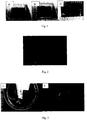
- the films prepared according to Examples 10 and 11 were prepared on two glasses having different wettabilities, namely 57° (+/- 3°) and 107° (+/- 1°). After drying, the surface appearance of the film was evaluated and correlated with the adhesion. In the case of a good adhesion of the film to the substrate, the film surface is flat, without any surface deformations. The film was completely adhered to the substrate having a lower contact angle, on the substrate having a higher contact angle it was partially peeled off and deformed. The results are documented on Figs. 1a, 1b, 1c . The figures imply that if the film is fully adhered to the surface, it is even and without surface deformations after being peeled off ( Fig. 1c right). Conversely, in the case of an imperfect adhesion the film is more or less deformed ( Fig. 1c left).
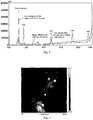
- the film based on the palmitoyl derivative of sodium hyaluronate prepared according to Example 2 on a glass having the wettability of 61° (+/- 2°) was evaluated. After drying, the adhesion and the appearance of the film were evaluated. The film was well adhered and its surface was absolutely flat, without any deformations. The result of the adhesion is documented in Fig. 2 .
- Example 24 Determination of the risidual propan-2-ol in the films
- the residual concentration of the organic solvent propan-2-ol was determined by means of gas chromatography in the films prepared according to Examples 1, 8 and 12.
- the principle of the determination of the solvent is the conversion thereof into the gaseous phase at an elevated temperature, the separation thereof on the gas chromatograph and the subsequent detection by the flame ionization detector.
- the concentration of propan-2-ol in the film was always determined twice (i.e., for two samples), by reading from the calibration curve. The sample weight was always 50 mg.
- the concentration of the residual propan-2-ol was determined in all films to be lower than the lowest calibration curve point and was expressed as ⁇ 0.02 wt.%. This value safely fulfils the requirements on the amounts of residual solvents of class 3 according to the EU pharmacopoeia.
- Example 25 Determination of the weight - homogeneity within the area
- the film prepared according to Example 1 was cut into 55 squares with an area of 1 cm 2 . Prior to the measurement, the individual samples were left at room humidity and temperature for 5 hours. Then the individual squares were weighed on analytical scales. The obtained weights of the individual squares are listed in Table 3. The average, standard deviation and variation coefficient were calculated based on all the values listed in the Table. The calculated values: average 2.35 mg, standard deviation 0.18 mg, variation coefficient 7.51%.
- Example 26 Determination of the thickness - homogeneity within the area
- a square grid having the area of one square 1 cm 2 and the total number of squares 35 was drawn on the film prepared according to Example 15.
- the thickness of the film was measured by means of a mechanical thickness meter Mytutoyo VL-50.
- the measurement was conducted in a stable environment having the humidity of 50% and the temperature of 25°C.
- the measured values are listed in Table 4.
- the average, standard deviation and variation coefficient were calculated based on all values listed in the Table.
- Table 4 determination of the thickness homogeneity, the listed values are in ⁇ m 16.2 16.7 16.2 15.2 13.8 13.8 14.7 13.9 13.9 13.9 13.7 13.4 13.2 14.3 14.8 13.9 14.1 13.3 12.8 13.5 14.6 16.9 16.2 16.6 15.7 15.6 15.0 16.2 14.7 14.9 15.0 14.7 13.7 12.5 13.8
- Example 27 Comparison of the swelling capacities of the films prepared from palmitoyl derivatives of sodium hyaluronate having various substitution degrees in 0.1M phosphate buffer, pH 7.4
- Table 5 swelling capacity of the films prepared from palmitoyl derivatives having various substitution degrees area change after 5 days in 0.1M PBS, pH 7.4 (%) weight change after 5 days in 0.1M PBS, pH 7.4 (%) Film prepared according to Example 16 69 1365 Film prepared according to Example 17 32 749 Film prepared according to Example 2 15 496
- Example 28 Degradation of the films prepared from palmitoyl derivative of sodium hyaluronate in a conditioned medium - comparison of two substitution degrees
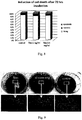
- Films prepared according to Examples 2 and 18 were cut to precisely defined squares, weighed, measured and inserted into a conditioned medium. All preparation proceeded in a laminar box so that no contamination and undesirable reactions of the medium occur. At 37 °C, the change of the area of the film and the visual appearance thereof were checked in predetermined intervals, which properties may be associated with the degradation. The conditioned medium was exchanged in regular intervals; the experiment was conducted in triplicate. The film prepared according to Example 2 began to degrade significantly later than the film prepared according to Example 18. The results are shown in Fig. 3a and 3b , where the appearance of the film is shown after 3 weeks of degradation in the conditioned medium.
- Table 6 documents the change of the film area after 1 week of degradation for the film according to Example 2, as well as to Example 18, and after three weeks for the film according to Example 2 (the film according to Example 18 was degraded to pieces or even dissolved after three weeks of degradation). Based on the results it is obvious that the degradation rate depends significantly on the substitution degree of sodium hyaluronate by the acyl chain. In the case of a highly substituted film prepared according to Example 2, the degradation proceeded in terms of several months. Table 6: change of the film area after 1 week in a conditioned medium - comparison of two substitution degrees change of the area of the film after 1 week in the conditioned medium (%) Film prepared according to Example 2 13 Film prepared according to Example 18 125
- Example 29 Degradation of the film based on a palmitoyl derivative of sodium hyaluronate
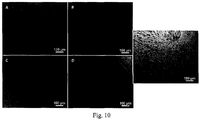
- Samples of the film prepared according to Example 5 were incubated in a standard medium for cell cultures (Dulbecco's modified Eagle's medium) with the addition of 300 IU of an enzyme per 1 mg of the film. The incubation proceeded at 37 °C and the samples were analysed after 24 hours. The sample analysis was conducted on the HPLC system Alliance (Waters) according to an internal standard operating procedure. After 24 hours, it was still possible to observe non-degraded pieces of the film. In spite of that, oligosaccharides based on hyaluronan were detected in the solution, as shown in Fig. 4 .
- Example 30 Degradation of the film based on a palmitoyl derivative of sodium hyaluronate
- Samples of the film prepared according to Example 2 were incubated in a standard medium for cell cultures (Dulbecco's modified Eagle's medium) with the addition of 300 IU of an enzyme per 1 mg of the film. The incubation proceeded at 37°C and the samples were analysed after 24 hours. The sample analysis was conducted on the HPLC system Alliance (Waters) according to an internal standard operating procedure. After 24 hours, no oligosaccharides based on hyaluronan were detected in the solution, which is in accordance with Example 28, where a very long degradation time was observed for the film according to Example 2, and which demonstrates the possibility of degradation modulation by means of the substitution degree.
- a standard medium for cell cultures Dulbecco's modified Eagle's medium
- Young's modulus was determined for films prepared according to Examples 10, 15, 16 and 19 in the dry state. The films were tested for mechanical properties by means of a single stage tensile testing machine INSTRON3343 with a 100N head. The Young's modulus was calculated based on the mean value of at least 9 valid measurements. Table 7 shows that the Young's modulus of dry, non-hydrated films does not depend on the molecular weight, substituent or substitution degree. Table 7: Young's modulus of the films Young's modulus (MPa) Film prepared according to Example 10 2835 (+/- approx. 10%) Film prepared according to Example 15 2409 (+/- approx. 10%) Film prepared according to Example 16 1800 (+/- approx. 10%) Film prepared according to Example 19 2636 (+/- approx. 10%)
- the films prepared according to Examples 8 and 16 were characterized by means of the Atomic force microscopy (AFM) method, wherein especially the appearance and the character of the surface were monitored. Especially the RMS roughness (root mean square roughness) was determined. It was found out that a very smooth surface having the RMS value up to 2 nm may be obtained from the side of the substrate (see Fig. 5 for the film according to Example 16). The side of the film that is exposed to the air during drying is always rougher, wherein RMS is somewhere around 50 or more nm.
- AFM Atomic force microscopy
- Example 33 Comparison of films dried in a temperature gradient and in a closed space
- Example 34 Viability of THP-1 suspension cells after 24- and 72-hour incubation with the film prepared according to Example 1 based on a palmitoyl derivative of sodium hyaluronate
- the THP-1 cell line was cultured in a medium with the addition of 10% fetal bovine serum. After achieving a sufficient density and viability (measured by means of an automatic cell calculator CASY TT, Roche), the cells were seeded into a 6-well panel in 2 ml of 10% medium. The tested film was added to the cells in an amount of 1 and 0.5 mg/ ml. After 24 and 72 hours of incubation, the cells were washed and their viability and the occurrence of cell death were detected by means of the detection kit ApoFlowEx® FITC Kit (Exbio) on a flow cytometer MACSQuant® (Miltenyi Biotec). The cells were evaluated as viable in case no propidium iodide fluorescence was detected. Fig. 6 shows a negligible reduction of the viability after 24 hours of incubation, which was not detected anymore after 72 hours. Therefore, the tested film is evaluated as non-cytotoxic in said concentrations.
- Example 35 Analysis of the cell death of THP-1 suspension cells after 24 and 72 hours of incubation with the film prepared according to Example 1 on the basis of palmitoyl derivative of sodium hyaluronate
- the THP-1 cell line was cultured in a medium with the addition of 10% fetal bovine serum. After achieving a sufficient density and viability (measured by means of an automatic cell calculator CASY TT, Roche), the cells were seeded into a six-well panel in 2 ml of 10% medium. The tested film was added to the cells in an amount of 1 and 0.5 mg/ ml. After 24 and 72 hours of incubation, the cells were washed and their viability and the occurrence of cell death were detected by means of the detection kit ApoFlowEx® FITC Kit (Exbio) on the flow cytometer MACSQuant® (Miltenyi Biotec).
- the evaluation of the presence of cell death was conducted according to the recommendation of the kit producer.
- the population of the individual cells was divided based on the fluorescence intensity of propidium iodide and Annexin V-FITC into 3 groups: negative in both channels (living cells), positive just in the channel for Annexin V-FITC (apoptotic cells) and positive cells for the channel propidium iodide +/- Annexin V-FITC (necrotic cells).
- Figs. 7 and 8 imply that after 24, as well as 72 hours, no greater increase of the number of apoptotic or necrotic cells in the culture occurs and the tested material may therefore be evaluated as not inducing cell death.
- Example 36 Contact inhibition of the growth of mouse 3T3 Swiss fibroblasts
- the mouse 3T3 Swiss fibroblast line was cultured in a medium with the addition of 10% fetal bovine serum.
- the cells were seeded into a six-well panel in 2 ml of the 10% medium.
- the tested film prepared according to Example 1 having the area of 1 cm 2 was added, which was loaded by a silicon sterile ring so that no significant movement of the film on the monoculture occurs.
- control cells were incubated without any treatment and just with the silicon ring. After 72 hours of incubation, the film samples and the silicon rings were removed, the cells were washed with PBS and fixed by 4% formaldehyde (10 min/room temperature).
- the cells were coloured with crystal violet (0.1% in water, 30 min/room temperature) and after washing the colour away the cell area was photographed and observed under a light microscope.
- crystal violet 0.1% in water, 30 min/room temperature
- the films prepared according to Examples 2 and 17 were cut in a sterile manner to parts having the dimensions of 1cm 2 . These parts were placed into a six-well culture panel face-up or face-down. Then they were loaded with sterile silicon rings and culture medium (2ml) for primary human fibroblasts (NHDF) containing 10% fetal bovine serum was pipetted to the thus prepared samples. Meanwhile, a NHDF suspension was prepared and pipetted to the middle of the silicon ring on the film surface in an amount of 100 000 cells/sample. The samples with the cells were incubated for 72 hours and checked in 24-hour intervals under the light microscope.
- NHDF primary human fibroblasts
Landscapes
- Health & Medical Sciences (AREA)
- Chemical & Material Sciences (AREA)
- Medicinal Chemistry (AREA)
- Life Sciences & Earth Sciences (AREA)
- Organic Chemistry (AREA)
- Polymers & Plastics (AREA)
- Chemical Kinetics & Catalysis (AREA)
- General Health & Medical Sciences (AREA)
- Engineering & Computer Science (AREA)
- Veterinary Medicine (AREA)
- Public Health (AREA)
- Animal Behavior & Ethology (AREA)
- Epidemiology (AREA)
- Molecular Biology (AREA)
- Dermatology (AREA)
- Manufacturing & Machinery (AREA)
- Oral & Maxillofacial Surgery (AREA)
- Transplantation (AREA)
- Materials Engineering (AREA)
- Pharmacology & Pharmacy (AREA)
- Dispersion Chemistry (AREA)
- Biochemistry (AREA)
- Biomedical Technology (AREA)
- General Chemical & Material Sciences (AREA)
- Physics & Mathematics (AREA)
- Thermal Sciences (AREA)
- Polysaccharides And Polysaccharide Derivatives (AREA)
- Materials For Medical Uses (AREA)
- Manufacture Of Macromolecular Shaped Articles (AREA)
- Cosmetics (AREA)
- Pharmaceuticals Containing Other Organic And Inorganic Compounds (AREA)
- Medicinal Preparation (AREA)
Priority Applications (1)
| Application Number | Priority Date | Filing Date | Title |
|---|---|---|---|
| PL16720697T PL3268414T3 (pl) | 2015-03-09 | 2016-03-09 | Samonośna, biodegradowalna folia na bazie hydrofobizowanego kwasu hiauluronowego, sposób jej przygotowania i stosowania |
Applications Claiming Priority (2)
| Application Number | Priority Date | Filing Date | Title |
|---|---|---|---|
| CZ2015166A CZ309295B6 (cs) | 2015-03-09 | 2015-03-09 | Samonosný, biodegradabilní film na bázi hydrofobizované kyseliny hyaluronové, způsob jeho přípravy a použití |
| PCT/CZ2016/000027 WO2016141903A1 (en) | 2015-03-09 | 2016-03-09 | Self-supporting, biodegradable film based on hydrophobized hyaluronic acid, method of preparation and use thereof |
Publications (2)
| Publication Number | Publication Date |
|---|---|
| EP3268414A1 EP3268414A1 (en) | 2018-01-17 |
| EP3268414B1 true EP3268414B1 (en) | 2021-04-14 |
Family
ID=55913412
Family Applications (1)
| Application Number | Title | Priority Date | Filing Date |
|---|---|---|---|
| EP16720697.8A Active EP3268414B1 (en) | 2015-03-09 | 2016-03-09 | Self-supporting, biodegradable film based on hydrophobized hyaluronic acid, method of preparation and use thereof |
Country Status (12)
| Country | Link |
|---|---|
| US (1) | US10689464B2 (cs) |
| EP (1) | EP3268414B1 (cs) |
| JP (1) | JP6796075B2 (cs) |
| KR (1) | KR102561551B1 (cs) |
| BR (1) | BR112017018431B1 (cs) |
| CZ (1) | CZ309295B6 (cs) |
| DK (1) | DK3268414T3 (cs) |
| ES (1) | ES2877528T3 (cs) |
| HU (1) | HUE055009T2 (cs) |
| PL (1) | PL3268414T3 (cs) |
| RU (1) | RU2712174C2 (cs) |
| WO (1) | WO2016141903A1 (cs) |
Families Citing this family (8)
| Publication number | Priority date | Publication date | Assignee | Title |
|---|---|---|---|---|
| CZ2016826A3 (cs) | 2016-12-22 | 2018-07-04 | Contipro A.S. | Léčivý prostředek s nosičem na bázi hyaluronanu a/nebo jeho derivátů, způsob výroby a použití |
| KR20190138907A (ko) * | 2018-06-07 | 2019-12-17 | 주식회사 에스엔비아 | 히알루론산 필름의 제조방법 |
| CZ2018426A3 (cs) * | 2018-08-23 | 2019-10-16 | Contipro A.S. | Chlorovaný derivát kyseliny hyaluronové, způsob jeho přípravy, kompozice, která jej obsahuje, a použití |
| CZ2018428A3 (cs) | 2018-08-23 | 2019-12-04 | Contipro As | Kompozice obsahující jodid a derivát kyseliny hyaluronové s oxidačním účinkem, způsob její přípravy a použití |
| KR102372213B1 (ko) | 2019-09-09 | 2022-03-08 | 한국화학연구원 | 히알루론산 또는 그의 염 및 폴리페놀 화합물을 포함하는 수분해성 필름 |
| CZ308980B6 (cs) * | 2020-01-24 | 2021-11-03 | Contipro A.S. | Dentální přípravek z vláken na bázi kyseliny hyaluronové s regulovatelnou biodegradabilitou |
| JP7413872B2 (ja) | 2020-03-24 | 2024-01-16 | 住友電装株式会社 | 電気接続箱 |
| US12109540B1 (en) | 2024-05-08 | 2024-10-08 | Imam Mohammad Ibn Saud Islamic University | Multifunctional diselenide-based polyimide membrane for gas separation and purification |
Citations (1)
| Publication number | Priority date | Publication date | Assignee | Title |
|---|---|---|---|---|
| WO2005028632A2 (en) * | 2003-09-19 | 2005-03-31 | Colorado State University Research Foundation (Csurf) | Hyaluronan (ha) esterification via acylation technique for moldable devices |
Family Cites Families (201)
| Publication number | Priority date | Publication date | Assignee | Title |
|---|---|---|---|---|
| US3075527A (en) | 1960-06-02 | 1963-01-29 | Chemway Corp | Sterile medicated strips |
| US3720662A (en) | 1971-09-13 | 1973-03-13 | Nat Starch Chem Corp | Preparation of starch esters |
| US3728223A (en) | 1971-10-08 | 1973-04-17 | Amano Pharma Co Ltd | Production of hyaluronidase from a strain of streptomyces |
| GB1527592A (en) | 1974-08-05 | 1978-10-04 | Ici Ltd | Wound dressing |
| CH628088A5 (en) | 1975-09-17 | 1982-02-15 | Dresden Arzneimittel | Process for obtaining streptococcal metabolic products |
| US4205025A (en) | 1975-12-22 | 1980-05-27 | Champion International Corporation | Synthetic polymeric fibrids, fibrid products and process for their production |
| JPS6033474B2 (ja) | 1978-05-11 | 1985-08-02 | 藤沢薬品工業株式会社 | 新規なヒアルロニダ−ゼbmp−8231およびその製造法 |
| US4716224A (en) | 1984-05-04 | 1987-12-29 | Seikagaku Kogyo Co. Ltd. | Crosslinked hyaluronic acid and its use |
| US4713448A (en) | 1985-03-12 | 1987-12-15 | Biomatrix, Inc. | Chemically modified hyaluronic acid preparation and method of recovery thereof from animal tissues |
| US4851521A (en) | 1985-07-08 | 1989-07-25 | Fidia, S.P.A. | Esters of hyaluronic acid |
| GB8519416D0 (en) | 1985-08-01 | 1985-09-04 | Unilever Plc | Oligosaccharides |
| JPS62104579A (ja) | 1985-10-30 | 1987-05-15 | Kyowa Hakko Kogyo Co Ltd | ヒアルロニダ−ゼの製造法 |
| JPH0751064B2 (ja) | 1986-08-13 | 1995-06-05 | 生化学工業株式会社 | 新規なヒアルロニダ−ゼsd−678およびその製造法 |
| CA1328324C (en) | 1987-12-09 | 1994-04-05 | Dow Corning Corporation | Precured silicone emulsion |
| IT1219587B (it) | 1988-05-13 | 1990-05-18 | Fidia Farmaceutici | Polisaccaridi carbossiilici autoreticolati |
| JPH0214019A (ja) | 1988-06-30 | 1990-01-18 | Tonen Corp | 繊維状成形物及びその製造方法 |
| JPH0755961B2 (ja) | 1989-04-18 | 1995-06-14 | 工業技術院長 | 新規なヒアルロン酸誘導体及びその製造方法 |
| IT1248666B (it) * | 1990-05-30 | 1995-01-26 | Fidia Spa | Gel in forma di film autosupportanti altamente idrati, processo per laloro preparazione e impiego nella terapia di lesioni e/o patologie cutanee |
| US5522879A (en) | 1991-11-12 | 1996-06-04 | Ethicon, Inc. | Piezoelectric biomedical device |
| US5824335A (en) | 1991-12-18 | 1998-10-20 | Dorigatti; Franco | Non-woven fabric material comprising auto-crosslinked hyaluronic acid derivatives |
| IT1254704B (it) | 1991-12-18 | 1995-10-09 | Mini Ricerca Scient Tecnolog | Tessuto non tessuto essenzialmente costituito da derivati dell'acido ialuronico |
| JP2855307B2 (ja) | 1992-02-05 | 1999-02-10 | 生化学工業株式会社 | 光反応性グリコサミノグリカン、架橋グリコサミノグリカン及びそれらの製造方法 |
| FR2689131B1 (fr) | 1992-03-30 | 1994-05-20 | Oreal | Procede de preparation de monoesters majoritairement en position 6' du d-maltose et leur utilisation dans les domaines cosmetique, bucco-dentaire, pharmaceutique et alimentaire. |
| JPH0625306A (ja) | 1992-04-21 | 1994-02-01 | Shiseido Co Ltd | 溶媒不溶化ヒアルロン酸及びその製造方法 |
| IT1263316B (it) | 1993-02-12 | 1996-08-05 | Fidia Advanced Biopolymers Srl | Tessuto non tessuto multistrato in cui uno degli strati e' costituito essenzialmente da esteri dell'acido ialuronico |
| WO1995007085A1 (en) * | 1993-09-07 | 1995-03-16 | Escalon Ophthalmics, Inc. | Surface active viscoelastic solutions for ocular use |
| NL9700003A (nl) | 1993-09-28 | 1997-07-01 | House Foods Corp | Werkwijze voor het inoculeren van Fistulina hepatica. |
| US5616568A (en) | 1993-11-30 | 1997-04-01 | The Research Foundation Of State University Of New York | Functionalized derivatives of hyaluronic acid |
| HUT72406A (en) | 1994-03-14 | 1996-04-29 | Seikagaku Kogyo Co Ltd | Material to be worn on the eyeball |
| US5455349A (en) | 1994-05-13 | 1995-10-03 | Polaroid Corporation | Vinylbenzyl thymine monomers |
| JPH10506121A (ja) | 1994-09-27 | 1998-06-16 | ニコムド イメージング エイ/エス | コントラスト剤 |
| JP3308742B2 (ja) | 1994-11-17 | 2002-07-29 | 生化学工業株式会社 | 光架橋性ヒアルロン酸誘導体とその架橋体およびそれらの製造方法 |
| US6025444A (en) | 1994-11-17 | 2000-02-15 | Seikagaku Kogyo Kabushiki Kaisha (Seikagaku Corporation) | Cinnamic acid derivative |
| US5690961A (en) | 1994-12-22 | 1997-11-25 | Hercules Incorporated | Acidic polysaccharides crosslinked with polycarboxylic acids and their uses |
| EP0813546B1 (en) | 1995-03-07 | 2002-07-17 | Novartis AG | Photochemically cross-linked polysaccharide derivatives as supports for the chromatographic separation of enantiomers |
| IT1281877B1 (it) | 1995-05-10 | 1998-03-03 | Fidia Advanced Biopolymers Srl | Sali di metalli pesanti di succinil derivati dell'acido ialuronico e loro impiego come potenziali agenti terapeutici |
| IT1281886B1 (it) | 1995-05-22 | 1998-03-03 | Fidia Advanced Biopolymers Srl | Processo per la preparazione di idrogel ottenuti da derivati chimici dell'acido ialuronico mediante irradiazioni ultraviolette e loro |
| IL123500A (en) | 1995-08-29 | 2003-06-24 | Fidia Advanced Biopolymers Srl | Composite biomaterials for preventing post-surgical adhesions of tissues |
| DE69625658T2 (de) | 1995-09-13 | 2003-07-17 | Seikagaku Kogyo K.K.(Seikagaku Corp.), Tokio/Tokyo | Kontaktlinse auf Basis photogehärteter Hyaluronsäure |
| DE19604706A1 (de) | 1996-02-09 | 1997-08-14 | Merck Patent Gmbh | Vernetzungsprodukte von Aminogruppen-haltigen Biopolymeren |
| EP0904112B1 (en) * | 1996-02-09 | 2009-11-18 | Amgen Inc., | Composition comprising il-1ra as interleukin-1 inhibitor and hyaluronan as controlled release polymer |
| DE19616010C2 (de) | 1996-04-23 | 1998-07-09 | Seitz Filter Werke | Verfahren und Vorrichtung zur Herstellung von Fibrets (Fibriden) aus Zellulosederivaten |
| IT1287698B1 (it) | 1996-08-29 | 1998-08-18 | Fidia Advanced Biopolymers Srl | Fili da sutura essenzialmente costituiti da derivati esterei dello acido ialuronico |
| US6632802B2 (en) | 1996-08-29 | 2003-10-14 | Fidia Advanced Biopolymers S.R.L. | Hyaluronic acid esters, threads and biomaterials containing them, and their use in surgery |
| US6162537A (en) | 1996-11-12 | 2000-12-19 | Solutia Inc. | Implantable fibers and medical articles |
| CN1161127C (zh) | 1997-07-03 | 2004-08-11 | 奥奎斯特公司 | 交联的多糖药物载体 |
| ITPD980037A1 (it) | 1998-02-25 | 1999-08-25 | Fidia Advanced Biopolymers Srl | Acido ialuronico solfatato e i suoi derivati legati covalentemente a polimeri sintetici pe la preparazione di biomateriali e per il rivesti |
| AU758575C (en) | 1998-04-30 | 2003-11-20 | Maruha Corporation | Compounds having glucuronic acid derivative and glucosamine derivative in structure thereof, method for producing the compounds, and uses of the compounds |
| IL139346A (en) | 1998-05-07 | 2004-06-20 | Tno | A process for the selective oxidation of primary alcohols |
| US6630457B1 (en) | 1998-09-18 | 2003-10-07 | Orthogene Llc | Functionalized derivatives of hyaluronic acid, formation of hydrogels in situ using same, and methods for making and using same |
| US6472541B2 (en) | 1998-11-20 | 2002-10-29 | The Regents Of The University Of California | Protecting groups with increased photosensitivities |
| IT1302534B1 (it) | 1998-12-21 | 2000-09-05 | Fidia Advanced Biopolymers Srl | Composizioni iniettabili, biocompatibili e biodegradabili comprendentialmeno un derivato dell'acido ialuronico, cellule condrogeniche, per |
| WO2000038732A1 (de) | 1998-12-23 | 2000-07-06 | Esparma Gmbh | Hyaluronatlyase als penetrationsforderer in topischen mitteln |
| DE19917614C2 (de) | 1999-04-19 | 2001-07-05 | Thueringisches Inst Textil | Verfahren zur Herstellung von cellulosischen Formkörpern mit hohem Adsorptionsvermögen |
| US6288043B1 (en) | 1999-06-18 | 2001-09-11 | Orquest, Inc. | Injectable hyaluronate-sulfated polysaccharide conjugates |
| US7033603B2 (en) | 1999-08-06 | 2006-04-25 | Board Of Regents The University Of Texas | Drug releasing biodegradable fiber for delivery of therapeutics |
| US6592794B1 (en) | 1999-09-28 | 2003-07-15 | Organogenesis Inc. | Process of making bioengineered collagen fibrils |
| US6770755B1 (en) | 1999-11-08 | 2004-08-03 | Sca Hygiene Products Zeist B.V. | Process of oxidizing primary alcohols |
| US6180087B1 (en) | 2000-01-18 | 2001-01-30 | Mallinckrodt Inc. | Tunable indocyanine dyes for biomedical applications |
| DE10003397A1 (de) | 2000-01-27 | 2001-08-09 | Hartmann Paul Ag | Polyelektrolyt-Feststoffsystem, Verfahren zur Herstellung desselben sowie Wundverband |
| DE10009996B4 (de) | 2000-03-02 | 2005-10-13 | Cognis Ip Management Gmbh | Feststoffgranulate mit monodisperser Korngrößenverteilung, ein Verfahren zu ihrer Herstellung sowie ihre Verwendung |
| IT1317359B1 (it) | 2000-08-31 | 2003-06-16 | Fidia Advanced Biopolymers Srl | Polisaccaridi percarbossilati, quali l'acido ialuronico, processo perla loro preparazione e loro impiego in campo farmaceutico e |
| IT1317358B1 (it) | 2000-08-31 | 2003-06-16 | Fidia Advanced Biopolymers Srl | Derivati cross-linkati dell'acido ialuronico. |
| US6669926B1 (en) | 2000-10-16 | 2003-12-30 | Mallinckrodt, Inc. | Hydrophilic light absorbing indole compounds for determination of physiological function in critically ill patients |
| US6498269B1 (en) | 2000-10-17 | 2002-12-24 | The University Of Connecticut | Method for the oxidation of aldehydes, hemiacetals and primary alcohols |
| AU2002219718A1 (en) | 2000-12-13 | 2002-06-24 | Sca Hygiene Products Zeist B.V. | Process for oxidising primary alcohols |
| DE60117502T2 (de) | 2000-12-19 | 2006-08-24 | Seikagaku Corp. | Photohärtbare Derivate von Hyaluronsäure, Verfahren zu deren Herstellung, vernetztes und photogehärtetes Derivat der Hyaluronsäure und diese enthaltendes medizinisches Material |
| FR2819808B1 (fr) | 2001-01-19 | 2003-04-18 | Simafex | Compositions stabilisees d'acide o-iodoxybenzoique et leur procede de preparation |
| CA2435491C (en) | 2001-01-31 | 2010-02-02 | Seikagaku Corporation | Crosslinked polysaccharide sponge |
| US6902548B1 (en) | 2001-03-19 | 2005-06-07 | Ed Schuler | Use of Streptomyces hyalurolyticus enzyme in ophthalmic treatments |
| US6673919B2 (en) | 2001-03-30 | 2004-01-06 | Chisso Cororation | Chemically modified hyaluronic acid or salts thereof, and a process for producing thereof |
| EP1463491B1 (en) * | 2001-10-12 | 2012-09-12 | MonoSolRX, LLC | Thin film with non-self-aggregating uniform heterogeneity, process for ther production and drug delivery systems made therefrom |
| US7666337B2 (en) | 2002-04-11 | 2010-02-23 | Monosol Rx, Llc | Polyethylene oxide-based films and drug delivery systems made therefrom |
| US6946284B2 (en) | 2001-11-16 | 2005-09-20 | University Of Massachusetts | Solubilizing cross-linked polymers with photolyase |
| FR2833493B1 (fr) | 2001-12-18 | 2005-09-23 | Ioltechnologie Production | Forme galenique solide et soluble pour l'administration occulaire de principes actifs et procede de fabrication d'un insert ophtalmique solide et soluble |
| US20060189516A1 (en) | 2002-02-19 | 2006-08-24 | Industrial Technology Research Institute | Method for producing cross-linked hyaluronic acid-protein bio-composites |
| ITPD20020064A1 (it) | 2002-03-12 | 2003-09-12 | Fidia Advanced Biopolymers Srl | Derivati esterei dell'acido ialuronico per la preparazione di idrogelda utilizzare in campo biomedico, sanitario e chirurgico e come sistem |
| JP3975267B2 (ja) | 2002-06-03 | 2007-09-12 | 独立行政法人産業技術総合研究所 | 多糖物質のアシル化方法 |
| US20040101546A1 (en) | 2002-11-26 | 2004-05-27 | Gorman Anne Jessica | Hemostatic wound dressing containing aldehyde-modified polysaccharide and hemostatic agents |
| JP4323148B2 (ja) | 2002-09-30 | 2009-09-02 | チッソ株式会社 | n−アルカノイル化ヒアルロン酸もしくはその塩およびその製造法 |
| US6965040B1 (en) | 2002-11-04 | 2005-11-15 | Xiaolian Gao | Photogenerated reagents |
| US20040116018A1 (en) | 2002-12-17 | 2004-06-17 | Kimberly-Clark Worldwide, Inc. | Method of making fibers, nonwoven fabrics, porous films and foams that include skin treatment additives |
| US7550136B2 (en) | 2002-12-20 | 2009-06-23 | University Of Massachusetts | Photo-reactive polymers and devices for use in hair treatments |
| US7465766B2 (en) | 2004-01-08 | 2008-12-16 | The Cleveland Clinic Foundation | Hydroxyphenyl cross-linked macromolecular network and applications thereof |
| US6982298B2 (en) | 2003-01-10 | 2006-01-03 | The Cleveland Clinic Foundation | Hydroxyphenyl cross-linked macromolecular network and applications thereof |
| US20050126338A1 (en) | 2003-02-24 | 2005-06-16 | Nanoproducts Corporation | Zinc comprising nanoparticles and related nanotechnology |
| FR2852012B1 (fr) | 2003-03-04 | 2006-06-23 | Oreal | Procede de preparation de derives o-acyles du glucose |
| CA2518806C (en) | 2003-03-11 | 2012-05-01 | Seikagaku Corporation | Photocrosslinked-polysaccharide composition and production process of the same |
| US20070276472A1 (en) * | 2003-04-04 | 2007-11-29 | Gianluca Gazza | Vascular Stent |
| US7947766B2 (en) | 2003-06-06 | 2011-05-24 | The Procter & Gamble Company | Crosslinking systems for hydroxyl polymers |
| ES2226567B1 (es) | 2003-06-20 | 2006-07-01 | Universidad De Santiago De Compostela | Nanoparticulas de acido hialuronico. |
| DE10331342B4 (de) | 2003-07-11 | 2009-03-12 | Thüringisches Institut für Textil- und Kunststoff-Forschung e.V. | Thermostabile Form- oder Spinnmasse |
| WO2005014655A2 (en) | 2003-08-08 | 2005-02-17 | Fresenius Kabi Deutschland Gmbh | Conjugates of hydroxyalkyl starch and a protein |
| WO2005025630A1 (en) | 2003-09-10 | 2005-03-24 | Cato T Laurencin | Polymeric nanofibers for tissue engineering and drug delivery |
| US20100330143A1 (en) | 2003-12-04 | 2010-12-30 | University Of Utah Research Foundation | Modified macromolecules and methods of making and using thereof |
| GB2408741B (en) | 2003-12-04 | 2008-06-18 | Ind Tech Res Inst | Hyaluronic acid derivative with urethane linkage |
| US8313765B2 (en) | 2003-12-04 | 2012-11-20 | Industrial Technology Research Institute | Biodegradable hyaluronic acid derivative, biodegradable polymeric micelle composition and pharmaceutical or bioactive composition |
| GB0406013D0 (en) | 2004-03-17 | 2004-04-21 | Chiron Srl | Analysis of saccharide vaccines without interference |
| US7550444B2 (en) | 2004-03-26 | 2009-06-23 | Surmodics, Inc. | Composition and method for preparing biocompatible surfaces |
| ITMI20040605A1 (it) | 2004-03-29 | 2004-06-29 | Coimex S C R L United Companie | Esteri butirrici dell'acido ialuronico a basso grado di sostituzione procedimento per la loro preparazione ed uso |
| CN101052684B (zh) | 2004-07-09 | 2014-02-12 | 克利夫兰临床基金会 | 羟基苯交联大分子网络及其应用 |
| US7323425B2 (en) | 2004-08-27 | 2008-01-29 | Stony Brook Technology And Applied Research | Crosslinking of hyaluronan solutions and nanofiberous membranes made therefrom |
| WO2006028110A1 (ja) | 2004-09-07 | 2006-03-16 | Chugai Seiyaku Kabushiki Kaisha | 水溶性ヒアルロン酸修飾物の製造方法 |
| US8481080B2 (en) | 2004-11-24 | 2013-07-09 | Novozymes Biopolymer A/S | Method of cross-linking hyaluronic acid with divinulsulfone |
| US7214759B2 (en) | 2004-11-24 | 2007-05-08 | Advanced Cardiovascular Systems, Inc. | Biologically absorbable coatings for implantable devices based on polyesters and methods for fabricating the same |
| WO2006078914A1 (en) | 2005-01-21 | 2006-07-27 | Washington University In St. Louis | Compounds having rd targeting motifs |
| WO2006102374A2 (en) | 2005-03-22 | 2006-09-28 | Tyco Healthcare Group Lp | Bioactive wide-weave mesh |
| US7680038B1 (en) | 2005-04-25 | 2010-03-16 | Electronic Arts, Inc. | Dynamic bandwidth detection and response for online games |
| GB0513552D0 (en) | 2005-07-01 | 2005-08-10 | Bristol Myers Squibb Co | Bandage |
| EP1905456A4 (en) | 2005-07-06 | 2010-12-22 | Seikagaku Kogyo Co Ltd | PHARMACEUTICAL LIGHT-NETWORKED HYALURONIC DERIVATIVE GEL |
| ITPD20050206A1 (it) | 2005-07-07 | 2007-01-08 | Fidia Advanced Biopolymers Srl | Biomateriali in forma di fibra da impiegarsi come dispositivi medici nel trattamento delle ferite e loro processi di produzione |
| ITMI20051415A1 (it) | 2005-07-22 | 2007-01-23 | Fidia Advanced Biopolymers Srl | Biomateriali a base di corbossimetilcellulosa salificata con zinco associata a derivati dell'acido ialuronico da impiegarsi come dispositivi medici con attivita' antimicrobica ed antifungina e loro processo di produzione |
| AU2006292892B2 (en) | 2005-09-21 | 2011-10-27 | Kode Biotech Limited | Cell surface coating with hyaluronic acid oligomer derivative |
| US7993678B2 (en) | 2005-09-26 | 2011-08-09 | Novozymes Biopolymer A/S | Hyaluronic acid derivatives |
| CA2633978A1 (en) | 2005-12-14 | 2007-06-21 | Anika Therapeutics, Inc. | Bioabsorbable implant of hyaluronic acid derivative for treatment of osteochondral and chondral defects |
| US20070202570A1 (en) | 2006-02-24 | 2007-08-30 | Kikkoman Corporation | Enzyme composition, low molecular weight hyaluronan and process for preparing the same |
| EP1991588A1 (en) | 2006-02-28 | 2008-11-19 | Novozymes Biopolymer A/S | Derivatives of hyaluronic acids |
| JP4892679B2 (ja) | 2006-03-27 | 2012-03-07 | 国立大学法人弘前大学 | ゲル紡糸によるヒアルロン酸繊維およびその製造方法 |
| KR20070118730A (ko) | 2006-06-13 | 2007-12-18 | 주식회사 코오롱 | 보습성이 우수한 창상피복재 및 그의 제조방법 |
| US20080124395A1 (en) | 2006-06-22 | 2008-05-29 | Weiliam Chen | Formulations and devices for treatment or prevention of neural ischemic damage |
| WO2008008481A2 (en) | 2006-07-12 | 2008-01-17 | Georgia Tech Research Corporation | Deprotection of functional groups by multi-photon induced electron transfer |
| JP2009545637A (ja) | 2006-08-04 | 2009-12-24 | ノボザイムス バイオファーマ デーコー アクティーゼルスカブ | 分岐ヒアルロン酸及びその製造方法 |
| US20080063617A1 (en) | 2006-09-07 | 2008-03-13 | Abrahams John M | Cosmetics formulations |
| ITMI20061726A1 (it) | 2006-09-11 | 2008-03-12 | Fidia Farmaceutici | Derivati crosslinkati a base di acido ialuronico reticolato via click chemistry |
| CZ302856B6 (cs) | 2006-09-27 | 2011-12-14 | Cpn Spol. S R. O. | Zpusob prípravy derivátu polysacharidu |
| US8979931B2 (en) | 2006-12-08 | 2015-03-17 | DePuy Synthes Products, LLC | Nucleus replacement device and method |
| ATE545436T1 (de) | 2006-12-22 | 2012-03-15 | Croma Pharma Ges M B H | Verwendung von thiolierten polysacchariden zum gewebeaufbau |
| KR20080062092A (ko) | 2006-12-29 | 2008-07-03 | 주식회사 핸슨바이오텍 | 세포전달체로서의 히알루론산 유도체 및 이의 제조 방법 |
| EP1942117A1 (en) | 2006-12-29 | 2008-07-09 | Sigea S.R.L. | Derivatives of acid polysaccharides |
| JP5329767B2 (ja) | 2007-02-26 | 2013-10-30 | 帝人株式会社 | 芳香族コポリアミド繊維の製造装置 |
| WO2008115799A1 (en) | 2007-03-21 | 2008-09-25 | William Marsh Rice University | Novel gene delivery vectors for human mesenchymal stem cells |
| CZ2007299A3 (cs) | 2007-04-24 | 2009-02-04 | Cpn Spol. S R. O. | Príprava nanovláken z polysacharidu a jejich smesí s polyvinylalkoholem |
| JP5165281B2 (ja) | 2007-06-01 | 2013-03-21 | 株式会社バイオベルデ | 2反応剤型の医療用含水ゲル形成剤、及び、これより得られるヒアルロン酸ゲル |
| US8288142B2 (en) | 2007-06-19 | 2012-10-16 | Uvarkina Tamara P | Hyaluronidase and method of use thereof |
| KR101226851B1 (ko) | 2007-06-20 | 2013-01-25 | (주)엘지하우시스 | 이중노즐을 이용한 나노섬유의 제조방법 |
| CA2691541A1 (en) | 2007-06-22 | 2008-12-31 | Innovative Surface Technologies, Inc. | Nanofibers containing latent reactive groups |
| WO2009012372A1 (en) | 2007-07-18 | 2009-01-22 | Advantageous Systems, Llc | Methods and apparatuses for detecting analytes in biological fluid of an animal |
| FR2920786B1 (fr) | 2007-09-07 | 2010-09-10 | Univ Claude Bernard Lyon | Fibres creuses, notamment multi membranaires, leur procede de preparation par filage et dispositif pour la mise en oeuvre dudit procede |
| FR2921675B1 (fr) | 2007-09-28 | 2010-03-19 | Univ Claude Bernard Lyon | Filament a base d'acide hyaluronique et son procede d'obtention. |
| US20130136784A1 (en) | 2007-10-11 | 2013-05-30 | Robert J. Staab | Methods for delivery of medication using dissolvable devices |
| US7976825B2 (en) | 2007-12-06 | 2011-07-12 | Janos Borbely | Cancer cell diagnosis by targeting delivery of nanodevices |
| CN101970555B (zh) | 2008-02-11 | 2014-05-28 | 巴斯夫欧洲公司 | 由合成聚合物制备多孔结构的方法 |
| US20110028062A1 (en) | 2008-02-14 | 2011-02-03 | Chester Stephen O | Bicomponent fibers, textile sheets and use thereof |
| WO2009108100A1 (en) | 2008-02-29 | 2009-09-03 | Ipr-Systems Sweden Ab | Composition for the formation of gels |
| US8758727B2 (en) | 2008-03-31 | 2014-06-24 | University Of Louisville Research Foundation, Inc. | Site specific fluorescence and contrast marker for same |
| WO2009148405A1 (en) | 2008-06-05 | 2009-12-10 | Agency For Science, Technology And Research | Formation of hydrogel in the presence of peroxidase and low concentration of hydrogen peroxide |
| JP2010014784A (ja) | 2008-07-01 | 2010-01-21 | Fuji Xerox Co Ltd | 光書込型表示装置、書込装置、及び光書き込み方法 |
| IT1391734B1 (it) | 2008-07-29 | 2012-01-27 | Anika Therapeutics Srl | Nuovi biomateriali, loro preparazione per elettrospinning e loro uso in campo biomedico e chirurgico. |
| FR2934999B1 (fr) | 2008-08-13 | 2011-07-29 | Adocia | Polysaccharides fonctionnalises par des derives du tryptophane |
| AU2009288118B2 (en) | 2008-09-02 | 2014-12-11 | Allergan, Inc. | Threads of hyaluronic acid and/or derivatives thereof, methods of making thereof and uses thereof |
| CZ2008705A3 (cs) | 2008-11-06 | 2010-04-14 | Cpn S. R. O. | Zpusob prípravy DTPA sítovaných derivátu kyseliny hyaluronové a jejich modifikace |
| ITRM20080636A1 (it) | 2008-11-28 | 2010-05-29 | Univ Palermo | Procedimento per la produzione di derivati funzionalizzati dell acido ialuronico e relativi idrogeli. |
| JP2010138276A (ja) | 2008-12-11 | 2010-06-24 | Nipro Corp | ヒアルロン酸単糸の製造方法 |
| WO2010095049A1 (en) | 2009-02-21 | 2010-08-26 | Sofradim Production | Crosslinked fibers and method of making same by extrusion |
| US9273191B2 (en) | 2009-02-21 | 2016-03-01 | Sofradim Production | Medical devices with an activated coating |
| WO2010095052A2 (en) | 2009-02-21 | 2010-08-26 | Sofradim Production | Compounds and medical devices activated with solvophobic linkers |
| CZ301899B6 (cs) | 2009-03-17 | 2010-07-21 | Contipro C, A.S. | Zpusob prípravy derivátu kyseliny hyaluronové pomocí O-acyl-O´-alkylkarbonátu v prítomnosti substituovaného pyridinu |
| US8551378B2 (en) | 2009-03-24 | 2013-10-08 | North Carolina State University | Nanospinning of polymer fibers from sheared solutions |
| US20120219554A2 (en) | 2009-05-14 | 2012-08-30 | Fidia Farmaceutici S.P.A. | Extracellular yaluronidase from streptomyces koganeiensis |
| JP5679253B2 (ja) | 2009-05-26 | 2015-03-04 | 国立大学法人東京工業大学 | 自立性高分子薄膜 |
| WO2010138074A1 (en) | 2009-05-29 | 2010-12-02 | Hilborn Joens | Hyaluronic acid based delivery systems |
| EP2440185B1 (en) | 2009-06-09 | 2015-04-08 | Aurinia Pharmaceuticals Inc. | Topical drug delivery systems for ophthalmic use |
| US7829118B1 (en) | 2009-07-30 | 2010-11-09 | Carbylan Biosurgery, Inc. | Modified hyaluronic acid polymer compositions and related methods |
| KR101103423B1 (ko) | 2009-09-04 | 2012-01-06 | 아주대학교산학협력단 | 생체 주입형 조직 접착성 하이드로젤 및 이의 생의학적 용도 |
| EP3067069B1 (en) | 2009-11-11 | 2023-07-26 | Hy2Care B.V. | Hydrogels based on polymers of dextran tyramine and tyramine conjugates of natural polymers |
| US20120301441A1 (en) | 2009-11-11 | 2012-11-29 | Hermanus Bernardus Johannes Karperien | Dextran-hyaluronic acid based hydrogels |
| US20110111012A1 (en) | 2009-11-12 | 2011-05-12 | Hemcon Medical Technologies, Inc. | Nanomaterial wound dressing assembly |
| CZ302504B6 (cs) | 2009-12-11 | 2011-06-22 | Contipro C A.S. | Derivát kyseliny hyaluronové oxidovaný v poloze 6 glukosaminové cásti polysacharidu selektivne na aldehyd, zpusob jeho prípravy a zpusob jeho modifikace |
| CZ302503B6 (cs) | 2009-12-11 | 2011-06-22 | Contipro C A.S. | Zpusob prípravy derivátu kyseliny hyaluronové oxidovaného v poloze 6 glukosaminové cásti polysacharidu selektivne na aldehyd a zpusob jeho modifikace |
| US8197849B2 (en) | 2010-02-12 | 2012-06-12 | National Health Research Institutes | Cross-linked oxidated hyaluronic acid for use as a vitreous substitute |
| US20110229551A1 (en) | 2010-03-17 | 2011-09-22 | Notus Laboratories, Inc. | Drug delivery compositions and methods using nanofiber webs |
| IT1399202B1 (it) * | 2010-03-30 | 2013-04-11 | Corbelli | Metodo per la produzione di manufatti elastomerici funzionalizzati e manufatti cosi' ottenuti |
| WO2011163568A1 (en) | 2010-06-24 | 2011-12-29 | University Of Kansas | Conjugates comprising an n-oxime bond and associated methods |
| CN101897976A (zh) | 2010-07-16 | 2010-12-01 | 沈阳药科大学 | 一种药物增溶载体及其制备方法和应用 |
| CZ305040B6 (cs) | 2010-09-14 | 2015-04-08 | Contipro Biotech S.R.O. | Způsob přípravy vysoce substituovaných amidů kyseliny hyaluronové |
| US9095558B2 (en) | 2010-10-08 | 2015-08-04 | Board Of Regents, The University Of Texas System | Anti-adhesive barrier membrane using alginate and hyaluronic acid for biomedical applications |
| CZ302994B6 (cs) | 2010-12-31 | 2012-02-08 | Cpn S.R.O. | Hyaluronová vlákna, zpusob jejich prípravy a použití |
| WO2012105983A1 (en) | 2011-02-03 | 2012-08-09 | Empire Technology Development Llc | Selective 3d biopatterning |
| KR101201412B1 (ko) | 2011-04-19 | 2012-11-14 | 한양대학교 에리카산학협력단 | 다공성 코어쉘 나노웹의 제조방법 |
| CZ304072B6 (cs) | 2011-04-26 | 2013-09-25 | Contipro Biotech S.R.O. | Amfoterní materiál na bázi sítované kyseliny hyaluronové, zpusob jeho prípravy, materiály obsahující aktivní cinidla uzavrené v síti hyaluronanu, zpusob jejich prípravy a jejich pouzití |
| CN102154738B (zh) | 2011-05-10 | 2012-08-01 | 青岛大学 | 一种红藻琼胶纤维的制备方法 |
| ITTO20110428A1 (it) | 2011-05-13 | 2012-11-14 | Rottapharm Spa | Esteri dell'acido ialuronico, loro preparazione ed uso in dermatologia |
| AU2012325679B2 (en) | 2011-10-18 | 2015-05-28 | Heiq Pty Ltd | Fibre-forming process and fibres produced by the process |
| KR20130085294A (ko) | 2012-01-19 | 2013-07-29 | 충남대학교산학협력단 | 림프노드 탐지용 형광 고분자 나노젤 및 이를 이용한 림프노드 확인 방법 |
| CZ2012136A3 (cs) | 2012-02-28 | 2013-06-05 | Contipro Biotech S.R.O. | Deriváty na bázi kyseliny hyaluronové schopné tvorit hydrogely, zpusob jejich prípravy, hydrogely na bázi techto derivátu, zpusob jejich prípravy a pouzití |
| KR101240518B1 (ko) | 2012-03-26 | 2013-03-11 | 주식회사 제네웰 | 생체 적합성 고분자를 이용한 이식용 재료 |
| CZ2012282A3 (cs) | 2012-04-25 | 2013-11-06 | Contipro Biotech S.R.O. | Zesítovaný derivát hyaluronanu, zpusob jeho prípravy, hydrogel a mikrovlákna na jeho bázi |
| WO2013171764A2 (en) | 2012-04-30 | 2013-11-21 | Rubicon Research Private Limited | Ophthalmic formulations |
| CZ304651B6 (cs) | 2012-05-11 | 2014-08-20 | Contipro Biotech S.R.O. | Způsob přípravy mikrovláken, způsob výroby krytů ran, kryty ran a zařízení pro přípravu polysacharidových vláken |
| CZ304512B6 (cs) | 2012-08-08 | 2014-06-11 | Contipro Biotech S.R.O. | Derivát kyseliny hyaluronové, způsob jeho přípravy, způsob jeho modifikace a použití |
| CN202822230U (zh) | 2012-10-10 | 2013-03-27 | 深圳兰度生物材料有限公司 | 疤痕贴 |
| CZ304303B6 (cs) | 2012-11-27 | 2014-02-19 | Contipro Biotech S.R.O. | Vlákna založená na hydrofobizovaném hyaluronanu, způsob jejich přípravy a použití, textilie na jejich bázi a použití |
| CZ304266B6 (cs) | 2012-11-27 | 2014-02-05 | Contipro Biotech S.R.O. | Nekonečná vlákna na bázi hyaluronanu selektivně oxidovaného v poloze 6 N-acetyl-D-glukosaminové části, jejich příprava, použití, nitě, střiže, příze, textilie a způsob jejich úpravy |
| CZ304654B6 (cs) * | 2012-11-27 | 2014-08-20 | Contipro Biotech S.R.O. | Nanomicelární kompozice na bázi C6-C18-acylovaného hyaluronanu, způsob přípravy C6-C18-acylovaného hyaluronanu, způsob přípravy nanomicelární kompozice a stabilizované nanomicelární kompozice a použití |
| CZ2012844A3 (cs) | 2012-11-27 | 2014-02-05 | Contipro Biotech S.R.O. | Fotoreaktivní derivát kyseliny hyaluronové, způsob jeho přípravy, 3D síťovaný derivát kyseliny hyaluronové, způsob jeho přípravy a použití |
| JP6084833B2 (ja) * | 2012-12-07 | 2017-02-22 | 大日精化工業株式会社 | ヒアルロン酸フィルムの製造方法、及び、ヒアルロン酸フィルム |
| KR101386096B1 (ko) | 2013-02-28 | 2014-04-21 | 강원대학교산학협력단 | 음이온성 단백질 약물 전달을 위한 키토산 나노섬유, 그 제조방법 및 그 키토산 나노섬유를 포함하는 경점막 투여제 |
| CN103505736A (zh) | 2013-09-23 | 2014-01-15 | 天津大学 | 基于改性透明质酸的高分子脂质体及其制备方法 |
| CN103789874B (zh) | 2014-01-23 | 2016-02-10 | 北京化工大学常州先进材料研究院 | 平行电场诱导相分离法制备核壳结构天然聚电解质纳米纤维 |
| EP2899214A1 (en) | 2014-01-27 | 2015-07-29 | Basf Se | Ethylenically unsaturated polysaccharides, method for their production and their use |
| CZ2014150A3 (cs) | 2014-03-11 | 2015-05-20 | Contipro Biotech S.R.O. | Konjugáty oligomeru kyseliny hyaluronové nebo její soli, způsob jejich přípravy a použití |
-
2015
- 2015-03-09 CZ CZ2015166A patent/CZ309295B6/cs unknown
-
2016
- 2016-03-09 RU RU2017130206A patent/RU2712174C2/ru active
- 2016-03-09 HU HUE16720697A patent/HUE055009T2/hu unknown
- 2016-03-09 DK DK16720697.8T patent/DK3268414T3/da active
- 2016-03-09 ES ES16720697T patent/ES2877528T3/es active Active
- 2016-03-09 PL PL16720697T patent/PL3268414T3/pl unknown
- 2016-03-09 US US15/556,370 patent/US10689464B2/en active Active
- 2016-03-09 KR KR1020177026609A patent/KR102561551B1/ko active Active
- 2016-03-09 JP JP2017547385A patent/JP6796075B2/ja not_active Expired - Fee Related
- 2016-03-09 BR BR112017018431-1A patent/BR112017018431B1/pt not_active IP Right Cessation
- 2016-03-09 WO PCT/CZ2016/000027 patent/WO2016141903A1/en not_active Ceased
- 2016-03-09 EP EP16720697.8A patent/EP3268414B1/en active Active
Patent Citations (2)
| Publication number | Priority date | Publication date | Assignee | Title |
|---|---|---|---|---|
| WO2005028632A2 (en) * | 2003-09-19 | 2005-03-31 | Colorado State University Research Foundation (Csurf) | Hyaluronan (ha) esterification via acylation technique for moldable devices |
| US20060281912A1 (en) * | 2003-09-19 | 2006-12-14 | James Susan P | Hyaluronan (ha) esterification via acylation technique for moldable devices |
Also Published As
| Publication number | Publication date |
|---|---|
| US20180105610A1 (en) | 2018-04-19 |
| KR20170128351A (ko) | 2017-11-22 |
| ES2877528T3 (es) | 2021-11-17 |
| HUE055009T2 (hu) | 2021-10-28 |
| PL3268414T3 (pl) | 2021-11-08 |
| KR102561551B1 (ko) | 2023-07-28 |
| RU2017130206A3 (cs) | 2019-08-28 |
| US10689464B2 (en) | 2020-06-23 |
| EP3268414A1 (en) | 2018-01-17 |
| RU2712174C2 (ru) | 2020-01-24 |
| JP2018511377A (ja) | 2018-04-26 |
| DK3268414T3 (da) | 2021-06-28 |
| BR112017018431A2 (pt) | 2018-04-17 |
| CZ309295B6 (cs) | 2022-08-10 |
| BR112017018431B1 (pt) | 2021-08-17 |
| RU2017130206A (ru) | 2019-04-09 |
| CZ2015166A3 (cs) | 2016-09-21 |
| WO2016141903A1 (en) | 2016-09-15 |
| JP6796075B2 (ja) | 2020-12-02 |
Similar Documents
| Publication | Publication Date | Title |
|---|---|---|
| EP3268414B1 (en) | Self-supporting, biodegradable film based on hydrophobized hyaluronic acid, method of preparation and use thereof | |
| Guaresti et al. | Synthesis of stimuli–responsive chitosan–based hydrogels by Diels–Alder cross–linkingclick reaction as potential carriers for drug administration | |
| Baysal et al. | Chitosan/alginate crosslinked hydrogels: Preparation, characterization and application for cell growth purposes | |
| Dhiman et al. | Characterization and evaluation of chitosan matrix for in vitro growth of MCF-7 breast cancer cell lines | |
| Chang et al. | Physical properties of bacterial cellulose composites for wound dressings | |
| Ajovalasit et al. | Xyloglucan-based hydrogel films for wound dressing: Structure-property relationships | |
| Chakraborty et al. | Facile fabrication of electrospun regenerated cellulose nanofiber scaffold for potential bone-tissue engineering application | |
| Chahal et al. | Fabrication, characterization and in vitro biocompatibility of electrospun hydroxyethyl cellulose/poly (vinyl) alcohol nanofibrous composite biomaterial for bone tissue engineering | |
| Birch et al. | Thermal-responsive behavior of a cell compatible chitosan/pectin hydrogel | |
| Lee et al. | One-pot synthesis of silane-modified hyaluronic acid hydrogels for effective antibacterial drug delivery via sol–gel stabilization | |
| Zhou et al. | Design and evaluation of chitosan-β-cyclodextrin based thermosensitive hydrogel | |
| Wadke et al. | Silver-embedded starch-based nanofibrous mats for soft tissue engineering | |
| Jasenská et al. | Conducting composite films based on chitosan or sodium hyaluronate. Properties and cytocompatibility with human induced pluripotent stem cells | |
| Islam et al. | Fabrication and performance characteristics of tough hydrogel scaffolds based on biocompatible polymers | |
| Foglarová et al. | Water-insoluble thin films from palmitoyl hyaluronan with tunable properties | |
| Bucatariu et al. | A new sponge-type hydrogel based on hyaluronic acid and poly (methylvinylether-alt-maleic acid) as a 3D platform for tumor cell growth | |
| Goodarzi et al. | Alginate-based hydrogel containing taurine-loaded chitosan nanoparticles in biomedical application | |
| Hsieh et al. | Biocompatible testing and physical properties of curdlan-grafted poly (vinyl alcohol) scaffold for bone tissue engineering | |
| Rizwan et al. | Novel chitosan derivative based composite scaffolds with enhanced angiogenesis; potential candidates for healing chronic non-healing wounds | |
| Morandim-Giannetti et al. | Attainment and characterization of carboxymethyl chitosan hydrogels by enzymatic cross-linking | |
| Govindaraj et al. | Fabrication of macroporous soft hydrogels of Chitosan scaffolds by hydrothermal reaction and cytotoxicity to 3T3 L1 cells | |
| Radwan-Pragłowska et al. | 3D scaffolds prepared from acylated chitosan applicable in skin regeneration–synthesis and characterization | |
| Navarro-Paez et al. | A facile method to obtain hydrophilic-hydrophobic hyaluronic acid-polylactic acid bilayer films | |
| Öksüz et al. | Sustainable Synthesis of Multifunctionalized Amoxicillin-Loaded Biopolymer Foams | |
| Jayasuriya et al. | In vitro degradation behavior of chitosan based hybrid microparticles |
Legal Events
| Date | Code | Title | Description |
|---|---|---|---|
| STAA | Information on the status of an ep patent application or granted ep patent |
Free format text: STATUS: THE INTERNATIONAL PUBLICATION HAS BEEN MADE |
|
| PUAI | Public reference made under article 153(3) epc to a published international application that has entered the european phase |
Free format text: ORIGINAL CODE: 0009012 |
|
| STAA | Information on the status of an ep patent application or granted ep patent |
Free format text: STATUS: REQUEST FOR EXAMINATION WAS MADE |
|
| 17P | Request for examination filed |
Effective date: 20170926 |
|
| AK | Designated contracting states |
Kind code of ref document: A1 Designated state(s): AL AT BE BG CH CY CZ DE DK EE ES FI FR GB GR HR HU IE IS IT LI LT LU LV MC MK MT NL NO PL PT RO RS SE SI SK SM TR |
|
| AX | Request for extension of the european patent |
Extension state: BA ME |
|
| DAV | Request for validation of the european patent (deleted) | ||
| DAX | Request for extension of the european patent (deleted) | ||
| STAA | Information on the status of an ep patent application or granted ep patent |
Free format text: STATUS: EXAMINATION IS IN PROGRESS |
|
| 17Q | First examination report despatched |
Effective date: 20200303 |
|
| GRAP | Despatch of communication of intention to grant a patent |
Free format text: ORIGINAL CODE: EPIDOSNIGR1 |
|
| STAA | Information on the status of an ep patent application or granted ep patent |
Free format text: STATUS: GRANT OF PATENT IS INTENDED |
|
| RIC1 | Information provided on ipc code assigned before grant |
Ipc: A61K 31/728 20060101ALI20200821BHEP Ipc: A61L 27/20 20060101ALI20200821BHEP Ipc: A61L 27/54 20060101ALI20200821BHEP Ipc: C08L 5/08 20060101ALI20200821BHEP Ipc: C08J 3/02 20060101AFI20200821BHEP Ipc: C08B 37/08 20060101ALI20200821BHEP Ipc: C08J 5/18 20060101ALI20200821BHEP Ipc: A61K 45/06 20060101ALI20200821BHEP |
|
| INTG | Intention to grant announced |
Effective date: 20200929 |
|
| RIN1 | Information on inventor provided before grant (corrected) |
Inventor name: HUERTA-ANGELES, GLORIA Inventor name: CHMELAR, JOSEF Inventor name: MINARIK, ANTONIN Inventor name: SLESINGROVA, KLARA Inventor name: NESPOROVA, KRISTINA Inventor name: FOGLAROVA, MARCELA Inventor name: KAREL, SERGEJ Inventor name: SULAKOVA, ROMANA Inventor name: VELEBNY, VLADIMIR |
|
| GRAS | Grant fee paid |
Free format text: ORIGINAL CODE: EPIDOSNIGR3 |
|
| RIN1 | Information on inventor provided before grant (corrected) |
Inventor name: MINARIK, ANTONIN Inventor name: CHMELAR, JOSEF Inventor name: DUSANKOVA, MARCELA Inventor name: VELEBNY, VLADIMIR Inventor name: SLESINGROVA, KLARA Inventor name: KAREL, SERGEJ Inventor name: HUERTA-ANGELES, GLORIA Inventor name: SULAKOVA, ROMANA Inventor name: NESPOROVA, KRISTINA |
|
| GRAA | (expected) grant |
Free format text: ORIGINAL CODE: 0009210 |
|
| STAA | Information on the status of an ep patent application or granted ep patent |
Free format text: STATUS: THE PATENT HAS BEEN GRANTED |
|
| AK | Designated contracting states |
Kind code of ref document: B1 Designated state(s): AL AT BE BG CH CY CZ DE DK EE ES FI FR GB GR HR HU IE IS IT LI LT LU LV MC MK MT NL NO PL PT RO RS SE SI SK SM TR |
|
| REG | Reference to a national code |
Ref country code: GB Ref legal event code: FG4D |
|
| REG | Reference to a national code |
Ref country code: CH Ref legal event code: EP |
|
| REG | Reference to a national code |
Ref country code: DE Ref legal event code: R096 Ref document number: 602016056042 Country of ref document: DE |
|
| REG | Reference to a national code |
Ref country code: IE Ref legal event code: FG4D |
|
| REG | Reference to a national code |
Ref country code: AT Ref legal event code: REF Ref document number: 1382345 Country of ref document: AT Kind code of ref document: T Effective date: 20210515 |
|
| REG | Reference to a national code |
Ref country code: DK Ref legal event code: T3 Effective date: 20210623 |
|
| REG | Reference to a national code |
Ref country code: NL Ref legal event code: FP |
|
| REG | Reference to a national code |
Ref country code: SE Ref legal event code: TRGR |
|
| REG | Reference to a national code |
Ref country code: LT Ref legal event code: MG9D |
|
| REG | Reference to a national code |
Ref country code: HU Ref legal event code: AG4A Ref document number: E055009 Country of ref document: HU |
|
| PG25 | Lapsed in a contracting state [announced via postgrant information from national office to epo] |
Ref country code: HR Free format text: LAPSE BECAUSE OF FAILURE TO SUBMIT A TRANSLATION OF THE DESCRIPTION OR TO PAY THE FEE WITHIN THE PRESCRIBED TIME-LIMIT Effective date: 20210414 Ref country code: BG Free format text: LAPSE BECAUSE OF FAILURE TO SUBMIT A TRANSLATION OF THE DESCRIPTION OR TO PAY THE FEE WITHIN THE PRESCRIBED TIME-LIMIT Effective date: 20210714 Ref country code: LT Free format text: LAPSE BECAUSE OF FAILURE TO SUBMIT A TRANSLATION OF THE DESCRIPTION OR TO PAY THE FEE WITHIN THE PRESCRIBED TIME-LIMIT Effective date: 20210414 Ref country code: FI Free format text: LAPSE BECAUSE OF FAILURE TO SUBMIT A TRANSLATION OF THE DESCRIPTION OR TO PAY THE FEE WITHIN THE PRESCRIBED TIME-LIMIT Effective date: 20210414 |
|
| REG | Reference to a national code |
Ref country code: ES Ref legal event code: FG2A Ref document number: 2877528 Country of ref document: ES Kind code of ref document: T3 Effective date: 20211117 |
|
| PG25 | Lapsed in a contracting state [announced via postgrant information from national office to epo] |
Ref country code: NO Free format text: LAPSE BECAUSE OF FAILURE TO SUBMIT A TRANSLATION OF THE DESCRIPTION OR TO PAY THE FEE WITHIN THE PRESCRIBED TIME-LIMIT Effective date: 20210714 Ref country code: PT Free format text: LAPSE BECAUSE OF FAILURE TO SUBMIT A TRANSLATION OF THE DESCRIPTION OR TO PAY THE FEE WITHIN THE PRESCRIBED TIME-LIMIT Effective date: 20210816 Ref country code: RS Free format text: LAPSE BECAUSE OF FAILURE TO SUBMIT A TRANSLATION OF THE DESCRIPTION OR TO PAY THE FEE WITHIN THE PRESCRIBED TIME-LIMIT Effective date: 20210414 Ref country code: GR Free format text: LAPSE BECAUSE OF FAILURE TO SUBMIT A TRANSLATION OF THE DESCRIPTION OR TO PAY THE FEE WITHIN THE PRESCRIBED TIME-LIMIT Effective date: 20210715 Ref country code: LV Free format text: LAPSE BECAUSE OF FAILURE TO SUBMIT A TRANSLATION OF THE DESCRIPTION OR TO PAY THE FEE WITHIN THE PRESCRIBED TIME-LIMIT Effective date: 20210414 Ref country code: IS Free format text: LAPSE BECAUSE OF FAILURE TO SUBMIT A TRANSLATION OF THE DESCRIPTION OR TO PAY THE FEE WITHIN THE PRESCRIBED TIME-LIMIT Effective date: 20210814 |
|
| REG | Reference to a national code |
Ref country code: DE Ref legal event code: R097 Ref document number: 602016056042 Country of ref document: DE |
|
| PG25 | Lapsed in a contracting state [announced via postgrant information from national office to epo] |
Ref country code: RO Free format text: LAPSE BECAUSE OF FAILURE TO SUBMIT A TRANSLATION OF THE DESCRIPTION OR TO PAY THE FEE WITHIN THE PRESCRIBED TIME-LIMIT Effective date: 20210414 Ref country code: EE Free format text: LAPSE BECAUSE OF FAILURE TO SUBMIT A TRANSLATION OF THE DESCRIPTION OR TO PAY THE FEE WITHIN THE PRESCRIBED TIME-LIMIT Effective date: 20210414 Ref country code: SK Free format text: LAPSE BECAUSE OF FAILURE TO SUBMIT A TRANSLATION OF THE DESCRIPTION OR TO PAY THE FEE WITHIN THE PRESCRIBED TIME-LIMIT Effective date: 20210414 Ref country code: SM Free format text: LAPSE BECAUSE OF FAILURE TO SUBMIT A TRANSLATION OF THE DESCRIPTION OR TO PAY THE FEE WITHIN THE PRESCRIBED TIME-LIMIT Effective date: 20210414 |
|
| PLBE | No opposition filed within time limit |
Free format text: ORIGINAL CODE: 0009261 |
|
| STAA | Information on the status of an ep patent application or granted ep patent |
Free format text: STATUS: NO OPPOSITION FILED WITHIN TIME LIMIT |
|
| 26N | No opposition filed |
Effective date: 20220117 |
|
| PG25 | Lapsed in a contracting state [announced via postgrant information from national office to epo] |
Ref country code: IS Free format text: LAPSE BECAUSE OF FAILURE TO SUBMIT A TRANSLATION OF THE DESCRIPTION OR TO PAY THE FEE WITHIN THE PRESCRIBED TIME-LIMIT Effective date: 20210814 Ref country code: AL Free format text: LAPSE BECAUSE OF FAILURE TO SUBMIT A TRANSLATION OF THE DESCRIPTION OR TO PAY THE FEE WITHIN THE PRESCRIBED TIME-LIMIT Effective date: 20210414 |
|
| PG25 | Lapsed in a contracting state [announced via postgrant information from national office to epo] |
Ref country code: MC Free format text: LAPSE BECAUSE OF FAILURE TO SUBMIT A TRANSLATION OF THE DESCRIPTION OR TO PAY THE FEE WITHIN THE PRESCRIBED TIME-LIMIT Effective date: 20210414 |
|
| REG | Reference to a national code |
Ref country code: AT Ref legal event code: UEP Ref document number: 1382345 Country of ref document: AT Kind code of ref document: T Effective date: 20210414 |
|
| PG25 | Lapsed in a contracting state [announced via postgrant information from national office to epo] |
Ref country code: LU Free format text: LAPSE BECAUSE OF NON-PAYMENT OF DUE FEES Effective date: 20220309 Ref country code: IE Free format text: LAPSE BECAUSE OF NON-PAYMENT OF DUE FEES Effective date: 20220309 |
|
| PGFP | Annual fee paid to national office [announced via postgrant information from national office to epo] |
Ref country code: DK Payment date: 20230323 Year of fee payment: 8 Ref country code: CZ Payment date: 20230209 Year of fee payment: 8 Ref country code: AT Payment date: 20230322 Year of fee payment: 8 |
|
| PGFP | Annual fee paid to national office [announced via postgrant information from national office to epo] |
Ref country code: SE Payment date: 20230314 Year of fee payment: 8 Ref country code: PL Payment date: 20230216 Year of fee payment: 8 Ref country code: HU Payment date: 20230323 Year of fee payment: 8 Ref country code: BE Payment date: 20230321 Year of fee payment: 8 |
|
| P01 | Opt-out of the competence of the unified patent court (upc) registered |
Effective date: 20230425 |
|
| PGFP | Annual fee paid to national office [announced via postgrant information from national office to epo] |
Ref country code: NL Payment date: 20230321 Year of fee payment: 8 |
|
| PG25 | Lapsed in a contracting state [announced via postgrant information from national office to epo] |
Ref country code: MK Free format text: LAPSE BECAUSE OF FAILURE TO SUBMIT A TRANSLATION OF THE DESCRIPTION OR TO PAY THE FEE WITHIN THE PRESCRIBED TIME-LIMIT Effective date: 20210414 Ref country code: CY Free format text: LAPSE BECAUSE OF FAILURE TO SUBMIT A TRANSLATION OF THE DESCRIPTION OR TO PAY THE FEE WITHIN THE PRESCRIBED TIME-LIMIT Effective date: 20210414 |
|
| PG25 | Lapsed in a contracting state [announced via postgrant information from national office to epo] |
Ref country code: TR Free format text: LAPSE BECAUSE OF FAILURE TO SUBMIT A TRANSLATION OF THE DESCRIPTION OR TO PAY THE FEE WITHIN THE PRESCRIBED TIME-LIMIT Effective date: 20210414 |
|
| PG25 | Lapsed in a contracting state [announced via postgrant information from national office to epo] |
Ref country code: MT Free format text: LAPSE BECAUSE OF FAILURE TO SUBMIT A TRANSLATION OF THE DESCRIPTION OR TO PAY THE FEE WITHIN THE PRESCRIBED TIME-LIMIT Effective date: 20210414 |
|
| PG25 | Lapsed in a contracting state [announced via postgrant information from national office to epo] |
Ref country code: CZ Free format text: LAPSE BECAUSE OF NON-PAYMENT OF DUE FEES Effective date: 20240309 |
|
| REG | Reference to a national code |
Ref country code: DK Ref legal event code: EBP Effective date: 20240331 |
|
| REG | Reference to a national code |
Ref country code: SE Ref legal event code: EUG |
|
| PG25 | Lapsed in a contracting state [announced via postgrant information from national office to epo] |
Ref country code: CZ Free format text: LAPSE BECAUSE OF NON-PAYMENT OF DUE FEES Effective date: 20240309 |
|
| REG | Reference to a national code |
Ref country code: NL Ref legal event code: MM Effective date: 20240401 |
|
| REG | Reference to a national code |
Ref country code: AT Ref legal event code: MM01 Ref document number: 1382345 Country of ref document: AT Kind code of ref document: T Effective date: 20240309 |
|
| PG25 | Lapsed in a contracting state [announced via postgrant information from national office to epo] |
Ref country code: HU Free format text: LAPSE BECAUSE OF NON-PAYMENT OF DUE FEES Effective date: 20240310 |
|
| PG25 | Lapsed in a contracting state [announced via postgrant information from national office to epo] |
Ref country code: HU Free format text: LAPSE BECAUSE OF NON-PAYMENT OF DUE FEES Effective date: 20240310 |
|
| PG25 | Lapsed in a contracting state [announced via postgrant information from national office to epo] |
Ref country code: NL Free format text: LAPSE BECAUSE OF NON-PAYMENT OF DUE FEES Effective date: 20240401 |
|
| REG | Reference to a national code |
Ref country code: BE Ref legal event code: MM Effective date: 20240331 |
|
| PG25 | Lapsed in a contracting state [announced via postgrant information from national office to epo] |
Ref country code: NL Free format text: LAPSE BECAUSE OF NON-PAYMENT OF DUE FEES Effective date: 20240401 |
|
| PG25 | Lapsed in a contracting state [announced via postgrant information from national office to epo] |
Ref country code: BE Free format text: LAPSE BECAUSE OF NON-PAYMENT OF DUE FEES Effective date: 20240331 |
|
| PG25 | Lapsed in a contracting state [announced via postgrant information from national office to epo] |
Ref country code: AT Free format text: LAPSE BECAUSE OF NON-PAYMENT OF DUE FEES Effective date: 20240309 |
|
| PG25 | Lapsed in a contracting state [announced via postgrant information from national office to epo] |
Ref country code: BE Free format text: LAPSE BECAUSE OF NON-PAYMENT OF DUE FEES Effective date: 20240331 Ref country code: AT Free format text: LAPSE BECAUSE OF NON-PAYMENT OF DUE FEES Effective date: 20240309 |
|
| PGFP | Annual fee paid to national office [announced via postgrant information from national office to epo] |
Ref country code: DE Payment date: 20250319 Year of fee payment: 10 |
|
| PG25 | Lapsed in a contracting state [announced via postgrant information from national office to epo] |
Ref country code: DK Free format text: LAPSE BECAUSE OF NON-PAYMENT OF DUE FEES Effective date: 20240331 |
|
| PGFP | Annual fee paid to national office [announced via postgrant information from national office to epo] |
Ref country code: FR Payment date: 20250325 Year of fee payment: 10 |
|
| PGFP | Annual fee paid to national office [announced via postgrant information from national office to epo] |
Ref country code: IT Payment date: 20250325 Year of fee payment: 10 Ref country code: GB Payment date: 20250321 Year of fee payment: 10 |
|
| PGFP | Annual fee paid to national office [announced via postgrant information from national office to epo] |
Ref country code: ES Payment date: 20250429 Year of fee payment: 10 |
|
| PGFP | Annual fee paid to national office [announced via postgrant information from national office to epo] |
Ref country code: CH Payment date: 20250401 Year of fee payment: 10 |
|
| PG25 | Lapsed in a contracting state [announced via postgrant information from national office to epo] |
Ref country code: SE Free format text: LAPSE BECAUSE OF NON-PAYMENT OF DUE FEES Effective date: 20240310 |
|
| PG25 | Lapsed in a contracting state [announced via postgrant information from national office to epo] |
Ref country code: PL Free format text: LAPSE BECAUSE OF NON-PAYMENT OF DUE FEES Effective date: 20240309 |