EP2808903B1 - Fotoelektrische umwandlungsvorrichtung - Google Patents
Fotoelektrische umwandlungsvorrichtung Download PDFInfo
- Publication number
- EP2808903B1 EP2808903B1 EP12866731.8A EP12866731A EP2808903B1 EP 2808903 B1 EP2808903 B1 EP 2808903B1 EP 12866731 A EP12866731 A EP 12866731A EP 2808903 B1 EP2808903 B1 EP 2808903B1
- Authority
- EP
- European Patent Office
- Prior art keywords
- semiconductor layer
- photoelectric conversion
- electrode layer
- conversion device
- oxygen
- Prior art date
- Legal status (The legal status is an assumption and is not a legal conclusion. Google has not performed a legal analysis and makes no representation as to the accuracy of the status listed.)
- Not-in-force
Links
- 238000006243 chemical reaction Methods 0.000 title claims description 65
- 239000004065 semiconductor Substances 0.000 claims description 110
- QVGXLLKOCUKJST-UHFFFAOYSA-N atomic oxygen Chemical compound [O] QVGXLLKOCUKJST-UHFFFAOYSA-N 0.000 claims description 45
- 229910052760 oxygen Inorganic materials 0.000 claims description 45
- 239000001301 oxygen Substances 0.000 claims description 45
- 229910052733 gallium Inorganic materials 0.000 claims description 19
- 150000001875 compounds Chemical class 0.000 claims description 18
- GYHNNYVSQQEPJS-UHFFFAOYSA-N Gallium Chemical compound [Ga] GYHNNYVSQQEPJS-UHFFFAOYSA-N 0.000 claims description 16
- 229910052738 indium Inorganic materials 0.000 claims description 15
- APFVFJFRJDLVQX-UHFFFAOYSA-N indium atom Chemical compound [In] APFVFJFRJDLVQX-UHFFFAOYSA-N 0.000 claims description 10
- 239000011669 selenium Substances 0.000 claims description 6
- 229910052711 selenium Inorganic materials 0.000 claims description 4
- 229910052717 sulfur Inorganic materials 0.000 claims description 4
- BUGBHKTXTAQXES-UHFFFAOYSA-N Selenium Chemical compound [Se] BUGBHKTXTAQXES-UHFFFAOYSA-N 0.000 claims description 3
- NINIDFKCEFEMDL-UHFFFAOYSA-N Sulfur Chemical compound [S] NINIDFKCEFEMDL-UHFFFAOYSA-N 0.000 claims description 2
- 239000011593 sulfur Substances 0.000 claims description 2
- 229910052714 tellurium Inorganic materials 0.000 claims description 2
- PORWMNRCUJJQNO-UHFFFAOYSA-N tellurium atom Chemical compound [Te] PORWMNRCUJJQNO-UHFFFAOYSA-N 0.000 claims description 2
- 239000010410 layer Substances 0.000 description 169
- 238000000576 coating method Methods 0.000 description 47
- 239000010408 film Substances 0.000 description 47
- 239000011248 coating agent Substances 0.000 description 46
- 239000004020 conductor Substances 0.000 description 16
- 238000000034 method Methods 0.000 description 14
- 239000000758 substrate Substances 0.000 description 13
- XLYOFNOQVPJJNP-UHFFFAOYSA-N water Substances O XLYOFNOQVPJJNP-UHFFFAOYSA-N 0.000 description 11
- 229910052751 metal Inorganic materials 0.000 description 10
- 230000000052 comparative effect Effects 0.000 description 9
- 239000002184 metal Substances 0.000 description 9
- 239000002994 raw material Substances 0.000 description 9
- 239000000243 solution Substances 0.000 description 9
- 238000011156 evaluation Methods 0.000 description 7
- 238000004544 sputter deposition Methods 0.000 description 7
- 238000009826 distribution Methods 0.000 description 6
- 238000001004 secondary ion mass spectrometry Methods 0.000 description 5
- IJGRMHOSHXDMSA-UHFFFAOYSA-N Atomic nitrogen Chemical compound N#N IJGRMHOSHXDMSA-UHFFFAOYSA-N 0.000 description 4
- 229910052798 chalcogen Inorganic materials 0.000 description 4
- 150000001787 chalcogens Chemical class 0.000 description 4
- 239000010949 copper Substances 0.000 description 4
- HVMJUDPAXRRVQO-UHFFFAOYSA-N copper indium Chemical compound [Cu].[In] HVMJUDPAXRRVQO-UHFFFAOYSA-N 0.000 description 4
- ZZEMEJKDTZOXOI-UHFFFAOYSA-N digallium;selenium(2-) Chemical compound [Ga+3].[Ga+3].[Se-2].[Se-2].[Se-2] ZZEMEJKDTZOXOI-UHFFFAOYSA-N 0.000 description 4
- 229910001873 dinitrogen Inorganic materials 0.000 description 4
- 239000011521 glass Substances 0.000 description 4
- 239000000843 powder Substances 0.000 description 4
- 238000005979 thermal decomposition reaction Methods 0.000 description 4
- 230000015572 biosynthetic process Effects 0.000 description 3
- 238000000224 chemical solution deposition Methods 0.000 description 3
- 229910052802 copper Inorganic materials 0.000 description 3
- 239000013078 crystal Substances 0.000 description 3
- 238000005259 measurement Methods 0.000 description 3
- 239000011347 resin Substances 0.000 description 3
- 229920005989 resin Polymers 0.000 description 3
- YWBHROUQJYHSOR-UHFFFAOYSA-N $l^{1}-selanylbenzene Chemical compound [Se]C1=CC=CC=C1 YWBHROUQJYHSOR-UHFFFAOYSA-N 0.000 description 2
- BWGNESOTFCXPMA-UHFFFAOYSA-N Dihydrogen disulfide Chemical compound SS BWGNESOTFCXPMA-UHFFFAOYSA-N 0.000 description 2
- JUJWROOIHBZHMG-UHFFFAOYSA-N Pyridine Chemical compound C1=CC=NC=C1 JUJWROOIHBZHMG-UHFFFAOYSA-N 0.000 description 2
- 238000010521 absorption reaction Methods 0.000 description 2
- 239000011230 binding agent Substances 0.000 description 2
- 238000005229 chemical vapour deposition Methods 0.000 description 2
- 230000007547 defect Effects 0.000 description 2
- 238000002149 energy-dispersive X-ray emission spectroscopy Methods 0.000 description 2
- XLYOFNOQVPJJNP-UHFFFAOYSA-M hydroxide Chemical compound [OH-] XLYOFNOQVPJJNP-UHFFFAOYSA-M 0.000 description 2
- 238000004519 manufacturing process Methods 0.000 description 2
- 239000000463 material Substances 0.000 description 2
- 230000003287 optical effect Effects 0.000 description 2
- 230000000149 penetrating effect Effects 0.000 description 2
- 239000002243 precursor Substances 0.000 description 2
- 238000002360 preparation method Methods 0.000 description 2
- 239000010409 thin film Substances 0.000 description 2
- 229910052725 zinc Inorganic materials 0.000 description 2
- 229910017612 Cu(In,Ga)Se2 Inorganic materials 0.000 description 1
- UFHFLCQGNIYNRP-UHFFFAOYSA-N Hydrogen Chemical compound [H][H] UFHFLCQGNIYNRP-UHFFFAOYSA-N 0.000 description 1
- UCKMPCXJQFINFW-UHFFFAOYSA-N Sulphide Chemical compound [S-2] UCKMPCXJQFINFW-UHFFFAOYSA-N 0.000 description 1
- KTSFMFGEAAANTF-UHFFFAOYSA-N [Cu].[Se].[Se].[In] Chemical compound [Cu].[Se].[Se].[In] KTSFMFGEAAANTF-UHFFFAOYSA-N 0.000 description 1
- 239000006096 absorbing agent Substances 0.000 description 1
- 229910052782 aluminium Inorganic materials 0.000 description 1
- 239000007864 aqueous solution Substances 0.000 description 1
- 229910052795 boron group element Inorganic materials 0.000 description 1
- 239000000969 carrier Substances 0.000 description 1
- 239000000919 ceramic Substances 0.000 description 1
- 238000000151 deposition Methods 0.000 description 1
- 238000001704 evaporation Methods 0.000 description 1
- 238000010438 heat treatment Methods 0.000 description 1
- PSCMQHVBLHHWTO-UHFFFAOYSA-K indium(iii) chloride Chemical compound Cl[In](Cl)Cl PSCMQHVBLHHWTO-UHFFFAOYSA-K 0.000 description 1
- 238000010030 laminating Methods 0.000 description 1
- 150000002739 metals Chemical class 0.000 description 1
- 239000000203 mixture Substances 0.000 description 1
- 238000012986 modification Methods 0.000 description 1
- 230000004048 modification Effects 0.000 description 1
- 229910052750 molybdenum Inorganic materials 0.000 description 1
- -1 organic acid salt Chemical class 0.000 description 1
- 230000003647 oxidation Effects 0.000 description 1
- 238000007254 oxidation reaction Methods 0.000 description 1
- 238000010248 power generation Methods 0.000 description 1
- UMJSCPRVCHMLSP-UHFFFAOYSA-N pyridine Natural products COC1=CC=CN=C1 UMJSCPRVCHMLSP-UHFFFAOYSA-N 0.000 description 1
- 230000006798 recombination Effects 0.000 description 1
- 238000005215 recombination Methods 0.000 description 1
- 238000012827 research and development Methods 0.000 description 1
- 150000003346 selenoethers Chemical class 0.000 description 1
- 239000005361 soda-lime glass Substances 0.000 description 1
- 239000002904 solvent Substances 0.000 description 1
- 239000002344 surface layer Substances 0.000 description 1
- YUKQRDCYNOVPGJ-UHFFFAOYSA-N thioacetamide Chemical compound CC(N)=S YUKQRDCYNOVPGJ-UHFFFAOYSA-N 0.000 description 1
- DLFVBJFMPXGRIB-UHFFFAOYSA-N thioacetamide Natural products CC(N)=O DLFVBJFMPXGRIB-UHFFFAOYSA-N 0.000 description 1
- 229910052719 titanium Inorganic materials 0.000 description 1
- 238000002834 transmittance Methods 0.000 description 1
Images


Classifications
-
- H—ELECTRICITY
- H10—SEMICONDUCTOR DEVICES; ELECTRIC SOLID-STATE DEVICES NOT OTHERWISE PROVIDED FOR
- H10F—INORGANIC SEMICONDUCTOR DEVICES SENSITIVE TO INFRARED RADIATION, LIGHT, ELECTROMAGNETIC RADIATION OF SHORTER WAVELENGTH OR CORPUSCULAR RADIATION
- H10F77/00—Constructional details of devices covered by this subclass
- H10F77/10—Semiconductor bodies
- H10F77/12—Active materials
- H10F77/126—Active materials comprising only Group I-III-VI chalcopyrite materials, e.g. CuInSe2, CuGaSe2 or CuInGaSe2 [CIGS]
-
- H—ELECTRICITY
- H10—SEMICONDUCTOR DEVICES; ELECTRIC SOLID-STATE DEVICES NOT OTHERWISE PROVIDED FOR
- H10F—INORGANIC SEMICONDUCTOR DEVICES SENSITIVE TO INFRARED RADIATION, LIGHT, ELECTROMAGNETIC RADIATION OF SHORTER WAVELENGTH OR CORPUSCULAR RADIATION
- H10F10/00—Individual photovoltaic cells, e.g. solar cells
- H10F10/10—Individual photovoltaic cells, e.g. solar cells having potential barriers
- H10F10/16—Photovoltaic cells having only PN heterojunction potential barriers
- H10F10/167—Photovoltaic cells having only PN heterojunction potential barriers comprising Group I-III-VI materials, e.g. CdS/CuInSe2 [CIS] heterojunction photovoltaic cells
-
- H—ELECTRICITY
- H10—SEMICONDUCTOR DEVICES; ELECTRIC SOLID-STATE DEVICES NOT OTHERWISE PROVIDED FOR
- H10F—INORGANIC SEMICONDUCTOR DEVICES SENSITIVE TO INFRARED RADIATION, LIGHT, ELECTROMAGNETIC RADIATION OF SHORTER WAVELENGTH OR CORPUSCULAR RADIATION
- H10F19/00—Integrated devices, or assemblies of multiple devices, comprising at least one photovoltaic cell covered by group H10F10/00, e.g. photovoltaic modules
- H10F19/30—Integrated devices, or assemblies of multiple devices, comprising at least one photovoltaic cell covered by group H10F10/00, e.g. photovoltaic modules comprising thin-film photovoltaic cells
- H10F19/31—Integrated devices, or assemblies of multiple devices, comprising at least one photovoltaic cell covered by group H10F10/00, e.g. photovoltaic modules comprising thin-film photovoltaic cells having multiple laterally adjacent thin-film photovoltaic cells deposited on the same substrate
- H10F19/35—Structures for the connecting of adjacent photovoltaic cells, e.g. interconnections or insulating spacers
-
- H—ELECTRICITY
- H10—SEMICONDUCTOR DEVICES; ELECTRIC SOLID-STATE DEVICES NOT OTHERWISE PROVIDED FOR
- H10F—INORGANIC SEMICONDUCTOR DEVICES SENSITIVE TO INFRARED RADIATION, LIGHT, ELECTROMAGNETIC RADIATION OF SHORTER WAVELENGTH OR CORPUSCULAR RADIATION
- H10F77/00—Constructional details of devices covered by this subclass
- H10F77/10—Semiconductor bodies
- H10F77/12—Active materials
- H10F77/126—Active materials comprising only Group I-III-VI chalcopyrite materials, e.g. CuInSe2, CuGaSe2 or CuInGaSe2 [CIGS]
- H10F77/1265—Active materials comprising only Group I-III-VI chalcopyrite materials, e.g. CuInSe2, CuGaSe2 or CuInGaSe2 [CIGS] characterised by the dopants
-
- Y—GENERAL TAGGING OF NEW TECHNOLOGICAL DEVELOPMENTS; GENERAL TAGGING OF CROSS-SECTIONAL TECHNOLOGIES SPANNING OVER SEVERAL SECTIONS OF THE IPC; TECHNICAL SUBJECTS COVERED BY FORMER USPC CROSS-REFERENCE ART COLLECTIONS [XRACs] AND DIGESTS
- Y02—TECHNOLOGIES OR APPLICATIONS FOR MITIGATION OR ADAPTATION AGAINST CLIMATE CHANGE
- Y02E—REDUCTION OF GREENHOUSE GAS [GHG] EMISSIONS, RELATED TO ENERGY GENERATION, TRANSMISSION OR DISTRIBUTION
- Y02E10/00—Energy generation through renewable energy sources
- Y02E10/50—Photovoltaic [PV] energy
- Y02E10/541—CuInSe2 material PV cells
Definitions
- the present invention relates to a photoelectric conversion device including a group I-III-VI compound.
- a photoelectric conversion device to be used for solar photovoltaic power generation a device using a group I-III-VI compound such as CIGS having a high optical absorption coefficient as a light absorbing layer is exemplified.
- a photoelectric conversion device is disclosed in, for example, Japanese Unexamined Patent Application Publication No. 8-330614 .
- the group I-III-VI compound has a high optical absorption coefficient and is suitable for a reduction in the film thickness, an increase in area, and a reduction in cost of a photoelectric conversion device. Accordingly, research and development of the next-generation solar cells using the group I-III-VI compound have been promoted.
- Document WO2012/002381 discloses a CIGS solar cell, where a portion of the absorber layer has a higher oxygen content to compensate for the defects caused by the vicinity of the electrode.
- the photoelectric conversion device including such a group I-III-VI compound is formed by two-dimensionally arranging a plurality of photoelectric conversion cells, in which a lower electrode layer such as a metal electrode, a light-absorbing layer, a buffer layer, and a transparent conductive film are stacked in this order on a substrate such as glass.
- the plurality of photoelectric conversion cells are electrically connected in series by connecting the transparent conductive film of one of the adjacent photoelectric conversion cells and the lower electrode layer of the other of the adjacent photoelectric conversion cells through a connection conductor.
- the photoelectric conversion efficiency represents a ratio in which energy of solar light is converted into electric energy in the photoelectric conversion device, and is derived, for example, by dividing a value of the electric energy output from the photoelectric conversion device by a value of the energy of solar light incident to the photoelectric conversion device and then multiplying the divided value by 100.
- An object of the present invention is to improve photoelectric conversion efficiency of a photoelectric conversion device.
- a photoelectric conversion device includes an electrode layer; a first semiconductor layer disposed on the electrode layer and including a group I-III-VI compound; and a second semiconductor layer disposed on the first semiconductor layer and forming a pn junction with the first semiconductor layer.
- the first semiconductor layer includes at least one of sulfur, selenium, and tellurium as group VI-B elements and oxygen.
- an atomic concentration of oxygen in the first semiconductor layer is lower in a surface portion on the electrode layer side than in a central portion of the first semiconductor layer in a thickness direction thereof.
- the photoelectric conversion efficiency in the photoelectric conversion device is improved.
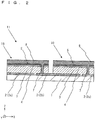
- Fig. 1 is a perspective view illustrating an example of a photoelectric conversion device according to an embodiment of the present invention and Fig. 2 is an XZ cross-sectional view thereof.
- An XYZ coordinate system of a right-handed system using the arrangement direction (the left-right direction in Fig. 1 ) of photoelectric conversion cells 10 as the X-axis direction is given to Figs. 1 and 2 .
- a photoelectric conversion device 11 a plurality of photoelectric conversion cells 10 are arranged on a substrate 1 and are electrically connected to one another. Although only two photoelectric conversion cells 10 are illustrated in Fig.
- multiple photoelectric conversion cells 10 may be two-dimensionally arranged in the right-left direction (X-axis direction), and further in a direction (Y-axis direction) perpendicular to the right-left direction in the actual photoelectric conversional device 11.
- a plurality of lower electrode layers 2 are two-dimensionally arranged on the substrate 1.
- the plurality of lower electrode layers 2 include lower electrode layers 2a to 2c arranged in one direction (X-axis direction) with a gap between them.
- a first semiconductor layer 3 is disposed over the lower electrode layer 2a and the lower electrode layer 2b through a portion on the substrate 1.
- a second semiconductor layer 4 whose conductivity type is different from that of the first semiconductor layer 3 is disposed on the first semiconductor layer 3.
- a connection conductor 7 is disposed on the lower electrode layer 2b along the surface (side surface) of the first semiconductor layer 3 or by penetrating (dividing) the first semiconductor layer 3.
- connection conductor 7 electrically connects the second semiconductor layer 4 and the lower electrode layer 2b.
- One photoelectric conversion cell 10 is formed of the lower electrode layer 2, the first semiconductor layer 3, and the second semiconductor layer 4, and a high-output photoelectric conversion device 11 is configured by connecting adjacent photoelectric conversion cells 10 in series through the connection conductor 7.
- a high-output photoelectric conversion device 11 is configured by connecting adjacent photoelectric conversion cells 10 in series through the connection conductor 7.
- the substrate 1 supports the photoelectric conversion cells 10.
- Examples of a material to be used for the substrate 1 include glass, ceramics, resins, metals, and the like.
- soda lime glass having a thickness of approximately 1 mm to 3 mm can be used.
- the lower electrode layers 2 are conductors such as Mo, Al, Ti, or Au disposed on the substrate 1.
- the lower electrode layers 2 are formed to have a thickness of approximately 0.2 ⁇ m to 1 ⁇ m using a known thin film forming method such as a sputtering method or a deposition method.
- the first semiconductor layer 3 has a thickness of, for example, 1 ⁇ m to 3 ⁇ m and mainly includes a group I-III-VI compound.
- the group I-III-VI compound is a compound of group I-B elements (also referred to as group 11 elements), group III-B elements (also referred to as group 13 elements), and a chalcogen element.
- the chalcogen element is S, Se, or Te in group VI-B elements.
- the group I-III-VI compound examples include CuInSe 2 (copper indium diselenide, also referred to as CIS), Cu(In,Ga)Se 2 (copper indium gallium diselenide, also referred to as CIGS), and Cu(In,Ga)(Se,S) 2 (copper indium gallium diselenide disulfide, also referred to as CIGSS).
- the first semiconductor layer 3 may be formed of a multiple compound semiconductor thin film such as copper indium gallium diselenide provided with a thin copper indium gallium diselenide disulfide layer as a surface layer.
- the first semiconductor layer 3 further includes an oxygen element, and the atomic concentration of the oxygen element is lower in the surface portion on the lower electrode layer 2 side than in the central portion of the first semiconductor layer 3 in the thickness direction (Z-axis direction).
- the photoelectric conversion efficiency of the photoelectric conversion device 11 is improved. That is, it is possible to sufficiently reduce recombination of carriers by filling defects of the first semiconductor layer 3 with the oxygen element, since the oxygen element is contained in the first semiconductor layer 3, and possible to effectively suppress formation of a different phase with high resistance due to oxidation of the lower electrode layer 2, since the oxygen concentration is lower in the surface portion on the lower electrode layer 2 side of the first semiconductor layer 3.
- a position of the energy in a valence band of the first semiconductor layer 3 can be shifted to a negative potential side in the vicinity of the lower electrode layer 2, since the oxygen concentration is lower in the surface portion on the lower electrode layer 2 side of the first semiconductor layer 3.
- positive holes can be sufficiently moved from the first semiconductor layer 3 to the lower electrode layer 2.
- the atomic concentration of the oxygen element in the surface portion on the lower electrode layer 2 side is lower than the atomic concentration of the oxygen element in the central portion, in a case where the first semiconductor layer 3 is assumed to be divided into the surface portion on the lower electrode layer 2 side, the central portion, and the surface portion on the second semiconductor layer 4 side by being trisected in the thickness direction (Z-axis direction).
- the atomic concentration of the oxygen element is acquired, for example, by measuring the oxygen concentration with energy dispersive X-ray spectroscopy (EDS) in the cross sections of the above-described respective trisected layers.
- EDS energy dispersive X-ray spectroscopy
- the atomic concentration of the oxygen element may be measured using secondary ion mass spectroscopy (SIMS) while the first semiconductor layer 3 is cut in the depth direction by sputtering.
- SIMS secondary ion mass spectroscopy
- the atomic concentration of the oxygen element in the central portion of the first semiconductor layer 3 may be, for example, in the range of 1x10 20 atoms/cm 3 to 1x10 22 atoms/cm 3 , and more preferably in the range of 2x10 20 atoms/cm 3 to 3x10 20 atoms/cm 3 .
- the atomic concentration of the oxygen element in the surface portion on the lower electrode layer 2 side may be 0.1 times to 0.9 times of the atomic concentration of the oxygen element in the central portion, and more preferably 0.1 times to 0.5 times thereof.
- the atomic concentration of the oxygen element in the first semiconductor layer 3 may gradually become lower toward the lower electrode layer 2 from the central portion.
- Fig. 3 illustrates an example of distribution of the atomic concentration of the oxygen element in the first semiconductor layer 3 in the thickness direction.
- the distribution of the atomic concentration of the oxygen element was measured using SIMS while the first semiconductor layer 3 was cut in the depth direction by sputtering, and the horizontal axis represents a distance from the lower electrode layer 2 and the vertical axis represents the atomic concentration of the oxygen element.
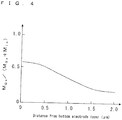
- a ratio of the atomic concentration of the gallium element to the total of the indium element and the gallium element may be larger in the surface portion on the lower electrode layer 2 side than in the central portion of the first semiconductor layer 3.
- the position of energy in a conduction band of the first semiconductor layer 3 can be shifted to the negative potential side in the vicinity of the lower electrode layer 2.
- movement of electrons from the first semiconductor layer 3 to the second semiconductor layer 4 can be improved. Accordingly, the photoelectric conversion efficiency of the photoelectric conversion device 11 is further improved.
- M Ga /(M Ga +M In ) M Ga represents the atomic concentration of the gallium element and M In represents the atomic concentration of the indium element.
- Fig. 4 illustrates an example of the distribution of the atomic concentration ratio of the gallium element to the total of the indium element and the gallium element in the first semiconductor layer 3 in the thickness direction.
- the horizontal axis represents a distance from the lower electrode layer 2 and the vertical axis represents M Ga /(M Ga +M In ).
- the first semiconductor layer 3 whose ratio of the atomic concentration (M Ga /(M Ga +M In )) is different in the thickness direction can be produced by laminating coating films using a raw material whose ratio of concentration of the indium element to the gallium element is changed.
- the second semiconductor layer 4 is a semiconductor layer of a second conductivity type which is different from the conductivity type of the first semiconductor layer 3. By electrically connecting the first semiconductor layer 3 and the second semiconductor layer 4, a photoelectric conversion layer with which charges are extracted well is formed.
- the second semiconductor layer 4 is an n-type semiconductor layer.
- the first semiconductor layer 3 may be an n-type semiconductor layer and the second semiconductor layer 4 may be a p-type semiconductor layer.
- the second semiconductor layer 4 may be formed of a plurality of layers and at least one of the plurality of layers may be a high-resistance layer.
- Examples of materials of the second semiconductor layer 4 include CdS, ZnS, ZnO, In 2 S 3 , In 2 Se 3 , In(OH,S), (Zn,In)(Se,OH), (Zn,Mg)O, and the like.
- the second semiconductor layer 4 is formed to have a thickness of 10 nm to 200 nm using, for example, a chemical bath deposition (CBD) method or the like.
- In(OH,S) means a mixed crystal compound containing In as a hydroxide and a sulfide.
- Zn,In)(Se,OH) is a mixed crystal compound containing Zn and In as a selenide and a hydroxide.
- (Zn,Mg)O is a compound containing Zn and Mg as an oxide.
- the upper electrode layer 5 may be further disposed on the second semiconductor layer 4.
- the upper electrode layer 5 is a layer with resistivity lower than that of the second semiconductor layer 4 and with which charges generated in the first semiconductor layer 3 and the second semiconductor layer 4 can be extracted well.
- the resistivity of the upper electrode layer 5 may be lower than 1 ⁇ cm and the sheet resistance thereof may be equal to or lower than 50 ⁇ / ⁇ .
- the upper electrode layer 5 is a transparent conductive film having a thickness of 0.05 ⁇ m to 3 ⁇ m made of ITO, ZnO, or the like, for example.
- the upper electrode layer 5 may be formed of a semiconductor having the same conductivity type as that of the second semiconductor layer 4.
- the upper electrode layer 5 may be formed by a sputtering method, a evaporation method, a chemical vapor deposition (CVD) method, or the like.
- a collector electrode 8 may be further formed on the upper electrode layer 5.
- the collector electrode 8 is an electrode for further efficiently extracting charges generated in the first semiconductor layer 3 and the second semiconductor layer 4.
- the collector electrode 8 is formed, for example, linearly from one end of the photoelectric conversion cell 10 to the connection conductor 7 as illustrated in Fig. 1 . Accordingly, the current generated in the first semiconductor layer 3 and the second semiconductor layer 4 is collected in the collector electrode 8 through the upper electrode layer 5, and is efficiently passed to the adjacent photoelectric conversion cells 10 through the connection conductor 7.
- the collector electrode 8 may have a width of 50 ⁇ m to 400 ⁇ m from a viewpoint of improving light transmittance to the first semiconductor layer 3 and having good conductivity. Further, the collector electrode 8 may include a plurality of branched portions.
- the collector electrode 8 is formed by, for example, preparing a metal paste which is obtained by dispersing metal powder such as Ag powder in a resin binder or the like, printing the metal paste into a pattern shape, and curing the metal paste.
- connection conductor 7 is a conductor disposed in a groove penetrating (dividing) the first semiconductor layer 3, the second semiconductor layer 4, and the upper electrode layer 5.
- a metal, a conductive paste, or the like can be used for the connection conductor 7.
- the connection conductor 7 is formed by extending the collector electrode 8, but not limited thereto.
- the connection conductor 7 may be formed by extending the upper electrode layer 5.
- the photoelectric conversion device 11 having the above-described configuration
- the first semiconductor layer 3 is made of CIGS
- the lower electrode layer 2 which is formed of Mo or the like, is formed into a desired pattern using a sputtering method or the like on a main surface of the substrate 1 formed of glass or the like.
- a first coating film is formed by coating the lower electrode layer 2 with a film of a raw material solution formed by metal elements (Cu, In, and Ga), which constitute the group I-III-VI compound (CIGS), being dissolved in a solvent, as an organic complex or an organic acid salt. Further, in an atmosphere containing oxygen or water, the first coating film is heated at, for example, 150°C to 350°C, and consequently an organic component in the first coating film is thermally decomposed. During the thermal decomposition, part of the metal element in the first coating film is oxidized (hereinafter, a process of forming the first coating film and thermally decomposing the organic component is referred to as a first process).
- a process of forming the first coating film and thermally decomposing the organic component is referred to as a first process).
- a second coating film is formed on the thermally decomposed first coating film using the above-described raw material solution.
- the second coating film is heated in an atmosphere containing water or oxygen with a concentration higher than that of the first process, and consequently an organic component in the second coating film is thermally decomposed. Accordingly, the oxygen concentration of the second coating film is higher than that of the first coating film.
- a third coating film is formed on the thermally decomposed second coating film using the above-described raw material solution. Further, the third coating film is heated in an atmosphere containing water or oxygen, and consequently an organic component in the third coating film is thermally decomposed.
- a laminate including three layers of coating films whose oxygen concentration is lower on the lower electrode layer 2 side than in the central portion in the thickness direction is formed by the above-described process. Further, although three layers are formed herein, two or four or more layers may be formed.
- the oxygen concentration of the respective layers can be adjusted by changing the concentration of water or oxygen in an atmosphere at the time of thermal decomposition, as described above.
- the laminate with the coating films is heated at, for example, 500°C to 600°C in an atmosphere containing a chalcogen element. Accordingly, although a crystal of the group I-III-VI compound (CIGS) is generated while oxygen in the coating films is substituted with the chalcogen element, some oxygen existing in the coating films remains. Since the probability of oxygen remaining in the coating films depends on the concentration of oxygen contained in the coating films, there is a tendency that CIGS having a higher oxygen concentration is generated from the second coating film having a high oxygen concentration as compared with the first coating film. As a result, the first semiconductor layer 3 which contains CIGS and oxygen and whose atomic concentration of oxygen is lower in the surface portion on the lower electrode layer 2 side than in the central portion in the thickness direction is generated.
- CIGS group I-III-VI compound
- the second semiconductor layer 4 and the upper electrode layer 5 are sequentially formed on the first semiconductor layer 3 using a CBD method, a sputtering method, or the like.
- the first semiconductor layer 3, the second semiconductor layer 4, and the upper electrode layer 5 are processed through a mechanical scribing process or the like and consequently a groove for the connection conductor 7 is formed.
- conductive paste which is obtained by dispersing metal powder such as Ag powder in a resin binder or the like, is printed in a pattern shape on the upper electrode layer 5 and in the groove, and the collector electrode 8 and the connection conductor 7 are formed by heating and curing the printed conductive paste.
- the first semiconductor layer 3 to the collector electrode 8 are removed at a position shifted from the connection conductor 7 through a mechanical scribing process so as to provide a plurality of photoelectric conversion cells 10 being divided, thereby obtaining the photoelectric conversion device 11 illustrated in Figs. 1 and 2 .
- a raw material solution for forming a first semiconductor layer 3 was prepared.
- a solution obtained by dissolving a single source precursor which was prepared based on US Patent No. 6992202 in pyridine was used.
- the single source precursor a mixture of one in which a complex molecule is formed of Cu, In, and phenylselenol and one in which a complex molecule is formed of Cu, Ga, and phenylselenol was used.
- a substrate 1 formed of glass with the surface which is coated with a lower electrode layer 2 formed of Mo was prepared, and a first coating film was formed by coating the lower electrode layer 2 with the raw material solution using a blade method.
- the first coating film was heated at 280°C for 10 minutes and consequently the organic components contained in the first coating film were thermally decomposed.
- a second coating film was formed by coating the thermally decomposed first coating film with the raw material solution using the blade method.
- the second coating film was heated at 280°C for 10 minutes and consequently the organic components contained in the second coating film were thermally decomposed.
- a third coating film was formed by coating the thermally decomposed second coating film with the raw material solution using the blade method.
- the third coating film was heated at 280°C for 10 minutes and consequently the organic components contained in the third coating film were thermally decomposed.
- the laminate of the first coating film, the second coating film, and the third coating film was heated at 550°C for 1 hour, and consequently the first semiconductor layer 3 mainly containing CIGS and having a thickness of 2 ⁇ m was formed.
- a second semiconductor layer 4 containing In 2 S 3 and having a thickness of 50 nm was formed on the first semiconductor layer 3 by immersing the substrate, on which layers up to the first semiconductor layer 3 are formed, in an aqueous solution in which indium chloride and thioacetamide were dissolved.
- an upper electrode layer 5 formed of AZO was formed on the second semiconductor layer 4 with a sputtering method to obtain the photoelectric conversion device 11 serving as an evaluation sample.
- the distribution of the oxygen element in the first semiconductor layer 3 was measured by performing SIMS measurement while the first semiconductor layer 3 of the evaluation sample prepared as described above was etched in the thickness direction. The result is illustrated in Fig. 3 . It was understood that the oxygen concentration was lower in the surface portion on the lower electrode layer 2 side than in the central portion of the first semiconductor layer 3 in the thickness direction.
- a comparative sample was prepared.
- the comparative sample was prepared in the same manner as that of the evaluation sample except the formation of the first semiconductor layer.
- thermal decomposition of the first to third coating films was performed in an atmosphere free from water and respective layers were thermally decomposed under the same conditions. That is, in the process of thermal decomposition performed on each of the first to third coating films, respective coating films were heated at 280°C for 10 minutes in a nitrogen gas atmosphere and consequently the organic components contained in respective coating films were thermally decomposed.
- the distribution of the oxygen element in the first semiconductor layer was measured by performing SIMS measurement while the first semiconductor layer of the comparative sample prepared as described above was etched in the thickness direction. As a result, in the comparative sample, only a trace amount of the oxygen element was contained and a difference in concentration of the oxygen element in the thickness direction of the first semiconductor layer was not observed.
- the photoelectric conversion efficiency of the evaluation sample and the comparative sample prepared in the above-described manner was measured as follows.
- the photoelectric conversion efficiency was measured using a so-called stationary light solar simulator under the condition that irradiation intensity of light with respect to a light receiving surface of the photoelectric conversion device was 100 mW/cm 2 and AM (air mass) was 1.5.
- the photoelectric conversion efficiency of the evaluation sample was 12.8% while the photoelectric conversion efficiency of the comparative sample was 10.0%, and therefore, it was understood that the photoelectric conversion efficiency of the evaluation sample was higher than that of the comparative sample.
Landscapes
- Photovoltaic Devices (AREA)
Claims (4)
- Eine photoelektrische Umwandlungsvorrichtung, aufweisend:eine Elektrodenschicht,eine erste Halbleiterschicht, die auf der Elektrodenschicht angeordnet ist und eine Gruppe-I-III-VI-Verbindung enthält, undeine zweite Halbleiterschicht, die auf der ersten Halbleiterschicht angeordnet ist und mit der ersten Halbleiterschicht einen pn-Übergang ausbildet,wobei die erste Halbleiterschicht mindestens eines von Schwefel, Selen und Tellur als Gruppe-VI-B-Elemente und Sauerstoff enthält, undwobei eine Atomkonzentration von Sauerstoff in der ersten Halbleiterschicht in einem Oberflächenabschnitt auf der Elektrodenschichtseite geringer als in einem zentralen Abschnitt der ersten Halbleiterschicht in einer Dickenrichtung davon ist.
- Die photoelektrische Umwandlungsvorrichtung gemäß Anspruch 1, wobei die Atomkonzentration von Sauerstoff in der ersten Halbleiterschicht von dem zentralen Abschnitt zu der Elektrodenschicht hin allmählich geringer wird.
- Die photoelektrische Umwandlungsvorrichtung gemäß Anspruch 1 oder 2,
wobei die erste Halbleiterschicht Indium und Gallium als Gruppe-III-B-Elemente enthält und ein Verhältnis der Atomkonzentration von Gallium zur Gesamtmenge von Indium und Gallium in dem Oberflächenabschnitt auf der Elektrodenschichtseite höher als in dem zentralen Abschnitt ist. - Die photoelektrische Umwandlungsvorrichtung gemäß Anspruch 3, wobei das Verhältnis der Atomkonzentration von Gallium zur Gesamtmenge von Indium und Gallium von dem zentralen Abschnitt zu der Elektrodenschicht hin allmählich größer wird.
Priority Applications (1)
| Application Number | Priority Date | Filing Date | Title |
|---|---|---|---|
| EP16196706.2A EP3142155A1 (de) | 2012-01-27 | 2012-11-28 | Fotoelektrische umwandlungsvorrichtung |
Applications Claiming Priority (3)
| Application Number | Priority Date | Filing Date | Title |
|---|---|---|---|
| JP2012014958 | 2012-01-27 | ||
| JP2012166090 | 2012-07-26 | ||
| PCT/JP2012/080761 WO2013111443A1 (ja) | 2012-01-27 | 2012-11-28 | 光電変換装置 |
Related Child Applications (2)
| Application Number | Title | Priority Date | Filing Date |
|---|---|---|---|
| EP16196706.2A Division EP3142155A1 (de) | 2012-01-27 | 2012-11-28 | Fotoelektrische umwandlungsvorrichtung |
| EP16196706.2A Division-Into EP3142155A1 (de) | 2012-01-27 | 2012-11-28 | Fotoelektrische umwandlungsvorrichtung |
Publications (3)
| Publication Number | Publication Date |
|---|---|
| EP2808903A1 EP2808903A1 (de) | 2014-12-03 |
| EP2808903A4 EP2808903A4 (de) | 2015-09-16 |
| EP2808903B1 true EP2808903B1 (de) | 2017-01-11 |
Family
ID=48873184
Family Applications (2)
| Application Number | Title | Priority Date | Filing Date |
|---|---|---|---|
| EP12866731.8A Not-in-force EP2808903B1 (de) | 2012-01-27 | 2012-11-28 | Fotoelektrische umwandlungsvorrichtung |
| EP16196706.2A Withdrawn EP3142155A1 (de) | 2012-01-27 | 2012-11-28 | Fotoelektrische umwandlungsvorrichtung |
Family Applications After (1)
| Application Number | Title | Priority Date | Filing Date |
|---|---|---|---|
| EP16196706.2A Withdrawn EP3142155A1 (de) | 2012-01-27 | 2012-11-28 | Fotoelektrische umwandlungsvorrichtung |
Country Status (4)
| Country | Link |
|---|---|
| US (1) | US20150000743A1 (de) |
| EP (2) | EP2808903B1 (de) |
| JP (1) | JPWO2013111443A1 (de) |
| WO (1) | WO2013111443A1 (de) |
Families Citing this family (4)
| Publication number | Priority date | Publication date | Assignee | Title |
|---|---|---|---|---|
| JP6317877B2 (ja) * | 2012-10-16 | 2018-04-25 | ローム株式会社 | 光電変換装置および光電変換装置の製造方法 |
| US11056505B2 (en) | 2019-12-10 | 2021-07-06 | Micron Technology, Inc. | Integrated assemblies having one or more modifying substances distributed within semiconductor material, and methods of forming integrated assemblies |
| US11621273B2 (en) | 2020-05-13 | 2023-04-04 | Micron Technology, Inc. | Integrated assemblies and methods of forming integrated assemblies |
| US12424282B2 (en) | 2022-05-24 | 2025-09-23 | Micron Technology, Inc. | Memory arrays comprising strings of memory cells and methods used in forming a memory array comprising strings of memory cells |
Family Cites Families (10)
| Publication number | Priority date | Publication date | Assignee | Title |
|---|---|---|---|---|
| JP3249342B2 (ja) | 1995-05-29 | 2002-01-21 | 昭和シェル石油株式会社 | ヘテロ接合薄膜太陽電池及びその製造方法 |
| JP3249408B2 (ja) * | 1996-10-25 | 2002-01-21 | 昭和シェル石油株式会社 | 薄膜太陽電池の薄膜光吸収層の製造方法及び製造装置 |
| US6310281B1 (en) * | 2000-03-16 | 2001-10-30 | Global Solar Energy, Inc. | Thin-film, flexible photovoltaic module |
| JP2002329877A (ja) * | 2001-04-27 | 2002-11-15 | National Institute Of Advanced Industrial & Technology | Cu(Ga及び(又は)In)Se2薄膜層、Cu(InGa)(S、Se)2薄膜層、太陽電池、Cu(Ga及び(又は)In)Se2薄膜層の形成方法 |
| JP3976626B2 (ja) * | 2002-06-25 | 2007-09-19 | 松下電器産業株式会社 | 化合物半導体薄膜の製造方法 |
| US6992202B1 (en) | 2002-10-31 | 2006-01-31 | Ohio Aerospace Institute | Single-source precursors for ternary chalcopyrite materials, and methods of making and using the same |
| JP5052697B2 (ja) * | 2009-09-29 | 2012-10-17 | 京セラ株式会社 | 光電変換装置 |
| CN102870224B (zh) * | 2010-05-31 | 2015-07-15 | 京瓷株式会社 | 光电转换装置 |
| WO2012002381A1 (ja) * | 2010-06-30 | 2012-01-05 | 京セラ株式会社 | 光電変換装置 |
| US9447489B2 (en) * | 2011-06-21 | 2016-09-20 | First Solar, Inc. | Methods of making photovoltaic devices and photovoltaic devices |
-
2012
- 2012-11-28 US US14/375,129 patent/US20150000743A1/en not_active Abandoned
- 2012-11-28 EP EP12866731.8A patent/EP2808903B1/de not_active Not-in-force
- 2012-11-28 JP JP2013555141A patent/JPWO2013111443A1/ja active Pending
- 2012-11-28 EP EP16196706.2A patent/EP3142155A1/de not_active Withdrawn
- 2012-11-28 WO PCT/JP2012/080761 patent/WO2013111443A1/ja not_active Ceased
Non-Patent Citations (1)
| Title |
|---|
| None * |
Also Published As
| Publication number | Publication date |
|---|---|
| EP3142155A1 (de) | 2017-03-15 |
| EP2808903A4 (de) | 2015-09-16 |
| US20150000743A1 (en) | 2015-01-01 |
| WO2013111443A1 (ja) | 2013-08-01 |
| EP2808903A1 (de) | 2014-12-03 |
| JPWO2013111443A1 (ja) | 2015-05-11 |
Similar Documents
| Publication | Publication Date | Title |
|---|---|---|
| EP2808903B1 (de) | Fotoelektrische umwandlungsvorrichtung | |
| US8709860B2 (en) | Method for manufacturing photoelectric conversion device | |
| JP5623311B2 (ja) | 光電変換装置 | |
| CN103229309B (zh) | 光电转换装置 | |
| JP5918042B2 (ja) | 光電変換装置の製造方法 | |
| JP5451899B2 (ja) | 光電変換装置 | |
| JP5566335B2 (ja) | 光電変換装置の製造方法 | |
| JP2014067745A (ja) | 光電変換装置の製造方法 | |
| JP5570650B2 (ja) | 半導体層の製造方法および光電変換装置の製造方法 | |
| JP5791802B2 (ja) | 光電変換装置の製造方法 | |
| WO2014017354A1 (ja) | 光電変換装置 | |
| JP6162592B2 (ja) | 光電変換装置の製造方法 | |
| JP2014090009A (ja) | 光電変換装置 | |
| JP5618942B2 (ja) | 光電変換装置の製造方法 | |
| JP6189604B2 (ja) | 光電変換装置 | |
| US20140345693A1 (en) | Photoelectric conversion device and method for producing the same | |
| JP2013239618A (ja) | 光電変換装置の製造方法 | |
| JP2013012722A (ja) | 光電変換装置の製造方法 | |
| JP2015070020A (ja) | 光電変換装置の製造方法 | |
| JP2015138832A (ja) | 半導体層の製造方法および光電変換装置の製造方法 | |
| JP2018006543A (ja) | 光電変換モジュールの製造方法 | |
| JP2014187215A (ja) | 光電変換装置 | |
| WO2014115466A1 (ja) | 光電変換装置 | |
| JP2012146943A (ja) | 半導体層の製造方法および光電変換装置の製造方法 | |
| JP2012231110A (ja) | 光電変換装置 |
Legal Events
| Date | Code | Title | Description |
|---|---|---|---|
| PUAI | Public reference made under article 153(3) epc to a published international application that has entered the european phase |
Free format text: ORIGINAL CODE: 0009012 |
|
| 17P | Request for examination filed |
Effective date: 20140723 |
|
| AK | Designated contracting states |
Kind code of ref document: A1 Designated state(s): AL AT BE BG CH CY CZ DE DK EE ES FI FR GB GR HR HU IE IS IT LI LT LU LV MC MK MT NL NO PL PT RO RS SE SI SK SM TR |
|
| DAX | Request for extension of the european patent (deleted) | ||
| RA4 | Supplementary search report drawn up and despatched (corrected) |
Effective date: 20150819 |
|
| RIC1 | Information provided on ipc code assigned before grant |
Ipc: H01L 31/032 20060101ALI20150813BHEP Ipc: H01L 31/04 20140101AFI20150813BHEP |
|
| GRAP | Despatch of communication of intention to grant a patent |
Free format text: ORIGINAL CODE: EPIDOSNIGR1 |
|
| INTG | Intention to grant announced |
Effective date: 20160628 |
|
| GRAS | Grant fee paid |
Free format text: ORIGINAL CODE: EPIDOSNIGR3 |
|
| GRAA | (expected) grant |
Free format text: ORIGINAL CODE: 0009210 |
|
| AK | Designated contracting states |
Kind code of ref document: B1 Designated state(s): AL AT BE BG CH CY CZ DE DK EE ES FI FR GB GR HR HU IE IS IT LI LT LU LV MC MK MT NL NO PL PT RO RS SE SI SK SM TR |
|
| REG | Reference to a national code |
Ref country code: GB Ref legal event code: FG4D |
|
| REG | Reference to a national code |
Ref country code: CH Ref legal event code: EP |
|
| REG | Reference to a national code |
Ref country code: AT Ref legal event code: REF Ref document number: 861980 Country of ref document: AT Kind code of ref document: T Effective date: 20170115 |
|
| REG | Reference to a national code |
Ref country code: IE Ref legal event code: FG4D |
|
| REG | Reference to a national code |
Ref country code: DE Ref legal event code: R096 Ref document number: 602012027875 Country of ref document: DE |
|
| REG | Reference to a national code |
Ref country code: LT Ref legal event code: MG4D |
|
| REG | Reference to a national code |
Ref country code: NL Ref legal event code: MP Effective date: 20170111 |
|
| REG | Reference to a national code |
Ref country code: AT Ref legal event code: MK05 Ref document number: 861980 Country of ref document: AT Kind code of ref document: T Effective date: 20170111 |
|
| PG25 | Lapsed in a contracting state [announced via postgrant information from national office to epo] |
Ref country code: NL Free format text: LAPSE BECAUSE OF FAILURE TO SUBMIT A TRANSLATION OF THE DESCRIPTION OR TO PAY THE FEE WITHIN THE PRESCRIBED TIME-LIMIT Effective date: 20170111 |
|
| PG25 | Lapsed in a contracting state [announced via postgrant information from national office to epo] |
Ref country code: NO Free format text: LAPSE BECAUSE OF FAILURE TO SUBMIT A TRANSLATION OF THE DESCRIPTION OR TO PAY THE FEE WITHIN THE PRESCRIBED TIME-LIMIT Effective date: 20170411 Ref country code: LT Free format text: LAPSE BECAUSE OF FAILURE TO SUBMIT A TRANSLATION OF THE DESCRIPTION OR TO PAY THE FEE WITHIN THE PRESCRIBED TIME-LIMIT Effective date: 20170111 Ref country code: IS Free format text: LAPSE BECAUSE OF FAILURE TO SUBMIT A TRANSLATION OF THE DESCRIPTION OR TO PAY THE FEE WITHIN THE PRESCRIBED TIME-LIMIT Effective date: 20170511 Ref country code: FI Free format text: LAPSE BECAUSE OF FAILURE TO SUBMIT A TRANSLATION OF THE DESCRIPTION OR TO PAY THE FEE WITHIN THE PRESCRIBED TIME-LIMIT Effective date: 20170111 Ref country code: HR Free format text: LAPSE BECAUSE OF FAILURE TO SUBMIT A TRANSLATION OF THE DESCRIPTION OR TO PAY THE FEE WITHIN THE PRESCRIBED TIME-LIMIT Effective date: 20170111 Ref country code: GR Free format text: LAPSE BECAUSE OF FAILURE TO SUBMIT A TRANSLATION OF THE DESCRIPTION OR TO PAY THE FEE WITHIN THE PRESCRIBED TIME-LIMIT Effective date: 20170412 |
|
| PG25 | Lapsed in a contracting state [announced via postgrant information from national office to epo] |
Ref country code: BG Free format text: LAPSE BECAUSE OF FAILURE TO SUBMIT A TRANSLATION OF THE DESCRIPTION OR TO PAY THE FEE WITHIN THE PRESCRIBED TIME-LIMIT Effective date: 20170411 Ref country code: SE Free format text: LAPSE BECAUSE OF FAILURE TO SUBMIT A TRANSLATION OF THE DESCRIPTION OR TO PAY THE FEE WITHIN THE PRESCRIBED TIME-LIMIT Effective date: 20170111 Ref country code: ES Free format text: LAPSE BECAUSE OF FAILURE TO SUBMIT A TRANSLATION OF THE DESCRIPTION OR TO PAY THE FEE WITHIN THE PRESCRIBED TIME-LIMIT Effective date: 20170111 Ref country code: PT Free format text: LAPSE BECAUSE OF FAILURE TO SUBMIT A TRANSLATION OF THE DESCRIPTION OR TO PAY THE FEE WITHIN THE PRESCRIBED TIME-LIMIT Effective date: 20170511 Ref country code: AT Free format text: LAPSE BECAUSE OF FAILURE TO SUBMIT A TRANSLATION OF THE DESCRIPTION OR TO PAY THE FEE WITHIN THE PRESCRIBED TIME-LIMIT Effective date: 20170111 Ref country code: RS Free format text: LAPSE BECAUSE OF FAILURE TO SUBMIT A TRANSLATION OF THE DESCRIPTION OR TO PAY THE FEE WITHIN THE PRESCRIBED TIME-LIMIT Effective date: 20170111 Ref country code: LV Free format text: LAPSE BECAUSE OF FAILURE TO SUBMIT A TRANSLATION OF THE DESCRIPTION OR TO PAY THE FEE WITHIN THE PRESCRIBED TIME-LIMIT Effective date: 20170111 Ref country code: PL Free format text: LAPSE BECAUSE OF FAILURE TO SUBMIT A TRANSLATION OF THE DESCRIPTION OR TO PAY THE FEE WITHIN THE PRESCRIBED TIME-LIMIT Effective date: 20170111 |
|
| REG | Reference to a national code |
Ref country code: DE Ref legal event code: R097 Ref document number: 602012027875 Country of ref document: DE |
|
| PG25 | Lapsed in a contracting state [announced via postgrant information from national office to epo] |
Ref country code: EE Free format text: LAPSE BECAUSE OF FAILURE TO SUBMIT A TRANSLATION OF THE DESCRIPTION OR TO PAY THE FEE WITHIN THE PRESCRIBED TIME-LIMIT Effective date: 20170111 Ref country code: RO Free format text: LAPSE BECAUSE OF FAILURE TO SUBMIT A TRANSLATION OF THE DESCRIPTION OR TO PAY THE FEE WITHIN THE PRESCRIBED TIME-LIMIT Effective date: 20170111 Ref country code: IT Free format text: LAPSE BECAUSE OF FAILURE TO SUBMIT A TRANSLATION OF THE DESCRIPTION OR TO PAY THE FEE WITHIN THE PRESCRIBED TIME-LIMIT Effective date: 20170111 Ref country code: SK Free format text: LAPSE BECAUSE OF FAILURE TO SUBMIT A TRANSLATION OF THE DESCRIPTION OR TO PAY THE FEE WITHIN THE PRESCRIBED TIME-LIMIT Effective date: 20170111 Ref country code: CZ Free format text: LAPSE BECAUSE OF FAILURE TO SUBMIT A TRANSLATION OF THE DESCRIPTION OR TO PAY THE FEE WITHIN THE PRESCRIBED TIME-LIMIT Effective date: 20170111 |
|
| PLBE | No opposition filed within time limit |
Free format text: ORIGINAL CODE: 0009261 |
|
| STAA | Information on the status of an ep patent application or granted ep patent |
Free format text: STATUS: NO OPPOSITION FILED WITHIN TIME LIMIT |
|
| PG25 | Lapsed in a contracting state [announced via postgrant information from national office to epo] |
Ref country code: DK Free format text: LAPSE BECAUSE OF FAILURE TO SUBMIT A TRANSLATION OF THE DESCRIPTION OR TO PAY THE FEE WITHIN THE PRESCRIBED TIME-LIMIT Effective date: 20170111 Ref country code: SM Free format text: LAPSE BECAUSE OF FAILURE TO SUBMIT A TRANSLATION OF THE DESCRIPTION OR TO PAY THE FEE WITHIN THE PRESCRIBED TIME-LIMIT Effective date: 20170111 |
|
| 26N | No opposition filed |
Effective date: 20171012 |
|
| PG25 | Lapsed in a contracting state [announced via postgrant information from national office to epo] |
Ref country code: SI Free format text: LAPSE BECAUSE OF FAILURE TO SUBMIT A TRANSLATION OF THE DESCRIPTION OR TO PAY THE FEE WITHIN THE PRESCRIBED TIME-LIMIT Effective date: 20170111 |
|
| PG25 | Lapsed in a contracting state [announced via postgrant information from national office to epo] |
Ref country code: MC Free format text: LAPSE BECAUSE OF FAILURE TO SUBMIT A TRANSLATION OF THE DESCRIPTION OR TO PAY THE FEE WITHIN THE PRESCRIBED TIME-LIMIT Effective date: 20170111 |
|
| GBPC | Gb: european patent ceased through non-payment of renewal fee |
Effective date: 20171128 |
|
| PG25 | Lapsed in a contracting state [announced via postgrant information from national office to epo] |
Ref country code: CH Free format text: LAPSE BECAUSE OF NON-PAYMENT OF DUE FEES Effective date: 20171130 Ref country code: LI Free format text: LAPSE BECAUSE OF NON-PAYMENT OF DUE FEES Effective date: 20171130 |
|
| PG25 | Lapsed in a contracting state [announced via postgrant information from national office to epo] |
Ref country code: LU Free format text: LAPSE BECAUSE OF NON-PAYMENT OF DUE FEES Effective date: 20171128 |
|
| REG | Reference to a national code |
Ref country code: FR Ref legal event code: ST Effective date: 20180731 Ref country code: BE Ref legal event code: MM Effective date: 20171130 |
|
| REG | Reference to a national code |
Ref country code: IE Ref legal event code: MM4A |
|
| PG25 | Lapsed in a contracting state [announced via postgrant information from national office to epo] |
Ref country code: MT Free format text: LAPSE BECAUSE OF NON-PAYMENT OF DUE FEES Effective date: 20171128 |
|
| PG25 | Lapsed in a contracting state [announced via postgrant information from national office to epo] |
Ref country code: IE Free format text: LAPSE BECAUSE OF NON-PAYMENT OF DUE FEES Effective date: 20171128 Ref country code: FR Free format text: LAPSE BECAUSE OF NON-PAYMENT OF DUE FEES Effective date: 20171130 |
|
| PG25 | Lapsed in a contracting state [announced via postgrant information from national office to epo] |
Ref country code: GB Free format text: LAPSE BECAUSE OF NON-PAYMENT OF DUE FEES Effective date: 20171128 Ref country code: BE Free format text: LAPSE BECAUSE OF NON-PAYMENT OF DUE FEES Effective date: 20171130 |
|
| PGFP | Annual fee paid to national office [announced via postgrant information from national office to epo] |
Ref country code: DE Payment date: 20181113 Year of fee payment: 7 |
|
| PG25 | Lapsed in a contracting state [announced via postgrant information from national office to epo] |
Ref country code: HU Free format text: LAPSE BECAUSE OF FAILURE TO SUBMIT A TRANSLATION OF THE DESCRIPTION OR TO PAY THE FEE WITHIN THE PRESCRIBED TIME-LIMIT; INVALID AB INITIO Effective date: 20121128 |
|
| PG25 | Lapsed in a contracting state [announced via postgrant information from national office to epo] |
Ref country code: CY Free format text: LAPSE BECAUSE OF FAILURE TO SUBMIT A TRANSLATION OF THE DESCRIPTION OR TO PAY THE FEE WITHIN THE PRESCRIBED TIME-LIMIT Effective date: 20170111 |
|
| PG25 | Lapsed in a contracting state [announced via postgrant information from national office to epo] |
Ref country code: MK Free format text: LAPSE BECAUSE OF FAILURE TO SUBMIT A TRANSLATION OF THE DESCRIPTION OR TO PAY THE FEE WITHIN THE PRESCRIBED TIME-LIMIT Effective date: 20170111 |
|
| PG25 | Lapsed in a contracting state [announced via postgrant information from national office to epo] |
Ref country code: TR Free format text: LAPSE BECAUSE OF FAILURE TO SUBMIT A TRANSLATION OF THE DESCRIPTION OR TO PAY THE FEE WITHIN THE PRESCRIBED TIME-LIMIT Effective date: 20170111 |
|
| REG | Reference to a national code |
Ref country code: DE Ref legal event code: R119 Ref document number: 602012027875 Country of ref document: DE |
|
| PG25 | Lapsed in a contracting state [announced via postgrant information from national office to epo] |
Ref country code: AL Free format text: LAPSE BECAUSE OF FAILURE TO SUBMIT A TRANSLATION OF THE DESCRIPTION OR TO PAY THE FEE WITHIN THE PRESCRIBED TIME-LIMIT Effective date: 20170111 |
|
| PG25 | Lapsed in a contracting state [announced via postgrant information from national office to epo] |
Ref country code: DE Free format text: LAPSE BECAUSE OF NON-PAYMENT OF DUE FEES Effective date: 20200603 |