EP2656833B1 - Vernetzte Hyaluronsäurezusammensetzungen zur Gewebeaugmentation - Google Patents
Vernetzte Hyaluronsäurezusammensetzungen zur Gewebeaugmentation Download PDFInfo
- Publication number
- EP2656833B1 EP2656833B1 EP13163971.8A EP13163971A EP2656833B1 EP 2656833 B1 EP2656833 B1 EP 2656833B1 EP 13163971 A EP13163971 A EP 13163971A EP 2656833 B1 EP2656833 B1 EP 2656833B1
- Authority
- EP
- European Patent Office
- Prior art keywords
- composition
- crosslinked
- subject
- measured
- average diameter
- Prior art date
- Legal status (The legal status is an assumption and is not a legal conclusion. Google has not performed a legal analysis and makes no representation as to the accuracy of the status listed.)
- Expired - Lifetime
Links
Images




Classifications
-
- A—HUMAN NECESSITIES
- A61—MEDICAL OR VETERINARY SCIENCE; HYGIENE
- A61K—PREPARATIONS FOR MEDICAL, DENTAL OR TOILETRY PURPOSES
- A61K31/00—Medicinal preparations containing organic active ingredients
- A61K31/21—Esters, e.g. nitroglycerine, selenocyanates
- A61K31/215—Esters, e.g. nitroglycerine, selenocyanates of carboxylic acids
- A61K31/235—Esters, e.g. nitroglycerine, selenocyanates of carboxylic acids having an aromatic ring attached to a carboxyl group
- A61K31/24—Esters, e.g. nitroglycerine, selenocyanates of carboxylic acids having an aromatic ring attached to a carboxyl group having an amino or nitro group
-
- A—HUMAN NECESSITIES
- A61—MEDICAL OR VETERINARY SCIENCE; HYGIENE
- A61K—PREPARATIONS FOR MEDICAL, DENTAL OR TOILETRY PURPOSES
- A61K47/00—Medicinal preparations characterised by the non-active ingredients used, e.g. carriers or inert additives; Targeting or modifying agents chemically bound to the active ingredient
- A61K47/30—Macromolecular organic or inorganic compounds, e.g. inorganic polyphosphates
- A61K47/36—Polysaccharides; Derivatives thereof, e.g. gums, starch, alginate, dextrin, hyaluronic acid, chitosan, inulin, agar or pectin
-
- A—HUMAN NECESSITIES
- A61—MEDICAL OR VETERINARY SCIENCE; HYGIENE
- A61K—PREPARATIONS FOR MEDICAL, DENTAL OR TOILETRY PURPOSES
- A61K9/00—Medicinal preparations characterised by special physical form
- A61K9/0012—Galenical forms characterised by the site of application
- A61K9/0019—Injectable compositions; Intramuscular, intravenous, arterial, subcutaneous administration; Compositions to be administered through the skin in an invasive manner
-
- A—HUMAN NECESSITIES
- A61—MEDICAL OR VETERINARY SCIENCE; HYGIENE
- A61K—PREPARATIONS FOR MEDICAL, DENTAL OR TOILETRY PURPOSES
- A61K9/00—Medicinal preparations characterised by special physical form
- A61K9/0012—Galenical forms characterised by the site of application
- A61K9/0019—Injectable compositions; Intramuscular, intravenous, arterial, subcutaneous administration; Compositions to be administered through the skin in an invasive manner
- A61K9/0021—Intradermal administration, e.g. through microneedle arrays or needleless injectors
-
- A—HUMAN NECESSITIES
- A61—MEDICAL OR VETERINARY SCIENCE; HYGIENE
- A61K—PREPARATIONS FOR MEDICAL, DENTAL OR TOILETRY PURPOSES
- A61K9/00—Medicinal preparations characterised by special physical form
- A61K9/0012—Galenical forms characterised by the site of application
- A61K9/0019—Injectable compositions; Intramuscular, intravenous, arterial, subcutaneous administration; Compositions to be administered through the skin in an invasive manner
- A61K9/0024—Solid, semi-solid or solidifying implants, which are implanted or injected in body tissue
-
- A—HUMAN NECESSITIES
- A61—MEDICAL OR VETERINARY SCIENCE; HYGIENE
- A61K—PREPARATIONS FOR MEDICAL, DENTAL OR TOILETRY PURPOSES
- A61K9/00—Medicinal preparations characterised by special physical form
- A61K9/14—Particulate form, e.g. powders, Processes for size reducing of pure drugs or the resulting products, Pure drug nanoparticles
- A61K9/16—Agglomerates; Granulates; Microbeadlets ; Microspheres; Pellets; Solid products obtained by spray drying, spray freeze drying, spray congealing,(multiple) emulsion solvent evaporation or extraction
- A61K9/1605—Excipients; Inactive ingredients
- A61K9/1629—Organic macromolecular compounds
- A61K9/1652—Polysaccharides, e.g. alginate, cellulose derivatives; Cyclodextrin
-
- A—HUMAN NECESSITIES
- A61—MEDICAL OR VETERINARY SCIENCE; HYGIENE
- A61L—METHODS OR APPARATUS FOR STERILISING MATERIALS OR OBJECTS IN GENERAL; DISINFECTION, STERILISATION OR DEODORISATION OF AIR; CHEMICAL ASPECTS OF BANDAGES, DRESSINGS, ABSORBENT PADS OR SURGICAL ARTICLES; MATERIALS FOR BANDAGES, DRESSINGS, ABSORBENT PADS OR SURGICAL ARTICLES
- A61L27/00—Materials for grafts or prostheses or for coating grafts or prostheses
- A61L27/50—Materials characterised by their function or physical properties, e.g. injectable or lubricating compositions, shape-memory materials, surface modified materials
- A61L27/52—Hydrogels or hydrocolloids
-
- A—HUMAN NECESSITIES
- A61—MEDICAL OR VETERINARY SCIENCE; HYGIENE
- A61P—SPECIFIC THERAPEUTIC ACTIVITY OF CHEMICAL COMPOUNDS OR MEDICINAL PREPARATIONS
- A61P25/00—Drugs for disorders of the nervous system
- A61P25/02—Drugs for disorders of the nervous system for peripheral neuropathies
Definitions
- tissue augmentation fillers approved by the United States Food and Drug Administration are derived from collagen. Approximately 3-5% of human subjects show serious allergic reactions to bovine collagen, thus requiring careful testing before using these fillers in any particular subject.
- Hyaluronic acid also referred to as "HA,” is a naturally occurring, water soluble polysaccharide that is a major component of the extra-cellular matrix and is widely distributed in animal tissues.
- Naturally occurring HA generally has a molecular weight range of about between 6 x 10 4 to about 8 x 10 6 Daltons. It has excellent biocompatibility and does not give a foreign body or allergic reaction when implanted into a subject.
- Patent Nos. 5,356,883 and 6,013,679 have been employed, e.g., as surgical aids to prevent post operative adhesions of tissues, as adjuncts to synovial fluid in joints, as fluid replacement and/or surgical aids in ophthalmic surgery, as a scaffold for tissue engineering in vitro or guided tissue regeneration or augmentation in vivo, and the like.
- WO 02/09792 A relates to bioabsorbable composites of derivatized hyaluronic acid.
- WO 94/02517 A relates to water in-soluble derivatives of hyaluronic acid and their methods of preparation and use.
- EP 0416250 A relates to N-acylurea and o-acylisourea derivatives of hyaluronic acid. Chen J et al: "Polysaccharide hydrogels for protein drug delivery", Carbohydrate Polymers, Applied Science, Publishers, Ltd. Barking, GB, vol. 28, no. 1, 1995, pages 69-76 .
- HA aqueous hemangioma
- HA that is sufficiently chemically modified or crosslinked to have desirable in vivo mechanical and biostability properties can be so highly viscous that injection through fine needles is difficult or impossible.
- HA that is injectable can have inferior in vivo biostability and mechanical properties.
- bioactive agents including, for example, therapeutic agents or drugs and biological probes.
- a major challenge is the development of a delivery vehicle that will provide the appropriate level of bioavailability of a therapeutic agent at the affected area to achieve a desired clinical result, yet also have a desirable balance of in vivo mechanical and biostability properties balanced with surgical/administrative usability.
- the bioavailability of a drug depends upon the nature of the drug, the drug delivery vehicle used, and the route of delivery, for example, oral, topical, transdermal, mucosal, administration by injection, administration by inhalation, or administration by a combination of two or more of these routes.
- the bioavailability may be low as a result of, for example, the degradation of the drug by metabolic processes, rapid or uneven degradation of the delivery vehicle, rapid or uneven release of the drug from the delivery vehicle, and the like. These can be accompanied by similar problems of frequency of administration, difficulty of administration, e.g., difficulty of injection, biodegradation, and the like. In addition to the difficulties noted above, frequent administration of insufficiently stable drug delivery vehicles can lead to variations in drug delivery, leading to an increase in the occurrence of damaging side effects, a decrease in therapeutic benefit, and the like.
- the invention is directed to a hyaluronic acid (HA) composition and a method of using a HA composition that is effective for tissue augmentation and/or drug delivery.
- HA hyaluronic acid
- a hyaluronic acid (HA) composition includes crosslinked, water-insoluble, hydrated HA gel particles.
- the HA includes crosslinks represented by the following structural formula: HA'-U-R 2 -U-HA'.
- Each HA' is the same or different crosslinked HA' molecule, e.g., the crosslinks can be intramolecular or intermolecular.
- Each U is independently an optionally substituted O-acyl isourea or N-acyl urea.
- R 2 is optionally substituted alkyl, alkenyl, alkynyl, alkoxy, cycloalkyl, cycloalkenyl, cycloalkynyl,aryl, heteroaryl, heterocyclyl, cycloaliphaticalkyl, aralkyl, heteroaralkyl, or heterocyclylalkyl.
- a method of augmenting tissue in a subject that is in need of tissue augmentation includes the step of inserting a needle into a subject at a location in the subject that is in need of tissue augmentation, wherein the needle is coupled to a syringe loaded with the HA composition. Also included is applying force to the syringe, whereby at least a portion of the HA composition is delivered into the subject.
- a method of preparing the HA composition includes forming water-insoluble, dehydrated crosslinked HA particles, separating the water-insoluble, dehydrated particles by average diameter, selecting a subset of particles by average diameter, and hydrating the subset of dehydrated particles with a physiologically compatible aqueous solution, thereby forming the HA composition.
- Another method of preparing the crosslinked HA composition includes crosslinking a precursor of the crosslinked HA with a biscarbodiimide in the presence of a pH buffer that is at a pH between about 4 and about 8, and dehydrating the crosslinked HA to produce the dehydrated, crosslinked HA.
- a method of stabilizing crosslinked HA includes hydrating water-insoluble, dehydrated crosslinked HA with a physiologically compatible aqueous solution, thereby forming the stabilized HA composition, wherein the physiologically compatible aqueous solution includes at least about 0.1% by weight of a local anesthetic, wherein the value of storage modulus G' for the stabilized composition is at least about 110% of the value of G' measured for a non-stabilized composition, when measured at 37 °C and 1 Hz frequency using a 4 cm flat geometry.
- the embodiments disclosed herein are effective for preparing and using crosslinked, water-insoluble, hydrated HA gel particles, wherein the crosslinks in the HA include linking group R 2' , that have improved combinations of in-vivo biostability and mechanical properties, while at the same time having improved usability, e.g., improved ease of injection through fine needles.
- the HA compositions have improved values for storage modulus G' and kinematic viscosity, while exhibiting improved in vitro and in vivo biostability to hyaluronidase enzyme.
- the disclosed embodiments are effective for employing crosslinked HA in tissue augmentation while reducing the frequency of implantation needed.
- the embodiments are also effective for employing crosslinked HA as a drug delivery vehicle that exhibits the surprising and unexpected effect of increasing biostability along with effective drug release properties and effective administrative properties.
- the invention is directed to crosslinked HA compositions and their methods of use, according to the claims.
- Uncrosslinked HA e.g, the precursor to the crosslinked HA of the invention, typically comprises disaccharide units of D-glucuronic acid (GlcUA) and N-acetyl-D-glucosamine (GlcNAc), which are alternately linked, forming a linear polymer.
- HA often occurs naturally as the sodium salt, sodium hyaluronate.
- HA HA
- sodium hyaluronate preparations of either HA or sodium hyaluronate
- preparations of either HA or sodium hyaluronate are often referred to as "hyaluronan.”
- HA and “hyaluronan” also refer to any of the other hyaluronate salts, including, for example, potassium hyaluronate, magnesium hyaluronate, calcium hyaluronate, and the like.
- the uncrosslinked HA used as precursors for the crosslinking typically has an average molecular weight range of from between about 6 x 10 4 to about 8 x 10 6 Daltons, or 150 to 20,000 disaccharide repeat units.
- HA from any of a variety of sources can be used as a starting material.
- the uncrosslinked HA used to make the composites of this invention can be produced in commercial quantities by bioprocess technology, as described, for example, in Nimrod et al. , PCT Publication No. WO 86/04355 .
- Crosslinked HA can be formed by reacting uncrosslinked HA with a crosslinking agent under suitable reaction conditions.
- the crosslinked HA is prepared by reacting uncrosslinked HA with a biscarbodiimide in the presence of a pH buffer, wherein the buffer is at a pH between about 4 and about 8.
- the pH of the buffer can be between about 4 and about 7, typically between 5 and about 6.5, or more typically between about 5 and about 6. In a preferred embodiment, the pH is about 5.5.
- the pH buffer can include any buffer agent known to one skilled in the art, e.g., 2-(N-morpholino)ethanesulfonic acid (MES); 2,2-bis(hydroxymethyl)-2,2',2"-nitrotriethanol; succinate/succinic acid; KH 2 PO 4 ; N-tris(hydroxymethyl-2-aminoethanesulfonic acid; triethanolamine; diethylbarbituate; tris(hydroxymethyl)aminoethane; N-tris(hydroxy)methylglycine; and N,N-bis(2-hydroxyethyl)glycine.
- MES 2-(N-morpholino)ethanesulfonic acid
- MES 2,2-bis(hydroxymethyl)-2,2',2"-nitrotriethanol
- succinate/succinic acid KH 2 PO 4
- N-tris(hydroxymethyl-2-aminoethanesulfonic acid triethanolamine
- diethylbarbituate tris(hydroxymethyl)amino
- the buffer agent can be employed with an additional acid or base, e.g., 2-(N-morpholino)ethanesulfonic acid with NaOH; 2,2-bis(hydroxymethyl)-2,2',2"-nitrotriethanol with HCl; succinate with succinic acid; KH 2 PO 4 with borax; N-tris(hydroxymethyl-2-aminoethanesulfonic acid with NaOH; triethanolamine with HCl; diethylbarbituate with HCl; tris(hydroxymethyl)aminoethane with HCl; N-tris(hydroxy)methylglycine with HCl; and N,N-bis(2-hydroxyethyl)glycine with HCl.
- the buffer includes 2-(N-morpholino)ethanesulfonic acid and NaOH.
- the buffer agent is mixed in aqueous media, in a concentration between about 5 mM (millimolar) and about 250 mM, typically between about 10 mM and about 150 mM, more typically between about 25 and about 100 mM, and preferably about 75 mM.
- the uncrosslinked HA is mixed in aqueous media, e.g., the pH buffer solution, in a concentration between about 1 mM (millimolar) and about 100 mM, typically between about 10 mM and about 50 mM, more typically between about 25 and about 50 mM, and preferably about 37 mM.
- concentration can vary depending on the molecular weight of the uncrosslinked HA precursor. At lower concentrations, the reactions can be slower. At higher concentrations, the product can be difficult to handle due to the increase in viscosity. Examples of acceptable concentrations of uncrosslinked HA for other crosslinking reactions are described in U.S. Patent No. 5,356,883, to Kuo et al .
- the reaction can be carried out at a temperature range of between about 0°C and about 60°C, typically between about 10°C and about 40°C, more typically between about 15°C and about 30°C, and preferably about 25°C. Exemplary reaction conditions can be found in Examples 1-9.
- the biscarbodiimide can be combined with the uncrosslinked HA solution alone, or more typically as a solution in a water-miscible organic solvent, e.g., acetone, methyl ethyl ketone, dimethyformamide, dimethyl sulfoxide, methanol, ethanol, 2-propanol, acetonitrile, tetrahydrofuran, N-methyl pyrrolidone, and the like.
- a water-miscible organic solvent e.g., acetone, methyl ethyl ketone, dimethyformamide, dimethyl sulfoxide, methanol, ethanol, 2-propanol, acetonitrile, tetrahydrofuran, N-methyl pyrrolidone, and the like.
- the solvent is acetone
- the biscarbodiimide is at a concentration of between about 0.1 mg/mL and about 100 mg/mL, typically between about 1 mg/mL and about 50 mg/mL, more typically between about 5 mg/mL and about 25 mg/mL, and preferably about 15 mg/mL.
- the uncrosslinked HA and the biscarbodiimide can be combined in any molar equivalent ratio, e.g., between about 1% and about 200%, typically between about 10% and about 150%, more typically between about 18% and about 125%. In various embodiments, the molar equivalent ratio is about 18%; or about 3 8%, or about 50%, or about 75%, or about 100%, or about 125%.
- a HA composition crosslinked with the biscarbodiimide can include crosslinks characterized by a linking group R 2 of the biscarbodiimide agent included in the crosslink, e.g., the linking group connecting through a group U at each end to a HA' molecule, as shown in the following structural formula: HA'-U-R 2 -U-HA'
- Each HA' in the preceding formula can be different or the same HA' molecule, e.g., the crosslink can be an intermolecular or intramolecular crosslink.
- Each U can be the same or different and is an optionally substituted N-acyl urea or O-acyl isourea, as shown in the bracketed fragments in the following structural formulas:
- each R 1 can be the same or different and is an optionally substituted group selected from hydrogen, aliphatic (e.g., alkyl, alkenyl, alkynyl), alkoxy, cycloaliphatic (e.g., cycloalkyl, cycloalkenyl, and cycloalkynyl), aryl, heteroaryl, heterocyclyl, cycloaliphaticalkyl, aralkyl, heteroaralkyl, heterocyclylalkyl, and the like.
- Suitable optional substituents are those that do not substantially interfere with the properties of the resulting crosslinked HA composition and are described herein in the section describing each of the respective groups.
- R 1 is an optionally substituted aliphatic group. More preferably, R 1 is alkyl, e.g., C1-C6 linear or branched alkyl, e.g., methyl, ethyl, propyl, butyl, 2-propyl, tert-butyl, and the like. Preferably, each R 1 is ethyl.
- Each R 2 is an optionally substituted linking group including one or more of aliphatic, cycloaliphatic, aryl, heteroaryl, heterocyclyl, cycloaliphaticalkyl, aralkyl, heteroaralkyl, heterocyclylalkyl, groups, and the like. Suitable optional substituents are those that do not substantially interfere with the properties of the resulting crosslinked HA composition and are described herein in the section describing each of the respective groups.
- R 2 can optionally include or be interrupted by other groups, e.g, carbonyl, amide, oxy, sulfide, disulfide, and the like.
- R 2 is a cycloaliphatic, aryl, heteroaryl, or heterocyclyl group.
- R 2 is 1,6-hexamethylene octamethylene, decamethylene, dodecamethylene, PEG, -CH 2 CH 2 -S-S-CH 2 CH 2 -, para -phenylene-S-S- para- phenylene, meta -phenylene-S-S- meta -phenylene, meta -phenylene or para- phenylene. More preferably, R 2 is phenylene. Preferably, R 2 is para -phenylene.
- the biscarbodiimide is selected from 1,6-hexamethylene bis(ethylcarbodiimide), 1,8-octamethylene bis(ethylcarbodiimide), 1,10 decamethylene bis(ethylcarbodiimide), 1,12 dodecamethylene bis(ethylcarbodiimide), PEG-bis(propyl(ethylcarbodiimide)), 2,2'-dithioethyl bis(ethylcarbodiimde), 1,1'-dithio-p-phenylene bis(ethylcarbodiimide); para- phenylene-bis(ethylcarbodiimide), and 1,1'-dithio-m-phenylene bis(ethylcarbodiimide).
- the biscarbodiimide is para- phenylene-bis(ethylcarbodiimide).
- Methods of preparing biscarbodiimides are described in U.S.P. Nos. 6,013,679 ; 2,946,819 ; 3, 231,610 ; 3,502,722 ; 3,644,456 ; 3,972,933 ; 4,014,935 ; 4,066,629 ; 4,085,140 ; 4,096,334 ; 4,137,386 , 6,548,081 , and 6,620,927 .
- the reaction of HA with a biscarbodiimide crosslinking reagent, in the presence of an available proton, is believed to comprise protonation in the first step.
- the acid anion can then attach to the carbon atom of the cation formed, resulting in the formation of an O-acyl isourea intermediate.
- the acyl group in the intermediate can migrate from the oxygen atom to a nitrogen atom to produce a N-acyl isourea derivative of the HA. It is believed that the O-to-N migration can be incomplete, resulting in a product reaction mixture that can include both the N-acyl urea and the O-acyl isourea.
- a crosslink resulting from reaction of a biscarbodiimide with the crosslinked HA precursor typically can contain two O-acyl isoureas connected through R 2 , as represented in the following structural formula: or an O-acyl isourea and an N-acyl urea connected through R 2 , as represented in the following structural formula: or two N-acyl ureas connected through R 2 , as represented in the following structural formula:
- the mixed products can be used separately or together to prepare the compositions according to embodiments of the invention.
- the crosslinked HA can be precipitated by pouring into a water-miscible organic solvent, e.g., acetone, methyl ethyl ketone, dimethyformamide, dimethyl sulfoxide, methanol, ethanol, 2-propanol, acetonitrile, tetrahydrofuran, N-methyl pyrrolidone, and the like, preferably an alcohol, e.g., ethanol.
- a water-miscible organic solvent e.g., acetone, methyl ethyl ketone, dimethyformamide, dimethyl sulfoxide, methanol, ethanol, 2-propanol, acetonitrile, tetrahydrofuran, N-methyl pyrrolidone, and the like
- a water-miscible organic solvent e.g., acetone, methyl ethyl ketone, dimethyformamide, dimethyl sulfoxide
- the dried crosslinked HA can be formed into particles by any means well known to one in the art, e.g., abrading, grinding, fracturing, and the like, preferably by grinding in a cryogenic mill.
- the undried crosslinked HA can be cryoprecipitated to form small particles, which can then be dried, or the undried crosslinked HA can be ground in a cryogenic mill and then the resulting particles can be dried.
- water-insoluble and like terms refers to compositions, e.g., the water-insoluble dehydrated particles, or the water insoluble hydrated particles that are heterogeneous when suspended in a sufficient amount of water at room temperature.
- water-insoluble means that upon placing the particles of the HA composition in water at neutral pH and 25°C for at least about 2 weeks, the HA in the particles is essentially undissolved, e.g., essentially no HA from the particles becomes freely dissolved in the water.
- water-insoluble means that the HA in the particles is essentially undissolved after generally at least about 4 weeks under the preceding conditions, typically at least about 6 weeks, more typically at least about 8 weeks, or preferably at least about 12 weeks. In one embodiment, “water-insoluble” means that the HA in the particles is essentially undissolved after at least about 26 weeks under the preceding conditions. As used herein, “freely dissolved” means solvation of HA molecules in the water separately from the hydrated, water-swelled particles.
- a cross-linked HA derivative can be a hydrogel.
- a "hydrogel” is a cross-linked macromolecular network that can swell in water or biological fluids, and can retain a significant portion of water within its structure without dissolving.
- swelling refers to the taking up of a liquid, for example water, by a gel with an increase in volume, typically with the addition of heat and pressure.
- Hydrogels have a large molecular weight that generally cannot be measured by conventional methods and are composed of a polymer backbone and cross-links.
- the crosslinked HA particles can be characterized by particle average diameter distribution.
- the average diameter can be measured as the average diameter of the hydrated particles and/or the average diameter of the dehydrated particles.
- the particle average diameter is selected from the group consisting of a hydrated particle average diameter between about 20 ⁇ m (micrometers) and about 1000 ⁇ m and a dehydrated particle average diameter between about 10 ⁇ m and about 500 ⁇ m.
- the hydrated particle average diameter is between about 40 ⁇ m and about 600 ⁇ m and a dehydrated particle average diameter between about 20 ⁇ m and about 300 ⁇ m, or more preferably, the hydrated particle average diameter is between about 50 ⁇ m and about 500 ⁇ m and the dehydrated particle average diameter is between about 25 ⁇ m and about 250 ⁇ m.
- the HA in the composition consists essentially of the crosslinked, water-insoluble, hydrated HA gel particles.
- the HA composition in this embodiment can be considered to be a single hydrated particle phase, e.g., any liquid in the composition is essentially contained in the hydrated particles, e.g., there is essentially no free liquid phase.
- the HA in the composition consists essentially of the crosslinked, water-insoluble, hydrated HA gel particles
- certain forms of HA is excluded from the composition, e.g., typically excluded are HA particles or molecules that have an average diameter smaller than about 1 ⁇ m, more typically excluded are HA particles or molecules that have an average diameter smaller than about 10 ⁇ m, and preferably excluded are HA particles or molecules that have an average diameter smaller than about 20 ⁇ m.
- a "subset" of particles by average diameter means that a collection of particles are characterized by average diameter, and at least some fraction of particles is rejected, e.g., not included in the subset.
- the particle average diameters are selected, e.g., by sieving or other methods well known to the art, so that particular average diameter distributions can be chosen to result in particular properties in the final composition, for example, as shown in the Examples.
- the dehydrated particles can be sieved to separate by average diameter fractions, e.g., as in Example 16, where five average diameter fractions of particles were collected: 0-25 ⁇ m, 25-75 ⁇ m, 75-125 ⁇ m, 125-180 ⁇ m, and 180-250 ⁇ m.
- the various average diameter fractions of a particular composition can be employed to determine a combination of average diameter fractions in various proportions that will result in particular combined properties.
- the water-insoluble, dehydrated particles can be separated into at least two average diameter fractions and the fractions can be combined in a ratio to adjust the properties of the combination, e.g., in Example 17, two fractions containing 125-250 ⁇ m, and 0-125 ⁇ m are combined in a 1:1 ratio.
- the resulting composition has a average diameter distribution that is different from the ground particles before sizing, for example, the average diameter distribution can be a multimodal average diameter distribution, e.g., a bimodal average diameter distribution when two average diameter fractions are selected for the composition.
- the properties of the multimodal composition are built from the properties of the individual average diameter fractions and their amounts in the composition.
- the water-insoluble, dehydrated particles can be separated into at least three average diameter fractions, where at least two average diameter fractions are selected and at least one average diameter fraction is rejected.
- the dehydrated particles are typically hydrated in the presence of the physiologically acceptable solution (e.g., a saline solution, or a phosphate buffer as provided in the Examples) under conditions including a temperature of at least about 100 °C, a pressure of at least about 120 kPa (kilopascals); and a duration of at least about 15 min.
- physiologically acceptable solution e.g., a saline solution, or a phosphate buffer as provided in the Examples
- conditions including a temperature of at least about 100 °C, a pressure of at least about 120 kPa (kilopascals); and a duration of at least about 15 min.
- Such conditions can be achieved in an autoclave, for example, and can also serve to sterilize the particles.
- Other conditions include: temperatures of from about 100 °C to about 150 °C, typically from about 110 °C to about 140 °C, or preferably from about 120 °C to about 140 °C; pressures from about 120 kPa to about 200 kPa, typically from about 120 kPa to about 160 kPa, or preferably from about 130 kPa to about 140 kPa; and durations from about 15-75 min, more typically from about 20 to about 60 min.
- product can be contacted with a clean steam supply at a temperature of 118-133 °C (typically about 121 °C) and the corresponding steam pressure at saturation (about 103 kPa to about 186 kPa). Evaporative cooling can occur during vacuum or "natural" cooling, e.g., slow venting of steam pressure.
- a product can be sterilized at a temperature of 118-133 °C (typically 121 °C) using a mixture of air and steam, preferably circulated, e.g., by fans.
- Typical pressures are 69 kPa to about 103 kPa over the saturation pressure of the steam (typically less than 310 kPa). Cooling can be achieved, e.g., by the addition of cool air and circulation with the fans. In another embodiment, products can be sprayed with liquid water at the sterilization temperature under sufficient counter pressure to keep the water in the liquid phase (typically less than 310 kPa). Cooling to approximately 80 °C can be achieved by direct contact water spray in heat exchange with a cooling system. Cooling from about 80°C down to about 20 °C is generally evaporative and can also serve to remove excess liquid from the product. Many variations on the preceding hydration/sterilization techniques are possible.
- the crosslinked HA composition preferably includes a physiologically effective amount of at least one bioactive agent selected from the group consisting of cells, genes, proteins, antibodies, peptides, and pharmaceuticals.
- a pharmaceutical includes, for example: compounds and compositions recognized in the official United States Pharmacopoeia, the official Homeopathic Pharmacopoeia of the United States, or the official National Formulary, or any supplement thereof; compounds and compositions intended for use in the diagnosis, cure, mitigation, treatment, or prevention of disease in man or other animals; and compounds and compositions (other than food) intended to affect the structure or any function of the body of man or other animals.
- Pharmaceuticals include pharmaceutical compounds and solvates, salts, crystal polymorphs, and stereoisomers thereof.
- classes of pharmaceuticals include growth factors (e.g., interleukins, prostaglandins, thromboxanes, leukotrienes and cytokines), steroidal and non-steroidal contraceptive agents, antibiotics (e.g., penicillin, streptomycin and linocomycin), analgesics, anesthetics, sedatives, barbiturates, aminoalkybenzenes, catecholamines, narcotics, narcotic antagonists, anti-neoplastic agents and anticoagulants (e.g., heparin and heparin sulfate)steroidal and non-steroidal anti-inflammatory drugs, anesthetics, antibiotics, antifungals, hormones and any synthetic analogues and pharmaceutically-active fragments thereof, and the like.
- growth factors e.g., interleukins, prostaglandins, thromboxanes, leukotrienes and cytokines
- antibiotics e.g.
- compositions which are suitable for use in delivery systems in embodiments of the invention may be fat soluble, water-soluble, anionic or cationic, as long as they can interact with a group on the hyaluronic aid derivative of an embodiment to form either covalent or ionic bonds or hydrophobic or hydrophilic interactions, for example, a hydrophobic interaction between a pharmaceutical having a hydrophobic moiety and the HA derivative according to an embodiment can occur.
- the bioactive agent can be introduced at any stage, but is typically added during preparation of the composition by inclusion in the physiologically compatible solution used to hydrate the dehydrated particles, e.g., the phosphate buffer in the Examples.
- the crosslinked HA composition e.g., the hydrated HA particles, includes an anesthetic, e.g., a local anesthetic, as the bioactive agent.
- a local anesthetic can include at least one member of the group selected from ambucaine, amolanone, amylocaine, benoxinate, benzocaine, betoxycaine, biphenamine, bupivacaine, butacaine, butamben, butanilicaine, butethamine, butoxycaine, carticaine, chloroprocaine, cocaethylene, cocaine, cyclomethycaine, dibucaine, dimethysoquin, dimethocaine, diperodon, dycyclonine, ecgonidine, ecgonine, ethyl chloride, etidocaine, beta-eucaine, euprocin, fenalcomine, formocaine, hexylcaine, hydroxytetracaine, isobutyl p-aminobenzoate, leucinocaine mesylate, levoxadrol, lidocaine, mepivacaine, meprylcaine, metabut
- the bioactive agent is a local anesthetic selected from lidocaine, mepivacaine, prilocaine, bupivacaine, cocaine, procaine, chlorocaine, and tetracaine, or a salt or solvate thereof.
- the bioactive agent is the local anesthetic lidocaine, or a solvate or salt thereof, e.g., the salt lidocaine ⁇ HCl.
- the crosslinked HA can function as a vehicle which provides the controlled or sustained release of the bioactive agent.
- the controlled-release HA is placed in contact with a pre-selected tissue, and allowed to remain in place until a desired clinical result is achieved.
- the controlled-release HA according to an embodiment may be injected or implanted at the locus where delivery is desired, or may be administered orally or by a route that is a combination of two or more of these administration routes.
- Diffusion provides the delivery of a bioactive agent via delivery systems in which the drug non-covalently interacts with the crosslinked HA.
- noncovalent interactions include ionic, hydrophobic, and hydrophilic interactions in which the bioactive agent is dispersed within the carrier.
- dispersed means ionic, hydrophobic, and hydrophilic interactions between the drug and the HA.
- the rate of delivery of a bioactive agent is related not only to the rate of its diffusion, but also to the rate of degradation of the HA in which the drug or other bioactive agent is dispersed.
- the rate of degradation of the HA is related to the degree of cross-linking and is also dependent on numerous metabolic processes taking place in vivo. The degradation process is usually slower than diffusion.
- a physiologically effective amount is the amount of bioactive agent that is sufficient to have the intended effect, e.g., an amount of local anesthetic sufficient to have an anesthetic effect in a subject injected with a composition including the agent.
- a physiologically effective amount based on the amount of composition employed, the subject's medical history, and the like.
- the drug concentration can be varied over very broad limits and preferably should be chosen depending on the degree of cross-linking of the HA, the solubility of the drug, its pharmaceutical activity, and the effect desired.
- a "physiologically acceptable solution” is any solution known in the art that is useful as a carrier in a physiological system, e.g., aqueous solutions that are typically sterile, non-allergenic, non-toxic, and the like, e.g., a saline solution, a buffer solution, a sugar solution, and the like.
- the viscolastic properties of the composition can be determined as shown in the Examples.
- the composition has at least one parameter measured at 37 °C selected from a storage modulus G' of at least about 50 Pa (Pascals) when measured at 1 Hz (Hertz) frequency using a 4 cm (centimeter) flat geometry; and a kinematic viscosity of at least about 20,000 cPs (centiPoise) when measured at a shear rate of 1s -1 .
- kinematic viscosity is at least about 40,000 cPs, more typically at least about 60,000 cPs, and preferably at least about 70,000 cPs. In another embodiment, the kinematic viscosity is from about 20,000 cPs to about 250,000 cPs. In other embodiments, the kinematic viscosity is from about 40,000 cPs to about 220,000 cPs, more typically from about 60,000 cPs to about 200,000 cPs, and preferably from about 70,000 cPs to about 170,000 cPs.
- the storage modulus G' is at least about 100 Pa, typically at least about 100 Pa, more typically at least about 200 Pa, and preferably at least about 400 Pa. In other embodiments, the storage modulus G' is from about 50 Pa to about 1,600 Pa, typically from about 100 Pa to about 1,200 Pa, more typically from about 200 Pa to about 1000 Pa, and preferably from about 400 Pa to about 700 Pa.
- the crosslinked HA composition can be characterized by its biostability, e.g., its resistance to degradation in vitro by hyaluronidase enzyme as shown in the Examples.
- biostability e.g., its resistance to degradation in vitro by hyaluronidase enzyme as shown in the Examples.
- the value of G' for the composition measured after about 16 hours of reaction is at least about 5% of the value of G' measured at about 15 min of reaction.
- the value of G' for the composition measured after about 16 hours of reaction is a fraction of the value of G' measured at about 15 min of reaction of generally at least about 10%, or at least about 25%, or at least about 45%, or at least about 50%, typically at least about 60%; more typically at least about 75%; or preferably, at least about 80%. In one embodiment, the value of G' for the composition measured after about 16 hours of reaction is about the same as the value of G' measured at about 15 min of reaction.
- the storage modulus G' is increased, e.g., the composition is stabilized, by the inclusion of a local anesthetic, e.g., lidocaine, compared to a non-stabilized composition, e.g. an identical composition except that the local anesthetic is not included.
- a local anesthetic e.g., lidocaine
- a non-stabilized composition e.g. an identical composition except that the local anesthetic is not included.
- the stabilized and non-stabilized compositions can be compared by measuring the value of G' under the same conditions.
- a stabilized composition prepared by hydrating dehydrated particles under the hydration conditions disclosed herein with a solution having 0.1% of a local anesthetic (e.g., lidocaine) by weight has a G' greater than G' for a non-stabilized composition of generally at least about 110%, typically at least about 120%, more typically at least about 150%, and preferably at least about 175%.
- a local anesthetic e.g., lidocaine
- the HA composition includes crosslinked, water-insoluble, hydrated HA gel particles.
- the particles include lidocaine ⁇ HCl.
- the particles have an average diameter selected from the group consisting of a hydrated particle average diameter between about 20 and about 1000 ⁇ m, and a dehydrated particle average diameter between about 10 and about 500 ⁇ m.
- the particles include crosslinks represented by the following structural formula: HA'-U-R 2 -U-HA' wherein the variables have the values described above.
- the composition has at least one parameter measured at 37 °C selected from a storage modulus G' of at least about 50 Pa when measured at 1 Hz frequency using a 4 cm flat geometry, and a kinematic viscosity of at least about 20,000 cPs when measured at a shear rate of 1s -1 .
- the composition is sufficiently stable to enzymatic degradation that upon combining the composition at 37 °C with hyaluronidase enzyme in an amount of about 0.3% by weight, under conditions suitable for reaction with hyaluronidase, the value of G' for the composition measured after 16 hours of reaction is at least about 5% of the value of G' measured at less than about 15 min of reaction. In another embodiment, the value of G' for the composition measured after 16 hours of reaction is at least about 50% of the value of G' measured at less than about 15 min of reaction.
- in need of tissue augmentation means that a subject has a medical condition that can benefit from application of the HA composition of the invention, e.g., the subject is in need of treatment and/or correction of conditions, e.g., wrinkles, furrows and folds and other wrinkles in the skin, typically in the forehead and around the eyes, nose and lips, correction and reforming of soft tissue defects and depressed scars.
- conditions e.g., wrinkles, furrows and folds and other wrinkles in the skin, typically in the forehead and around the eyes, nose and lips, correction and reforming of soft tissue defects and depressed scars.
- a "subject” includes mammals, e.g., humans, companion animals (e.g., dogs, cats, birds, and the like), farm animals (e.g., cows, sheep, pigs, horses, fowl, and the like) and laboratory animals (e.g., rats, mice, guinea pigs, birds, and the like). Most preferably, the subject is human.
- alkyl groups include, for example, methyl, ethyl, propyl, butyl, pentyl, hexyl, heptyl, octyl, nonyl, decyl, undecyl, dodecyl, tridecyl, tetradecyl, pentadecyl, hexadecyl, heptadecyl, octadecyl, nonodecyl, eicosyl, heneicosyl, docosyl, tricosyl, tetracosyl, pentacosyl and the isomeric forms thereof.
- An alkoxy group is an alkyl group connected through an oxygen atom, e.g., methoxy, ethoxy, propoxy, and the like.
- alkenyl groups are alkyl groups of 2 to 25 carbon atoms that contain a double bond, such as vinyl, allyl, butenyl, pentenyl, hexenyl, octenyl, nonenyl, decenyl, undecenyl, dodecenyl, tridecenyl, tetradecenyl, pentadecenyl, hexadecenyl, heptadecenyl, octadecenyl, nonadecenyl, eicosenyl, heneicosenyl, docosenyl, tricosenyl, tetracosenyl, pentacosenyl, and isomeric forms thereof.
- alkynyl groups are alkyl groups of 2 to 25 carbon atoms that contain a triple bond, such as vinyl, allyl, butynyl, pentynyl, hexynyl, octynyl, nonynyl, decynyl, undecynyl, dodecynyl, tridecynyl, tetradecynyl, pentadecynyl, hexadecynyl, heptadecynyl, octadecynyl, nonadecynyl, eicosynyl, heneicosynyl, docosynyl, tricosynyl, tetracosynyl, pentacosynyl, and isomeric forms thereof.
- aryl refers to phenyl, tolyl, xylyl, naphthyl, biphenylyl, triphenylyl, and the like.
- heteroaryl refers to heteroaromatic groups, e.g. pyrrolyl, thienyl, furanyl, pyridinyl, oxazolyl, isooxazolyl, thiazolyl, isothiazolyl, quinolinyl, and the like.
- An aralkyl group is an aryl group connected through an alkyl group, e.g., benzyl, ethylnapthyl, and the like.
- cycloalkyl includes saturated rings of 3 to 8 carbon atoms, inclusive, such as cyclopropyl, cyclobutyl, cyclopentyl, cyclohexyl, cycloheptyl, cyclooctyl and the like.
- a cycloalkylalkyl group is a cycloalkyl group connected through an alkyl group, e.g., methylcyclopropyl, and the like.
- heterocyclyl refers to a cycloalkyl group wherein one or more ring carbon atoms are replaced with a heteroatom, e.g., aziridyl, azetidyl, pyrrolidyl, piperidyl, thiiranyl, thietanyl, tetrahydrothiophenyl, tetrahydrothiopyranyl, oxiranyl, oxetanyl, tetrahydrofuranyl, tetrahydropyranyl, morpholinyl, and the like.
- a heteroatom e.g., aziridyl, azetidyl, pyrrolidyl, piperidyl, thiiranyl, thietanyl, tetrahydrothiophenyl, tetrahydrothiopyranyl, oxiranyl, oxetanyl, tetrahydrofuranyl, te
- cycloalkenyl refers to cycloalkyl groups having a double bond, e.g., cyclopropenyl, cyclobutenyl, cyclopentenyl, cyclohexenyl, cycloheptenyl, cyclooctenyl and the like.
- cycloalkynyl refers to cycloalkyl groups having a triple bond, e.g., cyclopropynyl, cyclobutynyl, cyclopentynyl, cyclohexynyl, cycloheptynyl, cyclooctynyl and the like.
- substituted means a group wherein one or more hydrogen atoms have been replaced with a chemical group which does not adversely affect the desired preparation of the product derivative.
- groups are halogen (e.g., -F, -Cl, -Br, -1), amino, nitro, cyano, -OH, alkoxy, alkyl, aryl, amido, sulfamido, sulfate, sulfonate, phosphate, phosphonate, carboxylate, carboxamido, and the like.
- Crosslinked HA is prepared in the following examples by reacting a biscarbodiimide with uncrosslinked hyaluronic acid in the described ratios.
- the molecular weight of the uncrosslinked HA used in these examples was approximately from about 5 X 10 5 Daltons to about 2 X 10 6 Daltons, though higher or lower molecular weight HA can also be used.
- the hyaluronic acid used was obtained from rooster combs or bacterial sources. All compounds were obtained from Sigma, St. Louis, MO, unless otherwise specified.
- MES hydrate 2-[N-Morpholino]ethanesulfonic acid (MES hydrate) (14.6 g) was dissolved in 980 mL of sterile water.
- the pH was adjusted to the desired value (5.5, 6.0, or 6.5) by the addition of 0.1N NaOH. Sterile water was added to bring the volume to 1L.
- reagents were used in the amounts indicated in Table 2.
- Uncrosslinked HA was dissolved in 133.4 mL of MES buffer at the specified pH and combined with a 15 mg/mL acetone solution of p -phenylene-bis(ethylcarbodiimide) (PBCDI), resulting in the specified molar equivalent ratio (MER%) and mol% between PBCDI:HA.
- PBCDI p -phenylene-bis(ethylcarbodiimide)
- MER% molar equivalent ratio
- the reaction mixture was thoroughly mixed (mixing with either a glass rod or an overhead mechanical stirrer, e.g., for ⁇ 1minutes, results in a white paste from the clear reaction mixture), and the mixture was allowed to stand at room temperature for about 72 hours.
- Example PBCDI Acetone HA MER mol% pH mg mmol mequiv mL g mmol 1 100 0.47 0.94 6.7 2 4.98 18.7 9.4 5.5 2 200 0.94 1.87 13.3 2 4.98 37.5 18.8 5.5 3 267 1.25 2.5 12.6 2 4.98 50 25.0 5.5 4 400 1.87 3.74 26.7 2 4.98 75 37.5 5 5 400 1.87 3.74 26.7 2 4.98 75 37.5 5.5 6 400 1.87 3.74 26.7 2 4.98 75 37.5 6 7 400 1.87 3.74 26.7 2 4.98 75 37.5 6.5 8 534 2.5 5 35.6 2 4.98 100 50.0 5.5 9 667 3.12 6.2 44.5 2 4.98 125 62.5 5.5
- Example 10 Degree of crosslinking increases with increasing molar ratio of the crosslinker.
- Crosslinking of hyaluronic acid with p -phenylene-bis(ethylcarbodiimide) incorporates the phenylene UV chromophore into the crosslinked product.
- the amount of the UV chromophore and degree of crosslinks incorporating the biscarbodiimide-derived linker can be quantified.
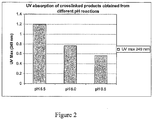
- Example 11 Degree of crosslinking can be controlled by pH.
- Example 12 Preparation of a gel from dehydrated crosslinked HA.
- Example 5 A portion of the dry crosslinked HA precipitate of Example 5 was milled in a cryogenic mill. The powder was suspended in dimethyl sulfoxide (DMSO) and the suspension was stirred for 4-10 hours. The suspension was centrifuged and the DMSO was removed. The water-insoluble crosslinked HA was re-suspended in ethanol, stirred for a few hours, and the ethanol was removed (the ethanol washing can be repeated if desired). After removing the ethanol, the solid was collected and dried under vacuum. The dried powder of the crosslinked HA was suspended in Phosphate Buffer 4 to make a 30-mg/mL suspension in the form of a slurry or paste.
- DMSO dimethyl sulfoxide
- the osmolarity of the suspension was adjusted to 280-340 mOsm (milliosmol) by adding NaCl and loaded into a syringe.
- the syringe was autoclaved at 120 °C at a pressure of about 138 kPa (kilopascal) (20-lb/in 2 ) for 25 minutes and cooled after sterilization with chilled water.
- the rheological behavior (including storage modulus G') of the gel in Example 12 was evaluated with a Rheometer AR-1000 (TA Instruments, New Castle, DE).
- the force required to extrude a gel can be characterized by loading the gel in a 1 mL glass syringe [having an internal diameter of 0.635 cm, equipped with a 30-gauge ( ⁇ 150 ⁇ m internal diameter, cross-sectional area of 0.0177 mm 2 ) needle.
- the force required to extrude the gel through the needle at a rate of 4 mL/h was measured by placing the syringe on a syringe pump mounted with a force sensor system (Load Cell SLB-50, Transducer Techniques, Temecula, CA). At about 25°C, and an extrusion rate of 4 mL/h, the extrusion force measured was 10.7 N (Newtons) (2.4 pounds).
- Durability of the crosslinked hyaluronic acid against enzymatic hydrolysis can be measured by an in vitro test by combining the gel with a measured amount of hyaluronidase enzyme, and recording the storage modulus as a function of time.
- hyaluronidase enzyme from bovine testes 15 ⁇ L of 0.15 mg/mL solution of hyaluronidase in 1.9 mM phosphate buffer
- the rate of decrease in storage modulus ⁇ G'/ ⁇ t can be calculated by dividing the value of ⁇ G' by the time interval,. This rate can represent the susceptibility of the product to enzymatic hydrolysis.
- the composition with greater stability maintains G' better than a composition with lesser stability.
- the average rate of loss of G' for the gel was about -5 Pa/hour.
- the composition in this example can be considered to be stable under the conditions of the test.
- a composition that is stable under these conditions can be expected to have good in vivo stability as well.
- the dry, precipitated crosslinked HA from Example-5 was milled in a cryogenic mill and washed with DMSO and ethanol as described in Example 12. After removing the ethanol, the solid was collected and dried under vacuum.
- the dried powder of the crosslinked HA was fractionated by average diameter according to five sieves: 25 ⁇ m, 75 ⁇ m, 125 ⁇ m, 180 ⁇ m, and 250 ⁇ m placed on the top of each other. Five average diameter fractions of particles were collected: 0-25 ⁇ m, 25-75 ⁇ m, 75-125 ⁇ m, 125-180 ⁇ m, and 180-250 ⁇ m. Each fraction was suspended in Phosphate Buffer 5 to make 32 mg/mL suspension.
- the osmolarity of the suspension was adjusted to 280-340 mOsm (miliosmol) and each suspension was loaded into a syringe.
- the syringes were autoclaved at 120 °C at a pressure of about 138 kPa (kilopascal) (20-lb/in 2 ) for about 45 minutes and subsequently cooled with chilled water.
- Figure 3 shows the storage modulus (G') for each gel, measured under the conditions described in Example-12. As can be seen from the figure-3, the rheological properties of these viscoelastic gels were dependent on the particle average diameter distribution and composition of the gels.
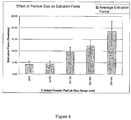
- Figure 4 shows the force required to extrude these gels through a 30 gauge needle according to the procedure described in Example 12. As can be seen in Figure 4 , the extrusion force of these viscoelastic gels was dependent on the particle average diameter distribution and composition of the gels.
- Example 17 Combining particle size fractions to achieve particular rheological properties.
- Example 5 The dry, precipitated, crosslinked HA from Example 5 was milled and washed as described in Example-12. A portion of the dried powder of the crosslinked HA was then sieved through a 250 ⁇ m sieve. All particles of less than 250 ⁇ m average diameter were collected and suspended in Phosphate Buffer 4 to make 32-mg/mL suspension.
- the storage modulus (G') for these gels was measured using the measuring conditions described in Example-12.
- the gel sample prepared from particles average diameters less than 250 ⁇ m had an initial G' of 600 Pa; the gel sample prepared from a 1:1 ratio of 250-125 ⁇ m and 125-0 ⁇ m particle average diameters had an initial G' of 450 Pa.
- Example 18 Storage Modulus versus degree of crosslinking.
- Example 12 A portion of the dry, precipitated, crosslinked HA from each of Examples 5 and 6 was milled and washed as described in Example 12. Each portion was sieved through a 250 ⁇ m sieve. Particles of less than about 250 ⁇ m average diameter were collected and suspended in Phosphate Buffer 4 to make a 32-mg/mL suspension.
- each suspension was adjusted to 280-340 mOsm (miliosmol) and loaded into a syringe.
- the syringes were autoclaved at 120 °C at a pressure of about 138 kPa (kilopascal) (20-lb/in 2 ) for about 20 minutes and subsequently cooled with chilled water.
- the storage modulus (G') for these gels was measured using the measuring conditions described in Example 12.
- the gel sample prepared from the composition of Example 5 had an initial G' of 700 Pa; the gel sample prepared from the crosslinked composition of Example 6 had an initial G' of 450 Pa. It can be seen that the composition having a higher degree of crosslinking according to the UV crosslinking measurements, the composition of Example 5, also shows a higher storage modulus.
- Example 19 ⁇ G'/ ⁇ t for Invention is superior to competitive products.
- Crosslinked HA obtained according Example 5 and processed according to Example 12 was made into a gel having a initial G' of 450 Pa.
- the resistance of this product and three competitive tissue augmentation products RESTYLANE®, PERLANE® (both Q-Med, Uppsala, Sweden), and HYLAFORM® (Genzyme, Cambridge, MA) to digestion with the hyaluronidase was evaluated.
- Hyaluronidase solution (15 ⁇ L of 0.15 mg/mL solution of hyaluronidase in 1.9 mM phosphate buffer in saline, ⁇ 2.5 units) was added and thoroughly mixed with 0.75 g of each product.
- Figure 5 shows G' for each product versus time. As can be seen, the rate of loss representing the susceptibility of the product to enzymatic hydrolysis for the invention is much less than that of the three competing compositions.
- Example 20 ⁇ G'/ ⁇ t of compositions versus hyaluronidase is independent of G'.
- Figure 6 shows ⁇ G'/ ⁇ t over a 16 h period for a range of crosslinked HA compositions having initial storage modulus values between about 200 to about 1200 Pa.
- the compositions are prepared and the measurements conducted according to the preceding Examples. As can be seen, the degradation of the crosslinked HA compositions is essentially independent of initial storage modulus G' over this 16 hour period.
- Lidocaine can have a synergistic effect and increase the initial storage modulus G' of the gel compared to otherwise identical compositions prepared in a buffer without lidocaine.
- Crosslinked HA of Example-5 was processed as in Example-12 using three separate phosphate buffers 1 (no lidocaine), 2 (0.2% lidocaine), and 3(0.3% lidocaine). Gels were made to 32-mg/mL concentrations and the storage modulus G' and degradation profile ⁇ G'/ ⁇ t of each was measured according to the method described in Example-12.
- Figure 7 shows that the compositions with lidocaine have a significantly higher modulus G' over the time of the test.
- crosslinked HA with lidocaine can have good biostability, and can in some cases have a synergistic effect, increasing G'.
- the crosslinked HA product used in the study was prepared according to the procedure described in Example 14.
- the crosslinked HA product and a control article, (ZYDERMTM II, Collagen, Palo Alto, CA) were injected intradermally.
- Each injection site (6 per time interval per sample) was measured for height and diameter at 2, 4-, 8 and 12-weeks. Specimens were explanted for histological evaluation at each time interval.
- each animal was clipped free of fur at least 1 hour before dosing.
- Each animal received six intradermal injections, three per side.
- the test article and control article were randomized over each animal. Both articles were dosed at 0.2 cc per site. Each site was marked with a non-toxic marker and injection sites were approximately 2 cm apart. In addition, each site was measured for height and diameter at each interval. The measurements immediately after injection were assigned a score of "0". An increase in height and diameter indicated edema.
- erythema scores were minimal (slight) and equally distributed between the test article and Zyderm II injection sites. Edema scores were inconsistent and equally distributed between the two materials. During week two, erythema scores were similar to week one. Edema scores were reduced with most dropping to zero. Injection site measurements at 4-weeks were equivalent to measurements taken immediately after injection.
- test article was flattened and extended laterally in all sites. However, in the more tissue dense areas of the dermis, the test article did not spread out to the degree as in the less dense areas. Fibroblasts and adipose tissue were located through out the test article at approximately the same density as the tissues adjacent to the injection site. The control article was not identified in any of the injection sites.
- test articles at 2, 4, 8 and 12-weeks were devoid of any microscopic tissue response, confirming the biocompatibility of this preparation.
- the test article appeared to integrate into the stromal elements of the dermis. Measurements of height and diameter were unchanged between 2 and 4 weeks.
- CTA seemed to extend laterally in the dermal layers, but still maintained its volume.
- the control article appeared as a homogeneous bolus of material compressing the underlying dermis. A minor macrophage infiltrate was observed in the control article at 4-weeks, and at 8-weeks most of the injection had resorbed from the injection site.
Landscapes
- Health & Medical Sciences (AREA)
- Chemical & Material Sciences (AREA)
- Public Health (AREA)
- General Health & Medical Sciences (AREA)
- Animal Behavior & Ethology (AREA)
- Life Sciences & Earth Sciences (AREA)
- Veterinary Medicine (AREA)
- Medicinal Chemistry (AREA)
- Pharmacology & Pharmacy (AREA)
- Epidemiology (AREA)
- Dermatology (AREA)
- Engineering & Computer Science (AREA)
- Bioinformatics & Cheminformatics (AREA)
- Emergency Medicine (AREA)
- Inorganic Chemistry (AREA)
- Neurosurgery (AREA)
- Biomedical Technology (AREA)
- General Chemical & Material Sciences (AREA)
- Transplantation (AREA)
- Nuclear Medicine, Radiotherapy & Molecular Imaging (AREA)
- Chemical Kinetics & Catalysis (AREA)
- Neurology (AREA)
- Dispersion Chemistry (AREA)
- Oral & Maxillofacial Surgery (AREA)
- Organic Chemistry (AREA)
- Medicinal Preparation (AREA)
- Acyclic And Carbocyclic Compounds In Medicinal Compositions (AREA)
- Pharmaceuticals Containing Other Organic And Inorganic Compounds (AREA)
- Materials For Medical Uses (AREA)
- Medicines Containing Material From Animals Or Micro-Organisms (AREA)
- Compositions Of Macromolecular Compounds (AREA)
- Medicines That Contain Protein Lipid Enzymes And Other Medicines (AREA)
- Medicines Containing Antibodies Or Antigens For Use As Internal Diagnostic Agents (AREA)
Claims (14)
- Produkt für die Verwendung in einem Verfahren zur Augmentation von Gewebe in einem Subjekt, das der Gewebeaugmentation bedarf, wobei das Verfahren Folgendes umfasst:a) Einführen einer Nadel in ein Subjekt an einer Stelle in dem Subjekt, die der Gewebeaugmentation bedarf, wobei die Nadel mit einer Spritze gekoppelt ist, die mit einer Zusammensetzung aus vernetzter Hyaluronsäure (HA) geladen ist, welche vernetzte, wasserunlösliche, hydrierte HA-Gelpartikel beinhaltet,
wobei die vernetzte HA-Zusammensetzung eine einzelne Phase aus hydrierten Partikeln ist und wobei die HA Vernetzungen beinhaltet, die durch die folgende Strukturformel dargestellt sind:
HA'-U-R2-U-HA'
wobei:
jedes HA' das gleiche oder ein anderes vernetztes HA'-Molekül ist,
jedes U unabhängig ein optional substituiertes O-Acylisourea oder N-Acylurea ist und
R2 optional substituiertes Alkyl, Alkenyl, Alkynyl, Alkoxy, Cycloalkyl, Cycloalkenyl, Cycloalkynyl, Aryl, Heteroaryl, Heterocyclyl, cycloaliphatisches Alkyl, Aralkyl, Heteroaralkyl oder Heterocyclylalkyl ist, undb) Ausüben von Kraft auf die Spritze, wodurch mindestens ein Teil der vernetzten HA-Zusammensetzung an das Subjekt abgegeben wird,wobei die vernetzte HA-Zusammensetzung in dem Subjekt für mindestens 8 Wochen stabil ist. - Stabilisierte Hyaluronsäure-(HA)-Zusammensetzung zur Gewebeaugmentation, vernetzte, wasserunlösliche, hydrierte HA-Gelpartikel und ein Lokalanästhetikum umfassend, wobei die vernetzte HA-Zusammensetzung eine einzelne Phase aus hydrierten Partikeln ist und wobei die HA Vernetzungen beinhaltet, die durch die folgende Strukturformel dargestellt sind:
HA'-U-R2-U-HA'
wobei:jedes HA' das gleiche oder ein anderes vernetztes HA'-Molekül ist,jedes U unabhängig ein optional substituiertes O-Acylisourea oder N-Acylurea ist undR2 optional substituiertes Alkyl, Alkenyl, Alkynyl, Alkoxy, Cycloalkyl, Cycloalkenyl, Cycloalkynyl, Aryl, Heteroaryl, Heterocyclyl, cycloaliphatisches Alkyl, Aralkyl, Heteroaralkyl oder Heterocyclylalkyl ist. - Zusammensetzung nach Anspruch 2, wobei ein Speichermodul G' der Zusammensetzung bei einer Messung bei einer Frequenz von 1 Hz unter Verwendung einer 4-cm-Flachgeometrie, eines Spalts von 200 µm in einem Rheometer AR-1000 (TA Instruments, New Castle, Delaware, USA) für die stabilisierte HA-Zusammensetzung im Vergleich mit einer nicht stabilisierten HA-Zusammensetzung, der das Lokalanästhetikum fehlt, größer ist.
- Zusammensetzung nach Anspruch 2 oder Anspruch 3, vernetzte, wasserunlösliche, hydrierte HA-Gelpartikel umfassend, wobei die HA Vernetzungen beinhaltet, die durch die folgende Strukturformel dargestellt sind:
HA'-U-R2-U-HA'
wobei:jedes HA' das gleiche oder ein anderes vernetztes HA'-Molekül ist,jedes U unabhängig ein optional substituiertes O-Acylisourea oder N-Acylurea ist,R2 optional substituiertes Alkyl, Alkenyl, Alkynyl, Alkoxy, Cycloalkyl, Cycloalkenyl, Cycloalkynyl, Aryl, Heteroaryl, Heterocyclyl, cycloaliphatisches Alkyl, Aralkyl, Heteroaralkyl oder Heterocyclylalkyl ist. - Zusammensetzung nach einem der Ansprüche 2 bis 4, wobei das Lokalanästhetikum in einer Menge von mindestens 0,1 Gew.-% vorhanden ist.
- Zusammensetzung nach einem der Ansprüche 2 bis 5, wobei der Wert des Speichermoduls G' für die stabilisierte Zusammensetzung bei einer Messung bei 37 °C und bei einer Frequenz von 1 Hz unter Verwendung einer 4-cm-Flachgeometrie in einem Rheometer AR-1000 (TA Instruments, New Castle, Delaware, USA) mindestens etwa 110 % des Wertes von G' beträgt, der für eine nicht stabilisierte Zusammensetzung gemessen wurde.
- Zusammensetzung nach einem der Ansprüche 2 bis 6, wobei die Partikel eine Verteilung des mittleren Partikeldurchmessers aufweisen, die aus der Gruppe ausgewählt ist, die aus Folgendem besteht:einem mittleren Durchmesser der hydrierten Partikel zwischen etwa 20 µm und etwa 1000 µm undeinem mittleren Durchmesser der dehydrierten Partikel zwischen etwa 10 µm und etwa 500 µm.
- Zusammensetzung nach einem der Ansprüche 2 bis 7, wobei die stabilisierte HA-Zusammensetzung gegenüber enzymatischer Zersetzung ausreichend stabil ist, so dass nach Kombination der Zusammensetzung bei 37 °C mit einem Hyaluronidaseenzym in einer Menge von etwa 0,3 Gew.-% unter für eine Reaktion mit Hyaluronidase geeigneten Bedingungen bei einer Messung in einem Rheometer AR-1000 (TA Instruments, New Castle, Delaware, USA) bei einer Frequenz von 1 Hz unter Verwendung einer 4-cm-Flachgeometrie der nach 16-stündiger Reaktion gemessene Wert von G' mindestens etwa 5 % des Wertes von G' beträgt, der nach weniger als etwa 15-minütiger Reaktion gemessen wurde.
- Zusammensetzung nach einem der Ansprüche 2 bis 8, wobei die stabilisierte HA-Zusammensetzung ferner ein bioaktives Mittel umfasst.
- Zusammensetzung nach einem der Ansprüche 2 bis 9 zur Verwendung in der Therapie.
- Zusammensetzung nach Anspruch 10, wobei die Therapie die Augmentation von Gewebe in einem Subjekt umfasst, das der Gewebeaugmentation bedarf, durch:a) Einführen einer Nadel in ein Subjekt an einer Stelle in dem Subjekt, die der Gewebeaugmentation bedarf, wobei die Nadel mit einer Spritze gekoppelt ist, die mit einer vernetzten HA-Zusammensetzung geladen ist,b) Ausüben von Kraft auf die Spritze, wodurch mindestens ein Teil der vernetzten HA-Zusammensetzung an das Subjekt abgegeben wird, und wobei das Subjekt optional menschlich ist.
- Verfahren zur Augmentation von Gewebe bei einem Subjekt, das der Gewebeaugmentation bedarf, nach Anspruch 1, wobei die vernetzte HA-Zusammensetzung eine Zusammensetzung nach einem der Ansprüche 2 bis 11 ist.
- Verfahren nach Anspruch 1 oder Anspruch 12, wobei die Zusammensetzung durch eine 30-G-Nadel injiziert wird.
- Vorgefüllte, sterilisierte Spritze für die Augmentation von Gewebe in einem Subjekt, das der Gewebeaugmentation bedarf, eine Zusammensetzung nach einem der Ansprüche 2 bis 11 enthaltend.
Applications Claiming Priority (2)
| Application Number | Priority Date | Filing Date | Title |
|---|---|---|---|
| US10/743,557 US8124120B2 (en) | 2003-12-22 | 2003-12-22 | Crosslinked hyaluronic acid compositions for tissue augmentation |
| EP03819294.4A EP1699500B1 (de) | 2003-12-22 | 2003-12-23 | Vernetzte hyaluronsäure-zusammensetzungen für die gewebeverstärkung |
Related Parent Applications (3)
| Application Number | Title | Priority Date | Filing Date |
|---|---|---|---|
| EP03819294.4 Division | 2003-12-23 | ||
| EP03819294.4A Division-Into EP1699500B1 (de) | 2003-12-22 | 2003-12-23 | Vernetzte hyaluronsäure-zusammensetzungen für die gewebeverstärkung |
| EP03819294.4A Division EP1699500B1 (de) | 2003-12-22 | 2003-12-23 | Vernetzte hyaluronsäure-zusammensetzungen für die gewebeverstärkung |
Publications (2)
| Publication Number | Publication Date |
|---|---|
| EP2656833A1 EP2656833A1 (de) | 2013-10-30 |
| EP2656833B1 true EP2656833B1 (de) | 2018-03-14 |
Family
ID=34678675
Family Applications (2)
| Application Number | Title | Priority Date | Filing Date |
|---|---|---|---|
| EP03819294.4A Expired - Lifetime EP1699500B1 (de) | 2003-12-22 | 2003-12-23 | Vernetzte hyaluronsäure-zusammensetzungen für die gewebeverstärkung |
| EP13163971.8A Expired - Lifetime EP2656833B1 (de) | 2003-12-22 | 2003-12-23 | Vernetzte Hyaluronsäurezusammensetzungen zur Gewebeaugmentation |
Family Applications Before (1)
| Application Number | Title | Priority Date | Filing Date |
|---|---|---|---|
| EP03819294.4A Expired - Lifetime EP1699500B1 (de) | 2003-12-22 | 2003-12-23 | Vernetzte hyaluronsäure-zusammensetzungen für die gewebeverstärkung |
Country Status (13)
| Country | Link |
|---|---|
| US (1) | US8124120B2 (de) |
| EP (2) | EP1699500B1 (de) |
| JP (1) | JP4594866B2 (de) |
| KR (1) | KR20060127897A (de) |
| CN (1) | CN100441241C (de) |
| AU (2) | AU2003300392C1 (de) |
| BR (1) | BRPI0318680B8 (de) |
| CA (1) | CA2551121C (de) |
| DK (2) | DK2656833T3 (de) |
| MX (1) | MXPA06007250A (de) |
| RU (1) | RU2351367C9 (de) |
| WO (1) | WO2005067994A1 (de) |
| ZA (1) | ZA200605025B (de) |
Families Citing this family (129)
| Publication number | Priority date | Publication date | Assignee | Title |
|---|---|---|---|---|
| WO2003094937A1 (en) * | 2002-05-09 | 2003-11-20 | Medigenes | A pharmaceutical composition for treatment of wounds containing blood plasma or serum |
| US7338433B2 (en) | 2002-08-13 | 2008-03-04 | Allergan, Inc. | Remotely adjustable gastric banding method |
| BR0306183A (pt) | 2002-08-28 | 2004-10-19 | Inamed Medical Products Corp | Dispositivo de enfaixamento gástrico resistente à fadiga |
| FR2861734B1 (fr) | 2003-04-10 | 2006-04-14 | Corneal Ind | Reticulation de polysaccharides de faible et forte masse moleculaire; preparation d'hydrogels monophasiques injectables; polysaccharides et hydrogels obtenus |
| MXPA06008256A (es) | 2004-01-23 | 2007-02-20 | Allergan Inc | Banda gastrica ajustable de una sola pieza que se asegura de manera liberable. |
| ATE444045T1 (de) | 2004-03-08 | 2009-10-15 | Allergan Medical S A | Verschlusssystem für röhrenförmige organe |
| WO2005094257A2 (en) | 2004-03-18 | 2005-10-13 | Inamed Medical Products Corporation | Apparatus and method for volume adjustment of intragastric balloons |
| US20050226936A1 (en) * | 2004-04-08 | 2005-10-13 | Q-Med Ab | Method of soft tissue augmentation |
| US8251888B2 (en) | 2005-04-13 | 2012-08-28 | Mitchell Steven Roslin | Artificial gastric valve |
| US7323184B2 (en) * | 2005-08-22 | 2008-01-29 | Healagenics, Inc. | Compositions and methods for the treatment of wounds and the reduction of scar formation |
| EP3028677A1 (de) | 2005-12-14 | 2016-06-08 | Anika Therapeutics Inc. | Behandlung von arthritis und anderen muskoloskeletalen erkrankungen mit vernetzter hyaluronsäure |
| CA2633954A1 (en) * | 2005-12-14 | 2007-06-21 | Anika Therapeutics, Inc. | Meniscal implant of hyaluronic acid derivatives for treatment of meniscal defects |
| EP1968614A2 (de) | 2005-12-14 | 2008-09-17 | Anika Therapeutics Inc. | Behandlung von arthritis und andere muskel-und knochen-erkrankungen mit vernetzter hyaluronsäure |
| US8043206B2 (en) | 2006-01-04 | 2011-10-25 | Allergan, Inc. | Self-regulating gastric band with pressure data processing |
| US7798954B2 (en) | 2006-01-04 | 2010-09-21 | Allergan, Inc. | Hydraulic gastric band with collapsible reservoir |
| US8853361B2 (en) | 2006-08-02 | 2014-10-07 | Khorionyx | Preparation, for use, in particular, for tissue augmentation and healing |
| CA2642940A1 (en) * | 2006-12-22 | 2008-07-03 | Mathys Ag Bettlach | Precursor for the preparation of a pasty bone replacement material by admixture of a liquid |
| AU2008256864A1 (en) * | 2007-05-23 | 2008-12-04 | Allergan, Inc. | Coated hyaluronic acid particles |
| EP2152743A2 (de) * | 2007-05-23 | 2010-02-17 | Allergan, Inc. | Quervernetztes collagen und anwendungen davon |
| US8658148B2 (en) | 2007-06-22 | 2014-02-25 | Genzyme Corporation | Chemically modified dendrimers |
| US20110077737A1 (en) * | 2007-07-30 | 2011-03-31 | Allergan, Inc. | Tunably Crosslinked Polysaccharide Compositions |
| US8318695B2 (en) * | 2007-07-30 | 2012-11-27 | Allergan, Inc. | Tunably crosslinked polysaccharide compositions |
| ES2429794T3 (es) | 2007-08-15 | 2013-11-15 | Metamorefix | Péptidos y composiciones farmacéuticas para tratar tejido conjuntivo |
| US8697044B2 (en) | 2007-10-09 | 2014-04-15 | Allergan, Inc. | Crossed-linked hyaluronic acid and collagen and uses thereof |
| EP3498299A1 (de) | 2007-11-16 | 2019-06-19 | Aclaris Therapeutics, Inc. | Zusammensetzungen und verfahren zur behandlung von purpura |
| US20090143348A1 (en) * | 2007-11-30 | 2009-06-04 | Ahmet Tezel | Polysaccharide gel compositions and methods for sustained delivery of drugs |
| US8394784B2 (en) | 2007-11-30 | 2013-03-12 | Allergan, Inc. | Polysaccharide gel formulation having multi-stage bioactive agent delivery |
| US8394782B2 (en) | 2007-11-30 | 2013-03-12 | Allergan, Inc. | Polysaccharide gel formulation having increased longevity |
| US20090269417A1 (en) * | 2008-04-24 | 2009-10-29 | Medtronic, Inc. | Thiolated chitosan gel |
| US9198997B2 (en) * | 2008-04-24 | 2015-12-01 | Medtronic, Inc. | Rehydratable thiolated polysaccharide particles and sponge |
| EP2310002B1 (de) | 2008-04-24 | 2016-11-02 | Medtronic, Inc | Schutzgel auf basis von chitosan und oxidiertem polysaccharid |
| EP2288389B1 (de) * | 2008-04-24 | 2014-06-11 | Medtronic, Inc | Kaltsterilisation mit ionisierender strahlung |
| WO2009134511A1 (en) * | 2008-04-28 | 2009-11-05 | Elc Management Llc | Topical compositions for improving appearance of keratinous surfaces |
| US8574629B2 (en) * | 2008-08-01 | 2013-11-05 | Anteis S.A. | Injectable hydrogel with an enhanced remanence and with an enhanced ability to create volume |
| AU2015252122A1 (en) * | 2008-08-04 | 2015-11-26 | Allergan Industrie Sas | Hyaluronic acid-based gels including anesthetic agents |
| US8450475B2 (en) * | 2008-08-04 | 2013-05-28 | Allergan, Inc. | Hyaluronic acid-based gels including lidocaine |
| JP5751657B2 (ja) * | 2008-08-08 | 2015-07-22 | 関西ペイント株式会社 | 水性塗料組成物 |
| CN102223889A (zh) * | 2008-08-29 | 2011-10-19 | 南希·约瑟芬·波利克 | 顺势疗法的治疗方法 |
| JP5722217B2 (ja) | 2008-09-02 | 2015-05-20 | アラーガン・ホールディングス・フランス・ソシエテ・パール・アクシオン・サンプリフィエAllergan Holdings France S.A.S. | ヒアルロン酸および/またはその誘導体の糸、その作製方法、ならびにその使用 |
| US20100305397A1 (en) * | 2008-10-06 | 2010-12-02 | Allergan Medical Sarl | Hydraulic-mechanical gastric band |
| WO2010042493A1 (en) | 2008-10-06 | 2010-04-15 | Allergan, Inc. | Mechanical gastric band with cushions |
| US20100185049A1 (en) | 2008-10-22 | 2010-07-22 | Allergan, Inc. | Dome and screw valves for remotely adjustable gastric banding systems |
| CZ2008705A3 (cs) | 2008-11-06 | 2010-04-14 | Cpn S. R. O. | Zpusob prípravy DTPA sítovaných derivátu kyseliny hyaluronové a jejich modifikace |
| FR2938187B1 (fr) | 2008-11-07 | 2012-08-17 | Anteis Sa | Composition injectable a base d'acide hyaluronique ou l'un de ses sels, de polyols et de lidocaine, sterilisee a la chaleur |
| EP2370803A2 (de) * | 2008-12-03 | 2011-10-05 | The United States Government As Represented By The Department Of Veterans Affairs | Druckunterstützte molekulare wiederherstellung wie von biomolekülen, druckunterstützte antigenrückgewinnung und druckunterstützte gewebehistologie |
| CA2757557C (en) * | 2009-04-02 | 2017-06-27 | Allergan, Inc. | Hair-like shaped hydrogels for soft tissue augmentation |
| US8390326B2 (en) * | 2009-05-05 | 2013-03-05 | William Marsh Rice University | Method for fabrication of a semiconductor element and structure thereof |
| US20120264689A1 (en) * | 2009-10-07 | 2012-10-18 | Genogen, Inc. | Methods and compositions for skin regeneration |
| US20110171310A1 (en) * | 2010-01-13 | 2011-07-14 | Allergan Industrie, Sas | Hydrogel compositions comprising vasoconstricting and anti-hemorrhagic agents for dermatological use |
| US20110172180A1 (en) | 2010-01-13 | 2011-07-14 | Allergan Industrie. Sas | Heat stable hyaluronic acid compositions for dermatological use |
| US20110171286A1 (en) * | 2010-01-13 | 2011-07-14 | Allergan, Inc. | Hyaluronic acid compositions for dermatological use |
| US9114188B2 (en) | 2010-01-13 | 2015-08-25 | Allergan, Industrie, S.A.S. | Stable hydrogel compositions including additives |
| US20110171311A1 (en) * | 2010-01-13 | 2011-07-14 | Allergan Industrie, Sas | Stable hydrogel compositions including additives |
| US8758221B2 (en) | 2010-02-24 | 2014-06-24 | Apollo Endosurgery, Inc. | Source reservoir with potential energy for remotely adjustable gastric banding system |
| US8840541B2 (en) * | 2010-02-25 | 2014-09-23 | Apollo Endosurgery, Inc. | Pressure sensing gastric banding system |
| CA2792729C (en) | 2010-03-12 | 2016-06-28 | Allergan Industrie, Sas | Fluid compositions for improving skin conditions |
| HUE030138T2 (en) | 2010-03-22 | 2017-04-28 | Allergan Inc | Polysaccharide and protein-polysaccharide cross-linked hydrogels for soft tissue augmentation |
| US9028394B2 (en) | 2010-04-29 | 2015-05-12 | Apollo Endosurgery, Inc. | Self-adjusting mechanical gastric band |
| US20110270024A1 (en) | 2010-04-29 | 2011-11-03 | Allergan, Inc. | Self-adjusting gastric band having various compliant components |
| US9044298B2 (en) | 2010-04-29 | 2015-06-02 | Apollo Endosurgery, Inc. | Self-adjusting gastric band |
| US20110270025A1 (en) | 2010-04-30 | 2011-11-03 | Allergan, Inc. | Remotely powered remotely adjustable gastric band system |
| WO2011148116A2 (fr) * | 2010-05-27 | 2011-12-01 | Laboratoire Idenov | Acide hyaluronique modifie, procede de fabrication et utilisations |
| US8517915B2 (en) | 2010-06-10 | 2013-08-27 | Allergan, Inc. | Remotely adjustable gastric banding system |
| JP2013530785A (ja) * | 2010-07-12 | 2013-08-01 | シン・プーン・ファーマシューティカル・カンパニー・リミテッド | 組織増大用充填組成物 |
| JP2013533362A (ja) * | 2010-07-29 | 2013-08-22 | ユニバーシティ オブ ジュネーブ | ヒアルロン酸の疎水性有機化合物とのエステル化用のプロセス |
| US8883139B2 (en) | 2010-08-19 | 2014-11-11 | Allergan Inc. | Compositions and soft tissue replacement methods |
| US8697057B2 (en) | 2010-08-19 | 2014-04-15 | Allergan, Inc. | Compositions and soft tissue replacement methods |
| US8889123B2 (en) | 2010-08-19 | 2014-11-18 | Allergan, Inc. | Compositions and soft tissue replacement methods |
| US9005605B2 (en) | 2010-08-19 | 2015-04-14 | Allergan, Inc. | Compositions and soft tissue replacement methods |
| US20120059216A1 (en) | 2010-09-07 | 2012-03-08 | Allergan, Inc. | Remotely adjustable gastric banding system |
| KR101223652B1 (ko) * | 2010-10-07 | 2013-01-17 | 주식회사 한국비엔씨 | 히알루론산 유도체의 입자 제조 장치 및 방법 |
| US8961393B2 (en) | 2010-11-15 | 2015-02-24 | Apollo Endosurgery, Inc. | Gastric band devices and drive systems |
| EP2484387A1 (de) | 2011-02-03 | 2012-08-08 | Q-Med AB | Hyaluronsäurezusammensetzung |
| US10022335B2 (en) | 2011-03-03 | 2018-07-17 | Nancy Josephine Polich | Homeopathic therapeutic method and compositions |
| US9597412B2 (en) | 2011-03-16 | 2017-03-21 | University Of Delaware | Injectable delivery system for heparan-binding growth factors |
| US9408797B2 (en) | 2011-06-03 | 2016-08-09 | Allergan, Inc. | Dermal filler compositions for fine line treatment |
| US20130096081A1 (en) | 2011-06-03 | 2013-04-18 | Allergan, Inc. | Dermal filler compositions |
| US9393263B2 (en) | 2011-06-03 | 2016-07-19 | Allergan, Inc. | Dermal filler compositions including antioxidants |
| AU2012262047A1 (en) | 2011-06-03 | 2014-01-16 | Allergan, Inc. | Dermal filler compositions including antioxidants |
| US20130244943A1 (en) | 2011-09-06 | 2013-09-19 | Allergan, Inc. | Hyaluronic acid-collagen matrices for dermal filling and volumizing applications |
| US9662422B2 (en) | 2011-09-06 | 2017-05-30 | Allergan, Inc. | Crosslinked hyaluronic acid-collagen gels for improving tissue graft viability and soft tissue augmentation |
| KR20220013588A (ko) * | 2011-09-14 | 2022-02-04 | 알러간, 인코포레이티드 | 잔주름 치료를 위한 진피 필러 조성물 |
| US8876694B2 (en) | 2011-12-07 | 2014-11-04 | Apollo Endosurgery, Inc. | Tube connector with a guiding tip |
| US8961394B2 (en) | 2011-12-20 | 2015-02-24 | Apollo Endosurgery, Inc. | Self-sealing fluid joint for use with a gastric band |
| CN102552974A (zh) * | 2012-02-17 | 2012-07-11 | 上海白衣缘生物工程有限公司 | 皮肤注射填充用凝胶组合物及其制备 |
| IN2014DN10147A (de) * | 2012-06-15 | 2015-08-21 | Merz Pharma Gmbh & Co Kgaa | |
| WO2014165113A1 (en) * | 2013-03-12 | 2014-10-09 | Allergan Holdings France S.A.S. | Cross-linked hyaluronic acid threads for treatment of striae |
| ITMI20131193A1 (it) * | 2013-07-16 | 2015-01-17 | Ira Srl | Acido ialuronico reticolato, processo per la sua preparazione ed applicazioni in ambito estetico |
| US9421198B2 (en) | 2013-07-30 | 2016-08-23 | Teoxane | Composition comprising hyaluronic acid and mepivacaine |
| CA2920835A1 (en) | 2013-08-20 | 2015-02-26 | Anutra Medical, Inc. | Syringe fill system and method |
| WO2015043757A1 (en) * | 2013-09-27 | 2015-04-02 | Anteis S.A. | Method for obtaining an injectable hydrogel based on hyaluronic acid containing lidocaine added in powder form, and an alkaline agent, sterilized with heat |
| US9192692B2 (en) | 2013-10-24 | 2015-11-24 | Medtronic Xomed, Inc. | Chitosan stenting paste |
| US9192574B2 (en) | 2013-10-24 | 2015-11-24 | Medtronic Xomed, Inc. | Chitosan paste wound dressing |
| FR3015290B1 (fr) * | 2013-12-23 | 2017-01-13 | Lab Vivacy | Compositions d'acide hyaluronique compreant de la mepivacaine |
| WO2015149177A1 (en) | 2014-04-01 | 2015-10-08 | Klox Technologies Inc. | Tissue filler compositions and methods of use |
| USD763433S1 (en) | 2014-06-06 | 2016-08-09 | Anutra Medical, Inc. | Delivery system cassette |
| USD750768S1 (en) | 2014-06-06 | 2016-03-01 | Anutra Medical, Inc. | Fluid administration syringe |
| USD774182S1 (en) | 2014-06-06 | 2016-12-13 | Anutra Medical, Inc. | Anesthetic delivery device |
| WO2016051219A1 (en) | 2014-09-30 | 2016-04-07 | Allergan Industrie, Sas | Stable hydrogel compositions including additives |
| WO2016128783A1 (en) | 2015-02-09 | 2016-08-18 | Allergan Industrie Sas | Compositions and methods for improving skin appearance |
| EP3653232A1 (de) | 2015-02-13 | 2020-05-20 | Allergan Industrie, SAS | Implantate zur formung, verstärkung oder korrektur von gesichtszügen wie etwa dem kinn |
| FR3036035B1 (fr) | 2015-05-11 | 2018-10-05 | Laboratoires Vivacy | Compositions comprenant au moins un polyol et au moins un anesthesique |
| US10004824B2 (en) | 2015-05-11 | 2018-06-26 | Laboratoires Vivacy | Compositions comprising at least one polyol and at least one anesthetic |
| GB201508024D0 (en) * | 2015-05-11 | 2015-06-24 | Haemostatix Ltd | Haemostatic compositions |
| WO2017001057A1 (en) | 2015-06-30 | 2017-01-05 | Merz Pharma Gmbh & Co. Kgaa | Method of preparing a composition based on hyaluronic acid |
| KR20170090965A (ko) * | 2016-01-29 | 2017-08-08 | 한미약품 주식회사 | 복합 히알루론산 가교물 및 그 제조방법 |
| JP6654057B2 (ja) * | 2016-02-10 | 2020-02-26 | 国立大学法人 筑波大学 | 局所麻酔薬を含有するポリイオンコンプレックスを有効成分とする局所疼痛制御用組成物 |
| AU2017257956B2 (en) | 2016-04-27 | 2019-11-07 | Anika Therapeutics, Inc. | Compositions for use in treating tendon degeneration |
| EP4736897A2 (de) * | 2016-05-12 | 2026-05-06 | Insitu Biologics, Inc. | Hydrogelbasiertes vehikel zur freisetzung eines biologikums |
| KR101660211B1 (ko) * | 2016-06-07 | 2016-09-26 | 동국제약 주식회사 | 단일상과 이성상의 특성을 동시에 갖는 히알루론산 가교체, 이의 제조 방법 및 이의 용도 |
| WO2018032116A1 (en) * | 2016-08-18 | 2018-02-22 | Prollenium Medical Technologies, Inc. | Hyaluronic acid gel with high average diameter particle size, a consumer package containing the gel and a use thereof |
| KR20180035032A (ko) * | 2016-09-28 | 2018-04-05 | 주식회사 파마리서치프로덕트 | 가교 히알루론산을 포함하는 주사용 조성물 |
| FR3058064B1 (fr) | 2016-10-28 | 2020-08-07 | Lab Vivacy | Composition a base d'acide hyaluronique comprenant de la mepivacaine |
| ES2993733T3 (en) * | 2017-02-28 | 2025-01-08 | Cg Bio Co Ltd | Composition for skin injection |
| ES2992541T3 (es) | 2017-02-28 | 2024-12-13 | Cg Bio Co Ltd | Composición para inyección dérmica |
| JP6887514B2 (ja) * | 2017-02-28 | 2021-06-16 | シージー バイオ カンパニー,リミテッド | 皮膚注入用組成物 |
| IL269506B2 (en) | 2017-03-22 | 2024-04-01 | Genentech Inc | Hydrogel cross-linked hyaluronic acid prodrug compositions and methods |
| US12186319B2 (en) * | 2017-05-10 | 2025-01-07 | University Of Massachusetts | Crosslinked polymer nanoparticles for targeted cellular uptake and therapeutics, and compositions and methods thereof |
| JP7206281B2 (ja) * | 2017-10-12 | 2023-01-17 | ソリープラス ゲゼルシャフト ミット ベシュレンクテル ハフツング | 生体高分子の機械的加工 |
| IL275811B2 (en) | 2018-01-02 | 2025-05-01 | Cartiheal 2009 Ltd | A tool and protocol for optimal implantation of a solid implant that promotes cell and tissue growth |
| IL306070A (en) | 2018-05-03 | 2023-11-01 | Collplant Ltd | Dermal fillers and their uses |
| BR112021000361B1 (pt) * | 2018-07-10 | 2023-12-05 | Lg Chem, Ltd | Enchimentos de hidrogel de ácido hialurônico com alta capacidade de levantamento e baixa força de injeção, método para preparação dos mesmos, seringa pré enchida, biomaterial para aumentar o tecido mole e usos dos ditos enchimentos para aumentar o tecido mole e melhorar as rugas |
| SI3897763T1 (sl) * | 2018-12-21 | 2025-10-30 | Galderma Holding SA | Hidrogelni sestavki za inkapsuliranje trdnih delcev |
| EP3976123A1 (de) | 2019-05-31 | 2022-04-06 | University College Dublin | Hyaluronsäurebasiertes hybridhydrogel |
| FR3111903B1 (fr) | 2020-06-24 | 2022-12-02 | Lab Vivacy | Procede d’incorporation de composes organiques en solution au sein d’un hydrogel |
| KR102581434B1 (ko) | 2021-02-09 | 2023-09-22 | (주)제테마 | 히알루론산 필러 조성물의 제조에 사용되는 용액 및 이를 이용한 히알루론산 필러 조성물 |
| CN117915933A (zh) | 2021-09-01 | 2024-04-19 | 上海其胜生物制剂有限公司 | 使用含有软骨细胞或干细胞的可注射可原位聚合胶原组合物进行软骨再生 |
| US12304974B2 (en) | 2021-12-28 | 2025-05-20 | Shanghai Qisheng Biological Preparation Co., Ltd. | Hyaluronic acid-collagen copolymer compositions and medical applications thereof |
| CN115721615B (zh) * | 2022-11-17 | 2024-08-30 | 华熙生物科技股份有限公司 | 一种透明质酸颗粒及其制备方法 |
Family Cites Families (61)
| Publication number | Priority date | Publication date | Assignee | Title |
|---|---|---|---|---|
| US2946819A (en) | 1958-04-14 | 1960-07-26 | Gen Aniline & Film Corp | Process of producing carbodimides |
| DE1156401B (de) | 1960-05-24 | 1963-10-31 | Bayer Ag | Verfahren zur Herstellung von Carbodiimiden |
| DE1149712B (de) | 1961-11-14 | 1963-06-06 | Bayer Ag | Verfahren zur Herstellung von Carbodiimiden |
| US3644456A (en) | 1964-08-12 | 1972-02-22 | Upjohn Co | Di((isocyanatobenzyl)-phenyl) carbodiimides and preparation of organic carbodiimides |
| US3972933A (en) | 1974-05-28 | 1976-08-03 | Monsanto Company | Preparation of carbodiimides from ureas by dehydration |
| US3949073A (en) | 1974-11-18 | 1976-04-06 | The Board Of Trustees Of Leland Stanford Junior University | Process for augmenting connective mammalian tissue with in situ polymerizable native collagen solution |
| GB1476088A (en) | 1975-04-03 | 1977-06-10 | Ici Ltd | Carbodiimides |
| DE2556760A1 (de) | 1975-12-17 | 1977-06-30 | Hoechst Ag | Verfahren zur herstellung von carbodiimiden |
| GB1584153A (en) | 1976-09-22 | 1981-02-04 | Ici Ltd | Carbodimides |
| US4066629A (en) | 1976-10-28 | 1978-01-03 | Celanese Corporation | Process for preparing carbodiimides utilizing a phosphonium salt catalyst |
| US4098973A (en) | 1977-01-31 | 1978-07-04 | The Upjohn Company | Compounds and process |
| US4494080A (en) | 1981-11-16 | 1985-01-15 | International Business Machines Corporation | Voltage-controlled oscillator with independent gain and frequency controls |
| US4424208A (en) | 1982-01-11 | 1984-01-03 | Collagen Corporation | Collagen implant material and method for augmenting soft tissue |
| US4582640A (en) | 1982-03-08 | 1986-04-15 | Collagen Corporation | Injectable cross-linked collagen implant material |
| US5128326A (en) | 1984-12-06 | 1992-07-07 | Biomatrix, Inc. | Drug delivery systems based on hyaluronans derivatives thereof and their salts and methods of producing same |
| US4780414A (en) | 1985-01-18 | 1988-10-25 | Bio-Technology General Corp. | Method of producing high molecular weight sodium hyallronate by fermentation of streptococcus |
| US4851521A (en) | 1985-07-08 | 1989-07-25 | Fidia, S.P.A. | Esters of hyaluronic acid |
| SE452469B (sv) | 1986-06-18 | 1987-11-30 | Pharmacia Ab | Material bestaende av en tverbunden karboxylgrupphaltig polysackarid och forfarande vid framstellning av detsamma |
| US4803075A (en) | 1986-06-25 | 1989-02-07 | Collagen Corporation | Injectable implant composition having improved intrudability |
| IT1198449B (it) | 1986-10-13 | 1988-12-21 | F I D I Farmaceutici Italiani | Esteri di alcoli polivalenti di acido ialuronico |
| US6174999B1 (en) | 1987-09-18 | 2001-01-16 | Genzyme Corporation | Water insoluble derivatives of polyanionic polysaccharides |
| US4937270A (en) | 1987-09-18 | 1990-06-26 | Genzyme Corporation | Water insoluble derivatives of hyaluronic acid |
| IT1219587B (it) | 1988-05-13 | 1990-05-18 | Fidia Farmaceutici | Polisaccaridi carbossiilici autoreticolati |
| US5306500A (en) | 1988-11-21 | 1994-04-26 | Collagen Corporation | Method of augmenting tissue with collagen-polymer conjugates |
| US5258028A (en) | 1988-12-12 | 1993-11-02 | Ersek Robert A | Textured micro implants |
| EP0416250A3 (en) * | 1989-08-01 | 1991-08-28 | The Research Foundation Of State University Of New York | N-acylurea and o-acylisourea derivatives of hyaluronic acid |
| US5356883A (en) | 1989-08-01 | 1994-10-18 | Research Foundation Of State University Of N.Y. | Water-insoluble derivatives of hyaluronic acid and their methods of preparation and use |
| US5143724A (en) | 1990-07-09 | 1992-09-01 | Biomatrix, Inc. | Biocompatible viscoelastic gel slurries, their preparation and use |
| US5246698A (en) | 1990-07-09 | 1993-09-21 | Biomatrix, Inc. | Biocompatible viscoelastic gel slurries, their preparation and use |
| IT1247472B (it) | 1991-05-31 | 1994-12-17 | Fidia Spa | Processo per la preparazione di microsfere contenenti componenti biologicamente attivi. |
| DE4200080A1 (de) | 1992-01-03 | 1993-09-30 | Reinmueller Johannes | Pharmazeutische Zusammensetzung zur Wund-, Narben- und Keloidbehandlung |
| FR2694895B1 (fr) | 1992-08-20 | 1994-11-10 | Coletica | Procédé de fabrication de microparticules en émulsion par modification de la composition chimique de la phase dispersée après émulsification. |
| IT1256134B (it) | 1992-09-09 | 1995-11-29 | Luigi Boltri | Sali lipofili contenenti isotopi neutron attivabili e composizioni che li contengono |
| RU2128055C1 (ru) | 1992-12-07 | 1999-03-27 | Такеда Кемикал Индастриз Лтд. | Фармацевтическая композиция замедленного высвобождения и способ ее получения |
| EP0784487A1 (de) | 1993-03-19 | 1997-07-23 | Medinvent | Ein präparat und ein verfahren zur gewebevermehrung |
| US5523291A (en) | 1993-09-07 | 1996-06-04 | Datascope Investment Corp. | Injectable compositions for soft tissue augmentation |
| US5451406A (en) | 1994-07-14 | 1995-09-19 | Advanced Uroscience, Inc. | Tissue injectable composition and method of use |
| US5690961A (en) * | 1994-12-22 | 1997-11-25 | Hercules Incorporated | Acidic polysaccharides crosslinked with polycarboxylic acids and their uses |
| US6214331B1 (en) | 1995-06-06 | 2001-04-10 | C. R. Bard, Inc. | Process for the preparation of aqueous dispersions of particles of water-soluble polymers and the particles obtained |
| HUP9700322A3 (en) * | 1995-06-09 | 2001-03-28 | Euro Celtique Sa | Formulations and methods for providing prolonged local anesthesia |
| US5827937A (en) | 1995-07-17 | 1998-10-27 | Q Med Ab | Polysaccharide gel composition |
| US5752974A (en) * | 1995-12-18 | 1998-05-19 | Collagen Corporation | Injectable or implantable biomaterials for filling or blocking lumens and voids of the body |
| IT1288290B1 (it) | 1996-06-21 | 1998-09-11 | Fidia Spa In Amministrazione S | Acido ialuronico autoreticolato e relative composizioni farmaceutiche per il trattamento delle artropatie |
| US5792478A (en) | 1996-07-08 | 1998-08-11 | Advanced Uro Science | Tissue injectable composition and method of use |
| ATE229038T1 (de) * | 1997-04-04 | 2002-12-15 | Fidia Advanced Biopolymers Srl | N-sulfatierte hyaluronsäureverbindungen, ihre derivate und verfahren zu ihrer herstellung |
| US6630457B1 (en) * | 1998-09-18 | 2003-10-07 | Orthogene Llc | Functionalized derivatives of hyaluronic acid, formation of hydrogels in situ using same, and methods for making and using same |
| US6231613B1 (en) | 1998-12-15 | 2001-05-15 | Enteric Medical Technologies, Inc. | Methods for soft tissue augmentation in mammals |
| IT1302534B1 (it) | 1998-12-21 | 2000-09-05 | Fidia Advanced Biopolymers Srl | Composizioni iniettabili, biocompatibili e biodegradabili comprendentialmeno un derivato dell'acido ialuronico, cellule condrogeniche, per |
| GB9902652D0 (en) * | 1999-02-05 | 1999-03-31 | Fermentech Med Ltd | Process |
| JP4460663B2 (ja) * | 1999-02-15 | 2010-05-12 | 電気化学工業株式会社 | ヒアルロン酸ゲルスラリー及びその用途 |
| US6288043B1 (en) | 1999-06-18 | 2001-09-11 | Orquest, Inc. | Injectable hyaluronate-sulfated polysaccharide conjugates |
| US6277392B1 (en) | 1999-09-16 | 2001-08-21 | Carbon Medical Technologies, Inc. | Tissue injectable composition |
| US6593308B2 (en) * | 1999-12-03 | 2003-07-15 | The Regents Of The University Of California | Targeted drug delivery with a hyaluronan ligand |
| US6780507B2 (en) * | 2000-02-09 | 2004-08-24 | Analytical Research Systems, Inc. | Hydrocapsules and method of preparation thereof |
| US6521223B1 (en) * | 2000-02-14 | 2003-02-18 | Genzyme Corporation | Single phase gels for the prevention of adhesions |
| US6497887B1 (en) | 2000-04-13 | 2002-12-24 | Color Access, Inc. | Membrane delivery system |
| KR20010096388A (ko) | 2000-04-19 | 2001-11-07 | 진세훈 | 귀두확대성형재료 및 이 재료를 이용한 귀두의 확대시술방법 |
| JP2002039305A (ja) | 2000-07-27 | 2002-02-06 | Nsk Ltd | 摩擦ローラ式変速機 |
| CA2416126C (en) | 2000-07-28 | 2011-07-05 | Anika Therapeutics, Inc. | Bioabsorbable composites of derivatized hyaluronic acid |
| US20030060447A1 (en) | 2002-04-24 | 2003-03-27 | Mutlu Karakelle | Non-aspirating transitional viscoelastics for use in surgery |
| EP1368309B2 (de) | 2001-02-22 | 2014-10-01 | Anika Therapeutics Inc. | Thiol-modifizierte hyaluronan-derivate |
-
2003
- 2003-12-22 US US10/743,557 patent/US8124120B2/en active Active
- 2003-12-23 KR KR1020067014722A patent/KR20060127897A/ko not_active Withdrawn
- 2003-12-23 EP EP03819294.4A patent/EP1699500B1/de not_active Expired - Lifetime
- 2003-12-23 JP JP2005513785A patent/JP4594866B2/ja not_active Expired - Lifetime
- 2003-12-23 EP EP13163971.8A patent/EP2656833B1/de not_active Expired - Lifetime
- 2003-12-23 CN CNB200380111009XA patent/CN100441241C/zh not_active Expired - Lifetime
- 2003-12-23 DK DK13163971.8T patent/DK2656833T3/en active
- 2003-12-23 MX MXPA06007250A patent/MXPA06007250A/es not_active Application Discontinuation
- 2003-12-23 BR BRPI0318680A patent/BRPI0318680B8/pt not_active IP Right Cessation
- 2003-12-23 DK DK03819294.4T patent/DK1699500T3/en active
- 2003-12-23 RU RU2006126693/15A patent/RU2351367C9/ru active
- 2003-12-23 WO PCT/US2003/041354 patent/WO2005067994A1/en not_active Ceased
- 2003-12-23 CA CA2551121A patent/CA2551121C/en not_active Expired - Lifetime
- 2003-12-23 AU AU2003300392A patent/AU2003300392C1/en not_active Expired
-
2006
- 2006-06-19 ZA ZA2006/05025A patent/ZA200605025B/en unknown
-
2009
- 2009-02-23 AU AU2009200708A patent/AU2009200708A1/en not_active Abandoned
Non-Patent Citations (1)
| Title |
|---|
| None * |
Also Published As
| Publication number | Publication date |
|---|---|
| DK1699500T3 (en) | 2018-05-07 |
| JP2007525541A (ja) | 2007-09-06 |
| RU2351367C2 (ru) | 2009-04-10 |
| DK2656833T3 (en) | 2018-05-07 |
| EP1699500B1 (de) | 2018-02-21 |
| EP1699500A1 (de) | 2006-09-13 |
| BRPI0318680B1 (pt) | 2017-06-06 |
| US20050136122A1 (en) | 2005-06-23 |
| CN100441241C (zh) | 2008-12-10 |
| AU2003300392B2 (en) | 2009-03-26 |
| BR0318680A (pt) | 2006-12-12 |
| RU2351367C9 (ru) | 2016-07-20 |
| AU2003300392A1 (en) | 2005-08-03 |
| BRPI0318680B8 (pt) | 2021-05-25 |
| RU2006126693A (ru) | 2008-01-27 |
| AU2009200708A1 (en) | 2009-04-02 |
| WO2005067994A1 (en) | 2005-07-28 |
| ZA200605025B (en) | 2007-10-31 |
| CA2551121A1 (en) | 2005-07-28 |
| MXPA06007250A (es) | 2007-01-19 |
| CA2551121C (en) | 2013-07-16 |
| AU2003300392C1 (en) | 2017-01-19 |
| CN1893989A (zh) | 2007-01-10 |
| JP4594866B2 (ja) | 2010-12-08 |
| EP2656833A1 (de) | 2013-10-30 |
| US8124120B2 (en) | 2012-02-28 |
| KR20060127897A (ko) | 2006-12-13 |
Similar Documents
| Publication | Publication Date | Title |
|---|---|---|
| EP1699500B1 (de) | Vernetzte hyaluronsäure-zusammensetzungen für die gewebeverstärkung | |
| US11541075B2 (en) | Treatment of arthritis and other musculoskeletal disorders with crosslinked hyaluronic acid | |
| US8323617B2 (en) | Treatment of arthritis and other musculoskeletal disorders with crosslinked hyaluronic acid | |
| EP2670447B9 (de) | Hyaluronsäurezusammensetzung, die ein Ascorbinsäurederivat enthält | |
| BR112015031026B1 (pt) | método para reticulação de ácido hialurônico ou um dos seus sais ou outros polímeros biocompatíveis; método para preparação de um hidrogel injetável; hidrogel; kit e uso | |
| DE69922522T2 (de) | Funktionalisierte hyaluronsäurederivate, bildung von hydrogelen und deren verwendung in situ | |
| HK1190931B (en) | Crosslinked hyaluronic acid compositions for tissue augmentation | |
| HK1094879A (en) | Crosslinked hyaluronic acid compositions for tissue augmentation | |
| HK1094879B (en) | Crosslinked hyaluronic acid compositions for tissue augmentation | |
| HK1190931A (en) | Crosslinked hyaluronic acid compositions for tissue augmentation | |
| EP4631536A1 (de) | Vernetztes hyaluronsäuregel mit guter streichbarkeit und stabilität und verwendung davon | |
| KR20240135088A (ko) | 키토산 비드 및 키토산 필러 | |
| HK1224541A1 (en) | Treatment of arthritis and other musculoskeletal disorders with crosslinked hyaluronic acid |
Legal Events
| Date | Code | Title | Description |
|---|---|---|---|
| PUAI | Public reference made under article 153(3) epc to a published international application that has entered the european phase |
Free format text: ORIGINAL CODE: 0009012 |
|
| AC | Divisional application: reference to earlier application |
Ref document number: 1699500 Country of ref document: EP Kind code of ref document: P |
|
| AK | Designated contracting states |
Kind code of ref document: A1 Designated state(s): AT BE BG CH CY CZ DE DK EE ES FI FR GB GR HU IE IT LI LU MC NL PT RO SE SI SK TR |
|
| AX | Request for extension of the european patent |
Extension state: AL LT LV MK |
|
| 17P | Request for examination filed |
Effective date: 20140430 |
|
| RBV | Designated contracting states (corrected) |
Designated state(s): AT BE BG CH CY CZ DE DK EE ES FI FR GB GR HU IE IT LI LU MC NL PT RO SE SI SK TR |
|
| REG | Reference to a national code |
Ref country code: HK Ref legal event code: DE Ref document number: 1190931 Country of ref document: HK |
|
| 17Q | First examination report despatched |
Effective date: 20160502 |
|
| GRAP | Despatch of communication of intention to grant a patent |
Free format text: ORIGINAL CODE: EPIDOSNIGR1 |
|
| INTG | Intention to grant announced |
Effective date: 20170825 |
|
| GRAJ | Information related to disapproval of communication of intention to grant by the applicant or resumption of examination proceedings by the epo deleted |
Free format text: ORIGINAL CODE: EPIDOSDIGR1 |
|
| GRAR | Information related to intention to grant a patent recorded |
Free format text: ORIGINAL CODE: EPIDOSNIGR71 |
|
| GRAS | Grant fee paid |
Free format text: ORIGINAL CODE: EPIDOSNIGR3 |
|
| INTC | Intention to grant announced (deleted) | ||
| GRAA | (expected) grant |
Free format text: ORIGINAL CODE: 0009210 |
|
| INTG | Intention to grant announced |
Effective date: 20180131 |
|
| AC | Divisional application: reference to earlier application |
Ref document number: 1699500 Country of ref document: EP Kind code of ref document: P |
|
| AK | Designated contracting states |
Kind code of ref document: B1 Designated state(s): AT BE BG CH CY CZ DE DK EE ES FI FR GB GR HU IE IT LI LU MC NL PT RO SE SI SK TR |
|
| REG | Reference to a national code |
Ref country code: GB Ref legal event code: FG4D |
|
| REG | Reference to a national code |
Ref country code: CH Ref legal event code: EP Ref country code: AT Ref legal event code: REF Ref document number: 978156 Country of ref document: AT Kind code of ref document: T Effective date: 20180315 |
|
| REG | Reference to a national code |
Ref country code: IE Ref legal event code: FG4D |
|
| REG | Reference to a national code |
Ref country code: DE Ref legal event code: R096 Ref document number: 60351050 Country of ref document: DE |
|
| REG | Reference to a national code |
Ref country code: DK Ref legal event code: T3 Effective date: 20180504 |
|
| REG | Reference to a national code |
Ref country code: NL Ref legal event code: FP |
|
| RAP2 | Party data changed (patent owner data changed or rights of a patent transferred) |
Owner name: ANIKA THERAPEUTICS, INC. |
|
| PG25 | Lapsed in a contracting state [announced via postgrant information from national office to epo] |
Ref country code: FI Free format text: LAPSE BECAUSE OF FAILURE TO SUBMIT A TRANSLATION OF THE DESCRIPTION OR TO PAY THE FEE WITHIN THE PRESCRIBED TIME-LIMIT Effective date: 20180314 Ref country code: ES Free format text: LAPSE BECAUSE OF FAILURE TO SUBMIT A TRANSLATION OF THE DESCRIPTION OR TO PAY THE FEE WITHIN THE PRESCRIBED TIME-LIMIT Effective date: 20180314 Ref country code: CY Free format text: LAPSE BECAUSE OF FAILURE TO SUBMIT A TRANSLATION OF THE DESCRIPTION OR TO PAY THE FEE WITHIN THE PRESCRIBED TIME-LIMIT Effective date: 20180314 |
|
| REG | Reference to a national code |
Ref country code: AT Ref legal event code: MK05 Ref document number: 978156 Country of ref document: AT Kind code of ref document: T Effective date: 20180314 |
|
| REG | Reference to a national code |
Ref country code: HK Ref legal event code: GR Ref document number: 1190931 Country of ref document: HK |
|
| PG25 | Lapsed in a contracting state [announced via postgrant information from national office to epo] |
Ref country code: BG Free format text: LAPSE BECAUSE OF FAILURE TO SUBMIT A TRANSLATION OF THE DESCRIPTION OR TO PAY THE FEE WITHIN THE PRESCRIBED TIME-LIMIT Effective date: 20180614 Ref country code: GR Free format text: LAPSE BECAUSE OF FAILURE TO SUBMIT A TRANSLATION OF THE DESCRIPTION OR TO PAY THE FEE WITHIN THE PRESCRIBED TIME-LIMIT Effective date: 20180615 Ref country code: SE Free format text: LAPSE BECAUSE OF FAILURE TO SUBMIT A TRANSLATION OF THE DESCRIPTION OR TO PAY THE FEE WITHIN THE PRESCRIBED TIME-LIMIT Effective date: 20180314 |
|
| PG25 | Lapsed in a contracting state [announced via postgrant information from national office to epo] |
Ref country code: EE Free format text: LAPSE BECAUSE OF FAILURE TO SUBMIT A TRANSLATION OF THE DESCRIPTION OR TO PAY THE FEE WITHIN THE PRESCRIBED TIME-LIMIT Effective date: 20180314 Ref country code: RO Free format text: LAPSE BECAUSE OF FAILURE TO SUBMIT A TRANSLATION OF THE DESCRIPTION OR TO PAY THE FEE WITHIN THE PRESCRIBED TIME-LIMIT Effective date: 20180314 |
|
| PG25 | Lapsed in a contracting state [announced via postgrant information from national office to epo] |
Ref country code: CZ Free format text: LAPSE BECAUSE OF FAILURE TO SUBMIT A TRANSLATION OF THE DESCRIPTION OR TO PAY THE FEE WITHIN THE PRESCRIBED TIME-LIMIT Effective date: 20180314 Ref country code: SK Free format text: LAPSE BECAUSE OF FAILURE TO SUBMIT A TRANSLATION OF THE DESCRIPTION OR TO PAY THE FEE WITHIN THE PRESCRIBED TIME-LIMIT Effective date: 20180314 Ref country code: AT Free format text: LAPSE BECAUSE OF FAILURE TO SUBMIT A TRANSLATION OF THE DESCRIPTION OR TO PAY THE FEE WITHIN THE PRESCRIBED TIME-LIMIT Effective date: 20180314 |
|
| REG | Reference to a national code |
Ref country code: DE Ref legal event code: R097 Ref document number: 60351050 Country of ref document: DE |
|
| PG25 | Lapsed in a contracting state [announced via postgrant information from national office to epo] |
Ref country code: PT Free format text: LAPSE BECAUSE OF FAILURE TO SUBMIT A TRANSLATION OF THE DESCRIPTION OR TO PAY THE FEE WITHIN THE PRESCRIBED TIME-LIMIT Effective date: 20180716 |
|
| PLBE | No opposition filed within time limit |
Free format text: ORIGINAL CODE: 0009261 |
|
| STAA | Information on the status of an ep patent application or granted ep patent |
Free format text: STATUS: NO OPPOSITION FILED WITHIN TIME LIMIT |
|
| 26N | No opposition filed |
Effective date: 20181217 |
|
| PG25 | Lapsed in a contracting state [announced via postgrant information from national office to epo] |
Ref country code: SI Free format text: LAPSE BECAUSE OF FAILURE TO SUBMIT A TRANSLATION OF THE DESCRIPTION OR TO PAY THE FEE WITHIN THE PRESCRIBED TIME-LIMIT Effective date: 20180314 |
|
| PG25 | Lapsed in a contracting state [announced via postgrant information from national office to epo] |
Ref country code: MC Free format text: LAPSE BECAUSE OF FAILURE TO SUBMIT A TRANSLATION OF THE DESCRIPTION OR TO PAY THE FEE WITHIN THE PRESCRIBED TIME-LIMIT Effective date: 20180314 Ref country code: LU Free format text: LAPSE BECAUSE OF NON-PAYMENT OF DUE FEES Effective date: 20181223 |
|
| REG | Reference to a national code |
Ref country code: BE Ref legal event code: MM Effective date: 20181231 |
|
| PG25 | Lapsed in a contracting state [announced via postgrant information from national office to epo] |
Ref country code: BE Free format text: LAPSE BECAUSE OF NON-PAYMENT OF DUE FEES Effective date: 20181231 |
|
| PG25 | Lapsed in a contracting state [announced via postgrant information from national office to epo] |
Ref country code: TR Free format text: LAPSE BECAUSE OF FAILURE TO SUBMIT A TRANSLATION OF THE DESCRIPTION OR TO PAY THE FEE WITHIN THE PRESCRIBED TIME-LIMIT Effective date: 20180314 |
|
| PG25 | Lapsed in a contracting state [announced via postgrant information from national office to epo] |
Ref country code: HU Free format text: LAPSE BECAUSE OF FAILURE TO SUBMIT A TRANSLATION OF THE DESCRIPTION OR TO PAY THE FEE WITHIN THE PRESCRIBED TIME-LIMIT; INVALID AB INITIO Effective date: 20031223 |
|
| PGFP | Annual fee paid to national office [announced via postgrant information from national office to epo] |
Ref country code: NL Payment date: 20221226 Year of fee payment: 20 Ref country code: IE Payment date: 20221227 Year of fee payment: 20 Ref country code: GB Payment date: 20221227 Year of fee payment: 20 Ref country code: FR Payment date: 20221227 Year of fee payment: 20 Ref country code: DK Payment date: 20221227 Year of fee payment: 20 |
|
| PGFP | Annual fee paid to national office [announced via postgrant information from national office to epo] |
Ref country code: CH Payment date: 20230109 Year of fee payment: 20 |
|
| PGFP | Annual fee paid to national office [announced via postgrant information from national office to epo] |
Ref country code: IT Payment date: 20221221 Year of fee payment: 20 Ref country code: DE Payment date: 20221228 Year of fee payment: 20 |
|
| REG | Reference to a national code |
Ref country code: DE Ref legal event code: R071 Ref document number: 60351050 Country of ref document: DE |
|
| REG | Reference to a national code |
Ref country code: NL Ref legal event code: MK Effective date: 20231222 |
|
| REG | Reference to a national code |
Ref country code: CH Ref legal event code: PL |
|
| REG | Reference to a national code |
Ref country code: DK Ref legal event code: EUP Expiry date: 20231223 |
|
| REG | Reference to a national code |
Ref country code: GB Ref legal event code: PE20 Expiry date: 20231222 |
|
| PG25 | Lapsed in a contracting state [announced via postgrant information from national office to epo] |
Ref country code: GB Free format text: LAPSE BECAUSE OF EXPIRATION OF PROTECTION Effective date: 20231222 |
|
| PG25 | Lapsed in a contracting state [announced via postgrant information from national office to epo] |
Ref country code: GB Free format text: LAPSE BECAUSE OF EXPIRATION OF PROTECTION Effective date: 20231222 |
|
| REG | Reference to a national code |
Ref country code: IE Ref legal event code: MK9A |
|
| PG25 | Lapsed in a contracting state [announced via postgrant information from national office to epo] |
Ref country code: IE Free format text: LAPSE BECAUSE OF EXPIRATION OF PROTECTION Effective date: 20231223 |
|
| PG25 | Lapsed in a contracting state [announced via postgrant information from national office to epo] |
Ref country code: IE Free format text: LAPSE BECAUSE OF EXPIRATION OF PROTECTION Effective date: 20231223 |