EP2603590B1 - Nucleic acid comprising or coding for a histone stem-loop and a poly(a) sequence or a polyadenylation signal for increasing the expression of an encoded protein - Google Patents
Nucleic acid comprising or coding for a histone stem-loop and a poly(a) sequence or a polyadenylation signal for increasing the expression of an encoded protein Download PDFInfo
- Publication number
- EP2603590B1 EP2603590B1 EP11745701.0A EP11745701A EP2603590B1 EP 2603590 B1 EP2603590 B1 EP 2603590B1 EP 11745701 A EP11745701 A EP 11745701A EP 2603590 B1 EP2603590 B1 EP 2603590B1
- Authority
- EP
- European Patent Office
- Prior art keywords
- replace
- sequence
- diseases
- nucleic acid
- stem
- Prior art date
- Legal status (The legal status is an assumption and is not a legal conclusion. Google has not performed a legal analysis and makes no representation as to the accuracy of the status listed.)
- Active
Links
Images









Classifications
-
- A—HUMAN NECESSITIES
- A61—MEDICAL OR VETERINARY SCIENCE; HYGIENE
- A61K—PREPARATIONS FOR MEDICAL, DENTAL OR TOILETRY PURPOSES
- A61K48/00—Medicinal preparations containing genetic material which is inserted into cells of the living body to treat genetic diseases; Gene therapy
- A61K48/005—Medicinal preparations containing genetic material which is inserted into cells of the living body to treat genetic diseases; Gene therapy characterised by an aspect of the 'active' part of the composition delivered, i.e. the nucleic acid delivered
- A61K48/0066—Manipulation of the nucleic acid to modify its expression pattern, e.g. enhance its duration of expression, achieved by the presence of particular introns in the delivered nucleic acid
-
- A—HUMAN NECESSITIES
- A61—MEDICAL OR VETERINARY SCIENCE; HYGIENE
- A61K—PREPARATIONS FOR MEDICAL, DENTAL OR TOILETRY PURPOSES
- A61K39/00—Medicinal preparations containing antigens or antibodies
- A61K39/0005—Vertebrate antigens
- A61K39/0011—Cancer antigens
-
- A—HUMAN NECESSITIES
- A61—MEDICAL OR VETERINARY SCIENCE; HYGIENE
- A61K—PREPARATIONS FOR MEDICAL, DENTAL OR TOILETRY PURPOSES
- A61K48/00—Medicinal preparations containing genetic material which is inserted into cells of the living body to treat genetic diseases; Gene therapy
-
- A—HUMAN NECESSITIES
- A61—MEDICAL OR VETERINARY SCIENCE; HYGIENE
- A61P—SPECIFIC THERAPEUTIC ACTIVITY OF CHEMICAL COMPOUNDS OR MEDICINAL PREPARATIONS
- A61P1/00—Drugs for disorders of the alimentary tract or the digestive system
-
- A—HUMAN NECESSITIES
- A61—MEDICAL OR VETERINARY SCIENCE; HYGIENE
- A61P—SPECIFIC THERAPEUTIC ACTIVITY OF CHEMICAL COMPOUNDS OR MEDICINAL PREPARATIONS
- A61P11/00—Drugs for disorders of the respiratory system
-
- A—HUMAN NECESSITIES
- A61—MEDICAL OR VETERINARY SCIENCE; HYGIENE
- A61P—SPECIFIC THERAPEUTIC ACTIVITY OF CHEMICAL COMPOUNDS OR MEDICINAL PREPARATIONS
- A61P17/00—Drugs for dermatological disorders
-
- A—HUMAN NECESSITIES
- A61—MEDICAL OR VETERINARY SCIENCE; HYGIENE
- A61P—SPECIFIC THERAPEUTIC ACTIVITY OF CHEMICAL COMPOUNDS OR MEDICINAL PREPARATIONS
- A61P19/00—Drugs for skeletal disorders
-
- A—HUMAN NECESSITIES
- A61—MEDICAL OR VETERINARY SCIENCE; HYGIENE
- A61P—SPECIFIC THERAPEUTIC ACTIVITY OF CHEMICAL COMPOUNDS OR MEDICINAL PREPARATIONS
- A61P21/00—Drugs for disorders of the muscular or neuromuscular system
-
- A—HUMAN NECESSITIES
- A61—MEDICAL OR VETERINARY SCIENCE; HYGIENE
- A61P—SPECIFIC THERAPEUTIC ACTIVITY OF CHEMICAL COMPOUNDS OR MEDICINAL PREPARATIONS
- A61P25/00—Drugs for disorders of the nervous system
-
- A—HUMAN NECESSITIES
- A61—MEDICAL OR VETERINARY SCIENCE; HYGIENE
- A61P—SPECIFIC THERAPEUTIC ACTIVITY OF CHEMICAL COMPOUNDS OR MEDICINAL PREPARATIONS
- A61P27/00—Drugs for disorders of the senses
- A61P27/02—Ophthalmic agents
-
- A—HUMAN NECESSITIES
- A61—MEDICAL OR VETERINARY SCIENCE; HYGIENE
- A61P—SPECIFIC THERAPEUTIC ACTIVITY OF CHEMICAL COMPOUNDS OR MEDICINAL PREPARATIONS
- A61P27/00—Drugs for disorders of the senses
- A61P27/16—Otologicals
-
- A—HUMAN NECESSITIES
- A61—MEDICAL OR VETERINARY SCIENCE; HYGIENE
- A61P—SPECIFIC THERAPEUTIC ACTIVITY OF CHEMICAL COMPOUNDS OR MEDICINAL PREPARATIONS
- A61P3/00—Drugs for disorders of the metabolism
-
- A—HUMAN NECESSITIES
- A61—MEDICAL OR VETERINARY SCIENCE; HYGIENE
- A61P—SPECIFIC THERAPEUTIC ACTIVITY OF CHEMICAL COMPOUNDS OR MEDICINAL PREPARATIONS
- A61P3/00—Drugs for disorders of the metabolism
- A61P3/02—Nutrients, e.g. vitamins, minerals
-
- A—HUMAN NECESSITIES
- A61—MEDICAL OR VETERINARY SCIENCE; HYGIENE
- A61P—SPECIFIC THERAPEUTIC ACTIVITY OF CHEMICAL COMPOUNDS OR MEDICINAL PREPARATIONS
- A61P31/00—Antiinfectives, i.e. antibiotics, antiseptics, chemotherapeutics
-
- A—HUMAN NECESSITIES
- A61—MEDICAL OR VETERINARY SCIENCE; HYGIENE
- A61P—SPECIFIC THERAPEUTIC ACTIVITY OF CHEMICAL COMPOUNDS OR MEDICINAL PREPARATIONS
- A61P31/00—Antiinfectives, i.e. antibiotics, antiseptics, chemotherapeutics
- A61P31/04—Antibacterial agents
-
- A—HUMAN NECESSITIES
- A61—MEDICAL OR VETERINARY SCIENCE; HYGIENE
- A61P—SPECIFIC THERAPEUTIC ACTIVITY OF CHEMICAL COMPOUNDS OR MEDICINAL PREPARATIONS
- A61P31/00—Antiinfectives, i.e. antibiotics, antiseptics, chemotherapeutics
- A61P31/10—Antimycotics
-
- A—HUMAN NECESSITIES
- A61—MEDICAL OR VETERINARY SCIENCE; HYGIENE
- A61P—SPECIFIC THERAPEUTIC ACTIVITY OF CHEMICAL COMPOUNDS OR MEDICINAL PREPARATIONS
- A61P31/00—Antiinfectives, i.e. antibiotics, antiseptics, chemotherapeutics
- A61P31/12—Antivirals
-
- A—HUMAN NECESSITIES
- A61—MEDICAL OR VETERINARY SCIENCE; HYGIENE
- A61P—SPECIFIC THERAPEUTIC ACTIVITY OF CHEMICAL COMPOUNDS OR MEDICINAL PREPARATIONS
- A61P33/00—Antiparasitic agents
-
- A—HUMAN NECESSITIES
- A61—MEDICAL OR VETERINARY SCIENCE; HYGIENE
- A61P—SPECIFIC THERAPEUTIC ACTIVITY OF CHEMICAL COMPOUNDS OR MEDICINAL PREPARATIONS
- A61P35/00—Antineoplastic agents
-
- A—HUMAN NECESSITIES
- A61—MEDICAL OR VETERINARY SCIENCE; HYGIENE
- A61P—SPECIFIC THERAPEUTIC ACTIVITY OF CHEMICAL COMPOUNDS OR MEDICINAL PREPARATIONS
- A61P37/00—Drugs for immunological or allergic disorders
- A61P37/02—Immunomodulators
-
- A—HUMAN NECESSITIES
- A61—MEDICAL OR VETERINARY SCIENCE; HYGIENE
- A61P—SPECIFIC THERAPEUTIC ACTIVITY OF CHEMICAL COMPOUNDS OR MEDICINAL PREPARATIONS
- A61P37/00—Drugs for immunological or allergic disorders
- A61P37/02—Immunomodulators
- A61P37/06—Immunosuppressants, e.g. drugs for graft rejection
-
- A—HUMAN NECESSITIES
- A61—MEDICAL OR VETERINARY SCIENCE; HYGIENE
- A61P—SPECIFIC THERAPEUTIC ACTIVITY OF CHEMICAL COMPOUNDS OR MEDICINAL PREPARATIONS
- A61P37/00—Drugs for immunological or allergic disorders
- A61P37/08—Antiallergic agents
-
- A—HUMAN NECESSITIES
- A61—MEDICAL OR VETERINARY SCIENCE; HYGIENE
- A61P—SPECIFIC THERAPEUTIC ACTIVITY OF CHEMICAL COMPOUNDS OR MEDICINAL PREPARATIONS
- A61P43/00—Drugs for specific purposes, not provided for in groups A61P1/00-A61P41/00
-
- A—HUMAN NECESSITIES
- A61—MEDICAL OR VETERINARY SCIENCE; HYGIENE
- A61P—SPECIFIC THERAPEUTIC ACTIVITY OF CHEMICAL COMPOUNDS OR MEDICINAL PREPARATIONS
- A61P5/00—Drugs for disorders of the endocrine system
-
- A—HUMAN NECESSITIES
- A61—MEDICAL OR VETERINARY SCIENCE; HYGIENE
- A61P—SPECIFIC THERAPEUTIC ACTIVITY OF CHEMICAL COMPOUNDS OR MEDICINAL PREPARATIONS
- A61P9/00—Drugs for disorders of the cardiovascular system
-
- C—CHEMISTRY; METALLURGY
- C07—ORGANIC CHEMISTRY
- C07K—PEPTIDES
- C07K14/00—Peptides having more than 20 amino acids; Gastrins; Somatostatins; Melanotropins; Derivatives thereof
- C07K14/435—Peptides having more than 20 amino acids; Gastrins; Somatostatins; Melanotropins; Derivatives thereof from animals; from humans
-
- C—CHEMISTRY; METALLURGY
- C12—BIOCHEMISTRY; BEER; SPIRITS; WINE; VINEGAR; MICROBIOLOGY; ENZYMOLOGY; MUTATION OR GENETIC ENGINEERING
- C12N—MICROORGANISMS OR ENZYMES; COMPOSITIONS THEREOF; PROPAGATING, PRESERVING, OR MAINTAINING MICROORGANISMS; MUTATION OR GENETIC ENGINEERING; CULTURE MEDIA
- C12N15/00—Mutation or genetic engineering; DNA or RNA concerning genetic engineering, vectors, e.g. plasmids, or their isolation, preparation or purification; Use of hosts therefor
- C12N15/09—Recombinant DNA-technology
- C12N15/11—DNA or RNA fragments; Modified forms thereof; Non-coding nucleic acids having a biological activity
-
- C—CHEMISTRY; METALLURGY
- C12—BIOCHEMISTRY; BEER; SPIRITS; WINE; VINEGAR; MICROBIOLOGY; ENZYMOLOGY; MUTATION OR GENETIC ENGINEERING
- C12N—MICROORGANISMS OR ENZYMES; COMPOSITIONS THEREOF; PROPAGATING, PRESERVING, OR MAINTAINING MICROORGANISMS; MUTATION OR GENETIC ENGINEERING; CULTURE MEDIA
- C12N15/00—Mutation or genetic engineering; DNA or RNA concerning genetic engineering, vectors, e.g. plasmids, or their isolation, preparation or purification; Use of hosts therefor
- C12N15/09—Recombinant DNA-technology
- C12N15/63—Introduction of foreign genetic material using vectors; Vectors; Use of hosts therefor; Regulation of expression
- C12N15/65—Introduction of foreign genetic material using vectors; Vectors; Use of hosts therefor; Regulation of expression using markers
-
- C—CHEMISTRY; METALLURGY
- C12—BIOCHEMISTRY; BEER; SPIRITS; WINE; VINEGAR; MICROBIOLOGY; ENZYMOLOGY; MUTATION OR GENETIC ENGINEERING
- C12N—MICROORGANISMS OR ENZYMES; COMPOSITIONS THEREOF; PROPAGATING, PRESERVING, OR MAINTAINING MICROORGANISMS; MUTATION OR GENETIC ENGINEERING; CULTURE MEDIA
- C12N15/00—Mutation or genetic engineering; DNA or RNA concerning genetic engineering, vectors, e.g. plasmids, or their isolation, preparation or purification; Use of hosts therefor
- C12N15/09—Recombinant DNA-technology
- C12N15/63—Introduction of foreign genetic material using vectors; Vectors; Use of hosts therefor; Regulation of expression
- C12N15/67—General methods for enhancing the expression
-
- A—HUMAN NECESSITIES
- A61—MEDICAL OR VETERINARY SCIENCE; HYGIENE
- A61K—PREPARATIONS FOR MEDICAL, DENTAL OR TOILETRY PURPOSES
- A61K39/00—Medicinal preparations containing antigens or antibodies
- A61K2039/51—Medicinal preparations containing antigens or antibodies comprising whole cells, viruses or DNA/RNA
- A61K2039/53—DNA (RNA) vaccination
-
- A—HUMAN NECESSITIES
- A61—MEDICAL OR VETERINARY SCIENCE; HYGIENE
- A61K—PREPARATIONS FOR MEDICAL, DENTAL OR TOILETRY PURPOSES
- A61K39/00—Medicinal preparations containing antigens or antibodies
- A61K2039/57—Medicinal preparations containing antigens or antibodies characterised by the type of response, e.g. Th1, Th2
- A61K2039/575—Medicinal preparations containing antigens or antibodies characterised by the type of response, e.g. Th1, Th2 humoral response
-
- C—CHEMISTRY; METALLURGY
- C12—BIOCHEMISTRY; BEER; SPIRITS; WINE; VINEGAR; MICROBIOLOGY; ENZYMOLOGY; MUTATION OR GENETIC ENGINEERING
- C12N—MICROORGANISMS OR ENZYMES; COMPOSITIONS THEREOF; PROPAGATING, PRESERVING, OR MAINTAINING MICROORGANISMS; MUTATION OR GENETIC ENGINEERING; CULTURE MEDIA
- C12N2310/00—Structure or type of the nucleic acid
- C12N2310/50—Physical structure
- C12N2310/53—Physical structure partially self-complementary or closed
- C12N2310/531—Stem-loop; Hairpin
-
- Y—GENERAL TAGGING OF NEW TECHNOLOGICAL DEVELOPMENTS; GENERAL TAGGING OF CROSS-SECTIONAL TECHNOLOGIES SPANNING OVER SEVERAL SECTIONS OF THE IPC; TECHNICAL SUBJECTS COVERED BY FORMER USPC CROSS-REFERENCE ART COLLECTIONS [XRACs] AND DIGESTS
- Y02—TECHNOLOGIES OR APPLICATIONS FOR MITIGATION OR ADAPTATION AGAINST CLIMATE CHANGE
- Y02A—TECHNOLOGIES FOR ADAPTATION TO CLIMATE CHANGE
- Y02A50/00—TECHNOLOGIES FOR ADAPTATION TO CLIMATE CHANGE in human health protection, e.g. against extreme weather
- Y02A50/30—Against vector-borne diseases, e.g. mosquito-borne, fly-borne, tick-borne or waterborne diseases whose impact is exacerbated by climate change
Definitions
- the present application describes a coding nucleic acid sequence, particularly a messenger RNA (mRNA), comprising or coding for a histone stem-loop and a poly(A) sequence or a polyadenylation signal for use for increasing the expression of an encoded protein. It discloses its use for the preparation of a pharmaceutical composition, especially a vaccine for use e.g. in the treatment of cancer diseases, cardiovascular diseases, infectious diseases, autoimmune diseases or genetic diseases, or in gene therapy.
- mRNA messenger RNA
- tumours and cancer diseases Apart from cardiovascular diseases and infectious diseases, the occurrence of tumours and cancer diseases is one of the most frequent causes of death in modern society and is in most cases associated with considerable costs in terms of therapy and subsequent rehabilitation measures.
- the treatment of tumours and cancer diseases is greatly dependent, for example, on the type of tumour that occurs, on the age, the distribution of cancer cells in the patient to be treated, etc.
- Cancer therapy is nowadays conventionally carried out by the use of radiation therapy or chemotherapy in addition to invasive operations.
- conventional therapies typically place extraordinary stress on the immune system and can be used in some cases to only a limited extent.
- most of these conventional therapies require long intervals between the individual treatments to allow for regeneration of the immune system.
- supplementary strategies have been investigated in recent years in addition to such "conventional treatments" to avoid or at least reduce the impact on the immune system by such treatments.
- One such supplementary treatment in particular includes gene therapeutic approaches or genetic vaccination, which already have been found to be highly promising for treatment or for supporting such conventional therapies.
- Gene therapy and genetic vaccination are methods of molecular medicine which already have been proven in the therapy and prevention of diseases and generally exhibit a considerable effect on daily medical practice, in particular on the treatment of diseases as mentioned above.
- Gene therapy is also used in further fields of medicine, e.g. in the case of genetic diseases, that is to say (inherited) diseases, that are caused by a defined gene defect and are inherited according to Mendel's laws.
- genetic diseases that is to say (inherited) diseases, that are caused by a defined gene defect and are inherited according to Mendel's laws.
- the most well known representatives of such genetic diseases include inter alia mucoviscidosis (cystic fibrosis) and sickle cell anaemia.
- Both methods, gene therapy and genetic vaccination, are based on the introduction of nucleic acids into the patient's cells or tissue and subsequent processing of the information coded for by the nucleic acid that has been introduced into the cells or tissue, that is to say the (protein) expression of the desired polypeptides.
- RNA functions as messenger for the sequence information of the encoded protein, irrespectively if DNA, viral RNA or mRNA is used.
- RNA is considered an unstable molecule: RNases are ubiquitous and notoriously difficult to inactivate. Furthermore, RNA is also chemically more labile than DNA. Thus, it is perhaps surprising that the "default state" of an mRNA in a eukaryotic cell is characterized by a relative stability and specific signals are required to accelerate the decay of individual mRNAs. The main reason for this finding appears to be that mRNA decay within cells is catalyzed almost exclusively by exonucleases. However, the ends of eukaryotic mRNAs are protected against these enzymes by specific terminal structures and their associated proteins: a m7GpppN CAP at the 5' end and typically a poly(A) sequence at the 3' end.
- RNA sequences affecting turnover of eukaryotic mRNAs typically act as a promoter of decay usually by accelerating deadenylation (reviewed in Meyer, S., C. Temme, et al. (2004), Crit Rev Biochem Mol Biol 39(4): 197-216 .).
- eukaryotic mRNAs are typically modified posttranscriptionally to carry a methylated CAP structure, e.g. m7GpppN.
- a methylated CAP structure e.g. m7GpppN.
- the CAP structure significantly enhances the recruitment of the 40S ribosomal subunit to the 5' end of the mRNA during translation initiation.
- the latter function requires recognition of the CAP structure by the eukaryotic initiation factor complex eIF4F.
- the poly(A) sequence additionally stimulates translation via increased 40S subunit recruitment to mRNAs, an effect that requires the intervention of poly(A) binding protein (PABP).
- PABP poly(A) binding protein
- 3' end processing is a nuclear co-transcriptional process that promotes transport of mRNAs from the nucleus to the cytoplasm and affects the stability and the translation of mRNAs.
- this 3' end occurs in a two step reaction directed by the cleavage/polyadenylation machinery and depends on the presence of two sequence elements in mRNA precursors (pre-mRNAs); a highly conserved hexanucleotide AAUAAA (polyadenylation signal) and a downstream G/U-rich sequence.
- pre-mRNAs a highly conserved hexanucleotide AAUAAA (polyadenylation signal) and a downstream G/U-rich sequence.
- pre-mRNAs are cleaved between these two elements.
- a second step tightly coupled to the first step the newly formed 3' end is extended by addition of a poly(A) sequence consisting of 200-250 adenylates which affects subsequently all aspects of mRNA metabolism, including mRNA export, stability and translation ( Dominski, Z. and W. F. Marzluff (2007), Gene 396(2): 373-90 .).
- Levy et al. provide a sequence and functional characterization of the terminal exon of the human insulin receptor gene and the identification of four polyadenylation domains responsible 3'-end processing of human insulin receptor mRNA ( Levy et al. (1995), Biochimica et Biophysica Acta 1263(3):253-257 ).
- WO 01/12824 A1 provides methods and means for reducing expression of a nucleic acid of interest, thereby altering the phenotype of an organism, particularly a plant by providing preferably unpolyadenylated, target specific RNA to the nucleus of the host cell.
- HDE histone downstream element
- histone synthesis is regulated in concert with the cell cycle. Increased synthesis of histone proteins during S phase is achieved by transcriptional activation of histone genes as well as posttranscriptional regulation of histone mRNA levels. It could be shown that the histone stem-loop is essential for all posttranscriptional steps of histone expression regulation. It is necessary for efficient processing, export of the mRNA into the cytoplasm, loading onto polyribosomes, and regulation of mRNA stability.
- SLBP stem-loop binding protein
- RNA binding domain of SLBP is conserved throughout metazoa and protozoa ( Dávila López, M., & Samuelsson, T. (2008), RNA (New York, N.Y.), 14(1), 1-10 . doi:10.1261/rna.782308) and it could be shown that its binding to the histone stem-loop sequence is dependent on the stem-loop structure and that the minimum binding site contains at least 3 nucleotides 5' and 2 nucleotides 3' of the stem-loop ( Pandey, N. B., et al. (1994), Molecular and Cellular Biology, 14(3), 1709-1720 and Williams, A. S., & Marzluff, W. F., (1995), Nucleic Acids Research, 23(4), 654-662 .).
- histone genes are generally classified as either "replication-dependent”, giving rise to mRNA ending in a histone stem-loop, or "replacement-type", giving rise to mRNA bearing a poly(A)-tail instead, naturally occurring mRNAs containing both a histone stem-loop and poly(A) or oligo(A) 3' thereof have been identified in some very rare cases. Sanchez et al.
- oligo(A) tail is an active part of the translation repression mechanism that silences histone mRNA during oogenesis and its removal is part of the mechanism that activates translation of histone mRNAs ( Sanchez, R. and W. F. Marzluff (2004), Mol Cell Biol 24(6): 2513-25 ).
- Zhong et al. describe a double-stranded RNA binding protein required for activation of repressed messages in mammalian germ cells (Zhong, J. et al. (1999), 22(2) 1 June:171-174).
- Lüscher et al. investigated the cell-cycle dependent regulation of a recombinant histone H4 gene. Constructs were generated in which the H4 coding sequence was followed by a histone stem-loop signal and a polyadenylation signal, the two processing signals incidentally separated by a galactokinase coding sequence ( Lüscher, B. et al., (1985). Proc. Natl. Acad. Sci. USA, 82(13), 4389-4393 ).
- Stauber et al. identified the minimal sequence required to confer cell-cycle regulation on histone H4 mRNA levels.
- constructs comprising a coding sequence for the selection marker Xanthine:guanine phosphoribosyl transferase (GPT) preceding a histone stem-loop signal followed by a polyadenylation signal ( Stauber, C. et al., (1986). EMBO J, 5(12), 3297-3303 ).
- translation of polyadenylated mRNA usually requires the 3' poly(A) sequence to be brought into proximity of the 5' CAP. This is mediated through protein-protein interaction between the poly(A) binding protein and eukaryotic initiation factor eIF4G. With respect to replication-dependent histone mRNAs, an analogous mechanism has been uncovered. In this context, Gallie et al. show that the histone stem-loop is functionally similar to a poly(A) sequence in that it enhances translational efficiency and is co-dependent on a 5'-CAP in order to establish an efficient level of translation.
- the histone stem-loop is sufficient and necessary to increase the translation of a reporter mRNA in transfected Chinese hamster ovary cells but must be positioned at the 3'-terminus in order to function optimally. Therefore, similar to the poly(A) tail on other mRNAs, the 3' end of these histone mRNAs appears to be essential for translation in vivo and is functionally analogous to a poly(A) tail ( Gallie, D. R., Lewis, N. J., & Marzluff, W. F. (1996), Nucleic Acids Research, 24(10), 1954-1962 ).
- SLBP is bound to the cytoplasmic histone mRNA and is required for its translation. Even though SLBP does not interact directly with eIF4G, the domain required for translation of histone mRNA interacts with the recently identified protein SLIP1. In a further step, SLIP1 interacts with eIF4G and allows to circularize histone mRNA and to support efficient translation of histone mRNA by a mechanism similar to the translation of polyadenylated mRNAs.
- gene therapy approaches normally use DNA to transfer the coding information into the cell which is then transcribed into mRNA, carrying the naturally occurring elements of an mRNA, particularly the 5'-CAP structure and the 3' poly(A) sequence to ensure expression of the encoded therapeutic protein.
- nucleic acid molecules which are able to express the encoded proteins in a target cell by systems inherent in the cell, independent of promoters and regulation elements which are specific for particular cell types.
- mRNA stabilizing elements there can be distinguished between mRNA stabilizing elements and elements which increase translation efficiency of the mRNA.
- US 2007/172949 A9 describes vectors and viral vectors capable of expressing exogenous gene or exogenous nucleic acid sequences in a target cell of interest.
- WO 02/098443 describes mRNAs that are stabilised in general form and optimised for translation in their coding regions.
- WO 02/098443 further discloses a method for determining sequence modifications.
- WO 02/098443 additionally describes possibilities for substituting adenine and uracil nucleotides in mRNA sequences in order to increase the guanine/cytosine (G/C) content of the sequences.
- WO 02/098443 such substitutions and adaptations for increasing the G/C content can be used for gene therapeutic applications but also genetic vaccines in the treatment of cancer or infectious diseases.
- WO 02/098443 generally mentions sequences as a base sequence for such modifications, in which the modified mRNA codes for at least one biologically active peptide or polypeptide, which is translated in the patient to be treated, for example, either not at all or inadequately or with faults.
- WO 02/098443 proposes mRNAs coding for antigens e.g. tumour antigens or viral antigens as a base sequence for such modifications.
- WO 2007/036366 describes the positive effect of long poly(A) sequences (particularly longer than 120 bp) and the combination of at least two 3' untranslated regions of the beta globin gene on mRNA stability and translational activity.
- the object underlying the present invention is, therefore, to provide additional and/or alternative methods to increase expression of an encoded protein, preferably via further stabilization of the mRNA and/or an increase of the translational efficiency of such an mRNA with respect to such nucleic acids known from the prior art for the use in therapeutic applications (e.g. gene therapy and genetic vaccination).
- the used nucleic acid according to the first embodiment of the present invention is produced at least partially by DNA or RNA synthesis or is an isolated nucleic acid.
- the present invention is based on the surprising finding of the present inventors, that the combination of a poly(A) sequence or polyadenylation signal and at least one histone stem-loop, even though both representing alternative mechanisms in nature, acts synergistically as this combination increases the protein expression manifold above the level observed with either of the individual elements.
- the synergistic effect of the combination of poly(A) and at least one histone stem-loop is seen irrespective of the order of poly(A) and histone stem-loop and irrespective of the length of the poly(A) sequence.
- the used nucleic acid molecule comprises or codes for a) a coding region, encoding a therapeutically active protein or peptide, an adjuvant protein, an antigen, a tumour antigen, a pathogenic antigen, an animal antigen, a viral antigen, a protozoal antigen, a bacterial antigen, an allergenic antigen, an autoimmune antigen, an allergen, an antibody, an immunostimulatory protein or peptide, or an antigen-specific T-cell receptor; b) at least one histone stem-loop, and c) a poly(A) sequence or polyadenylation sequence; for use for increasing the expression of said encoded protein in the treatment of cancer diseases, infectious diseases, preferably (viral, bacterial or protozoological) infectious diseases, autoimmune diseases, allergies or allergic diseases, monogenetic diseases, or genetic diseases, cardiovascular diseases, neuronal diseases, diseases of the respiratory system, diseases of the digestive system, diseases of the skin, musculoskeletal disorders, disorders of the connective tissue,
- the used nucleic acid comprises no histone downstream element (HDE).
- the used nucleic acid comprises or codes for in 5'- to 3'-direction:
- histone downstream element refers to a purine-rich polynucleotide stretch of about 15 to 20 nucleotides 3' of naturally occurring stem-loops, which represents the binding site for the U7 snRNA involved in processing of histone pre-mRNA into mature histone mRNA.
- the HDE is CAAGAAAGA ( Dominski, Z. and W. F. Marzluff (2007), Gene 396(2): 373-90 ).
- the used nucleic acid according to the first embodiment of the present invention does not comprise an intron.
- nucleic acid sequence for the use as indicated above according to the first embodiment of the present invention comprises or codes for from 5' to 3':
- nucleic acid sequence which comprises any suitable nucleic acid, selected e.g. from any (single-stranded or double-stranded) DNA, preferably, without being limited thereto, e.g. genomic DNA, single-stranded DNA molecules, double-stranded DNA molecules, or may be selected e.g. from any PNA (peptide nucleic acid) or may be selected e.g. from any (single-stranded or double-stranded) RNA, preferably a messenger RNA (mRNA); etc.
- the used nucleic acid molecule may also comprise a viral RNA (vRNA).
- the used nucleic acid sequence may not be a viral RNA or may not contain a viral RNA. More specifically, the used nucleic acid sequence may not contain viral sequence elements, e.g. viral enhancers or viral promotors (e.g. no inactivated viral promoter or sequence elements, more specifically not inactivated by replacement strategies), or other viral sequence elements, or viral or retroviral nucleic acid sequences. More specifically, the used nucleic acid sequence may not be a retroviral or viral vector or a modified retroviral or viral vector.
- viral sequence elements e.g. viral enhancers or viral promotors (e.g. no inactivated viral promoter or sequence elements, more specifically not inactivated by replacement strategies), or other viral sequence elements, or viral or retroviral nucleic acid sequences. More specifically, the used nucleic acid sequence may not be a retroviral or viral vector or a modified retroviral or viral vector.
- the used nucleic acid sequence may or may not contain a enhancer and/or promoter sequence, which may be modified or not or which may be activated or not.
- the enhancer and or promoter may be plant expressible or not expressible, and/or in eucaryotes expressible or not expressible and/or in prokaryotes expressible or not expressible.
- the used nucleic acid molecule may contain a sequence encoding a (self-splicing) ribozyme or not.
- the used nucleic acid molecule is an RNA.
- the used nucleic acid is a nucleic acid sequence comprised in a nucleic acid suitable for in vitro transcription, particularly in an appropriate in vitro transcription vector (e.g. a plasmid or a linear nucleic acid sequence comprising specific promoters for in vitro transcription such as T3, T7 or Sp6 promoters).
- an appropriate in vitro transcription vector e.g. a plasmid or a linear nucleic acid sequence comprising specific promoters for in vitro transcription such as T3, T7 or Sp6 promoters.
- the used nucleic acid is comprised in a nucleic acid suitable for transcription and/or translation in an expression system (e.g. in an expression vector or plasmid), particularly a prokaryotic (e.g. bacteria like E. coli ) or eukaryotic (e.g. mammalian cells like CHO cells, yeast cells or insect cells or whole organisms like plants or animals) expression system.
- an expression system e.g. in an expression vector or plasmid
- a prokaryotic e.g. bacteria like E. coli
- eukaryotic e.g. mammalian cells like CHO cells, yeast cells or insect cells or whole organisms like plants or animals
- expression system means a system (cell culture or whole organisms) which is suitable for production of peptides, proteins or RNA particularly mRNA.
- inventive use is based on a nucleic acid sequence according to the first embodiment of the present invention which comprises or codes for at least one histone stem-loop.
- a histone stem-loop is typically derived from histone genes and comprises an intramolecular base pairing of two neighbored entirely or partially reverse complementary sequences, thereby forming a stem-loop.
- a stem-loop can occur in single-stranded DNA or, more commonly, in RNA.
- the structure is also known as a hairpin or hairpin loop and usually consists of a stem and a (terminal) loop within a consecutive sequence, wherein the stem is formed by two neighbored entirely or partially reverse complementary sequences separated by a short sequence as sort of spacer, which builds the loop of the stem-loop structure.
- the two neighbored entirely or partially reverse complementary sequences may be defined as e.g. stem loop elements stem1 and stem2.
- the stem loop is formed when these two neighbored entirely or partially reverse complementary sequences, e.g.
- stem loop elements stem1 and stem2 form base-pairs with each other, leading to a double stranded nucleic acid sequence comprising an unpaired loop at its terminal ending formed by the short sequence located between stem loop elements stem1 and stem2 on the consecutive sequence.
- the unpaired loop thereby typically represents a region of the nucleic acid which is not capable of base pairing with either of these stem loop elements.
- the resulting lollipop-shaped structure is a key building block of many RNA secondary structures. The formation of a stem-loop structure is thus dependent on the stability of the resulting stem and loop regions, wherein the first prerequisite is typically the presence of a sequence that can fold back on itself to form a paired double strand.
- the stability of paired stem loop elements is determined by the length, the number of mismatches or bulges it contains (a small number of mismatches is typically tolerable, especially in a long double strand), and the base composition of the paired region.
- optimal loop length is 3-10 bases, more preferably 3 to 8, 3 to 7, 3 to 6 or even more preferably 4 to 5 bases, and most preferably 4 bases.
- the histone stem loop sequence according to component (b) of claim 1 may not derived from a mouse histone protein. More specifically, the histone stem loop sequence may not be derived from mouse histone gene H2A614. Also, the used nucleic acid may neither contain a mouse histone stem loop sequence nor contain mouse histone gene H2A614. Further, the used nucleic acid sequence may not contain a stem-loop processing signal, more specifically, a mouse histone processing signal and, most specifically, may not contain mouse stem loop processing signal H2kA614. Also, the used nucleic acid molecule may contain at least one mammalian histone gene. However, the at least one mammalian histone gene may not be Seq. ID No. 7 of WO 01/12824 .
- the used nucleic acid sequence comprises or codes for at least one histone stem-loop sequence, preferably according to at least one of the following formulae (I) or (II):
- a wobble base pairing is typically a non-Watson-Crick base pairing between two nucleotides.
- the four main wobble base pairs in the present context which may be used, are guanosine-uridine, inosine-uridine, inosine-adenosine, inosine-cytidine (G-U/T, I-U/T, I-A and I-C) and adenosine-cytidine (A-C).
- a wobble base is a base, which forms a wobble base pair with a further base as described above. Therefore non-Watson-Crick base pairing, e.g. wobble base pairing, may occur in the stem of the histone stem-loop structure according to the present invention.
- a partially reverse complementary sequence comprises maximally 2, preferably only one mismatch in the stem-structure of the stem-loop sequence formed by base pairing of stem1 and stem2.
- stem1 and stem2 are preferably capable of (full) base pairing with each other throughout the entire sequence of stem1 and stem2 (100% of possible correct Watson-Crick or non-Watson-Crick base pairings), thereby forming a reverse complementary sequence, wherein each base has its correct Watson-Crick or non-Watson-Crick base pendant as a complementary binding partner.
- stem1 and stem2 are preferably capable of partial base pairing with each other throughout the entire sequence of stem1 and stem2, wherein at least about 70%, 75%, 80%, 85%, 90%, or 95% of the 100% possible correct Watson-Crick or non-Watson-Crick base pairings are occupied with the correct Watson-Crick or non-Watson-Crick base pairings and at most about 30%, 25%, 20%, 15%, 10%, or 5% of the remaining bases are unpaired.
- the at least one histone stem-loop sequence (with stem bordering elements) of the used nucleic acid sequence as defined herein comprises a length of about 15 to about 45 nucleotides, preferably a length of about 15 to about 40 nucleotides, preferably a length of about 15 to about 35 nucleotides, preferably a length of about 15 to about 30 nucleotides and even more preferably a length of about 20 to about 30 and most preferably a length of about 24 to about 28 nucleotides.
- the at least one histone stem-loop sequence (without stem bordering elements) of the used nucleic acid sequence as defined herein comprises a length of about 10 to about 30 nucleotides, preferably a length of about 10 to about 20 nucleotides, preferably a length of about 12 to about 20 nucleotides, preferably a length of about 14 to about 20 nucleotides and even more preferably a length of about 16 to about 17 and most preferably a length of about 16 nucleotides.
- the used nucleic acid sequence according to the first embodiment of the present invention may comprise or code for at least one histone stem-loop sequence according to at least one of the following specific formulae (Ia) or (IIa):
- the used nucleic acid sequence may comprise or code for at least one histone stem-loop sequence according to at least one of the following specific formulae (Ib) or (IIb):
- the used nucleic acid sequence according to the first embodiment of the present invention may comprise or code for at least one histone stem-loop sequence according to at least one of the following specific formulae (Ic) to (Ih) or (IIc) to (IIh), shown alternatively in its stem-loop structure and as a linear sequence representing histone stem-loop sequences as generated according to Example 1:
- the histone stem-loop sequence according to at least one of the formulae (I) or (Ia) to (Ih) or (II) or (IIa) to (IIh) used according to the present invention is selected from a naturally occurring histone stem loop sequence, more particularly preferred from protozoan or metazoan histone stem-loop sequences, and even more particularly preferred from vertebrate and mostly preferred from mammalian histone stem-loop sequences especially from human histone stem-loop sequences.
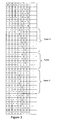
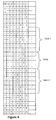
- the histone stem-loop sequence according to at least one of the specific formulae (I) or (Ia) to (Ih) or (II) or (IIa) to (IIh) used according to the present invention is a histone stem-loop sequence comprising at each nucleotide position the most frequently occurring nucleotide, or either the most frequently or the second-most frequently occurring nucleotide of naturally occurring histone stem-loop sequences in metazoa and protozoa ( Fig. 1 ), protozoa ( Fig. 2 ), metazoa ( Fig. 3 ), vertebrates ( Fig. 4 ) and humans ( Fig. 5 ) as shown in figure 1-5 .
- at least 80%, preferably at least 85%, or most preferably at least 90% of all nucleotides correspond to the most frequently occurring nucleotide of naturally occurring histone stem-loop sequences.
- the histone stem-loop sequence according to at least one of the specific formulae (I) or (Ia) to (Ih) used according to the present invention is selected from following histone stem-loop sequences (without stem-bordering elements) representing histone stem-loop sequences as generated according to Example 1:
- the used nucleic acid sequence comprises or codes for at least one histone stem-loop sequence showing at least about 80%, preferably at least about 85%, more preferably at least about 90%, or even more preferably at least about 95%, sequence identity with the not to 100% conserved nucleotides in the histone stem-loop sequences according to at least one of specific formulae (I) or (Ia) to (Ih) or (II) or (IIa) to (IIh) or with a naturally occurring histone stem-loop sequence and further comprises or codes for a poly(A) sequence.
- such a poly(A) sequence comprises a sequence of about 25 to about 400 adenosine nucleotides, preferably a sequence of about 50 to about 400 adenosine nucleotides, more preferably a sequence of about 50 to about 300 adenosine nucleotides, even more preferably a sequence of about 50 to about 250 adenosine nucleotides, most preferably a sequence of about 60 to about 250 adenosine nucleotides.
- the term "about” refers to a deviation of ⁇ 10% of the value(s) it is attached to.
- the use of the invention may be based on a nucleic acid which does not contain one or two or at least one or all but one or all of the components of the group consisting of: a sequence encoding a ribozyme (preferably a self-splicing ribozyme), a viral nucleic acid sequence, a histone stem-loop processing signal, in particular a histon-stem loop processing sequence derived from mouse histon H2A614 gene, a Neo gene, an inactivated promoter sequence and an inactivated enhancer sequence.
- a encoding a ribozyme preferably a self-splicing ribozyme
- a viral nucleic acid sequence a histone stem-loop processing signal, in particular a histon-stem loop processing sequence derived from mouse histon H2A614 gene, a Neo gene, an inactivated promoter sequence and an inactivated enhancer sequence.
- the nucleic acid used according to the invention does not contain a ribozyme, preferably a self-splicing ribozyme, and one of the group consisting of: a Neo gene, an inactivated promotor sequence, an inactivated enhancer sequence, a histon stem-loop processing signal, in particular a histon-stem loop processing sequence derived from mouse histon H2A614 gene.
- a ribozyme preferably a self-splicing ribozyme, and one of the group consisting of: a Neo gene, an inactivated promotor sequence, an inactivated enhancer sequence, a histon stem-loop processing signal, in particular a histon-stem loop processing sequence derived from mouse histon H2A614 gene.
- the used nucleic acid may in a preferred mode neither contain a ribozyme, preferably a self-splicing ribozyme, nor a Neo gene or, alternatively, neither a ribozyme, preferably a self-splicing ribozyme, nor any resistance gene (e.g. usually applied for selection).
- the nucleic acid used according to the invention may neither contain a a ribozyme, preferably a self-splicing ribozyme nor a histon stem-loop processing signal, in particular a histon-stem loop processing sequence derived from mouse histon H2A614 gene.
- the nucleic sequence used according to the invention optionally comprises a polyadenylation signal which is defined herein as a signal which conveys polyadenylation to a (transcribed) mRNA by specific protein factors (e.g. cleavage and polyadenylation specificity factor (CPSF), cleavage stimulation factor (CstF), cleavage factors I and II (CF I and CF II), poly(A) polymerase (PAP)).
- CPSF cleavage and polyadenylation specificity factor
- CstF cleavage stimulation factor
- CF I and CF II cleavage factors I and II
- PAP poly(A) polymerase
- a consensus polyadenylation signal is preferred comprising the NNUANA consensus sequence.
- the polyadenylation signal comprises one of the following sequences: AAUAAA or AUUAAA.
- the nucleic acid sequence for use according to the first embodiment of the present invention furthermore encodes a protein or a peptide, which is selected from therapeutically active proteins or peptides, including adjuvant proteins, from antigens, tumour antigens, pathogenic antigens (e.g. selected, from animal antigens, from viral antigens, from protozoal antigens, from bacterial antigens), allergenic antigens, autoimmune antigens, from allergens, from antibodies, from immunostimulatory proteins or peptides, and from antigen-specific T-cell receptors, wherein the used nucleic acid may be transported into a cell (e.g. an expression host cell or a somatic cell), a tissue or an organism and the protein may be expressed subsequently in this cell, tissue or organism.
- a cell e.g. an expression host cell or a somatic cell
- the coding region of the nucleic acid for use according to the first embodiment of the present invention may occur as a mono-, di-, or even multicistronic nucleic acid, i.e. a nucleic acid which carries the coding sequences of one, two or more proteins or peptides.
- Such coding sequences in di-, or even multicistronic nucleic acids may be separated by at least one internal ribosome entry site (IRES) sequence, e.g. as defined herein or by signal peptides which induce the cleavage of the resulting polypeptide which comprises several proteins or peptides.
- IRS internal ribosome entry site
- the encoded peptides or proteins are selected from human, viral, bacterial, protozoan proteins or peptides.
- therapeutically active proteins encoded by the used nucleic acid molecule may be selected, without being restricted thereto, from proteins which have an effect on healing, prevent prophylactically or treat therapeutically a disease, preferably as defined herein, or are proteins of which an individual is in need of.
- proteins may be selected from any naturally or synthetically designed occurring recombinant or isolated protein known to a skilled person from the prior art.
- therapeutically active proteins may comprise proteins, capable of stimulating or inhibiting the signal transduction in the cell, e.g.
- cytokines cytokines, lymphokines, monokines, growth factors, receptors, signal transduction molecules, transcription factors, etc; anticoagulants; antithrombins; antiallergic proteins; apoptotic factors or apoptosis related proteins, therapeutic active enzymes and any protein connected with any acquired disease or any hereditary disease.
- a therapeutically active protein which may be encoded by the used nucleic acid molecule, may also be an adjuvant protein.
- an adjuvant protein is preferably to be understood as any protein, which is capable to elicit an innate immune response as defined herein.
- such an innate immune response comprises activation of a pattern recognition receptor, such as e.g. a receptor selected from the Toll-like receptor (TLR) family, including e.g. a Toll like receptor selected from human TLR1 to TLR10 or from murine Toll like receptors TLR1 to TLR13.
- TLR Toll-like receptor
- the adjuvant protein is selected from human adjuvant proteins or from pathogenic adjuvant proteins, selected from the group consisting of, without being limited thereto, bacterial proteins, protozoan proteins, viral proteins, or fungal proteins, animal proteins, in particular from bacterial adjuvant proteins.
- pathogenic adjuvant proteins selected from the group consisting of, without being limited thereto, bacterial proteins, protozoan proteins, viral proteins, or fungal proteins, animal proteins, in particular from bacterial adjuvant proteins.
- nucleic acids encoding human proteins involved in adjuvant effects e.g. ligands of pattern recognition receptors, pattern recognition receptors, proteins of the signal transduction pathways, transcription factors or cytokines may be used as well.
- the nucleic acid molecule for use according to the invention may alternatively encode an antigen.
- the term "antigen" refers to a substance which is recognized by the immune system and is capable of triggering an antigen-specific immune response, e.g. by formation of antibodies or antigen-specific T-cells as part of an adaptive immune response.
- an antigenic epitope, fragment or peptide of a protein means particularly B cell and T cell epitopes which may be recognized by B cells, antibodies or T cells respectively.
- antigens which may be encoded by the used nucleic acid molecule, typically comprise any antigen, antigenic epitope, antigenic fragment or antigenic peptide, falling under the above definition, more preferably protein and peptide antigens, e.g. tumour antigens, allergenic antigens or allergens, auto-immune self-antigens, pathogenic antigens, etc.
- antigens as encoded by the nucleic acid molecule used according to the invention may be antigens generated outside the cell, more typically antigens not derived from the host organism (e.g. a human) itself (i.e. non-self antigens) but rather derived from host cells outside the host organism, e.g. viral antigens, bacterial antigens, fungal antigens, protozoological antigens, animal antigens, allergenic antigens, etc. Allergenic antigens (allergy antigens or allergens) are typically antigens, which cause an allergy in a human and may be derived from either a human or other sources.
- antigens as encoded by the used nucleic acid molecule may be furthermore antigens generated inside the cell, the tissue or the body.
- antigens include antigens derived from the host organism (e.g. a human) itself, e.g. tumour antigens, self-antigens or auto-antigens, such as auto-immune self-antigens, etc., but also (non-self) antigens as defined herein, which have been originally been derived from host cells outside the host organism, but which are fragmented or degraded inside the body, tissue or cell, e.g. by (protease) degradation, metabolism, etc.
- Tumour antigens are preferably located on the surface of the (tumour) cell. Tumour antigens may also be selected from proteins, which are overexpressed in tumour cells compared to a normal cell. Furthermore, tumour antigens also include antigens expressed in cells which are (were) not themselves (or originally not themselves) degenerated but are associated with the supposed tumour. Antigens which are connected with tumour-supplying vessels or (re)formation thereof, in particular those antigens which are associated with neovascularization, e.g. growth factors, such as VEGF, bFGF etc., are also included herein.
- growth factors such as VEGF, bFGF etc.
- Antigens connected with a tumour furthermore include antigens from cells or tissues, typically embedding the tumour. Further, some substances (usually proteins or peptides) are expressed in patients suffering (knowingly or not-knowingly) from a cancer disease and they occur in increased concentrations in the body fluids of said patients. These substances are also referred to as “tumour antigens", however they are not antigens in the stringent meaning of an immune response inducing substance.
- the class of tumour antigens can be divided further into tumour-specific antigens (TSAs) and tumour-associated-antigens (TAAs). TSAs can only be presented by tumour cells and never by normal "healthy” cells. They typically result from a tumour specific mutation.
- tumour antigens which are more common, are usually presented by both tumour and healthy cells. These antigens are recognized and the antigen-presenting cell can be destroyed by cytotoxic T cells. Additionally, tumour antigens can also occur on the surface of the tumour in the form of, e.g., a mutated receptor. In this case, they can be recognized by antibodies.
- one further class of antigens which may be encoded by the used nucleic acid molecule, comprises allergenic antigens.
- allergenic antigens may be selected from antigens derived from different sources, e.g. from animals, plants, fungi, bacteria, etc. Allergens in this context include e.g. grasses, pollens, molds, drugs, or numerous environmental triggers, etc. Allergenic antigens typically belong to different classes of compounds, such as nucleic acids and their fragments, proteins or peptides and their fragments, carbohydrates, polysaccharides, sugars, lipids, phospholipids, etc.
- antigens which may be encoded by the inventive nucleic acid molecule as defined herein, i.e. protein or peptide antigens and their fragments or epitopes, or nucleic acids and their fragments, particularly nucleic acids and their fragments, encoding such protein or peptide antigens and their fragments or epitopes.
- the nucleic acid molecule used according to the invention may encode an antibody or an antibody fragment.
- an antibody may be selected from any antibody, e.g. any recombinantly produced or naturally occurring antibodies, known in the art, in particular antibodies suitable for therapeutic, diagnostic or scientific purposes, or antibodies which have been identified in relation to specific cancer diseases.
- the term “antibody” is used in its broadest sense and specifically covers monoclonal and polyclonal antibodies (including agonist, antagonist, and blocking or neutralizing antibodies) and antibody species with polyepitopic specificity.
- the term “antibody” typically comprises any antibody known in the art (e.g.
- IgM, IgD, IgG, IgA and IgE antibodies such as naturally occurring antibodies, antibodies generated by immunization in a host organism, antibodies which were isolated and identified from naturally occurring antibodies or antibodies generated by immunization in a host organism and recombinantly produced by biomolecular methods known in the art, as well as chimeric antibodies, human antibodies, humanized antibodies, bispecific antibodies, intrabodies, i.e. antibodies expressed in cells and optionally localized in specific cell compartments, and fragments and variants of the aforementioned antibodies.
- an antibody consists of a light chain and a heavy chain both having variable and constant domains.
- the light chain consists of an N-terminal variable domain, V L , and a C-terminal constant domain, C L .
- the heavy chain of the IgG antibody for example, is comprised of an N-terminal variable domain, V H , and three constant domains, C H 1, C H 2 und C H 3.
- antibodies as encoded by the inventive nucleic acid molecule may preferably comprise full-length antibodies, i.e. antibodies composed of the full heavy and full light chains, as described above.
- derivatives of antibodies such as antibody fragments, variants or adducts may also be encoded by the nucleic acid molecule used according to the invention.
- Antibody fragments are preferably selected from Fab, Fab', F(ab') 2 , Fc, Facb, pFc', Fd and Fv fragments of the aforementioned (full-length) antibodies. In general, antibody fragments are known in the art.
- a Fab fragment, antigen binding
- a scFv single chain variable fragment
- the domains are linked by an artificial linkage, in general a polypeptide linkage such as a peptide composed of 15-25 glycine, proline and/or serine residues.
- the different chains of the antibody or antibody fragment are encoded by a multicistronic nucleic acid molecule.
- the different strains of the antibody or antibody fragment are encoded by several monocistronic nucleic acid(s) (sequences).
- the nucleic acid sequence used according to the invention comprises a coding region, encoding a therapeutically active protein or peptide, an adjuvant protein, an antigen, a tumour antigen, a pathogenic antigen, an animal antigen, a viral antigen, a protozoal antigen, a bacterial antigen, an allergenic antigen, an autoimmune antigen, an allergen, an antibody, an immunostimulatory protein or peptide, or an antigen-specific T-cell receptor.
- the encoded protein is no histone protein.
- such a histone protein is typically a strongly alkaline protein found in eukaryotic cell nuclei, which package and order the DNA into structural units called nucleosomes.
- Histone proteins are the chief protein components of chromatin, act as spools around which DNA winds, and play a role in gene regulation. Without histones, the unwound DNA in chromosomes would be very long (a length to width ratio of more than 10 million to one in human DNA). For example, each human cell has about 1.8 meters of DNA, but wound on the histones it has about 90 millimeters of chromatin, which, when duplicated and condensed during mitosis, result in about 120 micrometers of chromosomes.
- such a histone protein is typically defined as a highly conserved protein selected from one of the following five major classes of histones: H1/H5, H2A, H2B, H3, and H4", preferably selected from mammalian histone, more preferably from human histones or histone proteins.
- Histones or histone proteins are typically organised into two super-classes defined as core histones, comprising histones H2A, H2B, H3 and H4, and linker histones, comprising histones H1 and H5.
- linker histones preferably excluded from the scope of protection of the pending invention, preferably mammalian linker histones, more preferably human linker histones, are typically selected from H1, including H1F, particularly including H1F0, H1FNT, H1FOO, H1FX, and H1H1, particularly including HIST1H1A, HIST1H1B, HIST1H1C, HIST1H1D, HIST1H1E, HIST1H1T; and
- core histones preferably excluded from the scope of protection of the pending invention, preferably mammalian core histones, more preferably human core histones, are typically selected from H2A, including H2AF, particularly including H2AFB1, H2AFB2, H2AFB3, H2AFJ, H2AFV, H2AFX, H2AFY, H2AFY2, H2AFZ, and H2A1, particularly including HIST1H2AA, HIST1H2AB, HIST1H2AC, HIST1H2AD, HIST1H2AE, HIST1H2AG, HIST1H2AI, HIST1H2AJ, HIST1H2AK, HIST1H2AL, HIST1H2AM, and H2A2, particularly including HIST2H2AA3, HIST2H2AC; H2B, including H2BF, particularly including H2BFM, H2BFO, H2BFS, H2BFWT H2B1, particularly including HIST1H2BA, HIST1H2
- the nucleic acid sequence of the invention does not contain a (bacterial) Neo gene sequence (Neomycin resistance gene).
- the used nucleic acid as define above comprises or codes for a) a coding region, encoding a therapeutically active protein or peptide, an adjuvant protein, an antigen, a tumour antigen, a pathogenic antigen, an animal antigen, a viral antigen, a protozoal antigen, a bacterial antigen, an allergenic antigen, an autoimmune antigen, an allergen, an antibody, an immunostimulatory protein or peptide, or an antigen-specific T-cell receptor; b) at least one histone stem-loop, and c) a poly(A) sequence or polyadenylation signal; for use for increasing the expression level of said encoded protein, wherein said encoded protein is no histone protein, no reporter protein and/or no marker or selection protein, as defined above.
- the elements b) to c) of the used nucleic acid may occur in the used nucleic acid in any order, i.e. the elements a), b) and c) may occur in the order a), b) and c) or a), c) and b) from 5' to 3' direction in the used nucleic acid sequence, wherein further elements as described herein, may also be contained, such as a 5'-CAP structure, a poly(C) sequence, stabilization sequences, IRES sequences, etc.
- Each of the elements a) to c) of the used nucleic acid may also be repeated at least once, preferably twice or more in the used nucleic acid.
- the used nucleic acid may show its sequence elements a), b) and c) in e.g. the following order:
- the used nucleic acid molecule comprises or codes for a) a coding region, encoding a peptide or protein; b) at least one histone stem-loop, and c) a poly(A) sequence or polyadenylation sequence; for use for increasing the expression level of an encoded protein, wherein the encoded protein is no histone protein, no reporter protein selected from Luciferase and EGFP(and e.g. ⁇ -Galactosidase) and/or no marker or selection protein selected from alpha-Globin, Galactokinase and Xanthine:Guanine phosphoribosyl transferase (GPT).
- the encoded protein is no histone protein, no reporter protein selected from Luciferase and EGFP(and e.g. ⁇ -Galactosidase) and/or no marker or selection protein selected from alpha-Globin, Galactokinase and Xanthine:Guanine phosphoribo
- the used nucleic acid molecule as defined herein may also occur in the form of a modified nucleic acid.
- the inventive nucleic acid molecule as defined herein may be provided as a "stabilized nucleic acid", preferably as a stabilized RNA, more preferably as a RNA that is essentially resistant to in vivo degradation (e.g. by an exo- or endo-nuclease).
- a stabilized RNA preferably as a stabilized RNA, more preferably as a RNA that is essentially resistant to in vivo degradation (e.g. by an exo- or endo-nuclease).
- the used nucleic acid molecule as defined herein may contain nucleotide analogues/modifications e.g. backbone modifications, sugar modifications or base modifications.
- a backbone modification in connection with the present invention is a modification in which phosphates of the backbone of the nucleotides contained in inventive nucleic acid molecule as defined herein are chemically modified.
- a sugar modification in connection with the present invention is a chemical modification of the sugar of the nucleotides of the used nucleic acid molecule as defined herein.
- a base modification in connection with the present invention is a chemical modification of the base moiety of the nucleotides of the used nucleic acidmolecule.
- nucleotide analogues or modifications are preferably selected from nucleotide analogues which are applicable for transcription and/or translation.
- nucleotide analogues/modifications are selected from base modifications which additionally increase the expression of the encoded protein and which are preferably selected from 2-amino-6-chloropurineriboside-5'-triphosphate, 2-aminoadenosine-5'-triphosphate, 2-thiocytidine-5'-triphosphate, 2-thiouridine-5'-triphosphate, 4-thiouridine-5'-triphosphate, 5-aminoallylcytidine-5'-triphosphate, 5-aminoallyluridine-5'-triphosphate, 5-bromocytidine-5'-triphosphate, 5-bromouridine-5'-triphosphate, 5-iodocytidine-5'-triphosphate, 5-iodouridine-5'-triphosphate, 5-methylcytidine-5'-triphosphate, 5-methyluridine-5'-triphosphate, 6-azacytidine-5'-triphosphate, 6-azauridine-5'
- nucleotides for base modifications selected from the group of base-modified nucleotides consisting of 5-methylcytidine-5'-triphosphate, 7-deazaguanosine-5'-triphosphate, 5-bromocytidine-5'-triphosphate, and pseudouridine-5'-triphosphate.
- the used nucleic acid molecule as defined herein can contain a lipid modification.
- a lipid-modified nucleic acid typically comprises a nucleic acid as defined herein.
- Such a lipid-modified nucleic acid molecule of the used nucleic acid molecule as defined herein typically further comprises at least one linker covalently linked with that nucleic acid molecule, and at least one lipid covalently linked with the respective linker.
- the lipid-modified nucleic acid molecule comprises at least one nucleic acid molecule as defined herein and at least one (bifunctional) lipid covalently linked (without a linker) with that nucleic acid molecule.
- the lipid-modified nucleic acid molecule comprises a nucleic acid molecule as defined herein, at least one linker covalently linked with that nucleic acid molecule, and at least one lipid covalently linked with the respective linker, and also at least one (bifunctional) lipid covalently linked (without a linker) with that nucleic acid molecule.
- the lipid modification is present at the terminal ends of a linear nucleic acid sequence as used herein.
- the used nucleic acid molecule as defined herein, particularly if provided as an (m)RNA can therefore be stabilized against degradation by RNases by the addition of a so-called "5' CAP" structure.
- the used nucleic acid molecule as defined herein can be modified by a sequence of at least 10 cytidines, preferably at least 20 cytidines, more preferably at least 30 cytidines (so-called "poly(C) sequence").
- the used nucleic acid molecule may contain or code for a poly(C) sequence of typically about 10 to 200 cytidine nucleotides, preferably about 10 to 100 cytidine nucleotides, more preferably about 10 to 70 cytidine nucleotides or even more preferably about 20 to 50 or even 20 to 30 cytidine nucleotides.
- This poly(C) sequence is preferably located 3' of the coding region comprised in the used nucleic acid according to the first embodiment of the present invention.
- the used nucleic acid molecule as defined herein preferably has at least one 5' and/or 3' stabilizing sequence.
- These stabilizing sequences in the 5' and/or 3' untranslated regions have the effect of increasing the half-life of the nucleic acid in the cytosol.
- These stabilizing sequences can have 100% sequence identity to naturally occurring sequences which occur in viruses, bacteria and eukaryotes, but can also be partly or completely synthetic.
- the untranslated sequences (UTR) of the (alpha-)globin gene e.g. from Homo sapiens or Xenopus laevis may be mentioned as an example of stabilizing sequences which can be used in the present invention for a stabilized nucleic acid.
- stabilizing sequence has the general formula (C/U)CCAN x CCC(U/A)Py x UC(C/U)CC (SEQ ID NO: 55), which is contained in the 3'-UTRs of the very stable RNAs which code for (alpha-)globin, type(I)-collagen, 15-lipoxygenase or for tyrosine hydroxylase (cf. Holcik et al., Proc. Natl. Acad. Sci. USA 1997, 94: 2410 to 2414 ).
- Such stabilizing sequences can of course be used individually or in combination with one another and also in combination with other stabilizing sequences known to a person skilled in the art.
- the 3' UTR sequence of the alpha globin gene is located 3' of the coding sequence comprised in the used nucleic acid according to the first embodiment of the present invention.
- Substitutions, additions or eliminations of bases are preferably carried out with the used nucleic acid molecule as defined herein, using a DNA matrix for preparation of the nucleic acid molecule by techniques of the well known site directed mutagenesis or with an oligonucleotide ligation strategy (see e.g. Maniatis et al., Molecular Cloning: A Laboratory Manual, Cold Spring Harbor Laboratory Press, 3rd ed., Cold Spring Harbor, NY, 2001 ).
- a corresponding DNA molecule may be transcribed in vitro.
- This DNA matrix preferably comprises a suitable promoter, e.g. a T7 or SP6 promoter, for in vitro transcription, which is followed by the desired nucleotide sequence for the nucleic acid molecule, e.g. mRNA, to be prepared and a termination signal for in vitro transcription.
- a suitable promoter e.g. a T7 or SP6 promoter
- the DNA molecule, which forms the matrix of the at least one RNA of interest may be prepared by fermentative proliferation and subsequent isolation as part of a plasmid which can be replicated in bacteria. Plasmids which may be mentioned as suitable for the present invention are e.g.
- pT7Ts GenBank accession number U26404; Lai et al., Development 1995, 121: 2349 to 2360
- pGEM ® series e.g. pGEM ® -1 (GenBank accession number X65300; from Promega) and pSP64 (GenBank accession number X65327)
- pSP64 GeneBank accession number X65327
- Mezei and Storts Purification of PCR Products, in: Griffin and Griffin (ed.), PCR Technology: Current Innovation, CRC Press, Boca Raton, FL, 2001 .
- Nucleic acid molecules used according to the present invention as defined herein may be prepared using any method known in the art, including synthetic methods such as e.g. solid phase synthesis, as well as in vitro methods, such as in vitro transcription reactions or in vivo reactions, such as in vivo propagation of DNA plasmids in bacteria.
- the used nucleic acid molecule as defined herein as well as proteins or peptides as encoded by this nucleic acid molecule may comprise fragments or variants of those sequences.
- Such fragments or variants may typically comprise a sequence having a sequence identity with one of the above mentioned nucleic acids, or with one of the proteins or peptides or sequences, if encoded by the at least one nucleic acid molecule, of at least 5%, 10%, 20%, 30%, 40%, 50%, 60%, preferably at least 70%, more preferably at least 80%, equally more preferably at least 85%, even more preferably at least 90% and most preferably at least 95% or even 97%, 98% or 99%, to the entire wild type sequence, either on nucleic acid level or on amino acid level.
- the used nucleic acid sequence is associated with a vehicle, transfection or complexation agent for increasing the transfection efficiency of the inventive nucleic acid sequence.
- Particularly preferred agents in this context suitable for increasing the transfection efficiency are cationic or polycationic compounds, including protamine, nucleoline, spermine or spermidine, or other cationic peptides or proteins, such as poly-L-lysine (PLL), poly-arginine, basic polypeptides, cell penetrating peptides (CPPs), including HIV-binding peptides, HIV-1 Tat (HIV), Tat-derived peptides, Penetratin, VP22 derived or analog peptides, HSV VP22 (Herpes simplex), MAP, KALA or protein transduction domains (PTDs), PpT620, prolin-rich peptides, arginine-rich peptides, lysine-rich peptides, MPG-peptide
- PLL poly-L-lysine
- Particularly preferred cationic peptides in this context are e.g. Arg 7 , Arg 8 , Arg 9 , H 3 R 9 , R 9 H 3 , H 3 R 9 H 3 , YSSR 9 SSY, (RKH) 4 , Y(RKH) 2 R, etc.
- Further preferred cationic or polycationic compounds, which can be used as transfection agent may include cationic polysaccharides, for example chitosan, polybrene, cationic polymers, e.g. polyethyleneimine (PEI), cationic lipids, e.g.
- PEI polyethyleneimine
- DOTMA [1-(2,3-sioleyloxy)propyl)]-N,N,N-trimethylammonium chloride
- DMRIE di-C14-amidine
- DOTIM DOTIM
- SAINT DC-Chol
- BGTC CTAP
- DOPC DODAP
- DOPE Dioleyl phosphatidylethanol-amine
- DOSPA DODAB
- DOIC DOIC
- DMEPC DOGS: Dioctadecylamidoglicylspermin
- DIMRI Dimyristo-oxypropyl dimethyl hydroxyethyl ammonium bromide
- DOTAP dioleoyloxy-3-(trimethylammonio)propane
- DC-6-14 O,O-ditetradecanoyl-N-( ⁇ -trimethylammonioacetyl)diethanolamine chloride
- CLIP1 rac-[(2,3-dioctadecyloxypropyl)(2-hydroxyethyl)]
- modified polyaminoacids such as ⁇ -aminoacid-polymers or reversed polyamides, etc.
- modified polyethylenes such as PVP (poly(N-ethyl-4-vinylpyridinium bromide)), etc.
- modified acrylates such as pDMAEMA (poly(dimethylaminoethyl methylacrylate)), etc.
- modified Amidoamines such as pAMAM (poly(amidoamine)), etc.
- dendrimers such as polypropylamine dendrimers or pAMAM based dendrimers, etc.
- polyimine(s) such as PEI: poly(ethyleneimine), poly(propyleneimine), etc.
- polyallylamine sugar backbone based polymers,
- nucleic acid sequence used according to the invention is provided in either naked form or complexed, e.g. by polycationic compounds of whatever chemical structure, preferably polycationic (poly)peptides or synthetic polycationic compounds.
- the nucleic acid sequence is not provided together with a packaging cell.
- the present invention also relates to the use of the used nucleic acid as defined herein for the preparation of a pharmaceutical composition or to a pharmaceutical composition for use for increasing the expression level of an encoded protein/peptide for treating a disease as defined herein, e.g. applying or administering the nucleic acid as defined herein to a cell (e.g. an expression host cell or a somatic cell), a tissue or an organism, preferably in naked form or complexed form or as a pharmaceutical composition or vaccine as described herein, more preferably using any of the administration modes as described herein.
- a cell e.g. an expression host cell or a somatic cell
- a tissue or an organism preferably in naked form or complexed form or as a pharmaceutical composition or vaccine as described herein, more preferably using any of the administration modes as described herein.
- the present invention also provides a pharmaceutical composition, comprising the nucleic acid as defined herein and optionally a pharmaceutically acceptable carrier and/or vehicle for medical use as defined herein
- the inventive pharmaceutical composition comprises the nucleic acid as defined herein.
- inventive pharmaceutical composition may comprise at least one additional pharmaceutically active component.
- a pharmaceutically active component in this connection is a compound that has a therapeutic effect to heal, ameliorate or prevent a particular indication or disease as mentioned herein, preferably cancer diseases, autoimmune disease, allergies or infectious diseases, cardiovascular diseases, diseases of the respiratory system, diseases of the digestive system, diseases of the skin, musculoskeletal disorders, disorders of the connective tissue, neoplasms, immune deficiencies, endocrine, nutritional and metabolic diseases, neural diseases, eye diseases, ear diseases and hereditary diseases.
- Such compounds include, without implying any limitation, peptides or proteins, preferably as defined herein, nucleic acids, preferably as defined herein, (therapeutically active) low molecular weight organic or inorganic compounds (molecular weight less than 5000, preferably less than 1000), sugars, antigens or antibodies, preferably as defined herein, therapeutic agents already known in the prior art, antigenic cells, antigenic cellular fragments, cellular fractions; cell wall components (e.g. polysaccharides), modified, attenuated or de-activated (e.g. chemically or by irradiation) pathogens (virus, bacteria etc.), adjuvants, preferably as defined herein, etc.
- nucleic acids preferably as defined herein
- (therapeutically active) low molecular weight organic or inorganic compounds molecular weight less than 5000, preferably less than 1000
- sugars e.g. polysaccharides
- modified, attenuated or de-activated e.g. chemically or by
- the used pharmaceutical composition may comprise a pharmaceutically acceptable carrier and/or vehicle.
- a pharmaceutically acceptable carrier typically includes the liquid or non-liquid basis of the inventive pharmaceutical composition. If the used pharmaceutical composition is provided in liquid form, the carrier will typically be pyrogen-free water; isotonic saline or buffered (aqueous) solutions, e.g phosphate, citrate etc. buffered solutions.
- the injection buffer may be hypertonic, isotonic or hypotonic with reference to the specific reference medium, i.e.
- the buffer may have a higher, identical or lower salt content with reference to the specific reference medium, wherein preferably such concentrations of the afore mentioned salts may be used, which do not lead to damage of cells due to osmosis or other concentration effects.
- Reference media are e.g. liquids occurring in "in vivo" methods, such as blood, lymph, cytosolic liquids, or other body liquids, or e.g. liquids, which may be used as reference media in “in vitro” methods, such as common buffers or liquids.
- Such common buffers or liquids are known to a skilled person. Ringer-Lactate solution is particularly preferred as a liquid basis.
- compatible solid or liquid fillers or diluents or encapsulating compounds may be used as well for the used pharmaceutical composition, which are suitable for administration to a patient to be treated.
- compatible means that these constituents of the used pharmaceutical composition are capable of being mixed with the used nucleic acid as defined herein in such a manner that no interaction occurs which would substantially reduce the pharmaceutical effectiveness of the used pharmaceutical composition under typical use conditions.
- the used pharmaceutical composition may comprise an adjuvant.
- an adjuvant may be understood as any compound, which is suitable to initiate or increase an immune response of the innate immune system, i.e. a non-specific immune response.
- the used pharmaceutical composition when administered, preferably elicits an innate immune response due to the adjuvant, optionally contained therein.
- an adjuvant may be selected from an adjuvant known to a skilled person and suitable for the present case, i.e. supporting the induction of an innate immune response in a mammal, e.g. an adjuvant protein as defined above or an adjuvant as defined in the following.
- adjuvants suitable for depot and delivery are cationic or polycationic compounds as defined above for the used nucleic acid sequence as vehicle, transfection or complexation agent.
- the used pharmaceutical composition can additionally contain one or more auxiliary substances in order to increase its immunogenicity or immunostimulatory capacity, if desired.
- a synergistic action of the used nucleic acid as defined herein and of an auxiliary substance, which may be optionally contained in the used pharmaceutical composition, is preferably achieved thereby.
- various mechanisms can come into consideration in this respect. For example, compounds that permit the maturation of dendritic cells (DCs), for example lipopolysaccharides, TNF-alpha or CD40 ligand, form a first class of suitable auxiliary substances.
- DCs dendritic cells
- TNF-alpha or CD40 ligand form a first class of suitable auxiliary substances.
- auxiliary substance any agent that influences the immune system in the manner of a "danger signal” (LPS, GP96, etc.) or cytokines, such as GM-CFS, which allow an immune response to be enhanced and/or influenced in a targeted manner.
- a "danger signal” LPS, GP96, etc.
- cytokines such as GM-CFS
- auxiliary substances are cytokines, such as monokines, lymphokines, interleukins or chemokines, that further promote the innate immune response, such as IL-1, IL-2, IL-3, IL-4, IL-5, IL-6, IL-7, IL-8, IL-9, IL-10, IL-12, IL-13, IL-14, IL-15, IL-16, IL-17, IL-18, IL-19, IL-20, IL-21, IL-22, IL-23, IL-24, IL-25, IL-26, IL-27, IL-28, IL-29, IL-30, IL-31, IL-32, IL-33, IFN-alpha, IFN-beta, IFN-gamma, GM-CSF, G-CSF, M-CSF, LT-beta or TNF-alpha, growth factors, such as hGH.
- cytokines such as monokines, lymphokines, interleukins
- emulsifiers such as, for example, Tween ® ; wetting agents, such as, for example, sodium lauryl sulfate; colouring agents; taste-imparting agents, pharmaceutical carriers; tablet-forming agents; stabilizers; antioxidants; preservatives.
- the used pharmaceutical composition can also additionally contain any further compound, which is known to be immunostimulating due to its binding affinity (as ligands) to human Toll-like receptors TLR1, TLR2, TLR3, TLR4, TLR5, TLR6, TLR7, TLR8, TLR9, TLR10, or due to its binding affinity (as ligands) to murine Toll-like receptors TLR1, TLR2, TLR3, TLR4, TLR5, TLR6, TLR7, TLR8, TLR9, TLR10, TLR11, TLR12 or TLR13.
- any further compound which is known to be immunostimulating due to its binding affinity (as ligands) to human Toll-like receptors TLR1, TLR2, TLR3, TLR4, TLR5, TLR6, TLR7, TLR8, TLR9, TLR10, TLR11, TLR12 or TLR13.
- the used pharmaceutical composition may be administered orally, parenterally, by inhalation spray, topically, rectally, nasally, buccally, vaginally or via an implanted reservoir.
- parenteral as used herein includes subcutaneous, intravenous, intramuscular, intra-articular, intra-synovial, intrasternal, intrathecal, intrahepatic, intralesional, intracranial, transdermal, intradermal, intrapulmonal, intraperitoneal, intracardial, intraarterial, and sublingual injection or infusion techniques.
- the used pharmaceutical composition may be administered by parenteral injection, more preferably by subcutaneous, intravenous, intramuscular, intra-articular, intra-synovial, intrasternal, intrathecal, intrahepatic, intralesional, intracranial, transdermal, intradermal, intrapulmonal, intraperitoneal, intracardial, intraarterial, and sublingual injection or via infusion techniques.
- parenteral injection more preferably by subcutaneous, intravenous, intramuscular, intra-articular, intra-synovial, intrasternal, intrathecal, intrahepatic, intralesional, intracranial, transdermal, intradermal, intrapulmonal, intraperitoneal, intracardial, intraarterial, and sublingual injection or via infusion techniques.
- Particularly preferred is intradermal and intramuscular injection.
- Sterile injectable forms of the used pharmaceutical compositions may be aqueous or oleaginous suspension. These suspensions may be formulated according to techniques known in the art using suitable dispersing or we
- the used pharmaceutical composition as defined herein may also be administered orally in any orally acceptable dosage form including, but not limited to, capsules, tablets, aqueous suspensions or solutions.
- the used pharmaceutical composition may also be administered topically, especially when the target of treatment includes areas or organs readily accessible by topical application, e.g. including diseases of the skin or of any other accessible epithelial tissue. Suitable topical formulations are readily prepared for each of these areas or organs.
- the used pharmaceutical composition may be formulated in a suitable ointment, containing the nucleic acid as defined herein suspended or dissolved in one or more carriers.
- the used pharmaceutical composition typically comprises a "safe and effective amount" of the components, particularly of the used nucleic acid as defined herein.
- a "safe and effective amount” means an amount of the nucleic acid as defined herein as such that is sufficient to significantly induce a positive modification of a disease or disorder as defined herein.
- a "safe and effective amount” is small enough to avoid serious side-effects and to permit a sensible relationship between advantage and risk. The determination of these limits typically lies within the scope of sensible medical judgment.
- the pharmaceutical composition may be used for human and also for veterinary medical purposes, preferably for human medical purposes, as a pharmaceutical composition in general or as a vaccine.
- the pharmaceutical composition may be provided or used as a vaccine.
- a vaccine is as defined above for pharmaceutical compositions.
- such a vaccine typically contains the nucleic acid as defined herein, which preferably encodes an antigen as defined above.
- such a vaccine may contain the used nucleic acid as defined herein and additional an antigen, preferably as a protein or peptide or as a nucleic acid encoding an antigen, e.g. as defined herein, or as any antigenic format as defined herein or all possible combinations thereof.
- the vaccine as provided for use herein may also comprise a pharmaceutically acceptable carrier, adjuvant, and/or vehicle as defined herein for the used pharmaceutical composition.
- a pharmaceutically acceptable carrier is determined in principle by the manner in which the used vaccine is administered.
- the used vaccine can be administered, for example, systemically or locally.
- Routes for systemic administration in general include, for example, transdermal, oral, parenteral routes, including subcutaneous, intravenous, intramuscular, intraarterial, intradermal and intraperitoneal injections and/or intranasal administration routes.
- Routes for local administration in general include, for example, topical administration routes but also intradermal, transdermal, subcutaneous, or intramuscular injections or intralesional, intracranial, intrapulmonal, intracardial, and sublingual injections. More preferably, vaccines may be administered by an intradermal, subcutaneous, or intramuscular route. Inventive vaccines are therefore preferably formulated in liquid (or sometimes in solid) form.
- the vaccine used according to the invention can additionally contain one or more auxiliary substances in order to increase its immunogenicity or immunostimulatory capacity, if desired.
- Particularly preferred are adjuvants as auxiliary substances or additives as defined for the pharmaceutical composition.
- the present invention is directed to medical uses of the nucleic acid as defined herein, the pharmaceutical composition, the vaccine, both comprising the nucleic acid as defined herein, e.g. in the field of gene therapy.
- the present invention is directed to the second medical use of the nucleic acid for use as defined herein, for the treatment of diseases as defined herein, in particular to the use of the nucleic acid as defined herein, of a pharmaceutical composition or vaccine comprising same for the prophylaxis, treatment and/or amelioration of various diseases as defined herein.
- the pharmaceutical composition or a vaccine is used or to be administered to a patient in need thereof for this purpose.
- Diseases as mentioned herein are selected from cancer or tumour diseases, infectious diseases, preferably (viral, bacterial or protozoological) infectious diseases, autoimmune diseases, allergies or allergic diseases, monogenetic diseases, i.e. (hereditary) diseases, or genetic diseases in general, diseases which have a genetic inherited background and which are typically caused by a defined gene defect and are inherited according to Mendel's laws, cardiovascular diseases, neuronal diseases, diseases of the respiratory system, diseases of the digestive system, diseases of the skin, musculoskeletal disorders, disorders of the connective tissue, neoplasms, immune deficiencies, endocrine, nutritional and metabolic diseases, eye diseases, ear diseases and any disease which can be influenced by the present invention.
- infectious diseases preferably (viral, bacterial or protozoological) infectious diseases, autoimmune diseases, allergies or allergic diseases
- monogenetic diseases i.e. (hereditary) diseases
- genetic diseases in general diseases which have a genetic inherited background and which are typically caused by a defined gene defect and are inherited according to
- Cancer or tumour diseases as mentioned above preferably include e.g. colon carcinomas, melanomas, renal carcinomas, lymphomas, acute myeloid leukaemia (AML), acute lymphoid leukaemia (ALL), chronic myeloid leukaemia (CML), chronic lymphocytic leukaemia (CLL), gastrointestinal tumours, pulmonary carcinomas, gliomas, thyroid tumours, mammary carcinomas, prostate tumours, hepatomas, various virus-induced tumours such as, for example, papilloma virus-induced carcinomas (e.g. cervical carcinoma), adenocarcinomas, herpes virus-induced tumours (e.g.
- Burkitt's lymphoma EBV-induced B-cell lymphoma), heptatitis B-induced tumours (hepatocell carcinoma), HTLV-1- and HTLV-2-induced lymphomas, acoustic neuromas/neurinomas, cervical cancer, lung cancer, pharyngeal cancer, anal carcinomas, glioblastomas, lymphomas, rectal carcinomas, astrocytomas, brain tumours, stomach cancer, retinoblastomas, basaliomas, brain metastases, medulloblastomas, vaginal cancer, pancreatic cancer, testicular cancer, melanomas, thyroidal carcinomas, bladder cancer, Hodgkin's syndrome, meningiomas, Schneeberger disease, bronchial carcinomas, hypophysis tumour, Mycosis fungoides, oesophageal cancer, breast cancer, carcinoids, neurinomas, spinaliomas, Burkitt's lymphomas, larynge
- infectious diseases are preferably selected from influenza, malaria, SARS, yellow fever, AIDS, Lyme borreliosis, Leishmaniasis, anthrax, meningitis, viral infectious diseases such as AIDS, Condyloma acuminata, hollow warts, Dengue fever, three-day fever, Ebola virus, cold, early summer meningoencephalitis (FSME), flu, shingles, hepatitis, herpes simplex type I, herpes simplex type II, Herpes zoster, influenza, Japanese encephalitis, Lassa fever, Marburg virus, measles, foot-and-mouth disease, mononucleosis, mumps, Norwalk virus infection, Pfeiffer's glandular fever, smallpox, polio (childhood lameness), pseudo-croup, fifth disease, rabies, warts, West Nile fever, chickenpox, cytomegalic virus (CMV), from bacterial infectious diseases such as mis
- allergies normally result in a local or systemic inflammatory response to these antigens or allergens and leading to immunity in the body against these allergens.
- Allergens in this context include e.g. grasses, pollens, molds, drugs, or numerous environmental triggers, etc.
- several different disease mechanisms are supposed to be involved in the development of allergies. According to a classification scheme by P. Gell and R. Coombs the word "allergy” was restricted to type I hypersensitivities, which are caused by the classical IgE mechanism.
- Type I hypersensitivity is characterised by excessive activation of mast cells and basophils by IgE, resulting in a systemic inflammatory response that can result in symptoms as benign as a runny nose, to life-threatening anaphylactic shock and death.
- Well known types of allergies include, without being limited thereto, allergic asthma (leading to swelling of the nasal mucosa), allergic conjunctivitis (leading to redness and itching of the conjunctiva), allergic rhinitis ("hay fever”), anaphylaxis, angiodema, atopic dermatitis (eczema), urticaria (hives), eosinophilia, allergies to insect stings, skin allergies (leading to and including various rashes, such as eczema, hives (urticaria) and (contact) dermatitis), food allergies, allergies to medicine, etc.
- a nucleic acid, pharmaceutical composition or vaccine which encodes or contains an allergen (e.g. from a cat allergen, a dust allergen, a mite antigen, a plant antigen (e.g. a birch antigen) etc.) either as a protein, a nucleic acid encoding that protein allergen in combination with a nucleic acid of the invention as defined above or as a nucleic acid as used herein.
- a pharmaceutical composition used according to the present invention may shift the (exceeding) immune response to a stronger TH1 response, thereby suppressing or attenuating the undesired IgE response.
- autoimmune diseases can be broadly divided into systemic and organ-specific or localised autoimmune disorders, depending on the principal clinico-pathologic features of each disease.
- Autoimmune disease may be divided into the categories of systemic syndromes, including SLE, Sjögren's syndrome, Scleroderma, Rheumatoid Arthritis and polymyositis or local syndromes which may be endocrinologic (DM Type 1, Hashimoto's thyroiditis, Addison's disease etc.), dermatologic (pemphigus vulgaris), haematologic (autoimmune haemolytic anaemia), neural (multiple sclerosis) or can involve virtually any circumscribed mass of body tissue.
- the autoimmune diseases to be treated may be selected from the group consisting of type I autoimmune diseases or type II autoimmune diseases or type III autoimmune diseases or type IV autoimmune diseases, such as, for example, multiple sclerosis (MS), rheumatoid arthritis, diabetes, type I diabetes (Diabetes mellitus), systemic lupus erythematosus (SLE), chronic polyarthritis, Basedow's disease, autoimmune forms of chronic hepatitis, colitis ulcerosa, type I allergy diseases, type II allergy diseases, type III allergy diseases, type IV allergy diseases, fibromyalgia, hair loss, Bechterew's disease, Crohn's disease, Myasthenia gravis, neurodermitis, Polymyalgia rheumatica, progressive systemic sclerosis (PSS), psoriasis, Reiter's syndrome, rheumatic arthritis, psoriasis, vasculitis, etc, or type II diabetes.
- MS multiple sclerosis
- the autoreaction may be due to a T-Cell Bypass.
- a normal immune system requires the activation of B-cells by T-cells before the former can produce antibodies in large quantities.
- This requirement of a T-cell can be by-passed in rare instances, such as infection by organisms producing super-antigens, which are capable of initiating polyclonal activation of B-cells, or even of T-cells, by directly binding to one subunit of T-cell receptors in a non-specific fashion.
- Another explanation deduces autoimmune diseases from a molecular mimicry.
- An exogenous antigen may share structural similarities with certain host antigens; thus, any antibody produced against this antigen (which mimics the self-antigens) can also, in theory, bind to the host antigens and amplify the immune response.
- the most striking form of molecular mimicry is observed in Group A beta-haemolytic streptococci, which shares antigens with human myocardium, and is responsible for the cardiac manifestations of rheumatic fever.
- the present invention allows therefore provision of a nucleic acid or pharmaceutical composition or vaccine as defined herein encoding or containing e.g. an autoantigen (as protein, mRNA or DNA encoding an autoantigen protein) which typically allows the immune system to be desensitized.
- the present invention is directed to the second medical use of the nucleic acid as defined herein, for the treatment of diseases as defined herein by means of gene therapy.
- nucleic acid as defined herein may be used for the preparation of a pharmaceutical composition or a vaccine for purposes as defined herein.
- inventive pharmaceutical composition or vaccine may furthermore be used for the treatment of a disease or a disorder as defined herein.
- histone stem-loop consensus sequences were determined on the basis of metazoan and protozoan histone stem-loop sequences. Sequences were taken from the supplement provided by Lopez et al. ( Dávila lópez,M., & Samuelsson, T. (2008), RNA (New York, N.Y.), 14(1), 1-10 . doi:10.1261/rna.782308), who identified a large number of natural histone stem-loop sequences by searching genomic sequences and expressed sequence tags.
- a vector for in vitro transcription was constructed containing a T7 promoter followed by a GC-enriched sequence coding for Photinus pyralis luciferase (ppLuc(GC)), the center part of the 3' untranslated region (UTR) of alpha-globin (ag), and a poly(A) sequence.
- the poly(A) sequence was immediately followed by a restriction site used for linearization of the vector before in vitro transcription in order to obtain mRNA ending in an A64 poly(A) sequence.
- mRNA obtained from this vector accordingly by in vitro transcription is designated as "ppLuc(GC) - ag - A64".
- the DNA-template according to Example 2 was linearized and transcribed in vitro using T7-Polymerase. The DNA-template was then digested by DNase-treatment. All mRNA-transcripts contained a 5'-CAP structure obtained by adding an excess of N7-Methyl-Guanosine-5'-Triphosphate-5'-Guanosine to the transcription reaction. mRNA thus obtained was purified and resuspended in water.
- HeLa cells were trypsinized and washed in opti-MEM. 1x10 5 cells in 200 ⁇ l of opti-MEM each were electroporated with 0.5 ⁇ g of ppLuc-encoding mRNA. As a control, mRNA not coding for ppLuc was electroporated separately. Electroporated cells were seeded in 24-well plates in 1 ml of RPMI 1640 medium. 6, 24, or 48 hours after transfection, medium was aspirated and cells were lysed in 200 ⁇ l of lysis buffer (25 mM Tris, pH 7.5 (HCl), 2 mM EDTA, 10% glycerol, 1% Triton X-100, 2 mM DTT, 1 mM PMSF). Lysates were stored at -20°C until ppLuc activity was measured.
- lysis buffer 25 mM Tris, pH 7.5 (HCl), 2 mM EDTA, 10% glycerol, 1% Triton X-100, 2
- HeLa cells were seeded in 96 well plates at a density of 2x10 4 cells per well. The following day, cells were washed in opti-MEM and then transfected with 0.25 ⁇ g of Lipofectin-complexed ppLuc-encoding mRNA in 150 ⁇ l of opti-MEM. As a control, mRNA not coding for ppLuc was lipofected separately.
- opti-MEM was aspirated and cells were lysed in 200 ⁇ l of lysis buffer 6 hours after the start of transfection. In the remaining wells, opti-MEM was exchanged for RPMI 1640 medium at that time. In these wells, medium was aspirated and cells were lysed in 200 ⁇ l of lysis buffer 24 or 48 hours after the start of transfection. Lysates were stored at -20°C until ppLuc activity was measured.
- ppLuc activity was measured as relative light units (RLU) in a BioTek SynergyHT plate reader at 5 seconds measuring time using 50 ⁇ l of lysate and 200 ⁇ l of luciferin buffer (25 mM Glycylglycin, pH 7.8 (NaOH), 15 mM MgSO 4 , 2 mM ATP, 75 ⁇ M luciferin).
- RLU relative light units
- mice were anaesthetized with a mixture of Rompun and Ketavet. Each ppLuc-encoding mRNA was injected intradermally (0.5 ⁇ g of mRNA in 50 ⁇ l per injection). As a control, mRNA not coding for ppLuc was injected separately. 16 hours after injection, mice were sacrificed and tissue collected. Tissue samples were flash frozen in liquid nitrogen and lysed in a tissue lyser (Qiagen) in 800 ⁇ l of lysis buffer (25 mM Tris, pH 7.5 (HCl), 2 mM EDTA, 10% glycerol, 1% Triton X-100, 2 mM DTT, 1 mM PMSF). Subsequently samples were centrifuged at 13500 rpm at 4°C for 10 minutes. Lysates were stored at -80°C until ppLuc activity was measured (see 7. luciferase measurement).
- lysis buffer 25 mM Tris, pH 7.5 (HCl), 2 m
- HeLa cells were trypsinized and washed in opti-MEM. 2x10 5 cells in 200 ⁇ l of opti-MEM were electroporated with 10 ⁇ g of NY-ESO-1-encoding mRNA. Cells from three electroporations were combined and seeded in a 6-well plate in 2 ml of RPMI 1640 medium. 24 hours after transfection, cells were harvested and transferred into a 96 well V-bottom plate (2 wells per mRNA). Cells were washed with phosphate buffered saline (PBS) and permeabilized with 200 ⁇ l per well of Cytofix/Cytoperm (Becton Dickinson (BD)). After 15 minutes, cells were washed with PermWash (BD).
- PBS phosphate buffered saline
- Cytofix/Cytoperm Becton Dickinson (BD)
- MFI median fluorescence intensity
- C57BL/6 mice were vaccinated intradermally with NY-ESO-1-encoding mRNA complexed with protamine (5 times in 14 days). Control mice were treated with buffer.
- the level of NY-ESO-1-specific antibodies in vaccinated and control mice was analyzed 8 days after the last vaccination by ELISA: 96 well ELISA plates (Nunc) were coated with 100 ⁇ l per well of 10 ⁇ g/ml recombinant NY-ESO-1 protein for 16 hours at 4°C. Plates were washed two times with wash buffer (PBS, 0.05% Tween-20). To block unspecific binding, plates were then incubated for 2 hours at 37°C with blocking buffer (PBS, 0.05% Tween-20, 1% BSA).
- sequences from metazoa and protozoa (4001 sequences), or from protozoa (131 sequences) or alternatively from metazoa (3870 sequences), or from vertebrates (1333 sequences) or from humans (84 sequences) were grouped and aligned. Then, the quantity of the occurring nucleotides was determined for every position. Based on the tables thus obtained, consensus sequences for the 5 different groups of sequences were generated representing all nucleotides present in the sequences analyzed. Within the consensus sequence of metazoa and protozoa combined, 3 nucleotides are conserved, a T/U in the loop and a G and a C in the stem, forming a base pair.
- mRNAs with different sequences 3' of the alpha-globin 3'-UTR were synthesized: mRNAs either ended just 3' of the 3'-UTR, thus lacking both poly(A) sequence and histoneSL, or contained either an A64 poly(A) sequence or a histoneSL instead, or both A64 poly(A) and histoneSL 3' of the 3'-UTR.
- Luciferase-encoding mRNAs or control mRNA were electroporated into HeLa cells. Luciferase levels were measured at 6, 24, and 48 hours after transfection (see following Table 6 and Figure 18 ).
- the factor thus calculated specifies how much higher the luciferase level from mRNA combining poly(A) and histoneSL is than would be expected if the effects of poly(A) and histoneSL were purely additive.
- the luciferase level from mRNA combining poly(A) and histoneSL was up to 16.6 times higher than if their effects were purely additive. This result confirms that the combination of poly(A) and histoneSL effects a markedly synergistic increase in protein expression.
- mRNAs with increasing poly(A) sequence length and mRNA with poly(A) and histoneSL in reversed order were synthesized: Two mRNAs contained 3' of the 3'-UTR either an A120 or an A300 poly(A) sequence. One further mRNA contained 3' of the 3'-UTR first a histoneSL followed by an A250 poly(A) sequence. Luciferase-encoding mRNAs or control mRNA were lipofected into HeLa cells. Luciferase levels were measured at 6, 24, and 48 hours after the start of transfection (see following Table 8 and Figure 19 ).
- Table 8 mRNA RLU at 6 hours RLU at 24 hours RLU at 48 hours ppLuc(GC)-ag-histoneSL-A250 98472 734222 146479 ppLuc(GC)-ag-A64-histoneSL 123674 317343 89579 ppLuc(GC)-ag-histoneSL 7291 4565 916 ppLuc(GC)-ag-A300 4357 38560 11829 ppLuc(GC)-ag-A120 4371 45929 10142 ppLuc(GC)-ag-A64 1928 26781 537
- mRNAs with alternative sequences in combination with poly(A) were synthesized: These mRNAs contained 3' of A64 one of seven distinct sequences, respectively. Luciferase-encoding mRNAs or control mRNA were electroporated into HeLa cells. Luciferase levels were measured at 6, 24, and 48 hours after transfection (see following Table 11 and Figure 20 ).
- Table 11 mRNA RLU at 6 hours RLU at 24 hours RLU at 48 hours ppLuc(GC)-ag-A64-N32 33501 38979 2641 ppLuc(GC)-ag-A64-SL 28176 20364 874 ppLuc(GC)-ag-A64-U30 41632 54676 3408 ppLuc(GC)-ag-A64-G30 46763 49210 3382 ppLuc(GC)-ag-A64-PolioCL 46428 26090 1655 ppLuc(GC)-ag-A64-aCPSL 34176 53090 3338 ppLuc(GC)-ag-A64-ag 18534 18194 989 ppLuc(GC)-ag-A64-h istoneSL 282677 437543 69292 ppLuc(GC)-ag-histoneSL 27597 3171 0 ppLuc(GC)-ag-A64 14339 48414 9357
- Luciferase-encoding mRNAs with different sequences 3' of the alpha-globin 3'-UTR or control mRNA were injected intradermally into mice: mRNAs contained either an A64 poly(A) sequence or a histoneSL instead, or both A64 poly(A) and histoneSL 3' of the 3'-UTR. Luciferase levels were measured at 16 hours after injection (see following Table 12 and Figure 21 ). Table 12: mRNA RLU at 16 hours ppLuc(GC)-ag-A64-histoneSL 38081 ppLuc(GC)-ag-histoneSL 137 ppLuc(GC)-ag-A64 4607
- Luciferase was expressed from mRNA having either a histoneSL or a poly(A) sequence. Strikingly however, the combination of poly(A) and histoneSL further strongly increased the luciferase level, manifold above the level observed with either of the individual elements. The magnitude of the rise in luciferase level due to combining poly(A) and histoneSL in the same mRNA demonstrates that they are acting synergistically.
- the factor thus calculated specifies how much higher the luciferase level from mRNA combining poly(A) and histoneSL is than would be expected if the effects of poly(A) and histoneSL were purely additive.
- the luciferase level from mRNA combining poly(A) and histoneSL was 8 times higher than if their effects were purely additive. This result confirms that the combination of poly(A) and histoneSL effects a markedly synergistic increase in protein expression in vivo.
- NY-ESO-1-encoding mRNAs with different sequences 3' of the alpha-globin 3'-UTR were synthesized: mRNAs contained either an A64 poly(A) sequence or both A64 poly(A) and histoneSL 3' of the 3'-UTR.
- NY-ESO-1-encoding mRNAs were electroporated into HeLa cells. NY-ESO-1 levels were measured at 24 hours after transfection by flow cytometry (see following Table 14 and Figure 22 ).
- NY-ESO-1 was expressed from mRNA having only a poly(A) sequence. Strikingly however, the combination of poly(A) and histoneSL strongly increased the NY-ESO-1 level, manifold above the level observed with only a poly(A) sequence.
- Anti NY-ESO-1 IgG2a[b] was induced by mRNA having only a poly(A) sequence. Strikingly however, the combination of poly(A) and histoneSL strongly increased the anti NY-ESO-1 IgG2a[b] level, manifold above the level observed with only a poly(A) sequence.
Landscapes
- Health & Medical Sciences (AREA)
- Life Sciences & Earth Sciences (AREA)
- Chemical & Material Sciences (AREA)
- Organic Chemistry (AREA)
- Engineering & Computer Science (AREA)
- General Health & Medical Sciences (AREA)
- Medicinal Chemistry (AREA)
- Veterinary Medicine (AREA)
- Animal Behavior & Ethology (AREA)
- Pharmacology & Pharmacy (AREA)
- Public Health (AREA)
- Bioinformatics & Cheminformatics (AREA)
- Genetics & Genomics (AREA)
- General Chemical & Material Sciences (AREA)
- Chemical Kinetics & Catalysis (AREA)
- Nuclear Medicine, Radiotherapy & Molecular Imaging (AREA)
- Zoology (AREA)
- Biotechnology (AREA)
- Biomedical Technology (AREA)
- Molecular Biology (AREA)
- Wood Science & Technology (AREA)
- General Engineering & Computer Science (AREA)
- Immunology (AREA)
- Biochemistry (AREA)
- Microbiology (AREA)
- Biophysics (AREA)
- Oncology (AREA)
- Epidemiology (AREA)
- Plant Pathology (AREA)
- Physics & Mathematics (AREA)
- Communicable Diseases (AREA)
- Mycology (AREA)
- Diabetes (AREA)
- Proteomics, Peptides & Aminoacids (AREA)
- Gastroenterology & Hepatology (AREA)
- Toxicology (AREA)
- Obesity (AREA)
- Physical Education & Sports Medicine (AREA)
- Pulmonology (AREA)
- Neurology (AREA)
Priority Applications (4)
| Application Number | Priority Date | Filing Date | Title |
|---|---|---|---|
| PL11745701T PL2603590T3 (pl) | 2010-08-13 | 2011-08-12 | Kwas nukleinowy zawierający lub kodujący histonowy trzonek-pętlę i sekwencję poli(A) lub sygnał poliadenylacji do zwiększania ekspresji kodowanego białka |
| EP14002182.5A EP2796557A1 (en) | 2010-08-13 | 2011-08-12 | Nucleic acid comprising or coding for a histone stem-loop and a poly(A) sequence or a polyadenylation signal for increasing the expression of an encoded protein |
| SI201130279T SI2603590T1 (sl) | 2010-08-13 | 2011-08-12 | Nukleinska kislina, ki vsebuje ali kodira histon steblo-zanka in zaporedje poli(A) ali poliadenilacijski signal za povečanje ekspresije kodiranega proteina |
| CY20141100911T CY1115717T1 (el) | 2010-08-13 | 2014-11-04 | Νουκλεϊνικο οξυ που περιεχει ή κωδικοποιει εναν βλαστο-βροχο ιστονης και μια πολυ(α)αλληλουχια ή ενα σημα πολυαδενυλιωσης για αυξηση της εκφρασης μιας κωδικοποιουμενης πρωτεϊνης |
Applications Claiming Priority (2)
| Application Number | Priority Date | Filing Date | Title |
|---|---|---|---|
| PCT/EP2010/004998 WO2012019630A1 (en) | 2010-08-13 | 2010-08-13 | Nucleic acid comprising or coding for a histone stem-loop and a poly(a) sequence or a polyadenylation signal for increasing the expression of an encoded protein |
| PCT/EP2011/004077 WO2012019780A1 (en) | 2010-08-13 | 2011-08-12 | Nucleic acid comprising or coding for a histone stem-loop and a poly(a) sequence or a polyadenylation signal for increasing the expression of an encoded protein |
Related Child Applications (2)
| Application Number | Title | Priority Date | Filing Date |
|---|---|---|---|
| EP14002182.5A Division-Into EP2796557A1 (en) | 2010-08-13 | 2011-08-12 | Nucleic acid comprising or coding for a histone stem-loop and a poly(A) sequence or a polyadenylation signal for increasing the expression of an encoded protein |
| EP14002182.5A Division EP2796557A1 (en) | 2010-08-13 | 2011-08-12 | Nucleic acid comprising or coding for a histone stem-loop and a poly(A) sequence or a polyadenylation signal for increasing the expression of an encoded protein |
Publications (2)
| Publication Number | Publication Date |
|---|---|
| EP2603590A1 EP2603590A1 (en) | 2013-06-19 |
| EP2603590B1 true EP2603590B1 (en) | 2014-09-10 |
Family
ID=43086880
Family Applications (2)
| Application Number | Title | Priority Date | Filing Date |
|---|---|---|---|
| EP11745701.0A Active EP2603590B1 (en) | 2010-08-13 | 2011-08-12 | Nucleic acid comprising or coding for a histone stem-loop and a poly(a) sequence or a polyadenylation signal for increasing the expression of an encoded protein |
| EP14002182.5A Withdrawn EP2796557A1 (en) | 2010-08-13 | 2011-08-12 | Nucleic acid comprising or coding for a histone stem-loop and a poly(A) sequence or a polyadenylation signal for increasing the expression of an encoded protein |
Family Applications After (1)
| Application Number | Title | Priority Date | Filing Date |
|---|---|---|---|
| EP14002182.5A Withdrawn EP2796557A1 (en) | 2010-08-13 | 2011-08-12 | Nucleic acid comprising or coding for a histone stem-loop and a poly(A) sequence or a polyadenylation signal for increasing the expression of an encoded protein |
Country Status (20)
| Country | Link |
|---|---|
| US (5) | US9234013B2 (enExample) |
| EP (2) | EP2603590B1 (enExample) |
| JP (2) | JP5860464B2 (enExample) |
| KR (1) | KR101720063B1 (enExample) |
| CN (1) | CN103068987B (enExample) |
| AU (1) | AU2011289021B2 (enExample) |
| BR (1) | BR112013003378A2 (enExample) |
| CA (1) | CA2801218C (enExample) |
| CY (1) | CY1115717T1 (enExample) |
| DK (1) | DK2603590T3 (enExample) |
| ES (1) | ES2525556T3 (enExample) |
| HR (1) | HRP20140949T1 (enExample) |
| MX (1) | MX342933B (enExample) |
| PL (1) | PL2603590T3 (enExample) |
| PT (1) | PT2603590E (enExample) |
| RS (1) | RS53593B1 (enExample) |
| RU (1) | RU2583295C2 (enExample) |
| SG (1) | SG186702A1 (enExample) |
| SI (1) | SI2603590T1 (enExample) |
| WO (2) | WO2012019630A1 (enExample) |
Families Citing this family (266)
| Publication number | Priority date | Publication date | Assignee | Title |
|---|---|---|---|---|
| PL3338765T3 (pl) | 2009-12-01 | 2019-06-28 | Translate Bio, Inc. | Pochodna steroidowa dla dostarczania mrna w ludzkich chorobach genetycznych |
| CA2807552A1 (en) | 2010-08-06 | 2012-02-09 | Moderna Therapeutics, Inc. | Engineered nucleic acids and methods of use thereof |
| WO2012019630A1 (en) | 2010-08-13 | 2012-02-16 | Curevac Gmbh | Nucleic acid comprising or coding for a histone stem-loop and a poly(a) sequence or a polyadenylation signal for increasing the expression of an encoded protein |
| ES3005233T3 (en) | 2010-10-01 | 2025-03-14 | Modernatx Inc | Modified nucleosides, nucleotides, and nucleic acids, and uses thereof |
| US8853377B2 (en) | 2010-11-30 | 2014-10-07 | Shire Human Genetic Therapies, Inc. | mRNA for use in treatment of human genetic diseases |
| WO2012089225A1 (en) | 2010-12-29 | 2012-07-05 | Curevac Gmbh | Combination of vaccination and inhibition of mhc class i restricted antigen presentation |
| WO2012116715A1 (en) | 2011-03-02 | 2012-09-07 | Curevac Gmbh | Vaccination in newborns and infants |
| WO2012113413A1 (en) | 2011-02-21 | 2012-08-30 | Curevac Gmbh | Vaccine composition comprising complexed immunostimulatory nucleic acids and antigens packaged with disulfide-linked polyethyleneglycol/peptide conjugates |
| WO2012116714A1 (en) | 2011-03-02 | 2012-09-07 | Curevac Gmbh | Vaccination in elderly patients |
| JP2014511687A (ja) | 2011-03-31 | 2014-05-19 | モデルナ セラピューティクス インコーポレイテッド | 工学操作された核酸の送達および製剤 |
| PT2717893T (pt) | 2011-06-08 | 2019-08-20 | Translate Bio Inc | Composições de nanopartículas lipídicas e métodos para transferência de arnm |
| US9464124B2 (en) | 2011-09-12 | 2016-10-11 | Moderna Therapeutics, Inc. | Engineered nucleic acids and methods of use thereof |
| EP2763701B1 (en) | 2011-10-03 | 2018-12-19 | Moderna Therapeutics, Inc. | Modified nucleosides, nucleotides, and nucleic acids, and uses thereof |
| ES3065854T3 (en) | 2011-12-07 | 2026-05-08 | Alnylam Pharmaceuticals Inc | Biodegradable lipids for the delivery of active agents |
| JP2015501844A (ja) | 2011-12-16 | 2015-01-19 | モデルナ セラピューティクス インコーポレイテッドModerna Therapeutics,Inc. | 修飾ヌクレオシド、ヌクレオチドおよび核酸組成物 |
| EP2814962B1 (en) * | 2012-02-15 | 2018-07-04 | CureVac AG | Nucleic acid comprising or coding for a histone stem-loop and a poly(a) sequence or a polyadenylation signal for increasing the expression of an encoded pathogenic antigen |
| WO2013120498A1 (en) | 2012-02-15 | 2013-08-22 | Curevac Gmbh | Nucleic acid comprising or coding for a histone stem-loop and a poly(a) sequence or a polyadenylation signal for increasing the expression of an encoded allergenic antigen or an autoimmune self-antigen |
| WO2013120499A1 (en) | 2012-02-15 | 2013-08-22 | Curevac Gmbh | Nucleic acid comprising or coding for a histone stem-loop and a poly (a) sequence or a polyadenylation signal for increasing the expression of an encoded pathogenic antigen |
| WO2013120497A1 (en) | 2012-02-15 | 2013-08-22 | Curevac Gmbh | Nucleic acid comprising or coding for a histone stem-loop and a poly(a) sequence or a polyadenylation signal for increasing the expression of an encoded therapeutic protein |
| EP2814964B1 (en) * | 2012-02-15 | 2019-01-09 | CureVac AG | Nucleic acid comprising or coding for a histone stem-loop and a poly(a) sequence or a polyadenylation signal for increasing the expression of an encoded allergenic antigen or an autoimmune self-antigen |
| PL3178488T3 (pl) * | 2012-02-15 | 2019-10-31 | Curevac Ag | Kwas nukleinowy zawierający lub kodujący histonowy trzonek-pętlę i sekwencję poli(A) lub sygnał poliadenylacji do zwiększania ekspresji kodowanego antygenu nowotworowego |
| WO2013120500A1 (en) * | 2012-02-15 | 2013-08-22 | Curevac Gmbh | Nucleic acid comprising or coding for a histone stem-loop and a poly(a) sequence or a polyadenylation signal for increasing the expression of an encoded tumour antigen |
| EP3260541B1 (en) * | 2012-03-27 | 2019-05-15 | CureVac AG | Artificial nucleic acid molecules for improved protein or peptide expression |
| SG11201405545XA (en) | 2012-03-27 | 2014-11-27 | Curevac Gmbh | Artificial nucleic acid molecules comprising a 5'top utr |
| MX357803B (es) * | 2012-03-27 | 2018-07-24 | Curevac Ag | Moléculas de ácido nucleico artificiales. |
| CA2859452C (en) | 2012-03-27 | 2021-12-21 | Curevac Gmbh | Artificial nucleic acid molecules for improved protein or peptide expression |
| US9254311B2 (en) | 2012-04-02 | 2016-02-09 | Moderna Therapeutics, Inc. | Modified polynucleotides for the production of proteins |
| WO2013151663A1 (en) | 2012-04-02 | 2013-10-10 | modeRNA Therapeutics | Modified polynucleotides for the production of membrane proteins |
| US9572897B2 (en) | 2012-04-02 | 2017-02-21 | Modernatx, Inc. | Modified polynucleotides for the production of cytoplasmic and cytoskeletal proteins |
| US9283287B2 (en) | 2012-04-02 | 2016-03-15 | Moderna Therapeutics, Inc. | Modified polynucleotides for the production of nuclear proteins |
| WO2013185067A1 (en) | 2012-06-08 | 2013-12-12 | Shire Human Genetic Therapies, Inc. | Nuclease resistant polynucleotides and uses thereof |
| ES2921623T3 (es) | 2012-11-26 | 2022-08-30 | Modernatx Inc | ARN modificado terminalmente |
| JP2016504050A (ja) | 2013-01-17 | 2016-02-12 | モデルナ セラピューティクス インコーポレイテッドModerna Therapeutics,Inc. | 細胞表現型の改変のためのシグナルセンサーポリヌクレオチド |
| WO2014127917A1 (en) | 2013-02-22 | 2014-08-28 | Curevac Gmbh | Combination of vaccination and inhibition of the pd-1 pathway |
| ES2981185T3 (es) | 2013-03-14 | 2024-10-07 | Translate Bio Inc | Métodos para la purificación de ARN mensajero |
| EP2968586B1 (en) | 2013-03-14 | 2018-07-25 | Translate Bio, Inc. | Cftr mrna compositions and related methods and uses |
| US8980864B2 (en) | 2013-03-15 | 2015-03-17 | Moderna Therapeutics, Inc. | Compositions and methods of altering cholesterol levels |
| WO2015024669A1 (en) | 2013-08-21 | 2015-02-26 | Curevac Gmbh | Combination vaccine |
| EP3461498A1 (en) * | 2013-08-21 | 2019-04-03 | CureVac AG | Rabies vaccine |
| EP3035955B1 (en) * | 2013-08-21 | 2019-09-11 | CureVac AG | Composition and vaccine for treating lung cancer |
| CA2915728A1 (en) * | 2013-08-21 | 2015-02-26 | Thomas Kramps | Respiratory syncytial virus (rsv) vaccine |
| CN105517569A (zh) | 2013-08-21 | 2016-04-20 | 库瑞瓦格股份公司 | 狂犬病疫苗 |
| AU2014310933B2 (en) | 2013-08-21 | 2020-05-14 | CureVac SE | Method for increasing expression of RNA-encoded proteins |
| JP6678582B2 (ja) * | 2013-08-21 | 2020-04-08 | キュアバック アーゲー | 肺癌処置のための組成物およびワクチン、組み合わせ、キット |
| EP4461365A3 (en) * | 2013-08-21 | 2025-02-26 | CureVac SE | Respiratory syncytial virus (rsv) vaccine |
| CN105517566A (zh) * | 2013-08-21 | 2016-04-20 | 库瑞瓦格股份公司 | 用于治疗前列腺癌的组合物和疫苗 |
| WO2015048744A2 (en) | 2013-09-30 | 2015-04-02 | Moderna Therapeutics, Inc. | Polynucleotides encoding immune modulating polypeptides |
| KR20160067219A (ko) | 2013-10-03 | 2016-06-13 | 모더나 세라퓨틱스, 인코포레이티드 | 저밀도 지단백질 수용체를 암호화하는 폴리뉴클레오타이드 |
| MX2016005239A (es) | 2013-10-22 | 2016-08-12 | Shire Human Genetic Therapies | Tratamiento con acido ribonucleico mensajero para la fenilcetonuria. |
| US11224642B2 (en) | 2013-10-22 | 2022-01-18 | Translate Bio, Inc. | MRNA therapy for argininosuccinate synthetase deficiency |
| ES2806575T3 (es) | 2013-11-01 | 2021-02-18 | Curevac Ag | ARN modificado con propiedades inmunoestimuladoras disminuidas |
| EP3495486B1 (en) | 2013-12-30 | 2020-12-16 | CureVac AG | Artificial nucleic acid molecules |
| CN111304231A (zh) | 2013-12-30 | 2020-06-19 | 库瑞瓦格股份公司 | 人工核酸分子 |
| AU2014375404C1 (en) | 2013-12-30 | 2020-11-19 | CureVac Manufacturing GmbH | Methods for RNA analysis |
| US11254951B2 (en) | 2014-12-30 | 2022-02-22 | Curevac Ag | Artificial nucleic acid molecules |
| WO2015101415A1 (en) | 2013-12-30 | 2015-07-09 | Curevac Gmbh | Artificial nucleic acid molecules |
| ES2754239T3 (es) | 2014-03-12 | 2020-04-16 | Curevac Ag | Combinación de vacunación y agonistas de OX40 |
| CA2936286A1 (en) | 2014-04-01 | 2015-10-08 | Curevac Ag | Polymeric carrier cargo complex for use as an immunostimulating agent or as an adjuvant |
| DK3134131T3 (en) | 2014-04-23 | 2022-02-07 | Modernatx Inc | Nucleic acid vaccines |
| WO2015162930A1 (ja) * | 2014-04-24 | 2015-10-29 | 一般社団法人 医療産業イノベーション機構 | タンパク質発現を向上させる方法およびタンパク質発現用組成物 |
| JP6571679B2 (ja) | 2014-04-25 | 2019-09-04 | トランスレイト バイオ, インコーポレイテッド | メッセンジャーrnaの精製方法 |
| US10837039B2 (en) | 2014-06-10 | 2020-11-17 | Curevac Real Estate Gmbh | Methods and means for enhancing RNA production |
| IL316479A (en) | 2014-06-25 | 2024-12-01 | Acuitas Therapeutics Inc | Novel lipids and lipid nanoparticle compositions for nucleic acid delivery |
| ES2946969T3 (es) | 2014-12-12 | 2023-07-28 | CureVac SE | Moléculas de ácido nucleico artificiales para una expresión proteica mejorada |
| JP6907116B2 (ja) | 2014-12-30 | 2021-07-21 | キュアバック アーゲー | 人工核酸分子 |
| EP3283059B1 (en) | 2015-04-13 | 2024-01-03 | CureVac Manufacturing GmbH | Method for producing rna compositions |
| CN107567497A (zh) | 2015-04-17 | 2018-01-09 | 库瑞瓦格股份公司 | Rna的冻干 |
| EP3173092B1 (en) | 2015-04-22 | 2019-06-26 | CureVac AG | Rna containing composition for treatment of tumor diseases |
| JP2018526321A (ja) | 2015-04-27 | 2018-09-13 | ザ・トラステイーズ・オブ・ザ・ユニバーシテイ・オブ・ペンシルベニア | 適応免疫応答を誘導するためのヌクレオシド修飾rna |
| WO2016174271A1 (en) | 2015-04-30 | 2016-11-03 | Curevac Ag | Immobilized poly(n)polymerase |
| DK3294885T3 (da) | 2015-05-08 | 2020-08-10 | Curevac Real Estate Gmbh | Fremgangsmåde til at fremstille rna |
| JP6893177B2 (ja) | 2015-05-15 | 2021-06-23 | キュアバック アーゲー | 少なくとも1つのmRNAコンストラクトの投与を含むプライムブーストレジメン(PRIME−BOOST REGIMENS) |
| WO2016184576A2 (en) | 2015-05-20 | 2016-11-24 | Curevac Ag | Dry powder composition comprising long-chain rna |
| SG10201910431RA (en) | 2015-05-20 | 2020-01-30 | Curevac Ag | Dry powder composition comprising long-chain rna |
| PL4108769T3 (pl) | 2015-05-29 | 2024-02-05 | CureVac Manufacturing GmbH | Sposób wytwarzania i oczyszczania rna obejmujący co najmniej jeden etap filtracji o przepływie stycznym |
| EP4098743A1 (en) | 2015-05-29 | 2022-12-07 | CureVac AG | Method for adding cap structures to rna using immobilized enzymes |
| HUE067372T2 (hu) | 2015-06-29 | 2024-10-28 | Acuitas Therapeutics Inc | Lipidek és nanoszemcsés lipid formulázások nukleinsavak beadására |
| WO2017001058A1 (en) | 2015-07-01 | 2017-01-05 | Curevac Ag | Method for analysis of an rna molecule |
| US10501768B2 (en) | 2015-07-13 | 2019-12-10 | Curevac Ag | Method of producing RNA from circular DNA and corresponding template DNA |
| US11364292B2 (en) | 2015-07-21 | 2022-06-21 | Modernatx, Inc. | CHIKV RNA vaccines |
| MA42502A (fr) | 2015-07-21 | 2018-05-30 | Modernatx Inc | Vaccins contre une maladie infectieuse |
| CN116064623A (zh) | 2015-08-10 | 2023-05-05 | 库瑞瓦格制造业有限公司 | 增加环状dna分子复制的方法 |
| KR102645398B1 (ko) * | 2015-08-28 | 2024-03-07 | 큐어백 에스이 | 신규 인공 핵산 분자 |
| RS63030B1 (sr) | 2015-09-17 | 2022-04-29 | Modernatx Inc | Jedinjenja i kompozicije za intracelularno isporučivanje terapeutskih sredstava |
| SI3350333T1 (sl) | 2015-09-17 | 2022-04-29 | ModernaTX,Inc. | Polinukleotidi, ki zajemajo stabilizacijsko repno regijo |
| EP3359670B2 (en) | 2015-10-05 | 2024-02-14 | ModernaTX, Inc. | Methods for therapeutic administration of messenger ribonucleic acid drugs |
| US11225682B2 (en) | 2015-10-12 | 2022-01-18 | Curevac Ag | Automated method for isolation, selection and/or detection of microorganisms or cells comprised in a solution |
| JP2018530587A (ja) | 2015-10-16 | 2018-10-18 | モデルナティエックス インコーポレイテッドModernaTX,Inc. | mRNAキャップ類似体およびmRNAキャッピングの方法 |
| WO2017066781A1 (en) | 2015-10-16 | 2017-04-20 | Modernatx, Inc. | Mrna cap analogs with modified phosphate linkage |
| WO2017066791A1 (en) | 2015-10-16 | 2017-04-20 | Modernatx, Inc. | Sugar substituted mrna cap analogs |
| WO2017066789A1 (en) | 2015-10-16 | 2017-04-20 | Modernatx, Inc. | Mrna cap analogs with modified sugar |
| WO2017066782A1 (en) | 2015-10-16 | 2017-04-20 | Modernatx, Inc. | Hydrophobic mrna cap analogs |
| EP3364981A4 (en) | 2015-10-22 | 2019-08-07 | ModernaTX, Inc. | VACCINE AGAINST THE HUMAN CYTOMEGALOVIRUS |
| WO2017070601A1 (en) | 2015-10-22 | 2017-04-27 | Modernatx, Inc. | Nucleic acid vaccines for varicella zoster virus (vzv) |
| EP3364950A4 (en) | 2015-10-22 | 2019-10-23 | ModernaTX, Inc. | VACCINES AGAINST TROPICAL DISEASES |
| MD3718565T2 (ro) | 2015-10-22 | 2022-09-30 | Modernatx Inc | Vaccinuri împotriva virusului respirator |
| AU2016342376A1 (en) | 2015-10-22 | 2018-06-07 | Modernatx, Inc. | Sexually transmitted disease vaccines |
| RS63986B1 (sr) | 2015-10-28 | 2023-03-31 | Acuitas Therapeutics Inc | Novi lipidi i lipidne formulacije nanočestica za isporuku nukleinskih kiselina |
| WO2017081082A2 (en) | 2015-11-09 | 2017-05-18 | Curevac Ag | Optimized nucleic acid molecules |
| WO2017081110A1 (en) | 2015-11-09 | 2017-05-18 | Curevac Ag | Rotavirus vaccines |
| JP7114465B2 (ja) | 2015-12-22 | 2022-08-08 | モデルナティエックス インコーポレイテッド | 薬剤の細胞内送達のための化合物および組成物 |
| JP6949845B2 (ja) | 2015-12-22 | 2021-10-13 | キュアバック アーゲー | Rna分子組成物の作製方法 |
| US11248223B2 (en) | 2015-12-23 | 2022-02-15 | Curevac Ag | Method of RNA in vitro transcription using a buffer containing a dicarboxylic acid or tricarboxylic acid or a salt thereof |
| EP4289965A3 (en) | 2016-02-12 | 2024-02-21 | CureVac SE | Method for analyzing rna |
| US11723967B2 (en) | 2016-02-17 | 2023-08-15 | CureVac SE | Zika virus vaccine |
| US11920174B2 (en) | 2016-03-03 | 2024-03-05 | CureVac SE | RNA analysis by total hydrolysis and quantification of released nucleosides |
| EP3445392A1 (en) | 2016-04-22 | 2019-02-27 | CureVac AG | Rna encoding a tumor antigen |
| WO2017186928A1 (en) | 2016-04-29 | 2017-11-02 | Curevac Ag | Rna encoding an antibody |
| WO2017191274A2 (en) | 2016-05-04 | 2017-11-09 | Curevac Ag | Rna encoding a therapeutic protein |
| WO2017191264A1 (en) | 2016-05-04 | 2017-11-09 | Curevac Ag | Nucleic acid molecules and uses thereof |
| EP4233898A3 (en) * | 2016-05-04 | 2023-11-01 | CureVac SE | Influenza mrna vaccines |
| JP7088911B2 (ja) | 2016-05-18 | 2022-06-21 | モデルナティエックス インコーポレイテッド | リラキシンをコードするポリヌクレオチド |
| US12128113B2 (en) | 2016-05-18 | 2024-10-29 | Modernatx, Inc. | Polynucleotides encoding JAGGED1 for the treatment of Alagille syndrome |
| WO2017212007A1 (en) | 2016-06-09 | 2017-12-14 | Curevac Ag | Cationic carriers for nucleic acid delivery |
| CN109475640B (zh) | 2016-06-09 | 2023-03-10 | 库瑞瓦格欧洲公司 | 核酸被运载物的混合载运体 |
| WO2017212006A1 (en) | 2016-06-09 | 2017-12-14 | Curevac Ag | Hybrid carriers for nucleic acid cargo |
| WO2017218704A1 (en) | 2016-06-14 | 2017-12-21 | Modernatx, Inc. | Stabilized formulations of lipid nanoparticles |
| CA3025812A1 (en) | 2016-08-19 | 2018-02-22 | Curevac Ag | Rna for cancer therapy |
| WO2018041921A1 (en) | 2016-08-31 | 2018-03-08 | Curevac Ag | Mixing device for the production of a liquid nucleic acid composition |
| AU2017345766A1 (en) | 2016-10-21 | 2019-05-16 | Modernatx, Inc. | Human cytomegalovirus vaccine |
| MX2019004913A (es) * | 2016-10-26 | 2019-09-16 | Curevac Ag | Vacunas de nanoparticulas lipidicas que comprenden acido ribonucleico mensajero (arnm). |
| US12491261B2 (en) | 2016-10-26 | 2025-12-09 | Acuitas Therapeutics, Inc. | Lipid nanoparticle formulations |
| US11583504B2 (en) | 2016-11-08 | 2023-02-21 | Modernatx, Inc. | Stabilized formulations of lipid nanoparticles |
| CN110167587A (zh) | 2016-11-11 | 2019-08-23 | 摩登纳特斯有限公司 | 流感疫苗 |
| WO2018096179A1 (en) | 2016-11-28 | 2018-05-31 | Curevac Ag | Method for purifying rna |
| AU2017368050A1 (en) | 2016-11-29 | 2019-06-20 | Puretech Lyt, Inc. | Exosomes for delivery of therapeutic agents |
| EP3551193A4 (en) | 2016-12-08 | 2020-08-19 | Modernatx, Inc. | NUCLEIC ACID VACCINES AGAINST RESPIRATORY VIRUSES |
| EP3808380A1 (en) | 2016-12-08 | 2021-04-21 | CureVac AG | Rna for treatment or prophylaxis of a liver disease |
| US11542490B2 (en) | 2016-12-08 | 2023-01-03 | CureVac SE | RNAs for wound healing |
| WO2018115527A2 (en) | 2016-12-23 | 2018-06-28 | Curevac Ag | Mers coronavirus vaccine |
| US11464847B2 (en) | 2016-12-23 | 2022-10-11 | Curevac Ag | Lassa virus vaccine |
| WO2018115507A2 (en) | 2016-12-23 | 2018-06-28 | Curevac Ag | Henipavirus vaccine |
| BR112019014314A2 (pt) | 2017-01-11 | 2020-02-18 | The Trustees Of The University Of Pennsylvania | Composição, e, método de indução de uma resposta imune adaptativa contra vírus zika. |
| WO2018151816A1 (en) | 2017-02-16 | 2018-08-23 | Modernatx, Inc. | High potency immunogenic compositions |
| AU2018224326B2 (en) | 2017-02-27 | 2024-01-04 | Translate Bio, Inc. | Novel codon-optimized CFTR mRNA |
| WO2018170245A1 (en) | 2017-03-15 | 2018-09-20 | Modernatx, Inc. | Broad spectrum influenza virus vaccine |
| US11752206B2 (en) | 2017-03-15 | 2023-09-12 | Modernatx, Inc. | Herpes simplex virus vaccine |
| KR20190132405A (ko) | 2017-03-15 | 2019-11-27 | 모더나티엑스, 인크. | 치료제의 세포내 전달을 위한 화합물 및 조성물 |
| ES3020935T3 (en) | 2017-03-15 | 2025-05-23 | Modernatx Inc | Lipid nanoparticle formulation |
| WO2018170270A1 (en) | 2017-03-15 | 2018-09-20 | Modernatx, Inc. | Varicella zoster virus (vzv) vaccine |
| MA47787A (fr) | 2017-03-15 | 2020-01-22 | Modernatx Inc | Vaccin contre le virus respiratoire syncytial |
| WO2018170347A1 (en) | 2017-03-17 | 2018-09-20 | Modernatx, Inc. | Zoonotic disease rna vaccines |
| US20200085944A1 (en) | 2017-03-17 | 2020-03-19 | Curevac Ag | Rna vaccine and immune checkpoint inhibitors for combined anticancer therapy |
| CN110914433A (zh) | 2017-03-24 | 2020-03-24 | 库尔维科公司 | 编码crispr相关蛋白质的核酸及其用途 |
| WO2018191657A1 (en) | 2017-04-13 | 2018-10-18 | Acuitas Therapeutics, Inc. | Lipids for delivery of active agents |
| CA3061326A1 (en) | 2017-04-27 | 2018-11-01 | The Johns Hopkins University | Nucleoside-modified mrna-lipid nanoparticle lineage vaccine for hepatitis c virus |
| ES2981244T3 (es) | 2017-04-28 | 2024-10-07 | Acuitas Therapeutics Inc | Novedosas formulaciones de nanopartículas de lípidos de carbonilo y lípidos para la administración de ácidos nucleicos |
| MX2019013752A (es) | 2017-05-16 | 2020-07-20 | Translate Bio Inc | Tratamiento de la fibrosis quística mediante el suministro de arnm que codifica cftr optimizado en codones. |
| US12297489B2 (en) | 2017-05-17 | 2025-05-13 | CureVac Manufacturing GmbH | Method for determining at least one quality parameter of an RNA sample |
| US12077501B2 (en) | 2017-06-14 | 2024-09-03 | Modernatx, Inc. | Compounds and compositions for intracellular delivery of agents |
| BR112019028280A2 (pt) | 2017-07-04 | 2020-07-14 | Curevac Ag | moléculas de ácido nucleico |
| CA3072960A1 (en) * | 2017-08-15 | 2019-02-21 | Intellia Therapeutics, Inc. | Stabilized nucleic acids encoding messenger ribonucleic acid (mrna) |
| US11639329B2 (en) | 2017-08-16 | 2023-05-02 | Acuitas Therapeutics, Inc. | Lipids for use in lipid nanoparticle formulations |
| WO2019036030A1 (en) | 2017-08-17 | 2019-02-21 | Acuitas Therapeutics, Inc. | LIPIDS FOR USE IN LIPID NANOPARTICLE FORMULATIONS |
| US11542225B2 (en) | 2017-08-17 | 2023-01-03 | Acuitas Therapeutics, Inc. | Lipids for use in lipid nanoparticle formulations |
| EP4501322A3 (en) | 2017-08-17 | 2025-04-16 | Acuitas Therapeutics, Inc. | Lipids for use in lipid nanoparticle formulations |
| WO2019036638A1 (en) | 2017-08-18 | 2019-02-21 | Modernatx, Inc. | METHODS FOR PREPARING MODIFIED RNA |
| EP3673069A1 (en) | 2017-08-22 | 2020-07-01 | CureVac AG | Bunyavirales vaccine |
| US20200208140A1 (en) * | 2017-08-31 | 2020-07-02 | Ohio State Innovation Foundation | Methods of making and using tandem, twin barcode molecules |
| WO2019046809A1 (en) | 2017-08-31 | 2019-03-07 | Modernatx, Inc. | METHODS OF MANUFACTURING LIPID NANOPARTICLES |
| US10653767B2 (en) | 2017-09-14 | 2020-05-19 | Modernatx, Inc. | Zika virus MRNA vaccines |
| SG11202002186VA (en) | 2017-10-19 | 2020-05-28 | Curevac Ag | Novel artificial nucleic acid molecules |
| US11692002B2 (en) | 2017-11-08 | 2023-07-04 | CureVac SE | RNA sequence adaptation |
| EP3723796A1 (en) | 2017-12-13 | 2020-10-21 | CureVac AG | Flavivirus vaccine |
| CN111511928A (zh) | 2017-12-21 | 2020-08-07 | 库瑞瓦格股份公司 | 偶联到单一支持物或标签的线性双链dna和用于制备所述线性双链dna的方法 |
| WO2019148101A1 (en) | 2018-01-29 | 2019-08-01 | Modernatx, Inc. | Rsv rna vaccines |
| CN110093284B (zh) * | 2018-01-31 | 2020-08-18 | 康码(上海)生物科技有限公司 | 一种在细胞中提高蛋白合成效率的方法 |
| WO2019193183A2 (en) | 2018-04-05 | 2019-10-10 | Curevac Ag | Novel yellow fever nucleic acid molecules for vaccination |
| DE202019006199U1 (de) | 2018-04-17 | 2026-01-12 | CureVac SE | Neue RSV-RNA-Moleküle und Zusammensetzungen für die Impfung |
| US20210260178A1 (en) | 2018-06-27 | 2021-08-26 | Curevac Ag | Novel lassa virus rna molecules and compositions for vaccination |
| WO2020002598A1 (en) | 2018-06-28 | 2020-01-02 | Curevac Ag | Bioreactor for rna in vitro transcription |
| CN118421617A (zh) | 2018-08-24 | 2024-08-02 | 川斯勒佰尔公司 | 用于纯化信使rna的方法 |
| WO2020061367A1 (en) | 2018-09-19 | 2020-03-26 | Modernatx, Inc. | Compounds and compositions for intracellular delivery of therapeutic agents |
| WO2020061457A1 (en) | 2018-09-20 | 2020-03-26 | Modernatx, Inc. | Preparation of lipid nanoparticles and methods of administration thereof |
| IL281615B2 (en) | 2018-09-21 | 2026-01-01 | Acuitas Therapeutics Inc | Systems and methods for producing lipid nanoparticles and liposomes |
| US12583816B2 (en) | 2018-10-18 | 2026-03-24 | Acuitas Therapeutics, Inc. | Lipids for lipid nanoparticle delivery of active agents |
| EP3883592A1 (en) | 2018-11-21 | 2021-09-29 | Translate Bio, Inc. | Treatment of cystic fibrosis by delivery of nebulized mrna encoding cftr |
| TW202039534A (zh) | 2018-12-14 | 2020-11-01 | 美商美國禮來大藥廠 | KRAS變體mRNA分子 |
| CN113453707A (zh) | 2018-12-21 | 2021-09-28 | 库瑞瓦格股份公司 | 用于疟疾疫苗的rna |
| US12492425B2 (en) | 2018-12-21 | 2025-12-09 | CureVac SE | Methods for RNA analysis |
| JP7523449B2 (ja) | 2019-01-11 | 2024-07-26 | アクイタス セラピューティクス インコーポレイテッド | 活性剤の脂質ナノ粒子送達のための脂質 |
| KR20210133218A (ko) | 2019-01-31 | 2021-11-05 | 모더나티엑스, 인크. | 볼텍스 믹서 및 연계된 방법, 시스템 및 이의 장치 |
| MX2021009245A (es) | 2019-01-31 | 2021-11-12 | Modernatx Inc | Metodos de preparacion de nanoparticulas lipidicas. |
| EP4491229A3 (en) | 2019-02-08 | 2025-05-14 | CureVac SE | Coding rna administered into the suprachoroidal space in the treatment of ophtalmic diseases |
| US11351242B1 (en) | 2019-02-12 | 2022-06-07 | Modernatx, Inc. | HMPV/hPIV3 mRNA vaccine composition |
| WO2020190750A1 (en) | 2019-03-15 | 2020-09-24 | Modernatx, Inc. | Hiv rna vaccines |
| EP3986452A1 (en) | 2019-06-18 | 2022-04-27 | CureVac AG | Rotavirus mrna vaccine |
| US11926817B2 (en) | 2019-08-09 | 2024-03-12 | Nutcracker Therapeutics, Inc. | Microfluidic apparatus and methods of use thereof |
| JP2022544412A (ja) | 2019-08-14 | 2022-10-18 | キュアバック アーゲー | 免疫賦活特性が減少したrna組み合わせおよび組成物 |
| WO2021055609A1 (en) | 2019-09-20 | 2021-03-25 | Translate Bio, Inc. | Mrna encoding engineered cftr |
| CN114901360A (zh) | 2019-12-20 | 2022-08-12 | 库瑞瓦格股份公司 | 用于递送核酸的新型脂质纳米颗粒 |
| US12194089B2 (en) | 2020-02-04 | 2025-01-14 | CureVac SE | Coronavirus vaccine |
| EP3886897A1 (en) | 2020-02-04 | 2021-10-06 | CureVac AG | Coronavirus vaccine |
| US11241493B2 (en) | 2020-02-04 | 2022-02-08 | Curevac Ag | Coronavirus vaccine |
| KR102924173B1 (ko) | 2020-04-09 | 2026-02-06 | 쑤저우 아보젠 바이오사이언시스 컴퍼니 리미티드 | 지질 나노입자 조성물 |
| WO2021204179A1 (en) | 2020-04-09 | 2021-10-14 | Suzhou Abogen Biosciences Co., Ltd. | Nucleic acid vaccines for coronavirus |
| CN116322758A (zh) | 2020-05-29 | 2023-06-23 | 库尔维科欧洲股份公司 | 基于核酸的组合疫苗 |
| AU2021301922A1 (en) | 2020-06-30 | 2023-02-02 | Suzhou Abogen Biosciences Co., Ltd. | Lipid compounds and lipid nanoparticle compositions |
| JP7798855B2 (ja) | 2020-07-16 | 2026-01-14 | アクイタス セラピューティクス インコーポレイテッド | 脂質ナノ粒子に使用するためのカチオン性脂質 |
| EP4172194A1 (en) | 2020-07-31 | 2023-05-03 | CureVac SE | Nucleic acid encoded antibody mixtures |
| WO2022037652A1 (en) | 2020-08-20 | 2022-02-24 | Suzhou Abogen Biosciences Co., Ltd. | Lipid compounds and lipid nanoparticle compositions |
| US11406703B2 (en) | 2020-08-25 | 2022-08-09 | Modernatx, Inc. | Human cytomegalovirus vaccine |
| CA3170743A1 (en) | 2020-08-31 | 2022-03-03 | Susanne RAUCH | Multivalent nucleic acid based coronavirus vaccines |
| KR20230118715A (ko) | 2020-10-14 | 2023-08-11 | 조지 메이슨 리서치 파운데이션 인코포레이티드 | 이온화 가능 지질 및 이의 제조 및 사용 방법 |
| US20240156946A1 (en) | 2020-12-22 | 2024-05-16 | CureVac SE | Rna vaccine against sars-cov-2 variants |
| US20240299309A1 (en) | 2020-12-22 | 2024-09-12 | CureVac SE | Pharmaceutical composition comprising lipid-based carriers encapsulating rna for multidose administration |
| WO2022152141A2 (en) | 2021-01-14 | 2022-07-21 | Suzhou Abogen Biosciences Co., Ltd. | Polymer conjugated lipid compounds and lipid nanoparticle compositions |
| WO2022152109A2 (en) | 2021-01-14 | 2022-07-21 | Suzhou Abogen Biosciences Co., Ltd. | Lipid compounds and lipid nanoparticle compositions |
| EP4087938A2 (en) | 2021-01-27 | 2022-11-16 | CureVac AG | Method of reducing the immunostimulatory properties of in vitro transcribed rna |
| MX2023011400A (es) | 2021-03-26 | 2023-10-09 | Glaxosmithkline Biologicals Sa | Composiciones inmunogenicas. |
| WO2022207862A2 (en) | 2021-03-31 | 2022-10-06 | Curevac Ag | Syringes containing pharmaceutical compositions comprising rna |
| EP4334446A1 (en) | 2021-05-03 | 2024-03-13 | CureVac SE | Improved nucleic acid sequence for cell type specific expression |
| AU2022273530A1 (en) * | 2021-05-12 | 2023-11-23 | Massachusetts Institute Of Technology | Modified mrna, modified non-coding rna, and uses thereof |
| WO2022247755A1 (en) | 2021-05-24 | 2022-12-01 | Suzhou Abogen Biosciences Co., Ltd. | Lipid compounds and lipid nanoparticle compositions |
| US20240342206A1 (en) | 2021-07-30 | 2024-10-17 | CureVac SE | mRNAS FOR TREATMENT OR PROPHYLAXIS OF LIVER DISEASES |
| CN117940158A (zh) | 2021-09-03 | 2024-04-26 | 库瑞瓦格欧洲公司 | 用于核酸递送的包含磷脂酰丝氨酸的新型脂质纳米颗粒 |
| IL309505A (en) | 2021-09-03 | 2024-02-01 | CureVac SE | Novel lipid nanoparticles for delivery of nucleic acids |
| EP4402121A1 (en) | 2021-09-14 | 2024-07-24 | Renagade Therapeutics Management Inc. | Acyclic lipids and methods of use thereof |
| TW202328067A (zh) | 2021-09-14 | 2023-07-16 | 美商雷納嘉德醫療管理公司 | 環狀脂質及其使用方法 |
| CN116064598B (zh) | 2021-10-08 | 2024-03-12 | 苏州艾博生物科技有限公司 | 冠状病毒的核酸疫苗 |
| AU2022358824A1 (en) | 2021-10-08 | 2024-04-11 | Suzhou Abogen Biosciences Co., Ltd. | Lipid compounds and lipid nanoparticle compositions |
| AR127312A1 (es) | 2021-10-08 | 2024-01-10 | Suzhou Abogen Biosciences Co Ltd | Compuestos lipídicos ycomposiciones de nanopartículas lipídicas |
| US20250027108A1 (en) | 2021-10-29 | 2025-01-23 | CureVac SE | Improved circular rna for expressing therapeutic proteins |
| CA3242402A1 (en) | 2021-12-16 | 2023-06-22 | Acuitas Therapeutics, Inc. | Lipids for use in lipid nanoparticle formulations |
| CA3243054A1 (en) | 2021-12-23 | 2025-04-08 | Renagade Therapeutics Management Inc. | Constrained Lipids and Associated Utilization Processes |
| CA3241492A1 (en) | 2021-12-23 | 2023-06-29 | Suzhou Abogen Biosciences Co., Ltd. | Lipid compound and lipid nanoparticle composition |
| WO2023144193A1 (en) | 2022-01-25 | 2023-08-03 | CureVac SE | Mrnas for treatment of hereditary tyrosinemia type i |
| US20250099614A1 (en) | 2022-01-28 | 2025-03-27 | CureVac SE | Nucleic acid encoded transcription factor inhibitors |
| WO2023196931A1 (en) | 2022-04-07 | 2023-10-12 | Renagade Therapeutics Management Inc. | Cyclic lipids and lipid nanoparticles (lnp) for the delivery of nucleic acids or peptides for use in vaccinating against infectious agents |
| CA3248209A1 (en) | 2022-05-25 | 2023-11-30 | CureVac SE | Escherichia coli Antigenic Polypeptide-Based Nucleic Acid Vaccine (FIMH) |
| JP2025527583A (ja) | 2022-08-18 | 2025-08-22 | スージョウ・アボジェン・バイオサイエンシズ・カンパニー・リミテッド | 脂質ナノ粒子の組成物 |
| CA3267272A1 (en) | 2022-09-26 | 2024-04-04 | Glaxosmithkline Biologicals Sa | FLU VIRUS VACCINES |
| CN120153078A (zh) | 2022-10-27 | 2025-06-13 | 辉瑞大药厂 | 编码rsv-f的rna分子及含所述rna分子的疫苗 |
| EP4608442A1 (en) | 2022-10-28 | 2025-09-03 | GlaxoSmithKline Biologicals S.A. | Nucleic acid based vaccine |
| WO2024089229A1 (en) | 2022-10-28 | 2024-05-02 | CureVac SE | Improved formulations comprising lipid-based carriers encapsulating rna |
| WO2024121380A1 (en) | 2022-12-08 | 2024-06-13 | Pierre Fabre Medicament | Vaccinal composition and adjuvant |
| EP4658239A1 (en) | 2023-02-03 | 2025-12-10 | GlaxoSmithKline Biologicals S.A. | Rna formulation |
| GB202302092D0 (en) | 2023-02-14 | 2023-03-29 | Glaxosmithkline Biologicals Sa | Analytical method |
| JP2026509258A (ja) | 2023-03-08 | 2026-03-17 | キュアバック エスイー | 核酸送達のための新規な脂質ナノ粒子製剤 |
| CN121263402A (zh) | 2023-03-15 | 2026-01-02 | 雷纳嘉德医疗管理公司 | 用于基因编辑以及作为疫苗和治疗剂的包含编码rna分子的脂质纳米颗粒 |
| AU2024236558A1 (en) | 2023-03-15 | 2025-10-09 | Renagade Therapeutics Management Inc. | Delivery of gene editing systems and methods of use thereof |
| EP4701657A1 (en) | 2023-04-27 | 2026-03-04 | GlaxoSmithKline Biologicals S.A. | Influenza virus vaccines |
| WO2024223728A1 (en) | 2023-04-27 | 2024-10-31 | Glaxosmithkline Biologicals Sa | Influenza virus vaccines |
| WO2024230934A1 (en) | 2023-05-11 | 2024-11-14 | CureVac SE | Therapeutic nucleic acid for the treatment of ophthalmic diseases |
| WO2024235451A1 (en) | 2023-05-16 | 2024-11-21 | CureVac RNA Printer GmbH | Improved rna in vitro transcription using dna beads |
| WO2024245907A1 (en) | 2023-05-26 | 2024-12-05 | CureVac SE | Cancer antigens |
| EP4731655A1 (en) | 2023-06-23 | 2026-04-29 | CureVac SE | Nucleic acid encoded antibodies |
| WO2025027060A1 (en) | 2023-07-31 | 2025-02-06 | CureVac SE | Nucleic acid encoded runx3 transcription factor |
| WO2025027492A1 (en) | 2023-07-31 | 2025-02-06 | Pfizer Inc. | Coronavirus antigen variants |
| WO2025036992A1 (en) | 2023-08-16 | 2025-02-20 | CureVac SE | Rna conjugates |
| WO2025049959A2 (en) | 2023-09-01 | 2025-03-06 | Renagade Therapeutics Management Inc. | Gene editing systems, compositions, and methods for treatment of vexas syndrome |
| WO2025059215A1 (en) | 2023-09-12 | 2025-03-20 | Aadigen, Llc | Methods and compositions for treating or preventing cancer |
| AU2024357861A1 (en) | 2023-10-12 | 2026-04-23 | Renagade Therapeutics Management Inc. | Nickase-retron template-based precision editing system and methods of use |
| WO2025088088A1 (en) | 2023-10-27 | 2025-05-01 | CureVac SE | Rna composition for improving cell therapy |
| WO2025103803A1 (en) | 2023-11-13 | 2025-05-22 | CureVac SE | Immunotherapy against neuronal and brain tumors |
| WO2025128871A2 (en) | 2023-12-13 | 2025-06-19 | Renagade Therapeutics Management Inc. | Lipid nanoparticles comprising coding rna molecules for use in gene editing and as vaccines and therapeutic agents |
| WO2025126019A1 (en) | 2023-12-13 | 2025-06-19 | Pfizer Inc. | Rna molecules |
| WO2025126071A1 (en) | 2023-12-14 | 2025-06-19 | Pfizer Inc. | Rna molecules |
| WO2025132839A1 (en) | 2023-12-21 | 2025-06-26 | Glaxosmithkline Biologicals Sa | Influenza virus vaccines |
| WO2025134046A1 (en) | 2023-12-22 | 2025-06-26 | Pfizer Inc. | Methods and vaccine compositions for lyme disease |
| WO2025155753A2 (en) | 2024-01-17 | 2025-07-24 | Renagade Therapeutics Management Inc. | Improved gene editing system, guides, and methods |
| WO2025174765A1 (en) | 2024-02-12 | 2025-08-21 | Renagade Therapeutics Management Inc. | Lipid nanoparticles comprising coding rna molecules for use in gene editing and as vaccines and therapeutic agents |
| GB202404607D0 (en) | 2024-03-29 | 2024-05-15 | Glaxosmithkline Biologicals Sa | RNA formulation |
| WO2025242815A1 (en) | 2024-05-23 | 2025-11-27 | CureVac SE | Immunotherapy of squamous cell carcinoma |
| WO2026018181A1 (en) | 2024-07-17 | 2026-01-22 | Pfizer Inc. | Immunogenic compositions and uses thereof |
| WO2026030275A1 (en) | 2024-08-01 | 2026-02-05 | Pfizer Inc. | Rna molecules |
Family Cites Families (150)
| Publication number | Priority date | Publication date | Assignee | Title |
|---|---|---|---|---|
| US5908779A (en) * | 1993-12-01 | 1999-06-01 | University Of Connecticut | Targeted RNA degradation using nuclear antisense RNA |
| EP1005561A4 (en) | 1997-03-21 | 2004-03-31 | Enzo Therapeutics Inc A Fully | VECTOR, VIRAL VECTORS AND PACKAGING CELL LINES TO THEIR REPRODUCTION |
| US6783961B1 (en) | 1999-02-26 | 2004-08-31 | Genset S.A. | Expressed sequence tags and encoded human proteins |
| JP2002511259A (ja) | 1998-04-09 | 2002-04-16 | ジェンセット | 5’estおよびコードされるヒトタンパク質 |
| WO2001007590A2 (en) | 1999-07-27 | 2001-02-01 | Syngenta Participations Ag | Chimeric genes for plastid expression |
| US6423885B1 (en) * | 1999-08-13 | 2002-07-23 | Commonwealth Scientific And Industrial Research Organization (Csiro) | Methods for obtaining modified phenotypes in plant cells |
| US7700359B2 (en) | 2000-06-02 | 2010-04-20 | Novartis Vaccines And Diagnostics, Inc. | Gene products differentially expressed in cancerous cells |
| BR0207657A (pt) | 2001-02-28 | 2004-10-26 | Chondrogene Inc | Uma ou mais sequências de polinucleotìdeos isoladas, vetor, célula hospedeira, composição, disposição, métodos para diagnosticar as osteoartrites branda, moderada, acentuada e grave em um paciente, para identificar um agente que aumenta ou diminui a expressão de uma sequência de polinucleotìdeos, para preparar uma coleção de cdna de condrócito, e para fabricar uma disposição, e conjunto |
| EP1383556B9 (de) | 2001-04-21 | 2008-03-19 | Curevac GmbH | INJEKTIONSGERÄT FÜR mRNA APPLIKATION |
| EP1903054A3 (de) | 2001-06-05 | 2008-07-23 | CureVac GmbH | Stabilisierte mRNA mit erhöhtem G/C-Gehalt und optimierter Codon Usage für die Gentherapie |
| US8021875B2 (en) | 2001-08-27 | 2011-09-20 | Roche Madison Inc. | Methods for expression of transgenes |
| AU2002350039A1 (en) | 2001-10-29 | 2003-05-12 | Renovis, Inc. | Method for isolating cell-type specific mrnas |
| DE10162480A1 (de) | 2001-12-19 | 2003-08-07 | Ingmar Hoerr | Die Applikation von mRNA für den Einsatz als Therapeutikum gegen Tumorerkrankungen |
| WO2003059381A2 (en) | 2002-01-18 | 2003-07-24 | Curevac Gmbh | Immunogenic preparations and vaccines on the basis of mrna |
| DE10229872A1 (de) | 2002-07-03 | 2004-01-29 | Curevac Gmbh | Immunstimulation durch chemisch modifizierte RNA |
| US9068234B2 (en) | 2003-01-21 | 2015-06-30 | Ptc Therapeutics, Inc. | Methods and agents for screening for compounds capable of modulating gene expression |
| EP2500437B1 (en) | 2003-01-21 | 2016-11-30 | PTC Therapeutics, Inc. | Methods for identifying compounds that modulate untranslated region-dependent gene expression and methods of using same |
| DE10335833A1 (de) | 2003-08-05 | 2005-03-03 | Curevac Gmbh | Transfektion von Blutzellen mit mRNA zur Immunstimulation und Gentherapie |
| EA010056B1 (ru) | 2003-10-10 | 2008-06-30 | Паудерджект Вэксинс, Инк. | Конструкции нуклеиновых кислот |
| PL1959011T3 (pl) | 2003-10-24 | 2012-07-31 | Selexis Sa | Wysokowydajny transfer genu i ekspresja w komórkach ssaczych przez procedurę wielokrotnej transfekcji sekwencji regionu przylegania do macierzy |
| DE102004035227A1 (de) | 2004-07-21 | 2006-02-16 | Curevac Gmbh | mRNA-Gemisch zur Vakzinierung gegen Tumorerkrankungen |
| DE102004042546A1 (de) | 2004-09-02 | 2006-03-09 | Curevac Gmbh | Kombinationstherapie zur Immunstimulation |
| GB0509965D0 (en) | 2005-05-17 | 2005-06-22 | Ml Lab Plc | Improved expression elements |
| DE102005023170A1 (de) | 2005-05-19 | 2006-11-23 | Curevac Gmbh | Optimierte Formulierung für mRNA |
| HUE043492T2 (hu) | 2005-08-23 | 2019-08-28 | Univ Pennsylvania | Módosított nukleozidokat tartalmazó RNS és eljárások az alkalmazására |
| DE102005046490A1 (de) | 2005-09-28 | 2007-03-29 | Johannes-Gutenberg-Universität Mainz | Modifikationen von RNA, die zu einer erhöhten Transkriptstabilität und Translationseffizienz führen |
| ATE497009T1 (de) | 2005-12-12 | 2011-02-15 | King Faisal Specialist Hospital And Res Ct | 3-nichttranslatierte hybridbereiche mit eignung zur effizienten proteinexpression in säugerzellen |
| DE102006007433A1 (de) | 2006-02-17 | 2007-08-23 | Curevac Gmbh | Adjuvanz in Form einer Lipid-modifizierten Nukleinsäure |
| JP2010507361A (ja) | 2006-07-31 | 2010-03-11 | キュアバック ゲーエムベーハー | 具体的には免疫刺激剤/アジュバントとしての、一般式(I):GlXmGn、または一般式(II):ClXmCnで表される核酸 |
| DE102006035618A1 (de) | 2006-07-31 | 2008-02-07 | Curevac Gmbh | Nukleinsäure der Formel (I): GlXmGn, insbesondere als immunstimulierendes Adjuvanz |
| DE102006051516A1 (de) | 2006-10-31 | 2008-05-08 | Curevac Gmbh | (Basen-)modifizierte RNA zur Expressionssteigerung eines Proteins |
| DE102006061015A1 (de) | 2006-12-22 | 2008-06-26 | Curevac Gmbh | Verfahren zur Reinigung von RNA im präparativen Maßstab mittels HPLC |
| DE102007001370A1 (de) | 2007-01-09 | 2008-07-10 | Curevac Gmbh | RNA-kodierte Antikörper |
| WO2009030254A1 (en) | 2007-09-04 | 2009-03-12 | Curevac Gmbh | Complexes of rna and cationic peptides for transfection and for immunostimulation |
| WO2009046739A1 (en) | 2007-10-09 | 2009-04-16 | Curevac Gmbh | Composition for treating prostate cancer (pca) |
| WO2009046738A1 (en) | 2007-10-09 | 2009-04-16 | Curevac Gmbh | Composition for treating lung cancer, particularly of non-small lung cancers (nsclc) |
| CN101932707B (zh) | 2008-01-31 | 2013-08-21 | 库瑞瓦格有限责任公司 | 作为免疫刺激剂/佐剂的式(I)(NuGlXmGnNv)a的核酸及其衍生物 |
| WO2009127230A1 (en) | 2008-04-16 | 2009-10-22 | Curevac Gmbh | MODIFIED (m)RNA FOR SUPPRESSING OR AVOIDING AN IMMUNOSTIMULATORY RESPONSE AND IMMUNOSUPPRESSIVE COMPOSITION |
| WO2009155950A1 (en) | 2008-06-27 | 2009-12-30 | King Faisal Specialist Hospital And Research Centre | Cloning-free method of generating transcriptionally and post-transcriptionally controllable expression active linear reporter constructs |
| GB0815872D0 (en) | 2008-09-01 | 2008-10-08 | Pasteur Institut | Novel method and compositions |
| WO2010037408A1 (en) | 2008-09-30 | 2010-04-08 | Curevac Gmbh | Composition comprising a complexed (m)rna and a naked mrna for providing or enhancing an immunostimulatory response in a mammal and uses thereof |
| US8343497B2 (en) | 2008-10-12 | 2013-01-01 | The Brigham And Women's Hospital, Inc. | Targeting of antigen presenting cells with immunonanotherapeutics |
| WO2010088927A1 (en) | 2009-02-09 | 2010-08-12 | Curevac Gmbh | Use of pei for the improvement of endosomal release and expression of transfected nucleic acids, complexed with cationic or polycationic compounds |
| JP5797190B2 (ja) | 2009-05-15 | 2015-10-21 | アイ アール エックス セーラピューティクス, インコーポレイテッド | ワクチン免疫療法 |
| US20110053829A1 (en) | 2009-09-03 | 2011-03-03 | Curevac Gmbh | Disulfide-linked polyethyleneglycol/peptide conjugates for the transfection of nucleic acids |
| WO2011069529A1 (en) | 2009-12-09 | 2011-06-16 | Curevac Gmbh | Mannose-containing solution for lyophilization, transfection and/or injection of nucleic acids |
| WO2011069528A1 (en) | 2009-12-09 | 2011-06-16 | Curevac Gmbh | Lyophilization of nucleic acids in lactate-containing solutions |
| EP2387999A1 (en) | 2010-05-21 | 2011-11-23 | CureVac GmbH | Histidine-containing solution for transfection and/or injection of nucleic acids and uses thereof |
| US8968746B2 (en) | 2010-07-30 | 2015-03-03 | Curevac Gmbh | Complexation of nucleic acids with disulfide-crosslinked cationic components for transfection and immunostimulation |
| WO2012019630A1 (en) | 2010-08-13 | 2012-02-16 | Curevac Gmbh | Nucleic acid comprising or coding for a histone stem-loop and a poly(a) sequence or a polyadenylation signal for increasing the expression of an encoded protein |
| WO2012089225A1 (en) | 2010-12-29 | 2012-07-05 | Curevac Gmbh | Combination of vaccination and inhibition of mhc class i restricted antigen presentation |
| WO2012116715A1 (en) | 2011-03-02 | 2012-09-07 | Curevac Gmbh | Vaccination in newborns and infants |
| WO2012113413A1 (en) | 2011-02-21 | 2012-08-30 | Curevac Gmbh | Vaccine composition comprising complexed immunostimulatory nucleic acids and antigens packaged with disulfide-linked polyethyleneglycol/peptide conjugates |
| WO2012116714A1 (en) | 2011-03-02 | 2012-09-07 | Curevac Gmbh | Vaccination in elderly patients |
| WO2013113326A1 (en) | 2012-01-31 | 2013-08-08 | Curevac Gmbh | Pharmaceutical composition comprising a polymeric carrier cargo complex and at least one protein or peptide antigen |
| WO2013113325A1 (en) | 2012-01-31 | 2013-08-08 | Curevac Gmbh | Negatively charged nucleic acid comprising complexes for immunostimulation |
| EP2623121A1 (en) | 2012-01-31 | 2013-08-07 | Bayer Innovation GmbH | Pharmaceutical composition comprising a polymeric carrier cargo complex and an antigen |
| WO2013120497A1 (en) | 2012-02-15 | 2013-08-22 | Curevac Gmbh | Nucleic acid comprising or coding for a histone stem-loop and a poly(a) sequence or a polyadenylation signal for increasing the expression of an encoded therapeutic protein |
| WO2013120500A1 (en) | 2012-02-15 | 2013-08-22 | Curevac Gmbh | Nucleic acid comprising or coding for a histone stem-loop and a poly(a) sequence or a polyadenylation signal for increasing the expression of an encoded tumour antigen |
| WO2013120499A1 (en) | 2012-02-15 | 2013-08-22 | Curevac Gmbh | Nucleic acid comprising or coding for a histone stem-loop and a poly (a) sequence or a polyadenylation signal for increasing the expression of an encoded pathogenic antigen |
| WO2013120498A1 (en) | 2012-02-15 | 2013-08-22 | Curevac Gmbh | Nucleic acid comprising or coding for a histone stem-loop and a poly(a) sequence or a polyadenylation signal for increasing the expression of an encoded allergenic antigen or an autoimmune self-antigen |
| SG11201405545XA (en) | 2012-03-27 | 2014-11-27 | Curevac Gmbh | Artificial nucleic acid molecules comprising a 5'top utr |
| MX357803B (es) | 2012-03-27 | 2018-07-24 | Curevac Ag | Moléculas de ácido nucleico artificiales. |
| CA2859452C (en) | 2012-03-27 | 2021-12-21 | Curevac Gmbh | Artificial nucleic acid molecules for improved protein or peptide expression |
| ES2719598T3 (es) | 2012-05-25 | 2019-07-11 | Curevac Ag | Inmovilización reversible y/o liberación controlada de ácidos nucleicos contenidos en nanopartículas mediante revestimientos poliméricos (biodegradables) |
| ES2921623T3 (es) | 2012-11-26 | 2022-08-30 | Modernatx Inc | ARN modificado terminalmente |
| WO2014127917A1 (en) | 2013-02-22 | 2014-08-28 | Curevac Gmbh | Combination of vaccination and inhibition of the pd-1 pathway |
| CA2915728A1 (en) | 2013-08-21 | 2015-02-26 | Thomas Kramps | Respiratory syncytial virus (rsv) vaccine |
| JP6678582B2 (ja) | 2013-08-21 | 2020-04-08 | キュアバック アーゲー | 肺癌処置のための組成物およびワクチン、組み合わせ、キット |
| CN105517566A (zh) | 2013-08-21 | 2016-04-20 | 库瑞瓦格股份公司 | 用于治疗前列腺癌的组合物和疫苗 |
| AU2014310933B2 (en) | 2013-08-21 | 2020-05-14 | CureVac SE | Method for increasing expression of RNA-encoded proteins |
| CN105517569A (zh) | 2013-08-21 | 2016-04-20 | 库瑞瓦格股份公司 | 狂犬病疫苗 |
| WO2015024669A1 (en) | 2013-08-21 | 2015-02-26 | Curevac Gmbh | Combination vaccine |
| ES2806575T3 (es) | 2013-11-01 | 2021-02-18 | Curevac Ag | ARN modificado con propiedades inmunoestimuladoras disminuidas |
| WO2015101415A1 (en) | 2013-12-30 | 2015-07-09 | Curevac Gmbh | Artificial nucleic acid molecules |
| CN111304231A (zh) | 2013-12-30 | 2020-06-19 | 库瑞瓦格股份公司 | 人工核酸分子 |
| AU2014375404C1 (en) | 2013-12-30 | 2020-11-19 | CureVac Manufacturing GmbH | Methods for RNA analysis |
| US11254951B2 (en) | 2014-12-30 | 2022-02-22 | Curevac Ag | Artificial nucleic acid molecules |
| ES2754239T3 (es) | 2014-03-12 | 2020-04-16 | Curevac Ag | Combinación de vacunación y agonistas de OX40 |
| CA2936286A1 (en) | 2014-04-01 | 2015-10-08 | Curevac Ag | Polymeric carrier cargo complex for use as an immunostimulating agent or as an adjuvant |
| US10837039B2 (en) | 2014-06-10 | 2020-11-17 | Curevac Real Estate Gmbh | Methods and means for enhancing RNA production |
| ES2946969T3 (es) | 2014-12-12 | 2023-07-28 | CureVac SE | Moléculas de ácido nucleico artificiales para una expresión proteica mejorada |
| WO2016097065A1 (en) | 2014-12-16 | 2016-06-23 | Curevac Ag | Ebolavirus and marburgvirus vaccines |
| JP6907116B2 (ja) | 2014-12-30 | 2021-07-21 | キュアバック アーゲー | 人工核酸分子 |
| EP3283059B1 (en) | 2015-04-13 | 2024-01-03 | CureVac Manufacturing GmbH | Method for producing rna compositions |
| CN107567497A (zh) | 2015-04-17 | 2018-01-09 | 库瑞瓦格股份公司 | Rna的冻干 |
| EP3173092B1 (en) | 2015-04-22 | 2019-06-26 | CureVac AG | Rna containing composition for treatment of tumor diseases |
| WO2016174227A1 (en) | 2015-04-30 | 2016-11-03 | Curevac Ag | Method for in vitro transcription using an immobilized restriction enzyme |
| WO2016174271A1 (en) | 2015-04-30 | 2016-11-03 | Curevac Ag | Immobilized poly(n)polymerase |
| DK3294885T3 (da) | 2015-05-08 | 2020-08-10 | Curevac Real Estate Gmbh | Fremgangsmåde til at fremstille rna |
| JP6893177B2 (ja) | 2015-05-15 | 2021-06-23 | キュアバック アーゲー | 少なくとも1つのmRNAコンストラクトの投与を含むプライムブーストレジメン(PRIME−BOOST REGIMENS) |
| SG10201910431RA (en) | 2015-05-20 | 2020-01-30 | Curevac Ag | Dry powder composition comprising long-chain rna |
| WO2016184576A2 (en) | 2015-05-20 | 2016-11-24 | Curevac Ag | Dry powder composition comprising long-chain rna |
| PL4108769T3 (pl) | 2015-05-29 | 2024-02-05 | CureVac Manufacturing GmbH | Sposób wytwarzania i oczyszczania rna obejmujący co najmniej jeden etap filtracji o przepływie stycznym |
| EP4098743A1 (en) | 2015-05-29 | 2022-12-07 | CureVac AG | Method for adding cap structures to rna using immobilized enzymes |
| WO2016203025A1 (en) | 2015-06-17 | 2016-12-22 | Curevac Ag | Vaccine composition |
| WO2017001058A1 (en) | 2015-07-01 | 2017-01-05 | Curevac Ag | Method for analysis of an rna molecule |
| US10501768B2 (en) | 2015-07-13 | 2019-12-10 | Curevac Ag | Method of producing RNA from circular DNA and corresponding template DNA |
| US20200085852A1 (en) | 2015-08-05 | 2020-03-19 | Curevac Ag | Epidermal mrna vaccine |
| US20190024096A1 (en) | 2015-08-07 | 2019-01-24 | Curevac Ag | Process for the in vivo production of rna in a host cell |
| CN116064623A (zh) | 2015-08-10 | 2023-05-05 | 库瑞瓦格制造业有限公司 | 增加环状dna分子复制的方法 |
| KR102645398B1 (ko) | 2015-08-28 | 2024-03-07 | 큐어백 에스이 | 신규 인공 핵산 분자 |
| US11225682B2 (en) | 2015-10-12 | 2022-01-18 | Curevac Ag | Automated method for isolation, selection and/or detection of microorganisms or cells comprised in a solution |
| MD3718565T2 (ro) | 2015-10-22 | 2022-09-30 | Modernatx Inc | Vaccinuri împotriva virusului respirator |
| WO2017081110A1 (en) | 2015-11-09 | 2017-05-18 | Curevac Ag | Rotavirus vaccines |
| WO2017081082A2 (en) | 2015-11-09 | 2017-05-18 | Curevac Ag | Optimized nucleic acid molecules |
| US20180371392A1 (en) | 2015-12-21 | 2018-12-27 | Curevac Ag | Inlay for a culture plate and corresponding method for preparing a culture plate system with such inlay |
| JP6949845B2 (ja) | 2015-12-22 | 2021-10-13 | キュアバック アーゲー | Rna分子組成物の作製方法 |
| US11248223B2 (en) | 2015-12-23 | 2022-02-15 | Curevac Ag | Method of RNA in vitro transcription using a buffer containing a dicarboxylic acid or tricarboxylic acid or a salt thereof |
| EP4289965A3 (en) | 2016-02-12 | 2024-02-21 | CureVac SE | Method for analyzing rna |
| US20190049414A1 (en) | 2016-02-15 | 2019-02-14 | Curevac Ag | Method for analyzing by-products of rna in vitro transcription |
| US11723967B2 (en) | 2016-02-17 | 2023-08-15 | CureVac SE | Zika virus vaccine |
| US11920174B2 (en) | 2016-03-03 | 2024-03-05 | CureVac SE | RNA analysis by total hydrolysis and quantification of released nucleosides |
| US20190177714A1 (en) | 2016-03-24 | 2019-06-13 | Curevac Ag | Immobilized inorganic pyrophosphatase (ppase) |
| EP3445392A1 (en) | 2016-04-22 | 2019-02-27 | CureVac AG | Rna encoding a tumor antigen |
| WO2017186928A1 (en) | 2016-04-29 | 2017-11-02 | Curevac Ag | Rna encoding an antibody |
| EP4233898A3 (en) | 2016-05-04 | 2023-11-01 | CureVac SE | Influenza mrna vaccines |
| WO2017191264A1 (en) | 2016-05-04 | 2017-11-09 | Curevac Ag | Nucleic acid molecules and uses thereof |
| WO2017191274A2 (en) | 2016-05-04 | 2017-11-09 | Curevac Ag | Rna encoding a therapeutic protein |
| US20180126003A1 (en) | 2016-05-04 | 2018-05-10 | Curevac Ag | New targets for rna therapeutics |
| EP3464619A1 (en) | 2016-05-25 | 2019-04-10 | CureVac AG | Novel biomarkers |
| WO2017212007A1 (en) | 2016-06-09 | 2017-12-14 | Curevac Ag | Cationic carriers for nucleic acid delivery |
| WO2017212006A1 (en) | 2016-06-09 | 2017-12-14 | Curevac Ag | Hybrid carriers for nucleic acid cargo |
| EP3468612A1 (en) | 2016-06-09 | 2019-04-17 | CureVac AG | Hybrid carriers for nucleic acid cargo |
| CN109475640B (zh) | 2016-06-09 | 2023-03-10 | 库瑞瓦格欧洲公司 | 核酸被运载物的混合载运体 |
| CA3025812A1 (en) | 2016-08-19 | 2018-02-22 | Curevac Ag | Rna for cancer therapy |
| MX2019004913A (es) | 2016-10-26 | 2019-09-16 | Curevac Ag | Vacunas de nanoparticulas lipidicas que comprenden acido ribonucleico mensajero (arnm). |
| WO2018096179A1 (en) | 2016-11-28 | 2018-05-31 | Curevac Ag | Method for purifying rna |
| US11542490B2 (en) | 2016-12-08 | 2023-01-03 | CureVac SE | RNAs for wound healing |
| EP3808380A1 (en) | 2016-12-08 | 2021-04-21 | CureVac AG | Rna for treatment or prophylaxis of a liver disease |
| WO2018115527A2 (en) | 2016-12-23 | 2018-06-28 | Curevac Ag | Mers coronavirus vaccine |
| WO2018115507A2 (en) | 2016-12-23 | 2018-06-28 | Curevac Ag | Henipavirus vaccine |
| US11464847B2 (en) | 2016-12-23 | 2022-10-11 | Curevac Ag | Lassa virus vaccine |
| US20200085944A1 (en) | 2017-03-17 | 2020-03-19 | Curevac Ag | Rna vaccine and immune checkpoint inhibitors for combined anticancer therapy |
| CN110914433A (zh) | 2017-03-24 | 2020-03-24 | 库尔维科公司 | 编码crispr相关蛋白质的核酸及其用途 |
| BR112019028280A2 (pt) | 2017-07-04 | 2020-07-14 | Curevac Ag | moléculas de ácido nucleico |
| EP3673069A1 (en) | 2017-08-22 | 2020-07-01 | CureVac AG | Bunyavirales vaccine |
| US11692002B2 (en) | 2017-11-08 | 2023-07-04 | CureVac SE | RNA sequence adaptation |
| EP3723796A1 (en) | 2017-12-13 | 2020-10-21 | CureVac AG | Flavivirus vaccine |
| CN111511928A (zh) | 2017-12-21 | 2020-08-07 | 库瑞瓦格股份公司 | 偶联到单一支持物或标签的线性双链dna和用于制备所述线性双链dna的方法 |
| WO2019193183A2 (en) | 2018-04-05 | 2019-10-10 | Curevac Ag | Novel yellow fever nucleic acid molecules for vaccination |
| DE202019006199U1 (de) | 2018-04-17 | 2026-01-12 | CureVac SE | Neue RSV-RNA-Moleküle und Zusammensetzungen für die Impfung |
| US20210260178A1 (en) | 2018-06-27 | 2021-08-26 | Curevac Ag | Novel lassa virus rna molecules and compositions for vaccination |
| WO2020002598A1 (en) | 2018-06-28 | 2020-01-02 | Curevac Ag | Bioreactor for rna in vitro transcription |
| CN113453707A (zh) | 2018-12-21 | 2021-09-28 | 库瑞瓦格股份公司 | 用于疟疾疫苗的rna |
| US12492425B2 (en) | 2018-12-21 | 2025-12-09 | CureVac SE | Methods for RNA analysis |
| KR20210125530A (ko) | 2019-02-08 | 2021-10-18 | 보드 오브 리전츠, 더 유니버시티 오브 텍사스 시스템 | 노화 및 연령-관련 기관 기능부전과 연관된 질환을 치료하기 위한 텔로머라제-함유 엑소좀 |
| EP4491229A3 (en) | 2019-02-08 | 2025-05-14 | CureVac SE | Coding rna administered into the suprachoroidal space in the treatment of ophtalmic diseases |
| CA3164395A1 (en) | 2020-01-11 | 2021-07-15 | Lyndsey M. LINKE | A microbial system for production and delivery of eukaryote-translatable mrna to eukarya |
| US11241493B2 (en) | 2020-02-04 | 2022-02-08 | Curevac Ag | Coronavirus vaccine |
-
2010
- 2010-08-13 WO PCT/EP2010/004998 patent/WO2012019630A1/en not_active Ceased
-
2011
- 2011-08-12 ES ES11745701.0T patent/ES2525556T3/es active Active
- 2011-08-12 RS RS20140608A patent/RS53593B1/sr unknown
- 2011-08-12 EP EP11745701.0A patent/EP2603590B1/en active Active
- 2011-08-12 SG SG2012089306A patent/SG186702A1/en unknown
- 2011-08-12 KR KR1020137005831A patent/KR101720063B1/ko active Active
- 2011-08-12 CA CA2801218A patent/CA2801218C/en active Active
- 2011-08-12 EP EP14002182.5A patent/EP2796557A1/en not_active Withdrawn
- 2011-08-12 RU RU2013110779/10A patent/RU2583295C2/ru active
- 2011-08-12 CN CN201180039309.6A patent/CN103068987B/zh active Active
- 2011-08-12 HR HRP20140949AT patent/HRP20140949T1/hr unknown
- 2011-08-12 AU AU2011289021A patent/AU2011289021B2/en active Active
- 2011-08-12 DK DK11745701.0T patent/DK2603590T3/da active
- 2011-08-12 PT PT117457010T patent/PT2603590E/pt unknown
- 2011-08-12 BR BR112013003378A patent/BR112013003378A2/pt not_active Application Discontinuation
- 2011-08-12 PL PL11745701T patent/PL2603590T3/pl unknown
- 2011-08-12 MX MX2013001182A patent/MX342933B/es active IP Right Grant
- 2011-08-12 US US13/321,474 patent/US9234013B2/en active Active
- 2011-08-12 JP JP2013523537A patent/JP5860464B2/ja active Active
- 2011-08-12 WO PCT/EP2011/004077 patent/WO2012019780A1/en not_active Ceased
- 2011-08-12 SI SI201130279T patent/SI2603590T1/sl unknown
-
2014
- 2014-11-04 CY CY20141100911T patent/CY1115717T1/el unknown
-
2015
- 2015-11-18 US US14/945,349 patent/US9839697B2/en active Active
- 2015-12-18 JP JP2015247498A patent/JP2016041080A/ja not_active Withdrawn
-
2017
- 2017-11-12 US US15/810,080 patent/US10653799B2/en active Active
-
2020
- 2020-04-15 US US16/848,991 patent/US12109275B2/en active Active
-
2024
- 2024-09-04 US US18/824,886 patent/US20250152745A1/en active Pending
Also Published As
Similar Documents
| Publication | Publication Date | Title |
|---|---|---|
| US20250152745A1 (en) | Nucleic acid comprising or coding for a histone stem-loop and a poly(a) sequence or a polyadenylation signal for increasing the expression of an encoded protein | |
| AU2018203254B2 (en) | Nucleic acid comprising or coding for a histone stem-loop and a poly(A) sequence or a polyadenylation signal for increasing the expression of an encoded tumour antigen | |
| US20200332293A1 (en) | Artificial nucleic acid molecules for improved protein or peptide expression | |
| EP2831239B1 (en) | Artificial nucleic acid molecules | |
| EP2814964B1 (en) | Nucleic acid comprising or coding for a histone stem-loop and a poly(a) sequence or a polyadenylation signal for increasing the expression of an encoded allergenic antigen or an autoimmune self-antigen | |
| EP3527662B1 (en) | Nucleic acid comprising or coding for a histone stem-loop and a poly(a) sequence or a polyadenylation signal for increasing the expression of an encoded tumour antigen | |
| HK1238540B (en) | Nucleic acid comprising or coding for a histone stem-loop and a poly(a) sequence or a polyadenylation signal for increasing the expression of an encoded tumour antigen | |
| HK1238540A1 (en) | Nucleic acid comprising or coding for a histone stem-loop and a poly(a) sequence or a polyadenylation signal for increasing the expression of an encoded tumour antigen |
Legal Events
| Date | Code | Title | Description |
|---|---|---|---|
| PUAI | Public reference made under article 153(3) epc to a published international application that has entered the european phase |
Free format text: ORIGINAL CODE: 0009012 |
|
| 17P | Request for examination filed |
Effective date: 20110831 |
|
| AK | Designated contracting states |
Kind code of ref document: A1 Designated state(s): AL AT BE BG CH CY CZ DE DK EE ES FI FR GB GR HR HU IE IS IT LI LT LU LV MC MK MT NL NO PL PT RO RS SE SI SK SM TR |
|
| 17Q | First examination report despatched |
Effective date: 20130725 |
|
| DAX | Request for extension of the european patent (deleted) | ||
| GRAP | Despatch of communication of intention to grant a patent |
Free format text: ORIGINAL CODE: EPIDOSNIGR1 |
|
| INTG | Intention to grant announced |
Effective date: 20140522 |
|
| GRAS | Grant fee paid |
Free format text: ORIGINAL CODE: EPIDOSNIGR3 |
|
| GRAA | (expected) grant |
Free format text: ORIGINAL CODE: 0009210 |
|
| AK | Designated contracting states |
Kind code of ref document: B1 Designated state(s): AL AT BE BG CH CY CZ DE DK EE ES FI FR GB GR HR HU IE IS IT LI LT LU LV MC MK MT NL NO PL PT RO RS SE SI SK SM TR |
|
| REG | Reference to a national code |
Ref country code: GB Ref legal event code: FG4D |
|
| REG | Reference to a national code |
Ref country code: CH Ref legal event code: EP |
|
| REG | Reference to a national code |
Ref country code: HR Ref legal event code: TUEP Ref document number: P20140949 Country of ref document: HR |
|
| REG | Reference to a national code |
Ref country code: IE Ref legal event code: FG4D |
|
| REG | Reference to a national code |
Ref country code: AT Ref legal event code: REF Ref document number: 686717 Country of ref document: AT Kind code of ref document: T Effective date: 20141015 Ref country code: CH Ref legal event code: NV Representative=s name: RIEDERER HASLER AND PARTNER PATENTANWAELTE AG, LI |
|
| REG | Reference to a national code |
Ref country code: PT Ref legal event code: SC4A Free format text: AVAILABILITY OF NATIONAL TRANSLATION Effective date: 20141008 |
|
| REG | Reference to a national code |
Ref country code: DE Ref legal event code: R096 Ref document number: 602011009822 Country of ref document: DE Effective date: 20141023 |
|
| REG | Reference to a national code |
Ref country code: SE Ref legal event code: TRGR |
|
| REG | Reference to a national code |
Ref country code: DK Ref legal event code: T3 Effective date: 20141107 |
|
| REG | Reference to a national code |
Ref country code: NL Ref legal event code: T3 |
|
| REG | Reference to a national code |
Ref country code: HR Ref legal event code: T1PR Ref document number: P20140949 Country of ref document: HR |
|
| REG | Reference to a national code |
Ref country code: EE Ref legal event code: FG4A Ref document number: E009817 Country of ref document: EE Effective date: 20140924 |
|
| REG | Reference to a national code |
Ref country code: ES Ref legal event code: FG2A Ref document number: 2525556 Country of ref document: ES Kind code of ref document: T3 Effective date: 20141226 |
|
| REG | Reference to a national code |
Ref country code: NO Ref legal event code: T2 Effective date: 20140910 |
|
| REG | Reference to a national code |
Ref country code: PL Ref legal event code: T3 |
|
| REG | Reference to a national code |
Ref country code: GR Ref legal event code: EP Ref document number: 20140402253 Country of ref document: GR Effective date: 20141223 |
|
| REG | Reference to a national code |
Ref country code: SK Ref legal event code: T3 Ref document number: E 17453 Country of ref document: SK |
|
| REG | Reference to a national code |
Ref country code: DE Ref legal event code: R097 Ref document number: 602011009822 Country of ref document: DE |
|
| PLBE | No opposition filed within time limit |
Free format text: ORIGINAL CODE: 0009261 |
|
| STAA | Information on the status of an ep patent application or granted ep patent |
Free format text: STATUS: NO OPPOSITION FILED WITHIN TIME LIMIT |
|
| 26N | No opposition filed |
Effective date: 20150611 |
|
| REG | Reference to a national code |
Ref country code: FR Ref legal event code: PLFP Year of fee payment: 5 |
|
| REG | Reference to a national code |
Ref country code: HU Ref legal event code: AG4A Ref document number: E023678 Country of ref document: HU |
|
| REG | Reference to a national code |
Ref country code: RO Ref legal event code: EPE |
|
| REG | Reference to a national code |
Ref country code: FR Ref legal event code: PLFP Year of fee payment: 6 |
|
| PG25 | Lapsed in a contracting state [announced via postgrant information from national office to epo] |
Ref country code: MT Free format text: LAPSE BECAUSE OF FAILURE TO SUBMIT A TRANSLATION OF THE DESCRIPTION OR TO PAY THE FEE WITHIN THE PRESCRIBED TIME-LIMIT Effective date: 20140910 |
|
| PG25 | Lapsed in a contracting state [announced via postgrant information from national office to epo] |
Ref country code: SM Free format text: LAPSE BECAUSE OF FAILURE TO SUBMIT A TRANSLATION OF THE DESCRIPTION OR TO PAY THE FEE WITHIN THE PRESCRIBED TIME-LIMIT Effective date: 20140910 |
|
| REG | Reference to a national code |
Ref country code: FR Ref legal event code: PLFP Year of fee payment: 7 |
|
| REG | Reference to a national code |
Ref country code: FR Ref legal event code: PLFP Year of fee payment: 8 |
|
| REG | Reference to a national code |
Ref country code: HR Ref legal event code: ODRP Ref document number: P20140949 Country of ref document: HR Payment date: 20190806 Year of fee payment: 9 |
|
| REG | Reference to a national code |
Ref country code: HR Ref legal event code: ODRP Ref document number: P20140949 Country of ref document: HR Payment date: 20200731 Year of fee payment: 10 |
|
| PGFP | Annual fee paid to national office [announced via postgrant information from national office to epo] |
Ref country code: CY Payment date: 20200730 Year of fee payment: 10 |
|
| REG | Reference to a national code |
Ref country code: HR Ref legal event code: ODRP Ref document number: P20140949 Country of ref document: HR Payment date: 20210716 Year of fee payment: 11 |
|
| PG25 | Lapsed in a contracting state [announced via postgrant information from national office to epo] |
Ref country code: CY Free format text: LAPSE BECAUSE OF NON-PAYMENT OF DUE FEES Effective date: 20210812 |
|
| REG | Reference to a national code |
Ref country code: HR Ref legal event code: ODRP Ref document number: P20140949 Country of ref document: HR Payment date: 20220621 Year of fee payment: 12 |
|
| REG | Reference to a national code |
Ref country code: GB Ref legal event code: 732E Free format text: REGISTERED BETWEEN 20221208 AND 20221215 |
|
| REG | Reference to a national code |
Ref country code: ES Ref legal event code: PC2A Owner name: CUREVAC AG Effective date: 20230315 |
|
| REG | Reference to a national code |
Ref country code: BE Ref legal event code: PD Owner name: CUREVAC SE; DE Free format text: DETAILS ASSIGNMENT: CHANGE OF OWNER(S), OTHER; FORMER OWNER NAME: CUREVAC AG Effective date: 20221228 Ref country code: BE Ref legal event code: HC Owner name: CUREVAC AG; DE Free format text: DETAILS ASSIGNMENT: CHANGE OF OWNER(S), CHANGE OF OWNER(S) NAME; FORMER OWNER NAME: CUREVAC GMBH Effective date: 20221228 |
|
| P01 | Opt-out of the competence of the unified patent court (upc) registered |
Effective date: 20230524 |
|
| REG | Reference to a national code |
Ref country code: HR Ref legal event code: ODRP Ref document number: P20140949 Country of ref document: HR Payment date: 20230720 Year of fee payment: 13 |
|
| REG | Reference to a national code |
Ref country code: FI Ref legal event code: PCE Owner name: CUREVAC SE |
|
| REG | Reference to a national code |
Ref country code: AT Ref legal event code: HC Ref document number: 686717 Country of ref document: AT Kind code of ref document: T Owner name: CUREVAC SE, DE Effective date: 20240124 Ref country code: EE Ref legal event code: HC1A Ref document number: E009817 Country of ref document: EE Ref country code: EE Ref legal event code: GB1A Ref document number: E009817 Country of ref document: EE |
|
| REG | Reference to a national code |
Ref country code: SK Ref legal event code: PC4A Ref document number: E 17453 Country of ref document: SK Owner name: CUREVAC SE, TUEBINGEN, DE Free format text: FORMER OWNER: CUREVAC GMBH, TUEBINGEN, DE Effective date: 20240314 |
|
| REG | Reference to a national code |
Ref country code: HU Ref legal event code: GB9C Owner name: CUREVAC SE, DE Free format text: FORMER OWNER(S): CUREVAC GMBH, DE Ref country code: HU Ref legal event code: FH1C Free format text: FORMER REPRESENTATIVE(S): DR. LANG TIVADARNE, SBGK SZABADALMI UEGYVIVOEI IRODA, HU Representative=s name: SBGK SZABADALMI UEGYVIVOEI IRODA, HU |
|
| REG | Reference to a national code |
Ref country code: HR Ref legal event code: PNAN Ref document number: P20140949 Country of ref document: HR Owner name: CUREVAC SE, DE |
|
| REG | Reference to a national code |
Ref country code: SI Ref legal event code: SP73 Owner name: CUREVAC SE; DE Effective date: 20240424 |
|
| REG | Reference to a national code |
Ref country code: HR Ref legal event code: ODRP Ref document number: P20140949 Country of ref document: HR Payment date: 20240726 Year of fee payment: 14 |
|
| REG | Reference to a national code |
Ref country code: HR Ref legal event code: ODRP Ref document number: P20140949 Country of ref document: HR Payment date: 20250716 Year of fee payment: 15 |
|
| PGFP | Annual fee paid to national office [announced via postgrant information from national office to epo] |
Ref country code: LU Payment date: 20250826 Year of fee payment: 15 Ref country code: NL Payment date: 20250821 Year of fee payment: 15 |
|
| PGFP | Annual fee paid to national office [announced via postgrant information from national office to epo] |
Ref country code: HU Payment date: 20250729 Year of fee payment: 15 |
|
| PGFP | Annual fee paid to national office [announced via postgrant information from national office to epo] |
Ref country code: PT Payment date: 20250724 Year of fee payment: 15 Ref country code: ES Payment date: 20250904 Year of fee payment: 15 Ref country code: FI Payment date: 20250815 Year of fee payment: 15 |
|
| PGFP | Annual fee paid to national office [announced via postgrant information from national office to epo] |
Ref country code: LT Payment date: 20250722 Year of fee payment: 15 Ref country code: DE Payment date: 20250820 Year of fee payment: 15 Ref country code: DK Payment date: 20250828 Year of fee payment: 15 |
|
| PGFP | Annual fee paid to national office [announced via postgrant information from national office to epo] |
Ref country code: GR Payment date: 20250728 Year of fee payment: 15 Ref country code: MC Payment date: 20250828 Year of fee payment: 15 Ref country code: NO Payment date: 20250829 Year of fee payment: 15 |
|
| PGFP | Annual fee paid to national office [announced via postgrant information from national office to epo] |
Ref country code: IT Payment date: 20250808 Year of fee payment: 15 Ref country code: PL Payment date: 20250717 Year of fee payment: 15 Ref country code: TR Payment date: 20250805 Year of fee payment: 15 |
|
| PGFP | Annual fee paid to national office [announced via postgrant information from national office to epo] |
Ref country code: BG Payment date: 20250808 Year of fee payment: 15 Ref country code: GB Payment date: 20250828 Year of fee payment: 15 Ref country code: BE Payment date: 20250820 Year of fee payment: 15 |
|
| PGFP | Annual fee paid to national office [announced via postgrant information from national office to epo] |
Ref country code: HR Payment date: 20250716 Year of fee payment: 15 |
|
| PGFP | Annual fee paid to national office [announced via postgrant information from national office to epo] |
Ref country code: AL Payment date: 20250718 Year of fee payment: 15 Ref country code: AT Payment date: 20250821 Year of fee payment: 15 Ref country code: FR Payment date: 20250828 Year of fee payment: 15 |
|
| PGFP | Annual fee paid to national office [announced via postgrant information from national office to epo] |
Ref country code: SE Payment date: 20250828 Year of fee payment: 15 Ref country code: CH Payment date: 20250918 Year of fee payment: 15 |
|
| PGFP | Annual fee paid to national office [announced via postgrant information from national office to epo] |
Ref country code: RS Payment date: 20250804 Year of fee payment: 15 Ref country code: CZ Payment date: 20250808 Year of fee payment: 15 Ref country code: EE Payment date: 20250717 Year of fee payment: 15 Ref country code: IE Payment date: 20250826 Year of fee payment: 15 |
|
| PGFP | Annual fee paid to national office [announced via postgrant information from national office to epo] |
Ref country code: RO Payment date: 20250811 Year of fee payment: 15 |
|
| PGFP | Annual fee paid to national office [announced via postgrant information from national office to epo] |
Ref country code: SK Payment date: 20250724 Year of fee payment: 15 |
|
| PGFP | Annual fee paid to national office [announced via postgrant information from national office to epo] |
Ref country code: IS Payment date: 20250724 Year of fee payment: 15 |
|
| PGFP | Annual fee paid to national office [announced via postgrant information from national office to epo] |
Ref country code: LV Payment date: 20250723 Year of fee payment: 15 |
|
| PGFP | Annual fee paid to national office [announced via postgrant information from national office to epo] |
Ref country code: SI Payment date: 20250730 Year of fee payment: 15 |
|
| PGFP | Annual fee paid to national office [announced via postgrant information from national office to epo] |
Ref country code: MK Payment date: 20250721 Year of fee payment: 15 |