EP2558127B1 - Targeted pyrrolobenzodiazepine conjugates - Google Patents
Targeted pyrrolobenzodiazepine conjugates Download PDFInfo
- Publication number
- EP2558127B1 EP2558127B1 EP11716754.4A EP11716754A EP2558127B1 EP 2558127 B1 EP2558127 B1 EP 2558127B1 EP 11716754 A EP11716754 A EP 11716754A EP 2558127 B1 EP2558127 B1 EP 2558127B1
- Authority
- EP
- European Patent Office
- Prior art keywords
- group
- attachment
- point
- unit
- mmol
- Prior art date
- Legal status (The legal status is an assumption and is not a legal conclusion. Google has not performed a legal analysis and makes no representation as to the accuracy of the status listed.)
- Active
Links
- 0 CC(C)(CCNC(CCN(C(CC1S**)=O)C1=O)=O)OCCI(C)C Chemical compound CC(C)(CCNC(CCN(C(CC1S**)=O)C1=O)=O)OCCI(C)C 0.000 description 8
- KRRFXPFSIPVIES-UHFFFAOYSA-N CC(C)(CC(C)(C)N(C(C=C1)=O)C1=O)N Chemical compound CC(C)(CC(C)(C)N(C(C=C1)=O)C1=O)N KRRFXPFSIPVIES-UHFFFAOYSA-N 0.000 description 1
- MZFBNULYGJYPSA-UHFFFAOYSA-N CC(C)(CCC(C)(C)OCCI)NC(CCc(cc1)ccc1N(CC(C)(C1)C=O)C1=O)=O Chemical compound CC(C)(CCC(C)(C)OCCI)NC(CCc(cc1)ccc1N(CC(C)(C1)C=O)C1=O)=O MZFBNULYGJYPSA-UHFFFAOYSA-N 0.000 description 1
- SHUHDSYSBXOFLH-UHFFFAOYSA-N CC(C)(CCNC(CCc(cc1)ccc1N(C(CC1SC)=O)C1=O)=O)OCC[I](C)C Chemical compound CC(C)(CCNC(CCc(cc1)ccc1N(C(CC1SC)=O)C1=O)=O)OCC[I](C)C SHUHDSYSBXOFLH-UHFFFAOYSA-N 0.000 description 1
- UNVVUQZWHSHBQL-BQBSVPORSA-N CC(C)[C@@H](C(N[C@@H](C)C(Nc1cccc(C(CC2C=Nc(cc3OCCCOc(cc(c4c5)N=C[C@H](CC(c(cc6)ccc6OC)=C6)N6C4=O)c5OC)c4cc3OC)=CN2C4=O)c1)=O)=O)NC(CCCCCN(C(C=C1)=O)C1=O)=O Chemical compound CC(C)[C@@H](C(N[C@@H](C)C(Nc1cccc(C(CC2C=Nc(cc3OCCCOc(cc(c4c5)N=C[C@H](CC(c(cc6)ccc6OC)=C6)N6C4=O)c5OC)c4cc3OC)=CN2C4=O)c1)=O)=O)NC(CCCCCN(C(C=C1)=O)C1=O)=O UNVVUQZWHSHBQL-BQBSVPORSA-N 0.000 description 1
- GSWKJIWKGSPISH-LRDDRELGSA-N CC(C)[C@@H](C(N[C@@H](C)C(O)=O)=O)NC(CCCCCN(C(C=C1)=O)C1=O)=O Chemical compound CC(C)[C@@H](C(N[C@@H](C)C(O)=O)=O)NC(CCCCCN(C(C=C1)=O)C1=O)=O GSWKJIWKGSPISH-LRDDRELGSA-N 0.000 description 1
- SSGOFTCCXZDYNB-UHFFFAOYSA-N CC(CC(N1C(C)(C)CC(C)(C)N)=O)C1=O Chemical compound CC(CC(N1C(C)(C)CC(C)(C)N)=O)C1=O SSGOFTCCXZDYNB-UHFFFAOYSA-N 0.000 description 1
- KEIUAOPLPSTHLL-UHFFFAOYSA-N CC(CCC(NCC(C)(C)OCCC(C)(C)C(C)=O)=O)N(C(C=C1)=O)C1=O Chemical compound CC(CCC(NCC(C)(C)OCCC(C)(C)C(C)=O)=O)N(C(C=C1)=O)C1=O KEIUAOPLPSTHLL-UHFFFAOYSA-N 0.000 description 1
- QRFPMRFGSNQSMZ-ACHIHNKUSA-N COc(cc1)ccc1C(C[C@H]1C=Nc(cc2OCCCOc(c(OC)c3)cc(N=C[C@H](C4)N5C=C4c4ccc(CN)cc4)c3C5=O)c3cc2OC)=CN1C3=O Chemical compound COc(cc1)ccc1C(C[C@H]1C=Nc(cc2OCCCOc(c(OC)c3)cc(N=C[C@H](C4)N5C=C4c4ccc(CN)cc4)c3C5=O)c3cc2OC)=CN1C3=O QRFPMRFGSNQSMZ-ACHIHNKUSA-N 0.000 description 1
- IODVLKTYKWOKFV-ZUHJDYBFSA-N C[C@@H](C(CCN(C)c(c1c2)cc(OCCCOc(c(OC)c3)cc(N=CC(C4)N5C=C4c4cc(N)ccc4)c3C5=O)c2OC)NC1=O)C(C)(C=C)OC Chemical compound C[C@@H](C(CCN(C)c(c1c2)cc(OCCCOc(c(OC)c3)cc(N=CC(C4)N5C=C4c4cc(N)ccc4)c3C5=O)c2OC)NC1=O)C(C)(C=C)OC IODVLKTYKWOKFV-ZUHJDYBFSA-N 0.000 description 1
Images



Classifications
-
- C—CHEMISTRY; METALLURGY
- C07—ORGANIC CHEMISTRY
- C07D—HETEROCYCLIC COMPOUNDS
- C07D519/00—Heterocyclic compounds containing more than one system of two or more relevant hetero rings condensed among themselves or condensed with a common carbocyclic ring system not provided for in groups C07D453/00 or C07D455/00
- C07D519/06—Heterocyclic compounds containing more than one system of two or more relevant hetero rings condensed among themselves or condensed with a common carbocyclic ring system not provided for in groups C07D453/00 or C07D455/00 containing at least one condensed beta-lactam ring system, provided for by groups C07D463/00, C07D477/00 or C07D499/00 - C07D507/00, e.g. a penem or a cepham system
-
- A—HUMAN NECESSITIES
- A61—MEDICAL OR VETERINARY SCIENCE; HYGIENE
- A61K—PREPARATIONS FOR MEDICAL, DENTAL OR TOILETRY PURPOSES
- A61K31/00—Medicinal preparations containing organic active ingredients
- A61K31/33—Heterocyclic compounds
- A61K31/395—Heterocyclic compounds having nitrogen as a ring hetero atom, e.g. guanethidine or rifamycins
- A61K31/55—Heterocyclic compounds having nitrogen as a ring hetero atom, e.g. guanethidine or rifamycins having seven-membered rings, e.g. azelastine, pentylenetetrazole
- A61K31/551—Heterocyclic compounds having nitrogen as a ring hetero atom, e.g. guanethidine or rifamycins having seven-membered rings, e.g. azelastine, pentylenetetrazole having two nitrogen atoms, e.g. dilazep
- A61K31/5513—1,4-Benzodiazepines, e.g. diazepam or clozapine
-
- A—HUMAN NECESSITIES
- A61—MEDICAL OR VETERINARY SCIENCE; HYGIENE
- A61K—PREPARATIONS FOR MEDICAL, DENTAL OR TOILETRY PURPOSES
- A61K31/00—Medicinal preparations containing organic active ingredients
- A61K31/33—Heterocyclic compounds
- A61K31/395—Heterocyclic compounds having nitrogen as a ring hetero atom, e.g. guanethidine or rifamycins
- A61K31/55—Heterocyclic compounds having nitrogen as a ring hetero atom, e.g. guanethidine or rifamycins having seven-membered rings, e.g. azelastine, pentylenetetrazole
- A61K31/551—Heterocyclic compounds having nitrogen as a ring hetero atom, e.g. guanethidine or rifamycins having seven-membered rings, e.g. azelastine, pentylenetetrazole having two nitrogen atoms, e.g. dilazep
- A61K31/5513—1,4-Benzodiazepines, e.g. diazepam or clozapine
- A61K31/5517—1,4-Benzodiazepines, e.g. diazepam or clozapine condensed with five-membered rings having nitrogen as a ring hetero atom, e.g. imidazobenzodiazepines, triazolam
-
- A—HUMAN NECESSITIES
- A61—MEDICAL OR VETERINARY SCIENCE; HYGIENE
- A61K—PREPARATIONS FOR MEDICAL, DENTAL OR TOILETRY PURPOSES
- A61K38/00—Medicinal preparations containing peptides
-
- A—HUMAN NECESSITIES
- A61—MEDICAL OR VETERINARY SCIENCE; HYGIENE
- A61K—PREPARATIONS FOR MEDICAL, DENTAL OR TOILETRY PURPOSES
- A61K39/00—Medicinal preparations containing antigens or antibodies
- A61K39/395—Antibodies; Immunoglobulins; Immune serum, e.g. antilymphocytic serum
-
- A—HUMAN NECESSITIES
- A61—MEDICAL OR VETERINARY SCIENCE; HYGIENE
- A61K—PREPARATIONS FOR MEDICAL, DENTAL OR TOILETRY PURPOSES
- A61K39/00—Medicinal preparations containing antigens or antibodies
- A61K39/395—Antibodies; Immunoglobulins; Immune serum, e.g. antilymphocytic serum
- A61K39/44—Antibodies bound to carriers
-
- A—HUMAN NECESSITIES
- A61—MEDICAL OR VETERINARY SCIENCE; HYGIENE
- A61K—PREPARATIONS FOR MEDICAL, DENTAL OR TOILETRY PURPOSES
- A61K47/00—Medicinal preparations characterised by the non-active ingredients used, e.g. carriers or inert additives; Targeting or modifying agents chemically bound to the active ingredient
- A61K47/50—Medicinal preparations characterised by the non-active ingredients used, e.g. carriers or inert additives; Targeting or modifying agents chemically bound to the active ingredient the non-active ingredient being chemically bound to the active ingredient, e.g. polymer-drug conjugates
-
- A—HUMAN NECESSITIES
- A61—MEDICAL OR VETERINARY SCIENCE; HYGIENE
- A61K—PREPARATIONS FOR MEDICAL, DENTAL OR TOILETRY PURPOSES
- A61K47/00—Medicinal preparations characterised by the non-active ingredients used, e.g. carriers or inert additives; Targeting or modifying agents chemically bound to the active ingredient
- A61K47/50—Medicinal preparations characterised by the non-active ingredients used, e.g. carriers or inert additives; Targeting or modifying agents chemically bound to the active ingredient the non-active ingredient being chemically bound to the active ingredient, e.g. polymer-drug conjugates
- A61K47/51—Medicinal preparations characterised by the non-active ingredients used, e.g. carriers or inert additives; Targeting or modifying agents chemically bound to the active ingredient the non-active ingredient being chemically bound to the active ingredient, e.g. polymer-drug conjugates the non-active ingredient being a modifying agent
- A61K47/68—Medicinal preparations characterised by the non-active ingredients used, e.g. carriers or inert additives; Targeting or modifying agents chemically bound to the active ingredient the non-active ingredient being chemically bound to the active ingredient, e.g. polymer-drug conjugates the non-active ingredient being a modifying agent the modifying agent being an antibody, an immunoglobulin or a fragment thereof, e.g. an Fc-fragment
- A61K47/6801—Drug-antibody or immunoglobulin conjugates defined by the pharmacologically or therapeutically active agent
- A61K47/6803—Drugs conjugated to an antibody or immunoglobulin, e.g. cisplatin-antibody conjugates
- A61K47/68035—Drugs conjugated to an antibody or immunoglobulin, e.g. cisplatin-antibody conjugates the drug being a pyrrolobenzodiazepine
-
- A—HUMAN NECESSITIES
- A61—MEDICAL OR VETERINARY SCIENCE; HYGIENE
- A61K—PREPARATIONS FOR MEDICAL, DENTAL OR TOILETRY PURPOSES
- A61K47/00—Medicinal preparations characterised by the non-active ingredients used, e.g. carriers or inert additives; Targeting or modifying agents chemically bound to the active ingredient
- A61K47/50—Medicinal preparations characterised by the non-active ingredients used, e.g. carriers or inert additives; Targeting or modifying agents chemically bound to the active ingredient the non-active ingredient being chemically bound to the active ingredient, e.g. polymer-drug conjugates
- A61K47/51—Medicinal preparations characterised by the non-active ingredients used, e.g. carriers or inert additives; Targeting or modifying agents chemically bound to the active ingredient the non-active ingredient being chemically bound to the active ingredient, e.g. polymer-drug conjugates the non-active ingredient being a modifying agent
- A61K47/68—Medicinal preparations characterised by the non-active ingredients used, e.g. carriers or inert additives; Targeting or modifying agents chemically bound to the active ingredient the non-active ingredient being chemically bound to the active ingredient, e.g. polymer-drug conjugates the non-active ingredient being a modifying agent the modifying agent being an antibody, an immunoglobulin or a fragment thereof, e.g. an Fc-fragment
- A61K47/6835—Medicinal preparations characterised by the non-active ingredients used, e.g. carriers or inert additives; Targeting or modifying agents chemically bound to the active ingredient the non-active ingredient being chemically bound to the active ingredient, e.g. polymer-drug conjugates the non-active ingredient being a modifying agent the modifying agent being an antibody, an immunoglobulin or a fragment thereof, e.g. an Fc-fragment the modifying agent being an antibody or an immunoglobulin bearing at least one antigen-binding site
- A61K47/6851—Medicinal preparations characterised by the non-active ingredients used, e.g. carriers or inert additives; Targeting or modifying agents chemically bound to the active ingredient the non-active ingredient being chemically bound to the active ingredient, e.g. polymer-drug conjugates the non-active ingredient being a modifying agent the modifying agent being an antibody, an immunoglobulin or a fragment thereof, e.g. an Fc-fragment the modifying agent being an antibody or an immunoglobulin bearing at least one antigen-binding site the antibody targeting a determinant of a tumour cell
- A61K47/6861—Medicinal preparations characterised by the non-active ingredients used, e.g. carriers or inert additives; Targeting or modifying agents chemically bound to the active ingredient the non-active ingredient being chemically bound to the active ingredient, e.g. polymer-drug conjugates the non-active ingredient being a modifying agent the modifying agent being an antibody, an immunoglobulin or a fragment thereof, e.g. an Fc-fragment the modifying agent being an antibody or an immunoglobulin bearing at least one antigen-binding site the antibody targeting a determinant of a tumour cell the tumour determinant being from kidney or bladder cancer cell
-
- A—HUMAN NECESSITIES
- A61—MEDICAL OR VETERINARY SCIENCE; HYGIENE
- A61K—PREPARATIONS FOR MEDICAL, DENTAL OR TOILETRY PURPOSES
- A61K47/00—Medicinal preparations characterised by the non-active ingredients used, e.g. carriers or inert additives; Targeting or modifying agents chemically bound to the active ingredient
- A61K47/50—Medicinal preparations characterised by the non-active ingredients used, e.g. carriers or inert additives; Targeting or modifying agents chemically bound to the active ingredient the non-active ingredient being chemically bound to the active ingredient, e.g. polymer-drug conjugates
- A61K47/51—Medicinal preparations characterised by the non-active ingredients used, e.g. carriers or inert additives; Targeting or modifying agents chemically bound to the active ingredient the non-active ingredient being chemically bound to the active ingredient, e.g. polymer-drug conjugates the non-active ingredient being a modifying agent
- A61K47/68—Medicinal preparations characterised by the non-active ingredients used, e.g. carriers or inert additives; Targeting or modifying agents chemically bound to the active ingredient the non-active ingredient being chemically bound to the active ingredient, e.g. polymer-drug conjugates the non-active ingredient being a modifying agent the modifying agent being an antibody, an immunoglobulin or a fragment thereof, e.g. an Fc-fragment
- A61K47/6835—Medicinal preparations characterised by the non-active ingredients used, e.g. carriers or inert additives; Targeting or modifying agents chemically bound to the active ingredient the non-active ingredient being chemically bound to the active ingredient, e.g. polymer-drug conjugates the non-active ingredient being a modifying agent the modifying agent being an antibody, an immunoglobulin or a fragment thereof, e.g. an Fc-fragment the modifying agent being an antibody or an immunoglobulin bearing at least one antigen-binding site
- A61K47/6851—Medicinal preparations characterised by the non-active ingredients used, e.g. carriers or inert additives; Targeting or modifying agents chemically bound to the active ingredient the non-active ingredient being chemically bound to the active ingredient, e.g. polymer-drug conjugates the non-active ingredient being a modifying agent the modifying agent being an antibody, an immunoglobulin or a fragment thereof, e.g. an Fc-fragment the modifying agent being an antibody or an immunoglobulin bearing at least one antigen-binding site the antibody targeting a determinant of a tumour cell
- A61K47/6867—Medicinal preparations characterised by the non-active ingredients used, e.g. carriers or inert additives; Targeting or modifying agents chemically bound to the active ingredient the non-active ingredient being chemically bound to the active ingredient, e.g. polymer-drug conjugates the non-active ingredient being a modifying agent the modifying agent being an antibody, an immunoglobulin or a fragment thereof, e.g. an Fc-fragment the modifying agent being an antibody or an immunoglobulin bearing at least one antigen-binding site the antibody targeting a determinant of a tumour cell the tumour determinant being from a cell of a blood cancer
-
- A—HUMAN NECESSITIES
- A61—MEDICAL OR VETERINARY SCIENCE; HYGIENE
- A61K—PREPARATIONS FOR MEDICAL, DENTAL OR TOILETRY PURPOSES
- A61K47/00—Medicinal preparations characterised by the non-active ingredients used, e.g. carriers or inert additives; Targeting or modifying agents chemically bound to the active ingredient
- A61K47/50—Medicinal preparations characterised by the non-active ingredients used, e.g. carriers or inert additives; Targeting or modifying agents chemically bound to the active ingredient the non-active ingredient being chemically bound to the active ingredient, e.g. polymer-drug conjugates
- A61K47/51—Medicinal preparations characterised by the non-active ingredients used, e.g. carriers or inert additives; Targeting or modifying agents chemically bound to the active ingredient the non-active ingredient being chemically bound to the active ingredient, e.g. polymer-drug conjugates the non-active ingredient being a modifying agent
- A61K47/68—Medicinal preparations characterised by the non-active ingredients used, e.g. carriers or inert additives; Targeting or modifying agents chemically bound to the active ingredient the non-active ingredient being chemically bound to the active ingredient, e.g. polymer-drug conjugates the non-active ingredient being a modifying agent the modifying agent being an antibody, an immunoglobulin or a fragment thereof, e.g. an Fc-fragment
- A61K47/6835—Medicinal preparations characterised by the non-active ingredients used, e.g. carriers or inert additives; Targeting or modifying agents chemically bound to the active ingredient the non-active ingredient being chemically bound to the active ingredient, e.g. polymer-drug conjugates the non-active ingredient being a modifying agent the modifying agent being an antibody, an immunoglobulin or a fragment thereof, e.g. an Fc-fragment the modifying agent being an antibody or an immunoglobulin bearing at least one antigen-binding site
- A61K47/6871—Medicinal preparations characterised by the non-active ingredients used, e.g. carriers or inert additives; Targeting or modifying agents chemically bound to the active ingredient the non-active ingredient being chemically bound to the active ingredient, e.g. polymer-drug conjugates the non-active ingredient being a modifying agent the modifying agent being an antibody, an immunoglobulin or a fragment thereof, e.g. an Fc-fragment the modifying agent being an antibody or an immunoglobulin bearing at least one antigen-binding site the antibody targeting an enzyme
-
- A—HUMAN NECESSITIES
- A61—MEDICAL OR VETERINARY SCIENCE; HYGIENE
- A61K—PREPARATIONS FOR MEDICAL, DENTAL OR TOILETRY PURPOSES
- A61K47/00—Medicinal preparations characterised by the non-active ingredients used, e.g. carriers or inert additives; Targeting or modifying agents chemically bound to the active ingredient
- A61K47/50—Medicinal preparations characterised by the non-active ingredients used, e.g. carriers or inert additives; Targeting or modifying agents chemically bound to the active ingredient the non-active ingredient being chemically bound to the active ingredient, e.g. polymer-drug conjugates
- A61K47/51—Medicinal preparations characterised by the non-active ingredients used, e.g. carriers or inert additives; Targeting or modifying agents chemically bound to the active ingredient the non-active ingredient being chemically bound to the active ingredient, e.g. polymer-drug conjugates the non-active ingredient being a modifying agent
- A61K47/68—Medicinal preparations characterised by the non-active ingredients used, e.g. carriers or inert additives; Targeting or modifying agents chemically bound to the active ingredient the non-active ingredient being chemically bound to the active ingredient, e.g. polymer-drug conjugates the non-active ingredient being a modifying agent the modifying agent being an antibody, an immunoglobulin or a fragment thereof, e.g. an Fc-fragment
- A61K47/6889—Conjugates wherein the antibody being the modifying agent and wherein the linker, binder or spacer confers particular properties to the conjugates, e.g. peptidic enzyme-labile linkers or acid-labile linkers, providing for an acid-labile immuno conjugate wherein the drug may be released from its antibody conjugated part in an acidic, e.g. tumoural or environment
-
- A—HUMAN NECESSITIES
- A61—MEDICAL OR VETERINARY SCIENCE; HYGIENE
- A61P—SPECIFIC THERAPEUTIC ACTIVITY OF CHEMICAL COMPOUNDS OR MEDICINAL PREPARATIONS
- A61P35/00—Antineoplastic agents
-
- A—HUMAN NECESSITIES
- A61—MEDICAL OR VETERINARY SCIENCE; HYGIENE
- A61P—SPECIFIC THERAPEUTIC ACTIVITY OF CHEMICAL COMPOUNDS OR MEDICINAL PREPARATIONS
- A61P37/00—Drugs for immunological or allergic disorders
-
- A—HUMAN NECESSITIES
- A61—MEDICAL OR VETERINARY SCIENCE; HYGIENE
- A61P—SPECIFIC THERAPEUTIC ACTIVITY OF CHEMICAL COMPOUNDS OR MEDICINAL PREPARATIONS
- A61P37/00—Drugs for immunological or allergic disorders
- A61P37/02—Immunomodulators
-
- A—HUMAN NECESSITIES
- A61—MEDICAL OR VETERINARY SCIENCE; HYGIENE
- A61P—SPECIFIC THERAPEUTIC ACTIVITY OF CHEMICAL COMPOUNDS OR MEDICINAL PREPARATIONS
- A61P37/00—Drugs for immunological or allergic disorders
- A61P37/02—Immunomodulators
- A61P37/06—Immunosuppressants, e.g. drugs for graft rejection
-
- A—HUMAN NECESSITIES
- A61—MEDICAL OR VETERINARY SCIENCE; HYGIENE
- A61P—SPECIFIC THERAPEUTIC ACTIVITY OF CHEMICAL COMPOUNDS OR MEDICINAL PREPARATIONS
- A61P43/00—Drugs for specific purposes, not provided for in groups A61P1/00-A61P41/00
-
- C—CHEMISTRY; METALLURGY
- C07—ORGANIC CHEMISTRY
- C07D—HETEROCYCLIC COMPOUNDS
- C07D519/00—Heterocyclic compounds containing more than one system of two or more relevant hetero rings condensed among themselves or condensed with a common carbocyclic ring system not provided for in groups C07D453/00 or C07D455/00
-
- C—CHEMISTRY; METALLURGY
- C07—ORGANIC CHEMISTRY
- C07K—PEPTIDES
- C07K16/00—Immunoglobulins [IG], e.g. monoclonal or polyclonal antibodies
- C07K16/18—Immunoglobulins [IG], e.g. monoclonal or polyclonal antibodies against material from animals or humans
- C07K16/28—Immunoglobulins [IG], e.g. monoclonal or polyclonal antibodies against material from animals or humans against receptors, cell surface antigens or cell surface determinants
- C07K16/2803—Immunoglobulins [IG], e.g. monoclonal or polyclonal antibodies against material from animals or humans against receptors, cell surface antigens or cell surface determinants against the immunoglobulin superfamily
- C07K16/2812—Immunoglobulins [IG], e.g. monoclonal or polyclonal antibodies against material from animals or humans against receptors, cell surface antigens or cell surface determinants against the immunoglobulin superfamily against CD4
-
- C—CHEMISTRY; METALLURGY
- C07—ORGANIC CHEMISTRY
- C07K—PEPTIDES
- C07K16/00—Immunoglobulins [IG], e.g. monoclonal or polyclonal antibodies
- C07K16/18—Immunoglobulins [IG], e.g. monoclonal or polyclonal antibodies against material from animals or humans
- C07K16/28—Immunoglobulins [IG], e.g. monoclonal or polyclonal antibodies against material from animals or humans against receptors, cell surface antigens or cell surface determinants
- C07K16/30—Immunoglobulins [IG], e.g. monoclonal or polyclonal antibodies against material from animals or humans against receptors, cell surface antigens or cell surface determinants from tumour cells
-
- A—HUMAN NECESSITIES
- A61—MEDICAL OR VETERINARY SCIENCE; HYGIENE
- A61K—PREPARATIONS FOR MEDICAL, DENTAL OR TOILETRY PURPOSES
- A61K39/00—Medicinal preparations containing antigens or antibodies
- A61K2039/505—Medicinal preparations containing antigens or antibodies comprising antibodies
-
- A—HUMAN NECESSITIES
- A61—MEDICAL OR VETERINARY SCIENCE; HYGIENE
- A61K—PREPARATIONS FOR MEDICAL, DENTAL OR TOILETRY PURPOSES
- A61K47/00—Medicinal preparations characterised by the non-active ingredients used, e.g. carriers or inert additives; Targeting or modifying agents chemically bound to the active ingredient
- A61K47/50—Medicinal preparations characterised by the non-active ingredients used, e.g. carriers or inert additives; Targeting or modifying agents chemically bound to the active ingredient the non-active ingredient being chemically bound to the active ingredient, e.g. polymer-drug conjugates
- A61K47/51—Medicinal preparations characterised by the non-active ingredients used, e.g. carriers or inert additives; Targeting or modifying agents chemically bound to the active ingredient the non-active ingredient being chemically bound to the active ingredient, e.g. polymer-drug conjugates the non-active ingredient being a modifying agent
- A61K47/68—Medicinal preparations characterised by the non-active ingredients used, e.g. carriers or inert additives; Targeting or modifying agents chemically bound to the active ingredient the non-active ingredient being chemically bound to the active ingredient, e.g. polymer-drug conjugates the non-active ingredient being a modifying agent the modifying agent being an antibody, an immunoglobulin or a fragment thereof, e.g. an Fc-fragment
- A61K47/6801—Drug-antibody or immunoglobulin conjugates defined by the pharmacologically or therapeutically active agent
- A61K47/6803—Drugs conjugated to an antibody or immunoglobulin, e.g. cisplatin-antibody conjugates
-
- A—HUMAN NECESSITIES
- A61—MEDICAL OR VETERINARY SCIENCE; HYGIENE
- A61K—PREPARATIONS FOR MEDICAL, DENTAL OR TOILETRY PURPOSES
- A61K47/00—Medicinal preparations characterised by the non-active ingredients used, e.g. carriers or inert additives; Targeting or modifying agents chemically bound to the active ingredient
- A61K47/50—Medicinal preparations characterised by the non-active ingredients used, e.g. carriers or inert additives; Targeting or modifying agents chemically bound to the active ingredient the non-active ingredient being chemically bound to the active ingredient, e.g. polymer-drug conjugates
- A61K47/51—Medicinal preparations characterised by the non-active ingredients used, e.g. carriers or inert additives; Targeting or modifying agents chemically bound to the active ingredient the non-active ingredient being chemically bound to the active ingredient, e.g. polymer-drug conjugates the non-active ingredient being a modifying agent
- A61K47/68—Medicinal preparations characterised by the non-active ingredients used, e.g. carriers or inert additives; Targeting or modifying agents chemically bound to the active ingredient the non-active ingredient being chemically bound to the active ingredient, e.g. polymer-drug conjugates the non-active ingredient being a modifying agent the modifying agent being an antibody, an immunoglobulin or a fragment thereof, e.g. an Fc-fragment
- A61K47/6835—Medicinal preparations characterised by the non-active ingredients used, e.g. carriers or inert additives; Targeting or modifying agents chemically bound to the active ingredient the non-active ingredient being chemically bound to the active ingredient, e.g. polymer-drug conjugates the non-active ingredient being a modifying agent the modifying agent being an antibody, an immunoglobulin or a fragment thereof, e.g. an Fc-fragment the modifying agent being an antibody or an immunoglobulin bearing at least one antigen-binding site
- A61K47/6849—Medicinal preparations characterised by the non-active ingredients used, e.g. carriers or inert additives; Targeting or modifying agents chemically bound to the active ingredient the non-active ingredient being chemically bound to the active ingredient, e.g. polymer-drug conjugates the non-active ingredient being a modifying agent the modifying agent being an antibody, an immunoglobulin or a fragment thereof, e.g. an Fc-fragment the modifying agent being an antibody or an immunoglobulin bearing at least one antigen-binding site the antibody targeting a receptor, a cell surface antigen or a cell surface determinant
-
- A—HUMAN NECESSITIES
- A61—MEDICAL OR VETERINARY SCIENCE; HYGIENE
- A61K—PREPARATIONS FOR MEDICAL, DENTAL OR TOILETRY PURPOSES
- A61K47/00—Medicinal preparations characterised by the non-active ingredients used, e.g. carriers or inert additives; Targeting or modifying agents chemically bound to the active ingredient
- A61K47/50—Medicinal preparations characterised by the non-active ingredients used, e.g. carriers or inert additives; Targeting or modifying agents chemically bound to the active ingredient the non-active ingredient being chemically bound to the active ingredient, e.g. polymer-drug conjugates
- A61K47/51—Medicinal preparations characterised by the non-active ingredients used, e.g. carriers or inert additives; Targeting or modifying agents chemically bound to the active ingredient the non-active ingredient being chemically bound to the active ingredient, e.g. polymer-drug conjugates the non-active ingredient being a modifying agent
- A61K47/68—Medicinal preparations characterised by the non-active ingredients used, e.g. carriers or inert additives; Targeting or modifying agents chemically bound to the active ingredient the non-active ingredient being chemically bound to the active ingredient, e.g. polymer-drug conjugates the non-active ingredient being a modifying agent the modifying agent being an antibody, an immunoglobulin or a fragment thereof, e.g. an Fc-fragment
- A61K47/6835—Medicinal preparations characterised by the non-active ingredients used, e.g. carriers or inert additives; Targeting or modifying agents chemically bound to the active ingredient the non-active ingredient being chemically bound to the active ingredient, e.g. polymer-drug conjugates the non-active ingredient being a modifying agent the modifying agent being an antibody, an immunoglobulin or a fragment thereof, e.g. an Fc-fragment the modifying agent being an antibody or an immunoglobulin bearing at least one antigen-binding site
- A61K47/6851—Medicinal preparations characterised by the non-active ingredients used, e.g. carriers or inert additives; Targeting or modifying agents chemically bound to the active ingredient the non-active ingredient being chemically bound to the active ingredient, e.g. polymer-drug conjugates the non-active ingredient being a modifying agent the modifying agent being an antibody, an immunoglobulin or a fragment thereof, e.g. an Fc-fragment the modifying agent being an antibody or an immunoglobulin bearing at least one antigen-binding site the antibody targeting a determinant of a tumour cell
-
- C—CHEMISTRY; METALLURGY
- C07—ORGANIC CHEMISTRY
- C07K—PEPTIDES
- C07K16/00—Immunoglobulins [IG], e.g. monoclonal or polyclonal antibodies
- C07K16/18—Immunoglobulins [IG], e.g. monoclonal or polyclonal antibodies against material from animals or humans
- C07K16/28—Immunoglobulins [IG], e.g. monoclonal or polyclonal antibodies against material from animals or humans against receptors, cell surface antigens or cell surface determinants
- C07K16/2875—Immunoglobulins [IG], e.g. monoclonal or polyclonal antibodies against material from animals or humans against receptors, cell surface antigens or cell surface determinants against the NGF/TNF superfamily, e.g. CD70, CD95L, CD153, CD154
-
- C—CHEMISTRY; METALLURGY
- C07—ORGANIC CHEMISTRY
- C07K—PEPTIDES
- C07K16/00—Immunoglobulins [IG], e.g. monoclonal or polyclonal antibodies
- C07K16/18—Immunoglobulins [IG], e.g. monoclonal or polyclonal antibodies against material from animals or humans
- C07K16/28—Immunoglobulins [IG], e.g. monoclonal or polyclonal antibodies against material from animals or humans against receptors, cell surface antigens or cell surface determinants
- C07K16/2878—Immunoglobulins [IG], e.g. monoclonal or polyclonal antibodies against material from animals or humans against receptors, cell surface antigens or cell surface determinants against the NGF-receptor/TNF-receptor superfamily, e.g. CD27, CD30, CD40, CD95
-
- C—CHEMISTRY; METALLURGY
- C07—ORGANIC CHEMISTRY
- C07K—PEPTIDES
- C07K16/00—Immunoglobulins [IG], e.g. monoclonal or polyclonal antibodies
- C07K16/18—Immunoglobulins [IG], e.g. monoclonal or polyclonal antibodies against material from animals or humans
- C07K16/28—Immunoglobulins [IG], e.g. monoclonal or polyclonal antibodies against material from animals or humans against receptors, cell surface antigens or cell surface determinants
- C07K16/30—Immunoglobulins [IG], e.g. monoclonal or polyclonal antibodies against material from animals or humans against receptors, cell surface antigens or cell surface determinants from tumour cells
- C07K16/3038—Kidney, bladder
-
- C—CHEMISTRY; METALLURGY
- C07—ORGANIC CHEMISTRY
- C07K—PEPTIDES
- C07K16/00—Immunoglobulins [IG], e.g. monoclonal or polyclonal antibodies
- C07K16/18—Immunoglobulins [IG], e.g. monoclonal or polyclonal antibodies against material from animals or humans
- C07K16/28—Immunoglobulins [IG], e.g. monoclonal or polyclonal antibodies against material from animals or humans against receptors, cell surface antigens or cell surface determinants
- C07K16/30—Immunoglobulins [IG], e.g. monoclonal or polyclonal antibodies against material from animals or humans against receptors, cell surface antigens or cell surface determinants from tumour cells
- C07K16/3061—Blood cells
-
- C—CHEMISTRY; METALLURGY
- C07—ORGANIC CHEMISTRY
- C07K—PEPTIDES
- C07K2317/00—Immunoglobulins specific features
- C07K2317/20—Immunoglobulins specific features characterized by taxonomic origin
- C07K2317/21—Immunoglobulins specific features characterized by taxonomic origin from primates, e.g. man
-
- C—CHEMISTRY; METALLURGY
- C07—ORGANIC CHEMISTRY
- C07K—PEPTIDES
- C07K2317/00—Immunoglobulins specific features
- C07K2317/20—Immunoglobulins specific features characterized by taxonomic origin
- C07K2317/24—Immunoglobulins specific features characterized by taxonomic origin containing regions, domains or residues from different species, e.g. chimeric, humanized or veneered
-
- Y—GENERAL TAGGING OF NEW TECHNOLOGICAL DEVELOPMENTS; GENERAL TAGGING OF CROSS-SECTIONAL TECHNOLOGIES SPANNING OVER SEVERAL SECTIONS OF THE IPC; TECHNICAL SUBJECTS COVERED BY FORMER USPC CROSS-REFERENCE ART COLLECTIONS [XRACs] AND DIGESTS
- Y02—TECHNOLOGIES OR APPLICATIONS FOR MITIGATION OR ADAPTATION AGAINST CLIMATE CHANGE
- Y02A—TECHNOLOGIES FOR ADAPTATION TO CLIMATE CHANGE
- Y02A50/00—TECHNOLOGIES FOR ADAPTATION TO CLIMATE CHANGE in human health protection, e.g. against extreme weather
- Y02A50/30—Against vector-borne diseases, e.g. mosquito-borne, fly-borne, tick-borne or waterborne diseases whose impact is exacerbated by climate change
Definitions
- the present invention relates to targeted pyrrolobenzodiazepine (PBD) conjugates, in particular pyrrolobenzodiazepine dimers that are conjugated to a targeting agent via the C2 position of one of the monomers.
- PBD targeted pyrrolobenzodiazepine
- PBDs pyrrolobenzodiazepines
- Family members include abbeymycin ( Hochlowski, et al., J. Antibiotics, 40, 145-148 (1987 )), chicamycin ( Konishi, et a/., J. Antibiotics, 37, 200-206 (1984 )), DC-81 ( Japanese Patent 58-180 487 ; Thurston, et a/., Chem. Brit., 26, 767-772 (1990 ); Bose, et at., Tetrahedron, 48, 751-758 (1992 )), mazethramycin ( Kuminoto, et a/., J.
- PBDs are of the general structure:
- the biological activity of these molecules can be potentiated by joining two PBD units together through their C8/C'-hydroxyl functionalities via a flexible alkylene linker ( Bose, D.S., et a/., J. Am. Chem. Soc., 114, 4939-4941 (1992 ); Thurston, D.E., et a/., J. Org. Chem., 61, 8141-8147 (1996 )).
- the PBD dimers are thought to form sequence-selective DNA lesions such as the palindromic 5'-Pu-GATC-Py-3' interstrand cross-link ( Smellie, M., et a/., Biochemistry, 42, 8232-8239 (2003 ); Martin, C., et a/., Biochemistry, 44, 4135-4147 ) which is thought to be mainly responsible for their biological activity.
- sequence-selective DNA lesions such as the palindromic 5'-Pu-GATC-Py-3' interstrand cross-link ( Smellie, M., et a/., Biochemistry, 42, 8232-8239 (2003 ); Martin, C., et a/., Biochemistry, 44, 4135-4147 ) which is thought to be mainly responsible for their biological activity.
- SG2000 SJG-136): ( Gregson, S., et al., J. Med.
- PBD dimers Due to the manner in which these highly potent compounds act in cross-linking DNA, PBD dimers have been made symmetrically, i.e., both monomers of the dimer are the same. This synthetic route provides for straightforward synthesis, either by constructing the PBD dimer moiety simultaneously having already formed the dimer linkage, or by reacting already constructed PBD monomer moieties with the dimer linking group. These synthetic approaches have limited the options for preparation of targeted conjugates containing PBDs. Due to the observed potency of PBD dimers, however, there exists a need for PBD dimers that are conjugatable to targeting agents for use in targeted therapy.
- the present invention relates to Conjugates comprising dimers of PBDs linked to a targeting agent, wherein a PBD monomer has a substituent in the C2 position that provides an anchor for linking the compound to the targeting agent.
- the present invention also relates to Conjugates comprising dimers of PBDs conjugated to a targeting agent, wherein the PBD monomers of the dimer are different.
- One of PBD monomers has a substituent in the C2 position that provides an anchor for linking the compound to the targeting agent.
- the Conjugates described herein have potent cytotoxic and/or cytostatic activity against cells expressing a target molecule, such as cancer cells or immune cells. These conjugates exhibit good potency with reduced toxicity, as compared with the corresponding PBD dimer free drug compounds.
- the Conjugates have the following formula I: L - (LU-D)p (I) wherein L is a Ligand unit (i.e., a targeting agent), LU is a Linker unit and D is a Drug unit comprising a PBD dimer.
- the subscript p is an integer of from 1 to 20.
- the Conjugates comprise a Ligand unit covalently linked to at least one Drug unit by a Linker unit.
- the Ligand unit described more fully below, is a targeting agent that binds to a target moiety.
- the Ligand unit can, for example, specifically bind to a cell component (a Cell Binding Agent) or to other target molecules of interest.
- conjugates of the present invention can be used in the treatment of various cancers and autoimmune disease.
- the Ligand unit can be, for example, a protein, polypeptide or peptide, such as an antibody, an antigen-binding fragment of an antibody, or other binding agent, such as an Fc fusion protein.
- the Conjugates comprise a Conjugate of formula I (supra), wherein the Drug unit comprises a PBD dimer of the following formula II: wherein:
- the use of the Conjugate of formula I is provided for the manufacture of a medicament for treating a proliferative disease or autoimmune disease.
- the Conjugate of formula I is provided for use in treating a proliferative disease or an autoimmune disease.
- proliferative disease pertains to an unwanted or uncontrolled cellular proliferation of excessive or abnormal cells which is undesired, such as, neoplastic or hyperplastic growth, whether in vitro or in vivo.
- proliferative conditions include benign, pre-malignant, and malignant cellular proliferation, including neoplasms and tumours (e.g., histocytoma, glioma, astrocytoma, osteoma), cancers (e.g. lung cancer, small cell lung cancer, gastrointestinal cancer, bowel cancer, colon cancer, breast carcinoma, ovarian carcinoma, prostate cancer, testicular cancer, liver cancer, kidney cancer, bladder cancer, pancreatic cancer, brain cancer, sarcoma, osteosarcoma, Kaposi's sarcoma, melanoma), leukemias, psoriasis, bone diseases, fibroproliferative disorders (e.g. of connective tissues), and atherosclerosis.
- neoplasms and tumours e.g., histocytoma, glioma, astrocytoma, osteoma
- cancers e.g. lung cancer, small cell lung cancer, gastrointestinal cancer, bowel cancer, colon cancer, breast carcinoma
- cancers of interest include haematological; malignancies such as leukemias and lymphomas, such as non-Hodgkin lymphoma, and subtypes such as DLBCL, marginal zone, mantle zone, and follicular, Hodgkin lymphoma, AML, and other cancers of B or T cell origin.
- autoimmune disease examples include the following: rheumatoid arthritis, autoimmune demyelinative diseases (e.g., multiple sclerosis, allergic encephalomyelitis), psoriatic arthritis, endocrine ophthalmopathy, uveoretinitis, systemic lupus erythematosus, myasthenia gravis, Graves' disease, glomerulonephritis, autoimmune hepatological disorder, inflammatory bowel disease (e.g., Crohn's disease), anaphylaxis, allergic reaction, Sjögren's syndrome, type I diabetes mellitus, primary biliary cirrhosis, Wegener's granulomatosis, fibromyalgia, polymyositis, dermatomyositis, multiple endocrine failure, Schmidt's syndrome, autoimmune uveitis, Addison's disease, adrenalitis, thyroiditis, Hashimoto's thyroiditis, autoimmune thyroid disease
- the autoimmune disease is a disorder of B lymphocytes (e.g., systemic lupus erythematosus, Goodpasture's syndrome, rheumatoid arthritis, and type I diabetes), Th1-lymphocytes (e.g., rheumatoid arthritis, multiple sclerosis, psoriasis, Sjögren's syndrome, Hashimoto's thyroiditis, Graves' disease, primary biliary cirrhosis, Wegener's granulomatosis, tuberculosis, or graft versus host disease), or Th2-lymphocytes (e.g., atopic dermatitis, systemic lupus erythematosus, atopic asthma, rhinoconjunctivitis, allergic rhinitis, Omenn's syndrome, systemic sclerosis, or chronic graft versus host disease).
- disorders involving dendritic cells involve disorders of Th1-lymphocyte
- the dimeric PBD compounds for use in the present invention are made by different strategies to those previously employed in making symmetrical dimeric PBD compounds.
- the present inventors have developed a method which involves adding each C2 aryl substituent to a symmetrical PBD dimer core in separate method steps.
- a fourth aspect of the present invention provides a Drug Linker compound as set forth in claim 28.
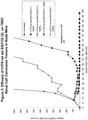
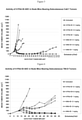
- Figures 1 to 6 show the effect of conjugates of the present invention in tumours.
- trade name when a trade name is used herein, reference to the trade name also refers to the product formulation, the generic drug, and the active pharmaceutical ingredient(s) of the trade name product, unless otherwise indicated by context.
- binding agent and "targeting agent as used herein refer to a molecule, e.g., protein, polypeptide or peptide, that specifically binds to a target molecule.
- a target molecule e.g., protein, polypeptide or peptide
- binding agent can include a full length antibody, an antigen binding fragment of a full length antibody, other agent (protein, polypeptide or peptide) that includes an antibody heavy and/or light chain variable region that specifically bind to the target molecule, or an Fc fusion protein comprising an extracellular domain of a protein, peptide polypeptide that binds to the target molecule and that is joined to an Fc region, domain or portion thereof, of an antibody.
- the terms “specifically binds” and “specific binding” refer to the binding of an antibody or other protein, polypeptide or peptide to a predetermined molecule (e.g., an antigen).
- a predetermined molecule e.g., an antigen
- the antibody or other molecule binds with an affinity of at least about 1 ⁇ 10 7 M -1 , and binds to the predetermined molecule with an affinity that is at least two-fold greater than its affinity for binding to a non-specific molecule (e.g., BSA, casein) other than the predetermined molecule or a closely-related molecule.
- the pharmaceutically acceptable cation may be inorganic or organic.
- Examples of pharmaceutically acceptable monovalent inorganic cations include alkali metal ions such as Na + and K + .
- Examples of pharmaceutically acceptable divalent inorganic cations include, alkaline earth cations such as Ca 2+ and Mg 2+ .
- Examples of pharmaceutically acceptable organic cations include ammonium ion (i.e. NH 4 + ) and substituted ammonium ions (e.g. NH 3 R + , NH 2 R 2 + , NHR 3 + , NR 4 + ).
- Examples of some suitable substituted ammonium ions are those derived from: ethylamine, diethylamine, dicyclohexylamine, triethylamine, butylamine, ethylenediamine, ethanolamine, diethanolamine, piperazine, benzylamine, phenylbenzylamine, choline, meglumine, and tromethamine, as well as amino acids, such as lysine and arginine.
- An example of a common quaternary ammonium ion is N(CH 3 ) 4 + .
- substituted refers to a parent group which bears one or more substituents.
- substituted is used herein in the conventional sense and refers to a chemical moiety which is covalently attached to, or if appropriate, fused to, a parent group.
- substituents are well known, and methods for their formation and introduction into a variety of parent groups are also well known.
- C 1-12 alkyl refers to a monovalent moiety obtained by removing a hydrogen atom from a carbon atom of a hydrocarbon compound having from 1 to 12 carbon atoms, which may be aliphatic or alicyclic, and which may be saturated or unsaturated (e.g. partially unsaturated, fully unsaturated).
- alkyl includes the sub-classes alkenyl, alkynyl, cycloalkyl, etc., discussed below.
- saturated alkyl groups include methyl (C 1 ), ethyl (C 2 ), propyl (C 3 ), butyl (C 4 ), pentyl (C 5 ), hexyl (C 6 ) and heptyl (C 7 ).
- saturated linear alkyl groups include methyl (C 1 ), ethyl (C 2 ), n-propyl (C 3 ), n-butyl (C 4 ), n-pentyl (amyl) (C 5 ), n-hexyl (C 6 ) and n-heptyl (C 7 ).
- saturated branched alkyl groups include iso-propyl (C 3 ), iso-butyl (C 4 ), sec-butyl (C 4 ), tert-butyl (C 4 ), iso-pentyl (C 5 ), and neo-pentyl (C 5 ).
- C 2-12 Alkenyl The term "C 2-12 alkenyl" as used herein, pertains to an alkyl group having one or more carbon-carbon double bonds.
- C2-12 alkynyl The term "C 2-12 alkynyl" as used herein, pertains to an alkyl group having one or more carbon-carbon triple bonds.
- unsaturated alkynyl groups include ethynyl (-C ⁇ CH) and 2-propynyl (propargyl, -CH 2 -C ⁇ CH).
- C3-12 cycloalkyl refers to an alkyl group which is also a cyclyl group; that is, a monovalent moiety obtained by removing a hydrogen atom from an alicyclic ring atom of a cyclic hydrocarbon (carbocyclic) compound, which moiety has from 3 to 7 carbon atoms, including from 3 to 7 ring atoms.
- cycloalkyl groups include those derived from:
- C 3-20 heterocyclyl refers to a monovalent moiety obtained by removing a hydrogen atom from a ring atom of a heterocyclic compound, which moiety has from 3 to 20 ring atoms, of which from 1 to 10 are ring heteroatoms.
- each ring has from 3 to 7 ring atoms, of which from 1 to 4 are ring heteroatoms.
- the prefixes e.g. C 3-20 , C 3-7 , C 5-6 , etc.
- the term "C 5-6 heterocyclyl”, as used herein, pertains to a heterocyclyl group having 5 or 6 ring atoms.
- monocyclic heterocyclyl groups include those derived from:
- substituted monocyclic heterocyclyl groups include those derived from saccharides, in cyclic form, for example, furanoses (C 5 ), such as arabinofuranose, lyxofuranose, ribofuranose, and xylofuranse, and pyranoses (C 6 ), such as allopyranose, altropyranose, glucopyranose, mannopyranose, gulopyranose, idopyranose, galactopyranose, and talopyranose.
- furanoses C 5
- arabinofuranose such as arabinofuranose, lyxofuranose, ribofuranose, and xylofuranse
- pyranoses C 6
- allopyranose altropyranose
- glucopyranose glucopyranose
- mannopyranose gulopyranose
- idopyranose galactopyranose
- C 5-20 aryl refers to a monovalent moiety obtained by removing a hydrogen atom from an aromatic ring atom of an aromatic compound, which moiety has from 3 to 20 ring atoms. Preferably, each ring has from 5 to 7 ring atoms.
- the prefixes e.g. C 3-20 , C 5-7 , C 5-6 , etc.
- the term "C 5-6 aryl” as used herein, pertains to an aryl group having 5 or 6 ring atoms.
- the ring atoms may be all carbon atoms, as in "carboaryl groups".
- carboaryl groups include those derived from benzene (i.e. phenyl) (C 6 ), naphthalene (C 10 ), azulene (C 10 ), anthracene (C 14 ), phenanthrene (C 14 ), naphthacene (C 18 ), and pyrene (C 16 ).
- aryl groups which comprise fused rings include groups derived from indane (e.g. 2,3-dihydro-1H-indene) (C 9 ), indene (C 9 ), isoindene (C 9 ), tetraline (1,2,3,4-tetrahydronaphthalene (C 10 ), acenaphthene (C 12 ), fluorene (C 13 ), phenalene (C 13 ), acephenanthrene (C 15 ), and aceanthrene (C 16 ).
- indane e.g. 2,3-dihydro-1H-indene
- indene C 9
- isoindene C 9
- tetraline (1,2,3,4-tetrahydronaphthalene C 10
- acenaphthene C 12
- fluorene C 13
- phenalene C 13
- acephenanthrene C 15
- aceanthrene C 16
- the ring atoms may include one or more heteroatoms, as in "heteroaryl groups".
- heteroaryl groups include those derived from:
- heteroaryl which comprise fused rings, include:
- Halo -F, -Cl, -Br, and -I.
- Ether -OR, wherein R is an ether substituent, for example, a C 1-7 alkyl group (also referred to as a C 1 - 7 alkoxy group, discussed below), a C 3-20 heterocyclyl group (also referred to as a C 3-20 heterocyclyloxy group), or a C 5-20 aryl group (also referred to as a C 5-20 aryloxy group), preferably a C 1-7 alkyl group.
- R is an ether substituent, for example, a C 1-7 alkyl group (also referred to as a C 1 - 7 alkoxy group, discussed below), a C 3-20 heterocyclyl group (also referred to as a C 3-20 heterocyclyloxy group), or a C 5-20 aryl group (also referred to as a C 5-20 aryloxy group), preferably a C 1-7 alkyl group.
- Alkoxy -OR, wherein R is an alkyl group, for example, a C 1-7 alkyl group.
- C 1-7 alkoxy groups include -OMe (methoxy), -OEt (ethoxy), -O(nPr) (n-propoxy), -O(iPr) (isopropoxy), -O(nBu) (n-butoxy), -O(sBu) (sec-butoxy), -O(iBu) (isobutoxy), and -O(tBu) (tert-butoxy).
- Acetal -CH(OR 1 )(OR 2 ), wherein R 1 and R 2 are independently acetal substituents, for example, a C 1-7 alkyl group, a C 3-20 heterocyclyl group, or a C 5-20 aryl group, preferably a C 1-7 alkyl group, or, in the case of a "cyclic" acetal group, R 1 and R 2 , taken together with the two oxygen atoms to which they are attached, and the carbon atoms to which they are attached, form a heterocyclic ring having from 4 to 8 ring atoms.
- Examples of acetal groups include -CH(OMe) 2 , -CH(OEt) 2 , and -CH(OMe)(OEt).
- Hemiacetal -CH(OH)(OR 1 ), wherein R 1 is a hemiacetal substituent, for example, a C 1-7 alkyl group, a C 3-20 heterocyclyl group, or a C 5-20 aryl group, preferably a C 1-7 alkyl group.
- R 1 is a hemiacetal substituent, for example, a C 1-7 alkyl group, a C 3-20 heterocyclyl group, or a C 5-20 aryl group, preferably a C 1-7 alkyl group.
- hemiacetal groups include -CH(OH)(OMe) and -CH(OH)(OEt).
- Ketal -CR(OR 1 )(OR 2 ), where R 1 and R 2 are as defined for acetals, and R is a ketal substituent other than hydrogen, for example, a C 1-7 alkyl group, a C 3-20 heterocyclyl group, or a C 5-20 aryl group, preferably a C 1-7 alkyl group.
- Examples ketal groups include - C(Me)(OMe) 2 , -C(Me)(OEt) 2 , -C(Me)(OMe)(OEt), -C(Et)(OMe) 2 , -C(Et)(OEt) 2 , and -C(Et)(OMe)(OEt).
- R 1 is as defined for hemiacetals, and R is a hemiketal substituent other than hydrogen, for example, a C 1-7 alkyl group, a C 3-20 heterocyclyl group, or a C 5-20 aryl group, preferably a C 1-7 alkyl group.
- hemiacetal groups include -C(Me)(OH)(OMe), -C(Et)(OH)(OMe), -C(Me)(OH)(OEt), and -C(Et)(OH)(OEt).
- Oxo (keto, -one): O.
- Imino (imine): NR, wherein R is an imino substituent, for example, hydrogen, C 1-7 alkyl group, a C 3-20 heterocyclyl group, or a C 5-20 aryl group, preferably hydrogen or a C 1-7 alkyl group.
- R is an acyl substituent, for example, a C 1-7 alkyl group (also referred to as C 1-7 alkylacyl or C 1-7 alkanoyl), a C 3-20 heterocyclyl group (also referred to as C 3-20 heterocyclylacyl), or a C 5-20 aryl group (also referred to as C 5-20 arylacyl), preferably a C 1-7 alkyl group.
- Carboxy (carboxylic acid): -C( O)OH.
- Acyloxy (reverse ester): -OC( O)R, wherein R is an acyloxy substituent, for example, a C 1-7 alkyl group, a C 3-20 heterocyclyl group, or a C 5-20 aryl group, preferably a C 1-7 alkyl group.
- R is an acyloxy substituent, for example, a C 1-7 alkyl group, a C 3-20 heterocyclyl group, or a C 5-20 aryl group, preferably a C 1-7 alkyl group.
- Oxycarboyloxy: -OC( O)OR, wherein R is an ester substituent, for example, a C 1-7 alkyl group, a C 3-20 heterocyclyl group, or a C 5-20 aryl group, preferably a C 1-7 alkyl group.
- R 1 and R 2 are independently amino substituents, for example, hydrogen, a C 1-7 alkyl group (also referred to as C 1-7 alkylamino or di-C 1-7 alkylamino), a C 3-20 heterocyclyl group, or a C 5-20 aryl group, preferably H or a C 1-7 alkyl group, or, in the case of a "cyclic" amino group, R 1 and R 2 , taken together with the nitrogen atom to which they are attached, form a heterocyclic ring having from 4 to 8 ring atoms.
- R 1 and R 2 are independently amino substituents, for example, hydrogen, a C 1-7 alkyl group (also referred to as C 1-7 alkylamino or di-C 1-7 alkylamino), a C 3-20 heterocyclyl group, or a C 5-20 aryl group, preferably H or a C 1-7 alkyl group, or, in the case of a "cyclic" amino group, R 1 and R 2 ,
- Amino groups may be primary (-NH 2 ), secondary (-NHR 1 ), or tertiary (-NHR 1 R 2 ), and in cationic form, may be quaternary (- + NR 1 R 2 R 3 ).
- Examples of amino groups include -NH 2 , -NHCH 3 , -NHC(CH 3 ) 2 , -N(CH 3 ) 2 , -N(CH 2 CH 3 ) 2 , and -NHPh.
- Examples of cyclic amino groups include aziridino, azetidino, pyrrolidino, piperidino, piperazino, morpholino, and thiomorpholino.
- Amido (carbamoyl, carbamyl, aminocarbonyl, carboxamide): -C( O)NR 1 R 2 , wherein R 1 and R 2 are independently amino substituents, as defined for amino groups.
- Thioamido (thiocarbamyl): -C( S)NR 1 R 2 , wherein R 1 and R 2 are independently amino substituents, as defined for amino groups.
- R 1 is an amide substituent, for example, hydrogen, a C 1-7 alkyl group, a C 3-20 heterocyclyl group, or a C 5-20 aryl group, preferably hydrogen or a C 1-7 alkyl group
- R 1 is an amide substituent, for example, hydrogen, a C 1-7 alkyl group, a C 3-20 heterocyclyl group, or a C 5-20 aryl group,
- R 1 and R 2 may together form a cyclic structure, as in, for example, succinimidyl, maleimidyl, and phthalimidyl:
- R 2 and R 3 are independently amino substituents, as defined for amino groups, and R 1 is a ureido substituent, for example, hydrogen, a C 1-7 alkyl group, a C 3-20 heterocyclyl group, or a C 5-20 aryl group, preferably hydrogen or a C 1-7 alkyl group.
- ureido groups include -NHCONH 2 , -NHCONHMe, -NHCONHEt, - NHCONMe 2 , -NHCONEt 2 , -NMeCONH 2 , -NMeCONHMe, -NMeCONHEt, -NMeCONMe 2 , and -NMeCONEt 2 .
- Tetrazolyl a five membered aromatic ring having four nitrogen atoms and one carbon atom
- Imino: NR, wherein R is an imino substituent, for example, for example, hydrogen, a C 1-7 alkyl group, a C 3-20 heterocyclyl group, or a C 5-20 aryl group, preferably H or a C 1-7 alkyl group.
- C 1-7 alkylthio groups include -SCH 3 and -SCH 2 CH 3 .
- Disulfide -SS-R, wherein R is a disulfide substituent, for example, a C 1-7 alkyl group, a C 3-20 heterocyclyl group, or a C 5-20 aryl group, preferably a C 1-7 alkyl group (also referred to herein as C 1-7 alkyl disulfide).
- R is a disulfide substituent, for example, a C 1-7 alkyl group, a C 3-20 heterocyclyl group, or a C 5-20 aryl group, preferably a C 1-7 alkyl group (also referred to herein as C 1-7 alkyl disulfide).
- C 1-7 alkyl disulfide groups include -SSCH 3 and -SSCH 2 CH 3 .
- Sulfine (sulfinyl, sulfoxide): -S( O)R, wherein R is a sulfine substituent, for example, a C 1-7 alkyl group, a C 3-20 heterocyclyl group, or a C 5-20 aryl group, preferably a C 1-7 alkyl group.
- R is a sulfine substituent, for example, a C 1-7 alkyl group, a C 3-20 heterocyclyl group, or a C 5-20 aryl group, preferably a C 1-7 alkyl group.
- R is a sulfinate substituent, for example, a C 1-7 alkyl group, a C 3-20 heterocyclyl group, or a C 5-20 aryl group, preferably a C 1-7 alkyl group.
- R is a sulfonate substituent, for example, a C 1-7 alkyl group, a C 3-20 heterocyclyl group, or a C 5-20 aryl group, preferably a C 1-7 alkyl group.
- R is a sulfinyloxy substituent, for example, a C 1-7 alkyl group, a C 3-20 heterocyclyl group, or a C 5-20 aryl group, preferably a C 1-7 alkyl group.
- R is a sulfonyloxy substituent, for example, a C 1-7 alkyl group, a C 3-20 heterocyclyl group, or a C 5-20 aryl group, preferably a C 1-7 alkyl group.
- R is a sulfate substituent, for example, a C 1-7 alkyl group, a C 3-20 heterocyclyl group, or a C 5-20 aryl group, preferably a C 1-7 alkyl group.
- R 1 and R 2 are independently amino substituents, as defined for amino groups.
- R 1 and R 2 are independently amino substituents, as defined for amino groups.
- R 1 is an amino substituent, as defined for amino groups.
- R 1 is an amino substituent, as defined for amino groups
- R is a sulfonamino substituent, for example, a C 1-7 alkyl group, a C 3-20 heterocyclyl group, or a C 5-20 aryl group, preferably a C 1-7 alkyl group.
- R 1 is an amino substituent, as defined for amino groups
- R is a sulfinamino substituent, for example, a C 1-7 alkyl group, a C 3-20 heterocyclyl group, or a C 5-20 aryl group, preferably a C 1-7 alkyl group.
- R is a phosphino substituent, for example, -H, a C 1-7 alkyl group, a C 3-20 heterocyclyl group, or a C 5-20 aryl group, preferably -H, a C 1-7 alkyl group, or a C 5-20 aryl group.
- Examples of phosphino groups include -PH 2 , -P(CH 3 ) 2 , -P(CH 2 CH 3 ) 2 , -P(t-Bu) 2 , and -P(Ph) 2 .
- R is a phosphinyl substituent, for example, a C 1-7 alkyl group, a C 3-20 heterocyclyl group, or a C 5-20 aryl group, preferably a C 1-7 alkyl group or a C 5-20 aryl group.
- Phosphonate (phosphono ester): -P( O)(OR) 2 , where R is a phosphonate substituent, for example, -H, a C 1-7 alkyl group, a C 3-20 heterocyclyl group, or a C 5-20 aryl group, preferably -H, a C 1-7 alkyl group, or a C 5-20 aryl group.
- Phosphate (phosphonooxy ester): -OP( O)(OR) 2 , where R is a phosphate substituent, for example, -H, a C 1-7 alkyl group, a C 3-20 heterocyclyl group, or a C 5-20 aryl group, preferably - H, a C 1-7 alkyl group, or a C 5-20 aryl group.
- Phosphorous acid -OP(OH) 2 .
- Phosphite -OP(OR) 2 , where R is a phosphite substituent, for example, -H, a C 1-7 alkyl group, a C 3-20 heterocyclyl group, or a C 5-20 aryl group, preferably -H, a C 1-7 alkyl group, or a C 5-20 aryl group.
- phosphite groups include -OP(OCH 3 ) 2 , -OP(OCH 2 CH 3 ) 2 , -OP(O-t-Bu) 2 , and -OP(OPh) 2 .
- Phosphoramidite -OP(OR 1 )-NR 2 2 , where R 1 and R 2 are phosphoramidite substituents, for example, -H, a (optionally substituted) C 1-7 alkyl group, a C 3-20 heterocyclyl group, or a C 5-20 aryl group, preferably -H, a C 1-7 alkyl group, or a C 5-20 aryl group.
- Examples of phosphoramidite groups include -OP(OCH 2 CH 3 )-N(CH 3 ) 2 , -OP(OCH 2 CH 3 )-N(i-Pr) 2 , and -OP(OCH 2 CH 2 CN)-N(i-Pr) 2 .
- C 3-12 alkylene refers to a bidentate moiety obtained by removing two hydrogen atoms, either both from the same carbon atom, or one from each of two different carbon atoms, of a hydrocarbon compound having from 3 to 12 carbon atoms (unless otherwise specified), which may be aliphatic or alicyclic, and which may be saturated, partially unsaturated, or fully unsaturated.
- alkylene includes the sub-classes alkenylene, alkynylene, cycloalkylene, etc., discussed below.
- linear saturated C 3-12 alkylene groups include -(CH 2 )n- where n is an integer from 3 to 12, for example, -CH 2 CH 2 CH 2 - (propylene), -CH 2 CH 2 CH 2 CH 2 - (butylene), -CH 2 CH 2 CH 2 CH 2 CH 2 - (pentylene) and -CH 2 CH 2 CH 2 CH 2 CH 2 CH 2 CH 2 - (heptylene).
- Examples of branched saturated C 3-12 alkylene groups include -CH(CH 3 )CH 2 -, -CH(CH 3 )CH 2 CH 2 -, -CH(CH 3 )CH 2 CH 2 CH 2 -, -CH 2 CH(CH 3 )CH 2 -, -CH 2 CH(CH 3 )CH 2 CH 2 -, -CH(CH 2 CH 3 )-, -CH(CH 2 CH 3 )CH 2 -, and -CH 2 CH(CH 2 CH 3 )CH 2 -.
- C 3-12 cycloalkylenes examples include cyclopentylene (e.g. cyclopent-1,3-ylene), and cyclohexylene (e.g. cyclohex-1,4-ylene).
- C 3-12 cycloalkylenes examples include cyclopentenylene (e.g. 4-cyclopenten-1,3-ylene), cyclohexenylene (e.g. 2-cyclohexen-1,4-ylene; 3-cyclohexen-1,2-ylene; 2,5-cyclohexadien-1,4-ylene).
- cyclopentenylene e.g. 4-cyclopenten-1,3-ylene
- cyclohexenylene e.g. 2-cyclohexen-1,4-ylene; 3-cyclohexen-1,2-ylene; 2,5-cyclohexadien-1,4-ylene.
- Oxygen protecting group refers to a moiety which masks a hydroxy group, and these are well known in the art. A large number of suitable groups are described on pages 23 to 200 of Greene, T.W. and Wuts, G.M., Protective Groups in Organic Synthesis, 3rd Edition, John Wiley & Sons, Inc., 1999 Classes of particular interest include silyl ethers (e.g. TMS, TBDMS), substituted methyl ethers (e.g. THP) and esters (e.g. acetate).
- silyl ethers e.g. TMS, TBDMS
- substituted methyl ethers e.g. THP
- esters e.g. acetate
- Carbamate nitrogen protecting group pertains to a moiety which masks the nitrogen in the imine bond, and these are well known in the art. These groups have the following structure: wherein R' 10 is R as defined above. A large number of suitable groups are described on pages 503 to 549 of Greene, T.W. and Wuts, G.M., Protective Groups in Organic Synthesis, 3rd Edition, John Wiley & Sons, Inc., 1999 .
- Hemi-aminal nitrogen protecting group pertains to a group having the following structure: wherein R' 10 is R as defined above.
- R' 10 is R as defined above.
- suitable groups are described on pages 633 to 647 as amide protecting groups of Greene, T.W. and Wuts, G.M., Protective Groups in Organic Synthesis, 3rd Edition, John Wiley & Sons, Inc., 1999 .
- the present invention provides Conjugates comprising a PBD dimer connected to a Ligand unit via a Linker Unit.
- the Linker unit includes a Stretcher unit (A), a Specificity unit (L 1 ), and a Spacer unit (L 2 ).
- the Linker unit is connected at one end to the Ligand unit and at the other end to the PBD dimer compound.
- the drug loading is represented by p, the number of drug molecules per Ligand unit (e.g., an antibody). Drug loading may range from 1 to 20 Drug units (D) per Ligand unit (e.g., Ab or mAb).
- D Drug units
- p represents the average drug loading of the Conjugates in the composition, and p ranges from 1 to 20.
- p is from about 1 to about 8 Drug units per Ligand unit. In some embodiments, p is 1. In some embodiments, p is 2. In some embodiments, p is from about 2 to about 8 Drug units per Ligand unit. In some embodiments, p is from about 2 to about 6, 2 to about 5, or 2 to about 4 Drug units per Ligand unit. In some embodiments, p is about 2, about 4, about 6 or about 8 Drug units per Ligand unit.
- the average number of Drugs units per Ligand unit in a preparation from a conjugation reaction may be characterized by conventional means such as mass spectroscopy, ELISA assay, and HPLC.
- the quantitative distribution of Conjugates in terms of p may also be determined.
- separation, purification, and characterization of homogeneous Conjugates, where p is a certain value, from Conjugates with other drug loadings may be achieved by means such as reverse phase HPLC or electrophoresis.
- the Conjugate has the formula: L- (A 1 a -L 1 s -L 2 y -D) p wherein L, A 1 , a, L 1 , s, L 2 , D and p are as described above.
- the Ligand unit (L) is a Cell Binding Agent (CBA) that specifically binds to a target molecule on the surface of a target cell.
- CBA Cell Binding Agent
- the Ligand unit (L) is a Cell Binding Agent (CBA) that specifically binds to a target molecule on the surface of a target cell.
- CBA Cell Binding Agent
- An exemplary formula is illustrated below: CBA - A 1 a - L 1 s - L 2 y -* where the asterisk indicates the point of attachment to the Drug unit (D), CBA is the Cell Binding Agent, L 1 is a Specificity unit, A 1 is a Stretcher unit connecting L 1 to the Cell Binding Agent, L 2 is a Spacer unit which is a covalent bond or a self-immolative group, and a is 1 or 2, s is 0, 1 or 2, and y is 0 or 1 or 2.
- L 1 can be a cleavable Specificity unit, and may be referred to as a "trigger" that when cleaved activates a self-immolative group (or self-immolative groups) L 2 , when a self-immolative group(s) is present.
- the Specificity unit L 1 is cleaved, or the linkage (i.e., the covalent bond) between L 1 and L 2 is cleaved, the self-immolative group releases the Drug unit (D).
- the Ligand unit (L) is a Cell Binding Agent (CBA) that specifically binds to a target molecule on the surface of a target cell.
- CBA Cell Binding Agent
- An exemplary formula is illustrated below: where the asterisk indicates the point of attachment to the Drug (D), CBA is the Cell Binding Agent, L 1 is a Specificity unit connected to L 2 , A 1 is a Stretcher unit connecting L 2 to the Cell Binding Agent, L 2 is a self-immolative group, and a is 1 or2, s is 1 or 2, and y is 1 or 2.
- L 1 and L 2 can vary widely. These groups are chosen on the basis of their characteristics, which may be dictated in part, by the conditions at the site to which the conjugate is delivered.
- the Specificity unit L 1 is cleavable, the structure and/or sequence of L 1 is selected such that it is cleaved by the action of enzymes present at the target site (e.g., the target cell).
- L 1 units that are cleavable by changes in pH (e.g. acid or base labile), temperature or upon irradiation (e.g. photolabile) may also be used.
- L 1 units that are cleavable under reducing or oxidising conditions may also find use in the Conjugates.
- L 1 may comprise one amino acid or a contiguous sequence of amino acids.
- the amino acid sequence may be the target substrate for an enzyme.
- L 1 is cleavable by the action of an enzyme.
- the enzyme is an esterase or a peptidase.
- L 1 may be cleaved by a lysosomal protease, such as a cathepsin.
- the enzyme cleaves the bond between L 1 and L 2 , whereby the self-immolative group(s) release the Drug unit.
- L 1 and L 2 where present, may be connected by a bond selected from:
- An amino group of L 1 that connects to L 2 may be the N-terminus of an amino acid or may be derived from an amino group of an amino acid side chain, for example a lysine amino acid side chain.
- a carboxyl group of L 1 that connects to L 2 may be the C-terminus of an amino acid or may be derived from a carboxyl group of an amino acid side chain, for example a glutamic acid amino acid side chain.
- a hydroxy group of L 1 that connects to L 2 may be derived from a hydroxy group of an amino acid side chain, for example a serine amino acid side chain.
- the phenylene ring is optionally substituted with one, two or three substituents as described herein.
- Y is NH
- n is 0 or 1. Preferably, n is 0.
- PABC p-aminobenzylcarbonyl linker
- the Drug unit i.e., the asymmetric PBD
- L* is the activated form of the remaining portion of the linker and the released Drug unit is not shown.
- Each phenylene ring is optionally substituted with one, two or three substituents as described herein.
- the phenylene ring having the Y substituent is optionally substituted and the phenylene ring not having the Y substituent is unsubstituted.
- D is N.
- D is CH.
- E is O or S.
- F is CH.
- the covalent bond between L 1 and L 2 is a cathepsin labile (e.g., cleavable) bond.
- L 1 comprises a dipeptide.
- the amino acids in the dipeptide may be any combination of natural amino acids and non-natural amino acids.
- the dipeptide comprises natural amino acids.
- the linker is a cathepsin labile linker
- the dipeptide is the site of action for cathepsin-mediated cleavage. The dipeptide then is a recognition site for cathepsin.
- the group -X 1 -X 2 - in dipeptide, -NH-X 1 -X 2 -CO-, is selected from:
- the group -X 1 -X 2 - in dipeptide, -NH-X 1 -X 2 -CO- is selected from:
- the group -X 1 -X 2 - in dipeptide, -NH-X 1 -X 2 -CO-, is -Phe-Lys-, Val-Cit or -Val-Ala-.
- dipeptide combinations of interest include:
- dipeptide combinations may be used, including those described by Dubowchik et al..
- the amino acid side chain is chemically protected, where appropriate.
- the side chain protecting group may be a group as discussed below.
- Protected amino acid sequences are cleavable by enzymes. For example, a dipeptide sequence comprising a Boc side chain-protected Lys residue is cleavable by cathepsin.
- -X 2 - is connected indirectly to the Drug unit.
- the Spacer unit L 2 is present.
- the dipeptide is used in combination with a self-immolative group(s) (the Spacer unit).
- the self-immolative group(s) may be connected to -X 2 -.
- -X 2 - is connected directly to the self-immolative group.
- -X 2 - is connected to the group Y of the self-immolative group.
- the group -X 2 -CO- is connected to Y, where Y is NH.
- -X 1 - is connected directly to A 1 .
- -X 1 - is connected directly to A 1 .
- the group NH-X 1 - (the amino terminus of X 1 ) is connected to A 1 .
- a 1 may comprise the functionality -CO- thereby to form an amide link with -X 1 -.
- the PABC group is connected directly to the Drug unit.
- the self-immolative group and the dipeptide together form the group -Phe-Lys-PABC-, which is illustrated below: where the asterisk indicates the point of attachment to the Drug unit, and the wavy line indicates the point of attachment to the remaining portion of L 1 or the point of attachment to A 1 .
- the wavy line indicates the point of attachment to A 1 .
- the self-immolative group and the dipeptide together form the group -Val-Ala-PABC-, which is illustrated below: where the asterisk and the wavy line are as defined above.
- E is selected such that the group is susceptible to cleavage, e.g., by light or by the action of an enzyme.
- E may be -NO 2 or glucuronic acid (e.g., ⁇ -glucuronic acid).
- the former may be susceptible to the action of a nitroreductase, the latter to the action of a ⁇ -glucuronidase.
- the group Y may be a covalent bond.
- the group Y may be a functional group selected from:
- the group Y is preferably -NH-, -CH 2- , -O-, and -S-.
- L 1 and L 2 together represent: where the asterisk indicates the point of attachment to the remainder of L 2 or the Drug unit, the wavy line indicates the point of attachment to A 1 , Y is a covalent bond or a functional group and E is glucuronic acid (e.g., ⁇ -glucuronic acid). Y is preferably a functional group selected from -NH-, -CH 2 -, -O-, and -S-.
- Y is a functional group as set forth above, the functional group is linked to an amino acid, and the amino acid is linked to the Stretcher unit A 1 .
- amino acid is ⁇ -alanine. In such an embodiment, the amino acid is equivalently considered part of the Stretcher unit.
- the Specificity unit L 1 and the Ligand unit are indirectly connected via the Stretcher unit.
- L 1 and A 1 may be connected by a bond selected from:
- the group A 1 is: where the asterisk indicates the point of attachment to L 1 , the wavy line indicates the point of attachment to the Ligand unit, and n is 0 to 6. In one embodiment, n is 5.
- the group A 1 is: where the asterisk indicates the point of attachment to L 1 , the wavy line indicates the point of attachment to the Ligand unit, and n is 0 to 6. In one embodiment, n is 5.
- the group A 1 is: where the asterisk indicates the point of attachment to L 1 , the wavy line indicates the point of attachment to the Ligand unit, n is 0 or 1, and m is 0 to 30. In a preferred embodiment, n is 1 and m is 0 to 10, 1 to 8, preferably 4 to 8, most preferably 4 or 8.
- the group A 1 is: where the asterisk indicates the point of attachment to L 1 , the wavy line indicates the point of attachment to the Ligand unit, n is 0 or 1, and m is 0 to 30. In a preferred embodiment, n is 1 and m is 0 to 10, 1 to 8, preferably 4 to 8, most preferably 4 or 8.
- the group A 1 is: where the asterisk indicates the point of attachment to L 1 , the wavy line indicates the point of attachment to the Ligand unit, and n is 0 to 6. In one embodiment, n is 5.
- the group A 1 is: where the asterisk indicates the point of attachment to L 1 , the wavy line indicates the point of attachment to the Ligand unit, and n is 0 to 6. In one embodiment, n is 5.
- the group A 1 is: where the asterisk indicates the point of attachment to L 1 , the wavy line indicates the point of attachment to the Ligand unit, n is 0 or 1, and m is 0 to 30. In a preferred embodiment, n is 1 and m is 0 to 10, 1 to 8, preferably 4 to 8, most preferably 4 or 8.
- the group A 1 is: where the asterisk indicates the point of attachment to L 1 , the wavy line indicates the point of attachment to the Ligand unit, n is 0 or 1, and m is 0 to 30. In a preferred embodiment, n is 1 and m is 0 to 10, 1 to 8, preferably 4 to 8, most preferably 4 or 8.
- connection between the Ligand unit and A 1 is through a thiol residue of the Ligand unit and a maleimide group of A 1 .
- connection between the Ligand unit and A 1 is: where the asterisk indicates the point of attachment to the remaining portion of A 1 , L 1 , L 2 or D, and the wavy line indicates the point of attachment to the remaining portion of the Ligand unit.
- the S atom is typically derived from the Ligand unit.
- an alternative functionality may be used in place of the maleimide-derived group shown below: where the wavy line indicates the point of attachment to the Ligand unit as before, and the asterisk indicates the bond to the remaining portion of the A 1 group, or to L 1 , L 2 or D.
- the maleimide-derived group is replaced with the group: where the wavy line indicates point of attachment to the Ligand unit, and the asterisk indicates the bond to the remaining portion of the A 1 group , or to L 1 , L 2 or D.
- the maleimide-derived group is replaced with a group, which optionally together with a Ligand unit (e.g., a Cell Binding Agent), is selected from:
- a Ligand unit e.g., a Cell Binding Agent
- the maleimide-derived group is replaced with a group, which optionally together with the Ligand unit, is selected from: where the wavy line indicates either the point of attachment to the Ligand unit or the bond to the remaining portion of the A 1 group, and the asterisk indicates the other of the point of attachment to the Ligand unit or the bond to the remaining portion of the A 1 group.
- the Stretcher unit A 1 is present, the Specificity unit L 1 is present and Spacer unit L 2 is absent.
- L 1 and the Drug unit are directly connected via a bond.
- L 2 is a bond.
- L 1 and D may be connected by a bond selected from:
- L 1 and D are preferably connected by a bond selected from:
- L 1 comprises a dipeptide and one end of the dipeptide is linked to D.
- the amino acids in the dipeptide may be any combination of natural amino acids and non-natural amino acids.
- the dipeptide comprises natural amino acids.
- the linker is a cathepsin labile linker
- the dipeptide is the site of action for cathepsin-mediated cleavage. The dipeptide then is a recognition site for cathepsin.
- the group -X 1 -X 2 - in dipeptide, -NH-X 1 -X 2 -CO-, is selected from:
- the group -X 1 -X 2 - in dipeptide, -NH-X 1 -X 2 -CO- is selected from:
- the group -X 1 -X 2 - in dipeptide, -NH-X 1 -X 2 -CO-, is -Phe-Lys- or -Val-Ala-.
- dipeptide combinations of interest include:
- dipeptide combinations may be used, including those described above.
- L 1 -D is: where -NH-X 1 -X 2 -CO is the dipeptide, -NH- is part of the Drug unit, the asterisk indicates the point of attachment to the remainder of the Drug unit, and the wavy line indicates the point of attachment to the remaining portion of L 1 or the point of attachment to A 1 .
- the wavy line indicates the point of attachment to A 1 .
- the dipeptide is valine-alanine and L 1 -D is: where the asterisk, -NH- and the wavy line are as defined above.
- the dipeptide is phenylalanine-lysine and L 1 -D is: where the asterisk, -NH- and the wavy line are as defined above.
- the dipeptide is valine-citrulline.
- the groups A 1 -L 1 are: where the asterisk indicates the point of attachment to L 2 or D, the wavy line indicates the point of attachment to the Ligand unit, and n is 0 to 6. In one embodiment, n is 5.
- the groups A 1 -L 1 are: where the asterisk indicates the point of attachment to D, the wavy line indicates the point of attachment to the Ligand unit, and n is 0 to 6. In one embodiment, n is 5.
- the groups A 1 -L 1 are: where the asterisk indicates the point of attachment to D, the wavy line indicates the point of attachment to the Ligand unit, n is 0 or 1, and m is 0 to 30. In a preferred embodiment, n is 1 and m is 0 to 10, 1 to 8, preferably 4 to 8, most preferably 4 or 8.
- the groups A 1 -L 1 are: where the asterisk indicates the point of attachment to D, the wavy line indicates the point of attachment to the Ligand unit, n is 0 or 1, and m is 0 to 30. In a preferred embodiment, n is 1 and m is 0 to 10, 1 to 7, preferably 3 to 7, most preferably 3 or 7.
- the groups A 1 -L 1 are: where the asterisk indicates the point of attachment to L 2 or D, the wavy line indicates the point of attachment to the Ligand unit, and n is 0 to 6. In one embodiment, n is 5.
- the groups A 1 -L 1 are: where the asterisk indicates the point of attachment to L 2 or D, the wavy line indicates the point of attachment to the Ligand unit, and n is 0 to 6. In one embodiment, n is 5.
- the groups A 1 -L 1 are: where the asterisk indicates the point of attachment to L 2 or D, the wavy line indicates the point of attachment to the Ligand unit, n is 0 or 1, and m is 0 to 30. In a preferred embodiment, n is 1 and m is 0 to 10, 1 to 8, preferably 4 to 8, most preferably 4 or 8.
- the groups A 1 -L 1 is: where the asterisk indicates the point of attachment to L 2 or D, the wavy line indicates the point of attachment to the Ligand unit, n is 0 or 1, and m is 0 to 30. In a preferred embodiment, n is 1 and m is 0 to 10, 1 to 8, preferably 4 to 8, most preferably 4 or 8.
- the groups L- A 1 -L 1 are: where the asterisk indicates the point of attachment to D, S is a sulphur group of the Ligand unit, the wavy line indicates the point of attachment to the rest of the Ligand unit, and n is 0 to 6. In one embodiment, n is 5.
- the group L-A 1 -L 1 are: where the asterisk indicates the point of attachment to D, S is a sulphur group of the Ligand unit, the wavy line indicates the point of attachment to the remainder of the Ligand unit, and n is 0 to 6. In one embodiment, n is 5.
- the groups L-A 1 -L 1 are: where the asterisk indicates the point of attachment to D, S is a sulphur group of the Ligand unit, the wavy line indicates the point of attachment to the remainder of the Ligand unit, n is 0 or 1, and m is 0 to 30. In a preferred embodiment, n is 1 and m is 0 to 10, 1 to 8, preferably 4 to 8, most preferably 4 or 8.
- the groups L-A 1 -L 1 are: where the asterisk indicates the point of attachment to D, the wavy line indicates the point of attachment to the Ligand unit, n is 0 or 1, and m is 0 to 30. In a preferred embodiment, n is 1 and m is 0 to 10, 1 to 7, preferably 4 to 8, most preferably 4 or 8. In one embodiment, the groups L-A 1 -L 1 are: where the asterisk indicates the point of attachment to L 2 or D, the wavy line indicates the point of attachment to the remainder of the Ligand unit, and n is 0 to 6. In one embodiment, n is 5.
- the groups L-A 1 -L 1 are: where the asterisk indicates the point of attachment to L 2 or D, the wavy line indicates the point of attachment to the remainder of the Ligand unit, and n is 0 to 6. In one embodiment, n is 5.
- the groups L-A 1 -L 1 are: where the asterisk indicates the point of attachment to L 2 or D, the wavy line indicates the point of attachment to the remainder of the Ligand unit, n is 0 or 1, and m is 0 to 30. In a preferred embodiment, n is 1 and m is 0 to 10, 1 to 8, preferably 4 to 8, most preferably 4 or 8.
- the groups L-A 1 -L 1 are: where the asterisk indicates the point of attachment to L 2 or D, the wavy line indicates the point of attachment to the remainder of the Ligand unit, n is 0 or 1, and m is 0 to 30. In a preferred embodiment, n is 1 and m is 0 to 10, 1 to 8, preferably 4 to 8, most preferably 4 or 8.
- the Stretcher unit is an acetamide unit, having the formula: where the asterisk indicates the point of attachment to the remainder of the Stretcher unit, L 1 or D, and the wavy line indicates the point of attachment to the Ligand unit.
- Linker-Drug compounds are provided for conjugation to a Ligand unit.
- the Linker-Drug compounds are designed for connection to a Cell Binding Agent.
- the Drug Linker compound has the formula: G 1 -L 1 -L 2 - * where the asterisk indicates the point of attachment to the Drug unit, G 1 is a Stretcher unit (A 1 ) to form a connection to a Ligand unit, L 1 is a Specificity unit, L 2 (a Spacer unit) is a covalent bond or a self-immolative group(s).
- L 1 and L 2 are as defined above. References to connection to A 1 can be construed here as referring to a connection to G 1 .
- L 1 comprises an amino acid
- the side chain of that amino acid may be protected. Any suitable protecting group may be used.
- the side chain protecting groups are removable with other protecting groups in the compound, where present.
- the protecting groups may be orthogonal to other protecting groups in the molecule, where present.
- Suitable protecting groups for amino acid side chains include those groups described in the Novabiochem Catalog 2006/2007. Protecting groups for use in a cathepsin labile linker are also discussed in Dubowchik et al.
- the group L 1 includes a Lys amino acid residue.
- the side chain of this amino acid may be protected with a Boc or Alloc protected group.
- a Boc protecting group is most preferred.
- the functional group G 1 forms a connecting group upon reaction with a Ligand unit (e.g., a cell binding agent.
- a Ligand unit e.g., a cell binding agent.
- the functional group G 1 is or comprises an amino, carboxylic acid, hydroxy, thiol, or maleimide group for reaction with an appropriate group on the Ligand unit.
- G 1 comprises a maleimide group.
- the group G 1 is an alkyl maleimide group. This group is suitable for reaction with thiol groups, particularly cysteine thiol groups, present in the cell binding agent, for example present in an antibody.
- the group G 1 is: where the asterisk indicates the point of attachment to L 1 , L 2 or D, and n is 0 to 6. In one embodiment, n is 5.
- the group G 1 is: where the asterisk indicates the point of attachment to L 1 , L 2 or D, and n is 0 to 6. In one embodiment, n is 5.
- the group G 1 is: where the asterisk indicates the point of attachment to L 1 , n is 0 or 1, and m is 0 to 30. In a preferred embodiment, n is 1 and m is 0 to 10, 1 to 2, preferably 4 to 8, and most preferably 4 or 8.
- the group G 1 is: where the asterisk indicates the point of attachment to L 1 , n is 0 or 1, and m is 0 to 30. In a preferred embodiment, n is 1 and m is 0 to 10, 1 to 8, preferably 4 to 8, and most preferably 4 or 8.
- the group G 1 is: where the asterisk indicates the point of attachment to L 1 , L 2 or D, and n is 0 to 6. In one embodiment, n is 5.
- the group G 1 is: where the asterisk indicates the point of attachment to L 1 , L 2 or D, and n is 0 to 6. In one embodiment, n is 5.
- the group G 1 is: where the asterisk indicates the point of attachment to L 1 , n is 0 or 1, and m is 0 to 30. In a preferred embodiment, n is 1 and m is 0 to 10, 1 to 2, preferably 4 to 8, and most preferably 4 or 8.
- the group G 1 is: where the asterisk indicates the point of attachment to L 1 , n is 0 or 1, and m is 0 to 30. In a preferred embodiment, n is 1 and m is 0 to 10, 1 to 8, preferably 4 to 8, and most preferably 4 or 8.
- an alternative functionality may be used in place of the maleimide group shown below: where the asterisk indicates the bond to the remaining portion of the G group.
- the maleimide-derived group is replaced with the group: where the asterisk indicates the bond to the remaining portion of the G group.
- the maleimide group is replaced with a group selected from:
- L 1 is present, and G 1 is -NH 2 , -NHMe, -COOH, -OH or -SH.
- G 1 is -NH 2 or -NHMe. Either group may be the N-terminal of an L 1 amino acid sequence.
- L 1 is present and G 1 is -NH 2 , and L 1 is an amino acid sequence -X 1 -X 2 -, as defined above.
- L 1 is present and G 1 is COOH. This group may be the C-terminal of an L 1 amino acid sequence.
- L 1 is present and G 1 is OH.
- L 1 is present and G 1 is SH.
- the group G 1 may be convertable from one functional group to another.
- L 1 is present and G 1 is -NH 2 .
- This group is convertable to another group G 1 comprising a maleimide group.
- the group -NH 2 may be reacted with an acids or an activated acid (e.g., N-succinimide forms) of those G 1 groups comprising maleimide shown above.
- the group G 1 may therefore be converted to a functional group that is more appropriate for reaction with a Ligand unit.
- L 1 is present and G 1 is -NH 2 , -NHMe, -COOH, -OH or -SH.
- these groups are provided in a chemically protected form.
- the chemically protected form is therefore a precursor to the linker that is provided with a functional group.
- G 1 is -NH 2 in a chemically protected form.
- the group may be protected with a carbamate protecting group.
- the carbamate protecting group may be selected from the group consisting of: Alloc, Fmoc, Boc, Troc, Teoc, Cbz and PNZ.
- G 1 is -NH 2 , it is protected with an Alloc or Fmoc group.
- G 1 is -NH 2 , it is protected with an Fmoc group.
- the protecting group is the same as the carbamate protecting group of the capping group.
- the protecting group is not the same as the carbamate protecting group of the capping group. In this embodiment, it is preferred that the protecting group is removable under conditions that do not remove the carbamate protecting group of the capping group.
- the chemical protecting group may be removed to provide a functional group to form a connection to a Ligand unit.
- this functional group may then be converted to another functional group as described above.
- the active group is an amine.
- This amine is preferably the N-terminal amine of a peptide, and may be the N-terminal amine of the preferred dipeptides of the invention.
- the active group may be reacted to yield the functional group that is intended to form a connection to a Ligand unit.
- the Linker unit is a precursor to the Linker unit having an active group.
- the Linker unit comprises the active group, which is protected by way of a protecting group. The protecting group may be removed to provide the Linker unit having an active group.
- the protecting group may be an amine protecting group, such as those described in Green and Wuts.
- the protecting group is preferably orthogonal to other protecting groups, where present, in the Linker unit.
- the protecting group is orthogonal to the capping group.
- the active group protecting group is removable whilst retaining the capping group.
- the protecting group and the capping group is removable under the same conditions as those used to remove the capping group.
- the Linker unit is: where the asterisk indicates the point of attachment to the Drug unit, and the wavy line indicates the point of attachment to the remaining portion of the Linker unit, as applicable or the point of attachment to G 1 .
- the wavy line indicates the point of attachment to G 1 .
- the Linker unit is: where the asterisk and the wavy line are as defined above.
- the Ligand Unit may be of any kind, and include a protein, polypeptide, peptide and a non-peptidic agent that specifically binds to a target molecule.
- the Ligand unit may be a protein, polypeptide or peptide.
- the Ligand unit may be a cyclic polypeptide.
- These Ligand units can include antibodies or a fragment of an antibody that contains at least one target molecule-binding site, lymphokines, hormones, growth factors, or any other cell binding molecule or substance that can specifically bind to a target.
- Ligand units include those agents described for use in WO 2007/085930 .
- the Ligand unit is a Cell Binding Agent that binds to an extracellular target on a cell.
- a Cell Binding Agent can be a protein, polypeptide, peptide or a non-peptidic agent.
- the Cell Binding Agent may be a protein, polypeptide or peptide.
- the Cell Binding Agent may be a cyclic polypeptide.
- the Cell Binding Agent also may be antibody or an antigen-binding fragment of an antibody.
- the present invention provides an antibody-drug conjugate (ADC).
- ADC antibody-drug conjugate
- the antibody is a monoclonal antibody; chimeric antibody; humanized antibody; fully human antibody; or a single chain antibody.
- the antibody is a fragment of one of these antibodies having biological activity. Examples of such fragments include Fab, Fab', F(ab') 2 and Fv fragments.
- the antibody may be a diabody, a domain antibody (DAB) or a single chain antibody.
- DAB domain antibody
- the antibody is a monoclonal antibody.
- Antibodies for use in the present invention include those antibodies described in
- WO 2005/082023 Particularly preferred are those antibodies for tumour-associated antigens.
- those antigens known in the art include those tumour-associated antigens set out in WO 2005/082023 . See, for instance, pages 41-55.
- the conjugates are designed to target tumour cells via their cell surface antigens.
- the antigens may be cell surface antigens which are either over-expressed or expressed at abnormal times or cell types.
- the target antigen is expressed only on proliferative cells (preferably tumour cells); however this is rarely observed in practice.
- target antigens are usually selected on the basis of differential expression between proliferative and healthy tissue.
- Antibodies have been raised to target specific tumour related antigens including: Cripto, CD19, CD20, CD22, CD30, CD33, Glycoprotein NMB, CanAg, Her2 (ErbB2/Neu), CD56 (NCAM), CD70, CD79, CD138, PSCA, PSMA (prostate specific membrane antigen), BCMA, E-selectin, EphB2, Melanotransferin, Muc16 and TMEFF2.
- the Ligand unit is connected to the Linker unit. In one embodiment, the Ligand unit is connected to A, where present, of the Linker unit.
- connection between the Ligand unit and the Linker unit is through a thioether bond.
- connection between the Ligand unit and the Linker unit is through a disulfide bond.
- connection between the Ligand unit and the Linker unit is through an amide bond.
- connection between the Ligand unit and the Linker unit is through an ester bond.
- connection between the Ligand unit and the Linker is formed between a thiol group of a cysteine residue of the Ligand unit and a maleimide group of the Linker unit.
- the cysteine residues of the Ligand unit may be available for reaction with the functional group of the Linker unit to form a connection.
- the thiol groups of the antibody may participate in interchain disulfide bonds. These interchain bonds may be converted to free thiol groups by e.g. treatment of the antibody with DTT prior to reaction with the functional group of the Linker unit.
- the cysteine residue is an introduced into the heavy or light chain of an antibody. Positions for cysteine insertion by substitution in antibody heavy or light chains include those described in Published U.S. Application No. 2007-0092940 and International Patent Publication WO2008070593 .
- the Conjugates of the present invention may be used in a method of therapy.
- the amount of the Conjugate administered ranges from about 0.01 to about 10 mg/kg per dose. In some embodiments, the amount of the Conjugate administered ranges from about 0.01 to about 5 mg/kg per dose. In some embodiments, the amount of the Conjugate administered ranges from about 0.05 to about 5 mg/kg per dose. In some embodiments, the amount of the Conjugate administered ranges from about 0.1 to about 5 mg/kg per dose. In some embodiments, the amount of the Conjugate administered ranges from about 0.1 to about 4 mg/kg per dose. In some embodiments, the amount of the Conjugate administered ranges from about 0.05 to about 3 mg/kg per dose.
- the amount of the Conjugate administered ranges from about 0.1 to about 3 mg/kg per dose. In some embodiments, the amount of the Conjugate administered ranges from about 0.1 to about 2 mg/kg per dose. In some embodiments, the amount of the Conjugate administered ranges from about 0.01 to about 1 mg/kg per dose.
- a conjugate may be administered alone or in combination with other treatments, either simultaneously or sequentially dependent upon the condition to be treated.
- treatments and therapies include chemotherapy (the administration of active agents, including, e.g. drugs; surgery; and radiation therapy).
- compositions may comprise, in addition to the active ingredient, i.e. a Conjugate of formula I, a pharmaceutically acceptable excipient, carrier, buffer, stabiliser or other materials well known to those skilled in the art. Such materials should be non-toxic and should not interfere with the efficacy of the active ingredient.
- a pharmaceutically acceptable excipient e.g. cutaneous, subcutaneous, or intravenous.
- compositions for oral administration may be in tablet, capsule, powder or liquid form.
- a tablet may comprise a solid carrier or an adjuvant.
- Liquid pharmaceutical compositions generally comprise a liquid carrier such as water, petroleum, animal or vegetable oils, mineral oil or synthetic oil. Physiological saline solution, dextrose or other saccharide solution or glycols such as ethylene glycol, propylene glycol or polyethylene glycol may be included.
- a capsule may comprise a solid carrier such a gelatin.
- the active ingredient will be in the form of a parenterally acceptable aqueous solution which is pyrogen-free and has suitable pH, isotonicity and stability.
- a parenterally acceptable aqueous solution which is pyrogen-free and has suitable pH, isotonicity and stability.
- isotonic vehicles such as Sodium Chloride Injection, Ringer's Injection, Lactated Ringer's Injection.
- Preservatives, stabilisers, buffers, antioxidants and/or other additives may be included, as required.
- a reference to carboxylic acid (-COOH) also includes the anionic (carboxylate) form (-COO - ), a salt or solvate thereof, as well as conventional protected forms.
- a reference to an amino group includes the protonated form (-N + HR 1 R 2 ), a salt or solvate of the amino group, for example, a hydrochloride salt, as well as conventional protected forms of an amino group.
- a reference to a hydroxyl group also includes the anionic form (-O - ), a salt or solvate thereof, as well as conventional protected forms.
- a corresponding salt of the active compound for example, a pharmaceutically-acceptable salt.
- a pharmaceutically-acceptable salt examples are discussed in Berge, et al., J. Pharm. Sci., 66, 1-19 (1977 ).
- a salt may be formed with a suitable cation.
- suitable inorganic cations include alkali metal ions such as Na + and K + , alkaline earth cations such as Ca 2+ and Mg 2+ , and other cations such as Al +3 .
- suitable organic cations include ammonium ion (i.e. NH 4 + ) and substituted ammonium ions (e.g. NH 3 R + , NH 2 R 2 + , NHR 3 + , NR 4 + ).
- Examples of some suitable substituted ammonium ions are those derived from: ethylamine, diethylamine, dicyclohexylamine, triethylamine, butylamine, ethylenediamine, ethanolamine, diethanolamine, piperazine, benzylamine, phenylbenzylamine, choline, meglumine, and tromethamine, as well as amino acids, such as lysine and arginine.
- An example of a common quaternary ammonium ion is N(CH 3 ) 4 + .
- a salt may be formed with a suitable anion.
- suitable inorganic anions include those derived from the following inorganic acids: hydrochloric, hydrobromic, hydroiodic, sulfuric, sulfurous, nitric, nitrous, phosphoric, and phosphorous.
- Suitable organic anions include those derived from the following organic acids: 2-acetyoxybenzoic, acetic, ascorbic, aspartic, benzoic, camphorsulfonic, cinnamic, citric, edetic, ethanedisulfonic, ethanesulfonic, fumaric, glucheptonic, gluconic, glutamic, glycolic, hydroxymaleic, hydroxynaphthalene carboxylic, isethionic, lactic, lactobionic, lauric, maleic, malic, methanesulfonic, mucic, oleic, oxalic, palmitic, pamoic, pantothenic, phenylacetic, phenylsulfonic, propionic, pyruvic, salicylic, stearic, succinic, sulfanilic, tartaric, toluenesulfonic, and valeric.
- suitable polymeric organic anions include those derived from the
- solvate is used herein in the conventional sense to refer to a complex of solute (e.g. active Conjugate, salt of active Conjugate) and solvent. If the solvent is water, the solvate may be conveniently referred to as a hydrate, for example, a mono-hydrate, a di-hydrate, a tri-hydrate, etc.
- the invention includes Conjugate where a solvent adds across the imine bond of the PBD moiety, which is illustrated below for a PBD monomer where the solvent is water or an alcohol (R A OH, where R A is C 1-4 alkyl):
- carbinolamine and carbinolamine ether forms of the PBD can be called the carbinolamine and carbinolamine ether forms of the PBD.
- the balance of these equilibria depend on the conditions in which the compounds are found, as well as the nature of the moiety itself.
- Certain compounds may exist in one or more particular geometric, optical, enantiomeric, diasteriomeric, epimeric, atropic, stereoisomeric, tautomeric, conformational, or anomeric forms, including cis- and trans-forms; E- and Z-forms; c-, t-, and r- forms; endo- and exo-forms; R-, S-, and meso-forms; D- and L-forms; d- and I-forms; (+) and (-) forms; keto-, enol-, and enolate-forms; syn- and anti-forms; synclinal- and anticlinal-forms; ⁇ - and ⁇ -forms; axial and equatorial forms; boat-, chair-, twist-, envelope-, and halfchair-forms; and combinations thereof, hereinafter collectively referred to as "isomers” (or "isomeric forms").
- isomers are structural (or constitutional) isomers (i.e. isomers which differ in the connections between atoms rather than merely by the position of atoms in space).
- a reference to a methoxy group, -OCH 3 is not to be construed as a reference to its structural isomer, a hydroxymethyl group, -CH 2 OH.
- a reference to ortho-chlorophenyl is not to be construed as a reference to its structural isomer, meta-chlorophenyl.
- a reference to a class of structures may well include structurally isomeric forms falling within that class (e.g. C 1-7 alkyl includes n-propyl and iso-propyl; butyl includes n-, iso-, sec-, and tert-butyl; methoxyphenyl includes ortho-, meta-, and para-methoxyphenyl).
- C 1-7 alkyl includes n-propyl and iso-propyl
- butyl includes n-, iso-, sec-, and tert-butyl
- methoxyphenyl includes ortho-, meta-, and para-methoxyphenyl
- keto/enol (illustrated below), imine/enamine, amide/imino alcohol, amidine/amidine, nitroso/oxime, thioketone/enethiol, N-nitroso/hyroxyazo, and nitro/aci-nitro.
- H may be in any isotopic form, including 1 H, 2 H (D), and 3 H (T); C may be in any isotopic form, including 12 C, 13 C, and 14 C; O may be in any isotopic form, including 16 O and 18 O.
- a reference to a particular compound or Conjugate includes all such isomeric forms, including (wholly or partially) racemic and other mixtures thereof.
- Methods for the preparation (e.g. asymmetric synthesis) and separation (e.g. fractional crystallisation and chromatographic means) of such isomeric forms are either known in the art or are readily obtained by adapting the methods taught herein, or known methods, in a known manner.
- the Conjugates of the present invention where R 10 and R 11 form a nitrogen-carbon double bond between the nitrogen and carbon atoms to which they are bound, can be synthesised from a compound of Compound formula 2: where R 2 , R 6 , R 7 , R 9 , R 6' , R 7' , R 9' , R 12 , X, X' and R" are as defined for compounds of formula II, Prot N is a nitrogen protecting group for synthesis and Prot O is a protected oxygen group for synthesis or an oxo group, by deprotecting the imine bond by standard methods.
- the compound produced may be in its carbinolamine or carbinolamine ether form depending on the solvents used. For example if Prot N is Alloc and Prot O is an oxygen protecting group for synthesis, then the deprotection is carried using palladium to remove the N10 protecting group, followed by the elimination of the oxygen protecting group for synthesis. If Prot N is Troc and Prot O is an oxygen protecting group for synthesis, then the deprotection is carried out using a Cd/Pb couple to yield the compound of formula (I).
- Prot N is SEM, or an analogous group
- Prot O is an oxo group
- the oxo group can be removed by reduction, which leads to a protected carbinolamine intermediate, which can then be treated to remove the SEM protecting group, followed by the elimination of water.
- the reduction of the compound of Compound formula 2 can be accomplished by, for example, lithium tetraborohydride, whilst a suitable means for removing the SEM protecting group is treatment with silica gel.
- Compounds of Compound formula 2 can be synthesised from a compound of Compound formula 3a: where R 2 , R 6 , R 7 , R 9 , R 6' , R 7' , R 9' , X, X' and R" are as defined for compounds of Compound formula 2, by coupling an organometallic derivative comprising R 12 , such as an organoboron derivative.
- the organoboron derivative may be a boronate or boronic acid.
- Compounds of Compound formula 2 can be synthesised from a compound of Compound formula 3b: where R 12 , R 6 , R 7 , R 9 , R 6' , R 7' , R 9' , X, X' and R" are as defined for compounds of Compound formula 2, by coupling an organometallic derivative comprising R 2 , such as an organoboron derivative.
- the organoboron derivative may be a boronate or boronic acid.
- Compounds of Compound formulae 3a and 3b can be synthesised from a compound of formula 4: where R 2 , R 6 , R 7 , R 9 , R 6' , R 7 , R 9' , X, X' and R" are as defined for compounds of Compound formula 2, by coupling about a single equivalent (e.g. 0.9 or 1 to 1.1 or 1.2) of an organometallic derivative, such as an organoboron derivative, comprising R 2 or R 12 .
- organometallic derivative such as an organoboron derivative
- the couplings described above are usually carried out in the presence of a palladium catalyst, for example Pd(PPh 3 ) 4 , Pd(OCOCH 3 ) 2 , PdCl 2 , or Pd 2 (dba) 3 .
- a palladium catalyst for example Pd(PPh 3 ) 4 , Pd(OCOCH 3 ) 2 , PdCl 2 , or Pd 2 (dba) 3 .
- the coupling may be carried out under standard conditions, or may also be carried out under microwave conditions.
- the two coupling steps are usually carried out sequentially. They may be carried out with or without purification between the two steps. If no purification is carried out, then the two steps may be carried out in the same reaction vessel. Purification is usually required after the second coupling step. Purification of the compound from the undesired by-products may be carried out by column chromatography or ion-exchange separation.
- Nitrogen protecting groups for synthesis are well known in the art.
- the protecting groups of particular interest are carbamate nitrogen protecting groups and hemi-aminal nitrogen protecting groups.
- Carbamate nitrogen protecting groups have the following structure: wherein R' 10 is R as defined above.
- R' 10 is R as defined above.
- a large number of suitable groups are described on pages 503 to 549 of Greene, T.W. and Wuts, G.M., Protective Groups in Organic Synthesis, 3rd Edition, John Wiley & Sons, Inc., 1999 .
- Particularly preferred protecting groups include Troc, Teoc, Fmoc, BOC, Doc, Hoc, TcBOC, 1-Adoc and 2-Adoc.
- nitrobenzyloxycarbonyl e.g. 4- nitrobenzyloxycarbonyl
- 2-(phenylsulphonyl)ethoxycarbonyl e.g. 4- nitrobenzyloxycarbonyl
- nitrobenzyloxycarbonyl e.g. 4- nitrobenzyloxycarbonyl
- 2-(phenylsulphonyl)ethoxycarbonyl e.g. 4- nitrobenzyloxycarbonyl
- 2-(phenylsulphonyl)ethoxycarbonyl 2-(phenylsulphonyl)ethoxycarbonyl
- Hemi-aminal nitrogen protecting groups have the following structure: wherein R' 10 is R as defined above.
- R' 10 is R as defined above.
- suitable groups are described on pages 633 to 647 as amide protecting groups of Greene, T.W. and Wuts, G.M., Protective Groups in Organic Synthesis, 3rd Edition, John Wiley & Sons, Inc., 1999 .
- the groups disclosed herein can be applied to compounds for use in the present invention. Such groups include, SEM, MOM, MTM, MEM, BOM, nitro or methoxy substituted BOM, and Cl 3 CCH 2 OCH 2 -.
- Classes of particular interest include silyl ethers, methyl ethers, alkyl ethers, benzyl ethers, esters, acetates, benzoates, carbonates, and sulfonates.
- Preferred oxygen protecting groups include acetates, TBS and THP.
- R 6' , R 7' , R 9' , R 10' , R 11' and Y' are preferably the same as R 6 , R 7 , R 9 , R 10 , R 11 and Y respectively.
- Y and Y' are preferably O.
- R" is preferably a C 3-7 alkylene group with no substituents. More preferably R" is a C 3 , C 5 or C 7 alkylene.
- R 9 is preferably H.
- R 6 is preferably selected from H, OH, OR, SH, NH 2 , nitro and halo, and is more preferably H or halo, and most preferably is H.
- R 7 is preferably selected from H, OH, OR, SH, SR, NH 2 , NHR, NRR', and halo, and more preferably independently selected from H, OH and OR, where R is preferably selected from optionally substituted C 1-7 alkyl, C 3-10 heterocyclyl and C 5-10 aryl groups. R may be more preferably a C 1-4 alkyl group, which may or may not be substituted.
- a substituent of interest is a C 5-6 aryl group (e.g. phenyl). Particularly preferred substituents at the 7-positions are OMe and OCH 2 Ph.
- a in R 2 may be phenyl group or a C 5-7 heteroaryl group, for example furanyl, thiophenyl and pyridyl.
- A is preferably phenyl.
- A is preferably thiophenyl, for example, thiophen-2-yl and thiophen-3-yl.
- Q 2 -X may be on any of the available ring atoms of the C 5-7 aryl group, but is preferably on a ring atom that is not adjacent the bond to the remainder of the compound, i.e. it is preferably ⁇ or ⁇ to the bond to the remainder of the compound. Therefore, where the C 5-7 aryl group (A) is phenyl, the substituent (Q 2 -X) is preferably in the meta- or para- positions, and more preferably is in the para- position.1
- Q 1 is a single bond.
- Q 2 is selected from a single bond and -Z-(CH 2 ) n -, where Z is selected from a single bond, O, S and NH and n is from 1 to 3.
- Q 2 is a single bond.
- Q 2 is -Z-(CH 2 ) n -.
- Z may be O or S and n may be 1 or n may be 2.
- Z may be a single bond and n may be 1.
- R2 may be -A-CH 2 -X and -A-X.
- X may be - O-, -S-, -C(O)O-, -C(O)- and -NH-.
- X may be -NH-.
- R 12 may be a C 5-7 aryl group.
- a C 5-7 aryl group may be a phenyl group or a C 5-7 heteroaryl group, for example furanyl, thiophenyl and pyridyl.
- R 12 is preferably phenyl.
- R 12 is preferably thiophenyl, for example, thiophen-2-yl and thiophen-3-yl.
- R 12 may be a C 8-10 aryl, for example a quinolinyl or isoquinolinyl group.
- the quinolinyl or isoquinolinyl group may be bound to the PBD core through any available ring position.
- the quinolinyl may be quinolin-2-yl, quinolin-3-yl, quinolin-4yl, quinolin-5-yl, quinolin-6-yl, quinolin-7-yl and quinolin-8-yl. Of these quinolin-3-yl and quinolin-6-yl may be preferred.
- the isoquinolinyl may be isoquinolin-1-yl, isoquinolin-3-yl, isoquinolin-4yl, isoquinolin-5-yl, isoquinolin-6-yl, isoquinolin-7-yl and isoquinolin-8-yl. Of these isoquinolin-3-yl and isoquinolin-6-yl may be preferred.
- R 12 may bear any number of substituent groups. It preferably bears from 1 to 3 substituent groups, with 1 and 2 being more preferred, and singly substituted groups being most preferred.
- the substituents may be any position.
- R 12 is C 5-7 aryl group
- a single substituent is preferably on a ring atom that is not adjacent the bond to the remainder of the compound, i.e. it is preferably ⁇ or ⁇ to the bond to the remainder of the compound. Therefore, where the C 5-7 aryl group is phenyl, the substituent is preferably in the meta- or para- positions, and more preferably is in the para-position.
- R 12 is a C 8-10 aryl group, for example quinolinyl or isoquinolinyl, it may bear any number of substituents at any position of the quinoline or isoquinoline rings. In some embodiments, it bears one, two or three substituents, and these may be on either the proximal and distal rings or both (if more than one substituent).
- a substituent on R 12 is halo, it is preferably F or CI, more preferably Cl.
- a substituent on R 12 is ether, it may in some embodiments be an alkoxy group, for example, a C 1-7 alkoxy group (e.g. methoxy, ethoxy) or it may in some embodiments be a C 5-7 aryloxy group (e.g. phenoxy, pyridyloxy, furanyloxy).
- the alkoxy group may itself be further substituted, for example by an amino group (e.g. dimethylamino).
- R 12 is C 1-7 alkyl, it may preferably be a C 1-4 alkyl group (e.g. methyl, ethyl, propyl, butyl).
- a substituent on R 12 is C 3-7 heterocyclyl, it may in some embodiments be C 6 nitrogen containing heterocyclyl group, e.g. morpholino, thiomorpholino, piperidinyl, piperazinyl. These groups may be bound to the rest of the PBD moiety via the nitrogen atom. These groups may be further substituted, for example, by C 1-4 alkyl groups. If the C 6 nitrogen containing heterocyclyl group is piperazinyl, the said further substituent may be on the second nitrogen ring atom.
- R 12 is bis-oxy-C 1-3 alkylene, this is preferably bis-oxy-methylene or bis-oxy-ethylene.
- substituents for R 12 include methoxy, ethoxy, fluoro, chloro, cyano, bis-oxy-methylene, methyl-piperazinyl, morpholino and methyl-thiophenyl.
- Another particularly preferred substituent for R 12 is dimethylaminopropyloxy.
- Particularly preferred substituted R 12 groups include 4-methoxy-phenyl, 3-methoxyphenyl, 4-ethoxy-phenyl, 3-ethoxy-phenyl, 4-fluoro-phenyl, 4-chloro-phenyl, 3,4-bisoxymethylene-phenyl, 4-methylthiophenyl, 4-cyanophenyl, 4-phenoxyphenyl, quinolin-3-yl and quinolin-6-yl, isoquinolin-3-yl and isoquinolin-6-yl, 2-thienyl, 2-furanyl, methoxynaphthyl, and naphthyl.
- Another possible substituted R 12 group is 4-nitrophenyl.
- M and M' are monovalent pharmaceutically acceptable cations, and are more preferably Na + .
- z is preferably 3.
- Optical rotations were measured on an ADP 220 polarimeter (Bellingham Stanley Ltd.) and concentrations ( c ) are given in g/100mL. Melting points were measured using a digital melting point apparatus (Electrothermal). IR spectra were recorded on a Perkin-Elmer Spectrum 1000 FT IR Spectrometer. 1 H and 13 C NMR spectra were acquired at 300 K using a Bruker Avance NMR spectrometer at 400 and 100 MHz, respectively.
- Waters Micromass ZQ parameters used were: Capillary (kV), 3.38; Cone (V), 35; Extractor (V), 3.0; Source temperature (°C), 100; Desolvation Temperature (°C), 200; Cone flow rate (L/h), 50; De-solvation flow rate (L/h), 250.
- HRMS High-resolution mass spectroscopy
- HRMS High-resolution mass spectroscopy
- TLC Thin Layer Chromatography
- LC/MS conditions specific for compounds protected by both a Troc and a TBDMs group Chromatographic separation of Troc and TBDMS protected compounds was performed on a Waters Alliance 2695 HPLC system utilizing a Onyx Monolitic reversed-phase column (3 ⁇ m particles, 50 ⁇ 4.6 mm) from Phenomenex Corp.
- Mobile-phase A consisted of 5% acetonitrile - 95 % water containing 0.1% formic acid
- mobile phase B consisted of 95% acetonitrile - 5% water containing 0.1% formic acid.
- LC/MS conditions specific for compound 33 LC was run on a Waters 2767 sample Manager coupled with a Waters 2996 photodiode array detector and a Waters ZQ single quadruple mass Spectrometer. The column used was Luna Phenyl-Hexyl 150 ⁇ 4.60 mm, 5 ⁇ m, Part no. 00F-4257-E0 (Phenomenex). The mobile phases employed were:
- the gradients used were: Time (min) Flow Rate (ml/min) %A %B Initial 1.50 90 10 1.0 1.50 90 10 16.0 1.50 64 36 30.0 1.50 5 95 31.0 1.50 90 10 32.0 1.50 90 10
- Method A A catalytic amount of DMF (2 drops) was added to a stirred solution of the nitro-acid 1a (1.0 g, 2.15 mmol) and oxalyl chloride (0.95 mL, 1.36 g, 10.7 mmol) in dry THF (20 mL). The reaction mixture was allowed to stir for 16 hours at room temperature and the solvent was removed by evaporation in vacuo.
- Method A A suspension of 10% Pd/C (7.5 g, 10% w/w) in DMF (40 mL) was added to a solution of the nitro-ester 2a (75 g, 104 mmol) in DMF (360 mL). The suspension was hydrogenated in a Parr hydrogenation apparatus over 8 hours. Progress of the reaction was monitored by LC/MS (2.12 min (ES+) m / z (relative intensity) 597 ([ M + H] +. , 100), (ES-) m / z (relative intensity) 595 ([ M + H] +. , 100) after the hydrogen uptake had stopped.
- Solid Pd/C was removed by filtration and the filtrate was concentrated by rotary evaporation under vacuum (below 10 mbar) at 40°C to afford a dark oil containing traces of DMF and residual charcoal.
- the residue was digested in EtOH (500 mL) at 40°C on a water bath (rotary evaporator bath) and the resulting suspension was filtered through celite and washed with ethanol (500 mL) to give a clear filtrate.
- Hydrazine hydrate (10 mL, 321 mmol) was added to the solution and the reaction mixture was heated at reflux. After 20 minutes the formation of a white precipitate was observed and reflux was allowed to continue for a further 30 minutes. The mixture was allowed to cool down to room temperature and the precipitate was retrieved by filtration, washed with diethyl ether (2*1 volume of precipitate) and dried in a vacuum desiccator to provide 3a (50 g, 81%).
- Method B A solution of the nitro-ester 2a (6.80 g, 9.44 mmol) in MeOH (300 mL) was added to Raney TM nickel (4 large spatula ends of a ⁇ 50% slurry in H 2 O) and anti-bumping granules in a 3-neck round bottomed flask. The mixture was heated at reflux and then treated dropwise with a solution of hydrazine hydrate (5.88 mL, 6.05 g, 188 mmol) in MeOH (50 mL) at which point vigorous effervescence was observed. When the addition was complete ( ⁇ 30 minutes) additional Raney TM nickel was added carefully until effervescence had ceased and the initial yellow colour of the reaction mixture was discharged.
- Method A A 0.37 M sodium hypochlorite solution (142.5 mL, 52.71 mmol, 2.4 eq) was added dropwise to a vigorously stirred mixture of the diol 6a (18.8 g, 21.96 mmol, 1 eq), TEMPO (0.069 g, 0.44 mmol, 0.02 eq) and 0.5 M potassium bromide solution (8.9 mL, 4.4 mmol, 0.2 eq) in DCM (115 mL) at 0°C. The temperature was maintained between 0°C and 5°C by adjusting the rate of addition. The resultant yellow emulsion was stirred at 0°C to 5°C for 1 hour.
- Sodium hypochlorite solution reagent grade, available at chlorine 10-13%, was used. This was assumed to be 10% (10 g NaClO in 100 g) and calculated to be 1.34 M in NaClO. A stock solution was prepared from this by diluting it to 0.37 M with water. This gave a solution of approximately pH 14. The pH was adjusted to 9.3 to 9.4 by the addition of solid NaHCO 3 . An aliquot of this stock was then used so as to give 2.4 mol eq. for the reaction. On addition of the bleach solution an initial increase in temperature was observed. The rate of addition was controlled, to maintain the temperature between 0°C to 5°C. The reaction mixture formed a thick, lemon yellow coloured, emulsion.
- Method B Solid TCCA (10.6 g, 45.6 mmol) was added portionwise to a stirred solution of the alcohol 6a (18.05 g, 21.1 mmol) and TEMPO (123 mg, 0.78 mmol) in anhydrous DCM (700 mL) at 0°C (ice/acetone). The reaction mixture was stirred at 0°C under a nitrogen atmosphere for 15 minutes after which time TLC (EtOAc) and LC/MS [3.57 min (ES+) m /z (relative intensity) 875 ([ M + Na] +. , 50)] revealed completion of reaction.
- Method C A solution of anhydrous DMSO (0.72 mL, 0.84 g, 10.5 mmol) in dry DCM (18 mL) was added dropwise over a period of 25 min to a stirred solution of oxalyl chloride (2.63 mL of a 2.0 M solution in DCM, 5.26 mmol) under a nitrogen atmosphere at -60°C (liq N 2 /CHCl 3 ). After stirring at -55°C for 20 minutes, a slurry of the substrate 6a (1.5 g, 1.75 mmol) in dry DCM (36 mL) was added dropwise over a period of 30 min to the reaction mixture.
- Anhydrous 2,6-lutidine (5.15 mL, 4.74 g, 44.2 mmol) was injected in one portion to a vigorously stirred solution of bis-ketone 7a (6.08 g, 7.1 mmol) in dry DCM (180 mL) at - 45°C (dry ice/acetonitrile cooling bath) under a nitrogen atmosphere.
- Anhydrous triflic anhydride taken from a freshly opened ampoule (7.2 mL, 12.08 g, 42.8 mmol), was injected rapidly dropwise, while maintaining the temperature at -40°C or below.
- reaction mixture was allowed to stir at -45°C for 1 hour at which point TLC (50/50 v/v n- hexane/EtOAc) revealed the complete consumption of starting material.
- the cold reaction mixture was immediately diluted with DCM (200 mL) and, with vigorous shaking, washed with water (1 ⁇ 100 mL), 5% citric acid solution (1 ⁇ 200 mL) saturated NaHCO 3 (200 mL), brine (100 mL) and dried (MgSO 4 ).
- Solid Pd(PPh 3 ) 4 (20.18 mg, 17.46 mmol) was added to a stirred solution of the triflate 8a (975 mg, 0.87 mmol), 4-(4,4,5,5-tetramethyl-1,3,2-dioxaboralane-2-yl)aniline (172 mg, 0.79 mmol) and Na 2 CO 3 (138 mg, 3.98 mol) in toluene (13 mL) EtOH (6.5 mL) and H 2 O (6.5 mL). The dark solution was allowed to stir under a nitrogen atmosphere for 24 hours, after which time analysis by TLC (EtOAc) and LC/MS revealed the formation of the desired mono-coupled product and as well as the presence of unreacted starting material.
- TLC EtOAc
- LC/MS LC/MS revealed the formation of the desired mono-coupled product and as well as the presence of unreacted starting material.
- Solid Pd(PPh 3 ) 4 (10 mg, 8.69 ⁇ mol) was added to a stirred solution of the mono-triflate 9 (230 mg, 0.22 mmol) in toluene (3 mL), EtOH (10 mL), with 4-methoxyphenyl boronic acid (43 mg, 0.28 mmol), Na 2 CO 3 (37 mg, 0.35 mmol), in H 2 O (1.5 mL) at room temperature.
- the reaction mixture was allowed to stir under a nitrogen atmosphere for 20 h, at which point the reaction was deemed complete as judged by LC/MS and TLC (EtOAc).
- Fresh LiBH 4 (183 mg, 8.42 mmol) was added to a stirred solution of the SEM-dilactam 10 (428 mg, 0.42 mmol) in THF (5 mL) and EtOH (5 mL) at room temperature. After 10 minutes, delayed vigorous effervescence was observed requiring the reaction vessel to be placed in an ice bath. After removal of the ice bath the mixture was allowed to stir at room temperature for 1 hour. LC/MS analysis at this point revealed total consumption of starting material with very little mono-reduced product. The reaction mixture was poured onto ice (100 mL) and allowed to warm to room temperature with stirring.
- Solid Pd(PPh 3 ) 4 (32 mg, 27.7 ⁇ mol) was added to a stirred solution of the bis-triflate 8b (1.04 g, 0.91 mmol) in toluene (10 mL), EtOH (5 mL), with 4-methoxyphenyl boronic acid (0.202 g, 1.32 mmol), Na 2 CO 3 (0.169 g, 1.6 mmol), in H 2 O (5 mL) at 30°C. The reaction mixture was allowed to stir under a nitrogen atmosphere for 20 hours.
- Fresh LiBH 4 (66 mg, 3.04 mmol) was added to a stirred solution of the SEM-dilactam 12 (428 mg, 0.42 mmol) in THF (3 mL) and EtOH (3 mL) at 0°C (ice bath). The ice bath was removed and the reaction mixture was allowed to reach room temperature (vigorous effervescence). After 2 hours LC/MS analysis indicated the complete consumption of starting material. The reaction mixture was poured onto ice (50 mL) and allowed to warm to room temperature with stirring.
- Solid Pd(PPh 3 ) 4 (41 mg, 0.036 mmol) was added to a stirred solution of the bis-triflate 8a (1 g, 0.9 mmol) in toluene (10 mL), EtOH (5 mL), with thien-2-yl boronic acid (149 mg, 1.16 mmol), Na 2 CO 3 (152 mg, 1.43 mmol), in H 2 O (5 mL).
- the reaction mixture was allowed to stir under a nitrogen atmosphere overnight at room temperature.
- the solvent was removed by evaporation in vacuo and the resulting residue partitioned between H 2 O (100 mL) and EtOAc (100 mL).
- Solid Pd(PPh 3 ) 4 (7.66 mg, 6.63 ⁇ mol) was added to a stirred, cloudy solution of 14 (174 mg, 0.17 mmol), Na 2 CO 3 (28 mg, 0.22 mmol) and 4-(4,4,5,5-tetramethyl-1,3,2-dioxaboralan-2-yl)aniline (47 mg, 0.22 mmol) in toluene (2-5 mL), EtOH (1.25 mL) and H 2 O (125 mL) at room temperature.
- reaction mixture was partitioned between chloroform and water, the layers were separated and the aqueous layer extracted with additional chloroform (emulsions). Finally the combined organic phase was washed with brine and dried over magnesium sulphate. The reduced product was dissolved in methanol, chloroform and water and allowed to stir in the presence of silica gel for 72 hours The crude product was subjected to flash column chromatography (methanol/chloroform gradient) to afford the desired imine product (150 mg, 0.21 mmol, 77%) after removal of excess eluent from selected fractions.
- step (a) The Suzuki coupling procedure described in step (a) was applied to the synthesis of Compound 21 .
- Compound 20 (62.5 mg 0.044 mmol, ) was treated with 1 equivalent of 4-hydroxybenzeneboronic acid (10 mg) at 30°C overnight to afford the desired compound after filtration through a pad of silica gel. (40 mg, 0.029 mmol, 66% yield).
- the compound was used directly in the subsequent step
- Cadmium/lead couple (100 mg, Q Dong et al. Tetrahedron Letters vol 36, issue 32, 5681-5682, 1995 ) was added to a solution of 21 (40 mg, 0.029 mmol) in THF (1 mL) and ammonium acetate (1N, 1 mL) and the reaction mixture was allowed to stir for 1 hour. The reaction mixture was partitioned between chloroform and water, the phases separated and the aqueous phase extracted with chloroform. The combined organic layers were washed with brine and dried over magnesium sulphate. Rotary evaporation under reduced pressure yielded the crude product which was subjected to column chromatography (silica gel, 0 ⁇ 4% MeOH/CHCl 3 ). Removal of excess eluent by rotary evaporation under reduced pressure afforded the desired imine product (17 mg 0.023 mmol 79%).
- step (a) The Suzuki coupling procedure described in Example 5, step (a), was applied to the synthesis of Compound 24.
- Compound 21 (62.5 mg, 0.044 mmol ) was treated with 1 equivalent of 4-formylbenzeneboronic acid (10.5 mg) at room temperature overnight to afford the desired compound after filtration through a pad of silica gel (45 mg, 0.033 mmol, 75% yield). The compound was used directly in the subsequent step.
- step (b) The method of Example 7, step (b), was performed to afford the desired product (58 mg, 0.040 mmol, 78%) after filtration through a plug of silica gel (with 1/3 methanol/chloroform) and removal of excess solvent by rotary evaporation under reduced pressure.
- step (c) was used to deprotect compound 29 .
- the crude product was purified by silica gel gradient chromatography (2% methanol chloroform ⁇ 35% methanol/chloroform) to afford the desired unsymmetrical PBD imine (18 mg, 0.022 mmol, 59%)
- K562 human chronic myeloid leukaemia cells were maintained in RPM1 1640 medium supplemented with 10% fetal calf serum and 2 mM glutamine at 37°C in a humidified atmosphere containing 5% CO 2 and were incubated with a specified dose of drug for 1 hour or 96 hours at 37°C in the dark. The incubation was terminated by centrifugation (5 min, 300 g ) and the cells were washed once with drug-free medium. Following the appropriate drug treatment, the cells were transferred to 96-well microtiter plates (10 4 cells per well, 8 wells per sample). Plates were then kept in the dark at 37°C in a humidified atmosphere containing 5% CO 2 .
- the assay is based on the ability of viable cells to reduce a yellow soluble tetrazolium salt, 3-(4,5-dimethylthiazol-2-yl)-2,5-diphenyl-2 H -tetrazolium bromide (MTT, Aldrich-Sigma), to an insoluble purple formazan precipitate.
- MTT 3-(4,5-dimethylthiazol-2-yl)-2,5-diphenyl-2 H -tetrazolium bromide
- DMSO 200 ⁇ L
- the optical density was then read at a wavelength of 550 nm on a Titertek Multiscan ELISA plate reader, and a dose-response curve was constructed. For each curve, an IC 50 value was read as the dose required to reduce the final optical density to 50% of the control value.
- Compound 13 has an IC 50 of 30 pM in this assay.
- the A2780 parental cell line was grown in Dulbecco's Modified Eagles' Media (DMEM) containing -10% Foetal Calf Serum (FCS) and -1% 200mM L-Glutamine solution and grown in Corning Cellbind 75cm 2 flasks.
- DMEM Dulbecco's Modified Eagles' Media
- FCS Foetal Calf Serum
- FCS Foetal Calf Serum
- a 190 ⁇ l cell suspension was added (at 1 ⁇ 10 4 ) to each well of columns 2 to 11 of a 96 well plate (Nunc 96F flat bottom TC plate). 190 ⁇ l of media was added to each well of columns 1 and 12.
- the media was Dulbecco's Modified Eagles' Media (DMEM) (which included ⁇ 10% Foetal Calf Serum (FCS) and -1% 200mM L-Glutamine solution).
- DMEM Dulbecco's Modified Eagles' Media
- Compound 11 has an IC 50 of 11.7 pM in this assay.
- cytotoxicity of various free drug compounds was tested on a renal cell cancer cell line, 786-O, a Hodgkin lymphoma cell line, L428 and two AML cell lines, HL60 and HEL.
- test article i.e., free drug
- test article i.e., free drug
- 50 ⁇ L of each dilution was added to the 96-well plates.
- the cells were incubated with test articles for 4 days at 37 °C. Resazurin was then added to each well to achieve a 50 ⁇ M final concentration, and the plates were incubated for an additional 4 h at 37 °C.
- the plates were then read for the extent of dye reduction on a Fusion HT plate reader (Packard Instruments, Meridien, CT, USA) with excitation and emission wavelengths of 530 and 590 nm, respectively.
- the IC 50 value determined in triplicate, is defined here as the concentration that results in a 50% reduction in cell growth relative to untreated controls.
- the activities of compounds 23 , 25 are compared to that of compound 11 on 786-O, Caki-1, MCF-7, HL-60, THP-1, HEL, and TF1 cells.
- Cells were plated in 150 ⁇ L growth media per well into black-sided clear-bottom 96-well plates (Costar, Corning) and allowed to settle for 1 hour in the biological cabinet before placing in the incubator at 37°C, 5% CO 2 .
- 4X concentration of drug stocks were prepared, and then titrated as 10-fold serial dilutions producing 8-point dose curves and added at 50 ⁇ l per well in duplicate. Cells were then incubated for 48 hours at 37°C, 5% CO 2 .
- the acidic mobile phase consisted of acetonitrile and water both containing either 0.05% trifluoroacetic acid or 0.1% formic acid (denoted for each compound).
- LC-MS was performed on a ZMD Micromass mass spectrometer interfaced to an HP Agilent 1100 HPLC instrument equipped with a C12 Phenomenex Synergi 2.0 ⁇ 150 mm, 4 ⁇ m, 80 ⁇ reverse phase column.
- Preparative HPLC was carried out on a Varian ProStar 210 solvent delivery system configured with a Varian ProStar 330 PDA detector. Products were purified over a C12 Phenomenex Synergi 10.0 ⁇ 250 mm, 4 ⁇ m, 80 ⁇ reverse phase column eluting with 0.1% formic acid in water (solvent A) and 0.1% formic acid in acetonitrile (solvent B).
- the purification method consisted of the following gradient of solvent A to solvent B: 90:10 from 0 to 5 min; 90:10 to 10:90 from 5 min to 80 min; followed by isocratic 10:90 for 5 min.
- the flow rate was 4.6 mL/min with monitoring at 254 nm.
- NMR spectral data were collected on a Varian Mercury 400 MHz spectrometer. Coupling constants ( J ) are reported in hertz.
- PBD dimer 57 linked directly through maleimidocaproyl spacer (Scheme 14): PBD dimer 57 is coupled to maleimidocaproic acid 39 employing the chemistry described in Scheme 2.
- tert-butyl 2-(2-aminoacetamido)acetate (69): To a mixture of the glycine tert -butyl ester hydrogen chloride salt ( 70 ) (484 mg, 2.9 mmol) in dichloromethane (25 mL) was added Fmoc-Gly-OH ( 71 ) (0.861 mg, 2.99 mmol), DIPEA (756 mg, 4.35 mmol) and HATU (1.3 g, 3.5 mmol). The reaction mixture was stirred at an ambient temperature for 16 h and then poured into ethyl acetate and was washed with water (3X) and brine (1X). The organic phase was dried over MgSO4, filtered and concentrated under reduced pressure.
- the reaction mixture was stirred at an ambient temperature for 2 h, and was concentrated under reduced pressure.
- the resulting residue was dissolved in dichloromethane and aspirated onto a 1 mm radial chromatotron plate.
- the material was polar and did not chromatograph on the silica gel-based chromatotron plate.
- the plate was eluted with methanol to recover the mixture which was isolated under reduced pressure.
- the residual material was purified via preparative reverse phase HPLC. A single main peak eluted and the fractions were combined, frozen and lyophilized to a residue of 0.9 mg (8 %) of 86 : MS (ES + ) m / z 1353.04 [M+H] + .
- the mixture was poured into dichloromethane (100 mL) and washed with 1N HCI (50 mL) and water (50 mL) before being dried over magnesium sulfate.
- the material was chromatographed on a 2 mm radial chromatotron plate eluting with 1 to 5% methanol/dichloromethane gradient and product containing fractions were combined and concentrated.
- the resulting residue was dissolved in dichloromethane (16 mL) and piperidine (4 mL) was added. The mixture was stirred for 10 min before being concentrated under reduced pressure.
- PBD dimers linked through aliphatic amines are synthesized with peptidic linkers, the glucuronide linker, and/or linkers dependent on mAb degradation for release (i.e., non-cleavable linkers).
- Drug linkers conjugated through a benzyl amine will include: (1) a cleavable peptide employing chemistry similar to Scheme 1; (2) direct attachment with a maleimidocaproyl group (a noncleavable linker) (Scheme 2); (3) a glucuronide linker, prepared as described in Scheme 6.
- Antibody-drug conjugates were prepared as previously described (see Doronina et al., Nature Biotechnology, 21, 778-784 (2003 )) or as described below. Briefly, for maleimide drug-linker the mAbs (4-5 mg/mL) in PBS containing 50 mM sodium borate at pH 7.4 were reduced with tris(carboxyethyl)phosphine hydrochloride (TCEP) at 37 °C. The progress of the reaction, which reduces interchain disulfides, was monitored by reaction with 5,5'-dithiobis(2-nitrobenzoic acid) and allowed to proceed until the desired level of thiols/mAb was achieved.
- TCEP tris(carboxyethyl)phosphine hydrochloride
- the reduced antibody was then cooled to 0 °C and alkylated with 1.5 equivalents of maleimide drug-linker per antibody thiol. After 1 h, the reaction was quenched by the addition of 5 equivalents of N-acetyl cysteine. Quenched drug-linker was removed by gel filtration over a PD-10 column. The ADC was then sterile-filtered through a 0.22 ⁇ m syringe filter. Protein concentration was determined by spectral analysis at 280 nm and 329 nm, respectively, with correction for the contribution of drug absorbance at 280 nm. Size exclusion chromatography was used to determine the extent of antibody aggregation and RP-HPLC confirmed the absence of remaining NAC-quenched drug-linker.
- conjugation was performed generally as follows: To a 10 mg/mL solution of reduced and reoxidized antibody (having introduced cysteines by substitution of S239C in the heavy chains (see infra)) in 10 mM Tris (pH 7.4), 50 mM NaCl, and 2 mM DTPA was added 0.5 volumes of propylene glycol. A 10 mM solution of acetamide-based drug linker in dimethylacetamide was prepared immediately prior to conjugation. An equivalent amount of propylene glycol as added to the antibody solution was added to a 6-fold molar excess of the drug linker.
- the dilute drug-linker solution was added to the antibody solution and the pH was adjusted to 8.0-8.5 using 1 M Tris (pH 9).
- the conjugation reaction was allowed to proceed for 45 minutes at 37 °C.
- the conjugation was verified by reducing and denaturing reversed phase PLRP-S chromatography.
- Excess drug linker was removed with Quadrasil MP resin (Sigma Aldrich; Product # 679526) and the buffer was exchanged into 10 mM Tris (pH 7.4), 50 mM NaCl, and 5% propylene glycol using a PD-10 desalting column (GE Heathcare; Product # 17-0851-01).
- Engineered hIgG1 antibodies with introduced cysteines CD70 antibodies containing a cysteine residue at position 239 of the heavy chain (h1 F6d) were fully reduced by adding 10 equivalents of TCEP and 1 mM EDTA and adjusting the pH to 7.4 with 1M Tris buffer (pH 9.0). Following a 1 hour incubation at 37 °C, the reaction was cooled to 22 °C and 30 equivalents of dehydroascorbic acid were added to selectively reoxidize the native disulfides, while leaving cysteine 239 in the reduced state. The pH was adjusted to 6.5 with 1M Tris buffer (pH 3.7) and the reaction was allowed to proceed for 1 hour at 22 °C.
- the pH of the solution was then raised again to 7.4 by addition of 1 M Tris buffer (pH 9.0).
- 3.5 equivalents of the PBD drug linker in DMSO were placed in a suitable container for dilution with propylene glycol prior to addition to the reaction.
- the antibody itself was first diluted with propylene glycol to a final concentration of 33% (e.g., if the antibody solution was in a 60 mL reaction volume, 30 mL of propylene glycol was added). This same volume of propylene glycol (30 mL in this example) was then added to the PBD drug linker as a diluent.
- the solution of PBD drug linker in propylene glycol was added to the antibody solution to effect the conjugation; the final concentration of propylene glycol is 50%.
- the reaction was allowed to proceed for 30 minutes and then quenched by addition of 5 equivalents of N-acetyl cysteine.
- the ADC was then purified by ultrafiltration through a 30 kD membrane. (Note that the concentration of propylene glycol used in the reaction can be reduced for any particular PBD, as its sole purpose is to maintain solubility of the drug linker in the aqueous media.)
- the in vitro cytotoxic activity of the selected antibody drug conjugates was assessed using a resazurin (Sigma, St. Louis, MO, USA) reduction assay (reference: Doronina et al., Nature Biotechnology, 2003, 21, 778-784 ).
- the antibody drug conjugates were prepared as described above in Example 13.
- the plates were then read for the extent of dye reduction on a Fusion HT plate reader (Packard Instruments, Meridien, CT, USA) with excitation and emission wavelengths of 530 and 590 nm, respectively.
- the IC 50 value determined in triplicate, is defined here as the concentration that results in a 50% reduction in cell growth relative to untreated controls.
- the in vitro cytotoxicity of ADCs having para-aniline PBD dimers using the 96 hour assay is shown.
- the ADCs were tested against CD70 + CD30 - cell lines and a control CD70 - CD30 - cell line.
- the antibodies used were a CD70 antibody, humanized 1F6 (see Published U.S. Application No. 2009-148942 ), a CD30 antibody, chimeric AC10 (see Published U.S. Application No. 2008-0213289 ) and a CD70 antibody (humanized 1F6) having introduced cysteine residues at amino acid heavy chain position 239 (according to the EU numbering system) (indicated as h1F6d).
- Conjugates having a maleimidyl-peptide linker had a lower IC 50 than conjugates with a maleimidyl or acetamide-based linker (compounds 40 and 41 , respectively).
- In vitro cytotoxic activity of ADCs bearing drug linkers derived from meta-aniline PBD dimer 42 Referring to Table 6, the in vitro cytotoxicity of ADCs containing PBD dimers on CD30 + cell lines using the 96 hour assay is shown. The activity was tested against CD30 + CD70 + cell lines and a CD70 - CD30 + cell line.
- the antibodies used were a CD70 antibody, humanized 1F6 (see Published U.S. Application No. 2009-148942 ) and a CD70 antibody (humanized 1F6) having introduced cysteine residues at amino acid heavy chain position 239 (according to the EU numbering system) (indicated as h1F6d).
- Conjugates having a maleimidyl-peptide linker (drug linker compound 43 ) and a glucuronide linker ( 48 ) generally had a lower IC 50 than conjugates with a maleimidyl-based linker (compound 44 ).
- Table 6 Conjugates having a maleimidyl-peptide linker (drug linker compound 43 ) and a glucuronide linker ( 48 ) generally had a lower IC 50 than conjugates with a maleimidyl-based linker (compound 44 ).
- In vitro cytotoxic activity of ADCs bearing drug linkers derived from para- and meta-aniline PBD dimers 38 and 42 (respectively): Referring to Table 7, the in vitro cytotoxicity of ADCs containing PBD dimers on CD70 + cell lines using the 96 hour assay is shown. The activity was tested against CD70 + cell lines L428 and 786O and a CD70 - AML cell line.
- the antibodies used were a CD70 antibody, humanized 1F6 (see Published U.S. Application No. 2009-148942 ) and a CD70 antibody (humanized 1F6) having introduced cysteine residues at amino acid heavy chain position 239 (according to the EU numbering system) (indicated as h1F6d).
- Conjugates having a maleimidyl-peptide linker with a meta-aniline were somewhat less active than those having a maleimidyl-peptide linker with a para-aniline (drug linker compound 38 ). Reducing the drug loading of the meta-aniline compound to 2 per antibody reduced the activity. Conjugates with a glucuronide linker of the para-aniline compound ( 48 ) generally had a lower IC 50 than conjugates with a maleimidyl-based linker (compound 39 ). Further, an aryl maleimide of the para-aniline compound ( 54 ) has no activity on these cell lines.
- a conjugate having a maleimidyl linker conjugated directly to compound 42 has reduced activity as compared with conjugate h1 F6-43 (data not shown).
- a glucuronide-linked version of the meta -aniline linked PBD dimer, compound 48 demonstrated little activity in this assay.
- Compound 58 having five methylene groups in the PBD bridge, demonstrated comparable activity to compound 38 , having three methylene groups in the PBD bridge.
- the ADC or controls were dosed ip according to a q4dx4 schedule. Tumor volume as a function of time was determined using the formula (L ⁇ W 2 )/2. Animals were euthanized when tumor volumes reached 1000 mm 3 . Mice showing durable regressions were terminated around day 100 post implant.
- FIG. 3 the results of a treatment study using an h1F6-val-ala-SG3132(2) (h1F6-compound 38 ) conjugate are shown.
- Mice administered doses of the h1F6 conjugate at 0.1 mg/kg exhibited some tumor reduction, while higher doses at 0.3 mg/kg and 1 mg/kg appeared to exhibit complete tumor reduction.
- the control conjugate (non-binding) was less active the h1F6 conjugates.
- FIG. 4 the results of a treatment study using an F6-mc-val-ala-SG3132(2) (h1F6-compound 38 ) conjugate are shown.
- a control conjugate, cAC10-mc-val-ala-SG3132(2) (cAC10-compound 38 ) was also used.
- Mice administered doses of the h1F6 conjugate at 1 mg/kg appeared to exhibit complete tumor reduction.
- Mice administered lower doses at 0.3 mg/kg and 0.1 mg/kg exhibited lesser tumor reduction, respectively.
- the control conjugate (non-binding) was less active the h1F6 conjugate administered at a similar dose, although it exhibited more activity than the h1F6 conjugate administered at lower doses.
- the h1F6 conjugate was also more active than an h1F6-vc-MMAE conjugate (Published U.S. Application No. 2009-0148942 ) administered at higher doses.
Landscapes
- Health & Medical Sciences (AREA)
- Chemical & Material Sciences (AREA)
- Life Sciences & Earth Sciences (AREA)
- Medicinal Chemistry (AREA)
- Immunology (AREA)
- General Health & Medical Sciences (AREA)
- Bioinformatics & Cheminformatics (AREA)
- Engineering & Computer Science (AREA)
- Veterinary Medicine (AREA)
- Animal Behavior & Ethology (AREA)
- Public Health (AREA)
- Pharmacology & Pharmacy (AREA)
- Epidemiology (AREA)
- Organic Chemistry (AREA)
- Cell Biology (AREA)
- Proteomics, Peptides & Aminoacids (AREA)
- Biochemistry (AREA)
- Molecular Biology (AREA)
- Genetics & Genomics (AREA)
- Biophysics (AREA)
- Nuclear Medicine, Radiotherapy & Molecular Imaging (AREA)
- General Chemical & Material Sciences (AREA)
- Chemical Kinetics & Catalysis (AREA)
- Oncology (AREA)
- Hematology (AREA)
- Urology & Nephrology (AREA)
- Mycology (AREA)
- Microbiology (AREA)
- Transplantation (AREA)
- Pharmaceuticals Containing Other Organic And Inorganic Compounds (AREA)
- Medicinal Preparation (AREA)
- Peptides Or Proteins (AREA)
- Nitrogen And Oxygen Or Sulfur-Condensed Heterocyclic Ring Systems (AREA)
- Medicines That Contain Protein Lipid Enzymes And Other Medicines (AREA)
- Nitrogen Condensed Heterocyclic Rings (AREA)
- Medicines Containing Antibodies Or Antigens For Use As Internal Diagnostic Agents (AREA)
Priority Applications (1)
| Application Number | Priority Date | Filing Date | Title |
|---|---|---|---|
| EP21213472.0A EP4039280A1 (en) | 2010-04-15 | 2011-04-15 | Targeted pyrrolobenzodiazepine conjugates |
Applications Claiming Priority (2)
| Application Number | Priority Date | Filing Date | Title |
|---|---|---|---|
| US32462310P | 2010-04-15 | 2010-04-15 | |
| PCT/US2011/032664 WO2011130613A1 (en) | 2010-04-15 | 2011-04-15 | Targeted pyrrolobenzodiazapine conjugates |
Related Child Applications (2)
| Application Number | Title | Priority Date | Filing Date |
|---|---|---|---|
| EP21213472.0A Division EP4039280A1 (en) | 2010-04-15 | 2011-04-15 | Targeted pyrrolobenzodiazepine conjugates |
| EP21213472.0A Division-Into EP4039280A1 (en) | 2010-04-15 | 2011-04-15 | Targeted pyrrolobenzodiazepine conjugates |
Publications (2)
| Publication Number | Publication Date |
|---|---|
| EP2558127A1 EP2558127A1 (en) | 2013-02-20 |
| EP2558127B1 true EP2558127B1 (en) | 2022-01-19 |
Family
ID=44150264
Family Applications (2)
| Application Number | Title | Priority Date | Filing Date |
|---|---|---|---|
| EP11716754.4A Active EP2558127B1 (en) | 2010-04-15 | 2011-04-15 | Targeted pyrrolobenzodiazepine conjugates |
| EP21213472.0A Pending EP4039280A1 (en) | 2010-04-15 | 2011-04-15 | Targeted pyrrolobenzodiazepine conjugates |
Family Applications After (1)
| Application Number | Title | Priority Date | Filing Date |
|---|---|---|---|
| EP21213472.0A Pending EP4039280A1 (en) | 2010-04-15 | 2011-04-15 | Targeted pyrrolobenzodiazepine conjugates |
Country Status (14)
| Country | Link |
|---|---|
| US (5) | US9242013B2 (enExample) |
| EP (2) | EP2558127B1 (enExample) |
| JP (1) | JP5870400B2 (enExample) |
| KR (2) | KR101772354B1 (enExample) |
| CN (2) | CN103068405A (enExample) |
| AU (1) | AU2011239522B2 (enExample) |
| BR (1) | BR112012026801B8 (enExample) |
| CA (1) | CA2795349C (enExample) |
| EA (1) | EA024118B1 (enExample) |
| IL (2) | IL222269A (enExample) |
| MX (3) | MX391454B (enExample) |
| NZ (1) | NZ602932A (enExample) |
| WO (1) | WO2011130613A1 (enExample) |
| ZA (1) | ZA201207317B (enExample) |
Families Citing this family (207)
| Publication number | Priority date | Publication date | Assignee | Title |
|---|---|---|---|---|
| US7662387B2 (en) | 2003-02-20 | 2010-02-16 | Seattle Genetics | Anti-cd70 antibody-drug conjugates and their use for the treatment of cancer and immune disorders |
| PL2099823T5 (pl) | 2006-12-01 | 2023-02-20 | Seagen Inc. | Wariant środków wiążących cel i jego zastosowania |
| GB0819095D0 (en) | 2008-10-17 | 2008-11-26 | Spirogen Ltd | Pyrrolobenzodiazepines |
| CA3014224C (en) | 2009-02-05 | 2022-05-24 | Immunogen, Inc. | Condensed benzodiazepine-indoline derivatives and processes to prepare said derivatives |
| MX368648B (es) | 2010-04-15 | 2019-10-09 | Seattle Genetics Inc | Pirrolobenzodiazepinas usadas para tratar enfermedades proliferativas. |
| CN103068405A (zh) | 2010-04-15 | 2013-04-24 | 西雅图基因公司 | 靶向吡咯并苯并二氮杂卓结合物 |
| SI2675480T1 (sl) | 2011-02-15 | 2019-05-31 | Immunogen, Inc. | Metode priprave konjugatov |
| US20130058947A1 (en) | 2011-09-02 | 2013-03-07 | Stem Centrx, Inc | Novel Modulators and Methods of Use |
| US9399641B2 (en) | 2011-09-20 | 2016-07-26 | Medimmune Limited | Pyrrolobenzodiazepines as unsymmetrical dimeric PBD compounds for inclusion in targeted conjugates |
| CA2850375C (en) | 2011-10-14 | 2019-07-02 | Seattle Genetics, Inc. | Pyrrolobenzodiazepines and targeted conjugates |
| AU2012322934B2 (en) | 2011-10-14 | 2016-09-08 | Medimmune Limited | Pyrrolobenzodiazepines |
| CA2850373C (en) | 2011-10-14 | 2019-07-16 | Seattle Genetics, Inc. | Pyrrolobenzodiazepines and targeted conjugates |
| CA2850264C (en) | 2011-10-14 | 2019-11-05 | Medimmune Limited | Pyrrolobenzodiazepines |
| RU2691698C2 (ru) | 2012-02-24 | 2019-06-17 | ЭББВИ СТЕМСЕНТРКС ЭлЭлСи | Антитела против sez6 и способы их применения |
| CN104520324A (zh) | 2012-02-24 | 2015-04-15 | 施特姆森特Rx股份有限公司 | Dll3调节剂及其使用方法 |
| US20130309223A1 (en) * | 2012-05-18 | 2013-11-21 | Seattle Genetics, Inc. | CD33 Antibodies And Use Of Same To Treat Cancer |
| WO2013177481A1 (en) | 2012-05-25 | 2013-11-28 | Immunogen, Inc. | Benzodiazepines and conjugates thereof |
| BR112015008238A2 (pt) | 2012-10-12 | 2017-11-28 | Adc Therapeutics Sarl | conjugados de pirrolbenzodiazepina-anticorpo anti-cd22 |
| DK2906298T3 (en) * | 2012-10-12 | 2018-12-17 | Adc Therapeutics Sa | Pyrrolobenzodiazepine-antibody conjugates |
| DK2839860T3 (da) | 2012-10-12 | 2019-06-17 | Medimmune Ltd | Pyrrolobenzodiazepiner og konjugater deraf |
| KR101995620B1 (ko) | 2012-10-12 | 2019-07-03 | 에이디씨 테라퓨틱스 에스에이 | 피롤로벤조디아제핀-항체 컨주게이트 |
| WO2014057114A1 (en) * | 2012-10-12 | 2014-04-17 | Adc Therapeutics Sàrl | Pyrrolobenzodiazepine-anti-psma antibody conjugates |
| EP2906249B1 (en) | 2012-10-12 | 2018-06-27 | MedImmune Limited | Synthesis and intermediates of pyrrolobenzodiazepine derivatives for conjugation |
| PT2906252T (pt) * | 2012-10-12 | 2017-09-19 | Medimmune Ltd | Conjugados de anticorpo anti-her2 de pirrolobenzodiazepina |
| EP2906297B1 (en) | 2012-10-12 | 2017-12-06 | ADC Therapeutics SA | Pyrrolobenzodiazepine-antibody conjugates |
| PT2906253T (pt) * | 2012-10-12 | 2018-11-05 | Medimmune Ltd | Conjugados de anticorpo anti-psma de pirrolobenzodiazepina |
| PT2906248T (pt) | 2012-10-12 | 2019-03-04 | Medimmune Ltd | Pirrolobenzodiazepinas e conjugados das mesmas |
| WO2014057118A1 (en) * | 2012-10-12 | 2014-04-17 | Adc Therapeutics Sarl | Pyrrolobenzodiazepine-anti-cd22 antibody conjugates |
| MX340090B (es) * | 2012-11-05 | 2016-06-23 | Pfizer | Analogos de spliceostatina. |
| US9353150B2 (en) | 2012-12-04 | 2016-05-31 | Massachusetts Institute Of Technology | Substituted pyrazino[1′,2′:1 ,5]pyrrolo[2,3-b]-indole-1,4-diones for cancer treatment |
| AU2013366493B2 (en) | 2012-12-21 | 2017-08-24 | Medimmune Limited | Pyrrolobenzodiazepines and conjugates thereof |
| US9567340B2 (en) | 2012-12-21 | 2017-02-14 | Medimmune Limited | Unsymmetrical pyrrolobenzodiazepines-dimers for use in the treatment of proliferative and autoimmune diseases |
| ES2731681T3 (es) | 2013-02-22 | 2019-11-18 | Abbvie Stemcentrx Llc | Conjugados de anticuerpo anti-DLL3 y PBD y usos de los mismos |
| MX363787B (es) | 2013-03-13 | 2019-04-03 | Medimmune Ltd | Pirrolobenzodiazepinas y conjugados de los mismos. |
| DK2968494T3 (en) | 2013-03-13 | 2019-03-04 | Seattle Genetics Inc | ACTIVATED CARBON FILTERING FOR CLEANING BENZODIAZEPINE ADCs |
| ES2687439T3 (es) | 2013-03-13 | 2018-10-25 | Medimmune Limited | Pirrolobenzodiazepinas y conjugados de las mismas |
| KR102066318B1 (ko) | 2013-03-13 | 2020-01-14 | 메디뮨 리미티드 | 피롤로벤조디아제핀 및 그의 컨쥬게이트 |
| HK1220698A1 (zh) * | 2013-03-13 | 2017-05-12 | Seattle Genetics, Inc. | 环糊精和抗体药物偶联物制剂 |
| US10208125B2 (en) | 2013-07-15 | 2019-02-19 | University of Pittsburgh—of the Commonwealth System of Higher Education | Anti-mucin 1 binding agents and uses thereof |
| BR112016002829A2 (pt) * | 2013-08-12 | 2017-09-19 | Genentech Inc | Composto e processo para preparar o composto de conjugado anticorpo-¿droga, composição farmacêutica, método de tratamento do câncer, kit para o tratamento do câncer, intermediário ligante¿-droga, porção e composto de porção droga de dímero cbi |
| JP2016531915A (ja) | 2013-08-28 | 2016-10-13 | ステムセントリックス, インコーポレイテッド | 部位特異的抗体コンジュゲーション方法および組成物 |
| CA2922529A1 (en) | 2013-08-28 | 2015-03-05 | Stemcentrx, Inc. | Novel sez6 modulators and methods of use |
| CA2922544A1 (en) * | 2013-08-28 | 2015-03-05 | Stemcentrx, Inc. | Engineered anti-dll3 conjugates and methods of use |
| WO2015028850A1 (en) | 2013-09-02 | 2015-03-05 | Hangzhou Dac Biotech Co., Ltd | Novel cytotoxic agents for conjugation of drugs to cell binding molecule |
| WO2015038984A2 (en) | 2013-09-12 | 2015-03-19 | Halozyme, Inc. | Modified anti-epidermal growth factor receptor antibodies and methods of use thereof |
| US10010624B2 (en) | 2013-10-11 | 2018-07-03 | Medimmune Limited | Pyrrolobenzodiazepine-antibody conjugates |
| WO2015052535A1 (en) | 2013-10-11 | 2015-04-16 | Spirogen Sàrl | Pyrrolobenzodiazepine-antibody conjugates |
| WO2015052534A1 (en) | 2013-10-11 | 2015-04-16 | Spirogen Sàrl | Pyrrolobenzodiazepine-antibody conjugates |
| GB201317982D0 (en) | 2013-10-11 | 2013-11-27 | Spirogen Sarl | Pyrrolobenzodiazepines and conjugates thereof |
| GB201317981D0 (en) * | 2013-10-11 | 2013-11-27 | Spirogen Sarl | Pyrrolobenzodiazepines and conjugates thereof |
| PT3057585T (pt) | 2013-10-15 | 2020-10-21 | Seagen Inc | Fármaco-ligadores peguilados para farmacocinética melhorada de conjugados de fármaco-ligando |
| AU2014346792A1 (en) | 2013-11-06 | 2016-06-02 | Abbvie Stemcentrx Llc | Novel anti-claudin antibodies and methods of use |
| ES2753269T3 (es) | 2013-11-25 | 2020-04-07 | Seattle Genetics Inc | Preparación de anticuerpos a partir del cultivo de células CHO para conjugación |
| KR20160097336A (ko) | 2013-12-12 | 2016-08-17 | 스템센트알엑스 인코포레이티드 | 신규 항-dpep3 항체 및 이의 사용 방법 |
| JP6980384B2 (ja) | 2013-12-16 | 2021-12-15 | ジェネンテック, インコーポレイテッド | 1−(クロロメチル)−2,3−ジヒドロ−1h−ベンゾ[e]インドール二量体抗体−薬物コンジュゲート化合物、並びに使用及び処置の方法 |
| CN105813653B (zh) | 2013-12-19 | 2020-06-26 | 西雅图基因公司 | 与目标-药物偶联物并用的亚甲基氨基甲酸酯连接物 |
| EP3107576A4 (en) | 2014-02-21 | 2017-09-06 | Abbvie Stemcentrx LLC | Anti-dll3 antibodies and drug conjugates for use in melanoma |
| SG11201607818WA (en) | 2014-03-20 | 2016-10-28 | Bristol Myers Squibb Co | Stabilized fibronectin based scaffold molecules |
| TWI731535B (zh) | 2014-03-21 | 2021-06-21 | 美商艾伯維有限公司 | 抗-egfr抗體及抗體藥物結合物 |
| GB201406767D0 (en) | 2014-04-15 | 2014-05-28 | Cancer Rec Tech Ltd | Humanized anti-Tn-MUC1 antibodies anf their conjugates |
| TW201617368A (zh) * | 2014-09-05 | 2016-05-16 | 史坦森特瑞斯公司 | 新穎抗mfi2抗體及使用方法 |
| EP3193940A1 (en) | 2014-09-10 | 2017-07-26 | Medimmune Limited | Pyrrolobenzodiazepines and conjugates thereof |
| SI3191135T1 (sl) | 2014-09-12 | 2021-01-29 | Genentech, Inc. | Anti-HER2 protitelesa in imunokonjugati |
| GB201416112D0 (en) | 2014-09-12 | 2014-10-29 | Medimmune Ltd | Pyrrolobenzodiazepines and conjugates thereof |
| JP6805142B2 (ja) | 2014-11-21 | 2020-12-23 | ブリストル−マイヤーズ スクイブ カンパニーBristol−Myers Squibb Company | Cd73に対する抗体およびその使用 |
| ES2826566T3 (es) | 2014-11-21 | 2021-05-18 | Bristol Myers Squibb Co | Anticuerpos que comprenden regiones constantes pesadas modificadas |
| JP6622814B2 (ja) | 2014-11-25 | 2019-12-18 | ブリストル−マイヤーズ スクイブ カンパニーBristol−Myers Squibb Company | イメージングのための新規pd−l1結合ポリペプチド |
| CN107148285B (zh) | 2014-11-25 | 2022-01-04 | Adc治疗股份有限公司 | 吡咯并苯并二氮杂䓬-抗体缀合物 |
| TW201632531A (zh) | 2015-01-14 | 2016-09-16 | 必治妥美雅史谷比公司 | 苯二氮呯二聚物,其結合物及製造與使用方法 |
| CN107231804B (zh) | 2015-01-14 | 2019-11-26 | 百时美施贵宝公司 | 亚杂芳基桥连苯并二氮杂*二聚体、其缀合物及制备和使用方法 |
| ES2736106T3 (es) | 2015-03-10 | 2019-12-26 | Bristol Myers Squibb Co | Anticuerpos que se pueden conjugar mediante la transglutaminasa y conjugados producidos a partir de ellos |
| JP6957035B2 (ja) | 2015-04-10 | 2021-11-02 | トーマス・ジェファーソン・ユニバーシティ | 対象への移植用の免疫原性拡散チャンバおよびその調製方法 |
| GB201506411D0 (en) | 2015-04-15 | 2015-05-27 | Bergenbio As | Humanized anti-axl antibodies |
| GB201506389D0 (en) | 2015-04-15 | 2015-05-27 | Berkel Patricius H C Van And Howard Philip W | Site-specific antibody-drug conjugates |
| GB201506402D0 (en) | 2015-04-15 | 2015-05-27 | Berkel Patricius H C Van And Howard Philip W | Site-specific antibody-drug conjugates |
| AU2016271111B2 (en) | 2015-05-29 | 2022-04-28 | Bristol-Myers Squibb Company | Antibodies against OX40 and uses thereof |
| TW201709932A (zh) | 2015-06-12 | 2017-03-16 | 西雅圖遺傳學公司 | Cd123抗體及其共軛物 |
| AU2016284340A1 (en) | 2015-06-23 | 2018-02-08 | Bristol-Myers Squibb Company | Macrocyclic benzodiazepine dimers, conjugates thereof, preparation and uses |
| KR20180021705A (ko) | 2015-06-30 | 2018-03-05 | 시애틀 지네틱스, 인크. | 항-ntb-a 항체 및 관련 조성물 및 방법 |
| EP3778602B1 (en) | 2015-07-21 | 2023-07-12 | ImmunoGen, Inc. | Methods of preparing cytotoxic benzodiazepine derivatives |
| EP3353198B1 (en) | 2015-09-23 | 2020-06-17 | Bristol-Myers Squibb Company | Glypican-3binding fibronectin based scafflold molecules |
| CR20180243A (es) | 2015-10-02 | 2018-07-31 | Genentech Inc | Conjugados de anticuerpo-fármaco de pirrolobenzodiazepina y métodos de uso |
| HUE067016T2 (hu) * | 2015-11-25 | 2024-09-28 | Ligachem Biosciences Inc | Önfeláldozó csoportokat tartalmazó konjugátumok és ezekkel kapcsolos eljárások |
| JP2019501124A (ja) | 2015-11-30 | 2019-01-17 | アッヴィ・インコーポレイテッド | 抗huLRRC15抗体薬物コンジュゲート及びその使用方法 |
| EP3383909B1 (en) | 2015-11-30 | 2020-06-17 | AbbVie Inc. | Anti-human lrrc15 antibody drug conjugates and methods for their use |
| US11793880B2 (en) | 2015-12-04 | 2023-10-24 | Seagen Inc. | Conjugates of quaternized tubulysin compounds |
| PE20181302A1 (es) * | 2015-12-04 | 2018-08-09 | Abbvie Stemcentrx Llc | Nuevos anticuerpos anti-claudina y sus metodos de uso |
| US11229708B2 (en) | 2015-12-04 | 2022-01-25 | Seagen Inc. | Conjugates of quaternized tubulysin compounds |
| GB201521709D0 (en) * | 2015-12-09 | 2016-01-20 | Kings College London And Sec Dep For Health The | PBD Antibacterial agents |
| EP3394096A1 (en) | 2015-12-21 | 2018-10-31 | Bristol-Myers Squibb Company | Variant antibodies for site-specific conjugation |
| GB201601431D0 (en) | 2016-01-26 | 2016-03-09 | Medimmune Ltd | Pyrrolobenzodiazepines |
| GB201602356D0 (en) | 2016-02-10 | 2016-03-23 | Medimmune Ltd | Pyrrolobenzodiazepine Conjugates |
| GB201602359D0 (en) | 2016-02-10 | 2016-03-23 | Medimmune Ltd | Pyrrolobenzodiazepine Conjugates |
| MA44254A (fr) | 2016-02-17 | 2018-12-26 | Seattle Genetics Inc | Anticorps bcma et leur utilisation pour traiter le cancer et les troubles immunologiques |
| AU2017228470A1 (en) | 2016-03-04 | 2018-08-30 | Bristol-Myers Squibb Company | Combination therapy with anti-CD73 antibodies |
| WO2017160954A1 (en) | 2016-03-15 | 2017-09-21 | Seattle Genetics, Inc. | Combinations of pbd-based antibody drug conjugates with bcl-2 inhibitors |
| WO2017161206A1 (en) | 2016-03-16 | 2017-09-21 | Halozyme, Inc. | Conjugates containing conditionally active antibodies or antigen-binding fragments thereof, and methods of use |
| EP3433278A4 (en) | 2016-03-25 | 2019-11-06 | Seattle Genetics, Inc. | METHOD FOR THE PRODUCTION OF PEGYLATED ACTIVE LINKERS AND INTERMEDIATE PRODUCTS THEREOF |
| KR102775461B1 (ko) | 2016-04-01 | 2025-02-28 | 어비디티 바이오사이언시스 인크. | 핵산-폴리펩타이드 조성물 및 이의 용도 |
| US20190117787A1 (en) * | 2016-04-15 | 2019-04-25 | Seattle Genetics, Inc. | Combinations of cd33 antibody drug conjugates with hypomethylating agents |
| EP3454864A4 (en) | 2016-04-21 | 2021-01-13 | Abbvie Stemcentrx LLC | Novel anti-bmpr1b antibodies and methods of use |
| GB201607478D0 (en) * | 2016-04-29 | 2016-06-15 | Medimmune Ltd | Pyrrolobenzodiazepine Conjugates |
| US10918627B2 (en) | 2016-05-11 | 2021-02-16 | Massachusetts Institute Of Technology | Convergent and enantioselective total synthesis of Communesin analogs |
| WO2017201132A2 (en) | 2016-05-18 | 2017-11-23 | Mersana Therapeutics, Inc. | Pyrrolobenzodiazepines and conjugates thereof |
| WO2017210621A1 (en) | 2016-06-03 | 2017-12-07 | Seattle Genetics, Inc. | Combination of cd33 antibody drug conjugates with chemotherapeutic agents |
| JP2019526529A (ja) | 2016-06-08 | 2019-09-19 | アッヴィ・インコーポレイテッド | 抗b7−h3抗体及び抗体薬物コンジュゲート |
| WO2017214456A1 (en) | 2016-06-08 | 2017-12-14 | Abbvie Inc. | Anti-cd98 antibodies and antibody drug conjugates |
| CN109641962A (zh) | 2016-06-08 | 2019-04-16 | 艾伯维公司 | 抗b7-h3抗体和抗体药物偶联物 |
| RS61828B1 (sr) | 2016-06-08 | 2021-06-30 | Abbvie Inc | Anti-b7-h3 antitela i antitelske konjugacije lekova |
| MX2018015272A (es) | 2016-06-08 | 2019-08-12 | Abbvie Inc | Anticuerpos anti-cd98 y conjugados de anticuerpo y farmaco. |
| WO2017214433A1 (en) | 2016-06-09 | 2017-12-14 | Seattle Genetics, Inc. | Combinations of pbd-based antibody drug conjugates with flt3 inhibitors |
| CN109641051A (zh) | 2016-06-17 | 2019-04-16 | 美真达治疗公司 | 用于耗尽细胞的组合物和方法 |
| US10526294B2 (en) | 2016-06-24 | 2020-01-07 | Mersana Therapeutics, Inc. | Pyrrolobenzodiazepines and conjugates thereof |
| US20190218294A1 (en) | 2016-09-09 | 2019-07-18 | Bristol-Myers Squibb Company | Use of an anti-pd-1 antibody in combination with an anti-mesothelin antibody in cancer treatment |
| GB201617466D0 (en) | 2016-10-14 | 2016-11-30 | Medimmune Ltd | Pyrrolobenzodiazepine conjugates |
| GB201619490D0 (en) * | 2016-11-17 | 2017-01-04 | Medimmune Ltd | Pyrrolobenzodiazepine conjugates |
| EP3554544A4 (en) | 2016-12-16 | 2020-07-29 | Bluefin Biomedicine, Inc. | ANTI-PROTEIN 1 ANTIBODY CONTAINING AN ANTI-CUB DOMAIN (CDCP1), ANTIBODY-DRUG CONJUGATES AND THEIR METHODS OF USE |
| KR20240172236A (ko) | 2017-01-06 | 2024-12-09 | 어비디티 바이오사이언시스 인크. | 핵산-폴리펩티드 조성물 및 엑손 스키핑을 유도하는 방법 |
| SG11201906319XA (en) | 2017-01-20 | 2019-08-27 | Magenta Therapeutics Inc | Compositions and methods for the depletion of cd137+ cells |
| WO2018146199A1 (en) | 2017-02-08 | 2018-08-16 | Adc Therapeutics Sa | Pyrrolobenzodiazepine-antibody conjugates |
| GB201702031D0 (en) | 2017-02-08 | 2017-03-22 | Medlmmune Ltd | Pyrrolobenzodiazepine-antibody conjugates |
| RS61795B1 (sr) | 2017-02-08 | 2021-06-30 | Adc Therapeutics Sa | Konjugati pirolobenzodiazepin antitela |
| SG11201907288RA (en) | 2017-02-28 | 2019-09-27 | Seattle Genetics Inc | Cysteine mutated antibodies for conjugation |
| US12667557B2 (en) | 2017-02-28 | 2026-06-30 | Daiichi Sankyo Company, Limited | Method for treating EGFR-TKI-resistant non-small cell lung cancer by administration of anti-HER3 antibody-drug conjugate |
| JP7527787B2 (ja) | 2017-03-24 | 2024-08-05 | シージェン インコーポレイテッド | グルクロニド薬物-リンカーの調製のためのプロセスおよびその中間体 |
| TW201836647A (zh) | 2017-04-06 | 2018-10-16 | 美商艾伯維有限公司 | 抗-prlr抗體藥物軛合物(adc)及其用途 |
| SMT202200490T1 (it) | 2017-04-18 | 2023-01-13 | Medimmune Ltd | Coniugati di pirrolobenzodiazepina |
| WO2018193102A1 (en) | 2017-04-20 | 2018-10-25 | Adc Therapeutics Sa | Combination therapy with an anti-axl antibody-drug conjugate |
| JOP20190245A1 (ar) | 2017-04-20 | 2019-10-15 | Novartis Ag | أنظمة توصيل إطلاق مستدام تتضمن روابط بلا أثر لنقطة الربط |
| US11932650B2 (en) | 2017-05-11 | 2024-03-19 | Massachusetts Institute Of Technology | Potent agelastatin derivatives as modulators for cancer invasion and metastasis |
| MX2019013132A (es) | 2017-05-25 | 2020-01-27 | Bristol Myers Squibb Co | Anticuerpos que comprenden regiones constantes pesadas modificadas. |
| KR102442736B1 (ko) | 2017-06-14 | 2022-09-16 | 에이디씨 테라퓨틱스 에스에이 | 항-cd19 adc의 투여를 위한 투약량 체제 |
| TWI804499B (zh) | 2017-06-23 | 2023-06-11 | 美商維洛斯生物公司 | Ror1抗體免疫接合物 |
| GB201711809D0 (en) | 2017-07-21 | 2017-09-06 | Governors Of The Univ Of Alberta | Antisense oligonucleotide |
| CN111201030B (zh) | 2017-07-25 | 2024-11-01 | 真和制药有限公司 | 通过阻断tim-3和其配体的相互作用治疗癌症 |
| SI3668874T1 (sl) | 2017-08-18 | 2022-04-29 | Medimmune Limited | Pirolobenzodiazepinski konjugati |
| BR112020004225A2 (pt) * | 2017-09-02 | 2020-09-08 | Abbvie Inc. | conjugados de fármaco de anticorpo anti-egfr (adc) e usos dos mesmos |
| ES3075078T3 (es) | 2017-09-20 | 2026-07-27 | Ph Pharma Co Ltd | Análogos de tailanstatina |
| SG11202002517RA (en) | 2017-09-22 | 2020-04-29 | Avidity Biosciences Inc | Nucleic acid-polypeptide compositions and methods of inducing exon skipping |
| CA3177215C (en) | 2017-09-29 | 2026-06-09 | Daiichi Sankyo Company, Limited | Antibody-pyrrolobenzodiazepine derivative conjugate |
| SG11202003126VA (en) | 2017-10-04 | 2020-05-28 | Avidity Biosciences Inc | Nucleic acid-polypeptide compositions and uses thereof |
| US10640508B2 (en) | 2017-10-13 | 2020-05-05 | Massachusetts Institute Of Technology | Diazene directed modular synthesis of compounds with quaternary carbon centers |
| BR112020009329A2 (pt) * | 2017-11-13 | 2020-10-13 | The Regents Of The University Of California | composições e métodos para melhorar a função visual |
| ES2920123T3 (es) | 2017-11-14 | 2022-08-01 | Medimmune Ltd | Conjugados de pirrolobenzodiazepina |
| US11638760B2 (en) | 2017-11-27 | 2023-05-02 | Mersana Therapeutics, Inc. | Pyrrolobenzodiazepine antibody conjugates |
| CN118638787A (zh) | 2017-12-06 | 2024-09-13 | 艾维迪提生物科学公司 | 治疗肌萎缩和强直性肌营养不良的组合物和方法 |
| EP3724225A1 (en) | 2017-12-15 | 2020-10-21 | Juno Therapeutics, Inc. | Anti-cct5 binding molecules and methods of use thereof |
| CN111757757A (zh) | 2017-12-21 | 2020-10-09 | 梅尔莎纳医疗公司 | 吡咯并苯并二氮呯抗体共轭物 |
| GB201721802D0 (en) | 2017-12-22 | 2018-02-07 | Almac Discovery Ltd | Ror1-specific antigen binding molecules |
| GB201803342D0 (en) | 2018-03-01 | 2018-04-18 | Medimmune Ltd | Methods |
| MX2020010110A (es) | 2018-03-28 | 2020-11-06 | Mitsubishi Tanabe Pharma Corp | Conjugados de farmacos de agentes de union monoclonales de cmet, y usos de los mismos. |
| GB201806022D0 (en) * | 2018-04-12 | 2018-05-30 | Medimmune Ltd | Pyrrolobenzodiazepines and conjugates thereof |
| US11857638B2 (en) | 2018-07-27 | 2024-01-02 | Promega Corporation | Quinone-containing conjugates |
| WO2020059772A1 (ja) | 2018-09-20 | 2020-03-26 | 第一三共株式会社 | 抗her3抗体-薬物コンジュゲート投与によるher3変異がんの治療 |
| CA3119956A1 (en) | 2018-11-14 | 2020-05-22 | Daiichi Sankyo Company, Limited | Anti-cdh6 antibody-pyrrolobenzodiazepine derivative conjugate |
| CN113302207B (zh) | 2018-11-16 | 2025-05-13 | 维尔托索宾科公司 | Cd38和icam1抗体及其用途 |
| JP2022513653A (ja) | 2018-11-28 | 2022-02-09 | ブリストル-マイヤーズ スクイブ カンパニー | 修飾された重鎖定常領域を含む抗体 |
| DK3886914T3 (da) | 2018-11-30 | 2023-07-03 | Bristol Myers Squibb Co | Antistof omfattende en glutaminholdig letkæde-c-terminal forlængelse, konjugater deraf og fremgangsmåder samt anvendelser |
| WO2020123425A2 (en) | 2018-12-12 | 2020-06-18 | Bristol-Myers Squibb Company | Antibodies modified for transglutaminase conjugation, conjugates thereof, and methods and uses |
| US20220347309A1 (en) | 2018-12-19 | 2022-11-03 | Adc Therapeutics Sa | Pyrrolobenzodiazepine resistance |
| GB201820725D0 (en) | 2018-12-19 | 2019-01-30 | Adc Therapeutics Sarl | Pyrrolobenzodiazepine resistance |
| IL312067B2 (en) | 2018-12-21 | 2025-08-01 | Avidity Biosciences Inc | Anti-transferrin receptor antibodies and uses thereof |
| US20220096641A1 (en) * | 2019-01-03 | 2022-03-31 | Legochem Biosciences, Inc. | Pyrrolobenzodiazepine dimer compound with improved safety and use thereof |
| KR20210124308A (ko) | 2019-01-30 | 2021-10-14 | 트루바인딩 아이엔씨. | 항-gal3 항체 및 이의 용도 |
| GB201902495D0 (en) * | 2019-02-25 | 2019-04-10 | Medimmune Ltd | Methods of synthesis and intermediates |
| CN113631560B (zh) * | 2019-03-15 | 2025-02-18 | 麦迪穆有限责任公司 | 氮杂环丁烷并苯并二氮杂䓬二聚体和用于治疗癌症的包含它们的缀合物 |
| AU2020240310A1 (en) | 2019-03-21 | 2021-10-07 | Immunogen, Inc. | Methods of preparing cell-binding agent-drug conjugates |
| EP3950061A4 (en) | 2019-03-25 | 2022-11-16 | Daiichi Sankyo Company, Limited | ANTIBODY PYRROLOBENZODIAZEPINE DERIVATIVE CONJUGATE |
| BR112021017616A2 (pt) | 2019-03-25 | 2021-11-09 | Daiichi Sankyo Co Ltd | Conjugado de derivado de anticorpo anti-her2-pirrolobenzodiazepina |
| EP3949988A4 (en) | 2019-03-27 | 2022-11-16 | Daiichi Sankyo Company, Limited | COMBINATION OF AN ANTIBODY-PYRROLOBENZODIAZEPINE DERIVATIVE CONJUGATE AND A PARP INHIBITOR |
| WO2020219820A1 (en) | 2019-04-25 | 2020-10-29 | Avidity Biosciences, Inc. | Nucleic acid compositions and methods of multi-exon skipping |
| WO2020247054A1 (en) | 2019-06-05 | 2020-12-10 | Massachusetts Institute Of Technology | Compounds, conjugates, and compositions of epipolythiodiketopiperazines and polythiodiketopiperazines and uses thereof |
| JP7581252B2 (ja) | 2019-06-06 | 2024-11-12 | アビディティー バイオサイエンシーズ,インク. | Unaアミダイトおよびその使用 |
| WO2020247782A1 (en) | 2019-06-06 | 2020-12-10 | Avidity Biosciences, Inc. | Nucleic acid-polypeptide compositions and uses thereof |
| GB201908128D0 (en) | 2019-06-07 | 2019-07-24 | Adc Therapeutics Sa | Pyrrolobenzodiazepine-antibody conjugates |
| MX2022001626A (es) | 2019-08-06 | 2022-03-02 | Glaxosmithkline Ip Dev Ltd | Composiciones biofarmaceuticas y procedimientos conexos. |
| AU2020332026A1 (en) * | 2019-08-19 | 2022-04-14 | Shenyang Pharmaceutical University | Antibody mutant and application thereof |
| US20240377413A1 (en) | 2019-09-16 | 2024-11-14 | Bristol-Myers Squibb Company | Dual capture method for analysis of antibody-drug conjugates |
| WO2021080608A1 (en) | 2019-10-25 | 2021-04-29 | Medimmune, Llc | Branched moiety for use in conjugates |
| CN115279789A (zh) | 2019-12-06 | 2022-11-01 | 真和制药有限公司 | 破坏gal3和胰岛素受体或整联蛋白的相互作用的抗体及其使用方法 |
| TW202144572A (zh) | 2020-03-19 | 2021-12-01 | 美商亞維代堤生物科學公司 | 治療臉肩胛肱骨肌肉失養症之組合物及方法 |
| KR102927945B1 (ko) | 2020-03-27 | 2026-02-23 | 어비디티 바이오사이언시스 인크. | 근이영양증의 치료용 조성물 및 방법 |
| KR20230010251A (ko) | 2020-05-13 | 2023-01-18 | 보넘 테라퓨틱스, 인크. | 단백질 복합체의 조성물 및 그의 사용 방법 |
| MX2022014786A (es) | 2020-05-26 | 2023-01-16 | Truebinding Inc | Metodos para tratar enfermedades inflamatorias mediante el bloqueo de galectina-3. |
| BR112023000711A2 (pt) | 2020-07-17 | 2023-01-31 | Daiichi Sankyo Co Ltd | Método para produzir uma composição de conjugado de anticorpo-fármaco, e, composição de conjugado de anticorpo-fármaco |
| EP4209506A4 (en) | 2020-09-02 | 2024-10-09 | Daiichi Sankyo Company, Limited | NEW ENDO-N-ACETYL GLUCOSAMINIDASE |
| CN117425501A (zh) | 2021-01-13 | 2024-01-19 | 纪念斯隆凯特琳癌症中心 | 抗体-吡咯并苯二氮䓬衍生物缀合物 |
| AR124681A1 (es) | 2021-01-20 | 2023-04-26 | Abbvie Inc | Conjugados anticuerpo-fármaco anti-egfr |
| WO2022182415A1 (en) | 2021-02-24 | 2022-09-01 | Massachusetts Institute Of Technology | Himastatin derivatives, and processes of preparation thereof, and uses thereof |
| JP2024526764A (ja) | 2021-07-13 | 2024-07-19 | トゥルーバインディング,インコーポレイテッド | タンパク質凝集を防止する方法 |
| KR20240040786A (ko) | 2021-08-03 | 2024-03-28 | 글락소스미스클라인 인털렉츄얼 프로퍼티 디벨로프먼트 리미티드 | 생물제약 조성물 및 안정한 동위원소 표지 펩티드 맵핑 방법 |
| EP4401792A4 (en) | 2021-09-16 | 2025-12-03 | Avidity Biosciences Inc | COMPOSITIONS AND METHODS OF TREATMENT OF FACIO-SCAPULO-HUMERAL MUSCULAR DYSTROPHY |
| US20230279120A1 (en) | 2021-11-09 | 2023-09-07 | Truebinding, Inc. | Methods of treating or inhibiting cardiovascular diseases |
| WO2023100829A1 (ja) | 2021-11-30 | 2023-06-08 | 第一三共株式会社 | プロテアーゼ分解性マスク抗体 |
| KR20240125036A (ko) | 2021-12-23 | 2024-08-19 | 마이레큘, 인크. | 폴리뉴클레오타이드의 전달을 위한 조성물 |
| AU2023218678A1 (en) | 2022-02-09 | 2024-08-01 | Daiichi Sankyo Company, Limited | Environmentally responsive masked antibody and use thereof |
| IL315341A (en) | 2022-03-02 | 2024-10-01 | Daiichi Sankyo Co Ltd | METHOD FOR PRODUCING Fc-CONTAINING MOLECULE |
| US12071621B2 (en) | 2022-04-05 | 2024-08-27 | Avidity Biosciences, Inc. | Anti-transferrin receptor antibody-PMO conjugates for inducing DMD exon 44 skipping |
| KR20230144961A (ko) | 2022-04-07 | 2023-10-17 | 트윈피그바이오랩(주) | Itgb2 매개 약물전달체 |
| AU2023298568A1 (en) | 2022-06-30 | 2025-01-09 | Toray Industries, Inc. | Pharmaceutical composition for cancer treatment and/or prevention |
| CN120659627A (zh) | 2022-07-29 | 2025-09-16 | 瑞泽恩制药公司 | 用于转铁蛋白受体(tfr)介导的脑和肌肉递送的组合物和方法 |
| AU2023379457A1 (en) | 2022-11-14 | 2025-05-15 | Regeneron Pharmaceuticals, Inc. | Compositions and methods for fibroblast growth factor receptor 3-mediated delivery to astrocytes |
| JPWO2024248123A1 (enExample) | 2023-06-02 | 2024-12-05 | ||
| US12491257B2 (en) | 2023-06-27 | 2025-12-09 | Avidity Biosciences, Inc. | Compositions and methods of using PRKAG2-targeting antibody-oligonucleotide conjugates |
| AU2024308906A1 (en) | 2023-06-30 | 2026-02-05 | Atrium Therapeutics, Inc. | Compositions and methods of using pln-targeting antibody-oligonucleotide conjugates |
| WO2025076006A2 (en) | 2023-10-02 | 2025-04-10 | Avidity Biosciences, Inc. | Antibody-oligonucleotide conjugate compositions and methods of inducing dmd exon 45 skipping |
| WO2025096716A1 (en) | 2023-11-01 | 2025-05-08 | Incyte Corporation | Anti-mutant calreticulin (calr) antibody-drug conjugates and uses thereof |
Family Cites Families (119)
| Publication number | Priority date | Publication date | Assignee | Title |
|---|---|---|---|---|
| US3361742A (en) | 1964-12-07 | 1968-01-02 | Hoffmann La Roche | 5-oxo-1h-pyrrolo-[2, 1-c][1, 4]-benzodiazepin-2-crylamides |
| US3523941A (en) | 1967-03-06 | 1970-08-11 | Hoffmann La Roche | Benzodiazepine compounds and process for their preparation |
| US3524849A (en) | 1967-10-27 | 1970-08-18 | Hoffmann La Roche | Process for the preparation of pyrrolo-benzodiazepine acrylamides and intermediates useful therein |
| DE1965304A1 (de) | 1968-12-30 | 1970-07-23 | Fujisawa Pharmaceutical Co | Benzdiazepinon-Verbindungen und Verfahren zu ihrer Herstellung |
| JPS4843755B1 (enExample) | 1969-06-26 | 1973-12-20 | ||
| IL33558A (en) | 1968-12-30 | 1973-10-25 | Fujisawa Pharmaceutical Co | Antibiotic pyrrolo-benzodiazepine compound,its derivatives and processes for their production |
| JPS5382792U (enExample) | 1976-12-10 | 1978-07-08 | ||
| JPS6053033B2 (ja) | 1976-12-28 | 1985-11-22 | 財団法人微生物化学研究会 | 新制癌抗生物質マゼスラマイシン及びその製造方法 |
| JPS585916B2 (ja) | 1977-12-27 | 1983-02-02 | 株式会社ミドリ十字 | 新規ベンゾジアゼピン系化合物 |
| JPS5615289A (en) | 1979-07-17 | 1981-02-14 | Green Cross Corp:The | Novel benzodiazepinnbased compound 3 |
| JPS57131791A (en) | 1980-12-31 | 1982-08-14 | Fujisawa Pharmaceut Co Ltd | Benzodiazepine derivative and its preparation |
| JPH0353356Y2 (enExample) | 1981-02-06 | 1991-11-21 | ||
| CA1185602A (en) | 1981-02-27 | 1985-04-16 | Emilio Kyburz | Imidazodiazepines |
| CA1184175A (en) | 1981-02-27 | 1985-03-19 | Walter Hunkeler | Imidazodiazepines |
| CA1173441A (en) | 1981-02-27 | 1984-08-28 | Hoffmann-La Roche Limited | Imidazodiazepines |
| JPS58180487A (ja) | 1982-04-16 | 1983-10-21 | Kyowa Hakko Kogyo Co Ltd | 抗生物質dc−81およびその製造法 |
| JPS58180487U (ja) | 1982-05-28 | 1983-12-02 | 松下電工株式会社 | 光線式報知器の組立体 |
| US4427588A (en) | 1982-11-08 | 1984-01-24 | Bristol-Myers Company | Process for conversion of oxotomaymycin to tomaymycin |
| US4427587A (en) | 1982-11-10 | 1984-01-24 | Bristol-Myers Company | Total synthesis of antitumor antibiotics BBM-2040A and BBM-2040B |
| JPS59152329A (ja) | 1983-02-17 | 1984-08-31 | Green Cross Corp:The | 局所障害抑制剤 |
| FR2586683B1 (fr) | 1985-08-29 | 1988-07-01 | Centre Nat Rech Scient | Nouveaux derives de neothramycine, leur procede de preparation et leur application en tant que medicaments |
| JP2660201B2 (ja) | 1988-08-05 | 1997-10-08 | 塩野義製薬株式会社 | 新規ピロロ[1,4]ベンゾジアゼピン誘導体および老人性痴呆薬 |
| FR2676230B1 (fr) | 1991-05-07 | 1993-08-27 | Centre Nat Rech Scient | Nouveaux derives de pyrrolo [1,4]-benzodiazepines, leur procede de preparation et medicaments les contenant. |
| GB9205051D0 (en) | 1992-03-09 | 1992-04-22 | Cancer Res Campaign Tech | Pyrrolobenzodiazepine derivatives,their preparation,and compositions containing them |
| FR2696176B1 (fr) | 1992-09-28 | 1994-11-10 | Synthelabo | Dérivés de pipéridine, leur préparation et leur application en thérapeutique. |
| GB9316162D0 (en) | 1993-08-04 | 1993-09-22 | Zeneca Ltd | Fungicides |
| WO2000003291A1 (en) | 1998-07-08 | 2000-01-20 | E Ink Corporation | Methods for achieving improved color in microencapsulated electrophoretic devices |
| GB9818730D0 (en) | 1998-08-27 | 1998-10-21 | Univ Portsmouth | Collections of compounds |
| GB9818732D0 (en) | 1998-08-27 | 1998-10-21 | Univ Portsmouth | Collection of compounds |
| ES2260570T3 (es) | 1998-08-27 | 2006-11-01 | Spirogen Limited | Pirrolobenziodiazepinas dimericas. |
| GB9818731D0 (en) | 1998-08-27 | 1998-10-21 | Univ Portsmouth | Compounds |
| US6909006B1 (en) | 1999-08-27 | 2005-06-21 | Spirogen Limited | Cyclopropylindole derivatives |
| DE60115265T2 (de) | 2000-09-19 | 2006-08-10 | Lee, Moses, Holland | Zusammensetzungen und verfahren zur verwendung achiraler analoge von cc-1065 und den duocarmycinen |
| US6362331B1 (en) | 2001-03-30 | 2002-03-26 | Council Of Scientific And Industrial Research | Process for the preparation of antitumor agents |
| US6660856B2 (en) | 2002-03-08 | 2003-12-09 | Kaohsiung Medical University | Synthesis of pyrrolo[2,1-c][1,4]benzodiazepine analogues |
| ES2369542T3 (es) | 2002-07-31 | 2011-12-01 | Seattle Genetics, Inc. | Conjugados de auristatina y su uso para tratar cáncer, una enfermedad autoinmune o una enfermedad infecciosa. |
| US20040138269A1 (en) | 2002-10-11 | 2004-07-15 | Sugen, Inc. | Substituted pyrroles as kinase inhibitors |
| GB0226593D0 (en) | 2002-11-14 | 2002-12-24 | Consultants Ltd | Compounds |
| ATE421967T1 (de) | 2003-03-31 | 2009-02-15 | Council Scient Ind Res | Nichtvernetzende pyrroloä2,1-cüä1, 4übenzodiazepine als potentielle antitumor- agentien und ihre herstellung |
| GB0321295D0 (en) | 2003-09-11 | 2003-10-15 | Spirogen Ltd | Synthesis of protected pyrrolobenzodiazepines |
| AU2004284075A1 (en) | 2003-10-22 | 2005-05-06 | Government Of The United States Of America, Represented By The Secretary, Department Of Health And Human Services | Pyrrolobenzodiazepine derivatives, compositions comprising the same and methods related thereto |
| GB0416511D0 (en) | 2003-10-22 | 2004-08-25 | Spirogen Ltd | Pyrrolobenzodiazepines |
| CA2556752C (en) | 2004-02-23 | 2016-02-02 | Genentech, Inc. | Heterocyclic self-immolative linkers and conjugates |
| GB0404578D0 (en) | 2004-03-01 | 2004-04-07 | Spirogen Ltd | Pyrrolobenzodiazepines |
| ES2398975T3 (es) | 2004-03-01 | 2013-03-25 | Spirogen Sàrl | Derivados de 11-hidroxi-5H-pirrolo[2,1-c][1,4]benzodiazepin-5-ona como intermedios clave para la preparación de pirrolobenzodiazepinas sustituidas en C2 |
| GB0404577D0 (en) | 2004-03-01 | 2004-04-07 | Spirogen Ltd | Pyrrolobenzodiazepines |
| GB0404574D0 (en) | 2004-03-01 | 2004-04-07 | Spirogen Ltd | Amino acids |
| DE102004010943A1 (de) | 2004-03-03 | 2005-09-29 | Degussa Ag | Verfahren zur Herstellung von N-geschützten 4-Ketprolinderivaten |
| EP1723152B1 (en) | 2004-03-09 | 2015-02-11 | Spirogen Sàrl | Pyrrolobenzodiazepines |
| FR2869231B1 (fr) | 2004-04-27 | 2008-03-14 | Sod Conseils Rech Applic | Composition therapeutique contenant au moins un derive de la pyrrolobenzodiazepine et la fludarabine |
| GB0410725D0 (en) | 2004-05-13 | 2004-06-16 | Spirogen Ltd | Pyrrolobenzodiazepine therapeutic agents |
| TR201808537T4 (tr) | 2004-09-23 | 2018-07-23 | Genentech Inc | Sistein değiştirilmiş antikorlar ve konjugatlar. |
| WO2006068325A2 (en) | 2004-12-24 | 2006-06-29 | Showa Denko K. K. | Production method of thermoelectric semiconductor alloy, thermoelectric conversion module and thermoelectric power generating device |
| US8067546B2 (en) | 2005-04-19 | 2011-11-29 | Seattle Genetics, Inc. | Humanized anti-CD70 binding agents and uses thereof |
| ES2338696T3 (es) | 2005-04-21 | 2010-05-11 | Spirogen Limited | Pirrolobenzodiazepinas. |
| GB0508084D0 (en) * | 2005-04-21 | 2005-06-01 | Spirogen Ltd | Pyrrolobenzodiazepines |
| HUE035853T2 (en) * | 2005-07-18 | 2018-05-28 | Seattle Genetics Inc | Beta-glucuronide-linker-drug conjugates |
| DE602006006199D1 (de) | 2005-10-05 | 2009-05-20 | Spirogen Ltd | 4-ä4-(5-oxo-2,3,5,11a-tetrahydro-5h-pyrrolo ä2, 1-cüä1,4übenzodiazepin-8-yloxy)-butyrylaminoü-1h-pyrrol-2-carbonsäurealkylesterderivate und verwandte verbindung zur behandlung einer proliferativen erkrankung |
| US20070154906A1 (en) | 2005-10-05 | 2007-07-05 | Spirogen Ltd. | Methods to identify therapeutic candidates |
| DK1813614T3 (da) | 2006-01-25 | 2012-01-23 | Sanofi Sa | Cytotoksiske midler, der omfatter nye tomaymycinderivater |
| ZA200900545B (en) | 2006-07-18 | 2010-03-31 | Sanofi Aventis | Antagonist antibody against EPHA2 for the treatment of cancer |
| EP1914242A1 (en) | 2006-10-19 | 2008-04-23 | Sanofi-Aventis | Novel anti-CD38 antibodies for the treatment of cancer |
| WO2008050140A2 (en) | 2006-10-27 | 2008-05-02 | Spirogen Limited | Compounds for treatment of parasitic infection |
| PL2099823T5 (pl) | 2006-12-01 | 2023-02-20 | Seagen Inc. | Wariant środków wiążących cel i jego zastosowania |
| PT2019104E (pt) | 2007-07-19 | 2013-12-03 | Sanofi Sa | Agentes citotóxicos compreendendo novos derivados de tomaimicina e sua utilização terapêutica |
| GB0722088D0 (en) | 2007-11-09 | 2007-12-19 | Spirogen Ltd | Pyrrolobenzodiazepines |
| GB0722087D0 (en) | 2007-11-09 | 2007-12-19 | Spirogen Ltd | Polyamides |
| GB0813432D0 (en) | 2008-07-22 | 2008-08-27 | Spirogen Ltd | Pyrrolobenzodiazepines |
| GB0819095D0 (en) | 2008-10-17 | 2008-11-26 | Spirogen Ltd | Pyrrolobenzodiazepines |
| GB0819097D0 (en) | 2008-10-17 | 2008-11-26 | Spirogen Ltd | Pyrrolobenzodiazepines |
| CA3014224C (en) | 2009-02-05 | 2022-05-24 | Immunogen, Inc. | Condensed benzodiazepine-indoline derivatives and processes to prepare said derivatives |
| FR2949469A1 (fr) | 2009-08-25 | 2011-03-04 | Sanofi Aventis | Derives anticancereux, leur preparation et leur application en therapeutique |
| US9040526B2 (en) | 2010-02-09 | 2015-05-26 | Bristol-Myers Squibb Company | Benzylpyrrolidinone derivatives as modulators of chemokine receptor activity |
| MX368648B (es) | 2010-04-15 | 2019-10-09 | Seattle Genetics Inc | Pirrolobenzodiazepinas usadas para tratar enfermedades proliferativas. |
| GB201006340D0 (en) | 2010-04-15 | 2010-06-02 | Spirogen Ltd | Synthesis method and intermediates |
| PT2528625E (pt) | 2010-04-15 | 2013-10-17 | Spirogen Sarl | Pirrolobenzodiazepinas e conjugados das mesmas |
| CN103068405A (zh) | 2010-04-15 | 2013-04-24 | 西雅图基因公司 | 靶向吡咯并苯并二氮杂卓结合物 |
| SI2675480T1 (sl) | 2011-02-15 | 2019-05-31 | Immunogen, Inc. | Metode priprave konjugatov |
| US9399641B2 (en) | 2011-09-20 | 2016-07-26 | Medimmune Limited | Pyrrolobenzodiazepines as unsymmetrical dimeric PBD compounds for inclusion in targeted conjugates |
| CA2850264C (en) | 2011-10-14 | 2019-11-05 | Medimmune Limited | Pyrrolobenzodiazepines |
| JP6104257B2 (ja) | 2011-10-14 | 2017-03-29 | メドイミューン・リミテッドMedImmune Limited | ピロロベンゾジアゼピンおよびそのコンジュゲート |
| AU2012322934B2 (en) | 2011-10-14 | 2016-09-08 | Medimmune Limited | Pyrrolobenzodiazepines |
| CA2850373C (en) | 2011-10-14 | 2019-07-16 | Seattle Genetics, Inc. | Pyrrolobenzodiazepines and targeted conjugates |
| JP6166728B2 (ja) | 2011-10-14 | 2017-07-19 | メドイミューン・リミテッドMedImmune Limited | ピロロベンゾジアゼピンの製造に有用な合成方法及び中間体 |
| CA2850375C (en) | 2011-10-14 | 2019-07-02 | Seattle Genetics, Inc. | Pyrrolobenzodiazepines and targeted conjugates |
| IN2014MN02175A (enExample) | 2012-04-30 | 2015-08-28 | Ucl Business Plc | |
| IN2014MN02092A (enExample) | 2012-04-30 | 2015-09-04 | Spirogen Sarl | |
| KR20150027829A (ko) | 2012-07-09 | 2015-03-12 | 제넨테크, 인크. | 항-cd22 항체를 포함하는 면역접합체 |
| BR112015000437A2 (pt) | 2012-07-09 | 2017-06-27 | Genentech Inc | imunoconjugados, formulação farmacêutica, métodos de tratamento e de inbir a proliferação de uma célula |
| BR112015002193A2 (pt) | 2012-08-02 | 2017-07-04 | Genentech Inc | anticorpos anti-etbr e imunoconjugados |
| KR101412875B1 (ko) | 2012-10-04 | 2014-07-02 | 삼성전기주식회사 | 게이트 구동 회로 및 이를 갖는 인버터 |
| EP2906297B1 (en) | 2012-10-12 | 2017-12-06 | ADC Therapeutics SA | Pyrrolobenzodiazepine-antibody conjugates |
| WO2014057114A1 (en) | 2012-10-12 | 2014-04-17 | Adc Therapeutics Sàrl | Pyrrolobenzodiazepine-anti-psma antibody conjugates |
| PT2906248T (pt) | 2012-10-12 | 2019-03-04 | Medimmune Ltd | Pirrolobenzodiazepinas e conjugados das mesmas |
| DK2839860T3 (da) | 2012-10-12 | 2019-06-17 | Medimmune Ltd | Pyrrolobenzodiazepiner og konjugater deraf |
| BR112015008238A2 (pt) | 2012-10-12 | 2017-11-28 | Adc Therapeutics Sarl | conjugados de pirrolbenzodiazepina-anticorpo anti-cd22 |
| EP2906249B1 (en) | 2012-10-12 | 2018-06-27 | MedImmune Limited | Synthesis and intermediates of pyrrolobenzodiazepine derivatives for conjugation |
| WO2014057118A1 (en) | 2012-10-12 | 2014-04-17 | Adc Therapeutics Sarl | Pyrrolobenzodiazepine-anti-cd22 antibody conjugates |
| PT2906252T (pt) | 2012-10-12 | 2017-09-19 | Medimmune Ltd | Conjugados de anticorpo anti-her2 de pirrolobenzodiazepina |
| KR101995620B1 (ko) | 2012-10-12 | 2019-07-03 | 에이디씨 테라퓨틱스 에스에이 | 피롤로벤조디아제핀-항체 컨주게이트 |
| PT2906253T (pt) | 2012-10-12 | 2018-11-05 | Medimmune Ltd | Conjugados de anticorpo anti-psma de pirrolobenzodiazepina |
| DK2906298T3 (en) | 2012-10-12 | 2018-12-17 | Adc Therapeutics Sa | Pyrrolobenzodiazepine-antibody conjugates |
| US9567340B2 (en) | 2012-12-21 | 2017-02-14 | Medimmune Limited | Unsymmetrical pyrrolobenzodiazepines-dimers for use in the treatment of proliferative and autoimmune diseases |
| AU2013366493B2 (en) | 2012-12-21 | 2017-08-24 | Medimmune Limited | Pyrrolobenzodiazepines and conjugates thereof |
| ES2731681T3 (es) | 2013-02-22 | 2019-11-18 | Abbvie Stemcentrx Llc | Conjugados de anticuerpo anti-DLL3 y PBD y usos de los mismos |
| MX363787B (es) | 2013-03-13 | 2019-04-03 | Medimmune Ltd | Pirrolobenzodiazepinas y conjugados de los mismos. |
| KR102066318B1 (ko) | 2013-03-13 | 2020-01-14 | 메디뮨 리미티드 | 피롤로벤조디아제핀 및 그의 컨쥬게이트 |
| ES2687439T3 (es) | 2013-03-13 | 2018-10-25 | Medimmune Limited | Pirrolobenzodiazepinas y conjugados de las mismas |
| US20160106861A1 (en) | 2013-04-26 | 2016-04-21 | Spirogen Sarl | Axl antibody-drug conjugate and its use for the treatment of cancer |
| US10010624B2 (en) | 2013-10-11 | 2018-07-03 | Medimmune Limited | Pyrrolobenzodiazepine-antibody conjugates |
| WO2015052533A1 (en) | 2013-10-11 | 2015-04-16 | Spirogen Sàrl | Pyrrolobenzodiazepine-antibody conjugates |
| GB201317981D0 (en) | 2013-10-11 | 2013-11-27 | Spirogen Sarl | Pyrrolobenzodiazepines and conjugates thereof |
| WO2015052535A1 (en) | 2013-10-11 | 2015-04-16 | Spirogen Sàrl | Pyrrolobenzodiazepine-antibody conjugates |
| GB201317982D0 (en) | 2013-10-11 | 2013-11-27 | Spirogen Sarl | Pyrrolobenzodiazepines and conjugates thereof |
| WO2015052534A1 (en) | 2013-10-11 | 2015-04-16 | Spirogen Sàrl | Pyrrolobenzodiazepine-antibody conjugates |
| BR112016014126B1 (pt) | 2013-12-16 | 2023-02-14 | Medimmune Limited | Composto não-peptídico, conjugados de anticorpo-fármaco do mesmo, uso dos ditos conjugados para o tratamento de câncer e composição farmacêutica que compreende os mesmos |
| GB201406767D0 (en) | 2014-04-15 | 2014-05-28 | Cancer Rec Tech Ltd | Humanized anti-Tn-MUC1 antibodies anf their conjugates |
| EP3193940A1 (en) | 2014-09-10 | 2017-07-26 | Medimmune Limited | Pyrrolobenzodiazepines and conjugates thereof |
| GB201416112D0 (en) | 2014-09-12 | 2014-10-29 | Medimmune Ltd | Pyrrolobenzodiazepines and conjugates thereof |
-
2011
- 2011-04-15 CN CN2011800298674A patent/CN103068405A/zh active Pending
- 2011-04-15 KR KR1020167029858A patent/KR101772354B1/ko not_active Expired - Fee Related
- 2011-04-15 KR KR1020127028121A patent/KR101671360B1/ko not_active Expired - Fee Related
- 2011-04-15 US US13/641,219 patent/US9242013B2/en active Active
- 2011-04-15 AU AU2011239522A patent/AU2011239522B2/en not_active Ceased
- 2011-04-15 EA EA201290838A patent/EA024118B1/ru unknown
- 2011-04-15 WO PCT/US2011/032664 patent/WO2011130613A1/en not_active Ceased
- 2011-04-15 EP EP11716754.4A patent/EP2558127B1/en active Active
- 2011-04-15 MX MX2016002200A patent/MX391454B/es unknown
- 2011-04-15 CN CN201611198713.9A patent/CN107019804A/zh active Pending
- 2011-04-15 JP JP2013505171A patent/JP5870400B2/ja not_active Expired - Fee Related
- 2011-04-15 CA CA2795349A patent/CA2795349C/en active Active
- 2011-04-15 EP EP21213472.0A patent/EP4039280A1/en active Pending
- 2011-04-15 BR BR112012026801A patent/BR112012026801B8/pt not_active IP Right Cessation
- 2011-04-15 MX MX2012011900A patent/MX2012011900A/es active IP Right Grant
- 2011-04-15 NZ NZ602932A patent/NZ602932A/en not_active IP Right Cessation
-
2012
- 2012-10-01 ZA ZA2012/07317A patent/ZA201207317B/en unknown
- 2012-10-09 IL IL222269A patent/IL222269A/en active IP Right Grant
- 2012-10-12 MX MX2018013332A patent/MX2018013332A/es unknown
-
2016
- 2016-01-14 US US14/995,944 patent/US9592240B2/en active Active
-
2017
- 2017-02-01 US US15/422,000 patent/US20170143846A1/en not_active Abandoned
- 2017-06-13 IL IL252864A patent/IL252864B/en active IP Right Grant
-
2018
- 2018-04-12 US US15/951,753 patent/US20180228916A1/en not_active Abandoned
-
2019
- 2019-04-11 US US16/381,448 patent/US10561739B2/en active Active
Also Published As
Similar Documents
| Publication | Publication Date | Title |
|---|---|---|
| US10561739B2 (en) | Targeted pyrrolobenzodiazapine conjugates | |
| CA2795353C (en) | Pyrrolobenzodiazepines used to treat proliferative diseases | |
| EP2751111B1 (en) | Asymmetrical bis-(5H-Pyrrolo[2,1-c][1,4]benzodiazepin-5-one) derivatives for the treatment of proliferative or autoimmune diseases | |
| EP2755642B1 (en) | Pyrrolobenzodiazepines and targeted conjugates | |
| EP2751120B1 (en) | Pyrrolobenzodiazepines as unsymmetrical dimeric pbd compounds for inclusion in targeted conjugates | |
| EP3309162A1 (en) | Targeted conjugates of pyrrolobenzodiazepines | |
| HK40075847A (en) | Targeted pyrrolobenzodiazepine conjugates | |
| HK1176301B (en) | Targeted pyrrolobenzodiazepine conjugates | |
| HK1176301A (en) | Targeted pyrrolobenzodiazepine conjugates | |
| HK1202536B (en) | Pyrrolobenzodiazepines used to treat proliferative diseases | |
| HK1200091B (en) | Pyrrolobenzodiazepines and targeted conjugates | |
| HK1195071A (en) | Asymmetrical bis-(5h-pyrrolo[2,1-c][1,4]benzodiazepin-5-one) derivatives for the treatment of proliferative or autoimmune diseases | |
| HK1195071B (en) | Asymmetrical bis-(5h-pyrrolo[2,1-c][1,4]benzodiazepin-5-one) derivatives for the treatment of proliferative or autoimmune diseases | |
| HK1195073B (en) | Pyrrolobenzodiazepines as unsymmetrical dimeric pbd compounds for inclusion in targeted conjugates | |
| HK1195073A (en) | Pyrrolobenzodiazepines as unsymmetrical dimeric pbd compounds for inclusion in targeted conjugates | |
| HK1195070A (en) | Asymmetrical bis-(5h-pyrrolo[2,1-c][1,4]benzodiazepin-5-one) derivatives for the treatment of proliferative and autoimmune diseases | |
| HK1195070B (en) | Asymmetrical bis-(5h-pyrrolo[2,1-c][1,4]benzodiazepin-5-one) derivatives for the treatment of proliferative and autoimmune diseases |
Legal Events
| Date | Code | Title | Description |
|---|---|---|---|
| PUAI | Public reference made under article 153(3) epc to a published international application that has entered the european phase |
Free format text: ORIGINAL CODE: 0009012 |
|
| 17P | Request for examination filed |
Effective date: 20121016 |
|
| AK | Designated contracting states |
Kind code of ref document: A1 Designated state(s): AL AT BE BG CH CY CZ DE DK EE ES FI FR GB GR HR HU IE IS IT LI LT LU LV MC MK MT NL NO PL PT RO RS SE SI SK SM TR |
|
| DAX | Request for extension of the european patent (deleted) | ||
| REG | Reference to a national code |
Ref country code: HK Ref legal event code: DE Ref document number: 1176301 Country of ref document: HK |
|
| RAP1 | Party data changed (applicant data changed or rights of an application transferred) |
Owner name: MEDIMMUNE LIMITED Owner name: SEATTLE GENETICS, INC. |
|
| STAA | Information on the status of an ep patent application or granted ep patent |
Free format text: STATUS: EXAMINATION IS IN PROGRESS |
|
| 17Q | First examination report despatched |
Effective date: 20170725 |
|
| REG | Reference to a national code |
Ref country code: DE Ref legal event code: R079 Ref document number: 602011072418 Country of ref document: DE Free format text: PREVIOUS MAIN CLASS: A61K0047480000 Ipc: A61K0047680000 |
|
| GRAP | Despatch of communication of intention to grant a patent |
Free format text: ORIGINAL CODE: EPIDOSNIGR1 |
|
| GRAJ | Information related to disapproval of communication of intention to grant by the applicant or resumption of examination proceedings by the epo deleted |
Free format text: ORIGINAL CODE: EPIDOSDIGR1 |
|
| RIC1 | Information provided on ipc code assigned before grant |
Ipc: A61P 37/00 20060101ALI20200703BHEP Ipc: A61P 35/00 20060101ALI20200703BHEP Ipc: A61P 43/00 20060101ALI20200703BHEP Ipc: A61K 47/68 20170101AFI20200703BHEP Ipc: A61P 37/06 20060101ALI20200703BHEP Ipc: A61K 31/5517 20060101ALI20200703BHEP Ipc: A61P 37/02 20060101ALI20200703BHEP |
|
| GRAP | Despatch of communication of intention to grant a patent |
Free format text: ORIGINAL CODE: EPIDOSNIGR1 |
|
| STAA | Information on the status of an ep patent application or granted ep patent |
Free format text: STATUS: GRANT OF PATENT IS INTENDED |
|
| INTG | Intention to grant announced |
Effective date: 20200819 |
|
| GRAJ | Information related to disapproval of communication of intention to grant by the applicant or resumption of examination proceedings by the epo deleted |
Free format text: ORIGINAL CODE: EPIDOSDIGR1 |
|
| STAA | Information on the status of an ep patent application or granted ep patent |
Free format text: STATUS: EXAMINATION IS IN PROGRESS |
|
| RAP1 | Party data changed (applicant data changed or rights of an application transferred) |
Owner name: SEAGEN INC. Owner name: MEDIMMUNE LIMITED |
|
| INTC | Intention to grant announced (deleted) | ||
| GRAP | Despatch of communication of intention to grant a patent |
Free format text: ORIGINAL CODE: EPIDOSNIGR1 |
|
| STAA | Information on the status of an ep patent application or granted ep patent |
Free format text: STATUS: GRANT OF PATENT IS INTENDED |
|
| INTG | Intention to grant announced |
Effective date: 20210208 |
|
| GRAJ | Information related to disapproval of communication of intention to grant by the applicant or resumption of examination proceedings by the epo deleted |
Free format text: ORIGINAL CODE: EPIDOSDIGR1 |
|
| STAA | Information on the status of an ep patent application or granted ep patent |
Free format text: STATUS: EXAMINATION IS IN PROGRESS |
|
| INTC | Intention to grant announced (deleted) | ||
| GRAP | Despatch of communication of intention to grant a patent |
Free format text: ORIGINAL CODE: EPIDOSNIGR1 |
|
| STAA | Information on the status of an ep patent application or granted ep patent |
Free format text: STATUS: GRANT OF PATENT IS INTENDED |
|
| INTG | Intention to grant announced |
Effective date: 20210803 |
|
| GRAS | Grant fee paid |
Free format text: ORIGINAL CODE: EPIDOSNIGR3 |
|
| GRAA | (expected) grant |
Free format text: ORIGINAL CODE: 0009210 |
|
| STAA | Information on the status of an ep patent application or granted ep patent |
Free format text: STATUS: THE PATENT HAS BEEN GRANTED |
|
| AK | Designated contracting states |
Kind code of ref document: B1 Designated state(s): AL AT BE BG CH CY CZ DE DK EE ES FI FR GB GR HR HU IE IS IT LI LT LU LV MC MK MT NL NO PL PT RO RS SE SI SK SM TR |
|
| REG | Reference to a national code |
Ref country code: GB Ref legal event code: FG4D |
|
| REG | Reference to a national code |
Ref country code: CH Ref legal event code: EP |
|
| REG | Reference to a national code |
Ref country code: DE Ref legal event code: R096 Ref document number: 602011072418 Country of ref document: DE |
|
| REG | Reference to a national code |
Ref country code: AT Ref legal event code: REF Ref document number: 1463405 Country of ref document: AT Kind code of ref document: T Effective date: 20220215 |
|
| REG | Reference to a national code |
Ref country code: IE Ref legal event code: FG4D |
|
| REG | Reference to a national code |
Ref country code: NL Ref legal event code: FP |
|
| REG | Reference to a national code |
Ref country code: LT Ref legal event code: MG9D |
|
| REG | Reference to a national code |
Ref country code: AT Ref legal event code: MK05 Ref document number: 1463405 Country of ref document: AT Kind code of ref document: T Effective date: 20220119 |
|
| PG25 | Lapsed in a contracting state [announced via postgrant information from national office to epo] |
Ref country code: SE Free format text: LAPSE BECAUSE OF FAILURE TO SUBMIT A TRANSLATION OF THE DESCRIPTION OR TO PAY THE FEE WITHIN THE PRESCRIBED TIME-LIMIT Effective date: 20220119 Ref country code: RS Free format text: LAPSE BECAUSE OF FAILURE TO SUBMIT A TRANSLATION OF THE DESCRIPTION OR TO PAY THE FEE WITHIN THE PRESCRIBED TIME-LIMIT Effective date: 20220119 Ref country code: PT Free format text: LAPSE BECAUSE OF FAILURE TO SUBMIT A TRANSLATION OF THE DESCRIPTION OR TO PAY THE FEE WITHIN THE PRESCRIBED TIME-LIMIT Effective date: 20220519 Ref country code: NO Free format text: LAPSE BECAUSE OF FAILURE TO SUBMIT A TRANSLATION OF THE DESCRIPTION OR TO PAY THE FEE WITHIN THE PRESCRIBED TIME-LIMIT Effective date: 20220419 Ref country code: LT Free format text: LAPSE BECAUSE OF FAILURE TO SUBMIT A TRANSLATION OF THE DESCRIPTION OR TO PAY THE FEE WITHIN THE PRESCRIBED TIME-LIMIT Effective date: 20220119 Ref country code: HR Free format text: LAPSE BECAUSE OF FAILURE TO SUBMIT A TRANSLATION OF THE DESCRIPTION OR TO PAY THE FEE WITHIN THE PRESCRIBED TIME-LIMIT Effective date: 20220119 Ref country code: ES Free format text: LAPSE BECAUSE OF FAILURE TO SUBMIT A TRANSLATION OF THE DESCRIPTION OR TO PAY THE FEE WITHIN THE PRESCRIBED TIME-LIMIT Effective date: 20220119 Ref country code: BG Free format text: LAPSE BECAUSE OF FAILURE TO SUBMIT A TRANSLATION OF THE DESCRIPTION OR TO PAY THE FEE WITHIN THE PRESCRIBED TIME-LIMIT Effective date: 20220419 |
|
| PG25 | Lapsed in a contracting state [announced via postgrant information from national office to epo] |
Ref country code: PL Free format text: LAPSE BECAUSE OF FAILURE TO SUBMIT A TRANSLATION OF THE DESCRIPTION OR TO PAY THE FEE WITHIN THE PRESCRIBED TIME-LIMIT Effective date: 20220119 Ref country code: LV Free format text: LAPSE BECAUSE OF FAILURE TO SUBMIT A TRANSLATION OF THE DESCRIPTION OR TO PAY THE FEE WITHIN THE PRESCRIBED TIME-LIMIT Effective date: 20220119 Ref country code: GR Free format text: LAPSE BECAUSE OF FAILURE TO SUBMIT A TRANSLATION OF THE DESCRIPTION OR TO PAY THE FEE WITHIN THE PRESCRIBED TIME-LIMIT Effective date: 20220420 Ref country code: FI Free format text: LAPSE BECAUSE OF FAILURE TO SUBMIT A TRANSLATION OF THE DESCRIPTION OR TO PAY THE FEE WITHIN THE PRESCRIBED TIME-LIMIT Effective date: 20220119 Ref country code: AT Free format text: LAPSE BECAUSE OF FAILURE TO SUBMIT A TRANSLATION OF THE DESCRIPTION OR TO PAY THE FEE WITHIN THE PRESCRIBED TIME-LIMIT Effective date: 20220119 |
|
| PG25 | Lapsed in a contracting state [announced via postgrant information from national office to epo] |
Ref country code: IS Free format text: LAPSE BECAUSE OF FAILURE TO SUBMIT A TRANSLATION OF THE DESCRIPTION OR TO PAY THE FEE WITHIN THE PRESCRIBED TIME-LIMIT Effective date: 20220519 |
|
| REG | Reference to a national code |
Ref country code: DE Ref legal event code: R097 Ref document number: 602011072418 Country of ref document: DE |
|
| PG25 | Lapsed in a contracting state [announced via postgrant information from national office to epo] |
Ref country code: SM Free format text: LAPSE BECAUSE OF FAILURE TO SUBMIT A TRANSLATION OF THE DESCRIPTION OR TO PAY THE FEE WITHIN THE PRESCRIBED TIME-LIMIT Effective date: 20220119 Ref country code: SK Free format text: LAPSE BECAUSE OF FAILURE TO SUBMIT A TRANSLATION OF THE DESCRIPTION OR TO PAY THE FEE WITHIN THE PRESCRIBED TIME-LIMIT Effective date: 20220119 Ref country code: RO Free format text: LAPSE BECAUSE OF FAILURE TO SUBMIT A TRANSLATION OF THE DESCRIPTION OR TO PAY THE FEE WITHIN THE PRESCRIBED TIME-LIMIT Effective date: 20220119 Ref country code: EE Free format text: LAPSE BECAUSE OF FAILURE TO SUBMIT A TRANSLATION OF THE DESCRIPTION OR TO PAY THE FEE WITHIN THE PRESCRIBED TIME-LIMIT Effective date: 20220119 Ref country code: DK Free format text: LAPSE BECAUSE OF FAILURE TO SUBMIT A TRANSLATION OF THE DESCRIPTION OR TO PAY THE FEE WITHIN THE PRESCRIBED TIME-LIMIT Effective date: 20220119 Ref country code: CZ Free format text: LAPSE BECAUSE OF FAILURE TO SUBMIT A TRANSLATION OF THE DESCRIPTION OR TO PAY THE FEE WITHIN THE PRESCRIBED TIME-LIMIT Effective date: 20220119 |
|
| PLBE | No opposition filed within time limit |
Free format text: ORIGINAL CODE: 0009261 |
|
| STAA | Information on the status of an ep patent application or granted ep patent |
Free format text: STATUS: NO OPPOSITION FILED WITHIN TIME LIMIT |
|
| PG25 | Lapsed in a contracting state [announced via postgrant information from national office to epo] |
Ref country code: AL Free format text: LAPSE BECAUSE OF FAILURE TO SUBMIT A TRANSLATION OF THE DESCRIPTION OR TO PAY THE FEE WITHIN THE PRESCRIBED TIME-LIMIT Effective date: 20220119 |
|
| 26N | No opposition filed |
Effective date: 20221020 |
|
| PG25 | Lapsed in a contracting state [announced via postgrant information from national office to epo] |
Ref country code: MC Free format text: LAPSE BECAUSE OF FAILURE TO SUBMIT A TRANSLATION OF THE DESCRIPTION OR TO PAY THE FEE WITHIN THE PRESCRIBED TIME-LIMIT Effective date: 20220119 Ref country code: LU Free format text: LAPSE BECAUSE OF NON-PAYMENT OF DUE FEES Effective date: 20220415 |
|
| PG25 | Lapsed in a contracting state [announced via postgrant information from national office to epo] |
Ref country code: SI Free format text: LAPSE BECAUSE OF FAILURE TO SUBMIT A TRANSLATION OF THE DESCRIPTION OR TO PAY THE FEE WITHIN THE PRESCRIBED TIME-LIMIT Effective date: 20220119 |
|
| P01 | Opt-out of the competence of the unified patent court (upc) registered |
Effective date: 20230414 |
|
| PG25 | Lapsed in a contracting state [announced via postgrant information from national office to epo] |
Ref country code: IT Free format text: LAPSE BECAUSE OF FAILURE TO SUBMIT A TRANSLATION OF THE DESCRIPTION OR TO PAY THE FEE WITHIN THE PRESCRIBED TIME-LIMIT Effective date: 20220119 |
|
| PG25 | Lapsed in a contracting state [announced via postgrant information from national office to epo] |
Ref country code: HU Free format text: LAPSE BECAUSE OF FAILURE TO SUBMIT A TRANSLATION OF THE DESCRIPTION OR TO PAY THE FEE WITHIN THE PRESCRIBED TIME-LIMIT; INVALID AB INITIO Effective date: 20110415 |
|
| PG25 | Lapsed in a contracting state [announced via postgrant information from national office to epo] |
Ref country code: MK Free format text: LAPSE BECAUSE OF FAILURE TO SUBMIT A TRANSLATION OF THE DESCRIPTION OR TO PAY THE FEE WITHIN THE PRESCRIBED TIME-LIMIT Effective date: 20220119 Ref country code: CY Free format text: LAPSE BECAUSE OF FAILURE TO SUBMIT A TRANSLATION OF THE DESCRIPTION OR TO PAY THE FEE WITHIN THE PRESCRIBED TIME-LIMIT Effective date: 20220119 |
|
| PGFP | Annual fee paid to national office [announced via postgrant information from national office to epo] |
Ref country code: NL Payment date: 20240426 Year of fee payment: 14 |
|
| PG25 | Lapsed in a contracting state [announced via postgrant information from national office to epo] |
Ref country code: TR Free format text: LAPSE BECAUSE OF FAILURE TO SUBMIT A TRANSLATION OF THE DESCRIPTION OR TO PAY THE FEE WITHIN THE PRESCRIBED TIME-LIMIT Effective date: 20220119 |
|
| PGFP | Annual fee paid to national office [announced via postgrant information from national office to epo] |
Ref country code: IE Payment date: 20240429 Year of fee payment: 14 |
|
| PGFP | Annual fee paid to national office [announced via postgrant information from national office to epo] |
Ref country code: GB Payment date: 20240429 Year of fee payment: 14 |
|
| PGFP | Annual fee paid to national office [announced via postgrant information from national office to epo] |
Ref country code: DE Payment date: 20240429 Year of fee payment: 14 |
|
| PGFP | Annual fee paid to national office [announced via postgrant information from national office to epo] |
Ref country code: CH Payment date: 20240501 Year of fee payment: 14 |
|
| PGFP | Annual fee paid to national office [announced via postgrant information from national office to epo] |
Ref country code: FR Payment date: 20240425 Year of fee payment: 14 |
|
| PGFP | Annual fee paid to national office [announced via postgrant information from national office to epo] |
Ref country code: BE Payment date: 20240429 Year of fee payment: 14 |
|
| PG25 | Lapsed in a contracting state [announced via postgrant information from national office to epo] |
Ref country code: MT Free format text: LAPSE BECAUSE OF FAILURE TO SUBMIT A TRANSLATION OF THE DESCRIPTION OR TO PAY THE FEE WITHIN THE PRESCRIBED TIME-LIMIT Effective date: 20220119 |
|
| REG | Reference to a national code |
Ref country code: DE Ref legal event code: R119 Ref document number: 602011072418 Country of ref document: DE |
|
| REG | Reference to a national code |
Ref country code: CH Ref legal event code: H13 Free format text: ST27 STATUS EVENT CODE: U-0-0-H10-H13 (AS PROVIDED BY THE NATIONAL OFFICE) Effective date: 20251125 |
|
| REG | Reference to a national code |
Ref country code: NL Ref legal event code: MM Effective date: 20250501 |
|
| GBPC | Gb: european patent ceased through non-payment of renewal fee |
Effective date: 20250415 |
|
| REG | Reference to a national code |
Ref country code: BE Ref legal event code: MM Effective date: 20250430 |
|
| PG25 | Lapsed in a contracting state [announced via postgrant information from national office to epo] |
Ref country code: DE Free format text: LAPSE BECAUSE OF NON-PAYMENT OF DUE FEES Effective date: 20251104 |
|
| PG25 | Lapsed in a contracting state [announced via postgrant information from national office to epo] |
Ref country code: GB Free format text: LAPSE BECAUSE OF NON-PAYMENT OF DUE FEES Effective date: 20250415 |
|
| PG25 | Lapsed in a contracting state [announced via postgrant information from national office to epo] |
Ref country code: FR Free format text: LAPSE BECAUSE OF NON-PAYMENT OF DUE FEES Effective date: 20250430 Ref country code: NL Free format text: LAPSE BECAUSE OF NON-PAYMENT OF DUE FEES Effective date: 20250501 |
|
| PG25 | Lapsed in a contracting state [announced via postgrant information from national office to epo] |
Ref country code: BE Free format text: LAPSE BECAUSE OF NON-PAYMENT OF DUE FEES Effective date: 20250430 |
|
| PG25 | Lapsed in a contracting state [announced via postgrant information from national office to epo] |
Ref country code: CH Free format text: LAPSE BECAUSE OF NON-PAYMENT OF DUE FEES Effective date: 20250430 |
|
| PG25 | Lapsed in a contracting state [announced via postgrant information from national office to epo] |
Ref country code: IE Free format text: LAPSE BECAUSE OF NON-PAYMENT OF DUE FEES Effective date: 20250415 |