EP1740153B2 - Biodegradable ocular implants with long-term release characteristics - Google Patents
Biodegradable ocular implants with long-term release characteristics Download PDFInfo
- Publication number
- EP1740153B2 EP1740153B2 EP05735919.2A EP05735919A EP1740153B2 EP 1740153 B2 EP1740153 B2 EP 1740153B2 EP 05735919 A EP05735919 A EP 05735919A EP 1740153 B2 EP1740153 B2 EP 1740153B2
- Authority
- EP
- European Patent Office
- Prior art keywords
- implant
- release
- dexamethasone
- implants
- active agent
- Prior art date
- Legal status (The legal status is an assumption and is not a legal conclusion. Google has not performed a legal analysis and makes no representation as to the accuracy of the status listed.)
- Expired - Lifetime
Links
Images

Classifications
-
- A—HUMAN NECESSITIES
- A61—MEDICAL OR VETERINARY SCIENCE; HYGIENE
- A61K—PREPARATIONS FOR MEDICAL, DENTAL OR TOILETRY PURPOSES
- A61K9/00—Medicinal preparations characterised by special physical form
- A61K9/0012—Galenical forms characterised by the site of application
- A61K9/0048—Eye, e.g. artificial tears
- A61K9/0051—Ocular inserts or implants
-
- A—HUMAN NECESSITIES
- A61—MEDICAL OR VETERINARY SCIENCE; HYGIENE
- A61K—PREPARATIONS FOR MEDICAL, DENTAL OR TOILETRY PURPOSES
- A61K31/00—Medicinal preparations containing organic active ingredients
- A61K31/56—Compounds containing cyclopenta[a]hydrophenanthrene ring systems; Derivatives thereof, e.g. steroids
- A61K31/57—Compounds containing cyclopenta[a]hydrophenanthrene ring systems; Derivatives thereof, e.g. steroids substituted in position 17 beta by a chain of two carbon atoms, e.g. pregnane or progesterone
-
- A—HUMAN NECESSITIES
- A61—MEDICAL OR VETERINARY SCIENCE; HYGIENE
- A61K—PREPARATIONS FOR MEDICAL, DENTAL OR TOILETRY PURPOSES
- A61K31/00—Medicinal preparations containing organic active ingredients
- A61K31/56—Compounds containing cyclopenta[a]hydrophenanthrene ring systems; Derivatives thereof, e.g. steroids
- A61K31/57—Compounds containing cyclopenta[a]hydrophenanthrene ring systems; Derivatives thereof, e.g. steroids substituted in position 17 beta by a chain of two carbon atoms, e.g. pregnane or progesterone
- A61K31/573—Compounds containing cyclopenta[a]hydrophenanthrene ring systems; Derivatives thereof, e.g. steroids substituted in position 17 beta by a chain of two carbon atoms, e.g. pregnane or progesterone substituted in position 21, e.g. cortisone, dexamethasone, prednisone or aldosterone
-
- A—HUMAN NECESSITIES
- A61—MEDICAL OR VETERINARY SCIENCE; HYGIENE
- A61K—PREPARATIONS FOR MEDICAL, DENTAL OR TOILETRY PURPOSES
- A61K47/00—Medicinal preparations characterised by the non-active ingredients used, e.g. carriers or inert additives; Targeting or modifying agents chemically bound to the active ingredient
- A61K47/30—Macromolecular organic or inorganic compounds, e.g. inorganic polyphosphates
- A61K47/34—Macromolecular compounds obtained otherwise than by reactions only involving carbon-to-carbon unsaturated bonds, e.g. polyesters, polyamino acids, polysiloxanes, polyphosphazines, copolymers of polyalkylene glycol or poloxamers
-
- A—HUMAN NECESSITIES
- A61—MEDICAL OR VETERINARY SCIENCE; HYGIENE
- A61P—SPECIFIC THERAPEUTIC ACTIVITY OF CHEMICAL COMPOUNDS OR MEDICINAL PREPARATIONS
- A61P27/00—Drugs for disorders of the senses
- A61P27/02—Ophthalmic agents
-
- A—HUMAN NECESSITIES
- A61—MEDICAL OR VETERINARY SCIENCE; HYGIENE
- A61P—SPECIFIC THERAPEUTIC ACTIVITY OF CHEMICAL COMPOUNDS OR MEDICINAL PREPARATIONS
- A61P29/00—Non-central analgesic, antipyretic or antiinflammatory agents, e.g. antirheumatic agents; Non-steroidal antiinflammatory drugs [NSAID]
-
- A—HUMAN NECESSITIES
- A61—MEDICAL OR VETERINARY SCIENCE; HYGIENE
- A61P—SPECIFIC THERAPEUTIC ACTIVITY OF CHEMICAL COMPOUNDS OR MEDICINAL PREPARATIONS
- A61P37/00—Drugs for immunological or allergic disorders
- A61P37/08—Antiallergic agents
-
- A—HUMAN NECESSITIES
- A61—MEDICAL OR VETERINARY SCIENCE; HYGIENE
- A61K—PREPARATIONS FOR MEDICAL, DENTAL OR TOILETRY PURPOSES
- A61K9/00—Medicinal preparations characterised by special physical form
- A61K9/20—Pills, tablets, discs, rods
- A61K9/2004—Excipients; Inactive ingredients
- A61K9/2022—Organic macromolecular compounds
- A61K9/2031—Organic macromolecular compounds obtained otherwise than by reactions only involving carbon-to-carbon unsaturated bonds, e.g. polyethylene glycol, polyethylene oxide, poloxamers
- A61K9/204—Polyesters, e.g. poly(lactide-co-glycolide)
Definitions
- This invention relates to implants and methods for treating an ocular condition.
- the present invention relates to implants and methods for treating an ocular condition by implanting into an ocular region or site an extended release bioerodible implant comprising an active agent and a bioerodible polymer.
- the bioerodible implants of this invention have varying and extended release rates to provide for improved kinetics of release of one or more active (therapeutic) agents over time.
- An ocular condition can include a disease, aliment or condition which affects or involves the eye or one of the parts or regions of the eye.
- the eye includes the eyeball and the tissues and fluids which constitute the eyeball, the periocular muscles (such as the oblique and rectus muscles) and the portion of the optic nerve which is within or adjacent to the eyeball.
- An anterior ocular condition is a disease, ailment or condition which affects or which involves an anterior (i.e. front of the eye) ocular region or site, such as a periocular muscle, an eye lid or an eye ball tissue or fluid which is located anterior to the posterior wall of the lens capsule or ciliary muscles.
- an anterior ocular condition primarily affects or involves, the conjunctiva, the cornea, the conjunctiva, the anterior chamber, the iris, the posterior chamber (behind the retina but in front of the posterior wall of the lens capsule), the lens or the lens capsule and blood vessels and nerve which vascularize or innervate an anterior ocular region or site.
- a posterior ocular condition is a disease, ailment or condition which primarily affects or involves a posterior ocular region or site such as choroid or sclera (in a position posterior to a plane through the posterior wall of the lens capsule), vitreous, vitreous chamber, retina, optic nerve (i.e. the optic disc), and blood vessels and nerves which vascularize or innervate a posterior ocular region or site.
- a posterior ocular condition can include a disease, ailment or condition, such as for example, macular degeneration (such as non-exudative age related macular degeneration and exudative age related macular degeneration); choroidal neovascularization; acute macular neuroretinopathy; macular edema (such as cystoid macular edema and diabetic macular edema); Behcet's disease, retinal disorders, diabetic retinopathy (including proliferative diabetic retinopathy); retinal arterial occlusive disease; central retinal vein occlusion; uveitic retinal disease; retinal detachment; ocular trauma which affects a posterior ocular site or location; a posterior ocular condition caused by or influenced by an ocular laser treatment; posterior ocular conditions caused by or influenced by a photodynamic therapy; photocoagulation; radiation retinopathy; epiretinal membrane disorders; branch retinal vein occlusion; anterior ischemic optic neuro
- An anterior ocular condition can include a disease, ailment or condition, such as for example, aphakia; pseudophakia; astigmatism; blepharospasm; cataract; conjunctival diseases; conjunctivitis; corneal diseases;, corneal ulcer; dry eye syndromes; eyelid diseases; lacrimal apparatus diseases; lacrimal duct obstruction; myopia; presbyopia; pupil disorders; refractive disorders and strabismus.
- Glaucoma can also be considered to be an anterior ocular condition because a clinical goal of glaucoma treatment can be to reduce a hypertension of aqueous fluid in the anterior chamber of the eye (i.e. reduce intraocular pressure).
- the present invention is concerned with and directed to an extended release implant and methods for the treatment of an ocular condition, such as an anterior ocular condition or a posterior ocular condition or to an ocular condition which can be characterized as both an anterior ocular condition and a posterior ocular condition.
- an ocular condition such as an anterior ocular condition or a posterior ocular condition
- an ocular condition which can be characterized as both an anterior ocular condition and a posterior ocular condition.
- Therapeutic compounds useful for the treatment of an ocular condition can include active agents with, for example, an anti-neoplastic, anti-angiogenesis, kinase inhibition, anticholinergic, anti-adrenergic and/or anti-inflammatory activity.
- Macular degeneration such as age related macular degeneration ("AMD") is the leading cause of blindness in the world. It is estimated that thirteen million Americans have evidence of macular degeneration. Macular degeneration results in a break down the macula, the light-sensitive part of the retina responsible for the sharp, direct vision needed to read or drive. Central vision is especially affected. Macular degeneration is diagnosed as either dry (atrophic) or wet (exudative). The dry form of macular degeneration is more common than the wet form of macular degeneration, with about 90% of AMD patients being diagnosed with dry AMD. The wet form of the disease usually leads to more serious vision loss. Macular degeneration can produce a slow or sudden painless loss of vision. The cause of macular degeneration is not clear.
- AMD age related macular degeneration
- the dry form of AMD may result from the aging and thinning of macular tissues, depositing of pigment in the macula, or a combination of the two processes.
- wet AMD new blood vessels grow beneath the retina and leak blood and fluid. This leakage causes retinal cells to die and creates blind spots in central vision.
- Macular edema can result in a swelling of the macula.
- the edema is caused by fluid leaking from retinal blood vessels. Blood leaks out of the weak vessel walls into a very small area of the macula which is rich in cones, the nerve endings that detect color and from which daytime vision depends. Blurring then occurs in the middle or just to the side of the central visual field. Visual loss can progress over a period of months. Retinal blood vessel obstruction, eye inflammation, and age-related macular degeneration have all been associated with macular edema. The macula may also be affected by swelling following cataract extraction. Symptoms of ME include blurred central vision, distorted vision, vision tinted pink and light sensitivity.
- Causes of ME can include retinal vein occlusion, macular degeneration, diabetic macular leakage, eye inflammation, idiopathic central serous chorioretinopathy, anterior or posterior uveitis, pars planitis, retinitis pigmentosa, radiation retinopathy, posterior vitreous detachment, epiretinal membrane formation, idiopathic juxtafoveal retinal telangiectasia, Nd:YAG capsulotomy or iridotomy.
- Some patients with ME may have a history of use of topical epinephrine or prostaglandin analogs for glaucoma.
- the first line of treatment for ME is typically anti-inflammatory drops topically applied.
- An anti-inflammatory (i.e. immunosuppressive) agent can be used for the treatment of an ocular condition, such as a posterior ocular condition, which involves inflammation, such as an uveitis or macula edema.
- an ocular condition such as a posterior ocular condition, which involves inflammation, such as an uveitis or macula edema.
- topical or oral glucocorticoids have been used to treat uveitis.
- a major problem with topical and oral drug administration is the inability of the drug to achieve an adequate (i.e. therapeutic) intraocular concentration. See e.g. Bloch-Michel E. (1992). Opening address: intermediate uveitis, In Intermediate Uveitis, Dev. Ophthalmol, W.R.F. Böke et al. editors., Basel: Karger, 23:1-2 ; Pinar, V., et al.
- Systemic glucocorticoid administration can be used alone or in addition to topical glucocorticoids for the treatment of uveitis.
- prolonged exposure to high plasma concentrations (administration of 1 mg/kg/day for 2-3 weeks) of steroid is often necessary so that therapeutic levels can be achieved in the eye.
- intravitreal injection of a drug has shown promising results, but due to the short intraocular half-life of active agent, such as glucocorticoids (approximately 3 hours), intravitreal injections must be frequently repeated to maintain a therapeutic drug level. In turn, this repetitive process increases the potential for side effects such as retinal detachment, endophthalmitis, and cataracts. Maurice, D.M. (1983). Micropharmaceutics of the eye, Ocular Inflammation Ther. 1:97-102 ; Olsen, T.W. et al. (1995). Human scleral permeability: effects of age, cryotherapy, transscleral diode laser, and surgical thinning, Invest. Ophthalmol. Vis. Sci.
- U.S. Patent 6,217,895 discusses a method of administering a corticosteroid to the posterior segment of the eye, but does not disclose a bioerodible implant.
- U.S. Patent 5,501,856 discloses controlled release pharmaceutical preparations for intraocular implants to be applied to the interior of the eye after a surgical operation for disorders in retina/vitreous body or for glaucoma.
- U.S. Patent 5,869,079 discloses combinations of hydrophilic and hydrophobic entities in a biodegradable sustained release implant, and describes a polylactic acid polyglycolic acid (PLGA) copolymer implant comprising dexamethasone.
- PLGA polylactic acid polyglycolic acid
- the 100-120 ⁇ g 50/50 PLGA/dexamethasone implant disclosed did not show appreciable drug release until the beginning of the fourth week, unless a release enhancer, such as HPMC was added to the formulation.
- U.S. Patent No. 5,824,072 discloses implants for introduction into a suprachoroidal space or an avascular region of the eye, and describes a methylcellulose (i.e. non-biodegradable) implant comprising dexamethasone.
- WO 9513765 discloses implants comprising active agents for introduction into a suprachoroidal or an avascular region of an eye for therapeutic purposes.
- U.S. Patents 4,997,652 and 5,164,188 disclose biodegradable ocular implants comprising microencapsulated drugs, and describes implanting microcapsules comprising hydrocortisone succinate into the posterior segment of the eye.
- U.S. Patent 5,164,188 discloses encapsulated agents for introduction into the suprachoroid of the eye, and describes placing microcapsules and plaques comprising hydrocortisone into the pars plana.
- U.S. Patent Nos. 5,443,505 and 5,766,242 discloses implants comprising active agents for introduction into a suprachoroidal space or an avascular region of the eye, and describes placing microcapsules and plaques comprising hydrocortisone into the pars plana.
- Zhou et al. disclose a multiple-drug implant comprising 5-fluorouridine, triamcinolone, and human recombinant tissue plasminogen activator for intraocular management of proliferative vitreoretinopathy (PVR).
- PVR proliferative vitreoretinopathy
- U.S. Patent 6,046,187 discusses methods and compositions for modulating local anesthetic by administering one or more glucocorticosteroid agents before, simultaneously with or after the administration of a local anesthetic at a site in a patient.
- U.S. Patent 3,986,510 discusses ocular inserts having one or more inner reservoirs of a drug formulation confined within a bioerodible drug release rate controlling material of a shape adapted for insertion and retention in the "sac of the eye," which is indicated as being bounded by the surfaces of the bulbar conjuctiva of the sclera of the eyeball and the palpebral conjunctiva of the eyelid, or for placement over the corneal section of the eye.
- U.S. Patent 6,369,116 discusses an implant with a release modifier inserted in a scleral flap.
- EP 0 654256 discusses use of a scleral plug after surgery on a vitreous body, for plugging an incision.
- U.S. Patent 4,863,457 discusses the use of a bioerodible implant to prevent failure of glaucoma filtration surgery by positioning the implant either in the subconjunctival region between the conjunctival membrane overlying it and the sclera beneath it or within the sclera itself within a partial thickness sclera flap.
- EP 488 401 discusses intraocular implants, made of certain polylactic acids, to be applied to the interior of the eye after a surgical operation for disorders of the retina/vitreous body or for glaucoma.
- EP 430539 discusses use of a bioerodible implant which is inserted in the suprachoroid.
- PLGA co-polymer formulations of a bioerodible polymer comprising an active agent typically release the active agent with a characteristic sigmoidal release profile (as viewed as time vs percent of total active agent released), that is after a relatively long initial lag period (the first release phase) when little if any active agent is released, there is a high positive slope period when most of the active agent is released (the second release phase) followed by another near horizontal (third) release phase, when the drug release reaches a plateau.
- a therapeutically effective extended release implant for the treatment of an ocular condition, such as posterior ocular condition.
- an extended duration for example, time periods extending up to 60 days, 90 days, 120 days, 6 months, 8 months, 12 months or more, preferably with maintenance of a therapeutic drug level at a desired posterior ocular region or site.
- Such extended delivery of an active agent can be advantageous to prevent recurrence of the inflammatory or other posterior ocular condition treated. It can also minimize the number of surgical interventions required by the patient over time to treat the condition, as compared to the use of implants having shorter release profiles.
- the present invention meets these and other needs and provides for bioerodible implants and implant systems according to claim 1. It can continually, or substantially continually, release active agent, such as the steroidal anti-inflammatory agent dexamethasone, at levels corresponding to at least about 5 ng/ml (and up to about 100 ng/ml) of dexamethasone or dexamethasone equivalent in the vitreous humor for a period of between about 30 days to about 360 days or more to treat an ocular condition, such as a retinal disease. In certain variations, consistent release levels of at least 10 to 50 ng/ml of dexamethasone or dexamethasone equivalent are achieved. In other variations, a continuous or substantially active agent release level can be achieved in vivo (i.e. in the vitreous) for at least about 90 days or more, 120 days or more, 6 months or more, 8 months or more, and 12 months or more.
- active agent such as the steroidal anti-inflammatory agent dexamethasone
- Active agent and “drug” are used interchangeably and refer to any substance used to treat an ocular condition.
- Bioerodible polymer means a polymer which degrades in vivo, and wherein erosion of the polymer over time is required to achieve the active agent release kinetics according to the present invention.
- hydrogels such as methylcellulose which act to release drug through polymer swelling are specifically excluded from the term “bioerodible (or biodegradable) polymer".
- bioerodible and biodegradable are synonymous and are used interchangeably herein.
- Constant equivalent to dexamethasone means a concentration of an active agent, such as a steroidal anti-inflammatory agent, necessary to have approximately the same efficacy in vivo as a particular dose of dexamethasone.
- an active agent such as a steroidal anti-inflammatory agent
- hydrocortisone is approximately twenty five fold less potent than dexamethasone, and thus a 25 mg dose of hydrocortisone would be equivalent to a 1 mg dose of dexamethasone.
- concentration equivalent to dexamethasone for a particular steroidal anti-inflammatory agent from one of several standard tests known in the art.
- Disposative release profile means to the cumulative total percent of an active agent released from an implant into an ocular region or site in vivo over time or into a specific release medium in vitro over time.
- Extended as in “extended period” or “extended release” means for a period of time greater than thirty days, preferably for at least 50 days (i.e. for a period of time from 50 days to 365 days), and most preferably for at least 60 days.
- An extended release can persist for a year or more.
- Glaucoma means primary, secondary and/or congenital glaucoma.
- Primary glaucoma can include open angle and closed angle glaucoma.
- Secondary glaucoma can occur as a complication of a variety of other conditions, such as injury, inflammation, vascular disease and diabetes.
- “Inflammation-mediated” in relation to an ocular condition means any condition of the eye which can benefit from treatment with an anti-inflammatory agent, and is meant to include, but is not limited to, uveitis, macular edema, acute macular degeneration, retinal detachment, ocular tumors, fungal or viral infections, multifocal choroiditis, diabetic uveitis, proliferative vitreoretinopathy (PVR), sympathetic opthalmia, Vogt Koyanagi-Harada (VKH) syndrome, histoplasmosis, and uveal diffusion.
- PVR proliferative vitreoretinopathy
- VKH Vogt Koyanagi-Harada
- Injury or “damage” are interchangeable and refer to the cellular and morphological manifestations and symptoms resulting from an inflammatory-mediated condition, such as, for example, inflammation.
- Measured under infinite sink conditions in vitro means assays to measure drug release in vitro, wherein the experiment is designed such that the drug concentration in the receptor medium never exceeds 5% of saturation. Examples of suitable assays may be found, for example, in USP 23; NF 18 (1995) pp. 1790-1798 .
- Eye condition means a disease, aliment or condition which affects or involves the eye or one or the parts or regions of the eye, such as a retinal disease.
- the eye includes the eyeball and the tissues and fluids which constitute the eyeball, the periocular muscles (such as the oblique and rectus muscles) and the portion of the optic nerve which is within or adjacent to the eyeball.
- Posterior ocular condition means a disease, ailment or condition which affects or involves a posterior ocular region or site such as choroid or sclera (in a position posterior to a plane through the posterior wall of the lens capsule), vitreous, vitreous chamber, retina, optic nerve (i.e. the optic disc), and blood vessels and nerve which vascularize or innervate a posterior ocular region or site.
- a posterior ocular region or site such as choroid or sclera (in a position posterior to a plane through the posterior wall of the lens capsule), vitreous, vitreous chamber, retina, optic nerve (i.e. the optic disc), and blood vessels and nerve which vascularize or innervate a posterior ocular region or site.
- Stemoidal anti-inflammatory agent and “glucocorticoid” are used interchangeably herein, and are meant to include steroidal agents, compounds or drugs which reduce inflammation when administered at a therapeutically effective level.
- substantially in relation to the release profile or the release characteristic of an active agent from a bioerodible implant as in the phrase "substantially continuous rate” of the active agent release rate from the implant means, that the rate of release (i.e. amount of active agent released/unit of time) does not vary by more than 100%, and preferably does not vary by more than 50%, over the period of time selected (i.e. a number of days).
- substantially in relation to the blending, mixing or dispersing of an active agent in a polymer, as in the phrase “substantially homogenously dispersed” means that there are no or essentially no particles (i.e. aggregations) of active agent in such a homogenous dispersal.
- Suitable for insertion (or implantation) in (or into) an ocular region or site means an implant which has a size (dimensions) such that it can be inserted or implanted without causing excessive tissue damage and without unduly physically interfering with the existing vision of the patient into which the implant is implanted or inserted.
- “Therapeutic levels” or “therapeutic amount” means an amount or a concentration of an active agent that has been locally delivered to an ocular region that is appropriate to safely treat an ocular condition so as to reduce or prevent a symptom of an ocular condition.
- the present invention provides for a drug delivery system for treating conditions of the eye that includes a plurality of bioerodible implants, each bioerodible implant having a unique drug release profile.
- this implant system can provide an extended continuous release of drug at levels corresponding to at least about 10 ng/ml vitreous of dexamethasone or dexamethasone equivalent for a period of at least about 120 days.
- this implant system can include three implants, each of which is formed from a separate poly(lactide) (i.e. PLA) polymer or poly(lactide-co-glycolide) (i.e. PLGA) copolymer.
- bioerodible implants according to the present invention are prepared using two or more different bioerodible polymers each having different release characteristics.
- a first quantity of the drug or active agent is blended with a first polymer and the resultant material is extruded and then broken into particles which are then blended with an additional quantity of the drug or active agent and the same or a second polymer to form the final bioerodible implant, either by extrusion, injection molding or direct compression.
- the resultant implant has a release profile different than that of an implant created by initially blending the polymers together and provides for continual or substantially continual release of active agent at levels corresponding to at least about 10 ng/ml of dexamethasone or dexamethasone equivalent for at least about 60 days.
- active agent can be separately blended with first and second bioerodible polymers to form first and second drug-polymer mixtures that can be co-extruded to produce implants having first and second regions with differing release characteristics.
- the resultant implant has a release profile different than that of an implant created by initially blending the two polymers together and provides for continual release of drug at levels corresponding to at least about 10 ng/ml of dexamethasone or dexamethasone equivalent for at least about 60 days.
- the drug delivery system can comprise: (a) at least one bioerodible implant suitable for insertion into an ocular region or site, the bioerodible implant comprising; (i) an active agent, and; (ii) a bioerodible polymer, wherein the bioerodible implant can release a therapeutic level of the active agent into the ocular region or site for a period time between about 30 days and about 1 year.
- the bioerodible implant can release the therapeutic level of the active agent into the ocular region or site at a substantially continuous rate in vivo.
- the bioerodible implant can release a therapeutic level of the active agent into the ocular region or site at a substantially continuous rate upon implantation in the vitreous for a period time between about 50 days and about 1 year.
- the active agent can be an anti-inflammatory agent.
- the bioerodible polymer can be a PLGA co-polymer.
- the bioerodible implant can have no dimension less than about 0.1 mm and no dimension greater than about 20 mm.
- a drug delivery system of claim within the scope of our invention can comprise a plurality of bioerodible implants.
- the active agent can be substantially homogenously dispersed within the bioerodible polymer or the active agent can be associated with the bioerodible polymer in the form of particles of active agent and bioerodible polymer.
- the drug delivery system can comprise: (a) a bioerodible implant suitable for insertion into an ocular region or site, the bioerodible implant comprising; (i) an active agent, and; (ii) a bioerodible polymer, wherein the bioerodible implant can release a therapeutic level of the active agent upon insertion into a posterior ocular region or site for a period time of at least about 40 days.
- the drug delivery system can comprise: (a) a plurality of bioerodible implants implantable in a posterior ocular region or site, each implant comprising; (i) an active agent, and; (ii) a bioerodible polymer, wherein the plurality of bioerodible implants can substantially continuously release in vivo a therapeutic level of the active agent for a period time between about 5 days and about 1 year.
- This drug delivery system can comprise: (a) a first implant with a first release characteristic, and; (b) a second implant with a second release characteristic, wherein the first and second release characteristics differ.
- the release profile of the drug delivery system can correspond to the sum of the first and second release profiles.
- this drug delivery system can comprise: (a) a first implant with a first release characteristic, (b) a second implant with a second release characteristic, and; (c) a third implant with a third release characteristic.
- the release profile of the drug delivery system can correspond to the sum of the first, second and third release profiles.
- the drug delivery system can comprise at least two different implants which have different bioerodible polymers.
- the drug deliver system can comprise first, second and third bioerodible implants, wherein the first implant comprises a first polymer with a first average molecular weight; the second implant comprises a second polymer with a second average molecular weight, and the third implant comprises a third polymer with a third average molecular weight.
- a particular embodiment of our invention can be a drug delivery system for treating a ocular condition comprising; (a) a plurality of bioerodible implants implantable in a posterior ocular region, each implant comprising (i) an anti-inflammatory drug, and; (ii) a bioerodible polymer, wherein the plurality of bioerodible implants can substantially continuously release the anti-inflammatory drug at a level of at least about a 10 ng/ml dexamethasone equivalent for a period of between 5 days and 1 year.
- a preferred method for making an extended release bioerodible implant for treating an ocular condition can be by: (a) blending and extruding an active agent and a first bioerodible polymer to form a first solid material; (b) breaking the first solid material into particles; (c) blending and extruding (or direct compressing) the particles with the active agent with a second bioerodible polymer, to thereby form a bioerodible implant, wherein the bioerodible implant can release a therapeutic level of the active agent at a substantially continuous rate for a period time between about 50 days and about 1 year.
- a bioerodible implant for treating a ocular condition can be made by: (a) blending (followed by extruding, injection molding or the like) a steroidal anti-inflammatory drug and a first bioerodible polymer to form a first solid material; (b) breaking the solid material into particles; (c) blending (followed by extruding, injection molding or the like) the particles with the steroidal anti-inflammatory drug and a second bioerodible polymer to form a bioerodible implant, wherein the bioerodible implant can release a therapeutic level of the active agent at a substantially continuous rate for a period time between about 50 days and about 1 year.
- Such a bioerodible implant can substantially continuously release the steroidal anti-inflammatory drug at a dexamethasone equivalent level corresponding to at least 10 ng/ml for a period of at between 50 days and one year.
- the bioerodible implant can continuously releases the steroidal anti-inflammatory drug at a dexamethasone equivalent corresponding to at least 50 ng/ml for a period of at least about 50 days.
- a bioerodible implant for treating a ocular condition can also be made as
- a preferred embodiment of our invention is a bioerodible implant for treating an inflammation-mediated condition of the eye, the implant being made by: (a) blending a first active agent and a first bioerodible polymer to thereby form a first active agent polymer mixture or matrix; (b) blending a second active agent and a second bioerodible polymer to thereby form a second active agent polymer mixture or matrix; (c) co-extruding the first and second active agent polymer matrixes to thereby form a bioerodible implant containing first and second regions, the first region containing the first active agent polymer matrix, and the second region containing the second active agent polymer matrix, wherein first and second regions have different active agent release characteristics.
- the first active agent and the second active agent can be the same active agent or the first active agent and the second active agent can be different active agents.
- the first polymer and the second polymer can be the same polymer or the first polymer and the second polymer can be different polymers.
- the implant can substantially continuously releases active agent at levels corresponding to at least 10 ng/ml of dexamethasone or dexamethasone equivalent for a period of at least about 50 days.
- the implant can substantially continuously releases active agent at levels corresponding to at least 50 ng/ml of dexamethasone or dexamethasone equivalent for a period of at least about 50 days.
- a bioerodible implant for treating a posterior ocular condition can be made by: (a) blending a first active agent and a first bioerodible polymer to thereby form a first active agent polymer mixture; (b) co-extruding the first active agent polymer mixture with a second polymer to thereby form a bioerodible implant containing first and second regions, the first region containing the first active agent polymer mixture, and the second region containing the second polymer mixture.
- a bioerodible implant for treating a posterior ocular condition can comprising: (a) a first region containing a first mixture of an active agent and a first bioerodible polymer, and; (b) a second region containing a second mixture of the active agent and a second bioerodible polymer, wherein the first and second regions have different active agent release characteristics.
- This implant can substantially continuously releases active agent at levels corresponding to at least 10 ng/ml of dexamethasone or dexamethasone equivalent for a period of at least about 50 days. Alternately, this implant of can substantially continuously releases active agent at levels corresponding to at least 50 ng/ml of dexamethasone or dexamethasone equivalent for a period of at least about 50 days.
- a method for treating an ocular condition according to our invention can comprise implanting into an ocular region or site a drug delivery system set forth herein.
- the present invention is based upon the discovery of bioerodible implants which can release a therapeutic amount of an active agent for an extended period of time to treat a posterior ocular condition.
- the present invention encompasses biodegradable ocular implants and implant systems and methods of using such implants and implant systems for treating posterior ocular conditions.
- the implants can be formed to be monolithic, that is the active agent is homogenously distributed or dispersed throughout the biodegradable polymer matrix. Additionally, the implants can are formed to release an active agent into an ocular region of the eye over various extended release time periods.
- the active agent can be released from implants made according to the present invention for an extended periods of time of approximately 60 days or more, 90 days or more, 120 days or more, 6 months or more, 8 months or more or 12 months or more.
- the implants of the present invention can include an active agent mixed with or dispersed within a biodegradable polymer.
- the implant compositions can vary according to the preferred drug release profile, the particular active agent used, the ocular condition being treated, and the medical history of the patient.
- Active agents that may be used include, but are not limited to (either by itself in an implant within the scope of the present invention or in combination with another active agent): ace-inhibitors, endogenous cytokines, agents that influence basement membrane, agents that influence the growth of endothelial cells, adrenergic agonists or blockers, cholinergic agonists or blockers, aldose reductase inhibitors, analgesics, anesthetics, antiallergics, anti-inflammatory agents, antihypertensives, pressors, antibacterials, antivirals, antifungals, antiprotozoals, anti-infectives, antitumor agents, antimetabolites, antiangiogenic agents, tyrosine kinas
- lidocaine .beta.-adrenergic blocker or .beta.-adrenergic agonist, e.g. ephidrine, epinephrine, etc.; aldose reductase inhibitor, e.g. epalrestat, ponalrestat, sorbinil, tolrestat; antiallergic, e.g. cromolyn, beclomethasone, dexamethasone, and flunisolide; colchicine, anihelminthic agents, e.g. ivermectin and suramin sodium; antiamebic agents, e.g. chloroquine and chlortetracycline; and antifungal agents, e.g.
- anihelminthic agents e.g. ivermectin and suramin sodium
- antiamebic agents e.g. chloroquine and chlortetracycline
- antifungal agents e.g.
- anti-angiogenesis compounds such as anecortave acetate, retinoids such as Tazarotene, anti-glaucoma agents, such as brimonidine (Alphagan and Alphagan P), acetozolamide, bimatoprost (Lumigan), timolol, mebefunolol; memantine; alpha-2 adrenergic receptor agonists; 2-methoxyestradiol; anti-neoplastics, such as vinblastine, vincristine, interferons; alpha, beta and gamma., antimetabolites, such as folic acid analogs, purine analogs, and pyrimidine analogs; immunosuppressants such as azathiprine, cyclosporine and mizoribine; miotic agents, such as carbachol, mydriatic agents such as atropine, etc., protease inhibitors such as aprotinin, camostat, gabexate,
- the active agent is methotrexate.
- the active agent is a retinoic acid.
- the active agent is an anti-inflammatory agent such as a nonsteroidal anti-inflammatory agent.
- Non-steroidal anti-inflammatory agents include, but are not limited to, aspirin, diclofenac, flurbiprofen, ibuprofen, ketorolac, naproxen, and suprofen.
- the anti-inflammatory agent is a steroidal anti-inflammatory agent, such as dexamethasone.
- the steroidal anti-inflammatory agents that may be used in the ocular implants include, but are not limited to, 21-acetoxypregnenolone, alclometasone, algestone, amcinonide, beclomethasone, betamethasone, budesonide, chloroprednisone, clobetasol, clobetasone, clocortolone, cloprednol, corticosterone, cortisone, cortivazol, deflazacort, desonide, desoximetasone, dexamethasone, diflorasone, diflucortolone, difluprednate, enoxolone, fluazacort, flucloronide, flumethasone, flunisolide, fluocinolone acetonide, fluocinonide, fluocortin butyl, fluocortolone, fluorometholone, fluperolone acetate, flupredniden
- cortisone, dexamethasone, fluocinolone, hydrocortisone, methylprednisolone, prednisolone, prednisone, and triamcinolone, and their derivatives are preferred steroidal anti-inflammatory agents.
- the steroidal anti-inflammatory agent is dexamethasone.
- the biodegradable implant includes a combination of two or more steroidal anti-inflammatory agents.
- the active agent such as a steroidal anti-inflammatory agent, can comprise from about 10% to about 90% by weight of the implant. In one variation, the agent is from about 40% to about 80% by weight of the implant. In a preferred variation, the agent comprises about 60% by weight of the implant. In a more preferred embodiment of the present invention, the agent can comprise about 50% by weight of the implant.
- the active agent can be homogeneously dispersed in the biodegradable polymer of the implant.
- the implant can be made, for example, by a sequential or double extrusion method.
- the selection of the biodegradable polymer used can vary with the desired release kinetics, patient tolerance, the nature of the disease to be treated, and the like. Polymer characteristics that are considered include, but are not limited to, the biocompatibility and biodegradability at the site of implantation, compatibility with the active agent of interest, and processing temperatures.
- the biodegradable polymer matrix usually comprises at least about 10, at least about 20, at least about 30, at least about 40, at least about 50, at least about 60, at least about 70, at least about 80, or at least about 90 weight percent of the implant. In one variation, the biodegradable polymer matrix comprises about 40% to 50% by weight of the implant.
- Biodegradable polymers which can be used include, but are not limited to, polymers made of monomers such as organic esters or ethers, which when degraded result in physiologically acceptable degradation products. Anhydrides, amides, orthoesters, or the like, by themselves or in combination with other monomers, may also be used.
- the polymers are generally condensation polymers.
- the polymers can be crosslinked or non-crosslinked. If crosslinked, they are usually not more than lightly crosslinked, and are less than 5% crosslinked, usually less than 1% crosslinked.
- the polymers will include oxygen and nitrogen, particularly oxygen.
- the oxygen may be present as oxy, e.g., hydroxy or ether, carbonyl, e.g., non-oxo-carbonyl, such as carboxylic acid ester, and the like.
- the nitrogen can be present as amide, cyano, and amino.
- polymers of hydroxyaliphatic carboxylic acids include homo- or copolymers, and polysaccharides. Included among the polyesters of interest are homo- or copolymers of D-lactic acid, L-lactic acid, racemic lactic acid, glycolic acid, caprolactone, and combinations thereof. Copolymers of glycolic and lactic acid are of particular interest, where the rate of biodegradation is controlled by the ratio of glycolic to lactic acid.
- the percent of each monomer in poly(lactic-co-glycolic)acid (PLGA) copolymer may be 0-100%, about 15-85%, about 25-75%, or about 35-65%. In certain variations, 25/75 PLGA and/or 50/50 PLGA copolymers are used. In other variations, PLGA copolymers are used in conjunction with polylactide polymers.
- Biodegradable polymer matrices that include mixtures of hydrophilic and hydrophobic ended PLGA may also be employed, and are useful in modulating polymer matrix degradation rates.
- Hydrophobic ended (also referred to as capped or end-capped) PLGA has an ester linkage hydrophobic in nature at the polymer terminus. Typical hydrophobic end groups include, but are not limited to alkyl esters and aromatic esters.
- Hydrophilic ended (also referred to as uncapped) PLGA has an end group hydrophilic in nature at the polymer terminus.
- PLGA with a hydrophilic end groups at the polymer terminus degrades faster than hydrophobic ended PLGA because it takes up water and undergoes hydrolysis at a faster rate ( Tracy et al., Biomaterials 20:1057-1062 (1999 )).
- suitable hydrophilic end groups that may be incorporated to enhance hydrolysis include, but are not limited to, carboxyl, hydroxyl, and polyethylene glycol.
- the specific end group will typically result from the initiator employed in the polymerization process. For example, if the initiator is water or carboxylic acid, the resulting end groups will be carboxyl and hydroxyl. Similarly, if the initiator is a monofunctional alcohol, the resulting end groups will be ester or hydroxyl.
- buffering agents and preservatives may be employed.
- Preservatives which may be used include, but are not limited to, sodium bisulfite, sodium bisulfate, sodium thiosulfate, benzalkonium chloride, chlorobutanol, thimerosal, phenylmercuric acetate, phenylmercuric nitrate, methylparaben, polyvinyl alcohol and phenylethyl alcohol.
- buffering agents that may be employed include, but are not limited to, sodium carbonate, sodium borate, sodium phosphate, sodium acetate, sodium bicarbonate, and the like, as approved by the FDA for the desired route of administration.
- Electrolytes such as sodium chloride and potassium chloride may also be included in the formulation.
- the biodegradable ocular implants can also include additional hydrophilic or hydrophobic compounds that accelerate or retard release of the active agent.
- release modulators such as those described in U.S. Patent No. 5,869,079 can be included in the implants. The amount of release modulator employed will be dependent on the desired release profile, the activity of the modulator, and on the release profile of the glucocorticoid in the absence of modulator.
- the buffering agent or release enhancer or modulator is hydrophilic, it may also act as a release accelerator.
- Hydrophilic additives act to increase the release rates through faster dissolution of the material surrounding the drug particles, which increases the surface area of the drug exposed, thereby increasing the rate of drug diffusion.
- a hydrophobic buffering agent or enhancer or modulator can dissolve more slowly, slowing the exposure of drug particles, and thereby slowing the rate of drug diffusion.
- An implant within the scope of the present invention can be formulated with particles of an active agent dispersed within a biodegradable polymer matrix.
- the release of the active agent can be achieved by erosion of the biodegradable polymer matrix and by diffusion of the particulate agent into an ocular fluid, e.g., the vitreous, with subsequent dissolution of the polymer matrix and release of the active agent.
- Factors which influence the release kinetics of active agent from the implant can include such characteristics as the size and shape of the implant, the size of the active agent particles, the solubility of the active agent, the ratio of active agent to polymer(s), the method of manufacture, the surface area exposed, and the erosion rate of the polymer(s).
- the release kinetics achieved by this form of active agent release are different than that achieved through formulations which release active agents through polymer swelling, such as with crosslinked hydrogels. In that case, the active agent is not released through polymer erosion, but through polymer swelling and drug diffusion, which releases agent as liquid diffuses through the pathways exposed.
- the release rate of the active agent can depend at least in part on the rate of degradation of the polymer backbone component or components making up the biodegradable polymer matrix.
- condensation polymers may be degraded by hydrolysis (among other mechanisms) and therefore any change in the composition of the implant that enhances water uptake by the implant will likely increase the rate of hydrolysis, thereby increasing the rate of polymer degradation and erosion, and thus increasing the rate of active agent release.
- the release kinetics of the implants of the present invention can be dependent in part on the surface area of the implants.
- a larger surface area exposes more polymer and active agent to ocular fluid, causing faster erosion of the polymer matrix and dissolution of the active agent particles in the fluid. Therefore, the size and shape of the implant may also be used to control the rate of release, period of treatment, and active agent concentration at the site of implantation. At equal active agent loads, larger implants will deliver a proportionately larger dose, but depending on the surface to mass ratio, may possess a slower release rate.
- the total weight of the implant ranges from 100 ⁇ g to 15 mg. More preferably, from about 300 ⁇ g to about 10 mg, and most preferably from about 500 ⁇ g to about 5 mg. In a particularly preferred embodiment of the present invention the weight of an implant is between about 500 ⁇ g and about 2 mg, such as between about 500 ⁇ g and about 1 mg.
- the bioerodible implants are typically solid, and may be formed as particles, sheets, patches, plaques, films, discs, fibers, rods, and the like, or may be of any size or shape compatible with the selected site of implantation, as long as the implants have the desired release kinetics and deliver an amount of active agent that is therapeutic for the intended medical condition of the eye.
- the upper limit for the implant size will be determined by factors such as the desired release kinetics, toleration for the implant at the site of implantation, size limitations on insertion, and ease of handling.
- the vitreous chamber is able to accommodate relatively large rod-shaped implants, generally having diameters of about 0.05 mm to 3 mm and a length of about 0.5 to about 10 mm.
- the rods have diameters of about 0.1 mm to about 1 mm. In another variation, the rods have diameters of about 0.3 mm to about 0.75 mm. In yet a further variation, other implants having variable geometries but approximately similar volumes may also be used.
- the proportions of active agent, polymer, and any other modifiers may be empirically determined by formulating several implants with varying proportions.
- a USP approved method for dissolution or release test can be used to measure the rate of release (USP 23; NF 18 (1995) pp. 1790-1798 ).
- USP 23; NF 18 (1995) pp. 1790-1798 a USP approved method for dissolution or release test.
- a weighed sample of the drug delivery device is added to a measured volume of a solution containing 0.9% NaCl in water, where the solution volume will be such that the drug concentration after release is less than 20%, and preferably less than 5%, of saturation.
- the mixture is maintained at 37°C and stirred slowly to ensure drug diffusion after bioerosion.
- the appearance of the dissolved drug as a function of time may be followed by various methods known in the art, such as spectrophotometrically, HPLC, mass spectroscopy, etc.
- ocular conditions which can be treated by the implants and methods of the invention include, but are not limited to, glaucoma, uveitis, macular edema, macular degeneration, retinal detachment, posterior ocular tumors, fungal or viral infections, multifocal choroiditis, diabetic retinopathy, proliferative vitreoretinopathy (PVR), sympathetic opthalmia, Vogt Koyanagi-Harada (VKH) syndrome, histoplasmosis, uveal diffusion, and vascular occlusion.
- the implants are particularly useful in treating such medical conditions as uveitis, macular edema, vascular occlusive conditions, proliferative vitreoretinopathy (PVR), and various other retinopathies.
- the biodegradable implants can be inserted into the eye by a variety of methods, including placement by forceps, by trocar, or by other types of applicators, after making an incision in the sclera. In some instances, a trocar or applicator may be used without creating an incision. In a preferred variation, a hand held applicator is used to insert one or more biodegradable implants into the eye.
- the hand held applicator typically comprises an 18-30 GA stainless steel needle, a lever, an actuator, and a plunger. Suitable devices for inserting an implant or implants into a posterior ocular region or site includes those disclosed in United States patent application serial number 10/666,872 .
- the method of implantation generally first involves accessing the target area within the ocular region with the needle, trocar or implantation device. Once within the target area, e.g., the vitreous cavity, a lever on a hand held device can be depressed to cause an actuator to drive a plunger forward. As the plunger moves forward, it can push the implant or implants into the target area (i.e. the vitreous).
- a lever on a hand held device can be depressed to cause an actuator to drive a plunger forward. As the plunger moves forward, it can push the implant or implants into the target area (i.e. the vitreous).
- Useful techniques include phase separation methods, interfacial methods, extrusion methods, compression methods, molding methods, injection molding methods, heat press methods and the like.
- Choice of the technique, and manipulation of the technique parameters employed to produce the implants can influence the release rates of the drug.
- Room temperature compression methods result in an implant with discrete microparticles of drug and polymer interspersed.
- Extrusion methods result in implants with a progressively more homogenous dispersion of the drug within a continuous polymer matrix, as the production temperature is increased.
- extrusion methods allows for large-scale manufacture of implants and results in implants with a homogeneous dispersion of the drug within the polymer matrix.
- the polymers and active agents that are chosen are stable at temperatures required for manufacturing, usually at least about 50°C.
- Extrusion methods use temperatures of about 25°C to about 150°C, more preferably about 60°C to about 130°C.
- Different extrusion methods may yield implants with different characteristics, including but not limited to the homogeneity of the dispersion of the active agent within the polymer matrix.
- a piston extruder a single screw extruder, and a twin screw extruder will generally produce implants with progressively more homogeneous dispersion of the active.
- extrusion parameters such as temperature, extrusion speed, die geometry, and die surface finish will have an effect on the release profile of the implants produced.
- the drug and polymer are first mixed at room temperature and then heated to a temperature range of about 60°C to about 150°C, more usually to about 100°C for a time period of about 0 to about 1 hour, more usually from about 0 to about 30 minutes, more usually still from about 5 minutes to about 15 minutes, and most usually for about 10 minutes.
- the implants are then extruded at a temperature of about 60°C to about 130°C, preferably at a temperature of about 90°C.
- the powder blend of active agent and polymer is added to a single or twin screw extruder preset at a temperature of about 80°C to about 130°C, and directly extruded as a filament or rod with minimal residence time in the extruder.
- the extruded filament or rod is then cut into small implants having the loading dose of active agent appropriate to treat the medical condition of its intended use.
- Implant systems according to the invention can include a combination of a number of bioerodible implants, each having unique polymer compositions and drug release profiles that when co-administered provide for an extended continuous release of drug. Further, the achieved continuous release of drug is both prolonged and distinct from the release profile that would occur with a single implant consisting of a blend of the polymers. For example, to achieve continuous release of at least 120 days, three individual implants made of separate polymers that have fast, medium and slow release characteristics can be employed, with the fast release implant releasing most of the drug from 0-60 days, the medium release implant releasing most of the drug from 60-100 days, and the slow release implant releasing most of the drug from 100 days on.
- fast release implants include those made of certain lower molecular weight, fast degradation profile polylactide polymers, such as R104 made by Boehringer Ingelheim GmbH, Germany, which is a poly(D,L-lactide) with a molecular weight of about 3,500.
- medium release implants include those made of certain medium molecular weight, intermediate degradation profile PLGA co-polymers, such as RG755 made by Boehringer Ingelheim GmbH, Germany, which is a poly(D,L-lactide-co-glycolide with wt/wt 75% lactide :25% glycolide, a molecular weight of about 40,000 and an inherent viscosity of 0.50 to 0.70 dl/g.
- slow release implants include those made of certain other high molecular weight, slower degradation profile polylactide polymers, such as R203/RG755 made by Boehringer Ingelheim GmbH, Germany, for which the molecular weight is about 14,000 for R203 (inherent viscosity of 0.25 to o.35 dl/g) and about 40,000 for RG755.
- R203/RG755 slower degradation profile polylactide polymers
- these implants provide for an extend continuous release of drug over a period of at least 120 days in vitro which can result in sustained drug levels (concentration) of at least about 5-10 ng dexamethasone equivalent/mL in the vitreous (i.e. in vivo ) for up to about 240 days.
- Single bioerodible implants with extended release profiles can also be prepared according to the invention using two or more different bioerodible polymers each having different release characteristics.
- particles of a drug or active agent are blended with a first polymer and extruded to form a filament or rod.
- This filament or rod is then itself broken first into small pieces and then further ground into particles with a size (diameter) between about 30 ⁇ m and about 50 ⁇ m. which are then blended with an additional quantities of the drug or active agent and a second polymer.
- This second mixture is then extruded into filaments or rods which are then cut to the appropriate size to form the final implant.
- the resultant implant has a release profile different than that of an implant created by initially blending the two polymers together and then extruding it. It is posited that formed implant includes initial particles of the drug and first polymer having certain specific release characteristics bound up in the second polymer and drug blend that itself has specific release characteristics that are distinct from the first. Examples of implants include those formed with RG755, R203, RG503, RG502, RG 502H as the first polymer, and RG502, RG 502H as the second polymer. Other polymers that can be used include PDL (poly(D,L-lactide)) and PDLG (poly(D,L-lactide-co-glycolide)) polymers available from PURAC America, Inc. Lincolnshire, IL.
- Poly(caprolactone) polymers can also be used.
- the characteristics of the specified polymers are (1) RG755 has a molecular weight of about 40,000, a lactide content (by weight) of 75%, and a glycolide content (by weight) of 25%; (2) R203 has a molecular weight of about 14,000, and a lactide content of 100% ; (3) RG503 has a molecular weight of about 28,000, a lactide content of 50%, and a glycolide content of 50%; (4) RG502 has a molecular weight of about 11,700 (inherent viscosity of 0.16 to 0.24 dl/g), a lactide content of 50%, and a glycolide content of 50%, and; (5) RG502H has a molecular weight of about 8,500, a lactide content of 50%, a glycolide content of 50% and free acid at the end of polymer chain.
- continual or substantially continual release of drug at levels corresponding to at least 10 ng/ml of dexamethasone or dexamethasone equivalent for at least 60 days can be achieved.
- single implants can be made using polymers with differing release characteristics where separate drug-polymer blends are prepared that are then co-extruded to create implants that contain different areas or regions having different release profiles.
- the overall drug release profile of these co-extruded implants are different than that of an implant created by initially blending the polymers together and then extruding them.
- first and second blends of drug or active agent can be created with different polymers and the two blends can be co-axially extruded to create an implant with an inner core region having certain release characteristics and an outer shell region having second, differing release characteristics.
- a bioerodible implant system for extended delivery of dexamethasone was made by mixing the active agent dexamethasone (Pharmacia Corp., Peapack, NJ) separately with each of the following three different polymers:
- R203 and R104 both are poly(D,L-lactide) polymers, but with different molecular weights.
- the molecular weight for R203 is about 14,000, while the molecular weight for R104 is about 3,500.
- RG755 is a poly(lactide-co-glycolide) co-polymer.
- the molecular weight of RG755 is about 40,000.
- dexamethasone and one of the three polymers specified above were thoroughly mixed at a ratio of 50/50 by weight ratio of dexamethasone and each of the three polymers.
- Each of the three separate batches of the three dexamethasone-polymer blends were then fed into a single-piston thermal extruder and three different extruded dexamethasone-polymer filaments were thereby made.
- the filaments were further processed to obtain individual segments (implants), each segment being about a 1 mg implant containing approximately 0.5 mg of dexamethasone.
- the three implant system consisted of one of each of the 1 mg implants for each of the three polymers (R104, RG755 or R203) which had been combined separately with 0.5 mg of dexamethasone).
- the total dexamethasone concentration in the combined three implants was about 1.5 mg, as of the three implants weighed about 1 mg and each of the three implants contained about 50% by weight dexamethasone.
- a three implant dexamethasone extended release system was thereby made.
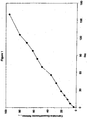
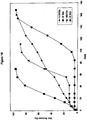
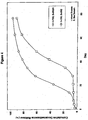
- Figure 1B is a graph which shows the same in vitro cumulative release of dexamethasone shown by Figure 1 , and shows as well the in vitro cumulative release of dexamethasone from each of the three separate (control) polymers release separately from each of the 1 mg implants for each of the three polymers (R104, RG755 or R203) which had been combined separately with 0.5 mg of dexamethasone.
- Table 1 B sets forth the data for Figure 1B .
- the three implant system of Example 1 was implanted into the vitreous of the eyes of eight rabbits. This was carried out by loading the three implants of Example 1 into a simple trocar with a sample holder and plunger, making an incision through the lower front sclera, inserting the trocar through the scleral incision, and depressing the trocar plunger to deposit the three implants of Example 1 into the vitreous.
- the in vivo vitreous concentrations of dexamethasone were monitored by vitreous sampling, using LC/MS (liquid chromatography and mass spectrometry).
- the dexamethasone concentrations for each eye were measured at days 7, 30, 60, 90, 120, 150, 180, 210 and 240 and 360 for the three implant system of Example 1. The averaged results of one mixed concentration measurement are set forth by the two left hand side columns of Table 2.
- Comparison studies were also carried out using single (Posurdex) implants of dexamethasone and a bioerodible PLGA polymer.
- the single extruded comparison study implants were formed of dexamethasone mixed with polylactic acid-polyglycolic acid (PLGA) as the biodegradable polymer at a ratio of 60/30/10 by weight of dexamethasone (60% by weight), PLGA (RG502, Boehringer Ingelheim GmbH, Germany) (10% by weight), and free acid end PLGA (RG502H, Boehringer Ingelheim GmbH, Germany) (30% by weight), respectively.
- PLGA polylactic acid-polyglycolic acid
- RG502 molecular weight is about 11,700
- RG502H molecular weight is about 8,500
- polymers used are both poly(D,L-lactide-co-glycolide).
- RG502H has a free acid at the end of its polymer chain.
- dexamethasone measurement are as concentrations in ng dexamethasone per ml of vitreous fluid.
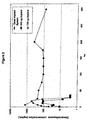
- Figure 2 shows (using the Table 2 data) the vitreous concentrations of dexamethasone assayed after different time periods after intra-vitreal in vivo implantation of the implant system of Example 1 in comparison to the vitreous concentrations of dexamethasone obtained for the single intra-vitreal implantation of the 350 ⁇ g or 700 ⁇ g dexamethasone implants described above in this Example 3.
- this experiment showed that the bioerodible implant system of Example 1 can release and maintain an in vivo in the vitreous a dexamethasone (or dexamethasone equivalent) concentration of at least 10 ng/ml or of at least about 100 ng/ml for a period of time of 120 days or for 360 days.
- control implants were also prepared. All three control implants were all sea implants (no islands).
- the first control implant consisted of dexamethasone dispersed within the bioerodible polymer RG502H.
- the second control implant consisted of dexamethasone dispersed within the bioerodible polymer RG502.
- the third control implant consisted of dexamethasone dispersed within the bioerodible polymer R203. All the control implants were made by extruding a single polymer and dexamethasone mixture. The three control implants were essentially Posurdex type implants. All the control group samples were prepared by 50/50% weight of dexamethasone and individual polymer, and were prepared as a 1 mg implant containing 500 ⁇ g dexamethasone)
- Each of these two island and sea implants and each of the three control implants contained 500 ⁇ g of dexamethasone.
- the implants set forth above in Example 4 were made as 1 mg cylindrical implants. Also made, by tripling the polymer and dexamethasone amounts set forth above, were 3 mg (1500 ⁇ g of dexamethasone) RG755 single polymer implants, and 3 mg (1500 ⁇ g dexamethazone) R203/RG502H two polymer implants.
- dexamethasone Release of dexamethasone from selected implants of Example 4 was measured in vitro. Control implants were also prepared and tested, the control implants made by extruding a single polymer and dexamethasone mixture. In all control groups, the samples were prepared by 50/50% weight of dexamethasone and individual polymer, and there was 500 ⁇ g dexamethasone per each 1 mg implant. Implants were placed in glass vials filled with receptor medium (0.1 M phosphate solution, pH 4.4, at 37 degrees C). To allow for "infinite sink” conditions, the receptor medium volume was chosen so that the concentration would never exceed 5% of saturation. To minimize secondary transport phenomena, e.g.
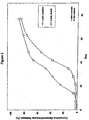
- Figure 3 presents in vitro dexamethasone release characteristic for two implants: (1) one where the island of the implant consisted of dexamethasone-R203 polymer particles and the sea of the same implant consisted of dexamethasone dispersed in RG502H polymer, and; (2) a second implant where the island of this second implant consisted of dexamethasone-R203 polymer particles and the sea of this second implant consisted of dexamethasone dispersed in RG502 polymer material. It was observed that such island and sea implant formulations led to release profiles not predictable from the individual characteristics of either the island or sea bioerodible polymers alone with dexamethasone.
- Figure 4 presents in vitro dexamethasone release characteristic for two implants: (1) one where the island of the implant consisted of dexamethasone-RG755 polymer particles and the sea of the same implant consisted of dexamethasone dispersed in RG502H polymer, and; (2) a second implant where the island of this second implant consisted of dexamethasone-RG755 polymer particles and the sea of this second implant consisted of dexamethasone dispersed in RG502 polymer material. It was observed that such island and sea implant formulations led to release profiles not predictable from the individual characteristics of either the island or sea bioerodible polymers alone with dexamethasone.
- Implants of Example 4 were implanted into the vitreous of separate eyes of fourteen rabbits. This was carried out by loading the implant into a trocar, making an incision through the sclera, inserting the trocar through the scleral incision, and depressing the trocar plunger to deposit separate Example 5 into the vitreous of separate eyes.
- the in vivo vitreous concentrations of dexamethasone were monitored by vitreous sampling using LC/MS. The dexamethasone concentrations for each eye were measured at days 7, 21, 35, 49, 63, 77 and 112.
- Two versions of the implants were prepared, one contained 350 ⁇ g of dexamethasone and the other implant contained 700 ⁇ g of dexamethasone.
- These single bioerodible dexamethasone (Posurdex) implants were in the same manner implanted into the vitreous of rabbit eyes (note that only one of either the 350 ⁇ g dexamethasone or the 700 ⁇ g dexamethasone bioerodible implant was placed in each eye) and in vivo vitreous concentrations of dexamethasone were monitored by vitreous sampling.
- the dexamethasone concentrations for each eye were measured at days 1, 4, 7, 14, 21, 28, 35, 42; as also shown by Table 4.
- the dexamethasone concentrations assayed are set forth in Table 4 to the right of the "Day" columns.
- Figure 5 shows (using the Table 4 data) the concentrations obtained (amount of dexamethasone assayed after different time periods after intra-vitreal in vivo implantation of the implant system of Example 6 in comparison to the release profiles obtained for the single intra-vitreal implantation of a 350 ⁇ g or 700 ⁇ g dexamethasone implant.
- Example 5 This experiment showed that particular island and sea bioerodible implants of Example 5 can release dexamethasone in vivo into the vitreous: (1) for a time period both much longer than (i.e. at least about 112 days vs about 30 days) and in a much more linear fashion than can a single polymer active agent implant.
- this experiment showed that the island and sea implant permitted (as a cumulative view of the release characteristics of the three implants taken together), in vivo over a 360 ay period, a substantially continuous release of the active agent at a substantially constant release rate (i.e. approximately linear release with substantially zero slope).
- the single polymer RG755 3 mg implant (1500 ⁇ g dexamethasone) presented an extended release profile, thereby showing that a 75:25 (% by weight) lactide: glycolide single polymer with an inherent viscosity of about 0.50 to about 0.70 dl/g can be suitable for making an extended release implant.
- this experiment showed that the bioerodible implant system of Example 5 can release and maintain an in vivo in the vitreous a dexamethasone (or dexamethasone equivalent) concentration of at least 10 ng/ml or of at least about 100 ng/ml for a period of time of 120 days or for 360 days.
- a dexamethasone or dexamethasone equivalent
- An extended release implant system can be used to treat an ocular condition.
- the implant can contain a steroid, such an anti-inflammatory steroid, such as dexamethazone as the active agent.
- the active agent can be a non-steroidal anti-inflammatory, such as ketoralac (available from Allergan, Irvine, California as ketoralac tromethamine ophthalmic solution, under the tradename Acular).
- ketoralac available from Allergan, Irvine, California as ketoralac tromethamine ophthalmic solution, under the tradename Acular.
- a dexamethasone or ketoralac extended release implant system of Example 1 or of Example 4 can be implanted into an ocular region or site (i.e. into the vitreous) of a patient with an ocular condition for a desired therapeutic effect.
- the ocular condition can be an inflammatory condition such as uveitis or the patient can be afflicted with one or more of the following afflictions: macular degeneration (including non-exudative age related macular degeneration and exudative age related macular degeneration); choroidal neovascularization; acute macular neuroretinopathy; macular edema (including cystoid macular edema and diabetic macular edema); Behcet's disease, diabetic retinopathy (including proliferative diabetic retinopathy); retinal arterial occlusive disease; central retinal vein occlusion; uveitic retinal disease; retinal detachment; retinopathy; an epiretinal membrane disorder; branch retinal vein occlusion; anterior ischemic optic neuropathy; non-retinopathy diabetic retinal dysfunction, retinitis pigmentosa and glaucoma.
- macular degeneration including non-exudative age related macular degeneration and exu
- the implant(s) can be inserted into the vitreous using the procedure (trocar implantation) set forth in Example 2 and 6.
- the implant(s) can release a therapeutic amount of, for example the dexamethazone or the ketorolac for an extended period of time to thereby treat a symptom of the ocular condition.
- An implant to treat an ocular condition according to the present invention can contain a steroid, such an anti-angiogenesis steroid, such as an anecortave, as the active agent.
- a bioerodible implant system for extended delivery of anecortave acetate can be made using the method of Example 1 or the method of Example 4, but with use of anecortave acetate as the active agent, instead of dexamethasone.
- the implant or implants can be loaded with a total of about 15 mg of the anecortave (i.e. 5 mg of anecortave can be loaded into each of the three implants prepared according to the Example 1 method.
- the anecortave acetate extended release implant system can be implanted into an ocular region or site (i.e. into the vitreous) of a patient with an ocular condition for a desired therapeutic effect.
- the ocular condition can be an angiogenic condition or an inflammatory condition such as uveitis or the patient can be afflicted with one or more of the following afflictions: macular degeneration (including non-exudative age related macular degeneration and exudative age related macular degeneration); choroidal neovascularization; acute macular neuroretinopathy; macular edema (including cystoid macular edema and diabetic macular edema); Behcet's disease, diabetic retinopathy (including proliferative diabetic retinopathy); retinal arterial occlusive disease; central retinal vein occlusion; uveitic retinal disease; retinal detachment; retinopathy; an epiretinal membrane disorder; branch retina
- the implant(s) can be inserted into the vitreous using the procedure (trocar implantation) set forth in Example 2 and 6.
- the implant(s) can release a therapeutic amount of the anecortave for an extended period of time to thereby treat a symptom of the ocular condition.
- VEGF Vascular Endothelial Growth Factor
- VEGF-A Vascular Endothelial Growth Factor
- VEGF-A vascular endothelial Growth Factor
- angiogenesis new blood vessels
- vascular maintenance vascular maintenance
- Tumor expression of VEGF can lead to the development and maintenance of a vascular network, which promotes tumor growth and metastasis.
- increased VEGF expression correlates with poor prognosis in many tumor types.
- Inhibition of VEGF can be an anticancer therapy used alone or to complement current therapeutic modalities (eg, radiation, chemotherapy, targeted biologic therapies).
- VEGF is believed to exert its effects by binding to and activating two structurally related membrane receptor tyrosine kinases, VEGF receptor-1 (VEGFR-1 or fit-1) and VEGFR-2 (flk-1 or KDR), which are expressed by endothelial cells within the blood vessel wall. VEGF may also interact with the structurally distinct receptor neuropilin-1. Binding of VEGF to these receptors initiates a signaling cascade, resulting in effects on gene expression and cell survival, proliferation, and migration. VEGF is a member of a family of structurally related proteins (see Table A below). These proteins bind to a family of VEGFRs (VEGF receptors), thereby stimulating various biologic processes.
- Placental growth factor (PIGF) and VEGF-B bind primarily to VEGFR-1.
- PIGF modulates angiogenesis and may also play a role in the inflammatory response.
- VEGF-C and VEGF-D bind primarily to VEGFR-3 and stimulate lymphangiogenesis rather than angiogenesis.
- VEGF-A VEGFR-1, VEGFR-2, neuropilin-1 Angiogenesis
- VEGF-B VEGFR-1 Not established VEGF-C VEGF-R, VEGFR-3 Lymphangiogenesis VEGF-D VEGFR-2, VEGFR-3 Lymphangiogenesis VEGF-E (viral factor) VEGFR-2
- an extended release bioerodible implant system can be used to treat an ocular condition mediated by a VEGF.
- the implant can contain as active agent a compound with acts to inhibit formation of VEGF or to inhibit the binding of VEGF to its VERFR.
- the active agent can be, for example, ranibizumab (rhuFab V2) (Genentech, South San Francisco, California) and the implant(s) an be made using the method of Example 1 or the method of Example 4, but with use of ranibizumab as the active agent, instead of dexamethasone.
- Ranibizumab is an anti-VEGF (vascular endothelial growth factor) product which may have particular utility for patients with macular degeneration, including the wet form of age-related macular degeneration.
- the implant or implants can be loaded with a total of about 300-500 ⁇ g of the ranibizumab (i.e. about 150 ⁇ g of ranibizumab can be loaded into each of the three implants prepared according to the Example 1 method.
- the ranibizumab extended release implant system can be implanted into an ocular region or site (i.e. into the vitreous) of a patient with an ocular condition for a desired therapeutic effect.
- the ocular condition can be an inflammatory condition such as uveitis or the patient can be afflicted with one or more of the following afflictions: macular degeneration (including non-exudative age related macular degeneration and exudative age related macular degeneration); choroidal neovascularization; acute macular neuroretinopathy; macular edema (including cystoid macular edema and diabetic macular edema); Behcet's disease, diabetic retinopathy (including proliferative diabetic retinopathy); retinal arterial occlusive disease; central retinal vein occlusion; uveitic retinal disease; retinal detachment; retinopathy; an epiretinal membrane disorder; branch retinal vein occlusion; anterior ischemic
- the implant(s) can be inserted into the vitreous using the procedure (trocar implantation) set forth in Example 2 and 6.
- the implant(s) can release a therapeutic amount of the ranibizumab for an extended period of time to thereby treat a symptom of the ocular condition.
- Pegaptanib is an aptamer that can selectively bind to and neutralize VEGF and may have utility for treatment of, for example, age-related macular degeneration and diabetic macular edema by inhibiting abnormal blood vessel growth and by stabilizing or reverse blood vessel leakage in the back of the eye resulting in improved vision.
- a bioerodible implant system for extended delivery of pegaptanib sodium (Macugen; Pfizer Inc, New York or Eyetech Pharmaceuticals, New York) can also be made using the method of Example 1 or the method of Example 4, but with use of pegaptanib sodium as the active agent, instead of dexamethasone.
- the implant or implants can be loaded with a total of about 1 mg to 3 mg of Macugen according to the Example 1 method.
- the pegaptanib sodium extended release implant system can be implanted into an ocular region or site (i.e. into the vitreous) of a patient with an ocular condition for a desired therapeutic effect.
- An extended release bioerodible intraocular implant for treating an ocular condition, such as an ocular tumor can also be made as set forth in this Example 9, using about 1-3 mg of the VEGF Trap compound available from Regeneron, Tarrytown, new York.
- An extended release implant system to treat an ocular condition can contain a beta-adrenergic receptor antagonist (i.e. a "beta blocker) such as levobunolol, betaxolol, carteolol, timolol hemihydrate and timolol.
- Timolol maleate is commonly used to treat of open-angle glaucoma.
- an extended release bioerodible implant system containing timolol maleate available from multiple different suppliers under the trade names Timoptic, Timopol or Loptomit) as the active agent can be made using the method of Example 1 or the method of Example 4, but with use of timolol maleate instead of dexamethasone.
- timolol maleate can be loaded into each of the three implants prepared according to the Example 1 method.
- the timolol extended release implant system can be implanted into an ocular region or site (i.e. into the vitreous) of a patient with an ocular condition for a desired therapeutic effect.
- the ocular condition can be an inflammatory condition such as uveitis or the patient can be afflicted with one or more of the following afflictions: macular degeneration (including non-exudative age related macular degeneration and exudative age related macular degeneration); choroidal neovascularization; acute macular neuroretinopathy; macular edema (including cystoid macular edema and diabetic macular edema); Behcet's disease, diabetic retinopathy (including proliferative diabetic retinopathy); retinal arterial occlusive disease; central retinal vein occlusion; uveitic retinal disease; retinal detachment; retinopathy; an epiretinal membrane disorder; branch retinal vein occlusion; anterior ische
- the implant(s) can be inserted into the vitreous using the procedure (trocar implantation) set forth in Example 2 and 6.
- the implant(s) can release a therapeutic amount of the timolol for an extended period of time to thereby treat a symptom of the ocular condition by, for example, causing an intra-ocular pressure depression
- An extended release implant system can be used to treat an ocular condition can contain a prostamide.
- Prostamides are naturally occurring substances biosynthesized from anandamide in a pathway that includes COX2.
- Bimatoprost (Lumigan) is a synthetic prostamide analog chemically related to prostamide F.
- Lumigan has been approved by the FDA for the reduction of elevated intraocular pressure (IOP) in patients with open-angle glaucoma or ocular hypertension who are intolerant of or insufficiently responsive to other IOP-lowering medications.
- Lumigan is believed to lower intraocular pressure by increasing the outflow of aqueous humor.
- an extended release bioerodible implant system containing Lumigan (Allergan, Irvine, California) as the active agent can be made using the method of Example 1 or the method of Example 4, but with use of timolol maleate instead of dexamethasone.
- Lumigan Allergan, Irvine, California
- timolol maleate instead of dexamethasone.
- about 100 ⁇ g to 300 ⁇ g of Lumigan can be loaded into each of the three implants prepared according to the Example 1 method.
- the Lumigan extended release implant system can be implanted into an ocular region or site (i.e. into the vitreous) of a patient with an ocular condition for a desired therapeutic effect.
- the ocular condition can be an inflammatory condition such as uveitis or the patient can be afflicted with one or more of the following afflictions: macular degeneration (including non-exudative age related macular degeneration and exudative age related macular degeneration); choroidal neovascularization; acute macular neuroretinopathy; macular edema (including cystoid macular edema and diabetic macular edema); Behcet's disease, diabetic retinopathy (including proliferative diabetic retinopathy); retinal arterial occlusive disease; central retinal vein occlusion; uveitic retinal disease; retinal detachment; retinopathy; an epiretinal membrane disorder; branch retinal vein occlusion; anterior ischemic optic neuropathy
- the implant(s) can be inserted into the vitreous using the procedure (trocar implantation) set forth in Example 2 and 6.
- the implant(s) can release a therapeutic amount of the Lumigan for an extended period of time to thereby treat a symptom of the ocular condition by, for example, causing an intra-ocular pressure depression
- An extended release implant system can be used to treat an ocular condition wherein the implant contains as the active agent an alpha-2 adrenergic receptor agonist, such as clonidine, apraclonidine, or brimonidine.
- an extended release bioerodible implant system containing brimonidine (Allergan, Irvine, California, as Alphagan or Alphagan P) as the active agent can be made using the method of Example 1 or the method of Example 4, but with use of Alphagan instead of dexamethasone.
- brimonidine Allergan, Irvine, California, as Alphagan or Alphagan P
- Alphagan Alphagan instead of dexamethasone.
- about 50 ⁇ g to 100 ⁇ g of Alphagan can be loaded into each of the three implants prepared according to the Example 1 method.
- the brimonidine extended release implant system can be implanted into an ocular region or site (i.e. into the vitreous) of a patient with an ocular condition for a desired therapeutic effect.
- the ocular condition can be an inflammatory condition such as uveitis or the patient can be afflicted with one or more of the following afflictions: macular degeneration (including non-exudative age related macular degeneration and exudative age related macular degeneration); choroidal neovascularization; acute macular neuroretinopathy; macular edema (including cystoid macular edema and diabetic macular edema); Behcet's disease, diabetic retinopathy (including proliferative diabetic retinopathy); retinal arterial occlusive disease; central retinal vein occlusion; uveitic retinal disease; retinal detachment; retinopathy; an epiretinal membrane disorder; branch retinal vein occlusion; anterior ischemic optic
- the implant(s) can be inserted into the vitreous using the procedure (trocar implantation) set forth in Example 2 and 6.
- the implant(s) can release a therapeutic amount of the brimonidine for an extended period of time to thereby treat a symptom of the ocular condition by, for example, causing an intra-ocular pressure depression
- An extended release implant system can be used to treat an ocular condition.
- the implant can contain a retinoid such as an ethyl nicotinate, such as a tazarotene.
- a retinoid such as an ethyl nicotinate, such as a tazarotene.
- an extended release bioerodible implant system containing tazarotene (Allergan, Irvine, California) as the active agent can be made using the method of Example 1 or the method of Example 4, but with use of tazarotene instead of dexamethasone.
- tazarotene ethyl nicotinate
- the tazarotene extended release implant system can be implanted into an ocular region or site (i.e. into the vitreous) of a patient with an ocular condition for a desired therapeutic effect.
- the ocular condition can be an inflammatory condition such as uveitis or the patient can be afflicted with one or more of the following afflictions: macular degeneration (including non-exudative age related macular degeneration and exudative age related macular degeneration); choroidal neovascularization; acute macular neuroretinopathy; macular edema (including cystoid macular edema and diabetic macular edema); Behcet's disease, diabetic retinopathy (including proliferative diabetic retinopathy); retinal arterial occlusive disease; central retinal vein occlusion; uveitic retinal disease; retinal detachment; retinopathy; an epiretinal membrane disorder; branch retinal vein occlusion; anterior ische
- the implant(s) can be inserted into the vitreous using the procedure (trocar implantation) set forth in Example 2 and 6.
- the implant(s) can release a therapeutic amount of the tazarotene for an extended period of time to thereby treat a symptom of the ocular condition by, for example, causing an intra-ocular pressure depression
- tyrosine kinase inhibitors are small molecule inhibitors of growth factor signaling.
- Protein tyrosine kinases (PTKs) comprise a large and diverse class of proteins having enzymatic activity. The PTKs play an important role in the control of cell growth and differentiation. For example, receptor tyrosine kinase mediated signal transduction is initiated by extracellular interaction with a specific growth factor (ligand), followed by receptor dimerization, transient stimulation of the intrinsic protein tyrosine kinase activity and phosphorylation.
- ligand specific growth factor
- Binding sites are thereby created for intracellular signal transduction molecules and lead to the formation of complexes with a spectrum of cytoplasmic signaling molecules that facilitate the appropriate cellular response (e.g., cell division, metabolic homeostasis, and responses to the extracellular microenvironment).
- tyrosine phosphorylation sites function as high-affinity binding sites for SH2 (src homology) domains of signaling molecules.
- SH2 serosine kinases
- Several intracellular substrate proteins that associate with receptor tyrosine kinases (RTKs) have been identified. They may be divided into two principal groups: (1) substrates which have a catalytic domain; and (2) substrates which lack such domain but serve as adapters and associate with catalytically active molecules. The specificity of the interactions between receptors or proteins and SH2 domains of their substrates is determined by the amino acid residues immediately surrounding the phosphorylated tyrosine residue.
- Tyrosine kinases can be of the receptor-type (having extracellular, transmembrane and intracellular domains) or the non-receptor type (being wholly intracellular).
- the RTKs comprise a large family of transmembrane receptors with diverse biological activities. The intrinsic function of RTKs is activated upon ligand binding, which results in phophorylation of the receptor and multiple cellular substrates, and subsequently in a variety of cellular responses.
- RTK subfamilies At present, at least nineteen (19) distinct RTK subfamilies have been identified.
- One RTK subfamily designated the HER subfamily, is believed to be comprised of EGFR, HER2, HER3 and HER4.
- Ligands to the Her subfamily of receptors include epithelial growth factor (EGF), TGF- ⁇ , amphiregulin, HB-EGF, betacellulin and heregulin.
- a second family of RTKs designated the insulin subfamily, is comprised of the INS-R, the IGF-1 R and the IR-R.
- a third family, the "PDGF" subfamily includes the PDGF ⁇ and ⁇ receptors, CSFIR, c-kit and FLK-II.
- Another subfamily of RTKs, identified as the FLK family is believed to be comprised of the Kinase insert Domain-Receptor fetal liver kinase-1 (KDR/FLK-1), the fetal liver kinase 4 (FLK-4) and the fms-like tyrosine kinase 1 (flt-1). Each of these receptors was initially believed to be receptors for hematopoietic growth factors.
- Two other subfamilies of RTKs have been designated as the FGF receptor family (FGFR1, FGFR2, FGFR3 and FGFR4) and the Met subfamily (c-met and Ron).
- the non-receptor tyrosine kinases represent a collection of cellular enzymes which lack extracellular and transmembrane sequences. At present, over twenty-four individual non-receptor tyrosine kinases, comprising eleven (11) subfamilies (Src, Frk, Btk, Csk, Abl, Zap70, Fes/Fps, Fak, Jak, Ack and LIMK) have been identified. At present, the Src subfamily of non-receptor tyrosine kinases is comprised of the largest number of PTKs and include Src, Yes, Fyn, Lyn, Lck, Blk, Hck, Fgr and Yrk. The Src subfamily of enzymes has been linked to oncogenesis. A more detailed discussion of non-receptor tyrosine kinases is provided in Bolen, 1993, Oncogen 8: 2025-2031 .
- tyrosine kinases whether an RTK or non-receptor tyrosine kinase, have been found to be involved in cellular signaling pathways leading to cellular signal cascades leading to pathogenic conditions, including cancer, psoriasis and hyper immune response.
- An extended release implant system can be used to treat an ocular condition wherein the implant contains a tyrosine kinase inhibitor (TKI) such as a TKI set forth in published U.S. patent application 2004 00019098 (available from Allergan, Irvine, California) as the active agent can be made using the method of Example 1 or the method of Example 4, but with use of a TKI instead of dexamethasone.
- TKI tyrosine kinase inhibitor
- the TKI extended release implant system can be implanted into an ocular region or site (i.e. into the vitreous) of a patient with an ocular condition for a desired therapeutic effect.
- the ocular condition can be an inflammatory condition such as uveitis or the patient can be afflicted with one or more of the following afflictions: macular degeneration (including non-exudative age related macular degeneration and exudative age related macular degeneration); choroidal neovascularization; acute macular neuroretinopathy; macular edema (including cystoid macular edema and diabetic macular edema); Behcet's disease, diabetic retinopathy (including proliferative diabetic retinopathy); retinal arterial occlusive disease; central retinal vein occlusion; uveitic retinal disease; retinal detachment; retinopathy; an epiretinal membrane disorder; branch retinal vein occlusion; anterior ischemic optic neuropathy
- the implant(s) can be inserted into the vitreous using the procedure (trocar implantation) set forth in Example 2 and 6.
- the implant(s) can release a therapeutic amount of the TKI for an extended period of time to thereby treat a symptom of the ocular condition by, for example, causing an intra-ocular pressure depression.
- Memantine is an NMDA antagonist which can be used to reduce neuronal damage mediated by the NMDA receptor complex.
- Memantine is a available form Merz Pharmaceuticals, Greensboro, North Carolina under the trade name Axura.
- An extended release implant system can be used to treat an ocular condition.
- the implant can contain an NMDA antagonist such as memantine.
- an extended release bioerodible implant system containing memantine as the active agent can be made using the method of Example 1 or the method of Example 4, but with use of memantine instead of dexamethasone.
- about 400 ⁇ g to 700 ⁇ g of memantine can be loaded into each of the three implants prepared according to the Example 1 method.
- the memantine extended release implant system can be implanted into an ocular region or site (i.e. into the vitreous) of a patient with an ocular condition for a desired therapeutic effect.
- the ocular condition can be an inflammatory condition such as uveitis or the patient can be afflicted with one or more of the following afflictions: macular degeneration (including non-exudative age related macular degeneration and exudative age related macular degeneration); choroidal neovascularization; acute macular neuroretinopathy; macular edema (including cystoid macular edema and diabetic macular edema); Behcet's disease, diabetic retinopathy (including proliferative diabetic retinopathy); retinal arterial occlusive disease; central retinal vein occlusion; uveitic retinal disease; retinal detachment; retinopathy; an epiretinal membrane disorder; branch retinal vein occlusion; anterior ischemic optic neuro
- the implant(s) can be inserted into the vitreous using the procedure (trocar implantation) set forth in Example 2 and 6.
- the implant(s) can release a therapeutic amount of the memantine for an extended period of time to thereby treat a symptom of the ocular condition.
- An extended release implant system can be used to treat an ocular condition.
- the implant can contain an estratropone such as 2-methoxyestradiol (available form Entremed, Inc., of Rockville, Maryland under the tradename Panzem).
- 2-methoxyestradiol available form Entremed, Inc., of Rockville, Maryland under the tradename Panzem.
- 2-methoxyestradiol can be used as a small molecule angiogenic inhibitor to block abnormal blood vessel formation in the back of the eye.
- 2-methoxyestradiol can be loaded into each of the three implants prepared according to the Example 1 method.
- the 2-methoxyestradiol extended release implant system can be implanted into an ocular region or site (i.e. into the vitreous) of a patient with an ocular condition for a desired therapeutic effect.
- the ocular condition can be an inflammatory condition such as uveitis or the patient can be afflicted with one or more of the following afflictions: macular degeneration (including non-exudative age related macular degeneration and exudative age related macular degeneration); choroidal neovascularization; acute macular neuroretinopathy; macular edema (including cystoid macular edema and diabetic macular edema); Behcet's disease, diabetic retinopathy (including proliferative diabetic retinopathy); retinal arterial occlusive disease; central retinal vein occlusion; uveitic retinal disease; retinal detachment; retinopathy; an epiretinal membrane disorder; branch retinal vein occlusion; anterior
- the implant(s) can be inserted into the vitreous using the procedure (trocar implantation) set forth in Example 2 and 6.
- the implant(s) can release a therapeutic amount of the 2-methoxyestradiol for an extended period of time to thereby treat a symptom of the ocular condition.
- additional extended release single or multiple polymer implants can be prepared wherein the active agent is, for example, an agent to treat intravitreal hemorrhage (such as Vitrase, available from Ista Pharmaceuticals), an antibiotic (such as cyclosporine, or gatifloxacin, the former being available from Allergan, Irvine, California under the tradename Restasis and the later from Allergan under the tradename Zymar), ofloxacin, an androgen, epinastine (Elestat, Allergan, Irvine, CA), or with a combination of two or more active agents (such as a combination in a single extended release implant of a prostamide (i.e. brimatoprost) and a best blocker (i.e.
- an agent to treat intravitreal hemorrhage such as Vitrase, available from Ista Pharmaceuticals
- an antibiotic such as cyclosporine, or gatifloxacin, the former being available from Allergan, Irvine, California under the tradename Restasis and the later from Aller
- timolol or a combination of an alpha 2 adrenergic agonist (i.e. brimonidine) and a beta blocker, such as timolol) in the same extended delivery system.
- An implant within the scope of the present invention can be used in conjunction with a photodynamic therapy or laser procedure upon an eye tissue.
Landscapes
- Health & Medical Sciences (AREA)
- Chemical & Material Sciences (AREA)
- Life Sciences & Earth Sciences (AREA)
- Pharmacology & Pharmacy (AREA)
- Veterinary Medicine (AREA)
- Public Health (AREA)
- General Health & Medical Sciences (AREA)
- Medicinal Chemistry (AREA)
- Animal Behavior & Ethology (AREA)
- Epidemiology (AREA)
- Ophthalmology & Optometry (AREA)
- Chemical Kinetics & Catalysis (AREA)
- Nuclear Medicine, Radiotherapy & Molecular Imaging (AREA)
- General Chemical & Material Sciences (AREA)
- Organic Chemistry (AREA)
- Bioinformatics & Cheminformatics (AREA)
- Engineering & Computer Science (AREA)
- Proteomics, Peptides & Aminoacids (AREA)
- Inorganic Chemistry (AREA)
- Immunology (AREA)
- Pulmonology (AREA)
- Rheumatology (AREA)
- Pain & Pain Management (AREA)
- Pharmaceuticals Containing Other Organic And Inorganic Compounds (AREA)
- Medicinal Preparation (AREA)
Priority Applications (1)
| Application Number | Priority Date | Filing Date | Title |
|---|---|---|---|
| EP14172330.4A EP2777693A1 (en) | 2004-04-30 | 2005-04-14 | Biodegradable ocular implants with long-term release characteristics |
Applications Claiming Priority (2)
| Application Number | Priority Date | Filing Date | Title |
|---|---|---|---|
| US10/837,355 US8685435B2 (en) | 2004-04-30 | 2004-04-30 | Extended release biodegradable ocular implants |
| PCT/US2005/013143 WO2005110362A1 (en) | 2004-04-30 | 2005-04-14 | Biodegradable ocular implants with long-term release characteristics |
Related Child Applications (2)
| Application Number | Title | Priority Date | Filing Date |
|---|---|---|---|
| EP14172330.4A Division EP2777693A1 (en) | 2004-04-30 | 2005-04-14 | Biodegradable ocular implants with long-term release characteristics |
| EP14172330.4A Division-Into EP2777693A1 (en) | 2004-04-30 | 2005-04-14 | Biodegradable ocular implants with long-term release characteristics |
Publications (3)
| Publication Number | Publication Date |
|---|---|
| EP1740153A1 EP1740153A1 (en) | 2007-01-10 |
| EP1740153B1 EP1740153B1 (en) | 2014-06-25 |
| EP1740153B2 true EP1740153B2 (en) | 2017-08-09 |
Family
ID=34966124
Family Applications (2)
| Application Number | Title | Priority Date | Filing Date |
|---|---|---|---|
| EP05735919.2A Expired - Lifetime EP1740153B2 (en) | 2004-04-30 | 2005-04-14 | Biodegradable ocular implants with long-term release characteristics |
| EP14172330.4A Withdrawn EP2777693A1 (en) | 2004-04-30 | 2005-04-14 | Biodegradable ocular implants with long-term release characteristics |
Family Applications After (1)
| Application Number | Title | Priority Date | Filing Date |
|---|---|---|---|
| EP14172330.4A Withdrawn EP2777693A1 (en) | 2004-04-30 | 2005-04-14 | Biodegradable ocular implants with long-term release characteristics |
Country Status (10)
| Country | Link |
|---|---|
| US (6) | US8685435B2 (enExample) |
| EP (2) | EP1740153B2 (enExample) |
| JP (4) | JP5128274B2 (enExample) |
| AR (1) | AR048773A1 (enExample) |
| AU (1) | AU2005244195B2 (enExample) |
| BR (1) | BRPI0509332A (enExample) |
| CA (1) | CA2565329C (enExample) |
| ES (1) | ES2501942T3 (enExample) |
| TW (1) | TW200603838A (enExample) |
| WO (1) | WO2005110362A1 (enExample) |
Cited By (14)
| Publication number | Priority date | Publication date | Assignee | Title |
|---|---|---|---|---|
| US9931243B2 (en) | 2011-12-19 | 2018-04-03 | Ivantis, Inc. | Delivering ocular implants into the eye |
| US10363168B2 (en) | 2011-06-14 | 2019-07-30 | Ivantis, Inc. | Ocular implants for delivery into the eye |
| US10406025B2 (en) | 2009-07-09 | 2019-09-10 | Ivantis, Inc. | Ocular implants and methods for delivering ocular implants into the eye |
| US10492949B2 (en) | 2009-07-09 | 2019-12-03 | Ivantis, Inc. | Single operator device for delivering an ocular implant |
| US10537474B2 (en) | 2008-03-05 | 2020-01-21 | Ivantis, Inc. | Methods and apparatus for treating glaucoma |
| US10617558B2 (en) | 2012-11-28 | 2020-04-14 | Ivantis, Inc. | Apparatus for delivering ocular implants into an anterior chamber of the eye |
| US10709547B2 (en) | 2014-07-14 | 2020-07-14 | Ivantis, Inc. | Ocular implant delivery system and method |
| US11026836B2 (en) | 2012-04-18 | 2021-06-08 | Ivantis, Inc. | Ocular implants for delivery into an anterior chamber of the eye |
| US11185441B2 (en) | 2019-06-27 | 2021-11-30 | Layerbio, Inc. | Ocular device delivery methods and systems |
| US11197779B2 (en) | 2015-08-14 | 2021-12-14 | Ivantis, Inc. | Ocular implant with pressure sensor and delivery system |
| US11540940B2 (en) | 2021-01-11 | 2023-01-03 | Alcon Inc. | Systems and methods for viscoelastic delivery |
| US11744734B2 (en) | 2007-09-24 | 2023-09-05 | Alcon Inc. | Method of implanting an ocular implant |
| US11938058B2 (en) | 2015-12-15 | 2024-03-26 | Alcon Inc. | Ocular implant and delivery system |
| US12029683B2 (en) | 2018-02-22 | 2024-07-09 | Alcon Inc. | Ocular implant and delivery system |
Families Citing this family (203)
| Publication number | Priority date | Publication date | Assignee | Title |
|---|---|---|---|---|
| US6726918B1 (en) | 2000-07-05 | 2004-04-27 | Oculex Pharmaceuticals, Inc. | Methods for treating inflammation-mediated conditions of the eye |
| US6699493B2 (en) | 2000-11-29 | 2004-03-02 | Oculex Pharmaceuticals, Inc. | Method for reducing or preventing transplant rejection in the eye and intraocular implants for use therefor |
| US7431710B2 (en) | 2002-04-08 | 2008-10-07 | Glaukos Corporation | Ocular implants with anchors and methods thereof |
| US20050048099A1 (en) | 2003-01-09 | 2005-03-03 | Allergan, Inc. | Ocular implant made by a double extrusion process |
| US8529927B2 (en) * | 2004-04-30 | 2013-09-10 | Allergan, Inc. | Alpha-2 agonist polymeric drug delivery systems |
| US7799336B2 (en) | 2004-04-30 | 2010-09-21 | Allergan, Inc. | Hypotensive lipid-containing biodegradable intraocular implants and related methods |
| US8722097B2 (en) | 2004-04-30 | 2014-05-13 | Allergan, Inc. | Oil-in-water method for making polymeric implants containing a hypotensive lipid |
| US20050244469A1 (en) | 2004-04-30 | 2005-11-03 | Allergan, Inc. | Extended therapeutic effect ocular implant treatments |
| US7993634B2 (en) | 2004-04-30 | 2011-08-09 | Allergan, Inc. | Oil-in-oil emulsified polymeric implants containing a hypotensive lipid and related methods |
| US8673341B2 (en) | 2004-04-30 | 2014-03-18 | Allergan, Inc. | Intraocular pressure reduction with intracameral bimatoprost implants |
| US8685435B2 (en) | 2004-04-30 | 2014-04-01 | Allergan, Inc. | Extended release biodegradable ocular implants |
| US9498457B2 (en) | 2004-04-30 | 2016-11-22 | Allergan, Inc. | Hypotensive prostamide-containing biodegradable intraocular implants and related implants |
| ES2432556T3 (es) | 2004-08-04 | 2013-12-04 | Evonik Corporation | Métodos para fabricar dispositivos de suministro y sus dispositivos |
| AU2014201844B2 (en) * | 2004-08-13 | 2016-06-16 | Allergan, Inc | Ocular implant made by a double extrusion process |
| AU2012216644B2 (en) * | 2004-08-13 | 2014-04-10 | Allergan, Inc. | Ocular implant made by a double extrusion process |
| AU2016228285B2 (en) * | 2004-08-13 | 2018-06-28 | Allergan, Inc. | Ocular implant made by a double extrusion process |
| US7931909B2 (en) * | 2005-05-10 | 2011-04-26 | Allergan, Inc. | Ocular therapy using alpha-2 adrenergic receptor compounds having enhanced anterior clearance rates |
| JP5122460B2 (ja) | 2005-09-16 | 2013-01-16 | アラーガン、インコーポレイテッド | 治療薬の眼内輸送のための組成物および方法 |
| WO2007038453A2 (en) * | 2005-09-26 | 2007-04-05 | Advanced Ocular Systems Limited | Use of an anti-vascular endothelial growth factor (vegf) agent to ameliorate inflammation |
| US8877229B2 (en) * | 2005-12-02 | 2014-11-04 | Eyetech Inc. | Controlled release microparticles |
| US20070202186A1 (en) | 2006-02-22 | 2007-08-30 | Iscience Interventional Corporation | Apparatus and formulations for suprachoroidal drug delivery |
| KR101446813B1 (ko) | 2006-04-06 | 2014-10-01 | 뉴파쎄 인크. | 도파민 연관된 상태의 치료를 위한 이식체 |
| US20070260203A1 (en) * | 2006-05-04 | 2007-11-08 | Allergan, Inc. | Vasoactive agent intraocular implant |
| EP2051710B1 (en) * | 2006-08-07 | 2011-11-02 | Bausch & Lomb Incorporated | Compositions and methods for treating, reducing, ameliorating, or alleviating posterior-segment ophthalmic diseases |
| US20080089923A1 (en) * | 2006-09-29 | 2008-04-17 | Burkstrand Michael J | Biodegradable ocular implants and methods for treating ocular conditions |
| US20080103368A1 (en) * | 2006-10-17 | 2008-05-01 | Ari Craine | Methods, devices, and computer program products for detecting syndromes |
| US8039010B2 (en) * | 2006-11-03 | 2011-10-18 | Allergan, Inc. | Sustained release intraocular drug delivery systems comprising a water soluble therapeutic agent and a release modifier |
| US8969415B2 (en) * | 2006-12-01 | 2015-03-03 | Allergan, Inc. | Intraocular drug delivery systems |
| EP2139492A1 (en) * | 2007-03-30 | 2010-01-06 | Fovea Pharmaceuticals SA | Methods for treating neovascular ocular diseases |
| US8642067B2 (en) | 2007-04-02 | 2014-02-04 | Allergen, Inc. | Methods and compositions for intraocular administration to treat ocular conditions |
| US20080317805A1 (en) * | 2007-06-19 | 2008-12-25 | Mckay William F | Locally administrated low doses of corticosteroids |
| US9125807B2 (en) | 2007-07-09 | 2015-09-08 | Incept Llc | Adhesive hydrogels for ophthalmic drug delivery |
| EP2222281B1 (en) | 2007-12-20 | 2018-12-05 | Evonik Corporation | Process for preparing microparticles having a low residual solvent volume |
| US8889173B2 (en) * | 2008-04-18 | 2014-11-18 | Warsaw Orthopedic, Inc. | Alpha adrenergic receptor agonists for treatment of pain and/or inflammation |
| US9610243B2 (en) | 2008-04-18 | 2017-04-04 | Warsaw Orthopedic, Inc. | Clonidine compounds in a biodegradable polymer |
| US8524267B2 (en) * | 2008-04-18 | 2013-09-03 | Warsaw Orthopedic, Inc. | Dexamethasone formulations in a biodegradable material |
| US8946277B2 (en) * | 2008-04-18 | 2015-02-03 | Warsaw Orthopedic, Inc. | Clonidine formulations in a biodegradable polymer carrier |
| USRE48948E1 (en) | 2008-04-18 | 2022-03-01 | Warsaw Orthopedic, Inc. | Clonidine compounds in a biodegradable polymer |
| US8557273B2 (en) * | 2008-04-18 | 2013-10-15 | Medtronic, Inc. | Medical devices and methods including polymers having biologically active agents therein |
| US9877973B2 (en) | 2008-05-12 | 2018-01-30 | University Of Utah Research Foundation | Intraocular drug delivery device and associated methods |
| US10588855B2 (en) | 2008-05-12 | 2020-03-17 | University Of Utah Research Foundation | Intraocular drug delivery device and associated methods |
| JP5591226B2 (ja) | 2008-05-12 | 2014-09-17 | ユニバーシティ・オブ・ユタ・リサーチ・ファウンデイション | 眼内薬物送達装置および関連する方法 |
| US9095404B2 (en) | 2008-05-12 | 2015-08-04 | University Of Utah Research Foundation | Intraocular drug delivery device and associated methods |
| US10064819B2 (en) | 2008-05-12 | 2018-09-04 | University Of Utah Research Foundation | Intraocular drug delivery device and associated methods |
| JP6223659B2 (ja) | 2008-11-10 | 2017-11-01 | アレクシオン ファーマシューティカルズ, インコーポレイテッド | 補体関連障害を処置するための方法および組成物 |
| US20120232649A1 (en) | 2008-11-20 | 2012-09-13 | Insight Innovations, Llc | Intraocular Lens Cell Migration Inhibition System |
| US9943402B2 (en) | 2008-11-20 | 2018-04-17 | Insight Innovations, Llc | Micropatterned intraocular implant |
| US8551167B2 (en) | 2008-11-20 | 2013-10-08 | Insight Innovations, Llc | Intraocular implant cell migration inhibition system |
| MX2011005272A (es) * | 2008-11-20 | 2011-06-21 | Insight Innovations Llc | Sistema de implante intraocular biocompatible biodegradable. |
| CA2757037C (en) | 2009-01-29 | 2019-08-06 | Forsight Vision4, Inc. | Posterior segment drug delivery |
| US8623395B2 (en) | 2010-01-29 | 2014-01-07 | Forsight Vision4, Inc. | Implantable therapeutic device |
| JP5890182B2 (ja) | 2009-02-12 | 2016-03-22 | インセプト エルエルシー | ヒドロゲルプラグによる薬物送達 |
| US9636255B2 (en) | 2009-02-13 | 2017-05-02 | Dose Medical Corporation | Uveoscleral drug delivery implant and methods for implanting the same |
| MX2011008936A (es) | 2009-02-24 | 2011-09-21 | Alexion Pharma Inc | Anticuerpos que contienen peptidos terapeuticos mimeticos de tpo/epo. |
| US20100239632A1 (en) | 2009-03-23 | 2010-09-23 | Warsaw Orthopedic, Inc. | Drug depots for treatment of pain and inflammation in sinus and nasal cavities or cardiac tissue |
| US20100278897A1 (en) * | 2009-05-01 | 2010-11-04 | Allergan, Inc. | Intraocular bioactive agent delivery system with molecular partitioning system |
| US10206813B2 (en) | 2009-05-18 | 2019-02-19 | Dose Medical Corporation | Implants with controlled drug delivery features and methods of using same |
| US12478503B2 (en) | 2009-05-18 | 2025-11-25 | Glaukos Corporation | Implants with controlled drug delivery features and methods of using same |
| JP5937004B2 (ja) | 2009-05-18 | 2016-06-22 | ドーズ メディカル コーポレーションDose Medical Corporation | 薬剤溶出眼内インプラント |
| US9067384B2 (en) * | 2009-06-10 | 2015-06-30 | Ppg Industries Ohio, Inc. | Microporous material having degradation properties and articles prepared therefrom |
| NZ597259A (en) | 2009-06-23 | 2014-04-30 | Alexion Pharma Inc | Bispecific antibodies that bind to complement proteins |
| CA2774495C (en) * | 2009-09-17 | 2017-09-26 | Evonik Degussa Corporation | Implant devices that differ by release profile and methods of making and using same |
| US20110159066A1 (en) * | 2009-11-02 | 2011-06-30 | Sebree Terri B | Methods For Treating Parkinson's Disease |
| NZ716349A (en) | 2009-11-09 | 2017-07-28 | Allergan Inc | Compositions and methods for stimulating hair growth |
| US8529492B2 (en) | 2009-12-23 | 2013-09-10 | Trascend Medical, Inc. | Drug delivery devices and methods |
| US10166142B2 (en) | 2010-01-29 | 2019-01-01 | Forsight Vision4, Inc. | Small molecule delivery with implantable therapeutic device |
| US8889193B2 (en) | 2010-02-25 | 2014-11-18 | The Johns Hopkins University | Sustained delivery of therapeutic agents to an eye compartment |
| AU2011245117B2 (en) | 2010-04-30 | 2015-03-12 | Alexion Pharmaceuticals, Inc. | Anti-C5a antibodies and methods for using the antibodies |
| BR112012033119A2 (pt) | 2010-06-22 | 2016-10-25 | Univ Colorado Regents | anticorpos para o fragamento c3d do componente do complemento 3. |
| WO2012012541A2 (en) | 2010-07-21 | 2012-01-26 | Allergan, Inc. | SUSTAINED RELEASE siRNA FOR OCULAR DRUG DELIVERY |
| PT2600812T (pt) | 2010-08-05 | 2021-11-09 | Forsight Vision4 Inc | Aparelho para tratar um olho |
| WO2012019136A2 (en) | 2010-08-05 | 2012-02-09 | Forsight Vision 4, Inc. | Injector apparatus and method for drug delivery |
| EP2600876B1 (en) | 2010-08-05 | 2015-04-29 | Forsight Vision4, Inc. | Combined drug delivery methods and apparatus |
| WO2012051575A2 (en) | 2010-10-15 | 2012-04-19 | Iscience Interventional Corporation | Device for ocular access |
| WO2012068549A2 (en) | 2010-11-19 | 2012-05-24 | Forsight Vision4, Inc. | Therapeutic agent formulations for implanted devices |
| US9668915B2 (en) | 2010-11-24 | 2017-06-06 | Dose Medical Corporation | Drug eluting ocular implant |
| TW201244737A (en) | 2011-02-03 | 2012-11-16 | Alexion Pharma Inc | Use of an anti-CD200 antibody for prolonging the survival of allografts |
| US10245178B1 (en) | 2011-06-07 | 2019-04-02 | Glaukos Corporation | Anterior chamber drug-eluting ocular implant |
| LT2717914T (lt) * | 2011-06-10 | 2020-03-25 | Ramscor, Inc. | Sulėtinto atpalaidavimo kompozicijos, skirtos baltymų pateikimui į akį, ir jų paruošimo būdai |
| WO2013003620A2 (en) | 2011-06-28 | 2013-01-03 | Forsight Vision4, Inc. | Diagnostic methods and apparatus |
| ES2864203T3 (es) | 2011-09-16 | 2021-10-13 | Forsight Vision4 Inc | Aparato de intercambio de fluido |
| US10226417B2 (en) | 2011-09-16 | 2019-03-12 | Peter Jarrett | Drug delivery systems and applications |
| WO2013116061A1 (en) | 2012-02-03 | 2013-08-08 | Forsight Vision4, Inc. | Insertion and removal methods and apparatus for therapeutic devices |
| HRP20181671T1 (hr) | 2012-02-09 | 2018-12-14 | Novus International, Inc. | Heteroatom koji sadrži cikličke dimere |
| PL2871973T3 (pl) | 2012-07-12 | 2019-02-28 | Novus International Inc. | Kompozycje matrycy i warstwy do ochrony środków bioaktywnych |
| US10413620B2 (en) | 2012-08-17 | 2019-09-17 | The Regents Of The University Of Colorado, A Body Corporate | Light-emitting versions of the monoclonal antibody to C3D (MAB 3D29) for imaging |
| JP2015535212A (ja) | 2012-08-17 | 2015-12-10 | ザ・リージエンツ・オブ・ザ・ユニバーシテイ・オブ・コロラド、ア・ボデイー・コーポレイト | 補体活性化を検出するための組成物および方法 |
| WO2014052518A1 (en) | 2012-09-27 | 2014-04-03 | Allergan, Inc. | Biodegradable drug delivery systems for the sustained release of proteins |
| WO2014066658A1 (en) * | 2012-10-26 | 2014-05-01 | Allergan, Inc. | Ketorolac-containing sustained release drug delivery systems |
| WO2014066644A1 (en) * | 2012-10-26 | 2014-05-01 | Allergan, Inc. | Ketorolac-containing sustained release drug delivery systems |
| WO2014066653A1 (en) * | 2012-10-26 | 2014-05-01 | Allergan, Inc. | Ketorolac-containing sustained release intraocular drug delivery systems |
| AU2013342275B2 (en) | 2012-11-08 | 2017-11-09 | Clearside Biomedical, Inc. | Methods and devices for the treatment of ocular diseases in human subjects |
| EP2956096A1 (en) | 2013-02-15 | 2015-12-23 | Allergan, Inc. | Sustained drug delivery implant |
| EP2968113B8 (en) | 2013-03-14 | 2020-10-28 | Forsight Vision4, Inc. | Systems for sustained intraocular delivery of low solubility compounds from a port delivery system implant |
| US10517759B2 (en) | 2013-03-15 | 2019-12-31 | Glaukos Corporation | Glaucoma stent and methods thereof for glaucoma treatment |
| CN105246438B (zh) | 2013-03-28 | 2018-01-26 | 弗赛特影像4股份有限公司 | 用于输送治疗物质的眼科植入物 |
| JP6505079B2 (ja) | 2013-03-29 | 2019-04-24 | アレクシオン ファーマシューティカルズ, インコーポレイテッド | 補体c5を標的とする治療薬の血清半減期を増加させるための組成物及び方法 |
| SG10201702674PA (en) | 2013-05-03 | 2017-06-29 | Clearside Biomedical Inc | Apparatus and methods for ocular injection |
| WO2014197317A1 (en) | 2013-06-03 | 2014-12-11 | Clearside Biomedical, Inc. | Apparatus and methods for drug delivery using multiple reservoirs |
| AU2014306002B2 (en) | 2013-08-07 | 2017-05-25 | Alexion Pharmaceuticals, Inc. | Atypical hemolytic uremic syndrome (aHUS) biomarker proteins |
| JP6543431B2 (ja) * | 2013-10-10 | 2019-07-10 | ユニバーシティー オブ ユタ リサーチ ファウンデーションUniversity of Utah Research Foundation | 眼内薬物送達デバイスおよび付随する方法 |
| EP4046628A1 (en) | 2013-10-31 | 2022-08-24 | Allergan, Inc. | Prostamide-containing intraocular implants and methods of use thereof |
| ES2869024T3 (es) | 2013-11-08 | 2021-10-22 | Hollister Inc | Catéteres oleófilos lubricados |
| WO2015073895A1 (en) * | 2013-11-15 | 2015-05-21 | Allergan, Inc. | Methods of treatment of ocular conditions with a sustained drug delivery implant |
| NZ711451A (en) | 2014-03-07 | 2016-05-27 | Alexion Pharma Inc | Anti-c5 antibodies having improved pharmacokinetics |
| AU2015266850B2 (en) | 2014-05-29 | 2019-12-05 | Glaukos Corporation | Implants with controlled drug delivery features and methods of using same |
| BR112016029864A2 (pt) * | 2014-06-17 | 2017-08-22 | Clearside Biomedical Inc | métodos e dispositivos para tratamento de desordens oculares posteriores. |
| WO2015196085A2 (en) | 2014-06-20 | 2015-12-23 | Clearside Biomedical, Inc. | Variable diameter cannula and methods for controlling insertion depth for medicament delivery |
| MX384889B (es) | 2014-07-15 | 2025-03-14 | Forsight Vision4 Inc | Dispositivo y metodo de entrega de implante ocular. |
| KR20170040798A (ko) | 2014-08-08 | 2017-04-13 | 포사이트 비젼4, 인크. | 수용체 티로신 키나제 억제제의 안정한 가용성 제제 및 그의 제조 방법 |
| CA2962251A1 (en) | 2014-10-03 | 2016-04-07 | Ntercept, Llc | Compositions and methods for inhibiting the biological activity of soluble biomolecules |
| EP3217924B1 (en) | 2014-11-10 | 2025-07-16 | ForSight Vision4, Inc. | Expandable drug delivery devices |
| FR3028410A1 (fr) | 2014-11-18 | 2016-05-20 | Pierre Coulon | Implant capsulaire multifonctionnel |
| MX2017007873A (es) | 2014-12-15 | 2017-11-06 | Univ Johns Hopkins | Formulaciones de sunitinib y metodos para uso de las mismas en el tratamiento de trastornos oculares. |
| EP3250588A1 (en) | 2015-01-29 | 2017-12-06 | Board of Trustees of Michigan State University | Cryptic polypeptides and uses thereof |
| HK1249460A1 (zh) | 2015-03-06 | 2018-11-02 | Aerie Pharmaceuticals, Inc. | 植入物施用器和植入物的施用方法 |
| CA2979397A1 (en) | 2015-03-12 | 2016-09-15 | Board Of Trustees Of Michigan State University | Compositions and methods for measuring c-peptide binding and diagnosing immune-mediated diseases |
| WO2016183183A1 (en) | 2015-05-11 | 2016-11-17 | The Johns Hopkins University | Autoimmune antibodies for use in inhibiting cancer cell growth |
| WO2016183296A1 (en) | 2015-05-12 | 2016-11-17 | Incept, Llc | Drug delivery from hydrogels |
| JP2018525078A (ja) | 2015-07-22 | 2018-09-06 | インセプト・リミテッド・ライアビリティ・カンパニーIncept,Llc | 被覆された涙点プラグ |
| CN115337254A (zh) | 2015-07-23 | 2022-11-15 | 爱瑞制药公司 | 用于治疗眼病的玻璃体内药物递送系统 |
| WO2017040853A1 (en) | 2015-09-02 | 2017-03-09 | Glaukos Corporation | Drug delivery implants with bi-directional delivery capacity |
| US11564833B2 (en) | 2015-09-25 | 2023-01-31 | Glaukos Corporation | Punctal implants with controlled drug delivery features and methods of using same |
| GB201519811D0 (en) * | 2015-11-10 | 2015-12-23 | Univ Belfast | Ocular compositions |
| US10441548B2 (en) | 2015-11-12 | 2019-10-15 | Graybug Vision, Inc. | Aggregating microparticles for medical therapy |
| KR20180084104A (ko) | 2015-11-20 | 2018-07-24 | 포사이트 비젼4, 인크. | 연장 방출 약물 전달 장치를 위한 다공성 구조물 |
| US10390901B2 (en) | 2016-02-10 | 2019-08-27 | Clearside Biomedical, Inc. | Ocular injection kit, packaging, and methods of use |
| PT109154B (pt) * | 2016-02-12 | 2019-11-05 | Univ De Coimbra | Tecnologia não-invasiva de inserto ocular para libertação controlada de fármacos |
| US11617680B2 (en) | 2016-04-05 | 2023-04-04 | Forsight Vision4, Inc. | Implantable ocular drug delivery devices |
| WO2017176762A1 (en) | 2016-04-06 | 2017-10-12 | Nanotics, Llc | Particles comprising subparticles or nucleic acid scaffolds |
| CA3022830A1 (en) | 2016-04-20 | 2017-10-26 | Harold Alexander Heitzmann | Bioresorbable ocular drug delivery device |
| JP2019514581A (ja) | 2016-05-02 | 2019-06-06 | クリアサイド バイオメディカル,インコーポレイテッド | 眼の薬物送達のためのシステムおよび方法 |
| CA3024618A1 (en) | 2016-05-27 | 2017-11-30 | Alexion Pharmaceuticals, Inc. | Methods for treatment of refractory generalized myasthenia gravis |
| US10973681B2 (en) | 2016-08-12 | 2021-04-13 | Clearside Biomedical, Inc. | Devices and methods for adjusting the insertion depth of a needle for medicament delivery |
| AU2017321980B2 (en) | 2016-09-02 | 2020-04-30 | Alcon Inc. | Implant applicators |
| MX2019011242A (es) | 2017-03-23 | 2020-01-21 | Graybug Vision Inc | Farmacos y composiciones para el tratamiento de trastornos oculares. |
| WO2018204515A1 (en) | 2017-05-02 | 2018-11-08 | Georgia Tech Research Corporation | Targeted drug delivery methods using a microneedle |
| MX2019013363A (es) | 2017-05-10 | 2020-01-13 | Graybug Vision Inc | Microparticulas de liberacion extendida y suspensiones de las mismas para terapia medica. |
| CN110913809B (zh) | 2017-06-13 | 2023-10-03 | 英福卡斯公司 | 用于治疗青光眼的系统、方法和装置 |
| WO2018236904A1 (en) | 2017-06-19 | 2018-12-27 | Surface Oncology, Inc. | COMBINATION OF ANTI-CD47 ANTIBODIES AND CELL DEATH INDUCING AGENTS, AND USES THEREOF |
| SG10201913147WA (en) | 2017-07-11 | 2020-02-27 | Compass Therapeutics Llc | Agonist antibodies that bind human cd137 and uses thereof |
| ES2965486T3 (es) | 2017-07-27 | 2024-04-15 | Alexion Pharma Inc | Formulaciones de anticuerpos anti-C5 de alta concentración |
| US10584306B2 (en) | 2017-08-11 | 2020-03-10 | Board Of Regents Of The University Of Oklahoma | Surfactant microemulsions |
| WO2019036605A2 (en) | 2017-08-17 | 2019-02-21 | Massachusetts Institute Of Technology | MULTIPLE SPECIFICITY BINDING AGENTS OF CXC CHEMOKINES AND USES THEREOF |
| CN111050786A (zh) | 2017-09-08 | 2020-04-21 | 百时美施贵宝公司 | 用于治疗非酒精性脂肪性肝炎(nash)的方法的修饰的成纤维细胞生长因子21(fgf-21) |
| WO2019067499A1 (en) | 2017-09-27 | 2019-04-04 | Alexion Pharmaceuticals, Inc. | BIOMARKER SIGNATURE FOR PREDICTING A TUMOR RESPONSE TO ANTI-CD200 THERAPY |
| JP7518764B2 (ja) | 2017-10-26 | 2024-07-18 | アレクシオン ファーマシューティカルズ, インコーポレイテッド | 発作性夜間ヘモグロビン尿症(PNH)および非典型溶血性尿毒症症候群(aHUS)の処置のための抗C5抗体の投薬量および投与 |
| US11718679B2 (en) | 2017-10-31 | 2023-08-08 | Compass Therapeutics Llc | CD137 antibodies and PD-1 antagonists and uses thereof |
| EP3713961A2 (en) | 2017-11-20 | 2020-09-30 | Compass Therapeutics LLC | Cd137 antibodies and tumor antigen-targeting antibodies and uses thereof |
| CN115607358A (zh) | 2017-11-21 | 2023-01-17 | 弗赛特影像4股份有限公司 | 用于可扩展端口递送系统的流体交换装置及使用方法 |
| CN113754768B (zh) | 2018-03-14 | 2023-01-06 | 表面肿瘤学公司 | 结合cd39的抗体及其用途 |
| CN120463807A (zh) | 2018-03-22 | 2025-08-12 | 表面肿瘤学有限责任公司 | 抗il-27抗体及其用途 |
| WO2019200357A1 (en) | 2018-04-12 | 2019-10-17 | Surface Oncology, Inc. | Biomarker for cd47 targeting therapeutics and uses therefor |
| CN119286871A (zh) | 2018-04-19 | 2025-01-10 | 查美特制药公司 | 合成rig-i样受体激动剂 |
| CN112384534A (zh) | 2018-05-21 | 2021-02-19 | 指南针制药有限责任公司 | 用于增强nk细胞对靶细胞的杀死的组合物和方法 |
| WO2019226658A1 (en) | 2018-05-21 | 2019-11-28 | Compass Therapeutics Llc | Multispecific antigen-binding compositions and methods of use |
| EP3802593B1 (en) | 2018-05-31 | 2024-09-11 | Alexion Pharmaceuticals, Inc. | Dosage and administration of anti-c5 antibodies for treatment of paroxysmal nocturnal hemoglobinuria (pnh) in pediatric patients |
| EP3802603A1 (en) | 2018-06-04 | 2021-04-14 | Alexion Pharmaceuticals, Inc. | Dosage and administration of anti-c5 antibodies for treatment of atypical hemolytic uremic syndrome (ahus) in pediatric patients |
| JP7538723B2 (ja) | 2018-06-28 | 2024-08-22 | アレクシオン ファーマシューティカルズ, インコーポレイテッド | 抗c5抗体の産生方法 |
| WO2020018715A1 (en) | 2018-07-17 | 2020-01-23 | Massachusetts Institute Of Technology | Soluble multimeric immunoglobulin-scaffold based fusion proteins and uses thereof |
| WO2020033926A2 (en) | 2018-08-09 | 2020-02-13 | Compass Therapeutics Llc | Antibodies that bind cd277 and uses thereof |
| WO2020033923A1 (en) | 2018-08-09 | 2020-02-13 | Compass Therapeutics Llc | Antigen binding agents that bind cd277 and uses thereof |
| WO2020033925A2 (en) | 2018-08-09 | 2020-02-13 | Compass Therapeutics Llc | Antibodies that bind cd277 and uses thereof |
| US12240893B2 (en) | 2018-10-30 | 2025-03-04 | Alexion Pharmaceuticals, Inc. | Subcutaneous dosage and administration of anti-C5 antibodies for treatment of paroxysmal nocturnal hemoglobinuria (PNH) |
| EP3876924B1 (en) | 2018-11-06 | 2026-08-05 | Georgetown University | Cck inhibitors for use in treating non-alcoholic steatohepatitis or hepatic fibrosis |
| JP7497351B2 (ja) | 2018-11-13 | 2024-06-10 | コンパス セラピューティクス リミテッド ライアビリティ カンパニー | チェックポイント分子に対する多重特異性結合性構築物およびその使用 |
| AU2019399474B2 (en) | 2018-12-13 | 2026-07-30 | Surface Oncology, LLC | Anti-IL-27 antibodies and uses thereof |
| CN113301886A (zh) * | 2018-12-21 | 2021-08-24 | 瑞瓦纳治疗有限公司 | 包被的眼部植入物 |
| JP7539897B2 (ja) | 2019-01-16 | 2024-08-26 | コンパス セラピューティクス リミテッド ライアビリティ カンパニー | ヒトcd137に結合する抗体の製剤およびその使用 |
| US12350317B2 (en) | 2019-02-08 | 2025-07-08 | The Uab Research Foundation | Immunotherapy for the treatment and prevention of inflammatory bowel disease |
| EP3976106A4 (en) * | 2019-05-31 | 2023-01-11 | DOSE Medical Corporation | BIOERODABLE POLYESTER-POLYMER IMPLANTS AND ASSOCIATED METHODS OF USE |
| US12403291B2 (en) * | 2019-08-30 | 2025-09-02 | Intersect Ent, Inc. | Submucosal bioresorbable drug eluting platform |
| KR20220062500A (ko) | 2019-09-16 | 2022-05-17 | 서피스 온콜로지, 인크. | 항-cd39 항체 조성물 및 방법 |
| CA3151078A1 (en) | 2019-09-25 | 2021-04-01 | Surface Oncology, Inc. | Anti-il-27 antibodies and uses thereof |
| US20220356234A1 (en) | 2019-10-02 | 2022-11-10 | Alexion Pharmaceuticals, Inc. | Complement inhibitors for treating drug-induced complement-mediated response |
| CA3155202A1 (en) | 2019-10-23 | 2021-04-29 | Arthur M. Krieg | Synthetic rig-i-like receptor agonists |
| US11459389B2 (en) | 2019-10-24 | 2022-10-04 | Massachusetts Institute Of Technology | Monoclonal antibodies that bind human CD161 |
| US12275986B2 (en) | 2020-01-06 | 2025-04-15 | Duke University | Biomarkers associated with checkpoint immune therapy and methods of using same |
| CN115066232B (zh) | 2020-02-06 | 2024-12-10 | 视尔普斯眼科公司 | 用于治疗眼病的组合物和方法 |
| CA3171563A1 (en) | 2020-03-25 | 2021-09-30 | Charles D. Blizzard | Ocular implant containing a tyrosine kinase inhibitor |
| US12084509B2 (en) | 2020-04-30 | 2024-09-10 | Duke University | Gene signatures for monitoring acute rejection and methods of using same |
| CN115667925A (zh) | 2020-05-15 | 2023-01-31 | 阿雷克森制药公司 | 使用细胞外囊泡来检测补体激活的方法以及其用于评估和/或监测补体介导的疾病的治疗的用途 |
| CN116194478A (zh) | 2020-06-24 | 2023-05-30 | 阿雷克森制药公司 | 皮下(sc)施用抗c5抗体治疗补体相关病症 |
| JP7879845B2 (ja) | 2020-07-21 | 2026-06-24 | アラーガン、インコーポレイテッド | プロスタミドが高充填された眼内インプラント |
| US12577621B2 (en) | 2020-09-08 | 2026-03-17 | Duke University | LRRK2 mutations as biomarkers for the prediction of immune checkpoint response in cancer |
| AU2022270170A1 (en) | 2021-05-07 | 2023-09-21 | Surface Oncology, LLC | Anti-il-27 antibodies and uses thereof |
| CA3220629A1 (en) | 2021-05-28 | 2022-12-01 | Tobin J. CAMMETT | Methods for detecting cm-tma biomarkers |
| WO2022251710A2 (en) | 2021-05-28 | 2022-12-01 | Sight Sciences, Inc. | Intraocular devices, systems, and methods |
| USD1033637S1 (en) | 2022-01-24 | 2024-07-02 | Forsight Vision4, Inc. | Fluid exchange device |
| WO2023230116A1 (en) | 2022-05-25 | 2023-11-30 | Surface Oncology, Inc. | Use of anti-il-27 antibodies |
| US20240026001A1 (en) | 2022-05-25 | 2024-01-25 | Surface Oncology, Inc. | Use of anti-il-27 antibodies |
| JP2025525881A (ja) | 2022-08-16 | 2025-08-07 | ベーリンガー インゲルハイム インターナショナル ゲゼルシャフト ミット ベシュレンクテル ハフツング | 眼内使用するためのニンテダニブの医薬製剤 |
| CA3266977A1 (en) | 2022-09-06 | 2024-03-14 | Alexion Pharmaceuticals, Inc. | DIAGNOSTIC AND PROGNOSIS BIOMARKER PROFILES IN PATIENTS WITH HEMATOPOIETIC STEM CELL TRANSPLANT-ASSOCIATED THROMBOTIC MICROANGIOPATHY (HSCT-TMA) |
| WO2024086306A1 (en) * | 2022-10-19 | 2024-04-25 | Vitakey Inc. | Formulated food products |
| JP2026520094A (ja) | 2023-04-11 | 2026-06-22 | オキュラ セラピューティクス,インコーポレイテッド | アキシチニブ多形ivを含む眼科インプラント |
| WO2024229369A2 (en) | 2023-05-03 | 2024-11-07 | Board Of Regents, The University Of Texas System | Antibodies targeting human leukocyte antigen cathepsin g peptide complex |
| WO2024238421A1 (en) | 2023-05-12 | 2024-11-21 | Alexion Pharmaceuticals, Inc. | Use of biomarkers for the identification and treatment of complement-mediated disorders |
| WO2024238422A1 (en) | 2023-05-12 | 2024-11-21 | Alexion Pharmaceuticals, Inc. | Use of a panel of lectins for detection of complement biomarkers in urine extracellular vesicles |
| USD1137672S1 (en) | 2024-08-27 | 2026-07-28 | Glaukos Corporation | Drug eluting ocular implant |
| WO2026055167A1 (en) | 2024-09-05 | 2026-03-12 | Surface Oncology, LLC | Anti-il-27 antibodies and use of biomarkers in uses thereof |
| WO2026055168A1 (en) | 2024-09-06 | 2026-03-12 | Surface Oncology, LLC | Anti-il-27 antibodies and uses and doses thereof |
| WO2026101890A1 (en) | 2024-11-05 | 2026-05-15 | Surface Oncology, LLC | Combinations of anti-il-27 antibodies with toripalimab and bevacizumab |
| WO2026151679A1 (en) | 2025-01-07 | 2026-07-16 | Compass Therapeutics, Llc. | Multispecific binding constructs targeting pd-1 and vegf and uses thereof |
Family Cites Families (56)
| Publication number | Priority date | Publication date | Assignee | Title |
|---|---|---|---|---|
| US19098A (en) * | 1858-01-12 | Valve arrangement for steam-engines | ||
| DE430539C (de) | 1922-04-21 | 1926-06-23 | J G Farbenindustrie Akt Ges | Verfahren zur Darstellung von AEthylenchlorid |
| US3986510A (en) | 1971-09-09 | 1976-10-19 | Alza Corporation | Bioerodible ocular device |
| US3976071A (en) * | 1974-01-07 | 1976-08-24 | Dynatech Corporation | Methods of improving control of release rates and products useful in same |
| US3985510A (en) * | 1974-05-28 | 1976-10-12 | Taylor Fred W | Flash reactor unit |
| US4304765A (en) | 1980-10-14 | 1981-12-08 | Alza Corporation | Ocular insert housing steroid in two different therapeutic forms |
| US5286763A (en) * | 1983-03-22 | 1994-02-15 | Massachusetts Institute Of Technology | Bioerodible polymers for drug delivery in bone |
| JPS6050051U (ja) | 1983-09-14 | 1985-04-08 | 日産車体株式会社 | 自動車のリヤスピ−カ取付け構造 |
| US6309669B1 (en) | 1984-03-16 | 2001-10-30 | The United States Of America As Represented By The Secretary Of The Army | Therapeutic treatment and prevention of infections with a bioactive materials encapsulated within a biodegradable-biocompatible polymeric matrix |
| US4966849A (en) | 1985-09-20 | 1990-10-30 | President And Fellows Of Harvard College | CDNA and genes for human angiogenin (angiogenesis factor) and methods of expression |
| WO1987006129A1 (en) | 1986-04-10 | 1987-10-22 | Daratech Pty. Ltd. | Vaccine and implant |
| US4863457A (en) | 1986-11-24 | 1989-09-05 | Lee David A | Drug delivery device |
| US4853224A (en) | 1987-12-22 | 1989-08-01 | Visionex | Biodegradable ocular implants |
| US4997652A (en) | 1987-12-22 | 1991-03-05 | Visionex | Biodegradable ocular implants |
| JP2702729B2 (ja) | 1988-02-24 | 1998-01-26 | エーザイ株式会社 | 徐放性埋込剤 |
| JPH0216917A (ja) | 1988-07-05 | 1990-01-19 | Iseki & Co Ltd | 脱穀装置の拡散装置 |
| US5164188A (en) | 1989-11-22 | 1992-11-17 | Visionex, Inc. | Biodegradable ocular implants |
| ES2064101T3 (es) | 1990-04-02 | 1995-01-16 | Pfizer | Compuestos de acido bencilfosfonico inhibidores de la quinasa de tirosina. |
| KR0185215B1 (ko) | 1990-11-30 | 1999-05-01 | 요시다 쇼오지 | 서방성 안구삽입용 약제 |
| US5378475A (en) | 1991-02-21 | 1995-01-03 | University Of Kentucky Research Foundation | Sustained release drug delivery devices |
| JPH06503095A (ja) | 1991-05-29 | 1994-04-07 | ファイザー・インコーポレーテッド | 三環式ポリヒドロキシ系のチロシンキナーゼ阻害薬 |
| EP0654024A1 (en) | 1992-08-06 | 1995-05-24 | Warner-Lambert Company | 2-thioindoles (selenoindoles) and related disulfides (selenides) which inhibit protein tyrosine kinases and which have antitumor properties |
| US5330992A (en) | 1992-10-23 | 1994-07-19 | Sterling Winthrop Inc. | 1-cyclopropyl-4-pyridyl-quinolinones |
| KR100335584B1 (ko) | 1992-10-28 | 2002-11-29 | 제넨테크, 인코포레이티드 | 혈관내피세포성장인자에대한길항제 |
| GB9226855D0 (en) | 1992-12-23 | 1993-02-17 | Erba Carlo Spa | Vinylene-azaindole derivatives and process for their preparation |
| DE69425411T2 (de) | 1993-02-26 | 2001-02-08 | Santen Pharmaceutical Co., Ltd | Biologisch abbaubarer sklerastopfen |
| US5443505A (en) | 1993-11-15 | 1995-08-22 | Oculex Pharmaceuticals, Inc. | Biocompatible ocular implants |
| AU4611496A (en) | 1995-02-28 | 1996-09-18 | Innapharma, Inc. | Elcatonin controlled release microsphere formulation for treatment of osteoporosis |
| US5869079A (en) | 1995-06-02 | 1999-02-09 | Oculex Pharmaceuticals, Inc. | Formulation for controlled release of drugs by combining hydrophilic and hydrophobic agents |
| US6369116B1 (en) | 1995-06-02 | 2002-04-09 | Oculex Pharmaceuticals, Inc. | Composition and method for treating glaucoma |
| US6046187A (en) | 1996-09-16 | 2000-04-04 | Children's Medical Center Corporation | Formulations and methods for providing prolonged local anesthesia |
| EP0992244A4 (en) | 1997-07-02 | 2001-01-17 | Santen Pharmaceutical Co Ltd | SCLERAL PLUGS OF POLYLACTIC ACID |
| JPH1170138A (ja) * | 1997-07-02 | 1999-03-16 | Santen Pharmaceut Co Ltd | ポリ乳酸強膜プラグ |
| US6306426B1 (en) | 1997-08-11 | 2001-10-23 | Allergan Sales, Inc. | Implant device with a retinoid for improved biocompatibility |
| US6217895B1 (en) | 1999-03-22 | 2001-04-17 | Control Delivery Systems | Method for treating and/or preventing retinal diseases with sustained release corticosteroids |
| US6331313B1 (en) | 1999-10-22 | 2001-12-18 | Oculex Pharmaceticals, Inc. | Controlled-release biocompatible ocular drug delivery implant devices and methods |
| US20040208910A1 (en) * | 2000-04-26 | 2004-10-21 | Control Delivery Systems, Inc. | Sustained release device and method for ocular delivery of adrenergic agents |
| US6726918B1 (en) * | 2000-07-05 | 2004-04-27 | Oculex Pharmaceuticals, Inc. | Methods for treating inflammation-mediated conditions of the eye |
| US6699493B2 (en) | 2000-11-29 | 2004-03-02 | Oculex Pharmaceuticals, Inc. | Method for reducing or preventing transplant rejection in the eye and intraocular implants for use therefor |
| EP1550471A1 (en) | 2000-11-29 | 2005-07-06 | Allergan Inc. | Intraocular implants for preventing transplant rejection in the eye |
| WO2002067993A1 (en) * | 2001-02-27 | 2002-09-06 | Senju Pharmaceutical Co., Ltd. | Drug-releasing system of biodegradable polymer type |
| US6713081B2 (en) | 2001-03-15 | 2004-03-30 | The United States Of America As Represented By The Department Of Health And Human Services | Ocular therapeutic agent delivery devices and methods for making and using such devices |
| CA2451187C (en) | 2001-06-22 | 2012-08-14 | Southern Biosystems, Inc. | Zero-order prolonged release coaxial implants |
| US6488952B1 (en) * | 2001-08-28 | 2002-12-03 | John P. Kennedy | Semisolid therapeutic delivery system and combination semisolid, multiparticulate, therapeutic delivery system |
| US20030134810A1 (en) | 2001-10-09 | 2003-07-17 | Chris Springate | Methods and compositions comprising biocompatible materials useful for the administration of therapeutic agents |
| WO2003051328A1 (en) | 2001-12-18 | 2003-06-26 | Novo Nordisk A/S | Solid dose micro implant |
| US6541504B1 (en) | 2002-04-03 | 2003-04-01 | Allergan Sales, Llc | (3Z)-3-(2,3-dihydro-1H-inden-1-ylidene)-1,3-dihydro-2H-indol-2-ones as kinase inhibitors |
| BR0309844A (pt) | 2002-05-07 | 2005-02-15 | Control Delivery Sys Inc | Processos para formação de um dispositivo para a distribuição de droga |
| WO2004026106A2 (en) | 2002-09-18 | 2004-04-01 | Allergan, Inc. | Methods and apparatus for delivery of ocular implants |
| US7368126B2 (en) * | 2002-11-06 | 2008-05-06 | Guohua Chen | Controlled release depot formulations |
| US20040137059A1 (en) | 2003-01-09 | 2004-07-15 | Thierry Nivaggioli | Biodegradable ocular implant |
| US8685435B2 (en) | 2004-04-30 | 2014-04-01 | Allergan, Inc. | Extended release biodegradable ocular implants |
| US8119154B2 (en) | 2004-04-30 | 2012-02-21 | Allergan, Inc. | Sustained release intraocular implants and related methods |
| US20050244469A1 (en) | 2004-04-30 | 2005-11-03 | Allergan, Inc. | Extended therapeutic effect ocular implant treatments |
| US20050244466A1 (en) | 2004-04-30 | 2005-11-03 | Allergan, Inc. | Photodynamic therapy in conjunction with intraocular implants |
| US20050244500A1 (en) | 2004-04-30 | 2005-11-03 | Allergan, Inc. | Intravitreal implants in conjuction with photodynamic therapy to improve vision |
-
2004
- 2004-04-30 US US10/837,355 patent/US8685435B2/en not_active Expired - Fee Related
-
2005
- 2005-04-14 EP EP05735919.2A patent/EP1740153B2/en not_active Expired - Lifetime
- 2005-04-14 AU AU2005244195A patent/AU2005244195B2/en not_active Ceased
- 2005-04-14 BR BRPI0509332-5A patent/BRPI0509332A/pt not_active IP Right Cessation
- 2005-04-14 JP JP2007510790A patent/JP5128274B2/ja not_active Expired - Fee Related
- 2005-04-14 CA CA2565329A patent/CA2565329C/en not_active Expired - Lifetime
- 2005-04-14 EP EP14172330.4A patent/EP2777693A1/en not_active Withdrawn
- 2005-04-14 ES ES05735919.2T patent/ES2501942T3/es not_active Expired - Lifetime
- 2005-04-14 WO PCT/US2005/013143 patent/WO2005110362A1/en not_active Ceased
- 2005-04-29 TW TW094113990A patent/TW200603838A/zh unknown
- 2005-05-02 AR ARP050101753A patent/AR048773A1/es not_active Application Discontinuation
-
2008
- 2008-05-01 US US12/113,434 patent/US20080241223A1/en not_active Abandoned
-
2011
- 2011-09-30 JP JP2011216499A patent/JP5552102B2/ja not_active Expired - Lifetime
-
2012
- 2012-06-28 JP JP2012144950A patent/JP2012207028A/ja active Pending
-
2013
- 2013-10-08 US US14/048,255 patent/US8895049B2/en not_active Expired - Lifetime
-
2014
- 2014-02-26 US US14/191,165 patent/US8974812B2/en not_active Expired - Lifetime
- 2014-04-25 JP JP2014091044A patent/JP5706020B2/ja not_active Expired - Fee Related
-
2015
- 2015-01-30 US US14/610,780 patent/US10154960B2/en not_active Expired - Lifetime
-
2018
- 2018-12-17 US US16/222,886 patent/US10874605B2/en not_active Expired - Fee Related
Non-Patent Citations (2)
| Title |
|---|
| MORITERO T. ET AL: "Microspheres of biodegradable polymers as a drug-delivery system in the vitreous", INVESTIGATIVE OPHTHALMOLOGY & VISUAL SCIENCE, vol. 32, no. 6, May 1991 (1991-05-01), pages 1785 - 1790 † |
| RAVIVARAPU H.B. ET AL: "Polymer and microsphere blending to alter the release of peptide from PLGA microspheres", EUROPEAN JOURNAL OF PHARMACEUTICS AND BIOPHARMACEUTICS, vol. 50, no. 2, 2000, pages 263 - 270, XP004257200, DOI: doi:10.1016/S0939-6411(00)00099-0 † |
Cited By (23)
| Publication number | Priority date | Publication date | Assignee | Title |
|---|---|---|---|---|
| US11744734B2 (en) | 2007-09-24 | 2023-09-05 | Alcon Inc. | Method of implanting an ocular implant |
| US12016796B2 (en) | 2007-09-24 | 2024-06-25 | Alcon Inc. | Methods and devices for increasing aqueous humor outflow |
| US10537474B2 (en) | 2008-03-05 | 2020-01-21 | Ivantis, Inc. | Methods and apparatus for treating glaucoma |
| US11504275B2 (en) | 2008-03-05 | 2022-11-22 | Alcon Inc. | Methods and apparatus for treating glaucoma |
| US10492949B2 (en) | 2009-07-09 | 2019-12-03 | Ivantis, Inc. | Single operator device for delivering an ocular implant |
| US11918514B2 (en) | 2009-07-09 | 2024-03-05 | Alcon Inc. | Single operator device for delivering an ocular implant |
| US11464675B2 (en) | 2009-07-09 | 2022-10-11 | Alcon Inc. | Single operator device for delivering an ocular implant |
| US10406025B2 (en) | 2009-07-09 | 2019-09-10 | Ivantis, Inc. | Ocular implants and methods for delivering ocular implants into the eye |
| US11596546B2 (en) | 2009-07-09 | 2023-03-07 | Alcon Inc. | Ocular implants and methods for delivering ocular implants into the eye |
| US10363168B2 (en) | 2011-06-14 | 2019-07-30 | Ivantis, Inc. | Ocular implants for delivery into the eye |
| US12076273B2 (en) | 2011-12-19 | 2024-09-03 | Alcon Inc. | Delivering ocular implants into the eye |
| US9931243B2 (en) | 2011-12-19 | 2018-04-03 | Ivantis, Inc. | Delivering ocular implants into the eye |
| US11135088B2 (en) | 2011-12-19 | 2021-10-05 | Ivantis Inc. | Delivering ocular implants into the eye |
| US11026836B2 (en) | 2012-04-18 | 2021-06-08 | Ivantis, Inc. | Ocular implants for delivery into an anterior chamber of the eye |
| US11992437B2 (en) | 2012-04-18 | 2024-05-28 | Alcon Inc. | Ocular implants for delivery into an anterior chamber of the eye |
| US11712369B2 (en) | 2012-11-28 | 2023-08-01 | Alcon Inc. | Apparatus for delivering ocular implants into an anterior chamber of the eye |
| US10617558B2 (en) | 2012-11-28 | 2020-04-14 | Ivantis, Inc. | Apparatus for delivering ocular implants into an anterior chamber of the eye |
| US10709547B2 (en) | 2014-07-14 | 2020-07-14 | Ivantis, Inc. | Ocular implant delivery system and method |
| US11197779B2 (en) | 2015-08-14 | 2021-12-14 | Ivantis, Inc. | Ocular implant with pressure sensor and delivery system |
| US11938058B2 (en) | 2015-12-15 | 2024-03-26 | Alcon Inc. | Ocular implant and delivery system |
| US12029683B2 (en) | 2018-02-22 | 2024-07-09 | Alcon Inc. | Ocular implant and delivery system |
| US11185441B2 (en) | 2019-06-27 | 2021-11-30 | Layerbio, Inc. | Ocular device delivery methods and systems |
| US11540940B2 (en) | 2021-01-11 | 2023-01-03 | Alcon Inc. | Systems and methods for viscoelastic delivery |
Also Published As
| Publication number | Publication date |
|---|---|
| JP5706020B2 (ja) | 2015-04-22 |
| BRPI0509332A (pt) | 2007-09-04 |
| TW200603838A (en) | 2006-02-01 |
| JP5128274B2 (ja) | 2013-01-23 |
| US8895049B2 (en) | 2014-11-25 |
| ES2501942T3 (es) | 2014-10-02 |
| JP5552102B2 (ja) | 2014-07-16 |
| US20150209276A1 (en) | 2015-07-30 |
| US10154960B2 (en) | 2018-12-18 |
| US8974812B2 (en) | 2015-03-10 |
| EP2777693A1 (en) | 2014-09-17 |
| US20080241223A1 (en) | 2008-10-02 |
| US8685435B2 (en) | 2014-04-01 |
| JP2007535535A (ja) | 2007-12-06 |
| CA2565329C (en) | 2014-10-07 |
| CA2565329A1 (en) | 2005-11-24 |
| JP2014133772A (ja) | 2014-07-24 |
| US20050244467A1 (en) | 2005-11-03 |
| WO2005110362A1 (en) | 2005-11-24 |
| US20140249123A1 (en) | 2014-09-04 |
| EP1740153B1 (en) | 2014-06-25 |
| US20140035184A1 (en) | 2014-02-06 |
| EP1740153A1 (en) | 2007-01-10 |
| JP2012012408A (ja) | 2012-01-19 |
| AR048773A1 (es) | 2006-05-24 |
| AU2005244195B2 (en) | 2011-06-30 |
| US20190254964A1 (en) | 2019-08-22 |
| AU2005244195A1 (en) | 2005-11-24 |
| US10874605B2 (en) | 2020-12-29 |
| JP2012207028A (ja) | 2012-10-25 |
Similar Documents
| Publication | Publication Date | Title |
|---|---|---|
| US10874605B2 (en) | Extended release biodegradable ocular implants | |
| US8956655B2 (en) | Biodegradable drug delivery system | |
| US9233071B2 (en) | Methods for treating retinopathy with extended therapeutic effect | |
| AU2011226867B2 (en) | Biodegradable ocular implants with long-term release characteristics |
Legal Events
| Date | Code | Title | Description |
|---|---|---|---|
| PUAI | Public reference made under article 153(3) epc to a published international application that has entered the european phase |
Free format text: ORIGINAL CODE: 0009012 |
|
| 17P | Request for examination filed |
Effective date: 20061025 |
|
| AK | Designated contracting states |
Kind code of ref document: A1 Designated state(s): AT BE BG CH CY CZ DE DK EE ES FI FR GB GR HU IE IS IT LI LT LU MC NL PL PT RO SE SI SK TR |
|
| DAX | Request for extension of the european patent (deleted) | ||
| 17Q | First examination report despatched |
Effective date: 20071115 |
|
| REG | Reference to a national code |
Ref country code: DE Ref legal event code: R079 Ref document number: 602005044012 Country of ref document: DE Free format text: PREVIOUS MAIN CLASS: A61K0009000000 Ipc: A61K0009200000 |
|
| GRAP | Despatch of communication of intention to grant a patent |
Free format text: ORIGINAL CODE: EPIDOSNIGR1 |
|
| RIC1 | Information provided on ipc code assigned before grant |
Ipc: A61K 31/57 20060101ALI20131203BHEP Ipc: A61K 9/00 20060101ALI20131203BHEP Ipc: A61K 9/20 20060101AFI20131203BHEP |
|
| INTG | Intention to grant announced |
Effective date: 20140108 |
|
| GRAS | Grant fee paid |
Free format text: ORIGINAL CODE: EPIDOSNIGR3 |
|
| GRAA | (expected) grant |
Free format text: ORIGINAL CODE: 0009210 |
|
| AK | Designated contracting states |
Kind code of ref document: B1 Designated state(s): AT BE BG CH CY CZ DE DK EE ES FI FR GB GR HU IE IS IT LI LT LU MC NL PL PT RO SE SI SK TR |
|
| REG | Reference to a national code |
Ref country code: GB Ref legal event code: FG4D |
|
| REG | Reference to a national code |
Ref country code: CH Ref legal event code: EP |
|
| REG | Reference to a national code |
Ref country code: AT Ref legal event code: REF Ref document number: 674149 Country of ref document: AT Kind code of ref document: T Effective date: 20140715 |
|
| REG | Reference to a national code |
Ref country code: IE Ref legal event code: FG4D |
|
| REG | Reference to a national code |
Ref country code: DE Ref legal event code: R096 Ref document number: 602005044012 Country of ref document: DE Effective date: 20140807 |
|
| REG | Reference to a national code |
Ref country code: ES Ref legal event code: FG2A Ref document number: 2501942 Country of ref document: ES Kind code of ref document: T3 Effective date: 20141002 |
|
| PG25 | Lapsed in a contracting state [announced via postgrant information from national office to epo] |
Ref country code: FI Free format text: LAPSE BECAUSE OF FAILURE TO SUBMIT A TRANSLATION OF THE DESCRIPTION OR TO PAY THE FEE WITHIN THE PRESCRIBED TIME-LIMIT Effective date: 20140625 Ref country code: GR Free format text: LAPSE BECAUSE OF FAILURE TO SUBMIT A TRANSLATION OF THE DESCRIPTION OR TO PAY THE FEE WITHIN THE PRESCRIBED TIME-LIMIT Effective date: 20140926 Ref country code: CY Free format text: LAPSE BECAUSE OF FAILURE TO SUBMIT A TRANSLATION OF THE DESCRIPTION OR TO PAY THE FEE WITHIN THE PRESCRIBED TIME-LIMIT Effective date: 20140625 Ref country code: LT Free format text: LAPSE BECAUSE OF FAILURE TO SUBMIT A TRANSLATION OF THE DESCRIPTION OR TO PAY THE FEE WITHIN THE PRESCRIBED TIME-LIMIT Effective date: 20140625 |
|
| REG | Reference to a national code |
Ref country code: AT Ref legal event code: MK05 Ref document number: 674149 Country of ref document: AT Kind code of ref document: T Effective date: 20140625 |
|
| REG | Reference to a national code |
Ref country code: NL Ref legal event code: VDEP Effective date: 20140625 |
|
| REG | Reference to a national code |
Ref country code: LT Ref legal event code: MG4D |
|
| PG25 | Lapsed in a contracting state [announced via postgrant information from national office to epo] |
Ref country code: SE Free format text: LAPSE BECAUSE OF FAILURE TO SUBMIT A TRANSLATION OF THE DESCRIPTION OR TO PAY THE FEE WITHIN THE PRESCRIBED TIME-LIMIT Effective date: 20140625 |
|
| PG25 | Lapsed in a contracting state [announced via postgrant information from national office to epo] |
Ref country code: EE Free format text: LAPSE BECAUSE OF FAILURE TO SUBMIT A TRANSLATION OF THE DESCRIPTION OR TO PAY THE FEE WITHIN THE PRESCRIBED TIME-LIMIT Effective date: 20140625 Ref country code: RO Free format text: LAPSE BECAUSE OF FAILURE TO SUBMIT A TRANSLATION OF THE DESCRIPTION OR TO PAY THE FEE WITHIN THE PRESCRIBED TIME-LIMIT Effective date: 20140625 Ref country code: CZ Free format text: LAPSE BECAUSE OF FAILURE TO SUBMIT A TRANSLATION OF THE DESCRIPTION OR TO PAY THE FEE WITHIN THE PRESCRIBED TIME-LIMIT Effective date: 20140625 Ref country code: SK Free format text: LAPSE BECAUSE OF FAILURE TO SUBMIT A TRANSLATION OF THE DESCRIPTION OR TO PAY THE FEE WITHIN THE PRESCRIBED TIME-LIMIT Effective date: 20140625 Ref country code: PT Free format text: LAPSE BECAUSE OF FAILURE TO SUBMIT A TRANSLATION OF THE DESCRIPTION OR TO PAY THE FEE WITHIN THE PRESCRIBED TIME-LIMIT Effective date: 20141027 |
|
| PG25 | Lapsed in a contracting state [announced via postgrant information from national office to epo] |
Ref country code: PL Free format text: LAPSE BECAUSE OF FAILURE TO SUBMIT A TRANSLATION OF THE DESCRIPTION OR TO PAY THE FEE WITHIN THE PRESCRIBED TIME-LIMIT Effective date: 20140625 Ref country code: NL Free format text: LAPSE BECAUSE OF FAILURE TO SUBMIT A TRANSLATION OF THE DESCRIPTION OR TO PAY THE FEE WITHIN THE PRESCRIBED TIME-LIMIT Effective date: 20140625 Ref country code: IS Free format text: LAPSE BECAUSE OF FAILURE TO SUBMIT A TRANSLATION OF THE DESCRIPTION OR TO PAY THE FEE WITHIN THE PRESCRIBED TIME-LIMIT Effective date: 20141025 Ref country code: AT Free format text: LAPSE BECAUSE OF FAILURE TO SUBMIT A TRANSLATION OF THE DESCRIPTION OR TO PAY THE FEE WITHIN THE PRESCRIBED TIME-LIMIT Effective date: 20140625 |
|
| REG | Reference to a national code |
Ref country code: DE Ref legal event code: R026 Ref document number: 602005044012 Country of ref document: DE |
|
| PLBI | Opposition filed |
Free format text: ORIGINAL CODE: 0009260 |
|
| REG | Reference to a national code |
Ref country code: FR Ref legal event code: PLFP Year of fee payment: 11 |
|
| PG25 | Lapsed in a contracting state [announced via postgrant information from national office to epo] |
Ref country code: DK Free format text: LAPSE BECAUSE OF FAILURE TO SUBMIT A TRANSLATION OF THE DESCRIPTION OR TO PAY THE FEE WITHIN THE PRESCRIBED TIME-LIMIT Effective date: 20140625 |
|
| 26 | Opposition filed |
Opponent name: GENERICS (UK) LIMITED (TRADING AS MYLAN) Effective date: 20150325 |
|
| PLAX | Notice of opposition and request to file observation + time limit sent |
Free format text: ORIGINAL CODE: EPIDOSNOBS2 |
|
| REG | Reference to a national code |
Ref country code: DE Ref legal event code: R026 Ref document number: 602005044012 Country of ref document: DE Effective date: 20150325 |
|
| PG25 | Lapsed in a contracting state [announced via postgrant information from national office to epo] |
Ref country code: BE Free format text: LAPSE BECAUSE OF FAILURE TO SUBMIT A TRANSLATION OF THE DESCRIPTION OR TO PAY THE FEE WITHIN THE PRESCRIBED TIME-LIMIT Effective date: 20140625 |
|
| PLAF | Information modified related to communication of a notice of opposition and request to file observations + time limit |
Free format text: ORIGINAL CODE: EPIDOSCOBS2 |
|
| PLBB | Reply of patent proprietor to notice(s) of opposition received |
Free format text: ORIGINAL CODE: EPIDOSNOBS3 |
|
| PG25 | Lapsed in a contracting state [announced via postgrant information from national office to epo] |
Ref country code: MC Free format text: LAPSE BECAUSE OF FAILURE TO SUBMIT A TRANSLATION OF THE DESCRIPTION OR TO PAY THE FEE WITHIN THE PRESCRIBED TIME-LIMIT Effective date: 20140625 Ref country code: SI Free format text: LAPSE BECAUSE OF FAILURE TO SUBMIT A TRANSLATION OF THE DESCRIPTION OR TO PAY THE FEE WITHIN THE PRESCRIBED TIME-LIMIT Effective date: 20140625 Ref country code: LU Free format text: LAPSE BECAUSE OF FAILURE TO SUBMIT A TRANSLATION OF THE DESCRIPTION OR TO PAY THE FEE WITHIN THE PRESCRIBED TIME-LIMIT Effective date: 20150414 |
|
| REG | Reference to a national code |
Ref country code: CH Ref legal event code: PL |
|
| REG | Reference to a national code |
Ref country code: IE Ref legal event code: MM4A |
|
| PG25 | Lapsed in a contracting state [announced via postgrant information from national office to epo] |
Ref country code: LI Free format text: LAPSE BECAUSE OF NON-PAYMENT OF DUE FEES Effective date: 20150430 Ref country code: CH Free format text: LAPSE BECAUSE OF NON-PAYMENT OF DUE FEES Effective date: 20150430 Ref country code: IT Free format text: LAPSE BECAUSE OF NON-PAYMENT OF DUE FEES Effective date: 20150414 |
|
| REG | Reference to a national code |
Ref country code: FR Ref legal event code: PLFP Year of fee payment: 12 |
|
| PG25 | Lapsed in a contracting state [announced via postgrant information from national office to epo] |
Ref country code: IE Free format text: LAPSE BECAUSE OF NON-PAYMENT OF DUE FEES Effective date: 20150414 |
|
| REG | Reference to a national code |
Ref country code: ES Ref legal event code: FD2A Effective date: 20160603 |
|
| PG25 | Lapsed in a contracting state [announced via postgrant information from national office to epo] |
Ref country code: ES Free format text: LAPSE BECAUSE OF NON-PAYMENT OF DUE FEES Effective date: 20150415 |
|
| REG | Reference to a national code |
Ref country code: FR Ref legal event code: PLFP Year of fee payment: 13 |
|
| PG25 | Lapsed in a contracting state [announced via postgrant information from national office to epo] |
Ref country code: HU Free format text: LAPSE BECAUSE OF FAILURE TO SUBMIT A TRANSLATION OF THE DESCRIPTION OR TO PAY THE FEE WITHIN THE PRESCRIBED TIME-LIMIT; INVALID AB INITIO Effective date: 20050414 Ref country code: BG Free format text: LAPSE BECAUSE OF FAILURE TO SUBMIT A TRANSLATION OF THE DESCRIPTION OR TO PAY THE FEE WITHIN THE PRESCRIBED TIME-LIMIT Effective date: 20140625 |
|
| PUAH | Patent maintained in amended form |
Free format text: ORIGINAL CODE: 0009272 |
|
| STAA | Information on the status of an ep patent application or granted ep patent |
Free format text: STATUS: PATENT MAINTAINED AS AMENDED |
|
| 27A | Patent maintained in amended form |
Effective date: 20170809 |
|
| AK | Designated contracting states |
Kind code of ref document: B2 Designated state(s): AT BE BG CH CY CZ DE DK EE ES FI FR GB GR HU IE IS IT LI LT LU MC NL PL PT RO SE SI SK TR |
|
| REG | Reference to a national code |
Ref country code: DE Ref legal event code: R102 Ref document number: 602005044012 Country of ref document: DE |
|
| PG25 | Lapsed in a contracting state [announced via postgrant information from national office to epo] |
Ref country code: TR Free format text: LAPSE BECAUSE OF FAILURE TO SUBMIT A TRANSLATION OF THE DESCRIPTION OR TO PAY THE FEE WITHIN THE PRESCRIBED TIME-LIMIT Effective date: 20140625 |
|
| REG | Reference to a national code |
Ref country code: FR Ref legal event code: PLFP Year of fee payment: 14 |
|
| P01 | Opt-out of the competence of the unified patent court (upc) registered |
Effective date: 20230331 |
|
| PGFP | Annual fee paid to national office [announced via postgrant information from national office to epo] |
Ref country code: GB Payment date: 20240314 Year of fee payment: 20 |
|
| PGFP | Annual fee paid to national office [announced via postgrant information from national office to epo] |
Ref country code: FR Payment date: 20240315 Year of fee payment: 20 |
|
| PGFP | Annual fee paid to national office [announced via postgrant information from national office to epo] |
Ref country code: DE Payment date: 20240315 Year of fee payment: 20 |
|
| REG | Reference to a national code |
Ref country code: DE Ref legal event code: R071 Ref document number: 602005044012 Country of ref document: DE |
|
| REG | Reference to a national code |
Ref country code: GB Ref legal event code: PE20 Expiry date: 20250413 |
|
| PG25 | Lapsed in a contracting state [announced via postgrant information from national office to epo] |
Ref country code: GB Free format text: LAPSE BECAUSE OF EXPIRATION OF PROTECTION Effective date: 20250413 |