EP0913429B1 - Siloxanmodifizierte Poyamidharzzusammensetzung, Klebefilme, Klebefolie, und Halbleiterbauelement - Google Patents
Siloxanmodifizierte Poyamidharzzusammensetzung, Klebefilme, Klebefolie, und Halbleiterbauelement Download PDFInfo
- Publication number
- EP0913429B1 EP0913429B1 EP98308849A EP98308849A EP0913429B1 EP 0913429 B1 EP0913429 B1 EP 0913429B1 EP 98308849 A EP98308849 A EP 98308849A EP 98308849 A EP98308849 A EP 98308849A EP 0913429 B1 EP0913429 B1 EP 0913429B1
- Authority
- EP
- European Patent Office
- Prior art keywords
- siloxane
- modified polyamideimide
- polyamideimide resin
- aromatic
- resin
- Prior art date
- Legal status (The legal status is an assumption and is not a legal conclusion. Google has not performed a legal analysis and makes no representation as to the accuracy of the status listed.)
- Expired - Lifetime
Links
- 0 C*=C1C=C(*(*=O)N(*)C2=O)C2=CC1 Chemical compound C*=C1C=C(*(*=O)N(*)C2=O)C2=CC1 0.000 description 5
Images


Classifications
-
- B—PERFORMING OPERATIONS; TRANSPORTING
- B32—LAYERED PRODUCTS
- B32B—LAYERED PRODUCTS, i.e. PRODUCTS BUILT-UP OF STRATA OF FLAT OR NON-FLAT, e.g. CELLULAR OR HONEYCOMB, FORM
- B32B15/00—Layered products comprising a layer of metal
- B32B15/04—Layered products comprising a layer of metal comprising metal as the main or only constituent of a layer, which is next to another layer of the same or of a different material
- B32B15/08—Layered products comprising a layer of metal comprising metal as the main or only constituent of a layer, which is next to another layer of the same or of a different material of synthetic resin
-
- B—PERFORMING OPERATIONS; TRANSPORTING
- B32—LAYERED PRODUCTS
- B32B—LAYERED PRODUCTS, i.e. PRODUCTS BUILT-UP OF STRATA OF FLAT OR NON-FLAT, e.g. CELLULAR OR HONEYCOMB, FORM
- B32B15/00—Layered products comprising a layer of metal
- B32B15/20—Layered products comprising a layer of metal comprising aluminium or copper
-
- B—PERFORMING OPERATIONS; TRANSPORTING
- B32—LAYERED PRODUCTS
- B32B—LAYERED PRODUCTS, i.e. PRODUCTS BUILT-UP OF STRATA OF FLAT OR NON-FLAT, e.g. CELLULAR OR HONEYCOMB, FORM
- B32B3/00—Layered products comprising a layer with external or internal discontinuities or unevennesses, or a layer of non-planar shape; Layered products comprising a layer having particular features of form
- B32B3/26—Layered products comprising a layer with external or internal discontinuities or unevennesses, or a layer of non-planar shape; Layered products comprising a layer having particular features of form characterised by a particular shape of the outline of the cross-section of a continuous layer; characterised by a layer with cavities or internal voids ; characterised by an apertured layer
- B32B3/266—Layered products comprising a layer with external or internal discontinuities or unevennesses, or a layer of non-planar shape; Layered products comprising a layer having particular features of form characterised by a particular shape of the outline of the cross-section of a continuous layer; characterised by a layer with cavities or internal voids ; characterised by an apertured layer characterised by an apertured layer, the apertures going through the whole thickness of the layer, e.g. expanded metal, perforated layer, slit layer regular cells B32B3/12
-
- B—PERFORMING OPERATIONS; TRANSPORTING
- B32—LAYERED PRODUCTS
- B32B—LAYERED PRODUCTS, i.e. PRODUCTS BUILT-UP OF STRATA OF FLAT OR NON-FLAT, e.g. CELLULAR OR HONEYCOMB, FORM
- B32B7/00—Layered products characterised by the relation between layers; Layered products characterised by the relative orientation of features between layers, or by the relative values of a measurable parameter between layers, i.e. products comprising layers having different physical, chemical or physicochemical properties; Layered products characterised by the interconnection of layers
- B32B7/04—Interconnection of layers
- B32B7/12—Interconnection of layers using interposed adhesives or interposed materials with bonding properties
-
- C—CHEMISTRY; METALLURGY
- C08—ORGANIC MACROMOLECULAR COMPOUNDS; THEIR PREPARATION OR CHEMICAL WORKING-UP; COMPOSITIONS BASED THEREON
- C08G—MACROMOLECULAR COMPOUNDS OBTAINED OTHERWISE THAN BY REACTIONS ONLY INVOLVING UNSATURATED CARBON-TO-CARBON BONDS
- C08G18/00—Polymeric products of isocyanates or isothiocyanates
- C08G18/06—Polymeric products of isocyanates or isothiocyanates with compounds having active hydrogen
- C08G18/28—Polymeric products of isocyanates or isothiocyanates with compounds having active hydrogen characterised by the compounds used containing active hydrogen
- C08G18/30—Low-molecular-weight compounds
- C08G18/32—Polyhydroxy compounds; Polyamines; Hydroxyamines
- C08G18/3225—Polyamines
- C08G18/3237—Polyamines aromatic
- C08G18/3243—Polyamines aromatic containing two or more aromatic rings
-
- C—CHEMISTRY; METALLURGY
- C08—ORGANIC MACROMOLECULAR COMPOUNDS; THEIR PREPARATION OR CHEMICAL WORKING-UP; COMPOSITIONS BASED THEREON
- C08G—MACROMOLECULAR COMPOUNDS OBTAINED OTHERWISE THAN BY REACTIONS ONLY INVOLVING UNSATURATED CARBON-TO-CARBON BONDS
- C08G18/00—Polymeric products of isocyanates or isothiocyanates
- C08G18/06—Polymeric products of isocyanates or isothiocyanates with compounds having active hydrogen
- C08G18/28—Polymeric products of isocyanates or isothiocyanates with compounds having active hydrogen characterised by the compounds used containing active hydrogen
- C08G18/30—Low-molecular-weight compounds
- C08G18/34—Carboxylic acids; Esters thereof with monohydroxyl compounds
- C08G18/343—Polycarboxylic acids having at least three carboxylic acid groups
- C08G18/345—Polycarboxylic acids having at least three carboxylic acid groups having three carboxylic acid groups
-
- C—CHEMISTRY; METALLURGY
- C08—ORGANIC MACROMOLECULAR COMPOUNDS; THEIR PREPARATION OR CHEMICAL WORKING-UP; COMPOSITIONS BASED THEREON
- C08G—MACROMOLECULAR COMPOUNDS OBTAINED OTHERWISE THAN BY REACTIONS ONLY INVOLVING UNSATURATED CARBON-TO-CARBON BONDS
- C08G18/00—Polymeric products of isocyanates or isothiocyanates
- C08G18/06—Polymeric products of isocyanates or isothiocyanates with compounds having active hydrogen
- C08G18/28—Polymeric products of isocyanates or isothiocyanates with compounds having active hydrogen characterised by the compounds used containing active hydrogen
- C08G18/40—High-molecular-weight compounds
- C08G18/61—Polysiloxanes
-
- C—CHEMISTRY; METALLURGY
- C08—ORGANIC MACROMOLECULAR COMPOUNDS; THEIR PREPARATION OR CHEMICAL WORKING-UP; COMPOSITIONS BASED THEREON
- C08G—MACROMOLECULAR COMPOUNDS OBTAINED OTHERWISE THAN BY REACTIONS ONLY INVOLVING UNSATURATED CARBON-TO-CARBON BONDS
- C08G77/00—Macromolecular compounds obtained by reactions forming a linkage containing silicon with or without sulfur, nitrogen, oxygen or carbon in the main chain of the macromolecule
- C08G77/04—Polysiloxanes
- C08G77/38—Polysiloxanes modified by chemical after-treatment
- C08G77/382—Polysiloxanes modified by chemical after-treatment containing atoms other than carbon, hydrogen, oxygen or silicon
- C08G77/388—Polysiloxanes modified by chemical after-treatment containing atoms other than carbon, hydrogen, oxygen or silicon containing nitrogen
-
- C—CHEMISTRY; METALLURGY
- C08—ORGANIC MACROMOLECULAR COMPOUNDS; THEIR PREPARATION OR CHEMICAL WORKING-UP; COMPOSITIONS BASED THEREON
- C08G—MACROMOLECULAR COMPOUNDS OBTAINED OTHERWISE THAN BY REACTIONS ONLY INVOLVING UNSATURATED CARBON-TO-CARBON BONDS
- C08G77/00—Macromolecular compounds obtained by reactions forming a linkage containing silicon with or without sulfur, nitrogen, oxygen or carbon in the main chain of the macromolecule
- C08G77/42—Block-or graft-polymers containing polysiloxane sequences
- C08G77/452—Block-or graft-polymers containing polysiloxane sequences containing nitrogen-containing sequences
-
- C—CHEMISTRY; METALLURGY
- C08—ORGANIC MACROMOLECULAR COMPOUNDS; THEIR PREPARATION OR CHEMICAL WORKING-UP; COMPOSITIONS BASED THEREON
- C08L—COMPOSITIONS OF MACROMOLECULAR COMPOUNDS
- C08L63/00—Compositions of epoxy resins; Compositions of derivatives of epoxy resins
-
- C—CHEMISTRY; METALLURGY
- C08—ORGANIC MACROMOLECULAR COMPOUNDS; THEIR PREPARATION OR CHEMICAL WORKING-UP; COMPOSITIONS BASED THEREON
- C08L—COMPOSITIONS OF MACROMOLECULAR COMPOUNDS
- C08L79/00—Compositions of macromolecular compounds obtained by reactions forming in the main chain of the macromolecule a linkage containing nitrogen with or without oxygen or carbon only, not provided for in groups C08L61/00 - C08L77/00
- C08L79/04—Polycondensates having nitrogen-containing heterocyclic rings in the main chain; Polyhydrazides; Polyamide acids or similar polyimide precursors
- C08L79/08—Polyimides; Polyester-imides; Polyamide-imides; Polyamide acids or similar polyimide precursors
-
- C—CHEMISTRY; METALLURGY
- C08—ORGANIC MACROMOLECULAR COMPOUNDS; THEIR PREPARATION OR CHEMICAL WORKING-UP; COMPOSITIONS BASED THEREON
- C08L—COMPOSITIONS OF MACROMOLECULAR COMPOUNDS
- C08L83/00—Compositions of macromolecular compounds obtained by reactions forming in the main chain of the macromolecule a linkage containing silicon with or without sulfur, nitrogen, oxygen or carbon only; Compositions of derivatives of such polymers
-
- C—CHEMISTRY; METALLURGY
- C09—DYES; PAINTS; POLISHES; NATURAL RESINS; ADHESIVES; COMPOSITIONS NOT OTHERWISE PROVIDED FOR; APPLICATIONS OF MATERIALS NOT OTHERWISE PROVIDED FOR
- C09D—COATING COMPOSITIONS, e.g. PAINTS, VARNISHES OR LACQUERS; FILLING PASTES; CHEMICAL PAINT OR INK REMOVERS; INKS; CORRECTING FLUIDS; WOODSTAINS; PASTES OR SOLIDS FOR COLOURING OR PRINTING; USE OF MATERIALS THEREFOR
- C09D183/00—Coating compositions based on macromolecular compounds obtained by reactions forming in the main chain of the macromolecule a linkage containing silicon, with or without sulfur, nitrogen, oxygen, or carbon only; Coating compositions based on derivatives of such polymers
- C09D183/10—Block or graft copolymers containing polysiloxane sequences
-
- C—CHEMISTRY; METALLURGY
- C09—DYES; PAINTS; POLISHES; NATURAL RESINS; ADHESIVES; COMPOSITIONS NOT OTHERWISE PROVIDED FOR; APPLICATIONS OF MATERIALS NOT OTHERWISE PROVIDED FOR
- C09J—ADHESIVES; NON-MECHANICAL ASPECTS OF ADHESIVE PROCESSES IN GENERAL; ADHESIVE PROCESSES NOT PROVIDED FOR ELSEWHERE; USE OF MATERIALS AS ADHESIVES
- C09J179/00—Adhesives based on macromolecular compounds obtained by reactions forming in the main chain of the macromolecule a linkage containing nitrogen, with or without oxygen, or carbon only, not provided for in groups C09J161/00 - C09J177/00
- C09J179/04—Polycondensates having nitrogen-containing heterocyclic rings in the main chain; Polyhydrazides; Polyamide acids or similar polyimide precursors
- C09J179/08—Polyimides; Polyester-imides; Polyamide-imides; Polyamide acids or similar polyimide precursors
-
- C—CHEMISTRY; METALLURGY
- C09—DYES; PAINTS; POLISHES; NATURAL RESINS; ADHESIVES; COMPOSITIONS NOT OTHERWISE PROVIDED FOR; APPLICATIONS OF MATERIALS NOT OTHERWISE PROVIDED FOR
- C09J—ADHESIVES; NON-MECHANICAL ASPECTS OF ADHESIVE PROCESSES IN GENERAL; ADHESIVE PROCESSES NOT PROVIDED FOR ELSEWHERE; USE OF MATERIALS AS ADHESIVES
- C09J183/00—Adhesives based on macromolecular compounds obtained by reactions forming in the main chain of the macromolecule a linkage containing silicon, with or without sulfur, nitrogen, oxygen, or carbon only; Adhesives based on derivatives of such polymers
- C09J183/10—Block or graft copolymers containing polysiloxane sequences
-
- C—CHEMISTRY; METALLURGY
- C09—DYES; PAINTS; POLISHES; NATURAL RESINS; ADHESIVES; COMPOSITIONS NOT OTHERWISE PROVIDED FOR; APPLICATIONS OF MATERIALS NOT OTHERWISE PROVIDED FOR
- C09J—ADHESIVES; NON-MECHANICAL ASPECTS OF ADHESIVE PROCESSES IN GENERAL; ADHESIVE PROCESSES NOT PROVIDED FOR ELSEWHERE; USE OF MATERIALS AS ADHESIVES
- C09J7/00—Adhesives in the form of films or foils
- C09J7/20—Adhesives in the form of films or foils characterised by their carriers
- C09J7/22—Plastics; Metallised plastics
-
- C—CHEMISTRY; METALLURGY
- C09—DYES; PAINTS; POLISHES; NATURAL RESINS; ADHESIVES; COMPOSITIONS NOT OTHERWISE PROVIDED FOR; APPLICATIONS OF MATERIALS NOT OTHERWISE PROVIDED FOR
- C09J—ADHESIVES; NON-MECHANICAL ASPECTS OF ADHESIVE PROCESSES IN GENERAL; ADHESIVE PROCESSES NOT PROVIDED FOR ELSEWHERE; USE OF MATERIALS AS ADHESIVES
- C09J7/00—Adhesives in the form of films or foils
- C09J7/30—Adhesives in the form of films or foils characterised by the adhesive composition
- C09J7/35—Heat-activated
-
- H—ELECTRICITY
- H10—SEMICONDUCTOR DEVICES; ELECTRIC SOLID-STATE DEVICES NOT OTHERWISE PROVIDED FOR
- H10W—GENERIC PACKAGES, INTERCONNECTIONS, CONNECTORS OR OTHER CONSTRUCTIONAL DETAILS OF DEVICES COVERED BY CLASS H10
- H10W70/00—Package substrates; Interposers; Redistribution layers [RDL]
- H10W70/60—Insulating or insulated package substrates; Interposers; Redistribution layers
- H10W70/67—Insulating or insulated package substrates; Interposers; Redistribution layers characterised by their insulating layers or insulating parts
- H10W70/69—Insulating materials thereof
-
- H—ELECTRICITY
- H10—SEMICONDUCTOR DEVICES; ELECTRIC SOLID-STATE DEVICES NOT OTHERWISE PROVIDED FOR
- H10W—GENERIC PACKAGES, INTERCONNECTIONS, CONNECTORS OR OTHER CONSTRUCTIONAL DETAILS OF DEVICES COVERED BY CLASS H10
- H10W74/00—Encapsulations, e.g. protective coatings
- H10W74/40—Encapsulations, e.g. protective coatings characterised by their materials
- H10W74/47—Encapsulations, e.g. protective coatings characterised by their materials comprising organic materials, e.g. plastics or resins
-
- B—PERFORMING OPERATIONS; TRANSPORTING
- B32—LAYERED PRODUCTS
- B32B—LAYERED PRODUCTS, i.e. PRODUCTS BUILT-UP OF STRATA OF FLAT OR NON-FLAT, e.g. CELLULAR OR HONEYCOMB, FORM
- B32B2311/00—Metals, their alloys or their compounds
- B32B2311/12—Copper
-
- B—PERFORMING OPERATIONS; TRANSPORTING
- B32—LAYERED PRODUCTS
- B32B—LAYERED PRODUCTS, i.e. PRODUCTS BUILT-UP OF STRATA OF FLAT OR NON-FLAT, e.g. CELLULAR OR HONEYCOMB, FORM
- B32B2323/00—Polyalkenes
- B32B2323/10—Polypropylene
-
- B—PERFORMING OPERATIONS; TRANSPORTING
- B32—LAYERED PRODUCTS
- B32B—LAYERED PRODUCTS, i.e. PRODUCTS BUILT-UP OF STRATA OF FLAT OR NON-FLAT, e.g. CELLULAR OR HONEYCOMB, FORM
- B32B2327/00—Polyvinylhalogenides
- B32B2327/12—Polyvinylhalogenides containing fluorine
- B32B2327/18—PTFE, i.e. polytetrafluoroethylene
-
- B—PERFORMING OPERATIONS; TRANSPORTING
- B32—LAYERED PRODUCTS
- B32B—LAYERED PRODUCTS, i.e. PRODUCTS BUILT-UP OF STRATA OF FLAT OR NON-FLAT, e.g. CELLULAR OR HONEYCOMB, FORM
- B32B2367/00—Polyesters, e.g. PET, i.e. polyethylene terephthalate
-
- B—PERFORMING OPERATIONS; TRANSPORTING
- B32—LAYERED PRODUCTS
- B32B—LAYERED PRODUCTS, i.e. PRODUCTS BUILT-UP OF STRATA OF FLAT OR NON-FLAT, e.g. CELLULAR OR HONEYCOMB, FORM
- B32B2379/00—Other polymers having nitrogen, with or without oxygen or carbon only, in the main chain
- B32B2379/08—Polyimides
-
- B—PERFORMING OPERATIONS; TRANSPORTING
- B32—LAYERED PRODUCTS
- B32B—LAYERED PRODUCTS, i.e. PRODUCTS BUILT-UP OF STRATA OF FLAT OR NON-FLAT, e.g. CELLULAR OR HONEYCOMB, FORM
- B32B2457/00—Electrical equipment
-
- C—CHEMISTRY; METALLURGY
- C08—ORGANIC MACROMOLECULAR COMPOUNDS; THEIR PREPARATION OR CHEMICAL WORKING-UP; COMPOSITIONS BASED THEREON
- C08L—COMPOSITIONS OF MACROMOLECULAR COMPOUNDS
- C08L2666/00—Composition of polymers characterized by a further compound in the blend, being organic macromolecular compounds, natural resins, waxes or and bituminous materials, non-macromolecular organic substances, inorganic substances or characterized by their function in the composition
- C08L2666/02—Organic macromolecular compounds, natural resins, waxes or and bituminous materials
- C08L2666/14—Macromolecular compounds according to C08L59/00 - C08L87/00; Derivatives thereof
- C08L2666/20—Macromolecular compounds having nitrogen in the main chain according to C08L75/00 - C08L79/00; Derivatives thereof
-
- C—CHEMISTRY; METALLURGY
- C09—DYES; PAINTS; POLISHES; NATURAL RESINS; ADHESIVES; COMPOSITIONS NOT OTHERWISE PROVIDED FOR; APPLICATIONS OF MATERIALS NOT OTHERWISE PROVIDED FOR
- C09J—ADHESIVES; NON-MECHANICAL ASPECTS OF ADHESIVE PROCESSES IN GENERAL; ADHESIVE PROCESSES NOT PROVIDED FOR ELSEWHERE; USE OF MATERIALS AS ADHESIVES
- C09J2479/00—Presence of polyamine or polyimide
- C09J2479/08—Presence of polyamine or polyimide polyimide
- C09J2479/086—Presence of polyamine or polyimide polyimide in the substrate
-
- H—ELECTRICITY
- H05—ELECTRIC TECHNIQUES NOT OTHERWISE PROVIDED FOR
- H05K—PRINTED CIRCUITS; CASINGS OR CONSTRUCTIONAL DETAILS OF ELECTRIC APPARATUS; MANUFACTURE OF ASSEMBLAGES OF ELECTRICAL COMPONENTS
- H05K2201/00—Indexing scheme relating to printed circuits covered by H05K1/00
- H05K2201/01—Dielectrics
- H05K2201/0137—Materials
- H05K2201/0154—Polyimide
-
- H—ELECTRICITY
- H10—SEMICONDUCTOR DEVICES; ELECTRIC SOLID-STATE DEVICES NOT OTHERWISE PROVIDED FOR
- H10W—GENERIC PACKAGES, INTERCONNECTIONS, CONNECTORS OR OTHER CONSTRUCTIONAL DETAILS OF DEVICES COVERED BY CLASS H10
- H10W70/00—Package substrates; Interposers; Redistribution layers [RDL]
- H10W70/60—Insulating or insulated package substrates; Interposers; Redistribution layers
- H10W70/62—Insulating or insulated package substrates; Interposers; Redistribution layers characterised by their interconnections
- H10W70/65—Shapes or dispositions of interconnections
- H10W70/654—Top-view layouts
- H10W70/656—Fan-in layouts
-
- H—ELECTRICITY
- H10—SEMICONDUCTOR DEVICES; ELECTRIC SOLID-STATE DEVICES NOT OTHERWISE PROVIDED FOR
- H10W—GENERIC PACKAGES, INTERCONNECTIONS, CONNECTORS OR OTHER CONSTRUCTIONAL DETAILS OF DEVICES COVERED BY CLASS H10
- H10W72/00—Interconnections or connectors in packages
- H10W72/071—Connecting or disconnecting
- H10W72/073—Connecting or disconnecting of die-attach connectors
- H10W72/07331—Connecting techniques
- H10W72/07337—Connecting techniques using a polymer adhesive, e.g. an adhesive based on silicone or epoxy
- H10W72/07338—Connecting techniques using a polymer adhesive, e.g. an adhesive based on silicone or epoxy hardening the adhesive by curing, e.g. thermosetting
-
- H—ELECTRICITY
- H10—SEMICONDUCTOR DEVICES; ELECTRIC SOLID-STATE DEVICES NOT OTHERWISE PROVIDED FOR
- H10W—GENERIC PACKAGES, INTERCONNECTIONS, CONNECTORS OR OTHER CONSTRUCTIONAL DETAILS OF DEVICES COVERED BY CLASS H10
- H10W72/00—Interconnections or connectors in packages
- H10W72/071—Connecting or disconnecting
- H10W72/073—Connecting or disconnecting of die-attach connectors
- H10W72/07351—Connecting or disconnecting of die-attach connectors characterised by changes in properties of the die-attach connectors during connecting
- H10W72/07353—Connecting or disconnecting of die-attach connectors characterised by changes in properties of the die-attach connectors during connecting changes in shapes
-
- H—ELECTRICITY
- H10—SEMICONDUCTOR DEVICES; ELECTRIC SOLID-STATE DEVICES NOT OTHERWISE PROVIDED FOR
- H10W—GENERIC PACKAGES, INTERCONNECTIONS, CONNECTORS OR OTHER CONSTRUCTIONAL DETAILS OF DEVICES COVERED BY CLASS H10
- H10W72/00—Interconnections or connectors in packages
- H10W72/071—Connecting or disconnecting
- H10W72/075—Connecting or disconnecting of bond wires
-
- H—ELECTRICITY
- H10—SEMICONDUCTOR DEVICES; ELECTRIC SOLID-STATE DEVICES NOT OTHERWISE PROVIDED FOR
- H10W—GENERIC PACKAGES, INTERCONNECTIONS, CONNECTORS OR OTHER CONSTRUCTIONAL DETAILS OF DEVICES COVERED BY CLASS H10
- H10W72/00—Interconnections or connectors in packages
- H10W72/30—Die-attach connectors
- H10W72/331—Shapes of die-attach connectors
- H10W72/334—Cross-sectional shape, i.e. in side view
-
- H—ELECTRICITY
- H10—SEMICONDUCTOR DEVICES; ELECTRIC SOLID-STATE DEVICES NOT OTHERWISE PROVIDED FOR
- H10W—GENERIC PACKAGES, INTERCONNECTIONS, CONNECTORS OR OTHER CONSTRUCTIONAL DETAILS OF DEVICES COVERED BY CLASS H10
- H10W72/00—Interconnections or connectors in packages
- H10W72/30—Die-attach connectors
- H10W72/351—Materials of die-attach connectors
- H10W72/352—Materials of die-attach connectors comprising metals or metalloids, e.g. solders
-
- H—ELECTRICITY
- H10—SEMICONDUCTOR DEVICES; ELECTRIC SOLID-STATE DEVICES NOT OTHERWISE PROVIDED FOR
- H10W—GENERIC PACKAGES, INTERCONNECTIONS, CONNECTORS OR OTHER CONSTRUCTIONAL DETAILS OF DEVICES COVERED BY CLASS H10
- H10W72/00—Interconnections or connectors in packages
- H10W72/30—Die-attach connectors
- H10W72/351—Materials of die-attach connectors
- H10W72/353—Materials of die-attach connectors not comprising solid metals or solid metalloids, e.g. ceramics
- H10W72/354—Materials of die-attach connectors not comprising solid metals or solid metalloids, e.g. ceramics comprising polymers
-
- H—ELECTRICITY
- H10—SEMICONDUCTOR DEVICES; ELECTRIC SOLID-STATE DEVICES NOT OTHERWISE PROVIDED FOR
- H10W—GENERIC PACKAGES, INTERCONNECTIONS, CONNECTORS OR OTHER CONSTRUCTIONAL DETAILS OF DEVICES COVERED BY CLASS H10
- H10W72/00—Interconnections or connectors in packages
- H10W72/851—Dispositions of multiple connectors or interconnections
- H10W72/874—On different surfaces
- H10W72/884—Die-attach connectors and bond wires
-
- H—ELECTRICITY
- H10—SEMICONDUCTOR DEVICES; ELECTRIC SOLID-STATE DEVICES NOT OTHERWISE PROVIDED FOR
- H10W—GENERIC PACKAGES, INTERCONNECTIONS, CONNECTORS OR OTHER CONSTRUCTIONAL DETAILS OF DEVICES COVERED BY CLASS H10
- H10W72/00—Interconnections or connectors in packages
- H10W72/90—Bond pads, in general
- H10W72/931—Shapes of bond pads
-
- H—ELECTRICITY
- H10—SEMICONDUCTOR DEVICES; ELECTRIC SOLID-STATE DEVICES NOT OTHERWISE PROVIDED FOR
- H10W—GENERIC PACKAGES, INTERCONNECTIONS, CONNECTORS OR OTHER CONSTRUCTIONAL DETAILS OF DEVICES COVERED BY CLASS H10
- H10W72/00—Interconnections or connectors in packages
- H10W72/90—Bond pads, in general
- H10W72/951—Materials of bond pads
- H10W72/952—Materials of bond pads comprising metals or metalloids, e.g. PbSn, Ag or Cu
-
- H—ELECTRICITY
- H10—SEMICONDUCTOR DEVICES; ELECTRIC SOLID-STATE DEVICES NOT OTHERWISE PROVIDED FOR
- H10W—GENERIC PACKAGES, INTERCONNECTIONS, CONNECTORS OR OTHER CONSTRUCTIONAL DETAILS OF DEVICES COVERED BY CLASS H10
- H10W74/00—Encapsulations, e.g. protective coatings
-
- H—ELECTRICITY
- H10—SEMICONDUCTOR DEVICES; ELECTRIC SOLID-STATE DEVICES NOT OTHERWISE PROVIDED FOR
- H10W—GENERIC PACKAGES, INTERCONNECTIONS, CONNECTORS OR OTHER CONSTRUCTIONAL DETAILS OF DEVICES COVERED BY CLASS H10
- H10W90/00—Package configurations
- H10W90/701—Package configurations characterised by the relative positions of pads or connectors relative to package parts
- H10W90/731—Package configurations characterised by the relative positions of pads or connectors relative to package parts of die-attach connectors
- H10W90/734—Package configurations characterised by the relative positions of pads or connectors relative to package parts of die-attach connectors between a chip and a stacked insulating package substrate, interposer or RDL
-
- H—ELECTRICITY
- H10—SEMICONDUCTOR DEVICES; ELECTRIC SOLID-STATE DEVICES NOT OTHERWISE PROVIDED FOR
- H10W—GENERIC PACKAGES, INTERCONNECTIONS, CONNECTORS OR OTHER CONSTRUCTIONAL DETAILS OF DEVICES COVERED BY CLASS H10
- H10W90/00—Package configurations
- H10W90/701—Package configurations characterised by the relative positions of pads or connectors relative to package parts
- H10W90/751—Package configurations characterised by the relative positions of pads or connectors relative to package parts of bond wires
- H10W90/754—Package configurations characterised by the relative positions of pads or connectors relative to package parts of bond wires between a chip and a stacked insulating package substrate, interposer or RDL
-
- Y—GENERAL TAGGING OF NEW TECHNOLOGICAL DEVELOPMENTS; GENERAL TAGGING OF CROSS-SECTIONAL TECHNOLOGIES SPANNING OVER SEVERAL SECTIONS OF THE IPC; TECHNICAL SUBJECTS COVERED BY FORMER USPC CROSS-REFERENCE ART COLLECTIONS [XRACs] AND DIGESTS
- Y10—TECHNICAL SUBJECTS COVERED BY FORMER USPC
- Y10T—TECHNICAL SUBJECTS COVERED BY FORMER US CLASSIFICATION
- Y10T156/00—Adhesive bonding and miscellaneous chemical manufacture
- Y10T156/10—Methods of surface bonding and/or assembly therefor
- Y10T156/1052—Methods of surface bonding and/or assembly therefor with cutting, punching, tearing or severing
-
- Y—GENERAL TAGGING OF NEW TECHNOLOGICAL DEVELOPMENTS; GENERAL TAGGING OF CROSS-SECTIONAL TECHNOLOGIES SPANNING OVER SEVERAL SECTIONS OF THE IPC; TECHNICAL SUBJECTS COVERED BY FORMER USPC CROSS-REFERENCE ART COLLECTIONS [XRACs] AND DIGESTS
- Y10—TECHNICAL SUBJECTS COVERED BY FORMER USPC
- Y10T—TECHNICAL SUBJECTS COVERED BY FORMER US CLASSIFICATION
- Y10T428/00—Stock material or miscellaneous articles
- Y10T428/12—All metal or with adjacent metals
- Y10T428/12361—All metal or with adjacent metals having aperture or cut
-
- Y—GENERAL TAGGING OF NEW TECHNOLOGICAL DEVELOPMENTS; GENERAL TAGGING OF CROSS-SECTIONAL TECHNOLOGIES SPANNING OVER SEVERAL SECTIONS OF THE IPC; TECHNICAL SUBJECTS COVERED BY FORMER USPC CROSS-REFERENCE ART COLLECTIONS [XRACs] AND DIGESTS
- Y10—TECHNICAL SUBJECTS COVERED BY FORMER USPC
- Y10T—TECHNICAL SUBJECTS COVERED BY FORMER US CLASSIFICATION
- Y10T428/00—Stock material or miscellaneous articles
- Y10T428/12—All metal or with adjacent metals
- Y10T428/12493—Composite; i.e., plural, adjacent, spatially distinct metal components [e.g., layers, joint, etc.]
- Y10T428/125—Deflectable by temperature change [e.g., thermostat element]
- Y10T428/12514—One component Cu-based
-
- Y—GENERAL TAGGING OF NEW TECHNOLOGICAL DEVELOPMENTS; GENERAL TAGGING OF CROSS-SECTIONAL TECHNOLOGIES SPANNING OVER SEVERAL SECTIONS OF THE IPC; TECHNICAL SUBJECTS COVERED BY FORMER USPC CROSS-REFERENCE ART COLLECTIONS [XRACs] AND DIGESTS
- Y10—TECHNICAL SUBJECTS COVERED BY FORMER USPC
- Y10T—TECHNICAL SUBJECTS COVERED BY FORMER US CLASSIFICATION
- Y10T428/00—Stock material or miscellaneous articles
- Y10T428/12—All metal or with adjacent metals
- Y10T428/12493—Composite; i.e., plural, adjacent, spatially distinct metal components [e.g., layers, joint, etc.]
- Y10T428/12535—Composite; i.e., plural, adjacent, spatially distinct metal components [e.g., layers, joint, etc.] with additional, spatially distinct nonmetal component
- Y10T428/12556—Organic component
- Y10T428/12569—Synthetic resin
-
- Y—GENERAL TAGGING OF NEW TECHNOLOGICAL DEVELOPMENTS; GENERAL TAGGING OF CROSS-SECTIONAL TECHNOLOGIES SPANNING OVER SEVERAL SECTIONS OF THE IPC; TECHNICAL SUBJECTS COVERED BY FORMER USPC CROSS-REFERENCE ART COLLECTIONS [XRACs] AND DIGESTS
- Y10—TECHNICAL SUBJECTS COVERED BY FORMER USPC
- Y10T—TECHNICAL SUBJECTS COVERED BY FORMER US CLASSIFICATION
- Y10T428/00—Stock material or miscellaneous articles
- Y10T428/12—All metal or with adjacent metals
- Y10T428/12493—Composite; i.e., plural, adjacent, spatially distinct metal components [e.g., layers, joint, etc.]
- Y10T428/12771—Transition metal-base component
- Y10T428/12861—Group VIII or IB metal-base component
- Y10T428/12889—Au-base component
-
- Y—GENERAL TAGGING OF NEW TECHNOLOGICAL DEVELOPMENTS; GENERAL TAGGING OF CROSS-SECTIONAL TECHNOLOGIES SPANNING OVER SEVERAL SECTIONS OF THE IPC; TECHNICAL SUBJECTS COVERED BY FORMER USPC CROSS-REFERENCE ART COLLECTIONS [XRACs] AND DIGESTS
- Y10—TECHNICAL SUBJECTS COVERED BY FORMER USPC
- Y10T—TECHNICAL SUBJECTS COVERED BY FORMER US CLASSIFICATION
- Y10T428/00—Stock material or miscellaneous articles
- Y10T428/12—All metal or with adjacent metals
- Y10T428/12493—Composite; i.e., plural, adjacent, spatially distinct metal components [e.g., layers, joint, etc.]
- Y10T428/12771—Transition metal-base component
- Y10T428/12861—Group VIII or IB metal-base component
- Y10T428/12903—Cu-base component
-
- Y—GENERAL TAGGING OF NEW TECHNOLOGICAL DEVELOPMENTS; GENERAL TAGGING OF CROSS-SECTIONAL TECHNOLOGIES SPANNING OVER SEVERAL SECTIONS OF THE IPC; TECHNICAL SUBJECTS COVERED BY FORMER USPC CROSS-REFERENCE ART COLLECTIONS [XRACs] AND DIGESTS
- Y10—TECHNICAL SUBJECTS COVERED BY FORMER USPC
- Y10T—TECHNICAL SUBJECTS COVERED BY FORMER US CLASSIFICATION
- Y10T428/00—Stock material or miscellaneous articles
- Y10T428/24—Structurally defined web or sheet [e.g., overall dimension, etc.]
- Y10T428/24273—Structurally defined web or sheet [e.g., overall dimension, etc.] including aperture
- Y10T428/24322—Composite web or sheet
- Y10T428/24331—Composite web or sheet including nonapertured component
-
- Y—GENERAL TAGGING OF NEW TECHNOLOGICAL DEVELOPMENTS; GENERAL TAGGING OF CROSS-SECTIONAL TECHNOLOGIES SPANNING OVER SEVERAL SECTIONS OF THE IPC; TECHNICAL SUBJECTS COVERED BY FORMER USPC CROSS-REFERENCE ART COLLECTIONS [XRACs] AND DIGESTS
- Y10—TECHNICAL SUBJECTS COVERED BY FORMER USPC
- Y10T—TECHNICAL SUBJECTS COVERED BY FORMER US CLASSIFICATION
- Y10T428/00—Stock material or miscellaneous articles
- Y10T428/31504—Composite [nonstructural laminate]
- Y10T428/31652—Of asbestos
- Y10T428/31663—As siloxane, silicone or silane
-
- Y—GENERAL TAGGING OF NEW TECHNOLOGICAL DEVELOPMENTS; GENERAL TAGGING OF CROSS-SECTIONAL TECHNOLOGIES SPANNING OVER SEVERAL SECTIONS OF THE IPC; TECHNICAL SUBJECTS COVERED BY FORMER USPC CROSS-REFERENCE ART COLLECTIONS [XRACs] AND DIGESTS
- Y10—TECHNICAL SUBJECTS COVERED BY FORMER USPC
- Y10T—TECHNICAL SUBJECTS COVERED BY FORMER US CLASSIFICATION
- Y10T428/00—Stock material or miscellaneous articles
- Y10T428/31504—Composite [nonstructural laminate]
- Y10T428/31652—Of asbestos
- Y10T428/31667—Next to addition polymer from unsaturated monomers, or aldehyde or ketone condensation product
Definitions
- the present invention relates to a siloxane-modified polyamideimide resin composition and an adhesive film.
- the present invention further relates to a siloxane-modified polyamideimide resin useful for the siloxane-modified polyamideimide resin composition, and to varnish containing the siloxane-modified polyamideimide resin and composition.
- Polyamideimide resins are mainly used for wire coating (heat-resistant enamel wire) because they are excellent in electrical properties, heat resistance, mechanical properties and abrasion resistance.
- the high boiling solvents that are usually used for the production of polyamideimide resins have hindered forming film or sheet of polyamideimide resins. For example, they need time-consuming drying at low temperatures of 150°C or lower, and the resulting film or sheet still contains at least 10% by weight of residual volatile matters. Even by drying at high temperatures above 150°C, it is difficult to produce sheets of above 100 ⁇ m thick containing not more than 5% by weight of residual volatile matters. Further, when resin compositions comprising polyamideimide resins and thermosetting resin ingredients are dried at high temperatures to produce sheets, thermal cure proceeds excessively, to make the production of B-stage sheets difficult.
- polyamideimide resins are the production of interlaminar adhesive films for wiring boards, which are films or sheets formed by applying resin compositions comprising polyamideimide resins and thermosetting resin ingredients on appropriate substrates.
- the desirable content of residual volatile matters in such films and sheets is 5% by weight or less, preferably 1% by weight or less.
- voids or bubbles may be produced during processing with heat, such as press, bonding with heat and pressure or lamination, or thermal after-cure, which deteriorate insulating properties.
- such films and sheets must preserve their flowability to adhere to the substrates of printed circuit boards or to fill the depressions of the thickness of the copper foil made in the circuits.
- drying of coating must be carried out at low temperatures so as not to cause thermal cure. It is desirable to decrease the residual volatile matters in sheets of any thickness, for example thick sheets above 100 ⁇ m thick. It is also desirable that the films or sheets of the resin compositions strongly adhere to the substrates.
- CSP's chip-size-packages
- LSI-packaging technology CSP's (chip-size-packages) have been popularized, which permit reducing the mounting area of LSI to chip sizes.
- CSP's have short wiring length, and produce little inductance. Therefore, they can speed up and improve the performances of LSI's, and are advantageously applied in recent cellar telephones and video cameras, and further in the DRAM of personal computers.
- CSP's There are various types of CSP's, including the wire-bonding type, the ceramics type, the through-hole type and the ⁇ BGA type.
- Wire-bonding-type CSP's are produced by connecting chips to polyimide wiring boards by wire bonding followed by sealing with resins.
- CSP's of this type have simple structures and can be produced by modification of the conventional BGA techniques, and are expected to be the main current of CSP's with up to 100 small pins.
- CSP boards for wire-bonding type are produced by initially making through-holes, such as solder ball holes, in polyimide substrates coated with adhesives which can adhere to copper foil on heating, followed by lamination of copper foil by pressing or the like, circuit forming and gold plating.
- adhesives for bonding polyimide substrates and copper foil epoxy resins, polyamic acids and mixtures of polyamic acids and bismaleimides have been used, while polyamideimide resins have been used mainly as wire coating materials because of the excellent electrical properties, heat resistance, mechanical properties and abrasion resistance.
- An object of the present invention is to provide a siloxane-modified polyamideimide resin composition, which can form films containing little residual volatile matters, has high adhesion strength, appropriate flowability and superior heat resistance, strongly adheres to polyimide base layer and copper foil, exhibits excellent resistance to PCT (pressure cooker test) and, therefore, is useful for the production of interlaminar adhesive film for wiring boards.
- Another object of the present invention is to provide an adhesive film, produced by using the siloxane-modified polyamideimide resin composition.
- Another object of the present invention is to provide a siloxane-modified polyamideimide resin useful for the preparation of the siloxane-modified polyamideimide resin composition.
- Another object of the present invention is to provide a varnish containing the siloxane-modified polyamideimide resin or composition.
- Polyamideimide resins are typically produced by the isocyanate method comprising the reaction of trimellitic anhydride with aromatic diisocyanates, or by the acid chloride method comprising the reaction of aromatic diamines with trimellitic chloride followed by reaction with aromatic diisocyanates.
- the kinds and properties of the polyamideimide resins obtainable by the diisocyanate method are limited owing to the scarcity of the kinds of commercially available industrial aromatic diisocyanates.
- the acid chloride method needs a purification process for removing the by-product HCl, and therefore is disadvantageously costly.
- 3-181511 discloses the production of polyamideimide resins by a two-step method comprising the reaction of aromatic tricarboxylic anhydrides with excess diamines having ether bonds, followed by reaction with diisocyanates.
- Japanese Patent Application Unexamined Publication No. 4-182466 discloses the production of diimidodicarboxylic acids of high purity by the reaction of aromatic diamines with trimellitic anhydride. If combined with the reaction of the product diimidodicarboxylic acids with diisocyanates, this method may enable easy production of substantially by-product-free polyamideimide resins of high molecular weights from various kinds of diamines, since it does not produce the by-product HCl that is formed in the acid chloride method.
- Polydimethylsiloxanes consist of highly ionic, cohesive main chains and nonionic and less cohesive side chains, and when there is no action except the interaction between polymers, they are known to have helical structure, with the siloxane bonds directed inward. It is also known that introducing siloxane structures into polymers enlarges the space occupied by polymer molecules due to the helical structure of the siloxane parts, thereby increasing the gas permeability of the polymers. Siloxane structures are also expected to improve resin properties including elasticity and flexibility because they are scarcely interactive each other in spite of their vigorous vibration with heat.
- siloxane structures can be introduced into inherently heat resistant polyamideimide resins by the industrially advantageous isocyanate method, it will be possible to produce heat resistant polymers of various properties and improve the drying efficiency of polyamideimide resins, which are usually produced by using high boiling solvents. However, there have been proposed no method of producing high molecular weight polymers.
- high molecular weight polyamideimide resins are produced by allowing diamines having three or more aromatic rings with trimellitic anhydride in the coexistence of aprotic polar solvents and aromatic hydrocarbons azeotropic with water, to remove the by-product water by distillation, and then allowing the obtained aromatic diimidodicarboxylic acids with diisocyanates.
- this method could not produce siloxane-modified polyamideimide resins having sufficiently high molecular weights.
- the present invention provides a siloxane-modified polyamideimide resin, which is produced by allowing a mixture (X) comprising a diamine (A) having three or more aromatic rings per molecule and a siloxanediamine (B) to react with trimellitic anhydride (C) to form a diimidodicarboxylic acid mixture (Y) comprising an aromatic diimidodicarboxylic acid derived from the diamine (A) and a siloxanediimidodicarboxylic acid derived from the siloxanediamine (B), and allowing the diimidodicarboxylic acid mixture (Y) to react with an aromatic diisocyanate (D).
- a mixture (X) comprising a diamine (A) having three or more aromatic rings per molecule and a siloxanediamine (B) to react with trimellitic anhydride (C) to form a diimidodicarboxylic acid mixture (Y) comprising an aromatic diimidodicarboxylic
- the present invention also provides a siloxane-modified polyamideimide resin composition, comprising 100 parts by weight of the siloxane-modified polyamideimide resin and 1 to 200 parts by weight of a thermosetting resin ingredient.
- the present invention further provides a varnish containing the siloxane-modified polyamideimide resin or composition of the present invention.
- the present invention further provides an adhesive film which is made from the siloxane-modified polyamideimide resin composition of the present invention by applying a varnish of the siloxane-modified polyamideimide resin composition on a supporting substrate.
- the siloxane-modified polyamideimide resin composition (also referred to herein as "resin composition”) comprises 100 parts by weight of the siloxane-modified polyamideimide resin of the invention and 1 to 200 parts by weight of a thermosetting resin ingredient. It permits fast evaporation of varnish solvents and reduction of residual volatile matters to 5% by weight or less even in thick film, and can produce adhesive film exhibiting good adhesion to substrates.
- the siloxane-modified polyamideimide resin useful for the resin composition of the present invention is produced by allowing a mixture (X) comprising a diamine (A) having three or more aromatic rings per molecule and a siloxanediamine (B) to react with trimellitic anhydride (C) to form a diimidodicarboxylic acid mixture (Y) containing an aromatic diimidodicarboxylic acid derived from the diamine (A) and a siloxanediimidodicarboxylic acid derived from the siloxanediamine (B), and allowing the diimidodicarboxylic acid mixture (Y) to react with an aromatic diisocyanate (D).
- a mixture (X) comprising a diamine (A) having three or more aromatic rings per molecule and a siloxanediamine (B) to react with trimellitic anhydride (C) to form a diimidodicarboxylic acid mixture (Y) containing an aromatic diimidodicarbox
- siloxane-modified polyamideimide resins of the present invention are siloxane-modified polyamideimide resins which are produced by allowing a mixture (X) comprising a diamine (A) having three or more aromatic rings per molecule and a siloxane diamine (B) to react with trimellitic anhydride (C) to form a diimidodicarboxylic acid mixture (Y) containing an aromatic diimidodicarboxylic acid of the general formula (1) and a siloxanediimidodicarboxylic acid of the general formula (2), and allowing the diimidodicarboxylic acid mixture (Y) to react with an aromatic diisocyanate (D) of the general formula (3): wherein R 1 is and X is or wherein R 2 is wherein R 3 and R 4 are each a divalent organic group, R 5 to R 8 are each an alkyl group, phenyl or a substituted phenyl, and n is an integer of 1 to 50
- Allowing the mixture (X) comprising the diamines (A) having three of more aromatic rings (A) and the siloxanediamine (B) with trimellitic anhydride (C) improves the production efficiency because the resulting diimidodicarboxylic acid mixture (Y) also has good solubility and can react with the aromatic diisocyanate (D) in a solution state.
- siloxane-modified polyamideimide resins which are produced by allowing the mixture (X) comprising the diamine (A) and the siloxane diamine (B) in a molar ratio (A)/(B) of 99.9/0.1 to 0.1/99.9 to react with trimellitic anhydride (C) in a molar ratio ⁇ (A)+(B) ⁇ /(C) of 1/2.05 to 1/2.20 to form the diimidodicarboxylic acid mixture (Y) containing the aromatic diimidodicarboxylic acid of the general formula (1) and the siloxanediimidodicarboxylic acid of the general formula (2), and allowing the diimidodicarboxylic acid mixture (Y) to react with the aromatic diisocyanate (D) of the general formula (3) in a molar ratio of ⁇ (A)+(B) ⁇ /(D) of 1/1.05 to 1/1.50.
- siloxane-modified polyamideimide resins of high molecular weights can be produced without catalysts or the like.
- the molar ratio of ⁇ (A)+(B) ⁇ /(C) is preferably 1/2.07 - 1/2.15, more preferably 1/2.08 - 1/2.12.
- the molar ratio of ⁇ (A)+(B) ⁇ /(D) is preferably 1/1.10 - 1/1.50, more preferably 1/1.20 - 1/1.30.
- diimidodicarboxylic acid mixture (Y) is a mixture (Y') containing 2,2-bis[4- ⁇ 4-(5-hydroxycarbonyl-1,3-dione-isoindorino)phenoxy ⁇ phenyl]propane and bis(5-hydroxycarbonyl-1,3-dione-isoindorino)propylpolydimethylsiloxane, which is produced by allowing a mixture (X') comprising 2,2-bis[4-(4-aminophenoxy)phenyl]propane as the diamine (A) and a diaminopolydimethylsiloxane as the siloxanediamine (B) to react with trimellitic anhydride (C).
- siloxane-modified polyamideimide resins of the present invention is produced by allowing the mixture (Y') with 4,4'-diphenylmethane diisocyanate as the aromatic diisocyanate (D).
- the siloxane-modified polyamideimide resin of the present invention is preferably produced by allowing the mixture (X) comprising the diamine (A) having three or more aromatic rings per molecule and the siloxane diamine (B) in a molar ratio (A)/(B) of 99.9/0.1 to 0.1/99.9 to react with trimellitic anhydride (C) in a molar ratio ⁇ (A)+(B) ⁇ /(C) of 1/2.05 to 1/2.20 in the presence of an aprotic polar solvent at 50 to 90°C, then at 120 to 180°C after addition of 10 to 50% by weight, based on the aprotic polar solvent, of an aromatic hydrocarbon which is azeotropic with water, to form the diimidodicarboxylic acid mixture (Y) containing the aromatic diimidodicarboxylic acid derived from the diamine (A) and the siloxanediimidodicarboxylic acid derived from the siloxanediamine (
- the aromatic hydrocarbon is preferably removed from the mixture (Y) by distillation or the like prior to the reaction of the mixture (Y) with the aromatic diisocyanate (D).
- the product siloxane-modified polyamideimide resin may be dissolved in aprotic polar solvents to use it as varnish for various applications.
- examples of the divalent organic groups represented by R 3 and R 4 are alkylenes of 1 to 9 carbon atoms, arylenes of 6 to 10 carbon atoms and aralkylenes of 8 to 12 carbon atoms, including methylene, ethylene, propylenes, such as trimethylene, butylenes, such as tetramethylene and 2-methyl-1,3-propylene, methylphenylene, xylylene, methylxylylene and 2-phenyl-1,3-propylene.
- trimethylene because of the easy availability of the siloxanediamines.
- Examples of the alkyls represented by R 5 -R 8 include alkyls of 1 to 3 carbon atoms, and examples of the substituents on the substituted phenyls include alkyls of 1 to 3 carbon atoms, and the number of the substituents is preferably 1 to 3.
- n is an integer of 1 to 50, preferably 8 to 25.
- diamines (A) having three or more aromatic rings examples include those represented by the following general formula (4): H 2 N-R 1 -NH 2 wherein R 1 is and X is or
- aromatic diamines (A) include 2,2-bis[4-(4-aminophenoxy)phenyl]propane (abbreviated, herein, to "BAPP"), bis[4-(3-aminophenoxy)phenyl]sulfone, bis[4-(4-aminophenoxy)phenyl]sulfone, 2,2-bis[4-(4-aminophenoxy)phenyl]hexafluoropropane, bis[4-(4-aminophenoxy)phenyl]methane, 4,4'-bis(4-aminophenoxy)biphenyl, bis[4-(4-aminophenoxy)phenyl] ether, bis[4-(4-aminophenoxy)phenyl] ketone, 1,3-bis(4-aminophenoxy)benzene, and 1,4-bis(4-aminophenoxy)benzene.
- BAPP 2,2-bis[4-(4-aminophenoxy)
- siloxanediamines (B) useful in the present invention include those represented by the following general formula (5): wherein R 3 and R 4 are each a divalent organic group, R 5 to R 8 are each an alkyl group, phenyl or a substituted phenyl, and n is an integer of 1 to 50.
- siloxanediamines are those represented by the following formulae (6), (7) and (8): wherein n is an integer of 1 to 50.
- the amine-endcapped dimethylsiloxanes of the formula (6) are marketed as amino-modified reactive silicone oils under the trade names of X-22-161AS (amine equivalent weight: 450), X-22-161A (amine equivalent weight: 840), X-22-161B (amine equivalent weight: 1500) (all produced by Sin-Etsu Chemical Co., Ltd.), BY16-853 (amine equivalent weight: 650), BY16-853B (amine equivalent weight: 2200) (all produced by Dow Corning Toray silicone Co., Ltd.).
- the mixture (X) of the diamine (A) having three or more aromatic rings and the siloxanediamine (B) is allowed to react with trimellitic anhydride (C) (abbreviated, hereinafter, to "TMA").
- trimellitic anhydride (C) abbreviated, hereinafter, to "TMA”
- the aprotic polar solvent and the aromatic hydrocarbon that is azeotropic with water must be non-reactive with the diamine (A), the siloxanediamine (B) and TMA (C), and the kinds and ratios of the aprotic polar solvent and the aromatic are of importance.
- aprotic polar solvents useful in the present invention include dimethylacetamide, dimethylformamide, dimethyl sulfoxide, N-methyl-2-pyrrolidone, 4-butyrolactone, sulfolane and cyclohexanone.
- NMP N-methyl-2-pyrrolidone
- the water content in the aprotic polar solvent is preferably kept to 0.2 % by weight or less because hydration of TMA produces trimellitic acid, which interferes with the reaction and lowers the molecular weight of polymers.
- the amount of the aprotic polar solvent is preferably such that the diamine (A), the siloxanediamine (B) and trimellitic anhydride (C) make a total of 10 to 70 % by weight, more preferably 15 to 35 % by weight, based on the total of them with the aprotic polar solvent.
- a total of diamine (A), the siloxanediamine (B) and trimellitic anhydride (C) of less than 10 % by weight is advantageous to industrial production. If (A), (B) and (C) make a total above 70 % by weight, the solubilities of TMA (C) and the diimidodicarboxylic acid mixture (Y) will become insufficient to carry out satisfactory reaction.
- aromatic hydrocarbons which are azeotropic with water and useful in the present invention, include benzene, xylene, ethylbenzene and toluene, and toluene, boiling at a relatively low temperature and being less harmful to the working environment, is particularly desirable.
- the amount of the aromatic hydrocarbon is preferably 10 to 50 % by weight, more preferably 10 to 30 % by weight, particularly preferably 10 to 15 % by weight based on the amount of the aprotic polar solvent.
- Azeotropic distillation with less than 10 % by weight of aromatic hydrocarbon cannot remove water effectively enough to accelerate the production of diimidodicarboxylic acids.
- the aromatic hydrocarbon is more than 50 % by weight, the intermediate amidocarboxylic acids and the product diimidodicarboxylic acids may precipitate.
- the aromatic hydrocarbon is distilled together with water by azeotrope and flows out of the reaction system. So the concentration of the aromatic hydrocarbon in solvent may decrease.
- an aprotic polar solvent preferably at 50 to 90°C, more preferably 80 to 90°C.
- This reaction is continued until solid trimellitic anhydride disappears and the mudd
- the reaction solution containing the aromatic hydrocarbon may be used as such for the subsequent reaction, but is preferably freed of the aromatic hydrocarbon by distillation at higher temperatures so that the succeeding reaction with aromatic diisocyanate can be carried out at higher temperatures.
- the reaction of the resulting diimidodicarboxylic acid mixture (Y) containing the aromatic diimidodicarboxylic acid and the siloxanediimidodicarboxylic acid with the aromatic diisocyanate (D) can produce a high molecular weight aromatic polyamideimide resin.
- aromatic diisocyanates useful in the present invention include those of the general formula (3), typically 4,4'-diphenylmethane diisocyanate (abbreviated, hereinafter, to "MDI"), 2,4-tolylene diisocyanate, 2,6-tolylene diisocyanate, naphthalene-1,5-diisocyanate and 2,4-2,4-tolylene diisocyanate dimer, which may be used individually or in combination of two or more.
- MDI is particularly desirable because it contributes to low amido or imino concentrations in the molecular structure and to high solubility.
- the reaction is desirably carried out at 100 to 200°C, more preferably 150 to 170°C, to prevent prolonged reaction at lower temperatures and the reaction of the aromatic diisocyanate itself at higher temperatures.
- the reaction period is typically 1 to 3 hours, preferably 1.5 to 2 hours.
- the siloxane-modified polyamideimide resin to be used in the resin composition of the present invention preferably has a weight average molecular weight (GPC, polystyrene conversion) of 40,000 to 150,000, more preferably 50,000 to 100,000.
- GPC weight average molecular weight
- thermosetting resin ingredients useful in the resin composition of the present invention include epoxy resins, phenolic resins, polyester resins, unsaturated polyester resins, bismaleimide resins, polyurethane resins, polyimide resins and bismaleimidetriazine resins.
- the preferred among these are thermosetting resins having organic groups reactive with the amido groups of the siloxane-modified polyamideimide resin, and epoxy resins having glycidyls are particularly preferable because it contributes to strong adhesion and is easy to work with.
- the amount of the thermosetting resin ingredient is 1 to 200 parts by weight based on 100 parts by weight of the siloxane-modified polyamideimide resin. If it is less than 1 parts by weight, the resin composition will have insufficient solvent resistance, and if it is more than 200 parts by weight, unreacted thermosetting resin ingredient will cause a decrease of Tg, and make the resin composition inferior in heat resistance and flexibility.
- the preferred amount of the thermosetting resin ingredient is 3 to 150 parts by weight, more preferably 5 to 80 parts by weight based on 100 parts by weight of the siloxane-modified polyamideimide resin.
- thermosetting resin ingredient When used as the thermosetting resin ingredient, epoxy resins have another advantage that they can be cured at 180°C or below and react with the amido groups of the siloxane-modified polyamideimide resin, thereby improving the thermal, mechanical and electrical properties.
- a preferred thermosetting resin ingredient is a combination of an epoxy resin having two or more glycidyls per molecule and a cure accelerator thereof, or a combination of an epoxy resin having two or more glycidyls and a curing agent thereof, or a combination of an epoxy resin having two or more glycidyls and a curing agent and a cure accelerator thereof.
- the necessary amount of epoxy resins depends on the amount of glycidyls, and the more the glycidyls are, the less the necessary amount is.
- Typical epoxy resins are polyglycidyl ethers obtainable by the reactions of polyhydric phenols, such as bisphenol A, novolac phenolic resins or o-cresol novolac phenolic resins, or polyhydric alcohols, such as 1,4-butanediol, with epichlorohydrin; polyglycidyl esters obtainable by the reactions of polybasic acids, such as phthalic acid or hexahydrophthalic acid, with epichlorohydrin; N-glycidyl derivatives of amines, amides or compounds having heterocyclic nitrogen bases; and alicyclic epoxy resins.
- polyhydric phenols such as bisphenol A, novolac phenolic resins or o-cresol novolac phenolic resins, or polyhydric alcohols, such as 1,4-butanediol, with epichlorohydrin
- polyglycidyl esters obtainable by the reactions of polybasic acids, such as phthalic
- the curing agents and cure accelerators for epoxy resins are not limited so far as they react with epoxy resins or accelerate curing reactions, and for example, amines, imidazoles, polyfunctional phenols and acid anhydrides may be used.
- Examples of useful amines include dicyandiamide, diaminodiphenylmethane and guanylurea;
- examples of useful imidazoles include alkyl-substituted imidazoles and benzimidazole;
- examples of polyfunctional phenols include hydroquinone, resorcinol, bisphenol A, halides thereof and condensation products thereof with formaldehyde, namely novolac phenolic resins and resol phenolic resins; and examples of acid anhydrides include phthalic anhydride, benzophenone tetracarboxylic dianhydride and methylhymic acid.
- the imidazoles exemplified above may be used as cure accelerators.
- amines are preferably used in an amount which substantially equalizes the equivalents of the active hydrogen atoms of amines to the epoxy equivalents of epoxy resins, for example, 0.9-1.1 equivalents of the active hydrogen atoms per epoxy equivalent of epoxy resins are desirable.
- the amount of dicyandiamide cannot be defined directly as an equivalent ratio to active hydrogen atoms, and is, based on our experience, 0.001 to 10 parts by weight, preferably 0.1 to 10 parts by weight per 100 parts by weight of epoxy resins.
- the amounts of polyfunctional phenols and acid anhydrides are 0.6 to 1.2 equivalents per epoxy equivalent of epoxy resins.
- epoxy resins will partially remain uncured, to decrease Tg (glass transition temperature). If used in excess, they partially remain without undergoing reaction and may deteriorate insulating properties. Because epoxy groups of epoxy resins are also reactive to amino groups of the siloxane-modified polyamideimide resin, the proper epoxy equivalents is preferably calculated in consideration of such reaction.
- the ratio of the siloxane-modified polyamideimide resin to the thermosetting resin ingredient in the resin composition may be defined based on the siloxane content in the siloxane-modified polyamideimide resin and on the epoxy equivalents of the epoxy resin in the thermosetting resin ingredient.
- the more the siloxane content the faster the evaporation speed (drying speed) of the solvents contained in resin composition varnish.
- thermosetting resin ingredient such as an epoxy resin
- siloxane-modified polyamideimide resin with a high siloxane content can produce a varnish having high drying speed, and therefore can produce under moderate drying conditions adhesive film containing little residual volatile matters.
- the epoxy groups of epoxy resins are also reactive to the amido groups of the siloxane-modified polyamideimide resin. So in cases where epoxy resins are used as the thermosetting resin ingredient by themselves or in combination with cure accelerators and/or curing agents, the equivalent ratio of the epoxy groups of the epoxy resins to the amido groups of the siloxane-modified polyamideimide resin (equivalents of epoxy groups/equivalents of amide groups) is preferably 1 or less, more preferably 0.1-0.6, particularly preferably 0.1-0.4. If epoxy resins are used excessively, they will partially remain in film without undergoing cure reactions, thereby lowering the Tg of the film.
- Adhesive film can be cured with heat.
- film is preferably cured at 180°C or above, for example 180 to 250°C, more preferably 200 to 250°C, so that the glycidyl groups of epoxy resins undergo addition reaction with the amido groups of the siloxane-modified polyamideimide resin to produce three-dimensionally crosslinked resins.
- basic catalysts such as imidazoles are used as cure accelerators
- curing can be performed at relatively low temperatures, for example at 160 to 190°C. In such cases, the glycidyl groups of epoxy resins and the amide groups of the siloxane-modified polyamideimide resin undergo insertion reaction, to produce three-dimensionally crosslinked resins.
- the adhesive film of the present invention may be produced by applying varnish of the resin composition of the present invention on a supporting substrate, followed by drying with heat to remove solvents.
- the varnish of the resin composition may be prepared by mixing the components of the resin composition in organic solvents. Any organic solvent which can dissolve all components is usable, and typical examples of such solvents include dimethylacetamide, dimethylformamide, dimethyl sulfoxide, N-methyl-2-pyrollidone, ⁇ -butyrolactone, sulfolane and cyclohexanone.
- the supporting substrate are peelable plastic films, such as release-treated PET (polyethyleneterephthalate) film, polytetrafluoroethylene film and by-axially oriented polypropylene film.
- Metal foil such as copper foil, may also be used as the supporting substrate, to produce metal foil-clad adhesive film.
- wiring circuits may be made from the metal foil. Further the metal foil may be etched away to produce self-standing film.
- varnish can be applied on supporting substrates by using comma coater, lip coater, blade coater, rod coater, knife coater, squeeze coater, reverse roll coater, transfer roll coater.
- the varnish may be dried to various degrees depending on the use of the adhesive film.
- adhesive film is preferably dried with heat to B-stage.
- the thickness of the adhesive film is not limited, and is typically 5 to 30 ⁇ m.
- the solution varnish was applied on a glass plate and dried at 150°C for 30 minutes to form a film, which was then peeled from the glass plate and heated at 180°C for 1 hour, to give a film of about 60 ⁇ m thick made of the siloxane-modified polyamideimide resin.
- the glass transition temperature, the tensile strength, the elongation at break and the tensile modulus at room temperature of the film were measured.
- the molecular weight of the siloxane-modified polyamideimide resin was also determined, and the results are listed in Table 1.
- the glass transition temperature of the film was measured with a DVE (wide-temperature dynamic viscoelasticity measuring instrument, measuring frequency: 10Hz) to define it as the temperature giving the maximum tan ⁇ .
- the measurements of tensile strength, elongation at break and tensile modulus at room temperature were carried out with a tensile tester at a cross-head speed of 50 mm/min using a strip of 10 mm wide cut out from the film.
- BAPP 2,2-bis[4-(4-aminophenoxy)phenyl]propane
- X-22-161AS trade name, produced by Shin-Etsu Chemical Co., Ltd., amine equivalent weight: 416
- TMA trimellitic anhydride
- NMP N-methyl-2-pyrollidone
- siloxane-modified polyamideimide resin solutions obtained in Examples 1, 4, 5 and 6 and a comparative solution of a polyamideimide resin produced without using siloxane diamines (trade name: KS-6000, produced by Hitachi Chemical Company, Ltd.) were applied on glass plates, dried at 150 C for 30 minutes, and peeled from the glass plates, to give films of siloxane-modified polyamideimide resin and a film of a polyamideimide resin containing no siloxane units, all being about 60 ⁇ m thick.
- the films were cut to 50 mm square, weighed, heated to 180°C for 1 hour, and weighed again, to determine the amounts of residual volatile matters in the films from the differences between the weights measured before and after the heating.
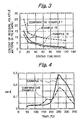
- Fig. 1 shows that under the same drying conditions, volatile matters remaining in film decrease with an increase in the siloxanediamine units.
- Films were formed from the siloxane-modified polyamideimide resin solution obtained in Example 3 and the solution of the polyamideimide resin produced without using siloxane diamines, to determine the changes of the amounts of residual volatile matters remaining in the films with passage of time.
- Fig. 2 shows that the resin containing siloxanediamine units had a higher drying speed.
- BAPP 2,2-bis[4-(4-aminophenoxy)phenyl]propane
- X-22-161AS trade name, produced by Shin-Etsu Chemical Co., Ltd., amine equivalent weight: 416
- TMA trimellitic anhydride
- NMP N-methyl-2-pyrollidone
- Example 1 Example 2 Glass transition temperature (°C) 245 255 Tensile strength (kg/mm 2 ) 7.3 9.3 Elongation at break (%) 1.5 1.2 Tensile modulus (MPa) 1800 1600 Molecular weight (weight average) 69500 72000 BAPP (mol) 161 AS (mol) TMA (mol) NMP (g) MDI (mol) Mw Example 3 0.08 0.02 0.22 290 0.13 63500 Example 4 0.07 0.03 0.21 290 0.12 73000 Example 5 0.06 0.04 0.21 300 0.12 59000 Example 6 0.05 0.05 0.21 310 0.12 66000 BAPP (mol) 161 AS (mol) TMA (mol) NMP (g) MDI (mol) Mw Example 7 0.08 0.02 0.20 250 0.1 35000 Example 8 0.07 0.03 0.20 270 0.1 28000 Example 9 0.05 0.05 0.20 290 0.1 19000 BAPP: 2,2-bis[4-(4-aminophenoxy)phenyl]propane 161AS: reactive silicone oil X-22-16
- the siloxane-modified polyamideimide resins of Examples 7 to 9 were produced by allowing a diamine (A) having three of more aromatic rings and a siloxanediamine (B) to react with trimellitic anhydride (C) in a molar ratio ⁇ (A)+(B) ⁇ /(C) of 1/2.0 outside the preferred range of 1/2.05 to 1/2.20, and allowing the obtained diimidodicarboxylic acid mixture (Y) to react with an aromatic diisocyanate (MDI) in a molar ratio ⁇ (A)+(B) ⁇ /(D) of 1/1 outside the preferred range of 1/1.05 to 1/1.50.
- a diamine (A) having three of more aromatic rings and a siloxanediamine (B) to react with trimellitic anhydride (C) in a molar ratio ⁇ (A)+(B) ⁇ /(C) of 1/2.0 outside the preferred range of 1/2.05 to 1/2.20
- Y diimidodica
- siloxane-modified polyamideimide resins of Examples 3 to 6 Their molecular weights were decreased by more than one-half compared with the siloxane-modified polyamideimide resins of Examples 3 to 6. To the contrary, the siloxane-modified polyamideimide resins produced by using a molar ratio ⁇ (A)+(B) ⁇ /(C) of 1/2.05 to 1/2.20 and a molar ratio ⁇ (A)+(B) ⁇ /(D) of 1/1.05 to 1/1.50 had high molecular weights. In spite of their low molecular weight, the siloxane-modified polyamideimide resins of Examples 7 to 9 are enough useful for the preparation of adhesives or coatings.
- the siloxane-modified polyamideimide resin of the present invention is useful for the production of varnish, adhesive and adhesive film which require heat resistance, and therefore have wide applications in the industries of coatings, wiring boards, electrical instruments, automobiles, buildings, building materials and so on. Further, compared with conventional polyamideimide resins, it has wider applications because not only the siloxane-modified polyamideimide resin itself but also the intermediate products, siloxanediimidodicarboxylic acids and aromatic diimidodicarboxylic acids are soluble in solvents. Further, being soluble in solvents, it can be produced without filtration or purification and has an increased molecular weight, and, therefore, is a useful industrial material having good film formability and excellent resin properties.
- the film forms no voids on heating, thereby decreasing interlaminar insulation resistance and improving connection reliability.
- BAPP 2,2-bis[4-(4-aminophenoxy)phenyl]propane
- X-22-161AS trade name, produced by Shin-Etsu Chemical Co., Ltd., amine equivalent weight: 416
- TMA trimellitic anhydride
- NMP N-methyl-2-pyrollidone
- Resin composition varnishes were prepared by mixing each of the siloxane-modified polyamideimide resins of Synthesis Examples 1 to 3 with an epoxy resin ESCN195 (trade name, produced by Sumitomo Chemical Industries, Co., Ltd.) in the ratios shown in Table 5, adding 0.6 % by weight of 2-ethyl-4-methylimidazole based on the epoxy resin, stirring the mixtures for about 1 hour until uniform solutions were obtained, and then degassing by allowing them to stand at room temperature for 24 hours. Each resin composition varnish was applied on a supporting substrate (release treated PET film) and dried at 120°C for 30 minutes to produce an adhesive film of 50 ⁇ m thick cured to B-stage.
- ESCN195 trade name, produced by Sumitomo Chemical Industries, Co., Ltd.
- Each adhesive film was peeled off from the supporting substrate, fixed to a frame of polytetrafluoroethylene resin, and then further cured by heating at 180°C for 60 minutes.
- the properties of the cured adhesive films were measured and listed in Table 5.
- the contents of residual volatile matters in the B-stage adhesive films were determined from the difference between the weights of each adhesive film measured before and after the heating. The results are also listed in Table 5.
- a resin composition varnish was produced in the same manner as in Example 15 except that the siloxane-modified polyamideimide resin was replaced by a polyamideimide resin containing no siloxane units. It was formed in the same manner as in Examples 10 to 19 into a B-stage adhesive film, which had such a large content of residual volatile matters of 11.5 % by weight.
- a resin composition varnish was prepared by using the siloxane-modified polyamideimide resin of Synthesis Example 2 and ESCN-195 in a weight ratio of 60/40 (siloxane-modified-polyamideimide resin/ESCN-195).
- Example 15 and the varnish of Comparative Example 2 were formed into films, which were then cured by heating at 290°C for 1 hour.
- the Tg's of the cured films were determined.
- the results are shown in Fig. 4.
- the film produced from the varnish of Example 15 had a Tg of 260°C, while the film produced from the varnish of Comparative Example 2 exhibited a maximum tan ⁇ at 170°C, which corresponds to the Tg of the epoxy resin which remained without reacting.
- Si-PAI Resin compounding ratio (*1) Content of residual volatile matters (%)
- Dynamic elastic modulus (GPa) Adhesion strength to copper foil (kN/m)
- Example 10 Synthesis Ex.
- DVE-V4 (trade name, produced by Rheology Co., Ltd.) under the following conditions.
- Varnish was applied on the mat surface of a roughened electrolytic copper foil TSA-35 (trade name, produced by Furukawa Circuit Foil Co., Ltd.), dried at 150°C for 30 minutes, and then heated to 180°C for 1 hour, to form a sample.
- the resin surface of the sample was ground with sandpaper #600 and bonded to a resin plate with an epoxy adhesive (ARALDITE-STANDARD). Then measurement of copper foil adhesion strength was carried out in accordance with JIS C 6481 by peeling the copper foil in 10 mm wide from the layer of the dried varnish.
- the resin composition of the present invention allows high speed drying of solvent, and can produce, under moderate conditions, B-stage adhesive film with little content of residual volatile matters.
- the adhesive film When cured further, the adhesive film has a high Tg of 190°C or above and exhibits a high adhesion strength to copper foil.
Landscapes
- Chemical & Material Sciences (AREA)
- Organic Chemistry (AREA)
- Chemical Kinetics & Catalysis (AREA)
- Health & Medical Sciences (AREA)
- Medicinal Chemistry (AREA)
- Polymers & Plastics (AREA)
- General Chemical & Material Sciences (AREA)
- Life Sciences & Earth Sciences (AREA)
- Engineering & Computer Science (AREA)
- Materials Engineering (AREA)
- Wood Science & Technology (AREA)
- Adhesives Or Adhesive Processes (AREA)
- Macromolecular Compounds Obtained By Forming Nitrogen-Containing Linkages In General (AREA)
- Adhesive Tapes (AREA)
Claims (19)
- Siloxan-modifiziertes Polyamidimidharz, welches ein Harz ist, hergestellt durch Umsetzen eines Gemisches (X), das ein Diamin (A) mit drei oder mehr aromatischen Ringen pro Molekül und ein Siloxandiamin (B) enthält, mit Trimellithsäureanhydrid (C) unter Bildung eines Diimidodicarbonsäuregemisches (Y), das eine von dem Diamin (A) abgeleitete aromatische Diimidodicarbonsäure und eine von dem Siloxandiamin (B) abgeleitete Siloxandiimidodicarbonsäure enthält, und durch Umsetzen des Diimidodicarbonsäuregemisches (Y) mit einem aromatischen Diisocyanat (D).
- Siloxan-modifiziertes Polyamidimidharz nach Anspruch 1, welches ein Harz ist, hergestellt durch Umsetzen eines Gemisches (X), das ein Diamin (A) mit drei oder mehr aromatischen Ringen pro Molekül und ein Siloxandiamin (B) in einem Molverhältnis (A)/(B) von 99,9/0,1 bis 0,1/99,9 mit Trimellithsäureanhydrid (C) in einem Molverhältnis {(A)+(B)}/(C) von 1/2,05 bis 1/2,20 unter Bildung eines Diimidodicarbonsäuregemisches (Y), das eine von dem Diamin (A) abgeleitete Diimidodicarbonsäure und eine von dem Siloxandiamin (B) abgeleitete Siloxandiimidodicarbonsäure enthält, und durch Umsetzen des Diimidodicarbonsäuregemisches (Y) mit einem aromatischen Diisocyanat (D) in einem Molverhältnis von {(A)+(B)}/(D) von 1/1,05 bis 1/1,50.
- Siloxan-modifiziertes Polyamidimidharz nach Anspruch 2, worin das Molverhältnis {(A)+(B)}/(C) 1/2,07 bis 1/2,20 und das Verhältnis {(A)+(B)}/(D) 1/1,10 bis 1/1,50 ist.
- Siloxan-modifiziertes Polyamidimidharz nach Anspruch 2, worin das Molverhältnis {(A)+(B)}/(C) 1/2,08 bis 1/2,20 und das Verhältnis {(A)+(B)}/(D) 1/1,20 bis 1/1,50 ist.
- Siloxan-modifiziertes Polyamidimidharz nach einem der Ansprüche 1 bis 4, worin die aromatische Diimidodicarbonsäure eine Struktur der allgemeinen Formel (1), die Siloxandiimidodicarbonsäure eine Struktur der allgemeinen Formel (2) und das aromatischs Diisocyanat (D) eine Struktur der allgemeinen Formel (3) hat:worin R1
 ist

und X
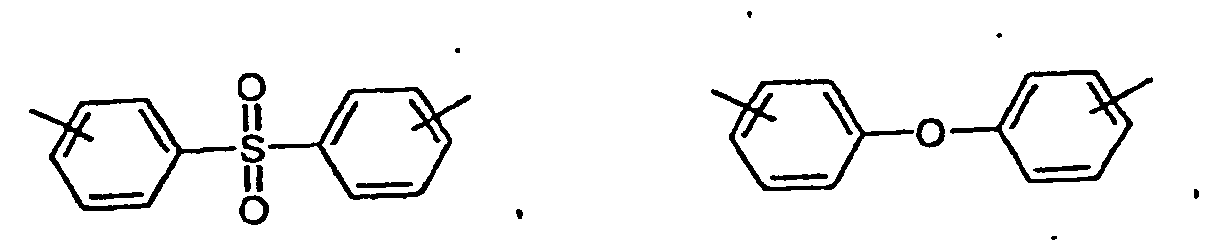 oder
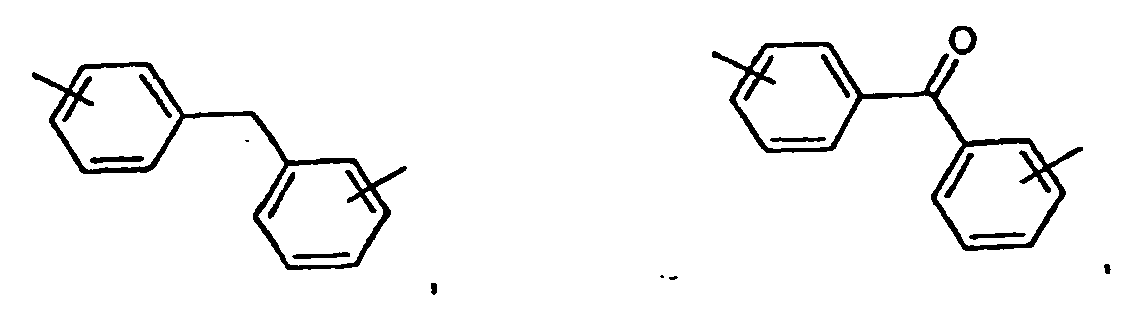
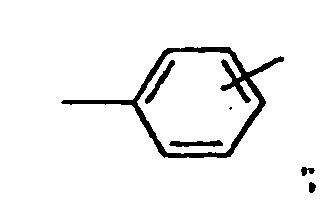 ist,

worin R2ist, worin R3 und R4 jeweils eine zweiwertige organische Gruppe sind, R5 bis R8 jeweils eine Alkylgruppe, Phenyl oder ein substituiertes Phenyl sind und n eine ganze Zahl von 1 bis 50 ist,
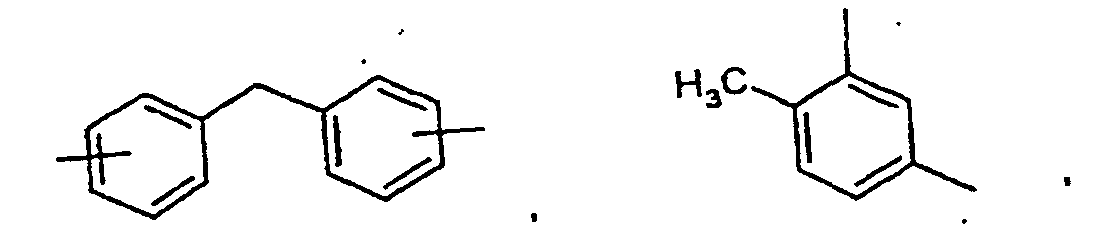 oder
 ist.
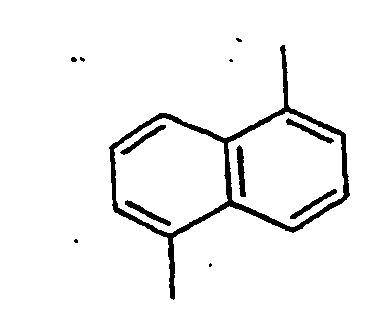
- Siloxan-modifiziertes Polyamidimidharz nach einem der Ansprüche 1 bis 5, worin das Molverhältnis (A)/(B) 90/10 bis 30/70 ist, das Molverhältnis {(A)+(B)}/(C) 1/2,07 bis 1/2,15 ist und das Molverhältnis {(A)+(B)}/(D) 1/1,10 bis 1/1,50 ist.
- Siloxan-modifiziertes Polyamidimidharz nach einem der Ansprüche 1 bis 6, worin die aromatische Diimidodicarbonsäure 2,2-Bis[4-[4-(5-hydroxycarbonyl-1,3-dion-isoindolino)-phenoxy]phenyl]propan ist und die Siloxandiimidodicarbonsäure Bis(5-hydroxycarbonyl-1,3-dion-isoindolino)propylpolydimethylsiloxan ist.
- Siloxan-modifiziertes Polyamidimidharz nach Anspruch 7, worin die Siloxandiimidodicarbonsäure durch die folgende allgemeine Formel dargestellt istworin n eine ganze Zahl von 1 bis 50 ist.

- Siloxan-modifiziertes Polyamidimidharz nach einem der Ansprüche 1 bis 8, welches ein Harz ist, hergestellt durch Umsetzen eines Gemischs (X), das ein Diamin (A) mit drei oder mehr aromatischen Ringen pro Molekül und ein Siloxandiamin (B) in einem Molverhältnis (A)/(B) von 99,9/0,1 bis 0,1/99,9 enthält, mit Trimellithsäureanhydrid (C) in einem Molverhältnis {(A)+(B)}/(C) von 1/2,05 bis 1/2,20 in Anwesenheit eines aprotischen polaren Lösungsmittels bei 50 bis 90°C, dann bei 120 bis 180°C nach Zugabe von 10 bis 50 Gew.-%, bezogen auf das aprotische polare Lösungsmittel, eines aromatischen Kohlenwasserstoffs, der mit Wasser azeotrop ist, unter Bildung eines Diimidodicarbonsäuregemisches (Y), das eine von dem Diamin (A) abgeleitete Diimidodicarbonsäure und eine von dem Siloxandiamin (B) abgeleitete Siloxandiimidodicarbonsäure enthält, und durch Umsetzen des Diimidodicarbonsäuregemisches (Y) mit einem aromatischen Diisocyanat (D).
- Siloxan-modifiziertes Polyamidimidharz nach Anspruch 9, worin das Diimidodicarbonsäuregemisch (Y) mit dem aromatischen Diisocyanat (D) umgesetzt wird, nachdem der aromatische Kohlenwasserstoff aus dem Diimidodicarbonsäuregemisch (Y) entfernt worden ist.
- Siloxan-modifiziertes Polyamidimidharz nach Anspruch 9 oder 10, worin das aprotische polare Lösungsmittel N-Methylpyrrolidon ist und der aromatische Kohlenwasserstoff, der mit Wasser azeotrop ist, Toluol ist.
- Siloxan-modifiziertes Polyamidimidharz nach einem der Ansprüche 1 bis 11, worin das Siloxan-modifizierte Polyamidimidharz ein Gewichtsmittel des Molekulargewichts (GPC, Polystyrolumrechnung) von 40 000 bis 150 000 hat.
- Lack, der das Siloxan-modifizierte Polyamidimidharz nach einem der Ansprüche 1 bis 12 enthält.
- Zusammensetzung eines Siloxan-modifizierten Polyamidimidharzes, welches 100 Gewichtsteile des Siloxan-modifizierten Polyamidimidharzes nach einem der Ansprüche 1 bis 12 und 1 bis 200 Gewichtsteile eines hitzehärtenden Harzbestandteils enthält.
- Zusammensetzung eines Siloxan-modifizierten Polyamidimidharzes nach Anspruch 14, worin der hitzehärtende Harzbestandteil ein Epoxyharz mit zwei oder mehr Glycidylgruppen pro Molekül enthält.
- Zusammensetzung eines Siloxan-modifizierten Polyamidimidharzes nach Anspruch 15, welche außerdem einen Härtungsbeschleuniger oder einen Härter enthält.
- Zusammensetzung eines Siloxan-modifizierten Polyamidimidharzes nach einem der Ansprüche 14 bis 16, worin der hitzehärtende Harzbestandteil Epoxyharze enthält und das Äquivalentverhältnis der Epoxygruppen der Epoxyharze zu den Amidogruppen des Siloxan-modifizierten Polyamidimidharzes 1 oder weniger ist.
- Lack, der eine Zusammensetzung eines Siloxan-modifizierten Polyamidimidharzes nach einem der Ansprüche 14 bis 17 enthält.
- Klebefolie, die durch Auftragen eines Lackes nach Anspruch 18 auf ein Trägersubstrat hergestellt ist.
Priority Applications (1)
| Application Number | Priority Date | Filing Date | Title |
|---|---|---|---|
| EP20040077745 EP1496094B1 (de) | 1997-10-29 | 1998-10-29 | Siloxanmodifizierte Polyamidharzzusammensetzungsklebefolie, CSP Leiterplatte und Folie und hergestelltes Halbleiterbauelement |
Applications Claiming Priority (12)
| Application Number | Priority Date | Filing Date | Title |
|---|---|---|---|
| JP29720097 | 1997-10-29 | ||
| JP297200/97 | 1997-10-29 | ||
| JP29720097A JP3651210B2 (ja) | 1997-10-29 | 1997-10-29 | シロキサン含有ポリアミドイミド及びそれを含むワニス |
| JP327984/97 | 1997-11-28 | ||
| JP32798497 | 1997-11-28 | ||
| JP32798497 | 1997-11-28 | ||
| JP4143398 | 1998-02-24 | ||
| JP04143398A JP3432409B2 (ja) | 1997-11-28 | 1998-02-24 | 耐熱性樹脂組成物及びそれを用いた接着フィルム |
| JP41433/98 | 1998-02-24 | ||
| JP271149/98 | 1998-09-25 | ||
| JP27114998 | 1998-09-25 | ||
| JP27114998A JP3688133B2 (ja) | 1998-09-25 | 1998-09-25 | Csp基板用耐熱性接着シート及びそれを用いるcsp基板の製造方法 |
Related Child Applications (2)
| Application Number | Title | Priority Date | Filing Date |
|---|---|---|---|
| EP20040077745 Division EP1496094B1 (de) | 1997-10-29 | 1998-10-29 | Siloxanmodifizierte Polyamidharzzusammensetzungsklebefolie, CSP Leiterplatte und Folie und hergestelltes Halbleiterbauelement |
| EP04077745.0 Division-Into | 2004-10-01 |
Publications (3)
| Publication Number | Publication Date |
|---|---|
| EP0913429A2 EP0913429A2 (de) | 1999-05-06 |
| EP0913429A3 EP0913429A3 (de) | 1999-12-08 |
| EP0913429B1 true EP0913429B1 (de) | 2005-12-28 |
Family
ID=27461054
Family Applications (2)
| Application Number | Title | Priority Date | Filing Date |
|---|---|---|---|
| EP98308849A Expired - Lifetime EP0913429B1 (de) | 1997-10-29 | 1998-10-29 | Siloxanmodifizierte Poyamidharzzusammensetzung, Klebefilme, Klebefolie, und Halbleiterbauelement |
| EP20040077745 Expired - Lifetime EP1496094B1 (de) | 1997-10-29 | 1998-10-29 | Siloxanmodifizierte Polyamidharzzusammensetzungsklebefolie, CSP Leiterplatte und Folie und hergestelltes Halbleiterbauelement |
Family Applications After (1)
| Application Number | Title | Priority Date | Filing Date |
|---|---|---|---|
| EP20040077745 Expired - Lifetime EP1496094B1 (de) | 1997-10-29 | 1998-10-29 | Siloxanmodifizierte Polyamidharzzusammensetzungsklebefolie, CSP Leiterplatte und Folie und hergestelltes Halbleiterbauelement |
Country Status (3)
| Country | Link |
|---|---|
| US (2) | US6252010B1 (de) |
| EP (2) | EP0913429B1 (de) |
| DE (2) | DE69832944T2 (de) |
Families Citing this family (43)
| Publication number | Priority date | Publication date | Assignee | Title |
|---|---|---|---|---|
| WO2001051580A1 (en) * | 2000-01-13 | 2001-07-19 | Nitto Denko Corporation | Porous adhesive sheet, semiconductor wafer with porous adhesive sheet, and method of manufacture thereof |
| SG99331A1 (en) * | 2000-01-13 | 2003-10-27 | Hitachi Ltd | Method of producing electronic part with bumps and method of producing elctronic part |
| JP2001234020A (ja) * | 2000-02-21 | 2001-08-28 | Hitachi Ltd | 樹脂組成物、該樹脂組成物を用いた接着フィルム、金属箔付き接着フィルム、配線基板及び実装構造体 |
| JP3906653B2 (ja) * | 2000-07-18 | 2007-04-18 | ソニー株式会社 | 画像表示装置及びその製造方法 |
| US6822170B2 (en) * | 2000-12-26 | 2004-11-23 | Ngk Spark Plug Co., Ltd. | Embedding resin and wiring substrate using the same |
| US20020130103A1 (en) * | 2001-03-15 | 2002-09-19 | Zimmerman Scott M. | Polyimide adhesion enhancement to polyimide film |
| JP4455806B2 (ja) * | 2001-05-24 | 2010-04-21 | 日立化成工業株式会社 | プリプレグ及び積層板 |
| DE10149834A1 (de) * | 2001-10-09 | 2003-04-17 | Nexans | Verfahren zum Beschichten eines Formkörpers aus polymerem Material |
| JP2004063615A (ja) * | 2002-07-26 | 2004-02-26 | Nitto Denko Corp | 半導体装置の製造方法、半導体装置製造用接着シートおよび半導体装置 |
| TW582078B (en) * | 2002-11-29 | 2004-04-01 | Chipmos Technologies Bermuda | Packaging process for improving effective die-bonding area |
| CN101134856B (zh) * | 2003-05-21 | 2010-10-06 | 日立化成工业株式会社 | 底漆、带有树脂的导体箔、层叠板以及层叠板的制造方法 |
| JPWO2005007756A1 (ja) * | 2003-05-21 | 2006-08-31 | 日立化成工業株式会社 | プライマ、樹脂付き導体箔、積層板並びに積層板の製造方法 |
| JP4266717B2 (ja) * | 2003-06-13 | 2009-05-20 | 三洋電機株式会社 | 半導体装置の製造方法 |
| US8017449B2 (en) * | 2003-08-08 | 2011-09-13 | Dow Corning Corporation | Process for fabricating electronic components using liquid injection molding |
| JP4397653B2 (ja) * | 2003-08-26 | 2010-01-13 | 日東電工株式会社 | 半導体装置製造用接着シート |
| FI20041525A7 (fi) * | 2004-11-26 | 2006-03-17 | Imbera Electronics Oy | Elektroniikkamoduuli ja menetelmä sen valmistamiseksi |
| US7442581B2 (en) * | 2004-12-10 | 2008-10-28 | Freescale Semiconductor, Inc. | Flexible carrier and release method for high volume electronic package fabrication |
| JP4609645B2 (ja) * | 2005-03-07 | 2011-01-12 | 信越化学工業株式会社 | 半導体封止用エポキシ樹脂成形材料接着用プライマー組成物及び半導体装置 |
| WO2006112474A2 (ja) * | 2005-04-19 | 2006-10-26 | Kaneka Corporation | 繊維-樹脂複合体、積層体、およびプリント配線板、並びにプリント配線板の製造方法 |
| GB2425282A (en) * | 2005-04-22 | 2006-10-25 | Celotex Ltd | A laminate structure for use in insulation boards |
| JP5124984B2 (ja) * | 2005-05-20 | 2013-01-23 | 日立化成工業株式会社 | 印刷配線板 |
| JP2007013113A (ja) * | 2005-05-30 | 2007-01-18 | Hitachi Chem Co Ltd | 多層配線板 |
| US20060289607A1 (en) * | 2005-06-28 | 2006-12-28 | Buchwalter Stephen L | Composite solder transfer moldplate structure and method of making same |
| US20080200084A1 (en) * | 2007-02-16 | 2008-08-21 | Angus Richard O | Compositions for thin circuit materials, circuits, multi-layer circuits, and methods of manufacture thereof |
| CN101779268B (zh) * | 2007-06-25 | 2013-11-06 | 布鲁尔科技公司 | 高温旋涂暂时性粘合组合物 |
| US8092628B2 (en) * | 2008-10-31 | 2012-01-10 | Brewer Science Inc. | Cyclic olefin compositions for temporary wafer bonding |
| US8771927B2 (en) * | 2009-04-15 | 2014-07-08 | Brewer Science Inc. | Acid-etch resistant, protective coatings |
| JP5540671B2 (ja) * | 2009-11-30 | 2014-07-02 | 日立金属株式会社 | 絶縁電線 |
| TWI398465B (zh) * | 2009-12-18 | 2013-06-11 | Ind Tech Res Inst | 改質型雙馬來亞醯胺樹脂、製備方法及包含該樹脂之組合物 |
| JP5626530B2 (ja) * | 2010-02-16 | 2014-11-19 | 日立金属株式会社 | 絶縁塗料及びその製造方法並びにそれを用いた絶縁電線及びその製造方法 |
| WO2013015835A1 (en) | 2011-07-22 | 2013-01-31 | Seven Networks, Inc. | Mobile application traffic optimization |
| JP2013057861A (ja) * | 2011-09-09 | 2013-03-28 | Shin Etsu Chem Co Ltd | リソグラフィ用ペリクルおよびその製造方法 |
| DE102011088969A1 (de) * | 2011-12-19 | 2013-06-20 | Robert Bosch Gmbh | Getriebesteuermodul |
| JP6164500B2 (ja) * | 2012-08-16 | 2017-07-19 | 三菱瓦斯化学株式会社 | 樹脂シート、樹脂層付き支持体、積層板及び金属箔張積層板 |
| JP2017080946A (ja) * | 2015-10-26 | 2017-05-18 | セイコーエプソン株式会社 | Memsデバイスの製造方法、memsデバイス、液体噴射ヘッド、および液体噴射装置 |
| WO2018047551A1 (ja) * | 2016-09-09 | 2018-03-15 | 富士電機株式会社 | 半導体装置製造方法及び半導体装置 |
| TWI614285B (zh) | 2016-11-11 | 2018-02-11 | 財團法人工業技術研究院 | 聚合物及包含該聚合物之樹脂組成物 |
| CN108336020B (zh) * | 2018-01-24 | 2020-12-18 | 中芯集成电路(宁波)有限公司 | 晶圆级封装中形成通孔的方法 |
| JP7232387B2 (ja) * | 2018-09-07 | 2023-03-03 | 株式会社プロテリアル | 接着方法及び積層磁石 |
| CN113396056B (zh) * | 2019-03-29 | 2024-05-14 | 太阳控股株式会社 | 中空器件用干膜、固化物和电子部件 |
| CN112391125A (zh) * | 2020-11-19 | 2021-02-23 | 铠博新材料(天津)有限公司 | 一种导电胶膜 |
| DE102022202324A1 (de) | 2022-03-08 | 2023-09-14 | Siemens Aktiengesellschaft | Prepreg, Teilleiterisolation und elektrische rotierende Maschine mit Teilleiterisolation |
| CN115216264B (zh) * | 2022-08-17 | 2024-03-29 | 株洲时代新材料科技股份有限公司 | 一种功率半导体封装用聚酰胺酸涂覆胶的制备方法 |
Family Cites Families (12)
| Publication number | Priority date | Publication date | Assignee | Title |
|---|---|---|---|---|
| US3338859A (en) * | 1966-06-30 | 1967-08-29 | Dow Corning | Silicone polyimides |
| US3392144A (en) * | 1967-05-15 | 1968-07-09 | Gen Electric | Polyamide compositions and polyimideamides therefrom |
| DE2900560A1 (de) * | 1979-01-09 | 1980-07-17 | Bayer Ag | Mischungen aus polyamidimidharzen und epoxidverbindungen |
| US4791157A (en) * | 1986-10-03 | 1988-12-13 | Hitachi Chemical Co. | Polyetheramide-imide polymer composition |
| JP3008574B2 (ja) * | 1991-07-31 | 2000-02-14 | 日立化成工業株式会社 | ペースト組成物及びこれを用いた半導体装置 |
| JP2668752B2 (ja) * | 1991-10-30 | 1997-10-27 | 宇部興産株式会社 | 耐熱性接着剤 |
| JP3063929B2 (ja) * | 1991-12-26 | 2000-07-12 | 宇部興産株式会社 | 耐熱性の接着剤 |
| US6046072A (en) * | 1993-03-29 | 2000-04-04 | Hitachi Chemical Company, Ltd. | Process for fabricating a crack resistant resin encapsulated semiconductor chip package |
| US5976912A (en) * | 1994-03-18 | 1999-11-02 | Hitachi Chemical Company, Ltd. | Fabrication process of semiconductor package and semiconductor package |
| JP3080579B2 (ja) * | 1996-03-06 | 2000-08-28 | 富士機工電子株式会社 | エアリア・グリッド・アレイ・パッケージの製造方法 |
| SG72752A1 (en) * | 1996-10-31 | 2000-05-23 | Hitachi Chemical Co Ltd | Heat resistant resin composition and adhesive sheet using the same |
| TW398165B (en) * | 1997-03-03 | 2000-07-11 | Hitachi Chemical Co Ltd | Circuit boards using heat resistant resin for adhesive layers |
-
1998
- 1998-10-29 EP EP98308849A patent/EP0913429B1/de not_active Expired - Lifetime
- 1998-10-29 DE DE1998632944 patent/DE69832944T2/de not_active Expired - Lifetime
- 1998-10-29 DE DE69839896T patent/DE69839896D1/de not_active Expired - Lifetime
- 1998-10-29 US US09/181,678 patent/US6252010B1/en not_active Expired - Lifetime
- 1998-10-29 EP EP20040077745 patent/EP1496094B1/de not_active Expired - Lifetime
-
2001
- 2001-02-02 US US09/773,705 patent/US6475629B1/en not_active Expired - Lifetime
Also Published As
| Publication number | Publication date |
|---|---|
| DE69832944T2 (de) | 2006-10-26 |
| US6252010B1 (en) | 2001-06-26 |
| EP1496094A3 (de) | 2006-11-15 |
| EP0913429A2 (de) | 1999-05-06 |
| DE69832944D1 (de) | 2006-02-02 |
| EP1496094B1 (de) | 2008-08-13 |
| EP1496094A2 (de) | 2005-01-12 |
| US6475629B1 (en) | 2002-11-05 |
| EP0913429A3 (de) | 1999-12-08 |
| DE69839896D1 (de) | 2008-09-25 |
Similar Documents
| Publication | Publication Date | Title |
|---|---|---|
| US6252010B1 (en) | Siloxane-modified polyamideimide resin composition, adhesive film, adhesive sheet and semiconductor device | |
| US6187874B1 (en) | Adhesive for electronic parts and adhesive tape for electronic parts | |
| CN101522744B (zh) | 聚酰胺酰亚胺树脂、粘接剂、挠性基板材料、挠性层叠板及挠性印刷电路板 | |
| KR20160117368A (ko) | 접착제 조성물 필름상의 접착제 접착층, 접착 시트, 수지 부착 동박, 동장 적층판, 플렉서블 동장 적층판, 프린트 배선판, 플렉서블 프린트 배선판, 다층 배선판, 인쇄 회로 기판 및 플렉서블 인쇄 회로 기판 | |
| JP3432409B2 (ja) | 耐熱性樹脂組成物及びそれを用いた接着フィルム | |
| TW200911948A (en) | Adhesive composition and adhesive film using the same | |
| EP0598911B1 (de) | Klebefilm und seine herstellung | |
| JP2009114307A (ja) | セラミックス基板用熱硬化性接着剤組成物及び該組成物を用いた接着フィルム | |
| JP4828772B2 (ja) | ポリアミドイミド樹脂及びそれを用いた接着剤組成物 | |
| TW200401820A (en) | Dicing tape | |
| KR100310924B1 (ko) | 방향족폴리카보디이미드및이를사용한시트 | |
| JP2000345035A (ja) | 耐熱性樹脂組成物、これを用いた接着フィルム及び接着層付ポリイミドフィルム | |
| JP4363137B2 (ja) | 金属箔層付き基板フィルム及び両面金属箔付き基板フィルム | |
| JP3688133B2 (ja) | Csp基板用耐熱性接着シート及びそれを用いるcsp基板の製造方法 | |
| JPH05331425A (ja) | フィルム接着剤 | |
| JP2001207055A (ja) | カルボジイミド樹脂組成物 | |
| JP5158397B2 (ja) | 耐熱性接着シート、金属箔張り積層板及びエリアアレイ半導体パッケージ用配線基板 | |
| JPH05331445A (ja) | フィルム接着剤の製造方法 | |
| JP2005162945A (ja) | 耐熱性樹脂組成物、それから得られる樹脂及び接着フィルム | |
| JP4441833B2 (ja) | 耐熱性樹脂組成物及びそれを用いた接着フィルム | |
| JP2009007580A (ja) | ポリアミドイミド樹脂及びそれを用いた接着剤組成物 | |
| JP2003253220A (ja) | フィルム状接着剤及び半導体接着テープ | |
| JP4277513B2 (ja) | ポリアミドイミド、熱硬化性樹脂組成物及びポリアミドイミドの製造方法 | |
| JP4441832B2 (ja) | 耐熱性樹脂組成物 | |
| KR100658449B1 (ko) | 전자부품용 폴리이미드 접착제 및 접착테이프 |
Legal Events
| Date | Code | Title | Description |
|---|---|---|---|
| PUAI | Public reference made under article 153(3) epc to a published international application that has entered the european phase |
Free format text: ORIGINAL CODE: 0009012 |
|
| AK | Designated contracting states |
Kind code of ref document: A2 Designated state(s): DE FR GB NL |
|
| AX | Request for extension of the european patent |
Free format text: AL;LT;LV;MK;RO;SI |
|
| PUAL | Search report despatched |
Free format text: ORIGINAL CODE: 0009013 |
|
| AK | Designated contracting states |
Kind code of ref document: A3 Designated state(s): AT BE CH CY DE DK ES FI FR GB GR IE IT LI LU MC NL PT SE |
|
| AX | Request for extension of the european patent |
Free format text: AL;LT;LV;MK;RO;SI |
|
| 17P | Request for examination filed |
Effective date: 20000529 |
|
| AKX | Designation fees paid |
Free format text: DE FR GB NL |
|
| 17Q | First examination report despatched |
Effective date: 20040317 |
|
| GRAP | Despatch of communication of intention to grant a patent |
Free format text: ORIGINAL CODE: EPIDOSNIGR1 |
|
| GRAS | Grant fee paid |
Free format text: ORIGINAL CODE: EPIDOSNIGR3 |
|
| GRAA | (expected) grant |
Free format text: ORIGINAL CODE: 0009210 |
|
| AK | Designated contracting states |
Kind code of ref document: B1 Designated state(s): DE FR GB NL |
|
| REG | Reference to a national code |
Ref country code: GB Ref legal event code: FG4D |
|
| REF | Corresponds to: |
Ref document number: 69832944 Country of ref document: DE Date of ref document: 20060202 Kind code of ref document: P |
|
| ET | Fr: translation filed | ||
| PGFP | Annual fee paid to national office [announced via postgrant information from national office to epo] |
Ref country code: NL Payment date: 20061015 Year of fee payment: 9 |
|
| PGFP | Annual fee paid to national office [announced via postgrant information from national office to epo] |
Ref country code: GB Payment date: 20061025 Year of fee payment: 9 |
|
| PLBE | No opposition filed within time limit |
Free format text: ORIGINAL CODE: 0009261 |
|
| STAA | Information on the status of an ep patent application or granted ep patent |
Free format text: STATUS: NO OPPOSITION FILED WITHIN TIME LIMIT |
|
| 26N | No opposition filed |
Effective date: 20060929 |
|
| GBPC | Gb: european patent ceased through non-payment of renewal fee |
Effective date: 20071029 |
|
| NLV4 | Nl: lapsed or anulled due to non-payment of the annual fee |
Effective date: 20080501 |
|
| REG | Reference to a national code |
Ref country code: FR Ref legal event code: ST Effective date: 20080630 |
|
| PG25 | Lapsed in a contracting state [announced via postgrant information from national office to epo] |
Ref country code: NL Free format text: LAPSE BECAUSE OF NON-PAYMENT OF DUE FEES Effective date: 20080501 |
|
| PGFP | Annual fee paid to national office [announced via postgrant information from national office to epo] |
Ref country code: FR Payment date: 20061010 Year of fee payment: 9 |
|
| PG25 | Lapsed in a contracting state [announced via postgrant information from national office to epo] |
Ref country code: GB Free format text: LAPSE BECAUSE OF NON-PAYMENT OF DUE FEES Effective date: 20071029 |
|
| PG25 | Lapsed in a contracting state [announced via postgrant information from national office to epo] |
Ref country code: FR Free format text: LAPSE BECAUSE OF NON-PAYMENT OF DUE FEES Effective date: 20071031 |
|
| PGFP | Annual fee paid to national office [announced via postgrant information from national office to epo] |
Ref country code: DE Payment date: 20151022 Year of fee payment: 18 |
|
| REG | Reference to a national code |
Ref country code: DE Ref legal event code: R119 Ref document number: 69832944 Country of ref document: DE |
|
| PG25 | Lapsed in a contracting state [announced via postgrant information from national office to epo] |
Ref country code: DE Free format text: LAPSE BECAUSE OF NON-PAYMENT OF DUE FEES Effective date: 20170503 |