EP0344099B1 - Polyester und daraus hergestellter Formkörper - Google Patents
Polyester und daraus hergestellter Formkörper Download PDFInfo
- Publication number
- EP0344099B1 EP0344099B1 EP89730128A EP89730128A EP0344099B1 EP 0344099 B1 EP0344099 B1 EP 0344099B1 EP 89730128 A EP89730128 A EP 89730128A EP 89730128 A EP89730128 A EP 89730128A EP 0344099 B1 EP0344099 B1 EP 0344099B1
- Authority
- EP
- European Patent Office
- Prior art keywords
- polyester
- acid
- aromatic
- polyester according
- quaterphenyl
- Prior art date
- Legal status (The legal status is an assumption and is not a legal conclusion. Google has not performed a legal analysis and makes no representation as to the accuracy of the status listed.)
- Expired - Lifetime
Links
Images
Classifications
-
- C—CHEMISTRY; METALLURGY
- C08—ORGANIC MACROMOLECULAR COMPOUNDS; THEIR PREPARATION OR CHEMICAL WORKING-UP; COMPOSITIONS BASED THEREON
- C08G—MACROMOLECULAR COMPOUNDS OBTAINED OTHERWISE THAN BY REACTIONS ONLY INVOLVING UNSATURATED CARBON-TO-CARBON BONDS
- C08G63/00—Macromolecular compounds obtained by reactions forming a carboxylic ester link in the main chain of the macromolecule
- C08G63/02—Polyesters derived from hydroxycarboxylic acids or from polycarboxylic acids and polyhydroxy compounds
- C08G63/12—Polyesters derived from hydroxycarboxylic acids or from polycarboxylic acids and polyhydroxy compounds derived from polycarboxylic acids and polyhydroxy compounds
- C08G63/16—Dicarboxylic acids and dihydroxy compounds
-
- C—CHEMISTRY; METALLURGY
- C08—ORGANIC MACROMOLECULAR COMPOUNDS; THEIR PREPARATION OR CHEMICAL WORKING-UP; COMPOSITIONS BASED THEREON
- C08G—MACROMOLECULAR COMPOUNDS OBTAINED OTHERWISE THAN BY REACTIONS ONLY INVOLVING UNSATURATED CARBON-TO-CARBON BONDS
- C08G63/00—Macromolecular compounds obtained by reactions forming a carboxylic ester link in the main chain of the macromolecule
- C08G63/02—Polyesters derived from hydroxycarboxylic acids or from polycarboxylic acids and polyhydroxy compounds
- C08G63/12—Polyesters derived from hydroxycarboxylic acids or from polycarboxylic acids and polyhydroxy compounds derived from polycarboxylic acids and polyhydroxy compounds
- C08G63/16—Dicarboxylic acids and dihydroxy compounds
- C08G63/18—Dicarboxylic acids and dihydroxy compounds the acids or hydroxy compounds containing carbocyclic rings
-
- C—CHEMISTRY; METALLURGY
- C08—ORGANIC MACROMOLECULAR COMPOUNDS; THEIR PREPARATION OR CHEMICAL WORKING-UP; COMPOSITIONS BASED THEREON
- C08G—MACROMOLECULAR COMPOUNDS OBTAINED OTHERWISE THAN BY REACTIONS ONLY INVOLVING UNSATURATED CARBON-TO-CARBON BONDS
- C08G63/00—Macromolecular compounds obtained by reactions forming a carboxylic ester link in the main chain of the macromolecule
- C08G63/02—Polyesters derived from hydroxycarboxylic acids or from polycarboxylic acids and polyhydroxy compounds
- C08G63/12—Polyesters derived from hydroxycarboxylic acids or from polycarboxylic acids and polyhydroxy compounds derived from polycarboxylic acids and polyhydroxy compounds
- C08G63/16—Dicarboxylic acids and dihydroxy compounds
- C08G63/18—Dicarboxylic acids and dihydroxy compounds the acids or hydroxy compounds containing carbocyclic rings
- C08G63/19—Hydroxy compounds containing aromatic rings
- C08G63/193—Hydroxy compounds containing aromatic rings containing two or more aromatic rings
-
- C—CHEMISTRY; METALLURGY
- C08—ORGANIC MACROMOLECULAR COMPOUNDS; THEIR PREPARATION OR CHEMICAL WORKING-UP; COMPOSITIONS BASED THEREON
- C08G—MACROMOLECULAR COMPOUNDS OBTAINED OTHERWISE THAN BY REACTIONS ONLY INVOLVING UNSATURATED CARBON-TO-CARBON BONDS
- C08G63/00—Macromolecular compounds obtained by reactions forming a carboxylic ester link in the main chain of the macromolecule
- C08G63/02—Polyesters derived from hydroxycarboxylic acids or from polycarboxylic acids and polyhydroxy compounds
- C08G63/60—Polyesters derived from hydroxycarboxylic acids or from polycarboxylic acids and polyhydroxy compounds derived from the reaction of a mixture of hydroxy carboxylic acids, polycarboxylic acids and polyhydroxy compounds
-
- C—CHEMISTRY; METALLURGY
- C08—ORGANIC MACROMOLECULAR COMPOUNDS; THEIR PREPARATION OR CHEMICAL WORKING-UP; COMPOSITIONS BASED THEREON
- C08G—MACROMOLECULAR COMPOUNDS OBTAINED OTHERWISE THAN BY REACTIONS ONLY INVOLVING UNSATURATED CARBON-TO-CARBON BONDS
- C08G63/00—Macromolecular compounds obtained by reactions forming a carboxylic ester link in the main chain of the macromolecule
- C08G63/66—Polyesters containing oxygen in the form of ether groups
- C08G63/668—Polyesters containing oxygen in the form of ether groups derived from polycarboxylic acids and polyhydroxy compounds
- C08G63/672—Dicarboxylic acids and dihydroxy compounds
-
- C—CHEMISTRY; METALLURGY
- C08—ORGANIC MACROMOLECULAR COMPOUNDS; THEIR PREPARATION OR CHEMICAL WORKING-UP; COMPOSITIONS BASED THEREON
- C08G—MACROMOLECULAR COMPOUNDS OBTAINED OTHERWISE THAN BY REACTIONS ONLY INVOLVING UNSATURATED CARBON-TO-CARBON BONDS
- C08G63/00—Macromolecular compounds obtained by reactions forming a carboxylic ester link in the main chain of the macromolecule
- C08G63/68—Polyesters containing atoms other than carbon, hydrogen and oxygen
- C08G63/695—Polyesters containing atoms other than carbon, hydrogen and oxygen containing silicon
- C08G63/6954—Polyesters containing atoms other than carbon, hydrogen and oxygen containing silicon derived from polxycarboxylic acids and polyhydroxy compounds
- C08G63/6956—Dicarboxylic acids and dihydroxy compounds
-
- C—CHEMISTRY; METALLURGY
- C08—ORGANIC MACROMOLECULAR COMPOUNDS; THEIR PREPARATION OR CHEMICAL WORKING-UP; COMPOSITIONS BASED THEREON
- C08G—MACROMOLECULAR COMPOUNDS OBTAINED OTHERWISE THAN BY REACTIONS ONLY INVOLVING UNSATURATED CARBON-TO-CARBON BONDS
- C08G77/00—Macromolecular compounds obtained by reactions forming a linkage containing silicon with or without sulfur, nitrogen, oxygen or carbon in the main chain of the macromolecule
- C08G77/42—Block-or graft-polymers containing polysiloxane sequences
- C08G77/445—Block-or graft-polymers containing polysiloxane sequences containing polyester sequences
Definitions
- This invention relates to a polyester that is suitable for use as a material in the manufacture of articles such as a variety of parts for industrial use, film and sheets, and an a material for fibers, paints and adhesives. This invention also relates to articles that are made of this polyester.
- this invention relates to a polyester that can be used as a thermoplastic elastomer or as a liquid-crystal polymer for a variety of articles.
- thermoplastic elastomers have been developed that have rubber-like elasticity at ordinary temperatures and that are also plastic at high temperatures, and a variety of such thermoplastic elastomers are commercially available.
- the thermoplastic elastomers consist of soft segments and hard segments.
- the chemical structures of the soft segments and hard segments are different. In a mixture that contains both, regions that have similar properties collect together, and regions that have different properties mutually repel each other, resulting in an non-homogeneous microscopic structure.
- the collected regions of the hard segments mentioned above act as physical cross-linkings between the polymer molecules.
- the physical cross-linkings arise only at ordinary temperatures or less, and thus, they are different from chemical cross-linkings.
- the thermoplastic elastomers include, for example, polystyrene elastomers, polyolefin elastomers, polyurethane elastomers, polyester elastomers and polyamide elastomers.
- polystyrene elastomers polystyrene segments correspond to hard segments, and form cross-linking domains. In other words, because the polystyrene segments bind polymer chains together, the polystyrene elastomers have elasticity.
- the hard segments of polyolefin elastomers are the crystalline phase of the polypropylene segments.
- polyurethane elastomers the polymer chains are cross-linked physically by hydrogen bonding of the polyurethane segments.
- polyester elastomers the polybutylene terephthalate segments act as the hard segments, and in amide elastomers, the nylon segments such as segments of nylon 6 or nylon 6,6 act as the hard segments.
- thermoplastic elastomers have rubber-like elasticity at ordinary temperatures, and are readily molded because chemical cross-linkings are not present. Thus, these materials are used in automotive parts and in a wide variety of other industrial products.
- the cross-linking in conventional thermoplastic elastomers is achieved via physical binding, unlike the cross-linking in rubber, the heat stability is poor, as are the creep properties.
- the elastomer with the greatest heat stability is PELPREN® S-9001 available from Toyobo Co., Ltd.
- the melting point of this elastomer is at most 223°C, and the heat deflection temperature (HDT) is 146°C.
- the HDT is measured by method B of JIS K7207 (JIS K7207 corresponds to ASTM D648) for the deflection temperature under a load.
- the Vicat softening point A of polyurethane elastomers is at most 140°C.
- thermoplastic elastomers To raise the heat stability of conventional thermoplastic elastomers, it is necessary to increase the proportion of hard segments. However, if this is done, the hardness of the product at room temperature or lower temperatures is inevitably increased. Therefore, such elastomers are not suitable for products that should have elasticity over a wide range of temperatures, such as tubes, hoses, belts, packing, electrical wires, sporting goods and automotive parts.
- aromatic polyesters are obtained by the poly-condensation of the diols, dicarboxylic acids, and hydroxycarboxylic acids such as are shown in Table 1.
- the HDT of the aromatic polyesters numbered 1 to 4 in Table 1 is less than 180°C, so that the polyesters cannot be used, for example, as materials for surface-mounting electronic parts, which require high heat stability.
- Polyesters that contain hydroxycarboxylic acid in the backbone chain of the aromatic polyester, such as the compounds numbered 5 to 7 in Table 1, are known as liquid-crystal polymers. Because hydroxycarboxylic acid is incorporated into the molecule, these polymers have liquid-crystal properties (i.e. mesomorphism). For that reason, when these liquid-crystal polymers are melted, their flowability is greater than that of ordinary polymers. In this way, liquid-crystal polymers have excellent moldability, and comparatively good heat stability.
- a polycondensate made of parahydroxybenzoic acid and 2-hydroxy-6-naphthalanecarboxylic acid is commercially available as the liquid-crystal polymer Vectra® (Celanese Chemical Co.).
- This polycondensate has liquid-crystal properties based on hydroxycarboxylic acid, so it has greater melting flowability than ordinary polymers. For that reason, its moldability is good when being molded by injection molding (Japanese Patent Publication No. 57-24407).
- polyesters 5 and 6 are not satisfactory.
- the HDT of polyester 7, 293°C shows that its heat stability is satisfactory, but when this polyester is to be molded by, for example, injection molding, it is necessary to keep the cylinder temperature at 360°C or more, so its moldability is poor.
- the molecular weight of the compound can be decreased, or it might be possible to add plasticizer or a processing aid.
- plasticizer or a processing aid With the first method, mechanical properties such as tensile strength and impact resistance decline, and the heat stability of the product is so much decreased as to make it unusable.
- the second method With the second method, the disadvantage is that the product obtained has decreased heat stability.
- the moldability is decreased, and the surface of the molded product is rough.
- a composition that contains glass fibers in the above-mentioned aromatic polyester is used for the molding of products that are light, weighing about 10 mg to 10 g, that have thin parts, 1 mm or less thick, or that have sharp corners on the tip such as gears, the proportion of glass fibers in the thin parts or the sharp corners is less than that in the body of the product, because the fluiability of the glass fibers therein is poor.
- the result is that a satisfactory reinforcing effect arising from the glass fibers is not attained in the thin parts or the sharp corners,
- anisotropy and warping occur based on the orientation of the glass fibers, and it is not possible to achieve accurate molding.
- PET polyethylene terephthalate
- PET has a slow rate of crystallization, so ordinarily, when it is injection-molded in a mold that is heated to 100°C with the use of boiling water, PET solidifies rapidly so that crystallization of the resin cannot proceed sufficiently in the mold. For that reason, the dimensional stability of the articles obtained is poor, and the condition of the surface of the articles is not satisfactory.
- PET is formed in a mold that is heated a a temperature of 130°C or more, these disadvantages that arise from the slow rate of crystallization are overcome.
- the mold must be heated to a high temperature, which is economically disadvantageous.
- Method 1 is disclosed in Japanese Patent Publication No. 47-3027, Japanese Patent Publication No. 47-4140, and Japanese Laid-Open Patent Publication No. 57-38849, in which it is disclosed that ethylene glycol that forms soft segments is introduced into the polymer chain of an aromatic polyester.
- this method it is not possible to avoid declines in the heat stability and mechanical properties of the aromatic polyester.
- Method 2 is disclosed in Japanese Laid-Open Patent Publication No. 54-158452, Japanese Laid-Open Patent Publication No. 56-57825, and Japanese Patent Publication No. 54-38622, in which the addition of a metal salt of an organic acid and PET with a high melting point is disclosed.
- this kind of agent to accelerate crystallization is added, there are limits to the acceleration of the crystallization, and it may not be possible to accelerate the crystallization sufficiently.
- a polyester which overcomes the above-discussed and numerous other disadvantages and deficiencies of the prior art, comprises as main monomer components thereof moieties derived from a dicarboxylic acid and a diol, including a p-quaterphenyl derivative of the formula I: wherein the R groups independently, are -H or -CH2CH2OH, or both are
- the p-quaterphenyl derivative is 4,4'''-dihydroxy-p-quaterphenyl or 4,4'''-di(2-hydroxyethoxy)-p-quaterphenyl.
- the said dicarboxylic acid is an aliphatic dicarboxylic acid.
- This polyester is suitable for use as a thermoplastic elastomer.
- the said aliphatic dicarboxylic acid is of the formula II: HOOC-(CH2) n -COOH [II] wherein n is an integer from 0 to 10.
- the said diol includes diol except for an aromatic diol in combination with said p-quaterphenyl derivative.
- the said p-quaterphenyl derivative is present in an amount of from 0.1 to 30 mol% based on the total moles of monomer components of the polyester.
- the said diol except for an aromatic diol is at least one selected from the group consisting of a glycol, a polyalkylene oxide, and a polysilicone that has two hydroxyl groups.
- the polyester further comprises moieties derived from a lactone as a monomer component thereof.
- the polyester further comprises moieties derived from an aromatic hydroxycarboxylic acid as a monomer component thereof.
- the said dicarboxylic acid is an aromatic dicarboxylic acid.
- This polyester is suitable for use as an engineering plastic material (i.e., liquid-crystal polymer).
- the moieties derived from said diol in the polyester that comprises the moieties derived from the aromatic dicarboxylic acid includes an aromatic diol other than said p-quaterphenyl derivative in combination with said p-quaterphenyl derivative.
- the moieties derived from said diol in the polyester that comprises the moieties derived from the aromatic dicarboxylic acid includes diol except for an aromatic diol in combination with said p-quaterphenyl derivative.
- the said polyester that comprises the moieties derived from the aromatic dicarboxylic acid further comprises moieties derived from an aromatic hydroxycarboxylic acid as a monomer component thereof.
- This invention also provides articles that contain the above-mentioned polyester. It is possible to obtain articles with elasticity from the polyester when it is used as a thermoplastic elastomer. It is possible to obtain articles with rigidity from the polyester when it is used as an engineering plastic material.
- the invention described herein makes possible the objectives of: (1) providing a polyester that is a thermoplastic elastomer with excellent heat stability by the introduction of segments derived from the p-quaterphenyl derivative, which has a high degree of crystallinity and a melting point of 300°C or higher, into the backbone of the aliphatic polyester chains or in the terminals of said chains; (2) providing a polyester with liquid-crystal properties that has excellent heat stability and mechanical properties; (3) providing a polyester that is rapidly crystallized and that also has excellent heat stability; (4) providing articles with elasticity that have excellent heat stability; (5) providing rigid articles with excellent heat stability.
- a polyester of this invention comprises as main monomer components thereof moieties derived from a dicarboxylic acid and a diol, including a p-quaterphenyl derivative of the formula I: wherein the R groups, independently, are -H or -CH2CH2OH, or both are
- dicarboxylic acid for the polyester mentioned above makes it possible to obtain a thermoplastic elastomer or an engineering plastic material (i.e., liquid-crystal polymer).
- a polyester with liquid-crystal properties suitable for use as a thermoplastic elastomer is obtained.
- dicarboxylic acids of formula II are preferred: HOOC-(CH2) n -COOH [II] wherein n is an integer from 0 to 10.
- a combination of p-quaterphenyl derivative I with a dial other than the p-quaterphenyl derivative I as the diol such as, for example, a glycol, a polyalkylene oxide, a polysilicone that has two hydroxyl groups, it is possible to obtain a polyester that is suitable for use as a thermoplastic elastomer with excellent elasticity.
- an engineering plastic material i.e., liquid-crystal polymer
- an aromatic dicarboxylic acid as the dicarboxylic acid.
- This polyester has a high rats of crystallization and excellent heat stability. However, because the melting temperature is extremely high, melt-molding is difficult; also, impact resistance is low.
- the p-quaterphenyl derivative mixed with dials other than the p-quaterphenyl derivative.
- the dials include glycols, polyalkylene oxides, polysilicones that have two hydroxyl groups.
- p-Quaterphenyl derivative I used in the present invention is a compound of low molecular weight with liquid-crystal properties, for which it is preferable to use 4,4'''-dihydroxy-p-quaterphenyl of formula A and 4,4'''-di(2-hydroxyethoxy)-p-quaterphenyl of formula B:
- the transition temperature from a crystal to a liquid crystal for 4,4′′′-dihydroxy-p-quaterphenyl A is 336°C
- this temperature for 4,4′′′-di(2-hydroxyethoxy)-p-quaterphenyl B is 403°C.
- liquid crystal is used to mean the state in which the compound has melted but the orientation of the molecules is still maintained.
- 4,4′′′-dihydroxy-p-quaterphenyl A or 4,4′′′-di(2-hydroxyethoxy)-p-quaterphenyl B alone or in a mixture of both.
- 4,4′′′-dihydroxy-p-quaterphenyl A is used alone as the p-quaterphenyl derivative, the heat stability tends to increase, but the moldability is slightly worsened.
- 4,4′′′-di(2-hydroxyethoxy)-p-quaterphenyl B is used in combination with the 4,4′′′-dihydroxy-p-quaterphenyl A, it is possible to achieve satisfactory moldability.
- 4,4′′′-Diacetoxy-p-quaterphenyl and 4,4′′′-di(2-acetoxyethoxy)-p-quaterphenyl obtained by the acetylation of 4,4′′′-dihydroxy-p-quaterphenyl A and 4,4′′′-di(2-hydroxyethoxy)-p-quaterphenyl B, respectively, can be used for the preparation of the polyester instead of the 4,4′′′-dihydroxy-p-quaterphenyl A and the 4,4′′′-di(2-hydroxyethoxy)-p-quaterphenyl B, respectively.
- the crystallinity of the molecules of liquid crystals is high, and as described before, the transition temperature of 4,4′′′-dihydroxy-p-quaterphenyl A and 4,4′′′-di(2-hydroxyethoxy)-p-quaterphenyl B from a crystal to a liquid crystal is high, so when these p-quaterphenyl derivatives are incorporated into a polymer chain, the polymer obtained has specific properties, as follows.
- a polyester that has the properties of a thermoplastic elastomer, with excellent heat stability is obtained.
- the reason for this phenomenon is as follows. Because this polyester has soft segments and hard segments, the hard-segment portions of the chains of the polyester molecules come to be cross-linked physically, as mentioned above. At this time, because the crystallinity of the p-quaterphenyl derivative is high, the cross-linking is strong; also, the p-quaterphenyl derivative has a high liquid-crystal transition temperature, so the heat stability of the polyester obtained is excellent. These effects can be achieved even when only a small amount of p-quaterphenyl derivative is used. Also, because the polyester molecules contain soft segments, the polyester has the characteristics of a thermoplastic elastomer, with elasticity that originates from the soft segments.
- p-quaterphenyl derivative I and a compound that has hard segments are used as the main monomer components of the polyester, it is possible to obtain a liquid-crystal polymer that has excellent heat stability and mechanical properties. This is because the p-quaterphenyl derivative has the properties of a liquid crystal, and because its liquid-crystal transition temperature is high.
- a polyester is prepared by the polycondensation of equimolar amounts of dicarboxylic acid and diol.
- the polyester of this invention can be varied at will by changes in the kind of p-quaterphenyl derivative and other monomer components and in their proportions so as to give articles made of the polyester that have the desired properties. That is, by changes in the kind of components of the polyester of this invention and changes in the proportions of the compounds used, a polyester suitable for use as a thermoplastic elastomer or as an engineering plastic material (i.e., a liquid-crystal polymer) can be obtained.
- polyester suitable for use as a thermoplastic elastomer it is preferable to use p-quaterphenyl derivative I and an aliphatic dicarboxylic acid as the main monomer components.
- aliphatic dicarboxylic acid it is preferable to use a compound of the formula: HOOC-(CH2) n -COOH where n is an integer of 0-10. If a dicarboxylic acid with 11 or more carbons is used, the physical properties of the articles made of the polyester will be worsened.
- this dicarboxylic acid it is preferable to use, for example, oxalic acid, malonic acid, succinic acid, glutaric acid, adipic acid, suberic acid, or sebacic acid. These can be used alone or together in a mixture of two or more.
- the polyester obtained will be extremely hard and brittle. Also, because the melting point is extremely high, the melt-molding properties are inferior. Therefore it is preferable to use the p-quaterphenyl derivative and diol except for an aromatic diol as the diol.
- the diol except for an aromatic diol mentioned above it is preferable to use at least one selected from the group consisting of a glycol, a polyalkylene oxide, and a polysilicone that has two hydroxyl groups.
- glycols with 2 to 10 carbon atoms are preferred.
- examples of the glycol include ethylene glycol, propylene glycol, trimethylene glycol, 1,4-butanediol, 1,3-butanediol, 1,5-pentanediol, 1,6-hexanediol, 1,7-heptanediol, 1,8-octanediol, 1,9-nonanediol, 1,10-decanediol, 1,2-cyclopentanediol, 1,2-cyclohexanediol, 1,3-cyclohexanediol, 1,4-cyclohexanediol and 1,4-cyclohexanedimethanol. These can be used alone or together in a mixture of two or more.
- polyethylene oxide polyethylene oxide, polypropylene oxide, polytetramethylene oxide and polyhexamethylene oxide, are used. These can be used alone or together in a mixture of two or more.
- the preferable number average molecular weight of the polyalkylene oxide is 100-20,000, and more preferably 500-5,000.
- the polysilicone is an organopolysiloxane having two hydroxyl groups, end a polysilicone with two hydroxyl groups at the termini of the molecule is preferable.
- examples of the polysilicone include dimethylpolysiloxane, diethylpolysiloxane and diphenylpolysiloxane, with two hydroxyl groups at the termini of the molecule. If the number average molecular weight of the polysilicone is low, elasticity will not be conferred on the polyester made with it, and if it is too high, the polycondensation of a polyester from it will be difficult. Thus, the preferable number average molecular weight is 100-20,000, and more preferably 500-5000.
- the polyester made from p-quaterphenyl derivative I, diol except for an aromatic diol, and an aliphatic dicarboxylic acid, which polyester is to be used as a thermoplastic elastomer, has low heat stability if the amount of the p-quaterphenyl derivative used is small; when the amount of the p-quaterphenyl derivative used is large, its tensile modulus is high and its elasticity is low, so that the polyester obtained is not suitable for use as a thermoplastic elastomer.
- the p-quaterphenyl derivative at the proportion of 0,1 to 30 mol% based on the total amount of monomer of the polyester; more preferably, the proportion is 0.5-20 mol%, and the most preferably, 1.0-10 mol%.
- the repeating unit in their molecules is counted as one monomer unit. That is, polyethylene oxide with a polymerization degree of 10 is counted as being 10 monomers.
- a polyester made from p-quaterphenyl derivative I, diol except for an aromatic diol, and an aliphatic dicarboxylic acid it is possible to include moieties derived from lactone and/or an aromatic hydroxycarboxylic acid as monomer components.
- the lactone reacts with a monomer that contains a carboxyl group and/or hydroxyl group in a ring-opening reaction, resulting in an aliphatic portion in the polyester chain.
- lactone lactones with four or more carbon atoms in their ring are preferable, and those with five to eight carbon atoms in the ring are more preferable.
- Examples of the lactone include ⁇ -caprolactone, ⁇ -valerolactone and ⁇ -butyrolactone.
- the amount of lactone to be used can be decided as the amount appropriate to give a polyester with the desired properties. If the amount of lactone used is large, the molecular weight of the polyester will not be high, and there is a tendency for the elasticity of the polyester to decrease, so it is preferable to use 90 mol% or less based on the total amount of monomer of the polyester, and more preferably 75 mol% or less.
- the aromatic hydroxycarboxylic acid is a component that confers rigidity and liquid-crystal properties on the polyester.
- the hydroxycarboxylic acid include salicylic acid, m-hydroxybenzoic acid, p-hydroxybenzoic acid, 3-chloro-4-hydroxybenzoic acid, 3-bromo-4-hydroxybenzoic acid, 3-methoxy-4-hydoxybenzoic acid, 3-methyl-4-hydroxybenzoic acid, 3-phenyl-4-hydroxybenzoic acid, 2-hydroxy-6-naphthoic acid and 4-hydroxy-4'-carboxybiphenyl.
- p-hydroxybenzoic acid, 2-hydroxy-6-naphthoic acid, and 4-hydroxy-4'-carboxybiphenyl are preferable.
- the amount of the aromatic hydroxycarboxylic acid to be used can be decided as the amount appropriate to give a polyester with the desired properties. If the amount of aromatic hydroxycarboxylic acid used is large, the rigidity of the polyester increases, and elasticity is poor, so that it is not suitable for use as a thermoplastic elastomer. Thus, it is preferable to use 30 mol% or less based on the total moles of monomer components of the polyester, and the combined amount of the p-quaterphenyl derivative and the aromatic hydroxycarboxylic acid is preferably in the range of from 0.1-30 mol% based on the total moles of monomer components of the polyester.
- an aromatic diol other than the p-quaterphenyl derivative and/or an aromatic dicarboxylic acid may be included as monomer components.
- aromatic diol examples include hydroquinone, resorcinol, chlorohydroquinone, bromohydroquinone, methylhydroquinone, phenylhydroquinone, methoxyhydroquinone, phenoxyhydroquinone, 4,4′-dihydroxybiphenyl, 4,4′-dihydroxydiphenyl ether, 4,4′-dihydroxydiphenylsulfide, 4,4′-dihydroxydiphenylsulfone, 4,4'-dihydroxybenzophenone, 4,4'-dihydroxydiphenylmethane bisphenol A, 1,1-di(4-hydroxyphenyl)cyclohexane, 1,2-bis(4-hydroxyphenoxy)ethane, 1,4-dihydroxynaphthalene, 2,6-dihydroxynaphthalene, 4,4''-dihydroxy-p-terphenyl and 4,4''-di(2-hydroxyethoxy)-p-terphen
- aromatic dicarboxylic acid examples include terephthalic acid, isophthalic acid, metal salts of 5-sulfoisophthalic acid, 4,4'-biphenyldicarboxylic acid, 4,4'-dicarboxydiphenyl ether, 4,4'-dicarboxydiphenyl sulfide, 4,4'-dicarboxydiphenyl, sulfone, 3,3'-benzophenonedicarboxylic acid, 4,4'-benzophenonedicarboxylic acid, 1,2-bis(4-carboxyphenoxy)ethane, 1,4-naphthalendicarboxylic acid and 2,6-naphthalenedicarboxylic acid.
- the polyester will lose elasticity, and properties of an engineering plastic material (i.e., liquid-crystal polymer) will be obtained rather than those of a thermoplastic elastomer.
- an engineering plastic material i.e., liquid-crystal polymer
- the amount of the aromatic diol other than the p-quaterphenyl derivative and/or the aromatic dicarboxylic acid in the polyester is preferably 30 mol% or less, and more preferably, 25 mol% or less based on the total moles of monomer components of the polyester; and the combined amount of the p-quaterphenyl derivative, and the aromatic diol and/or aromatic dicarboxylic acid is preferably in the range of from 0.2 to 40 mol%, and more preferably 0.5 to 30 mol%, based on the total moles of monomer components of the polyester.
- the polyester of this invention is hard when the proportion of monomers that are aromatic is high, and the properties obtained are those of an engineering plastic material (i.e., liquid-crystal polymer).
- an engineering plastic material i.e., liquid-crystal polymer.
- p-quaterphenyl derivative I and an aromatic dicarboxylic acid should be used as the main components.
- aromatic dicarboxylic acids those listed above can be used.
- aromatic dicarboxylic acids terephthalic acid, 4,4′-biphenyldicarboxylic acid, 4,4′-dicarboxydiphenyl ether, 4,4′-dicarboxydiphenyl sulfide, 4,4′-benzophenonedicarboxylic acid, 1,2-bis(4-carboxyphenoxy)ethane, and 2,6-naphthalenedicarboxylic acid are preferably used.
- the diols include p-quaterphenyl derivative I, and it is also possible to use the above-mentioned aromatic diols and/or diols except for an aromatic diol as well.
- p-quaterphenyl derivative is used alone as the diol, or when the p-quaterphenyl derivative is used in combination with an aromatic diol, a problem occurs in that the polyester obtained is brittle, although its heat stability and mechanical properties are excellent.
- the same kind of polyester is obtained when an aromatic hydroxycarboxylic acid is used as an additional monomer component.
- a lactone is used as an additional monomer component, the elasticity of the polyester obtained increases slightly. Nevertheless, the melting point of this polyester is high, and its melt-molding is difficult.
- the p-quaterphenyl derivative and diol except for an aromatic diol together.
- the diol except for an aromatic diol at least one selected from the group consisting of the said glycol, polyalkylene oxide, and polysillcone with two hydroxyl groups are preferable.
- the amount of p-quaterphenyl derivative I used is small, the effects of the improvement in heat stability and mechanical properties decline. If the amount used is large, the melting point is very high, so that decomposition occurs before melting when it is heated.
- the amount of the p-quaterphenyl derivative used is preferably 0.1-20 mol% based on the total moles of monomer components of the polyester.
- Polyester made of p-quaterphenyl derivative I, diol except for an aromatic diol, and an aromatic dicarboxylic acid can further comprise moieties derived from the aromatic hydroxycarboxylic acid and/or lactone mentioned above as monomer components.
- the amount of aromatic hydroxycarboxylic acid to be used in the polyester is preferably 85 mol% or less based on the total moles of monomer components of the polyester, with the sum of this amount and the amount of the p-quaterphenyl derivative being 0.2-95 mol%, for preference.
- the amount of aromatic hydroxycarboxylic acid is 75 mol% or less based on the total moles of monomer components of the polyester, with the sum of this amount and the amount of the p-quaterphenyl derivative being 0.5-85 mol%; the most preferably, the amount of aromatic hydroxycarboxylic acid is 50 mol% or less based on the total moles of monomer components of the polyester, with the sum of this amount and the amount of the p-quaterphenyl derivative being 1.0-60 mol%.
- lactone increases the elasticity of the polyester, and decreases other properties such as mechanical properties and heat stability. Therefore, it is preferable that the amount of lactone used in the polyester be 75 mol% or less based on the total moles of monomer components of the polyester.
- thermoplastic elastomer with increased elasticity is obtained; if the amount of an aromatic diol, aromatic dicarboxylic acid, and aromatic hydroxycarboxylic acid, which are all aromatic components, is large in the polyester of this invention, a liquid-crystal polymer with increased liquid-crystal properties and rigidity is obtained. There is not any fixed boundary between the two kinds of substances.
- polyester of this invention by any of the well-known methods for polycondensation.
- the following methods can be used.
- the polyester of this invention can take on various structures by changes in the order of the addition of p-quaterphenyl derivative at the time of polycondensation. For example, when p-quaterphenyl derivative I is added together with the dicarboxylic acid and the other diol component, a random copolymer is readily obtained. When p-quaterphenyl derivative I is added at a late stage of the polycondensation, a block copolymer is readily obtained.
- Such catalysts include metals such as lithum, sodium, potassium, cesium, magnesium, calcium, barium, strontium, zinc, aluminium, titanium, cobalt, germanium, tin, lead, antimony, arsenic, cerium, boron, cadmium, and manganese; organometallic compounds containing of these metals; salts of organic acids; metal alkoxides and metal oxide.
- catalysts especially preferred are calcium acetate, diacyltin, tetraacyltin, dibutyltin oxide, dibutyltin dilaurate, dimethyltin maleate, dioctyltin, tetraacetyltin, triisobutylaluminium, tetrabutyl titanate, germanium dioxide, and antimony trioxide. It is also possible to use a mixture of two or more of these catalysts.
- the pressure of the reaction system is 1.33 x 10² Pa (1 mm Hg) or less at the late stage of the polycondensation.
- the reaction temperature is 150-350°C.
- the polyester of this invention can be used for many applications in admixture with various additives such as inorganic fibers, organic fibers, inorganic fillers, heat stabilizers, flame retardants, UV absorbers, antioxidants, antistatic agents, or agents to accelerate crystallization, provided that the properties of the polyester used will not be degraded.
- additives such as inorganic fibers, organic fibers, inorganic fillers, heat stabilizers, flame retardants, UV absorbers, antioxidants, antistatic agents, or agents to accelerate crystallization, provided that the properties of the polyester used will not be degraded.
- the inorganic fibers mentioned above include glass fiber, carbon fiber, baron fiber, silicon carbide fiber, alumina fiber, amorphous fiber, and silicon-titanium-carbon inorganic fiber.
- the organic fibers include aramide fiber.
- the inorganic fillers include calcium carbonate, titanium oxide, mica, and talc.
- the heat stabilizers include triphenylphosphite, trilaurylphosphite, tris(nonylphenyl)phosphite, and 2-tert-butyl- ⁇ -(3-tert-butyl-4-hydroxyphenyl)-p-cumenylbis (p-nonylphenyl)phosphite.
- the flame retardants include hexabromocyclododecane, tris-(2,3-dichloropropyl)phosphate, and pentabromophenyl arylether.
- the UV absorbers include p-tert-butylphenyl salicylate, 2-hydroxy-4-methoxybenzophenone, 2-hydroxy-4-methoxy-2'-carboxybenzophenone, and 2,4,5-trihydroxybutyrophenone.
- the antioxidants include butylhydroxyanisol, butylhydroxytoluene, distearyl thiodipropionate, dilauryl thiodipropionate, and hindered phenol antioxidants.
- the antistatic agents include N,N-bis(hydroxyethyl)alkylamine, alkylarylsulfonate, and alkylsulfonate.
- the agents to accelerate crystallization include inorganic substrates such as barium sulfate, alumina, and silicon oxide; salts of higher fatty acids such as sodium stearate, barium stearate, and sodium palmitate; organic substances such as benzyl alcohol and benzophenone; highly crystallized polyethylene terephthalate; and highly crystallized poly-trans-cyclohexanedimethanol terephthalate. It is possible to mix the polyester of this invention with other thermoplastic resins such as polyolefin, modified polyolefin, polystyrene, polyamide, polycarbonate, polysulfone, polyester, or with rubber, so as to change the properties of the polyester.
- thermoplastic resins such as polyolefin, modified polyolefin, polystyrene, polyamide, polycarbonate, polysulfone, polyester, or with rubber, so as to change the properties of the polyester.
- the polyester of this invention can be formed into articles of the desired shape by compression molding, extrusion molding, injection molding, and blow molding.
- the physical properties of the articles can be changed as desired by changes in the monomer components used and the proportions of the components used.
- the polyester is prepared for use as a thermoplastic elastomer, it is appropriate as a material for automotive parts, hoses, belts, packing, and such articles that have elasticity, and for paints and adhesives.
- polyester When the polyester is prepared as a liquid-crystal polymer (i.e., engineering plastic material), it is appropriate as a material for articles such as machine parts that have rigidity including pipes, electronic parts, fibers, films, sheets; and for paints and adhesives.
- a liquid-crystal polymer i.e., engineering plastic material
- the sample was pressed into a sheet 0.3 mm thick and then heated at the rate of 5°C/min.
- a polarization microscope with a hot stage was used for the observation of the sample.
- the temperature at which optical anisotropy of the sample was observed to disappear was regarded as the melting point of the sample.
- the sample was dissolved in o-chlorophenol and formed into a film about 50 »m thick by casting.
- the film was heated at the rate of 5°C/min and observed with a polarization microscope for the purpose of determining the temperature at which there occurred a transition of the sample film from the crystal state to the liquid-crystal state.
- JIS K7206 corresponds to ASTM D15257
- the sample was dried for 6 hours or more at 120°C, and formed into a No. 3 dumbbell, JIS K 6301 (JIS K6301 corresponds to ASTM D412-61T) by use of an injection molder (Toshiba Machine Co. Ltd., IS 30 EPN) at a cylinder temperature of 250-330°C, nozzle temperature of 260-350°C, and mold temperature of 70°C.
- This No. 3 dumbbell was used in a stretching test conducted with a Shimadzu Autograph AGB-5000, and tensile modulus, tensile strength, and elongation at rupture were measured according to ASTM D638.
- the Shore hardness D was measured according to JIS K7215 (JIS K7215 corresponds to ASTM D785 and D2240).
- DHQ 4,4′′′-dihydroxy-p-quaterphenyl
- the DHQ obtained in section A mentioned above was reacted with acetic anhydride in the moler ratio of 1:2 to 1:2.2 at 160°C for 3 hours, and the crude product was recrystallized, resulting in 4,4′′′-diacetoxy-p-quaterphenyl (DAQ).
- the liquid-crystal transition temperature of the DAQ was 340°C and the melting point of the DAQ was 346°C.
- DAEQ 4,4'''-di(2-acetoxyethoxy)-p-quaterphenyl
- a polyester was prepared by the procedure of Example 1 except that DHEQ was added at the molar ratio shown in Table 3 to the reaction mixture containing BHEA. The melting point of the resulting polyester was measured. Table 3 shows the results of the measurements.
- a polyester was prepared by the procedure of Example 1 except that 21.3 g (0.05 moles) of DHEQ and 36 g of polytetramethyleneoxide (number average molecular weight; 800) were added to 149.1 g (0.50 moles) of the BHEA produced in Example 1. The melting point and Shore hardness D of the resulting polyester was measured. Table 4 shows the results of the measurements.
- Example 8 The procedure of Example 8 was repeated, except that DHQ was not used. A polyester of high molecular weight was not obtained because of the thermal decomposition of the products in the reaction mixture, with coloration of the reaction mixture.
- a 1-liter glass flask equipped with a stirrer, thermometer, gas inlet, and distillation outlet was charged with 174.2 g (1.00 mole) of dimethyl adipate, 198.3 g (2.20 moles) of ethylene glycol, and a small amount of tetrabutyl titanate as a catalyst.
- the mixture in the flask was purged with nitrogen, heated to 190°C, and reacted at this temperature for 1 hour.
- bis(2-hydroxyethyl)adipate was produced with the distillation of methanol from the flask.
- the viscous liquid was solidified by being cooled to 260°C, and then polymerized by solid-phase polycondensation under 0.40 x 10² Pa (0.3 mm Hg) at 260°C for 2 hours to produce a polyester.
- the melting point of the resulting polyester was 308°C.
- a flask equipped as in Example 11 was charged with 230.3 g (1.00 mole) of dimethyl sebacate, 198.3 g (2.20 moles) of 1,4-butanediol, 45.7 g (0.20 moles) or bisphenol A, 41.6 g (0.10 moles) of DHEQ, and small amounts of calcium acetate and antimony trioxide as catalysts, and a small amount of phosphite compound as a heat stabilizer.
- the mixture was reacted at 200°C for 1 hour and at 320°C for 1 hour, and then reacted under reduced pressure of 1.33 x 10² Pa (1 mm Hg) at 300°C for 1 hour.
- a 1-liter glass flask equipped with a stirrer, thermometer, gas inlet, and distillation outlet was charged with 156.8 g (0.90 moles) of dimethyl adipate, 19.4 g (0.10 moles) of dimethyl terephthalate, 198.3 g (2.20 moles) of 1,4-butanediol, and a small amount of tetrabutyl titanate as a catalyst.
- the mixture in the flask was purged with nitrogen, heated to 200°C, and reacted at this temperature for 1 hour. As the reaction proceeded, a polyester A with low molecular weight was produced with the distillation of methanol from the flask.
- a 1-liter autoclave equipped with a stirrer, thermometer, gas inlet, and distillation outlet was charged with 122 g (0.70 moles) of suberic acid, 49.8 g (0.30 moles) of terephthalic acid, 198.3 g (2.20 moles) of 1,4-butanediol, and small amounts of antimony trioxide and calcium acetate as catalysts.
- the mixture was reacted at 220°C at a pressure of 3 kg/cm2 under a nitrogen atmosphere.
- a polyester B with low molecular weight was formed with the distillation of water from the flask.
- Bis(4-hydroxybutyl)sebacate was prepared by the procedure of Example 1 except that 115.2 g (0.50 moles) of dimethyl sebacate and 108.1 g (1.20 moles) of 1,4-butanediol were used instead of dimethyl adipate and ethylene glycol, respectively.
- a glass flask equipped with a stirrer, thermometer, and gas outlet was charged with 114.1 g (1.00 mole) of ⁇ -caprolactone, 3.1 g (0.05 moles) of ethylene glycol, and a small amount of tetrabutyl titanate. The mixture was reacted at 160°C for 8 hours to obtain poly ⁇ -caprolactone as a viscous liquid.
- Example 17 A flask equipped as in Example 17 was charged with 114.1 g (1.00 mole) of ⁇ -caprolactone, 42.7 g (0.10 moles) of DHEQ, and a small amount of tetrabutyl titanate. The mixture was reacted at 180°C for 12 hours to obtain poly ⁇ -caprolactone as a viscous liquid.
- Example 2 To 149.1 g (0.50 moles) of the BHEA produced in Example 1, the total amount of poly ⁇ -caprolactone produced above was added. The mixture was heated to 280°C add reacted for 30 minutes. Then, after the distillation outlet was connected to a vacuum device the mixture was reacted at this temperature for 1.5 hours under reduced pressure of 0.40 x 10² Pa (0.3 mm Hg). As the reaction proceeded, a highly viscous liquid as a polyester was formed with the distillation of ethylene glycol from the flask. The melting point and Shore hardness D of the resulting polyester were measured. Table 4 shows the results of the measurements.
- HYTREL®7247 219 1) DHEQ: 4,4'''-Di(2-hydroxyethoxy)-p-quaterphenyl 2) BHEA: Bis(2-hydroxyethyl)adipate Table 4 Melting point (°C) Shore hardness D Example 8 226 30 Example 9 218 26 Example 17 260 31 Example 18 242 27 Comparative Example 5 180 31 Comparative Example 6 223 78 Comparative Example 7 163 40 Comparative Example 8 219 72
- Tables 3 and 4 show that a polyester with a p-quaterphenyl derivative in its polymer chains has a higher melting point than a commercial thermoplastic elastomer with the same hardness at room temperature. Thus, it can be seen that the polyester is excellent in heat stability.
- a 1-liter glass flask equipped with a stirrer, thermometer, gas inlet, and distillation outlet was charged with 42.2 g (0.10 moles) of DAQ, 16.6 g (0.10 moles) of terephthalic acid (TPA), 72.1 g (0.40 moles) of p-acetoxybenzoic acid (PAB), and 138.1 g (0.60 moles) of 2-acetoxy-6-naphthoic acid (ANA).
- TPA terephthalic acid
- PAB p-acetoxybenzoic acid
- ANA 2-acetoxy-6-naphthoic acid
- the mixture was heated to 280°C and reacted at this temperature for 1 hour, and then at 300°C for 1 hour. Then, after the distillation outlet was connected to a vacuum device, the mixture was reacted at 320°C for 30 minutes under reduced pressure of 39,9 x 10² Pa (30 mm Hg) or less and at 340°C for 30 minutes at 1.33 x 10² Pa (1 mm Hg) or less.
- a highly viscous liquid was formed in the flask.
- the liquid was an aromatic polyester.
- the viscous liquid was solidified. Then, the solidified product was taken out of the flask by breaking of the flask.
- An aromatic polyester was prepared by the procedure of Example 19 except that the molar ratio of the monomer components was changed as shown in Table 5.
- the liquid-crystal transition temperature and Vicat softening point A of the resulting aromatic polyester were measured.
- Table 5 shows the results of the measurements.
- a 3-liter metal vessel equipped with a stirrer, thermometer, gas inlet, and distillation outlet was charged with 153.2 g (0.30 moles) of DAEQ, 49.8 g (0.30 moles) of terephthalic acid (TPA), 243.2 g (1.35 moles) of p-acetoxybenzoic acid (PAB), and 379.9 g (1.65 moles) of 2-acetoxy-6-naphthoic acid (ANA).
- TPA terephthalic acid
- PAB p-acetoxybenzoic acid
- ANA 2-acetoxy-6-naphthoic acid
- the mixture in the vessel was purged with argon, heated to 250°C, and reacted at this temperature.
- a polycondensation proceeded with the distillation of acetic acid as a by-product through the distillation outlet.
- the mixture was heated to 320°C and reacted at this temperature for 30 minutes. Then, after the distillation outlet was connected to a vacuum device, the mixture was reacted at 320°C for 1 hour under reduced pressure of 26.66 x 10² Pa (20 mm Hg) and for 30 minutes at 0.133 x 10² Pa (0.1 mm Hg) less. A highly viscous liquid was formed in the vessel. The viscous liquid was taken out of the outlet connected to the bottom of the vessel. The liquid (an aromatic polyester) was solidified.
- An aromatic polyester was prepared by the procedure of Example 23 except that the molar ratio of the monomer components was changed as shown in Table 5.
- the liquid-crystal transition temperature and Vicat softening point A of the resulting aromatic polyester were measured.
- Table 5 shows the results of the measurements.
- a 3-liter glass flask equipped with a stirrer, thermometer, gas inlet, and distillation outlet was charged with 42.7 g (0.10 moles) of DHEQ, 205.3 g (0.90 moles) of bisphenol A (BPA), and 166.2 g (1.00 mole) of dimethyl terephthalate (TPM).
- BPA bisphenol A
- TPM dimethyl terephthalate
- the mixture in the flask was purged with nitrogen, heated to 280°C, and reacted at this temperature with stirring.
- methanol as a by-product was distilled through the distillation outlet. After the reaction had proceeded for about 1 hour, the mixture was heated to 300°C, and reacted at this temperature for 1 hour, and then at 320°C for 1 hour.
- An aromatic polyester was prepared by the procedure of Example 27 except that the molar ratio of the components was changed as shown in Table 6.
- the liquid-crystal transition temperature and Vicat softening point A of the resulting aromatic polyester were measured.
- Table 6 shows the results of the measurements.
- a 3-liter glass flask equipped with a stirrer, thermometer, gas inlet, and distillation outlet was charged with 422.5 g (1.00 mole) of DAQ. 194.2 g (1.00 mole) of 1,4-diacetoxybenzene, 166.1 g (1.00 mole) of terephthalic acid (TPA), 166.1 g (1.00 mole) of isophthalic acid, and 360.4 g (2.00 moles) of p-acetoxybenzoic acid.
- TPA terephthalic acid
- isophthalic acid 166.1 g (1.00 mole) of isophthalic acid
- 360.4 g (2.00 moles) of p-acetoxybenzoic acid was purged with nitrogen and was heated to 300°C. The polycondensation reaction proceeded with the distillation of acetic acid as a by-product through the distillation outlet.
- the mixture was heated to 320°C and reacted at this temperature for 1 hour. Then, after the distillation outlet was connected to a vacuum device, the mixture was reacted at 340°C for 1 hour at the reduced pressure of 1.33 x 10² Pa (1 mm Hg) or less. A hard solid was formed in the flask, so the solidified product was taken out of the flask by breaking of the flask. The product was an aromatic polyester.
- the resulting aromatic polyester was a brown solid.
- the liquid-crystal transition temperature and Vicat softening point A of the aromatic polyester were 348°C and 329°C, respectively.
- Example 30 A flask equipped as in Example 30 was charged with 128.0 g (0.30 moles) of DHEQ, 60.9 g (0.30 moles) of terephthaloyl dichloride, 400 ml of nitrobenzene, and a small amount of triethylamine. After the flask was purged with nitrogen, the mixture was refluxed for 10 hours. A white solid product was obtained by the distillation of nitrobenzene. The product was crude aromatic polyester. The product was dissolved into o-chlorophenol, and methanol was added for reprecipitation, thus giving a purified product.
- the liquid-crystal transition temperature and Vicat softening point A of the resulting aromatic polyester were 406°C and 318°C, respectively.
- a flask equipped as in Example 30 was charged with 33.8 g (0.10 moles) of DHQ, 205.5 g (0.90 moles) of bisphenol A and 1.5 of 1.5 N aqueous solution of sodium hydroxide. After the flask was purged with nitrogen, 0.5 of a methylene chloride solution containing 203 g (1.00 mole) of terephthaloyl dichloride was added dropwise to the flask at room temperature for 1 hour. The mixture was reacted with stirring at 80°C for 6 hours to obtain a viscous product. To this viscous product, an excess amount of methanol was added, resulting in a precipitate of aromatic polyester. The liquid-crystal transition temperature and Vicat softening point A of the aromatic polyester were 281°C and 209°C, respectively.
- An aromatic polyester was prepared by the procedure of Example 32, except that 0.30 moles of DHQ, 0.70 moles of bisphenol A, 0.60 moles of terephthaloyl dichloxide, and 0.40 moles of isophthaloyl dichloxide were used as monomer components.
- the liquid-crystal transition temperature and Vicat softening point A of the resulting aromatic polyester were 319°C and 218°C, respectively.
- a 1-liter glass flask equipped with a stirrer, thermometer, gas inlet, and distillation outlet was charged with 33.8 g (0.10 moles) of DHQ, 55.8 g (0.90 moles) of ethylene glycol, 166.1 g (1.00 mole) of terephthalic acid, 122.4 g (1.20 moles) of acetic anhydride, and a small amount of dimethyltin maleate as a catalyst.
- the mixture in the flask was purged with nitrogen, heated to 150°C, and reacted at this temperature for 2 hours, at 260°C for 2 hours, and then at 300°C for 2 hours while a by-product was distilled through the distillation outlet. Then, after the distillation outlet was connected to a vacuum device, the mixture was heated gradually to 340°C, and the mixture was reacted for 2 hours under reduced pressure to obtain an aromatic polyester.
- the liquid-crystal transition temperature and Vicat softening point A of the resulting aromatic polyester were 270°C and 112°C, respectively.
- Example 34 A flask equipped as in Example 34 was charged with 42.7 g (0.10 moles) of DHEQ, 93 g (1.50 moles) of ethylene glycol, 194.1 g (1.00 mole) of dimethyl terephthalate, and small amounts of antimony oxide and calcium acetate as catalysts. The mixture in the flask was purged with nitrogen and heated to 160°C. The mixture was reacted at this temperature for 1 hour and at 200°C for 1 hour under ordinary pressure while a by product was distilled through the distillation outlet.
- the mixture was reacted at 260°C for 1 hour under reduced pressure of 133 x 102 Pa (100 mm Hg), at 300°C for 1 hour under 13.3 x 10² Pa (10 mm Hg), and then at 320°C for 2 hours under 0.133 x 10² Pa (0.1 mm Hg), to obtain an aromatic polyester.
- the liquid-crystal transition temperature and Vicat softening point A of the resulting aromatic polyester were 254°C and 110°C, respectively.
- a 1-liter glass flask equipped with a stirrer, thermometer, gas inlet, and distillation outlet was charged with 194 g (1.00 mole) of dimethyl terephthalate, 138 g (2.24 moles) of ethylene glycol, and small amounts of calcium acetate and antimony oxide as catalysts.
- the mixture in the flask was purged with nitrogen, heated to 180°C, and reacted at this temperature for 3 hours.
- BHET was formed with the distillation of methanol from the flask.
- the liquid-crystal transition temperature and Vicat softening point A of the resulting aromatic polyester were 224°C and 82°C, respectively.
- An aromatic polyester was prepared by the procedure of Example 36 except that 64 g (0.15 moles) of DHEQ instead of DAQ and 29 g (0.15 moles) of dimethyl terephthalate instead of terephthalic acid were used.
- the liquid-crystal transition temperature and Vicat softening point A of the resulting aromatic polyester were 293°C and 171°C, respectively.
- An aromatic polyester was prepared by the procedure of Example 36 except that the molar ratio of the monomer components was changed as shown in Table 7.
- An aromatic polyester was prepared by the procedure of Example 36 except that the molar ratio of DAEQ to the BHBT obtained above was changed as shown in Table 8.
- a 3-liter metallic vessel equipped with a stirrer, thermometer, gas inlet, and distillation outlet was charged with 254 g (1.00 mole) of BHET obtained ire Example 36, 216.2 g (1.20 moles) of p-acetoxybenzoic acid (PAB), and 63.4 g (0.15 moles) of DHEQ, The mixture in the vessel was purged with nitrogen, heated to 260°C at ordinary pressure, and reacted at this temperature for 1 hour while a by-product was distilled through the distillation outlet.
- PAB p-acetoxybenzoic acid
- the mixture was reacted at 280°C for 1 hour at reduced pressure of 133 x 102 Pa (100 mm Hg), at 320°C for 1 hour at 13.3 x 10² Pa (10 mm Hg), and then for 1 hour at 0.133 x 10² Pa (0.1 mm Hg) to obtain an aromatic polyester.
- An aromatic polyester was prepared by the procedure of Example 45 except that BHET obtained in Example 36, p-acetoxybenzoic acid (PAB), and DAQ were used at the molar ratio shown in Table 9.
- the polyester of the present invention is excellent in heat stability, moldability, and mechanical properties.
- a composition was obtained by mixture of 70% by weight of the resulting aromatic polyester and 30% by weight of glass fibers (10 »m in diameter and 3 mm long).
- the composition was molded continuously with an injection molding machine (IS30EPN; TOSHIBA Machine Inc.) under the molding conditions of a cylinder temperature of 270°C, a nozzle temperature of 265°C, a mold temperature of 65° C, and total molding cycle of 24 seconds, resulting in a test specimen of Type I described in JIS K7113 (JIS K 7113 corresponds to ASTM D638).
- the test specimen obtained by the molding procedure had a smooth surface.
- the tensile strength of the test specimen was 1960 kg/cm2.
- the heat deflection temperature (HDT) of the test specimen measured by the method of JIS K7207 was 258 °C.
- Polyethylene terephthalate was prepared by the procedure of Example 52 except that DHQ was not used. A composition was obtained by mixture of the resulting polyethylene terephthalate with glass fibers as in Example 52.
- Example 52 Although the composition was molded by the procedure of Example 52, the resulting test sample had poor surface smoothness because of its slower rate of crystallization, and it was impossible to achieve continuous molding of the composition.
- An aromatic polyester was prepared by the procedure of Example 52 except that the molar ratio of the monomer components was changed as shown in Table 10.
- the readiness of crystallization of the resulting aromatic polyester was estimated from its crystallization temperature and crystallization half-value period, both of which was measured by the following procedure.
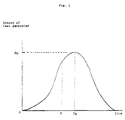
- the crystallization half-value period of the resulting aromatic polyester was measured by use of the IB-type differential scanning calorimeter (DSC; Perkin Elmer Inc.). After the sample film 0.375 mm thick mentioned above was melted at the temperature of 270°C for 10 minutes, it was cooled rapidly to 200°C. The exothermic curve of the sample was drawn while the film was kept at this temperature. Then, as shown in Figure 1, the area surrounded by the exothemic curve ranging from the zero point (where the amount of heat generated is zero) to the maximum point HM and the abscissa axis was measured. The crystallization half-value period of the sample was determined by reading of the time T at which the total amount of that generated from 0 to T becomes equal to the total amount of heat generated from T to T M .
- the aromatic polyester obtained by a homopolycondensation reaction of BHET (Comparative Example 11) had an exothermic peak due to its crystallization at 118°C.
- the aromatic polyesters obtained in Examples 53-56 did not have exothermic peaks, indicating that the polyesters obtained in Examples 53-56 had already crystallized when they were cooled rapidly with ice.
- the crystallization half-value period of the aromatic polyester obtained in Comparative Example 11 was 400 seconds.
- the crystallization half-value period of the aromatic polyesters obtained in Examples 53-56 were the short periods shown in Table 10.
- the crystallization half-value period of the aromatic polyesters of Examples 54 and 55 was too short to measure. That is, the peak of the exothermic curve of these aromatic polyesters did not appear because the polyesters had already crystallized when they were cooled to 200°C.
Landscapes
- Chemical & Material Sciences (AREA)
- Health & Medical Sciences (AREA)
- Chemical Kinetics & Catalysis (AREA)
- Medicinal Chemistry (AREA)
- Polymers & Plastics (AREA)
- Organic Chemistry (AREA)
- Polyesters Or Polycarbonates (AREA)
- Paints Or Removers (AREA)
- Adhesives Or Adhesive Processes (AREA)
Claims (30)
- Polyester, der als Hauptmonomerkomponenten Anteile umfaßt, die sich von einer Dicarbonsäure und einem Diol ableiten, einschließlich einem p-Quaterphenylderivat der Formel:


- Polyester nach Anspruch 1, bei dem das p-Quaterphenylderivat 4,4'''-Dihydroxy-p-quaterphenyl oder 4,4'''-Di(2-hydroxyethoxy)-p-quaterphenyl ist.
- Polyester nach Anspruch 1, bei dem die Dicarbonsäure eine aliphatische Dicarbonsäure ist.
- Polyester nach Anspruch 3, bei dem die aliphatische Dicarbonsäure die Formel:
HOOC-(CH₂)n-COOH [II]
aufweist, in der n eine Zahl von 0 bis 10 ist. - Polyester nach Anspruch 4, bei dem die aliphatische Dicarbonsäure mindestens eine ausgewählt aus der Gruppe bestehend aus Oxalsäure, Malonsäure, Bernsteinsäure, Glutarsäure, Adipinsäure, Suberinsäure und Sebacinsäure ist.
- Polyester nach Anspruch 3, bei dem das Diol ein Diol, ausgenommen ein aromatisches Diol, in Kombination mit dem p-Quaterphenylderivat umfaßt.
- Polyester nach Anspruch 6, bei dem das p-Quaterphenylderivat in einer Menge von 0,1 bis 30 Mol.-%, bezogen auf die gesamten Mole von Monomerkomponenten des Polyesters, vorhanden ist.
- Polyester nach Anspruch 6, bei dem das Diol, ausgenommen ein aromatisches Diol, mindestens eines ausgewählt aus der Gruppe bestehend aus Glykol, Polyalkylenoxid und Polysilikon mit 2 Hydroxylgruppen ist.
- Polyester nach Anspruch 8, bei dem das Glykol mindestens eines ausgewählt aus der Gruppe bestehend aus Ethylenglykol, Propylenglykol, Trimethylenglykol, 1,4-Butandiol, 1,3-Butandiol, 1,5-Pentandiol, 1,6-Hexandiol, 1,7-Heptandiol, 1,8-Octandiol, 1,9-Nonandiol, 1,10-Decandiol, 1,2-Cyclopentandiol, 1,2-Cyclohexandiol, 1,3-Cyclohexandiol, 1,4-Cyclohexandiol und 1,4-Cyclohexandimethanol ist.
- Polyester nach Anspruch 8, bei dem das Polyalkylenoxid mindestens eines ausgewählt aus der Gruppe bestehend aus Polyethylenoxid, Polypropylenoxid, Polytetramethylenoxid und Polyhexamethylenoxid ist, wovon jedes ein durchschnittliches zahlenmäßiges Molekulargewicht von 100 bis 20 000 aufweist.
- Polyester nach Anspruch 3, der ferner Anteile als Monomerkomponente davon umfaßt, die sich von einem Lacton ableiten.
- Polyester nach Anspruch 11, bei dem das Lacton mindestens eines ausgewählt aus der Gruppe bestehend aus ε-Caprolacton, δ-Valerolacton und γ-Butyrolacton ist.
- Polyester nach Anspruch 3, der ferner Anteile als Monomerkomponente davon umfaßt, die sich von einer aromatischen Hydroxycarbonsäure ableiten.
- Polyester nach Anspruch 13, bei dem die Hydroxycarbonsäure mindestens eine ausgewählt aus der Gruppe bestehend aus p-Hydroxybenzoesäure, 2-Hydroxy-6-naphthoesäure und 4-Hydroxy-4'-carboxybiphenyl ist.
- Polyester nach Anspruch 13, bei dem die Gesamtmenge des p-Quaterphenylderivats und der aromatischen Hydroxycarbonsäure im Bereich von 0,1 bis 30 Mol.-%, bezogen auf die Gesamtmole an Monomerkomponenten des Polyesters, liegt.
- Polyester nach Anspruch 1, bei dem die Dicarbonsäure eine aromatische Dicarbonsäure ist.
- Polyester nach Anspruch 16, bei dem die aromatische Dicarbonsäure mindestens eine ausgewählt aus der Gruppe bestehend aus Terephthalsäure, Isophthalsäure, Metallsalzen von 5-Sulfoisophthalsäure, 4,4'-Biphenyldicarbonsäure, 4,4'-Dicarboxydiphenylether, 4,4'-Dicarboxydiphenylsulfid, 4,4'-Dicarboxydiphenylsulfon, 3,3'-Benzophenondicarbonsäure, 4,4'-Benzophenondicarbonsäure, 1,2-Bis(4-carboxyphenoxy)ethan, 1,4-Naphthalindicarbonsäure und 2,6-Naphthalindicarbonsäure ist.
- Polyester nach Anspruch 16, bei dem das Diol ein anderes aromatisches Diol als das p-Quaterphenylderivat in Kombination mit dem p-Quaterphenylderivat umfaßt.
- Polyester nach Anspruch 16, bei dem das Diol ein Diol ausgenommen ein aromatisches Diol in Kombination mit dem p-Quaterphenylderivat umfaßt.
- Polyester nach Anspruch 19, bei dem das p-Quaterphenylderivat in einer Menge von 0,1 bis 20 Mol.-%, bezogen auf die gesamten Mole von Monomerkomponenten des Polyesters, vorhanden ist.
- Polyester nach Anspruch 19, bei dem das Diol, ausgenommen ein aromatisches Diol, mindestens eines ausgewählt aus der Gruppe bestehend aus Glykol, Polyalkylenoxid und Polysilikon mit 2 Hydroxylgruppen ist.
- Polyester nach Anspruch 21, bei dem das Glykol mindestens eines ausgewählt aus der Gruppe bestehend aus Ethylenglykol, Propylenglykol, Trimethylenglykol, 1,4-Butandiol, 1,3-Butandiol, 1,5-Pentandiol, 1,6-Hexandiol, 1,7-Heptandiol, 1,8-Octandiol, 1,9-Nonandiol, 1,10-Decandiol, 1,2-Cyclopentandiol, 1,2-Cyclohexandiol, 1,3-Cyclohexandiol, 1,4-Cyclohexandiol und 1,4-Cyclohexandimethanol ist.
- Polyester nach Anspruch 21, bei dem das Polyalkylenoxid mindestens eines ausgewählt aus der Gruppe bestehend aus Polyethylenoxid, Polypropylenoxid, Polytetramethylenoxid und Polyhexamethylenoxid ist, wobei jedes ein durchschnittliches zahlenmäßiges Molekulargewicht von 100 bis 20 000 aufweist.
- Polyester nach Anspruch 16, der ferner Anteile als Monomerkomponente davon umfaßt, die sich von einer aromatischen Hydroxycarbonsäure ableiten.
- Polyester nach Anspruch 24, bei dem die Hydroxycarbonsäure mindestens eine ausgewählt aus der Gruppe bestehend aus p-Hydroxybenzoesäure, 2-Hydroxy-6-naphthoesäure und 4-Hydroxy-4'-carboxybiphenyl ist.
- Polyester nach Anspruch 24, bei dem die aromatische Dicarbonsäure in einer Menge von weniger als 85 Mol.-%, bezogen auf die gesamten Mole an Monomerkomponenten des Polyesters, vorhanden ist und die Gesamtmenge der aromatischen Dicarbonsäure und des p-Quaterphenylderivats im Bereich von 0,2 bis 95 Mol.-%, bezogen auf die gesamten Mole an Monomerkomponenten des Polyesters, liegt.
- Thermoplastisches Elastomer, das einen Polyester gemäß Anspruch 3 umfaßt.
- Elastischer Gegenstand, der ein thermoplastisches Elastomer gemäß Anspruch 27 umfaßt.
- Flüssigkristallpolymer, das einen Polyester gemaß Anspruch 16 umfaßt.
- Starrer Gegenstand, der ein Flüssigkristallpolymer gemäß Anspruch 29 umfaßt.
Applications Claiming Priority (12)
| Application Number | Priority Date | Filing Date | Title |
|---|---|---|---|
| JP12918288 | 1988-05-26 | ||
| JP129181/88 | 1988-05-26 | ||
| JP12918188 | 1988-05-26 | ||
| JP129182/88 | 1988-05-26 | ||
| JP21687688 | 1988-08-31 | ||
| JP21687488 | 1988-08-31 | ||
| JP216876/88 | 1988-08-31 | ||
| JP216874/88 | 1988-08-31 | ||
| JP15745/89 | 1989-01-24 | ||
| JP1574589 | 1989-01-24 | ||
| JP15748/89 | 1989-01-24 | ||
| JP1574889 | 1989-01-24 |
Publications (3)
| Publication Number | Publication Date |
|---|---|
| EP0344099A2 EP0344099A2 (de) | 1989-11-29 |
| EP0344099A3 EP0344099A3 (de) | 1991-01-23 |
| EP0344099B1 true EP0344099B1 (de) | 1995-04-12 |
Family
ID=27548603
Family Applications (1)
| Application Number | Title | Priority Date | Filing Date |
|---|---|---|---|
| EP89730128A Expired - Lifetime EP0344099B1 (de) | 1988-05-26 | 1989-05-25 | Polyester und daraus hergestellter Formkörper |
Country Status (7)
| Country | Link |
|---|---|
| US (1) | US5191057A (de) |
| EP (1) | EP0344099B1 (de) |
| JP (1) | JPH0645676B2 (de) |
| KR (1) | KR970006673B1 (de) |
| AU (1) | AU619840B2 (de) |
| CA (1) | CA1335225C (de) |
| DE (1) | DE68922137T2 (de) |
Families Citing this family (15)
| Publication number | Priority date | Publication date | Assignee | Title |
|---|---|---|---|---|
| JPH0726034B2 (ja) * | 1989-09-26 | 1995-03-22 | 積水化学工業株式会社 | エンジニアリングプラスチックス組成物及びそれを用いた成形品 |
| JP2659452B2 (ja) * | 1990-06-18 | 1997-09-30 | 積水化学工業株式会社 | ポリエステル組成物 |
| DE19612974A1 (de) * | 1996-04-01 | 1997-10-02 | Hoechst Ag | Pulverbeschichtungen mit vom Betrachtungswinkel abhängigem Farbeindruck |
| US6120889A (en) * | 1999-06-03 | 2000-09-19 | Eastman Chemical Company | Low melt viscosity amorphous copolyesters with enhanced glass transition temperatures |
| US6183848B1 (en) | 1999-06-03 | 2001-02-06 | Eastman Chemical Company | Low melt viscosity amorphous copolyesters with enhanced glass transition temperatures having improved gas barrier properties |
| US6287656B1 (en) | 1999-06-03 | 2001-09-11 | Eastman Chemical Corporation | Low melt viscosity amorphous copolyesters having improved resistance to lipids |
| AU2003286955A1 (en) * | 2002-12-30 | 2004-07-22 | Samyang Corporation | Thermoplastic elastomer resin |
| KR100795169B1 (ko) * | 2004-06-29 | 2008-01-16 | 주식회사 삼양사 | 열가소성 엘라스토머 수지 |
| EP1964871B1 (de) * | 2005-12-19 | 2013-03-27 | Toyobo Co., Ltd. | Thermoplastisches polyesterelastomer, thermoplastisches polyesterelastomer enthaltende zusammensetzung und verfahren zur herstellung von thermoplastischem polyesterelastomer |
| KR101353100B1 (ko) * | 2006-02-13 | 2014-01-17 | 스미또모 가가꾸 가부시키가이샤 | 액정 중합체 조성물, 이것의 제조 방법 및 이것을 이용한성형품 |
| JP5986728B2 (ja) * | 2011-10-07 | 2016-09-06 | 株式会社カネカ | 液晶ポリマー繊維 |
| KR102086324B1 (ko) * | 2012-06-05 | 2020-03-09 | 미쯔비시 케미컬 주식회사 | 폴리부틸렌테레프탈레이트의 제조 방법 |
| JP2015151449A (ja) * | 2014-02-13 | 2015-08-24 | 早川ゴム株式会社 | 粘着層の形成方法及び物品 |
| CN110713700B (zh) * | 2018-07-13 | 2022-03-01 | 南通星辰合成材料有限公司 | 一种聚酯复合材料及其制备方法和应用 |
| JP7750912B2 (ja) | 2022-09-22 | 2025-10-07 | 財團法人工業技術研究院 | 液晶ポリマー、組成物、液晶ポリマーフィルム、積層材料、および液晶ポリマーフィルムの形成方法 |
Family Cites Families (3)
| Publication number | Priority date | Publication date | Assignee | Title |
|---|---|---|---|---|
| UST926008I4 (en) * | 1973-12-03 | 1974-09-03 | Defensive publication | |
| US4547553A (en) * | 1982-07-29 | 1985-10-15 | The Boeing Company | Polybutadiene modified polyester compositions |
| DE68920630T2 (de) * | 1988-05-26 | 1995-05-18 | Sanko Kaihatsu Kagaku Kenk | Zusammensetzung auf der Basis von technischem Kunststoff und daraus hergestellter Gegenstand. |
-
1989
- 1989-05-25 EP EP89730128A patent/EP0344099B1/de not_active Expired - Lifetime
- 1989-05-25 AU AU35170/89A patent/AU619840B2/en not_active Ceased
- 1989-05-25 DE DE68922137T patent/DE68922137T2/de not_active Expired - Fee Related
- 1989-05-26 JP JP1133367A patent/JPH0645676B2/ja not_active Expired - Fee Related
- 1989-05-26 CA CA000600829A patent/CA1335225C/en not_active Expired - Fee Related
- 1989-05-26 KR KR1019890007084A patent/KR970006673B1/ko not_active Expired - Fee Related
-
1991
- 1991-12-11 US US07/804,540 patent/US5191057A/en not_active Expired - Lifetime
Also Published As
| Publication number | Publication date |
|---|---|
| JPH02276817A (ja) | 1990-11-13 |
| JPH0645676B2 (ja) | 1994-06-15 |
| DE68922137T2 (de) | 1995-08-10 |
| EP0344099A3 (de) | 1991-01-23 |
| AU619840B2 (en) | 1992-02-06 |
| KR970006673B1 (ko) | 1997-04-29 |
| AU3517089A (en) | 1989-11-30 |
| US5191057A (en) | 1993-03-02 |
| KR900018208A (ko) | 1990-12-20 |
| DE68922137D1 (de) | 1995-05-18 |
| CA1335225C (en) | 1995-04-11 |
| EP0344099A2 (de) | 1989-11-29 |
Similar Documents
| Publication | Publication Date | Title |
|---|---|---|
| US3778410A (en) | Process for preparing a final copolyester by reacting a starting polyester with an acyloxy aromatic carboxylic acid | |
| US5191057A (en) | Polyester and an article made of the same comprising a p-quaterphenyl derivative | |
| US4396746A (en) | Thermoplastic polyester copolymer | |
| US5235024A (en) | Polyester and an article made of the same | |
| JPH04222822A (ja) | ポリエステルカーボネート共重合体 | |
| JP2617282B2 (ja) | 熱可塑性エラストマー組成物 | |
| JP2556900B2 (ja) | 脂肪族ポリエステル | |
| JP2659452B2 (ja) | ポリエステル組成物 | |
| JP3251365B2 (ja) | ポリエステルおよびそれを用いた成形体 | |
| JP3160064B2 (ja) | 熱可塑性ポリウレタン | |
| JPH06184290A (ja) | ポリエステル共重合体の製造方法 | |
| JP3251364B2 (ja) | ポリエステルおよびそれを用いた成形体 | |
| JP2512615B2 (ja) | 脂肪族ポリエステルの製造方法 | |
| JPH03126718A (ja) | 芳香族ポリエステル | |
| JP2551663B2 (ja) | 脂肪族ポリエステルの製造方法 | |
| JPH04222824A (ja) | ポリエステル共重合体の製造方法 | |
| JPH02311527A (ja) | ポリエステル | |
| JP2551664B2 (ja) | ポリエステルの製造方法 | |
| JPH04342721A (ja) | ポリエステル共重合体 | |
| JP3089685B2 (ja) | 共重合ポリエステルの製造方法 | |
| JPH03115325A (ja) | ポリエステルエラストマーの薄板状成形体 | |
| JPH0354222A (ja) | 改質光学異方性ポリエステル | |
| JPH0491157A (ja) | 脂肪族ポリエステル組成物 | |
| JPH0446955A (ja) | ポリエステル組成物 | |
| JPH03247649A (ja) | 脂肪族ポリエステル組成物 |
Legal Events
| Date | Code | Title | Description |
|---|---|---|---|
| PUAI | Public reference made under article 153(3) epc to a published international application that has entered the european phase |
Free format text: ORIGINAL CODE: 0009012 |
|
| AK | Designated contracting states |
Kind code of ref document: A2 Designated state(s): DE FR GB IT NL SE |
|
| PUAL | Search report despatched |
Free format text: ORIGINAL CODE: 0009013 |
|
| AK | Designated contracting states |
Kind code of ref document: A3 Designated state(s): DE FR GB IT NL SE |
|
| 17P | Request for examination filed |
Effective date: 19901221 |
|
| 17Q | First examination report despatched |
Effective date: 19930713 |
|
| GRAA | (expected) grant |
Free format text: ORIGINAL CODE: 0009210 |
|
| AK | Designated contracting states |
Kind code of ref document: B1 Designated state(s): DE FR GB IT NL SE |
|
| ITF | It: translation for a ep patent filed | ||
| REF | Corresponds to: |
Ref document number: 68922137 Country of ref document: DE Date of ref document: 19950518 |
|
| ET | Fr: translation filed | ||
| PLBE | No opposition filed within time limit |
Free format text: ORIGINAL CODE: 0009261 |
|
| STAA | Information on the status of an ep patent application or granted ep patent |
Free format text: STATUS: NO OPPOSITION FILED WITHIN TIME LIMIT |
|
| 26N | No opposition filed | ||
| REG | Reference to a national code |
Ref country code: GB Ref legal event code: IF02 |
|
| PGFP | Annual fee paid to national office [announced via postgrant information from national office to epo] |
Ref country code: NL Payment date: 20040505 Year of fee payment: 16 |
|
| PGFP | Annual fee paid to national office [announced via postgrant information from national office to epo] |
Ref country code: SE Payment date: 20040506 Year of fee payment: 16 |
|
| PGFP | Annual fee paid to national office [announced via postgrant information from national office to epo] |
Ref country code: FR Payment date: 20050511 Year of fee payment: 17 |
|
| PG25 | Lapsed in a contracting state [announced via postgrant information from national office to epo] |
Ref country code: IT Free format text: LAPSE BECAUSE OF NON-PAYMENT OF DUE FEES;WARNING: LAPSES OF ITALIAN PATENTS WITH EFFECTIVE DATE BEFORE 2007 MAY HAVE OCCURRED AT ANY TIME BEFORE 2007. THE CORRECT EFFECTIVE DATE MAY BE DIFFERENT FROM THE ONE RECORDED. Effective date: 20050525 |
|
| PGFP | Annual fee paid to national office [announced via postgrant information from national office to epo] |
Ref country code: GB Payment date: 20050525 Year of fee payment: 17 |
|
| PG25 | Lapsed in a contracting state [announced via postgrant information from national office to epo] |
Ref country code: SE Free format text: LAPSE BECAUSE OF NON-PAYMENT OF DUE FEES Effective date: 20050526 |
|
| PG25 | Lapsed in a contracting state [announced via postgrant information from national office to epo] |
Ref country code: NL Free format text: LAPSE BECAUSE OF NON-PAYMENT OF DUE FEES Effective date: 20051201 |
|
| EUG | Se: european patent has lapsed | ||
| NLV4 | Nl: lapsed or anulled due to non-payment of the annual fee |
Effective date: 20051201 |
|
| PGFP | Annual fee paid to national office [announced via postgrant information from national office to epo] |
Ref country code: DE Payment date: 20060518 Year of fee payment: 18 |
|
| PG25 | Lapsed in a contracting state [announced via postgrant information from national office to epo] |
Ref country code: GB Free format text: LAPSE BECAUSE OF NON-PAYMENT OF DUE FEES Effective date: 20060525 |
|
| GBPC | Gb: european patent ceased through non-payment of renewal fee |
Effective date: 20060525 |
|
| REG | Reference to a national code |
Ref country code: FR Ref legal event code: ST Effective date: 20070131 |
|
| PG25 | Lapsed in a contracting state [announced via postgrant information from national office to epo] |
Ref country code: FR Free format text: LAPSE BECAUSE OF NON-PAYMENT OF DUE FEES Effective date: 20060531 Ref country code: DE Free format text: LAPSE BECAUSE OF NON-PAYMENT OF DUE FEES Effective date: 20071201 |