WO2021117767A1 - 含窒素ヘテロアリールカルボキサミド酢酸誘導体の製造方法 - Google Patents
含窒素ヘテロアリールカルボキサミド酢酸誘導体の製造方法 Download PDFInfo
- Publication number
- WO2021117767A1 WO2021117767A1 PCT/JP2020/045871 JP2020045871W WO2021117767A1 WO 2021117767 A1 WO2021117767 A1 WO 2021117767A1 JP 2020045871 W JP2020045871 W JP 2020045871W WO 2021117767 A1 WO2021117767 A1 WO 2021117767A1
- Authority
- WO
- WIPO (PCT)
- Prior art keywords
- compound
- formula
- following formula
- substituted
- atom
- Prior art date
- Legal status (The legal status is an assumption and is not a legal conclusion. Google has not performed a legal analysis and makes no representation as to the accuracy of the status listed.)
- Ceased
Links
- 0 Cc1c(*)c(*)nc(C(NCC([O+])=O)=O)c1* Chemical compound Cc1c(*)c(*)nc(C(NCC([O+])=O)=O)c1* 0.000 description 14
- WCJMBCQSQSCQIC-UHFFFAOYSA-N CC(C)c1cc(Cl)cc(-c(cc2O)cnc2I)c1 Chemical compound CC(C)c1cc(Cl)cc(-c(cc2O)cnc2I)c1 WCJMBCQSQSCQIC-UHFFFAOYSA-N 0.000 description 1
- VBVSIFBWPGPHOV-GVHYBUMESA-N CC[C@@H](C)C(C)(C=N)OC Chemical compound CC[C@@H](C)C(C)(C=N)OC VBVSIFBWPGPHOV-GVHYBUMESA-N 0.000 description 1
- AVMOVYCJFGHJCM-UHFFFAOYSA-N CC[IH]c1cc(C)ccc1 Chemical compound CC[IH]c1cc(C)ccc1 AVMOVYCJFGHJCM-UHFFFAOYSA-N 0.000 description 1
- RWKYBRUMFDLSFF-UHFFFAOYSA-N COc1cc(-c2cccc(Cl)c2)cnc1 Chemical compound COc1cc(-c2cccc(Cl)c2)cnc1 RWKYBRUMFDLSFF-UHFFFAOYSA-N 0.000 description 1
- FIKBWGUYUKVPPA-UHFFFAOYSA-N Clc1cc(BC2=CC2)ccc1 Chemical compound Clc1cc(BC2=CC2)ccc1 FIKBWGUYUKVPPA-UHFFFAOYSA-N 0.000 description 1
- JGRXMPYUTJLTKT-UHFFFAOYSA-N OC(CNC(c(c(O)c1)ncc1-c1cccc(Cl)c1)=O)=O Chemical compound OC(CNC(c(c(O)c1)ncc1-c1cccc(Cl)c1)=O)=O JGRXMPYUTJLTKT-UHFFFAOYSA-N 0.000 description 1
- ZSPMIWNINATTCG-UHFFFAOYSA-N Oc1cc(-c2cccc(Cl)c2)cnc1 Chemical compound Oc1cc(-c2cccc(Cl)c2)cnc1 ZSPMIWNINATTCG-UHFFFAOYSA-N 0.000 description 1
- MAQCOUDUCLEKEZ-UHFFFAOYSA-N Oc1cc(-c2cccc(Cl)c2)cnc1Cl Chemical compound Oc1cc(-c2cccc(Cl)c2)cnc1Cl MAQCOUDUCLEKEZ-UHFFFAOYSA-N 0.000 description 1
- PIUGYPUTPVTQNA-UHFFFAOYSA-N POc(cc(cn1)-c2cccc(Cl)c2)c1Cl Chemical compound POc(cc(cn1)-c2cccc(Cl)c2)c1Cl PIUGYPUTPVTQNA-UHFFFAOYSA-N 0.000 description 1
- YYPFDXMXFUPPBA-UHFFFAOYSA-N POc1cc(Br)cnc1Cl Chemical compound POc1cc(Br)cnc1Cl YYPFDXMXFUPPBA-UHFFFAOYSA-N 0.000 description 1
Images

Classifications
-
- C—CHEMISTRY; METALLURGY
- C07—ORGANIC CHEMISTRY
- C07D—HETEROCYCLIC COMPOUNDS
- C07D213/00—Heterocyclic compounds containing six-membered rings, not condensed with other rings, with one nitrogen atom as the only ring hetero atom and three or more double bonds between ring members or between ring members and non-ring members
- C07D213/02—Heterocyclic compounds containing six-membered rings, not condensed with other rings, with one nitrogen atom as the only ring hetero atom and three or more double bonds between ring members or between ring members and non-ring members having three double bonds between ring members or between ring members and non-ring members
- C07D213/04—Heterocyclic compounds containing six-membered rings, not condensed with other rings, with one nitrogen atom as the only ring hetero atom and three or more double bonds between ring members or between ring members and non-ring members having three double bonds between ring members or between ring members and non-ring members having no bond between the ring nitrogen atom and a non-ring member or having only hydrogen or carbon atoms directly attached to the ring nitrogen atom
- C07D213/60—Heterocyclic compounds containing six-membered rings, not condensed with other rings, with one nitrogen atom as the only ring hetero atom and three or more double bonds between ring members or between ring members and non-ring members having three double bonds between ring members or between ring members and non-ring members having no bond between the ring nitrogen atom and a non-ring member or having only hydrogen or carbon atoms directly attached to the ring nitrogen atom with hetero atoms or with carbon atoms having three bonds to hetero atoms with at the most one bond to halogen, e.g. ester or nitrile radicals, directly attached to ring carbon atoms
- C07D213/78—Carbon atoms having three bonds to hetero atoms, with at the most one bond to halogen, e.g. ester or nitrile radicals
- C07D213/81—Amides; Imides
-
- A—HUMAN NECESSITIES
- A61—MEDICAL OR VETERINARY SCIENCE; HYGIENE
- A61K—PREPARATIONS FOR MEDICAL, DENTAL OR TOILETRY PURPOSES
- A61K31/00—Medicinal preparations containing organic active ingredients
- A61K31/33—Heterocyclic compounds
- A61K31/395—Heterocyclic compounds having nitrogen as a ring hetero atom, e.g. guanethidine or rifamycins
- A61K31/435—Heterocyclic compounds having nitrogen as a ring hetero atom, e.g. guanethidine or rifamycins having six-membered rings with one nitrogen as the only ring hetero atom
- A61K31/44—Non condensed pyridines; Hydrogenated derivatives thereof
- A61K31/4418—Non condensed pyridines; Hydrogenated derivatives thereof having a carbocyclic group directly attached to the heterocyclic ring, e.g. cyproheptadine
-
- C—CHEMISTRY; METALLURGY
- C07—ORGANIC CHEMISTRY
- C07B—GENERAL METHODS OF ORGANIC CHEMISTRY; APPARATUS THEREFOR
- C07B61/00—Other general methods
-
- C—CHEMISTRY; METALLURGY
- C07—ORGANIC CHEMISTRY
- C07D—HETEROCYCLIC COMPOUNDS
- C07D213/00—Heterocyclic compounds containing six-membered rings, not condensed with other rings, with one nitrogen atom as the only ring hetero atom and three or more double bonds between ring members or between ring members and non-ring members
- C07D213/02—Heterocyclic compounds containing six-membered rings, not condensed with other rings, with one nitrogen atom as the only ring hetero atom and three or more double bonds between ring members or between ring members and non-ring members having three double bonds between ring members or between ring members and non-ring members
- C07D213/04—Heterocyclic compounds containing six-membered rings, not condensed with other rings, with one nitrogen atom as the only ring hetero atom and three or more double bonds between ring members or between ring members and non-ring members having three double bonds between ring members or between ring members and non-ring members having no bond between the ring nitrogen atom and a non-ring member or having only hydrogen or carbon atoms directly attached to the ring nitrogen atom
- C07D213/60—Heterocyclic compounds containing six-membered rings, not condensed with other rings, with one nitrogen atom as the only ring hetero atom and three or more double bonds between ring members or between ring members and non-ring members having three double bonds between ring members or between ring members and non-ring members having no bond between the ring nitrogen atom and a non-ring member or having only hydrogen or carbon atoms directly attached to the ring nitrogen atom with hetero atoms or with carbon atoms having three bonds to hetero atoms with at the most one bond to halogen, e.g. ester or nitrile radicals, directly attached to ring carbon atoms
- C07D213/62—Oxygen or sulfur atoms
- C07D213/63—One oxygen atom
- C07D213/65—One oxygen atom attached in position 3 or 5
-
- C—CHEMISTRY; METALLURGY
- C07—ORGANIC CHEMISTRY
- C07B—GENERAL METHODS OF ORGANIC CHEMISTRY; APPARATUS THEREFOR
- C07B2200/00—Indexing scheme relating to specific properties of organic compounds
- C07B2200/13—Crystalline forms, e.g. polymorphs
-
- Y—GENERAL TAGGING OF NEW TECHNOLOGICAL DEVELOPMENTS; GENERAL TAGGING OF CROSS-SECTIONAL TECHNOLOGIES SPANNING OVER SEVERAL SECTIONS OF THE IPC; TECHNICAL SUBJECTS COVERED BY FORMER USPC CROSS-REFERENCE ART COLLECTIONS [XRACs] AND DIGESTS
- Y02—TECHNOLOGIES OR APPLICATIONS FOR MITIGATION OR ADAPTATION AGAINST CLIMATE CHANGE
- Y02P—CLIMATE CHANGE MITIGATION TECHNOLOGIES IN THE PRODUCTION OR PROCESSING OF GOODS
- Y02P20/00—Technologies relating to chemical industry
- Y02P20/50—Improvements relating to the production of bulk chemicals
- Y02P20/55—Design of synthesis routes, e.g. reducing the use of auxiliary or protecting groups
Definitions
- the present invention relates to a method for producing a nitrogen-containing heteroarylcarboxamide acetic acid derivative.
- Patent Document 2 discloses another method for producing the compound [I (A)]. According to the description in the document, compound [I (A)] can be produced by the following reaction scheme (2). Reaction scheme (2):
- Patent Document 3 discloses still another method for producing the compound [I (A)]. According to the description in the document, compound [I (A)] can be produced by the following reaction scheme (3). Reaction scheme (3):
- the intermediate (3X) of the compound [I (A)] shown in the following scheme (4) and A method for producing the intermediate (4X) is disclosed.
- the intermediate (3X) can be produced by reacting the compound (1X) and the compound (2X) in the presence of carbon monoxide.
- the intermediate (4X) can be produced by subjecting the intermediate (3X) and 3-chlorophenylboronic acid to a Suzuki coupling reaction.
- Reaction scheme (4) However, in the example of producing the intermediate (4X) of the present application, the reaction solution of the reaction is only analyzed to confirm the reaction efficiency.
- the present invention provides a novel production method for industrially advantageously producing a compound (I) containing the above-mentioned compound [I (A)] and compound [[I (B)], which are useful as pharmaceuticals.
- the present inventors retested the method of converting the compound (X) described in Patent Document 3 into the compound (Y), but the Suzuki coupling reaction hardly proceeded, and a slightly obtained cup was obtained.
- the ring form was a positional isomer reacted at the 3-position of pyridine, and the target compound (Y) could not be produced.
- Patent Document 4 the reaction is carried out with reference to Patent Document 3, and in consideration of the above-mentioned additional test result of Patent Document 3 by the present inventor and the like, the positional isomer reacted at the 3-position of pyridine in the same manner. Was generated.
- the production method comprising I) to (I-III) ⁇ and (III), 2 as compared with the production methods of Patent Documents 1 and 2 using 2-cyano-3,5-dichloropyridine as a starting material.
- 2-cyano-3,5-dichloropyridine as a starting material.
- the present inventors also refer to [(4-hydroxy-1-methyl-7-phenoxyisoquinoline) 3-carboxamide] acetic acid (hereinafter, compound [[I (B)] or roxadustat). ) Can be produced, and the present invention has been completed.
- Patent Document 1 discloses the following compound (a3-1-A), but there is no description about the solid state, physicochemical properties and crystal type of the compound (a3-1-A), and the crystal There is no suggestion that a type exists.
- the present inventors have found that residual impurities pose a problem in the production of compound [I (A)].
- impurities can be efficiently removed by crystallizing and purifying the intermediate compound (a3-1-A), and a high-quality compound [[I (A)] can be produced.
- the compound (a3-1-A) has two types of crystal forms, and impurities can be efficiently removed by purifying these two types of crystals. Among them, type II crystals are more efficient in removing impurities.
- the I-type crystal is the most thermodynamically stable crystal and is preferable from the viewpoint of the robustness of the production method.
- the compound (a1) is a compound (a1-5-a) of the following formula: (In the formula, Z 1 represents a chlorine atom, a bromine atom or an iodine atom) And the compound (a3) is the compound (a3-3-a) of the following formula: (In the formula, R 1 represents an alkyl, hydrogen atom or resin residue that may be substituted) The compound according to any one of [1] to [4].
- R 2 represents a hydrogen atom or a methyl that may be substituted.
- R a3 represents phenyl which may be substituted with halogen
- R a4 represents a hydrogen atom or R a3 and R a4 bind to each other and together with adjacent pyridines to form isoquinolines that may be substituted with phenyloxy.
- Z a2 is hydroxy or a substituent of the following formula. (In the formula, P 1 represents a hydroxy protecting group) Represents. ⁇ Is produced, and the compound (a3-1) is converted into the compound (aI) of the following formula: ⁇ In the formula, the symbols have the same meaning as described above. ⁇ How to manufacture.
- R 2 is a hydrogen atom
- R a3 is 3-chlorophenyl and R a4 is a hydrogen atom
- R 2 is methyl
- Ra 3 and Ra 4 bind to each other to form 7-phenyloxy-isoquinoline with adjacent pyridines, [1]-[4], and [6].
- the compound (a3-1) is a compound (a3-2-a) of the following formula: (In the formula, R 1-1 represents an alkyl or resin residue that may be substituted)
- compound (aI) is a compound of the following formula [I (A)]: The method according to [6].
- Compound (a1) has the following formula (a1-1-a): ⁇ In the formula, Za2 is hydroxy or a substituent of the following formula. (In the formula, P 1 represents a hydroxy protecting group) Represents. ⁇
- the compound (a1-1-a) is a compound represented by the following formula (a4): (In the formula, Z a3 represents a bromine atom, an iodine atom or trifluoromethane sulfoxy, and Z a2 has the same meaning as described above).
- the compound (a4) is a compound (a4-2) of the following formula: (In the formula, Za3 represents a bromine atom or an iodine atom)
- the compound (a1-1-a) is a compound (a1-4-a) of the following formula:
- the compound (a3-1-a) is the compound (a3-2-a) of the following formula: (In the formula, R 1-1 represents an alkyl or resin residue that may be substituted)
- R 2, R 3, and R 4 have the same meaning) , Compound (2) of the following formula: (In the formula, R 1 represents an alkyl, hydrogen atom or resin residue that may be substituted) , Or the salt of compound (2) and the carbon monoxide molecule are reacted in the presence of a palladium catalyst, in the presence or absence of a ligand, in the presence of a base, in a solvent, and the compound of the following formula ( b3): (In the formula, the symbols have the same meaning as above) And (ii) the compound (b3) and the compound of the following formula (b4): (In the formula, R b5 represents an aryl that may be substituted or an alkyl that may be substituted).
- R b3 represents a chlorine atom, a bromine atom, an iodine atom or a trifluoromethane sulfoxy
- X b1 and X b2 each independently represent a hydrogen atom or an alkyl, or both represent bonding to each other to form an alkylene.
- the equivalent of compound (b6) is reacted in the presence or absence of a base, in the presence or absence of a palladium catalyst, in a solvent or in the absence of a solvent to give the following formula (b3-2-a): (In the formula, the symbols have the same meaning as above) How to manufacture.
- R 1-1 represents an alkyl or resin residue that may be substituted.
- R 2 represents a hydrogen atom or a methyl that may be substituted.
- R 3 represents a phenyl, chlorine atom, bromine atom, iodine atom or trifluoromethane sulfoxy which may be substituted with halogen,
- R 4 represents a hydrogen atom, or R 3 and R 4 represent each other.
- R 2 represents a hydrogen atom or a methyl that may be substituted.
- R b3-3 represents 3-chlorophenyl, chlorine atom, bromine atom, iodine atom or trifluoromethanesulfoxy.
- R b4-3 represents a hydrogen atom or R b3-3 and R b4-3 represent binding to each other and combined with adjacent pyridines to form 7-phenyloxy-isoquinoline)
- Z 1 represents a chlorine atom, a bromine atom or an iodine atom
- Z b2 represents a chlorine atom, a bromine atom, or an iodine atom.
- R 2 , R b3-3 and R b4-3 have the same meanings as described above.
- Z a2 is hydroxy or a substituent of the following formula.
- P 1 represents a hydroxy protecting group
- ⁇ [23] The compound of the following formula (a3-1-A): (In the formula, Et represents ethyl) Crystal. [24] The crystal according to [23], wherein the crystal of compound (a3-1-A) is a type I crystal of compound (a3-1-A). [25] The crystal according to [23], wherein the crystal of compound (a3-1-A) is a type II crystal of compound (a3-1-A).
- the production method of the present invention can produce a nitrogen-containing heteroarylcarboxamide acetic acid compound [IA)] useful as a medicine in a short process, and can be an industrially advantageous production method.
- FIG. 2 is an enlarged view of FIG. 2 in the vertical direction.
- alkyl represents a linear or branched saturated hydrocarbon chain with 1 to 6 carbon atoms, eg, methyl, ethyl, propyl, isopropyl, butyl, t-butyl, isobutyl, pentyl, hexyl, etc. And these various branched chain isomers, preferably linear or branched saturated hydrocarbon chains having 1 to 4 carbon atoms.
- alkylene represents a linear or branched divalent saturated hydrocarbon chain having 1 to 8 carbon atoms, for example, methylene, 1,2-ethylene, 1,3-propylene, 1,1. , 2,2-Tetramethyl-1,2-ethylene, and their various branched isomers.
- aryl represents a monocyclic or bicyclic aromatic hydrocarbon group having 6 to 11 cyclic carbon atoms, for example, a monocyclic aromatic hydrocarbon group such as phenyl; naphthyl, tetrahydronaphthyl, etc. Examples thereof include bicyclic aromatic hydrocarbon groups having 9 to 11 cyclic carbon atoms such as indenyl, indanyl or azulenyl.
- substituents in the terms “optionally substituted aryl” and the term “optionally substituted phenyl” may be one or more (eg 1-3) and the substituents may be the same or different. You can. Examples of such substituents include alkyl, cycloalkyl, alkoxy, cyano, halogen, hydroxy, nitro, and preferably halogen (eg, chlorine atom, bromine atom, iodine atom).
- the number of substituents of the term "optionally substituted alkyl” may be one or more (for example, 1 to 7), and the substituents may be the same or different. Examples of such substituents include cycloalkyl, alkoxy, halogen, oxo and hydroxy.
- cycloalkyl represents a cyclic saturated hydrocarbon ring having 3 to 8 carbon atoms, and examples thereof include cyclopropyl, cyclobutyl, cyclopentyl, cyclohexyl, cycloheptyl, and cyclooctyl. When referred to as cycloalkyl in the present specification, it also includes a fused ring and a spiro ring.
- alkoxy represents a group in which the above alkyl group is bonded to an oxygen atom, and examples thereof include methoxy, ethoxy, propoxy, butoxy, pentyloxy, and hexyloxy.
- alkanoyl represents a group in which the above alkyl group is bonded to a carbonyl, and examples thereof include acetyl, propanoyl, butyryl, pentanoyl, hexanoyl, and heptanoyle.
- alkanoic acid represents a compound in which the alkyl group is bonded to carboxy, and examples thereof include acetic acid, propionic acid, butanoic acid, pentanoic acid, caproic acid, and enanthic acid.
- isoquinoline which may be substituted with phenyloxy refers to isoquinoline which may be substituted with one or more (for example, 1 to 3) phenyloxy, and examples thereof include 7-phenyloxy-isoquinoline. Be done.
- the phenyloxy contains phenyloxy which may be substituted, and the substituent may be one or more (for example, 1 to 3), and the substituents may be the same or different. .. Examples of such a substituent include alkyl, cycloalkyl, alkoxy and the like.
- halogen includes any one or more of a fluorine atom, a chlorine atom, a bromine atom, and an iodine atom.
- ligand includes, but is not limited to, a phosphine ligand and a nitrogen-containing heterocyclic carbene ligand and a corresponding azolium salt ligand precursor.
- phosphine ligand includes, but is not limited to, a monodentate phosphine ligand and a bidentate phosphine ligand.
- monodentate phosphine ligand represents a compound having one phosphine atom in the molecule, eg tricyclohexylphosphine, triphenylphosphine, 2-di-tert-butylphosphine-3-methoxy-6-methyl.
- phosphin ligand refers to a compound having two phosphin atoms in the molecule, eg, 1,3-bis (diphenylphosphino) propane (dppp), 1,4-bis (diphenylphosphino).
- nitrogen-containing heterocyclic carbene ligand has a nitrogen-containing monocyclic five-membered ring skeleton having 2 to 4 ring-constituting nitrogens, and the five-membered ring is composed of two carbon atom carbenes.
- azolium salt ligand precursor includes, but is preferably imidazolium salt ligand precursor, imidazolium salt ligand precursor, thiazolium salt ligand precursor, and triazolium salt ligand precursor. Can be mentioned.
- resin residue refers to a resin used in solid phase peptide synthesis, eg, trityl resin (eg, 2-chlorotrityl resin), melifield resin (eg, 4-chloromethylpolystyrene resin), one gredin (eg, eg, 4-chloromethylpolystyrene resin).
- trityl resin eg, 2-chlorotrityl resin
- melifield resin eg, 4-chloromethylpolystyrene resin
- one gredin eg, eg, 4-chloromethylpolystyrene resin
- 4-Benzyloxybenzyl alcohol resin hydroxymethylpolystyrene resin (eg, 4-hydroxymethylpolystyrene resin), aminomethylpolystyrene resin (eg, 4-aminomethylpolystyrene resin), and thiol resin.
- R 1 represents an optionally substituted alkyl, a hydrogen atom or a resin residue, preferably an optionally substituted alkyl. , More preferably represents an alkyl.
- R 1-1 represents an optionally substituted alkyl or resin residue, preferably represents a optionally substituted alkyl, and more preferably represents an alkyl.
- R 2 represents a hydrogen atom or a methyl that may be substituted.
- R a3 represents phenyl, which may be substituted with halogen
- R a4 represents a hydrogen atom, or R a3 and R a4 combine with adjacent pyridines in phenyloxy.
- Z 1 represents a chlorine atom, a bromine atom or an iodine atom, preferably a chlorine atom.
- Z a1 represents a chlorine atom, a bromine atom or an iodine atom, preferably a chlorine atom or an iodine atom.
- Z a2 is hydroxy or a substituent of the following formula. (In the formula, P 1 represents a hydroxy protecting group) , And preferably hydroxy.
- Z a2-1 is a substituent of the following formula. (In the formula, P 1 represents a hydroxy protecting group) Represents.
- Z a3 represents a bromine atom, an iodine atom or a trifluoromethane sulfoxy, preferably a bromine atom.
- Z a4 represents a chlorine atom, a bromine atom, an iodine atom or a trifluoromethane sulfoxy, preferably a bromine atom.
- X a1 and X a2 each independently represent a hydrogen atom or an alkyl, or both represent a bond to each other to form an alkylene, preferably each representing a hydrogen atom.
- the substituent in the optionally substituted methyl represented by R 2 is not particularly limited as long as it is a substituent that can be converted into an unsubstituted methyl.
- the methyl that may be substituted includes methyl that may be substituted with dialkylamino or alkanoyloxy.
- the phenyl that may be substituted with the halogen represented by Ra 3 is preferably 3-chlorophenyl.
- R a3 is 3-chlorophenyl and R a4 is a hydrogen atom.
- the protective group for hydroxy represented by P 1 is not particularly limited, but preferably methyl (eg, methyl, benzyl, p) which may be substituted with 1 or 2 methoxys or phenyls. -Methenylbenzyl), alkoxymethyl optionally substituted with trialkylsilyl (eg, methoxymethyl, triethylsilylethoxymethyl), alkanoyl (eg, acetyl, pivaloyl), optionally substituted methyl or substituted Phenyl-substituted sulfonyls (eg, methanesulfonyl, benzenesulfonyl, p-toluenesulfonyl, o-nitrobenzenesulfonyl), optionally substituted alkyloxycarbonyls (eg, t-butyloxycarbonyl, benzyloxycarbonyl) ), A silyl substituted with three groups selected from alky
- Examples thereof include aminocarbonyls substituted with one or two substituents selected from alkyl which may be substituted and phenyl which may be substituted (eg, dimethylaminocarbonyl, methylphenylaminocarbonyl). More preferably, methyl (eg, benzyl, p-methoxybenzyl) substituted with phenyl, which may be substituted with one or two methoxys, alkanoyl (eg, pivaloyl), and optionally substituted.
- substituents selected from alkyl which may be substituted and phenyl which may be substituted
- phenyl which may be substituted
- methyl (eg, benzyl, p-methoxybenzyl) substituted with phenyl which may be substituted with one or two methoxys, alkanoyl (eg, pivaloyl), and optionally substituted.
- Examples include sulfonyls substituted with methyl or optionally substituted phenyl (eg, methanesulfonyl, benzenesulfonyl, p-toluenesulfonyl, o-nitrobenzenesulfonyl).
- sulfonyls substituted with methyl or optionally substituted phenyl eg, methanesulfonyl, benzenesulfonyl, p-toluenesulfonyl, o-nitrobenzenesulfonyl.
- Step a1, step a1-a, step a1-1-a, step a1-2-a, step a1-3-a and step a1-4-a Compound (a1), compound (a1-a), compound (a1-1-a), compound (a1-2-a), compound (a1-4-a) or compound (a1-5-a) (hereinafter, Compound (a1) or the like), compound (2) or compound (2-1) (hereinafter, also referred to as compound (2) or the like) or a salt thereof and a carbon monoxide molecule are used as a palladium catalyst (here, a palladium catalyst).
- a palladium catalyst here, a palladium catalyst
- a) or compound (a3-2-a) (hereinafter, also referred to as compound (a3) or the like) can be produced.
- the resin residue represents a resin used in polystyrene solid phase synthesis, for example, trityl resin (for example, 2-chloro).
- Trityl resin eg 4-chloromethylpolystyrene resin), Onegredin (eg 4-benzyloxybenzyl alcohol resin), Hydroxymethylpolystyrene resin (eg 4-hydroxymethylpolystyrene resin), Aminomethylpolystyrene resin (For example, 4-aminomethylpolystyrene resin), thiol resin can be mentioned.
- the particle size and loading capacity of the resin (mol number of reaction points per 1 g of resin: mmol / g) are not particularly limited as long as they do not adversely affect the reaction. Generally, the particle size is preferably 35 to 500 ⁇ m, and the loading capacity is preferably 0.1 to 4 mmol / g.
- the salt of compound (2) or the like in compound (2) or the like or a salt thereof is not particularly limited, and examples thereof include hydrochloride, sulfate, p-toluenesulfonate, sodium salt and calcium salt, which are preferable. Is a hydrochloride.
- a salt of the compound (2) or the like is preferable.
- the equivalent of compound (2) or the like or a salt thereof used in this reaction varies depending on the reagent used or the reaction conditions, but is usually about 1 molar equivalent with respect to compound (a1) or the like, for example, 0.5 to 2. It is 0.0 molar equivalent, preferably 0.8 to 1.25 molar equivalent, and more preferably 1 to 1.1 molar equivalent.
- Examples of carbon monoxide molecules include carbon monoxide molecular gas.
- the carbon monoxide molecular gas may be used alone or mixed with an inert gas such as nitrogen gas or argon gas.
- an inert gas such as nitrogen gas or argon gas.
- the pressure of the carbon monoxide molecular gas during the reaction varies depending on the reagent used or the reaction conditions, but is usually 0.01 to 1 MPa, preferably 0.02 to 0. It is 8.8 MPa, more preferably 0.05 to 0.6 MPa.
- the pressure during the reaction of the carbon monoxide molecular gas means the reaction system used by mixing with the inert gas, and / or the reaction solvent is a gas under high temperature conditions. In the reaction system, it means partial pressure.
- the palladium catalyst (1) can be used in this reaction in the presence or absence of a ligand.
- the palladium catalyst (1) is not particularly limited as long as it is a general palladium catalyst, and for example, tetrakis (triphenylphosphine) palladium (0), palladium (II) acetate, bis (acetritale) dichloropalladium (II), and the like.
- the ligand is not particularly limited as long as it is a general ligand, and examples thereof include a bidentate phosphine ligand
- the palladium catalyst (1) When the palladium catalyst (1) is used in this reaction in the presence or absence of a ligand, preferably dichloro [1,3-bis (diphenylphosphino) propane] palladium (II) and [1,1 '-Bis (diphenylphosphino) ferrocene]
- a ligand preferably dichloro [1,3-bis (diphenylphosphino) propane] palladium (II) and [1,1 '-Bis (diphenylphosphino) ferrocene]
- a palladium catalyst with one or more bidentate phosphine ligands selected from dichloropalladium (II) is used in the absence of the ligand, or acetic acid.
- a palladium catalyst without a phosphine ligand selected from palladium (II) chloride can be used in the presence of one or more bidentate phosphine ligands; more preferably palladium (II) acetate.
- Catadium catalyst without a phosphine ligand selected from palladium (II) chloride can be used in the presence of one or more bidentate phosphine ligands; more preferably palladium (II) acetate.
- the equivalent of the palladium catalyst (1) used in this reaction varies depending on the reagent used or the reaction conditions, but usually, the catalyst amount of the compound (a1) or the like is preferable, and for example, 0.001 to 0.001 to the compound (a1) or the like. It is 0.1 molar equivalent, preferably 0.01 to 0.05 molar equivalent.
- the equivalent of the ligand varies depending on the reagent used or the reaction conditions, but is usually 1 to 5 molar equivalent with respect to the palladium catalyst (1), preferably 1. It is 5 to 3 molar equivalents.
- the base is not particularly limited as long as it is a general base, but for example, trialkylamine (for example, triethylamine, N, N-diisopropylethylamine, tripropylamine, tributylamine), cyclic tertiary amine (for example, 4).
- trialkylamine for example, triethylamine, N, N-diisopropylethylamine, tripropylamine, tributylamine
- cyclic tertiary amine for example, 4
- DABCO 1,4-diazabicy
- Preferred examples include trialkylamines, alkali metals alkanoates and optionally substituted alkali metals phenylcarboxylic acids, and more preferably trialkylamines.
- trialkylamine triethylamine, tripropylamine and tributylamine are preferable, and tripropylamine is more preferable.
- the equivalent of the base used in this reaction varies depending on the reagent used or the reaction conditions, but is usually 1 to 10 molar equivalents, preferably 2 to 5 molar equivalents, relative to compound (a1) or the like.
- the solvent is not particularly limited as long as it is a solvent inert to the reaction, but for example, nitriles (for example, acetonitrile, propionitrile, benzonitrile), esters (for example, ethyl acetate, isopropyl acetate), aromatic carbides.
- nitriles for example, acetonitrile, propionitrile, benzonitrile
- esters for example, ethyl acetate, isopropyl acetate
- aromatic carbides for example, nitriles (for example, acetonitrile, propionitrile, benzonitrile), esters (for example, ethyl acetate, isopropyl acetate), aromatic carbides.
- Hydrogens eg, toluene, xylene
- aprotic polar solvents eg, N, N-dimethylformamide, N, N-dimethylacetamide, N-methylpyrrolidone
- sulfoxides eg, dimethyl sulfoxide
- ethers eg, dimethyl sulfoxide
- 1,2-dimethoxyethane, 1,2-diethoxyethane, 1,3-dimethoxypropane, digrim, cyclopentylmethyl ether, 1,4-dioxane, tetrahydrofuran, 2-methyl tetrahydrofuran, diphenyl ether can be mentioned.
- Nitriles and ethers are preferable, and nitriles are more preferable.
- the production ratio of the target compound (a3) or the like to the by-product increases.
- acetonitrile is preferable.
- Tetrahydrofuran is preferable as the ethers.
- the reaction temperature of this reaction varies depending on the reagents used or the reaction conditions, but is usually under heating.
- the preferred reaction temperature is 20 ° C. to 150 ° C., more preferably 40 ° C. to 130 ° C., and even more preferably 105 ° C. to 115 ° C.
- the reaction time of this reaction varies depending on the reagent used or the reaction conditions, but is usually until the compound (a1) or the like or the compound (2) or the like disappears from the reaction mixture.
- the preferred reaction time is 1 hour to 72 hours, more preferably 1 hour to 48 hours, and even more preferably 18 hours to 48 hours.
- Step a2 Compound (a3-1), compound (a3-1-a) or compound (a3-2-a) (hereinafter, also referred to as compound (a3-1), etc.) is subjected to the method described in Patent Document 1 or 2.
- compound (aI) or compound [I (A)] hereinafter, also referred to as compound (aI) or the like
- deprotection reaction of R 1-1 is in accordance with the R 1-1 compound used using conventional methods, it is possible to carry out the deprotection reaction.
- compound (aI) or the like can be produced by reacting compound (a3-1) or the like in a solvent in the presence of a base.
- the base is not particularly limited, but is, for example, an alkali metal hydroxide (for example, sodium hydroxide, potassium hydroxide), an alkali metal acetate (for example, sodium acetate, potassium acetate, cesium acetate), an alkali metal carbonate (for example, carbonate). Sodium, potassium carbonate, cesium carbonate, sodium hydrogen carbonate, potassium hydrogen carbonate).
- the base is preferably an alkali metal hydroxide or an alkali metal carbonate, and more preferably an alkali metal hydroxide.
- sodium hydroxide is preferable.
- R 1-1 is tert-butyl
- compound (aI) or the like can be produced by reacting compound (a3-1) or the like in a solvent in the presence of an acid.
- the acid is not particularly limited, and examples thereof include sulfonic acid (for example, methanesulfonic acid and p-toluenesulfonic acid), carboxylic acid (for example, trifluoroacetic acid), and hydrogen chloride.
- P 1 of the compound to be used as the deprotection reaction of P 1 it is possible to perform deprotection.
- Examples of the deprotection method include acid treatment (for example, hydrochloric acid treatment), base treatment (for example, sodium hydroxide aqueous solution treatment), and hydrogenation (for example, a method using a palladium carbon catalyst in a hydrogen molecule atmosphere). ..
- Step a3, step a3-1 and step a3-2 Compound (a4), compound (a4-1) or compound (a4-2) (hereinafter, also referred to as compound (a4) and the like) and an equivalent of compound (a5) or compound (a5) are used as a palladium catalyst (here, a palladium catalyst).
- Palladium catalyst (2) in the presence or absence of a ligand, in the presence of a base, by reacting in a solvent to compound (a1-1-a) or compound (a1).
- -3-a) hereinafter, also referred to as compound (a1-1-a) and the like
- the equivalent of the compound (a5) used in this reaction varies depending on the reagent used or the reaction conditions, but is usually preferably 1 molar equivalent to a small excess with respect to the compound (a4) or the like, for example, 1 to 1. It is 5.5 molar equivalents, preferably 1 to 1.1 molar equivalents.
- Examples of the equivalent of the compound (a5) used in this reaction include the compound (a5-a) of the following formula: Examples include the boroxine compound indicated by.
- the equivalent of the compound (a5-a) used in this reaction varies depending on the reagent used or the reaction conditions, but is usually, for example, 0.3 to 0.5 molar equivalent with respect to the compound (a4), preferably 0.3 to 0.5 molar equivalent. It is 0.3 to 0.4 molar equivalent.
- the palladium catalyst (2) can be used in this reaction in the presence or absence of a ligand.
- the palladium catalyst (2) is not particularly limited as long as it is a general palladium catalyst, but for example, [1,1'-bis (diphenylphosphino) ferrocene] dichloropalladium (II), tetrakis (triphenylphosphine) palladium.
- a third generation Buchwald catalyst precursor (Buchwald 3rd Generation Palladiumcycles) is preferable, for example (2-dicyclohexylphosphino-2', 4', 6'-triisopropyl-1,1'-biphenyl).
- the ligand is not particularly limited as long as it is a general ligand, and examples thereof include a phosphine ligand, a nitrogen-containing heterocyclic carbene ligand, or a corresponding azolium salt ligand precursor. Specific examples include 1,1'-bis (diphenylphosphino) ferrocene (dppf), triphenylphosphine, 1,3-bis (diphenylphosphino) propane (dppp), tri-tert-butylphosphine, 2-di.
- dppf 1,1'-bis (diphenylphosphino) ferrocene
- dppp 1,3-bis (diphenylphosphino) propane
- 2-di 2-di.
- the palladium catalyst (2) When the palladium catalyst (2) is used in this reaction in the presence or absence of a ligand, preferably [1,1'-bis (diphenylphosphino) ferrocene] dichloropalladium (II) is used as the ligand.
- the equivalent of the palladium catalyst (2) used in this reaction varies depending on the reagent used or the reaction conditions, but usually, the catalyst amount of the compound (a4) or the like is preferable, and for example, 0.001 to 0.001 to the compound (a4) or the like. It is 0.1 molar equivalent, preferably 0.002 to 0.05 molar equivalent.
- the equivalent of the ligand varies depending on the reagent used or the reaction conditions, but is usually 1 to 5 molar equivalents with respect to the palladium catalyst (2), preferably 1 to 1 to. 2 molar equivalents, or 2-3 molar equivalents.
- the base is not particularly limited as long as it is a general base, but for example, trialkylamine (for example, triethylamine, N, N-diisopropylethylamine, tripropylamine, tributylamine), alkali metal acetate (for example, sodium acetate, etc.)
- Alkali metal carbonates eg, sodium carbonate, potassium carbonate, cesium carbonate, sodium hydrogen carbonate, potassium hydrogen carbonate
- alkali metals phosphate eg, trisodium phosphate, tripotassium phosphate.
- alkali metal carbonate is used.
- potassium carbonate is preferable.
- the equivalent of the base used in this reaction varies depending on the reagent used or the reaction conditions, but is usually 1 to 10 molar equivalents, preferably 2 to 5 molar equivalents, relative to compound (a4) or the like.
- the solvent is not particularly limited as long as it is a solvent inert to the reaction, but for example, aromatic hydrocarbons (for example, toluene, xylene), esters (for example, ethyl acetate, butyl acetate, isopropyl acetate), aprotons.
- aromatic hydrocarbons for example, toluene, xylene
- esters for example, ethyl acetate, butyl acetate, isopropyl acetate
- aprotons for example, aromatic hydrocarbons (for example, toluene, xylene), esters (for example, ethyl acetate, butyl acetate, isopropyl acetate), aprotons.
- Polar solvents eg, N, N-dimethylformamide, N, N-dimethylacetamide, N-methylpyrrolidone
- sulfoxides eg, dimethyl sulfoxide
- alkyl alcohols eg, methanol, ethanol, isopropyl alcohol, t- Butyl alcohol
- ethers eg 1,4-dioxane, tetrahydrofuran, 1,2-dimethoxyethane
- ketones eg methyl ethyl ketone
- nitriles eg acetonitrile, benzonitrile
- water or two of these examples include mixed solvents of more than one species.
- a mixed solvent consisting of water and other solvents one or more solvents selected from esters, aprotonic polar solvents, sulfoxides, alkyl alcohols, ethers, ketones, and nitriles.
- a mixed solvent consisting of water and ethers preferably tetrahydrofuran
- a mixed solvent consisting of water and an aprotonic polar solvent preferably N, N-dimethylformamide
- the mixing ratio of each solvent is usually 10: 1 to 1:30.
- the ratio of water: ethers is preferably 2: 1 to 1:10, more preferably 1: 1 to 1: 4.
- the ratio of water: aprotic polar solvent is preferably 1: 1 to 1:30, and the ratio is 1: 4 to 1:20. Is more preferable.
- the reaction temperature of this reaction varies depending on the reagents used or the reaction conditions, but is usually under heating.
- the preferred reaction temperature is 20 ° C. to 120 ° C., more preferably 50 ° C. to 120 ° C., even more preferably 50 ° C. to 90 ° C., and even more preferably 60 ° C. to 90 ° C. (for example, 70 ° C.). ).
- the reaction time of this reaction varies depending on the reagent used or the reaction conditions, but is usually until the compound (a4) or the like disappears from the reaction mixture.
- the preferred reaction time is 1 hour to 72 hours, more preferably 10 hours to 20 hours.
- Step a4 Compound (a6) and compound (a5), and in the presence of a palladium catalyst (referred to herein as palladium catalyst (2)), in the presence or absence of a ligand, in the presence of a base, in a solvent. By reacting, compound (a7) can be produced. This reaction can be carried out under the reaction conditions according to the method of step a3.
- a palladium catalyst referred to herein as palladium catalyst (2)
- Step a5 Compound (a1-2-a) can be produced by reacting compound (a7) in a solvent in the presence of a halogenating agent, in the presence of a base, in the presence or absence of an alkali metal halide. it can.
- the halogenating agent may be used a halogenating agent corresponding to Z a1 in the compound manufacturing (a1-2-a).
- the halogenating agents include sodium hypochlorite, N-chlorosuccinimide, and trichloroisocyanuric acid. 1,3-Dichloro-5,5-dimethylhydantoin can be mentioned. Sodium hypochlorite and imide N-chlorosuccinate are preferable, and sodium hypochlorite is more preferable.
- examples of the halogenating agent include imide N-bromosuccinate.
- examples of the halogenating agent include an iodine molecule and an imide N-iodosuccinate. It is preferably an iodine molecule. When an iodine molecule is used, regioselectivity is high and iodination proceeds.
- the equivalent of the halogenating agent used in this reaction varies depending on the reagent used or the reaction conditions, but is usually preferably 1 molar equivalent to a small excess with respect to compound (a7), for example, 1 to 1.5. It is a molar equivalent, preferably 1 to 1.2 molar equivalent.
- the compound prepared in this reaction (a1-2-a), compound Z a1 is an iodine atom (a1-2-a) is preferable.
- the base is not particularly limited as long as it is a general base, but for example, alkali metal hydroxide (for example, lithium hydroxide, sodium hydroxide, potassium hydroxide) and alkali metal carbonate (for example, sodium carbonate, carbonate). Potassium, cesium carbonate, sodium hydrogen carbonate, potassium hydrogen carbonate). Preferred are alkali metal hydroxides. As the alkali metal hydroxide, sodium hydroxide is preferable.
- the equivalent amount of the base used in this reaction varies depending on the reagent used or the reaction conditions, but is usually preferably 1 molar equivalent to an excess amount with respect to compound (a7), for example, 1 to 5 molar equivalents. Preferably, it is 1.5 to 3 molar equivalents.
- the halogenated alkali metal can be used alkali metal halide corresponding to Z a1 in the compound manufacturing (a1-2-a).
- examples of the alkali metal halide include potassium iodide, sodium iodide, and cesium iodide, and potassium iodide is preferable.
- This reaction is preferably carried out in the presence of an alkali metal halide.
- the equivalent of the alkali metal halide used in this reaction varies depending on the reagent used or the reaction conditions, but is usually preferably a small excess amount from the catalytic amount with respect to the compound (a7), for example, 0.01 to 2. It is a molar equivalent, preferably 0.05 to 0.3 molar equivalent.
- the solvent is not particularly limited as long as it is a solvent inert to the reaction, but for example, water, ethers (for example, 1,2-dimethoxyethane, diglyme, 1,4-dioxane, tetrahydrofuran, 2-methyltetrahydrofuran), and the like. Alternatively, a mixed solvent of these may be mentioned. Water is preferred.
- the reaction temperature of this reaction varies depending on the reagent used or the reaction conditions, but the preferable reaction temperature is 0 ° C. to 50 ° C., more preferably 10 ° C. to 40 ° C., and further preferably 20 ° C. to 30 ° C.
- the reaction time of this reaction varies depending on the reagent used or the reaction conditions, but is usually until the compound (a7) disappears from the reaction mixture.
- the preferred reaction time is 1 hour to 48 hours, more preferably 5 hours to 18 hours.
- Step a6 By deprotecting Z a2-1 of compound (a1-3-a), compound (a1-4-a) can be produced. This reaction may be carried out in reaction conditions analogous deprotection method P 1 of step a2.
- Compound (a5), compound (a6) and compound (a7) can be produced by appropriately known methods or a combination thereof.
- the compound (a1) and the like, the compound (2) and the like, the compound (a3-1) and the like, the compound (a4), the compound (a5) and the compound (a7) produced in the present reaction scheme (I) are appropriately known methods.
- Or a combination thereof can be converted into compound (aI) ⁇ compound (aI), compound [I (A)] ⁇ .
- Compounds wherein R 2 is methyl optionally substituted with dialkylamino, or alkanoyloxy the according to the method of Patent Document 5 described, R 2 can be converted to compounds is methyl.
- Z 1 and Z b2 independently represent chlorine, bromine or iodine atoms, respectively.
- R 1 represents an optionally substituted alkyl, a hydrogen atom or a resin residue, preferably an optionally substituted alkyl, and more preferably an alkyl.
- R 1-1 represents an optionally substituted alkyl or resin residue, preferably a optionally substituted alkyl, and even more preferably an alkyl.
- R 2 represents a hydrogen atom or a methyl that may be substituted.
- R 3 represents a phenyl, chlorine atom, bromine atom, iodine atom or trifluoromethane sulfoxy which may be substituted with halogen
- R 4 represents a hydrogen atom
- R 3 and R 4 represent each other. It binds together with the adjacent pyridine to form an isoquinoline that may be substituted with phenyloxy.
- R b5 represents an aryl that may be substituted or an alkyl that may be substituted, preferably represents an aryl that may be substituted, more preferably represents a phenyl that may be substituted, and even more preferably. Represents phenyl.
- the methyl that may be substituted represented by R 2 is not particularly limited as long as it is a substituent that can be converted into an unsubstituted methyl.
- the methyl that may be substituted includes methyl that may be substituted with dialkylamino or alkanoyloxy.
- the phenyl that may be substituted with the halogen represented by R 3 is preferably 3-chlorophenyl.
- R 3 is a chlorine atom, a bromine atom, an iodine atom or a trifluoromethane sulfoxy, preferably Z 1 , Z b2 and R 3 all represent a chlorine atom or both represent a bromine atom, more preferably.
- R 2 is a hydrogen atom
- R 3 is 3-chlorophenyl and R 4 is a hydrogen atom
- R 2 is methyl
- R 3 and R 4 bind to each other to form 7-phenyloxy-isoquinoline together with adjacent pyridines.
- Z 1 and Z b2 independently represent a chlorine atom, a bromine atom or an iodine atom
- R b3 represents a chlorine atom, a bromine atom, an iodine atom or a trifluoromethane sulfoxy.
- R 1 represents an optionally substituted alkyl, a hydrogen atom or a resin residue, preferably an optionally substituted alkyl, and more preferably an alkyl.
- R 1-1 represents an optionally substituted alkyl or resin residue, preferably a optionally substituted alkyl, and even more preferably an alkyl.
- R b5 represents an aryl that may be substituted or an alkyl that may be substituted, preferably represents an aryl that may be substituted, more preferably represents a phenyl that may be substituted, and even more preferably.
- X b1 and X b2 each independently represent a hydrogen atom or an alkyl, or both represent a bond to each other to form an alkylene, preferably each representing a hydrogen atom. )
- Z 1 and Z b2 independently represent a chlorine atom, a bromine atom or an iodine atom, preferably Z 1 and Z b 2 both represent a chlorine atom or Both represent a bromine atom, more preferably Z 1 and Z b 2 both represent a chlorine atom.
- R 1-1 represents an optionally substituted alkyl or resin residue, preferably a optionally substituted alkyl, and even more preferably an alkyl.
- R 2 represents a hydrogen atom or a methyl that may be substituted.
- R b3-3 represents 3-chlorophenyl, chlorine atom, bromine atom, iodine atom or trifluoromethanesulfoxy.
- R b4-3 represents a hydrogen atom or R b3-3 and R b4-3 represent binding to each other and combined with adjacent pyridines to form 7-phenyloxy-isoquinoline.
- R b5 represents an aryl that may be substituted or an alkyl that may be substituted, preferably represents an aryl that may be substituted, more preferably represents a phenyl that may be substituted, and even more preferably.
- the methyl that may be substituted represented by R 2 is not particularly limited as long as it is a substituent that can be converted into an unsubstituted methyl.
- the methyl that may be substituted includes methyl that may be substituted with dialkylamino or alkanoyloxy.
- R 2 , R b3-3 and R b4-3 preferably (i) R 2 is a hydrogen atom.
- R b3-3 is 3-chlorophenyl and R b4-3 is a hydrogen atom, or (Ii) R 2 is methyl, and R b3-3 and R b4-3 bind to each other to form 7-phenyloxy-isoquinoline together with adjacent pyridines.
- Step b1, Step b1-a and Step b1-b Compound (b1), compound (b1-1-1) or compound (b1-2) (hereinafter, also referred to as compound (b1), etc.), compound (2) or a salt thereof, and a carbon monoxide molecule are palladium-catalyzed.
- a palladium catalyst (b1) By reacting in the presence of a palladium catalyst (b1), in the presence or absence of a ligand, in the presence of a base, and in a solvent, the compound (b3) and the compound (b3-) are reacted. 2-1) or compound (b3-4) (hereinafter, also referred to as compound (b3) or the like) can be produced.
- This reaction can be carried out under the same reaction conditions as the method of step a1.
- Step b2, step b2-a and step b2-b Compound (b3) and the like and compound (b4) are mixed in the presence of a palladium catalyst (hereinafter referred to as a palladium catalyst (b2)), in the presence or absence of a ligand, in the presence of a base, in a solvent.
- a palladium catalyst hereinafter referred to as a palladium catalyst (b2)
- compound (b3-1), compound (b3-2-2) or compound (b3-5) hereinafter, also referred to as compound (b3-1) and the like
- the equivalent of compound (b4) used in this reaction varies depending on the reagent used or the reaction conditions, but is usually preferably 1 molar equivalent to excess relative to compound (b3) or the like, for example, 1 to 5 mol. It is equivalent, preferably 1 to 1.5 molar equivalents.
- the palladium catalyst (b2) can be used in this reaction in the presence or absence of a ligand.
- the palladium catalyst (b2) is not particularly limited as long as it is a general palladium catalyst, but for example, tetrakis (triphenylphosphine) palladium (0), dichlorobis (tricyclohexylphosphine) palladium (II), and palladium (II) acetate.
- a ligand preferably tetrakis (triphenylphosphine) palladium (0), dichlorobis (tricyclohexylphosphine) palladium (II), [ (2-Di-tert-butylphosphino-3-methoxy-6-methyl-2', 4', 6'-triisopropyl-1,1'-biphenyl) -2- (2'-aminobiphenyl)] palladium (II) Methansulfonate (RockPhos Pd G3), (2-di-tert-butylphosphino-3,4,5,6-tetramethyl-2', 4', 6'-triisopropyl-1,1 '-Biphenyl) (2'-amino-1,1'-biphenyl-2-yl) palladium (II) methanesulfonate (Me4tBu
- a ligand preferably tetrakis (triphenyl
- Palladium catalysts without ligands can be used in the presence of one or more monodentate phosphine ligands, more preferably palladium (II) acetate, bis (nitrile) dichloropalladium (II).
- a palladium catalyst that does not have a monodentate phosphine ligand selected from palladium (II) chloride can be used in the presence of one or more single phosphine ligands, more preferably palladium (II) acetate. Can be used in the presence of one or more monodentate phosphine ligands.
- Examples of the monodentate phosphine ligand include tricyclohexylphosphine, triphenylphosphine, 2-di-tert-butylphosphino-3-methoxy-6-methyl-2', 4', 6'-triisopropyl-1,1'.
- the equivalent of the palladium catalyst (b2) used in this reaction varies depending on the reagent used or the reaction conditions, but usually, the catalyst amount of the compound (b3) or the like is preferable, and for example, 0.001 to 0.001 to the compound (b3) or the like. It is 0.1 molar equivalent, preferably 0.01 to 0.05 molar equivalent.
- the equivalent of the ligand varies depending on the reagent used or the reaction conditions, but is usually 1 to 5 molar equivalents with respect to the palladium catalyst (b2), preferably 2 to 2 to. It is 3 molar equivalents.
- the base is not particularly limited, but is, for example, trialkylamine (for example, triethylamine, N, N-diisopropylethylamine), sodium salt (for example, sodium acetate, sodium carbonate, sodium hydrogencarbonate, trisodium phosphate), potassium salt.
- sodium salt for example, sodium acetate, sodium carbonate, sodium hydrogencarbonate, trisodium phosphate
- potassium salt sodium salt
- sodium salt for example, sodium acetate, sodium carbonate, sodium hydrogencarbonate, trisodium phosphate
- potassium salt for example, sodium acetate, sodium carbonate, sodium hydrogencarbonate, trisodium phosphate
- potassium salt for example, sodium acetate, sodium carbonate, sodium hydrogencarbonate, trisodium phosphate
- potassium salt for example, sodium acetate, sodium carbonate, sodium hydrogencarbonate, trisodium phosphate
- cesium salt cesium acetate, cesium carbonate, cesium hydrogen carbonate
- potassium salt tripotassium phosphate
- the solvent is not particularly limited as long as it is a solvent inert to the reaction, but for example, nitriles (for example, acetonitrile, benzonitrile), esters (for example, ethyl acetate, isopropyl acetate), aromatic hydrocarbons (for example). , Toluene, xylene), aprotic polar solvents (eg, N, N-dimethylformamide, N-methylpyrrolidone), sulfoxides (eg, dimethyl sulfoxide), ethers (eg, 1,2-dimethoxyethane, digrim, 1,4-Dioxane, tetrahydrofuran, 2-methyl tetrahydrofuran). Preferred are ethers. As the ethers, 2-methyltetrahydrofuran is preferable.
- nitriles for example, acetonitrile, benzonitrile
- esters for example, ethyl acetate,
- the reaction temperature of this reaction varies depending on the reagents used or the reaction conditions, but is usually under heating.
- the preferred reaction temperature is 60 ° C to 100 ° C, more preferably 70 ° C to 90 ° C.
- the reaction time of this reaction varies depending on the reagent used or the reaction conditions, but is usually until the compound (b3) or the like disappears from the reaction mixture.
- the preferred reaction time is 1 hour to 72 hours, more preferably 5 hours to 25 hours.
- Step b3, step b3-a and step b3-b Compound (b3-1-1), compound (b3-3-a) or compound (b3-5) (hereinafter, also referred to as compound (b3-1-1), etc.) is referred to in the method described in Patent Document 1 or 2.
- compound (I), compound [I (A)] or compound (bI-1) can be produced. This reaction can be carried out under the same reaction conditions as the method of step a2.
- Step b4 Compound (b3-2-2) and compound (b6) or an equivalent of compound (b6) are arranged in the presence of a trialkylamine and in the presence of a palladium catalyst (here referred to as a palladium catalyst (b3)).
- Compound (b3-2-a) can be produced by reacting in a solvent in the presence or absence of a ligand.
- the equivalent of compound (b6) used in this reaction varies depending on the reagent used or the reaction conditions, but is usually preferably 1 molar equivalent to a small excess with respect to compound (b3-2-2), for example. It is 1 to 1.5 molar equivalents, preferably 1 to 1.1 molar equivalents.
- Examples of the equivalent of the compound (b6) used in this reaction include the compound (b6-a) of the following formula: Examples include the boroxine compound indicated by.
- the equivalent of the compound (b6-1) used in this reaction varies depending on the reagent used or the reaction conditions, but is usually 0.3 to 0.5 molar equivalent with respect to the compound (b5-1-a). Yes, preferably 0.3-0.4 molar equivalents.
- the trialkylamine is not particularly limited, and examples thereof include triethylamine and N, N-diisopropylethylamine, and N, N-diisopropylethylamine is preferable.
- the equivalent of trialkylamine used in this reaction varies depending on the reagent used or the reaction conditions, but is usually preferably 1 molar equivalent to an excess amount with respect to compound (b3-2-2), for example, 1 to 1 to. It is 10 molar equivalents, preferably 2-5 molar equivalents.
- the palladium catalyst (b3) can be used in this reaction in the presence or absence of a ligand.
- the palladium catalyst (b3) is not particularly limited as long as it is a general palladium catalyst, and for example, a nitrogen-containing heterocyclic carben-palladium complex catalyst (NHC-Pd complex catalyst (b3-1)) and palladium (II) acetate. , Bis (acethal) dichloropalladium (II), tris (dibenzylideneacetone) dipalladium (0) and palladium (II) chloride.
- the ligand is not particularly limited as long as it is a general ligand, but for example, a nitrogen-containing heterocyclic carbene ligand and a corresponding azorium salt ligand precursor (for example, imidazolium salt coordination). Child precursor).
- the NHC-Pd complex catalyst (b3-1) is used in the absence of the ligand.
- it has a nitrogen-containing heterocyclic carben ligand selected from palladium (II) acetate, bis (acetoform) dichloropalladium (II), tris (dibenzylideneacetone) dipalladium (0), and palladium (II) chloride.
- No palladium catalyst can be used in the presence of one or more nitrogen-containing heterocyclic carben ligands or corresponding azolium salt ligand precursors, more preferably NHC-Pd complex catalysts (b3-). 1) can be used in the absence of a ligand.
- NHC-Pd complex catalysts (b3-1) include allylchloro [1,3-bis (2,6-diisopropylphenyl) imidazol-2-iriden] palladium (II) (CX21), allylchloro [1,3-bis (1,3-bis).
- nitrogen-containing heterocyclic carbene ligand 1,3-bis (2,6-diisopropylphenyl) imidazol-2-ridene and 1,3-bis (2,4,5-trimethylphenyl) imidazol-2-ridene are used. , 1,3-bis [2,6-bis (diphenylmethyl) -4-methylphenyl] -2-imidazolylene.
- the corresponding azorium salt ligand precursor is not particularly limited as long as it is an azorium salt ligand precursor that reacts with a base to produce a desired nitrogen-containing heterocyclic carbene ligand.
- the equivalent of the palladium catalyst (b3) used in this reaction varies depending on the reagent used or the reaction conditions, but usually, the catalytic amount of the compound (b3-2-2) is preferable, and for example, the compound (b3-2-2) is used. On the other hand, it is 0.001 to 0.1 molar equivalent, preferably 0.01 to 0.05 molar equivalent.
- the equivalent of the ligand varies depending on the reagent used or the reaction conditions, but is usually 1 to 5 molar equivalents, preferably 2 to 2 to 5 molar equivalents with respect to the palladium catalyst (b3). It is 3 molar equivalents.
- the solvent is not particularly limited as long as it is a solvent inert to the reaction, but for example, aromatic hydrocarbons (for example, toluene, xylene), esters (for example, ethyl acetate, butyl acetate, isopropyl acetate), aprotons.
- aromatic hydrocarbons for example, toluene, xylene
- esters for example, ethyl acetate, butyl acetate, isopropyl acetate
- aprotons for example, aromatic hydrocarbons (for example, toluene, xylene), esters (for example, ethyl acetate, butyl acetate, isopropyl acetate), aprotons.
- Polar solvents eg, N, N-dimethylformamide, N-methylpyrrolidone
- sulfoxides eg, dimethylsulfoxide
- alkyl alcohols eg, methanol, ethanol, isopropyl alcohol, t-butyl alcohol
- ethers eg, methanol, ethanol, isopropyl alcohol, t-butyl alcohol
- ethers eg, methanol, ethanol, isopropyl alcohol, t-butyl alcohol
- nitriles eg, acetonitrile, benzonitrile
- water or a mixed solvent of two or more of these can be mentioned.
- water and other solvents one or more solvents selected from aromatic hydrocarbons, esters, aprotonic polar solvents, sulfoxides, alkyl alcohols, ethers, and nitriles.
- a mixed solvent consisting of water and aromatic hydrocarbons preferably toluene
- a mixed solvent consisting of water and an alkyl alcohol preferably methanol
- a mixed solvent consisting of water and aromatic hydrocarbons preferably toluene.
- the mixing ratio of each solvent is usually 10: 1 to 1:10, preferably 4: 1 to 1: 4.
- the reaction temperature of this reaction varies depending on the reagents used or the reaction conditions, but is usually under heating.
- the preferred reaction temperature is 50 ° C. to 120 ° C., more preferably 70 ° C. to 90 ° C.
- the reaction time of this reaction varies depending on the reagent used or the reaction conditions, but is usually until the compound (b3-2-2) disappears from the reaction mixture.
- the preferred reaction time is 1 hour to 72 hours, more preferably 10 hours to 20 hours.
- reaction scheme (II) ⁇ reaction schemes (II-I) to (II-II) ⁇ , compound (b1) or the like, compound (2) or a salt thereof, compound (b3) or the like, compound (b3-1) to be used.
- -1) and the like and compound (b3-2-2) can be produced by a known method or a combination thereof as appropriate.
- Compound (b3) and the like, compound (b3-1) and the like and compound (b3-2-a) produced in the present reaction scheme (II) can be prepared by using known methods or a combination thereof as appropriate. It can be converted to compound [I (A)] or compound (bI-1).
- Z c1 , Z c2 , and Z c3 independently represent a chlorine atom or a bromine atom, preferably Z c1 , Z c2 , and Z c3 all represent a chlorine atom, or both. It represents a bromine atom, more preferably Z c1 , Z c2 , and Z c3 all represent a chlorine atom.
- R c1 represents alkyl.
- R c2 represents an aryl that may be substituted or an alkyl that may be substituted, preferably represents an aryl that may be substituted, more preferably represents a phenyl that may be substituted, and even more preferably.
- X c1 and X c2 each independently represent a hydrogen atom or an alkyl, or both represent a bond to each other to form an alkylene, preferably each representing a hydrogen atom.
- Step c1 Compound (c1), compound (c2) and carbon monoxide molecule are referred to in the presence of a palladium catalyst (here referred to as a palladium catalyst (c1)), in the presence or absence of a ligand, in the presence of a base, Compound (c3) can be produced by reacting in a solvent. This reaction can be carried out under reaction conditions according to the method of step a1 or step b1.
- Step c2 Compound (c3) and compound (c4) are reacted in a solvent in the presence of a palladium catalyst (referred to herein as a palladium catalyst (c2)), in the presence or absence of a ligand, in the presence of a base.
- the compound (c5) can be produced by allowing the compound (c5) to be produced. This reaction can be carried out under the reaction conditions according to the method of step b2.
- Step c3 Compound (c5) and compound (c6) are reacted in a solvent in the presence of a base, in the presence of a palladium catalyst (referred to herein as palladium catalyst (c3)), in the presence or absence of a ligand.
- the compound (c7) can be produced by allowing the compound (c7) to be produced. This reaction can be carried out under reaction conditions according to the method of step a3 or step b4.
- Step c4 Compound (c3) and compound (c6) are reacted in a solvent in the presence of a base, in the presence of a palladium catalyst (referred to herein as palladium catalyst (c3)), in the presence or absence of a ligand.
- the compound (c8) can be produced by allowing the compound (c8) to be produced. This reaction can be carried out under the reaction conditions according to the method of step c3.
- Step c5 Compound (c8) and compound (c4) are reacted in a solvent in the presence of a palladium catalyst (referred to herein as a palladium catalyst (c2)), in the presence or absence of a ligand, in the presence of a base.
- the compound (c7) can be produced by allowing the compound (c7) to be produced. This reaction can be carried out under the reaction conditions according to the method of step c2.
- Step c6 Compound (c9) can be produced by subjecting compound (c7) to a hydrolysis reaction according to the method described in step b3.
- Step c7) Compound [I (A)] can be produced by, for example, deprotecting compound (c9) by a method according to the method described in Patent Document 2.
- the compound (c1), the compound (c3), the compound (c5), the compound (c7), the compound (c8) and the compound (c9) to be utilized are appropriately known methods or using them. It can be manufactured by combining them.
- the compound (c3), the compound (c5), the compound (c7), the compound (c8) and the compound (c9) produced in the present reaction scheme (III) are appropriately prepared by a known method or a combination thereof.
- (A)] can be converted.
- Z 1 represents a chlorine atom, a bromine atom or an iodine atom.
- Z a2 is hydroxy or a substituent of the following formula.
- P 1 represents a hydroxy protecting group
- the compound represented by is a novel compound, and the compound is also included in the present invention.
- the protective group of hydroxy represented by P 1 is not particularly limited, but preferably methyl (for example, methyl, which may be substituted with 1 or 2 methoxys or phenyls).
- Phenyl, p-methoxybenzyl alkoxymethyl optionally substituted with trialkylsilyl (eg, methoxymethyl, triethylsilylethoxymethyl), alkanoyl (eg, acetyl, pivaloyl), methyl or substituents optionally substituted.
- trialkylsilyl eg, methoxymethyl, triethylsilylethoxymethyl
- alkanoyl eg, acetyl, pivaloyl
- substituents optionally substituted.
- Phenyl-substituted sulfonyls eg, methanesulfonyl, benzenesulfonyl, p-toluenesulfonyl, o-nitrobenzenesulfonyl
- optionally substituted alkyloxycarbonyl eg, t-butyloxycarbonyl, etc.
- Phenyloxycarbonyl a silyl substituted with three groups selected from alkyl and optionally substituted phenyl (eg, triethylsilyl, triisopropylsilyl, tert-butyldimethylsilyl, tert-butyldiphenylsilyl),
- aminocarbonyls substituted with one or two substituents selected from optionally substituted alkyl and optionally substituted phenyl eg, dimethylaminocarbonyl, methylphenylaminocarbonyl.
- methyl eg, benzyl, p-methoxybenzyl substituted with phenyl, which may be substituted with one or two methoxys, alkanoyl (eg, pivaloyl), and even substituted. Included are sulfonyls substituted with good methyl or optionally substituted phenyl (eg, methanesulfonyl, benzenesulfonyl, p-toluenesulfonyl, o-nitrobenzenesulfonyl).
- Z 1 is a chlorine atom, a bromine atom or an iodine atom and Z a 2 is a hydroxy atom. More preferably, Z 1 is a chlorine atom and Z a 2 is a hydroxy.
- the crystal of the compound represented by is a novel crystal, and the crystal is also included in the present invention.
- the two types of crystals (type I crystal and type II crystal) of compound (a3-1-A) are preferable crystals capable of efficiently removing impurities.
- type II crystals are preferable from the viewpoint of removing impurities.
- the type I crystal is thermodynamically more stable and is preferable from the viewpoint of the robustness of the industrial production method.
- the numerical value of the pressure used in this embodiment means the absolute pressure value.
- the description of "0.6 MPa” in this embodiment means "0.6 MPa abs”.
- the mixture was stirred at 110 ° C. for 72 hours while pressurizing to 0.6 MPa with carbon oxide and maintaining the pressure of the reaction system at 0.6 MPa.
- the reaction mixture was concentrated under reduced pressure, acetonitrile (7.0 mL) and water (10.5 mL) were added, and the mixture was stirred, and the precipitated crystals were collected by filtration. This was further dissolved by heating in acetonitrile (3.5 mL), and ethanol (7 mL) was added thereto for crystallization. The obtained crystals were collected by filtration and dried under reduced pressure to give ethyl 2-[[5- (3-chlorophenyl) -3-hydroxypyridin-2-carbonyl] amino] ethyl acetate (229.9 mg).
- the mixture was stirred at 110 ° C. for 12 hours while maintaining at MPa.
- the reaction mixture was filtered under reduced pressure and washed with acetonitrile (10 mL).
- the cake was suspended in acetonitrile (20 mL), filtered again and washed with acetonitrile (20 mL).
- Acetonitrile (3 mL) was added to the concentrated residue and heated to 75 ° C. to dissolve the precipitate.
- the mixture was stirred at room temperature, water (11.5 mL) was added, and the mixture was further stirred at room temperature.
- the reaction mixture was concentrated under reduced pressure, water (75 mL) and chloroform (70 mL) were added to the concentrated residue, and the mixture was stirred at room temperature. The mixture was separated and extracted twice with chloroform (70 mL) against the aqueous layer. The organic layers were combined, sodium sulfate was added, dehydration was performed, and the mixture was filtered, and the filtrate was concentrated under reduced pressure. Methanol (25 mL) was added to the concentrated residue, and the mixture was stirred. The precipitate was filtered under reduced pressure and washed with methanol (15 mL).
- the temperature of the reaction mixture was adjusted to 40 ° C., water (42.0 mL) and sodium chloride (14.0 g) were added, and the mixture was stirred and then separated to remove the lower layer.
- Toluene (35.0 mL), water (21.0 mL) and tripotassium phosphate (7.00 g) were added to the mixture, and the mixture was stirred at room temperature and then separated to collect the lower layer.
- Water (14.0 mL) and tripotassium phosphate (1.40 g) were added to the upper layer, and the mixture was stirred at room temperature and then separated to remove the upper layer.
- the lower layers were combined, sodium chloride (7.00 g) was added, the mixture was stirred at room temperature, and then the liquid was separated to remove the lower layer.
- the mixture was stirred at 110 ° C. for 46 hours while pressurizing to 0.6 MPa with carbon monoxide and maintaining the pressure of the reaction system at 0.6 MPa.
- the reaction mixture was filtered to remove solids and washed with acetonitrile (20 mL). The filtrate was concentrated under reduced pressure to 10 mL, isopropanol (15 mL) was added, and the mixture was heated to obtain a uniform solution. Water (10 mL) was dropleted and then cooled to 20 ° C. The precipitated solid was filtered under reduced pressure and washed with a mixed solution of isopropanol (7.5 mL) and water (5 mL).
- Example 28 Production of Protect 5- (3-chlorophenyl) -2-chloro-3-hydroxypyridine
- Add 0.03 eq (0.03 eq to hydroxypyridine) and potassium carbonate (1.2 eq to protected 5-bromo-2-chloro-3-hydroxypyridine) was added and reacted for the time shown in Table 8 below.
- Example 29 [[3-Benzyloxy-5- (3-chlorophenyl) Pyridine-2-carbonyl] Amino] Production of Ethyl Acetate 3- (benzyloxy) -2-chloro-5- (3-chlorophenyl) pyridine (200 mg, 0.61 mmol), acetonitrile (3 mL), glycine ethyl ester hydrochloride (95 mg, 0.68 mmol), triethylamine (255 ⁇ L) , 1.83 mmol), 1,3-bis (diphenylphosphino) propane (14.7 mg, 0.03 mmol), palladium acetate (5.0 mg, 0.02 mmol) were added to the reaction vessel, and the atmosphere was sequentially replaced with nitrogen and carbon monoxide.
- the reaction mixture was neutralized by adding 1 mol / L hydrochloric acid (0.8 mL, 0.8 mmol), and then the pH was adjusted to around 2 using a 1 mol / L aqueous sodium hydroxide solution.
- the mixture was concentrated under reduced pressure to distill off the solvent, and the precipitated solid was filtered under reduced pressure and washed with water. Drying under reduced pressure gave 2-[[5- (3-chlorophenyl) -3-hydroxypyridin-2-carbonyl] amino] acetic acid (64 mg).
- Example 36 2-[[5-chloro-3- (3-chlorophenyl) pyridine-2-carbonyl] amino] methyl acetate and 2-[[5-chloro-3- (3-chlorophenyl) pyridine-2-carbonyl] amino] acetic acid Manufacturing of 2-[(3,5-dichloropyridin-2-carbonyl) amino] methyl acetate (1.01 g, 3.84 mmol), (3-chlorophenyl) boronic acid (1.18 g, 7.55 mmol), potassium carbonate (0.51 g, 3.69 mmol) ), CX32 (127.6 mg, 0.20 mmol) and methanol (3.0 mL) were added to the reaction vessel, the atmosphere was replaced with nitrogen, and the reaction was carried out at 60 ° C.
- the mixture was pressurized to 0.6 MPa with carbon monoxide and the mixture was stirred at 110 ° C. for 18 hours while maintaining the pressure of the reaction system at 0.6 MPa.
- the reaction mixture was filtered to remove solids and washed with acetonitrile (32 mL).
- the mixture was pressurized to 0.6 MPa with carbon monoxide, and the mixture was stirred at 110 ° C. for 46 hours while maintaining the pressure of the reaction system at 0.6 MPa.
- the reaction mixture was filtered to remove solids and washed with acetonitrile (32 mL). The filtrate was concentrated under reduced pressure to 16 mL.
- the mixture was pressurized to 0.6 MPa with carbon monoxide, and the mixture was stirred at 110 ° C. for 46 hours while maintaining the pressure of the reaction system at 0.6 MPa.
- the reaction mixture was filtered to remove solids and washed with acetonitrile (32 mL).
- the mixture of 3 reactions was concentrated under reduced pressure to 24 mL of half of the combined solution.
- Isopropanol (36 mL) was added and heated to 65 ° C to dissolve, then water (12 mL) was added and the mixture was stirred at 50 ° C. Water (24 mL) was added dropwise, and the mixture was heated again to 65 ° C., stirred, and then cooled to 30 ° C.
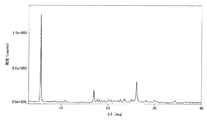
- the obtained type I crystal was subjected to X-ray crystallography under the following conditions.
- Powder X-ray diffraction measurement conditions Equipment: MiniFlex600 (Rigaku) Operating conditions: X-ray output: Cu-K ⁇ , tube voltage: 40 kV, tube current: 15 mA Sampling width: 0.02 ° Scanning range: 3 ° to 40 ° Measurement temperature: Room temperature
- the XRD diffraction pattern of the type I crystal is shown in FIG.
- the values of the diffraction angle (2 ⁇ ) of the type I crystal are shown in Table 10. Table 10
- the type I crystals of compound (a3-1-A) of the present invention are characterized by the following one or more characteristic peaks in the powder X-ray diffraction pattern. (1) It is preferable to have a pattern substantially the same as the powder X-ray diffraction pattern shown in FIG. (2)
- the characteristic peaks in the powder X-ray diffraction pattern of the type I crystal are 7.96 ° ⁇ 0.2 °, 11.82 ° ⁇ 0.2 °, and 14. 14 ° ⁇ 0.2 ° and / or 15.94 ° ⁇ 0.2 ° can be mentioned.
- the mixture was stirred at 110 ° C. for 46 hours while pressurizing to 0.6 MPa with carbon monoxide and maintaining the pressure of the reaction system at 0.6 MPa.
- the reaction mixture was filtered to remove solids and washed with acetonitrile (32 mL). The filtrate was concentrated under reduced pressure to 12 mL and transferred using acetonitrile (4 mL). Isopropanol (24 mL) was dropleted and stirred at 35 ° C., and water (16 mL) was dropleted and then further stirred at 30 ° C.
- Powder X-ray diffraction measurement condition device MiniFlex600 (Rigaku) Operating conditions: X-ray output: Cu-K ⁇ , tube voltage: 40 kV, tube current: 15 mA Sampling width: 0.02 ° Scanning range: 3 ° to 40 ° Measurement temperature: room temperature
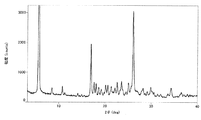
- the XRD diffraction pattern of the type II crystal is shown in FIGS. 2 and 3.
- the values of the diffraction angle (2 ⁇ ) of the type II crystal are shown in Table 11. Table 11
- the type II crystals of compound (a3-1-A) of the present invention are characterized by the following one or more characteristic peaks in the powder X-ray diffraction pattern.
- (2) The characteristic peaks in the powder X-ray diffraction pattern of the type II crystal are 8.52 ° ⁇ 0.2 °, 16.98 ° ⁇ 0.2 °, 20. 16 ° ⁇ 0.2 ° and / or 26.12 ° ⁇ 0.2 ° can be mentioned.
Landscapes
- Chemical & Material Sciences (AREA)
- Organic Chemistry (AREA)
- Health & Medical Sciences (AREA)
- Medicinal Chemistry (AREA)
- Pharmacology & Pharmacy (AREA)
- Epidemiology (AREA)
- Life Sciences & Earth Sciences (AREA)
- Animal Behavior & Ethology (AREA)
- General Health & Medical Sciences (AREA)
- Public Health (AREA)
- Veterinary Medicine (AREA)
- Low-Molecular Organic Synthesis Reactions Using Catalysts (AREA)
- Plural Heterocyclic Compounds (AREA)
- Pharmaceuticals Containing Other Organic And Inorganic Compounds (AREA)
Priority Applications (3)
| Application Number | Priority Date | Filing Date | Title |
|---|---|---|---|
| US17/783,816 US12612367B2 (en) | 2019-12-10 | 2020-12-09 | Method for producing nitrogen-containing heteroarylcarboxamide acetic acid derivative |
| JP2021563999A JP7594546B2 (ja) | 2019-12-10 | 2020-12-09 | 含窒素ヘテロアリールカルボキサミド酢酸誘導体の製造方法 |
| JP2024187283A JP2025016562A (ja) | 2019-12-10 | 2024-10-24 | 含窒素ヘテロアリールカルボキサミド酢酸誘導体の製造方法 |
Applications Claiming Priority (2)
| Application Number | Priority Date | Filing Date | Title |
|---|---|---|---|
| JP2019222845 | 2019-12-10 | ||
| JP2019-222845 | 2019-12-10 |
Publications (1)
| Publication Number | Publication Date |
|---|---|
| WO2021117767A1 true WO2021117767A1 (ja) | 2021-06-17 |
Family
ID=76328896
Family Applications (1)
| Application Number | Title | Priority Date | Filing Date |
|---|---|---|---|
| PCT/JP2020/045871 Ceased WO2021117767A1 (ja) | 2019-12-10 | 2020-12-09 | 含窒素ヘテロアリールカルボキサミド酢酸誘導体の製造方法 |
Country Status (3)
| Country | Link |
|---|---|
| US (1) | US12612367B2 (https=) |
| JP (2) | JP7594546B2 (https=) |
| WO (1) | WO2021117767A1 (https=) |
Cited By (2)
| Publication number | Priority date | Publication date | Assignee | Title |
|---|---|---|---|---|
| JPWO2020217733A1 (https=) * | 2019-04-26 | 2020-10-29 | ||
| WO2022018450A1 (en) * | 2020-07-23 | 2022-01-27 | Johnson Matthey Public Limited Company | Crystalline forms of vadadustat and methods for their preparation |
Citations (4)
| Publication number | Priority date | Publication date | Assignee | Title |
|---|---|---|---|---|
| JP2014522409A (ja) * | 2011-06-06 | 2014-09-04 | アケビア セラピューティクス インコーポレイテッド | [(3−ヒドロキシピリジン−2−カルボニル)アミノ]アルカン酸、エステル及びアミドの製造方法 |
| WO2019028150A1 (en) * | 2017-08-01 | 2019-02-07 | Akebia Therapeutics, Inc. | COMPOSITIONS FOR USE IN METHODS OF TREATING HEMOGLOBINOPATHIES |
| WO2019145726A1 (en) * | 2018-01-26 | 2019-08-01 | Enterprise Therapeutics Limited | Compounds |
| WO2020217733A1 (ja) * | 2019-04-26 | 2020-10-29 | 株式会社カネカ | Vadadustat中間体の製造方法 |
Family Cites Families (121)
| Publication number | Priority date | Publication date | Assignee | Title |
|---|---|---|---|---|
| US3655679A (en) | 1969-06-25 | 1972-04-11 | Merck & Co Inc | Certain aryl pyridine carboxylic acid derivatives |
| US3703582A (en) | 1970-04-20 | 1972-11-21 | Merck & Co Inc | Aryl pyridine carboxylic acids in the treatment of inflammation |
| US3894920A (en) | 1971-12-21 | 1975-07-15 | Sagami Chem Res | Process for preparing alkyl-substituted 3,6-dihydro-o-dioxin derivatives |
| US4016287A (en) | 1972-07-17 | 1977-04-05 | Boehringer Ingelheim Gmbh | Dermatological compositions containing an acylamino-carboxylic acid or an alkyl ester thereof |
| TW219933B (https=) | 1990-02-26 | 1994-02-01 | Lilly Co Eli | |
| US5405613A (en) | 1991-12-11 | 1995-04-11 | Creative Nutrition Canada Corp. | Vitamin/mineral composition |
| TW352384B (en) | 1992-03-24 | 1999-02-11 | Hoechst Ag | Sulfonamido- or sulfonamidocarbonylpyridine-2-carboxamides, process for their preparation and their use as pharmaceuticals |
| DE4219158A1 (de) | 1992-06-11 | 1993-12-16 | Thomae Gmbh Dr K | Biphenylderivate, diese Verbindungen enthaltende Arzneimittel und Verfahren zu ihrer Herstellung |
| ATE149485T1 (de) | 1993-11-02 | 1997-03-15 | Hoechst Ag | Substituierte heterocyclische carbonsäureamidester, ihre herstellung und ihre verwendung als arzneimittel |
| DK0650961T3 (da) | 1993-11-02 | 1997-09-15 | Hoechst Ag | Substituerede heterocykliske carboxylsyreamider, deres fremstilling og deres anvendelse som lægemidler. |
| NZ270267A (en) | 1993-12-30 | 1997-03-24 | Hoechst Ag | 3-hydroxypyridin-2yl (and -quinolin-2-yl) carboxamide derivatives and pharmaceutical compositions |
| DE4410480A1 (de) | 1994-03-25 | 1995-09-28 | Hoechst Ag | Sulfonamidocarbonylpyridin-2-carbonsäureesteramide sowie ihre Pyridin-N-oxide, Verfahren zu ihrer Herstellung und ihre Verwendung als Arzneimittel |
| DE4410423A1 (de) | 1994-03-25 | 1995-09-28 | Hoechst Ag | Sulfonamidocarbonylpyridin-2-carbonsäureamide sowie ihre Pyridin-N-oxide, Verfahren zu ihrer Herstellung und ihre Verwendung als Arzneimittel |
| US5789426A (en) | 1995-01-20 | 1998-08-04 | Cornell Research Foundation, Inc. | Method for the treatment of fibroproliferative disorders by application of inhibitors of protein hydroxylation |
| IL135495A (en) | 1995-09-28 | 2002-12-01 | Hoechst Ag | Intermediate compounds for the preparation of quinoline-converted amines - 2 - carboxylic acid |
| JPH09221476A (ja) | 1995-12-15 | 1997-08-26 | Otsuka Pharmaceut Co Ltd | 医薬組成物 |
| SK283920B6 (sk) * | 1996-03-28 | 2004-05-04 | Lonza Ag | Spôsob výroby arylamidov heteroaromatických karboxylových kyselín |
| CA2253282A1 (en) | 1996-04-30 | 1997-11-06 | Hoechst Aktiengesellschaft | 3-alkoxypyridine-2-carboxylic acid amide esters, their preparation and their use as drugs |
| DE19620041A1 (de) | 1996-05-17 | 1998-01-29 | Merck Patent Gmbh | Adhäsionsrezeptor-Antagonisten |
| DE19650215A1 (de) | 1996-12-04 | 1998-06-10 | Hoechst Ag | 3-Hydroxypyridin-2-carbonsäureamidester, ihre Herstellung und ihre Verwendung als Arzneimittel |
| EP1024134A4 (en) | 1997-10-09 | 2003-05-14 | Ono Pharmaceutical Co | DERIVATIVES OF AMINOBUTANIC ACID |
| DE19746287A1 (de) | 1997-10-20 | 1999-04-22 | Hoechst Marion Roussel De Gmbh | Substituierte Isochinolin-2-Carbonsäureamide, ihre Herstellung und ihre Verwendung als Arzneimittel |
| EP1080075B1 (en) | 1998-03-23 | 2004-08-11 | Aventis Pharmaceuticals Inc. | Piperididinyl and n-amidinopiperidinyl derivatives |
| US6159379A (en) | 1999-05-04 | 2000-12-12 | Baker Hughes Incorporated | Organic ammonium salts for the removal of water soluble organics in produced water |
| JP2001048786A (ja) | 1999-08-05 | 2001-02-20 | Yamanouchi Pharmaceut Co Ltd | 三環式ヘテロアリール誘導体 |
| US6589758B1 (en) | 2000-05-19 | 2003-07-08 | Amgen Inc. | Crystal of a kinase-ligand complex and methods of use |
| US6849718B2 (en) | 2001-03-20 | 2005-02-01 | Dana Farber Cancer Institute, Inc. | Muteins of hypoxia inducible factor alpha and methods of use thereof |
| US6855510B2 (en) | 2001-03-20 | 2005-02-15 | Dana Farber Cancer Institute, Inc. | Pharmaceuticals and methods for treating hypoxia and screening methods therefor |
| JP4590157B2 (ja) | 2001-03-21 | 2010-12-01 | アイシス イノヴェイション リミテッド | アッセイ、方法および手段 |
| SE0101327D0 (sv) | 2001-04-12 | 2001-04-12 | Astrazeneca Ab | New crystalline forms |
| US6566088B1 (en) | 2001-10-04 | 2003-05-20 | Board Of Regents, The University Of Texas System | Prolyl-4-hydroxylases |
| GB0124941D0 (en) | 2001-10-17 | 2001-12-05 | Glaxo Group Ltd | Chemical compounds |
| DK2298301T3 (en) | 2001-12-06 | 2018-10-01 | Fibrogen Inc | MEDICINALS FOR TREATMENT OF ANEMIA ASSOCIATED WITH Kidney Disease |
| EP2258363A1 (en) | 2002-05-17 | 2010-12-08 | Celgene Corporation | Compositions for treatment of cancers |
| RU2005108667A (ru) | 2002-08-29 | 2005-08-27 | Мерк энд Ко., Инк. (US) | Производные n-биарилметиламиноциклоалканкарбоксамида |
| WO2004035812A2 (en) | 2002-10-16 | 2004-04-29 | Isis Innovation Limited | Asparaginyl hydroxylases and modulators thereof |
| AU2003298611A1 (en) | 2002-11-21 | 2004-06-18 | Eli Lilly And Company | Mixed lineage kinase modulators |
| US7618940B2 (en) | 2002-12-06 | 2009-11-17 | Fibrogen, Inc. | Fat regulation |
| US8124582B2 (en) | 2002-12-06 | 2012-02-28 | Fibrogen, Inc. | Treatment of diabetes |
| US7183287B2 (en) | 2003-04-03 | 2007-02-27 | Pharmacia Corporation | Substituted pyrimidinones |
| US8614204B2 (en) | 2003-06-06 | 2013-12-24 | Fibrogen, Inc. | Enhanced erythropoiesis and iron metabolism |
| WO2004108681A1 (en) | 2003-06-06 | 2004-12-16 | Fibrogen, Inc. | Nitrogen-containing heteroaryl compounds and their use in increasing endogenous erythropoietin |
| US20060251638A1 (en) | 2003-06-06 | 2006-11-09 | Volkmar Guenzler-Pukall | Cytoprotection through the use of hif hydroxylase inhibitors |
| GB0314129D0 (en) | 2003-06-18 | 2003-07-23 | Astrazeneca Ab | Therapeutic agents |
| JPWO2005108370A1 (ja) | 2004-04-16 | 2008-03-21 | 味の素株式会社 | ベンゼン化合物 |
| ZA200610164B (en) | 2004-05-28 | 2008-02-27 | Fibrogen Inc | HIF prolyl hydroxylase activity assay |
| TW200609218A (en) | 2004-05-31 | 2006-03-16 | Tanabe Seiyaku Co | Bicyclic compounds |
| WO2006019831A1 (en) | 2004-07-14 | 2006-02-23 | Ptc Therapeutics, Inc. | Methods for treating hepatitis c |
| TW200616969A (en) | 2004-09-17 | 2006-06-01 | Tanabe Seiyaku Co | Imidazole compound |
| US20080213404A1 (en) | 2005-02-04 | 2008-09-04 | Johnson Randall S | Hif Modulating Compounds and Methods of Use Thereof |
| DE102005019712A1 (de) | 2005-04-28 | 2006-11-09 | Bayer Healthcare Ag | Dipyridyl-dihydropyrazolone und ihre Verwendung |
| WO2006129626A1 (ja) * | 2005-05-30 | 2006-12-07 | Kyowa Hakko Kogyo Co., Ltd. | [1,2,4]トリアゾロ[1,5-c]ピリミジン誘導体の製造法 |
| AU2006254897A1 (en) | 2005-06-06 | 2006-12-14 | Fibrogen, Inc. | Improved treatment for anemia using a HIF-alpha stabilising agent |
| MX2007016160A (es) | 2005-06-15 | 2008-03-07 | Fibrogen Inc | Uso de moduladoers de hif-1 alfa para el tratamiento contra el cancer. |
| US20070154482A1 (en) | 2005-09-12 | 2007-07-05 | Beth Israel Deaconess Medical Center | Methods and compositions for the treatment and diagnosis of diseases characterized by vascular leak, hypotension, or a procoagulant state |
| WO2007038571A2 (en) | 2005-09-26 | 2007-04-05 | Smithkline Beecham Corporation | Prolyl hydroxylase antagonists |
| WO2007047194A2 (en) | 2005-10-11 | 2007-04-26 | Dana-Farber Cancer Institute, Inc. | Methods for treating mitf-related disorders |
| EP1960363B1 (en) | 2005-12-09 | 2014-01-22 | Amgen, Inc. | Quinolone based compounds exhibiting prolyl hydroxylase inhibitory activity, compositions and uses thereof |
| US20090023666A1 (en) | 2006-01-09 | 2009-01-22 | BTG plc | Modulators of Hypoxia Inducible Factor-1 and Related Uses |
| WO2007082899A1 (en) | 2006-01-17 | 2007-07-26 | Vib Vzw | Inhibitors of prolyl-hydroxylase 1 for the treatment of skeletal muscle degeneration |
| JP4801451B2 (ja) | 2006-01-19 | 2011-10-26 | 株式会社日立ハイテクノロジーズ | 走査電子顕微鏡等に用いる電子銃の制御装置及び制御方法 |
| WO2007084667A2 (en) | 2006-01-19 | 2007-07-26 | Osi Pharmaceutical, Inc. | Fused heterobicyclic kinase inhibitors |
| ITMI20060179A1 (it) | 2006-02-02 | 2007-08-03 | Abiogen Pharma Spa | Procedimento per la risoluzione di miscele racemiche e complesso diastereoisomerico di un agente risolvente e di unantiomero di interesse |
| US7625927B2 (en) | 2006-02-27 | 2009-12-01 | Alcon Research, Ltd. | Method of treating glaucoma |
| US7588924B2 (en) | 2006-03-07 | 2009-09-15 | Procter & Gamble Company | Crystal of hypoxia inducible factor 1 alpha prolyl hydroxylase |
| AR059733A1 (es) | 2006-03-07 | 2008-04-23 | Smithkline Beecham Corp | Compuesto derivado de glicina n- sustituida con heteroaromaticos bicicicos, composicion farmaceutica que lo comprende, uso para preparar un medicamento para tratar la anemia y proceso para su preparacion |
| US20090176825A1 (en) | 2006-05-16 | 2009-07-09 | Fitch Duke M | Prolyl hydroxylase inhibitors |
| JO2934B1 (en) | 2006-06-23 | 2015-09-15 | سميث كلاين بيتشام كوربوريشن | Prolyl hydroxylase inhibitors |
| PL3357911T3 (pl) | 2006-06-26 | 2022-09-05 | Akebia Therapeutics Inc. | Inhibitory prolilohydroksylazy i sposoby ich użycia |
| TW200845991A (en) | 2007-01-12 | 2008-12-01 | Smithkline Beecham Corp | N-substituted glycine derivatives: hydroxylase inhibitors |
| TW200845994A (en) | 2007-01-12 | 2008-12-01 | Smithkline Beecham Corp | N-substituted glycine derivatives: prolyl hydroxylase inhibitors |
| ES2446418T3 (es) | 2007-04-18 | 2014-03-07 | Amgen, Inc | Derivados de indanona que inhiben la prolil hidroxilasa |
| JP2010524935A (ja) | 2007-04-18 | 2010-07-22 | メルク・シャープ・エンド・ドーム・コーポレイション | 新規1,8−ナフチリジン化合物 |
| US8030346B2 (en) | 2007-05-04 | 2011-10-04 | Amgen Inc. | Heterocyclic quinolone derivatives that inhibit prolyl hydroxylase activity |
| US8309544B2 (en) | 2007-05-16 | 2012-11-13 | Merck Sharp & Dohme Corp. | Spiroindalones |
| CA2687306A1 (en) | 2007-05-18 | 2008-11-27 | Bayer Schering Pharma Aktiengesellschaft | Heteroaryl substituted pyrazole derivatives useful for treating hyper-proliferative disorders and diseases associated with angiogenesis |
| EP2186528B1 (en) | 2007-08-06 | 2014-03-19 | Senju Pharmaceutical Co., Ltd. | Pharmaceutical containing hif-1 alpha and hif-2 alpha expression inhibitor |
| TW200908984A (en) | 2007-08-07 | 2009-03-01 | Piramal Life Sciences Ltd | Pyridyl derivatives, their preparation and use |
| KR20100045480A (ko) | 2007-08-10 | 2010-05-03 | 크리스탈지노믹스(주) | 피리딘 유도체 및 이들의 사용방법 |
| WO2009035534A2 (en) | 2007-09-07 | 2009-03-19 | The Cleveland Clinic Foundation | Treatment of ischemic eye disease by the systematic pharmaceutical activation of hypoxia inducible factor (hif) |
| WO2009039321A1 (en) | 2007-09-19 | 2009-03-26 | Smithkline Beecham Corporation | Prolyl hydroxylase inhibitors |
| WO2009039323A1 (en) | 2007-09-19 | 2009-03-26 | Smithkline Beecham Corporation | Prolyl hydroxylase inhibitors |
| WO2009043093A1 (en) | 2007-10-04 | 2009-04-09 | Newsouth Innovations Pty Limited | Hif inhibition |
| WO2009049112A1 (en) | 2007-10-10 | 2009-04-16 | Smithkline Beecham Corporation | Prolyl hydroxylase inhibitors |
| WO2009067790A1 (en) | 2007-11-26 | 2009-06-04 | Uti Limited Partnership | STIMULATION OF HYPOXIA INDUCIBLE FACTOR -1 ALPHA (HIF-1α) FOR THE TREATMENT OF CLOSTRIDIUM DIFFICILE ASSOCIATED DISEASE (CDAD), FOR INTESTINAL MOTILITY AND FOR DETECTING INFECTION |
| EA201000915A1 (ru) | 2007-11-30 | 2011-02-28 | ГЛЭКСОСМИТКЛАЙН ЭлЭлСи | Ингибиторы пролилгидроксилазы |
| JP2011505367A (ja) | 2007-11-30 | 2011-02-24 | グラクソスミスクライン・リミテッド・ライアビリティ・カンパニー | プロリルヒドロキシラーゼ阻害剤 |
| WO2009073669A1 (en) | 2007-12-03 | 2009-06-11 | Fibrogen, Inc. | Isoxazolopyridine derivatives for use in the treatment of hif-mediated conditions |
| EP2240178A4 (en) | 2007-12-19 | 2011-10-26 | Glaxosmithkline Llc | PROLYLHYDROXYLASEHEMMER |
| WO2009086592A1 (en) | 2008-01-04 | 2009-07-16 | Garvan Institute Of Medical Research | Method of increasing metabolism |
| EP2252619B1 (en) | 2008-01-11 | 2013-10-09 | Fibrogen, Inc. | Isothiazole-pyridine derivatives as modulators of hif (hypoxia inducible factor) activity |
| CN102015651B (zh) | 2008-03-03 | 2014-12-31 | Irm责任有限公司 | 作为tlr活性调节剂的化合物和组合物 |
| RU2010142937A (ru) | 2008-03-20 | 2012-04-27 | Форест Лабораториес Холдингс Лимитед (Bm) | НОВЫЕ ПРОИЗВОДНЫЕ ПИПЕРИДИНА В КАЧЕСТВЕ ИНГИБИТОРОВ СТЕАРОИЛ-КоА ДЕСАТУРАЗЫ |
| AR071997A1 (es) | 2008-06-04 | 2010-07-28 | Bristol Myers Squibb Co | Forma cristalina de 6-((4s)-2-metil-4-(2-naftil)-1,2,3,4-tetrahidroisoquinolin-7-il)piridazin-3-amina |
| EP2307372B1 (en) | 2008-07-23 | 2012-04-25 | F. Hoffmann-La Roche AG | Heterocyclic antiviral compounds |
| KR20110063537A (ko) | 2008-09-15 | 2011-06-10 | 카시나 라일라 이노바 파마슈티칼스 프라이빗 리미티드 | 전이성 악성 흑색종 및 기타 암에 대한 항암 약물 및 이와 관련한 용도 |
| JP5649584B2 (ja) | 2008-11-14 | 2015-01-07 | フィブロジェン インコーポレイテッド | Hifヒドロキシラーゼ阻害剤としてのチオクロメン誘導体 |
| AU2010231615B2 (en) | 2009-03-31 | 2014-05-15 | Kissei Pharmaceutical Co., Ltd. | Indolizine derivative and use thereof for medical purposes |
| RS54010B1 (sr) | 2009-11-06 | 2015-10-30 | Aerpio Therapeutics Inc. | Inhibitori prolil hidroksilaze |
| WO2012170439A1 (en) | 2011-06-06 | 2012-12-13 | The Ohio State University | Methods for stabilizing hypoxia inducible factor-2 alpha as a method for treating cancer |
| US20130022974A1 (en) | 2011-06-17 | 2013-01-24 | The Regents Of The University Of Michigan | Dna methylation profiles in cancer |
| CN104024227B8 (zh) | 2011-07-22 | 2025-07-29 | 北京贝美拓新药研发有限公司 | 抑制脯氨酸羟化酶活性的化合物的晶型及其应用 |
| EP3219706A1 (en) | 2012-07-16 | 2017-09-20 | Fibrogen, Inc. | Process for making isoquinoline compounds |
| KR20160061911A (ko) | 2013-04-08 | 2016-06-01 | 데니스 엠. 브라운 | 최적하 투여된 화학 화합물의 치료 효과 |
| JP2016521747A (ja) | 2013-06-13 | 2016-07-25 | アケビア セラピューティクス インコーポレイテッドAkebia Therapeutics Inc. | 貧血治療のための組成物及び方法 |
| JP2016529257A (ja) | 2013-08-16 | 2016-09-23 | オハイオ ステート イノベーション ファウンデーション | Dnaメチル化を調節する組成物及び方法 |
| MY180626A (en) | 2013-11-15 | 2020-12-03 | Akebia Therapeutics Inc | Solid forms of {[5-(3-chlorophenyl)-3-hydroxypyridine-2-carbonyl]amino}acetic acid, compositions, and uses thereof |
| MX2016009331A (es) | 2014-01-23 | 2016-10-26 | Akebia Therapeutics Inc | Composiciones y metodos para tratar enfermedades oculares. |
| US10150734B2 (en) | 2015-01-23 | 2018-12-11 | Akebia Therapeutics, Inc. | Solid forms of 2-(5-(3-fluorophenyl)-3-hydroxypicolinamido)acetic acid, compositions, and uses thereof |
| US20180065933A1 (en) | 2015-03-20 | 2018-03-08 | Akebia Therapeutics, Inc. | Deuterium-enriched hypoxia-inducible factor prolyl hydroxylase enzyme inhibitors |
| US11324734B2 (en) | 2015-04-01 | 2022-05-10 | Akebia Therapeutics, Inc. | Compositions and methods for treating anemia |
| CN105837502A (zh) | 2016-04-05 | 2016-08-10 | 湖南欧亚生物有限公司 | 一种Vadadustat的合成方法 |
| US11713298B2 (en) | 2018-05-09 | 2023-08-01 | Akebia Therapeutics, Inc. | Process for preparing 2-[[5-(3-chlorophenyl)-3-hydroxypyridine-2-carbonyl]amino]acetic acid |
| CN111320577B (zh) | 2018-12-13 | 2023-06-23 | 广东东阳光药业有限公司 | 一种吡啶酰胺的制备方法及其应用 |
| JP2023501221A (ja) | 2019-10-31 | 2023-01-18 | アケビア セラピューティクス インコーポレイテッド | バダデュスタットを使用する治療方法 |
| US20210137091A1 (en) | 2019-11-08 | 2021-05-13 | Ap&G Co., Inc. | Fly trap and system for converting trap |
| US11524939B2 (en) | 2019-11-13 | 2022-12-13 | Akebia Therapeutics, Inc. | Solid forms of {[5-(3-chlorophenyl)-3-hydroxypyridine-2-carbonyl]amino} acetic acid |
| AR121618A1 (es) | 2020-03-20 | 2022-06-22 | Akebia Therapeutics Inc | Compuestos inhibidores de phd, composiciones y métodos de uso |
| EP4121426A1 (en) | 2020-03-20 | 2023-01-25 | Akebia Therapeutics Inc. | Phd inhibitor compounds, compositions, and use |
| JP2023518543A (ja) | 2020-03-20 | 2023-05-02 | アケビア セラピューティクス インコーポレイテッド | Phd阻害剤化合物、組成物、及びそれらの使用 |
| US20230286918A1 (en) | 2020-07-02 | 2023-09-14 | Akebia Therapeutics, Inc. | Manufacturing process for 3,5-dichloropicolinonitrile for synthesis of vadadustat |
-
2020
- 2020-12-09 WO PCT/JP2020/045871 patent/WO2021117767A1/ja not_active Ceased
- 2020-12-09 US US17/783,816 patent/US12612367B2/en active Active
- 2020-12-09 JP JP2021563999A patent/JP7594546B2/ja active Active
-
2024
- 2024-10-24 JP JP2024187283A patent/JP2025016562A/ja active Pending
Patent Citations (4)
| Publication number | Priority date | Publication date | Assignee | Title |
|---|---|---|---|---|
| JP2014522409A (ja) * | 2011-06-06 | 2014-09-04 | アケビア セラピューティクス インコーポレイテッド | [(3−ヒドロキシピリジン−2−カルボニル)アミノ]アルカン酸、エステル及びアミドの製造方法 |
| WO2019028150A1 (en) * | 2017-08-01 | 2019-02-07 | Akebia Therapeutics, Inc. | COMPOSITIONS FOR USE IN METHODS OF TREATING HEMOGLOBINOPATHIES |
| WO2019145726A1 (en) * | 2018-01-26 | 2019-08-01 | Enterprise Therapeutics Limited | Compounds |
| WO2020217733A1 (ja) * | 2019-04-26 | 2020-10-29 | 株式会社カネカ | Vadadustat中間体の製造方法 |
Non-Patent Citations (3)
| Title |
|---|
| KURISSERY, TONY A. ET AL.: "Regioselective synthesis of 2,3-dihydrospiro [1, 4]dioxino[2, 3- b]pyridine derivatives", RETRAHEDRON LETTERS, vol. 51, 2010, pages 4350 - 4353, XP027139573 * |
| QU, B. ET AL.: "Palladium-catalyzed aminocarbonylation of heteroaryl halides using cli-tert-butylphosphinoferrocene", TETRAHEDRON LETTERS, vol. 50, 2009, pages 6126 - 6129, XP026640483, DOI: 10.1016/j.tetlet.2009.08.065 * |
| TAKACS, ATTILA ET AL.: "Homogeneous catalytic aminocarbonylatlon of nitrogen-containing iodo- heteroaromatics. Synthesis of N-substituted nicotinamide related compounds", TETRAHEDRON, vol. 63, 2007, pages 10372 - 10378, XP022226188, DOI: 10.1016/j.tet.2007.07.017 * |
Cited By (3)
| Publication number | Priority date | Publication date | Assignee | Title |
|---|---|---|---|---|
| JPWO2020217733A1 (https=) * | 2019-04-26 | 2020-10-29 | ||
| JP7470106B2 (ja) | 2019-04-26 | 2024-04-17 | 株式会社カネカ | Vadadustat中間体の製造方法 |
| WO2022018450A1 (en) * | 2020-07-23 | 2022-01-27 | Johnson Matthey Public Limited Company | Crystalline forms of vadadustat and methods for their preparation |
Also Published As
| Publication number | Publication date |
|---|---|
| JPWO2021117767A1 (https=) | 2021-06-17 |
| JP2025016562A (ja) | 2025-02-04 |
| JP7594546B2 (ja) | 2024-12-04 |
| US12612367B2 (en) | 2026-04-28 |
| US20230159462A1 (en) | 2023-05-25 |
Similar Documents
| Publication | Publication Date | Title |
|---|---|---|
| JP5381718B2 (ja) | ハロ多環芳香族化合物及びその製造方法 | |
| JP2025016562A (ja) | 含窒素ヘテロアリールカルボキサミド酢酸誘導体の製造方法 | |
| JP6438551B2 (ja) | 置換アントラニル酸誘導体を製造する方法 | |
| JP2020143070A (ja) | ジアリールチオヒダントイン化合物の調製方法 | |
| WO2018220533A2 (ja) | 光学活性化合物の製造法 | |
| CN113767094B (zh) | 3-甲基-1,2,4-噻二唑-5-碳酰肼及其甲基-d3氘代形式的合成 | |
| Kadari et al. | Iodoferrocene as a partner in N-arylation of amides | |
| CN104109150A (zh) | 含有吡啶环的化合物、及卤代甲基吡啶衍生物以及四唑基肟衍生物的制造方法 | |
| WO2011043483A1 (ja) | 金属錯体、ピリジルホスフィン化合物およびアルキルメタクリレートの製造方法 | |
| US7605268B2 (en) | Process for the preparation of pyridine compounds | |
| Seitz et al. | Modular synthesis of chiral pentadentate bis (oxazoline) ligands | |
| CZ294344B6 (cs) | Způsob výroby arylamidů heteroaromatických karboxylových kyselin | |
| JP4570057B2 (ja) | アリールピリジン誘導体の製造法 | |
| JP3272326B2 (ja) | 2−ピリジルピリジン誘導体の製造方法 | |
| JP4509327B2 (ja) | N,n−ジ置換−4−アミノクロトン酸エステルの製造方法 | |
| CN105523958B (zh) | 一种制备二芳基硫代乙内酰脲衍生物关键中间体的方法 | |
| JP4138905B2 (ja) | 複素環式芳香族カルボン酸のアリールアミドの製造方法 | |
| CN113264931B (zh) | 一种1,4,6,7-四氢-5H-吡唑并[4,3-c]吡啶衍生物的制备方法 | |
| Alaa | Lewis acid-promoted direct substitution of 2-methoxy-3-cyanopyridines by organo cuprates. Part 3: Facile preparation of nicotinamide and nicotinic acid derivatives | |
| JP2011057575A (ja) | 4−ヒドロキシベンゾチオフェン誘導体の製造方法 | |
| Tran et al. | Iron powder-CuI cooperative catalytic system in sonogashira cross-coupling reaction | |
| Ku et al. | A Highly Efficient Synthesis of a Naphthalenoid Histamine‐3 Antagonist | |
| JP2024173497A (ja) | 芳香族シクロアルキルアミン化合物の製造方法 | |
| Khalilzadeh et al. | Multicomponent reactions of dimethyl methoxymalonate and dialkyl acetylenedicarboxylate in the presence of N-Nucleophiles: one-pot synthesis of 2 H-pyridinyl-2-butenedioates in water | |
| PL188798B1 (pl) | Sposób wytwarzania aryloamidów heteroaromatycznych kwasów karboksylowych |
Legal Events
| Date | Code | Title | Description |
|---|---|---|---|
| 121 | Ep: the epo has been informed by wipo that ep was designated in this application |
Ref document number: 20900115 Country of ref document: EP Kind code of ref document: A1 |
|
| ENP | Entry into the national phase |
Ref document number: 2021563999 Country of ref document: JP Kind code of ref document: A |
|
| NENP | Non-entry into the national phase |
Ref country code: DE |
|
| 122 | Ep: pct application non-entry in european phase |
Ref document number: 20900115 Country of ref document: EP Kind code of ref document: A1 |