WO2017022417A1 - 運転支援制御装置 - Google Patents
運転支援制御装置 Download PDFInfo
- Publication number
- WO2017022417A1 WO2017022417A1 PCT/JP2016/070403 JP2016070403W WO2017022417A1 WO 2017022417 A1 WO2017022417 A1 WO 2017022417A1 JP 2016070403 W JP2016070403 W JP 2016070403W WO 2017022417 A1 WO2017022417 A1 WO 2017022417A1
- Authority
- WO
- WIPO (PCT)
- Prior art keywords
- driving
- control device
- unit
- host vehicle
- driver
- Prior art date
- Legal status (The legal status is an assumption and is not a legal conclusion. Google has not performed a legal analysis and makes no representation as to the accuracy of the status listed.)
- Ceased
Links
Images

Classifications
-
- B—PERFORMING OPERATIONS; TRANSPORTING
- B60—VEHICLES IN GENERAL
- B60T—VEHICLE BRAKE CONTROL SYSTEMS OR PARTS THEREOF; BRAKE CONTROL SYSTEMS OR PARTS THEREOF, IN GENERAL; ARRANGEMENT OF BRAKING ELEMENTS ON VEHICLES IN GENERAL; PORTABLE DEVICES FOR PREVENTING UNWANTED MOVEMENT OF VEHICLES; VEHICLE MODIFICATIONS TO FACILITATE COOLING OF BRAKES
- B60T7/00—Brake-action initiating means
- B60T7/12—Brake-action initiating means for automatic initiation; for initiation not subject to will of driver or passenger
- B60T7/22—Brake-action initiating means for automatic initiation; for initiation not subject to will of driver or passenger initiated by contact of vehicle, e.g. bumper, with an external object, e.g. another vehicle, or by means of contactless obstacle detectors mounted on the vehicle
-
- B—PERFORMING OPERATIONS; TRANSPORTING
- B60—VEHICLES IN GENERAL
- B60T—VEHICLE BRAKE CONTROL SYSTEMS OR PARTS THEREOF; BRAKE CONTROL SYSTEMS OR PARTS THEREOF, IN GENERAL; ARRANGEMENT OF BRAKING ELEMENTS ON VEHICLES IN GENERAL; PORTABLE DEVICES FOR PREVENTING UNWANTED MOVEMENT OF VEHICLES; VEHICLE MODIFICATIONS TO FACILITATE COOLING OF BRAKES
- B60T8/00—Arrangements for adjusting wheel-braking force to meet varying vehicular or ground-surface conditions, e.g. limiting or varying distribution of braking force
- B60T8/17—Using electrical or electronic regulation means to control braking
-
- B—PERFORMING OPERATIONS; TRANSPORTING
- B60—VEHICLES IN GENERAL
- B60W—CONJOINT CONTROL OF VEHICLE SUB-UNITS OF DIFFERENT TYPE OR DIFFERENT FUNCTION; CONTROL SYSTEMS SPECIALLY ADAPTED FOR HYBRID VEHICLES; ROAD VEHICLE DRIVE CONTROL SYSTEMS FOR PURPOSES NOT RELATED TO THE CONTROL OF A PARTICULAR SUB-UNIT
- B60W30/00—Purposes of road vehicle drive control systems not related to the control of a particular sub-unit, e.g. of systems using conjoint control of vehicle sub-units
- B60W30/08—Active safety systems predicting or avoiding probable or impending collision or attempting to minimise its consequences
- B60W30/09—Taking automatic action to avoid collision, e.g. braking and steering
-
- B—PERFORMING OPERATIONS; TRANSPORTING
- B60—VEHICLES IN GENERAL
- B60W—CONJOINT CONTROL OF VEHICLE SUB-UNITS OF DIFFERENT TYPE OR DIFFERENT FUNCTION; CONTROL SYSTEMS SPECIALLY ADAPTED FOR HYBRID VEHICLES; ROAD VEHICLE DRIVE CONTROL SYSTEMS FOR PURPOSES NOT RELATED TO THE CONTROL OF A PARTICULAR SUB-UNIT
- B60W30/00—Purposes of road vehicle drive control systems not related to the control of a particular sub-unit, e.g. of systems using conjoint control of vehicle sub-units
- B60W30/08—Active safety systems predicting or avoiding probable or impending collision or attempting to minimise its consequences
- B60W30/095—Predicting travel path or likelihood of collision
- B60W30/0956—Predicting travel path or likelihood of collision the prediction being responsive to traffic or environmental parameters
-
- B—PERFORMING OPERATIONS; TRANSPORTING
- B60—VEHICLES IN GENERAL
- B60W—CONJOINT CONTROL OF VEHICLE SUB-UNITS OF DIFFERENT TYPE OR DIFFERENT FUNCTION; CONTROL SYSTEMS SPECIALLY ADAPTED FOR HYBRID VEHICLES; ROAD VEHICLE DRIVE CONTROL SYSTEMS FOR PURPOSES NOT RELATED TO THE CONTROL OF A PARTICULAR SUB-UNIT
- B60W40/00—Estimation or calculation of non-directly measurable driving parameters for road vehicle drive control systems not related to the control of a particular sub unit, e.g. by using mathematical models
- B60W40/02—Estimation or calculation of non-directly measurable driving parameters for road vehicle drive control systems not related to the control of a particular sub unit, e.g. by using mathematical models related to ambient conditions
-
- B—PERFORMING OPERATIONS; TRANSPORTING
- B60—VEHICLES IN GENERAL
- B60W—CONJOINT CONTROL OF VEHICLE SUB-UNITS OF DIFFERENT TYPE OR DIFFERENT FUNCTION; CONTROL SYSTEMS SPECIALLY ADAPTED FOR HYBRID VEHICLES; ROAD VEHICLE DRIVE CONTROL SYSTEMS FOR PURPOSES NOT RELATED TO THE CONTROL OF A PARTICULAR SUB-UNIT
- B60W40/00—Estimation or calculation of non-directly measurable driving parameters for road vehicle drive control systems not related to the control of a particular sub unit, e.g. by using mathematical models
- B60W40/08—Estimation or calculation of non-directly measurable driving parameters for road vehicle drive control systems not related to the control of a particular sub unit, e.g. by using mathematical models related to drivers or passengers
-
- B—PERFORMING OPERATIONS; TRANSPORTING
- B60—VEHICLES IN GENERAL
- B60W—CONJOINT CONTROL OF VEHICLE SUB-UNITS OF DIFFERENT TYPE OR DIFFERENT FUNCTION; CONTROL SYSTEMS SPECIALLY ADAPTED FOR HYBRID VEHICLES; ROAD VEHICLE DRIVE CONTROL SYSTEMS FOR PURPOSES NOT RELATED TO THE CONTROL OF A PARTICULAR SUB-UNIT
- B60W50/00—Details of control systems for road vehicle drive control not related to the control of a particular sub-unit, e.g. process diagnostic or vehicle driver interfaces
- B60W50/0097—Predicting future conditions
-
- B—PERFORMING OPERATIONS; TRANSPORTING
- B60—VEHICLES IN GENERAL
- B60W—CONJOINT CONTROL OF VEHICLE SUB-UNITS OF DIFFERENT TYPE OR DIFFERENT FUNCTION; CONTROL SYSTEMS SPECIALLY ADAPTED FOR HYBRID VEHICLES; ROAD VEHICLE DRIVE CONTROL SYSTEMS FOR PURPOSES NOT RELATED TO THE CONTROL OF A PARTICULAR SUB-UNIT
- B60W50/00—Details of control systems for road vehicle drive control not related to the control of a particular sub-unit, e.g. process diagnostic or vehicle driver interfaces
- B60W50/08—Interaction between the driver and the control system
- B60W50/082—Selecting or switching between different modes of propelling
-
- B—PERFORMING OPERATIONS; TRANSPORTING
- B60—VEHICLES IN GENERAL
- B60W—CONJOINT CONTROL OF VEHICLE SUB-UNITS OF DIFFERENT TYPE OR DIFFERENT FUNCTION; CONTROL SYSTEMS SPECIALLY ADAPTED FOR HYBRID VEHICLES; ROAD VEHICLE DRIVE CONTROL SYSTEMS FOR PURPOSES NOT RELATED TO THE CONTROL OF A PARTICULAR SUB-UNIT
- B60W50/00—Details of control systems for road vehicle drive control not related to the control of a particular sub-unit, e.g. process diagnostic or vehicle driver interfaces
- B60W50/08—Interaction between the driver and the control system
- B60W50/14—Means for informing the driver, warning the driver or prompting a driver intervention
-
- B—PERFORMING OPERATIONS; TRANSPORTING
- B60—VEHICLES IN GENERAL
- B60W—CONJOINT CONTROL OF VEHICLE SUB-UNITS OF DIFFERENT TYPE OR DIFFERENT FUNCTION; CONTROL SYSTEMS SPECIALLY ADAPTED FOR HYBRID VEHICLES; ROAD VEHICLE DRIVE CONTROL SYSTEMS FOR PURPOSES NOT RELATED TO THE CONTROL OF A PARTICULAR SUB-UNIT
- B60W60/00—Drive control systems specially adapted for autonomous road vehicles
- B60W60/005—Handover processes
- B60W60/0053—Handover processes from vehicle to occupant
-
- B—PERFORMING OPERATIONS; TRANSPORTING
- B60—VEHICLES IN GENERAL
- B60W—CONJOINT CONTROL OF VEHICLE SUB-UNITS OF DIFFERENT TYPE OR DIFFERENT FUNCTION; CONTROL SYSTEMS SPECIALLY ADAPTED FOR HYBRID VEHICLES; ROAD VEHICLE DRIVE CONTROL SYSTEMS FOR PURPOSES NOT RELATED TO THE CONTROL OF A PARTICULAR SUB-UNIT
- B60W60/00—Drive control systems specially adapted for autonomous road vehicles
- B60W60/005—Handover processes
- B60W60/0057—Estimation of the time available or required for the handover
-
- B—PERFORMING OPERATIONS; TRANSPORTING
- B60—VEHICLES IN GENERAL
- B60W—CONJOINT CONTROL OF VEHICLE SUB-UNITS OF DIFFERENT TYPE OR DIFFERENT FUNCTION; CONTROL SYSTEMS SPECIALLY ADAPTED FOR HYBRID VEHICLES; ROAD VEHICLE DRIVE CONTROL SYSTEMS FOR PURPOSES NOT RELATED TO THE CONTROL OF A PARTICULAR SUB-UNIT
- B60W60/00—Drive control systems specially adapted for autonomous road vehicles
- B60W60/005—Handover processes
- B60W60/0059—Estimation of the risk associated with autonomous or manual driving, e.g. situation too complex, sensor failure or driver incapacity
-
- B—PERFORMING OPERATIONS; TRANSPORTING
- B60—VEHICLES IN GENERAL
- B60W—CONJOINT CONTROL OF VEHICLE SUB-UNITS OF DIFFERENT TYPE OR DIFFERENT FUNCTION; CONTROL SYSTEMS SPECIALLY ADAPTED FOR HYBRID VEHICLES; ROAD VEHICLE DRIVE CONTROL SYSTEMS FOR PURPOSES NOT RELATED TO THE CONTROL OF A PARTICULAR SUB-UNIT
- B60W60/00—Drive control systems specially adapted for autonomous road vehicles
- B60W60/005—Handover processes
- B60W60/0061—Aborting handover process
-
- G—PHYSICS
- G08—SIGNALLING
- G08G—TRAFFIC CONTROL SYSTEMS
- G08G1/00—Traffic control systems for road vehicles
- G08G1/09—Arrangements for giving variable traffic instructions
- G08G1/0962—Arrangements for giving variable traffic instructions having an indicator mounted inside the vehicle, e.g. giving voice messages
- G08G1/09626—Arrangements for giving variable traffic instructions having an indicator mounted inside the vehicle, e.g. giving voice messages where the origin of the information is within the own vehicle, e.g. a local storage device, digital map
-
- G—PHYSICS
- G08—SIGNALLING
- G08G—TRAFFIC CONTROL SYSTEMS
- G08G1/00—Traffic control systems for road vehicles
- G08G1/09—Arrangements for giving variable traffic instructions
- G08G1/0962—Arrangements for giving variable traffic instructions having an indicator mounted inside the vehicle, e.g. giving voice messages
- G08G1/0967—Systems involving transmission of highway information, e.g. weather, speed limits
- G08G1/096708—Systems involving transmission of highway information, e.g. weather, speed limits where the received information might be used to generate an automatic action on the vehicle control
- G08G1/096725—Systems involving transmission of highway information, e.g. weather, speed limits where the received information might be used to generate an automatic action on the vehicle control where the received information generates an automatic action on the vehicle control
-
- G—PHYSICS
- G08—SIGNALLING
- G08G—TRAFFIC CONTROL SYSTEMS
- G08G1/00—Traffic control systems for road vehicles
- G08G1/09—Arrangements for giving variable traffic instructions
- G08G1/0962—Arrangements for giving variable traffic instructions having an indicator mounted inside the vehicle, e.g. giving voice messages
- G08G1/0967—Systems involving transmission of highway information, e.g. weather, speed limits
- G08G1/096766—Systems involving transmission of highway information, e.g. weather, speed limits where the system is characterised by the origin of the information transmission
- G08G1/096775—Systems involving transmission of highway information, e.g. weather, speed limits where the system is characterised by the origin of the information transmission where the origin of the information is a central station
-
- B—PERFORMING OPERATIONS; TRANSPORTING
- B60—VEHICLES IN GENERAL
- B60T—VEHICLE BRAKE CONTROL SYSTEMS OR PARTS THEREOF; BRAKE CONTROL SYSTEMS OR PARTS THEREOF, IN GENERAL; ARRANGEMENT OF BRAKING ELEMENTS ON VEHICLES IN GENERAL; PORTABLE DEVICES FOR PREVENTING UNWANTED MOVEMENT OF VEHICLES; VEHICLE MODIFICATIONS TO FACILITATE COOLING OF BRAKES
- B60T2201/00—Particular use of vehicle brake systems; Special systems using also the brakes; Special software modules within the brake system controller
- B60T2201/02—Active or adaptive cruise control system; Distance control
- B60T2201/022—Collision avoidance systems
-
- B—PERFORMING OPERATIONS; TRANSPORTING
- B60—VEHICLES IN GENERAL
- B60T—VEHICLE BRAKE CONTROL SYSTEMS OR PARTS THEREOF; BRAKE CONTROL SYSTEMS OR PARTS THEREOF, IN GENERAL; ARRANGEMENT OF BRAKING ELEMENTS ON VEHICLES IN GENERAL; PORTABLE DEVICES FOR PREVENTING UNWANTED MOVEMENT OF VEHICLES; VEHICLE MODIFICATIONS TO FACILITATE COOLING OF BRAKES
- B60T2210/00—Detection or estimation of road or environment conditions; Detection or estimation of road shapes
- B60T2210/30—Environment conditions or position therewithin
- B60T2210/32—Vehicle surroundings
-
- B—PERFORMING OPERATIONS; TRANSPORTING
- B60—VEHICLES IN GENERAL
- B60T—VEHICLE BRAKE CONTROL SYSTEMS OR PARTS THEREOF; BRAKE CONTROL SYSTEMS OR PARTS THEREOF, IN GENERAL; ARRANGEMENT OF BRAKING ELEMENTS ON VEHICLES IN GENERAL; PORTABLE DEVICES FOR PREVENTING UNWANTED MOVEMENT OF VEHICLES; VEHICLE MODIFICATIONS TO FACILITATE COOLING OF BRAKES
- B60T7/00—Brake-action initiating means
- B60T7/12—Brake-action initiating means for automatic initiation; for initiation not subject to will of driver or passenger
-
- B—PERFORMING OPERATIONS; TRANSPORTING
- B60—VEHICLES IN GENERAL
- B60W—CONJOINT CONTROL OF VEHICLE SUB-UNITS OF DIFFERENT TYPE OR DIFFERENT FUNCTION; CONTROL SYSTEMS SPECIALLY ADAPTED FOR HYBRID VEHICLES; ROAD VEHICLE DRIVE CONTROL SYSTEMS FOR PURPOSES NOT RELATED TO THE CONTROL OF A PARTICULAR SUB-UNIT
- B60W50/00—Details of control systems for road vehicle drive control not related to the control of a particular sub-unit, e.g. process diagnostic or vehicle driver interfaces
- B60W50/08—Interaction between the driver and the control system
- B60W50/14—Means for informing the driver, warning the driver or prompting a driver intervention
- B60W2050/143—Alarm means
-
- B—PERFORMING OPERATIONS; TRANSPORTING
- B60—VEHICLES IN GENERAL
- B60W—CONJOINT CONTROL OF VEHICLE SUB-UNITS OF DIFFERENT TYPE OR DIFFERENT FUNCTION; CONTROL SYSTEMS SPECIALLY ADAPTED FOR HYBRID VEHICLES; ROAD VEHICLE DRIVE CONTROL SYSTEMS FOR PURPOSES NOT RELATED TO THE CONTROL OF A PARTICULAR SUB-UNIT
- B60W2420/00—Indexing codes relating to the type of sensors based on the principle of their operation
- B60W2420/40—Photo, light or radio wave sensitive means, e.g. infrared sensors
- B60W2420/403—Image sensing, e.g. optical camera
-
- B—PERFORMING OPERATIONS; TRANSPORTING
- B60—VEHICLES IN GENERAL
- B60W—CONJOINT CONTROL OF VEHICLE SUB-UNITS OF DIFFERENT TYPE OR DIFFERENT FUNCTION; CONTROL SYSTEMS SPECIALLY ADAPTED FOR HYBRID VEHICLES; ROAD VEHICLE DRIVE CONTROL SYSTEMS FOR PURPOSES NOT RELATED TO THE CONTROL OF A PARTICULAR SUB-UNIT
- B60W2420/00—Indexing codes relating to the type of sensors based on the principle of their operation
- B60W2420/40—Photo, light or radio wave sensitive means, e.g. infrared sensors
- B60W2420/408—Radar; Laser, e.g. lidar
-
- B—PERFORMING OPERATIONS; TRANSPORTING
- B60—VEHICLES IN GENERAL
- B60W—CONJOINT CONTROL OF VEHICLE SUB-UNITS OF DIFFERENT TYPE OR DIFFERENT FUNCTION; CONTROL SYSTEMS SPECIALLY ADAPTED FOR HYBRID VEHICLES; ROAD VEHICLE DRIVE CONTROL SYSTEMS FOR PURPOSES NOT RELATED TO THE CONTROL OF A PARTICULAR SUB-UNIT
- B60W2540/00—Input parameters relating to occupants
- B60W2540/215—Selection or confirmation of options
-
- B—PERFORMING OPERATIONS; TRANSPORTING
- B60—VEHICLES IN GENERAL
- B60W—CONJOINT CONTROL OF VEHICLE SUB-UNITS OF DIFFERENT TYPE OR DIFFERENT FUNCTION; CONTROL SYSTEMS SPECIALLY ADAPTED FOR HYBRID VEHICLES; ROAD VEHICLE DRIVE CONTROL SYSTEMS FOR PURPOSES NOT RELATED TO THE CONTROL OF A PARTICULAR SUB-UNIT
- B60W2540/00—Input parameters relating to occupants
- B60W2540/223—Posture, e.g. hand, foot, or seat position, turned or inclined
-
- B—PERFORMING OPERATIONS; TRANSPORTING
- B60—VEHICLES IN GENERAL
- B60W—CONJOINT CONTROL OF VEHICLE SUB-UNITS OF DIFFERENT TYPE OR DIFFERENT FUNCTION; CONTROL SYSTEMS SPECIALLY ADAPTED FOR HYBRID VEHICLES; ROAD VEHICLE DRIVE CONTROL SYSTEMS FOR PURPOSES NOT RELATED TO THE CONTROL OF A PARTICULAR SUB-UNIT
- B60W2540/00—Input parameters relating to occupants
- B60W2540/225—Direction of gaze
-
- B—PERFORMING OPERATIONS; TRANSPORTING
- B60—VEHICLES IN GENERAL
- B60W—CONJOINT CONTROL OF VEHICLE SUB-UNITS OF DIFFERENT TYPE OR DIFFERENT FUNCTION; CONTROL SYSTEMS SPECIALLY ADAPTED FOR HYBRID VEHICLES; ROAD VEHICLE DRIVE CONTROL SYSTEMS FOR PURPOSES NOT RELATED TO THE CONTROL OF A PARTICULAR SUB-UNIT
- B60W2540/00—Input parameters relating to occupants
- B60W2540/229—Attention level, e.g. attentive to driving, reading or sleeping
-
- B—PERFORMING OPERATIONS; TRANSPORTING
- B60—VEHICLES IN GENERAL
- B60W—CONJOINT CONTROL OF VEHICLE SUB-UNITS OF DIFFERENT TYPE OR DIFFERENT FUNCTION; CONTROL SYSTEMS SPECIALLY ADAPTED FOR HYBRID VEHICLES; ROAD VEHICLE DRIVE CONTROL SYSTEMS FOR PURPOSES NOT RELATED TO THE CONTROL OF A PARTICULAR SUB-UNIT
- B60W2556/00—Input parameters relating to data
- B60W2556/45—External transmission of data to or from the vehicle
- B60W2556/50—External transmission of data to or from the vehicle of positioning data, e.g. GPS [Global Positioning System] data
-
- B—PERFORMING OPERATIONS; TRANSPORTING
- B60—VEHICLES IN GENERAL
- B60W—CONJOINT CONTROL OF VEHICLE SUB-UNITS OF DIFFERENT TYPE OR DIFFERENT FUNCTION; CONTROL SYSTEMS SPECIALLY ADAPTED FOR HYBRID VEHICLES; ROAD VEHICLE DRIVE CONTROL SYSTEMS FOR PURPOSES NOT RELATED TO THE CONTROL OF A PARTICULAR SUB-UNIT
- B60W2556/00—Input parameters relating to data
- B60W2556/45—External transmission of data to or from the vehicle
- B60W2556/55—External transmission of data to or from the vehicle using telemetry
-
- B—PERFORMING OPERATIONS; TRANSPORTING
- B60—VEHICLES IN GENERAL
- B60W—CONJOINT CONTROL OF VEHICLE SUB-UNITS OF DIFFERENT TYPE OR DIFFERENT FUNCTION; CONTROL SYSTEMS SPECIALLY ADAPTED FOR HYBRID VEHICLES; ROAD VEHICLE DRIVE CONTROL SYSTEMS FOR PURPOSES NOT RELATED TO THE CONTROL OF A PARTICULAR SUB-UNIT
- B60W2720/00—Output or target parameters relating to overall vehicle dynamics
- B60W2720/10—Longitudinal speed
- B60W2720/106—Longitudinal acceleration
-
- F—MECHANICAL ENGINEERING; LIGHTING; HEATING; WEAPONS; BLASTING
- F02—COMBUSTION ENGINES; HOT-GAS OR COMBUSTION-PRODUCT ENGINE PLANTS
- F02D—CONTROLLING COMBUSTION ENGINES
- F02D29/00—Controlling engines, such controlling being peculiar to the devices driven thereby, the devices being other than parts or accessories essential to engine operation, e.g. controlling of engines by signals external thereto
- F02D29/02—Controlling engines, such controlling being peculiar to the devices driven thereby, the devices being other than parts or accessories essential to engine operation, e.g. controlling of engines by signals external thereto peculiar to engines driving vehicles; peculiar to engines driving variable pitch propellers
-
- G—PHYSICS
- G01—MEASURING; TESTING
- G01S—RADIO DIRECTION-FINDING; RADIO NAVIGATION; DETERMINING DISTANCE OR VELOCITY BY USE OF RADIO WAVES; LOCATING OR PRESENCE-DETECTING BY USE OF THE REFLECTION OR RERADIATION OF RADIO WAVES; ANALOGOUS ARRANGEMENTS USING OTHER WAVES
- G01S13/00—Systems using the reflection or reradiation of radio waves, e.g. radar systems; Analogous systems using reflection or reradiation of waves whose nature or wavelength is irrelevant or unspecified
- G01S13/86—Combinations of radar systems with non-radar systems, e.g. sonar, direction finder
- G01S13/867—Combination of radar systems with cameras
-
- G—PHYSICS
- G01—MEASURING; TESTING
- G01S—RADIO DIRECTION-FINDING; RADIO NAVIGATION; DETERMINING DISTANCE OR VELOCITY BY USE OF RADIO WAVES; LOCATING OR PRESENCE-DETECTING BY USE OF THE REFLECTION OR RERADIATION OF RADIO WAVES; ANALOGOUS ARRANGEMENTS USING OTHER WAVES
- G01S17/00—Systems using the reflection or reradiation of electromagnetic waves other than radio waves, e.g. lidar systems
- G01S17/88—Lidar systems specially adapted for specific applications
- G01S17/93—Lidar systems specially adapted for specific applications for anti-collision purposes
- G01S17/931—Lidar systems specially adapted for specific applications for anti-collision purposes of land vehicles
-
- G—PHYSICS
- G01—MEASURING; TESTING
- G01S—RADIO DIRECTION-FINDING; RADIO NAVIGATION; DETERMINING DISTANCE OR VELOCITY BY USE OF RADIO WAVES; LOCATING OR PRESENCE-DETECTING BY USE OF THE REFLECTION OR RERADIATION OF RADIO WAVES; ANALOGOUS ARRANGEMENTS USING OTHER WAVES
- G01S13/00—Systems using the reflection or reradiation of radio waves, e.g. radar systems; Analogous systems using reflection or reradiation of waves whose nature or wavelength is irrelevant or unspecified
- G01S13/88—Radar or analogous systems specially adapted for specific applications
- G01S13/93—Radar or analogous systems specially adapted for specific applications for anti-collision purposes
- G01S13/931—Radar or analogous systems specially adapted for specific applications for anti-collision purposes of land vehicles
- G01S2013/9316—Radar or analogous systems specially adapted for specific applications for anti-collision purposes of land vehicles combined with communication equipment with other vehicles or with base stations
-
- G—PHYSICS
- G01—MEASURING; TESTING
- G01S—RADIO DIRECTION-FINDING; RADIO NAVIGATION; DETERMINING DISTANCE OR VELOCITY BY USE OF RADIO WAVES; LOCATING OR PRESENCE-DETECTING BY USE OF THE REFLECTION OR RERADIATION OF RADIO WAVES; ANALOGOUS ARRANGEMENTS USING OTHER WAVES
- G01S13/00—Systems using the reflection or reradiation of radio waves, e.g. radar systems; Analogous systems using reflection or reradiation of waves whose nature or wavelength is irrelevant or unspecified
- G01S13/88—Radar or analogous systems specially adapted for specific applications
- G01S13/93—Radar or analogous systems specially adapted for specific applications for anti-collision purposes
- G01S13/931—Radar or analogous systems specially adapted for specific applications for anti-collision purposes of land vehicles
- G01S2013/9323—Alternative operation using light waves
Definitions
- the present disclosure relates to a driving support control device that automatically performs a driving operation related to traveling of a vehicle.
- Patent Document 1 determines whether or not automatic driving is possible based on the surroundings of the host vehicle and the like, and when it is determined that automatic driving is not possible, notifies the driver to cancel the automatic driving. The technique to be performed is described.
- the above-mentioned conventional technology recognizes the environment where the host vehicle is actually located as a surrounding situation, and notifies the driver of the cancellation of automatic driving after it is determined that automatic driving cannot be continued based on the surrounding situation. It is. However, if the driver is informed of the cancellation of the automatic driving after facing the situation where the automatic driving cannot be continued, it takes time to switch from the automatic driving to the manual driving. There is a risk.
- An object of the present disclosure is to provide a technique for effectively notifying a driver in accordance with a future situation in which automatic driving (or driving assistance) is predicted to be impossible. To do.
- a driving support control device including a control unit, an acquisition unit, a determination unit, an emergency level setting unit, a limit setting unit, and a notification unit.
- symbol in the parenthesis described in the claim shows the correspondence with the specific means as described in embodiment mentioned later as one aspect, Comprising: It does not limit the technical scope of this indication. Absent.
- the control unit executes driving support that automatically performs part or all of the driving operation related to the traveling of the host vehicle.
- the acquisition unit acquires future situation information related to a future situation that the host vehicle is predicted to encounter in the future on a route ahead of the current location.
- the determination unit determines whether or not the future situation represented by the future situation information acquired by the acquisition unit corresponds to a reason that the driving support cannot be continued.
- the urgency level setting unit sets an urgency level indicating the degree of urgency for the future situation when it is determined by the determination unit that driving support cannot be continued.
- the limit setting unit sets a limit related to the time or distance to cancel the driving support and switch to manual driving according to the urgency level set by the urgency level setting unit.
- the notification unit notifies the driver of information for prompting cancellation of driving support based on the content of the restriction set by the restriction setting unit.
- the present disclosure it is possible to determine in advance whether or not driving assistance can be continued based on a future situation in which the host vehicle is predicted to be encountered in the future. Then, according to the urgency of the future situation where it is determined that driving assistance cannot be continued, it is possible to notify the driver by setting a restriction to cancel driving assistance and switch to manual driving. By doing so, it becomes possible to notify the driver earlier than when the vehicle encounters a situation where it is impossible to continue driving support, and the driving support is canceled and manual driving is started. The driver can take measures such as switching with a margin.
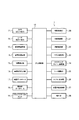
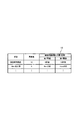
- the drawing It is a block diagram showing a configuration of a vehicle travel control system according to an embodiment of the present disclosure, It is explanatory drawing showing an example of the content of the urgency database of FIG. It is a flowchart showing the procedure of the automatic driving
- the vehicle travel control system 1 is a system that controls automatic driving that automatically performs driving operations such as acceleration, steering, and braking of the host vehicle as an example of driving assistance in the present disclosure.
- the vehicle travel control system 1 includes a travel control unit 10 and each unit connected to the travel control unit 10.
- the travel control unit 10 includes a camera (front / rear) 11, a radar (front / rear) 12, a vehicle-to-vehicle communication device 13, a road-to-vehicle communication device 14, a position detection unit 15, a vehicle state input unit 16, a map database 17, Urgency database 18, driver status monitor 19, drive control unit 20, braking control unit 21, steering control unit 22, pedal drive unit 23, steering wheel drive unit 24, seat drive unit 25, air conditioner control unit 26, audio image control unit 27, the notification part 28 is connected.
- the traveling control unit 10 is an information processing apparatus mainly configured by a CPU (Central Processing Unit), a ROM (Read Only Memory), a RAM (Random Access Memory), an input / output interface, etc. (all not shown).
- the travel control unit 10 controls an automatic driving function that causes the host vehicle to travel by automatically performing driving operations such as acceleration, braking, and steering of the host vehicle.
- operation here includes what makes the own vehicle drive
- driving assistance that bears a part of the driving operation related to the driving of the own vehicle, such as the Lane Keeping Assist System and the Inter-Vehicle and Lane Control Function (Adaptive Cruise Control), etc. Including running.
- the travel control unit 10 corresponds to a control unit, an acquisition unit, a determination unit, an emergency level setting unit, a limit setting unit, a notification unit, and an emergency treatment unit of the driving support control device.
- the traveling control unit 10 causes the host vehicle to travel according to the route to the destination while comparing the current location of the host vehicle with the road map data.
- the travel control unit 10 grasps other traffic such as surrounding vehicles and surrounding conditions such as signals, signs, road shapes, and obstacles with the camera 11, the radar 12, the inter-vehicle communication device 13, and the road-to-vehicle communication device 14. Determine the acceleration, braking and steering operations required for safe driving.
- the travel control unit 10 operates various actuators such as the drive control unit 20, the braking control unit 21, and the steering control unit 22 according to the determined operation, and causes the host vehicle to travel.
- the traveling control unit 10 determines whether or not the automatic driving can be continued based on various information including future situations predicted to be encountered in the future on the planned traveling route.
- the contents of control for taking measures according to the determination result will be described.
- the planned travel route here is, for example, a route to a destination set by a navigation system (not shown) mounted on the host vehicle or an extension of the road on which the host vehicle is currently traveling. is there.
- the camera 11 is an imaging device installed at each of the front and rear of the vehicle, images the front area and the rear area of the host vehicle, and outputs data of the captured image to the travel control unit 10.
- the radar 12 is a sensor that detects the presence / absence of a target object and the distance to the target object by transmitting radio waves and laser light toward the detection target ranges in front and rear of the host vehicle and receiving the reflected waves. .
- the camera 11 and the radar 12 are used as optical or electromagnetic sensors for recognizing other vehicles, obstacles, road shapes, and the like existing in front and rear of the host vehicle.
- the inter-vehicle communication device 13 is a wireless communication device that performs wireless communication (vehicle-to-vehicle communication) with a communication device mounted on another vehicle.
- the traveling control unit 10 performs vehicle-to-vehicle communication with surrounding vehicles that exist within the wireless communicable range of the inter-vehicle communication device 13 and acquires various information provided by the surrounding vehicles.
- an application is assumed in which behaviors such as the position, speed, acceleration, and traveling direction of surrounding vehicles are grasped based on information acquired from other vehicles by the inter-vehicle communication device 13.
- information indicating the distant environmental conditions acquired by other vehicles is acquired by inter-vehicle communication, and the host vehicle travels. It is assumed to be used to grasp the future situation that is expected to be encountered in the future on the planned route.
- the information representing the remote environmental state includes information on the type, position, and time of the event.
- the road-to-vehicle communication device 14 is a wireless communication device for receiving information provided from an information providing device (roadside device) installed on the road.
- the roadside device detects the behavior of each vehicle existing in the surrounding monitoring target range, such as position, speed, acceleration, traveling direction, etc., and uses vehicle detection information related to each vehicle by wireless communication. Assumed.
- the traveling control unit 10 grasps the position and behavior of each vehicle traveling around the vehicle based on the vehicle detection information received from the roadside device by the road-to-vehicle communication device 14.
- information indicating environmental conditions far away from roadside devices for example, temporary traffic regulations, congestion, weather, emergency vehicle approach, etc.
- the information representing the remote environmental state includes information on the type, position, and time of the event.
- the position detection unit 15 detects the current location of the host vehicle based on detection results from a GPS (Global Positioning System) receiver, a gyro sensor, a vehicle speed sensor (all not shown), and the travel control unit uses the detected current location information. 10 is output.
- GPS Global Positioning System
- the vehicle state input unit 16 inputs various information representing the vehicle state to the travel control unit 10.
- information representing the vehicle state measured values by sensors that measure the behavior of the host vehicle such as speed, acceleration, and angular velocity, the state of the vehicle system (cognition / judgment system, travel control system), and the driver Operation signals such as steering wheel operation, accelerator operation, and brake operation are assumed.
- the map database 17 is a storage device that stores map data for route guidance.
- the map data includes various data such as node data corresponding to road nodal points, link data corresponding to road sections between nodes, attribute data corresponding to nodes and links, and facility data.
- the emergency level database 18 is a database that stores information in which a degree of urgency indicating a degree of urgency and a right transfer restriction are defined for a plurality of situations corresponding to a reason that the continuation of the automatic driving is impossible.
- the urgency database 18 includes a situation in which automatic driving cannot be continued, and urgency and authority transfer restrictions (first threshold value / second threshold value) corresponding to the situation. Assume that a table described in association is stored. Examples of situations in which automatic driving cannot be continued include road construction, accidents, temporary traffic restrictions, traffic jams, bad weather, and emergency vehicles approaching.
- the degree of urgency is a value that represents the degree of urgency, and is set so that the smaller the grace period until the automatic operation is canceled and the manual operation is switched to the situation where the automatic operation cannot be continued, the larger the value is.
- Authority delegation restriction is information that indicates restrictions regarding the time or distance that should be used for emergency evacuation, as well as notification that prompts the driver to prepare for delegating the authority for driving as a measure before continuation of automatic driving becomes impossible. It is.
- This authority transfer restriction includes a first threshold value and a second threshold value.
- the first threshold value is a value representing a time or distance limit that should be recommended to the driver to cancel the automatic driving and switch to the manual driving.
- the second threshold value is a value that represents a restriction on the time or distance for emergency evacuation when the driver does not accept the cancellation of automatic driving after making a recommendation based on the first threshold value. It is assumed that the first threshold value is set first and the second threshold value is set after the time-series order. These first threshold value and second threshold value are set, for example, as values representing the elapsed time from the time when the corresponding situation is grasped and the distance from the point where the corresponding situation occurs.
- the driver status monitor 19 includes an in-vehicle camera and sensors for observing the driver's state.
- the state of the driver to be observed by the driver status monitor 19 for example, the movement of the line of sight, the arousal state, the posture, the operation state of the switches, and the like are assumed.
- the drive control unit 20 is a control device including an actuator that operates an accelerator or a transmission of the host vehicle.
- the travel control unit 10 controls acceleration / deceleration of the host vehicle by sending a control command to the drive control unit 20 in accordance with a travel plan calculated based on the host vehicle and surrounding conditions.
- the braking control unit 21 is a control device that includes an actuator that operates the brake of the host vehicle.
- the traveling control unit 10 controls the braking of the host vehicle by sending a control command to the braking control unit 21 in accordance with the traveling plan calculated based on the host vehicle and the surrounding situation.
- the steering control unit 22 is a control device including an actuator that operates the steering device of the host vehicle.
- the travel control unit 10 controls the steering of the host vehicle by sending a control command to the steering control unit 22 in accordance with a travel plan calculated based on the host vehicle and surrounding conditions.
- the pedal drive unit 23 is an actuator that operates a brake pedal of the vehicle. In the present embodiment, it is assumed that the traveling control unit 10 activates the brake via the pedal driving unit 23 for the purpose of alerting the driver and awakening treatment.
- the steering wheel drive unit 24 is an actuator that presents haptic information acting on the driver's hand via the steering wheel of the host vehicle. In the present embodiment, it is assumed that the traveling control unit 10 presents tactile information to the driver via the steering wheel driving unit 24 for the purpose of alerting the driver and awakening treatment. .
- the seat drive unit 25 is an actuator that presents a tactile force acting on the driver's body through the driver's seat of the vehicle. In the present embodiment, it is assumed that the traveling control unit 10 presents tactile information to the driver via the seat driving unit 25 for the purpose of alerting the driver and awakening treatment.
- the air conditioner control unit 26 is an electronic control device that controls the air conditioning equipment of the host vehicle. In the present embodiment, it is assumed that the traveling control unit 10 appropriately controls air conditioning (for example, temperature / air volume change, odor change) via the air conditioner control unit 26 for the purpose of alerting the driver and awakening treatment. is doing.
- air conditioning for example, temperature / air volume change, odor change
- the audio video control unit 27 is an electronic control device that controls the audio video equipment of the host vehicle. In the present embodiment, it is assumed that the traveling control unit 10 performs output control of video / audio content via the audio / video control unit 27 for the purpose of presenting information and alerting the driver.
- reporting part 28 is an output device for alert
- the notification unit 28 is embodied by, for example, a display device that displays an image, an audio output device that outputs audio information, and the like.
- step S100 the traveling control unit 10 acquires various information related to the environmental state, the system state, the vehicle state, and the driver state in accordance with the traveling control of the automatic driving.
- the travel control unit 10 is based on information obtained by the camera 11, the radar 12, the inter-vehicle communication device 13, and the road-to-vehicle communication device 14, other traffic such as surrounding vehicles, signals, signs, roads Peripheral conditions such as shape and obstacles are acquired as information related to the current environmental conditions in the vicinity of the host vehicle.
- the traveling control unit 10 determines a situation that is expected to be encountered in the future on the route on which the host vehicle is to travel based on information obtained by communication by the inter-vehicle communication device 13 or the road-to-vehicle communication device 14. Acquired as information about the environmental status.
- the traveling control unit 10 acquires information representing the state of the vehicle system of the recognition / judgment system and the traveling control system, which is input from the vehicle state input unit 16, as information related to the system state.
- the state of the vehicle system here includes, for example, information indicating the presence or absence of abnormality.
- the traveling control unit 10 uses information indicating the position and behavior of the host vehicle input from the vehicle state input unit 16 and operation information such as a steering wheel operation, an accelerator operation, and a brake operation by the driver as information on the vehicle state. get.
- the traveling control unit 10 acquires information indicating the driver's line of sight movement, arousal state, posture, operation status of switches, and the like as information regarding the driver state.
- step S102 the traveling control unit 10 determines whether or not the situation grasped from the various information acquired in step S100 corresponds to a situation where the automatic driving cannot be continued. Specifically, when the traveling control unit 10 grasps an abnormality that makes it impossible to continue the automatic driving in the current situation around the host vehicle and the situation that is predicted to be encountered in the future, the driving control unit 10 continues the automatic driving. Judge that the situation becomes impossible. Examples of situations in which automatic driving cannot be continued include road construction and accidents, temporary traffic restrictions, traffic jams, bad weather, and emergency vehicles approaching. In addition, when there is an abnormality in the recognition / determination system or the vehicle system of the travel control system, the travel control unit 10 determines that it is impossible to continue the automatic driving.
- step S102 If the situation does not correspond to the situation where the automatic driving cannot be continued (step S102: NO), the traveling control unit 10 returns to step S100. On the other hand, when it corresponds to the situation where continuation of automatic driving becomes impossible (Step S102: YES), traveling control part 10 progresses to Step S104.
- step S104 the traveling control unit 10 determines the degree of urgency for the situation determined in step S102. Specifically, the traveling control unit 10 refers to the table (see FIG. 2) of the urgency level database 18 and determines the urgency level corresponding to the situation determined to be applicable in step S102.
- step S106 the traveling control unit 10 sets the first threshold value and the second threshold value for authority transfer restriction according to the urgency level determined in step S104. Specifically, the traveling control unit 10 sets the first threshold value and the second threshold value for authority transfer restriction so that they are closer to the current point or the local point as the degree of urgency increases.
- the first threshold value and the second threshold value of the authority transfer restriction corresponding to the situation determined to be applicable and the urgency level are set.
- the traveling control unit 10 may set the authority transfer restriction based on the situation with the highest degree of urgency. In addition to the degree of urgency, it is conceivable to reflect the state of the driver and the state of the vehicle system in the setting of authority transfer restriction. For example, when the state of the driver or the state of the vehicle system corresponds to a specific condition that is disadvantageous when canceling the automatic driving and switching to the manual driving, the traveling control unit 10 sets the first threshold value or the second threshold value for authority transfer restriction. Is adjusted closer to the current or local point. By doing so, it is possible to speed up the response to the situation where the automatic operation cannot be continued.
- a search is made for a evacuable place where the vehicle can be safely evacuated before the situation determined in step S102 is encountered, and the time or distance required to reach the discovered evacuable place is used as a reference.
- the first threshold value and the second threshold value for authority transfer restriction may be set.
- the first threshold value and the second threshold value for the authority transfer restriction are set before the timing at which the host vehicle is predicted to reach the evacuable place.
- the traveling control unit 10 searches for a retreatable place based on the road shape described in the map data, and information acquired by vehicle-to-vehicle communication or road-to-vehicle communication.
- step S108 the traveling control unit 10 determines whether or not the first threshold (time or distance) has elapsed for the traveling of the host vehicle after the authority transfer restriction is set. When the first threshold value has not elapsed (step S108: NO), the traveling control unit 10 repeats step S108. If the first threshold value has elapsed (step S108: YES), the traveling control unit 10 proceeds to step S110.
- step S110 the traveling control unit 10 executes a notification recommending that the automatic operation is canceled and the manual operation is switched based on the content of the authority transfer restriction.
- the traveling control unit 10 performs an awakening operation according to the driver's arousal level.
- the traveling control unit 10 displays a message indicating that it is necessary to cancel the automatic driving and shift to the manual driving by the time based on the content of the authority transfer restriction by the notification unit 28 or by voice output To inform the driver. For example, a message such as “Please prepare to cancel automatic operation within ⁇ km and switch to manual operation” or “Release automatic operation within 10 seconds and switch to manual operation. It is conceivable to send a message such as “
- the traveling control unit 10 searches for a retreatable place where the host vehicle can be safely retreated before encountering the situation determined in step S102, and notifies the driver of information regarding the retreatable place.
- Good For example, when the evacuable place can be identified, a message such as "A evacuable place has been found. If automatic operation is not canceled by XX, the system automatically enters the evacuable place.” Conceivable. In addition, when the evacuable place cannot be specified, for example, a message such as “There is no evacuable place. If automatic driving is not canceled by XX, it automatically stops.” Is considered.
- the driving control unit 10 grasps the state in which the driver's arousal level is low (eg, drowsiness, doze), for example, the driver is awakened by shaking the steering wheel or the driver's seat. If it still does not wake up, the traveling control unit 10 excites the instantaneous brake once or a plurality of times.
- the state in which the driver's arousal level is low eg, drowsiness, doze
- step S112 the traveling control unit 10 determines whether or not an acceptance condition for shifting to manual operation is established for the driver. Specifically, the traveling control unit 10 satisfies the acceptance condition on the condition that an override operation such as a steering wheel operation, an accelerator operation, a brake operation, or the like by the driver is input to the driving operation based on the automatic driving control. Is determined. Alternatively, the traveling control unit 10 determines that the acceptance condition is satisfied on the condition that an instruction to cancel the automatic driving is received from the driver. If the acceptance condition for shifting to manual operation is not satisfied (step S112: NO), the traveling control unit 10 proceeds to step S114.
- an override operation such as a steering wheel operation, an accelerator operation, a brake operation, or the like by the driver is input to the driving operation based on the automatic driving control. Is determined.
- the traveling control unit 10 determines that the acceptance condition is satisfied on the condition that an instruction to cancel the automatic driving is received from the driver. If the acceptance condition for shifting to manual operation is not satisfied (step S11
- step S114 the traveling control unit 10 determines whether or not the second threshold (time or distance) has elapsed for the traveling of the host vehicle after the authority transfer restriction is set. When the second threshold has not elapsed (step S114: NO), the traveling control unit 10 returns to step S110. If it is determined in step S112 that the acceptance condition for shifting to manual operation is satisfied (step S112: YES), the traveling control unit 10 proceeds to step S116. In step S116, the traveling control unit 10 delegates the driving authority to the driver by canceling the automatic driving and switching to the manual driving. After step S116, the traveling control unit 10 ends this process.
- step S118 when it determines with having passed the 2nd threshold value in step S114 (S114: YES), the traveling control part 10 progresses to step S118.
- step S118 when the evacuable place is specified, the traveling control unit 10 performs an emergency evacuation traveling in which the host vehicle automatically enters the evacuable place. Alternatively, when the evacuable place is not specified, the travel control unit 10 performs a vehicle stop that stops the host vehicle. The travel control unit 10 activates a display device (not shown) that presents information around the host vehicle and a hazard lamp when the host vehicle is stopped urgently, and notifies the surrounding vehicles that the host vehicle is stopped. To do. After step S118, the traveling control unit 10 ends this process.
- a driver operator may adjust a value through a user interface with respect to the preset standard value. For example, by changing the first threshold, it is possible to arbitrarily advance or delay the timing for recommending cancellation of automatic driving. In addition, by changing the second threshold value, the timing for performing emergency evacuation traveling or automatic stop can be arbitrarily advanced or delayed by the driver.
- the pedal drive unit 23, the steering wheel drive unit 24, the seat drive unit 25, the air conditioner control unit 26, and the audio image control unit 27 are provided.
- Control may be performed to alert the driver. For example, it is conceivable to call attention by operations such as vibration of a steering wheel or a driver's seat, vibration by a brake operation, operation of an air conditioner, and extinguishing an audiovisual output. It may also be a device that alerts the user by operating wipers, power windows, blinking room lights, and the like.
- the structure which transmits information to portable communication terminals such as a mobile telephone which exists in a vehicle interior by short-distance radio
- the traveling control unit 10 calls attention by changing the intensity of information presentation according to the driver's state (for example, posture, line-of-sight direction, arousal level) by using one or more of these information presentation means. Can be considered.
- the traveling control unit 10 specifies that the driver is performing an operation other than the driving operation, and inhibits the specified operation. Control may be performed. For example, when the driving control unit 10 specifies that the driver operates the audio player, the audio playback volume may be reduced and a voice message recommending cancellation of automatic driving may be output at a higher volume. Conceivable. In addition, when the driving control unit 10 specifies that the driver is gazing at a display on which video content such as a television is displayed, the video is turned off or another video with content recommending cancellation of automatic driving is displayed. It can be replaced.
- the vehicle is automatically decelerated until it is determined in step S102 in FIG. 3 that the automatic driving cannot be continued until it shifts to manual driving in step S116. May be.
- the authority transfer restriction it is possible to set a first threshold for triggering notification that recommends cancellation of automatic driving and a second threshold for triggering emergency evacuation. By doing in this way, it is possible to cope in a stepwise manner until a situation where it is impossible to continue the automatic driving is encountered.
- the notification mode can be changed according to the presence / absence of a retreatable place and the driver's condition. By doing so, it is possible to provide effective information suitable for various situations, and to prompt the driver to take appropriate measures.
- a program is stored in a ROM corresponding to a non-transitional tangible recording medium, and this program is a CPU corresponding to a processor of a computer.
- the program is stored in a non-transitional tangible recording medium other than ROM (for example, non-volatile memory other than ROM), and this program is stored in a CPU or the like.
- the configuration may be executed by the processor.
- a program stored in the non-transitional tangible recording medium is executed by the processor, whereby a method corresponding to this program (for example, a driving support control method). May be configured to be executed.
- each part of the vehicle travel control system 1 may be configured in hardware by one or a plurality of integrated circuits (ie, ICs).
- each part of the vehicle travel control system 1 for example, a travel control unit 10 corresponding to a control unit, an acquisition unit, a determination unit, an emergency level setting unit, a limit setting unit, a notification unit, and an emergency treatment unit of a driving support control device).
- a travel control unit 10 corresponding to a control unit, an acquisition unit, a determination unit, an emergency level setting unit, a limit setting unit, a notification unit, and an emergency treatment unit of a driving support control device.
- a non-transitional tangible recording medium such as a non-volatile memory and a computer that executes the software, software alone, hardware alone, or a combination thereof.
Landscapes
- Engineering & Computer Science (AREA)
- Automation & Control Theory (AREA)
- Transportation (AREA)
- Mechanical Engineering (AREA)
- Human Computer Interaction (AREA)
- Physics & Mathematics (AREA)
- General Physics & Mathematics (AREA)
- Life Sciences & Earth Sciences (AREA)
- Atmospheric Sciences (AREA)
- Mathematical Physics (AREA)
- Traffic Control Systems (AREA)
- Control Of Driving Devices And Active Controlling Of Vehicle (AREA)
- Regulating Braking Force (AREA)
- Control Of Vehicle Engines Or Engines For Specific Uses (AREA)
- Aviation & Aerospace Engineering (AREA)
- Radar, Positioning & Navigation (AREA)
- Remote Sensing (AREA)
- Business, Economics & Management (AREA)
- Health & Medical Sciences (AREA)
- Artificial Intelligence (AREA)
- Evolutionary Computation (AREA)
- Game Theory and Decision Science (AREA)
- Medical Informatics (AREA)
Priority Applications (1)
| Application Number | Priority Date | Filing Date | Title |
|---|---|---|---|
| US15/748,597 US20190004513A1 (en) | 2015-07-31 | 2016-07-11 | Driving assistance control apparatus |
Applications Claiming Priority (2)
| Application Number | Priority Date | Filing Date | Title |
|---|---|---|---|
| JP2015152015A JP6528583B2 (ja) | 2015-07-31 | 2015-07-31 | 運転支援制御装置 |
| JP2015-152015 | 2015-07-31 |
Publications (1)
| Publication Number | Publication Date |
|---|---|
| WO2017022417A1 true WO2017022417A1 (ja) | 2017-02-09 |
Family
ID=57944210
Family Applications (1)
| Application Number | Title | Priority Date | Filing Date |
|---|---|---|---|
| PCT/JP2016/070403 Ceased WO2017022417A1 (ja) | 2015-07-31 | 2016-07-11 | 運転支援制御装置 |
Country Status (3)
| Country | Link |
|---|---|
| US (1) | US20190004513A1 (https=) |
| JP (1) | JP6528583B2 (https=) |
| WO (1) | WO2017022417A1 (https=) |
Cited By (10)
| Publication number | Priority date | Publication date | Assignee | Title |
|---|---|---|---|---|
| WO2018207905A1 (ja) * | 2017-05-11 | 2018-11-15 | いすゞ自動車株式会社 | 車両の運転制御システム及び車両の運転制御方法 |
| CN109109859A (zh) * | 2018-08-07 | 2019-01-01 | 庄远哲 | 一种电动汽车及其距离监控方法 |
| CN109421725A (zh) * | 2017-08-22 | 2019-03-05 | 丰田自动车株式会社 | 中止地点管理系统、通知系统、指导系统及存储介质 |
| CN110154954A (zh) * | 2017-05-15 | 2019-08-23 | 成都中技智慧企业管理咨询有限公司 | 一种自动驾驶汽车判断乘客身份的智能系统 |
| WO2019188587A1 (ja) * | 2018-03-27 | 2019-10-03 | 豊田合成株式会社 | 運転権限移譲装置 |
| US10558213B2 (en) | 2016-08-15 | 2020-02-11 | Toyota Jidosha Kabushiki Kaisha | Control system for and control method of autonomous driving vehicle |
| CN113554864A (zh) * | 2020-04-26 | 2021-10-26 | 奥迪股份公司 | 高速路交通事故后处理的系统和方法 |
| JP2022541343A (ja) * | 2019-07-26 | 2022-09-22 | ズークス インコーポレイテッド | 自律車両に遠隔操作命令を提供するためのシステム及び方法 |
| US11892835B2 (en) | 2019-07-26 | 2024-02-06 | Zoox, Inc. | System and method for controlling an autonomous vehicle |
| JP2024534370A (ja) * | 2021-09-14 | 2024-09-20 | メルセデス・ベンツ グループ アクチェンゲゼルシャフト | 自動走行運転で車両を動作させる方法 |
Families Citing this family (60)
| Publication number | Priority date | Publication date | Assignee | Title |
|---|---|---|---|---|
| JP6567376B2 (ja) | 2015-09-25 | 2019-08-28 | パナソニック株式会社 | 装置 |
| JP6654641B2 (ja) * | 2015-10-06 | 2020-02-26 | 株式会社日立製作所 | 自動運転制御装置および自動運転制御方法 |
| EP3378722B1 (en) * | 2015-11-19 | 2024-02-21 | Sony Group Corporation | Drive assistance device and drive assistance method, and moving body |
| JP6636337B2 (ja) * | 2016-01-07 | 2020-01-29 | 株式会社デンソーアイティーラボラトリ | 警報装置、警報方法、及びプログラム |
| JP6728558B2 (ja) * | 2016-01-25 | 2020-07-22 | 日立オートモティブシステムズ株式会社 | 自動運転制御装置および自動運転制御方法 |
| US10551201B2 (en) * | 2016-02-25 | 2020-02-04 | Hitachi, Ltd. | Moving body control method, moving body, and moving body control system |
| JP6589840B2 (ja) * | 2016-12-07 | 2019-10-16 | トヨタ自動車株式会社 | 運転支援装置 |
| JP6501998B2 (ja) * | 2017-01-31 | 2019-04-17 | 三菱電機株式会社 | 自動運転制御装置 |
| JP6631567B2 (ja) * | 2017-03-10 | 2020-01-15 | オムロン株式会社 | 自動運転支援装置、方法及びプログラム |
| JP2018149934A (ja) * | 2017-03-14 | 2018-09-27 | オムロン株式会社 | 運転支援装置、プログラムおよび運転支援方法 |
| JP6690591B2 (ja) * | 2017-03-30 | 2020-04-28 | マツダ株式会社 | 運転支援装置 |
| JP2019016028A (ja) * | 2017-07-04 | 2019-01-31 | アイシン精機株式会社 | 運転支援装置、運転支援方法及び運転支援プログラム |
| KR101989523B1 (ko) * | 2017-07-07 | 2019-06-14 | 엘지전자 주식회사 | 차량에 구비된 차량 제어 장치 및 차량의 제어방법 |
| JP6898820B2 (ja) | 2017-09-27 | 2021-07-07 | マレリ株式会社 | 覚醒誘導システム |
| JP6907895B2 (ja) | 2017-11-15 | 2021-07-21 | トヨタ自動車株式会社 | 自動運転システム |
| JP6859931B2 (ja) * | 2017-11-15 | 2021-04-14 | トヨタ自動車株式会社 | 自動運転システム |
| US10620627B2 (en) | 2017-12-19 | 2020-04-14 | PlusAI Corp | Method and system for risk control in switching driving mode |
| US10710590B2 (en) | 2017-12-19 | 2020-07-14 | PlusAI Corp | Method and system for risk based driving mode switching in hybrid driving |
| US10406978B2 (en) | 2017-12-19 | 2019-09-10 | PlusAI Corp | Method and system for adapting augmented switching warning |
| US11215984B2 (en) | 2018-01-09 | 2022-01-04 | Uatc, Llc | Systems and methods for controlling an autonomous vehicle |
| JP2019137314A (ja) * | 2018-02-14 | 2019-08-22 | 株式会社デンソー | 温度調整装置 |
| JP6655111B2 (ja) | 2018-03-09 | 2020-02-26 | 株式会社Subaru | 車両の走行制御システム |
| JP2019189020A (ja) * | 2018-04-25 | 2019-10-31 | 矢崎総業株式会社 | 車両制御システム |
| JPWO2019230273A1 (ja) * | 2018-05-28 | 2021-05-13 | 日立Astemo株式会社 | 車車間通信装置 |
| JP6968040B2 (ja) * | 2018-07-11 | 2021-11-17 | 株式会社デンソーアイティーラボラトリ | 運転支援装置、方法及びプログラム |
| JP7107095B2 (ja) * | 2018-08-28 | 2022-07-27 | トヨタ自動車株式会社 | 自動運転システム |
| JP2020050109A (ja) | 2018-09-26 | 2020-04-02 | 本田技研工業株式会社 | 車両制御装置、車両制御方法、及びプログラム |
| JP7206750B2 (ja) * | 2018-09-26 | 2023-01-18 | 日本電気株式会社 | 運転支援装置 |
| JP7198624B2 (ja) * | 2018-10-04 | 2023-01-04 | 株式会社Subaru | 車両制御装置 |
| JP6974367B2 (ja) * | 2019-01-08 | 2021-12-01 | 本田技研工業株式会社 | 車両の制御システム、車両の制御方法、およびプログラム |
| JP7246195B2 (ja) * | 2019-02-01 | 2023-03-27 | 日産自動車株式会社 | 運転支援方法及び運転支援装置 |
| JP7275615B2 (ja) * | 2019-02-06 | 2023-05-18 | 株式会社デンソー | 自動運転状況のドライバ通知装置 |
| JP6931370B2 (ja) * | 2019-03-25 | 2021-09-01 | 本田技研工業株式会社 | 車両制御装置、車両制御方法、及びプログラム |
| DE102019206145B3 (de) * | 2019-04-30 | 2020-10-15 | Conti Temic Microelectronic Gmbh | Fahrerassistenzsystem für ein autonomes Fahrzeug |
| CN110053630B (zh) * | 2019-06-06 | 2021-09-03 | 百度在线网络技术(北京)有限公司 | 车辆控制方法及装置 |
| US11787407B2 (en) * | 2019-07-24 | 2023-10-17 | Pony Ai Inc. | System and method for sensing vehicles and street |
| JP7028833B2 (ja) * | 2019-07-31 | 2022-03-02 | パナソニック株式会社 | 装置、プロセッサ、制御方法、プログラム |
| JP2021024539A (ja) * | 2019-08-09 | 2021-02-22 | トヨタ自動車株式会社 | 運転支援装置 |
| US20210191394A1 (en) * | 2019-12-18 | 2021-06-24 | Lyft, Inc. | Systems and methods for presenting curated autonomy-system information of a vehicle |
| US11292493B2 (en) | 2020-01-23 | 2022-04-05 | Ford Global Technologies, Llc | Vehicle operation modes |
| WO2021153382A1 (ja) * | 2020-01-28 | 2021-08-05 | パナソニックIpマネジメント株式会社 | 情報処理方法、及び、情報処理システム |
| JP7283411B2 (ja) * | 2020-02-14 | 2023-05-30 | トヨタ自動車株式会社 | 車両制御装置 |
| JP7302509B2 (ja) * | 2020-03-03 | 2023-07-04 | 株式会社デンソー | 車載機、自動運転可否判定システム及び自動運転可否判定プログラム |
| JP7200968B2 (ja) * | 2020-03-31 | 2023-01-10 | トヨタ自動車株式会社 | 車両制御装置および車両制御方法 |
| JP7380418B2 (ja) | 2020-05-22 | 2023-11-15 | 株式会社デンソー | 運転支援装置および運転支援プログラム |
| CN112172827B (zh) * | 2020-06-24 | 2022-12-02 | 上汽通用五菱汽车股份有限公司 | 辅助驾驶系统控制方法、装置、设备及存储介质 |
| JP7318595B2 (ja) * | 2020-06-29 | 2023-08-01 | トヨタ自動車株式会社 | 車両制御装置 |
| CN113942477B (zh) * | 2020-07-17 | 2025-04-11 | 奥迪股份公司 | 辅助驾驶装置及相应的车辆、方法、计算机设备和介质 |
| JP7537978B2 (ja) * | 2020-10-02 | 2024-08-21 | 株式会社Subaru | 車両制御システム |
| WO2022078885A1 (en) | 2020-10-16 | 2022-04-21 | Signify Holding B.V. | System and method for emitting an energizing light inside the cabin of an autonomous driving vehicle |
| WO2022164715A1 (en) * | 2021-01-29 | 2022-08-04 | Termson Management Llc | Control mode selection and transitions |
| DE102021201281A1 (de) | 2021-02-11 | 2022-08-11 | Zf Friedrichshafen Ag | Übernahmeaufforderungs-Modul für ein zumindest teilautomatisiertes Fahrsystem, Verfahren zur Erzeugung eines Übernahmeaufforderungs-Signals für einen Fahrer eines zumindest teilautomatisierten Fahrsystems und Fahrsystem |
| FR3131260B1 (fr) * | 2021-12-24 | 2024-10-18 | Renault | Dispositif et procédé d’évaluation d’un système d’aide à la conduite pour véhicule automobile, le système d’aide à la conduite mettant en œuvre un réseau neuronal artificiel |
| JP7839644B2 (ja) * | 2022-01-18 | 2026-04-02 | 株式会社Subaru | 車両の運転支援装置 |
| CN117537828A (zh) * | 2022-08-01 | 2024-02-09 | 腾讯科技(深圳)有限公司 | 基于自动驾驶的车辆导航方法、装置、设备及存储介质 |
| JP2024024266A (ja) * | 2022-08-09 | 2024-02-22 | トヨタ自動車株式会社 | 運転支援装置 |
| JP7838468B2 (ja) * | 2022-12-21 | 2026-04-01 | トヨタ自動車株式会社 | 車両誘導装置 |
| JP7697482B2 (ja) * | 2023-03-07 | 2025-06-24 | トヨタ自動車株式会社 | ドライバ監視装置、ドライバ監視方法及びドライバ監視用コンピュータプログラム |
| EP4459588A1 (en) * | 2023-05-01 | 2024-11-06 | Toyota Jidosha Kabushiki Kaisha | Notification system, vehicle control device, notification method, and storage medium |
| JP2024160673A (ja) * | 2023-05-01 | 2024-11-14 | トヨタ自動車株式会社 | 通知システム、車両制御装置、通知方法及びプログラム |
Citations (4)
| Publication number | Priority date | Publication date | Assignee | Title |
|---|---|---|---|---|
| JPH06171394A (ja) * | 1992-12-11 | 1994-06-21 | Kansei Corp | 定速走行維持制御方法 |
| JP2007003287A (ja) * | 2005-06-22 | 2007-01-11 | Nissan Motor Co Ltd | Gpsロストの予測方法、gpsロストの予測装置及び車両用走行制御装置 |
| WO2014085380A1 (en) * | 2012-11-30 | 2014-06-05 | Google Inc. | Engaging and disengaging for autonomous driving |
| JP2014106854A (ja) * | 2012-11-29 | 2014-06-09 | Toyota Infotechnology Center Co Ltd | 自動運転車両制御装置および方法 |
Family Cites Families (4)
| Publication number | Priority date | Publication date | Assignee | Title |
|---|---|---|---|---|
| JPH10315801A (ja) * | 1997-05-19 | 1998-12-02 | Honda Motor Co Ltd | 車両用走行制御装置 |
| JP2002163799A (ja) * | 2000-11-27 | 2002-06-07 | Natl Inst For Land & Infrastructure Management Mlit | 自動運転の解除装置 |
| JP2005067317A (ja) * | 2003-08-21 | 2005-03-17 | Nippon Seiki Co Ltd | 車両用情報提供装置 |
| JP2011118603A (ja) * | 2009-12-02 | 2011-06-16 | Clarion Co Ltd | 車両制御装置 |
-
2015
- 2015-07-31 JP JP2015152015A patent/JP6528583B2/ja not_active Expired - Fee Related
-
2016
- 2016-07-11 WO PCT/JP2016/070403 patent/WO2017022417A1/ja not_active Ceased
- 2016-07-11 US US15/748,597 patent/US20190004513A1/en not_active Abandoned
Patent Citations (4)
| Publication number | Priority date | Publication date | Assignee | Title |
|---|---|---|---|---|
| JPH06171394A (ja) * | 1992-12-11 | 1994-06-21 | Kansei Corp | 定速走行維持制御方法 |
| JP2007003287A (ja) * | 2005-06-22 | 2007-01-11 | Nissan Motor Co Ltd | Gpsロストの予測方法、gpsロストの予測装置及び車両用走行制御装置 |
| JP2014106854A (ja) * | 2012-11-29 | 2014-06-09 | Toyota Infotechnology Center Co Ltd | 自動運転車両制御装置および方法 |
| WO2014085380A1 (en) * | 2012-11-30 | 2014-06-05 | Google Inc. | Engaging and disengaging for autonomous driving |
Cited By (17)
| Publication number | Priority date | Publication date | Assignee | Title |
|---|---|---|---|---|
| US10558213B2 (en) | 2016-08-15 | 2020-02-11 | Toyota Jidosha Kabushiki Kaisha | Control system for and control method of autonomous driving vehicle |
| WO2018207905A1 (ja) * | 2017-05-11 | 2018-11-15 | いすゞ自動車株式会社 | 車両の運転制御システム及び車両の運転制御方法 |
| JP2018190322A (ja) * | 2017-05-11 | 2018-11-29 | いすゞ自動車株式会社 | 車両の運転制御システム及び車両の運転制御方法 |
| US11267486B2 (en) | 2017-05-11 | 2022-03-08 | Isuzu Motors Limited | Vehicle driving control system and vehicle driving control method |
| CN110612558A (zh) * | 2017-05-11 | 2019-12-24 | 五十铃自动车株式会社 | 车辆的驾驶控制系统及车辆的驾驶控制方法 |
| CN110154954A (zh) * | 2017-05-15 | 2019-08-23 | 成都中技智慧企业管理咨询有限公司 | 一种自动驾驶汽车判断乘客身份的智能系统 |
| CN109421725B (zh) * | 2017-08-22 | 2022-07-19 | 丰田自动车株式会社 | 中止地点管理系统、通知系统、指导系统及存储介质 |
| CN109421725A (zh) * | 2017-08-22 | 2019-03-05 | 丰田自动车株式会社 | 中止地点管理系统、通知系统、指导系统及存储介质 |
| JPWO2019188587A1 (ja) * | 2018-03-27 | 2021-02-12 | 豊田合成株式会社 | 運転権限移譲装置 |
| WO2019188587A1 (ja) * | 2018-03-27 | 2019-10-03 | 豊田合成株式会社 | 運転権限移譲装置 |
| CN109109859A (zh) * | 2018-08-07 | 2019-01-01 | 庄远哲 | 一种电动汽车及其距离监控方法 |
| JP2022541343A (ja) * | 2019-07-26 | 2022-09-22 | ズークス インコーポレイテッド | 自律車両に遠隔操作命令を提供するためのシステム及び方法 |
| US11892835B2 (en) | 2019-07-26 | 2024-02-06 | Zoox, Inc. | System and method for controlling an autonomous vehicle |
| CN113554864A (zh) * | 2020-04-26 | 2021-10-26 | 奥迪股份公司 | 高速路交通事故后处理的系统和方法 |
| JP2024534370A (ja) * | 2021-09-14 | 2024-09-20 | メルセデス・ベンツ グループ アクチェンゲゼルシャフト | 自動走行運転で車両を動作させる方法 |
| JP7592930B2 (ja) | 2021-09-14 | 2024-12-02 | メルセデス・ベンツ グループ アクチェンゲゼルシャフト | 自動走行運転で車両を動作させる方法 |
| US12195030B2 (en) | 2021-09-14 | 2025-01-14 | Mercedes-Benz Group AG | Method for operating a vehicle in an automated driving operation |
Also Published As
| Publication number | Publication date |
|---|---|
| JP2017030518A (ja) | 2017-02-09 |
| US20190004513A1 (en) | 2019-01-03 |
| JP6528583B2 (ja) | 2019-06-12 |
Similar Documents
| Publication | Publication Date | Title |
|---|---|---|
| JP6528583B2 (ja) | 運転支援制御装置 | |
| JP6451537B2 (ja) | 運転支援制御装置 | |
| JP6974664B2 (ja) | 自動運転制御装置及び車両 | |
| CN105564441B (zh) | 警报装置、警报系统、警报方法及便携终端 | |
| US9177470B2 (en) | Method for warning a driver of a vehicle about exceeding of a speed limit, and vehicle | |
| JP6413962B2 (ja) | 走行制御装置 | |
| JP6398877B2 (ja) | 自動運転制御装置 | |
| JP6690666B2 (ja) | 警報装置、警報システム及び携帯端末 | |
| CN109649404B (zh) | 自动驾驶期间传达信息的方法和车辆信息呈现装置 | |
| WO2018066028A1 (ja) | 情報出力制御装置および情報出力制御方法 | |
| CN110088700A (zh) | 用于运行机动车的驾驶员辅助装置的方法 | |
| JP6406164B2 (ja) | 情報伝達装置、電子制御装置、情報送信装置、及び電子制御システム | |
| JP2018151908A (ja) | 制御装置、制御方法、及び、プログラム | |
| CN114728658B (zh) | 车辆控制方法及装置、车辆 | |
| JP2019147535A (ja) | 自動運転時情報伝達方法、自動運転時情報伝達装置、および自動運転時情報伝達システム | |
| JP2016181032A (ja) | 自動走行制御装置及び自動走行制御システム | |
| JP2004322772A (ja) | 車載用電子装置 | |
| CN111391827B (zh) | 车辆控制装置 | |
| JP4265992B2 (ja) | 運転支援装置 | |
| CN115649190A (zh) | 车辆辅助制动的控制方法、装置、介质、车辆及芯片 | |
| JP2017224055A (ja) | 運転支援装置 | |
| JP2020006856A (ja) | 自動運転車両 | |
| JP2019096137A (ja) | 信号機認識装置 | |
| JP7800524B2 (ja) | 制御装置、自動運転装置及び走行制御装置 | |
| WO2024128037A1 (ja) | 制御装置、自動運転装置及び走行制御装置 |
Legal Events
| Date | Code | Title | Description |
|---|---|---|---|
| 121 | Ep: the epo has been informed by wipo that ep was designated in this application |
Ref document number: 16832696 Country of ref document: EP Kind code of ref document: A1 |
|
| NENP | Non-entry into the national phase |
Ref country code: DE |
|
| 122 | Ep: pct application non-entry in european phase |
Ref document number: 16832696 Country of ref document: EP Kind code of ref document: A1 |