WO2015016001A1 - 硬化性樹脂組成物及びそれを用いた半導体装置 - Google Patents
硬化性樹脂組成物及びそれを用いた半導体装置 Download PDFInfo
- Publication number
- WO2015016001A1 WO2015016001A1 PCT/JP2014/067863 JP2014067863W WO2015016001A1 WO 2015016001 A1 WO2015016001 A1 WO 2015016001A1 JP 2014067863 W JP2014067863 W JP 2014067863W WO 2015016001 A1 WO2015016001 A1 WO 2015016001A1
- Authority
- WO
- WIPO (PCT)
- Prior art keywords
- group
- resin composition
- curable resin
- polyorganosiloxane
- weight
- Prior art date
- Legal status (The legal status is an assumption and is not a legal conclusion. Google has not performed a legal analysis and makes no representation as to the accuracy of the status listed.)
- Ceased
Links
Images

Classifications
-
- C—CHEMISTRY; METALLURGY
- C08—ORGANIC MACROMOLECULAR COMPOUNDS; THEIR PREPARATION OR CHEMICAL WORKING-UP; COMPOSITIONS BASED THEREON
- C08L—COMPOSITIONS OF MACROMOLECULAR COMPOUNDS
- C08L83/00—Compositions of macromolecular compounds obtained by reactions forming in the main chain of the macromolecule a linkage containing silicon with or without sulfur, nitrogen, oxygen or carbon only; Compositions of derivatives of such polymers
- C08L83/04—Polysiloxanes
-
- C—CHEMISTRY; METALLURGY
- C08—ORGANIC MACROMOLECULAR COMPOUNDS; THEIR PREPARATION OR CHEMICAL WORKING-UP; COMPOSITIONS BASED THEREON
- C08K—Use of inorganic or non-macromolecular organic substances as compounding ingredients
- C08K5/00—Use of organic ingredients
- C08K5/04—Oxygen-containing compounds
- C08K5/09—Carboxylic acids; Metal salts thereof; Anhydrides thereof
- C08K5/098—Metal salts of carboxylic acids
-
- C—CHEMISTRY; METALLURGY
- C08—ORGANIC MACROMOLECULAR COMPOUNDS; THEIR PREPARATION OR CHEMICAL WORKING-UP; COMPOSITIONS BASED THEREON
- C08K—Use of inorganic or non-macromolecular organic substances as compounding ingredients
- C08K5/00—Use of organic ingredients
- C08K5/16—Nitrogen-containing compounds
- C08K5/34—Heterocyclic compounds having nitrogen in the ring
- C08K5/3467—Heterocyclic compounds having nitrogen in the ring having more than two nitrogen atoms in the ring
- C08K5/3477—Six-membered rings
-
- C—CHEMISTRY; METALLURGY
- C08—ORGANIC MACROMOLECULAR COMPOUNDS; THEIR PREPARATION OR CHEMICAL WORKING-UP; COMPOSITIONS BASED THEREON
- C08K—Use of inorganic or non-macromolecular organic substances as compounding ingredients
- C08K5/00—Use of organic ingredients
- C08K5/16—Nitrogen-containing compounds
- C08K5/34—Heterocyclic compounds having nitrogen in the ring
- C08K5/3467—Heterocyclic compounds having nitrogen in the ring having more than two nitrogen atoms in the ring
- C08K5/3477—Six-membered rings
- C08K5/3492—Triazines
- C08K5/34924—Triazines containing cyanurate groups; Tautomers thereof
-
- C—CHEMISTRY; METALLURGY
- C08—ORGANIC MACROMOLECULAR COMPOUNDS; THEIR PREPARATION OR CHEMICAL WORKING-UP; COMPOSITIONS BASED THEREON
- C08L—COMPOSITIONS OF MACROMOLECULAR COMPOUNDS
- C08L83/00—Compositions of macromolecular compounds obtained by reactions forming in the main chain of the macromolecule a linkage containing silicon with or without sulfur, nitrogen, oxygen or carbon only; Compositions of derivatives of such polymers
-
- C—CHEMISTRY; METALLURGY
- C08—ORGANIC MACROMOLECULAR COMPOUNDS; THEIR PREPARATION OR CHEMICAL WORKING-UP; COMPOSITIONS BASED THEREON
- C08L—COMPOSITIONS OF MACROMOLECULAR COMPOUNDS
- C08L83/00—Compositions of macromolecular compounds obtained by reactions forming in the main chain of the macromolecule a linkage containing silicon with or without sulfur, nitrogen, oxygen or carbon only; Compositions of derivatives of such polymers
- C08L83/14—Compositions of macromolecular compounds obtained by reactions forming in the main chain of the macromolecule a linkage containing silicon with or without sulfur, nitrogen, oxygen or carbon only; Compositions of derivatives of such polymers in which at least two but not all the silicon atoms are connected by linkages other than oxygen atoms
-
- H—ELECTRICITY
- H10—SEMICONDUCTOR DEVICES; ELECTRIC SOLID-STATE DEVICES NOT OTHERWISE PROVIDED FOR
- H10W—GENERIC PACKAGES, INTERCONNECTIONS, CONNECTORS OR OTHER CONSTRUCTIONAL DETAILS OF DEVICES COVERED BY CLASS H10
- H10W74/00—Encapsulations, e.g. protective coatings
- H10W74/10—Encapsulations, e.g. protective coatings characterised by their shape or disposition
-
- H—ELECTRICITY
- H10—SEMICONDUCTOR DEVICES; ELECTRIC SOLID-STATE DEVICES NOT OTHERWISE PROVIDED FOR
- H10W—GENERIC PACKAGES, INTERCONNECTIONS, CONNECTORS OR OTHER CONSTRUCTIONAL DETAILS OF DEVICES COVERED BY CLASS H10
- H10W74/00—Encapsulations, e.g. protective coatings
- H10W74/40—Encapsulations, e.g. protective coatings characterised by their materials
- H10W74/47—Encapsulations, e.g. protective coatings characterised by their materials comprising organic materials, e.g. plastics or resins
- H10W74/476—Organic materials comprising silicon
-
- C—CHEMISTRY; METALLURGY
- C08—ORGANIC MACROMOLECULAR COMPOUNDS; THEIR PREPARATION OR CHEMICAL WORKING-UP; COMPOSITIONS BASED THEREON
- C08G—MACROMOLECULAR COMPOUNDS OBTAINED OTHERWISE THAN BY REACTIONS ONLY INVOLVING UNSATURATED CARBON-TO-CARBON BONDS
- C08G77/00—Macromolecular compounds obtained by reactions forming a linkage containing silicon with or without sulfur, nitrogen, oxygen or carbon in the main chain of the macromolecule
- C08G77/04—Polysiloxanes
- C08G77/045—Polysiloxanes containing less than 25 silicon atoms
-
- C—CHEMISTRY; METALLURGY
- C08—ORGANIC MACROMOLECULAR COMPOUNDS; THEIR PREPARATION OR CHEMICAL WORKING-UP; COMPOSITIONS BASED THEREON
- C08G—MACROMOLECULAR COMPOUNDS OBTAINED OTHERWISE THAN BY REACTIONS ONLY INVOLVING UNSATURATED CARBON-TO-CARBON BONDS
- C08G77/00—Macromolecular compounds obtained by reactions forming a linkage containing silicon with or without sulfur, nitrogen, oxygen or carbon in the main chain of the macromolecule
- C08G77/04—Polysiloxanes
- C08G77/12—Polysiloxanes containing silicon bound to hydrogen
-
- C—CHEMISTRY; METALLURGY
- C08—ORGANIC MACROMOLECULAR COMPOUNDS; THEIR PREPARATION OR CHEMICAL WORKING-UP; COMPOSITIONS BASED THEREON
- C08G—MACROMOLECULAR COMPOUNDS OBTAINED OTHERWISE THAN BY REACTIONS ONLY INVOLVING UNSATURATED CARBON-TO-CARBON BONDS
- C08G77/00—Macromolecular compounds obtained by reactions forming a linkage containing silicon with or without sulfur, nitrogen, oxygen or carbon in the main chain of the macromolecule
- C08G77/04—Polysiloxanes
- C08G77/20—Polysiloxanes containing silicon bound to unsaturated aliphatic groups
-
- C—CHEMISTRY; METALLURGY
- C08—ORGANIC MACROMOLECULAR COMPOUNDS; THEIR PREPARATION OR CHEMICAL WORKING-UP; COMPOSITIONS BASED THEREON
- C08L—COMPOSITIONS OF MACROMOLECULAR COMPOUNDS
- C08L2203/00—Applications
- C08L2203/16—Applications used for films
- C08L2203/162—Applications used for films sealable films
-
- H—ELECTRICITY
- H10—SEMICONDUCTOR DEVICES; ELECTRIC SOLID-STATE DEVICES NOT OTHERWISE PROVIDED FOR
- H10H—INORGANIC LIGHT-EMITTING SEMICONDUCTOR DEVICES HAVING POTENTIAL BARRIERS
- H10H20/00—Individual inorganic light-emitting semiconductor devices having potential barriers, e.g. light-emitting diodes [LED]
- H10H20/80—Constructional details
- H10H20/85—Packages
- H10H20/852—Encapsulations
- H10H20/854—Encapsulations characterised by their material, e.g. epoxy or silicone resins
-
- H—ELECTRICITY
- H10—SEMICONDUCTOR DEVICES; ELECTRIC SOLID-STATE DEVICES NOT OTHERWISE PROVIDED FOR
- H10W—GENERIC PACKAGES, INTERCONNECTIONS, CONNECTORS OR OTHER CONSTRUCTIONAL DETAILS OF DEVICES COVERED BY CLASS H10
- H10W90/00—Package configurations
- H10W90/701—Package configurations characterised by the relative positions of pads or connectors relative to package parts
- H10W90/751—Package configurations characterised by the relative positions of pads or connectors relative to package parts of bond wires
- H10W90/756—Package configurations characterised by the relative positions of pads or connectors relative to package parts of bond wires between a chip and a stacked lead frame, conducting package substrate or heat sink
Definitions
- the present invention relates to a curable resin composition, a cured product obtained using the curable resin composition, a sealing material, and a semiconductor device obtained using the sealing material.
- a material covering a semiconductor element is generally required to have a heat resistance of about 150 ° C. or higher.
- a material (encapsulant) that covers an optical material such as an optical semiconductor element is required to have excellent physical properties such as transparency and flexibility in addition to heat resistance.
- an epoxy resin material or a silicone resin material is used as a sealing material in a backlight unit of a liquid crystal display.
- Patent Document 1 as a material having high heat resistance and good heat dissipation, at least one first organosilicon polymer having a crosslinked structure of siloxane (Si—O—Si conjugate) and a linear shape of siloxane are disclosed.
- a synthetic polymer compound containing at least one kind of a third organosilicon polymer having a molecular weight of 20,000 to 800,000, which is linked to at least one second organosilicon polymer having a linking structure by a siloxane bond. is disclosed. However, the physical properties of these materials are not yet satisfactory.
- Patent Document 2 discloses a resin composition for sealing an optical element having excellent transparency, UV resistance, and heat resistance coloring property, which contains an aliphatic carbon-carbon unsaturated bond and does not contain an H—Si bond. At least selected from the group consisting of a liquid silsesquioxane of a type structure and a liquid silsesquioxane of a saddle type structure containing an H—Si bond and no aliphatic carbon-carbon unsaturated bond A resin composition for sealing an optical element containing one kind of silsesquioxane as a resin component is disclosed. However, since the cured product of the resin composition containing cage silsesquioxane is relatively hard and lacks flexibility, there is a problem that cracks and cracks are likely to occur.
- Patent Document 3 discloses an organic compound such as triallyl isocyanurate containing at least two carbon-carbon double bonds having reactivity with SiH groups in one molecule, and at least two SiH groups in one molecule.
- a curable composition containing a chain-containing and / or cyclic polyorganosiloxane-containing compound and a hydrosilylation catalyst as an essential component is disclosed.
- the physical properties such as crack resistance of these materials are still not satisfactory.
- Patent Document 4 discloses (A) a polysiloxane having at least two alkenyl groups bonded to silicon atoms, (B) a polysiloxane crosslinking agent having at least two hydrogen groups bonded to silicon atoms, and (C) hydrosilyl. And (D) a zinc compound, the component (D) is contained in an amount of 0.1 to 5 parts by mass relative to a total of 100 parts by mass of the component (A) and the component (B), A silicone resin composition having excellent sulfidation properties is disclosed. However, although corrosion resistance against hydrogen sulfide (H 2 S) is disclosed, there is no description about corrosion resistance against other corrosive gases.
- H 2 S corrosion resistance against hydrogen sulfide
- H 2 S hydrogen sulfide
- SO x sulfur oxide
- the object of the present invention is to provide transparency and heat resistance, as well as barrier properties against corrosive gases (particularly barrier properties against hydrogen sulfide (H 2 S) gas (H 2 S corrosion resistance)) and sulfur oxides ( combining SO X) barrier properties against gas (resistant SO X corrosion)), it is to provide a useful cure resin composition for the sealing purpose of the semiconductor device (particularly an optical semiconductor device).
- Another object of the present invention is to provide transparency, heat resistance, flexibility, reflow resistance (crack resistance in the reflow process, adhesion to the package, etc.), and barrier property against corrosive gas.
- Another object of the present invention is to provide a curable resin composition useful for encapsulating semiconductor elements.
- the present inventors have found that a curable resin composition in which an isocyanurate compound and a zinc compound are added to a polyorganosiloxane having an aryl group has excellent heat resistance and transparency.
- the present inventors have found that a cured product having an excellent barrier property can be formed.
- the present invention is a curable resin composition
- a curable resin composition comprising a polyorganosiloxane (A), an isocyanurate compound (B), and a zinc compound (E), wherein the polyorganosiloxane (A) has an aryl group.
- Siloxane which may further contain silsesquioxane (D)
- the content of zinc compound (E) is the total amount of polyorganosiloxane (A) and silsesquioxane (D) (100 parts by weight) Curable resin composition that is 0.01 parts by weight or more and less than 0.1 parts by weight.
- the present invention also provides the above curable resin composition having a standard polystyrene equivalent number average molecular weight (Mn) of 500 to 4000 by gel permeation chromatography of polyorganosiloxane (A).
- Mn polystyrene equivalent number average molecular weight
- the molecular weight dispersity (Mw / Mn) is 0.95 when the weight average molecular weight in terms of standard polystyrene according to gel permeation chromatography of the polyorganosiloxane (A) is Mw and the number average molecular weight is Mn.
- the curable resin composition is ⁇ 6.00.
- the present invention also provides the curable resin composition, wherein the polyorganosiloxane (A) is a polyorganosiloxane (A1) having an aliphatic carbon-carbon double bond.
- the present invention also provides the curable resin composition, wherein the polyorganosiloxane (A) is a polyorganosiloxane (A2) having a Si—H bond.
- the present invention provides an isocyanurate compound (B) represented by the formula (1)
- R x , R y and R z are the same or different and represent a group represented by the formula (2) or a group represented by the formula (3).
- R 1 and R 2 are the same or different and each represents a hydrogen atom or a linear or branched alkyl group having 1 to 8 carbon atoms.
- the said curable resin composition containing the isocyanurate compound represented by these is provided.
- this invention provides the said curable resin composition whose any one or more among Rx , Ry , Rz in Formula (1) is group represented by Formula (3).
- the present invention also provides the curable resin composition containing zinc carboxylate as the zinc compound (E).
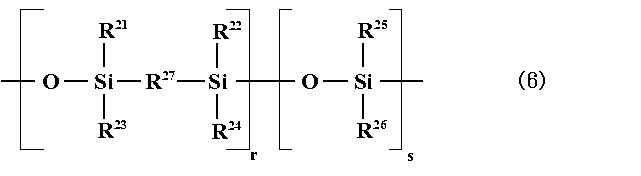
- the polyorganosiloxane (A) has the formula (6): Wherein (6), R 21 ⁇ R 26 are the same or different and represent a hydrogen atom, an aryl group, a monovalent hydrocarbon group, or a monovalent heterocyclic group. However, at least one of R 21 to R 26 is a monovalent group containing an aliphatic carbon-carbon unsaturated bond. One or more of R 21 to R 26 are an aryl group. R 27 represents a divalent hydrocarbon group. r and s each represent an integer of 1 or more. ]
- the curable resin composition is a polyorganosiloxane having a structure represented by:
- the present invention further provides the curable resin composition containing a silane coupling agent (C).
- this invention provides the said curable resin composition containing ladder type silsesquioxane as silsesquioxane (D).
- the present invention also provides a cured product obtained by curing the curable resin composition.
- this invention provides the sealing material obtained using the said curable resin composition.
- the present invention also provides a semiconductor device obtained by using the above sealing material.
- the curable resin composition of this invention is related with the following.
- a curable resin composition comprising a polyorganosiloxane (A), an isocyanurate compound (B), and a zinc compound (E), wherein the polyorganosiloxane (A) is a polyorganosiloxane having an aryl group. Furthermore, it may contain silsesquioxane (D), and the content of zinc compound (E) is based on the total amount (100 parts by weight) of polyorganosiloxane (A) and silsesquioxane (D).
- a curable resin composition that is 0.01 part by weight or more and less than 0.1 part by weight.
- the content (blending amount) of the polyorganosiloxane (A) is 60 to 99.5% by weight with respect to the total amount (100% by weight) of the curable resin composition [1] to [3] The curable resin composition as described in any one of these.
- [5] The structure represented by the formula (6) with respect to the total amount (total content, 100% by weight) of the polyorganosiloxane (A) (particularly, R 27 is a linear or branched chain having 1 to 5 carbon atoms)
- the curable resin composition according to [3] or [4], wherein the proportion of the polyorganosiloxane containing an alkylene group (preferably an ethylene group) is 60 to 100% by weight.
- the polyorganosiloxane (A) has an aliphatic carbon-carbon double bond, an aryl group-containing polyorganosiloxysilalkylene, an aliphatic carbon-carbon double bond, and a Si—H bond.
- the curable resin composition according to any one of [3] to [5], wherein two types of polyorganosiloxysilalkylene having an aryl group are used.
- the isocyanurate compound (B) the formula (1) [In the formula (1), R x , R y and R z are the same or different and represent a group represented by the formula (2) or a group represented by the formula (3).
- R 1 and R 2 are the same or different and each represents a hydrogen atom or a linear or branched alkyl group having 1 to 8 carbon atoms.
- the proportion of the isocyanurate compound (B) is 0.01 to 0.5 parts by weight with respect to the total amount (100 parts by weight) of the polyorganosiloxane (A) and the silsesquioxane (D)
- the curable resin composition of this invention Since the curable resin composition of this invention has the said structure, it can form the hardened
- the cured product is excellent in barrier properties against a plurality of corrosive gases such as H 2 S gas and SO X gas.
- curing material obtained may be excellent also in a softness
- the curable resin composition of the present invention can be preferably used as a sealing material for an optical semiconductor element (for example, an LED element, a semiconductor laser element, a solar power generation element, a CCD element, etc.).
- An optical semiconductor device obtained by sealing an optical semiconductor element with a cured product of the curable resin composition has excellent quality and durability.
- the curable resin composition of the present invention is useful as a sealing material for a next-generation light source that requires heat resistance to an unprecedented high temperature (for example, 180 ° C. or higher).
- FIG. 1 It is the schematic which shows one Embodiment of the optical semiconductor device which sealed the optical semiconductor element using the curable resin composition of this invention.
- the left figure (a) is a perspective view
- the right figure (b) is a sectional view.
- the curable resin composition of the present invention is a curable resin composition containing a polyorganosiloxane (A), an isocyanurate compound (B), and a zinc compound (E), wherein the polyorganosiloxane (A) is an aryl group. And may contain silsesquioxane (D), and the content of zinc compound (E) is the total amount of polyorganosiloxane (A) and silsesquioxane (D)
- the curable resin composition is 0.01 part by weight or more and less than 0.1 part by weight with respect to (100 parts by weight).
- the polyorganosiloxane (A) in the curable resin composition of the present invention is a polyorganosiloxane having a main chain composed of siloxane bonds (Si—O—Si), and an aryl group as a substituent in the main chain. It is a polyorganosiloxane having The polyorganosiloxane (A) may be a linear or branched polyorganosiloxane having a hydrosilyl group or a group having an aliphatic carbon-carbon unsaturated bond.
- polyorganosiloxane (A) examples include well-known and commonly used silicone skeletons such as a phenyl silicone skeleton (polydiphenylsiloxane) and a phenylmethylsilicone skeleton (polymethylphenylsiloxane).
- the polyorganosiloxane (A) does not include silsesquioxane (D).
- the polyorganosiloxane (A) may be a polyorganosiloxane having a straight chain and / or a branched chain. Among these, from the viewpoint of the strength of the cured product, a polyorganosiloxane having a branched chain (branched polyorganosiloxane) is preferable.
- the aryl group in the polyorganosiloxane (A) is not particularly limited, and examples thereof include C 6-14 aryl groups (particularly C 6-10 aryl groups) such as a phenyl group and a naphthyl group. These aryl groups may be substituents (groups directly bonded to silicon atoms) possessed by silicon atoms in the polyorganosiloxane (A).
- the aryl group in the polyorganosiloxane (A) may have one or more substituents.
- substituents include halogen atoms, substituted or unsubstituted hydrocarbon groups, hydroxyl groups, alkoxy groups, alkenyloxy groups, aryloxy groups, aralkyloxy groups, acyloxy groups, mercapto groups (thiol groups), alkylthio groups, and alkenyls.
- substituted or unsubstituted hydrocarbon group examples include an aliphatic hydrocarbon group, an alicyclic hydrocarbon group, an aromatic hydrocarbon group, and a group in which two or more of these are bonded.
- Examples of the aliphatic hydrocarbon group include an alkyl group, an alkenyl group, and an alkynyl group.
- Examples of the alkyl group include C 1-20 alkyl groups such as methyl group, ethyl group, propyl group, isopropyl group, butyl group, hexyl group, octyl group, isooctyl group, decyl group and dodecyl group (preferably C 1- 10 alkyl group, more preferably C 1-4 alkyl group).
- alkenyl group examples include a vinyl group, allyl group, methallyl group, 1-propenyl group, isopropenyl group, 1-butenyl group, 2-butenyl group, 3-butenyl group, 1-pentenyl group, 2-pentenyl group, C 2-20 alkenyl groups (preferably C 2-10 alkenyl groups, more preferably C 2-4 alkenyl groups) such as 3-pentenyl group, 4-pentenyl group, 5-hexenyl group and the like.
- alkynyl group examples include C 2-20 alkynyl groups such as ethynyl group and propynyl group (preferably C 2-10 alkynyl group, more preferably C 2-4 alkynyl group).
- Examples of the alicyclic hydrocarbon group include C 3-12 cycloalkyl groups such as a cyclopropyl group, a cyclobutyl group, a cyclopentyl group, a cyclohexyl group, and a cyclododecyl group; and a C 3-12 cyclo group such as a cyclohexenyl group.
- An alkenyl group; a C 4-15 bridged cyclic hydrocarbon group such as a bicycloheptanyl group and a bicycloheptenyl group.
- C6-14 aryl groups (especially C6-10 aryl group), such as a phenyl group and a naphthyl group, etc. are mentioned, for example.
- Examples of the group in which the aliphatic hydrocarbon group and the alicyclic hydrocarbon group are bonded include a cyclohexylmethyl group and a methylcyclohexyl group. Further, examples of the group in which the aliphatic hydrocarbon group and the aromatic hydrocarbon group are bonded include, for example, C 7-18 aralkyl groups (particularly, C 7-10 aralkyl groups) such as benzyl group and phenethyl group, cinnamyl and the like.
- a C 6-10 aryl-C 2-6 alkenyl group such as a group, a C 1-4 alkyl-substituted aryl group such as a tolyl group, a C 2-4 alkenyl-substituted aryl group such as a styryl group, and the like.
- a substituent which the said substituted hydrocarbon group (substituted hydrocarbon group) has the same thing as the substituent which the above-mentioned aryl group may have is mentioned, for example.
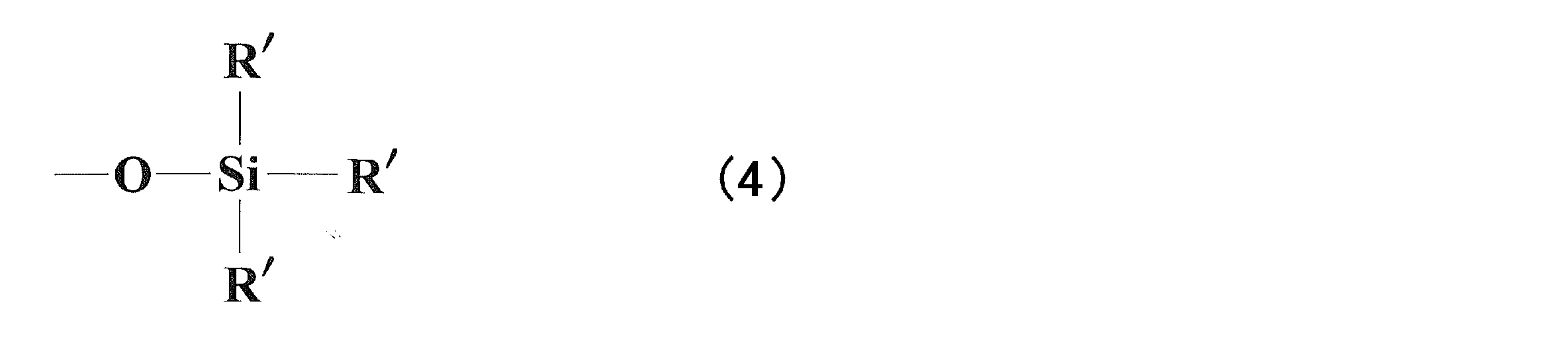
- R ′ in formula (4) is a hydrogen atom, a halogen atom, a substituted or unsubstituted hydrocarbon group, a hydroxyl group, an alkoxy group, an alkenyloxy group, an aryloxy group, an aralkyloxy group, an acyloxy group, a mercapto group (thiol Group), alkylthio group, alkenylthio group, arylthio group, aralkylthio group, carboxyl group, alkoxycarbonyl group, aryloxycarbonyl group, aralkyloxycarbonyl group, amino group or substituted amino group (mono or dialkylamino group, acylamino group, etc.) ), Epoxy group, cyan
- each R ′ is a hydrogen atom, a C 1-10 alkyl group (particularly a C 1-4 alkyl group), a C 2-10 alkenyl group (particularly a C 2 group). -4 alkenyl group), C 3-12 cycloalkyl group, C 3-12 cycloalkenyl group, aromatic ring with C 1-4 alkyl group, C 2-4 alkenyl group, halogen atom, C 1-4 alkoxy group, etc.
- An optionally substituted C 6-14 aryl group, C 7-18 aralkyl group, C 6-10 aryl-C 2-6 alkenyl group, hydroxyl group, C 1-6 alkoxy group, and halogen atom are preferred. .
- the content of aryl group (converted to phenyl group) with respect to the total amount (100% by weight) of polyorganosiloxane (A) is not particularly limited, but is preferably 35% by weight or more (for example, 35 to 70% by weight), preferably 40% by weight. The above is more preferable, and 44% by weight or more is more preferable.
- content of the said aryl group is less than 35 weight%, the barrier property with respect to the corrosive gas of the hardened
- all of the substituents in the main chain composed of the siloxane bond (Si—O—Si) of the polyorganosiloxane (A) may be aryl groups, or some of the substituents are aryl groups. May be.
- the content of the aryl group can be measured, for example, by 1 H-NMR.
- the polyorganosiloxane (A) can be used alone or in combination of two or more.
- the number average molecular weight (Mn) of the polyorganosiloxane (A) is preferably 500 to 4000, more preferably 550 to 2800, and still more preferably 600 to 1500. Further, the weight average molecular weight (Mw) is preferably from 500 to 20,000, more preferably from 600 to 10,000, and still more preferably from 700 to 6,500. When the number average molecular weight (Mn) and / or the weight average molecular weight (Mw) is less than 500, the heat resistance of the resulting cured product may be lowered.
- the compatibility between the polyorganosiloxane (A) and other components may be reduced.
- the compatibility between the polyorganosiloxanes (A) may be reduced.
- the polyorganosiloxane (A) may be a mixture of those having various number average molecular weights (Mn) and / or weight average molecular weights (Mw) within the above range.
- the number average molecular weight (Mn) and / or the weight average molecular weight (Mw) can be calculated, for example, as a molecular weight in terms of polystyrene by gel permeation chromatography.
- the molecular weight dispersity (Mw / Mn) calculated from the weight average molecular weight (Mw) and the number average molecular weight (Mn) of the polyorganosiloxane (A) is not particularly limited, but is preferably 0.95 to 6.00, 0.95 to 4.00 is more preferable, 1.00 to 3.80 is still more preferable, and 1.20 to 3.50 is particularly preferable.
- Mw / Mn the molecular weight dispersity
- the content of the polyorganosiloxane (A) in the curable resin composition of the present invention is not particularly limited, but the total amount (100% by weight) of the curable resin composition is not particularly limited. ) To 55-99.5% by weight, more preferably 70 to 99.0% by weight, still more preferably 85 to 98.5% by weight. If the content is less than 55% by weight, the crack resistance of the resulting cured product may be lowered. On the other hand, when the content exceeds 99.5% by weight, the barrier property against the corrosive gas of the obtained cured product may be lowered.
- the polyorganosiloxane (A) may have a substituent other than an aryl group, and the substituent other than the aryl group may be a substituent of a silicon atom in the polyorganosiloxane (A).
- substituent other than the aryl group include a hydrogen atom, a halogen atom, a group having a Si—H bond, a substituted or unsubstituted hydrocarbon group (preferably an alkyl group, an alkenyl group, a cycloalkyl group, or a cycloalkenyl group).
- Hydroxyl group alkoxy group, alkenyloxy group, acyloxy group, mercapto group (thiol group), alkylthio group, alkenylthio group, carboxyl group, alkoxycarbonyl group, amino group or substituted amino group (mono or dialkylamino group, acylamino group) Etc.), an epoxy group, a cyano group, an isocyanate group, a carbamoyl group, an isothiocyanate group, and the like.
- substituent other than the aryl group in the polyorganosiloxane (A) examples include a hydrogen atom, a group having a Si—H bond (hydrosilyl group, etc.), a substituted or unsubstituted hydrocarbon group (preferably an alkyl group or aliphatic carbon).
- —At least one substituent selected from a group having a carbon double bond (such as an alkenyl group) is particularly preferable.
- the polyorganosiloxane (A) includes, for example, a polyorganosiloxane having an aryl group and a group having an aliphatic carbon-carbon double bond, a polyorganosiloxane having an aryl group and a group having a Si—H bond, an aryl group, an aliphatic group It may be a polyorganosiloxane having a group having a group carbon-carbon double bond and a group having a Si—H bond.
- polyorganosiloxane (A) examples include polyorganosiloxane having a structure represented by the formula (6).
- a polyorganosiloxane having a structure represented by the formula (6) is referred to as “polyorganosiloxysilalkylene”.
- R 21 to R 26 are the same or different and each represents a hydrogen atom, the above aryl group, a substituent other than the above aryl group, a monovalent hydrocarbon group, or a monovalent heterocyclic group. Indicates. However, at least one of R 21 to R 26 is a monovalent group containing an aliphatic carbon-carbon unsaturated bond. It is preferable that all of R 21 to R 26 are not monovalent groups containing an aliphatic carbon-carbon unsaturated bond. In addition, at least one of R 21 to R 26 is preferably an aryl group (C 6-14 aryl group (particularly C 6-10 aryl group) such as phenyl group or naphthyl group, particularly phenyl group).
- the aryl group in R 21 to R 26 may have one or more substituents.
- substituents of the aryl group in R 21 to R 26 include the same substituents as the aryl group in the polyorganosiloxane (A) described above.
- Examples of the monovalent hydrocarbon group include a monovalent aliphatic hydrocarbon group; a monovalent alicyclic hydrocarbon group; a monovalent aromatic hydrocarbon group; an aliphatic hydrocarbon group and an alicyclic carbon group. And a monovalent group in which two or more of a hydrogen group and an aromatic hydrocarbon group are bonded.
- Examples of the monovalent heterocyclic group include a pyridyl group, a furyl group, a thienyl group, and the like.
- Examples of the monovalent aliphatic hydrocarbon group include an alkyl group, an alkenyl group, and an alkynyl group.
- Examples of the alkyl group include linear or branched C 1-20 such as methyl group, ethyl group, propyl group, isopropyl group, butyl group, hexyl group, octyl group, isooctyl group, decyl group, and dodecyl group.
- Examples thereof include an alkyl group (preferably a C 1-10 alkyl group, more preferably a C 1-4 alkyl group).
- alkenyl group examples include vinyl group, allyl group, methallyl group, 1-propenyl group, isopropenyl group, 1-butenyl group, 2-butenyl group, 3-butenyl group, 1-pentenyl group and 2-pentenyl group.
- C 2-20 alkenyl groups preferably C 2-10 alkenyl groups, more preferably C 2-4 alkenyl groups
- alkynyl group examples include C 2-20 alkynyl groups such as ethynyl group and propynyl group (preferably C 2-10 alkynyl group, more preferably C 2-4 alkynyl group).
- Examples of the monovalent alicyclic hydrocarbon group include a C 3-12 cycloalkyl group such as a cyclopropyl group, a cyclobutyl group, a cyclopentyl group, a cyclohexyl group, and a cyclododecyl group; and a C 3 ⁇ group such as a cyclohexenyl group. 12 cycloalkenyl groups; C 4-15 bridged cyclic hydrocarbon groups such as bicycloheptanyl group and bicycloheptenyl group.
- C6-14 aryl groups (especially C6-10 aryl group), such as a phenyl group, a naphthyl group, an anthryl group, etc. are mentioned, for example.
- Examples of the group in which an aliphatic hydrocarbon group and an alicyclic hydrocarbon group are bonded include a cyclohexylmethyl group and a methylcyclohexyl group.
- Examples of the group in which an aliphatic hydrocarbon group and an aromatic hydrocarbon group are bonded include a C 7-18 aralkyl group (particularly a C 7-10 aralkyl group) such as a benzyl group and a phenethyl group, and a C 6-10 such as a cinnamyl group.
- Examples thereof include C 1-4 alkyl-substituted aryl groups such as aryl-C 2-6 alkenyl group and tolyl group, C 2-4 alkenyl-substituted aryl groups such as styryl group, and the like.
- the monovalent hydrocarbon group may have a substituent. That is, the monovalent hydrocarbon group may be a monovalent hydrocarbon group in which at least one hydrogen atom of the monovalent hydrocarbon group exemplified above is replaced with a substituent.
- the substituent preferably has 0 to 20 carbon atoms, more preferably 0 to 10 carbon atoms.
- substituents include, for example, a halogen atom; a hydroxyl group; an alkoxy group; an alkenyloxy group; an aryloxy group; an aralkyloxy group; an acyloxy group; a mercapto group; an alkylthio group; Aroxy group; carboxyl group; alkoxycarbonyl group; aryloxycarbonyl group; aralkyloxycarbonyl group; amino group; mono- or dialkylamino group; mono- or diphenylamino group; acylamino group; epoxy group-containing group; Group; oxo group; isocyanate group; a group in which two or more of these are bonded via a C 1-6 alkylene group, if necessary.
- alkoxy group examples include C 1-6 alkoxy groups (preferably C 1-4 alkoxy groups) such as a methoxy group, an ethoxy group, a propoxy group, an isopropyloxy group, a butoxy group, and an isobutyloxy group.
- alkenyloxy group examples include a C 2-6 alkenyloxy group (preferably a C 2-4 alkenyloxy group) such as an allyloxy group.
- aryloxy group include, for example, substitution of a C 1-4 alkyl group, a C 2-4 alkenyl group, a halogen atom, a C 1-4 alkoxy group, etc.
- a phenoxy group such as a phenoxy group, a tolyloxy group, and a naphthyloxy group.
- a C 6-14 aryloxy group which may have a group.
- the aralkyloxy group include C 7-18 aralkyloxy groups such as benzyloxy group and phenethyloxy group.
- the acyloxy group include C 1-12 acyloxy groups such as an acetyloxy group, a propionyloxy group, a (meth) acryloyloxy group, and a benzoyloxy group.
- alkylthio group examples include C 1-6 alkylthio groups (preferably C 1-4 alkylthio groups) such as a methylthio group and an ethylthio group.
- alkenylthio group examples include C 2-6 alkenylthio groups (preferably C 2-4 alkenylthio groups) such as an allylthio group.
- arylthio group examples include a phenylthio group, a tolylthio group, a naphthylthio group, and the like, and a substituent such as a C 1-4 alkyl group, a C 2-4 alkenyl group, a halogen atom, and a C 1-4 alkoxy group on the aromatic ring.
- Examples thereof include a C 6-14 arylthio group which may be present.
- Examples of the aralkylthio group include C 7-18 aralkylthio groups such as benzylthio group and phenethylthio group.
- Examples of the alkoxycarbonyl group include C 1-6 alkoxy-carbonyl groups such as a methoxycarbonyl group, an ethoxycarbonyl group, a propoxycarbonyl group, and a butoxycarbonyl group.
- Examples of the aryloxycarbonyl group include C 6-14 aryloxy-carbonyl groups such as a phenoxycarbonyl group, a tolyloxycarbonyl group, and a naphthyloxycarbonyl group.
- Examples of the aralkyloxycarbonyl group include C 7-18 aralkyloxy-carbonyl groups such as benzyloxycarbonyl group.
- Examples of the mono- or dialkylamino group include mono- or di-C 1-6 alkylamino groups such as a methylamino group, an ethylamino group, a dimethylamino group, and a diethylamino group.
- Examples of the acylamino group include C 1-11 acylamino groups such as an acetylamino group, a propionylamino group, and a benzoylamino group.
- Examples of the epoxy group-containing group include a glycidyl group, a glycidyloxy group, and a 3,4-epoxycyclohexyl group.
- As said oxetanyl group containing group an ethyl oxetanyloxy group etc. are mentioned, for example.
- As said acyl group an acetyl group, a propionyl group, a benzoyl group etc. are mentioned, for example.
- Examples of the halogen atom include a chlorine atom, a bromine atom, and an iodine atom.
- the monovalent heterocyclic group may have a substituent.
- substituent the thing similar to the substituent which the said monovalent hydrocarbon group may have is illustrated.
- the monovalent hydrocarbon group and monovalent heterocyclic group more specifically, for example, methyl group, ethyl group, propyl group, isopropyl group, butyl group, hexyl group, octyl group, decyl group, Phenyl group, naphthyl group, anthryl group, benzyl group, phenethyl group, pyridyl group, furyl group, thienyl group, vinyl group, allyl group, styryl group (for example, p-styryl group), substituted hydrocarbon group (for example, 2- (3,4-epoxycyclohexyl) ethyl group, 3-glycidylpropyl group, 3-methacryloxypropyl group, 3-acryloxypropyl group, N-2- (aminoethyl) -3-aminopropyl group, 3 -Aminopropyl group, N-phenyl-3-aminopropyl group
- R 21 to R 26 in the above formula (6) may be the same or different.
- R 27 represents a divalent hydrocarbon group.
- the divalent monovalent hydrogen group include a linear or branched alkylene group, a divalent alicyclic hydrocarbon group, and a divalent aromatic hydrocarbon group.
- the linear or branched alkylene group include a linear or branched chain group having 1 to 18 carbon atoms such as a methylene group, a methylmethylene group, a dimethylmethylene group, an ethylene group, a propylene group, and a trimethylene group. Of the alkylene group.
- Examples of the divalent alicyclic hydrocarbon group include 1,2-cyclopentylene group, 1,3-cyclopentylene group, cyclopentylidene group, 1,2-cyclohexylene group, 1,3-cyclohexene group. And divalent cycloalkylene groups (including cycloalkylidene groups) such as a silene group, 1,4-cyclohexylene group, and cyclohexylidene group.
- Examples of the divalent aromatic hydrocarbon group include 1,2-phenylene group, 1,3-phenylene group, 1,4-phenylene group, 4,4′-biphenylene group, naphthylene group and the like.
- R 27 is preferably a linear or branched alkylene group having 1 to 8 carbon atoms (particularly 1 to 5 carbon atoms), and more preferably an ethylene group.
- r represents an integer of 1 or more.
- the structures in parentheses to which r is attached may be the same or different.
- the addition form of the structures is not particularly limited, and may be a random type or a block type.
- s shows an integer greater than or equal to 1.
- s is an integer of 2 or more
- the structures in parentheses to which s is attached may be the same or different.
- the addition form of the structures is not particularly limited, and may be a random type or a block type.
- the structure in parentheses with r and the structure in parentheses with s are not particularly limited, and may be a random type or a block type. May be.
- R and s may be the same or different. That is, in formula (6), r and s are the same or different and each represents an integer of 1 or more.
- the terminal structure of the polyorganosiloxysilalkylene is not particularly limited, and examples thereof include a silanol group, an alkoxysilyl group, and a trialkylsilyl group (for example, a trimethylsilyl group).
- Various groups such as a group containing an aliphatic carbon-carbon double bond and a hydrosilyl group may be introduced at the terminal of the polyorganosiloxysilalkylene.
- the polyorganosiloxysilalkylene may have a linear or branched chain structure.
- polyorganosiloxysilalkylene for example, polyorganosiloxysilalkylene having a branched chain and an aryl group is preferable.
- Examples of the polyorganosiloxysil alkylene include GD-1130A (manufactured by Changxing Chemical Industry Co., Ltd.), GD-1130B (manufactured by Changxing Chemical Industry Co., Ltd.), and the like.
- polyorganosiloxane (A) it is preferable to use two or more (particularly two) polyorganosiloxysilalkylene.
- a polyorganosiloxysilalkylene having a group having an aliphatic carbon-carbon double bond, an aryl group, and an aliphatic carbon-carbon double bond it is preferable to use two types of a group having a Si—H bond and a polyorganosiloxysilalkylene having an aryl group.
- the ratio of polyorganosiloxysil alkylene to the total amount (total content, 100% by weight) of polyorganosiloxane (A) in the curable resin composition of the present invention is particularly although not limited, it is preferably 60% by weight or more (for example, 60 to 100% by weight), more preferably 80% by weight or more (for example, 80 to 99.5% by weight), and further preferably 90% by weight or more. If the ratio of polyorganosiloxysilalkylene is less than 60% by weight, the cured product tends to yellow, or the surface tends to have tackiness and the handleability tends to decrease.
- the curable resin composition of the present invention includes a polyorganosiloxane (A1) having an aliphatic carbon-carbon double bond as the polyorganosiloxane (A) (in this specification, simply “polyorganosiloxane (A1)”). May be included).
- the aliphatic carbon-carbon double bond may have any partial structure and / or component constituting the polyorganosiloxane (A1).
- the aliphatic carbon-carbon double bond may have a substituent (for example, a substituent that a silicon atom has) in the polyorganosiloxane (A1).
- the aliphatic carbon-carbon double bond is present at the end of the main chain (straight chain and / or branched chain) composed of the siloxane bond (Si—O—Si) of the polyorganosiloxane (A1). May be.
- Examples of the group having an aliphatic carbon-carbon double bond include a vinyl group, allyl group, methallyl group, 1-propenyl group, isopropenyl group, 1-butenyl group, 2-butenyl group, 3-butenyl group, C 2-20 alkenyl groups such as 1-pentenyl group, 2-pentenyl group, 3-pentenyl group, 4-pentenyl group, 5-hexenyl group (preferably C 2-10 alkenyl group, more preferably C 2-4 alkenyl group) Group); C 3-12 cycloalkenyl group such as cyclohexenyl group; C 4-15 bridged cyclic unsaturated hydrocarbon group such as bicycloheptenyl group; C 2-4 alkenyl-substituted aryl group such as styryl group; cinnamyl Groups and the like.
- R ′ is the above C 2-20 alkenyl group, C 3-12.
- a group such as a C 4-15 bridged cyclic unsaturated hydrocarbon group, a C 2-4 alkenyl substituted aryl group, a cinnamyl group, and the like.
- an alkenyl group is preferable, a C 2-20 alkenyl group is more preferable, and a vinyl group is more preferable.
- the content of the aliphatic carbon-carbon double bond relative to the total amount (100% by weight) of the polyorganosiloxane (A) (in terms of vinyl group) is not particularly limited, but is preferably 1.5 to 15.0% by weight, 2.0 to 13.0 wt% is more preferable, and 3.0 to 12.0 wt% is still more preferable.
- the content of the aliphatic carbon-carbon double bond can be measured, for example, by 1 H-NMR.
- the curable resin composition of the present invention may be referred to as a polyorganosiloxane (A2) having a Si—H bond as the polyorganosiloxane (A) (in this specification, simply referred to as “polyorganosiloxane (A2)”). ) May be included.
- the Si—H bond may have any partial structure and / or component constituting the polyorganosiloxane (A2). Note that the Si—H bond may have a substituent in the polyorganosiloxane (A2) (for example, a substituent that a silicon atom has). Further, the Si—H bond may be present at the end of the main chain (straight chain and / or branched chain) composed of the siloxane bond (Si—O—Si) of the polyorganosiloxane (A2).
- the group having an Si—H bond is not particularly limited, and examples thereof include a group represented by formula (4), in which at least one of three R ′ is a hydrogen atom.
- the content of the Si—H bond relative to the total amount (100% by weight) of the polyorganosiloxane (A) is not particularly limited, but in terms of weight (H conversion) of hydrogen atom or H (hydride) in the Si—H bond, 0.01 to 0.50% by weight is preferable, 0.05 to 0.30% by weight is more preferable, and 0.08 to 0.20% by weight is still more preferable.
- H conversion hydrogen atom or H (hydride) in the Si—H bond
- 0.01 to 0.50% by weight is preferable
- 0.05 to 0.30% by weight is more preferable
- 0.08 to 0.20% by weight is still more preferable.
- the content of the Si—H bond can be measured by, for example, 1 H-NMR.
- the content of the polyorganosiloxane (A2) with respect to the total amount (total content, 100% by weight) of the polyorganosiloxane (A) is not particularly limited, but is preferably 50% by weight or more, and more preferably 80% by weight or more.
- a cured product excellent in various physical properties such as heat resistance of the obtained cured product, crack resistance, and barrier property against corrosive gas is easily obtained. .
- Ratio of aliphatic carbon-carbon double bond content (in terms of vinyl group) a1 (mol / g) to Si—H bond content (in terms of H) a2 (mol / g) in polyorganosiloxane (A) a1 / A2 is preferably 0.80 to 1.10, more preferably 0.90 to 1.05, and still more preferably 0.95 to 1.00.
- a1 / a2 is preferably 0.80 to 1.10, more preferably 0.90 to 1.05, and still more preferably 0.95 to 1.00.
- the polyorganosiloxane (A1) may be a polyorganosiloxane (A2) having a Si—H bond at the same time, and the polyorganosiloxane (A2) may be a polyorganosiloxane having an aliphatic carbon-carbon double bond at the same time. Siloxane (A1) may be used.
- the polyorganosiloxane (A) may be composed of only one of the polyorganosiloxane (A1) and the polyorganosiloxane (A2), and the polyorganosiloxane (A) is two or more different from each other.
- the polyorganosiloxane (A1) and / or the polyorganosiloxane (A2) may be used.
- the polyorganosiloxane (A) is composed of two or more different types of polyorganosiloxane, and at least one of the two or more types of polyorganosiloxane is polyorganosiloxane (A2).
- the two or more kinds of polyorganosiloxanes excluding the polyorganosiloxane (A2) are preferably polyorganosiloxanes (A1) having no Si—H bond.
- the curable resin composition of the present invention contains an isocyanurate compound (B).
- the curable resin composition of the present invention particularly improves the barrier property against the corrosive gas of the cured product formed by curing, and further improves the adhesion to the adherend. To do.
- an isocyanurate compound (B) contains the isocyanurate compound represented by Formula (1).
- the isocyanurate compound (B) is preferably only the isocyanurate compound represented by the formula (1).
- R x , R y and R z are the same or different and represent a group represented by the formula (2) or a group represented by the formula (3). Among them, one or more (preferably one or two, more preferably one) of R x , R y and R z in the formula (1) is a group represented by the formula (3). Is preferred.
- R 1 and R 2 are the same or different and each represents a hydrogen atom or a linear or branched alkyl group having 1 to 8 carbon atoms.
- the linear or branched alkyl group having 1 to 8 carbon atoms include a methyl group, an ethyl group, a propyl group, an isopropyl group, a butyl group, an isobutyl group, a s-butyl group, a pentyl group, a hexyl group, A heptyl group, an octyl group, an ethylhexyl group, etc. are mentioned.
- R 1 and R 2 in formula (2) and formula (3) are particularly preferably each a hydrogen atom.
- the isocyanurate compound (B) is not particularly limited.
- the isocyanurate compound (B) may be blended with other components after previously mixed with a silane coupling agent as described later.
- the content of the isocyanurate compound (B) is not particularly limited, but is preferably 0.01 to 10% by weight, and 0.05 to 5% by weight with respect to the total amount (100% by weight) of the curable resin composition. More preferred is 0.1 to 3% by weight.
- the content of the isocyanurate compound (B) is less than 0.01% by weight, the barrier property against the corrosive gas and the adhesion to the adherend may be deteriorated.
- the content of the isocyanurate compound (B) exceeds 10% by weight, a solid may precipitate in the curable resin composition or the cured product may become cloudy.
- the proportion of the isocyanurate compound (B) is not particularly limited.
- the total amount of polyorganosiloxane (A) and silsesquioxane (D) (100 0.01 to 0.5 parts by weight is preferable with respect to (parts by weight).
- the curable resin composition of the present invention may contain a silane coupling agent (C).
- a silane coupling agent C
- the barrier property against the corrosive gas of the cured product is further improved, and in particular, the adhesion to the adherend is improved.
- the silane coupling agent (C) has good compatibility with the polyorganosiloxane (A) and the isocyanurate compound (B), for example, the compatibility of the isocyanurate compound (B) with other components is improved. Therefore, when a composition of the isocyanurate compound (B) and the silane coupling agent (C) is formed in advance and then blended with other components, a uniform curable resin composition is easily obtained.
- silane coupling agent (C) a known or conventional silane coupling agent can be used, and is not particularly limited.
- an epoxy group-containing silane coupling agent (particularly 3-glycidoxypropyltrimethoxysilane) can be preferably used.
- a silane coupling agent (C) can be used individually by 1 type or in combination of 2 or more types.
- the content of the silane coupling agent (C) is not particularly limited, but is preferably 0.01 to 15% by weight, preferably 0.1 to 10% by weight with respect to the total amount (100% by weight) of the curable resin composition. Is more preferable, and 0.5 to 5% by weight is still more preferable.
- the content of the silane coupling agent (C) is less than 0.01% by weight, the adhesion to the adherend is lowered, particularly when the isocyanurate compound (B) is used in a compatible state. Effects (for example, barrier properties against the corrosive gas of the cured product) may not be obtained.
- the content of the silane coupling agent (C) exceeds 15% by weight, curing may be insufficient, and the toughness, heat resistance, and barrier property against corrosive gas of the cured product may be deteriorated.
- the curable resin composition of the present invention may further contain silsesquioxane (D).
- the silsesquioxane (D) is not particularly limited, and examples thereof include silsesquioxane having a random structure, a cage structure, and a ladder structure, and a silsesquioxane having a silsesquioxane having a ladder structure as a main component. It is preferable that Silsesquioxane (D) preferably contains ladder-type silsesquioxane as a main component. Especially, it is more preferable that silsesquioxane (D) is only ladder type silsesquioxane.
- Silsesquioxane is a kind of polysiloxane.
- Polysiloxane is generally a compound having a main chain composed of siloxane bonds (Si—O—Si), and the basic structural unit thereof is a monovalent unit in which an M unit (a silicon atom is bonded to one oxygen atom). Units), D units (units composed of divalent groups in which silicon atoms are bonded to two oxygen atoms), T units (units composed of trivalent groups in which silicon atoms are bonded to three oxygen atoms) Unit) and Q unit (unit consisting of a tetravalent group in which a silicon atom is bonded to four oxygen atoms).
- Silsesquioxane (D) is a polysiloxane of the T units and basic units, the empirical formula (basic structure) is represented by RSiO 1.5.
- Examples of the structure of the Si—O—Si skeleton of the silsesquioxane (D) include a random structure, a cage structure, and a ladder structure.
- the ladder-type silsesquioxane is a structure of a Si—O—Si skeleton having a ladder structure.
- the silsesquioxane (D) may have two or more aliphatic carbon-carbon double bonds in the molecule (in one molecule).
- the silsesquioxane (D) may have a group having two or more Si—H bonds in the molecule (in one molecule).
- the silsesquioxane (D) is not particularly limited, but is preferably liquid at room temperature.
- the said silsesquioxane (D) can be used individually by 1 type or in combination of 2 or more types.
- the barrier property against a corrosive gas of a cured product formed by curing is improved, and further, toughness (particularly, resistance to resistance) is improved. (Crack property) tends to be improved.
- the content (blending amount) of silsesquioxane (D) in the curable resin composition of the present invention is not particularly limited, but is 0.01 to 0.01% with respect to the total amount (100 wt%) of the curable resin composition. 30 wt% is preferable, 0.1 to 20 wt% is more preferable, and 0.5 to 10 wt% is still more preferable.
- the curable resin composition of the present invention contains a zinc compound (E).
- the curable resin composition of the present invention contains the zinc compound (E), in particular, tends to barrier property against H 2 S gas is improved.
- the zinc compound (E) is not particularly limited, and examples thereof include zinc-containing complexes and metal salts.
- zinc diketone complexes such as zinc bisacetylacetonate and bis (octane-2,4-dionato) zinc
- zinc carboxylates such as zinc naphthenate, zinc octylate, zinc acetoacetate, zinc (meth) acrylate, and zinc neodecanate And the like
- inorganic zinc compounds typified by zinc oxides such as zinc oxide and zinc stannate, and mixtures thereof.
- zinc carboxylate is preferable, and zinc naphthenate and zinc octylate are particularly preferable.
- the zinc compound (E) preferably contains at least zinc carboxylate (particularly zinc naphthenate and zinc octylate).
- the zinc compound (E) is more preferably only zinc carboxylate (particularly zinc naphthenate and zinc octylate).
- the zinc compound (E) is not particularly limited, but from the viewpoint of barrier properties against corrosive gas, the zinc content relative to the total weight of the compound (100% by weight) is preferably 2 to 30% by weight, for example. More preferably, it is 5 to 20% by weight, particularly preferably 6 to 17% by weight.
- the content of the zinc compound (E) is not particularly limited, but the total amount (100 parts by weight) of the polyorganosiloxane (A) and the silsesquioxane (D) (including the silsesquioxane (D) is included. If not, the amount is preferably 0.01 part by weight or more and less than 0.1 part by weight, more preferably 0.03 part by weight or more and less than 0.1 part by weight based on the total amount of the polyorganosiloxane (A). The amount is more preferably not less than 0.1 parts by weight and particularly preferably not less than 0.07 parts by weight and less than 0.1 parts by weight.
- the barrier property against H 2 S gas may be deteriorated.
- the content of the zinc compound (E) is 0.1 parts by weight or more, the barrier property against SO X gas may be lowered.
- the content of the zinc compound (E) in the curable resin composition of the present invention is not particularly limited. For example, 0.01 to 0.1% with respect to the total amount (100% by weight) of the curable resin composition. % By weight is preferable, and 0.05 to 0.085% by weight is more preferable.
- the curable resin composition of the present invention may further contain a hydrosilylation catalyst.
- a hydrosilylation catalyst By including the hydrosilylation catalyst, the curable resin composition of the present invention can efficiently advance the curing reaction (hydrosilylation reaction).
- the hydrosilylation catalyst include well-known hydrosilylation catalysts such as platinum-based catalysts, rhodium-based catalysts, and palladium-based catalysts.
- platinum catalyst include a palladium catalyst or a rhodium catalyst containing a palladium atom or a rhodium atom instead of a platinum atom.
- the said hydrosilylation catalyst can be used individually by 1 type or in combination of 2 or more types.
- the content of the hydrosilylation catalyst in the curable resin composition of the present invention is not particularly limited.
- platinum, palladium, or rhodium in the hydrosilylation catalyst is in a range of 0.01 to 1,000 ppm by weight.
- the amount is preferably in the range of 0.1 to 500 ppm. It is preferable for the content of the hydrosilylation catalyst to be in such a range because the crosslinking rate will not be remarkably slowed and the cured product is less likely to cause problems such as coloring.
- the curable resin composition of the present invention may contain a hydrosilylation reaction inhibitor in order to adjust the speed of the curing reaction (hydrosilylation reaction).
- hydrosilylation reaction inhibitor examples include alkyne alcohols such as 3-methyl-1-butyn-3-ol, 3,5-dimethyl-1-hexyn-3-ol, and phenylbutynol; 3-methyl-3 -Enyne compounds such as pentene-1-yne and 3,5-dimethyl-3-hexen-1-yne; thiazole, benzothiazole, benzotriazole and the like.
- the said hydrosilylation reaction inhibitor can be used individually by 1 type or in combination of 2 or more types.
- the content of the hydrosilylation reaction inhibitor varies depending on the crosslinking conditions of the curable resin composition, but practically, the content in the curable resin composition is preferably in the range of 0.00001 to 5% by weight. .
- the curable resin composition of the present invention may further contain a cyclic siloxane having two or more aliphatic carbon-carbon double bonds in the molecule (in one molecule) as another siloxane compound.
- the curable resin composition of the present invention may further contain a cyclic siloxane having a group having two or more Si—H bonds in the molecule (in one molecule) as the other siloxane compound.
- the said cyclic siloxane can be used individually by 1 type or in combination of 2 or more types.
- the content (blending amount) of the cyclic siloxane in the curable resin composition of the present invention is not particularly limited, but is preferably 0.01 to 30% by weight with respect to the total amount (100% by weight) of the curable resin composition. 0.1 to 20% by weight is more preferable, and 0.5 to 10% by weight is still more preferable.
- the curable resin composition of the present invention may contain other silane compounds (for example, compounds having a hydrosilyl group).
- the other silane compounds include methyl (trisdimethylsiloxy) silane, tetrakis (dimethylsiloxy) silane, 1,1,3,3-tetramethyldisiloxane, 1,1,3,3,5,5- Hexamethyltrisiloxane, 1,1,1,3,5,5,5-heptamethyltrisiloxane, 1,1,3,3,5,5,7,7-octamethyltetrasiloxane, 1,1, 1,3,5,5,7,7,7-nonamethyltetrasiloxane, 1,1,3,3,5,5,7,7,9,9-decamethylpentasiloxane, 1,1,1, 3,5,5,7,7,9,9,9- linear or branched siloxane and the like having a Si-H group, such as down decamethylpentasiloxane.
- the said silane compound can be used individually by 1 type or in combination of 2 or more types.
- the content of the silane compound is not particularly limited, but is preferably 0 to 5% by weight or less and more preferably 0 to 1.5% by weight with respect to the total amount (100% by weight) of the curable resin composition.
- the curable resin composition of the present invention may contain a solvent.
- the solvent include conventionally known solvents such as toluene, hexane, isopropanol, methyl isobutyl ketone, cyclopentanone, and propylene glycol monomethyl ether acetate.
- the said solvent can be used individually by 1 type or in combination of 2 or more types.
- the curable resin composition of the present invention includes, as other optional components, precipitated silica, wet silica, fumed silica, calcined silica, titanium oxide, alumina, glass, quartz, aluminosilicate, iron oxide, zinc oxide, calcium carbonate, Inorganic fillers such as carbon black, silicon carbide, silicon nitride, boron nitride, inorganic fillers obtained by treating these fillers with organosilicon compounds such as organohalosilanes, organoalkoxysilanes, organosilazanes; silicone resins, epoxy resins, Organic resin fine powders such as fluororesins; fillers such as conductive metal powders such as silver and copper, stabilizers (antioxidants, ultraviolet absorbers, light stabilizers, heat stabilizers, etc.), flame retardants (phosphorus) Flame retardants, halogen flame retardants, inorganic flame retardants, etc.), flame retardant aids, reinforcing materials (other fillers,
- the curable resin composition of the present invention is not particularly limited, but the aliphatic carbon-carbon double bond is 0.2 to 4 mol per 1 mol of hydrosilyl group present in the curable resin composition. It is preferable that the composition (formulation composition) be 0.5, more preferably 0.5 to 1.5 mol, still more preferably 0.8 to 1.2 mol. By controlling the ratio of hydrosilyl group and aliphatic carbon-carbon double bond within the above range, the heat resistance, transparency, flexibility, reflow resistance and barrier property against corrosive gas of the cured product are further improved. Tend.
- the curable resin composition of the present invention is not particularly limited, but can be prepared by stirring and mixing each of the above components at room temperature.
- the curable resin composition of the present invention can be used as a one-component composition in which each component is mixed in advance, for example, two or more stored separately. It can also be used as a multi-component (for example, two-component) composition in which the components are mixed at a predetermined ratio before use.
- the curable resin composition of the present invention is not particularly limited, but is preferably liquid at room temperature (about 25 ° C.). More specifically, the curable resin composition of the present invention has a viscosity at 23 ° C. of preferably 300 to 20000 mPa ⁇ s, more preferably 500 to 10000 mPa ⁇ s, and still more preferably 1000 to 8000 mPa ⁇ s. If the viscosity is less than 300 mPa ⁇ s, the heat resistance of the cured product may decrease. On the other hand, when the viscosity exceeds 20000 mPa ⁇ s, it is difficult to prepare and handle the curable resin composition, and bubbles may remain in the cured product.
- cured product of the present invention By curing the curable resin composition of the present invention by a curing reaction (hydrosilylation reaction), a cured product (hereinafter sometimes referred to as “cured product of the present invention”) can be obtained.
- Conditions for the curing reaction are not particularly limited and can be appropriately selected from conventionally known conditions.
- the temperature (curing temperature) is 25 to 180 ° C. (more preferably 60 ° C.). To 150 ° C.), and the time (curing time) is preferably 5 to 720 minutes.
- the cured product of the present invention is excellent in various physical properties such as heat resistance, transparency and flexibility, and further excellent in reflow resistance such as crack resistance in a reflow process and adhesion to a package, and in barrier properties against corrosive gas. Also excellent.
- the sealing material of the present invention is a sealing material containing the curable resin composition of the present invention as an essential component.
- the sealing material (cured product) obtained by curing the curable resin composition of the present invention is excellent in various physical properties such as heat resistance, transparency and flexibility, and further has a barrier against reflow resistance and corrosive gas. Excellent in properties. Therefore, the sealing material of the present invention is preferably used as a sealing material for a semiconductor element in a semiconductor device, particularly as a sealing material for an optical semiconductor element (particularly, a high-luminance, short-wavelength optical semiconductor element) in an optical semiconductor device. Can be used.
- a semiconductor element especially an optical semiconductor element
- a semiconductor device excellent in durability and quality can be obtained.
- Polyorganosiloxane (A) The following products were used as the polyorganosiloxane (A).
- GD-1130A manufactured by Changxing Chemical Industry Co., Ltd., vinyl group content 4.32% by weight, phenyl group content 44.18% by weight, SiH group content (hydride conversion) 0% by weight, number average molecular weight 1107, weight Average molecular weight 6099
- GD-1130B manufactured by Changxing Chemical Industry Co., Ltd., vinyl group content 3.45 wt%, phenyl group content 50.96 wt%, SiH group content (hydride conversion) 0.17 wt%, number average molecular weight 631 , Weight average molecular weight 1305 OE-6630A: Toray Dow Corning Co., Ltd., vinyl group content 2.17 wt%, phenyl group content 51.94 wt%, SiH group content (hydride conversion) 0 wt%, number average molecular weight 2532, Weight average molecular weight 4490
- the temperature of the reaction vessel was raised to 70 ° C., and when the temperature reached 70 ° C., 0.16 g of 5N hydrochloric acid (25 mmol as hydrogen chloride) was added, and the polycondensation reaction was performed under nitrogen for 4 hours. . Subsequently, 11.18 g of divinyltetramethyldisiloxane and 3.25 g of hexamethyldisiloxane were added to the reaction solution, and a silylation reaction was performed at 70 ° C. for 4 hours. Thereafter, the reaction solution was cooled, washed with water until the lower layer solution became neutral, and then the upper layer solution was collected.
- 5N hydrochloric acid 25 mmol as hydrogen chloride
- the solvent was distilled off from the upper layer liquid under the conditions of 1 mmHg and 40 ° C. to obtain a colorless and transparent liquid reaction product (ladder-type silsesquioxane having a vinyl group at the terminal, 13.0 g). .
- the number average molecular weight (Mn) of the above reaction was 840, and the molecular weight dispersity was 1.06.
- Zinc compound (E) The following products were used as the zinc compound (E).
- Zinc naphthenate Nippon Chemical Industry Co., Ltd., trade name “Naphtex Zinc” (Zn: 8%)
- Zinc octylate manufactured by Nippon Chemical Industry Co., Ltd., trade name “Nikka Octix Zinc” (Zn: 15%)
- Examples 1 to 7 and Comparative Examples 1 to 6 were carried out according to the following procedure.
- the isocyanurate compound (B) and the silane coupling agent (C) were mixed at a predetermined weight ratio (the unit of the blending amount of each component in Tables 1 and 2 is parts by weight).
- the zinc compound (E) and silsesquioxane (D) were mixed and stirred at 60 ° C. for 2 hours.
- polyorganosiloxane (A) was mixed and further stirred at room temperature for 30 minutes to obtain a curable resin composition.
- Tables 1 and 2 for zinc naphthenate and zinc octylate, amounts obtained by removing mineral spirits from “naphthex zinc” and “nicka octix zinc”, respectively.
- Luminance maintenance rate (%) (total luminous flux before corrosion test / total luminous flux after corrosion test) ⁇ 100
- the evaluation standards for corrosion resistance were as follows. A: The luminous intensity maintenance rate in the SO X corrosion test is 85% or more, the luminous intensity maintenance rate in the H 2 S corrosion test is 99% or more, and B: The luminous intensity maintenance rate in the SO X corrosion test is 85% or more, and Luminance maintenance rate in H 2 S corrosion test is less than 99% C: Luminance maintenance rate in SO X corrosion test is less than 85%
- the curable resin composition and cured product of the present invention are useful for applications such as adhesives, coating agents, and sealing materials that require heat resistance, transparency, flexibility, and barrier properties against corrosive gases.
- the curable resin composition and the cured product of the present invention are suitable as a sealing material for optical semiconductor elements (for example, LED elements, semiconductor laser elements, solar power generation elements, CCD elements, etc.).
- Reflector resin composition for light reflection
- Metal wiring Metal wiring
- Optical semiconductor element Optical semiconductor element
- Bonding wire Hardened material (sealing material)
Landscapes
- Chemical & Material Sciences (AREA)
- Health & Medical Sciences (AREA)
- Chemical Kinetics & Catalysis (AREA)
- Medicinal Chemistry (AREA)
- Polymers & Plastics (AREA)
- Organic Chemistry (AREA)
- Structures Or Materials For Encapsulating Or Coating Semiconductor Devices Or Solid State Devices (AREA)
- Compositions Of Macromolecular Compounds (AREA)
- Graft Or Block Polymers (AREA)
Abstract
Description



で表されるイソシアヌレート化合物を含む上記硬化性樹脂組成物を提供する。
で表される構造を含むポリオルガノシロキサンである上記硬化性樹脂組成物を提供する。
[1]ポリオルガノシロキサン(A)、イソシアヌレート化合物(B)、及び亜鉛化合物(E)を含む硬化性樹脂組成物であって、ポリオルガノシロキサン(A)がアリール基を有するポリオルガノシロキサンであり、更にシルセスキオキサン(D)を含んでいても良く、亜鉛化合物(E)の含有量が、ポリオルガノシロキサン(A)及びシルセスキオキサン(D)の合計量(100重量部)に対して0.01重量部以上0.1重量部未満である硬化性樹脂組成物。
[2]ポリオルガノシロキサン(A)が、分岐鎖を有するポリオルガノシロキサンである[1]に記載の硬化性樹脂組成物。
[3]ポリオルガノシロキサン(A)が、式(6)で表される構造(特に、R27は炭素数1~5の直鎖状又は分岐鎖状のアルキレン基が好ましく、より好ましくはエチレン基)を含むポリオルガノシロキサンである[1]又は[2]に記載の硬化性樹脂組成物。
[4]ポリオルガノシロキサン(A)の含有量(配合量)が、硬化性樹脂組成物の全量(100重量%)に対して、60~99.5重量%である[1]~[3]の何れか1つに記載の硬化性樹脂組成物。
[5]ポリオルガノシロキサン(A)全量(合計含有量、100重量%)に対する、式(6)で表される構造(特に、R27は炭素数1~5の直鎖状又は分岐鎖状のアルキレン基が好ましく、より好ましくはエチレン基)を含むポリオルガノシロキサンの割合が、60~100重量%である[3]又は[4]に記載の硬化性樹脂組成物。
[6]ポリオルガノシロキサン(A)として、脂肪族炭素-炭素二重結合を有し、アリール基を有するポリオルガノシロキシシルアルキレンと、脂肪族炭素-炭素二重結合及びSi-H結合を有し、アリール基を有するポリオルガノシロキシシルアルキレンの2種を用いる[3]~[5]の何れか1つに記載の硬化性樹脂組成物。
[7]イソシアヌレート化合物(B)として、式(1)
[式(1)中、Rx、Ry、Rzは、同一又は異なって、式(2)で表される基、又は式(3)で表される基を示す。[式(2)及び式(3)中、R1及びR2は、同一又は異なって、水素原子又は炭素数1~8の直鎖状若しくは分岐鎖状のアルキル基を示す。]]
で表されるイソシアヌレート化合物を含む[1]~[6]の何れか1つに記載の硬化性樹脂組成物。
[8]イソシアヌレート化合物(B)が、モノアリルジグリシジルイソシアヌレートである[1]~[7]の何れか1つに記載の硬化性樹脂組成物。
[9]イソシアヌレート化合物(B)の含有量が、硬化性樹脂組成物の全量(100重量%)に対して0.01~10重量%である[1]~[8]の何れか1つに記載の硬化性樹脂組成物。
[10]イソシアヌレート化合物(B)の割合が、ポリオルガノシロキサン(A)とシルセスキオキサン(D)の合計量(100重量部)に対して0.01~0.5重量部である[1]~[9]の何れか1つに記載の硬化性樹脂組成物。
[11]更にシランカップリング剤(C)を含む[1]~[10]の何れか1つに記載の硬化性樹脂組成物。
[12]シランカップリング(C)が3-グリシドキシプロピルトリメトキシシランである[11]に記載の硬化性樹脂組成物。
[13]シルセスキオキサン(D)を含む[1]~[12]の何れか1つに記載の硬化性樹脂組成物。
[14]シルセスキオキサン(D)が、ラダー型シルセスキオキサンである[1]~[13]の何れか1つに記載の硬化性樹脂組成物。
[15]シルセスキオキサン(D)の含有量が、硬化性樹脂組成物の全量(100重量%)に対して、0.01~30重量%である[1]~[14]の何れか1つに記載の硬化性樹脂組成物。
[16]亜鉛化合物(E)が、カルボン酸亜鉛である[1]~[15]の何れか1つに記載の硬化性樹脂組成物。
[17]亜鉛化合物(E)が、ナフテン酸亜鉛、又はオクチル酸亜鉛である[1]~[16]の何れか1つに記載の硬化性樹脂組成物。
[18]亜鉛化合物(E)の含有量が、硬化性樹脂組成物の全量(100重量%)に対して、0.02~0.085重量%である[1]~[17]の何れか1つに記載の硬化性樹脂組成物。
[19]亜鉛化合物(E)の化合物全重量(100重量%)に対する亜鉛含有量が2~30重量%である[1]~[18]の何れか1つに記載の硬化性樹脂組成物。
本発明の硬化性樹脂組成物におけるポリオルガノシロキサン(A)は、シロキサン結合(Si-O-Si)で構成された主鎖を有するポリオルガノシロキサンであって、上記主鎖における置換基としてアリール基を有するポリオルガノシロキサンである。ポリオルガノシロキサン(A)は、ヒドロシリル基又は脂肪族炭素-炭素不飽和結合を有する基を有する直鎖状又は分岐鎖状のポリオルガノシロキサンであっても良い。ポリオルガノシロキサン(A)としては、例えば、フェニルシリコーン骨格(ポリジフェニルシロキサン)、フェニルメチルシリコーン骨格(ポリメチルフェニルシロキサン)等の周知慣用のシリコーン骨格が挙げられる。なお、ポリオルガノシロキサン(A)には、シルセスキオキサン(D)は含まれない。

本発明の硬化性樹脂組成物は、ポリオルガノシロキサン(A)として、脂肪族炭素-炭素二重結合を有するポリオルガノシロキサン(A1)(本明細書において、単に「ポリオルガノシロキサン(A1)」と称する場合がある)を含んでも良い。上記脂肪族炭素-炭素二重結合は、ポリオルガノシロキサン(A1)を構成するいずれかの部分構造及び/又は構成成分が有していれば良い。上記脂肪族炭素-炭素二重結合は、ポリオルガノシロキサン(A1)における置換基(例えば、ケイ素原子が有する置換基)が有していても良い。また、上記脂肪族炭素-炭素二重結合は、ポリオルガノシロキサン(A1)のシロキサン結合(Si-O-Si)で構成された主鎖(直鎖及び/又は分岐鎖)の末端に存在していても良い。
本発明の硬化性樹脂組成物は、ポリオルガノシロキサン(A)として、Si-H結合を有するポリオルガノシロキサン(A2)(本明細書において、単に「ポリオルガノシロキサン(A2)」と称する場合がある)を含んでも良い。上記Si-H結合は、ポリオルガノシロキサン(A2)を構成するいずれかの部分構造及び/又は構成成分が有していれば良い。なお、上記Si-H結合は、ポリオルガノシロキサン(A2)における置換基(例えば、ケイ素原子が有する置換基)が有していても良い。また、上記Si-H結合は、ポリオルガノシロキサン(A2)のシロキサン結合(Si-O-Si)で構成された主鎖(直鎖及び/又は分岐鎖)の末端に存在していても良い。
本発明の硬化性樹脂組成物は、イソシアヌレート化合物(B)を含む。本発明の硬化性樹脂組成物はイソシアヌレート化合物(B)を含むことにより、特に、硬化により形成される硬化物の腐食性ガスに対するバリア性が向上し、更に、被着体に対する密着性が向上する。中でも、イソシアヌレート化合物(B)は、式(1)で表されるイソシアヌレート化合物を含むことが好ましい。特に、イソシアヌレート化合物(B)は、式(1)で表されるイソシアヌレート化合物のみであることが好ましい。
本発明の硬化性樹脂組成物は、シランカップリング剤(C)を含んでも良い。本発明の硬化性樹脂組成物がシランカップリング剤(C)を含むことにより、硬化物の腐食性ガスに対するバリア性が一層向上し、特に、被着体に対する密着性が向上する。
本発明の硬化性樹脂組成物は、更に、シルセスキオキサン(D)を含んでも良い。上記シルセスキオキサン(D)は、特に限定されないが、ランダム構造、カゴ構造、ラダー構造を有するシルセスキオキサンが挙げられ、ラダー構造を有するシルセスキオキサンを主成分とするシルセスキオキサンであることが好ましい。シルセスキオキサン(D)は、ラダー型シルセスキオキサンを主成分として含むことが好ましい。中でも、シルセスキオキサン(D)は、ラダー型シルセスキオキサンのみであることがより好ましい。
シルセスキオキサン(D)は、上記T単位を基本構成単位とするポリシロキサンであり、その実験式(基本構造式)はRSiO1.5で表される。シルセスキオキサン(D)のSi-O-Si骨格の構造としては、ランダム構造、カゴ構造、ラダー構造が挙げられ、ラダー型シルセスキオキサンは、ラダー構造のSi-O-Si骨格の構造を有するシルセスキオキサンである。
本発明の硬化性樹脂組成物は、亜鉛化合物(E)を含む。本発明の硬化性樹脂組成物が上記亜鉛化合物(E)を含むことにより、特に、H2Sガスに対するバリア性が向上する傾向がある。
本発明の硬化性樹脂組成物は、更に、ヒドロシリル化触媒を含んでいても良い。本発明の硬化性樹脂組成物は、ヒドロシリル化触媒を含むことにより、硬化反応(ヒドロシリル化反応)を効率的に進行させることができる。上記ヒドロシリル化触媒としては、白金系触媒、ロジウム系触媒、パラジウム系触媒等の周知のヒドロシリル化反応用触媒が例示される。具体的には、白金微粉末、白金黒、白金担持シリカ微粉末、白金担持活性炭、塩化白金酸、塩化白金酸とアルコール、アルデヒド、ケトン等との錯体、白金のオレフィン錯体、白金-カルボニルビニルメチル錯体等の白金のカルボニル錯体、白金-ジビニルテトラメチルジシロキサン錯体や白金-シクロビニルメチルシロキサン錯体等の白金ビニルメチルシロキサン錯体、白金-ホスフィン錯体、白金-ホスファイト錯体等の白金系触媒、ならびに上記白金系触媒において白金原子の代わりにパラジウム原子又はロジウム原子を含有するパラジウム系触媒又はロジウム系触媒が挙げられる。なお、上記ヒドロシリル化触媒は1種を単独で、又は2種以上を組合せて使用することができる。
本発明の硬化性樹脂組成物は、硬化反応(ヒドロシリル化反応)の速度を調整するために、ヒドロシリル化反応抑制剤を含んでいても良い。上記ヒドロシリル化反応抑制剤としては、例えば、3-メチル-1-ブチン-3-オール、3,5-ジメチル-1-ヘキシン-3-オール、フェニルブチノール等のアルキンアルコール;3-メチル-3-ペンテン-1-イン、3,5-ジメチル-3-ヘキセン-1-イン等のエンイン化合物;チアゾール、ベンゾチアゾール、ベンゾトリアゾール等が挙げられる。上記ヒドロシリル化反応抑制剤は1種を単独で、又は2種以上を組合せて使用することができる。上記ヒドロシリル化反応抑制剤の含有量としては、硬化性樹脂組成物の架橋条件により異なるが、実用上、硬化性樹脂組成物中の含有量として、0.00001~5重量%の範囲内が好ましい。
本発明の硬化性樹脂組成物は、その他のシロキサン化合物として、更に、分子内(一分子中)に2個以上の脂肪族炭素-炭素二重結合を有する環状シロキサンを含んでいても良い。また、本発明の硬化性樹脂組成物は、その他のシロキサン化合物として、更に、分子内(一分子中)に2個以上のSi-H結合を有する基を有する環状シロキサンを含んでいても良い。上記環状シロキサンは1種を単独で、又は2種以上を組合せて使用することができる。本発明の硬化性樹脂組成物における環状シロキサンの含有量(配合量)は、特に限定されないが、硬化性樹脂組成物の全量(100重量%)に対して、0.01~30重量%が好ましく、0.1~20重量%がより好ましく、0.5~10重量%が更に好ましい。
本発明の硬化性樹脂組成物は、その他のシラン化合物(例えば、ヒドロシリル基を有する化合物)を含んでいても良い。上記その他のシラン化合物としては、例えば、メチル(トリスジメチルシロキシ)シラン、テトラキス(ジメチルシロキシ)シラン、1,1,3,3-テトラメチルジシロキサン、1,1,3,3,5,5-ヘキサメチルトリシロキサン、1,1,1,3,5,5,5-へプタメチルトリシロキサン、1,1,3,3,5,5,7,7-オクタメチルテトラシロキサン、1,1,1,3,5,5,7,7,7-ノナメチルテトラシロキサン、1,1,3,3,5,5,7,7,9,9-デカメチルペンタシロキサン、1,1,1,3,5,5,7,7,9,9,9-ウンデカメチルペンタシロキサン等のSi-H基を有する直鎖状又は分岐鎖状シロキサン等が挙げられる。なお、上記シラン化合物は1種を単独で、又は2種以上を組合せて使用することができる。上記シラン化合物の含有量は、特に限定されないが、硬化性樹脂組成物の全量(100重量%)に対して、0~5重量%以下が好ましく、0~1.5重量%がより好ましい。
本発明の硬化性樹脂組成物は、溶媒を含んでいても良い。上記溶媒としては、例えば、トルエン、ヘキサン、イソプロパノール、メチルイソブチルケトン、シクロペンタノン、プロピレングリコールモノメチルエーテルアセテート等の従来公知の溶媒が挙げられる。上記溶媒は1種を単独で、又は2種以上を組合せて使用することができる。
本発明の硬化性樹脂組成物は、その他任意の成分として、沈降シリカ、湿式シリカ、ヒュームドシリカ、焼成シリカ、酸化チタン、アルミナ、ガラス、石英、アルミノケイ酸、酸化鉄、酸化亜鉛、炭酸カルシウム、カーボンブラック、炭化ケイ素、窒化ケイ素、窒化ホウ素等の無機質充填剤、これらの充填剤をオルガノハロシラン、オルガノアルコキシシラン、オルガノシラザン等の有機ケイ素化合物により処理した無機質充填剤;シリコーン樹脂、エポキシ樹脂、フッ素樹脂等の有機樹脂微粉末;銀、銅等の導電性金属粉末等の充填剤、安定化剤(酸化防止剤、紫外線吸収剤、耐光安定剤、熱安定化剤等)、難燃剤(リン系難燃剤、ハロゲン系難燃剤、無機系難燃剤等)、難燃助剤、補強材(他の充填剤等)、核剤、カップリング剤、滑剤、ワックス、可塑剤、離型剤、耐衝撃改良剤、色相改良剤、流動性改良剤、着色剤(染料、顔料等)、分散剤、消泡剤、脱泡剤、抗菌剤、防腐剤、粘度調整剤、増粘剤等の慣用の添加剤を含んでいても良い。これらの添加剤は単独で、又は2種以上を組合せて使用することができる。
本発明の硬化性樹脂組成物は、特に限定されないが、硬化性樹脂組成物中に存在するヒドロシリル基1モルに対して、脂肪族炭素-炭素二重結合が0.2~4モルとなるような組成(配合組成)であることが好ましく、より好ましくは0.5~1.5モル、更に好ましくは0.8~1.2モルである。ヒドロシリル基と脂肪族炭素-炭素二重結合との割合を上記範囲に制御することにより、硬化物の耐熱性、透明性、柔軟性、耐リフロー性、及び腐食性ガスに対するバリア性がより向上する傾向がある。
本発明の硬化性樹脂組成物を硬化反応(ヒドロシリル化反応)により硬化させることにより、硬化物(以下、「本発明の硬化物」と称する場合がある)を得ることができる。硬化反応の際の条件は、特に限定されず、従来公知の条件より適宜選択することができるが、例えば、反応速度の点から、温度(硬化温度)は25~180℃(より好ましくは60℃~150℃)が好ましく、時間(硬化時間)は5~720分が好ましい。本発明の硬化物は、耐熱性、透明性、柔軟性等の各種物性に優れ、更に、リフロー工程における耐クラック性、パッケージに対する密着性等の耐リフロー性に優れ、腐食性ガスに対するバリア性にも優れる。
本発明の封止材は、本発明の硬化性樹脂組成物を必須成分として含む封止材である。本発明の硬化性樹脂組成物を硬化させることにより得られる封止材(硬化物)は、耐熱性、透明性、柔軟性等の各種物性に優れ、更に、耐リフロー性、腐食性ガスに対するバリア性に優れる。このため、本発明の封止材は、半導体装置における半導体素子の封止材、特に、光半導体装置における光半導体素子(特に、高輝度、短波長の光半導体素子)の封止材等として好ましく使用できる。本発明の封止材を用いて半導体素子(特に、光半導体素子)を封止することによって、耐久性及び品質に優れた半導体装置(特に、光半導体装置)が得られる。
ポリオルガノシロキサン(A)として、以下の製品を使用した。
GD-1130A:長興化学工業(株)製、ビニル基含有量4.32重量%、フェニル基含有量44.18重量%、SiH基含有量(ヒドリド換算)0重量%、数平均分子量1107、重量平均分子量6099
GD-1130B:長興化学工業(株)製、ビニル基含有量3.45重量%、フェニル基含有量50.96重量%、SiH基含有量(ヒドリド換算)0.17重量%、数平均分子量631、重量平均分子量1305
OE-6630A:東レ・ダウコーニング(株)製、ビニル基含有量2.17重量%、フェニル基含有量51.94重量%、SiH基含有量(ヒドリド換算)0重量%、数平均分子量2532、重量平均分子量4490
OE-6630B:東レ・ダウコーニング(株)製、ビニル基含有量3.87重量%、フェニル基含有量50.11重量%、SiH基含有量(ヒドリド換算)0.17重量%、数平均分子量783、重量平均分子量1330
[イソシアヌレート化合物(B)]
イソシアヌレート化合物(B)として、以下の製品を使用した。
モノアリルジグリシジルイソシアヌレート:四国化成工業(株)製
[シランカップリング剤(C)]
シランカップリング剤(C)として、以下の製品を使用した。
3-グリシジルオキシプロピルトリメトキシシラン:東レ・ダウ・コーニング(株)製
<合成例1>
反応容器に、フェニルトリエトキシシラン(信越化学工業(株)製)15.86g及びメチルイソブチルケトン(MIBK)6.16gを仕込み、これらの混合物を10℃まで冷却した。上記混合物に水4.32g及び5Nの塩酸0.16g(塩化水素として2.4ミリモル)を1時間かけて滴下した。滴下後、これらの混合物を10℃で1時間保持した。その後、MIBKを26.67g添加して、反応溶媒を希釈した。
次に、反応容器の温度を70℃まで昇温し、70℃になった時点で5Nの塩酸0.16g(塩化水素として25ミリモル)を添加し、重縮合反応を窒素下で4時間行った。
続いて、上記反応溶液にジビニルテトラメチルジシロキサン11.18g及びヘキサメチルジシロキサン3.25gを添加して、シリル化反応を70℃で4時間行った。その後、反応溶液を冷却し、下層液が中性になるまで水洗を行い、その後、上層液を分取した。次に、当該上層液から、1mmHg、40℃の条件で溶媒を留去し、無色透明の液状の反応生成物(末端にビニル基を有するラダー型シルセスキオキサン、13.0g)を得た。上記反応の数平均分子量(Mn)は840であり、分子量分散度は1.06であった。
亜鉛化合物(E)として、以下の製品を使用した。
ナフテン酸亜鉛:日本化学産業(株)製、商品名「ナフテックス亜鉛」(Zn:8%)
オクチル酸亜鉛:日本化学産業(株)製、商品名「ニッカオクチックス亜鉛」(Zn:15%)
実施例1~7及び比較例1~6を、以下の手順に従って実施した。
表1及び表2に従って、イソシアヌレート化合物(B)及びシランカップリング剤(C)を所定重量比率(表1及び表2中の各成分の配合量の単位は、重量部である)で混合した後、亜鉛化合物(E)及びシルセスキオキサン(D)を混合し、60℃で2時間攪拌した。その後、室温まで冷却した後、ポリオルガノシロキサン(A)を混合し、更に室温で30分間攪拌して硬化性樹脂組成物を得た。
なお、表1及び表2中、ナフテン酸亜鉛及びオクチル酸亜鉛については、各々「ナフテックス亜鉛」及び「ニッカオクチックス亜鉛」からミネラルスピリットを除いた量を示した。


図1に示すLEDパッケージ(InGaN素子、3.5mm×2.8mm)に、実施例1~7、比較例1~6で得られた硬化性樹脂組成物を注入し、60℃で1時間、続いて、80℃で1時間150℃で4時間加熱して、試料を作成した。なお、LEDパッケージに硬化性樹脂組成物を注入した後、150℃で1時間加熱して、試料を作成しても良い。
上記各試料について、全光束測定機(オプトロニックラボラトリーズ社製、マルチ分光放射測定システム「OL771」)を用いて、20mAの電流を流した際の全光束(単位:lm)を測定し、これを腐食性試験前の全光束とした。
次に、上記各試料について、後述するSOX腐食性試験及びH2S腐食性試験に供し、上記と同様にして全光束を測定し、これを腐食性試験後の全光束とした。
その後、次式に従って、光度維持率を算出した。
光度維持率(%)=(腐食試験前の全光束/腐食試験後の全光束)×100
上記各試料と硫黄粉末(キシダ化学(株)製)0.3gとを450mlのガラス瓶に入れ、更に上記ガラス瓶をアルミ製の箱の中に入れた。続いて、上記アルミ製の箱をオーブン(ヤマト科学(株)製、型番「DN-64」)に入れ、オーブン温度を80℃に設定した後、24時間後に取出し、上述の通り全光束を測定した。
上記各試料を硫化水素濃度25ppm、温度50℃、湿度80%RHに調整したガス腐食試験機(スガ試験機(株)製、型番「GS-UV」)に入れ、96時間後に取出し、上述の通り全光束を測定した。
耐腐食性の評価基準については、以下の通りとした。
A:SOX腐食性試験における光度維持率が85%以上、且つ、H2S腐食性試験における光度維持率が99%以上
B:SOX腐食性試験における光度維持率が85%以上、且つ、H2S腐食性試験における光度維持率が99%未満
C:SOX腐食性試験における光度維持率が85%未満
これに対して、比較例4~6では、特許文献4に記載された範囲の亜鉛化合物(E)を添加したところ、耐H2S腐食性は向上したが、意外な事に、耐SOX腐食性はむしろ低下してしまった。
また、実施例2、4、6の比較から、シルセスキオキサン(B)の増量により、耐H2S腐食性を低下させる事なく、耐SOX腐食性が向上する事が認められた。
更に、実施例5と実施例4の比較から、シランカップリング剤(D)の添加により、耐H2S腐食性を低下させる事なく、耐SOX腐食性が向上する事が認められた。
以上より、限られた範囲の亜鉛化合物(E)を添加する事により、耐SOX腐食性と耐H2S腐食性を両立した硬化性樹脂組成物が得る事ができた。
101:金属配線
102:光半導体素子
103:ボンディングワイヤ
104:硬化物(封止材)
Claims (14)
- ポリオルガノシロキサン(A)、イソシアヌレート化合物(B)、及び亜鉛化合物(E)を含む硬化性樹脂組成物であって、ポリオルガノシロキサン(A)がアリール基を有するポリオルガノシロキサンであり、更にシルセスキオキサン(D)を含んでいても良く、亜鉛化合物(E)の含有量が、ポリオルガノシロキサン(A)及びシルセスキオキサン(D)の合計量(100重量部)に対して0.01重量部以上0.1重量部未満である硬化性樹脂組成物。
- ポリオルガノシロキサン(A)のゲルパーミエーションクロマトグラフィーによる標準ポリスチレン換算の数平均分子量(Mn)が500~4000である請求項1に記載の硬化性樹脂組成物。
- ポリオルガノシロキサン(A)のゲルパーミエーションクロマトグラフィーによる標準ポリスチレン換算の重量平均分子量をMw、数平均分子量をMnとしたときの分子量分散度(Mw/Mn)が0.95~6.00である請求項1又は2に記載の硬化性樹脂組成物。
- ポリオルガノシロキサン(A)が、脂肪族炭素-炭素二重結合を有するポリオルガノシロキサン(A1)である請求項1~3のいずれか1項に記載の硬化性樹脂組成物。
- ポリオルガノシロキサン(A)が、Si-H結合を有するポリオルガノシロキサン(A2)である請求項1~4のいずれか1項に記載の硬化性樹脂組成物。
- イソシアヌレート化合物(B)として、式(1)



で表されるイソシアヌレート化合物を含む請求項1~5のいずれか1項に記載の硬化性樹脂組成物。 - 式(1)におけるRx、Ry、Rzのうち、いずれかひとつ以上が式(3)で表される基である請求項6に記載の硬化性樹脂組成物。
- 亜鉛化合物(E)として、カルボン酸亜鉛を含む請求項1~7のいずれか1項に記載の硬化性樹脂組成物。
- ポリオルガノシロキサン(A)が、式(6)
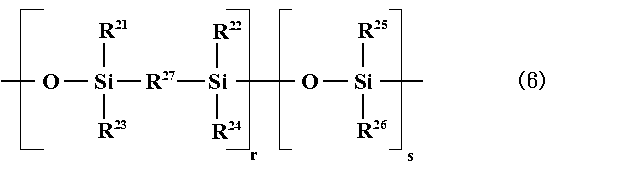
で表される構造を含むポリオルガノシロキサンである請求項1~8のいずれか1項に記載の硬化性樹脂組成物。 - 更に、シランカップリング剤(C)を含む請求項1~9のいずれか1項に記載の硬化性樹脂組成物。
- シルセスキオキサン(D)として、ラダー型シルセスキオキサンを含む請求項1~10のいずれか1項に記載の硬化性樹脂組成物。
- 請求項1~11のいずれか1項に記載の硬化性樹脂組成物を硬化して得られる硬化物。
- 請求項1~11のいずれか1項に記載の硬化性樹脂組成物を用いて得られる封止材。
- 請求項13に記載の封止材を用いて得られる半導体装置。
Priority Applications (3)
| Application Number | Priority Date | Filing Date | Title |
|---|---|---|---|
| CN201480002236.7A CN104583325B (zh) | 2013-08-02 | 2014-07-04 | 固化性树脂组合物及使用其的半导体装置 |
| JP2014548810A JP5736525B1 (ja) | 2013-08-02 | 2014-07-04 | 硬化性樹脂組成物及びそれを用いた半導体装置 |
| KR1020157004560A KR101563472B1 (ko) | 2013-08-02 | 2014-07-04 | 경화성 수지 조성물 및 이를 사용한 반도체 장치 |
Applications Claiming Priority (2)
| Application Number | Priority Date | Filing Date | Title |
|---|---|---|---|
| JP2013161865 | 2013-08-02 | ||
| JP2013-161865 | 2013-08-02 |
Publications (2)
| Publication Number | Publication Date |
|---|---|
| WO2015016001A1 true WO2015016001A1 (ja) | 2015-02-05 |
| WO2015016001A9 WO2015016001A9 (ja) | 2015-03-12 |
Family
ID=52431541
Family Applications (1)
| Application Number | Title | Priority Date | Filing Date |
|---|---|---|---|
| PCT/JP2014/067863 Ceased WO2015016001A1 (ja) | 2013-08-02 | 2014-07-04 | 硬化性樹脂組成物及びそれを用いた半導体装置 |
Country Status (6)
| Country | Link |
|---|---|
| JP (1) | JP5736525B1 (ja) |
| KR (1) | KR101563472B1 (ja) |
| CN (1) | CN104583325B (ja) |
| MY (1) | MY158023A (ja) |
| TW (1) | TWI547525B (ja) |
| WO (1) | WO2015016001A1 (ja) |
Cited By (2)
| Publication number | Priority date | Publication date | Assignee | Title |
|---|---|---|---|---|
| WO2015186722A1 (ja) * | 2014-06-06 | 2015-12-10 | 株式会社ダイセル | 硬化性樹脂組成物、硬化物、封止材、及び半導体装置 |
| EP2957599A4 (en) * | 2013-02-14 | 2015-12-23 | Daicel Corp | HARDENABLE RESIN COMPOSITION, HARDENED PRODUCT, SEALING ELEMENT AND SEMICONDUCTOR ELEMENT |
Families Citing this family (5)
| Publication number | Priority date | Publication date | Assignee | Title |
|---|---|---|---|---|
| KR102745692B1 (ko) * | 2016-02-22 | 2024-12-24 | 니치아 카가쿠 고교 가부시키가이샤 | 경화성 수지 조성물, 그의 경화물 및 반도체 장치 |
| KR102363592B1 (ko) | 2016-07-19 | 2022-02-16 | 니치아 카가쿠 고교 가부시키가이샤 | 경화성 수지 조성물, 그의 경화물 및 반도체 장치 |
| JP6944120B2 (ja) * | 2016-09-07 | 2021-10-06 | 日亜化学工業株式会社 | 硬化性樹脂組成物、その硬化物、及び半導体装置 |
| KR101864505B1 (ko) * | 2016-11-21 | 2018-06-29 | 주식회사 케이씨씨 | 방열성이 우수한 실리콘 조성물 |
| CN114672025B (zh) * | 2022-04-20 | 2022-12-02 | 波米科技有限公司 | 一种含杂环的poss基硅氧烷化合物及其制备方法和应用 |
Citations (14)
| Publication number | Priority date | Publication date | Assignee | Title |
|---|---|---|---|---|
| WO2011065044A1 (ja) * | 2009-11-30 | 2011-06-03 | 日本化薬株式会社 | 硬化性樹脂組成物およびその硬化物 |
| JP2011111584A (ja) * | 2009-11-30 | 2011-06-09 | Nippon Kayaku Co Ltd | エポキシ樹脂組成物、硬化性樹脂組成物 |
| WO2011111667A1 (ja) * | 2010-03-08 | 2011-09-15 | リンテック株式会社 | 硬化性組成物、硬化物および硬化性組成物の使用方法 |
| JP2011178983A (ja) * | 2010-01-26 | 2011-09-15 | Yokohama Rubber Co Ltd:The | シリコーン樹脂組成物およびその使用方法、シリコーン樹脂、シリコーン樹脂含有構造体、ならびに光半導体素子封止体 |
| WO2012039322A1 (ja) * | 2010-09-22 | 2012-03-29 | 株式会社カネカ | 多面体構造ポリシロキサン変性体、多面体構造ポリシロキサン系組成物、硬化物、及び、光半導体デバイス |
| WO2012063822A1 (ja) * | 2010-11-10 | 2012-05-18 | 横浜ゴム株式会社 | 熱硬化型シリコーン樹脂組成物、ならびに、これを用いて得られるシリコーン樹脂含有構造体および光半導体素子封止体 |
| WO2012066998A1 (ja) * | 2010-11-18 | 2012-05-24 | 横浜ゴム株式会社 | 熱硬化型シリコーン樹脂組成物、シリコーン樹脂含有構造体、光半導体素子封止体、および、シラノール縮合触媒 |
| WO2012070525A1 (ja) * | 2010-11-25 | 2012-05-31 | 株式会社ダイセル | 硬化性樹脂組成物及び硬化物 |
| JP2012162666A (ja) * | 2011-02-08 | 2012-08-30 | Kaneka Corp | 多面体構造ポリシロキサン系組成物 |
| JP2012201706A (ja) * | 2011-03-23 | 2012-10-22 | Kaneka Corp | ポリシロキサン系組成物 |
| WO2013005633A1 (ja) * | 2011-07-04 | 2013-01-10 | Jnc株式会社 | イソシアヌル骨格、エポキシ基およびSiH基を有するオルガノポリシロキサンまたはシルセスキオキサン骨格を含む化合物および該化合物を密着付与材として含む熱硬化性樹脂組成物、硬化物、および光半導体用封止材 |
| WO2013094625A1 (ja) * | 2011-12-22 | 2013-06-27 | 株式会社ダイセル | 硬化性樹脂組成物及びその硬化物 |
| WO2013176238A1 (ja) * | 2012-05-25 | 2013-11-28 | 株式会社ダイセル | 硬化性樹脂組成物及びその硬化物、封止剤、並びに光半導体装置 |
| WO2014109349A1 (ja) * | 2013-01-09 | 2014-07-17 | 株式会社ダイセル | 硬化性樹脂組成物及びその硬化物 |
Family Cites Families (4)
| Publication number | Priority date | Publication date | Assignee | Title |
|---|---|---|---|---|
| FR2757869B1 (fr) * | 1996-12-31 | 1999-05-21 | Rhodia Chimie Sa | Utilisation de melanges a base de pt et de composes de metaux de transition autres que le pt pour ameliorer les proprietes de resistance a l'arc des elastomeres silicones |
| TWI428396B (zh) * | 2006-06-14 | 2014-03-01 | Shinetsu Chemical Co | 填充磷光體之可固化聚矽氧樹脂組成物及其固化產物 |
| JP5444631B2 (ja) * | 2007-04-06 | 2014-03-19 | 横浜ゴム株式会社 | 光半導体素子封止用組成物、その硬化物および光半導体素子封止体 |
| JP4877381B2 (ja) * | 2008-12-16 | 2012-02-15 | 横浜ゴム株式会社 | シラノール縮合触媒、加熱硬化性光半導体封止用シリコーン樹脂組成物およびこれを用いる光半導体封止体 |
-
2014
- 2014-07-04 WO PCT/JP2014/067863 patent/WO2015016001A1/ja not_active Ceased
- 2014-07-04 KR KR1020157004560A patent/KR101563472B1/ko not_active Expired - Fee Related
- 2014-07-04 CN CN201480002236.7A patent/CN104583325B/zh not_active Expired - Fee Related
- 2014-07-04 MY MYPI2015700026A patent/MY158023A/en unknown
- 2014-07-04 JP JP2014548810A patent/JP5736525B1/ja not_active Expired - Fee Related
- 2014-07-08 TW TW103123394A patent/TWI547525B/zh not_active IP Right Cessation
Patent Citations (14)
| Publication number | Priority date | Publication date | Assignee | Title |
|---|---|---|---|---|
| WO2011065044A1 (ja) * | 2009-11-30 | 2011-06-03 | 日本化薬株式会社 | 硬化性樹脂組成物およびその硬化物 |
| JP2011111584A (ja) * | 2009-11-30 | 2011-06-09 | Nippon Kayaku Co Ltd | エポキシ樹脂組成物、硬化性樹脂組成物 |
| JP2011178983A (ja) * | 2010-01-26 | 2011-09-15 | Yokohama Rubber Co Ltd:The | シリコーン樹脂組成物およびその使用方法、シリコーン樹脂、シリコーン樹脂含有構造体、ならびに光半導体素子封止体 |
| WO2011111667A1 (ja) * | 2010-03-08 | 2011-09-15 | リンテック株式会社 | 硬化性組成物、硬化物および硬化性組成物の使用方法 |
| WO2012039322A1 (ja) * | 2010-09-22 | 2012-03-29 | 株式会社カネカ | 多面体構造ポリシロキサン変性体、多面体構造ポリシロキサン系組成物、硬化物、及び、光半導体デバイス |
| WO2012063822A1 (ja) * | 2010-11-10 | 2012-05-18 | 横浜ゴム株式会社 | 熱硬化型シリコーン樹脂組成物、ならびに、これを用いて得られるシリコーン樹脂含有構造体および光半導体素子封止体 |
| WO2012066998A1 (ja) * | 2010-11-18 | 2012-05-24 | 横浜ゴム株式会社 | 熱硬化型シリコーン樹脂組成物、シリコーン樹脂含有構造体、光半導体素子封止体、および、シラノール縮合触媒 |
| WO2012070525A1 (ja) * | 2010-11-25 | 2012-05-31 | 株式会社ダイセル | 硬化性樹脂組成物及び硬化物 |
| JP2012162666A (ja) * | 2011-02-08 | 2012-08-30 | Kaneka Corp | 多面体構造ポリシロキサン系組成物 |
| JP2012201706A (ja) * | 2011-03-23 | 2012-10-22 | Kaneka Corp | ポリシロキサン系組成物 |
| WO2013005633A1 (ja) * | 2011-07-04 | 2013-01-10 | Jnc株式会社 | イソシアヌル骨格、エポキシ基およびSiH基を有するオルガノポリシロキサンまたはシルセスキオキサン骨格を含む化合物および該化合物を密着付与材として含む熱硬化性樹脂組成物、硬化物、および光半導体用封止材 |
| WO2013094625A1 (ja) * | 2011-12-22 | 2013-06-27 | 株式会社ダイセル | 硬化性樹脂組成物及びその硬化物 |
| WO2013176238A1 (ja) * | 2012-05-25 | 2013-11-28 | 株式会社ダイセル | 硬化性樹脂組成物及びその硬化物、封止剤、並びに光半導体装置 |
| WO2014109349A1 (ja) * | 2013-01-09 | 2014-07-17 | 株式会社ダイセル | 硬化性樹脂組成物及びその硬化物 |
Cited By (5)
| Publication number | Priority date | Publication date | Assignee | Title |
|---|---|---|---|---|
| EP2957599A4 (en) * | 2013-02-14 | 2015-12-23 | Daicel Corp | HARDENABLE RESIN COMPOSITION, HARDENED PRODUCT, SEALING ELEMENT AND SEMICONDUCTOR ELEMENT |
| EP2985317A1 (en) * | 2013-02-14 | 2016-02-17 | Daicel Corporation | Curable resin composition and cured product thereof, encapsulant, and semiconductor device |
| US9481791B2 (en) | 2013-02-14 | 2016-11-01 | Daicel Corporation | Curable resin composition and cured product thereof, encapsulant, and semiconductor device |
| US9644098B2 (en) | 2013-02-14 | 2017-05-09 | Daicel Corporation | Curable resin composition and cured product thereof, encapsulant, and semiconductor device |
| WO2015186722A1 (ja) * | 2014-06-06 | 2015-12-10 | 株式会社ダイセル | 硬化性樹脂組成物、硬化物、封止材、及び半導体装置 |
Also Published As
| Publication number | Publication date |
|---|---|
| WO2015016001A9 (ja) | 2015-03-12 |
| CN104583325A (zh) | 2015-04-29 |
| TWI547525B (zh) | 2016-09-01 |
| CN104583325B (zh) | 2016-11-09 |
| TW201512309A (zh) | 2015-04-01 |
| JPWO2015016001A1 (ja) | 2017-03-02 |
| JP5736525B1 (ja) | 2015-06-17 |
| KR101563472B1 (ko) | 2015-10-26 |
| KR20150030279A (ko) | 2015-03-19 |
| MY158023A (en) | 2016-08-30 |
Similar Documents
| Publication | Publication Date | Title |
|---|---|---|
| JP5778875B2 (ja) | 硬化性樹脂組成物及びその硬化物 | |
| JP6027209B2 (ja) | 硬化性樹脂組成物、硬化物、封止材、及び半導体装置 | |
| JP5830201B2 (ja) | 硬化性樹脂組成物及びそれを用いた半導体装置 | |
| JP5736524B1 (ja) | 硬化性樹脂組成物及びそれを用いた半導体装置 | |
| JP5736525B1 (ja) | 硬化性樹脂組成物及びそれを用いた半導体装置 | |
| JP6474801B2 (ja) | 硬化性樹脂組成物、硬化物、封止材、及び半導体装置 | |
| JP2016108393A (ja) | 硬化性シリコーン樹脂組成物及びその硬化物 | |
| WO2015178475A1 (ja) | 分岐鎖状ポリオルガノシロキシシルアルキレン、その製造方法、硬化性樹脂組成物、及び半導体装置 | |
| JP2016216599A (ja) | 硬化性シリコーン樹脂組成物及びその硬化物 | |
| JP6452545B2 (ja) | 硬化性シリコーン樹脂組成物及びその硬化物 | |
| WO2018235811A1 (ja) | 硬化性シリコーン樹脂組成物及びその硬化物 | |
| JP2017002172A (ja) | 高硬度ポリシロキサン硬化物を与える硬化性樹脂組成物及びその硬化物 | |
| JP6460714B2 (ja) | 硬化性樹脂組成物及びその硬化物、並びに半導体装置 | |
| JP2016216642A (ja) | 硬化性樹脂組成物及びその硬化物、封止剤、並びに半導体装置 |
Legal Events
| Date | Code | Title | Description |
|---|---|---|---|
| ENP | Entry into the national phase |
Ref document number: 2014548810 Country of ref document: JP Kind code of ref document: A |
|
| ENP | Entry into the national phase |
Ref document number: 20157004560 Country of ref document: KR Kind code of ref document: A |
|
| 121 | Ep: the epo has been informed by wipo that ep was designated in this application |
Ref document number: 14831200 Country of ref document: EP Kind code of ref document: A1 |
|
| NENP | Non-entry into the national phase |
Ref country code: DE |
|
| 122 | Ep: pct application non-entry in european phase |
Ref document number: 14831200 Country of ref document: EP Kind code of ref document: A1 |