EP3577124B1 - Nucleotide hemi-sulfate salt for the treatment of hepatitis c virus - Google Patents
Nucleotide hemi-sulfate salt for the treatment of hepatitis c virus Download PDFInfo
- Publication number
- EP3577124B1 EP3577124B1 EP18747587.6A EP18747587A EP3577124B1 EP 3577124 B1 EP3577124 B1 EP 3577124B1 EP 18747587 A EP18747587 A EP 18747587A EP 3577124 B1 EP3577124 B1 EP 3577124B1
- Authority
- EP
- European Patent Office
- Prior art keywords
- compound
- metabolite
- hcv
- measured
- sample
- Prior art date
- Legal status (The legal status is an assumption and is not a legal conclusion. Google has not performed a legal analysis and makes no representation as to the accuracy of the status listed.)
- Active
Links
Images








Classifications
-
- C—CHEMISTRY; METALLURGY
- C07—ORGANIC CHEMISTRY
- C07H—SUGARS; DERIVATIVES THEREOF; NUCLEOSIDES; NUCLEOTIDES; NUCLEIC ACIDS
- C07H19/00—Compounds containing a hetero ring sharing one ring hetero atom with a saccharide radical; Nucleosides; Mononucleotides; Anhydro-derivatives thereof
- C07H19/02—Compounds containing a hetero ring sharing one ring hetero atom with a saccharide radical; Nucleosides; Mononucleotides; Anhydro-derivatives thereof sharing nitrogen
- C07H19/04—Heterocyclic radicals containing only nitrogen atoms as ring hetero atom
- C07H19/16—Purine radicals
- C07H19/20—Purine radicals with the saccharide radical esterified by phosphoric or polyphosphoric acids
- C07H19/207—Purine radicals with the saccharide radical esterified by phosphoric or polyphosphoric acids the phosphoric or polyphosphoric acids being esterified by a further hydroxylic compound, e.g. flavine adenine dinucleotide or nicotinamide-adenine dinucleotide
-
- A—HUMAN NECESSITIES
- A61—MEDICAL OR VETERINARY SCIENCE; HYGIENE
- A61K—PREPARATIONS FOR MEDICAL, DENTAL OR TOILETRY PURPOSES
- A61K31/00—Medicinal preparations containing organic active ingredients
- A61K31/70—Carbohydrates; Sugars; Derivatives thereof
- A61K31/7042—Compounds having saccharide radicals and heterocyclic rings
- A61K31/7052—Compounds having saccharide radicals and heterocyclic rings having nitrogen as a ring hetero atom, e.g. nucleosides, nucleotides
- A61K31/706—Compounds having saccharide radicals and heterocyclic rings having nitrogen as a ring hetero atom, e.g. nucleosides, nucleotides containing six-membered rings with nitrogen as a ring hetero atom
- A61K31/7064—Compounds having saccharide radicals and heterocyclic rings having nitrogen as a ring hetero atom, e.g. nucleosides, nucleotides containing six-membered rings with nitrogen as a ring hetero atom containing condensed or non-condensed pyrimidines
- A61K31/7076—Compounds having saccharide radicals and heterocyclic rings having nitrogen as a ring hetero atom, e.g. nucleosides, nucleotides containing six-membered rings with nitrogen as a ring hetero atom containing condensed or non-condensed pyrimidines containing purines, e.g. adenosine, adenylic acid
-
- A—HUMAN NECESSITIES
- A61—MEDICAL OR VETERINARY SCIENCE; HYGIENE
- A61K—PREPARATIONS FOR MEDICAL, DENTAL OR TOILETRY PURPOSES
- A61K31/00—Medicinal preparations containing organic active ingredients
- A61K31/70—Carbohydrates; Sugars; Derivatives thereof
- A61K31/7042—Compounds having saccharide radicals and heterocyclic rings
- A61K31/7052—Compounds having saccharide radicals and heterocyclic rings having nitrogen as a ring hetero atom, e.g. nucleosides, nucleotides
- A61K31/706—Compounds having saccharide radicals and heterocyclic rings having nitrogen as a ring hetero atom, e.g. nucleosides, nucleotides containing six-membered rings with nitrogen as a ring hetero atom
- A61K31/7064—Compounds having saccharide radicals and heterocyclic rings having nitrogen as a ring hetero atom, e.g. nucleosides, nucleotides containing six-membered rings with nitrogen as a ring hetero atom containing condensed or non-condensed pyrimidines
- A61K31/7076—Compounds having saccharide radicals and heterocyclic rings having nitrogen as a ring hetero atom, e.g. nucleosides, nucleotides containing six-membered rings with nitrogen as a ring hetero atom containing condensed or non-condensed pyrimidines containing purines, e.g. adenosine, adenylic acid
- A61K31/708—Compounds having saccharide radicals and heterocyclic rings having nitrogen as a ring hetero atom, e.g. nucleosides, nucleotides containing six-membered rings with nitrogen as a ring hetero atom containing condensed or non-condensed pyrimidines containing purines, e.g. adenosine, adenylic acid having oxo groups directly attached to the purine ring system, e.g. guanosine, guanylic acid
-
- A—HUMAN NECESSITIES
- A61—MEDICAL OR VETERINARY SCIENCE; HYGIENE
- A61K—PREPARATIONS FOR MEDICAL, DENTAL OR TOILETRY PURPOSES
- A61K45/00—Medicinal preparations containing active ingredients not provided for in groups A61K31/00 - A61K41/00
- A61K45/06—Mixtures of active ingredients without chemical characterisation, e.g. antiphlogistics and cardiaca
-
- A—HUMAN NECESSITIES
- A61—MEDICAL OR VETERINARY SCIENCE; HYGIENE
- A61K—PREPARATIONS FOR MEDICAL, DENTAL OR TOILETRY PURPOSES
- A61K9/00—Medicinal preparations characterised by special physical form
- A61K9/20—Pills, tablets, discs, rods
-
- A—HUMAN NECESSITIES
- A61—MEDICAL OR VETERINARY SCIENCE; HYGIENE
- A61K—PREPARATIONS FOR MEDICAL, DENTAL OR TOILETRY PURPOSES
- A61K9/00—Medicinal preparations characterised by special physical form
- A61K9/20—Pills, tablets, discs, rods
- A61K9/2004—Excipients; Inactive ingredients
- A61K9/2022—Organic macromolecular compounds
- A61K9/205—Polysaccharides, e.g. alginate, gums; Cyclodextrin
- A61K9/2054—Cellulose; Cellulose derivatives, e.g. hydroxypropyl methylcellulose
-
- A—HUMAN NECESSITIES
- A61—MEDICAL OR VETERINARY SCIENCE; HYGIENE
- A61P—SPECIFIC THERAPEUTIC ACTIVITY OF CHEMICAL COMPOUNDS OR MEDICINAL PREPARATIONS
- A61P31/00—Antiinfectives, i.e. antibiotics, antiseptics, chemotherapeutics
- A61P31/12—Antivirals
- A61P31/14—Antivirals for RNA viruses
-
- C—CHEMISTRY; METALLURGY
- C07—ORGANIC CHEMISTRY
- C07H—SUGARS; DERIVATIVES THEREOF; NUCLEOSIDES; NUCLEOTIDES; NUCLEIC ACIDS
- C07H1/00—Processes for the preparation of sugar derivatives
-
- C—CHEMISTRY; METALLURGY
- C07—ORGANIC CHEMISTRY
- C07H—SUGARS; DERIVATIVES THEREOF; NUCLEOSIDES; NUCLEOTIDES; NUCLEIC ACIDS
- C07H19/00—Compounds containing a hetero ring sharing one ring hetero atom with a saccharide radical; Nucleosides; Mononucleotides; Anhydro-derivatives thereof
- C07H19/02—Compounds containing a hetero ring sharing one ring hetero atom with a saccharide radical; Nucleosides; Mononucleotides; Anhydro-derivatives thereof sharing nitrogen
- C07H19/04—Heterocyclic radicals containing only nitrogen atoms as ring hetero atom
- C07H19/16—Purine radicals
- C07H19/20—Purine radicals with the saccharide radical esterified by phosphoric or polyphosphoric acids
-
- C—CHEMISTRY; METALLURGY
- C07—ORGANIC CHEMISTRY
- C07B—GENERAL METHODS OF ORGANIC CHEMISTRY; APPARATUS THEREFOR
- C07B2200/00—Indexing scheme relating to specific properties of organic compounds
- C07B2200/13—Crystalline forms, e.g. polymorphs
Definitions
- the present invention is the hemi-sulfate salt of a selected nucleotide compound that has unexpected therapeutic properties to treat a host infected with hepatitis C, as well as pharmaceutical compositions and dosage forms thereof.
- Hepatitis C is an RNA single-stranded virus and member of the Hepacivirus genus. It is estimated that 75% of all cases of liver disease are caused by HCV. HCV infection can lead to cirrhosis and liver cancer, and if left to progress, liver failure that may require a liver transplant. Approximately 71 million people worldwide are living with chronic HCV infections and approximately 399,000 people die each year from HCV, mostly from cirrhosis and hepatocellular carcinoma.
- RNA polymerase is a key target for drug development against RNA single stranded viruses.
- the HCV non-structural protein NS5B RNA-dependent RNA polymerase is a key enzyme responsible for initiating and catalyzing viral RNA synthesis.
- NS5B inhibitors There are two major subclasses of NS5B inhibitors: nucleoside analogs and non-nucleoside inhibitors (NNIs). Nucleoside analogs are anabolized to active triphosphates that act as alternative substrates for the polymerase and non-nucleoside inhibitors (NNIs) bind to allosteric regions on the protein. Nucleoside or nucleotide inhibitors mimic natural polymerase substrates and act as chain terminators. They inhibit the initiation of RNA transcription and elongation of a nascent RNA chain.
- RNA viral proteins may also be targeted in combination therapies.
- HCV proteins that are additional targets for therapeutic approaches are NS3/4A (a serine protease) and NS5A (a non-structural protein that is an essential component of HCV replicase and exerts a range of effects on cellular pathways).
- Sovaldi ® is a uridine phosphoramidate prodrug that is taken up by hepatocytes and undergoes intracellular activation to afford the active metabolite, 2'-deoxy-2'- ⁇ -fluoro- ⁇ -C-methyluridine-5'-triphosphate.
- Sovaldi ® is the first drug that has demonstrated safety and efficacy to treat certain types of HCV infection without the need for co-administration of interferon. Sovaldi ® is the third drug with breakthrough therapy designation to receive FDA approval.
- Harvoni ® ledispasvir, a NS5A inhibitor, and sofosbuvir
- Harvoni ® is the first combination pill approved to treat chronic HCV Genotype 1 infection. It is also the first approved regimen that does not require administration with interferon or ribavirin.
- VIEKIRA Pak TM AbbVie's VIEKIRA Pak TM in 2014, a multi-pill pack containing dasabuvir (a non-nucleoside NS5B polymerase inhibitor), ombitasvir (a NS5A inhibitor), paritaprevir (a NS3/4A inhibitor), and ritonavir.
- the VIEKIRA Pak TM can be used with or without the ribavirin to treat Genotype 1 HCV infected patients including patients with compensated cirrhosis.
- VIEKIRA Pak TM does not require interferon co-therapy.
- interferon alpha-2b or pegylated interferon alpha-2b include interferon alpha-2b or pegylated interferon alpha-2b (Pegintron ® ), which can be administered with ribavirin (Rebetol*), NS3/4A telaprevir (Incivek ® , Vertex and Johnson & Johnson), boceprevir (Victrelis TM , Merck), simeprevir (Olysio TM , Johnson & Johnson), paritaprevir (AbbVie), Ombitasvir (AbbVie), the NNI Dasabuvir (ABT-333) and Merck's Zepatier TM (a single-tablet combination of the two drugs grazoprevir and elbasvir).
- ribavirin Rebetol*
- NS3/4A telaprevir Incivek ® , Vertex and Johnson & Johnson
- boceprevir Victrelis TM , Mer
- nucleoside polymerase inhibitors for the treatment of Flaviviridae include those filed by Idenix Pharmaceuticals ( 6,812,219 ; 6,914,054 ; 7,105,493 ; 7,138,376 ; 7,148,206 ; 7,157,441 ; 7,163,929 ; 7,169,766 ; 7,192,936 ; 7,365,057 ; 7,384,924 ; 7,456,155 ; 7,547,704 ; 7,582,618 ; 7,608,597 ; 7,608,600 ; 7,625,875 ; 7,635,689 ; 7,662,798 ; 7,824,851 ; 7,902,202 ; 7,932,240 ; 7,951,789 ; 8,193,372 ; 8,299,038 ; 8,343,937 ; 8,362,068 ; 8,507,460 ; 8,637,475 ; 8,674,085 ; 8,680
- Atea Pharmaceuticals, Inc. has disclosed ⁇ -D-2'-deoxy-2'- ⁇ -fluoro-2'- ⁇ C-substituted-2-modified-N 6 -(mono- and di-methyl) purine nucleotides for the treatment of HCV in U.S. Patent No. 9,828,410 and PCT Application No. WO 2016/144918 .
- Atea has also disclosed ⁇ -D-2'-deoxy-2'-substituted-4'-substituted-2-N 6 -substituted-6-aminopurine nucleotides for the treatment of paramyxovirus and orthomyxovirus infections in US 2018/0009836 and WO 2018/009623 .
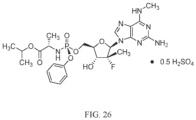
- Compound 2 exhibits unexpected advantageous therapeutic properties, including enhanced bioavailability and target organ selectivity, over its free base (Compound 1). These unexpected advantages could not have been predicted in advance.
- Compound 2 is thus a therapeutically superior composition of matter to administer in an effective amount to a host in need thereof, typically a human, for the treatment of hepatitis C.
- Compound 2 is referred to as the hemi-sulfate salt of isopropyl(( S )-(((2 R ,3 R, 4 R ,5 R )-5-(2-amino-6-(methylamino)-9H-purin-9-yl)-4-fluoro-3-hydroxy-4-methyltetrahydrofuran-2-yl)methoxy)(phenoxy)phosphoryl)-L-alaninate.
- Compound 1 is disclosed in U.S. Patent No. 9,828,410 .
- Compound 2 as Compound 1, is converted to its corresponding triphosphate nucleotide (Compound 1-6) in the cell, which is the active metabolite and inhibitor of RNA polymerase (see Scheme 1 below). Since Compound 1-6 is produced in the cell and does not leave the cell, it is not measurable in the plasma. However, the 5'-OH metabolite Compound 1-7 (see Scheme 1) is exported from the cell, and therefore is measurable in plasma and acts as a surrogate of the concentration of intracellular active metabolite Compound 1-6.
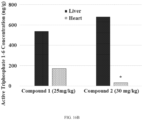
- Compound 2 selectively partitions in vivo to the liver over the heart (Example 19, Table 29), which is beneficial since the liver is the diseased organ in hosts infected with HCV. Dogs were dosed with Compound 1 or Compound 2 and the concentration of the active triphosphate (1-6) in the liver and heart was measured. The liver to heart ratio of the active triphosphate concentration was higher after dosing with Compound 2 compared to Compound 1 as shown in Table 29. Specifically, the liver/heart partitioning ratio for Compound 2 is 20 compared to a liver/heart partitioning ratio of 3.1 for Compound 1.
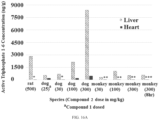
- liver and heart tissue levels of the active guanine triphosphate derivative of Compound 2 were measured after oral doses of Compound 2 in rats and monkeys (Example 20). High levels of the active guanine triphosphate (1-6) were measured in the liver of all species tested. Importantly, unquantifiable levels of the guanine triphosphate (1-6) were measured in monkey hearts, and this is indicative of liver-specific formation of the active triphosphate. It was thus discovered that compared to Compound 1 dosing, Compound 2 dosing improves guanine triphosphate (1-6) distribution.
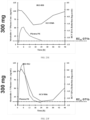
- Example 24 confirms that, as non-limiting embodiments, single oral doses of 300 mg, 400 mg, and 600 mg result in significant antiviral activity in humans.
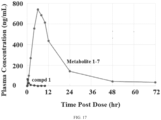
- the C 24 trough plasma concentration of metabolite 1-7 following a 600 mg dose of Compound 2 doubled from the C 24 trough plasma concentration of metabolite 1-7 following a 300 mg dose of Compound 2.
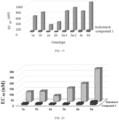
- FIG. 24 and Example 25 highlight the striking invention provided by Compound 2 for the treatment of hepatitis C.
- the steady-state trough plasma levels (C 24,ss ) of metabolite 1-7 following Compound 2 dosing in humans 600 mg QD (550 mg free base equivalent) and 450 mg QD (400 mg free base equivalent)
- the EC 95 for Compound 1 is the same as the EC 95 of Compound 2.
- the steady-state trough plasma level of metabolite 1-7 should exceed the EC 95 .
- the EC 95 of Compound 2 against all tesed clinical isolates ranged from approximately 18 nM to 24 nM.
- Compound 2 at a dose of 450 mg QD (400 mg free base equivalent) in humans provides a predicted steady state trough plasma concentration (C 24,ss ) of approximately 40 ng/mL.
- Compound 2 at a dose of 600 mg QD (550 mg free base equivalent) in humans provides a predicted steady state trough plasma concentration (C 24,ss ) of approximately 50 ng/mL.
- nucleotide sofosbuvir ranges from 50 nM to 265 nM across all tested HCV clinical isolates, with an EC 95 less than the predicted steady state concentration at the commercial dosage of 400 mg for only two isolates, GT2a and GT2b.
- the EC 95 for the commercial dosage of 400 mg of sofosbuvir is greater than the predicted steady state concentration for other clinical isolates, GT1a, GTlb, GT3a, GT4a, and GT4d.
- the data comparing the efficacy and pharmacokinetic steady state parameters in FIG. 24 clearly demonstrates the unexpected therapeutic importance of Compound 2 for the treatment of hepatitis C.
- the predicted steady-state (C 24,ss ) plasma level after administration of Compound 2 is predicted to be at least 2-fold higher than the EC 95 for all genotypes tested, and is 3- to 5-fold more potent against GT2.
- This data indicates that Compound 2 has potent pan-genotypic antiviral activity in humans.
- the EC 95 of sofosbuvir against GT1, GT3, and GT4 is greater than 100 ng/mL.
- Compound 2 is active against HCV at a dosage form that delivers a lower steady-state trough concentration (40-50 ng/mL) than the steady-state tough concentration (approximately 100 ng/mL) achieved by the equivalent dosage form of sofosbuvir.
- the invention includes a dosage form of Compound 2 that provides a metabolite 1-7 steady-state plasma trough concentration (C 24,ss ) between approximately 15-75 ng/mL, for example, 20-60 ng/mL, 25-50 ng/mL, 40-60 ng/mL, or even 40-50 ng/mL.
- C 24,ss steady-state plasma trough concentration
- Compound 2 is an unusually stable, highly soluble, non-hygroscopic salt with activity against HCV. This is surprising because a number of salts of Compound 1 other than the hemi-sulfate salt (Compound 2), including the mono-sulfate salt (Compound 3), are not physically stable, but instead deliquesce or become gummy solids (Example 4), and thus are not suitable for stable solid pharmaceutical dosage forms. Surprisingly, while Compound 2 does not become gummy, it is up to 43 times more soluble in water compared to Compound 1 and is over 6 times more soluble than Compound 1 under simulated gastric fluid (SGF) conditions (Example 15).
- SGF gastric fluid
- Compound 2 remains a white solid with an IR that corresponds to the reference standard for 6 months under accelerated stability conditions (40 °C/75% RH). Compound 2 is stable for 9 months at ambient conditions (25 °C/60% RH) and refrigerator conditions (5 °C).
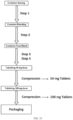
- Solid dosage forms (50 mg and 100 mg tablets) of Compound 2 are also chemically stable under accelerated (40 °C/75% RH) and refrigeration conditions (5 °C) for 6 months (Example 26).
- Compound 2 is stable under ambient conditions (25 °C/60% RH) in a solid dosage form for at least 9 months.
- Scheme 1 provides the metabolic pathway of Compound 1 and Compound 2, which involves the initial de-esterification of the phosphoramidate (metabolite 1-1) to form metabolite 1-2.
- Metabolite 1-2 is then converted to the N 6 -methyl-2,6-diaminopurine-5'-monophosphate derivative (metabolite 1-3), which is in turn metabolized to the free 5'-hydroxyl-N 6 -methyl-2,6-diaminopurine nucleoside (metabolite 1-8) and ((2 R ,3 R ,4 R ,5 R )-5-(2-amino-6-oxo-1,6-dihydro-9H-purin-9-yl)-4-fluoro-3-hydroxy-4-methyltetrahydrofuran-2-yl)methyl dihydrogen phosphate as the 5'-monophosphate (metabolite 1-4).
- Metabolite 1-4 is anabolized to the corresponding diphosphate (metabolite 1-5) and then the active triphosphate derivative (metabolite 1-6).
- the 5'-triphosphate can be further metabolized to generate 2-amino-9-((2 R ,3 R ,4 R ,5 R )-3-fluoro-4-hydroxy-5-(hydroxymethyl)-3-methyltetrahydrofuran-2-yl)-1,9-dihydro-6H-purin-6-one (1-7).
- Metabolite 1-7 is measurable in plasma and is therefore a surrogate for the active triphosphate (1-6), which is not measurable in plasma.
- the invention is Compound 2 for use in the treatment of hepatitis C (HCV) in a host in need thereof, optionally in a pharmaceutically acceptable carrier.
- HCV hepatitis C
- Compound 2 is used as an amorphous solid. In another aspect, Compound 2 is used as a crystalline solid.
- the organic solvent in step (i) is 3-methyl-2-pentanone. In one embodiment, the organic solvent in step (i) is ethyl isopropyl ketone. In one embodiment, the organic solvent in step (i) is methyl propionate. In one embodiment, the organic solvent in step (i) is ethyl butyrate.
- the present invention includes Compound 2, or a pharmaceutically acceptable composition or dosage form thereof, as described herein.
- Compounds, methods, dosage forms, and compositions are provided for the treatment of a host infected with a HCV virus via administration of an effective amount of Compound 2.
- Compound 2 is administered at a dose of at least about 100, 200, 250, 300, 350, 400, 450, 500, 550, 600, 650, 700,750, 800, 850, 900, 950, or 1000 mg.
- Compound 2 is administered for up to 12 weeks, for up to 10 weeks, for up to 8 weeks, for up to 6 weeks, or for up to 4 weeks.
- Compound 2 is administered for at least 4 weeks, for at least 6 weeks, for at least 8 weeks, for at least 10 weeks, or for at least 12 weeks.
- Compound 2 is administered at least once a day or every other day. In certain embodiments, Compound 2 is administered in a dosage form that achieves a steady-state trough plasma level (C 24,ss ) of metabolite 1-7 between approximately 15- 75 ng/mL. In one embodiment, Compound 2 is administered in a dosage form that achieves a steady-state trough plasma level (C 24,ss ) of metabolite 1-7 between approximately 20-60 ng/mL. In certain embodiments, Compound 2 is administered in a dosage form that achieves an AUC of metabolite 1-7 between approximately 1,200 ng*h/mL and 3,000 ng*h/mL. In one embodiment, Compound 2 is administered in a dosage form that achieves an AUC of metabolite 1-7 between approximately 1,500 and 2,100 ng*h/mL.
- the compounds, compositions, and dosage forms can also be used to treat related conditions such as anti-HCV antibody positive and antigen positive conditions, viral-based chronic liver inflammation, liver cancer resulting from advanced hepatitis C (hepatocellular carcinoma (HCC)), cirrhosis, chronic or acute hepatitis C, fulminant hepatitis C, chronic persistent hepatitis C and anti-HCV-based fatigue.
- HCC hepatocellular carcinoma
- the compound or formulations that include the compounds can also be used prophylactically to prevent or restrict the progression of clinical illness in individuals who are anti-HCV antibody- or antigen-positive or who have been exposed to hepatitis C.
- the present invention thus includes the following features:
- the invention disclosed herein is a compound, composition, and solid dosage form for the treatment of infections in or exposure to humans and other host animals of the HCV virus that includes the administration of an effective amount of the hemi-sulfate salt of isopropyl(( S )-(((2 R ,3 R ,4 R ,5 R )-5-(2-amino-6-(methylamino)-9H-purin-9-yl)-4-fluoro-3-hydroxy-4-methyltetrahydrofuran-2-yl)methoxy)(phenoxy)phosphoryl)- L -alaninate (Compound 2 ) as described herein, optionally in a pharmaceutically acceptable carrier.
- Compound 2 is an amorphous solid.
- Compound 2 is a crystalline solid.
- the compound, compositions, and dosage forms can also be used to treat conditions related to or occurring as a result of an HCV viral exposure.
- the active compound can be used to treat HCV antibody positive- and HCV antigen-positive conditions, viral-based chronic liver inflammation, liver cancer resulting from advanced hepatitis C (e.g, hepatocellular carcinoma), cirrhosis, acute hepatitis C, fulminant hepatitis C, chronic persistent hepatitis C, and anti-HCV-based fatigue.
- the active compounds and compositions can also be used to treat the range of HCV genotypes.
- Genotype 1 defining the genotype and subtype can assist in treatment type and duration. For example, different genotypes respond differently to different medications and optimal treatment times vary depending on the genotype infection. Within genotypes, subtypes, such as Genotype 1a and Genotype 1b, respond differently to treatment as well. Infection with one type of genotype does not preclude a later infection with a different genotype.
- Compound 2 is active against the range of HCV genotypes, including Genotypes 1-5.
- Compound 2 is used to treat HCV Genotype 1, HCV Genotype 2, HCV Genotype 3, HCV Genotype 4, HCV Genotype 5, or HCV Genotype 6.
- Compound 2 is used to treat HCV Genotype 1a.
- Compound 2 is used to treat HCV Genotype 1b.
- Compound 2 is used to treat HCV Genotype 2a.
- Compound 2 is used to treat HCV Genotype 2b.
- Compound 2 is used to treat HCV Genotype 3a.
- Compound 2 is used to treat HCV Genotype 4a.
- Compound 2 is used to treat HCV Genotype 4d.
- Compound 1 or Compound 2 is used to treat HCV Genotype 5a. In one embodiment, Compound 1 or Compound 2 is used to treat HCV Genotype 6a. In one embodiment, Compound 1 or Compound 2 is used to treat HCV Genotype 6b, 6c, 6d, 6e, 6f, 6g, 6h, 6i, 6j, 6k, 6l, 6m, 6n, 6o, 6p, 6q, 6r, 6s, 6t, or 6u.
- the predicted steady-state trough concentration (C 24,ss ) of metabolite 1-7 following a dose of 450 mg (400 mg free base) and a dose of 600 mg (550 mg free base) of Compound 2 is approximately 40 ng/mL to 50 ng/mL.
- This C 24,ss level exceeded the EC 95 of Compound 1 at HCV Genotypes 1a, 1b, 2a, 2b, 3a, 4a, and 4d. This data confirms that Compound 2 has potent-pan genotypic activity.
- Compound 2 is more potent than sofosbuvir against GT1, GT2, GT3, and GT4, and therefore allows a dosage form that delivers a smaller steady-state trough concentration of its metabolite which is nonetheless efficacious against all tested genotypes of HCV.
- a dosage form of Compound 2 is delivered that achieves a metabolite 1-7 steady-state trough concentration (C 24,ss ) between approximately 15-75 ng/mL.
- a dosage form of Compound 2 is delivered that achieves a metabolite 1-7 steady-state trough concentration (C 24,ss ) between approximately 20-60 ng/mL, 20-50 ng/mL, or 20-40 ng/mL.
- the compound, formulations, or solid dosage forms that include the compound can also be used prophylactically to prevent or retard the progression of clinical illness in individuals who are HCV antibody- or HCV antigen-positive or who have been exposed to hepatitis C.
- Compound 2 is active against HCV and exhibits superior drug-like and pharmacological properties compared to its free base (Compound 1). Surprisingly, Compound 2 is more bioavailable and achieves a higher AUC than Compound 1 (Example 19) and Compound 2 is more selective for the target organ, the liver, than Compound 1 (Example 19).
- Compound 2 is also advantageous over Compound 1 in terms of solubility and chemical stability. This is surprising because the mono-sulfate salt of isopropyl(( S )-(((2 R ,3 R ,4 R ,5 R )-5-(2-amino-6-(methylamino)-9 H -purin-9-yl)-4-fluoro-3-hydroxy-4-methyltetrahydrofuran-2-yl)methoxy)(phenoxy)phosphoryl)- L -alaninate (Compound 3) is unstable and exhibits the appearance of a sticky gum, while Compound 2, the hemi-sulfate salt, is a stable white solid. The hemisulfate salt, both as a solid and in a solid dosage form, is very stable over 9 months and is not hydroscopic.
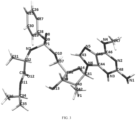
- Compound 2 has S-stereochemistry at the phosphorus atom which has been confirmed with X-ray crystallography ( FIG. 3 , Example 2).
- Compound 2 can be used in the form of any desired ratio of phosphorus R- and S-enantiomers, including up to pure enantiomers.
- Compound 2 is used in a form that is at least 90% free of the opposite enantiomer, and can be at least 98%, 99%, or even 100% free of the opposite enantiomer. Unless described otherwise, an enantiomerically enriched Compound 2 is at least 90% free of the opposite enantiomer.
- the amino acid of the phosphoramidate can be in the D- or L-configuration, or a mixture thereof, including a racemic mixture.
- the compounds described herein are provided in the ⁇ -D-configuration.
- the compounds can be provided in a ⁇ -L-configuration.
- any substituent group that exhibits chirality can be provided in racemic, enantiomeric, diastereomeric form, or any mixture thereof.
- a phosphoramidate exhibits chirality, it can be provided as an R or S chiral phosphorus derivative or a mixture thereof, including a racemic mixture. All of the combinations of these stereo configurations are described herein.
- the invention is defined by claim 1.
- at least one of the hydrogens of Compound 2 (the nucleotide or the hemi-sulfate salt) can be replaced with deuterium.
- the active compound of the invention is Compound 2, which can be provided in a pharmaceutically acceptable composition or solid dosage form thereof.
- Compound 2 is an amorphous solid.
- Compound 2 is a crystalline solid.
- step (i) above is carried out in acetone.
- the second organic solvent in step (ii) may be for example methanol and the mixture of organic solvents in step (v) is methanol/acetone.
- Compound 1 is dissolved in ethyl acetate in step (i). In one embodiment, Compound 1 is dissolved in tetrahydrofuran in step (i). In one embodiment, Compound 1 is dissolved in acetonitrile in step (i). In an additional embodiment, Compound 1 is dissolved in dimethylformamide in step (i).
- the second organic solvent in step (ii) is ethanol. In one embodiment, the second organic solvent in step (ii) is isopropanol. In one embodiment, the second organic solvent in step (ii) is n -butanol.
- a mixture of solvents are used for washing in step (v), for example, ethanol/acetone.
- the mixture of solvent for washing in step (v) is isopropanol/acetone.
- the mixture of solvent for washing in step (v) is n-butanol/acetone.
- the mixture of solvent for washing in step (v) is ethanol/ethyl acetate.
- the mixture of solvent for washing in step (v) is isopropanol/ethyl acetate.
- the mixture of solvent for washing in step (v) is n-butanol/ethyl acetate.
- the mixture of solvent for washing in step (v) is ethanol/ tetrahydrofuran. In one embodiment, the mixture of solvent for washing in step (v) is isopropanol/ tetrahydrofuran. In one embodiment, the mixture of solvent for washing in step (v) is n-butanol/ tetrahydrofuran. In one embodiment, the mixture of solvent for washing in step (v) is ethanol/ acetonitrile. In one embodiment, the mixture of solvent for washing in step (v) is isopropanol/ acetonitrile. In one embodiment, the mixture of solvent for washing in step (v) is n-butanol/ acetonitrile.
- the mixture of solvent for washing in step (v) is ethanol/ dimethylformamide. In one embodiment, the mixture of solvent for washing in step (v) is isopropanol/ dimethylformamide. In one embodiment, the mixture of solvent for washing in step (v) is n-butanol/ dimethylformamide.
- the metabolism of Compound 1 and Compound 2 involves the production of a 5'-monophosphate and the subsequent anabolism of the N 6 -methyl-2,6-diaminopurine base (1-3) to generate ((2 R ,3 R ,4 R ,5 R )-5-(2-amino-6-oxo-1,6-dihydro-9H-purin-9-yl)-4-fluoro-3-hydroxy-4-methyltetrahydrofuran-2-yl)methyl dihydrogen phosphate (1-4) as the 5'-monophosphate.
- the monophosphate is then further anabolized to the active triphosphate species: the 5'-triphosphate (1-6).
- the 5'-triphosphate can be further metabolized to generate 2-amino-9-((2 R ,3 R ,4 R ,5 R )-3-fluoro-4-hydroxy-5-(hydroxymethyl)-3-methyltetrahydrofuran-2-yl)-1 ,9-dihydro-6H-purin-6-one (1-7).
- 5'-monophophate 1-2 can be metabolized to generate the purine base 1-8.
- the present invention provides Compound 1 as an oxalate salt (Compound 4) or an HCl salt (Compound 5).
- both the 1:1 oxalate salt and the 1:1 HCl salt form solids with reasonable properties for solid dosage forms for the treatment of a host such as a human with hepatitis C.
- the oxalate salt may be less desired, and perhaps not suitable, if the patient is susceptible to kidney stones.
- the HCl salt is more hydroscopic than the hemisulfate salt.
- the hemisulfate salt remains the most desired salt form of Compound 1 with unexpected properties.
- D-configuration refers to the principle configuration which mimics the natural configuration of sugar moieties as opposed to the unnatural occurring nucleosides or "L” configuration.
- ⁇ or “ ⁇ anomer” is used with reference to nucleoside analogs in which the nucleoside base is configured (disposed) above the plane of the furanose moiety in the nucleoside analog.
- coadminister and “coadministration” or combination therapy are used to describe the administration of Compound 2 according to the present invention in combination with at least one other active agent, for example where appropriate at least one additional anti-HCV agent.
- the timing of the coadministration is best determined by the medical specialist treating the patient. It is sometimes preferred that the agents be administered at the same time. Alternatively, the drugs selected for combination therapy may be administered at different times to the patient. Of course, when more than one viral or other infection or other condition is present, the present compounds may be combined with other agents to treat that other infection or condition as required.
- the term "host”, as used herein, refers to a unicellular or multicellular organism in which a HCV virus can replicate, including cell lines and animals, and typically a human.
- the term host specifically refers to infected cells, cells transfected with all or part of a HCV genome, and animals, in particular, primates (including chimpanzees) and humans. In most animal applications of the present invention, the host is a human patient.
- Veterinary applications in certain indications, however, are clearly anticipated by the present invention (such as chimpanzees).
- the host can be for example, bovine, equine, avian, canine, feline, etc.
- the present invention includes compounds and the use of compound 2 with desired isotopic substitutions of atoms at amounts above the natural abundance of the isotope, i.e., enriched.
- Isotopes are atoms having the same atomic number but different mass numbers, i.e., the same number of protons but a different number of neutrons.
- isotopes of hydrogen for example, deuterium ( 2 H) and tritium ( 3 H) may be used anywhere in described structures.
- isotopes of carbon e.g., 13 C and 14 C, may be used.
- a preferred isotopic substitution is deuterium for hydrogen at one or more locations on the molecule to improve the performance of the drug.
- the deuterium can be bound in a location of bond breakage during metabolism (an ⁇ -deuterium kinetic isotope effect) or next to or near the site of bond breakage (a ⁇ -deuterium kinetic isotope effect).
- Achillion Pharmaceuticals, Inc. ( WO/2014/169278 and WO/2014/169280 ) describes deuteration of nucleotides to improve their pharmacokinetic or pharmacodynamic, including at the 5-position of the molecule.
- substitution with isotopes such as deuterium can afford certain therapeutic advantages resulting from greater metabolic stability, such as, for example, increased in vivo half-life or reduced dosage requirements.
- Substitution of deuterium for hydrogen at a site of metabolic breakdown can reduce the rate of or eliminate the metabolism at that bond.
- the hydrogen atom can be any isotope of hydrogen, including protium ( 1 H), deuterium ( 2 H) and tritium ( 3 H).
- isotopically-labeled refers to an analog that is a "deuterated analog", a " 13 C-labeled analog,” or a “deuterated/ 13 C-labeled analog.”
- deuterated analog means a compound described herein, whereby a H-isotope, i.e., hydrogen/protium ( 1 H), is substituted by a H-isotope, i.e., deuterium ( 2 H).
- Deuterium substitution can be partial or complete. Partial deuterium substitution means that at least one hydrogen is substituted by at least one deuterium.
- the isotope is 90, 95 or 99% or more enriched in an isotope at any location of interest.
- it is deuterium that is 90, 95 or 99% enriched at a desired location. Unless indicated to the contrary, the deuteration is at least 80% at the selected location. Deuteration of the nucleoside can occur at any replaceable hydrogen that provides the desired results.
- Treatment refers to the administration of Compound 2 to a host, for example a human that is or may become infected with a HCV virus.
- prophylactic or preventative when used, refers to the administration of Compound 2 to prevent or reduce the likelihood of an occurrence of the viral disorder.
- the present invention includes both treatment and prophylactic or preventative therapies.
- Compound 2 is administered to a host who has been exposed to and thus is at risk of infection by a hepatitis C virus infection.
- the invention is directed to a method of treatment or prophylaxis of a hepatitis C virus, including drug resistant and multidrug resistant forms of HCV and related disease states, conditions, or complications of an HCV infection, including cirrhosis and related hepatotoxicities, as well as other conditions that are secondary to a HCV infection, such as weakness, loss of appetite, weight loss, breast enlargement (especially in men), rash (especially on the palms), difficulty with clotting of blood, spider-like blood vessels on the skin, confusion, coma (encephalopathy), buildup of fluid in the abdominal cavity (ascites), esophageal varices, portal hypertension, kidney failure, enlarged spleen, decrease in blood cells, anemia, thrombocytopenia, jaundice, and hepatocellular cancer, among others.
- the method comprises administering to a host in need thereof, typically a human, with an effective amount of Compound 2 as described herein, optionally in combination with at least one additional bioactive agent, for example, an additional anti-HCV agent, further in combination with a pharmaceutically acceptable carrier additive and/or excipient.
- a host in need thereof typically a human
- an effective amount of Compound 2 as described herein optionally in combination with at least one additional bioactive agent, for example, an additional anti-HCV agent, further in combination with a pharmaceutically acceptable carrier additive and/or excipient.
- the present invention is a method for prevention or prophylaxis of an HCV infection or a disease state or related or follow-on disease state, condition or complication of an HCV infection, including cirrhosis and related hepatotoxicities, weakness, loss of appetite, weight loss, breast enlargement (especially in men), rash (especially on the palms), difficulty with clotting of blood, spider-like blood vessels on the skin, confusion, coma (encephalopathy), buildup of fluid in the abdominal cavity (ascites), esophageal varices, portal hypertension, kidney failure, enlarged spleen, decrease in blood cells, anemia, thrombocytopenia, jaundice, and hepatocellular (liver) cancer, among others, said method comprising administering to a patient at risk with an effective amount Compound 2 as described above in combination with a pharmaceutically acceptable carrier, additive, or excipient, optionally in combination with another anti-HCV agent.
- the active compounds of the invention can be administered to a patient at risk with
- Compound 2 is provided as the hemisulfate salt of a phosphoramidate of Compound 1 other than the specific phosphoramidate described in the compound illustration.
- a wide range of phosphoramidates are known to those skilled in the art that include various esters and phospho-esters, any combination of which can be used to provide an active compound as described herein in the form of a hemisulfate salt.
- compositions according to the present invention comprise an anti-HCV virus effective amount of Compound 2 as described herein, optionally in combination with a pharmaceutically acceptable carrier, additive, or excipient, further optionally in combination or alternation with at least one other active compound.
- the invention includes a solid dosage form of Compound 2 in a pharmaceutically acceptable carrier.
- compositions according to the present invention comprise an anti-HCV effective amount of Compound 2 described herein, optionally in combination with a pharmaceutically acceptable carrier, additive, or excipient, further optionally in combination with at least one other antiviral agent, such as an anti-HCV agent.
- the invention includes pharmaceutical compositions that include an effective amount to treat a hepatitis C virus infection of Compound 2 of the present invention or prodrug, in a pharmaceutically acceptable carrier or excipient.
- the invention includes pharmaceutical compositions that include an effective amount to prevent a hepatitis C virus infection of Compound 2 of the present invention or prodrug, in a pharmaceutically acceptable carrier or excipient.
- a therapeutically effective amount will vary with the infection or condition to be treated, its severity, the treatment regimen to be employed, the pharmacokinetic of the agent used, as well as the patient or subject (animal or human) to be treated, and such therapeutic amount can be determined by the attending physician or specialist.
- Compound 2 according to the present invention can be formulated in a mixture with a pharmaceutically acceptable carrier.
- a pharmaceutically acceptable carrier In general, it is preferable to administer the pharmaceutical composition in orally-administrable form, an in particular, a solid dosage form such as a pill or tablet.
- Certain formulations may be administered via a parenteral, intravenous, intramuscular, topical, transdermal, buccal, subcutaneous, suppository, or other route, including intranasal spray. Intravenous and intramuscular formulations are often administered in sterile saline.
- One of ordinary skill in the art may modify the formulations to render them more soluble in water or another vehicle, for example, this can be easily accomplished by minor modifications (salt formulation, esterification, etc.) that are well within the ordinary skill in the art. It is also well within the routineers' skill to modify the route of administration and dosage regimen of Compound 2 in order to manage the pharmacokinetic of the present compounds for maximum beneficial effect in patients, as described in more detail herein
- the prodrug form of the compounds may be used to achieve the desired effect.
- acylated (acetylated or other), and ether (alkyl and related) derivatives, phosphate esters, thiophosphoramidates, phosphoramidates, and various salt forms of the present compounds may be used to achieve the desired effect.
- acylated (acetylated or other), and ether (alkyl and related) derivatives, phosphate esters, thiophosphoramidates, phosphoramidates, and various salt forms of the present compounds may be used to achieve the desired effect.
- ether alkyl and related
- the amount of Compound 2 included within the therapeutically active formulation according to the present invention is an effective amount to achieve the desired outcome according to the present invention, for example, for treating the HCV infection, reducing the likelihood of a HCV infection or the inhibition, reduction, and/or abolition of HCV or its secondary effects, including disease states, conditions, and/or complications which occur secondary to HCV.
- a therapeutically effective amount of the present compound in a pharmaceutical dosage form may range from about 0.001 mg/kg to about 100 mg/kg per day or more, more often, slightly less than about 0.1 mg/kg to more than about 25 mg/kg per day of the patient or considerably more, depending upon the compound used, the condition or infection treated and the route of administration.
- Compound 2 is often administered in amounts ranging from about 0.1 mg/kg to about 15 mg/kg per day of the patient, depending upon the pharmacokinetic of the agent in the patient. This dosage range generally produces effective blood level concentrations of active compound which may range from about 0.001 to about 100, about 0.05 to about 100 micrograms/cc of blood in the patient.
- Compound 2 will be administered in a solid dosage form in an amount ranging from about 250 micrograms up to about 800 milligrams or more at least once a day, for example, at least about 5, 10, 20, 25, 50, 75, 100, 150, 200, 250, 300, 350, 400, 450, 500, 550, 600, 650, 700, 750, or 800 milligrams or more, once, twice, three, or up to four times a day according to the direction of the healthcare provider.
- Compound 2 often administered orally, but may be administered parenterally, topically, or in suppository form, as well as intranasally, as a nasal spray or as otherwise described herein. More generally, Compound 2 can be administered in a tablet, capsule, injection, intravenous formulation, suspension, liquid, emulsion, implant, particle, sphere, cream, ointment, suppository, inhalable form, transdermal form, buccal, sublingual, topical, gel, mucosal, and the like.
- a dosage form herein refers to a milligram weight dose, it refers to the amount of Compound 2 (i.e., the weight of the hemi-sulfate salt) unless otherwise specified to the contrary.
- the pharmaceutical composition is in a dosage form that contains from about 1 mg to about 2000 mg, from about 10 mg to about 1000 mg, from about 100 mg to about 800 mg, from about 200 mg to about 600 mg, from about 300 mg to about 500 mg, or from about 400 mg to about 450 mg of Compound 2 in a unit dosage form.
- the pharmaceutical composition is in a dosage form, for example in a solid dosage form, that contains up to about 10, about 50, about 100, about 125, about 150, about 175, about 200, about 225, about 250, about 275, about 300, about 325, about 350, about 375, about 400, about 425, about 450, about 475, about 500, about 525, about 550, about 575, about 600, about 625, about 650, about 675, about 700, about 725, about 750, about 775, about 800, about 825, about 850, about 875, about 900, about 925, about 950, about 975, or about 1000 mg or more of Compound 2 in a unit dosage form.
- Compound 2 is administered in a dosage form that delivers at least about 300 mg. In one embodiment, Compound 2 is administered in a dosage form that delivers at least about 400 mg. In one embodiment, Compound 2 is administered in a dosage form that delivers at least about 500 mg. In one embodiment, Compound 2 is administered in a dosage form that delivers at least about 600 mg. In one embodiment, Compound 2 is administered in a dosage form that delivers at least about 700 mg. In one embodiment, Compound 2 is administered in a dosage form that delivers at least about 800 mg. In certain embodiments, Compound 2 is administered at least once a day for up to 12 weeks. In certain embodiments, Compound 2 is administered at least once a day for up to 10 weeks.
- Compound 2 is administered at least once a day for up to 8 weeks. In certain embodiments, Compound 2 is administered at least once a day for up to 6 weeks. In certain embodiments, Compound 2 is administered at least once a day for up to 4 weeks. In certain embodiments, Compound 2 is administered at least once a day for at least 4 weeks. In certain embodiments, Compound 2 is administered at least once a day for at least 6 weeks. In certain embodiments, Compound 2 is administered at least once a day for at least 8 weeks. In certain embodiments, Compound 2 is administered at least once a day for at least 10 weeks. In certain embodiments, Compound 2 is administered at least once a day for at least 12 weeks.
- Compound 2 is administered at least every other day for up to 12 weeks, up to 10 weeks, up to 8 weeks, up to 6 weeks, or up to 4 weeks. In certain embodiments, Compound 2 is administered at least every other day for at least 4 weeks, at least 6 weeks, at least 8 weeks, at least 10 weeks, or at least 12 weeks. In one embodiment, at least about 600 mg of Compound 2 is administered at least once a day for up to 6 weeks. In one embodiment, at least about 500 mg of Compound 2 is administered at least once a day for up to 6 weeks. In one embodiment, at least about 400 mg of Compound 2 is administered at least once a day for up to 6 weeks. In one embodiment, at least 300 mg of Compound 2 is administered at least once a day for up to 6 weeks. In one embodiment, at least 200 mg of Compound 2 is administered at least once a day for up to 6 weeks. In one embodiment, at least 100 mg of Compound 2 is administered at least once a day for up to 6 weeks.
- Metabolite 1-6 is the active triphosphate of Compound 2, but metabolite 1-6 is not measurable in plasma.
- a surrogate for metabolite 1-6 is metabolite 1-7.
- Metabolite 1-7 is a nucleoside metabolite measurable in plasma and is therefore an indication of the intracellular concentrations of metabolite 1-6.
- a dosage form of Compound 2 must achieve a metabolite 1-7 steady-state trough concentration (C 24,ss ) that exceeds the EC 95 value of Compound 2. As shown in FIG.
- a dosage form of Compound 2 is delivered that achieves a steady-state trough concentration (C 24,ss ) of metabolite 1-7 that is between approximately 15 to 75 ng/mL. In one embodiment, a dosage form of Compound 2 is delivered that achieves a steady-state trough concentration (C 24,ss ) of metabolite 1-7 that is between approximately 20 to 60 ng/mL.
- a dosage form of Compound 2 is delivered that achieves a steady-state trough concentration (C 24,ss ) of metabolite 1-7 that is between approximately 30 to 60 ng/mL. In one embodiment, a dosage form of Compound 2 is delivered that achieves a steady-state trough concentration (C 24,ss ) of metabolite 1-7 that is between approximately 20 to 50 ng/mL. In one embodiment, a dosage form of Compound 2 is delivered that achieves a steady-state trough concentration (C 24,ss ) of metabolite 1-7 that is between approximately 30 to 50 ng/mL.
- a dosage form of Compound 2 is delivered that achieves a steady-state trough concentration (C 24,ss ) of metabolite 1-7 that is between approximately 20 to 45 ng/mL. In one embodiment, a dosage form of Compound 2 is delivered that achieves a steady-state trough concentration (C 24,ss ) of metabolite 1-7 that is between approximately 20 to 30 ng/mL. In one embodiment, a dosage form of Compound 2 is delivered that achieves a steady-state trough concentration (C 24,ss ) of metabolite 1-7 that is between approximately 20 to 35 ng/mL.
- a dosage form of Compound 2 is delivered that achieves a steady-state trough concentration (C 24,ss ) of metabolite 1-7 that is between approximately 20 to 25 ng/mL. Approximate dosage forms are + 10% of the steady-state trough concentration.
- Compound 2 is dosed at an amount that achieves a metabolite 1-7 AUC (area under the curve) of between approximately 1,200 and 3,000 ng/mL. In one embodiment, Compound 2 is dosed at an amount that achieves a metabolite 1-7 AUC of between approximately 1,500 and 3,000 ng/mL. In one embodiment, Compound 2 is dosed at an amount that achieves a metabolite 1-7 AUC of between approximately 1,800 and 3,000 ng/mL. In one embodiment, Compound 2 is dosed at an amount that achieves a metabolite 1-7 AUC of between approximately 2,100 and 3,000 ng/mL. In a preferred embodiment, Compound 2 is dosed at amount that achieves a metabolite 1-7 AUC of approximately 2,200 ng*h/mL. Approximate dosage forms are + 10% of the AUC.
- the amount of Compound 2 according to the present invention to be administered in ranges from about 0.01 mg/kg of the patient to about 800 mg/kg or more of the patient or considerably more, depending upon the second agent to be co-administered and its potency against the virus, the condition of the patient and severity of the disease or infection to be treated and the route of administration.
- the other anti-HCV agent may for example be administered in amounts ranging from about 0.01 mg/kg to about 800 mg/kg.
- dosage amounts of the second active agent are amounts ranging from about 250 micrograms up to about 750 mg or more at least once a day, for example, at least about 5, 10, 20, 25, 50, 75, 100, 150, 200, 250, 300, 350, 400, 450, 500, 600, 700, or 800 milligrams or more, up to four times a day.
- Compound 2 may be often administered in an amount ranging from about 0.5 mg/kg to about 50 mg/kg or more (usually up to about 100 mg/kg), generally depending upon the pharmacokinetic of the two agents in the patient. These dosage ranges generally produce effective blood level concentrations of active compound in the patient.
- a prophylactically or preventive effective amount of the compositions according to the present invention falls within the same concentration range as set forth above for therapeutically effective amount and is usually the same as a therapeutically effective amount.
- Administration of Compound 2 may range from continuous (intravenous drip) to several oral or intranasal administrations per day (for example, Q.I.D.) or transdermal administration and may include oral, topical, parenteral, intramuscular, intravenous, sub-cutaneous, transdermal (which may include a penetration enhancement agent), buccal, and suppository administration, among other routes of administration.
- Enteric coated oral tablets may also be used to enhance bioavailability of the compounds for an oral route of administration.
- the most effective dosage form will depend upon the bioavailability/pharmacokinetic of the particular agent chosen as well as the severity of disease in the patient. Oral dosage forms are particularly preferred, because of ease of administration and prospective favorable patient compliance.
- a therapeutically effective amount of Compound 2 according to the present invention is often intimately admixed with a pharmaceutically acceptable carrier according to conventional pharmaceutical compounding techniques to produce a dose.
- a carrier may take a wide variety of forms depending on the form of preparation desired for administration, e.g., oral or parenteral.
- any of the usual pharmaceutical media may be used.
- suitable carriers and additives including water, glycols, oils, alcohols, flavoring agents, preservatives, coloring agents, and the like may be used.
- suitable carriers and additives including starches, sugar carriers, such as dextrose, manifold, lactose, and related carriers, diluents, granulating agents, lubricants, binders, disintegrating agents, and the like may be used.
- the tablets or capsules may be enteric-coated or sustained release by standard techniques. The use of these dosage forms may significantly enhance the bioavailability of the compounds in the patient.
- the carrier will usually comprise sterile water or aqueous sodium chloride solution, though other ingredients, including those which aid dispersion, also may be included.
- sterile water is to be used and maintained as sterile, the compositions and carriers must also be sterilized.
- injectable suspensions may also be prepared, in which case appropriate liquid carriers, suspending agents, and the like may be employed.
- Liposomal suspensions may also be prepared by conventional methods to produce pharmaceutically acceptable carriers. This may be appropriate for the delivery of free nucleosides, acyl/alkyl nucleosides or phosphate ester pro-drug forms of the nucleoside compounds according to the present invention.
- Compound 2 and the compositions described are used to treat, prevent or delay a HCV infection or a secondary disease state, condition or complication of HCV.
- Drug resistance sometimes occurs by mutation of a gene that encodes for an enzyme used in viral replication.
- the efficacy of a drug against an HCV infection can be prolonged, augmented, or restored by administering the compound in combination or alternation with another, and perhaps even two or three other, antiviral compounds that induce a different mutation or act through a different pathway, from that of the principle drug.
- the pharmacokinetic, bio distribution, half-life, or other parameter of the drug can be altered by such combination therapy (which may include alternation therapy if considered concerted). Since the disclosed Compound 2 is an NS5B polymerase inhibitor, it may be useful to administer the compound to a host in combination with, for example a
- Compound 2 is administered to treat advanced hepatitis C virus leading to liver cancer or cirrhosis, in one embodiment, the compound can be administered in combination or alternation with another drug that is typically used to treat hepatocellular carcinoma (HCC), for example, as described by Andrew Zhu in "New Agents on the Horizon in Hepatocellular Carcinoma" Therapeutic Advances in Medical Oncology, V 5(1), January 2013, 41-50 .
- HCC hepatocellular carcinoma
- suitable compounds for combination therapy where the host has or is at risk of HCC include anti-angiogenic agents, sunitinib, brivanib, linifanib, ramucirumab, bevacizumab, cediranib, pazopanib, TSU-68, lenvatinib, antibodies against EGFR, mTor inhibitors, MEK inhibitors, and histone decetylace inhibitors.
- Step 1 Synthesis of (2 R ,3 R ,4 R ,5 R )-5-(2-Amino-6-(methylamino)-9 H -purin-9-yl)-4-fluoro-2-(hydroxymethyl)-4-methyltetrahydrofuran-3-ol (2-2)
- Analytic Method for Compound 2-2 The purity of compound 2-2 (15 mg) was obtained using an Agilent 1100 HPLC system with a Agilent Poroshell 120 EC-C18 4.6*150mm 4-Micron column with the following conditions: 1 mL/min flow rate, read at 254 nm, 30 °C column temperature, 15 ⁇ L injection volume, and a 31 minute run time. The sample was dissolved in acetonitrile - water (20:80) (v/v). The gradient method is shown below. Time (min) A% (0.05 TFA in water) B% (Acetonitrile) 0 95 5 8 80 20 13 50 50 23 5 95 26 5 95 26.1 95 5 31 95 5
- Step 2 Synthesis of isopropyl(( S )-(((2 R ,3 R ,4 R ,5 R )-5-(2-Amino-6-(methylamino)-9 H -purin-9-yl)-4-fluoro-3-hydroxy-4-methyltetrahydrofuran-2-yl)methoxy)(phenoxy)phosphoryl)- L- alaninate (Compound 1)
- Analytic Method for Compound 1 The purity of Compound 1 (25 mg) was obtained using an Agilent 1100 HPLC system with a Waters XTerra Phenyl 5 ⁇ m 4.6*250mm column with the following conditions: 1 mL/min flow rate, read at 254 nm, 30 °C column temperature, 15 ⁇ L injection volume, and a 25 minute run time. The sample was dissolved in acetonitrile - water (50:50) (v/v). The gradient method is shown below. Time (min) A% (0.1% H 3 PO 4 in water) B% (Acetonitrile) 0 90 10 20 20 80 20.1 90 10 25 90 10
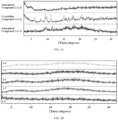
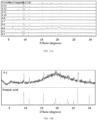
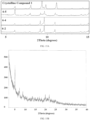
- Amorphous Compound 1 and crystalline Compound 1 were initially analyzed by XRPD, 1 HNMR, and HPLC. The XRPD patterns for both compounds are shown in FIG. 1A and the HPLC traces to determine purity are shown in FIGS. 1B and 2A , respectively.
- Table 1 is a list of peaks from the XRPD of crystalline Compound 1 and Table 2 is a list of relative retention times (RTT) from the HPLC traces.
- RTT relative retention times
- Amorphous Compound 1 was 98.61% pure and crystalline Compound 1 was 99.11% pure. Both compounds were a white solid.
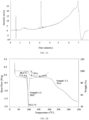
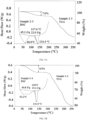
- FIG. 2B is the TGA and DSC graphs of crystalline Compound 1. For crystalline Compound 1, an endotherm was observed at 88.6 °C and there was a 7.8% mass loss from 80 - 110 °C.
- FIG. 3 is the ORTEP drawing of Compound 1. Crystal data and measurement data are shown in Table 3. The absolute stereochemistry of Compound 1 based on the X-ray crystallography is shown below:
- DSC data were collected on a TA Instruments Q2000 equipped with a 50 position autosampler.
- the calibration for thermal capacity was carried out using sapphire and the calibration for energy and temperature was carried out using certified indium.
- a purge of dry nitrogen at 50 ml/min was maintained over the sample.
- the instrument control software was Advantage for Q Series v2.8.0.394 and Thermal Advantage v5.5.3 and the data were analyzed using Universal Analysis v4.5A.
- TGA data were collected on a TA Instruments Q500 TGA, equipped with a 16 position auto- sampler.
- the instrument was temperature calibrated using certified Alumel and Nickel. Typically 5 - 10 mg of each sample was loaded onto a pre-tared aluminum DSC pan and heated at 10 °C/min from ambient temperature to 350 °C. A nitrogen purge at 60 ml/min was maintained over the sample.
- the instrument control software was Advantage for Q Series v2.5.0.256 and Thermal Advantage v5.5.3 and the data were analyzed using Universal Analysis v4.5.
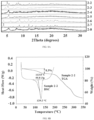
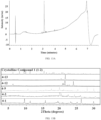
- FIG. 4A is the XRPD after 14 days at 25 °C / 60% (RH).
- Amorphous Compound 1 (sample 1-1) remained poorly crystalline, whereas crystalline Compound 1 (sample 1-2) retained its crystallinity, but both compounds were stable after 14 days at 25 °C / 60% (RH).
- the oxalate salt of Compound 1, Compound 4 was formed by mixing the oxalic salt with solvent (5 vol, 100 ⁇ L) and allowing any solution to evaporate at room temperature. Any suspension was matured (room temperature - 50 °C) for 3 hours and crystallinity was accessed.
- Table 4 shows the different solvents used in the production of Compound 4. All solvents except for two (cyclohexane and n -heptane) afforded crystalline products. Despite the high crystallinity and solubility of Compound 4, oxalate salts are not acceptable for clinical development due to the potential formation of kidney stones and other salts of compound 1 were explored. Table 4.
- oxalate salt compound 4 (Example 3) could not be carried forward in clinical trials due to its potential to form kidney stones, amorphous salts of Compound 1 were formed with the counter ions listed in Table 5.
- Compound 1 was dissolved in t -butanol (20 vol, 6 ml) and the solution was treated with the acid counter-ions (1 equivalent for each sample except sample 1-9 which had 0.5 equivalent of sulfate). The samples were then frozen with the solvent removed by lyophilization. The residual solid in samples 1-4, 1-5, 1-6, 1-7, 1-8, and 1-9 was initially analyzed by XRPD and HPLC. Table 5.
- Amorphous salt formation details Sample ID Sample details Stock solution details Observation NMR 1-4 HCl (1:1) THF 1M White solid 3 fewer protons ⁇ 0.3 eq t -BuOH 1-5 Sulfuric (1:1) THF 1M White solid 3 fewer protons ⁇ 0.3 eq t -BuOH 1-6 Fumaric (1:1) MeOH:THF (1:1) 0.5M Glassy solid 1.05 eq fumaric acid 0.84 eq t -BuOH 1-7 Benzoic (1:1) THF 1M White solid 1.0 eq benzoic acid 0.34 eq t -BuOH 1-8 Succinic (1:1) MeOH 1M Sticky white solid ⁇ 1.1 eq succinic acid 0.37 eq t -BuOH 1-9 Sulfuric (0.5:1 acid:API) THF 1M White solid 3 fewer protons ⁇ 0.3 eq t -BuOH 1 HNMR spectrum were taken for all samples.
- the hemi-sulfate salt (sample 1-9) also retained its physical appearance as a white solid in contrast to mono-sulfate compound (sample 1-5), which was a sticky gum. Results are shown in Table 6.
- the mono HCl salt (sample 1-4) and the hemi-sulfate salt (sample 1-9) were found to be physically and chemically stable after 2 weeks storage at 25 °C / 60% relative humidity (RH). Although both salts were stable over the two weeks, the hemi-sulfate salt was superior to the HCl salt because the HCl salt was hygroscopic, rendering it less useful compared to the hemi-sulfate salt for long-term storage or use. Table 6.
- Amorphous Compound 2 was initially analyzed by XRPD, 1 HNMR, DSC, TGA, and HPLC.
- the XRPD pattern for amorphous Compound 2 overlaid with amorphous Compound 1 and crystalline Compound 1 is shown in FIG. 1A and the XRPD pattern of amorphous Compound 2 alone is shown in FIG. 5B .
- Table 7 is a peak list from the XRPD pattern shown in FIG. 5B .
- the HPLC trace to determine purity is shown in FIG. 6A .
- Table 8 is a list of relative retention times (RTT) from the HPLC trace shown in FIG. 6A .
- Amorphous Compound 2 was 99.68% pure.
- 6B is a TGA and DSC graph of amorphous Compound 2.
- Experimental details for the TGA and DSC experiments are given in Example 2.
- Table 7. Peak list for Amorphous Compound 2 Angle / °2 ⁇ d spacing / ⁇ Intensity / Counts Intensity / % 4.20 21.03 486 81.8 4.67 18.91 482 81.0 5.16 17.10 595 100.0 9.13 9.68 547 92.0
- Table 8 HPLC chromatogram of Amorphous Compound 2 Amorphous Compound 2 RRT Area % 0.48 0.02 0.48 0.02 0.67 0.01 0.94 0.13 1.00 99.68 1.04 0.06
- Amorphous Compound 2 was suspended in 5 volumes of solvent at 25 °C (sample 2-1, 2-2, 2-3, 2-4, 2-5, 2-6, 2-7, 2-8, 2-9, 2-10, and 2-11). To those samples that were not free flowing (2-1, 2-2, 2-3, 2-4, 2-5, 2-6, 2-7, 2-8, and 2-10), an additional 5 volumes of solvent was added.
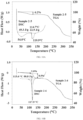
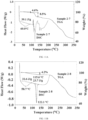
- Example 2-2 The seven samples (Samples 2-2, 2-3, 2-4, 2-5, 2-6, 2-7 and 2-8) were analyzed by DSC, TGA, 1 H-NMR and IC (Table 10, FIG. 8A, FIG. 8B , FIG. 9A, FIG. 9B , FIG. 10A, FIG. 10B , FIG. 11A, and FIG. 11B ) as well as by XRPD following 6 days storage at 25 °C / 60% relative humidity (RH) (all samples remained crystalline / poorly crystalline following stability). All samples retained roughly half an equivalent of sulfate, but contained a relatively large amount of residual solvent.
- An overlay of the X-ray diffractograms of amorphous samples 2-9, 2-10, and 2-11 is shown in FIG.
- Example 3 a crystalline oxalate salt was identified when determining appropriate salts for Compound 1, but oxalate salt Compound 4 could not be carried forward in clinical trials due to its potential for causing kidney stones. Therefore, crystallization of the chemically related malonate salt (Compound 5) was attempted using the same 11 solvents as for the hemi-sulfate salt.
- Compound 1 (12 ⁇ 50 mg, samples 3-1, 3-2, 3-3, 3-4, 3-5, 3-6, 3-7, 3-8, 3-9, 3-10, 3-11, and 3-12) was dissolved in t -butanol (20 vol) and the solutions were then treated with 1 equivalence of a malonic acid stock solution (1 M in THF).
- FIG. 12A is an XRDP of sample 3-12 and FIG. 13A is the HPLC chromatograph of sample 3-12.
- a liquid assisted grinding (LAG) study to determine appropriate salts other than hemi-sulfate was performed using the 14 acidic counter ions in Table 12. Table 12.
- Counter-ion stock solutions used in LAG Crystallization Counter-ion Solvent (1 M) Pamoic DMSO Malonic THF D-Glucuronic Water DL-Mandelic THF D-Gluconic THF Glycolic THF L-Lactic THF Oleic THF L-Ascorbic Water Adipic THF (heat) Caproic THF Stearic THF Palmitic THF Methanesulfonic THF
- Compound 1 (30 mg) was placed in HPLC vials with two 3 mm ball bearings. The materials were wetted with solvent (15 ⁇ l ethanol, sample 4-1, 4-2, 4-3, 4-4, 4-5, 4-6, 4-7, 4-8, 4-9, 4-10, 4-11, 4-12, 4-13, and 4-14) and 1 equivalence of the acid counter-ion was added. The samples were then ground for 2 hours at 650 rpm using a Fritsch milling system with an Automaxion adapter. Most of the samples after grinding were found to be clear gums and were not analyzed further (Table 13).
- Methyl ethyl ketone was next utilized as a solvent to study appropriate salts other than the hemi-sulfate salt.
- the study was performed by dissolving Compound 1 (50 mg) in MEK (20 vol) at room temperature. The solutions were treated with 1 equivalence of the selected counter-ions (Table 12). The samples were then cooled down to 5 °C at 0.1 °C/min and stirred at this temperature overnight. All samples were allowed to evaporate under ambient conditions and any solids observed were analyzed by XRPD.
- Ethyl acetate was next utilized to study appropriate salts other than hemi-sulfate salt. Utilizing the 14 acidic counter ions in Table 12, the study was performed by dissolving Compound 1 (50 mg) in ethyl acetate (20 vol) at 50 °C. The solutions were treated with 1 equivalent of the selected counter-ions (Table 12). The samples were then cooled down to 5 °C at 0.1 °C/min and stirred at this temperature for 4 days. The solutions were allowed to evaporate under ambient conditions while any solids were analyzed by XRPD. The results from the crystallizations using ethyl acetate are in Table 16.
- Example 8 In contrast to Example 8 where MEK was the solvent, the majority of samples were observed to be suspensions following cooling of the acid:compound mixture (those that were solutions were allowed to evaporate under ambient conditions). However, the XRPD diffractograms were generally found to match crystalline Compound 1. Samples 6-2, 6-4, and 6-5 have some slight differences ( FIG. 14A and FIG. 15A ). No crystalline forms of the salt were obtained. Table 16.
- Example 2 and Example 4 Purity analysis in Example 2 and Example 4 was performed on an Agilent HP1100 series system equipped with a diode array detector and using ChemStation software vB.04.03 using the method shown in Table 17. Table 17.
- HPLC method for chemical purity determinations Parameter Value Type of method Reverse phase with gradient elution Sample Preparation 0.5 mg/ml in acetonitrile : water 1:1 Column Supelco Ascentis Express C18, 100 ⁇ 4.6 mm, 2.7 ⁇ m Column Temperature (°C) 25 Injection ( ⁇ 1) 5 Wavelength, Bandwidth (nm) 255, 90 Flow Rate (ml/min) 2 Phase A 0.1% TFA in water Phase B 0.085% TFA in acetonitrile Timetable Time (min) % Phase A % Phase B 0 95 5 6 5 95 6.2 95 5 8 95 5
- the XRPD patterns in Examples 2, 3, 4, 5, 6, 7, 8, and 9 were collected on a PANalytical Empyrean diffractometer using Cu K ⁇ radiation (45 kV, 40 mA) in transmission geometry.
- a 0.5° slit, 4 mm mask and 0.4 rad Soller slits with a focusing mirror were used on the incident beam.
- the instrument is performance checked using silicon powder on a weekly basis.
- the software used for data collection was X'Pert Data Collector v. 5.3 and the data were analyzed and presented using Diffrac Plus EVA v. 15.0.0.0 or Highscore Plus v.
- Samples were prepared and analyzed in either a metal or Millipore 96 well-plate in transmission mode. X-ray transparent film was used between the metal sheets on the metal well-plate and powders (approximately 1-2 mg) were used as received.
- the Millipore plate was used to isolate and analyze solids from suspensions by adding a small amount of suspension directly to the plate before filtration under a light vacuum.
- the scan mode for the metal plate used the gonio scan axis, whereas a 2 ⁇ scan was utilized for the Millipore plate.
- a performance check was carried out using silicon powder (metal well-plate). The details of the data collection were an angular range of 2.5 to 32.0° 2 ⁇ , a step size of 0.0130° 2 ⁇ , and a total collection time of 2.07 minutes.
- Samples were also collected on a Bruker D8 diffractometer using Cu K ⁇ radiation (40 kV, 40 mA), ⁇ - 2 ⁇ goniometer, and divergence of V4 and receiving slits, a Ge monochromator and a Lynxeye detector.
- the instrument is performance checked using a certified Corundum standard (NIST 1976).
- the software used for data collection was DiffracPlus XRD Commander v2.6.1 and the data were analyzed and presented using Diffrac Plus EVA v15.0.0.0.
- Samples were run under ambient conditions as flat plate specimens using powder as received.
- the sample was gently packed into a cavity cut into polished, zero-background (510) silicon wafer.
- the sample was rotated in its own plane during analysis.
- the details of the data collection were an angular range of 2 to 42° 2 ⁇ , a step size of 0.05° 2 ⁇ , and collection time of 0.5 s/step.
- Analytic Method for Compound 2 The purity of Compound 2 was obtained using an Agilent 1100 HPLC system with a Waters XTerra Phenyl 5 ⁇ m 4.6*250mm column with the following conditions: 1 mL/min flow rate, read at 254 nm, 30 °C column temperature, 10 ⁇ L injection volume, and a 30 minute run time. The sample was dissolved in ACN:water (90:10, v/v). The Gradient method for separation is shown below. Rt(min) of Compound 2 was approximately 12.0 minutes. Time (min) 0.1% H 3 PO 4 in Water (A)% Acetonitrile (B)% 0 90 10 20 20 80 20.1 90 10 30 90 10
- Compound 2 was further characterized by eye, 1 HNMR, 13 CNMR, 19 FNMR, MS, HPLC, and XRPD ( FIG. 15B ). Residual solvent was measured by GC. Water content was measured by Karl Fischer Titration, and the water content was only 0.70%. Data is summarized in Table 18. Table 18.
- Compound 1 and Compound 2 were both tested for solubility in biorelevant test medias, including simulated gastric fluid (SGF), fasted-state simulated gastric fluid (FaSSIF), and fed-state gastric fluid (FeSSIF). Results for Compound 1 are shown in Table 19 and results for Compound 2 are shown in Table 20. Samples were stirred at room temperature (20 - 25 °C). Compound 2 was more than 40-fold more soluble than Compound 1 in water at 2 hours and more than 25-fold more soluble at 24 hours. In SGF conditions, Compound 2 had a solubility of 84.2 mg/mL at 24 hours compared to the solubility of 15.6 mg/mL of Compound 1 at the same time point.
- SGF simulated gastric fluid
- FeSSIF fasted-state simulated gastric fluid
- FeSSIF fed-state gastric fluid
- Compound 2 was also more soluble at 2 hours in the SGF conditions than Compound 1, and soluble enough to allow for testing even after 48 hours while testing at 48 hours was not done with Compound 1.
- Table 19 Compound 1 solubility testing results Test Media Solubility (in mg/mL) Appearance Descriptive term 2 hours 24 hours Water 1.5 2.5 Clear Solution* Slightly Soluble SGF 13.8 15.6 Clear Solution with gum at the bottom Sparingly Soluble FaSSIF 1.7 1.7 Turbid Slightly Soluble FeSSIF 2.8 2.9 Turbid Slightly Soluble *Sample appeared to be clear, yet a solubility of only 1.5 mg/mL was achieved. Upon further investigation, it was noted that a gummy film formed on the stir bar.
- the compound 1 active pharmaceutical ingredient formed a gummy ball in diluent (90% water/10% acetonitrile) during standard preparation which required a long sonication time to dissolve completely.
- Compound 2 solubility testing results Test Media Solubility (in mg/mL salt base) Appearance Descriptive term 2 hours 24 hours 48 hours Water 65.3 68.0 N/A Turbid Soluble SGF 89.0 84.2 81.3 Turbid Soluble FaSSIF 1.9 2.0 N/A Turbid Slightly Soluble FeSSIF 3.3 3.4 N/A Turbid Slightly Soluble
- Compound 2 was tested for chemical stability at 25 and 40 °C over a 6 month time period by monitoring organic purity, water content, 1 HNMR, DSC, and Ramen IR.
- the container closure system for the study was a combination medicinal valve bag with a pharmaceutical laminated film over the pouch and desiccant silica gel between the two layers.
- Compound 2 (1 g) was measured into each container. Bags were then stored at 25°C/60%RH (relative humidity) and 40°C/75%RH (relative humidity).
- Organic purity, water content, 1 HNMR, DSC and Raman were measured at Time 0, Month 1, Month 2, Month 3 and Month 6.
- the purity of Compound 2 was obtained using a Shimadzu LC-20AD system with a Waters XTerra Phenyl, 5 ⁇ m, 4.6x250mm column with the following conditions: 1 mL/min flow rate, read at 254 nm, 35 °C column temperature, and 10 ⁇ L injection volume. The sample was dissolved in acetonitrile - water (90:10) (v/v). The gradient method is shown below. Time (min) A% (ACN) B% (water) 0 90 10 20 20 80 20.1 90 10 30 90 10
- the water content of Compound 2 (250 mg) was determined by a water titration apparatus using the Karl Fischer titration method.
- Results are shown in Table 21 and Table 22.
- the rate of degradation was minimal.
- Compound 2 was 99.75% percent pure at the 25 °C conditions and 99.58% pure at the 40 °C conditions.
- Compound 2 was still 99.74% pure at the 25 °C conditions and 99.30% pure at the 40 °C conditions.
- the percent of degradation product increased from 0.03% at Day 0 to 0.08% after 6 months.
- the percent of degradation product increased from 0.03% to 0.39%.
- the percent of water increased approximately 0.6% at 25 °C and increased approximately 0.7% at 40 °C.
- a single oral dose of Compound 2 was administered to rats, dogs, and monkeys, and the plasma levels of certain metabolites shown in Scheme 1 were measured.
- Plasma levels of Compound 1 and metabolite 1-7 after single oral doses of Compound 2 Species Dose* (mg/kg) Compound 1 Metabolite 1-7 C max (ng/mL) T max (hr) AUC 0-last (hr*ng/mL) C max (ng/mL) AUC 0-last (hr*ng/mL) Rat a 500 70.5 0.25 60.9 748 12000 Dog b 30 1530 0.25-1 1300 783 9270 100 8120 0.5-1 10200 2030 24200 300 21300 204 44300 4260 60800 Monkey b 30 63.5 0.5-2 176 42.5 1620 100 783 1-2 1100 131 3030 300 501 204 1600 93.6 3660 3 males per dose per species; *dose formulations: a 0.5% CMC, 0.5% Tween 80 in water, b powder in capsules Table 27.
- Plasma levels of metabolites 1-8 and 1-2 after single oral dose of Compound 2 Species Dose* (mg/kg) Metabolite 1-8 Metabolite 1-2 C max (ng/mL) AUC 0-last (hr*ng/mL) C max (ng/mL) AUC 0-last (hr*ng/mL) Raf 500 5060 35100 9650 20300 Dog b 30 291 905 196 610 100 1230 4370 886 2830 300 5380 35300 2380 8710 Monkey b 30 209 5690 300 1730 100 406 12300 1350 8160 300 518 16800 1420 11400 3 males per dose per species; *dose formulations: a 0.5% CMC, 0.5% Tween 80 in water; b powder in capsules
- TP triphosphate
- Compound 2 (metabolite 1 - 6 ) were measured 4 hours after oral doses of Compound 2.
- High levels of the active TP were measured in the liver of all species tested.
- Relatively low levels of the active TP were measured in the hearts of dogs due to saturation of first-pass hepatic metabolism, and unquantifiable levels of TP were measured in rat and monkey hearts, indicative of liver-specific formation of the active TP. While not shown, compared to Compound 1 dosing, Compound 2 dosing improved TP distribution.
- a head-to-head comparison of dogs dosed with Compound 1 and Compound 2 was conducted.
- the study measured plasma levels of Compound 1 and metabolite 1-7 (from Scheme 1) out to 4 hours after dosing with Compound 1 (25 mg/kg) and Compound 2 (30 mg/kg) (Table 28), and the AUC (0-4hr) of metabolite 1-7 was twice as great with Compound 2 compared to Compound 1.
- Dose-normalized exposures to Compound 1 and metabolite 1-7 are shown in Table 28. Values for AUC (0-4hr) for Compound 1, metabolite 1-7, and the sum of Compound 1 + metabolite 1-7 were greater after dosing with Compound 2. Table 28.
- Liver/heart ratio triphosphate concentrations indicate that dosing with Compound 2, as compared to Compound 1, increases the selective delivery of the triphosphate to the liver, as shown in Table 29.
- the AUC (0-4hr) of the active guanine metabolite (1-6) after administration of Compound 1 measured in the heart was 174 pM*hr
- the AUC (0-4hr) of the active guanine metabolite (1-6) after administration of Compound 2 measured in the heart was 28 pM*hr.
- the liver/heart ratio for Compound 2 was 20 compared to a liver/heart ratio of 3.1 for Compound 1. Table 29.
- the effect of increased selectivity for the liver over the heart when Compound 2 was administered compared to Compound 1 is also shown in FIG. 16B .
- the heart and liver tissue levels of the active triphosphate following a dosage of Compound 2 (30 mg/kg) were compared to the tissue levels of the active triphosphate following a dosage of Compound 1 (25 mg/kg).
- the concentration of the active TP was higher in the liver than the heart for both Compound 1 and Compound 2, but the active TP was more selective for the liver over the heart when Compound 2 was dosed compared to Compound 1.
- High plasma levels of metabolite 1-7, the nucleoside metabolite of the active triphosphate (TP) of Compound 2, are indicative of formation of high levels of the TP, even in rats where very low plasma levels of parent nucleotide prodrug are observed due to the short half-life of Compound 1 in rat blood ( ⁇ 2 min). Persistent plasma levels of metabolite 1-7 reflect the long half-life of the TP.
- AUC plasma exposures of Compound 1 were roughly dose-proportional, while metabolite 1-7 exposures were somewhat less than dose-proportional, although AUC values for both parent drug and the nucleoside metabolite of the active TP continue to increase up to the highest dose tested (300 mg/kg).
- metabolite 1-7 the nucleoside metabolite of the intracellular active triphosphate of Compound 2
- metabolite 1-7 exposures continued to increase up to the highest dose tested, reflecting substantial formation of the active TP in these species. Table 30.
- the relative efficiency of incorporation of the active triphosphate (TP) of Compound 1 and Compound 2, metabolite 1-6 (Scheme 1), by human mitochondrial RNA polymerase was compared to the relative efficiency of the active TP of sofosbuvir and the active TP of INX-189.
- Compound 1 and Compound 2 are not likely to affect mitochondrial integrity since their active triphosphate is poorly incorporated by human mitochondrial RNA polymerase with an efficiency similar to that of the triphosphate of sofosbuvir; the relative efficiency of incorporation of the triphosphate of INX-189 was up to 55-fold greater. Results are shown in Table 31.
- Compound 1 was more potent than sofosbuvir against clinical and laboratory strains of HCV.
- Compound 1 showed potent pan-genotypic antiviral activity in vitro against wild-type clinical isolates with EC 95 ⁇ 80 nM, which is 4- to 14-fold more potent than sofosbuvir.
- EC 95 values for Compound 1 were 7-33 times lower than sofosbuvir against clinical isolates of all HCV genotypes tested.
- EC 50 values for Compound 1 were 6-11 times lower than sofosbuvir against laboratory strains of HCV Genotypes 1-5 ( FIG. 19 ).
- Compound 2 was tested in a single ascending dose (SAD) study to measure its safety, tolerability, and pharmacokinetic in healthy subjects (Part A).
- Part A was a randomized, double-blind, placebo-controlled SAD study. Healthy subjects in Part A received a single dose of Compound 2 or placebo in the fasting state. Subjects were confined to the clinic from Day -1 to Day 6.
- Dosing in each cohort was staggered such that 2 subjects (1 active: 1 placebo) were evaluated for 48 hours after dosing before the remainder of the cohort was dosed. Each cohort received Compound 2 in ascending order. Dosing of sequential cohorts occurred based on review of available safety data (through Day 5) and plasma pharmacokinetic data (through 24 h) of the prior cohort.
- Dose escalation proceeded following satisfactory review of these data. As pharmacokinetic and safety data emerged from prior cohorts, doses evaluated in Cohorts 3a-4a were adjusted by increments no more than 100 mg. The total maximum dose evaluated in Part A did not exceed 800 mg. The dosing regimen for Part A is shown in Table 32. Table 32.
- Compound 2 was also tested in a single ascending dose (SAD) study to measure its safety, tolerability, pharmacokinetic, and antiviral activity in GT1-HCV infected patients (Part B). Subjects in Part B received a single dose of Compound 2 in the fasting state. Patients were confined to the clinic from Day -1 to Day 6.
- SAD ascending dose
- Part B was initiated after the safety (through Day 5) and plasma pharmacokinetic (through 24 h) data review from Cohort 3a in Part A. Available safety data (through Day 5) and pharmacokinetic data (through 24 h) was reviewed for the first cohort in Part B (Cohort 1b) before enrolling subsequent Part B cohorts. Subsequent Part B cohorts were only dosed following review of available safety and pharmacokinetic data from the respective doses in Part A as well as available safety (through Day 5) from the prior Part B cohorts.
- the dosing regimen for Part B is shown in Table 33. Table 33.
- HCV Treatment-naive, non-cirrhotic GT1-infected subjects with a viral load of ⁇ 5 log 10 IU/mL.
- Pharmacokinetic of Compound 1 and nucleoside metabolite 1-7 were measured following the single dose of Compound 2.
- the C 24 trough plasma concentrations (C 24h ) of metabolite 1-7 in HCV-infected patients following a 600 mg dose of Compound 2 was 25.8 ng/mL, which is more than double the plasma concentration dose following a 300 mg dose of Compound 2.
- Metabolite 1-7 (shown in Scheme 1) can only be generated via dephosphorylation of the intracellular phosphate metabolite 1-4, metabolite 1-5, and metabolite 1-6, which is the active species. Therefore, metabolite 1-7 can be considered a surrogate of the active species.
- the pharmacokinetic data for all cohorts is shown in Table 34 and Table 35.
- FIG. 21 is the mean plasma-concentration of Compound 1 following a single dose of Compound 2
- FIG. 22 is the mean plasma-concentration of metabolite 1-7 following a single dose of Compound 2.
- Compound 1 was quickly absorbed and rapidly/extensively metabolized in all cohorts from Part B.
- metabolite 1-7 was a major metabolite and exhibited sustained plasma concentrations. Plasma exposure of Compound 1 was dose-related while exposure of metabolite 1-7 was dose-proportional.
- HCV-infected subjects of Part B measurements of HCV RNA quantitation were performed before, during, and after administration of Compound 2.
- a single 300 mg dose of Compound 2 (equivalent to 270 mg of Compound 1 ) resulted in significant antiviral activity in GT1b-HCV infected subjects.
- the mean maximum HCV RNA reduction 24 hours post-dose following a single 300 mg dose was 1.7 log 10 IU/mL and this compares to a -2 log10 IU/mL reduction after 1 day of 400 mg of sofosbuvir monotherapy in GT1a HCV-infected subjects.
- the mean maximum HCV RNA reduction 24 hours post-dose following a single 100 mg dose was 0.8 log 10 IU/mL.
- the mean maximum HCV RNA reduction was 2.2 log 10 IU/mL following a single 400 mg dose.
- Individual pharmacokinetic/pharmacodynamic analyses for the individual subjects from Part B of the study are shown in FIGS. 23A-23F . Metabolite 1-7 concentration is plotted against HCV RNA reduction concentration, and as shown in FIGS.
- plasma HCV RNA reduction correlates with plasma metabolite 1-7 exposure. Viral response is sustained with metabolite 1-7 plasma concentrations that are greater than the EC 95 value against GT1b. The correlation between plasma concentration and HCV RNA reduction levels indicates that a more profound response will be achievable with higher doses of Compound 2.
- Example 25 Predicted Steady-State Trough Levels of Metabolite 1-7 exceed Compound 1 EC 95 Values against Clinical Isolates of HCV GT 1-4
- the steady-state trough plasma levels (C 24,ss ) of metabolite 1-7 following Compound 2 dosing in humans 600 mg QD (550 mg free base equivalent) and 450 mg QD (400 mg free base equivalent)
- the EC 95 for Compound 1 is the same as the EC 95 of Compound 2.
- the steady-state trough plasma level of metabolite 1-7 should exceed the EC 95 .
- the EC 95 of Compound 2 against all tested clinical isolates ranged from approximately 18 to 24 nM.
- Compound 2 at a dose of 450 mg QD (400 mg free base equivalent) in humans of provides a predicted steady state trough plasma concentration (C 24,ss ) of approximately 40 ng/mL.
- Compound 2 at a dose of 600 mg QD (550 mg free base equivalent) in humans of provides a predicted steady state trough plasma concentration (C 24,ss ) of approximately 50ng/mL.
- the EC 95 of the standard of care nucleotide sofosbuvir ranges from 50 to 265 nM across all tested HCV clinical isolates, with an EC 95 less than the predicted steady state concentration at the commercial dosage of 400 mg for only two isolates, GT2a and GT2b.
- the EC 95 for the commercial dosage of 400 mg of sofosbuvir is greater than the predicted steady state concentration for other clinical isolates, GT1a, GT1b, GT3a, GT4a, and GT4d.
- the Compound 2 450 mg steady state trough plasma concentration (C 24,ss ) was predicted using the 300 mg steady state trough plasma concentration (C 24,ss ).
- the data comparing the efficacy and pharmacokinetic steady state parameters in FIG. 24 clearly demonstrates the unexpected therapeutic importance of Compound 2 for the treatment of hepatitis C.
- the predicted steady-state plasma level after administration of Compound 2 is predicted to be at least 2-fold higher than the EC 95 for all genotypes tested, and is 3- to 5-fold more potent against GT2.
- This data indicates that Compound 2 has potent pan-genotypic antiviral activity in humans.
- the EC 95 of sofosbuvir at GT1, GT3, and GT4 is greater than 100 ng/mL.
- Compound 2 is active against HCV at a dosage form that delivers a lower steady-state trough concentration (40-50 ng/mL) than the steady-state tough concentration (approximately 100 ng/mL) achieved by a similar dosage form of sofosbuvir.
- a representative non-limiting batch formula for Compound 2 tablets (50 mg and 100 mg) is presented in Table 36.
- the tablets were produced from a common blend using a direct compression process as shown in FIG. 25 .
- the active pharmaceutical ingredient (API) is adjusted based on the as-is assay, with the adjustment made in the percentage of microcrystalline cellulose.
- the API and excipients (microcrystalline cellulose, lactose monohydrate, and croscarmellose sodium) were screened, placed into a V-blender (PK Blendmaster, 0.5L bowl) and mixed for 5 minutes at 25 rpm. Magnesium Stearate was then screened, added and the blend was mixed for an additional 2 minutes.
- the common blend was divided for use in producing 50 mg and 100 mg tablets.
- the lubricated blend was then compressed at a speed of 10 tablets/minutes using a single punch research tablet press (Korsch XP1) and a gravity powder feeder.
- the 50 tablets were produced using round standard concave 6 mm tooling and 3.5 kN forces.
- the 100 mg tablets were produced using 8 mm round standard concave tooling and 3.9-4.2 kN forces. Table 36.
- Compound 2 was adjusted based on the as-is assay, with the adjustment made in the percentage of microcrystalline cellulose.
- Compound 2 and excipients microcrystalline cellulose, lactose monohydrate, and croscarmellose sodium
- V-blender 0.5L bowl
- Magnesium stearate was then screened, added and the blend was mixed for an additional 2 minutes.
- the common blend was divided for use in producing 50 mg and 100 mg tablets.
- the lubricated blend was then compressed at a speed of 10 tablets/minutes using a single punch research tablet press (Korsch XP1) and a gravity powder feeder.
- the 50 mg tablets were produced using round standard concave 6 mm tooling and 3.5 kN forces.
- the 100 mg tablets were produced using 8 mm round standard concave tooling and 3.9-4.2 kN forces.
- the 50 mg and 100 mg tablets produced as described above were subjected to 6 month stability studies under three conditions: 5°C (refrigeration), 25°C/60% RH (ambient), and 40°C/75% RH (accelerated). Both the 50 mg and 100 mg tablets were chemically stable under all three conditions tested.
- no impurities were reported that were greater than 0.05% for either the 50 mg tablets or the 100 mg tablets.
- the water content after 6 months was also less than 3.0 % w/w for both tablets.
- Similar results were reported when the tablets were subjected to ambient conditions (25 °C/60% RH); no impurities that were greater than 0.05% were reported throughout the 6 months for both tablets and the water content did not exceed 3.0 % w/w at the 6-month mark.
Landscapes
- Health & Medical Sciences (AREA)
- Life Sciences & Earth Sciences (AREA)
- Chemical & Material Sciences (AREA)
- General Health & Medical Sciences (AREA)
- Medicinal Chemistry (AREA)
- Pharmacology & Pharmacy (AREA)
- Veterinary Medicine (AREA)
- Public Health (AREA)
- Animal Behavior & Ethology (AREA)
- Molecular Biology (AREA)
- Organic Chemistry (AREA)
- Epidemiology (AREA)
- Virology (AREA)
- Genetics & Genomics (AREA)
- Biotechnology (AREA)
- Biochemistry (AREA)
- Engineering & Computer Science (AREA)
- General Chemical & Material Sciences (AREA)
- Oncology (AREA)
- Chemical Kinetics & Catalysis (AREA)
- Communicable Diseases (AREA)
- Nuclear Medicine, Radiotherapy & Molecular Imaging (AREA)
- Pharmaceuticals Containing Other Organic And Inorganic Compounds (AREA)
- Saccharide Compounds (AREA)
- Medicines That Contain Protein Lipid Enzymes And Other Medicines (AREA)
- Medicinal Preparation (AREA)
- Medicines Containing Antibodies Or Antigens For Use As Internal Diagnostic Agents (AREA)
- Storage Device Security (AREA)
Priority Applications (5)
| Application Number | Priority Date | Filing Date | Title |
|---|---|---|---|
| RS20250211A RS66554B1 (sr) | 2017-02-01 | 2018-01-31 | Nukleotid hemi-sulfat so za lečenje virusa hepatitisa c |
| SM20250048T SMT202500048T1 (it) | 2017-02-01 | 2018-01-31 | Sale emi-solfato nucleotide per il trattamento di virus di epatite c |
| EP24191780.6A EP4450129A3 (en) | 2017-02-01 | 2018-01-31 | Nucleotide hemi-sulfate salt for the treatment of hepatitis c virus |
| HRP20250266TT HRP20250266T1 (hr) | 2017-02-01 | 2018-01-31 | Nukleotid hemi-sulfat sol za liječenje virusa hepatitisa c |
| SI201831206T SI3577124T1 (sl) | 2017-02-01 | 2018-01-31 | Nukleotidna hemisulfatna sol za zdravljenje virusa hepatitisa C |
Applications Claiming Priority (5)
| Application Number | Priority Date | Filing Date | Title |
|---|---|---|---|
| US201762453437P | 2017-02-01 | 2017-02-01 | |
| US201762469912P | 2017-03-10 | 2017-03-10 | |
| US201762488366P | 2017-04-21 | 2017-04-21 | |
| US201762575248P | 2017-10-20 | 2017-10-20 | |
| PCT/US2018/016301 WO2018144640A1 (en) | 2017-02-01 | 2018-01-31 | Nucleotide hemi-sulfate salt for the treatment of hepatitis c virus |
Related Child Applications (2)
| Application Number | Title | Priority Date | Filing Date |
|---|---|---|---|
| EP24191780.6A Division EP4450129A3 (en) | 2017-02-01 | 2018-01-31 | Nucleotide hemi-sulfate salt for the treatment of hepatitis c virus |
| EP24191780.6A Division-Into EP4450129A3 (en) | 2017-02-01 | 2018-01-31 | Nucleotide hemi-sulfate salt for the treatment of hepatitis c virus |
Publications (3)
| Publication Number | Publication Date |
|---|---|
| EP3577124A1 EP3577124A1 (en) | 2019-12-11 |
| EP3577124A4 EP3577124A4 (en) | 2021-01-06 |
| EP3577124B1 true EP3577124B1 (en) | 2024-12-11 |
Family
ID=62977563
Family Applications (2)
| Application Number | Title | Priority Date | Filing Date |
|---|---|---|---|
| EP18747587.6A Active EP3577124B1 (en) | 2017-02-01 | 2018-01-31 | Nucleotide hemi-sulfate salt for the treatment of hepatitis c virus |
| EP24191780.6A Pending EP4450129A3 (en) | 2017-02-01 | 2018-01-31 | Nucleotide hemi-sulfate salt for the treatment of hepatitis c virus |
Family Applications After (1)
| Application Number | Title | Priority Date | Filing Date |
|---|---|---|---|
| EP24191780.6A Pending EP4450129A3 (en) | 2017-02-01 | 2018-01-31 | Nucleotide hemi-sulfate salt for the treatment of hepatitis c virus |
Country Status (29)
| Country | Link |
|---|---|
| US (6) | US10519186B2 (enExample) |
| EP (2) | EP3577124B1 (enExample) |
| JP (3) | JP7066728B2 (enExample) |
| KR (3) | KR102693011B1 (enExample) |
| CN (2) | CN115477679A (enExample) |
| AU (3) | AU2018215203B2 (enExample) |
| CA (2) | CA3197567A1 (enExample) |
| CO (1) | CO2019009215A2 (enExample) |
| DK (1) | DK3577124T3 (enExample) |
| ES (1) | ES3009733T3 (enExample) |
| FI (1) | FI3577124T3 (enExample) |
| GE (2) | GEP20237457B (enExample) |
| HR (1) | HRP20250266T1 (enExample) |
| HU (1) | HUE070331T2 (enExample) |
| IL (3) | IL295609B2 (enExample) |
| LT (1) | LT3577124T (enExample) |
| MX (2) | MX394394B (enExample) |
| MY (1) | MY201105A (enExample) |
| PH (1) | PH12019550113A1 (enExample) |
| PL (1) | PL3577124T3 (enExample) |
| PT (1) | PT3577124T (enExample) |
| RS (1) | RS66554B1 (enExample) |
| SG (2) | SG11201906163TA (enExample) |
| SI (1) | SI3577124T1 (enExample) |
| SM (1) | SMT202500048T1 (enExample) |
| TW (2) | TWI808072B (enExample) |
| UA (1) | UA127407C2 (enExample) |
| WO (1) | WO2018144640A1 (enExample) |
| ZA (3) | ZA201904336B (enExample) |
Families Citing this family (16)
| Publication number | Priority date | Publication date | Assignee | Title |
|---|---|---|---|---|
| FI3265102T3 (fi) * | 2015-03-06 | 2025-10-31 | Atea Pharmaceuticals Inc | Beta-d-2'-deoksi-2'-alfa-fluori-2'-beta-c-substituoituja-2-modifioituja-n6-substituoituja puriininukleotideja hcv-hoitoa varten |
| US20250109163A1 (en) * | 2017-02-01 | 2025-04-03 | Atea Pharmaceuticals, Inc. | Nucleotide hemi-sulfate salt for the treatment of hepatitis c virus |
| CN115477679A (zh) * | 2017-02-01 | 2022-12-16 | 阿堤亚制药公司 | 用于治疗丙型肝炎病毒的核苷酸半硫酸盐 |
| CN112351799A (zh) | 2018-04-10 | 2021-02-09 | 阿堤亚制药公司 | 具有硬化的hcv感染患者的治疗 |
| MY204234A (en) | 2018-08-27 | 2024-08-16 | Regeneron Pharma | Use of raman spectroscopy in downstream purification |
| KR20210100136A (ko) * | 2018-12-05 | 2021-08-13 | 아테아 파마슈티컬즈, 인크. | C형 간염 바이러스를 치료하기 위한 고도의 활성 약물 조합물 |
| CA3167052A1 (en) | 2020-02-14 | 2021-08-19 | Mary Jo Hauser | Vaccines and uses thereof to induce an immune response to sars-cov2 |
| US10874687B1 (en) | 2020-02-27 | 2020-12-29 | Atea Pharmaceuticals, Inc. | Highly active compounds against COVID-19 |
| WO2021173713A1 (en) | 2020-02-27 | 2021-09-02 | Atea Pharmaceuticals, Inc. | Highly active compounds against covid-19 |
| WO2021216722A1 (en) * | 2020-04-23 | 2021-10-28 | Atea Pharmaceuticals, Inc. | Stereoselective process of manufacture of purine phosphoramidates |
| CN112782311B (zh) * | 2020-12-30 | 2022-12-27 | 南京百泽医药科技有限公司 | 一种富马酸丙酚替诺福韦中l-丙氨酸异丙酯的hplc测定方法 |
| WO2022164941A1 (en) * | 2021-01-26 | 2022-08-04 | Atea Pharmaceuticals, Inc. | Advantageous morphic form of at-527 hemi-sulfate salt |
| CN112940053B (zh) * | 2021-02-26 | 2022-08-12 | 江苏阿尔法药业股份有限公司 | 一种抗hcv药物的制备方法 |
| AU2022291927A1 (en) | 2021-06-17 | 2024-01-04 | Atea Pharmaceuticals, Inc. | Advantageous anti-hcv combination therapy |
| JP2025517992A (ja) * | 2022-05-26 | 2025-06-12 | アテア ファーマシューティカルズ, インコーポレイテッド | デング感染の治療のための投薬レジメン |
| WO2025014360A1 (en) | 2023-07-07 | 2025-01-16 | Erasmus University Medical Center Rotterdam | Guanosine nucleotide analogs for use in preventing and/or treating hepatitis e virus infection |
Family Cites Families (220)
| Publication number | Priority date | Publication date | Assignee | Title |
|---|---|---|---|---|
| CA2297294C (en) | 1989-05-15 | 2005-11-08 | Institute Of Organic Chemistry And Biochemistry Of The Academy Of Sciences Of The Czech Republic | Phosphonomethoxymethylpurine/pyrimidine derivatives |
| IT1249732B (it) | 1991-11-26 | 1995-03-09 | Angeletti P Ist Richerche Bio | Oligonucleotidi antisenso. |
| US5977061A (en) | 1995-04-21 | 1999-11-02 | Institute Of Organic Chemistry And Biochemistry Of The Academy Of Sciences Of The Czech Republic | N6 - substituted nucleotide analagues and their use |
| AU727177B2 (en) | 1996-10-16 | 2000-12-07 | Icn Pharmaceuticals, Inc. | Purine L-nucleosides, analogs and uses thereof |
| ZA986614B (en) * | 1997-07-25 | 1999-01-27 | Gilead Sciences | Nucleotide analog composition |
| EA200700564A1 (ru) | 1998-02-25 | 2007-08-31 | Эмори Юниверсити | 2`-фторнуклеозиды |
| IN191496B (enExample) | 1999-07-30 | 2003-12-06 | Ranbaxy Lab Ltd | |
| JP2003532643A (ja) | 2000-04-13 | 2003-11-05 | フアーマセツト・リミテツド | 肝炎ウイルス感染症を治療するための3’−または2’−ヒドロキシメチル置換ヌクレオシド誘導体 |
| MY164523A (en) | 2000-05-23 | 2017-12-29 | Univ Degli Studi Cagliari | Methods and compositions for treating hepatitis c virus |
| PL359169A1 (en) | 2000-05-26 | 2004-08-23 | Idenix (Cayman) Limited | Methods and compositions for treating flaviviruses and pestiviruses |
| EP2141244A1 (en) | 2000-10-18 | 2010-01-06 | Pharmasset, Inc. | Multiplex quantification of nucleic acids in diseased cells |
| KR20090089922A (ko) | 2000-10-18 | 2009-08-24 | 파마셋 인코포레이티드 | 바이러스 감염 및 비정상적인 세포 증식의 치료를 위한 변형된 뉴클레오시드 |
| US7105499B2 (en) | 2001-01-22 | 2006-09-12 | Merck & Co., Inc. | Nucleoside derivatives as inhibitors of RNA-dependent RNA viral polymerase |
| US8481712B2 (en) | 2001-01-22 | 2013-07-09 | Merck Sharp & Dohme Corp. | Nucleoside derivatives as inhibitors of RNA-dependent RNA viral polymerase |
| MXPA03006514A (es) | 2001-01-22 | 2004-12-02 | Merck & Co Inc | Derivados de nucleosidos como inhibidores de polimerasa de acido ribonucleico viral dependiente de acido ribonucleico. |
| GB0112617D0 (en) | 2001-05-23 | 2001-07-18 | Hoffmann La Roche | Antiviral nucleoside derivatives |
| GB0114286D0 (en) | 2001-06-12 | 2001-08-01 | Hoffmann La Roche | Nucleoside Derivatives |
| WO2003000200A2 (en) | 2001-06-22 | 2003-01-03 | Pharmasset Ltd. | β-2'-OR 3'-HALONUCLEOSIDES |
| AU2002330154A1 (en) | 2001-09-28 | 2003-04-07 | Centre National De La Recherche Scientifique | Methods and compositions for treating hepatitis c virus using 4'-modified nucleosides |
| GB2383042A (en) * | 2001-10-18 | 2003-06-18 | Cipla Ltd | Amorphous alendronate sodium |
| WO2003039523A2 (en) | 2001-11-05 | 2003-05-15 | Exiqon A/S | OLIGONUCLEOTIDES MODIFIED WITH NOVEL α-L-RNA ANALOGUES |
| US7388002B2 (en) | 2001-11-14 | 2008-06-17 | Biocryst Pharmaceuticals, Inc. | Nucleosides, preparation thereof and use as inhibitors of RNA viral polymerases |
| BR0214944A (pt) | 2001-12-14 | 2005-06-07 | Pharmasset Ltd | Nucleosìdeos de n4-acilcitosina para o tratamento de infecções virais |
| EP1569658A4 (en) | 2001-12-20 | 2007-05-30 | Pharmassett Ltd | TREATMENT OF EBV AND KHSV INFECTION AND AN ASSOCIATED ABNORMAL CELL PROLIFERATION |
| WO2003062256A1 (en) | 2002-01-17 | 2003-07-31 | Ribapharm Inc. | 2'-beta-modified-6-substituted adenosine analogs and their use as antiviral agents |
| RU2004128943A (ru) | 2002-02-28 | 2005-04-20 | Байота, Инк. (Us) | Средства, имитирующие нуклеотиды, и их пролекарственные формы |
| BR0309581A (pt) | 2002-05-06 | 2005-03-29 | Genelabs Tech Inc | Derivados de nucleosìdeo para tratamento de infecção por vìrus de hepatite c |
| CN101172993A (zh) | 2002-06-28 | 2008-05-07 | 埃迪尼克斯(开曼)有限公司 | 用于治疗黄病毒感染的2′-c-甲基-3′-o-l-缬氨酸酯核糖呋喃基胞苷 |
| KR20050035194A (ko) | 2002-06-28 | 2005-04-15 | 이데닉스 (케이만) 리미티드 | 플라비비리다에 감염 치료용 2'-c-메틸-3'-o-l-발린에스테르 리보푸라노실 사이티딘 |
| AU2003247084B9 (en) | 2002-06-28 | 2018-07-26 | Centre National De La Recherche Scientifique | Modified 2' and 3'-nucleoside prodrugs for treating flaviridae infections |
| US7608600B2 (en) | 2002-06-28 | 2009-10-27 | Idenix Pharmaceuticals, Inc. | Modified 2′ and 3′-nucleoside prodrugs for treating Flaviviridae infections |
| KR20050055630A (ko) | 2002-06-28 | 2005-06-13 | 이데닉스 (케이만) 리미티드 | 플라비비리다에 감염 치료를 위한 1'-, 2'- 및 3'-변형된뉴클레오시드 유도체 |
| WO2004009020A2 (en) | 2002-07-24 | 2004-01-29 | Merck & Co., Inc. | Pyrrolopyrimidine thionucleoside analogs as antivirals |
| EP1545545A4 (en) | 2002-08-01 | 2008-09-03 | Pharmasset Inc | COMPOUNDS WITH THE BICYCLO 4.2.1 NONAN SYSTEM FOR THE TREATMENT OF FLAVIVIRIDAE / I INFECTIONS |
| US20040067877A1 (en) | 2002-08-01 | 2004-04-08 | Schinazi Raymond F. | 2', 3'-Dideoxynucleoside analogues for the treatment or prevention of Flaviviridae infections |
| AU2003259735A1 (en) | 2002-08-08 | 2004-02-25 | Sirna Therapeutics, Inc. | Small-mer compositions and methods of use |
| AU2003298658A1 (en) | 2002-11-15 | 2004-06-15 | Idenix (Cayman) Limited | 2'-branched nucleosides and flaviviridae mutation |
| TWI294882B (en) | 2002-12-09 | 2008-03-21 | Hoffmann La Roche | Anhydrous crystalline azido cytosine hemisulfate derivative |
| US7335689B2 (en) | 2003-01-23 | 2008-02-26 | Esperion Therapeutics, Inc. | Dihydroxyl compounds and compositions for cholesterol management and related uses |
| AR043006A1 (es) | 2003-02-12 | 2005-07-13 | Merck & Co Inc | Proceso para preparar ribonucleosidos ramificados |
| WO2004074350A2 (en) * | 2003-02-21 | 2004-09-02 | Hetero Drugs Limited | Bicalutamide polymorphs |
| WO2004091499A2 (en) | 2003-04-09 | 2004-10-28 | Neose Technologies, Inc. | Intracellular formation of peptide conjugates |
| SG182849A1 (en) | 2003-04-25 | 2012-08-30 | Gilead Sciences Inc | Antiviral phosphonate analogs |
| US20040259934A1 (en) | 2003-05-01 | 2004-12-23 | Olsen David B. | Inhibiting Coronaviridae viral replication and treating Coronaviridae viral infection with nucleoside compounds |
| WO2005020884A2 (en) | 2003-05-14 | 2005-03-10 | Idenix (Cayman) Limited | Nucleosides for treatment of infection by corona viruses, toga viruses and picorna viruses |
| US20040229839A1 (en) | 2003-05-14 | 2004-11-18 | Biocryst Pharmaceuticals, Inc. | Substituted nucleosides, preparation thereof and use as inhibitors of RNA viral polymerases |
| WO2004106356A1 (en) | 2003-05-27 | 2004-12-09 | Syddansk Universitet | Functionalized nucleotide derivatives |
| RU2358979C2 (ru) | 2003-05-30 | 2009-06-20 | Фармассет, Инк. | Модифицированные фторированные аналоги нуклеозида |
| KR20060026426A (ko) | 2003-06-19 | 2006-03-23 | 에프. 호프만-라 로슈 아게 | 4'-아지도 뉴클레오사이드 유도체의 제조 방법 |
| ATE478886T1 (de) | 2003-07-25 | 2010-09-15 | Idenix Pharmaceuticals Inc | Purin nucleoside für die behandlung von durch flavividrae verursachten krankheiten, einschliesslich hepatitis c |
| DE10335061B4 (de) | 2003-07-31 | 2005-11-17 | Wacker-Chemie Gmbh | Verfahren zur Herstellung von OH-geschützten [4-(2,6-damino-9H-purin-9-yl)-1,3-dioxolan-2-yl]methanol-Derivaten |
| WO2005021568A2 (en) | 2003-08-27 | 2005-03-10 | Biota, Inc. | Novel tricyclic nucleosides or nucleotides as therapeutic agents |
| WO2005090370A1 (en) | 2004-02-05 | 2005-09-29 | The Regents Of The University Of California | Pharmacologically active agents containing esterified phosphonates and methods for use thereof |
| US20050182252A1 (en) | 2004-02-13 | 2005-08-18 | Reddy K. R. | Novel 2'-C-methyl nucleoside derivatives |
| WO2005123087A2 (en) | 2004-06-15 | 2005-12-29 | Merck & Co., Inc. | C-purine nucleoside analogs as inhibitors of rna-dependent rna viral polymerase |
| US7560434B2 (en) | 2004-06-22 | 2009-07-14 | Biocryst Pharmaceuticals, Inc. | AZA nucleosides, preparation thereof and use as inhibitors of RNA viral polymerases |
| US20070265222A1 (en) | 2004-06-24 | 2007-11-15 | Maccoss Malcolm | Nucleoside Aryl Phosphoramidates for the Treatment of Rna-Dependent Rna Viral Infection |
| MXPA06014971A (es) | 2004-06-29 | 2007-02-08 | Avery Dennison Corp | Laminado no tejido-elastomerico con mejor union entre elastomero y hoja no tejida. |
| CN101023094B (zh) | 2004-07-21 | 2011-05-18 | 法莫赛特股份有限公司 | 烷基取代的2-脱氧-2-氟代-d-呋喃核糖基嘧啶和嘌呤及其衍生物的制备 |
| ES2725457T3 (es) | 2004-09-14 | 2019-09-24 | Gilead Pharmasset Llc | Preparación de ribofuranosil pirimidinas y purinas 2'fluoro-2'-alquil-sustituidas u otras opcionalmente sustituidas y sus derivados |
| AU2005302448B2 (en) | 2004-10-29 | 2012-07-19 | Biocryst Pharmaceuticals, Inc. | Therapeutic furopyrimidines and thienopyrimidines |
| EP1827460A4 (en) | 2004-12-09 | 2012-03-14 | Univ Minnesota | NUCLEOSIDE WITH ANTIVIRAL AND ANTI-CANCER EFFECT |
| EP1828145A4 (en) | 2004-12-10 | 2009-08-19 | Univ Emory | 2'- AND 3'-SUBSTITUTED CYCLOBUTYL NUCLEOSIDE ANALOGUE FOR THE TREATMENT OF VIRAL INFECTIONS AND ANORMAL CELL PROLIFERATION |
| WO2006063717A2 (en) | 2004-12-16 | 2006-06-22 | Febit Biotech Gmbh | Polymerase-independent analysis of the sequence of polynucleotides |
| AU2006222563A1 (en) | 2005-03-08 | 2006-09-14 | Biota Scientific Management Pty Ltd. | Bicyclic nucleosides and nucleotides as therapeutic agents |
| WO2006102533A2 (en) | 2005-03-23 | 2006-09-28 | Neopharm, Inc. | Pharmaceutically active lipid-based formulation of nucleoside-lipid conjugates |
| CA2602533A1 (en) | 2005-03-29 | 2006-10-05 | Biocryst Pharmaceuticals, Inc. | Use of c-nucleoside analogs for treatment of hepatitis c related viral infections |
| US20090156545A1 (en) | 2005-04-01 | 2009-06-18 | Hostetler Karl Y | Substituted Phosphate Esters of Nucleoside Phosphonates |
| WO2006121820A1 (en) | 2005-05-05 | 2006-11-16 | Valeant Research & Development | Phosphoramidate prodrugs for treatment of viral infection |
| CA2618560A1 (en) | 2005-08-09 | 2007-02-22 | Merck & Co., Inc. | Ribonucleoside cyclic acetal derivatives for the treatment of rna-dependent rna viral infection |
| EP1915053A2 (en) | 2005-08-12 | 2008-04-30 | Merck & Co., Inc. | Novel 2'-c-methyl and 4'-c-methyl nucleoside derivatives |
| CN101287472B (zh) | 2005-08-15 | 2011-10-12 | 弗·哈夫曼-拉罗切有限公司 | 抗病毒的4'-取代前核苷酸的氨基磷酸酯类化合物 |
| EP1987050A2 (en) | 2006-02-14 | 2008-11-05 | Merck & Co., Inc. | Nucleoside aryl phosphoramidates for the treatment of rna-dependent rna viral infection |
| US8895531B2 (en) | 2006-03-23 | 2014-11-25 | Rfs Pharma Llc | 2′-fluoronucleoside phosphonates as antiviral agents |
| ES2600792T3 (es) | 2006-05-03 | 2017-02-10 | Chimerix, Inc. | Alcoxialquilésteres metabólicamente estables de fosfonatos, fosfonatos nucleosídicos y fosfatos nucleosídicos antivirales o antiproliferativos |
| WO2008005542A2 (en) | 2006-07-07 | 2008-01-10 | Gilead Sciences, Inc., | Antiviral phosphinate compounds |
| GB0614947D0 (en) | 2006-07-27 | 2006-09-06 | Isis Innovation | Epitope reduction therapy |
| WO2008045419A1 (en) | 2006-10-10 | 2008-04-17 | Pharmasset, Inc. | Preparation of nucleosides ribofuranosyl pyrimidines |
| PL216525B1 (pl) | 2006-10-17 | 2014-04-30 | Ct Badań Molekularnych I Makromolekularnych Polskiej Akademii Nauk | 5'-O-[(N-acylo)amidoditiofosforano] nukleozydy oraz sposób wytwarzania 5'-O-[(N-acylo)amidofosforano]-,5'-O-[(N-acylo)amidotiofosforano]-, 5'-O-[(N-acylo)amidoditiofosforano]nukleozydów |
| GB0623493D0 (en) | 2006-11-24 | 2007-01-03 | Univ Cardiff | Chemical compounds |
| JP2010513484A (ja) | 2006-12-20 | 2010-04-30 | メルク・シャープ・エンド・ドーム・コーポレイション | Rna依存性rnaウイルス感染治療用ヌクレオシド環状ホスホロアミデート |
| US7951789B2 (en) | 2006-12-28 | 2011-05-31 | Idenix Pharmaceuticals, Inc. | Compounds and pharmaceutical compositions for the treatment of viral infections |
| AU2007342367B2 (en) | 2007-01-05 | 2012-12-06 | Istituto Di Ricerche Di Biologia Molecolare P. Angeletti S.P.A. | Nucleoside aryl phosphoramidates for the treatment of RNA-dependent RNA viral infection |
| NZ598927A (en) | 2007-01-12 | 2013-09-27 | Biocryst Pharm Inc | Antiviral nucleoside analogs |
| US20080207554A1 (en) | 2007-01-31 | 2008-08-28 | Alios Biopharma, Inc. | 2-5A Analogs and their Methods of Use |
| WO2008100447A2 (en) | 2007-02-09 | 2008-08-21 | Gilead Sciences, Inc. | Nucleoside analogs for antiviral treatment |
| US7964580B2 (en) | 2007-03-30 | 2011-06-21 | Pharmasset, Inc. | Nucleoside phosphoramidate prodrugs |
| DK2155758T3 (da) | 2007-05-10 | 2012-11-05 | Biocryst Pharm Inc | Tetrahydrofuro[3,4-d]dioxolanforbindelser til anvendelse i behandlingen af virusinfektioner og cancer |
| US20100279969A1 (en) | 2007-05-14 | 2010-11-04 | Rfs Pharma, Llc | Azido purine nucleosides for treatment of viral infections |
| SI2014771T1 (sl) | 2007-06-25 | 2015-04-30 | Anadys Pharmaceuticals, Inc. | Kontinuiran postopek encimske hidrolize |
| GB0712494D0 (en) | 2007-06-27 | 2007-08-08 | Isis Innovation | Substrate reduction therapy |
| US20090060872A1 (en) | 2007-08-31 | 2009-03-05 | Idenix Pharmaceuticals, Inc. | Phosphadiazine hcv polymerase inhibitors v |
| US20090318380A1 (en) | 2007-11-20 | 2009-12-24 | Pharmasset, Inc. | 2',4'-substituted nucleosides as antiviral agents |
| WO2009086192A1 (en) | 2007-12-21 | 2009-07-09 | Alios Biopharma, Inc. | Biodegradable phosphate protected nucleotide derivatives and their use as cancer, anti viral and anti parasitic agents |
| US20090181921A1 (en) | 2007-12-21 | 2009-07-16 | Alios Biopharma Inc. | 2-5a analogs and their methods of use |
| TW200942243A (en) | 2008-03-05 | 2009-10-16 | Biocryst Pharm Inc | Antiviral therapeutic agents |
| EP3042660A3 (en) | 2008-04-15 | 2016-10-26 | RFS Pharma, LLC. | Nucleoside derivatives for treatment of caliciviridae infections, including norovirus infections |
| PL2280973T3 (pl) | 2008-04-23 | 2013-05-31 | Gilead Sciences Inc | Analogi karba-nukleozydowe do leczenia przeciwwirusowego |
| US8173621B2 (en) | 2008-06-11 | 2012-05-08 | Gilead Pharmasset Llc | Nucleoside cyclicphosphates |
| UY31950A (es) | 2008-07-01 | 2010-01-29 | Medivir Ab | Inhibidores de ciclopropil-polimerasa |
| EP2313102A2 (en) | 2008-07-03 | 2011-04-27 | Biota Scientific Management | Bycyclic nucleosides and nucleotides as therapeutic agents |
| CA2734487A1 (en) | 2008-08-20 | 2010-02-25 | Southern Research Institute | Ethynyl-substituted pyridine and pyrimidine derivatives and their use in treating viral infections |
| WO2010022128A1 (en) | 2008-08-20 | 2010-02-25 | Schering Corporation | Ethenyl-substituted pyridine and pyrimidine derivatives and their use in treating viral infections |
| US8470834B2 (en) | 2008-08-20 | 2013-06-25 | Merck Sharp & Dohme Corp. | AZO-substituted pyridine and pyrimidine derivatives and their use in treating viral infections |
| WO2010022121A1 (en) | 2008-08-20 | 2010-02-25 | Schering Corporation | Substituted pyridine and pyrimidine derivatives and their use in treating viral infections |
| PA8852101A1 (es) | 2008-12-08 | 2010-07-27 | Medivir Ab | Nucleótidos uracil ciclopropílicos |
| WO2010068708A2 (en) | 2008-12-09 | 2010-06-17 | Rfs Pharma, Llc | 3'-azido purine nucleotide prodrugs for treatment of viral infections |
| AR074897A1 (es) * | 2008-12-23 | 2011-02-23 | Pharmasset Inc | Fosforamidatos de nucleosidos |
| CL2009002206A1 (es) | 2008-12-23 | 2011-08-26 | Gilead Pharmasset Llc | Compuestos derivados de pirrolo -(2-3-d]-pirimidin-7(6h)-tetrahidrofuran-2-il fosfonamidato, composicion farmaceutica; y su uso en el tratamiento de enfermedades virales. |
| MX2011006890A (es) * | 2008-12-23 | 2011-07-20 | Pharmasset Inc | Analogos de nucleosidos. |
| BRPI1004575A2 (pt) | 2009-01-09 | 2016-04-05 | Inhibitex Inc | composto, composição farmacêutica, método de tratamento de infecções virais, método de separação dos diaestereômeros de fósforo |
| CA2751458C (en) | 2009-02-06 | 2018-06-05 | Rfs Pharma, Llc | Purine nucleoside monophosphate prodrugs for treatment of cancer and viral infections |
| BRPI1013643A2 (pt) | 2009-02-10 | 2016-04-19 | Gilead Sciences Inc | análogos de carba-nucleosídeo para tratamento antiviral |
| AR075584A1 (es) | 2009-02-27 | 2011-04-20 | Intermune Inc | COMPOSICIONES TERAPEUTICAS QUE COMPRENDEN beta-D-2'-DESOXI-2'-FLUORO-2'-C-METILCITIDINA Y UN DERIVADO DE ACIDO ISOINDOL CARBOXILICO Y SUS USOS. COMPUESTO. |
| WO2010101967A2 (en) | 2009-03-04 | 2010-09-10 | Idenix Pharmaceuticals, Inc. | Phosphothiophene and phosphothiazole hcv polymerase inhibitors |
| US20100240604A1 (en) | 2009-03-20 | 2010-09-23 | Alios Biopharma, Inc. | Protected nucleotide analogs |
| WO2010108140A1 (en) | 2009-03-20 | 2010-09-23 | Alios Biopharma, Inc. | Substituted nucleoside and nucleotide analogs |
| JO3027B1 (ar) | 2009-05-14 | 2016-09-05 | Janssen Products Lp | نيوكليوسيدات يوراسيل سبيرواوكسيتان |
| US8618076B2 (en) | 2009-05-20 | 2013-12-31 | Gilead Pharmasset Llc | Nucleoside phosphoramidates |
| TWI576352B (zh) | 2009-05-20 | 2017-04-01 | 基利法瑪席特有限責任公司 | 核苷磷醯胺 |
| EP2264169A1 (en) | 2009-06-15 | 2010-12-22 | Qiagen GmbH | Modified siNA |
| US20100331397A1 (en) | 2009-06-24 | 2010-12-30 | Alios Biopharma, Inc. | 2-5a analogs and their methods of use |
| US8927513B2 (en) | 2009-07-07 | 2015-01-06 | Alnylam Pharmaceuticals, Inc. | 5′ phosphate mimics |
| US7973013B2 (en) | 2009-09-21 | 2011-07-05 | Gilead Sciences, Inc. | 2'-fluoro substituted carba-nucleoside analogs for antiviral treatment |
| US8455451B2 (en) | 2009-09-21 | 2013-06-04 | Gilead Sciences, Inc. | 2'-fluoro substituted carba-nucleoside analogs for antiviral treatment |
| RU2553656C2 (ru) | 2009-09-29 | 2015-06-20 | ЯНССЕН ПРОДАКТС, Эл.Пи. | Фосфорамидатные производные нуклеозидов |
| US8816074B2 (en) | 2009-11-16 | 2014-08-26 | University of Georgia Foundation, Inc. | 2′-fluoro-6′-methylene carbocyclic nucleosides and methods of treating viral infections |
| KR101840479B1 (ko) | 2009-11-16 | 2018-03-20 | 유니버시티 오브 조지아 리서치 파운데이션, 인코포레이티드 | 바이러스 감염 치료를 위한 2'―플루오로―6'―메틸렌 카보사이클릭 뉴클레오사이드 및 방법 |
| MY159958A (en) | 2009-12-18 | 2017-02-15 | Idenix Pharmaceuticals Inc | 5,5-fused arylene or heteroarylene hepatitis c virus inhibitors |
| AP2012006535A0 (en) | 2010-03-31 | 2012-10-31 | Gilead Pharmasset Llc | Stereoselective synthesis of phosphorous containing actives |
| PL3290428T3 (pl) | 2010-03-31 | 2022-02-07 | Gilead Pharmasset Llc | Tabletka zawierająca krystaliczny (S)-2-(((S)-(((2R,3R,4R,5R)-5-(2,4-diokso-3,4-dihydropirymidyn-1(2H)-ylo)-4-fluoro-3-hydroksy-4-metylotetrahydrofuran-2-ylo)metoksy)(fenoksy)fosforylo)amino)propanian izopropylu |
| TWI515000B (zh) | 2010-04-01 | 2016-01-01 | 伊迪尼克製藥公司 | 用於治療病毒感染之化合物及醫藥組合物 |
| TW201201815A (en) | 2010-05-28 | 2012-01-16 | Gilead Sciences Inc | 1'-substituted-carba-nucleoside prodrugs for antiviral treatment |
| EA025311B1 (ru) | 2010-07-19 | 2016-12-30 | Гайлид Сайэнсиз, Инк. | Способы получения диастереомерно чистых фосфорамидатных пролекарств |
| BR112013004520A2 (pt) | 2010-08-26 | 2016-06-07 | Univ Emory | inibidores potentes e seletivos do virus da hepatite c |
| WO2012040127A1 (en) | 2010-09-22 | 2012-03-29 | Alios Biopharma, Inc. | Substituted nucleotide analogs |
| US20120070411A1 (en) | 2010-09-22 | 2012-03-22 | Alios Biopharma, Inc. | Substituted nucleotide analogs |
| AU2011305652B2 (en) | 2010-09-22 | 2016-10-20 | Janssen Biopharma, Inc. | Azido nucleosides and nucleotide analogs |
| WO2012041965A1 (en) | 2010-09-29 | 2012-04-05 | Universidad Nacional De Quilmes | Process for producing dialkylphosphotriesters of nucleosides by enzymatic transesterification and deprotection thereof for producing nucleoside monophosphates |
| WO2012048013A2 (en) | 2010-10-06 | 2012-04-12 | Inhibitex, Inc. | Phosphorodiamidate derivatives of guanosine nucleoside compounds for treatment of viral injections |
| PL2638054T3 (pl) | 2010-11-10 | 2015-05-29 | Janssen Products Lp | Fosforoamidany nukleozydów uracylo-spirooksetanowych |
| ES2716158T3 (es) | 2010-11-30 | 2019-06-10 | Gilead Pharmasset Llc | 2'-spiro-nucleótidos para el tratamiento de hepatitis C |
| TW201306841A (zh) * | 2010-12-20 | 2013-02-16 | Gilead Sciences Inc | 治療c型肝炎病毒(hcv)之方法 |
| US8772474B2 (en) | 2010-12-22 | 2014-07-08 | Alios Biopharma, Inc. | Cyclic nucleotide analogs |
| WO2012092484A2 (en) | 2010-12-29 | 2012-07-05 | Inhibitex, Inc. | Substituted purine nucleosides, phosphoroamidate and phosphorodiamidate derivatives for treatment of viral infections |
| US9095599B2 (en) | 2011-01-03 | 2015-08-04 | Nanjing Molecular Research, Inc. | O-(substituted benzyl) phosphoramidate compounds and therapeutic use |
| US9085599B2 (en) | 2011-03-16 | 2015-07-21 | Enanta Pharmaceuticals, Inc. | 2′allene-substituted nucleoside derivatives |
| US9243025B2 (en) | 2011-03-31 | 2016-01-26 | Idenix Pharmaceuticals, Llc | Compounds and pharmaceutical compositions for the treatment of viral infections |
| WO2012142085A1 (en) | 2011-04-13 | 2012-10-18 | Merck Sharp & Dohme Corp. | 2'-substituted nucleoside derivatives and methods of use thereof for the treatment of viral diseases |
| EP2697242B1 (en) | 2011-04-13 | 2018-10-03 | Merck Sharp & Dohme Corp. | 2'-azido substituted nucleoside derivatives and methods of use thereof for the treatment of viral diseases |
| EP2697241B1 (en) | 2011-04-13 | 2019-06-12 | Gilead Sciences, Inc. | 1'-substituted pyrimidine n-nucleoside analogs for antiviral treatment |
| WO2012158811A2 (en) | 2011-05-19 | 2012-11-22 | Rfs Pharma, Llc | Purine monophosphate prodrugs for treatment of viral infections |
| WO2013009737A1 (en) | 2011-07-13 | 2013-01-17 | Merck Sharp & Dohme Corp. | 5'-substituted nucleoside analogs and methods of use thereof for the treatment of viral diseases |
| AU2012290089B2 (en) | 2011-08-01 | 2016-09-29 | Mbc Pharma, Inc. | Vitamin B6 derivatives of nucleotides, acyclonucleotides and acyclonucleoside phosphonates |
| US9403863B2 (en) | 2011-09-12 | 2016-08-02 | Idenix Pharmaceuticals Llc | Substituted carbonyloxymethylphosphoramidate compounds and pharmaceutical compositions for the treatment of viral infections |
| AU2012308900A1 (en) | 2011-09-12 | 2013-05-09 | Idenix Pharmaceuticals, Inc. | Compounds and pharmaceutical compositions for the treatment of viral infections |
| US8575119B2 (en) | 2011-09-23 | 2013-11-05 | Enanta Pharmaceuticals, Inc. | 2′-chloroacetylenyl substituted nucleoside derivatives |
| AR089650A1 (es) | 2011-10-14 | 2014-09-10 | Idenix Pharmaceuticals Inc | Fosfatos 3,5-ciclicos sustituidos de compuestos de nucleotido de purina y composiciones farmaceuticas para el tratamiento de infecciones virales |
| CN103998047A (zh) | 2011-10-19 | 2014-08-20 | 墨卡托医疗系统公司 | 局部调节组织和细胞以提高疗效包括肾去神经支配 |
| US8889159B2 (en) | 2011-11-29 | 2014-11-18 | Gilead Pharmasset Llc | Compositions and methods for treating hepatitis C virus |
| US20130244966A1 (en) | 2011-12-12 | 2013-09-19 | Catabasis Pharmaceuticals, Inc. | Fatty acid antiviral conjugates and their uses |
| GB2497580A (en) | 2011-12-16 | 2013-06-19 | Intercede Ltd | Data transmission using a plurality of barcodes displayed in a loop |
| EP2794630A4 (en) | 2011-12-22 | 2015-04-01 | Alios Biopharma Inc | SUBSTITUTED PHOSPHORTHIOAT NUCLEOTIDE ANALOGUE |
| AU2013221571A1 (en) | 2012-02-14 | 2014-08-28 | University Of Georgia Research Foundation, Inc. | Spiro [2.4] heptanes for treatment of Flaviviridae infections |
| RS56556B1 (sr) * | 2012-02-27 | 2018-02-28 | Bristol Myers Squibb Co | N- (5s, 6s, 9r) - 5 -amino- 6 - (2, 3 - difluorofenil) -6, 7, 8, 9 - tetrahidro - 5h - ciklohepta [b]piridin-9 -il- 4 - (2 - okso-2, 3 - dihidro - 1h- imidazo [4, 5 -b]piridin - 1 - il) piperidin - 1 - karboksilat, hemisulfatna so |
| WO2013142159A1 (en) | 2012-03-21 | 2013-09-26 | Alios Biopharma, Inc. | Pharmaceutical combinations comprising a thionucleotide analog |
| HK1203513A1 (en) | 2012-03-21 | 2015-10-30 | 艾丽奥斯生物制药有限公司 | Methods of preparing substituted nucleotide analogs |
| NZ630805A (en) | 2012-03-22 | 2016-01-29 | Alios Biopharma Inc | Pharmaceutical combinations comprising a thionucleotide analog |
| US20150057243A1 (en) | 2012-04-02 | 2015-02-26 | Northern University | Compositions and Methods for the Inhibition of Methyltransferases |
| US9809616B2 (en) | 2012-10-29 | 2017-11-07 | Emory University | Pyrimidine nucleosides and their monophosphate prodrugs for the treatment of viral infections and cancer |
| US8846638B2 (en) | 2012-05-17 | 2014-09-30 | Enanta Pharmaceuticals, Inc. | Macrocyclic nucleoside phosphoramidate derivatives |
| MD20140134A2 (ro) | 2012-05-22 | 2015-04-30 | Idenix Pharmaceuticals, Inc. | Compuşi ai D-aminoacizilor pentru tratamentul bolilor hepatice |
| EP2852604B1 (en) | 2012-05-22 | 2017-04-12 | Idenix Pharmaceuticals LLC | 3',5'-cyclic phosphoramidate prodrugs for hcv infection |
| WO2013187978A1 (en) | 2012-06-16 | 2013-12-19 | Nanjing Molecular Research, Inc. | Double-liver-targeting phosphoramidate and phosphonoamidate prodrugs |
| EP2870169A1 (en) | 2012-07-03 | 2015-05-13 | Bristol-Myers Squibb Company | Process for preparing diastereomerically enriched phosphoramidate derivatives of nucleoside compounds for treatment of viral infections |
| WO2014047117A1 (en) | 2012-09-18 | 2014-03-27 | Bristol-Myers Squibb Company | Process for preparing phosphoramidate derivatives of nucleoside compounds for treatment of viral infections |
| WO2014052638A1 (en) | 2012-09-27 | 2014-04-03 | Idenix Pharmaceuticals, Inc. | Esters and malonates of sate prodrugs |
| EP2909223B1 (en) | 2012-10-19 | 2017-03-22 | Idenix Pharmaceuticals LLC | Dinucleotide compounds for hcv infection |
| AU2013346515B2 (en) | 2012-11-16 | 2017-05-25 | NuCana plc | Process for preparing nucleoside prodrugs |
| GB201220843D0 (en) | 2012-11-20 | 2013-01-02 | Univ College Cork Nat Univ Ie | Compound |
| US20140205566A1 (en) | 2012-11-30 | 2014-07-24 | Novartis Ag | Cyclic nucleuoside derivatives and uses thereof |
| US9211300B2 (en) | 2012-12-19 | 2015-12-15 | Idenix Pharmaceuticals Llc | 4′-fluoro nucleosides for the treatment of HCV |
| US9243022B2 (en) | 2012-12-21 | 2016-01-26 | Alios Biopharma, Inc. | Substituted nucleosides, nucleotides and analogs thereof |
| AU2013361193B2 (en) | 2012-12-21 | 2018-05-24 | Alios Biopharma, Inc. | Substituted nucleosides, nucleotides and analogs thereof |
| EP2950786B1 (en) | 2013-01-31 | 2019-11-27 | Gilead Pharmasset LLC | Combination formulation of two antiviral compounds |
| WO2014124430A1 (en) | 2013-02-11 | 2014-08-14 | Emory University | Nucleotide and nucleoside therapeutic compositions and uses related thereto |
| WO2014137930A1 (en) | 2013-03-04 | 2014-09-12 | Idenix Pharmaceuticals, Inc. | Thiophosphate nucleosides for the treatment of hcv |
| EP2981542B1 (en) | 2013-04-01 | 2021-09-15 | Idenix Pharmaceuticals LLC | 2',4'-fluoro nucleosides for the treatment of hcv |
| AU2014250762A1 (en) | 2013-04-12 | 2015-10-29 | Achillion Pharmaceuticals, Inc. | Highly active nucleoside derivative for the treatment of HCV |
| CN103435672A (zh) | 2013-04-25 | 2013-12-11 | 刘沛 | 含有取代苄基的新型核苷磷酸酯前药的结构与合成 |
| ES2952714T3 (es) | 2013-06-26 | 2023-11-03 | Janssen Pharmaceuticals Inc | Nucleósidos sustituidos, nucleótidos y análogos de los mismos |
| JP2016523924A (ja) | 2013-07-02 | 2016-08-12 | アッヴィ・インコーポレイテッド | Hcvの治療方法 |
| TW201542581A (zh) | 2013-09-11 | 2015-11-16 | 艾默理大學 | 核苷酸與核苷治療組成物及其相關用途 |
| US8889701B1 (en) | 2013-10-11 | 2014-11-18 | Alla Chem, Llc | Substituted (S)-(2R,3R,5R)-3-hydroxy-(5-pyrimidin-1-yl)tetrahydrofuran-2-ylmethyl aryl phosphoramidate |
| CN105829333A (zh) | 2013-10-11 | 2016-08-03 | 艾丽奥斯生物制药有限公司 | 取代的核苷、核苷酸及其类似物 |
| WO2015061683A1 (en) | 2013-10-25 | 2015-04-30 | Idenix Pharmaceuticals, Inc. | D-amino acid phosphoramidate and d-alanine thiophosphoramidate pronucleotides of nucleoside compounds useful for the treatment of hcv |
| WO2015066370A1 (en) | 2013-11-01 | 2015-05-07 | Idenix Pharmaceuticals, Inc. | D-alanine phosphoramidate pronucleotides of 2'-methyl 2'-fluoro guanosine nucleoside compounds for the treatment of hcv |
| JP2017504572A (ja) | 2013-11-27 | 2017-02-09 | アイデニクス・ファーマシューティカルズ・エルエルシー | 肝臓癌治療のためのヌクレオチド類 |
| US20150150897A1 (en) | 2013-12-02 | 2015-06-04 | Gilead Pharmasset Llc | Methods of treating hepatitis c virus infection in subjects with cirrhosis |
| WO2015095305A1 (en) | 2013-12-17 | 2015-06-25 | Idenix Pharmaceuticals, Inc. | Production of cyclic phosphate, phosphoramidate, thiophosphate, and phosphonate nucleoside compounds |
| WO2015158913A1 (en) | 2014-04-17 | 2015-10-22 | Katholieke Universiteit Leuven | Novel antiviral and antitumoral compounds |
| US9603864B2 (en) | 2014-06-24 | 2017-03-28 | Alios Biopharma, Inc. | Substituted nucleosides, nucleotides and analogs thereof |
| SG11201610597QA (en) | 2014-06-24 | 2017-01-27 | Alios Biopharma Inc | Substituted nucleosides, nucleotides and analogs thereof |
| CN107108676A (zh) | 2014-09-15 | 2017-08-29 | 美迪维尔公司 | 用于制备非对映异构纯的磷酰胺酯前药的方法 |
| CN105646629A (zh) | 2014-11-25 | 2016-06-08 | 广州市恒诺康医药科技有限公司 | L-核苷类化合物及其应用 |
| MA41441A (fr) | 2014-12-19 | 2017-12-12 | Alios Biopharma Inc | Nucléosides substitués, nucléotides et analogues de ceux-ci |
| MA41213A (fr) | 2014-12-19 | 2017-10-24 | Alios Biopharma Inc | Nucléosides substitués, nucléotides et analogues de ceux-ci |
| FI3265102T3 (fi) * | 2015-03-06 | 2025-10-31 | Atea Pharmaceuticals Inc | Beta-d-2'-deoksi-2'-alfa-fluori-2'-beta-c-substituoituja-2-modifioituja-n6-substituoituja puriininukleotideja hcv-hoitoa varten |
| WO2016145142A1 (en) | 2015-03-10 | 2016-09-15 | Emory University | Nucleotide and nucleoside therapeutics compositions and uses related thereto |
| CN106188192B (zh) | 2015-04-29 | 2019-09-10 | 刘沛 | 含d-氨基酸酯的核苷氨基磷酸/膦酸酯衍生物及其医药用途 |
| WO2018009623A1 (en) | 2016-07-08 | 2018-01-11 | Atea Pharmaceuticals, Inc. | β-D-2'-DEOXY-2'-SUBSTITUTED-4'-SUBSTITUTED-2-SUBSTITUTED-N6-SUBSTITUTED-6-AMINOPURINE NUCLEOTIDES FOR THE TREATMENT OF PARAMYXOVIRUS AND ORTHOMYXOVIRUS INFECTIONS |
| WO2018013937A1 (en) | 2016-07-14 | 2018-01-18 | Atea Pharmaceuticals, Inc. | Beta-d-2'-deoxy-2'-alpha-fluoro-2'-beta-c-substituted-4'-fluoro-n6-substituted-6-amino-2-substituted purine nucleotides for the treatment of hepatitis c virus infection |
| PT3512863T (pt) | 2016-09-07 | 2022-03-09 | Atea Pharmaceuticals Inc | Nucleótidos de purina 2'-substituídos-n6-substituídos para tratamento de vírus de rna |
| CN115477679A (zh) * | 2017-02-01 | 2022-12-16 | 阿堤亚制药公司 | 用于治疗丙型肝炎病毒的核苷酸半硫酸盐 |
| CN112351799A (zh) | 2018-04-10 | 2021-02-09 | 阿堤亚制药公司 | 具有硬化的hcv感染患者的治疗 |
| US10874687B1 (en) | 2020-02-27 | 2020-12-29 | Atea Pharmaceuticals, Inc. | Highly active compounds against COVID-19 |
| WO2021216722A1 (en) | 2020-04-23 | 2021-10-28 | Atea Pharmaceuticals, Inc. | Stereoselective process of manufacture of purine phosphoramidates |
| WO2022040473A1 (en) | 2020-08-19 | 2022-02-24 | Atea Pharmaceuticals, Inc. | Stereoselective manufacture of selected purine phosphoramidates |
| WO2022076903A1 (en) | 2020-10-09 | 2022-04-14 | Atea Pharmaceuticals, Inc. | Niran interfering drugs for sars-cov-2 mutant therapy |
| WO2022164941A1 (en) | 2021-01-26 | 2022-08-04 | Atea Pharmaceuticals, Inc. | Advantageous morphic form of at-527 hemi-sulfate salt |
-
2018
- 2018-01-31 CN CN202211236974.0A patent/CN115477679A/zh active Pending
- 2018-01-31 HU HUE18747587A patent/HUE070331T2/hu unknown
- 2018-01-31 KR KR1020237035770A patent/KR102693011B1/ko active Active
- 2018-01-31 UA UAA201907086A patent/UA127407C2/uk unknown
- 2018-01-31 SI SI201831206T patent/SI3577124T1/sl unknown
- 2018-01-31 US US15/885,630 patent/US10519186B2/en active Active
- 2018-01-31 PT PT187475876T patent/PT3577124T/pt unknown
- 2018-01-31 CN CN201880009871.6A patent/CN110248951B/zh active Active
- 2018-01-31 RS RS20250211A patent/RS66554B1/sr unknown
- 2018-01-31 CA CA3197567A patent/CA3197567A1/en active Pending
- 2018-01-31 HR HRP20250266TT patent/HRP20250266T1/hr unknown
- 2018-01-31 WO PCT/US2018/016301 patent/WO2018144640A1/en not_active Ceased
- 2018-01-31 SG SG11201906163TA patent/SG11201906163TA/en unknown
- 2018-01-31 KR KR1020217039328A patent/KR102592899B1/ko active Active
- 2018-01-31 MX MX2019009114A patent/MX394394B/es unknown
- 2018-01-31 AU AU2018215203A patent/AU2018215203B2/en active Active
- 2018-01-31 EP EP18747587.6A patent/EP3577124B1/en active Active
- 2018-01-31 EP EP24191780.6A patent/EP4450129A3/en active Pending
- 2018-01-31 SG SG10202012214WA patent/SG10202012214WA/en unknown
- 2018-01-31 GE GEAP201815124A patent/GEP20237457B/en unknown
- 2018-01-31 LT LTEPPCT/US2018/016301T patent/LT3577124T/lt unknown
- 2018-01-31 PL PL18747587.6T patent/PL3577124T3/pl unknown
- 2018-01-31 ES ES18747587T patent/ES3009733T3/es active Active
- 2018-01-31 GE GEAP202215124A patent/GEP20227457B/en unknown
- 2018-01-31 JP JP2019541346A patent/JP7066728B2/ja active Active
- 2018-01-31 FI FIEP18747587.6T patent/FI3577124T3/fi active
- 2018-01-31 KR KR1020197025222A patent/KR102335193B1/ko active Active
- 2018-01-31 IL IL295609A patent/IL295609B2/en unknown
- 2018-01-31 SM SM20250048T patent/SMT202500048T1/it unknown
- 2018-01-31 MY MYPI2019004285A patent/MY201105A/en unknown
- 2018-01-31 CA CA3048033A patent/CA3048033C/en active Active
- 2018-01-31 IL IL288737A patent/IL288737B/en unknown
- 2018-01-31 DK DK18747587.6T patent/DK3577124T3/da active
- 2018-02-01 TW TW107103671A patent/TWI808072B/zh active
- 2018-02-01 TW TW112121849A patent/TWI866273B/zh active
-
2019
- 2019-07-01 ZA ZA2019/04336A patent/ZA201904336B/en unknown
- 2019-07-03 PH PH12019550113A patent/PH12019550113A1/en unknown
- 2019-07-15 IL IL268077A patent/IL268077B/en unknown
- 2019-07-31 MX MX2022009352A patent/MX2022009352A/es unknown
- 2019-08-27 CO CONC2019/0009215A patent/CO2019009215A2/es unknown
- 2019-11-18 US US16/687,136 patent/US10906928B2/en active Active
-
2020
- 2020-07-01 US US16/918,918 patent/US10894804B2/en active Active
- 2020-12-10 US US17/118,314 patent/US20210087217A1/en not_active Abandoned
-
2021
- 2021-05-03 US US17/306,659 patent/US20210277045A1/en not_active Abandoned
- 2021-06-29 ZA ZA2021/04494A patent/ZA202104494B/en unknown
-
2022
- 2022-03-07 JP JP2022034074A patent/JP2022078216A/ja active Pending
- 2022-06-30 ZA ZA2022/07262A patent/ZA202207262B/en unknown
- 2022-11-16 AU AU2022271421A patent/AU2022271421A1/en not_active Abandoned
-
2023
- 2023-01-23 US US18/100,448 patent/US12006340B2/en active Active
-
2024
- 2024-05-07 JP JP2024075425A patent/JP2024102245A/ja active Pending
-
2025
- 2025-03-03 AU AU2025201543A patent/AU2025201543A1/en active Pending
Also Published As
Similar Documents
| Publication | Publication Date | Title |
|---|---|---|
| US12006340B2 (en) | Nucleotide hemi-sulfate salt for the treatment of hepatitis c virus | |
| US20250109163A1 (en) | Nucleotide hemi-sulfate salt for the treatment of hepatitis c virus | |
| RU2787616C2 (ru) | Гемисульфатная соль нуклеотида для лечения вируса гепатита с | |
| HK40014208A (en) | Nucleotide hemi-sulfate salt for the treatment of hepatitis c virus | |
| HK40014208B (en) | Nucleotide hemi-sulfate salt for the treatment of hepatitis c virus | |
| EA043542B1 (ru) | Гемисульфатная соль нуклеотида для лечения вируса гепатита с | |
| BR112019014738B1 (pt) | Compostos, seus usos e composição os compreendendo |
Legal Events
| Date | Code | Title | Description |
|---|---|---|---|
| REG | Reference to a national code |
Ref country code: HR Ref legal event code: TUEP Ref document number: P20250266T Country of ref document: HR |
|
| STAA | Information on the status of an ep patent application or granted ep patent |
Free format text: STATUS: THE INTERNATIONAL PUBLICATION HAS BEEN MADE |
|
| TPAC | Observations filed by third parties |
Free format text: ORIGINAL CODE: EPIDOSNTIPA |
|
| PUAI | Public reference made under article 153(3) epc to a published international application that has entered the european phase |
Free format text: ORIGINAL CODE: 0009012 |
|
| STAA | Information on the status of an ep patent application or granted ep patent |
Free format text: STATUS: REQUEST FOR EXAMINATION WAS MADE |
|
| 17P | Request for examination filed |
Effective date: 20190715 |
|
| AK | Designated contracting states |
Kind code of ref document: A1 Designated state(s): AL AT BE BG CH CY CZ DE DK EE ES FI FR GB GR HR HU IE IS IT LI LT LU LV MC MK MT NL NO PL PT RO RS SE SI SK SM TR |
|
| AX | Request for extension of the european patent |
Extension state: BA ME |
|
| DAV | Request for validation of the european patent (deleted) | ||
| DAX | Request for extension of the european patent (deleted) | ||
| REG | Reference to a national code |
Ref country code: HK Ref legal event code: DE Ref document number: 40014208 Country of ref document: HK |
|
| REG | Reference to a national code |
Ipc: C07H0019200000 Ref country code: DE Ref legal event code: R079 Ref document number: 602018077497 Country of ref document: DE Free format text: PREVIOUS MAIN CLASS: C07F0009652100 Ipc: C07H0019200000 |
|
| A4 | Supplementary search report drawn up and despatched |
Effective date: 20201208 |
|
| RIC1 | Information provided on ipc code assigned before grant |
Ipc: A61P 31/14 20060101ALI20201202BHEP Ipc: A61K 31/7076 20060101ALI20201202BHEP Ipc: C07H 19/20 20060101AFI20201202BHEP |
|
| P01 | Opt-out of the competence of the unified patent court (upc) registered |
Effective date: 20230516 |
|
| RAP3 | Party data changed (applicant data changed or rights of an application transferred) |
Owner name: ATEA PHARMACEUTICALS, INC. |
|
| GRAP | Despatch of communication of intention to grant a patent |
Free format text: ORIGINAL CODE: EPIDOSNIGR1 |
|
| STAA | Information on the status of an ep patent application or granted ep patent |
Free format text: STATUS: GRANT OF PATENT IS INTENDED |
|
| INTG | Intention to grant announced |
Effective date: 20240412 |
|
| GRAJ | Information related to disapproval of communication of intention to grant by the applicant or resumption of examination proceedings by the epo deleted |
Free format text: ORIGINAL CODE: EPIDOSDIGR1 |
|
| STAA | Information on the status of an ep patent application or granted ep patent |
Free format text: STATUS: REQUEST FOR EXAMINATION WAS MADE |
|
| INTC | Intention to grant announced (deleted) | ||
| GRAP | Despatch of communication of intention to grant a patent |
Free format text: ORIGINAL CODE: EPIDOSNIGR1 |
|
| STAA | Information on the status of an ep patent application or granted ep patent |
Free format text: STATUS: GRANT OF PATENT IS INTENDED |
|
| INTG | Intention to grant announced |
Effective date: 20240812 |
|
| GRAS | Grant fee paid |
Free format text: ORIGINAL CODE: EPIDOSNIGR3 |
|
| GRAA | (expected) grant |
Free format text: ORIGINAL CODE: 0009210 |
|
| STAA | Information on the status of an ep patent application or granted ep patent |
Free format text: STATUS: THE PATENT HAS BEEN GRANTED |
|
| AK | Designated contracting states |
Kind code of ref document: B1 Designated state(s): AL AT BE BG CH CY CZ DE DK EE ES FI FR GB GR HR HU IE IS IT LI LT LU LV MC MK MT NL NO PL PT RO RS SE SI SK SM TR |
|
| REG | Reference to a national code |
Ref country code: GB Ref legal event code: FG4D |
|
| REG | Reference to a national code |
Ref country code: CH Ref legal event code: EP |
|
| REG | Reference to a national code |
Ref country code: IE Ref legal event code: FG4D |
|
| REG | Reference to a national code |
Ref country code: DE Ref legal event code: R096 Ref document number: 602018077497 Country of ref document: DE |
|
| REG | Reference to a national code |
Ref country code: NL Ref legal event code: FP |
|
| REG | Reference to a national code |
Ref country code: FI Ref legal event code: FGE |
|
| REG | Reference to a national code |
Ref country code: PT Ref legal event code: SC4A Ref document number: 3577124 Country of ref document: PT Date of ref document: 20250214 Kind code of ref document: T Free format text: AVAILABILITY OF NATIONAL TRANSLATION Effective date: 20250207 |
|
| REG | Reference to a national code |
Ref country code: DK Ref legal event code: T3 Effective date: 20250218 |
|
| REG | Reference to a national code |
Ref country code: SE Ref legal event code: TRGR |
|
| REG | Reference to a national code |
Ref country code: ES Ref legal event code: FG2A Ref document number: 3009733 Country of ref document: ES Kind code of ref document: T3 Effective date: 20250331 |
|
| REG | Reference to a national code |
Ref country code: EE Ref legal event code: FG4A Ref document number: E024921 Country of ref document: EE Effective date: 20250207 |
|
| REG | Reference to a national code |
Ref country code: SK Ref legal event code: T3 Ref document number: E 46067 Country of ref document: SK |
|
| REG | Reference to a national code |
Ref country code: HR Ref legal event code: T1PR Ref document number: P20250266 Country of ref document: HR Ref country code: HR Ref legal event code: ODRP Ref document number: P20250266 Country of ref document: HR Payment date: 20250401 Year of fee payment: 8 |
|
| REG | Reference to a national code |
Ref country code: GR Ref legal event code: EP Ref document number: 20250400428 Country of ref document: GR Effective date: 20250409 |
|
| REG | Reference to a national code |
Ref country code: HU Ref legal event code: AG4A Ref document number: E070331 Country of ref document: HU |
|
| REG | Reference to a national code |
Ref country code: DE Ref legal event code: R097 Ref document number: 602018077497 Country of ref document: DE |
|
| PLBE | No opposition filed within time limit |
Free format text: ORIGINAL CODE: 0009261 |
|
| STAA | Information on the status of an ep patent application or granted ep patent |
Free format text: STATUS: NO OPPOSITION FILED WITHIN TIME LIMIT |
|
| REG | Reference to a national code |
Ref country code: CH Ref legal event code: L10 Free format text: ST27 STATUS EVENT CODE: U-0-0-L10-L00 (AS PROVIDED BY THE NATIONAL OFFICE) Effective date: 20251022 |
|
| 26N | No opposition filed |
Effective date: 20250912 |
|
| PGFP | Annual fee paid to national office [announced via postgrant information from national office to epo] |
Ref country code: LT Payment date: 20251222 Year of fee payment: 9 Ref country code: GB Payment date: 20251211 Year of fee payment: 9 |
|
| PGFP | Annual fee paid to national office [announced via postgrant information from national office to epo] |
Ref country code: MK Payment date: 20251120 Year of fee payment: 9 |
|
| PGFP | Annual fee paid to national office [announced via postgrant information from national office to epo] |
Ref country code: FI Payment date: 20251230 Year of fee payment: 9 |
|
| PGFP | Annual fee paid to national office [announced via postgrant information from national office to epo] |
Ref country code: HR Payment date: 20251120 Year of fee payment: 9 Ref country code: NL Payment date: 20251215 Year of fee payment: 9 Ref country code: FR Payment date: 20251128 Year of fee payment: 9 |
|
| PGFP | Annual fee paid to national office [announced via postgrant information from national office to epo] |
Ref country code: GR Payment date: 20251210 Year of fee payment: 9 Ref country code: BE Payment date: 20251223 Year of fee payment: 9 |
|
| PGFP | Annual fee paid to national office [announced via postgrant information from national office to epo] |
Ref country code: SE Payment date: 20251210 Year of fee payment: 9 |
|
| PGFP | Annual fee paid to national office [announced via postgrant information from national office to epo] |
Ref country code: IE Payment date: 20251209 Year of fee payment: 9 |
|
| PGFP | Annual fee paid to national office [announced via postgrant information from national office to epo] |
Ref country code: LV Payment date: 20251119 Year of fee payment: 9 |
|
| PGFP | Annual fee paid to national office [announced via postgrant information from national office to epo] |
Ref country code: PL Payment date: 20251112 Year of fee payment: 9 |
|
| PGFP | Annual fee paid to national office [announced via postgrant information from national office to epo] |
Ref country code: BG Payment date: 20251113 Year of fee payment: 9 Ref country code: EE Payment date: 20251229 Year of fee payment: 9 |
|
| PGFP | Annual fee paid to national office [announced via postgrant information from national office to epo] |
Ref country code: SK Payment date: 20251223 Year of fee payment: 9 Ref country code: RO Payment date: 20251224 Year of fee payment: 9 |
|
| PGFP | Annual fee paid to national office [announced via postgrant information from national office to epo] |
Ref country code: RS Payment date: 20251225 Year of fee payment: 9 |
|
| PGFP | Annual fee paid to national office [announced via postgrant information from national office to epo] |
Ref country code: SI Payment date: 20251127 Year of fee payment: 9 |
|
| REG | Reference to a national code |
Ref country code: CH Ref legal event code: U11 Free format text: ST27 STATUS EVENT CODE: U-0-0-U10-U11 (AS PROVIDED BY THE NATIONAL OFFICE) Effective date: 20260201 |
|
| REG | Reference to a national code |
Ref country code: HR Ref legal event code: ODRP Ref document number: P20250266 Country of ref document: HR Payment date: 20251120 Year of fee payment: 9 |
|
| PGFP | Annual fee paid to national office [announced via postgrant information from national office to epo] |
Ref country code: LU Payment date: 20260116 Year of fee payment: 9 |
|
| PGFP | Annual fee paid to national office [announced via postgrant information from national office to epo] |
Ref country code: HU Payment date: 20260112 Year of fee payment: 9 |
|
| PGFP | Annual fee paid to national office [announced via postgrant information from national office to epo] |
Ref country code: SM Payment date: 20260129 Year of fee payment: 9 |
|
| PGFP | Annual fee paid to national office [announced via postgrant information from national office to epo] |
Ref country code: MC Payment date: 20260105 Year of fee payment: 9 Ref country code: ES Payment date: 20260209 Year of fee payment: 9 |
|
| PGFP | Annual fee paid to national office [announced via postgrant information from national office to epo] |
Ref country code: DE Payment date: 20251210 Year of fee payment: 9 Ref country code: NO Payment date: 20260109 Year of fee payment: 9 Ref country code: DK Payment date: 20260113 Year of fee payment: 9 |
|
| PGFP | Annual fee paid to national office [announced via postgrant information from national office to epo] |
Ref country code: AT Payment date: 20251230 Year of fee payment: 9 |
|
| PGFP | Annual fee paid to national office [announced via postgrant information from national office to epo] |
Ref country code: IT Payment date: 20251219 Year of fee payment: 9 |
|
| PGFP | Annual fee paid to national office [announced via postgrant information from national office to epo] |
Ref country code: IS Payment date: 20260120 Year of fee payment: 9 |
|
| PGFP | Annual fee paid to national office [announced via postgrant information from national office to epo] |
Ref country code: TR Payment date: 20260129 Year of fee payment: 9 |
|
| PGFP | Annual fee paid to national office [announced via postgrant information from national office to epo] |
Ref country code: CH Payment date: 20260201 Year of fee payment: 9 Ref country code: PT Payment date: 20260123 Year of fee payment: 9 Ref country code: CZ Payment date: 20260119 Year of fee payment: 9 |
|
| PGFP | Annual fee paid to national office [announced via postgrant information from national office to epo] |
Ref country code: CY Payment date: 20260114 Year of fee payment: 9 Ref country code: MT Payment date: 20260120 Year of fee payment: 9 |
|
| REG | Reference to a national code |
Ref country code: AT Ref legal event code: UEP Ref document number: 1750329 Country of ref document: AT Kind code of ref document: T Effective date: 20241211 |
|
| PGFP | Annual fee paid to national office [announced via postgrant information from national office to epo] |
Ref country code: AL Payment date: 20260120 Year of fee payment: 9 |