EP1266009B1 - ANTI-EGFRvIII SCFVS WITH IMPROVED CYTOTOXICITY AND YIELD, IMMUNOTOXINS BASED THEREON, AND METHODS OF USE THEREOF - Google Patents
ANTI-EGFRvIII SCFVS WITH IMPROVED CYTOTOXICITY AND YIELD, IMMUNOTOXINS BASED THEREON, AND METHODS OF USE THEREOF Download PDFInfo
- Publication number
- EP1266009B1 EP1266009B1 EP01914471A EP01914471A EP1266009B1 EP 1266009 B1 EP1266009 B1 EP 1266009B1 EP 01914471 A EP01914471 A EP 01914471A EP 01914471 A EP01914471 A EP 01914471A EP 1266009 B1 EP1266009 B1 EP 1266009B1
- Authority
- EP
- European Patent Office
- Prior art keywords
- antibody
- cdr3
- region
- amino acid
- mutated
- Prior art date
- Legal status (The legal status is an assumption and is not a legal conclusion. Google has not performed a legal analysis and makes no representation as to the accuracy of the status listed.)
- Expired - Lifetime
Links
Images
Classifications
-
- C—CHEMISTRY; METALLURGY
- C07—ORGANIC CHEMISTRY
- C07K—PEPTIDES
- C07K16/00—Immunoglobulins [IG], e.g. monoclonal or polyclonal antibodies
- C07K16/18—Immunoglobulins [IG], e.g. monoclonal or polyclonal antibodies against material from animals or humans
- C07K16/28—Immunoglobulins [IG], e.g. monoclonal or polyclonal antibodies against material from animals or humans against receptors, cell surface antigens or cell surface determinants
-
- C—CHEMISTRY; METALLURGY
- C07—ORGANIC CHEMISTRY
- C07K—PEPTIDES
- C07K16/00—Immunoglobulins [IG], e.g. monoclonal or polyclonal antibodies
- C07K16/18—Immunoglobulins [IG], e.g. monoclonal or polyclonal antibodies against material from animals or humans
- C07K16/28—Immunoglobulins [IG], e.g. monoclonal or polyclonal antibodies against material from animals or humans against receptors, cell surface antigens or cell surface determinants
- C07K16/2863—Immunoglobulins [IG], e.g. monoclonal or polyclonal antibodies against material from animals or humans against receptors, cell surface antigens or cell surface determinants against receptors for growth factors, growth regulators
-
- A—HUMAN NECESSITIES
- A61—MEDICAL OR VETERINARY SCIENCE; HYGIENE
- A61K—PREPARATIONS FOR MEDICAL, DENTAL OR TOILETRY PURPOSES
- A61K47/00—Medicinal preparations characterised by the non-active ingredients used, e.g. carriers or inert additives; Targeting or modifying agents chemically bound to the active ingredient
- A61K47/50—Medicinal preparations characterised by the non-active ingredients used, e.g. carriers or inert additives; Targeting or modifying agents chemically bound to the active ingredient the non-active ingredient being chemically bound to the active ingredient, e.g. polymer-drug conjugates
- A61K47/51—Medicinal preparations characterised by the non-active ingredients used, e.g. carriers or inert additives; Targeting or modifying agents chemically bound to the active ingredient the non-active ingredient being chemically bound to the active ingredient, e.g. polymer-drug conjugates the non-active ingredient being a modifying agent
- A61K47/68—Medicinal preparations characterised by the non-active ingredients used, e.g. carriers or inert additives; Targeting or modifying agents chemically bound to the active ingredient the non-active ingredient being chemically bound to the active ingredient, e.g. polymer-drug conjugates the non-active ingredient being a modifying agent the modifying agent being an antibody, an immunoglobulin or a fragment thereof, e.g. an Fc-fragment
- A61K47/6835—Medicinal preparations characterised by the non-active ingredients used, e.g. carriers or inert additives; Targeting or modifying agents chemically bound to the active ingredient the non-active ingredient being chemically bound to the active ingredient, e.g. polymer-drug conjugates the non-active ingredient being a modifying agent the modifying agent being an antibody, an immunoglobulin or a fragment thereof, e.g. an Fc-fragment the modifying agent being an antibody or an immunoglobulin bearing at least one antigen-binding site
- A61K47/6849—Medicinal preparations characterised by the non-active ingredients used, e.g. carriers or inert additives; Targeting or modifying agents chemically bound to the active ingredient the non-active ingredient being chemically bound to the active ingredient, e.g. polymer-drug conjugates the non-active ingredient being a modifying agent the modifying agent being an antibody, an immunoglobulin or a fragment thereof, e.g. an Fc-fragment the modifying agent being an antibody or an immunoglobulin bearing at least one antigen-binding site the antibody targeting a receptor, a cell surface antigen or a cell surface determinant
-
- A—HUMAN NECESSITIES
- A61—MEDICAL OR VETERINARY SCIENCE; HYGIENE
- A61P—SPECIFIC THERAPEUTIC ACTIVITY OF CHEMICAL COMPOUNDS OR MEDICINAL PREPARATIONS
- A61P35/00—Antineoplastic agents
-
- A—HUMAN NECESSITIES
- A61—MEDICAL OR VETERINARY SCIENCE; HYGIENE
- A61K—PREPARATIONS FOR MEDICAL, DENTAL OR TOILETRY PURPOSES
- A61K39/00—Medicinal preparations containing antigens or antibodies
- A61K2039/505—Medicinal preparations containing antigens or antibodies comprising antibodies
-
- C—CHEMISTRY; METALLURGY
- C07—ORGANIC CHEMISTRY
- C07K—PEPTIDES
- C07K2317/00—Immunoglobulins specific features
- C07K2317/50—Immunoglobulins specific features characterized by immunoglobulin fragments
- C07K2317/56—Immunoglobulins specific features characterized by immunoglobulin fragments variable (Fv) region, i.e. VH and/or VL
- C07K2317/565—Complementarity determining region [CDR]
-
- C—CHEMISTRY; METALLURGY
- C07—ORGANIC CHEMISTRY
- C07K—PEPTIDES
- C07K2317/00—Immunoglobulins specific features
- C07K2317/60—Immunoglobulins specific features characterized by non-natural combinations of immunoglobulin fragments
- C07K2317/62—Immunoglobulins specific features characterized by non-natural combinations of immunoglobulin fragments comprising only variable region components
- C07K2317/622—Single chain antibody (scFv)
-
- C—CHEMISTRY; METALLURGY
- C07—ORGANIC CHEMISTRY
- C07K—PEPTIDES
- C07K2319/00—Fusion polypeptide
Definitions
- a mutant form of the epidermal growth factor receptor, designated "EGFRvIII,” is highly expressed in some 50-60% of glioblastomas and has also been shown to be present in some 70-80% of carcinomas of the breast and ovary, and about 16 % of non-small cell lung carcinomas ( Wikstrand et al., Cancer Res. 55:3140-3148 (1995 ); Moscatello et al., Cancer Res. 55:5536-5539 (1995 )).
- the mutation consists of an in-frame deletion of exons 2-7 near the amino terminus of the extracellular domain which results in the expression of an EGFR mRNA with an 801 base deletion.
- the mutant protein contains a new glycine codon at the splice junction (Moscatello et al., supra ).
- the mutant receptor is expressed on the cell surface and creates a new tumor specific cell surface epitope (sequence) at the deletion junction.
- the receptor has constitutive tyrosine kinase activity that enhances the tumorigenicity of glioblastomas in vivo ( Nishikawa et al., Proc. Natl. Acad. Sci. USA 91:7727-7731 (1994 )). Because of the tumor-specific extracellular sequence, the mutant receptor is an attractive potential target for cancer therapy, particularly via the use of immunotoxins..
- Immunotoxins are made by fusing a targeting moiety, such as an antibody or a portion of an antibody, to a protein toxin such as Pseudomonas exotoxin.
- a targeting moiety such as an antibody or a portion of an antibody
- Immunotoxins have been demonstrated to have activity against solid tumors in humans, as demonstrated by a Phase I clinical trial in which an immunotoxin made with an antibody specific for a Lewis Y-related antigen overexpressed on many tumors showed tumor regression ( Pai et al., Nat Med. 2:350-353 (1996 )).
- Immunotoxins such as the one in the Pai et al. study, which was made with a whole mouse monoclonal antibody, however, have certain disadvantages. They are relatively large, which limits their tumor penetration.
- MR1 is a single chain antibody variable domain (scFv) that binds specifically to EGFRvIII.
- the MR1 scFV was isolated from an antibody phage display library ( Lorimer et al., Proc. Natl. Acad. Sci. USA 93:14815-14820 (1996 )).
- the scFv library containing MR1 was prepared from the splenic mRNA of a mouse which was immunized with an EGFRvIII specific peptide plus the extracellular domain of EGFRvIII purified by affinity chromatography from EGFRvIII-expressing tumor xenografts ( Lorimer et al., Clin. Cancer Res. 1:859-864 (1995 )).
- MR1 was developed as a prospect for developing a therapeutic agent which would be specifically targeted to EGFRvIII-positive cancer cells.
- the sequence of MR1 has been deposited in GenBank under Accession Number U76382.
- Immunotoxin MR1(Fv)-PE38 was constructed by fusing the scFv of MR1 to a truncated form of Pseudomonas exotoxin A, PE38, in which all of domain Ia and amino acids 365-380 of domain Ib have been deleted ( Lorimer et al., Proc. Natl. Acad. Sci. USA93:14815-14820 (1996 ) Archer and Al, Proceedings of the American Association for Cancer Research Annual Meeting, 39:438-439, March 1998 .
- PE38 immunotoxins are now in clinical trials ( Kreitman et al., Blood 94(10):3340-48 (1999 ); Pai-Scherf et al., Clin. Cancer Res. (in press) (1999 ); Pai et al., Clin. Application Immunotoxins 234:83-96 (1998 )).
- the scFv genes are joined with the PE38 gene by a short linker and cloned into a T7-based expression vector.
- the recombinant immunotoxins are expressed in E. coli, where they accumulate in inclusion bodies.
- inclusion bodies After the inclusion bodies are washed extensively, they are dissolved in guanidine hydrochloride and the protein renatured and purified by ion-exchange chromatography and gel filtration. The resulting molecules are active and are directed to a cell specific antigen by the scFv. Cell death is caused by the activity of the toxin.
- immunotoxins should have a high affinity for the antigen, resulting in high cytotoxicity toward cells expressing the antigen. To ease processing and cost concerns, it is also advantageous if the immunotoxin can be produced with a high yield.
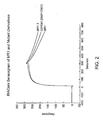
- MR1(scFv)-PE38 is the highest affinity, most cytotoxic immunotoxin available against cells expressing EGFRvIII, but it is far from ideal. It has a Kd of 8 nM and a yield of less than 3%. It would therefore be advantageous to develop antibodies which bind to EGFRvIII with greater affinity, and which, when coupled to PE38 or other toxins, form immunotoxins with higher cytotoxicity to EGFRvIII-expressing cells. Additionally, it would be helpful to find antibodies which form immunotoxins with higher yields.
- MR1 remains the only scFv available in the art for targeting anti-EGFRvIII immunotoxins.
- the invention provides antibodies according to claim 1 with improved binding for the mutant form of the epidermal growth factor receptor known as EGFRvIII.
- the invention provides polypeptides with a mutated antibody variable heavy (V H ) chain regions or a mutated light chain (V L ) region, or both, which polypeptide has a Kd for EGFRvIII of 7 nM, 6 nM, 5 nM, 4 nM, 3.5 nM, 3 nM, or lower, the mutated V H or V L having a sequence that differs from parental antibody MR1 V H or V L , respectively, by an amino acid substitution of at least one amino acid in a complementarity determining region (CDR), the amino acid encoded by a codon that comprises a nucleotide belonging to a hot spot motif selected from AGY or RGYW, wherein R is A or G, Y is C or T, and W is A or T.
- CDR complementarity determining region
- the substitution can occur in the CDR3 V H or the CDR3 V L .
- substitutions can occur in the CDR1 V H or CDR2 V H , or both, or in the CDR1 V L or CDR2 V L , or both, or in any combination of the CDR1, 2, and 3 V H and V L .
- substitutions can occur in the CDR3 V L , the CDR2 V L , and the CDR1 V H .
- the polypeptide has a substitution in the CDR3 V H of at least one amino acid selected from the group consisting of S98 and T99.
- the substitutions are selected from P98-Y99, P98-N99, P98-W99, P98-I99, P98-F99, and P98-V99.
- the polypeptide can further have a substitution in the CDR3 VL wherein W is substituted for F at position 92.
- the polypeptide has substitutions in the heavy chain of S98P-T99Y and in the light chain comprises the substitution F92W (defining the antibody designated "MR1-1").
- polypeptides described above can be a single-chain variable region of an antibody (an "scFv"), a disulfide stabilized Fv, a Fab, a F(ab') 2 , or other fragment of an antibody which retains the ability to recognize and bind to an antigen. They can also comprise a surface protein of a bacteriophage.
- the polypeptides described above have a Kd for EGFvIII at least 1 nM lower than that of MR1.
- the polypeptides can have a Kd of 7, 6, 5, 4, 3.5, 3 or lower.
- the polypeptides described above can also be coupled, attached or otherwise linked to an effector molecule, therapeutic moiety, or detectable label.
- the therapeutic moiety can be a toxin or a cytotoxic portion of a toxin (a "toxic moiety"), which in conjunction with the polypeptide forms an immunotoxin.
- the toxic moiety can be Diphtheria toxin or a cytotoxic fragment thereof, saporin, pokeweed antiviral protein, ricin or a cytotoxic fragment thereof, and bryodin 1.
- the toxin is a Pseudomonas exotoxin ("PE") or a cytotoxic fragment of a PE.
- the PE is PE38.
- the immunotoxins formed by the combination of the polypeptide and the toxic moiety can have an IC 50 of 7 ng/ml of lower, 6 ng/ml or lower, 5 ng/ml or lower, 4 ng/ml or lower, or of or about 3.5 ng/ml or lower.
- the immunotoxin can have a yield when recombinantly expressed of at least 3%, and can be 4%, 5%, 6%, 7%, 8%, 9% 10%, or higher.
- the invention further provides nucleic acid molecules according to claim 13 encoding polypeptide with a mutated antibody variable heavy (V H ) chain regions or a mutated light chain (V L ) region, or both, which polypeptide has a Kd for EGFRvIII of 7 nM or lower, the mutated V H or V L having a sequence that differs from parental antibody MR1 V H or V L , respectively, by an amino acid substitution of at least one amino acid in a complementarity determining region (CDR), the amino acid encoded by a codon that comprises a nucleotide belonging to a hot spot motif selected from AGY or RGYW, wherein R is A or G, Y is C or T, and W is A or T.
- V H antibody variable heavy
- V L mutated light chain
- the substitution can occur in the CDR3 V H or the CDR3 V L .
- substitutions can occur in the CDR1 V H or CDR2 V H , or both, or in the CDR1 V L or CDR2 V L , or both, or in any combination of the CDR1, 2, and 3 V H and V L .
- substitutions can occur in the CDR3 V L , the CDR2 V L , and the CDR1 V H .
- the nucleic acid molecule encodes a polypeptide having a substitution in the CDR3 V H compared to MR1 of at least one amino acid selected from the group consisting of S98 and T99.
- the substitutions are selected from P98-Y99, P98-N99, P98-W99, P98-I99, P98-F99, and P98-V99.
- the nucleic acid molecule can also encode a polypeptide having a substitution in the CDR3 V L compared to MR1 comprising a W substituted for a F at position 92.
- the nucleic acid molecules can encode polypeptides which are a single-chain variable region of an antibody (an "scFv"), a disulfide stabilized Fv, a Fab, a F(ab') 2, or other fragment of an antibody which retains the ability to recognize and bind to an antigen.
- the polypeptides can also comprise a surface protein of a bacteriophage.
- the nucleic acid molecules described above can be operably linked to a promoter.
- the invention provides the use of an immuntoxin according to claim 17 for killing a cell bearing an antigen, said immunotoxin comprising a toxic moiety and a targeting moiety, the targeting moiety comprising a polypeptide with a mutated antibody variable heavy (V H ) chain regions or a mutated light chain (V L ) region, or both, which polypeptide has a Kd for EGFRvIII of 7 nM or lower, the mutated V H or V L having a sequence that differs from parental antibody MR1 V H or V L , respectively, by an amino acid substitution of at least one amino acid in a complementarity determining region (CDR), the amino acid encoded by a codon that comprises a nucleotide belonging to a hot spot motif selected from AGY or RGYW, wherein R is A or G, Y is C or T, and W is A or T.
- V H antibody variable heavy
- V L mutated light chain
- the substitution can occur in the CDR3 V H or the CDR3 V L . In other embodiments, substitutions can occur in the CDR1 V H or CDR2 V H , or both, or in the CDR1 V L or CDR2 V L , or both, or in any combination of the CDR1, 2, and 3 V H and V L .
- the method comprises a targeting moiety in comprises a polypeptide having a substitution in the CDR3 V H of at least one amino acid selected from the group consisting of S98 and T99.
- the targeting moiety comprises a polypeptide comprising substitutions selected from P98-Y99, P98-N99, P98-W99, P98-I99, P98-F99, and P98-V99.
- the targeting moiety is MR1-1.
- the targeting moiety can be a single-chain variable region of an antibody (an "scFv”), a disulfide stabilized Fv, a Fab, a F(ab') 2 , or other fragment of an antibody which retains the ability to recognize and bind to an antigen.
- scFv single-chain variable region of an antibody
- the cell bearing the antigen can be a malignant cell, such as a glioma cell, a breast carcinoma cell, a lung carcinoma cell, or an ovarian carcinoma cell.
- the present invention provides scFv antibodies and other antibodies with higher affinity for EGFRvIII than that of MR1. It further provides immunotoxins with higher cytotoxicity for EGFRvIII-expressing cells than that of the same immunotoxins using MR1 as the targeting portion of the molecule.
- the antibodies are created from MR1, but are mutated in hot spot regions of their complementarity determining regions (CDRs).
- CDRs complementarity determining regions
- immunotoxins incorporating these mutated forms of MR1 as the targeting moiety not only have high affinity for EGFRvIII, but also can be produced at significantly higher yields than similar immunotoxins employing MR1 as the targeting portion of the molecule.
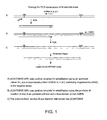
- V H CDR3 of MR1 has eleven amino acid residues.
- D101 and Y102 were excluded from the mutagenesis studies because they were considered unlikely to participate in antigen binding, for two reasons.
- these two residues usually lie at the interface with the V L chain. As a result, they are not exposed.
- these residues are contributed to by the J segment and follow the 3'-junctional region of the V H CDR2. As a result, they are relatively more conserved than the rest of the V H CDR3.
- the other nine amino acids at each position of the CDR3 V H were substituted by each of the other natural amino acids.
- the studies showed that only mutations in regions known to be hot spots (regions known to undergo hypermutation during antibody affinity maturation, best characterized by the motifs RGYW and AGY, where R is A or G, Y is C or T, and W is A or T) resulted in antibodies with higher cytotoxicity than the parental antibody MR1.
- the mutations were also found to enhance the yield of immunotoxin when these mutated scFv were incorporated into immunotoxins, compared to a like immunotoxin made with the parental MR1 scFv.
- mutations were made in the MR1 CDR3 of the light chain variable region. In these studies, mutations were made only to amino acids within a hot spot. Once again, the mutations resulted in antibodies with higher cytotoxicity and yield than the parental antibody MR1.
- antibodies such as scF V with higher affinity for EGFRvIII can be conjugated to radionuclides or to any of a number of other detectable labels and used to detect the presence of cells expressing EGFRvIII in a biopsy sample from a patient to determine whether the patient has a cancer characterized by the presence of such cells, or to determine that the cancer has not yet been eradicated from a patient known to have such a cancer.
- scFv, dsFv, or other antibodies of the invention can be conjugated to radionuclides or other detectable labels and used to detect the presence of cells expressing EGFRvIII in the patient, thereby again diagnosing whether the patient has a cancer characterized by the presence of such cells, or that the cancer has not yet been eradicated from a patient known to have such a cancer.
- the heavy chain mutants isolated in the initial mutagenesis of the heavy chain had a better yield than the parental MR1.
- the heavy chain of CDR3 is very important for proper folding and the phage expression system may select in some way for proteins that fold more efficiently. Consequently, phage containing better folding Fvs appear to be present in larger numbers and are preferentially enriched during panning on antigen.
- phage display can be used to select Fvs mutated in the CDR1 or 2 of the V H and V L chains which likewise exhibit an increased production yield compared to the parental MR1 scFv.
- Residues mutated from a known sequence are designated by convention by listing in single letter code the residue normally found at a designated position in the sequence, the position in the sequence of the residue mutated, and the residue substituted for the original residue.
- S98P indicates that the serine normally found at position 98 of the normal CDR3 heavy chain of MR1 has been mutated to proline.
- a designation such as "S98" in which the number is not followed by a designation of an residue references either the residue normally found at that position of the normal sequence of the peptide or that that specific residue is now present at that position (i.e., that the residue designated has been substituted for the residue normally present at that position).
- references herein to particular numbered amino acid residues of MR1-1 refer to residues numbered according to Kabat et al., SEQUENCES OF PROTEINS OF IMMUNOLOGICAL INTEREST, U.S. Department of Health and Human Services, (1987 ), as updated; this reference is hereafter referred to as "Kabat,” the contents of which are hereby incorporated by reference) when the sequence of the scFv is aligned and numbered according to the Kabat system.
- EGFRvIII means a mutant form of the epidermal growth factor receptor recognized by MR1 scFv and characterized by an 801 base pair in frame deletion of exons 2-7 near the amino terminal. This form of the receptor is known in the art, as exemplified by the Wickstrand et al., Moscatello et al., and Lorimer et al. references cited in the Background. Due to a change in terminology, EGFRvIII was originally termed a Type II mutation in some earlier work in the field, as exemplified by U.S. Patent No. 5,212,290 .
- antibody includes reference to an immunoglobulin molecule immunologically reactive with a particular antigen, and includes where appropriate both polyclonal and monoclonal antibodies.
- the term also includes genetically engineered forms such as chimeric antibodies (e . g ., humanized murine antibodies), heteroconjugate antibodies ( e . g ., bispecific antibodies).
- the term particularly refers herein to recombinant single chain Fv fragments (scFv), disulfide stabilized (dsFv) Fv fragments (see, U.S.S.N. 08/077,252 , incorporated herein by reference), or pFv fragments (see, U.S.
- antibody also includes antigen binding forms of antibodies, including fragments with antigen-binding capability (e.g ., Fab', F(ab') 2 , Fab, Fv and rIgG. See also, Pierce Catalog and Handbook, 1994-1995 (Pierce Chemical Co., Rockford, IL ). See also, e.g., Kuby, J., Immunology, 3rd Ed., W.H. Freeman & Co., New York (1998 ). Which particular sense or senses of the term are intended will be clear in context.
- An antibody immunologically reactive with a particular antigen can be generated by recombinant methods such as selection of libraries of recombinant antibodies in phage or similar vectors, see, e.g., Huse et al., Science 246:1275-1281 (1989 ); Ward et al., Nature 341:544-546 (1989 ); and Vaughan et al., Nature Biotech. 14:309-314 (1996 ), or by immunizing an animal with the antigen or with DNA encoding the antigen.
- an immunoglobulin typically has a heavy and light chain.
- Each heavy and light chain contains a constant region and a variable region, (the regions are also known as “domains").
- Light and heavy chain variable regions contain four "framework” regions interrupted by three hypervariable regions, also called “complementarity-determining regions” or "CDRs".
- CDRs complementarity-determining regions
- the extent of the framework regions and CDRs have been defined ( see, Kabat, supra ).
- the sequences of the framework regions of different light or heavy chains are relatively conserved within a species.
- the framework region of an antibody that is the combined framework regions of the constituent light and heavy chains, serves to position and align the CDRs in three dimensional space.
- the CDRs are primarily responsible for binding to an epitope of an antigen.
- the CDRs of each chain are typically referred to as CDR1, CDR2, and CDR3, numbered sequentially starting from the N-terminus, and are also typically identified by the chain in which the particular CDR is located.
- a V H CDR3 is located in the variable domain of the heavy chain of the antibody in which it is found
- a V L CDR1 is the CDR1 from the variable domain of the light chain of the antibody in which it is found.
- V H or a "VH” refer to the variable region of an immunoglobulin heavy chain of an antibody, including the heavy chain of an Fv, scFv , dsFv or Fab.
- V L or a “VL” refer to the variable region of an immunoglobulin light chain, including the light chain of an Fv, scFv , dsFv or Fab.
- single chain Fv or “scFv” refers to an antibody in which the variable domains of the heavy chain and of the light chain of a traditional two chain antibody have been joined to form one chain.
- a linker peptide is inserted between the two chains to allow for proper folding and creation of an active binding site.
- linker peptide includes reference to a peptide within an antibody binding fragment (e.g ., Fv fragment) which serves to indirectly bond the variable domain of the heavy chain to the variable domain of the light chain.
- parental antibody generally refers to an antibody of interest which is to be mutated or varied to obtain antibodies or fragments thereof which bind to the same epitope as the parental antibody.
- parental antibody refers to the scFv designated as "MR1" (GenBank Accession Number U76382) unless otherwise indicated or required by context.
- hotspot means a portion of a nucleotide sequence of a CDR or of a framework region of a variable domain which is a site of particularly high natural mutation.
- CDRs are themselves considered to be regions of hypervariability, it has been learned that mutations are not evenly distributed throughout the CDRs. Particular sites, or hotspots, have been identified as these locations which undergo concentrated mutations.
- the hotspots are characterized by a number of structural features and sequences. These "hotspot motifs" can be used to identify hotspots. Two consensus sequence motifs which are especially well characterized are the tetranucleotide sequence RGYW and the serine sequence AGY, where R is A or G, Y is C or T, and W is A or T.
- a “targeting moiety” or “targeting molecule” is the portion of an immunoconjugate which has the ability to target the immunoconjugate to cells of interest.
- the targeting moiety is an antibody, a scFv, a dsFv, a Fab, or a F(ab') 2 which recognizes a specific antigen on the cells of interest.
- a "toxic moiety” is a cytotoxin or a portion of a cytotoxin which, when incorporated into an immunotoxin, renders the immunotoxin cytotoxic to cells of interest.
- an “immunotoxin” is a molecule comprising a targeting molecule, such as an scFv, and a toxic moiety, such as a Pseudomonas exotoxin ("PE”) or cytotoxic fragment thereof.
- a targeting molecule such as an scFv
- a toxic moiety such as a Pseudomonas exotoxin ("PE") or cytotoxic fragment thereof.
- Immunotoxins discussed herein are typically expressed as inclusion bodies in E. coli, after which the inclusions bodies are purified, solubilized in 6 M guanidine HCl, and the protein refolded.
- yield refers to the amount of properly folded monomeric immunotoxin collected through this procedure. It is expressed as a percentage determined as: milligrams of protein after MonoQ ion-exchange chromatography / milligrams inclusion body protein refolded.
- a “therapeutic moiety” is the portion of an immunoconjugate intended to act as a therapeutic agent.
- therapeutic agent includes any number of compounds currently known or later developed to act as anti-neoplastics, anti-inflammatories, cytokines, antiinfectives, enzyme activators or inhibitors, allosteric modifiers, antibiotics or other agents administered to induce a desired therapeutic effect in a patient.
- the therapeutic agent may also be a toxin or a radioisotope, where the therapeutic effect intended is, for example, the killing of a cancer cell.
- a “detectable label” means, with respect to an immunoconjugate, a portion of the immunoconjugate which has a property rendering its presence detectable.
- the immunoconjugate may be labeled with a radioactive isotope which permits cells in which the immunoconjugate is present to be detected in immunohistochemical assays.
- effector moiety and "effector molecule” mean the portion of an immunoconjugate intended to have an effect on a cell targeted by the targeting moiety or to identify the presence of the immunoconjugate.
- the effector moiety can be, for example, a therapeutic moiety, a toxin, a radiolabel, or a fluorescent label.
- immunoconjugate means a chimeric molecule comprising a targeting molecule (such as a scFv) attached directly (for example, through a covalent linkage) or indirectly (for example, through a linker peptide) to an effector molecule.
- a targeting molecule such as a scFv
- the effector molecule is a toxin, and the chimeric molecule is then more specifically termed an "immunotoxin.”
- ⁇ ективное amount or “amount effective to” or “therapeutically effective amount” includes reference to a dosage of a therapeutic agent sufficient to produce a desired result, such as inhibiting cell protein synthesis by at least 50%, or killing the cell.
- toxin includes reference to abrin, ricin, Pseudomonas exotoxin (PE), diphtheria toxin (DT), botulinum toxin, or modified toxins thereof.
- PE and DT are highly toxic compounds that typically bring about death through liver toxicity.
- PE and DT can be modified into a form for use as an immunotoxin by removing the native targeting component of the toxin (e.g ., domain Ia of PE or the B chain of DT) and replacing it with a different targeting moiety, such as an antibody.
- IC 50 refers to the concentration of a toxin or immunotoxin (expressed as ng/ml) required to inhibit protein synthesis by 50%.
- contacting includes reference to placement in direct physical association.
- An "expression plasmid” comprises a nucleotide sequence encoding a molecule of interest, which is operably linked to a promoter.
- polypeptide As used herein, “polypeptide”, “peptide” and “protein” are used interchangeably and include reference to a polymer of amino acid residues. The terms apply to amino acid polymers in which one or more amino acid residue is an artificial chemical analogue of a corresponding naturally occurring amino acid, as well as to naturally occurring amino acid polymers. The terms also apply to polymers containing conservative amino acid substitutions such that the protein remains functional.
- amino acid residue or “amino acid residue” or “amino acid” includes reference to an amino acid that is incorporated into a protein, polypeptide, or peptide (collectively “peptide”).
- the amino acid can be a naturally occurring amino acid and, unless otherwise limited, can encompass known analogs of natural amino acids that can function in a similar manner as naturally occurring amino acids.
- Table 1 Amino Acid Nomenclature Name 3-letter 1-letter Alanine Ala A Arginine Arg R Asparagine Asn N Aspartic Acid Asp D Cysteine Cys C Glutamic Acid Glu E Glutamine Gln Q Glycine Gly G Histidine His H Isoleucine Ile I Leucine Leu L Lysine Lys K Methionine Met M Phenylalanine Phe F Proline Pro P Serine Ser S Threonine Thr T Tryptophan Trp W Tyrosine Tyr Y Valine Val V
- a “conservative substitution,” when describing a protein refers to a change in the amino acid composition of the protein that does not substantially alter the protein's activity.
- “conservatively modified variations” of a particular amino acid sequence refers to amino acid substitutions of those amino acids that are not critical for protein activity or substitution of amino acids with other amino acids having similar properties (e.g., acidic, basic, positively or negatively charged, polar or non-polar, etc.) such that the substitutions of even critical amino acids do not substantially alter activity.
- Conservative substitution tables providing functionally similar amino acids are well known in the art.
- Table 2 The following six groups in Table 2 each contain amino acids that are typically conservative substitutions for one another: Table 2 1) Alanine (A), Serine (S), Threonine (T); 2) Aspartic acid (D), Glutamic acid (E); 3) Asparagine (N), Glutamine (Q); 4) Arginine (R), Lysine (K); 5) Isoleucine (I), Leucine (L), Methionine (M), Valine (V); and 6) Phenylalanine (F), Tyrosine (Y), Tryptophan (W). See also, Creighton, PROTEINS , W.H. Freeman and Company, New York (1984).
- substantially similar in the context of a peptide indicates that a peptide comprises a sequence with at least 90%, preferably at least 95% sequence identity to the reference sequence over a comparison window of 10-20 amino acids. Percentage of sequence identity is determined by comparing two optimally aligned sequences over a comparison window, wherein the portion of the polynucleotide sequence in the comparison window may comprise additions or deletions ( i . e ., gaps) as compared to the reference sequence (which does not comprise additions or deletions) for optimal alignment of the two sequences.
- the percentage is calculated by determining the number of positions at which the identical nucleic acid base or amino acid residue occurs in both sequences to yield the number of matched positions, dividing the number of matched positions by the total number of positions in the window of comparison and multiplying the result by 100 to yield the percentage of sequence identity.
- disulfide bond or "cysteine-cysteine disulfide bond” refers to a covalent interaction between two cysteines in which the sulfur atoms of the cysteines are oxidized to form a disulfide bond.
- the average bond energy of a disulfide bond is about 60 kcal/mol compared to 1-2 kcal/mol for a hydrogen bond.
- the cysteines which form the disulfide bond are within the framework regions of the single chain antibody and serve to stabilize the conformation of the antibody.
- conjugating refers to making two polypeptides into one contiguous polypeptide molecule.
- the terms include reference to joining an antibody moiety to an effector molecule (EM).
- EM effector molecule
- the linkage can be either by chemical or recombinant means.
- Chemical means refers to a reaction between the antibody moiety and the effector molecule such that there is a covalent bond formed between the two molecules to form one molecule.
- recombinant includes reference to a protein produced using cells that do not have, in their native state, an endogenous copy of the DNA able to express the protein.
- the cells produce the recombinant protein because they have been genetically altered by the introduction of the appropriate isolated nucleic acid sequence.
- the term also includes reference to a cell, or nucleic acid, or vector, that has been modified by the introduction of a heterologous nucleic acid or the alteration of a native nucleic acid to a form not native to that cell, or that the cell is derived from a cell so modified.
- recombinant cells express genes that are not found within the native (non-recombinant) form of the cell, express mutants of genes that are not found within the native form, or express native genes that are otherwise abnormally expressed, underexpressed or not expressed at all.
- nucleic acid or “nucleic acid sequence” includes reference to a deoxyribonucleotide or ribonucleotide polymer in either single- or doublestranded form, and unless otherwise limited, encompasses known analogues of natural nucleotides that hybridize to nucleic acids in a manner similar to naturally occurring nucleotides. Unless otherwise indicated, a particular nucleic acid sequence includes the complementary sequence thereof as well as conservative variants, i.e ., nucleic acids present in wobble positions of codons and variants that, when translated into a protein, result in a conservative substitution of an amino acid.
- nucleic acid includes reference to nucleic acids which comprise the information for translation into the specified protein. The information is specified by the use of codons.
- amino acid sequence is encoded by the nucleic acid using the "universal" genetic code.
- variants of the universal code such as is present in some plant, animal, and fungal mitochondria, the bacterium Mycoplasma capricolum (Proc. Nat'l Acad. Sci. USA 82:2306-2309 (1985 )), or the ciliate Macronucleus , may be used when the nucleic acid is expressed in using the translational machinery of these organisms.
- fused in frame refers to joining two or more nucleic acid sequences which encode polypeptides so that the joined nucleic acid sequence translates into a single chain protein which comprises the original polypeptide chains.
- expressed includes reference to translation of a nucleic acid into a protein. Proteins may be expressed and remain intracellular, become a component of the cell surface membrane or be secreted into the extracellular matrix or medium.
- host cell is meant a cell which can support the replication or expression of the expression vector.
- Host cells may be prokaryotic cells such as E. coli, or eukaryotic cells such as yeast, insect, amphibian, or mammalian cells.
- phage display library refers to a population of bacteriophage, each of which contains a foreign cDNA recombinantly fused in frame to a surface protein. After replication in a bacterial host, typically E. coli, the phage which contain the foreign cDNA of interest are selected by the expression of the foreign protein on the phage surface.
- nucleic acids or polypeptide sequences refer to two or more sequences or subsequences that are the same or have a specified percentage of amino acid residues or nucleotides that are the same, when compared and aligned for maximum correspondence, as measured using one of the following sequence comparison algorithms or by visual inspection.
- substantially identical in the context of two nucleic acids or polypeptides, refers to two or more sequences or subsequences that have at least 60%, preferably 80%, most preferably 90-95% nucleotide or amino acid residue identity, when compared and aligned for maximum correspondence, as measured using one of the following sequence comparison algorithms or by visual inspection.
- the substantial identity exists over a region of the sequences that is at least about 50 residues in length, more preferably over a region of at least about 100 residues, and most preferably the sequences are substantially identical over at least about 150 residues.
- the sequences are substantially identical over the entire length of the coding regions.
- sequence comparison typically one sequence acts as a reference sequence, to which test sequences are compared.
- test and reference sequences are input into a computer, subsequence coordinates are designated, if necessary, and sequence algorithm program parameters are designated.
- sequence comparison algorithm then calculates the percent sequence identity for the test sequence(s) relative to the reference sequence, based on the designated program parameters.
- a number of programs for such alignments are known in the art.
- a further indication that two nucleic acid sequences or polypeptides are substantially identical is that the polypeptide encoded by the first nucleic acid is immunologically cross reactive with the polypeptide encoded by the second nucleic acid, as described below.
- a polypeptide is typically substantially identical to a second polypeptide, for example, where the two peptides differ only by conservative substitutions.
- Another indication that two nucleic acid sequences are substantially identical is that the two molecules hybridize to each other under stringent conditions, as described below.
- in vivo includes reference to inside the body of the organism from which the cell was obtained.
- Ex vivo and “ in vitro” means outside the body of the organism from which the cell was obtained.
- malignant cell or “malignancy” refers to tumors or tumor cells that are invasive and/or able to undergo metastasis, i . e ., a cancerous cell.
- mammalian cells includes reference to cells derived from mammals including humans, rats, mice, guinea pigs, chimpanzees, or macaques. The cells may be cultured in vivo or in vitro.
- selectively reactive refers, with respect to an antigen, the preferential association of an antibody, in whole or part, with a cell or tissue bearing that antigen and not to cells or tissues lacking that antigen. It is, of course, recognized that a certain degree of non-specific interaction may occur between a molecule and a non-target cell or tissue. Nevertheless, selective reactivity, may be distinguished as mediated through specific recognition of the antigen. Although selectively reactive antibodies bind antigen, they may do so with low affinity. On the other hand, specific binding results in a much stronger association between the antibody and cells bearing the antigen than between the bound antibody and cells lacking the antigen.
- Specific binding typically results in greater than 2-fold, preferably greater than 5-fold, more preferably greater than 10-fold and most preferably greater than 100-fold increase in amount of bound antibody (per unit time) to a cell or tissue bearing EGFRvIII as compared to a cell or tissue lacking EGFRvIII.
- Specific binding to a protein under such conditions requires an antibody that is selected for its specificity for a particular protein.
- a variety of immunoassay formats are appropriate for selecting antibodies specifically immunoreactive with a particular protein.
- solid-phase ELISA immunoassays are routinely used to select monoclonal antibodies specifically immunoreactive with a protein. See Harlow & Lane, ANTIBODIES, A LABORATORY MANUAL, Cold Spring Harbor Publications, New York (1988 ), for a description of immunoassay formats and conditions that can be used to determine specific immunoreactivity.
- immunologically reactive conditions includes reference to conditions which allow an antibody generated to a particular epitope to bind to that epitope to a detectably greater degree than, and/or to the substantial exclusion of, binding to substantially all other epitopes.
- Immunologically reactive conditions are dependent upon the format of the antibody binding reaction and typically are those utilized in immunoassay protocols or those conditions encountered in vivo. See Harlow & Lane, supra, for a description of immunoassay formats and conditions.
- the immunologically reactive conditions employed in the methods of the present invention are "physiological conditions” which include reference to conditions (e . g ., temperature, osmolarity, pH) that are typical inside a living mammal or a mammalian cell.
- the intra-organismal and intracellular environment normally lies around pH 7 (i.e ., from pH 6.0 to pH 8.0, more typically pH 6.5 to 7.5), contains water as the predominant solvent, and exists at a temperature above 0°C and below 50°C. Osmolarity is within the range that is supportive of cell viability and proliferation.
- Antibodies bind to antigens via residues in their CDRs. Consequently, mutagenesis of CDRs is widely used to improve the affinity of Fab and Fv fragments of antibodies.
- CDR mutagenesis There are a number of different approaches to CDR mutagenesis. Most of these, such as codon-based mutagenesis ( Yelton et al., J. Immunol. 155:1994-2004 (1995 )), CDR walking ( Barbas et al., Trends Biotech. 14:230-234 (1996 ); Yang et al., J. Mol. Biol. 254:392-403 (1995 )), error prone replication ( Low et al., J. Mol. Biol.
- Phage display technology has become a useful tool for screening large peptide or protein libraries ( Winter et al., Annu. Rev. Immunol. 12:433-455 (1994 ); McCafferty, J., Nature 348:552-554 (1990 ); Barbas et al., Proc. Natl. Acad. Sci. USA 88:7978-7982 (1991 )).
- Single chain Fvs can be expressed on phage particles as fusions with M13 gene 3 protein in a phagemid vector.
- the fusion proteins are expressed in E. coli and, in the presence of helper phage, are displayed on the tips of M13 phage which can be collected from culture media.
- Phage that display scFv fusion proteins, which bind to specific antigen are selected by panning the phage libraries on cells expressing the antigen or on a surface to which the antigen is coupled, such as magnetic beads. Phage which do not bind are washed away, bound phage are eluted and amplified by re-infecting E. coli. Several rounds of panning result in an enrichment of specific binders. By making the panning conditions more stringent, better binders can be more effectively separated from poor binders.
- Phage display technology can be exploited to develop antibodies which bind to EGFRvIII with higher affinity than MR1.
- an intact antibody comprises two heavy chains and two light chains; each chain has three CDRs, designated 1, 2, and 3, respectively.
- Each CDR is known to contribute to antigen binding, but they do so unequally. See generally , Kuby, J., Immunology, W.H. Freeman & Co., New York (3rd Ed. 1998 ). While the amino acids of any of the CDRs can be mutated to find mutations which increase affinity, on average, the CDR3 of each chain makes a greater contribution to antigen binding than does the CDR 1 or CDR2 of that chain. See generally , Kuby, supra, at page 117.
- mutations of the CDR3 V H and V L chains can be particularly advantageous.
- the CDR3 V H of MR1 is relatively long for a mouse CDR3, which may contribute in part to the relative stability of MR1 scFv relative to other scFvs.
- V H CDR3 After excluding the last two amino acids of the V H CDR3 as unlikely to contribute to antigen binding for the reasons discussed in the Introduction, the remaining nine residues in V H CDR3 was substituted with each of the other 19 natural amino acids. Only mutations of the serine and threonine at amino acid positions 98 and 99, respectively, resulted in improved cytotoxicity of the resulting immunotoxin (the amino acids sequence of the V H and the V L CDR3s are set forth in single letter code in Table 5, 6, and 7, infra .
- V H CDR3 The sequence setting forth the V H does not show the two residues, D101 and Y102, which were considered not likely to contribute to antigen binding.
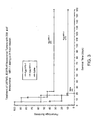
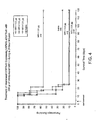
- the preferred substitutions in V H CDR3 were P98-Y99, which gave an IC 50 in a PE38 immunotoxin of 3.5 ng/ml, P98-N99, P98-W99, and P98-I99, all of which had IC 50 s of 4.5 ng, P98-F99, with an IC 50 of 6 ng, and P98-V99, which had an IC 50 of 6.5 ng.
- P98-S99, W98-V99, S98-W99, and P98-T99 had IC 50 s equal to the parental clone.
- the present invention provides antibodies which bind to EGFRvIII with higher affinity than prior art antibodies and which selectively react with EGFRvIII.
- the invention provides antibodies which have a lower Kd with regard to EGFRvIII than does MR1, the best previously known scFv targeted to this antigen.
- these antibodies form immunotoxins which have higher cytotoxicity for EGFRvIII-expressing cells than does the same immunotoxin made with MR1.
- the invention further provides a method for generating antibodies with higher affinity and greater cytotoxicity against EGFRvIII than MR1 has.
- the immunoconjugates disclosed below target EGFRvIII using antibodies of the present invention. These antibodies are selectively reactive under immunological conditions to those determinants of EGFRvIII displayed on the surface of mammalian cells and accessible to the antibody from the extracellular milieu.
- the anti-EGFRvIII antibody is a recombinant antibody such as a scFv or a disulfide stabilized Fv antibody.
- Fv antibodies are typically about 25 kDa and contain a complete antigen-binding site with 3 CDRs on both the heavy and light chains. If the V H and the V L chain are expressed non-contiguously, the chains of the Fv antibody are typically held together by noncovalent interactions. However, these chains tend to dissociate upon dilution, so methods have been developed to crosslink the chains through glutaraldehyde, intermolecular disulfides, or a peptide linker. Disulfide stabilized Fvs are taught, for example, in U.S. Patent No. 5,747,654 .
- the antibody is a single chain Fv (scFv).
- the V H and the V L regions of a scFv antibody comprise a single chain which is folded to create an antigen binding site similar to that found in two chain antibodies. Once folded, noncovalent interactions stabilize the single chain antibody.
- the scFv is recombinantly produced.
- conservative variants of the antibodies of the instant invention can be made. Such conservative variants employed in scFv fragments will retain critical amino acid residues necessary for correct folding and stabilizing between the V H and the V L regions.
- the scFv antibody is directly linked to the effector molecule (EM) through the light chain.
- EM effector molecule
- scFv antibodies can be linked to the EM via its amino or carboxyl terminus.
- V H and V L regions of some antibody embodiments can be directly joined together, one of skill will appreciate that the regions may be separated by a peptide linker consisting of one or more amino acids.
- Peptide linkers and their use are well-known in the art. See, e . g ., Huston et al., Proc. Nat'l Acad. Sci. USA 8:5879 (1988 ); Bird et al., Science 242:4236 (1988 ); Glockshuber et al., Biochemistry 29:1362 (1990 ); U.S. Patent No. 4,946,778 , U.S. Patent No.
- Single chain Fv (scFv) antibodies optionally include a peptide linker of no more than 50 amino acids, generally no more than 40 amino acids, preferably no more than 30 amino acids, and more preferably no more than 20 amino acids in length.
- the peptide linker is a concatamer of the sequence Gly-Gly-Gly-Gly-Ser, preferably 2, 3, 4, 5, or 6 such sequences.
- Gly-Gly-Gly-Gly-Ser preferably 2, 3, 4, 5, or 6 such sequences.
- some amino acid substitutions within the linker can be made.
- a valine can be substituted for a glycine.
- the antibody for example, the targeting moiety of an immunotoxin
- the antibody is a scFv.
- Methods of making scFv antibodies have been described. See, Huse et al., supra; Ward et al. Nature 341:544-546 (1989 ); and Vaughan et al., supra.
- mRNA from B-cells is isolated and cDNA is prepared.
- the cDNA is amplified by well known techniques, such as PCR, with primers specific for the variable regions of heavy and light chains of immunoglobulins.
- the PCR products are purified by, for example, agarose gel electrophoresis, and the nucleic acid sequences are joined.
- nucleic acid sequences that encode the peptide are inserted between the heavy and light chain nucleic acid sequences.
- the sequences can be joined by techniques known in the art, such as blunt end ligation, insertion of restriction sites at the ends of the PCR products or by splicing by overlap extension ( Chowdhury et al., Mol. Immunol. 34:9 (1997 )).
- the nucleic acid which encodes the scFv is inserted into a vector, again by techniques well known in the art.
- the vector is capable of replicating in prokaryotes and of being expressed in both eukaryotes and prokaryotes.
- the scFv genes are joined with the PE38 gene by a short linker and cloned into a T7-based expression vector.
- the scFv is expressed under control of the T7 promoter in E. coli BL21 ( ⁇ DE3).
- panning can be performed by any of several methods.
- panning can conveniently be performed using cells expressing EGFRvIII on their surface.
- a protocol for performing panning using cells is set forth in the Examples, below.
- Panning can also be performed on a solid surface by coating the solid surface with EGFRvIII and incubating the phage on the surface for a suitable time under suitable conditions.
- the surface can be a magnetic bead. The unbound phage are washed off the solid surface and the bound phage are eluted.
- Finding the antibody with the highest affinity is dictated by the efficiency of the selection process and depends on the number of clones that can be screened and the stringency with which it is done. Typically, higher stringency corresponds to more selective panning. If the conditions are too stringent, however, the phage will not bind. After one round of panning, the phage that bind to EGFRvIII coated plates or to cells expressing EGFRvIII on their surface are expanded in E. coli and subjected to another round of panning. In this way, an enrichment of many fold occurs in 3 rounds of panning. Thus, even when enrichment in each round is low, multiple rounds of panning will lead to the isolation of rare phage and the genetic material contained within which encodes the scFv with the highest affinity or one which is better expressed on phage.
- the physical link between genotype and phenotype provided by phage display makes it possible to test every member of a cDNA library for binding to antigen, even with large libraries of clones.
- the antibodies of this invention bind to an epitope of EGFRvIII with a Kd at least 1 nM lower than that of parental antibody MR1. Binding affinity for a target antigen is typically measured or determined by standard antibody-antigen assays, such as competitive assays, saturation assays, or immunoassays such as ELISA or RIA.
- binding interactions between antigen and antibody include reversible noncovalent associations such as electrostatic attraction, Van der Waals forces and hydrogen bonds.
- This method of defining binding specificity applies to single heavy and/or light chains, CDRs, fusion proteins or fragments of heavy and/or light chains, that are specific for EGFRvIII.
- the antibodies can be detected and/or quantified using any of a number of well recognized immunological binding assays (see, e.g., U.S. Patents 4,366,241 ; 4,376,110 ; 4,517,288 ; and 4,837,168 ).
- immunological binding assays see, e.g., U.S. Patents 4,366,241 ; 4,376,110 ; 4,517,288 ; and 4,837,168 ).
- Immunological binding assays typically utilize a ligand (e.g ., EGFRvIII) to specifically bind to and often immobilize an antibody.
- a ligand e.g ., EGFRvIII
- the antibodies employed in immunoassays of the present invention are discussed in greater detail supra .
- Immunoassays also often utilize a labeling agent to specifically bind to and label the binding complex formed by the ligand and the antibody.
- the labeling agent may itself be one of the moieties comprising the antibody/analyte complex, i.e ., the anti-EGFRvIII antibody.
- the labeling agent may be a third moiety, such as another antibody, that specifically binds to the antibody/EGFRvIII protein complex.
- a competitive assay is contemplated wherein the labeling agent is a second anti-EGFRvIII antibody bearing a label.
- the two antibodies then compete for binding to the immobilized EGFRvIII.
- the question to be answered is to compare the affinity of the first antibody to that of MR1
- the second antibody can be MR1.
- the EGFRvIII antibody lacks a label, but a second antibody specific to antibodies of the species from which the anti-EGFRvIII antibody is derived, e . g ., murine, and which binds the anti-EGFRvIII antibody, is labeled.
- proteins capable of specifically binding immunoglobulin constant regions such as Protein A or Protein G may also be used as the label agent. These proteins are normal constituents of the cell walls of staphylococcal bacteria. They exhibit a strong non-immunogenic reactivity with immunoglobulin constant regions from a variety of species ( see generally, Kronval et al., J. Immunol. 111:1401-1406 (1973 ); and Akerstrom et al., J. Immunol. 135:2589-2542 (1985 )).
- incubation and/or washing steps may be required after each combination of reagents. Incubation steps can vary from about 5 seconds to several hours, preferably from about 5 minutes to about 24 hours. However, the incubation time will depend upon the assay format, antibody, volume of solution, concentrations, and the like. Usually, the assays will be carried out at ambient temperature, although they can be conducted over a range of temperatures, such as 4°C to 40°C.
- the method of detecting anti-EGFRvIII antibodies in a sample containing the antibodies generally comprises the steps of contacting the sample with an antibody which specifically reacts, under immunologically reactive conditions, to the EGFRvIII/antibody complex.
- the anti-EGFRvIII antibodies generated in the present invention can be linked to effector molecules (EM) through the EM carboxyl terminus, the EM amino terminus, through an interior amino acid residue of the EM such as cysteine, or any combination thereof.
- the EM can be linked directly to the heavy, light, Fc (constant region) or framework regions of the antibody. Linkage can occur through the antibody's amino or carboxyl termini, or through an interior amino acid residue. If PE or a cytotoxic fragment thereof is used as the EM, linkages at or near the carboxyl terminus should be made in a manner to maintain, or to add (if the linkage is at the C-terminus) a sequence which functions as a signal sequence to direct the molecule into the cytosol.
- REDLK the sequence of native PE, in single letter code
- KDEL the sequence of native PE, in single letter code
- RDEL the sequence of native PE, in single letter code
- repeats of KDEL are known in the art. See, e.g., WO 91/18099 .
- multiple EM molecules e.g ., any one of from 2-10) can be linked to the anti-EGFRvIII antibody and/or multiple antibodies ( e.g ., any one of from 2-5) can be linked to an EM.
- KDEL is the C-terminal sequence.
- the molecule formed by the linking of an effector molecule to an antibody is known as an immunoconjugate.
- a therapeutic agent is an agent with a particular biological activity directed against a particular target molecule or a cell bearing a target molecule.
- therapeutic agents may include various drugs such as vinblastine, daunomycin and the like, cytotoxins such as native or modified Pseudomonas exotoxin or Diphtheria toxin, encapsulating agents, ( e . g ., liposomes) which themselves contain pharmacological compositions, radioactive agents such as 125 I, 32 P, 14 C, 3 H and 35 S and other labels, target moieties and ligands.
- the choice of a particular therapeutic agent depends on the particular target molecule or cell and the biological effect is desired to evoke.
- the therapeutic agent may be a cytotoxin which is used to bring about the death of a particular target cell.
- the therapeutic agent may be conjugated to a non-lethal pharmacological agent or a liposome containing a non-lethal pharmacological agent.
- nucleic acids which differ in sequence but which encode the same EM or antibody sequence.
- the present invention provides nucleic acids encoding antibodies and conjugates and fusion proteins thereof.
- nucleic acid sequences of the present invention can be prepared by any suitable method including, for example, cloning of appropriate sequences or by direct chemical synthesis by methods such as the phosphotriester method of Narang et al., Meth. Enzymol. 68:90-99 (1979 ); the phosphodiester method of Brown et al., Meth. Enzymol. 68:109-151 (1979 ); the diethylphosphoramidite method of Beaucage et al., Tetra. Lett. 22:1859-1862 (1981 ); the solid phase phosphoramidite triester method described by Beaucage & Caruthers, Tetra. Letts.
- the nucleic acid sequences of this invention are prepared by cloning techniques. Examples of appropriate cloning and sequencing techniques, and instructions sufficient to direct persons of skill through many cloning exercises are found in Sambrook et al., MOLECULAR CLONING: A LABORATORY MANUAL (2ND ED.), Vols. 1-3, Cold Spring Harbor Laboratory (1989 )), Berger and Kimmel (eds.), GUIDE TO MOLECULAR CLONING TECHNIQUES, Academic Press, Inc., San Diego CA (1987 )), or Ausubel et al. (eds.), CURRENT PROTOCOLS IN MOLECULAR BIOLOGY, Greene Publishing and Wiley-Interscience, NY (1987 ).
- Nucleic acids encoding native effector molecules (EM) or anti-EGFRvIII antibodies can be modified to form the EM, antibodies, or immunoconjugates of the present invention. Modification by site-directed mutagenesis is well known in the art. Nucleic acids encoding EM or anti-EGFRvIII antibodies can be amplified by in vitro methods. Amplification methods include the polymerase chain reaction (PCR), the ligase chain reaction (LCR), the transcription-based amplification system (TAS), and the self-sustained sequence replication system (3SR). A wide variety of cloning methods, host cells, and in vitro amplification methodologies are well known to persons of skill.
- PCR polymerase chain reaction
- LCR ligase chain reaction
- TAS transcription-based amplification system
- 3SR self-sustained sequence replication system
- immunoconjugates are prepared by inserting the cDNA which encodes an anti-EGFRvIII scFv antibody into a vector which comprises the cDNA encoding the EM. The insertion is made so that the scFv and the EM are read in frame, that is in one continuous polypeptide which contains a functional Fv region and a functional EM region.
- cDNA encoding a Diphtheria toxin fragment is ligated to a scFv so that the toxin is located at the amino terminus of the scFv.
- cDNA encoding PE or a cytotoxic fragment thereof is ligated to a scFv so that the toxin is located at the carboxyl terminus of the scFv.
- the cytotoxic fragment is PE38.
- nucleic acids encoding an EM, an anti- EGFRvIII antibody, or an immunoconjugate of the present invention are isolated and cloned, one may express the desired protein in a recombinantly engineered cell such as bacteria, plant, yeast, insect and mammalian cells. It is expected that those of skill in the art are knowledgeable in the numerous expression systems available for expression of proteins including E. coli, other bacterial hosts, yeast, and various higher eucaryotic cells such as the COS, CHO, HeLa and myeloma cell lines. No attempt to describe in detail the various methods known for the expression of proteins in prokaryotes or eukaryotes will be made.
- the expression of natural or synthetic nucleic acids encoding the isolated proteins of the invention will typically be achieved by operably linking the DNA or cDNA to a promoter (which is either constitutive or inducible), followed by incorporation into an expression cassette.
- the cassettes can be suitable for replication and integration in either prokaryotes or eukaryotes.
- Typical expression cassettes contain transcription and translation terminators, initiation sequences, and promoters useful for regulation of the expression of the DNA encoding the protein.
- the cassettes can be placed in plasmids which also contain one or more antibiotic resistance genes.
- expression cassettes which contain, at the minimum, a strong promoter to direct transcription, a ribosome binding site for translational initiation, and a transcription/translation terminator.
- a strong promoter to direct transcription
- a ribosome binding site for translational initiation and a transcription/translation terminator.
- the control sequences can include a promoter and preferably an enhancer derived from immunoglobulin genes, SV40, cytomegalovirus, and a polyadenylation sequence, and may include splice donor and acceptor sequences.
- the cassettes of the invention can be transferred into the chosen host cell by well-known methods such as calcium chloride transformation or electroporation for E . coli and calcium phosphate treatment, electroporation or lipofection for mammalian cells.
- Cells transformed by the cassettes can be selected by resistance to antibiotics conferred by resistance genes contained in the cassettes, such as the amp , kan , gpt , neo and hyg genes. Kanomycin resistance and ampicillin resistance are preferred embodiments for working with phage.
- modifications can be made to a nucleic acid encoding a polypeptide of the present invention (i . e ., anti-EGFRvIII antibody, PE, or an immunoconjugate formed from their combination) without diminishing its biological activity.
- Some modifications may be made to facilitate the cloning, expression, or incorporation of the targeting molecule into a fusion protein.
- Such modifications are well known to those of skill in the art and include, for example, a methionine added at the amino terminus to provide an initiation site, or additional amino acids ( e . g ., poly His) placed on either terminus to create conveniently located restriction sites or termination codons or purification sequences.
- the immunoconjugates, EM, and antibodies of the present invention can also be constructed in whole or in part using standard peptide synthesis.
- Solid phase synthesis of the polypeptides of the present invention of less than about 50 amino acids in length may be accomplished by attaching the C-terminal amino acid of the sequence to an insoluble support followed by sequential addition of the remaining amino acids in the sequence. Techniques for solid phase synthesis are described by Barany & Merrifield, THE PEPTIDES: ANALYSIS, SYNTHESIS, BIOLOGY. VOL. 2: SPECIAL METHODS IN PEPTIDE SYNTHESIS, PART A. pp. 3-284 ; Merrifield et al. J. Am. Chem. Soc.
- Proteins of greater length may be synthesized by condensation of the amino and carboxyl termini of shorter fragments. Methods of forming peptide bonds by activation of a carboxyl terminal end ( e . g . , by the use of the coupling reagent N, N'-dicylohexylcarbodiimide) are known to those of skill.
- the recombinant immunoconjugates, antibodies, and/or effector molecules of the present invention can be purified according to standard procedures of the art, including ammonium sulfate precipitation, affinity columns, ion exchange and gel filtration columns and batch chromatography, and the like (see , generally, R. Scopes, PROTEIN PURIFICATION, Springer-Verlag, N.Y. (1982)). Substantially pure compositions of at least about 90 to 95% homogeneity are preferred, and 98 to 99% or more homogeneity are most preferred for pharmaceutical uses. Once purified, partially or to homogeneity as desired, if to be used therapeutically, the polypeptides should be substantially free of endotoxin.
- a reducing agent must be present to reduce disulfide bonds.
- An exemplary buffer with a reducing agent is: 0.1 M Tris pH 8, 6 M guanidine, 2 mM EDTA, 0.3 M DTE (dithioerythritol).
- Reoxidation of the disulfide bonds can occur in the presence of low molecular weight thiol reagents in reduced and oxidized form, as described in Saxena et al., Biochemistry 9: 5015-5021 (1970 ), incorporated by reference herein, and especially described by Buchner et al ., supra .
- Renaturation is typically accomplished by dilution (e . g ., 100-fold) of the denatured and reduced protein into refolding buffer.
- An exemplary buffer is 0.1 M Tris, pH 8.0, 0.5 M L-arginine, 8 mM oxidized glutathione (GSSG), and 2 mM EDTA.
- the heavy and light chain regions are separately solubilized and reduced and then combined in the refolding solution.
- a preferred yield is obtained when these two proteins are mixed in a molar ratio such that a 5 fold molar excess of one protein over the other is not exceeded. It is desirable to add excess oxidized glutathione or other oxidizing low molecular weight compounds to the refolding solution after the redox-shuffling is completed.
- Toxins can be employed with antibodies of the present invention to yield immunotoxins.
- Exemplary toxins include ricin, abrin, diphtheria toxin and subunits thereof, as well as botulinum toxins A through F. These toxins are readily available from commercial sources ( e . g ., Sigma Chemical Company, St. Louis, MO). Diphtheria toxin is isolated from Corynebacterium diphtheriae . Ricin is the lectin RCA60 from Ricinus communis (Castor bean). The term also references toxic variants thereof. For example, see, U.S. Patent Nos. 5,079,163 and 4,689,401 .
- Ricinus communis agglutinin occurs in two forms designated RCA 60 and RCA 120 according to their molecular weights of approximately 65 and 120 kD, respectively ( Nicholson & Blaustein, J. Biochim. Biophys. Acta 266:543 (1972 )).
- the A chain is responsible for inactivating protein synthesis and killing cells.
- the B chain binds ricin to cell-surface galactose residues and facilitates transport of the A chain into the cytosol ( Olsnes et al., Nature 249:627-631 (1974 ) and U.S. Patent No. 3,060,165 ).
- Abrin includes toxic lectins from Abrus precatorius.
- the toxic principles, abrin a, b, c, and d have a molecular weight of from about 63 and 67 kD and are composed of two disulfide-linked polypeptide chains A and B.
- the A chain inhibits protein synthesis; the B-chain (abrin-b) binds to D-galactose residues (see, Funatsu et al., Agr. Biol. Chem. 52:1095 (1988 ); and Olsnes, Methods Enzymol. 50:330-335 (1978 )).
- the toxin is a Pseudomonas exotoxin A (PE).
- PE Pseudomonas exotoxin A
- Native PE is an extremely active monomeric protein (molecular weight 66 kD), secreted by Pseudomonas aeruginosa , which inhibits protein synthesis in eukaryotic cells.
- the native PE sequence is provided in U.S. Patent No. 5,602,095 , incorporated herein by reference.
- the method of action is inactivation of elongation factor 2 (EF-2) by ADP-ribosylation.
- EF-2 elongation factor 2
- the exotoxin contains three structural domains that act in concert to cause cytotoxicity. Domain Ia (amino acids 1-252) mediates cell binding.
- Domain II (amino acids 253-364) is responsible for translocation into the cytosol and domain III (amino acids 400-613) mediates ADP ribosylation of elongation factor 2.
- domain III (amino acids 400-613) mediates ADP ribosylation of elongation factor 2.
- the function of domain Ib (amino acids 365-399) remains undefined, although a large part of it, amino acids 365-380, can be deleted without loss of cytotoxicity.
- Pseudomonas exotoxin refers to the native sequence, cytotoxic fragments of the native sequence, and conservatively modified variants of native PE and its cytotoxic fragments.
- the PE molecule has been modified to delete domain Ia, to reduce or eliminate non-specific binding of the toxin.
- Cytotoxic fragments of PE include those which are cytotoxic with or without subsequent proteolytic or other processing in the target cell ( e . g ., as a protein or pre-protein). Cytotoxic fragments of PE include PE40, PE38, and PE35.
- PE40 is a truncated derivative of PE as previously described in the art. See , Pai et al., Proc. Nat'l Acad.
- PE35 is a 35 kD carboxyl-terminal fragment of PE composed of a met at position 280 followed by amino acids 281-364 and 381-613 of native PE.
- PE38 is a truncated PE pro-protein composed of amino acids 253-364 and 381-613 of PE. PE38 is activated to its cytotoxic form upon processing within a cell (see U.S. Patent No. 5,608,039 , incorporated herein by reference).
- PE38 is the toxic moiety of the immunotoxin of this invention.
- the cytotoxic fragments PE35 and PE40 can also be used; these fragments are disclosed in U.S. Patents 5,602,095 and 4,892,827 , each of which is incorporated herein by reference.
- KDEL is a preferred modification of the C-terminal sequence (see Lorimer et al., Proc Natl Acad Sci USA 93:14815-14820 at 14818 (1996 ).
- PE or cytotoxic fragments thereof have at least 80% sequence similarity, preferably at least 85% sequence similarity, more preferably at least 90% sequence similarity, and most preferably at least 95% sequence similarity at the amino acid level, with the PE of interest, such as PE38.
- conservatively modified variants refer to those nucleic acid sequences which encode identical or essentially identical amino acid sequences, or if the nucleic acid does not encode an amino acid sequence, to essentially identical nucleic acid sequences.
- a large number of functionally identical nucleic acids encode any given polypeptide. For instance, the codons GCA, GCC, GCG and GCU all encode the amino acid alanine. Thus, at every position where an alanine is specified by a codon, the codon can be altered to any of the corresponding codons described without altering the encoded polypeptide.
- nucleic acid variations are "silent variations," which are one species of conservatively modified variations. Every nucleic acid sequence herein which encodes a polypeptide also describes every possible silent variation of the nucleic acid.
- each codon in a nucleic acid except AUG, which is ordinarily the only codon for methionine, and UGG, which is the only codon for tryptophan
- UGG which is the only codon for tryptophan
- amino acid sequences one of skill will recognize that individual substitutions, deletions or additions to a nucleic acid, peptide, polypeptide, or protein sequence which alters, adds or deletes a single amino acid or a small percentage of amino acids in the encoded sequence is a "conservatively modified variant" where the alteration results in the substitution of an amino acid with a chemically similar amino acid.
- Pseudomonas exotoxins employed in the invention can be assayed for the desired level of cytotoxicity by assays well known to those of skill in the art.
- cytotoxicity is often measured using inhibition by Pseudomonas exotoxin of protein synthesis as a surrogate measure. See, e.g., Lorimer et al., Proc. Natl. Acad. Sci. USA 93:14815-14820 (1996) at 14818 .
- this can be done by measuring the uptake of a radiolabeled amino acid (as taught in Prior et al., Cell 64: 1017-1023 (1991 )) by cells which do not normally express EGFRvIII but which have been transfected with EGFRvIII cDNA.
- uptake of tritiated leucine was measured in NR6M cells (Swiss 3T3 cells selected for lack of expression of mouse EGFR and transfected with human EGFRvIII cDNA).
- a large number of candidate PE molecules can be assayed simultaneously for cytotoxicity by methods well known in the art. For example, subgroups of the candidate molecules can be assayed for cytotoxicity. Positively reacting subgroups of the candidate molecules can be continually subdivided and reassayed until the desired cytotoxic fragment(s) is identified. Such methods allow rapid screening of large numbers of cytotoxic fragments or conservative variants of PE.
- Antibodies of the present invention can also be used to target any number of different diagnostic or therapeutic compounds to cells expressing EGFRvIII on their surface.
- an antibody of the present invention such as an anti-EGFRvIII scFv
- Therapeutic agents include such compounds as nucleic acids, proteins, peptides, amino acids or derivatives, glycoproteins, radioisotopes, lipids, carbohydrates, or recombinant viruses.
- Nucleic acid therapeutic and diagnostic moieties include antisense nucleic acids, derivatized oligonucleotides for covalent cross-linking with single or duplex DNA, and triplex forming oligonucleotides.
- the molecule linked to an anti- EGFRvIII antibody may be an encapsulation system, such as a liposome or micelle that contains a therapeutic composition such as a drug, a nucleic acid ( e . g . an antisense nucleic acid), or another therapeutic moiety that is preferably shielded from direct exposure to the circulatory system.
- a therapeutic composition such as a drug, a nucleic acid (e . g . an antisense nucleic acid), or another therapeutic moiety that is preferably shielded from direct exposure to the circulatory system.
- Means of preparing liposomes attached to antibodies are well known to those of skill in the art. See, for example, U.S. Patent No. 4,957,735 ; and Connor et al., Pharm. Ther. 28:341-365 (1985 ).
- Antibodies of the present invention may optionally be covalently or non-covalently linked to a detectable label.
- Detectable labels suitable for such use include any composition detectable by spectroscopic, photochemical, biochemical, immunochemical, electrical, optical or chemical means.
- Useful labels in the present invention include magnetic beads ( e . g . DYNABEADS), fluorescent dyes ( e . g ., fluorescein isothiocyanate, Texas red, rhodamine, green fluorescent protein, and the like), radiolabels ( e . g ., 3 H, 125 I, 35 S, 14 C, or 32 P), enzymes ( e .
- radiolabels may be detected using photographic film or scintillation counters
- fluorescent markers may be detected using a photodetector to detect emitted illumination
- Enzymatic labels are typically detected by providing the enzyme with a substrate and detecting the reaction product produced by the action of the enzyme on the substrate, and colorimetric labels are detected by simply visualizing the colored label.
- effector molecules e . g ., therapeutic, diagnostic, or detection moieties
- anti-EGFRvIII antibodies of the present invention are linked to the anti-EGFRvIII antibodies of the present invention using any number of means known to those of skill in the art. Both covalent and noncovalent attachment means may be used with anti-EGFRvIII antibodies of the present invention.
- Polypeptides typically contain variety of functional groups; e . g ., carboxylic acid (COOH), free amine (-NH 2 ) or sulfhydryl (-SH) groups, which are available for reaction with a suitable functional group on an antibody to result in the binding of the effector molecule.
- functional groups e . g ., carboxylic acid (COOH), free amine (-NH 2 ) or sulfhydryl (-SH) groups, which are available for reaction with a suitable functional group on an antibody to result in the binding of the effector molecule.
- the antibody is derivatized to expose or attach additional reactive functional groups.
- the derivatization may involve attachment of any of a number of linker molecules such as those available from Pierce Chemical Company, Rockford Illinois.
- a “linker”, as used herein, is a molecule that is used to join the antibody to the effector molecule.
- the linker is capable of forming covalent bonds to both the antibody and to the effector molecule.
- Suitable linkers are well known to those of skill in the art and include, but are not limited to, straight or branched-chain carbon linkers, heterocyclic carbon linkers, or peptide linkers.
- the linkers may be joined to the constituent amino acids through their side groups ( e . g ., through a disulfide linkage to cysteine).
- the linkers will be joined to the alpha carbon amino and carboxyl groups of the terminal amino acids.
- immunoconjugates will comprise linkages which are cleavable in the vicinity of the target site. Cleavage of the linker to release the effector molecule from the antibody may be prompted by enzymatic activity or conditions to which the immunoconjugate is subjected either inside the target cell or in the vicinity of the target site.
- a linker which is cleavable under conditions present at the tumor site e . g . when exposed to tumor-associated enzymes or acidic pH
- the antibody and/or immunoconjugate compositions of this invention are useful for administration into the brain.
- Use of immunotoxins for brain tumor therapy was recently reviewed by Oldfield, E., and Youle, R., Curr. Top. Microbiol. Immunol. 234:97-114 (1998 ).
- Small polypeptides cross the blood brain barrier. For longer polypeptides that do not the cross blood brain barrier, methods of administering proteins to the brain are well known.
- proteins, polypeptides, other compounds and cells can be delivered to the mammalian brain via intracerebroventricular (ICV) injection or via a cannula (see , e . g ., Motta & Martini, Proc. Soc. Exp. Biol. Med. 168:62-64 (1981 ); Peterson et al., Biochem. Pharamacol. 31:2807-2810 (1982 ); Rzepczynski et al., Metab. Brain Dis. 3:211-216 (1988 ); Leibowitz et al., Brain Res. Bull. 21:905-912 (1988 ); Sramka et al., Stereotact. Funct. Neurosurg.
- ICV intracerebroventricular
- glioblastoma may be treated by localized delivery by cannula or by syringe to the tissue surrounding the tumor, or more generally within the central nervous system compartment by ICV.
- the immunoconjugates can be administered systemically where, for example, the patient's glioblastoma has damaged the epithelial cells sufficiently to permit breach of the blood-brain barrier.
- the antibody or immunoconjugates of the invention can also be administered locally or systemically for treating breast, ovarian, and lung carcinomas.
- these malignancies can be treated by direct injection into tumors which cannot be surgically excised.
- These carcinomas can also be treated by parenteral administration of the immunoconjugates to, for example, locate and kill any metastatic cells which have not yet formed tumors of sufficient size to be treated with radiation or surgery or, indeed, to be readily detected.
- compositions for administration will commonly comprise a solution of the antibody and/or immunoconjugate dissolved in a pharmaceutically acceptable carrier, preferably an aqueous carrier.
- a pharmaceutically acceptable carrier preferably an aqueous carrier.
- aqueous carriers can be used, e . g ., buffered saline and the like. These solutions are sterile and generally free of undesirable matter.
- These compositions may be sterilized by conventional, well known sterilization techniques.
- the compositions may contain pharmaceutically acceptable auxiliary substances as required to approximate physiological conditions such as pH adjusting and buffering agents, toxicity adjusting agents and the like, for example, sodium acetate, sodium chloride, potassium chloride, calcium chloride, sodium lactate and the like.
- concentration of fusion protein in these formulations can vary widely, and will be selected primarily based on fluid volumes, viscosities, body weight and the like in accordance with the particular mode of administration selected and the patient's needs.
- a typical pharmaceutical immunotoxin composition of the present invention for administration to the brain would be about 1.2 to 1200 ⁇ g per day.
- a typical composition for intravenous administration to treat breast, ovarian, or lung carcinoma are about 0.1 to 10 mg per patient per day. Dosages from 0.1 up to about 100 mg per patient per day may be used, particularly if the drug is administered to a secluded site and not into the circulatory or lymph system, such as into a body cavity or into a lumen of an organ.
- Actual methods for preparing administrable compositions will be known or apparent to those skilled in the art and are described in more detail in such publications as REMINGTON'S PHARMACEUTICAL SCIENCE, 19TH ED., Mack Publishing Company, Easton, Pennsylvania (1995 ).
- compositions of the present invention can be administered for therapeutic treatments.
- compositions are administered to a patient suffering from a disease, such as a glioblastoma, breast carcinoma, ovarian carcinoma, or lung carcinoma, in an amount sufficient to at least slow or partially arrest the disease or its complications.
- a disease such as a glioblastoma, breast carcinoma, ovarian carcinoma, or lung carcinoma
- An amount adequate to accomplish this is defined as a "therapeutically effective dose.” Amounts effective for this use will depend upon the severity of the disease and the general state of the patient's health.
- An effective amount of the compound is that which provides either subjective relief of a symptom(s) or an objectively identifiable improvement as noted by the clinician or other qualified observer.
- compositions are administered depending on the dosage and frequency as required and tolerated by the patient.
- the composition should provide a sufficient quantity of the proteins of this invention to effectively treat the patient.
- the dosage is administered once but may be applied periodically until either a therapeutic result is achieved or until side effects warrant discontinuation of therapy.
- the dose is sufficient to treat or ameliorate symptoms or signs of disease without producing unacceptable toxicity to the patient.
- Controlled release parenteral formulations of the immunoconjugate compositions of the present invention can be made as implants, oily injections, or as particulate systems.
- Particulate systems include microspheres, microparticles, microcapsules, nanocapsules, nanospheres, and nanoparticles.
- Microcapsules contain the therapeutic protein as a central core. In microspheres the therapeutic is dispersed throughout the particle.
- Particles, microspheres, and microcapsules smaller than about 1 ⁇ m are generally referred to as nanoparticles, nanospheres, and nanocapsules, respectively.
- Capillaries have a diameter of approximately 5 ⁇ m, so only nanoparticles are administered intravenously.
- Microparticles are typically around 100 ⁇ m in diameter and are administered subcutaneously or intramuscularly. See , e . g ., Kreuter, J., COLLOIDAL DRUG DELIVERY SYSTEMS, J. Kreuter, ed., Marcel Dekker, Inc., New York, NY, pp. 219-342 (1994 ); and Tice & Tabibi, TREATISE ON CONTROLLED DRUG DELIVERY, A. Kydonieus, ed., Marcel Dekker, Inc. New York, NY, pp.315-339, (1992 ) both of which are incorporated herein by reference.
- Polymers can be used for ion-controlled release of immunoconjugate compositions of the present invention.
- Various degradable and nondegradable polymeric matrices for use in controlled drug delivery are known in the art ( Langer, R., Accounts Chem. Res. 26:537-542 (1993 )).
- the block copolymer, polaxamer 407 exists as a viscous yet mobile liquid at low temperatures but forms a semisolid gel at body temperature. It has shown to be an effective vehicle for formulation and sustained delivery of recombinant interleukin-2 and urease ( Johnston et al., Pharm. Res. 9:425-434 (1992 ); and Pec et al., J. Parent. Sci. Tech.
- hydroxyapatite has been used as a microcarrier for controlled release of proteins ( Ijntema et al., Int. J. Pharm. 112:215-224 (1994 )).
- liposomes are used for controlled release as well as drug targeting of the lipid-capsulated drug ( Betageri et al., LIPOSOME DRUG DELIVERY SYSTEMS, Technomic Publishing Co., Inc., Lancaster, PA (1993 )).
- Numerous additional systems for controlled delivery of therapeutic proteins are known. See , e . g ., U.S. Pat. No.
- the immunotoxins of the present invention include disease conditions caused by specific human cells expressing EGFRvIII that may be eliminated by the toxic action of the immunoconjugate.
- One preferred application for the immunotoxins of the invention is the treatment of malignant cells expressing EGFRvIII.
- Exemplary malignant cells include cells of glioblastoma, breast carcinoma, ovarian carcinoma, and lung carcinoma.
- this invention provides for kits for the detection of EGFRvIII in a biological sample.
- a biological sample as used herein is a sample of biological tissue or fluid that contains EGFRvIII. Such samples include, but are not limited to, tissue from biopsy, sputum, amniotic fluid, blood, and blood cells ( e . g ., white cells). Fluid samples may be of some interest, but are generally not preferred herein since detectable concentrations of EGFRvIII are rarely found in such a sample. Biological samples also include sections of tissues, such as frozen sections taken for histological purposes.
- a biological sample is typically obtained from a multicellular eukaryote, preferably a mammal such as rat, mouse, cow, dog, guinea pig, or rabbit, and more preferably a primate, such as a macaque, chimpanzee. Most preferably, the biological sample is from a human.
- Kits will typically comprise an anti-EGFRvIII scFv of the present invention, which has a higher affinity for EGFRvIII than does MR1 scFv.
- kits will typically include instructional materials disclosing means of use of an antibody of the present invention (e . g . for detection of EGFRvIII-containing cells in a sample).
- the kits may also include additional components to facilitate the particular application for which the kit is designed.
- the kit may additionally contain means of detecting the label (e . g . enzyme substrates for enzymatic labels, filter sets to detect fluorescent labels, appropriate secondary labels such as a sheep anti-mouse-HRP, or the like).
- the kits may additionally include buffers and other reagents routinely used for the practice of a particular method. Such kits and appropriate contents are well known to those of skill in the art.
- the diagnostic kit comprises an immunoassay.
- the method of detecting EGFRvIII in a biological sample generally comprises the steps of contacting the biological sample with an antibody which specifically reacts, under immunologically reactive conditions, to EGFRvIII with higher affinity to EGFRvIII than does MR1 scFv.
- the antibody is allowed to bind to EGFRvIII under immunologically reactive conditions, and the presence of the bound antibody is detected directly or indirectly.
- MR1-1 Due to the increased affinity of antibodies developed by the methods taught herein, and of the scFv designated MR1-1, in particular, the antibodies provided herein will be especially useful as diagnostic agents and in in vitro assays to detect the presence of EGFRvIII in biological samples.
- MR1-1, and other antibodies made by the methods taught herein can be used as the targeting moieties of immunoconjugates in immunohistochemical assays to determine whether a sample contains cells expressing EGFRvIII.
- the sample is one taken from a tissue of a patient which should not normally express EGFRvIII
- detection of EGFRvIII would indicate either that the patient has a cancer characterized by the presence of EGFRvIII-expressing cells, or that a treatment for such a cancer has not yet been successful at eradicating the cancer.
- the anti-EGFRvIII antibodies of the invention coupled to an appropriate label, can likewise be used in vivo to detect the presence of EGFRvIII expressing cells, thereby indicating either that the patient has a cancer characterized by the presence of EGFRvIII-expressing cells, or that a treatment for such a cancer has not yet been successful at eradicating the cancer.
- Hot spots are defmed by the consensus sequences G/A-G-T/C-A/T or A-G-C/T. The latter contains serine codons found in the variable domain genes of antibodies ( Goyenechea et al., Proc. Natl. Acad. Sci. USA 93:13979-13984 (1996 )). Hot spots are regions that mutate at a high frequency during the maturation of antibodies. Panning the V H CDR3 library did not yield any clones containing mutations outside the hot spots.
- V H CDR3 of MR1 consists of eleven amino acids. As noted in the Introduction, two of these amino acids were considered unlikely to participate in antigen binding. The other nine amino acids in the V H were mutated by substituting all of the other natural amino acids as follows for the amino acid residue normally occurring at the position.
- DNA oligomers were designed to generate three libraries, each randomizing nine nucleotides, (three consecutive amino acids).
- MR1 phagemid was used as template to introduce three amino acid randomizations in the CDR3 heavy chain in 3 separate two-step polymerase chain reactions (PCR) ( Figure 1 ). The following oligos were used:
- phagemid pCANTAB 5 E-MR1 50 pg of the phagemid pCANTAB 5 E-MR1 was used as the template in three separate reactions using 20 pmol DNA oligomer S1 along with 20 pmol of the DNA oligomer CDR3Hb, CDR3Hd or CDR3Hf.
- the template and oligos were mixed with 2 Ready-To-Go PCR Beads (Pharmacia) in a 50 ⁇ l volume and then cycled using the following profile: 1 cycle at 95°C for 5 minutes, followed by 30 cycles of 94°C for 1 minute, 55°C for 1 minute, and 72°C for 1 minute. These reactions generated 407 bp products which contain the mutations.
- the products generated in the first step were then used as primers in three separate reactions with primer AMBN using the MR1 phagemid as template.
- 1 ⁇ l of the product from the first reaction was used with 20 pmol of the DNA oligomer AMBN with 50 pg phagemid pCANTAB 5 E-MR1 as the template.
- the primers and template were mixed with 2 PCR Beads in a 50 ⁇ l volume and cycled using the profile described above. Each reaction generated a 876 bp library.
- the PCR products were digested with restriction enzymes Sfi I and Not I and purified.
- 150 ng of the purified PCR products was ligated with 250 ng of the phage display vector DNA pCANTAB5E (pre-digested as supplied by Pharmacia).
- the ligation mixtures were desalted, and 40 ng of each ligation was used to transform E. coli TG1.
- Each transformation resulted in approximately 1.5 x 10 6 clones.
- the phage libraries were then rescued from the transformed bacteria.
- Cells from each transformation were grown in 10 ml 2xYT (16 g bacto-tryptone, 10 g bacto-yeast extract, 5 g NaCl per liter in H 2 O) containing 2% glucose at 37°C shaking at 250 RPM.
- the phage were then precipitated by adding 2 ml PEG, NaCl (20% PEG8000 in 2.5 M NaCl w/v) then incubated on ice for 30 minutes.
- the precipitated phage were pelleted by centrifugation in a Sorvall SS34 rotor at 10K RPM for 20 minutes, then resuspended in 1 ml NTE (100 mM NaCl, 10 mM TRIS pH7.5, 1 mM EDTA).
- the rescued phage libraries were titered and stored at 4°C.
- NR6M cells grown in DMEM containing 10% fetal bovine serum plus 750 ⁇ g/ml G418 were harvested using 0.02% EDTA (Sigma # E-8008).
- 2x10 7 cells were pelleted and resuspended in 10 ml cold blocking buffer (2% BSA, 0.02% NaN 3 in DPBS) and rotated slowly for 1 hour at 4°C.
- the cells were pelleted and resuspended in 5 ml cold blocking buffer.
- 1 x 10 9 phage from each of the heavy chain CDR3 libraries was added to the cell suspension and the mixture was rotated slowly at 4°C for 2 hours.
- the cells were washed twice with 10 ml cold blocking buffer and resuspended in 5 ml cold blocking buffer.
- MR1dsFvPE38 was added (2 ⁇ M final concentration) as a competitive inhibitor, and the suspension was rotated slowly at 4°C for 2 hours.
- the cells were washed three times with 10 ml cold blocking buffer. Bound phage were eluted by resuspending the washed cells in 1.5 ml ice cold 50 mM HCl, and incubated on ice for 10 minutes.
- the NR6M cells were pelleted and the eluted phage were transferred to a new tube containing 200 ⁇ l 1 M Tris pH 8.0.
- the eluted phage were titered to determine the number of phage captured. Then 0.5 ml of the eluted phage were amplified by reinfecting E. coli TG1 for use in the next round of panning.
- Heavy chain CDR3 mutant (S98P-T99Y) was used as a template in a two step PCR which introduced randomizations in the hot spot located in the light chain CDR3.
- 50 pg of the phagemid containing heavy chain mutant (S98P-T99Y) was mixed with 20 pmol of the DNA oligomers VLMUT (5'-GATTACTACTGTTTGCAANNSNNSAACGTGCC TCTTACA-3') and AMBN in a 50 ⁇ l volume.
- the mixture was cycled using the same profile used to generate the heavy chain CDR3 library.
- the reactions generated 150 base pair products containing randomization of the "hot spot" in the light chain CDR3.
- reaction product generated in the first PCR was used with 20 pmol DNA oligomer S 1 in a second PCR with 50 pg of the phagemid DNA containing the heavy chain mutant (S98P-T99Y) as the template.
- the template and primers were mixed with 2 PCR Beads in a 50 ⁇ l volume and cycled using the above profile.
- the reactions generated a 876 base pair library which contains the V H CDR3 mutation (S98P-T99Y) and randomization of the hot spot in CDR3L.
- the PCR products were digested with restriction enzymes Sfi I and Not I, purified and ligated with the pCANTAB5E vector as with the heavy chain CDR3 libraries.
- the ligation was desalted and one tenth (40 ng) of the reaction was used to transform E . coli TG1.
- the phage library containing 3x10 5 clones was rescued as described in the heavy chain CDR3 construction. One quarter of it was amplified and used for the first round of panning.
- NR6M cells were harvested as in the V H CDR3 panning procedure. All steps and washes were done in cold blocking buffer except as noted. 5x10 6 cells were resuspended in 1 ml blocking buffer and rotated for 1 hour. The cells were pelleted and resuspended, rescued phage library was added and the suspension was rotated slowly at 4°C for 2 hours. The cells were washed 3 times then resuspended in blocking buffer containing 2 pM MR1 heavy chain mutant (S98P-T99Y) scFv-PE38 and rotated slowly at 4°C for 2 hours. The cells were washed 3 times and bound phage were eluted and neutralized as with the heavy chain CDR3 library. The eluted phage were titered and rescued for the next round of panning.
- S98P-T99Y 2 pM MR1 heavy chain mutant
- Phage Rescue The phage captured after each round of panning were amplified for use in the next round of panning.
- E. coli TG1 was grown in 10 ml 2xYT containing 2% glucose incubated at 37°C, 250 RPM. When the OD 600 reached 0.3, 0.5 ml of the captured phage were added to the culture and the incubation was continued. After one hour ampicillin (100 ⁇ g/ml final) and 1x10 10 pfu of M13KO7 helper phage were added and incubation continued for one hour.
- the culture was then centrifuged and the pelleted bacteria were resuspended in 10 ml fresh 2xYT media containing ampicillin (100 ⁇ g/ml) and kanamycin (50 ⁇ g/ml) and incubated at 37°C, 250 RPM for 16 hours.
- the bacteria were pelleted by centrifugation in a Sorvall SS34 rotor at 8K RPM for 20 minutes.
- the phage containing supernatants were filtered using a 0.45 micron syringe filter unit.
- the phage were then precipitated by adding 2 ml PEG/NaCl (20% PEG8000 in 2.5 M NaCl w/v) and incubated on ice for 30 minutes.
- the precipitated phage were pelleted by centrifugation in a Sorvall SS34 rotor at 10K RPM for 20 minutes, then resuspended in 1 ml NTE (100 mM NaCl, 10 mM TRIS, 1 mM EDTA pH 7.4).
- the rescued phage library was titered and stored at 4°C.
- the cultures were pelleted and resuspended in fresh 2xYT plus ampicillin and kanamycin, then grown 16 hours.
- the cells were pelleted and 50 to 100 ⁇ l of the phage-containing supernatants were assayed in ELISA.
- Phage ELISA was done as described ( Lorimer et al., Proc. Natl. Acad. Sci. USA 93:14815-14820 (1996 )) except 100 ⁇ l 3,3', 5,5'-tetramethyl benzidine (BM blue, Boehringer Mannheim) was used as substrate for detection. After blue/green color developed, 100 ⁇ l 2 M H 2 SO 4 was added to stop color development. Absorption was measured at 450 nM.
- DNA Sequencing was preformed using a PE Applied Biosystems (Foster City, CA) Rhodamine Terminator Cycle Sequencing Kit. The samples were run and analyzed on a PE Applied Biosystems Model 310 automated sequencer.
- ScFv Immunotoxin Plasmid Construction, Expression and Purification ScFvs from selected phagemid clones were PCR amplified using primers which introduced NdeI and HindIII restriction sites. The products were then digested and cloned into a T7 based expression vector in which the scFv is fused to a truncated version of Pseudomonas exotoxin A. The plasmids were transformed into the expression host BL21 ( ⁇ DE3). The MR1 mutant immunotoxins were expressed and prepared as described previously ( Buchner et al., Anal. Biochem. 205:263-270 (1992 )).
- Binding kinetics were measured using a BIAcore 2000 Biosensor (Biacore, Inc., Piscataway, NJ). Steptavidin was bound to a CMS research grade sensor chip using amine coupling reagents provided by BIAcore. Biotinylated EGFRvIII peptide was bound to the streptavidin by injecting 10 ⁇ l of a 10 nM solution of the peptide over the chip. Immunotoxins were diluted to 25 ⁇ g/ml in hepes buffered saline (HBS).
- HBS hepes buffered saline
- On and off rates were measured by injecting 50 ⁇ l of the diluted immunotoxin over the chip surface at 10 ⁇ l / minute then allowing the bound material to disassociate for 5 minutes or more. The remaining bound material was removed from the EGFRvIII peptide by injecting 5 ⁇ l of 100 mM phosphoric acid. Binding kinetics were analyzed using BIAevaluation 2.1 Software.
- NR6M cells were cultured in DMEM plus 10% fetal bovine serum supplemented with 750 ⁇ g/ml G418. Cytotoxicity assays measured inhibition of [ 3 H]-leucine incorporation as previously described ( Prior et al., Cell 64:1017-1023, 1991 ).
- NR6 is a Swiss 3T3 mouse fibroblast variant cell line with no detectable EGFR.
- NR6M is the NR6 cell line transfected with a cDNA for the mutant EGFRvIII receptor under the control of the ⁇ -action promoter.
- the source of NR6 and NR6M has been previously described ( Lorimer et al., Clin. Cancer Res. 1:859-864 (1995 )).
- V H CDR3 Construction of the V H CDR3 Library.
- V H CDR3 and V L CDR3 because these portions of the antibody make significant contacts with the antigen ( MacCallum et al., J. Mol. Biol. 262:732-745 (1996 )).
- the first nine of the eleven amino acids of V H CDR3 are shown in Table 5 (the last two, D101 and Y102 are excluded since they were considered unlikely to contribute to antigen binding).
- the subsequent pannings were done without determining the titer of the rescued phage until after the panning was carried out. This was done to save time, and to decrease the possibility that unstable binders might be lost in the 24 hours required to titrate the rescued phage. Typically the rescues yielded 1 x 10 12 cfu/ml. Table 3 summarizes the number of phage captured during each of the 4 rounds of panning. The enrichment peaked at the third round, and appeared to decrease at the fourth round.
- the binding affinities were measured by the Biacore method using either peptide immobilized on a chip (or a mutant form of the extracellular domain of the EGFR attached to a chip).
- the results of one set of experiments is shown in Table 6; compared to the parental clone (S98-T99) which had an IC 50 of 8.0 ng/ml, there were six clones which were more cytotoxic.
- P98-Y99 which had an IC 50 of 3.5 ng/ml
- P98-N99 P98-W99
- P98-I99 which had an IC 50 of 4.5 ng
- P98-F99 with an IC 50 of 6 ng/ml
- P98-V99 with an IC 50 of 6.5 ng/ml.
- P98-S99, W98-F99, S98-W99 and P98-T99 had IC 50 s identical to the parental clone.
- V L CDR3 Library Construction of the V L CDR3 Library. All of the mutants recovered after panning the V H CDR3 libraries were localized to positions 98 and 99. The DNA sequence of these two residues constitutes a hot-spot which is a region which undergoes mutations during the in vivo affinity maturation of an antibody. The mutant with the highest cytotoxic activity from the V H library was used and subjected to mutagenesis targeting only the hot spot in V L CDR3. The sequence of V L CDR3 is shown in Table 3. The library introduced randomizations in the hot spot that coded for residues 91 and 92. The V L CDR3 phage library was constructed as described in Example 1, and contained 3 x 10 5 clones. Since a library of only 400 clones is required to achieve all possible amino acid combinations in the two positions chosen for mutation, it can be assumed that all possible DNA sequences were abundant in this library.
- Figure 2 shows a BIACore sensorgram comparing the binding properties of the parental clone with the most active immunotoxin made from the Fv obtained from the V H CDR3 library (V H S98P-T99Y) and the most active clone obtained from the V L CDR3 library (V H S98P-T99Y-V L F92W), which is now called MR1-1.
- the Figure shows that the two mutants have slower dissociation rates than the parental Fv.
- the analysis of the immunotoxin (MR1-1-(Fv)-PE38) with both V H and V L mutations showed that it had a decrease in k off and a slight increase in k on , resulting in a K d of 3 nM.
- Table 4 shows two experiments in which the cytotoxic activities of MRI(Fv)-PE38 was compared with two improved variants: MR1(Fv)(V H S98P-T99Y)-PE38 and MR1-1(Fv)-PE38.
- MR1(Fv)-PE38 was the least active and MR1-1(Fv)-PE38 was the most active.
- Immunotoxin Yield A notable increase in the yield of different mutant immunotoxins was observed during the purification process.
- the proteins are dialyzed and purified by chromatography ( Buchner et al., Anal. Biochem. 205:263-270 (1992 )).
- the protein is first batch-purified on a Q-Sepharose anion exchange resin which removes gross protein aggregates, nucleic acids and other contaminants.
- the eluted protein is loaded on to a MonoQ column and the proteins are eluted with a 0-0.3M NaCl continuous gradient. This step removes smaller aggregates.
- the properly folded monomeric immunotoxin elutes from MonoQ at a characteristic NaCl concentration of 280 mM.
- the purity of the collected MonoQ fractions is confirmed by observing a single monomeric peak eluted from a TSK G3000SW size exclusion column and by SDS-PAGE.
- the yield of each mutant immunotoxin MR1(Fv)-PE38 is calculated based on the amount of protein collected from the peak MonoQ fractions and the presence of a single peak on the size exclusion chromatogram (TSK 3000).
- Tables 6 and 7 show the yields when 100 mg of inclusion body protein is subjected to purification. It is evident that the yield of immunotoxin is greatly affected by the mutations in the CDRs and increased from 2% with the parental MR1(Fv)-PE38 to as much as 10-17.5% with many of the mutants.
- EGFRvIII intracranial tumors were initiated in athymic rats by the injection of 10 5 U87MG. ⁇ EGFRvIII cells (a human glioblastoma cell line created by transfecting U87MG cells with EGFRvIII, see, Nishikawa et al., Proc Natl Acad Sci (USA) 91:7727-7730 (1994 )) through a catheter placed 1 mm anterior and 4 mm lateral to bregma. Tumors were treated with an infusion of MR1-1-PE38 immunotoxin or saline control through the catheter directly into the tumor.
- the immunotoxin was administered at doses of either 2 or 6 ⁇ g in 200 ⁇ l of phosphate buffered saline ("PBS") with 0.2% human serum albumin ("HSA") over a 7 day period, using an Alzet® 2M1 osmotic pump (Durect Corp., Cupertino, CA), control animals were administered 200 ⁇ l of the PBS-HSA solution. Treatment was initiated 3 days following tumor inoculation. As shown in Figure 3 , all animals receiving the saline control were dead at 20 days. Ten percent of animals receiving the 6 ⁇ g dose were still alive at 160 days. Over thirty percent of animals treated with the 2 ⁇ g dose were still alive at 160 days.
- PBS phosphate buffered saline
- HSA human serum albumin
- the concentration of immunotoxin at the 6 ⁇ g dose may have been high enough to cause some non-specific toxicity to the brain tissue which was reduced or not present at the 2 ⁇ g dose but that at both doses, the immunotoxin prolonged survival.
- EGFRvIII intracranial tumors were initiated in athymic rats by the injection of 10 5 U87MG. ⁇ EGFRvIII cells through a catheter placed 1 mm anterior and 4 mm lateral to bregma. Tumors were treated with an infusion of MR1-1-PE38 immunotoxin or saline control through the catheter directly into the tumor.
- the immunotoxin (0.2, 0.6 and 2.0 ⁇ g) was delivered in 200 ⁇ l of PBS with HSA over 7 days using an Alzet® osmotic pump as described in the previous Example. Treatment was initiated 3 days following tumor inoculation.
- EGFRvIII neoplastic meningitis was initiated in athymic rats by the injection of 5x10 6 U87MG. ⁇ EGFRvIII cells in 40 ⁇ l of PBS-HSA solution through an indwelling intrathecal catheter. Treatment of all tumor-bearing animals started 3 days after tumor inoculation. The MR1-1-PE38 immunotoxin was given in 40 ⁇ l of PBS-HSA on days 3, 5 and 7 after tumor initiation. Control animals were administered 40 ⁇ l of PBS-HSA on the same days.
- Tumors were initiated in athymic mice by the injection of 50 ⁇ l of U87MG. ⁇ EGFRvIII tumor cell homogenate seven days before the start of treatment (the start of treatment was designated as day "0" for this study).
- the tumors were treated with three 20 ⁇ l intratumoral bolus injections of MR1-1-PE38 immunotoxin at doses of 1, 2, or 3 ⁇ g, or of a saline control (the PBS-HSA solution described in the preceding Examples) on days 0, 2, and 4.
- Tumors had an average volume of 600 mm 3 at the start of treatment on day 0.
- the tumor sizes of the animals treated with any of the immunotoxin doses remained approximately the same as measured on day 2 following the first treatment, effectively arresting growth of the tumor.
- animals treated only with the saline control showed a rapid increase in tumor load, with tumor volume increasing up to as much as 7500 mm 3 by day 7.
- IC 50 s are calculated from assays using different amounts of immunotoxins.
- the values are the means ⁇ S.D.
- P values are ⁇ .01 when comparing MRI(Fv)-PE38 with MR1-1(Fv)-PE38 and MR1(Fv)(V H S98P-T99Y)-PE38 with MR1-1(Fv)-PE38 in experiment 1 and when comparing MR1(Fv)-PE38 with MR1(Fv)(V H S98P-T99Y)-PE3 8, and MR 1 (Fv)(V H S98P-T99Y)-PE38 with MR 1-1 (Fv)-PE3 8 in experiment 2.
Landscapes
- Health & Medical Sciences (AREA)
- Chemical & Material Sciences (AREA)
- Life Sciences & Earth Sciences (AREA)
- Immunology (AREA)
- Organic Chemistry (AREA)
- Medicinal Chemistry (AREA)
- General Health & Medical Sciences (AREA)
- Biochemistry (AREA)
- Animal Behavior & Ethology (AREA)
- Public Health (AREA)
- Veterinary Medicine (AREA)
- Pharmacology & Pharmacy (AREA)
- Biophysics (AREA)
- Genetics & Genomics (AREA)
- Molecular Biology (AREA)
- Proteomics, Peptides & Aminoacids (AREA)
- Engineering & Computer Science (AREA)
- Epidemiology (AREA)
- Bioinformatics & Cheminformatics (AREA)
- Cell Biology (AREA)
- General Chemical & Material Sciences (AREA)
- Chemical Kinetics & Catalysis (AREA)
- Nuclear Medicine, Radiotherapy & Molecular Imaging (AREA)
- Peptides Or Proteins (AREA)
- Medicines That Contain Protein Lipid Enzymes And Other Medicines (AREA)
- Micro-Organisms Or Cultivation Processes Thereof (AREA)
- Medicines Containing Material From Animals Or Micro-Organisms (AREA)
- Preparation Of Compounds By Using Micro-Organisms (AREA)
- Medicines Containing Plant Substances (AREA)
- Medicines Containing Antibodies Or Antigens For Use As Internal Diagnostic Agents (AREA)
Applications Claiming Priority (3)
| Application Number | Priority Date | Filing Date | Title |
|---|---|---|---|
| US18503900P | 2000-02-25 | 2000-02-25 | |
| US185039P | 2000-02-25 | ||
| PCT/US2001/005923 WO2001062931A2 (en) | 2000-02-25 | 2001-02-23 | ANTI-EGFRvIII SCFVS WITH IMPROVED CYTOTOXICITY AND YIELD, IMMUNOTOXINS BASED THEREON, AND METHODS OF USE THEREOF |
Publications (2)
| Publication Number | Publication Date |
|---|---|
| EP1266009A2 EP1266009A2 (en) | 2002-12-18 |
| EP1266009B1 true EP1266009B1 (en) | 2008-12-31 |
Family
ID=22679306
Family Applications (1)
| Application Number | Title | Priority Date | Filing Date |
|---|---|---|---|
| EP01914471A Expired - Lifetime EP1266009B1 (en) | 2000-02-25 | 2001-02-23 | ANTI-EGFRvIII SCFVS WITH IMPROVED CYTOTOXICITY AND YIELD, IMMUNOTOXINS BASED THEREON, AND METHODS OF USE THEREOF |
Country Status (22)
| Country | Link |
|---|---|
| US (1) | US7129332B2 (enExample) |
| EP (1) | EP1266009B1 (enExample) |
| JP (1) | JP2003523771A (enExample) |
| KR (1) | KR100812658B1 (enExample) |
| CN (1) | CN1427891A (enExample) |
| AT (1) | ATE419354T1 (enExample) |
| AU (2) | AU2001239857B9 (enExample) |
| BG (1) | BG106998A (enExample) |
| BR (1) | BR0108646A (enExample) |
| CA (1) | CA2400868C (enExample) |
| DE (1) | DE60137202D1 (enExample) |
| HR (1) | HRP20020769A2 (enExample) |
| HU (1) | HUP0204142A3 (enExample) |
| MX (1) | MXPA02008178A (enExample) |
| NO (1) | NO20024034L (enExample) |
| NZ (1) | NZ520622A (enExample) |
| PL (1) | PL357448A1 (enExample) |
| RU (1) | RU2317999C2 (enExample) |
| SK (1) | SK12232002A3 (enExample) |
| UA (1) | UA77157C2 (enExample) |
| WO (1) | WO2001062931A2 (enExample) |
| YU (1) | YU63302A (enExample) |
Families Citing this family (165)
| Publication number | Priority date | Publication date | Assignee | Title |
|---|---|---|---|---|
| US20100056762A1 (en) | 2001-05-11 | 2010-03-04 | Old Lloyd J | Specific binding proteins and uses thereof |
| DK1392359T4 (da) | 2001-05-11 | 2013-06-10 | Ludwig Inst For Cancer Res Ltd | Specifikke bindingsproteiner og deres anvendelser. |
| MXPA04007583A (es) * | 2002-02-11 | 2005-04-25 | Genentech Inc | Variantes de anticuerpo con tasas mas rapidas de asociacion a antigeno. |
| US20040132101A1 (en) | 2002-09-27 | 2004-07-08 | Xencor | Optimized Fc variants and methods for their generation |
| CA2832136C (en) | 2002-09-27 | 2015-11-17 | Xencor | Optimized fc variants and methods for their generation |
| US20090010920A1 (en) | 2003-03-03 | 2009-01-08 | Xencor, Inc. | Fc Variants Having Decreased Affinity for FcyRIIb |
| SE0300823D0 (sv) * | 2003-03-23 | 2003-03-23 | Gyros Ab | Preloaded Microscale Devices |
| MXPA05014155A (es) | 2003-06-27 | 2006-05-25 | Abgenix Inc | Anticuerpos dirigidos a los mutantes de delecion de receptor de factor de crecimiento epidermico y sus usos. |
| US9714282B2 (en) | 2003-09-26 | 2017-07-25 | Xencor, Inc. | Optimized Fc variants and methods for their generation |
| EP3342782B1 (en) | 2004-07-15 | 2022-08-17 | Xencor, Inc. | Optimized fc variants |
| US8802820B2 (en) | 2004-11-12 | 2014-08-12 | Xencor, Inc. | Fc variants with altered binding to FcRn |
| US8367805B2 (en) | 2004-11-12 | 2013-02-05 | Xencor, Inc. | Fc variants with altered binding to FcRn |
| US9200079B2 (en) | 2004-11-12 | 2015-12-01 | Xencor, Inc. | Fc variants with altered binding to FcRn |
| EP2500353A3 (en) | 2005-08-19 | 2012-10-10 | Abbott Laboratories | Dual variable domain immunoglobulin and uses thereof |
| KR20140053410A (ko) | 2005-08-19 | 2014-05-07 | 아보트 러보러터리즈 | 이원 가변 도메인 면역글로불린 및 이의 용도 |
| US7612181B2 (en) | 2005-08-19 | 2009-11-03 | Abbott Laboratories | Dual variable domain immunoglobulin and uses thereof |
| DK1931709T3 (en) | 2005-10-03 | 2017-03-13 | Xencor Inc | FC VARIETIES WITH OPTIMIZED FC RECEPTOR BINDING PROPERTIES |
| EP2010911A4 (en) * | 2006-03-31 | 2009-05-13 | Massachusetts Inst Technology | TREATMENT OF EGF RECEPTOR MUTANTS EXPRESSING TUMORS |
| US20100105136A1 (en) * | 2006-10-09 | 2010-04-29 | The General Hospital Corporation | Chimeric t-cell receptors and t-cells targeting egfrviii on tumors |
| US9090693B2 (en) | 2007-01-25 | 2015-07-28 | Dana-Farber Cancer Institute | Use of anti-EGFR antibodies in treatment of EGFR mutant mediated disease |
| JP5618549B2 (ja) | 2007-03-15 | 2014-11-05 | ルードヴィッヒ インスティテュート フォー キャンサーリサーチ リミテッド | Egfr抗体及びsrc阻害剤を用いる治療方法及び関連製剤 |
| WO2008124086A2 (en) | 2007-04-05 | 2008-10-16 | President And Fellows Of Harvard College | Chimeric activators: quantitatively designed protein therapeutics and uses thereof |
| JP5532486B2 (ja) | 2007-08-14 | 2014-06-25 | ルードヴィッヒ インスティテュート フォー キャンサー リサーチ | Egf受容体を標的とするモノクローナル抗体175ならびにその誘導体および用途 |
| US8940298B2 (en) * | 2007-09-04 | 2015-01-27 | The Regents Of The University Of California | High affinity anti-prostate stem cell antigen (PSCA) antibodies for cancer targeting and detection |
| KR101616758B1 (ko) | 2007-12-26 | 2016-04-29 | 젠코어 인코포레이티드 | FcRn에 대한 변경된 결합성을 갖는 Fc 변이체 |
| US12492253B1 (en) | 2008-02-25 | 2025-12-09 | Xencor, Inc. | Anti-human C5 antibodies |
| EP2282769A4 (en) | 2008-04-29 | 2012-04-25 | Abbott Lab | DUAL VARIABLE DOMAIN IMMUNOGLOBULINS AND ITS USES |
| KR20110016959A (ko) | 2008-06-03 | 2011-02-18 | 아보트 러보러터리즈 | 이원 가변 도메인 면역글로불린 및 이의 용도 |
| EP2297209A4 (en) | 2008-06-03 | 2012-08-01 | Abbott Lab | IMMUNOGLOBULINS WITH TWO VARIABLE DOMAINS AND USES THEREOF |
| PL2307455T3 (pl) * | 2008-06-25 | 2017-09-29 | Esbatech, An Alcon Biomedical Research Unit Llc | Optymalizacja rozpuszczalności cząsteczek immunowiążących |
| US8822645B2 (en) | 2008-07-08 | 2014-09-02 | Abbvie Inc. | Prostaglandin E2 dual variable domain immunoglobulins and uses thereof |
| AU2009303526B2 (en) | 2008-10-14 | 2015-01-15 | Genentech, Inc. | Immunoglobulin variants and uses thereof |
| NZ594514A (en) | 2009-03-05 | 2013-06-28 | Abbott Lab | Interleukin-17 BINDING PROTEINS |
| JP2012521197A (ja) | 2009-03-20 | 2012-09-13 | アムジエン・インコーポレーテツド | 担体免疫グロブリンおよびその使用 |
| MX2012002651A (es) | 2009-09-01 | 2012-05-22 | Abbott Lab | Inmunoglobulinas de dominio variable doble y usos de las mismas. |
| US9493578B2 (en) | 2009-09-02 | 2016-11-15 | Xencor, Inc. | Compositions and methods for simultaneous bivalent and monovalent co-engagement of antigens |
| AR078161A1 (es) | 2009-09-11 | 2011-10-19 | Hoffmann La Roche | Formulaciones farmaceuticas muy concentradas de un anticuerpo anti cd20. uso de la formulacion. metodo de tratamiento. |
| AR078651A1 (es) | 2009-10-15 | 2011-11-23 | Abbott Lab | Inmunoglobulinas con dominio variable dual y usos de las mismas |
| UY32979A (es) | 2009-10-28 | 2011-02-28 | Abbott Lab | Inmunoglobulinas con dominio variable dual y usos de las mismas |
| WO2011097527A2 (en) | 2010-02-04 | 2011-08-11 | Xencor, Inc. | Immunoprotection of therapeutic moieties using enhanced fc regions |
| US20130108623A1 (en) | 2010-03-29 | 2013-05-02 | Zymeworks Inc | Antibodies with Enhanced or Suppressed Effector Function |
| TWI500427B (zh) | 2010-05-14 | 2015-09-21 | Abbvie Inc | Il-1結合蛋白 |
| US20120009196A1 (en) | 2010-07-08 | 2012-01-12 | Abbott Laboratories | Monoclonal antibodies against hepatitis c virus core protein |
| UY33492A (es) | 2010-07-09 | 2012-01-31 | Abbott Lab | Inmunoglobulinas con dominio variable dual y usos de las mismas |
| EP2598530A2 (en) | 2010-07-29 | 2013-06-05 | Xencor, Inc. | Antibodies with modified isoelectric points |
| KR20130100118A (ko) | 2010-08-03 | 2013-09-09 | 아비에 인코포레이티드 | 이원 가변 도메인 면역글로불린 및 이의 용도 |
| US9046513B2 (en) | 2010-08-26 | 2015-06-02 | Abbvie Inc. | Dual variable domain immunoglobulins and uses thereof |
| CA2885176C (en) * | 2010-09-22 | 2018-10-23 | Amgen Inc. | Carrier immunoglobulins and uses thereof |
| CA2815277A1 (en) | 2010-10-29 | 2012-05-03 | Immunogen, Inc. | Novel egfr-binding molecules and immunoconjugates thereof |
| US9249217B2 (en) | 2010-12-03 | 2016-02-02 | Secretary, DHHS | Bispecific EGFRvIII x CD3 antibody engaging molecules |
| MX2013007332A (es) | 2010-12-21 | 2014-01-23 | Abbvie Inc | Inmunoglobulinas de dominio variable doble biespecificas de il-1 alfa y beta y su uso. |
| SG194567A1 (en) | 2011-04-21 | 2013-12-30 | Seattle Genetics Inc | Novel binder-drug conjugates (adcs) and their use |
| WO2019071023A1 (en) | 2017-10-04 | 2019-04-11 | Yale University | COMPOSITIONS AND METHODS FOR MAKING POLYPEPTIDES CONTAINING SELENOCYSTEINE |
| WO2013009868A1 (en) | 2011-07-11 | 2013-01-17 | Yale University | Compositions and methods for making selenocysteine containing polypeptides |
| WO2013022855A1 (en) | 2011-08-05 | 2013-02-14 | Xencor, Inc. | Antibodies with modified isoelectric points and immunofiltering |
| WO2013046960A1 (ja) * | 2011-09-29 | 2013-04-04 | Necソフト株式会社 | ペプチド抗体のスクリーニングに使用する核酸構築物およびそれを用いたスクリーニング方法 |
| DK2766392T3 (da) | 2011-10-10 | 2019-10-07 | Xencor Inc | Fremgangsmåde til oprensning af antistoffer |
| US10851178B2 (en) | 2011-10-10 | 2020-12-01 | Xencor, Inc. | Heterodimeric human IgG1 polypeptides with isoelectric point modifications |
| US12466897B2 (en) | 2011-10-10 | 2025-11-11 | Xencor, Inc. | Heterodimeric human IgG1 polypeptides with isoelectric point modifications |
| AR088513A1 (es) | 2011-10-24 | 2014-06-18 | Abbvie Inc | Inmunoenlazantes dirigidos contra esclerostina |
| AU2012340174A1 (en) | 2011-11-16 | 2014-05-29 | Amgen Inc. | Methods of treating epidermal growth factor deletion mutant VIII related disorders |
| JP2014533954A (ja) * | 2011-11-21 | 2014-12-18 | イミュノジェン, インコーポレイテッド | Egfr抗体細胞傷害性薬物複合体による、egfr療法に耐性である腫瘍の治療方法 |
| AR089529A1 (es) | 2011-12-30 | 2014-08-27 | Abbvie Inc | Proteinas de union especificas duales dirigidas contra il-13 y/o il-17 |
| US9738724B2 (en) | 2012-06-08 | 2017-08-22 | Sutro Biopharma, Inc. | Antibodies comprising site-specific non-natural amino acid residues, methods of their preparation and methods of their use |
| AR091755A1 (es) | 2012-07-12 | 2015-02-25 | Abbvie Inc | Proteinas de union a il-1 |
| SI2890402T1 (sl) | 2012-08-31 | 2019-07-31 | Sutro Biopharma, Inc. | Modificirane aminokisline vsebujoče acido skupino |
| US12024568B2 (en) | 2012-09-13 | 2024-07-02 | Cornell University | Treatment of brain cancers using central nervous system mediated gene transfer of monoclonal antibodies |
| DK2839860T3 (da) | 2012-10-12 | 2019-06-17 | Medimmune Ltd | Pyrrolobenzodiazepiner og konjugater deraf |
| TW201838651A (zh) | 2012-11-01 | 2018-11-01 | 美商艾伯維有限公司 | 穩定雙重可變區域免疫球蛋白蛋白質調配物 |
| PE20151179A1 (es) | 2012-11-01 | 2015-09-12 | Abbvie Inc | Inmunoglobulinas de dominio variable dual anti-vegf/dll4 y usos de las mismas |
| US9701759B2 (en) | 2013-01-14 | 2017-07-11 | Xencor, Inc. | Heterodimeric proteins |
| US10968276B2 (en) | 2013-03-12 | 2021-04-06 | Xencor, Inc. | Optimized anti-CD3 variable regions |
| US11053316B2 (en) | 2013-01-14 | 2021-07-06 | Xencor, Inc. | Optimized antibody variable regions |
| US9605084B2 (en) | 2013-03-15 | 2017-03-28 | Xencor, Inc. | Heterodimeric proteins |
| US10487155B2 (en) | 2013-01-14 | 2019-11-26 | Xencor, Inc. | Heterodimeric proteins |
| US10131710B2 (en) | 2013-01-14 | 2018-11-20 | Xencor, Inc. | Optimized antibody variable regions |
| KR102391731B1 (ko) | 2013-01-14 | 2022-04-27 | 젠코어 인코포레이티드 | 신규한 이형이량체 단백질 |
| WO2014113510A1 (en) | 2013-01-15 | 2014-07-24 | Xencor, Inc. | Rapid clearance of antigen complexes using novel antibodies |
| SG11201505896YA (en) * | 2013-02-20 | 2015-09-29 | Novartis Ag | Treatment of cancer using humanized anti-egfrviii chimeric antigen receptor |
| ES2687439T3 (es) | 2013-03-13 | 2018-10-25 | Medimmune Limited | Pirrolobenzodiazepinas y conjugados de las mismas |
| EP3421495A3 (en) | 2013-03-15 | 2019-05-15 | Xencor, Inc. | Modulation of t cells with bispecific antibodies and fc fusions |
| US10106624B2 (en) | 2013-03-15 | 2018-10-23 | Xencor, Inc. | Heterodimeric proteins |
| US10858417B2 (en) | 2013-03-15 | 2020-12-08 | Xencor, Inc. | Heterodimeric proteins |
| ES2699599T3 (es) | 2013-03-15 | 2019-02-11 | Abbvie Biotherapeutics Inc | Variantes de Fc |
| AU2014227732A1 (en) | 2013-03-15 | 2015-09-17 | Abbvie Inc. | Dual specific binding proteins directed against IL-1 beta and IL-17 |
| US10519242B2 (en) | 2013-03-15 | 2019-12-31 | Xencor, Inc. | Targeting regulatory T cells with heterodimeric proteins |
| WO2015006555A2 (en) | 2013-07-10 | 2015-01-15 | Sutro Biopharma, Inc. | Antibodies comprising multiple site-specific non-natural amino acid residues, methods of their preparation and methods of their use |
| CN105555804B (zh) * | 2013-08-07 | 2020-12-25 | 阿菲姆德股份有限公司 | 对EGFRvIII有特异性的抗体结合位点 |
| WO2015035044A2 (en) | 2013-09-04 | 2015-03-12 | Abbvie Biotherapeutics Inc. | Fc VARIANTS WITH IMPROVED ANTIBODY-DEPENDENT CELL-MEDIATED CYTOTOXICITY |
| WO2015054658A1 (en) | 2013-10-11 | 2015-04-16 | Sutro Biopharma, Inc. | Modified amino acids comprising tetrazine functional groups, methods of preparation, and methods of their use |
| AU2014372833B2 (en) | 2013-12-23 | 2019-08-22 | Bayer Pharma Aktiengesellschaft | Antibody drug conjugates (ADCs) with kinesin spindel protein (KSP) |
| PL3122781T3 (pl) | 2014-03-28 | 2020-06-15 | Xencor, Inc. | Dwuswoiste przeciwciała, które wiążą się z CD38 i CD3 |
| WO2015168474A1 (en) | 2014-04-30 | 2015-11-05 | President And Fellows Of Harvard College | Fusion proteins for treating cancer and related methods |
| BR112017000939A2 (pt) | 2014-07-21 | 2017-11-14 | Novartis Ag | tratamento de câncer usando um receptor antigênico quimérico de cll-1 |
| AU2015292744C1 (en) | 2014-07-21 | 2021-01-21 | Novartis Ag | Treatment of cancer using humanized anti-BCMA chimeric antigen receptor |
| EP3193940A1 (en) | 2014-09-10 | 2017-07-26 | Medimmune Limited | Pyrrolobenzodiazepines and conjugates thereof |
| CA2968510C (en) * | 2014-11-25 | 2020-11-03 | Pharmabcine Inc. | Novel egfrviii antibody and composition comprising same |
| JP6696982B2 (ja) | 2014-11-26 | 2020-05-20 | ゼンコー・インコーポレイテッドXencor、 Inc. | Cd3および腫瘍抗原に結合するヘテロ二量体抗体 |
| HK1245171A1 (zh) | 2014-11-26 | 2018-08-24 | Xencor, Inc. | 结合cd3和cd38的异二聚体抗体 |
| US10259887B2 (en) | 2014-11-26 | 2019-04-16 | Xencor, Inc. | Heterodimeric antibodies that bind CD3 and tumor antigens |
| US10093733B2 (en) | 2014-12-11 | 2018-10-09 | Abbvie Inc. | LRP-8 binding dual variable domain immunoglobulin proteins |
| US10428155B2 (en) | 2014-12-22 | 2019-10-01 | Xencor, Inc. | Trispecific antibodies |
| US10227411B2 (en) | 2015-03-05 | 2019-03-12 | Xencor, Inc. | Modulation of T cells with bispecific antibodies and FC fusions |
| TW201710286A (zh) | 2015-06-15 | 2017-03-16 | 艾伯維有限公司 | 抗vegf、pdgf及/或其受體之結合蛋白 |
| SG11201710639YA (en) | 2015-06-22 | 2018-01-30 | Bayer Pharma AG | Antibody drug conjugates (adcs) and antibody prodrug conjugates (apdcs) with enzymatically cleavable groups |
| WO2017060322A2 (en) | 2015-10-10 | 2017-04-13 | Bayer Pharma Aktiengesellschaft | Ptefb-inhibitor-adc |
| CN105384826A (zh) * | 2015-11-19 | 2016-03-09 | 广州熙帝生物科技有限公司 | 表达嵌合抗原受体的脐血有核细胞及其应用 |
| EP3387013B1 (en) | 2015-12-07 | 2022-06-08 | Xencor, Inc. | Heterodimeric antibodies that bind cd3 and psma |
| BR112018014585A2 (pt) * | 2016-01-21 | 2018-12-11 | Pfizer | receptores de antígeno quiméricos que direcionam o receptor do fator de crescimento epidérmico variante iii |
| SG11201806597XA (en) * | 2016-02-15 | 2018-09-27 | Samsung Life Public Welfare Foundation | ANTIBODY AGAINST EGFRvIII AND USE THEREOF |
| WO2017142294A1 (ko) * | 2016-02-15 | 2017-08-24 | 사회복지법인 삼성생명공익재단 | EGFRvIII에 대한 항체 및 이의 용도 |
| CN109071631B (zh) | 2016-03-14 | 2023-07-14 | 奥斯陆大学 | 具有改变的FcRn结合的工程化免疫球蛋白 |
| SG10202008909VA (en) | 2016-03-24 | 2020-10-29 | Bayer Pharma AG | Prodrugs of cytotoxic active agents having enzymatically cleavable groups |
| CA3026151A1 (en) | 2016-06-14 | 2017-12-21 | Xencor, Inc. | Bispecific checkpoint inhibitor antibodies |
| WO2017216028A1 (en) | 2016-06-15 | 2017-12-21 | Bayer Pharma Aktiengesellschaft | Specific antibody-drug-conjugates (adcs) with ksp inhibitors and anti-cd123-antibodies |
| WO2017218698A1 (en) | 2016-06-15 | 2017-12-21 | Sutro Biopharma, Inc. | Antibodies with engineered ch2 domains, compositions thereof and methods of using the same |
| RU2019102008A (ru) | 2016-06-28 | 2020-07-28 | Ксенкор, Инк. | Гетеродимерные антитела, которые связывают рецептор соматостатина 2-го типа |
| ES2960835T3 (es) * | 2016-07-12 | 2024-03-06 | Kite Pharma Inc | Moléculas de unión a antígeno y métodos de uso de las mismas |
| US10793632B2 (en) | 2016-08-30 | 2020-10-06 | Xencor, Inc. | Bispecific immunomodulatory antibodies that bind costimulatory and checkpoint receptors |
| CN109862919A (zh) | 2016-10-11 | 2019-06-07 | 免疫医疗有限公司 | 抗体-药物缀合物联合免疫介导的治疗剂 |
| MX2019004327A (es) | 2016-10-14 | 2019-10-14 | Xencor Inc | Proteinas de fusion heterodimericas biespecificas que contienen proteinas de fusion fc il-15/il-15ra y fragmentos de anticuerpo pd-1. |
| EP3315139B1 (en) * | 2016-10-28 | 2021-12-15 | Technische Universität Dresden | A delivery system for targeted delivery of a therapeutically active payload |
| AU2017380871C1 (en) | 2016-12-21 | 2025-05-15 | Bayer Aktiengesellschaft | Antibody drug conjugates (ADCs) having enzymatically cleavable groups |
| US12059472B2 (en) | 2016-12-21 | 2024-08-13 | Bayer Aktiengesellschaft | Prodrugs of cytotoxic active agents having enzymatically cleavable groups |
| US11433140B2 (en) | 2016-12-21 | 2022-09-06 | Bayer Pharma Aktiengesellschaft | Specific antibody drug conjugates (ADCs) having KSP inhibitors |
| AU2018291497A1 (en) | 2017-06-30 | 2020-01-16 | Xencor, Inc. | Targeted heterodimeric Fc fusion proteins containing IL-15/IL-15Ra and antigen binding domains |
| AU2018366199A1 (en) | 2017-11-08 | 2020-05-28 | Xencor, Inc. | Bispecific and monospecific antibodies using novel anti-PD-1 sequences |
| US10981992B2 (en) | 2017-11-08 | 2021-04-20 | Xencor, Inc. | Bispecific immunomodulatory antibodies that bind costimulatory and checkpoint receptors |
| US20210032351A1 (en) * | 2017-12-13 | 2021-02-04 | Xdcexplorer (Shanghai) Co., Ltd. | Egfrviii antibody and conjugate, and preparation method and use thereof |
| JP7765181B2 (ja) | 2017-12-19 | 2025-11-06 | ゼンコア インコーポレイテッド | 改変されたil-2 fc融合タンパク質 |
| CN112469477A (zh) | 2018-04-04 | 2021-03-09 | Xencor股份有限公司 | 与成纤维细胞活化蛋白结合的异源二聚体抗体 |
| CA3097593A1 (en) | 2018-04-18 | 2019-10-24 | Xencor, Inc. | Pd-1 targeted heterodimeric fusion proteins containing il-15/il-15ra fc-fusion proteins and pd-1 antigen binding domains and uses thereof |
| KR20210003814A (ko) | 2018-04-18 | 2021-01-12 | 젠코어 인코포레이티드 | IL-15/IL-15Rα Fc-융합 단백질 및 TIM-3 항원 결합 도메인을 함유하는 TIM-3 표적화 이종이량체 융합 단백질 |
| CA3098103A1 (en) | 2018-05-23 | 2019-11-28 | Adc Therapeutics Sa | Molecular adjuvant |
| IL279367B2 (en) | 2018-06-13 | 2026-05-01 | Novartis Ag | BCMA chimeric antigen receptors and their uses |
| WO2020028909A1 (en) | 2018-08-03 | 2020-02-06 | Brown University | Oral formulations with increased uptake |
| KR102884523B1 (ko) | 2018-10-03 | 2025-11-10 | 젠코어 인코포레이티드 | IL-12 이종이량체 Fc-융합 단백질 |
| EP3863672A4 (en) | 2018-10-11 | 2022-06-29 | The Scripps Research Institute | Antibody compounds with reactive arginine and related antibody drug conjugates |
| EP3930850A1 (en) | 2019-03-01 | 2022-01-05 | Xencor, Inc. | Heterodimeric antibodies that bind enpp3 and cd3 |
| EP3980423A1 (en) | 2019-06-10 | 2022-04-13 | Sutro Biopharma, Inc. | 5h-pyrrolo[3,2-d]pyrimidine-2,4-diamino compounds and antibody conjugates thereof |
| EP3983410A1 (en) | 2019-06-17 | 2022-04-20 | Sutro Biopharma, Inc. | 1-(4-(aminomethyl)benzyl)-2-butyl-2h-pyrazolo[3,4-c]quinolin-4-amine derivatives and related compounds as toll-like receptor (tlr) 7/8 agonists, as well as antibody drug conjugates thereof for use in cancer therapy and diagnosis |
| US20230095053A1 (en) | 2020-03-03 | 2023-03-30 | Sutro Biopharma, Inc. | Antibodies comprising site-specific glutamine tags, methods of their preparation and methods of their use |
| JP2023524669A (ja) | 2020-04-26 | 2023-06-13 | バイオサイトジェン ファーマシューティカルズ (ベイジン) カンパニー リミテッド | 改変免疫グロブリン |
| WO2021231976A1 (en) | 2020-05-14 | 2021-11-18 | Xencor, Inc. | Heterodimeric antibodies that bind prostate specific membrane antigen (psma) and cd3 |
| EP4149632A1 (en) | 2020-05-14 | 2023-03-22 | Xencor, Inc. | Heterodimeric antibodies that bind msln and cd3 |
| US11919958B2 (en) | 2020-08-19 | 2024-03-05 | Xencor, Inc. | Anti-CD28 compositions |
| WO2022103983A2 (en) | 2020-11-11 | 2022-05-19 | Sutro Biopharma, Inc. | Fluorenylmethyloxycarbonyl and fluorenylmethylaminocarbonyl compounds, protein conjugates thereof, and methods for their use |
| GB202102396D0 (en) | 2021-02-19 | 2021-04-07 | Adc Therapeutics Sa | Molecular adjuvant |
| EP4305067A1 (en) | 2021-03-09 | 2024-01-17 | Xencor, Inc. | Heterodimeric antibodies that bind cd3 and cldn6 |
| US11859012B2 (en) | 2021-03-10 | 2024-01-02 | Xencor, Inc. | Heterodimeric antibodies that bind CD3 and GPC3 |
| WO2022266075A1 (en) | 2021-06-14 | 2022-12-22 | Caribou Biosciences, Inc. | Methods and materials for treating cancer using car constructs with an intracellular domain comprising a stap domain and a kinase domain or a stap domain and a phosphatase domain |
| WO2023010060A2 (en) | 2021-07-27 | 2023-02-02 | Novab, Inc. | Engineered vlrb antibodies with immune effector functions |
| CN117980327A (zh) | 2021-11-03 | 2024-05-03 | 杭州多禧生物科技有限公司 | 抗体的特异性偶联 |
| US20250144042A1 (en) | 2022-02-22 | 2025-05-08 | Brown University | Compositions and methods to achieve systemic uptake of particles following oral or mucosal administration |
| EP4543494A1 (en) | 2022-06-27 | 2025-04-30 | Sutro Biopharma, Inc. | Beta-glucuronide linker-payloads, protein conjugates thereof, and methods thereof |
| CN119948030A (zh) | 2022-07-15 | 2025-05-06 | 苏特罗生物制药公司 | 蛋白酶/酶可切割连接体-有效载荷及蛋白质偶联物 |
| CN116284435A (zh) * | 2022-09-19 | 2023-06-23 | 卡瑞济(北京)生命科技有限公司 | EGFRvIII嵌合抗原受体及其用途 |
| AU2024315750A1 (en) | 2023-07-31 | 2026-03-05 | Sutro Biopharma, Inc. | Sting agonist compounds and conjugates |
| EP4791439A1 (en) | 2023-10-13 | 2026-08-19 | Sutro Biopharma, Inc. | Dual payload antibody drug conjugates |
| WO2025264647A1 (en) | 2024-06-18 | 2025-12-26 | Sutro Biopharma, Inc. | Oxoadenine tlr7 agonist compounds and conjugates |
| WO2026043823A2 (en) | 2024-08-19 | 2026-02-26 | Sutro Biopharma, Inc. | Antibodies comprising site-specific non-natural amino acid residues, methods of preparation and uses thereof |
| WO2026080692A1 (en) | 2024-10-09 | 2026-04-16 | Sutro Biopharma, Inc. | Branched beta-glucuronide linker-payloads, protein conjugates thereof, and methods thereof |
| WO2026080688A1 (en) | 2024-10-09 | 2026-04-16 | Sutro Biopharma, Inc. | Dual mechanism of action payload antibody drug conjugates |
| WO2026080697A1 (en) | 2024-10-09 | 2026-04-16 | Sutro Biopharma, Inc. | Antibody conjugates with high payload to antibody ratios, compositions comprising the same, and methods of their use |
| WO2026097015A1 (en) | 2024-11-01 | 2026-05-07 | Eindura Therapeutics, Inc. | Targeted therapeutics with an electrophilic group for covalent attachment and methods of use and manufacture thereof |
Family Cites Families (4)
| Publication number | Priority date | Publication date | Assignee | Title |
|---|---|---|---|---|
| DE69025946T2 (de) * | 1989-09-08 | 1996-10-17 | Univ Duke | Modifikationen der struktur des egf-rezeptor-gens in menschlichen glioma |
| ATE207366T1 (de) * | 1993-12-24 | 2001-11-15 | Merck Patent Gmbh | Immunokonjugate |
| US6428788B1 (en) * | 1995-03-15 | 2002-08-06 | Penn State University | Compositions and methods for specifically targeting tumors |
| US5980895A (en) * | 1995-10-13 | 1999-11-09 | The United States Of America As Represented By The Department Of Health And Human Services | Immunotoxin containing a disulfide-stabilized antibody fragment joined to a Pseudomonas exotoxin that does not require proteolytic activation |
-
2001
- 2001-02-23 YU YU63302A patent/YU63302A/sh unknown
- 2001-02-23 AU AU2001239857A patent/AU2001239857B9/en not_active Ceased
- 2001-02-23 JP JP2001562705A patent/JP2003523771A/ja active Pending
- 2001-02-23 AT AT01914471T patent/ATE419354T1/de not_active IP Right Cessation
- 2001-02-23 UA UA2002086976A patent/UA77157C2/uk unknown
- 2001-02-23 DE DE60137202T patent/DE60137202D1/de not_active Expired - Lifetime
- 2001-02-23 KR KR1020027011187A patent/KR100812658B1/ko not_active Expired - Fee Related
- 2001-02-23 SK SK1223-2002A patent/SK12232002A3/sk not_active Application Discontinuation
- 2001-02-23 AU AU3985701A patent/AU3985701A/xx active Pending
- 2001-02-23 HU HU0204142A patent/HUP0204142A3/hu unknown
- 2001-02-23 NZ NZ520622A patent/NZ520622A/en unknown
- 2001-02-23 MX MXPA02008178A patent/MXPA02008178A/es unknown
- 2001-02-23 BR BR0108646-4A patent/BR0108646A/pt not_active IP Right Cessation
- 2001-02-23 US US10/203,675 patent/US7129332B2/en not_active Expired - Fee Related
- 2001-02-23 EP EP01914471A patent/EP1266009B1/en not_active Expired - Lifetime
- 2001-02-23 HR HR20020769A patent/HRP20020769A2/hr not_active Application Discontinuation
- 2001-02-23 RU RU2002125514/13A patent/RU2317999C2/ru active
- 2001-02-23 PL PL01357448A patent/PL357448A1/xx not_active Application Discontinuation
- 2001-02-23 CA CA2400868A patent/CA2400868C/en not_active Expired - Fee Related
- 2001-02-23 WO PCT/US2001/005923 patent/WO2001062931A2/en not_active Ceased
- 2001-02-23 CN CN01807175A patent/CN1427891A/zh active Pending
-
2002
- 2002-08-14 BG BG106998A patent/BG106998A/bg unknown
- 2002-08-23 NO NO20024034A patent/NO20024034L/no not_active Application Discontinuation
Non-Patent Citations (2)
| Title |
|---|
| DEBINSKI ET AL: "A wide range of human cancers express interleukin 4 (IL4) receptors that can be targeted with chimeric toxin composed of IL4 and Pseudomonas exotoxin.", J BIOL CHEM, vol. 268, no. 19, 1993, pages 14065 - 14070 * |
| LORIMER ET AL, PNAS, vol. 93, 1996, pages 14815 - 14820 * |
Also Published As
| Publication number | Publication date |
|---|---|
| RU2317999C2 (ru) | 2008-02-27 |
| EP1266009A2 (en) | 2002-12-18 |
| SK12232002A3 (sk) | 2003-03-04 |
| US7129332B2 (en) | 2006-10-31 |
| HUP0204142A3 (en) | 2004-12-28 |
| AU2001239857B9 (en) | 2006-07-27 |
| UA77157C2 (en) | 2006-11-15 |
| CA2400868C (en) | 2012-12-04 |
| JP2003523771A (ja) | 2003-08-12 |
| KR20020089364A (ko) | 2002-11-29 |
| WO2001062931A3 (en) | 2002-05-02 |
| CN1427891A (zh) | 2003-07-02 |
| AU3985701A (en) | 2001-09-03 |
| AU2001239857B2 (en) | 2006-03-02 |
| PL357448A1 (en) | 2004-07-26 |
| BG106998A (bg) | 2003-07-31 |
| BR0108646A (pt) | 2003-03-18 |
| NO20024034L (no) | 2002-10-25 |
| RU2002125514A (ru) | 2004-03-10 |
| HUP0204142A2 (hu) | 2003-03-28 |
| ATE419354T1 (de) | 2009-01-15 |
| KR100812658B1 (ko) | 2008-03-13 |
| NO20024034D0 (no) | 2002-08-23 |
| YU63302A (sh) | 2005-09-19 |
| DE60137202D1 (de) | 2009-02-12 |
| MXPA02008178A (es) | 2004-04-05 |
| CA2400868A1 (en) | 2001-08-30 |
| HRP20020769A2 (en) | 2003-12-31 |
| NZ520622A (en) | 2004-08-27 |
| US20030211097A1 (en) | 2003-11-13 |
| AU2001239857C1 (en) | 2001-09-03 |
| WO2001062931A2 (en) | 2001-08-30 |
Similar Documents
| Publication | Publication Date | Title |
|---|---|---|
| AU2001239857C1 (en) | Anti-EGFRvIII SCFVS with improved cytotoxicity and yield, immunotoxins based thereon, and methods of use thereof | |
| AU2001239857A1 (en) | Anti-EGFRvIII SCFVS with improved cytotoxicity and yield, immunotoxins based thereon, and methods of use thereof | |
| CA2461351C (en) | Mutated anti-cd22 antibodies with increased affinity to cd22-expressing leukemia cells | |
| EP1025230B1 (en) | ANTIBODIES, INCLUDING Fv MOLECULES, AND IMMUNOCONJUGATES HAVING HIGH BINDING AFFINITY FOR MESOTHELIN AND METHODS FOR THEIR USE | |
| EP1180123B1 (en) | Immunoconjugates having high binding affinity | |
| US7368110B2 (en) | Antibodies, including Fv molecules, and immunoconjugates having high binding affinity for mesothelin and methods for their use | |
| JP2009513147A (ja) | ヒト糖タンパクnmbをターゲットにする抗体および免疫毒素 | |
| AU2002327053C1 (en) | Mutated Anti-CD22 antibodies with increased affinity to CD22-expressing leukemia cells | |
| AU2002327053A1 (en) | Mutated Anti-CD22 antibodies with increased affinity to CD22-expressing leukemia cells |
Legal Events
| Date | Code | Title | Description |
|---|---|---|---|
| PUAI | Public reference made under article 153(3) epc to a published international application that has entered the european phase |
Free format text: ORIGINAL CODE: 0009012 |
|
| 17P | Request for examination filed |
Effective date: 20020816 |
|
| AK | Designated contracting states |
Kind code of ref document: A2 Designated state(s): AT BE CH CY DE DK ES FI FR GB GR IE IT LI LU MC NL PT SE TR |
|
| AX | Request for extension of the european patent |
Free format text: AL PAYMENT 20020816;LT PAYMENT 20020816;LV PAYMENT 20020816;MK PAYMENT 20020816;RO PAYMENT 20020816;SI PAYMENT 20020816 |
|
| 17Q | First examination report despatched |
Effective date: 20040305 |
|
| 17Q | First examination report despatched |
Effective date: 20040305 |
|
| GRAP | Despatch of communication of intention to grant a patent |
Free format text: ORIGINAL CODE: EPIDOSNIGR1 |
|
| GRAS | Grant fee paid |
Free format text: ORIGINAL CODE: EPIDOSNIGR3 |
|
| GRAS | Grant fee paid |
Free format text: ORIGINAL CODE: EPIDOSNIGR3 |
|
| GRAA | (expected) grant |
Free format text: ORIGINAL CODE: 0009210 |
|
| AK | Designated contracting states |
Kind code of ref document: B1 Designated state(s): AT BE CH CY DE DK ES FI FR GB GR IE IT LI LU MC NL PT SE TR |
|
| AX | Request for extension of the european patent |
Extension state: AL LT LV MK RO SI |
|
| REG | Reference to a national code |
Ref country code: CH Ref legal event code: EP Ref country code: GB Ref legal event code: FG4D |
|
| REF | Corresponds to: |
Ref document number: 60137202 Country of ref document: DE Date of ref document: 20090212 Kind code of ref document: P |
|
| REG | Reference to a national code |
Ref country code: IE Ref legal event code: FG4D |
|
| PG25 | Lapsed in a contracting state [announced via postgrant information from national office to epo] |
Ref country code: NL Free format text: LAPSE BECAUSE OF FAILURE TO SUBMIT A TRANSLATION OF THE DESCRIPTION OR TO PAY THE FEE WITHIN THE PRESCRIBED TIME-LIMIT Effective date: 20081231 Ref country code: FI Free format text: LAPSE BECAUSE OF FAILURE TO SUBMIT A TRANSLATION OF THE DESCRIPTION OR TO PAY THE FEE WITHIN THE PRESCRIBED TIME-LIMIT Effective date: 20081231 |
|
| NLV1 | Nl: lapsed or annulled due to failure to fulfill the requirements of art. 29p and 29m of the patents act | ||
| LTIE | Lt: invalidation of european patent or patent extension |
Effective date: 20081231 |
|
| PG25 | Lapsed in a contracting state [announced via postgrant information from national office to epo] |
Ref country code: BE Free format text: LAPSE BECAUSE OF FAILURE TO SUBMIT A TRANSLATION OF THE DESCRIPTION OR TO PAY THE FEE WITHIN THE PRESCRIBED TIME-LIMIT Effective date: 20081231 Ref country code: ES Free format text: LAPSE BECAUSE OF FAILURE TO SUBMIT A TRANSLATION OF THE DESCRIPTION OR TO PAY THE FEE WITHIN THE PRESCRIBED TIME-LIMIT Effective date: 20090411 |
|
| PG25 | Lapsed in a contracting state [announced via postgrant information from national office to epo] |
Ref country code: AT Free format text: LAPSE BECAUSE OF FAILURE TO SUBMIT A TRANSLATION OF THE DESCRIPTION OR TO PAY THE FEE WITHIN THE PRESCRIBED TIME-LIMIT Effective date: 20081231 Ref country code: PT Free format text: LAPSE BECAUSE OF FAILURE TO SUBMIT A TRANSLATION OF THE DESCRIPTION OR TO PAY THE FEE WITHIN THE PRESCRIBED TIME-LIMIT Effective date: 20090601 Ref country code: SE Free format text: LAPSE BECAUSE OF FAILURE TO SUBMIT A TRANSLATION OF THE DESCRIPTION OR TO PAY THE FEE WITHIN THE PRESCRIBED TIME-LIMIT Effective date: 20090331 |
|
| PG25 | Lapsed in a contracting state [announced via postgrant information from national office to epo] |
Ref country code: MC Free format text: LAPSE BECAUSE OF NON-PAYMENT OF DUE FEES Effective date: 20090228 |
|
| REG | Reference to a national code |
Ref country code: CH Ref legal event code: PL |
|
| PG25 | Lapsed in a contracting state [announced via postgrant information from national office to epo] |
Ref country code: DK Free format text: LAPSE BECAUSE OF FAILURE TO SUBMIT A TRANSLATION OF THE DESCRIPTION OR TO PAY THE FEE WITHIN THE PRESCRIBED TIME-LIMIT Effective date: 20081231 Ref country code: LI Free format text: LAPSE BECAUSE OF NON-PAYMENT OF DUE FEES Effective date: 20090228 Ref country code: CH Free format text: LAPSE BECAUSE OF NON-PAYMENT OF DUE FEES Effective date: 20090228 |
|
| PLBE | No opposition filed within time limit |
Free format text: ORIGINAL CODE: 0009261 |
|
| STAA | Information on the status of an ep patent application or granted ep patent |
Free format text: STATUS: NO OPPOSITION FILED WITHIN TIME LIMIT |
|
| REG | Reference to a national code |
Ref country code: IE Ref legal event code: MM4A |
|
| 26N | No opposition filed |
Effective date: 20091001 |
|
| PG25 | Lapsed in a contracting state [announced via postgrant information from national office to epo] |
Ref country code: IE Free format text: LAPSE BECAUSE OF NON-PAYMENT OF DUE FEES Effective date: 20090223 |
|
| PG25 | Lapsed in a contracting state [announced via postgrant information from national office to epo] |
Ref country code: GR Free format text: LAPSE BECAUSE OF FAILURE TO SUBMIT A TRANSLATION OF THE DESCRIPTION OR TO PAY THE FEE WITHIN THE PRESCRIBED TIME-LIMIT Effective date: 20090401 |
|
| PG25 | Lapsed in a contracting state [announced via postgrant information from national office to epo] |
Ref country code: IT Free format text: LAPSE BECAUSE OF FAILURE TO SUBMIT A TRANSLATION OF THE DESCRIPTION OR TO PAY THE FEE WITHIN THE PRESCRIBED TIME-LIMIT Effective date: 20081231 |
|
| PG25 | Lapsed in a contracting state [announced via postgrant information from national office to epo] |
Ref country code: LU Free format text: LAPSE BECAUSE OF NON-PAYMENT OF DUE FEES Effective date: 20090223 |
|
| PG25 | Lapsed in a contracting state [announced via postgrant information from national office to epo] |
Ref country code: TR Free format text: LAPSE BECAUSE OF FAILURE TO SUBMIT A TRANSLATION OF THE DESCRIPTION OR TO PAY THE FEE WITHIN THE PRESCRIBED TIME-LIMIT Effective date: 20081231 |
|
| PG25 | Lapsed in a contracting state [announced via postgrant information from national office to epo] |
Ref country code: CY Free format text: LAPSE BECAUSE OF FAILURE TO SUBMIT A TRANSLATION OF THE DESCRIPTION OR TO PAY THE FEE WITHIN THE PRESCRIBED TIME-LIMIT Effective date: 20081231 |
|
| PGFP | Annual fee paid to national office [announced via postgrant information from national office to epo] |
Ref country code: FR Payment date: 20120306 Year of fee payment: 12 |
|
| PGFP | Annual fee paid to national office [announced via postgrant information from national office to epo] |
Ref country code: DE Payment date: 20120228 Year of fee payment: 12 |
|
| PGFP | Annual fee paid to national office [announced via postgrant information from national office to epo] |
Ref country code: GB Payment date: 20120224 Year of fee payment: 12 |
|
| GBPC | Gb: european patent ceased through non-payment of renewal fee |
Effective date: 20130223 |
|
| REG | Reference to a national code |
Ref country code: FR Ref legal event code: ST Effective date: 20131031 |
|
| REG | Reference to a national code |
Ref country code: DE Ref legal event code: R119 Ref document number: 60137202 Country of ref document: DE Effective date: 20130903 |
|
| PG25 | Lapsed in a contracting state [announced via postgrant information from national office to epo] |
Ref country code: DE Free format text: LAPSE BECAUSE OF NON-PAYMENT OF DUE FEES Effective date: 20130903 Ref country code: FR Free format text: LAPSE BECAUSE OF NON-PAYMENT OF DUE FEES Effective date: 20130228 Ref country code: GB Free format text: LAPSE BECAUSE OF NON-PAYMENT OF DUE FEES Effective date: 20130223 |