EP1063264A2 - Reaktionsprodukt, Verfahren zu dessen Herstellung, das Produkt enthaltender elektrophotographischer Photoleiter, elktrophotographisches Gerät worin dieser Photoleiter eingesetzt wird und Verfahrenskassette für dieses elektrophotographische Gerät - Google Patents
Reaktionsprodukt, Verfahren zu dessen Herstellung, das Produkt enthaltender elektrophotographischer Photoleiter, elktrophotographisches Gerät worin dieser Photoleiter eingesetzt wird und Verfahrenskassette für dieses elektrophotographische Gerät Download PDFInfo
- Publication number
- EP1063264A2 EP1063264A2 EP00113409A EP00113409A EP1063264A2 EP 1063264 A2 EP1063264 A2 EP 1063264A2 EP 00113409 A EP00113409 A EP 00113409A EP 00113409 A EP00113409 A EP 00113409A EP 1063264 A2 EP1063264 A2 EP 1063264A2
- Authority
- EP
- European Patent Office
- Prior art keywords
- product
- group
- substituted
- compound
- photoconductor
- Prior art date
- Legal status (The legal status is an assumption and is not a legal conclusion. Google has not performed a legal analysis and makes no representation as to the accuracy of the status listed.)
- Granted
Links
- 0 N#Cc1c(C#N)nc(-c(cc2)ccc2/C(/C(/c2ccccc2)=C/C*2)=N\C(\C#N)=C2\C#N)c(-c2ccccc2)n1 Chemical compound N#Cc1c(C#N)nc(-c(cc2)ccc2/C(/C(/c2ccccc2)=C/C*2)=N\C(\C#N)=C2\C#N)c(-c2ccccc2)n1 0.000 description 9
- CHZCERSEMVWNHL-UHFFFAOYSA-N N#Cc1ccccc1O Chemical compound N#Cc1ccccc1O CHZCERSEMVWNHL-UHFFFAOYSA-N 0.000 description 1
Images















Classifications
-
- C—CHEMISTRY; METALLURGY
- C07—ORGANIC CHEMISTRY
- C07D—HETEROCYCLIC COMPOUNDS
- C07D487/00—Heterocyclic compounds containing nitrogen atoms as the only ring hetero atoms in the condensed system, not provided for by groups C07D451/00 - C07D477/00
- C07D487/22—Heterocyclic compounds containing nitrogen atoms as the only ring hetero atoms in the condensed system, not provided for by groups C07D451/00 - C07D477/00 in which the condensed system contains four or more hetero rings
-
- C—CHEMISTRY; METALLURGY
- C09—DYES; PAINTS; POLISHES; NATURAL RESINS; ADHESIVES; COMPOSITIONS NOT OTHERWISE PROVIDED FOR; APPLICATIONS OF MATERIALS NOT OTHERWISE PROVIDED FOR
- C09B—ORGANIC DYES OR CLOSELY-RELATED COMPOUNDS FOR PRODUCING DYES, e.g. PIGMENTS; MORDANTS; LAKES
- C09B47/00—Porphines; Azaporphines
-
- C—CHEMISTRY; METALLURGY
- C09—DYES; PAINTS; POLISHES; NATURAL RESINS; ADHESIVES; COMPOSITIONS NOT OTHERWISE PROVIDED FOR; APPLICATIONS OF MATERIALS NOT OTHERWISE PROVIDED FOR
- C09B—ORGANIC DYES OR CLOSELY-RELATED COMPOUNDS FOR PRODUCING DYES, e.g. PIGMENTS; MORDANTS; LAKES
- C09B47/00—Porphines; Azaporphines
- C09B47/04—Phthalocyanines abbreviation: Pc
- C09B47/045—Special non-pigmentary uses, e.g. catalyst, photosensitisers of phthalocyanine dyes or pigments
-
- G—PHYSICS
- G03—PHOTOGRAPHY; CINEMATOGRAPHY; ANALOGOUS TECHNIQUES USING WAVES OTHER THAN OPTICAL WAVES; ELECTROGRAPHY; HOLOGRAPHY
- G03G—ELECTROGRAPHY; ELECTROPHOTOGRAPHY; MAGNETOGRAPHY
- G03G5/00—Recording-members for original recording by exposure, e.g. to light, to heat or to electrons; Manufacture thereof; Selection of materials therefor
- G03G5/02—Charge-receiving layers
- G03G5/04—Photoconductive layers; Charge-generation layers or charge-transporting layers; Additives therefor; Binders therefor
- G03G5/06—Photoconductive layers; Charge-generation layers or charge-transporting layers; Additives therefor; Binders therefor characterised by the photoconductive material being organic
- G03G5/0664—Dyes
- G03G5/0696—Phthalocyanines
Definitions
- This invention relates to a novel reaction product, to a process of producing such a reaction product, to an electrophotographic photoconductor using such reaction product, to an electrophotographic apparatus having such an electrophotographic photoconductor, and to a process cartridge for such an electrophotographic apparatus.
- the photoconductive material for use in the electrophotographic process is roughly divided into two groups, that is, an inorganic photoconductive material and an organic photoconductive material.
- the above-mentioned electrophotographic process is one of the image forming processes, through which the surface of the photoconductor is charged uniformly in the dark to a predetermined polarity, for instance, by corona charge.
- the uniformly charged photoconductor is exposed to a light image to selectively dissipate the electric charge of the exposed area, so that a latent electrostatic image is formed on the photoconductor.
- the thus formed latent electrostatic image is developed into a visible image by use of a toner comprising a coloring agent such as a dye or pigment, and a polymeric material.
- a toner comprising a coloring agent such as a dye or pigment, and a polymeric material.
- Such an electrophotographic process is called "Carlson process”.
- the photoconductor employing the organic photoconductive material is advantageous over that employing the inorganic photoconductive material with respect to the degree of freedom in the wave range of the light to be employed, and the film-forming properties, flexibility, transparency, productivity, toxicity, and manufacturing cost of the photoconductor.
- most of the current photoconductors employ the organic photoconductive material.
- the photoconductor which is repeatedly operated by the above-mentioned electrophotographic process or the like is required to exhibit excellent electrostatic properties, more specifically, excellent photosensitivity, acceptance potential, retentivity of charge, potential stability, residual potential and spectral sensitivity.
- the photoconductor designed for the above-mentioned digital recording system is required to have special characteristics which are different from those required for the conventional analogue recording system.
- semiconductor laser (LD) or light emitting diode (LED) is widely employed as a light source for the digital recording system because of its compactness, cheapness and high reliability.
- the wave range of the currently used LD is within the near infrared region, while the wavelength of the currently used LED is 650 nm or more. Therefore, the electrophotographic photoconductors for use with the above-mentioned digital recording system are required to show sufficient sensitivity in the wavelength range from the visible region to the near infrared region.
- a squarylium dye Japanese Laid-Open Patent Applications 49-105536 and 58-21416
- a triphenylamine trisazo pigment Japanese Laid-Open Patent Application 61-151659
- a phthalocyanine pigment Japanese Laid-Open Patent Applications 48-34189 and 57-14874
- the phthalocyanine pigment that is, a titanyltetraazaporphyrin compound, can show absorption and photosensitivity in the relatively long wavelength range.
- phthalocyanine pigments can be obtained according to the kind of central metal or the type of crystalline form. Therefore, research and development of this type of phthalocyanine pigment has been actively conducted to obtain the improved photoconductive material for use with the digital recording.
- the conventional phthalocyanine pigments capable of showing good sensitivity include ⁇ -type copper phthalocyanine, X-type metal-free phthalocyanine, ⁇ -type metal-free phthalacyanine, vanadyl phthalocyanine, and titanyl phthalocyanine.
- titanylphthalocyanine pigments with high sensitivity are proposed in Japanese Laid-Open Patent Applications 64-17066, 3-128973 and 5-98182.
- titanylphthalocyanine pigments exhibit maximum absorption in the wavelength range of 700 to 860 nm, so that they can show remarkably high sensitivity with respect to the semiconductor laser beam. It is also known to be effective for the purpose of obtaining phthalocyanine pigments with specific crystal structures to treat the phthalocyanine pigments with an acid, an organic solvent or water (Japanese Laid-Open Patent Applications 145550). Japanese Laid-Open Patent Applications Nos. 8-6050, 8-283599 and 2-269776 disclose a method of treating titanyl phthalocyanines with trihaloacetic acid.
- Japanese Patent Publication No. 2-39160, 3-27111, 4-283581 and 4-113361 disclose that pigments with asymmetric scheletons or mixed pigments such as a mixture of a phthalocyanine with a phthalocyanine-nitrogen or phthalocyanine-sulfur analogue is effective as the photoconductive material.
- these pigments are used for an electrophotographic photoconductor, the sensitivity in the visible light and near infrared range, charging characteristics and resistance to repeated use are still unsatisfactory.
- Another object of the present invention is to provide a novel reaction product useful as an organic photoconductive material for electrophotographic photoconductors.
- the present inventors have made an earnest study with a view toward solving the above problems and have found that a reaction product obtained by reaction of a nitrile compound of the above formula (1) with a phthalonitrile derivative of the formula (2) and, if necessary, with a metal or a metal-containing compound, which reaction may be, if necessary, followed by a treatment with a solvent for changing a crystal structure of the product, shows excellent charge generating properties and excellent electrophotographic characteristics.
- the present invention is based on this finding.
- the present invention provides a process for the production of the above product, wherein the reaction is followed by a treatment with an organic solvent, an acid, water or a mixture thereof.
- the present invention also provides an electrophotographic photoconductor comprising an electroconductive support and a photoconductive layer provided thereon and containing the above product.
- the present invention further provides an electrophotographic machine comprising charging means, exposing means, developing means, transfer means, cleaning means, charge removing means and the above electrophotographic photoconductor.
- the present invention further provides a process cartridge for an electrophotographic machine comprising charging means and the above electrophotographic photoconductor.
- novel product according to the present invention is obtained by reacting a nitrile compound of the formula (1) with a phthalonitrile compound of the formula (2) and, if necessary, with a metal or a metal-containing compound: wherein R 1 -R 5 stand, independently from each other, for: a hydrogen atom;
- the metal or metal-containing compound to be reacted may be, for example, Mg, Li, Na or a compound having a metal such as Na, Li, Cu, Ti, Mg, Co, Mn, Pb, V, Fe, Zn, Ge, Sn, Ni, Al, Ga, Mo or In.
- a metal halide such as TiCl 4 , CoCl 2 , CuCl 2 , CuCl, InCl 3 , InBr 3 , AlCl 3 , GaCl 2 or VCl 3 , or a metal alkoxide such as Ti(OBu) 4 or Mg(OEt) 2 may be suitably used as the metal-containing compound.
- Tables 1 and 2 Shown in Tables 1 and 2 are examples of combinations of raw materials, i.e. the nitrile compounds (1), phthalonitrile compounds (2) and metals or metal-containing compounds, for the production of products according to the present invention.
- the reaction products may be obtained by reacting a nitrile compound of the formula (1) with a phthalonitrile compound of the formula (2) and, if necessary, with a metal or a metal-containing compound at a temperature of generally from room temperature to 300°C with or without using a solvent.
- a reaction temperature from 40°C to 200°C is preferred.
- the solvent may be, for example, a halogenated hydrocarbon such as ⁇ -chloronaphthalene, dichlorobenzene or trichlorobenzene, an alcohol such as pentanol or octanol, an amine such as N,N-dimethylformamide or N-methylpyrrolidone, or an aromatic hydrocarbon such as benzene, toluene or nitrobenzene.
- a halogenated hydrocarbon such as ⁇ -chloronaphthalene, dichlorobenzene or trichlorobenzene
- an alcohol such as pentanol or octanol
- an amine such as N,N-dimethylformamide or N-methylpyrrolidone
- aromatic hydrocarbon such as benzene, toluene or nitrobenzene.
- a 1,3-diiminoisoindolin of the following formula (5) may be used, if desired: wherein R 1 -R 5 has the same meaning as defined above with reference to the phthalonitrile compound of the formula (2).
- the phthalonitrile compound (2) and the 1,3-diiminoisoindolin (5) may be obtained by a method disclosed in literature "Phthalocyanine, Chemistry and Function" by Shirai and Kobayashi. Some of them are also commercially available.
- the nitrile compound (1) may be prepared according to the following reaction: wherein R 1 and n are as defined above.
- the above reaction is performed at a temperature of generally from room temperature to 300°C with or without using a solvent.
- the solvent may be, for example, an alcohol such as ethanol, butanol, pentanol or octanol, an aromatic hydrocarbon such as benzene, toluene or nitrobenzene, a halogenated hydrocarbon such as ⁇ -chloronaphthalene, dichlorobenzene or trichlorobenzene, an acidic solvent such as acetic acid, or an amine such as N,N-dimethylformamide or 1-methyl-2-pyrrolidinone.
- an acid catalyst such as acetic acid, sulfuric acid or hydrochloric acid.
- the reaction of the nitrile compound (1) with the naphthonitrile compound (2) or 1,3-diiminoisoindolin (5) may be carried out in the presence of an amine catalyst such as urea, formamide or 1,8-diazabicyclo[5,4,0]undecene (DBU).
- an amine catalyst such as urea, formamide or 1,8-diazabicyclo[5,4,0]undecene (DBU).
- DBU 1,8-diazabicyclo[5,4,0]undecene
- the molar ratio of the nitrile compound (1) to the phthalonitrile compound (2) or 1,3-diiminoisoindolin (5) be in the range of 0.001:999.999 to 99.999:0.001, more preferably in the range of 0.1:99.9 to 99.9 to 0.1.
- the product obtained by the reaction of the nitrile compound (1) with the phthalonitrile compound (2) or 1,3-diiminoisoindolin (5) and, optionally, with the metal or metal-containing compound may be further treated with an organic solvent, an acid, water or a mixture (solution, emulsion or dispersion) thereof to change the crystal structure of the product.
- the treated product obtained as a result of this treatment has various different crystal structures or is amorphous. Appearance of sharp diffraction peaks and different diffraction peaks in X-ray diffraction patterns indicates the presence of various different crystal structures in the treated product. When no diffraction peaks are present, then the treated product is regarded as being amorphous.
- the method of converting crystal structure to obtain a treated product having different crystal structures there may be mentioned, for example, an acid treatment, a solvent treatment, a mechanical treatment, a heat treatment and a combination of two or more of these treatments.
- sample a product to be treated (hereinafter referred to as sample) is dissolved or dispersed in an acid such as sulfuric acid, trichloroacetic acid, trifluoroacetic acid or a mixture of such an acid with an organic solvent at a temperature of 0°C to room temperature.
- an acid such as sulfuric acid, trichloroacetic acid, trifluoroacetic acid or a mixture of such an acid with an organic solvent at a temperature of 0°C to room temperature.
- the solution or dispersion thus obtained is then added dropwise to an organic solvent or a mixed organic solvent in which the sample is insoluble or hardly soluble, so that treated sample is precipitated.
- the treated sample is separated by filtration or any other suitable separation method.
- the organic solvent may be, for example, an aromatic hydrocarbon such as benzene, toluene, dichlorobenzene or nitrobenzene, an alcohol such as methanol, ethanol, n-propanol, n-butanol or n-pentanol, a ketone such as acetone, cyclohexanone or methyl ethyl ketone, an ether such as n-butyl ether, ethylene glycol n-butyl ether or tetrahydrofuran, an amine such as N,N-dimethylformamide, N-methylpyrrlidone or quinoline, an ester such as methyl acetate, ethyl acetate or n-butyl acetate, or a nitrogen-containing solvent such as 2-pyrrolidinone, 1-methyl-2-pyrrol
- the amount of the organic solvent is desirably at least 5 times, more preferably 5-100 times, the volume of the solids of the sample for reasons of facilitating stirring.
- the solvent treatment is generally performed at a temperature of 250°C or less.
- water and an organic solvent are used for the solvent treatment, they are used separately or as a mixture.
- the sample may be treated first with water and then with the organic solvent, or vise versa.
- water and an organic solvent are used as a mixture, the sample may be treated with the organic solvent in which water is dissolved in a saturated amount.
- the solvent treatment may be preceded by the above-described acid treatment.
- the sample treated with an acid may be subsequently treated with a solvent, as such without being dried, at a temperature in the range of from room temperature to 250°C, preferably 50-200°C, more preferably 50-150°C for a period of time sufficient to obtain treated sample having different crystal structures.
- the sample treated with the acid may be dried before the solvent treatment. It is easier to convert an amorphous product to a crystalline product than to change a crystal structure to another crystal structure.
- the product obtained by the reaction of the nitrile compound (1) with the phthalonitrile compound (2) or 1,3-diiminoisoindolin (5) and, optionally, with the metal or metal-containing compound in the presence of an organic solvent is generally a crystalline product.
- the crystalline product when the crystalline product is to be converted into a product having a different crystal structure, it is preferred that the crystalline product be first subjected to an acid treatment for the conversion of the crystalline product into amorphous product and then to a solvent treatment to form the product having the different crystal structure.
- the sample is treated with a milling device such as sand mill or ball mill using glass beads, steel beads or alumina balls at room temperature or an elevated temperature.
- a milling device such as sand mill or ball mill using glass beads, steel beads or alumina balls at room temperature or an elevated temperature.
- the mechanical treatment may be carried out in the presence of the above-described solvent.
- an acid treatment is an acid paste method in which a sample is added little by little to an acid, such as sulfuric acid, trichloroacetic acid or trifluoroacetic acid, at a temperature of not higher than room temperature, preferably 0°C to room temperature, with stirring, to dissolve or disperse the sample therein.
- the solution or dispersion thus obtained is then added dropwise to ice, ice water, water or an organic solvent in which the sample is not or scarcely soluble, thereby precipitating the treated sample. After filtration, there is obtained the treated sample which is amorphous in nature. It is preferred that the above solution or dispersion be added to vigorously stirred ice water for quickly diffusing the solution or dispersion into the ice water.
- the solvent may be selected from those described with reference to the above solvent treatment.
- the sample is treated with a milling device such as sand mill or ball mill using glass beads, steel beads or alumina balls at room temperature or an elevated temperature.
- a milling device such as sand mill or ball mill using glass beads, steel beads or alumina balls at room temperature or an elevated temperature.
- the mechanical treatment may be carried out in the presence of the above-described solvent.
- the product according to the present invention is amorphous can be confirmed by X-ray analysis.
- the product is amorphous, no sharp peaks are present in the X-ray diffraction pattern using CuK ⁇ ray.
- the term "sharp peak" is intended to refer to a peak having a half-width value of not greater than 1°.
- a product which does not provide an X-ray diffraction pattern having a diffraction peak of not greater than 1° is an amorphous product.
- a crystalline or amorphous product be subjected to an organic solvent treatment or an acid treatment.
- the organic solvent treatment the crystalline or amorphous product is heated at room temperature or an elevated temperature, preferably below 50°C, in an organic solvent (as described above) with stirring.
- the acid treatment the crystalline or amorphous product is dissolved or dispersed little by little in an acid such as sulfuric acid, trichloroacetic acid, trifluoroacetic acid or a mixture of such an acid with an organic solvent at a temperature of 0°C to room temperature.
- the solution or dispersion thus obtained is then added dropwise to water, ice water, ice or an organic solvent or a mixed organic solvent in which the product is insoluble or hardly soluble, so that treated product is precipitated.
- the treated product is separated by filtration or any other suitable separation method.
- Crystal structures of the treated product may vary according to the treatment conditions, such as kind of solvent, treatment temperature and treatment time. While any of the above-described product may be used as a charge generating material for electrophotographic photoconductors, it is preferable to use a product providing a CuK ⁇ X-ray diffraction pattern having strong diffraction peaks at a Bragg angle 2 ⁇ 0.2° of in the range of 20°-30° more preferably to use a product providing a CuK ⁇ X-ray diffraction pattern having strong diffraction peaks at a Bragg angle 2 ⁇ 0.2° of 27.2°, most preferably to use a product providing a CUK ⁇ X-ray diffraction pattern having strong diffraction peaks at a Bragg angle 2 ⁇ 0.2° of 27.2° but no diffraction peaks at a Bragg angle 2 ⁇ 0.2° of in the range of 4°-10°, for reasons of exhibiting excellent electrophotographic characteristics such as charge generating efficiency.
- a diffraction pattern having no diffraction peaks at a Bragg angle 2 ⁇ 0.2° of in the range of 4°-10° is intended to refer to a CuK ⁇ X-ray diffraction pattern which does not have, in a Bragg angle 2 ⁇ 0.2° of in the range of 4°-10°, any peak attributed to crystals, any low intensity peak with a broad half-width value attributed to fine crystals, and any such a low intensity halo as seen in a glassy state material.
- a product giving a diffraction pattern having a peak or halo at a Bragg angle 2 ⁇ 0.2° of in the range of 4°-10° probably contains a substance serving as a seed crystal so that the product has a tendency to alter the crystal structures thereof during storage or during fabrication of photoconductors.
- a product providing a diffraction pattern having no diffraction peaks at a Bragg angle 2 ⁇ 0.2° of in the range of 4°-10° has excellent stability and can retain its crystal structures even when stored in the form of a solution in an organic solvent for a long period of time.
- a coating liquid containing such a product has good storage stability, ensuring reduction in manufacturing costs for photoconductors.
- a product obtained by the reaction of the nitrile compound (1) with the phthalonitrile compound (2) and, optionally, with the metal or metal-containing compound be treated with a mixture of trifluoroacetic acid with an organic solvent
- the mixing ratio (by weight) of the organic solvent to the trifluoroacetic acid is preferably 0.1:99.9 to 99.9:0.1, more preferably 1:9 to 9:1 for reasons of expediting formation of a solution or dispersion.
- the product is dissolved or dispersed little by little in the mixture of trifluoroacetic acid with an organic solvent.
- the solution or dispersion thus obtained is then added dropwise to an organic solvent in which the above product is insoluble or hardly soluble, so that a treated product is precipitated.
- organic solvent in which the above product is insoluble or hardly soluble
- any organic solvent may be used for mixing with trifluoroacetic acid
- the use of a mixed solvent containing a chlorine-containing organic solvent, such as chloroform, dichloromethane or 1,2-dichloroethane, and an alcohol, such as methanol or ethanol is preferred for reasons of expediting formation of a solution or dispersion.
- the product according to the present invention (inclusive of the product treated with an acid, solvent, etc. as described above) has charge generating properties and, hence, is suitably used as a charge generating material for electrophotographic photoconductors.
- the film can absorb light of a near infrared region, i.e. a wavelength in the range of 500-700 nm, which corresponds to the wavelength of light emitted from laser diodes (LD).
- LD laser diodes
- the product according to the present invention can be confirmed by mass spectrometry.
- the nitrile compound of the following formula (6), the phthalonitrile compound of the formula (7) and titanium tetrabutoxide Ti(OBu) 4 as a metal-containing compound are reacted, there is obtained a reaction product providing a mass spectrum having a peak at 1383 ⁇ 1.
- the above reaction product would contain the compounds of the following formulas (8) and (9).
- the above product can be confirmed by the presence of fragment peaks corresponding to the molecular weight of 1383 ⁇ 1 attributed to the compound (8) and the molecular weight of 576 ⁇ 1 attributed to the compound (9) Additionally, X-ray fluorescent elementary analysis can detect Ti in the reaction product.
- An electrophotographic photoconductor of a single-layered type or a layered type can be fabricated, using the product according to the present invention alone or in combination with a charge transport material.
- a photoconductive layer is provided on an electroconductive support in such a manner that the product is dispersed in a binder resin singly or together with a charge transport material, and the thus prepared dispersion is coated on the support.
- a charge generation layer comprising the product is provided on an electroconductive support, and a charge transport layer comprising a charge transporting material is overlaid on the charge generation layer.
- the above-mentioned overlaying order of the charge generation layer and the charge transport layer may be reversed.
- the electrophotographic photoconductor of the present invention may further comprise an intermediate layer which is provided between the electroconductive support and the photoconductive layer for the purpose of improving the adhesion between the support and the photoconductive layer and for enhancing the charge blocking characteristics.
- a protective layer may be provided on the photoconductive layer to improve the wear resistance and the mechanical durability of the photoconductor.
- the photoconductive layer may be prepared by applying a coating liquid, in the form of a solution or dispersion, containing the product, a solvent or dispersing medium, and, optionally, a binder resin onto the electroconductive support, followed by drying.
- the coating liquid may be prepared by mixing the above ingredient using a ball mill, ultrasonic wave or a homomixer.
- the application of the coating liquid on the electroconductive support may be performed by any coating method such as dip coating, blade coating or spray coating.
- the average particle size of the product be 2 ⁇ m or less more preferably 1 m ⁇ or less.
- the lower limit of the average particle size is preferably 0.01 m ⁇ , because too small a particle diameter below 0.01 m ⁇ causes aggregation of fine particles, increase of the resistivity of the photoconductive layer and deterioration of sensitivity and durability due to an increase of defective crystallites.
- the solvent which is used to prepare a dispersion or solution for the formation of the photoconductive layer include N,N-dimethylformamide, toluene, xylene, monochlorobenzene, 1-methyl-2-pyrrlidinone, 1,2-dichloroethane 1,1,1-trichloroethane, dichloromethane, 1,1,2 trichloroethane, trichloroethylene, tetrahydrofuran, methyl ethyl ketone, methyl isobutyl ketane, cyclohexanone, ethyl acetate, buty acetate and dioxane.
- binder resin that has good electrically insulating properties and conventionally used in the preparation of the electrophotographic photoconductor can be employed for the formation of the photoconductive layer in the present invention.
- a binder resin include addition polymerization-type resins, polyaddition-type resins and polycondensation-type resins such as polyethylene, polyvinyl butyral, polyvinyl formal, polystyrene resin, phenoxy resin, polypropylene, acrylic resin, methacrylic resin, vinyl chloride resin, vinyl acetate resin, epoxy resin, polyurethane resin, phenolic resin, polyester resin, alkyd resin, polycarbonate resin, polyamide resin, silicone resin and melamine resin; copolymer resins comprising as the repeating units two or more monomers for use in the above-mentioned resins, for example, electrically insulating resins such as vinyl chloride-vinyl acetate copolymer resin, styrene-acrylic copolymer resin, and vinyl chlor
- the product according to the present invention may be used as a mixture with another pigment such as a phthalocyanine pigment.
- a phthalocyanine pigment for use in the present invention include metal-free phthalocyanine, copper phthalocyanine, aluminum phthalocyanine, magnesium phthalocyanine, chlorogallium phthalocyanine, hydroxygallium phthalocyanine, vanadyl phthalocyanine, titanyl phthalocyanine, chloroindium phthalocyanine, hydroxyindium phthalocyanine, zinc phthalocyanine, iron phthalocyanine, cobalt phthalocyanine and mixtures thereof.
- the mixing ratio of the product to the phthalocyanine pigment is, in terms of molar ratio, preferably 0.001:99.999 to 99.999:0.001, more preferably 0.1:99.9 to 99.9:0.1, for reasons of prevention of an increase in residual potential and a reduction of chargeability.
- the mixing of the product with a phthalocyanine pigment may be carried out by various suitable methods such as (1) mechanically mixing the product and the pigment using a mill, (2) mechanically mixing the product and the pigment using a tumbler, (3) mixing the product and the pigment in an organic solvent such as xylene using a mixer, (4) mixing the product, the pigment and a binder using a ball mill or sand miii, (5) mixing a binder with one of the product and the pigment, followed by mixing with the other, and (6) dissolving the product and the pigment in an inorganic or organic acid such as sulfuric acid, phosphoric acid, acetic acid or trifluoroacetic acid, followed by coprecipitation with water or an alkaline substance.
- suitable methods such as (1) mechanically mixing the product and the pigment using a mill, (2) mechanically mixing the product and the pigment using a tumbler, (3) mixing the product and the pigment in an organic solvent such as xylene using a mixer, (4) mixing the product, the pigment and a binder using
- the product according to the present invention may be also used in combination with other pigments than phthalocyanine pigment as follows: organic pigments, for example, azo pigments such as C.I. Pigment Blue 25 (C.I. 21180), C.I. Pigment Red 41 (C.I. 21200), C.I. Acid Red 52 (C.I. 45100), C.I. Basic Red 3 (C.I.
- an azo pigment having a carbazole skeleton Japanese Laid-Open Patent Application 53-95033
- an azo pigment having a distyryl benzene skeleton Japanese Laid-Open Patent Application 53-133445
- an azo pigment having a triphenylamine skeleton Japanese Laid-Open Patent Application 53-132347
- an azo pigment having a dibenzothiophene skeleton Japanese Laid-Open Patent Application 54-21728
- an azo pigment having an oxadiazole skeleton Japanese Japaneseid Open Patent Application 54-12742
- an azo pigment having a fluorenone skeleton Japanese Japaneseid-Open Patent Application 54-22834
- an azo pigment having a bisstilbene skeleton Japanese Laid-Open Patent Application 54-17733
- an azo pigment having a distyryl oxadiazole skeleton Japanese Laid-Open Patent Application 54-17733
- Pigment Blue 16 (C.I. 74100) C.I. Vat Brown 5 (C.I. 73410) and C.I. Vat Dye (C.I. 73030); and perylene pigments such as Algol Scarlet B and Indanthrene Scarlet R (made by Bayer Co. Ltd.). Two or more organic pigments mentioned above may be used in combination with the product according to the present invention.
- the amount of the product in the charge generation layer be at least 20 % by weight based on the binder resin for use in the charge generation layer.
- the thickness of the charge generation layer is preferably in the range of 0.01 to 5 ⁇ m. In this case, it is preferable that the amount of the charge transport material in the charge transport layer be in the range of 20 to 200 wt % based on the binder resin for use in the charge transport layer.
- the thickness of the charge transport layer is preferably in the range of 5 to 100 ⁇ m.
- the charge transport layer may be formed using a high-molecular weight charge transport material alone.
- the charge generation layer contain a charge transport material for reasons of reducing the residual potential and improving the photosensitivity.
- the charge transport material is added to the charge generation layer in an amount of 20 to 200 % by weight based on the binder resin for use in the charge generation layer.
- the amount of the product be in the range of 5 to 95 % by weight based on the binder resin for use in the photoconductive layer.
- the thickness of the single-layered photoconductive layer is preferably in the range of 10 to 100 ⁇ m.
- the amount of the charge transport material be in the range of 30 to 200 % by weight based on the binder resin for use in the single-layered photoconductive layer.
- a photoconductive layer comprising a high-molecular weight charge transport material and the product according to the present invention.
- the amount of the product be in the range of 5 to 95 % by weight based on the high-molecular weight charge transport material.
- the thickness of the photoconductive layer be in the range of 10 to 100 ⁇ m.
- the photoconductive layer may further comprise a phenol compound, a hydroquinone compound, a hindered phenol compound, a hindered amine compound, and a compound having a hindered amine and a hindered phenol in a molecule thereof.
- the electroconductive support there can be employed a metallic plate, drum or foil made of aluminum, nickel, copper, titanium, gold or stainless steel; a plastic film on which an electroconductive material such as aluminum, nickel, copper, titanium, gold, tin oxide or indium oxide is deposited; and a sheet of paper or a plastic film, which may be formed in a drum, coated with an electroconductive material.
- the electrophotographic photoconductor of the present invention may further comprise an intermediate layer which is provided between the electroconductive support and the photoconductive layer, as previously mentioned.
- the intermediate layer comprises a resin as the main component. Since the photoconductive layer is provided on the intermediate layer by a coating method using a solvent, it is desirable that the resin for use in the intermediate layer have high resistance against general-purpose organic solvents.
- the resin for use in the intermediate layer include water-soluble resins such as polyvinyl alcohol, casein and sodium polyacrylate; alcohol-soluble resins such as copolymer nylon and methoxymethylated nylon; and hardenable resins with three-dimensional network such as polyurethane, melamine resin, phenolic resin, alkyd-melamine resin and epoxy resin.
- the intermediate layer may further comprise finely-divided particles of metallic oxides such as titanium oxide, silica, alumina, zirconium oxide, tin oxide and indium oxide in order to prevent the occurrence of moire and reduce the residual potential.
- metallic oxides such as titanium oxide, silica, alumina, zirconium oxide, tin oxide and indium oxide.
- the intermediate layer can be provided on the electroconductive support by coating method, using an appropriate solvent.
- the intermediate layer for use in the present invention may be prepared using a coupling agent such as a silane coupling agent, titanium coupling agent or chromium coupling agent.
- Al 2 0 3 may be deposited on the electroconductive support by anodizing process, or an organic material such as poly-para-xylylene (parylene), or an inorganic material such as Si0 2 , Sn0 2 , Ti0 2 , ITO or Ce0 2 may be deposited on the electroconductive support by vacuum thin film forming method. It is proper that the thickness of the intermediate layer be 5 ⁇ m or less.
- the electrophotographic photoconductor according to the present invention may further comprise a protective layer which is provided on the photoconductive layer, as previously mentioned.
- the protective layer for use in the present invention comprises a resin.
- a resin for use in the protective layer include ABS resin, ACS resin, copolymer of olefin and vinyl monomer, chlorinated polyether, allyl resin, phenolic resin, polyacetal polyamide, polyamideimide, polyacrylate, polyallyl sulfone, polybutylene, polybutylene terephthalate, polycarbonate, polyether sulfone, polyethylene, polyethylene terephthalate, polyimide, acrylic resin, polymethylpentene, polypropylene, polyphenylene oxide, polysulfone, polystyrene, AS resin, butadiene-styrene copolymer, polyurethane, polyvinyl chloride, polyvinylidene chloride and epoxy resin.
- the protective layer may further comprise a fluorine-containing resin such as polytetrafluoroethylene, and a silicone resin to improve the abrasion resistance.
- a fluorine-containing resin such as polytetrafluoroethylene
- silicone resin to improve the abrasion resistance.
- inorganic materials such as titanium oxide, tin oxide and potassium titanate may be dispersed in the above mentioned fluorine-containing resin and silicone resin.
- the protective layer may be provided on the photoconductive layer by the conventional coating method.
- the thickness of the protective layer is preferably in the range of about 0.1 to 10 ⁇ m.
- a vacuum-deposited thin film of a-C or a-SiC may be used as the protective layer in the present invention.
- the charge transport material for use in the photoconductive layer include a positive hole transport material and an electron transport material.
- any conventional positive hole transport materials for example, poly-N-carbazole and derivatives thereof, poly- ⁇ -carbazolyl ethylglutamate and derivatives thereof, a condensation product of pyrene and formaldehyde and derivatives thereof, polyvinyl pyrene, polyvinyl phenanthrene, oxazole derivatives, imidazole derivatives and triphenylamine derivatives.
- Stilbene compounds of the following formula (3) may also be suitably used for reasons of excellent charge transporting properties: wherein r 1 and r 2 stand, independently from each other, for a substituted or unsubstituted alkyl group or a substituted or unsubstituted aryl group, r 3 and r 4 stand, independently from each other, for a hydrogen atom, a substituted or unsubstituted alkyl group, a substituted or unsubstituted aryl group, or a heterocyclic group, with the proviso that r 1 and r 2 may together form a ring, and Ar 1 stands for a substituted or unsubstituted aryl group or a heterocyclic group.
- the following compounds (10) to (27) may be also suitably used as the positive hole transport material.
- R 1 is methyl group, ethyl group, 2-hydroxyethyl group or 2-chloroethyl group
- R 2 is methyl group, ethyl group, benzyl group or phenyl group
- R 3 is a hydrogen atom, a chlorine atom, a bromine atom, an alkyl group having 1 to 4 carbon atoms, an alkoxyl group having 1 to 4 carbon atoms, a dialkylamino group or nitro group.
- Examples of the above compound (10) are 9-ethylcarbazole-3-aldehyde-1-methyl-1-phenylhydrazone, 9-ethylcarbazole-3-aldehyde-1-benzyl-1-phenylhydrazone, and 9-ethylcarbazole-3-aldehyde-1,1-diphenylhydrazone.
- Ar is a naphthalene ring, anthracene ring, styryl ring, each of which may have a substituent, a pyridine ring, furan ring or thiophene ring; and R is an alkyl group or benzyl group.
- R is an alkyl group or benzyl group. Examples of the above compound of formula (11) are 4-diethylaminostyryl-3-aldehyde-1-methyl-1-phenylhydrazone, and 4-methoxynaphthalene-1-aldehyde-1-benzyl-1-phenylhydrazone.
- R 1 is an alkyl group, benzyl group, phenyl group or naphthyl group
- R 2 is a hydrogen atom, an alkyl group having 1 to 3 carbon atoms, an alkoxyl group having 1 to 3 carbon atoms, a dialkylamino group, a diaralkylamino group or a diarylamino group
- n is an integer of 1 to 4, with the proviso that when n is 2 or more, R 2 may be the same or different
- R 3 is a hydrogen atom or methoxy group.
- Examples of the above compound of formula (12) are 4-methoxybenzaldehyde-1-methyl-1-phenylhydrazone, 2,4-dimethoxybenzaldehyde-1-benzyl-1-phenylhydrazone, 4-diethylaminobenzaldehyde-1,1-diphenylhydrazone, 4-methoxybenzaldehyde-1-benzyl-1-(4-methoxy)phenylhydrazone, 4-diphenylaminobenzaldehyde-1-benzyl-1-phenylhydrazone, and 4-dibenzylaminobenzaldehyde-1,1-diphenylhydrazone.
- R 1 is an alkyl group having 1 to 11 carbon atoms, a substituted or unsubstituted phenyl group, or a heterocyclic group
- R 2 and R 3 are each independently a hydrogen atom, an alkyl group having 1 to 4 carbon atoms, a hydroxyalkyl group, chloroalkyl group, or a substituted or unsubstituted aralkyl group, with the proviso that R 2 and R 3 may form a nitrogen-containing heterocyclic ring in combination
- R 4 which may be the same or different, each is a hydrogen atom, an alkyl group having 1 to 4 carbon atoms, an alkoxyl group or a halogen atom.
- Examples of the above compound of formula (13) are 1,1-bis(4-dibenzylaminophenyl)propane, tris (4-diethylaminophenyl)methane, 1,1-bis(4-dibenzylaminophenyl)propane, and 2,2'-dimethyl-4,4'bis(diethylamino)triphenyimethane.
- R is a hydrogen atom or a halogen atom and Ar is a substituted or unsubstituted phenyl group, naphthyl group, anthryl group or carbazolyl group.
- Examples of the above compound of formula (14) are 9-(4-diethylaminostyryl)anthracene and 9-bromo-10-(4-diethylaminostyryl)anthracene.
- R 1 is a hydrogen atom, a halogen atom, a cyano group, an alkoxyl group having 1 to 4 carbon atoms, or an alkyl group having 1 to 4 carbon atoms
- Ar is where R 1 is an alkyl group having 1 to 4 carbon atoms
- R 3 is a hydrogen atom, a halogen atom, an alkyl group having 1 to 4 carbon atoms, an alkoxyl group having 1 to 4 carbon atoms, or a dialkylamino group
- n is an integer of 1 or 2 with the proviso that when n is 2, R 3 may be the same or different
- R 4 and R 5 are each a hydrogen atom, a substituted or unsubstituted alkyl group having 1 to 4 carbon atoms, or a substituted or unsubstituted benzyl group.
- Examples of the above compound of formula (15) are 9-(4-dimethylaminobenzylidene)fluorene, and 3-(9-fluorenylidene)-9-ethylcarbazole.
- R is a carbazolyl group, pyridine group, thienyl group, indolyl group, furyl group, a substituted or unsubstituted phenyl group, a substituted or unsubstituted styryl group, a substituted or unsubstituted naphthyl group, or a substituted or unsubstituted anthryl group, with the substituent being selected from the group consisting of a dialkylamino group, an alkyl group, an alkoxyl group, a carboxyl group and an ester group thereof, a halogen atom, a cyano group, an aralkylamino group, an N-alkyl-N-aralkylamino group, an amino group, a nitro group and an acetylamino group.
- Examples of the above compound of formula (16) are 1,2-bis(4-diethylaminostyryl)benzene, and 1,2-bis(2,4-dimethoxystyryl)benzene.
- R 1 is a lower alkyl group, a substituted or unsubstituted phenyl group, or benzyl group
- R 2 and R 3 are each a hydrogen atom, a lower alkyl group, a lower alkoxyl group, a halogen atom, a nitro group, or an amino group which may have as a substituent a lower alkyl group or benzyl group
- n is an integer of 1 or 2.
- Examples of the above compound of formula (17) are 3-styryl-9-ethylcarbazole, and 3-(4-methoxystyryl)-9-ethyl carbazole.
- R 1 is a hydrogen atom, an alkyl group, an alkoxyl group or a halogen atom
- R 2 and R 3 are each an alkyl group, a substituted or unsubstituted aralkyl group, or a substituted or unsubstituted aryl group
- R 4 is a hydrogen atom or a substituted or unsubstituted phenyl group
- Ar is a substituted or unsubstituted phenyl group or a substituted or unsubstituted naphthyl group.
- Examples of the above compound of formula (18) are 4-diphenylaminostilbene, 4-dibenzylaminostilbene, 4-ditolylaminostilbene, 1-(4-diphenylaminostyryl)naphthalene, and 1-(4-diethylaminostyryl)naphthalene.
- n is an integer of 0 or 1;
- R 1 is a hydrogen atom, an alkyl group or a substituted or unsubstituted phenyl group;
- Ar 1 is a substituted or unsubstituted aryl group;
- R 5 is a substituted or unsubstituted alkyl group or a substituted or unsubstituted aryl group;
- A is 9-anthryl group, a substituted or unsubstituted carbazolyl group or a group of the formula:
- R 2 is a hydrogen atom, an alkyl group, an alkoxyl group, a halogen atom or -NR 3 R 4 where R 3 and R 4 are each an alkyl group, a substituted or unsubstituted aralkyl group or a substituted or unsubstituted aryl group, with the proviso that R 3 and R 4 may be the same or different, or may form a ring in combination, and
- Examples of the above compound of formula (19) are 4'-diphenylamino- ⁇ -phenylstilbene and 4'-bis(methylphenyl)amino- ⁇ -phenylstilbene.
- R 1 , R 2 and R 3 are each a hydrogen atom, a lower alkyl group, a lower alkoxyl group, a dialkylamino group or a halogen atom; and n is an integer of 0 or 1.
- Examples of the above compound of formula (20) include 1-phenyl-3-(4-diethylarninostyryl)-5-(4-diethylaminophenyl)pyrazoline and 1-phenyl-3-(4-dimethylaminostyryl)-5-(4-dimethylaminophenyl)pyrazoline.
- R 1 and R 2 are each a substituted or unsubstituted alkyl group or a substituted or unsubstlituted aryl group; and A is a substituted amino group, a substituted or unsubstituted aryl group or an allyl group.
- Examples of the above compound of formula (21) are 2,5-bis(4-diethylaminophenyl)-1,3,4-oxadlazole, 2-N,N-diphenylamino-5-(4-diethylaminophenyl)-1,3,4-oxadiazole, and 2-(4-dimethylaminophenyl)-5-(4-diethylaminophenyl)-1,3,4 oxadlazole.
- X is a hydrogen atom, a lower alkyl group or a halogen atom
- R is a substituted or unsubstituted alkyl group or a substituted or unsubstituted aryl group
- A is a substituted amino group or a substituted or unsubstituted aryl group.
- Examples of the above compound of formula (22) are 2-N,N-diphenylamino-5-(N-ethylcarbazole-3-yl)-1,3,4-oxadiazole and 2-(4-diethylaminophenyl)-5-(N-ethylcarbazole-3-yl)-1,3,4-oxadiazole.
- R 1 is a lower alkyl group, a lower alkoxyl group or a halogen atom
- n is an integer of 0 to 4
- R 2 and R 3 may be the same or different and are each a hydrogen atom, a lower alkyl group, a lower alkoxyl group or a halogen atom.
- Examples of the benzidine compound represented by formula (23) are N,N'-diphenyl-N,N'-bis(3-methylphenyl)-[1, 1'-biphenyl]-4,4'-diamine, and 3,3'-dimethyl-N,N,N',N'-tetrakis(4-methylphenyl)-[1,1'-biphenyl]-4,4'-diamine.
- R 1 , R 3 and R 4 are each a hydrogen atom, amino group an alkoxyl group, a thioalkoxyl group, an aryloxy group, ma ethylenedioxy group, a substituted or unsubstituted alkyl group, a halogen atom or a substituted or unsubstituted aryl group;
- R 2 is a hydrogen atom, an alkoxyl group, a substituted or unsubstituted alkyl group or a halogen atom with the proviso that R 1 , R 2 , R 3 and R 4 are not hydrogen atoms at the same time; and k, l, m and n are each an integer of 1 to 4 with the proviso that when each is an integer of 2, 3 or 4, R 1 , R 2 , R 3 and R 4 may be independently the same or different.
- Examples of the biphenylamine compound represented by formula (24) are 4'-methoxy-N,N-diphenyl-[1,1'-biphenyl]-4-amine, 4'-methyl-N,N'-bis(4-methylphenyl)-[1,1'-biphenyl]-4-amine, and 4'-methoxy-N,N'-bis(4-methylphenyl-[1,1'-biphenyl]-4-amine.
- Ar is a condensed polycyclic hydrocarbon group having 18 or less carbon atoms; and R 1 and R 2 may be the same or different and are each a hydrogen atom, a halogen atom, a substituted or unsubstituted alkyl group, an alkoxyl group or a substituted or unsubstituted phenyl group.
- Examples of the triarylamine compound represented by formula (25) are 1-diphenylaminopyrene and 1-di(p-tolylamino)pyrene.
- Ar' is a substituted or unsubstituted aromatic hydrocarbon group; and R 1 and R 2 are each a substituted or unsubstituted alkyl group or a substituted or unsubstituted aryl group.
- diolefinic aromatic compound represented by formula (26) examples include 1,4-bis(4-diphenylaminostyryl)benzene and 1,4-bis[4-di(p-tolyl) aminostyryl]benzene.
- Ar is an aromatic hydrocarbon group
- R is a hydrogen atom, a substituted or unsubstituted alkyl group or a substituted or unsubstituted aryl group
- n is an integer of 0 or 1
- Examples of the styrylpyrene compound represented by formula (27) are 1-(4-diphenylaminostyryl)pyrene, and 1-[4 -di(p-tolyl)aminostyryl]pyrene.
- Electron transport materials for use in the present invention may be, for example, chloroanil, bromoanil, tetracyanoethylene, tetracyanoquinodimethane, 2,4,7-trinitro-9-fluorenone, 2,4,5,7-tetranitro-9-fluorenone, 2,4,5,7-tetranitroxanthone, 2,4,8-trinitrothioxanthone, 2,6,8-trinitroindeno-4H-indeno[1,2-b]thiophen-4-one and 1,3,7-trinitrodibenzothiophene-5,5-dioxide.
- 2,3-diphenylindene compound of the following formula (4) wherein R 1 -R 4 stand, independently from each other, for a hydrogen atom, a halogen atom, a substituted or unsubstituted alkyl group, a cyano group or a nitro group, and A and B stand, independently from each other, for a hydrogen atom, a halogen atom, a substituted or unsubstituted aryl group, a cyano group, an alkoxycarbonyl group or an aryloxycarbonyl group, is preferably employed because of its excellent electron transporting performance.
- 2,3-diphenyl-1-indenylidene)marononitrile of the following formula (28) may be particularly suitably used:
- the compounds of the following formulas (29) and (30) may also be preferably used as the electron transport material for reasons of excellent electron transporting performance:
- the above-mentioned charge transport materials may be used alone or in combination of two or more.
- the product according to the present invention is useful as the photoconductive material for use in the electrophotographic photoconductor, and in addition, as an electronic device for utilization in the field of electronics such as solar batteries and optical disks.
- a mixture containing 0.5 mole of the nitrile compound (6) obtained in Example 1, 0.3 mol of phthalonitrile, 0.11 mol of Ti(OBu) 4 and 200 ml of octanol was gradually heated to 160°C and maintained at 150-160°C with stirring under a nitrogen gas stream for 6 hours. After completion of the reaction, the reaction mixture was allowed to be cooled and filtered. The solid phase was then washed well with octanol and then several times with methanol, toluene and water and dried to obtain Product 1-B with a yield of 75 %.
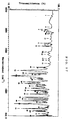
- Fig. 27 is an infrared absorption spectrum of Product No. 1-B.
- the fluorescent X-ray spectroscopy revealed the presence of Ti in Product No. 1-B.
- a mixture containing 0.0016 mole of the nitrile compound (6) obtained in Example 1, 0.32 mol of phthalonitrile, 0.09 mol of Ti(OBu) 4 , 0.16 mole of urea and 200 ml of octanol was gradually heated to 150°C and maintained at 150-160°C with stirring under a nitrogen gas stream for 6 hours. After completion of the reaction, the reaction mixture was allowed to be cooled and filtered. The solid phase was then washed well with octanol and then several times with methanol, toluene and water and dried to obtain Product 1-B with a yield of 75 %. This product (20 g) was then subjected to an acid treatment using an acid pasting method.
- the product was dissolved little by little with stirring in 200 g of concentrated sulfuric acid while being cooled in an ice bath. The mixture was then reacted for 1 hour and subsequently poured into 2000 ml of ice water to form crystals. The crystals were separated by filtration and washed with distilled water until no acid was detected in the washed water. After drying, 18 g of an acid-treated product was obtained.
- a nitrile compound (31) was prepared according to the following reaction scheme (DAMN means diaminomaleonitrile):
- the product (b) was mixed with 0.1 mol of diaminomaleonitrile, 0.01 mol of p-toluenesulfonic acid and 200 ml of dioxane. The mixture was refluxed for 2 hours and then allowed to be cooled to room temperature, followed by removal of the solvent by distillation. The residue was mixed with 200 ml of methanol to precipitate crystals. The crystals were collected by filtration, washed several times with methanol and dried. The crystals were then isolated by column chromatography using dichloromethane as a developing solvent to obtain a crude product. This was recrystallized from dioxane to the obtain nitrile compound (31) with a yield of 60 %. An infrared absorption spectrum of the nitrile compound (31) is shown in Fig. 34. The elementary analysis of the nitrile compound (31) gave as follows: C H N Calculated 64.67 1.81 33.52 Found 64.50 1.92 33.34
- a mixture containing 0.0016 mole of the nitrile compound (31), 0.32 mol of phthalonitrile, 0.09 mol of Ti(OBu) 4 , 0.16 mole of urea and 200 ml of octanol was gradually heated to 150°C and maintained at 150-160°C with stirring under a nitrogen gas stream for 6 hours. After completion of the reaction, the reaction mixture was allowed to be cooled and filtered. The solid phase was then washed well with octanol and then several times with methanol, toluene and water and dried to obtain Product 2-B with a yield of 70 %.
- This product (20 g) was then subjected to an acid treatment using an acid pasting method.
- the product was dissolved little by little with stirring in 200 g of concentrated sulfuric acid while being cooled in an ice bath.
- the mixture was then reacted for 1 hour and subsequently poured into 2000 ml of ice water to form crystals.
- the crystals were separated by filtration and washed with distilled water until no acid was detected in the washed water. After drying, 18 g of an acid-treated product was obtained.
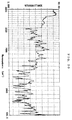
- An infrared absorption spectrum of acid-treated Product 2-B is shown in Fig. 29.
- a nitrile compound (32) was prepared according to the following reaction scheme (DAMN means diaminomaleonitrile):
- the product (d) was mixed with 0.1 mol of diaminomaleonitrile, 0.01 mol of p-toluenesulfonic acid and 200 ml of dioxane. The mixture was refluxed for 2 hours and then allowed to be cooled to room temperature, followed by removal of the solvent by distillation. The residue was mixed with 200 ml of methanol to precipitate crystals. The crystals were collected by filtration, washed several times with methanol and dried. The crystals were then isolated by column chromatography using dichloromethane as a developing solvent to obtain a crude product. This was recrystallized from dioxane to obtain the nitrile compound (32) as an intermediate product with a yield of 55 %.
- the nitrile compound (32) was found to have a melting point of 279-284°C. An infrared absorption spectrum of the nitrile compound (32) is shown in Fig. 35. The elementary analysis of the nitrile compound (32) gave as follows: C H N Calculated 64.67 1.81 33.52 Found 64.55 1.87 33.40
- a mixture containing 0.0016 mole of the nitrile compound (32), 0.32 mol of phthalonitrile, 0.09 mol of Ti(OBu) 4 , 0.16 mole of urea and 200 ml of octanol was gradually heated to 150°C and maintained at 150-160°C with stirring under a nitrogen gas stream for 6 hours. After completion of the reaction, the reaction mixture was allowed to be cooled and filtered. The solid phase was then washed well with octanol and then several times with methanol, toluene and water and dried to obtain Product 2-D with a yield of 71 %.
- This product (20 g) was then subjected to an acid treatment using an acid pasting method.
- the product was dissolved little by little with stirring in 200 g of concentrated sulfuric acid while being cooled in an ice bath.
- the mixture was then reacted for 1 hour and subsequently poured into 2000 ml of ice water to form crystals.
- the crystals were separated by filtration and washed with distilled water until no acid was detected in the washed water. After drying, 18 g of an acid-treated product was obtained.
- An infrared absorption spectrum of acid-treated Product 2-D is shown in Fig. 30.
- Example 3 The acid-treated product (1 g) obtained in Example 3 was placed in an Erlenmeyer flask together with 20 ml of N,N-dimethylformamide and heated under reflux conditions for 4 hours. The mixture was cooled to room temperature and filtered to collect solids. The solids were dried to obtain 0.96 g of a solvent-treated Product 1-B.
- Example 3 The acid-treated product (1 g) obtained in Example 3 was placed in an Erlenmeyer flask together with 20 ml of methyl ethyl ketone and heated under reflux conditions for 4 hours. The mixture was cooled to room temperature and filtered to collect solids. The solids were dried to obtain 0.97 g of a solvent-treated Product 1-B.
- Example 3 The acid-treated product (1 g) obtained in Example 3 was placed in an Erlenmeyer flask together with 20 ml of o-chlorobenzene and heated under reflux conditions for 4 hours. The mixture was cooled to room temperature and filtered to collect solids. The solids were dried to obtain 0.97 g of a solvent-treated Product 1-B.
- Example 3 The acid-treated product (1 g) obtained in Example 3 was placed in an Erlenmeyer flask together with 20 ml of cyclohexanone and heated under reflux conditions for 4 hours. The mixture was cooled to room temperature and filtered to collect solids. The solids were dried to obtain 0.98 g of a solvent-treated Product 1-B.
- a mixture containing 0.0016 mole of the nitrile compound (6) obtained in Example 1, 0.32 mol of phthalonitrile, 0.09 mol of Ti(OBu) 4 , 0.16 mole of urea and 200 ml of octanol was gradually heated to 150°C and maintained at 150-160°C with stirring under a nitrogen gas stream for 6 hours. After completion of the reaction, the reaction mixture was allowed to be cooled and filtered. The solid phase was then washed well with octanol and then several times with methanol, toluene and water and dried to obtain Product 1-B with a yield of 75 %.
- This product (5 g) was dissolved little by little with stirring in 50 g of concentrated sulfuric acid while being cooled in an ice bath. The mixture was then reacted for 1 hour and subsequently poured into 500 ml of ice water to form crystals. The crystals were separated by filtration and washed with distilled water until no acid was detected in the washed water, thereby obtaining 20 g of an acid-treated Product 1-B in the form of a wet cake (solid matter content: 20 %).
- Example 10 The wet cake (15 g) obtained in Example 10 was mixed with 12 g of distilled water and 120 g of tetrahydrofuran with stirring for 6 hours. The mixture was then filtered and the solid phase was dried to obtain 3.5 g of treated Product 1-B.
- Example 10 The wet cake (15 g) obtained in Example 10 was mixed with 12 g of distilled water and 120 g of toluene at room temperature with stirring for 6 hours. The mixture was then filtered and the solid phase was dried to obtain 3.6 g of treated Product 1-B.
- Example 10 The wet cake (15 g) obtained in Example 10 was mixed with 12 g of distilled water and 120 g of 1,4-dioxane at room temperature with stirring for 6 hours. The mixture was then filtered and the solid phase was dried to obtain 3.6 g of treated Product 1-B.
- Example 10 The wet cake (15 g) obtained in Example 10 was mixed with 12 g of distilled water and 120 g of N,N-dimethylformamide at 80°C with stirring for 6 hours. The mixture was then filtered and the solid phase was dried to obtain 3.6 g of treated Product 1-B.
- Example 15 The product (40.0 g) obtained in Example 15 was added little by little to 640 g of concentrated sulfuric acid through 30 minutes while maintaining the temperature at 4-9°C. The mixture was then heated at 6-9°C for 1 hour with stirring and then added dropwise in 4 liters of ice water through 30 minutes. After stirring for 30 minutes, solids were separated by filtration. The separated solid phase was mixed with 4 liters of ion-exchanged water with stirring and again filtered. Such washing and filtration procedures were repeated 4 times more to obtain 297.7 g of a wet cake (solid matter content: 12.7 %, yield: 94.5 %)
- Example 16 The wet cake (153.86 g) obtained in Example 16 was dried in a vacuum dryer at 70°C for 2 days to obtain 19.52 g of dried product.
- Example 15 The product obtained in Example 15 was subjected to an acid-paste treatment in the same manner as described in Example 16 to obtain a wet cake.
- the wet cake (8.00 g, solid matter content: 13.1 %) was mixed with 2.5 g of ion-exchanged water and 42.0 g of 1-methyl-2-pyrrolidinone with stirring at room temperature for 6 hours. This was then mixed with methanol and the solid phase was separated by filtration to give 1.03 g of a treated product (yield: 98.1 %).
- Example 16 The wet cake (8.00 g) obtained in Example 16 was mixed with 2.5 g of ion-exchanged water and 42.0 g of 1-methyl-2-pyrrolidinone with stirring at room temperature for 2 hours. This was then mixed with methanol and the solid phase was separated by filtration to give 1.01 g of a treated product (yield: 99.6 %).
- Example 19 was repeated in the same manner as described except that the stirring time was increased to 48 hours. 1.01 Grams of a treated product was obtained (yield: 99.6 %).
- Example 18 was repeated in the same manner as described except that 1,3-dimethyl-2-imidazoline was substituted for 1-methyl-2-pyrrolidinone. 1.04 Grams of a treated product was obtained (yield: 99.0 %).
- Example 18 was repeated in the same manner as described except that the stirring time was increased to 30 hours. 1.01 Grams of a treated product was obtained (yield: 99.6 %).
- Example 18 was repeated in the same manner as described except that the treatment temperature was increased to 30 hours. 1.01 Grams of a treated product was raised to 80°C. 1.01 Grams of a treated product was obtained (yield: 99.6 %).
- Example 3 In a mixed solvent containing 2 ml of trifluoroacetic acid and 8 ml of dichloromethane, 1 g of the acid-treated product obtained in Example 3 was dissolved. The mixture was then stirred for 1 hour and subsequently added dropwise through 75 minutes to a mixed solvent composed of 100 ml of dichloromethane and 100 ml of methanol in an ice bath with stirring to form crystals. The crystals were separated by filtration and washed with distilled water until no acid was detected in the washed water and dried, thereby obtaining a treated product.
- Example 3 In a mixed solvent containing 2 ml of trifluoroacetic acid and 8 ml of dichloromethane, 1 g of The acid-treated product obtained in Example 3 was dissolved. The mixture was then stirred for 1 hour and subsequently added dropwise through 5 minutes to 200 ml of ice water to form crystals. The crystals were separated by filtration and washed with distilled water until no acid was detected in the washed water and dried, thereby obtaining a treated product.
- Example 3 In a mixed solvent containing 2 ml of trifluoroacetic acid and 8 ml of dichloromethane, 1 g of The acid-treated product obtained in Example 3 was dissolved. The mixture was then stirred for 1 hour and subsequently added dropwise through 5 minutes to 50 ml of N,N-dimethylformamide in an ice bath with stirring. Thereafter, 50 ml of methanol was added to the mixture and stirred for 1 hour to form crystals. The crystals were separated by filtration and washed with distilled water until no acid was detected in the washed water and dried, thereby obtaining a treated product.
- Example 3 In a mixed solvent containing 2 ml of trifluoroacetic acid and 8 ml of dichloromethane, 1 g of The acid-treated product obtained in Example 3 was dissolved. The mixture was then stirred for 1 hour and subsequently added dropwise through 5 minutes to 50 ml of cylohexane in an ice bath with stirring. Thereafter, 50 ml of methanol was added to the mixture and stirred for 1 hour to form crystals. The crystals were separated by filtration and washed with distilled water until no acid was detected in the washed water and dried, thereby obtaining a treated product.
- Example 3 In a mixed solvent containing 2 ml of trifluoroacetic acid and 8 ml of dichloromethane, 1 g of The acid-treated product obtained in Example 3 was dissolved. The mixture was then stirred for 1 hour and subsequently added dropwise through 5 minutes to 50 ml of isopropyl ether in an ice bath with stirring. Thereafter, 50 ml of methanol was added to the mixture and stirred for 1 hour to form crystals. The crystals were separated by filtration and washed with distilled water until no acid was detected in the washed water and dried, thereby obtaining a treated product.
- Example 3 In a mixed solvent containing 2 ml of trifluoroacetic acid and 8 ml of dichloromethane, 1 g of The acid-treated product obtained in Example 3 was dissolved. The mixture was then stirred for 1 hour and subsequently added dropwise through 5 minutes to 50 ml of methyl ethyl ketone in an ice bath with stirring. Thereafter, 50 ml of methanol was added to the mixture and stirred for 1 hour to form crystals. The crystals were separated by filtration and washed with distilled water until no acid was detected in the washed water and dried, thereby obtaining a treated product.
- Example 3 In a mixed solvent containing 2 ml of trifluoroacetic acid and 8 ml of dichloromethane, 1 g of The acid-treated product obtained in Example 3 was dissolved. The mixture was then stirred for 1 hour and subsequently added dropwise through 5 minutes to 50 ml of methanol with stirring in an ice bath to form crystals. The crystals were separated by filtration and washed with distilled water until no acid was detected in the washed water and dried, thereby obtaining a treated product.
- Example 3 In a mixed solvent containing 2 ml of trifluoroacetic acid and 8 ml of dichloromethane, 1 g of The acid-treated product obtained in Example 3 was dissolved. The mixture was then stirred for 1 hour and subsequently added dropwise through 5 minutes to 50 ml of tetrahydrofuran in an ice bath with stirring. Thereafter, 50 ml of methanol was added to the mixture and stirred for 1 hour to form crystals. The crystals were separated by filtration and washed with distilled water until no acid was detected in the washed water and dried, thereby obtaining a treated product.
- Example 3 In a mixed solvent containing 2 ml of trifluoroacetic acid and 8 ml of dichloromethane, 1 g of The acid-treated product obtained in Example 3 was added through 1 minute. The mixture was then stirred for 45 minutes at room temperature to dissolve the Product and then allowed to sand for 25 minutes. After removal of the supernatant, the mixture was mixed with 50 ml of methanol to form crystals. The crystals were separated by filtration, placed in a beaker, washed with hot water, and then filtered. Such washing with hot water and filtration procedures were repeated two times more. Thereafter, the crystals were dispersed in 50 ml of fluorobenzene, stirred for 15 minutes at room temperature, separated by filtration and dried to obtain a treated product.
- Example 3 In a mixed solvent containing 2 ml of trifluoroacetic acid and 8 ml of dichloromethane, 1 g of The acid-treated product obtained in Example 3 was dissolved. The mixture was then stirred for 1 hour and subsequently added dropwise through 20 seconds to a mixed solvent consisting of 100 ml of dichloromethane and 100 ml methanol with stirring in an ice bath to form crystals. The crystals were separated by filtration and washed with distilled water until no acid was detected in the washed water and dried, thereby obtaining a treated product.
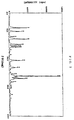
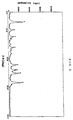
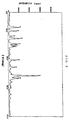
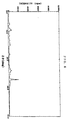
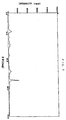
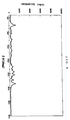
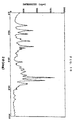
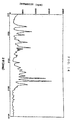
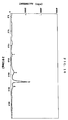
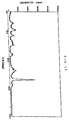
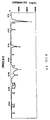
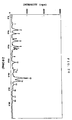
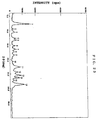
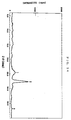
- the X-ray diffraction spectrum shown in Fig. 5 has no diffraction peaks having a half-value width of 1° or less, indicating that the product is amorphous.
- the other X-ray diffraction spectra have peaks with a half-value width of 1° or less, indicating that the products are crystalline in nature. Further, differences in the X-ray patterns suggest that the crystal structures of the products are different from each other.
- a dispersion containing 3 parts by weight of the product obtained in Example 24, 1 part by weight of a commercially available polyvinyl butyral resin (BM-S manufactured by Sekisui Chemical Co., Ltd.) and 80 parts by weight of methyl ethyl ketone was placed in a ball mill pot and milled for 3 hours using PSZ balls with a diameter of 2 mm to obtain a coating liquid for forming a charge generation layer. This was applied on an aluminum plate and dried at 100°C for 20 minutes to form a charge generation layer having a thickness of about 0.3 ⁇ m.
- BM-S polyvinyl butyral resin manufactured by Sekisui Chemical Co., Ltd.
- a coating liquid for forming a charge transport layer was prepared by mixing 7 parts by weight of a positive hole charge transporting material of the formula (33) shown below, 10 parts by weight of a commercially available polycarbonate resin (PCX-5 manufactured by Teijin Chemicals Ltd.), 68 parts by weight of dichloromethane and 0.0002 part by weight of a commercially available silicone oil (KF50 manufactured by Shin-Etsu Chemical Co., Ltd.).
- the coating liquid was applied on the above-prepared charge generation layer and dried at 110°C for 20 minutes to obtain a charge transport layer having a thickness of about 28 ⁇ m, thereby obtaining an electrophotographic photoconductor of Example 35.
- Example 35 was repeated in the same manner as described except that the product obtained in Example 25 was substituted for the product of Example 24, thereby obtaining an electrophotographic photoconductor of Example 36.
- Example 35 was repeated in the same manner as described except that the product obtained in Example 26 was substituted for the product of Example 24, thereby obtaining an electrophotographic photoconductor of Example 37.
- Example 35 was repeated in the same manner as described except that the product obtained in Example 27 was substituted for the product of Example 24, thereby obtaining an electrophotographic photoconductor of Example 38.
- Example 35 was repeated in the same manner as described except that the product obtained in Example 28 was substituted for the product of Example 24, thereby obtaining an electrophotographic photoconductor of Example 39.
- Example 35 was repeated in the same manner as described except that the product obtained in Example 29 was substituted for the product of Example 24, thereby obtaining an electrophotographic photoconductor of Example 40.
- Example 35 was repeated in the same manner as described except that the product obtained in Example 30 was substituted for the product of Example 24, thereby obtaining an electrophotographic photoconductor of Example 41.
- Example 35 was repeated in the same manner as described except that the product obtained in Example 31 was substituted for the product of Example 24, thereby obtaining an electrophotographic photoconductor of Example 42.
- Example 35 was repeated in the same manner as described except that the product obtained in Example 32 was substituted for the product of Example 24, thereby obtaining an electrophotographic photoconductor of Example 43.
- Example 35 was repeated in the same manner as described except that the product obtained in Example 33 was substituted for the product of Example 24, thereby obtaining an electrophotographic photoconductor of Example 44.
- Example 35 was repeated in the same manner as described except that a positive hole charge transporting material represented by the formula (34) below was substituted for the charge transporting material (33), thereby obtaining an electrophotographic photoconductor of Example 45.
- Example 35 was repeated in the same manner as described except that a positive hole charge transporting material represented by the formula (35) below was substituted for the charge transporting material (33), thereby obtaining an electrophotographic photoconductor of Example 46.
- Example 35 was repeated in the same manner as described except that a positive hole charge transporting material represented by the formula (36) below was substituted for the charge transporting material (33), thereby obtaining an electrophotographic photoconductor of Example 47.
- Example 35 was repeated in the same manner as described except that the product obtained in Example 6 was substituted for the product of Example 24, thereby obtaining an electrophotographic photoconductor of Example 48.
- Example 35 was repeated in the same manner as described except that the product obtained in Example 7 was substituted for the product of Example 24, thereby obtaining an electrophotographic photoconductor of Example 49.
- Example 35 was repeated in the same manner as described except that the product obtained in Example 12 was substituted for the product of Example 24, thereby obtaining an electrophotographic photoconductor of Example 50.
- a mixture containing 0.1 mole of phthalocyanine, 0.025 mol of Ti(OBu) 4 , 0.05 mol of urea and 200 ml of octanol was gradually heated to 150°C and maintained at 150-160°C with stirring under a nitrogen gas stream for 6 hours. After completion of the reaction, the reaction mixture was allowed to be cooled and filtered. The solid phase was then washed well with octanol and then several times with methanol, toluene and water and dried to obtain titanylphthalocyanine with a yield of 70 %.
- Example 35 was repeated in the same manner as described except that the above treated titanylphthalocyanine was substituted for the product of Example 24, thereby obtaining an electrophotographic photoconductor of Comparative Example.
- the photoconductors obtained in Examples 35-50 and Comparative Example were measured for their electrostatic characteristics under conditions involving a temperature of 25°C and a relative humidity of 55 % using a commercially available electrostatic copying sheet testing apparatus "Paper Analyzer Model EPA-8100" manufactured by Kawaguchi Electro Works Co., Ltd. in accordance with a dynamic mode.
- each photoconductor was negatively charged at -6 kV for 20 seconds.
- the photoconductor was allowed to stand in the dark for 20 seconds and the surface potential V 0 [-V] was measured.
- the photoconductor When the surface potential reached -800V, the photoconductor was irradiated with a monochromatic light with a wavelength of 780 nm such that the illuminance on the surface of the photoconductor was 1 ⁇ W/cm 2 .
- Example V 0 [-V] Em1/2 [ ⁇ J/cm 2 ] 35 870 0.35 36 1050 0.2 37 950 0.4 38 850 0.2 39 700 0.95 40 720 0.3 41 680 0.5 42 900 0.7 43 1100 0.4 44 1160 0.4 45 600 0.8 46 650 1.6 47 800 1.2 48 900 0.5 49 950 0.6 50 850 0.4 Comparative Example 820 0.38
- Example 35 and Comparative Example were each measured for the electrostatic fatigue characteristics thereof using a commercially available electrostatic copying sheet testing apparatus "Paper Analyzer Model EPA-8100" manufactured by Kawaguchi Electro Works Co., Ltd. in accordance with a dynamic mode (rotational speed: 1000 rpm).
- each photoconductor was repeatedly subjected to negative charging at -6 kV and irradiation with white light for 60 minutes while maintaining the current and potential at 5.6 ⁇ A and -800V, respectively.
- the surface potential V 0 of the photoconductor after the fatigue test was found to be -820 V in the case of Example 35 and -450 V in the case of Comparative Example.
- the use of the product according to the present invention is effective in providing photoconductors having a high resistance to electrostatic fatigue.
- a coating liquid for forming a charge generation layer as used in Example 35 was applied onto an aluminum-deposited PET base to form a charge generation layer.
- a coating liquid which was a solution obtained by dissolving 8 parts by weight of an electron transporting material of the formula (28) shown below, 11 parts by weight of a polycarbonate resin (Polycarbonate Z manufactured by Teijin Chemicals, Ltd.) and 0.02 part by weight of a silicone oil (KF50 manufactured by Shin-Etsu Chemical Co., Ltd.) in 91 parts by weight of tetrahydrofuran, was then applied to the above charge generation layer with a doctor blade and dried to form thereon a charge transport layer having a thickness of 20 ⁇ m, thereby obtaining a photoconductor of Example 51.
- the photoconductor was measured for its electrostatic characteristics in the same manner as that in Example 35 except that the impressed voltage was +6 kv. It was found that V 0 was +1100 V and Em1/2 was 2.50 ⁇ J/cm 2 .
- Example 51 was repeated in the same manner as described except that an electron transporting material of the formula (29) shown below was used in lieu of the compound of the formula (28), thereby obtaining a photoconductor of Example 52.
- the photoconductor was measured for its electrostatic characteristics in the same manner as that in Example 51. It was found that V 0 was +1200 V and Em1/2 was 2.35 ⁇ J/cm 2 .
- Example 24 The product obtained in Example 24 (0.5 g) was milled with a ball mill together with 9 g of tetrahydrofuran and 10 g of a 10 % by weight solution of a polycarbonate resin (Polycarbonate Z manufactured by Teijin Chemicals, Ltd.) in tetrahydrofuran to obtain a dispersion. Quantities of the dispersion, the charge transporting material of the formula (33) and the 10 % by weight solution of Polycarbonate Z were then blended with sufficient stirring to obtain a coating liquid having the following composition: Product obtained in Example 24: 2 % by weight Charge transporting material: 28 % by weight Polycarbonate Z: 50 % by weight Tetrahydrofuran: 20 % by weight
- the coating liquid was then applied onto a Al-deposited polyester film with a doctor blade and dried to form a single layer photoconductive layer having a thickness of 15 ⁇ m, thereby obtaining a single layer-type photoconductor of Example 53.
- the photoconductor was measured for its electrostatic characteristics in the same manner as that in Example 35. It was found that V 0 was -1150 V and Em1/2 was 0.6 ⁇ J/cm 2 .
- Example 24 The product obtained in Example 24 was dissolved in N,N-dimethylformamide and the solution was measured for UV-visible light absorption spectrum. The results are shown in Fig. 32. The spectrum shows that ⁇ max is 684 nm.
- a dispersion containing 3 parts by weight of the product obtained in Example 24, 1 part by weight of a commercially available polyvinyl butyral resin (BM-S manufactured by Sekisui Chemical Co., Ltd.) and 80 parts by weight of methyl ethyl ketone was placed in a ball mill pot and milled for 3 hours using PSZ balls with a diameter of 2 mm to obtain a coating liquid for forming a charge generation layer.
- the sample was measured for light absorption spectrum to give the results shown in Fig. 31.
- the spectrum has an absorption band in the range of 500-700 nm.
- Example 35 The photoconductor fabricated in Example 35 was mounted on an electrophotographic device. It was found that the device produced clear images.
Landscapes
- Chemical & Material Sciences (AREA)
- Organic Chemistry (AREA)
- Chemical Kinetics & Catalysis (AREA)
- Physics & Mathematics (AREA)
- General Physics & Mathematics (AREA)
- Photoreceptors In Electrophotography (AREA)
- Nitrogen Condensed Heterocyclic Rings (AREA)
- Nitrogen And Oxygen Or Sulfur-Condensed Heterocyclic Ring Systems (AREA)
Applications Claiming Priority (12)
| Application Number | Priority Date | Filing Date | Title |
|---|---|---|---|
| JP17521399 | 1999-06-22 | ||
| JP17524099 | 1999-06-22 | ||
| JP17524099 | 1999-06-22 | ||
| JP17521399 | 1999-06-22 | ||
| JP26063499 | 1999-09-14 | ||
| JP26063299 | 1999-09-14 | ||
| JP26063399 | 1999-09-14 | ||
| JP26063399 | 1999-09-14 | ||
| JP26063499 | 1999-09-14 | ||
| JP26063299 | 1999-09-14 | ||
| JP2000070353 | 2000-03-14 | ||
| JP2000070353 | 2000-03-14 |
Publications (3)
| Publication Number | Publication Date |
|---|---|
| EP1063264A2 true EP1063264A2 (de) | 2000-12-27 |
| EP1063264A3 EP1063264A3 (de) | 2001-08-29 |
| EP1063264B1 EP1063264B1 (de) | 2006-03-01 |
Family
ID=27553433
Family Applications (1)
| Application Number | Title | Priority Date | Filing Date |
|---|---|---|---|
| EP00113409A Expired - Lifetime EP1063264B1 (de) | 1999-06-22 | 2000-06-23 | Reaktionsprodukt, Verfahren zu dessen Herstellung, das Produkt enthaltender elektrophotographischer Photoleiter, elktrophotographisches Gerät worin dieser Photoleiter eingesetzt wird und Verfahrenskassette für dieses elektrophotographische Gerät |
Country Status (5)
| Country | Link |
|---|---|
| US (2) | US6465648B1 (de) |
| EP (1) | EP1063264B1 (de) |
| JP (1) | JP2001329185A (de) |
| DE (1) | DE60026203T2 (de) |
| ES (1) | ES2255920T3 (de) |
Families Citing this family (31)
| Publication number | Priority date | Publication date | Assignee | Title |
|---|---|---|---|---|
| JP5132013B2 (ja) * | 2000-06-27 | 2013-01-30 | キヤノン株式会社 | オクタフェニルテトラアザポルフィリン、該オクタフェニルテトラアザポルフィリンの製造方法、該オクタフェニルテトラアザポルフィリンを用いた電子写真感光体、該電子写真感光体を備えたプロセスカートリッジおよび電子写真装置 |
| US7279260B2 (en) | 2002-06-12 | 2007-10-09 | Ricoh Company, Ltd. | Electrophotographic photoconductor having a crosslinked resin layer and method of preparing an electrophotographic photoconductor |
| US7056635B2 (en) | 2002-11-14 | 2006-06-06 | Ricoh Company, Ltd. | Toner, method of producing the toner, developer including the toner, and image forming method and apparatus using the developer |
| JP4030895B2 (ja) * | 2003-02-26 | 2008-01-09 | 株式会社リコー | 電子写真感光体、及び画像形成方法、画像形成装置、画像形成装置用プロセスカートリッジ |
| US7306887B2 (en) * | 2003-03-19 | 2007-12-11 | Ricoh Company, Ltd. | Toner and developer for electrostatic development, production thereof, image forming process and apparatus using the same |
| JP4069007B2 (ja) * | 2003-03-19 | 2008-03-26 | 株式会社リコー | 画像形成用トナー |
| US7381511B2 (en) * | 2003-06-02 | 2008-06-03 | Ricoh Company, Ltd. | Photoreceptor, image forming method and image forming apparatus using the photoreceptor, process cartridge using the photoreceptor and coating liquid for the photoreceptor |
| US7374848B2 (en) * | 2003-06-24 | 2008-05-20 | Ricoh Company, Limited | Toner and method or preparing the toner |
| US7348113B2 (en) * | 2003-09-10 | 2008-03-25 | Ricoh Company, Ltd. | Electrophotographic photoconductor comprising a polycarbonate resin having a dihydroxy diphenyl ether unit |
| EP1521125B1 (de) * | 2003-09-18 | 2012-03-07 | Ricoh Company, Ltd. | Elektrophotographischer Photoleiter, elektrophotographische Methode, Apparat und Prozesskartusche und Azoverbindung |
| US7183435B2 (en) | 2004-07-28 | 2007-02-27 | Ricoh Company, Ltd. | Triphenylene compound, method for making |
| JP2006047404A (ja) * | 2004-07-30 | 2006-02-16 | Ricoh Co Ltd | 液体現像用電子写真感光体、及び該感光体を備えた電子写真装置 |
| JP4642447B2 (ja) * | 2004-08-27 | 2011-03-02 | 株式会社リコー | 芳香族ポリエステル樹脂及びそれを用いた電子写真用感光体 |
| US7947417B2 (en) * | 2004-11-18 | 2011-05-24 | Xerox Corporation | Processes for the preparation of high sensitivity titanium phthalocyanines photogenerating pigments |
| JP5417598B2 (ja) * | 2005-03-25 | 2014-02-19 | 国立大学法人富山大学 | 多機能有機ダイオードマトリクスパネル |
| DE602006016683D1 (de) * | 2005-07-13 | 2010-10-21 | Ricoh Kk | Tonerherstellungsverfahren |
| EP1788037B1 (de) * | 2005-11-16 | 2013-01-02 | Kyocera Mita Corporation | Titanylphthalocyaninkristall, Verfahren zur Herstellung desselben sowie elektrophotografischer Photorezeptor |
| US7651885B2 (en) * | 2005-12-16 | 2010-01-26 | Xerox Corporation | Electronic device fabrication process |
| JP2008304621A (ja) * | 2007-06-06 | 2008-12-18 | Sharp Corp | 単層型電子写真感光体およびそれを備えた電子写真装置 |
| US7888502B2 (en) * | 2007-06-27 | 2011-02-15 | Xerox Corporation | Titanyl phthalocyanine processes and photoconductors thereof |
| JP4666082B2 (ja) * | 2009-02-12 | 2011-04-06 | 富士ゼロックス株式会社 | 電子写真用トナー、電子写真用現像剤、トナーカートリッジ、プロセスカートリッジ、及び画像形成装置 |
| JP5194057B2 (ja) * | 2010-06-04 | 2013-05-08 | 京セラドキュメントソリューションズ株式会社 | 正帯電単層型電子写真感光体、及び画像形成装置 |
| US9145383B2 (en) | 2012-08-10 | 2015-09-29 | Hallstar Innovations Corp. | Compositions, apparatus, systems, and methods for resolving electronic excited states |
| WO2014025370A1 (en) | 2012-08-10 | 2014-02-13 | Hallstar Innovations Corp. | Tricyclic energy quencher compounds for reducing singlet oxygen generation |
| US9125829B2 (en) | 2012-08-17 | 2015-09-08 | Hallstar Innovations Corp. | Method of photostabilizing UV absorbers, particularly dibenzyolmethane derivatives, e.g., Avobenzone, with cyano-containing fused tricyclic compounds |
| BR102018007822A2 (pt) | 2017-04-20 | 2018-11-06 | Gilead Sciences, Inc. | composto, métodos para inibir pd-1, pd-l1 e/ou interação de pd-1/pd-l1 e para tratamento de câncer, composição farmacêutica, e, kit para tratamento de ou prevenção de câncer ou uma doença ou condição |
| CR20200347A (es) | 2018-02-13 | 2020-09-23 | Gilead Sciences Inc | Inhibidores pd-1/pd-l1 |
| TWI712412B (zh) | 2018-04-19 | 2020-12-11 | 美商基利科學股份有限公司 | Pd‐1/pd‐l1抑制劑 |
| SG11202012425QA (en) | 2018-07-13 | 2021-01-28 | Gilead Sciences Inc | Pd-1/pd-l1 inhibitors |
| WO2020086556A1 (en) | 2018-10-24 | 2020-04-30 | Gilead Sciences, Inc. | Pd-1/pd-l1 inhibitors |
| CN113816911B (zh) * | 2021-11-24 | 2022-03-08 | 季华实验室 | 一种具有多发光单元的红光材料及其制备方法和应用 |
Family Cites Families (20)
| Publication number | Priority date | Publication date | Assignee | Title |
|---|---|---|---|---|
| GB471418A (en) | 1936-02-29 | 1937-08-30 | Wilfred William Groves | Manufacture of dyestuffs of the phthalocyanine series |
| JPH0239160A (ja) | 1988-07-29 | 1990-02-08 | Canon Inc | 電子写真感光体 |
| JPH02232268A (ja) | 1989-03-06 | 1990-09-14 | Nippon Soda Co Ltd | 置換テトラピラジノポルフィラジン類化合物 |
| JP2643564B2 (ja) | 1990-08-31 | 1997-08-20 | 東洋インキ製造株式会社 | 光開始剤組成物 |
| JPH04283581A (ja) | 1991-03-13 | 1992-10-08 | Nippon Soda Co Ltd | ベンゾピラジノポルフィラジン誘導体 |
| US5457232A (en) | 1991-12-28 | 1995-10-10 | Ricoh Company, Ltd. | Pyrenylamine derivatives having unsaturated bond |
| US5459275A (en) | 1991-12-28 | 1995-10-17 | Ricoh Company, Ltd. | Pyrenylamine derivatives |
| US5492784A (en) | 1992-08-07 | 1996-02-20 | Ricoh Company, Ltd. | Positively-chargeable single-layered type electrophotographic photoconductor |
| US5578405A (en) | 1993-10-14 | 1996-11-26 | Ricoh Company | Electrophotographic photoconductor containing disazo and trisazo pigments |
| US5700614A (en) | 1994-03-03 | 1997-12-23 | Ricoh Company, Ltd. | cyclopentadiene derivative compounds and electrophotographic photoconductor comprising one cyclopentadiene derivative compound |
| US5750762A (en) | 1994-03-03 | 1998-05-12 | Ricoh Company, Ltd. | Cyclopentadiene derivative compounds and electrophotographic photoconductor comprising one cyclopentadiene derivative compound |
| US5981124A (en) | 1994-06-23 | 1999-11-09 | Ricoh Company, Ltd. | Electrophotographic photoconductor, azo compounds for use in the same, and intermediates for producing the azo compounds |
| US5604065A (en) | 1994-09-14 | 1997-02-18 | Ricoh Company, Ltd. | Electrophotographic photoconductor and triphenylamine compound for use therein |
| US5942363A (en) | 1995-12-15 | 1999-08-24 | Ricoh Company, Ltd. | Electrophotographic photoconductor and aromatic polycarbonate resin for use therein |
| US5942362A (en) | 1996-10-30 | 1999-08-24 | Ricoh Company, Ltd. | Electrophotographic photoconductor |
| US5853935A (en) | 1997-03-12 | 1998-12-29 | Ricoh Company, Ltd. | Electrophotographic photoconductor |
| JPH11242348A (ja) | 1997-07-14 | 1999-09-07 | Ricoh Co Ltd | 電子写真用顔料および該顔料を使用した電子写真用感光体 |
| GB9722883D0 (en) | 1997-10-30 | 1998-01-07 | Secr Defence | Phthalocyanine analogs |
| US6068956A (en) | 1998-04-09 | 2000-05-30 | Ricoh Company, Ltd. | Electrophotographic photoconductor |
| JP2000144005A (ja) | 1998-11-17 | 2000-05-26 | Ricoh Co Ltd | テトラアザポルフィリン誘導体混合物及びその製造方法 |
-
2000
- 2000-06-22 JP JP2000187990A patent/JP2001329185A/ja active Pending
- 2000-06-22 US US09/602,186 patent/US6465648B1/en not_active Expired - Fee Related
- 2000-06-23 EP EP00113409A patent/EP1063264B1/de not_active Expired - Lifetime
- 2000-06-23 DE DE60026203T patent/DE60026203T2/de not_active Expired - Lifetime
- 2000-06-23 ES ES00113409T patent/ES2255920T3/es not_active Expired - Lifetime
-
2002
- 2002-02-05 US US10/062,428 patent/US6544701B2/en not_active Expired - Fee Related
Also Published As
| Publication number | Publication date |
|---|---|
| US6465648B1 (en) | 2002-10-15 |
| US20030013028A1 (en) | 2003-01-16 |
| US6544701B2 (en) | 2003-04-08 |
| JP2001329185A (ja) | 2001-11-27 |
| DE60026203D1 (de) | 2006-04-27 |
| EP1063264B1 (de) | 2006-03-01 |
| EP1063264A3 (de) | 2001-08-29 |
| ES2255920T3 (es) | 2006-07-16 |
| DE60026203T2 (de) | 2006-11-23 |
Similar Documents
| Publication | Publication Date | Title |
|---|---|---|
| EP1063264B1 (de) | Reaktionsprodukt, Verfahren zu dessen Herstellung, das Produkt enthaltender elektrophotographischer Photoleiter, elktrophotographisches Gerät worin dieser Photoleiter eingesetzt wird und Verfahrenskassette für dieses elektrophotographische Gerät | |
| EP0401782B1 (de) | Titanylphthalocyanin in Kristallform, Verfahren zu seiner Herstellung und seine Verwendung für elektrofotografisches fotoempfindliches Material | |
| US6313288B1 (en) | Mixture of titanyltetraazaporphyrin compounds and electrophotographic photoconductor using the same | |
| JP2008015532A (ja) | 画像形成部材 | |
| JPH11242348A (ja) | 電子写真用顔料および該顔料を使用した電子写真用感光体 | |
| JPH04221962A (ja) | 電子写真感光体 | |
| JP4293694B2 (ja) | チタニルテトラアザポルフィリン誘導体混合物及びそれを用いた電子写真感光体 | |
| US6960417B2 (en) | Electrophotographic photoconductor | |
| JP4128247B2 (ja) | フェノール系化合物及び電子写真感光体 | |
| JPH04181260A (ja) | 電子写真感光体、該電子写真感光体を備えた電子写真装置並びにファクシミリ | |
| JP2013194068A (ja) | チタニルフタロシアニン誘導体混合物及びその製造方法 | |
| US9235146B2 (en) | Photoconductor | |
| JP5769002B2 (ja) | ヒドロキシガリウムピリドポルフィラジン誘導体混合物及びその製造法 | |
| JP7395118B2 (ja) | 電子写真感光体、画像形成装置、プロセスカートリッジ、アルカンジオール付加チタンポルフィラジン誘導体、及びその組成物 | |
| JP2001323183A (ja) | ヒドロキシガリウムフタロシアニン結晶及びその製造方法並びにそれを用いた電子写真用感光体 | |
| JP2000038390A (ja) | テトラピラジノポルフィラジン化合物及びそれを用いた電子写真感光体 | |
| US9005856B2 (en) | Hydroxygallium porphyrazine derivative mixture and electrophotographic photoconductor | |
| JP3939425B2 (ja) | 積層型電子写真感光体 | |
| JPH052278A (ja) | 電子写真感光体 | |
| JP3462931B2 (ja) | フタロシアニン組成物とそれを用いた電子写真感光体 | |
| JP2814017B2 (ja) | 電子写真感光体、該電子写真感光体を備えた電子写真装置並びにファクシミリ | |
| JP2000256575A (ja) | テトラアザポルフィリン誘導体混合物及びその製造方法 | |
| JP3938607B2 (ja) | 電子写真感光体 | |
| JP2000231209A (ja) | 電子写真感光体 | |
| JP2000155434A (ja) | 電子写真感光体 |
Legal Events
| Date | Code | Title | Description |
|---|---|---|---|
| PUAI | Public reference made under article 153(3) epc to a published international application that has entered the european phase |
Free format text: ORIGINAL CODE: 0009012 |
|
| AK | Designated contracting states |
Kind code of ref document: A2 Designated state(s): AT BE CH CY DE DK ES FI FR GB GR IE IT LI LU MC NL PT SE |
|
| AX | Request for extension of the european patent |
Free format text: AL;LT;LV;MK;RO;SI |
|
| PUAL | Search report despatched |
Free format text: ORIGINAL CODE: 0009013 |
|
| RIC1 | Information provided on ipc code assigned before grant |
Free format text: 7C 09B 47/00 A, 7G 03G 5/06 B, 7C 09B 47/04 B, 7C 07D 487/22 B, 7C 07D 487/22 J, 7C 07D 259:00 J, 7C 07D 241:00 J, 7C 07D 209:00 J, 7C 07D 209:00 J, 7C 07D 209:00 J, 7C 07D 209:00 J |
|
| AK | Designated contracting states |
Kind code of ref document: A3 Designated state(s): AT BE CH CY DE DK ES FI FR GB GR IE IT LI LU MC NL PT SE |
|
| AX | Request for extension of the european patent |
Free format text: AL;LT;LV;MK;RO;SI |
|
| 17P | Request for examination filed |
Effective date: 20020131 |
|
| AKX | Designation fees paid |
Free format text: DE ES FR GB IT NL |
|
| 17Q | First examination report despatched |
Effective date: 20030114 |
|
| GRAP | Despatch of communication of intention to grant a patent |
Free format text: ORIGINAL CODE: EPIDOSNIGR1 |
|
| GRAS | Grant fee paid |
Free format text: ORIGINAL CODE: EPIDOSNIGR3 |
|
| GRAA | (expected) grant |
Free format text: ORIGINAL CODE: 0009210 |
|
| AK | Designated contracting states |
Kind code of ref document: B1 Designated state(s): DE ES FR GB IT NL |
|
| REG | Reference to a national code |
Ref country code: GB Ref legal event code: FG4D |
|
| REF | Corresponds to: |
Ref document number: 60026203 Country of ref document: DE Date of ref document: 20060427 Kind code of ref document: P |
|
| REG | Reference to a national code |
Ref country code: ES Ref legal event code: FG2A Ref document number: 2255920 Country of ref document: ES Kind code of ref document: T3 |
|
| ET | Fr: translation filed | ||
| PLBE | No opposition filed within time limit |
Free format text: ORIGINAL CODE: 0009261 |
|
| STAA | Information on the status of an ep patent application or granted ep patent |
Free format text: STATUS: NO OPPOSITION FILED WITHIN TIME LIMIT |
|
| 26N | No opposition filed |
Effective date: 20061204 |
|
| PGFP | Annual fee paid to national office [announced via postgrant information from national office to epo] |
Ref country code: ES Payment date: 20110616 Year of fee payment: 12 Ref country code: FR Payment date: 20110630 Year of fee payment: 12 |
|
| PGFP | Annual fee paid to national office [announced via postgrant information from national office to epo] |
Ref country code: GB Payment date: 20110620 Year of fee payment: 12 Ref country code: NL Payment date: 20110621 Year of fee payment: 12 |
|
| PGFP | Annual fee paid to national office [announced via postgrant information from national office to epo] |
Ref country code: DE Payment date: 20110622 Year of fee payment: 12 |
|
| PGFP | Annual fee paid to national office [announced via postgrant information from national office to epo] |
Ref country code: IT Payment date: 20110624 Year of fee payment: 12 |
|
| REG | Reference to a national code |
Ref country code: NL Ref legal event code: V1 Effective date: 20130101 |
|
| GBPC | Gb: european patent ceased through non-payment of renewal fee |
Effective date: 20120623 |
|
| PG25 | Lapsed in a contracting state [announced via postgrant information from national office to epo] |
Ref country code: IT Free format text: LAPSE BECAUSE OF NON-PAYMENT OF DUE FEES Effective date: 20120623 |
|
| REG | Reference to a national code |
Ref country code: FR Ref legal event code: ST Effective date: 20130228 |
|
| REG | Reference to a national code |
Ref country code: DE Ref legal event code: R119 Ref document number: 60026203 Country of ref document: DE Effective date: 20130101 |
|
| PG25 | Lapsed in a contracting state [announced via postgrant information from national office to epo] |
Ref country code: NL Free format text: LAPSE BECAUSE OF NON-PAYMENT OF DUE FEES Effective date: 20130101 Ref country code: FR Free format text: LAPSE BECAUSE OF NON-PAYMENT OF DUE FEES Effective date: 20120702 Ref country code: GB Free format text: LAPSE BECAUSE OF NON-PAYMENT OF DUE FEES Effective date: 20120623 Ref country code: DE Free format text: LAPSE BECAUSE OF NON-PAYMENT OF DUE FEES Effective date: 20130101 |
|
| REG | Reference to a national code |
Ref country code: ES Ref legal event code: FD2A Effective date: 20131018 |
|
| PG25 | Lapsed in a contracting state [announced via postgrant information from national office to epo] |
Ref country code: ES Free format text: LAPSE BECAUSE OF NON-PAYMENT OF DUE FEES Effective date: 20120624 |