EP0417725A2 - Gallensäurederivate, Verfahren zu ihrer Herstellung, Verwendung als Arzneimittel - Google Patents
Gallensäurederivate, Verfahren zu ihrer Herstellung, Verwendung als Arzneimittel Download PDFInfo
- Publication number
- EP0417725A2 EP0417725A2 EP90117470A EP90117470A EP0417725A2 EP 0417725 A2 EP0417725 A2 EP 0417725A2 EP 90117470 A EP90117470 A EP 90117470A EP 90117470 A EP90117470 A EP 90117470A EP 0417725 A2 EP0417725 A2 EP 0417725A2
- Authority
- EP
- European Patent Office
- Prior art keywords
- alkyl
- unsubstituted
- benzyl
- phenyl
- atoms
- Prior art date
- Legal status (The legal status is an assumption and is not a legal conclusion. Google has not performed a legal analysis and makes no representation as to the accuracy of the status listed.)
- Granted
Links
- 0 C1*CC=*C1 Chemical compound C1*CC=*C1 0.000 description 12
- WICPORLNXBPBPR-UHFFFAOYSA-N NC(CCc(cc1)ccc1N)=O Chemical compound NC(CCc(cc1)ccc1N)=O WICPORLNXBPBPR-UHFFFAOYSA-N 0.000 description 1
Classifications
-
- C—CHEMISTRY; METALLURGY
- C07—ORGANIC CHEMISTRY
- C07D—HETEROCYCLIC COMPOUNDS
- C07D213/00—Heterocyclic compounds containing six-membered rings, not condensed with other rings, with one nitrogen atom as the only ring hetero atom and three or more double bonds between ring members or between ring members and non-ring members
- C07D213/02—Heterocyclic compounds containing six-membered rings, not condensed with other rings, with one nitrogen atom as the only ring hetero atom and three or more double bonds between ring members or between ring members and non-ring members having three double bonds between ring members or between ring members and non-ring members
- C07D213/04—Heterocyclic compounds containing six-membered rings, not condensed with other rings, with one nitrogen atom as the only ring hetero atom and three or more double bonds between ring members or between ring members and non-ring members having three double bonds between ring members or between ring members and non-ring members having no bond between the ring nitrogen atom and a non-ring member or having only hydrogen or carbon atoms directly attached to the ring nitrogen atom
- C07D213/60—Heterocyclic compounds containing six-membered rings, not condensed with other rings, with one nitrogen atom as the only ring hetero atom and three or more double bonds between ring members or between ring members and non-ring members having three double bonds between ring members or between ring members and non-ring members having no bond between the ring nitrogen atom and a non-ring member or having only hydrogen or carbon atoms directly attached to the ring nitrogen atom with hetero atoms or with carbon atoms having three bonds to hetero atoms with at the most one bond to halogen, e.g. ester or nitrile radicals, directly attached to ring carbon atoms
- C07D213/78—Carbon atoms having three bonds to hetero atoms, with at the most one bond to halogen, e.g. ester or nitrile radicals
- C07D213/81—Amides; Imides
-
- C—CHEMISTRY; METALLURGY
- C07—ORGANIC CHEMISTRY
- C07J—STEROIDS
- C07J9/00—Normal steroids containing carbon, hydrogen, halogen or oxygen substituted in position 17 beta by a chain of more than two carbon atoms, e.g. cholane, cholestane, coprostane
-
- A—HUMAN NECESSITIES
- A61—MEDICAL OR VETERINARY SCIENCE; HYGIENE
- A61P—SPECIFIC THERAPEUTIC ACTIVITY OF CHEMICAL COMPOUNDS OR MEDICINAL PREPARATIONS
- A61P1/00—Drugs for disorders of the alimentary tract or the digestive system
- A61P1/16—Drugs for disorders of the alimentary tract or the digestive system for liver or gallbladder disorders, e.g. hepatoprotective agents, cholagogues, litholytics
-
- A—HUMAN NECESSITIES
- A61—MEDICAL OR VETERINARY SCIENCE; HYGIENE
- A61P—SPECIFIC THERAPEUTIC ACTIVITY OF CHEMICAL COMPOUNDS OR MEDICINAL PREPARATIONS
- A61P3/00—Drugs for disorders of the metabolism
- A61P3/06—Antihyperlipidemics
-
- A—HUMAN NECESSITIES
- A61—MEDICAL OR VETERINARY SCIENCE; HYGIENE
- A61P—SPECIFIC THERAPEUTIC ACTIVITY OF CHEMICAL COMPOUNDS OR MEDICINAL PREPARATIONS
- A61P43/00—Drugs for specific purposes, not provided for in groups A61P1/00-A61P41/00
-
- C—CHEMISTRY; METALLURGY
- C07—ORGANIC CHEMISTRY
- C07D—HETEROCYCLIC COMPOUNDS
- C07D213/00—Heterocyclic compounds containing six-membered rings, not condensed with other rings, with one nitrogen atom as the only ring hetero atom and three or more double bonds between ring members or between ring members and non-ring members
- C07D213/02—Heterocyclic compounds containing six-membered rings, not condensed with other rings, with one nitrogen atom as the only ring hetero atom and three or more double bonds between ring members or between ring members and non-ring members having three double bonds between ring members or between ring members and non-ring members
- C07D213/04—Heterocyclic compounds containing six-membered rings, not condensed with other rings, with one nitrogen atom as the only ring hetero atom and three or more double bonds between ring members or between ring members and non-ring members having three double bonds between ring members or between ring members and non-ring members having no bond between the ring nitrogen atom and a non-ring member or having only hydrogen or carbon atoms directly attached to the ring nitrogen atom
- C07D213/24—Heterocyclic compounds containing six-membered rings, not condensed with other rings, with one nitrogen atom as the only ring hetero atom and three or more double bonds between ring members or between ring members and non-ring members having three double bonds between ring members or between ring members and non-ring members having no bond between the ring nitrogen atom and a non-ring member or having only hydrogen or carbon atoms directly attached to the ring nitrogen atom with substituted hydrocarbon radicals attached to ring carbon atoms
- C07D213/26—Radicals substituted by halogen atoms or nitro radicals
-
- C—CHEMISTRY; METALLURGY
- C07—ORGANIC CHEMISTRY
- C07D—HETEROCYCLIC COMPOUNDS
- C07D213/00—Heterocyclic compounds containing six-membered rings, not condensed with other rings, with one nitrogen atom as the only ring hetero atom and three or more double bonds between ring members or between ring members and non-ring members
- C07D213/02—Heterocyclic compounds containing six-membered rings, not condensed with other rings, with one nitrogen atom as the only ring hetero atom and three or more double bonds between ring members or between ring members and non-ring members having three double bonds between ring members or between ring members and non-ring members
- C07D213/04—Heterocyclic compounds containing six-membered rings, not condensed with other rings, with one nitrogen atom as the only ring hetero atom and three or more double bonds between ring members or between ring members and non-ring members having three double bonds between ring members or between ring members and non-ring members having no bond between the ring nitrogen atom and a non-ring member or having only hydrogen or carbon atoms directly attached to the ring nitrogen atom
- C07D213/24—Heterocyclic compounds containing six-membered rings, not condensed with other rings, with one nitrogen atom as the only ring hetero atom and three or more double bonds between ring members or between ring members and non-ring members having three double bonds between ring members or between ring members and non-ring members having no bond between the ring nitrogen atom and a non-ring member or having only hydrogen or carbon atoms directly attached to the ring nitrogen atom with substituted hydrocarbon radicals attached to ring carbon atoms
- C07D213/54—Radicals substituted by carbon atoms having three bonds to hetero atoms with at the most one bond to halogen, e.g. ester or nitrile radicals
- C07D213/56—Amides
-
- C—CHEMISTRY; METALLURGY
- C07—ORGANIC CHEMISTRY
- C07J—STEROIDS
- C07J17/00—Normal steroids containing carbon, hydrogen, halogen or oxygen, having an oxygen-containing hetero ring not condensed with the cyclopenta(a)hydrophenanthrene skeleton
-
- C—CHEMISTRY; METALLURGY
- C07—ORGANIC CHEMISTRY
- C07J—STEROIDS
- C07J31/00—Normal steroids containing one or more sulfur atoms not belonging to a hetero ring
- C07J31/006—Normal steroids containing one or more sulfur atoms not belonging to a hetero ring not covered by C07J31/003
-
- C—CHEMISTRY; METALLURGY
- C07—ORGANIC CHEMISTRY
- C07J—STEROIDS
- C07J41/00—Normal steroids containing one or more nitrogen atoms not belonging to a hetero ring
- C07J41/0005—Normal steroids containing one or more nitrogen atoms not belonging to a hetero ring the nitrogen atom being directly linked to the cyclopenta(a)hydro phenanthrene skeleton
- C07J41/0011—Unsubstituted amino radicals
-
- C—CHEMISTRY; METALLURGY
- C07—ORGANIC CHEMISTRY
- C07J—STEROIDS
- C07J41/00—Normal steroids containing one or more nitrogen atoms not belonging to a hetero ring
- C07J41/0005—Normal steroids containing one or more nitrogen atoms not belonging to a hetero ring the nitrogen atom being directly linked to the cyclopenta(a)hydro phenanthrene skeleton
- C07J41/0027—Azides
-
- C—CHEMISTRY; METALLURGY
- C07—ORGANIC CHEMISTRY
- C07J—STEROIDS
- C07J41/00—Normal steroids containing one or more nitrogen atoms not belonging to a hetero ring
- C07J41/0033—Normal steroids containing one or more nitrogen atoms not belonging to a hetero ring not covered by C07J41/0005
- C07J41/0055—Normal steroids containing one or more nitrogen atoms not belonging to a hetero ring not covered by C07J41/0005 the 17-beta position being substituted by an uninterrupted chain of at least three carbon atoms which may or may not be branched, e.g. cholane or cholestane derivatives, optionally cyclised, e.g. 17-beta-phenyl or 17-beta-furyl derivatives
-
- C—CHEMISTRY; METALLURGY
- C07—ORGANIC CHEMISTRY
- C07J—STEROIDS
- C07J41/00—Normal steroids containing one or more nitrogen atoms not belonging to a hetero ring
- C07J41/0033—Normal steroids containing one or more nitrogen atoms not belonging to a hetero ring not covered by C07J41/0005
- C07J41/0055—Normal steroids containing one or more nitrogen atoms not belonging to a hetero ring not covered by C07J41/0005 the 17-beta position being substituted by an uninterrupted chain of at least three carbon atoms which may or may not be branched, e.g. cholane or cholestane derivatives, optionally cyclised, e.g. 17-beta-phenyl or 17-beta-furyl derivatives
- C07J41/0061—Normal steroids containing one or more nitrogen atoms not belonging to a hetero ring not covered by C07J41/0005 the 17-beta position being substituted by an uninterrupted chain of at least three carbon atoms which may or may not be branched, e.g. cholane or cholestane derivatives, optionally cyclised, e.g. 17-beta-phenyl or 17-beta-furyl derivatives one of the carbon atoms being part of an amide group
-
- C—CHEMISTRY; METALLURGY
- C07—ORGANIC CHEMISTRY
- C07J—STEROIDS
- C07J41/00—Normal steroids containing one or more nitrogen atoms not belonging to a hetero ring
- C07J41/0033—Normal steroids containing one or more nitrogen atoms not belonging to a hetero ring not covered by C07J41/0005
- C07J41/0088—Normal steroids containing one or more nitrogen atoms not belonging to a hetero ring not covered by C07J41/0005 containing unsubstituted amino radicals
-
- C—CHEMISTRY; METALLURGY
- C07—ORGANIC CHEMISTRY
- C07J—STEROIDS
- C07J43/00—Normal steroids having a nitrogen-containing hetero ring spiro-condensed or not condensed with the cyclopenta(a)hydrophenanthrene skeleton
- C07J43/003—Normal steroids having a nitrogen-containing hetero ring spiro-condensed or not condensed with the cyclopenta(a)hydrophenanthrene skeleton not condensed
-
- C—CHEMISTRY; METALLURGY
- C07—ORGANIC CHEMISTRY
- C07J—STEROIDS
- C07J51/00—Normal steroids with unmodified cyclopenta(a)hydrophenanthrene skeleton not provided for in groups C07J1/00 - C07J43/00
-
- C—CHEMISTRY; METALLURGY
- C07—ORGANIC CHEMISTRY
- C07J—STEROIDS
- C07J9/00—Normal steroids containing carbon, hydrogen, halogen or oxygen substituted in position 17 beta by a chain of more than two carbon atoms, e.g. cholane, cholestane, coprostane
- C07J9/005—Normal steroids containing carbon, hydrogen, halogen or oxygen substituted in position 17 beta by a chain of more than two carbon atoms, e.g. cholane, cholestane, coprostane containing a carboxylic function directly attached or attached by a chain containing only carbon atoms to the cyclopenta[a]hydrophenanthrene skeleton
-
- C—CHEMISTRY; METALLURGY
- C07—ORGANIC CHEMISTRY
- C07K—PEPTIDES
- C07K5/00—Peptides containing up to four amino acids in a fully defined sequence; Derivatives thereof
- C07K5/04—Peptides containing up to four amino acids in a fully defined sequence; Derivatives thereof containing only normal peptide links
- C07K5/06—Dipeptides
- C07K5/06008—Dipeptides with the first amino acid being neutral
- C07K5/06017—Dipeptides with the first amino acid being neutral and aliphatic
- C07K5/06026—Dipeptides with the first amino acid being neutral and aliphatic the side chain containing 0 or 1 carbon atom, i.e. Gly or Ala
-
- A—HUMAN NECESSITIES
- A61—MEDICAL OR VETERINARY SCIENCE; HYGIENE
- A61K—PREPARATIONS FOR MEDICAL, DENTAL OR TOILETRY PURPOSES
- A61K38/00—Medicinal preparations containing peptides
Definitions
- Oral administration of drugs is the most common and most convenient form of drug application.
- an active substance to enter the bloodstream, a absorption process in the gastrointestinal tract must take place. Then the drug is distributed in the body according to its specific properties.
- numerous medicinal substances are only very poorly or practically not absorbed, so that oral administration is not possible.
- enteral uptake of these pharmaceuticals can be achieved by coupling non-resorbable pharmaceuticals to vitamin B12 (Proceed. Symp. Control. Rel. Bioact. Mater. 15 (1988) Controlled Release Society Inc., see PCT / AU 86 / 0299).
- Bile acid derivatives have now been found which are used to make active substances which are difficult or non-absorbable to be absorbed and thus to enable the oral application of these substances even in high doses.
- a liver-specific effect of active substances can be achieved with the bile acid derivatives.
- the invention relates to bile acid derivatives of the formula I. consisting of a bile acid residue G, an active ingredient part W and a connecting member X between the bile acid residue and active ingredient part.
- the bile acids are used either in free form or in protected form.
- the protective groups are split off and the C-24 carboxyl function is converted into a derivative according to the invention.
- Suitable protective groups for the alcohol groups are expediently acetyl, tetrahydropyranyl, t-butyldimethylsilyl or benzyl.
- Various alkyl or benzyl esters can be used as protective groups for the C-24 carboxyl group, but also e.g. Orthoester.
- bile acid reacts preferentially at position 3, but also at position 7, with activated forms of carboxylic acids, such as acid chlorides or mixed anhydrides with the addition of bases such as trialkylamine, pyridine, but also NaOH at room temperature in suitable solvents such as tetrahydrofuran, methylene chloride or ethyl acetate, but also Dimethylformamide (DMF) or dimethoxyethane (DME).
- carboxylic acids such as acid chlorides or mixed anhydrides
- bases such as trialkylamine, pyridine, but also NaOH at room temperature in suitable solvents such as tetrahydrofuran, methylene chloride or ethyl acetate, but also Dimethylformamide (DMF) or dimethoxyethane (DME).
- bases such as trialkylamine, pyridine, but also NaOH at room temperature in suitable solvents such as tetrahydrofuran, methylene chloride or ethyl acetate, but also
- the various isomers can e.g. be separated chromatographically.
- the reaction can be carried out selectively by using suitable protective groups.
- Corresponding amino bile acids can be converted analogously into corresponding amides.
- the reaction can be carried out with either protected or free bile acids.
- a preferred manufacturing method is to implement reactive forms of W with reactive forms X-G. If appropriate, the cleavage of protective groups and the conversion of C-24 carboxyl into the compounds according to the invention follow after the linkage.
- the 3-OH groups can be replaced by diols HO (CH 2 ) n OH by reacting the corresponding mesylates with the corresponding diols. which are preferably used in excess. with the addition of bases such as pyndin. Lutidine, but also triethylamine.
- the primary OH group of the compounds IV and XI can be further implemented using standard methods.
- XI can be converted into the corresponding carboxylic acid XVI [with R (11) equal to THP] using oxidizing agents, preferably using chromium VI reagents or various potassium permanganate systems.
- oxidizing agents preferably using chromium VI reagents or various potassium permanganate systems.
- Other protective groups are also suitable accordingly.
- the amines Vii, XIII and XV can be converted into carboxylic acids XVII using succinic anhydride in suitable solvents, preferably methylene chloride, toluene or else pyridine.
- Scheme 4 describes the production of bile acid building blocks with a 3a configuration.
- Various boranes such as BH 3 , thexylborane or 9-BBN are suitable for the hydroboration of XVIII.
- XVIII can be used either unprotected on the alcohol groups as in Scheme 4 or also protected with THP, acetyl, benzyl and others.
- Bile acids play an important physiological role in the digestion of lipids. They are released from the liver into the intestine via the gallbladder and develop their physiological effect in the digestion of lipids. Most of the secreted bile acids are recovered via the enterohepatic cycle. They return to the liver via the mesenteric veins of the small intestine and the portal vein system. Both active and passive transport processes play a role in reabsorption in the intestine. In the enterohepatic cycle, the bile acids appear both as free acids, but also in the form of glycine and taurine conjugates.
- this system has another important property: it can achieve an organ-selective effect for pharmaceuticals, namely for non-absorbable and for absorbable, namely with respect to such organs that have transport mechanisms for bile acids, such as e.g. is the case in the tissues of the enterohepatic circulation (e.g. hepatotropic effect). This systematically reduces or even prevents the systemic side effects of a number of drugs.
- An improved absorption or an organ-selective effect is desirable for a number of pharmaceuticals, e.g. Peptides, antibiotics, antiviral substances, cancer drugs, liver protection agents, antihyperlipidemics, diuretics. Hypotensive. Renin inhibitors, prolyl hydroxylase inhibitors, antidiabetic agents.
- pharmaceuticals e.g. Peptides, antibiotics, antiviral substances, cancer drugs, liver protection agents, antihyperlipidemics, diuretics. Hypotensive. Renin inhibitors, prolyl hydroxylase inhibitors, antidiabetic agents.
- the compounds of formula I are administered in various dosage forms, preferably orally in the form of tablets, capsules or liquids. Depending on the patient's body weight and constitution, the daily dose is in the range from 3 mg to 5000 mg, but preferably in the dose range 10-500 mg.
- the compounds according to the invention can be used dissolved or suspended in pharmacologically acceptable organic solvents, such as mono- or polyhydric alcohols, such as e.g. Ethanol or glycerin, in triacetin, oils such as e.g. Sunflower oil, cod liver oil, ethers such as e.g.
- Diethylene glycol dimethyl ether or polyethers such as Polyethylene glycol, or in the presence of other pharmacologically acceptable polymer carriers, such as e.g. Polyvinyl pyrrolidone, or other pharmaceutically acceptable additives such as starch, cyclodextrin or polysaccharides.
- other pharmacologically acceptable polymer carriers such as e.g. Polyvinyl pyrrolidone, or other pharmaceutically acceptable additives such as starch, cyclodextrin or polysaccharides.
- the compounds according to the invention can be given in combination with other medicinal substances.
- the invention further relates to intermediates XXII in which SG is H or a conventional protective group, for example tetrahydropyranyl, benzyl, t-BuMe 2 Si, benzyloxycarbonyl (Z), acetyl, and G and X have the following meanings: in which R (3) - R (8) are the same or different and have the following meanings: R (3) and R (4), R (5) and R (6), R (7) and R (8) each together the oxygen of a carbonyl group, where L means: H, a saturated or unsaturated alkyl radical having 1-10 C atoms. that is branched or unbranched.
- Cycloalkyl with 3-8 C atoms a phenyl radical (which is unsubstituted or 1-3 times substituted with F. CI, Br. (C 1 -C 4 ) alkyl or (C 1 -C 4 ) alkoxyl), a benzyl radical (which is unsubstituted or 1-3 times substituted with F. CI, Br, (C 1 -C 4 ) alkyl or (C 1 -C 4 ) alkoxyl), -SiA (1) A (2) A ( 3) with A (1) to A (3). the same or different, the same (C 1 -C 6 ) alkyl or phenyl.
- L has the meaning given above.
- R (2) H, (C 1 -C 8 ) alkyl, phenyl, benzyl; each unsubstituted or 1-3 times subst. with F, Cl. Br. (C 1 -C 4 ) alkyl or alkoxy with 1-4 C atoms
- the protecting group SG is mainly present during the synthesis of the compounds I and XXII. but is mostly converted to its form SG equal to hydrogen before the conversion of XXII to I.
- the intermediate products SG-X-G are of great importance both for the preparation of the compounds I and for the synthesis of other end products. e.g. of polymers with vinyl acetate, which contain the group -X-G.
- Example 2 14.0 g (35.9 mmol) of "Example 1" were dissolved in 100 ml of dioxane and 8.3 ml of tri-n-butylamine were added. 3.75 ml of ethyl chloroformate were then added dropwise. After 30 minutes at room temperature, 4.75 g of taurine, dissolved in 38 ml of 1N NaOH, were added. After stirring at room temperature for 24 h, the mixture was evaporated and the residue was partitioned between 400 ml of 1N HCl and ether. The aqueous phase was extracted three times with ether. The combined organic phases were evaporated and the residue was taken up in hot ethanol, filtered and concentrated, the product crystallizing. Yield: 9.5 g "Example 2"
- Example 8 A mixture of 500 mg (1.19 mmol) of Example 7, 10 ml of triethylamine, 200 mg (1.61 mmol) of 4-dimethylaminopyridine and 520 mg (1.20 mmol) of lactone "Example 125" (preparation see DE 38 23 045-A, US 4 925 852) in 25 ml of dry THF was heated under reflux for 48 h. The solvent was evaporated and the residue was chromatographed on silica gel (chloroform / methanol 9: 1). Yield 520 mg (0.61 mmol, 51%) "Example 8".
- Example 9 was obtained analogously to Examples 79-88. C 5 • H 67 FN 2 O 7 ( 840 ), MS ( FAB , 3 - NBA L iCI): 847 ( M + Li + ).
- the product contains up to 10% of the 3 ⁇ isomer, which can optionally be separated off after appropriate denvation.
- Example 47 b was obtained from Example 58.
- Example 47 c was obtained from Example 55.
- Example 51 Analogously to Example 10, 30.3 g (0.045 mol, 94%) of Mesylate "Example 51 were obtained from 28.8 g (0.048 mol) of Example 14.
- Example 53 was obtained in analogy to Example 19.
- Example 54 was obtained in analogy to Example 20.
- Example 55 was obtained in analogy to Example 21.
- Example 56 23.4 g (0.03 mol) of Example 56 were converted quantitatively into the azide "Example 57" analogously to Example 20.
- Example 59 A solution of 500 mg (1.07 mmol) of Example 21 and 76 mg (0.33 mmol) of tetraethyl orthotitanate in 10 ml of dry benzyl alcohol was stirred at 100 ° C. for 8 h. After cooling, 100 ml of ethyl acetate were added. The mixture was shaken with 1N HCl (1x) and 8% NaHC0 3 solution (1x). The organic phase was dried with MgSO 4 and evaporated. Chromatography on silica gel (ethyl acetate methanol NEt 3 5: 1: 1) gave 360 mg (6.64 mmol, 62%) benzyl ester "Example 59".
- Example 11 42 g (0.09 mol) of Example 11 were stirred in 270 ml of N-ethyldiisopropylamine with 61.5 g (0.36 mol) of benzyl bromide for 3 hours at 100 ° C. (bath temperature). The reaction product was then poured onto a mixture of 1.8 liters of water and 180 ml of concentrated sulfuric acid and extracted with ethyl acetate (2x). The combined organic phases were washed once with 1N hydrochloric acid, water and saturated, aqueous NaHCO 3 solution, dried over MgS0 4 and evaporated.
- Example 60a 16.14 g (0.029 mol) of Example 60a were dissolved in 450 ml of methanol. 37 ml (0.037 mol) of 1 N aqueous sodium hydroxide solution were added and the mixture was boiled under reflux for 8 h. The methanol was then stripped off on a rotary evaporator, the residue was dissolved in 320 ml of water and 37 ml (0.037 mol) of 1 N aqueous hydrochloric acid were added. The resulting acid was extracted with ethyl acetate (2x). The combined organic phases were washed twice with water, dried over MgSO 4 and evaporated.
- Example 60b 13.8 g (0.0254 mol) of Example 60b were dissolved in 250 ml of abs. Tetrahydrofuran and 7.69 g (0.0762 mol) triethylamine dissolved. 6.28 (0.03 mol) of 2,6-dichlorobenzoyl chloride were added dropwise at room temperature and the mixture was then stirred under reflux for 3 h.
- Example 60d 7.14 g (0.0119 moi) of Example 60c were hydrogenated in 250 ml of ethyl acetate over 1.5 g of Pd C catalyst (10%) at room temperature and normal pressure. After the uptake of hydrogen had ended, the catalyst was filtered off and the filtrate was evaporated. 6.0 g "Example 60d" were obtained (0.0117 mol, 98.9%)
- Example 60e was produced from Example 60d. C 30 H 53 N 53 O 5 (507); MS (FAB, 3-NBA LiCl): 514 (M + Li + )
- Example 63 was obtained from Example 62.
- Example 11 75 g (0.161 mol) of Example 11 were stirred with 21.6 g (0.177 mol) of 4-dimethylaminopyridine and 26.7 g (0.177 mol) of tert-butyldimethylsilyl chloride in 500 ml of dry dichloromethane for 4 h at room temperature. The reaction mixture was poured into water and extracted with ethyl acetate ( 3 x). The combined organic phases were dried (MgSO 4 ) and evaporated. Yield 93.6 g (quantitative) silyl ether. Further cleaning was not necessary for preparative purposes.
- Example 70 was obtained with Example 21.
- Example 71 was obtained with Example 21.
- Example 1 see also the description before the pharmacological part of the present application.
- Example 72 was obtained with Example 22.
- Example 73 was obtained with Example 21.
- Example 74 was obtained with Example 22. C 55 H 75 F 2 NO 9 S (963), MS (FAB, 3-NBA / LiCl): 970 (M + Li + )
- Example 75 was obtained with Example 21, mp: 74-76 ° C.
- Example 76 was obtained with Example 22. C 55 H 75 FN 2 O 8 (910). MS (FAB, 3-NBA / LiCl): 917 (M + Li + ).
- Example 77 was obtained with Example 63.
- Example 78 was obtained with Example 28. C 55 H 75 FN 2 O 8 (910), MS (FAB, 3-NBA / LiCl): 917 (M + Li + )
- Example 69 250 mg (0.29 mmol) of Example 69 were dissolved in 5 ml of ethanol and mixed with 2.0 ml of 1 N aqueous sodium hydroxide solution. After stirring at room temperature for 6 h, the mixture was neutralized with 1N hydrochloric acid and extracted with ethyl acetate (3x). The combined organic phases were dried with MgS0 4 and evaporated. Yield 230 mg (0.27 mmol, 94%) "Example 79".
- Example 70 400 mg (0.45 mmol) of Example 70 and a crystal of p-toluenesulfonic acid were dissolved in 20 ml of acetone dimethoxypropane 1: 1 and stirred at room temperature. After 15 min the solvent was evaporated and the residue was chromatographed on silica gel (chloroform methanol 19: 1).
- Example 89 150 mg (0.175 mmol) of Example 79 were dissolved in 10 ml of ethanol and watered with 1.75 ml of 0.1 N Sodium hydroxide solution added. After stirring for 10 minutes at room temperature, the solvent is evaporated. Yield 150 mg (quant.) Sodium salt "Example 89".
- N-terminal-protected D-alanyl peptides (protective group, for example benzyloxycarbonyl or Boc: tert-butyloxycarbonyl) or their active esters used for the coupling to Example 21 or their active esters are synthesized according to methods generally used in peptide chemistry (see, for example, Houben-Weyl, volumes 15/1 and 152) and characterized.
- N-terminally protected oligo-D-alanyl peptides are either in the form of their active esters, e.g. as N-hydroxysuccinimide (OSu) or 1-hydroxybenzotriazole (OBt) ester, or with the aid of condensation reagents (e.g. dicyclohexylcarbodiimide) with the addition of an anti-racemization reagent, e.g. N-hydroxysuccinimide (HOSu) or 1-hydroxybenzotriazole (HOBt) linked to the amino function of the bile acid derivative.
- active esters e.g. as N-hydroxysuccinimide (OSu) or 1-hydroxybenzotriazole (OBt) ester
- condensation reagents e.g. dicyclohexylcarbodiimide
- an anti-racemization reagent e.g. N-hydroxysuccinimide (HOSu) or 1-hydroxybenzotriazole (HOBt) linked to the
- the peptide protective group and the methyl ester group of the bile acid derivative are subsequently removed, with the orthogonal protective group strategy used here - the N-terminal protective group can e.g. can be split off by hydrogenation (Z) or acidolytically (Boc), while the methyl ester group of the bile acid derivative is saponified - the synthesis of partially protected bile acid-peptide conjugates is also possible.
- the orthogonal protective group strategy used here - the N-terminal protective group can e.g. can be split off by hydrogenation (Z) or acidolytically (Boc), while the methyl ester group of the bile acid derivative is saponified - the synthesis of partially protected bile acid-peptide conjugates is also possible.
- the respective intermediate products and the end product are generally purified by column chromatography and characterized by thin layer chromatography and by means of 1 H-NMR spectroscopy.
- Fractions 3 and 4 contain the desired product: Fraction 4 also contains N-hydroxysuccinimide, which can be removed by removing the solvent by triturating the residue with water or highly dilute hydrochloric acid.
- Example 119 is obtained as a white solid.
- the reaction mixture is filtered by membrane (Schleicher and Schuell, RC 58, 0.2 ⁇ m), the filtrate is evaporated in a rotary evaporator, the residue is mixed twice with diethyl ether and again evaporated in a rotary evaporator. 225 mg (98%) of a white-yellow powdery solid is obtained, which is taken up in methanol and stirred for 10 minutes with the addition of activated carbon at room temperature. After filtration, evaporate the solvent in vacuo. and drying gives 190 mg (83%) "Example 120" as a white powder.
- Example 121 are obtained as a white solid (still contains about 10% sodium chloride).
- Example 122 Analogously to Example 121, Example 122 was obtained.
- Example 124" was obtained analogously to Example 123.
- the Grignard compound is prepared from 48.62 g (0.14 mol) of the bromide from stage 3 and 3.53 g (0.147 mol) of Mg chips in 120 ml of absolute THF (- 60 ° C., 1 hour).
- This Grignard solution is quickly added to the solution of 31.08 g (0.14 Moi) 4-fluoroiodobenzene and 3.23 g (2.8 mmol) tetrakis (triphenylphosphine) palladium (0) in 140 ml absolute THF.
- the internal temperature rises to 55 to 60 ° C. within 15 minutes.
- a precipitate forms after 7 minutes.
- the mixture is stirred at 50 to 58 ° C. for 1 hour, left to stand at room temperature overnight, distributed between ether and 1 N hydrochloric acid, the ether phase is washed with 1 N hydrochloric acid, then with water and then with saturated NaHCO 3 solution. It is dried, filtered and concentrated.
- the product is purified by chromatography with cyclohexane toluene 4: 1 over silica gel or by distillation (bp 180 ° C 0.3 Tor). 49.3 g of the title compound are obtained as a colorless solid, mp. 65 to 67 ° C.
- a THF solution (100 ml) of p-fluorophenyl magnesium bromide [from 3.11 g (128 mmol) of magnesium and 22.0 g (13.8 ml, 126 mmol) of p-bromofluorobenzene] was prepared as in step 2.
- the solution of 6.04 g (21 mmol) of 2- (p-fluorophenyl) -4-thiocyanato-6-isopropylphenol (from stage 3) in 50 ml of THF was added dropwise at 50 ° C. and another 2 hours at 40- 50 ° C stirred.
- the mixture was cooled and poured onto 500 ml of ice-cold 2N hydrochloric acid. It was extracted three times with 200 ml of ether and extracted three times with 200 ml of ether. The combined extracts were washed with brine, dried and the solvent removed in vacuo.
- Chlorambucil [4- (bis-N- (2'-chloroethyl) aminophenyl] butyric acid, is a cytostatic for the treatment of malignant tumors. Chlorambucil is mainly excreted by the kidneys. Covalent coupling of chlorambucil to bile acids leads to a liver-specific effect of chlorambucil achieved, as evidenced by the following experiments.
- Bile acids are taken up from the portal vein blood by the liver parenchyma cells and excreted in the bile again.
- the transport of the bile acids through membranes on the blood and bile side of the liver cell, the transport of bile acids into the various cell organelles such as mitochondria, endoplasmic reticulum etc. and the transport in the cytoplasm of the liver cell is carried out by various specific binding proteins for bile acids.
- Bile acids also bind to regulatory proteins and the enzymes of bile acid metabolism.
- physiologically relevant binding proteins for bile acids have been molecularly identified and characterized by the method of photoaffinity labeling.
- the principle of this method is that a photoreactive radioactively labeled bile acid derivative binds to the physiological binding proteins analogously to the natural bile acids.
- highly reactive chemical intermediates such as carbenes, nitrenes or radicals are generated in this denvat.
- the binding proteins are then also radioactively labeled and, after separation of the various proteins of a liver cell, e.g. identified by electrophoresis and their molecular weight determined.
- X will compete with the radioactive bile acid derivative for binding to the bile acid-binding proteins: the radioactive labeling of the corresponding binding proteins will thus be less in the presence of X.
- X is a substance that does not bind to the bile acid-binding proteins, the presence of X will not reduce the labeling of the bile acid-binding proteins.
- the cell suspension was then diluted with 10 ml of ice-cold buffer I and the cells were sedimented by centrifugation at 1000 ⁇ g for 3 minutes.
- the cells were in 10 ml buffer I resuspended again and again sedimented by centrifugation.
- the precipitate was taken up in 600 ⁇ l Tris / HCl buffer (pH 6.8) / 2% sodium dodecyl sulfate (SDS) / 5% 2-mercaptoethanol / 10% glycerin / 0.001% bromophenol blue, heated to 90 ° C for 5 min and 20 min Centrifuged at 40,000 xg. The clear supernatant with the solubilized proteins was used further.
- the distribution of the radioactively labeled proteins was determined by the fluorography method by placing the dried gels on Kodak-X-Omat AR X-ray films and exposure at -80 ° C for 14 d. The blackened films were measured by densitometry. The decrease in the labeling of the various bile acid-binding proteins by the presence of "Example 3" during the photoaffinity labeling is given in% based on the control.
- Freshly isolated hepatocytes (2 ⁇ 10 6 ) in 2 ml of buffer 1 were incubated at 37 ° C. with 30 ⁇ Ci "Example 5". After 10, 30, 40 and 60 min, 500 ⁇ l of cell suspension (500 ⁇ g of protein) were removed and diluted with 10 ml of ice-cold buffer 1. After centrifugation at 1000 xg for 3 minutes, the precipitate was resuspended in 10 ml of buffer 1 and the suspension was centrifuged again.
- the cell precipitates were dissolved in 100 ul of 62.5 mM Tris / HCl buffer (pH 6.8) / 2% SDS / 5% 2-mercaptoethanol 10% glycerine 0.001% bromophenol blue, centrifuged for 30 min at 48,000 xg and the clear supernatants discontinuous SDS plate gel (200 x 170 x 2.7 mm) applied. After electrophoretic separation, the gels were fixed and stained.
- the individual yellow lanes were divided into 2 mm sections, the proteins were digested by incubation with 0.5 ml with Biolute S, and after the addition of 5 ml of Quickszint 501 scintillator, the samples were measured in a liquid scintillation measuring device.
- Example 5 leads to radioactive labeling of proteins of the liver cell, both in membranes and in the cytoplasm and in cell organelles.
- other proteins of the liver cell e.g. 122, 35, 28 kDa are also labeled.
- Compounds W-X-G according to the invention are therefore absorbed by the liver cells and can alkylate proteins.
- the properties of both the chlorambucil molecule (alkylating effect) and bile acid (using specific transport routes for bile acid) are combined in W-X-G.
- Freshly isolated hepatocytes (1.8 ⁇ 10 6 ) in 750 ⁇ l buffer I were incubated with 5.5 ⁇ Ci “Example 5” at 37 ° C. After 10, 20, 30, 40 and 60 min, 100 ⁇ l of the cell suspension were removed, diluted with 10 ml of ice-cold buffer I and centrifuged at 1000 ⁇ g for 5 min. The cell precipitate was mixed twice with 100 ⁇ l of chloroform-methanol solution (1 l, vv) to extract the bile acid. The organic extracts were evaporated in a stream of N 2 , the residues were each taken up in 20 ⁇ l of dioxane and applied to HPTLC thin-layer plates.
- the plate After developing the chromatogram with n-butanol, acetic acid water (9/12, vvv) as the eluent, the plate was dried, sprayed with 1 M sodium salicylate solution in methanol and, after drying, placed on a Kodak-X-Omat AR X-ray film. After exposure for 1 week at -80 ° C, the film was developed and the distribution of the radioactivity was determined by densitometry. The distribution of radioactivity among the individual metabolites is given in%.
- Example 5" is taken up by the liver cells into the interior of the cell and reaches the intracellular sites of metabolism.
- the chlorambucil-bile acid conjugate is rapidly hydrolytically split into the active ingredient free chlorambucil and bile acid, so chlorambucil is brought in the form of bile acid conjugates into cells with bile acid transport systems in order to be able to act pharmacologically there.
- Cytostatics coupled to bile acids are therefore particularly suitable for the treatment of malignancies and their metastases from cells which have the ability to absorb bile acids.
- the preparation of brush border membrane vesicles from the intestinal cells of the small intestine was carried out using the so-called Mg 2+ precipitation method.
- New Zealand male rabbits (2-2.5 kg body weight) were sacrificed by intravenous injection of 0.5 ml T-61 R.
- the small intestine was removed and rinsed with ice-cold physiological saline.
- the terminal 310 of the small intestine (measured in the oral rectal direction, ie the terminal ileum, which contains the active Na + -dependent bile acid transport system) were used to prepare the brush border membrane vesicles.
- the intestines were frozen in plastic bags under nitrogen at -80 ° C.
- the frozen intestines were thawed at 30 ° C in a water bath.
- the mucosa was scraped off and 300 mM mannitol in 60 ml ice-cold 12 mM Tris HCl buffer (pH 7.1).
- 5 mM EGTA 10 mg I phenylmethylsulfonylfluond 1 mg I trypsin inhibitor v. Soybeans (32 U mg) 0.5 mg I Trypsin Inhibitor v. Bovine lung (193 U mg) 5 mg I bacitracin suspended.
- an Ultraturrax (18-rod.
- IKA plant in Staufen, Germany was used for 3 minutes at 75% max. Performance homogenized under ice cooling. After adding 3 ml of 1 M MgCl 2 solution (final concentration 10 mM), the mixture was left to stand at 0 C for exactly 1 minute. By adding Mg 2+, the cell membranes aggregate and precipitate with the exception of the brush border membranes. After centrifugation for 15 mm at 3,000 xg (5000 rpm. SS-34 rotor), the precipitate is discarded and the supernatant, which contains the brush border membranes. Centrifuged for 30 minutes at 26,700 xg (15,000 rpm, SS-34 rotor).
- the precipitate was taken up in 30 ml of 10 mM Tns Hepes buffer (pH 7.4) 300 mM mannitol and resuspended homogeneously by 20 strokes in a Potter Eivejhem homogenizer at 1,000 rpm. After 30 minutes of centrifugation at 48,000 xg (20,000 rpm, SS-34 rotor), the precipitate was taken up in 0.5 to 2 ml of Tns Hepes buffer (pH 7.4), 280 mM mannitol (final concentration 20 mg ml) and with Resuspended with a 27 gauge needle using a tuberculin syringe. The vesicles were either used immediately after preparation for transport examinations or at -196 C in 4 mg portions stored in liquid nitrogen.
- the uptake of substrates in brush border membrane vesicles was determined using the so-called membrane filtration technique.
- 10 ⁇ l of the vesicle suspension 100 ⁇ g protein
- the concentration of taurocholate in the incubation mixture was 50 uM.
- the transport was stopped by adding 1 ml of ice-cold stop solution (10 mM Tris / Hepes. (PH 7.4) / 150 mM KCI).
- the resulting mixture was immediately sucked off under a vacuum of 25 to 35 mbar through a membrane filter made of cellulose nitrate (ME 25, 0.45 ⁇ m, 25 mm diameter, Schleicher & Schuell, Dassell, FRG). The filter was washed with 5 ml of ice-cold stop solution.
- the membrane filter was dissolved with 4 ml of the Quickszint 361 scintillator (Zinsser Analytik GmbH, Frankfurt, FRG) and the radioactivity was measured by liquid scintillation measurement in a Tricarb 2500 measuring device (Canberra Packard GmbH, Frankfurt, FRG) .
- the measured values were obtained after calibration of the device using standard samples and after correction of any chemiluminescence present as dpm (decompositions per minute).
- the control values were determined in Na-TP and KTP, respectively.
- the difference between the uptake in Na-TP and KTP resulted in the Na + -dependent transport share.
- the concentration of inhibitor at which the Na + -dependent transport fraction was inhibited by 50%, based on the control, was designated as ICso Na + ; the same applies to the information on the IC 25 and IC 7 s values.
- the substances 0.5 ml of a 1 mM solution in 0.9% NaCl solution
- the bile at predetermined time intervals (2.4.6.8.10.15. 20.30.40.50 60 , 70.80,90.100 110 120 mm) collected.
- the bile acid derivative was applied, after a 2-hour collection pentode, the corresponding active ingredient was applied.
- the bladder volume was measured 120 min after the test substance administration and the urine was also collected.
- the bile and urine samples were stored on ice during the experiment and then frozen.
- the components of the eluent were obtained from the usual manufacturers in the highest possible degree of purity. After the plates had been developed and dried, the distribution of the active substances and the bile acid derivatives or their metabolites was determined by densitometry (densitometer CD 50, DESAGA; Heidelberg). Detection was carried out in reflection mode with linear scanning at the wavelengths 252 nm (chlorambucil / chlorambucil conjugate) or 260 nm (other substances)
- the relative intensity of the bile acid derivatives, the active substances or the active substance metabolites on a chromatogram was given in area units.
Landscapes
- Chemical & Material Sciences (AREA)
- Organic Chemistry (AREA)
- Health & Medical Sciences (AREA)
- General Health & Medical Sciences (AREA)
- Life Sciences & Earth Sciences (AREA)
- Medicinal Chemistry (AREA)
- Public Health (AREA)
- Bioinformatics & Cheminformatics (AREA)
- General Chemical & Material Sciences (AREA)
- Chemical Kinetics & Catalysis (AREA)
- Nuclear Medicine, Radiotherapy & Molecular Imaging (AREA)
- Veterinary Medicine (AREA)
- Pharmacology & Pharmacy (AREA)
- Engineering & Computer Science (AREA)
- Animal Behavior & Ethology (AREA)
- Genetics & Genomics (AREA)
- Biochemistry (AREA)
- Biophysics (AREA)
- Molecular Biology (AREA)
- Proteomics, Peptides & Aminoacids (AREA)
- Diabetes (AREA)
- Hematology (AREA)
- Gastroenterology & Hepatology (AREA)
- Obesity (AREA)
- Steroid Compounds (AREA)
- Pharmaceuticals Containing Other Organic And Inorganic Compounds (AREA)
- Medicines That Contain Protein Lipid Enzymes And Other Medicines (AREA)
- Peptides Or Proteins (AREA)
- Organic Low-Molecular-Weight Compounds And Preparation Thereof (AREA)
- Acyclic And Carbocyclic Compounds In Medicinal Compositions (AREA)
- Pyrrole Compounds (AREA)
- Medicinal Preparation (AREA)
- Lubricants (AREA)
- Vessels, Lead-In Wires, Accessory Apparatuses For Cathode-Ray Tubes (AREA)
- Control Of Heat Treatment Processes (AREA)
Abstract

Description
- Die orale Gabe von Arzneimitteln ist die häufigste und bequemste Art der Arzneimittelapplikation. Damit aber ein Wirkstoff in die Blutbahn gelangt, muß ein Resorptionsprozeß im Magen-Darm-Trakt erfolgen. Danach verteilt sich der Arzneistoff im Körper entsprechend seiner spezifischen Eigenschaften. Zahlreiche Arzneistoffe werden aber nur sehr schlecht oder praktisch nicht resorbiert, so daß eine orale Applikation nicht möglich ist.
- Bekannt ist, daß durch Kopplung von nicht-resorbierbaren Pharmaka an Vitamin B12 eine enterale Aufnahme dieser Pharmaka erreicht werden kann (Proceed. Symp. Control. Rel. Bioact. Mater. 15 (1988) Controlled Release Society Inc., see PCT/AU 86/0299).
- Wegen der sehr geringen Kapazität dieses Aufnahmeweges über Vitamin B12 können aber auch nur sehr geringe Mengen des Pharmakons in den Körper eingebracht werden.
- Es wurden nun Gallensäurederivate gefunden, die dazu verwendet werden, schwer oder nicht resorbierbare Wirkstoffe resorbierbar zu machen und damit die orale Applikation dieser Stoffe auch in hohen Dosen zu ermöglichen. Darüberhinaus kann mit den Gallensäurederivaten eine leberspezifische Wirkung von Wirkstoffen erreicht werden.
- Die Erfindung betrifft Gallensäurederivate der Formel I

- In der Formel I bedeuten
- der Gallensäurerest G Gallensäuren in Form der freien natürlichen oder chemisch modifizierten Säuren. der
- Ester und Amide, der Salzformen sowie an den Alkoholgruppen derivatisierte Formen.
- das Verbindungsglied X
- eine direkte Bindung oder ein Zwischenglied,
- und zwar im einzelnen kann X sein
- Phenyl, Benzyl, unsubstituiert oder 1-3 fach substituiert mit F, Cl, Br, (C1-C4)-Alkyl, oder Alkoxy mit 1-4 C-Atomen
- R(2) = H, (C1-C8)-Alkyl. Phenyl, Benzyl, unsubstituiert oder 1-3 fach subst. mit F, Cl, Br, (C1-C4)-Alkyl oder Alkoxy mit 1-4 C-Atomen
- m = 0-6
- n = 1-16
- p = 1,2,3 3
- r = 0-2 und
- M =-(CH2)m,(C=C)p,-C≡C-

- Bevorzugt sind Verbindungen der Formel 1, in denen bedeuten

- eine Bindung zu W-X-, wobei insgesamt bis zu zwei W-X-Einheiten gebunden sein können,
- R(3) und R(4). R(5) und R(6), R(7) und R(8) jeweils gemeinsam der Sauerstoff einer Carbonylgruppe,


- H, einen gesättigten oder ungesättigten Alkylrest mit 1-10 C-Atomen, der verzweigt oder unverzweigt ist, Cycloalkyl mit 3-8 C-Atomen, einen Phenylrest (der unsubstituiert oder 1-3fach substituiert ist mit F, Cl, Br, (C1-C4)-Alkyl oder (Ci-C4.)-Alkoxyl), einen Benzylrest (der unsubstituiert oder 1-3-fach substituiert ist mit F, Cl, Br, (C1-C4)-Alkyl oder (C1-C4)-Alkoxyl),
- und in der Y folgende Bedeutung hat
- -OL, -NHL, -NL2, wobei L die oben angegebene Bedeutung hat, eine über die Aminogruppe gebundene Aminosäure oder Aminosulfonsäure und deren (C1-C4)-Alkylester und Alkali-und Erdalkalisalze, -OKa, wobei Ka ein Kation bedeutet wie z.B. ein Alkali oder Erdalkaliion oder auch ein quartäres Ammoniumion,
- das Verbindungsglied X







- Phenyl, Benzyl, unsubstituiert oder im Kern 1-3 fach substituiert mit F, Cl, Br, (C1-C4)-Alkyl. Alkoxy mit 1-4 C-Atomen:
- R(2) = H, (C1-C8)-Alkyl, Phenyl. Benzyl; jeweils unsubstituiert oder 1-3 fach subst. mit F. CI. Br, (C1-C4)-Alkyl oder Alkoxy mit 1-4 C-Atomen
- n = 1-16
- M = -(CH2)m-mit m = 2.
- wobei G und W an beliebigen Enden von X gebunden sein können. Der Wirkstoff W bedeutet ein beliebiges Arzneimittel, für das eine leberselektive Medikamentenwirkung erwünscht ist oder einen nicht oder schlecht resorbierbaren Arzneistoff, für den eine verbesserte Resorption erreicht werden soll.
- Zum Beispiel kann W bedeuten ein Peptid, ein Antibiotikum, eine antivirale Substanz, ein Krebsmittel wie z.B. Chlorambucil, ein Leberschutzmittel, ein Antihyperlipidämikum z.B. einen HMG-CoA Reductase Hemmer, ein Diuretikum, einen Blutdrucksenker, einen Renininhibitor, eine Substanz zur Behandlung der Leberzirrhose z.B. einen Prolylhydroxylase-Hemmer, eine Substanz zur Behandlung von Diabetes.
- Besonders bevorzugt sind Verbindungen der Formel I in denen bedeuten: G


- H, einen gesättigten Alkylrest mit 1-6 C-Atomen, der verzweigt oder unverzweigt sein kann. einen Phenylrest, der unsubstituiert oder 1-3 fach substituiert ist mit F. Cl. Br, (C1-C4)-Alkyl oder (C1-C4)-Alkoxy Y:OL.-NHL.-NL2,
- -OKa, wobei Ka ein Alkali- oder Erdalkalikation oder ein Ammoniumion bedeutet

- Methyl, Isopropyl, Isobutyl, 2-Butyl,
- Benzyl, 4-Hydroxybenzyl, Hydroxymethyl, 1-Hydroxyethyl, H3CSCH2CH2-. HO2CCH2-, HO2CCH2CH2-. das Verbindungsglied X, wobei G und W an beliebigen Enden von X gebunden sein können,
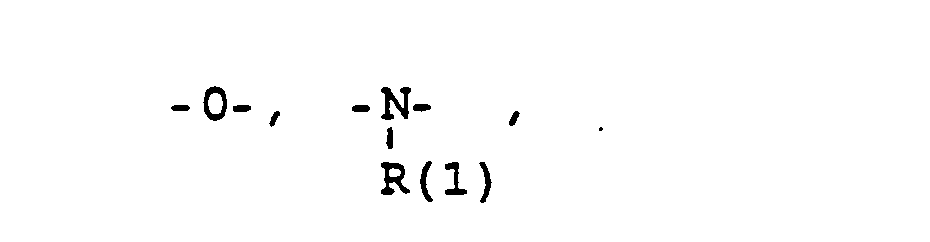


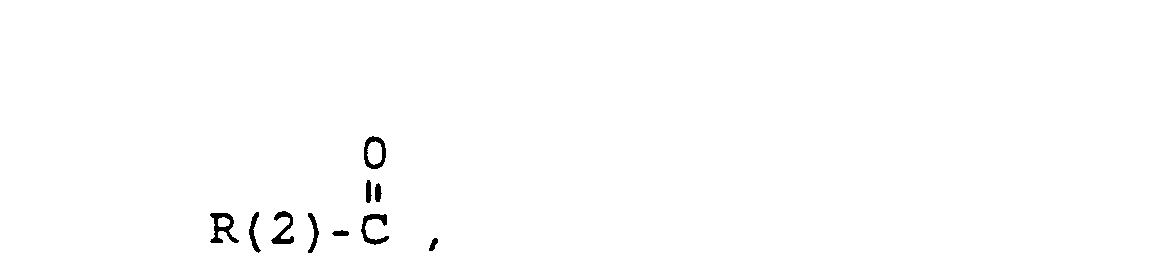
- R(2) = H, (C1-C8)-Alkyl. Phenyl, Benzyl: jeweils unsubstituiert oder 1-3fach substituiert mit F, CI. Br. (C1-C4)-Alkyl oder Alkoxy mit 1-4 C-Atomen
- n = 1-16 und
- M = -CH2-CH2-
- -CH = CH-Der Wirkstoff W bedeutet ein beliebiges Arzneimittel. für das eine leberselektive Medikamentenwirkung erwünscht ist. oder einen nicht oder schlecht resorbierbaren Arzneistoff. für den eine verbesserte Resorption erreicht werden soll.
- Zum Beispiel kann W bedeuten:
- ein Peptid, ein Antibiotikum, eine antivirale Substanz, ein Krebsmittel wie z.B. Chlorambucil, ein Leberschutzmittel, ein Antihyperlipidämikum z.B. einen HMG-CoA Reductase-Hemmer. ein Diuretikum. einen Blutdrucksenker, einen Renininhibitor, eine Substanz zur Behandlung der Leberzirrhose z.B. einen Prolylhydroxylase-Hemmer, eine Substanz zur Behandlung von Diabetes.
- Die Erfindung betrifft ferner ein Verfahren zur Herstellung der Verbindung I das dadurch gekennzeichnet ist. daß man
- a) im Falle von X = eine direkte Bindung geeignete reaktionsfähige Formen von G und W nach im Pnnzip bekannten Verfahren miteinander zur Reaktion bringt oder
- b) im Falle von X = ein Zwischenglied
- a) reaktionsfähige Formen von G-X mit W bzw.
- ß) reaktionsfähige Formen von W-X mit G nach im Prinzip bekannten Verfahren miteinander zur Reaktion bringt.
- c) G-X und W-X entweder nach bekannten, oder soweit nicht bekannt, nach unten näher beschriebenen Verfahren herstellt.
- Die Gallensäuren werden entweder in freier Form oder in geschützter Form eingesetzt. Nach der Verknüpfung mit W erfolgt gegebenenfalls die Abspaltung der Schutzgruppen und die Umwandlung der C-24 Carboxylfunktion in ein erfindungsgemäßes Derivat. Als Schutzgruppen eignen sich für die Alkoholgruppen zweckmäßigerweise Acetyl, Tetrahydropyranyl, t-Butyldimethylsilyl oder Benzyl. Als Schutzgruppen für die C-24 Carboxylgruppe kommen verschiedene Alkyl- oder Benzylester in Frage, aber auch z.B. Orthoester.
- Beispielsweise reagiert Gallensäure an Position 3 bevorzugt, aber auch an Position 7 mit aktivierten Formen von Carbonsäuren, wie Säurechloriden oder gemischten Anhydriden unter Zusatz von Basen wie Trialkylamin, Pyridin, aber auch NaOH bei Zimmertemperatur in geeigneten Lösungsmitteln wie Tetrahydrofuran, Methylenchlorid oder Essigester, aber auch Dimethylformamid (DMF) oder Dimethoxyethan (DME).
- Die verschiedenen Isomeren können z.B. chromatographisch getrennt werden.
- Durch die Verwendung von geeigneten Schutzgruppen läßt sich die Reaktion selektiv durchführen. Analog lassen sich entsprechende Aminogallensäuren in entsprechende Amide überführen. Auch hier kann die Reaktion entweder mit geschützten oder freien Gallensäuren durchgeführt werden.
- Analog lassen sich weitere erfindungsgemäße Verbindungen nach bekannten Standardverfahren verknüpfen.
- Die unter a) angegebenen Verfahren werden auch angewendet, um die Verknüpfung W-X mit G bzw. W mit X-G durchzuführen. Zweckmäßigerweise setzt man auch hier den Gallensäureteil entweder geschützt oder ungeschützt ein.
- Ein bevorzugtes Herstellungsverfahren besteht darin, reaktionsfähige Formen von W mit reaktionsfähigen Formen X-G umzusetzen. Gegebenenfalls schließen sich nach der Verknüpfung die Abspaltung von Schutzgruppen und die Umwandlung von C-24 Carboxyl in die erfindungsgemäßen Verbindungen an.
- Die Herstellung von reaktionsfähigen Gaiiensäurebaustonen X-G ist im Formelschema 1-4 Punkt c) am Beispiel der Cholsäure angegeben.
-


- Der Austausch der 3-OH Gruppen durch Diole HO(CH2)nOH gelingt durch Umsetzung der entsprechenden Mesylate mit den entsprechenden Diolen. die man bevorzugt im Überschuß einsetzt. unter Zusatz von Basen wie Pyndin. Lutidin, aber auch Triethylamin.
- Die primäre OH-Gruppe der Verbindungen IV und XI lassen sich nach Standardverfahren weiter umsetzen. So kann z.B. XI mit Oxidationsmitteln in die entsprechende Carbonsäure XVI [mit R(11) gleich THP] überführt werden, bevorzugt mit Chrom-VI-Reagenzien oder verschiedenen Kaliumpermanganat-Systemen. Entsprechend eignen sich auch andere Schutzgruppen.

- Die Amine Vii, XIII und XV können mit Bernsteinsäureanhydrid in geeigneten Lösungsmitteln, vorzugsweise Methylenchlorid, Toluol oder auch Pyridin in Carbonsäuren XVII überführt werden.

- Schema 4 beschreibt die Herstellung von Gallensäurebausteinen mit 3a-Konfiguration. Zur Hydroborierung von XVIII eignen sich verschiedene Borane wie BH3, Thexylboran oder 9-BBN. XVIII kann entweder wie in Schema 4 an den Alkoholgruppen ungeschützt oder auch geschützt mit THP, Acetyl, Benzyl u.a. eingesetzt werden.
- Gallensäuren spielen eine wichtige physiologische Rolle bei der Verdauung von Lipiden. Sie werden aus der Leber über die Gallenblase in den Darm abgegeben und entfalten dort ihre physiologische Wirkung bei der Verdauung von Lipiden. Der größte Teil der sezernierten Gallensäuren wird über den enterohepatischen Kreislauf wieder zurückgewonnen. Sie gelangen über die Mesenterialvenen des Dünndarms und das Pfortadersystem wieder zur Leber zurück. Bei der Rückresorption im Darm spielen sowohl aktive als auch passive Transportprozesse eine Rolle. Im enterohepatischen Kreislauf treten die Gallensäuren sowohl als freie Säuren, aber auch in Form von Glycin- und Taurinkonjugaten in Erscheinung.
- Es wurde gefunden, daß die erfindungsgemäßen Verbindungen resorbiert werden und in die Blutbahn gelangen. Dadurch ist es möglich, unter Ausnutzung der natürlichen Rückresorptionsmechanismen der Gallensäuren, eine verbesserte Resorption von nicht oder schwer resorbierbaren Pharmaka zu erreichen.
- Darüberhinaus besitzt dieses System eine weitere wichtige Eigenschaft: Es läßt sich für Arzneimittel und zwar für nicht resorbierbare und für resorbierbare eine organselektive Wirkung erzielen nämlich bezüglich solcher Organe, die Transportmechanismen für Gallensäuren besitzen, wie es z.B. in den Geweben des enterohepatischen Kreislaufs der Fall ist (z.B. hepatotrope Wirkung). Dadurch lassen sich die systemischen Nebenwirkungen einer Reihe von Arzneimitteln gezielt vermindern oder sogar verhindern.
- Eine verbesserte Resorption bzw. eine organselektive Wirkung ist für eine Reihe von Pharmaka wünschenswert wie z.B. Peptide, Antibiotika, antivirale Substanzen, Krebsmittel, Leberschutzmittel, Antihyperlipidämika, Diuretika. Blutdrucksenker. Renininhibitoren, Prolylhydroxylase-Hemmer, Antidiabetika.
- Die pharmakologisch wirksamen Moleküle können ihre Aktivität auf verschiedene Weise entfalten:
- - in der erfindungsgemäß verknüpften Form W-X-G
- - nach Abspaltung des Gallensäurerestes mit einem Verbindungsglied X
- - in einer freien Form W ohne X und G
- - in den drei genannten Fällen gleichzeitig
- Die Verbindungen der Formel I werden in verschiedenen Dosierungsformen verabreicht, vorzugsweise oral in Form von Tabletten, Kapseln oder Flüssigkeiten. Die tägliche Dosis bewegt sich je nach Körpergewicht und Konstitution des Patienten im Bereich von 3 mg bis 5000 mg, vorzugsweise jedoch in Dosisbereich 10-500 mg. Die erfindungsgemäßen Verbindungen können zur Anwendung kommen gelöst oder suspendiert in pharmakologisch unbedenklichen organischen Lösungsmitteln, wie ein- oder mehrwertigen Alkoholen, wie z.B. Ethanol oder Glycerin, in Triacetin, Ölen wie z.B. Sonnenblumenöl, Lebertran, Ethern, wie z.B. Diethylenglykoldimethylether oder auch Polyethern wie z.B. Polyethylenglykol, oder auch in Gegenwart anderer pharmakologisch unbedenklicher Polymerträger, wie z.B. Polyvinylpyrrolidon, oder anderen pharmazeutisch annehmbaren Zusatzstoffen wie Stärke, Cyclodextrin oder Polysacchariden. Ferner können die erfindungsgemäßen Verbindungen in Kombination mit anderen Arzneistoffen gegeben werden.
- Die Erfindung betrifft ferner Zwischenprodukte XXII

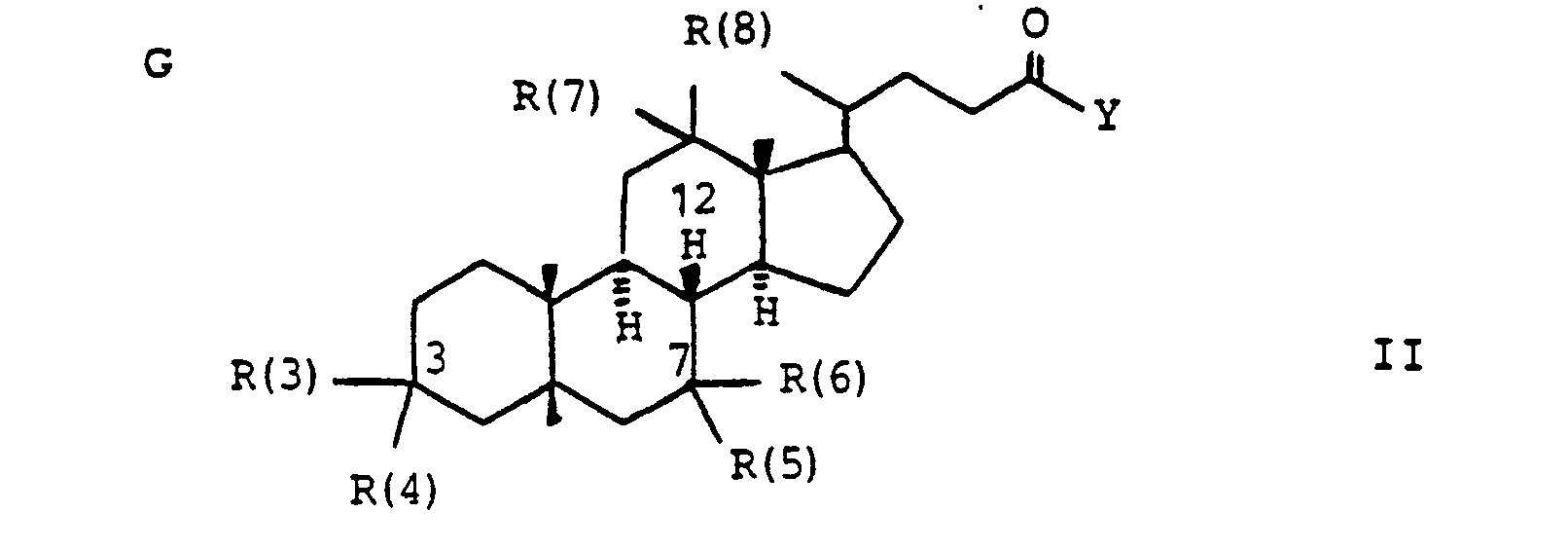





- Diese Zwischenprodukte werden für die Erfindung meistens als Verbindungen XXII mit freier NH2- oder OH-Gruppe SG eingesetzt, wenn sie zu Verbindungen I W-X-G umgesetzt werden sollen.
- Die Schutzgruppe SG ist in der Hauptsache während der Synthese der Verbindungen I und XXII vorhanden. wird aber meistens vor der Umsetzung von XXII zu I in ihre Form SG gleich Wasserstoff umgewandelt.
- Die Zwischenprodukt SG-X-G sind sowohl für die Herstellung der Verbindungen I von großer Bedeutung, als auch für die Synthese anderer Endprodukte. z.B. von Polymeren mit Vinylacetat, welche die Gruppe -X-G enthalten.
- Bevorzugt sind Zwischenprodukte XXII mit
- G wie oben definiert
- SG gleich H und
- X gleich -O(CH2)2-10-O-.
- - HN-(CH2)2-10-O-
- -O(CH2)2-a-O(CH2)2-4-O-
- -HN-(CH2)2-a-O-(CH2)2-a-O-


- Besonders bevorzugt sind Verbindungen XXII mit
- G wie oben definiert, SG gleich H und
- X gleich -O(CH2)2-4-O- und
- -HN-(CH2)2-10 -O-
-

- 20 g (51 mmol) Desoxycholsäure wurden in 50 ml Dioxan und 20 ml Pyridin vorgelegt und bei Zimmertemperatur mit 30 ml Acetanhydnd versetzt. Nach 3 Tagen wurde eingedampft und der Rückstand in 300 ml Essigsäure gelöst. Zur Oxidation wurden 14 g Kaliumchromat in 60 ml Wasser zugegeben. Man ließ 3 Tage bei Zimmertemperatur stehen. Zur Aufarbeitung wurden 4 I Wasser zugesetzt und mit Ether extrahiert (3 x). Die vereinigen organischen Phasen wurden mit Natnumsulfat getrocknet und emgedampft Den Rückstand löste man in 200 ml 1 n wäßnger KOH. Nach 24 h wurde das Produkt mit 1 n HCl ausgefällt. Chromatographie auf Kieselgel (Cyclohexan Essigester Essigsäure = 40 100 I) ergab 14.0 g (35.9 mmol. 70 %) "Beispiel 1".
-

- 14.0 g (35.9 mmol) "Beispiel 1" wurden in 100 ml Dioxan gelöst und mit 8.3 ml Tri-n-butylamin versetzt. Anschließend wurden 3.75 ml Chlorameisensäureethylester zugetropft. Nach 30 min bei Zimmertemperatur gab man 4.75 g Taurin, gelöst in 38 ml 1n NaOH, zu. Nach 24 h Rühren bei Zimmertemperatur wurde eingedampft und der Rückstand zwischen 400 ml 1n HCI und Ether verteilt. Die wäßrige Phase wurde dreimal mit Ether extrahiert. Die vereinigten organischen Phasen wurden eingedampft und der Rückstand mit heißem Ethanol aufgenommen, filtriert und eingeengt, wobei das Produkt kristallisierte. Ausbeute: 9.5 g "Beispiel 2"
-

- 500 mg Chlorambucil wurden in 25 ml Dioxan mit 1,5 ml Oxalylchlond bei Zimmertemperatur in Gegenwart von 2 g Molekularsieb (4Å) innerhalb 24 h in das Säurechlorid überführt. Es wurde eingedampft und der Rückstand mit 15 ml trockenem Dioxan aufgenommen. Diese Lösung wurde unter N2 innerhalb 30 min zu einer siedenden Lösung von 900 mg Beispiel 2 in 60 ml Dioxan getropft. Nach 5 h Rückfluß wurde eingedampft und der Rückstand auf Kieselgel chromatographiert (CHCI3 MeOH HOAc = 12 1 2) Ausbeute: 250 mg "Beispiel 3"
-

- Wie in Beispiel 3 beschrieben wurde eine Lösung des Säurechlorids von Chlorambucil aus 500 mg Chlorambucil hergestellt und in gleicher Weise mit 400 mg Desoxytaurocholsäure umgesetzt. Chromatographie auf Kieselgel (Essigester Cyclohexan/HOAc = 100/90/1; dann CHCl3/MeOH = 5/1) ergab 350 mg "Beispiel 4".
-

- 5 mg "Beispiel 3" wurden in 150 µl Dioxan 15 µl 100 mmol Natriumphosphatpuffer pH 7.4 gelöst und zu 100 mCi Na[3H]BH4 (11.8 Ci mmol) gegeben. Nach 2 h bei Zimmertemperatur wurden 20 ul 5n HCI zugegeben. Präparative DC (HPTLC-DC-Platte, 0.5 mm, Butanol HOAc H2O = 9 1 2) ergab 2 mCi "Beispiel 5".
-

- a) Eine Lösung von 43.6 g (89.6 mmol) "Beispiel 10" in 1 I trockenem DMF wurde mit 6.2 g (95.4 mmol) Natriumazid versetzt und 45 min. bei 130° C gerührt. Nach dem Abkühlen wurde auf Wasser gegossen und mit Diethylether (3x) extrahiert. Die vereinigten organischen Phasen wurden mit MgS04 getrocknet und eingedampft.
- b) Die Veresterung wurde analog zu "Beispiel 11b" durchgeführt. Chromatographie auf Kieselgel (Cyclohexan/Essigester 1:1) ergab 18.9 g (42.2 mmol. 47 %) Azid "Beispiel 6". C25H41N3O4 (447) MS (FAB, 3-NBA/LiCI): 454 (M+Li+)
-

- 3.0 g (6.7 mmol) "Beispiel 6" wurden in 100 ml MeOH gelöst und mit 2 g Pd C bei Zimmertemperatur und Normaldruck hydriert. Der Katalysator wurde abfiltnert und das Filtrat eingedampft. Chromatographie auf Kieselgel (MeOH/NEt3 95:5) ergab 1.6 g (3.8 mmol. 57 %) Amin "Beispiel 7". C25H63N O4 (421) MS (FAB) : 422 (M+H+)
-
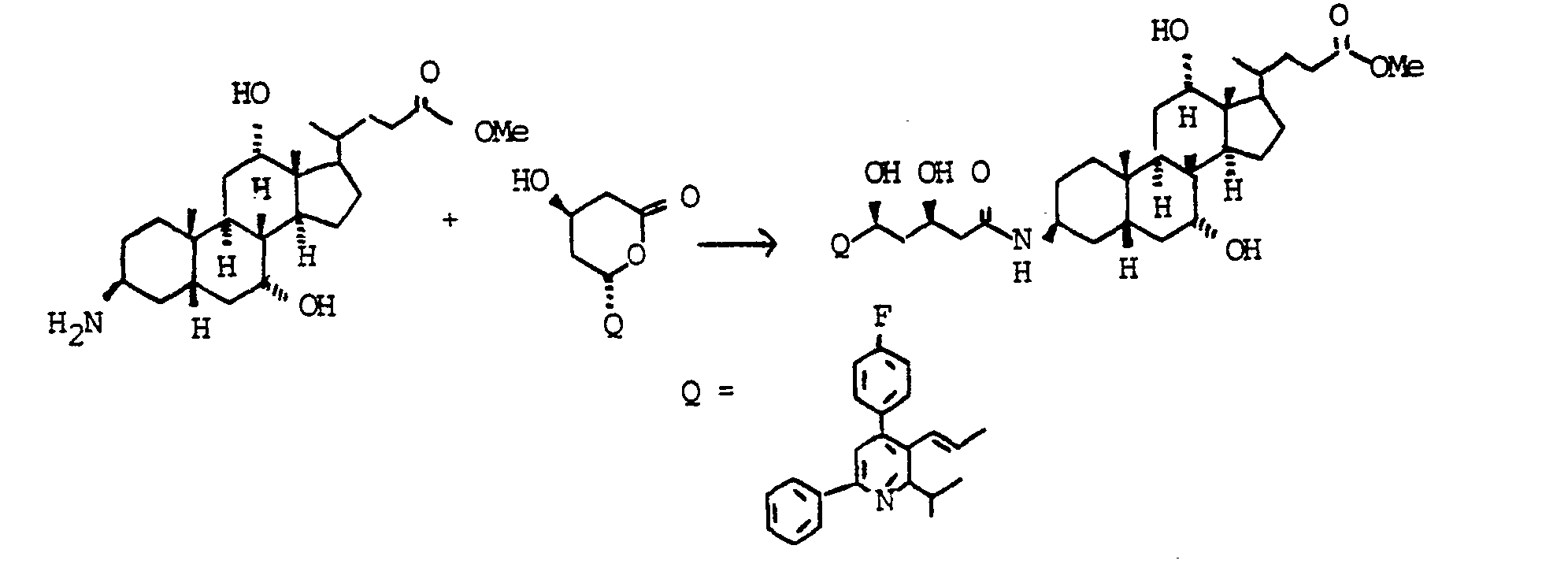
- Ein Gemisch aus 500 mg (1.19 mmol) Beispiel 7, 10 ml Triethylamin, 200 mg (1.61 mmol) 4-Dimethylaminopyridin und 520 mg (1.20 mmol) Lacton "Beispiel 125" (Herstellung siehe DE 38 23 045-A, US 4 925 852) in 25 ml trockenem THF wurde 48 h unter Rückfluß erhitzt. Das Lösungsmittel wurde abgedampft und der Rückstand auf Kieselgel chromatographiert (Chloroform/Methanol 9:1). Ausbeute 520 mg (0.61 mmol, 51 %) "Beispiel 8".
- C52H69FN2O7 (852), MS (FAB, 3-NBA/LiCl): 859 (M+Li+)
-

- Analog zu den Beispielen 79-88 wurde "Beispiel 9" erhalten. C5· H67FN2O7 (840), MS (FAB, 3-NBA LiCI): 847 (M + Li+).
- 2. X-G, X = ein Zwischenglied
-
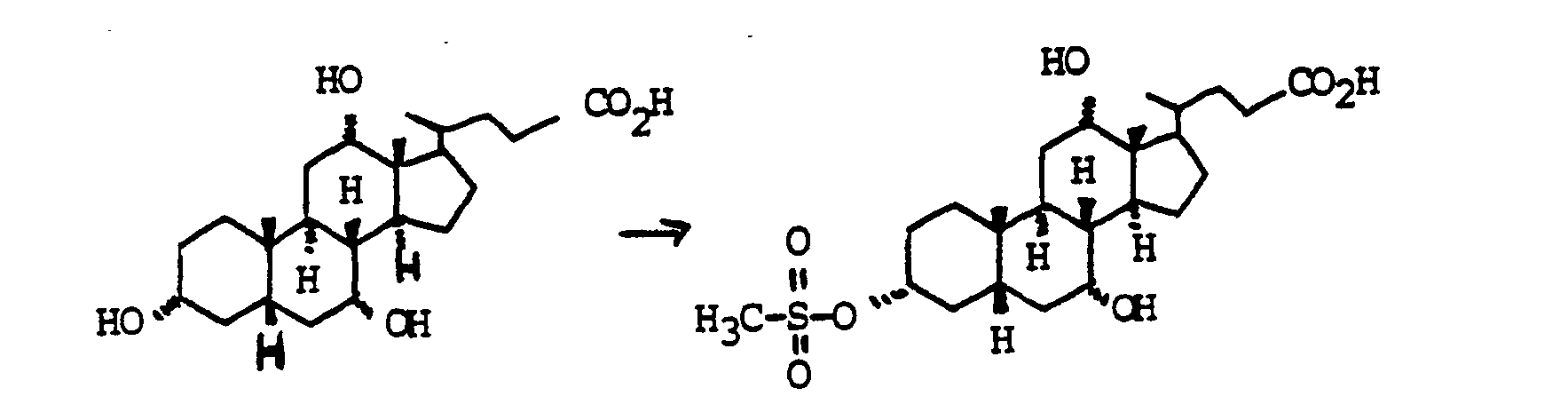
- Zu 100 g (0.245 mol) Cholsäure in 500 ml Pyridin wurden bei 0°C 23.1 ml (0.294 mol) Methansulfonsäurechlorid getropft. Man ließ 30 min bei 0°C und 2 h bei Zimmertemperatur rühren. Die Mischung wurde auf 3000 ml Wasser/400 ml conc. H2S04 gegossen und mit Essigester extrahiert (3 x). Die vereinigten organischen Phasen wurden mit MgS04 getrocknet und eingedampft. Chromatographie auf Kieselgel (Essigester/Cyclohexan/HOAc=5:5:1) ergab quantitativ "Beispiel 10". Für präparative Zwecke war eine weitere Reinigung nicht erforderlich.
-

- a) 119 g (0.245 mol) "Beispiel 10" wurden in 500 ml Ethylenglykol/100 ml Pyridin 2 h auf 100 °C erhitzt. Die Mischung wurde auf 1500 ml Wasser 100 ml conc. H2SO4 gegossen und mit Essigester extrahiert (3x). Die vereinigten organischen Phasen wurden getrocknet (MgS04) und eingedampft.
- b) Zur Veresterung wurde der Rückstand in 1100 ml methanolischer HCI (hergestellt durch Zutropfen von 100 ml Acetylchlorid zu 1000 ml Methanol) gelöst und über Nacht bei Zimmertemperatur gerührt. Die Lösung wurde auf 2000 ml Wasser gegossen und mit Ether extrahiert (3x). Die vereinigten organischen Phasen wurden mit gesättigter wäßriger NaHC03-Lösung gewaschen und getrocknet (MgSO4). Abdampfen des Lösungsmittels und Flash-Chromatographie auf Kieselgel (Essigester dann Essigester MeOH = 10.1) ergab 37.1 g (0.08 mol, 33 %) "Beispiel 11". C27H46O6 (466). MS (FAB. 3-NBALiJ): 473 (M+Li+)
- Das Produkt enthält bis zu 10 % des 3α-Isomeren, das gegebenenfalls nach entsprechender Denvatisierung abgetrennt werden kann.
- Analog zu Beispiel 11 wurden die Verbindungen der Tabelle 1 hergestellt. (Neben kleineren Anteilen der α-Isomeren wurden überwiegend die β-Isomeren erhalten).
-

-

- Zu 37.1 g (0.08 mol) "Beispiel 11" in 150 ml Pyridin wurden bei 0° C 6.6 mol (0.084 mol) Methansulfonsäurechlond getropft. Man ließ 15 min bei 0°C und 1 h bei Zimmertemperatur rühren. Die Reaktionsmischung wurde auf 500 ml Wasser gegossen und mit Essigester extrahiert (3x). Trocknen der vereinigten organischen Phasen (MgSO4). Abziehen des Lösungsmittels und Chromatographie auf Kieselgel (Essigester Cyclohexan = 3 1) ergab 37.7 g (0.07 mol. 87 %) Mesylat "Beispiel 19". C28H48O8S (544), MS (FAB, 3-NBALiJ): 551 (M+Li+).
-

- 37.7 g (0.07 mol) Mesylat "Beispiel 19" wurden mit 4.95 g (0.076 mol) Natriumazid in 150 ml trockenem DMSO 2 h bei 70°C gerührt. Das Reaktionsgemisch wurde auf Wasser gegossen und mit Essigester extrahiert (3x). Die vereinigten organischen Phasen wurden getrocknet (MgSO4) und eingedampft. Der Rückstand wurde mit Toluol aufgenommen und das Toluol wieder im Rotationsverdampfer abgezogen (2x). Ausbeute 34.5 g "Beispiel 20" (quantitiativ). Das Azid wurde ohne weitere Reinigung unmittelbar zur nächsten Stufe umgesetzt.
-

- 31.1 g (0.063 mol) "Beispiel 20" wurden in 500 mi Essigester mit 20 g Pd C (10 %) bei Zimmertemperatur und Normaldruck hydriert. Der Katalysator wurde abfiltriert und das Filtrat eingedampft. Chromatographie auf Kieselgel (Essigester Methanol NEt3 = 5,1 1) ergab 21.0 g (0,045 mol, 71 %) Amin "Beispiel 21 ". C27H47NO5 (465), MS (FAB, 3-NBALiJ): 472 (M+L+).
- Analog zu den Beispielen 19-21 wurden die Verbindungen der Tabelle 2 hergestellt.

- In Analogie zur Cholsäure wurden andere Gallensäuren entsprechend den Beispielen 10-28 umgesetzt und Verbindungen entsprechend Tabelle 3 erhalten.
- a) ausgehend von Desoxycholsäure


-

- Beispiel 47 a) R(10) = H)
- 2.0 g (4.3 mmol) "Beispiel 21 " wurden in 25 ml THF 5 ml Triethylamin mit 430 mg (4.3 mmol) Bernsteinsäureanhydrid 30 min bei Zimmertemperatur gerührt. Das Reaktionsgemisch wurde auf 2n HCI gegossen und mit Essigester extrahiert (3x). Trocknen der vereinigten organischen Phasen (MgSO4) und Abziehen des Lösungsmittels ergab 2.4 g (4.2 mmol, 98 %) "Beispiel 47a" (R(10) = H) C3 ·H5· NO8 (565) : MS (FAB, 3-NBA/LiJ): 578 (M +2Li+-H)
- Beispiel 47 b) (R(10) = t-BuMe2Si)
- Völlig analog zu 47 a) wurde "Beispiel 47 b)" aus Beispiel 58 gewonnen.
- Beispiel 47 c) (R(10) = Tetrahydropyranyl = THP)
- Völlig analog zu 47 a) wurde "Beispiel 47 c)" aus Beispiel 55 gewonnen.
-

- Zu 100 g (0.237 mol) Cholsäuremethylester in 750 ml Pyridin wurden bei 0°C 20.3 ml (0.284 mol) Acetylchlorid getropft. Nach 2 h Rühren bei Zimmertemperatur gab man bei 0°C nochmals 3.4 ml (0.047 mol) Acetylchlorid zu und ließ noch 1 h bei Zimmertemperatur rühren. Das Reaktionsgemisch wurde auf Eiswasser gegossen und mit Essigester extrahiert (3x). Die vereinigten organischen Phasen wurden getrocknet (MgSO4) und eingedampft. Chromatographie des Rückstandes auf Kieselgel (CyclohexaniEssigester = 1,5/1) ergab 95.8 g (0.206 mol, 87 %) Monoacetat "Beispiel 48".
-
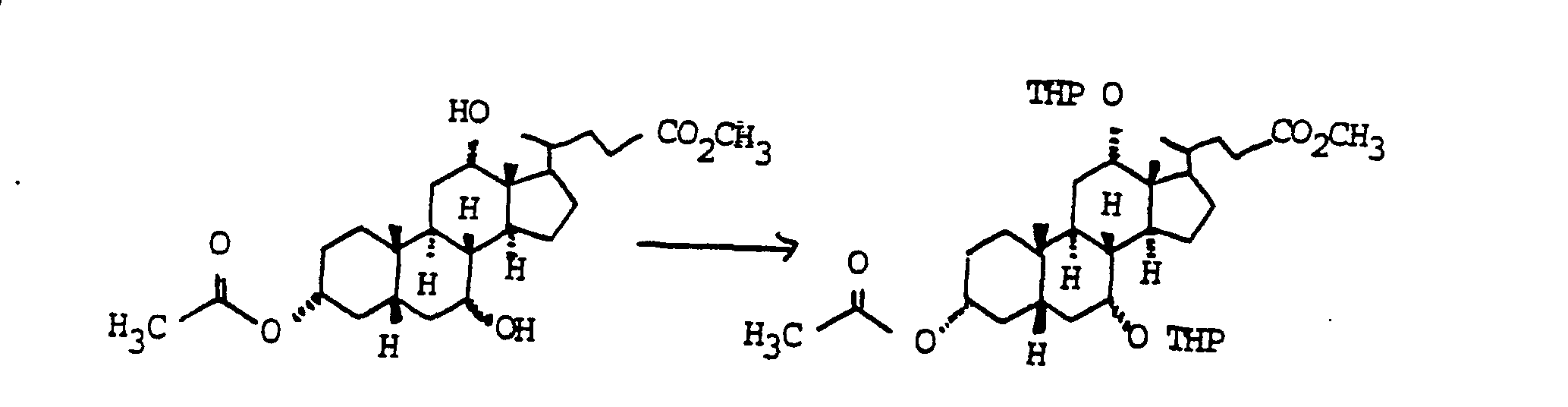
- 50.0 g (0.108 mol) Monoacetat "Beispiel 48" wurden in 250 ml Dichlormethan,250 ml Dihydropyran gelöst und bei Zimmertemperatur mit 10.0 g Pyndinium-(toluol-4-sulfonat) versetzt und zwei Tage bei Zimmertemperatur gerührt. Man verdünnte die Reaktionslösung mit 1500 ml Diethylether, wusch die organische Phase zweimal mit halbgesättigter wäßriger Kochsalzlösung und trocknete mit MgSO4. Abziehen des Lösungsmittels ergab 75 g (quant.) Bis-THP-Ether "Beispiel 49", der ohne weitere Reinigung zur nächsten Stufe verwendet wurde.
-

- 46.6 g (ca. 0.055 mol) "Beispiel 49" in 300 ml trockenem Methanol wurden bei Zimmertemperatur mit 37.8 g (0.275 mol) Kaliumcarbonat versetzt und 3 h gerührt. Das Lösungsmittel wurde weitgehend abgezogen und der Rückstand auf 2 n Salzsäure Toluol gegossen. Die wäßnge Phase wurde zweimal mit Toluol extrahiert und die vereinigten organischen Phasen einmal mit Wasser und zweimal mit gesättigter wäßriger NaHC03-Lösung gewaschen. Trocknen mit MgSO4, Abziehen des Lösungsmittels und Chromatographie auf Kieselgel (Cyclohexan Essigester = 3 2) ergab 28.8 g (0.049 mmol, 89 % "Beispiel 50". C35H58O7 (590), MS (FAB, 3-NBA LiJ): 597 (M + Li+)
-
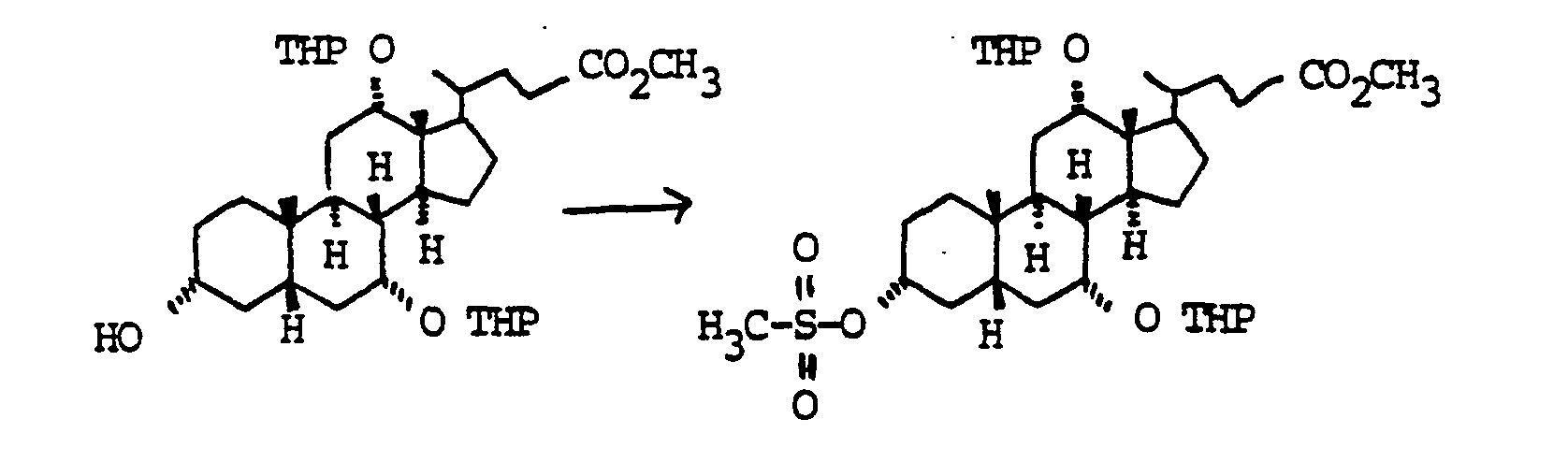
- In Analogie zu Beispiel 10 wurden aus 28.8 g (0.048 mol) Beispiel 14 30.3 g (0.045 mol, 94 %) Mesylat "Beispiel 51 gewonnen.
-
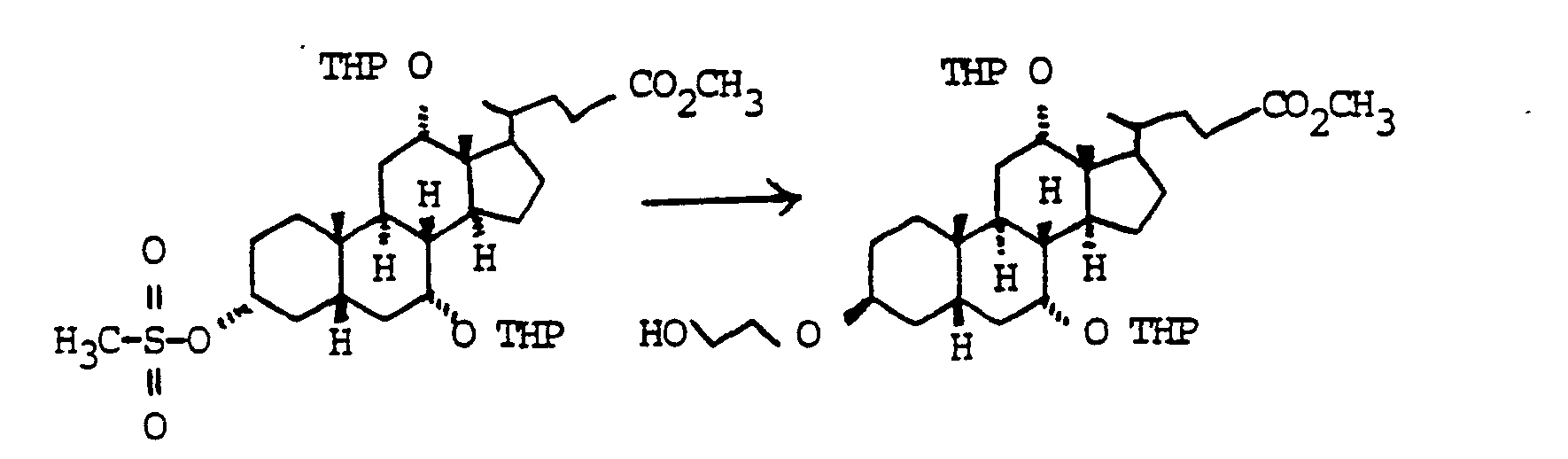
- a) 46.0 g (0.068 mol) Mesylat "Beispiel 51" wurden mit 300 ml Ethylenglykol75 ml Triethylamin 2.5 h unter Rückfluß gekocht. Das Reaktionsgemisch wurde auf 1n Salzsäure gegossen und mit Diethylether extrahiert (2x). Die vereinigten organischen Phasen wurden einmal mit Wasser, zweimal mit gesättigter wäßnger Natriumhydrogencarbonatlösung gewaschen, getrocknet (MgS04) und vom Lösungsmittel befreit. Der Rückstand wurde mit Toluol aufgenommen und eingedampft (2x).
- b) Der Rückstand wurde in 500 ml trockenem Methanol gelöst. mit 40.0 g Kaliumcarbonat versetzt und 1.5 h bei Zimmertemperatur gerührt. Die Reaktionsmischung wurde im Vakuum weitgehend vom Methanol befreit und der Rückstand auf 2n Salzsäure Toluol gegossen. Die wäßnge Phase wurde zweimal mit Toluol extrahiert. die vereinigten organischen Phasen einmal mit gesättigter wäßnger Natnumhydrogencarbonatlösung gewaschen. getrocknet (MgSOt) und eingedampft. Flash-Chromatographie auf Kieselgel (Cyclohexan Essigester = 21) ergab 25.6 g (0.040 mol. 60 °o) "Beispiel 52". C37H62O8 (634). MS (FAB. 3-NBALiJ): 641 (M+Li+)
-
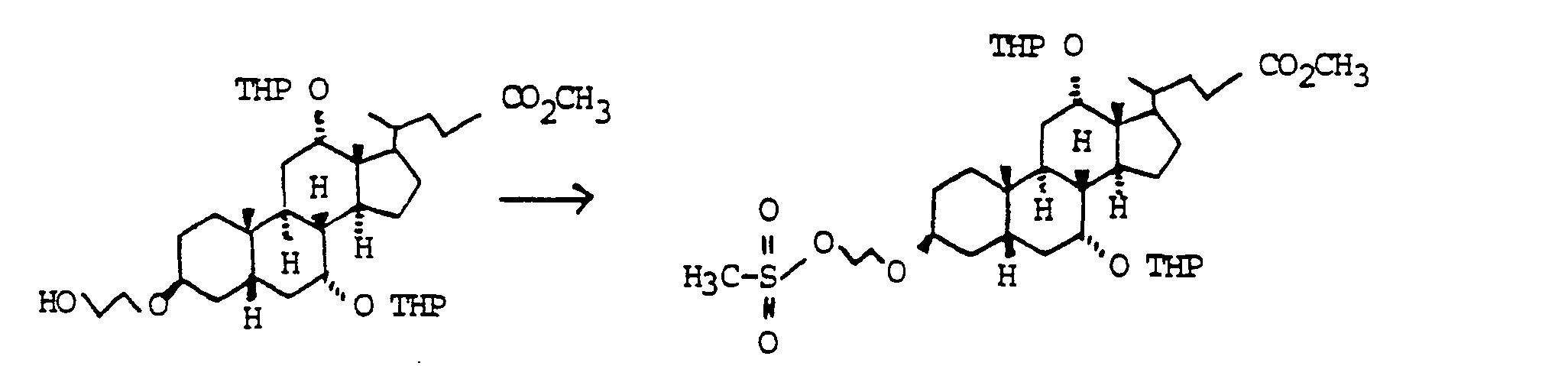
- In Analogie zu Beispiel 19 wurde "Beispiel 53" erhalten.
-

- In Analogie zu Beispiel 20 wurde "Beispiel 54" erhalten.
-

- In Analogie zu Beispiel 21 wurde "Beispiel 55" erhalten. C37H63NO7 (633), MS (FAB, 3-NBA LiJ): 640 (M+Li*).
-

- Zu einer Lösung von 24.5 g (0.045 mol) "Beispiel 19" und 26.4 ml (0.227 mol) 2,6-Dimethylpyridin in 150 ml Dichlormethan wurden bei 0°C 31.2 ml (0.136 mol) tert-Butyldimethylsilyltriflat getropft. Man ließ 15 min bei 0°C und 2 h bei Zimmertemperatur rühren. Das Reaktionsgemisch wurde auf gesättigte wäßrige NaHCO3 Lösung gegossen und mit Dichlormethan extrahiert (3x). Die vereinigten organischen Phasen wurden mit Magnesiumsulfat getrocknet und eingedampft. Flash-Chromatographie auf Kieselgel (Essigester Cyclohexan = 1 3) ergab 23.5 g (0.03 mol. 67 %) "Beispiel 56". C40H76O8Si2S (772), MS (FAB, 3-NBALiJ): 779 (M+Li+)
-

- 23.4 g (0.03 mol) Beispiel 56 wurden analog Beispiel 20 quantitativ in das Azid "Beispiel 57" überführt.
-

- Das Azid "Beispiel 57" wurde in Analogie zu Beispiel 21 hydriert. Ausbeute nach Chromatographie auf Kieselgel (Essigester MeOH/NEt3 = 18/1 1) 10.0 g (0.014 mmol, 48 % bezogen auf 0.03 mol "Beispiel 56". C39H75NO5Si2 (693), MS (FAB, 3-BNALiJ): 700 (M+Li+)
-

- Eine Lösung von 500 mg (1.07 mmol) Beispiel 21 und 76 mg (0.33 mmol) Tetraethylorthotitanat in 10 ml trockenem Benzylalkohol wurde 8 h bei 100°C gerührt. Nach dem Abkühlen wurden 100 ml Essigester zugegeben. Das Gemisch wurde mit 1N HCI (1x) und 8 % NaHC03-Lösung (1x) ausgeschüttelt. Die organische Phase wurde mit MgSO4 getrocknet und eingedampft. Chromatographie auf Kieselgel (Essigester Methanol NEt3 5:1:1) ergab 360 mg (6.64 mmol, 62 %) Benzylester "Beispiel 59".
- C33H5· NO5 (541 MS (FAB): 542 (M + H+).
-
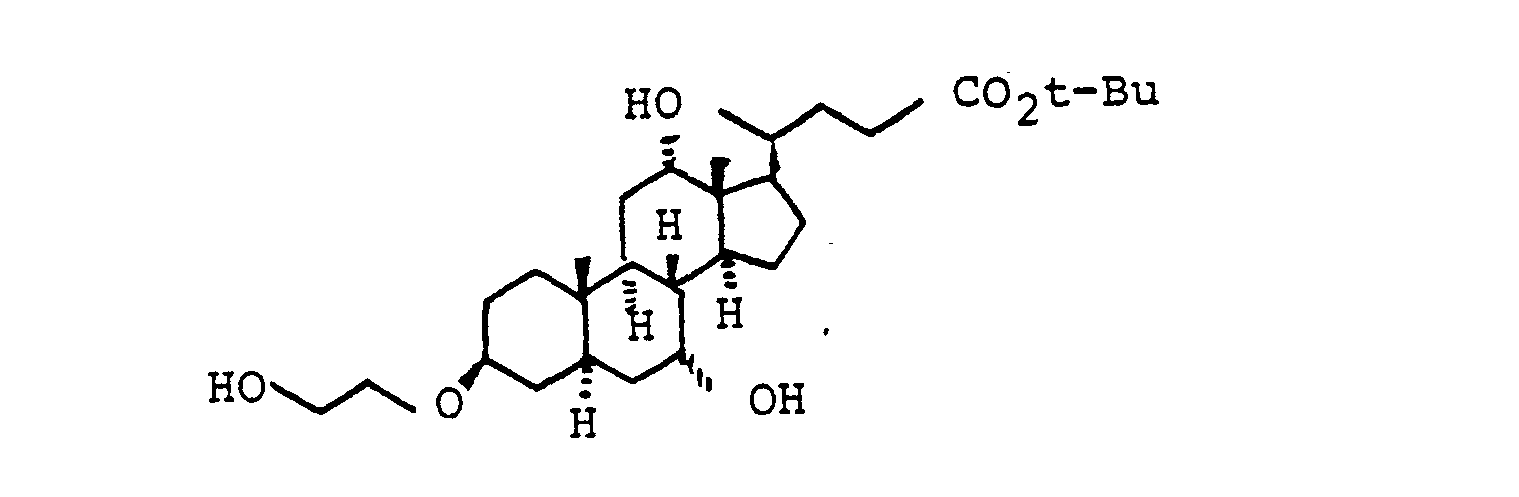
-

- 42 g (0,09 mol) Beispiel 11 wurden in 270 ml N-Ethyldiisopropylamin mit 61,5 g (0,36 mol) Benzylbromid 3 h bei 100° C (Badtemperatur) gerührt. Danach wurde das Reaktionsprodukt auf ein Gemisch aus 1,8 Liter Wasser und 180 ml konzentrierte Schwefelsäure gegossen und mit Essigester (2x) extrahiert. Die vereinten organischen Phasen wurden je einmal mit 1N Salzsäure, Wasser und gesättigter, wäßriger NaHCO3-Lösung gewaschen, über MgS04 getrocknet und eingedampft.
- Chromatographie des Rückstandes auf Kieselgel mit Essigester/Cyclohexan = 1 1 ergab 14,54 g (0,026 mol, 29.0%) "Beispiel 60a".
- C34H52O6 (556), MS (FAB, 3-NBALiCl): 563 M+Li+)
-

- 16.14 g (0,029 mol) Beispiel 60a wurden in 450 ml Methanol gelöst. mit 37 ml (0.037 mol) 1 N wäßriger Natronlauge versetzt und 8 h unter Rückfluß gekocht. Anschließend wurde das Methanol am Rotationsverdampfer abgezogen, der Rückstand in 320 ml Wasser gelöst und mit 37 ml (0.037 mol) 1 N wäßriger Salzsäure versetzt. Die entstandene Säure wurde mit Essigester extrahiert (2x). Die vereinten organischen Phasen wurden 2x mit Wasser gewaschen, über MgSO4 getrocknet und eingedampft. Der kristalline Rückstand wurde mit 150 ml Diisopropylether angerieben, abgesaugt und im Vakuum getrocknet. Es wurden 13,85 g (0,025 mol, 88,0 %) "Beispiel 60b" vom Schmelzpunkt 144-146° C erhalten. C33H50O6 (542), MS (FAB, 3-NBA/TFA): 565 (M+Na+)
-

- a) Anhydridbildung
- 13,8 g (0,0254 mol) Beispiel 60b wurden in 250 ml abs. Tetrahydrofuran und 7,69 g (0,0762 mol) Triethylamin gelöst. Bei Zimmertemperatur wurden 6,28 (0,03 mol) 2,6-Dichlorbenzoylchlorid zugetropft und anschließend 3 h unter Rückfluß gerührt.
- b) Esterbildung
- Die unter a) erzeugte Anhydridlösung wurde auf +10°C abgekühlt und nacheinander mit 28,12 g (0,38 mol) tert. Butanol und 3,1 g (0,0254 mol) 4-Dimethylaminopyridin versetzt, dann wurde innerhalb von 1 h zum Sieden erhitzt und 4 h unter Rückfluß gerührt. Danach wurde die Reaktionsmischung im Vakuum weitgehend vom Tetrahydrofuran befreit. Der Rückstand wurde in Essigester aufgenommen und 3x mit Wasser durchgewaschen, und mit MgSO4 getrocknet und eingedampft.
- Chromatographie des Rückstandes auf Kieselgel mit Essigester/Cyclohexan = 1.1 ergab 6,85 g "Beispiel 60c". (0,0114 mol, 45,0 %) Schmelzpunkt 79-80° C;
-
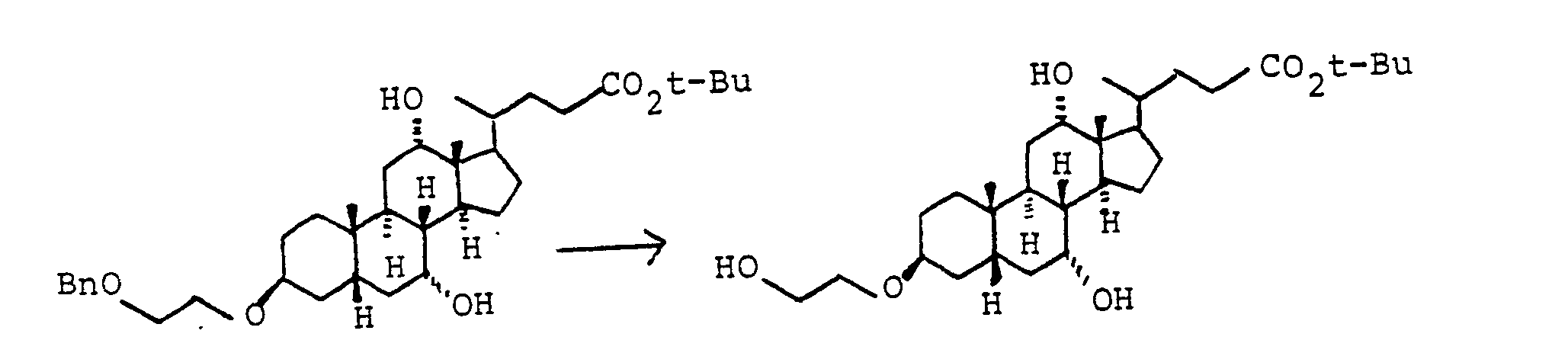
- 7.14 g (0.0119 moi) Beispiel 60c wurden in 250 ml Essigester über 1.5 g Pd C-Katalysator (10 %) bei Zimmertemperatur und Normaldruck hydriert. Nach Beendigung der Wasserstoffaufnahme wurde der Katalysator abfiltriert und das Filtrat eingedampft. Es wurden 6.0 g "Beispiel 60d" erhalten (0.0117 mol, 98.9%)
- C30H52O6 (508). MS (FAB. 3-NBALiCl, 515 M+Li*)
-

- In Analogie zu den Beispielen 19-28 wurde aus Beispiel 60d "Beispiel 60e" hergestellt. C30H53N53O5 (507); MS (FAB, 3-NBA LiCl): 514 (M+Li+)
-

- 42,2 g (0.1 mol) Cholsäuremethylester, 300 ml (1.8 mol) N-Ethyldiisopropylamin und 10 ml (0.12 mol) Allylbromid wurden 8h unter Rückfluß erhitzt. Nach jeder Stunde Reaktionszeit wurden nochmals jeweils 5 ml Allylbromid zugegeben (DC-Kontrolle, Cyclohexan/Essigester = 1:1). Das Reaktionsgemisch wurde auf 400 ml konz. H2S04/2000 ml Wasser gegossen und mit Essigester extrahiert (3x). Die vereinigten organischen Phasen wurden jeweils einmal mit 1 N HCI, Wasser und gesättigter NaHCO3-Lösung gewaschen. Trocknen (MgS04), Abziehen des Lösungsmittels und Chromatographie des Rückstandes auf Kieselgel (n-Heptan/Essigester = 4:1→3:1→2:1) ergab 21,91 g (0,047 mol, 47 %) "Beispiel 61". C28H46O5 (462), MS (FAB, 3-NBA/LiCI): 469 (M+Li+)
-

- (1) Herstellung von Thexylboran: Unter Argonatmosphäre wurden bei 0°C zu 85 ml 1 molarer BH3.THF-Lösung (THF) 85 ml 1 molare 2,3-Dimethylbutenlösung (THF) getropft. Man ließ bei 0°C rühren.
- (2) Hydroborierung: Zu der nach (1) bereiteten Lösung wurden bei 0°C 8.6 g (18.59 mmol) Olefin Beispiel 61 in 25 ml THF getropft. Nach 3h bei 0°C ließ man auf Zimmertemperatur kommen (DC-Kontrolle). Nach 16 h bei Zimmertemperatur wurde fnsch hergestellte Thexylboranlösung (THF) zugetropft. Man ließ erneut bei Zimmertemperatur rühren. Nachdem kein Ausgangsmatenal mehr nachweisbar war, wurde das Reaktionsgemisch unter Argonatmosphäre vorsichtig unter intensivem Rühren in wäßrige Natronlauge transferiert (pro Äquivalent Boran 1 Äquivalent NaOH). Anschließend wurde unter Eiskühlung 30 prozentige Wasserstoffperoxidlösung zugetropft. (2 Äquivalente pro 1 Äquivalent Boran). Nach 20 min bei 0°C wurde 30 min auf 50 °C erwärmt. Zur besseren Phasentrennung wurde gesättigte Kochsalzlösung zugegeben. Die wäßnge Phase wurde mit Ethylacetat extrahiert (2x) und die vereinigten organischen Phasen mit gesättigter Natriumbisulfitlösung (2x) und anschließend mit Natnumchlondlösung (1x) gewaschen. Trocknen mit MgSOd, Abziehen des Lösungsmittels und Chromatographie auf Kieselgel (Ethylacetat→Ethylacetat MeOH = 20:1) ergab 5,0 g (10.4 mmol, 56 %) "Beispiel 62"
- Rf (Ethylacetat: 0.18
- C28H48O6 (480); MS (FAB, 3-NBA LiCl): 487 (M+Li+)
- Daneben wurden 1.0 g des sekundären Alkohols erhalten.
- Rf (Ethylacetat): 0,27
- In Analogie zu den Beispielen 19-28 wurde aus Beispiel 62 "Beispiel 63" erhalten.

- (X-G mit a-Konfiguration an 3-C)
- C28H49NO5 (479); MS (FAB, 3-NBA/LiCl): 486 (M+Li+)
-

-

- 75 g (0.161 mol) Beispiel 11 wurden mit 21.6 g (0.177 mol) 4-Dimethylaminopyridin und 26.7 g (0.177 mol) tert-Butyldimethylsilylchlond in 500 ml trockenem Dichlormethan 4 h bei Zimmertemperatur gerührt Das Reaktionsgemisch wurde auf Wasser gegossen und mit Essigester extrahiert (3 x). Die vereinigten organischen Phasen wurden getrocknet (MgSO4) und eingedampft. Ausbeute 93.6 g (quantitativ) Silylether. Für präparative Zwecke war eine weitere Reinigung nicht erforderlich.
- C33H60O6Si (580); MS (FAB, 3-NBALiCl): 587 M+Li+).
-

- Zu 10 g (0.0172 mol) des nach Schritt a) gewonnenen Silylethers und 5.3 g (0.043 mol) 4-Dimethylaminopyridin in 100 ml trockenem Pyridin wurden bei 0°C 4.1 ml (0.043 mol) Essigsäureanhydrid getropft. Man ließ 4 h bei Zimmertemperatur rühren. Das Reaktionsgemisch wurde auf Wasser gegossen und mit Essigester extrahiert (3 x). Die vereinigten organischen Phasen wurden mit gesättigter wäßriger NaHCO3-Lösung gewaschen und getrocknet (MgSO4). Abdampfen des Lösungsmittels und Chromatographie auf Kieselgel (Essigester/Cyclohexan = 1/3) ergabe 10 g (0.015 mol, 87.7 %) Diacetat.
- C37H64O8Si (664); MS (FAB, 3-NBA/LiCl): 671 (M+Li+).
-

- 10 g (0.015 mol) des nach Schritt b) gewonnenen Diacetats wurden mit 5.2 g (0.0165 mol) Tetrabutylammoniumfluond-Trihydrat in 100 ml Tetrahydrofuran 1 h bei Zimmertemperatur gerührt. Das Reaktionsgemisch wurde auf Wasser gegossen und mit Essigester extrahiert (3 x). Die vereinigten organischen Phasen wurden getrocknet (MgSOd) und eingedampft. Ausbeute an Alkohol quantitativ. Für präparative Zwecke war eine weitere Reinigung nicht erforderlich.
- C31H50O8 (550); MS (FAB. 3-NBA,LiCl): 557 (M+Li+).
-

- 7.35 g (0.0133 mol) des nach Schritt c) gewonnenen Alkohols wurden mit 50 g (0.133 mol) Pyridiniumdichromat in 150 ml trockenem Dimethylformamid 24 h bei Zimmertemperatur gerührt. Das Reaktionsgemisch wurde auf Wasser gegossen und mit Diethylether extrahiert (3 x). Die vereinigten organischen Phasen wurden getrocknet (MgSO4) und eingedampft. Chromatographie auf Kieselgel (Essigester/Cyclohexan = 9/1) ergab 5.1 g (0.009 mol, 58 %) "Beispiel 64". C31H48O9 (564); MS (FAB, 3-NBA/LiCl): 571 (M+Li+).
-

- Zu 1.96 g (6.44 mmol) Chlorambucil (Sigma) in 100 ml THF 20 ml Triethylamin wurden bei 0° C 0.62 ml (6.44 mmol) Chlorameisensäureethylester getropft und 15 min gerührt. Bei 0°C wurden 3.0 g (6.44 mmol) Beispiel 21, gelöst in THF, zugetropft und anschließend 30 min bei Zimmertemperatur gerührt. Das Reaktionsgemisch wurde auf Wasser gegossen und dreimal mit Essigester extrahiert. Die vereinigten organischen Phasen wurden getrocknet (MgSO4) und eingedampft. Chromatographie auf Kieselgel (Essigester Methanol = 9 1) ergab 3.9 g (5.2 mmol. 81 %) "Beispiel 65".
- Schmp.: 45 - 50° C
- C4-H64Cl2N2O6 (750), MS (FAB, 3-NBALiJ): 751 (M+Li+)
-

- Zu einer Lösung von 1.96 g (2.6 mmol) Beispiel 65 in 20 ml Ethanol tropfte man 5 ml 1n wäßrige Natronlauge. Nach 3 h bei Zimmertemperatur wurden weitere 5 ml 1n wäßrige Natronlauge zugesetzt und erneut 3 h gerührt. Das Reaktionsgemisch wurde auf 200 ml Wasser gegossen, mit in wäßriger Salzsäure neutralisiert und dreimal mit Essigester extrahiert. Die vereinigten organischen Phasen wurden getrocknet (MgSO4) und eingedampft.
- Ausbeute 1.91 g (2.6 mmol, quant.) "Beispiel 66"
- Schmp. 60-70°C
- C40H62Cl2N2O6 (736), MS (FAB, 3-NBA/LiJ): 743 (M+Li+)
-

- Zu einer Lösung von 1.5 g (2.03 mmol) Beispiel 66 und 0.97 ml (4.06 mmol) Tri-n-butylamin in 10 ml Dioxan wurden bei 0°C 0.2 ml (2.03 mmol) Chlorameisensäureethylester getropft und 15 min bei 0°C gerührt. Anschließend wurde eine Lösung von 0.508 g (4.06 mmol) Taurin in 4 ml in wäßriger Natronlauge bei 0°C zugetropft. Man ließ 1 h bei Zimmertemperatur rühren, goß auf 200 ml Wasser und neutralisierte mit in wäßriger Salzsäure. Es wurde mit Essigester unter Zusatz von wenig Methanol extrahiert (3x) und die vereinigten organischen Phasen getrocknet (MgSO4). Abziehen des Lösungsmittels und Flash-Chromatographie auf Kieselgel (Essigester Methanol = 4 1. dann 2 1) ergab 1.59 g (1.89 mmol, 93 %) "Beispiel 67".
- Schmp.: 130 - 140° C
- C42H67Cl2N3O8S (843), MS (FAB. 3-NBA LiJ): 856 (M+Li+-H)
-

- Zu einer Lösung von 1.5 g (2.03 mmol) Beispiel 66 und 0.97 ml (4.06 mmol) Tri-n-butylamin in 10 ml Dioxan wurden bei 0°C 0.2 ml (2.03 mmol) Chlorameisensäureethylester getropft und 15 min bei 0°C gerührt. Anschließend wurde eine Lösung von 0,305 g (4.06 mmol) Glycin in 4,0 ml 1n wäßriger Natronlauge zugegeben und 4 h bei Zimmertemperatur gerührt. Das Reaktionsgemisch wurde auf 200 ml Wasser gegossen, mit 1 wäßriger Salzsäure neutralisiert und mit Essigester extrahiert. Die vereinigten organischen Phasen wurden getrocknet (MgS04), eingedampft und auf Kieselgel Flashchromatographiert (Essigester/Methanol = 2/1).
- Ausbeute 1.15 g (1.45 mmol, 71 %) "Beispiel 68".
- Schmp.: 75 - 85° C
- C42H65Cl2N3O7 (793), MS (FAB, 3-NBA/LiJ): 806 (M+2 Li*-H)
- ZU: W-X-G, mit X = ein Zwischenglied
-

-
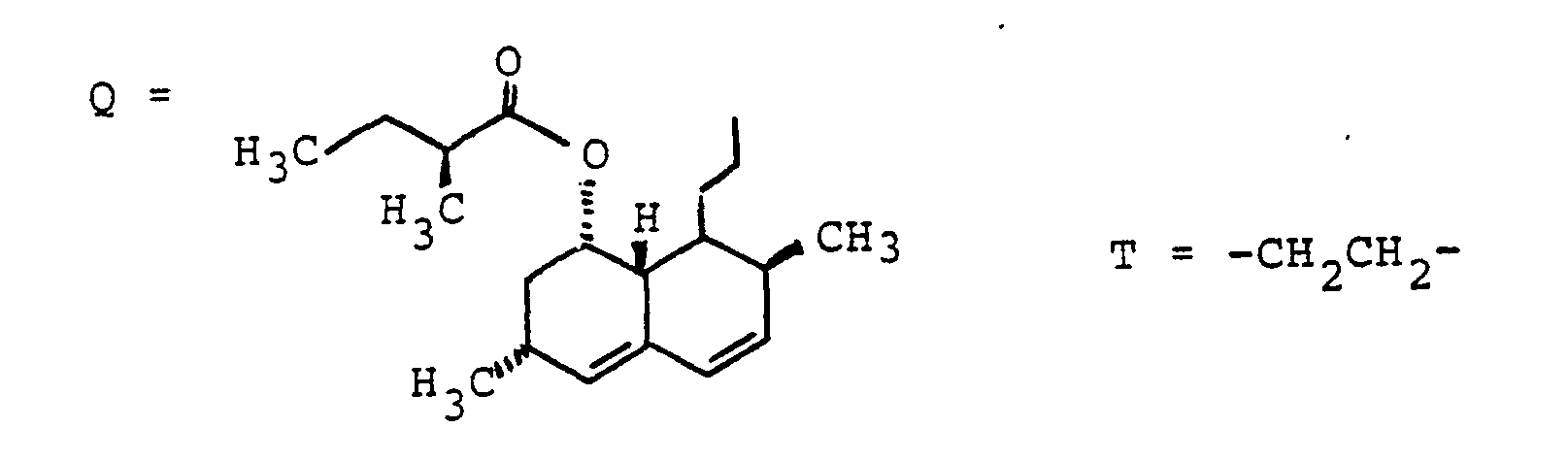
- Ein Gemisch aus 750 mg (1.61 mg) Beispiel 21, 5 ml Triethylamin, 200 mg (1.61 mmol) Dimethylaminopyridin (DMAP) und 651 mg (1.61 mmol) Mevinolin in 25 ml trockenem THF wurde 48 h unter Rückfluß erhitzt. Das Lösungsmittel wurde abgezogen und der Rückstand auf Kieselgel chromatographiert (Essigester/MeOH = 19:1).
- Ausbeute: 900 mg (1.03 mmol, 64 %) "Beispiel 69"
- Schmp. 78-80 °C
- C51H83NO1o (869), MS (FAB, 3-NBA/LiJ): 876 (M+Li+).
-

- Analog zu Beispiel 69 wurde mit Beispiel 21 "Beispiel 70" erhalten.
- Schmp.: 70-75°C
- C53H75F2NO2 (891); MS (FAB. 3-NBA LiJ): 898 (M+Li+)
- (Zur Herstellung der Lactonkomponente siehe DE 37 22 807-A): siehe auch Tetrahedron Letters 29 . 929-930 [1988], wo Verbindungen ohne die dem F benachbarten Methylgruppen beschrieben sind).
-
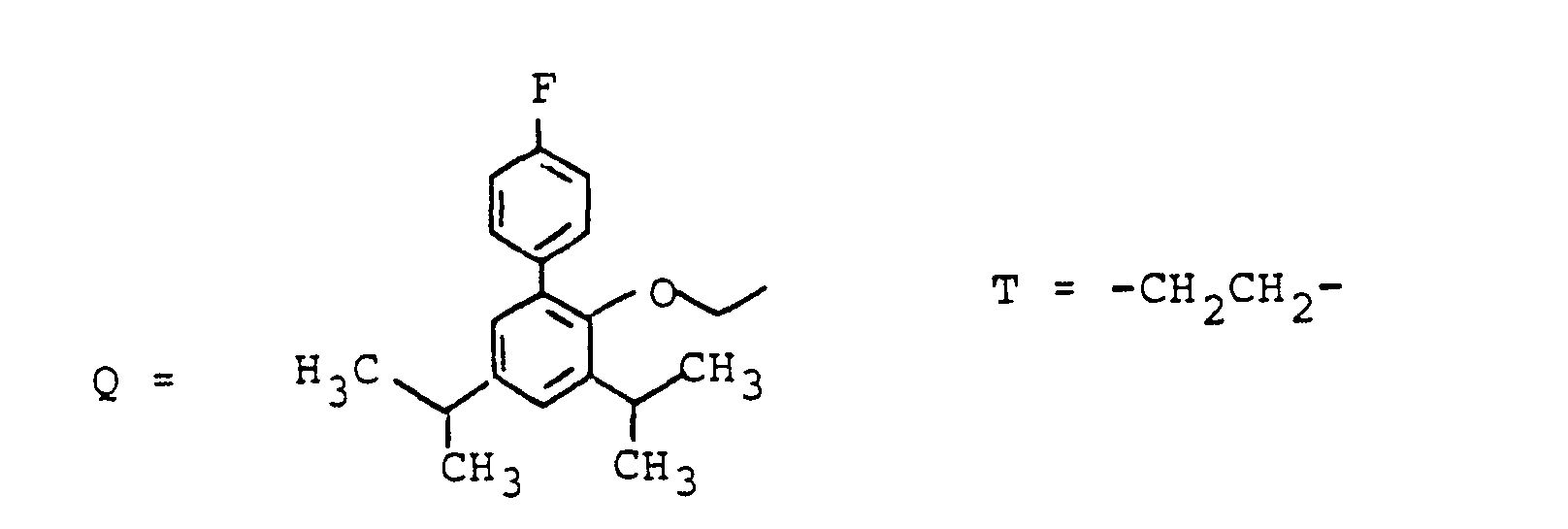
- Analog zu 69 wurde mit Beispiel 21 "Beispiel 71" erhalten.
- Schmp. 65-70 C
- C5·H76 FNO9 (865), MS (FAB, 3-NBA LiJ): 872 (M + Li+)
- (Zur Herstellung der Lactonkomponente siehe DE 38 19 999-A), Beispiel 1 : siehe auch die Beschreibung vor dem pharmakologischen Teil der vorliegenden Anmeldung).
-

- Analog zu 69 wurde mit Beispiel 22 "Beispiel 72" erhalten. C52H78FNO9 (879), MS (FAB 3-NBA/LiCl): 886 (M+Li+)
-

- Analog zu 69 wurde mit Beispiel 21 "Beispiel 73" erhalten. C54H73F2NO9S (949), MS (FAB, 3-NBALiCl): 956 (M+Li+). (Zur Herstellung der Lactonkomponente siehe DE P 39 29 913).
-

- Analog zu 69 wurde mit Beispiel 22 "Beispiel 74" erhalten. C55H75F2NO9S (963), MS (FAB, 3-NBA/LiCl): 970 (M+Li+)
-
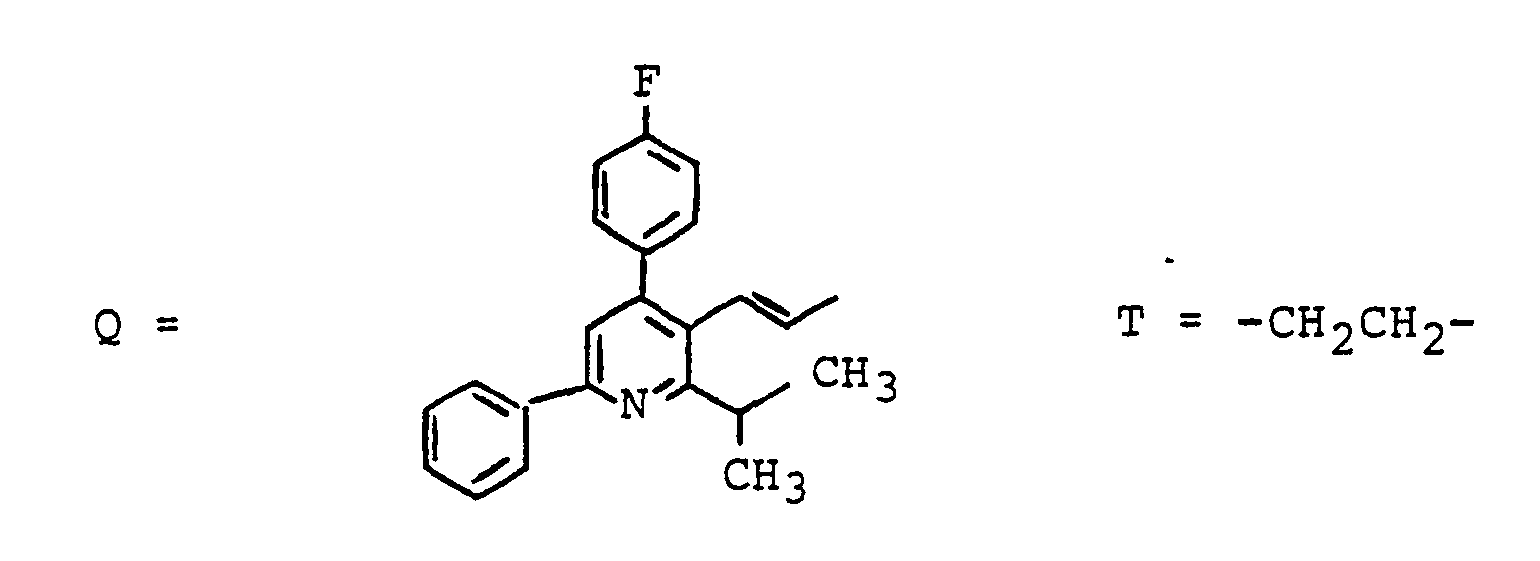
- Analog zu 69 wurde mit Beispiel 21 "Beispiel 75" erhalten Schmp.: 74-76° C
- C54H73FN2O8 (896), MS (FAB, 3-NBA/LiJ): 903 (M+Li+)
-

- Analog zu 69 wurde mit Beispiel 22 "Beispiel 76" erhalten. C55H75FN2O8 (910). MS (FAB, 3-NBA/LiCl): 917 (M+Li+).
-
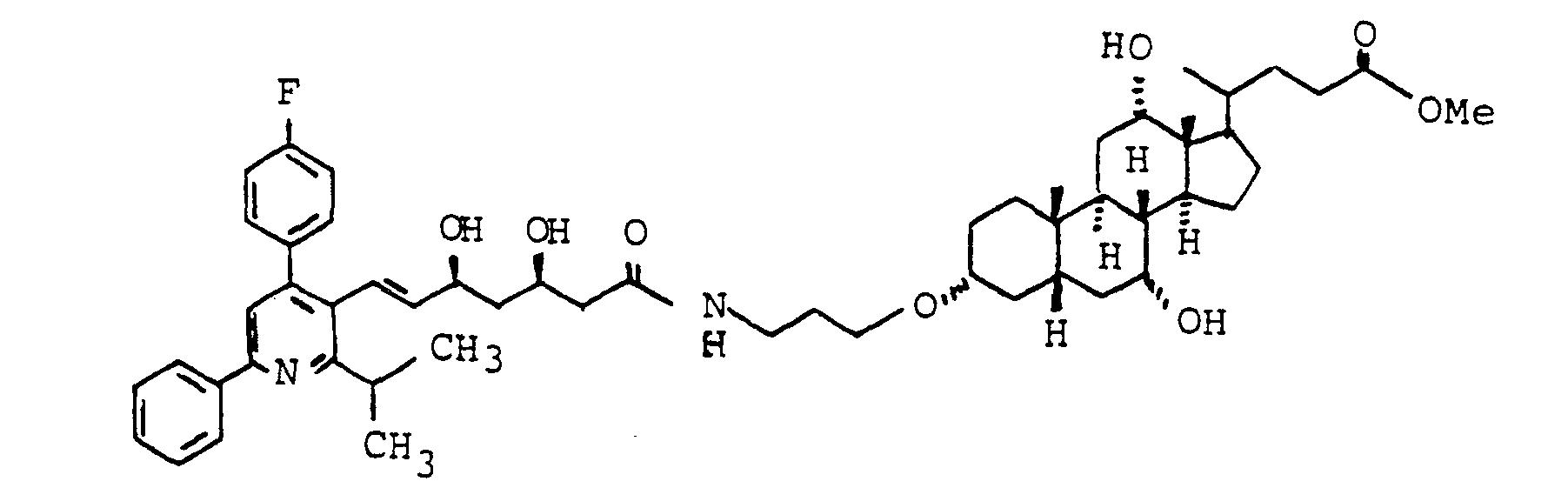
- Analog zu 69 wurde mit Beispiel 63 "Beispiel 77" erhalten.
- C55H75FN2O8 (910), MS (FAB, 3-NBA/LiCl): 917 (M+Li+).
-

- Analog zu 69 wurde mit Beispiel 28 "Beispiel 78" erhalten. C55H75FN2O8 (910), MS (FAB, 3-NBA/LiCl): 917 (M+Li+)
-

-

- 250 mg (0.29 mmol) Beispiel 69 wurden in 5 ml Ethanol gelöst und mit 2.0 ml 1 N wäßriger Natronlauge versetzt. Nach 6 h Rühren bei Zimmertemperatur wurde mit 1N Salzsäure neutralisiert und mit Essigester extrahiert (3x). Die vereinigten organischen Phasen wurden mit MgS04 getrocknet und eingedampft. Ausbeute 230 mg (0.27 mmol, 94 %) "Beispiel 79".
- C50H81NO1o (855), MS (FAB, 3-NBA/LiJ): 862 (M+Li+)
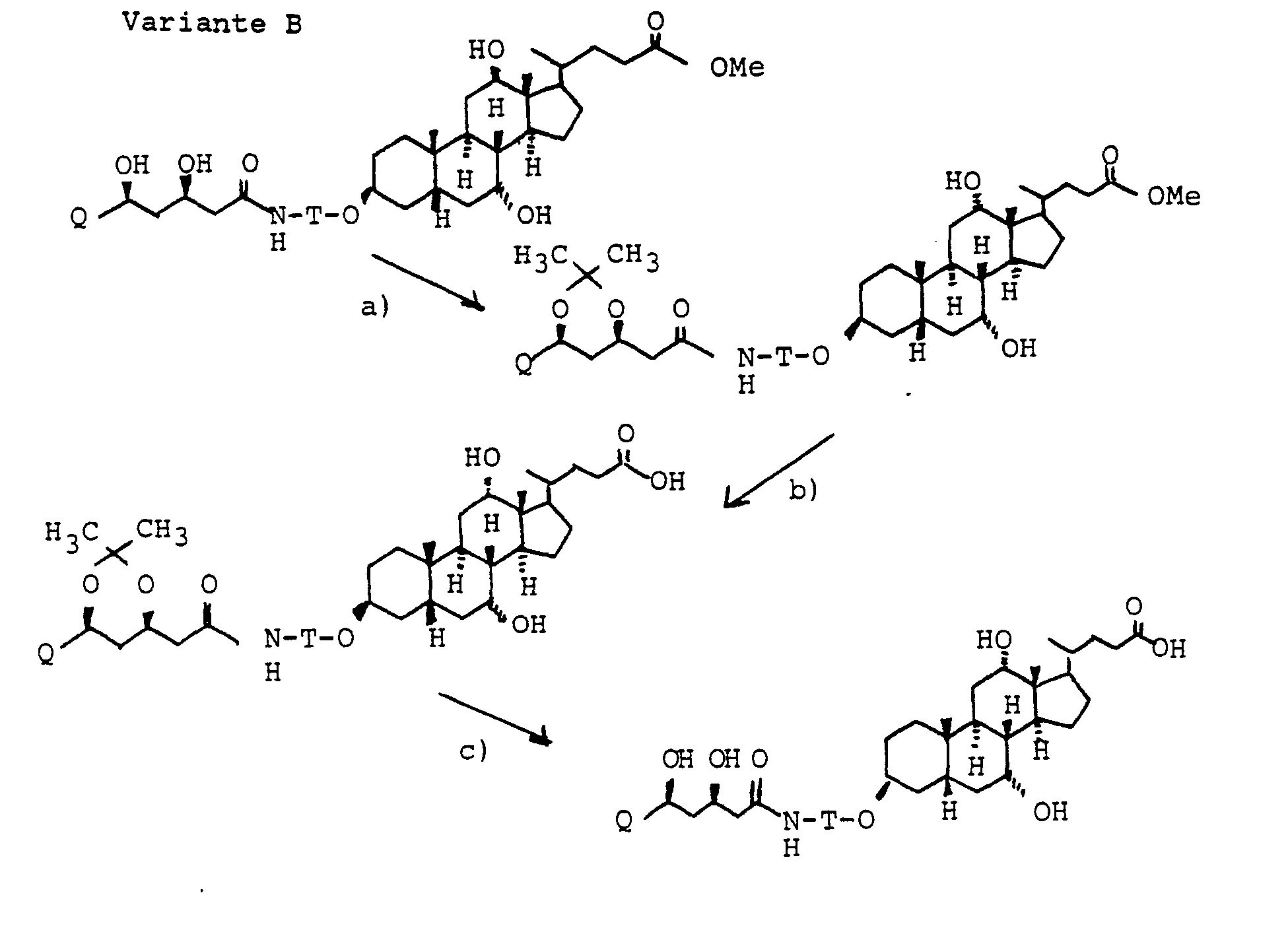
-

- Ausbeute 390 mg (0.42 mol, 93 %) Acetonid.
- C56H79F2NO8 (931), MS (FAB 3-NBA/LiCl): 938 (M+Li+).
- b) 390 mg (0.42 mmol) Acetonid wurden in 20 ml Ethanol gelöst und mit 5 ml 1 N wäßriger Natronlauge versetzt. Nach 5h Rühren bei Zimmertemperatur wurde mit 2N Salzsäure neutralisiert und mit Essigester extrahiert (3x). Die vereinigten organischer Phasen wurden mit MgSO4 getrocknet und eingedampft. Das Rohprodukt wurde ohne weitere Reinigung umgesetzt.
- c) Das Rohprodukt aus b) wurde in 20 ml THF gelöst und mit 5 ml 2N Salzsäure versetzt. Nach 2h Rühren wurden 100 ml Wasser zugegeben und mit Essigester extrahiert (3x). Die vereinigten organischen Phasen wurden mit MgSO4 getrocknet und eingedampft. Flashchromatographie auf Kieselgel (Dichlormethan/Methanol 9:1) ergab 250 mg (0.29 mmol, 68%) "Beispiel 80c".
- Cs2H73F2NOs (877), MS (FAB, 3-NBA/LiCl): 884 (M+Li+).
- Analog zu 79 oder 80 wurden die "Beispiele 81-88" aus 71-78 erhalten.


-

-
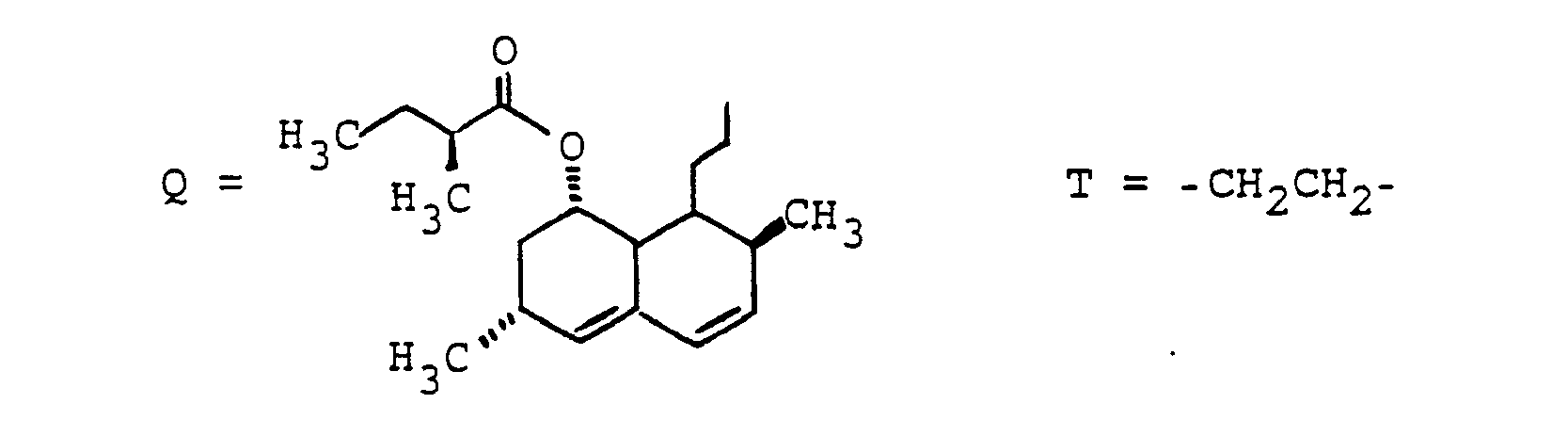
- 150 mg (0.175 mmol) Beispiel 79 wurden in 10 ml Ethanol gelöst und mit 1.75 ml 0.1 N wäßnger Natronlauge versetzt. Nach 10 min Rühren bei Zimmertemperatur wird das Lösungsmittel eingedampft. Ausbeute 150 mg (quant.) Natriumsalz "Beispiel 89".
- Analog zu 89 wurden die "Beispiele 90-98" erhalten
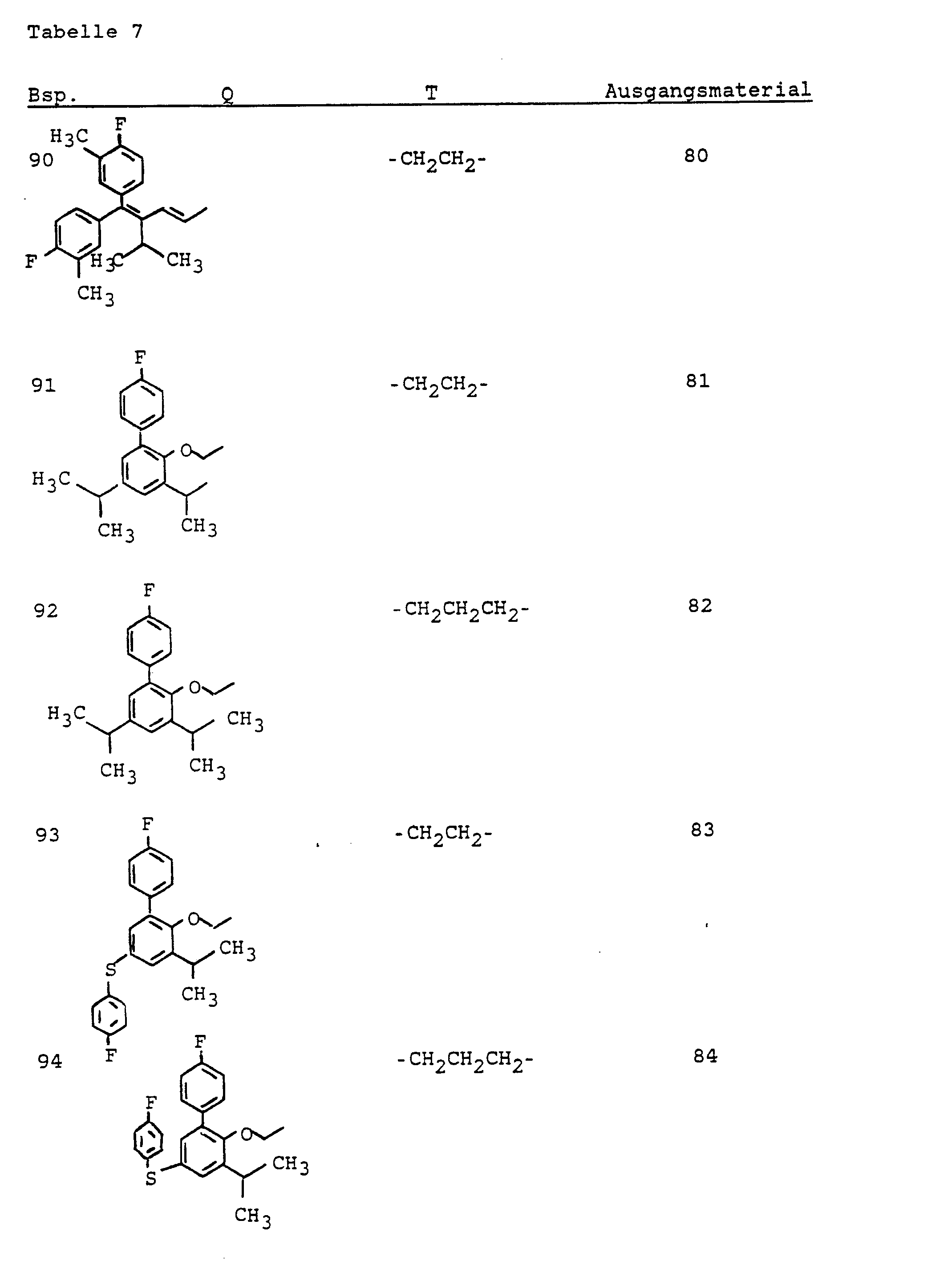
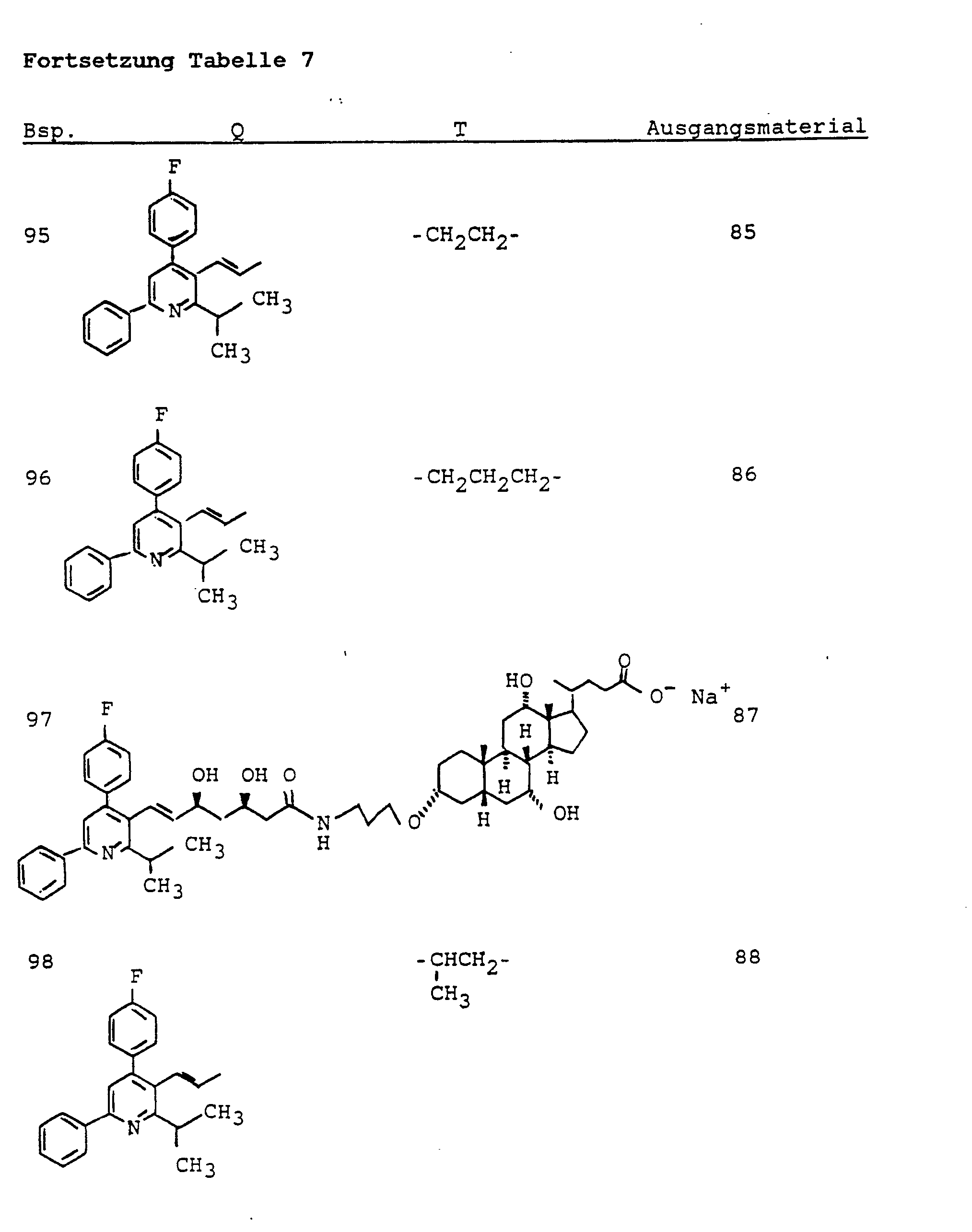
-

-

- 400 mg (0.45 mmol) Acetonid aus 69 (s. Beispiele 79-88. Variante B) wurden in 40 ml absolutem THF gelöst, mit 0.12 ml (0.90 mmol) Triethylamin versetzt und auf 0 C gekühlt. Es wurden 0.07 ml (0.68 mmol) Chlorameisensäureethylester zugegeben und 15 min gerührt. Anschließend wurde eine Lösung von 100 mg (1.3 mmol) Glycin in 12 ml 0.1 N wäßnger Natronlauge zugetropft. Es wurde auf Zimmertemperatur erwärmt und noch 1n gerührt. Das Gemisch wurde auf Wasser gegossen, mit 2N Salzsäure angesäuert und mit Essigester extrahiert (3x). Die vereinigten organischen Phasen wurden mit MgSO4 getrocknet und eingedampft. Der Rückstand wurde in 50 ml THF gelöst. mit 10 ml 1N Salzsäure versetzt und 4h bei Zimmertemperatur gerührt. Es wurde auf Wasser gegossen, mit Essigester extrahiert (3x), die vereinigten organischen Phasen mit MgSO4 getrocknet und eingedampft.
- Flashchromatographie auf Kieselgel (Chloroform Methanol 7:3) ergab 230 mg (0.25 mmol, 56 %) "Beispiel 99"
- C52H84N2O- - (912). MS (FAB. 3-NBA LiCl) 919 (M+Li+)
- Analog zu 99 wurden die "Beispiele 100-108" erhalten.
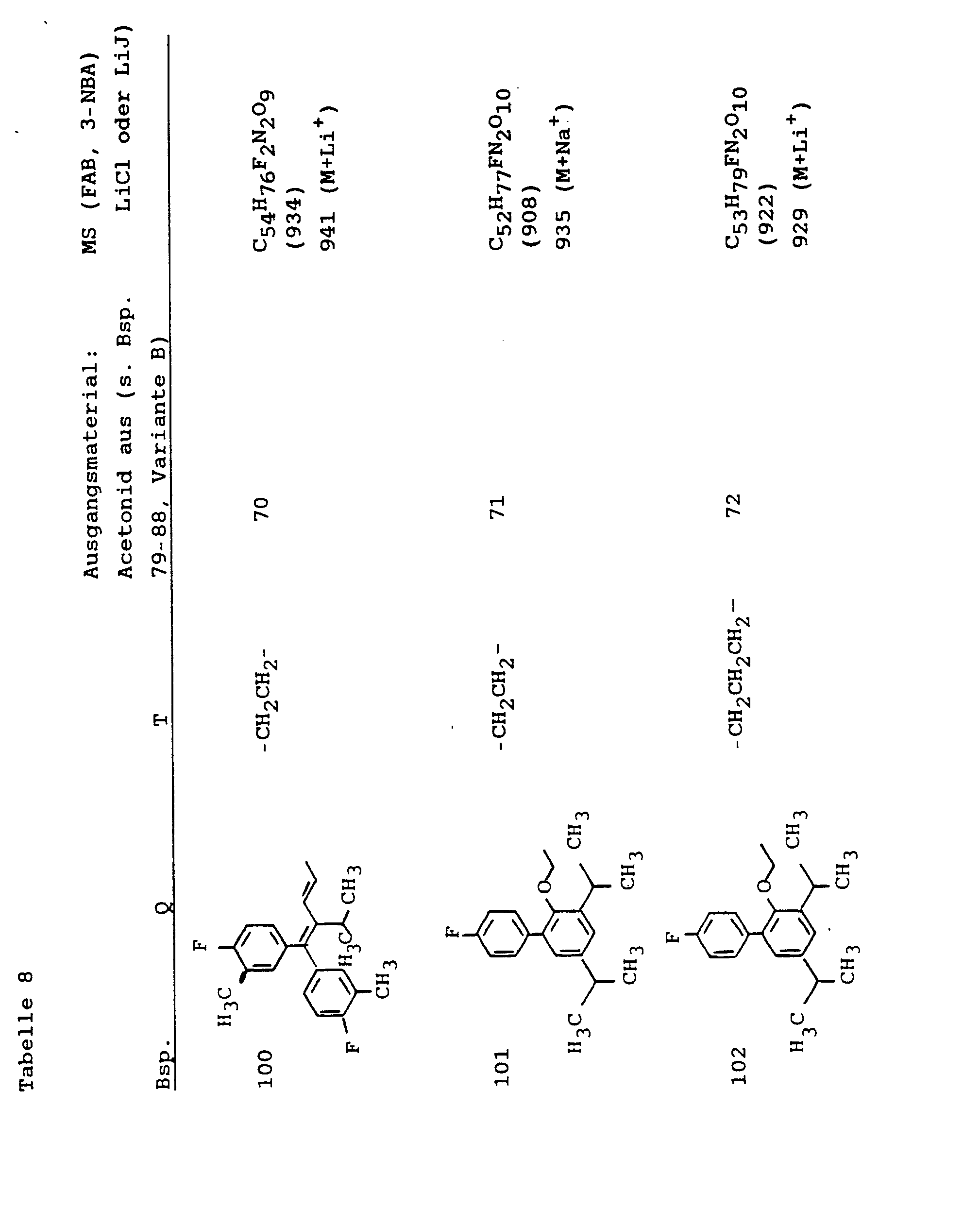


- Analog zu den Beispielen 89-98 wurden aus den Beispielen 100-108 ihre Na-Salze hergestellt
-

-

- 400 mg (0.45 mmol) Acetonid aus 69 (s. Beispiele 79-88, Variante B) wurden in 40 ml absolutem THF gelöst, mit 0.12 ml (0.90 mmol) Triethylamin versetzt und auf 0° C gekühlt. Es wurden 0.07 ml (0.68 mmol) Chlorameisensäureethylester zugegeben und 15 min gerührt. Anschließend wurde eine Lösung von 160 mg (1.3 mmol) Taurin in 12 ml 0.1 N wäßiger Natronlauge zugetropft. Es wurde auf Zimmertemperatur erwärmt und noch 1h gerührt. Das Gemisch wurde auf Wasser gegossen, mit 2N Salzsäure angesäuert und mit Essigester extrahiert (3x). Die vereinigten organischen Phasen wurden mit MgSO4 getrocknet und eingedampft. Der Rückstand wurde in 50 ml THF gelöst, mit 10 ml 1N Salzsäure versetzt und 4h bei Zimmertemperatur gerührt. Es wurde auf Wasser gegossen, mit Essigester extrahiert (3x). die vereinigten organischen Phasen mit MgSO4 getrocknet und eingedampft.
- Flashchromatographie auf Kieselgel (Dichlormethan Methanol 7:3) ergab 270 mg (0.28 mmol. 62 %) "Beispiel 109".
- C52H86N2O.2S (962). MS (FAB. 3-NBALiCI). 969 (M+Li+).
- Analog zu 109 wurden die "Beispiele 110-118" erhalten


- Analog zu den Beispielen 89-98 wurden aus den Beispielen 109-118 ihre Na-Salze hergestellt. W - X - G, W = Modellpeptid (D-Alanyl-Peptide)
- Die für die Kupplung an Beispiel 21 eingesetzten N-terminalgeschützten D-Alanyl-Peptide (Schutzgruppe z.B. Benzyloxycarbonyl bzw. Boc: tert-Butyloxycarbonyl) bzw. deren Aktivester werden nach in der Peptidchemie allgemein üblichen Methoden (s. z.B. Houben-Weyl, Bände 15/1 und 152) hergestellt und charakterisiert.
- Die N-terminal geschützten Oligo-D-Alanyl-Peptide werden entweder in Form ihrer Aktivester, z.B. als N-Hydroxysuccinimid (OSu)- bzw. 1-Hydroxybenzotriazol (OBt)-Ester, oder mit Hilfe von Kondensationsreagenzien (z.B. Dicyclohexylcarbodiimid) unter Zusatz eines racemisierungshemmenden Reagenzes, beispielsweise N-Hydroxysuccinimid (HOSu) bzw. 1-Hydroxybenzotriazol (HOBt) mit der Aminofunktion des Gallensäurederivats verknüpft.
- Nachfolgend werden die Peptidschutzgruppe sowie die Methylestergruppe des Gallensäurederivats entfernt, wobei durch die hier verwendete orthogonale Schutzgruppen-Strategie - die N-terminale Schutzgruppe kann z.B. durch Hydrierung (Z) oder acidolytisch (Boc) abgespalten werden, während die Methylester-Gruppe des Gallensäurederivats verseift wird -auch die Synthese von teilgeschützten Gallensäure-Peptid-Konjugaten möglich ist.
- Die jeweiligen Zwischenprodukte sowie das Endprodukt werden i.a. säulenchromatographisch gereinigt und dünnschichtchromatographisch sowie mittels 1H-NMR-Spektroskopie charakterisiert.
-

- Z-D-Ala-D-Ala-NH-(CH2)2-GS-OCH3
- Man löst 485 mg (1.04 mmol) Beispiel 21 und 467 mg (1.14 mmol) Z-D-Ala-D-Ala-OSU in 10 ml Dichlormethan und rührt 1.5 h bei Zimmertemperatur. Nach Entfernen des Lösungsmittels im Vakuum erhält man 930 mg festen Rückstand, der über eine Kieselgelsäule (50x2 cm. Matrex Silicagel 70-200 um) chromatographiert wird. Eluent: Dichlormethan Methanol Essigsäure 85:10:5.
- Die Fraktionen 3 und 4 enthalten das gewünschte Produkt: Fraktion 4 enthält zusätzlich noch N-Hydroxysuccinimid, welches nach Entfernen des Lösungsmittels durch Verreiben des Rückstands mit Wasser bzw. stark verdünnter Salzsäure entfernt werden kann.
- Nach Vereinigung beider Fraktionen erhält man 450 mg (57 %) "Beispiel 119" als weißen Feststoff.
- R, (Dichlormethan/Methanol Essigsäure 85:10:5): 0.76.
- Rt (n-Butanol Essigsäure Wasser 40:40:10): 0.89.
- 280 mg (0.37 mmol) Z-D-Ala-D-Ala-NH-(CH2)2-GS-OCH3 werden in 5 ml Methanol gelöst. Man spült das Reaktionsgefäß mehrere Male mit Inertgas, gibt 28 mg Hydrierkatalysator (Palladium Aktivkohle, 10 %) zu und hydriert 3h bei Zimmertemperatur. Nach der angegebenen Zeit ist laut Dünnschichtchromatographie (Dichlormethan/Methanol/Essigsäure 85:10:5) kein Edukt mehr vorhanden. Die Reaktionsmischung wird membranfiltriert (Schleicher u. Schuell, RC 58, 0.2 um), das Filtrat im Rotationsverdampfer eingedampft, der Rückstand zweimal mit Diethylether versetzt und erneut im Rotationsverdampfer eingedampft. Man erhält 225 mg (98 %) weiß-gelben pulvrigen Feststoff, der in Methanol aufgenommen und 10 min unter Zusatz von Aktivkohle bei Zimmertemperatur gerührt wird. Nach Filtration, Verdampfen des Lösungsmittels i.Vak. und Trocknen erhält man 190 mg (83 %) "Beispiel 120" als weißes Pulver.
- Rf (n-Butanol/Essigsäure/Wasser 40:40:10): 0.55.
- H-D-Ala-D-Ala-N H-(CH2)2-GS-OH
- Man löst 120 mg (0.19 mmol) H-D-Ala-D-Ala-NH-(CH2)2-GS OCH3 in 2 ml Methanol, tropft bei Zimmertemperatur 2 ml 0.1 N wäßrige Natriumhydroxid-Lösung zu und rührt 4h bei gleicher Temperatur. Anschließend stellt man die Reaktionslösung mit 2N wäßriger Salzsäure auf pH 3 und dampft im Rotationsverdampfer bis zur Trockne ein.
- Man verreibt den Rückstand in wenig Ethanol und filtriert von unlöslichem Material ab. Das Filtrat wird zur Trockne gebracht, jeweils einmal mit Ether und Pentan verrieben, filtriert und getrocknet. Man erhält 107 mg "Beispiel 121 " als weißen Feststoff (enthält noch ca. 10 % Natriumchlorid).
- Ausbeute: 85 %
- Rf (n-Butanol/Essigsäure/Wasser 40:40:10): 0.54.
- In Analogie zu Beispiel 121 wurde Beispiel 122 erhalten.
- Z-D-Ala-D-Ala-NH-(CH2)2-GS-OH
- Z = Benzyloxycarbonyl
-

- a) Zu 500 mg (2.23 mmol) Säurechlorid (hergestellt aus der entsprechenden Carbonsäure durch Umsetzung mit Thionylchlorid/katalytische Menge DMF, 2h Rückfluß), in 25 ml Methylenchlorid wurden bei 0°C 1.04 g (2.23 mmol) Beispiel 21 in 5 ml Methylenchlorid/1 ml Triethylamin getropft. Anschließend ließ man 2h bei Zimmertemperatur rühren. Das Reaktionsgemisch wurde auf Wasser gegossen und die wäßrige Phase mit Methylenchlorid extrahiert (3x). Die vereinigten organischen Phasen wurden mit gesättigter NaHC03-Lösung gewaschen (1x) und getrocknet (MgS04). Abziehen des Lösungsmittels und Chromatographie auf Kieselgel (Essigester/Methanol = 15:1) ergab 314 mg.
- b) 100 mg (1.49 mmol) des nach a) erhaltenen Produktes wurden in 20 ml Ethanol gelöst und mit 4 ml 1 N NaOH über Nacht gerührt. Es wurden 4 ml Salzsäure zur Neutralisation zugegeben und mit Essigester extrahiert. Die vereinigten organischen Phasen wurden mit gesättigter Natriumchloridlösung gewaschen und getrocknet (MgSO4). Abziehen des Lösungsmittels ergab 89.1 mg "Beispiel 123".
- C36H55N3O8 (657); MS (FAB, 3-NBA/LiJ): 664 (M+L)+
-

- Analog zu Beispiel 123 wurde "Beispiel 124" erhalten.
- C33H48N2O8 (600): MS (FAB. 3-NBA/LiCl): 607 (M+Li+), 613 (M+2Li-H) 619 (M+3Li-2H)+.
- Herstellungsvorschrift der Lactonkomponente für Beispiel 71 nach DE 38 19 999:
- Synthese von 4(R)-Hydroxy-6(S)-[(2,4-diisopropyl-6-p-fluorphenyl)-phenoxymethyl]tetrahydro-2H-pyran-2-on
- 2,4-Diisopropylphenol
- Das Gemisch aus 145 g (0.65 Mol) 3,5-Diisopropyl-2-hydroxybenzoesäure (XI). 540 ml (588 g. 4.55 Mol) Chinolin und 7,5 g (0,024 Mol) Kupferchromit (2CuO·Cr2O3) wird 2 Stunden bet 190°C (225° C Außentemperatur) gerührt. Man kühlt auf ca. 10°C, säuert unter weiterer Kühlung mit ca. 1 I halbkonzentnerter Salzsäure auf pH 1 bis 2 an, extrahiert mit Toluol und wäscht das Extrakt mit 2 N Salzsäure, dann mit Wasser und dann mit NaHCO3-Lösung. Man trocknet, filtriert, engt ein und destilliert im Hochvakuum. Man erhält 105 g der Titelverbindung XIII als hellgelbes Öl, Sdp. 81 bis 84° C/0,2 Torr
- 1H-NMR(CDCl3): δ 1,20 (6H,d); 1,25 (6H,d); 3,00 (2H,2xhept.); 4,10 (1H,s,br); 6,50-7,00 (3H,m)
- Zur 95°C warmen Lösung von 102,3 g (0,57 Mol) 2,4-Diisopropylphenol in 900 ml Eisessig gibt man 1 g Eisenpulver, dann tropfenweise 101 g (32,2 ml, 0,63 Mol) Brom innerhalb 90 Minuten. Man rührt noch 1 Stunde bei 100° C, kühlt ab, verteilt das Reaktionsgemisch zwischen Toluol und Wasser und wäscht die Toluolphase mit NaHCO3-Lösung. Man trocknet, filtriert, engt ein und destilliert den Rückstand im Hochvakuum. Man erhält 125 g der Titelverbindung als hellgelbes Öl, Sdp. 85° C/0,15 Torr
- 1H-NMR(CDCl3): δ 1,20 (6H,d); 1,25 (6H,d), 2,80 (1H,hept.); 3,25 (1H,hept.): 5,33 (1H,s); 6,87-7,20 (2H,m)
- MS (70eV): m/e = 256/258 (M+), 241,243 (M+-CH3)
- Die Suspension von 166,5 g (1,2 Mol) Kaliumcarbonat in 124 g (0,48 Mol) des. obigen Bromphenols, 91,52 g (0,72 Mol) Benzylchlorid und 2 I 2-Butanon wird 24 Stunden zum Rückfluß erhitzt.
- Man kühlt ab, saugt den anorganischen Feststoff ab, engt das Filtrat im Vakuum ein und verteilt den Rückstand zwischen Toluol und Wasser. Die Toluolphase wird mit gesättigter Kochsalzlösung gewaschen. getrocknet, filtriert und eingeengt. Der Rückstand wird mit Cyclohexan Toluol 9:1 über Kieselgel chromatographiert. Man erhält 155 g der Titelverbindung als farbloses Öl.
- Geringe Reste Benzylchlorid werden im Hochvakuum entfernt. Man kann die Reinigung auch durch Destillation erreichen (Sdp. 150 °C 0.15 Torr).
- 1H-NMR(CDCl3): δ 1,18 (6H,d); 1,22 (6H,d), 2,80 (1H hept.); 3,32 (1H,hept.); 4.90 (2H.s): 6.93-7.60 (7H,m)
- MS (70eV): m/e = 346/348 (M+), 267. 254 256, 91
- Man stellt die Grignard-Verbindung aus 48.62 g (0,14 Moi) des Bromids aus Stufe 3 und 3,53 g (0.147 Mol) Mg-Spänen in 120 ml absolutem THF her (- 60° C, 1 Stunde).
- Diese Grignard-Lösung wird rasch zur Lösung von 31,08 g (0.14 Moi) 4-Fluorjodbenzol und 3.23 g (2.8 mMol) Tetrakis(triphenylphosphin)palladium (0) in 140 ml absolutem THF gegeben. Die Innentemperatur steigt innerhalb von 15 Minuten auf 55 bis 60° C. Nach 7 Minuten bildet sich ein Niederschlag. Man rührt 1 Stunde bei 50 bis 58° C, läßt über Nacht bei Raumtemperatur stehen, verteilt zwischen Ether und 1 N Salzsäure, wäscht die Etherphase mit 1 N Salzsäure, dann mit Wasser und dann mit gesättigter NaHCO3-Lösung. Man trocknet, filtriert und engt ein. Bei Bedarf reinigt man das Produkt durch Chromatographie mit Cyclohexan Toluol 4:1 über Kieselgel oder durch Destillation (Sdp. 180 °C 0.3 Tor). Man erhält 49.3 g der Titelverbindung als farblosen Feststoff, Schmp. 65 bis 67° C
- 1H-NMR(CDCl3): δ 1,30 (12H.d); 2,95 (1H,hept.): 3.45 (1H,hept.); 4.40 (2H,s); 6.90-7.80 (11H,m) MS (CI): m e = 363 (M+H+), 362 (M+), 285, 263
- Zur Lösung von 49,3 g (0,136 Mol) des Benzylethers aus Stufe 4 in 1 I Essigester und 100 ml Eisessig gibt man 4 g 10 % Pd auf Kohle und schüttelt 20 Minuten in einer Wasserstoffatmosphäre (lebhafte H2-Aufnahme). Man filtriert den Katalysator ab, engt ein, nimmt den Rückstand mehrmals in Toluol auf und engt jeweils im Vakuum ein. Man erhält 34,4 g der Titelverbindung als farbloses Öl,
- Sdp. 115 °C/0,1 Torr.
- 1H-NMR(CDCl3,270MHz): δ 1,25 (6H,d); 1,29 (6H,d); 2,87 (1H,hept.); 3.31 (1H.hept.); 4.95 (1H.s.br); 6.BB(1H,d); 7.08 (1 H.d) 7.18 (2H.m); 7.45 (2H,m).
- MS (70eV): m/e = 272 (M+), 257 (M+-CH3)
- Zur Suspension von 27.6 g (0,2 Mol) Kaliumcarbonat und einer Spatelspitze Hydrochinon in 250 ml abs. DMSO gibt man 27,2 g (0,1 Mol) des Phenols aus Stufe 5. Man rührt 1 Std. bei Raumtemperatur und gibt dann die Lösung von 56 g (0,11 Mol) 6(S)-Jod-methyl-3,4,5,6-tetrahydro-2(R,S)-methoxy-4(R)-(t-butyldiphe- nylsilyoxy)-2-H-pyran (Herstellung siehe EP-A 0 216 127, R7 = t-Butyldiphenylsilyl) in 250 ml abs. DMSO zu. Man rührt 4 Std. bei 50-55 °C Innentemperatur. DC (Kieselgel, 1. Entwicklung mit Cyclohexan Essigester 9:1, 2. Entwicklung mit Cyclohexan/Essigester 15:1) zeigt vollständigen Umsatz des Jodids (Rf 0,5), etwas restliches Ausgangsphenol (Rf 0,7), hauptsächlich Produkt der Formel V (Rf 0,6) an. Man läßt abkühlen und verteilt das Reaktionsgemisch zwischen Ether und halbgesättigter Kochsalzlösung. Die wäßrige Phase wird nochmals mit Ether extrahiert. Die vereinigten organischen Phasen werden mit Kochsalzlösung gewaschen, über MgS04 getrocknet, filtriert und eingeengt. Das Rohprodukt wird mit Toluol/Cyclohexan 2:1, dann 100 % Toluol, dann Toluol Essigester 30:1 über Kieselgel chromatographiert. Man erhält 51 g der Titelverbindung als farbloses Harz.
- 1H-NMR(CDCl3): δ 1,10 (9H,s); 1,28 (12H,d), 1,4-2,2 (4H,m); 2,93 (2H,2xhept.); 3.40 (2H,m); 3,52 (3H,s): 3.97-4.40 (2H,qui + m); 4.87 (1 H.dd): 6,87-7,90 (16H,m)
- MS (CI): m e = 654 (M+), 597 (M -tert.-Bu), 539, 519. 323, 283, 135, 127
- Die Lösung von 40.2 g (61,4 mMol) des Laktolethers aus Stufe 6 in 3 I THF, 3 I Wasser und 4.2 I Eisessig wird 24 Std. bei 80-85 °C (Außentemperatur) gerührt. Die Lösungsmittel werden im Vakuum entfernt und der Rückstand 3 mal mit Toluol im Vakuum abgeraucht. Chromatographie mit Cyclohexan Essigester 12:1 durch 2 I Kieselgel gibt 33.4 g (Ausbeute 85 °o) der Titelverbindung als farbloses amorphes Pulver.
- MS (FAB): m e = 640 (M+). 519. 367. 323. 283. 271. 257
- Zur Lösung von 33.4 g (52.1 mMol) des Lactols aus Stufe 7 und 19.25 g (52,1 mMol) Tetrabutylammoniumjodid in 2,5 I absolutem Methylenchlorid gibt man unter Rühren und Kühlung 46.9 g (208.4 mMol) N-Jodsuccmimid. Man rührt unter Lichtausschluß unter Stickstoff 1 Stunde bei 10°C. 20 Stunden bei Raumtemperatur. Man wäscht die Reaktionslösung mit Wasser, dann 2mal mit NaHS03-Lösung, dann mit gesättigter NaCI-Lösung, trocknet, filtnert und engt ein. Der Rückstand wird in wenig Methylenchlorid gelöst und mit Cyclohexan Essigester 92:8 durch Kieselgel filtnert. Man erhält 32,1 g der Titelverbindung als farbloses Harz.
- 1H-NMR(CDCl3,270MHz): δ 1,06 (9H,s); 1,23 (6H,d); 1,26 (6H,d); 1,59 (2H,m); 2,41 (1H,dd); 2,59 (1H,dm); 2,90 (1 H,hept.); 3,36 (1 H,hept.); 3,48 (2H, AB von ABX); 4,29 (1 H,qui); 4,80 (1 H,m); 6,96 (1 H,d); 7,03 (2H,m); 7,10 (1H,d); 7,36-7,52 (8H m); 7,58-7,73 (4H,m)
- MS (70eV,70°C): m/e = 638 (M+), 581 (M+-tert.-Bu), 539 (581 - Propen) 283, 199
- Zur Lösung aus 31,0 g (48,5 mMol) der Silylverbindung aus Stufe 8 in 1.5 I Tetrahydrofuran (über bas. Al2O3 filtriert) gibt man 11,65 g (194 mMol) Eisessig, gefolgt von 45,92 g (145,5 mMol) Tetrabutylammoniumfluorid-Trihydrat. Man rührt 20 Std. bei Raumtemperatur. Die Lösungsmittel werden im Vakuum entfernt und der Rückstand wird sofort zwischen Ether und Wasser verteilt. Die wäßrige Phase wird noch zweimal mit Ether extrahiert. Die vereinigten organischen Phasen werden mit gesättigter Kochsalzlösung gewaschen, über MgS04 getrocknet, filtriert und eingeengt.
- Der Rückstand wird in Toluol aufgenommen und im Vakuum eingeengt. Das Rohprodukt wird mit CyclohexaniEssigester 1:1 durch 2 kg Kieselgel chromatographiert.
- Man erhält 15,7 g (Ausbeute 81 %) der Titelverbindung als farblosen Feststoff, Schmp. 145-147 C. 1H-NMR(CDCl3,270MHz): δ 1,25 und 1,27 (12H,2xd); 1,67 (1H,s,br.); 1,76 (1H,dtd); 1,87 (1H,ddd); 2,58 (1H,ddd); 2,69 (1H,dd); 2,91 (1H,hept); 3,39 (1H,hept), 3,54 (2H,AB von ABX); 4,38 (1H,qui), 4,68 (1H,m); 6,97 (1 H,d); 7,10 (3H,d+m); 7,51 (2H,m)
- MS (FAB): m/e = 400 (M+), 257
- Herstellungsvorschrift für die Lactonkomponente für Beispiel 73 nach DE 39 29 913
- 198.1 ml (3.85 Mol) Brom wurden bei -5 bis 0°C zur Lösung von 470 g Natriumhydroxid in 2 I Wasser getropft. Das Gemisch wurde noch 10 Min. bei dieser Temperatur gerührt. Die entstandene Natriumhypobromid-Lösung wurde bei -5 bis 0°C zur Lösung von 464 g einer 40 %igen wäßrigen Dimethylamin-Lösung (4.11 Mol) in 50 ml Wasser getropft. Das Gemisch wurde noch 30 Min. gerührt, dann wurde die organische Phase abgetrennt und die wäßrige Phase mit 2 mal 750 ml Methylenchlorid extrahiert. Die vereinigten organischen Phasen wurden kurz über Magnesiumsulfat getrocknet und filtnert. Das Filtrat wurde bei -10°C zur Lösung von 500 g (3.67 Mol) ortho-Isopropylphenol in 900 ml Methylenchlond getropft. Nach Zugabe von ca. 2 3 des Filtrats bildete sich ein Feststoff und das Reaktionsgemisch wurde viskos und schwer rührbar. 500 ml Methylenchlorid wurden bei -10°C zugegeben und das Gemisch wurde eine weitere Stunde gerührt. Der Feststoff wurde abgesaugt, mit wenig kaltem Methylenchlorid gewaschen. in 1,5 I 2N Schwefelsäure suspendiert und bei Raumtemperatur gerührt, bis sich sämtlicher Feststoff in ein Öl umgewandelt hatte. Die organische Phase wurde abgetrennt, die wäßrige Phase mit Methylenchlond extrahiert. Die vereinigten organischen Phasen wurden mit Kochsalzlösung gewaschen, getrocknet und das Lösungsmittel wurde im Vakuum entfernt. Der Rückstand wurde im Wasserstrahlvakuum durch eine 30 cm Vigreux-Kolonne destilliert.
- 391,7 g (1,82 Mol) farbloses Öl, Sdp. 122-124°C 21 Torr;
- Ausbeute 49,6 %
- NMR (60 MHz): δ = 1,20 (d, 6H, CH3), 3,23 (sept., 1H, CH), 5,42 (s, 1H. OH), 6,4-7,2 (m. 3H. arom.-H).
-
- a) Zu 18,7 g (0,77 Mol) Magnesiumspänen wurden drei Jodkristalle gegeben und die Zugabestelle mit einem Heißluftgerät (@fön) erhitzt, bis Joddämpfe im Kolben sichtbar waren. Es wurde auf Raumtemperatur abgekühlt und 20 ml absol. THF zugegeben. 131,3 g (0,75 Mol) p-Bromfluorbenzol wurden in einen 500 ml Tropftrichter gefüllt und davon ca. 2 ml in den Reaktionskolben gegeben. Die braune Farbe des Reaktionsgemischs verschwand rasch und es erfolgte starke Wärmeentwicklung zum Rückfluß. Sofort wurden weitere 50 ml absol. THF zum Reaktionsgemisch gegeben und das p-Bromfluorbenzol im Tropftrichter mit 200 ml THF verdünnt. Diese Lösung wurde dann so zugetropft, daß ein gelinder Rückfluß aufrecht erhalten wurde. Anschließend wurde das Reaktionsgemisch noch 1 Stunde unter Rückfluß gekocht und dann auf 50°C abgekühlt.
- b) In einem zweiten Kolben wurde aus der Lösung von 52,0 g (0,24 Mol) 2-Brom-6-isopropyl-phenol in 150 ml absol. THF mittels 20 minütigem Durchleiten von Stickstoff der gelöste Sauerstoff vertrieben. 1,7 g (1,5 mMol) Tetrakis(triphenylphosphin)-palladium(0) wurden unter Minimierung des Sauerstoffkontakts zugegeben.
- Dann wurde die Grignard-Lösung aus Stufe a) mittels einer Doppelkanüle ("@Flex-Needle", Firma Aldrich) unter Stickstoffdruck in diese Lösung transferiert, wobei eine Wärmeentwicklung auftrat. Die Geschwindigkeit des Transfers wurde so gewählt, daß ein gelinder Rückfluß aufrecht erhalten wurde. Anschließend wurde noch 6 Stunden zum Rückfluß erhitzt. Das Reaktionsgemisch wurde abgekühlt und auf 500 g Eis/100 ml konz. Salzsäure gegossen. Die organische Phase wurde abgetrennt und die wäßrige Phase wurde mit 3 x 100 ml Ether extrahiert. Die vereinigten organischen Phasen wurden mit 100 ml gesättigter Kochsalzlösung gewaschen, getrocknet und die Lösungsmittel abgezogen. Der Rückstand wurde im Pumpenvakuum durch eine 30 cm-Vigreux-Kolonne destilliert. Nach einem Vorlauf (30-65° C/0,2 Torr) destillierte das reine Produkt (Sdp. 107-109°C.0,5 Torr) als farbloses Öl, das in der Vorlage und z.T. auch schon in der Destillationsbrücke kristallisierte (Schmp. 44-46°C). Um ein Verstopfen der Brücke zu vermeiden, wurde diese auf ca. 50°C temperiert. Ausbeute 37,8 g Titelverbindung (164 mMol); 68,4 % d. Th. GC-Analyse (30 m fused silica-Säule DB-5 "Polydiphenyldimethylsiloxan", Schichtdicke 0,25 µm, Innendurchmesser 0,32 mm, 180°C, Inj. 240" C, 1 bar H2): tret: 4,46 Min; Reinheit > 99,9 %.
- NMR (270 MHz): δ = 1,28 (d, 6H, CH3); 3.32 (sept., 1H, CH); 5,08 (s, 1H, OH); 6,9-7,5 (m, 7H, arom.-H).
- MS (DCI, Isobutan): m = 231 (M+H+), 230 (M+), 215 (M+-CH3)
- Die Suspension von 70.9 g (838 mMol. 5.0 Äquivalenten) Natriumthiocyanat m 200 ml Methanol wurde 20 Min. bei Raumtemperatur gerührt. 40.0 g (173.8 mMol, 1.0 Äquiv.) 2-(p-Fluorphenyl)-6-isopropyl-phenol wurden zugegeben und das Gemisch wurde 20 Minuten gerührt. 14,32 ml (277.8 mMol. 1.6 Äquiv.) Brom wurden in 50 ml Methanol gelöst (exotherm) und diese Lösung wurde bei 15-20°C während 20 Minuten zu obiger Reaktionslösung getropft. Das Reaktionsgemisch färbte sich gelb und das Phenol löste sich vollständig. Das Reaktionsgemisch wurde 30 Min. gerührt. DC (Toluoi Cyclohexan 1:1) zeigte vollständigen Umsatz des Ausgangsmaterials (Rf = 0.54) an. Neben der Titelverbindung (R, = 0,32) entstand als Verunreinigung nur eine geringe Menge der entsprechenden para-Brom-Verbindung, die mit dem Ausgangsmatenal cochromatographiert (Rf = 0.54), aber aufgrund anderer Anfärbung unterschieden werden kann. Das Reaktionsgemisch wurde auf 400 g Eis 400 ml 2 N Salzsäure gegossen und mit 4 x 200 ml Toluol extrahiert. Die Extrakte wurden mit wäßnger Natriumsulfit-Lösung gewaschen, filtriert, mit gesättigter Kochsalzlösung gewaschen, getrocknet und im Vakuum eingeengt.
- Der zurückbleibende gelbe Feststoff wurde in 500 ml heißem Cyclohexan gelöst und es wurden 5 g Aktivkohle zugesetzt. Danach wurde 5 Minuten unter Rückfluß gekocht und die heiße Suspension im Vakuum filtriert. Die abgesaugte Aktivkohle wurde mit 20 ml heißem Cyclohexan nachgewaschen. Das fast farblose Filtrat kühlte langsam ab und wurde dann noch 12 Std. auf 10°C gekühlt.
- Die farblosen Knstalle (Titelverbindungen) wurden abgesaugt und im Vakuum getrocknet. 47.6 g (165.7 m Mol) Ausbeute entsprech. 95,3 %; Schmp. 94,5-96°C.
- NMR (60 MHz): δ = 1,26 (d, 6H, CH3). 3.32 (sept., 1 H, CH); 5.46 (s. 1 H. OH); 7,0-7,6 (m. 6H, arom.-H). MS (DCI, Isobutan) m e = 288 (M + H+), 272 (M+-CH3), 261
- Eine THF-Lösung (100 ml) von p-Fluorphenylmagnesiumbromid [aus 3,11 g (128 mMol) Magnesium und 22,0 g (13,8 ml, 126 mMol) p-Bromfluorbenzol] wurde wie in Stufe 2 hergestellt. Die Lösung von 6,04 g (21 mMol) 2-(p-Fluorphenyl)-4-thiocyanato-6-isopropyl-phenol (aus Stufe 3) in 50 ml THF wurde bei 50°C zugetropft und noch 2 Stunden bei 40-50°C gerührt. Das Gemisch wurde abgekühlt und auf 500 ml eiskalte 2N Salzsäure gegossen. Es wurde dreimal mit 200 ml Ether wurde dreimal mit 200 ml Ether extrahiert. Die vereinigten Extrakte wurden mit Kochsalzlösung gewaschen, getrocknet und das Lösungsmittel im Vakuum entfernt.
- Das zurückbleibende Öl (Titelverbindung) (7,5 g, 21 mMol, Ausbeute - 100 %) war gemäß DC (CyclohexaniEthylacetat 9:1) und 1H-NMR rein.
- NMR (60 MHz): δ = 1,25 (d, 6H, CH3); 3,31 (sept., 1H, CH); 5,22 (s, 1H, OH); 6,8-7,8 (m, 10H, arom.-H)
- MS (DCI, Isobutan): m/e = 357 (M+H+); 356 (M+)
- Zur Lösung von 175,7 g (676 mMol) (3R,5S)-6-Hydroxy-3,5-0-isopropyliden-3,5-dihydroxyhexansäure- tert.-butylester (siehe EPA 0 319 847) in 1,7 I absol. Methylenchlorid und 1,7 I absol. Pyridin tropfte man bei 0-5°C 116,2 g (1,01 Mol, 1,5 Äquiv.) Methansulfonsäurechlorid. Man rührte 90 Min. unter Eiskühlung, engte dann das Reaktionsgemisch bei 30°C im Vakuum ein und entfernte die Hauptmenge des restlichen Pyridins nach Aufnehmen in Toluol durch Abziehen im Vakuum. Der Rückstand wurde in Toluol aufgenommen und zweimal mit Wasser, einmal mit gesättigter Natriumhydrogencarbonat-Lösung, einmal mit gesättigter Natriumchloridlösung gewaschen, dann getrocknet, filtriert und im Vakuum eingeengt. Das zurückbleibende Öl kristallisierte bei Raumtemperpatur innerhalb weniger Minuten praktisch vollständig. Die Kristalle wurden abgesaugt, auf der Nutsche zerstoßen, mit kaltem Petrolether gewaschen und im Vakuum getrocknet.
- Man erhielt 192,0 g (568 mMol) farblosen Feststoff, Schmp. 75-76 °C. Einengen des Filtrats. Absaugen der Kristalle und Waschen mit wenig kaltem Petrolether lieferte weitere 34.8 g (103 mMol) leicht verunreinigtes Produkt, Schmp. 69-73°C. Gesamtausbeute an Titelverbindung: 226,8 g (671 mMol. 99,3 %).
- NMR (270 MHz, CD2Cl2): 5 = 1,18-1,33 (m, 1H, CH2, axial), 1,36 (s, 3H. CH3), 1.42 (s. 9H, tert.-Bu). 1,46 (s, 3H, CH3). 1,56 (dt, 1H. CH2, äquat.), 2,36 (AB-Teil von ABX-System, 2H, CH2), 3.03 (s. 3H, CH3-S02). 4,09-4,23 (m, 3H, OCH2 und O-CH), 4,24-4,37 (m, 1 H, OCH).
- MS (DCI-Isobutan): m e = 283 (M + H+ - > = )
- Zur Lösung von 4,0 g (11,2 mMol) 2-(p-Fluorphenyl-4-p-fluorphenylthio)-6-isopropyl-phenol (Stufe 4) in 25 ml trockenem Hexamethylphosphorsäuretriamid (HMPT) gab man 2.02 g (14.6 mMol, 1.3 Äquiv.) gepulvertes Kaliumcarbonat und ca. 10 mg Kronen-Ether 18-Crown-6 (Firma Aldrich). Man rührte die Suspension 20 Min. bei Raumtemperatur, gab dann 4.55 g (13,5 mMol, 1.2 Äquiv.) (3R.5S)-6-Methylsulfonyloxy-3,5-O-isopropyliden-3,5-dihydroxyhexansäure-tert.-butylester (Stufe 5) hinzu und rührte 2 Tage bei 75-80°C. Das Reaktionsgemisch färbte sich dunkel und wurde dickflüssiger. Es wurde in 200 ml wäßrige Natriumdihydrogenphosphat-Lösung gegossen und mehrmals mit Ether extrahiert. Die vereinigten Extrakte wurden mit gesättigter Kochsalzlösung gewaschen, getrocknet und im Vakuum eingeengt und ergaben 8,64 g eines bräunlichen Öls. Säulenchromatographie (Cyclohexan/Ethylacetat 10:1 plus 1 ‰ Triethylamin) gab 4,96 g (8,28 mMol, 74,0 % Ausbeute) eines blaßgelben, zähen Öls (Titelverbindung).
- NMR (270 MHz, C6D6): δ = 0,98-1,07 (m, 2H, CH2), 1,19 + 1,20 (2xd, 6H, CH(CH3)2), 1,38 (s, 9H, tert.-Bu), 1,39 + 1,41 (2xs, 6H, OC(CH3)2), 2,12 (dd, 1H, CH2C02), 2,42 (dd, 1H, CH2C02), 3,27 (dd, 1H, 0-CH2), 3,37 (dd, 1H, O-CH2), 3,65 (sept., 1H, CH (CH3)2), 3,65-3,76 (m, 1H, O-CH), 4,10-4,21 (m, 1H, O-CH), 6,60 + 6,82 (AA'BB'-System, 4H, arom.-H), 7,12-7,18 (m, 2H, arom.-H), 7,22-7,29 (m, 3H, arom.-H), 7,45 (d, 1 H, arom-H)
- MS (DCI, Isobutan): m/e = 598 (M+), 543 (M + H+ - > = ), 485.
- Die Lösung von 4,47 g (7,47 mmol) des Acetonids aus Stufe 6 in 50 ml Tetrahydrofuran. 50 ml Ethanol und 5 ml 2 N Salzsäure wurde 16 Std. bei Raumtemperatur gerührt. DC (Cyclohexan/Ethylacetat 1:1) zeigte fast quantitative Umwandlung des Ausgangsmaterials (Rf = 0,78) ins Produkt (Rf = 0,59) an. Das Reaktionsgemisch wurde in wäßrige Natriumhydrogencarbonat-Lösung geschüttet und mehrmals mit Ether extrahiert. Die Extrakte wurden mit gesättigter Kochsalzlösung gewaschen, getrocknet und im Vakuum eingeengt. Der Rückstand (4,46 g bräunliches Öl) wurde durch Säulenchromatographie (Cyclohexan/Ethylacetat 2:1) gereinigt und ergab 3,37 g (6,03 mMol) Titelverbindung als farbloses Öl (Ausbeute 80,8 %).
- NMR (270 MHz, C6D6): δ = 1,1 - ca. 1.4 (m, partiell verdeckt durch starke Singuletts, 2H, CH2), 1,18 (d, 6H, CH( CH3)2, 1,31 (s, 9H, tert.-Bu), 2,00 (dd, 1H, CH2-CO2), 2,13 (dd, 1H, CH2-CO2, 3,15 (s, breit, 1H, OH), 3,36 (AB-Teil von ABX-Systemen, 2H, OCH2), 3,52 (s, breit, 1H, OH), 3,56 (sept., 1H, C H (CH3)2, 3,76-3,96 (m, 2H, 2x C H OH), 6,61 +6,79 (AA'BB'-System, 4H, arom.-H), 7,14-7,27 (m, 5H, arom.-H), 7,45 (d, 1H, arom.-H).
- MS (FAB, 3-NBA): m e = 558 (M+), 519, 503 (M+ - > = + H+), 356 (M+ des Phenolbausteins).
- Zur Lösung von 5.59 g (10.0 mMol) des tert.-Butylesters (Stufe 7) in 20 ml Methylenchlorid wurden 5 ml Trifluoressigsäure zugetropft. Das Reaktionsgemisch wurde 2 Std. bei Raumtemperatur gerührt. DC (Cyclohexan Ethylacetat 1:1) zeigte quantitative Umwandlung des tert.-Butylesters (Rf = 0.37) zum Lakton (Rf=0.12) und genngfügigen unpolareren Verunreinigungen an. Das Reaktionsgemisch wurde mit Natriumhydrogencarbonat-Pulver abgestumpft, dann mit Natriumcarbonat-Pulver neutral gestellt. anschließend in Wasser geschüttet und mehrmals ausgeethert. Die vereinigten organischen Phasen wurden mit Natnumhydrogencarbonat-Lösung, dann mit Kochsalzlösung gewaschen, getrocknet. filtnert und eingeengt. Der Rückstand wurde mit Cyclohexan Ethylacetat 1:1 durch eine Kieselgelsäule chromatographiert und ergab 3.88 g (8.0 mMol, Ausbeute 80 %) eines farblosen Feststoffs (Titelverbindung). Schmp. 170-172°C
- NMR (270 MHz): δ = 1.30+1.32 (2xd. 6H. CH( CH3)2), 1.72-1,94 (m, 3H, CH2 und OH). 2.67 (AB-Teil von ABX-System, 2H, CH2CO2), 3.47 (sept., 1H. C H (CH3)2), 3,59 (AB-Teil von ABX-System. 2H. OCH2). 4.40 (m, 1 H, C H -OH), 4,72 (m. 1 H, CH-OCO), 6,80-7,55 (m, 10H, arom.-H).
- MS (DCI, Isobutan): m e = 484 (M+), 467 (M+-OH),
-

- Chlorambucil, [4-(Bis-N-(2'-chlorethyl)-aminophenyl]buttersäure, ist ein Zytostatikum zur Behandlung maligner Tumoren. Chlorambucil wird hauptsächlich über die Nieren ausgeschieden. Durch kovalente Kopplung von Chlorambucil an Gallensäuren wird eine leberspezifische Wirkung des Chlorambucils erreicht, wie durch folgende Experimente belegt wird.
- Gallensäuren werden aus dem Pfortaderblut von den Leberparenchymzellen aufgenommen und wiederum in die Galle ausgeschieden. Der Transport der Gallensäuren durch Membranen auf der Blut- und Gallenseite der Leberzelle, der Transport von Gallensäuren in die verschiedenen Zellorganellen wie Mitochondrien, endoplasmatisches Retikulum etc. und der Transport im Zytoplasma der Leberzelle erfolgt durch verschiedene spezifische Bindeproteine für Gallensäuren. Gallensäuren binden auch an regulatorische Proteine und die Enzyme des Gallensäuremetabolismus.
- Diese physiologisch relevanten Bindeproteine für Gallensäuren wurden durch die Methode der Photoaffinitätsmarkierung molekular identifiziert und charakterisiert. Das Prinzip dieser Methode besteht darin, daß ein photoreaktives radioaktiv markiertes Gallensäurederivat analog zu den natürlichen Gallensäuren an die physiologischen Bindeproteine bindet. Durch Bestrahlung mit UV-Licht werden in diesem Denvat hochreaktive chemische Intermediate wie Carbene, Nitrene oder Radikale erzeugt, die aufgrund ihrer hohen Reaktivität durch Addition an Doppelbindungen oder Insertion in Einfachbindungen sofort mit den Bindeproteinen reagieren und kovalent an diese binden. Durch diese kovalente Verknüpfung des radioaktiven Gallensäurederivats mit dem Bindeprotein werden dann auch die Bindeproteine radioaktiv markiert und können nach einer Auftrennung der verschiedenen Proteine einer Leberzelle z.B. durch Elektrophorese identifiziert und ihr Molekulargewicht bestimmt werden.
- Wird eine solche Photoaffinitätsmarkierung in Gegenwart eines Stoffes X durchgeführt, der ebenfalls an die gallensäurebindenden Proteine bindet, so wird X mit dem radioaktiven Gallensäuredenvat um die Bindung an die gallensäurebindenden Proteine konkurrieren: die radioaktive Markierung der entsprechenden Bindeproteine wird damit in Gegenwart von X geringer werden. Ist X hingegen ein Stoff, der nicht an die gallensäurebindenden Proteine bindet, so wird die Markierung der gallensäurebindenden Proteine durch die Gegenwart von X nicht verringert werden.
- 3.6 x 10⁶ frisch isolierte Hepatozyten aus Rattenleber (ca. 3 mg Protein) in 1,5 ml Puffer I (118 mM NaCl, 4,74 mM KCI, 0.59 mM KH2PO4, 0.59 mM Na2HPO4 x 2 H20, 1,185 mM MgCl2 x 6 H2O, 24,87 mM NaHC03, 1,25 mM CaCl2, 5.5 mM D-Glucose, pH 7,35. Puffer 1 h mit Carbogen (95 % O2 5 % CO2) begast) wurden bei 37°C min im Dunkeln mit 1,25 uM (25 u.Ci) (7,7-Azo-3α-12α-dihydroxy-5β[3β-3H]-cholan-24-oyl)-2-aminoethansulfonsäure in Abwesenheit oder in Anwesenheit von 250 uM "Beispiel 3" inkubiert und anschließend bei 350 nm in einem Rayonet RPR-100 Photoreaktor mit 16 RPR 3500 Å-Lampen 5 min bestrahlt. Anschließend wurde die Zellsuspension mit 10 ml eiskaltem Puffer I verdünnt und die Zellen durch 3-minütige Zentrifugation bei 1000 x g sedimentiert. Die Zellen wurden in 10 ml Puffer I erneut resuspendiert und wiederum durch Zentrifugation sedimentiert. Der Niederschlag wurde in 600 µ1 Tris/HCI-Puffer (pH 6,8)/2% Natriumdodecylsulfat (SDS)/ 5 % 2-Mercaptoethanol/10 % Glyzerin/0,001 % Bromphenolblau aufgenommen, 5 min auf 90°C erhitzt und 20 min bei 40 000 x g zentrifugiert. Der klare Überstand mit den solubilisierten Proteinen wurde weiterverwendet. Jeweils 100 µl (500 µg Protein) wurden auf diskontinuierliche SDS-Plattengele (200 x 170 x 2,7 mm, Gesamtacrylamidkonzentration 12 %) aufgetragen und die Proteine durch Elektrophorese bei 50 V Spannung aufgetrennt. Nach der Elektrophorese wurden die Gele in 12,5 %iger Trichloressigsäurelösung fixiert und mit 0,08 % Serva Blau R 250-Lösung in 25 % Ethanol/8 % Essigsäurei67 % Wasser gefärbt. Nach dem Entfärben wurden die Gele 20 min in 1 M Natriumsalizylat-Lösung in 70 % Methanol equilibriert und anschließend getrocknet. Die Verteilung der radioaktiv markierten Proteine wurde mit der Methode der Fluorographie durch Auflegen der getrockneten Gele auf Kodak-X-Omat AR Röntgenfilme und Exposition bei -80 °C für 14 d bestimmt. Die geschwärzten Filme wurden durch Densitometrie vermessen. Die Abnahme der Markierung der verschiedenen gallensäurebindenden Proteine durch die Gegenwart von "Beispiel 3" während der Photoaffinitätsmarkierung wird in % bezogen auf die Kontrolle angegeben.

- Frisch isolierte Hepatozyten (2 x 10⁶) in 2 ml Puffer 1 wurden bei 37° C mit 30 µCi "Beispiel 5" inkubiert. Nach 10, 30, 40 und 60 min wurden jeweils 500 µl Zellsuspension (500 ug Protein) abgenommen und mit 10 ml eiskaltem Puffer 1 verdünnt. Nach 3-minütiger Zentrifugation bei 1000 x g wurde der Niederschlag in 10 ml Puffer 1 resuspendiert und die Suspension erneut zentrifugiert. Die Zellniederschläge wurden in je 100 ul 62,5 mM Tris/HCl-Puffer (pH 6.8)/2 % SDS/5 % 2-Mercaptoethanol 10 % Glyzerin 0.001 % Bromphenolblau aufgelöst, 30 min bei 48 000 x g zentrifugiert und die klaren Überstände auf diskontinuierliche SDS-Plattengel (200 x 170 x 2,7 mm) aufgetragen. Nach der elektrophoretischen Auftrennung wurden die Gele fixiert und gefärbt. Zur Bestimmung der Verteilung der Radioaktivität wurden die einzelnen Gelbahnen in 2 mm-Abschnitte aufgeteilt, die Proteine durch Inkubation mit 0,5 ml mit Biolute S verdaut, und nach Zugabe von 5 ml Szintillator Quickszint 501 wurden die Proben in einem Flüssigkeitszintillationsmeßgerät vermessen.

- "Beispiel 5" führt zu einer radioaktiven Markierung von Proteinen der Leberzelle, sowohl in Membranen als auch im Zytoplasma und in Zellorganellen. Neben den bekannten physiologisch relevanten gallensäurebindenden Proteinen (54, 48, 33 kDa) werden auch andere Proteine der Leberzelle (z.B. 122, 35, 28 kDa) markiert.
- Diese Experimente zeigen, daß die alkylierende für die pharmakologische Wirkung relevante Eigenschaft des Chlorambucils auch nach Kopplung des Wirkstoffs an Gallensäuren erhalten ist. Die gefundene radioaktive Markierung rührt von einer Markierung von Proteinen durch das intakte Chlorambucil-Gallensäurekonjugat her, da die radioaktive Markierung im Gallensäureteil lokalisiert ist.
- Erfindunggemäße Verbindungen W-X-G werden also von den Leberzellen aufgenommen und können Proteine alkylieren. Die Eigenschaften sowohl des Chlorambucilmoleküls (alkylierende Wirkung) als auch der Gallensäure (Benutzung spezifischer Transportwege für Gallensäure) sind in W-X-G vereint.
- Frisch isolierte Hepatozyten (1,8 x 10⁶) in 750 µl Puffer I wurden mit 5,5 uCi "Beispiel 5" bei 37° C inkubiert. Nach 10, 20, 30, 40 und 60 min wurden jeweils 100 µl der Zellsuspension abgenommen, mit 10 ml eiskaltem Puffer I verdünnt und 5 min bei 1000 x g zentrifugiert. Der Zellniederschlag wurde 2 x mit je 100 µl Chloroform Methanol-Lösung (1 1, v v) versetzt zur Extraktion der Gallensäure. Die organischen Extrakte wurden in einem N2-Strom eingedampft, die Rückstände in je 20 ul Dioxan aufgenommen und auf HPTLC-Dünnschichtplatten aufgetragen. Nach dem Entwickeln des Chromatogramms mit n-Butanol, Essigsäure Wasser (9/12, v v v) als Laufmittel wurde die Platte getrocknet, mit 1 M Natriumsalicylat-Lösung in Methanol besprüht und nach dem Trocknen auf einen Kodak-X-Omat AR Röntgenfilm gelegt. Nach 1 Woche Exposition bei -80 °C wurde der Film entwickelt und die Verteilung der Radioaktivität durch Densitometrie bestimmt. Die Verteilung der Radioaktivität auf die einzelnen Metabolite ist in % angegeben.

- "Beispiel 5" wird von den Leberzellen in das Zellinnere aufgenommen und gelangt zu den intrazellulären Orten des Metabolismus. Das Chlorambucil-Gallensäurekonjugat wird schnell hydrolytisch gespalten in den Wirkstoff freies Chlorambucil und Gallensäure, Chlorambucil wird also in der Form von Gallensäurekonjugaten in Zellen mit Gallensäuretransportsystemen gebracht, um dort pharmakologisch wirken zu können.
- An Gallensäuren gekoppelte Zytostatika sind damit zur Behandlung von Malignomen und deren Metastasen von solchen Zellen, welche die Fähigkeit zur Aufnahme von Gallensäuren haben, insbesondere geeignet.
- Die Präparation von Bürstensaummembranvesikeln aus den Darmzellen des Dünndarms erfolgte mit der sog. Mg2+-Präzipitationsmethode. Männliche Neuseeland-Kaninchen (2-2,5 kg Körpergewicht) wurden durch intravenöse Injektion von 0.5 ml T-61R getötet. Der Dünndarm wurde entnommen und mit eiskalter physiologischer Kochsalzlösung gespült. Die terminalen 310 des Dünndarms (gemessen in oral rectaler Richtung, d.h. das terminale Ileum. welches das aktive Na+-abhängige Gallen-säuretransportsystem enthält) wurden zur Präparation der Bürstensaummembranvesikel verwendet. Die Därme wurden in Kunststoffbeuteln unter Stickstoff bei -80 °C eingefroren. Zur Präparation der Membranvesikel wurden die eingefrorenen Därme bei 30 °C im Wasserbad aufgetaut. Die Mucosa wurde abgeschabt und in 60 ml eiskaltem 12 mM Tris HCI-Puffer (pH 7.1) 300 mM Mannit. 5 mM EGTA 10 mg I Phenylmethylsulfonylfluond 1 mg I TrypsinInhibitor v. Sojabohnen (32 U mg) 0.5 mg I Trypsin Inhibitor v. Rinderlunge (193 U mg) 5 mg I Bacitracin suspendiert. Nach dem Verdünnen auf 300 ml mit eiskaltem destilliertem Wasser wurde mit einem Ultraturrax (18-Stab. IKA Werk Staufen. BRD) 3 Minuten bei 75 % max. Leistung unter Eiskühlung homogenisiert. Nach Zugabe von 3 ml 1 M MgCl2-Lösung (Endkonzentration 10 mM) ließ man exakt 1 Minute bel 0 C stehen. Durch Zugabe von Mg2+ aggregieren die Zellmembranen und präzipitieren mit Ausnahme der Bürstensaummembranen. Nach einer 15-mmütigen Zentrifugation bei 3 000 x g (5000 rpm. SS-34-Rotor) wird der Niederschlag verworfen und der Überstand, der die Bürstensaummembranen enthält. 30 Minuten bei 26 700 x g (15 000 rpm, SS-34-Rotor) zentrifugiert. Der Überstand wurde verworfen, der Niederschlag in 60 ml 12 mM Tris HCI-Puffer (ph 7.1) 60 mM Mannit. 5 mM EGTA mit einem Potter Eivejhem Homogenisator (Braun. Melsungen. 900 rpm. 10 Hübe) rehomogenisiert. Nach Zugabe von 0.1 ml 1 M MgCl2-Lösung und 15-minütiger Inkubationszeit bei 0°C wurde erneut 15 Minuten bei 3 000 x g zentrifugiert. Der Überstand wurde anschließend nochmals 30 Minuten bei 46 000 x g (15 000 rpm. SS-34-Rotor) zentrifugiert. Der Niederschlag wurde in 30 ml 10 mM Tns Hepes-Puffer (pH 7.4) 300 mM Mannit aufgenommen und durch 20 Hübe in einem Potter Eivejhem Homogenisator bei 1 000 rpm homogen resuspendiert. Nach 30-minütiger Zentnfugation bei 48 000 x g (20 000 rpm, SS-34-Rotor) wurde der Niederschlag in 0,5 bis 2 ml Tns Hepes-Puffer (pH 7.4) 280 mM Mannit (Endkonzentration 20 mg ml) aufgenommen und mit Hilfe einer Tuberkulinspritze mit einer 27 Gauge-Nadel resuspendiert. Die Vesikel wurden entweder unmittelbar nach der Präparation für Transportuntersuchungen verwendet oder bei -196 C in 4 mg Portionen in flüssigem Stickstoff aufbewahrt.
- Die Aufnahme von Substraten in Bürstensaummembranvesikel wurde mittels der sog. Membranfiltrationstechnik bestimmt. 10 µl der Vesikelsuspension (100 µg Protein) wurden als Tropfen an die Wand eines Polystyrolinkubationsröhrchens (11x70 mm) pipettiert, welches das Inkubationsmedium mit den entsprechenden Liganden enthielt (90 µl). Das Inkubationsmedium enthielt 0,75 µl = 0,75 µCi [3H(G)]-Taurocholat (spezifische Aktivität: 2,1 Ci/mMol), /0,5 µl 10 mM Taurocholat/8,75 µl Natrium-Transport-Puffer (10mM Tris/Hepes. (pH 7,4)/100 mM Mannit/100 mM NaCI) (Na-T-P) bzw. 8,75 µl Kalium-Transport-Puffer (10 mM Tris/Hepes (pH 7,4)/100 mM Mannit/100 mM KCI) (K-T-P) und 80 µl der betreffenden Inhibitorlösung, je nach Experiment in Na-T-Puffer bzw. K-T-Puffer gelöst. Das Inkubationsmedium wurde durch ein Polyvinylidenfluorid Membranfilter (SYHV LO 4NS, 0,45 um, 4 mmφ, Millipore, Eschborn, B.R.D.) filtriert. Durch Vermischung der Vesikel mit dem Inkubationsmedium wurde die Transportmessung gestartet. Die Konzentration an Taurocholat im Inkubationsansatz betrug 50 uM. Nach der gewünschten Inkubationszeit (üblicherweise 1 min) wurde der Transport durch Zugabe von 1 ml eiskalter Stoplösung (10 mM Tris/Hepes. (pH 7.4)/150 mM KCI) gestoppt. Die entstehende Mischung wurde sofort bei einem Vakuum von 25 bis 35 mbar über ein Membranfilter aus Cellulosenitrat (ME 25, 0,45 um, 25 mm Durchmesser, Schleicher & Schuell, Dassell, BRD) abgesaugt. Der Filter wurde mit 5 ml eiskalter Stoplösung nachgewaschen.
- Zur Messung der Aufnahme des radioaktiv markierten Taurocholats wurde das Membranfilter mit 4 ml des Szintillators Quickszint 361 (Zinsser Analytik GmbH, Frankfurt, BRD) aufgelöst und die Radioaktivität durch Flüssigkeits-Szintillationsmessung in einem Meßgerät Tricarb 2500 (Canberra Packard GmbH, Frankfurt, BRD) gemessen. Die gemessenen Werte wurden nach Eichung des Gerätes mit Hilfe von Standardproben und nach Korrektur evtl. vorhandener Chemilumineszenz als dpm (Decompositions per minute) erhalten.
- Die Kontrollwerte wurden jeweils in Na-T-P und K-T-P ermittelt. Die Differenz zwischen der Aufnahme in Na-T-P und K-T-P ergab den Na+-abhängigen Transportanteil. Als ICso Na+ wurde diejenige Konzentration an Inhibitor bezeichnet, bei der der Na+-abhängige Transportanteil um 50 % - bezogen auf die Kontrolle - gehemmt war; entsprechendes gilt für die Angaben der IC25 und IC7s-Werte.


- Zur Untersuchung einer selektiven Aufnahme von Gallensäurederivaten in die Leber und ihrer hepatotropen Wirkung wurden narkotisierten Ratten die entsprechende Derivate als Bolus in eine Mesentenalvene injiziert und die Ausscheidung dieser Derivate sowie der entsprechenden Wirkstoffe bzw. Wirkstoffmetabolite in die Galle analysiert.
- Männliche Spraque-Dawley-Ratten (300 - 500 g Körpergewicht) wurden vom Futter abgesetzt und erhielten Wasser ad libitum. In Urethannarkose (5 ml kg i.m. Urethan 30 %) wurde nach Tracheotomie das Abdomen durch Medianschnitt eröffnet. Es wurde der Pylorus ligiert und der Gallengang durch Vorschieben eines Polyäthylenschlauches (d = 0.05 mm) bis vor die Leber kanüliert und die Galle drainiert. Das Sekretvolumen wurde in 15-minütigen Abständen gemessen. Nach einem 60-minütigen Vorlauf wurden die Substanzen (0.5 ml einer 1 mM Lösung in 0.9 % NaCl Lösung) während 30 sec in eine Mesenterialvene appliziert und die Galle in vorgegebenen Zeitintervallen (2.4.6,8.10.15. 20,30.40,50 60,70.80,90.100 110 120 mm) gesammelt. Zunächst wurde das Gallensäuredenvat appliziert, nach einer 2-stündigen Sammelpenode wurde der entsprechende Wirkstoff appliziert. 120 min nach Testsubstanzgabe wurde das Blasenvolumen gemessen und der Harn ebenfalls gesammelt. Die Galle- und Harnproben wurden während des Versuchs auf Eis gelagert und anschließend tiefgefroren.
- Je 10 ul Gallenprobe wurden mit Microcaps (Firma Drummond, Broomall, USA) auf DC Platten (10 x 20 cm, Kieselgel 60 spezial Schichtdicke 0,25 mm, Nr. 37581 Firma Riedel-de Haen, Seelze, BRD) aufgetragen und die Dünnschichtplatten an der Luft 20 getrocknet.
- Die Platten wurden in folgenden Laufmitteln entwickelt:

- Die Bestandteile der Laufmittel wurden von den üblichen Herstellern im höchstmöglichen Reinheitsgrad bezogen. Nach dem Entwickeln und Trocknen der Platten wurde die Verteilung der Wirkstoffe und der Gallensäurederivate, bzw. ihrer Metabolite durch Densitometrie bestimmt (Densitometer CD 50, DESAGA; Heidelberg). Die Detektion erfolgte im Reflexionsmodus bei linearer Abtastung bei den Wellenlängen 252 nm (Chlorambucil/Chlorambucil-Konjugat) bzw. 260 nm (restl. Substanzen)
- Für die Auswertung der Chromatogramme wurde die relative Intensität der Gallensäurederivate, der Wirkstoffe bzw. der Wirkstoffmetabolite auf einen Chromatogramm in Flächeneinheiten angegeben.





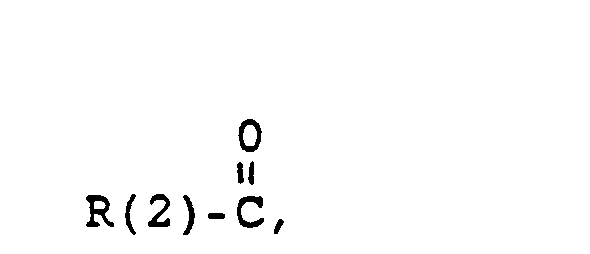
Claims (9)


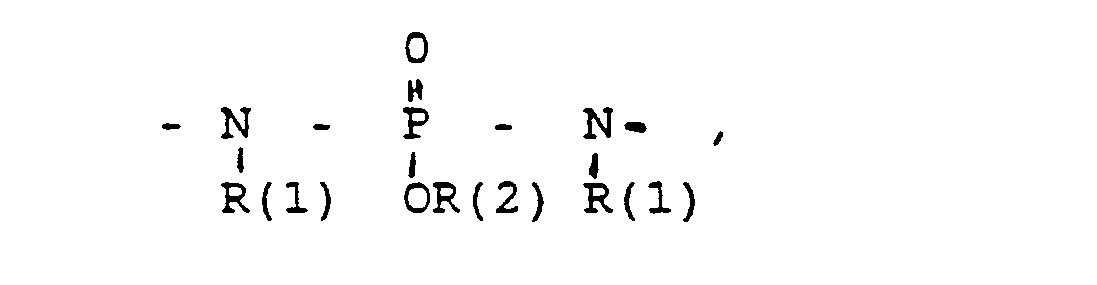



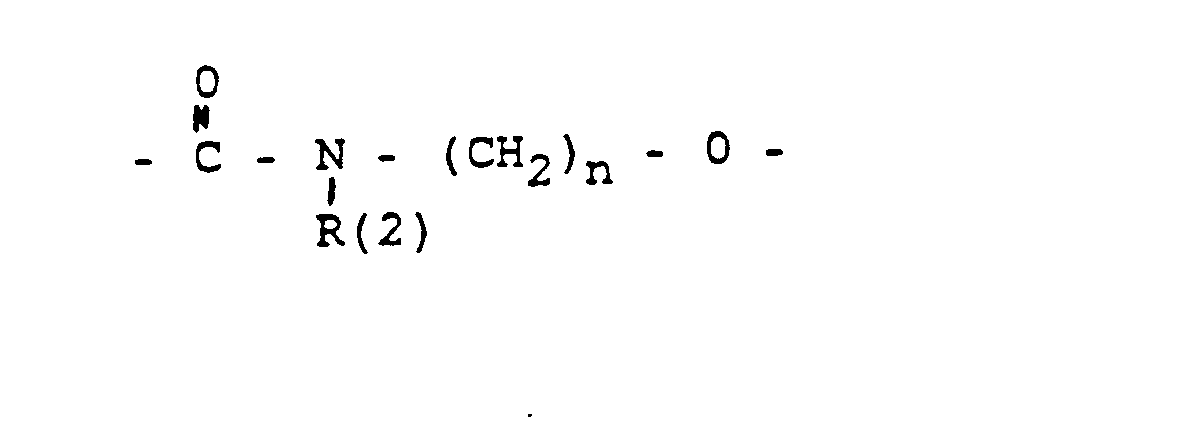



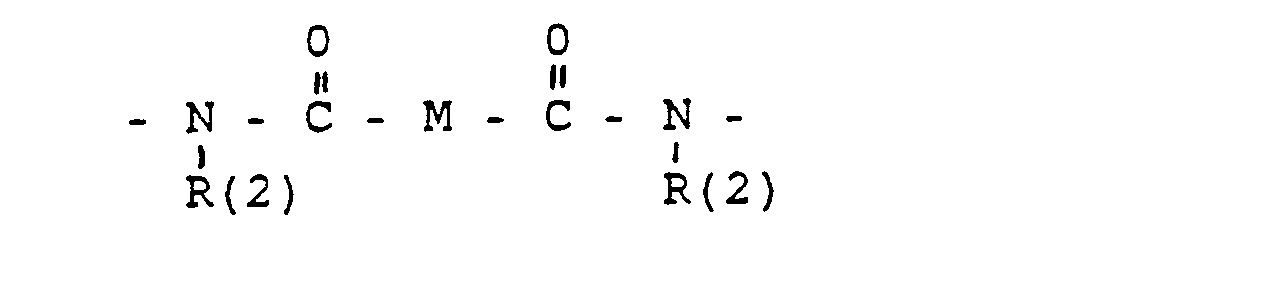





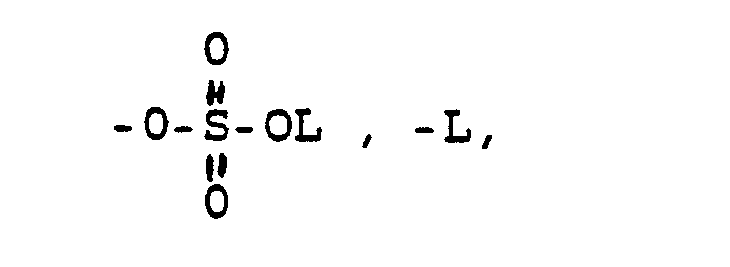


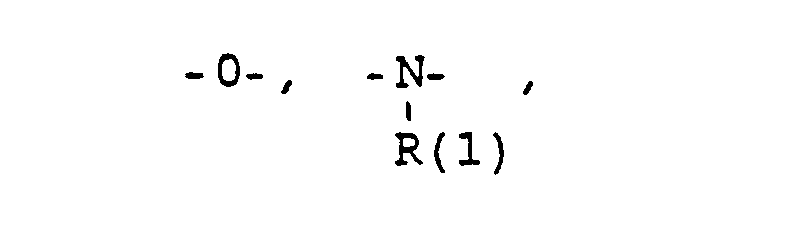


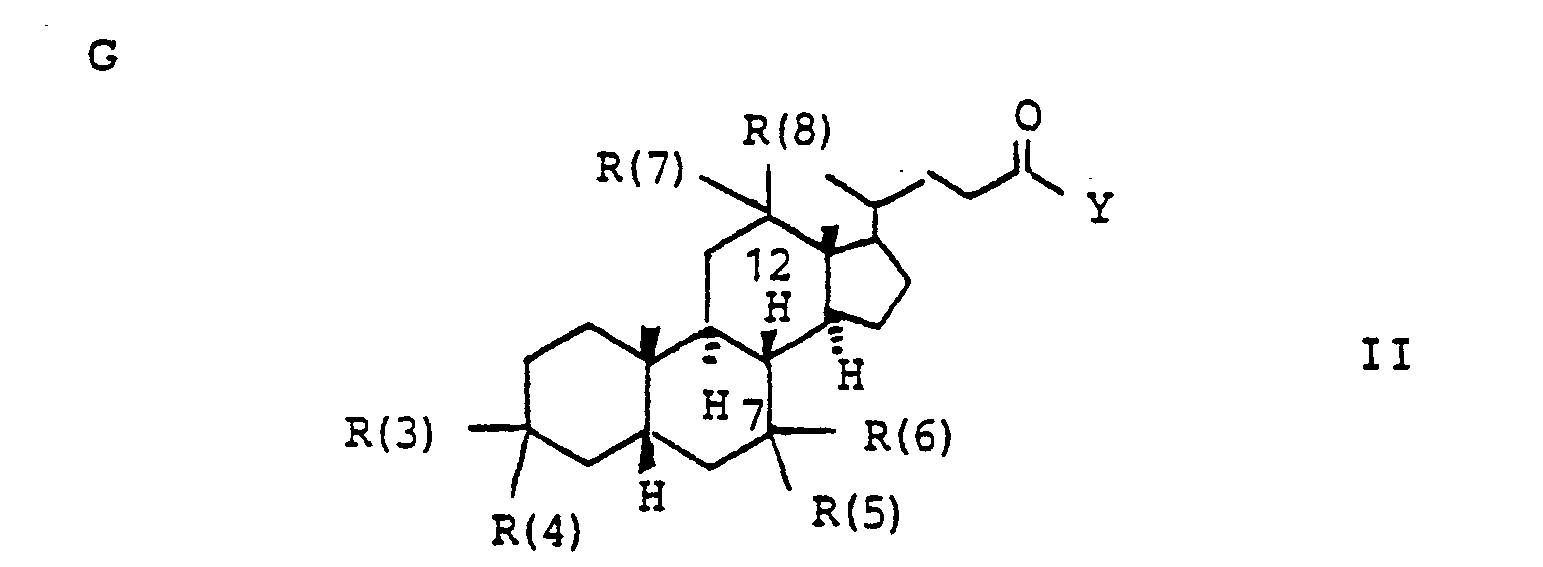





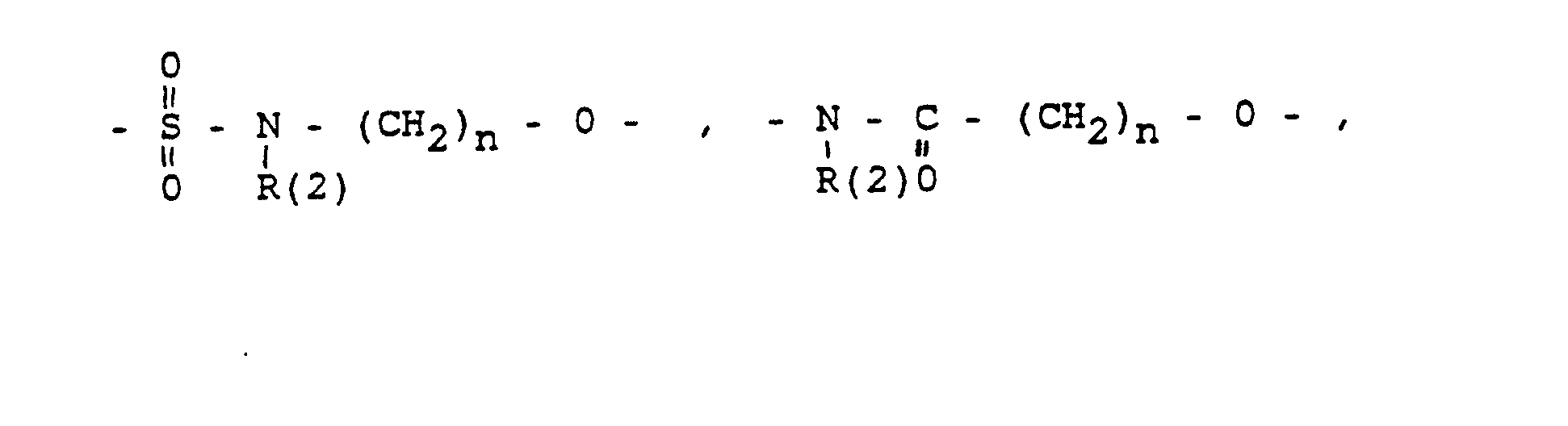


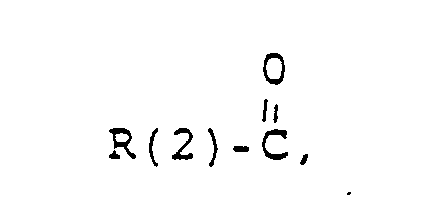
Applications Claiming Priority (2)
| Application Number | Priority Date | Filing Date | Title |
|---|---|---|---|
| DE3930696 | 1989-09-14 | ||
| DE3930696A DE3930696A1 (de) | 1989-09-14 | 1989-09-14 | Gallensaeurederivate, verfahren zu ihrer herstellung, verwendung als arzneimittel |
Publications (3)
| Publication Number | Publication Date |
|---|---|
| EP0417725A2 true EP0417725A2 (de) | 1991-03-20 |
| EP0417725A3 EP0417725A3 (en) | 1992-03-18 |
| EP0417725B1 EP0417725B1 (de) | 1997-04-23 |
Family
ID=6389405
Family Applications (1)
| Application Number | Title | Priority Date | Filing Date |
|---|---|---|---|
| EP90117470A Expired - Lifetime EP0417725B1 (de) | 1989-09-14 | 1990-09-11 | Gallensäurederivate, Verfahren zu ihrer Herstellung, Verwendung als Arzneimittel |
Country Status (21)
| Country | Link |
|---|---|
| US (3) | US5462933A (de) |
| EP (1) | EP0417725B1 (de) |
| JP (3) | JP2568306B2 (de) |
| KR (1) | KR0166962B1 (de) |
| AT (1) | ATE152117T1 (de) |
| AU (1) | AU637822B2 (de) |
| CA (1) | CA2025294C (de) |
| CY (1) | CY2112B1 (de) |
| DE (2) | DE3930696A1 (de) |
| DK (1) | DK0417725T3 (de) |
| ES (1) | ES2100858T3 (de) |
| FI (1) | FI105155B (de) |
| GR (1) | GR3024095T3 (de) |
| HU (1) | HU213395B (de) |
| IE (1) | IE903329A1 (de) |
| IL (1) | IL95668A (de) |
| NO (1) | NO303450B1 (de) |
| NZ (1) | NZ235285A (de) |
| PT (1) | PT95299B (de) |
| TW (1) | TW199097B (de) |
| ZA (1) | ZA907300B (de) |
Cited By (30)
| Publication number | Priority date | Publication date | Assignee | Title |
|---|---|---|---|---|
| WO1993011772A1 (en) * | 1991-12-13 | 1993-06-24 | The Trustees Of Princeton University | Glycosylated steroid derivatives for transport across biological membranes and process for making same |
| US5430116A (en) * | 1991-12-20 | 1995-07-04 | Hoechst Aktiengesellschaft | Polymers and oligomers of bile acid derivatives, process for their preparation and their use as pharmaceuticals |
| EP0548793A3 (en) * | 1991-12-20 | 1995-11-02 | Hoechst Ag | Ethylenic-unsaturated bile acid derivatives, process for their production and preliminary processes therefor |
| WO1995032741A1 (en) * | 1994-05-26 | 1995-12-07 | Bracco S.P.A. | Bile acid conjugates, derivatives thereof with metal complexes and related uses |
| EP0702026A2 (de) | 1994-09-14 | 1996-03-20 | Hoechst Aktiengesellschaft | Modifizierte Gallensäuren, Verfahren zu ihrer Herstellung und ihre Verwendung |
| US5512558A (en) * | 1993-05-08 | 1996-04-30 | Hoechst Aktiengesellschaft | Nor-bile acid derivatives, processes for their preparation and the use of these compounds as medicaments |
| EP0624594A3 (de) * | 1993-05-08 | 1996-05-01 | Hoechst Ag | Monomere Gallensäurederivate, Verfahren zu ihrer Herstellung und Verwendung dieser Verbindungen als Arzneimittel. |
| US5635612A (en) * | 1993-02-23 | 1997-06-03 | The Trustees Of Princeton University | Method of forming multiple glycosidic linkages in a single step |
| US5693769A (en) * | 1991-12-13 | 1997-12-02 | Transcell Technologies, Inc. | Glycosylated steroid derivatives for transport across biological membranes and process for making and using same |
| US5795870A (en) * | 1991-12-13 | 1998-08-18 | Trustees Of Princeton University | Compositions and methods for cell transformation |
| EP0766690A4 (de) * | 1994-06-23 | 1998-12-30 | Transcell Technologies Inc | Verfahren zur herstellung 3-amino-substituierter glycosylierter gallensäuren |
| WO1999052932A1 (en) * | 1998-04-08 | 1999-10-21 | Galmed International Ltd. | Fatty acid derivatives of bile acids and bile acid derivatives |
| WO2000038738A1 (en) * | 1998-12-23 | 2000-07-06 | Bracco Imaging S.P.A. | Blood pool agents for nuclear magnetic resonance diagnostics |
| WO2000058337A1 (en) * | 1999-03-27 | 2000-10-05 | Karo Bio Ab | Liver specific bile acid derivatives of the glucocorticoid antagonist ru486 |
| RU2162855C2 (ru) * | 1994-06-28 | 2001-02-10 | Мерк Энд Ко., Инк. | Новые пептиды |
| US6194393B1 (en) * | 1993-02-23 | 2001-02-27 | The Trustees Of Princeton University | Solution and solid-phase formation of glycosidic linkages |
| WO2001009163A3 (en) * | 1999-07-30 | 2001-09-07 | Univ Glasgow | Improvement of peptide transport by conjugation with bile acids |
| KR100333149B1 (ko) * | 1993-05-08 | 2002-09-19 | 훽스트 악티엔게젤샤프트 | 담즙산의테트라졸유도체및이를포함하는약제 |
| WO2005113008A1 (en) * | 2004-05-21 | 2005-12-01 | Mediplex Corp. | Delivery agents for enhancing mucosal absorption of therapeutic agents |
| EP1894564A2 (de) | 2003-04-05 | 2008-03-05 | AstraZeneca AB | Verwendung eines Ibat-Hemmers zur Behandlung oder Prophylaxe von Verstopfungen |
| WO2013063526A1 (en) | 2011-10-28 | 2013-05-02 | Lumena Pharmaceuticals, Inc. | Bile acid recycling inhibitors for treatment of hypercholemia and cholestatic liver disease |
| WO2014144485A1 (en) | 2013-03-15 | 2014-09-18 | Lumena Pharmaceuticals, Inc. | Bile acid recycling inhibitors for treatment of barrett's esophagus and gastroesophageal reflux disease |
| WO2014144650A2 (en) | 2013-03-15 | 2014-09-18 | Lumena Pharmaceuticals, Inc. | Bile acid recycling inhibitors for treatment of primary sclerosing cholangitis and inflammatory bowel disease |
| EP2995317A1 (de) | 2010-05-26 | 2016-03-16 | Satiogen Pharmaceuticals, Inc. | Gallensäurerückflusshemmer zur behandlung von diabetes, adipositas und entzündlichen magen-darm-erkrankungen |
| CN106046101A (zh) * | 2016-05-25 | 2016-10-26 | 华南理工大学 | 一种糖原磷酸化酶抑制剂及其制备方法和应用 |
| CN106496300A (zh) * | 2016-10-19 | 2017-03-15 | 上海博志研新药物技术有限公司 | 花生胆酸及其中间体的制备方法 |
| WO2017210147A1 (en) | 2016-05-29 | 2017-12-07 | Wei Jia | Liver disease-related biomarkers and methods of use thereof |
| EP3266457A1 (de) | 2011-10-28 | 2018-01-10 | Lumena Pharmaceuticals LLC | Gallensäurerückflusshemmer zur behandlung von cholestase-erkrankungen im kindesalter |
| CZ309042B6 (cs) * | 2001-04-17 | 2021-12-22 | Galmed Research And Development Ltd. | Použití konjugátu žlučové kyseliny nebo soli žlučové kyseliny s mastnou kyselinou nebo farmaceutického prostředku jej obsahujícího pro snížení cholesterolu a léčbu hyperglykémie a diabetu |
| EP4241840A2 (de) | 2019-02-12 | 2023-09-13 | Mirum Pharmaceuticals, Inc. | Verfahren zur behandlung von cholestase |
Families Citing this family (52)
| Publication number | Priority date | Publication date | Assignee | Title |
|---|---|---|---|---|
| DE3930696A1 (de) * | 1989-09-14 | 1991-03-28 | Hoechst Ag | Gallensaeurederivate, verfahren zu ihrer herstellung, verwendung als arzneimittel |
| ATE104154T1 (de) * | 1990-07-26 | 1994-04-15 | Searle & Co | Arzneimittel freisetzendes polymeres system. |
| US5994391A (en) * | 1994-09-13 | 1999-11-30 | G.D. Searle And Company | Benzothiepines having activity as inhibitors of ileal bile acid transport and taurocholate uptake |
| US6268392B1 (en) | 1994-09-13 | 2001-07-31 | G. D. Searle & Co. | Combination therapy employing ileal bile acid transport inhibiting benzothiepines and HMG Co-A reductase inhibitors |
| US6107494A (en) * | 1994-09-13 | 2000-08-22 | G.D. Searle And Company | Substituted 5-aryl-benzothiepines having activity as inhibitors of ileal bile acid transport and taurocholate uptake |
| US6262277B1 (en) | 1994-09-13 | 2001-07-17 | G.D. Searle And Company | Intermediates and processes for the preparation of benzothiepines having activity as inhibitors of ileal bile acid transport and taurocholate uptake |
| US6642268B2 (en) | 1994-09-13 | 2003-11-04 | G.D. Searle & Co. | Combination therapy employing ileal bile acid transport inhibiting benzothipines and HMG Co-A reductase inhibitors |
| IL139241A0 (en) * | 1998-05-13 | 2001-11-25 | Novo Nordisk As | Meiosis regulating compounds |
| EA005815B1 (ru) | 1998-12-23 | 2005-06-30 | Джи.Ди.Сирл Ллс | Комбинация ингибиторов транспорта желчных кислот в подвздошной кишке и ингибиторов белка, переносящего эфиры холестерина, для сердечно-сосудистых показаний |
| WO2000038722A1 (en) | 1998-12-23 | 2000-07-06 | G.D. Searle & Co. | COMBINATIONS OF CHOLESTERYL ESTER TRANSFER PROTEIN INHIBITORS AND HMG CoA REDUCTASE INHIBITORS FOR CARDIOVASCULAR INDICATIONS |
| ATE242008T1 (de) | 1998-12-23 | 2003-06-15 | Searle Llc | Kombnationen von cholesteryl ester transfer protein inhibitoren und gallensäure sequestriermitteln für kardiovaskuläre indikationen |
| ATE242007T1 (de) | 1998-12-23 | 2003-06-15 | Searle Llc | Kombinationen von cholesteryl ester transfer protein inhibitoren und nicotinsäure derivaten für kardiovaskuläre indikationen |
| WO2000038724A1 (en) | 1998-12-23 | 2000-07-06 | G.D. Searle Llc | Combinations of cholesteryl ester transfer protein inhibitors and fibric acid derivatives for cardiovascular indications |
| WO2000038728A1 (en) | 1998-12-23 | 2000-07-06 | G.D. Searle Llc | Combinations of ileal bile acid transport inhibitors and bile acid sequestring agents for cardiovascular indications |
| ATE240120T1 (de) | 1998-12-23 | 2003-05-15 | Searle Llc | Kombinationen von ileumgallensäuretransports inhibitoren und fibronsäure derivaten für kardiovaskuläre indikationen |
| WO2001020331A1 (en) * | 1999-09-14 | 2001-03-22 | Xenoport, Inc. | Substrates and screening methods for transport proteins |
| DE19950686B4 (de) * | 1999-10-21 | 2006-06-29 | Martin-Luther-Universität Halle-Wittenberg | Multifunktionelle Spacer |
| EP1286984A2 (de) | 2000-03-10 | 2003-03-05 | Pharmacia Corporation | Verfahren zur herstellung von tetrahydrobenzothiepinen |
| EP1343805A4 (de) * | 2000-10-06 | 2005-07-20 | Xenoport Inc | Von gallensäuren abgeleitete verbindungen für die bereitstellung anhaltender systemischer konzentrationen von arzneimitteln nach oraler verabreichung |
| WO2002044324A2 (en) | 2000-10-06 | 2002-06-06 | Xenoport, Inc. | Bile-acid derived compounds for enhancing oral absorption and systemic bioavailability of drugs |
| US6900192B2 (en) * | 2000-10-06 | 2005-05-31 | Xenoport, Inc. | Bile-acid conjugates for providing sustained systemic concentrations of drugs |
| US8975246B2 (en) | 2001-04-17 | 2015-03-10 | Galmed Research And Development Ltd. | Bile acid or bile salt fatty acid conjugates |
| US7053076B2 (en) * | 2001-08-29 | 2006-05-30 | Xenoport, Inc. | Bile-acid derived compounds for enhancing oral absorption and systemic bioavailability of drugs |
| BR0213501A (pt) | 2001-11-02 | 2004-08-24 | Searle Llc | Compostos de benzotiepina mono- e di-fluorada como inibidores de transporte de ácido biliar co-dependente de sódio apical (asbt) e captação de taurocolato |
| WO2003061604A2 (en) | 2002-01-17 | 2003-07-31 | Pharmacia Corporation | Novel alkyl/aryl hydroxy or keto thiepines. |
| US7141559B2 (en) | 2002-06-19 | 2006-11-28 | Karo Bio Ab | Glucocorticoid receptor ligands for the treatment of metabolic disorders |
| DK1551860T3 (da) * | 2002-06-19 | 2007-04-02 | Karobio Ab | Glukokortikoid-receptorligander til behandling af stofskifteforstyrrelser |
| AU2003293423A1 (en) | 2002-12-06 | 2004-06-30 | Xenoport, Inc. | Carbidopa prodrugs and uses thereof |
| US7989417B2 (en) * | 2003-01-13 | 2011-08-02 | Bracco Imaging S.P.A. | Linkers for radiopharmaceutical compounds |
| WO2005066150A1 (en) * | 2004-01-02 | 2005-07-21 | Hetero Drugs Limited | A novel process for the preparation of simvastatin |
| WO2005097199A1 (en) * | 2004-04-08 | 2005-10-20 | Jadolabs Gmbh | Tripartite conjugates containing a structure interacting with cell membrane rafts and their use |
| JP4896870B2 (ja) * | 2004-04-08 | 2012-03-14 | ヤード・テヒノロギース・ゲゼルシャフト・ミット・ベシュレンクテル・ハフツング | 細胞膜ラフトと相互作用する構造を含む三者複合体およびその使用 |
| US20060003976A1 (en) * | 2004-06-04 | 2006-01-05 | Yuehua Zhang | Cholesterol/bile acid/bile acid derivative-modified therapeutic drug compounds |
| JP4781352B2 (ja) | 2004-06-04 | 2011-09-28 | ゼノポート,インコーポレーテッド | レボドパプロドラッグおよびその組成物ならびにその使用 |
| WO2005121070A1 (en) * | 2004-06-04 | 2005-12-22 | Xenoport, Inc. | Levodopa prodrugs, and compositions and uses thereof |
| CN101365439B (zh) | 2005-12-05 | 2012-12-26 | 克塞诺波特公司 | 左旋多巴前体药物甲磺酸盐、其组合物及其用途 |
| US7829592B2 (en) * | 2006-12-21 | 2010-11-09 | Xenoport, Inc. | Catechol protected levodopa diester prodrugs, compositions, and methods of use |
| US7709527B2 (en) * | 2006-12-21 | 2010-05-04 | Xenoport, Inc. | Levodopa dimethyl-substituted diester prodrugs compositions, and methods of use |
| CN101367859B (zh) * | 2007-08-17 | 2011-05-11 | 中国人民解放军军事医学科学院毒物药物研究所 | 脂肪酸胆汁酸偶合物及其医药用途 |
| KR101239008B1 (ko) * | 2008-03-31 | 2013-03-04 | 한양대학교 산학협력단 | 바일산 유도체 및 그의 응용 |
| CA2733200A1 (en) * | 2008-08-06 | 2010-02-11 | Novo Nordisk Health Care Ag | Conjugated proteins with prolonged in vivo efficacy |
| US8399513B2 (en) * | 2008-10-20 | 2013-03-19 | Xenoport, Inc. | Levodopa prodrug mesylate hydrate |
| US9290445B2 (en) * | 2008-10-20 | 2016-03-22 | Xenoport, Inc. | Methods of synthesizing a levodopa ester prodrug |
| WO2010084173A1 (en) | 2009-01-22 | 2010-07-29 | Novo Nordisk Health Care Ag | Stable growth hormone compounds |
| US8841249B2 (en) | 2009-08-06 | 2014-09-23 | Novo Nordisk A/S | Growth hormones with prolonged in-vivo efficacy |
| US8435562B2 (en) | 2009-11-09 | 2013-05-07 | Xenoport, Inc. | Pharmaceutical compositions and oral dosage forms of a levodopa prodrug and methods of use |
| SI2525834T1 (sl) | 2010-01-22 | 2019-10-30 | Novo Nordisk Healthcare Ag | Rastni hormoni s podaljšano in vivo učinkovitostjo |
| EP2525833A2 (de) | 2010-01-22 | 2012-11-28 | Novo Nordisk Health Care AG | Stabile wachstumshormonverbindungen |
| ES2841123T3 (es) | 2013-04-05 | 2021-07-07 | Formulacion Del Compuesto De La Hormona De Crecimiento | Formulación del compuesto de la hormona de crecimiento |
| CN104693264B (zh) * | 2015-02-09 | 2016-09-21 | 华南理工大学 | 一种化合物及其制备方法和应用 |
| CN116925168A (zh) * | 2019-08-23 | 2023-10-24 | 深圳云合医药科技合伙企业(有限合伙) | 胆汁酸衍生物及其组合物和应用 |
| US20250002450A1 (en) | 2021-12-10 | 2025-01-02 | Universidade Do Porto | Cationic steroid compounds, method of obtaining thereof, formulations comprising thereof and their uses |
Family Cites Families (17)
| Publication number | Priority date | Publication date | Assignee | Title |
|---|---|---|---|---|
| US2441129A (en) * | 1942-05-23 | 1948-05-11 | Berczeller Arpad | Bile acid derivatives of aryl sulfonamides |
| US3937815A (en) * | 1975-12-05 | 1976-02-10 | SPA--Societa Prodotti Antibiotici S.p.A. | Lysozyme derivatives |
| FR2457302A1 (fr) * | 1979-05-23 | 1980-12-19 | Roussel Uclaf | Nouveau procede de purification de l'acide ursodesoxycholique |
| JPS5754151A (en) * | 1980-09-18 | 1982-03-31 | Takeda Chem Ind Ltd | Physiologically active substance b-52653 and its preparation |
| JPS57131735A (en) * | 1981-02-09 | 1982-08-14 | Takeda Chem Ind Ltd | Preparation of quinones |
| US4418059A (en) * | 1981-07-20 | 1983-11-29 | Montefiore Medical Center | Nucleoside ester compositions |
| US4499020A (en) * | 1981-07-21 | 1985-02-12 | Montefiore Hospital And Medical Center, Inc. | Mixed anhydrides and processes thereof |
| FR2511007A1 (fr) * | 1981-08-07 | 1983-02-11 | Roussel Uclaf | Procede de preparation de l'acide ursodesoxycholique a partir de l'acide 3a, 7b, 12a-trihydroxycholanique et produit intermediaire utilises |
| NL8201492A (nl) * | 1982-04-07 | 1983-11-01 | Rijksuniversiteit | Werkwijze ter bereiding van een op de 4-plaats equatoriaal gesubstitueerde symmetrisch-polycycloethyleenverbinding; op de 4-plaats equatoriaal gesubstitueerde symmetrisch-polycycloethyleenverbinding alsmede een op basis van de verbinding bereid thermochemiluminescerend merkmateriaal of thermochemiluminescerend sondeermateriaal. |
| EP0105404A1 (de) * | 1982-09-30 | 1984-04-18 | Merck & Co. Inc. | Steroidderivate verbunden mit zytotoxischen Mitteln und Verfahren zu ihrer Herstellung |
| DE3432094A1 (de) * | 1984-08-31 | 1986-03-06 | Hoechst Ag, 6230 Frankfurt | Ester der pyridin-2,4- und -2,5- dicarbonsaeure als arzneimittel zur inhibierung der prolin- und lysinhydroxylase |
| JPS62175497A (ja) * | 1986-01-28 | 1987-08-01 | Wakunaga Pharmaceut Co Ltd | 胆汁酸誘導体およびその製造法 |
| US5238948A (en) * | 1987-02-10 | 1993-08-24 | Hoechst Aktiengesellschaft | Pyridine-2,4- and -2,5-dicarboxylic acid derivatives and medicaments based on these compounds |
| ES2082755T3 (es) * | 1987-07-10 | 1996-04-01 | Hoechst Ag | Derivados de acido 3-desmetil-mevalonico, procedimiento para su preparacion, preparados farmaceuticos a base de estos compuestos, su utilizacion asi como productos intermedios. |
| US4968790A (en) * | 1988-08-12 | 1990-11-06 | American Cyanamid Company | Antidiabetic phosphates |
| DE3930696A1 (de) * | 1989-09-14 | 1991-03-28 | Hoechst Ag | Gallensaeurederivate, verfahren zu ihrer herstellung, verwendung als arzneimittel |
| DE3931432A1 (de) * | 1989-09-21 | 1991-04-04 | Hoechst Ag | Pyrimidin-4,6-dicarbonsaeurediamide, verfahren zu deren herstellung sowie verwendung derselben sowie arzneimittel auf basis dieser verbindungen |
-
1989
- 1989-09-14 DE DE3930696A patent/DE3930696A1/de not_active Withdrawn
-
1990
- 1990-09-11 EP EP90117470A patent/EP0417725B1/de not_active Expired - Lifetime
- 1990-09-11 DK DK90117470.6T patent/DK0417725T3/da active
- 1990-09-11 DE DE59010706T patent/DE59010706D1/de not_active Expired - Lifetime
- 1990-09-11 ES ES90117470T patent/ES2100858T3/es not_active Expired - Lifetime
- 1990-09-11 AT AT90117470T patent/ATE152117T1/de not_active IP Right Cessation
- 1990-09-12 NZ NZ235285A patent/NZ235285A/xx unknown
- 1990-09-12 IL IL9566890A patent/IL95668A/en unknown
- 1990-09-12 FI FI904497A patent/FI105155B/fi active IP Right Grant
- 1990-09-13 IE IE332990A patent/IE903329A1/en not_active IP Right Cessation
- 1990-09-13 NO NO903999A patent/NO303450B1/no not_active IP Right Cessation
- 1990-09-13 AU AU62441/90A patent/AU637822B2/en not_active Expired
- 1990-09-13 PT PT95299A patent/PT95299B/pt not_active IP Right Cessation
- 1990-09-13 ZA ZA907300A patent/ZA907300B/xx unknown
- 1990-09-13 JP JP2241338A patent/JP2568306B2/ja not_active Expired - Lifetime
- 1990-09-13 CA CA002025294A patent/CA2025294C/en not_active Expired - Lifetime
- 1990-09-13 HU HU905893A patent/HU213395B/hu unknown
- 1990-09-14 KR KR1019900014542A patent/KR0166962B1/ko not_active Expired - Lifetime
- 1990-09-14 TW TW079107732A patent/TW199097B/zh active
-
1994
- 1994-03-10 US US08/208,192 patent/US5462933A/en not_active Expired - Lifetime
-
1995
- 1995-06-07 US US08/476,941 patent/US5646272A/en not_active Expired - Lifetime
- 1995-06-07 US US08/475,689 patent/US5668126A/en not_active Expired - Lifetime
- 1995-09-07 JP JP7254512A patent/JP2642090B2/ja not_active Expired - Lifetime
- 1995-09-07 JP JP7254511A patent/JP2642089B2/ja not_active Expired - Lifetime
-
1997
- 1997-07-15 GR GR970401746T patent/GR3024095T3/el unknown
-
1998
- 1998-09-29 CY CY9800029A patent/CY2112B1/xx unknown
Cited By (52)
| Publication number | Priority date | Publication date | Assignee | Title |
|---|---|---|---|---|
| US5338837A (en) * | 1991-12-13 | 1994-08-16 | The Trustees Of Princeton University | Glycosylated steroid derivatives for transport across biological membranes and process for making same |
| US5455335A (en) * | 1991-12-13 | 1995-10-03 | The Trustees Of Princeton University | Pharmaceutical compositions and methods of transporting compounds across biological membrane |
| WO1993011772A1 (en) * | 1991-12-13 | 1993-06-24 | The Trustees Of Princeton University | Glycosylated steroid derivatives for transport across biological membranes and process for making same |
| US5795870A (en) * | 1991-12-13 | 1998-08-18 | Trustees Of Princeton University | Compositions and methods for cell transformation |
| US5693769A (en) * | 1991-12-13 | 1997-12-02 | Transcell Technologies, Inc. | Glycosylated steroid derivatives for transport across biological membranes and process for making and using same |
| US5571795A (en) * | 1991-12-13 | 1996-11-05 | The Trustees Of Princeton University | Derivative-compound-conjugates and pharmaceutical compositions comprising same |
| US5559258A (en) * | 1991-12-20 | 1996-09-24 | Hoechst Aktiengesellschaft | Ethylenically unsaturated bile acid derivatives, processes for their preparation and precursors |
| US5430116A (en) * | 1991-12-20 | 1995-07-04 | Hoechst Aktiengesellschaft | Polymers and oligomers of bile acid derivatives, process for their preparation and their use as pharmaceuticals |
| EP0548793A3 (en) * | 1991-12-20 | 1995-11-02 | Hoechst Ag | Ethylenic-unsaturated bile acid derivatives, process for their production and preliminary processes therefor |
| US6194393B1 (en) * | 1993-02-23 | 2001-02-27 | The Trustees Of Princeton University | Solution and solid-phase formation of glycosidic linkages |
| US5635612A (en) * | 1993-02-23 | 1997-06-03 | The Trustees Of Princeton University | Method of forming multiple glycosidic linkages in a single step |
| EP0624594A3 (de) * | 1993-05-08 | 1996-05-01 | Hoechst Ag | Monomere Gallensäurederivate, Verfahren zu ihrer Herstellung und Verwendung dieser Verbindungen als Arzneimittel. |
| US5610151A (en) * | 1993-05-08 | 1997-03-11 | Hoechst Aktiengesellschaft | Monomeric bile acid derivatives, processes for their preparation and the use of these compounds as medicaments |
| KR100333149B1 (ko) * | 1993-05-08 | 2002-09-19 | 훽스트 악티엔게젤샤프트 | 담즙산의테트라졸유도체및이를포함하는약제 |
| US5512558A (en) * | 1993-05-08 | 1996-04-30 | Hoechst Aktiengesellschaft | Nor-bile acid derivatives, processes for their preparation and the use of these compounds as medicaments |
| KR100333150B1 (ko) * | 1993-05-08 | 2002-09-17 | 훽스트 악티엔게젤샤프트 | 노르-담즙산유도체및이를포함하는약제 |
| WO1995032741A1 (en) * | 1994-05-26 | 1995-12-07 | Bracco S.P.A. | Bile acid conjugates, derivatives thereof with metal complexes and related uses |
| EP0766690A4 (de) * | 1994-06-23 | 1998-12-30 | Transcell Technologies Inc | Verfahren zur herstellung 3-amino-substituierter glycosylierter gallensäuren |
| RU2162855C2 (ru) * | 1994-06-28 | 2001-02-10 | Мерк Энд Ко., Инк. | Новые пептиды |
| EP0702026A2 (de) | 1994-09-14 | 1996-03-20 | Hoechst Aktiengesellschaft | Modifizierte Gallensäuren, Verfahren zu ihrer Herstellung und ihre Verwendung |
| US5641767A (en) * | 1994-09-14 | 1997-06-24 | Hoechst Aktiengesellschaft | Modified bile acids process for their preparation and their use |
| WO1999052932A1 (en) * | 1998-04-08 | 1999-10-21 | Galmed International Ltd. | Fatty acid derivatives of bile acids and bile acid derivatives |
| EA003392B1 (ru) * | 1998-04-08 | 2003-04-24 | Галмед Интернэшнл Лимитид | Производные желчных кислот |
| WO2000038738A1 (en) * | 1998-12-23 | 2000-07-06 | Bracco Imaging S.P.A. | Blood pool agents for nuclear magnetic resonance diagnostics |
| CZ302195B6 (cs) * | 1998-12-23 | 2010-12-08 | Bracco Imaging S. P. A. | Použití chelatovaných komplexu |
| EP1935435A3 (de) * | 1998-12-23 | 2009-01-21 | Bracco Imaging S.p.A | Blutbeckenwirkstoff für nuklearmagnetische Resonanzdiagnosen |
| WO2000058337A1 (en) * | 1999-03-27 | 2000-10-05 | Karo Bio Ab | Liver specific bile acid derivatives of the glucocorticoid antagonist ru486 |
| WO2001009163A3 (en) * | 1999-07-30 | 2001-09-07 | Univ Glasgow | Improvement of peptide transport by conjugation with bile acids |
| CZ309042B6 (cs) * | 2001-04-17 | 2021-12-22 | Galmed Research And Development Ltd. | Použití konjugátu žlučové kyseliny nebo soli žlučové kyseliny s mastnou kyselinou nebo farmaceutického prostředku jej obsahujícího pro snížení cholesterolu a léčbu hyperglykémie a diabetu |
| EP1894564A2 (de) | 2003-04-05 | 2008-03-05 | AstraZeneca AB | Verwendung eines Ibat-Hemmers zur Behandlung oder Prophylaxe von Verstopfungen |
| WO2005113008A1 (en) * | 2004-05-21 | 2005-12-01 | Mediplex Corp. | Delivery agents for enhancing mucosal absorption of therapeutic agents |
| EP3593802A2 (de) | 2010-05-26 | 2020-01-15 | Satiogen Pharmaceuticals, Inc. | Gallensäurerückflusshemmer zur behandlung von diabetes, adipositas und entzündlichen magen-darm-erkrankungen |
| EP4137137A1 (de) | 2010-05-26 | 2023-02-22 | Satiogen Pharmaceuticals, Inc. | Gallensäurerecyclinghemmer und satiogene zur behandlung von diabetes, adipositas und entzündlichen magen-darm-erkrankungen |
| EP2995317A1 (de) | 2010-05-26 | 2016-03-16 | Satiogen Pharmaceuticals, Inc. | Gallensäurerückflusshemmer zur behandlung von diabetes, adipositas und entzündlichen magen-darm-erkrankungen |
| US10512657B2 (en) | 2011-10-28 | 2019-12-24 | Lumena Pharmaceutials Llc | Bile acid recycling inhibitors for treatment of pediatric cholestatic liver diseases |
| US12145959B2 (en) | 2011-10-28 | 2024-11-19 | Shire Human Genetic Therapies, Inc. | Bile acid recycling inhibitors for treatment of hypercholemia and cholestatic liver disease |
| EP3266457A1 (de) | 2011-10-28 | 2018-01-10 | Lumena Pharmaceuticals LLC | Gallensäurerückflusshemmer zur behandlung von cholestase-erkrankungen im kindesalter |
| EP3278796A1 (de) | 2011-10-28 | 2018-02-07 | Lumena Pharmaceuticals LLC | Gallensäurerückflusshemmer zur behandlung von hypercholämie und cholestatischer lebererkrankung |
| US12350267B2 (en) | 2011-10-28 | 2025-07-08 | Shire Human Genetic Therapies, Inc. | Bile acid recycling inhibitors for treatment of pediatric cholestatic liver diseases |
| WO2013063526A1 (en) | 2011-10-28 | 2013-05-02 | Lumena Pharmaceuticals, Inc. | Bile acid recycling inhibitors for treatment of hypercholemia and cholestatic liver disease |
| US11229661B2 (en) | 2011-10-28 | 2022-01-25 | Shire Human Genetic Therapies, Inc. | Bile acid recycling inhibitors for treatment of pediatric cholestatic liver diseases |
| US11376251B2 (en) | 2011-10-28 | 2022-07-05 | Shire Human Genetic Therapies, Inc. | Bile acid recycling inhibitors for treatment of pediatric cholestatic liver diseases |
| WO2014144650A2 (en) | 2013-03-15 | 2014-09-18 | Lumena Pharmaceuticals, Inc. | Bile acid recycling inhibitors for treatment of primary sclerosing cholangitis and inflammatory bowel disease |
| WO2014144485A1 (en) | 2013-03-15 | 2014-09-18 | Lumena Pharmaceuticals, Inc. | Bile acid recycling inhibitors for treatment of barrett's esophagus and gastroesophageal reflux disease |
| CN106046101A (zh) * | 2016-05-25 | 2016-10-26 | 华南理工大学 | 一种糖原磷酸化酶抑制剂及其制备方法和应用 |
| WO2017210147A1 (en) | 2016-05-29 | 2017-12-07 | Wei Jia | Liver disease-related biomarkers and methods of use thereof |
| CN106496300B (zh) * | 2016-10-19 | 2018-05-18 | 上海博志研新药物技术有限公司 | 花生胆酸及其中间体的制备方法 |
| CN106496300A (zh) * | 2016-10-19 | 2017-03-15 | 上海博志研新药物技术有限公司 | 花生胆酸及其中间体的制备方法 |
| EP4245367A2 (de) | 2019-02-12 | 2023-09-20 | Mirum Pharmaceuticals, Inc. | Verfahren zur behandlung von cholestase |
| EP4424363A2 (de) | 2019-02-12 | 2024-09-04 | Mirum Pharmaceuticals, Inc. | Verfahren zur wachstumssteigerung bei pädiatrischen patienten mit cholestatischer lebererkrankung |
| EP4241840A2 (de) | 2019-02-12 | 2023-09-13 | Mirum Pharmaceuticals, Inc. | Verfahren zur behandlung von cholestase |
| EP4464376A2 (de) | 2019-02-12 | 2024-11-20 | Mirum Pharmaceuticals, Inc. | Genotyp- und dosisabhängige reaktion auf ein asbti bei patienten mit gallensalzexportpumpenmangel |
Also Published As
Similar Documents
| Publication | Publication Date | Title |
|---|---|---|
| EP0417725B1 (de) | Gallensäurederivate, Verfahren zu ihrer Herstellung, Verwendung als Arzneimittel | |
| EP0573848B1 (de) | Gallensäurederivate, Verfahren zu ihrer Herstellung und Verwendung dieser Verbindungen als Arzneimittel | |
| EP0489423B1 (de) | Gallensäurederivate, Verfahren zu ihrer Herstellung und Verwendung dieser Verbindung als Arzneimittel | |
| EP0624596B1 (de) | Tetrazolderivate von Gallebnsäuren, Verfahren zu ihrer Herstellung und Verwendung dieser Verbindungen als Arzneimittel | |
| DE19845405C2 (de) | Arylsubstituierte Propanolaminderivate und deren Verwendung | |
| EP0624595B1 (de) | nor-Gallensäurederivate, Verfahren zu ihrer Herstellung und Verwendung dieser Verbindungen als Arzneimittel | |
| EP0624594A2 (de) | Monomere Gallensäurederivate, Verfahren zu ihrer Herstellung und Verwendung dieser Verbindungen als Arzneimittel | |
| EP0624593A2 (de) | Gallensäurederivate, Verfahren zu ihrer Herstellung und Verwendung dieser Verbindungen als Arzneimittel | |
| DE4432708A1 (de) | Modifizierte Gallensäuren, Verfahren zu ihrer Herstellung und ihre Verwendung | |
| DE2932607C2 (de) | Chlorambucilderivate, Verfahren zur Herstellung derselben und Antitumormittel mit einem Gehalt derselben | |
| MC2164A1 (fr) | Steroides | |
| Templeton et al. | Cardiac glycoside-like structure and function of 5. beta., 14. beta.-pregnanes | |
| DE2621507A1 (de) | Cardenolid-derivate verfahren zu ihrer herstellung und sie enthaltende arzneimittel | |
| JPS6363698A (ja) | 胆汁酸誘導体およびその塩ならびにその製造法 | |
| DE19652408A1 (de) | Steroidester, Verfahren zu ihrer Herstellung und ihre pharmazeutische Verwendung | |
| DE2357778C3 (de) | Neue Ester von 21-Mercaptosteroiden, Verfahren zu deren Herstellung und diese enthaltende pharmazeutische Zubereitungen | |
| DE1793340A1 (de) | Neue Furanoside | |
| DE3820177A1 (de) | Cholestadienderivate, verfahren zu ihrer herstellung, ihre verwendung als arzneimittel mit hmg-coa-reduktase-hemmender wirkung | |
| DE3514272A1 (de) | Dermatica | |
| CH617210A5 (en) | Process for the preparation of D-homosteroids | |
| DE2357778B2 (de) | Neue ester von 21-mercaptosteroiden, verfahren zu deren herstellung und diese enthaltende pharmazeutische zubereitungen | |
| DE1768142B (de) | Verfahren zur Herstellung von Herzglykosidderivaten und Arzneimittel |
Legal Events
| Date | Code | Title | Description |
|---|---|---|---|
| PUAI | Public reference made under article 153(3) epc to a published international application that has entered the european phase |
Free format text: ORIGINAL CODE: 0009012 |
|
| 17P | Request for examination filed |
Effective date: 19901221 |
|
| AK | Designated contracting states |
Kind code of ref document: A2 Designated state(s): AT BE CH DE DK ES FR GB GR IT LI LU NL SE |
|
| PUAL | Search report despatched |
Free format text: ORIGINAL CODE: 0009013 |
|
| AK | Designated contracting states |
Kind code of ref document: A3 Designated state(s): AT BE CH DE DK ES FR GB GR IT LI LU NL SE |
|
| 17Q | First examination report despatched |
Effective date: 19950127 |
|
| GRAG | Despatch of communication of intention to grant |
Free format text: ORIGINAL CODE: EPIDOS AGRA |
|
| GRAH | Despatch of communication of intention to grant a patent |
Free format text: ORIGINAL CODE: EPIDOS IGRA |
|
| GRAH | Despatch of communication of intention to grant a patent |
Free format text: ORIGINAL CODE: EPIDOS IGRA |
|
| GRAA | (expected) grant |
Free format text: ORIGINAL CODE: 0009210 |
|
| AK | Designated contracting states |
Kind code of ref document: B1 Designated state(s): AT BE CH DE DK ES FR GB GR IT LI LU NL SE |
|
| REF | Corresponds to: |
Ref document number: 152117 Country of ref document: AT Date of ref document: 19970515 Kind code of ref document: T |
|
| REG | Reference to a national code |
Ref country code: CH Ref legal event code: EP |
|
| REF | Corresponds to: |
Ref document number: 59010706 Country of ref document: DE Date of ref document: 19970528 |
|
| ET | Fr: translation filed | ||
| REG | Reference to a national code |
Ref country code: ES Ref legal event code: FG2A Ref document number: 2100858 Country of ref document: ES Kind code of ref document: T3 |
|
| GBT | Gb: translation of ep patent filed (gb section 77(6)(a)/1977) |
Effective date: 19970711 |
|
| REG | Reference to a national code |
Ref country code: GR Ref legal event code: FG4A Free format text: 3024095 |
|
| REG | Reference to a national code |
Ref country code: DK Ref legal event code: T3 |
|
| PLBE | No opposition filed within time limit |
Free format text: ORIGINAL CODE: 0009261 |
|
| STAA | Information on the status of an ep patent application or granted ep patent |
Free format text: STATUS: NO OPPOSITION FILED WITHIN TIME LIMIT |
|
| 26N | No opposition filed | ||
| REG | Reference to a national code |
Ref country code: GB Ref legal event code: IF02 |
|
| PGFP | Annual fee paid to national office [announced via postgrant information from national office to epo] |
Ref country code: DK Payment date: 20090914 Year of fee payment: 20 |
|
| PGFP | Annual fee paid to national office [announced via postgrant information from national office to epo] |
Ref country code: SE Payment date: 20090910 Year of fee payment: 20 Ref country code: LU Payment date: 20090929 Year of fee payment: 20 Ref country code: AT Payment date: 20090911 Year of fee payment: 20 Ref country code: NL Payment date: 20090903 Year of fee payment: 20 Ref country code: GB Payment date: 20090909 Year of fee payment: 20 |
|
| PGFP | Annual fee paid to national office [announced via postgrant information from national office to epo] |
Ref country code: DE Payment date: 20090930 Year of fee payment: 20 Ref country code: ES Payment date: 20091006 Year of fee payment: 20 Ref country code: CH Payment date: 20091006 Year of fee payment: 20 |
|
| PGFP | Annual fee paid to national office [announced via postgrant information from national office to epo] |
Ref country code: BE Payment date: 20090917 Year of fee payment: 20 |
|
| PGFP | Annual fee paid to national office [announced via postgrant information from national office to epo] |
Ref country code: FR Payment date: 20091012 Year of fee payment: 20 Ref country code: IT Payment date: 20090916 Year of fee payment: 20 |
|
| PGFP | Annual fee paid to national office [announced via postgrant information from national office to epo] |
Ref country code: GR Payment date: 20090819 Year of fee payment: 20 |
|
| REG | Reference to a national code |
Ref country code: CH Ref legal event code: PL |
|
| REG | Reference to a national code |
Ref country code: NL Ref legal event code: V4 Effective date: 20100911 |
|
| REG | Reference to a national code |
Ref country code: DK Ref legal event code: EUP |
|
| BE20 | Be: patent expired |
Owner name: *HOECHST A.G. Effective date: 20100911 |
|
| REG | Reference to a national code |
Ref country code: GB Ref legal event code: PE20 Expiry date: 20100910 |
|
| EUG | Se: european patent has lapsed | ||
| PG25 | Lapsed in a contracting state [announced via postgrant information from national office to epo] |
Ref country code: GB Free format text: LAPSE BECAUSE OF EXPIRATION OF PROTECTION Effective date: 20100910 |
|
| PG25 | Lapsed in a contracting state [announced via postgrant information from national office to epo] |
Ref country code: NL Free format text: LAPSE BECAUSE OF EXPIRATION OF PROTECTION Effective date: 20100911 |
|
| REG | Reference to a national code |
Ref country code: ES Ref legal event code: FD2A Effective date: 20120604 |
|
| PG25 | Lapsed in a contracting state [announced via postgrant information from national office to epo] |
Ref country code: ES Free format text: LAPSE BECAUSE OF EXPIRATION OF PROTECTION Effective date: 20100912 |
|
| PG25 | Lapsed in a contracting state [announced via postgrant information from national office to epo] |
Ref country code: DE Free format text: LAPSE BECAUSE OF EXPIRATION OF PROTECTION Effective date: 20100911 |